Water Use Efficiency: A Critical Comparison of Vertical Farming and Greenhouse Systems
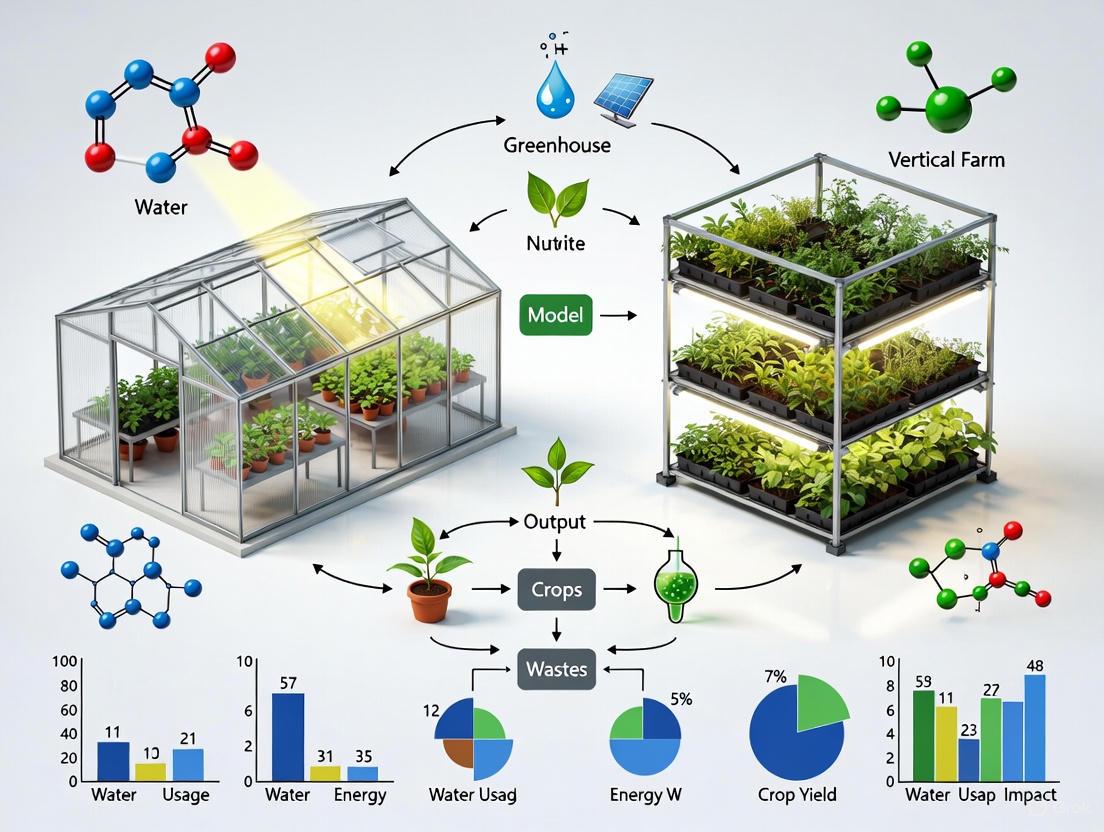
This article provides a systematic analysis of water resource efficiency in Controlled-Environment Agriculture (CEA), specifically comparing vertical farming and greenhouse systems.
Water Use Efficiency: A Critical Comparison of Vertical Farming and Greenhouse Systems
Abstract
This article provides a systematic analysis of water resource efficiency in Controlled-Environment Agriculture (CEA), specifically comparing vertical farming and greenhouse systems. Targeting researchers and agricultural scientists, it synthesizes foundational principles, technological methodologies, optimization challenges, and validation metrics. The review quantifies water savings of 90-98% in advanced vertical farms, details the mechanisms behind soilless cultivation systems, addresses the critical energy-water nexus, and presents a comparative life-cycle assessment. The conclusions offer a decision framework for system selection based on local resource constraints and sustainability goals, with implications for food security and agricultural policy.
Understanding Agricultural Water Scarcity and CEA Fundamentals
The global freshwater crisis is intensifying, with agriculture positioned at its epicenter. Accounting for approximately 70% of all global freshwater withdrawals, conventional agricultural practices are a primary focus for sustainability efforts [1]. This challenge is compounded by climate change, population growth, and significant irrigation inefficiencies, with an estimated 60% of agricultural water being wasted through leaky systems and inefficient application methods [1]. Projections indicate that by 2025, two-thirds of the world's population may face water shortages [1].
Against this backdrop, controlled environment agriculture (CEA) systems, particularly greenhouses and vertical farms, have emerged as promising solutions. These technologies offer radically different approaches to resource management. This guide provides an objective comparison of their water use performance, presenting experimental data and methodologies to help researchers evaluate their potential for mitigating agriculture's water footprint.
Quantitative Comparison of Water Use Efficiency
The following tables consolidate key performance metrics for greenhouse and vertical farming systems, based on recent research and commercial data.
Table 1: Water Use Efficiency Comparison of Cultivation Systems
| Cultivation System | Representative Water Use Efficiency (WUE) | Water Savings vs. Traditional Agriculture | Key Influencing Factors |
|---|---|---|---|
| Traditional Agriculture | Baseline | 0% | Climate, irrigation method, soil type, evaporation losses |
| Greenhouse | 50-90% water savings [2] | 50-90% | Cooling methods, irrigation technology (e.g., drip, tidal) |
| Vertical Farming | 95-98% less water per kg of produce [3] [4] | 95-98% | Growing system (aeroponic/ebb-and-flow), water recycling, climate control |
Table 2: Detailed Performance Metrics for Vertical Farming and Greenhouse Systems
| Performance Metric | Vertical Farming (Typical Range) | Greenhouse (Typical Range) |
|---|---|---|
| Lettuce Yield (Fresh Weight, annual) | 60 - 105 kg m⁻² (cultivated area) [5] | 34 - 65 kg m⁻² (in high-tech Dutch GHs) [5] |
| Land Surface Use Efficiency (L-SUE) | ~300 kg m⁻² year⁻¹ [5] | Varies widely with technology and light supplementation |
| Water Use Efficiency (WUE) | ~140 g FW L⁻¹ H₂O [5]; up to 206% WUE increase with HVAC water recovery [6] | Highly variable; Tidal irrigation uses ~1.5 L m⁻² [2] |
| System Water Recirculation Rate | 90-95% in closed-loop systems [7] | Lower than VF; significant losses to seepage and evaporation [2] |
Experimental Protocols for Water Use Efficiency
Understanding the data requires an examination of the methodologies used to generate it. Below are detailed protocols for key experiments quantifying water use in these systems.
Protocol 1: Comparing Growing Systems in Vertical Farms
A 2023 study provides a definitive protocol for quantifying the impact of different cultivation systems on Water Use Efficiency (WUE) in a vertical farm [6].
- Objective: To quantify the WUE of lettuce (Lactuca sativa L.) in two different closed-loop growing systems: ebb-and-flow substrate culture and high-pressure aeroponics.
- Experimental Setup:
- The experiment was conducted in a plant factory with artificial lighting (PFAL), with all environmental conditions (light, temperature, humidity, CO₂) strictly controlled.
- Ebb-and-Flow System: Plants were grown in containers with a substrate, periodically flooded with nutrient solution.
- Aeroponic System: Plant roots were suspended in air and misted with a high-pressure, nutrient-dense aerosol.
- Water Tracking:
- Total Water Consumption was measured as the sum of (1) water used for irrigation and (2) water used for climate management (humidification).
- The team quantified the contribution of water recovery by collecting condensate from the Heating, Ventilation, and Air Conditioning (HVAC) system's dehumidifier.
- Data Collection:
- At harvest, the fresh weight (FW) of the marketable portion of each lettuce head was measured.
- WUE was calculated as: WUE (g L⁻¹) = Total Plant Fresh Weight (g) / Total Volume of Water Consumed (L).
- Key Findings:
- Aeroponics increased WUE by 114% compared to the ebb-and-flow system.
- Recovering water from the dehumidifier decreased total water use by 67% and increased the overall WUE by 206% [6].
Protocol 2: Evaluating Spectrum-Splitting Technology in Greenhouses
A 2025 study tested a novel technology for reducing water loss in greenhouses by optimizing the light spectrum [8].
- Objective: To evaluate the effects of spectrum-splitting technology (S-ST) on crop evapotranspiration and yield in a greenhouse rooftop setting.
- Experimental Design:
- A comparative field experiment was conducted with three treatments:
- GMR: Glass-covered multilayer film greenhouse rooftop with S-ST.
- GR: Conventional glass-shade greenhouse rooftop.
- CK: Open-air cultivation (control).
- A comparative field experiment was conducted with three treatments:
- Technology Application:
- The S-ST film was designed to selectively transmit photosynthetically efficient wavelengths (red ~650 nm, blue ~450 nm, and far-red ~735 nm) while filtering out others.
- Measurements:
- Environmental Data: Temperature, humidity, and light intensity were continuously monitored.
- Evapotranspiration (ET): The water loss from the soil and plants was measured and compared to a reference evapotranspiration (ET₀).
- Crop Performance: Yield, morphological traits (stem length, tuber number), and quality parameters (soluble sugar, protein, oil content) were analyzed at harvest.
- Key Findings:
- The GMR treatment significantly reduced reference evapotranspiration by 25% (vs. GR) and 47% (vs. open-air).
- This reduction in water loss occurred alongside yield increases of 36.7% for sweet potato and 23.6% for peanut compared to open-air cultivation [8].
System Workflows and Technological Relationships
The water efficiency of each system is a direct result of its underlying engineering and biological principles. The following diagrams illustrate the core workflows and technological interactions.
Closed-Loop Water Management in Vertical Farms
Vertical Farm Water Cycle This diagram illustrates the closed-loop water management system in a vertical farm. The process is characterized by precise delivery to plant roots, collection and recirculation of drainage, and the critical recovery of water vapor from the air via the HVAC system [3] [6]. This cycle dramatically reduces losses from evaporation and runoff, enabling 95-98% water savings compared to traditional agriculture [3].
Technology Nexus for Next-Generation Greenhouse Water Saving
Greenhouse Water Saving Nexus This diagram visualizes the nexus of modern technologies working in concert to reduce water use in greenhouses. Unlike the single-loop recycling of vertical farms, greenhouse solutions often involve a multi-pronged approach [2]. This includes capturing internal humidity, reducing plant water demand via spectral filtering, improving irrigation precision, and tapping into alternative water sources [2] [8].
The Researcher's Toolkit: Key Materials & Technologies
Table 3: Essential Research Reagents and Solutions for Water Efficiency Studies
| Tool/Technology | Primary Function in Research | Application Context |
|---|---|---|
| Hygroscopic Porous Polymers (HPPs) | Sorb water vapor from greenhouse air for SAWH systems; materials include SMAG, PC-MOF, IMFCA [2]. | Greenhouse Dehumidification & Water Harvesting |
| Spectrum-Splitting Films (S-ST) | Transmit specific light wavelengths (e.g., red/blue/far-red) to optimize photosynthesis and reduce evapotranspiration [8]. | Greenhouse Light & Environment Management |
| Aeroponic Growth Systems | Grow plants with roots suspended in air, misted with nutrient aerosol, maximizing root oxygenation and water use efficiency [6]. | Vertical Farming / Plant Factories |
| Closed-Loop Fertigation Systems | Automatically recirculate, filter, and re-dose nutrient solution to plants, minimizing water and fertilizer waste [3] [6]. | Vertical Farming & High-Tech Greenhouses |
| Precision Environmental Sensors | Monitor real-time conditions (temperature, humidity, CO₂, light) to optimize growth and resource use algorithms. | All Controlled Environment Agriculture |
| Superabsorbent Polymers (SPWH) | Act as water-holding materials in growth media, releasing water gradually to plant roots to extend irrigation intervals. | Greenhouse & Traditional Agriculture |
The data demonstrates that both vertical farms and modern greenhouses offer transformative potential for reducing agricultural water use. Vertical farming currently represents the pinnacle of water recapture and recycling, achieving near-closed loop systems with up to 98% savings. Its main constraint is high energy consumption for artificial lighting, though this is being addressed through technological advances [3] [5] [4]. Greenhouse agriculture, while generally less absolute water efficiency, leverages free sunlight and is rapidly advancing through technologies like SAWH and S-ST that simultaneously address dehumidification and water production or reduce plant water demand [2] [8].
The choice between systems is not a simple declaration of a winner. The optimal solution is context-dependent, influenced by crop type, local climate, energy costs, and capital availability. For researchers, the future lies not in pitting these systems against each other, but in exploring their synergistic potential and continuing to innovate within both paradigms to further close the loop on agricultural water use.
Controlled-Environment Agriculture (CEA) represents a technological frontier in modern food production, enabling cultivation within enclosed structures where key environmental parameters are precisely managed. This approach encompasses various systems along a technological spectrum, with greenhouses and indoor vertical farms representing two prominent manifestations. CEA has emerged as a critical response to mounting global challenges, including climate uncertainty, population growth, and resource scarcity. By 2050, global food demand is projected to surge by 60-100% from current levels, creating unprecedented pressure on agricultural systems [9]. Meanwhile, traditional open-field agriculture accounts for approximately 70% of global freshwater use and faces increasing disruption from extreme weather events [3].
The fundamental distinction between greenhouse and vertical farming systems lies in their structural design and technological integration. Greenhouses primarily utilize natural sunlight through transparent structures while incorporating supplemental systems for climate control, whereas vertical farms employ fully enclosed, multi-layer structures with complete reliance on artificial lighting and climate management [10]. This architectural difference creates a cascade of implications for resource efficiency, operational costs, and environmental impact, particularly concerning water and energy use—the central focus of this scientific comparison.
Quantitative Comparison of Resource Efficiency
Water Use Efficiency
Table 1: Comparative Water Use Efficiency Between CEA Systems
| Production System | Water Usage (per kg produce) | Savings vs. Traditional Agriculture | Primary Water Conservation Mechanisms |
|---|---|---|---|
| Traditional Agriculture | Baseline (15-20 L for lettuce) | 0% | Conventional irrigation |
| Greenhouses | 50-90% reduction [2] | 50-90% | Reduced evapotranspiration, humidity control |
| Vertical Farms | 70-95% reduction [3] [9] | 70-95% | Closed-loop hydroponics/aeroponics, recirculation |
| Advanced Greenhouse Systems | Additional 25-47% reduction via spectral optimization [8] | Beyond baseline | Spectrum-splitting films reducing evapotranspiration |
Water conservation represents one of the most significant advantages of CEA systems over conventional agriculture. Greenhouses achieve substantial water savings primarily through microclimate management that reduces evapotranspiration. The enclosed environment minimizes water loss to ambient air currents, while techniques like condensation recovery further enhance efficiency. Research demonstrates that greenhouse cultivation can reduce agricultural water consumption by 50% to 90% compared to open-field farming [2]. Recent innovations in spectrum-splitting technology (S-ST) for greenhouse rooftops have demonstrated even greater efficiency, reducing reference evapotranspiration by 25-47% compared to conventional greenhouse designs [8].
Vertical farming systems push water efficiency further through technological intensification. Employing recirculating hydroponic or aeroponic systems, vertical farms demonstrate 70-95% reduced water consumption per kilogram of produce compared to traditional agriculture [3] [9]. In aeroponic systems, where plant roots are misted with nutrient solution, water use can be reduced to less than 1 liter per head of lettuce compared to 15-20 liters in soil-based agriculture [9]. This remarkable efficiency is achieved through complete elimination of soil evaporation and nearly perfect recycling of irrigation water within closed-loop systems.
Energy Consumption and Environmental Impact
Table 2: Energy Consumption and Environmental Footprint Comparison
| Parameter | Greenhouses | Vertical Farms | Research Findings |
|---|---|---|---|
| Energy Consumption | Moderate (supplemental lighting, HVAC) | High (full artificial lighting, advanced HVAC) | Vertical farms consume ~70% of energy for lighting [11] |
| Carbon Footprint | 2.3-3.3× greater than open-field [12] | 5.6-16.7× greater than open-field [12] | Varies significantly with energy source |
| Optimal Lettuce Production | Varies with climate | 24°C, 250 μmol m⁻² s⁻¹ PPFD, 1400 ppm CO₂ [11] | Photosynthetic photon flux density strongest growth correlation (0.85) [11] |
| Land Use Efficiency | Good (single-layer optimization) | Excellent (10-100× higher than open-field) [12] [11] | Vertical farms produce 10-20× higher yields [9] |
The exceptional water efficiency of CEA systems, particularly vertical farms, comes with substantial energy trade-offs. Vertical farms demonstrate significantly higher energy consumption and carbon footprints compared to both greenhouses and traditional agriculture. Lifecycle analyses reveal that vertical farms produce 5.6-16.7 times greater greenhouse gas emissions than open-field agriculture, while greenhouses generate 2.3-3.3 times more emissions [12]. This disparity primarily stems from the energy-intensive artificial lighting required in vertical farms, which accounts for approximately 70% of their total energy consumption, with HVAC systems comprising most of the remainder [11].
Research optimizing vertical farming for lettuce production identifies photosynthetic photon flux density (PPFD) as the dominant factor affecting both crop yield (correlation: 0.85) and total energy demand (correlation: 0.73) [11]. The most cost-effective setup identified was 24°C, 250 μmol m⁻² s⁻¹ PPFD, and 1400 ppm CO₂, producing 102 kg m⁻² annually at a cost of $4.57-6.48 per kg of lettuce [11]. These findings highlight the critical trade-off between productivity and energy efficiency in vertical farming systems.
Experimental Protocols and Methodologies
Water Harvesting and Dehumidification Protocols
Recent research has explored innovative approaches to enhance water efficiency in CEA systems through advanced moisture capture technologies. Sorption-based atmospheric water harvesting (SAWH) represents a promising methodology for converting greenhouse humidity into usable irrigation water. The experimental protocol involves several critical steps:
Hygroscopic Material Preparation: Researchers employ various hygroscopic porous polymers (HPPs) with high water adsorption capacity, including Super Moisture-Absorbent Gels (SMAG) capable of adsorbing 6.7 g g⁻¹ water vapor at 90% relative humidity, Polymer-MOF (PC-MOF) aerogels with 3.3 g g⁻¹ capacity, and CaCl₂-impregnated alginate foams with 2.5 g g⁻¹ capacity [2].
System Implementation: For greenhouse applications, HPPs are typically positioned near the roof structure where humidity accumulates. The standard protocol involves open absorption during nighttime hours when relative humidity peaks, followed by closed desorption during daytime using natural solar energy or supplemental heating [2].
Performance Metrics: Successful implementation is measured through water production rate (e.g., 2.24 g g⁻¹ h⁻¹ achieved by Yang et al. using Cu-complex materials), dehumidification efficiency (17.39% RH reduction demonstrated by Wang et al. using silica gels@CaCl₂), and water harvesting coefficient (0.70 achieved in closed-loop systems) [2].
Spectral Optimization Protocols for Greenhouse Efficiency
Spectrum-splitting technology (S-ST) represents another innovative methodology for enhancing resource efficiency in CEA. The experimental protocol for evaluating S-ST effectiveness involves:
Treatment Design: Researchers typically establish three comparative treatments: (1) experimental group with glass-covered multilayer film greenhouse rooftop (GMR) employing spectrum-splitting technology, (2) conventional glass-shade greenhouse rooftop (GR) as industry standard control, and (3) open-air cultivation (CK) as baseline control [8].
Spectral Parameters: The S-ST film is engineered to selectively transmit photosynthetically efficient wavelengths, specifically red (~650 nm), blue (~450 nm), and far-red (~735 nm) light, while filtering out less efficient wavelengths [8].
Data Collection: Comprehensive monitoring includes continuous environmental data (light intensity, spectrum composition, temperature, humidity), crop evapotranspiration measurements, morphological trait documentation, yield quantification, and quality parameter analysis (nutrient content, chemical composition) [8].
Statistical Analysis: Researchers employ one-way ANOVA with post-hoc Tukey tests to determine statistical significance (p < 0.05) across treatment groups [8].
Conceptual Framework for CEA Decision-Making
Experimental Workflow for CEA Water Efficiency Research
Research Reagent Solutions for CEA Water Research
Table 3: Essential Research Materials and Technologies for CEA Water Efficiency Studies
| Research Tool | Function | Application Examples |
|---|---|---|
| Hygroscopic Porous Polymers (HPPs) | Atmospheric water adsorption | Super Moisture-Absorbent Gels (SMAG: 6.7 g g⁻¹ at 90% RH), Polymer-MOF aerogels (3.3 g g⁻¹ at 90% RH) [2] |
| Spectrum-Splitting Technology (S-ST) Films | Light wavelength optimization | Selective transmission of red (~650 nm), blue (~450 nm), far-red (~735 nm) light to reduce evapotranspiration by 25-47% [8] |
| Precision Sensor Networks | Real-time environmental monitoring | Tracking temperature, humidity, CO₂, soil moisture, light intensity for data-driven irrigation [10] |
| Hydroponic/Aeroponic Systems | Soilless cultivation with nutrient delivery | Nutrient film technique (NFT), deep-water culture (DWC), aeroponic misting for 70-95% water reduction [9] [10] |
| Life Cycle Assessment (LCA) Software | Environmental impact quantification | Comprehensive analysis of carbon footprints, resource use across CEA system lifecycle [12] |
| Digital Twin Platforms | System modeling and optimization | Virtual replication of CEA systems for predictive control and resource optimization [12] |
The comparative analysis between greenhouse and vertical farming systems within the controlled-environment agriculture spectrum reveals a complex trade-off between water efficiency and energy consumption. While vertical farms demonstrate superior water conservation capabilities, achieving 70-95% reduction compared to traditional agriculture through closed-loop hydroponic and aeroponic systems, this advantage comes with significant energy demands that currently limit their sustainability without renewable energy integration.
Greenhouses offer a balanced approach with substantial water savings (50-90% reduction) and lower energy requirements, particularly when enhanced with emerging technologies like spectrum-splitting films and sorption-based atmospheric water harvesting. The optimal selection between these systems depends critically on regional priorities: water-scarce regions with abundant renewable energy may prioritize vertical farms, while regions with moderate water constraints may find advanced greenhouse technologies more sustainable.
Future research directions should focus on decoupling the energy-water nexus in CEA systems through integrated renewable energy deployment, material science innovations for more efficient hygroscopic polymers and spectral films, and the development of circular economy approaches that facilitate waste heat utilization and CO₂ recycling. As these technologies mature, CEA systems will play an increasingly vital role in achieving sustainable agricultural water management within planetary boundaries.
With agriculture accounting for approximately 70% of global freshwater use, the development of highly efficient farming systems is a critical priority for global food security and environmental sustainability [13] [14]. This resource challenge has catalyzed the advancement of Controlled Environment Agriculture (CEA), with greenhouse and vertical farming emerging as the two leading systems that optimize water application and conservation through technological innovation. While both systems offer significant advantages over traditional open-field agriculture, they embody distinct approaches to water management with important trade-offs in efficiency, energy consumption, and practical application.
The core principles underpinning their water efficiency are closed-loop systems, which capture and recirculate irrigation water, and precision delivery, which applies water and nutrients in exact quantities directly to the plant root zone [3] [13]. This article provides a scientific comparison of greenhouse and vertical farming performance, analyzing experimental data on water use, nutrient efficiency, and energy consumption to inform researchers, scientists, and development professionals working on resource efficiency challenges.
Core Principles and Comparative Mechanisms
Precision Delivery in Irrigation
Precision delivery is a foundational principle for water efficiency in both advanced greenhouse and vertical farming systems. It involves the measured application of water and nutrients directly to the plant's root zone, providing optimal growing conditions while minimizing wastage [13]. This approach is founded on the principles of efficiency and environmental responsibility, minimizing water wastage, reducing the risk of nutrient runoff, and minimizing the overall environmental impact of agricultural practices [13].
Key mechanisms of precision delivery include:
- Drip Irrigation Systems: Applying water directly to the root zone through emitters and drippers, avoiding evaporation from soil surfaces and minimizing percolation losses beyond the root zone [15].
- Fertigation: The integration of water-soluble nutrients into irrigation systems, allowing for precise dosing and timing of nutrient delivery to support optimal plant growth while protecting soil from leaching and groundwater contamination [13].
- Sensor-Based Control: Utilizing soil moisture sensors, climate monitors, and data analytics to determine exact crop water requirements, enabling dynamic irrigation scheduling responsive to real-time plant needs [14].
Closed-Loop Water Systems
Closed-loop systems represent the second critical principle for water conservation, particularly in water-efficient vertical farms and advanced greenhouse operations. These systems are designed to recapture, treat, and recirculate irrigation water, creating a circular resource flow that dramatically reduces overall consumption [3].
The functional components of closed-loop agriculture include:
- Water Recirculation Infrastructure: Collection systems that capture drainage and runoff, channeling unused water back into the irrigation supply [3] [14].
- Water Treatment Integration: Filtration, sterilization, and conditioning systems that maintain water quality for reuse, preventing pathogen transmission and nutrient imbalance [16].
- Precision Monitoring and Control: IoT sensors and automated controls that maintain optimal water parameters, ensuring consistent quality throughout recirculation cycles [14].
Table: Comparative Analysis of Precision Delivery vs. Closed-Loop Systems
| Feature | Precision Delivery | Closed-Loop Systems |
|---|---|---|
| Primary Objective | Optimize plant water uptake efficiency | Minimize water loss from the system |
| Key Mechanism | Targeted application to root zone | Capture and recirculation of drainage |
| Water Savings Potential | 30-60% reduction vs. traditional methods [15] [16] | Up to 95% reduction vs. field agriculture [3] |
| System Complexity | Moderate (requires precise emitters/controls) | High (requires filtration/treatment infrastructure) |
| Complementary Technologies | Soil moisture sensors, automated valves | Water quality sensors, UV sterilizers, filtration |
| Primary Limitation | Does not prevent deep percolation losses | Energy input for water treatment can be significant |
Quantitative Performance Comparison
Direct comparison of water consumption metrics reveals fundamental differences in the resource efficiency profiles of greenhouse versus vertical farming systems. The data demonstrates that while both systems offer substantial improvements over conventional agriculture, their performance varies significantly across different efficiency indicators.
Table: Resource Use Efficiency Comparison Between Farming Systems
| Performance Indicator | Traditional Agriculture | Greenhouse with Precision Irrigation | Vertical Farming with Closed-Loop |
|---|---|---|---|
| Water Use (per kg produce) | Baseline (High) | ~60% less [15] | Up to 95% less [3] |
| Land Use Efficiency | Baseline (1x) | Moderate increase | 10-20x higher (stacking) [3] |
| Energy Consumption (per kg produce) | Low (primarily fuel) | Moderate (climate control, pumps) | High (lighting, HVAC, pumps) [7] |
| Suitable Crop Types | Broad range | High-value vegetables, flowers, some fruits | Limited (leafy greens, herbs, microgreens) [7] |
| Evaporation Losses | Significant | Reduced via drip systems | Nearly eliminated (fully enclosed) [15] [3] |
| Infrastructure Cost | Low | Moderate | High [7] |
The data reveals a fundamental trade-off: vertical farming achieves superior absolute water conservation but requires significantly higher energy inputs, primarily for artificial lighting and climate control [7]. Greenhouses offer a balanced approach, leveraging natural sunlight for energy efficiency while still achieving substantial water savings through precision technologies [7].
Diagram 1: Logical relationship between agricultural systems and their efficiency trade-offs. The diagram illustrates how Controlled Environment Agriculture branches into two primary systems, each leveraging a different core principle for water efficiency, resulting in distinct water-energy trade-offs.
Experimental Protocols and Validation
Case Study: IoT-Enabled Closed-Loop Irrigation for Sugarcane
A comprehensive study developed and tested a cybernetic closed-loop irrigation system on a sugarcane farm in northeastern Australia, integrating an automated irrigation system (WiSA) with the IrrigWeb decision support tool [14]. The experimental protocol provides a validated methodology for implementing and testing closed-loop principles in a agricultural setting.
Experimental Methodology:
- System Integration: An Uplink program automatically uploaded irrigation and rainfall data from the WiSA system directly to the IrrigWeb decision support tool, eliminating manual data entry and ensuring accurate soil water balance calculations [14].
- Automated Scheduling: A Downlink program calculated optimal irrigation schedules using IrrigWeb's agricultural model and automatically applied them through the WiSA irrigation system [14].
- Constraint Integration: The system incorporated practical constraints including energy tariff schedules, pumping capacity, irrigation priorities, and farmer preferences to ensure operational feasibility [14].
- Performance Evaluation: The closed-loop system's irrigation schedule was compared against an unconstrained schedule generated by the decision support tool alone, assessing water use efficiency, practicality, and economic impact [14].
Key Results: The closed-loop system successfully managed irrigation scheduling while respecting real-world infrastructure and economic constraints. The implementation demonstrated that automated, data-driven irrigation could deliver economic, environmental, and social benefits to irrigated agricultural systems by optimizing water use efficiency without compromising practical farm operations [14].
Comparative Analysis: Vertical Farming Water Recirculation
Experimental data collected from vertical farming operations demonstrates the extreme water efficiency potential of fully closed-loop systems [3].
Measurement Protocol:
- System Water Tracking: Total water input was measured using flow meters, while water loss was quantified through environmental monitoring (evaporation rates) and system leaks [3].
- Recirculation Rate Calculation: The percentage of recirculated water was determined by comparing the volume of water captured and reused to the total irrigation volume applied [3].
- Comparative Analysis: Water consumption per kilogram of produce was calculated for vertical farms and compared with published values for traditional agriculture and greenhouse production [3].
Validated Outcomes: Vertical farms employing recirculating hydroponic or aeroponic systems demonstrated 95% less water use per kilogram of produce compared to conventional agriculture, with recirculation rates between 90-95% of irrigation water [3]. This validates the extraordinary conservation potential of fully enclosed, climate-controlled systems.
The Scientist's Toolkit: Key Research Reagents and Materials
Table: Essential Research Materials for Water-Efficiency Experiments
| Tool/Reagent | Primary Function | Research Application |
|---|---|---|
| Soil Moisture Sensors | Measure volumetric water content in root zone | Quantifying irrigation effectiveness and plant water uptake [14] |
| IoT Automated Irrigation System | Remote control of pumps/valves with data logging | Implementing precision delivery protocols and collecting irrigation data [14] |
| Decision Support Tools (e.g., IrrigWeb) | Model soil water balance and crop water requirements | Generating data-driven irrigation schedules for experimental comparison [14] |
| Water Quality Sensors (pH, EC, DO) | Monitor nutrient solution parameters in closed systems | Maintaining optimal plant health in recirculating systems [16] |
| Flow Meters | Precisely measure water application volumes | Quantifying total water inputs and calculating application rates [14] |
| Hydroponic/Aeroponic Growth Systems | Provide platform for soilless cultivation and nutrient delivery | Studying closed-loop water systems and root zone optimization [3] [16] |
| Data Logging & Control Interface | Collect sensor data and execute control algorithms | Integrating system components for automated closed-loop operation [14] |
Diagram 2: Experimental workflow for precision agriculture research. The diagram outlines the core feedback loop of a closed-loop irrigation experiment, from environmental monitoring through to precision actuation, with associated data logging and research analysis activities.
The comparative analysis demonstrates that both greenhouse and vertical farming systems offer transformative potential for agricultural water conservation, albeit through different mechanistic approaches and with distinct trade-offs. Greenhouse systems with precision irrigation provide a balanced solution, delivering substantial water savings (approximately 60% reduction) while maintaining moderate energy requirements by leveraging natural sunlight [7] [15]. In contrast, vertical farming systems with closed-loop recirculation achieve extreme water efficiency (up to 95% reduction) but require significant energy inputs for artificial lighting and climate control [7] [3].
The optimal system choice is highly crop-dependent and context-specific. Vertical farming shows particular promise for high-value, short-cycle leafy greens and herbs in urban environments where land is scarce and water resources are constrained [7] [3]. Greenhouse systems remain more efficient for light-demanding, longer-cycle crops such as fruiting vegetables and berries, especially in regions with favorable natural light availability [7].
Future research should focus on optimizing the energy-water nexus in CEA, particularly through integration of renewable energy sources to power vertical farms, and further refinement of predictive irrigation models using machine learning. The integration of hybrid approaches that combine the strengths of both systems represents a promising pathway for achieving sustainable agricultural intensification that addresses the critical challenges of water scarcity and food security.
In the pursuit of global food security, the efficiency of agricultural water use has become a paramount concern. The thesis that innovative agricultural systems like greenhouses and vertical farms offer superior resource-use efficiency, particularly regarding water, stands in stark contrast to the performance of traditional irrigation methods. This guide provides a objective comparison of traditional irrigation inefficiencies against modern alternatives, focusing on the mechanisms of evaporation, runoff, and soil loss. As research increasingly prioritizes sustainable water management in agricultural science and drug development (where plants serve as source material), understanding these inefficiencies and their quantitative metrics becomes essential for researchers selecting cultivation methodologies for experimental and production purposes.
Traditional Irrigation Methods and Core Inefficiencies
Traditional irrigation methods, primarily surface (flood or furrow) and sprinkler systems, have been widely used for decades. However, they are inherently inefficient due to fundamental physical and operational limitations. Surface irrigation distributes water over the soil surface by gravity, often leading to uneven application and significant losses [17] [18]. Sprinkler systems spray water through the air, mimicking rainfall, which exposes a large surface area of water to atmospheric conditions [17] [19].
The core inefficiencies of these methods can be categorized into three primary mechanisms:
Evaporation: Refers to water loss as it transitions to water vapor. In sprinkler systems, wind drift and evaporation (WDE) losses occur during droplet travel from the sprinkler nozzle to the soil surface. These are non-recoverable losses, meaning the water is unavailable for reuse within the local hydrological system [19]. The extent of WDE is highly climate-dependent and can range from 5% for low-energy precision application (LEPA) systems to 35-40% for traveling big guns [19]. Furthermore, wetted canopy evaporation occurs when water from sprinklers wets plant leaves and subsequently evaporates, which can account for approximately 4% of water after each irrigation event [19]. While surface and drip irrigation avoid this canopy loss, they may still experience soil surface evaporation.
Runoff: This involves water flowing over the land surface rather than infiltrating into the soil profile. It is common in surface irrigation on sloped fields or when application rates exceed soil infiltration capacity [19]. While runoff is often visible and can sometimes be collected for reuse downstream, its water quality is typically degraded due to sediment, nutrient, and pesticide pickup [19]. This contamination can limit its suitability for subsequent agricultural or research applications without treatment.
Deep Percolation: This happens when water infiltrates beyond the plant root zone, becoming inaccessible to crops. It is particularly prevalent in surface irrigation due to uneven application and the time required for water to travel across a field [19]. While this water can recharge groundwater and is thus potentially recoverable, it often carries dissolved salts, fertilizers, and pesticides, leading to quality degradation [19]. losses from deep percolation in surface irrigation can be as high as 50-70% [19].
The following diagram illustrates the pathways and recoverability of these water losses.
Quantitative Comparison of Irrigation Methods
The inefficiencies of traditional irrigation translate into directly measurable impacts on application efficiency, water consumption, and soil integrity. The tables below synthesize quantitative data from field studies and experimental observations to facilitate direct comparison.
Table 1: Irrigation Application Efficiency and Loss Mechanisms by System Type
| Irrigation System | Typical Application Efficiency (Ea) [19] | Primary Loss Mechanisms | Key Loss Metrics |
|---|---|---|---|
| Surface (Furrow/Flood) | 40% - 90% (Highly variable) | Deep percolation, Runoff, Soil evaporation | Deep percolation losses can reach 50-70% in surface irrigation [19] |
| Sprinkler (Wheel Line/Impact) | 60% - 80% [19] | Wind drift & evaporation (WDE), Wetted canopy evaporation, Runoff | WDE losses of 25-30% for impact sprinklers [19] |
| Sprinkler (Center Pivot) | 80% - 97% [19] | Wind drift & evaporation (WDE), Wetted canopy evaporation | WDE losses of 15-20% for mid-elevation spray sprinklers [19] |
| Drip Irrigation | ≥ 90% [19] [20] | Minimal deep percolation (if managed well), Limited soil evaporation | Can reduce water usage by 40-70% compared to traditional methods [17] |
| Subsurface Drip (SDI) | ≥ 90% [17] | Minimal all mechanisms | Can reduce water usage by up to 40-70% [17] |
Table 2: Water Efficiency Comparison for Different Farming Systems
| System | Water Use Efficiency | Key Experimental Findings & Context |
|---|---|---|
| Traditional Agriculture | Low | Accounts for ~70% of global freshwater use [3]. |
| Vertical Farming (Hydroponic/Aeroponic) | Very High | Uses up to 95% less water per kilogram of produce than traditional agriculture [3] [21]. This is achieved through closed-loop recycling and the elimination of runoff and evaporation [3]. |
| Drip Irrigation | High | 90-95% application efficiency [20]. Can reduce water consumption by up to 60% compared to traditional methods [20]. |
| Subsurface Drip Irrigation (SDI) | Very High | Can reduce water usage by 40-70% compared to traditional methods by eliminating evaporation and runoff [17]. |
Experimental Approaches for Quantifying Inefficiencies
In-Situ Rainfall Simulation to Measure Runoff and Soil Loss
Objective: To quantify the impact of rainfall intensity and vegetation cover on runoff volume and soil erosion in a field setting. Background: This methodology, as applied in the Dabie Mountains of China, investigates the soil loss component of irrigation and natural rainfall inefficiency [22]. It is particularly relevant for understanding the environmental consequences of surface runoff.
Experimental Protocol:
- Plot Establishment: Delineate multiple standard-sized experimental plots (e.g., 4 m x 10 m) on a slope representative of the study area [22] [23].
- Variable Application: Apply different vegetation cover treatments to the plots (e.g., 20%, 40%, and 60% cover) to simulate different land-use practices [22].
- Rainfall Simulation: Utilize a field artificial rainfall simulation system to apply precipitation at different intensities and patterns (e.g., light rain, moderate rain, heavy rain, heavy rain following drought) [22].
- Data Monitoring: Install monitoring stations to track:
Key Findings from Application:
- A study in China's Loess Plateau found that in an "extreme precipitation year," the runoff and soil loss from cultivated land in July and August increased by 1492.5% and 538.2%, respectively, compared to a "normal year" [23].
- Research in the Dabie Mountains indicated that achieving a vegetation cover of 40% or more significantly enhances soil water retention capacity and reduces erosion [22].
Comparative Plot-Scale Analysis of Irrigation Methods
Objective: To directly compare the water application efficiency and losses of different irrigation systems under controlled field conditions. Background: This approach allows for a head-to-head comparison of traditional and modern systems, providing the quantitative data essential for research and decision-making.
Experimental Protocol:
- System Installation: Install different irrigation systems (e.g., surface furrow, sprinkler, drip, SDI) on adjacent, uniform plots with the same soil type and crop.
- Precision Measurement: Employ flow meters to record the exact volume of water delivered to each plot.
- Loss Quantification:
- Deep Percolation: Use soil moisture sensors (e.g., TDR or capacitance probes) below the root zone to quantify water draining beyond plant uptake [19].
- Runoff: Install collection apparatus at the down-slope end of plots to capture and measure surface runoff [19] [23].
- Evaporation: Estimate evaporation loss indirectly by solving the water balance equation or directly via micro-lysimeters.
- Efficiency Calculation: Calculate the Irrigation Application Efficiency (Ea) for each system using the formula: Ea = (Water stored in root zone / Water delivered) × 100% [19].
Key Findings from Application:
- Data from such comparisons show that drip irrigation systems typically achieve an application efficiency of ≥90%, whereas surface irrigation systems can have efficiencies as low as 40% depending on soil, management, and system design [19].
The Researcher's Toolkit
Table 3: Essential Research Reagents and Materials for Irrigation Efficiency Studies
| Item | Function in Research Context |
|---|---|
| Soil Moisture Sensors (e.g., TDR, Capacitance Probes) | Precisely monitor volumetric water content at different soil depths to calculate deep percolation and water balance [22]. |
| Flow Meters | Measure the exact volume of irrigation water delivered to experimental plots, which is crucial for calculating application efficiency [19]. |
| Runoff Collection & Measurement Apparatus | Collect and quantify surface runoff from test plots; often involves a collection trough, piping, and a tipping bucket or tank for volume measurement [22] [23]. |
| Rainfall Simulator | A portable system to apply precipitation with controlled intensity and duration for in-situ studies of runoff and soil erosion [22]. |
| Catch Cans | Simple containers placed in a grid pattern to assess the water application uniformity of sprinkler irrigation systems [19]. |
| Electrical Conductivity (EC) & pH Meters | Monitor the quality of irrigation water and soil solution, which can be affected by concentration of salts due to evaporation and leaching [19]. |
Implications for Controlled Environment Agriculture
The profound inefficiencies of traditional field irrigation provide a compelling rationale for the integration of controlled environment agriculture (CEA), including greenhouses and vertical farms, into research on sustainable plant production. Vertical farming, which employs closed-loop hydroponic or aeroponic systems, has been demonstrated to use up to 95% less water per kilogram of produce than traditional agriculture by virtually eliminating evaporation and runoff and precisely recirculating nutrient solutions [3] [21]. This aligns directly with the broader thesis on resource-use efficiency.
Furthermore, by moving production into a controlled environment, these systems completely decouple plant growth from the mechanisms of soil erosion caused by irrigation runoff or intense rainfall, a significant problem documented in traditional agriculture [22] [23]. This allows for the production of plant material with extreme consistency and minimal environmental impact—critical factors for pharmaceutical research and development where standardized source materials are essential.
Technological Mechanisms for Maximum Water Conservation
The imperative for resource use efficiency in agriculture has catalyzed the advancement of controlled environment systems, notably greenhouses and vertical farms, with water conservation as a central thesis. Among the most significant innovations within these systems is the development of recirculating hydroponic technologies. These closed-loop systems are engineered to capture, replenish, and reuse nutrient solutions, directly addressing the critical challenges of freshwater scarcity and agricultural runoff. A substantial body of research, including controlled studies and life-cycle analyses, consistently demonstrates that these systems can reduce water consumption by 90% or more compared to traditional soil-based agriculture and even open hydroponic systems [3] [24] [25]. This guide provides an objective comparison of hydroponic system performance, with a focused analysis on the mechanisms and experimental data underpinning the profound water savings attributed to recirculating nutrient solutions.
Comparative Analysis of Hydroponic System Water Efficiency
The fundamental distinction in water use efficiency lies between open (non-circulating) and closed (recirculating) hydroponic systems. Open systems apply a nutrient solution to the growing substrate, with excess drainage not being recovered. In contrast, closed systems collect and recirculate the drainage solution, leading to drastic reductions in water and fertilizer use [26]. The following comparative data, synthesized from recent studies, quantifies these performance differences.
Table 1: Water and Nutrient Use Efficiency in Open vs. Closed Hydroponic Systems (Tomato Cultivation)
| Performance Metric | Open Hydroponic System | Closed Hydroponic System | Improvement | Source |
|---|---|---|---|---|
| Water Productivity (Yield) | 21.84 kg/m³ | 33.70 kg/m³ | +54.3% | [26] |
| Water Productivity (Biomass) | 34.42 kg/m³ | 48.91 kg/m³ | +42.0% | [26] |
| Nutrient Solution Consumption | Baseline | Reduction up to 96% | [26] | |
| Fertilizer Consumption | Baseline | Reduction up to 97% | [26] | |
| Crop Yield | No significant difference | No significant difference | Not Significant | [26] [25] |
Table 2: Broader Resource Efficiency of Hydroponics in Controlled Environments
| System Parameter | Traditional Soil Agriculture | Hydroponics / Vertical Farming | Notes | Source |
|---|---|---|---|---|
| General Water Use | Baseline | Up to 95-98% less | Per kg of produce | [3] [24] |
| Land Use Efficiency | Baseline | 70-90% less land | Via multilevel stacking | [3] |
| Crop Yield per Acre | Baseline | 10-20x higher | Year-round production | [3] |
| Lettuce Yield (General) | Baseline | Up to 20x higher per acre | [27] |
Experimental Protocols for Validating Water Savings
The claimed water savings are not theoretical but are rigorously validated through controlled experiments. The following protocols detail the methodologies used in key studies to generate the comparative data.
Protocol 1: Comparison of Open vs. Closed Hydroponic Systems
This experiment was designed to isolate the effects of the hydroponic system type on water productivity and yield components [26].
- Objective: To investigate the effect of open and closed hydroponic systems on yield components, nutrient solution efficiency, and stomatal gas exchanges of two greenhouse tomato cultivars.
- Experimental Design: The experiment was arranged as a split-plot design within a randomized complete block design with three replications.
- Treatments:
- Main Factor: Hydroponic system (Open vs. Closed).
- Sub-Factor: Tomato cultivars (V4-22 and Amira).
- Cultivation Details: The experiment was conducted in a greenhouse setting. The closed system integrated multiple irrigation methods (drip, aeroponics, wick, and deep water culture) into a recirculating loop, allowing for redundancy.
- Data Collection:
- Yield: Total marketable fruit yield per plant (g).
- Water Volume: The volume of nutrient solution consumed per plant was meticulously measured throughout the growth cycle.
- Water Productivity: Calculated as crop yield (kg) per unit volume (m³) of nutrient solution used.
- Physiological Traits: Stomatal conductance, transpiration rate, and leaf temperature were measured.
The following workflow diagrams the experimental and system processes used in such studies:
Protocol 2: Controlled Comparison of Soil vs. Hydroponics
This study aimed to provide a controlled comparison between soil and hydroponic systems, minimizing confounding factors like nutrient levels and environment [25].
- Objective: To compare tomato production in soil, drip irrigation (DI), and deep-water culture (DWC) hydroponics under controlled and standardized conditions.
- Environmental Control: The study was replicated in both a polytunnel and a glasshouse to ensure generalizable conclusions. Key environmental variables (temperature, relative humidity) were monitored.
- Standardization: Similar levels of key nutrients (N, P, K, Ca, Mg, S) were supplied across all three growing systems to isolate the effect of the growth system itself.
- Data Collection:
- Water Use: Total water transpiration by plants was measured.
- Water Use Efficiency (WUE): Calculated as fruit yield per unit of water transpired.
- Fruit Quality: Analysis of lycopene, β-carotene, total soluble solids (TSS), and total antioxidant activity (TAA).
System Architecture and Water Conservation Mechanisms
The profound water savings in closed hydroponic systems are not the result of a single factor, but rather the product of an integrated architectural design that minimizes losses at every stage. The core mechanism involves creating a recirculation loop where the nutrient solution is continuously or periodically delivered to plant roots, and the excess is captured and returned to a central reservoir for reuse [26] [24]. This process directly eliminates the two major sources of waste in traditional agriculture and open hydroponic systems: surface runoff and percolation beyond the root zone.
Furthermore, because the system is enclosed within a controlled environment, evaporation losses are drastically reduced compared to open-field irrigation [3]. The water that is consumed is primarily through plant transpiration, a necessary physiological process for growth. This leads to extremely high resource use efficiency, as nearly every drop of water applied is utilized directly by the crop. Advanced systems also integrate supplementary technologies, such as shading and cooling of nutrient reservoirs, to further curb evaporative losses from the system itself [24]. The following diagram illustrates the logical relationship between the system's architectural components and the resultant water-saving mechanisms.
The Researcher's Toolkit: Essential Reagents and Materials
For scientists replicating or advancing research in this field, a standard set of reagents and materials is required. The following table details key items used in the featured experiments and their functions.
Table 3: Key Research Reagent Solutions and Essential Materials
| Item | Function/Application in Research | Experimental Context |
|---|---|---|
| Water-Soluble Mineral Nutrients | Precise formulation of macronutrients (N, P, K, Ca, Mg, S) and micronutrients (Fe, Mn, B, Zn, Cu, Mo) in chelated forms for immediate plant uptake. | Standardized across systems to isolate water efficiency variables [28] [25]. |
| pH Adjusters | Solutions (e.g., pH Up/Down) to maintain nutrient solution within optimal range (typically 5.5-6.5 for hydroponics) to ensure nutrient availability. | Critical for maintaining experimental consistency and plant health [28]. |
| EC/PPM Meters | Monitor electrical conductivity (EC) or parts per million (PPM) of the nutrient solution to maintain consistent nutrient concentration. | Used for daily monitoring and adjustment in controlled experiments [26]. |
| Inert Growing Media | Rockwool, perlite, clay pebbles, or coco coir provide physical root support without altering nutrient chemistry or contributing to pathogen load. | Rockwool was used in both soilless systems for standardization [28] [25]. |
| Treated Greywater | Reclaimed domestic wastewater serving as a source of irrigation water and partial nutrients, promoting a circular economy in agricultural research. | Successfully used in hydroponic lettuce production, showing optimal morphological traits [29]. |
| Data Logging Sensors | Automated sensors for continuous monitoring of solution pH, EC, volume, and environmental conditions (temperature, humidity, light). | Enables precise data collection for water use and environmental impact calculations [29]. |
The experimental data and comparative analysis presented in this guide objectively affirm that recirculating hydroponic systems represent a paradigm shift in agricultural water use efficiency. The consistent finding of 90% or greater water savings is robust, supported by controlled studies that standardize critical variables like nutrients and environment. While the choice of system—be it a greenhouse or vertical farm—influences other factors like energy consumption and capital cost, the implementation of a closed-loop nutrient solution is the definitive technological feature driving radical water conservation. For researchers and drug development professionals operating within the critical context of global water scarcity and the need for sustainable resource management, these systems offer a validated, high-precision platform for consistent and responsible plant cultivation.
Aeroponics represents a advanced subset of hydroponics within Controlled Environment Agriculture (CEA), characterized by its unique method of suspending plant roots in the air and delivering nutrients via a nutrient-rich mist or fog [30] [31]. This soil-free approach provides roots with direct access to oxygen while enabling highly efficient delivery of water and nutrients [30]. As agricultural systems face increasing pressure from freshwater scarcity and land use constraints, aeroponics offers a promising pathway for enhancing resource use efficiency in both greenhouse and vertical farming contexts [32] [30]. The fundamental differentiator of aeroponic systems lies in their mist-based feeding mechanism, which can reduce water usage by up to 95% compared to traditional soil farming and significantly more than hydroponic systems [30]. This exceptional efficiency makes aeroponics particularly valuable for urban agriculture and regions with limited arable land or water resources, positioning it as a key technology for sustainable food production.
The core principle of aeroponics involves growing plants with their roots suspended in dark, enclosed chambers where they are periodically misted with a fine, nutrient-rich solution [30] [33]. High-pressure aeroponics systems (HPA) use specialized mist heads operating at elevated pressures to produce ultra-fine mists or fogs that surround bare roots, maximizing oxygen absorption and providing precise control over air-to-water ratios in the root zone [33]. This method stands in contrast to other hydroponic systems like deep water culture (where roots are submerged in aerated water), nutrient film technique (where a thin layer of water flows past roots), or ebb and flow systems (where roots are alternately flooded and drained) [31]. The superior oxygenation achieved through aeroponics stimulates rapid plant development while using minimal water and nutrients, making it one of the most efficient forms of soil-free cultivation available today [33].
Comparative Analysis of Cultivation Systems
Quantitative Comparison of Water and Resource Use Efficiency
Table 1: Performance Comparison of Aeroponics vs. Other Cultivation Systems
| Performance Metric | Aeroponics | Ebb-and-Flow System | Traditional Soil Farming | Data Source |
|---|---|---|---|---|
| Water Use Efficiency (WUE) | 52.9 g L⁻¹ H₂O (with 206% WUE increase with water recovery) | 28.1 g L⁻¹ H₂O | Not specified | [6] |
| Water Consumption Reduction | Up to 95% less than traditional farming | Less efficient than aeroponics | Baseline | [30] |
| Land Use Efficiency | 99% less land than traditional farming | Less land than traditional farming | Baseline | [31] |
| Yield Multiplier | ~3x soil-based yields; hydroponic systems overall yield up to 20x soil-based methods | Lower than aeroponics | Baseline | [31] |
| Typical Misting Cycles | 20 seconds on, 8-20 minutes off for rooted plants | Flood and drain cycles | N/A | [33] |
Table 2: Energy Consumption and Environmental Impact Metrics in Vertical Farming
| Impact Category | Vertical Farm (Lettuce Production) | Conventional Field Farm | Notes | Data Source |
|---|---|---|---|---|
| Specific Energy Consumption | 10-18 kWh kg⁻¹ (current); 3.1-7.4 kWh kg⁻¹ (projected benchmark) | Not applicable | [34] | |
| CO₂ Equivalent Emissions | 4.71 kg CO₂eq per kg lettuce (conventional power); 0.93 kg CO₂eq (renewable power) | 0.59 kg CO₂eq per kg lettuce | [35] | |
| Yield per Square Meter | 97.3 kg m⁻² | 3.3 kg m⁻² | Vertical farms produced over 20x more food | [35] |
| Water Usage | 8 times lower than most water-intensive Spanish lettuce farm | Higher water requirements | Only category where vertical farming had lower impact | [35] |
System Design and Methodological Differences
Aeroponic systems fundamentally differ from other hydroponic approaches in both design and operation. While aeroponics is technically a subset of hydroponics, its implementation varies significantly [31]. In aeroponics, plants are typically supported in collars or baskets with their roots suspended in an enclosed chamber, where high-pressure nozzles generate a fine mist of nutrient solution [33]. This design maximizes oxygen availability to the roots, a critical factor in promoting rapid nutrient uptake and plant growth [31]. The system operates on precise intermittent misting cycles—typically 20 seconds on followed by extended off periods ranging from 8-20 minutes for rooted plants, allowing roots to maintain optimal moisture levels without becoming waterlogged [33].
In contrast, other hydroponic systems employ different delivery mechanisms. Deep water culture (DWC) keeps roots continuously submerged in an aerated nutrient solution, while nutrient film technique (NFT) maintains a thin flowing film of nutrient solution past the roots [31]. Ebb-and-flow systems periodically flood the root zone before draining away the solution [6]. Drip systems slowly emit nutrient solution directly to the root zone or growing medium [31]. Each method offers distinct advantages, but aeroponics provides the highest level of root zone aeration, contributing to its superior water use efficiency demonstrated in experimental comparisons [6].
The structural implementation of these systems also varies. Aeroponics often utilizes vertical towers or wall-mounted trays that maximize spatial efficiency, making them particularly suitable for urban vertical farming applications [30]. This vertical stacking capability allows aeroponic systems to achieve higher yields per square foot while maintaining the same footprint, addressing land scarcity concerns in urban environments [31].
Experimental Protocols and Methodologies
Protocol 1: Comparative Water Use Efficiency in Vertical Farming
Objective: To quantify and compare water use efficiency (WUE) between aeroponic and ebb-and-flow growing systems in a controlled vertical farming environment [6].
Experimental Setup: The study was conducted within an experimental vertical farm at the University of Bologna using lettuce (Lactuca sativa L.) as the model crop [6]. Two distinct growing systems were evaluated: (1) A high-pressure aeroponic system where plant roots were suspended in air and misted with nutrient solution, and (2) An ebb-and-flow substrate culture system that alternated between flooding and draining the root zone [6].
Methodology:
- Plants were grown in multi-level indoor systems with artificial lighting where all environmental conditions were controlled independently from external climate [6].
- Both systems utilized closed-loop fertigation to optimize water and nutrient use [6].
- The contribution of internal air moisture recovery from the heating, ventilation, and air conditioning (HVAC) system was quantified throughout the growth cycle [6].
- Water use efficiency was calculated as the ratio between plant fresh weight (grams) and the total volume of water used (liters), expressed as g L⁻¹ H₂O [6].
- Additional investigations examined the effects of far-red radiation (15-25% in spectrum) and dynamic planting density strategies (153, 270, and 733 plants m⁻²) on WUE [6].
Key Measurements:
- Total water consumption (including irrigation and climate management)
- Fresh weight biomass production at harvest
- Water use efficiency calculation: WUE = Fresh weight (g) / Water volume (L)
- Impact of water recovery from dehumidifier systems on overall WUE
Protocol 2: Enhanced Water Use Efficiency Through Supplemental Lighting
Objective: To assess the effects of combined sunlight and supplemental lighting on crop growth, branching, and water use efficiency of Cannabis sativa 'Suver Haze' in the vegetative stage [36].
Experimental Setup: The study was conducted in a glass greenhouse at the NC State Horticulture Field Lab in Raleigh, NC, USA [36]. Two hundred forty plug plants of uniform size were selected and distributed among 12 research plots equipped with sophisticated sensing and control capabilities [36].
Methodology:
- Four supplemental LED lighting treatments were applied: ~150, 300, 500, and 700 µmol m⁻² s⁻¹ photosynthetic photon flux density (PPFD) with an 18-hour photoperiod, combined with solar radiation [36].
- These treatments resulted in average daily light integrals (DLI) of 17.9, 29.8, 39.5, and 51.8 mol m⁻² d⁻¹ respectively [36].
- Each production plot was equipped with soil moisture sensors, load cells, and solenoid valves to quantify evapotranspiration and maintain optimal substrate conditions [36].
- Fine-wire thermocouples and quantum sensors monitored air temperature and solar variations [36].
- Data was logged at 5-minute intervals using a system of 72 sensors and 12 solenoids connected to a datalogger and controller via sensor multiplexers and a relay driver [36].
- Treatments were maintained for 20 days until harvest, with each light level representing the average of three replicate plots [36].
Key Measurements:
- Biomass production and leaf area development
- Number of branches per plant and per square meter
- Crop evapotranspiration rates
- Leaf photosynthetic parameters, stomatal conductance, and transpiration rates
- Water use efficiency calculations at both leaf and crop levels
Decision Framework for Cultivation System Implementation
This decision framework illustrates the logical pathway for selecting appropriate cultivation systems based on resource constraints and technical capacity. The diagram highlights how aeroponics emerges as the recommended solution when water scarcity, space constraints, and technical expertise align [6] [30] [31]. For operations where energy costs present significant concerns, greenhouse systems with supplemental lighting may be preferable despite their lower water efficiency compared to aeroponics [36] [34]. The framework acknowledges that while aeroponics offers superior water efficiency, it demands higher technical expertise for proper implementation and maintenance compared to simpler systems like ebb-and-flow [31].
The Scientist's Toolkit: Essential Research Reagents and Materials
Table 3: Research-Grade Equipment and Reagents for Aeroponics Research
| Tool/Reagent Category | Specific Examples | Research Function | Experimental Considerations |
|---|---|---|---|
| Root Zone Monitoring | Soil moisture sensors, load cells, thermocouples [36] | Quantify evapotranspiration, maintain substrate moisture, monitor root zone temperature | Requires calibration for specific growth media; data logged at 5-minute intervals for precision [36] |
| Nutrient Delivery | High-pressure misting nozzles, solenoid valves, nutrient reservoirs [30] [33] | Deliver precise nutrient solutions; control misting intervals and duration | Nozzle clogging can disrupt experiments; filtration systems essential [30] |
| Lighting Control | Quantum sensors, dimmable LED fixtures, photoperiod controllers [36] | Regulate light intensity, spectrum, and photoperiod; measure photosynthetic photon flux density (PPFD) | Must characterize both electrical lighting and solar radiation in greenhouse studies [36] |
| Environmental Sensing | CO₂ sensors, humidity sensors, air flow monitors [37] | Monitor and control aerial environment; optimize photosynthesis and transpiration | Sensor placement critical for representative measurements [37] |
| Data Acquisition | Dataloggers, sensor multiplexers, relay drivers [36] | Integrate multiple sensor inputs; automate system responses; collect high-frequency data | System should include backup power to prevent data loss and system failure [31] |
| Water Recovery | Dehumidifiers, water collection systems, filtration units [6] | Capture and reuse internal air moisture; dramatically reduce water consumption | Recovery systems can increase WUE by 206%; essential for closed-loop systems [6] |
Discussion and Future Research Directions
The experimental evidence clearly demonstrates that aeroponic systems offer substantial advantages in water use efficiency compared to other cultivation methods, particularly in controlled environment agricultural settings [6] [32]. The finding that aeroponics increased water use efficiency by 114% compared to ebb-and-flow systems, with potential for 206% improvement when implementing water recovery from dehumidifiers, highlights the transformative potential of this technology for water-conscious agriculture [6]. However, these water efficiency gains must be balanced against the significant energy demands of vertical farming systems, which currently consume 10-18 kWh kg⁻¹ for lettuce production [34]. This energy-water nexus represents a critical area for future research and optimization.
Emerging approaches focus on dynamic environmental control strategies that respond to both plant physiological needs and external factors like electricity pricing [37]. Research indicates that implementing dynamic daily light intensity patterns aligned with electricity price fluctuations can reduce costs without compromising biomass production [37]. Similarly, dynamic planting density strategies and spectral optimization (including far-red radiation between 15-25%) show promise for further enhancing resource use efficiency [6] [37]. The integration of IoT sensors, artificial intelligence, and machine learning for real-time monitoring and control represents another frontier for improving aeroponic system performance [38]. These technologies enable precise management of misting intervals, nutrient delivery, and environmental conditions based on continuous crop feedback [38] [30].
Future research should prioritize breeding crop varieties specifically adapted to aeroponic conditions and controlled environments, as current cultivars were developed primarily for field production [37]. Additionally, life cycle assessment studies that comprehensively evaluate the environmental impacts of aeroponic systems—including often-overlooked components like jute or coir plugs—will be essential for guiding sustainable system design [35]. As the technology matures, reducing energy consumption through more efficient lighting, renewable energy integration, and optimized climate control will be crucial for making aeroponics economically viable and environmentally sustainable at commercial scales [35] [34].
Aquaponics represents a transformative approach to sustainable food production, integrating aquaculture (fish farming) and hydroponics (soilless plant cultivation) within a closed-loop, recirculating ecosystem [39]. This system operates on a symbiotic principle: fish waste provides organic nutrients for plants, while plants naturally filter and purify the water, which is then recirculated back to the fish tanks [40] [41]. Framed within the broader thesis of resource use efficiency in controlled environment agriculture, aquaponics demonstrates remarkable potential to address critical challenges in water conservation, especially when compared to traditional agriculture and greenhouse production [42] [43].
The escalating global pressure on freshwater resources underscores the urgency of adopting more efficient agricultural systems. Conventional agriculture accounts for approximately 72% of global freshwater withdrawals [42], with significant losses occurring through evaporation, runoff, and deep percolation [40]. In this context, aquaponics emerges as a beacon of innovation, achieving water use efficiency of up to 90% compared to traditional soil-based farming [41] [39]. This efficiency stems from its fundamental design as a largely closed-loop system, where water is continuously recycled and reused, with losses occurring primarily through transpiration and minimal evaporation [40].
This guide provides an objective, data-driven comparison of aquaponics against traditional farming and hydroponic systems. It is structured to serve researchers, scientists, and agricultural developers by summarizing quantitative performance data, detailing key experimental methodologies, and outlining the essential components and considerations for research and implementation, with a particular emphasis on water-use metrics within the context of controlled environment agriculture.
System Comparison and Water Efficiency Data
Quantitative data reveals the distinct performance profile of aquaponics relative to other production methods. The following tables synthesize key metrics from experimental and commercial studies, highlighting efficiencies and trade-offs.
Table 1: Comparative System Efficiency Metrics
| Performance Metric | Traditional Farming | Hydroponics | Aquaponics |
|---|---|---|---|
| Water Usage (Liters/kg of produce) | 30+ [41] | 5-8 [41] | ~3 [41] |
| Relative Water Savings | Baseline | Up to 80% less [42] | Up to 90% less [42] [41] [39] |
| Typical Crop Yield (kg/m²/year, leafy greens) | 8-10 [41] | 12 [41] | 15 [41] |
| Fertilizer Input | Synthetic fertilizers required [41] | Synthetic nutrient solutions required [41] | Fish waste as fertilizer; no synthetics needed [41] |
| Land Use Efficiency | Low | High | Very High (stacked/vertical) [41] |
Table 2: Operational Inputs and Environmental Impact
| Parameter | Traditional Farming | Hydroponics | Aquaponics |
|---|---|---|---|
| Primary Inputs | Fertilizers, Pesticides, Irrigation Water [40] | Synthetic Nutrients, Water, Energy [41] | Fish Feed, Energy [41] [39] |
| Chemical Pesticide Use | Common [40] | Moderate [41] | Typically zero [40] [41] |
| Environmental Discharge | Nutrient & pesticide runoff [40] | Potential nutrient solution discharge | Minimal to zero effluent discharge [41] |
| Carbon Footprint (kg CO₂e/ton, estimated) | High (~300+) [41] | Medium (~210) [41] | Low (~170) [41] |
| Production Outputs | Plants | Plants | Plants & Fish (Dual Output) [41] |
The data demonstrates that aquaponics achieves the highest water use efficiency and yield per unit area among the compared systems, while simultaneously eliminating synthetic fertilizer use and creating a second revenue stream from fish production [41]. However, this comes with a distinct energy profile. Studies of urban aquaponics note that while they excel in water efficiency, they can generate 2.3 to 3.0 times higher energy consumption and 1.1 to 2.1 times more carbon emissions than traditional greenhouses during the on-farm stage [43]. This highlights a critical trade-off between water conservation and energy use, a key area for ongoing research and optimization in the field of controlled environment agriculture [43] [12].
Experimental Protocols and Methodologies
Robust experimental data on aquaponics performance is derived from structured research protocols. The following outlines a generalized methodology for a comparative life cycle assessment (LCA), a common approach used to evaluate resource use efficiency.
Protocol for Comparative Life Cycle Assessment (LCA)
1. Objective: To quantitatively assess and compare the environmental impacts, particularly water and energy use, of aquaponics against hydroponics and traditional agriculture over a complete production cycle.
2. System Definition and Goal [44] [45]:
- Define the scope (e.g., "cradle-to-gate" analysis from input production to harvest).
- Select the functional unit for comparison (e.g., 1 kg of lettuce, 1 kg of fish biomass).
- Define system boundaries for each compared method (aquaponics, hydroponics, soil-based control).
3. Inventory Analysis (Data Collection) [44] [39]:
- Water Flow and Quality: Install flow meters on all input and top-up water lines. Collect weekly water samples from fish tanks, hydroponic units, and soil irrigation sources.
- Analytes: Ammonia, Nitrite, Nitrate, pH, Dissolved Oxygen (using multiparameter sensors and spectrophotometric kits).
- Evapotranspiration: Recorded in controlled environments via weight loss in closed systems or calculated from top-up water volume.
- Biomass and Yield Tracking:
- Plants: Record fresh and dry weight of harvested biomass from each system per functional unit.
- Fish: Record individual and total fish biomass at harvest, and track feed conversion ratio (FCR).
- Energy Monitoring: Install energy meters on all major electrical components (water pumps, air blowers, lighting, HVAC systems) to record cumulative energy consumption [43].
- Input Material Tracking: Log all material inputs (fish feed, seedlings, fish fingerlings, synthetic fertilizers for comparison groups, etc.).
4. Impact Assessment [45] [43]:
- Calculate key impact categories based on inventory data:
- Water Consumption: Total volume of input water per kg of produce.
- Energy Use: Total kWh consumed per kg of produce.
- Global Warming Potential: Convert energy use and material inputs to kg CO₂-equivalent emissions.
- Eutrophication Potential: Model based on nutrient discharge (if any).
5. Interpretation [44]:
- Analyze results to identify environmental hotspots and trade-offs (e.g., water savings vs. energy intensity).
- Conduct sensitivity analysis to determine the effect of key variables (e.g., planting density, fish feed type, energy source) on the final results.
Water-Nutrient Dynamics Experimental Workflow
A core focus of aquaponics research is understanding the nitrification process that converts toxic fish waste into plant nutrients. The following diagram illustrates this symbiotic relationship and the key monitoring points.
The Researcher's Toolkit
Implementing a research-grade aquaponics system requires specific components and reagents to maintain system stability and collect accurate data. The following table details essential items for a functional experimental setup.
Table 3: Key Research Reagent Solutions and Essential Materials
| Item | Function | Research Application |
|---|---|---|
| Water Quality Test Kits/Probes | Quantify levels of Ammonia (NH₃/NH₄⁺), Nitrite (NO₂⁻), Nitrate (NO₃⁻), pH, and Dissolved Oxygen (DO). | Essential for monitoring the nitrification process and ensuring health of both fish and plants. Forms the basis for water use efficiency calculations [39]. |
| Nitrifying Bacteria Culture | A starter culture of Nitrosomonas and Nitrobacter species to establish the biofilter. | Critical for initiating and maintaining the core symbiotic process. Used in experiments focusing on biofilter maturation or microbiome engineering [41] [12]. |
| Fish Feed | Primary input of nutrients and energy into the system. | The quality and composition directly influence nutrient levels in the water. A key variable in studies on nutrient cycling and feed conversion efficiency [39]. |
| Hydroponic Growth Substrate | Inert media (e.g., clay pebbles, rockwool) to support plant roots. | Provides mechanical support and surface area for beneficial bacteria. Selection can influence root zone oxygenation and plant health [12]. |
| IoT Sensors & Data Loggers | Automated, continuous monitoring of water temperature, pH, DO, and environmental conditions. | Enables high-resolution data collection for life cycle assessments and system optimization studies without labor-intensive manual logging [39]. |
| Beneficial Biological Controls | Non-pathogenic microbes used for plant disease suppression. | Employed in research focused on integrated pest management (IPM) in closed-loop systems to maintain zero-pesticide protocols [40]. |
Aquaponics stands as a powerful model for symbiotic water recycling, demonstrating unparalleled efficiency in freshwater conservation compared to traditional agricultural and hydroponic systems [42] [41]. The experimental data confirms its capability to reduce water consumption by up to 90% while producing dual outputs of plants and fish from a single nutrient stream [40] [41].
However, its viability within the broader context of resource use efficiency in greenhouses and vertical farms is complex. The significant energy demands of these controlled environments, particularly for indoor vertical farms, present a critical trade-off that must be addressed through technological innovation [43] [12]. Future research directions should prioritize integrating renewable energy sources, optimizing system design for energy recovery, developing more efficient LED lighting protocols, and engineering robust, low-energy microbiomes [43] [12]. For researchers and scientists, aquaponics offers a rich, transdisciplinary field where advancements in system integration, automation, and biological optimization can directly contribute to a more sustainable and resilient food system.
In the face of global challenges such as water scarcity and population growth, the quest for resource use efficiency in agriculture has never been more critical. This guide objectively compares precision irrigation technologies within two advanced agricultural systems: greenhouses and vertical farms. These controlled-environment agriculture (CEA) systems represent the forefront of water-efficient food production, yet they employ distinct technological approaches to achieve their goals. Greenhouses often leverage natural sunlight and modify the internal environment, while vertical farms rely on fully enclosed, multi-layer systems with artificial lighting [46]. Understanding the performance, experimental data, and methodologies behind the irrigation technologies used in each system is essential for researchers and scientists aiming to optimize water use efficiency—a core thesis in modern agricultural research. This comparison will delve into the sensors, automation, and dose control technologies that define precision irrigation in these contexts.
Performance Comparison: Precision Irrigation in Greenhouses vs. Vertical Farms
The following tables synthesize quantitative data on the performance and resource use efficiency of irrigation technologies in greenhouse and vertical farming systems, with a particular focus on leafy greens as a model crop.
Table 1: Resource Use Efficiency Comparison for Lettuce Production [3] [34] [5]
| Performance Metric | Vertical Farming (VF) | High-Tech Greenhouse (GH) | Traditional Open Field |
|---|---|---|---|
| Water Use Efficiency | ~140 g FW L⁻¹ H₂O [5] | Information missing | Information missing |
| Estimated Water Savings | Up to 95% less than traditional agriculture [3] | 50% to 90% less than traditional methods [2] | Baseline |
| Energy Consumption (Specific Energy Use) | 10–18 kWh kg⁻¹ (Current) [34] | Information missing | Information missing |
| 3.1–7.4 kWh kg⁻¹ (Projected Benchmark) [34] | |||
| Energy Use Efficiency | 0.08–0.13 kg FW kWh⁻¹ [5] | Information missing | Information missing |
| Land Surface Use Efficiency (L-SUE) | 300 - 350 kg FW m⁻² year⁻¹ [5] | ~65 kg FW m⁻² year⁻¹ (with supplemental light) [5] | ~3 kg FW m⁻² year⁻¹ [5] |
| Yield (Fresh Weight, FW) | 60 - 105 kg FW m⁻² year⁻¹ (per cultivated surface) [5] | 34 kg FW m⁻² year⁻¹ (non-illuminated) [5] | Information missing |
| CO₂ Emissions (Global Warming Potential) | ~2.9 kg CO₂ kg⁻¹ FW [5] | Information missing | Information missing |
Table 2: Performance of Smart Irrigation Technologies (2025 Trends) [47] [48] [49]
| Irrigation Technology | Estimated Water Savings | Estimated Yield Increase | Key Application Context |
|---|---|---|---|
| Soil Moisture Sensors | 20–40% [47] | 10–25% [47] | Greenhouses; Open Fields |
| IoT & Automation Systems | 9–11% (cereal crops) [50]; 12% (field crops) [49] | Maintained or increased yield [49] | Greenhouses; Open Fields |
| AI-Driven Irrigation Platforms | Up to 35% [48] | Information missing | Greenhouses; Vertical Farms |
| Subsurface Drip Irrigation (SDI) | Highly efficient in arid regions [48] | Information missing | Greenhouses; Open Fields (orchards, vineyards) |
Experimental Protocols and Methodologies
A critical understanding of precision irrigation technologies requires examining the experimental designs that generate performance data. Below are detailed methodologies from key studies and the core operational principles of these systems.
Detailed Experimental Protocol: IoT-Based Smart Irrigation
A 2024 field study on sweet corn and other cereals provides a replicable protocol for testing smart irrigation systems in greenhouse and open-field contexts [50] [49].
- Objective: To evaluate the effectiveness of an IoT and soil moisture sensor-based drip irrigation system on water use efficiency and crop yield.
- Experimental Setup:
- Sites and Crops: The experiment was conducted on large agricultural sites (total 2,500 ha) focusing on wheat, corn, and sunflower. Plots were blocked by crop type and field variations (e.g., soil type, microclimate) [49].
- Treatment Allocation: Treatments (irrigation, fertilization, pest control) were randomly assigned within blocks. The study included a total of 225,000 treatment plots and 25,000 control plots across all crops for robust statistical comparison [49].
- Technology Deployment:
- Sensor Network: IoT sensors were deployed to collect real-time data on soil moisture, temperature, and acidity (pH) [49].
- Data Transmission & Control: Sensors were connected to a microprocessor that wirelessly uploaded data to the ThingSpeak cloud platform via Long-Range Wide-Area Networks (LoRaWAN) protocol. This enabled remote monitoring and autonomous control of irrigation valves based on predefined soil moisture thresholds [50] [49].
- Measurements and Analysis:
- Data Collected: Soil moisture, temperature, acidity; crop health via drone-based Normalized Difference Vegetation Index (NDVI); and final yield [49].
- Statistical Analysis: ANOVA followed by Tukey’s HSD test was used to assess the statistical significance of treatment effects on crop yields, NDVI, and water usage [49].
Core Operational Workflow of a Precision Irrigation System
The following diagram illustrates the logical workflow and feedback loops common to most advanced precision irrigation systems, whether in greenhouses or vertical farms.
Precision Irrigation System Workflow
This workflow is foundational to both greenhouse and vertical farm systems. The key differentiator is often the level of control and the specific parameters measured. For instance, in vertical farms, the "Monitor" phase involves precise control of photosynthetic photon flux density (PPFD) from LEDs, while in greenhouses, it may involve integrating solar irradiance and humidity data [5] [51].
The Researcher's Toolkit: Essential Reagents and Materials
This table details key technologies and materials essential for conducting experimental research in precision irrigation for controlled environments.
Table 3: Essential Research Toolkit for Precision Irrigation Experiments
| Item | Function in Research | Typical Application Context |
|---|---|---|
| Soil Moisture Capacitance Sensors [50] [47] | Measures volumetric water content in the root zone in real-time; enables data-driven irrigation triggering. | Greenhouse; Open Field |
| IoT Sensor Network & Cloud Platform (e.g., ThingSpeak) [50] [49] | Connects physical sensors to the cloud for remote data monitoring, storage, and analysis; enables autonomous control. | Greenhouse; Vertical Farm; Open Field |
| Hyperspectral / Multispectral Sensors (on Drones) [51] [49] | Captures crop reflectance data to compute indices like NDVI; used for non-destructive assessment of plant water stress and health. | Greenhouse; Open Field |
| LoRaWAN Communication Module [50] | Provides long-range, low-power wireless communication for sensor networks, ideal for agricultural settings with limited connectivity. | Greenhouse; Open Field |
| Hydroponic/Aeroponic Growth Systems [3] [46] | Soilless cultivation systems that allow for precise control and measurement of water and nutrient delivery directly to the roots. | Vertical Farm; Greenhouse |
| Sorption-Based Atmosphere Water Harvesting (SAWH) Materials [2] | Hygroscopic polymers (e.g., hydrogels, MOFs) used to extract irrigation water from the humid air inside greenhouses, combining dehumidification with water harvesting. | Greenhouse |
| Superabsorbent Polymer (SPWH) Materials [2] | Hydrogels that can hold large amounts of water and release it to plant roots gradually, reducing irrigation frequency and mitigating drought stress. | Potentially both |
| Radiative Cooling (RC) Films [2] | Covering materials that passively cool the greenhouse, reducing crop evapotranspiration and thereby lowering irrigation water demand. | Greenhouse |
The data and methodologies presented herein demonstrate a clear trade-off between the ultra-high water and land use efficiency of vertical farms and the potentially lower energy footprint of greenhouse systems. Vertical farming achieves remarkable water savings of up to 95% and vastly superior land productivity, but this comes at the cost of high energy consumption for lighting and climate control, with current specific energy use for lettuce production ranging from 10 to 18 kWh kg⁻¹ [3] [34] [5]. Greenhouses, while generally less land- and water-efficient than vertical farms, still achieve significant water savings of 50-90% compared to open fields and can operate with substantially lower energy inputs by utilizing sunlight [2].
The choice between these systems for a resource efficiency-focused thesis is not a matter of which is universally superior, but which offers the optimal compromise for a given geographic, economic, and research context. The future of precision irrigation lies not only in refining these technologies in isolation but also in exploring hybrid models and integrating next-generation solutions like sorption-based water harvesting and radiative cooling in greenhouses [2], or achieving the projected energy efficiency benchmarks of 3.1–7.4 kWh kg⁻¹ in vertical farms [34]. For researchers, the experimental protocols and toolkit provided offer a foundation for generating comparable, high-quality data to further advance this critical field.
The increasing strain on global freshwater resources necessitates innovative approaches to water management in agricultural systems. Within the context of resource use efficiency, this guide provides a comparative analysis of water recycling infrastructure—encompassing filtration, UV treatment, and condensate capture—in two advanced cultivation systems: greenhouses and vertical farms. For researchers and scientists, understanding the performance characteristics, experimental protocols, and technological requirements of these water recycling components is critical for designing sustainable and efficient agricultural operations. This guide objectively compares the underlying technologies, drawing on experimental data to quantify their performance and outline the methodologies for their evaluation.
Comparative Analysis of Water Recycling Components
The core water recycling infrastructure can be broken down into its constituent technologies for a systematic comparison. The following sections and tables provide a detailed, data-driven comparison of these components across greenhouse and vertical farming contexts.
Filtration and Disinfection Systems
Filtration and disinfection are fundamental for treating both incoming water and recirculated nutrient solutions in closed-loop systems. The required level of treatment is often dictated by the water's end-use, with potable standards demanding more rigorous protocols [52].
Table 1: Comparison of Filtration and Disinfection Technologies
| Technology | Primary Function | Common Applications | Key Performance Data | System Context |
|---|---|---|---|---|
| Membrane Filtration | Removes suspended particles and microbes. | Pre-filtration for UV or final polishing for non-potable reuse [53]. | Particle removal down to 0.01 microns [54]. | Essential in both GH and VF for maintaining closed-loop irrigation. |
| Ultraviolet (UV) Light Treatment | Disinfection by inactivating bacteria and viruses. | Final disinfection stage in water reuse systems [53]. | Bulbs typically require annual replacement; effectiveness diminishes over time [52]. | Critical in VF for pathogen control in densely packed, recirculating systems. |
| Chlorine Disinfection | Chemical disinfection to maintain microbial control. | Secondary disinfection to maintain water quality in storage. | Dosing intervals must be monitored to ensure residual efficacy [52]. | Widely used in GH; used in VF, but requires careful management in recirculating systems. |
| Electronic Air Cleaning | Improves air quality, indirectly protecting water by reducing airborne contaminants. | HVAC systems; can reduce particulate load on water surfaces. | Cleans particles down to .01 micron [54]. | More relevant in sealed VF environments to control overall microbial load. |
Condensate and Rainwater Harvesting Systems
Capturing alternative water sources is a key strategy for reducing municipal water demand. The feasibility and impact of these systems vary significantly based on local climate and building design.
Table 2: Comparison of Alternative Water Capture Systems
| Water Source | Collection Method | Typical Water Quality | Treatment Requirements | System Context & Efficiency |
|---|---|---|---|---|
| Air-Conditioning Condensate (ACH) | Collected from dehumidifiers or HVAC cooling coils [55]. | High purity, low mineral content. | Often minimal; may require basic disinfection depending on use [55]. | Highly efficient in VFs due to high internal humidity from transpiration. Recovery can increase system Water Use Efficiency (WUE) by 206% [6]. |
| Rainwater (RWH) | Captured from rooftops, stored in tanks [52]. | Variable; contains airborne debris. | Requires first-flush diversion, inlet filtration, and disinfection for non-potable use [52]. | Effective for both GH and VF. Efficiency depends on roof area and local rainfall. Lifecycle assessment shows it is a viable option for urban water demands [55]. |
| Greywater/Blackwater | Collected from building drains (sinks, showers, toilets) [53]. | Contains organic matter and pathogens. | Advanced multi-step treatment: membrane filtration, UV, and chlorine disinfection [53]. | More common in large buildings with integrated water reuse; can be applied to agricultural systems to reduce freshwater demand by up to 95% [53]. |
The integration of the above technologies directly impacts the overall water use efficiency of the cultivation system.
Table 3: Benchmarking Water Use Efficiency Across Cultivation Systems
| Cultivation System | Representative WUE (g FW L⁻¹ H₂O) | Key Influencing Factors | Comparative Note |
|---|---|---|---|
| Vertical Farm (Aeroponics) | 52.9 [6] | Soilless system, recirculating irrigation, condensate capture. | Aeroponics increased WUE by 114% compared to an ebb-and-flow substrate system [6]. |
| Vertical Farm (Ebb-and-Flow) | 28.1 [6] | Soilless system with recirculating irrigation. | WUE can be dramatically improved with water recovery from dehumidifiers [6]. |
| Vertical Farm (Benchmark) | ~140 [5] | Industry average for leafy greens (e.g., lettuce). | Demonstrates the high efficiency achievable in well-managed, closed-loop VF systems. |
| Traditional Greenhouse | Lower than VF [56] | Evaporative losses, less precise irrigation control. | While efficient, generally outperformed by VF due to higher evaporation and transpiration rates. |
| Open-Field Agriculture | Lowest [42] | High evaporation, runoff, and non-uniform irrigation. | Accounts for ~72% of global freshwater withdrawals [42]. |
Experimental Protocols for Water System Analysis
To evaluate and optimize water recycling infrastructure, researchers employ rigorous experimental protocols. The following details a generalizable framework and a specific methodology for assessing condensate capture efficacy.
General Protocol for Assessing Treatment System Efficacy
This protocol outlines the steps to validate the performance of a water filtration and disinfection system.
- System Setup & Instrumentation: Install the integrated treatment system (e.g., membrane filter → UV light → chlorine contact tank). Incorporate flow meters and automated water samplers at the system's inlet and outlet [52].
- Introduction of Challenge Organisms: Spike the inlet water with a known concentration of a non-pathogenic surrogate organism (e.g., E. coli K-12) or inert particles of a specific size (e.g., 3-micron microspheres).
- Water Quality Monitoring: Collect water samples from the inlet and outlet streams at regular intervals. Analyze samples for:
- Microbial Load: Using standard plate count or PCR-based methods.
- Turbidity and Particle Count: Using nephelometry and particle counters.
- Disinfectant Residual: For chemical systems, measure chlorine or ozone levels.
- UV Intensity: Monitor using UV sensors to ensure lamps are operating within effective parameters [52] [54].
- Data Analysis: Calculate the log reduction value (LRV) of microbes and the percentage removal of particles to quantify the system's treatment efficacy.
Specific Protocol: Quantifying Condensate Recovery and Impact on WUE
This protocol, adapted from Pennisi et al. (2023), provides a method to quantify the water savings from dehumidification in a controlled environment agriculture facility [6].
- System Preparation: Set up two identical growth chambers or farm zones with the same crop, planting density, and environmental setpoints (light, temperature, CO₂).
- Condensate Collection: In the experimental zone, connect the dehumidification system's drain to a dedicated, sterilized collection tank. Install a calibrated flow meter on the drain line to record the volume of condensate collected.
- Water Use Tracking: For both the experimental and control zones, meticulously record all water inputs over a complete growth cycle. This includes irrigation water and water used for climate management (e.g., evaporative cooling).
- Biomass Measurement: At harvest, measure the total fresh weight (FW) of the marketable yield from each zone.
- Efficiency Calculation:
- Calculate the Water Use Efficiency (WUE) for each zone: WUE (g L⁻¹) = Total Fresh Weight (g) / Total Water Input (L).
- For the experimental zone, also calculate the WUE considering the recovered condensate as a negative input: Adjusted WUE (g L⁻¹) = Total Fresh Weight (g) / (Total Water Input - Recovered Condensate Volume (L)).
- The percentage increase in WUE due to condensate recovery can then be determined.
Visualization of Water Recycling Workflows
The following diagrams illustrate the logical flow of water through recycling infrastructure in different agricultural systems, highlighting the key components and processes.
Vertical Farm Water Recycling Logic
Condensate Capture Experiment Workflow
The Scientist's Toolkit: Key Research Reagents and Materials
For researchers designing experiments in water recycling for controlled environment agriculture, the following tools and reagents are essential.
Table 4: Essential Research Reagents and Materials
| Item | Function/Application | Experimental Relevance |
|---|---|---|
| Non-Pathogenic Surrogate Microbes (e.g., Bacillus subtilis spores, E. coli K-12) | Safe-to-use challenge organisms for testing disinfection efficacy. | Used in Protocol 3.1 to validate the log reduction of UV or chemical disinfection systems without biohazard risk. |
| Particle Counters & Size Standards | Quantify and characterize suspended particles in water. | Essential for evaluating the performance of membrane filters and verifying water quality for sensitive irrigation systems like aeroponics. |
| UV Intensity Sensors | Measure the actual output of UV lamps at the water interface. | Critical for ensuring disinfection systems are operating within design parameters, as UV efficacy diminishes with lamp age [54]. |
| Data Logging Flow Meters | Precisely measure water volume inputs, recirculation rates, and condensate yield. | Fundamental for calculating Water Use Efficiency (WUE) and mass balances in both Protocols 3.1 and 3.2. |
| Water Quality Test Kits (for Nitrate, Phosphate, pH, Chlorine) | Monitor nutrient solution composition and disinfectant residual. | Necessary for maintaining plant health in recirculating systems and ensuring secondary disinfection is effective and non-phytotoxic. |
| Sterilizable Collection Vessels & Tanks | Hold water samples and collected condensate without introducing contamination. | Ensure the integrity of water samples for microbial and chemical analysis during experimentation. |
Addressing the Energy-Water Nexus and System Optimization
In the pursuit of resource use efficiency within modern agricultural systems, controlled environment agriculture (CEA) presents a fundamental energy paradox: the very systems designed to optimize plant growth—lighting and climate control—exist in a state of constant competition for energy resources. This trade-off is particularly critical when comparing traditional greenhouses with vertical farming systems, each with distinct energy allocation patterns and efficiency outcomes. While greenhouses leverage natural sunlight to reduce lighting energy demands, they often require substantial energy for heating and cooling to maintain optimal climates. Conversely, vertical farms utilize highly efficient LED lighting as their sole light source but must then manage the substantial waste heat generated by these systems, creating complex cooling demands [57] [34].
This energy interplay represents one of the most significant challenges in advancing CEA systems for research and commercial drug development. The balance between photosynthetic photon delivery and thermal management directly impacts both operational costs and system sustainability. For researchers and scientists working with plant-based drug development, understanding this trade-off is essential for designing experimental protocols that optimize both plant metabolic output (yield and quality) and energy utilization efficiency. This guide provides a structured comparison of these competing energy demands across different CEA approaches, with specific experimental data and methodologies to inform facility design and operational decisions.
Quantitative Energy Consumption Profiles
The energy footprint of CEA systems varies dramatically based on design philosophy. The following tables summarize key consumption metrics for lighting and climate control across different production systems, highlighting the critical trade-offs researchers must consider.
Table 1: Lighting System Performance Comparison
| Lighting Parameter | Traditional Incandescent | Fluorescent Lighting | High Pressure Sodium (HPS) | LED Lighting |
|---|---|---|---|---|
| Energy Efficiency (Lumens/Watt) | 10-17 lm/W | 30-100 lm/W | 60-150 lm/W | 80-200 lm/W [58] |
| Typical Lifespan (Hours) | 1,000 hours | 7,000-15,000 hours | 10,000-24,000 hours | 25,000-50,000 hours [59] |
| Photosynthetic Efficacy | Low | Moderate | High | Very High [60] |
| Heat Emission | Very High (90% as radiant heat) | Moderate | High | Low (significantly less radiant heat) [57] |
| Operational Cost (Relative to LED) | ~750% higher | ~150% higher | ~100% higher | Baseline [59] |
Table 2: Energy Consumption in Different Agricultural Systems
| System Type | Lighting Energy Consumption | Climate Control Energy Consumption | Total System Energy Efficiency | Key Energy Drivers |
|---|---|---|---|---|
| Traditional Greenhouse | Low (primarily natural light) | High (heating/cooling for temperature control) | Varies widely with climate | HVAC demands, ventilation, heating systems [61] |
| Vertical Farm (Current) | Very High (100% artificial light) | Moderate (cooling for LED waste heat) | 10-18 kWh/kg⁻¹ for lettuce [34] | LED efficiency, photon capture, dehumidification |
| Vertical Farm (Projected) | High but more efficient | Optimized through integrated design | 3.1-7.4 kWh/kg⁻¹ (benchmark) [34] | Advanced LEDs, close-canopy lighting, heat recovery |
Table 3: HVAC Energy Demand Profile in Commercial Buildings
| HVAC Component | Percentage of Total Building Electricity Use | Key Influencing Factors | Optimization Strategies |
|---|---|---|---|
| Air Conditioning | 19% | Ambient temperature, humidity, building insulation | High-efficiency heat pumps, smart thermostats |
| Space Heating | 12% | Climate zone, building envelope, system efficiency | VRF systems, geothermal exchange |
| Ventilation | 5-10% | Occupancy, air quality requirements | Energy recovery ventilators, demand-controlled ventilation |
| Total HVAC Load | 40% of commercial building energy [61] | Climate, building design, occupancy patterns | Integrated building management systems |
Experimental Protocols for Energy Efficiency Research
Daily Light Integral (DLI) Optimization Protocol
Objective: To determine the optimal balance between artificial light supplementation and natural light for maximizing biomass yield while minimizing energy consumption in greenhouse settings.
Methodology:
- System Setup: Assemble a lighting control system composed of light sensors, LED fixtures, and microcontrollers for automatic control of artificial light based on natural light conditions [62].
- DLI Targets: Establish multiple treatment groups with different DLI targets (e.g., 12.5, 15, and 17.5 mol.m⁻².d⁻¹) delivered through a combination of natural and supplemental LED lighting.
- Plant Material: "Pluto" basil plants or similar model species, with a minimum of 3 plants per experimental unit and multiple replications.
- Growth Period: Conduct experiment over 4 weeks, preferably during seasonal transitions (e.g., September/October) to capture varying natural light conditions.
- Data Collection:
- Measure fresh biomass yield per pot at harvest
- Record total LED energy consumption (kWh) for each treatment
- Calculate LED specific energy consumption (kWh.kg⁻¹)
- Monitor environmental parameters (temperature, humidity, CO₂)
Analysis: Calculate energy utilization efficiency as grams of fresh or dry biomass produced per kilowatt-hour of energy consumed by the LED lighting system [62].
Close-Canopy Lighting Methodology
Objective: To evaluate the effect of reduced separation distance between LEDs and plant canopy on photon capture efficiency and energy utilization.
Methodology:
- LED Configuration: Install LED fixtures at varying separation distances from the plant canopy (e.g., 10cm, 20cm, 30cm, 50cm).
- Light Measurement: Use quantum sensors to measure photosynthetically active radiation (PAR) at canopy level for each separation distance.
- Waste Light Assessment: Measure light falling on non-productive areas (walkways, walls) using light meters to calculate photon capture efficiency.
- Growth Metrics: Track fresh and dry biomass accumulation across treatments while maintaining consistent DLI.
- Energy Monitoring: Record energy consumption for each treatment using power meters.
Analysis: Calculate canopy photon capture efficiency as the fraction of photons that reach the plant canopy compared to total photons emitted. Determine energy utilization efficiency as biomass produced per kWh consumed [60].
HVAC and Lighting Integrated Efficiency Protocol
Objective: To quantify the interactive effects of lighting choices on HVAC loads in controlled environment agriculture.
Methodology:
- System Comparison: Establish parallel growth environments with different lighting technologies (LED vs. HPS) while maintaining identical climate setpoints.
- Climate Control Monitoring: Record energy consumption of cooling systems, dehumidification equipment, and ventilation systems for each lighting type.
- Heat Load Calculation: Measure radiant heat emission from each lighting type using thermal sensors.
- Transpiration Effects: Monitor plant transpiration rates and irrigation requirements under each lighting system.
- Environmental Uniformity: Map temperature and humidity gradients across the growth area for each system.
Analysis: Correlate lighting system efficiency with HVAC energy demands, calculating the total system energy use per unit of biomass produced [57] [34].
Visualization of System Energy Dynamics
Figure 1: Lighting-Climate Control Feedback Loop. This diagram illustrates the dynamic interplay and feedback mechanisms between lighting and climate control systems in controlled environment agriculture, highlighting how waste heat from lighting increases cooling loads.
The Scientist's Toolkit: Research Reagent Solutions
Table 4: Essential Research Tools for CEA Energy Studies
| Tool/Reagent | Function | Application Example | Key Considerations |
|---|---|---|---|
| Quantum Sensors | Measures photosynthetically active radiation (PAR) in μmol·m⁻²·s⁻¹ | Quantifying light intensity at canopy level for DLI calculations | Calibration frequency, spectral response matching plant perception |
| Data Loggers | Continuous monitoring of environmental parameters | Correlating energy use with temperature, humidity, and CO₂ fluctuations | Sampling rate, sensor accuracy, wireless connectivity options |
| Horti Lighting Protocol (HLP) Certified LEDs | Standardized LED performance and control interface | Ensuring consistent, reproducible lighting treatments across experiments | Compatibility with climate computers, dimming capabilities, spectrum control |
| Power Meters | Precise measurement of electricity consumption | Calculating energy utilization efficiency (g/kWh) for different lighting configurations | Accuracy at low power factors, data logging capabilities |
| Portable Gas Exchange Systems | Measures photosynthetic rate, transpiration, and stomatal conductance | Quantifying plant physiological responses to different light-climate combinations | Measurement duration, environmental control during measurement |
| Thermal Imaging Cameras | Visualization of canopy temperature and heat distribution patterns | Identifying heat stress and optimizing climate control settings | Resolution, temperature range, emissivity settings for plant material |
| Priva Connext/ECO Systems | Integrated climate and energy management platform | Implementing dynamic lighting strategies based on energy pricing and climate conditions | Integration capabilities with existing infrastructure, predictive algorithm accuracy |
Discussion: Strategic Implications for Research and Development
The experimental data reveals that optimal energy allocation in controlled environment agriculture requires system-specific strategies. For greenhouse-based research facilities, the priority should be optimizing the integration of natural and artificial light to minimize supplemental lighting needs while managing the consequent HVAC loads [62]. In contrast, vertical farming research installations should focus on implementing advanced LED strategies like close-canopy lighting and focused-lighting approaches to dramatically improve photon capture efficiency and reduce the cooling demands associated with wasted light [60].
For drug development professionals utilizing plant-based compounds, these energy trade-offs have direct implications on both research protocol design and production cost structures. The higher energy efficiency of LED systems (75% less energy than incandescent alternatives) must be evaluated against their impact on phytochemical profiles, which may be influenced by both light spectrum and associated climate conditions [59] [63]. Furthermore, as energy benchmarks for vertical farming become more established (projected at 3.1-7.4 kWh·kg⁻¹), researchers can make more informed decisions about system selection based on the relative importance of energy efficiency versus other factors such as space utilization, environmental control precision, and production scalability [34].
Future research directions should focus on further integrating lighting and climate control systems through advanced control algorithms that dynamically balance both systems in real-time based on energy availability, cost, and plant physiological requirements. The emergence of smart LED systems that can adjust both spectrum and intensity in response to climate conditions and electricity pricing represents a promising development in this direction, potentially offering researchers unprecedented control over both metabolic pathways and energy footprints in plant-based drug development [57] [63].
Lifecycle Assessment (LCA) provides a critical framework for quantifying the environmental impacts of agricultural systems from cradle to grave, encompassing all stages from raw material extraction to waste disposal [64]. When comparing Controlled Environment Agriculture (CEA) systems, particularly greenhouses and vertical farms, a narrow focus on operational water use presents a dangerously incomplete picture. The integration of embedded energy analysis—the sum of direct and indirect energy consumption throughout a system's lifecycle—reveals complex sustainability trade-offs that fundamentally challenge simplistic environmental claims [65] [66].
This comparative guide examines greenhouse and vertical farming systems through an integrated lifecycle lens, tracing resource flows beyond immediate operational efficiencies to account for embedded energy in infrastructure, supply chains, and auxiliary processes. For researchers and sustainability professionals, this analysis provides both methodological frameworks and empirical data essential for valid cross-system comparisons and targeted environmental impact mitigation.
Quantitative System Comparison: Performance Metrics
Resource Use Efficiency Benchmarks
Table 1: Operational Performance Indicators for Lettuce Production
| Performance Metric | Vertical Farming | High-Tech Greenhouse | Open-Field Agriculture |
|---|---|---|---|
| Water Use Efficiency | 140 g FW L⁻¹ H₂O [5] | ~50-80 g FW L⁻¹ H₂O (estimated) | ~10-20 g FW L⁻¹ H₂O (estimated) |
| Yield (Fresh Weight) | 60-105 kg m⁻² year⁻¹ [5] | ~34-65 kg m⁻² year⁻¹ [5] | ~1-3 kg m⁻² year⁻¹ [5] |
| Land Surface Use Efficiency | 275-350 kg m⁻² year⁻¹ [5] | 34-65 kg m⁻² year⁻¹ [5] | 1-3 kg m⁻² year⁻¹ [5] |
| Global Warming Potential | 2.9-4.71 kg CO₂eq kg⁻¹ FW [35] [5] | Varies with energy source & climate | 0.59 kg CO₂eq kg⁻¹ FW [35] |
Energy Consumption Profiles
Table 2: Embedded Energy Analysis Across Agricultural Systems
| Energy Metric | Vertical Farming | Greenhouse Systems | Conventional Field Production |
|---|---|---|---|
| Specific Energy Consumption | 10-18 kWh kg⁻¹ (current) [34] | Varies significantly with technology level & climate | Primarily fuel, fertilizers, & transport |
| Projected Energy Benchmark | 3.1-7.4 kWh kg⁻¹ (potential) [34] | Not established | Not applicable |
| Energy Distribution | Lighting: 40-70% [66] | Heating/cooling: 40-80% (climate dependent) | Diesel: 40-60% [65] |
| Primary Energy Drivers | Artificial lighting, HVAC, ventilation [66] | Climate control, supplemental lighting (high-tech) | Irrigation pumping, machinery, fertilizers [65] |
Methodological Framework: Lifecycle Assessment Protocols
LCA Goal and Scope Definition
The first phase requires precise definition of assessment parameters and system boundaries according to ISO standards 14040 and 14044 [64]. For CEA comparisons, researchers must select from several lifecycle models:
- Cradle-to-grave: Comprehensive analysis covering all five lifecycle stages (raw material extraction, manufacturing, transportation, usage, waste disposal) [64]
- Cradle-to-gate: Assessment until products leave facility gates, excluding consumer transport and disposal [64]
- Gate-to-gate: Focus on specific value-added processes within the production chain [64]
Critical scope considerations for greenhouse vs. vertical farm comparisons include:
- Functional unit standardization (e.g., 1 kg of fresh-weight lettuce)
- Impact category selection (global warming potential, water scarcity, land use, etc.)
- System boundary decisions (infrastructure inclusion, transportation distances, supply chain depth)
Inventory Analysis and Data Collection
Table 3: Experimental Data Requirements for Comparative LCA
| Inventory Category | Data Requirements | Measurement Protocols |
|---|---|---|
| Operational Energy | Electricity consumption by end-use (lighting, HVAC, pumps) | Sub-metering of all major systems; power quality analyzers |
| Water Management | Source water consumption, recirculation rates, evapotranspiration losses | Flow meters, water quality sensors, mass balance calculations |
| Infrastructure & Materials | Building materials, growing systems, equipment specifications | Material quantity takeoffs, supplier environmental declarations |
| Supply Chain Inputs | Growing media, fertilizers, pesticides, packaging materials | Supplier surveys, transportation logs, input-output databases |
| Carbon & Emissions | Direct and indirect greenhouse gas emissions | Grid carbon intensity factors, refrigerant leakage calculations, soil emissions (conventional agriculture) |
Impact Assessment Methodology
The conversion of inventory data into environmental impact categories requires:
- Selection of impact assessment method (e.g., ReCiPe, TRACI)
- Characterization modeling for each impact category
- Normalization and weighting for comparative interpretation (optional)
For embedded energy calculations, the input-output based hybrid analysis integrated with structural path analysis provides comprehensive system boundaries while minimizing truncation errors common in process-based assessments [65].
Embedded Energy in Water-Energy Nexus
The water-energy nexus presents critical trade-offs in CEA systems. While vertical farms demonstrate exceptional operational water efficiency (up to 95% reduction compared to conventional agriculture) through closed-loop hydroponic and aeroponic systems [3], this efficiency comes with substantial embedded energy costs.
Water supply options exhibit dramatically different embodied energy profiles. The groundwater supply system in Kalamazoo, Michigan, showed approximately 27% greater onsite energy use than the Tampa, Florida surface water system, primarily due to pumping requirements [65]. This energy-water relationship scales directly to agricultural contexts, where irrigation source and treatment requirements contribute significantly to the overall embedded energy footprint.
The operational carbon from electricity consumption must be evaluated alongside embodied carbon from infrastructure development. One recent study found that vertical farms had double the land-use impact of conventional farms when accounting for materials like jute fiber plugs in their supply chains [35], demonstrating how narrow operational analyses can obscure significant upstream impacts.
Next-Generation Technologies and Efficiency Potentials
Emerging Water-Energy Integration Strategies
Table 4: Innovative Technologies for Resource Efficiency
| Technology | Operating Principle | Application Potential | Energy-Water Trade-off |
|---|---|---|---|
| Sorption-Based Atmospheric Water Harvesting (SAWH) | Hygroscopic polymers capture atmospheric moisture, regenerated with low-grade heat [2] | Greenhouse dehumidification with simultaneous irrigation water production [2] | Passive operation potential vs. adsorption-desorption energy demands |
| Superabsorbent Polymer Water Holding Materials (SPWH) | Hydrogels with high water retention capacity gradually release moisture to roots [2] | Reduced irrigation frequency in both greenhouse and vertical farm systems | Material production energy vs. irrigation pumping savings |
| Radiative Cooling (RC) | Terrestrial heat radiation through atmospheric transparency window [2] | Passive greenhouse cooling in warm climates | Reduced refrigeration loads vs. material embodied energy |
| Advanced LED Systems | Tailored light spectra matching plant photoreceptors [34] | 30-50% energy reduction in vertical farms [3] | Higher efficiency but substantial embedded manufacturing energy |
Renewable Energy Integration
The critical challenge of energy-related emissions in vertical farms (4.71 kg CO₂eq kg⁻¹ FW versus 0.59 kg CO₂eq kg⁻¹ FW for field production) [35] necessitates renewable energy integration. Projected energy benchmarks of 3.1-7.4 kWh kg⁻¹ represent potential 40-70% reductions from current consumption levels [34], achievable through:
- Photovoltaic integration on vertical farm exteriors and greenhouse roofs
- Geothermal exchange for baseline temperature control
- Dynamic grid interaction to optimize energy consumption timing
- Waste heat recovery from adjacent industrial processes
The Scientist's Toolkit: Research Reagent Solutions
Table 5: Essential Materials and Methods for LCA Research
| Research Tool | Function | Application Context |
|---|---|---|
| Life Cycle Inventory Databases | Secondary data for upstream supply chain impacts | Filling data gaps for material production impacts (e.g., Ecoinvent, US LCI) |
| Environmental Product Declarations | Standardized product footprint certifications [64] | Verifying impact data for construction materials and equipment |
| Input-Output Hybrid Analysis | Economic input-output data integrated with process-specific information [65] | Comprehensive embodied energy calculations minimizing system boundary truncation |
| Digital Twin Technology | Physics-based simulation combined with real-time operational data [67] | Predicting and verifying operational energy performance across design alternatives |
| Structural Path Analysis | Tracing energy flow through complex supply networks [65] | Identifying embodied energy hotspots within agricultural infrastructure supply chains |
| OneClick LCA Integration | Streamlined life cycle assessment calculation platform [67] | Whole-building embodied carbon assessment for CEA facility design |
The comparative lifecycle analysis reveals that both greenhouse and vertical farming systems present distinct environmental profiles with significant trade-offs between operational resource efficiency and embedded energy impacts. Vertical farms demonstrate remarkable water conservation and land-use efficiency but face substantial energy intensity challenges [34] [66]. Greenhouses offer intermediate performance with strong potential for renewable energy integration and climate-responsive design.
For researchers and industry professionals, these findings underscore the necessity of whole-system lifecycle perspectives that account for both embodied and operational impacts [67]. Future sustainability improvements will depend on integrated innovations that simultaneously address water efficiency, energy conservation, and circular material flows while acknowledging the contextual dependencies of local climate, energy grids, and market conditions.
In the pursuit of sustainable agricultural intensification, the controlled environment agriculture (CEA) sector, encompassing both greenhouses and vertical farms, faces a critical challenge: optimizing resource efficiency amid growing water scarcity. While much attention has been given to system-level water recirculation, the role of the growing medium itself in minimizing "hidden" water costs—losses through evaporation, inefficient uptake, and management errors—remains under-explored. The choice of growing media directly influences irrigation efficiency, root zone dynamics, and ultimately, the total water footprint of production. This guide provides an objective comparison of modern growing media, presenting experimental data and methodologies to help researchers and cultivation professionals select substrates that minimize hidden water costs within their specific CEA context.
Comparative Analysis of Growing Media Performance
The physical and chemical properties of a growing medium dictate its interaction with water and nutrients. The following analysis compares key media types based on their water management characteristics.
Table 1: Water Efficiency Comparison of Common Growing Media
| Growing Medium | Water Holding Capacity (%) | Drainage/Aeration | Impact on Irrigation Frequency | Key Water-Related Advantages | Reported Water Use Reduction |
|---|---|---|---|---|---|
| Engineered Soil [68] | Moderate-High | Balanced, engineered structure | Reduced | Optimal drainage with maintained moisture retention reduces overwatering. | Up to 30% reduction in fertilizer usage reported [68]. |
| Bamboo Fiber Mats [69] | High, even distribution | Good | Reduced | Superior water retention with even moisture distribution, minimizing dry spots and water waste. | Significant reduction in water usage and irrigation frequency [69]. |
| Coco Coir [69] | High | Can become compacted over time | Moderate-High | Requires processing and buffering; can dry out unevenly, requiring more frequent irrigation [69]. | Not specifically quantified in search results. |
| Traditional Soil [69] [3] | Variable, often inconsistent | Poor, prone to compaction | High | Inconsistent water retention leads to evaporation, runoff, and overwatering. | Vertical farming (often soilless) uses ~95% less water than traditional soil-based agriculture [3]. |
| Rockwool | High (Industry Standard) | High | Low-Moderate | Excellent water-to-air ratio when new; common benchmark for inert media. | Often used as a baseline in hydroponic studies for comparison. |
Table 2: System-Level Impact of Media Selection in CEA
| Performance Metric | Greenhouse (Sunlit) | Vertical Farm (Closed, Artificial Light) | Influence of Growing Media |
|---|---|---|---|
| Inherent Water Use Efficiency | Lower than VF per kg produce; natural evaporation losses [7]. | Up to 95% less water per kg produce than traditional farming; closed-loop systems [3]. | Media choice is critical in both to minimize losses within the system's inherent efficiency. |
| Primary Water Cost Driver | Evaporation from substrate surface, transpiration, drainage [70]. | Transpiration, system maintenance, no evaporation to atmosphere [7]. | Media with high surface evaporation (e.g., soil) are less suitable for greenhouses. |
| Energy-Water Nexus | Lower energy footprint; water efficiency can require more energy for cooling/ventilation [7]. | High energy footprint for lighting; water savings offset energy cost per kg produce [7] [3]. | Media that stabilizes root zone temperature can reduce HVAC load. Well-draining media prevents hypoxia, maximizing yield per energy input. |
| Crop-Specific Suitability | Wider variety, including high-light, fruiting crops (e.g., tomatoes) [7] [71]. | Economical for short-cycle, high-value crops like leafy greens and herbs [7]. | Media must be matched to crop root structure and water uptake pattern (e.g., mats for shallow roots, coir for deeper roots). |
Experimental Protocols for Assessing Water Use Efficiency
To objectively evaluate media performance, researchers employ controlled experiments and precise metrics. Below are standard protocols for quantifying water use efficiency (WUE) at different scales.
Leaf-Level Water Use Efficiency
This protocol measures the intrinsic efficiency of carbon assimilation relative to water loss.
- Objective: To determine the instantaneous and intrinsic WUE of plants grown in different media under controlled conditions.
- Key Metric: Intrinsic WUE, calculated as the net photosynthetic rate (An) divided by stomatal conductance (gs) [70]. Instantaneous WUE is An/Transpiration rate (E).
- Methodology:
- Plant Material: Grow uniform plant specimens (e.g., lettuce, basil) in the media under test (e.g., bamboo fiber, coco coir, rockwool).
- Environmental Control: Use a growth chamber to maintain constant light intensity, temperature, humidity, and atmospheric CO2.
- Gas Exchange Measurement: Use an infrared gas analyzer (IRGA) to measure An, gs, and E on a recently matured, fully expanded leaf.
- Data Collection: Take measurements at multiple time points during the light period to account for diurnal variation. Ensure leaves are acclimated to the chamber conditions.
- Data Interpretation: A higher intrinsic WUE indicates that more carbon is fixed per unit of water lost through the stomata, signifying a more water-efficient plant, which can be influenced by the media's ability to maintain optimal root zone moisture and avoid water stress [70].
Whole-Plant and System-Level Water Use Efficiency
This protocol assesses water efficiency at the canopy level, integrating soil evaporation and plant transpiration.
- Objective: To calculate the biomass produced per total volume of water used by the plant-growing media system.
- Key Metric: Water Use Efficiency (WUE), defined as total biomass (dry weight) produced per total volume of water used [70].
- Methodology:
- System Setup: Plant crops in lysimeters or pots containing the test media. Ensure each container has a sealed system to collect all drainage water.
- Irrigation Control: Implement a precise irrigation regime (e.g., drip irrigation, fertigation) where the volume of all water input is meticulously recorded.
- Drainage Collection: Collect, measure, and record the volume of all drainage water from each container. The water consumed by the plant is calculated as:
Water Used = Irrigation Volume - Drainage Volume. - Biomass Harvest: At the end of the experiment, harvest the above-ground biomass (or whole plant) and dry it in an oven to a constant weight to obtain the dry biomass.
- Calculation: WUE = Total Dry Biomass (g) / Total Water Used (L).
- Data Interpretation: A higher WUE value indicates a more efficient conversion of water into plant biomass. Media that reduces drainage losses and non-productive evaporation will result in a higher WUE [72].
Advanced Research and Data Interpretation
Carbon Isotope Discrimination Analysis
For a integrated, long-term measure of plant WUE, researchers employ stable carbon isotope analysis.
- Principle: There is a strong negative correlation between the stable carbon isotope composition (δ13C) in plant tissues and the time-integrated WUE of C3 plants [72]. Plants that use water more efficiently tend to have less negative δ13C values.
- Methodology:
- Sample Preparation: Harvest mature plant tissue (e.g., leaf), dry, and grind to a fine powder.
- Isotope Analysis: Analyze the 13C/12C ratio using an Isotope Ratio Mass Spectrometer (IRMS).
- Calculation: Calculate δ13C and the carbon isotope discrimination (Δ). Lower Δ values indicate higher intrinsic WUE [72].
- Application: This method is particularly useful for screening genetic material or media treatments for enhanced WUE, as it reflects the plant's water use history over the period the tissue was developed [72] [70].
The Researcher's Toolkit: Key Materials and Reagents
Table 3: Essential Research Reagents and Equipment for Water Efficiency Studies
| Item | Function/Application | Key Considerations |
|---|---|---|
| Infrared Gas Analyzer (IRGA) | Measures leaf-level gas exchange (An, gs, E) for instantaneous WUE [70]. | Requires precise calibration; measurements are sensitive to environmental conditions. |
| Isotope Ratio Mass Spectrometer (IRMS) | Analyzes stable carbon isotope ratios (δ13C) in plant tissue for long-term integrated WUE [72]. | High capital cost; requires sample preparation and technical expertise. |
| Soil Moisture & Temperature Probe | Monitors volumetric water content and temperature in the root zone of the growth media. | Critical for maintaining consistent irrigation treatments and understanding root zone dynamics. |
| Lysimeters or Precision Pots | Allows for the accurate measurement of water input and drainage output for system-level WUE calculation. | Must be sealed to prevent unmeasured water loss. |
| Precision Drip Irrigation System | Delivers exact volumes of water and nutrients to each experimental unit. | Eliminates irrigation as a variable and enables accurate calculation of water used. |
| Growth Chamber or Phytotron | Provides a controlled environment (light, temperature, humidity, CO2) for standardized experiments. | Essential for isolating the effect of the growing media from confounding environmental factors. |
| Drying Oven & Precision Balance | Used to determine plant dry biomass for yield and WUE calculations. | Dry weight is the standard for biomass measurement to eliminate water content variability. |
The selection of a growing medium is a decisive factor in minimizing the hidden water costs of CEA. As the data indicates, engineered media like bamboo fiber mats and purpose-formulated soils offer superior water retention and distribution, directly translating to reduced irrigation frequency and lower total water consumption compared to traditional soil or some forms of coco coir. The optimal choice, however, is context-dependent. In a water-scarce environment where every drop must be accounted for, the near-total recapture of water in vertical farms makes them inherently efficient, and pairing them with a consistent, low-evaporation medium like bamboo mats maximizes this advantage [7] [3]. In contrast, for greenhouse production of a wider range of crops, an engineered soil that provides balanced drainage and moisture retention can significantly reduce the water lost to drainage and evaporation [68] [71]. Ultimately, by applying the rigorous experimental protocols and metrics outlined in this guide—from leaf-level gas exchange to system-level biomass tracking—researchers and commercial growers can make data-driven decisions on media selection, directly contributing to the sustainability and resilience of our agricultural systems.
The global agricultural sector faces the dual challenge of ensuring food security for a growing population and mitigating its substantial environmental footprint. Traditional open-field agriculture is increasingly vulnerable to climate change, water scarcity, and land degradation, driving the adoption of Controlled-Environment Agriculture (CEA) systems like greenhouses and vertical farms [9]. These systems offer a pathway to decouple food production from external environmental constraints by enabling precise management of growing conditions. However, their sustainability, particularly concerning energy and water use, remains a central question for researchers and industry professionals.
This guide provides an objective, data-driven comparison between greenhouse and vertical farming systems, focusing on their resource use efficiencies. The analysis is framed within the critical context of integrating renewable energy to achieve synergistic net-zero goals for both water and energy. As these technologies evolve, understanding their performance metrics, methodological approaches for assessment, and the key reagents that enable their operation is essential for advancing sustainable agricultural practices and informing both research and commercial investment.
Quantitative System Comparison: Greenhouse vs. Vertical Farm
The following tables synthesize key performance data for greenhouse and vertical farming systems, drawing from recent life-cycle assessments and economic analyses. This quantitative comparison covers resource use, economic factors, and environmental impact, providing a foundation for objective evaluation.
Table 1: Resource Use Efficiency and Environmental Impact Comparison
| Performance Metric | Vertical Farm | Greenhouse (High-Tech) | Traditional Open-Field |
|---|---|---|---|
| Annual Lettuce Yield (kg m⁻² year⁻¹) | 48 - 105 [5]; up to 350.4 (Land-SUE) [5] | ~34 (non-illuminated) to ~65 (with supplemental light) [5] | ~3.3 [73] [35] |
| Water Use Efficiency | Up to 95% less than traditional [3] [9]; ~140 g FW L⁻¹ H₂O [5] | Up to 70% less than traditional [74] | High; ~70% of global freshwater [3] |
| Energy Use (per kg produce) | High; ~38 kWh/kg lettuce [9] | Lower than VF [75] | Varies (primarily for machinery & transport) |
| Greenhouse Gas Emissions (kg CO₂eq kg⁻¹ lettuce) | 2.9 (avg.) [5]; 0.93 - 4.71 [73] [35] | Lower than VF [75] | 0.57 (UK field) [73] |
| Land Use Efficiency | 70-90% less land; high Land-SUE [5] [3] | More efficient than open field [74] | Extensive land requirement |
Table 2: Economic and Operational Comparison
| Factor | Vertical Farm | Greenhouse |
|---|---|---|
| Initial Setup Cost (per m²) | ~$1,000 - $3,500 [5] [75] | ~$100 [75] |
| Levelized Cost of Production (per kg, tomatoes, Qatar case study) | $3.77 [71] | $3.19 [71] |
| Pesticide Use | Significantly reduced or eliminated [3] [9] | Reduced, but can vary [74] |
| Production Reliability | Year-round, climate-independent [5] [9] | Seasonally influenced, requires climate control [75] [74] |
| Ideal Location | Urban centers, arid regions with renewable energy [75] [76] | Regions with abundant sunlight and space [75] |
Experimental Protocols for Resource Use Analysis
Robust comparative studies rely on standardized methodologies to quantify the resource efficiency of agricultural systems. The following protocols outline established approaches for life-cycle assessment and resource use efficiency experiments commonly cited in the literature.
Life-Cycle Assessment (LCA) Protocol
This cradle-to-gate protocol is used to evaluate the environmental impacts of producing one kilogram of a reference crop (e.g., lettuce).
- Goal and Scope Definition: The functional unit must be clearly defined, typically 1 kg of harvested lettuce (fresh weight), packaged and ready for distribution. The system boundary includes all inputs from raw material extraction (cradle) to the farm gate [73] [35].
- Inventory Analysis (LCI): Quantify all material and energy inputs and outputs within the system boundary. Key data to collect includes:
- Structure & Equipment: Materials and manufacturing energy for the growing facility, shelving, lighting, and HVAC systems [5].
- Operational Energy: Total electricity consumption for LED lighting, climate control (heating, cooling, dehumidification), pumps, and control systems, measured in kWh [5] [35]. The source of electricity (grid mix vs. renewable) must be specified.
- Growing Media: Production and transportation of soilless substrates (e.g., jute plugs, coconut coir, rock wool) [73] [35].
- Water & Nutrients: Total water consumption (liters) and the production of synthetic fertilizers used in nutrient solutions [5].
- Emissions: Direct and indirect emissions from all the above processes.
- Impact Assessment (LCIA): The LCI data is translated into environmental impact categories. The most relevant for this context are:
- Interpretation: Results are analyzed to identify environmental hotspots (e.g., energy for lighting, growing media production) and opportunities for improvement [35].
Resource Use Efficiency Measurement
This protocol outlines the methodology for directly measuring the key resource inputs and outputs of a CEA system during a full growth cycle.
- System Calibration: Ensure all sensors for temperature, humidity, CO₂, and light levels (PPFD) are calibrated. Confirm the accuracy of water and electricity meters.
- Crop Establishment: Plant a defined number of lettuce seeds (e.g., Lactuca sativa 'Butterhead') in the designated growing substrate. Maintain consistent plant density across all test groups.
- Data Collection:
- Water Use: Monitor and record all water added to the system (hydroponic tank, irrigation). At harvest, measure the total fresh weight of the marketable yield. Water Use Efficiency (WUE) is calculated as: WUE = Total Fresh Weight (g) / Total Water Input (L) [5].
- Energy Use: Use a dedicated electricity meter to log the total energy consumed by all systems (lighting, HVAC, pumps) over the entire growth cycle. Energy Use Efficiency (EUE) is calculated as: EUE = Total Fresh Weight (kg) / Total Energy Input (kWh) [5].
- Yield and Growth Metrics: At harvest, record the fresh weight, dry weight (after oven-drying), and number of growth days for each plant.
Visualizing the Pathways and Workflows
The following diagrams, rendered from DOT language scripts, illustrate the logical framework for achieving net-zero synergy and the experimental workflow for system comparison.
Net-Zero Synergy Framework
Resource Analysis Workflow
The Scientist's Toolkit: Key Research Reagents & Materials
This section details essential materials and technological solutions used in vertical farming and greenhouse research, with a focus on their function in enabling resource efficiency studies.
Table 3: Research Reagent Solutions for CEA Studies
| Research Reagent / Material | Function in Experimental Context |
|---|---|
| Hydroponic Nutrient Solutions | Standardized, water-soluble mineral nutrient blends (N, P, K, Ca, Mg, micronutrients) essential for plant growth in soilless systems. Their precise formulation allows for the study of nutrient use efficiency and plant response in closed-loop water systems [75] [9]. |
| Jute & Coconut Coir Plugs | Biodegradable substrates used for seed germination and plant support in vertical farms. Comparative studies of these materials are critical, as their production has a significant impact on the overall land use and carbon footprint of vertical farming systems [73] [35]. |
| Tunable Wavelength LED Systems | Advanced lighting systems capable of emitting specific wavelengths (e.g., high red:blue ratios, far-red). These are key reagents for experiments investigating Light Use Efficiency (LUE), optimizing growth cycles, and enhancing nutritional quality without increasing energy proportion [5] [76]. |
| pH & EC (Electrical Conductivity) Meters | Essential sensors for monitoring and maintaining the chemical balance of hydroponic nutrient solutions. They ensure nutrient availability to plants and are fundamental for replicable experiments on water and nutrient recycling [75]. |
| Data Loggers & IoT Sensor Networks | Integrated systems for continuous, real-time monitoring of environmental parameters (temperature, humidity, CO₂, light levels). This data is the foundation for modeling energy flows, optimizing climate control, and calculating real-time resource use efficiencies [9]. |
In the face of escalating climate change pressures and growing freshwater scarcity, controlled environment agriculture (CEA) has emerged as a critical pathway for enhancing global food security. The performance and sustainability of these systems—particularly greenhouses and vertical farms—are fundamentally governed by the precise management of their internal climates, specifically the balance between humidification, dehumidification, and cooling processes. Within the broader thesis on resource use efficiency in greenhouse versus vertical farm systems, this interplay becomes a central determinant of both crop productivity and environmental footprint. This guide provides an objective comparison of how these climate-specific processes are optimized in different agricultural systems, supported by experimental data and detailed methodologies to inform researchers, scientists, and drug development professionals in the agtech sector.
The optimization of water and energy resources is a defining challenge for modern agricultural systems. While vertical farming is noted for using up to 95% less water than traditional agriculture through closed-loop hydroponic and aeroponic systems, its energy consumption remains a critical area for improvement [3]. Greenhouses, by comparison, often rely more heavily on passive climate management but face their own challenges with humidity control and water efficiency, particularly in arid regions [71]. Understanding the technical protocols for managing the water-energy nexus through HDH (Humidification-Dehumidification) and cooling systems is therefore essential for advancing the resource efficiency of both platforms.
Comparative Performance Analysis of CEA Systems
Quantitative Performance Indicators
The resource efficiency of Greenhouses and Vertical Farms (VF) can be quantitatively assessed across several key performance indicators, with water and energy use being paramount. The following table synthesizes experimental data from recent studies to facilitate a direct comparison.
Table 1: Resource use efficiency and performance indicators for controlled environment agriculture systems.
| Performance Indicator | Greenhouse (High-Tech) | Vertical Farm | Experimental Context & Notes |
|---|---|---|---|
| Water Use Efficiency (Leafy Greens) | ~130-250 L/kg FW [5] | 7-10 L/kg FW [5] | VF uses recirculating hydroponics/aeroponics. GH data varies with cooling/humidity control systems. |
| Land Use Efficiency (L-SUE) | ~65 kg FW m⁻² year⁻¹ (with supplemental light) [5] | 300-350 kg FW m⁻² year⁻¹ [5] | L-SUE for VF relates to facility floor area, not cultivated layer area. |
| Energy Consumption | Lower than VF [71] | ~38.8 kWh/kg produce [21] | VF energy is primarily for LEDs and HVAC; GH for heating/cooling/lighting. |
| HDH System Productivity | N/A | 4.2 L/h (experimental optimum) [77] | From dedicated HDH desalination unit; can be integrated into system water management. |
| HDH System GOR (Gained Output Ratio) | N/A | 0.63 [77] | Higher GOR indicates better thermal energy efficiency in the HDH process. |
| Crop Yield (Lettuce, Fresh Weight) | 34-65 kg FW m⁻² year⁻¹ [5] | 48-105 kg FW m⁻² year⁻¹ (per cultivated m²) [5] | VF yield is on a cultivated area basis; when converted to land footprint (L-SUE), it is significantly higher. |
| Levelized Cost of Production (Tomato, Arid Climate) | $3.19 per kg [71] | $3.77 per kg [71] | Case study from Qatar; costs are highly region-specific. |
System Performance and Economic Context
The data in Table 1 highlights a clear trade-off between water and energy use. The high water efficiency of vertical farms is counterbalanced by significant energy demands, which in turn impact operational costs and carbon footprint [5] [21]. A specific economic assessment from an arid region (Qatar) concluded that greenhouses currently offer a more cost-effective production pathway for crops like tomatoes, with a levelized cost of $3.19 per kg compared to $3.77 per kg for vertical farms [71]. This underscores the importance of regional context in determining the optimal system.
The performance of an HDH system, often studied for its potential in water desalination and recycling within CEA, is quantified by its Fresh Water Productivity (L/h) and Gained Output Ratio (GOR). Experimental studies have achieved an optimal productivity of 4.2 L/h with a GOR of 0.63 by maximizing inlet water temperature and flow rate, and using specific packing materials [77]. GOR is a key metric expressing the mass of distilled water produced per unit of thermal energy input; a higher GOR signifies a more efficient system.
Experimental Protocols for HDH System Optimization
Core HDH Experimental Workflow
Research into optimizing Humidification-Dehumidification systems for water production follows a structured experimental protocol. The following diagram outlines the standard workflow for establishing and testing an HDH setup.
Diagram 1: Workflow for HDH system experimentation.
Detailed Methodology
The experimental protocol can be broken down into the following key stages, as derived from a recent study on HDH system productivity [77]:
- System Setup and Variable Definition: A controlled experimental HDH cycle is established. The core independent variables are defined as:
- Water Temperatures: A range of inlet water temperatures (e.g., 50°C, 60°C, 70°C) is tested.
- Flow Rates: Hot water flow rates (e.g., 2, 4, 6 kg/min) and cold water flow rates (e.g., 8, 16 kg/min) are varied.
- Air Cycle: Both closed and open air cycles are evaluated, with a constant air flow rate (e.g., 1 kg/min).
- Packing Material Configuration: Different types and configurations of packing materials, which are crucial for enhancing heat and mass transfer, are tested. This includes:
- Material Types: Cellulose kraft paper, PP and PVC cellular grid, and PP trickle grid.
- Heights and Configurations: Full heights (e.g., 30 cm, 45 cm, 60 cm) and a split configuration (e.g., 30 cm split) are compared.
- Data Collection and Measurement: For each experimental run, the system's performance is quantified by measuring:
- Fresh Water Productivity: The output of fresh water in liters per hour (L/h).
- Gained Output Ratio (GOR): A measure of thermal efficiency.
- Component Efficiencies: The individual efficiencies of the humidifier and dehumidifier (e.g., reported optima of 98.7% and 84%, respectively).
- Economic and Operational Metrics: Recovery ratio (RR), cost of fresh water per liter (e.g., $0.008/L), and pressure drop across the humidifier (e.g., 0.32 Pa) [77].
- Analysis and Optimization: Data is analyzed to identify the optimal configuration that maximizes productivity and GOR while minimizing cost. For instance, the cited study found that a closed air cycle, maximum water temperature (70°C), maximum flow rates (6 kg/min hot, 16 kg/min cold), and 60 cm cellulose kraft paper packing yielded the best results [77]. The split packing configuration showed a modest but notable improvement over the full-height equivalent.
The Scientist's Toolkit: Key Research Reagents and Materials
The experimental optimization of CEA climates relies on a suite of specific materials and technological solutions. The following table details essential items for research in this field, with a focus on HDH system components and environmental control.
Table 2: Key research reagents and materials for CEA climate optimization studies.
| Research Material / Solution | Function in Experimentation | Specific Example / Note |
|---|---|---|
| Packing Materials | Serves as the medium for heat and mass transfer in HDH humidifiers; directly impacts efficiency and productivity. | Cellulose kraft paper, PP/PVC cellular grid, PP trickle grid [77]. |
| Hydroponic/Aeroponic Nutrients | Provides essential mineral nutrients to plants in soilless cultivation systems; composition affects plant health and water uptake. | Precise formulations of N, P, K, and micronutrients for recirculating water systems [3] [9]. |
| IoT Sensor Arrays | Enables real-time monitoring of climatic parameters (temperature, humidity, CO₂) and resource flows (water, energy). | Sensors for air/water temperature, relative humidity, CO₂, light intensity (PPFD), soil moisture [78]. |
| LED Lighting Systems | Provides customizable light spectra and intensities for plant photosynthesis, influencing transpiration and climate load. | Systems tunable for red/blue spectra; a major driver of energy consumption in VF [5] [21]. |
| AI & Predictive Analytics Platforms | Processes sensor data to model and predict climate dynamics, optimizing the balance between HDH and cooling. | AI-driven advisory systems (e.g., Jeevn AI) for forecasting water needs and climate control [78]. |
| Digital Twin Software | Creates a virtual replica of the agricultural system to simulate scenarios and test control strategies without disrupting live operations. | Used in platforms like AgraSim to simulate climate effects and optimize management [79]. |
The quest for resource use efficiency in greenhouses and vertical farms is intrinsically linked to the sophisticated optimization of their internal climates. This comparison demonstrates that no single system holds a universal advantage; rather, the choice depends on the weight assigned to specific resource constraints. Vertical farms offer unparalleled water and land use efficiency, making them suitable for urban centers and arid regions, but their scalability is currently hindered by high energy costs associated with lighting and climate control [5] [21]. Greenhouses present a more economically viable model in many contexts, particularly when leveraging passive climate management [71].
The critical research frontier lies in breaking the water-energy trade-off. Future advancements will be driven by the integration of renewable energy, AI-powered predictive climate control, and continued innovation in core components like energy-efficient LEDs and high-performance packing materials for HDH systems. The experimental protocols and reagent toolkit outlined herein provide a foundation for researchers to systematically address these challenges, ultimately contributing to the development of more resilient and sustainable food production systems for a changing climate.
Quantitative Performance Metrics and Lifecycle Assessment
Water Use Efficiency (WUE) serves as a critical metric for evaluating the sustainability of agricultural systems, defined as the biomass produced per unit of water consumed. As global populations grow and water scarcity intensifies, benchmarking WUE across traditional, greenhouse, and vertical farming systems becomes essential for researchers and agricultural developers. This guide provides a systematic comparison of WUE across these systems, detailing experimental protocols, key technological determinants, and quantitative benchmarks to inform resource-efficient agricultural research and development.
Quantitative WUE Benchmarking Across Systems
The following table synthesizes key WUE metrics from published studies and life cycle assessments for different agricultural production systems. The data is presented as kg of fresh weight (FW) per liter of water, or equivalent measures, where available.
Table 1: Water Use Efficiency Benchmarking Across Agricultural Systems
| Agricultural System | Representative Crop(s) | Reported WUE | Context & Notes | Primary Citation |
|---|---|---|---|---|
| Traditional Agriculture (Open-Field) | Wheat (Leaf scale) | 4.5 µg C mg⁻¹ H₂O (approx. 0.0045 g FW L⁻¹)* | Maximum observed WUE at leaf scale; ecosystem scale decreases with temporal scaling. | [80] |
| Lettuce | Baseline | Water use is highly variable; accounts for ~70% of global freshwater use. Acts as a reference point. | [3] [9] | |
| Greenhouse Cultivation | Various | 50-90% savings vs. traditional agriculture | Savings achieved through reduced evapotranspiration and irrigation control. Equivalent to ~2x WUE of open-field. | [2] |
| Lettuce (Spain) | 8x higher water use than vertical farm | Specific comparative LCA finding for a field site. | [35] | |
| Vertical Farming | Leafy Greens | Up to 95% less water than traditional agriculture | Achieved via closed-loop hydroponic/aeroponic systems; equivalent to ~20x WUE of open-field. | [3] [75] [9] |
| Lettuce | <1 liter per head | Direct measurement; compared to 15-20 liters in traditional soil-based farming. | [9] |
Note: The unit µg C mg⁻¹ H₂O represents carbon fixed per water consumed. For illustrative comparison, it is approximated here in terms of fresh weight, though the exact conversion is crop-specific.
Experimental Protocols for WUE Determination
Accurate WUE benchmarking relies on standardized methodologies. The protocols below are commonly employed in the cited research for quantifying water use and biomass output.
Protocol for Leaf-Level Gas Exchange Measurements
This protocol, derived from wheat studies, measures instantaneous WUE at the leaf level [80].
- Objective: To determine the maximum water-use efficiency of a crop at the leaf scale by simultaneously measuring CO₂ assimilation and transpiration rates.
- Key Apparatus:
- Portable photosynthesis system (e.g., LI-COR 6400 or similar) with a leaf chamber.
- CO₂ cartridge and soda lime for controlling reference CO₂.
- Humidity and temperature control modules.
- Procedure:
- Select a healthy, fully expanded, sun-exposed leaf from the plant canopy.
- Clamp the leaf securely in the chamber, ensuring a tight seal.
- Set environmental parameters in the chamber (e.g., PAR of 1500 µmol m⁻² s⁻¹, block temperature to 25°C, CO₂ concentration to 400 ppm) to mimic optimal growing conditions.
- Allow the system to stabilize until CO₂ and H₂O readings show minimal fluctuation (typically 2-5 minutes).
- Record the net CO₂ assimilation rate (A, µmol CO₂ m⁻² s⁻¹) and the transpiration rate (E, mmol H₂O m⁻² s⁻¹).
- Calculate instantaneous leaf-level WUE as A/E (µmol CO₂ mmol⁻¹ H₂O).
- Data Interpretation: The study on wheat established a maximum leaf-level WUE of 4.5 µg C mg⁻¹ H₂O under optimal conditions, with vapor pressure deficit (VPD) and light being primary controlling factors [80].
Protocol for Ecosystem-Level Water Mass Balance
This protocol is used for whole-system WUE assessment in greenhouses and vertical farms, as applied in comparative life cycle assessments [35] [2].
- Objective: To calculate the total water consumption per unit of biomass produced for an entire growth cycle in a controlled environment.
- Key Apparatus:
- Water meters or precision scales for tracking irrigation input.
- Data loggers for monitoring temperature and relative humidity.
- Climate control system (HVAC) with dehumidification.
- Precision scale for weighing harvested biomass.
- Procedure:
- System Preparation: Calibrate all sensors. For closed systems (vertical farms), ensure all water inlets and outlets are monitored.
- Water Input Tracking: Record the total volume of water introduced into the system (e.g., irrigation, nutrient solution top-up) throughout the crop cycle.
- Water Loss Accounting: In greenhouses, water lost through ventilation and seepage may be estimated via mass balance models. In advanced vertical farms, water from dehumidification systems is often recaptured and its volume measured [81].
- Biomass Harvest: At the end of the cycle, harvest the marketable yield and record the total fresh weight (FW).
- Calculation: Calculate ecosystem WUE as Total Fresh Weight (kg FW) / Total Water Input (L). For more precise closed-system analyses, the formula is: (Total Water Input - Recaptured and Recycled Water) / Yield.
- Data Interpretation: This method revealed that vertical farms can use 95% less water than traditional agriculture and significantly less than even efficient greenhouses, primarily due to the recirculation of irrigation water and minimal evaporation [3] [35].
System Comparison & Key Technological Drivers
The disparity in WUE is driven by fundamental differences in system design and technology.
Table 2: Key Characteristics Influencing WUE in Different Systems
| Characteristic | Traditional Agriculture | Greenhouse Cultivation | Vertical Farming |
|---|---|---|---|
| Water Delivery | Flood/furrow irrigation; significant runoff and evaporation. | Drip irrigation, ebb-and-flow; reduced seepage. | Closed-loop hydroponics/aeroponics; direct root delivery and recirculation. |
| Transpiration Loss Management | Uncontrolled; dependent on ambient climate (wind, VPD). | Partially controlled via humidity management; ventilation loses water vapor. | Fully controlled; sealed environment often includes vapor recapture via dehumidification [81]. |
| Growing Medium | Soil; water held in soil matrix is subject to evaporation. | Often soilless (e.g., rockwool, coco coir); improved water retention. | Soilless (hydroponics/aeroponics); no competition from weeds, all water available to plant. |
| Resource Use Focus | Water savings of 50-90% over traditional methods [2]. | Focus on next-generation tech like sorption-based atmospheric water harvesting (SAWH) to utilize internal humidity [2]. | Maximizing recycling; using 70-95% less water than traditional farming [3] [9]. |
Logical Workflow for WUE Determination
The following diagram illustrates the logical workflow and key decision points for determining Water Use Efficiency (WUE) across different agricultural systems, from experimental setup to data interpretation.
The Researcher's Toolkit
The following table details key reagents, materials, and equipment essential for conducting WUE experiments in controlled environment agriculture.
Table 3: Essential Research Reagents and Materials for WUE Experiments
| Item | Function/Application | Relevant System |
|---|---|---|
| Hydroponic Nutrient Solution | Provides essential macro/micronutrients (N, P, K, Ca, Mg, etc.) in a soluble form for plant growth in soilless systems. | Greenhouse, Vertical Farm |
| pH Buffers & Adjusters | To maintain nutrient solution pH within an optimal range (typically 5.5-6.5) for nutrient availability. | Greenhouse, Vertical Farm |
| Hygroscopic Porous Polymers (HPPs) | Advanced materials (e.g., hydrogels, MOFs) for sorption-based atmospheric water harvesting (SAWH) within greenhouses [2]. | Greenhouse |
| Portable Photosynthesis System | Instrument for non-destructive, simultaneous measurement of CO₂ assimilation and transpiration rates for leaf-level WUE. | All Systems |
| Data Logging Sensors | Monitor and record environmental parameters (PAR, temperature, relative humidity, CO₂) critical for interpreting WUE. | All Systems |
| Water Meters / Precision Scales | Accurately track total water input and consumption for ecosystem-level mass balance studies. | All Systems |
| Dehumidification Unit | For active removal and potential measurement of water vapor from the air in closed environments; enables vapor recapture. | Vertical Farm, Advanced Greenhouse |
Agriculture accounts for approximately 70% of all global freshwater withdrawals, making it the world's largest water consumer [3] [82] [83]. This significant demand places immense pressure on limited freshwater resources, a challenge exacerbated by climate change and population growth. Projections indicate that by 2025, half the world's population may reside in water-scarce regions, intensifying the urgency for more efficient agricultural practices [2]. Within this context, controlled environment agriculture (CEA) systems, particularly vertical farms and greenhouses, have emerged as promising solutions for enhancing water use efficiency in food production.
This guide provides a detailed comparison of the water performance of vertical farming against traditional agriculture and greenhouse systems. It is structured to offer researchers, scientists, and agricultural technologists a rigorous, data-driven analysis of the methodologies and technologies that enable such significant water savings, with a focus on experimental data and system protocols.
Quantitative Performance Comparison
The water efficiency of different agricultural systems varies substantially based on their technological implementation. The table below summarizes key performance metrics based on aggregated research data.
Table 1: Water Use Efficiency Comparison of Agricultural Systems
| System Type | Water Use vs. Traditional Agriculture | Key Water-Saving Mechanisms | Representative Water Use (L/kg produce) | Irrigation Efficiency |
|---|---|---|---|---|
| Traditional Agriculture | Baseline (0% less) | Flood or sprinkler irrigation | ~20-400 L (e.g., 35 L for 1 lb spinach) [83] | Low (∼40% loss to evaporation/runoff) [83] |
| Greenhouse Cultivation | 50% - 90% less [2] | Drip irrigation, reduced evaporation | ~1.5 L/m² (for most efficient ebb-and-flow) [2] | Medium |
| Vertical Farming (Hydroponics) | 95% - 98% less [3] [82] [24] | Closed-loop recirculation, no evaporation/runoff | <1 L for a head of lettuce [9] | High |
| Vertical Farming (Aeroponics) | Up to 98% less [9] | Nutrient mist, minimal water volume | Uses 95% less water than hydroponics [9] | Very High |
Experimental Protocols and Methodologies
The dramatic water savings in vertical farming are achieved through specific engineered systems and protocols. The following section details the core methodologies.
Closed-Loop Hydroponic Systems
Objective: To grow plants without soil by suspending roots in a nutrient-rich aqueous solution, thereby eliminating water loss through soil percolation and runoff.
Protocol:
- System Setup: Plants are secured in inert growing media (e.g., rockwool, clay pebbles) within trays or channels that are stacked vertically.
- Nutrient Solution Circulation: A water-based nutrient solution is continuously circulated from a central reservoir to the plant roots using pumps and piping.
- Precision Delivery: The solution is delivered directly to the root zone via techniques like the Nutrient Film Technique (NFT), where a shallow stream of water flows along a channel.
- Recapture and Recirculation: The drainage water from the plants is collected in the reservoir and recirculated. Modern systems integrate dehumidifiers to capture water vapor transpired by plants, returning it to the system and creating a nearly closed loop [3] [83].
Key Water-Saving Mechanism: This protocol effectively eliminates the two major sources of water loss in traditional agriculture: evaporation from soil surfaces and runoff [3]. The recirculation rate in these closed-loop systems can reach up to 99%, leading to the documented 95-98% water reduction [24] [83].
High-Efficiency Aeroponic Systems
Objective: To minimize water volume requirements further by delivering nutrients via a mist, maximizing root zone oxygen and nutrient uptake.
Protocol:
- Root Chamber Setup: Plant roots are suspended in a dark, enclosed chamber, untouched by any growing medium or standing water.
- Mist Generation: High-pressure pumps and misting nozzles atomize the nutrient solution into a fine aerosol.
- Intermittent Misting Cycle: The nutrient mist is released into the root chamber in short, frequent bursts (e.g., a few seconds every few minutes). This keeps the roots moist and well-oxygenated without saturation.
- Drainage and Reuse: Any excess mist that condenses into liquid is drained back to the reservoir for reuse [9].
Key Water-Saving Mechanism: Aeroponics uses a minimal volume of water delivered as mist, reported to use up to 95% less water than even hydroponic systems [9]. This makes it one of the most water-efficient cultivation methods known.
Advanced Water Harvesting and Recycling (Next-Generation Protocols)
Objective: To create a net-zero water loss system by harvesting and recycling all water vapor lost through plant transpiration.
Protocol:
- Sorption-Based Atmosphere Water Harvesting (SAWH): Hygroscopic porous polymers (HPPs) like hydrogels or MOF-based aerogels are placed within the high-humidity environment of a vertical farm or greenhouse.
- Adsorption-Desorption Cycle: The HPPs passively adsorb water vapor from the saturated air, driven by humidity gradients. The captured water is then released (desorbed) by applying low-grade heat, often from solar energy or LED lights.
- Condensation and Reuse: The released water vapor is condensed back into liquid water and returned to the irrigation system [2].
Key Water-Saving Mechanism: This protocol directly addresses transpiration, which accounts for 98-99% of the water absorbed by crops [2]. By capturing and recycling this internal atmospheric water, it moves beyond simply reducing initial input and towards a truly circular water system. One study using a Cu-complex adsorbent material achieved a water production rate of 2.24 g g⁻¹ h⁻¹ under natural sunlight [2].
System Workflow and Pathway Visualization
The fundamental difference between the systems lies in their management of the water pathway. The following diagram illustrates the contrasting workflows.
Diagram 1: Water Pathway Comparison
The Researcher's Toolkit: Essential Solutions for Water Efficiency
For scientists developing or optimizing CEA systems, the following tools and technologies are critical for achieving high water-use efficiency.
Table 2: Research Reagent Solutions for Water-Efficient Agriculture
| Solution / Material | Function | Experimental Application |
|---|---|---|
| Hygroscopic Porous Polymers (HPPs) | Adsorb atmospheric water vapor for recycling. | Core material in Sorption-Based Atmosphere Water Harvesting (SAWH) protocols; e.g., hydrogels, MOF-aerogels [2]. |
| Hydroponic Nutrient Solutions | Provide essential minerals in aqueous form for plant growth. | Formulate precise ionic concentrations for recirculating systems; critical for avoiding toxicity in closed loops [24]. |
| pH & EC Sensors | Monitor pH and Electrical Conductivity (nutrient concentration) in real-time. | Enable automated dosing to maintain optimal nutrient availability and uptake in hydroponics [24]. |
| Superabsorbent Polymers (SPWH) | Act as water-holding soil amendments to reduce irrigation frequency. | Used in greenhouse cultivation to increase water retention capacity of growth media [2]. |
| Dehumidification Systems | Condense water vapor from the air inside controlled environments. | Integrated with HVAC to recover plant transpirational water and return it to the irrigation reservoir [83]. |
Critical Analysis and Research Gaps
While the water-saving performance of vertical farming is clear, a holistic assessment reveals critical research challenges. The primary trade-off involves energy consumption. One cited figure indicates that producing 1 kg of lettuce in an indoor vertical farm can require approximately 38.8 kWh of electricity, vastly more than traditional farming [21]. This energy is predominantly for artificial lighting and climate control. Therefore, the net environmental benefit is contingent on integrating renewable energy sources and advancing more efficient LED lighting and HVAC systems [9] [21].
Furthermore, the crop suitability of vertical farms is limited. The technology is highly efficient for leafy greens, herbs, and microgreens, but not for staple crops like rice, wheat, or root vegetables [83]. This means vertical farming is a complementary solution, not a wholesale replacement, for traditional agriculture.
Future research should focus on optimizing the water-energy nexus, developing low-energy lighting spectra, integrating passive climate control designs, and exploring genetic varieties of crops better suited to indoor conditions. The application of AI for predictive resource management also presents a significant opportunity for further efficiency gains [21].
The global agricultural sector faces the dual challenge of increasing food production for a growing population and adapting to escalating water scarcity. Within this context, controlled environment agriculture (CEA), particularly greenhouses, has emerged as a pivotal strategy for enhancing resource use efficiency. This guide objectively compares the performance of hydroponics and drip irrigation systems against traditional soil-based cultivation in greenhouse settings, with a specific focus on water conservation. Framed within broader research on resource use efficiency in greenhouses versus vertical farms, this analysis provides researchers and scientists with experimental data, detailed methodologies, and key technical parameters to inform future research and development in sustainable crop production [25] [84].
Comparative System Analysis and Quantitative Data
- Traditional Soil Cultivation: This method grows plants in natural or amended soils within a greenhouse, relying on conventional irrigation which can lead to significant water loss through evaporation, runoff, and drainage [84].
- Drip Irrigation Systems: A soilless or soil-based system where water and nutrients are delivered directly to the plant root zone through a network of tubes and emitters. This targeted approach minimizes evaporation and runoff [85] [86].
- Hydroponic Systems: A category of soilless cultivation where plant roots are suspended in a nutrient-rich water solution. Prominent systems for greenhouse production include:
Comparative Performance Data
The following tables synthesize quantitative data on resource use and productivity for the different systems, based on controlled studies and literature reviews.
Table 1: Resource Use Efficiency and Environmental Impact (General Comparison)
| Parameter | Traditional Soil | Drip Irrigation | Hydroponics (General) |
|---|---|---|---|
| Water Use (L/kg) | 250 ± 25 (Lettuce) [84] | Up to 50% reduction vs. traditional irrigation [87] | 20 ± 3.8 (Lettuce) [84]; Up to 90% savings [27] |
| Land Use Efficiency | Baseline | Improved via controlled spacing | High; vertical stacking possible within greenhouses [9] |
| Fertilizer Efficiency | Low (significant runoff) | Improved (targeted delivery) | High (recirculation reduces waste) [32] |
| Pesticide Use | Typically high | Can be reduced | Significantly reduced or eliminated (controlled environment) [27] [46] |
| Environmental Impact | Soil degradation, chemical runoff [84] | Reduced runoff | Lower overall impact; no soil erosion [84] |
Table 2: Crop-Specific Performance Data (Tomato as a Model Crop)
| Parameter | Traditional Soil (Greenhouse) | Drip Irrigation (Hydroponic) | Deep Water Culture (DWC) |
|---|---|---|---|
| Fruit Yield | Baseline | Similar to soil [25] | Similar to soil and drip systems [25] |
| Water Use Efficiency (WUE) | Baseline | Higher than soil [25] | Highest in controlled comparison [25] |
| Fruit Quality (TSS, Sugar) | Baseline | Not Significantly Different [25] | Not Significantly Different [25] |
| Lycopene & β-carotene Content | Baseline | Similar to soil [25] | Significantly higher [25] |
Table 3: System Selection and Operational Factors
| Factor | Drip Irrigation | Deep Water Culture (DWC) | Nutrient Film Technique (NFT) |
|---|---|---|---|
| Relative Initial Cost | Medium [86] | Low [86] | High [86] |
| Operational Complexity | Low to Medium | Medium (e.g., reservoir management) [86] | Medium (e.g., flow monitoring) [86] |
| Scalability in Greenhouse | High for horizontal space [86] | Good for small-medium scale [86] | Excellent, high plant density [86] |
| Water Use Efficiency | High [87] [85] | High [86] | Very High [86] |
| Risk of Waterborne Disease | Lower | Higher (e.g., Pythium) [86] | Medium [86] |
Experimental Protocols and Methodologies
A critical understanding of the data requires insight into the controlled experimental methodologies from which they are derived. The following workflow outlines a robust protocol for comparing cultivation systems.
Title: Controlled Experiment Protocol for Water Use Efficiency
Key methodological considerations from recent studies:
- Environmental Control: Experiments must be conducted in replicated, controlled environments (e.g., greenhouse or polytunnel) where factors like temperature, humidity, and light can be measured and managed to minimize confounding variables [25].
- Nutrient Standardization: A critical confounder in past comparisons is nutrient disparity. Valid experiments ensure that all growth systems (including soil) receive equivalent levels of key macronutrients (N, P, K, Ca, Mg, S). Nutrient uptake by the plant should also be monitored [25].
- Water Use Quantification: Total water input for each system is precisely measured. A key metric is Product Water Use (PWU) or transpiration, which measures water consumed by the plant itself, excluding environmental loss. This allows for the calculation of Water Use Efficiency (WUE), often as yield per unit of water used [25].
- Crop Quality Metrics: Beyond yield, analyses should include fruit quality parameters such as Total Soluble Solids (TSS/Brix), sugar content, acidity, and specific bioactive compounds (e.g., lycopene, β-carotene, vitamin C) using standardized biochemical assays [25].
Technical Diagrams and System Workflows
Understanding the water pathway within these systems is fundamental to explaining their efficiency differences.
Title: Water Pathway and Loss in Different Cultivation Systems
The Scientist's Toolkit: Key Research Reagents and Materials
Table 4: Essential Materials and Equipment for Comparative Studies
| Item | Function in Research |
|---|---|
| pH & EC (Electrical Conductivity) Meters | Critical for daily monitoring and maintenance of nutrient solution chemistry in hydroponic and drip systems. Ensures consistent nutrient availability across treatments [27]. |
| Nutrient Solution Salts | Soluble inorganic salts (e.g., Ca(NO₃)₂, KNO₃, KH₂PO₄, MgSO₄) used to formulate precise nutrient treatments for soilless systems, allowing standardization across experiments [25] [84]. |
| Inert Growing Media | Materials like rockwool, perlite, or coco coir provide root support in drip and some hydroponic systems without altering nutrient chemistry, unlike soil [25] [27]. |
| Data Loggers | Automated sensors to continuously record environmental parameters (temperature, relative humidity, light levels) within the greenhouse, ensuring controlled experimental conditions [25]. |
| Water Flow Meters | Precisely measure total water volume delivered to each experimental unit (pot, channel, or reservoir) for accurate water use and WUE calculations [25]. |
| Lycopene/β-carotene Assay Kits | Standardized biochemical reagents for quantifying carotenoid content in fruit tissues, a key metric for nutritional quality analysis [25]. |
| Refractometer | Instrument for rapid measurement of Total Soluble Solids (TSS/Brix) in fruit juice, an indicator of sugar content and flavor quality [25]. |
This comparison guide underscores that both drip irrigation and hydroponic systems offer significant advantages over traditional soil cultivation in greenhouses concerning water use efficiency. While hydroponic systems like DWC can achieve the highest levels of water savings and, in some cases, enhance the nutritional profile of produce, drip systems provide a versatile and efficient alternative. The choice of system depends on specific research or production goals, financial constraints, and technical expertise. For the scientific community, these findings highlight the importance of rigorous, controlled experimental design to accurately quantify resource use efficiencies. This data is crucial for optimizing greenhouse agriculture, a critical component in the broader framework of developing sustainable and resilient food production systems for the future.
The escalating global food and water crisis, propelled by population growth, urbanization, and climate change, demands a reimagining of agricultural practices and efficiency metrics [2]. Yield-Per-Water Metrics, specifically framed within Land Surface Use Efficiency (L-SUE), provide a critical framework for evaluating the performance of controlled environment agriculture (CEA) systems. This guide objectively compares the yield-per-water performance of two prominent alternatives to traditional open-field farming: greenhouses and vertical farms.
The thesis central to this comparison posits that while both systems offer substantial improvements in water use efficiency over conventional agriculture, their underlying technologies, optimal crop selections, and operational parameters differ significantly, making each suitable for distinct research and production contexts. With agriculture accounting for approximately 70% of global human water use, advancing these L-SUE-optimized systems is paramount for future food security [2] [88]. This analysis synthesizes experimental data and protocols to provide researchers, scientists, and drug development professionals with a clear, data-driven comparison for informed decision-making.
Water Efficiency and Land Use: A Quantitative Comparison
The fundamental advantage of both greenhouses and vertical farms lies in their dramatically improved resource efficiency compared to traditional agriculture. The following table summarizes core performance metrics based on aggregated experimental data and life cycle analyses.
Table 1: L-SUE Performance Metrics: Greenhouses vs. Vertical Farms
| Performance Metric | Greenhouses | Vertical Farms | Traditional Open-Field Agriculture |
|---|---|---|---|
| Water Use Reduction | 50% - 90% less [2] | Up to 95% less [3] [21] | Baseline |
| Land Use Efficiency | Higher than open-field | 10-20x higher yield per acre [46]; up to 390x more food per sq. ft. [21] | Baseline |
| Typical Water Consumption | Tidal irrigation: ~1.5 L m⁻² [2] | Aeroponic tomatoes: ~20 L kg⁻¹ [21] | Tomatoes: 200-400 L kg⁻¹ [21] |
| Energy Consumption Challenge | Medium (HVAC, dehumidification) [2] | High (Artificial lighting, HVAC) [46] [21] | Low (Natural sun) [46] |
| Optimal Crop Types | Tomatoes, cucumbers, peppers, lettuce [46] | Leafy greens (lettuce), herbs, strawberries [46] | Cereals (corn, wheat), soybeans, row crops [46] |
The data indicates a clear trade-off. Vertical farms achieve superior water conservation and land use efficiency, making them ideal for high-value, low-biomass crops in urban or water-scarce environments [3] [46]. Conversely, greenhouses offer a compelling balance, providing significant water savings—though slightly less than vertical farms—while mitigating the high energy costs associated with artificial lighting through the use of natural sunlight [46] [2].
Experimental Protocols for Yield-Per-Water Assessment
Accurate L-SUE comparison requires standardized methodologies for measuring water throughput and yield. Below are detailed protocols for evaluating both systems.
Protocol for Vertical Farm Water Efficiency Trials
This protocol is designed to quantify the "More Yield Per Water Drop" (MYWD) in fully enclosed, hydroponic vertical farms.
- System Setup: Configure a multi-layer vertical farming unit with closed-loop hydroponic or aeroponic systems. Ensure all water inputs and outputs are metered.
- Environmental Control: Maintain constant climatic parameters using HVAC and LED lighting systems. Standardize photoperiod, light intensity (PPFD), temperature, and CO₂ levels according to the test crop's requirements.
- Water Input Measurement: Use reverse osmosis (RO) or deionized (DI) water as the base. Meter all water introduced into the system, including that used for nutrient solution preparation and any top-up water to compensate for evapotranspiration losses.
- Nutrient Delivery: Implement a recirculating nutrient system. Monitor and maintain electrical conductivity (EC) and pH at optimal levels for the crop. The volume of nutrient solution is included in the total water input.
- Data Collection:
- Water Input: Record total volume (L) of water used from seeding to harvest.
- Biomass Output: At harvest, measure total fresh weight (kg) and dry weight (kg) of the marketable yield.
- Evapotranspiration Calculation: Calculate daily evapotranspiration (ET) as the volume of water added to maintain the nutrient solution level.
- Calculation:
- Water Use Efficiency (WUE) = Total Marketable Fresh Weight (kg) / Total Water Input (L). This yields a kg yield per liter of water consumed.
Protocol for Greenhouse Water Efficiency Trials
This protocol assesses water efficiency in a naturally lit greenhouse with active dehumidification and water recycling.
- System Setup: Utilize a greenhouse equipped with a condensate recovery system. The cultivation system can be hydroponic (e.g., drip irrigation, tidal) or soil-based. Install meters on irrigation lines and condensate collection lines.
- Irrigation Management: Employ water-saving irrigation techniques such as drip irrigation or ebb-and-flow to minimize seepage and evaporation [2].
- Dehumidification & Recycling: Activate passive or active dehumidification systems (e.g., sorption-based atmosphere water harvesting - SAWH, or conventional condensers) to capture transpired water vapor [2]. Measure the volume of water recovered.
- Data Collection:
- Total Irrigation Water (L): Metered volume of water applied to plants.
- Recovered Water (L): Volume of water collected from dehumidification/condensate systems.
- Net Water Consumption (L): Total Irrigation Water - Recovered Water.
- Biomass Output (kg): Total marketable fresh weight at harvest.
- Calculation:
- Net WUE = Total Marketable Fresh Weight (kg) / Net Water Consumption (L). This metric credits the system for water recycling.
System Workflows and Technological Pathways
The following diagrams illustrate the core technological workflows and the logical relationship between components in each system, highlighting key points of water use and recovery.
Vertical Farm Closed-Loop Water Pathway
Greenhouse Water Recovery and Reuse Nexus
The Scientist's Toolkit: Research Reagent Solutions
Research in L-SUE requires specific reagents and materials to monitor, maintain, and experiment on controlled environment systems. The following table details essential items for such studies.
Table 2: Essential Research Reagents and Materials for L-SUE Studies
| Research Reagent / Material | Function in Experimental Protocol |
|---|---|
| Hydroponic Nutrient Solutions | Provides essential macro-nutrients (N, P, K, Ca, Mg, S) and micro-nutrients (Fe, Cu, Mn, Zn, B, Mo) to plants in a soil-less system. Formulations are often crop-specific. |
| pH Buffers & Adjusters | Used to calibrate pH sensors and maintain the nutrient solution within an optimal pH range (typically 5.5-6.5 for most crops) to ensure nutrient availability. |
| EC (Electrical Conductivity) Standards | Solutions of known conductivity for calibrating EC meters. EC is used as a proxy for the total ion concentration (nutrient strength) in the solution. |
| Hygroscopic Porous Polymers (HPPs) | Advanced sorbent materials (e.g., hydrogels, MOFs) used in experimental sorption-based atmosphere water harvesting (SAWH) systems to capture water vapor from greenhouse air [2]. |
| Water Tracking Dyes/Tracers | Fluorescent or chemical tracers (e.g., rhodamine WT, sodium chloride) used to study water movement, distribution uniformity in irrigation systems, and potential for leaching. |
| Plant Stress Indicators | Chemical assays or sensor materials (e.g., for chlorophyll fluorescence, leaf water potential, proline content) used to quantify plant physiological status in response to water stress. |
| Disinfectants & Sterilants | Compounds (e.g., hydrogen peroxide, chlorine-based sanitizers) for sterilizing growth chambers, irrigation lines, and nutrient reservoirs to prevent algal and bacterial growth. |
| Data Loggers & Sensor Arrays | Integrated hardware for continuous, real-time monitoring of environmental parameters (temperature, relative humidity, CO₂, light levels) and solution parameters (pH, EC, DO). |
The comparative analysis of yield-per-water metrics reveals that the choice between greenhouse and vertical farming is not a matter of superiority, but of strategic application aligned with research or production goals. Vertical farming represents the pinnacle of water and land use efficiency, achieving up to 95% water savings and unprecedented yield per unit area, making it an indispensable model for urban food security and pharmaceutical botany where resource constraints are critical [3] [21]. However, its viability is heavily contingent on overcoming high energy demands, a challenge that is being addressed through innovations in renewable energy integration and hybrid lighting models [21].
Greenhouses offer a more balanced L-SUE profile, delivering substantial water savings (50-90%) while leveraging free solar energy [2]. Their suitability for a wider range of crops, including small fruits and vegetables, makes them a versatile platform for agricultural research and large-scale production of a broader array of plant-based materials [46]. The ongoing integration of next-generation water-saving technologies, such as SAWH and radiative cooling, promises to further narrow the efficiency gap with vertical farms while maintaining a lower energy footprint [2].
For the research community, these comparisons underscore that L-SUE is a multi-faceted metric. Future work should focus on integrating energy costs into a unified "Resource Use Efficiency" index and on refining crop-specific protocols for the most water-efficient production of high-value botanicals for scientific and pharmaceutical applications.
The pursuit of sustainable agricultural systems has catalyzed the innovation and adoption of Controlled Environment Agriculture (CEA), with greenhouses and vertical farms emerging as two prominent alternatives to traditional open-field farming. Within the context of escalating global resource constraints, understanding the nuanced environmental trade-offs between these systems becomes paramount for researchers, agricultural scientists, and policy developers. This guide provides an objective, data-driven comparison of the comprehensive environmental footprints of greenhouse and vertical farm production systems, with a specific focus on the critical balance between water savings and energy-related emissions. The analysis is framed within a broader thesis on resource use efficiency, leveraging empirical data and standardized experimental protocols to quantify the multifaceted sustainability metrics of each system. As agricultural systems must increasingly navigate the competing demands of water conservation and carbon mitigation, this comparative analysis aims to illuminate the path toward optimized CEA design and deployment, particularly in resource-scarce environments.
The fundamental tension underpinning this comparison stems from the divergent resource priorities of each system. Vertical farms, characterized by their stacked growing layers in fully enclosed structures, achieve remarkable water efficiency through recirculating hydroponic or aeroponic systems but incur significant energy demands for artificial lighting and climate control [3]. Conversely, greenhouses primarily utilize natural sunlight, reducing their operational energy footprint but often requiring more water inputs due to higher evaporation rates and less efficient irrigation recapture [71]. This guide systematically dissects these trade-offs using the most current life cycle assessment (LCA) data and experimental findings, providing a scientific foundation for strategic decision-making in agricultural research and development.
Quantitative System Comparison: Water, Energy, and Emissions
A rigorous comparison of agricultural systems requires the integration of operational data across multiple environmental domains. The following table synthesizes quantitative findings from recent life cycle assessments and case studies to provide a consolidated overview of the resource efficiency of greenhouses and vertical farms. The data predominantly reflects the cultivation of high-value leafy greens and vegetables, allowing for a direct comparison of system performance.
Table 1: Comparative Environmental Footprint of Greenhouse and Vertical Farming Systems
| Environmental Metric | Greenhouse (Conventional) | Vertical Farm | Experimental Context & Notes |
|---|---|---|---|
| Water Use (per kg produce) | Higher; varies with climate and irrigation type [35]. | Up to 95% less than traditional agriculture; 8 times lower than some greenhouses [3] [35]. | Data from lettuce cultivation LCA; vertical farms use closed-loop hydroponic/aeroponic systems [3]. |
| Energy Use (per kg produce) | Lower operational energy; relies on natural sunlight [71]. | Significantly higher; primary driver of environmental impact [35]. | Energy for vertical farms is dominated by artificial lighting and HVAC systems [35]. |
| Greenhouse Gas Emissions (CO₂eq/kg) | Lower emissions profile under most scenarios [35] [71]. | 4.71 kg CO₂eq/kg (conventional grid); 0.93 kg CO₂eq/kg (renewable energy) [35]. | Emissions for vertical farms are primarily indirect from electricity generation [35]. |
| Land Use Efficiency (Yield per m²) | Moderate improvements over open-field farming [35]. | Extremely high; 10-20x higher yields than traditional agriculture [3]. | Study recorded 97.3 kg/m² for vertical farms vs. 3.3 kg/m² for field farms [35]. |
| Levelized Cost of Production | $3.19 per kg for tomatoes in Qatar case study [71]. | $3.77 per kg for tomatoes in Qatar case study [71]. | Context-specific; includes capital and operational expenses [71]. |
The data in Table 1 reveals a clear dichotomy. Vertical farms demonstrate unparalleled efficiency in water use and land productivity, making them a compelling solution for urban centers and arid regions plagued by water scarcity [3]. However, this comes at the cost of high energy intensity, which directly translates to a larger carbon footprint unless the electrical grid is powered predominantly by renewable sources [35]. Greenhouses, while less efficient with water, generally maintain a lower emissions profile due to their passive solar design, positioning them as a more climate-friendly option in regions with ample water resources or where the energy grid remains carbon-intensive [71].
Experimental Protocols for Footprint Assessment
To ensure the comparability and reliability of the data presented, researchers employ standardized experimental frameworks. The following section outlines the key methodologies used to generate the comparative findings in this field.
Life Cycle Assessment (LCA) Methodology
Life Cycle Assessment is the cornerstone of comparative environmental footprint analysis. The protocol for conducting an LCA of agricultural systems, as applied in recent studies, involves four critical phases [35] [71]:
- Goal and Scope Definition: The study defines the functional unit (e.g., 1 kilogram of harvested lettuce or tomatoes), system boundaries (cradle-to-gate, including material production, construction, operation, and disposal), and geographic context.
- Life Cycle Inventory (LCI): This phase involves the meticulous compilation of input and output data for all processes within the system boundary. For vertical farms, this includes electricity consumption for LEDs and HVAC, water consumption, nutrient solutions, and growing media (e.g., jute or coir plugs). For greenhouses, data collection encompasses natural gas for heating, electricity for ventilation and irrigation pumps, water, fertilizers, and pesticide use [35].
- Life Cycle Impact Assessment (LCIA): The inventory data is translated into environmental impact categories. Key categories for this analysis include:
- Global Warming Potential (GWP): Calculated in kg of CO₂ equivalent, primarily driven by energy/fuel combustion and material manufacturing.
- Water Consumption: Quantified in cubic meters of freshwater used, considering local water stress indices.
- Land Use: Assessed in square meters per year, accounting for direct land occupation and transformation.
- Interpretation: Results are analyzed to identify significant impacts, hotspots, and trade-offs between the compared systems. Sensitivity analyses are often conducted to test the influence of key parameters, such as the source of electricity or the type of growing medium [35].
Dynamic Modeling of Resource Flows
Complementing the static LCA, dynamic analytical models are developed to simulate the real-time interplay of energy, water, and CO₂ within greenhouses and vertical farms. These models incorporate [89] [71]:
- Energy Models: These calculate heating/cooling loads based on external weather data, building envelope properties, and internal setpoints.
- Water Models: These track evapotranspiration rates in greenhouses and transpiration and evaporation in vertical farms, informing irrigation schedules and quantifying water loss.
- Mass Balance Models: These are used to quantify the transport of salts and nutrients in the soil or growth solution, which is critical for understanding salinization and optimizing fertilizer use [89].
Diagram 1: Experimental Workflow for Agricultural LCA
The Scientist's Toolkit: Key Research Reagents and Materials
The experimental assessment of CEA systems relies on a suite of analytical tools and materials. The following table details essential items and their functions in environmental footprint research.
Table 2: Essential Research Tools for Environmental Footprint Analysis
| Research Tool / Material | Function in Experimental Analysis |
|---|---|
| Data Loggers & Sensors | Continuous monitoring of core environmental variables: PAR (Photosynthetically Active Radiation) light levels, air/root-zone temperature, relative humidity, CO₂ concentration, and soil/substrate moisture content. |
| Water Flow Meters | Precisely measure total water inputs and, in closed-loop systems, recirculation volumes to calculate water use efficiency (WUE). |
| Electrical Power Meters | Installed on major loads (LED lights, HVAC, pumps) to disaggregate and quantify energy consumption. |
| Life Cycle Assessment (LCA) Software | Platforms like SimaPro or OpenLCA are used to model systems, manage inventory data, and calculate environmental impacts using standardized methods (e.g., TRACI, ReCiPe). |
| Growing Media (e.g., Jute, Coir) | A key material input in some vertical farms; its production has its own land and water footprint, which must be included in the LCA [35]. |
| Hydroponic Nutrient Solutions | A standardized mix of essential mineral elements; its composition and consumption rate are tracked for mass balance and eutrophication potential calculations. |
Analysis of Trade-offs and System Optimization
The empirical data reveals that the choice between greenhouse and vertical farming is not a binary determination of superiority but a context-dependent optimization problem. The core trade-off can be conceptualized as a balance between two critical resource flows, as shown in the following diagram.
Diagram 2: Resource Efficiency Trade-off Core
Strategic Siting and Technological Pathways to Sustainability
Optimizing the environmental performance of both systems requires strategic interventions at the design and operational levels. The divergence in their footprints points to distinct optimization pathways:
Optimizing Vertical Farms: The primary lever for improving the footprint of vertical farms is the decoupling of their energy use from carbon emissions. This can be achieved through:
- Direct Renewable Energy Integration: Powering facilities with onsite solar panels or procuring renewable energy from the grid [35] [90].
- Energy-Efficient Technology: Adopting advanced LED lighting tailored to plant photoreceptors and high-efficiency HVAC systems with heat recovery [3].
- Material Substitution: Replacing input-intensive growing media like jute with waste-derived alternatives (e.g., coir from coconuts) can dramatically reduce the hidden land-use impact [35].
Optimizing Greenhouses: The focus for greenhouse enhancement lies in improving water efficiency and managing thermal loads.
- Closed-Loop Irrigation: Implementing recirculating hydroponic or aeroponic systems within greenhouses can capture a significant portion of the water savings achieved by vertical farms [71].
- Advanced Glazing and Shading: Smart materials that regulate light and heat transmission can reduce the energy required for cooling in summer and heating in winter.
- Alternative Water Sources: Integrating rainwater harvesting and graywater recycling systems can minimize the reliance on potable water and alleviate pressure on local water resources [90].
This comparative analysis demonstrates that the environmental footprint of controlled agriculture is characterized by a fundamental and persistent trade-off: profound water savings in vertical farms are balanced against significant energy emissions, while greenhouses offer a lower-energy paradigm at the cost of greater water consumption. The most sustainable path forward is not the exclusive adoption of one system over the other, but a context-specific strategy that aligns technology selection with regional resource endowments, climate conditions, and energy grid composition.
Future research must focus on further closing the efficiency gaps in both systems. For vertical farms, the priority is the continued reduction in the energy cost of light production through solid-state lighting advances and the integration of AI for predictive climate control. For greenhouses, the challenge is to enhance water recapture and develop low-energy cooling and dehumidification technologies. Furthermore, the field requires more standardized and transparent LCA studies that include often-overlooked components, such as the embedded energy of construction materials and the full supply chain impacts of growth substrates. By systematically addressing these research priorities, scientists and agricultural professionals can continue to refine these systems, driving the entire sector toward a more sustainable and resource-efficient future.
Conclusion
Vertical farming demonstrates unparalleled water use efficiency, achieving 95-98% reductions compared to traditional agriculture through advanced closed-loop systems. However, this dramatic water saving comes with a significant energy cost that must be optimized through renewable integration and technological innovation. Greenhouse systems offer a balanced intermediate solution with moderate water savings and lower energy demands. The optimal system choice depends critically on local resource constraints: water-scarce urban environments favor vertical farms, while areas with adequate water but limited energy may prefer high-efficiency greenhouses. Future advancements in LED efficiency, renewable energy integration, and sustainable growth media will further enhance the viability of both systems. For research and development, prioritizing crop-specific optimization, standardized lifecycle assessments, and hybrid models that leverage the strengths of both approaches will be crucial for sustainable agricultural innovation and global food security.
References
- 1. Water Scarcity: Causes, Impacts, and Solutions [https://www.worldwildlife.org/our-work/freshwater/water-scarcity/]
- 2. Next-generation water-saving strategies for greenhouses ... [https://www.nature.com/articles/s41467-025-57388-3]
- 3. Vertical Farming: 95% Less Water, Lower Energy Use By ... [https://farmonaut.com/blogs/vertical-farming-95-less-water-lower-energy-use-by-2025]
- 4. 11 Vertical Farming Advantages: Complete Breakdown [https://www.edengreen.com/blog-collection/how-hydroponics-can-save-our-food-system]
- 5. Vertical farming: productivity, environmental impact, and ... [https://link.springer.com/article/10.1007/s13593-025-01055-w]
- 6. Improving water use efficiency in vertical farming: Effects of ... [https://www.sciencedirect.com/science/article/pii/S0378377423002305]
- 7. Vertical farming vs greenhouse: which is more sustainable? [https://farmingfuturefood.com/vertical-farming-vs-greenhouse-which-is-more-sustainable/]
- 8. Enhancing cultivation environment and increasing ... [https://www.sciencedirect.com/science/article/pii/S2405844025021310]
- 9. 10 Key Benefits of Vertical Farming In 2025 [https://agtech.folio3.com/blogs/10-powerful-benefits-of-vertical-farming/]
- 10. Controlled Environment Agriculture (CEA) & Greenhouse ... [https://agtech.folio3.com/blogs/controlled-environment-agriculture-farming/]
- 11. Beyond yield: integrating energy, water, cost, and carbon to ... [https://www.sciencedirect.com/science/article/abs/pii/S0196890425011707]
- 12. Finding sustainable, resilient, and scalable solutions for ... [https://www.nature.com/articles/s44383-025-00006-4]
- 13. Precision Irrigation for Water Efficient Farming [https://www.netafimusa.com/agriculture/precision-irrigation/]
- 14. Development of a closed-loop irrigation system for ... [https://www.sciencedirect.com/science/article/abs/pii/S0168169919322859]
- 15. Water-use efficiency powered by precision irrigation [https://www.netafim.com/en/precision-irrigation/water-use-efficiency/]
- 16. Boosting Agricultural Efficiency with Smart Water and ... [https://growcycle.com/learn/boosting-agricultural-efficiency-with-smart-water-and-vertical-growing-solutions?srsltid=AfmBOorxp0nWvwSihMiXo-HmlMV9rTr-lfBST8Vz04k9uoY0o5L5Q4vX]
- 17. Subsurface Drip Irrigation vs. Traditional Methods | NE [https://westernirrigation.com/subsurface-drip-irrigation-vs-traditional-methods/]
- 18. Traditional Irrigation Inefficiencies → Area [https://lifestyle.sustainability-directory.com/area/traditional-irrigation-inefficiencies/]
- 19. Irrigation Water Loss and Recovery in Utah [https://extension.usu.edu/crops/research/irrigation-water-loss-and-recovery]
- 20. Drip Irrigation Vs. Traditional Watering Methods [https://www.dripworks.com/blogdrip-irrigation-vs-traditional-watering-methods-a-comparative-study/?srsltid=AfmBOorjy88fxXH2-jjv8FeKZqFopX_1KnyxSrUD8FiqNelIQ-ov70oB]
- 21. The Future of Vertical Farming: Transforming Global Food ... [https://www.edengreen.com/blog-collection/future-of-vertical-farming]
- 22. Experimental study on in-situ simulation of rainfall-induced ... [https://pmc.ncbi.nlm.nih.gov/articles/PMC11805400/]
- 23. A Comparative Analysis of Runoff and Soil Loss ... [https://www.mdpi.com/2073-4441/7/7/3343]
- 24. Vertical Farming 2025 Playbook: Water-Saving Yields for Cities [https://bg-bio520.com/vertical-farming-2025/]
- 25. Controlled comparisons between soil and hydroponic ... [https://pmc.ncbi.nlm.nih.gov/articles/PMC7885021/]
- 26. Effects of hydroponic systems on yield, water productivity ... [https://www.sciencedirect.com/science/article/abs/pii/S0378377421004480]
- 27. Hydroponics: current trends in sustainable crop production [https://pmc.ncbi.nlm.nih.gov/articles/PMC10625363/]
- 28. Hydroponic Nutrients vs Soil Nutrients: Complete 2025 ... [https://lotusnutrients.com/blogs/news/hydroponic-nutrients-vs-soil-nutrients]
- 29. Sustainable hydroponic production using solar energy and ... [https://www.nature.com/articles/s41598-025-16030-4]
- 30. Aeroponic Farming in Greenhouse: Everything You Need ... [https://agtech.folio3.com/blogs/aeroponic-farming-in-greenhouses/]
- 31. Hydroponics vs Aeroponics: Key Differences Explained [https://www.edengreen.com/blog-collection/aeroponics-vs-hydroponics-explained]
- 32. Comparing resource use efficiencies in hydroponic and ... [https://www.maxapress.com/article/doi/10.48130/tihort-0024-0002?viewType=HTML]
- 33. Aeroponics Systems [https://cch2o.com/aeroponics-systems/]
- 34. Benchmarking energy efficiency in vertical farming [https://www.sciencedirect.com/science/article/pii/S2451904924007832]
- 35. Study reveals the surprising footprint of vertical farms [https://www.anthropocenemagazine.org/2025/09/are-vertical-farms-really-the-answer-a-recent-study-reveals-a-surprisingly-large-footprint/]
- 36. Supplemental greenhouse lighting increased the water use ... [https://pmc.ncbi.nlm.nih.gov/articles/PMC11190854/]
- 37. Vertical farming goes dynamic: optimizing resource use ... [https://www.frontiersin.org/journals/science/articles/10.3389/fsci.2024.1411259/full]
- 38. Empowering vertical farming through IoT and AI-Driven ... [https://www.sciencedirect.com/science/article/pii/S2405844024110298]
- 39. Aquaponics: A Sustainable Path to Food Sovereignty and ... [https://www.mdpi.com/2073-4441/15/24/4310]
- 40. Aquaponics vs. Traditional Farming: A Comparative Analysis [https://futurefreshfarms.com/aquaponics-vs-traditional-farming/]
- 41. Real Data & Advantages Over Traditional & Hydroponics [https://farmonaut.com/blogs/aquaponics-real-data-advantages-over-traditional-hydroponics]
- 42. Agricultural Water Use: Traditional vs Vertical Farms [https://www.edengreen.com/blog-collection/agricultural-water-use]
- 43. Shaping Resilient Edible Cities: Innovative Aquaponics for ... [https://www.sciencedirect.com/science/article/pii/S2095809925001225]
- 44. Comparative socioeconomic, environmental and technical ... [https://www.nature.com/articles/s41598-025-23039-2]
- 45. Sustainability of urban aquaponics farms: An emergy point ... [https://www.sciencedirect.com/science/article/pii/S095965262104066X]
- 46. Vertical Farming – No Longer A Futuristic Concept [https://www.ars.usda.gov/oc/utm/vertical-farming-no-longer-a-futuristic-concept/]
- 47. Smart Irrigation System for Precision Farming: 2025 Trends [https://farmonaut.com/precision-farming/smart-irrigation-system-for-precision-farming-2025-trends]
- 48. Latest Research on Low-Water Precision Irrigation Systems [https://ijoear.com/latest-research-on-low-water-precision-irrigation-systems]
- 49. Automation of Agricultural Data Processing Using ... [https://premierscience.com/pjs-25-1309/]
- 50. Advances in precision irrigation management in the twenty- ... [https://link.springer.com/article/10.1007/s00271-025-01038-5]
- 51. Integration of smart sensors and IOT in precision agriculture [https://www.frontiersin.org/journals/plant-science/articles/10.3389/fpls.2025.1587869/full]
- 52. Rainwater Harvesting Systems Technology Review [https://www.energy.gov/femp/rainwater-harvesting-systems-technology-review]
- 53. Onsite Water Reuse [https://epiccleantec.com/onsite-water-reuse]
- 54. Air Filtration and Ultraviolet Light Treatment [https://www.ahrinet.org/scholarships-education/education/contractors-and-specifiers/hvacr-equipmentcomponents/air-filtration-and-ultraviolet-light-treatment]
- 55. Life cycle assessment of a rainwater harvesting system ... [https://www.sciencedirect.com/science/article/pii/S0921344919300345]
- 56. How energy innovation in indoor vertical farming can improve ... [https://pmc.ncbi.nlm.nih.gov/articles/PMC7516583/]
- 57. How to leverage LED greenhouse lights in horticulture [https://www.priva.com/blog/horticulture/led-greenhouse-lights]
- 58. LED deployment: lighting efficiency over time? [https://thundersaidenergy.com/downloads/lighting-historical-costs-and-energy-efficiency/]
- 59. LED vs. Traditional Lighting: A Cost & Energy Comparison ... [https://www.ankurlighting.com/blogs/general/led-vs-traditional-lighting-a-cost-energy-comparison-for-2025?srsltid=AfmBOopyi3Hqa1hZ1z9pqaC8qId-dl1BlL1UYwOn3Ju4HrYjcMyaW4EZ]
- 60. New LED strategies could make vertical farming more ... [https://www.purdue.edu/research/features/stories/new-led-strategies-could-make-vertical-farming-more-productive-less-costly/]
- 61. HVAC Energy Usage Trends and Stats in 2025 [https://aemaco.com/2025/02/20/hvac-energy-usage-trends-and-stats-in-2025/]
- 62. Lighting strategies in vertical urban farming for ... [https://www.sciencedirect.com/science/article/pii/S030626192402052X]
- 63. 2025 Commercial Lighting Design Trends Move Beyond ... [https://www.alconlighting.com/blog/lighting-design/commercial-lighting-trends-2025/?srsltid=AfmBOooSFkPyTTEUgYcLFv8fKAvVP5RMANiK6IN_OY_vMC1tYDivXX70]
- 64. Life Cycle Assessment (LCA) – Everything you need to know [https://ecochain.com/blog/life-cycle-assessment-lca-guide/]
- 65. Embodied energy comparison of surface water and ... [https://www.sciencedirect.com/science/article/abs/pii/S0043135411004520]
- 66. Vertical Farm Energy Consumption and Water Usage [https://prism.sustainability-directory.com/scenario/vertical-farm-energy-consumption-and-water-usage/]
- 67. Embodied vs Operational Carbon: Reducing Building ... [https://www.iesve.com/discoveries/view/45462/embodied-carbon-vs-operational-carbon]
- 68. 5 Ways Engineered Growing Media Cuts Costs and ... - Bio365 [https://bio365.com/5-ways-engineered-growing-media-cuts-costs-and-boost-yields-for-indoor-commercial-cultivators/]
- 69. Bamboo Fiber Mats vs. Traditional Growing Mediums [https://www.vegbed.com/blogs/news/comparing-costs-bamboo-fiber-mats-vs-traditional-growing-mediums?srsltid=AfmBOoocFwOgLwFb6EFa1VX-LMXNkRpNue8tbgnS2udxOz4Khs9i9e7o]
- 70. Water-Use Efficiency: Advances and Challenges in a ... [https://www.frontiersin.org/journals/plant-science/articles/10.3389/fpls.2019.00103/full]
- 71. Economic assessment of greenhouse and vertical farm ... [https://www.sciencedirect.com/science/article/pii/S2772801325000181]
- 72. Variations in Plant Water Use Efficiency Response to ... [https://pmc.ncbi.nlm.nih.gov/articles/PMC9162798/]
- 73. Vertical farms release more emissions than fields, study ... [https://www.agtechnavigator.com/Article/2025/09/16/vertical-farms-release-more-emissions-than-fields-study-warns/]
- 74. Which One Wins in 2025? - Chengfei Greenhouse [https://www.cfgreenhouse.com/news/greenhouse-farming-vs-traditional-farming-which-one-wins-in-2025/]
- 75. Vertical Farming vs. Greenhouse Farming: Key Differences | Eden Green [https://www.edengreen.com/blog-collection/vertical-farming-vs-greenhouse-farming]
- 76. Analysis: Five reasons why vertical farming is still the future ... [https://www.ucl.ac.uk/news/2025/jan/analysis-five-reasons-why-vertical-farming-still-future-despite-recent-business-failures]
- 77. Experimental study of productivity enhancement in a ... [https://www.nature.com/articles/s41598-025-23471-4]
- 78. Agricultural Meteorology: Key Insights for 2025 [https://farmonaut.com/blogs/agricultural-meteorology-key-insights-for-2025]
- 79. Inauguration of AgraSim: Jülich Research Platform ... [https://www.fz-juelich.de/en/news/archive/press-release/2025/inauguration-of-agrasim-julich-research-platform-simulates-climate-effects-on-agriculture]
- 80. Benchmarking Water-Use Efficiency for Wheat at Leaf and ... [https://www.mdpi.com/2073-4433/15/2/163]
- 81. Vertical Farms vs Greenhouses [https://ifarm.fi/wiki/vertical-farms-vs-greenhouses-part-4]
- 82. Vertical farming can save water and support food security [https://www.weforum.org/stories/2023/06/how-vertical-farming-can-save-water-and-support-food-security/]
- 83. Global Water Crisis and How Vertical Farming Helps | 2022 [https://www.edengreen.com/blog-collection/water-crisis-drought]
- 84. A Review of Hydroponics and Conventional Agriculture ... [https://www.mdpi.com/1996-1073/16/4/1690]
- 85. Drip Irrigation in Hydroponics: Why It's Essential for ... [https://inhydro.in/drip-irrigation-in-hydroponics-why-its-essential-for-efficient-farming/]
- 86. Which System Wins NFT, DWC, or Drip for Your 2025 Farm? [https://www.miilkiiagrow.com/news/which-system-wins-nft-dwc-or-drip-for-your-2025-farm/]
- 87. Hydroponic Vertical Farming & Drip Hydro Trends 2026 [https://farmonaut.com/blogs/hydroponic-vertical-farming-drip-hydro-trends-2026]
- 88. What should we do for water security? A technical review on... | CoLab [https://colab.ws/articles/10.1016%2Fj.jenvman.2024.122832]
- 89. Quantitative analysis of water, heat, and salinity dynamics ... [https://www.sciencedirect.com/science/article/pii/S0022169425011795]
- 90. Sustainable & Efficient Operations [https://sustainability.google/operations/]