VIGS Host Range and Species Applicability: A Comprehensive Guide for Researchers and Drug Developers
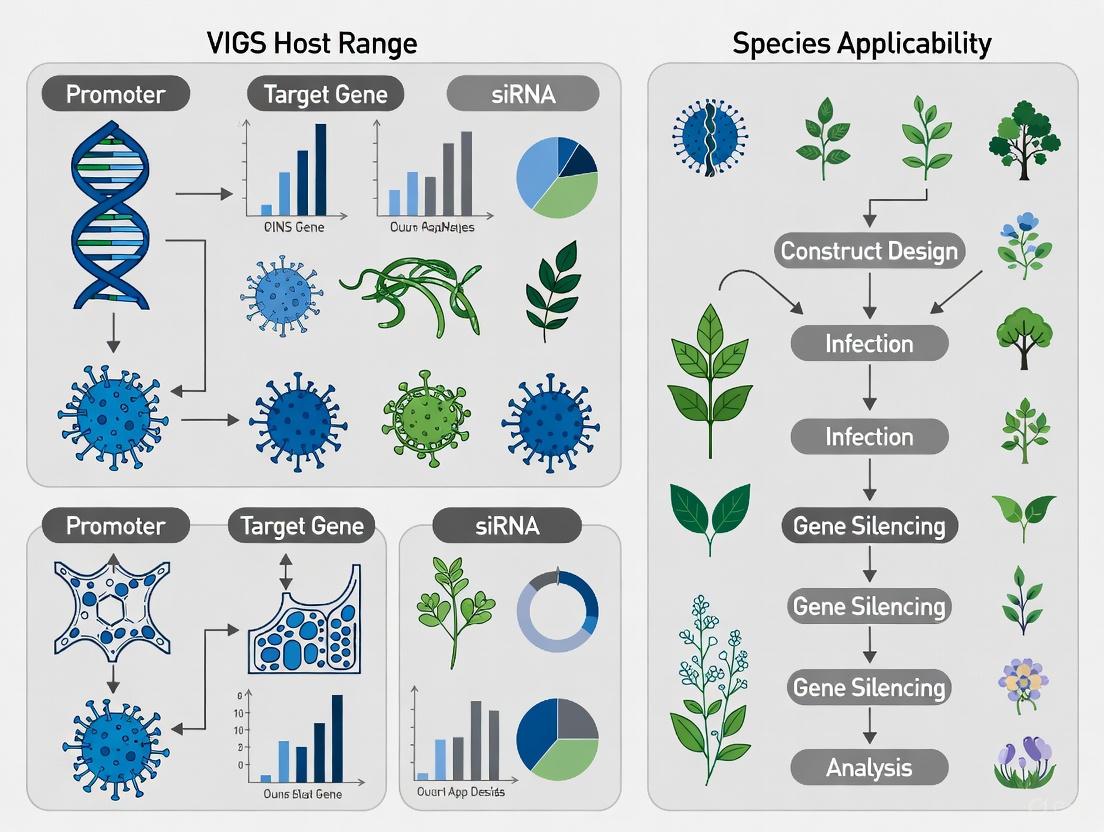
Virus-induced gene silencing (VIGS) has emerged as a powerful reverse genetics tool for rapid, transient gene functional analysis across diverse plant species.
VIGS Host Range and Species Applicability: A Comprehensive Guide for Researchers and Drug Developers
Abstract
Virus-induced gene silencing (VIGS) has emerged as a powerful reverse genetics tool for rapid, transient gene functional analysis across diverse plant species. This article provides a comprehensive exploration of VIGS host range determinants and species applicability, addressing foundational mechanisms, methodological applications, troubleshooting approaches, and validation techniques. We examine the expanding repertoire of viral vectors—including TRV, TMV, CMV, CGMMV, and TelMV—and their specific compatibilities with model organisms, crops, and recalcitrant species. For researchers and drug development professionals, this review synthesizes critical optimization strategies for enhancing silencing efficiency, discusses limitations in non-model systems, and outlines future directions for harnessing VIGS in functional genomics and biomedical research.
Understanding VIGS Mechanisms and Viral Vector Diversity
Virus-Induced Gene Silencing (VIGS) has emerged as an indispensable reverse genetics tool that leverages the plant's innate antiviral RNA interference (RNAi) machinery to transiently knock down endogenous gene expression [1] [2]. This technology enables rapid functional analysis of genes without the need for stable transformation, making it particularly valuable for species recalcitrant to genetic transformation and for studying lethal mutations [3] [2]. The molecular foundation of VIGS lies in post-transcriptional gene silencing (PTGS), an evolutionarily conserved sequence-specific RNA degradation mechanism [4] [2]. Recent advances have revealed that VIGS can induce not only transient silencing but also heritable epigenetic modifications through RNA-directed DNA methylation (RdDM), significantly expanding its applications in functional genomics and crop improvement [1] [4]. Understanding these dual mechanisms—RNA interference and epigenetic modification—is crucial for optimizing VIGS efficacy across diverse plant species and for harnessing its potential in molecular breeding programs.
Molecular Mechanisms of VIGS
RNA Interference Pathway in VIGS
The VIGS process initiates when a recombinant viral vector containing a fragment of a host target gene is introduced into the plant via agroinfiltration, biolistic delivery, or mechanical inoculation [2]. The underlying mechanism unfolds through a coordinated series of molecular events primarily occurring in the cytoplasm [4]:
- Viral Replication and dsRNA Formation: During replication of the viral vector, the plant's endogenous RNA-directed RNA polymerase (RDRP) recognizes and replicates viral single-stranded RNA, producing double-stranded RNA (dsRNA) intermediates [4]. These dsRNA molecules may also form through the synthesis of complementary RNA strands or from RNA secondary structures [2].
- Dicer-like Enzyme Processing: The dsRNA molecules are recognized as foreign by the plant's defense system and are cleaved by Dicer-like (DCL) enzymes—primarily DCL2 and DCL4—into small interfering RNA (siRNA) duplexes of 21–24 nucleotides in length [4] [5].
- RISC Assembly and Target Cleavage: The siRNAs are incorporated into the RNA-induced silencing complex (RISC), where the guide strand directs the complex to complementary endogenous mRNA sequences through base-pairing interactions [4] [5]. The Argonaute (AGO) protein, the catalytic component of RISC, then mediates the sequence-specific cleavage and degradation of the target mRNA, resulting in post-transcriptional gene silencing (PTGS) [4].
- Amplification and Systemic Spread: The initial silencing signal is amplified through the action of host RDRPs, which use the cleaved mRNA fragments as templates to generate secondary dsRNAs, leading to the production of secondary siRNAs [4]. This amplification mechanism enhances the silencing effect and facilitates its systemic spread throughout the plant, independent of viral movement [2].
Epigenetic Modifications in VIGS
Beyond cytoplasmic RNA degradation, VIGS can induce transcriptional gene silencing (TGS) through epigenetic modifications in the nucleus [1] [4]. This pathway involves:
- Nuclear Import of siRNAs: A subset of the 24-nucleotide siRNAs generated by DCL3 are transported into the nucleus [4].
- RNA-Directed DNA Methylation (RdDM): The nuclear siRNAs associate with AGO proteins and recruit DNA methyltransferases to homologous genomic loci [1] [4]. This recruitment leads to de novo DNA methylation of cytosine residues in all sequence contexts (CG, CHG, and CHH) in the target gene's promoter region [4].
- Heritable Epigenetic Silencing: When methylation occurs in promoter regions, it can lead to stable, heritable epigenetic silencing that persists even after the viral vector has been cleared from the plant [1] [4]. This epigenetic marks can be maintained across generations through both RNA-independent (involving MET1 and CMT3 methyltransferases) and RNA-dependent (canonical PolIV-RdDM) maintenance mechanisms [4].
Figure 1: Molecular Mechanisms of VIGS: RNA Interference and Epigenetic Modifications
Key Protein Components and Their Functions
Table 1: Key Molecular Components in VIGS Pathways
| Component | Function in VIGS | Subcellular Localization |
|---|---|---|
| Dicer-like (DCL) enzymes | Processes dsRNA into 21-24 nt siRNAs | Cytoplasm/Nucleus |
| Argonaute (AGO) proteins | Core component of RISC; mediates target recognition and cleavage | Cytoplasm/Nucleus |
| RNA-dependent RNA Polymerase (RDRP) | Amplifies silencing by generating secondary dsRNAs | Cytoplasm |
| DNA methyltransferases (DRM, MET1, CMT3) | Establishes and maintains DNA methylation patterns | Nucleus |
| RNA Polymerase IV/V | Generates scaffold transcripts for RdDM (Pol V) | Nucleus |
VIGS Vectors and Experimental Design
Vector Systems for VIGS
The effectiveness of VIGS depends critically on selecting appropriate viral vectors tailored to the host plant species. To date, at least 50 different VIGS vectors have been developed for both dicotyledonous and monocotyledonous plants [5]. These vectors are broadly categorized based on their genomic material and structure:
RNA Virus-Based Vectors: These include Tobacco Rattle Virus (TRV), Tobacco Mosaic Virus (TMV), Potato Virus X (PVX), and Cucumber Green Mottle Mosaic Virus (CGMMV) [3] [5]. TRV has emerged as one of the most versatile and widely used VIGS vectors due to its broad host range, efficient systemic movement, mild symptom development, and ability to target meristematic tissues [5] [6]. TRV has a bipartite genome requiring two vectors: TRV1 (encoding replication and movement proteins) and TRV2 (containing the coat protein and cloning site for target inserts) [5].
DNA Virus-Based Vectors: These include geminiviruses such as Cotton Leaf Crumple Virus (CLCrV) and African Cassava Mosaic Virus (ACMV) [5]. DNA viruses are particularly valuable for species where RNA virus vectors have limited efficiency.
Satellite Virus-Based Vectors: These systems utilize satellite viruses that depend on helper viruses for replication, offering additional flexibility in vector design [5].
Table 2: Comparison of Major VIGS Vector Systems
| Vector Type | Example Vectors | Host Range | Advantages | Limitations |
|---|---|---|---|---|
| RNA Viruses | TRV, TMV, PVX, CGMMV | Broad (Solanaceae, Arabidopsis, some monocots) | Efficient systemic movement; high silencing efficiency | Potential symptom development; cytoplasmic replication |
| DNA Viruses | CLCrV, ACMV | Limited to specific families | Nuclear replication; access to epigenetic machinery | Narrower host range; complex genome organization |
| Satellite Viruses | Satellite TMV vectors | Dependent on helper virus | Reduced pathogenicity; modular design | Requires helper virus; limited application |
Critical Factors for Experimental Success
The efficiency of VIGS is influenced by numerous factors that must be optimized for each plant system:
Insert Design: The selection of the target gene fragment is crucial. Fragments of 200-500 bp with high sequence identity (typically >85-90%) to the endogenous gene are most effective [2]. The insert should ideally target unique regions to ensure specificity and avoid off-target effects.
Inoculation Method: Agroinfiltration is the most common delivery method, where Agrobacterium tumefaciens carrying the VIGS vector is infiltrated into plant tissues using a needleless syringe [3] [6]. Optimization of Agrobacterium strain (e.g., GV3101), optical density (OD600 = 0.8-1.0), and inoculation buffer composition (including acetosyringone) is essential for efficient transformation [3] [6].
Plant Developmental Stage: Younger seedlings generally exhibit higher silencing efficiency. For example, in Iris japonica, one-year-old seedlings showed optimal silencing efficiency (36.67%) compared to older plants [7].
Environmental Conditions: Temperature, humidity, and photoperiod significantly impact silencing efficiency. Most protocols recommend maintaining plants at 22-25°C with high humidity (70-80%) post-inoculation to facilitate viral spread and silencing establishment [5].
Host Genotype: Natural variation in RNAi machinery components (e.g., AGO proteins) and the presence of virus resistance genes can dramatically affect VIGS efficiency across different cultivars and accessions [5].
Advanced Applications: From Functional Genomics to Epigenetic Breeding
VIGS in Functional Gene Characterization
VIGS has accelerated gene function discovery across numerous plant species, particularly in crops where stable transformation remains challenging:
Disease Resistance Genes: In soybean, TRV-based VIGS successfully silenced the rust resistance gene GmRpp6907 and defense-related gene GmRPT4, validating their roles in pathogen resistance [6]. In pepper, VIGS identified CaWRKY3 as a positive regulator of immune response against Ralstonia solanacearum [6].
Developmental Genes: In Luffa acutangula (ridge gourd), CGMMV-VIGS targeting the TEN gene (encoding a CYC/TB1-like transcription factor) resulted in shorter tendrils and altered nodal positions of tendril emergence, demonstrating its role in tendril development [3].
Abiotic Stress Tolerance: VIGS has been employed to identify genes involved in responses to temperature, salt, and osmotic stresses in various crops, providing insights for breeding stress-resilient varieties [1] [5].
VIGS-Induced Epigenetic Modifications for Crop Improvement
The ability of VIGS to induce heritable epigenetic modifications represents a frontier in crop improvement strategies [1] [4]. Key demonstrations include:
Stable Epigenetic Silencing: Bond et al. (2015) used TRV:FWAtr to induce transgenerational epigenetic silencing of the FWA promoter in Arabidopsis, with DNA methylation maintained over multiple generations even in the absence of the viral vector [4].
ViTGS-Mediated DNA Methylation: Fei et al. (2021) demonstrated that virus-induced transcriptional gene silencing (ViTGS) establishes DNA methylation in parental lines that is faithfully transmitted to subsequent generations, confirming the potential for stable epigenetic engineering [4].
Natural Epigenetic Variation: The epigenetic silencing mechanism of VIGS mirrors natural epigenetic phenomena, such as the symmetry change in Linaria vulgaris flowers, which is associated with differential methylation of the Lcyc promoter [4].
These advances position VIGS as a powerful tool not only for transient gene knockdown but also for creating stable epigenetic alleles with desired traits, potentially accelerating molecular breeding programs.
The Scientist's Toolkit: Essential Reagents and Protocols
Key Research Reagent Solutions
Table 3: Essential Research Reagents for VIGS Experiments
| Reagent/Resource | Function/Application | Examples/Specifications |
|---|---|---|
| VIGS Vectors | Delivery of target gene fragments to host plants | TRV (pTRV1, pTRV2), CGMMV (pV190), CLCrV |
| Agrobacterium Strains | Mediate vector transfer into plant cells | GV3101, LBA4404 |
| Selection Antibiotics | Maintain plasmid selection in bacterial cultures | Kanamycin (50 mg/L), Rifampicin (25 mg/L) |
| Inoculation Buffer | Medium for agroinfiltration | 10 mM MgCl₂, 10 mM MES, 200 μM acetosyringone |
| Marker Genes | Visual assessment of silencing efficiency | Phytoene desaturase (PDS), Magnesium chelatase (SU) |
| qPCR Reagents | Quantitative assessment of silencing efficiency | SYBR Green, gene-specific primers |
Representative Experimental Protocol
The following workflow outlines a standardized TRV-based VIGS protocol optimized for soybean [6], with modifications applicable to other species:
Figure 2: VIGS Experimental Workflow
Detailed Protocol Steps:
Target Fragment Selection and Amplification: Identify a unique 200-500 bp region of the target gene with high sequence specificity. Design primers with appropriate restriction sites (e.g., EcoRI and XhoI for TRV2) and amplify the fragment using high-fidelity DNA polymerase [6].
Vector Construction: Digest the VIGS vector (e.g., pTRV2) and target fragment with appropriate restriction enzymes, followed by ligation and transformation into E. coli DH5α. Verify positive clones by colony PCR and sequencing [3] [6].
Agrobacterium Transformation: Introduce the verified recombinant plasmid into Agrobacterium tumefaciens GV3101 using freeze-thaw or electroporation methods. Select positive colonies on YEP plates containing appropriate antibiotics (e.g., kanamycin 50 mg/L, rifampicin 25 mg/L) [3] [6].
Plant Inoculation:
- Grow Agrobacterium cultures overnight to OD600 = 0.6-0.8, centrifuge, and resuspend in inoculation buffer (10 mM MgCl₂, 10 mM MES, 200 μM acetosyringone) to final OD600 = 0.8-1.0 [3] [6].
- For soybean and other challenging species, use the cotyledon node method: bisect sterilized seeds and immerse explants in Agrobacterium suspension for 20-30 minutes [6].
- For amenable species like Nicotiana benthamiana, infiltrate the suspension directly into leaves using a needleless syringe [3].
Post-Inoculation Care and Monitoring: Maintain inoculated plants under high humidity conditions for 24-48 hours, then transfer to normal growth conditions (22-25°C, 16h light/8h dark photoperiod). Monitor for silencing phenotypes beginning at 14-21 days post-inoculation [3] [6].
Efficiency Validation:
- Phenotypic Assessment: For marker genes like PDS, photobleaching provides visual confirmation of silencing [3] [6].
- Molecular Verification: Quantify silencing efficiency using RT-qPCR to measure target transcript reduction compared to empty vector controls [3]. Silencing efficiency typically ranges from 65% to 95% in optimized systems [6].
The molecular basis of VIGS encompasses both RNA interference-mediated post-transcriptional silencing and RNA-directed DNA methylation leading to transcriptional repression. This dual mechanism provides a powerful platform for functional genomics and epigenetic studies across diverse plant species. The versatility of VIGS vectors, particularly the TRV-based system, enables researchers to overcome limitations of stable transformation in recalcitrant species and to study essential genes that may be lethal when constitutively silenced. Recent advances demonstrating heritable epigenetic modifications induced by VIGS open new avenues for crop improvement through epigenetic engineering. As VIGS technology continues to evolve, its integration with multi-omics approaches and genome-editing platforms will further enhance its utility in deciphering gene function and accelerating the development of improved crop varieties with enhanced agronomic traits.
Virus classification is the formal process of naming viruses and placing them into a taxonomic system similar to that used for cellular organisms, a framework essential for organizing the vast diversity of viral entities used in Vector-Induced Gene Silencing (VIGS) research [8] [9]. The International Committee on Taxonomy of Viruses (ICTV) is the global body responsible for this endeavor, establishing a hierarchy of taxonomic ranks that extends from realm to species [8] [10]. For VIGS research, which utilizes viral vectors to silence host genes and study gene function, a precise understanding of this taxonomy is indispensable. It allows researchers to predict vector behavior—including host range, tissue tropism, and mode of replication—based on its classified group [8] [9]. The taxonomic placement of a virus informs its suitability as a VIGS vector, its potential host species applicability, and the design of effective silencing constructs.
The modern classification of viruses relies on a polythetic approach, which considers multiple criteria to define species and higher taxa. These criteria include [8] [9]:
- Virion morphology (size, shape, presence of an envelope)
- Genome characteristics (DNA vs. RNA, single-stranded vs. double-stranded, sense, segmentation)
- Replication strategy and mechanism
- Natural host range and mode of transmission
- Pathogenicity and antigenic properties
With the advent of high-throughput sequencing, genomic and molecular data have become the predominant criteria for classifying viruses, leading to a more accurate reflection of evolutionary relationships and a steady increase in the number of classified taxa [8] [9]. As of 2022, the ICTV taxonomy includes 11,273 named virus species within a structure of 6 realms, 17 kingdoms, 40 classes, 72 orders, 264 families, and 2,818 genera [8]. This structured diversity provides a rich toolkit for selecting and engineering VIGS vectors.
Hierarchical Taxonomical Systems for Viral Vectors
The ICTV Taxonomic System
The ICTV system organizes viruses into a hierarchical structure, with formal taxonomic suffixes assigned to each rank [8]. The complete hierarchy, from highest to lowest rank, is:
- Realm (
-viria) - Subrealm (
-vira) - Kingdom (
-virae) - Subkingdom (
-virites) - Phylum (
-viricota) - Subphylum (
-viricotina) - Class (
-viricetes) - Subclass (
-viricetidae) - Order (
-virales) - Suborder (
-virineae) - Family (
-viridae) - Subfamily (
-virinae) - Genus (
-virus) - Species [8]
A pivotal recent development in ICTV taxonomy is the mandatory adoption of a binomial format for naming new virus species, similar to the system used for cellular organisms [8]. As of a mid-2023 review, this process of renaming existing species was largely complete, with 8,982 of the 11,273 recognized species (approximately 80%) now possessing binomial names (e.g., Betacoronavirus pandemicum) [8]. This standardization simplifies the precise identification of VIGS vectors in scientific literature.
The Baltimore Classification System
Complementing the formal ICTV taxonomy is the Baltimore classification system, which categorizes viruses based on the fundamental nature of their genome and their mechanism of mRNA synthesis [8]. This system is exceptionally useful in VIGS research as it directly informs the molecular strategy for vector engineering, particularly when designing constructs for gene silencing. The Baltimore system places all viruses into one of seven groups:
Table 1: Baltimore Classification of Viruses
| Group | Nucleic Acid Type and Replication Strategy | Representative Viral Families & VIGS Relevance |
|---|---|---|
| I | Double-stranded DNA (dsDNA) | Adenoviridae, Herpesviridae, Poxviridae [8] |
| II | Single-stranded DNA (ssDNA), + sense | Parvoviridae [8] |
| III | Double-stranded RNA (dsRNA) | Reoviridae [8] |
| IV | Single-stranded RNA (ssRNA), + sense | Coronaviridae, Picornaviridae, Togaviridae [8]. Many common VIGS vectors (e.g., Tobacco Mosaic Virus, Potato Virus X) belong to this group. |
| V | Single-stranded RNA (ssRNA), - sense | Orthomyxoviridae, Rhabdoviridae [8] |
| VI | Single-stranded RNA (ssRNA) with DNA intermediate | Retroviridae [8] |
| VII | Double-stranded DNA (dsDNA) with RNA intermediate | Hepadnaviridae [8] |
The following diagram illustrates the logical workflow for classifying a viral vector using the integrated ICTV and Baltimore systems, a critical first step in VIGS vector selection.
In-Depth Taxonomy of Major Viral Vector Classes
DNA Viruses in Vector Development
DNA viruses constitute several major groups used in therapeutic development and research, including VIGS. They are primarily classified within three realms: Duplodnaviria, Monodnaviria, and Varidnaviria [8].
Adenoviruses are non-enveloped dsDNA viruses (Baltimore Group I) with a broad host range. Their linear genome of approximately 36 kb is amenable to genetic modification for vector development [11]. Replication-deficient adenoviral vectors are created by deleting essential genomic regions (E1, E3), rendering them incapable of replicating outside of complementary cell lines engineered to provide the missing functions in trans [11]. This makes them highly safe for use as VIGS vectors. Successive generations of adenoviral vectors have been developed to increase carrying capacity and reduce immunogenicity:
Table 2: Generations of Replication-Deficient Adenoviral Vectors
| Vector Generation | Genetic Deletions | Carrying Capacity | Key Features & Challenges |
|---|---|---|---|
| First Generation | E1, E3 | Up to ~9 kb | High immunogenicity; widely used platform [11] |
| Second Generation | E1, E3, E2, E4 | Larger than 1st Gen | Reduced immunogenicity; lower viral titer and transgene expression [11] |
| Third Generation | Entire viral genome except ITRs | Up to ~36 kb | "Gutless" vectors; requires helper virus for packaging, challenging production [11] |
Poxviruses are large, enveloped dsDNA viruses (Baltimore Group I) with genomes ranging from 130–230 kb, offering a substantial capacity for inserting exogenous genetic material [11]. The Modified Vaccinia virus Ankara (MVA) strain is a highly attenuated and replication-deficient vector platform prized for its excellent safety profile and ability to induce potent humoral and cellular immune responses [11]. Its large genome allows for the delivery of complex genetic circuits for sophisticated VIGS applications.
Adeno-Associated Viruses (AAV) are small, non-enveloped ssDNA viruses (Baltimore Group II) belonging to the genus Dependoparvovirus. AAV vectors are the leading platform for in vivo gene therapy and are highly relevant for VIGS due to their non-pathogenic nature, low immunogenicity, and ability to mediate long-term transgene expression in non-dividing cells [12] [13]. Their tropism for various tissues can be redirected through capsid engineering, making them versatile tools for species-specific VIGS applications [13].
RNA Viruses in Vector Development
RNA viruses offer distinct advantages as viral vectors, particularly for transient gene expression and silencing. Their typically cytoplasmic life cycle avoids potential issues of genomic integration.
Alphaviruses, such as those from the genera Sindbis virus and Semliki Forest virus, are enveloped, positive-sense ssRNA viruses (Baltimore Group IV) [11]. Their genome is approximately 11-12 kb and is capable of directing high-level cytoplasmic gene expression. Engineering replication-deficient alphavirus vectors involves separating the genes for structural proteins from the replicase machinery, allowing for the production of vector particles that deliver a self-replicating RNA ("replicon") but are incapable of generating new infectious virions [11]. This single-cycle infection profile is advantageous for contained VIGS experiments.
Tobacco Rattle Virus (TRV) is a positive-sense ssRNA virus (Baltimore Group IV) and is one of the most widely used VIGS vectors in plant research, particularly in model organisms like Arabidopsis thaliana [14]. TRV is a bipartite virus, consisting of TRV1 (encoding replication proteins) and TRV2 (encoding movement protein and coat protein). The TRV2 RNA is typically engineered to carry the silencing construct [14]. A recent breakthrough demonstrated the use of an engineered TRV to deliver a compact RNA-guided genome editor (TnpB-ωRNA) for transgene-free germline editing in Arabidopsis, showcasing the potential of RNA viruses for delivering functional genetic tools beyond simple silencing [14].
Satellite Systems and Other Mobile Genetic Elements
The formal definition of a virus, as ratified by the ICTV in 2021, explicitly links viruses to Mobile Genetic Elements (MGEs) [8]. A virus is defined as a type of MGE that encodes at least one major virion protein, or is demonstrably descended from such an entity [8]. This definition broadens the scope of virus taxonomy to include other MGEs that share an evolutionary descent with viruses.
Satellite viruses are subviral agents that require a helper virus for their replication. They are classified as viral species by the ICTV but are distinguished from their helper viruses [8]. Their dependence on specific helper viruses makes them less suitable as standalone VIGS vectors but offers intriguing possibilities for designing two-component silencing systems where the delivery of the satellite component is spatially or temporally controlled.
Experimental Framework: Taxonomic Identification in VIGS Research
Protocol for Classifying a Novel Viral Isolate for VIGS Potential
The following detailed protocol outlines the process for characterizing a novel viral isolate, a critical step in assessing its utility as a new VIGS vector.
Objective: To determine the taxonomic classification and fundamental biological properties of a novel viral isolate to evaluate its potential as a VIGS vector.
Materials:
- Purified viral preparation.
- Susceptible host cell lines or organisms.
- Nucleic acid extraction kits.
- Transmission Electron Microscope (TEM).
- Next-generation sequencing platform (e.g., Illumina).
- PCR and RT-PCR reagents.
- Centrifuges and ultracentrifuges.
Procedure:
Virion Purification and Morphological Analysis:
- Purify the virus from infected host tissue or cell culture supernatant using differential centrifugation and density gradient ultracentrifugation.
- Negatively stain the purified virions and analyze using TEM to determine virion morphology (e.g., icosahedral, helical, pleomorphic), size, and the presence or absence of an envelope [9].
Genome Characterization:
- Extract the viral nucleic acid.
- Treat the extract with DNase and RNase to determine the genome type (DNA or RNA) and strandedness.
- Perform next-generation sequencing (Illumina, Nanopore) to obtain the complete genome sequence.
- Annotate the genome to identify open reading frames (ORFs), regulatory elements (e.g., ITRs in AAV), and homology to known viral genes [9] [13].
Phylogenetic and Bioinformatic Analysis:
- Use the sequence of a conserved gene (e.g., RNA-dependent RNA polymerase for RNA viruses, capsid protein for DNA viruses) for phylogenetic analysis.
- Perform BLAST searches against the ICTV reference sequences and GenBank.
- Utilize the Pairwise Sequence Comparison (PASC) tool or similar alignment-free methods offered by the ICTV to compare the novel genome to classified viruses and establish demarcations from existing species [9].
- Construct a phylogenetic tree using maximum-likelihood or Bayesian methods to visualize evolutionary relationships and confirm taxonomic placement at the genus or family level.
In vitro and In vivo Characterization:
- Determine the natural host range by challenging a panel of related species with the virus and monitoring for infection (e.g., via symptom development, serological assays, or PCR).
- Establish the mode of transmission (e.g., mechanical, vector-borne, seed).
- For VIGS potential, clone a fragment of a reporter gene from the target host into a reverse genetics system for the virus. Inoculate hosts and assess for silencing phenotypes (e.g., photobleaching in a
PDSsilencing assay) [14].
The experimental workflow for this protocol, from virion isolation to functional VIGS validation, is summarized below.
The Scientist's Toolkit: Essential Reagents for Viral Vector Taxonomy & VIGS Research
Table 3: Key Research Reagent Solutions for Viral Taxonomy and VIGS Work
| Reagent / Material | Core Function | Specific Application in Taxonomy & VIGS |
|---|---|---|
| DNase & RNase Enzymes | Selective degradation of nucleic acids. | Determining viral genome type (DNA vs. RNA) and strandedness by selective digestion of unprotected nucleic acids [9]. |
| Next-Generation Sequencer (e.g., Illumina) | High-throughput nucleic acid sequencing. | Obtaining complete viral genome sequences for phylogenetic analysis and PASC-based classification [9]. |
| Transmission Electron Microscope (TEM) | High-resolution imaging of nanostructures. | Visualizing and measuring virion morphology (capsid symmetry, envelope), a key phenotypic taxonomic criterion [9]. |
| Reverse Genetics System | Recovery of infectious virus from cloned cDNA. | Engineering replication-deficient viral vectors and inserting VIGS constructs into the viral genome for functional testing [14]. |
| qPCR/RT-qPCR Reagents | Quantitative measurement of nucleic acids. | Titrating viral vector stocks and quantifying viral load in host tissues to establish host range and tissue tropism. |
| Phylogenetic Software (e.g., PhyloNet, MEGA) | Reconstruction of evolutionary relationships. | Building phylogenetic trees/networks from sequence alignments to confirm taxonomic placement and evolutionary history [15]. |
Current Trends, Challenges, and Future Perspectives
Virus taxonomy is a dynamic field, continuously challenged and refined by new discoveries. A significant contemporary debate centers on whether viruses should be considered taxonomic units at all, or rather as "processes" that integrate virions and their hosts into life cycles, given their role as crucial components of hologenomes [15]. Furthermore, the pervasive nature of horizontal gene transfer in viral evolution creates reticulate phylogenetic networks that complicate the assignment of monophyletic taxa, especially at deep ranks [15]. This has led to calls for abandoning deep ranks and reevaluating the principles of classification to better reflect the complex, network-like evolutionary history of viruses [15].
From a commercial and applied perspective, the viral vector development market is experiencing explosive growth, projected to rise from USD 1.06 billion in 2025 to USD 5 billion by 2034, at a CAGR of 18.84% [16]. This growth is led by Adeno-Associated Viral (AAV) Vectors, which held a 44% market share in 2025 due to their favorable safety profile and efficiency in gene delivery [17] [16]. Gene therapy applications dominate the market, accounting for 47% of the share [17]. This commercial trajectory underscores the critical importance of a robust and predictive taxonomic framework to guide the safe and effective development of the next generation of VIGS vectors and gene therapies.
Future developments in viral vector taxonomy will be increasingly driven by structural phylogenomics, which uses the evolution of protein folds and virion architectures to uncover deep evolutionary relationships that sequence-based methods alone might miss [8] [15]. This approach suggests that the structural diversity of viruses is far more limited than their sequence diversity, potentially consolidating our understanding of viral origins and refining the highest levels of taxonomic classification [8]. For VIGS researchers, these advancements promise a more rational and evolutionarily-informed basis for selecting and engineering the optimal viral vector for specific host range and species applicability studies.
Within plant functional genomics and biotechnology research, virus-induced gene silencing (VIGS) has emerged as a powerful reverse genetics tool for elucidating gene function. The efficacy of VIGS is fundamentally governed by the biological characteristics of the viral vector employed, particularly its host range and species applicability. This technical guide provides an in-depth analysis of five virus systems—Tobacco Rattle Virus (TRV), Tobacco Mosaic Virus (TMV), Cucumber Mosaic Virus (CMV), Broad Bean Wilt Virus 2 (BBWV2), and Geminiviruses—with focus on their molecular biology, host compatibility, and practical implementation in VIGS research. Understanding these vector-specific properties is crucial for selecting appropriate experimental systems and interpreting phenotypic outcomes in gene function studies across diverse plant species.
Molecular and Transmission Characteristics
The fundamental biology of each virus dictates its suitability for VIGS applications. Key characteristics including genomic architecture, transmission mechanisms, and host range directly influence experimental design and interpretation.
Table 1: Fundamental Characteristics of Key Plant Viruses Used in VIGS Research
| Virus | Genus/Family | Genome Type | Primary Transmission | Key Host Range |
|---|---|---|---|---|
| TRV | Tobravirus/Virgaviridae | +ssRNA, bipartite | Stubby-root nematodes (Paratrichodorus, Trichodorus) [18] | Very wide (400+ species across 50 families) [18] |
| TMV | Tobamovirus/Virgaviridae | +ssRNA, monopartite | Mechanical contact, contaminated tools [19] | Primarily Solanaceae (tobacco, tomato, pepper) [19] |
| CMV | Cucumovirus/Bromoviridae | +ssRNA, tripartite | Aphids (non-persistent manner) [20] | Extremely wide (1000+ plant species) [20] |
| BBWV2 | Fabavirus/Secoviridae | +ssRNA, bipartite | Aphids (Aphis gossypii, Myzus persicae) [20] | Wide (multiple horticultural crops) [20] |
| Geminiviruses | Begomovirus/Geminiviridae | ssDNA, circular | Whiteflies (Bemisia tabaci complex) [21] | Wide (dicots and monocots; over 520 species) [21] |
Genome Architecture and Vector Engineering Strategies
The genomic organization of each virus presents unique opportunities and challenges for engineering into effective VIGS vectors.
Tobacco Rattle Virus (TRV)
TRV possesses a bipartite positive-sense single-stranded RNA genome. RNA1 encodes replication proteins, a movement protein (MP), and a cysteine-rich protein (CRP) that functions as a silencing suppressor [22]. RNA2 typically contains the coat protein (CP) and proteins (2b, 2c) involved in nematode transmission [22]. Recent innovations include all-in-one TRV vectors where RNA1 and RNA2 expression cassettes are arranged bidirectionally in a single T-DNA, simplifying agroinfiltration and ensuring co-delivery of both genomic components [23].
Geminiviruses
Geminiviruses feature circular single-stranded DNA genomes that replicate in plant cell nuclei via rolling circle and recombination-dependent mechanisms [21]. Their name derives from twinned (geminate) icosahedral particles. Begomoviruses may be monopartite (DNA-A) or bipartite (DNA-A and DNA-B), with DNA-B specializing in systemic movement [21]. Engineering considerations include the highly conserved nonanucleotide motif (TAATATTAC) where replication initiates, and the Rep protein which recruits host polymerases [21].
Broad Bean Wilt Virus 2 (BBWV2)
BBWV2 has a bipartite positive-sense RNA genome where both RNA1 (∼5.9 kb) and RNA2 (∼3.6 kb) are encapsidated separately in icosahedral virions [20]. This fabavirus has been recently identified in new hosts like spinach through HTS approaches, demonstrating its expanding host applicability [20].
Figure 1: Genomic Structures and Engineering Strategies for Key VIGS Vectors
Host Range and Species Applicability in VIGS
Host range compatibility is perhaps the most critical consideration when selecting a VIGS vector for functional genomics research.
TRV exhibits one of the broadest known host ranges, infecting over 400 plant species across 50 families, including important crops like potato, pepper, and ornamentals such as daffodils and tulips [18]. Many hosts develop minimal or no symptoms, making TRV particularly valuable for studying essential genes where severe viral pathology could confound phenotypic analysis [18]. The recent development of all-in-one TRV vectors (designated VS2 system) has demonstrated effective VIGS in cotton and other Malvoideae species, significantly expanding its applicability beyond traditional Solanaceous hosts [23].
TMV, while having a more restricted natural host range primarily within Solanaceae, has demonstrated unexpected cross-kingdom capabilities. Recent research shows TMV can enter, replicate, and persist in taxonomically diverse phytopathogenic fungi including Botrytis cinerea and Verticillium dahliae [19]. This remarkable cross-kingdom infectivity suggests potential for developing TMV-based vectors for functional genomics in fungal systems, although RNAi pathways in these fungi can limit viral replication [19].
Geminiviruses collectively infect a vast range of dicot and monocot species, though individual viruses often have narrower host specificities [21]. Minor sequence variations can significantly alter host compatibility, affecting their utility as VIGS vectors [21]. The model plant Nicotiana benthamiana is frequently used for geminivirus studies due to deficiencies in its silencing pathways that enhance susceptibility [21].
Table 2: VIGS Application Suitability Across Plant Species
| Virus Vector | Model Species | Crop Applications | Special Considerations |
|---|---|---|---|
| TRV | N. benthamiana, Arabidopsis | Potato, pepper, cotton, tomato [23] | Nematode vectoring in natural infections; soil-borne persistence [18] |
| TMV | N. tabacum, N. benthamiana | Tomato, pepper [19] | Cross-kingdom capability to fungi; mechanical transmission [19] |
| CMV | Various dicots and monocots | Spinach, cucurbits, banana [20] | Extreme genetic variability; aphid transmission concerns |
| BBWV2 | Legumes, spinach | Broad bean, spinach, marigold [20] | Emerging threat in new hosts; aphid transmission |
| Geminiviruses | N. benthamiana, tomato | Cassava, cotton, beans [21] | Phloem limitation; insect vector requirements |
Experimental Protocols and Methodologies
Agroinfiltration for Geminivirus Inoculation
For geminivirus infectious clones delivered via Agrobacterium tumefaciens, optimal parameters include:
- Bacterial Density: OD₆₀₀ of 0.1-0.3 for infiltration suspensions [21]
- Plant Developmental Stage: Young seedlings typically show highest susceptibility [21]
- Inoculation Method: Stem injection often provides superior results compared to leaf infiltration, particularly for plants with rigid leaf morphologies [21]
- Agrobacterium Strains: Selection of appropriate virulent strains enhances transformation efficiency
Critical considerations include the decision between biolistic methods versus agroinfiltration, with the latter generally preferred for laboratory studies due to easier containment and reduced equipment requirements [21].
Sap Inoculation for Mechanical Transmission
For viruses like TMV and BBWV2, mechanical sap inoculation remains a straightforward delivery method:
- Grind infected leaf tissue in cold phosphate buffer (e.g., 20 mM Na₂HPO₄, pH 7.6) [22]
- Add abrasive material (400-mesh silicon carbide) to create mild wounding [22]
- Gently rub inoculum onto carborundum-dusted leaves [20]
- Maintain plants in optimal conditions (typically 24°C, 14/10h photoperiod) for symptom development [22]
This method was successfully employed for transmitting TRV from Jerusalem sage to indicator species like Chenopodium quinoa and Nicotiana benthamiana [22].
All-in-One Vector Implementation
The innovative all-in-one strategy for bipartite viruses like TRV involves:
- Vector Design: Tandem arrangement of RNA1 and RNA2 components within a single T-DNA [23]
- Unified Cloning: Implementation of standardized 2×BsaI-containing multiple cloning sites (MCS) with homologous arms for recombination-based cloning [23]
- Efficiency Validation: Comparison of VIGS efficiency against traditional bipartite delivery systems [23]
This system reduces workload by eliminating the need to culture and mix separate Agrobacterium strains containing different genomic components [23].
Figure 2: VIGS Experimental Workflow and Critical Optimization Parameters
The Scientist's Toolkit: Essential Research Reagents
Table 3: Key Research Reagents for VIGS Vector Implementation
| Reagent/Resource | Primary Function | Specific Examples/Applications |
|---|---|---|
| All-in-One TRV Vector (VS2) | Simplified VIGS delivery | Single T-DNA containing both RNA1 and RNA2 [23] |
| Agrobacterium tumefaciens | Viral DNA delivery | Strain selection affects transformation efficiency [21] |
| BsaI Restriction Sites | Modular cloning | Engineered into all-in-one vectors for standardized assembly [23] |
| Proto-VIGS Reporter (pVSr) | Rapid silencing screening | Dual-luciferase based system for protoplast assays [23] |
| VIGS Fragment Screening | Silencing efficiency optimization | Identification of highly effective target sequences [23] |
| Indicator Plant Species | Virus infectivity assays | N. benthamiana, C. quinoa, N. tabacum [22] |
The selection of an appropriate viral vector represents a critical decision point in VIGS experimental design, with implications for host range, silencing efficiency, and phenotypic interpretation. TRV's exceptionally broad host range and minimal pathogenicity make it particularly valuable for cross-species functional genomics, especially with the development of streamlined all-in-one vector systems. Geminiviruses offer unique advantages for DNA-based studies despite greater technical complexity in delivery. TMV's unexpected cross-kingdom capabilities to fungi suggest potential applications beyond traditional plant genomics. As vector engineering continues to advance, particularly with all-in-one systems and high-throughput screening methodologies, VIGS will remain an indispensable tool for elucidating gene function across increasingly diverse plant species and biological contexts.
This technical guide examines the molecular arms race between plant antiviral defense mechanisms, primarily RNA silencing, and viral-encoded suppressors of this defense. Framed within the context of Virus-Induced Gene Silencing (VIGS) host range and species applicability, this review synthesizes current understanding of the core mechanisms, their experimental investigation, and the biotechnological applications derived from this interplay. We detail the post-transcriptional gene silencing (PTGS) pathway, characterize major viral suppressor proteins, and provide standardized protocols for exploiting these interactions in functional genomics. The content is designed to equip researchers with both theoretical knowledge and practical methodologies for advancing research in plant-virus interactions and crop improvement.
Host-pathogen interactions between plants and viruses are characterized by a continuous co-evolutionary struggle. Plants have evolved sophisticated, multilayered defense mechanisms, with RNA silencing standing as a primary and highly effective antiviral strategy [24] [25]. In response, most plant viruses have evolved counter-defense proteins, termed viral suppressors of RNA silencing (VSRs), which inhibit various steps of the host silencing pathway [25]. This molecular arms race not only determines the outcome of viral infections in nature but also provides the foundational principles for powerful biotechnology tools. Virus-Induced Gene Silencing (VIGS) is one such tool that repurposes the plant's silencing machinery and the viral vector's capacity to deliver silencing triggers for functional genomics [4] [5]. The efficacy of both natural defense and biotechnological applications is highly dependent on the specific plant-virus combination, a phenomenon central to research on VIGS host range and species applicability.
Core Mechanisms of Plant Defense and Viral Suppression
The Plant's Antiviral Arsenal: RNA Silencing (PTGS)
The primary antiviral defense in plants is a form of RNA silencing known as Post-Transcriptional Gene Silencing (PTGS). This sequence-specific RNA degradation system is triggered by double-stranded RNA (dsRNA), a common replication intermediate for RNA viruses [24] [25]. The mechanism can be broken down into a core signaling pathway, as illustrated below.
- Trigger: The process initiates with the recognition of double-stranded RNA (dsRNA) in the cytoplasm [25].
- Dicer Processing: The host enzyme Dicer-like (DCL) cleaves the long dsRNA into small, 21-24 nucleotide fragments called small interfering RNAs (siRNAs) [4] [24].
- RISC Assembly: These siRNAs are incorporated into an RNA-Induced Silencing Complex (RISC), whose catalytic core is an Argonaute (AGO) protein [4].
- Target Cleavage: The siRNA acts as a guide, directing RISC to complementary viral mRNA sequences, which are subsequently cleaved and degraded [4] [24].
- Systemic Signaling and Amplification: The silencing signal is amplified and spreads systemically throughout the plant. Host RNA-dependent RNA polymerases (RDRs), such as RDR1 and RDR6, use the targeted RNA as a template to synthesize new dsRNA, which is in turn processed into secondary siRNAs, reinforcing and propagating the silencing state [24].
Viral Counter-Defense: Suppressors of RNA Silencing
To establish a successful infection, viruses produce VSRs that target critical nodes in the PTGS pathway. These suppressors are highly diverse and employ distinct mechanisms, as detailed in the table below [25].
Table 1: Major Viral Suppressors of RNA Silencing (VSRs) and Their Mechanisms
| Viral Suppressor | Virus of Origin | Target/Mechanism of Action | Key Experimental Evidence |
|---|---|---|---|
| HC-Pro | Potyviruses (e.g., TEV) | Binds siRNAs, preventing RISC assembly; inhibits systemic silencing. | Reversal of silencing assays in transgenic plants; blocks silencing initiation [25]. |
| 2b | Cucumber Mosaic Virus (CMV) | Nuclear localization; binds siRNAs and AGO1; inhibits systemic signaling. | Expressed from a PVX vector, prevents initiation but cannot reverse established silencing [25]. |
| P19 | Tombusviruses | Forms a head-to-tail dimer that sequesters siRNA duplexes, preventing RISC loading. | Crystal structure shows direct binding to siRNAs; strong suppression in transient assays [25]. |
| P0 | Poleroviruses | Targets AGO proteins for degradation via ubiquitination. | F-box protein motif required for suppression; reduces AGO protein levels [25]. |
| C2 | Geminiviruses | Can inhibit silencing and also induce transcriptional silencing via DNA methylation. | Multiple functional assays; some variants interfere with the methylation machinery [4] [25]. |
Experimental Protocols: Investigating and Exploiting the Interaction
The following section provides detailed methodologies for key experiments that investigate host-pathogen interactions and leverage them for gene function analysis.
Protocol: Agrobacterium-Mediated VIGS
VIGS is a powerful reverse genetics tool that uses a modified viral vector to silence a plant gene of interest. The Tobacco Rattle Virus (TRV) system is one of the most widely used due to its broad host range and mild symptoms [5] [26].
Workflow Overview:
Detailed Methodology:
Vector Construction:
- Select a ~200-300 bp fragment from the coding sequence of the target gene. For specialized applications, recent studies show that fragments as short as 24-32 nt (vsRNAi) can be effective when designed using comparative genomics [27].
- Clone this fragment into the multiple cloning site of the TRV2 vector using standard molecular techniques (e.g., restriction digestion/ligation or Gateway recombination) [26].
Agrobacterium Preparation:
- Transform the recombinant TRV2 and the helper TRV1 plasmids separately into Agrobacterium tumefaciens strain GV3101 [26].
- Inoculate single colonies into LB media with appropriate antibiotics and grow at 28°C for 24-48 hours.
- Pellet the bacteria and resuspend in an induction medium (e.g., with acetosyringone) to an optical density (OD600) of 0.5-2.0. The optimal OD is species-dependent; for sunflower, OD=1.0 is used, while for Primulina, OD=0.5 is optimal [28] [26].
- Incubate the resuspension for 3-4 hours at room temperature.
Plant Inoculation:
- Mix the TRV1 and TRV2 agrobacterial cultures in a 1:1 ratio.
- Inoculate plants at the 2-4 true leaf stage. Multiple methods exist, with efficiency varying by species:
- Leaf Infiltration: Use a needleless syringe to infiltrate the agrobacterial mixture into the abaxial side of leaves [5].
- Vacuum Infiltration: For difficult-to-transform species like sunflower, a whole-plant or seed vacuum infiltration is highly effective. Submerge seedlings or peeled seeds in the agrobacterial mix and apply a vacuum (e.g., 0.08 MPa for sunflower seeds) for 2-5 minutes, followed by a co-cultivation period in the dark [26].
Post-Inoculation and Analysis:
- Grow plants under standard conditions for 2-4 weeks to allow systemic silencing.
- Temperature is a critical factor; maintaining plants at 20-22°C often enhances silencing efficiency [5].
- Monitor for silencing phenotypes and validate gene knockdown using RT-qPCR.
Protocol: Identifying a Viral Suppressor of Silencing
The following assay is a classic method for identifying and characterizing VSRs.
Detailed Methodology:
Assay Setup:
- Use a stable transgenic plant line expressing a reporter gene like Green Fluorescent Protein (GFP) [25].
- Cross this plant with a line expressing a GFP-hairpin RNA to induce strong RNA silencing (PTGS), which quenches GFP fluorescence under UV light.
Testing Suppressor Activity:
- Clone the candidate viral gene into a transient expression vector (e.g., via Agrobacterium infiltration) or into a viral vector like Potato Virus X (PVX).
- Introduce this construct into the silenced GFP plant.
- A positive VSR will reverse silencing, leading to the reappearance of GFP fluorescence in the infiltrated zones within 3-7 days post-infiltration [25].
Mechanistic Analysis:
- Use northern blotting or sRNA sequencing to analyze siRNA accumulation. Suppressors like P19 that sequester siRNAs will lead to an accumulation of siRNAs, while those that act downstream (e.g., by inhibiting AGO) may not [25].
Quantitative Data and Optimization Parameters
The success of VIGS and related techniques is governed by a multitude of experimental parameters. The data below, synthesized from recent studies, provides a guide for optimization.
Table 2: Key Factors Influencing VIGS Efficiency Across Plant Species
| Factor | Optimal Condition / Effect | Example Species & Protocol Specifics |
|---|---|---|
| Plant Genotype | Susceptibility to TRV and silencing efficiency vary significantly. | Sunflower: Infection rate ranged from 62% to 91% across 6 genotypes [26]. |
| Agrobacterium OD600 | Species-specific optimum; critical for balance of efficiency and plant health. | Primulina: OD600 = 0.5 [28]. Sunflower: OD600 = 1.0 [26]. |
| Inoculation Method | Determines delivery efficiency and tissue coverage. | Sunflower: Seed vacuum infiltration [26]. Nicotiana benthamiana: Leaf syringe infiltration [5]. |
| Plant Growth Stage | Younger tissues generally show more robust and systemic silencing. | Sunflower: Seed/vacuum infiltration on germinated seeds [26]. |
| Temperature | Lower temperatures often promote silencing spread and stability. | General recommendation: 20-22°C post-inoculation [5]. |
| VIGS Insert Size | Traditional fragments are 200-400 bp; shorter inserts can be effective. | N. benthamiana: Effective silencing with vsRNAi inserts as short as 24 nt [27]. |
The Scientist's Toolkit: Essential Research Reagents
The following table catalogues critical reagents for conducting research in plant-virus interactions and VIGS.
Table 3: Essential Research Reagents for Plant-Virus Interaction Studies
| Reagent / Material | Function / Application | Specific Examples |
|---|---|---|
| TRV-Based VIGS Vectors | The most versatile viral vector system for inducing gene silencing in a broad host range. | pTRV1 and pTRV2 plasmids; pYL192 (TRV1), pYL156 (TRV2) [5] [26]. |
| Alternative Viral Vectors | Used for species where TRV is inefficient or for specific applications like meristem silencing. | Bean Pod Mottle Virus (BPMV) for legumes; Cabbage Leaf Curl Virus (CaLCuV, a geminivirus) for Arabidopsis and Primulina [5] [28]. |
| Agrobacterium Strains | Standard workhorse for delivering viral vectors and other constructs into plant tissues. | GV3101 [26]. |
| Marker Gene Constructs | Visual indicators for successful transformation, silencing, or suppression. | Phytoene Desaturase (PDS): Silencing causes photobleaching. Green Fluorescent Protein (GFP): Visualizing suppression of silencing [5] [26]. |
| Viral Suppressor Expression Clones | Positive controls for silencing suppression assays and tools to enhance transgene expression. | HC-Pro (from TEV), P19 (from Tombusvirus), 2b (from CMV) [25]. |
The intricate interplay between plant PTGS defense and viral suppressors represents a fundamental biological process with immense practical implications. Understanding these interactions is paramount for explaining VIGS host range limitations and for designing more robust functional genomics tools. Future research will likely focus on engineering novel vector systems with expanded host applicability, leveraging comparative genomics for vsRNAi design [27], and exploiting epigenetic modifications induced by VIGS for crop breeding [4]. Furthermore, the knowledge gained from these studies continues to fuel the development of innovative biotechnological strategies, such as sprayable dsRNA treatments for inducing virus resistance [29] and CRISPR-based approaches to manipulate host factors, paving the way for next-generation crop protection methods.
Abstract The 30K superfamily of viral movement proteins (MPs), named for the 30 kDa MP of tobacco mosaic virus (TMV), represents a versatile tool for engineering plant virus vectors. These proteins enable intercellular transport by modifying plasmodesmata, the channels that connect plant cells. Recent advances have illuminated the common jelly-roll fold structure of these proteins, their functional interchangeability between diverse viruses, and their capacity to be engineered for biotechnological applications, notably Virus-Induced Gene Silencing (VIGS). This whitepaper details how the 30K MP family can be harnessed as a platform to develop VIGS vectors with an expanded host range, providing structured data, experimental protocols, and strategic visualizations to guide research and development.
1. Introduction: The 30K Superfamily as an Engineering Framework For a plant virus to establish a systemic infection, it must move from the initially infected cell into neighboring cells and throughout the plant vasculature. This process is facilitated by MPs, which manipulate the size exclusion limit (SEL) of plasmodesmata [30] [31]. The 30K superfamily is the largest and most diverse group of MPs, found in over 500 viral species across more than 16 families of RNA and DNA viruses that infect a vast range of agronomically important plants [32] [33]. The core structural conservation of these proteins, despite low sequence similarity, underpins their potential as a universal engineering scaffold for creating vectors capable of silencing genes in a broad spectrum of plant species.
2. Structural and Functional Foundations A critical breakthrough in understanding the 30K superfamily came from the application of machine learning-based structure prediction tools like AlphaFold2. These analyses confirmed that the core domain of 30K MPs shares structural homology with the jelly-roll fold of viral capsid proteins (CPs), particularly those from Bromoviridae and Geminiviridae [32] [30].
2.1. Conserved Architecture The typical 30K MP features a structurally conserved central core flanked by variable N- and C-terminal regions. The core, composed of a series of beta-elements flanked by alpha-helices, is responsible for the essential movement function [31] [34]. The variable termini are often involved in specific interactions, such as binding to the viral coat protein [31]. This modular architecture, with a stable core and malleable ends, makes the 30K MP an ideal candidate for protein engineering.
2.2. Functional Interchangeability A key feature for their use as a platform is their functional interchangeability. Studies have demonstrated that 30K MPs from at least seven different viral genera, including both RNA and DNA viruses, can functionally substitute for one another in mediating local and systemic transport [31]. This indicates that the conserved structure performs the same basic function across diverse viral backgrounds, allowing scientists to "mix and match" MPs and viral backbones to optimize vector performance.
3. Engineering VIGS Vectors with 30K Movement Proteins VIGS is a powerful technique that leverages a plant's antiviral RNA silencing machinery to knock down the expression of endogenous genes. Engineering VIGS vectors based on the 30K MP family involves modifying the MP's coding sequence to include fragments of host target genes.
3.1. The Insertion Strategy A proven method involves the in-frame insertion of small heterologous sequences (e.g., fragments of a gene targeted for silencing) into a permissive site within the MP's coding sequence. One successful approach inserted sequences between amino acids P256 and S257 of the Alfalfa Mosaic Virus (AMV) MP, a site located between the N-terminal functional transport domain and the C-terminal coat-protein interaction region [33] [31]. This strategy has been successfully replicated with other 30K family viruses, including TMV and Cucumber Mosaic Virus (CMV) [33].
3.2. Quantitative Relationship Between Insert Size and Silencing Efficacy The size of the inserted fragment is a critical parameter that directly influences the efficiency of gene silencing, allowing for the calibration of silencing levels. Research with AMV, TMV, and CMV has quantified this relationship, as summarized in Table 1.
Table 1: Correlation between insert size and gene silencing efficiency in 30K MP-based VIGS vectors [33]
| Insert Size (Nucleotides) | Silencing Efficiency | Potential Application |
|---|---|---|
| 18 - 39 nt | ~45% | Partial silencing, study of essential genes |
| 42 nt | ~65% | Moderate knockdown |
| 45 nt or larger | 75% - 90% | Strong silencing |
This tunability is a significant advantage, as it enables the study of essential genes whose complete knockout would be lethal.
3.3. The Impact of Viral Encapsidation Engineering considerations must also account for the virus lifecycle. A study found that a high efficiency of viral encapsidation correlates with a reduction in the level of gene silencing achieved [33]. This suggests that packaging the modified viral RNA into stable virions may sequester it from the host's silencing machinery. Therefore, optimal VIGS vector design may involve balancing the requirements for systemic movement (aided by the MP) with the need to keep the silencing trigger accessible.
4. Experimental Protocols and Workflows This section provides a detailed methodology for key experiments involving 30K MP engineering and analysis.
4.1. Protocol: Engineering a VIGS Vector via MP Modification (Based on [33]) Objective: To create a VIGS vector by inserting a target gene fragment into the movement protein of a 30K family virus (e.g., Alfalfa Mosaic Virus).
Materials:
- cDNA clone of the viral genome (e.g., AMV RNA3).
- Primers containing the target gene sequence (e.g., for phytoene desaturase (PDS)) and appropriate restriction sites (NcoI, NheI).
- Restriction enzymes (NcoI, NheI) and T4 DNA Ligase.
- Nicotiana benthamiana or N. tabacum plants.
Method:
- Amplify Modified MP Gene: Perform a PCR using the viral cDNA as a template and an antisense primer that incorporates the desired PDS insert sequence and an NheI site.
- Digestion and Ligation: Digest the PCR product and the viral cDNA clone with NcoI and NheI. Ligate the modified MP fragment into the larger vector backbone.
- Verification: Transform the ligation product into bacteria, select colonies, and verify the construct by DNA sequencing to ensure correct insert orientation and sequence.
- Plant Inoculation: Inoculate plant leaves with the engineered viral RNA or a plasmid containing the viral cDNA under a constitutive promoter.
- Phenotypic Analysis: Monitor plants for the development of a bleaching phenotype (indicative of PDS silencing) at 7-14 days post-inoculation (dpi).
- Validation: Quantify silencing efficiency via RT-qPCR to measure endogenous PDS mRNA levels.
4.2. Protocol: Identifying Host Factors that Interact with 30K MPs (Based on [31]) Objective: To identify plant proteins that interact with a 30K MP during viral infection.
Materials:
- Viral cDNA clone (e.g., AMV cDNA3).
- DNA sequence for an epitope tag (e.g., 2xHA, 3xMyc).
- Nicotiana tabacum plants.
- Anti-tag antibodies and protein A/G magnetic beads.
- Mass spectrometry equipment.
Method:
- Tagged MP Construction: Insert the DNA sequence for a double HA-tag (2HA) between residues P256 and S257 in the AMV MP coding sequence.
- Functional Validation: Inoculate the tagged virus into plants and compare the number and size of infection foci to the wild-type virus to ensure the tag does not abolish MP function.
- Infection and Extraction: Inoculate plants with the tagged virus. At 3 dpi, harvest infected tissue and extract total protein under native conditions.
- Co-Immunoprecipitation (Co-IP): Incubate the protein extract with anti-HA antibody conjugated to magnetic beads. Wash the beads thoroughly to remove non-specifically bound proteins.
- Elution and Identification: Elute the bound protein complex. Separate the proteins by SDS-PAGE and identify the co-precipitated host proteins using mass spectrometry.
- Validation: Confirm key interactions using independent methods like Bimolecular Fluorescence Complementation (BiFC).
The following diagram illustrates the key steps in the Co-IP workflow for identifying host factors.
Diagram 1: Workflow for identifying 30K MP host factors.
5. The Scientist's Toolkit: Research Reagent Solutions Successful research in this field relies on a core set of biological and computational tools.
Table 2: Essential Research Reagents and Tools for 30K MP Engineering
| Reagent / Tool | Function and Application | Examples / Notes |
|---|---|---|
| Viral cDNA Clones | Backbone for constructing engineered VIGS vectors. | AMV (Bromoviridae), TMV (Virgaviridae), CMV (Bromoviridae) [33] [31]. |
| Epitope Tags | Enables detection and purification of MPs for interaction studies. | HA-tag, Myc-tag; inserted into permissive sites in the MP [31]. |
| Model Plants | Organisms for in vivo testing of vector functionality and silencing. | Nicotiana benthamiana, N. tabacum [33] [31] [35]. |
| Structure Prediction Tools | Annotate MPs and reveal evolutionary origins via structural homology. | AlphaFold2, RoseTTAFold, FoldSeek [32] [30]. |
| Confocal Microscopy | Visualizes subcellular localization of MPs (e.g., at plasmodesmata). | Used to confirm MP:GFP fusion targets PD [30] [35]. |
6. Strategic Diagrams for Engineering and Host Interaction Understanding the structural homology and host interaction network is crucial for rational engineering.
6.1. Structural Homology Underpinning the Platform The following diagram illustrates the evolutionary and structural basis that makes the 30K superfamily a coherent platform for engineering.
Diagram 2: Evolutionary origin and engineering logic of 30K MPs.
6.2. Host Interaction Network 30K MPs do not function in isolation; they interact with a network of host proteins to facilitate infection. Key interactors with the AMV MP include Histone 2B (H2B), Actin, 14-3-3A protein, and eukaryotic Initiation Factor 4A (eIF4A), some of which also interact with other 30K family MPs, suggesting a common mechanism [31]. The MP of Japanese soil-borne wheat mosaic virus (JSBWMV) binds both viral and host RNAs, potentially regulating host translation to create a favorable environment for infection [35].
7. Conclusion and Future Perspectives The 30K movement protein family provides a robust and structurally conserved platform for engineering plant viral vectors with broad host applicability. The ability to insert small gene fragments directly into the MP coding sequence, the tunable silencing efficiency based on insert size, and the functional interchangeability of MPs across virus genera make this a powerful strategy. Future research should focus on elucidating the complete interactome of different 30K MPs in various host plants, which will inform the design of next-generation vectors with enhanced efficiency and minimized pleiotropic effects. By leveraging this universal platform, researchers can develop tailored VIGS systems for functional genomics in a wider array of agriculturally significant species, accelerating crop improvement and basic plant science.
Practical Implementation Across Diverse Species and Tissues
Virus-Induced Gene Silencing (VIGS) has emerged as a powerful reverse genetics tool for rapid functional characterization of plant genes. This technology leverages the plant's innate antiviral defense mechanism—specifically, post-transcriptional gene silencing (PTGS)—to target endogenous host mRNAs for degradation by introducing recombinant viral vectors carrying host gene fragments [5]. The method offers significant advantages over stable transformation, including rapid implementation, applicability across diverse species, and the ability to study essential genes that might be lethal when permanently disrupted [5] [36].
Within the field of plant functional genomics, Arabidopsis thaliana and Nicotiana benthamiana have become the predominant model systems for VIGS development and application. Their relatively small genomes, short life cycles, and susceptibility to a wide range of viral vectors make them ideal platforms for high-throughput gene function studies [5]. This technical guide details the successful applications, optimized methodologies, and key reagents that have established VIGS as an indispensable technology in these model plants, providing a framework for researchers investigating gene function within the broader context of host range and species applicability.
Core Principles and Mechanisms of VIGS
The biological foundation of VIGS is the plant's RNA interference (RNAi) machinery, which is naturally activated during viral infection. The process begins when a recombinant viral vector, engineered to carry a fragment of a plant gene of interest, is introduced into the plant cell. As the virus replicates, it produces double-stranded RNA (dsRNA), a key replication intermediate. This dsRNA is recognized and cleaved by the plant's Dicer-like (DCL) enzymes into 21- to 24-nucleotide small interfering RNAs (siRNAs) [5]. These siRNAs are then incorporated into an RNA-induced silencing complex (RISC), which uses the siRNA as a guide to identify and catalyze the sequence-specific degradation of complementary mRNA molecules—both viral and endogenous—thereby silencing the target gene [5]. The silencing signal is non-cell-autonomous, spreading systemically throughout the plant and leading to observable phenotypic changes that allow for gene function characterization.
VIGS Applications in Arabidopsis thaliana
Key Vector Systems
The Tobacco Rattle Virus (TRV)-based vector is the most widely and successfully employed system for VIGS in Arabidopsis. A key advancement was the development of a modified TRV vector that retains the helper protein 2b. This protein, required for nematode transmission of the wild-type virus, was found to dramatically enhance the virus's ability to invade meristematic tissues and the entire root system [37]. Compared to vectors lacking the 2b gene (TRV-Δ2b), the TRV-2b vector resulted in a higher percentage of systemically infected plants (74% vs. 30% in Arabidopsis) and enabled strong VIGS responses in root tissues [37].
Successful Silencing Applications and Phenotypes
Researchers have successfully silenced a diverse array of genes in Arabidopsis using the TRV-2b vector, leading to clear, observable phenotypes that confirm gene function.
- Genes in Root Development: Silencing of Transparent Testa Glabra (TTG1), a gene required for Arabidopsis root hair formation, resulted in a root hairless phenotype, effectively phenocopying known ttg1 mutant alleles [37]. Similarly, silencing of Root Hairless1 (RHL1) and β-tubulin also produced the expected root developmental defects [37].
- Lateral Root-Meristem Function: Silencing of Root Meristemless1 (RML1), which is involved in the maintenance of the root apical meristem, led to the arrest of root growth, demonstrating the utility of VIGS for studying essential genes in root development [37].
- Iron Transport: The silencing of Iron-Regulated Transporter 1 (IRT1), a key gene in the iron uptake system, provided a functional validation of its role in root metal homeostasis [37].
VIGS Applications in Nicotiana benthamiana
A Versatile Model for Plant-Pathogen Interactions
Nicotiana benthamiana is arguably the most versatile model plant for VIGS studies, particularly in plant-pathogen interactions. Its unusual susceptibility to a wide range of viruses has made it a preferred host for developing viral vectors and studying innate immunity [38]. A vast toolkit of resources has been developed for this species, including a fully sequenced genome and characterized NBS-LRR gene family, which comprises 156 members implicated in disease resistance [38].
Groundbreaking Silencing Studies
The application of VIGS in N. benthamiana has facilitated groundbreaking discoveries in plant biology, from fundamental metabolism to defense signaling.
- Validation of VIGS Technology: The foundational application of VIGS was demonstrated by silencing phytoene desaturase (PDS), a gene in the carotenoid biosynthesis pathway. Its knockdown causes a characteristic photo-bleaching phenotype in leaves, providing a visual marker for successful silencing [5]. This remains a standard positive control in VIGS experiments.
- Disease Resistance Genes: VIGS has been instrumental in characterizing nucleotide-binding site-leucine-rich repeat (NBS-LRR) genes. For instance, silencing of NbrgsCaM, a calmodulin-like gene, revealed its role as a regulator of RNA silencing, influencing the plant's antiviral defense response [39].
- Signaling and Development: TRV-based VIGS has been used to silence NtTIFY family genes, elucidating their significant function in the jasmonic acid signaling pathway and defense against bacterial wilt [6].
Comparative Analysis of VIGS Efficacy
The table below summarizes key quantitative data on VIGS efficacy and applications in Arabidopsis and N. benthamiana, highlighting the performance of different vectors and methods.
Table 1: Comparative VIGS Efficacy in Model Plants
| Plant Species | Vector System | Delivery Method | Target Gene | Silencing Efficiency/Key Outcome | Citation |
|---|---|---|---|---|---|
| Arabidopsis thaliana | TRV-2b | Agroinfiltration | TTG1, RHL1, RML1 | Efficient root silencing; phenocopied mutant alleles | [37] |
| Arabidopsis thaliana | TRV | Root Wounding-Immersion | AtPDS | Successful silencing demonstrated | [36] |
| Nicotiana benthamiana | TRV | Root Wounding-Immersion | NbPDS | 95-100% silencing rate | [36] |
| Nicotiana benthamiana | TRV | Leaf Infiltration | NbrgsCaM | Identified role in viral silencing suppression | [39] |
| Nicotiana benthamiana | TRV | Agroinfiltration | NtTIFY | Elucidated role in bacterial wilt defense | [6] |
Detailed Experimental Protocols
TRV Vector Construction and Agrobacterium Preparation
The TRV system is a bipartite vector system requiring two plasmids: pTRV1 and pTRV2 [6] [5]. The pTRV1 plasmid encodes proteins for replication and movement, while pTRV2 carries the coat protein gene and a multiple cloning site (MCS) for inserting the target gene fragment [5].
Protocol:
- Insert Amplification: Amplify a 300-500 bp fragment of the target gene (e.g., PDS) using gene-specific primers fused with appropriate restriction sites (e.g., EcoRI and XhoI) [6].
- Ligation: Digest the pTRV2 vector with the corresponding restriction enzymes and ligate the purified PCR product into the MCS to generate the recombinant plasmid (e.g., pTRV2-PDS) [6].
- Transformation: Introduce the constructed pTRV2 plasmid and the pTRV1 plasmid into Agrobacterium tumefaciens strains such as GV3101 or GV1301 via electroporation or freeze-thaw transformation [6] [36].
- Agroinoculum Preparation:
- Plate Agrobacterium on LB agar with appropriate antibiotics (e.g., kanamycin 50 μg/mL, rifampicin 25 μg/mL) and incubate at 28°C for 2 days.
- Inoculate a single colony into LB broth with antibiotics and incubate overnight with shaking at 200 rpm.
- The next day, pellet the bacteria and resuspend in an induction buffer (10 mM MgCl₂, 10 mM MES pH 5.6, 150 μM acetosyringone) to a final OD₆₀₀ of 0.8-1.5 [36].
- Incubate the suspension in the dark at 28°C for 3-4 hours before inoculation.
Inoculation Methods for Model Plants
Root Wounding-Immersion Method
This efficient method is suitable for both Arabidopsis and N. benthamiana, and is particularly effective for silencing genes in root tissues [36].
Protocol:
- Plant Preparation: Grow seedlings for 3-4 weeks until they have 3-4 true leaves. Gently remove plants from soil and wash roots with pure water to remove impurities.
- Wounding: Using a sterilized blade, cut approximately one-third of the root length longitudinally to create wounds for Agrobacterium entry.
- Inoculation: Immerse the wounded roots in a mixed Agrobacterium suspension (containing both pTRV1 and pTRV2-PDS) for 20-30 minutes [36]. For successive inoculation, immerse in TRV1 for 15 minutes, then transfer to TRV2 for another 15 minutes.
- Transplanting: After inoculation, transplant the seedlings into fresh soil or growth medium and maintain under high-humidity conditions for 1-2 days to facilitate recovery and infection.
Agrobacterium-Mediated Leaf Infiltration
This is a classical method widely used for N. benthamiana [6].
Protocol:
- Mix the induced Agrobacterium cultures carrying pTRV1 and pTRV2-PDS in a 1:1 ratio.
- Using a needleless syringe, gently press the tip against the abaxial (lower) side of a young, fully expanded leaf and slowly inject the bacterial suspension. A water-soaked "infiltrated patch" will appear on the leaf.
- Multiple infiltrations can be performed per plant to ensure systemic spread of the virus.
Silencing Validation and Phenotype Analysis
- Phenotypic Monitoring: For a control gene like PDS, visually monitor the emergence of photo-bleaching in newly developed leaves, typically appearing 2-3 weeks post-inoculation [6].
- Molecular Validation:
- RNA Extraction: Extract total RNA from silenced tissue.
- Quantitative PCR (qPCR): Perform qPCR to quantify the transcript levels of the target gene. Successful silencing is confirmed by a significant reduction (e.g., >70%) in mRNA abundance compared to control plants inoculated with an empty TRV2 vector [6].
The Scientist's Toolkit: Essential Research Reagents
Table 2: Key Reagents for VIGS Experiments in Model Plants
| Reagent / Material | Function / Role in Experiment | Examples & Notes |
|---|---|---|
| TRV Vectors (pTRV1, pTRV2) | Bipartite viral vector system for delivering silencing constructs. pTRV1 facilitates replication/movement; pTRV2 carries the target gene insert. | Most widely used system for both Arabidopsis and N. benthamiana [5]. |
| Agrobacterium tumefaciens | Bacterial vehicle for delivering TRV plasmids into plant cells via T-DNA transfer. | Common strains: GV3101, GV1301 [6] [36]. |
| Acetosyringone | A phenolic compound that induces the Agrobacterium Vir genes, essential for T-DNA transfer. | Added to the Agrobacterium induction buffer [36]. |
| Phytoene Desaturase (PDS) | A visual marker gene for VIGS; silencing causes photobleaching (white leaves). | Serves as a positive control for silencing efficiency [6] [5]. |
| Gene-Specific Primers | For amplifying a unique ~300-500 bp fragment of the target gene for cloning into pTRV2. | Critical for specificity; should be designed to minimize off-target effects. |
| Antibiotics | For selective growth of Agrobacterium containing the TRV plasmids. | Kanamycin, Rifampicin are commonly used [36]. |
Workflow and Signaling Pathways
The following diagram illustrates the core experimental workflow for implementing a VIGS study, from vector construction to phenotypic analysis.
VIGS Experimental Workflow
The molecular mechanism of VIGS is rooted in the plant's RNAi pathway. The diagram below outlines the key steps from viral infection to target gene silencing.
Molecular Mechanism of VIGS
Virus-Induced Gene Silencing (VIGS) has emerged as a powerful reverse genetics tool for rapid functional genomics analysis in plants. As a type of post-transcriptional gene silencing (PTGS), VIGS utilizes recombinant viral vectors to trigger sequence-specific degradation of target host mRNAs [40]. This technology provides a faster alternative to stable genetic transformation, which is often time-consuming, labor-intensive, and inefficient in many crop species, including those within the Solanaceae, Cucurbitaceae, and Malvaceae families [41] [40]. The application of VIGS has expanded significantly from model plants to economically important crops, accelerating gene function validation across species with complex genomes and polyploid backgrounds.
This technical guide examines the development and optimization of VIGS systems for three agriculturally significant plant families, focusing on vector systems, methodology refinements, and experimental considerations for effective gene silencing. The content is framed within the broader context of advancing VIGS host range and species applicability research, particularly for crops where conventional transformation remains challenging.
VIGS Vector Systems and Their Applications
Various RNA and DNA viruses have been engineered as VIGS vectors, each with distinct advantages and host range limitations. Table 1 summarizes the predominant vector systems successfully applied to Solanaceae, cucurbits, and cotton.
Table 1: VIGS Vector Systems for Economically Important Crops
| Vector Type | Virus Characteristics | Host Range Applications | Key Advantages | References |
|---|---|---|---|---|
| Tobacco Rattle Virus (TRV) | Bipartite, positive-sense single-stranded RNA | Solanaceae (tomato, tobacco, pepper), cotton, Arabidopsis | Mild symptoms, high efficiency, long duration, broad tissue coverage | [40] [42] [43] |
| Cucumber Green Mottle Mosaic Virus (CGMMV) | Monopartite, positive-sense single-stranded RNA | Cucurbits (watermelon, melon, cucumber, bottle gourd, Luffa) | Natural cucurbit pathogen, persistent silencing (≥2 months) | [41] [3] |
| Apple Latent Spherical Virus (ALSV) | Segmented single-stranded RNA | Cucurbits (cucumber, melon, watermelon, bottle gourd, Luffa), legumes | Wide host range without obvious symptoms | [44] |
| Cotton Leaf Crumple Virus (CLCrV) | Bipartite, single-stranded DNA (Begomovirus) | Cotton (Gossypium hirsutum) | Efficient silencing in cotton | [40] |
| Bean Pod Mottle Virus (BPMV) | Single-stranded RNA | Soybean | Well-established for legumes | [6] |
Vector Selection Considerations
Selection of an appropriate viral vector depends on multiple factors, including host species compatibility, silencing efficiency, persistence of silencing, and symptom severity. TRV vectors have gained widespread adoption due to their relatively mild infection symptoms and capacity for systemic silencing across diverse tissues [40] [43]. For cucurbit species, CGMMV-based vectors offer particular advantages as CGMMV is a natural pathogen of cucurbits, enabling highly efficient silencing in commercially important species such as watermelon, melon, and cucumber [41]. ALSV vectors provide another viable option for cucurbits, demonstrating effective systemic infection without inducing obvious disease symptoms [44].
VIGS Protocols and Methodological Advances
Inoculation Techniques and Delivery Methods
Effective delivery of VIGS vectors into plant tissues is critical for successful gene silencing. Table 2 compares the primary inoculation methods developed for different crops and growth stages.
Table 2: VIGS Inoculation Methods for Different Plant Growth Stages
| Inoculation Method | Target Species | Plant Growth Stage | Procedure Summary | Efficiency |
|---|---|---|---|---|
| Leaf Syringe Infiltration | Nicotiana benthamiana, tomato, cotton | Seedlings with true leaves | Needleless syringe used to infiltrate Agrobacterium suspension abaxially | High for Solanaceae, moderate for cotton |
| Cotyledon-VIGS (Vacuum Infiltration) | Catharanthus roseus, Glycyrrhiza inflata, Artemisia annua | 5-day-old etiolated seedlings | Whole seedlings vacuum-infiltrated with Agrobacterium culture (OD600 = 1.0, 30 min) | High (>80% in optimized systems) |
| Seed Vacuum Infiltration | Sunflower, soybean, wheat | Imbibed seeds | Peeled seeds vacuum-infiltrated with Agrobacterium, co-cultivated for 6 hours | 62-91% (genotype-dependent) |
| Seed Imbibition (Si-VIGS) | Cotton, wheat | Germinating seeds | Seeds imbibed in Agrobacterium suspension or virus sap for 24 hours | Superior for root gene silencing |
| Friction Inoculation | Cotton | Vegetative to reproductive stages | Homogenate from TRV-infected tobacco rubbed on leaves with quartz sand | Enables VIGS in mature plants |
The experimental workflow for establishing efficient VIGS systems involves careful optimization at each stage, from vector construction to phenotype analysis, as illustrated below:
Species-Specific Protocol Optimization
Solanaceae Family
For Solanaceae species including tomato (Solanum lycopersicum), tobacco (Nicotiana benthamiana), and pepper (Capsicum annuum), TRV-based VIGS systems are well-established. The standard protocol involves agroinfiltration of leaf tissues using a needleless syringe [42]. Optimal parameters identified for Solanum pseudocapsicum include using Agrobacterium strain GV3101 and maintaining inoculated plants at 25°C, achieving approximately 50% silencing efficiency [42]. The sprout vacuum infiltration (SVI) method has been successfully optimized for various Solanaceous crops, showing silencing phenotypes in the first pair of true leaves [43].
Cucurbitaceae Family
Genetic transformation in cucurbits remains challenging with extremely low efficiencies, making VIGS an attractive alternative for gene function validation [41]. CGMMV-based vectors have demonstrated efficacy across multiple cucurbit species, including watermelon, melon, cucumber, and bottle gourd [41]. The pV190 vector, containing a direct repeat of the 190-bp putative CGMMV coat protein subgenomic promoter, induces mild viral symptoms while effectively triggering gene silencing [41] [3]. For pumpkin (Cucurbita maxima), which shows resistance to standard ALSV inoculation methods, a specialized protocol using particle bombardment at the folded cotyledon stage enables systemic infection and effective VIGS [44].
Cotton (Gossypiumspp.)
Cotton presents unique challenges for VIGS due to its allotetraploid genome, gene duplication, and functional redundancy [40]. Both TRV and CLCrV vectors have been successfully deployed in cotton [40] [45]. The seed imbibition-mediated VIGS (Si-VIGS) system enables gene silencing at early germination stages by soaking seeds in Agrobacterium suspensions, proving particularly effective for studying root-related genes and early developmental processes [46]. For mature plants, a novel friction inoculation method using homogenate from TRV-infected tobacco extends VIGS application to vegetative and reproductive stages [45].
Key Experimental Considerations and Tools
The Scientist's Toolkit: Essential Research Reagents
Table 3: Essential Research Reagents for VIGS Experiments
| Reagent/Resource | Function/Purpose | Examples/Specifications |
|---|---|---|
| VIGS Vectors | Delivery of target gene fragments into host plants | pTRV1/pTRV2, pCGMMV, pALSV, pCLCrV |
| Agrobacterium Strains | Mediate vector transfer into plant cells | GV3101, LBA4404 |
| Marker Genes | Assess silencing efficiency and optimize protocols | PDS, ChlH, CLA1, GGPPS, GoPGF |
| Infiltration Buffers | Maintain Agrobacterium viability during inoculation | 10 mM MgCl₂, 10 mM MES, 200 μM acetosyringone |
| Antibiotics | Select for transformed Agrobacterium and plasmids | Kanamycin (50 μg/mL), rifampicin (25-100 μg/mL) |
| Reference Genes | Normalize gene expression in RT-qPCR analyses | GAPDH, ACTIN, UBQ (require validation for each species) |
Marker Genes for Silencing Efficiency Assessment
Visual marker genes play a crucial role in optimizing VIGS systems and monitoring silencing efficiency. The most commonly used markers include:
- Phytoene Desaturase (PDS): Silencing causes photobleaching due to disrupted carotenoid biosynthesis [41] [3] [6]
- Mg-chelatase H subunit (ChlH): Silencing results in yellow-leaf phenotypes from impaired chlorophyll synthesis [42] [43]
- Chloroplastos alterados 1 (CLA1): Silencing leads to albino phenotypes but can cause plant wilting and death [40] [45]
- Gland Formation Gene (GoPGF): A novel marker for cotton that doesn't affect normal growth, allowing monitoring throughout the life cycle [45]
Critical Factors Influencing VIGS Efficiency
Successful implementation of VIGS requires careful attention to several experimental factors:
- Plant Genotype: Susceptibility to viral infection and silencing efficiency varies significantly among genotypes, as demonstrated in sunflower (62-91% infection range) and cotton [26] [40]
- Growth Conditions: Temperature, light intensity, and humidity profoundly affect viral spread and silencing persistence [42] [26]
- Fragment Selection: Insert fragments of 200-300 bp with high sequence specificity to target genes of interest [41] [6]
- Plant Developmental Stage: Younger tissues generally show more active silencing spread compared to mature ones [26]
The relationship between these critical factors and their impact on silencing efficiency can be visualized as follows:
The expansion of VIGS technology to economically important crops like Solanaceae, cucurbits, and cotton represents a significant advancement in plant functional genomics. Through continuous optimization of vector systems, inoculation methods, and experimental parameters, researchers have overcome many species-specific barriers to efficient gene silencing. The development of novel approaches such as cotyledon-VIGS, seed imbibition protocols, and friction inoculation has extended VIGS applications across different developmental stages and plant tissues.
As VIGS methodologies continue to evolve, they offer increasingly powerful tools for elucidating gene function in complex crop genomes, ultimately accelerating crop improvement efforts. Future directions will likely focus on further expanding host range applicability, improving silencing efficiency in recalcitrant species, and combining VIGS with emerging technologies like CRISPR for comprehensive functional genomics studies.
Functional genomic studies in woody plants and perennial crops face significant technical barriers due to the general absence of efficient and stable transformation systems. Species such as walnut (Juglans regia L.), tea oil camellia (Camellia drupifera), and the halophytic shrub Atriplex canescens possess valuable genetic resources for crop improvement, particularly for stress resistance traits. However, the characterization of candidate genes in these species has been persistently hindered by their recalcitrance to conventional genetic transformation, which is often laborious, time-consuming, and genotype-dependent [47] [48] [49]. Virus-induced gene silencing (VIGS) has emerged as a powerful reverse-genetics tool that bypasses the need for stable transformation. VIGS exploits the plant's innate RNA interference (RNAi) machinery; when a plant is infected with a recombinant virus carrying a fragment of a host gene, it triggers a sequence-specific degradation of homologous mRNA transcripts, leading to a knock-down of the target gene's expression [5]. This technique is particularly advantageous for perennial and woody species because it provides a rapid, efficient, and high-throughput alternative for functional gene validation without the necessity for tissue culture and plant regeneration [48] [49]. This technical guide synthesizes recent advances in VIGS methodology, providing a framework for its application in recalcitrant species within the broader context of expanding the VIGS host range.
VIGS Workflow and Key Mechanisms
The following diagram illustrates the generalized, multi-stage workflow for implementing a VIGS system in a recalcitrant plant species, from vector design to phenotypic analysis.
Diagram 1: The VIGS Experimental Workflow. This diagram outlines the key steps from target gene identification to phenotypic analysis, including the core mechanism of Post-Transcriptional Gene Silencing (PTGS) involving DCL enzymes and RISC complex formation. siRNA, small interfering RNA; RISC, RNA-induced silencing complex; dsRNA, double-stranded RNA.
Core Experimental Toolkit
A successful VIGS system relies on a standardized set of biological reagents and optimized protocols. The table below details the essential components of the VIGS toolkit, as applied across various recalcitrant species.
Table 1: Core Research Reagent Solutions for VIGS in Recalcitrant Species
| Reagent / Solution | Function & Role in VIGS | Typical Specification / Example |
|---|---|---|
| TRV Vector System | Bipartite viral vector; TRV1 encodes replication/movement proteins, TRV2 carries the target gene insert for silencing [5]. | pTRV1 (e.g., pYL192) and pTRV2 (e.g., pYL156, pYL279) backbones [50] [51]. |
| Agrobacterium Strain | Delivery vehicle for TRV vectors into plant cells via T-DNA transfer. | A. tumefaciens GV3101 is the most widely used strain [47] [6] [50]. |
| Infiltration Buffer | Resuspension medium for Agrobacterium to induce virulence and facilitate infection. | 10 mM MgCl₂, 10 mM MES, 200 µM acetosyringone [47] [50]. |
| Selection Antibiotics | Maintains plasmid selection in bacterial culture. | Kanamycin (50 µg/mL) and Rifampicin (50 µg/mL) for GV3101 [47] [50]. |
| Marker Gene (e.g., PDS) | Visual reporter to optimize silencing efficiency; silencing causes photobleaching [47] [49]. | Phytoene desaturase (PDS) is the most common marker gene across species [47] [48] [6]. |
Quantitative Comparison of VIGS Performance Across Species
Optimizing VIGS for a new species requires careful consideration of multiple parameters. The silencing efficiency, a key performance metric, varies significantly based on the plant species, inoculation method, and target tissue. The following table summarizes quantitative data from recent successful implementations.
Table 2: VIGS Performance Metrics in Recalcitrant Woody Plants and Perennials
| Plant Species | Target Gene(s) | Optimal Inoculation Method | Silencing Efficiency / Phenotype | Key Reference |
|---|---|---|---|---|
| Atriplex canescens | AcPDS | Vacuum infiltration (0.5 kPa, 10 min) of germinated seeds [47] | ~16.4% (by phenotype); 40-80% transcript reduction [47] | [47] |
| Camellia drupifera (fruit) | CdCRY1, CdLAC15 | Pericarp cutting immersion [48] | ~93.94% infiltration efficiency; ~69.8-90.91% VIGS effect [48] | [48] |
| Walnut (Juglans regia) | JrPDS | Cotyledon rubbing [49] | Up to 48% [49] | [49] |
| Soybean (Glycine max) | GmPDS | Soaking bisected cotyledons [6] | 65% - 95% [6] | [6] |
| Styrax japonicus | - | Vacuum infiltration [52] | 83.33% [52] | [52] |
| Primulina | PcPDS, PcCh42 | Leaf vacuum infiltration (OD600=0.5) [28] | Effective silencing confirmed [28] | [28] |
Detailed Methodological Protocols
Vector Design and Clone Construction
The design of the insert fragment is critical for silencing specificity and efficiency. The following guidelines, derived from empirical testing, are recommended:
- Insert Length: Inserts between 200 bp and 500 bp are typically optimal, though effective silencing has been demonstrated with fragments up to ~1300 bp [51] [49]. For walnut, a 255 bp fragment was successfully used [49].
- Insert Position: Avoid the 5' and 3' terminal regions of the coding DNA sequence (CDS). Fragments originating from the middle of the cDNA generally lead to more efficient silencing [51].
- Sequence Specificity: Use online tools like the SGN-VIGS tool (https://vigs.solgenomics.net/) to design highly specific fragments and verify the absence of off-targets via Nucleotide BLAST [47] [48].
- Avoid Homopolymers: Exclude poly(A) or poly(G) tails and other homopolymeric regions from the insert, as they can reduce silencing efficiency [51].
The constructed vector is then transformed into Agrobacterium strain GV3101 using freeze-thaw or electroporation methods, and positive clones are selected on antibiotic-containing media [47].
Agrobacterium Preparation and Inoculation
Standardized preparation of the Agrobacterium culture is essential for high infection rates.
- Culture Conditions: A single colony is inoculated into YEP or LB liquid medium with appropriate antibiotics (e.g., 50 mg/L kanamycin, 50 mg/L rifampicin) and cultured at 28°C with shaking (200 rpm) until the OD600 reaches 0.6 to 1.0 [47] [50].
- Induction: Bacterial cells are pelleted and resuspended in an induction buffer (10 mM MES, 10 mM MgCl₂, 200 µM acetosyringone) to a final OD600 of 0.5 to 1.5. This suspension is incubated at room temperature in the dark for 3–4 hours to induce virulence genes [47] [50].
- Inoculation Methods: The optimal method is species-dependent and must be determined empirically. The most effective methods for recalcitrant species include:
- Vacuum Infiltration: Plant tissues are submerged in Agrobacterium suspension and subjected to a vacuum (e.g., 0.5 kPa for A. canescens [47]) followed by rapid release, which forces the bacteria into intercellular spaces.
- Sprout/Cotyledon-Based VIGS: A highly efficient and rapid method using young, etiolated seedlings. Five-day-old etiolated sprouts or cotyledons are vacuum-infiltrated, enabling systemic silencing in as little as 6 days post-infiltration [43].
- Pericarp Cutting Immersion: Developed for lignified fruits of C. drupifera, this method involves making incisions on the pericarp and immersing the fruit in the Agrobacterium suspension [48].
- Cotyledon Rubbing/Rubbing-Osmosis: For species like walnut and Styrax japonicus, mechanical wounding of cotyledons followed by application of the bacterial suspension is effective [49] [52].
Critical Success Factors and Troubleshooting
Several factors beyond the core protocol significantly influence the outcome of a VIGS experiment.
- Plant Developmental Stage: Silencing efficiency varies with developmental stage. In Camellia drupifera capsules, the highest silencing efficiency for CdCRY1 and CdLAC15 was achieved at early and mid stages of capsule development, respectively [48]. For cotyledon-VIGS, 5-day-old etiolated seedlings of C. roseus were ideal [43].
- Environmental Conditions: Post-inoculation, plants should be maintained under controlled conditions. Temperature, humidity, and light intensity are critical. A common practice is to keep inoculated plants in low-light or dark conditions for 12-24 hours before transferring to standard growth chambers [47] [50].
- Validation of Silencing: Always include appropriate controls (e.g., empty TRV2 vector) and employ multiple methods to confirm silencing:
- Phenotypic Analysis: Use the visible phenotype from silencing a marker gene like PDS to rapidly assess system performance [47] [49].
- Molecular Validation: Use reverse-transcription quantitative PCR (RT-qPCR) to quantify the reduction in target gene transcripts. It is critical to select stable reference genes (e.g., GhACT7 and GhPP2A1 in cotton under VIGS and herbivory stress [50]) for accurate normalization, as common reference genes like UBIQUITIN can be unstable under experimental conditions [50].
The establishment of robust VIGS protocols for an expanding list of recalcitrant woody plants and perennial crops, as detailed in this guide, is fundamentally advancing functional genomics research. By providing a rapid, transient, and transformation-independent reverse-genetics platform, VIGS is enabling the functional characterization of genes controlling agronomically vital traits such as stress resistance, fruit development, and specialized metabolism in species that were previously intractable to genetic analysis [47] [48] [49]. The continued optimization of inoculation methods, like the highly efficient cotyledon-VIGS [43], and a deeper understanding of host-virus interactions will further broaden the VIGS host range. The integration of VIGS with other technologies, such as high-throughput sequencing and multi-omics approaches, promises to accelerate gene discovery and facilitate the development of improved crop varieties through molecular breeding. As these methodologies become more refined and accessible, VIGS will undoubtedly remain an indispensable tool in the plant scientist's toolkit for conquering the challenges posed by recalcitrant species.
Virus-Induced Gene Silencing (VIGS) has emerged as a powerful reverse genetics tool for rapidly characterizing gene function in plants by leveraging the plant's innate antiviral RNA interference machinery. This technology enables researchers to bypass the need for stable transformation, which remains a significant bottleneck in functional genomics, particularly for recalcitrant plant species with long life cycles or those resistant to conventional transformation methods. The core principle of VIGS involves using modified viral vectors to deliver fragments of host genes, triggering sequence-specific degradation of complementary mRNA transcripts and resulting in targeted gene knockdown.
While VIGS has been successfully established in model plants using various inoculation methods, the practical application of this technology has been constrained by viral tropism, host range limitations, and inefficient delivery to specific tissues. Traditional approaches such as leaf infiltration, stem scratching, and agrodrench have demonstrated variable efficacy across plant species, often failing to achieve robust silencing in underground organs or specialized tissues. These limitations have prompted the development of innovative delivery strategies designed to overcome biological barriers and expand the functional genomics toolbox.
This technical guide focuses on two advanced delivery methods—root wounding-immersion and pericarp cutting—that have recently expanded the applicability of VIGS to previously challenging plant systems. Root wounding-immersion enables efficient gene silencing in root systems and across entire plants, while pericarp cutting facilitates functional genomics studies in recalcitrant fruit tissues. Both methods represent significant advancements in VIGS technology, offering researchers powerful alternatives for gene function analysis in non-model species and specialized tissues.
Technical Breakdown of Root Wounding-Immersion Method
Principles and Mechanisms
The root wounding-immersion method represents a significant innovation in VIGS delivery by exploiting the vascular connectivity between root and shoot systems. This approach capitalizes on the natural movement patterns of tobacco rattle virus (TRV) vectors, which demonstrate remarkable systemic mobility when introduced through root tissues. The methodological foundation involves creating controlled physical access points in the root system while maintaining sufficient viability for plant recovery and subsequent phenotypic analysis.
The core innovation of this technique lies in its strategic combination of physical wounding and immersion-mediated vector delivery. The wounding process creates entry points for the TRV vector, while the immersion phase ensures prolonged contact between the vector and wounded tissues, facilitating efficient viral entry and subsequent systemic spread. Research has demonstrated that TRV vectors containing the 2b helper protein exhibit enhanced infectivity and meristem invasion capabilities in roots, highlighting the importance of vector design in method efficacy [37].
A key advantage of this approach is its ability to achieve whole-plant silencing from a root-based inoculation point. After entering through wounded root tissues, the TRV vector moves systemically through the vascular system, ultimately reaching aerial tissues and initiating gene silencing throughout the plant. This comprehensive silencing pattern makes the method particularly valuable for studying genes involved in plant-wide processes or those expressed in both root and shoot systems [53] [54].
Step-by-Step Protocol
The root wounding-immersion protocol can be divided into three distinct phases: pre-inoculation preparation, the inoculation process itself, and post-inoculation care. The following workflow outlines the complete procedure:
Pre-inoculation Preparation:
- Plant Material: Grow seedlings until they develop 3-4 true leaves (approximately 3 weeks for most species). Use healthy, vigorous plants to ensure recovery after wounding [53].
- Vector Preparation: Transform Agrobacterium GV1301 with pTRV1 and pTRV2 constructs. Culture Agrobacterium in LB medium containing appropriate antibiotics (50 μg/mL kanamycin, 25 μg/mL rifampicin) and induce with 20 μM acetosyringone. Resuspend the bacterial pellets in infiltration buffer (10 mM MgCl₂, 10 mM MES pH 5.6, 150 μM acetosyringone) to a final OD₆₀₀ of 0.8-1.0. Incubate the suspension in the dark at 28°C for 3 hours before use [53].
Inoculation Process:
- Root Exposure: Carefully remove plants from soil and gently wash roots with pure water to remove soil particles without causing excessive damage [53].
- Wounding: Using a sterilized blade, remove approximately one-third of the root system lengthwise. This controlled wounding creates optimal entry points for viral infection while maintaining plant viability [53] [54].
- Immersion: Immerse the wounded roots in the TRV1:TRV2 mixed Agrobacterium suspension for 30 minutes. Two approaches can be used: concurrent inoculation (TRV1 and TRV2 mixed together) or successive inoculation (15 minutes in TRV1 followed by 15 minutes in TRV2). Gently agitate the suspension every 5 minutes to ensure even exposure [53].
Post-inoculation Care:
- Transplanting: Transfer treated seedlings to sterilized soil (peat and vermiculite mixture) in trays [53].
- Initial Incubation: Maintain plants in darkness for 48 hours to reduce stress and facilitate initial viral establishment [53].
- Growth Conditions: Subsequently grow plants under standard conditions (16h light/8h dark photoperiod) at temperatures appropriate for the species [53].
Applications and Efficiency Data
The root wounding-immersion method has demonstrated remarkable efficacy across multiple plant species, significantly expanding the functional genomics toolbox for species previously considered challenging for VIGS applications. The table below summarizes the validated efficiency data for this method across various plant systems:
Table 1: Silencing Efficiency of Root Wounding-Immersion Method Across Plant Species
| Plant Species | Target Gene | Silencing Efficiency | Key Observations | Reference |
|---|---|---|---|---|
| Nicotiana benthamiana | PDS | 95-100% | Systemic photobleaching observed in leaves | [53] [54] |
| Tomato (Solanum lycopersicum) | PDS | 95-100% | Uniform silencing throughout plant | [53] [54] |
| Tomato (Solanum lycopersicum) | SITL5, SITL6 | High (specific % not provided) | Decreased disease resistance demonstrated | [53] [54] |
| Pepper (Capsicum annuum L.) | PDS | Successful silencing confirmed | Method effective but efficiency not quantified | [53] |
| Eggplant (Solanum melongena) | PDS | Successful silencing confirmed | Method effective but efficiency not quantified | [53] |
| Arabidopsis thaliana | PDS | Successful silencing confirmed | Method expanded VIGS to Arabidopsis roots | [53] |
Beyond the proof-of-concept demonstrations with the phytoene desaturase (PDS) reporter gene, this method has proven particularly valuable for functional analysis of genes involved in root development and disease resistance. Research has successfully silenced the SITL5 and SITL6 disease-resistance genes in tomato, resulting in decreased disease resistance—a finding with significant implications for plant immunity research [53] [54]. The method's ability to study root-related genes represents a particular advancement, as roots have traditionally been challenging targets for VIGS approaches [37].
The versatility and scalability of the root wounding-immersion method are evidenced by its successful application across multiple solanaceous species and Arabidopsis. Additional advantages include the capacity to process large batches of plants simultaneously and the ability to reuse fresh bacterial infusions multiple times without significant loss of efficiency, making it a cost-effective option for large-scale functional genomics screens [53].
Technical Breakdown of Pericarp Cutting Immersion Method
Principles and Mechanisms
The pericarp cutting immersion method addresses a significant challenge in plant functional genomics: achieving efficient gene silencing in recalcitrant, lignified fruits and specialized tissues that are naturally resistant to standard VIGS delivery approaches. This method is particularly valuable for woody perennial species like Camellia drupifera, where traditional infiltration methods often fail due to anatomical barriers such as thick cuticles, dense cellular structures, and extensive lignification [48].
The core principle of this technique involves creating controlled physical access through the protective outer layers of fruits or specialized tissues, followed by immersion in Agrobacterium suspensions containing TRV vectors. The cutting step bypasses natural barriers to viral entry, while the immersion phase ensures sufficient contact time for vector delivery. This approach represents a strategic adaptation of VIGS technology for tissues that have historically been inaccessible to functional genomic studies [48].
Research with Camellia drupifera capsules has demonstrated that silencing efficiency is significantly influenced by both the developmental stage of the tissue and the specific target gene being silenced. The method achieved optimal efficacy when applied at early developmental stages for exocarp-related genes (~69.80% for CdCRY1) and mid-developmental stages for mesocarp-related genes (~90.91% for CdLAC15). This stage-dependent efficiency highlights the importance of temporal optimization when applying this technique [48].
Step-by-Step Protocol
The pericarp cutting immersion protocol requires careful attention to tissue selection, vector design, and incubation conditions. The following workflow outlines the complete procedure:
Pre-inoculation Preparation:
- Plant Material: Select fruits at appropriate developmental stages. For Camellia drupifera, early-stage capsules (for exocarp genes) and mid-stage capsules (for mesocarp genes) yielded optimal results [48].
- Vector Construction: Design target-specific silencing fragments (200-300 bp) with careful bioinformatic analysis to ensure specificity and minimize off-target effects. For pigment-related genes, CdCRY1 (affecting anthocyanin accumulation in exocarps) and CdLAC15 (involved in proanthocyanidin polymerization in mesocarps) serve as excellent visual markers [48].
Inoculation Process:
- Pericarp Cutting: Create precise, controlled incisions in the fruit pericarp using a sterilized blade. The depth should be sufficient to bypass protective layers without causing excessive damage to internal tissues [48].
- Immersion: Immerse the cut tissues in Agrobacterium suspension (OD₆₀₀ = 0.9-1.0) for 20-30 minutes. Ensure complete contact between the suspension and the wounded areas [48].
Post-inoculation Care:
- Incubation Conditions: Maintain high humidity conditions immediately after treatment to prevent tissue desiccation and facilitate recovery [48].
- Phenotype Monitoring: Regularly observe tissues for development of silencing phenotypes. For pigment-related genes, visible color changes typically appear within specified timeframes (e.g., fading exocarps for CdCRY1 silencing and altered mesocarp coloration for CdLAC15 silencing) [48].
Applications and Efficiency Data
The pericarp cutting immersion method has opened new possibilities for functional gene analysis in recalcitrant fruit tissues, with particularly impressive results in tea oil camellia (Camellia drupifera). The table below summarizes the efficiency data for this method in challenging plant systems:
Table 2: Silencing Efficiency of Pericarp Cutting Immersion Method
| Plant Species | Target Gene | Gene Function | Infiltration Efficiency | Silencing Effect | Reference |
|---|---|---|---|---|---|
| Camellia drupifera (var. 'Hongpi') | CdCRY1 | Photoreceptor affecting anthocyanin accumulation in exocarps | ~93.94% | ~69.80% silencing efficiency; fading exocarp phenotype | [48] |
| Camellia drupifera (var. 'Hongrou') | CdLAC15 | Oxidase for proanthocyanidin polymerization in mesocarps | ~93.94% | ~90.91% silencing efficiency; reduced mesocarp pigmentation | [48] |
| Tea plant (Camellia sinensis) | CsPDS | Carotenoid biosynthesis | Not specified | 81.82% (cv. 'LTDC') and 54.55% (cv. 'YSX') silencing efficiency | [55] |
| Tea plant (Camellia sinensis) | CsTCS1 | Caffeine synthase | Not specified | 6.26-fold reduction in caffeine content | [56] |
The pericarp cutting method demonstrates remarkable versatility across tissue types, having been successfully applied to both exocarp and mesocarp tissues with high infiltration efficiency (~93.94% for both CdCRY1 and CdLAC15 in C. drupifera). The differential silencing efficiency between these genes (69.80% for CdCRY1 versus 90.91% for CdLAC15) highlights how target gene characteristics and tissue context influence methodological outcomes [48].
This approach has enabled functional validation of genes involved in specialized metabolic pathways. For instance, silencing the CsTCS1 gene encoding caffeine synthase in tea plants resulted in a substantial 6.26-fold reduction in caffeine content, demonstrating the method's utility for studying biosynthetic pathways and identifying key regulatory genes [56]. Similarly, the successful silencing of CsPDS in tea plants resulted in characteristic photobleaching phenotypes, with silencing efficiency varying between cultivars (81.82% in 'LTDC' versus 54.55% in 'YSX'), underscoring the influence of genetic background on method efficacy [55].
The Scientist's Toolkit: Essential Research Reagents
Successful implementation of these advanced VIGS methods requires careful selection and preparation of specific research reagents. The following table details the essential components and their functions:
Table 3: Essential Research Reagents for Advanced VIGS Delivery Methods
| Reagent/Vector | Specifications | Function in Protocol | Optimization Notes |
|---|---|---|---|
| TRV Vector System | pTRV1 (RNA1 replication proteins) and pTRV2 (coat protein + target insert) | Basis for VIGS construct; TRV1 essential for replication, TRV2 for systemic movement and target delivery | Vectors retaining 2b protein show enhanced root meristem invasion [37] |
| Agrobacterium Strain | GV3101 or GV1301 with rifampicin and kanamycin resistance | Delivery vehicle for TRV constructs into plant cells | Optimal OD₆₀₀ = 0.8-1.0 for root wounding; 0.9-1.0 for pericarp cutting [53] [48] |
| Induction Compounds | Acetosyringone (150-200 μM), MES buffer (10 mM, pH 5.6) | Activates Agrobacterium virulence genes; stabilizes pH for optimal infection | Critical for efficient T-DNA transfer; include in both culture and infiltration buffers [53] [48] |
| Infiltration Buffer | 10 mM MgCl₂, 10 mM MES (pH 5.6), 150 μM acetosyringone | Maintenance solution for Agrobacterium during inoculation | Maintains bacterial viability and vir gene induction during immersion steps [53] |
| Visual Marker Genes | PDS (phytoene desaturase), POR (protochlorophyllide oxidoreductase) | Visual validation of silencing efficiency through photobleaching | Essential for protocol optimization and efficiency assessment [53] [56] [55] |
| Antibiotics | Kanamycin (50 μg/mL), rifampicin (25-50 μg/mL) | Selection for plasmid maintenance and bacterial contamination control | Concentrations vary based on vector resistance markers and Agrobacterium strain [53] [48] |
Molecular Mechanisms and Signaling Pathways
The efficacy of both root wounding-immersion and pericarp cutting methods relies on sophisticated plant-virus interactions and signaling pathways that enable systemic gene silencing. The following diagram illustrates the key molecular events in TRV-mediated VIGS:
The molecular journey begins with TRV entry through wounded tissues created by either root cutting or pericarp incision. Following entry, the virus undergoes replication in initially infected cells, during which viral RNA-dependent RNA polymerases generate double-stranded RNA (dsRNA) intermediates [56]. These dsRNA molecules serve as the primary trigger for the plant's RNA interference machinery.
The core silencing mechanism involves processing of these dsRNA molecules by Dicer-like enzymes into 21-24 nucleotide small interfering RNAs (siRNAs). These siRNAs are then incorporated into the RNA-induced silencing complex (RISC), which guides sequence-specific cleavage of complementary mRNA targets [56]. A remarkable feature of this process is the generation of a systemic silencing signal that moves through the plant via phloem transport, enabling silencing in tissues distant from the initial infection site.
The efficiency of systemic silencing is influenced by multiple factors, including viral tropism, the plant's vascular architecture, and the presence of specific viral proteins. Research has shown that TRV vectors retaining the 2b helper protein demonstrate enhanced capacity to invade meristematic tissues and root systems, highlighting the importance of vector design in determining tissue specificity and silencing efficacy [37].
The development of root wounding-immersion and pericarp cutting methods represents significant progress in overcoming species and tissue-specific limitations in plant functional genomics. These innovative delivery approaches have successfully expanded the VIGS toolkit to include previously challenging targets such as root systems, meristematic tissues, and lignified fruits. The robust efficiencies demonstrated across diverse plant species—ranging from 95-100% silencing in solanaceous species to ~94% infiltration efficiency in recalcitrant camellia capsules—highlight the transformative potential of these methods.
These technical advances carry important implications for VIGS host range and species applicability research. By providing reliable strategies for bypassing natural barriers to viral infection, these methods enable functional gene analysis in non-model species and specialized tissues, thereby accelerating the discovery of genes underlying agronomically important traits. The ability to study root-specific genes, fruit development genes, and species-specific metabolic pathways opens new avenues for plant research with significant applications in crop improvement and specialized metabolite production.
Future methodology development will likely focus on further expanding the host range of VIGS technology, particularly for recalcitrant monocot species and woody perennials. Additional innovation may come from combining physical delivery methods with advances in viral vector design, including tissue-specific promoters and silencing enhancers. As these techniques become more refined and widely adopted, they will undoubtedly play an increasingly important role in bridging the gap between genomic sequencing and functional gene validation across the plant kingdom.
Virus-Induced Gene Silencing (VIGS) has emerged as a powerful reverse genetics technology that enables researchers to investigate gene function by suppressing target gene expression through a plant's natural RNA interference machinery [5]. This approach leverages recombinant viral vectors to deliver host-derived gene fragments, triggering sequence-specific mRNA degradation via the RNA-induced silencing complex (RISC) [57] [5]. The significance of VIGS lies in its ability to bypass the need for stable genetic transformation, which remains a major bottleneck in functional genomics research for many agriculturally important species [55] [58]. This technical advantage is particularly valuable for perennial crops, woody plants, and species with complex genomes where conventional transformation is inefficient, time-consuming, or genotype-dependent [47] [5].
The molecular foundation of VIGS centers on the plant's post-transcriptional gene silencing (PTGS) pathway, an evolved antiviral defense mechanism [5]. When viral vectors containing host gene sequences infect plants, double-stranded RNA replication intermediates are recognized and processed by Dicer-like (DCL) enzymes into 21-24 nucleotide small interfering RNAs (siRNAs) [5]. These siRNAs are then incorporated into RISC, guiding it to cleave complementary endogenous mRNA transcripts, thereby reducing target gene expression and enabling functional characterization through observable phenotypic changes [57] [5]. The entire process can systemically spread throughout the plant, allowing for whole-plant functional analysis without the need for stable transformation [58].
This whitepaper examines the application of VIGS technology across four agriculturally significant but genetically recalcitrant species: passion fruit (Passiflora edulis), tea plant (Camellia sinensis), luffa (Luffa acutangula), and pepper (Capsicum annuum). Through these case studies, we explore the adaptability of VIGS to diverse plant families, its optimization for species-specific challenges, and its critical role in advancing functional genomics within the broader context of crop improvement and sustainable agriculture.
VIGS Methodology and Molecular Mechanisms
Core Principles and Workflow
The implementation of VIGS follows a systematic workflow beginning with the selection of an appropriate viral vector based on the host plant's susceptibility [5]. Researchers then clone a fragment of the target gene (typically 150-400 bp) into the viral vector, which is subsequently introduced into plant tissues most commonly through Agrobacterium-mediated delivery (agroinfiltration) or in vitro transcript inoculation [55] [47]. The viral vector replicates and moves systemically throughout the plant, simultaneously triggering the RNA silencing machinery that ultimately leads to degradation of complementary endogenous mRNA transcripts [5].
The effectiveness of VIGS depends on several critical factors: the length and specificity of the inserted gene fragment, the viral vector's ability to systemically infect the host without causing severe pathology, the plant's developmental stage at inoculation, and environmental conditions that influence both viral spread and silencing efficacy [55] [5]. Temperature, in particular, significantly affects VIGS efficiency, with moderate temperatures (18-25°C) generally favoring optimal silencing propagation while limiting excessive viral symptom development [5]. The plant's innate RNA silencing machinery efficiency and the potential presence of viral suppressors of RNA silencing (VSRs) encoded by some viruses also profoundly influence silencing outcomes [57] [5].
Molecular Mechanisms of Gene Silencing
The molecular pathway of VIGS initiates when the plant recognizes viral double-stranded RNA formed during replication [5]. Cellular Dicer-like enzymes process these dsRNAs into small interfering RNAs (siRNAs) of 21-24 nucleotides in length [5]. These siRNAs are then loaded into the RNA-induced silencing complex (RISC), where the Argonaute protein serves as the catalytic component [57]. The siRNA guides RISC to complementary mRNA sequences through base-pairing interactions, resulting in endonucleolytic cleavage and subsequent degradation of the target transcript [5]. This sequence-specific degradation leads to reduced accumulation of the corresponding protein, enabling functional analysis through observable phenotypic changes [57] [5].
Figure 1: Molecular Mechanism of Virus-Induced Gene Silencing (VIGS). The process begins with viral infection and replication, leading to dsRNA formation, DICER-mediated processing into siRNAs, RISC assembly, and ultimately sequence-specific mRNA degradation resulting in gene silencing.
Comparative Analysis of VIGS Applications
Table 1: Comparative Analysis of VIGS Systems Across Four Plant Species
| Species | Viral Vector | Target Gene | Silencing Efficiency | Key Optimization | Phenotypic Manifestation | Experimental Duration |
|---|---|---|---|---|---|---|
| Passion fruit (Passiflora edulis) | Telosma mosaic virus (TelMV) | Phytoene desaturase (PDS), Magnesium chelatase (ChlI) | 59% (PDS), 48% (ChlI); enhanced to 71-89% with HC-Pro mutation | R181K mutation in HC-Pro to reduce RSS activity | Photobleaching, yellowing in systemic leaves | 30-90 days post-inoculation |
| Tea plant (Camellia sinensis) | Tobacco rattle virus (TRV) | Phytoene desaturase (CsPDS) | 81.82% ('LTDC'), 54.55% ('YSX') | Petiole injection method avoiding leaf necrosis | Chlorosis symptoms | 7-14 days post-inoculation |
| Luffa (Luffa acutangula) | Cucumber green mottle mosaic virus (CGMMV) | Phytoene desaturase (LaPDS), Tendril gene (TEN) | Significant reduction confirmed by RT-qPCR | Agroinfiltration through cotyledons and true leaves | Photobleaching (PDS), shorter tendrils (TEN) | Not specified |
| Pepper (Capsicum annuum) | Broad bean wilt virus 2 (BBWV2) | Phytoene desaturase (PDS) | Effective across multiple cultivars | Mild strain (RP1) to avoid symptomatic interference | Photobleaching without systemic necrosis | 6 days post-inoculation |
Species-Specific Case Studies
Passion Fruit (Passiflora edulis) Case Study
Passion fruit cultivation faces significant challenges from viral diseases, particularly passion fruit woodiness disease complex caused by multiple viruses including Ugandan passiflora virus (UPV) and East Asian passiflora distortion virus (EAPDV) [59]. Traditional functional genomics approaches in passion fruit have been hampered by the absence of efficient transformation systems, despite the recent availability of chromosome-level genome assemblies [57] [60]. To address this limitation, researchers developed a novel VIGS system based on Telosma mosaic virus (TelMV), a potyvirus engineered to function as both a silencing and overexpression vector in passion fruit [57].
The experimental protocol began with the creation of a gateway-compatible viral vector, pTelMV-GW, by inserting a gateway recombination frame into the junction of NIb/CP in the TelMV genome [57]. This design included Nla-Pro cleavage sites flanking the gateway frame to enable self-processing of foreign proteins from the viral polyprotein [57]. For initial validation, researchers systemically expressed Green Fluorescent Protein (GFP) driven by the 35S promoter in N. benthamiana leaves within 7 days post-inoculation, followed by successful rub-inoculation into passion fruit using sap from infected N. benthamiana [57]. Notably, the vector maintained GFP inserts for up to 90 days without deletion, demonstrating exceptional stability for a potyvirus-based system [57].
In VIGS applications, researchers targeted phytoene desaturase (PDS) and magnesium chelatase subunit I (ChlI) genes, observing moderate mRNA reduction of 59% and 48% respectively, with minimal visible symptoms [57]. Investigation revealed that the native HC-Pro protein in TelMV possessed strong RNA silencing suppressor (RSS) activity that limited silencing efficiency [57]. Through rational engineering, introducing an R181K mutation in the HC-Pro Frnk motif dramatically enhanced silencing efficacy, achieving 71% and 89% reduction in PDS and ChlI transcripts respectively, with corresponding pronounced photobleaching and yellowing phenotypes in systemic leaves [57]. This case study exemplifies how vector optimization through disruption of viral silencing suppressors can significantly enhance VIGS efficiency in recalcitrant species.
Tea Plant (Camellia sinensis) Case Study
Tea functional genomics has been severely constrained by the absence of efficient transformation systems and the woody nature of the plant, which makes conventional genetic approaches impractical [55]. To address these limitations, researchers developed a TRV-based VIGS system specifically optimized for tea plant requirements [55]. The CsPDS gene was selected as a visual marker, with a 200bp silencing fragment (41% GC content) cloned into the pTRV2 vector using gateway recombination technology [55].
A critical optimization in this study involved comparing three different injection sites: leaf back, petiole, and stem [55]. Researchers discovered that petiole injection provided the most effective delivery without causing necrotic lesions that led to leaf abscission, a common problem with leaf back infiltration [55]. This delivery method achieved 81.82% silencing efficiency in 'LTDC' cultivars and 54.55% in 'YSX' cultivars, demonstrating cultivar-dependent variation in VIGS efficacy [55]. Chlorosis symptoms appeared 7-14 days post-inoculation, depending on cultivar, with successful TRV infection confirmed through coat protein detection and reduced chlorophyll content correlating with lower CsPDS transcript levels [55].
The experimental workflow involved preparing Agrobacterium tumefaciens strain GV3101 harboring both pTRV1 and pTRV2-CsPDS vectors, growing bacterial cultures to OD₆₀₀=0.6-0.8, and resuspending in infiltration buffer (10 mM MgCl₂, 10 mM MES, 200 μM acetosyringone) to final OD₆₀₀=0.8-1.0 before petiole infiltration [55]. This case highlights the importance of inoculation methodology optimization for successful VIGS implementation in perennial woody species.
Luffa (Luffa acutangula) Case Study
Luffa, an important vegetable crop in tropical regions, presents significant challenges for genetic transformation, with previous Agrobacterium-mediated transformation attempts failing to produce stable transformed plants [3]. Researchers established a cucumber green mottle mosaic virus (CGMMV)-based VIGS system using the pV190 vector to enable functional genomics studies in this recalcitrant species [3]. After cloning partial sequences of LaPDS and LaTEN (approximately 300bp) from luffa cultivar 'L422', researchers inserted these fragments into pV190 through BamHI restriction sites and homologous recombination [3].
For inoculation, researchers transformed the recombinant plasmids into Agrobacterium tumefaciens GV3101, growing cultures to OD₆₀₀=0.6-0.8 before resuspending in buffer (10 mM MgCl₂, 10 mM MES, 200 μM AS) adjusted to OD₆₀₀=0.8-1.0 [3]. Agroinfiltration was performed on seedlings with two true leaves by creating small holes in cotyledons and true leaves using a syringe needle and gently infiltrating bacterial suspension from the abaxial leaf side [3]. Inoculated plants were maintained under high humidity for 24 hours before transfer to normal growth conditions [3].
This system successfully silenced both marker and developmental genes, with LaPDS silencing producing obvious photobleaching phenotypes, while LaTEN silencing resulted in shorter tendril length and higher nodal positions for tendril appearance [3]. Reverse transcription quantitative PCR confirmed significant reduction of both PDS and TEN expression levels, validating the system's efficacy [3]. The research further demonstrated CGMMV-VIGS applicability across multiple cucurbit species, including cucumber, ridge gourd, and bottle gourd, highlighting its versatility within the plant family [3].
Pepper (Capsicum annuum) Case Study
Pepper is notoriously recalcitrant to genetic transformation, with low regeneration efficiency and genotype-dependent responses hindering functional genomics studies [58]. While TRV-based vectors have been used in pepper, they frequently induce systemic necrosis that confounds phenotypic interpretation [58]. To address this limitation, researchers developed a VIGS system based on Broad bean wilt virus 2 (BBWV2), specifically using the mild strain pBBWV2-RP1 that causes no obvious symptoms in pepper plants [58].
The engineering strategy involved inserting an additional protease cleavage site (GKDYRYGQ/GLME) and cloning sites (StuI, BglII, AvrII) between the movement protein and large coat protein cistrons in pBBWV2-RP1-R2 [58]. The nucleotide sequence of the inserted protease cleavage site was synonymously modified based on BBWV2 codon usage frequency to minimize homologous recombination and enhance vector stability [58]. The resulting plasmid, pBBWV2-R2-OE, was infectious when agroinfiltrated with pBBWV2-RP1-R1 and systemically infected pepper plants without symptomatic interference [58].
For VIGS applications, researchers targeted the phytoene desaturase (PDS) gene, demonstrating effective silencing across various pepper cultivars [58]. The system was further optimized by testing PDS gene silencing efficiency under different conditions, including agrobacterial optical density, inoculation methods, and environmental parameters [58]. This case study illustrates the importance of selecting viral vectors with minimal pathological effects on the host plant to ensure clear interpretation of functional genomics studies, particularly when investigating subtle phenotypic changes.
Experimental Protocols and Technical Considerations
Standardized VIGS Experimental Workflow
Figure 2: Standardized VIGS Experimental Workflow. The process encompasses eight critical stages from fragment selection to phenotyping, with color coding indicating preparation phases (green) and key outcome steps (red).
The Scientist's Toolkit: Essential Research Reagents
Table 2: Essential Research Reagents for VIGS Implementation
| Reagent/Resource | Function/Purpose | Specification Notes |
|---|---|---|
| Viral Vectors | Delivery of target gene fragments into host plants | Choice depends on host range (TRV: broad range; TelMV: passion fruit; CGMMV: cucurbits; BBWV2: pepper) |
| Agrobacterium tumefaciens GV3101 | Bacterial delivery system for viral vectors | Contains vir genes for T-DNA transfer; requires rifampicin and kanamycin selection |
| Infiltration Buffer | Medium for Agrobacterium delivery during inoculation | Typically contains 10 mM MgCl₂, 10 mM MES, 200 μM acetosyringone |
| Antibiotics | Selection of transformed Agrobacterium | Kanamycin (50 mg/L) for vector selection; rifampicin (25-50 mg/L) for bacterial selection |
| Acetosyringone | Inducer of vir gene expression | Critical for efficient T-DNA transfer; typically used at 150-200 μM concentration |
| Silencing Suppressors | Enhancement of silencing efficiency | Proteins like P19, HC-Pro mutants; co-expressed to transiently suppress plant RNA silencing |
| Gateway Cloning System | Efficient vector construction | attR1-CmR-ccdB-attR2 cassette for one-step LR recombination cloning |
| Plant Growth Regulators | Modulation of plant physiology for infection | Cytokinins, auxins, or other hormones to enhance susceptibility |
Discussion and Future Perspectives
The case studies presented herein demonstrate the remarkable adaptability of VIGS technology across phylogenetically diverse species, highlighting its value as a versatile functional genomics tool. Each case study reveals unique considerations: the importance of disrupting viral silencing suppressors in passion fruit [57], the critical role of inoculation methodology in tea plants [55], the need for family-appropriate viral vectors in cucurbits [3], and the value of symptomless vectors in pepper [58]. Together, they provide a comprehensive framework for VIGS application in recalcitrant species.
Technical challenges remain, particularly regarding silencing stability in perennial species, variable efficiency across cultivars, and potential off-target effects. Future directions point toward integration with emerging technologies, particularly CRISPR-based systems for virus-induced genome editing (VIGE) [57] [5]. The demonstrated stability of TelMV vectors in maintaining inserts for 90 days suggests potential for extended silencing in perennial crops [57], while the successful use of mutated viral suppressors points to rational engineering approaches for enhanced efficacy [57]. Furthermore, the combination of VIGS with multi-omics approaches will enable more comprehensive functional characterization within broader biological networks [5] [60].
Within the broader context of VIGS host range and species applicability research, these case studies collectively demonstrate that successful implementation requires systematic optimization of multiple parameters: vector selection, delivery method, plant developmental stage, and growth conditions. The documented successes across these diverse species provide valuable benchmarks and methodological frameworks for extending VIGS applications to additional recalcitrant species, ultimately expanding the boundaries of plant functional genomics and accelerating crop improvement programs worldwide.
Overcoming Limitations and Enhancing Silencing Efficiency
Virus-induced gene silencing (VIGS) has emerged as a powerful reverse genetics tool for rapidly interrogating gene function in plants. As a technique that leverages the plant's innate RNA interference machinery, VIGS allows for transient knockdown of target genes without the need for stable transformation [5]. The efficacy of this technology, however, is not universal but is profoundly influenced by a triad of critical factors: the plant's developmental stage, and the environmental conditions of temperature and humidity during and after inoculation. Understanding these parameters is fundamental to expanding the host range of VIGS and enhancing its species applicability, particularly for recalcitrant species and non-model crops. This technical guide provides a comprehensive analysis of these determining factors, supported by experimental data and optimized protocols, to equip researchers with the knowledge necessary for successful functional genomics studies.
The Critical Role of Plant Developmental Stage
The developmental stage of the plant at the time of inoculation is a primary determinant of VIGS success, influencing both the efficiency of viral vector establishment and the systemic spread of the silencing signal.
Optimal Developmental Windows for Model Species
Extensive research in the model plant Arabidopsis thaliana (ecotype Columbia-0) has demonstrated that younger seedlings are significantly more amenable to VIGS. The highest silencing efficiency, approaching 90-100%, was achieved when agroinfiltration was performed on seedlings at the two- to three-leaf stage [61]. A marked reduction in efficiency was observed with increasing plant age; inoculation at the four- to five-leaf stage resulted in a 50% decrease in plants showing silencing, while older plants with numerous rosette leaves exhibited a drastic reduction of up to 90% [61]. This underscores the critical importance of a narrow developmental window for effective VIGS in this model species.
For woody and recalcitrant species, the concept of a developmental window extends to specific tissue ages and capsule developmental stages. In Camellia drupifera, a woody plant, the optimal VIGS effect was achieved by targeting capsules at specific developmental stages. Silencing of the CdCRY1 gene was most effective at the early stage of capsule development (~69.80% efficiency), whereas silencing of CdLAC15 was most efficient at the mid stage (~90.91% efficiency) [48]. This indicates that for non-model species, the optimal developmental stage may be gene- and tissue-specific.
General Recommendations
The consensus across multiple studies is that plants in a vigorously growing, juvenile state are most receptive. Researchers should target plants at early vegetative stages, typically with 3-4 true leaves, for agroinfiltration-based methods [36]. For seed-based inoculation methods, as optimized for Atriplex canescens, germinated seeds with radicle lengths of 1-3 cm have proven effective [47].
Table 1: Impact of Plant Developmental Stage on VIGS Efficiency
| Plant Species | Optimal Stage for Inoculation | Silencing Efficiency | Key Findings |
|---|---|---|---|
| Arabidopsis thaliana | Two- to three-leaf stage [61] | 90-100% [61] | 50% reduction when using four- to five-leaf stage plants; 90% reduction in older plants [61]. |
| Camellia drupifera (CdCRY1) | Early capsule stage [48] | ~69.80% [48] | Silencing efficiency is gene- and development-stage-specific in woody plants. |
| Camellia drupifera (CdLAC15) | Mid capsule stage [48] | ~90.91% [48] | Different genes require targeting at different developmental windows for optimal knockdown. |
| General Guideline | Seedlings with 3-4 true leaves [36] | High | Vigorously growing, juvenile tissues show the highest receptivity to viral vector infection. |
Environmental Determinants of Silencing Efficiency
Environmental conditions post-inoculation can either facilitate or hinder viral replication and movement, thereby directly impacting the robustness and persistence of gene silencing.
Temperature
Temperature is one of the most influential environmental factors. Lower temperatures generally favor the maintenance of VIGS. For Nicotiana benthamiana and Capsicum annuum (pepper), maintaining plants at 20-22°C after agroinfiltration is a widely adopted practice to enhance silencing efficiency [62] [63]. Studies have confirmed that low temperature can increase VIGS silencing efficiency, likely by modulating host defense responses and RNA silencing machinery activity [36]. This temperature range supports optimal viral spread without triggering severe host defense reactions that can occur at higher temperatures.
Photoperiod and Light Intensity
The light cycle under which plants are grown post-inoculation significantly affects the outcome of VIGS. In Arabidopsis thaliana, a striking difference in efficiency was observed based on photoperiod. Plants grown under long-day conditions (16-hour light/8-hour dark) exhibited a silencing efficiency of 90-100% for the AtPDS gene. In contrast, only 10% of plants grown under short-day conditions (8-hour light/16-hour dark) displayed the characteristic photobleaching phenotype [61]. This suggests that longer light periods are conducive to more effective silencing, possibly due to increased metabolic activity and source-sink relationships that favor viral movement.
Humidity
While specific quantitative data on humidity is less frequently reported, it is widely recognized as an important factor. High humidity is generally recommended post-inoculation, particularly for methods like agroinfiltration, as it reduces transpirational stress on the plants and facilitates recovery from the infiltration procedure [47]. Maintaining high humidity is especially critical when using vacuum infiltration or when dealing with young, sensitive seedlings.
Table 2: Optimized Environmental Conditions for VIGS in Various Species
| Environmental Factor | Optimal Condition | Impact on VIGS Efficiency | Supporting Evidence |
|---|---|---|---|
| Temperature | 20-22°C post-inoculation [62] [63] | Enhances silencing efficiency and viral spread [36]. | Low temperature recommended for N. benthamiana and pepper; increases silencing efficiency [36] [62]. |
| Photoperiod | Long-day conditions (16-h light/8-h dark) [61] | Dramatically improves silencing efficiency [61]. | 90-100% efficiency in Arabidopsis under long-day vs. 10% under short-day conditions [61]. |
| Humidity | High humidity | Facilitates plant recovery and reduces abiotic stress. | Recommended practice for maintaining inoculated plants, especially after vacuum infiltration [47]. |
Integrated Experimental Protocols for Efficiency Optimization
Agroinfiltration Protocol for Arabidopsis thaliana
This protocol, adapted from a study that achieved high-efficiency silencing in Arabidopsis ecotype Columbia-0, highlights the integration of developmental and environmental factors [61].
- Plant Material & Growth Conditions: Sow Arabidopsis seeds (ecotype Columbia-0) and grow plants under long-day conditions (16-h light/8-h dark photoperiod). The temperature should be maintained at 22-25°C.
- Agrobacterium Preparation:
- Transform the pTRV1 and pTRV2 vectors (with your gene of interest inserted) into Agrobacterium tumefaciens strain GV3101.
- Grow single colonies in YEP medium with appropriate antibiotics (e.g., 50 µg/mL kanamycin, 25 µg/mL rifampicin) at 28°C for 24-48 hours.
- Pellet the bacteria and resuspend in an infiltration buffer (10 mM MgCl₂, 10 mM MES, 150 µM acetosyringone) to a final OD600 of 1.5 [61]. Incubate the mixture at room temperature for 3-4 hours.
- Inoculation: Using a needleless syringe, agroinfiltrate the mixed culture into the abaxial side of leaves of Arabidopsis seedlings at the two- to three-leaf stage [61].
- Post-Inoculation Care: After infiltration, maintain the plants in a growth chamber or room set to 20-22°C under the long-day photoperiod. High humidity should be maintained for the first 1-2 days to aid recovery.
- Phenotype Monitoring: Silencing phenotypes, such as photobleaching from PDS silencing, typically appear in systemic leaves within 2-4 weeks post-inoculation.
Root Wounding-Immersion Method for Solanaceous Species
This robust protocol is suitable for tomatoes, peppers, and eggplants, and is effective for inoculating a large batch of plants [36].
- Plant Material: Use seedlings of N. benthamiana, tomato, or pepper at the 3-4 true leaf stage (approximately 3 weeks old) [36].
- Agrobacterium Preparation: Prepare Agrobacterium carrying pTRV1 and pTRV2 (with insert) as described above, resuspending to an OD600 of 0.8-1.0 in infiltration buffer with acetosyringone.
- Inoculation:
- Carefully remove seedlings from soil and wash roots in pure water.
- Using a sterilized blade, cut approximately one-third of the root length.
- Immerse the wounded roots in the mixed Agrobacterium suspension (TRV1 + TRV2) for 30 minutes [36].
- Post-Inoculation and Growth: Transplant the treated seedlings into fresh soil or vermiculite. Grow the plants in a controlled environment with a temperature of 20-22°C and a 16-h light/8-h dark photoperiod.
- Efficiency Assessment: This method has been reported to achieve silencing rates of 95-100% for PDS in N. benthamiana and tomato [36]. Analyze silencing through phenotypic observation and qRT-PCR.
The Scientist's Toolkit: Essential Research Reagents
A successful VIGS experiment relies on a suite of critical reagents and tools. The table below details the essential components and their functions.
Table 3: Key Research Reagent Solutions for VIGS Experiments
| Reagent / Tool | Function / Purpose | Examples & Specifications |
|---|---|---|
| Viral Vectors | To deliver the target gene fragment and initiate silencing. | TRV-based vectors (pTRV1, pTRV2); most widely used due to broad host range and mild symptoms [5] [36]. |
| Agrobacterium Strain | Mediates the delivery of viral vectors into plant cells. | GV3101; commonly used for agroinfiltration [47]. |
| Infiltration Buffer | Suspension medium for Agrobacterium, inducing virulence. | 10 mM MgCl₂, 10 mM MES (pH 5.6), 150-200 µM acetosyringone; essential for T-DNA transfer [36] [47]. |
| Marker Gene | Visual indicator to assess silencing efficiency. | Phytoene Desaturase (PDS); silencing causes photobleaching [61] [47]. |
| Silencing Suppressor (Enhanced Systems) | To augment VIGS efficacy in recalcitrant hosts. | Truncated CMV 2b (C2bN43); enhances systemic silencing in pepper [62]. |
| Online Design Tools | To design specific and effective target inserts. | SGN VIGS Tool (vigs.solgenomics.net); predicts optimal target regions and checks specificity [47]. |
The rigorous optimization of plant developmental stage and environmental conditions is not merely a procedural recommendation but a fundamental requirement for achieving robust and reproducible VIGS. The integration of these factors—targeting the two- to three-leaf stage in Arabidopsis, maintaining post-inoculation temperatures of 20-22°C, and employing a long-day photoperiod—creates a synergistic effect that maximizes the efficiency of the viral vector and the host's silencing machinery. As VIGS continues to be adapted for an expanding host range, from model plants to recalcitrant woody species, the principles outlined in this guide provide a critical framework. Future research aimed at precisely defining these parameters for non-model species will be paramount to unlocking the full potential of VIGS in functional genomics and accelerating crop improvement efforts.
Virus-induced gene silencing (VIGS) has emerged as an indispensable reverse genetics tool in plant functional genomics, enabling rapid characterization of gene function without the need for stable transformation. This technology leverages the plant's innate post-transcriptional gene silencing (PTGS) machinery, which normally functions as an antiviral defense mechanism [4]. When plants are infected with recombinant viral vectors containing host-derived sequences, the system processes these sequences into small interfering RNAs (siRNAs) that direct silencing of complementary endogenous mRNAs [64]. Despite its widespread adoption, the efficacy of VIGS is frequently constrained by limited host range applicability, particularly in non-model plant species and recalcitrant crops [5] [26].
The fundamental challenge lies in the natural host specificity of viral vectors and variations in RNA interference machinery across plant taxa. Tobacco rattle virus (TRV)-based vectors have demonstrated remarkable versatility, infecting species across multiple families including Solanaceae, Cruciferae, and Gramineae [64]. However, even TRV exhibits variable efficiency depending on the host species, necessitating optimization of vector components [26]. Two key viral proteins—movement proteins (MPs) that facilitate cell-to-cell and systemic transport, and silencing suppressors that counteract host RNAi defenses—represent critical engineering targets for enhancing VIGS efficiency and expanding host range [5] [65].
This technical guide examines current strategies for engineering viral vectors through modification of movement proteins and silencing suppressors, with particular emphasis on overcoming species-specific barriers in VIGS applications.
Molecular Mechanisms of VIGS and Viral Counter-Defense
The RNA Silencing Pathway and Viral Interception
The molecular foundation of VIGS centers on the plant's RNA silencing machinery, which targets double-stranded RNA (dsRNA) for sequence-specific degradation. During VIGS, the process initiates when recombinant viral vectors introduce target gene fragments into host cells. The key steps involve:
- Viral RNA replication generates dsRNA intermediates through RNA-dependent RNA polymerase (RdRp) activity [64]
- Dicer-like (DCL) enzymes, primarily DCL2 and DCL4, process dsRNA into 21-24 nucleotide small interfering RNAs (siRNAs) [27]
- These siRNAs are loaded into RNA-induced silencing complexes (RISC) containing Argonaute (AGO) proteins [4]
- The activated RISC complex identifies and cleaves complementary endogenous mRNA transcripts, resulting in gene silencing [64]
The efficacy of this process depends critically on efficient viral spread and persistence despite host defenses, creating an evolutionary arms race between plant antiviral mechanisms and viral counter-defense strategies.
Viral Suppressors of RNA Silencing (VSRs)
To establish successful infections, plant viruses encode viral suppressors of RNA silencing (VSRs) that interfere with distinct steps of the host silencing pathway [65]. Different VSRs employ diverse molecular strategies:
- Binding double-stranded RNA to prevent dicing into siRNAs [65]
- Inhibiting RISC assembly or activity through protein-protein interactions [65]
- Disrupting secondary siRNA amplification by host RNA-dependent RNA polymerases [65]
- Targeting AGO proteins for degradation or functional impairment [65]
Understanding these mechanisms provides the foundation for rational engineering of enhanced VIGS vectors that can overcome host-specific limitations.
Table 1: Major Viral Suppressor Proteins and Their Mechanisms of Action
| Suppressor | Viral Source | Mechanism of Action | Effect on VIGS |
|---|---|---|---|
| C2b | Cucumber mosaic virus (CMV) | Binds long/short dsRNAs; inhibits secondary siRNA amplification | Dual suppression activity; enhances systemic spread |
| P19 | Tomato bushy stunt virus | Binds siRNAs; regulates miR168-AGO1 pathway | Prevents RISC loading; can be engineered for selective function |
| 16K | Tobacco rattle virus (TRV) | Weak RNA interference suppression | Mild activity reduces symptom severity |
| HC-Pro | Potyvirus | Binds siRNAs; mediates AGO1 degradation | Broad-spectrum suppression but strong symptom induction |
Engineering Movement Proteins for Enhanced Viral Spread
Structure and Function of Viral Movement Proteins
Viral movement proteins facilitate intercellular transport through plasmodesmata, the cytoplasmic channels connecting plant cells. TRV encodes a 29 kDa movement protein on its RNA1 component that enables cell-to-cell movement [64]. This protein modifies the size exclusion limit of plasmodesmata and binds viral nucleic acids to form ribonucleoprotein complexes capable of traversing these modified channels [64]. Systemic movement occurs through the phloem, requiring coordination between movement proteins and the plant's vascular transport systems.
Engineering challenges arise from the host-specific functionality of movement proteins. A movement protein that functions efficiently in one species may exhibit reduced activity in another due to differences in plasmodesmal architecture, protein interactions, or phloem loading mechanisms. For example, TRV-based VIGS shows highly variable efficiency across sunflower genotypes, with infection rates ranging from 62% to 91% despite using identical vectors and inoculation protocols [26].
Engineering Strategies for Broader Host Compatibility
Several approaches have been developed to enhance the host compatibility of viral movement proteins:
- Domain swapping between movement proteins from different viruses can create chimeric proteins with expanded host range [5]
- Directed evolution of movement proteins through serial passage in non-host species selects for adaptive mutations that improve movement in recalcitrant hosts [26]
- Complementary transgenesis involves expressing compatible movement proteins in host plants to facilitate viral spread of VIGS vectors [5]
Recent advances have demonstrated that engineering the movement protein of TRV vectors can significantly improve VIGS efficiency in challenging species like sunflower and soybean. In sunflower, optimization of both the movement protein and inoculation method increased systemic infection rates from below 30% to over 90% in some genotypes [26].
Figure 1: Engineering strategies for viral movement proteins to enhance VIGS efficiency across diverse plant species.
Modifying Silencing Suppressors for Enhanced VIGS
Rationale for Suppressor Engineering
Viral suppressors of RNA silencing present a paradoxical challenge in VIGS vector design. While necessary to counteract host defenses and enable viral accumulation, strong suppressors can simultaneously inhibit the very silencing process that VIGS seeks to harness [65]. This paradox is particularly evident with potent suppressors like cucumber mosaic virus 2b (C2b), which effectively facilitates viral spread but can compromise target gene silencing efficiency [65].
Recent research has revealed that the dual activities of many VSRs—local versus systemic silencing suppression—can be functionally separated through strategic mutagenesis [65]. This discovery enables the creation of engineered suppressors that maintain the capacity for systemic movement while minimizing interference with local silencing processes in tissues where gene function is being analyzed.
Case Study: Structure-Guided Engineering of CMV 2b
A breakthrough in suppressor engineering came from structure-function analysis of the CMV 2b protein, which identified distinct domains responsible for local versus systemic silencing suppression [65]. Researchers generated truncated variants including:
- C2bN43: N-terminal 43 amino acid fragment
- C2bN69: N-terminal 69 amino acid fragment
- C2bC79: C-terminal 79 amino acid fragment
Functional characterization revealed that the C2bN43 mutant retained systemic silencing suppression activity necessary for viral movement but lost local suppression activity in systemically infected leaves [65]. When incorporated into TRV vectors (creating TRV-C2bN43), this engineered suppressor significantly enhanced VIGS efficacy in pepper plants compared to wild-type C2b or unmodified TRV [65].
The mechanistic basis for this improvement lies in the decoupling of suppression functions. By maintaining systemic suppression, TRV-C2bN43 facilitates viral spread throughout the plant. By eliminating local suppression, it allows more robust activation of the silencing machinery against target genes in newly infected tissues [65].
Table 2: Performance Comparison of Engineered CMV 2b Suppressor Variants in Pepper VIGS
| Suppressor Variant | Local Silencing Suppression | Systemic Silencing Suppression | VIGS Efficiency | Phenotype Manifestation |
|---|---|---|---|---|
| Wild-type C2b | Strong | Strong | Moderate | Partial photobleaching |
| C2bN43 | Weak | Strong | High | Extensive photobleaching |
| C2bN69 | Moderate | Moderate | Low-medium | Mild photobleaching |
| C2bC79 | Weak | Weak | Low | Minimal photobleaching |
| No suppressor | None | None | Variable (host-dependent) | Unreliable |
Alternative Suppressor Engineering Approaches
Beyond CMV 2b, several other VSRs have been successfully engineered for enhanced VIGS applications:
- P19 mutants with disrupted siRNA-binding capacity but retained AGO1 modulation activity [65]
- TRV 16K protein modifications that fine-tune its weak inherent suppression activity [64]
- Fusion proteins combining favorable domains from different suppressors [5]
The optimal suppressor strategy varies by host species, reflecting co-evolutionary adaptations between plant silencing machinery and viral counter-defenses. For example, TRV vectors incorporating modified C2b perform exceptionally well in pepper [65], while different configurations may be preferable for solanaceous crops like tomato or eggplant [27].
Experimental Protocols for Vector Evaluation
Quantitative Assessment of Silencing Efficiency
Evaluating engineered VIGS vectors requires robust quantification methods across multiple parameters. The following protocol outlines a comprehensive approach for assessing vector performance:
Gene Silencing Efficiency Measurement:
- Inoculate plants with VIGS vectors targeting a visual marker gene (e.g., PDS for photobleaching or CHLI for yellowing) [27]
- Monitor phenotype development over 14-21 days post-inoculation, documenting spatial patterns and intensity [26]
- Quantify target transcript reduction using RT-qPCR with validated reference genes (e.g., GhACT7/GhPP2A1 in cotton) [50]
- Analyze small RNA production by sequencing 21-24 nt RNAs from silenced tissues [27]
- Calculate silencing efficiency as: (1 - (target transcript in VIGS plants / target in control plants)) × 100%
Vector Movement and Accumulation Assessment:
- Track viral spread using TRV-GFP vectors with fluorescence microscopy [66] [64]
- Quantify viral RNA accumulation in different tissue types (inoculated, systemic, apical) via RT-qPCR [26]
- Assess tissue specificity by comparing silencing efficiency in leaves, stems, flowers, and meristems [5]
Using this protocol, researchers demonstrated that vsRNAi vectors with 32-nt inserts achieved 65-95% silencing efficiency in soybean [66], while TRV-C2bN43 significantly outperformed standard TRV in pepper reproductive tissues [65].
Host Range Determination Protocol
Determining the host range of engineered vectors requires systematic testing across multiple taxa:
- Select representative species from taxonomic groups of interest
- Apply standardized inoculation methods (e.g., agrobacterium infiltration, vacuum infiltration, or seed vacuum) [26]
- Score infection efficiency as percentage of plants showing systemic silencing
- Evaluate silencing intensity using standardized rating scales
- Document species-specific responses including symptom development and persistence
In sunflower, this approach revealed genotype-dependent VIGS efficiency ranging from 62% to 91% using identical TRV vectors [26], highlighting the importance of host genetics in VIGS applicability.
Figure 2: Experimental workflow for evaluating engineered VIGS vectors, incorporating efficiency assessment and host range determination in an iterative optimization cycle.
Research Reagent Solutions for VIGS Engineering
Table 3: Essential Research Reagents for Implementing Engineered VIGS Systems
| Reagent/Category | Specific Examples | Function and Application | Source/Reference |
|---|---|---|---|
| Binary Vectors | pTRV1 (RNA1), pTRV2 (RNA2), pLX-TRV2 | Core vector systems for TRV-based VIGS; accept target gene inserts | [27] [64] |
| Engineered Suppressors | TRV-C2bN43, P19 mutants, 16K variants | Enhance systemic spread while minimizing local suppression interference | [65] |
| Visual Marker Constructs | TRV2-PDS, TRV2-CHLI, TRV2-GFP | Silencing reporters for protocol optimization and efficiency assessment | [27] [66] |
| Agrobacterium Strains | GV3101, LBA4404 | Delivery system for viral vectors via agroinfiltration | [66] [26] |
| Reference Genes | GhACT7/GhPP2A1 (cotton), GAPDH (pepper) | RT-qPCR normalization for accurate silencing quantification | [50] [65] |
Engineering viral movement proteins and silencing suppressors represents a powerful strategy for overcoming the host range limitations that have constrained broader application of VIGS technology. The decoupling of local and systemic silencing suppression activities in proteins like CMV 2b demonstrates the potential for rational design of enhanced VIGS vectors [65]. Similarly, optimization of movement proteins and inoculation methods has enabled efficient VIGS in previously recalcitrant species like sunflower and soybean [66] [26].
Future directions in VIGS vector engineering will likely focus on several emerging areas:
- Tissue-specific promoters to direct suppressor expression only in tissues where viral movement is required [5]
- CRISPR-VIGS integration combining gene editing with transient silencing for comprehensive functional analysis [4]
- Synergistic vector systems employing complementary viruses to achieve silencing in broader host ranges [5]
- Epigenetic engineering using VIGS to induce heritable epigenetic modifications for crop improvement [4]
As these technologies mature, VIGS is poised to transition from primarily a basic research tool to an integrated component of crop improvement programs, enabling rapid validation of gene function across increasingly diverse plant species. The engineering strategies outlined in this guide provide a roadmap for researchers seeking to adapt VIGS technology to their specific host species of interest.
Virus-Induced Gene Silencing (VIGS) has emerged as a powerful reverse genetics tool for rapid functional genomics analysis, particularly in plant species recalcitrant to stable transformation. As a sequence-specific post-transcriptional gene silencing method, VIGS leverages the plant's innate antiviral RNA interference (RNAi) machinery to target endogenous mRNAs for degradation [5]. The efficiency of this technology hinges critically on the strategic design of the insert fragment carried within the viral vector, encompassing its size, sequence specificity, and orientation within the vector backbone. This guide provides an in-depth technical examination of these core insert design parameters, framing them within the broader context of VIGS host range and species applicability research. Optimizing these elements is paramount for achieving high silencing efficiency and specificity, thereby expanding the utility of VIGS across diverse plant species for both basic research and drug discovery applications focused on plant-derived therapeutics.
Core Principles of VIGS and Insert Design
The fundamental mechanism of VIGS relies on the plant's post-transcriptional gene silencing (PTGS) pathway, which is naturally activated in response to viral double-stranded RNA (dsRNA) replication intermediates [5]. In a typical VIGS experiment, a recombinant viral vector is engineered to carry a fragment of a host plant gene. Upon infection and replication, the vector produces dsRNA that is recognized and diced by the host's Dicer-like (DCL) enzymes into 21- to 24-nucleotide small interfering RNAs (siRNAs). These siRNAs are then incorporated into an RNA-induced silencing complex (RISC), which guides the sequence-specific cleavage of complementary endogenous mRNA transcripts, leading to gene knockdown [5]. The design of the inserted gene fragment directly influences the efficiency of each step in this pathway, from siRNA biogenesis to target mRNA recognition and degradation.
Table 1: Key Insert Design Parameters and Their Impact on VIGS Efficiency
| Design Parameter | Optimal Range | Biological Rationale | Consequence of Deviation |
|---|---|---|---|
| Fragment Size | 200–500 bp [48] [67] | Balances siRNA generation efficiency with insert stability in the viral genome. | <200 bp may produce insufficient siRNAs; >500 bp can compromise viral replication or vector stability. |
| Sequence Specificity | Unique region with <40% similarity to non-target genes [48] | Minimizes off-target silencing of homologous genes, ensuring phenotype specificity. | High similarity to other genes can lead to unintended pleiotropic effects and ambiguous phenotypes. |
| Insert Orientation | Sense orientation relative to the viral promoter [23] | Ensures proper transcription of the insert to form dsRNA replicative intermediates. | Antisense or inverted orientations may not generate the necessary dsRNA structures to trigger strong silencing. |
Fragment Size Optimization
Determining the Optimal Size Range
The length of the target gene fragment inserted into the VIGS vector is a critical determinant of silencing efficacy. Research across multiple plant species consistently demonstrates that fragments between 200 and 500 base pairs generally yield the most effective silencing [48]. For instance, studies in Camellia drupifera successfully utilized fragments of 200–300 bp to achieve high-efficiency silencing of the CdCRY1 and CdLAC15 genes, with infiltration efficiencies reaching ~93.94% [48]. Similarly, VIGS protocols developed for Atriplex canescens employed fragments ranging from 300 to 400 bp to target the AcPDS gene [67].
Fragments falling within this size range provide a sufficient template for the host Dicer machinery to generate a diverse pool of siRNAs, amplifying the silencing signal throughout the plant. Excessively long inserts (>500 bp) can impair viral replication or reduce titer due to genome size constraints, thereby diminishing systemic movement and silencing strength. Conversely, very short fragments (<200 bp) may generate an insufficient number of siRNAs to initiate and sustain a robust silencing response.
Experimental Protocol for Size Selection
Step 1: Target Region Identification
- Amplify the full-length coding sequence (CDS) of your target gene from cDNA.
- Using sequence analysis software, divide the CDS into three overlapping regions corresponding to the 5' end, central region, and 3' end.
Step 2: Fragment Amplification
- Design specific primers to amplify each of the three regions, ensuring the fragment sizes fall within the 200-500 bp range.
- Incorporate appropriate restriction enzyme sites or homologous recombination sequences at the primer ends to facilitate subsequent cloning.
Step 3: Comparative Efficiency Analysis
- Clone each fragment into your VIGS vector (e.g., pTRV2).
- Inoculate multiple plants with each construct and include empty vector controls.
- Evaluate silencing efficiency through phenotypic assessment (if a visible phenotype is expected) and quantitative measures such as qRT-PCR to quantify transcript abundance of the target gene.
Step 4: Optimal Fragment Selection
- Select the fragment that produces the most significant and consistent reduction in target gene expression with minimal viral symptoms or off-target effects.
Ensuring Sequence Specificity
Strategies for Specific Target Selection
Achieving highly specific silencing requires careful selection of a target fragment that uniquely represents the gene of interest while minimizing homology to unrelated genes. Bioinformatic analysis is indispensable for this process. The following workflow outlines the key steps for ensuring sequence specificity in VIGS insert design:
The initial step involves using BLAST analysis against the host genome or transcriptome to identify unique regions with less than 40% sequence similarity to other genes, a strategy successfully employed in Camellia drupifera to ensure specific silencing [48]. This prevents cross-silencing of paralogous genes, which is particularly crucial in plant species with extensive gene families.
Specialized bioinformatic tools have been developed specifically for VIGS applications. The SGN VIGS Tool (https://vigs.solgenomics.net/) provides a standardized platform for predicting optimal nucleotide target regions and assessing their specificity before experimental validation [48] [67]. This tool considers factors such as GC content, secondary structure potential, and off-target potential to recommend the most suitable fragments for cloning.
Specificity Verification Protocol
Step 1: In Silico Specificity Screening
- Input the complete CDS of your target gene into the SGN VIGS Tool or similar software.
- The tool will typically recommend several specific fragments with minimal off-target potential.
Step 2: Experimental Validation
- For critical applications where absolute specificity is required, design and test multiple non-overlapping fragments from different regions of the target gene.
- Consistent phenotypes across different fragments targeting the same gene strongly indicate specific silencing rather than off-target effects.
Step 3: Transcriptome-Wide Validation
- In cases where RNA-seq is accessible, perform transcriptome analysis on silenced tissues to confirm specific downregulation of the target gene without significant effects on homologous genes.
Insert Orientation and Vector Configuration
Standard Orientation Practices
The orientation of the insert within the VIGS vector significantly impacts the formation of dsRNA replicative intermediates, which are the essential triggers of the silencing cascade. The consensus from established VIGS protocols indicates that the sense orientation of the insert relative to the viral promoter is the standard and most effective configuration [23]. This orientation allows the viral RNA-dependent RNA polymerase to generate complementary strands, forming the dsRNA molecules that initiate silencing.
Recent advancements in vector design have simplified the cloning process while ensuring proper insert orientation. The development of all-in-one VIGS systems with unified multiple cloning sites (MCS) and homologous arms facilitates simultaneous recombination-based molecular cloning, automatically ensuring correct orientation for efficient silencing [23]. These systems eliminate the need for researchers to manually determine orientation, reducing a potential source of experimental error.
Advanced Vector Systems
Innovative vector systems have expanded the capabilities of VIGS technology. The creation of all-in-one T-DNA vectors for bipartite viruses like TRV allows both viral genomes to be delivered via a single T-DNA, ensuring co-delivery of all necessary components into individual cells [23]. These systems have demonstrated VIGS efficiencies comparable to or greater than traditional bipartite vectors, potentially due to more effective genome co-delivery.
Table 2: Essential Research Reagent Solutions for VIGS Insert Design
| Reagent/Resource | Function in VIGS | Example Application |
|---|---|---|
| pTRV1/pTRV2 Vectors | Bipartite TRV-based system; TRV1 encodes replication proteins, TRV2 carries the target insert [5]. | Most widely adopted system for Solanaceae and other dicot species. |
| SGN VIGS Tool | Online bioinformatic platform for predicting optimal silencing fragments and assessing specificity [48] [67]. | Pre-experimental screening of fragment efficacy and specificity. |
| All-in-One VS/VS2 Systems | Single T-DNA vectors containing tandem-arranged viral genomes for simplified agroinfiltration [23]. | Streamlined delivery for high-throughput VIGS screens. |
| Gateway-Compatible Vectors | Enable site-specific recombination cloning without traditional restriction digestion/ligation. | Rapid cloning of candidate genes into VIGS vectors. |
| pTRV2-GFP Vector | TRV2 vector incorporating GFP reporter for visual tracking of infection and silencing progression [67] [66]. | Monitoring viral spread and identifying successfully infected tissues. |
Species-Specific Considerations and Host Range
The optimal insert design must be considered within the context of the host plant species, as variations in RNAi machinery, viral movement patterns, and genome complexity can significantly influence silencing outcomes. The relationship between insert design and host considerations follows this logical framework:
For species with complex genomes or high gene family redundancy, such as pepper (Capsicum annuum), more stringent specificity checks are necessary [5]. In woody plants with recalcitrant tissues like Camellia drupifera capsules, combining optimized fragment design with enhanced delivery methods (e.g., pericarp cutting immersion) was crucial for achieving efficient silencing [48]. Similarly, in monocots and other non-model species, fragment design may need to be adjusted based on GC content and other sequence characteristics that influence silencing efficiency.
The developmental stage of the plant also influences optimal design and delivery. Research in Iris japonica demonstrated that one-year-old seedlings showed the highest silencing efficiency (36.67%) compared to younger or older plants [7]. In tea plants (Camellia sinensis), silencing efficiency was significantly affected by inoculation methods and environmental conditions, with vacuum infiltration at specific pressures yielding the best results [68]. These factors interact with insert design parameters to determine the overall success of VIGS experiments.
The strategic optimization of insert design parameters—fragment size, specificity, and orientation—represents a foundational element in harnessing the full potential of VIGS technology for functional genomics. The establishment of standardized protocols using 200-500 bp fragments, rigorous bioinformatic screening for specificity, and proper orientation within advanced vector systems has significantly expanded the host range and applicability of VIGS across diverse plant species. As VIGS continues to evolve through developments such as all-in-one vector systems and high-throughput screening platforms, these core design principles will remain essential for researchers investigating gene function in non-model plants, advancing both basic plant science and applied biotechnology for drug discovery and crop improvement.
Agroinfiltration, an Agrobacterium-mediated transient transformation technique, serves as a cornerstone for rapid in planta functional genomics research, particularly in the context of Virus-Induced Gene Silencing (VIGS) host range and species applicability studies. This technical guide synthesizes current advances in core protocol parameters—specifically OD600 optimization and inoculum concentration—which are critical determinants for achieving high transformation efficiency and reproducible silencing across diverse plant species. Optimization of these parameters directly impacts the success of VIGS by ensuring sufficient delivery of viral vectors to trigger robust, systemic silencing, thereby expanding the tool's applicability to non-model plants and crops with complex genomes.
Quantitative Optimization of Agroinfiltration Parameters
OD600 and Inoculum Concentration Across Plant Systems
Table 1: Optimized Agroinfiltration Parameters for Diverse Plant Species
| Plant Species | Optimal OD₆₀₀ | Infiltration Method | Key Optimized Parameters | Transformation Efficiency/Outcome | Citation |
|---|---|---|---|---|---|
| Sunflower (Helianthus annuus) | 0.8 | Seedling Immersion | 0.02% Silwet L-77, 2h infiltration | >90% efficiency, expression sustained ≥6 days | [69] |
| Strawberry (Fragaria vesca) | Not Specified | Syringe Infiltration (Multiple spots) | Agrobacterium strain EHA105 | Highest GUS reporter activity; effective GFP expression | [70] |
| Pigeonpea | Not Specified | Syringe Infiltration | Co-expression of morphogenic genes (OsGRF4-GIF1) | Enhanced mGFP5 expression until 120 hpi | [71] |
| Atriplex (Atriplex canescens) | 0.8 | Vacuum Infiltration (germinated seeds) | 0.03% Silwet-77, 0.5 kPa, 10 min | ~16.4% silencing efficiency; 40-80% AcPDS transcript reduction | [47] |
The Impact of Agrobacterium Strain Selection
Table 2: Agrobacterium Strain Efficiency in Leaf Infiltration
| Agrobacterium Strain | Relative Transformation Efficiency | Experimental Context | Citation |
|---|---|---|---|
| EHA105 | Highest GUS reporter activity | Fragaria vesca leaf infiltration | [70] |
| GV3101 | Sufficient GFP expression | Fragaria vesca; also used in sunflower, Atriplex | [70] [69] [47] |
| LBA4404 | Sufficient GFP expression | Fragaria vesca leaf infiltration | [70] |
| MP90 | Sufficient GFP expression | Fragaria vesca leaf infiltration | [70] |
Detailed Experimental Protocols for Parameter Optimization
Protocol: Infiltration Method for Sunflower Seedlings
This protocol achieves over 90% transient transformation efficiency in sunflower [69].
- Plant Material Preparation: Grow sunflower seedlings hydroponically for 3 days.
- Agrobacterium Culture Preparation:
- Transform the binary vector (e.g., pBI121-GUS) into Agrobacterium strain GV3101.
- Culture in YEP medium with appropriate antibiotics until mid-logarithmic phase.
- Pellet bacterial cells by centrifugation (6000 rpm for 8 minutes).
- Resuspend in infiltration buffer (10 mM MES, 200 µM acetosyringone, 10 mM MgCl₂) to a final OD₆₀₀ = 0.8.
- Add surfactant Silwet L-77 to 0.02% (v/v).
- Infiltration Process: Immerse entire seedlings in the Agrobacterium suspension for 2 hours with gentle agitation.
- Post-Infiltration Incubation: Culture infiltrated seedlings in the dark at room temperature for 3 days before analysis.
Protocol: Vacuum Infiltration for Germinated Seeds ofAtriplex canescens
This protocol is optimized for halophytic models where traditional transformation is challenging [47].
- Plant Material Preparation:
- Treat Atriplex canescens seeds with 50% (v/v) H₂SO₄ for 8 hours to weaken the seed coat.
- Rinse thoroughly and germinate on moist vermiculite at 25°C in darkness.
- Select germinated seeds with radicles 1-3 cm long.
- Agrobacterium Suspension Preparation:
- Use Agrobacterium strain GV3101 harboring pTRV1 and pTRV2 vectors.
- Grow cultures to OD₆₀₀ = 0.6-0.8.
- Centrifuge and resuspend in infiltration buffer (10 mM MES, 200 µM acetosyringone, 10 mM MgCl₂, 0.03% Silwet-77) to a final OD₆₀₀ of 0.8-1.0.
- Mix equal volumes of TRV1 and TRV2 suspensions, incubate in darkness for 3 hours.
- Vacuum Infiltration:
- Submerge germinated seeds in the Agrobacterium suspension.
- Apply vacuum in two cycles of 0.5 kPa for 5 minutes each (10 minutes total).
- Post-Infiltration Care:
- Transplant seeds to pots with vermiculite.
- Grow under controlled conditions (22°C, 16h light/8h dark).
- Systemic silencing phenotypes typically appear in new leaves around 15 days post-inoculation.
Visualization of Workflow and Variance
Agroinfiltration Optimization Workflow
The Scientist's Toolkit: Essential Research Reagents
Table 3: Key Reagent Solutions for Agroinfiltration and VIGS
| Reagent / Material | Function / Role | Example Usage & Optimization Notes |
|---|---|---|
| Silwet L-77 | Surfactant that reduces surface tension, promoting bacterial penetration into plant tissues. | Critical for efficiency; used at 0.02-0.03% in infiltration buffer [69] [47]. |
| Acetosyringone | Phenolic compound that induces Agrobacterium virulence genes, enhancing T-DNA transfer. | Typically used at 150-200 µM in infiltration buffer; incubate bacterial suspension for 3 hours pre-infiltration [47]. |
| Agrobacterium Strains (GV3101, EHA105) | Disarmed vectors for delivering T-DNA containing gene silencing constructs or expression cassettes. | Strain choice affects efficiency; EHA105 showed highest activity in strawberry, GV3101 is widely applicable [70]. |
| TRV-Based Vectors (pTRV1, pTRV2) | RNA viral vectors for Virus-Induced Gene Silencing (VIGS); bipartite system requires both plasmids. | pTRV1 encodes replication proteins; pTRV2 carries target gene fragment for silencing [5] [47]. |
| P19 Silencing Suppressor | Viral protein that inhibits post-transcriptional gene silencing, boosting transient expression levels. | Co-infiltrated with expression constructs; can increase protein yield up to 50-fold [72] [73]. |
| Infiltration Buffer | Aqueous medium for suspending Agrobacterium during infiltration, maintaining viability and function. | Standard composition: 10 mM MES, 10 mM MgCl₂, 150-200 µM acetosyringone, pH ~5.6 [47]. |
The refinement of agroinfiltration protocols through systematic optimization of OD600, inoculum concentration, and auxiliary parameters is foundational for advancing VIGS research across an expanding host range. The quantitative data and standardized protocols presented here provide a framework for adapting this powerful technique to new species, thereby accelerating functional genomics studies in non-model plants and enabling comparative analyses of gene function. As VIGS continues to bridge the gap between genome sequencing and functional annotation, these protocol refinements ensure that the scientific community can reliably exploit transient assays to unravel the genetic basis of agronomically vital traits.
Virus-induced gene silencing (VIGS) has emerged as a powerful reverse genetics tool that bypasses many limitations associated with stable plant transformation. This technology leverages the plant's innate post-transcriptional gene silencing (PTGS) machinery, using recombinant viral vectors to trigger systemic suppression of endogenous gene expression [5]. For species recalcitrant to conventional transformation methods or those with complex tissue organization, VIGS offers a rapid alternative for functional genomics studies [74]. The application of VIGS is particularly valuable for polyploid species, vegetatively propagated crops, and plants with extensive tissue lignification, where traditional genetic approaches face significant hurdles [74] [75].
This technical guide examines species-specific challenges in plant functional genomics, focusing specifically on low transformation efficiency and tissue lignification. Within the broader context of VIGS host range and species applicability research, we detail optimized protocols and vector systems that overcome these barriers, enabling gene characterization in previously intractable species.
Technical Challenges in Functional Genomics
The Problem of Low Transformation Efficiency
Stable genetic transformation remains a fundamental bottleneck for functional genomics in many crop species. Low transformation efficiency is especially prevalent in polyploid crops, vegetatively propagated species, and those with low regeneration capacity. For instance, sweetpotato (Ipomoea batatas), an allohexaploid species with a B₁B₁B₂B₂B₂B₂ composition genome, presents exceptional challenges for generating homologous mutagenesis [75]. Similarly, pepper (Capsicum annuum L.) exhibits notoriously low transformation efficiency due to poor regeneration systems and high genotype-dependence [5]. These limitations severely restrict the application of technologies like CRISPR/Cas9, TALEN, and ZFN, which depend on efficient transformation and regeneration protocols [5].
Tissue Lignification as a Barrier to Gene Delivery
Secondary cell wall formation and tissue lignification present physical and biochemical barriers to both traditional transformation and VIGS methodologies. Lignocellulosic secondary cell walls (SCW), while economically important for bioethanol production, impede agroinfiltration and viral movement through vascular tissues [76]. The complex architecture of lignified tissues reduces the efficiency of both Agrobacterium-mediated delivery and systemic spread of viral vectors, particularly in stems, petioles, and vascular systems [76]. This challenge is especially pronounced in woody plants and certain crop species where lignification is developmentally programmed or induced by environmental stresses.
VIGS Vector Systems for Challenging Species
Comparative Analysis of VIGS Vectors
Table 1: VIGS Vector Systems for Species with Transformation or Lignification Challenges
| Vector System | Virus Type | Target Species | Advantages for Challenging Species | Key Applications |
|---|---|---|---|---|
| PVX (Potato Virus X) | RNA virus | Solanum tuberosum (potato), S. bulbocastanum [74] | Effective in diploid and tetraploid Solanum species; extends to tubers and microtubers [74] | Large-scale functional screens of expressed sequence tags; tuber development and metabolism [74] |
| TRV (Tobacco Rattle Virus) | RNA virus | Nicotiana benthamiana, pepper, tomato, Styrax japonicus [52] [5] | Broad host range; efficient systemic movement including meristematic tissues; minimal symptoms [5] | Functional characterization of genes controlling disease resistance, stress tolerance, and development [5] |
| CGMMV (Cucumber Green Mottle Mosaic Virus) | RNA virus | Luffa acutangula (ridge gourd), cucumber, watermelon [77] | Effective for cucurbit species; silences genes in leaves and stems despite lignification [77] | Analysis of tendril development; leaf and stem functional genomics [77] |
| Geminivirus-based (SPLCV) | DNA virus | Sweetpotato, Ipomoea aquatica, tomato [75] | Overcomes sweetpotato transformation barriers; works with "Agro-soaking" method; rapid silencing [75] | Sweetpotato-SPLCV interaction studies; functional analysis of hexaploid sweetpotato genes [75] |
| Deltasatellite-based (SBG51) | Satellite DNA | Sweetpotato [75] | Works with SPLCV-1.01 infectious clone; silences endogenous genes in two weeks [75] | Rapid functional screening; identification of host factors affecting virus accumulation [75] |
Vector Selection Guidelines
Selection of an appropriate VIGS vector depends on multiple factors, including host range compatibility, tissue specificity, and the nature of the biological question. TRV-based vectors typically offer the broadest host range within Solanaceae species and are particularly effective for silencing in meristematic tissues [5]. For difficult-to-transform species like sweetpotato, geminivirus-based systems combined with deltasatellite vectors provide unprecedented efficiency [75]. In cucurbit species with significant stem lignification, CGMMV-based systems have demonstrated effectiveness in silencing genes involved in tendril development [77].
Optimized Methodologies for Challenging Species
Agroinoculation Protocol for Low-Efficiency Species
For species with low transformation efficiency, optimized Agrobacterium-mediated delivery is crucial. The following protocol, adapted for sweetpotato, demonstrates key modifications that significantly enhance infection rates:
Agro-soaking Method for Sweetpotato [75]:
- Vector Construction: Use 1.01 copies of the SPLCV genome inserted into pCAMBIA1300 binary vector to create SPLCV-1.01 infectious clone [75].
- Agrobacterium Preparation: Transform recombinant plasmid into Agrobacterium tumefaciens GV3101. Grow in YEP liquid medium with appropriate antibiotics to OD₆₀₀ 0.6-0.8 [75].
- Induction Medium: Use an induction medium containing 10 mM MgCl₂, 10 mM MES, and 200 μM acetosyringone (AS) for resuspension [75].
- Inoculation: Soak sweetpotato stems in Agrobacterium suspension for 10-15 minutes ("Agro-soaking") rather than using traditional infiltration methods [75].
- Post-Inoculation Conditions: Maintain plants at 24°C in dark conditions for 24 hours, then transfer to 28°C/24°C with 16h light/8h dark photoperiod [75].
This optimized protocol reduces the latent period from 4-6 months to approximately two weeks while increasing infection rates from ~25% to near 100% in sweetpotato [75].
Parameter Optimization for Enhanced Silencing
Table 2: Critical Parameters for VIGS Optimization in Challenging Species
| Parameter | Optimal Range | Species Tested | Impact on Silencing Efficiency |
|---|---|---|---|
| Acetosyringone (AS) Concentration | 200 μmol·L⁻¹ [52] [77] | Styrax japonicus, Luffa acutangula [52] [77] | Enhances T-DNA transfer; critical for difficult-to-transform species |
| Agrobacterium OD₆₀₀ | 0.5-1.0 [52] [77] | Styrax japonicus, Luffa acutangula [52] [77] | OD₆₀₀ 0.5 for vacuum infiltration; OD₆₀₀ 1.0 for friction-osmosis |
| Inoculation Method | Vacuum infiltration, friction-osmosis, Agro-soaking [52] [75] | Sweetpotato, Styrax japonicus [52] [75] | Method-dependent efficiency: vacuum (83.33%) vs. friction-osmosis (74.19%) in S. japonicus [52] |
| Plant Developmental Stage | 2 true leaves [77] | Luffa acutangula [77] | Younger tissues more susceptible to agroinfection and viral movement |
| Temperature Regime | 28°C/24°C (day/night) [77] [75] | Sweetpotato, Luffa acutangula [77] [75] | Higher temperatures promote viral replication and spread |
| Photoperiod | 16h light/8h dark [77] [75] | Sweetpotato, Luffa acutangula [77] [75] | Balanced photoperiod supports plant health while allowing viral replication |
Overcoming Tissue Lignification Barriers
For species with significant lignification, such as those with extensive secondary cell wall formation, specific approaches enhance VIGS efficiency:
Secondary Cell Wall Modification [76]:
- Silencing genes involved in lignocellulosic secondary cell wall formation (e.g., NbDUF579 and NbKNAT7) increases viral movement and saccharification rates [76].
- Modified cell walls show increased polysaccharide extractability in 1M KOH extracts, indicating reduced lignification and improved reagent penetration [76].
- Engineered vectors with enhanced movement proteins facilitate systemic spread through lignified tissues [5].
Vector Engineering for Enhanced Movement [75]:
- Geminivirus-based vectors retaining movement proteins (e.g., coat protein) show improved systemic movement in lignifying tissues.
- Satellite-based vectors (deltasatellites) exploit helper virus movement machinery for efficient spread [75].
Experimental Workflow and Visualization
VIGS Workflow for Challenging Species
The following diagram illustrates the optimized workflow for implementing VIGS in species with low transformation efficiency or significant tissue lignification:
Figure 1: VIGS Implementation Workflow for Challenging Plant Species
Molecular Mechanism of VIGS
The molecular basis of VIGS relies on the plant's natural RNA silencing machinery, as depicted below:
Figure 2: Molecular Mechanism of Virus-Induced Gene Silencing
The Scientist's Toolkit: Essential Research Reagents
Table 3: Key Research Reagent Solutions for VIGS Implementation
| Reagent/Resource | Function/Purpose | Application Examples | Optimization Tips |
|---|---|---|---|
| pCAMBIA1300 Binary Vector [75] | T-DNA binary vector for Agrobacterium transformation | SPLCV-1.01 infectious clone construction [75] | Use 1.01 copies of virus genome for optimal infectivity [75] |
| Acetosyringone (AS) [52] [77] | Phenolic compound inducing Vir gene expression in Agrobacterium | Enhanced T-DNA transfer in Styrax japonicus and Luffa [52] [77] | Optimal concentration 200 μmol·L⁻¹; critical for difficult species [52] [77] |
| TRV1 and TRV2 Vectors [5] | Bipartite Tobacco Rattle Virus system for VIGS | Broad-host range silencing in Solanaceae species [5] | TRV1 encodes replication proteins; TRV2 carries target insert [5] |
| CGMMV-based pV190 Vector [77] | Cucumber Green Mottle Mosaic Virus vector for cucurbits | VIGS in Luffa acutangula leaves and stems [77] | Effective despite tissue lignification; use OD₆₀₀ 0.8-1.0 [77] |
| GV3101 Agrobacterium Strain [77] [75] | Disarmed Agrobacterium tumefaciens strain for plant transformation | VIGS in sweetpotato, Luffa, and N. benthamiana [77] [75] | Culture to OD₆₀₀ 0.6-0.8 for inoculation [77] |
| Phytoene Desaturase (PDS) Gene [74] [77] | Visual marker for silencing efficiency through photobleaching | Optimization of VIGS parameters across species [74] [77] | Universal marker allowing visual assessment without molecular tools |
VIGS technology has dramatically expanded the possibilities for functional genomics in species previously considered intractable to genetic analysis. Through optimized vector systems, delivery methods, and parameter standardization, researchers can now overcome the dual challenges of low transformation efficiency and tissue lignification. The continued development of species-specific vectors, combined with innovative inoculation techniques like "Agro-soaking," promises to further broaden the host range of VIGS applications.
Future directions include the integration of VIGS with multi-omics technologies to accelerate breeding programs and the development of combinatorial screening platforms for high-throughput functional analysis. As VIGS methodologies become increasingly refined and accessible, they will play an essential role in unlocking the genetic potential of orphan crops and economically important species with persistent transformation challenges.
Assessing Silencing Efficacy and Comparative Vector Performance
Virus-Induced Gene Silencing (VIGS) has emerged as an indispensable reverse genetics tool for elucidating gene function in a wide range of plant species, particularly those recalcitrant to stable genetic transformation [50] [3]. As research expands to explore VIGS host range and species applicability, rigorous molecular validation techniques become increasingly critical for accurate data interpretation. Reverse-transcription quantitative PCR (RT-qPCR) serves as the gold standard for validating target gene knockdown in VIGS experiments and assessing downstream expression consequences [50]. However, the technique's renowned sensitivity and reproducibility are entirely dependent on appropriate normalization strategies, particularly the selection of stably expressed reference genes [78].
The fundamental challenge lies in the fact that no single reference gene maintains perfect expression stability across different species, tissue types, experimental conditions, or—most relevantly for VIGS research—during active viral infection and systemic spread [50]. The integration of viral vectors and subsequent systemic infection can significantly alter host cell physiology and gene expression patterns, potentially destabilizing commonly used reference genes [62]. Furthermore, when VIGS studies investigate plant-herbivore interactions or abiotic stress responses, these additional biotic and abiotic factors introduce additional layers of complexity that can compromise reference gene stability [50]. This technical guide provides comprehensive methodologies for selecting and validating stable reference genes specifically within the context of VIGS research, with emphasis on cross-species applicability and rigorous experimental design.
Principles of Reference Gene Selection for RT-qPCR Normalization
The Necessity of Systematic Validation
The assumption that traditionally used "housekeeping" genes maintain constant expression under all experimental conditions has been repeatedly disproven [50] [78]. Genes initially adopted for RT-qPCR normalization from earlier techniques like Northern blotting have frequently demonstrated unacceptably high variability when subjected to rigorous statistical evaluation [50]. For instance, in cotton VIGS studies under aphid herbivory stress, frequently used reference genes GhUBQ7 and GhUBQ14 were statistically identified as the least stable, while GhACT7 and GhPP2A1 demonstrated superior stability [50].
The Minimum Information for Publication of Quantitative Real-Time PCR Experiments (MIQE) guidelines strongly recommend validating reference gene stability for each specific experimental system, including the use of multiple reference genes for accurate normalization [78]. This systematic approach is particularly crucial in VIGS research, where the viral vector itself may perturb cellular processes and gene expression networks. Without proper validation, false negatives or false positives in assessing target gene silencing efficiency can profoundly impact data interpretation and subsequent conclusions about gene function.
Algorithmic Approaches for Stability Assessment
Multiple statistical algorithms have been developed specifically to evaluate reference gene stability, each employing distinct mathematical approaches to rank genes according to their expression consistency across experimental conditions [50] [78].
Table 1: Statistical Algorithms for Reference Gene Validation
| Algorithm | Statistical Principle | Output Metrics | Key Considerations |
|---|---|---|---|
| geNorm | Pairwise comparison of expression ratios between candidate genes | M-value (lower value indicates greater stability); determines optimal number of reference genes | Identifies the two most stable genes but does not evaluate individual gene stability in isolation |
| NormFinder | Variance estimation based on intra- and inter-group variation | Stability value (lower value indicates greater stability) | Considers sample subgroupings within the experimental design; more robust against co-regulated genes |
| BestKeeper | Pairwise correlation analysis of Cq values | Standard deviation (SD) and coefficient of variance (CV) | Directly analyzes raw Cq values; provides correlation coefficients between genes |
| ΔCt Method | Comparative cycle threshold method based on pairwise comparisons | Mean of absolute pairwise differences | Simple approach that compares relative expression of gene pairs |
| RefFinder | Comprehensive ranking aggregating all major algorithms | Comprehensive ranking index | Integrates results from geNorm, NormFinder, BestKeeper, and ΔCt method |
These algorithmic approaches should be applied in concert rather than in isolation, as each possesses unique strengths and limitations [79] [78]. The RefFinder web-based tool provides a valuable resource by integrating all four algorithms to generate a comprehensive stability ranking [79]. For VIGS research specifically, stability should be assessed across the key variables of the experimental design: time points post-infiltration, tissue types (including those demonstrating silencing phenotypes), presence of viral vectors, and any additional stress conditions under investigation [50].
Experimental Design and Protocol for Reference Gene Validation
Candidate Gene Selection and Primer Validation
The reference gene validation process begins with selecting appropriate candidate genes. Ideally, 4-10 candidates should be selected from different functional classes to minimize the chance of co-regulation [50] [80]. Common categories include cytoskeletal genes (ACTIN, TUBULIN), metabolic pathway genes (GAPDH, HPRT), ribosomal proteins (RPL13A, S18), and ubiquitination pathway genes (UBQ, UBE2D2) [79] [80].
For primer design, the following criteria ensure optimal performance [78]:
- Amplicon length: 70-200 base pairs
- Primer melting temperature: 57-60°C
- GC content: 50-70%
- Span exon-exon junctions where possible to exclude genomic DNA amplification
- Verify specificity by sequencing PCR products and using BLAST analysis
Each primer pair must be validated for amplification efficiency using a standard curve of serial cDNA dilutions [80]. Efficiency between 90-110% with a correlation coefficient (R²) >0.985 is generally acceptable [80]. Specificity should be confirmed through melt curve analysis (single peak) and agarose gel electrophoresis (single band of expected size) [80].
Comprehensive Sample Collection and RNA Processing
For VIGS experiments, sample collection should encompass the full range of experimental conditions [50]:
- Multiple time points post-infiltration (e.g., 14 and 21 days)
- Different tissue types (including those showing silencing phenotypes)
- Both VIGS-infiltrated and wild-type control plants
- All treatment conditions (e.g., herbivory, abiotic stress)
- Biological replicates (minimum n=5-6 recommended)
RNA extraction should utilize validated kits with DNase treatment to remove genomic DNA contamination [78]. RNA quality and concentration should be rigorously assessed via spectrophotometry (A260/280 ratio ~2.0) and, ideally, microfluidic capillary electrophoresis for RNA Integrity Number (RIN) determination [50].
Data Analysis and Stability Assessment
Following RT-qPCR analysis, Cq values are compiled for stability assessment using the multiple algorithms previously described [50] [79]. The most stable reference genes should be selected based on the consensus ranking across methods, typically choosing the top 2-3 genes for normalization [50] [78]. The optimal number of reference genes can be determined using geNorm's pairwise variation (V) analysis, with Vn/n+1 < 0.15 indicating that n reference genes are sufficient [78].
Table 2: Experimentally Validated Stable Reference Genes Across Species
| Species | Experimental Context | Most Stable Reference Genes | Least Stable Reference Genes |
|---|---|---|---|
| Cotton (Gossypium hirsutum) | VIGS + aphid herbivory | GhACT7, GhPP2A1 | GhUBQ7, GhUBQ14 |
| Sweet Potato (Ipomoea batatas) | Multiple tissue types | IbACT, IbARF, IbCYC | IbGAP, IbRPL, IbCOX |
| Human PBMCs | Hypoxic conditions | RPL13A, S18, SDHA | IPO8, PPIA |
| Sheep Liver | Dietary stress | HPRT1, HSP90AA1, B2M | Varies by algorithm |
VIGS-Specific Considerations and Experimental Protocols
VIGS Implementation Across Plant Species
VIGS protocols have been successfully adapted for numerous plant species, with Tobacco Rattle Virus (TRV)-based vectors being among the most widely utilized due to their broad host range and mild symptom development [3] [62] [81]. Recent advancements include the development of enhanced VIGS systems, such as TRV-C2bN43, which significantly improves silencing efficiency in challenging species like pepper by engineering viral silencing suppressors to retain systemic movement while reducing local suppression activity [62].
The basic VIGS experimental workflow involves [3] [81]:
- Selection of target gene fragment (200-400 bp for conventional VIGS, or 32-nt for vsRNAi)
- Cloning into appropriate viral vector (e.g., pTRV2, pV190, JoinTRV)
- Agrobacterium-mediated delivery via leaf infiltration
- Systemic infection and silencing establishment (2-4 weeks)
- Phenotypic documentation and molecular validation
For non-model species, preliminary optimization is essential, including determining optimal plant developmental stage for infiltration, Agrobacterium strain and density (OD600 typically 0.8-1.0), and post-inoculation environmental conditions [3] [81].
VIGS Experimental Workflow with Molecular Validation
Impact of Reference Gene Selection on Biological Interpretation
The critical importance of proper reference gene selection is powerfully demonstrated in cotton-aphid interaction studies, where normalization with unstable versus stable reference genes produced fundamentally different biological interpretations [50]. When measuring expression of the phytosterol biosynthesis gene GhHYDRA1 in response to aphid herbivory, normalization with stable reference genes (GhACT7/GhPP2A1) revealed significant upregulation in infested plants [50]. Conversely, normalization with the unstable GhUBQ7 reference gene reduced analytical sensitivity, masking this biologically relevant expression change [50].
This validation paradox similarly manifests in other experimental systems. In sweet potato tissue studies, the choice between stable (IbACT, IbARF) versus unstable (IbGAP, IbRPL) reference genes significantly impacted relative expression calculations across different organs [79]. In human immunology research, hypoxia experiments demonstrated that improper reference gene selection (e.g., IPO8, PPIA) could obscure hypoxia-induced expression changes in key metabolic genes [80].
The Scientist's Toolkit: Essential Research Reagents and Materials
Table 3: Essential Research Reagents for VIGS and RT-qPCR Validation
| Reagent/Category | Specific Examples | Function/Purpose | Key Considerations |
|---|---|---|---|
| VIGS Vectors | TRV-based (pYL156, pYL192), CGMMV-based (pV190), JoinTRV system | Delivery of gene-specific inserts for targeted silencing | Vector selection depends on host species; TRV has broad host range |
| Agrobacterium Strains | GV3101, AGL1 | Delivery of viral vectors into plant tissues | Optimization may be needed for different plant species |
| Infiltration Buffers | Induction buffer (10 mM MES, 10 mM MgCl2, 200 μM acetosyringone) | Enhances T-DNA transfer during agroinfiltration | Acetosyringone concentration critical for efficiency |
| RNA Extraction Kits | Spectrum Total RNA Kit, FavorPrep Plant Total RNA Kit, QIAzol | High-quality RNA isolation from diverse tissue types | DNase treatment essential to remove genomic DNA contamination |
| cDNA Synthesis Kits | iScript gDNA clear cDNA synthesis kit | Reverse transcription with genomic DNA removal | Includes both reverse transcriptase and DNAse enzymes |
| qPCR Master Mixes | ChamQ SYBR qPCR Master Mix, SsoAdvanced Universal SYBR Green | Fluorescence-based detection of amplified DNA | SYBR Green requires melt curve analysis for specificity verification |
| Reference Gene Candidates | Species-specific ACT, PP2A, UBQ, RPL, EF1α genes | Normalization of RT-qPCR data | Must be validated for each experimental system |
| Statistical Tools | RefFinder website, geNorm, NormFinder, BestKeeper | Algorithmic assessment of reference gene stability | Use multiple algorithms for comprehensive evaluation |
Advanced Applications and Future Perspectives
Alternative Normalization Strategies
While the reference gene approach remains the most widely adopted normalization method, alternative strategies have emerged that may offer advantages in specific research contexts [78]. The NORMA-Gene algorithm utilizes a least squares regression approach to calculate a normalization factor using expression data from at least five genes, eliminating the requirement for stable reference genes [78]. Comparative studies in sheep liver samples demonstrated that NORMA-Gene effectively reduced variance in target gene expression data, potentially offering a more resource-efficient approach that avoids reference gene validation [78].
For studies where high-quality RNA is obtained and quantified precisely, sample input normalization (equal RNA loading) may provide a supplementary approach, though this method is generally considered less reliable than molecular normalization strategies [78]. As sequencing technologies advance, RNA-seq-based normalization methods may offer additional alternatives, though RT-qPCR will likely maintain its position as the preferred method for targeted, high-sensitivity gene expression quantification due to its cost-effectiveness and technical accessibility.
Concluding Recommendations for VIGS Research
Based on current evidence and methodological developments, the following recommendations emerge for molecular validation in VIGS research:
Prioritize Cross-Species Validation: As VIGS host range expands, proactively validate reference genes in new species rather than relying on orthologs from model species [50] [3].
Account for Viral Perturbation: Always include VIGS-infiltrated plants in reference gene validation, as viral infection may alter expression of commonly used reference genes [50] [62].
Embrace Methodological Rigor: Implement multi-algorithm stability assessment (geNorm, NormFinder, BestKeeper, ΔCt) and use aggregation tools like RefFinder for comprehensive ranking [50] [79].
Design for Complexity: Factor in multiple experimental variables (time courses, tissues, treatments) during validation to ensure reference gene stability across all conditions [50] [80].
Transparent Reporting: Clearly document reference gene validation procedures and stability metrics in publications to enable critical evaluation and experimental reproducibility [78].
As VIGS technology continues to evolve with innovations like virus-delivered short RNA inserts (vsRNAi) and engineered viral suppressors that enhance silencing efficiency [62] [81], parallel advances in molecular validation techniques will remain essential for accurate biological interpretation. The integration of robust reference gene selection protocols with emerging VIGS methodologies will powerfully accelerate functional genomics across phylogenetically diverse species, ultimately strengthening the foundation for biotechnological applications in crop improvement and basic plant science research.
Phenotypic assessment is a cornerstone of functional genomics, enabling researchers to decipher gene function through observable characteristics. Within the context of Virus-induced Gene Silencing (VIGS)—a powerful reverse genetics tool—the accurate interpretation of phenotypes such as photobleaching, morphological alterations, and disease response is paramount for validating gene function. VIGS operates by harnessing the plant's innate RNA silencing machinery to target specific host genes for post-transcriptional downregulation, facilitating rapid functional characterization without the need for stable transformation [4]. The technique's value is profoundly amplified by its applicability across a broad range of plant species, including non-model and recalcitrant crops, making it indispensable for modern plant biology and agricultural biotechnology research [26] [82]. This technical guide details the protocols and phenotypic metrics essential for exploiting VIGS in studies of host range and species applicability, providing a standardized framework for researchers and drug development professionals to reliably connect genotype to phenotype.
VIGS Mechanism and Workflow
VIGS is an RNA-mediated defense mechanism that plants employ against viral pathogens. In a typical VIGS experiment, a fragment of a plant gene is inserted into the genome of a modified viral vector. Upon Agrobacterium-mediated delivery or other inoculation methods, the recombinant virus enters the plant and begins to replicate. The plant's antiviral defense system recognizes the viral double-stranded RNA (dsRNA) intermediates and processes them into small interfering RNAs (siRNAs) of 21–24 nucleotides using DICER-like enzymes [4] [82]. These siRNAs are then incorporated into the RNA-induced silencing complex (RISC), which guides the complex to complementary endogenous mRNA transcripts. The target mRNA is subsequently cleaved and degraded, leading to a knockdown of the corresponding gene and the emergence of a loss-of-function phenotype [4] [82]. This process, known as Post-Transcriptional Gene Silencing (PTGS), can also lead to transcriptional gene silencing (TGS) and heritable epigenetic modifications when the siRNAs target promoter sequences and trigger RNA-directed DNA methylation (RdDM) [4].
The following diagram illustrates the core molecular mechanism of VIGS and its application in a standard experimental workflow.
Quantitative Phenotypic Metrics in VIGS
Systematic quantitative assessment is critical for validating gene silencing efficiency and interpreting VIGS-induced phenotypes. The tables below summarize key quantitative metrics from recent studies.
Table 1: Quantifiable Phenotypic Changes in VIGS Studies
| Plant Species | Target Gene | Silenced Phenotype | Quantitative Measurement | Reference |
|---|---|---|---|---|
| Leaf Lettuce ('GB30') | LsSTPK (Serine/Threonine Protein Kinase) |
Enhanced bolting (longer stems), flower bud differentiation | Stem length significantly increased; IAA, GA3, ABA contents greater in treated group [83] | |
| Soybean | GmPDS (Phytoene Desaturase) |
Photobleaching | Silencing efficiency ranged from 65% to 95% [66] | |
| Sunflower | HaPDS (Phytoene Desaturase) |
Photobleaching | Normalized relative expression of target gene = 0.01; Infection percentage up to 77% [26] | |
| Catharanthus roseus (Periwinkle) | CrChlH (Magnesium Chelatase) |
Yellow cotyledons | Significant decrease in CrChlH expression and chlorophyll content [84] |
|
| Switchgrass | ChlD, ChlI, PDS |
Chlorosis, Photobleaching | Silencing efficiency stronger in leaves (~63–94%) vs. roots (~48–78%) [85] | |
| Banana | MaGSA, MaPDS |
Chlorosis, Photobleaching | Transcripts reduced to 10% and 18% of control, respectively [86] |
Table 2: Hormonal and Expression Changes in VIGS-Silenced Leaf Lettuce
| Parameter Assessed | Blank Control Group | Negative Control Group | LsSTPK-Silenced Group |
|---|---|---|---|
| Stem Length | Baseline | Comparable to blank control | Significantly greater |
| Auxin (IAA) Content | Baseline | Comparable to blank control | Greater |
| Gibberellin (GA3) Content | Baseline | Comparable to blank control | Greater |
| Abscisic Acid (ABA) Content | Baseline | Comparable to blank control | Greater |
| Bolting Status | No bud differentiation | No bud differentiation | Flower bud differentiation observed |
Detailed Experimental Protocols
Sunflower VIGS via Seed Vacuum Infiltration
This protocol, adapted from Khusnutdinov et al. (2024), offers a highly efficient and simple method for sunflower VIGS, achieving up to 91% infection in certain genotypes [26].
Vector and Agrobacterium Preparation:
- Use the TRV-based vectors pYL192 (TRV1) and pYL156 (TRV2).
- Clone a ~200 bp fragment of the target gene (e.g.,
HaPDS) into the multiple cloning site of the pYL156 vector using restriction enzymes (e.g., XbaI and BamHI) or ligation. - Transform the recombinant plasmids into Agrobacterium tumefaciens strain GV3101 via electroporation.
- Streak transformed Agrobacterium on LB agar plates with appropriate antibiotics (kanamycin, gentamicin, rifampicin) and incubate at 28°C for 1-2 days.
- Inoculate a single colony into liquid LB medium with antibiotics and grow overnight at 28°C with shaking.
- Pellet the bacteria by centrifugation and resuspend in induction medium (10 mM MgCl₂, 10 mM MES, 150 μM acetosyringone) to a final OD₆₀₀ of 1.0-2.0. Incubate this suspension for 3-4 hours at room temperature before infiltration.
Plant Material and Vacuum Infiltration:
- Use sunflower seeds. For the optimized protocol, peel the seed coats, but surface sterilization and in vitro culture are not required [26].
- Place the peeled seeds in a beaker containing the prepared Agrobacterium suspension (a 1:1 mixture of strains carrying TRV1 and TRV2-target gene).
- Subject the beaker to a vacuum in a desiccator for a specified duration (e.g., 5-10 minutes). The sudden release of pressure forces the bacterial suspension into the seed tissues.
- After infiltration, pour the suspension with seeds into a sterile Petri dish and co-cultivate in the dark for 6 hours.
Plant Growth and Phenotypic Assessment:
- Sow the co-cultivated seeds directly into a soil:peat:perlite mixture and grow under standard greenhouse conditions (e.g., 22°C, 18h light/6h dark photoperiod).
- Observe plants systemically for the development of silencing phenotypes. For
PDS, photobleaching appears in newly emerged leaves approximately 2-3 weeks post-infiltration. - Assess silencing efficiency by quantifying the percentage of plants showing symptoms and the spread of the phenotype within the plant. Confirm via qRT-PCR to measure the reduction in target gene transcript levels.
Soybean VIGS via Cotyledon Node Infection
This protocol, established for soybean, utilizes the cotyledon node for highly efficient Agrobacterium-mediated delivery with silencing efficiency up to 95% [66].
Vector and Agrobacterium Preparation:
- Prepare the TRV vectors (pTRV1 and pTRV2 containing the target gene fragment, e.g.,
GmPDS) in Agrobacterium strain GV3101 as described in section 4.1.
- Prepare the TRV vectors (pTRV1 and pTRV2 containing the target gene fragment, e.g.,
Plant Material and Inoculation:
- Soak sterilized soybean seeds in sterile water for 5-6 hours until swollen.
- Bisect the imbibed seeds longitudinally to obtain half-seed explants, ensuring the cotyledonary node is intact.
- Immerse the fresh half-seed explants in the Agrobacterium suspension for 20-30 minutes with gentle agitation.
- After infection, blot the explants dry and transfer them to co-cultivation medium, incubating in the dark for 2-3 days.
Plant Regeneration and Assessment:
- Transfer the co-cultivated explants to induction or regeneration medium in a sterile tissue culture setup.
- Select suitable seedlings and transplant them into soil after sufficient growth.
- Viral infection efficiency can be evaluated early (4 days post-infection) by detecting GFP fluorescence in the hypocotyl of explants under a microscope.
- Monitor developed plants for systemic silencing and quantify efficiency as described in section 4.1.
The Scientist's Toolkit: Essential Research Reagents
The successful implementation of VIGS relies on a core set of reagents and vectors, as detailed in the following table.
Table 3: Essential Reagents for VIGS Experiments
| Reagent / Material | Function and Role in VIGS | Examples and Notes |
|---|---|---|
| VIGS Vector System | Engineered viral genome to carry and amplify the target plant gene fragment. | Tobacco Rattle Virus (TRV) is most common [4] [26]. Others include Bean Pod Mottle Virus (BPMV) for soybean [66], Foxtail Mosaic Virus (FoMV) for monocots [85], and Cucumber Mosaic Virus (CMV) [86]. |
| Agrobacterium tumefaciens | A biological vector to deliver the recombinant VIGS vector DNA into plant cells. | Strain GV3101 is widely used [26] [84]. |
| Infiltration Medium | A suspension medium for Agrobacterium, inducing its virulence. | Typically contains 10 mM MgCl₂, 10 mM MES, and 150-200 μM acetosyringone [26] [85]. |
| Marker Gene Constructs | Positive controls to visually confirm successful silencing. | Silencing PDS causes photobleaching [26] [87]; silencing ChlH or ChlI causes yellowing/chlorosis [84] [85]. |
| Enzymes for Molecular Analysis | For confirming silencing at the molecular level. | Reverse Transcriptase for cDNA synthesis; PCR reagents; primers for qRT-PCR to quantify transcript knockdown [83] [26]. |
Visualizing Phenotypes and Experimental Outcomes
The schematic below integrates the key phenotypic outcomes and their relationships with molecular triggers and analytical methods, providing a visual summary for experimental planning.
The robust phenotypic assessment of photobleaching, morphological changes, and disease response is fundamental to leveraging VIGS technology for gene functional analysis across a wide host range. The standardized protocols and quantitative metrics detailed in this guide provide a replicable framework for researchers. As VIGS continues to evolve with improvements in vector design, delivery methods, and applications in heritable epigenetics [4], the precise and nuanced interpretation of phenotypes will remain central to unlocking the genetic potential of crops for breeding and disease resistance.
Virus-induced gene silencing (VIGS) has emerged as a powerful reverse genetics tool for rapidly analyzing gene function in plants without the need for stable transformation. This technology leverages the plant's innate RNA interference (RNAi) machinery, where recombinant viral vectors carrying host gene fragments trigger sequence-specific mRNA degradation, leading to transient gene knockdown [5]. The efficacy of VIGS is fundamentally governed by the choice of viral vector, which determines key parameters including host range, silencing durability, and the severity of virus-induced symptoms that can confound phenotypic analysis [5] [33].
Within the context of broader research on VIGS host range and species applicability, this technical guide provides a comparative analysis of predominant VIGS vectors. We focus specifically on their operational characteristics, including the breadth of amenable plant species, the duration of silencing, and the propensity for inducing viral pathology. Furthermore, we present optimized experimental protocols and a catalog of essential research reagents to facilitate robust implementation of VIGS across diverse plant systems, from established models to recalcitrant crops and perennial species [48].
VIGS Vector Comparison and Selection Guide
The selection of an optimal VIGS vector is a critical first step in experimental design, contingent upon the host plant species and desired experimental outcomes. Table 1 provides a comparative summary of the most widely used and emerging VIGS vectors, detailing their respective host ranges, silencing efficiencies, and symptomatic profiles.
Table 1: Comparative Analysis of Major VIGS Vectors
| Vector Name | Virus Type | Primary Host Range | Insert Size (nt) | Silencing Efficiency | Symptom Severity | Key Advantages |
|---|---|---|---|---|---|---|
| Tobacco Rattle Virus (TRV) | RNA Virus (Bipartite) | Solanaceae (e.g., N. benthamiana, tomato, pepper), Arabidopsis, Cotton, Soybean, Camellia [6] [5] [50] | 200-400 [27], down to 24-32 [27] | 65% - 95% (soybean) [6], ~69-91% (camellia) [48] | Mild, minimal symptomatic interference [6] [5] | Broad host range, efficient systemic movement, targets meristems [5]. |
| Bean Pod Mottle Virus (BPMV) | RNA Virus | Soybean (primarily) [6] | Not Specified | High | Can induce leaf phenotypes that complicate analysis [6] | Well-established for soybean; used to study nematode/rust resistance [6]. |
| Alfalfa Mosaic Virus (AMV) | RNA Virus (30K Family MP) | N. tabacum, N. benthamiana and other agronomically important hosts [33] | 18-54 (novel MP-embedding approach) [33] | ~45% (21-39 nt), 65% (42 nt), 75-90% (≥45 nt) [33] | Varies by construct | Tunable silencing level based on insert size; high encapsidation can reduce silencing [33]. |
| Cucumber Mosaic Virus (CMV) | RNA Virus (30K Family MP) | Wide host range [5] [33] | 18-54 (novel MP-embedding approach) [33] | Similar tunable efficiency as AMV [33] | Varies by construct | Wide native host range; tunable silencing [33]. |
| Tobacco Mosaic Virus (TMV) | RNA Virus (30K Family MP) | Solanaceae [33] | 18-54 (novel MP-embedding approach) [33] | Similar tunable efficiency as AMV [33] | Varies by construct | Well-characterized virus; tunable silencing [33]. |
| Geminiviruses (CLCrV, ACMV) | DNA Virus | Cotton, Cassava, Solanaceae [88] [5] | Not Specified | Effective for resistance gene validation [88] | Can cause severe disease (e.g., Cassava Mosaic Disease) [88] | Useful for gene validation in dicots; key for studying DNA virus resistance [88] [5]. |
Key Insights from Comparative Analysis
TRV as a Versatile Workhorse: The TRV-based system remains one of the most popular and versatile VIGS vectors due to its exceptionally broad host range, which encompasses model plants like Nicotiana benthamiana and Arabidopsis, major crops like tomato and pepper, and more challenging species such as cotton, soybean, and even woody plants like Camellia drupifera [6] [5] [50]. Its major advantages include relatively mild symptomology and efficient systemic spread, including into meristematic tissues, enabling silencing in a wide array of plant organs [5].
Innovations in Insert Design: Traditionally, VIGS inserts range from 200–500 nucleotide fragments of the target gene [48]. However, recent research demonstrates that effective silencing can be achieved with much shorter sequences. Studies have successfully used inserts as small as 24–32 nucleotides (vsRNAi) in TRV vectors to silence genes in N. benthamiana, tomato, and scarlet eggplant [27]. Furthermore, a novel approach using movement proteins (MPs) of the 30K family (e.g., in AMV, CMV, TMV) allows for the embedding of even smaller inserts (18-54 nt) directly within the MP open reading frame, enabling precise calibration of silencing efficacy based on insert size [33].
Vector-Specific Trade-offs: While BPMV is highly effective for soybean functional genomics, its tendency to induce noticeable leaf symptoms can sometimes mask or complicate the interpretation of silencing phenotypes [6]. Geminivirus-based vectors (e.g., CLCrV, ACMV) are invaluable for studying DNA virus resistance and certain crops like cotton but can be associated with severe pathogenic effects, as seen in cassava mosaic disease [88] [5]. The novel 30K family MP vectors offer a unique tunability but may exhibit an inverse relationship between viral encapsidation efficiency and silencing level [33].
Experimental Protocols for VIGS Implementation
A Generalized Workflow for TRV-Based VIGS
The following protocol, adaptable for species like N. benthamiana, tomato, and soybean, outlines the core steps for Agrobacterium-mediated VIGS delivery, which is the most common delivery method [6].
Detailed Methodology: Agrobacterium-Mediated VIGS via Cotyledon Node Infiltration (for Soybean)
This optimized protocol for soybean achieves high silencing efficiency through Agrobacterium infection of cotyledon nodes [6].
- Vector Construction: Clone a 200-300 bp fragment of the target gene (e.g., GmPDS) into the multiple cloning site of the pTRV2 vector. The insert should be specific to the target gene with low similarity to other genes in the host genome [6] [48].
- Agrobacterium Preparation:
- Transform the recombinant pTRV2 and the helper pTRV1 plasmids into Agrobacterium tumefaciens strain GV3101.
- Plate on LB agar with appropriate antibiotics (e.g., kanamycin 50 µg/mL, gentamicin 25 µg/mL) and incubate at 28°C for 2 days.
- Inoculate a single colony into a small liquid LB culture with antibiotics and shake overnight.
- Dilute the culture 1:10 into a larger volume of LB supplemented with antibiotics, 10 mM MES, and 20 µM acetosyringone. Shake overnight until the OD600 reaches 0.8–1.2 [6] [50].
- Agroinoculum Preparation:
- Harvest the bacterial cells by centrifugation.
- Resuspend the pellet in induction buffer (10 mM MES, 10 mM MgCl₂, and 200 µM acetosyringone) to a final OD600 of 1.5 [50] or as optimized for the specific plant species.
- Incubate the resuspended culture at room temperature for 3–4 hours.
- Mix the pTRV1 and pTRV2 agrobacteria suspensions in a 1:1 ratio immediately before infiltration [50].
- Plant Inoculation (Cotyledon Node Method for Soybean):
- Use 7-10-day-old soybean seedlings.
- Bisect sterilized, pre-swollen soybean seeds to create half-seed explants.
- Immerse the fresh explants in the mixed Agrobacterium suspension for 20-30 minutes to achieve high infection efficiency [6]. For other species like N. benthamiana, leaf infiltration using a needleless syringe is standard.
- Plant Incubation and Phenotyping:
- Validation of Silencing:
- Use reverse-transcription quantitative PCR (RT-qPCR) to quantify the knockdown of the target gene transcript.
- Critical Consideration: Select stable reference genes for RT-qPCR normalization. Commonly used genes like Ubiquitin may be unstable under VIGS or biotic stress conditions. Genes like ACT7 and PP2A1 have been validated as stable reference genes in cotton under VIGS and herbivore stress [50].
- For high-resolution analysis, small RNA sequencing can confirm the accumulation of 21-22 nt siRNAs derived from the targeted region, indicative of successful silencing [27].
The Scientist's Toolkit: Essential Research Reagents
Successful implementation of VIGS relies on a core set of biological materials and reagents. The following table details key components and their functions.
Table 2: Essential Reagents for VIGS Research
| Reagent / Material | Function / Purpose | Examples & Notes |
|---|---|---|
| VIGS Vectors | Engineered viral genomes to deliver silencing triggers. | pTRV1/pTRV2 [50]: Most common bipartite TRV system. pLX-TRV2 [27]: Part of the JoinTRV system. BPMV vectors [6]: Soybean-specific. |
| Agrobacterium Strain | Delivery vehicle for transferring VIGS vectors into plant cells. | GV3101 [6] [50]: Standard strain for agroinfiltration. |
| Marker Gene Clones | Positive controls for optimizing silencing efficiency. | Phytoene Desaturase (PDS): Silencing causes photobleaching [6] [5] [33]. Cloroplastos Alterados 1 (CLA1): Silencing causes albinism [50]. |
| Chemical Inducers | Facilitate T-DNA transfer from Agrobacterium to plant cells. | Acetosyringone: Added to bacterial induction medium [6] [50] [48]. MES buffer: Maintains pH for Agrobacterium viability [50]. |
| Validated Reference Genes | Essential for accurate normalization of RT-qPCR data in VIGS studies. | GhACT7 & GhPP2A1: Stable in cotton under VIGS and aphid herbivory [50]. Avoid less stable genes like GhUBQ7/GhUBQ14 in these conditions [50]. |
The strategic selection and application of VIGS vectors are paramount for successful functional genomics studies. While TRV stands out for its remarkable versatility and mild symptoms, newer vector systems offering tunable silencing levels and crop-specific solutions like BPMV for soybean continue to expand the toolkit available to researchers. The ongoing optimization of protocols, including innovative delivery methods and rigorous validation using stable reference genes, is crucial for extending the utility of VIGS to an ever-broadening range of plant species. This comparative analysis provides a framework for researchers to make informed decisions, thereby accelerating the functional characterization of genes in the context of plant biology and crop improvement.
Virus-Induced Gene Silencing (VIGS) has emerged as a powerful functional genomics tool that leverages the plant's endogenous RNA interference machinery to transiently knock down target gene expression. The efficacy of VIGS is fundamentally governed by two critical parameters: the quantitative efficiency of gene knockdown and the spatial distribution of silencing throughout plant tissues. Accurate measurement of these parameters is essential for validating gene function, particularly within research investigating VIGS host range and species applicability. While conventional VIGS often provides qualitative phenotypic assessment, advancing the field requires robust quantitative metrics that enable precise comparison across different plant species, viral vectors, and experimental conditions. This guide details the methodologies and metrics essential for comprehensive VIGS efficiency analysis, providing researchers with frameworks for rigorous, reproducible experimentation.
Quantitative Knockdown Measurement Methodologies
Molecular Quantification of Silencing Efficiency
The most precise method for quantifying VIGS efficacy involves direct molecular measurement of target transcript reduction. Reverse-transcription quantitative PCR (RT-qPCR) serves as the gold standard for this purpose.
Experimental Protocol: RT-qPCR for VIGS Validation
- Tissue Sampling: Collect tissue from at least three distinct biological replicates of VIGS-treated plants and appropriate control plants (e.g., empty vector or non-silenced regions) at a consistent developmental stage and time post-inoculation [89].
- RNA Extraction: Isolate total RNA using a standardized method (e.g., TRIzol reagent). Treat samples with DNase I to eliminate genomic DNA contamination. Verify RNA integrity and purity via spectrophotometry (A260/A280 ratio ~2.0) and gel electrophoresis.
- cDNA Synthesis: Synthesize first-strand cDNA from 1μg of total RNA using reverse transcriptase and oligo(dT) or random hexamer primers.
- qPCR Amplification: Perform qPCR reactions in technical triplicates using gene-specific primers. Include reference genes for normalization (e.g., EF1α, UBQ, ACTIN). Use the following cycling conditions: initial denaturation at 95°C for 3 min; 40 cycles of 95°C for 15 sec, 60°C for 30 sec, and 72°C for 30 sec.
- Data Analysis: Calculate relative gene expression using the 2-ΔΔCt method. Determine silencing efficiency as the percentage of transcript reduction compared to control:
(1 - 2^(-ΔΔCt)) × 100%.
The establishment of a TRV-based VIGS system in soybean demonstrated silencing efficiencies ranging from 65% to 95% for different target genes, including GmPDS and GmRpp6907, as quantified by this approach [6].
Phenotypic and Visual Assessment
For genes with visible phenotypic outputs, visual scoring provides a rapid preliminary efficiency assessment.
- Photobleaching Assay: Silencing of the phytoene desaturase (PDS) gene produces characteristic photobleaching, serving as a visual marker. Efficiency can be estimated by calculating the percentage of plants exhibiting the phenotype and the intensity of bleaching [6] [5].
- Disease Response Scoring: For disease resistance genes, efficiency can be quantified by inoculating VIGS-silenced plants with pathogens and measuring disease progression metrics, such as lesion size, sporulation, or hypersensitive response incidence [6].
Table 1: Quantitative Metrics for VIGS Efficiency Assessment
| Metric Category | Specific Measurement | Typical Range | Application Context |
|---|---|---|---|
| Transcript Level | RT-qPCR (\% reduction) | 65-95% [6] | Most target genes |
| Visual Phenotype | \% plants with phenotype | 70-100% [6] | Marker genes (e.g., PDS) |
| Protein Level | Western blot/Immunoassay | Variable | Genes with antibodies available |
| Small RNA Accumulation | sRNA sequencing | 21-24 nt vsiRNAs [90] | Silencing mechanism analysis |
Spatial Distribution Analysis of Silencing
Tissue-Level Silencing Patterns
The systemic nature of VIGS results in heterogeneous silencing distribution across plant tissues, which must be characterized for reliable functional analysis.
Methodology for Spatial Mapping:
- Sectional RNA Analysis: Divide plants into distinct tissue regions (e.g., apical meristem, young leaves, mature leaves, stem, roots). Perform separate RNA extraction and RT-qPCR for each section to quantify local silencing efficiency [5].
- Reporter-Based Tracking: Utilize fluorescent proteins (e.g., GFP) fused to silencing constructs to visualize spatial propagation. The optimized TRV–VIGS protocol in soybean demonstrated that infection initially infiltrated 2–3 cell layers before gradually spreading to deeper cells, with transverse sections showing >80% of cells exhibiting successful infiltration [6].
- Tissue Printing: Use in situ hybridization or GUS staining to detect silencing signals at cellular resolution across different tissue types.
Factors Influencing Spatial Distribution
Multiple experimental parameters critically affect silencing distribution patterns:
- Inoculation Method: Agrobacterium-mediated delivery through cotyledon nodes achieves more uniform systemic distribution compared to leaf infiltration in soybean [6].
- Viral Vector Selection: TRV vectors show superior mobility to meristematic tissues compared to BPMV, enabling broader spatial coverage [5].
- Temporal Dynamics: Silencing typically initiates at inoculation sites, progressively spreading systemically. Maximum spatial coverage is typically achieved 2-4 weeks post-inoculation, though this varies by host species [6].
Advanced Quantification Techniques
Small RNA Sequencing for Mechanism Validation
High-throughput sequencing of small RNAs provides unprecedented resolution of VIGS molecular mechanisms and efficiency.
Experimental Protocol: sRNA-Seq for VIGS
- Library Preparation: Islect sRNAs (18-30 nt) from total RNA by size selection. Prepare sequencing libraries using adapters compatible with Illumina platforms.
- Bioinformatic Analysis: Map sequenced reads to both plant genome and viral vector sequence. Quantify virus-derived small interfering RNAs (vsiRNAs) of 21–24 nucleotides, which constitute the core effector molecules of silencing [90].
- Distribution Analysis: Analyze vsiRNA distribution along the target transcript. Effective silencing correlates with homogeneous vsiRNA coverage across the targeted region.
This approach can also identify non-canonical RNAi pathways, evidenced by ladders of ∼18–30 nt sRNAs, which deviate from the typical 21- and 22-nt species [90].
Single-Cell and Spatial Transcriptomics
Emerging technologies enable quantification of silencing efficiency with cellular resolution, addressing heterogeneity limitations of bulk tissue analysis.
- Single-Cell RNA Sequencing (scRNA-seq): Isolate protoplasts from VIGS-treated tissues and perform scRNA-seq to quantify target gene expression across individual cells.
- Spatial Transcriptomics: Utilize slide-based capture technologies to map gene expression patterns within the context of intact tissue architecture, directly visualizing silencing gradients.
Experimental Protocols for Comprehensive Efficiency Analysis
Integrated Workflow for VIGS Validation
The following workflow provides a standardized approach for generating comprehensive efficiency metrics:
Protocol: Tissue-Specific Efficiency Quantification
Comprehensive Spatial Profiling (Adapted from Soybean VIGS Protocol [6])
Materials:
- VIGS-treated plants at appropriate time points (e.g., 21 dpi)
- Control plants (empty vector inoculation)
- RNA extraction kit
- DNase I treatment reagents
- Reverse transcription system
- qPCR reagents and equipment
Procedure:
- Tissue Dissection: Carefully separate plants into 5 distinct tissue types: apical bud, young leaves (first fully expanded), mature leaves (lower canopy), stem segments, and root tips.
- Sample Preservation: Immediately freeze each tissue type in liquid nitrogen. Store at -80°C until analysis.
- RNA Extraction: Perform separate RNA extractions for each tissue type from 3 biological replicates.
- Quality Control: Verify RNA integrity for all samples. Discard samples with degradation signs.
- cDNA Synthesis: Convert 1μg of total RNA from each sample to cDNA.
- qPCR Analysis: Run target gene amplification for all tissue samples alongside reference genes.
- Data Calculation: Compute silencing efficiency for each tissue type separately using the 2-ΔΔCt method.
Interpretation: Effective VIGS systems show strong silencing (≥70% reduction) in aerial tissues, with variable efficiency in roots and meristems.
The Scientist's Toolkit: Essential Research Reagents
Table 2: Key Research Reagents for VIGS Efficiency Analysis
| Reagent/Category | Specific Examples | Function/Application | Technical Notes |
|---|---|---|---|
| Viral Vectors | TRV, BPMV, ALSV, CLCrV | Delivery of silencing triggers | TRV offers broad host range; BPMV preferred for legumes [6] [5] |
| Agrobacterium Strains | GV3101, LBA4404 | Delivery of viral vectors via agroinfiltration | GV3101 offers high efficiency in dicots [6] |
| Marker Genes | PDS, GFP | Visual assessment of silencing efficiency | PDS silencing causes photobleaching [6] [5] |
| RNA Isolation Kits | TRIzol, commercial kits | High-quality RNA for molecular analysis | Include DNase treatment step [89] |
| qPCR Reagents | SYBR Green, TaqMan | Quantitative measurement of transcript reduction | Always include reference genes for normalization [6] |
| sRNA Seq Kits | Illumina TruSeq Small RNA | Comprehensive analysis of silencing mechanism | Identifies 21-24 nt vsiRNAs [90] |
| Imaging Tools | Fluorescence microscopy | Spatial tracking of silencing propagation | Use GFP-tagged constructs [6] |
Molecular Pathways in Antiviral RNAi
The efficiency of VIGS is fundamentally linked to the plant's antiviral RNAi pathways, which are co-opted to silence endogenous genes.
The canonical antiviral RNAi pathway begins with viral double-stranded RNA (dsRNA) recognition by Dicer-like (DCL) proteins, which process these precursors into 21–24 nucleotide virus-derived small interfering RNAs (vsiRNAs) [90]. These vsiRNAs are loaded into Argonaute (AGO) proteins to form RNA-induced silencing complexes (RISCs) that guide sequence-specific cleavage of complementary viral RNAs. RNA-dependent RNA polymerases (RDRs) amplify the silencing response by synthesizing secondary dsRNA, while viral suppressors of RNA silencing (VSRs) counteract this defense mechanism [90] [91]. VIGS harnesses this pathway by engineering viral vectors to carry fragments of endogenous plant genes, effectively redirecting the RNAi machinery toward host transcripts.
Comprehensive efficiency metrics for VIGS require integrated approaches that combine molecular quantification with spatial distribution analysis. The methodologies outlined here provide frameworks for robust evaluation of silencing efficacy across diverse plant species, advancing research on VIGS host range and species applicability. As the field progresses, emerging technologies like single-cell transcriptomics and spatial mapping will enable unprecedented resolution in characterizing silencing patterns. Furthermore, integration of these quantitative approaches with standardized reporting will enhance reproducibility and cross-study comparisons, ultimately strengthening functional genomics research in both model and non-model plant species.
Virus-Induced Gene Silencing (VIGS) has established itself as a powerful reverse genetics tool, enabling rapid functional characterization of plant genes by leveraging the host's endogenous post-transcriptional gene silencing (PTGS) machinery. The method utilizes recombinant viral vectors to systemically suppress target gene expression, producing visible phenotypic changes that facilitate gene function analysis [5] [4]. As a technique that bypasses the need for stable transformation, VIGS has become particularly valuable for studying non-model plant species and those recalcitrant to genetic transformation [47] [5].
The integration of VIGS with multi-omics technologies represents a paradigm shift in functional genomics. This synergy enables researchers to not only observe phenotypic consequences of gene silencing but also comprehensively map the molecular networks and regulatory pathways subsequently disrupted. Within the broader context of VIGS host range and species applicability research, multi-omics integration provides unprecedented resolution for understanding species-specific responses to viral vectors, optimizing silencing efficiency across diverse genetic backgrounds, and identifying potential limitations in non-model systems [5] [92]. This technical guide details the methodologies and analytical frameworks for combining transcriptomic and epigenomic profiling with VIGS experiments to accelerate gene functional analysis and mechanistic discovery in plant biology.
Molecular Mechanisms of VIGS and Multi-Omics Interrogation
The fundamental VIGS process initiates when a recombinant viral vector, carrying a fragment of the target plant gene, is introduced into the host plant. The plant's antiviral defense machinery recognizes the viral RNA and processes it into 21-24 nucleotide small interfering RNAs (siRNAs) via Dicer-like enzymes. These siRNAs are then incorporated into the RNA-induced silencing complex (RISC), which guides sequence-specific cleavage and degradation of complementary endogenous mRNA transcripts, resulting in PTGS [5] [4].
Beyond its cytoplasmic RNA-silencing activity, VIGS can induce heritable epigenetic modifications through RNA-directed DNA methylation (RdDM). When viral vectors carry sequences homologous to promoter regions rather than coding sequences, the resulting siRNAs can direct DNA methyltransferases to catalyze cytosine methylation in CG, CHG, and CHH contexts. This transcriptional gene silencing (TGS) establishes stable, transgenerational epigenetic marks that persist even after the viral vector is cleared from the plant [4]. This epigenetic dimension enables VIGS to create stable epigenetic alleles for investigating mitotically and meiotically heritable gene regulation.
The diagram below illustrates the integrated molecular workflow of VIGS, from initial infection to multi-omics readout:
Experimental Design and Workflow Integration
Strategic Experimental Design for Multi-Omics VIGS Studies
Robust experimental design is paramount when integrating VIGS with multi-omics approaches. For transcriptomic analyses, researchers must account for the temporal dynamics of gene silencing. Silencing typically initiates 5-15 days post-inoculation, with maximal effects observed between 14-21 days, though this varies by species, target gene, and viral vector [47] [5]. Multiple time-point sampling is recommended to capture both immediate and secondary transcriptional responses. For epigenomic analyses, longer timeframes may be necessary to observe stable RdDM establishment, particularly when investigating transgenerational inheritance [4].
Critical considerations for experimental design include sample size determination, replication strategy, and appropriate control selection. Multi-omics studies require sufficient biological replicates to power statistical analyses, with recommendations suggesting at least 26 samples per class for robust clustering in integrated analyses [92]. Essential experimental controls include empty vector VIGS (TRV2:0), non-silenced wild-type plants, and when possible, orthogonal validation using stable mutants or overexpression lines. The table below summarizes key design parameters for integrated VIGS - multi-omics studies:
Table 1: Multi-Omics Experimental Design Parameters for VIGS Studies
| Design Factor | Recommendation | Technical Considerations |
|---|---|---|
| Sample Size | Minimum 26 samples per condition | Required for robust clustering in integrated analyses [92] |
| Biological Replicates | 5-10 per time point | Accounts for biological variability and VIGS efficiency differences |
| Temporal Sampling | Multiple time points (e.g., 7, 14, 21 dpi) | Captures silencing progression and secondary effects |
| Control Design | Empty vector, wild-type, phenotypic rescue | Controls for viral infection effects and confirms specificity |
| Tissue Selection | Systemic leaves showing silencing phenotypes | Ensures correlation between molecular and phenotypic data |
| Feature Selection | <10% of omics features | Improves clustering performance by 34% [92] |
Integrated VIGS Multi-Omics Workflow
A comprehensive VIGS multi-omics workflow encompasses vector design, plant inoculation, phenotypic validation, multi-omics data generation, and integrated computational analysis. The diagram below outlines this integrated pipeline:
VIGS Implementation and Protocol Optimization
VIGS Vector Construction and Plant Inoculation
The Tobacco Rattle Virus (TRV)-based vector system remains the most widely adopted for VIGS applications, particularly in Solanaceae species and increasingly in non-model plants. The bipartite TRV system consists of two vectors: TRV1, encoding replication and movement proteins, and TRV2, containing the coat protein and cloning site for target gene insertion [47] [5]. For multi-omics studies, careful fragment selection is crucial—optimal fragments of 300-400 bp with high sequence specificity should be identified using tools like SGN-VIGS and verified through Nucleotide-BLAST to minimize off-target effects [47].
Plant inoculation methods significantly impact silencing efficiency and reproducibility. For species like Atriplex canescens, vacuum-assisted agroinfiltration (0.5 kPa for 10 minutes) of germinated seeds with Agrobacterium suspension (OD~600~ = 0.8) achieved approximately 16.4% silencing efficiency, with systemic phenotypes appearing in new leaves at 15 days post-inoculation [47]. The table below compares inoculation methods across species:
Table 2: VIGS Inoculation Methods and Efficiency Optimization
| Inoculation Method | Applications | Protocol Parameters | Typical Efficiency |
|---|---|---|---|
| Vacuum Infiltration | Germinated seeds, seedlings | 0.5-1.0 kPa, 5-10 min | 16-25% [47] |
| Agroinjection | Leaves, apical meristems | OD~600~ = 0.5-1.0, needleless syringe | 10-30% [5] |
| Seed Soaking | Germinating seeds | OD~600~ = 0.8, 40-60 min with shaking | 5-15% [47] |
| Abrasion Methods | Carborundum, celite abrasion | Leaf rubbing with abrasive mixture | Variable by species |
The Scientist's Toolkit: Essential Research Reagents
Successful implementation of integrated VIGS multi-omics studies requires specific reagents and computational tools. The following table details essential research solutions:
Table 3: Essential Research Reagents for VIGS Multi-Omics Studies
| Reagent/Tool | Function | Application Notes |
|---|---|---|
| TRV Vectors (pTRV1/pTRV2) | Bipartite viral vector system | Most widely used; broad host range [47] [5] |
| Agrobacterium GV3101 | Vector delivery | Preferred strain for plant transformation |
| Infiltration Buffer | Bacterial resuspension | 10 mM MES, 200 µM AS, 10 mM MgCl~2~, 0.03% Silwet-77 [47] |
| Acetosyringone | Vir gene inducer | Enhances Agrobacterium infectivity (200 µM) |
| PDS Reference Gene | Silencing efficiency control | Visual photobleaching phenotype [47] [4] |
| Feature Selection Algorithms | Dimensionality reduction | Select <10% of omics features for improved performance [92] |
| Multi-Omics Integration Tools | Data harmonization | MOGSA, ActivePathways, multiGSEA [92] |
Multi-Omics Technologies and Analytical Frameworks
Transcriptomic Profiling Methodologies
Transcriptomic analysis following VIGS enables comprehensive mapping of gene expression changes resulting from target gene silencing. Bulk RNA-seq remains the standard approach, providing quantitative measurement of transcript abundance changes. For VIGS studies, RNA-seq typically reveals 40-80% reduction in target gene transcripts, as confirmed by qRT-PCR in successful silencing events [47].
Advanced spatial transcriptomics technologies now enable gene expression profiling within its tissue context, preserving architectural information lost in bulk approaches. Sequencing-based platforms like 10X Visium capture transcriptome-wide data from tissue sections, while image-based approaches like multiplexed error-robust fluorescence in situ hybridization (MERFISH) provide subcellular resolution [93]. For VIGS applications, spatial transcriptomics can map silencing gradient effects and cell-to-cell variation in systemic silencing spread.
Epigenomic Profiling Techniques
Epigenomic characterization following VIGS reveals the transcriptional and chromatin-level consequences of gene silencing. Key technologies include:
- Bisulfite Sequencing: Provides single-base resolution DNA methylation maps, essential for detecting RdDM establishment following VIGS [4]. Whole-genome bisulfite sequencing (WGBS) offers comprehensive coverage, while reduced-representation approaches (RRBS) provide cost-effective alternative for CpG-rich regions.
- ChIP-seq: Identifies genome-wide histone modification changes and transcription factor binding site alterations resulting from VIGS-induced silencing [94].
- CUT&Tag/CUT&RUN: These emerging tagmentation-based approaches profile protein-DNA interactions with lower cell input requirements and superior signal-to-noise ratios compared to ChIP-seq [95] [94].
- scEpi2-seq: A single-cell method that jointly profiles DNA methylation and histone modifications from the same DNA molecule, revealing how chromatin context influences methylation maintenance [95].
Integrated Data Analysis and Computational Framework
Multi-omics integration poses significant computational challenges due to data heterogeneity, dimensionality, and technical noise. Successful integration requires specialized analytical approaches:
- Data Preprocessing: Individual omics datasets require platform-specific normalization (e.g., TPM for RNA-seq, β-values for methylation arrays) and quality control before integration [96] [92].
- Batch Effect Correction: Systematic technical variations must be addressed using methods like ComBat or surrogate variable analysis to prevent spurious findings [96] [92].
- Integration Strategies: Three primary approaches exist: early integration (concatenating features before analysis), intermediate integration (transforming datasets then combining), and late integration (analyzing separately then merging results) [96].
- AI-Powered Analysis: Machine learning approaches, particularly autoencoders for dimensionality reduction and graph convolutional networks for biological network analysis, enable detection of subtle patterns across omics modalities [96].
Critical computational factors for robust integration include maintaining sample balance (under 3:1 ratio between classes), controlling noise levels (below 30%), and appropriate feature selection, which can improve clustering performance by 34% [92].
Applications in Host Range and Species Applicability Research
The integration of VIGS with multi-omics approaches provides powerful insights into fundamental questions of host range limitations and species-specific applicability. Transcriptomic profiling of early host responses to viral vectors can reveal innate immune activation that may limit silencing efficiency in non-model species [5]. Epigenomic analyses further illuminate how host chromatin environment and DNA methylation landscapes influence viral vector replication and movement, potentially explaining variable VIGS efficacy across plant families [4].
Multi-omics approaches enable systematic investigation of the molecular determinants of successful systemic silencing. For instance, comparative transcriptomics of susceptible and recalcitrant species can identify host RNAi machinery components whose expression correlates with silencing efficiency [5]. Similarly, epigenomic comparisons can reveal chromatin features that facilitate or impede viral spread, informing vector engineering strategies to expand VIGS host range.
These integrated approaches also accelerate the functional characterization of species-specific genes identified through comparative genomics. In cotton, VIGS coupled with transcriptomics validated GhAMT2 as a key regulator of Verticillium wilt resistance, with silencing compromising disease resistance and transcriptome analysis revealing disruption of lignin biosynthesis, salicylic acid signaling, and ROS homeostasis pathways [97]. This demonstrates how multi-omics VIGS can rapidly bridge genomic discovery and functional validation in non-model crops.
The integration of transcriptomic and epigenomic profiling with VIGS represents a transformative approach in functional genomics, enabling comprehensive dissection of gene regulatory networks in their native context. As multi-omics technologies continue advancing—with single-cell and spatial methods providing increasingly refined resolution—their combination with VIGS will offer unprecedented insights into plant gene function, particularly in non-model species and crops traditionally recalcitrant to genetic analysis.
Future developments will likely focus on optimizing viral vectors for enhanced compatibility with multi-omics readouts, standardizing analytical frameworks for integrated data interpretation, and establishing best practices for cross-species comparisons. These advances will solidify the role of multi-omics-integrated VIGS as an indispensable tool for understanding plant gene function, accelerating crop improvement, and expanding the boundaries of what is experimentally possible in species beyond traditional genetic models.
Conclusion
VIGS technology has dramatically expanded from model plants to encompass a wide spectrum of agriculturally and biomedically relevant species, driven by continuous vector development and methodological innovations. The successful application across diverse hosts—from Arabidopsis to passion fruit and tea oil camellia—demonstrates its remarkable versatility for functional genomics. Key advances in understanding viral movement proteins, optimizing delivery methods, and refining validation protocols have collectively enhanced reliability and efficiency. Future directions will focus on developing vectors with broader host ranges, achieving tissue-specific silencing, minimizing off-target effects, and integrating VIGS with genome editing platforms like CRISPR. For biomedical and clinical research, these advancements pave the way for utilizing VIGS in plant-based pharmaceutical production and studying conserved biological pathways relevant to human health. As vector engineering becomes more sophisticated, VIGS will continue to accelerate gene discovery and functional characterization across the plant kingdom, with significant implications for drug development and therapeutic innovation.
References
- 1. Virus-Induced Gene Silencing (VIGS): A Powerful Tool for ... [https://pubmed.ncbi.nlm.nih.gov/36982682/]
- 2. Virus-induced gene silencing: A versatile tool for discovery ... [https://www.sciencedirect.com/science/article/abs/pii/S0981942809001934]
- 3. Establishment of virus-induced gene silencing (VIGS) ... [https://pmc.ncbi.nlm.nih.gov/articles/PMC10470258/]
- 4. Virus-Induced Gene Silencing (VIGS): A Powerful Tool for ... [https://pmc.ncbi.nlm.nih.gov/articles/PMC10057534/]
- 5. Virus-Induced Gene Silencing (VIGS) in Functional Genomics [https://www.mdpi.com/2311-7524/11/11/1297]
- 6. Efficient Virus-Induced Gene Silencing (VIGS) Method for ... [https://pmc.ncbi.nlm.nih.gov/articles/PMC12115190/]
- 7. Developing a homology-driven gene silencing system in < ... [https://www.maxapress.com/article/id/68c8b5d4fa6c58419c48f3c2]
- 8. Virus classification [https://en.wikipedia.org/wiki/Virus_classification]
- 9. Virus Classification - an overview | ScienceDirect Topics [https://www.sciencedirect.com/topics/immunology-and-microbiology/virus-classification]
- 10. TAXONOMY, CLASSIFICATION AND NOMENCLATURE OF ... [https://pmc.ncbi.nlm.nih.gov/articles/PMC7149719/]
- 11. Research advances in replication-deficient viral vector ... [https://www.frontiersin.org/journals/veterinary-science/articles/10.3389/fvets.2025.1535328/full]
- 12. Viral and non-viral vectors in gene therapy: current state and ... [https://pmc.ncbi.nlm.nih.gov/articles/PMC12271757/]
- 13. AAV vector development, back to the future [https://www.sciencedirect.com/science/article/pii/S1525001625002734]
- 14. Viral delivery of an RNA-guided genome editor for ... [https://www.nature.com/articles/s41477-025-01989-9]
- 15. A critical analysis of the current state of virus taxonomy [https://www.frontiersin.org/journals/microbiology/articles/10.3389/fmicb.2023.1240993/full]
- 16. Viral Vector Development Market to Reach USD 5.00 ... [https://www.biospace.com/press-releases/viral-vector-development-market-to-reach-usd-5-00-billion-at-18-84-cagr-by-2034]
- 17. Viral Vector Development Market Outlook From 2025 to 2035 [https://www.futuremarketinsights.com/reports/viral-vector-development-market]
- 18. Tobacco Rattle Virus (TRV) – Biology [https://blogs.cornell.edu/potatovirus/trv/tobacco-rattle-biology/]
- 19. Tracking of Tobacco Mosaic Virus in Taxonomically Different ... [https://pmc.ncbi.nlm.nih.gov/articles/PMC12470614/]
- 20. Identification of a Broad Bean Wilt Virus 2 (BBWV2) Isolate ... [https://pmc.ncbi.nlm.nih.gov/articles/PMC12249781/]
- 21. A review of factors affecting the success of geminivirus ... [https://pmc.ncbi.nlm.nih.gov/articles/PMC12321669/]
- 22. Characterization of an unusual tobacco rattle virus isolate and ... [https://pmc.ncbi.nlm.nih.gov/articles/PMC12326667/]
- 23. An all-in-one plant virus-based vector toolkit ... [https://pmc.ncbi.nlm.nih.gov/articles/PMC12365833/]
- 24. Viral Suppressors of Gene Silencing - PMC - PubMed Central [https://pmc.ncbi.nlm.nih.gov/articles/PMC7149379/]
- 25. Plant viral suppressors of RNA silencing [https://www.sciencedirect.com/science/article/abs/pii/S0168170204000371]
- 26. Advancing virus-induced gene silencing in sunflower [https://plantmethods.biomedcentral.com/articles/10.1186/s13007-024-01241-z]
- 27. Comparative genomics‐driven design of virus‐delivered ... [https://pmc.ncbi.nlm.nih.gov/articles/PMC12576428/]
- 28. Efficient virus-induced gene silencing in Primulina using ... [https://www.sciencedirect.com/science/article/abs/pii/S0304423824009816]
- 29. Editorial: Mechanisms of plant host resistance against viruses [https://www.frontiersin.org/journals/plant-science/articles/10.3389/fpls.2024.1506089/full]
- 30. Lettuce Big‐Vein Associated Virus ORF3 Encodes a ... [https://pmc.ncbi.nlm.nih.gov/articles/PMC12463573/]
- 31. Identification of Host Factors Interacting with Movement ... [https://www.mdpi.com/1422-0067/25/22/12251]
- 32. Plant virus movement proteins originated from jelly-roll capsid ... [https://pmc.ncbi.nlm.nih.gov/articles/PMC10306228/]
- 33. Engineering VIGS Vectors by Modifying Movement ... [https://pmc.ncbi.nlm.nih.gov/articles/PMC11664229/]
- 34. The '30K' superfamily of viral movement proteins [https://pubmed.ncbi.nlm.nih.gov/10640565/]
- 35. Studies on the Japanese soil-borne wheat mosaic virus ... [https://virologyj.biomedcentral.com/articles/10.1186/s12985-025-02757-z]
- 36. Establishment and application of a root wounding ... [https://www.frontiersin.org/journals/plant-science/articles/10.3389/fpls.2024.1336726/full]
- 37. Efficient Virus-Induced Gene Silencing in Roots Using a ... [https://pmc.ncbi.nlm.nih.gov/articles/PMC535832/]
- 38. Genome-wide identification and characterization of NBS ... [https://www.nature.com/articles/s41598-025-03507-5]
- 39. Expression patterns of NbrgsCaM family genes in ... [https://www.nature.com/articles/s41598-020-66670-x]
- 40. Applications of Virus-Induced Gene Silencing in Cotton [https://pmc.ncbi.nlm.nih.gov/articles/PMC10819639/]
- 41. A cucumber green mottle mosaic virus vector for virus-induced ... [https://pmc.ncbi.nlm.nih.gov/articles/PMC6996188/]
- 42. Tobacco rattle virus-induced PHYTOENE DESATURASE (PDS) and... [https://pmc.ncbi.nlm.nih.gov/articles/PMC5865466/]
- 43. A Cotyledon-based Virus-Induced Gene Silencing (Cotyledon- VIGS )... [https://plantmethods.biomedcentral.com/articles/10.1186/s13007-024-01154-x]
- 44. Efficient virus-induced gene silencing system in pumpkin ... [https://www.sciencedirect.com/science/article/abs/pii/S0166093422000039]
- 45. Visible gland constantly traces virus-induced gene ... [https://www.frontiersin.org/journals/plant-science/articles/10.3389/fpls.2022.1020841/full]
- 46. A newly established virus-induced gene silencing method ... [https://www.sciencedirect.com/science/article/abs/pii/S0926669021008050]
- 47. based virus-induced gene Silencing in Atriplex canescens [https://plantmethods.biomedcentral.com/articles/10.1186/s13007-025-01427-z]
- 48. Development of a robust and efficient virus-induced gene ... [https://plantmethods.biomedcentral.com/articles/10.1186/s13007-024-01320-1]
- 49. Developing and applying a virus-induced gene silencing ... [https://www.sciencedirect.com/science/article/abs/pii/S0378111924009685]
- 50. Selection of stable reference genes for accurate reverse- ... [https://www.nature.com/articles/s41598-025-08940-0]
- 51. Optimized cDNA libraries for virus-induced gene silencing ... [https://pmc.ncbi.nlm.nih.gov/articles/PMC2254408/]
- 52. an efficient virus induced gene silencing (VIGS) system [https://www.sciencedirect.com/science/article/pii/S2468014123000833]
- 53. Establishment and application of a root wounding ... [https://pmc.ncbi.nlm.nih.gov/articles/PMC11066161/]
- 54. Establishment and application of a root wounding ... [https://pubmed.ncbi.nlm.nih.gov/38708388/]
- 55. Virus-Induced Gene Silencing in the Tea Plant (Camellia ... [https://pmc.ncbi.nlm.nih.gov/articles/PMC10490191/]
- 56. Establishment of a Virus-Induced Gene-Silencing (VIGS) ... [https://www.mdpi.com/1422-0067/24/1/392]
- 57. One virus, many answers: Toward unlocking passion fruit's ... [https://pmc.ncbi.nlm.nih.gov/articles/PMC12616360/]
- 58. A Plant Virus-Based Vector System for Gene Function ... [https://pmc.ncbi.nlm.nih.gov/articles/PMC6836849/]
- 59. Genomics insight on passion fruit viral disease complexity - PMC [https://pmc.ncbi.nlm.nih.gov/articles/PMC12502709/]
- 60. Identification of the passion fruit (Passiflora edulis Sims ... [https://www.frontiersin.org/journals/plant-science/articles/10.3389/fpls.2023.1124351/full]
- 61. Efficient Virus-Induced Gene Silencing in Arabidopsis - PMC [https://pmc.ncbi.nlm.nih.gov/articles/PMC1557620/]
- 62. Truncated CMV2bN43 enhances virus-induced gene ... [https://pmc.ncbi.nlm.nih.gov/articles/PMC12542452/]
- 63. Simultaneous silencing of two different Arabidopsis genes ... [https://plantmethods.biomedcentral.com/articles/10.1186/s13007-020-00701-6]
- 64. A Methodological Advance of Tobacco Rattle Virus ... [https://www.frontiersin.org/journals/plant-science/articles/10.3389/fpls.2021.671091/full]
- 65. Truncated CMV2b N43 enhances virus-induced gene ... [https://plantmethods.biomedcentral.com/articles/10.1186/s13007-025-01446-w]
- 66. Efficient Virus-Induced Gene Silencing (VIGS) Method for ... [https://www.mdpi.com/2223-7747/14/10/1547]
- 67. based virus-induced gene Silencing in Atriplex canescens [https://pmc.ncbi.nlm.nih.gov/articles/PMC12330136/]
- 68. Enhancing virus-induced gene silencing efficiency in tea ... [https://www.sciencedirect.com/science/article/abs/pii/S0304423824007398]
- 69. Establishment of Agrobacterium-Mediated Transient ... [https://www.mdpi.com/2223-7747/14/15/2412]
- 70. Agroinfiltration technique for elucidating the functions of ... [https://www.nature.com/articles/s41598-025-08344-0]
- 71. Agroinfiltration-mediated transient assay for rapid ... [https://www.sciencedirect.com/science/article/pii/S266590692500008X]
- 72. P19 to the Rescue: How to Increase Protein Expression in ... [https://bitesizebio.com/29964/p19-increase-expression-agroinfiltration/]
- 73. Within leaf variation is the largest source of ... - Plant Methods [https://plantmethods.biomedcentral.com/articles/10.1186/s13007-015-0091-5]
- 74. Potato Virus X-Induced Gene Silencing in Leaves and ... [https://pmc.ncbi.nlm.nih.gov/articles/PMC419807/]
- 75. A highly efficient Agrobacterium-mediated infectious system ... [https://phytopatholres.biomedcentral.com/articles/10.1186/s42483-024-00244-x]
- 76. Virus-induced gene silencing (VIGS)-mediated functional ... [https://pubmed.ncbi.nlm.nih.gov/27522520/]
- 77. Establishment of virus-induced gene silencing (VIGS) system ... [https://plantmethods.biomedcentral.com/articles/10.1186/s13007-023-01064-4]
- 78. A comparison of normalization methods for the expression of ... [https://pmc.ncbi.nlm.nih.gov/articles/PMC12312509/]
- 79. Evaluation and validation of reference genes for RT-qPCR ... [https://www.nature.com/articles/s41598-025-22650-7]
- 80. Selection of Stable Reference Genes for Gene Expression ... [https://pmc.ncbi.nlm.nih.gov/articles/PMC12294867/]
- 81. Protocol for triggering plant gene silencing by viral delivery ... [https://pmc.ncbi.nlm.nih.gov/articles/PMC12475522/]
- 82. Frontiers | Virus-induced gene silencing is a versatile tool for unraveling... [https://www.frontiersin.org/journals/plant-science/articles/10.3389/fpls.2014.00323/full]
- 83. Virus-induced gene silencing (VIGS) analysis shows ... [https://pmc.ncbi.nlm.nih.gov/articles/PMC8205037/]
- 84. A Cotyledon-based Virus-Induced Gene Silencing (Cotyledon- VIGS )... [https://link.springer.com/article/10.1186/s13007-024-01154-x]
- 85. Foxtail mosaic virus-induced gene silencing (VIGS) in ... [https://plantmethods.biomedcentral.com/articles/10.1186/s13007-022-00903-0]
- 86. Cucumber mosaic virus-induced gene silencing in banana [https://www.nature.com/articles/s41598-019-47962-3]
- 87. Optimized cDNA libraries for virus-induced gene silencing ( VIGS ) using... [https://link.springer.com/article/10.1186/1746-4811-4-5]
- 88. Mutations in DNA polymerase δ subunit 1 co-segregate ... [https://www.nature.com/articles/s41467-022-31414-0]
- 89. Cas13d-mediated isoform-specific RNA knockdown with a ... [https://www.nature.com/articles/s41467-025-62066-5]
- 90. Antiviral RNA interference in plants: Increasing complexity ... [https://pmc.ncbi.nlm.nih.gov/articles/PMC12546453/]
- 91. Virus-Induced Genome Editing (VIGE): One Step Away ... [https://pmc.ncbi.nlm.nih.gov/articles/PMC12111327/]
- 92. A review on multi-omics integration for aiding study design of ... [https://bmcgenomics.biomedcentral.com/articles/10.1186/s12864-025-11925-y]
- 93. Techniques and analytic workflow for spatial ... [https://www.sciencedirect.com/science/article/pii/S009167492500051X]
- 94. 2025 VAI Epigenomics Workshop [https://www.vai.org/event/2025-vai-epigenomics-workshop/]
- 95. Research Briefing in 2025 | Nature Methods [https://www.nature.com/nmeth/articles?type=research-briefing&year=2025]
- 96. Integrating Multi-Omics for Precision Medicine: 2025 Guide [https://lifebit.ai/blog/integrating-multi-modal-genomic-and-multi-omics-data-for-precision-medicine/]
- 97. Integrative GWAS and transcriptomics reveal GhAMT2 as a ... [https://www.frontiersin.org/journals/plant-science/articles/10.3389/fpls.2025.1563466/full]