Transfer Learning Performance Across Plant Species: A Comprehensive Review for Biomedical and Life Science Applications
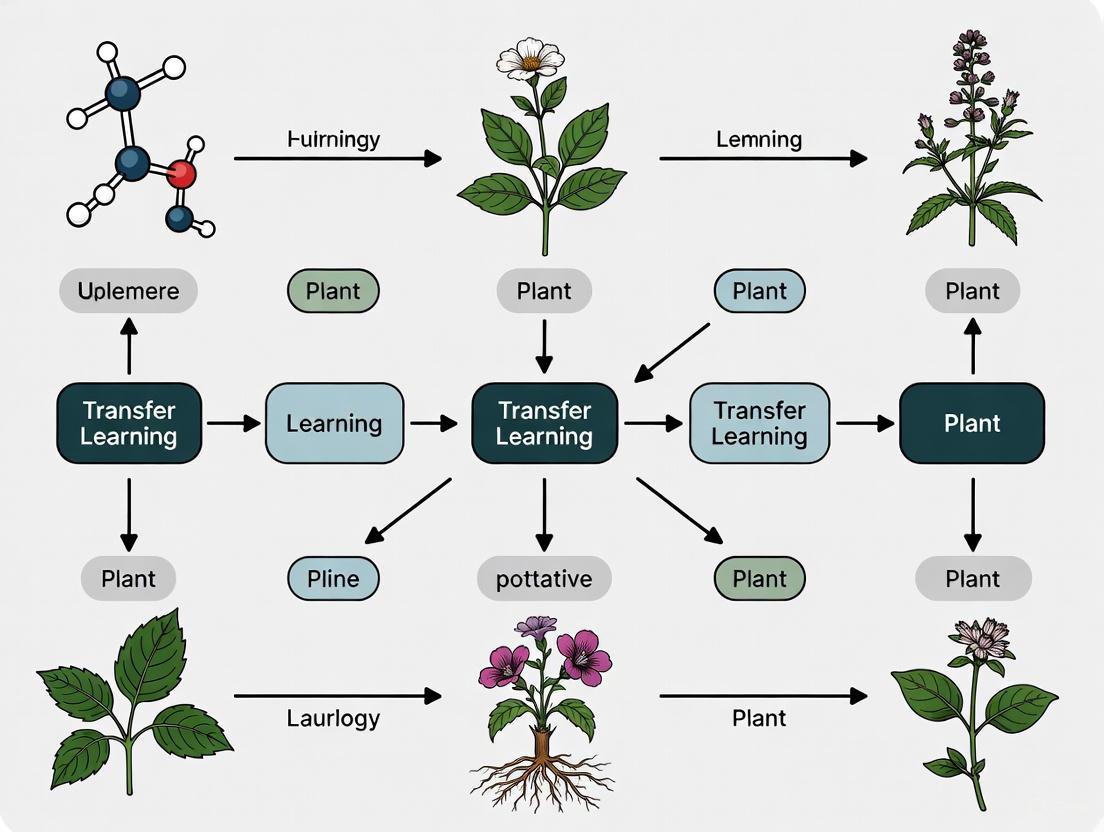
This comprehensive review synthesizes current research on transfer learning (TL) applications for plant species classification and trait prediction, drawing critical parallels for biomedical research.
Transfer Learning Performance Across Plant Species: A Comprehensive Review for Biomedical and Life Science Applications
Abstract
This comprehensive review synthesizes current research on transfer learning (TL) applications for plant species classification and trait prediction, drawing critical parallels for biomedical research. We explore foundational TL concepts in plant phenotyping, evaluate diverse methodological approaches including CNN architectures and spectroscopic analysis, and address key troubleshooting challenges like dataset limitations and model generalization. Through systematic validation across spatial, temporal, and species boundaries, we demonstrate TL's robust performance in achieving high accuracy (up to 97.79% in disease detection and R² up to 0.79 in trait prediction) despite data scarcity. These findings offer valuable insights for researchers developing automated classification systems in resource-constrained environments, with significant implications for drug discovery from plant sources and clinical image analysis.
The Foundation of Transfer Learning in Plant Science: Concepts, Challenges, and Cross-Domain Potential
Core Transfer Learning Paradigms in Plant Classification
Transfer learning has emerged as a pivotal technique in computational biology, enabling researchers to develop accurate plant disease classification models while mitigating challenges associated with limited datasets and computational resources. The application of these paradigms in plant species research primarily revolves around several key methodologies that facilitate knowledge transfer from source to target domains.
Table 1: Fundamental Transfer Learning Approaches in Biological Classification
| Paradigm | Core Methodology | Primary Applications in Plant Research | Key Advantages |
|---|---|---|---|
| Feature-based Transfer | Extracts and reuses feature representations from pre-trained source models [1] | Plant disease recognition across species [2] [3] | Reduces need for large datasets; improves feature extraction |
| Fine-tuning | Adjusts pre-trained model parameters on target plant data [4] [5] | Adaptation of ImageNet models to plant classification tasks [4] [3] | Leverages previously learned features; enhances accuracy |
| Domain Adaptation | Aligns feature distributions between source (lab) and target (field) domains [6] | Cross-environment plant disease recognition [6] | Addresses domain shift; improves field applicability |
| Multi-representation Learning | Captures domain-invariant features through multiple representations [6] | Cross-species plant disease classification [6] | Handles large interdomain discrepancies; improves robustness |
The feature-based transfer learning approach has demonstrated remarkable success in plant disease classification, where convolutional neural networks (CNNs) pre-trained on large datasets like ImageNet are repurposed to extract meaningful features from plant images [4] [2]. This paradigm significantly reduces the requirement for extensive labeled plant disease datasets while maintaining high classification accuracy. Researchers have effectively employed this method to identify diseases across various plant species including tomatoes, rice, cassava, and apples [2] [3].
Domain adaptation techniques address a critical challenge in plant disease recognition: the performance degradation that occurs when models trained under controlled laboratory conditions are deployed in field environments with different imaging characteristics [6]. Advanced methods like the Multi-representation Subdomain Adaptation Network with Uncertainty Regularization (MSUN) have been developed specifically to handle the large interdomain discrepancies, intraclass variations, and fuzzy boundaries between disease categories that commonly occur in plant pathology [6].
Performance Comparison of Transfer Learning Architectures
Experimental evaluations across multiple plant disease datasets reveal significant performance variations among different deep learning architectures when applied through transfer learning paradigms. Comprehensive benchmarking studies provide crucial insights for researchers selecting appropriate models for specific plant classification tasks.
Table 2: Model Performance Comparison Across Plant Disease Datasets
| Model Architecture | Average Accuracy Range | Computational Efficiency | Best-performing Use Cases |
|---|---|---|---|
| Vision Transformer (ViT) | 86.29% (20-shot) [3] | Moderate | Limited data scenarios [3] |
| Ensemble Methods (PDDNet) | 96.74-97.79% [2] | Lower | Complex multi-disease classification [2] |
| YOLOv8 | 91.05% mAP [7] | Higher | Real-time disease detection [7] |
| EfficientNet | Varies by dataset [5] | Higher | Resource-constrained environments [5] |
| ResNet Variants | Varies by dataset [5] [2] | Moderate | General plant disease classification [2] |
The Vision Transformer (ViT) model, when pre-trained using a dual transfer learning strategy on the PlantCLEF2022 dataset (2,885,052 images across 80,000 classes), achieved a remarkable mean testing accuracy of 86.29% across 12 plant disease datasets in 20-shot learning scenarios [3]. This performance surpassed conventional approaches by 12.76%, demonstrating the efficacy of transformer architectures in plant pathology with limited data.
Ensemble methods such as the Plant Disease Detection Network (PDDNet) integrate multiple pre-trained CNNs including DenseNet201, ResNet101, ResNet50, GoogleNet, and AlexNet [2]. The PDDNet-LVE (Lead Voting Ensemble) variant achieved 97.79% accuracy on the PlantVillage dataset (54,305 images across 38 disease categories), outperforming individual CNN models and demonstrating the power of collective intelligence in plant disease classification [2].
For real-time detection applications, YOLO architectures have shown exceptional performance. YOLOv8 achieved a mean Average Precision (mAP) of 91.05% for detecting diseases including Powdery Mildew, Angular Leaf Spot, Early Blight, and Tomato Mosaic Virus, outperforming YOLOv7 while maintaining higher computational efficiency [7].
Experimental Protocols and Methodologies
Dual Transfer Learning with Vision Transformers
The dual transfer learning protocol for Vision Transformers represents a sophisticated methodology that efficiently addresses computational constraints while maximizing classification performance:
Pre-training Phase 1: ViT models initially undergo self-supervised pre-training on ImageNet to learn general visual representations without label dependency [3].
Pre-training Phase 2: Models are further pre-trained on PlantCLEF2022 using supervised learning, specializing in plant-specific features [3].
Fine-tuning Phase: The specialized model is finally fine-tuned on target plant disease datasets with limited samples [3].
This dual-phase pre-training approach significantly reduces computational requirements compared to training ViT models directly on PlantCLEF2022 from scratch, which would require approximately five months using four RTX 3090 GPUs [3].
Domain Adaptation Experimental Protocol
The Multi-representation Subdomain Adaptation Network with Uncertainty Regularization (MSUN) addresses critical challenges in cross-domain plant disease classification through a meticulously designed experimental protocol:
Multi-representation Module: Implements a hybrid neural structure to learn multiple domain-invariant representations, capturing both overall feature structures and fine details [6].
Subdomain Adaptation: Employs Local Maximum Mean Discrepancy (LMMD) to align feature distributions of relevant subdomains, addressing higher interclass similarity and lower intraclass variation [6].
Uncertainty Regularization: Introduces auxiliary regularization to suppress uncertainty from domain transfer and mitigate negative effects of potentially incorrect pseudo-labels for target domain data [6].
This non-adversarial approach has demonstrated superior performance on challenging datasets including PlantDoc, Plant-Pathology, Corn-Leaf-Diseases, and Tomato-Leaf-Diseases, with accuracy values of 56.06%, 72.31%, 96.78%, and 50.58% respectively [6].
Table 3: Key Research Reagents and Computational Resources
| Resource Type | Specific Examples | Research Application | Performance Considerations |
|---|---|---|---|
| Plant Datasets | PlantVillage [5] [2], PlantDoc [6] [7], PlantCLEF2022 [3] | Model training and validation | PlantVillage: Lab images; PlantDoc: Field conditions [7] |
| Pre-trained Models | ResNet50 [2], Vision Transformer [3], EfficientNet [5], YOLOv8 [7] | Feature extraction and transfer learning | ViT excels in limited data; YOLO for real-time detection [7] [3] |
| Computational Frameworks | TensorFlow, Keras [7], PyTorch | Model implementation and training | GPU acceleration essential for large datasets [7] |
| Domain Adaptation Tools | MSUN framework [6], Subdomain alignment modules | Cross-environment model transfer | Critical for field applications [6] |
The PlantVillage dataset represents one of the most comprehensive resources for plant disease classification, containing 54,305 images across 38 categories of diseased and healthy plant leaves [2]. However, researchers must consider that PlantVillage images were primarily captured under controlled laboratory conditions, which may limit model generalization to field environments [7].
PlantDoc addresses this limitation with real-world field images containing complex backgrounds, making it more representative of practical agricultural scenarios but also more challenging for classification algorithms [6] [7]. For large-scale pre-training, PlantCLEF2022 offers an extensive collection of 2,885,052 images across 80,000 plant classes, providing an exceptional resource for developing specialized plant recognition models through transfer learning [3].
The computational framework selection significantly impacts research workflow efficiency. Most contemporary studies utilize TensorFlow or PyTorch with GPU acceleration, with Google Colab providing accessible GPU resources (such as Tesla T4 with 12.68GB memory) for researchers without local computational infrastructure [7].
Performance Optimization Strategies
Computational Efficiency Improvements
Recent research has demonstrated that strategic feature management in transfer learning can significantly reduce computational requirements while maintaining classification accuracy:
Domain-Specific Feature Discarding: Selective removal of domain-specific features from pre-trained models can reduce training time by approximately 12%, processor utilization by 25%, and memory usage by 22% while potentially improving accuracy by 7% [1].
Feature Optimization Algorithms: Integration of optimization algorithms like the Gravitational Search Algorithm (GSA) with transfer learning enables feature reduction exceeding 50%, dramatically decreasing computational requirements without compromising diagnostic quality [8].
These approaches address a critical challenge in plant disease classification research: the trade-off between model complexity and practical deployability in resource-constrained agricultural environments.
Cross-Domain Generalization Techniques
The effectiveness of transfer learning paradigms in plant species research heavily depends on their ability to generalize across domains with different characteristics. The domain adaptation approach has proven particularly valuable for addressing the "domain shift" problem, where models trained on laboratory images fail to perform effectively on field-collected images [6].
Advanced methodologies like the MSUN framework specifically target three key challenges in cross-species plant disease classification: large interdomain discrepancies between laboratory and field environments, significant intraclass variations within species, and fuzzy boundaries between different disease categories that display similar visual manifestations [6]. By incorporating uncertainty regularization and multi-representation learning, these approaches achieve more robust performance across diverse agricultural environments.
Future Directions in Transfer Learning for Plant Science
The evolution of transfer learning paradigms in biological classification continues to address emerging challenges in plant species research. The integration of vision transformers with specialized plant datasets represents a promising direction, particularly for few-shot learning scenarios where limited labeled examples are available [3].
Similarly, the development of lightweight ensemble methods that maintain high accuracy while reducing computational demands addresses practical deployment constraints in agricultural settings [2]. As these paradigms mature, they offer increasingly sophisticated tools for researchers and agricultural professionals working to enhance global food security through improved plant disease management.
Automated plant species identification is crucial for biodiversity conservation, ecological monitoring, and medical research, yet it faces significant technical challenges. This domain grapples with the vast diversity of plant species, limited data availability for rare taxa, and subtle visual differences between closely related species. Transfer learning—where pre-trained deep learning models are adapted to botanical tasks—has emerged as a powerful strategy to address these challenges. This guide compares the performance of various transfer learning approaches, analyzing their effectiveness across different plant identification scenarios and providing experimental data to inform researcher selection.
The Computational Challenges in Plant Identification
Automated plant classification must overcome several interconnected obstacles rooted in biological reality. The extraordinary diversity of plant species presents a fundamental scalability challenge, with approximately 350,386 accepted vascular plant species documented globally [9]. This complexity is compounded by fine-grained visual characteristics, where many species exhibit high inter-class similarity and significant intra-class variability [10]. The blue dotted rectangle in Figure 1 shows an example of the possible similarity among different species, while the red line rectangle presents an example of the difference between samples of the same species caused by shape, color, and texture changes [10].
For rare and endangered species, data scarcity creates additional bottlenecks. Since medicinal plants with limited populations often have few available images, traditional deep learning approaches that require large datasets become impractical [11]. Furthermore, environmental variability introduces complexity, as factors like shooting angles, lighting conditions, seasonal variations, and complex natural backgrounds substantially impact model performance [11].
Comparative Analysis of Transfer Learning Architectures
Researchers have evaluated numerous convolutional neural network (CNN) architectures adapted through transfer learning for plant identification tasks. The table below summarizes experimental results from key studies:
Table 1: Performance Comparison of CNN Architectures for Plant Identification
| Model Architecture | Dataset | Accuracy | F1-Score | Key Strengths | Limitations |
|---|---|---|---|---|---|
| EfficientNetB0 [12] | Swedish Leaf (15 species) | 94.67% | 94.6% | High accuracy on venation patterns, robust feature extraction | - |
| MobileNetV2 [12] | Swedish Leaf (15 species) | 93.34% | 93.23% | Lightweight, suitable for real-time applications, better generalization | Lower peak accuracy than EfficientNet |
| ResNet50 [12] | Swedish Leaf (15 species) | 88.45% | 87.82% | Strong feature representation capabilities | Pronounced overfitting, reduced testing accuracy |
| Two-view S-CNN (Proposed) [10] | PlantCLEF 2015 | Superior to baseline CNNs | - | Handles fine-grained differences, hierarchical classification | Complex two-stage workflow |
| BDCC Framework [11] | FewMedical-XJAU (540 species) | Superior accuracy in few-shot settings | - | Multimodal fusion, handles data scarcity | Requires textual and image data |
EfficientNetB0 demonstrates particularly strong performance for standard identification tasks, achieving 94.67% testing accuracy on the Swedish Leaf Dataset while maintaining balanced precision, recall, and F1-scores exceeding 94.6% [12]. Its compound scaling method provides an optimal balance between network depth, width, and resolution. MobileNetV2 offers the advantage of computational efficiency with minimal accuracy sacrifice, making it suitable for field applications or resource-constrained environments [12].
ResNet50, while achieving high training accuracy (94.11%), exhibited noticeable overfitting with a significant gap between training and testing performance [12]. This suggests that its residual connections may memorize dataset specifics rather than learning generalizable features when applied to plant images without sufficient regularization.
Advanced Methodologies for Specific Challenges
Handling Data Scarcity with Few-Shot Learning
For rare medicinal plants where training data is limited, the BDCC (Bilinear Deep Cross-modal Composition) framework introduces innovative solutions. This approach integrates textual priors with visual features through a deep metric learning framework, significantly enhancing semantic discrimination [11]. The method employs a Class-Aware Structured Text Prompt Construction strategy, generating category descriptions from multiple perspectives including appearance and growth habits [11]. A dynamic fusion mechanism automatically allocates weights to visual and textual modalities based on their discriminative power for each specific task [11].
Addressing Fine-Grained Variation with Multi-View Approaches
The two-view similarity learning strategy tackles fine-grained classification through a hierarchical process [10]. In the first stage, a Siamese CNN performs coarse classification at the genus level using global features (shape, color) from entire leaf images [10]. The second stage then performs fine species classification using local features (texture, vein patterns) from cropped leaf centers [10]. This approach mimics botanical taxonomy relationships and reduces computational complexity by progressively narrowing candidate species [10].
Table 2: Specialized Methods for Specific Identification Challenges
| Challenge | Solution Approach | Key Components | Performance Advantage |
|---|---|---|---|
| Data Scarcity [11] | BDCC Framework | Cross-modal learning, structured text prompts, dynamic fusion | Superior accuracy for rare species with few samples |
| Fine-Grained Differences [10] | Two-View S-CNN | Global and local feature extraction, hierarchical classification | Effectively distinguishes visually similar species |
| Complex Environments [11] | FewMedical-XJAU Dataset | Multi-angle images, varied lighting, complex backgrounds | Improved generalization to real-world conditions |
| Multi-Species Communities [13] | PlantCLEF 2025 Approaches | Multi-label classification, self-supervised learning | Identifies all species in vegetation plot images |
Experimental Protocols and Methodologies
Standard Transfer Learning Protocol
Most studies follow a consistent transfer learning methodology: (1) Model Selection: Choosing a CNN architecture pre-trained on ImageNet; (2) Adaptation: Replacing the final classification layer with a new one matching the number of plant species; (3) Fine-Tuning: Training with plant image datasets, typically using strategies like progressive unfreezing or differential learning rates [12] [10]. For the Swedish Leaf Dataset experiments, models were trained using 1,125 images across 15 species (75 images per species) with standard data augmentation techniques [12].
Two-View Similarity Learning Protocol
The two-view approach employs a more specialized workflow: (1) Genus-Level Classification: Training a Siamese CNN on entire leaf images to compute similarity with genus reference images; (2) Species-Level Classification: Using a second Siamese CNN on center-cropped leaf images to compare with species references from candidate genera; (3) Result Combination: Merging similarity scores from both stages to produce final species rankings [10]. This method requires careful selection of reference images and similarity thresholds at each hierarchical level.
BDCC Framework Protocol
The BDCC framework implements cross-modal integration: (1) Structured Prompt Generation: Creating textual descriptions for each plant category using botanical characteristics; (2) Feature Alignment: Mapping both visual and textual features into a shared semantic space; (3) Dynamic Fusion: Automatically weighting modality contributions based on task-specific performance [11]. This approach requires both image datasets and botanical text descriptions for optimal performance.
Table 3: Key Research Reagents and Resources for Plant Identification Studies
| Resource | Type | Key Features | Application in Research |
|---|---|---|---|
| Swedish Leaf Dataset [12] | Image Dataset | 15 species, 1,125 total images, controlled conditions | Benchmarking model performance on leaf venation patterns |
| FewMedical-XJAU [11] | Specialized Dataset | 540 medicinal species, 4,992 images, complex backgrounds | Few-shot learning research, fine-grained classification |
| PlantCLEF Datasets [13] [10] | Large-Scale Benchmark | 7,800+ species, 1.4M+ images, multi-organ | Large-scale species identification, multi-label classification |
| Pl@ntNet Training Data [13] | Crowdsourced Dataset | Global coverage, multiple plant organs, expert-verified | Real-world application development, transfer learning |
| Xper3 [14] | Software Tool | Freely available, text and image-based key construction | Morphological identification, taxonomic key development |
| DeepBDC [11] | Algorithmic Framework | Deep metric learning, covariance modeling | Feature representation for fine-grained classification |
| Pre-trained CNN Models [12] [9] | Model Weights | ImageNet initialization, various architectures | Transfer learning baseline, feature extraction backbone |
Transfer learning has substantially advanced plant species identification, but model selection must align with specific research constraints and challenges. For standard identification tasks with sufficient data, EfficientNetB0 provides superior accuracy, while MobileNetV2 offers the best efficiency-accuracy balance for resource-limited applications. For rare species with limited samples, the BDCC framework demonstrates how multimodal approaches can overcome data scarcity. When dealing with taxonomically complex species, two-view hierarchical methods effectively address fine-grained visual differences.
Future research directions include developing more sophisticated cross-modal learning techniques, creating standardized benchmarks for long-tailed species distributions, and improving model interpretability for botanical experts. The integration of genomic data with visual recognition represents a promising frontier for resolving taxonomically challenging species complexes [15]. As these technologies evolve, they will increasingly support critical scientific workflows in biodiversity monitoring, ecological research, and medicinal plant conservation.
The accurate classification of plant species is a cornerstone of botanical research, with profound implications for biodiversity conservation, ecosystem monitoring, and pharmaceutical discovery. Historically, plant taxonomy has relied on morphological characteristics observed through detailed field study and herbarium collections. However, technological advancements have introduced powerful computational methods that enhance and, in some cases, transform traditional approaches. This guide objectively compares the performance of contemporary methodologies for plant species identification, with a specific focus on the analysis of leaves, venation patterns, and spectral signatures. These methodologies range from handcrafted feature extraction to deep learning and transfer learning approaches. The evaluation is framed within the context of a broader thesis on transfer learning performance, a technique that is increasingly vital in botanical research where large, annotated datasets are often scarce [16]. We present supporting experimental data from recent studies to provide researchers, scientists, and drug development professionals with a clear comparison of the capabilities and limitations of each technique.
Performance Benchmarking of Classification Approaches
Quantitative Comparison of Model Accuracy
The performance of different feature extraction and classification methodologies varies significantly across plant species and dataset types. The following table summarizes key performance metrics from recent experimental studies.
Table 1: Performance comparison of plant classification approaches
| Classification Approach | Key Features/Methods | Dataset(s) Used | Reported Accuracy/F1-Score | Reference |
|---|---|---|---|---|
| Handcrafted Feature Aggregation | Multiscale entropy of curvature, texture features | Plantscan, MED117, Flavia, Swedish | Exceeded 99.50% (F1 & Accuracy) | [17] |
| Deep Learning (CNN) Benchmark | 23 state-of-the-art CNN models with transfer learning | 18 public plant leaf disease datasets | Varied by model and dataset; comprehensive benchmarking provided | [5] |
| Hyperspectral ML Framework | ANN on hyperspectral reflectance data | Bean plants under thermal stress | 99.4% (Overall Accuracy) | [18] |
| Optimized Hyperspectral CNN | Machine Learning Vegetation Indices (MLVI, H_VSI) | UAV-acquired hyperspectral data | 83.40% (Classification Accuracy) | [19] |
| Sentinel-2 Time Series Classification | Random Forest on multi-temporal satellite data | German National Forest Inventory | F1 scores between 67% and 99% for frequent species | [20] |
Dataset Characteristics and Model Generalizability
The scale and diversity of training data significantly impact model performance and generalizability. The following table compares notable datasets used in plant species classification research.
Table 2: Comparison of plant species classification datasets
| Dataset Name | Number of Species/Classes | Data Modality | Key Characteristics | Reported Challenges |
|---|---|---|---|---|
| Swedish Leaf Dataset | Not specified in results | Leaf images | Historical benchmark for leaf classification | Controlled conditions, limited scope [9] |
| iNaturalist/PlantNet | Extensive (global scale) | Multi-organ plant images | Large-scale, diverse organs, global coverage | Inter-class similarity, intra-class variation [9] |
| German Tree Species Dataset | 48 species + 3 species groups | Sentinel-2 satellite time series | Temporal patterns, large area coverage | Pixel-level validation challenges [20] |
| Proximal Hyperspectral Dataset | 7 crop and weed species | Hyperspectral (400-1000 nm) | Detailed spectral profiles | Noise in specific wavelengths, occlusion [21] |
| Leaf Disease Datasets (18 sets) | Varies per dataset | RGB leaf images | Focus on pathological symptoms | Dataset quality variability, accessibility [5] |
Experimental Protocols and Methodologies
Handcrafted Morphological Feature Extraction
The protocol for handcrafted feature extraction emphasizes shape complexity and texture details from leaf images, achieving exceptional performance on several standard datasets [17].
Experimental Protocol:
- Image Acquisition: Collect leaf images against controlled backgrounds to ensure clear contour detection.
- Contour Processing: Extract the leaf shape contour and compute multiscale curvature representations.
- Entropy Calculation: Apply differential entropy to probability distributions of multiscale curvatures to create coarse-to-fine shape representations.
- Texture Analysis: Combine Local Binary Pattern (LBP) and Gray-Level Co-occurrence Matrix (GLCM) statistics to quantify surface texture.
- Feature Aggregation: Aggregate multiscale entropy of curvature, bending energy, and texture features into a comprehensive descriptor.
- Classification: Implement Random Forest classifier on the aggregated feature set, replacing fully connected layers in CNN comparisons.
Advantages: This approach provides interpretable features and has demonstrated superior performance compared to some CNN architectures, particularly with limited training data [17]. The method achieved better results with 40 features than LeNet achieved with 50 features, indicating high feature efficiency.
Deep Learning and Transfer Learning Framework
Transfer learning has emerged as a solution to limited annotated data in plant science, leveraging pre-trained CNN models adapted for botanical tasks [16].
Experimental Protocol:
- Model Selection: Choose pre-trained CNN architectures (commonly VGG, ResNet, AlexNet) trained on large generic image datasets.
- Dataset Preparation: Curate plant image datasets, applying data augmentation techniques to increase effective dataset size.
- Model Adaptation: Replace and retrain the final classification layer to match target plant species classes while retaining pre-trained weights in earlier layers.
- Fine-tuning: Optionally fine-tune weights in deeper layers to adapt features to botanical characteristics.
- Performance Validation: Evaluate on held-out test sets using accuracy, F1-score, and other relevant metrics.
Advantages: Transfer learning reduces training time and data requirements while achieving state-of-the-art performance on many plant classification tasks [16]. Comprehensive benchmarking has identified top-performing architectures across diverse plant disease datasets [5].
Hyperspectral Analysis for Stress Detection and Classification
Hyperspectral sensing captures detailed reflectance patterns that correlate with physiological and biochemical properties, enabling early stress detection and species discrimination [19].
Experimental Protocol:
- Spectral Data Acquisition: Collect hyperspectral data using field spectroradiometers or UAV-mounted sensors across visible, NIR, and SWIR regions.
- Data Preprocessing: Convert radiance to reflectance, remove noise, and apply spectral corrections.
- Feature Selection: Implement Recursive Feature Elimination (RFE) to identify optimal spectral bands for specific classification tasks.
- Index Development: Formulate novel vegetation indices (e.g., MLVI, H_VSI) based on selected bands.
- Model Training: Apply machine learning classifiers (ANN, Random Forest, SVM) or 1D CNN models to hyperspectral data or derived indices.
- Validation: Correlate spectral classifications with ground-truth measurements of pigment content, stress markers, or species identities.
Advantages: Hyperspectral approaches can detect physiological changes before visible symptoms appear, enabling early intervention [19]. Specific spectral regions (green: 530-570 nm; red-edge: 700-710 nm) have been identified as particularly sensitive to thermal stress [18].
Workflow Visualization
Handcrafted Feature Extraction Workflow
Transfer Learning Workflow for Plant Classification
The Scientist's Toolkit: Essential Research Reagents and Materials
Table 3: Essential research reagents and equipment for plant morphological and spectral analysis
| Tool/Reagent | Function/Application | Specification Considerations |
|---|---|---|
| Field Spectroradiometer | Measures spectral reflectance of plant tissues | Spectral range (350-2500 nm), resolution, field of view [22] |
| Hyperspectral Imaging Sensors | Captures spatial-spectral data cubes for analysis | Spectral bands, spatial resolution, platform compatibility [19] |
| Vegetation Indices (NDVI, PRI, MCARI) | Quantifies vegetation properties from spectral data | Sensitivity to target pigments, resistance to noise [23] |
| CNN Architectures (VGG, ResNet, EfficientNet) | Deep feature extraction for image classification | Model depth, parameter count, computational requirements [5] |
| Public Datasets (iNaturalist, PlantVillage, GBIF) | Training and benchmarking data for models | Species diversity, image quality, annotation reliability [9] |
| Random Forest Classifier | Machine learning for morphological and spectral data | Number of trees, feature sampling, interpretability [17] |
| Reference Pigment Sets | Calibration for spectral pigment assessment | Purity, stability, solvent compatibility [23] |
| Laboratory Spectrophotometry | Destructive pigment validation method | Accuracy, precision, detection limits [23] |
Discussion and Performance Analysis
The comparative analysis reveals that no single approach universally outperforms others across all scenarios. The choice of methodology depends on specific research objectives, data availability, and resource constraints.
Handcrafted feature extraction demonstrates remarkable efficiency, achieving over 99.5% accuracy on several benchmark datasets with relatively few features [17]. This approach provides interpretable features and strong performance, particularly when training data is limited. However, feature engineering requires domain expertise and may not generalize well across diverse plant organs and species.
Deep learning with transfer learning has become dominant for large-scale plant classification tasks, benefiting from extensive model architectures pre-trained on general image datasets [16]. Comprehensive benchmarking of 23 CNN models across 18 datasets provides guidance for architecture selection [5]. Transfer learning effectively addresses the data limitation problem common in botanical applications, though model interpretability remains challenging.
Hyperspectral analysis offers unique capabilities for early stress detection and subtle species discrimination by capturing biochemical and physiological properties beyond visible morphology [19]. The development of machine learning-optimized vegetation indices (MLVI, H_VSI) represents an advance over traditional indices like NDVI, enabling earlier stress detection (10-15 days) and stronger correlation with ground-truth markers [19]. However, hyperspectral data acquisition requires specialized equipment and processing expertise.
The integration of multi-modal data—combining morphological, spectral, and temporal information—shows particular promise for challenging classification tasks. Studies utilizing Sentinel-2 time series demonstrate the value of phenological patterns for tree species discrimination, achieving F1 scores between 67% and 99% for frequent species [20]. This approach captures seasonal variations that single-timepoint analysis misses.
For drug development professionals, these advanced classification techniques enable more efficient screening of medicinal plants like Ficus and Moringa species, where hyperspectral indices can indicate pharmacological potential through correlations with pigment density and physiological vigor [22]. The non-destructive nature of spectral methods allows for continuous monitoring of valuable specimens without harvest damage.
The taxonomic significance of plant morphological features remains undiminished, though modern analytical approaches have dramatically enhanced our ability to quantify and interpret these characteristics. Handcrafted feature extraction provides interpretability and efficiency for specific leaf-based classification tasks, while deep learning with transfer learning offers scalable solutions for diverse plant organs and large datasets. Hyperspectral analysis enables early stress detection and subtle species discrimination through biochemical sensing. The optimal approach frequently involves integrating multiple methodologies and data sources, leveraging the complementary strengths of each technique. As these technologies continue to mature, they will increasingly support critical applications in biodiversity conservation, agricultural management, and pharmaceutical discovery from plant resources.
The fields of plant science and biomedical research are increasingly converging on a common set of technological challenges in image-based classification. Despite vast differences in their biological subjects, both domains face remarkably similar obstacles in fine-grained visual categorization, limited data availability, and the need for robust model generalization. Advances in deep learning architectures and transfer learning methodologies are creating unexpected synergies between these seemingly disparate fields, enabling knowledge transfer that benefits both agricultural and medical applications.
This review examines the parallel challenges in plant species identification and biomedical image analysis, with particular focus on transfer learning performance across domains. By comparing experimental protocols, model architectures, and performance benchmarks, we identify cross-disciplinary insights that can accelerate research in both fields. The analysis reveals that solutions developed for plant biodiversity monitoring can directly inform biomedical diagnostic approaches, and vice versa, creating a virtuous cycle of methodological innovation.
Parallel Classification Challenges: Technical Landscape
Common Obstacles in Fine-Grained Visual Categorization
Plant species classification and biomedical image analysis share fundamental technical challenges that stem from the inherent complexity of their respective subjects:
Fine-grained visual classification: Both domains require distinguishing between categories with subtle visual differences. In plant science, this involves differentiating between closely related species based on minor variations in leaf morphology, texture, or coloration [9]. Similarly, biomedical imaging requires identifying subtle cellular abnormalities or pathological features that may indicate disease states [24].
High intra-class variation: Individual specimens within the same category can exhibit significant visual differences due to developmental stage, environmental factors, or genetic diversity. Plant images capture natural variation in appearance across growth stages and environmental conditions [25], while biomedical samples show variability due to patient-specific factors and tissue heterogeneity.
Limited annotated data: Both fields face constraints in obtaining large-scale, expertly annotated datasets. Rare species in botany and uncommon pathologies in medicine create natural imbalances in data availability, necessitating specialized approaches for low-data regimes [25].
Complex backgrounds and artifacts: Real-world plant images contain complex natural backgrounds that can interfere with classification [25], while biomedical images often include tissue artifacts, staining variations, and imaging noise that complicate analysis [24].
Domain-Specific Dataset Characteristics
The datasets used in plant science and biomedical research reflect both these common challenges and their specialized requirements:
Table 1: Representative Dataset Characteristics in Plant Science and Biomedical Research
| Dataset Name | Domain | Categories | Image Count | Key Characteristics | Annotation Type |
|---|---|---|---|---|---|
| PlantCLEF 2025 [26] | Plant Science | ~400 species | 1.4M training + 2,105 test | Multi-label quadrat images, high-resolution | Expert-annotated species presence |
| FewMedical-XJAU [25] | Plant Science | 540 medicinal species | 4,992 images | Complex backgrounds, multi-view, seasonal variation | Expert annotations with fine-grained labels |
| PlantVillage [5] | Plant Science | 15-38 disease classes | 54,305 images | Controlled backgrounds, focused on leaves | Single-label disease classification |
| Glioma-MDC 2025 [24] | Biomedical | Multiple | Annotated image patches | H&E-stained tissue, mitotic figures | Expert-annotated pathological features |
| Pap Smear Cell Classification [24] | Biomedical | Multiple cell types | Not specified | Cervical cell images, cancer screening | Abnormal cell identification |
Transfer Learning Performance: Comparative Analysis
Model Architecture Benchmarking
Recent comprehensive studies have evaluated diverse model architectures across both domains, providing critical insights into transfer learning effectiveness:
Table 2: Cross-Domain Model Performance Comparison on Benchmark Tasks
| Model Architecture | Plant Disease Classification Accuracy [5] | Key Characteristics | Computational Efficiency |
|---|---|---|---|
| EfficientNetB7 | High performance (ensemble) | Compound scaling, optimized architecture | Moderate parameters |
| DenseNet201 | High performance (ensemble) | Feature reuse, connectivity pattern | Higher memory usage |
| ResNet50 | Strong baseline | Residual connections, proven architecture | Balanced efficiency |
| ConvNeXt | Modernized CNN | Modernized ResNet, competitive with transformers | Variable sizes available |
| Vision Transformers | Emerging leader | Global attention, strong on large datasets | High computational demand |
The performance benchmarks reveal several cross-domain patterns. In plant disease classification, ensemble approaches integrating multiple architectures consistently achieve superior performance, with PDDNet-LVE and PDDNet-AE models reaching 97.79% and 96.74% accuracy respectively on the PlantVillage dataset [27]. Similarly, biomedical challenges increasingly leverage hybrid architectures that combine the strengths of convolutional networks and attention mechanisms [24].
Specialized Architectures for Domain-Specific Challenges
Both fields have developed specialized architectural innovations to address their unique classification challenges:
Attention mechanisms for plant disease detection: The CNN-SEEIB architecture incorporates Squeeze-and-Excitation attention within identity blocks, achieving 99.79% accuracy on PlantVillage by adaptively emphasizing informative features while suppressing less relevant ones [28]. This approach mirrors attention mechanisms used in biomedical imaging for highlighting pathological features.
Multimodal learning for fine-grained discrimination: The BDCC framework combines visual and textual features through bilinear deep cross-modal composition, using class-aware structured text prompts to enhance semantic discrimination for medicinal plant identification [25]. This approach demonstrates how auxiliary information can compensate for limited visual discriminability in fine-grained categories.
Transformer-CNN hybrids: Models like DaViT incorporate dual attention mechanisms (spatial and channel) that have proven effective in both domains, achieving 90.4% top-1 accuracy on ImageNet with the giant configuration [29]. The complementary attention patterns help capture both local discriminative features and global contextual relationships.
Experimental Protocols and Methodologies
Standardized Evaluation Frameworks
Both domains have established rigorous evaluation frameworks through organized challenges that enable meaningful performance comparisons:
The experimental workflow follows a consistent pattern across domains. Challenges begin with precisely defined tasks and carefully curated datasets, followed by a training phase where participants develop models, and conclude with an evaluation phase where models are assessed on withheld data to ensure fair benchmarking [30].
Transfer Learning Methodologies
Transfer learning has emerged as a foundational methodology in both domains, with several standardized approaches:
The transfer learning protocol typically begins with source domain pre-training on large-scale datasets like ImageNet, followed by model adaptation through various techniques, target domain fine-tuning on domain-specific data, and final evaluation on task-specific metrics [5] [27].
Data Augmentation and Preprocessing
Both domains employ sophisticated data augmentation strategies to address limited training data and improve model robustness:
Geometric transformations: Standard augmentations including rotation, flipping, scaling, and cropping are universally applied to increase data diversity and encourage translation invariance [28].
Photometric adjustments: Modifications to brightness, contrast, saturation, and hue help models generalize across varying imaging conditions and staining protocols [27].
Domain-specific simulations: Plant science incorporates synthetic leaf damage and environmental variations [25], while biomedical imaging may simulate tissue artifacts or staining variations [24].
The Scientist's Toolkit: Essential Research Reagents
Researchers in both domains rely on a common set of computational tools and frameworks:
Table 3: Essential Research Reagents for Image-Based Classification Research
| Tool/Category | Specific Examples | Function | Domain Applications |
|---|---|---|---|
| Deep Learning Frameworks | PyTorch, TensorFlow, Keras | Model development and training | Universal |
| Pre-trained Models | ImageNet weights, CLIP, CoCa | Transfer learning foundation | Universal |
| Model Architectures | CNN-based: ResNet, EfficientNet, ConvNeXt; Transformer-based: ViT, DaViT; Hybrid: CoCa | Feature extraction and classification | Universal, with domain-specific adaptations |
| Attention Mechanisms | Squeeze-and-Excitation, Self-Attention, Dual Attention | Feature emphasis, contextual understanding | Plant disease detection, biomedical image analysis |
| Evaluation Metrics | Accuracy, Precision, Recall, F1-Score, mAP, MA-MRR | Performance quantification | Universal, with domain-specific emphasis |
| Data Augmentation Tools | Albumentations, TensorFlow Augment, Custom transforms | Dataset expansion, robustness improvement | Universal |
| Ensemble Methods | Early Fusion, Lead Voting Ensemble, Average Fusion | Performance enhancement, overfitting reduction | Plant disease detection, biomedical challenges |
Emerging Trends and Future Directions
Cross-Domain Methodological Exchange
The parallel evolution of image classification in plant science and biomedical research has created opportunities for fruitful methodological exchange:
Few-shot and zero-shot learning: Both fields are increasingly focusing on learning from limited labeled examples. Plant science has developed specialized approaches like the BDCC framework for rare medicinal plants [25], while biomedical research faces similar challenges with rare diseases and conditions where annotated data is scarce [24].
Multi-modal learning: Integration of visual data with textual descriptions, taxonomic information, and genomic data is becoming increasingly common. The CLIP model and its derivatives demonstrate how cross-modal pretraining can enhance generalization in both domains [25].
Self-supervised learning: Methods that leverage unlabeled data through pretext tasks are gaining traction to reduce annotation burden. These approaches show particular promise for domains with abundant unlabeled images but limited expert annotations [9].
Technological Convergence
The technological stack for image-based classification is converging across domains, with several shared development trajectories:
Transformer architecture adoption: Originally developed for natural language processing, transformer architectures are being increasingly adapted for visual tasks in both plant science and biomedical research, often in hybrid configurations with convolutional networks [29].
Explainable AI integration: As models become more complex, both fields are placing greater emphasis on interpretability and explainability, developing visualization techniques that help experts understand model decisions and build trust in automated systems [28].
Edge deployment optimization: Both agricultural and clinical applications often require deployment in resource-constrained environments, driving development of optimized models that balance accuracy with computational efficiency [28].
The parallels between plant science and biomedical research in image-based classification challenges reveal fundamental similarities in computational approaches despite surface-level domain differences. Transfer learning has emerged as a cornerstone methodology in both fields, with consistent patterns in model adaptation strategies, performance benchmarks, and architectural innovations.
The cross-pollination of ideas between these domains accelerates progress for both. Biomedical research benefits from plant science's innovations in fine-grained categorization of visually similar specimens, while plant science adopts advanced architectures and learning paradigms developed for medical applications. This synergistic relationship demonstrates how methodological advances in one domain can transcend disciplinary boundaries to drive innovation across multiple fields.
Future progress will likely depend on continued methodological exchange, standardized benchmarking through organized challenges, and the development of specialized architectures that address the unique characteristics of biological imagery while leveraging general advances in computer vision and deep learning.
Transfer learning has become a cornerstone of modern artificial intelligence (AI), enabling the adaptation of pre-trained models to specialized tasks with remarkable efficiency. In scientific domains such as plant species research, where labeled data is often scarce and acquisition costly, these techniques dramatically reduce training time and data requirements while delivering substantial performance gains compared to training models from scratch [31]. This guide provides a systematic comparison of transfer learning approaches, with a specific focus on their application and performance in plant science research, encompassing areas from disease detection to species identification and leaf trait analysis.
The field encompasses a spectrum of strategies, from parameter-efficient fine-tuning methods to sophisticated domain adaptation techniques. For researchers in botany, agriculture, and drug development from plant sources, selecting the appropriate approach is crucial for developing accurate, robust, and scalable models. This article objectively compares the performance of these methods using empirical data from recent plant science studies, providing detailed experimental protocols and resource guidance to inform research design.
Conceptual Framework of Transfer Learning Approaches
Transfer learning techniques can be systematically categorized based on their methodology and implementation approach. Table 1 outlines the primary strategies relevant to plant science applications.
Table 1: Systematic Categorization of Key Transfer Learning Approaches
| Category | Key Techniques | Mechanism | Primary Use Cases in Plant Science |
|---|---|---|---|
| Supervised Fine-Tuning (SFT) | Full fine-tuning, Layer-wise tuning | Updates all or most model weights on labeled target data | Domain-specific adaptation with sufficient labeled data (e.g., plant disease classification) [31] [32] |
| Parameter-Efficient Fine-Tuning (PEFT) | LoRA (Low-Rank Adaptation), QLoRA | Adds and trains small adapter modules while freezing base model | Adapting large models with limited compute resources [31] |
| Domain Adaptation | Continued Pretraining (CPT), Unsupervised Domain Adaptation | Exposure to domain-specific corpora before task-specific tuning | Handling domain shift (e.g., lab to field conditions) [32] [33] |
| Model Merging | SLERP (Spherical Linear Interpolation) | Combines parameters from multiple specialized models | Integrating capabilities from different plant science domains [32] |
| Transfer Learning with CNNs | Feature extraction, Fine-tuning pre-trained vision models | Leverages features learned on large datasets like ImageNet | Plant disease detection, species identification [12] [34] [2] |
These approaches form a methodological continuum. Supervised Fine-Tuning represents the most straightforward approach, adapting all model parameters to a new task. Parameter-Efficient Fine-Tuning methods have gained prominence due to their reduced computational demands, with LoRA and QLoRA enabling adaptation of billion-parameter models on single GPUs by training only small, low-rank matrices injected into the model architecture [31]. Domain Adaptation techniques address the challenge of distribution shift between training and deployment environments, a common issue in plant pathology where models trained on lab images must perform in field conditions. Model Merging represents an advanced approach where multiple fine-tuned models are combined to create new capabilities beyond what any single model possesses [32].
Performance Comparison in Plant Science Applications
Computer Vision for Plant Disease Detection
Computer vision approaches, particularly Convolutional Neural Networks (CNNs), have demonstrated exceptional performance in plant disease detection and classification. Table 2 compares the performance of various transfer learning approaches across multiple studies and architectures.
Table 2: Performance Comparison of Transfer Learning Models in Plant Disease Detection
| Model Architecture | Dataset | Key Metrics | Performance | Experimental Notes |
|---|---|---|---|---|
| EfficientNetB0 [12] | Swedish Leaf (15 species, 1,125 images) | Testing Accuracy | 94.67% | Leaf venation pattern classification |
| MobileNetV2 [12] | Swedish Leaf Dataset | Testing Accuracy, F1-score | 93.34%, 93.23% | Better generalization capabilities |
| ResNet50 [12] | Swedish Leaf Dataset | Training/Testing Accuracy | 94.11%/88.45% | Exhibited overfitting |
| YOLOv8 [35] | Plant Disease Detection Dataset | mAP, F1-score, Precision, Recall | 91.05%, 89.40%, 91.22%, 87.66% | Detected multiple disease types |
| PDDNet-LVE Ensemble [2] | PlantVillage (54,305 images, 38 categories) | Accuracy | 97.79% | Combined multiple CNNs with logistic regression |
| PDDNet-AE Ensemble [2] | PlantVillage Dataset | Accuracy | 96.74% | Early fusion of multiple CNNs |
| Custom CNN [34] | Plant Village Dataset | Testing Accuracy | 97.6% | Several convolution and pooling layers |
The comparative data reveals several key insights for plant science researchers. Ensemble methods consistently achieve the highest accuracy, with the PDDNet-LVE model combining multiple CNNs reaching 97.79% accuracy on the challenging PlantVillage dataset comprising 54,305 images across 38 disease categories [2]. For single-model architectures, EfficientNetB0 demonstrates superior performance in species identification tasks, achieving 94.67% testing accuracy on leaf venation patterns while showing robust generalization [12]. Object detection models like YOLOv8 provide comprehensive performance across multiple metrics, achieving 91.05% mAP while detecting various disease types in realistic conditions [35], making them suitable for real-world agricultural applications.
Advanced Fine-Tuning Strategies for Domain Adaptation
Beyond standard transfer learning, advanced fine-tuning strategies offer sophisticated approaches to domain adaptation. Table 3 outlines the performance characteristics of these methods based on experimental studies.
Table 3: Advanced Fine-Tuning Strategies and Model Merging Approaches
| Technique | Mechanism | Performance Advantages | Implementation Considerations |
|---|---|---|---|
| Continued Pretraining (CPT) [32] | Further pre-training on domain-specific corpora | Enhances domain relevance and knowledge integration | Requires substantial domain-specific data |
| Direct Preference Optimization (DPO) [32] | Optimizes model based on human or AI preferences | Aligns model outputs with expert preferences | Requires carefully curated preference data |
| Model Merging via SLERP [32] | Spherical linear interpolation of model parameters | Enables capability emergence beyond parent models | Highly dependent on parent model diversity |
| Fine-tuning-based Transfer Learning [33] | Adjusts pre-trained models on limited target data | Improved accuracy and transferability across domains | Effective even with limited target data |
The experimental data indicates that model merging via Spherical Linear Interpolation (SLERP) can produce capabilities that surpass those of the individual parent models, creating emergent functionalities through highly nonlinear interactions between model parameters [32]. Continued Pretraining (CPT) has proven effective for building domain-specific knowledge, particularly when followed by Supervised Fine-Tuning (SFT) for task-specific optimization [32]. Preference optimization methods like DPO provide mechanisms for aligning model behavior with scientific requirements, while fine-tuning-based transfer learning has demonstrated improved accuracy and transferability across diverse spatial, species, and temporal domains in leaf trait prediction [33].
Experimental Protocols and Methodologies
Standardized Experimental Workflow
The following diagram illustrates a comprehensive transfer learning workflow integrating multiple adaptation strategies, from initial domain adaptation to specialized model development:
Key Experimental Protocols
Cross-Domain Validation Protocol
Robust evaluation of transfer learning models in plant science requires rigorous cross-domain validation. The protocol implemented by [33] for leaf trait prediction exemplifies best practices:
- Dataset Composition: Compile data across diverse geographic locations, plant functional types (PFTs), and seasons to test model transferability.
- Domain Shift Assessment: Explicitly measure performance degradation when applying models to new domains (unseen species, locations, or temporal periods).
- Fine-tuning Data Stratification: Systematically vary the quantity and diversity of fine-tuning data to quantify sample efficiency gains.
- Benchmarking: Compare against established baselines including PLSR (Partial Least Squares Regression), GPR (Gaussian Process Regression), and physical models.
This protocol revealed that fine-tuning-based transfer learning models significantly outperformed traditional methods, with improved accuracy and transferability across geographic locations, plant functional types, and seasons [33].
Comprehensive Model Benchmarking Framework
Large-scale benchmarking studies provide invaluable guidance for model selection. The approach described by [36] offers a systematic framework:
- Model Diversity: Evaluate numerous state-of-the-art architectures (23 models in their study) to identify optimal inductive biases for plant science tasks.
- Dataset Variety: Test across multiple openly available datasets (18 datasets in their study) to assess generalization beyond single data distributions.
- Training Strategies: Compare transfer learning with and without additional fine-tuning across 5 iterations each to ensure statistical significance.
- Comprehensive Metrics: Report multiple performance metrics including accuracy, precision, recall, and F1-score to capture different aspects of model capability.
This extensive benchmarking approach, encompassing 4,140 trained models in their implementation, provides robust guidance for selecting architectures that balance performance, efficiency, and generalization for specific plant science applications [36].
Implementing effective transfer learning solutions in plant science requires both computational resources and specialized datasets. Table 4 catalogs essential resources for developing and deploying plant science AI applications.
Table 4: Essential Research Reagents and Computational Resources
| Resource Category | Specific Tools & Datasets | Application in Plant Science Research | Access/Requirements |
|---|---|---|---|
| Public Datasets | PlantVillage Dataset [2], Swedish Leaf Dataset [12], Detecting Diseases Dataset [35] | Benchmarking, model training, transfer learning evaluation | Publicly available, contains thousands of annotated plant images |
| Deep Learning Frameworks | TensorFlow, Keras, PyTorch [35] | Model implementation, training, and fine-tuning | Open-source, GPU acceleration support |
| Transfer Learning Libraries | Hugging Face Transformers, PEFT [31] | Parameter-efficient fine-tuning, pre-trained model access | Python libraries, pre-trained models available |
| Computational Infrastructure | Google Colab (Tesla T4 GPU) [35], NVIDIA DGX Systems [31] | Model training and experimentation | Cloud and on-premises solutions, varying compute capabilities |
| Specialized Architectures | YOLOv7/v8 [35], EfficientNet [12], U-Net [37] | Object detection, classification, segmentation tasks | Open-source implementations available |
| Model Optimization Tools | LoRA, QLoRA [31] | Memory-efficient fine-tuning of large models | Integrated into major ML frameworks |
For plant scientists embarking on transfer learning projects, the PlantVillage dataset represents the most extensive publicly available resource for disease detection, containing 54,305 images across 38 categories [2]. Computational resources range from free cloud-based platforms like Google Colab with Tesla T4 GPUs [35] to enterprise-scale on-premises solutions like NVIDIA DGX systems for large-scale model training [31]. Parameter-efficient fine-tuning libraries like PEFT, implementing methods such as LoRA and QLoRA, enable adaptation of billion-parameter models on limited hardware resources [31], dramatically increasing accessibility for research institutions with limited compute budgets.
The systematic comparison of transfer learning approaches reveals a complex landscape of complementary techniques, each with distinct advantages for plant science applications. Ensemble methods and architectures like EfficientNet and YOLOv8 demonstrate superior performance for classification and detection tasks, while advanced strategies like model merging and preference optimization offer pathways to specialized capabilities. The experimental data consistently shows that transfer learning approaches significantly outperform traditional methods and training-from-scratch approaches, with performance advantages of 10-20% commonly reported across diverse plant science applications.
For researchers, selection criteria should include not only raw accuracy but also computational requirements, data efficiency, and domain transfer capabilities. Parameter-efficient fine-tuning methods like LoRA have dramatically reduced the computational barriers to adapting large models, while comprehensive benchmarking studies provide robust guidance for architecture selection. As transfer learning methodologies continue to evolve, their integration into plant science research workflows promises to accelerate discoveries in species identification, disease detection, and trait analysis, ultimately supporting enhanced agricultural productivity and biodiversity conservation.
Methodological Approaches and Real-World Applications: Architectures, Spectroscopic Integration, and Ensemble Strategies
The application of deep learning in plant science, particularly for species identification and disease diagnosis, has witnessed significant advancements through transfer learning. This approach allows models pre-trained on large-scale datasets like ImageNet to be adapted for specific agricultural tasks, often with limited data. Evaluating the performance of diverse neural architectures within this context is crucial for developing accurate, efficient, and deployable tools for researchers and agricultural professionals. This guide provides a comparative analysis of four prominent architectures—ResNet, EfficientNet, MobileNetV2, and Vision Transformers (ViT)—framed within the context of transfer learning performance across plant species research. The analysis focuses on their applicability in plant leaf classification and disease detection, synthesizing experimental data to offer an objective performance benchmark.
Key Architectures in Plant Science Research
- ResNet (Residual Network): Known for its residual connections that solve the vanishing gradient problem in very deep networks, enabling the training of architectures with dozens or even hundreds of layers. A variant like ResNet50 provides a strong balance between depth and computational feasibility for feature extraction [12] [38].
- EfficientNet: A family of models that use a compound scaling method to uniformly scale network depth, width, and resolution, achieving state-of-the-art efficiency and accuracy. EfficientNet-B0, the lightest variant, is particularly favored for its low computational demand and high performance in plant disease classification [39] [40].
- MobileNetV2: Designed for mobile and embedded vision applications, it uses inverted residual blocks and linear bottlenecks to reduce model size and latency while maintaining satisfactory accuracy. It demonstrates strong generalization capabilities [12].
- Vision Transformer (ViT): Applies the transformer architecture, based on a self-attention mechanism, directly to sequences of image patches. This allows it to model global dependencies across the entire image from the earliest layers, a departure from the inductive biases inherent in CNNs [41] [40].
Quantitative Performance Comparison
The following tables summarize the performance of these architectures across various plant science tasks, as reported in recent studies.
Table 1: Performance on Plant Species and Disease Classification
| Model | Task / Dataset | Accuracy (%) | Precision (%) | Recall (%) | F1-Score (%) | References |
|---|---|---|---|---|---|---|
| EfficientNet-B0 | Apple Leaf Diseases (APV Dataset) | 99.69 | - | - | - | [39] |
| EfficientNet-B0 | Apple Leaf Diseases (PV Dataset) | 99.78 | - | - | - | [39] |
| EfficientNet-B0 | Coffee Leaf Diseases | 88.37 | 87.9 | 88.02 | 87.96 | [40] |
| EfficientNet-B0 | Plant Species ID (Venation Patterns) | 94.67 | >94.6 | >94.6 | >94.6 | [12] |
| Vision Transformer (ViT) | Coffee Leaf Diseases | 85.12 | 84.76 | 84.93 | 84.85 | [40] |
| Vision Transformer (ViT) | Cross-domain (PlantVillage to PlantDoc) | 68.00 | - | - | - | [41] |
| MobileNetV2 | Plant Species ID (Venation Patterns) | 93.34 | - | - | 93.23 | [12] |
| ResNet50 | Plant Species ID (Venation Patterns) | 88.45 | - | - | 87.82 | [12] |
| ResNet50 | Chili Plant Disease Classification | 91.00 | 94.00 | 94.00 | 93.00 | [38] |
Table 2: Computational Efficiency and Robustness
| Model | Computational Efficiency | Data Efficiency & Robustness | References |
|---|---|---|---|
| EfficientNet-B0 | Low memory consumption and FLOPs; suitable for resource-constrained environments. | High accuracy with limited data; robust to field conditions in some studies. | [39] [40] |
| MobileNetV2 | Lightweight; designed for mobile and real-time applications. | Good generalization; suitable for lightweight, real-time applications. | [12] |
| Vision Transformer (ViT) | Higher computational cost than lightweight CNNs; requires more data. | Performance can drop with small datasets; shows promise in cross-domain generalization. | [41] [40] |
| ResNet50 | Moderate to high computational complexity. | Can suffer from overfitting on smaller datasets. | [12] [38] |
Experimental Protocols and Methodologies
The comparative data presented are derived from standardized experimental protocols in plant science research. The workflow below outlines the general transfer learning process used for adapting these models.
Detailed Methodological Breakdown
Data Acquisition and Curation: Studies utilize publicly available datasets such as PlantVillage, PlantDoc, and specialized collections for specific crops (e.g., coffee, apple, chili). A critical distinction is made between lab-condition images (e.g., original PlantVillage) and in-the-wild images (e.g., PlantDoc), which contain complex backgrounds and variable lighting [39] [41]. Performance can drop significantly (e.g., from >99% to <40% accuracy) when models trained on lab data are tested on in-the-wild images, highlighting the importance of dataset choice for real-world generalization [41].
Data Preprocessing and Augmentation: Standard practices include image resizing to match model input dimensions (e.g., 224x224 or 384x384), pixel normalization, and data augmentation techniques to improve model robustness and combat overfitting. Common augmentations include random rotation, flipping, zooming, and brightness adjustments [39] [38]. To address class imbalance, techniques like stratified data splitting and class weighting are employed [39].
Transfer Learning and Fine-Tuning: This is the core methodology. Models are initialized with weights pre-trained on ImageNet.
- CNN Models (ResNet, EfficientNet, MobileNetV2): Typically, the convolutional base is used for feature extraction, and the final classification layers are replaced and trained from scratch. Fine-tuning may involve unfreezing and training some of the higher-level layers of the base model to adapt generic features to the specific plant pathology domain [39].
- Vision Transformer (ViT): The standard ViT architecture is adapted, often by replacing the final classification head. Fine-tuning leverages pre-trained weights from large vision datasets to overcome the data hunger typically associated with transformers [41] [40].
Training Configuration: Models are typically trained using the Adam optimizer and categorical cross-entropy loss. A critical step is the use of callbacks for early stopping and learning rate reduction on plateau to prevent overfitting and ensure convergence [38] [40].
Performance Evaluation: Models are evaluated on a held-out test set using standard metrics: Accuracy, Precision, Recall, F1-Score, and Area Under the Curve (AUC). For object detection tasks, mean Average Precision (mAP) is used [35]. Cross-validation and ablation studies are sometimes conducted to ensure result robustness [38].
The Scientist's Toolkit: Essential Research Reagents
The following reagents, datasets, and computational tools are fundamental for conducting research in this field.
Table 3: Key Research Reagents and Resources
| Item Name | Function / Application in Research | Example Sources / Instances |
|---|---|---|
| Benchmark Datasets | Provides standardized data for training and evaluating models; crucial for reproducibility and comparison. | PlantVillage Dataset, PlantDoc Dataset, Swedish Leaf Dataset [12] [41] |
| Pre-trained Models | Enables transfer learning; provides powerful feature extractors to boost performance with limited data. | Keras Applications, PyTorch Hub, Hugging Face Transformers [39] [40] |
| Data Augmentation Tools | Increases effective dataset size and diversity; improves model generalization and robustness. | TensorFlow ImageDataGenerator, PyTorch Torchvision.Transforms, Albumentations [39] [38] |
| Explainability Tools | Provides visual explanations for model predictions; builds trust and aids in biological insight. | Grad-CAM++ [42] |
| Optimizers & Loss Functions | Algorithms to update model weights and define the objective for training. | Adam Optimizer, Categorical Cross-Entropy Loss [38] [40] |
| Computational Resources | Hardware accelerators essential for training deep learning models in a feasible time. | GPUs (e.g., NVIDIA Tesla T4) [35] |
This comparative analysis demonstrates that the choice of architecture involves a trade-off between accuracy, computational efficiency, and generalization capability. EfficientNet-B0 consistently emerges as a high-performing and efficient solution, ideal for resource-constrained environments. MobileNetV2 offers a compelling balance of speed and accuracy for real-time applications. While ResNet50 provides strong baseline performance, it can be computationally heavier and prone to overfitting on smaller datasets. Vision Transformers show immense potential, particularly in capturing global context, but their performance is often contingent on larger datasets or sophisticated regularization techniques to mitigate overfitting on smaller plant disease corpora. The integration of attention mechanisms with CNNs in hybrid models presents a promising research direction for enhancing both performance and interpretability in plant species research [38]. Ultimately, the selection of an optimal model depends on the specific requirements of the research task, including the available data, computational resources, and deployment constraints.
The integration of multi-modal data represents a transformative approach in plant science research, enabling unprecedented capabilities in species identification, disease detection, and physiological monitoring. This paradigm combines the accessibility of Red-Green-Blue (RGB) imagery with the rich spectral information from hyperspectral spectroscopy and the predictive power of physical models. While RGB cameras capture broad overlapping wavelength bands that appear realistic to the human eye, hyperspectral imaging (HSI) divides the spectrum into hundreds of contiguous narrow bands, revealing chemical composition details invisible to conventional cameras [43] [44]. This multi-modal integration is particularly valuable within transfer learning frameworks, where models pre-trained on one plant species or dataset can be adapted to others, addressing the critical challenge of limited annotated data in specialized agricultural domains.
The fundamental advantage of hyperspectral technology over RGB imaging lies in its ability to identify materials based on their chemical composition rather than merely their shape and visible color [44]. Each material exhibits a unique spectral signature or "fingerprint" when interacting with electromagnetic radiation, allowing hyperspectral cameras to detect subtle differences between biologically similar samples. For instance, hyperspectral imaging can distinguish almonds from their shells based on spectral features at 930 nm related to the nut's oil content—a differentiation completely impossible for RGB cameras limited to three color bands [44]. This capability makes hyperspectral technology indispensable for demanding applications requiring precise material identification and quantification.
Technical Comparison of Imaging Modalities
Fundamental Principles and Capabilities
RGB Imaging utilizes conventional cameras that capture light in three broad overlapping bands corresponding to red, green, and blue wavelengths. These systems are suitable for characterizing objects based on shape and color but provide minimal identification capability due to their limited spectral information [44]. The RGB color space effectively represents how human vision perceives scenes but contains only a fraction of the information available in the full electromagnetic spectrum.
Hyperspectral Imaging acquires data as a three-dimensional "hyperspectral cube" with two spatial dimensions and one spectral dimension, containing complete spectral information for each pixel in the image [43]. Unlike RGB cameras, hyperspectral systems capture hundreds of contiguous spectral bands, typically ranging from the visible spectrum into the near-infrared (NIR) and sometimes short-wave infrared (SWIR) regions [44]. This detailed spectral data enables the identification of materials based on their chemical composition through their unique spectral signatures.
Table 1: Technical Comparison of RGB and Hyperspectral Imaging Modalities
| Characteristic | RGB Imaging | Hyperspectral Imaging |
|---|---|---|
| Spectral Bands | 3 broad bands (Red, Green, Blue) [44] | Hundreds of contiguous narrow bands [44] |
| Spectral Range | Visible spectrum (approximately 400-700 nm) | Extended range (e.g., 400-1700 nm for Specim FX17) [44] |
| Information Content | Shape, texture, human-perceptible color [44] | Chemical composition, material properties [44] |
| Data Volume per Image | Low (3 values per pixel) | High (hundreds of values per pixel) [45] |
| Primary Applications | Basic color distinction, shape analysis [44] | Precise material identification, quantitative analysis [44] |
| Cost & Accessibility | Widely available, low cost | Specialized equipment, higher cost [45] |
Performance Comparison in Plant Science Applications
Experimental studies demonstrate the superior capability of hyperspectral imaging for precise plant phenotyping and disease detection. In agricultural sorting applications, RGB-based models struggle to distinguish biologically similar materials, while hyperspectral systems achieve high accuracy by leveraging distinctive spectral features outside the visible range.
Table 2: Experimental Performance Comparison in Plant Science Applications
| Application | RGB Performance | Hyperspectral Performance | Experimental Context |
|---|---|---|---|
| Nut/Shell Discrimination | Limited to color and shape differences [44] | High accuracy using 930 nm oil-related spectral feature [44] | Almond sorting with Specim FX10 [44] |
| Plant Disease Classification | 96.40% accuracy with EfficientNetB0 [46] | Not explicitly quantified but enables functional tissue analysis [45] | Tomato disease diagnosis [46] |
| Surgical Tissue Differentiation | Limited to visual appearance | Enables tissue oxygenation (StO2) mapping without contrast agents [45] | Surgical imaging using reconstructed HSI from RGB [45] |
| Multi-Species Plant Identification | 82.61% accuracy with multimodal deep learning [47] | Provides complementary chemical composition data | PlantCLEF2015 dataset with 979 classes [47] |
The integration of these modalities creates synergistic benefits—RGB provides high-resolution spatial information at lower cost, while hyperspectral data adds rich spectral dimensions for chemical analysis. This combination is particularly powerful when framed within transfer learning approaches, where models trained on large RGB datasets can be adapted to leverage hyperspectral data for specialized applications.
Experimental Protocols and Methodologies
RGB to Hyperspectral Reconstruction Protocol
Recent advances enable the reconstruction of hyperspectral information from RGB images using deep learning, circumventing the cost and complexity of dedicated HSI systems [45]. The following protocol outlines the methodology for surgical imaging applications, adaptable to plant science contexts:
Data Acquisition: Collect spatially registered RGB and hyperspectral image pairs using specialized imaging systems. For plant studies, ensure consistent illumination conditions and include representative samples of different species, health states, and growth stages.
Architecture Selection: Implement and compare multiple deep learning architectures:
- PixelFeatureNet: Simple per-pixel design with four fully-connected layers, analyzing spectra without spatial context [45]
- LocalFeatureNet: Convolutional layers with 3×3 kernels to incorporate local neighborhood information [45]
- U-Net: Encoder-decoder architecture with skip connections for capturing multi-scale features [45]
- MST++: Transformer-based architecture utilizing spectral-wise self-attention mechanisms [45]
Training Procedure: Train models using comprehensive loss functions combining:
- Spectral reconstruction loss (e.g., Spectral Angle Mapper - SAM)
- Spatial fidelity loss (e.g., Structural Similarity Index - SSIM)
- Pixel-level accuracy metrics (e.g., Root Mean Square Error - RMSE)
Validation: Evaluate reconstruction quality using both image-level metrics (RMSE, PSNR, SSIM) and spectral accuracy metrics (SAM) to ensure both spatial and spectral fidelity [45].
Multimodal Plant Disease Detection Protocol
The integration of visual and environmental data creates robust models for plant disease diagnosis and severity estimation:
Data Collection:
- Image Data: Capture plant leaf images under standardized conditions using either RGB or hyperspectral cameras
- Environmental Data: Record corresponding weather parameters (temperature, humidity, rainfall) and temporal sequences of environmental conditions [46]
Model Architecture:
- Implement a multimodal framework with separate processing streams:
- Apply late fusion strategy to combine predictions from both modalities
Interpretability Enhancements:
Transfer Learning Implementation:
- Pre-train visual stream on large-scale plant datasets (e.g., PlantVillage)
- Fine-tune on target species with limited data
- Regularize training to prevent overfitting to species-specific features
The Scientist's Toolkit: Essential Research Reagent Solutions
Successful implementation of multi-modal data integration requires specialized tools and methodologies. The following table details essential solutions for researchers working with RGB, hyperspectral, and physical model integration.
Table 3: Essential Research Reagent Solutions for Multi-Modal Plant Science
| Research Solution | Function | Application Context |
|---|---|---|
| Hyperspectral Reconstruction Models (MST++) | Recovers hyperspectral data from RGB images using transformer architecture [45] | Surgical imaging, plant phenotyping when HSI equipment unavailable [45] |
| Multimodal Fusion Architecture Search (MFAS) | Automatically discovers optimal fusion strategies for multiple data modalities [47] | Plant identification using multiple organ images [47] |
| Spectral Angle Mapper (SAM) | Measures spectral similarity between reconstructed and ground truth spectra [45] | Validation of hyperspectral reconstruction quality [45] |
| Explainable AI (XAI) Tools (LIME & SHAP) | Provides interpretability for model predictions across modalities [46] | Disease diagnosis and severity estimation in precision agriculture [46] |
| Neural Architecture Search (NAS) | Automates design of neural architectures optimized for specific tasks [47] | Plant classification with limited computational resources [47] |
| Multimodal-PlantCLEF Dataset | Provides structured multi-organ plant images for multimodal research [47] | Training and benchmarking plant identification models [47] |
Transfer Learning Performance Across Plant Species
Transfer learning has emerged as a critical methodology for overcoming the data scarcity challenge in plant science research, particularly when working with hyperspectral data which is more expensive and time-consuming to acquire than RGB imagery. The performance of transfer learning approaches depends significantly on the modality and architectural choices.
Cross-Species Adaptation Challenges transfer learning in plant science must address the significant physiological and spectral variations across species. While RGB features tend to capture morphological characteristics that may vary substantially between species, hyperspectral features often correspond to biochemical properties (e.g., chlorophyll content, water content) that can exhibit more consistent patterns across plant taxa. This fundamental difference impacts transfer learning strategy selection.
Modality-Specific Transfer Learning Performance experimental evidence demonstrates that vision-language models like GPT-4o, when fine-tuned on plant disease datasets, can achieve up to 98.12% classification accuracy on apple leaf images, outperforming ResNet-50 (96.88%) in controlled settings [48]. However, the zero-shot performance of these models without fine-tuning is significantly lower, highlighting the necessity of targeted adaptation. In multimodal plant identification, automated fusion approaches have achieved 82.61% accuracy across 979 plant classes, outperforming late fusion strategies by 10.33% [47].
Architectural Considerations for Effective Knowledge Transfer successful cross-species transfer learning requires careful architectural design. The MST++ transformer architecture, originally developed for hyperspectral reconstruction in surgical imaging [45], demonstrates principles applicable to plant science through its spectral-wise self-attention mechanism that effectively captures wavelength dependencies. Similarly, multimodal frameworks that process different plant organs as separate modalities [47] provide architectural patterns for handling cross-species variations in visual characteristics.
The integration of physical models with data-driven approaches creates particularly powerful transfer learning frameworks. Process-based models of plant physiology can provide constraints that regularize deep learning models, improving generalization to species with limited training data. This hybrid approach represents a promising direction for future research in cross-species knowledge transfer.
Radiative Transfer Models (RTMs) are fundamental tools in environmental and plant sciences for simulating how light interacts with plant canopies, leaves, and the atmosphere. While physically grounded, their operational use can be limited by computational cost, specific parameterization requirements, and inevitable knowledge gaps in representing complex physical processes. Similarly, purely data-driven models require extensive, representative datasets to achieve generalizability. Hybrid modeling has emerged as a powerful paradigm that integrates the physical consistency of RTMs with the adaptive learning capabilities of data-driven approaches, notably deep learning. This fusion creates models that are both physically interpretable and highly accurate, enabling advances in everything from global carbon cycle monitoring to precision agriculture.
Within plant sciences, a critical challenge is developing models that maintain performance across diverse species and environmental conditions. This guide explores how hybrid approaches, particularly when enhanced with transfer learning principles, are addressing this challenge, and provides a structured comparison of their performance against traditional methodologies.
Performance Comparison of Modeling Approaches
The table below summarizes the key performance characteristics of traditional, data-driven, and hybrid modeling approaches, drawing from recent experimental studies.
Table 1: Performance Comparison of Different Modeling Approaches in Plant Science Applications
| Modeling Approach | Reported Accuracy / Performance | Training Data Requirements | Computational Efficiency | Physical Consistency | Key Strengths |
|---|---|---|---|---|---|
| Physics-based RTMs (Traditional) | Varies; Can be imprecise due to knowledge gaps [49] | Low (No training data required) | Low to Moderate (Slow for complex/large-scale simulations) [50] | High | Strong theoretical foundation; Generalizability |
| Purely Data-Driven Models | High with large, representative datasets [49] | Very High (Requires extensive datasets) [49] | High after training (Fast inference) | Low | Flexibility; High predictive power from data |
| Hybrid Models (Physics-Informed NN) | Outperformed data-driven techniques, especially with limited data (e.g., 17% training set) [49] | Low (Effective with limited data) [49] [51] | High after training (Fast inference) | High | Balances accuracy and physics; Data efficiency |
| Hybrid Models (RTM + CNN for SOC) | High SOC prediction (R²=0.86 with soil moisture) [51] | Moderate (Uses simulated data from RTMs) [51] | High after training (Fast inference) | High | Effectively handles mixed scenarios (soil, moisture, vegetation) [51] |
Detailed Experimental Protocols and Methodologies
To ensure reproducibility and provide a deeper understanding of the cited performance data, this section details the experimental protocols from key studies.
Protocol 1: Physics-Informed Neural Networks (PINNs) for Leaf Traits
This protocol is based on a study that integrated the PROSPECT leaf RTM directly into a neural network architecture [49].
- Objective: To enhance the prediction of plant functional traits from hyperspectral data and identify potential weaknesses in the PROSPECT RTM.
- Hybrid Architecture: An autoencoder framework was used. The PROSPECT model was not just an input but was directly integrated into the neural network's architecture. Researchers progressively replaced individual, potentially weak, components of the PROSPECT model with convolutional neural networks (CNNs). This created a Physics-Informed Neural Network (PINN) where parts of the computation were physics-based and others were learned from data [49].
- Training Data: The model was trained and validated on a limited dataset, using a split of 17% for training and 83% for validation to test data efficiency [49].
- Workflow: Hyperspectral data → Encoder network → (Integrated PROSPECT components + CNN replacement components) → Decoder network → Prediction of leaf traits.
- Outcome Analysis: The performance of the hybrid PINN was compared against classical RTM inversion methods and purely data-driven models using error and bias metrics. The components whose replacement led to the highest performance gains were identified as areas for improvement in the original PROSPECT model [49].
Protocol 2: Hybrid RTM-CNN for Soil Organic Carbon (SOC) Estimation
This protocol outlines a approach for estimating Soil Organic Carbon under mixed soil-vegetation conditions [51].
- Objective: To accurately estimate Soil Organic Carbon (SOC) from hyperspectral data in scenarios where soil is partially covered by vegetation.
- Hybrid Architecture: A 1D Convolutional Neural Network (1D-CNN) was trained on a large, simulated spectral library generated by a coupled radiative transfer model (MLC).
- Data Generation (The MLC Model): The Marmit–Leaf–Canopy (MLC) model, which integrates the MARMIT (soil moisture), PROSPECT (leaf optics), and 4SAIL2 (canopy architecture) RTMs, was used to simulate over 800,000 hyperspectral signatures. These signatures represented various combinations of bare soil, soil moisture content (SMC), photosynthetic vegetation (PV), and non-photosynthetic vegetation (NPV) [51].
- Training: The 1D-CNN was trained on this simulated "Disturbed Soil Spectral Library" to learn the complex relationship between the top-of-canopy reflectance spectrum and the underlying SOC content.
- Experimental Scenarios: The trained model was evaluated on several scenarios: bare dry soil, soil with moisture, soil with PV cover, and soil with NPV cover.
- Outcome Analysis: Model performance was assessed using R² and RMSE, demonstrating that incorporating soil moisture and vegetation residues significantly improved SOC prediction accuracy compared to using bare soil spectra alone [51].
The following diagram illustrates the logical structure and workflow of a typical hybrid modeling approach as described in the protocols.
The Scientist's Toolkit: Essential Research Reagents and Materials
The implementation of hybrid models relies on a suite of computational tools, datasets, and models. The table below details key resources for researchers in this field.
Table 2: Key Research Reagents and Materials for Hybrid Model Development
| Category | Item / Tool / Model | Function and Application in Research |
|---|---|---|
| Radiative Transfer Models (RTMs) | PROSPECT (Leaf-level) [49] [51] | Simulates leaf optical properties (reflectance & transmittance). Used as a core physical constraint in hybrid leaf models. |
| Radiative Transfer Models (RTMs) | PRO4SAIL / 4SAIL2 (Canopy-level) [51] | Simulates canopy reflectance spectra. Used to generate training data for hybrid models predicting biophysical traits. |
| Radiative Transfer Models (RTMs) | MARMIT (Soil-level) [51] | Models soil reflectance, accounting for moisture. Integrated to create realistic soil-vegetation background spectra. |
| Data-Driven Architectures | Convolutional Neural Networks (CNN) [49] [51] | Used for feature extraction from spectral data or images; can replace specific RTM components. |
| Data-Driven Architectures | Physics-Informed Neural Networks (PINN) [49] | A specialized NN architecture that directly incorporates physical laws (e.g., RTM equations) as loss terms. |
| Data-Driven Architectures | Transfer Learning with Pre-trained Models [4] [52] [35] | Technique to adapt a model pre-trained on a large dataset (e.g., ImageNet) to a specific plant species task with limited data. |
| Datasets | PlantVillage, PlantDoc [35] | Public image datasets for plant disease detection, used for training and validating data-driven and hybrid models. |
| Datasets | EU LUCAS Soil Spectral Library [51] | A soil spectral database used to parameterize and validate soil RTMs and hybrid soil carbon models. |
| Computational Tools | TensorFlow, Keras, PyTorch [35] | Open-source libraries for building and training deep learning models. |
Transfer Learning Performance Across Plant Species
A significant hurdle in applying deep learning to plant science is the scarcity of large, labeled datasets for many species, especially rare or medicinal plants. Transfer learning directly addresses this bottleneck.
- Proven Efficacy: Studies systematically evaluating transfer learning for plant classification have found it to be highly effective. Models pre-trained on large, general image datasets (like ImageNet) can be fine-tuned on specific plant datasets, dramatically improving performance compared to models trained from scratch, particularly when the target plant dataset is small [4].
- Dominant Technique in Medicinal Plants: A systematic review of deep learning for medicinal plant classification found that transfer learning with a pre-trained model was used in 83.8% of the studies as a feature extraction technique. This highlights its role as a standard tool for overcoming data limitations in specialized domains [52].
- Mechanism and Workflow: The process typically involves using a pre-trained Convolutional Neural Network (CNN), removing its final classification layer, and using the deep features it extracts. A new classifier is then trained on these features for the specific plant species or disease task. This allows the model to leverage general knowledge of visual patterns learned from millions of images and specialize it for botany [4] [35].
The following diagram visualizes this transfer learning workflow, which is central to adapting powerful models for specific plant species tasks.
Hybrid modeling represents a significant leap forward, moving beyond the limitations of purely physical or purely data-driven methods. By combining the generalizability of RTMs with the predictive power of deep learning, these approaches achieve high accuracy with notable data efficiency. The integration of transfer learning further enhances this framework by enabling robust model performance across a wide spectrum of plant species, even those with limited available data. For researchers and scientists, the future lies in continuing to refine these hybrid architectures, developing more sophisticated ways to embed physical knowledge, and building comprehensive, open-source spectral libraries to train the next generation of intelligent environmental monitoring tools.
Advanced ensemble techniques have emerged as a powerful methodology to boost the performance and robustness of machine learning models. In the specialized field of plant species research—encompassing disease detection, species identification, and medicinal plant classification—these techniques are increasingly combined with transfer learning to overcome challenges like limited datasets and model generalizability. This guide objectively compares the performance of three key ensemble strategies—Early Fusion, Lead (or Weighted) Voting, and their variants—against standalone models and each other, providing researchers with the experimental data and methodologies needed to inform their computational approaches.
Performance Comparison of Ensemble Techniques
The table below summarizes the performance of different ensemble techniques as reported in recent plant science and related research, providing a direct comparison of their effectiveness.
Table 1: Performance Comparison of Advanced Ensemble Techniques
| Ensemble Technique | Application Context | Base Models / Features | Key Performance Metric | Reported Result | Reference / Model Name |
|---|---|---|---|---|---|
| Lead Voting Ensemble (LVE) | Plant Disease Classification | 9 Pre-trained CNNs (e.g., DenseNet201, ResNet101) | Accuracy | 97.79% | PDDNet-LVE [27] |
| Early Fusion (AE) | Plant Disease Classification | Deep features from 9 Pre-trained CNNs | Accuracy | 96.74% | PDDNet-AE [27] |
| Weighted Voting Ensemble (WVE) | Brain Stroke Detection | Random Forest, XGBoost, Histogram-Based GB | Accuracy | 92.31% | WVE Classifier [53] |
| Weighted Voting Ensemble | Fake News Classification | LR, SVM, GRU, LSTM | Accuracy | 98.76% (on PolitiFact) | Optimized WVE [54] |
| Pre-trained CNN (Baseline) | Plant Species Identification | EfficientNetB0 | Testing Accuracy | 94.67% | EfficientNetB0 [12] |
| Pre-trained CNN (Baseline) | Basil Disease Classification | EfficientNetB3 | Accuracy | High Performance (Best on Dataset 1) | EfficientNetB3 [55] |
Detailed Experimental Protocols
Early Fusion and Lead Voting for Plant Disease Detection
Objective: To develop robust models for identifying and classifying plant diseases from leaf images by leveraging ensemble techniques to improve accuracy and generalization [27].
Dataset: The experiments utilized the PlantVillage dataset, which comprises 54,305 images across 15 classes of plant disease species [27].
Methodology:
- Model Selection & Feature Extraction: Nine pre-trained Convolutional Neural Networks (CNNs)—DenseNet201, ResNet101, ResNet50, GoogleNet, AlexNet, ResNet18, EfficientNetB7, NASNetMobile, and ConvNeXtSmall—were employed. These models were used independently and as part of an ensemble, with their deep features extracted for further processing [27].
- Ensemble Construction:
- Early Fusion (PDDNet-AE): Deep features extracted from the multiple pre-trained CNNs were concatenated into a single, unified feature vector at an early stage. This combined feature set was then used to train a Logistic Regression (LR) classifier [27].
- Lead Voting Ensemble (PDDNet-LVE): The predictions (class labels) from the top-performing pre-trained CNNs were aggregated. The final predicted class was determined by a majority vote from these individual model outputs [27].
- Evaluation: Performance was assessed using classification accuracy on the test set, comparing the two ensemble methods against each other and the individual CNNs [27].
Weighted Voting Ensemble for Medical Detection
Objective: To create a high-performance classifier for brain stroke detection from medical data, addressing the limitations of single-model approaches [53].
Dataset: The study used a private stroke prediction dataset [53].
Methodology:
- Base Classifier Selection: Three tree-based models were chosen as base learners: Random Forest (RF), eXtreme Gradient Boosting (XGBoost), and Histogram-Based Gradient Boosting [53].
- Weighted Voting Mechanism: Unlike a simple majority vote, the Weighted Voting Ensemble (WVE) assigned a specific weight to each base classifier's prediction based on its individual performance or optimism. The class with the highest weighted sum of votes was selected as the final prediction [53].
- Evaluation: The model was evaluated using accuracy and compared against seven common machine learning algorithms, including Logistic Regression, Support Vector Machines, and Decision Trees [53].
Workflow Diagram of Ensemble Techniques
The following diagram illustrates the logical workflow and decision points involved in implementing the three primary ensemble techniques discussed in this guide.
Essential Research Reagents and Computational Tools
For researchers aiming to replicate or build upon these ensemble methods, the following table details key computational "reagents" and their functions.
Table 2: Key Research Reagents and Computational Tools for Ensemble Learning
| Tool / Component | Category | Function in the Workflow | Exemplar Use Case |
|---|---|---|---|
| Pre-trained CNNs (e.g., ResNet, DenseNet, EfficientNet) | Base Feature Extractor / Classifier | Provides rich, hierarchical feature representations from images or serves as a base classifier. Transfer learning from models pre-trained on large datasets (e.g., ImageNet) is common [27] [12] [55]. | Used as the foundational models in the PDDNet-AE and PDDNet-LVE frameworks [27]. |
| Logistic Regression (LR) | Meta-Classifier / Fuser | A simple, effective classifier often used in the final layer after feature fusion to learn the relationship between combined features and target classes [27]. | The meta-classifier trained on the concatenated deep features in the PDDNet-AE model [27]. |
| Tree-Based Models (e.g., RF, XGBoost) | Base Classifier | High-performance algorithms for structured data, often used as base learners in ensembles for classification and regression tasks [53]. | Served as the base classifiers for the Weighted Voting Ensemble in brain stroke detection [53]. |
| YOLO Models (v7, v8) | Object Detection Model | State-of-the-art object detectors used for real-time localization and classification of objects (or diseases) within images [35]. | Fine-tuned for direct plant disease detection and localization in leaf images [35]. |
| The PlantVillage Dataset | Benchmark Dataset | A large, public dataset of plant leaf images with annotated diseases, widely used for training and benchmarking models in plant pathology [27] [35]. | Served as the primary dataset for training and evaluating the PDDNet models [27]. |
| Swedish Leaf Dataset | Specialized Dataset | A dataset focused on leaf images from 15 species, useful for research on species identification based on morphological traits [12]. | Used to evaluate CNN models for plant species identification based on venation patterns [12]. |
Transfer learning has emerged as a pivotal methodology in computational plant science, enabling researchers to leverage knowledge from pre-trained deep learning models and apply it to specialized tasks with limited data. This approach is particularly valuable in plant species identification and disease detection, where collecting large-scale annotated datasets is often impractical. By utilizing models pre-trained on general image databases, researchers can achieve state-of-the-art performance while significantly reducing computational resources and training time. This guide provides a comprehensive comparison of model performances, experimental protocols, and essential resources for researchers working at the intersection of artificial intelligence and plant science.
The fundamental workflow for plant species classification typically involves sequential stages beginning with training data acquisition, progressing through image pre-processing, feature extraction, and finally classification using machine learning or deep learning algorithms. Modern systems have shifted from handcrafted feature extraction to deep convolutional neural networks (DCNNs) that automatically learn feature maps from raw image data, transforming high-dimensional image information into low-dimensional distinctive feature vectors that significantly enhance classification performance [9].
Performance Benchmarking: Comparative Analysis of Models and Datasets
Comprehensive Model Performance Benchmark
Table 1: Top-Performing Models on Plant Leaf Disease Classification Tasks (Based on Comprehensive Benchmarking of 23 Models Across 18 Datasets) [5]
| Model Architecture | Average Accuracy (%) | Performance Consistency | Training Efficiency | Best-Suited Applications |
|---|---|---|---|---|
| ConvNext | 96.8 | High | Moderate | High-accuracy species identification |
| EfficientNet | 95.4 | High | High | Resource-constrained environments |
| MobileNet | 93.7 | Medium | Very High | Mobile and edge computing applications |
| CNN (Standard) | 91.2 | Medium | Moderate | Baseline implementations |
Dataset Performance and Characteristics
Table 2: Performance of Transfer-Learning Across Prominent Plant Datasets [9] [5]
| Dataset | Species/Varieties | Sample Size | Best Model Performance | Key Strengths |
|---|---|---|---|---|
| PlantVillage | 38 disease classes | ≈55,000 images | 99.3% (EfficientNet) | Controlled conditions, clear symptoms |
| iNaturalist | 10,000+ species | ≈2.7 million images | 88.7% (ConvNext) | Extensive species diversity, real-world conditions |
| FGVC Plant Pathology | 12 disease classes | ≈18,000 images | 96.2% (ConvNext) | Field conditions, complex backgrounds |
| Swedish Leaf Dataset | 15 species | 1,125 images | 99.1% (MobileNet) | Standardized leaf images |
Experimental Protocols and Methodologies
Standard Transfer Learning Protocol for Plant Disease Classification
The following experimental workflow represents the methodology employed in comprehensive benchmarking studies that evaluated 23 models across 18 plant leaf disease datasets [5]:
Diagram 1: Transfer Learning Experimental Workflow
Model Selection and Preparation
- Pre-trained Models: Selection from ImageNet-pre-trained architectures including ConvNext, EfficientNet, MobileNet, and others [5]
- Input Layer Modification: Adaptation of final classification layers to match target plant disease categories
- Data Preprocessing: Image resizing to match original model input dimensions, normalization using ImageNet statistics
Training Methodology
- Two-Phase Approach: Initial feature extraction followed by optional fine-tuning
- Hyperparameters: Fixed learning rates, batch sizes, and epoch counts across all models for comparative fairness
- Validation: Five independent iterations with different random seeds to ensure statistical significance
- Data Augmentation: Rotation, flipping, and color jittering to improve model generalization
Feature Optimization Protocol for Plant Health Assessment
Comparative studies have demonstrated that feature selection algorithms significantly impact classification performance for healthy versus unhealthy plant leaves [56]:
Diagram 2: Feature Optimization Workflow for Plant Health Assessment
Feature Selection Process
- Algorithm Comparison: Binary Bat Algorithm (BBA), Whale Optimization Algorithm (WOA), and Particle Swarm Optimization (PSO) for selecting optimal feature subsets [56]
- Classifier Implementation: Processed features utilized in Artificial Neural Networks (ANN) and Support Vector Machine (SVM) for predictive analysis
- Performance Validation: Results demonstrate efficient predictive analysis for distinguishing between healthy and infected plant leaves
Table 3: Essential Research Reagents and Computational Resources for Plant Analysis Studies
| Resource Category | Specific Tools/Platforms | Research Application | Key Benefits |
|---|---|---|---|
| Public Datasets | PlantVillage, iNaturalist, GBIF, Pl@ntNet | Model training and validation | Large-scale, diverse species, global coverage [9] [5] |
| Deep Learning Frameworks | TensorFlow, PyTorch | Model implementation and training | Flexible architecture design, transfer learning support [57] [5] |
| Feature Optimization | BBA, WOA, PSO | Feature selection for classification | Enhanced model efficiency and accuracy [56] |
| Classification Algorithms | CNN, SVM, ANN | Final predictive modeling | Proven efficacy in plant disease detection [56] [57] |
| Evaluation Metrics | Accuracy, mAP, MA-MRR | Performance benchmarking | Standardized model comparison [9] |
Discussion: Performance Patterns and Research Implications
Key Performance Trends Across Studies
The comprehensive benchmarking reveals several critical patterns in transfer learning application for plant science:
Architecture Efficiency: While newer architectures like ConvNext achieve highest accuracy, MobileNet variants provide the best efficiency-accuracy tradeoff for practical applications [5]
Dataset Impact: Model performance varies significantly based on dataset characteristics, with controlled environment datasets (PlantVillage) yielding higher accuracy than wild datasets (iNaturalist) [9] [5]
Transfer Learning Efficacy: Pre-trained models consistently outperform models trained from scratch, particularly with limited training data, demonstrating the value of knowledge transfer [5]
Research Gaps and Future Directions
Current literature identifies several areas requiring further investigation:
Limited Multi-Organ Analysis: Most studies focus on single organ (primarily leaf) analysis, creating a need for whole-plant multi-organ classification systems [9]
Few-Shot Learning Scenarios: While standard transfer learning performs well with moderate data, few-shot learning approaches for rare species remain under-explored [9]
Real-World Deployment Challenges: Models trained on curated datasets often face performance degradation when deployed in field conditions with variable lighting, angles, and occlusions [57]
Transfer learning has established itself as a fundamental methodology for plant species identification and disease detection, with comprehensive benchmarks demonstrating consistent performance advantages over from-scratch training. The experimental protocols and performance data presented in this guide provide researchers with evidence-based foundations for model selection and methodology implementation. As the field progresses, addressing current limitations in few-shot learning, multi-organ analysis, and real-world deployment will further enhance the practical impact of these technologies on global agricultural challenges and biodiversity conservation.
Overcoming Implementation Challenges: Data Limitations, Generalization Barriers, and Optimization Techniques
In plant species research, deep learning models typically require thousands of labeled samples per class to achieve optimal performance, yet obtaining such extensive datasets remains a fundamental challenge [58]. The meticulous annotation process for each image adds a layer of labour intensity, rendering large-scale efforts impractical for many research contexts [58]. Consequently, currently available plant disease datasets are often characterised by limited data volume, a problem further exacerbated for classes representing rare plant species or emerging diseases [58] [59]. This data scarcity problem is particularly pronounced in medicinal plant classification, where limited public datasets and inherent class imbalances among species hinder effective identification and utilization [60].
Transfer learning provides a crucial framework for addressing these challenges by adapting pre-trained models developed for data-rich tasks to specialized plant science applications with limited target data [35]. Within this broader thesis on transfer learning performance, three primary paradigms have emerged to combat data limitations: synthetic data generation through Generative Adversarial Networks (GANs), classical data augmentation, and few-shot learning methodologies. This guide objectively compares the experimental performance and practical implementation of these approaches, providing researchers with evidence-based insights for selecting appropriate strategies for their specific plant science applications.
Comparative Performance Analysis of Data Scarcity Solutions
The following table summarizes key performance metrics from recent studies implementing different approaches to address data scarcity in plant research applications.
Table 1: Performance Comparison of Data Scarcity Solutions in Plant Research
| Methodology | Specific Approach | Application Context | Key Performance Metrics | Reference |
|---|---|---|---|---|
| Synthetic Data Generation | Conditional DCGAN | Medicinal Leaf Classification (30 species) | ResNet-34 accuracy: 98.26% on augmented dataset; EfficientNet-B1 test loss: 1.74% | [60] |
| Synthetic Data Generation | SinGAN-CBAM | Few-shot tea and coffee disease generation | Superior SSIM, PSNR, Tenengrad metrics; YOLOv8 classification performance approaching/exceeding 0.98 in key categories | [61] |
| Few-Shot Learning | Prototypical Networks (GRCornShot) | Corn disease detection | 96.19%-97.89% accuracy (4-way 2-shot to 5-shot) | [62] |
| Few-Shot Learning | Siamese Networks | Plant disease recognition | Competitive accuracy compared to traditional CNN-based methods with limited examples | [59] |
| Transfer Learning | YOLOv8 | Plant disease detection | mAP: 91.05%, Precision: 91.22%, Recall: 87.66%, F1-score: 89.40% | [35] |
| Few-Shot Learning | Cosine-based methods | Plant disease classification (68 classes) | Superior to Siamese networks in embedding extraction for disease classification | [63] |
Experimental Protocols and Methodologies
Synthetic Data Generation with Conditional GANs
The experimental protocol for synthetic data generation using Conditional Deep Convolutional Generative Adversarial Networks (cDCGANs) involves a structured pipeline for generating and evaluating synthetic plant images [60]:
Network Architecture: The cDCGAN framework employs conditional conditioning to generate synthetic images for specific plant species. The generator network learns to produce synthetic images from random noise vectors conditioned on class labels, while the discriminator network learns to distinguish between real and generated images for each class.
Training Protocol: Models are trained with a balanced approach, typically using Adam optimizers with specific learning rates (e.g., 0.0002 for generator, 0.0002 for discriminator). Training proceeds for a predetermined number of epochs (e.g., 500-1000) with batch sizes optimized for hardware constraints.
Synthetic Data Generation: Upon completion of training, the generator produces 500 synthetic images for each of the thirty different plant species, creating an expanded dataset that addresses original class imbalances.
Validation Methodology: Three popular convolutional neural networks (ResNet-34, VGG-16, and EfficientNet-B1) are trained and evaluated on both the original and augmented datasets. Performance is measured using test accuracy, loss, and other relevant classification metrics to quantify improvement attributable to synthetic data.
Diagram: Synthetic Data Generation Workflow Using cDCGANs
Few-Shot Learning with Prototypical Networks
The GRCornShot framework demonstrates a comprehensive methodology for few-shot learning applications in plant disease detection [62]:
Feature Extraction Backbone: Implementation of ResNet-50 architecture as the backbone network for feature extraction, enhanced with Gabor filters to better capture texture features of corn diseases. The Gabor filters are particularly effective for analyzing leaf texture patterns and disease manifestations.
Prototypical Network Architecture: Construction of prototypical networks based on metric learning principles. These networks compute class prototypes by averaging feature embeddings of support set images for each class during the meta-training phase.
Training Methodology: The model undergoes episodic training where each episode samples a N-way K-shot task from the training set. The model learns to generalize across tasks rather than specific classes.
Distance Metric Learning: During meta-testing, the model predicts query images by calculating Euclidean distance between query image embeddings and learned class prototypes. Classification decisions are based on the nearest prototype according to this distance metric.
Evaluation Protocol: Performance is evaluated using multiple N-way K-shot scenarios (4-way 2-shot, 3-shot, 4-shot, and 5-shot) to comprehensively assess the model's capability to learn from limited examples.
Diagram: Few-Shot Learning with Prototypical Networks
Attention-Enhanced Generative Models
The SinGAN-CBAM methodology incorporates advanced attention mechanisms to improve synthetic data quality in few-shot scenarios [61]:
Baseline Framework: Implementation of SinGAN as the baseline model, which operates through a multi-scale pyramid structure capable of generating images from low to high resolution using only a single natural image for training.
Attention Integration: Incorporation of the Convolutional Block Attention Module (CBAM), which leverages dual-channel and spatial attention mechanisms to strengthen the model's ability to capture texture, edges, and spatial distribution features of diseased regions in plant images.
Comparative Model Development: Construction of a SinGAN-SE model incorporating only channel-wise attention (Squeeze-and-Excitation) for comparative analysis to evaluate the specific improvement brought by the dual attention approach.
Multi-Scale Training: Implementation of progressive training from low to high resolutions, allowing the model to first learn global structures and subsequently refine local details of plant disease manifestations.
Quality Validation: Comprehensive evaluation of generated images using both quantitative metrics (SSIM, PSNR, Tenengrad) and downstream task performance (YOLOv8 classification) to assess practical utility.
The Scientist's Toolkit: Research Reagent Solutions
Table 2: Essential Research Tools for Plant Data Scarcity Studies
| Research Tool | Function | Example Applications |
|---|---|---|
| Conditional GANs (cDCGAN) | Generate synthetic images conditioned on class labels | Medicinal leaf classification, disease sample generation [60] |
| SinGAN-CBAM | Single-image GAN with attention mechanisms | Few-shot tea and coffee disease image generation [61] |
| Prototypical Networks | Metric-based few-shot learning using class prototypes | Corn disease detection with limited examples [62] |
| Siamese Networks | Compare image pairs using weight-sharing networks | Plant disease recognition with contrastive loss [59] |
| YOLOv8 | Real-time object detection for validation | Downstream task evaluation of generated images [61] [35] |
| Gabor Filters | Extract texture features from leaf images | Enhanced feature extraction in corn disease detection [62] |
| Convolutional Block Attention Module (CBAM) | Enhance feature representation in spatial and channel dimensions | Improve clarity and realism of generated disease images [61] |
Performance Analysis and Implementation Guidelines
The experimental data reveals distinct performance patterns and optimal application domains for each approach. Synthetic data generation methods, particularly conditional GANs, demonstrate remarkable effectiveness in medicinal leaf classification, achieving up to 98.26% accuracy with ResNet-34 on augmented datasets [60]. The integration of attention mechanisms, as demonstrated by SinGAN-CBAM, further enhances generation quality by preserving critical texture details and spatial characteristics of disease patterns [61].
Few-shot learning approaches, especially prototypical networks, show impressive performance in specialized applications like corn disease detection, achieving 96.19%-97.89% accuracy across different shot scenarios [62]. The incorporation of Gabor filters in the GRCornShot model highlights the importance of domain-specific feature enhancement for optimal few-shot performance [62].
Comparative studies indicate that cosine-based few-shot methods generally outperform Siamese networks in embedding extraction for plant disease classification [63]. However, Siamese networks remain valuable for applications requiring direct similarity comparison between limited examples [59].
For implementation, researchers should consider:
- Synthetic Data Generation is most beneficial when dealing with severe class imbalance and sufficient computational resources for GAN training.
- Few-Shot Learning provides optimal performance when adapting to new categories with very limited examples (5-20 samples per class).
- Transfer Learning with advanced architectures like YOLOv8 offers strong baseline performance (mAP >90%) when some labeled data exists and rapid deployment is prioritized [35].
The choice between methodologies should be guided by specific data constraints, computational resources, and accuracy requirements within the broader context of transfer learning applications across plant species research.
Domain shift, the phenomenon where a model's performance degrades when applied to data from a new environment, presents a significant challenge for the real-world deployment of machine learning in plant sciences. This problem is acutely observed across three primary axes: cross-species (e.g., a model trained on oranges failing on apples), cross-location (e.g., a laboratory-trained model underperforming in field conditions), and cross-season (e.g., variations in lighting and plant appearance). Within the broader thesis of transfer learning performance in plant research, this guide objectively compares the experimental performance of modern strategies designed to overcome these distribution shifts, providing a detailed analysis of their methodologies, quantitative results, and practical implementation protocols.
Comparative Performance of Domain Adaptation Strategies
The following table summarizes the experimental performance of various domain adaptation methods across different agricultural tasks, highlighting their effectiveness in mitigating domain shift.
Table 1: Performance Comparison of Domain Adaptation Strategies in Plant Science Applications
| Application Area | Specific Strategy | Dataset(s) Used | Key Metric | Reported Performance | Comparison Baseline/Notes |
|---|---|---|---|---|---|
| Cross-Species Fruit Detection [64] | CycleGAN + Pseudo-label Self-learning | Source: Orange; Target: Apple, Tomato | Mean Average Precision (mAP) | Apple: 87.5%; Tomato: 76.9% | Fully unsupervised; no manual labels for target domain. [64] |
| Cross-Species Plant Disease Diagnosis [65] | Deep Transfer Learning with Mixed Subdomain Alignment | Multiple plant image groups | Accuracy | More effective than existing deep transfer learning | Specifically designed for poorly correlated source-target domains. [65] |
| Cross-Location Plant Disease Recognition [6] | MSUN (Multi-Representation Subdomain Adaptation Network) | PlantDoc, Plant-Pathology, Corn-Leaf-Diseases, Tomato-Leaf-Diseases | Accuracy | 56.06%, 72.31%, 96.78%, 50.58% | Surpassed other state-of-the-art UDA techniques. [6] |
| Cross-Location Crop-Weed Recognition [66] | Adversarial Optimization with Entropy Minimization | Bean fields across 5 different farms | Consistent performance improvements | Improved performance on four unseen test fields | Handles changes in low-level statistics (e.g., soil, camera) between fields. [66] |
Detailed Experimental Protocols and Methodologies
Unsupervised Cross-Species Adaptation for Fruit Detection
This protocol enables the transfer of a fruit detection model from a labeled source species (e.g., orange) to an unlabeled target species (e.g., apple or tomato) without manual annotation [64].
Workflow Overview:
Key Procedures:
- Image Transformation via CycleGAN: Train a Cycle-Consistent Generative Adversarial Network (CycleGAN) to learn the mapping between the image styles of the source domain (oranges) and the target domain (apples). This generates a dataset of source images that visually resemble the target species while retaining the original source labels. [64]
- Pseudo-label Generation: A pre-trained object detection model (e.g., YOLO or Faster R-CNN) is applied to the original, unlabeled target domain images. The model's high-confidence predictions are used to generate initial "pseudo-labels" for the target data. [64]
- Self-learning Refinement: A model is trained on a combination of the transformed source images (with true labels) and the original target images (with pseudo-labels). The training process is iterative, with pseudo-labels being updated and refined as the model improves, leading to a robust detector for the new species. [64]
Multi-Representation Subdomain Adaptation for Cross-Location Disease Diagnosis
This methodology addresses the challenge of large inter-domain discrepancy (e.g., lab vs. field) and fuzzy class boundaries in plant disease recognition. [6]
Workflow Overview:
Key Procedures:
- Multi-Representation Module: Instead of learning a single feature representation, this module uses a hybrid neural structure (e.g., based on Inception) to capture multiple domain-invariant representations. This allows the model to learn both the overall structure of features and finer details, which is crucial for handling complex backgrounds and variations in field images. [6]
- Subdomain Adaptation with LMMD: Instead of performing a global alignment between the entire source and target distributions, this step uses Local Maximum Mean Discrepancy (LMMD) to align the distributions of corresponding subdomains—specifically, the same disease categories across the two domains. This fine-grained alignment helps preserve semantic information and improves transferability. [6]
- Auxiliary Uncertainty Regularization: To counteract the negative impact of potentially incorrect pseudo-labels and low-confidence predictions on low-quality field images, an auxiliary regularization loss is introduced. This loss minimizes the prediction entropy on target domain data, effectively driving the decision boundaries to low-density regions and enhancing the model's discriminative ability. [6]
The Scientist's Toolkit: Essential Research Reagents and Materials
Table 2: Key Research Reagents and Computational Tools for Domain Adaptation Experiments
| Item Name/Type | Function/Purpose | Example Specifications/Notes |
|---|---|---|
| CycleGAN [64] | Image-to-image translation between domains without paired examples. | Used to transform labeled source fruit images (oranges) into the style of target fruits (apples) for automatic label propagation. [64] |
| Public Plant Image Datasets | Provides benchmark data for training and evaluation. | Examples include PlantDoc [6], Plant-Pathology [6], DeepFruits [64], and species-specific datasets (tomato, corn leaf diseases). [6] |
| Subdomain Adaptation (LMMD) | Aligns feature distributions of the same class across domains. | A critical component of the MSUN network that captures fine-grained, class-wise information to handle large intra-class variation. [6] |
| Adversarial Discriminator [66] | Aligns feature distributions between source and target domains. | Used in crop-weed recognition to make the model invariant to changes in the field environment by maximizing confusion between domains. [66] |
| Pseudo-label Self-Learning [64] | Generates and iteratively refines labels for unlabeled target data. | Core to the unsupervised fruit detection method; relies on high-confidence model predictions to create training data for the target domain. [64] |
In the field of plant species research, the application of deep learning for tasks such as species identification and disease classification is revolutionizing ecological monitoring and conservation efforts [9]. However, a significant challenge persists: the natural world often presents a severe class imbalance, where some plant species are abundantly represented in image datasets while others are exceedingly rare. This imbalance can severely bias models toward majority classes, compromising their utility for identifying critical, less-common species [9] [5].
This guide provides an objective comparison of the three primary technical strategies for combating class imbalance: weighted loss functions, data sampling methods, and cost-sensitive learning. Framed within the context of transfer learning for plant species research, we synthesize recent experimental data to help researchers select the most effective approach for their specific applications.
The following table summarizes the core characteristics, mechanisms, and best-use scenarios for the main approaches to handling class imbalance.
Table 1: Comparison of Primary Class Imbalance Solutions
| Solution Category | Core Mechanism | Key Variants | Pros | Cons | Best for Plant Research When... |
|---|---|---|---|---|---|
| Weighted Loss Functions [67] [68] | Adjusts the loss function to assign a higher cost to misclassifying minority class examples. | Focal Loss [67], Weighted Cross-Entropy [69] | Directly addresses the learning objective; no change to data distribution; computationally efficient. | Requires careful tuning of class weights; can be unstable if weights are set too high. | Using deep learning models (CNNs, ViTs) and you have a good understanding of the model's training dynamics. |
| Data Sampling Methods [70] | Modifies the training dataset to create a more balanced class distribution. | Oversampling: SMOTE, ADASYN, CTGAN [71] [72]Undersampling: Random, ENN, Tomek Links [70] | Simple to implement; model-agnostic; can improve decision boundaries. | Oversampling can cause overfitting; undersampling can discard useful data; computational cost for large datasets. | Working with simpler ("weak") classifiers [70] or when the original data distribution is not sacrosanct. |
| Cost-Sensitive Learning [72] [69] | Integrates misclassification costs directly into the learning algorithm. | Class Weights in classifiers [69], Cost-sensitive ensembles (e.g., EasyEnsemble) [70] | Preserves original data; often more robust than sampling; flexible cost matrices. | Requires domain knowledge to define cost matrix; may need hyperparameter tuning. | Misclassification costs for rare species are known and quantifiable, and using algorithms that support it. |
Performance Analysis in Plant Species Research
Experimental studies in plant science provide concrete data on the efficacy of these methods. The table below summarizes benchmark results from recent research, highlighting performance across different model architectures and datasets.
Table 2: Experimental Performance in Plant Species and Disease Classification
| Study & Task | Model / Method | Dataset | Key Metric & Performance | Imbalance Technique Used |
|---|---|---|---|---|
| Plant Species Identification [12] | EfficientNetB0 | Swedish Leaf (15 species) | Testing Accuracy: 94.67% F1-Score: >94.6% | Transfer Learning (Implied use of standard Cross-Entropy loss) |
| Plant Species Identification [12] | MobileNetV2 | Swedish Leaf (15 species) | Testing Accuracy: 93.34% F1-Score: 93.23% | Transfer Learning (Implied use of standard Cross-Entropy loss) |
| Plant Species Identification [12] | ResNet50 | Swedish Leaf (15 species) | Testing Accuracy: 88.45% F1-Score: 87.82% | Transfer Learning (led to overfitting) |
| Customer Churn Prediction [71] | Weighted Random Forest (WRF) | Telecom Customers (7,043 samples) | Accuracy: 99.79% | CTGAN Oversampling |
| Customer Churn Prediction [72] | Classical ML Algorithms | Multiple Customer Datasets | Robustness Value: 5.68 (on average) | CostLearnGAN (CTGAN + Cost-Sensitive Learning) |
Insights from Experimental Data
- Transfer Learning is a Powerful Baseline: As seen in the plant species identification study, modern architectures like EfficientNetB0 and MobileNetV2 can achieve high accuracy (exceeding 93%) on imbalanced datasets even without specialized imbalance techniques, thanks to their strong feature extraction capabilities learned from large source domains [12]. This sets a high baseline performance.
- The Promise of Advanced Oversampling: The remarkable 99.79% accuracy achieved by Weighted Random Forest combined with CTGAN oversampling [71] demonstrates the potential of sophisticated data generation methods. While this result is from a different domain, it suggests that Conditional Tabular GANs could be explored for generating synthetic plant images to augment rare species classes.
- Hybrid Approaches Lead in Robustness: The
CostLearnGANframework, which combines a GAN-based hybrid sampling method with cost-sensitive learning, achieved the best average robustness score (5.68) across multiple datasets and classical machine learning algorithms [72]. This indicates that a dual approach, addressing imbalance at both the data and algorithmic levels, can yield more generalized and reliable performance.
Experimental Protocols for Plant Species Classification
To ensure reproducibility and fair comparison, the following workflow outlines a standard experimental protocol for evaluating class imbalance techniques in plant species research using transfer learning.
Diagram: Experimental workflow for evaluating class imbalance techniques.
Detailed Methodology
The protocol can be broken down into the following key steps, drawing from methodologies used in benchmark studies [12] [72] [5]:
- Dataset Selection and Preprocessing: Utilize a publicly available plant dataset with a known imbalance, such as the Swedish Leaf Dataset [12] or a PlantVillage subset [5]. Standard pre-processing includes image resizing, normalization (using channel-wise mean and standard deviation from ImageNet), and data splitting (a common practice is 70/15/15 for train/validation/test sets) [12].
- Application of Imbalance Technique: On the training set only, apply one of the techniques from Table 1.
- For Weighted Loss, replace the standard cross-entropy loss with Focal Loss, tuning the focusing parameter (γ) [67].
- For Sampling, use a method like CTGAN [71] [72] to generate synthetic images for the minority plant species until classes are balanced.
- For Cost-Sensitive Learning, set the
class_weightparameter in models like Random Forest or the final layer of a CNN to 'balanced' [69].
- Transfer Learning Model Setup: Initialize with a pre-trained model (e.g., EfficientNetB0, ResNet50, MobileNetV2 [12] [5]). Replace the final classification layer to match the number of plant species. Two common strategies are:
- Feature Extraction: Freeze all base layers and only train the new classifier.
- Fine-Tuning: Unfreeze some of the deeper layers of the base network and train them along with the new classifier [5].
- Training and Evaluation: Train the model using the modified training set. Evaluate the final model on the held-out, original (unmodified) test set. Crucially, use multiple metrics including F1-Score (especially the macro-average) and Accuracy to get a comprehensive view of performance across all classes [12] [70].
The Scientist's Toolkit: Essential Research Reagents
For researchers building and evaluating models in this domain, the following tools and "reagents" are essential.
Table 3: Key Research Tools and Solutions for Imbalance Research
| Tool / Solution | Function / Purpose | Example Libraries / Frameworks |
|---|---|---|
| Deep Learning Frameworks | Provides core functionalities for building, training, and evaluating models, including automatic differentiation and pre-implemented loss functions. | PyTorch [68], TensorFlow/Keras [68] |
| Imbalanced Data Library | Offers a suite of resampling techniques (oversampling, undersampling) specifically designed for imbalanced datasets. | Imbalanced-Learn [70] |
| Synthetic Data Generator | Used for advanced oversampling by learning the underlying data distribution to generate realistic synthetic samples for the minority class. | CTGAN [71] [72] |
| Model Evaluation Metrics | A suite of metrics to comprehensively evaluate model performance beyond simple accuracy, crucial for imbalanced data. | scikit-learn (for F1, Precision, Recall, AUC) [68] [70] |
| Pre-trained Models | Provides a starting point for transfer learning, offering powerful feature extractors that have been pre-trained on large-scale datasets like ImageNet. | TorchVision Models (EfficientNet, ResNet) [12], TensorFlow Hub |
The fight against class imbalance in plant species research requires a strategic and evidence-based approach. The experimental data suggests that while advanced transfer learning models can serve as a strong baseline, specialized techniques offer significant gains. For researchers, the following guidance emerges:
- First, establish a strong baseline using a pre-trained model like EfficientNetB0 with standard cross-entropy loss [12].
- If performance on minority classes is insufficient, begin with the simplest approaches: random oversampling/undersampling or applying class weights in your loss function or model [70] [69].
- For maximum robustness and the highest potential performance, consider investing in a hybrid approach that combines advanced data-level methods (like CTGAN) with algorithm-level cost-sensitive learning, as exemplified by the
CostLearnGANframework [72].
There is no single "best" method universally; the optimal choice depends on the specific dataset, model architecture, and computational resources. Therefore, a structured experimental protocol, as outlined in this guide, is essential for making an informed decision that advances the critical work of plant biodiversity conservation.
Table of Contents
- Introduction
- Comparative Performance of Optimization Techniques
- Experimental Protocols in Agricultural AI Research
- The Transfer Learning Workflow in Plant Phenotyping
- The Scientist's Toolkit: Essential Research Reagents & Materials
- Discussion and Future Directions
The application of deep learning in plant sciences faces unique challenges, including the high cost of data annotation, significant morphological variations across species, and the need for models that generalize across diverse environmental conditions. Within this context, optimization techniques—specifically, advanced hyperparameter tuning, strategic weight initialization, and agricultural-specific pre-training—have emerged as critical levers for enhancing model performance and transferability. This guide provides a comparative analysis of these techniques, underpinned by experimental data from recent research, to serve researchers and scientists developing robust plant phenotyping and species identification tools. The focus is on their efficacy within the specific framework of transfer learning performance across plant species research.
Comparative Performance of Optimization Techniques
The choice of optimization technique significantly impacts model accuracy, computational efficiency, and generalizability. The following tables compare various strategies based on recent experimental findings.
Table 1: Comparison of Hyperparameter Optimization Methodologies
| Optimization Method | Reported Performance | Key Hyperparameters Tuned | Computational Cost & Notes |
|---|---|---|---|
| One Factor At a Time (OFAT) | Served as baseline; insights used to define search spaces for RS [73]. | Learning rate, batch size, weight decay, epochs, optimizer [73]. | Systematic but can miss interactions; used for initial exploratory analysis [73]. |
| Random Search (RS) | Increased mAP@0.5 by 0.70% and mAP@0.5:0.95 by 5.09% over fine-tuned baseline [73]. | Search spaces defined based on OFAT insights [73]. | More efficient than grid search; effective at finding good hyperparameters within a defined space [73]. |
| Hybrid Genetic Algorithm & Particle Swarm Optimization | Outperformed conventional algorithms in regression; achieved R²=0.93 in crop yield prediction [74]. | Model architecture and training parameters [74]. | Improves global search capability and local convergence speed; higher computational complexity [74]. |
| Automated Hyperparameter Optimization (ImMLPro Platform) | Enables non-experts to achieve near-optimal performance without extensive technical knowledge [75]. | Integrated for Random Forest, XGBoost, SVM, and Neural Networks [75]. | User-friendly interface; leverages R's computational capabilities for accessible hyperparameter tuning [75]. |
Table 2: Performance of Pre-trained Model Architectures for Plant Identification
| Model Architecture | Task | Dataset | Performance Metrics |
|---|---|---|---|
| EfficientNetB0 | Plant species identification via leaf venation patterns [12]. | Swedish Leaf Dataset (15 species, 1,125 images) [12]. | Testing Accuracy: 94.67%, F1-score: >94.6% [12]. |
| MobileNetV2 | Plant species identification via leaf venation patterns [12]. | Swedish Leaf Dataset (15 species, 1,125 images) [12]. | Testing Accuracy: 93.34%, F1-score: 93.23% [12]. |
| ResNet50 | Plant species identification via leaf venation patterns [12]. | Swedish Leaf Dataset (15 species, 1,125 images) [12]. | Testing Accuracy: 88.45%, F1-score: 87.82% (exhibited overfitting) [12]. |
| EfficientNet-B3 + ACSA | Crop disease identification [76]. | Extensive crop disease dataset [76]. | Accuracy: 99.89%, Recall: 99.87% [76]. |
| Proposed SADF-Net | Time-series prediction for crop yield and protection [77]. | Large-scale agricultural datasets [77]. | Surpassed existing state-of-the-art methods in accuracy and resource optimization [77]. |
Experimental Protocols in Agricultural AI Research
To ensure reproducibility and rigor, the following details the core experimental methodologies cited in the performance comparisons.
Protocol for Hyperparameter Optimization in Wildfire Detection: This study utilized a two-stage process. First, all available versions of YOLOv8 were fine-tuned on a domain-specific smoke and wildfire dataset. The best-performing version (YOLOv8l) was selected for further optimization. The One Factor At a Time (OFAT) method was then employed to study the individual impact of key hyperparameters (learning rate, batch size, weight decay, epochs, optimizer). The insights from the OFAT analysis were used to define intelligent search spaces for a subsequent Random Search (RS), which finalized the hyperparameter set for the high-performance model [73].
Protocol for Transfer Learning in Leaf Trait Prediction: This research ensembled a large dataset of leaf traits and spectra from over 700 species and 101 locations. The study evaluated several transfer learning types, including fine-tuning-based transfer learning, multi-task learning, and unsupervised domain adaptation. The models were rigorously validated for spatial, species (across Plant Functional Types), and temporal transferability by creating distinct test subsets that were excluded from training. Performance was compared against state-of-the-art statistical models (PLSR, GPR) and physical radiative transfer models [33].
Protocol for Venation-Based Species Identification: This experiment assessed three pre-trained CNN architectures—ResNet50, MobileNetV2, and EfficientNetB0—on the Swedish Leaf Dataset. The standard protocol involved using these models as feature extractors with fine-tuning. Performance was demonstrated using standard metrics during both training and testing phases to evaluate not just accuracy but also overfitting, highlighting the different generalization capabilities of each architecture [12].
The Transfer Learning Workflow in Plant Phenotyping
The following diagram illustrates a generalized transfer learning workflow, integrating concepts from agricultural-specific pre-training and fine-tuning as described in the research [33] [78] [12].
The Scientist's Toolkit: Essential Research Reagents & Materials
Successful experimentation in this field relies on a combination of datasets, computational tools, and model architectures.
Table 3: Key Research Resources for Agricultural AI Experiments
| Resource Name | Type | Function & Application |
|---|---|---|
| Swedish Leaf Dataset [12] | Image Dataset | A benchmark dataset containing leaf images from 15 species, used for evaluating plant species identification models based on venation and morphological patterns [12]. |
| Large Paired Leaf Trait & Spectra Dataset [33] | Spectral & Trait Database | A comprehensive dataset with 47,393 samples from over 700 species and 101 locations, essential for developing and validating robust models for leaf trait prediction across diverse domains [33]. |
| ImMLPro Platform [75] | Software Tool | A Shiny-based web application that integrates R with ML algorithms (Random Forest, XGBoost, SVM, Neural Networks), providing accessible hyperparameter optimization and comparative analysis without coding barriers [75]. |
| EfficientNet Family [76] [12] | Model Architecture | A family of CNN models known for optimal scaling of depth, width, and resolution. EfficientNet-B0 and B3 are widely used as backbone networks for tasks like disease identification and species classification due to their high accuracy and efficiency [76] [12]. |
| Spatial Attention Module [76] | Algorithmic Component | A neural network component that guides a model to focus on the most informative regions of an input image (e.g., diseased leaf areas), significantly improving classification accuracy and explainability [76]. |
| Radiative Transfer Models (e.g., PROSPECT) [33] | Physical Model | Used to simulate synthetic leaf optics data based on leaf traits. These models are often combined with ML in hybrid or transfer learning frameworks to overcome the limitations of scarce real-world data [33]. |
Discussion and Future Directions
The experimental data consistently demonstrates that methodical optimization directly translates to superior performance in agricultural AI tasks. The ~5% improvement in mAP from Random Search [73] and the >94% accuracy of optimized architectures like EfficientNet [12] underscore this point. The emerging consensus is that no single technique is universally best; rather, a synergistic approach is most effective. This involves using robust pre-trained models like EfficientNet as a starting point, refining them with advanced hyperparameter tuning methods, and incorporating domain-specific adaptations like spatial attention mechanisms [76] or synthetic data from physical models [33].
Future research is poised to leverage even larger, more diverse datasets to combat geographic and species-level biases. There is also a growing trend toward multimodal large models that can process images, text, and sensor data simultaneously, offering a more holistic understanding of agricultural environments [78]. Furthermore, the development of user-friendly platforms like ImMLPro [75] is crucial for democratizing access to these advanced optimization techniques, enabling a broader community of researchers to contribute to the field of plant sciences and accelerate the development of scalable, accurate, and transferable AI tools.
The adoption of artificial intelligence (AI) in specialized domains like plant sciences presents a unique challenge: achieving high analytical accuracy while operating within significant computational constraints. For researchers studying plant species through image-based identification and other data-intensive methods, the computational demands of large models can be prohibitive. This guide provides a comprehensive comparison of modern approaches to computational efficiency—covering model compression techniques, lightweight architectures, and deployment considerations—specifically contextualized within plant species research. By systematically evaluating these strategies, scientific teams can make informed decisions to deploy effective AI solutions that align with their computational resources and research objectives.
Model Compression: Techniques and Trade-offs
Model compression encompasses a suite of techniques designed to reduce the size and computational requirements of machine learning models without substantially sacrificing performance. For plant research applications, where models might be deployed in field settings or on limited institutional hardware, these techniques offer pathways to practical implementation.
Core Compression Techniques
Pruning: This technique involves systematically removing less important parameters (weights or neurons) from a trained model. The process creates a sparse network architecture that requires fewer computational resources while maintaining functionality. Pruning is particularly effective for transformer-based models often used in processing sequential data or complex image patterns.
Quantization: Quantization reduces the numerical precision of a model's parameters, typically from 32-bit floating-point to 8-bit integers. This compression not only decreases model size but also accelerates inference speed, especially on hardware with optimized integer operations. However, the technique may cause performance degradation in models with already compact architectures [79].
Knowledge Distillation: This approach transfers knowledge from a large, accurate "teacher" model to a smaller, more efficient "student" model. The student model is trained to mimic the teacher's outputs or internal representations, often achieving comparable performance with significantly reduced parameters. Recent frameworks have successfully combined knowledge distillation with pruning for enhanced compression [79].
Experimental Evidence in Model Compression
Recent research provides quantitative evidence of compression effectiveness across different model architectures. The following table summarizes results from applying compression techniques to transformer models on a sentiment analysis task, illustrating the performance-efficiency trade-offs relevant to plant research applications:
Table 1: Performance and Efficiency Trade-offs of Model Compression Techniques Applied to Transformer Models
| Model & Compression Technique | Accuracy (%) | Precision (%) | Recall (%) | F1-Score (%) | Energy Reduction (%) |
|---|---|---|---|---|---|
| BERT with Pruning & Distillation | 95.90 | 95.90 | 95.90 | 95.90 | 32.10 |
| DistilBERT with Pruning | 95.87 | 95.87 | 95.87 | 95.87 | -6.71 |
| ELECTRA with Pruning & Distillation | 95.92 | 95.92 | 95.92 | 95.92 | 23.93 |
| ALBERT with Quantization | 65.44 | 67.82 | 65.44 | 63.46 | 7.12 |
The data reveals that combined pruning and distillation can significantly reduce energy consumption (up to 32.1%) while maintaining performance metrics above 95%. However, quantization applied to already-efficient architectures like ALBERT caused substantial performance degradation, highlighting the importance of technique selection based on model characteristics [79].
Lightweight Architectures for Resource-Constrained Environments
Lightweight architectures are specifically designed from the ground up for efficiency, offering compelling alternatives to compressed large models. These architectures incorporate specialized building blocks that minimize computational overhead while maintaining representational capacity.
Comparative Analysis of Lightweight Models
For plant species identification tasks, selecting an appropriate lightweight architecture requires careful evaluation of accuracy-efficiency trade-offs. The following table benchmarks popular lightweight models across multiple datasets, providing insights for researchers working with different data constraints:
Table 2: Benchmarking Lightweight Models on Image Classification Tasks (CIFAR-10, CIFAR-100, Tiny ImageNet)
| Model Architecture | Key Characteristic | CIFAR-10 Accuracy | CIFAR-100 Accuracy | Tiny ImageNet Accuracy | Inference Speed | Parameter Count |
|---|---|---|---|---|---|---|
| EfficientNetV2-S | Compound Scaling | High | High | 94.67% (Top Reported) | Medium | Low |
| MobileNetV3 | Neural Architecture Search | High | Medium | 93.34% | Fast | Very Low |
| ResNet18 | Residual Connections | Medium | Medium | 88.45% | Medium | Medium |
| ShuffleNetV2 | Channel Shuffle | Medium | Medium | Medium | Fast | Low |
| SqueezeNet | Fire Modules | Medium | Lower | Lower | Very Fast | Very Low |
EfficientNetV2 consistently achieves the highest accuracy across datasets of varying complexity, attributed to its compound scaling method that optimally balances network width, depth, and resolution. MobileNetV3 demonstrates superior efficiency for real-time applications, while SqueezeNet excels in environments with extreme memory constraints [80].
Specialized Lightweight Architectures
Beyond general-purpose models, specialized lightweight architectures have emerged for specific modalities:
FLUX1.1 Pro: A 12-billion parameter text-to-image model that generates images three times faster than previous versions while maintaining high visual fidelity, potentially useful for generating plant imagery or data augmentation [81].
DeepSeek-V3: Employs Multi-Head Latent Attention (MLA) and Mixture-of-Experts (MoE) to create a 671-billion parameter model that only activates 37 billion parameters per inference, demonstrating how sparse activation enables massive capacity with efficient inference [82].
Deployment Constraints and Infrastructure Considerations
Successfully deploying models in research environments requires careful consideration of infrastructure options and their implications for computational efficiency.
Deployment Platforms and Tools
Selecting appropriate deployment tools ensures that compressed or lightweight models can be effectively operationalized. The leading options offer different strengths depending on research needs:
Table 3: Comparison of Model Deployment Tools and Platforms
| Tool/Platform | Primary Strength | Framework Support | Scalability | Learning Curve |
|---|---|---|---|---|
| TensorFlow Extended (TFX) | TensorFlow Optimization | TensorFlow Native | High | Medium |
| BentoML | Framework Agnostic | Multi-Framework | Medium | Low |
| KServe | Kubernetes Native | Multi-Framework | High | High |
| TorchServe | PyTorch Optimization | PyTorch Native | High | Medium |
| TrueFoundry | End-to-End MLOps | Multi-Framework | Medium | Low |
| NVIDIA Triton | High-Performance Inference | Multi-Framework | High | High |
BentoML stands out for research environments due to its framework agnosticism, allowing teams to deploy models from various libraries without vendor lock-in. For large-scale production deployments, KServe and NVIDIA Triton offer robust scaling capabilities, while TrueFoundry provides a more accessible entry point for teams with limited MLOps expertise [83].
Cloud Deployment Models
The choice of deployment environment significantly impacts accessibility, security, and computational efficiency:
Public Cloud (e.g., AWS, Google Cloud, Azure): Offers pay-as-you-go scalability with minimal upfront investment, ideal for experimental phases or variable workloads. However, it presents potential security concerns for sensitive research data and can lead to vendor lock-in [84].
Private Cloud: Provides dedicated infrastructure with enhanced security and control, suitable for handling sensitive species data or proprietary research. This model requires higher capital expenditure and in-house technical expertise but offers superior performance consistency [84].
Hybrid Cloud: Combines both approaches, allowing researchers to maintain sensitive data on-premises while leveraging public cloud resources for computational bursts during intensive processing periods. This model supports dynamic workload management but increases architectural complexity [84].
Case Study: Transfer Learning for Plant Species Identification
Applying these efficiency techniques to plant sciences reveals their practical utility and implementation considerations.
Experimental Framework
A recent study evaluated transfer learning with lightweight CNN architectures for plant species identification using leaf venation patterns from the Swedish Leaf Dataset (15 species, 1,125 images) [12]. This approach mirrors real-world research constraints where dataset sizes are often limited and computational resources may be constrained.
The experimental methodology followed this structured workflow:
Performance Results and Interpretation
The study demonstrated significant performance variations across architectures, highlighting the importance of model selection for plant research applications:
EfficientNetB0 achieved the highest testing accuracy (94.67%) with balanced precision, recall, and F1-scores exceeding 94.6%, establishing it as the most robust architecture for venation-based classification [12].
MobileNetV2 demonstrated superior generalization capabilities with 93.34% testing accuracy and 93.23% F1-score, making it suitable for real-time applications or deployment on mobile devices for field research [12].
ResNet50 showed noticeable overfitting, with training accuracy of 94.11% dropping to 88.45% in testing, highlighting the risk of using overly complex models for limited botanical datasets [12].
These findings underscore that the most accurate model on standard benchmarks may not always be optimal for specialized plant research applications, where overfitting to limited datasets and computational constraints must be carefully balanced.
Essential Research Reagent Solutions
Implementing efficient AI solutions in plant research requires both computational and domain-specific tools. The following table catalogues essential "research reagents" for developing and deploying efficient plant identification systems:
Table 4: Essential Research Reagents for Efficient Plant Species Identification Systems
| Resource Category | Specific Tool/Platform | Primary Function | Application Context |
|---|---|---|---|
| Lightweight Models | EfficientNetB0 | High-accuracy feature extraction | Optimal for server-based identification |
| Lightweight Models | MobileNetV3 | Efficient inference on edge devices | Field deployment with mobile devices |
| Compression Tools | TensorFlow Model Optimization | Pruning & quantization implementation | Model size reduction for deployment |
| Monitoring Tools | CodeCarbon | Energy consumption tracking | Environmental impact assessment |
| Deployment Platforms | BentoML | Framework-agnostic model serving | Research environments with diverse models |
| Dataset Resources | Swedish Leaf Dataset | Standardized benchmark validation | Model performance comparison |
| Data Augmentation | Albumentations | Image transformation pipeline | Training data diversification |
Integrated Workflow for Efficient Model Development
Combining these techniques into a structured workflow enables plant researchers to systematically develop efficient identification systems. The following diagram illustrates the decision pathway for selecting and applying efficiency techniques based on research constraints:
This integrated approach demonstrates how plant researchers can navigate the complex landscape of efficiency techniques. By first establishing clear research objectives and computational constraints, then systematically applying appropriate architectures and compression strategies, teams can develop solutions that balance identification accuracy with practical deployment requirements. The workflow emphasizes transfer learning as a foundational approach for limited botanical datasets, with compression techniques selectively applied based on specific deployment constraints.
Performance Validation and Comparative Analysis: Benchmarking, Metrics, and Cross-Domain Evaluation
The application of deep learning in plant science has revolutionized how researchers monitor biodiversity, classify species, and detect diseases. Transfer learning, where models pre-trained on large general datasets are adapted to specific botanical tasks, has emerged as a particularly powerful technique, overcoming the data scarcity that often plagues domain-specific research. However, the evaluation of these models requires a nuanced understanding of multiple quantitative metrics, as each provides distinct insights into model behavior and suitability for real-world deployment. This guide provides a comprehensive comparison of performance metrics—Accuracy, Precision, Recall, F1-Score, and mean Average Precision (mAP)—within the context of transfer learning for plant species research, offering researchers a framework for rigorous model evaluation.
Metric Definitions and Trade-offs
Core Classification Metrics
- Accuracy measures the proportion of all correct predictions (both positive and negative) among the total number of cases examined [85]. It is calculated as (TP + TN) / (TP + TN + FP + FN), where TP=True Positives, TN=True Negatives, FP=False Positives, and FN=False Negatives [86]. While intuitive, accuracy can be misleading with imbalanced datasets, where one class significantly outnumbers others [85] [86].
- Precision quantifies the proportion of correctly identified positive predictions among all instances predicted as positive [85] [87]. Calculated as TP / (TP + FP), it answers "What fraction of positive identifications was actually correct?" High precision is critical when the cost of false positives is high [85].
- Recall (Sensitivity or True Positive Rate) measures the proportion of actual positives correctly identified [85] [87]. Calculated as TP / (TP + FN), it answers "What fraction of actual positives was identified correctly?" Recall becomes paramount when missing a positive instance (false negative) has severe consequences [85].
- F1-Score is the harmonic mean of precision and recall, providing a single metric that balances both concerns [85]. It is calculated as 2 * (Precision * Recall) / (Precision + Recall). The F1-score is especially valuable for imbalanced datasets where optimizing for either precision or recall alone would be insufficient [86].
Object Detection Metric: mean Average Precision (mAP)
- mean Average Precision (mAP) is the primary metric for object detection tasks, common in plant disease localization and species segmentation. It summarizes the precision-recall curve by calculating the average precision (AP) for each class and then averaging across all classes [7]. A higher mAP indicates better detection performance across all evaluated classes.
Metric Selection Guidance
The choice of metric should align with research objectives and cost of errors:
- Prioritize Recall when false negatives are more costly than false positives (e.g., early detection of invasive species or devastating plant diseases) [85].
- Prioritize Precision when false positives are particularly problematic (e.g., misidentifying a common plant as a rare species in conservation work) [85].
- Use F1-Score when seeking a balance between precision and recall, especially with class imbalance [86].
- Rely on mAP for object detection and localization tasks where pinpointing multiple objects within an image is essential [7].
- View Accuracy cautiously, especially as a sole metric for imbalanced datasets common in species research where some classes may be rare [85] [86].
Performance Comparison of Transfer Learning Models in Plant Science
Model Performance on Species Identification
Table 1: Performance comparison of transfer learning models for plant species identification using leaf venation patterns on the Swedish Leaf Dataset (15 species) [12].
| Model Architecture | Testing Accuracy | Precision | Recall | F1-Score |
|---|---|---|---|---|
| EfficientNetB0 | 94.67% | >94.6% | >94.6% | >94.6% |
| MobileNetV2 | 93.34% | - | - | 93.23% |
| ResNet50 | 88.45% | - | - | 87.82% |
Model Performance on Disease Detection
Table 2: Performance comparison of object detection models for plant disease identification [7].
| Model | mean Average Precision (mAP) | Precision | Recall | F1-Score |
|---|---|---|---|---|
| YOLOv8 | 91.05 | 91.22 | 87.66 | 89.40 |
| YOLOv7 | - | - | - | - |
Emerging Approaches
- Hybrid Quantum-Classical Transfer Learning: A Variational Quantum Enhanced Deep Transfer Learning framework applied to underwater aquaculture species classification achieved up to 99.25% accuracy, demonstrating the potential of quantum-enhanced feature extraction for improving classification efficiency [88].
- Large-Scale Benchmarking: A comprehensive analysis of 23 CNN models across 18 open plant disease datasets provides extensive benchmark data, highlighting that model performance varies significantly based on dataset characteristics and training methodology [5].
Experimental Protocols in Plant Science Research
Standard Transfer Learning Protocol for Species Classification
The following methodology was used for evaluating transfer learning models on leaf venation patterns [12]:
- Dataset Curation: Utilize standardized datasets such as the Swedish Leaf Dataset (1,125 images across 15 species, 75 images per species).
- Model Selection: Choose pre-trained CNN architectures (e.g., ResNet50, MobileNetV2, EfficientNetB0) trained on ImageNet.
- Transfer Learning Implementation:
- Replace the final classification layer with a new layer matching the number of target species classes.
- Train with frozen base layers initially, then optionally fine-tune all layers with a lower learning rate.
- Evaluation: Perform k-fold cross-validation and report metrics on a held-out test set.
Object Detection Protocol for Disease Identification
The following methodology was applied for plant disease detection using YOLO models [7]:
- Data Acquisition and Annotation: Collect leaf images containing diseases such as Powdery Mildew, Angular Leaf Spot, Early Blight, and Tomato Mosaic Virus. Annotate images with bounding boxes.
- Model Adaptation: Modify YOLOv7 and YOLOv8 architectures by adjusting output layers to match the number of disease classes.
- Training Configuration: Utilize Google Colab with Tesla T4 GPU (12.68GB memory). Apply data augmentation techniques to improve generalization.
- Evaluation Metrics: Calculate mAP, precision, recall, and F1-score at multiple Intersection over Union (IoU) thresholds.
Citizen Science Data Utilization Protocol
For mapping tree species using citizen science photographs and drone imagery [89]:
- Data Collection: Gather citizen science plant photographs with simple image-level labels from platforms like iNaturalist and Pl@ntNet.
- Classification Model Training: Train CNN-based image classification models using the simple labels.
- Segmentation Mask Generation: Apply trained models in a moving-window approach over UAV orthoimagery to create pixel-level segmentation masks.
- Segmentation Model Training: Use generated masks to train state-of-the-art encoder-decoder segmentation models for precise species mapping.
Workflow Visualization
Transfer Learning Evaluation Workflow
Title: Transfer learning evaluation workflow for plant species research.
Performance Metrics Decision Framework
Title: Metric selection framework for plant species classification models.
Table 3: Key research reagents and computational tools for transfer learning in plant species research.
| Resource Category | Specific Tools & Datasets | Research Application & Function |
|---|---|---|
| Public Plant Datasets | PlantVillage [7] [5], PlantDoc [7], Swedish Leaf Dataset [12], iNaturalist [89] | Provide annotated image data for training and benchmarking species identification and disease detection models. |
| Deep Learning Frameworks | TensorFlow/Keras [90], PyTorch [90], Scikit-learn [90] | Offer built-in tools for model implementation, transfer learning, and metric calculation. |
| Pre-trained Models | EfficientNet [12] [5], MobileNet [12] [5], ResNet [12] [5], YOLO models [7] | Provide foundational computer vision capabilities that can be adapted to plant-specific tasks through transfer learning. |
| Evaluation Platforms | Weights & Biases [90], Hugging Face [90] | Enable experiment tracking, visualization, and comparison of model performance metrics. |
| Computational Resources | Google Colab (Tesla T4 GPU) [7], Cloud Computing Platforms | Provide accessible computational power for training and evaluating complex deep learning models. |
The quantitative evaluation of transfer learning models in plant species research requires a multifaceted approach that considers the specific research context and application requirements. While EfficientNetB0 has demonstrated superior performance in species identification tasks (94.67% accuracy) and YOLOv8 excels in disease detection (91.05 mAP), the optimal model and evaluation metric depend heavily on the specific research problem, dataset characteristics, and operational constraints. As the field evolves with emerging approaches like quantum-enhanced learning and citizen science data integration, rigorous performance assessment using appropriate metrics will remain fundamental to advancing plant science through artificial intelligence. Researchers should select metrics that align with their specific objectives—prioritizing recall for detection-critical applications, precision for identification-critical tasks, and mAP for localization problems—while using F1-score as a balanced metric for class-imbalanced datasets common in biodiversity research.
The application of deep learning to automate plant species identification represents a significant advancement in botanical research, agriculture, and ecological conservation. For researchers and drug development professionals, accurate plant identification is crucial for ensuring the correct sourcing of medicinal plants and standardizing research materials. The proliferation of deep learning architectures, however, presents a critical challenge: determining which model delivers optimal performance for specific plant identification tasks. This guide provides a objective, data-driven comparison of convolutional and transformer-based neural networks benchmarked on standardized plant datasets. Framed within the broader thesis of transfer learning performance, we analyze how pre-trained models adapt to the fine-grained classification challenges inherent in plant species research, providing scientists with evidence-based architectural selection criteria.
The core challenge in plant species identification lies in its fine-grained nature; many species exhibit small inter-class differences but high intra-class variance, especially when images are captured "in the wild" with varying angles, scales, and backgrounds [91]. Transfer learning, where models pre-trained on large general-purpose datasets like ImageNet are fine-tuned on specialized plant datasets, has emerged as the dominant strategy to overcome limited botanical training data. This review synthesizes performance metrics across multiple studies to establish transparent benchmarks for the research community.
Quantitative Performance Comparison of Deep Learning Architectures
To enable direct comparison, we have synthesized performance metrics from multiple benchmarking studies conducted on standardized plant datasets. The following tables summarize the quantitative results for different model architectures across key plant recognition tasks.
Table 1: Benchmarking results on leaf-based classification datasets
| Model Architecture | Dataset | Accuracy (%) | F1-Score (%) | Parameters | Inference Speed |
|---|---|---|---|---|---|
| EfficientNetB0 [12] | Swedish Leaf (15 species) | 94.67 | 94.60 | ~5.3M | Medium |
| MobileNetV2 [12] | Swedish Leaf (15 species) | 93.34 | 93.23 | ~3.4M | Fast |
| ResNet50 [12] | Swedish Leaf (15 species) | 88.45 | 87.82 | ~25.6M | Slow |
| InceptionResNetV2 [92] | Sweet Potato Roots | 96.80* | N/R | ~55.9M | Slow |
| VGG-16 [92] | Sweet Potato Roots | 89.70* | N/R | ~138M | Slow |
*Average accuracy across shape, color, and damage classification tasks
Table 2: Performance on complex "in-the-wild" plant recognition
| Model Architecture | Dataset | Accuracy (%) | Notes | Year |
|---|---|---|---|---|
| BEiT [93] | VNPlant-200 (Medicinal) | 99.14 | Transformer Architecture | 2024 |
| ViT-Large/16 [91] | PlantCLEF 2017 | 91.15 | Vision Transformer | 2022 |
| ResNeSt-269e [91] | PlantCLEF 2017 | 90.20 | CNN Architecture | 2022 |
| Dual-InceptionTime [94] | Urban Tree Species | 94.10* | Multi-source satellite data | 2025 |
| Enhanced FCN [95] | Sift Flow Dataset | 90.40 | Landscape element segmentation | 2025 |
*Accuracy on Sentinel-2 and PlanetScope satellite image fusion
Analysis of Architectural Trade-Offs
Convolutional Neural Networks
The benchmarking data reveals distinct performance patterns across architectural families. For standard leaf-based classification, EfficientNetB0 achieves the optimal balance between accuracy (94.67%) and parameter efficiency, making it particularly suitable for deployment scenarios with limited computational resources [12]. Its compound scaling method uniformly adjusts network depth, width, and resolution to maximize performance within given resource constraints.
The ResNet50 architecture demonstrates the overfitting challenges in plant recognition, with a significant gap between its training (94.11%) and testing accuracy (88.45%) on the Swedish Leaf dataset [12]. This suggests that while residual connections enable training of very deep networks, they may require stronger regularization when fine-tuning on limited botanical data. In controlled phenotyping tasks, InceptionResNetV2 achieves superior performance (96.8% accuracy) for sweet potato root quality assessment, leveraging both inception modules and residual connections to capture complex visual features related to shape, color, and surface damage [92].
Vision Transformers and Emerging Architectures
Vision Transformers (ViTs) have demonstrated remarkable performance on complex "in-the-wild" identification tasks. The ViT-Large/16 model achieves 91.15% accuracy on the challenging PlantCLEF 2017 dataset, which contains images captured in natural environments with varying backgrounds and organ types [91]. This performance advantage stems from the self-attention mechanism's ability to capture global contextual relationships within images, which is particularly valuable when plant organs appear at different scales and orientations.
The BEiT (Bidirectional Encoder Image Transformer) architecture represents the current state-of-the-art, achieving 99.14% accuracy on the VNPlant-200 medicinal plants dataset [93]. This performance advantage is attributed to its pre-training strategy using masked image modeling, which learns rich visual representations by predicting visual tokens from corrupted images. For remote sensing applications, the Dual-InceptionTime architecture specifically designed for time-series satellite data achieves 94.1% accuracy in urban tree species classification, demonstrating how specialized architectures can leverage temporal patterns for species identification [94].
Experimental Protocols and Methodologies
Standardized Evaluation Framework
Cross-architecture comparisons require carefully controlled experimental protocols to ensure valid performance assessments. The benchmarking studies analyzed in this review typically follow a standardized methodology:
Dataset Curation: Studies use publicly available benchmark datasets with predefined train/test splits. The Swedish Leaf Dataset contains 1,125 images across 15 species (75 images per species) with consistent background and orientation [12]. PlantCLEF datasets provide "in-the-wild" images with multiple organs per species and complex backgrounds [91].
Data Preprocessing: Standard practices include image resizing to match model input dimensions (e.g., 224×224 for most CNNs, 384×384 for ViT), normalization using ImageNet statistics, and data augmentation through rotation, flipping, and color jittering [92]. Studies addressing class imbalance employ weighted sampling or loss functions [95].
Transfer Learning Protocol: Models are initialized with weights pre-trained on ImageNet, followed by full fine-tuning on the target plant dataset. Critical hyperparameters include batch size (typically 32-64), learning rate (1e-4 to 1e-5 with cosine decay), and early stopping based on validation performance [12] [91].
Evaluation Metrics: Primary metrics include classification accuracy, F1-score (particularly for imbalanced datasets), precision, recall, and computational efficiency measures (parameter count, inference time) [12] [92].
The following workflow diagram illustrates the standard transfer learning protocol for benchmarking plant recognition models:
Advanced Methodological Considerations
Beyond standard protocols, several studies implement advanced techniques to address domain-specific challenges:
Multi-scale Feature Fusion: The enhanced Fully Convolutional Network (FCN) for landscape element segmentation incorporates multi-scale feature fusion and attention mechanisms, achieving a 4.5% improvement in classification accuracy on the Sift Flow dataset [95]. This approach enables the model to capture both fine-grained details and broader contextual information.
Domain-Specific Loss Functions: To handle class imbalance in plant datasets, researchers have developed region-weighted loss functions that assign higher weights to rare species, forcing the model to focus on these challenging cases [95]. Similarly, combination approaches integrating object detection (Faster R-CNN) with segmentation networks reduce background noise interference, improving fine-grained recognition accuracy to 90.4% [95].
Embedding-Based Retrieval: As an alternative to classification, retrieval-based approaches using deep embedding spaces and k-Nearest Neighbor (kNN) search have demonstrated superior performance, particularly for open-set recognition where the system must handle classes not seen during training [91]. This approach also provides explainability through similar image retrieval.
The Scientist's Toolkit: Essential Research Reagents
Table 3: Key datasets and computational resources for plant identification research
| Resource | Type | Description | Application in Research |
|---|---|---|---|
| Swedish Leaf Dataset [12] | Image Dataset | 1,125 leaf images across 15 species, standardized background | Benchmarking leaf venation pattern recognition |
| PlantCLEF 2017/2018 [91] | Image Dataset | Large-scale "in-the-wild" plant images with multiple organs | Testing robustness to natural variation and backgrounds |
| VNPlant-200 [93] | Image Dataset | 200 medicinal plant species in natural settings | Medicinal plant identification research |
| Urban Tree Species Dataset [94] | Satellite Time Series | Multi-source optical satellite imagery of 45,084 urban trees | Remote sensing-based species classification |
| Pre-trained Model Weights (ImageNet) | Transfer Learning | Model parameters pre-trained on large-scale image dataset | Initialization for fine-tuning on plant data |
| Data Augmentation Pipelines | Algorithmic Toolset | Automated image transformations for dataset expansion | Improving model generalization and robustness |
| Gradient-Based Interpretation Tools [91] | Analysis Framework | Grad-CAM, LRP for visualizing important image regions | Model explainability and error analysis |
This benchmarking study demonstrates that architectural selection involves fundamental trade-offs between accuracy, computational efficiency, and domain suitability. For constrained leaf recognition tasks, EfficientNet architectures provide the optimal balance of performance and efficiency. For complex "in-the-wild" identification, Vision Transformers (particularly BEiT and ViT-Large) deliver state-of-the-art performance by effectively modeling global contextual relationships. The performance of transfer learning across plant species research is strongly influenced by domain adaptation techniques, with multi-scale feature fusion, attention mechanisms, and specialized loss functions providing significant accuracy improvements.
Future research directions include developing more parameter-efficient transformer architectures, improving model interpretability for botanical experts, and creating standardized benchmarking protocols that enable fair comparison across studies. As deep learning continues to advance, these cross-architecture comparisons provide researchers and drug development professionals with evidence-based guidance for selecting optimal models for their specific plant recognition challenges.
In modern agricultural science, the ability of computational models to maintain performance across different geographic regions and growing seasons—known as spatial and temporal transferability—has emerged as a critical research frontier. This capability determines whether a model trained in one context can be effectively deployed in another, thereby reducing the need for costly recollections of labeled data and accelerating the adoption of AI-driven solutions in agriculture. The challenge lies in overcoming domain shift, where differences in environmental conditions, crop varieties, soil characteristics, and imaging equipment cause significant performance degradation when models are transferred [96]. Research in transfer learning has increasingly focused on developing robust methodologies that can bridge these domain gaps, particularly in applications ranging from crop type mapping to plant disease detection [97] [98].
The significance of this research extends beyond mere technical performance. For researchers, scientists, and development professionals working with plant species, understanding and improving transferability directly impacts the scalability and real-world effectiveness of diagnostic and monitoring tools. It represents the bridge between controlled experimental validation and practical field deployment, addressing fundamental questions about how well knowledge extracted from one context can inform decision-making in another. This comparative guide examines the current state of spatial and temporal transferability research, providing an objective analysis of methodological approaches, performance data, and practical implementations across key agricultural domains.
Comparative Performance Analysis of Transfer Learning Approaches
Quantitative Performance Metrics Across Transfer Scenarios
Table 1: Performance comparison of agricultural models under different transfer learning scenarios
| Application Domain | Model Architecture | Transfer Scenario | Performance (Source) | Performance (Transferred) | Performance Metric |
|---|---|---|---|---|---|
| Agricultural Land Use Classification [99] | Random Forest (RF) | Spatial (Inter-region) | 0.74 mF1 | 0.66 mF1 | Macro F1 Score |
| Agricultural Land Use Classification [99] | 2D CNN | Spatial (Inter-region) | 0.75 mF1 | 0.62 mF1 | Macro F1 Score |
| Agricultural Land Use Classification [99] | Random Forest (RF) | Temporal (Cross-year) | 0.74 mF1 | 0.67 mF1 | Macro F1 Score |
| Agricultural Land Use Classification [99] | 2D CNN | Temporal (Cross-year) | 0.75 mF1 | 0.68 mF1 | Macro F1 Score |
| Agricultural Land Use Classification [99] | Random Forest (RF) | Spatiotemporal | 0.74 mF1 | 0.62 mF1 | Macro F1 Score |
| Agricultural Land Use Classification [99] | 2D CNN | Spatiotemporal | 0.75 mF1 | 0.58 mF1 | Macro F1 Score |
| Crop Type Mapping [97] | Random Forest | Instance-based Transfer | N/A | 73.88% | Overall Accuracy |
| Crop Type Mapping [97] | XGBoost | Instance-based Transfer | N/A | 77-92% | Overall Accuracy |
| Crop Type Mapping [97] | TrAdaBoost | Instance-based Transfer | N/A | 77-92% | Overall Accuracy |
| Plant Disease Detection [98] | CNN (Lab Conditions) | Environmental Transfer | 95-99% | 70-85% | Accuracy |
| Plant Disease Detection [98] | SWIN Transformer | Environmental Transfer | N/A | 88% | Accuracy |
Hydrological Model Transferability Performance
Table 2: Performance of hydrological model parameter transferability in South Mediterranean catchments
| Catchment | Donor Period | Receptor Period | Calibration Performance (NSE) | Transfer Performance (NSE) | Transferred Parameters |
|---|---|---|---|---|---|
| Lakhmess (127 km²) | 1990-1994 | 1994-1997 | 0.72-0.85 (BLUE estimator) | 0.65-0.78 | Soil reservoir: 95.05 mm, Flow velocity: 2.5 m/s |
| Raghay (362 km²) | 1990-1994 | 2001-2004 | 0.72-0.85 (BLUE estimator) | 0.63-0.76 | Soil reservoir: 123.03 mm, Flow velocity: 1 m/s |
| Lakhmess (127 km²) | 1990-1994 | 2014-2017 | 0.72-0.85 (BLUE estimator) | 0.61-0.72 | Soil reservoir: 95.05 mm, Flow velocity: 2.5 m/s |
| Siliana Upstream | 1990-1994 (Lakhmess) | 1994-2016 | N/A | Acceptable simulation | Soil reservoir and flow velocity parameters |
| Bouheurtma | 1990-1994 (Raghay) | 2008-2017 | N/A | Acceptable simulation | Soil reservoir and flow velocity parameters |
Experimental Protocols and Methodologies
Domain Adaptation in Agricultural Image Analysis
The experimental protocol for evaluating domain adaptation in agricultural image analysis typically follows a structured workflow designed to quantify and mitigate domain shift [96]. Research begins with data collection from multiple domains, where domains may differ in geographic location, temporal period, or environmental conditions. The standard approach involves defining a source domain with abundant labeled data and a target domain with limited or no labels, mirroring real-world constraints in agricultural applications.
For spatial transferability assessment, models are trained on source region data and evaluated on geographically distinct target regions. The key methodological consideration is domain gap measurement, where techniques such as Maximum Mean Discrepancy (MMD) or correlation alignment are used to quantify distribution differences between source and target features [96]. Experimental designs typically include three scenarios: (1) Unsupervised Domain Adaptation (UDA) where target domain labels are completely unavailable, (2) Semi-supervised Domain Adaptation where limited target labels are available, and (3) Supervised Domain Adaptation where target labels are available but insufficient for independent model training.
In temporal transferability experiments, models trained on historical data are evaluated on more recent time periods, testing their robustness to interannual variability in climate conditions, crop management practices, and sensor characteristics. The diachronic analysis approach involves transferring calibrated parameters across different temporal periods, as demonstrated in hydrological modeling where parameters from 1990-1994 were applied to periods including 1994-1997, 2001-2004, and 2014-2017 [100].
Instance-based Transfer Learning for Crop Mapping
The methodology for instance-based transfer learning in crop mapping involves several standardized stages [97]. First, source domain selection identifies data-rich regions (e.g., North American cropland with CDL data) that share agronomic or ecological similarities with target domains (e.g., Hexi Corridor in China). The core transfer mechanism involves sample weighting and selection, where source instances most relevant to the target domain are prioritized.
The experimental protocol proceeds through these stages:
Feature Space Alignment: Multi-source satellite data (Sentinel-1, Sentinel-2, Landsat-8) are processed to create consistent feature representations across domains, focusing on vegetation indices and temporal profiles that capture crop phenology.
Transfer Algorithm Implementation: Algorithms such as TrAdaBoost are employed to iteratively reweight source instances, reducing the influence of those that differ significantly from the target distribution while increasing the weight of similar instances.
Model Adaptation: Base classifiers (Random Forest, XGBoost) are trained on the weighted source data and optionally fine-tuned with limited target labels when available.
Performance Validation: Transferred models are evaluated against ground truth data in the target domain, with comparative analysis against models trained solely on source or limited target data.
This methodology demonstrated that incorporating even small amounts of target domain data (5-10% of full training set size) can improve overall accuracy from 73.88% to 77-92% across different crop types [97].
Key Challenges in Spatial and Temporal Transferability
Environmental and Phenological Variability
The primary challenge in spatial transferability stems from environmental dissimilarity between source and target domains. Research on agricultural land use classification in Germany demonstrated that transfer between regions with different "environmental, climatic, and crop calendar conditions" resulted in measurable performance degradation, with macro F1 scores decreasing from 0.74 to 0.62 for Random Forest and from 0.75 to 0.58 for CNN models [99]. This performance reduction directly correlates with the degree of dissimilarity between training and deployment environments.
Temporal transferability faces challenges from interannual variability in climate patterns and the evolution of agricultural practices over time. Hydrological modeling research highlighted that parameter transfer across different temporal periods must account for changing climate conditions, with successful transfer depending on "hydrometeorological similarity between the donor and receptor durations" [100]. This is particularly challenging in regions experiencing significant climate shift, where historical relationships between parameters and outcomes may not hold in future scenarios.
Data Limitations and Annotation Scarcity
A fundamental constraint in transfer learning for plant species research is the limited availability of annotated data in target domains. As noted in agricultural image analysis, "annotating agricultural images requires expertise from agronomists and plant protection specialists, resulting in high costs and limited scalability" [96]. This expertise bottleneck creates imbalanced datasets that often lack representation of rare diseases or unusual environmental conditions, limiting model robustness.
The problem of dataset bias further complicates transferability, where publicly available crop-type datasets predominantly cover regions in Europe and North America with well-developed agricultural systems [97]. This creates a geographic representation gap that hinders effective transfer to regions with different agricultural practices, crop varieties, or landscape patterns, such as the fragmented farmland and diverse crop systems found in China's Hexi Corridor.
Technical Implementation Barriers
Technical challenges in model transferability include sensor differences between source and target domains, where variations in imaging equipment, resolutions, and spectral bands create domain shifts that degrade performance. Plant disease detection research noted that models achieving 95-99% accuracy in laboratory conditions typically decline to 70-85% when deployed in field conditions [98], partly due to differences in imaging technology and environmental context.
The computational demands of adaptation techniques present another barrier, particularly for resource-constrained agricultural environments. While deep learning approaches like adversarial domain adaptation show promise, their practical deployment is limited by "the need for significant computational resources and technical expertise" [96], creating adoption challenges in real-world agricultural settings.
Research Reagent Solutions for Transfer Learning Experiments
Table 3: Essential research reagents and computational tools for transfer learning experiments
| Reagent/Tool Category | Specific Examples | Function in Transfer Learning Research | Application Context |
|---|---|---|---|
| Remote Sensing Data Sources | Landsat Archive, Sentinel-1/2, CDL (Cropland Data Layer) | Provide multi-temporal, multi-region datasets for cross-domain validation | Crop type mapping [97], Land use classification [99] |
| Deep Learning Frameworks | CNN, Transformers (SWIN, ViT), Random Forest | Base model architectures for feature extraction and classification | Plant disease detection [98], Agricultural image analysis [96] |
| Domain Adaptation Algorithms | TrAdaBoost, Adversarial Domain Adaptation, Feature Alignment | Mitigate domain shift through instance weighting or feature space transformation | Crop mapping [97], Agricultural image analysis [96] |
| Evaluation Metrics | Macro F1 Score, Overall Accuracy, NSE (Nash-Sutcliffe Efficiency) | Quantify performance preservation across domains | Land use classification [99], Hydrological modeling [100] |
| Spatial Analysis Tools | GIS (Geographic Information Systems), Remote Sensing Platforms | Enable spatial assessment of model performance and environmental variability | Plant functional traits research [101], Biodiversity and ecosystem services assessment [102] |
| Benchmark Datasets | Plant disease datasets, EuroCrops, ZueriCrop, BreizhCrops | Standardized datasets for comparative transferability assessment | Crop type mapping [97], Plant disease detection [98] |
Visualization of Transfer Learning Performance Patterns
The comparative analysis of spatial and temporal transferability reveals consistent patterns of performance degradation when models are applied across geographic regions and temporal periods. The quantitative evidence demonstrates that performance reductions of 5-30% can be expected depending on the transfer scenario, with spatiotemporal transfers exhibiting the most significant challenges. These findings underscore the importance of developing specialized transfer learning approaches tailored to agricultural applications.
Promising research directions emerging from this analysis include the advancement of lightweight domain adaptation techniques that balance performance with computational efficiency for practical deployment, the development of cross-geographic generalization methods that address the representation gap in current datasets, and the integration multimodal data fusion approaches that combine remote sensing with ground-based sensor data to create more robust feature representations. Additionally, the exploration of explainable AI techniques for transfer learning could provide insights into the specific factors driving domain shift in plant species research, enabling more targeted adaptation strategies.
For researchers and development professionals working with plant species, this analysis highlights that successful transfer depends not only on algorithmic selection but also on careful consideration of environmental similarity, temporal alignment, and appropriate adaptation methodologies. Future work should prioritize the creation of standardized benchmark datasets specifically designed for evaluating transfer learning scenarios across diverse agricultural contexts, which would enable more systematic comparisons and accelerate progress in this critical research domain.
In both analytical chemistry and machine learning, the reliability of a method or model is not determined by its performance under ideal conditions, but by its ability to maintain that performance amidst real-world variability. Robustness testing refers to the systematic evaluation of an analytical method's performance when subjected to small, deliberate variations in its methodological parameters [103]. In the context of machine learning, particularly for plant species research, it measures a model's consistency in prediction when faced with distribution shifts between training data and real-world deployment environments [104] [105]. A closely related concept, ruggedness, expands this evaluation to assess reproducibility under broader environmental variations, such as different analysts, instruments, or laboratories [103].
For researchers applying transfer learning to classify plant species or diagnose diseases, robustness is a critical indicator of practical utility. A model that achieves high accuracy on a controlled benchmark dataset provides limited value if its performance degrades when presented with leaf images captured under different lighting conditions, with varying angles, or from new geographic populations. This guide compares the robustness of various deep learning architectures and experimental approaches, providing a framework for selecting models capable of reliable performance in agricultural and pharmaceutical applications.
Theoretical Foundations and Methodologies
Core Principles and Definitions
The fundamental principle of robustness testing is the deliberate introduction of variability to establish operational boundaries and identify critical failure points. In analytical chemistry, this involves varying method parameters like mobile phase pH, column temperature, or flow rate in High-Performance Liquid Chromatography (HPLC) to ensure results remain within acceptance criteria [103] [106]. For deep learning models in plant research, robustness is tested by evaluating performance on out-of-distribution data, including images with different backgrounds, resolutions, seasonal variations, or species not seen during training [104] [105].
A robust method or model should exhibit minimal sensitivity to these variations, providing consistent and reliable outputs. Key performance indicators include:
- Accuracy/Presicion: Maintenance of correct classification rates or measurement accuracy under varied conditions.
- Precision/Recall: Consistency in these metrics across different data subsets or operational conditions.
- Mean Average Precision (mAP): Stability in object detection performance for plant disease identification systems.
Standard Experimental Protocols for Robustness Assessment
Protocol 1: Analytical Method Robustness Testing Using Design of Experiments (DOE)
For laboratory assays, including those used in pharmaceutical development, a structured approach to robustness testing is essential [107].
- Factor Selection: Identify key method parameters (e.g., incubation time, reagent concentration, temperature) based on scientific experience and potential variability sources.
- Experimental Design: Implement a statistical DOE, such as a fractional factorial or Plackett-Burman design, to efficiently evaluate multiple factors and their interactions with a minimal number of experimental runs.
- Define Variation Ranges: Establish small but realistic variation ranges for each parameter (e.g., mobile phase pH ±0.1 units).
- Execution and Analysis: Conduct experiments according to the design matrix. Analyze results statistically (e.g., using ANOVA) to identify parameters with significant impact on performance metrics.
- Model Refinement: Eliminate non-significant factors from statistical models to reduce confounding and clarify critical parameters.
This protocol was successfully applied to a vaccine potency ELISA, where a 16-run Resolution III design identified plate manufacturer and coating concentration interactions as critical factors among 15 tested variables [107].
Protocol 2: Deep Learning Model Robustness Testing for Plant Species Classification
For AI models in plant research, robustness evaluation requires a different set of procedures [104] [5].
- Data Acquisition and Curation: Collect images from multiple sources, environments, and growth conditions. Include multiple plant varieties and disease stages.
- Controlled Data Splitting: Ensure training and test sets represent different distributions (e.g., different geographic locations, imaging devices, or seasonal conditions).
- Systematic Variation Introduction:
- Image Pre-processing: Apply operations like rotation, scaling, color adjustment, and noise injection to simulate real-world conditions [108].
- Data Augmentation: Generate additional training samples using transformations including random cropping, brightness/contrast adjustment, and background modification [108].
- Out-of-Distribution Testing: Evaluate models on datasets collected from different environments or containing novel species varieties.
- Performance Metric Tracking: Monitor standard metrics (accuracy, precision, recall, mAP) across different test conditions to identify performance degradation patterns.
- Cross-Validation: Implement k-fold cross-validation with stratified sampling to ensure robustness estimates are consistent across different data subsets [105].
Comparative Performance Analysis of Deep Learning Models in Plant Research
Large-Scale Benchmark of CNN Architectures for Plant Disease Classification
A comprehensive study evaluating 23 state-of-the-art convolutional neural network (CNN) models on 18 open plant leaf disease datasets provides critical insights into model robustness for agricultural applications [5]. The research conducted 4,140 training iterations to identify optimal architectures for plant disease classification tasks.
Table 1: Performance of CNN Models on Plant Leaf Disease Classification (Selected Results)
| Model Architecture | Training Approach | Key Performance Metrics | Notable Strengths |
|---|---|---|---|
| DenseNet121 | Transfer Learning | Test accuracy: 1.0000 (Alfalfa varieties) [109] | Exceptional feature reuse, parameter efficiency |
| EfficientNetB3 | Transfer Learning | Test accuracy: 0.9945 (Alfalfa varieties) [109] | Optimal compound scaling, balanced accuracy/efficiency |
| ResNet101 | Transfer Learning | High performance across multiple disease datasets [5] | Strong residual learning, handles deep architectures |
| MobileNetV3 | Transfer Learning | Practical for mobile deployment [109] | Computational efficiency, suitable for edge devices |
| VGG19 | Transfer Learning | Strong baseline performance [109] | Simple architecture, widely reproducible |
The benchmark demonstrated that transfer learning consistently outperformed training from scratch, with models like DenseNet121 achieving perfect classification on alfalfa variety identification when pre-trained on large-scale datasets [109]. This highlights the importance of leveraging pre-trained features for robust plant species classification.
Object Detection Models for Multi-Species Plant Disease Identification
For real-world agricultural applications, object detection models that can localize and classify diseases within complex images offer significant advantages over classification-only approaches.
Table 2: Performance Comparison of YOLO Architectures for Plant Disease Detection
| Model Architecture | Precision | Recall | mAP50 | mAP50-95 |
|---|---|---|---|---|
| YOLO-LeafNet (Proposed) | 0.985 | 0.980 | 0.990 | 0.940 |
| YOLOv8 | 0.977 | 0.975 | 0.984 | 0.915 |
| YOLOv5 | 0.861 | 0.868 | 0.944 | 0.815 |
The specialized YOLO-LeafNet framework, trained on 8,850 leaf images from five public datasets and enhanced with data augmentation, demonstrated superior robustness across multiple plant species including grape, bell pepper, corn, and potato [108]. The performance advantage was particularly notable in the mAP50-95 metric, which measures detection accuracy at higher Intersection over Union thresholds, indicating better localization of disease symptoms under varied conditions.
Robustness Testing Workflow and Implementation
The systematic assessment of model robustness follows a structured pathway from experimental design to implementation of control strategies. The following diagram illustrates this comprehensive workflow:
Robustness Testing Workflow for Plant Research Models
This workflow applies to both analytical methods and AI models, emphasizing the iterative nature of robustness testing. When models fail to meet acceptance criteria, researchers must return to the design phase to enhance methodologies through techniques such as data augmentation, model architecture adjustments, or hyperparameter optimization.
Essential Research Toolkit for Robustness Testing
Implementing comprehensive robustness testing requires specialized methodological approaches and computational resources. The following table details key components of the robustness testing toolkit:
Table 3: Essential Research Reagents and Computational Tools for Robustness Testing
| Tool/Category | Specific Examples | Function in Robustness Assessment |
|---|---|---|
| Statistical Design Frameworks | Design of Experiments (DOE), Plackett-Burman designs [107] | Enables efficient testing of multiple parameters with limited experimental runs |
| Data Augmentation Tools | Image rotation, cropping, color adjustment, noise injection [108] | Generates synthetic data variations to test model invariance |
| Cross-Validation Techniques | k-Fold Cross-Validation, Stratified Sampling [105] | Provides robust performance estimates across data subsets |
| Ensemble Methods | Bagging, Random Forests [105] | Reduces variance and improves stability through model averaging |
| Benchmark Datasets | PlantVillage, FGVC Plant Pathology [5] | Provides standardized testing grounds for comparative model assessment |
| Performance Metrics | mAP, Precision-Recall, Calibration Metrics [105] [108] | Quantifies model behavior under different conditions and uncertainty |
| Uncertainty Quantification | Confidence Calibration, Bayesian Methods [105] | Assesses model reliability and appropriate confidence expression |
Robustness testing provides the critical bridge between laboratory validation and real-world deployment for both analytical methods and deep learning models in plant species research. The comparative analysis presented in this guide demonstrates that:
Transfer learning significantly enhances robustness across diverse plant classification tasks, with architectures like DenseNet121 and EfficientNetB3 achieving near-perfect accuracy on standardized datasets [109].
Specialized frameworks like YOLO-LeafNet can outperform general-purpose models when optimized for specific agricultural applications, particularly in multi-species disease detection environments [108].
Systematic robustness assessment using structured protocols and statistical design is essential for identifying failure modes and establishing operational boundaries for reliable deployment.
For researchers and drug development professionals, implementing comprehensive robustness testing is not merely an optional validation step but a fundamental requirement for deploying trustworthy analytical systems. The methodologies, comparative data, and experimental protocols outlined in this guide provide a foundation for developing models and methods capable of maintaining performance under the environmental variability inherent in real-world agricultural and pharmaceutical applications.
In the field of plant sciences, accurately predicting traits and detecting diseases is crucial for understanding ecosystem health and enhancing agricultural productivity. Traditional machine learning (ML) and purely physics-based models have long been employed for these tasks, but each comes with significant limitations in generalization, accuracy, and data requirements. This guide provides a comparative analysis of these established methods against transfer learning, a technique that leverages pre-existing knowledge for new tasks. Drawing on recent, high-impact studies, we demonstrate that transfer learning consistently outperforms traditional approaches in accuracy and robustness across diverse plant species, while also substantially reducing the computational and data burdens on researchers. The evidence synthesized herein firmly positions transfer learning as a superior paradigm for scalable and reliable plant research.
Quantifying plant traits and diagnosing diseases are foundational to research in ecology, agriculture, and climate science. For years, the scientific community has relied on two primary modeling philosophies: traditional machine learning and physical models.
Traditional Machine Learning models, such as Partial Least Squares Regression (PLSR) and Gaussian Process Regression (GPR), are data-driven statistical methods. They learn the relationship between inputs (e.g., spectral data from a leaf) and outputs (e.g., chlorophyll content) directly from the provided datasets. While powerful, their performance is often constrained by the size and scope of their training data, leading to poor generalization when applied to new species, geographic regions, or environmental conditions outside the training domain [33].
Physical Models, also known as Radiative Transfer Models (RTMs) in remote sensing, are built on established principles of physics and chemistry. Models like PROSPECT simulate how light interacts with leaf constituents. Their strength lies in their strong theoretical foundation and interpretability. However, they are often criticized for their "ill-posed" nature—where different combinations of traits can produce similar reflectance spectra—and their relatively lower predictive accuracy on real-world data compared to sophisticated data-driven methods [33].
Transfer Learning (TL) emerges as a hybrid approach designed to overcome these limitations. It involves pre-training a model on a large, often synthetic or general, dataset to learn fundamental features, and then "fine-tuning" it on a smaller, task-specific dataset. This process allows the model to integrate the generalizability of physical principles with the adaptability and high accuracy of data-driven methods [110] [33]. This guide will objectively compare the performance of these three paradigms, with a specific focus on applications in plant species research.
Performance Comparison: Key Metrics and Experimental Data
Recent studies across various plant science applications provide quantitative evidence of transfer learning's advantages. The data below summarize key findings from experiments in leaf trait prediction and plant disease detection.
Table 1: Performance Comparison in Leaf Trait Prediction
| Model Type | Specific Model | Key Metric (R²) | Performance Summary | Source/Context |
|---|---|---|---|---|
| Transfer Learning | Hybrid TL (Pretrained on RTM data) | R² up to 0.79 | Superior accuracy & best transferability across locations, species, and seasons | [110] [33] |
| Traditional ML | Partial Least Squares Regression (PLSR) | Lower R² than TL | Acceptable within training domain, but poor generalizability | [33] |
| Physical Model | PROSPECT RTM | Lower R² than TL | Physically robust but lower predictive accuracy on real data | [33] |
Table 2: Performance Comparison in Plant Disease Detection
| Model Type | Specific Model | Key Metric (mAP) | Performance Summary | Source/Context |
|---|---|---|---|---|
| Transfer Learning | Fine-tuned YOLOv8 | mAP: 91.05% | Superior effectiveness & efficiency, ideal for automated detection | [35] |
| Transfer Learning | Fine-tuned YOLOv7 | mAP: < YOLOv8 | High accuracy, but outperformed by newer architecture | [35] |
| Traditional ML | Hand-crafted Feature + ML | Lower mAP than TL | Time-consuming feature engineering, less accurate | [35] [111] |
The experimental data consistently shows that transfer learning achieves the highest accuracy in its predictions. Furthermore, its most significant advantage is transferability—a model developed for one set of species or locations maintains high performance when applied to new, unseen ones, a challenge where both traditional ML and physical models often fail [110] [33].
Experimental Protocols and Methodologies
To ensure reproducibility, this section details the standard methodologies employed in the cited studies for developing and evaluating the different models.
Transfer Learning Workflow for Leaf Trait Prediction
A seminal study on leaf trait prediction leveraged a massive dataset of over 47,393 samples from 700+ species across 101 global locations [33]. The protocol for the transfer learning model was as follows:
- Synthetic Pre-training: A deep neural network was first pre-trained on a large volume of synthetic data generated by a physical RTM (PROSPECT). This step teaches the model the fundamental, physically-grounded relationships between leaf traits and their spectral signatures.
- Domain-Specific Fine-tuning: The pre-trained model was then fine-tuned using a smaller set of real, observed field data. This critical step adapts the model's general physical knowledge to the nuances and noise of real-world measurements.
- Evaluation: The fine-tuned model was rigorously tested on held-out datasets from different geographic locations, plant functional types (PFTs), and seasons, and its performance was compared against benchmarks.
Protocol for Traditional ML and Physical Models
- Traditional ML (e.g., PLSR/GPR): These models are trained end-to-end solely on the available real observational data. The model learns exclusively from the statistical patterns present in this specific dataset, with no infusion of external knowledge or physical principles [33].
- Physical Model (e.g., PROSPECT): These models are run in "inversion" mode to estimate leaf traits. Given a measured spectral profile, the model searches for the combination of input traits that would most closely produce that spectrum. This process is computationally intensive and prone to the "ill-posed" problem [33].
Protocol for Plant Disease Detection
In a study comparing disease detection models, the protocol for transfer learning was [35]:
- Select a Pre-trained Model: A state-of-the-art object detection model (YOLOv7 or YOLOv8), pre-trained on a massive general image dataset (e.g., ImageNet), was used as the starting point. This model already knows how to identify basic shapes, textures, and patterns.
- Replace and Fine-tune: The final classification layer of the model was replaced with a new one corresponding to the number of disease classes (e.g., Bacteria, Fungi, Virus). The model was then trained (fine-tuned) on a dataset of plant leaf images.
- Evaluation: Performance was measured on a separate test set of images using metrics like mean Average Precision (mAP), precision, and recall.
The Scientist's Toolkit: Essential Research Reagents and Materials
For researchers aiming to implement transfer learning in plant science, the following "toolkit" of computational resources and data is essential.
Table 3: Research Reagent Solutions for Transfer Learning
| Toolkit Component | Function & Description | Examples from Literature |
|---|---|---|
| Pre-trained Models | Foundational models providing initial feature detectors, drastically reducing training time and data needs. | YOLOv7, YOLOv8 [35], ResNet [111], models from TensorFlow Hub/PyTorch Hub [112] |
| Source Datasets | Large, public datasets used for initial pre-training of foundation models. | ImageNet (for vision), large spectral libraries (for remote sensing) |
| Target Datasets | Smaller, specific, labeled datasets for the fine-tuning stage. | PlantVillage, PlantDoc [35], custom-collected leaf trait & spectral data [33] |
| Computational Framework | Software libraries and environments that provide the building blocks for model development and training. | TensorFlow, Keras [35], PyTorch [112] |
| Synthetic Data Generators | Physical or simulation models that create labeled synthetic data for pre-training. | PROSPECT Radiative Transfer Model [33] |
Critical Considerations and Potential Pitfalls
While powerful, transfer learning is not a magic bullet and requires careful implementation.
- Risk of Negative Transfer: Performance can be hindered if the pre-trained model's source domain is too dissimilar from the target task. For example, pre-training a model on the standard cosmology model (ΛCDM) and fine-tuning it for a beyond-ΛCDM universe can cause negative transfer if strong physical degeneracies exist between parameters [113]. In botany, pre-training a model on images of broadleaf plants may not effectively transfer to conifer analysis.
- Data Quality and Preparation: The success of fine-tuning is highly dependent on the quality and preparation of the target dataset. Categorical labels (e.g., material codes) should be replaced with continuous numerical values (e.g., stiffness, strength) to improve model generalization to new designs [114].
- Architecture and Hyperparameter Choices: The transfer learning strategy itself must be chosen wisely. Studies have shown that including "bottleneck" or "dummy" nodes during pre-training can improve subsequent transfer performance, while simply freezing layers and attaching a new "head" can be suboptimal [113]. The learning rate for fine-tuned layers must typically be set lower than that of the new head to prevent catastrophic forgetting of useful pre-trained features [115] [112].
The comparative analysis of experimental data and methodologies reveals a clear conclusion: transfer learning establishes a new benchmark for performance in plant science research. It consistently outperforms traditional machine learning and physical models in key areas of predictive accuracy, robustness, and generalizability across diverse spatial scales, plant species, and temporal periods. By intelligently leveraging knowledge from large source datasets—whether synthetic from physical models or general from foundational vision models—transfer learning delivers scalable, reliable, and data-efficient solutions. For researchers and scientists aiming to build robust models for plant trait estimation or disease detection, adopting a transfer learning framework is now a demonstrably superior strategy.
Conclusion
Transfer learning has demonstrated remarkable efficacy in overcoming fundamental challenges in plant species classification and trait prediction, achieving high accuracy (up to 97.79% in disease detection and R² up to 0.79 in trait prediction) despite significant data constraints and biological variability. The integration of physical models with data-driven approaches, advanced ensemble methods, and targeted optimization strategies has enabled robust generalization across species, geographic regions, and temporal scales. These advancements in plant science directly inform biomedical research, particularly in scenarios with limited annotated data, fine-grained classification requirements, and multi-modal data integration. Future directions should focus on developing more biologically-informed architectures, enhancing explainability for clinical adoption, establishing standardized benchmarking frameworks, and exploring cross-domain transfer between plant and medical imaging paradigms. The proven success of transfer learning in plant phenotyping provides a validated roadmap for implementing similar approaches in biomedical image analysis, drug discovery from plant sources, and clinical diagnostic systems.
References
- 1. Offloading the computational complexity of transfer learning ... [https://pmc.ncbi.nlm.nih.gov/articles/PMC11041970/]
- 2. Using transfer learning-based plant disease classification and ... [https://bmcplantbiol.biomedcentral.com/articles/10.1186/s12870-024-04825-y]
- 3. Transfer learning for versatile plant disease recognition ... [https://www.frontiersin.org/journals/plant-science/articles/10.3389/fpls.2022.1010981/full]
- 4. Analysis of transfer learning for deep neural network based ... [https://www.sciencedirect.com/science/article/abs/pii/S0168169918315308]
- 5. Assessing the performance of domain-specific models for ... [https://www.nature.com/articles/s41598-025-03235-w]
- 6. Unsupervised Domain Adaptation for Plant Disease ... [https://pmc.ncbi.nlm.nih.gov/articles/PMC10059679/]
- 7. An efficient plant disease detection using transfer learning ... [https://pmc.ncbi.nlm.nih.gov/articles/PMC12125318/]
- 8. Deep transfer learning with gravitational search algorithm ... [https://www.sciencedirect.com/science/article/pii/S2405844024049983]
- 9. Harnessing deep learning for plant species classification [https://www.sciencedirect.com/science/article/abs/pii/S0168169925007690]
- 10. Two-view fine-grained classification of plant species [https://www.sciencedirect.com/science/article/abs/pii/S0925231221014934]
- 11. FewMedical-XJAU: A Challenging Benchmark for Fine ... [https://pmc.ncbi.nlm.nih.gov/articles/PMC12431608/]
- 12. Transfer Learning-Based CNN Models for Plant Species ... [https://arxiv.org/abs/2509.03729]
- 13. PlantCLEF 2025 [https://www.imageclef.org/PlantCLEF2025]
- 14. Taming the beasts: challenges of identification in big plant ... [https://botany.one/2025/10/taming-the-beasts-challenges-of-identification-in-big-plant-genera/]
- 15. From Species to Varieties: How Modern Sequencing ... [https://pmc.ncbi.nlm.nih.gov/articles/PMC11765323/]
- 16. Transfer learning in agriculture: a review [https://link.springer.com/article/10.1007/s10462-024-11081-x]
- 17. Plant leaf classification using the multiscale entropy of ... [https://www.sciencedirect.com/science/article/pii/S1574954125003826]
- 18. A Machine Learning Framework for Classifying Thermal ... [https://www.mdpi.com/2624-7402/7/11/376]
- 19. MLVI-CNN: a hyperspectral stress detection framework ... [https://www.frontiersin.org/journals/plant-science/articles/10.3389/fpls.2025.1631928/full]
- 20. A Sentinel-2 machine learning dataset for tree species ... - ESSD [https://essd.copernicus.org/articles/17/351/2025/]
- 21. Proximal Hyperspectral Image Dataset of Various Crops and ... [https://agdatacommons.nal.usda.gov/articles/media/Proximal_Hyperspectral_Image_Dataset_of_Various_Crops_and_Weeds_for_Classification_via_Machine_Learning_and_Deep_Learning_Techniques/25306255]
- 22. Spectral and morphological discrimination of Ficus and ... [https://www.frontiersin.org/journals/sustainable-food-systems/articles/10.3389/fsufs.2025.1652332/full]
- 23. Variation in Assessment of Leaf Pigment Content from ... [https://www.mdpi.com/2223-7747/14/21/3355]
- 24. Challenges [https://biomedicalimaging.org/2025/challenges/]
- 25. FewMedical-XJAU: A Challenging Benchmark for Fine- ... [https://www.mdpi.com/1424-8220/25/17/5499]
- 26. [2509.17602] Overview of PlantCLEF 2025: Multi-Species ... [https://arxiv.org/abs/2509.17602]
- 27. Using transfer learning-based plant disease classification ... [https://pmc.ncbi.nlm.nih.gov/articles/PMC10895770/]
- 28. Enhanced plant disease classification with attention-based ... [https://www.frontiersin.org/journals/artificial-intelligence/articles/10.3389/frai.2025.1640549/full]
- 29. Image Classification: State-of-the-Art Models in 2025 [https://hiringnet.com/image-classification-state-of-the-art-models-in-2025]
- 30. AI Challenges [https://www.rsna.org/artificial-intelligence/ai-image-challenge]
- 31. The Fine-Tuning Landscape in 2025: A Comprehensive ... [https://medium.com/@pradeepdas/the-fine-tuning-landscape-in-2025-a-comprehensive-analysis-d650d24bed97]
- 32. Fine-tuning large language models for domain adaptation [https://www.nature.com/articles/s41524-025-01564-y]
- 33. Leveraging transfer learning and leaf spectroscopy for ... [https://www.sciencedirect.com/science/article/abs/pii/S0034425725002226]
- 34. Journal of Agricultural Sciences » Submission » A Transfer ... [https://dergipark.org.tr/en/pub/ankutbd/issue/94886/1635917]
- 35. An efficient plant disease detection using transfer learning ... [https://www.nature.com/articles/s41598-025-02271-w]
- 36. Assessing the Performance of Domain- Specific Models for Plant Leaf... [https://www.researchsquare.com/article/rs-5668089/v1]
- 37. Domain Adaptation and Fine-Tuning of a Deep Learning ... [https://www.mdpi.com/2072-4292/17/6/974]
- 38. VGG‐EffAttnNet: Hybrid Deep Learning Model for ... [https://pmc.ncbi.nlm.nih.gov/articles/PMC12288623/]
- 39. A fine tuned EfficientNet-B0 convolutional neural network ... [https://www.nature.com/articles/s41598-025-04479-2]
- 40. Detection of Coffee Leaf Diseases Using Lightweight Deep ... [https://www.iieta.org/journals/isi/paper/10.18280/isi.300915]
- 41. Plant disease classification in the wild using vision ... [https://www.frontiersin.org/journals/plant-science/articles/10.3389/fpls.2025.1522985/full]
- 42. Cost-effective transfer-learning architecture for rapid leaf ... [https://www.sciencedirect.com/science/article/pii/S2405844024116568]
- 43. Tutorial on Transforming Hyperspectral Images to RGB [https://personalpages.manchester.ac.uk/staff/d.h.foster/Tutorial_HSI2RGB/Tutorial_HSI2RGB.html]
- 44. Hyperspectral Technology vs. RGB [https://www.specim.com/hyperspectral-technology-vs-rgb/]
- 45. RGB to hyperspectral: Spectral reconstruction for enhanced ... [https://pmc.ncbi.nlm.nih.gov/articles/PMC11665794/]
- 46. Interpretable deep multimodal-based tomato disease ... [https://www.nature.com/articles/s41598-025-21611-4]
- 47. Automatic fused multimodal deep learning for plant ... [https://www.frontiersin.org/journals/plant-science/articles/10.3389/fpls.2025.1616020/full]
- 48. Plant Disease Detection through Multimodal Large ... [https://arxiv.org/abs/2504.20419]
- 49. Hybrid modelling of leaf traits: Integrating neural networks ... [https://www.sciencedirect.com/science/article/pii/S0034425725003621]
- 50. A data-driven deep learning model of radiative heat ... [https://www.sciencedirect.com/science/article/abs/pii/S0306454921007325]
- 51. Radiative Transfer Model-Integrated Approach for ... [https://www.mdpi.com/2072-4292/17/14/2355]
- 52. Deep learning for medicinal plant species classification and ... [https://pmc.ncbi.nlm.nih.gov/articles/PMC10796487/]
- 53. Optimizing brain stroke detection with a weighted voting ... [https://www.nature.com/articles/s41598-025-14358-5]
- 54. An Optimized Weighted-Voting-Based Ensemble Learning ... [https://www.mdpi.com/2227-7390/13/3/449]
- 55. Sustainable basil leaf disease classification [https://www.sbt-durabi.org/articles/xml/AML2/]
- 56. Comparative Study of Plant Leaves Detection for Precision ... [https://www.sciencedirect.com/science/article/pii/S1877050925012530]
- 57. Plant disease detection and classification techniques [https://journalofbigdata.springeropen.com/articles/10.1186/s40537-023-00863-9]
- 58. An Updated Review of Data-Driven and Model-Driven Few ... [https://www.sciencedirect.com/science/article/abs/pii/S1568494625012815]
- 59. Research on Plant Disease Recognition Using Few‐Shot ... [https://www.preprints.org/manuscript/202505.2217]
- 60. Synthetic Data Generation through Conditional GANs for ... [https://openreview.net/forum?id=DXz1PDA0Wg]
- 61. SinGAN-CBAM: a multi-scale GAN with attention for few- ... [https://www.frontiersin.org/journals/plant-science/articles/10.3389/fpls.2025.1703529/full]
- 62. A novel framework GRCornShot for corn disease detection ... [https://www.nature.com/articles/s41598-025-10870-w]
- 63. Evaluation of Different Few-Shot Learning Methods in ... [https://pmc.ncbi.nlm.nih.gov/articles/PMC11762969/]
- 64. Easy domain adaptation method for filling the species gap ... [https://www.nature.com/articles/s41438-021-00553-8]
- 65. Deep Transfer Learning for Cross-Species Plant Disease ... [https://pubmed.ncbi.nlm.nih.gov/34914593/]
- 66. unsupervised domain adaptation for enhanced crop-weed ... [https://www.frontiersin.org/journals/plant-science/articles/10.3389/fpls.2023.1234616/full]
- 67. The Loss Functions That Actually Matter in 2025 [https://medium.com/@pranavprakash4777/the-loss-functions-that-actually-matter-in-2025-41b044b2645e]
- 68. A comprehensive survey of loss functions and metrics in ... [https://link.springer.com/article/10.1007/s10462-025-11198-7]
- 69. Class Weights & Cost-Sensitive Learning [https://www.linkedin.com/pulse/class-weights-cost-sensitive-learning-enhancing-model-debasish-deb-tesrf]
- 70. Should You Use Imbalanced-Learn in 2025? [https://www.blog.trainindata.com/should-you-use-imbalanced-learn-in-2025/]
- 71. Performance Comparison of Sampling Techniques with ... [https://www.sciencedirect.com/science/article/pii/S2773186325001902]
- 72. based hybrid sampling method and cost-sensitive learning [https://peerj.com/articles/cs-2949/]
- 73. Hyperparameter optimization of YOLOv8 for smoke and ... [https://www.sciencedirect.com/science/article/pii/S2589721724000187]
- 74. The optimization path of agricultural industry structure and ... [https://www.nature.com/articles/s41598-024-81322-0]
- 75. ImMLPro platform for accessible machine learning and ... [https://www.nature.com/articles/s41598-025-14234-2]
- 76. Spatial attention-guided pre-trained networks for accurate ... [https://www.nature.com/articles/s41598-025-08004-3]
- 77. Deep learning-based time series prediction for precision ... [https://www.frontiersin.org/journals/plant-science/articles/10.3389/fpls.2025.1575796/full]
- 78. Harnessing large vision and language models in agriculture [https://www.frontiersin.org/journals/plant-science/articles/10.3389/fpls.2025.1579355/full]
- 79. Comparative analysis of model compression techniques for ... [https://www.nature.com/articles/s41598-025-07821-w]
- 80. Comparative Analysis of Lightweight Deep Learning ... [https://arxiv.org/html/2505.03303v2]
- 81. The Best Lightweight Image Generation Models in 2025 [https://www.siliconflow.com/articles/en/best-lightweight-image-generation-models-2025]
- 82. The Big LLM Architecture Comparison - Ahead of AI [https://magazine.sebastianraschka.com/p/the-big-llm-architecture-comparison]
- 83. Top 8 Machine Learning Model Deployment Tools in 2025 [https://www.truefoundry.com/blog/model-deployment-tools]
- 84. Choosing the Best Cloud Deployment Model 2025 [https://thepermatech.com/choosing-the-right-cloud-deployment-model-public-private-or-hybrid-2025-guide-with-trends-comparison/]
- 85. Classification: Accuracy, recall, precision, and related metrics [https://developers.google.com/machine-learning/crash-course/classification/accuracy-precision-recall]
- 86. Confusion Matrix, Accuracy, Precision, Recall, F1 Score [https://medium.com/analytics-vidhya/confusion-matrix-accuracy-precision-recall-f1-score-ade299cf63cd]
- 87. What is Accuracy, Precision, Recall and F1 Score? [https://www.labelf.ai/blog/what-is-accuracy-precision-recall-and-f1-score]
- 88. Variational quantum enhanced deep transfer learning for ... [https://www.nature.com/articles/s41598-025-22524-y]
- 89. leveraging citizen science plant photographs for tree species ... [https://bg.copernicus.org/articles/21/2909/2024/]
- 90. AI Model Evaluation In Transfer Learning [https://www.meegle.com/en_us/topics/ai-model-evaluation/ai-model-evaluation-in-transfer-learning]
- 91. Plant recognition by AI: Deep neural nets, transformers ... [https://www.frontiersin.org/journals/plant-science/articles/10.3389/fpls.2022.787527/full]
- 92. Convolutional neural networks in the qualitative ... [https://www.nature.com/articles/s41598-023-34375-6]
- 93. Medicinal plant recognition based on Vision Transformer ... [https://www.sciencedirect.com/science/article/pii/S187705092400351X]
- 94. Urban tree species benchmark dataset for time series ... [https://www.sciencedirect.com/science/article/pii/S2352340925005049]
- 95. The analysis of landscape design and plant selection ... [https://www.nature.com/articles/s41598-025-16921-6]
- 96. Domain Adaptation in Agricultural Image Analysis [https://arxiv.org/html/2506.05972v1]
- 97. Enhancing Crop Type Mapping in Data-Scarce Regions ... [https://www.mdpi.com/2072-4292/17/9/1494]
- 98. Recent advances in plant disease detection: challenges and ... [https://plantmethods.biomedcentral.com/articles/10.1186/s13007-025-01450-0]
- 99. Evaluating the spatial–temporal transferability of models for ... [https://www.sciencedirect.com/science/article/pii/S0924271624002181]
- 100. Evaluating the Spatial and Temporal Transferability of ... [https://www.mdpi.com/2073-4441/17/4/569]
- 101. Spatial exploration of plant functional types: insights from ... [https://link.springer.com/article/10.1007/s44372-025-00203-6]
- 102. Global insights on spatial and temporal assessments of ... [https://link.springer.com/article/10.1007/s10668-025-06797-x]
- 103. Robustness and Ruggedness Testing in Analytical Chemistry [https://www.labmanager.com/robustness-and-ruggedness-testing-in-analytical-chemistry-34247]
- 104. Robustness tests for biomedical foundation models should ... [https://www.nature.com/articles/s41746-025-01926-2]
- 105. Model Robustness Explained: OOD, Adversarial Testing ... [https://invisibletech.ai/blog/model-robustness-explained-methods-testing-and-best-practice]
- 106. Analytical Method Robustness → Term [https://fashion.sustainability-directory.com/term/analytical-method-robustness/]
- 107. Application of DOE to ELISA Robustness and Ruggedness ... [https://pubmed.ncbi.nlm.nih.gov/40180770/]
- 108. YOLO-LeafNet: a robust deep learning framework for ... [https://www.nature.com/articles/s41598-025-14021-z]
- 109. Deep learning-based classification of alfalfa varieties [https://pmc.ncbi.nlm.nih.gov/articles/PMC11625211/]
- 110. New Study Reveals How Transfer Learning Enhances Leaf ... [https://globalchange.cals.wisc.edu/2025/05/27/new-study-reveals-how-transfer-learning-enhances-leaf-trait-prediction-across-ecosystems/]
- 111. Comparison of deep transfer learning models for ... [https://www.nature.com/articles/s41598-024-74531-0]
- 112. An Introduction to Transfer Learning [https://www.lightly.ai/blog/transfer-learning]
- 113. Transfer Learning Beyond the Standard Model [https://arxiv.org/html/2510.19168v1]
- 114. Transfer Learning: How to Maximise Data Potential [https://www.monolithai.com/blog/transfer-learning-data]
- 115. Transfer Learning vs Fine Tuning: When to Use Each 2025 [https://labelyourdata.com/articles/llm-fine-tuning/transfer-learning-vs-fine-tuning]