Transcriptomic Profiling of NBS-LRR Genes: Molecular Mechanisms and Biotic Stress Resistance in Plants
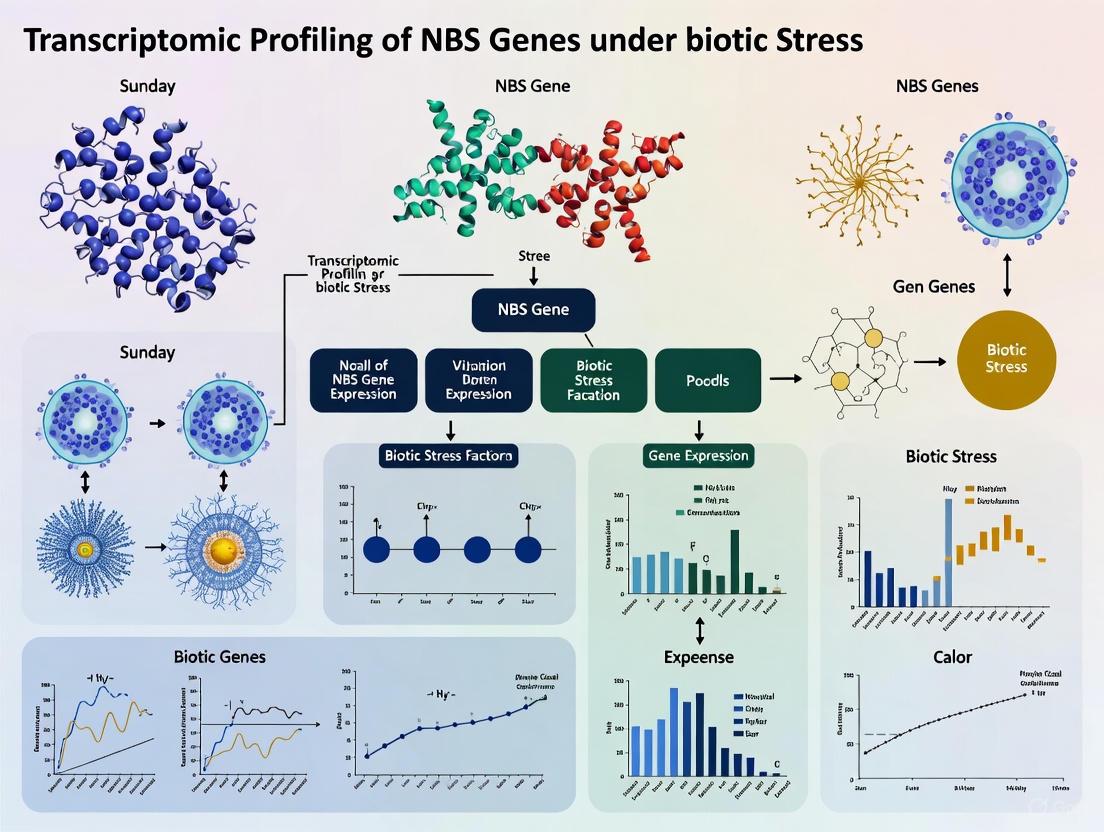
This article provides a comprehensive analysis of the transcriptomic profiling of Nucleotide-Binding Site Leucine-Rich Repeat (NBS-LRR) genes in plant defense against biotic stressors.
Transcriptomic Profiling of NBS-LRR Genes: Molecular Mechanisms and Biotic Stress Resistance in Plants
Abstract
This article provides a comprehensive analysis of the transcriptomic profiling of Nucleotide-Binding Site Leucine-Rich Repeat (NBS-LRR) genes in plant defense against biotic stressors. Aimed at researchers and plant science professionals, it explores the foundational diversity and evolution of NBS genes, details cutting-edge methodologies from genome-wide identification to multi-omics integration, addresses key challenges in functional validation, and presents comparative expression analyses across pathosystems. The synthesis of current findings aims to bridge the gap between genetic discovery and the application of NBS genes in breeding and biotechnology for enhanced crop resilience.
Unraveling the NBS-LRR Repertoire: Diversity, Evolution, and Genomic Architecture
NBS-LRR genes, encoding proteins characterized by a nucleotide-binding site (NBS) and a C-terminal leucine-rich repeat (LRR) domain, constitute the largest and most prominent class of disease resistance (R) genes in plants [1]. These proteins function as intracellular immune receptors and are central to the plant's ability to recognize diverse pathogens, initiating a robust defense response known as Effector-Triggered Immunity (ETI), often accompanied by a localized programmed cell death called the hypersensitive response (HR) [2] [3]. The NBS domain is responsible for binding and hydrolyzing nucleotides (ATP/GTP), providing energy for immune signaling activation, while the LRR domain is involved in protein-protein interactions and determines the specificity of pathogen recognition [1]. The pivotal role of NBS-LRR genes in plant survival is evidenced by their significant expansion and diversification across plant genomes, making them a primary focus of research aimed at enhancing crop resistance.
Classification and Genomic Distribution
Classification of NBS-LRR Proteins
NBS-LRR proteins are primarily classified based on their N-terminal domains into major subfamilies. TNL proteins contain a Toll/Interleukin-1 Receptor (TIR) domain, while CNL proteins possess a Coiled-Coil (CC) domain. A third, smaller subgroup is the RNL, which features a Resistance to Powdery Mildew 8 (RPW8) domain [2] [1]. The distribution of these subfamilies varies markedly among plant species. For instance, monocots like rice have completely lost the TNL subfamily, whereas gymnosperms like Pinus taeda have experienced a significant expansion of TNLs [2].
Table 1: Classification of NBS-LRR Genes in Various Plant Species
| Plant Species | Total NBS-LRR Identified | CNL | TNL | RNL | Atypical | Reference |
|---|---|---|---|---|---|---|
| Lathyrus sativus (Grass pea) | 274 | 150 | 124 | - | - | [4] |
| Salvia miltiorrhiza (Danshen) | 196 | 61 | 2 | 1 | 132 | [2] |
| Chenopodium quinoa | 183 | Information not specified in search results | [5] | |||
| Vernicia montana (Tung tree) | 149 | 98 (CC-domain containing) | 12 (TIR-domain containing) | - | 39 | [1] |
| Vernicia fordii (Tung tree) | 90 | 49 (CC-domain containing) | 0 | - | 41 | [1] |
| Glycine max (Soybean) | 103 (NB-ARC) | Information not specified in search results | [6] |
Genomic Organization
NBS-LRR genes are typically distributed non-randomly across plant chromosomes, often forming clusters in specific genomic regions [1]. This clustered arrangement is believed to facilitate the evolution of new resistance specificities through gene duplication and tandem rearrangements. The gene structure of NBS-LRRs can be complex; for example, all 274 genes identified in grass pea contained exons, with the number ranging from 1 to 7 per gene [4].
Transcriptomic Profiling of NBS-LRR Genes under Biotic Stress
Transcriptomic analysis is a powerful tool for investigating the expression dynamics of NBS-LRR genes during pathogen challenge. The following protocol outlines a standard workflow for such an investigation.
Protocol: Transcriptomic Analysis of NBS-LRR Genes in Response to Biotic Stress
Objective: To identify and quantify the expression of NBS-LRR genes in a plant tissue of interest following pathogen inoculation.
Materials and Reagents:
- Plant specimens (e.g., resistant and susceptible cultivars)
- Pathogen inoculum (e.g., fungal spores, bacterial suspension)
- RNA extraction kit (e.g., TRIzol-based methods)
- DNase I (RNase-free)
- cDNA synthesis kit
- Quantitative Real-Time PCR (qPCR) system and reagents (SYBR Green or TaqMan chemistry)
- High-throughput sequencing platform (e.g., Illumina for RNA-Seq)
Methodology:
Experimental Design and Stress Induction:
- Grow plants under controlled conditions.
- Divide plants into treatment groups: pathogen-inoculated and mock-inoculated (control).
- Inoculate plants at a specified developmental stage using an appropriate method (e.g., spray, infiltration, wounding) [5] [3].
- Collect tissue samples at multiple time points post-inoculation (e.g., 0, 6, 12, 24, 48 hours) to capture early and late immune responses. Flash-freeze samples in liquid nitrogen and store at -80°C.
RNA Extraction and Sequencing:
- Grind frozen tissue to a fine powder.
- Extract total RNA using a standardized protocol or commercial kit. Treat with DNase I to remove genomic DNA contamination.
- Assess RNA quality and integrity using an instrument like a Bioanalyzer.
- For RNA-Seq: Prepare libraries from high-quality RNA samples and sequence on an Illumina platform to generate paired-end reads.
Bioinformatic Identification and Expression Analysis:
- Quality Control: Process raw sequencing reads with tools like Trimmomatic or FastQC to remove adapters and low-quality bases.
- Read Alignment: Map the cleaned reads to the reference genome of the studied plant using splice-aware aligners (e.g., HISAT2, STAR).
- Identification of NBS-LRR Genes: Use a combination of methods:
- HMMER Search: Perform a genome-wide search using Hidden Markov Model (HMM) profiles of the NBS domain (e.g., PF00931 from Pfam) [4] [2].
- BLAST: Use known NBS-LRR protein sequences from related species as queries for a local TBLASTN search against the target genome [4].
- Domain Verification: Validate candidate genes by checking for the presence of NBS and LRR domains using tools like NCBI's Conserved Domain Database (CDD) [4].
- Differential Expression Analysis: Assemble transcripts and quantify gene expression levels. Use software packages to identify differentially expressed genes (DEGs) between treated and control samples, applying thresholds such as \|log2(Fold Change)\| > 1 and adjusted p-value (FDR) < 0.05 [7].
Validation by Quantitative PCR (qPCR):
- Synthesize cDNA from the same RNA samples used for sequencing.
- Design gene-specific primers for selected NBS-LRR genes of interest and reference housekeeping genes.
- Perform qPCR reactions in triplicate.
- Analyze data using the comparative Ct (2^(-ΔΔCt)) method to determine relative expression levels [4] [5].
Diagram 1: Transcriptomic analysis workflow for NBS-LRR genes.
Key Findings from Transcriptomic Studies
Expression profiling consistently reveals that NBS-LRR genes are dynamically regulated under biotic stress. For example:
- In grass pea, RNA-Seq analysis showed that 85% of identified NBS-LRR genes had high expression levels, and qPCR validation of nine selected genes under salt stress (an abiotic stress that can influence disease susceptibility) showed most were upregulated at 50 and 200 μM NaCl [4].
- In quinoa, NBS-LRR genes displayed differential expression patterns under Cercospora disease stress, with many showing high expression levels during the plant defense response [5].
- A meta-analysis of apple transcriptomic responses to fungal, bacterial, and viral pathogens showed that specific hormonal pathways, such as ethylene and jasmonic acid, were differentially regulated, which can directly influence the expression and function of R genes [7].
Table 2: Example Expression Patterns of NBS-LRR Genes under Stress
| Plant Species | Stress Condition | Key Expression Findings | Reference |
|---|---|---|---|
| Lathyrus sativus | Salt stress (NaCl) | Majority of 9 tested LsNBS genes showed upregulation; LsNBS-D18, -D204, -D180 showed downregulation. | [4] |
| Chenopodium quinoa | Cercospora infection | 24 selected NBS genes showed a progressive expression pattern under disease stress. | [5] |
| Malus domestica | ALT1 fungal infection | miR482-mediated regulation leads to the cleavage of NBS-LRR transcripts, reducing their abundance. | [3] |
| Vernicia montana | Fusarium wilt | Ortholog Vm019719 was upregulated in resistant V. montana but downregulated in susceptible V. fordii. | [1] |
Regulatory Mechanisms and Signaling Pathways
The expression and function of NBS-LRR genes are tightly controlled by complex regulatory networks. A key layer of post-transcriptional regulation involves microRNAs (miRNAs). The miRNA miR482 targets the transcripts of a large number of NBS-LRR genes in various plants, including apple [3]. Upon pathogen infection, the level of miR482 is often suppressed, leading to the accumulation of NBS-LRR mRNAs and enhanced resistance. Furthermore, some NBS-LRR transcripts are processed into phasiRNAs (phased, secondary small interfering RNAs), which can amplify the silencing signal in trans, fine-tuning the immune response [3].
The signaling pathways mediated by NBS-LRR proteins are integral to ETI. CNL and TNL proteins, upon recognizing a pathogen effector, undergo conformational changes that trigger downstream signaling cascades. These cascades involve a burst of reactive oxygen species (ROS), activation of mitogen-activated protein kinases (MAPKs), and massive transcriptional reprogramming that collectively establish an anti-pathogen state [8]. Recent studies show that TNLs can function in a complex with the lipase-like proteins EDS1/PAD4 and the RNL protein ADR1 to form a "supramolecular complex" that serves as a convergence point for defense signaling [2].
Diagram 2: NBS-LRR-mediated immunity and regulatory pathways.
Table 3: Key Research Reagent Solutions for NBS-LRR Gene Analysis
| Reagent/Resource | Function/Application | Example Use Case |
|---|---|---|
| HMMER Software | Identifies protein domains using hidden Markov models. Used for genome-wide identification of NBS-LRR genes based on the NBS (PF00931) domain. | Identifying 196 NBS-domain containing genes in Salvia miltiorrhiza [2]. |
| RNA Interactome Capture (RIC) | Comprehensively identifies proteins that bind to RNA in vivo. | Discovering novel RNA-binding proteins involved in post-transcriptional immune regulation [8]. |
| Virus-Induced Gene Silencing (VIGS) | A powerful tool for transiently knocking down the expression of a target gene in plants to study its function. | Validating that Vm019719 mediates resistance to Fusarium wilt in tung tree [1]. |
| Isobaric Tags (iTRAQ/TMT) | Enable multiplexed, high-throughput quantitative proteomics by labeling peptides from different samples. | Profiling heat-responsive proteins, including HSPs, in rice [9]. |
| miRNA Target Prediction & Degradome Sequencing | Bioinformatics and experimental methods to identify miRNA cleavage sites on target transcripts. | Confirming that miR482 cleaves transcripts of specific NBS-LRR genes in apple [3]. |
Genome-Wide Identification and Classification of NBS-LRR Genes
The nucleotide-binding site leucine-rich repeat (NBS-LRR) gene family represents the largest and most important class of plant disease resistance (R) genes, forming a critical component of the plant immune system. These genes enable plants to recognize pathogen-secreted effector proteins through effector-triggered immunity (ETI), often culminating in a hypersensitive response that limits pathogen spread [10]. Approximately 80% of all cloned plant R genes belong to this extensive family [11] [12].
With the advent of affordable whole-genome sequencing, genome-wide identification and characterization of NBS-LRR genes has become a fundamental approach in plant molecular biology. This methodology provides a systematic framework for discovering potential resistance genes, analyzing their evolutionary history, and understanding their functional diversification. The resulting genomic resources are invaluable for molecular breeding programs aimed at enhancing crop resistance to various diseases [13] [14]. This application note details standardized protocols for identifying and classifying NBS-LRR genes, framed within the broader context of transcriptomic profiling under biotic stress.
# Methodological Approaches
Bioinformatic Identification Pipeline
The core process for identifying NBS-LRR genes relies on domain-based searches against plant genome sequences. The following workflow outlines the key steps, from data acquisition to initial characterization.
The initial and most crucial step involves using the Hidden Markov Model (HMM) profile of the conserved NB-ARC domain (PF00931) to screen the entire proteome of a species. The HMMER package (v3.0 or later) is employed with a stringent E-value cutoff (typically < 1e-20) to ensure high-confidence identifications [13] [14] [15]. For example, this approach identified 156 NBS-LRR homologs in Nicotiana benthamiana [13] and 252 in pepper (Capsicum annuum L.) [11].
Following the initial search, candidate sequences undergo rigorous domain validation using multiple databases:
- Pfam database: Confirms the presence of the NBS (NB-ARC) domain.
- SMART tool and NCBI Conserved Domain Database (CDD): Verify the presence and completeness of associated domains like TIR, CC, RPW8, and LRR [13] [14].
- Coiled-coil (CC) domain prediction: Tools like COILS or the CDD are used to identify CC domains, which are less conserved and require additional validation [11] [15].
Classification Based on Domain Architecture
Validated NBS-LRR genes are classified into subfamilies based on their N-terminal domains and C-terminal structures. This classification is vital for predicting potential function and evolutionary relationships.
Table 1: Standard Classification System for NBS-LRR Genes
| Subfamily | N-terminal Domain | Central Domain | C-terminal Domain | Representative Count in Species |
|---|---|---|---|---|
| TNL | TIR | NBS | LRR | 5 in N. benthamiana [13] |
| CNL | CC | NBS | LRR | 25 in N. benthamiana [13] |
| NL | None/Other | NBS | LRR | 23 in N. benthamiana [13] |
| RNL | RPW8 | NBS | LRR | 1 in S. cereale [14] |
| TN | TIR | NBS | - | 2 in N. benthamiana [13] |
| CN | CC | NBS | - | 41 in N. benthamiana [13] |
| N | None/Other | NBS | - | 60 in N. benthamiana [13] |
Genes with all three major domains (N-terminal, NBS, LRR) are classified as "typical" NBS-LRRs (TNL, CNL, NL). Those lacking the LRR domain or a recognizable N-terminal domain are termed "irregular" or "atypical" (TN, CN, N, RNL). The irregular types often function as adaptors or regulators in the resistance signaling cascade rather than direct pathogen receptors [13].
# Key Findings and Quantitative Data
Genome-wide studies across diverse plant species reveal significant variation in the size and composition of the NBS-LRR family, influenced by genome size, ploidy, and evolutionary history.
Table 2: Comparative Overview of NBS-LRR Genes Across Plant Species
| Plant Species | Total NBS-LRR Genes | Notable Subfamily Distributions | Reference |
|---|---|---|---|
| Wheat (Triticum aestivum) | 2,151 | High number consistent with hexaploid genome | [12] |
| Rye (Secale cereale) | 582 | 581 CNL, 1 RNL; Most genes on chromosome 4 | [14] |
| Tobacco (N. tabacum) | 603 | ~45.5% are "N-type" (NBS only) | [15] |
| Pepper (Capsicum annuum) | 252 | 248 nTNL, 4 TNL; 54% of genes in 47 clusters | [11] |
| Sweet Orange (C. sinensis) | 111 | Classified into 7 subfamilies | [12] |
| Salvia (S. miltiorrhiza) | 196 | 61 CNL, 1 RNL; Marked reduction of TNL/RNL | [10] |
| Cowpea (V. unguiculata) | 2,188 R-genes | 29 different classes of R-genes identified | [16] |
Several consistent genomic features have emerged from these studies:
- Non-random Genomic Distribution: NBS-LRR genes are frequently distributed unevenly across chromosomes and often form gene clusters via tandem duplications. For instance, 54% of pepper NBS-LRR genes are located in 47 physical clusters, with chromosome 3 containing the highest number (10 clusters) [11].
- Lineage-Specific Evolution: Comparative phylogenomics reveals frequent lineage-specific expansion and contraction. Monocots like rice have completely lost the TNL subfamily, while gymnosperms like Pinus taeda show significant TNL expansion [10]. In Salvia species, a notable degeneration of TNL and RNL subfamilies is observed [10].
- Conserved Motifs: Within the NBS domain, several conserved motifs are consistently identified, including the P-loop, RNBS-A, Kinase-2, RNBS-B, RNBS-C, and GLPL motifs, which are critical for nucleotide binding and hydrolysis [13] [11].
# Functional Validation and Transcriptomic Profiling
Bioinformatic identification is typically followed by experimental validation to confirm gene function. Virus-Induced Gene Silencing (VIGS) is a powerful technique for this purpose, especially in model plants like Nicotiana benthamiana.
Protocol: Functional Validation via VIGS
This protocol is adapted from studies in cotton and tobacco [13] [17].
- Candidate Gene Selection: Select target NBS-LRR genes from phylogenetic analysis, often from orthogroups (OGs) showing stress-responsive expression patterns (e.g., OG2, OG6, OG15 identified in cotton) [17].
- VIGS Construct Preparation: Clone a 200-300 bp unique fragment of the target gene into a TRV-based VIGS vector (e.g., pTRV2).
- Agroinfiltration: Transform the construct into Agrobacterium tumefaciens (strain GV3101). Infiltrate the bacterial suspension into the leaves of young plants (e.g., 2-week-old seedlings) using a needleless syringe.
- Pathogen Challenge: After 2-3 weeks, when silencing is established, challenge the plants with the relevant pathogen.
- Phenotypic and Molecular Assessment:
- Monitor disease symptoms and progression.
- Quantify pathogen biomass using qPCR.
- Analyze the expression level of the silenced NBS-LRR gene via RT-qPCR to confirm knockdown and correlate with observed phenotype.
A study silencing GaNBS (OG2) in resistant cotton demonstrated its role in reducing virus titers, validating its importance in disease resistance [17].
Integrating Transcriptomic Profiling
Transcriptomic analysis is crucial for linking NBS-LRR genes to biotic stress responses. The typical workflow for RNA-seq analysis in this context is summarized below.
Key steps in the analysis include:
- Experimental Design: Collect tissue from resistant and susceptible genotypes under infected and control conditions, with appropriate biological replicates. For example, a study on grapevine trunk diseases compared symptomatic and asymptomatic plants of tolerant and susceptible cultivars under field conditions [18].
- Differential Expression: Identify Differentially Expressed Genes (DEGs) using tools like Cuffdiff [15]. In the grapevine study, this revealed 64 DEGs associated with disease symptoms, highlighting key defense players [18].
- Co-expression Analysis: Investigate the correlation between NBS-LRR gene expression and pathways like secondary metabolism, as seen in S. miltiorrhiza [10].
- Promoter Analysis: Utilize databases like PlantCARE to identify cis-acting regulatory elements in the promoter regions of NBS-LRR genes (e.g., 1.5 kb upstream of ATG). This can reveal elements responsive to hormones (jasmonic acid, salicylic acid) and abiotic stresses, providing clues to their regulation [13] [10].
# The Scientist's Toolkit
Table 3: Essential Research Reagents and Tools for NBS-LRR Gene Analysis
| Tool/Reagent | Category | Function | Example/Source |
|---|---|---|---|
| HMMER Suite | Bioinformatics | HMM-based domain search (HMMsearch, HMMscan) | http://hmmer.org/ [13] |
| Pfam Database | Database | Curated collection of protein families and HMMs | http://pfam.sanger.ac.uk/ [13] |
| NCBI CDD | Database | Domain verification and classification | https://www.ncbi.nlm.nih.gov/cdd [14] [15] |
| MEME Suite | Bioinformatics | Discovers conserved protein motifs | https://meme-suite.org/ [13] |
| PlantCARE | Database | Identifies cis-acting regulatory elements in promoters | http://bioinformatics.psb.ugent.be/webtools/plantcare/ [13] |
| TRV VIGS Vectors | Molecular Biology | Functional gene silencing in plants | [13] [17] |
| Plant-mPLoc/CELLO | Bioinformatics | Predicts subcellular localization of proteins | [13] |
| OrthoFinder | Bioinformatics | Infers orthogroups and gene families across species | [17] |
The genome-wide identification and classification of NBS-LRR genes is a foundational protocol in plant immunity research. The standardized workflow—encompassing bioinformatic identification, phylogenetic classification, expression profiling, and functional validation—generates a critical knowledge base for understanding the plant immune repertoire. The resulting datasets and candidate genes serve as a springboard for further mechanistic studies and the development of disease-resistant crop varieties through modern molecular breeding techniques. Integrating these findings with transcriptomic data from biotic stress challenges is particularly powerful for prioritizing candidate genes for in-depth functional analysis.
Application Notes
Nucleotide-binding site-leucine-rich repeat (NBS-LRR) genes constitute the largest family of plant disease resistance (R) genes, playing a critical role in effector-triggered immunity (ETI) by recognizing pathogen effectors and initiating hypersensitive responses [19] [20]. Understanding the evolutionary mechanisms that drive the expansion and contraction of this gene family is essential for leveraging these genes in crop improvement programs. Current research demonstrates that tandem and segmental duplications serve as the primary evolutionary forces shaping the architecture, diversity, and transcriptional regulation of NBS-LRR genes across plant species [21] [19] [22]. These duplication events create genetic novelty that enables plants to adapt to rapidly evolving pathogens, with distinct duplication patterns observed across different plant lineages.
Quantitative Landscape of NBS-LRR Genes Across Plant Species
Table 1: NBS-LRR Gene Distribution and Duplication Patterns Across Plant Species
| Species | Total NBS-LRR Genes | Tandem Duplication Contribution | Segmental/WGD Contribution | Evolutionary Pattern | Key References |
|---|---|---|---|---|---|
| Euryale ferox (Basal angiosperm) | 131 | 18 RNL genes via ectopic duplication | Major mechanism for CNL/TNL expansions | Slight expansion during speciation | [21] |
| Saccharum spontaneum (Sugarcane) | Not specified | Gene expansion observed | Whole Genome Duplication (WGD) as primary driver | Progressive positive selection | [19] |
| Modern Sugarcane Cultivar | Not specified | Differential expression from S. spontaneum alleles | Contribution from parental genomes | Greater disease resistance contribution from S. spontaneum | [19] |
| Rosaceae Species (12 genomes) | 2188 across family | Independent duplication events | Dynamic patterns across species | "First expansion then contraction" in multiple species | [22] |
| Nicotiana tabacum (Tobacco) | 603 | Part of expansion mechanism | WGD significant contributor ~76.62% from parental genomes | Allotetraploid formation impact | [15] |
| Vernicia montana (Tung tree, resistant) | 149 | Clustered distribution | Syntenic relationships | Expansion in resistant genotype | [20] [1] |
| Vernicia fordii (Tung tree, susceptible) | 90 | Clustered distribution | Syntenic relationships | Contraction in susceptible genotype | [20] [1] |
Table 2: NBS-LRR Gene Subclassification Patterns Across Species
| Species | CNL Genes | TNL Genes | RNL Genes | Other/Partial Domains | Notable Domain Features |
|---|---|---|---|---|---|
| Euryale ferox | 40 | 73 | 18 | Not specified | RNLs scattered without synteny |
| Nicotiana benthamiana | 25 CNL-type | 5 TNL-type | 4 with RPW8 domain | 123 irregular-types (TN, CN, N) | 45.5% contain only NBS domain |
| Vernicia fordii | 12 CC-NBS-LRR | 0 | Not specified | 78 CC-NBS, NBS-LRR, NBS | Complete absence of TIR domains |
| Vernicia montana | 9 CC-NBS-LRR | 3 TIR-NBS-LRR | Not specified | 137 CC-NBS, TIR-NBS, NBS-LRR, NBS | Presence of TIR domains in resistant variety |
Functional Correlations Between Duplication Patterns and Disease Resistance
The differential duplication history between resistant and susceptible genotypes of tung trees provides compelling evidence for the functional significance of NBS-LRR expansion. Resistant Vernicia montana possesses 149 NBS-LRR genes, while susceptible V. fordii has only 90 genes, with the resistant species maintaining TIR-domain containing genes that were lost in the susceptible counterpart [20] [1]. Transcriptomic analyses further validate that expanded NBS-LRR genes are functionally significant, as modern sugarcane cultivars express more NBS-LRR genes derived from the wild relative S. spontaneum than from the cultivated S. officinarum, indicating selection for disease resistance alleles during breeding [19].
Diagram 1: NBS-LRR Gene Duplication Mechanisms and Functional Outcomes
Protocols
Protocol 1: Genome-Wide Identification of NBS-LRR Genes
Principle
This protocol describes the comprehensive identification of NBS-LRR genes from plant genome sequences using a combination of hidden Markov model (HMM) searches and domain verification, enabling researchers to catalog complete and partial NBS-LRR genes for evolutionary analysis.
Materials
- Computational Resources: High-performance computing cluster with adequate storage
- Software Tools: HMMER v3.1b2, BLAST suite, InterProScan, MUSCLE, MEME suite
- Databases: Pfam (PF00931 for NB-ARC domain), NCBI Conserved Domain Database (CDD)
- Genome Data: Plant genome assembly in FASTA format, annotation files in GFF/GTF format
Procedure
Domain-Based Gene Identification
- Perform HMMER search against the target proteome using the NB-ARC domain (PF00931) with expectation value threshold of 1.0
- Conduct parallel BLASTp search using known NB-ARC domain sequences as queries with E-value cutoff of 1.0
- Merge results from both approaches and remove redundant hits
Domain Verification and Classification
- Confirm presence of NBS domains using HMMscan with stringent threshold (E-value ≤ 0.0001)
- Submit candidate sequences to NCBI CDD to identify N-terminal domains (CC, TIR, RPW8) and C-terminal LRR domains
- Classify genes into subfamilies (CNL, TNL, RNL, NL) based on domain architecture
Manual Curation and Validation
- Extract genomic regions containing candidate genes plus flanking sequences (recommended 10 kb upstream/downstream)
- Use InterProScan with programs Coils, Gene3D, SMART, and Pfam to identify additional domains and ORFs
- Manually inspect gene models using genome browser visualization to correct misannotations
Technical Notes
- For species with limited genomic resources, use NLGenomeSweeper pipeline which specializes in identifying NBS-LRR genes directly from genome assemblies without dependency on existing annotations [23]
- Pay particular attention to RNL genes, as they are often missed by standard annotation pipelines due to their divergence from typical NBS-LRR sequences [23]
Protocol 2: Analysis of Duplication Patterns and Evolutionary Dynamics
Principle
This protocol enables researchers to distinguish between tandem and segmental duplication events and quantify their relative contributions to NBS-LRR gene family expansion through comparative genomic and phylogenetic approaches.
Materials
- Software: MCScanX, OrthoFinder, IQ-TREE, MEGA, KaKs_Calculator
- Data Requirements: Genome sequences and annotations for target species and related taxa
- Analysis Tools: Custom scripts for synteny analysis (available in repositories like GitHub)
Procedure
Identification of Tandem Duplications
- Define gene clusters as genomic regions where NBS-LRR genes are separated by ≤10 intervening genes
- Calculate cluster density (genes per Mb) and compare to genome-wide average
- Identify tandem arrays as adjacent NBS-LRR genes of the same subclass within 100 kb
Detection of Segmental Duplications
- Perform all-vs-all BLASTp of NBS-LRR genes within the genome with E-value cutoff of 10-5
- Use MCScanX to identify syntenic blocks and collinearity relationships
- Map NBS-LRR genes to syntenic blocks to distinguish segmental from tandem duplications
Evolutionary Analysis
- Construct phylogenetic trees using maximum likelihood method (IQ-TREE) with NBS domain sequences
- Reconcile gene trees with species trees to infer duplication and loss events
- Calculate nonsynonymous/synonymous substitution rates (Ka/Ks) using KaKs_Calculator to detect selection pressures
Diagram 2: Workflow for Analyzing NBS-LRR Duplication Patterns
Protocol 3: Transcriptomic Profiling of NBS-LRR Genes Under Biotic Stress
Principle
This protocol describes the experimental and computational methods for assessing expression patterns of NBS-LRR genes in response to pathogen challenge, linking evolutionary expansions to functional disease resistance.
Materials
- Biological Materials: Plant tissues under pathogen infection and control conditions
- Sequencing Platform: Illumina RNA-seq capability
- Analysis Tools: Hisat2, Cufflinks, DESeq2, Trinity
- Validation Methods: qRT-PCR reagents, virus-induced gene silencing (VIGS) constructs
Procedure
Experimental Design and RNA Sequencing
- Inoculate plants with target pathogens (e.g., Fusarium oxysporum, Marssonina rosae) using appropriate controls
- Collect tissue samples at multiple time points (0, 6, 12, 24, 48, 72 hours post-inoculation) with biological replicates
- Extract high-quality RNA and prepare Illumina RNA-seq libraries
Differential Expression Analysis
- Map cleaned reads to reference genome using Hisat2 with default parameters
- Quantify transcript abundance using Cufflinks with FPKM normalization
- Identify differentially expressed NBS-LRR genes using Cuffdiff (fold-change ≥2, FDR ≤0.05)
Functional Validation
- Select candidate NBS-LRR genes based on expression patterns and duplication history
- Validate expression patterns using qRT-PCR with gene-specific primers
- Perform functional characterization using virus-induced gene silencing (VIGS) in resistant genotypes
Technical Notes
- For species with complex genomes like sugarcane, allocate computational resources for handling large datasets and complex allele-specific expression analysis [19]
- When analyzing allopolyploid species, distinguish expression contributions from different subgenomes by mapping reads to respective parental genomes [15]
The Scientist's Toolkit
Table 3: Essential Research Reagents and Computational Tools for NBS-LRR Studies
| Category | Tool/Reagent | Specific Function | Application Context |
|---|---|---|---|
| Bioinformatics Tools | HMMER v3.1b2 | Domain-based gene identification using hidden Markov models | Initial identification of NBS-LRR genes from genome sequences [21] [20] |
| NLGenomeSweeper | Automated annotation of NLR genes directly from genome assemblies | Identification of NBS-LRR genes missed by standard annotation pipelines [23] | |
| MCScanX | Detection of syntenic blocks and collinearity relationships | Distinguishing tandem vs. segmental duplication events [19] [15] | |
| OrthoFinder | Orthogroup inference and phylogenetic analysis | Identifying orthologous and paralogous NBS-LRR relationships [19] | |
| Experimental Methods | Virus-Induced Gene Silencing (VIGS) | Transient knockdown of candidate NBS-LRR genes | Functional validation of disease resistance genes [20] [1] |
| RNA-seq with Hisat2/Cufflinks | Transcript abundance quantification and differential expression | Profiling NBS-LRR expression under biotic stress [19] [15] | |
| qRT-PCR with gene-specific primers | Targeted expression validation | Confirming RNA-seq findings for selected candidates [24] | |
| Key Databases | Pfam Database | Curated collection of protein domains and families | Access to NB-ARC (PF00931) and related domain models [21] [13] |
| NCBI Conserved Domain Database (CDD) | Functional annotation of protein domains | Verification of CC, TIR, LRR, and RPW8 domains [21] [15] | |
| PlantCARE Database | Catalog of cis-acting regulatory elements | Identification of stress-responsive promoter elements [13] |
Troubleshooting Guide
- Low NBS-LRR recovery: Use NLGenomeSweeper to identify genes missed by annotation pipelines, particularly in repetitive regions [23]
- Difficulty classifying RNL genes: Create custom HMM profiles based on species-specific sequences to improve sensitivity [23]
- Complex expression patterns in polyploids: Implement allele-specific expression analysis by mapping to subgenome references [19] [15]
- Distinguishing functional genes from pseudogenes: Require presence of complete NB-ARC domain and intact ORFs for functional studies [23]
Within the context of transcriptomic profiling of NBS genes under biotic stress, the analysis of conserved domains and motifs provides critical insights into the function and evolutionary adaptation of plant immune receptors. The majority of plant disease resistance (R) genes encode nucleotide-binding site leucine-rich repeat (NBS-LRR) proteins, which are characterized by a tripartite domain architecture and serve as intracellular sentinels against pathogen attack [25]. These proteins are one of the largest and most diverse gene families in plants, with over 400 members identified in some species such as rice [25]. Transcriptomic studies under biotic stress conditions consistently reveal the dynamic regulation of these genes, highlighting the importance of understanding their core structural components—from the nucleotide-binding P-loop to the C-terminal leucine-rich repeats [16].
The functional characterization of NBS-LRR proteins relies heavily on deciphering their conserved domains and motifs. Advanced bioinformatic tools and experimental approaches now enable researchers to identify these structural elements and understand their role in pathogen recognition and signal transduction. This protocol details comprehensive methodologies for conserved domain and motif analysis, with particular emphasis on applications in transcriptomic studies of plant immunity.
Background: NBS-LRR Protein Architecture and Function
Domain Organization and Classification
NBS-LRR proteins typically contain three fundamental domains: a variable N-terminal domain, a central nucleotide-binding site (NBS) domain, and a C-terminal leucine-rich repeat (LRR) region [25]. The N-terminal domain falls into two major classes: Toll/interleukin-1 receptor (TIR) or coiled-coil (CC) motifs, which define two evolutionarily distinct subfamilies (TNLs and CNLs) [25] [13]. The central NBS domain contains several conserved motifs, including the phosphate-binding loop (P-loop), that are characteristic of the STAND family of ATPases and function as molecular switches in disease signaling pathways [25]. The C-terminal LRR region is implicated in pathogen recognition specificity and protein-protein interactions [26].
Beyond the typical three-domain structure, genomic studies have identified numerous "irregular" NBS-encoding genes that lack one or more of these domains. These include TIR-NBS (TN), CC-NBS (CN), and NBS-only (N) proteins, which may function as adaptors or regulators of full-length NBS-LRR proteins [13]. A recent genome-wide study in Nicotiana benthamiana identified 156 NBS-LRR homologs, including 5 TNL-type, 25 CNL-type, 23 NL-type, 2 TN-type, 41 CN-type, and 60 N-type proteins, demonstrating the structural diversity within this gene family [13].
Transcriptomic Insights into NBS-LRR Regulation
Transcriptomic profiling has revealed that NBS-LRR genes are often maintained at low basal expression levels under non-stress conditions but are rapidly induced upon pathogen perception [27]. This "low expression-high responsiveness" regulatory pattern represents an evolutionary strategy to balance defense efficacy with metabolic costs. However, exceptions exist, as demonstrated by soybean resistance gene SRC4, which exhibits high basal expression and responsiveness to both biotic and abiotic stresses [27].
The expression of NBS-LRR genes is regulated by complex networks involving cis-regulatory elements in their promoters, epigenetic modifications, and integration with multiple signaling pathways, including those mediated by salicylic acid (SA) and calcium ions (Ca²⁺) [27]. Transcriptomic studies of cowpea under stress conditions have identified numerous NBS-LRR genes co-regulated with transcription factors and protein kinases, highlighting their integration into broader defense networks [16].
Computational Analysis Protocols
Identification of NBS-LRR Genes
Protocol 1: HMM-Based Identification
- Domain Search: Use HMMER software with the NB-ARC domain (PF00931) Hidden Markov Model (HMM) profile to scan the target genome or transcriptome assembly.
- Parameter Setting: Apply an expectation value (E-value) cutoff of <1×10⁻²⁰ for initial screening [13].
- Sequence Extraction: Extract putative NBS-containing sequences using bioinformatics tools such as TBtools [13].
- Domain Verification: Submit candidate sequences to Pfam, SMART, and CDD databases for verification of NBS and other conserved domains.
- Redundancy Removal: Eliminate duplicate sequences and compile non-redundant gene set.
Protocol 2: Phylogenetic Classification
- Multiple Sequence Alignment: Perform alignment of NBS domains using ClustalW or MAFFT with default parameters [13].
- Tree Construction: Infer phylogenetic relationships using Maximum Likelihood method in MEGA7 or similar software with 1000 bootstrap replicates [13].
- Clade Assignment: Classify sequences into TNL, CNL, RNL, and other subfamilies based on clustering patterns and domain composition.
Motif and Domain Analysis
Protocol 3: Conserved Motif Discovery
- Input Preparation: Compile protein sequences of identified NBS-LRR genes in FASTA format.
- Motif Identification: Use MEME suite with parameters set to discover up to 10 motifs with widths ranging from 6 to 50 amino acids [13].
- Motif Annotation: Compare identified motifs against known domain databases to assign functional annotations.
- Visualization: Generate schematic representations of motif distribution using TBtools or similar visualization software.
Protocol 4: Domain Architecture Mapping
- Comprehensive Domain Scanning: Use InterProScan or similar tools to identify all conserved domains within NBS-LRR proteins.
- Architecture Categorization: Classify proteins based on domain combinations (TNL, CNL, TN, CN, NL, N) [13].
- Visualization: Create domain architecture diagrams highlighting the positions of key motifs including P-loop, kinase-2, kinase-3a, and GLPL motifs within the NBS domain.
Table 1: Key Conserved Motifs in Plant NBS-LRR Proteins
| Motif Name | Position | Consensus Sequence | Functional Role |
|---|---|---|---|
| P-loop | NBS domain | GxGGLGKT | Phosphate binding, nucleotide interaction |
| RNBS-A | NBS domain | FLHIACF | Nucleotide binding, domain folding |
| Kinase-2 | NBS domain | LVLDDVW | Metal ion coordination, ATP hydrolysis |
| RNBS-D | NBS domain | CFAL | TIR/CC domain interaction |
| GLPL | NBS domain | GLPLaI | Structural stability, nucleotide binding |
| MHD | NBS domain | MHD | Nucleotide binding regulation |
| LRR | C-terminal | LxxLxLxxNxLxGxIPxx | Protein-protein interactions, pathogen recognition |
Structural and Functional Predictions
Protocol 5: Subcellular Localization Prediction
- Multi-Tool Analysis: Submit protein sequences to CELLO v.2.5 and Plant-mPLoc prediction servers [13].
- Consensus Calling: Compare results from multiple tools to assign most probable localization.
- Experimental Validation: For key candidates, confirm predictions experimentally through transient expression of fluorescent protein fusions.
Protocol 6: Physicochemical Characterization
- Parameter Calculation: Use EXPASY ProtParam to compute molecular weight, theoretical pI, instability index, aliphatic index, and grand average of hydropathicity [13].
- Comparative Analysis: Compare characteristics across different NBS-LRR subtypes to identify type-specific features.
Protocol 7: Cis-Element Analysis
- Promoter Extraction: Retrieve 1.5 kb sequences upstream of translation start sites.
- Element Identification: Scan sequences using PlantCARE database or similar resources [13].
- Functional Categorization: Classify identified elements into hormone-responsive, stress-responsive, and development-related categories.
- Visualization: Generate schematic diagrams of promoter architectures highlighting key regulatory elements.
Table 2: Frequently Identified Cis-Elements in NBS-LRR Gene Promoters
| Element Name | Consensus Sequence | Function | Prevalence |
|---|---|---|---|
| TCA-element | CCATCTTTTT | Salicylic acid responsiveness | High in biotic stress-responsive genes |
| W-box | TTGACC | WRKY transcription factor binding | Ubiquitous in defense genes |
| ABRE | ACGTG | Abscisic acid responsiveness | Common in stress-regulated NBS-LRRs |
| HSE | AAAAAATTTC | Heat stress responsiveness | Identified in thermoresponsive genes |
| MBS | CAACTG | Drought inducibility | Present in abiotic stress-responsive types |
| TC-rich repeats | GTTTTCTTAC | Defense and stress responsiveness | Frequent in CNL promoters |
| TATA-box | TATAAAT | Core promoter element | Ubiquitous |
| CAAT-box | CCAAT | Common cis-acting element | Ubiquitous |
Experimental Validation Methods
Functional Characterization Approaches
Protocol 8: Domain Interaction Studies
- Construct Design: Clone individual domains (CC, NBS, LRR) or combinations (CC-NBS, NBS-LRR) with appropriate epitope tags.
- Co-expression Assays: Express domain combinations in transient systems like Nicotiana benthamiana via agroinfiltration.
- Interaction Assessment:
- Employ co-immunoprecipitation to detect physical interactions [26].
- Test for functional complementation by monitoring hypersensitive response (HR) restoration.
- Elicitor Effects: Examine how pathogen effectors or elicitors disrupt domain interactions [26].
Protocol 9: Transcriptomic Profiling Under Biotic Stress
- Experimental Design:
- Treat plant materials with pathogens or elicitors at multiple time points.
- Include appropriate controls and biological replicates (minimum n=3).
- RNA Extraction: Use CTAB or commercial kits with DNase treatment for high-quality RNA [28].
- Library Preparation and Sequencing: Prepare strand-specific RNA-seq libraries using Illumina TruSeq kits.
- Differential Expression Analysis:
- Align reads to reference genome using HISAT2 or STAR.
- Assemble transcripts and quantify expression with StringTie and Ballgown.
- Identify differentially expressed NBS-LRR genes using DESeq2 or edgeR.
Functional Validation Techniques
Protocol 10: Virus-Induced Gene Silencing (VIGS)
- Target Selection: Design 150-300 bp gene-specific fragments for silencing.
- Vector Construction: Clone fragments into TRV-based VIGS vectors.
- Plant Inoculation: Agroinfiltrate vectors into seedlings at 2-4 leaf stage.
- Phenotypic Assessment:
- Challenge silenced plants with pathogens.
- Evaluate disease symptoms and quantify pathogen biomass.
- Monitor cell death responses and defense marker gene expression.
Protocol 11: Heterologous Complementation
- Transgenic Approaches: Express candidate NBS-LRR genes in susceptible plant backgrounds.
- Functional Testing: Challenge transgenic lines with cognate pathogens.
- Response Characterization: Document HR development, pathogen restriction, and defense signaling activation.
Signaling Pathways and Molecular Mechanisms
The activation of NBS-LRR proteins involves sophisticated molecular mechanisms centered on their conserved domains. In the resting state, intramolecular interactions between domains maintain the protein in an auto-inhibited conformation. Recognition of pathogen effectors directly or indirectly through the LRR domain triggers conformational changes that initiate signaling cascades [26] [25].
The NBS domain serves as a molecular switch, with nucleotide binding and hydrolysis regulating activation states. Key conserved motifs within this domain, including the P-loop, kinase-2, and GLPL motifs, coordinate nucleotide binding and hydrolysis [25]. The MHD motif plays a particularly critical role in maintaining the auto-inhibited state, with mutations in this motif often leading to constitutive activation [25].
Recent structural studies of plant NBS-LRR proteins, particularly the ZAR1 resistosome, have revealed that upon activation, these proteins can form oligomeric complexes that function as calcium-permeable channels [27]. This connects NBS-LRR activation directly to calcium signaling, a key early event in plant immune responses. The integration of NBS-LRR signaling with calcium fluxes and downstream hormonal pathways, particularly salicylic acid biosynthesis, creates a robust defense network against invading pathogens [27].
Diagram 1: NBS-LRR Activation Pathway. This diagram illustrates the sequential molecular events from pathogen recognition to defense activation, highlighting the central role of conserved domains in this process.
The Scientist's Toolkit: Essential Research Reagents
Table 3: Key Research Reagent Solutions for NBS-LRR Studies
| Reagent/Resource | Function/Application | Example Sources/Protocols |
|---|---|---|
| HMMER Software | Identification of NBS domains in genomic sequences | http://www.hmmer.org/ [13] |
| Pfam Database | Domain verification and annotation | http://pfam.sanger.ac.uk/ [13] |
| MEME Suite | Discovery of conserved protein motifs | http://meme-suite.org/ [13] |
| PlantCARE Database | Identification of cis-regulatory elements | http://bioinformatics.psb.ugent.be/webtools/plantcare/html/ [13] |
| TRV-based VIGS Vectors | Functional validation through gene silencing | [29] |
| Co-immunoprecipitation Kits | Protein-protein interaction studies | Commercial suppliers [26] |
| Illumina TruSeq Kits | RNA-seq library preparation | Illumina, Inc. [28] |
| Gateway Cloning System | Vector construction for domain analysis | Thermo Fisher Scientific [26] |
| EXPASY ProtParam | Physicochemical characterization of proteins | https://web.expasy.org/protparam/ [13] |
Diagram 2: Comprehensive Workflow for NBS-LRR Gene Analysis. This workflow outlines the integrated computational and experimental approach for characterizing NBS-LRR genes from identification to functional mechanism elucidation.
The integration of conserved domain and motif analysis with transcriptomic profiling provides a powerful framework for elucidating the function and regulation of NBS-LRR genes in plant immunity. The protocols outlined here enable comprehensive characterization of these important immune receptors, from initial identification through functional validation. As structural biology advances and more resistosome structures are solved, our understanding of how these conserved domains coordinate to initiate immune signaling will continue to refine these analytical approaches. The application of these methods in transcriptomic studies of biotic stress responses will accelerate the discovery and functional annotation of NBS-LRR genes across diverse plant species, contributing to the development of disease-resistant crop varieties through molecular breeding and biotechnological approaches.
Chromosomal Distribution and Cluster Analysis of NBS-LRR Genes
Within the broader context of transcriptomic profiling of NBS genes under biotic stress, understanding their genomic organization is a fundamental step. The nucleotide-binding site and leucine-rich repeat (NBS-LRR) genes form the largest class of plant disease resistance (R) genes, encoding intracellular receptors that confer immunity against diverse pathogens [20] [2]. Chromosomal distribution and cluster analysis provide crucial insights into the evolution of this complex gene family, revealing patterns of gene duplication, rearrangement, and selection that ultimately shape the plant's immune repertoire [30] [11]. This application note details standardized protocols for identifying NBS-LRR genes and analyzing their genomic arrangement, providing a framework for researchers investigating plant immune responses through transcriptomic approaches.
Genome-wide studies across diverse plant species reveal that NBS-LRR genes exist in substantial numbers, typically representing 0.25% to 1% of all annotated protein-coding genes, and are frequently organized in clusters throughout the genome [20] [30] [13]. The table below summarizes the characteristics of NBS-LRR genes in several recently studied plants.
Table 1: Genomic Statistics of NBS-LRR Genes in Various Plant Species
| Plant Species | Total NBS-LRR Genes Identified | Genes in Clusters (%) | Number of Clusters | Key Subfamily proportions (CNL:TNL:RNL) |
|---|---|---|---|---|
| Capsicum annuum (Pepper) | 252 | 136 (54%) | 47 | 248 : 4 : Not Specified [11] |
| Salvia miltiorrhiza (Danshen) | 196 | Information Not Specified | Information Not Specified | 61 : 2 : 1 (of 62 typical NLRs) [2] |
| Vernicia montana (Tung Tree) | 149 | Information Not Specified | Information Not Specified | Majority CNL; 12 with TIR domains [20] |
| Dioscorea rotundata (Yam) | 167 | 124 (~74%) | 25 | 166 : 0 : 1 [31] |
| Manihot esculenta (Cassava) | 228 | ~63% | 39 | 128 (CC-NBS) : 34 (TIR-NBS) : Not Specified [30] |
| Nicotiana benthamiana (Tobacco) | 156 | Information Not Specified | Information Not Specified | 25 (CNL) : 5 (TNL) : 4 (with RPW8) [13] |
This quantitative overview highlights the significant expansion and cluster-centric organization of the NBS-LRR family across the plant kingdom, which is a key genomic feature for researchers to consider in transcriptomic studies.
Experimental Protocols
Protocol 1: Genome-Wide Identification of NBS-LRR Genes
This protocol outlines a standard workflow for the comprehensive identification of NBS-LRR genes from a sequenced plant genome, a critical first step for subsequent distribution and expression analysis [30] [13] [32].
I. Materials and Reagents
- Genome Resources: Plant genome assembly (FASTA format) and corresponding annotation file (GFF/GTF format). Sources include Phytozome, NCBI Genome, or species-specific databases like the Genome Database for Rosaceae (GDR) [32].
- Computational Software:
- HMMER v3.x suite (http://www.hmmer.org/): For Hidden Markov Model (HMM)-based searches [20] [30].
- Pfam Database (http://pfam.xfam.org/): Source of the NBS (NB-ARC, PF00931) domain HMM profile [30] [13].
- BLAST+ suite: For sequence similarity searches [30].
- SMART tool (http://smart.embl-heidelberg.de/) and/or NCBI CD-Search: For additional domain verification [13] [32].
- COILS or Paircoil2: For predicting coiled-coil (CC) domains not identifiable by Pfam [30] [32].
II. Procedure
- Initial HMM Search:
a. Use the
hmmsearchcommand from HMMER with the NB-ARC (PF00931) HMM profile against the plant proteome. b. Apply an E-value cutoff of < 1x10⁻²⁰ or lower (e.g., < 0.01) to select candidate proteins [13] [32]. - Candidate Verification and Domain Annotation:
a. Subject candidate sequences to domain analysis using
hmmscan(Pfam) for TIR, LRR, and RPW8 domains. b. Predict CC domains using COILS with a P-score cutoff of 0.03 [30] [32]. c. Confirm all domain predictions using SMART and NCBI CD-Search. - Classification: a. Classify genes into subfamilies (e.g., CNL, TNL, RNL, NL, CN) based on their domain architecture [20] [13] [11]. b. Manually curate the list to remove false positives, such as proteins with partial kinase domains [30].
III. Data Analysis Notes
- The final list should include gene identifiers, chromosomal locations, and domain architectures.
- This workflow identified 252 NBS-LRR genes in pepper and 196 in Salvia miltiorrhiza [2] [11].
Protocol 2: Chromosomal Mapping and Cluster Analysis
This protocol describes how to map the identified NBS-LRR genes onto chromosomes and define gene clusters, which is essential for understanding their evolution and correlating genomic location with transcriptomic responses [31] [11].
I. Materials and Reagents
- Input Data: The curated list of NBS-LRR genes with their genomic coordinates from Protocol 1.
- Software:
II. Procedure
- Chromosomal Mapping: a. Extract the physical positions (chromosome, start, end) of all NBS-LRR genes from the genome annotation file. b. Use TBtools or similar software to visualize the distribution of genes on all chromosomes [13] [32].
- Gene Cluster Definition: a. A common criterion is applied: a genomic region where two or more NBS-LRR genes are located within 200 kilobases of each other and are interrupted by no more than eight non-NBS-LRR genes [32]. b. Calculate the physical distance between adjacent NBS-LRR genes. Genes fulfilling the cluster criterion are grouped.
- Cluster Characterization: a. Note the number of clusters and the number of genes per cluster. b. Analyze whether clusters are homogeneous (containing genes from the same subfamily) or heterogeneous (containing genes from different subfamilies) [30] [11].
III. Data Analysis Notes
- In pepper, 54% of the 252 NBS-LRR genes were found in 47 clusters on the chromosomes [11].
- In yam, 124 of 167 genes were arranged in 25 clusters, with tandem duplication being a major driver [31].
Table 2: Key Reagents and Computational Tools for NBS-LRR Gene Analysis
| Item Name | Function/Application | Specification Notes |
|---|---|---|
| HMMER Software Suite | Identifies protein domains using probabilistic models. Critical for initial genome-wide screening of the conserved NBS domain. | Use hmmsearch with the NB-ARC (PF00931) profile. E-value cutoff is critical for specificity [30] [13]. |
| Pfam Database | A curated collection of protein family HMM profiles. Source of the definitive NBS (NB-ARC) domain model. | Profile PF00931 is the standard for identifying the core NBS domain [30] [32]. |
| TBtools | An integrative bioinformatics software platform. Used for chromosomal mapping, visualization, and various sequence analyses. | Essential for creating publication-quality graphics of gene distributions on chromosomes [13] [32]. |
| COILS / Paircoil2 | Predicts coiled-coil domains in protein sequences. Required for accurate classification of CNL subfamily members. | CC domains are not always detected by Pfam; these tools are necessary for complementation [30] [32]. |
| MCScanX | Analyzes genome collinearity and identifies gene duplication events. Used to distinguish between tandem and segmental duplications. | Helps elucidate the evolutionary mechanisms behind NBS-LRR cluster formation [32]. |
| Plant Genome Annotations (GFF/GFF3) | Provides the structural and functional annotation of a genome, including gene locations and models. | The foundational data required for all mapping and cluster analysis. Must be from a high-quality assembly [13] [32]. |
Concluding Remarks
The protocols outlined here provide a robust methodological foundation for studying the genomic organization of NBS-LRR genes. Integrating this chromosomal and cluster analysis with transcriptomic profiling under biotic stress conditions is a powerful strategy. It allows researchers to pinpoint specific gene clusters that are dynamically regulated during immune responses, thereby identifying high-priority candidates for further functional characterization and potential use in breeding programs for enhanced disease resistance [20] [33].
From Sequences to Signals: Methodologies for Profiling NBS-LRR Expression and Function
Experimental Design for Transcriptome Sequencing Under Biotic Stress
Within the framework of a broader thesis on the transcriptomic profiling of Nucleotide-Binding Site Leucine-Rich Repeat (NBS-LRR) genes, this document outlines a detailed application note and protocol for conducting transcriptome sequencing experiments under biotic stress. NBS-LRR genes constitute the largest family of plant disease resistance (R) genes and play a pivotal role in effector-triggered immunity (ETI), enabling plants to recognize specific pathogen effectors and activate robust defense responses [12] [34]. The objective of this protocol is to provide researchers with a standardized methodology for investigating the complex expression dynamics of NBS-LRR genes and other transcriptional changes during plant-pathogen interactions, thereby contributing to the identification of key resistance genes for crop improvement.
Background and Significance
Plants are consistently confronted by a multitude of pathogens, and their survival depends on a sophisticated innate immune system. A critical component of this system is the NBS-LRR gene family, which encodes intracellular receptors that detect pathogen-derived effector molecules [35] [34]. Upon recognition, these receptors initiate signaling cascades that lead to the activation of defense mechanisms. Transcriptomic profiling via RNA sequencing (RNA-Seq) has become an indispensable tool for dissecting these responses. Unlike microarrays, RNA-Seq does not rely on pre-defined probes, allowing for the discovery of novel transcripts, alternative splice variants, and provides a wider dynamic range for quantifying gene expression [36]. This is crucial for comprehensively cataloging the expression of large gene families like NBS-LRRs under stress conditions. The following protocol is designed to leverage these advantages for the specific study of biotic stress responses.
Experimental Design and Workflow
A successful transcriptome study requires meticulous planning to minimize variability and ensure the generated data is robust and biologically relevant. The overall workflow, from experimental setup to data visualization, is summarized in the diagram below.
Key Considerations for Experimental Design
- Biological Replicates: A minimum of three biological replicates per condition is essential to account for biological variability and provide statistical power for differential expression analysis [37]. Biological replicates are distinct, independently treated samples (e.g., different plants).
- Controls: Include appropriate control groups (e.g., mock-inoculated plants) harvested at the same time points as stressed samples to distinguish stress-responsive genes from developmental changes [37].
- Randomization: Randomize the placement of plants for different treatments and replicates in growth chambers to avoid confounding effects from environmental gradients.
- Time-Course Experiments: For capturing dynamic transcriptional responses, include multiple time points post-inoculation (e.g., early, mid, and late stages of infection) [38].
Materials and Reagents
Table 1: Essential Research Reagent Solutions for Transcriptome Sequencing under Biotic Stress.
| Item | Function/Application | Examples/Notes |
|---|---|---|
| RNA Stabilization Reagent | Preserves RNA integrity immediately upon tissue harvest. Prevents degradation. | RNAlater or similar products. |
| High-Quality RNA Extraction Kit | Isolates total RNA with high purity and integrity, free from genomic DNA contamination. | Qiagen RNeasy Plant Mini Kit, PicoPure RNA isolation kit [37]. |
| RNA Integrity Assessment | Assesses RNA quality prior to library construction. | Agilent 4200 TapeStation; RNA Integrity Number (RIN) >7.0 is recommended [37]. |
| Poly(A) mRNA Selection Kit | Enriches for messenger RNA (mRNA) from total RNA by selecting for polyadenylated tails. | NEBNext Poly(A) mRNA Magnetic Isolation Module [37]. |
| cDNA Library Prep Kit | Constructs sequencing libraries from purified mRNA. | NEBNext Ultra DNA Library Prep Kit for Illumina [37]. Kits compatible with your sequencing platform (e.g., Illumina, Nanopore) should be selected. |
| NGS Sequencing Kit | Performs the actual sequencing reaction on the prepared libraries. | Illumina NextSeq 500 high-output kit [37] or equivalent for other platforms. |
Step-by-Step Protocols
Sample Preparation and RNA Extraction
- Plant Material and Stress Application: Grow plants under controlled conditions. For biotic stress, apply the pathogen (e.g., Fusarium oxysporum [38]) using a standardized inoculation method (e.g., root dipping, spray inoculation). Include mock-inoculated controls.
- Tissue Harvest and Stabilization: At predetermined time points, rapidly harvest the relevant tissue (e.g., root, leaf [39]). Immediately freeze the tissue in liquid nitrogen and store at -80°C, or submerge it in RNA stabilization reagent.
- Total RNA Extraction: Isolate total RNA using a dedicated plant RNA extraction kit, following the manufacturer's instructions. This typically involves tissue homogenization in lysis buffer, nucleic acid binding to a membrane, DNase I digestion to remove genomic DNA, and elution in nuclease-free water.
- RNA Quality Control (QC):
- Quantify RNA concentration using a fluorometer (e.g., Qubit) for accuracy.
- Assess RNA purity by measuring A260/A280 and A260/A230 ratios spectrophotometrically. Ideal ratios are ~2.0.
- Evaluate RNA integrity using an instrument like the Agilent TapeStation. Proceed only with samples having an RNA Integrity Number (RIN) > 7.0 [37].
Library Preparation and Sequencing
- mRNA Enrichment: From total RNA (typically 500 ng - 1 µg), isolate mRNA using oligo(dT) magnetic beads [37].
- cDNA Synthesis and Library Construction: Convert the purified mRNA into double-stranded cDNA. This involves fragmentation, end-repair, adenylation of 3' ends, and ligation of platform-specific adapters [37]. The adapter-ligated fragments are then PCR-amplified to create the final sequencing library.
- Library QC and Normalization: Assess the library's size distribution and concentration (e.g., via Agilent TapeStation and qPCR). Pool libraries at equimolar concentrations for multiplexed sequencing.
- Sequencing: Load the pooled libraries onto a high-throughput sequencing platform. For differential gene expression analysis, a sequencing depth of 20-30 million reads per sample is generally sufficient for most plant genomes. Common platforms include Illumina (short-read) or PacBio/Oxford Nanopore (long-read) [36].
Bioinformatic Analysis Pipeline
The following table outlines a standard bioinformatic workflow for RNA-Seq data, from raw reads to differential expression.
Table 2: Standard Bioinformatic Analysis Workflow for RNA-Seq Data.
| Step | Tool/Software | Purpose | Key Parameters/Outputs |
|---|---|---|---|
| Quality Control & Trimming | FastQC, Trim Galore, fastp [40] | Assesses raw read quality and removes adapter sequences and low-quality bases. | Per-base sequence quality, adapter content. Output: trimmed FASTQ. |
| Read Alignment | STAR [40], HISAT2 | Aligns trimmed reads to a reference genome. | For eukaryotes, use a splice-aware aligner. Output: BAM file. |
| Read Quantification | featureCounts, HTSeq [37] | Counts the number of reads mapped to each gene. | Uses a genome annotation file (GTF/GFF). Output: raw count matrix. |
| Differential Expression | DESeq2 [40], edgeR [37] | Identifies statistically significant differences in gene expression between conditions. | Normalizes counts, applies statistical model. Output: list of DEGs with log2FC and p-values. |
| Functional Enrichment | g:Profiler, clusterProfiler | Interprets the biological meaning of DEGs (e.g., NBS-LRR genes). | Gene Ontology (GO) terms, KEGG pathways. |
Expression Validation
- Candidate Gene Selection: Select differentially expressed NBS-LRR genes from the RNA-Seq analysis for validation.
- cDNA Synthesis: Synthesize first-strand cDNA from the same RNA samples used for sequencing, using a reverse transcription kit with random hexamers and/or oligo(dT) primers.
- Quantitative PCR (qPCR): Perform qPCR using gene-specific primers for the candidate NBS-LRR genes. Include a reference gene (e.g., Actin, Ubiquitin) with stable expression across all samples for normalization.
- Data Analysis: Calculate relative gene expression levels using the comparative Ct (2^(-ΔΔCt)) method. Correlate the qPCR results with the RNA-Seq data to confirm the expression trends [38] [34].
Data Visualization and Interpretation
Effective visualization is critical for interpreting transcriptomic data. Tools like GenExVis, PIVOT, and ViDGER can generate various plots from differential expression results without requiring advanced programming skills [40].
- Volcano Plots: Visualize the relationship between statistical significance (-log10(p-value)) and magnitude of expression change (log2 Fold Change) to quickly identify the most biologically relevant DEGs.
- Heatmaps: Display the expression patterns of genes (e.g., all NBS-LRRs) across all samples, revealing co-expression clusters and sample groupings.
- Principal Component Analysis (PCA): Assess the overall variance in the dataset and check for batch effects or the reproducibility of biological replicates [37].
The signaling pathways involved in plant stress responses, integrating key hormones and genetic components, can be complex. The diagram below provides a simplified overview.
Troubleshooting and Best Practices
- Batch Effects: Minimize technical variability by processing all samples for RNA extraction, library prep, and sequencing in a randomized order and, if possible, within the same batch [37].
- Low RNA Yield: Ensure tissue is immediately frozen or stabilized. Use fresh extraction buffers and ensure complete homogenization.
- High Duplication Rates in Sequencing: This can indicate insufficient starting RNA or over-amplification during library prep. Optimize the input RNA quantity and PCR cycle number.
- Focus on NBS-LRR Genes: After obtaining the general list of DEGs, filter the dataset using known NBS-LRR gene identifiers from the organism's genome annotation to focus the analysis on the thesis's primary subject.
Bioinformatic Pipelines for RNA-Seq Data Analysis and Differential Expression Calling
Transcriptomic profiling via RNA sequencing (RNA-Seq) has become a fundamental technique in molecular biology for investigating global gene expression patterns. Within the specific research context of Nucleotide-Binding Site Leucine-Rich Repeat (NBS-LRR) genes under biotic stress, robust bioinformatic pipelines are essential for identifying differentially expressed genes (DEGs) and understanding plant defense mechanisms [41] [18]. Such analyses can reveal crucial regulatory genes and pathways activated during pathogen challenge, providing potential targets for crop improvement strategies. This protocol details comprehensive bioinformatic methodologies for RNA-Seq data analysis, from experimental design to visualization, with particular emphasis on applications in plant biotic stress research. The pipeline integrates established tools for differential expression analysis with specialized approaches for variant calling and spatial transcriptomics, enabling a multi-faceted investigation of plant immune responses.
Key Analysis Workflows and Quantitative Comparison
Differential Gene Expression Analysis Tools
Table 1: Comparison of Differential Gene Expression Analysis Tools
| DGE Tool | Publication Year | Statistical Distribution | Normalization Method | Key Features |
|---|---|---|---|---|
| DEGseq | 2009 | Binomial | None | Fisher's exact test, likelihood ratio test [41] |
| edgeR | 2010 | Negative binomial | TMM | Empirical Bayes estimate, generalized linear model [41] |
| DESeq2 | 2014 | Negative binomial | DESeq | Shrinkage variance with variance-based filtering [41] |
| limma | 2015 | Log-normal | TMM | Generalized linear model [41] |
| NOIseq | 2012 | Non-parametric | RPKM | Signal-to-noise ratio based test [41] |
| SAMseq | 2013 | Non-parametric | Internal | Mann-Whitney test with Poisson resampling [41] |
Among these tools, edgeR and DESeq2 remain the most widely used for RNA-seq differential expression analysis, both employing the negative binomial distribution to model count data [41]. The choice between parametric methods (edgeR, DESeq2) and non-parametric approaches (NOIseq, SAMseq) depends on data characteristics and sample size, with parametric methods generally more efficient for small sample sizes common in RNA-Seq studies [41].
Bioinformatics Experimental Design and Quality Control
Table 2: Essential Research Reagent Solutions for RNA-Seq Analysis
| Reagent/Resource | Function | Implementation Example |
|---|---|---|
| Reference Genome | Provides genomic coordinate system for read alignment | GRCh38 (human), GRCm39 (mouse), or species-specific assembly |
| Transcriptome Annotation | Gene model information for quantification | GENCODE, Ensembl, or species-specific GTF file |
| Alignment Tool | Maps sequencing reads to reference genome | STAR (spliced aligner), HISAT2 |
| Quantification Tool | Estimates gene/transcript abundance | Salmon (pseudoalignment), featureCounts |
| Variant Caller | Identifies genetic variants from RNA-Seq data | GATK HaplotypeCaller, VarRNA [42] |
| Quality Control Tools | Assesses data quality throughout pipeline | FastQC (raw reads), Qualimap (alignment) |
Effective bioinformatics analysis begins with appropriate experimental design. Collaboration between wet-lab researchers and bioinformaticians during the planning phase is crucial for defining hypotheses, sample strategies, and data handling procedures [43]. Key considerations include controlling for batch effects, ensuring adequate replication (both biological and technical), and determining appropriate sample sizes based on expected effect sizes [43]. A comprehensive Analytical Study Plan (ASP) should outline timelines, deliverables, and alternative strategies in case the original analysis plan proves insufficient [43].
Differential Expression Analysis Pipeline
Primary Workflow for DGE Analysis
Detailed Protocol for Differential Expression Analysis
Data Preprocessing and Normalization
The initial quality control step utilizes FastQC to assess read quality, adapter contamination, and potential biases. Low-quality bases and adapters should be trimmed using tools like Trimmomatic or Cutadapt. Following quality control, reads are aligned to a reference genome using splice-aware aligners such as STAR, which efficiently handles junction reads [42].
Normalization is critical for removing technical variability and enabling cross-sample comparisons. The TMM (Trimmed Mean of M-values) method, implemented in edgeR, assumes most genes are not differentially expressed and estimates scaling factors to adjust for differences in library size and composition [41]. The DESeq2 normalization method uses the geometric mean of expression values for each gene across all samples, similarly adjusting for sequencing depth and distributional differences [41].
Differential Expression Calling
For differential expression analysis using DESeq2, the following code implements the core steps:
The DESeq2 analysis employs statistical modeling based on the negative binomial distribution, with shrinkage estimation for dispersion and fold changes to improve stability and interpretability of results [41]. For studies with complex experimental designs, including multi-factor comparisons, DESeq2 supports more complex formulas in the design argument.
Alternative DGE methods include:
- edgeR: Uses empirical Bayes estimation and generalized linear models [41]
- limma-voom: Applies linear models to precision-weighted log-counts per million [41]
- Non-parametric methods (NOIseq, SAMseq): Suitable when distributional assumptions are violated [41]
Functional Enrichment Analysis
Following DEG identification, functional enrichment analyses annotate and contextualize gene lists. This involves mapping DEGs to Gene Ontology (GO) terms, Kyoto Encyclopedia of Genes and Genomes (KEGG) pathways, and other functional databases to identify biological processes, molecular functions, and cellular compartments potentially involved in the studied condition [41]. For plant biotic stress studies, special attention should be paid to defense response pathways, hormone signaling, and pathogen recognition mechanisms.
Advanced Analytical Approaches
Variant Calling from RNA-Seq Data
Beyond gene expression, RNA-Seq data can identify genetic variants, including single nucleotide variants (SNVs) and insertions/deletions (indels). Specialized tools like VarRNA utilize machine learning models (XGBoost) to classify variants as germline, somatic, or artifacts from tumor RNA-Seq data without matched normal samples [42]. This approach can identify about 50% of variants detected by exome sequencing while also detecting unique RNA variants absent in DNA data, providing insights into allele-specific expression in pathogenic cancer variants [42].
For non-cancer applications in plant research, variant calling can identify polymorphisms in NBS-LRR genes that may correlate with disease resistance phenotypes. The standard workflow involves:
- Alignment with STAR two-pass method [42]
- Post-processing including read group addition, base quality score recalibration [42]
- Variant calling with GATK HaplotypeCaller [42]
- Variant filtering and annotation
Spatial Transcriptomics Integration
For investigating spatial patterns of gene expression in plant tissues responding to pathogen infection, spatial transcriptomic technologies provide unprecedented resolution. These methods preserve spatial context while capturing transcriptomic data, enabling identification of localized defense responses [44]. Four main technological approaches exist:
Table 3: Spatial Transcriptomics Technologies
| Technology Category | Examples | Resolution | Key Characteristics |
|---|---|---|---|
| In situ hybridization (ISH)-based | MERFISH, seqFISH | Subcellular | Targeted approach, high multiplexing capability [44] |
| In situ sequencing (ISS)-based | STARmap, FISSEQ | Single-cell | Targeted or unbiased, commercially available [44] |
| NGS-based | Visium, Slide-seq | 10-100 μm | Unbiased, whole transcriptome [44] |
| Spatial reconstruction | Tomo-seq, STRP-seq | N/A | Computational integration, imaging-free [44] |
Visualization of spatial transcriptomics data utilizes cell polygons or centroids, with coloring based on metadata such as cell type or gene expression levels [45]. Effective plotting strategies include highlighting specific cell types, visualizing transcript overlays, and examining cellular neighborhoods to understand local microenvironment interactions [45].
Allele-Specific Expression Analysis
For diploid organisms, allele-specific expression (ASE) analysis can identify imbalances in the expression of parental alleles, which may result from cis-regulatory variants. In the context of NBS-LRR genes under biotic stress, ASE may reveal regulatory mechanisms fine-tuning defense responses. The VarRNA approach has demonstrated that allele-specific phenomena are prevalent in cancer-driving genes, where variant allele frequencies in RNA-Seq data can differ significantly from corresponding DNA data [42]. Similar principles can be applied to plant systems to identify functionally important regulatory variants in defense pathways.
Implementation and Quality Assurance
Computational Infrastructure and Reproducibility
Clinical-grade bioinformatics operations require robust computational infrastructure, typically utilizing off-grid high-performance computing systems with standardized file formats and strict version control [46]. Reproducibility should be ensured through containerized software environments (Docker, Singularity), with comprehensive pipeline documentation and testing protocols [46].
Pipeline validation should incorporate:
- Unit testing for individual pipeline components
- Integration testing for component interactions
- End-to-end testing with reference datasets [46]
- Standard truth sets (GIAB for germline variants, SEQC2 for somatic variants) [46]
- Recall testing of real biological samples previously characterized by validated methods [46]
Data Management and Traceability
Comprehensive data management plans (DMPs) should address ethical, governance, and resource requirements while promoting FAIR (Findable, Accessible, Interoperable, Reusable) research principles [43]. Sample and data traceability throughout the research project is crucial, potentially implemented through Laboratory Information Management Systems (LIMS) or shared cloud-based resources to reduce human error and erroneous data production [43].
For transcriptional studies of plant stress responses, metadata should include:
- Plant genotype and growth conditions
- Pathogen strain and inoculation details
- Timepoint post-infection
- Tissue sampling methodology
- RNA extraction and library preparation protocols
Application to NBS-LRR Genes Under Biotic Stress
In the specific research context of transcriptomic profiling of NBS-LRR genes under biotic stress, the described pipelines enable identification of defense-related differentially expressed genes, co-expression networks, and regulatory variants. Integration of differential expression results with functional annotations can pinpoint key players in plant immunity, while spatial transcriptomics approaches could reveal tissue-specific defense responses at infection sites. The variant calling capabilities further allow correlation of sequence polymorphisms with expression patterns, potentially identifying causal variants underlying resistance phenotypes.
As demonstrated in grapevine trunk disease studies, transcriptomic comparison of symptomatic and asymptomatic plants can identify defense-related genes and pathways associated with disease tolerance [18]. Similar approaches applied to NBS-LRR genes can elucidate expression dynamics during pathogen challenge and facilitate development of marker-assisted breeding strategies for enhanced crop resistance.
Plant responses to biotic stress are governed by sophisticated molecular networks that can be comprehensively understood only through the integration of multiple omics layers. Multi-omics approaches provide a powerful framework for dissecting the complex interplay between genes, proteins, and metabolites during plant-pathogen interactions [47]. Within this context, the Nucleotide-Binding Site-Leucine Rich Repeat (NBS-LRR) gene family represents the largest and most critical class of plant disease resistance (R) genes, with approximately 80% of characterized R genes belonging to this family [2] [48]. These genes encode intracellular immune receptors that recognize pathogen effector proteins and activate effector-triggered immunity (ETI), often culminating in a hypersensitive response to prevent pathogen spread [2].
The integration of transcriptomic, proteomic, and metabolomic data is particularly valuable for unraveling the functional roles of NBS-LRR genes and their downstream signaling networks. Transcriptomics reveals how pathogen challenge modulates NBS-LRR gene expression patterns, proteomics identifies corresponding changes in the protein repertoire and post-translational modifications, while metabolomics captures the resulting metabolic reprogramming that ultimately confers resistance [47] [49]. This multi-layered approach enables researchers to bridge the gap between genetic potential and observable phenotypic resistance, facilitating the identification of key regulatory nodes for crop improvement strategies.
Key Analytical Techniques and Workflows
Transcriptomic Profiling of NBS-LRR Genes
Transcriptomics provides critical insights into the dynamic expression patterns of NBS-LRR genes under biotic stress conditions. Advanced RNA sequencing technologies enable comprehensive profiling of these defense-related genes across different tissues, developmental stages, and stress time courses.
Table 1: Transcriptomic Platforms for NBS-LRR Gene Expression Analysis
| Platform/Technique | Key Features | Applications in NBS-LRR Research | References |
|---|---|---|---|
| RNA-Seq (Illumina) | High-throughput, quantitative, whole-transcriptome coverage | Identification of differentially expressed NBS-LRR genes under pathogen challenge | [50] [17] |
| qRT-PCR Validation | Targeted, highly sensitive and quantitative | Confirmation of RNA-Seq results for selected NBS-LRR genes | [50] [48] |
| Time-Course Experiments | Temporal resolution of gene expression | Unraveling sequential activation of NBS-LRR genes during immune response | [50] |
Proteomic Methodologies for Defense Protein Characterization
Proteomic approaches are essential for understanding how transcriptional changes translate to functional protein levels during plant immune responses. Mass spectrometry-based techniques enable the identification and quantification of defense-related proteins, including NBS-LRR proteins and their interaction partners.
Table 2: Proteomic Techniques for Plant Immunity Research
| Technique | Principle | Applications | Strengths | |
|---|---|---|---|---|
| Liquid Chromatography-Tandem Mass Spectrometry (LC-MS/MS) | Separation of digested peptides followed by mass analysis | Identification and quantification of stress-responsive proteins | High sensitivity, comprehensive proteome coverage | [47] |
| Isobaric Tags for Relative and Absolute Quantification (iTRAQ) | Isobaric labeling for multiplexed quantification | Comparative analysis of protein abundance across multiple conditions | Enables simultaneous analysis of 4-8 samples | [47] |
| Tandem Mass Tag (TMT) Labeling | Multiplexed isobaric labeling | Quantification of heat-responsive proteins in rice | High-resolution mass detection | [47] |
| Two-Dimensional Polyacrylamide Gel Electrophoresis (2D-PAGE) | Separation based on isoelectric point and molecular weight | Comparative profiling of rice kernel proteomes | Visual protein spot analysis | [47] |
Metabolomic Approaches for Defense Compound Analysis
Metabolomics captures the final functional readout of cellular processes by comprehensively profiling small molecule metabolites that are directly involved in plant defense mechanisms.
Table 3: Metabolomic Techniques for Plant Stress Response Studies
| Technique | Analytical Platform | Applications in Biotic Stress | Key Insights | |
|---|---|---|---|---|
| Untargeted Metabolomics | GC-MS, LC-MS | Discovery of novel defense-related metabolites | Identification of resistance biomarkers | [49] |
| Targeted Metabolomics | Multiple Reaction Monitoring (MRM) MS | Quantification of specific defense compounds | Precise measurement of key metabolites | [49] |
| Metabolic Pathway Analysis | Integration with KEGG, MetaCyc | Elucidation of activated defense pathways | Understanding metabolic reprogramming | [49] |
Integrated Multi-Omics Workflow for NBS-LRR Research
The comprehensive analysis of plant immune responses requires the integration of multiple omics datasets through a systematic workflow. The diagram below illustrates the strategic approach for studying NBS-LRR-mediated resistance through multi-omics integration.
NBS-LRR Signaling Pathways in Plant Immunity
NBS-LRR proteins function as critical intracellular immune receptors that recognize pathogen effectors and initiate robust defense signaling. The diagram below illustrates the key signaling pathways activated by NBS-LRR genes during plant immune responses.
Experimental Protocols
Protocol 1: Time-Series Transcriptomic Profiling of NBS-LRR Genes Under Biotic Stress
Objective: To characterize the temporal expression dynamics of NBS-LRR genes in response to pathogen infection using RNA sequencing.
Materials:
- Plant material: 4-week-old plants (wild-type and experimental genotypes)
- Pathogen isolate: (e.g., Fusarium oxysporum as referenced in Brassica studies) [50]
- TRIzol reagent or commercial RNA extraction kit
- DNase I (RNase-free)
- RNA integrity analysis system (e.g., Bioanalyzer)
- Library preparation kit for Illumina sequencing
- qRT-PCR reagents for validation
Procedure:
- Plant Growth and Pathogen Inoculation:
- Grow plants under controlled conditions (22-25°C, 16h light/8h dark)
- Prepare pathogen spore suspension (concentration: 1×10⁶ spores/mL)
- Inoculate roots by soil drenching or leaves by spray inoculation
- Collect tissue samples at 0, 6, 12, 24, 48, and 72 hours post-inoculation (hpi)
- Flash-freeze samples in liquid nitrogen and store at -80°C
RNA Extraction and Quality Control:
- Grind frozen tissue to fine powder in liquid nitrogen
- Extract total RNA using TRIzol method according to manufacturer's protocol
- Treat with DNase I to remove genomic DNA contamination
- Assess RNA quality using Bioanalyzer (RIN ≥7.0 required)
- Quantify RNA using Qubit fluorometer
Library Preparation and Sequencing:
- Prepare stranded RNA-seq libraries using Illumina TruSeq kit
- Perform quality control on libraries using Bioanalyzer
- Sequence on Illumina platform (PE150, 30M reads per sample minimum)
Bioinformatic Analysis:
- Process raw reads: quality trimming, adapter removal
- Map cleaned reads to reference genome using HISAT2/STAR
- Assemble transcripts and quantify gene expression
- Identify differentially expressed NBS-LRR genes (FDR <0.05, |log2FC| >1)
- Perform co-expression network analysis using WGCNA
Experimental Validation:
- Select key NBS-LRR genes for qRT-PCR validation
- Design gene-specific primers with melting temperature ~60°C
- Perform qRT-PCR with three technical replicates
- Normalize data using reference genes (e.g., EF1α, ACTIN)
- Confirm RNA-seq expression patterns
Protocol 2: Integrated Proteomic and Metabolomic Analysis of NBS-LRR-Mediated Immunity
Objective: To identify protein and metabolite changes associated with NBS-LRR activation during plant defense responses.
Materials:
- Liquid nitrogen for sample preservation
- Protein extraction buffer (Tris-HCl, SDS, protease inhibitors)
- Methanol, acetonitrile, and water (LC-MS grade)
- Trypsin/Lys-C mix for protein digestion
- TMT or iTRAQ labeling reagents
- UHPLC system coupled to Q-Exactive HF mass spectrometer
- GC-MS system with electron impact ionization
Procedure:
- Sample Preparation for Multi-Omics:
- Homogenize frozen plant tissue (100 mg) under liquid nitrogen
- Split homogenized powder for parallel protein and metabolite extraction
Proteomic Analysis:
- Extract proteins using SDS-containing buffer
- Reduce with DTT (10mM, 30min, 56°C) and alkylate with iodoacetamide (25mM, 30min, dark)
- Digest with Trypsin/Lys-C (1:50 enzyme:protein, 37°C, 16h)
- Desalt peptides using C18 solid-phase extraction
- Label with TMT reagents according to manufacturer's protocol
- Fractionate using high-pH reverse-phase chromatography
- Analyze by LC-MS/MS with 120min gradient
- Search data against species-specific protein database
- Quantify protein abundance changes (FDR <0.01)
Metabolomic Analysis:
- Extract metabolites from same tissue using 80% methanol
- Centrifuge at 14,000g for 15min at 4°C
- Collect supernatant and dry under nitrogen stream
- Derivatize for GC-MS analysis (methoximation and silylation)
- Analyze using GC-MS with 60min temperature gradient
- Alternatively, analyze underivatized extracts using LC-MS with HILIC chromatography
- Identify metabolites by matching to authentic standards and spectral libraries
- Perform pathway enrichment analysis using KEGG and MetaboAnalyst
Data Integration:
- Correlate transcriptomic, proteomic, and metabolomic datasets
- Construct multi-omics networks using Cytoscape
- Identify key regulatory nodes connecting NBS-LRR expression to metabolic changes
The Scientist's Toolkit: Essential Research Reagents and Solutions
Table 4: Key Research Reagent Solutions for Multi-Omics Studies of NBS-LRR Genes
| Category | Reagent/Kit | Specific Function | Application Notes | |
|---|---|---|---|---|
| RNA Analysis | TRIzol Reagent | Total RNA extraction from plant tissues | Effective for tissues high in polysaccharides and phenolics | [50] |
| RNA Analysis | TruSeq Stranded mRNA Library Prep Kit | RNA-seq library preparation | Maintains strand specificity for accurate transcript quantification | [17] |
| Protein Analysis | TMTpro 16-plex Label Reagents | Multiplexed protein quantification | Enables simultaneous analysis of 16 conditions with high precision | [47] |
| Protein Analysis | Trypsin/Lys-C Mix | Protein digestion for bottom-up proteomics | Provides specific cleavage for comprehensive peptide coverage | [47] |
| Metabolite Analysis | Methanol:Water (80:20) | Metabolite extraction | Efficient extraction of broad range of polar metabolites | [49] |
| Metabolite Analysis | N-Methyl-N-(trimethylsilyl) trifluoroacetamide (MSTFA) | Derivatization for GC-MS analysis | Enhances volatility and detection of polar metabolites | [49] |
| Functional Validation | Virus-Induced Gene Silencing (VIGS) vectors | Functional characterization of NBS-LRR genes | Enables rapid loss-of-function studies in plants | [17] |
Data Integration and Computational Approaches
The true power of multi-omics research lies in the integrative analysis of diverse datasets to construct comprehensive models of plant immune responses. Network-based stratification approaches, initially developed for cancer research, can be adapted to classify plant stress responses based on integrated omics data [51]. These methods enable the identification of molecular subtypes with distinct resistance mechanisms and clinical outcomes, which can be translated to plant pathology for categorizing resistance types.
Advanced bioinformatics pipelines are required to manage the volume and complexity of multi-omics data. These include:
- Orthogroup analysis for comparative genomics of NBS-LRR genes across species [17]
- Co-expression network analysis to identify coordinately regulated gene modules
- Pathway enrichment tools to uncover overrepresented biological processes
- Machine learning algorithms for predictive modeling of resistance phenotypes
The integration of multi-omics data ultimately enables researchers to construct detailed regulatory networks that capture the molecular events from pathogen perception by NBS-LRR genes through to metabolic outcomes, providing unprecedented insights for developing durable disease resistance strategies in crop plants.
Within the broader context of transcriptomic profiling of NBS-LRR genes under biotic stress, understanding their regulatory mechanisms is paramount. The nucleotide-binding site leucine-rich repeat (NBS-LRR) genes constitute the largest class of plant resistance (R) proteins, serving as critical intracellular receptors in effector-triggered immunity (ETI) [10]. Promoter cis-regulatory elements function as molecular switches that control the transcriptional activation of these defense genes in response to various stimuli [35]. Comprehensive analyses across multiple plant species have revealed that NBS-LRR promoters are enriched with elements responsive to plant hormones and abiotic stress, providing a direct molecular link between signaling pathways and immune activation [10] [35]. This application note details standardized protocols for identifying and characterizing these regulatory elements, with particular emphasis on their connections to hormone signaling networks that modulate plant immune responses.
Table 1: Prevalence of Hormone-Responsive Cis-Elements in NBS-LRR Promoters Across Plant Species
| Plant Species | NBS-LRR Genes Analyzed | SA-Related Elements | JA-Related Elements | ABA-Related Elements | Ethylene-Related Elements | Reference |
|---|---|---|---|---|---|---|
| Salvia miltiorrhiza | 196 | Abundant | Abundant | Present | Present | [10] |
| Brassica oleracea (Cabbage) | 138 | Detected | Detected | Detected | Detected | [35] |
| Rosa chinensis (Rose) | 96 TNL genes | Confirmed | Confirmed | - | - | [24] |
| Lathyrus sativus (Grass Pea) | 274 | Present (via TF analysis) | Present (via TF analysis) | Present (via TF analysis) | - | [34] |
Computational Identification of Cis-Regulatory Elements
Protocol: Promoter Sequence Retrieval and In Silico Analysis
Principle: This protocol enables systematic identification of cis-regulatory elements within promoter regions of NBS-LRR genes, focusing on hormone-related motifs that connect pathogen perception with defense signaling.
Materials:
- Genomic sequences and annotation files for target species
- Computing workstation with internet access
- TBtools software (v1.108 or later)
- PlantCARE database access
Procedure:
Promoter Sequence Extraction:
Cis-Element Identification:
Data Analysis and Categorization:
- Filter results for hormone-related cis-elements, particularly:
- Identify stress-responsive elements (e.g., MBS for drought stress [53]) and light-responsive elements which may indirectly influence hormone signaling.
Visualization:
- Generate visual representations of cis-element distributions using the "Visualize Motif Feature" function in TBtools.
- Create heatmaps showing the density of specific hormone-responsive elements across different NBS-LRR subfamilies.
Figure 1: Workflow for computational identification of cis-regulatory elements in NBS-LRR gene promoters.
Expected Results and Interpretation
In Salvia miltiorrhiza, promoter analysis of 196 SmNBS-LRR genes revealed "an abundance of cis-acting elements in SmNBS genes related to plant hormones and abiotic stress" [10]. Similarly, in rose, RcTNL promoters contained elements responsive to gibberellin, jasmonic acid, and salicylic acid, with RcTNL23 showing particularly strong responses to multiple hormones and pathogens [24]. These findings directly correlate with transcriptomic data showing that these genes are upregulated upon corresponding hormone treatments and pathogen challenges.
Experimental Validation of Cis-Element Function
Protocol: Hormone Induction and Expression Validation
Principle: This protocol validates the functional significance of predicted cis-elements by measuring NBS-LRR gene expression changes in response to specific hormone treatments, confirming the computational predictions.
Materials:
- Plant materials (appropriate species and developmental stage)
- Hormone solutions: Salicylic acid (SA), Jasmonic acid (JA), Abscisic acid (ABA), Ethylene precursors
- RNA extraction kit (e.g., Qiagen RNeasy Plant Mini Kit)
- cDNA synthesis kit
- Quantitative PCR system and reagents
Procedure:
Plant Treatment:
- Divide plants into experimental groups: control (mock treatment), SA (0.5-1 mM), JA (100 μM), ABA (100 μM), and ethylene (using ACC, 50-100 μM) [52] [24].
- Apply treatments by foliar spraying or root drenching, maintaining consistent environmental conditions.
- Collect leaf samples at multiple time points (e.g., 0, 1, 3, 6, 12, 24 hours post-treatment) with three biological replicates per time point.
RNA Extraction and cDNA Synthesis:
- Extract total RNA using a commercial kit following manufacturer's instructions.
- Treat with DNase I to remove genomic DNA contamination.
- Verify RNA quality and concentration using spectrophotometry and agarose gel electrophoresis.
- Synthesize cDNA using reverse transcriptase with oligo(dT) primers.
Quantitative PCR Analysis:
- Design gene-specific primers for target NBS-LRR genes with amplification efficiencies of 90-110%.
- Perform qPCR reactions in technical triplicates using SYBR Green chemistry.
- Include reference genes (e.g., EF1α, ACTIN, UBQ) for normalization.
- Calculate relative expression using the 2^(-ΔΔCt) method.
Data Interpretation:
- Compare expression patterns across treatment groups and time points.
- Correlate significant expression changes with the presence of corresponding hormone-responsive cis-elements in promoters.
Table 2: Essential Reagents for Cis-Element Functional Analysis
| Reagent/Resource | Function/Application | Example Specifications |
|---|---|---|
| PlantCARE Database | Identification of cis-regulatory elements in promoter sequences | Online access: http://bioinformatics.psb.ugent.be/webtools/plantcare/html/ [35] |
| TBtools Software | Integrated toolkit for promoter sequence extraction and motif visualization | Version 1.108 or later; includes GFF3 sequence extractor and motif visualizer [53] |
| MEME Suite | Discovery of novel conserved motifs in protein or DNA sequences | Online access: https://meme-suite.org/; configured for motif width 6-50 amino acids [13] |
| Salicylic Acid | Phytohormone treatment to validate SA-responsive elements (TCA, W-box) | 0.5-1 mM working solution in appropriate buffer [24] |
| Jasmonic Acid | Phytohormone treatment to validate JA-responsive elements (TGACG, CGTCA) | 100 μM working solution [52] |
| RNA Extraction Kit | Isolation of high-quality RNA for expression analysis | Qiagen RNeasy Plant Mini Kit or equivalent [34] |
Hormone Signaling Networks in NBS-LRR Regulation
Analysis of NBS-LRR promoters across species reveals intricate connections to multiple hormone signaling pathways. In apple, transcriptomic meta-analysis demonstrated that different pathogens activate distinct hormone signatures: "Brassinosteroids were upregulated by fungal pathogens while ethylene was highly affected by Erwinia amylovora" [7]. Furthermore, "jasmonates were strongly repressed by fungal and viral infections," indicating pathogen-specific manipulation of hormone signaling [7]. The GmTNL16 gene in soybean illustrates the functional significance of these connections, as it participates "in soybean defense response via the JA and SA pathways" against Phytophthora sojae [52].
Figure 2: Hormone signaling pathways and their corresponding cis-elements regulating NBS-LRR gene expression. Hormones bind to specific promoter elements to modulate defense gene transcription.
Integration with Transcriptomic Profiling
The integration of cis-element analysis with transcriptomic data creates a powerful framework for understanding NBS-LRR regulation under biotic stress. In grass pea, researchers identified 274 NBS-LRR genes and analyzed "potential functions, gene interactions, and transcription factors" using RNA-Seq data, finding that "85% of the encoded genes have high expression levels" across different conditions [34]. This comprehensive approach revealed that upstream transcription factors govern "the transcription of nearby genes affecting the plant excretion of salicylic acid, methyl jasmonate, ethylene, and abscisic acid," creating a multi-layered regulatory network [34].
The protocols outlined in this application note provide a systematic approach for connecting cis-regulatory elements in NBS-LRR promoters with hormone signaling pathways. The consistent finding across multiple plant species that these promoters are enriched with hormone-responsive elements underscores the crucial integration of different signaling networks in plant immunity. By combining computational predictions with experimental validation, researchers can prioritize candidate NBS-LRR genes for functional studies and potential applications in breeding programs aimed at enhancing disease resistance in crop species.
In the post-genomic era, the rapid identification of candidate genes through transcriptomic profiling has outpaced our understanding of their biological functions. This is particularly true for nucleotide-binding site-leucine-rich repeat (NBS-LRR) genes, which constitute the largest family of plant disease resistance (R) genes and play crucial roles in plant defense against pathogens [30]. Functional characterization bridges this knowledge gap by linking genetic sequences to biological activities, enabling researchers to validate gene functions identified through omics approaches. Among the various techniques available, Virus-Induced Gene Silencing (VIGS) has emerged as a powerful transient approach that complements stable transgenic validation methods, offering unique advantages for rapid gene function analysis in the context of biotic stress responses [54] [55].
The integration of these functional characterization techniques with transcriptomic studies of NBS-LRR genes creates a robust framework for deciphering plant immune mechanisms. As studies in cassava, grass pea, and cowpea have demonstrated, genome-wide identification of NBS-LRR genes often reveals large gene families with hundreds of members, highlighting the critical need for efficient functional screening methods [30] [4] [16]. This article provides comprehensive application notes and protocols for employing VIGS and transgenic validation techniques specifically tailored for characterizing NBS-LRR genes involved in biotic stress responses, with practical guidance for researchers seeking to implement these approaches in their functional genomics workflows.
Fundamental Principles of VIGS
Virus-Induced Gene Silencing is a reverse genetics tool that harnesses the plant's natural antiviral defense mechanism known as post-transcriptional gene silencing (PTGS). The fundamental principle involves using a recombinant viral vector to introduce a fragment of a plant gene of interest, triggering sequence-specific mRNA degradation and resulting in temporary knockdown of the target gene [56] [55]. The molecular machinery involves:
- Dicer-like enzymes (DCL) that process viral double-stranded RNA replication intermediates into 21-24 nucleotide small interfering RNAs (siRNAs)
- RNA-induced silencing complex (RISC) that uses these siRNAs as guides to identify and cleave complementary mRNA sequences
- Systemic spreading of the silencing signal throughout the plant, enabling whole-plant gene knockdown [56]
When applied to NBS-LRR genes, VIGS allows researchers to simulate loss-of-function phenotypes and observe resulting changes in pathogen susceptibility, providing direct evidence for the gene's role in disease resistance pathways [54].
Comparative Analysis of Functional Characterization Techniques
Table 1: Comparison of Major Functional Characterization Techniques for Plant Genes
| Technique | Principle | Timeframe | Key Advantages | Major Limitations | Suitability for NBS-LRR Studies |
|---|---|---|---|---|---|
| VIGS | Transient silencing via viral vector delivering gene fragment | 3-6 weeks | Rapid; no stable transformation required; applicable to recalcitrant species | Transient effect; potential viral symptoms; variable efficiency | Excellent for initial high-throughput screening of multiple candidates |
| Stable Transgenic | Stable integration of transgene via Agrobacterium or biolistics | 6-12 months | Stable, heritable gene modification; comprehensive phenotypic analysis | Time-consuming; species-dependent efficiency; regulatory concerns | Ideal for in-depth validation of selected candidates |
| CRISPR/Cas9 | Precise genome editing via RNA-guided nucleases | 6-9 months | Precise mutagenesis; multiple gene targeting; customizable | Off-target effects; delivery challenges; complex vector design | Suitable for creating precise knockouts of specific NBS-LRR genes |
| TILLING | Identification of point mutations in target genes | 4-8 months | No transgenic regulations; non-GMO approach; broad applicability | Laborious screening; background mutations; not targeted | Useful for forward genetics approaches in model species |
Virus-Induced Gene Silencing (VIGS): Application Notes and Protocols
VIGS Vectors and Their Applications
The selection of an appropriate viral vector is critical for successful VIGS experiments. Different vectors offer distinct advantages depending on the plant species and target tissues.
Table 2: Commonly Used VIGS Vectors and Their Applications in Plant Research
| Vector Type | Viral Backbone | Host Range | Key Features | Applications in NBS-LRR Studies | Reference Examples |
|---|---|---|---|---|---|
| RNA Virus-Based | Tobacco Rattle Virus (TRV) | Broad (Solanaceae, etc.) | Mild symptoms; meristem invasion; efficient silencing | Defense gene characterization in pepper, tomato | [56] |
| Barley Stripe Mosaic Virus (BSMV) | Cereals | Monocot-optimized; efficient in barley and wheat | Cereal disease resistance genes | [54] | |
| Cucumber Green Mottle Mosaic Virus (CGMMV) | Cucurbits | Effective in cucurbit species | Gene function in Luffa species | [57] | |
| DNA Virus-Based | Geminiviruses (CLCrV, ACMV) | Broad | DNA genome; prolonged silencing | Extended silencing duration studies | [56] |
Comprehensive BSMV-VIGS Protocol for Cereal NBS-LRR Genes
Background and Applications: The Barley Stripe Mosaic Virus (BSMV)-VIGS system is particularly valuable for functional analysis of disease resistance genes in cereal crops, including barley and wheat. This protocol has been successfully applied to characterize the role of the brassinosteroid receptor BRI1 in barley leaf resistance to Fusarium infection, demonstrating its utility for NBS-LRR gene validation [54].
Materials Required:
Table 3: Essential Research Reagents for BSMV-VIGS Implementation
| Reagent/Equipment | Specification | Function/Purpose | Notes for Optimization |
|---|---|---|---|
| BSMV Vectors | BSMV:α, BSMV:β, BSMV:γ | Viral genome components; γ contains target insert | Maintain as E. coli and Agrobacterium stocks |
| Agrobacterial Strain | GV3101 or LBA4404 | Delivery of viral vectors | Prepare electrocompetent cells |
| Plant Material | Barley seedlings (10-14 days old) | Host for VIGS | Optimize growth conditions for specific cultivars |
| Target Gene Fragment | 150-300 bp specific to NBS-LRR gene | Triggers sequence-specific silencing | Design to minimize off-target effects |
| Enzymes | T4 DNA ligase, restriction enzymes | Vector construction | Use high-fidelity enzymes |
| Antibiotics | Kanamycin, rifampicin | Selection of bacterial transformants | Use appropriate concentrations |
| Infiltration Buffer | 10 mM MgCl₂, 10 mM MES, 200 μM AS | Agrobacterial suspension | Adjust pH to 5.6-5.8 |
| Molecular Kits | RNA extraction, cDNA synthesis, RT-qPCR | Silencing efficiency verification | Use DNase treatment |
Experimental Workflow:
Step-by-Step Protocol:
Vector Construction and Preparation
- Amplify a 150-300 bp fragment from the target NBS-LRR gene using gene-specific primers with appropriate restriction sites
- Clone the fragment into the BSMV:γ vector using standard molecular techniques
- Verify the insert orientation and sequence through restriction digestion and sequencing
- Transform the recombinant BSMV:γ plasmid and the necessary helper plasmids (BSMV:α and BSMV:β) into Agrobacterium tumefaciens
Plant Material and Inoculum Preparation
- Grow barley plants under controlled conditions (22°C, 16/8h light/dark cycle) until the two-leaf stage (approximately 10-14 days)
- Prepare agrobacterial cultures by inoculating single colonies into YEP medium with appropriate antibiotics and grow overnight at 28°C with shaking
- Subculture the bacteria (1:50 dilution) in fresh induction medium (YEP with 10 mM MES, 20 μM acetosyringone) and grow to OD₆₀₀ = 0.6-0.8
- Harvest cells by centrifugation (3000 × g, 10 min) and resuspend in infiltration buffer (10 mM MgCl₂, 10 mM MES, 200 μM acetosyringone, pH 5.6)
- Incubate the bacterial suspension at room temperature for 2-4 hours before infiltration
Plant Inoculation
- Mix equal volumes of the three Agrobacterium cultures (containing BSMV:α, BSMV:β, and recombinant BSMV:γ)
- Using a needleless syringe, infiltrate the bacterial mixture into the abaxial side of the second true leaf
- Cover plants with transparent plastic domes for 24-48 hours to maintain high humidity
- Remove covers and maintain plants under standard growth conditions
Phenotypic Analysis and Pathogen Challenge
- Monitor plants for development of viral symptoms (appearing 5-7 days post-infiltration) and silencing phenotypes (typically 2-3 weeks post-infiltration)
- For disease resistance assays, challenge silenced plants with appropriate pathogens 14 days post-VIGS inoculation
- For NBS-LRR genes, assess changes in disease susceptibility using standardized disease rating scales
- Include appropriate controls: empty vector (BSMV:00), non-inoculated plants, and positive silencing control (e.g., PDS gene)
Molecular Verification of Silencing
- Extract total RNA from silenced tissues using TRIzol reagent or commercial kits
- Treat RNA with DNase I to remove genomic DNA contamination
- Synthesize cDNA using reverse transcriptase and oligo(dT) or random primers
- Perform quantitative PCR (qPCR) with gene-specific primers to quantify silencing efficiency
- Analyze expression of pathogen response markers to validate functional impact of NBS-LRR silencing
Troubleshooting Notes:
- Low silencing efficiency: Optimize fragment length (150-300 bp typically works best) and target different regions of the gene
- Severe viral symptoms: Dilute the agrobacterial inoculum (OD₆₀₀ = 0.3-0.5) or use different viral vectors with milder symptoms
- No systemic silencing: Verify vector integrity, optimize plant growth conditions, and ensure proper infiltration technique
- High experimental variability: Standardize plant age, environmental conditions, and inoculation procedures across replicates
Integration with Transcriptomic Studies of NBS-LRR Genes
From Transcriptome to Functional Validation
The application of VIGS within transcriptomic studies of NBS-LRR genes follows a logical progression from gene discovery to functional validation. Transcriptomic analyses under biotic stress conditions typically identify dozens to hundreds of differentially expressed NBS-LRR genes, creating a critical need for efficient prioritization and validation strategies [7] [18].
Case Example: Grass Pea NBS-LRR Characterization A recent study in grass pea (Lathyrus sativus) exemplifies this integrated approach. Researchers identified 274 NBS-LRR genes through genome-wide analysis and classified them into TNL (124 genes) and CNL (150 genes) subfamilies. Transcriptomic analysis under stress conditions revealed differential expression patterns, following which nine candidate genes were selected for functional validation using qPCR under salt stress conditions [4]. This prioritization strategy efficiently narrowed hundreds of candidates to a manageable number for detailed functional analysis.
Transcriptomic-Informed VIGS Experimental Design
When designing VIGS experiments based on transcriptomic data, consider the following key aspects:
Candidate Gene Prioritization
- Prioritize NBS-LRR genes showing significant differential expression in response to pathogen challenge
- Consider expression magnitude, temporal patterns, and correlation with defense responses
- Include genes with unknown functions alongside well-characterized family members
Multi-Gene Screening Approaches
- Develop VIGS constructs targeting multiple candidate genes simultaneously
- Implement pooled screening strategies to identify key regulators among co-expressed NBS-LRR genes
- Use combinatorial silencing to assess functional redundancy within gene families
Integration with Multi-Omics Data
- Correlate silencing phenotypes with transcriptomic and metabolomic changes
- Identify downstream pathways affected by NBS-LRR silencing
- Validate predicted gene regulatory networks through targeted silencing
Transgenic Validation of NBS-LRR Genes
Stable Transformation Approaches
While VIGS provides rapid initial screening, stable transgenic approaches offer comprehensive validation of NBS-LRR gene functions. Stable transformation enables detailed analysis of gene functions across generations and under various environmental conditions, providing complementary evidence to VIGS studies [55].
Key Transgenic Strategies for NBS-LRR Validation:
Overexpression Approaches
- Clone full-length NBS-LRR coding sequence under strong constitutive or inducible promoters
- Transform into susceptible plant genotypes to assess enhanced disease resistance
- Evaluate potential fitness costs associated with constitutive defense activation
RNA Interference (RNAi) and Artificial MicroRNA
- Design constructs targeting specific NBS-LRR genes for stable silencing
- Use tissue-specific promoters to avoid pleiotropic effects
- Assess changes in pathogen susceptibility in silenced lines
CRISPR/Cas9-Mediated Genome Editing
- Generate precise knockouts of specific NBS-LRR genes
- Create targeted mutations in functional domains (NBS, LRR, etc.)
- Develop multiplexed editing approaches to target functionally redundant genes
Protocol for Stable Transformation and Validation
Plant Transformation and Selection:
- Utilize established transformation protocols for your target species (Agrobacterium-mediated or biolistic)
- Include appropriate selectable markers (antibiotic/herbicide resistance)
- Regenerate multiple independent transgenic lines to account for position effects
- Propagate to T2/T3 generations for stable, homozygous lines
Molecular Characterization:
- Confirm transgene integration through PCR, Southern blotting, or sequencing-based approaches
- Analyze transgene expression levels through RT-qPCR or RNA-seq
- Assess copy number and integrity of the inserted construct
Phenotypic Analysis:
- Conduct detailed disease resistance assays against relevant pathogens
- Evaluate growth, development, and yield parameters under controlled and field conditions
- Analyze defense signaling pathways and marker gene expression
- Assess broad-spectrum resistance against multiple pathogen isolates/strains
The integration of VIGS with stable transgenic approaches provides a powerful framework for functional characterization of NBS-LRR genes identified through transcriptomic studies. VIGS serves as an excellent high-throughput screening tool for prioritizing candidates, while stable transformation enables comprehensive validation and mechanistic studies. As plant functional genomics continues to advance, several emerging trends are shaping the future of gene characterization:
Technological Advancements:
- Development of virus-induced genome editing (VIGE) systems that combine the efficiency of viral vectors with the precision of CRISPR/Cas9
- Multiplexed VIGS approaches enabling simultaneous silencing of multiple NBS-LRR genes to address functional redundancy
- Tissue-specific and inducible VIGS systems for spatial and temporal control of gene silencing
- Integration with single-cell transcriptomics to resolve cell-type-specific functions of NBS-LRR genes
Application in Crop Improvement: The functional characterization of NBS-LRR genes has direct applications in crop improvement programs. As demonstrated in cassava, cowpea, and apple studies [30] [16] [7], validated R genes can be deployed in marker-assisted selection or genetic engineering to enhance disease resistance. The combination of transcriptomic profiling with efficient functional validation techniques accelerates the identification of valuable genetic resources for developing durable disease resistance in crop plants.
By implementing the detailed protocols and application notes provided in this article, researchers can effectively bridge the gap between gene discovery through transcriptomics and functional validation, advancing our understanding of plant immunity and facilitating the development of disease-resistant crops.
Navigating Analytical Challenges in NBS-LRR Transcriptomic Studies
Addressing Technical Variability and Establishing Robust Bio-Replicates
Transcriptomic profiling of Nucleotide-Binding Site-Leucine Rich Repeat (NBS-LRR) genes provides crucial insights into plant defense mechanisms against pathogens [6] [4]. However, the significant technical variability inherent in RNA sequencing (RNA-Seq) platforms and experimental procedures can compromise data integrity and reproducibility. This Application Note establishes standardized protocols for establishing robust bio-replicates and controlling technical variability, specifically framed within biotic stress research on NBS genes. Implementing these practices ensures that observed transcriptomic changes—such as the 1,474 differentially expressed genes (DEGs) commonly identified between biotic and abiotic stress in tomato studies—genuinely reflect biological responses rather than technical artifacts [58].
Experimental Design for Transcriptomic Studies of NBS Genes
Principles of Replicate Design
Effective experimental design for NBS gene transcriptomics requires careful consideration of both biological and technical variability. Biological replicates (samples from different biological units) are essential for capturing population-level biological variation, while technical replicates (repeated measurements of the same biological sample) help quantify noise from laboratory and sequencing processes.
- Minimum Replicate Requirements: For well-controlled lab studies, a minimum of four to six biological replicates per condition is recommended to achieve adequate statistical power for identifying differentially expressed NBS genes, such as those encoding TNL, CNL, and NL-type proteins [13]. For field studies with higher inherent variability, this number should increase to eight or more.
- Randomization: Process samples in a randomized order across all experimental batches (e.g., RNA extraction, library preparation) to prevent confounding technical effects with biological conditions.
Power Analysis and Sample Size Calculation
Prior to experimentation, conduct a power analysis to determine the appropriate number of replicates. This is based on:
- The expected magnitude of fold-change in NBS gene expression (e.g., based on pilot data or literature).
- The desired statistical power (typically 80% or higher).
- The acceptable false discovery rate (FDR, typically 5% or lower).
Detailed Experimental Protocol
Plant Material and Stress Induction
This protocol uses the inoculation of tomato or soybean with Fusarium oxysporum as a model biotic stress, given its relevance to NBS-LRR gene activation [6] [58].
Materials:
- Seeds of a uniform genetic background (e.g., tomato cultivar 'MoneyMaker' or soybean cultivar 'Williams 82').
- Fusarium oxysporum culture.
- Growth chambers with controlled light, temperature, and humidity.
- Sterile potting mix and pots.
Procedure:
- Plant Growth: Germinate and grow plants under controlled conditions (e.g., 16/8 h light/dark cycle, 25°C) to a standardized developmental stage (e.g., 4-week-old seedlings).
- Pathogen Preparation: Prepare a spore suspension of Fusarium oxysporum in sterile water to a concentration of 1x10⁶ spores/mL.
- Inoculation: For the treatment group, carefully root-dip plants in the spore suspension. For the mock-inoculated control group, use sterile water.
- Sampling: Harvest root and leaf tissues from both treated and control plants at multiple time points post-inoculation (e.g., 0, 6, 12, 24, and 48 hours). Immediately flash-freeze tissues in liquid nitrogen and store at -80°C. Each biological replicate must originate from a separately cultivated and treated plant.
RNA Extraction, Library Preparation, and Sequencing
This section details the workflow for generating RNA-Seq libraries from the harvested plant tissues, with an emphasis on steps critical for minimizing technical variability.
Materials:
- Liquid nitrogen and pre-cooled mortars and pestles.
- Commercial RNA extraction kit (e.g., Qiagen RNeasy Plant Mini Kit).
- DNase I, RNase-free.
- Agilent Bioanalyzer or TapeStation system.
- RNA library preparation kit (e.g., Illumina TruSeq Stranded mRNA Kit).
- Qubit fluorometer and real-time PCR system for quantification.
- Illumina sequencing platform (e.g., HiSeq X Ten, NovaSeq).
Procedure:
- Total RNA Extraction:
- Grind frozen tissue to a fine powder in liquid nitrogen.
- Extract total RNA following the manufacturer's protocol.
- Perform on-column DNase I digestion to remove genomic DNA contamination.
- RNA Quality Control (QC):
- Quantify RNA concentration using a Qubit fluorometer.
- Assess RNA integrity using an Agilent Bioanalyzer. Only proceed with samples having an RNA Integrity Number (RIN) ≥ 8.0. This is critical for obtaining high-quality NBS gene transcript data.
- Library Preparation:
- Use 1 µg of total high-quality RNA as input for library construction.
- Perform poly-A selection to enrich for mRNA.
- Follow the kit protocol for cDNA synthesis, end repair, A-tailing, and adapter ligation.
- Amplify the library using a limited number of PCR cycles (e.g., 12-15 cycles) to avoid over-amplification biases.
- Include a unique dual index barcode for each sample to enable multiplexing.
- Library QC and Pooling:
- Validate the final library size distribution using an Agilent Bioanalyzer.
- Precisely quantify libraries using qPCR-based methods.
- Pool an equimolar amount of each uniquely indexed library to ensure balanced representation in the sequencing run.
- Sequencing:
- Sequence the pooled libraries on an Illumina platform to a minimum depth of 20-30 million paired-end reads per sample (e.g., 2x150 bp). This depth is sufficient for quantifying both highly and lowly expressed NBS transcripts.
- Total RNA Extraction:
Bioinformatic Analysis and Data Integration
Computational Workflow for NBS Gene Profiling
A standardized bioinformatic pipeline is essential for the consistent analysis of raw sequencing data, from quality control to the identification of differentially expressed NBS genes.
- Quality Control and Trimming:
- Use FastQC for initial quality assessment of raw FASTQ files.
- Perform quality and adapter trimming with Trimmomatic or Trim Galore!.
- Alignment and Quantification:
- Align cleaned reads to the appropriate reference genome (e.g., SL4.0 for tomato, Williams 82.a2.v1 for soybean) using a splice-aware aligner like HISAT2 or STAR.
- Quantify read counts for each gene using featureCounts or HTSeq-count.
- Differential Expression Analysis:
- Import raw count matrices into R and use DESeq2 or edgeR for statistical analysis. These models are robust to the over-dispersion typical of count data.
- Define significantly differentially expressed NBS genes using a threshold of FDR-adjusted p-value (padj) < 0.05 and an absolute log2 fold change > 1.
Quantitative Data from Transcriptomic Studies
The table below summarizes quantitative findings from published transcriptomic studies relevant to NBS-LRR gene expression under biotic stress, illustrating the scale of data that robust experimental designs can yield.
Table 1: Exemplary Quantitative Data from NBS and Biotic Stress Transcriptomic Studies
| Plant Species | Stress/Perturbation | Key Quantitative Finding | Implication for Replicate Design | Source |
|---|---|---|---|---|
| Tomato | Seven biotic stresses | 1,474 DEGs common between biotic and abiotic stresses; 67 responded to ≥4 different stresses. | Highlights need for sufficient power to detect shared/core stress-responsive NBS genes. | [58] |
| Soybean | Fusarium oxysporum inoculation | 103 NB-ARC genes identified in genome; transcriptome data supported disease resistance function. | Genomic context required for transcriptomic interpretation of specific NBS families. | [6] |
| Grass Pea | Salt stress (qPCR validation) | Nine validated LsNBS genes showed dynamic up/down-regulation under stress. | Independent validation (e.g., qPCR) is crucial for confirming RNA-Seq results for key NBS candidates. | [4] |
| Tobacco (N. benthamiana) | Genome-wide characterization | 156 NBS-LRR homologs identified (0.25% of annotated genes), with 5 TNL, 25 CNL, and 23 NL types. | Provides a reference for the expected complexity and size of the NBS family in a model plant. | [13] |
The Scientist's Toolkit
A list of essential reagents, software, and databases for conducting robust transcriptomic studies of NBS genes under biotic stress is provided below.
Table 2: Essential Research Reagents and Resources for NBS Gene Transcriptomics
| Category | Item/Reagent | Function/Application | Example/Supplier |
|---|---|---|---|
| Wet-Lab Reagents | RNA Extraction Kit | Isolation of high-integrity total RNA from plant tissues, often requiring specialized buffers for polyphenol-rich plants. | Qiagen RNeasy Plant Mini Kit |
| DNase I (RNase-free) | Removal of contaminating genomic DNA from RNA preparations. | Thermo Scientific RapidOut DNA Removal Kit | |
| Library Prep Kit | Construction of strand-specific, Illumina-compatible RNA-Seq libraries. | Illumina TruSeq Stranded mRNA Kit | |
| SYBR Green Master Mix | For qPCR validation of RNA-Seq results for selected NBS genes. | Bio-Rad SsoAdvanced Universal SYBR Green Supermix | |
| Bioinformatics Tools | Quality Control Tools | Assessment of raw and processed sequence data quality. | FastQC, MultiQC |
| Read Trimmer | Removal of low-quality bases and adapter sequences. | Trimmomatic | |
| Sequence Aligner | Mapping of RNA-Seq reads to a reference genome. | HISAT2, STAR | |
| Differential Expression | Statistical analysis to identify significantly differentially expressed genes. | DESeq2, edgeR | |
| NBS Gene Identification | Genome-wide identification and classification of NBS-LRR genes. | HMMER (Pfam NB-ARC domain PF00931) | |
| Databases | Reference Genome | Essential for read alignment and gene annotation. | Sol Genomics Network (tomato, potato), Phytozome |
| Protein Family Database | Provides HMM profiles for conserved domains like NB-ARC. | Pfam | |
| Expression Atlas | Repository for public transcriptomic data for cross-study comparison. | EMBL-EBI Expression Atlas |
Validation and Quality Control Metrics
Technical QC Thresholds
Establish and monitor the following QC metrics throughout the experiment:
- RNA Quality: RIN > 8.0.
- Library Quantity: Qubit concentration > 10 nM.
- Library Quality: Sharp, single peak on Bioanalyzer with expected size (~300-500 bp insert).
- Sequencing Quality: > 80% of bases with Q-score ≥ 30.
- Alignment Rate: > 85% of reads uniquely mapped to the reference genome.
- Genotype Validation: For mutant studies, confirm genotype via PCR or sequencing.
Independent Validation
- qPCR Validation: Select 5-10 key DEGs from the RNA-Seq analysis, including NBS-LRR genes, and validate their expression using SYBR Green-based qPCR.
- Use 3-4 reference genes (e.g., ACTIN, EF1α, UBIQUITIN) stable under the experimental conditions.
- A high correlation (e.g., R² > 0.8) between RNA-Seq and qPCR fold-changes confirms technical robustness.
The reliable transcriptomic profiling of NBS genes in response to biotic stress is contingent upon rigorous experimental design and execution. By implementing the protocols and quality controls outlined in this document—including appropriate bio-replication, standardized RNA-Seq workflows, and robust bioinformatic analyses—researchers can effectively minimize technical variability. This ensures that the insights gained into the roles of specific NBS-LRR genes, such as the CNL and TNL subfamilies, are biologically accurate and reproducible, thereby accelerating the development of disease-resistant crop varieties.
Differentiating Stress-Specific Expression from General Stress Responses
Transcriptomic profiling has revolutionized our understanding of plant stress responses, revealing complex regulatory networks that plants employ to survive under challenging conditions. A key challenge in this field lies in distinguishing gene expression patterns that represent specific adaptations to a particular stressor from those that constitute a general stress response. This differentiation is particularly crucial when studying the Nucleotide-Binding Site-Leucine Rich Repeat (NBS-LRR) gene family, which encodes the largest class of plant disease resistance (R) proteins responsible for recognizing pathogen-secreted effectors and triggering immune responses [59] [34]. Within the context of biotic stress research, accurately identifying whether NBS gene activation is pathogen-specific or part of a broader stress alert system has significant implications for developing targeted crop improvement strategies.
Plants in natural environments often face multiple simultaneous stresses, leading to integrated response mechanisms that can be markedly different from responses to individual stresses [60]. Research comparing transcriptomic responses to various stressors has revealed that plants deploy both shared molecular responses (common to multiple stresses) and unique responses (specific to individual stresses or stress combinations) [61] [60]. For NBS-LRR genes, which function as critical intracellular immune receptors, understanding this distinction enables researchers to identify key regulators with potential for engineering broad-spectrum disease resistance without compromising plant growth or abiotic stress tolerance.
Conceptual Framework: Shared versus Unique Stress Responses
Defining Response Categories
Transcriptomic responses to environmental challenges can be categorized into three main types:
General Stress Responses: These represent a core set of molecular changes activated regardless of the stress type. In Arabidopsis, only about 15.4% of differentially expressed genes (DEGs) show this conserved expression across both biotic and abiotic stresses [61].
Stress-Specific Responses: These are molecular changes uniquely activated by a particular stress type. Studies in tomato have demonstrated that the number of genes differentially regulated in response to biotic stress (1,862 genes) far exceeds those regulated by abiotic stress (835 genes) [61].
Combined Stress Responses: When plants face multiple stresses simultaneously, they often activate unique transcriptional programs distinct from individual stress responses. For example, under combined heat and virus stress, plants up-regulate cytosolic invertases instead of cell wall-bound invertases—a response not observed under either stress alone [60].
The "Dominant Stressor" Concept
Under combined stress conditions, plant responses are often governed by the more severe stress, known as the "dominant stressor" [60]. The physiological and molecular processes in plants subjected to combined stress typically resemble those observed under the more severe individual stress. This concept is visually represented in Figure 1 below, which illustrates unique and shared responses across different stress combinations.
Figure 1. Conceptual framework for stress response differentiation. Plants integrate signals from various stressors through complex perception and signaling mechanisms, leading to distinct transcriptional response categories.
Experimental Design for Response Differentiation
Comparative Stress Application Framework
To effectively differentiate stress-specific from general stress responses in NBS genes, researchers should implement a systematic approach applying multiple stress types to the same plant system. The experimental workflow below outlines key stages in this process:
Figure 2. Experimental workflow for differentiating stress response types. The systematic approach enables identification of general, specific, and combined stress responses.
Stress Treatment Considerations
When designing experiments to differentiate NBS gene expression patterns:
- Include multiple timepoints: Capture both early and late response genes, as general stress responses often occur earlier than specialized adaptations [62]
- Utilize appropriate controls: Include unstressed controls for each timepoint to account for diurnal expression patterns
- Standardize stress severity: Apply stresses at intensities that induce measurable responses without causing overwhelming damage
- Consider cell-type specificity: Recognize that stress responses may differ between cell types, as demonstrated by substantial differences between HeLa cells and primary fibroblasts [62]
Meta-Analysis Protocol for Cross-Study Comparisons
Meta-analysis of transcriptomic data represents a powerful approach for identifying consistent stress response patterns across multiple studies. The following protocol adapts established methodologies for NBS gene research:
Data Collection and Preprocessing
- Dataset Identification: Collect publicly available transcriptomic datasets from repositories such as NCBI GEO, ArrayExpress, and species-specific databases
- Selection Criteria: Include only studies using the same platform (e.g., Affymetrix Tomato Genome Array) to minimize technical variation [61]
- Data Normalization: Apply Robust Multi-array Average (RMA) background correction and quantile normalization to individual datasets [61]
- DEG Identification: For each study, identify differentially expressed genes using appropriate statistical thresholds (e.g., false discovery rate (FDR) of 5%)
Statistical Integration Methods
Two primary statistical approaches for combining p-values across studies:
- Fisher's Method: Sums logarithm-transformed p-values from individual studies, following a chi-squared distribution. This method is sensitive to genes showing strong responses in at least one study [61]
- maxP Method: Takes maximum p-values across studies, following a beta distribution. This method targets DEGs with small p-values across all studies [61]
Response Classification Pipeline
After meta-analysis, classify NBS genes into response categories:
- General Stress Response NBS: Genes significantly regulated across multiple stress types
- Biotic Stress-Specific NBS: Genes specifically responsive to pathogens but not abiotic stresses
- Abiotic Stress-Responsive NBS: Genes specifically regulated by abiotic stresses
- Combined Stress NBS: Genes uniquely regulated under stress combinations
Table 1: Transcriptomic meta-analysis of stress responses in tomato revealing distinct gene regulation patterns
| Response Category | Number of Genes | Percentage of Total DEGs | Examples of Enriched Functions |
|---|---|---|---|
| Biotic Stress-Specific | 1,862 | 55.2% | Pathogen recognition, defense signaling |
| Abiotic Stress-Specific | 835 | 24.7% | Osmoprotection, ion homeostasis |
| General Stress Response | 361 | 10.7% | ROS detoxification, chaperone activity |
| Transcription Factors | 142 | 4.2% | WRKY, ERF, MYB families |
Note: Data adapted from a meta-analysis of 391 microarray samples from 23 different experiments in tomato [61]
Bioinformatics Tools and Workflows
RNA-Seq Analysis Pipeline
For researchers analyzing new transcriptomic data, the following protocol leveraging containerized tools ensures reproducibility:
- Software Setup: Install Docker and pull the RumBall RNA-seq analysis container [63]
- Quality Control: Process raw FASTQ files using FastQC and Trimmomatic
- Read Mapping: Align reads to reference genome using STAR, HISAT2, or Salmon [63]
- Expression Quantification: Generate count tables using featureCounts or similar tools
- Differential Expression: Identify DEGs using edgeR or DESeq2 with thresholds of |log2FC| > 1 and FDR < 0.05 [63] [7]
- Functional Enrichment: Perform Gene Ontology and pathway analysis using ClusterProfiler or gprofiler2 [63]
Advanced Analysis Approaches
- Co-expression Network Analysis: Identify modules of co-expressed NBS genes across stress conditions
- Promoter cis-Element Analysis: Identify stress-responsive regulatory elements in NBS gene promoters [59]
- Orthogroup Analysis: Classify NBS genes into orthogroups to identify conserved stress responses across species [17]
Data Interpretation and Visualization
Quantitative Assessment of Response Specificity
When analyzing transcriptomic data for NBS genes, calculate specificity metrics:
- Tissue Specificity Index: Measure expression breadth across tissues
- Stress Responsiveness Index: Quantify the number of stress conditions that regulate each NBS gene
- Expression Magnitude Change: Compare fold-changes across stress conditions
Table 2: Expression patterns of NBS gene orthogroups across different stress conditions based on meta-analysis of public transcriptomic data
| Orthogroup | Biotic Stress Expression | Abiotic Stress Expression | Proposed Response Category | Potential Function |
|---|---|---|---|---|
| OG0 | Strong upregulation | Moderate upregulation | General Stress | Core immune response |
| OG2 | Strong upregulation | No change | Biotic-Specific | Pathogen recognition |
| OG6 | Moderate upregulation | Strong upregulation | General Stress | Signaling component |
| OG15 | No change | Strong upregulation | Abiotic-Specific | Unknown function |
| OG80 | Species-specific | Species-specific | Specialized | Adapted function |
Note: Orthogroup classification enables cross-species comparison of NBS gene responses [17]
Visualization Strategies
Effective visualization techniques for presenting stress response specificity:
- Venn Diagrams: Illustrate overlaps in DEGs across multiple stress conditions [61] [7]
- Heatmaps: Display expression patterns of NBS genes across stress treatments and timecourses
- Network Graphs: Visualize co-expression relationships and regulatory networks
- Pathway Maps: Utilize Mapman to visualize metabolic and regulatory pathways [7]
Technical Validation and Functional Characterization
Experimental Validation Protocols
qPCR Validation
Confirm RNA-seq results using quantitative PCR:
- RNA Extraction: Use TRIzol or commercial kits with DNase treatment
- cDNA Synthesis: Reverse transcribe 1μg RNA using oligo(dT) and random primers
- qPCR Reaction: Use gene-specific primers with SYBR Green chemistry
- Data Analysis: Calculate relative expression using the 2^(-ΔΔCt) method with reference genes
Example: In grass pea, nine LsNBS genes were validated using qPCR under salt stress, showing varied expression patterns from strong upregulation to downregulation [34]
Functional Validation via VIGS
Virus-Induced Gene Silencing (VIGS) protocol for validating NBS gene functions:
- Gene Fragment Cloning: Amplify 300-500bp gene-specific fragment
- Vector Construction: Clone into appropriate VIGS vector (e.g., TRV-based)
- Plant Inoculation: Infiltrate seedlings with Agrobacterium containing construct
- Stress Challenge: Apply pathogen stress after silencing confirmation
- Phenotype Assessment: Monitor disease symptoms and pathogen titers
Example: Silencing of GaNBS (OG2) in resistant cotton demonstrated its role in reducing virus titers, validating its function in disease resistance [17]
The Researcher's Toolkit
Table 3: Essential research reagents and tools for differentiating NBS gene stress responses
| Reagent/Tool | Specific Example | Application Note |
|---|---|---|
| RNA-Seq Platform | RumBall Docker Container | Reproducible RNA-seq analysis environment [63] |
| DEG Identification | DESeq2, edgeR | Statistical detection of differential expression [63] |
| Meta-Analysis Tool | Fisher's Method, maxP | Combining p-values across studies [61] |
| VIGS Vector | TRV-based vectors | Functional validation of NBS genes [17] |
| Reference Genes | EF1α, UBQ, ACTIN | qPCR normalization across stress conditions |
| Pathogen Cultures | Species-specific isolates | Biotic stress application |
| Abiotic Stress Reagents | NaCl, Mannitol, H2O2 | Abiotic stress application |
Case Studies and Applications
NBS-LRR Genes in Medicinal Plants
In Salvia miltiorrhiza, comprehensive genome-wide analysis identified 196 NBS-LRR genes, with 62 containing complete N-terminal and LRR domains [59]. Expression pattern analysis revealed close associations between specific SmNBS-LRRs and secondary metabolism, with promoter analysis showing abundance of cis-acting elements related to plant hormones and abiotic stress [59]. This study demonstrates how stress response profiling can identify NBS genes with potential dual roles in defense and medicinal compound production.
Legume NBS Genes Under Combined Stresses
Research in cowpea identified 2,188 R-genes (29 classes) through whole-genome sequencing, with kinases (KIN) and transmembrane proteins (RLKs and RLPs) being particularly prominent [16]. The comprehensive profiling of these genes across multiple stress conditions provides a framework for identifying those with specific versus general stress responses, with potential applications in breeding stress-resilient varieties.
Tissue-Specific Stress Responses
A systems biology approach in Medicago truncatula revealed tissue-specific metabolic and transcriptional signatures under salt stress [64]. Notably, several genes belonging to the TIR-NBS-LRR class were linked with hypersensitivity in root tissues, demonstrating how response specificity can vary across tissues and genotypes [64].
Differentiating stress-specific expression from general stress responses in NBS genes requires integrated approaches combining rigorous experimental design, comprehensive meta-analysis of existing datasets, and functional validation. The protocols and frameworks presented here provide researchers with structured methodologies to classify NBS genes into response categories, enabling more precise selection of candidates for crop improvement programs.
Future advancements in this field will likely come from single-cell transcriptomics of NBS gene expression, which could reveal cell-type-specific stress responses currently masked in bulk tissue analyses. Additionally, integrating epigenomic data will help elucidate the regulatory mechanisms governing stress response specificity. As these techniques mature, researchers will be better equipped to engineer crops with optimized resistance profiles—maintaining effective pathogen defense while minimizing fitness costs associated with general stress response activation.
Overcoming Challenges in Profiling Low-Abundance and Structurally Complex NBS-LRR Transcripts
Nucleotide-binding site leucine-rich repeat (NBS-LRR) genes constitute the largest family of plant disease resistance (R) genes, with approximately 60% of cloned R genes belonging to this family [15]. These genes encode intracellular receptors that recognize pathogen effector proteins and activate effector-triggered immunity (ETI) [10]. Despite their critical importance in plant defense mechanisms, profiling NBS-LRR transcripts presents significant challenges due to their low abundance, complex gene structures, and sequence similarity among family members. This application note details optimized experimental and bioinformatic protocols for the accurate identification and expression analysis of NBS-LRR transcripts within the context of biotic stress research.
Key Challenges in NBS-LRR Transcript Profiling
Technical Limitations and Biological Complexities
The comprehensive analysis of NBS-LRR genes is complicated by their intrinsic molecular characteristics and technical limitations in sequencing methodologies. Table 1 summarizes the primary challenges researchers encounter when studying this gene family.
Table 1: Key Challenges in NBS-LRR Transcript Profiling
| Challenge Category | Specific Issue | Impact on Research |
|---|---|---|
| Transcript Abundance | Low basal expression levels under non-stress conditions [65] | Reduced read coverage in RNA-seq experiments |
| Gene Structure Complexity | Multi-exonic genes with 1-7 introns; complex splicing patterns [4] | Incomplete transcript assembly and annotation |
| Sequence Similarity | High degree of conservation in NBS domain; paralog discrimination | Mapping errors and inaccurate quantification |
| Subfamily Diversity | CNL, TNL, RNL, and atypical subtypes with different domain architectures [13] | Requires specialized domain detection approaches |
| Dynamic Regulation | Rapid induction upon pathogen recognition; tight transcriptional control | Temporal expression patterns difficult to capture |
Optimized Experimental Workflows
Sample Preparation and RNA Sequencing
To overcome the challenges of low transcript abundance, specific modifications to standard RNA-seq protocols are necessary:
Pathogen Inoculation and Sampling: For time-course experiments, collect root samples at 5, 9, and 13 days after inoculation (DAI) with pathogens such as Rotylenchulus reniformis to capture early and late immune responses [65]. Include resistant and susceptible genotypes for comparative analysis.
RNA Extraction and Quality Control: Use FavorPrep Plant Total RNA Mini Kit or equivalent. Assess RNA quality via 1% agarose gel electrophoresis and NanoDrop spectrophotometry (A260/A280 ratio of 1.8-2.0, A260/A230 > 1.8) [66]. RNA Integrity Number (RIN) should exceed 8.0 for library preparation.
Library Preparation and Sequencing:
- Utilize Illumina platforms for high-depth sequencing (recommended depth: ≥40 million paired-end reads per sample)
- Employ ribodepletion instead of poly-A enrichment to retain non-polyadenylated transcripts
- Consider strand-specific library preparation to accurately determine transcript orientation
- For nanopore sequencing, use SQK-LSK109 ligation sequencing kit with GridION X5 sequencer and FLO-MIN106 flow cells [16]
NBS-LRR Gene Identification Pipeline
A robust bioinformatic workflow is essential for comprehensive NBS-LRR identification and classification:
Figure 1: Bioinformatic workflow for comprehensive NBS-LRR gene identification and analysis.
Initial Identification:
- Perform HMMER searches (v3.1b2) against the target proteome using the NB-ARC domain (PF00931) from Pfam with E-value < 1×10⁻²⁰ [13] [15]
- Confirm NBS domain presence using NCBI Conserved Domain Database (CDD) and SMART tools
- Identify additional domains: TIR (PF01582, PF00560), CC (coiled-coil), LRR (PF07723, PF07725, PF12779, PF13306, PF13516, PF13855, PF14580), and RPW8 (PF05659) [15]
Classification and Validation:
- Classify genes into subfamilies (CNL, TNL, RNL, NL, CN, TN, N) based on domain composition [13]
- Validate atypical NBS-LRRs (lacking complete domains) through manual inspection
- Perform multiple sequence alignment using MUSCLE v3.8.31 or ClustalW [13] [15]
- Construct phylogenetic trees using RAxML or MEGA11 with 1000 bootstrap replicates [4] [15]
Expression Quantification:
Essential Research Reagents and Tools
Table 2: Essential Research Reagent Solutions for NBS-LRR Studies
| Reagent/Tool | Specific Product/Version | Application | Rationale |
|---|---|---|---|
| RNA Extraction Kit | FavorPrep Plant Total RNA Mini Kit [66] | High-quality RNA from challenging plant tissues | Efficient removal of polysaccharides and polyphenols |
| HMM Profile | PF00931 (NB-ARC) from Pfam Database [13] [15] | Initial identification of NBS-domain containing genes | Gold standard for NBS domain recognition |
| Domain Database | NCBI Conserved Domain Database (CDD) [4] [15] | Verification of domain composition and integrity | Comprehensive collection of protein domain models |
| Motif Analysis | MEME Suite (v5.5.2) [13] | Discovery of conserved motifs in NBS-LRR proteins | Identifies ungapped sequence motifs in NBS-LRR sequences |
| Sequencing Platform | Illumina HiSeq X Ten [16] | High-depth transcriptome sequencing | Sufficient depth for low-abundance transcript detection |
| qPCR Validation | SYBR Green Master Mix [4] | Expression validation of candidate NBS-LRR genes | Essential for confirming RNA-seq results for low-expression genes |
Case Study: Successful Implementation in Legume Species
A recent study on grass pea (Lathyrus sativus) demonstrated the successful application of these optimized methods, identifying 274 NBS-LRR genes (124 TNL and 150 CNL) from its 8.12 Gb genome [4]. The research combined genomic identification with transcriptomic validation, revealing that 85% of the identified genes showed detectable expression levels. The experimental approach included:
Comprehensive Identification: Used Local TBLASTN with 90% similarity threshold and 600 nucleotide length cutoff, followed by TransDecoder for predicting coding regions.
Domain Validation: Applied "hmmsearch" with HMM profile for NBS domain (PF00931) and verified conserved domains using NCBI-CDD tool.
Expression Analysis: Leveraged RNA-seq data to identify highly expressed NBS-LRR genes, followed by qPCR validation of nine selected genes under salt stress conditions.
This integrated approach facilitated the identification of several conserved motifs, including P-loop, Uup, kinase-GTPase, and RNase_H, providing insights into the functional diversity of NBS-LRR proteins in stress responses [4].
Troubleshooting and Technical Recommendations
Addressing Common Experimental Issues
Low Read Coverage for NBS-LRR Genes: Increase sequencing depth to ≥40 million reads and use ribodepletion to maintain representation of non-polyadenylated transcripts.
Incomplete Transcript Assembly: Combine both Illumina and Nanopore sequencing technologies in a hybrid assembly approach to overcome complex gene structures, as demonstrated in cowpea studies [16].
Discrimination of Paralogous Genes: Implement stringent mapping parameters and consider excluding multimapping reads from quantification analyses to improve accuracy.
Validation of Atypical NBS-LRRs: Employ manual curation of domain boundaries and consider 3' RNA-seq methods to capture complete transcripts for genes lacking conventional domains.
Quality Control Checkpoints
- Verify NBS domain integrity using CDD search with E-value < 0.01
- Confirm subfamily classification through phylogenetic analysis with bootstrap support >70%
- Validate expression patterns of key NBS-LRR genes using RT-qPCR with gene-specific primers
- Perform positive control experiments using known pathogen-responsive NBS-LRR genes
The profiling of low-abundance and structurally complex NBS-LRR transcripts requires optimized wet-lab and computational approaches. The integrated methodologies presented here, combining high-depth sequencing, rigorous domain-based classification, and expression validation, provide a robust framework for comprehensive NBS-LRR analysis. These protocols enable researchers to overcome the traditional challenges associated with this important gene family and advance our understanding of plant immune mechanisms under biotic stress conditions.
Data Integration Hurdles in Multi-Omics Studies and Computational Solutions
The study of Nucleotide-Binding Site Leucine-Rich Repeat (NBS-LRR) genes is crucial for understanding plant defense mechanisms against biotic stressors. These genes constitute the largest class of resistance (R) proteins in plants, capable of recognizing pathogen-secreted effectors to trigger robust immune responses [10]. In medicinal plants like Salvia miltiorrhiza (Danshen), genome-wide studies have identified 196 NBS-LRR genes, with 62 possessing complete N-terminal and LRR domains, highlighting their potential role in disease resistance [10] [59].
Modern transcriptomic profiling of NBS genes under biotic stress increasingly relies on multi-omics approaches, integrating genomic, transcriptomic, epigenomic, and proteomic data. This integration is essential for obtaining a comprehensive view of the molecular wiring that regulates plant immune responses [67] [68]. However, combining these diverse data types presents significant computational challenges that require sophisticated solutions to ensure biologically meaningful insights [69] [70]. This application note details these hurdles and provides structured protocols for their resolution in the context of NBS-LRR research.
Key Data Integration Challenges and Their Impact on NBS-LRR Research
Integrating multi-omics data involves reconciling datasets from various molecular layers, each with unique properties and technical noise. These challenges can profoundly impact the study of complex gene families like NBS-LRRs.
Table 1: Primary Multi-Omics Data Integration Challenges in Transcriptomic Profiling
| Challenge Category | Specific Issue | Impact on NBS-LRR Biotic Stress Studies |
|---|---|---|
| Technical Heterogeneity | Different data formats, scales, and noise profiles across omics layers [70] | Complicates cross-validation of NBS-LRR expression from RNA-Seq with protein abundance from proteomics |
| Data Complexity | High-dimension, low sample size (HDLSS); more variables than samples [69] | Risks overfitting models when studying the expression patterns of hundreds of NBS-LRR genes [10] |
| Missing Data | Absence of specific omics measurements in a subset of samples [69] [68] | Creates incomplete pictures of the immune signaling cascade, from NBS-LRR genes to downstream effectors |
| Biological Interpretation | Difficulty translating statistical results into biological mechanisms [70] | Obscures the functional role of specific NBS-LRR genes, like the CNL and TNL subfamilies, in defense [10] [34] |
The reduction of TNL and RNL subfamily members observed in Salvia miltiorrhiza exemplifies a finding that requires robust multi-omics integration to understand its evolutionary and functional implications [10]. Without proper handling of the challenges in Table 1, such conclusions could be skewed by technical artifacts rather than true biology.
Computational Integration Strategies: A Framework for NBS-LRR Studies
Integration methods can be categorized based on when data from different omics layers are combined during the analytical process. The strategy must be aligned with the specific research question.
- Early Integration: This approach involves concatenating all omics datasets (e.g., genomic, transcriptomic) into a single large matrix before analysis. While it can capture all raw information and complex interactions, it results in high-dimensional data that is computationally intensive and prone to noise [68] [71]. For NBS-LRR studies, this might involve combining gene expression, variant calls, and methylation data into one dataset.
- Intermediate Integration: This strategy first transforms each omics dataset into a new representation (e.g., lower-dimensional latent factors) before combining them. It effectively reduces noise and complexity while preserving key biological signals [68]. Methods include Similarity Network Fusion (SNF), which constructs and fuses sample-similarity networks from each omics layer [70] [72].
- Late Integration: Here, separate models are built for each omics type, and their predictions are combined at the final stage. This approach is computationally efficient and robust to missing data, but may miss subtle interactions between different omics layers [68].
- Hierarchical Integration: This method incorporates prior knowledge of regulatory relationships (e.g., known pathways connecting NBS-LRR genes to downstream immune responses) to guide the integration process, truly embodying the intent of trans-omics analysis [69].
Strategy Selection Protocol
Objective: To select the optimal multi-omics integration strategy for analyzing NBS-LRR transcriptomic data in conjunction with other omics layers. Background: The choice of integration method impacts the ability to identify novel associations between NBS-LRR gene expression and biotic stress phenotypes.
Table 2: Decision Matrix for Selecting a Multi-Omics Integration Strategy
| Research Goal | Recommended Strategy | Example Tools | Justification for NBS-LRR Studies |
|---|---|---|---|
| Identify novel cross-omics interactions | Early Integration | Manual feature concatenation | Captures all potential relationships between NBS-LRR expression and other molecular layers [68] |
| Dimensionality reduction for clustering | Intermediate Integration | MOFA+ [72], SNF [70] | Reduces technical noise while highlighting biological patterns in NBS-LRR co-expression networks |
| Leverage known immune pathways | Hierarchical Integration | Network propagation methods [67] | Uses prior knowledge of plant immunity to contextualize new NBS-LRR gene findings [10] [34] |
| Predict stress response from multiple data types | Late Integration | DIABLO [70], ensemble classifiers | Robustly predicts biotic stress outcomes even if some omics data are missing for specific NBS-LRR genes |
Procedure:
- Define Primary Outcome: Clearly state whether the study is exploratory (aiming to find new patterns) or hypothesis-driven (testing a specific biological model).
- Inventory Data Types and Quality: List all available omics data (e.g., genomics, transcriptomics, epigenomics) and assess their completeness. Note any significant missingness.
- Apply Decision Matrix: Use Table 2 to map your research goal and data landscape to a recommended strategy.
- Tool Implementation: Select a specific tool from the suggested examples and execute its standard workflow, ensuring proper normalization of each omics dataset first.
Experimental Protocol: An Integrated Workflow for NBS-LRR Transcriptomics
This protocol provides a step-by-step guide for integrating transcriptomic data of NBS-LRR genes with other omics layers to study biotic stress responses. The workflow leverages the intermediate integration strategy for its balance of power and interpretability.
Phase 1: Data Preprocessing and Quality Control
Objective: To ensure each omics dataset is individually normalized, cleaned, and formatted for integration. Materials: Raw or pre-processed data files from RNA-Seq (for NBS-LRR expression), Whole Genome Sequencing (WGS), ATAC-Seq, etc.
Procedure:
- NBS-LRR Gene Expression Quantification:
- For your RNA-Seq data, align reads to the reference genome of your study species (e.g., Salvia miltiorrhiza [10]).
- Quantify reads mapping to annotated genes. Specifically, extract expression values for the identified NBS-LRR gene family members (e.g., the 196 in S. miltiorrhiza).
- Normalize read counts using a robust method (e.g., TMM for bulk RNA-Seq) to account for library size and composition biases [68].
- Other Omics Data Processing:
- Process other datasets (e.g., WGS, ATAC-Seq) using established, modality-specific pipelines.
- For WGS, call genetic variants (SNPs, Indels) and annotate them. Pay special attention to variants within or near NBS-LRR genes.
- For ATAC-Seq, call peaks to identify open chromatin regions.
- Batch Effect Correction:
- Use the
ComBatfunction from thesvaR package or similar tools to identify and adjust for non-biological technical variation (e.g., different sequencing batches) across all omics datasets [68].
- Use the
- Data Formatting:
- Create a samples-by-features matrix for each omics type.
- Ensure all matrices are aligned by sample ID. This is a critical step for matched (vertical) integration.
Phase 2: Core Integration and Analysis
Objective: To integrate the processed multi-omics data and identify patterns associated with biotic stress. Materials: The normalized and cleaned matrices from Phase 1.
Procedure:
- Execute Integration:
- We recommend using MOFA+ (Multi-Omics Factor Analysis) for an unsupervised, intermediate integration approach [72].
- Input the prepared matrices into the MOFA2 R/Python package.
- Train the model to infer a set of latent factors that capture the major sources of variation across all omics datasets.
- Interpret the Model:
- Analyze the output to determine the proportion of variance explained by each factor in each omics view. A factor that explains variance in both the NBS-LRR transcriptome and another omics layer indicates a shared biological signal.
- Examine the factor loadings to identify which specific features (e.g., which NBS-LRR genes, which genetic variants) are driving each factor.
- Downstream Analysis:
- Correlate the inferred factors with the experimental phenotype (e.g., disease severity score). This can directly link the integrated molecular profile to the biotic stress outcome.
- If using a method like SNF, perform clustering on the fused network to identify patient or sample subgroups with distinct multi-omics profiles.
Phase 3: Biological Validation and Functional Insight
Objective: To translate computational findings into testable biological hypotheses about NBS-LRR gene function. Materials: The list of prioritized features (genes, variants) from Phase 2.
Procedure:
- Pathway and Network Analysis:
- Input the list of NBS-LRR genes and other features identified as significant into functional enrichment tools (e.g., g:Profiler, Enrichr).
- Test for over-representation of Gene Ontology (GO) terms related to plant immunity, such as "Effector-Triggered Immunity," "Hypersensitive Response," or "Salicylic Acid Mediated Signaling" [10] [34].
- Validation via qPCR:
- Select top candidate NBS-LRR genes from the integrated analysis (e.g., genes that loaded highly on a factor correlated with resistance).
- Design primers for these genes.
- Perform quantitative PCR (qPCR) on independent biological samples subjected to the same biotic stress. This confirms the expression patterns observed in the RNA-Seq data. Protocols similar to those used in grass pea NBS-LRR studies are applicable [34].
- In Silico Promoter Analysis:
- Extract promoter sequences (e.g., 1.5 kb upstream of the transcription start site) for the prioritized NBS-LRR genes.
- Use tools like PlantCARE or New PLACE to identify cis-regulatory elements associated with stress responses. The presence of elements related to hormone signaling (e.g., MeJA, ABA, SA) can provide mechanistic insights, as seen in S. miltiorrhiza [10].
Table 3: Key Research Reagent Solutions for Multi-Omics Studies of NBS-LRR Genes
| Item Name | Function/Application | Specific Use-Case in NBS-LRR Research |
|---|---|---|
| Next-Generation Sequencer (Illumina HiSeq X Ten, Nanopore GridION) | Generating raw genomic, transcriptomic, and epigenomic data [16] | Whole genome sequencing to identify NBS-LRR loci; RNA-Seq to profile their expression under biotic stress [10] [16] |
| Qiagen DNeasy Plant Mini Kit | High-quality genomic DNA extraction [16] | Preparing DNA for WGS to discover polymorphisms within NBS-LRR genes [16] |
| NEXTFLEX Rapid DNA-seq Kit | Library preparation for Illumina sequencing [16] | Constructing WGS libraries from plant genomic DNA |
| SYBR Green Master Mix | Fluorescent detection for qPCR [34] | Validating the expression levels of key NBS-LRR genes identified from integrated analysis [34] |
| MOFA+ Software (R/Python Package) | Unsupervised multi-omics data integration [72] | Identifying latent factors that connect NBS-LRR expression with other molecular data types and the stress phenotype |
DIABLO Tool (via mixOmics R package) |
Supervised multi-omics integration for biomarker discovery [70] | Building a predictive model of biotic stress response based on a combined signature from NBS-LRR and other molecular features |
The integration of multi-omics data is no longer a luxury but a necessity for unraveling the complex roles of NBS-LRR genes in plant immunity. While significant hurdles related to data heterogeneity, computational complexity, and biological interpretation exist, a structured methodological approach provides a path forward. By selecting an integration strategy aligned with the research question—whether early, intermediate, late, or hierarchical—and following a rigorous experimental protocol, researchers can effectively bridge the gap between high-dimensional data and actionable biological insights. This will ultimately accelerate the functional characterization of NBS-LRR genes and their application in breeding more resilient crop and medicinal plants [10] [34].
In the context of transcriptomic profiling of Nucleotide-Binding Site (NBS) genes under biotic stress, the transition from high-throughput data to a manageable list of high-priority candidate genes for functional validation presents a significant bottleneck. The challenge lies in strategically filtering thousands of differentially expressed genes to identify those with the greatest potential for mechanistic involvement in stress response and translational relevance. This Application Note provides a structured framework, integrating established bioinformatics prioritization with experimental design, to optimize this critical step. We anchor our protocols in the specific challenge of identifying NBS genes conferring biotic stress resistance, a class of genes known to be one of the largest and most variable plant protein families involved in pathogen defense [17]. The methodologies outlined are designed to help researchers navigate the "valley of death" between genomic discovery and functional application, ensuring resource-intensive validation efforts are invested in the most promising candidates [73].
Strategic Gene Prioritization Framework
The initial step following transcriptomic analysis is the systematic prioritization of candidate genes. A multi-faceted in silico approach is critical to filter genes based on biological relevance, functional annotation, and practical feasibility.
2.1 Integration with Phenotypic and Genetic Data: Prioritization must extend beyond expression fold-changes. For NBS genes in biotic stress studies, candidates should be cross-referenced with existing genetic maps and phenotypic data. For example, in research on cotton leaf curl disease (CLCuD), comparing transcriptomes from susceptible (Coker 312) and tolerant (Mac7) accessions revealed 6,583 unique genetic variants in the NBS genes of the tolerant line, highlighting high-priority candidates for validation [17]. This integration directly links sequence variation with observed resistance.
2.2 Adopting a Structured Target Assessment Framework: The Guidelines On Target Assessment for Innovative Therapeutics (GOT-IT) provide a robust structure for academic target prioritization [73]. This framework evaluates candidates through several critical assessment blocks (ABs), which can be adapted for candidate gene selection:
- AB1 (Target-Disease Linkage): Confirm the gene's specific expression in the relevant biological context (e.g., pathogen-infected tissue versus control).
- AB2 (Target-Related Safety): Exclude genes with known pleiotropic effects or genetic links to undesirable phenotypes in the organism.
- AB4 (Strategic Issues): Prioritize genes with minimal prior functional characterization in the specific stress context, thereby maximizing novelty.
- AB5 (Technical Feasibility): Favor genes for which research tools (e.g., antibodies, silencing constructs) are available and which exhibit sufficient expression specificity within the studied tissue or cell type.
2.3 Leveraging Classification Tools for Preliminary Validation: Tools like the gSELECT Python library allow for the pre-analysis evaluation of user-defined gene sets, such as NBS candidates from literature, for their ability to separate experimental conditions (e.g., stressed vs. control) based on expression data [74]. This provides quantitative support for a candidate's predictive power before committing to wet-lab experiments.
Table 1: Key Criteria for In Silico Gene Prioritization
| Priority Tier | Criteria | Application Example |
|---|---|---|
| Tier 1 (High Priority) | - High fold-change in expression under stress- Located in a known resistance QTL- Contains non-synonymous variants in resistant accessions- Minimal prior functional validation | GaNBS (OG2) in cotton, which was highly expressed and whose silencing increased virus titer [17]. |
| Tier 2 (Medium Priority) | - Significant differential expression- Membership in a stress-responsive co-expression module- Known function in related pathways but not the specific stressor | Genes in WGCNA modules strongly correlated with pre-eclampsia [75]. |
| Tier 3 (Low Priority) | - Low or modest expression changes- Broad expression across many tissues- Extensive prior characterization- Encodes a secreted protein (complicates validation) | Genes excluded during GOT-IT prioritization for tip endothelial cells [73]. |
Detailed Experimental Protocols for Functional Validation
Following prioritization, candidates must be empirically validated. The protocols below detail key experiments for confirming gene function.
Protocol: Virus-Induced Gene Silencing (VIGS) in Plants
Application: Rapid, transient loss-of-function assessment of candidate NBS genes in a biotic stress model [17].
Workflow:
Methodology:
- Fragment Cloning: Amplify a 200-400 bp gene-specific fragment from the candidate NBS gene via PCR. Clone this fragment into a VIGS vector (e.g., pTRV2).
- Agrobacterium Transformation: Introduce the constructed plasmid into an appropriate Agrobacterium tumefaciens strain.
- Plant Infiltration: Grow plants to the 2-4 true leaf stage. Inoculate by infiltrating the agrobacterium mixture (OD~600~ = 0.5-1.0) into the abaxial side of leaves. Include empty vector controls.
- Silencing Verification: After 2-3 weeks, collect leaf tissue from silenced plants and confirm knockdown efficiency using quantitative RT-PCR (qRT-PCR).
- Pathogen Challenge: Inoculate silenced plants with the target pathogen (e.g., Cotton leaf curl virus via whitefly transmission). Monitor disease progression and score symptoms (e.g., leaf curling, stunting, viral DNA accumulation).
- Phenotypic Assessment: A successful silencing experiment for a resistance gene like an NBS gene will result in a compromised defense response, observed as more severe disease symptoms and higher pathogen titers compared to control plants [17].
Protocol: siRNA-Mediated Knockdown in Cell Cultures
Application: High-throughput functional screening of candidate genes in mammalian or other cell culture systems relevant to disease modeling [73].
Workflow:
Methodology:
- siRNA Design: Select and order 3 different non-overlapping siRNA sequences targeting the candidate gene, plus a non-targeting scrambled control.
- Cell Transfection: Culture relevant cells (e.g., Primary Human Umbilical Vein Endothelial Cells - HUVECs) and transfect with siRNAs using a lipid-based transfection reagent optimized for the cell type.
- Knockdown Validation: 48-72 hours post-transfection, harvest cells. Extract RNA and protein. Validate knockdown efficiency using qRT-PCR and, if antibodies are available, Western blotting.
- Functional Assays: Perform phenotype-specific assays.
- Proliferation: Measure using ³H-Thymidine incorporation or MTT assay [73].
- Migration: Conduct a wound healing/scratch assay and quantify wound closure over 12-24 hours.
- Sprouting Angiogenesis: Use a fibrin bead assay to assess endothelial sprouting capacity.
- Confirmation: Proceed with the two most effective siRNAs for all subsequent functional experiments to ensure phenotype is not due to off-target effects.
The Scientist's Toolkit: Research Reagent Solutions
Table 2: Essential Reagents for Functional Gene Validation
| Reagent / Tool | Function / Application | Key Considerations |
|---|---|---|
| VIGS Vectors (e.g., TRV) | Transient gene silencing in plants. | High efficiency in solanaceous plants; requires specific vectors for monocots. |
| siRNA Oligos | Transient knockdown in mammalian cell culture. | Requires design of multiple (≥3) non-overlapping sequences to control for off-target effects [73]. |
| qRT-PCR Reagents | Gold-standard for quantifying gene expression and validating knockdown. | Requires validated, stable reference genes for normalization under experimental conditions. |
| Next-Generation Sequencing | Whole transcriptome (RNA-seq) or targeted sequencing for variant discovery and expression analysis. | Essential for identifying genetic variants in resistant vs. susceptible lines, as performed in NBS gene studies [17]. |
| gSELECT Python Library | Pre-analysis tool to evaluate classification performance of predefined gene sets. | Helps assess the predictive power of candidate NBS gene panels before functional testing [74]. |
Data Integration and Validation
The final, crucial step is to integrate data from all validation experiments to build a compelling case for the candidate gene's role.
5.1 Multi-Omics Correlation: Correlate functional phenotypes with molecular data. For instance, the silencing of a candidate NBS gene should not only lead to a susceptible phenotype but also correlate with changes in the expression of downstream defense-related genes and an increase in pathogen load [17]. In mammalian systems, combining WES with mRNA expression profiling (RNA-seq) has been shown to increase diagnostic yield by providing evidence for variant pathogenicity through aberrant expression or splicing [76].
5.2 Pathway and Interaction Analysis: To move from single gene to biological context, perform protein-protein interaction studies. For example, molecular docking can demonstrate strong in silico interactions between a validated NBS protein and key pathogen effectors, suggesting a direct mechanistic role in immunity [17].
Table 3: Quantitative Metrics from Integrated Validation Studies
| Study Focus | Technology Used | Key Performance Metric | Outcome |
|---|---|---|---|
| Newborn Screening (NBS) Accuracy [77] | Genome Sequencing + AI/ML on Metabolomics | False Positive Reduction: 98.8% (Genome Seq)Sensitivity: 100% (AI/ML on Metabolomics) | A combined approach was most effective. |
| Tip Endothelial Cell Gene Validation [73] | siRNA Knockdown + Functional Assays | Success Rate: 4 out of 6 prioritized genes were functionally validated. | Demonstrates efficacy of the prioritization framework. |
| NBS Gene (GaNBS) in Cotton [17] | VIGS & Viral Titer Quantification | Phenotype: Increased virus accumulation upon silencing. | Confirmed GaNBS role in resistance to CLCuD. |
The path from high-throughput transcriptomic data to a validated candidate gene is complex but manageable with a disciplined, multi-stage strategy. By first employing a rigorous in silico prioritization framework, such as the adapted GOT-IT criteria, researchers can significantly narrow their focus to the most promising candidates. Subsequently, applying robust, well-controlled functional validation protocols like VIGS or siRNA knockdown provides the necessary empirical evidence for gene function. This integrated approach, which strategically uses bioinformatics, genetic, and phenotypic data, maximizes research efficiency and impact, ultimately bridging the critical gap between gene discovery and biological understanding in the study of NBS genes and biotic stress response.
Validation and Cross-Species Insights: Expression Patterns and Resistance Mechanisms
Cotton leaf curl disease (CLCuD), caused by begomoviruses and their associated betasatellites, poses a significant threat to global cotton production, particularly in South Asia [78]. This disease is transmitted by the whitefly (Bemisia tabaci) and leads to characteristic symptoms including leaf curling, vein yellowing, enations, and stunted growth, often resulting in devastating yield losses [79]. While the widely cultivated tetraploid cotton species Gossypium hirsutum is generally susceptible, the diploid species G. arboreum and certain resistant accessions like Mac7 exhibit natural tolerance [79] [78].
A key component of the plant immune system involves Nucleotide-Binding Site Leucine-Rich Repeat (NBS-LRR) proteins, which function as intracellular receptors recognizing pathogen effectors and activating effector-triggered immunity (ETI) [20] [19]. This case study explores the profiling of NBS-LRR genes in cotton to decipher their role in CLCuD resistance mechanisms, providing detailed protocols for transcriptomic analysis and functional validation. The insights gained are framed within a broader thesis on transcriptomic profiling of NBS genes under biotic stress, offering a framework for similar investigations in other crop-pathogen systems.
Background and Significance
Plant immunity relies on a sophisticated two-tiered system. The first layer, PTI (PAMP-Triggered Immunity), is activated by pattern recognition receptors (PRRs) that detect conserved pathogen molecules [80]. Successful pathogens deploy effector proteins to suppress PTI, leading to the evolution of the second layer, ETI (Effector-Triggered Immunity), mediated primarily by NBS-LRR proteins [19]. The NBS-LRR genes constitute one of the largest and most critical gene families for disease resistance in plants, with hundreds of members typically identified in plant genomes [13] [81].
NBS-LRR proteins are characterized by a central NBS (Nucleotide-Binding Site) domain responsible for ATP/GTP binding and hydrolysis, and a C-terminal LRR (Leucine-Rich Repeat) domain involved in pathogen recognition and protein-protein interactions [80]. Based on their N-terminal domains, they are classified into:
- TNLs: Contain a Toll/Interleukin-1 Receptor (TIR) domain
- CNLs: Contain a Coiled-Coil (CC) domain
- NLs: Feature only the NBS and LRR domains without TIR or CC
- Other truncated forms (TN, CN, N-types) that may function as regulators or adaptors [13]
In the context of CLCuD, studies have revealed that resistant cotton genotypes deploy distinct transcriptional reprogramming of NBS-LRR genes compared to susceptible varieties, highlighting their crucial role in antiviral defense [79] [78].
Experimental Workflows
Resistance Screening and Pathogen Inoculation
Materials:
- Resistant and susceptible cotton genotypes (e.g., G. arboreum, Mac7 accession, G. hirsutum Coker 312)
- Viruliferous whiteflies (Bemisia tabaci) infected with CLCuD-associated begomoviruses and betasatellites
- Grafting supplies (grafting tape, scalpel) for graft inoculation
- Growth chamber with controlled conditions (25-28°C, 16h light/8h dark photoperiod)
Protocol 1: Whitefly-Mediated Transmission
- Virus Acquisition: Allow whiteflies to feed on CLCuD-infected source plants for a 48-hour acquisition access period.
- Inoculation: Transfer approximately 50-100 viruliferous whiteflies to each test plant (3-4 leaf stage) using clip cages or whole-plant exposure.
- Confirmation: Maintain an inoculation access period of 48 hours, then remove whiteflies using appropriate insecticides.
- Symptom Monitoring: Record disease symptoms weekly for 6-8 weeks post-inoculation using standardized disease rating scales [78].
Protocol 2: Graft Inoculation
- Scion Preparation: Collect scions (approximately 5-7 cm apical shoots) from CLCuD-infected G. hirsutum plants showing clear symptoms.
- Grafting: Use cleft or wedge grafting to unite infected scions with healthy rootstocks of test genotypes.
- Aftercare: Maintain high humidity for 7-10 days until graft union forms, then remove bags and monitor symptom development [79].
- Sampling: Collect leaf tissues from grafted plants at multiple time points (e.g., 3, 6, 9 days post-grafting) for transcriptome analysis.
Transcriptomic Profiling of NBS-LRR Genes
Materials:
- RNA extraction kit (e.g., Invisorb Plant RNA Mini Kit)
- Illumina-compatible RNA library preparation kit
- Illumina HiSeq or NovaSeq platform
- Bioinformatics software: FastQC, Trimmomatic, HISAT2, DESeq2, MEME, TBtools
Protocol 3: RNA-Seq for NBS-LRR Identification and Expression Analysis
- RNA Extraction:
- Homogenize 100 mg of leaf tissue in liquid nitrogen
- Extract total RNA using commercial kits with DNase I treatment
- Assess RNA quality using Bioanalyzer (RIN > 7.0 required)
Library Preparation and Sequencing:
- Enrich mRNA using poly-A selection
- Fragment mRNA and synthesize cDNA
- Prepare Illumina sequencing libraries with dual indexing
- Sequence on Illumina platform to generate 20-30 million 150bp paired-end reads per sample [79]
Bioinformatic Analysis:
- Quality Control: Assess read quality with FastQC, trim adapters and low-quality bases with Trimmomatic
- Read Alignment: Map cleaned reads to reference genome using HISAT2 or STAR
- NBS-LRR Identification:
- Perform HMMER search with NB-ARC domain (PF00931) against proteome (E-value < 1e-20)
- Confirm domain architecture with Pfam, SMART, and CDD databases
- Classify genes into subtypes (TNL, CNL, NL, etc.) based on domain composition [13]
- Differential Expression: Calculate normalized counts (FPKM or TPM), identify DEGs using DESeq2 with FDR < 0.05 and |log2FC| > 1
- Motif and cis-Element Analysis: Identify conserved motifs with MEME, predict cis-elements in promoters (1.5kb upstream) using PlantCARE [13]
Table 1: Key NBS-LRR Genes Differentially Expressed During CLCuD Infection
| Gene ID | Genotype | Expression Pattern | Putative Function | Reference |
|---|---|---|---|---|
| Bp01g3293 | B. papyrifera | 14-fold increase post-infection | Encodes RPM1 protein | [82] |
| Vf11G0978 | V. fordii (susceptible) | Downregulated | Allelic variant with promoter deletion | [20] |
| Vm019719 | V. montana (resistant) | Upregulated | Activated by VmWRKY64, confers Fusarium resistance | [20] |
| Multiple NBS-LRRs | G. arboreum | Contrasting expression | 52 hub genes in co-expression network | [79] |
| MaNBS89 | M. acuminata | Strongly induced in resistant cultivar | Confers Fusarium resistance | [80] |
Graph 1: Experimental workflow for NBS-LRR profiling in CLCuD resistance studies
Key Findings from Case Studies
Transcriptional Dynamics of NBS-LRR Genes in CLCuD Responses
Comparative transcriptomic analysis of resistant and susceptible cotton genotypes has revealed distinct NBS-LRR expression patterns during CLCuD infection:
In a study of Gossypium arboreum (resistant) versus G. hirsutum (susceptible), researchers identified 1,062 differentially expressed genes (DEGs) in response to CLCuD infection, with significant enrichment of NBS-LRR genes in the resistant species [79]. Co-expression network analysis identified 52 hub genes highly connected in network topology, most involved in transport processes and defense responses [79].
Analysis of the Mac7 resistant accession of G. hirsutum revealed that resistance correlates with significant attenuation of betasatellite replication, the pathogenicity determinant of CLCuD [78]. Through weighted gene co-expression network analysis (WGCNA), researchers identified nine novel modules containing NBS-LRR genes with distinct expression patterns in the resistant genotype.
Investigation of Broussonetia papyrifera NBS-LRR genes identified 328 family members classified into different structural types (92 N, 47 CN, 54 CNL, 29 NL, 55 TN, 51 TNL) [82]. One gene, Bp01g3293, showed a 14-fold increase in expression after Fusarium infection, encoding an RPM1 protein and highlighting the potential for cross-species resistance mechanisms [82].
Evolutionary and Structural Insights into NBS-LRR Genes
Comparative genomic analyses across multiple plant species have provided important insights into NBS-LRR evolution and diversity:
A genome-wide analysis of 23 plant species revealed that whole genome duplication (WGD), gene expansion, and allele loss significantly influence NBS-LRR gene numbers in plant genomes [19]. Sugarcane NBS-LRR genes showed a progressive trend of positive selection, indicating ongoing adaptation to pathogens.
Studies in tung trees (Vernicia fordii and V. montana) identified 239 NBS-LRR genes across both genomes, with 90 in the susceptible V. fordii and 149 in the resistant V. montana [20]. The resistant species contained TIR-NBS-LRR genes (3) and CC-TIR-NBS genes (2), while the susceptible species completely lacked TIR-domain containing NBS-LRRs.
Research on Arachis species with contrasting responses to root-knot nematode identified 345 NBS-LRRs in the reference genome, with 52 differentially expressed during infection [83]. These genes occurred in physical clusters unevenly distributed on eight chromosomes with preferential tandem duplication, and the majority showed contrasting expression between resistant and susceptible species.
Table 2: NBS-LRR Gene Family Size Across Plant Species
| Plant Species | Total NBS-LRR Genes | TNL | CNL | Other Types | Reference |
|---|---|---|---|---|---|
| Nicotiana benthamiana | 156 | 5 | 25 | 126 | [13] |
| Musa acuminata (Banana) | 97 | 12 | 59 | 26 | [80] |
| Vernicia montana (Resistant) | 149 | 12 | 96 | 41 | [20] |
| Vernicia fordii (Susceptible) | 90 | 0 | 49 | 41 | [20] |
| Arabidopsis thaliana | 165 | 65 | 51 | 49 | [80] |
| Oryza sativa (Rice) | 445 | 0 | 445 | 0 | [80] |
| Arachis duranensis | 345 | 118 | 227 | - | [83] |
Functional Validation Protocols
Virus-Induced Gene Silencing (VIGS) for Functional Characterization
Materials:
- Tobacco rattle virus (TRV) vectors (TRV1, TRV2)
- Agrobacterium tumefaci strains (GV3101)
- Injection buffer (10 mM MES, 10 mM MgCl₂, 200 μM acetosyringone)
- Spectrometer for measuring OD₆₀₀
Protocol 4: VIGS for NBS-LRR Functional Analysis
- Vector Construction:
- Amplify 300-500bp gene-specific fragment of target NBS-LRR gene
- Clone into TRV2 vector using appropriate restriction sites or recombination cloning
- Sequence confirm the construct
Agrobacterium Preparation:
- Transform TRV1 and TRV2 constructs into Agrobacterium strain GV3101
- Grow cultures in LB with appropriate antibiotics at 28°C for 24-36 hours
- Resuspend in injection buffer to OD₆₀₀ = 1.0
- Incubate with shaking for 3-4 hours at room temperature
Plant Infiltration:
- Mix TRV1 and TRV2 cultures in 1:1 ratio
- Infiltrate into cotyledons or true leaves of 2-3 week-old cotton plants using needleless syringe
- Include empty TRV2 vector as negative control and PDS-silenced plants as positive control
Phenotypic Assessment:
Expression Analysis by Quantitative PCR (qPCR)
Materials:
- cDNA synthesis kit
- SYBR Green qPCR master mix
- Gene-specific primers for target NBS-LRR genes
- Reference genes (UBQ, EF1α, GAPDH)
- Real-time PCR instrument
Protocol 5: qPCR Validation of NBS-LRR Expression
- Primer Design:
- Design primers with 18-22bp length, 50-60°C Tm, and 70-200bp amplicon size
- Validate primer specificity with melt curve analysis and gel electrophoresis
cDNA Synthesis:
- Treat 1μg total RNA with DNase I
- Reverse transcribe using oligo(dT) and random hexamers
qPCR Reaction:
- Prepare 10-20μL reactions with SYBR Green master mix
- Use triplicate technical replicates for each biological sample
- Run with thermal profile: 95°C for 3min, 40 cycles of 95°C for 15sec, 60°C for 30sec
Data Analysis:
- Calculate relative expression using 2^(-ΔΔCt) method with reference gene normalization
- Perform statistical analysis (t-test, ANOVA) to determine significance [79]
Graph 2: NBS-LRR-mediated signaling pathway in CLCuD resistance
The Scientist's Toolkit: Research Reagent Solutions
Table 3: Essential Research Reagents for NBS-LRR Studies in CLCuD Resistance
| Reagent/Resource | Function/Application | Example Sources/Specifications |
|---|---|---|
| CLCuD-infected Plant Material | Source of inoculum for resistance screening | Field-collected or maintained in insect-proof facilities |
| Whitefly Colonies (Bemisia tabaci) | CLCuD transmission vector | Maintain on virus-free plants, ensure species identity via molecular markers |
| Cotton Genotypes | Comparative resistance analysis | G. arboreum (resistant), G. hirsutum cv. Coker 312 (susceptible), Mac7 (resistant accession) |
| TRV VIGS Vectors | Functional validation of NBS-LRR genes | TRV1 (pYL192), TRV2 (pYL156) with multiple cloning sites |
| RNA Extraction Kits | High-quality RNA for transcriptomics | Should include DNase I treatment; suitable for fibrous plant tissues |
| Illumina Sequencing | Transcriptome profiling | 150bp paired-end reads, 20-30 million reads/sample minimum |
| HMMER Software | Identification of NBS-LRR genes | NB-ARC domain (PF00931) HMM profile, E-value < 1e-20 |
| DESeq2 R Package | Differential expression analysis | Fold-change > 2, FDR < 0.05 for significant DEGs |
| MEME Suite | Conserved motif discovery | 6-50aa width, E-value < 1e-10 for significant motifs |
| PlantCARE Database | cis-element prediction in promoters | Analyze 1.5kb upstream regions for stress-responsive elements |
This case study demonstrates that NBS-LRR gene profiling provides critical insights into the molecular mechanisms underlying CLCuD resistance in cotton. The integration of transcriptomic approaches with functional validation tools like VIGS enables researchers to identify key resistance genes and understand their roles in plant immunity. The protocols and findings presented here can be adapted for studying NBS-LRR genes in other crop-pathogen systems, contributing to the broader field of biotic stress transcriptomics.
The consistent observation that resistant genotypes exhibit distinct NBS-LRR expression patterns and often possess a more diverse repertoire of these genes highlights their importance in plant defense evolution. These findings not only advance our fundamental understanding of plant-virus interactions but also provide practical resources for marker-assisted breeding programs aimed at developing durable CLCuD resistance in cotton.
Grapevine Trunk Diseases (GTDs) represent one of the most significant challenges to global viticulture, causing substantial economic losses estimated at approximately €1 billion annually in France alone [84]. These diseases are caused by a complex of fungal pathogens that colonize woody tissues, leading to vascular dysfunction, decline in vine vigor, and eventual plant death [85] [18]. A critical aspect of GTD management lies in understanding the molecular basis of cultivar-specific tolerance, which provides insights for developing resistant varieties through breeding programs [86] [18]. This application note explores the transcriptomic profiling of Nucleotide-Binding Site-Leucine Rich Repeat (NBS-LRR) genes and other defense-related genes in grapevine cultivars exhibiting differential susceptibility to GTDs, with emphasis on experimental protocols for researchers investigating plant-pathogen interactions.
The perennial nature of grapevine and the complexity of GTD symptomatology, where infected plants can remain asymptomatic for several years, have complicated traditional disease management approaches [18]. Furthermore, the conditional nature of these diseases, often manifesting under climate-change related stresses such as heat or drought, adds layers of complexity to studying grapevine-pathogen interactions [84]. Transcriptomic approaches have emerged as powerful tools for unraveling the defense mechanisms employed by tolerant cultivars, enabling the identification of candidate genes for marker-assisted breeding and genetic engineering [86] [18].
Background and Significance
Grapevine Trunk Disease Complex
GTDs encompass several diseases including Esca complex, Eutypa dieback, and Botryosphaeria dieback, caused by at least 145 fungal species [84]. These pathogens invade vines primarily through pruning wounds, colonizing the woody tissues and causing internal necroses that impair vascular function [85]. The foliar symptoms vary but may include "tiger-stripe" patterns on leaves (characteristic of Esca) or reduced vigor and spur death [85]. The expression of GTD symptoms is highly variable and depends on multiple factors including cultivar, vine age, pruning system, climate conditions, and vine vigor [85].
The Role of NBS-LRR Genes in Plant Immunity
Plants lack adaptive immunity and instead rely on innate immune systems comprising two primary tiers: Pattern-Triggered Immunity (PTI) and Effector-Triggered Immunity (ETI) [84]. NBS-LRR genes encode intracellular receptors that play crucial roles in ETI, functioning as pathogen sensors that activate defense responses upon recognizing pathogen effectors [84] [34]. These genes are classified into two major subfamilies: TIR-NBS-LRR (TNL) proteins containing Toll/interleukin-1 receptor domains and CC-NBS-LRR (CNL) proteins containing coiled-coil domains [34].
In grapevines, NBS-LRR genes are distributed across 18 out of 19 linkage groups, with over 83% concentrated on seven linkage groups (18, 12, 13, 19, 9, 7, and 3) [87]. Several disease resistance loci against fungal pathogens are located near these NBS-LRR clusters, including major determinants for downy and powdery mildew [87]. Recent advances in diploid genome assemblies for wild grape species have significantly enhanced our ability to identify and characterize these resistance genes [88].
Case Study: Transcriptomic Profiling of Tolerant and Susceptible Cultivars
Experimental Design and Cultivar Selection
A recent investigation compared the transcriptomic profiles of two cultivars with contrasting susceptibility to GTDs: 'Trincadeira' (relatively tolerant) and 'Alicante Bouschet' (highly susceptible) [86] [18]. The study was conducted in a 17-year-old commercial vineyard in the Alentejo region of Portugal with a history of trunk diseases, using naturally infected plants under field conditions [18]. This approach provides ecological relevance by capturing plant-pathogen interactions as they occur in agricultural settings.
Table 1: Cultivar Characteristics and Sampling Design
| Parameter | 'Alicante Bouschet' (Susceptible) | 'Trincadeira' (Tolerant) |
|---|---|---|
| GTD Status | Highly susceptible | Slightly susceptible/Tolerant |
| Sample Type | Symptomatic & asymptomatic plants | Symptomatic & asymptomatic plants |
| Biological Replicates | 3 per condition | 3 per condition |
| Tissue Sampled | 10 cm fully lignified spurs | 10 cm fully lignified spurs |
| Sampling Time | July 2020 (Morning collection) | July 2020 (Morning collection) |
| Preservation | Immediate freezing in liquid nitrogen | Immediate freezing in liquid nitrogen |
Key Findings: Differential Gene Expression
RNA-seq analysis identified 1,598 differentially expressed genes (DEGs) when comparing the two cultivars, and 64 DEGs associated with symptomatology regardless of cultivar [18]. The susceptible 'Alicante Bouschet' predominantly activated transport-related processes, potentially facilitating disease progression, while the tolerant 'Trincadeira' showed enhanced activation of secondary and hormonal metabolism along with defense-related genes [86] [18].
A significant finding was the identification of the peroxidase gene PER42 as playing a crucial role in inhibiting GTD symptom development [86] [18]. Peroxidases are involved in various defense mechanisms including cell wall reinforcement through lignification, generation of reactive oxygen species, and modulation of redox homeostasis.
Table 2: Key Defense-Related Genes Differentially Expressed in Tolerant vs. Susceptible Cultivars
| Gene Category | Expression Pattern in Tolerant Cultivar | Potential Function in GTD Response |
|---|---|---|
| PER42 (Peroxidase) | Upregulated | Inhibition of GTD symptoms; cell wall reinforcement |
| NBS-LRR Genes | Varied expression patterns | Effector recognition and immunity activation |
| Secondary Metabolism Genes | Upregulated | Phytoalexin production; defense compound synthesis |
| Hormonal Pathway Genes | Upregulated | Jasmonic acid, ethylene, and salicylic acid signaling |
| Transporters | Downregulated (compared to susceptible) | Reduced pathogen facilitation |
Experimental Protocols
RNA Extraction and Transcriptome Sequencing
Protocol: RNA Extraction and Library Preparation for Woody Grapevine Tissues
Materials:
- Liquid nitrogen and pre-cooled mortar and pestle
- TRIzol reagent or commercial plant RNA extraction kit
- DNase I (RNase-free)
- Magnetic bead-based RNA clean-up system
- Agilent 2100 Bioanalyzer or similar for RNA quality control
- Illumina-compatible mRNA sequencing kit
Procedure:
- Tissue Processing: Remove rhytidome from 10 cm spurs and scrape cortical tissue. Grind to fine powder in liquid nitrogen using pre-cooled mortar and pestle.
- RNA Extraction: Use approximately 100 mg of ground tissue for RNA extraction following TRIzol or kit manufacturer's protocol. Include on-column DNase I treatment to eliminate genomic DNA contamination.
- RNA Quality Control: Assess RNA Integrity Number (RIN) using Bioanalyzer. Samples with RIN >7.0 are suitable for library preparation.
- Library Preparation: Following poly-A selection, fragment mRNA and synthesize cDNA using reverse transcriptase. Ligate adapters with unique dual indexing to enable sample multiplexing.
- Library Quantification and Pooling: Quantify libraries using qPCR and pool equimolar amounts for sequencing.
- Sequencing: Perform paired-end sequencing (2×150 bp) on Illumina platform (e.g., NovaSeq 6000) to achieve minimum depth of 30 million reads per sample.
Troubleshooting Tips:
- Woody tissues contain high levels of polysaccharides and phenolics; additional purification steps may be necessary.
- Include RNA samples from biological replicates (minimum n=3) to account for individual plant variation.
- Spike-in RNA controls can be added to monitor technical variability.
Bioinformatics Analysis Pipeline
Protocol: Differential Expression Analysis of NBS-LRR and Defense-Related Genes
Materials:
- High-performance computing cluster with minimum 16 cores, 64GB RAM
- FastQC (v0.11.9) for quality control
- Trimmomatic (v0.39) or similar for adapter trimming
- HISAT2 (v2.2.1) or STAR (v2.7.10a) for read alignment
- StringTie (v2.2.1) for transcript assembly
- DESeq2 (v1.38.3) or edgeR (v3.40.2) for differential expression analysis
- GOseq (v1.50.0) for gene ontology enrichment
Procedure:
- Quality Control: Run FastQC on raw FASTQ files. Remove adapters and low-quality bases using Trimmomatic with parameters: LEADING:3 TRAILING:3 SLIDINGWINDOW:4:15 MINLEN:36.
- Read Alignment: Map cleaned reads to the Vitis vinifera reference genome (12X.v2) using HISAT2 with default parameters.
- Transcript Quantification: Generate count matrices using featureCounts with parameters: -t exon -g gene_id -s 2.
- Differential Expression: Import counts into DESeq2 for identification of DEGs using negative binomial distribution. Apply Benjamini-Hochberg correction with adjusted p-value < 0.05 and |log2FoldChange| > 1 as significance thresholds.
- Gene Ontology Enrichment: Perform functional enrichment analysis using GOseq with Wallenius approximation to account for gene length bias.
- Co-expression Analysis: Construct gene co-expression networks using WGCNA to identify modules associated with tolerance traits.
Validation:
- Select key DEGs for validation using RT-qPCR with reference genes (e.g., VvGAPDH, VvACTIN).
- Design primers with melting temperature 58-62°C and amplicon size 80-150 bp.
- Use SYBR Green chemistry with three technical replicates per biological sample.
Functional Characterization of Candidate NBS-LRR Genes
Protocol: Validation of NBS-LRR Gene Expression Under Stress Conditions
Materials:
- Grapevine callus cultures or in vitro plantlets
- Pathogen culture (e.g., Phaeomoniella chlamydospora, Neofusicoccum parvum)
- Abiotic stress treatments (PEG for drought, NaCl for salinity)
- RNA extraction and cDNA synthesis kits
- Quantitative PCR system and SYBR Green master mix
Procedure:
- Plant Material Preparation: Establish in vitro cultures of tolerant and susceptible cultivars on solid MS medium.
- Stress Treatments: Apply (a) fungal spore suspension (10⁵ spores/mL), (b) PEG-8000 (15% w/v) for drought simulation, (c) NaCl (100 mM) for salt stress, and (d) control (water).
- Time-Course Sampling: Collect tissue at 0, 6, 12, 24, 48, and 72 hours post-treatment with three biological replicates per time point.
- Gene Expression Analysis: Extract total RNA and synthesize cDNA. Perform qPCR with candidate NBS-LRR gene primers.
- Data Analysis: Calculate relative expression using the 2^(-ΔΔCt) method with normalization to reference genes.
Application Notes:
- Include both TNL and CNL subfamily representatives based on phylogenetic analysis.
- Correlate expression patterns with physiological markers of stress response.
- Consider using transient expression systems for subcellular localization studies.
Visualization of Molecular Pathways
Grapevine Immune Signaling Network
Diagram 1: Grapevine Immune Signaling Pathways. This diagram illustrates the two-tiered plant immune system, showing how NBS-LRR receptors recognize pathogen effectors to activate defense responses including defense gene activation and systemic acquired resistance.
Experimental Workflow for Transcriptomic Analysis
Diagram 2: Experimental Workflow for Transcriptomic Analysis of GTD Response. The comprehensive workflow from field sampling to application of results, highlighting key stages in identifying and validating candidate defense genes.
The Scientist's Toolkit: Research Reagent Solutions
Table 3: Essential Research Reagents for Grapevine-Trunk Disease Studies
| Reagent/Category | Specific Examples | Function/Application |
|---|---|---|
| RNA Extraction Kits | TRIzol, RNeasy Plant Mini Kit | High-quality RNA isolation from woody tissues |
| Library Prep Kits | Illumina TruSeq Stranded mRNA | Preparation of sequencing libraries for transcriptome analysis |
| NBS-LRR Identification Tools | PFAM00931 (NBS domain HMM), NCBI-CDD | Identification and classification of NBS-LRR genes from genomic data |
| qPCR Reagents | SYBR Green Master Mix, gene-specific primers | Validation of candidate gene expression |
| Reference Genes | VvGAPDH, VvACTIN, VvUBI | Normalization of gene expression data |
| Pathogen Culture Media | Potato Dextrose Agar, Malt Extract Agar | Maintenance and propagation of GTD pathogens |
| In Vitro Culture Media | MS Basal Medium, plant growth regulators | Maintenance of grapevine cultures for functional studies |
Discussion and Applications
Implications for Grapevine Breeding and Disease Management
The identification of cultivar-specific defense responses and key candidate genes like PER42 provides valuable resources for marker-assisted breeding programs [86] [18]. The tolerant cultivar 'Trincadeira' demonstrates a more effective activation of secondary metabolism and defense-related genes, suggesting that these pathways could be targeted for genetic improvement [18]. Furthermore, the role of vine vigor as a factor influencing GTD symptom expression highlights the importance of considering physiological status in disease management [85].
NBS-LRR genes, while challenging to study due to their large size and complex genomic organization, represent promising targets for breeding durable resistance [88]. Recent advances in diploid genome assemblies for wild grape species have significantly improved our ability to characterize these genes and understand their roles in pathogen recognition [88]. Gene stacking approaches combining multiple NBS-LRR genes with different recognition specificities may enhance resistance durability [88].
Future Directions
Future research should focus on functional characterization of candidate NBS-LRR genes through transformation and gene editing approaches. The development of grapevine transformation protocols for specific cultivars remains a challenge but is essential for validating gene function [84]. Additionally, understanding how abiotic stresses interact with GTD expression may reveal important insights into the conditional nature of these diseases [85] [84].
Emerging technologies such as single-cell RNA sequencing could provide unprecedented resolution in understanding spatial organization of defense responses within grapevine tissues. Furthermore, integrating transcriptomic data with metabolic profiling may reveal important connections between gene expression and defense compound production.
The ongoing development of genomic resources, including phased diploid genomes for resistant wild grape species, continues to enhance our ability to identify and deploy resistance genes in breeding programs [88]. These advances, combined with the experimental protocols outlined in this application note, provide a roadmap for developing durable resistance to GTDs through a molecular understanding of grapevine-pathogen interactions.
RT-qPCR Validation of RNA-Seq Data for Key NBS-LRR Candidates
Within the framework of a broader thesis on the transcriptomic profiling of Nucleotide-Binding Site Leucine-Rich Repeat (NBS-LRR) genes under biotic stress, the transition from large-scale RNA sequencing (RNA-seq) discovery to targeted, sensitive validation is a critical step. The NBS-LRR gene family, the largest class of plant disease resistance (R) genes, encodes intracellular receptors that activate the plant immune system upon pathogen recognition [4] [35] [89]. RNA-seq experiments can identify hundreds of putative NBS-LRR candidates with differential expression patterns under stress [4] [89]. However, the validation of these findings using reverse transcription quantitative PCR (RT-qPCR) is essential due to its superior sensitivity, specificity, and reproducibility for a focused set of genes [90] [91]. This Application Note provides a detailed protocol for the systematic validation of RNA-seq-derived NBS-LRR candidate genes using RT-qPCR, ensuring that data generated for a thesis is both robust and reliable.
From RNA-seq Candidates to qPCR Validation
The process begins with the bioinformatic identification of NBS-LRR genes from a plant genome, typically using Hidden Markov Models (HMM) with the PF00931 (NB-ARC) profile, followed by phylogenetic and RNA-seq analysis to select key candidates for experimental validation [4] [89] [13]. For instance, a study on grass pea (Lathyrus sativus) identified 274 NBS-LRR genes through genomic screening and subsequently selected nine for qPCR analysis under salt stress based on their RNA-seq expression profiles [4]. This selective approach is crucial for a successful thesis project, allowing for the in-depth investigation of the most promising genes.
A primary challenge in plant biotic stress studies is the low and variable expression of many NBS-LRR genes. RNA-seq data from white Guinea yam (Dioscorea rotundata) revealed that most of its 167 CNL-type NBS-LRR genes display low expression across tissues, with leaves and tubers showing relatively higher activity [31]. This underscores the importance of a highly optimized and validated qPCR protocol to accurately detect and quantify subtle but biologically critical changes in gene expression.
Experimental Protocol for RT-qPCR Validation
Step 1: RNA Extraction and Reverse Transcription
- RNA Extraction: Extract high-quality total RNA from plant tissue (e.g., leaves challenged with a pathogen or mock treatment) using a reliable kit. RNA integrity should be confirmed prior to cDNA synthesis [90].
- Reverse Transcription: Synthesize cDNA using a two-step RT-qPCR protocol. This offers flexibility, as the generated cDNA pool can be used for multiple qPCR assays and allows for separate optimization of the reverse transcription and amplification steps [92].
- Priming Strategy: Use a combination of oligo(dT) and random primers for the reverse transcription reaction. This approach ensures full-length cDNA synthesis from mRNA poly-A tails while minimizing bias against transcripts with secondary structure, thereby providing comprehensive coverage of the target transcriptome [92].
- Critical Control: Include a "no reverse transcriptase" (-RT) control for each RNA sample during cDNA synthesis. This control is essential for detecting and accounting for any contaminating genomic DNA that could lead to false positive results [92].
Step 2: qPCR Assay Design and Validation
- Primer Design: Design primers to amplify a 75-200 bp product. Ideally, primers should span an exon-exon junction, with one primer potentially crossing the exon-intron boundary. This design prevents the amplification of contaminating genomic DNA [92].
- Validation Parameters: Before analyzing experimental samples, validate the qPCR assay itself as outlined in Table 1.
Table 1: Key Validation Parameters for a qPCR Assay
| Parameter | Description | Acceptance Criteria |
|---|---|---|
| Amplification Efficiency (E) | The efficiency of the PCR reaction per cycle [91]. | 90-110% [91] |
| Linear Dynamic Range | The range of template concentrations where the signal is proportional to the input [91]. | R² ≥ 0.980 [91] |
| Analytical Specificity | The ability to distinguish the target sequence from non-targets [93]. | A single peak in melt curve analysis [94] |
| Inclusivity/Exclusivity | Detection of all intended targets and exclusion of non-targets [91]. | Validated in silico and experimentally |
- Validation Procedure: To test these parameters, prepare a seven-point, 10-fold dilution series of a cDNA sample in triplicate. Amplify these dilutions with the target primers to generate a standard curve. The slope of the standard curve is used to calculate amplification efficiency, while the R² value indicates linearity [91]. Primer specificity is confirmed by observing a single, sharp peak in the post-amplification melt curve analysis [94].
Step 3: Data Normalization and Analysis
- Reference Gene Selection: Accurate normalization is critical. Do not rely on traditional reference genes (e.g., GAPDH, EF1α) without validation, as their expression can vary significantly under stress conditions [90]. Instead, leverage RNA-seq data to identify novel, stably expressed genes. A study on the tomato-Pseudomonas pathosystem used RNA-seq to identify genes like ARD2 and VIN3 that were far more stable than traditional reference genes [90].
- Normalization and Calculation: Use a minimum of two validated reference genes. Normalize the expression of the target NBS-LRR genes to the reference genes using a stable algorithm, such as the ΔΔCt method, to calculate relative fold changes in expression [90] [94].
The following diagram illustrates the complete workflow from candidate identification to final validation.
The Scientist's Toolkit: Research Reagent Solutions
Table 2: Essential Reagents and Materials for RT-qPCR Validation
| Reagent/Material | Function | Considerations for NBS-LRR Studies |
|---|---|---|
| High-Quality RNA Extraction Kit | To isolate intact, genomic DNA-free RNA from plant tissues. | Essential for stress-treated tissues which may have high levels of nucleases and secondary metabolites. |
| Reverse Transcriptase Enzyme | Synthesizes complementary DNA (cDNA) from an RNA template. | Choose an enzyme with high thermal stability to handle plant RNA with complex secondary structures [92]. |
| SYBR Green qPCR Master Mix | Provides components for real-time PCR, fluorescing upon binding to double-stranded DNA. | A cost-effective choice for validating multiple candidate genes. Requires stringent melt curve analysis for specificity [94]. |
| Validated Reference Genes | Stable internal controls for data normalization. | Must be identified for the specific plant-pathosystem under study, ideally from RNA-seq data [90]. |
| Sequence-Specific Primers | Amplify the target NBS-LRR and reference genes. | Must be designed to span exon-exon junctions and validated for efficiency and specificity [92]. |
Application in Plant Immunity Research
The validated expression data obtained through this protocol provides crucial insights into the plant immune system. The NBS-LRR family is broadly divided into TNL (TIR-NBS-LRR) and CNL (CC-NBS-LRR) subclasses, which may trigger defense signaling through different pathways, often involving hormones like salicylic acid, methyl jasmonate, and ethylene [4] [35]. Reliable validation of NBS-LRR gene expression helps in hypothesizing their function. For example, the tobacco N gene, a well-characterized TNL, confers resistance to Tobacco Mosaic Virus, while the Foc1 gene in cabbage is a TNL responsible for resistance to Fusarium wilt [35] [13].
The following diagram summarizes the role of validated NBS-LRR genes in plant immune signaling.
This protocol outlines a rigorous framework for validating RNA-seq data on NBS-LRR genes using RT-qPCR, a cornerstone for any thesis focused on plant biotic stress. By adhering to these guidelines—from careful candidate selection and robust RNA handling to stringent qPCR assay validation and data normalization with stable reference genes—researchers can generate reliable, publication-quality data. This workflow not only confirms transcriptomic findings but also paves the way for further functional characterization of key NBS-LRR genes, ultimately contributing to the development of disease-resistant crop varieties.
Application Notes
Transcriptomic profiling has become an indispensable tool for unraveling the complex molecular mechanisms plants employ to defend against biotic stressors. By comparing global gene expression patterns between resistant and susceptible genotypes, researchers can identify key defense-related genes and pathways. This approach is particularly powerful when applied to the study of Nucleotide-Binding Site Leucine-Rich Repeat (NBS-LRR) genes, which constitute the largest family of plant disease resistance (R) genes. These genes play a critical role in pathogen recognition and activation of defense signaling networks, making them prime targets for improving crop resistance through breeding programs [50] [13].
The following application notes provide a structured framework for conducting comparative transcriptomic studies, with a specific focus on investigating NBS gene expression under biotic stress conditions, as part of a broader thesis on transcriptomic profiling.
Key Findings from Comparative Transcriptomic Studies
Comparative transcriptomics has revealed distinct expression profiles between resistant and susceptible genotypes across various plant-pathogen systems. The tables below summarize key quantitative findings from representative studies.
Table 1: Differential Gene Expression in Resistant vs. Susceptible Genotypes
| Plant Species | Pathogen | Resistant Genotype | Susceptible Genotype | Key Findings | Reference |
|---|---|---|---|---|---|
| Sinapis alba (wild relative) | Alternaria brassicicola | S. alba | Brassica rapa var. Toria | 3,396 genes upregulated at 48 hpi; 4,023 genes upregulated at 72 hpi | [95] |
| Soybean | Fusarium oxysporum | Xiaoheiqi (Resistant) | L83-4752 (Susceptible) | 1,496 DEGs identified; GmCML showed 185-fold higher expression in resistant plants | [96] |
| Cotton | Verticillium dahliae | Resistant accessions | Susceptible accessions | GhAMT2 significantly upregulated at 12 hpi with V. dahliae | [29] |
| Cabbage | Fusarium oxysporum | Resistant line | Susceptible line | 8 NBS-encoding genes showed significant responses to fungal infection | [50] |
Table 2: NBS-LRR Gene Family Composition in Nicotiana benthamiana
| NBS-LRR Type | Domain Architecture | Number of Genes | Potential Function |
|---|---|---|---|
| TNL | TIR-NBS-LRR | 5 | Pathogen recognition, hypersensitive response activation |
| CNL | CC-NBS-LRR | 25 | Pathogen recognition, defense signaling |
| NL | NBS-LRR | 23 | Defense signal transduction |
| TN | TIR-NBS | 2 | Adapter or regulator for typical types |
| CN | CC-NBS | 41 | Adapter or regulator for typical types |
| N | NBS | 60 | Adapter or regulator for typical types |
Experimental Protocols
Protocol 1: RNA-Seq Based Transcriptome Profiling for NBS Gene Expression Analysis
Purpose: To identify differentially expressed NBS and other defense-related genes in resistant and susceptible genotypes under biotic stress conditions.
Materials and Reagents:
- Plant materials: Resistant and susceptible genotypes (e.g., Sinapis alba and Brassica rapa for Alternaria blight study)
- Pathogen: Cultured under appropriate conditions (e.g., Alternaria brassicicola for Brassicaceae)
- RNA extraction: TRIzol reagent or commercial kits
- RNA sequencing: Illumina platform or other high-throughput sequencing systems
- Bioinformatics tools: R packages (GEOquery, affy, SVA), Trinity for de novo assembly, DESeq2 for differential expression
Methodology:
- Plant Growth and Pathogen Inoculation:
- Surface-sterilize seeds and sow in appropriate growth medium
- Grow plants under controlled environmental conditions
- Prepare pathogen inoculum (e.g., spore suspension at standardized concentration)
- Inoculate plants at appropriate developmental stage; mock-inoculate controls
- Harvest tissue at multiple time points post-inoculation (e.g., 0, 12, 24, 48, 72 hours)
- Flash-freeze in liquid nitrogen and store at -80°C
RNA Extraction, Library Preparation and Sequencing:
- Extract total RNA using TRIzol or commercial kits, assess quality and integrity
- Prepare mRNA sequencing libraries following standard Illumina protocols
- Sequence on appropriate Illumina platform (e.g., HiSeq, NovaSeq) to generate 150 bp paired-end reads
- Include biological replicates (minimum three per condition)
Bioinformatic Analysis:
- Perform quality control of raw reads using FastQC
- Trim adapters and filter low-quality reads using Trimmomatic
- Align clean reads to reference genome using HISAT2 or STAR
- For non-model organisms without reference genomes, perform de novo assembly using Trinity
- Quantify transcript abundance and identify differentially expressed genes using DESeq2 or edgeR
- Annotate DEGs using BLAST, InterProScan, and gene ontology databases
- Identify NBS-LRR genes through domain analysis (Pfam, SMART database)
- Perform pathway enrichment analysis using KEGG and GO databases
Protocol 2: Functional Validation of Candidate NBS Genes
Purpose: To confirm the role of identified NBS genes in disease resistance through molecular and genetic approaches.
Materials and Reagents:
- Candidate NBS genes identified from transcriptome analysis
- VIGS vectors (e.g., TRV-based), Agrobacterium tumefaciens strains
- qRT-PCR reagents: SYBR Green master mix, gene-specific primers
- Transgenic plant generation materials
Methodology:
- Expression Validation by qRT-PCR:
- Design gene-specific primers for candidate NBS genes
- Synthesize cDNA from RNA samples used for sequencing
- Perform qRT-PCR with three technical replicates
- Use housekeeping genes for normalization (e.g., Actin, EF1α)
- Analyze data using comparative Ct (2-ΔΔCt) method
Functional Characterization via VIGS:
- Clone 200-300 bp fragment of target NBS gene into TRV-based vector
- Introduce construct into Agrobacterium and infiltrate into young plants
- Wait 2-3 weeks for gene silencing, then challenge with pathogen
- Assess disease symptoms and pathogen growth compared to control plants
- Confirm silencing efficiency by qRT-PCR
Stable Transformation and Phenotyping:
- Generate overexpression constructs of candidate NBS genes
- Transform into susceptible genotype via Agrobacterium-mediated transformation
- Select and regenerate transgenic lines, confirm integration and expression
- Challenge T1 or T2 transgenic plants with pathogen
- Evaluate disease resistance compared to wild-type controls
The Scientist's Toolkit: Research Reagent Solutions
Table 3: Essential Research Reagents and Resources for Transcriptomic Studies of NBS Genes
| Reagent/Resource | Function/Application | Examples/Specifications |
|---|---|---|
| RNA Extraction Kits | High-quality RNA isolation for transcriptomics | TRIzol, RNeasy Plant Mini Kit (QIAGEN) |
| Library Prep Kits | cDNA library construction for sequencing | Illumina TruSeq Stranded mRNA Kit |
| Sequencing Platforms | High-throughput transcriptome sequencing | Illumina NovaSeq, PacBio Sequel |
| Reference Genomes | Read alignment and expression quantification | Ensembl Plants, Phytozome |
| Differential Expression Tools | Statistical analysis of gene expression | DESeq2, edgeR, Limma |
| Domain Databases | Identification and annotation of NBS domains | Pfam (NB-ARC: PF00931), SMART |
| VIGS Vectors | Functional validation through gene silencing | Tobacco Rattle Virus (TRV)-based vectors |
| qRT-PCR Reagents | Validation of transcriptome data | SYBR Green master mix, TaqMan assays |
Signaling Pathways and Molecular Mechanisms
Comparative transcriptomic studies have elucidated several key defense signaling pathways that are differentially activated in resistant versus susceptible genotypes:
NBS-Mediated Defense Signaling: NBS-LRR proteins function as intracellular immune receptors that recognize pathogen effectors directly or indirectly [13]. Upon recognition, they undergo conformational changes leading to defense activation, including hypersensitive response (HR), reactive oxygen species (ROS) burst, and activation of defense genes [13]. In Nicotiana benthamiana, different NBS-LRR types (TNL, CNL, NL) employ distinct signaling mechanisms, with TNL and CNL types directly recognizing pathogens, while NL types primarily facilitate downstream defense signal transduction [13].
Phytohormone Signaling Networks: Defense against biotic stressors involves complex phytohormone interactions. Salicylic acid (SA), jasmonic acid (JA), and ethylene (ET) signaling pathways show distinct activation patterns in resistant genotypes [97] [95]. For instance, in cotton responding to whitefly infestation, the MPK-WRKY-JA/ET pathway was identified as crucial for defense regulation [97].
Calcium-Mediated Signaling: Recent research in soybean demonstrated that calmodulin-like (CML) proteins function as critical calcium sensors in defense signaling. GmCML showed 185-fold higher expression in resistant soybean lines following Fusarium oxysporum infection, linking calcium signaling to coordinated defense responses including activation of antioxidant enzymes (SOD, POD, CAT) [96].
Pattern-Triggered Immunity: Resistant genotypes typically exhibit stronger and faster activation of pattern recognition receptors (PRRs) that detect pathogen-associated molecular patterns (PAMPs), leading to PAMP-triggered immunity (PTI). This is often followed by effector-triggered immunity (ETI) mediated by specific NBS-LRR proteins recognizing corresponding pathogen effectors [95].
Diagram 1: NBS-Mediated Defense Signaling Network in Resistant Genotypes. This diagram illustrates the key molecular components and pathways activated in resistant genotypes following pathogen recognition, highlighting the central role of NBS-LRR proteins in coordinating defense responses.
Workflow for Comparative Transcriptomic Analysis
Diagram 2: Experimental Workflow for Comparative Transcriptomics of NBS Genes. This diagram outlines the comprehensive workflow from experimental design through sequencing, bioinformatic analysis, and functional validation in comparative transcriptomic studies.
Comparative transcriptomics provides powerful insights into the molecular basis of disease resistance in plants. By analyzing expression patterns across resistant and susceptible genotypes, researchers can identify key NBS and other defense-related genes that contribute to resistance mechanisms. The integration of transcriptomic data with functional validation approaches enables the discovery of candidate genes for marker-assisted breeding and genetic engineering strategies aimed at enhancing crop resistance to biotic stresses. The protocols and frameworks presented here offer a standardized approach for conducting such analyses within the broader context of thesis research on transcriptomic profiling of NBS genes under biotic stress.
The Role of Alternative Splicing in Regulating NBS-LRR-Mediated Immunity
Within the context of transcriptomic profiling of NBS genes under biotic stress, the post-transcriptional mechanism of alternative splicing (AS) has emerged as a critical regulatory layer fine-tuning plant immune responses. Nucleotide-binding site leucine-rich repeat (NBS-LRR) proteins constitute the largest class of plant disease resistance (R) genes, serving as intracellular immune receptors that initiate effector-triggered immunity (ETI) upon pathogen recognition [98] [19]. Genome-wide studies across diverse species reveal that NBS-LRR genes are frequently alternatively spliced, generating multiple transcript isoforms from single genes that expand the functional diversity of the plant immune repertoire [98] [99]. This regulatory phenomenon enables plants to rapidly modify their defense strategies against evolving pathogenic threats, creating a dynamic interface in the molecular arms race between host and pathogen.
The significance of AS in plant immunity extends beyond NBS-LRR genes to encompass global transcriptomic reprogramming during biotic stress. High-throughput RNA sequencing has demonstrated that over 90% of expressed genes in Arabidopsis thaliana infected with Pseudomonas syringae undergo alternative splicing, indicating the pervasive nature of this regulation in plant defense [98]. This splicing complexity allows for sophisticated control of immune signaling pathways, including those mediated by salicylic acid (SA), pipecolic acid (Pip), and other key defense hormones [100] [101]. Understanding the molecular mechanisms governing AS of NBS-LRR genes thus provides crucial insights for developing novel crop protection strategies and enhancing disease resistance in agricultural systems.
Mechanistic Insights: How Alternative Splicing Regulates NBS-LRR Function
Alternative splicing regulates NBS-LRR-mediated immunity through several sophisticated molecular strategies that enhance the flexibility and specificity of plant defense responses. The predominant AS mechanisms include intron retention, exon skipping, and the use of alternative 5' or 3' splice sites, each generating protein isoforms with distinct functional properties [98] [99]. These splicing variations can produce NBS-LRR isoforms that differ in their subcellular localization, protein-protein interaction capabilities, and signaling activation potentials, ultimately shaping the plant's immune outcome.
Functional Diversity Through Isoform Switching
A key regulatory strategy involves the production of full-length and truncated protein isoforms that play complementary roles in immune signaling. In several well-characterized R genes, including Arabidopsis RPS4 and tobacco N, the full-length isoform typically initiates defense signaling, while truncated isoforms may function as negative regulators that prevent autoimmunity in the absence of pathogens or as co-factors that enhance signaling amplitude during genuine infection [98] [99]. This isoform balancing act allows for precise control over the initiation, intensity, and termination of immune responses, minimizing fitness costs associated with constitutive defense activation while ensuring robust immunity when needed.
Table 1: Characterized NBS-LRR Genes Regulated by Alternative Splicing
| Gene Name | Plant Species | Splicing Pattern | Functional Consequence |
|---|---|---|---|
| RPS4 | Arabidopsis thaliana | Multiple alternative transcripts | Full-length and truncated isoforms cooperate for full immunity [99] |
| N | Nicotiana tabacum | Exon skipping | Essential for resistance to Tobacco Mosaic Virus [98] [102] |
| L6 | Linum usitatissimum | Intron retention | Generates multiple protein variants with differential regulation [99] |
| SNC1 | Arabidopsis thaliana | Alternative splice variants | Truncated isoforms may prevent autoimmunity [98] |
| RPS6 | Arabidopsis thaliana | Pathogen-induced AS | Fine-tunes resistance to Pseudomonas syringae [98] |
Splicing Factor-Mediated Regulation of Immune Genes
The regulation of NBS-LRR splicing is itself controlled by specialized splicing factors that respond to defense signals. Serine/arginine-rich (SR) proteins, including the conserved regulator SR45, function as key modulators of immune-related splicing events [100] [101]. Research in Arabidopsis has demonstrated that SR45 negatively regulates plant immunity by suppressing the salicylic acid pathway and modulating AS of defense-related genes, including receptor-like kinases (RLKs) and receptor-like proteins (RLPs) [100] [101]. The balance between different SR45 isoforms (SR45.1 and SR45.2) further fine-tunes this regulation, with SR45.1 appearing primarily responsible for immune suppression [101].
Diagram Title: Alternative Splicing Regulation of NBS-LRR Immune Function
Application Notes & Experimental Protocols
Protocol: Transcriptome-Wide Profiling of NBS-LRR Alternative Splicing Under Biotic Stress
Objective: To comprehensively identify and quantify alternative splicing events in NBS-LRR genes following pathogen challenge using high-throughput RNA sequencing.
Materials and Reagents:
- Plant material: Arabidopsis thaliana Col-0 wild-type and mutant lines (e.g., sr45-1)
- Pathogen strains: Pseudomonas syringae PmaDG3 (for bacterial challenge) [100]
- TRIzol reagent or commercial RNA extraction kit
- DNase I (RNase-free)
- RNA integrity analysis equipment (e.g., Bioanalyzer)
- Library preparation kits for strand-specific RNA-seq
- High-throughput sequencing platform (Illumina recommended)
- Bioinformatics tools: FastQC, HISAT2, StringTie, rMATS, ASprofile
Procedure:
- Plant Growth and Pathogen Inoculation:
- Grow plants under controlled conditions (22°C, 12h/12h photoperiod, 60% humidity) for 24 days [101].
- Divide into experimental groups: mock-treated and pathogen-challenged.
- For bacterial challenge, infiltrate leaves with P. syringae PmaDG3 suspension (OD₆₀₀ = 0.001 in 10mM MgCl₂) [100].
- Collect leaf tissue at multiple time points post-inoculation (e.g., 0, 6, 12, 24, 48 hours) with biological replicates.
RNA Extraction and Quality Control:
- Homogenize tissue in TRIzol reagent following manufacturer's protocol.
- Treat extracted RNA with DNase I to remove genomic DNA contamination.
- Assess RNA integrity using Bioanalyzer (RIN > 8.0 required).
- Quantify RNA concentration using fluorometric methods.
Library Preparation and Sequencing:
- Prepare strand-specific RNA-seq libraries from 1μg high-quality total RNA.
- Use poly(A) selection for mRNA enrichment.
- Fragment RNA, synthesize cDNA, and add platform-specific adapters.
- Perform quality control on libraries using Bioanalyzer.
- Sequence on Illumina platform to generate 150bp paired-end reads (minimum 30 million reads per sample).
Bioinformatic Analysis of Splicing Events:
- Process raw reads: quality trimming (FastQC), adapter removal.
- Align cleaned reads to reference genome (TAIR10) using splice-aware aligner (HISAT2).
- Assemble transcripts and identify splicing events using StringTie and rMATS.
- Specifically extract NBS-LRR genes from annotation and quantify isoform expression.
- Identify differentially spliced events between conditions (FDR < 0.05).
- Validate key splicing events by RT-PCR using isoform-specific primers.
Expected Outcomes: This protocol will identify pathogen-induced alternative splicing events in NBS-LRR genes, revealing isoforms that contribute to immune regulation. The sr45-1 mutant is expected to show distinct splicing patterns compared to wild-type, particularly in genes involved in SA signaling and systemic immunity [100] [101].
Protocol: Functional Validation of NBS-LRR Splice Variants
Objective: To determine the functional significance of specific NBS-LRR splice variants in plant immunity.
Materials and Reagents:
- Cloning vectors (e.g., pGlobug, pMLBart) [101]
- Agrobacterium tumefaciens strain GV3101
- Plant transformation reagents
- Pathogen strains for resistance profiling
- Salicylic acid and pipecolic acid for defense hormone sensitivity assays
- Antibiotics for selection (kanamycin, basta)
- Western blot equipment and antibodies for protein detection
Procedure:
- Isoform-Specific Cloning:
- Amplify specific splice variants from cDNA using primers designed to unique exon-exon junctions.
- Clone into appropriate expression vectors under constitutive (35S) or native promoters.
- Verify constructs by sequencing and restriction digestion.
Plant Transformation and Characterization:
- Transform Arabidopsis plants (Col-0 background) via floral dip method.
- Select transgenic lines on appropriate antibiotics.
- Confirm transgene expression by RT-PCR and Western blot.
- Evaluate morphological phenotypes and basal immunity markers.
Functional Resistance Assays:
- Challenge T2 transgenic lines with bacterial (P. syringae), oomycete, and fungal pathogens.
- Quantify pathogen growth by serial dilution plating at 0 and 3 days post-inoculation.
- Assess hypersensitive response by trypan blue staining.
- Measure expression of defense markers (PR-1, PR-2) by qRT-PCR.
Hormone Sensitivity Tests:
- Apply salicylic acid (SA) and pipecolic acid (Pip) to plants.
- Monitor expression of SA-responsive genes.
- Assess resistance phenotype following hormone pretreatment.
Expected Outcomes: This approach can demonstrate whether specific NBS-LRR splice variants confer enhanced or diminished resistance, alter sensitivity to defense hormones, or modulate the trade-off between growth and defense. Overexpression of the sr45-1 dominant isoform of CBRLK1 and SRF1 in wild-type plants led to partial increase in immunity, suggesting their involvement in SR45-conferred immune suppression [101].
The Scientist's Toolkit: Essential Research Reagents
Table 2: Key Research Reagents for Studying NBS-LRR Alternative Splicing
| Reagent/Resource | Function/Application | Example Sources |
|---|---|---|
| sr45-1 mutant | Arabidopsis splicing mutant with enhanced immunity; reveals SR45-regulated splicing events [100] | Arabidopsis Biological Resource Center |
| Pseudomonas syringae PmaDG3 | Model bacterial pathogen for immune induction and splicing studies [100] | Plant pathogen collections |
| Strand-specific RNA-seq kits | Library preparation for transcriptome and splicing analysis | Illumina, Thermo Fisher |
| rMATS software | Statistical detection of differential splicing from RNA-seq data | http://rnaseq-mats.sourceforge.net/ |
| ASprofile | Tool for alternative splicing analysis and visualization | https://github.com/Xinglab/ASprofile |
| Isoform-specific antibodies | Detection of specific protein isoforms in immunological assays | Custom production required |
| pGlobug/pMLBart vectors | Plant transformation vectors for isoform overexpression [101] | Addgene, academic labs |
Visualization of Experimental Workflow and Signaling Pathways
Diagram Title: Experimental Workflow for NBS-LRR Splicing Studies
The integration of transcriptomic profiling with functional studies has unequivocally established alternative splicing as a fundamental regulatory mechanism governing NBS-LRR-mediated immunity. The dynamic nature of AS allows plants to rapidly diversify their immune signaling components, fine-tune defense responses, and maintain an optimal balance between resistance and growth. The emerging paradigm reveals that splicing regulators like SR45 serve as molecular gatekeepers that suppress immunity under non-infected conditions, while pathogen perception triggers splicing reprogramming that activates defense [100] [101].
Future research directions should focus on elucidating the complete regulatory networks connecting pathogen perception to splicing factor activation, and developing innovative strategies to manipulate these networks for crop improvement. The application of emerging technologies—including nanoparticle-based splicing modulation [102], single-cell transcriptomics to resolve cell-type-specific splicing patterns, and gene editing approaches to create favorable splice variants—holds particular promise for designing crops with enhanced and durable disease resistance. As climate change exacerbates disease pressures on global food production, understanding and harnessing the regulatory potential of alternative splicing in plant immunity will become increasingly crucial for sustainable agriculture.
Conclusion
Transcriptomic profiling has unequivocally established NBS-LRR genes as central players in plant biotic stress responses, with their expression being dynamically regulated by pathogen attack and hormone signaling pathways. The integration of multi-omics data is crucial for constructing comprehensive regulatory networks. Future research must focus on the functional validation of candidate genes using genome-editing tools like CRISPR-Cas, elucidate the precise mechanisms of effector recognition and signal transduction, and translate these findings into breeding programs. The ultimate goal is to develop durable, broad-spectrum disease resistance in crops, thereby enhancing global food security through strategic genetic improvement.
References
- 1. Functional characterization of NBS-LRR genes reveals an ... [https://bmcbiol.biomedcentral.com/articles/10.1186/s12915-024-01836-x]
- 2. Genome-Wide Characterization and Expression Pattern ... [https://www.mdpi.com/1422-0067/26/18/9063]
- 3. The microRNA miR482 regulates NBS-LRR genes in ... [https://www.sciencedirect.com/science/article/abs/pii/S0168945224001055]
- 4. Identification, characterization, and validation of NBS ... [https://pmc.ncbi.nlm.nih.gov/articles/PMC10318170/]
- 5. Genome-wide identification, and gene expression analysis ... [https://pubmed.ncbi.nlm.nih.gov/39100881/]
- 6. Genome-wide identification and expression analysis of CC ... [https://www.sciencedirect.com/science/article/pii/S1018364721004201]
- 7. Transcriptomic responses to biotic stresses in Malus x ... [https://www.nature.com/articles/s41598-018-19348-4]
- 8. RNA‐binding proteins orchestrating immunity in plants - PMC [https://pmc.ncbi.nlm.nih.gov/articles/PMC12425495/]
- 9. Multi-Omics Approaches Against Abiotic and Biotic Stress ... [https://www.mdpi.com/2223-7747/14/6/865]
- 10. Genome-Wide Characterization and Expression Pattern ... [https://pmc.ncbi.nlm.nih.gov/articles/PMC12469828/]
- 11. Phylogenetic, Structural, and Evolutionary Insights into ... [https://www.mdpi.com/1422-0067/26/5/1828]
- 12. Genome-wide identification, characterization, and ... [https://www.sciencedirect.com/science/article/abs/pii/S0378111922009374]
- 13. Genome-wide identification and characterization of NBS ... [https://www.nature.com/articles/s41598-025-03507-5]
- 14. Genome-wide Identification and Evolutionary Analysis of ... [https://www.frontiersin.org/journals/genetics/articles/10.3389/fgene.2021.771814/full]
- 15. Genome-Wide Identification of NBS-LRR Family in Three ... [https://www.mdpi.com/2073-4425/16/6/680]
- 16. Whole genome sequencing reveals transcriptional and ... [https://www.nature.com/articles/s41598-025-18334-x]
- 17. Comparative analysis, diversification, and functional ... [https://www.nature.com/articles/s41598-024-62876-5]
- 18. Transcriptome profiling of symptomatic vs. asymptomatic ... [https://pmc.ncbi.nlm.nih.gov/articles/PMC12220349/]
- 19. Genome-wide analysis of NBS-LRR genes revealed ... [https://www.frontiersin.org/journals/plant-science/articles/10.3389/fpls.2023.1091567/full]
- 20. Functional characterization of NBS-LRR genes reveals an ... [https://pmc.ncbi.nlm.nih.gov/articles/PMC10898138/]
- 21. Genome-Wide Analysis of NBS-LRR Genes From an Early ... [https://pmc.ncbi.nlm.nih.gov/articles/PMC9140740/]
- 22. Genome-wide analysis of NBS-LRR genes in Rosaceae ... [https://www.frontiersin.org/journals/genetics/articles/10.3389/fgene.2022.1052191/full]
- 23. NLGenomeSweeper: A Tool for Genome-Wide NBS-LRR ... [https://www.mdpi.com/2073-4425/11/3/333]
- 24. Genome-Wide Identification and Expression Analysis of the ... [https://www.mdpi.com/2079-7737/12/3/426]
- 25. Plant NBS-LRR proteins: adaptable guards - Genome Biology [https://genomebiology.biomedcentral.com/articles/10.1186/gb-2006-7-4-212]
- 26. Interaction between domains of a plant NBS–LRR protein in ... [https://pmc.ncbi.nlm.nih.gov/articles/PMC126192/]
- 27. High Basal Expression and Dual Stress Responsiveness of ... [https://www.mdpi.com/2223-7747/14/18/2820]
- 28. Conserved stress-responsive genes involved in the early ... [https://www.nature.com/articles/s41598-025-01436-x]
- 29. Integrative GWAS and transcriptomics reveal GhAMT2 as a ... [https://www.frontiersin.org/journals/plant-science/articles/10.3389/fpls.2025.1563466/full]
- 30. Identification and distribution of the NBS-LRR gene family in ... [https://pmc.ncbi.nlm.nih.gov/articles/PMC4422547/]
- 31. Genome-Wide Identification and Evolutionary Analysis of ... [https://www.frontiersin.org/journals/genetics/articles/10.3389/fgene.2020.00484/full]
- 32. Evolutionary analysis of TIR- and non-TIR-NBS-LRR ... [https://www.frontiersin.org/journals/plant-science/articles/10.3389/fpls.2024.1452251/full]
- 33. Comparison of Tomato Transcriptomic Profiles Reveals ... [https://pubmed.ncbi.nlm.nih.gov/36835470/]
- 34. Identification, characterization, and validation of NBS ... [https://www.frontiersin.org/journals/genetics/articles/10.3389/fgene.2023.1187597/full]
- 35. Identification and expression profiling analysis of NBS ... [https://pmc.ncbi.nlm.nih.gov/articles/PMC6500516/]
- 36. Exploring RNA-Seq Data Analysis Through Visualization ... [https://www.mdpi.com/2306-5354/12/1/56]
- 37. A Beginner's Guide to Analysis of RNA Sequencing Data [https://pmc.ncbi.nlm.nih.gov/articles/PMC6096346/]
- 38. Response of NBS encoding resistance genes linked to ... [https://pubmed.ncbi.nlm.nih.gov/25461701/]
- 39. Transcriptome and Small-RNA Sequencing Reveals the ... [https://pmc.ncbi.nlm.nih.gov/articles/PMC12073736/]
- 40. a versatile toolkit for analyzing and visualizing RNA-Seq data [https://bmcbioinformatics.biomedcentral.com/articles/10.1186/s12859-024-05761-2]
- 41. Differential gene expression analysis pipelines and ... [https://pmc.ncbi.nlm.nih.gov/articles/PMC10951429/]
- 42. Variant calling from RNA-Seq data reveals allele-specific ... [https://www.nature.com/articles/s43856-025-00901-y]
- 43. Ten simple rules for providing effective bioinformatics ... [https://pmc.ncbi.nlm.nih.gov/articles/PMC7098546/]
- 44. A guidebook of spatial transcriptomic technologies, data ... [https://pmc.ncbi.nlm.nih.gov/articles/PMC10781722/]
- 45. Visualizing Spatial Transcriptomics: A Guide to Effective Plotting [https://nanostring-biostats.github.io/CosMx-Analysis-Scratch-Space/posts/spatial-plotting/]
- 46. Recommendations for bioinformatics in clinical practice [https://genomemedicine.biomedcentral.com/articles/10.1186/s13073-025-01543-4]
- 47. Multi-Omics Approaches Against Abiotic and Biotic Stress—A ... [https://pmc.ncbi.nlm.nih.gov/articles/PMC11944711/]
- 48. Evolution patterns of NBS genes in the genus Dendrobium ... [https://bmcplantbiol.biomedcentral.com/articles/10.1186/s12870-022-03904-2]
- 49. Progress in Transcriptomics and Metabolomics in Plant ... [https://pubmed.ncbi.nlm.nih.gov/40699820/]
- 50. Response of NBS encoding resistance genes linked to ... [https://www.sciencedirect.com/science/article/abs/pii/S0981942814003428]
- 51. Integrating genetic and gene expression data in network ... [https://pubmed.ncbi.nlm.nih.gov/40360993/]
- 52. A novel TIR-NBS-LRR gene regulates immune response to ... [https://www.sciencedirect.com/science/article/pii/S2214514122000733]
- 53. Genome-wide identification of GhEDS1 gene family members ... [https://bmcplantbiol.biomedcentral.com/articles/10.1186/s12870-025-07243-w]
- 54. Virus-Induced Gene Silencing (VIGS) for Functional ... [https://pubmed.ncbi.nlm.nih.gov/30460561/]
- 55. Virus-induced gene silencing and its application in ... [https://www.sciencedirect.com/science/article/abs/pii/S0176161708001223]
- 56. Virus-Induced Gene Silencing (VIGS) in Functional Genomics [https://www.mdpi.com/2311-7524/11/11/1297]
- 57. Establishment of virus-induced gene silencing (VIGS) system ... [https://plantmethods.biomedcentral.com/articles/10.1186/s13007-023-01064-4]
- 58. Comparison of Tomato Transcriptomic Profiles Reveals ... [https://pmc.ncbi.nlm.nih.gov/articles/PMC9961515/]
- 59. Genome-Wide Characterization and Expression Pattern ... [https://pubmed.ncbi.nlm.nih.gov/41009627/]
- 60. Shared and unique responses of plants to multiple ... [https://www.frontiersin.org/journals/plant-science/articles/10.3389/fpls.2015.00723/full]
- 61. Meta-analysis of transcriptomic responses to biotic and abiotic ... [https://pmc.ncbi.nlm.nih.gov/articles/PMC6054068/]
- 62. Diverse and Specific Gene Expression Responses to ... [https://pmc.ncbi.nlm.nih.gov/articles/PMC404029/]
- 63. Protocol for identifying differentially expressed genes using ... [https://pmc.ncbi.nlm.nih.gov/articles/PMC10940175/]
- 64. Systems biology reveals key tissue-specific metabolic and ... [https://www.sciencedirect.com/science/article/pii/S200103702100129X]
- 65. Transcriptome profiling and RNA-Seq SNP analysis of ... [https://www.frontiersin.org/journals/plant-science/articles/10.3389/fpls.2025.1532943/full]
- 66. Transcriptome Profiling Reveals Mungbean Defense ... [https://www.mdpi.com/2073-4395/15/8/1871]
- 67. Computational approaches for network-based integrative multi ... [https://pmc.ncbi.nlm.nih.gov/articles/PMC9703081/]
- 68. Integrating Multi-Omics for Precision Medicine: 2025 Guide [https://lifebit.ai/blog/integrating-multi-modal-genomic-and-multi-omics-data-for-precision-medicine/]
- 69. Challenges in multi-omics data integration [https://www.mindwalkai.com/blog/challenges-in-multi-omics-data-integration]
- 70. Multi-Omics: Challenges and Solutions [https://bigomics.ch/blog/key-challenges-in-multi-omics-data-integration/]
- 71. Computational strategies for single-cell multi-omics ... [https://www.sciencedirect.com/science/article/pii/S2001037021001720]
- 72. A Guide to Multi-omics Integration Strategies [https://frontlinegenomics.com/a-guide-to-multi-omics-integration-strategies/]
- 73. Prioritization and functional validation of target genes from ... [https://www.nature.com/articles/s42003-023-05006-7]
- 74. gSELECT: A novel pre-analysis machine-learning library ... [https://www.sciencedirect.com/science/article/pii/S2001037025003113]
- 75. Transcriptomic profiling and biomarker discovery in pre- ... [https://pubmed.ncbi.nlm.nih.gov/40532551/]
- 76. functional validation of genetic variants - PMC - PubMed Central [https://pmc.ncbi.nlm.nih.gov/articles/PMC5959958/]
- 77. Improving newborn screening accuracy through genome ... [https://pmc.ncbi.nlm.nih.gov/articles/PMC12628566/]
- 78. Molecular insight into cotton leaf curl geminivirus disease ... [https://pmc.ncbi.nlm.nih.gov/articles/PMC7004920/]
- 79. Transcriptomics reveals multiple resistance mechanisms ... [https://www.nature.com/articles/s41598-017-15963-9]
- 80. NBS-LRR genes of Musa acuminata is involved in disease ... [https://www.sciencedirect.com/science/article/abs/pii/S0304423824005181]
- 81. Comparative analysis, diversification, and functional validation of plant... [https://pubmed.ncbi.nlm.nih.gov/38789717/]
- 82. Bioinformatics analysis and function prediction of NBS ... [https://pubmed.ncbi.nlm.nih.gov/36357714/]
- 83. Comparative root transcriptome of wild Arachis reveals NBS ... [https://bmcplantbiol.biomedcentral.com/articles/10.1186/s12870-018-1373-7]
- 84. Advances in the molecular mechanism of grapevine ... [https://molhort.biomedcentral.com/articles/10.1186/s43897-024-00119-x]
- 85. Grapevine vigour: A critical factor associated with trunk ... [https://oeno-one.eu/article/view/8390]
- 86. Transcriptome profiling of symptomatic vs. asymptomatic ... [https://pubmed.ncbi.nlm.nih.gov/40604403/]
- 87. LOCALISATION OF NBS-LRR GENES IN THE GRAPE GENOME [https://www.ishs.org/ishs-article/827_4]
- 88. Advances in grape and pathogen genomics toward durable ... [https://pmc.ncbi.nlm.nih.gov/articles/PMC12321742/]
- 89. Genome-Wide Identification of NBS-LRR Family in Three ... [https://pmc.ncbi.nlm.nih.gov/articles/PMC12192410/]
- 90. Use of RNA-seq data to identify and validate RT-qPCR ... [https://www.nature.com/articles/srep44905]
- 91. Quantitative PCR validation for research scientists: Part 1 of 2 [https://virologyresearchservices.com/2023/01/13/quantitative-pcr-validation-part-1-of-2/]
- 92. Basic Principles of RT-qPCR [https://www.thermofisher.com/us/en/home/brands/thermo-scientific/molecular-biology/molecular-biology-learning-center/molecular-biology-resource-library/spotlight-articles/basic-principles-rt-qpcr.html]
- 93. Consensus guidelines for the validation of qRT-PCR ... [https://pmc.ncbi.nlm.nih.gov/articles/PMC8792405/]
- 94. Validation of RNA-Seq Gene Expression by qRT-PCR [https://bio-protocol.org/exchange/minidetail?id=10404017&type=30]
- 95. Comparative transcriptome profiling reveals differential ... [https://pmc.ncbi.nlm.nih.gov/articles/PMC10831657/]
- 96. Transcriptomic Profiling Unravels the Molecular ... [https://www.mdpi.com/2223-7747/14/20/3222]
- 97. Advances in Transcriptomics in the Response to Stress in Plants [https://pmc.ncbi.nlm.nih.gov/articles/PMC7490119/]
- 98. Alternative Splicing in Plant Immunity [https://www.mdpi.com/1422-0067/15/6/10424]
- 99. Alternative splicing in plant stress responses [https://link.springer.com/article/10.1007/s00425-025-04847-2]
- 100. A splicing regulator, SR45, suppresses plant immunity by ... [https://pubmed.ncbi.nlm.nih.gov/41245457/]
- 101. A splicing regulator, SR45, suppresses plant immunity by ... [https://www.frontiersin.org/journals/plant-science/articles/10.3389/fpls.2025.1704701/full]
- 102. Nanoscale carbon quantum dots activate antiviral immune ... [https://www.sciencedirect.com/science/article/abs/pii/S0048357525001658]