Strategies for Extending the Linear Detection Range of Hydrogen Peroxide Sensors in Plant Health Monitoring
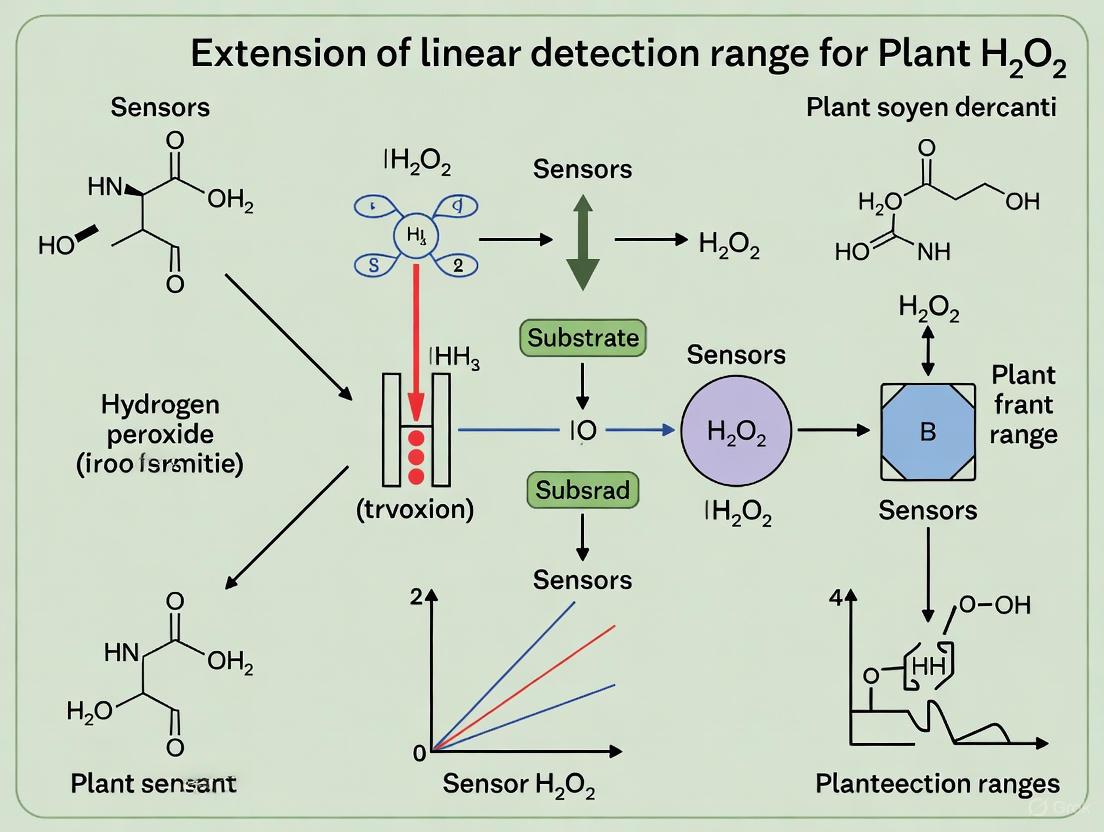
Accurate, real-time monitoring of hydrogen peroxide (H2O2) is crucial for understanding plant stress responses, development, and signaling.
Strategies for Extending the Linear Detection Range of Hydrogen Peroxide Sensors in Plant Health Monitoring
Abstract
Accurate, real-time monitoring of hydrogen peroxide (H2O2) is crucial for understanding plant stress responses, development, and signaling. However, the dynamic concentration range of H2O2 in plant tissues presents a significant challenge for sensor design. This article comprehensively explores advanced strategies for extending the linear detection range of H2O2 sensors tailored for plant science applications. We examine the foundational principles of H2O2 sensing, current methodological breakthroughs including wearable and nanostructured sensors, and key optimization techniques to overcome saturation and interference. By providing a comparative analysis of sensor validation and performance, this review serves as a strategic guide for researchers and scientists developing robust, high-dynamic-range sensing tools for precision agriculture, plant phenotyping, and fundamental biological research.
The Critical Role of H2O2 in Plant Physiology and Sensing Challenges
H2O2 as a Key Signaling Molecule and Stress Indicator in Plants
Hydrogen peroxide (H₂O₂) is a crucial reactive oxygen species (ROS) that functions as a universal stress molecule in plants [1]. Its production is a fundamental response to various environmental stresses, including drought, infections, and other abiotic and biotic challenges. At physiological levels, H₂O₂ acts as a key signaling molecule, influencing processes from plant development to adaptive responses. However, under severe stress, its accumulation can lead to oxidative damage, making the accurate monitoring of its concentration vital for understanding plant health and physiology [2].
The efficacy of this signaling and the accuracy of stress assessment depend on precise measurement. A significant challenge in plant research is the limited linear detection range of many H₂O₂ sensors. An insufficient range can lead to inaccurate data during periods of rapid H₂O₂ fluctuation, potentially obscuring critical physiological events. This technical support center is designed to help researchers overcome these measurement hurdles, providing troubleshooting guides and detailed protocols to ensure reliable and extended detection of H₂O₂ in plant systems.
Troubleshooting H₂O₂ Sensing in Plant Research
Frequently Asked Questions (FAQs)
Q1: My H₂O₂ sensor signal is saturated during a pathogen stress experiment. What are my options? A1: Signal saturation often occurs when the H₂O₂ concentration exceeds the linear range of your sensor. You can:
- Dilute the sample: If using a destructive method, extract and dilute your plant tissue sample in buffer and re-measure.
- Switch sensors: Use a sensor with a higher dynamic range. For example, electrochemical sensors can often be set to a different, higher measuring range.
- Validate with a different method: Confirm the concentration using a colorimetric test strip or a photometric method to rule out sensor malfunction [3].
Q2: How can I achieve real-time, in-situ monitoring of H₂O₂ in living plants? A2: Traditional methods often require destructive sampling. For real-time monitoring, emerging technologies like wearable microneedle patches are highly effective. These patches attach directly to a plant leaf and can provide an electrochemical readout of H₂O₂ levels in about one minute, allowing for continuous monitoring of stress dynamics [1].
Q3: What are the major sources of interference when measuring H₂O₂ in complex plant tissues? A3: Cross-sensitivity is a common issue. Many electrochemical sensors show interference from other compounds:
- Chlorine and Peracetic Acid: Some sensor types, like the PEROX H2.10 P, are designed to have no cross-sensitivity to chlorine, which is crucial for certain application environments [3].
- Sulfites: Interference from sulfites can be significant (e.g., <30% for some sensors) and must be accounted for during calibration and measurement [3].
- Background signals in fluorescence sensing: In complex plant samples, autofluorescence can interfere. Using ratiometric fluorescent probes that measure at two wavelengths can correct for this and provide more accurate quantification [4] [5].
Q4: How often should I calibrate my H₂O₂ sensor, and what is the best method? A4: Calibration frequency depends on sensor type and usage.
- For critical experiments, calibrate before each use.
- Electrochemical sensors in demanding environments may require monthly calibration due to drift, especially for H₂O₂ concentration sensors which can drift 2-5% per month [6].
- The recommended method is photometric calibration using a manual photometer for verification, which provides a reliable standard [3].
Troubleshooting Common Sensor Problems
The table below outlines common issues, their potential causes, and solutions.
Table 1: Troubleshooting Guide for H₂O₂ Sensors in Plant Applications
| Problem | Possible Cause | Solution |
|---|---|---|
| Signal Drift/Instability | Sensor contamination; electrolyte depletion; temperature fluctuations. | Clean the sensor diaphragm; replace sensor or electrolyte; use a sensor with integrated temperature compensation [6] [3]. |
| Slow Response Time (t90) | Clogged diaphragm; low temperature; unsuitable sensor type. | Clean or replace the diaphragm; ensure operating temperature is within specification; select a faster sensor (e.g., t90 < 45 s) for dynamic processes [3]. |
| No Signal Output | Sensor not connected properly; electrode passivation; absence of H₂O₂. | Check electrical connections and power supply; use a sensor with a pulsed, self-regenerating electrode [3]; verify H₂O₂ presence with a chemical test. |
| Inaccurate Reading | Sensor out of calibration; cross-sensitivity interference; incorrect pH. | Recalibrate the sensor; select a sensor with high selectivity for H₂O₂ over interfering species; ensure the sample pH is within the sensor's operating range [3]. |
Extending the Linear Detection Range: Experimental Pathways
Overcoming the limited linear range is key for capturing the full spectrum of H₂O₂ concentrations in plant stress responses. The following workflow and detailed protocols outline established and novel approaches to achieve this.
Diagram 1: Pathways to extend sensor range.
Protocol: Calibrating and Validating Sensor Range
This protocol ensures your sensor is accurately calibrated across its intended range and that readings are validated against a standard method.
Materials:
- H₂O₂ sensor (e.g., PEROX H 3E-mA or comparable electrochemical sensor) [3]
- Compatible transmitter/controller unit
- DT3B photometer or equivalent for validation [3]
- Hydrogen peroxide solution (e.g., 30% w/w)
- Appropriate buffer (e.g., phosphate buffer, pH 7.0)
- Volumetric flasks and pipettes
Procedure:
- Prepare Standard Solutions: Create a series of H₂O₂ standard solutions in buffer that span the entire expected concentration range (e.g., 0.1, 1, 10, 100 ppm). For high concentrations beyond the sensor's range, prepare concentrated standards (e.g., 1000 ppm) for dilution.
- Sensor Calibration:
- Follow the manufacturer's instructions for multi-point calibration.
- Immerse the sensor in the lowest standard and allow the signal to stabilize. Set this as the zero or low point.
- Rinse the sensor and immerse it in the highest standard within the sensor's linear range. Set this as the high point.
- Repeat with an intermediate standard to verify linearity.
- Validation with Photometry:
- For each standard solution, take a sample and measure the H₂O₂ concentration using the photometric method according to the photometer's manual.
- Compare the sensor readings to the photometric values. The correlation coefficient (R²) should be >0.99.
- Sample Dilution and Measurement:
- If a plant sample is suspected to be above the linear range, dilute it with a known volume of buffer.
- Measure the H₂O₂ concentration with the sensor.
- Multiply the reading by the dilution factor to obtain the original concentration.
- Validate the result of the diluted sample with the photometric method.
Protocol: Deploying a Wearable Microneedle Sensor for In-Situ Monitoring
This protocol describes the use of an emerging technology for direct, real-time H₂O₂ monitoring on plants, which can provide continuous data within a relevant concentration window [1].
Materials:
- Microneedle sensor patch (e.g., polyurethane microneedles coated with Au/chitosan/graphene oxide/horseradish peroxidase) [1]
- Potentiostat or dedicated readout device
- Tobacco or soybean plants (or other model species)
- Pathogenic bacteria for stress induction (e.g., Pseudomonas syringae)
Procedure:
- Sensor Preparation: Hydrate the microneedle patch according to the manufacturer's specifications, if required.
- Patch Application: Gently attach the ~1 cm² patch to a fully expanded leaf, ensuring the microneedle array makes firm contact with the leaf surface. Avoid major veins.
- Baseline Measurement: Connect the patch to the readout device and record the H₂O₂ current for at least 5 minutes to establish a stable baseline.
- Induce Stress: Inoculate the plant with the pathogenic bacterial suspension.
- Continuous Monitoring: Record the H₂O₂ levels at regular intervals (e.g., every minute). Measurements are typically fast, with each reading taking about 60 seconds [1].
- Data Analysis: Plot the H₂O₂ concentration over time to visualize the plant's oxidative burst in response to the pathogen.
The Scientist's Toolkit: Essential Research Reagents and Materials
The table below summarizes key materials used in modern plant H₂O₂ sensing research.
Table 2: Key Research Reagents and Materials for Plant H₂O₂ Sensing
| Item | Function/Description | Example Application |
|---|---|---|
| Electrochemical Sensor | Amperometric detection of H₂O₂; provides real-time, quantitative data. | PEROX H 3E sensor for precise measurement from 0.2 ppm, with minimal cross-sensitivity [3]. |
| Fluorescent Probe | Small molecules that react with H₂O₂ to produce a fluorescent signal; used for imaging. | Boronate-based probes for monitoring H₂O₂ fluctuations in living cells and tissues [5]. |
| Microneedle Patch | Wearable sensor for in-situ, non-destructive monitoring on plant leaves. | Real-time tracking of H₂O₂ bursts in tobacco plants following pathogen infection [1]. |
| Single-Walled Carbon Nanotube (SWNT) Nanosensor | Nanomaterial-based sensor offering high sensitivity and potential for in-plant deployment. | Real-time detection of H₂O₂ at wound sites in plants [7]. |
| Horseradish Peroxidase (HRP) | Enzyme that catalyzes the oxidation of a substrate by H₂O₂; used in many sensor designs. | Incorporated into the hydrogel coating of microneedle patches to enable H₂O₂ detection [1]. |
| Graphene Oxide | Nanomaterial that enhances fluid uptake and electron transfer in sensor platforms. | Used in the microneedle hydrogel to improve extraction of apoplastic fluid from leaves [1]. |
Dynamic H2O2 Concentration Ranges in Plant Tissues
Hydrogen peroxide (H₂O₂) is a crucial reactive oxygen species (ROS) that functions as a key signaling molecule in plant physiological processes, including seed germination, root development, and growth regulation [8]. It also serves as a primary indicator of oxidative stress when plants experience biotic or abiotic challenges such as drought, high salinity, cold stress, pest damage, and infections [9] [10] [8]. The dual role of H₂O₂ as both a beneficial signaling molecule and a potential damaging agent depends critically on its concentration within plant tissues, making accurate measurement essential for understanding plant physiology and diagnosing stress conditions [8].
Measuring H₂O₂ in plant tissues presents significant challenges due to its high reactivity, instability under light and heat, potential decomposition during sample preparation, and interference from other compounds in complex plant matrices [11] [12]. Different measurement techniques yield varying concentration values, and researchers must select methods appropriate for their specific experimental needs, whether for fundamental research or agricultural monitoring [11] [12]. This technical guide addresses these challenges through troubleshooting advice and methodological recommendations for obtaining reliable H₂O₂ measurements across diverse plant systems.
H2O2 Concentration Ranges in Different Plant Systems
Quantitative Reference Table
Table 1: H₂O₂ concentration ranges across different plant species and conditions
| Plant Species/Group | Tissue Type | H₂O₂ Concentration Range | Conditions/Notes | Citation |
|---|---|---|---|---|
| Riparian vegetation species | Leaf | Up to ~40 μmol/gFW | Threshold for species distribution; beyond this indicates severe stress | [13] |
| Salix species (S. pierotii, S. gilgiana, S. subfragilis) | Leaf | Decreasing with increasing soil moisture (r = -0.89 to -0.5) | Higher concentrations at lower soil moisture (<35%) | [13] |
| Myriophyllum spicatum (submerged macrophyte) | Leaf | Increases proportionally with turbulence velocity and PAR | High concentrations at very low and very high turbulence | [10] |
| Apple leaves | Leaf | 20-70 nmol/gFW (Ti(SO₄)₂ assay) | Method-dependent variation | [11] |
| Apple leaves | Leaf | 5-25 nmol/gFW (Bioxytech H₂O₂-560 assay) | Method-dependent variation | [11] |
| Pear fruit tissue | Fruit | 0.35-0.8 μmol/gFW (Ti(SO₄)₂ assay) | Increased with potassium cyanide treatment | [11] |
| Pear fruit tissue | Fruit | 6-11 nmol/gFW (Bioxytech H₂O₂-560 kit) | Method-dependent variation | [11] |
| Bruguiera parviflora | Leaf | 0.067-0.089 μmol/gFW | Increased under greenhouse hydroponic conditions | [11] |
| Tomato leaves | Leaf | 0.15-0.25 μmol/gFW | Increased with salicylic acid addition | [11] |
| Marchantia polymorpha (liverwort) | Meristematic region | Lower H₂O₂ levels | Distinct redox gradient maintained | [14] |
| Marchantia polymorpha (liverwort) | Differentiated thallus tissues | Higher H₂O₂ levels | Compared to meristematic regions | [14] |
Interpretation Guidance
The concentration ranges in Table 1 demonstrate that H₂O₂ levels vary significantly across species, tissue types, and environmental conditions. For riparian vegetation, research indicates that most species maintain H₂O₂ concentrations below 40 μmol/gFW in their natural distribution zones, with exceedance of this threshold suggesting non-optimal growing conditions [13]. The data also highlights substantial methodological influences on measured values, with different detection techniques yielding varying concentration ranges for the same plant materials [11].
The spatial distribution of H₂O₂ within plants follows specific patterns that reflect functional biology. In the liverwort Marchantia polymorpha, meristematic regions exhibit lower H₂O₂ levels while differentiated thallus tissues show higher concentrations, indicating the importance of redox gradients in growth regulation [14]. Similarly, studies in Arabidopsis have shown that apical meristems maintain distinct ROS zonation, with superoxide accumulating in stem cell zones and H₂O₂ in differentiation zones [14].
Figure 1: H₂O₂ dynamics in plant tissues showing developmental gradients and stress response pathways
Troubleshooting Common Measurement Problems
Frequently Encountered Issues and Solutions
Table 2: Troubleshooting guide for H₂O₂ measurement challenges
| Problem | Possible Causes | Solutions | Preventive Measures |
|---|---|---|---|
| Inconsistent results between replicates | H₂O₂ degradation during processing | Work quickly on ice; use fresh preparations | Standardize extraction time; add stabilizers |
| Low signal detection | Method sensitivity mismatch with concentration | Choose more sensitive method (e.g., eFOX, fluorescent probes) | Validate method sensitivity for specific tissue type |
| Interference from other compounds | Phenolic compounds, pigments, other ROS | Add PVP; use selective methods (e.g., acridinium ester) | Include appropriate controls; use separation techniques |
| Sample degradation during storage | Enzyme activity, chemical decomposition | Analyze immediately or freeze at -80°C | Avoid repeated freeze-thaw cycles |
| Method-dependent variation | Different assay principles | Use multiple methods for confirmation | Standardize against reference method |
| Tissue penetration limitations | Probe size, plant cell walls | Use NIR probes, microneedles, or microdialysis | Optimize probe design for plant tissues |
Sample Handling and Storage Protocols
Proper Sample Collection:
- Collect fully expanded leaves from the middle part of plants for consistency [11]
- Perform sampling on sunny days at consistent times to minimize diurnal variation [11]
- Process samples immediately after collection when possible
Optimal Storage Conditions:
- For immediate analysis: Keep samples at normal temperature (25°C ± 3°C) until processing [11]
- For delayed analysis: Flash-freeze in liquid nitrogen and store at -80°C [11]
- Note that H₂O₂ concentration can decrease by 60% after seven days even at -80°C storage [11]
- Avoid repeated freeze-thaw cycles which accelerate degradation
Extraction Buffer Composition:
- Use potassium phosphate buffer (pH 6, 50 mM) for extraction [11]
- Add polyvinylpyrrolidone (PVP) to prevent interference from phenolic compounds [11]
- Include appropriate protease inhibitors if measuring enzyme activities
Method Selection Guide
Comparison of Detection Methods
Table 3: H₂O₂ detection methods and their characteristics
| Method | Detection Principle | Approx. Detection Range | Advantages | Limitations | Best Applications |
|---|---|---|---|---|---|
| Ti(SO₄)₂ assay | Spectrophotometric detection of titanium-H₂O₂ complex | Moderate: ~nmol-μmol/gFW | Accessible, cost-effective | Interference possible | Initial screening, resource-limited settings |
| eFOX assay | Ferrous oxidation by H₂O₂ | High sensitivity: lower nmol/gFW | High sensitivity, stable | Sample preparation critical | Detecting small fluctuations |
| Fluorescent probes (NAPF-AC) | Fluorescence emission shift | 0.1-100 μM (LOD: 0.05 μM) | High sensitivity, spatial imaging | Requires specialized equipment | In situ monitoring, cellular imaging |
| Wearable microneedle sensors | Electrochemical detection | Not specified | Real-time monitoring, in vivo | Limited reuse (~9 times) | Continuous field monitoring |
| Microdialysis-FIA | Chemiluminescence with acridinium ester | Tunable: 0-1000 nM; 0-10 μM; 1-100 μM | Minimally invasive, dynamic measurements | Complex setup | Extracellular fluid monitoring |
| Colorimetric sensors | Color change detection | 5-200 μM (Ag NPs); 500-6000 μM (paper-based) | Simple, visual detection | Moderate sensitivity | Field testing, educational use |
Advanced Methodologies for Specific Applications
For Real-Time Monitoring: Implantable and self-powered sensing systems enable continuous monitoring of dynamic H₂O₂ levels in plants. These systems typically integrate a photovoltaic module to harvest sunlight or artificial light, powering microsensors that resolve time and concentration specificity of H₂O₂ signals in response to abiotic stress [15]. Wearable patches with microneedle arrays can detect H₂O₂ in leaf sap within approximately one minute, providing rapid stress alerts [9] [16].
For Spatial Imaging: Near-infrared fluorescent probes such as NAPF-AC represent advanced tools for in situ monitoring with high selectivity and sensitivity. These probes feature emission wavelengths around 665 nm, which avoids interference from plant autofluorescence and improves tissue penetration compared to shorter-wavelength probes [8]. The probe responds within 10 minutes through an intramolecular charge transfer process activated by H₂O₂ [8].
For Extracellular Measurements: The combination of microdialysis probes with flow injection analysis (FIA) systems enables minimally invasive quantification of extracellular H₂O₂ dynamics. This approach allows measurements in liquid and semisolid media without removing sample volume, facilitating applications across biological systems including monitoring H₂O₂ release under light stress (~2.7 μM) and bacterial regulation of their microenvironment [17].
Figure 2: Method selection workflow for plant H₂O₂ detection based on research requirements
Researcher's Toolkit: Essential Reagents and Materials
Key Research Reagents and Their Functions
Table 4: Essential reagents and materials for H₂O₂ research
| Reagent/Material | Function | Application Examples | Considerations |
|---|---|---|---|
| Potassium phosphate buffer | Extraction medium | Tissue homogenization; maintaining pH | Use pH 6 for optimal stability |
| Polyvinylpyrrolidone (PVP) | Phenolic compound binding | Preventing interference in spectrophotometric assays | Essential for pigmented tissues |
| Titanium sulfate (Ti(SO₄)₂) | H₂O₂ complex formation | Colorimetric detection via titanium-H₂O₂ complex | Potential interference issues |
| Ferrous ammonium sulfate | Oxidation substrate for eFOX assay | eFOX-based H₂O₂ quantification | More sensitive than Ti(SO₄)₂ |
| Acridinium ester | Chemiluminescent substrate | FIA-based detection; highly selective for H₂O₂ | Requires specialized equipment |
| NAPF-AC fluorescent probe | NIR fluorescence imaging | In situ monitoring in plant tissues | 665 nm emission reduces autofluorescence |
| Chitosan-based hydrogel | Enzyme immobilization matrix | Wearable sensor patches | Biocompatible and biodegradable |
| Microdialysis probes | Minimally invasive sampling | Extracellular H₂O₂ monitoring | Tunable molecular cut-off |
Frequently Asked Questions
Q1: Why do I get different H₂O₂ concentration values when using different methods on the same plant sample? Method-dependent variation is common in H₂O₂ quantification due to differences in detection principles, sensitivity to interfering compounds, and extraction efficiencies [11]. For example, Ti(SO₄)₂ assays typically yield higher values than commercial kits like Bioxytech H₂O₂-560 for the same apple leaves [11]. We recommend validating your method of choice with a reference technique and consistently reporting which method was used to enable proper comparisons between studies.
Q2: How quickly must I process plant samples for accurate H₂O₂ measurement? Ideally, process samples immediately after collection. If immediate processing isn't possible, flash-freeze in liquid nitrogen and store at -80°C [11]. Be aware that even at -80°C, H₂O₂ concentrations can decrease significantly (up to 60% after 7 days) [11]. For non-frozen samples, keep at consistent room temperature (25°C ± 3°C) and process within hours of collection.
Q3: What is the significance of the 40 μmol/gFW H₂O2 threshold mentioned for riparian vegetation? Research on riparian plant communities found that species distribution correlates with foliar H₂O₂ concentration, with most species maintaining levels below 40 μmol/gFW in their optimal growth zones [13]. Exceeding this threshold indicates physiological stress that may limit species distribution. However, this value is specific to riparian species and stress conditions; other plant systems may have different thresholds.
Q4: Which detection method is most appropriate for visualizing spatial distribution of H₂O2 in plant tissues? Fluorescent probes, particularly near-infrared variants like NAPF-AC, are ideal for spatial imaging because they offer high spatial resolution and can penetrate plant tissues effectively while minimizing autofluorescence interference [8]. These probes can be used for in situ monitoring of both exogenous and endogenous H₂O₂ in plant tissues with response times of approximately 10 minutes [8].
Q5: How can I monitor H₂O2 dynamics in real-time without destructive sampling? Recent technological advances offer several non-destructive options: (1) Wearable microneedle patches that penetrate the leaf surface minimally and detect H₂O₂ in sap [9] [16]; (2) Implantable self-powered sensors that continuously monitor H₂O₂ levels using harvested light energy [15]; (3) Microdialysis probes coupled with FIA systems for extracellular monitoring [17]. Each approach offers different temporal resolutions and application specificities.
Q6: What are the main sources of interference in H₂O2 measurements and how can I minimize them? Common interferents include phenolic compounds, pigments, other ROS species, and metal ions [11] [12] [17]. To minimize interference: (1) Add PVP to bind phenolics during extraction [11]; (2) Use selective detection methods like acridinium ester-based chemiluminescence [17]; (3) Include appropriate controls and calibration standards; (4) For metal interference, use chelators like FerroZine in the reaction mixture [17].
Current Limitations of Sensor Saturation and Narrow Detection Windows
Frequently Asked Questions (FAQs)
Q1: What are the primary limitations of current H₂O₂ sensors for plant research? The main limitations revolve around sensor saturation and narrow detection windows. Many electrochemical sensors have a limited linear detection range, meaning they become inaccurate at very low or very high H₂O₂ concentrations, which is problematic given the dynamic nature of H₂O₂ fluxes in plant stress responses [15] [18]. Furthermore, some genetically encoded sensors can be influenced by factors like the cellular glutathione redox potential or pH, complicating the interpretation of signals and leading to potential artifacts, especially in green tissues [19].
Q2: Why is achieving a wide linear detection range crucial for monitoring plant stress? Hydrogen peroxide is a key signaling molecule in plant development and stress response, but its concentration can vary dramatically [18] [19]. During abiotic stresses like drought or salt stress, H₂O₂ levels can fluctuate rapidly. A sensor with a narrow detection window may saturate during a strong oxidative burst, missing critical peak concentration data, or lack the sensitivity to detect subtle, baseline signaling changes, thus failing to provide a complete picture of the plant's physiological response [15] [20].
Q3: What recent technological advances are helping to overcome sensor saturation? Recent innovations focus on new materials and sensing modalities. The development of nanocomposite electrodes, such as those using Prussian blue-carbon nanotubes (PB/CNT), has demonstrated an ultra-wide detection range from 100 nM up to 2800 mM, effectively resisting saturation even at extreme concentrations [21]. Another approach uses nanosensors that convert H₂O₂ into machine-learnable thermal signatures, a method less prone to the saturation issues that plague traditional electrochemical or fluorescent probes [20].
Q4: How can I select the right H₂O₂ sensor for my specific plant research application? Sensor selection depends on your specific needs for detection range, sensitivity, spatial resolution, and invasiveness. The table below summarizes the key performance metrics of contemporary sensor technologies to guide your selection.
Table 1: Performance Comparison of Advanced H₂O₂ Sensors
| Sensor Technology | Reported Linear Detection Range | Key Advantages | Primary Limitations |
|---|---|---|---|
| Ag-CeO₂/Ag₂O Nanocomposite Electrode [22] | 10 nM to 500 µM | High sensitivity (2.728 µA cm⁻² µM⁻¹); Excellent selectivity | Limited upper range may saturate under high stress |
| PB/CNT Composite Microneedle Sensor [21] | 100 nM to 2200 mM | Ultra-wide range; High sensitivity (451–954.1 µA mM⁻¹ cm⁻²); Wearable format | Invasive; may cause minor tissue damage |
| HyPer7 Genetically Encoded Sensor [19] | Responsive to low nanomolar changes | High spatial resolution in cells; Ratiometric & pH-insensitive | Limited dynamic range; slow reduction in plant cytosol |
| Thermal Signature Nanosensor [20] | Sub-micromolar concentrations | Non-destructive; Early stress detection via machine learning | Indirect measurement of H₂O₂ |
Q5: What are common sources of interference for H₂O₂ sensors in plant tissues? Common interferents include ascorbic acid (AA), uric acid (UA), and dopamine. However, advanced sensors using selective catalytic materials like Prussian blue or silver-doped cerium oxide have demonstrated excellent selectivity against these compounds [22] [21]. In genetically encoded sensors, the main interference risk comes from cellular pH fluctuations, though newer variants like HyPer7 are largely pH-insensitive [19].
Troubleshooting Guides
Issue: Sensor Saturation at High H₂O₂ Concentrations
Problem: Your sensor's output signal plateaus and fails to increase linearly with rising H₂O₂ concentration, leading to a loss of quantitative data during strong oxidative bursts.
Solutions:
- Switch to a Wider-Range Sensor: Utilize a sensor technology with a fundamentally broader dynamic range. For example, replace a standard electrode with a Prussian blue-carbon nanotube (PB/CNT) composite-based sensor, which has a demonstrated detection range spanning from nanomolar to molar concentrations, making it highly resistant to saturation [21].
- Dilute the Sample: If working with extracted plant sap or apoplastic washing, perform a quantitative dilution in a suitable buffer (e.g., phosphate buffer saline). Remember to apply the dilution factor to your final concentration calculation.
- Employ an Alternative Sensing Modality: Consider non-electrochemical methods. For instance, a thermal signature-based nanosensor converts H₂O₂ presence into a thermal signal read by an infrared camera, a process with a different saturation profile that can complement electrochemical data [20].
Issue: Inability to Detect Baseline or Subtle H₂O₂ Signals
Problem: Your sensor lacks the sensitivity to detect the low, physiologically relevant concentrations of H₂O₂ involved in early signaling events.
Solutions:
- Use a More Sensitive Probe: Implement the HyPer7 genetically encoded sensor. It is an ultrasensitive probe capable of detecting minute, dynamic changes in H₂O₂ in the low nanomolar range within the cytosol and between subcellular compartments, providing high spatial resolution [19].
- Optimize Electrode Material: For electrochemical sensing, employ nanocomposites that enhance sensitivity. For example, a silver-incorporated CeO₂/Ag₂O nanocomposite electrode provides a high density of active sites, resulting in significantly improved sensitivity compared to undoped materials [22].
- Check for Signal Drift: Ensure your measurement setup (potentiostat, electrodes, etc.) is properly calibrated and stable. Low signals can be obscured by electronic noise or baseline drift.
Issue: Sensor Signal Instability or Drift in Complex Plant Environments
Problem: The sensor output is unstable over time, which may be caused by biofouling, degradation of the sensing layer, or interference from the complex matrix of plant tissues or fluids.
Solutions:
- Verify Selectivity: Confirm the sensor's selectivity against common interferents like ascorbic acid. Use sensors with proven selectivity, such as those leveraging the Prussian blue (PB) catalyst, which is known for its high specificity for H₂O₂ reduction [21].
- Implement a Protective Membrane: Apply a thin protective membrane (e.g., Nafion or chitosan) over the sensing electrode. This can mitigate biofouling by larger molecules and cells, extending the sensor's operational lifetime in vivo [18] [7].
- Calibrate Frequently: Perform regular in-situ calibration, especially for long-term continuous monitoring experiments, to account for any gradual loss of sensitivity.
Experimental Protocols
Protocol: Measuring H₂O₂ in Plant Leaves Using a Wearable Microneedle Sensor
This protocol is adapted from research on a high-performance wearable microneedle sensor for detecting H₂O₂ and glucose in interstitial fluid [21].
1. Research Reagent Solutions Table 2: Essential Materials for Microneedle Sensor Experiments
| Item Name | Function/Description |
|---|---|
| Prussian Blue (PB) | Electrocatalytic material that selectively reduces H₂O₂. |
| Carbon Nanotubes (CNT) | Provides a high-surface-area conductive scaffold for PB. |
| Organic Silicon-Modified Acrylic Resin (OSAR) | Binder to form a robust, porous composite structure. |
| Artificial Interstitial Fluid (ISF) | Simulates the ion composition of plant apoplastic fluid for testing. |
| Phosphate Buffered Saline (PBS) | Electrolyte for calibration and electrochemical measurements. |
2. Step-by-Step Methodology
- Step 1: Sensor Fabrication. Prepare the working electrode by thoroughly blending PB nanoparticles, CNT, and OSAR to create a homogenous composite. This composite is then used to fill the hollow channels of a microneedle array, ensuring the active material is protected from shear damage during insertion.
- Step 2: Calibration. Calibrate the sensor in a standard cell using PBS. Perform amperometric measurements (e.g., at -0.1 V vs. Ag/AgCl) with successive additions of H₂O₂ standard solution to establish a calibration curve of current response versus concentration.
- Step 3: Plant Attachment. Gently attach the wearable patch to the underside of a plant leaf, ensuring the microneedles penetrate the epidermis to access the apoplastic fluid. Secure the patch with a flexible, biocompatible adhesive.
- Step 4: In Vivo Measurement. Connect the sensor to a portable potentiostat. Monitor the amperometric current in real-time. Stress induction (e.g., drought, pathogen infection) can be performed while the sensor is attached to track dynamic H₂O₂ changes.
- Step 5: Data Analysis. Convert the measured current signals into H₂O₂ concentration values using the pre-established calibration curve. Analyze the temporal profile of H₂O₂ flux in response to the applied stress.
Sensor Deployment Workflow for Real-Time Plant H₂O₂ Monitoring
Protocol: Extending Range via Nanocomposite Electrode Preparation
This protocol details the synthesis of a sensitive Ag-doped CeO₂/Ag₂O nanocomposite for electrochemical H₂O₂ detection, a method to create sensors with improved linear range and sensitivity [22].
1. Reagents:
- Cerium(III) nitrate hexahydrate (Ce(NO₃)₃·6H₂O)
- Silver nitrate (AgNO₃)
- Polyvinylpyrrolidone (PVP, MW 40,000)
- Sodium hydroxide (NaOH)
- De-ionized water, acetone, and ethanol.
2. Step-by-Step Synthesis:
- Step 1: Dissolve Precursors. Dissolve 0.1 M of Ce(NO₃)₃·6H₂O in 50 mL of de-ionized water. Add 0.5 g of PVP to this mixture as a capping agent. In a separate container, dissolve 0.1 M AgNO₃ in 50 mL of de-ionized water.
- Step 2: Combine Solutions. Mix the cerium nitrate solution and the silver nitrate solution together to form a colloidal precursor.
- Step 3: Precipitate Nanocomposite. Gradually add 0.3 M NaOH (in 50 mL de-ionized water) to the mixed solution under constant stirring. Continue stirring the mixture for 2 hours to allow the reaction to complete and the nanocomposite to form.
- Step 4: Wash and Dry. Wash the resulting precipitate several times with deionized water, acetone, and ethanol to remove impurities. Finally, dry the purified Ag-CeO₂/Ag₂O nanocomposite in an oven at 160 °C for 12 hours.
- Step 5: Electrode Modification. Prepare a homogeneous ink of the synthesized nanocomposite in a suitable solvent (e.g., ethanol/water with a drop of Nafion). Deposit a known volume of this ink onto a clean glassy carbon electrode (GCE) and allow it to dry, creating the modified working electrode (Ag-CeO₂/Ag₂O/GCE).
Technical Diagrams
Strategic Solutions for Extending H₂O₂ Sensor Detection Range
Hydrogen peroxide (H2O2) serves as a critical signaling molecule in plant stress responses, and its real-time monitoring is essential for understanding plant health, breeding for stress tolerance, and diagnosing oxidative stress levels. The accurate detection of H2O2 dynamics presents significant challenges for researchers, requiring methods that are sensitive, selective, and minimally invasive to plant systems. This technical support center provides a comprehensive overview of current H2O2 detection methodologies, troubleshooting guides for common experimental issues, and detailed protocols to assist researchers in extending the linear detection range for plant H2O2 sensor research. Advancements in this field are crucial for maximizing crop yields and developing resilient agricultural practices in challenging environmental conditions.
Key H2O2 Detection Technologies: A Comparative Analysis
Researchers employ diverse technological approaches to monitor hydrogen peroxide in plant systems, each with distinct mechanisms, advantages, and limitations. The table below summarizes the primary detection technologies currently available.
Table 1: Comparison of Primary H2O2 Detection Technologies
| Technology Type | Detection Mechanism | Linear Range / Sensitivity | Key Advantages | Reported Limitations |
|---|---|---|---|---|
| Wearable Microneedle Sensor [18] [21] | Electrochemical; enzyme reacts with H₂O₂ to produce measurable electrical current [18] | Sensitivity: 954.1 μA mM⁻¹ cm⁻²; Linear Range: 1 μM to 10 mM [21] | Direct measurement on live plants in <1 minute; low cost per test (<$1); reusable [18] | Microneedles can degrade after ~9 uses; requires physical contact with plant [18] |
| Implantable Self-Powered Sensor [15] | Electrochemical; powered by integrated photovoltaic module harvesting ambient light [15] | Enables monitoring of dynamic H₂O₂ level changes in vivo [15] | Continuous in vivo monitoring; no external power source required [15] | Requires implantation, potential for tissue damage; system complexity |
| Fluorescent Probes (e.g., LN-HOD, YXSH) [23] [24] | Optical; probe reacts with H₂O₂, causing a measurable change in fluorescence emission [23] | Detection Limit (LN-HOD): 0.63 μM [23] | Can target specific organelles (e.g., lysosomes); some probes (e.g., LN-HOD) can deliver H₂S to modulate redox state [23] | Can be interfered with by chlorophyll autofluorescence; requires complex synthesis [18] [23] |
| Nanosensor + Thermal Imaging [20] | Nanosensors convert H₂O₂ fluctuations into machine-learnable infrared thermal signals [20] | Classifies stress with >98.8% accuracy via deep learning models [20] | Non-destructive; early stress detection before visible symptoms; high classification accuracy [20] | Indirect measurement; requires sophisticated data processing (deep learning) and equipment |
Experimental Workflow for H2O2 Sensor Evaluation
The following diagram illustrates a generalized experimental workflow for developing and validating H2O2 sensors, integrating common procedures from the cited research.
Troubleshooting Common Experimental Issues
FAQ 1: My electrochemical sensor signal is unstable or shows excessive noise. What could be the cause?
Answer: Unstable signals in electrochemical sensors can arise from several factors. Systematically check the following:
- Electrical Interference: Ensure all connections are secure and that the setup is properly shielded. Use a Faraday cage if necessary.
- Sensor Degradation: Inspect the working electrode. The functional layer (e.g., enzyme, chitosan hydrogel) can degrade over time. For microneedle sensors, the physical structure of the needles may be compromised after multiple uses, typically around 9 insertions [18]. Replace the sensor if reuse limits are exceeded.
- Biofouling: Contamination from plant sap or other biological materials can foul the electrode surface. Ensure the sensor is cleaned according to protocol and consider the use of antifouling membranes.
- Reference Electrode Stability: An unstable or contaminated reference electrode is a common source of drift and noise. Verify the integrity of your reference electrode.
FAQ 2: The fluorescence signal from my probe is weak or absent in plant tissues. How can I improve detection?
Answer: Weak fluorescence signals are often due to interference or probe incompatibility.
- Chlorophyll Interference: Chlorophyll autofluorescence can mask the probe's signal, a known challenge for optical methods in plant leaves [18] [9]. To mitigate this:
- Choose Probes with Large Stokes Shifts: Probes like LN-HOD, with a large Stokes shift of 110 nm, help separate the probe's emission peak from the autofluorescence background [23].
- Use Appropriate Filters: Optimize your fluorescence microscope or spectrometer with emission filters that specifically target the probe's emission wavelength.
- Probe Permeability and Activity: Ensure the probe can effectively penetrate the plant tissue and that the cellular environment (e.g., pH) is suitable for the probe's function. Validate your protocol in a cell-based system first [24].
FAQ 3: My sensor's detection range is too narrow for the observed H2O2 fluctuations in stressed plants. How can I extend the linear range?
Answer: Extending the linear detection range is a key focus in sensor development. Consider these strategies:
- Electrode Material Engineering: The linear range is highly dependent on the working electrode's material composition. Research shows that composites like Prussian Blue/Carbon Nanotubes (PB/CNT) can achieve an exceptionally wide detection range, from 1 μM to 2800 mM, by providing a high surface area and synergistic catalytic activity [21].
- Enzyme Loading and Stabilization: For enzymatic sensors, optimizing the concentration and immobilization of the enzyme (e.g., horseradish peroxidase) within the hydrogel matrix can prevent saturation at high H2O2 concentrations [18] [21].
- Data Modeling: Move beyond simple linear regression. Some high-performance sensors exhibit a wide dynamic range that fits the Hill equation rather than a simple linear model. Using the appropriate non-linear model can effectively extend your usable data range [21].
- Multi-Method Approach: No single sensor may cover the entire physiological range. Employ a complementary approach, using a highly sensitive method (like fluorescence) for low basal levels and a robust electrochemical sensor with a wide range for stress-induced peaks.
FAQ 4: How do I validate that my sensor is accurately measuring H2O2 and not other reactive oxygen species?
Answer: Validation is critical for data credibility.
- Specificity Testing: Challenge your sensor with other common reactive oxygen species and interfering agents found in plants, such as superoxide, glutathione, ascorbic acid, and various cations/anions. A specific H2O2 sensor should show minimal response to these compounds [24].
- Correlation with Standard Methods: The gold standard for validation is to correlate your sensor's readings with an established conventional technique. Researchers often use chemical assays (e.g., colorimetric or spectrophotometric methods) on extracts from the same plant tissue to confirm the H2O2 concentrations measured by the new sensor [18] [9].
- Genetic/Biochemical Perturbations: Modulate H2O2 levels in a controlled manner by applying known stressors (e.g., bacterial infection like Pseudomonas syringae [18], cadmium ions [23], or salt/drought [20] [25]) or by using H2O2 scavengers (e.g., catalase). The sensor's response should align with the expected directional change in H2O2.
The Scientist's Toolkit: Key Research Reagent Solutions
Successful experimentation relies on a foundation of well-characterized reagents and materials. The table below details essential components used in the featured H2O2 detection technologies.
Table 2: Essential Reagents and Materials for H2O2 Sensor Research
| Reagent/Material | Function in Experiment | Example Application |
|---|---|---|
| Chitosan-based Hydrogel | Serves as a biocompatible matrix for enzyme immobilization on sensor surface; facilitates conversion of H₂O₂ into measurable electrons [18]. | Wearable microneedle patch for plant stress detection [18]. |
| Prussian Blue (PB) | An electrocatalyst that mediates electron transfer; known as an "artificial peroxidase," it enhances sensitivity and lowers the operating potential for H₂O₂ detection [21]. | High-performance composite electrode for microneedle sensors [21]. |
| Reduced Graphene Oxide | Provides high electrical conductivity within the hydrogel matrix, enabling efficient electron flow for signal transduction [18] [21]. | Component of the conductive hydrogel in wearable plant patches [18]. |
| Arylboronic Acid / Borate Ester | Acts as a specific recognition group for H₂O₂; reacts selectively with H₂O₂, triggering a change in the probe's fluorescence properties [23] [24]. | Fluorescent probes (e.g., YXSH, LN-HOD) for detecting H₂O₂ in cells and plants [23] [24]. |
| Naphthalimide / Coumarin Derivatives | Used as fluorophores (light-emitting molecules) in fluorescent probes; their photophysical properties change upon reaction with H₂O₂, producing a detectable signal [23] [24]. | Core structure of fluorescent probes like LN-HOD and YXSH [23] [24]. |
Detailed Experimental Protocols
Protocol 1: Real-Time H2O2 Monitoring in Live Plants Using a Wearable Microneedle Patch
This protocol is adapted from the development of a patch sensor for soybean and tobacco plants [18].
Sensor Preparation:
- Fabricate the microneedle array on a flexible polymer base. Coat the array with a gold layer for conductivity.
- Prepare the sensing hydrogel by mixing chitosan, the enzyme (e.g., horseradish peroxidase), and reduced graphene oxide.
- Coat the microneedles with the hydrogel and allow it to cure.
Plant Preparation and Sensor Application:
- Select healthy, mature leaves from your plant model (e.g., soybean, tobacco).
- Gently clean the underside of the leaf (abaxial surface) with deionized water to remove dust.
- Press the wearable patch onto the leaf surface, ensuring the microneedles make gentle contact and pierce the epidermis. Use a gentle, uniform pressure to avoid damaging the leaf.
- Secure the patch in place with a non-invasive, biocompatible tape.
Data Acquisition:
- Connect the sensor to a portable potentiostat or a custom-built electronics module capable of measuring small electrical currents.
- Initiate data recording. A stable baseline current should be established within seconds.
- Monitor the current output in real-time. An increase in current indicates a rise in hydrogen peroxide concentration at the leaf surface.
Validation and Calibration:
- After in-situ measurements, validate the sensor readings by excising a leaf disc from the monitored area and performing a standard chemical assay for H₂O₂ (e.g., spectrophotometric method with xylenol orange or titanium sulfate).
- Calibrate the sensor post-experiment by testing it in standard H₂O₂ solutions of known concentration to confirm its response curve.
Protocol 2: Detecting H2O2 in Plant Roots Using a Fluorescent Probe
This protocol is based on the use of the LN-HOD probe in Arabidopsis roots under cadmium ion stress [23].
Probe Solution Preparation:
- Prepare a stock solution of the LN-HOD probe (or equivalent) in DMSO. The final concentration for working solutions is typically in the micromolar range (e.g., 10 μM).
- Dilute the stock solution in an appropriate buffer (e.g., phosphate-buffered saline, PBS) to create the working solution.
Plant Treatment and Staining:
- Grow Arabidopsis seedlings (or your chosen plant model) under controlled conditions.
- To induce stress, treat the seedlings with a solution containing a stressor such as cadmium ions (Cd²⁺) for a predetermined period [23].
- Incubate the control and stressed seedlings with the LN-HOD working solution in the dark for 20-30 minutes at room temperature.
Washing and Imaging:
- Gently wash the seedlings, particularly the roots, with fresh buffer to remove excess, unreacted probe.
- Mount the seedlings on a microscope slide for imaging.
- Use a fluorescence microscope with an appropriate filter set for the probe's excitation and emission wavelengths (e.g., excitation ~460 nm, emission ~570 nm for LN-HOD).
- Capture images of the roots, ensuring exposure settings are consistent between control and treated samples.
Data Analysis:
- Quantify the fluorescence intensity in the root tissues using image analysis software (e.g., ImageJ).
- Compare the fluorescence intensity between stressed and control plants. A significant increase in fluorescence indicates elevated H₂O₂ levels due to the stress treatment.
Breakthrough Sensor Designs and Their Application in Real-World Plant Monitoring
Wearable Microneedle Patches for In-Situ H2O2 Monitoring
Wearable microneedle (MN) patches represent a transformative approach for the in-situ monitoring of hydrogen peroxide (H₂O₂), a critical reactive oxygen species that serves as a key distress signal in plants and a vital biomarker in biomedical applications [26] [18]. These patches feature arrays of microscopic needles (typically 300-1000 μm in length) that painlessly penetrate the biological barrier (e.g., plant leaf cuticle or human stratum corneum) to access interstitial fluids directly at the source [27] [28]. This technology enables real-time, continuous monitoring of H₂O₂ dynamics, providing invaluable insights into plant stress responses and human physiological states without the need for invasive tissue extraction or complex sample preparation [26] [18].
The operating principle primarily leverages electrochemical sensing, where a bio-recognition element (e.g., the enzyme horseradish peroxidase, HRP) immobilized on the microneedle surface catalyzes the reduction of H₂O₂, generating a measurable electrical current proportional to its concentration [26] [29]. Recent advancements have focused on enhancing sensor performance through novel materials like conductive biohydrogels and nanostructured composites to extend the linear detection range—a crucial parameter for quantifying the wide concentration fluctuations of H₂O₂ encountered during stress events [26] [4].
Quantitative Performance Data of H₂O₂ Microneedle Sensors
The performance of electrochemical MN sensors is characterized by several key metrics. The table below summarizes quantitative data from recent studies to facilitate comparison and selection for specific research applications.
Table 1: Performance Metrics of Recent H₂O₂ Microneedle Sensors
| Sensor Description | Linear Detection Range | Sensitivity | Limit of Detection (LOD) | Response Time | Key Materials |
|---|---|---|---|---|---|
| HRP/Cs-rGO Biohydrogel-coated MN [26] | 0.1 – 4500 μM | 14.7 μA/μM | 0.06 μM | ~1 minute | Chitosan, Reduced Graphene Oxide, Horseradish Peroxidase |
| Pt-based Electrode with Graphene Oxide & Au Nanoparticles [29] | Not specified | 14.7 μA/μM | Not specified | Not specified | Platinum, Graphene Oxide, Gold Nanoparticles |
| Plant Wearable Patch [18] | Significantly lower than previous needle sensors | Current proportional to [H₂O₂] | Not specified | <1 minute | Chitosan-based hydrogel, Reduced Graphene Oxide |
Detailed Experimental Protocol for H₂O₂ MN Sensor Fabrication and Testing
This protocol details the methodology for creating a biohydrogel-enabled microneedle sensor, as exemplified by recent research, with a focus on achieving a wide linear detection range for plant H₂O₂ monitoring [26].
Synthesis of HRP/Cs-rGO Biohydrogel
- Preparation of Solutions: Prepare a 0.5% (w/v) chitosan (Cs) solution in aqueous acetic acid. Separately, prepare an aqueous dispersion of reduced graphene oxide (rGO) at a concentration of 0.5 mg/mL.
- Mixing and Hydrogel Formation: Stir each solution at 500 rpm for 12 hours at 25°C. Ultrasonicate the rGO dispersion for 2 hours. Combine 500 μL of the rGO solution with 1 mL of the Cs solution and stir the mixture at 500 rpm for another 12 hours. The cationic amino groups of Cs electrostatically interact with the anionic surface of rGO, forming a uniform Cs-rGO hydrogel. This step is critical for preventing rGO agglomeration [26].
- Enzyme Immobilization: To 500 μL of the resulting Cs-rGO hydrogel, add 50 μL of a 1% glutaraldehyde (GA) solution. Then, add 2 mg of horseradish peroxidase (HRP) enzyme to the mixture. GA acts as a crosslinker, forming imine bonds to immobilize the HRP enzyme firmly within the hydrogel matrix [26].
Microneedle Array Fabrication and Functionalization
- MN Fabrication: Create a microneedle master mold using standard lithography techniques. Produce the final MN array from this mold using a suitable polymer.
- Electrode Deposition: Coat the surface of the microneedles with a thin, conformal layer of gold (e.g., via sputtering) to serve as the working electrode.
- Biohydrogel Coating: Dip-coat the gold-coated microneedles into the prepared HRP/Cs-rGO biohydrogel solution, ensuring a uniform coating on the needle surfaces. Allow the coating to stabilize.
Electrochemical Measurement and In-Situ Plant Testing
- Sensor Attachment: Gently press the MN patch onto the abaxial (lower) surface of a live plant leaf, allowing the microneedles to penetrate the tissue.
- Chronoamperometry: For H₂O₂ detection, use a potentiostat to apply a fixed potential to the working electrode (vs. Ag/AgCl reference) and measure the resulting current. The enzymatic reaction catalyzed by HRP (H₂O₂ → H₂O + O₂ + e⁻) generates electrons, producing a current proportional to the H₂O₂ concentration [26].
- Data Collection: Record the amperometric current. A stable signal can typically be obtained within approximately one minute after attachment [18].
- Validation: Correlate sensor readings with conventional methods, such as the Amplex Red fluorescence assay or histological staining, to validate the accuracy of the in-situ measurements [26].
Workflow Diagram
The following diagram illustrates the complete experimental workflow for sensor creation and deployment.
The Scientist's Toolkit: Essential Research Reagents and Materials
Successful development and implementation of H₂O₂-sensing MN patches rely on a specific set of materials. The table below lists key reagents and their functions in the sensor system.
Table 2: Key Research Reagent Solutions for H₂O₂ MN Sensors
| Reagent/Material | Function/Application in H₂O₂ MN Sensors |
|---|---|
| Chitosan (Cs) | A natural biopolymer that forms the hydrogel matrix; provides biocompatibility, hydrophilicity, and prevents agglomeration of conductive nanomaterials [26]. |
| Reduced Graphene Oxide (rGO) | A conductive nanomaterial that enhances electron transfer within the hydrogel, significantly improving electrochemical sensitivity [26]. |
| Horseradish Peroxidase (HRP) | The biorecognition element; specifically catalyzes the reduction of H₂O₂, generating a measurable electrical current [26]. |
| Glutaraldehyde | A crosslinking agent; immobilizes the HRP enzyme within the chitosan-rGO hydrogel matrix to ensure stability and reusability [26]. |
| Gold (Au) Sputtering Target | Used to deposit a thin, conductive layer on the microneedle surface, serving as the working electrode for electrochemical sensing [26] [29]. |
| Polymer (e.g., PDMS) | A common material for fabricating the flexible base and structural components of the microneedle array patch [27]. |
Troubleshooting Guides and FAQs
Frequently Asked Questions (FAQs)
Q1: My MN sensor shows a significantly lower sensitivity than reported in the literature. What could be the cause? A1: Low sensitivity is often traced to inefficient electron transfer. Ensure your conductive nanomaterial (e.g., rGO) is well-dispersed and not agglomerated in the hydrogel. The use of chitosan is specifically helpful here [26]. Also, verify the activity of your enzyme (HRP) and the effectiveness of the crosslinking step, as insufficient immobilization can lead to enzyme leaching.
Q2: The sensor signal is unstable and drifts over time during continuous monitoring. How can I improve stability? A2: Signal drift is frequently caused by biofouling, where proteins or other biomolecules non-specifically adsorb to the sensor surface, or by gradual electrode degradation [29]. Implementing anti-fouling coatings, such as zwitterionic polymers, can enhance stability for long-term use. Also, ensure the biohydrogel is fully crosslinked to prevent gradual dissolution or structural changes.
Q3: The mechanical integrity of my microneedles fails upon insertion into plant tissue. What should I check? A3: Mechanical failure suggests insufficient needle strength. Review your fabrication process to ensure the microneedle material (e.g., polymer) is fully cured. Optimize the aspect ratio of the needles—very long, thin needles are more prone to buckling. A Young's modulus closer to that of the target tissue can also improve adhesion and reduce delamination [27].
Q4: My sensor has a narrow linear detection range. How can I extend it for monitoring wide H₂O₂ fluctuations? A4: Extending the linear range is a core challenge in sensor optimization. Strategies include:
- Material Optimization: Increasing the loading of the catalytic enzyme (HRP) and ensuring a highly porous hydrogel structure to facilitate analyte diffusion and prevent saturation at high concentrations [26].
- Nanocomposites: Incorporating nanomaterials like rGO or metal nanoparticles can increase the effective surface area for the catalytic reaction, thereby widening the dynamic range [26] [4].
- Electrode Design: Engineering a three-dimensional porous electrode architecture, as opposed to a flat surface, can provide more reaction sites [29].
Troubleshooting Flowchart
The following flowchart provides a systematic approach to diagnosing and resolving common sensor performance issues.
Technical Support Center
Troubleshooting Guides
Guide 1: Troubleshooting Fluorescence Quenching and Signal Recovery
Problem: My Quantum Dot-MOF (MOF@QDs) sensor shows unexpected fluorescence quenching or insufficient signal recovery upon analyte binding.
| Problem & Symptoms | Possible Causes | Diagnostic Steps | Solutions |
|---|---|---|---|
| Complete signal quenching during initial "turn-off" step; No subsequent "turn-on" with analyte. [30] | Cu(II) concentration is too high, causing irreversible quenching. | Prepare sensor without Cu(II); if fluorescence is strong, the MOF@QDs are functional. Titrate with low concentrations of Cu(II). | Optimize Cu(II) concentration. Use a dynamic range of 3–17 ng mL⁻¹ for the analyte as a reference. [30] |
| Weak or no "turn-on" effect after adding the target analyte (e.g., H₂O₂ or PAH). [30] | 1. Sensor surface is passivated.2. The analyte is not interacting with the quencher metal ions.3. Inner filter effect. | 1. Check sensor synthesis protocol for correct functionalization. [30]2. Test the interaction between analyte and metal ions in solution.3. Reduce the sample concentration to see if signal improves. [31] | 1. Ensure proper functionalization during synthesis (e.g., using L-cysteine). [30]2. Verify the pH and buffer conditions are suitable for complex formation. [30] |
| High background noise or distorted spectra. [31] | 1. Raman peaks from solvent or substrate.2. Second-order light from monochromator.3. Detector saturation. | 1. Run a "blank" measurement of the solvent/substrate. [31]2. Check if filter wheels in the spectrometer are enabled. [31]3. Check if signal intensity is above ~1.5×10⁶ cps. [31] | 1. Identify and account for solvent Raman peaks (they shift with excitation wavelength). [31]2. Enable automatic filter wheels in the instrument software. [31]3. Reduce excitation intensity or use neutral density filters. [31] |
Guide 2: Troubleshooting Sensor Synthesis and Performance
Problem: During the synthesis or application of my MOF@QDs sensor, I encounter issues with stability, sensitivity, or reproducibility.
| Problem & Symptoms | Possible Causes | Diagnostic Steps | Solutions |
|---|---|---|---|
| Poor stability and QD aggregation. [32] | 1. Inadequate surface passivation of QDs.2. MOF pores are not effectively confining QDs. | 1. Characterize QD size and morphology before and after incorporation into MOF.2. Check porosity and surface area of the MOF. | 1. Dope QDs with metal ions or use core-shell structures to improve stability. [32]2. Use MOFs with high specific surface area and porosity (e.g., UiO-66) to host and protect QDs. [32] |
| Low fluorescence quantum yield. | 1. Too many surface defects (trapped states) on QDs. [32]2. Energy transfer inefficiency between MOF and QDs. | 1. Measure fluorescence lifetime and quantum yield.2. Review the synthesis strategy for the composite. | 1. Synthesize core-shell QDs where the shell has a larger bandgap to reduce non-radiative pathways (Type I structure). [32]2. Ensure a tight interface between MOF and QDs is formed during synthesis. [32] |
| Low sensitivity and high detection limit. | 1. Insufficient active sites.2. Poor electron transfer. | 1. Compare sensor performance with literature values (e.g., LOD of 662 pg mL⁻¹). [30]2. Use electrochemical impedance spectroscopy. | 1. Decorate MOFs with doped QDs (e.g., N, S-GQDs) to enhance selectivity and optical properties. [30]2. Use MOF@QDs composites to improve charge transfer and separate photogenerated charges. [32] |
Frequently Asked Questions (FAQs)
Q1: What are the main advantages of combining Quantum Dots with MOFs for sensing? A1: The synergy between QDs and MOFs creates a superior composite material. MOFs provide a large surface area and porous structure that prevents QD aggregation and enhances stability. [32] QDs impart high fluorescence quantum yield and size-tunable optical properties. [32] [33] Together, they facilitate faster electron transfer, improve sensitivity, and can be designed for specific "turn-on" or "turn-off" sensing mechanisms. [30] [32]
Q2: How can I extend the linear detection range of my MOF@QDs sensor for H₂O₂ detection in plant samples? A2: Extending the linear range involves optimizing the material's structure and the sensing mechanism:
- Optimize Quencher Concentration: For a "turn-off-on" sensor, carefully titrate the quencher (e.g., Cu²⁺). Too much quencher can cause saturation at low analyte concentrations, narrowing the dynamic range. [30]
- Leverage Synergistic Effects: The integration of QDs within the MOF matrix can create a broad dynamic range by providing a high density of uniform interaction sites. The reported sensor for PAH achieved a wide range of 3–17 ng mL⁻¹, a principle applicable to H₂O₂ sensing. [30]
- Mitigate Inner Filter Effect: At high analyte concentrations, the inner filter effect can distort the linear relationship. This can be addressed by reducing the sensor's concentration or path length. [31]
Q3: My sensor works in buffer but fails in complex plant extracts. How can I improve its selectivity? A3: Plant tissues contain numerous compounds that can interfere.
- Surface Engineering: Functionalize the surface of your MOF@QDs with specific molecules (e.g., L-cysteine) that enhance selectivity for the target analyte. [30]
- Use a Selective Mechanism: Employ a mechanism that relies on a specific reaction. For example, the interaction between H₂O₂ and metal ions (like Cu²⁺) can be used to selectively recover fluorescence. [30]
- Sample Preparation: Incorporate a simple filtration or dilution step to remove particulate matter and reduce the concentration of interfering substances.
Q4: What are the best practices for storing MOF@QDs sensors and ensuring long-term stability? A4:
- Storage Conditions: Store the synthesized sensors in a dark, cool, and dry environment. For suspensions, use an inert atmosphere if possible to prevent oxidation.
- Prevent Aggregation: Ensure the QDs are properly capped with ligands or polymers (e.g., PEG) and that the MOF structure is stable. [33] The porous MOF matrix itself protects the QDs from aggregating. [32]
- Validation: Periodically test the sensor's performance against a standard to monitor any decline in activity. A well-constructed sensor can retain over 90% of its initial activity for a month. [34]
Experimental Protocols
Protocol 1: Synthesis of a "Turn-on" Fluorescence Sensor for H₂O₂
This protocol outlines the synthesis of a cysteine-mediated N, S-GQDs adorned UiO-MOFs nanocomposite, adapted for H₂O₂ sensing. [30]
Principle: The sensor operates on a fluorescence "turn-off-on" mechanism. The initial fluorescence of the MOF@QDs is quenched ("turn-off") by the addition of Cu(II) ions. The presence of H₂O₂ interacts with the Cu(II), pulling it away from the sensor surface and resulting in fluorescence recovery ("turn-on"). [30]
Materials:
- Precursors: Zirconium tetrachloride (ZrCl₄), 2-aminoterephthalic acid (2-ATA), L-cysteine.
- Solvents: Deionized water, ethanol, dimethylformamide (DMF).
- Equipment: Hydrothermal reactor, centrifuge, vacuum oven, fluorescence spectrometer.
Step-by-Step Procedure:
- Synthesis of N, S-co-doped Graphene Quantum Dots (N, S-GQDs):
- Use a one-pot hydrothermal method with Alstonia scholaris leaves extract as a carbon source and L-cysteine as the dopant.
- Heat the mixture in a Teflon-lined autoclave at a specific temperature (e.g., 180°C) for several hours.
- Cool the resulting solution to room temperature and purify it via dialysis or centrifugation. [30]
Synthesis of UiO-MOFs:
- Dissolve zirconium tetrachloride (ZrCl₄) and the organic linker 2-aminoterephthalic acid (2-ATA) in DMF.
- Carry out the reaction under solvothermal conditions (e.g., 120°C for 24 hours).
- Collect the resulting crystalline product by centrifugation, and wash thoroughly with DMF and ethanol. Activate the MOF by heating under vacuum. [30]
Preparation of N, S-GQDs@UiO-MOFs Nanocomposite:
- Disperse the activated UiO-MOFs in an aqueous solution of the synthesized N, S-GQDs.
- Stir the mixture for several hours to allow the GQDs to embed within the MOF pores and decorate its surface.
- Collect the final nanocomposite by centrifugation, wash, and dry. [30]
Calibration and H₂O₂ Detection:
- "Turn-off" Step: Disperse the N, S-GQDs@UiO-MOFs nanocomposite in a suitable buffer. Add a known, optimized concentration of Cu(II) ions (e.g., CuSO₄) and record the quenched fluorescence intensity (I₀).
- "Turn-on" Step: Add the sample containing H₂O₂ to the quenched sensor solution. Incubate and then measure the recovered fluorescence intensity (I).
- Quantification: Plot the fluorescence recovery (I/I₀ or I-I₀) against the concentration of H₂O₂ to establish a calibration curve.
Protocol 2: General Strategies for MOF@QDs Composite Synthesis
The synthesis strategy is critical for determining the final properties of the composite. [32]
1. Encapsulation (Ship-in-a-Bottle):
- Description: Pre-synthesized, stable MOFs are immersed in a solution containing the precursors for the QDs. The precursors diffuse into the MOF pores, where they react to form QDs. This method confines the QDs within the MOF cavities, preventing their aggregation. [32]
- When to use: When you need precise control over QD size, limited by the MOF pore size.
2. In-situ Growth (Bottle-around-the-Ship):
- Description: Pre-synthesized QDs are mixed with the precursors of the MOF. The MOF then crystallizes and grows around the pre-existing QDs, encapsulating them in the matrix. [32]
- When to use: When the QDs are not stable or might be damaged by the conditions of MOF synthesis.
The Scientist's Toolkit
Research Reagent Solutions for MOF@QDs H₂O₂ Sensors
| Material / Reagent | Function / Role in Sensor Development | Example & Rationale |
|---|---|---|
| Zirconium-based MOFs (e.g., UiO-66) | Provides a robust, porous scaffold with high surface area for embedding QDs and interacting with analytes. [30] [32] | UiO-66 is thermally and chemically stable, making it ideal for use in various biological and environmental conditions. [32] |
| Doped Graphene QDs (GQDs) | Serves as the highly fluorescent signal probe. Doping with elements (N, S) enhances quantum yield and selectivity. [30] [33] | N, S-GQDs exhibit enhanced optical properties and provide specific binding sites for metal ions and analytes. [30] |
| L-Cysteine | Acts as a doping agent and surface functionalizer during QD synthesis, improving water solubility and biocompatibility. [30] | Using L-cysteine enables one-pot green synthesis of N, S-GQDs and facilitates subsequent sensor assembly. [30] |
| Transition Metal Ions (e.g., Cu²⁺) | Functions as a fluorescence quencher in "turn-off-on" sensing schemes. Its redox activity is key for H₂O₂ detection. [30] | Cu²⁺ effectively quenches QD fluorescence, and H₂O₂ can alter this interaction, leading to a measurable "turn-on" signal. [30] |
| Polyethylene Glycol (PEG) | A polymer used to coat nanoparticles, improving their dispersibility in aqueous solutions and reducing nonspecific binding. [33] | PEGylation prevents aggregation of nanoparticles in complex media like plant extracts, improving sensor stability and performance. [33] |
Table: Representative Performance Metrics for Nanostructured Fluorescence Sensors
The following table summarizes key performance indicators from the literature, providing benchmarks for sensor development.
| Sensor Material | Target Analyte | Detection Principle | Linear Detection Range | Limit of Detection (LOD) | Key Application Notes | Ref. |
|---|---|---|---|---|---|---|
| N,S-GQDs@UiO-MOFs | Para-Amino Hippuric Acid (PAH) | FL "turn-off-on" | 3 – 17 ng mL⁻¹ | 662 pg mL⁻¹ | Validated in artificial urine; high stability and repeatability. [30] | [30] |
| Zr(AMP)₂–Myoglobin | H₂O₂ | Electrochemical | Up to 148.47 µM | 0.06 µM | Retained 91.7% activity after 1 month; high operational stability. [34] | [34] |
| Ag NPs@Cellulose Membranes | H₂O₂ | Colorimetric | 5 – 200 µM | 5 µM (Visual LDL) | Simple, visual detection suitable for field use. [12] | [12] |
Micro-Nano Sensing Technology for Enhanced Sensitivity and Range
Hydrogen peroxide (H₂O₂) serves as a key signaling mediator in plant stress response mechanisms, making the real-time monitoring of its spatiotemporal dynamics essential for research in plant phenology [20]. Accurate detection of H₂O₂ at low concentrations provides critical insights into plant physiology, stress responses, and defense mechanisms against pathogens, drought, and salinity [35] [36]. Micro-nano sensing technologies have emerged as powerful tools that significantly enhance the sensitivity and detection range for H₂O₂ monitoring in plant systems, enabling researchers to decode early stress signaling before visible symptoms appear [20] [36].
This technical support center addresses the specific challenges researchers face when implementing these advanced sensing platforms, with particular focus on extending the linear detection range for precise quantification of H₂O₂ across varying physiological concentrations in plant systems.
Troubleshooting Guide: Frequently Encountered Experimental Challenges
Sensitivity and Detection Limit Issues
Q: Our H₂O₂ sensor shows insufficient sensitivity for detecting early stress responses in plant leaves. What optimization strategies can we implement?
A: Low sensitivity often stems from suboptimal sensor-plant interface conditions or material selection. Implement these proven approaches:
Nanomaterial Enhancement: Integrate Prussian blue nanoparticles (PBNPs) into your electrode design. Studies show PBNPs electrodeposited in polyaniline-coated halloysite nanotubes achieve detection limits of 0.226 μM with minimal interference from ascorbic acid, dopamine, and uric acid [37]. The nanostructured architecture provides increased surface area for H₂O₂ interaction.
Signal Amplification: Employ a chitosan-based hydrogel matrix with microscopic needles to enhance electrochemical detection. This approach has demonstrated detection of H₂O₂ at significantly lower levels compared to conventional sensors, enabling earlier stress identification [35].
Thermal Signature Conversion: For completely orthogonal detection, consider nanosensors that convert subtle endogenous H₂O₂ fluctuations at sub-micromolar concentrations into machine-readable infrared thermal signals. This method has achieved 99% classification accuracy for stress detection using deep learning models [20].
Experimental Protocol: Prussian Blue Nanoparticle Modification
- Prepare an oxygen-free solution containing 1 mM FeCl₃, 1 mM K₃[Fe(CN)₆], 0.025 M HCl, and 0.1 M KCl as supporting electrolyte.
- Electrodeposit PBNPs on your electrode through cyclic voltammetry (typically 10-20 deposition cycles).
- Characterize sensitivity in pH 5.2 buffer initially, as PB exhibits better stability in slightly acidic conditions.
- Validate detection limit using standard addition method with known H₂O₂ concentrations [37].
Limited Linear Detection Range
Q: Our current H₂O₂ sensor saturates at high concentrations, limiting our ability to quantify severe stress events. How can we extend the linear detection range?
A: Sensor saturation typically occurs when the active sensing sites become fully occupied. Address this through:
Multiplexed Sensing Platforms: Combine sensors with different detection ranges and specificities. Researchers have successfully paired H₂O₂ sensors with salicylic acid (SA) sensors using carbon nanotubes wrapped in specific polymers, creating a system that captures distinct temporal waves of these molecules across varying concentrations [36].
3D Electrode Architectures: Implement polypyrrole nanowires (PPy/PB NWs) or similar nanostructures to create a three-dimensional sensor configuration. This approach significantly increases the number of available reaction sites, with demonstrated linear ranges extending from 4 μM to 1064 μM for H₂O₂ detection [37].
Hybrid Material Composites: Develop sensors using ionic liquid-doped Prussian blue-multiwalled carbon nanotubes (PB-MWCNTs). This combination has shown linear response across 5–1645 μM while maintaining sensitivity of 0.436 μA·mM⁻¹·cm⁻² [37].
Experimental Protocol: 3D Nanowire Electrode Fabrication
- Synthesize polypyrrole nanowires via template-assisted electrochemical deposition.
- Electrodeposit Prussian blue onto the nanowire structures using constant potential method.
- Characterize the surface area using electrochemical impedance spectroscopy.
- Calibrate using H₂O₂ standards across the expected physiological range (typically 1-2000 μM for plant stress studies).
- Validate with spiked plant sap samples to account for matrix effects [37].
Specificity and Interference Challenges
Q: Our H₂O₂ measurements appear contaminated by interference from other plant compounds. How can we improve specificity?
A: Plant tissues contain numerous compounds that can interfere with H₂O₂ detection. Consider these specificity enhancements:
Potential Optimization: Utilize the electrocatalytic reduction of H₂O₂ at low electrode potentials (close to 0 V) where common interferents like ascorbate, urate, and acetaminophen show minimal electrochemical response [37].
Selective Membrane Integration: Incorporate Nafion or chitosan membranes that provide size-exclusion properties, blocking larger molecules while allowing H₂O₂ penetration.
Genetic Encoded Sensors: For in planta studies, employ genetically encoded H₂O₂ indicators (GEHIs) like oROS-HT635. This far-red indicator (excitation/emission: 640/650 nm) enables specific H₂O₂ monitoring with minimal interference from plant pigments like chlorophyll [38].
Diagram: Strategies to mitigate interference in plant H₂O₂ sensing, highlighting common interferents and specific solutions.
Sensor Stability and Longevity
Q: Our H₂O₂ sensors exhibit significant signal degradation during extended plant monitoring. How can we improve operational stability?
A: Sensor instability often results from chemical degradation or biofouling in plant environments:
pH Optimization: Prussian blue-based sensors show improved stability at pH 5.2 with only 15% sensitivity decrease on the third calibration, compared to 40% decrease at pH 7.3 [37]. Buffer your sensing environment when possible.
Nanocomposite Reinforcement: Utilize robust nanocomposite materials like nanogranular metallic clusters embedded in a carbonaceous matrix (cermet). These materials maintain stable electrical characteristics even under harsh conditions and elastic deformations [39].
Protective Coatings: Apply thin silica or alginate layers to prevent biofouling while maintaining H₂O₂ permeability. These coatings can extend sensor lifespan from hours to multiple days in continuous plant monitoring.
Experimental Protocol: Stability Assessment
- Perform continuous calibration every 4 hours over a 24-hour period.
- Calculate sensitivity decay rate using linear regression.
- Test in both buffer solutions and plant sap samples to differentiate chemical degradation from biofouling.
- For wearable sensors, assess reusability by performing multiple attachment-detachment cycles [35].
Performance Comparison of H₂O₂ Sensing Technologies
Table 1: Technical specifications of advanced H₂O₂ sensing platforms for plant research
| Technology Platform | Detection Principle | Linear Range | Limit of Detection | Key Advantages | Plant Applications Demonstrated |
|---|---|---|---|---|---|
| Prussian Blue Nanostructures [37] | Electrochemical reduction | 4 μM - 1064 μM | 0.226 μM | Minimal interference, low-cost production | In vitro plant sap analysis |
| Wearable Microneedle Patch [35] | Electrochemical detection | Not specified | < Conventional sensors | Reusable (9+ tests), <$1 per test, minimal plant disruption | Soybean, tobacco stress monitoring |
| Thermal Signature Nanosensors [20] | Thermal imaging + deep learning | Sub-micromolar concentrations | Not specified | Non-destructive, 98.8-99.6% classification accuracy | Drought and salt stress detection |
| Carbon Nanotube Multiplex [36] | Near-infrared fluorescence | Not specified | Not specified | Multi-analyte detection, stress signature identification | Pak choi stress differentiation |
| Genetic Encoded oROS-HT635 [38] | Far-red fluorescence | Not specified | Not specified | Subcellular targeting, oxygen-independent maturation | Not specified for plants |
Table 2: Troubleshooting matrix for common H₂O₂ sensor issues in plant research
| Problem Symptom | Potential Causes | Immediate Solutions | Long-term Prevention |
|---|---|---|---|
| High background noise | Chlorophyll autofluorescence, electrode fouling | Use far-red sensors (e.g., oROS-HT635) [38], implement background subtraction | Integrate reference sensors, regular electrode cleaning protocols |
| Signal drift during long-term monitoring | Sensor degradation, plant tissue response | Frequent calibration, protective coatings | Nanocomposite materials (e.g., cermet) [39], stable reference electrodes |
| Inconsistent readings between plants | Variable sensor placement, tissue heterogeneity | Standardize insertion depth/position, multiple replicates | Automated placement systems, statistical normalization |
| Poor differentiation between stress types | Single-analyte detection | Implement multiplexed sensing (H₂O₂ + SA) [36] | Develop stress-specific signature libraries, machine learning classification |
Advanced Experimental Workflows for Extended Range Detection
Multiplexed Sensing for Comprehensive Stress Profiling
Multiplexed sensor platforms enable researchers to decode different plant stresses by monitoring multiple signaling molecules simultaneously. This approach reveals that different stresses produce signaling molecules at distinctive rates and times, creating unique temporal waves for each stress type [36].
Diagram: Multiplexed sensing workflow showing how combined H₂O₂ and SA temporal patterns create identifiable stress signatures.
Experimental Protocol: Carbon Nanotube Multiplexed Sensor Implementation
- Sensor Fabrication: Prepare single-walled carbon nanotubes wrapped with specific polymers for H₂O₂ and salicylic acid (SA) detection using the corona phase molecular recognition (CoPhMoRe) technique [36].
- Plant Integration: Introduce nanosensors into living plant leaves (pak choi demonstrated) through infiltration or microinjection.
- Stress Application: Apply specific stresses: mechanical wounding, bacterial infection (e.g., Pseudomonas syringae), heat stress, or light stress.
- Real-time Monitoring: Use standoff near-infrared detection to simultaneously monitor H₂O₂ and SA dynamics every 10-60 minutes.
- Data Analysis: Build a biochemical kinetic model that captures the unique temporal patterns of H₂O₂ and SA production for each stress type [36].
Integration with Machine Learning Classification
The combination of nanosensors with deep learning frameworks creates powerful classification systems for early stress detection. One demonstrated approach converts subtle H₂O₂ fluctuations into machine-learnable thermal signatures, achieving 100% accuracy in stress classification using models like ResNet50 [20].
Experimental Protocol: Thermal Signature Workflow
- Sensor Deployment: Apply nanosensors to plants that convert endogenous H₂O₂ fluctuations into infrared thermal signals.
- Data Acquisition: Capture thermal imaging data over time using IR cameras under controlled conditions.
- Dataset Curation: Collect thermal images from plants under drought, salt stress, and control conditions.
- Model Training: Train deep learning architectures (ResNet50, etc.) on the thermal datasets with appropriate validation splits.
- Validation: Test classification accuracy on completely independent plant cohorts to ensure generalizability [20].
Research Reagent Solutions for H₂O₂ Sensor Development
Table 3: Essential materials and reagents for advanced H₂O₂ sensing platforms
| Material/Reagent | Function/Application | Key Properties | Representative Examples |
|---|---|---|---|
| Prussian Blue Nanoparticles [37] | "Artificial peroxidase" for H₂O₂ electrocatalysis | Low-potential detection (≈0 V), selective for small molecules | Electrodeposited PBNPs, PBNP-halloysite nanotube composites |
| Carbon Nanotubes [36] | Fluorescence quenching-based detection platforms | Near-infrared fluorescence, polymer wrapping for selectivity | CoPhMoRe-based H₂O₂ and SA sensors |
| Chitosan-based Hydrogel [35] | Biocompatible matrix for wearable sensors | Microneedle formation, electrochemical activity, plant compatibility | Wearable plant patches for soybean, tobacco |
| Janelia Fluor (JF) Dyes [38] | Bright far-red fluorescent reporters for genetic sensors | 635-650 nm emission, pH-insensitive, high photostability | oROS-HT635 chemigenetic sensor |
| HaloTag Protein [38] | Self-labeling enzyme for chemigenetic sensors | Covalent dye binding, efficient subcellular targeting | oROS-HT635 far-red H₂O₂ indicator |
| Ionic Liquids [37] | Electrode modification for enhanced performance | High conductivity, chemical stability, wide potential window | PB-MWCNT-IL composite sensors |
Future Directions and Implementation Considerations
As micro-nano sensing technologies continue to evolve, researchers should consider several emerging trends for extending sensitivity and detection range in plant H₂O₂ monitoring:
Sentinel Plant Systems: Development of internet-connected but biocontained "sentinel plants" with integrated nanosensors that can be randomly deployed in agricultural fields for landscape-level monitoring [36].
Wireless Integration: Incorporation of wireless data transfer capabilities into wearable plant sensors, enabling real-time monitoring of plant health from remote locations [35].
Multi-Analyte Expansion: Beyond H₂O₂ and SA, developing sensors for a wider range of plant hormones and signaling molecules to achieve more accurate stress diagnosis under complex field conditions [36].
AI-Enhanced Diagnostics: Integration of AI-based analysis capabilities to not only detect H₂O₂ but also identify the specific cause of stress, enabling more targeted interventions and reducing agricultural chemical usage [35].
When implementing these technologies, researchers should validate sensor performance across multiple plant species and environmental conditions, as matrix effects and physiological differences can significantly impact detection characteristics. Additionally, consideration of sensor lifespan, stability under field conditions, and cost-effectiveness for large-scale applications remains crucial for translating these technologies from research tools to practical agricultural solutions.
Flexible Electronics and Smart Integration for Field Deployment
Frequently Asked Questions (FAQs)
Q1: What are the primary advantages of using flexible electronics for plant sensor deployment?
Flexible electronics offer several critical advantages for field-deployed plant sensors [40] [41] [42]:
- Conformability and Biomechanical Compatibility: They can bend and stretch, allowing for seamless attachment to the irregular, curvilinear surfaces of plant stems, leaves, and fruits without causing damage or biological rejection [40] [42].
- Lightweight and Minimal invasiveness: Their thin, lightweight structure ensures they do not impede natural plant growth or processes, enabling long-term, in-situ monitoring [43] [40].
- 3D Integration and Space Efficiency: Flexible circuits can be designed to fit into compact spaces and conform to 3D structures, which is ideal for the dynamic and space-constrained environment of plant growth [41].
Q2: My flexible H2O2 sensor is delaminating from the plant surface. What could be the cause?
Delamination often results from poor adhesion between the sensor and the plant's surface, which can be caused by [40] [42]:
- Incompatible Adhesives: The use of adhesives that are not optimized for both the flexible substrate and the hydrophobic or waxy plant cuticle.
- Surface Contamination: Presence of dust, moisture, or organic compounds on the plant surface before sensor attachment.
- Mechanical Stress: Repeated bending or growth-induced strain that exceeds the adhesive strength. To resolve this, ensure the plant surface is clean and dry before application. Consider using biocompatible adhesive layers (e.g., chitosan films) or sensor designs that utilize mechanical conformity rather than adhesives for attachment [40].
Q3: How can I minimize signal drift in my flexible electrochemical H2O2 sensor during long-term monitoring?
Signal drift can be attributed to several factors [44] [6]:
- Sensor Fouling: Accumulation of biological material (e.g., dust, spores) on the sensing membrane or electrode.
- Membrane Degradation: The flexible polymer membrane may be susceptible to photodegradation or oxidation from H2O2 itself.
- Changes in Environmental Conditions: Fluctuations in temperature and humidity can affect sensor performance.
- Material Instability: Gradual oxidation or corrosion of the conductive traces.
Troubleshooting Tips:
- Regular Calibration: Establish a frequent calibration schedule based on the sensor's observed drift rate [6].
- Protective Coatings: Apply a thin, protective coverlay (e.g., polyimide) or a selective barrier membrane to shield the sensing element from fouling and environmental interference [44] [41].
- Temperature Compensation: Integrate a flexible temperature sensor to provide data for real-time signal compensation [44].
Q4: What wireless communication technologies are most suitable for flexible sensor networks in agricultural fields?
For field deployment, the choice depends on range and power constraints [40] [7]:
- Bluetooth Low Energy (BLE): Ideal for short-range communication (e.g., within a field), allowing data transmission to a nearby gateway (like a smartphone or local hub) with low power consumption [40].
- LoRaWAN (Long Range Wide Area Network): Excellent for long-range communication (several kilometers) with very low power requirements, making it suitable for large farms and remote monitoring stations [7].
- Zigbee: Often used to create mesh networks of sensors within a more localized area, such as a greenhouse.
Troubleshooting Guides
Sensor Performance and Calibration
| Issue | Possible Cause | Solution | Prevention |
|---|---|---|---|
| Calibration Failure [44] | Expired or improperly prepared calibration solution. | Use fresh, correctly prepared solution per manufacturer instructions. | Establish a inventory system for reagents. |
| Debris or fouling on the sensing surface. | Gently clean the sensor with a mild, recommended cleaning solution before calibration [44]. | Implement regular, preventive cleaning schedules. | |
| Drift in Readings [44] [6] | Temperature fluctuations. | Verify and use temperature compensation features. | Design sensors with built-in temperature correction. |
| Fouling or contamination. | Clean sensor membrane/electrode [44]. | Use protective barrier membranes or anti-fouling coatings [44]. | |
| Aging of the sensor membrane or components. | Recalibrate; if drift is consistent, replace the sensor [44]. | Use stable, durable materials for membrane fabrication. | |
| Inaccurate H2O2 Readings | Interference from other substances (e.g., H2S, Cl-) [44]. | Identify interfering substances; use selective membranes or alternative measurement techniques [44]. | Select sensor materials and designs with high selectivity for H2O2. |
| Saturation beyond the linear detection range. | Dilute sample or use a sensor with a wider dynamic range. | Characterize the sensor's full detection range during development. |
Physical Integration and Deployment
| Issue | Possible Cause | Solution | Prevention |
|---|---|---|---|
| Sensor Cracking/Failure | Bending radius smaller than the minimum specified [41]. | Route conductive traces perpendicular to the bend direction and avoid placing components/vias in bend areas [41]. | Design with adequate bend radii and use finite element analysis to simulate stress. |
| Mechanical stress from plant growth. | Use highly stretchable conductive composites (e.g., CNT-graphite) that can withstand large strains [40]. | ||
| Poor Signal-to-Noise Ratio | Electromagnetic interference (EMI). | Incorporate shielding layers (e.g., metal meshes) into the flexible design [41]. | Implement proper impedance control and shielding during the design phase. |
| Unstable electrical connections. | Check and secure all interconnects; use stable conductive inks/foils. | Use robust interconnection methods (e.g., anisotropic conductive films). | |
| Water Ingress / Failure | Failure of the encapsulation or coverlay. | Inspect and re-apply encapsulation (e.g., silicone, epoxy resins) [45]. | Ensure complete and uniform coverage of the circuit with the protective layer. |
Experimental Protocols for Key Tasks
Application: Monitoring stem elongation or fruit expansion.
Materials:
- Chitosan powder
- Graphite powder
- Dilute acetic acid solution (1% v/v)
- Buna-N rubber substrate or direct plant surface
- Writing brush or direct ink writing apparatus
Methodology:
- Ink Preparation: Prepare a conductive ink by mixing chitosan and graphite powders in a 1:2 ratio in a dilute acetic acid solution. Stir vigorously until a homogeneous, viscous ink is formed.
- Substrate Preparation: Clean the target plant surface (e.g., stem) with deionized water and allow it to dry completely.
- Sensor Fabrication: Use a writing brush to apply the ink in a defined pattern (e.g., a straight line or meander pattern) onto the plant surface. Alternatively, use a direct ink writing system for higher precision.
- Curing: Allow the sensor to air-dry for at least 15 minutes at room temperature until solidified and adherent.
- Connection: Attach thin, flexible wires to the ends of the dried conductive trace using a silver paste, and encapsulate the connection points with a drop of biocompatible silicone.
- Calibration: Correlate changes in the sensor's electrical resistance with physical strain or displacement using a calibrated stage before field deployment.
Application: Achieving accurate H2O2 quantification over a wider concentration range, crucial for capturing both basal and stress-induced levels in plants.
Materials:
- Ratiometric fluorescence probe (e.g., a nanoparticle-based probe with two emission peaks)
- Spectrofluorometer or customized optical reader
- Microfluidic dilution system (optional)
- Standard H2O2 solutions of known concentrations
Methodology:
- Sensor Selection: Employ a ratiometric fluorescence sensor. This type of sensor has two emission bands: one that changes with H2O2 concentration and one that remains stable as an internal reference. This built-in correction minimizes artifacts and extends the usable range [4].
- Data Acquisition: Excite the sensor at the appropriate wavelength and measure the fluorescence intensity at both the H2O2-sensitive and reference emission wavelengths (e.g., Isensitive and Ireference) across a wide range of standard H2O2 concentrations.
- Data Processing: Instead of using a single intensity value, calculate the ratio R = Isensitive / Ireference for each concentration. Plot the ratio R against the logarithm of H2O2 concentration.
- Calibration Curve: Fitting the data will often yield a linear or sigmoidal relationship between R and log[H2O2] over a significantly wider range than a single-intensity-based calibration.
- Integration with Flexible Substrates: This ratiometric sensing scheme can be implemented on flexible platforms by integrating multiple optical sensing elements or by using a single fluorophore with a H2O2-induced wavelength shift that can be detected with a simple spectrometer-on-chip.
Diagram 1: Workflow for extending H2O2 sensor detection range using a ratiometric method.
The Scientist's Toolkit: Research Reagent Solutions
Table: Essential Materials for Flexible Plant H2O2 Sensor Fabrication
| Material / Reagent | Function / Application | Key Considerations |
|---|---|---|
| Polyimide (PI) [43] [41] | Flexible substrate providing mechanical support and thermal/chemical stability. | High-temperature resistance, excellent mechanical properties, more expensive than PET. |
| Polyethylene Terephthalate (PET) [45] | Low-cost, durable flexible substrate. | Lower thermal and chemical resistance than PI; suitable for less demanding applications. |
| Copper Foil / Nanomembranes [40] [41] | Standard material for conductive traces and interconnects on the flexible substrate. | Can be laminated with adhesives; prone to oxidation; thickness affects flexibility. |
| Conductive Inks (e.g., Graphite, CNT, PEDOT:PSS) [40] [45] | Create conductive traces via printing (inkjet, direct writing); enables stretchable conductors. | CNT-based inks offer high stretchability and conductivity [40]; PEDOT:PSS is an intrinsically conductive polymer [45]. |
| Chitosan [40] | Biocompatible binder for conductive inks; adhesive layer for plant attachment. | Non-toxic, biodegradable; ensures good sensor-plant interface. |
| Ratiometric Fluorescence Probe [4] | The core sensing element for H2O2 detection with an extended linear range. | Provides an internal reference signal (ratio of two wavelengths) to correct for environmental drift. |
| Silicone (e.g., Dragon Skin) [40] | Encapsulant and protective coverlay; flexible matrix for embedding sensors (e.g., FBG). | Provides excellent environmental protection, flexibility, and biocompatibility. |
| Silver Paste / Epoxy | Electrically conductive adhesive for attaching components and wires. | Ensures reliable, low-resistance electrical connections on flexible platforms. |
Advanced Integration and Sensing Pathways
The integration of flexible H2O2 sensors with other sensing modalities on a single platform creates a powerful tool for understanding complex plant physiology. The diagram below illustrates how a flexible multimodal sensor can capture correlated data on plant stress status.
Diagram 2: Multimodal sensing pathway for holistic plant stress analysis.
Overcoming Technical Hurdles: Strategies for Range Extension and Signal Fidelity
In plant stress research, hydrogen peroxide (H₂O₂) serves as a key signaling molecule, with its concentration varying dramatically from basal levels to high micromolar ranges during stress events. The linear detection range of a sensor determines the span of concentrations over which it can quantitatively measure H₂O₂, which is fundamental for capturing the full scope of a plant's physiological response. A broad dynamic range allows researchers to detect subtle early warnings and track escalating stress intensity without sample dilution or sensor saturation. This technical support center provides targeted guidance on selecting nanomaterials and enzymatic components to optimally extend this critical parameter for plant research applications.
Frequently Asked Questions (FAQs)
FAQ 1: Why is a broad linear detection range important for plant H₂O₂ sensors? A broad linear detection range is crucial because H₂O₂ concentrations in plants can vary over several orders of magnitude. During early stress, levels may be subtly elevated, while severe stress can cause a massive burst. A sensor with a narrow range will fail to quantify either the low baseline levels or the high stress-induced peaks, leading to an incomplete picture of the plant's response. A broad range ensures accurate quantification across the entire physiological spectrum, enabling early stress detection and progression monitoring [36].
FAQ 2: What are the main trade-offs between enzymatic and non-enzymatic (nanozyme) sensors for dynamic range? The choice involves a balance between specificity and stability:
- Enzymatic Sensors (e.g., using Horseradish Peroxidase - HRP): Typically offer high catalytic activity and excellent specificity for H₂O₂, which can minimize interference and improve low-end sensitivity. However, they can suffer from instability, enzyme denaturation over time, and higher costs, potentially limiting their operational range and practicality for long-term monitoring [37] [46].
- Non-Enzymatic Sensors (Nanozymes): Use nanomaterials like noble metals or metal oxides that mimic enzyme activity. They generally provide superior stability, simpler preparation, and lower cost, which are advantageous for extending sensor lifetime and usability in the field. The dynamic range can be finely tuned by material composition and nanostructure, though careful design is needed to maintain selectivity against other interfering species [37] [46].
FAQ 3: How can I prevent signal saturation at high H₂O₂ concentrations in my electrochemical sensor? Signal saturation often occurs when the catalytic sites on the sensor surface are fully occupied. Strategies to broaden the upper limit include:
- Material Selection: Using nanostructured materials with a very high surface area-to-volume ratio, such as nanowires or porous frameworks, which provide a greater number of active sites for H₂O₂ reaction [37].
- Electrode Engineering: Designing three-dimensional (3D) electrode architectures (e.g., using polymer nanowires as a scaffold) to increase the effective sensing area and facilitate reactant transport, thereby raising the saturation threshold [37].
- System Calibration: Ensuring your sensor's electronic readout system (e.g., potentiostat) has a sufficiently high dynamic range setting to capture the signal without electronic clipping [47].
FAQ 4: My sensor loses sensitivity at low H₂O₂ concentrations. How can I improve the limit of detection? Improving the lower limit of detection (LOD) requires enhancing the signal-to-noise ratio. Effective methods include:
- High-Activity Catalysts: Employing materials with exceptional electrocatalytic activity, such as Prussian Blue, which operates at a low applied potential where interfering reactions are minimized [37].
- Signal Amplification: Incorporating conductive materials like graphene or carbon nanotubes that enhance electron transfer from the catalytic reaction to the electrode, amplifying the measured signal [37] [46].
- Advanced Transduction Methods: Switching to optical methods like fluorescence, where "turn-on" probes can offer very high sensitivity against a dark background, specifically detecting sub-micromolar concentrations [4].
Troubleshooting Guides
Issue: Narrow Linear Range in Electrochemical Sensor
Problem: The sensor response plateaus at a relatively low H₂O₂ concentration, failing to track further increases, or lacks sensitivity at very low concentrations.
Solutions:
- Optimize Nanomaterial Composition and Morphology:
- Action: Create composite materials that synergistically enhance performance. For example, combine high-conductivity substrates (e.g., graphene, carbon nanotubes) with highly catalytic nanoparticles (e.g., Pt, Au) or artificial peroxidases (e.g., Prussian Blue).
- Rationale: The conductive component facilitates efficient electron transfer, broadening the range of measurable currents, while the catalyst provides the primary sensing reaction. 3D structures like nanowires increase the active surface area, pushing the saturation limit higher [37].
Fine-Tune the Enzyme-Nanozyme Hybrid System:
- Action: For enzymatic sensors, improve the immobilization matrix using nanomaterials to prevent enzyme leaching and denaturation. For nanozymes, blend materials with complementary properties.
- Rationale: A stable immobilization matrix preserves enzyme activity over a wider range of conditions, while hybrid nanozymes can be engineered to have a wider working range than their individual components [46].
Verify Instrument Dynamic Range Settings:
- Action: Consult your instrument manual to ensure the dynamic range (or sensitivity) setting is appropriate for the expected signal magnitude. A setting that is too low will cause clipping (saturation), while a setting that is too high can reduce resolution at low concentrations [47].
- Rationale: The electronic acquisition system must have a sufficient built-in range to capture the full electrochemical signal generated by the sensor [48].
Issue: Signal Instability Affecting Long-Term Measurements
Problem: Sensor sensitivity drifts over time or during a single experiment, making reliable quantification impossible.
Solutions:
- Address Chemical Degradation:
- Action: If using Prussian Blue or similar metal hexacyanoferrates, be aware of their instability at neutral pH. Perform calibrations at the relevant pH and consider using protective membranes or alternative materials like copper or nickel hexacyanoferrates for higher pH applications [37].
- Rationale: The sensing material itself may degrade under operational conditions, directly leading to signal drift [37].
- Ensure Robust Immobilization:
- Action: Use covalent bonding or cross-linking agents (e.g., glutaraldehyde) to securely anchor enzymes or sensing molecules to the electrode substrate, rather than relying on simple adsorption.
- Rationale: Prevents the leaching of active components from the electrode surface, which is a common cause of signal decay [46].
Performance Comparison of Sensing Materials
The selection of sensing material profoundly impacts the achievable dynamic range and sensitivity. The table below summarizes key performance metrics for various materials discussed in the literature.
Table 1: Performance of Selected H₂O₂ Sensing Materials
| Material Class | Example Material | Reported Linear Range (μM) | Reported Sensitivity | Limit of Detection (μM) | Key Advantages for Dynamic Range |
|---|---|---|---|---|---|
| Metal Nanostructures | Pd Nanowires [37] | Information missing | Information missing | Information missing | Large surface area, excellent conductivity |
| Artificial Peroxidases | Prussian Blue (PB) [37] | 4 - 1064 | Information missing | 0.226 | Low operating potential avoids interferents |
| Nanocomposites | PB-Polypyrrole Nanowires [37] | Information missing | Higher than 2D PB | Information missing | 3D architecture increases active sites |
| Carbon-Polymer Composites | Ionic Liquid-PB-MWCNTs [37] | 5 - 1645 | 0.436 μA·mM⁻¹·cm⁻² | 0.35 | High conductivity and stability |
| Enzymatic | HRP-based [46] | Information missing | Information missing | Information missing | High specificity and catalytic efficiency |
| Optical Nanosensors | CNT-based (Plant SA) [36] | Sub-micromolar range | Information missing | Information missing | High sensitivity for low concentrations |
Experimental Protocol: Extending Range with a Prussian Blue-Nanowire Composite
This protocol outlines the synthesis of a 3D polypyrrole nanowire (PPy NW) scaffold decorated with Prussian Blue (PB) nanoparticles for electrochemical H₂O₂ sensing, a method demonstrated to enhance sensitivity and dynamic range [37].
Objective: To fabricate an enzymeless H₂O₂ sensor with a broad linear detection range by creating a high-surface-area, three-dimensional electrode.
Reagents and Materials:
- Pyrrole monomer
- Iron (III) chloride (FeCl₃)
- Potassium ferricyanide (K₃[Fe(CN)₆])
- Potassium chloride (KCl), Hydrochloric acid (HCl)
- Glassy Carbon Electrode (GCE) or Screen-Printed Electrode (SPE)
- Deionized water
Equipment:
- Electrochemical workstation (Potentiostat)
- Standard three-electrode cell (working, counter, reference)
- Scanning Electron Microscope (SEM, for characterization)
Step-by-Step Procedure:
- Synthesis of Polypyrrole Nanowires (PPy NWs) on Electrode:
- Clean the GCE/SPE surface according to standard protocols (e.g., polishing with alumina slurry).
- Using electrodeposition or chemical oxidation, grow a network of PPy NWs directly on the electrode surface. This involves immersing the electrode in a solution containing pyrrole monomer and an oxidant like FeCl₃ under controlled potential or time to achieve the desired nanowire density and morphology.
Electrodeposition of Prussian Blue:
- Prepare an oxygen-free deposition solution containing 1.0 mM FeCl₃, 1.0 mM K₃[Fe(CN)₆], 0.025 M HCl, and 0.1 M KCl as the supporting electrolyte [37].
- Immerse the PPy NW-modified electrode into the deposition solution.
- Using the potentiostat, apply a constant potential or use cyclic voltammetry to deposit PB nanoparticles uniformly onto the PPy NW scaffold. The number of deposition cycles will control the PB loading.
Sensor Characterization and Calibration:
- Morphological Characterization: Use SEM to confirm the successful growth of the 3D PPy NW structure and the adherence of PB nanoparticles.
- Electrochemical Calibration: a. Record amperometric (i-t) responses of the modified electrode upon successive additions of H₂O₂ standard solution into a stirred buffer. b. Apply a low detection potential (e.g., 0.0 V vs. Ag/AgCl) to minimize interference. c. Plot the steady-state current response against H₂O₂ concentration. d. The linear portion of this plot defines the sensor's dynamic range. Compare the slope (sensitivity) and upper linearity limit with a flat, 2D PB-modified electrode to demonstrate the enhancement.
The workflow for this synthesis and validation process is as follows:
Material Selection and Signaling Pathways in Plant Stress
Different stresses trigger H₂O₂ production with distinct temporal patterns. Multiplexed sensing of H₂O₂ alongside other signals like salicylic acid (SA) can provide a unique signature for early stress identification [36].
Table 2: The Scientist's Toolkit: Essential Reagents for Plant H₂O₂ Sensor Development
| Reagent/Material | Function in Sensor Development | Application Context |
|---|---|---|
| Prussian Blue (PB) | "Artificial peroxidase"; catalyzes H₂O₂ reduction at low voltage, minimizing interference [37]. | Electrochemical sensor for direct, selective H₂O₂ measurement. |
| Carbon Nanotubes (CNTs) | Enhance electron transfer; can be functionalized with polymers for molecular recognition (CoPhMoRe) [36]. | Electrochemical signal amplification; optical nanosensors. |
| Horseradish Peroxidase (HRP) | Natural enzyme for highly specific and efficient H₂O₂ catalysis [46]. | High-specificity enzymatic biosensors. |
| Gold Nanoparticles (Au NPs) | Provide high electrocatalytic activity and conductivity; can be used in microneedle designs [37] [9]. | Non-enzymatic sensors; wearable/insertable plant sensors. |
| Graphene Oxide | Quenches fluorescence; conducts electrons in composite films [9]. | Fluorescence-based sensors; electrochemical sensor components. |
| Zymosan / Ascorbic Acid | Stimulant agents applied to plants to trigger H₂O₂ production and validate sensor function [46]. | Experimental positive control for sensor testing. |
The relationship between stress type and the resulting H₂O₂/SA signature can be visualized as a decision pathway:
Troubleshooting Guide & FAQs
This guide addresses common challenges researchers face when developing and implementing ratiometric sensors and multi-probe systems for the detection of hydrogen peroxide (H₂O₂) in plant research.
FAQ 1: What are the primary advantages of using a ratiometric design over a single-signal sensor for plant H₂O₂ detection?
Ratiometric sensors provide built-in correction for environmental and instrumental variables that can plague single-signal sensors. They utilize two signals: one that responds to the analyte (H₂O₂) and a second, reference signal that remains stable. By taking the ratio of these two signals, the sensor can self-calibrate against issues such as variations in light source intensity, detector sensitivity, and the local distribution of the dye within the sensor membrane. This leads to more reliable and quantitative measurements, which are crucial for extending the linear detection range and obtaining accurate data in complex plant matrices [49] [50].
FAQ 2: My sensor readings are drifting over time. What are the most likely causes and solutions?
Drift in sensor readings can be caused by several factors:
- Sensor Fouling: Biological growth or chemical deposits from plant tissues can foul the sensor membrane.
- Solution: Regularly clean the sensor with a mild cleaning solution as recommended by the manufacturer. Avoid harsh chemicals that could damage the sensitive membrane [44].
- Photo-bleaching: The fluorescent dye in optical sensors can degrade upon prolonged exposure to excitation light.
- Solution: Use a ratiometric design to correct for a uniform decrease in signal intensity. Also, minimize light exposure when not taking measurements [49].
- Environmental Fluctuations: Changes in temperature and humidity can affect the sensor's electronics and chemical reactivity.
- Solution: Ensure the sensor has adequate temperature compensation. Using a multi-probe platform that includes a dedicated temperature and humidity sensor (like the BME280) allows for software-based correction of microclimate influences on the primary sensor [51].
- Inaccurate Calibration: Calibration with expired or incorrectly prepared solutions will lead to drift as the sensor's baseline is wrong.
- Solution: Always use fresh, correctly prepared calibration standards and follow the manufacturer's calibration protocol meticulously [44].
FAQ 3: I am encountering interference from other substances in plant sap. How can I improve sensor selectivity?
Plant tissues contain various compounds that can interfere with H₂O₂ measurement.
- Barrier Membranes: Use sensor membranes or barrier membranes specifically designed to exclude common interfering substances found in your plant samples, such as certain organic acids or secondary metabolites [44].
- Material Selection: Decorate your sensor's substrate with nanostructures known for selective H₂O₂ catalysis. Materials like manganese dioxide (MnO₂) or platinum (Pt) have been shown to enhance selectivity in H₂O₂ sensors [52].
- Enzyme Coupling: Immobilize enzymes like Horseradish Peroxidase (HRP) on the sensor membrane. HRP specifically catalyzes the reduction of H₂O₂, significantly boosting selectivity. Research has demonstrated that HRP-immobilized membranes show improved sensitivity and good selectivity for H₂O₂ [49].
FAQ 4: How can I effectively integrate multiple probes without signal interference?
Integrating multiple sensors into a single platform requires careful design to prevent cross-talk.
- Physical Separation: Ensure adequate physical separation between different sensing elements on the platform to prevent chemical or electrical interference.
- Signal Processing: Use a multi-sensor platform with a central unit that can process signals from individual sensors independently. For example, a system using an M5 Stick-C Plus to digitize outputs from a strain sensor and a separate environmental sensor (BME280) via different connections (e.g., Wheatstone bridge and I2C) can effectively manage multiple data streams [51].
- Compensation Sensors: Include a compensation sensor that is identical to the active sensor but isolated from the analyte. The output from this compensation sensor can be used to correct the readings from the active sensor for environmental effects, as demonstrated in wearable stem sensors for plants [51].
FAQ 5: My sensor's linear detection range is too narrow for my application. What strategies can I use to extend it?
Extending the linear range is a key focus in sensor development.
- Multi-Layer Sensing Membranes: Develop a sensing membrane that incorporates multiple detection mechanisms or dyes with different saturation points. This can effectively create a composite sensor with an extended dynamic range.
- Ratiometric Probes with Different Sensitivities: As shown in advanced fluorescence sensors, using a ratiometric probe where the sensing element has two distinct linear detection ranges (e.g., 0.1-1.0 mM and 1.0-10 mM) can effectively widen the overall usable range of the sensor [49].
- Nanomaterial Enhancement: Integrate nanomaterials into your sensor design. The high surface-to-volume ratio of nanomaterials can increase the number of active sites for H₂O₂ reaction, which can improve sensitivity and potentially extend the linear range [52] [4].
Experimental Protocols for Key Sensor Architectures
Protocol 1: Fabrication of a Ratiometric Fluorescence H₂O₂-Sensing Membrane
This protocol is adapted from the development of a QD–AF membrane for hydrogen peroxide detection [49].
1. Objective: To create a reusable, ratiometric optical sensor membrane for detecting H₂O₂ concentration via fluorescence quenching.
2. Materials:
- CdSe/ZnS Quantum Dots (QDs): Synthesized as per published protocols [49].
- Aminofluorescein (AF): Encapsulated in melamine-formaldehyde (MF) particles to create AF@MF particles.
- Sol-Gel Matrix Precursors: Glycidoxypropyl trimethoxysilane (GPTMS) and aminopropyl trimethoxysilane (APTMS).
- Immobilization Support: A suitable substrate such as a thin glass slide or silicon wafer.
- Enhancement Agent (Optional): Horseradish Peroxidase (HRP) for increased sensitivity.
3. Methodology:
- Step 1: Preparation of the Sol-Gel Mixture. Mix GPTMS and APTMS in a determined ratio to form a hydrolyzed sol-gel solution.
- Step 2: Dispersion of Probes. Disperse the synthesized CdSe/ZnS QDs and AF@MF particles uniformly into the sol-gel mixture.
- Step 3: Membrane Casting. Drop-cast or spin-coat the mixture onto the clean substrate and allow it to cure under controlled conditions to form a solid, transparent membrane (the QD–AF membrane).
- Step 4: Enzyme Immobilization (Optional, for HRP–QD–AF membrane). Immobilize HRP enzymes on the surface of the cured QD–AF membrane to enhance its catalytic activity towards H₂O₂.
- Step 5: Calibration. Expose the membrane to standard solutions of H₂O₂ of known concentrations (e.g., from 0.1 mM to 10 mM). Measure the fluorescence intensities of both the QDs (quenched by H₂O₂) and the AF (stable reference). Plot the ratio of these intensities (IQD / IAF) against the H₂O₂ concentration to establish a calibration curve.
Protocol 2: Deployment of a Multi-Sensor Wearable Platform for Plants
This protocol is based on the Plant-Wear platform for monitoring plant growth and microclimate [51].
1. Objective: To simultaneously monitor stem/fruit growth and the immediate microclimate of a plant using a multi-sensor wearable platform.
2. Materials:
- Flexible Strain Sensor: A custom-shaped sensor made from conductive textile (e.g., Eeontex LG-SLPA).
- Environmental Sensor Unit: A commercial sensor such as the BME280 (Bosch) for temperature (T) and relative humidity (RH).
- Readout Electronics: A platform like the M5 Stick-C Plus with an instrumentation amplifier (e.g., AD8426) for signal conditioning.
- Connection Materials: Conductive thread (e.g., Shieldex) for electrodes, and metal snaps for fruit sensors.
- Encapsulation Material: Silicone polymer (e.g., Ecoflex 00-30) for environmental protection.
3. Methodology:
- Step 1: Sensor Fabrication.
- Stem Sensor: Cut the conductive textile into a dumbbell shape. Sew conductive threads at each end for electrical connection.
- Fruit Sensor: Cut the textile into a strip and attach metal snaps. Encapsulate the sensor in a three-layer silicone polymer structure for durability and environmental protection.
- Step 2: System Integration. Connect the strain sensor to the M5 Stick-C Plus via a Wheatstone bridge circuit and the instrumentation amplifier. Connect the BME280 environmental sensor to the same board via the I2C communication protocol.
- Step 3: Plant Mounting.
- Stem: Adhere the stem sensor directly to the plant stem using a biocompatible adhesive.
- Fruit: Wrap the fruit sensor around the fruit and secure it via the elastic strip and snaps, ensuring snug but non-damaging contact.
- Microclimate: Position the BME280 sensor close to the engineered plant organ.
- Step 4: Data Collection & Compensation. Collect data wirelessly (e.g., via Wi-Fi to a Raspberry Pi). For growth measurements, use a second, identical strain sensor mounted on a rigid, non-growing base nearby to provide a reference signal for compensating temperature and humidity effects.
Performance Data
Table 1: Performance Comparison of Selected H₂O₂ Sensing Membranes
| Sensing Membrane | Detection Principle | Linear Detection Range (H₂O₂) | Limit of Detection (LOD) | Key Feature |
|---|---|---|---|---|
| QD–AF Membrane [49] | Ratiometric Fluorescence Quenching | 0.1 - 1.0 mM & 1.0 - 10 mM | 0.016 mM & 0.058 mM | Built-in correction with reference dye (AF) |
| HRP–QD–AF Membrane [49] | Enzymatic-Ratiometric Fluorescence | 0.1 - 1.0 mM & 1.0 - 10 mM | 0.011 mM & 0.068 mM | Enhanced sensitivity via Horseradish Peroxidase |
| Flexible Electrochemical Sensors [52] | Amperometric / Chemiresistive | Varies (typically 100 nM – 1 mM) | Varies by nanomaterial | Mechanical flexibility for novel applications |
Table 2: Research Reagent Toolkit for Sensor Development
| Reagent / Material | Function in Sensor Architecture | Example Use Case |
|---|---|---|
| CdSe/ZnS Quantum Dots (QDs) | Fluorescent sensing element; electron transfer to H₂O₂ causes quenching. | Core detection dye in ratiometric H₂O₂ membranes [49]. |
| Aminofluorescein (AF) | Reference fluorescent dye; provides a stable signal for ratio-metric correction. | Internal standard in optical sensors to correct for instrumental drift [49]. |
| Horseradish Peroxidase (HRP) | Enzyme catalyst; specifically enhances the reaction with H₂O₂. | Immobilized on sensor surfaces to boost sensitivity and selectivity [49]. |
| Conductive Textile (e.g., Eeontex) | Piezoresistive material; resistance changes with applied strain. | Flexible substrate for wearable plant sensors monitoring stem/fruit growth [51]. |
| Sol-Gel (GPTMS/APTMS) | Porous supporting matrix; immobilizes sensing elements. | Host material for entrapping QDs and AF dyes to form a solid sensing membrane [49]. |
| Silicone Polymer (e.g., Ecoflex) | Encapsulation and protection; provides flexibility and environmental shielding. | Used to create a protective, stretchable shell for fruit growth sensors [51]. |
Signaling Pathways and Workflows
Diagram 1: Ratiometric H₂O₂ Sensing Logic
Diagram 2: Sensor Fabrication Workflow
FAQs: Core Principles and Common Challenges
Q1: Why is chlorophyll a significant source of interference for optical H2O2 sensors, and how can this be mitigated?
Chlorophyll autofluorescence, which occurs in the 650–700 nm range, can severely overwhelm and distort the signal from fluorescent sensors operating in the visible light spectrum, leading to false positives and inaccurate H2O2 quantification [53]. Mitigation strategies include:
- Utilizing NIR-II Sensors: Employing nanosensors that operate in the second near-infrared window (NIR-II, 1000–1700 nm) moves the detection range away from chlorophyll's autofluorescence band, dramatically reducing background interference and enabling high-fidelity imaging [53].
- Adopting "Turn-on" Probes: Using activatable "turn-on" sensors that only fluoresce in the presence of the target analyte (H2O2). This design suppresses non-target background signals, including chlorophyll, compared to "always-on" sensors [53].
- Converting Signals: Using alternative sensing modalities, such as nanosensors that convert H2O2 concentrations into machine-learnable thermal signatures, completely bypasses optical interference from chlorophyll [20].
Q2: What are the primary environmental factors causing cross-sensitivity in field-deployed H2O2 sensors?
Beyond chlorophyll, sensors in agricultural environments face a complex mixture of interfering substances and conditions [54].
- Endogenous Molecules: Plant tissues contain various reactive oxygen species, phytohormones, and inorganic ions that can react non-specifically with sensor chemistry [53].
- Physical Environmental Fluctuations: Changes in ambient temperature, humidity, and leaf surface moisture (leaf wetness) can alter sensor performance and baseline readings [54] [55].
- Signal Cross-Talk: In complex environments, the sensor's output can be influenced by multiple simultaneous factors, a phenomenon known as signal cross-sensitivity, making it difficult to isolate the H2O2-specific signal [54].
Q3: How can machine learning (ML) help overcome cross-sensitivity issues?
Machine learning models are powerful tools for deconvoluting complex, multimodal sensor data to isolate the target signal.
- Pattern Recognition: ML models, such as deep learning networks (e.g., ResNet50), can be trained to recognize the unique "fingerprint" of H2O2 stress amidst interfering signals. For instance, models have achieved over 96.67% accuracy in classifying stress types based on NIR-II fluorescence data and 100% accuracy using thermal signatures [20] [53].
- Data Fusion: ML algorithms can integrate data from multiple sensors (e.g., H2O2, humidity, temperature) to build a more robust model that can correct for environmental cross-sensitivities and provide a more accurate H2O2 readout [54].
Troubleshooting Guides
Guide 1: Diagnosing and Resolving High Background Signal in Fluorescent Sensors
Problem: Unexpectedly high background fluorescence or noisy signal, making it difficult to detect genuine H2O2 fluctuations.
Diagnosis Steps:
- Check for Chlorophyll Interference: Compare the sensor's emission wavelength with the known autofluorescence range of chlorophyll (650-700 nm). Significant overlap indicates high interference risk [53].
- Test Sensor Specificity: Perform a control experiment by applying the sensor to healthy, unstressed plant tissue with minimal H2O2 production. A high signal suggests non-specific activation or inherent background interference.
- Verify Environmental Conditions: Correlate signal spikes with changes in microclimate data (e.g., sudden light intensity changes, humidity shifts) to identify environmental cross-sensitivity [55].
Solutions:
- Switch Detection Wavelength: If using a visible-light sensor, transition to an NIR-II (1000-1700 nm) fluorescent nanosensor to move beyond chlorophyll's emission spectrum [53].
- Implement a "Turn-on" Sensor: Replace "always-on" fluorescent probes with an activatable "turn-on" nanosensor, which minimizes background by design [53].
- Apply Signal Processing: Use algorithmic background subtraction based on control measurements from areas without sensor application or from control plants.
Guide 2: Correcting for Microclimate-Induced Signal Drift
Problem: Sensor baseline or sensitivity drifts over time, correlating with changes in temperature, humidity, or leaf wetness.
Diagnosis Steps:
- Data Logging: Install and log data from complementary environmental sensors (temperature, humidity, leaf wetness) placed adjacent to your H2O2 sensor [55].
- Cross-Correlation Analysis: Statistically analyze the relationship between the H2O2 signal and each environmental parameter. A strong correlation suggests cross-sensitivity.
Solutions:
- Sensor Calibration: Develop a calibration curve for your H2O2 sensor across the expected range of field temperatures and humidities.
- Hardware Integration: Design a sensor package that co-locates H2O2 detection with temperature and humidity sensors, allowing for real-time signal compensation [54] [55].
- Algorithmic Compensation: Use a machine learning model to learn the relationship between environmental parameters and signal drift, and apply a corrective algorithm to the H2O2 data stream [54].
Experimental Protocols for Validation and Testing
Protocol 1: Validating Sensor Specificity Against Common Interferents
Objective: To quantitatively determine the sensor's response to H2O2 versus other common plant metabolites and environmental changes.
Materials:
- The H2O2 sensor (e.g., NIR-II nanosensor, wearable patch sensor).
- Preparation of relevant biochemical solutions: H2O2, salicylic acid, glutathione, nitrate, abscisic acid, etc. [53].
- Environmental chamber to control temperature and humidity.
- Fluorescence imager or potentiostat, depending on sensor type.
Method:
- Baseline Measurement: Apply the sensor to a sterile, inert substrate or healthy plant leaf and record the baseline signal.
- H2O2 Response: Apply a known concentration of H2O2 (e.g., 10 µM) and record the signal change (ΔS_H2O2).
- Interferent Challenge: Separately, apply solutions of potential interferents at physiologically relevant concentrations. Record the signal change for each (ΔS_Int).
- Environmental Challenge: Place the sensor in the environmental chamber and cycle through a range of temperatures (e.g., 15°C to 35°C) and humidity levels (e.g., 40% to 90% RH), recording the signal at each setpoint without any chemical application.
- Calculation of Selectivity Coefficient: For each interferent, calculate the signal change relative to H2O2: ( K = \Delta S{Int} / \Delta S{H2O2} ). A well-designed sensor will have K << 1 for all major interferents [53].
Protocol 2: In-field Calibration of a Wearable H2O2 Patch Sensor
Objective: To ensure accurate, quantitative H2O2 measurement in a live plant under fluctuating field conditions.
Materials:
- Wearable electrochemical H2O2 patch sensor [18].
- Potentiostat for readout.
- Portable data logger.
- Reference plant tissue samples for destructive lab analysis (e.g., leaf disc assay for H2O2).
Method:
- Sensor Deployment: Attach the patch sensor to the abaxial (lower) side of multiple plant leaves, ensuring good contact with the epidermis [18].
- Stress Induction: Subject the plants to controlled stress (e.g., drought, pathogen inoculation) to induce a range of H2O2 levels.
- Parallel Data Collection:
- Continuously record the electrical current from the patch sensor (which is proportional to H2O2 concentration) [18].
- At predetermined time points, harvest leaf discs from areas adjacent to the sensor and measure H2O2 concentration using a standard laboratory method (e.g., spectrophotometric assay).
- Calibration Curve: Plot the sensor's electrical signal against the lab-measured H2O2 concentration for each time point. Fit a regression model (e.g., linear, logarithmic) to establish the in-situ calibration function.
- Validation: Use this calibration function to convert all subsequent sensor readings from current (µA) to H2O2 concentration (µM) for that specific plant species and environmental context.
Table 1: Performance Metrics of Advanced H2O2 Sensing Technologies Designed to Mitigate Interference.
| Sensor Technology | Core Mechanism to Mitigate Interference | Key Performance Metric | Result | Demonstrated Resistance Against |
|---|---|---|---|---|
| NIR-II Fluorescent Nanosensor [53] | Operates in 1000-1700 nm window to avoid chlorophyll autofluorescence. | Detection Limit / Sensitivity | 0.43 µM | Chlorophyll autofluorescence, background noise. |
| Thermal Signal Nanosensor [20] | Converts H2O2 to thermal signal, read by IR imaging (non-optical). | Classification Accuracy (Deep Learning) | 98.8% - 100% | All optical interferents, including chlorophyll. |
| Wearable Electrochemical Patch [18] | Enzyme-based selectivity on a micro-needle array for in-situ measurement. | Response Time / Reusability | ~1 minute / 9 times | Chlorophyll (non-optical method). |
| PlantRing Physical Sensor [56] | Monitors physical parameters (growth, water status) as correlated data. | Strain Detection Limit | 0.03% – 0.17% | N/A (Provides complementary data) |
Table 2: Common Interferents and Recommended Countermeasures for H2O2 Sensors.
| Interferent Category | Example Compounds/Conditions | Impact on H2O2 Sensing | Recommended Countermeasure |
|---|---|---|---|
| Optical Interference | Chlorophyll autofluorescence [53] | High background signal, reduced signal-to-noise ratio. | Use NIR-II fluorescence or thermal detection [20] [53]. |
| Biochemical Interference | Other ROS, phytohormones, metabolites [53] | False positives due to non-specific chemical reactions. | Employ highly selective recognition elements (e.g., specific enzymes, POMs) [18] [53]. |
| Environmental Interference | Fluctuations in temperature, humidity, leaf wetness [54] [55] | Signal drift and altered sensor sensitivity. | Use multimodal sensing with co-located environmental sensors for data fusion and algorithmic correction [54]. |
Signaling Pathways and Experimental Workflows
Diagram 1: H2O2 sensing pathway for cross-sensitivity mitigation.
Diagram 2: Troubleshooting workflow for sensor interference.
The Scientist's Toolkit: Key Research Reagent Solutions
Table 3: Essential Materials and Reagents for Interference-Resistant H2O2 Sensing Research.
| Item | Function/Benefit | Example Application / Context |
|---|---|---|
| NIR-II AIE Fluorophores (e.g., AIE1035) [53] | Stable, bright NIR-II emission; avoids chlorophyll autofluorescence. | Core component of NIR-II "turn-on" fluorescent nanosensors. |
| Polymetallic Oxomolybdates (POMs) [53] | H2O2-selective fluorescence quencher; enables "turn-on" sensing. | Used as a responsive element in NIR-II nanosensors for high selectivity. |
| Chitosan-based Hydrogel [18] | Biocompatible matrix for enzyme immobilization on wearable sensors. | Used in electrochemical patch sensors for stable contact with leaf tissue. |
| Reduced Graphene Oxide (rGO) [18] | High-conductivity nanomaterial; enhances electron transfer in sensors. | Component in electrochemical sensors to improve sensitivity. |
| Carbonized Silk Georgette [56] | Flexible, durable strain-sensing material with high stretchability. | Used in physical sensors (e.g., PlantRing) for correlated growth data. |
| Flexible/Stretchable Substrates | Enables conformal contact with irregular plant surfaces. | Base for wearable patch sensors to ensure reliable in-situ monitoring [54] [18]. |
Signal Processing and AI Integration for Data Normalization and Range Expansion
This technical support center provides troubleshooting guides and FAQs for researchers working on extending the linear detection range of electrochemical H2O2 sensors for plant health monitoring.
Troubleshooting Guides
Signal Saturation at High Analytic Concentrations
- Problem: The sensor's output signal plateaus or becomes non-linear at higher concentrations of H2O2, limiting the effective detection range.
- Causes:
- Electrode surface fouling, reducing active sites available for reaction [57].
- Exceeding the kinetic limitations of the electrocatalytic material.
- Depletion of the reactant at the electrode surface at high rates of reaction.
- Solutions:
- Preprocessing: Apply Min-Max normalization to rescale the raw data from multiple sensors to a comparable range (e.g., 0-1), which can help in comparing and calibrating outputs [58] [59].
- Sensor Design: Use nanostructured electrodes (e.g., with gold nanoparticles and reduced graphene oxide) to increase the active surface area and enhance sensitivity, potentially extending the dynamic range [57].
- Data Technique: Switch from Chronoamperometry to a faster technique like Linear Scan Voltammetry (LSV) to reduce sensor fouling, a common cause of signal degradation in complex media [57].
High Signal Variability in Complex Plant Media
- Problem: The sensor signal is unstable or noisy when implanted in plant tissue, likely due to interference from the complex chemical matrix.
- Causes:
- Interference from other electroactive species present in the plant sap (e.g., ascorbic acid, uric acid) [57].
- Changes in pH or ionic strength of the local environment.
- Biofouling from plant cellular components.
- Solutions:
- Preprocessing: Use Z-score (Standardization) normalization to center the data and make it less sensitive to outliers caused by sudden interference [58] [59].
- Sensor Tuning: Employ a permselective membrane (e.g., Nafion) to coat the electrode, which can filter out negatively charged interferents.
- AI Integration: Train a simple linear regression or support vector machine (SVM) model to distinguish the H2O2 signal from noise patterns based on data collected in control solutions. Standardizing the data before feeding it to the model is crucial for performance [58] [59].
Poor Reproducibility Between Sensor Batches
- Problem: Sensors from different fabrication batches show inconsistent responses to the same H2O2 concentration.
- Causes:
- Slight variations in the synthesis of nanomaterials (e.g., size distribution of nanoparticles).
- Inconsistent electrode modification procedures (e.g., electrodeposition time, potential).
- Solutions:
- Preprocessing: Implement a full calibration (standard curve) for each new sensor batch. Use the calibration parameters to normalize all subsequent readings.
- Data Technique: Use the
StandardScalerfrom machine learning libraries to standardize the signal from each sensor to have a mean of 0 and a standard deviation of 1, making batch-to-batch comparisons more reliable [58]. - AI Integration: Develop a calibration model that uses key features from the sensor's electrochemical impedance spectrum to predict and correct for inter-batch variations.
Frequently Asked Questions (FAQs)
Q1: What is the difference between data normalization and standardization, and which should I use for my sensor data? A1: Normalization (e.g., Min-Max scaling) rescales your data to a fixed range, typically [0, 1]. Standardization (Z-score normalization) rescales data to have a mean of 0 and a standard deviation of 1. Use normalization if your data does not follow a Gaussian distribution and you need a bounded range. Use standardization if your data follows a Gaussian distribution or if your algorithm is sensitive to outliers (e.g., SVM, linear regression) [58] [59].
Q2: How can AI models help extend the linear detection range of my sensor? A2: AI models can learn the non-linear relationship between the sensor's raw signal and the actual analyte concentration beyond the sensor's physical saturation point. By training on data that captures the sensor's behavior in both its linear and non-linear regimes, a model can "predict" the correct concentration from a distorted signal, effectively extending the usable range.
Q3: Why is my sensor's sensitivity decreasing over time when implanted in a plant? A3: This is likely due to sensor fouling, where biomolecules from the plant tissue (proteins, polysaccharides) adhere to the electrode surface, blocking the active sites and reducing electron transfer [57]. Mitigation strategies include using anti-fouling coatings (e.g., PEG), employing faster measurement techniques like LSV that minimize contact time [57], and implementing baseline correction and normalization in your data processing pipeline.
Q4: We are collecting data from multiple plant sensors. How do we ensure the data is consistent and comparable? A4: This requires a robust data preprocessing pipeline:
- Data Cleaning: Handle missing values and remove obvious anomalies.
- Normalization/Standardization: Apply a consistent scaling method (like Min-Max or Z-score) to all data streams to account for differences in baseline and sensitivity [58] [60] [59].
- Data Contextualization: Tag data with metadata such as plant species, sensor location, time of day, and environmental conditions to provide crucial context for analysis [60].
Experimental Protocols & Data Presentation
Detailed Methodology: Sensor Calibration and H2O2 Detection in Plant Media
This protocol is adapted from electrochemical sensor research for cell cultures and is applicable to plant media [57].
- Sensor Preparation: Fabricate the working electrode by electrodepositing gold nanoparticles (AuNPs) and reduced graphene oxide (rGO) on an ITO/PET substrate. Store the prepared sensor at 4°C in PBS when not in use [57].
- Calibration Curve:
- Prepare standard solutions of H2O2 in a buffered solution (e.g., PBS, pH 7.4) over the desired concentration range (e.g., 1 µM to 1000 µM).
- Immerse the sensor in the standard solution and perform Linear Scan Voltammetry (LSV) from 0V to -0.8V (vs. Ag/AgCl).
- Record the peak reduction current at approximately -0.5V.
- Plot the peak current vs. H2O2 concentration to generate the calibration curve and determine the linear range.
- Detection in Plant Media:
- Extract sap or growth medium from the plant model.
- Dilute the sample 1:1 in PBS if necessary to reduce fouling, though LSV may allow for measurements in undiluted samples [57].
- Perform LSV and record the peak current.
- Use the calibration curve to determine the unknown H2O2 concentration.
Quantitative Data Comparison
Table 1: Impact of Electrochemical Technique on H2O2 Sensor Performance in Complex Media [57]
| Technique | Speed | Medium Dilution Required | Fouling Susceptibility | Recommended Use Case |
|---|---|---|---|---|
| Chronoamperometry (CH) | Slow | Yes (e.g., 50% in PBS) | High | Clean, standardized solutions |
| Linear Scan Voltammetry (LSV) | Fast (< 60 sec) | No (for undiluted media) | Low | Complex matrices (e.g., plant sap, cell media) |
Table 2: Comparison of Data Normalization Techniques for Sensor Data [58] [59]
| Technique | Formula | Best For | Pros | Cons |
|---|---|---|---|---|
| Min-Max Normalization | ( X{\text{norm}} = \frac{X - X{\text{min}}}{X{\text{max}} - X{\text{min}}} ) | Distance-based algorithms, bounded data | Preserves original distribution, intuitive | Highly sensitive to outliers |
| Z-Score Standardization | ( X_{\text{std}} = \frac{X - \mu}{\sigma} ) | Algorithms assuming Gaussian distribution, outlier-prone data | Less sensitive to outliers, centers data around zero | No fixed bounding range |
Workflow and Pathway Visualization
Data Normalization and AI Integration Workflow
The Scientist's Toolkit: Research Reagent Solutions
Table 3: Essential Materials for H2O2 Sensor Development and Experimentation
| Item | Function/Application |
|---|---|
| Indium Tin Oxide (ITO) / Polyethylene Terephthalate (PET) substrate | A flexible and transparent electrode substrate for sensor fabrication [57]. |
| Gold Chloride (KAuCl4) | Precursor for the electrodeposition of gold nanoparticles (AuNPs) which enhance electrocatalytic activity [57]. |
| Graphene Oxide (GO) Dispersion | Nanomaterial used to create reduced graphene oxide (rGO), which provides a high-surface-area support for metal nanoparticles and improves conductivity [57]. |
| Phosphate Buffered Saline (PBS), pH 7.4 | A standard buffer for preparing calibration solutions and diluting samples to maintain a consistent ionic strength and pH [57]. |
| Hydrogen Peroxide (H2O2), 30% solution | Standard for preparing calibration curves to quantify sensor sensitivity and linear range [57]. |
| Nafion Perfluorinated Resin | A permselective membrane coating used to repel negatively charged interferents (e.g., ascorbate) in complex samples like plant sap [57]. |
| Linear Scan Voltammetry (LSV) | An electrochemical technique preferred for fast measurements in complex media to minimize sensor fouling [57]. |
Benchmarking Sensor Performance: Validation Methods and Comparative Analysis
Standard Validation Protocols for Linear Range Assessment in Plant Matrices
Frequently Asked Questions (FAQs)
1. What defines the "linear range" of a hydrogen peroxide sensor in plant research? The linear range is the concentration interval over which the sensor's output signal (e.g., electrical current, absorbance) demonstrates a direct proportional relationship with the concentration of hydrogen peroxide (H₂O₂) in the plant matrix. It is a fundamental parameter for determining the usable scope of a sensor, ensuring that quantitative results within this range are accurate and reliable without requiring sample dilution or concentration [12].
2. Why is validating the linear range specifically in plant matrices so important? Plant tissues present a complex and potentially interfering environment containing compounds like chlorophyll, ascorbic acid, and other redox-active species that are not present in simple buffer solutions [12] [26]. Validation in the actual plant matrix is critical to confirm that the sensor's performance, including its linear range and sensitivity, is not adversely affected by these real-world components, thereby guaranteeing the accuracy of in situ measurements [26].
3. My sensor's calibration curve is linear in buffer but not in leaf sap. What are the likely causes? This is a common challenge indicating matrix interference. Probable causes include:
- Chemical Interference: Endogenous compounds in the plant sap, such as ascorbate or uric acid, may be electrochemically active at the same potential as H₂O₂, leading to an inflated signal [61] [62].
- Fouling of the Electrode: Proteins or other organic materials in the sap can adsorb to the sensor's active surface, physically blocking the catalytic sites and reducing sensitivity [12].
- Enzyme Deactivation (for biosensors): For sensors using enzymes like Horseradish Peroxidase (HRP), inhibitory compounds in the plant matrix could reduce the enzyme's catalytic activity [26].
4. What strategies can I use to extend the linear range of my H₂O₂ sensor for plant applications? Extending the linear range often involves optimizing the sensor's design and materials:
- Material Engineering: Using nanomaterials with high catalytic activity and surface area, such as "Hairy" Au@Pt nanorods or hemin-PEI/MWCNT composites, can increase the number of reaction sites, delaying saturation and widening the linear dynamic range [61] [62].
- Sensing Mechanism: Employing a self-powered system can intrinsically define and stabilize the operational range [15].
- Hydrogel Coatings: Incorporating biocompatible hydrogels like chitosan-rGO can help filter out some interfering macromolecules while allowing H₂O₂ diffusion, improving performance in complex matrices [26].
5. How do I properly report the linear range and sensitivity of my sensor for a methods paper? You should report:
- The specific plant matrix used for validation (e.g., soybean leaf sap, tobacco leaf interstitial fluid).
- The linear regression equation (y = mx + c), where 'y' is the signal and 'x' is the concentration.
- The coefficient of determination (R²) to demonstrate linearity.
- The sensitivity, derived from the slope of the calibration curve (e.g., in μA/μM) [26].
- The Lower Limit of Detection (LOD), typically calculated as 3×SD(blank)/slope [61].
Troubleshooting Guides
Issue 1: Non-Linear Calibration in Complex Plant Matrices
Problem: The calibration curve deviates from linearity at lower or mid-range concentrations when tested with actual plant extracts.
Solutions:
- Sample Dilution: A simple and effective first step is to dilute the plant sap sample with a compatible buffer (e.g., phosphate-buffered saline). This can reduce the concentration of interferents below their threshold while keeping H₂O₂ within the detectable range. Re-calibrate using diluted matrices.
- Sensor Surface Modification: Employ advanced materials known for their selectivity. For instance, a hemin-PEI/MWCNT-modified sensor has demonstrated enhanced interference resistance against common species like ascorbic acid and dopamine, preserving linearity in biological fluids [61].
- Standard Addition Method: Use this quantification technique. It involves spiking the plant sample with known amounts of H₂O₂ standard and measuring the signal increase. This method can compensate for matrix effects and is ideal for validating sensor accuracy in complex environments [12].
Issue 2: Signal Saturation at High H₂O₂ Concentrations
Problem: The sensor signal plateaus at high concentrations, truncating the upper end of the linear range.
Solutions:
- Optimize Active Material Loading: Increase the density of catalytic sites on the electrode. Research shows that electrodes modified with "Hairy" Au@Pt nanorods, which have a complex surface geometry, provide a wider linear range (500 nM–50 μM) compared to smoother counterparts, due to a higher number of active sites [62].
- Explore Alternative Transducers: If using an electrochemical sensor, consider adjusting the applied potential to a value where the reaction kinetics are less prone to mass transport limitations.
- Physical Design Adjustment: For implantable or microneedle sensors, increasing the effective sensing surface area can help. A design with a larger array of microneedles or a porous hydrogel coating (like HRP/Cs-rGO) can enhance the dynamic range by accommodating a greater flux of analyte [26].
Experimental Protocols for Linear Range Assessment
Protocol 1: Amperometric Calibration in Leaf Sap Extract
This protocol is adapted from methods used to validate a microneedle H₂O₂ sensor, focusing on extracting and testing the plant matrix directly [26].
Workflow Diagram: H2O2 Sensor Linear Range Assessment
Objective: To establish a calibration curve for H₂O₂ by measuring the amperometric response of the sensor in a series of spiked leaf sap samples.
Materials:
- Sensor to be validated (e.g., microneedle or electrochemical sensor)
- Potentiostat
- Fresh plant leaves (e.g., soybean, tobacco)
- Hydrogen peroxide (30% w/v stock solution)
- Phosphate Buffered Saline (PBS, 10 mM, pH 7.4)
- Mortar and pestle or mechanical homogenizer
- Centrifuge and microcentrifuge tubes
Step-by-Step Methodology:
- Leaf Sap Preparation: Homogenize 1 g of fresh plant leaves with 10 mL of ice-cold PBS. Centrifuge the homogenate at 12,000 × g for 15 minutes at 4°C. Collect the clear supernatant as your leaf sap extract. Keep on ice.
- Standard Solution Preparation: Perform a serial dilution of the H₂O₂ stock solution using the leaf sap extract (not plain buffer) to create standard solutions covering a wide range of concentrations (e.g., 0.1 μM to 1000 μM). Prepare a blank sample (leaf sap extract with no H₂O₂ spike).
- Amperometric Measurement: Immerse the sensor (working, reference, and counter electrodes) in the standard solutions. Apply the optimal detection potential (e.g., -0.2 V vs. Ag/AgCl for hemin-PEI/MWCNT sensors [61]) and allow the current to stabilize.
- Data Recording: Record the steady-state current for each concentration. Perform each measurement in triplicate to ensure reproducibility.
- Data Analysis: Plot the average steady-state current (y-axis) against the corresponding H₂O₂ concentration (x-axis). Perform linear regression on the portion of the graph that is linear. The linear range is defined by the lowest and highest concentrations that fit the linear model with an R² value ≥ 0.99. Calculate sensitivity as the slope of the regression line.
Protocol 2: In-Situ Validation via Pathogen Stress Model
This protocol validates the sensor's linear range and functionality in a live, biologically relevant context by monitoring the dynamic increase of H₂O₂ during a plant immune response [26].
Objective: To correlate the sensor's signal output with the rising levels of H₂O₂ in a living plant subjected to biotic stress, and to cross-validate the results with a standard method.
Materials:
- Wearable or implantable H₂O₂ sensor [35] [26]
- Healthy plants (e.g., tobacco or soybean)
- Bacterial pathogen culture (e.g., Pseudomonas syringae pv. tomato DC3000)
- MgCl₂ solution (10 mM) for mock inoculation
- Fluorescence-based H₂O₂ assay kit (e.g., Amplex Red) for validation [26]
Step-by-Step Methodology:
- Sensor Attachment: Gently attach the wearable sensor patch to the underside of multiple leaves or implant the microsensor, ensuring good contact with plant tissue.
- Baseline Measurement: Record the sensor's signal from all plants to establish a baseline H₂O₂ level.
- Pathogen Inoculation: Inoculate test plants with the bacterial pathogen suspended in 10 mM MgCl₂. Use MgCl₂ alone for mock-inoculated control plants.
- Real-Time Monitoring: Continuously monitor the sensor's output signal at regular intervals (e.g., every minute for the first hour, then hourly for 24 hours).
- Cross-Validation: At key time points post-inoculation, harvest leaf discs from the measured areas and quantify H₂O₂ levels using the standard fluorescence assay [26].
- Data Correlation: Plot the sensor's signal against the H₂O₂ concentration determined by the standard assay. A strong linear correlation across a range of concentrations confirms the sensor's valid linear range for in-situ applications.
Performance Data of Featured H₂O₂ Sensors
The following table summarizes the linear range and key performance metrics of advanced H₂O₂ sensors as reported in recent literature, providing a benchmark for researchers.
Table 1: Comparative Performance of Recent H₂O₂ Sensors for Plant and Biological Applications
| Sensor Technology | Linear Range | Sensitivity | Limit of Detection (LOD) | Tested Matrix | Citation |
|---|---|---|---|---|---|
| Hemin-PEI/MWCNT Electrode | 1–10 μM & 30–1000 μM | 18.09 ± 0.89 A M⁻¹ cm⁻² (low range) | 0.11 μM | Exhaled Breath Condensate / Buffer [61] | |
| HRP/Cs-rGO Microneedle Sensor | 0.1–4500 μM | 14.7 μA/μM | 0.06 μM | Tobacco & Soybean Leaf [26] | |
| Au@Pt "Hairy" Nanorods | 500 nM – 50 μM | Nearly 2x "Smooth" NRs | 189 nM | Phosphate Buffered Saline [62] | |
| Implantable Self-Powered Sensor | Dynamic in-situ monitoring | N/A | N/A | Live Plants [15] |
Research Reagent Solutions
This table lists key materials and their functions for developing and validating H₂O₂ sensors, as identified in the cited research.
Table 2: Essential Research Reagents for H₂O₂ Sensor Development
| Reagent / Material | Function in Sensor Development | Example Use Case |
|---|---|---|
| Chitosan (Cs) | A natural biopolymer used to form biocompatible, hydrophilic hydrogels that facilitate enzyme immobilization and prevent nanomaterial agglomeration. | Biohydrogel matrix in microneedle sensors [26]. |
| Reduced Graphene Oxide (rGO) | Enhances electron transfer ability and electrical conductivity within the hydrogel composite, improving sensor sensitivity. | Conductive component in HRP/Cs-rGO biohydrogel [26]. |
| Horseradish Peroxidase (HRP) | An enzyme that specifically catalyzes the reduction of H₂O₂, acting as the primary recognition element in biosensors. | Biocatalyst in biosensors for selective H₂O₂ detection [26]. |
| Hemin-Polyethyleneimine (Hemin-PEI) | An "artificial peroxidase" complex that provides high catalytic activity and stability for H₂O₂ reduction, overcoming the fragility of enzymes. | Non-enzymatic catalytic layer on electrodes [61]. |
| Multi-Walled Carbon Nanotubes (MWCNTs) | Used to modify electrodes, they provide a high surface area, enhance conductivity, and synergistically boost electrocatalytic performance. | Electrode nanomodifier in hemin-PEI composite sensors [61]. |
| Au@Pt Core-Shell Nanorods | Nanostructures that reduce the use of precious metals while offering high catalytic activity and tunable surface properties for H₂O₂ detection. | Electrode modifier for high-sensitivity electrochemical detection [62]. |
Comparative Analysis of Optical vs. Electrochemical Sensor Ranges
For researchers investigating plant stress signaling, the accurate quantification of hydrogen peroxide (H₂O₂) is paramount. As a key reactive oxygen species, H₂O₂ functions as a vital secondary messenger in plant defense mechanisms, growth regulation, and response to abiotic and biotic stresses [63] [7] [64]. The selection of an appropriate sensing technology—optical or electrochemical—is fundamentally dictated by its linear detection range, which must encompass the physiologically relevant concentrations of H₂O₂ in your specific plant system. This technical guide provides a comparative analysis to help you select the optimal sensor methodology for extending the detectable range of H₂O₂ in plant research, complete with troubleshooting advice for common experimental challenges.
Quantitative Comparison: Optical vs. Electrochemical Sensor Performance
The following tables summarize key performance metrics of modern H₂O₂ sensors, with data curated from recent literature to inform your experimental design.
Table 1: Performance Metrics of Optical H₂O₂ Sensors
| Detection Principle | Linear Range | Reported LOD | Key Advantages | Common Challenges |
|---|---|---|---|---|
| Catalytic O₂ Detection [65] | 1 µM – 200 µM (extendable to 1000 µM) | 0.16 µM | Very low LOD; minimal cross-sensitivity | Requires solution deoxygenation |
| Colorimetric (Ag NPs) [12] | 5 µM – 200 µM | ~5 µM | Simple readout; low-cost | Susceptible to optical interference |
| Smartphone-based [50] [12] | 500 µM – 6000 µM | Not specified | Highly accessible; portable | Narrower dynamic range |
| Fluorescent/ Chemiluminescent [50] [12] | Varies by probe | Low (nM-µM) | High sensitivity | Probe photostability & selectivity |
Table 2: Performance Metrics of Electrochemical H₂O₂ Sensors
| Sensor Type & Material | Linear Range | Reported LOD | Sensitivity | Key Advantages |
|---|---|---|---|---|
| Non-enzymatic (3DGH/NiO) [66] | 10 µM – 33.58 mM | 5.3 µM | 117.26 µA mM⁻¹ cm⁻² | Wide range; excellent stability |
| Enzyme-based (Pt/HRP) [67] | Target-dependent | Low µM | High | High specificity |
| Flexible Substrate-based [52] | 100 nM – 1 mM | ~100 nM | High | Conformable for wearables |
| Self-Powered (Fuel Cell) [64] | Analyte-dependent | Varies | Good | No external power required |
Decision Workflow: Selecting a Sensor for Plant H₂O₂ Detection
This workflow helps you choose the right sensor type based on your experimental needs.
Troubleshooting FAQs and Experimental Protocols
Frequently Asked Questions
Q1: My electrochemical sensor shows a declining signal over time. What could be causing this?
A: Signal drift in electrochemical sensors is often related to electrode fouling or catalyst deactivation. Plant sap, tissue homogenates, and growth media contain proteins, phenolics, and other compounds that can adsorb to the electrode surface.
- Solution: Implement a regular electrode regeneration protocol. For noble metal electrodes (Pt, Au), a gentle polishing with alumina slurry followed by electrochemical cycling in a clean buffer can restore activity. For non-enzymatic sensors using nanozymes (e.g., NiO, MnO₂), their superior stability over biological enzymes helps mitigate this issue [66] [67].
Q2: I am using a fluorescent probe, but my background signal is too high for accurate low-concentration H₂O₂ detection in plant tissues.
A: High background can stem from autofluorescence of plant pigments (e.g., chlorophyll) or non-specific reactions with other ROS.
- Solution:
- Select a probe with a longer emission wavelength (red/NIR) to move away from the autofluorescence range of plant tissues.
- Validate specificity by using selective scavengers (e.g., catalase for H₂O₂) to confirm the signal origin.
- Consider switching to an optical sensor based on O₂ detection, which offers exceptional specificity and a very low limit of detection (sub-µM) by catalytically decomposing H₂O₂ and measuring the oxygen produced [65].
Q3: How can I extend the linear detection range of my sensor for a plant stress time-course experiment where H₂O₂ concentrations may spike dramatically?
A: Extending the linear range is a common challenge.
- For Optical Sensors: Use a cascaded approach with two different sensing mechanisms. For example, employ a highly sensitive fluorescent probe for low (basal) concentrations and a broader-range colorimetric assay (e.g., Ti(IV)-based) for higher (stress-induced) concentrations [12].
- For Electrochemical Sensors: The widest linear ranges are achieved with robust non-enzymatic catalysts. Nanocomposites like 3D graphene hydrogel/NiO have demonstrated linearity from 10 µM to over 33 mM, making them ideal for capturing the full dynamic range of plant H₂O₂ production during stress events [66].
Q4: I need to monitor H₂O₂ on a living leaf surface. What are my best options?
A: This requires a flexible and non-invasive sensor.
- Solution: Wearable plant sensors are an emerging solution. You can fabricate flexible electrochemical sensors on substrates like carbon cloth or graphene-polymer composites. These can be gently attached to the leaf surface to monitor H₂O₂ and other biomarkers in real-time, providing direct in-situ data without destructive sampling [63] [52] [7].
Detailed Experimental Protocol: Non-Enzymatic H₂O₂ Sensor for Wide-Range Detection
This protocol is adapted from the synthesis and use of a 3D Graphene Hydrogel/NiO (3DGH/NiO) nanocomposite electrode, which offers one of the broadest linear ranges reported [66].
1. Objective: To fabricate and calibrate a highly stable, wide-range H₂O₂ sensor for complex plant extracts.
2. Reagent Solutions & Materials:
- Sensing Material: 3DGH/NiO25 nanocomposite (25 wt% NiO octahedrons self-assembled with 3D graphene hydrogel via hydrothermal method) [66].
- Electrode: Glassy Carbon Electrode (GCE, 3 mm diameter).
- Polishing: Alumina slurry (0.05 µm).
- Buffer: 0.1 M Phosphate Buffered Saline (PBS), pH 7.4.
- Analyte: H₂O₂ stock solution (concentration accurately determined by UV absorption at 240 nm, ε = 43.6 M⁻¹cm⁻¹).
- Interference Solutions: Ascorbic acid, Dopamine, Uric acid, Glucose, Citric acid (for selectivity tests).
3. Step-by-Step Procedure: 1. Electrode Modification: Polish the GCE sequentially with 1.0 and 0.05 µm alumina slurry. Rinse thoroughly with deionized water. Disperse 2 mg of the 3DGH/NiO25 powder in 1 mL of water/ethanol (1:1) and sonicate for 30 min to form a homogeneous ink. Drop-cast 5 µL of this ink onto the clean GCE surface and allow it to dry at room temperature. 2. Electrochemical Calibration: Using a standard three-electrode system (Ag/AgCl as reference, Pt wire as counter), perform chronoamperometry in stirred 0.1 M PBS (pH 7.4) at an applied potential of +0.5 V (vs. Ag/AgCl). Once a stable baseline is achieved, successively add small volumes of standard H₂O₂ solution to the cell, recording the steady-state current after each addition. 3. Data Analysis: Plot the steady-state current (µA) against the corresponding H₂O₂ concentration (mM). The linear range is the concentration span over which this plot remains linear. The limit of detection (LOD) is calculated as 3σ/S, where σ is the standard deviation of the blank signal and S is the sensitivity (slope of the linear plot).
4. Validation in Plant Samples: 1. Extract sap from your plant tissue of interest (e.g., leaf, root) using a compatible buffer. 2. Spike the plant extract with known concentrations of H₂O₂ and measure the recovery rate using your calibrated sensor to account for matrix effects.
The Scientist's Toolkit: Essential Research Reagents
Table 3: Key Reagents for H₂O₂ Sensor Development and Validation
| Reagent / Material | Function / Role | Example Use Case |
|---|---|---|
| NiO Octahedrons [66] | Non-enzymatic electrocatalyst | Core sensing material in wide-range electrochemical sensors. |
| 3D Graphene Hydrogel (3DGH) [66] | Conductive scaffold with high surface area | Prevents nanoparticle aggregation; enhances electron transfer. |
| RuO₂ / Pt Nanoparticles [65] | Catalytic material for H₂O₂ decomposition | Used in optical sensors that detect O₂ produced from H₂O₂. |
| Prussian Blue (PB) [52] [64] | "Artificial peroxidase" electrocatalyst | Selective H₂O₂ reduction at low potentials, minimizing interference. |
| Glucose Oxidase (GOx) [12] | Enzyme for signal generation | Used in colorimetric sensors; produces H₂O₂ from glucose for indirect detection. |
| Catalase | Specific H₂O₂ scavenging enzyme | Essential control experiment to validate that a signal is specific to H₂O₂. |
Experimental Protocols & Sensor Performance
Detailed Methodology for Key Experiments
The following methodology details the experimental procedure for evaluating the performance of the biohydrogel-enabled microneedle sensor on soybean and tobacco plants, as described in the primary case study [26].
Sensor Fabrication:
- Microneedle Array Preparation: A flexible base is fabricated with an array of microscopic plastic needles.
- Electrode Coating: The microneedle surface is coated with a thin gold (Au) layer to serve as the working electrode.
- Biohydrogel Synthesis:
- Prepare a 0.5% aqueous acetic acid solution of chitosan (Cs) and stir for 12 hours.
- Prepare an aqueous dispersion of reduced graphene oxide (rGO) (0.5 mg/mL), ultrasonicate for 2 hours, and then stir for 12 hours.
- Mix 500 μL of the rGO solution with 1 mL of the Cs solution and stir for 12 hours to form a Cs-rGO hydrogel via electrostatic attraction.
- Add 50 μL of 1% glutaraldehyde (GA) solution to 500 μL of the Cs-rGO hydrogel, followed by the addition of horseradish peroxidase (HRP) enzyme. This creates the final HRP/Cs-rGO biohydrogel for modifying the Au electrode [26].
Plant Studies:
- Plant Selection and Stress Induction: Healthy tobacco (Nicotiana tabacum) and soybean (Glycine max) plants are selected. Biotic stress is induced by inoculating a group of plants with the bacterial pathogen Pseudomonas syringae pv. tomato DC3000. A control group remains untreated [26] [18].
- Sensor Attachment: The wearable patch is attached directly to the leaves of both healthy and infected plants. The microneedles penetrate the plant tissue, allowing for in-situ measurement [26] [68].
- Electrochemical Measurement: Hydrogen peroxide (H₂O₂) detection is performed using chronoamperometry. The HRP enzyme in the biohydrogel catalyzes the reduction of H₂O₂, generating an electrical current that is quantified and directly related to the H₂O₂ concentration [26].
- Validation: Sensor results are validated against conventional methods, specifically qualitative histological staining and the quantitative fluorescence-based Amplex Red Assay, to confirm the correlation between sensor output and H₂O₂ levels [26].
Quantitative Performance Data
The table below summarizes the key performance characteristics of the HRP/Cs-rGO biohydrogel-enabled microneedle sensor as established in the experiments.
Table 1: Performance Specifications of the H₂O₂ Microneedle Sensor
| Performance Parameter | Result | Experimental Context |
|---|---|---|
| Sensitivity | 14.7 μA/μM | Measured via chronoamperometry [26]. |
| Linear Detection Range | 0.1 – 4500 μM | Broad linear range demonstrating extended detection capability [26]. |
| Limit of Detection (LOD) | 0.06 μM | Indicates high sensitivity to very low concentrations [26]. |
| Measurement Time | < 1 minute | Time for in-situ measurement on a live leaf [26] [18]. |
| Reusability | ~10 times | Number of times a single patch could be reused before microneedle deformation [18]. |
| Cost per Test | < $1 USD | Estimated cost, making it practical for widespread use [18]. |
The following workflow diagram illustrates the key experimental steps from sensor preparation to data validation.
Troubleshooting Guides & FAQs
This section addresses specific issues users might encounter during experiments with plant wearable H₂O₂ sensors.
Frequently Asked Questions (FAQs)
Q1: What is the significance of extending the linear detection range in H₂O₂ sensors for plant research?
- A: A broad linear detection range (e.g., 0.1–4500 μM) is crucial for plant research because H₂O₂ concentrations can vary dramatically—from low basal signaling levels to very high concentrations during acute stress responses. A sensor that saturates at low levels cannot accurately quantify the full scope of a plant's defense response, limiting its research utility [26].
Q2: How does the Cs-rGO biohydrogel contribute to sensor performance?
- A: The Cs-rGO biohydrogel is a composite material where Chitosan (Cs) prevents the agglomeration of rGO flakes, ensuring a uniform coating. The rGO significantly enhances electron transfer ability, which improves electrochemical sensitivity. This synergistic combination results in a biocompatible, hydrophilic, and porous matrix that facilitates high enzyme loading and efficient electrocatalysis of H₂O₂ [26].
Q3: Can this sensor be used for other plant species or for monitoring other analytes?
- A: The core technology is versatile. The study demonstrated efficacy on both tobacco and soybean plants, suggesting broad applicability [26]. Furthermore, the principle of using a functionalized biohydrogel on a microneedle platform can be extended to monitor other biomarkers by immobilizing different enzymes or recognition elements, as seen in sensors for glucose or salicylic acid [26] [42].
Q4: What are the advantages of this wearable patch over traditional H₂O₂ measurement methods?
- A: Traditional methods like histochemical staining, fluorescence assays, or colorimetry often require destructive sampling, complex sample preparation, and expensive lab equipment. They are also difficult to use for continuous, in-situ monitoring. This wearable patch enables direct, rapid (under 1 minute) measurement on live plants without sample preparation, enabling real-time profiling of plant stress [26] [18].
Troubleshooting Guide
Table 2: Common Experimental Issues and Solutions
| Problem | Potential Cause | Solution / Action |
|---|---|---|
| Low or erratic electrochemical signal | 1. Biohydrogel degradation or enzyme deactivation.2. Poor electrical contact.3. Microneedles clogged or damaged. | 1. Check storage conditions (4°C is often optimal). Prepare fresh biohydrogel if needed [57].2. Verify all electrical connections and integrity of the gold coating.3. Inspect microneedles under a microscope; replace the patch if deformed [18]. |
| Sensor fails to detect stress in infected plants | 1. Incorrect pathogen inoculation or incubation time.2. Sensor not properly integrated with leaf tissue. | 1. Confirm pathogen viability and infection protocol. Note that H₂O₂ bursts can take time (hours to days) to manifest post-inoculation [69].2. Ensure the patch is firmly attached and microneedles have penetrated the leaf epidermis. |
| High background noise | 1. Interference from other compounds in the plant apoplast.2. Sensor fouling. | 1. The selectivity of the HRP enzyme and the use of specific electrochemical potentials help mitigate interference [26] [57].2. For reusable applications, gently clean the sensor surface according to protocol. Limit the number of reuses to less than 10 [18]. |
| Short sensor lifespan | 1. Physical wear and tear of microneedles.2. Leaching of enzyme from the hydrogel. | 1. The patch is reusable but has a finite lifespan. Avoid handling the microneedle area directly [18].2. Ensure the glutaraldehyde cross-linking step during hydrogel synthesis is performed correctly to stabilize the immobilized HRP [26]. |
The following diagram outlines a logical workflow for diagnosing and resolving common sensor issues.
The Scientist's Toolkit: Research Reagent Solutions
This table details the key materials and reagents essential for replicating the fabrication and operation of the H₂O₂-sensing wearable patch.
Table 3: Essential Research Reagents and Materials
| Item | Function / Role in the Experiment | Specific Example / Note |
|---|---|---|
| Chitosan (Cs) | A natural biopolymer that forms the backbone of the biohydrogel; provides biocompatibility, hydrophilicity, and prevents rGO agglomeration [26]. | Low molecular weight chitosan (e.g., Sigma-Aldrich 448869) [26]. |
| Reduced Graphene Oxide (rGO) | Provides a high-surface-area conductive network within the hydrogel, enhancing electron transfer and electrochemical sensitivity [26]. | Synthesized via a modified Hummer's method; concentration of 0.5 mg/mL used [26]. |
| Horseradish Peroxidase (HRP) | The recognition element; enzyme that specifically catalyzes the reduction of H₂O₂, generating a measurable electrochemical signal [26]. | Immobilized in the Cs-rGO matrix via glutaraldehyde cross-linking [26]. |
| Glutaraldehyde (GA) | A cross-linking agent; creates imine bonds to stabilize and immobilize the HRP enzyme within the Cs-rGO hydrogel matrix [26]. | Used as a 1% solution [26]. |
| Gold (Au) Etchant & Coating | The microneedles are coated with a thin gold layer to serve as the working electrode for electrochemical measurements [26]. | Au etchant (e.g., Transene GE-8148) for patterning [26]. |
| Phosphate-Buffered Saline (PBS) | Provides a stable pH environment for electrochemical measurements and for diluting solutions as needed [26]. | 10 mM, pH 7.4 [26]. |
| Pseudomonas syringae pv. tomato DC3000 | A model bacterial pathogen used to induce biotic stress and trigger the production of H₂O₂ in tobacco and soybean plants [26] [18]. | A common phytopathogen for studying plant defense responses. |
Evaluating Reusability, Cost-Effectiveness, and Long-Term Stability
Frequently Asked Questions (FAQs)
Sensor Stability and Reusability
Q1: What are the common causes of signal drift in H2O2 sensors, and how can it be mitigated? Signal drift can be caused by factors such as temperature fluctuations, fouling on the sensor surface (biological growth or chemical deposits), and aging of the sensor's membrane or electrode [44]. Mitigation strategies include:
- Regular Cleaning: Clean the sensor regularly using mild cleaning solutions recommended by the manufacturer to remove debris or fouling [44].
- Proper Calibration: Ensure the sensor is properly calibrated, as inaccurate calibration can cause drift [44].
- Stable Environment: Minimize exposure to environments where fouling is likely. For instance, in plant studies, ensure the sensor introduction method does not promote excessive sap or cellular debris accumulation [44] [36].
Q2: How can the long-term stability of an electrochemical H2O2 sensor be experimentally validated? A detailed methodology involves accelerated stability testing:
- Protocol: Continuously scan the sensor using Cyclic Voltammetry (CV) over hundreds of cycles in a buffered solution with and without the target analyte (H2O2). Periodically measure the sensor's response to a standard H2O2 concentration to track any loss in sensitivity [70]. For plant-integrated sensors, long-term stability is assessed by monitoring the sensor's fluorescence response over several days to ensure consistent signal output before significant drift occurs [36].
Q3: What does "reusability" mean for a single-use plant nanosensor? For non-destructive, in-plant sensors like those based on carbon nanotubes, "reusability" refers to the sensor's ability to provide continuous, stable readings over an extended period from a single installation, rather than being used for multiple discrete samples. The focus is on operational lifespan within the plant tissue [36]. Researchers should report the duration for which the sensor provides reliable data before signal degradation.
Cost-Effectiveness and Practical Deployment
Q4: How can the cost-effectiveness of a sensor for research be evaluated? Cost-effectiveness is not just about unit cost but also performance and operational expenses. Key considerations include:
- Material Costs: Using low-cost, renewable resources for sensor fabrication, such as certain nanocomposites, can reduce initial costs [70].
- Operational Costs: Sensors that require frequent calibration or replacement of consumables (like membranes) have higher long-term costs. Auto-calibrating sensors can reduce these expenses [71].
- Lifespan: A sensor with a longer operational lifetime, even at a higher initial cost, may be more cost-effective. The expected lifetime of commercial sensors can be up to 15 years, providing a benchmark [71].
Q5: What are the key barriers to large-scale deployment of in-plant H2O2 sensors? The primary challenges are scalability and throughput. The current manual introduction of nanosensors into plant tissues is not feasible for large agricultural fields [36]. Future solutions being developed include portable systems for automatic sensor injection and the use of "sentinel plants" equipped with sensors that can provide a representative view of crop health for a large area [36].
Troubleshooting Experimental Issues
Q6: My sensor shows a decreased response over time. What should I check? Follow this troubleshooting guide for decreased sensor response:
| Step | Action | Rationale | |
|---|---|---|---|
| 1 | Inspect for Fouling | Check for physical damage, biological growth, or residue on the sensing surface [44]. | |
| 2 | Clean the Sensor | Gently clean the sensor according to manufacturer or material-specific protocols [44]. | |
| 3 | Verify Calibration | Recalibrate the sensor using a fresh standard solution to rule out calibration drift [44]. | |
| 4 | Check Electrical Connections | For electrochemical sensors, ensure all connections are secure to prevent signal loss. | Best Practice |
| 5 | Test with a Known Standard | Confirm the entire measurement system (e.g., potentiostat, detector) is functioning correctly. | Best Practice |
Q7: Why is my sensor's selectivity for H2O2 compromised, and how can I improve it? Selectivity can be affected by interfering substances with similar redox potentials (e.g., ascorbic acid, salicylic acid) or environmental factors like oxygen [12]. Improvement strategies include:
- Material Design: Use selective sensing materials. For instance, specific polymer coatings on carbon nanotubes can make them responsive to H2O2 while showing minimal response to other plant hormones [36].
- Surface Modification: Modifying the electrode with nanocomposites like CaM@rGO can enhance selectivity towards H2O2 against common interferents [70].
- Barrier Membranes: Use selective membranes that filter out interfering substances while allowing H2O2 to pass through [44].
Quantitative Performance Data
The table below summarizes the stability, cost, and detection performance of various H2O2 sensing technologies as reported in recent literature.
Table 1: Performance Comparison of H2O2 Sensing Technologies
| Sensor Technology | Active Material | Detection Limit (LOD) | Linear Range | Stability / Reusability | Key Advantages & Cost Factors |
|---|---|---|---|---|---|
| Electrochemical Sensor [72] | CNT/Lithium Ferrite Nanocomposite | 0.005 µM | 0.1–500 µM | Excellent stability; reusable. | Cost-effective synthesis; enhanced electron transfer. |
| Electrochemical Sensor [70] | CaM@rGO Nanocomposite | HQ: 0.0086 µM; CC: 0.0115 µM | HQ: 0.05–105 µM; CC: 0.05–120 µM | Remarkable stability, reusability, long-term performance. | Low-cost, renewable resources; high conductivity. |
| Fluorescent Nanosensor (in-plant) [36] | Polymer-wrapped Carbon Nanotubes | Not Specified | Real-time, semi-quantitative | Stable for several days within plant tissue. | Single-use in plant; cost lies in fabrication and imaging system. |
| Colorimetric Sensor [12] | Ag Nanoparticles on Cellulose | 5 µM | 5–200 µM | Typically single-use. | Very low-cost, disposable; suitable for rapid field tests. |
Detailed Experimental Protocols
Protocol 1: Accelerated Stability Testing for Electrochemical Sensors
This protocol is used to evaluate the long-term stability of electrode materials under repeated use [70].
- Objective: To assess the degradation of sensor response over multiple electrochemical cycles.
- Materials:
- Potentiostat/Galvanostat
- Modified working electrode (e.g., CaM@rGO/GCE)
- Counter and reference electrodes
- Phosphate buffer solution (PBS, 0.1 M, pH 7.0)
- Methodology:
- Place the modified electrode in a cell containing the PBS.
- Run continuous Cyclic Voltammetry (CV) scans (e.g., 500-1000 cycles) between a predetermined potential window (e.g., -0.2 V to 0.6 V) at a fixed scan rate (e.g., 50 mV/s).
- At regular intervals (e.g., every 100 cycles), interrupt the cycling and measure the amperometric (i-t) or Differential Pulse Voltammetry (DPV) response of the sensor to a fixed, known concentration of H2O2.
- Plot the sensor's response (e.g., peak current) against the number of cycles. A stable sensor will show minimal decrease in response.
Protocol 2: In-Plant Sensor Longevity and Response Monitoring
This protocol assesses the functional lifespan and stability of nanosensors injected into plant tissue [36].
- Objective: To determine the duration for which a plant nanosensor provides a stable and reliable signal.
- Materials:
- Fabricated nanosensors (e.g., SWNTs for H2O2)
- Syringe or microneedle for infiltration
- Near-infrared (NIR) fluorescence imaging system
- Live plants (e.g., pak choi)
- Environmental chamber for controlled stress application
- Methodology:
- Introduce the nanosensor solution into the leaf mesophyll of the plant using a syringe without a needle (infiltration).
- Place the plant in the imaging system and record the baseline fluorescence signal from the sensor.
- Over several days, periodically apply a standardized stressor (e.g., light stress) and record the sensor's fluorescence response.
- Monitor the signal-to-noise ratio and the baseline signal intensity over time. A stable sensor will maintain a consistent baseline and a repeatable response to the same stressor over the testing period.
Signaling Pathways and Experimental Workflows
Plant H2O2 Signaling Pathway
Sensor Stability Testing Workflow
The Scientist's Toolkit: Research Reagent Solutions
Table 2: Essential Materials for H2O2 Sensor Development and Testing
| Item | Function / Application |
|---|---|
| Carbon Nanotubes (CNTs) | Serve as a high-surface-area scaffold for sensor fabrication. Used in electrochemical sensors [72] and as the core fluorescent element in plant nanosensors [36]. |
| Reduced Graphene Oxide (rGO) | Enhances electrical conductivity in electrochemical sensors when used in nanocomposites, improving sensitivity and electron transfer [70]. |
| Metal-Organic Frameworks (MOFs) | Provide tailorable porosity and active sites for analyte interaction. Can be combined with other nanomaterials to improve sensor performance and stability [70] [12]. |
| Electrochemical Cell (Potentiostat) | The core setup for running electrochemical experiments (CV, DPV, amperometry) to characterize and operate electrochemical sensors [72] [70]. |
| Near-Infrared (NIR) Fluorescence Imager | Essential for detecting the signal from certain types of plant nanosensors (e.g., SWNT-based), allowing for non-destructive, real-time monitoring of H2O2 in living plants [36]. |
| Phosphate Buffered Saline (PBS) | A standard buffer solution used in electrochemical testing to maintain a stable pH, which is critical for reproducible sensor performance [70]. |
Conclusion
Extending the linear detection range of plant H2O2 sensors is not a singular challenge but requires a multi-faceted approach integrating material science, sensor design, and data analytics. The convergence of nanotechnology, flexible electronics, and intelligent algorithms presents a powerful toolkit for developing next-generation sensors capable of capturing the full spectrum of H2O2 dynamics in plants. Future research must focus on creating multimodal sensors that co-measure H2O2 with other biomarkers, developing biodegradable components for sustainable agriculture, and establishing standardized validation frameworks. These advancements will profoundly impact smart agriculture by enabling precise, early stress detection and informed intervention strategies, ultimately enhancing crop resilience and yield in the face of climate change and resource limitations.
References
- 1. A microneedle patch senses plant stress - C&EN [https://cen.acs.org/analytical-chemistry/chemical-sensing/microneedle-patch-senses-plant-stress/103/web/2025/04]
- 2. Advances in Non-Enzymatic electrochemical materials for ... [https://www.sciencedirect.com/science/article/abs/pii/S1572665724000365]
- 3. DULCOTEST sensors for hydrogen peroxide [https://www.prominent.com/en/Products/Products/Measuring-Control-and-Sensor-Technology/Sensors/p-sensors-hydrogen-peroxyde.html]
- 4. Advances in Nanostructured Fluorescence Sensors for H 2 ... [https://www.mdpi.com/2673-8023/5/2/15]
- 5. Small-molecule fluorescent probes for detecting hydrogen ... [https://www.sciencedirect.com/science/article/abs/pii/S0010854525003558]
- 6. Troubleshooting VHP Generators | Common Issues and ... [https://qualia-bio.com/blog/troubleshooting-vhp-generators-common-issues-and-solutions/]
- 7. New horizons in smart plant sensors: key technologies ... [https://www.frontiersin.org/journals/plant-science/articles/10.3389/fpls.2024.1490801/full]
- 8. An activatable near-infrared probe for in situ monitoring of ... [https://www.sciencedirect.com/science/article/abs/pii/S0308814625019430]
- 9. Smart sensor pokes plants' leaves to let farmers know if ... [https://newatlas.com/science/leaf-sensor-plant-stress/]
- 10. The identification of abiotic stress by hydrogen peroxide ... [https://www.sciencedirect.com/science/article/abs/pii/S0304377025000038]
- 11. Hydrogen Peroxide Measurement Can Be Used to Monitor ... [https://www.mdpi.com/2037-0164/14/3/43]
- 12. Chemosensors for H2O2 Detection: Principles, Active ... [https://www.mdpi.com/2227-9040/13/2/54]
- 13. Measurement of foliar H2O2 concentration can be an ... [https://www.nature.com/articles/s41598-022-17658-2]
- 14. Redox buffering and H2O2 orchestrate the vegetative ... [https://pmc.ncbi.nlm.nih.gov/articles/PMC12274077/]
- 15. An Implantable and Self-Powered Sensing System for the ... [https://www.sciencedirect.com/science/article/pii/S2095809924000626]
- 16. Plant Patch Can Detect Stress Signals in Real Time [https://www.seedtoday.com/article/1085332/plant-patch-can-detect-stress-signals-in-real-time]
- 17. Extracellular hydrogen peroxide measurements using a ... [https://www.sciencedirect.com/science/article/abs/pii/S0891584918309523]
- 18. Plant patch can detect stress signals in real time [https://www.acs.org/pressroom/presspacs/2025/march/plant-patch-can-detect-stress-signals-in-real-time.html]
- 19. The latest HyPe(r) in plant H2O2 biosensing - PMC [https://pmc.ncbi.nlm.nih.gov/articles/PMC8491017/]
- 20. Nanosensors Convert H2O2 to Machine-Learnable ... [https://www.sciencedirect.com/science/article/pii/S2773237125000784]
- 21. A high-performance wearable microneedle sensor based ... [https://www.sciencedirect.com/science/article/abs/pii/S0925400524011663]
- 22. Sensitive and Selective Electrochemical Detection of ... [https://www.mdpi.com/2079-6374/15/9/617]
- 23. A fluorescent probe for detecting H2O2 and delivering H2S ... [https://www.sciencedirect.com/science/article/abs/pii/S003991402400273X]
- 24. A Novel Fluorescent Probe for the Detection of Hydrogen ... [https://www.mdpi.com/2079-6374/13/6/658]
- 25. Hydrogen peroxide-induced stress acclimation in plants - PMC [https://pmc.ncbi.nlm.nih.gov/articles/PMC11073338/]
- 26. A Biohydrogel-Enabled Microneedle Sensor for In Situ ... [https://pmc.ncbi.nlm.nih.gov/articles/PMC11959595/]
- 27. Wearable Skin Sensors and Their Challenges [https://pmc.ncbi.nlm.nih.gov/articles/PMC7345448/]
- 28. Opportunities and challenges of microneedle ... [https://www.sciencedirect.com/science/article/abs/pii/S0165993624003741]
- 29. Recent Developments in Microneedle Biosensors for ... [https://www.mdpi.com/2072-666X/16/8/929]
- 30. Cysteine-Mediated N, S-Graphene Quantum Adorned UiO- Dots ... MOFs [https://pubmed.ncbi.nlm.nih.gov/40443275/]
- 31. Troubleshooting Measurements of Fluorescence Spectra [https://www.edinst.com/blog/fluorescence-spectra-measurements/]
- 32. Synthesis strategies and applications of metal–organic ... [https://www.sciencedirect.com/science/article/abs/pii/S1226086X23004835]
- 33. Recent Advances in Quantum -Based Biosensors | IntechOpen Dots [https://www.intechopen.com/chapters/84229]
- 34. Hydrogen peroxide electrochemical detection for the ... [https://www.sciencedirect.com/science/article/abs/pii/S0925400509004407]
- 35. Plant Stress Sensor Detects Crop Issues in Under a Minute [https://www.electropages.com/blog/2025/04/new-sensor-can-tell-when-plant-stressed]
- 36. Sensor Multiplexing for Real-Time Decoding of Different ... [https://www.technologynetworks.com/applied-sciences/articles/sensor-multiplexing-for-real-time-decoding-of-different-plant-stresses-388102]
- 37. Nanostructures in Hydrogen Peroxide Sensing - PMC [https://pmc.ncbi.nlm.nih.gov/articles/PMC8004286/]
- 38. Far-red and sensitive sensor for monitoring real time H2O2 ... [https://pmc.ncbi.nlm.nih.gov/articles/PMC10871219/]
- 39. FAQ [https://nanoss.de/faq-nano3dsense/]
- 40. Flexible Mechanical Sensors for Plant Growth Monitoring [https://www.mdpi.com/1424-8220/24/24/7995]
- 41. FPC Electronics: A Complete Guide to Flexible Circuits and ... [https://www.pcbasic.com/blog/fpc_electronics.html]
- 42. Flexible wearable sensors for crop monitoring: a review [https://www.frontiersin.org/journals/plant-science/articles/10.3389/fpls.2024.1406074/full]
- 43. Flexible Circuit FAQs | News [https://www.newburyelectronics.co.uk/news/flexible-circuits-faqs/]
- 44. Troubleshooting Common Issues with Dissolved Oxygen ... [https://www.boquinstrument.com/a-news-troubleshooting-common-issues-with-dissolved-oxygen-sensors.html]
- 45. What are Flexible Hybrid Electronics? [https://www.voltera.io/blog/flexible-hybrid-electronics?srsltid=AfmBOopmXA7A1Ta5Vfy7A6aEyFfTfe9EQ3QDWfhhef5jG1EdRKPMYeRZ]
- 46. A review on recent advances in hydrogen peroxide ... [https://www.sciencedirect.com/science/article/abs/pii/S1001841722001590]
- 47. How to Set the Dynamic Range and What Are ... [https://www.vikinganalytics.se/blog/how-to-set-the-dynamic-range-and-what-are-the-consequences-of-poor-setting]
- 48. Understanding Dynamic Range…The Numbers Game [https://www.ophiropt.com/en/n/understanding-dynamic-range]
- 49. Development of Ratiometric Fluorescence Sensors Based ... [https://pmc.ncbi.nlm.nih.gov/articles/PMC6891676/]
- 50. Recent advances and trends in optical devices and ... [https://www.sciencedirect.com/science/article/pii/S016599362400431X]
- 51. Plant-Wear: A Multi-Sensor Plant Wearable Platform for ... [https://pmc.ncbi.nlm.nih.gov/articles/PMC9824330/]
- 52. Flexible Sensors for Hydrogen Peroxide Detection: A Critical ... [https://pmc.ncbi.nlm.nih.gov/articles/PMC9104121/]
- 53. Machine learning-powered activatable NIR-II fluorescent ... [https://www.nature.com/articles/s41467-025-60182-w]
- 54. A review on real-time plant monitoring sensors for smart ... [https://www.sciencedirect.com/science/article/abs/pii/S1385894725097104]
- 55. 10 Sensors For Greenhouse Monitoring - A Guide To ... [https://atlas-scientific.com/blog/sensors-for-greenhouse/?srsltid=AfmBOopOgreDBy8XI6JKwO_atZtv8ZO23-dESRdhUiWWoScEl-vDg7BC]
- 56. PlantRing: A high-throughput wearable sensor system for ... [https://www.sciencedirect.com/science/article/pii/S2590346225000847]
- 57. Electrochemical Quantification of H2O2 Released by Airway ... [https://pmc.ncbi.nlm.nih.gov/articles/PMC9611932/]
- 58. Data Normalization Machine Learning [https://www.geeksforgeeks.org/machine-learning/what-is-data-normalization/]
- 59. Data Normalization - an overview | ScienceDirect Topics [https://www.sciencedirect.com/topics/computer-science/data-normalization]
- 60. Data Modelling, Contextualization and Normalization for ... [https://www.hivemq.com/blog/data-modelling-contextualization-normalization-for-smart-manufacturing/]
- 61. Detection of Hydrogen Peroxide Using Hemin-PEI/MWCNT ... [https://www.sciencedirect.com/science/article/abs/pii/S0013468625020997]
- 62. Various Configurations of Au@Pt Nanostructures on ... [https://pmc.ncbi.nlm.nih.gov/articles/PMC12322878/]
- 63. Review Wearable plant sensing devices for health monitoring [https://www.sciencedirect.com/science/article/pii/S2950235725000101]
- 64. Hydrogen Peroxide Fuel Cells and Self-Powered ... [https://pmc.ncbi.nlm.nih.gov/articles/PMC11852683/]
- 65. Optical hydrogen peroxide sensor for measurements in flow [https://www.sciencedirect.com/science/article/pii/S0925400523016222]
- 66. Enzymeless electrochemical detection of hydrogen ... [https://www.nature.com/articles/s41598-025-10472-6]
- 67. Fabrication and application of electrochemical sensor for ... [https://www.sciencedirect.com/science/article/abs/pii/S0308814622005179]
- 68. Plants can now tell you when they're stressed out [https://www.popsci.com/environment/plant-stress-patch/]
- 69. Plant Patch Enables Continuous Monitoring for Crop Diseases [https://news.ncsu.edu/2021/07/patch-monitoring-crop-diseases/]
- 70. A stable and efficient electrochemical sensor for ... [https://www.sciencedirect.com/science/article/abs/pii/S0925400524012115]
- 71. Frequently Asked Questions for H2scan Hydrogen Sensors ... [https://h2scan.com/resource-gallery/faqs/]
- 72. Carbon nanotubes/lithium ferrite nanocomposites: magnetic and... [https://pubs.rsc.org/en/content/articlelanding/2025/ra/d5ra04502a]