Smart Sensors for Sustainable Agriculture: A Comparative Analysis of Technologies Reducing Fertilizer and Pesticide Use
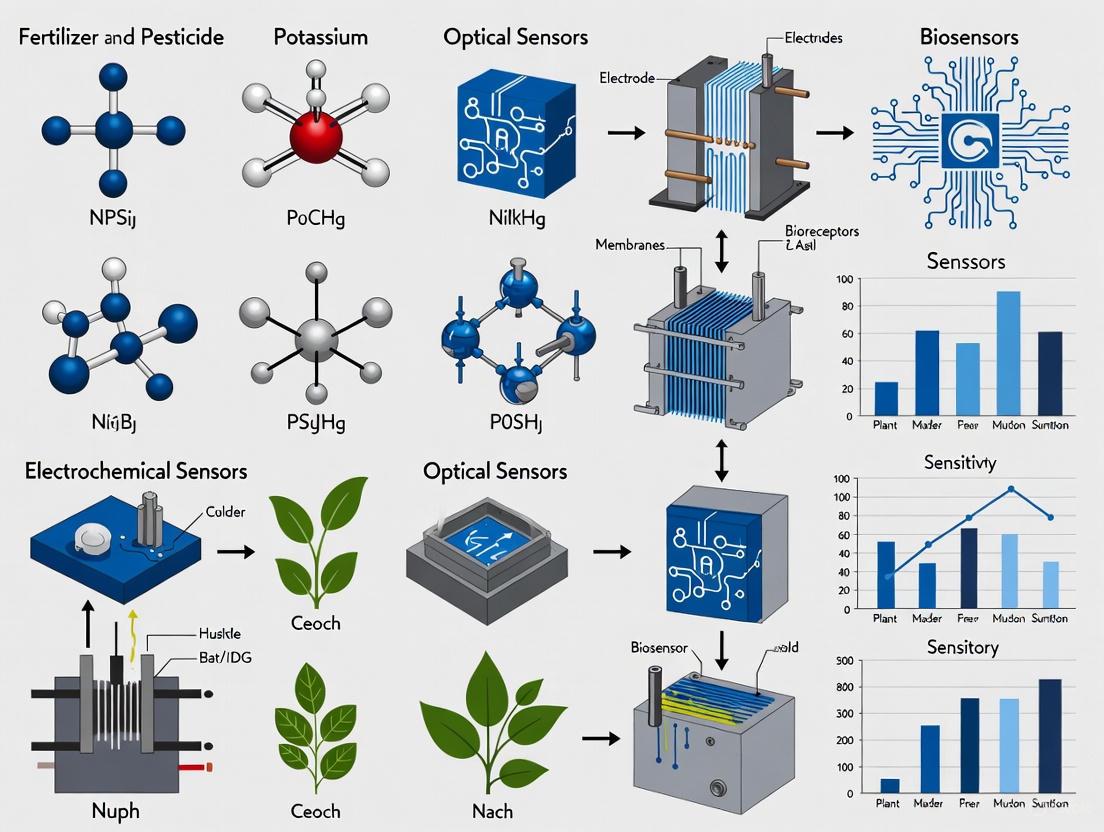
This article provides a comprehensive comparison of sensor technologies that enable precision agriculture, focusing on their efficacy in reducing fertilizer and pesticide application.
Smart Sensors for Sustainable Agriculture: A Comparative Analysis of Technologies Reducing Fertilizer and Pesticide Use
Abstract
This article provides a comprehensive comparison of sensor technologies that enable precision agriculture, focusing on their efficacy in reducing fertilizer and pesticide application. Aimed at researchers, agronomists, and agricultural technology developers, it synthesizes foundational principles, real-world methodological applications, optimization strategies, and validation studies. The analysis covers a spectrum of technologies, from soil nutrient and moisture sensors to optical, electrochemical, and AI-driven pest detection systems, highlighting documented input reductions of 15-30% for fertilizers and significant decreases in pesticide volumes through real-time, site-specific management. The review concludes by evaluating the economic and environmental impacts of these technologies and outlining future trajectories for sensor integration and data analytics in fostering sustainable crop production.
The Foundation of Precision Agtech: Core Sensor Types and Their Working Principles
The escalating global demand for food, feed, and fiber necessitates a transformation in agricultural practices to enhance productivity while conserving finite water resources and maintaining environmental sustainability [1]. Irrigated agriculture, though vital to the economy, is a major consumer of freshwater, accounting for approximately 33% of total withdrawals in the U.S. in 2010 [1]. This sector faces immense pressure to optimize resource management, particularly in minimizing the overuse of fertilizers and pesticides, which leads to soil degradation, water contamination, and greenhouse gas emissions [2] [3]. Precision Agriculture (PA) has emerged as a revolutionary paradigm, leveraging advanced technologies to enable site-specific management and data-driven decision-making [4]. A core enabling technology of PA is soil-based sensing, which provides real-time, in-situ data on soil conditions, forming the basis for precise irrigation and fertilization, thereby reducing unnecessary chemical inputs [5].
Soil-based sensors are critical tools for monitoring key parameters like moisture and nutrient levels. By providing accurate, real-time data, these sensors allow for the application of water, fertilizers, and pesticides only when and where they are needed. Quantifiable benefits include a 9% reduction in herbicide and pesticide use and a 7% increase in fertilizer placement efficiency, as demonstrated by the adoption of precision agriculture technologies [3]. This guide provides an objective comparison of the performance of various soil-based sensor technologies—focusing on moisture, nutrient, and advanced electrochemical sensors—within the broader research context of reducing fertilizer and pesticide use. It synthesizes experimental data and protocols to aid researchers and scientists in selecting and deploying these technologies effectively.
Performance Comparison of Soil Moisture Sensors
Soil moisture sensors are fundamental for optimizing irrigation scheduling, which directly influences pesticide and fertilizer efficacy and leaching. These sensors operate on different electromagnetic principles, and their accuracy is significantly affected by soil properties such as salinity and clay content [1]. The following table summarizes the performance characteristics of several commercially available soil moisture sensors based on a field study.
Table 1: Performance Comparison of Commercial Soil Moisture Sensors
| Sensor Name | Technology | Probe Length | Key Measured Parameters | Accuracy/Notes |
|---|---|---|---|---|
| TDR315 (Acclima) | Time Domain Reflectometry (TDR) | 15 cm | Volumetric Water Content, Soil Temperature, Bulk EC, Soil Pore Water EC | High accuracy at low salinity/clay sites; sensitive to high salinity [1] |
| CS655 (Campbell Scientific) | Water Content Reflectometer | 12 cm | Volumetric Water Content, Soil Temperature, Bulk EC | Uses Topp equation; performance degrades with high salinity [1] |
| GS1 (METER Group) | Capacitance/Frequency Domain | 5.5 cm | Volumetric Water Content (via Raw Value) | Accuracy affected by soil salinity and clay content [1] |
| SM100 (Spectrum Technologies) | Capacitance | N/S | Volumetric Water Content | Functions as a capacitor with soil as dielectric; sensitive to soil properties [1] |
| CropX (CropX Ltd.) | Amplitude Domain Reflectometry | Multi-depth (20 & 46 cm) | Volumetric Water Content | Integrated cellular communication; multi-depth sensing [1] |
| SS316L Sensor (Research Grade) | Resistive (Arduino-based) | Up to 50 cm | Soil Moisture | Corrosion-resistant; 92% accuracy with ANFIS calibration [6] |
A study assessing the performance of five different sensors (TDR315, CS655, GS1, SM100, and CropX) in Oklahoma with variable soil salinity and clay content revealed a critical finding: with factory calibrations, three sensors performed satisfactorily at the site with lower salinity and clay, but none performed satisfactorily at the site with higher levels of salinity and clay [1]. This underscores the necessity of soil-specific calibration for reliable data. Furthermore, the estimation of soil moisture thresholds (e.g., Field Capacity and Wilting Point) is best achieved using the Rosetta model, which was closest to laboratory-measured data, whereas simple ranking methods led to overestimation [1].
For resource management, accurate soil moisture data enables the calculation of Soil Moisture Depletion (SMD), guiding irrigation to prevent under- or over-watering. Over-irrigation wastes water and energy and promotes the leaching of agrichemicals into groundwater, while under-irrigation stresses crops and reduces yield potential [1].
Experimental Protocol for Soil Moisture Sensor Evaluation
Objective: To evaluate the accuracy and reliability of various soil moisture sensors in situ under different soil conditions (e.g., varying salinity and clay content) and calibrate them against a standard method.
Methodology:
- Site Selection: Identify multiple field sites with varying levels of soil salinity and clay content. Characterize each site by measuring baseline soil properties, including soil texture, bulk electrical conductivity (EC), and organic matter content.
- Sensor Installation: Install multiple types of sensors (e.g., TDR, FDR, Capacitance) at comparable depths within the root zone at each site. Ensure proper soil-probe contact as per manufacturer guidelines.
- Reference Measurements: The Oven Dry Method (ODM) is used as the reference standard. Concurrently with sensor readings, collect undisturbed soil core samples from the immediate vicinity of each sensor.
- Weigh the soil samples to obtain the wet weight.
- Dry the samples in an oven at 105°C for at least 24 hours until a constant weight is achieved.
- Weigh the samples again to obtain the dry weight.
- Calculate the volumetric water content (θv) using the known volume of the soil core and the water weight loss [6].
- Data Collection: Log sensor readings (e.g., θv, EC, temperature) hourly over a cropping season. Collect soil samples for ODM analysis at regular intervals (e.g., bi-weekly) and during key phenological stages.
- Calibration and Validation: Develop calibration models by correlating sensor output (e.g., raw voltage, period, or proprietary θv) with the ODM-measured θv. Use regression models (linear, polynomial) or advanced soft computing techniques like Adaptive Neuro-Fuzzy Inference System (ANFIS). Split the dataset for model training and validation [6].
Graphviz diagram for the experimental workflow:
Advanced Sensing: Nutrient and Electrochemical Sensors
Moving beyond moisture, monitoring soil nutrient levels is crucial for precision fertilization. The over-application of nitrogen and phosphorus fertilizers is a primary cause of non-point source pollution and greenhouse gas emissions [2]. Traditional laboratory analysis, while accurate, is time-consuming and not conducive to real-time decision-making. Emerging sensor technologies aim to fill this gap.
Table 2: Soil Nutrient and Electrochemical Sensor Technologies
| Technology / Approach | Target Nutrients/Parameters | Principle of Operation | Research Context & Performance |
|---|---|---|---|
| NPK Soil Sensors (Optical/Electrochemical) | Nitrogen (N), Phosphorus (P), Potassium (K) | Electrochemical detection or optical techniques (e.g., NIR) | Enables real-time soil nutrient analysis for precise fertilizer recommendation [7] [2]. |
| AI-Integrated Systems | NPK, Micronutrients | Sensor data fused with AI (e.g., CNN, TPF-CNN) for analysis | Achieves over 90% accuracy in pest identification and fertilizer recommendation within 80 seconds [7]. |
| Electrochemical Plant Sensors | Plant sap compounds (e.g., H₂O₂, Ca²⁺, K⁺), Hormones | Measures electrochemical signals (amperometry, potentiometry) in plant sap | Allows for early diagnosis of plant stress (drought, pathogen) before visible symptoms appear [5]. |
| IoT & Smart Systems | Moisture, NPK, Temperature, Humidity | Wireless sensor nodes transmitting data to a central platform | Facilitates real-time monitoring and automated, site-specific resource application [2] [6]. |
Electrochemical sensors represent a significant advancement as they shift the focus from indirect soil measurements to direct monitoring of plant health. These sensors are lightweight, portable, and offer fast response times with high measurement accuracy [5]. They can detect specific ions and molecules (e.g., pH, nitrate, hydrogen peroxide, calcium ions) in the soil solution or even directly in plant sap, providing a more causal understanding of plant nutrient status and stress levels. This allows for preventive interventions, reducing the need for blanket pesticide and fertilizer applications [5]. Research indicates that these sensors are moving beyond monitoring physical parameters to systematically diagnosing plant health by analyzing the chemical compositions of crop sap and nutrient solutions [5].
The Researcher's Toolkit: Key Reagents and Materials
For researchers replicating experiments or developing new sensor technologies, the following table details essential materials and their functions.
Table 3: Essential Research Reagents and Materials for Sensor Evaluation
| Item Name | Function/Application | Experimental Context |
|---|---|---|
| Stainless Steel 316L (SS316L) Probe | Corrosion-resistant electrode for durable, long-term soil moisture sensing in various soil types. | Development of robust, low-cost soil moisture sensors for root zone depth measurement [6]. |
| Copper-Based Probe (CBP) | Electrode for resistive soil moisture measurement; less durable than SS316L due to corrosion. | Comparative performance studies of sensor probe materials [6]. |
| Arduino Microcontroller | Open-source electronics platform for data acquisition, sensor control, and developing IoT-based sensor systems. | Building custom sensor nodes for real-time soil moisture monitoring [6]. |
| ANFIS (Adaptive Neuro-Fuzzy Inference System) | A soft computing technique for developing non-linear, high-accuracy calibration models for sensor data. | Used to achieve up to 92% accuracy in sensor calibration against the Oven Dry Method [6]. |
| Reference Soil Samples | Pre-characterized soil samples with known properties (texture, nutrient content, EC). | Used for validating and calibrating nutrient sensors and analytical models in the lab [1] [2]. |
| Hydroponic Nutrient Solution | A solution with precisely known concentrations of essential plant nutrients (N, P, K, Ca, Mg, etc.). | Serves as a standardized medium for testing and calibrating electrochemical nutrient sensors [5]. |
| Electrochemical Cell | The setup containing working, reference, and counter electrodes for performing electrochemical measurements. | Core component for developing and testing new electrochemical sensors for specific ions or molecules [5]. |
Soil-based sensors for moisture, nutrients, and electrochemical sensing are powerful tools for advancing sustainable resource management in agriculture. The experimental data confirms that while sensor technology is rapidly evolving, accuracy is not universal and is highly dependent on soil conditions and proper calibration [1] [6]. The integration of these sensors with IoT platforms and AI models creates a powerful feedback loop for precision agriculture, enabling real-time, data-driven decisions that can significantly reduce fertilizer and pesticide use [7] [4] [3].
Future research should focus on developing more robust sensors that are less sensitive to soil-specific confounding factors like salinity and clay, creating multi-analyte sensors that can detect a wide range of parameters simultaneously, and standardizing calibration protocols across different environments. The continued adoption and refinement of these technologies, supported by government policies and improved rural infrastructure, are essential for realizing their full potential in enhancing crop productivity while safeguarding environmental health.
The precise monitoring of crop vigor and health is fundamental to advancing sustainable agriculture. Optical sensors, which measure the light reflectance properties of plants, provide a non-destructive and rapid means to assess plant physiological status, thereby forming the cornerstone of precision nutrient management. This technology is pivotal for a broader research thesis focused on reducing fertilizer and pesticide use. By enabling the detection of within-field variability and early signs of plant stress, optical sensors facilitate targeted interventions, minimizing environmental impact and enhancing resource use efficiency [8] [9]. These sensing systems are broadly categorized into proximal and remote platforms. Proximal sensors, such as tractor-mounted or handheld units, make direct contact with or operate very close to the crop canopy [9]. In contrast, remote sensors, including those on satellites and Unmanned Aircraft Systems (UAS), collect data from a distance [10] [11]. Central to this field is the Normalized Difference Vegetation Index (NDVI), a simple yet powerful metric calculated from the red and near-infrared (NIR) light reflected by vegetation, which correlates strongly with biomass, chlorophyll content, and overall plant health [11] [12]. This guide objectively compares the performance of various proximal and remote optical sensors, providing researchers with the experimental data and methodologies needed to select appropriate technologies for reducing agrochemical inputs.
Key Vegetation Indices for Crop Assessment
While NDVI is the most widely recognized vegetation index, numerous other indices have been developed to enhance sensitivity to specific biophysical parameters or to mitigate limitations of NDVI, such as saturation under high biomass conditions. The discriminative power and specific applications of these indices can vary significantly [11]. Researchers often select a suite of indices based on their specific crop and environmental conditions.
Table 1: Key Vegetation Indices for Crop Health Assessment
| Index Name | Full Name | Formula | Key Applications and Sensitivities |
|---|---|---|---|
| NDVI [11] | Normalized Difference Vegetation Index | (NIR - Red) / (NIR + Red) | General vegetation health, biomass, and density. Tends to saturate in dense canopies. |
| NDRE [10] | Normalized Difference Red Edge | (NIR - Red Edge) / (NIR + Red Edge) | Better sensitivity for mid-to-late season growth and high biomass due to use of the red-edge band. |
| GNDVI [11] | Green Normalized Difference Vegetation Index | (NIR - Green) / (NIR + Green) | Chlorophyll content and nitrogen status; more sensitive than NDVI in some cases. |
| EVI [11] | Enhanced Vegetation Index | 2.5 * (NIR - Red) / (NIR + 6Red - 7.5Blue + 1) | Reduces atmospheric and soil background noise, improved sensitivity in high-biomass regions. |
| SAVI [11] | Soil-Adjusted Vegetation Index | (NIR - Red) / (NIR + Red + L) * (1 + L) | Incorporates a soil adjustment factor (L) to minimize soil background influence. |
| ARVI [11] | Atmospherically Resistant Vegetation Index | (NIR - (2Red - Blue)) / (NIR + (2Red - Blue)) | Designed to be more resistant to atmospheric scattering effects. |
Comparison of Proximal and Remote Sensor Platforms
Optical sensors are deployed on various platforms, each with distinct advantages and limitations concerning spatial resolution, temporal frequency, and operational complexity. The choice of platform is a critical decision in experimental design.
Table 2: Comparison of Optical Sensor Platforms for Agricultural Monitoring
| Sensor Platform | Spatial Resolution | Key Characteristics | Advantages | Disadvantages |
|---|---|---|---|---|
| Handheld Spectrometer [10] | Point-based or very high | Direct, targeted measurement. | High spectral resolution; full control over measurement location and timing. | Labor-intensive; not scalable for large areas. |
| Tractor-Mounted (e.g., ISARIA) [8] [9] | Sub-meter | Real-time, "on-the-go" sensing during field operations. | Provides immediate data for variable rate application (VRA); integrates with farm machinery. | Limited to operation periods; can only collect data when in the field. |
| Unmanned Aircraft Systems (UAS) [10] [11] | Very High (< 10 cm) | Ultra-high resolution, on-demand flight campaigns. | Extremely high spatial detail; user-controlled timing; cloud-independent. | Limited coverage per flight; battery life constraints; data processing can be complex. |
| Satellite (e.g., Sentinel-2) [10] [9] | Medium (10-60 m) | Broad, systematic coverage with regular revisit cycles. | Free data; large area coverage; consistent long-term data archives. | Resolution may be too coarse for early stress detection; data availability can be affected by cloud cover. |
Experimental Data and Performance Comparison
Correlation with Agronomic Parameters
The primary validation of optical sensor performance is its correlation with key agronomic parameters, such as Nitrogen Uptake (N uptake) and crop yield. Robust correlations are a prerequisite for developing reliable variable rate application algorithms.
A study on winter wheat compared five optical sensor platforms and found that the Normalized Difference Red-Edge (NDRE) index from all platforms showed strong and comparable correlations with measured N uptake. The correlations were robust, with a correlation coefficient (r) greater than 0.8 and a root mean square error (RMSE) ranging from 29 to 37 kg N/ha [10]. This demonstrates that despite differences in absolute values, different sensor platforms can be effectively calibrated to predict crop nitrogen status.
Furthermore, a four-year on-farm study demonstrated the practical link between sensor data and crop performance. The study used a tractor-mounted ISARIA system for real-time assessment and found that the sensor-based vegetation indices effectively captured the trend in crop development, which is the basis for variable rate nitrogen application [9].
Impact on Nitrogen Management and Efficiency
The ultimate test of sensor technology is its impact on farm operations and environmental goals, particularly the reduction of fertilizer use without compromising yield.
A three-year on-farm strip trial investigating sensor-based, site-specific nitrogen application in winter wheat reported significant benefits. Compared to uniform application (UA), the variable rate application (VRA) method, which used a tractor-mounted sensor system, reduced nitrogen fertilizer application by up to 38 kg ha⁻¹ yr⁻¹ and increased nitrogen efficiency by 15%. The study also noted a significant reduction in the variability of nitrogen balances, leading to more predictable environmental outcomes. However, the authors emphasized that the effects on yield and nitrogen efficiency are highly dependent on specific application conditions, indicating that sensor-based systems require good calibration and are not universally advantageous in every single trial [8].
Table 3: Summary of Experimental Results from Sensor-Based Nitrogen Management
| Study Focus | Key Experimental Outcome | Implication for Precision Agriculture |
|---|---|---|
| Multi-Sensor Comparison [10] | NDRE from 5 platforms correlated with N uptake (r > 0.8; RMSE 29-37 kg N/ha). | Different sensor platforms can be effectively used for N status prediction if properly calibrated. |
| On-Farm VRA Efficiency [8] | N fertilizer reduced by up to 38 kg ha⁻¹ yr⁻¹; N efficiency increased by 15%. | Sensor-based VRA can significantly reduce fertilizer input and enhance nutrient use efficiency. |
| Integrated Management Zones [13] | Combining EMI soil data with satellite NDVI improved management zone delineation. | Fusing optical sensor data with other spatial data (e.g., soil ECa) provides a more holistic view for management. |
Detailed Experimental Protocols
To ensure reproducibility and provide a clear framework for researchers, this section outlines detailed methodologies for key experiments cited in this guide.
Protocol 1: On-Farm Strip Trials for VRA Validation
This protocol is adapted from long-term studies evaluating sensor-based variable rate application (VRA) against uniform application (UA) under practical farming conditions [8].
- Objective: To analyze the effects of sensor-based, site-specific N fertilization on grain yield, protein content, N uptake, N balance, and N efficiency compared with uniform N application.
- Site Selection: Select heterogeneous arable fields with varying soil properties (e.g., texture, organic carbon). Trials should be conducted over multiple years to account for climatic variability.
- Experimental Design:
- Treatment Strips: Establish side-by-side strips across the field. One strip receives Uniform Application (UA) based on regional standard algorithms (e.g., the German Fertilizer Ordinance). The adjacent strip receives Variable Rate Application (VRA).
- VRA System Setup: For the VRA strips, determine the site-specific yield potential. Use a tractor-mounted multispectral sensor (e.g., a system like ISARIA) to perform spectral reflectance measurements at key growth stages (e.g., GS 32 and GS 39). The sensor data, combined with the yield potential map, feeds an algorithm to generate a real-time variable N application map.
- Data Collection:
- Spectral Data: Collect sensor data (e.g., NDVI, NDRE) during fertilization.
- Yield and Quality: At harvest, use a combine harvester equipped with a yield monitor to record grain yield and protein content spatially.
- Soil and Plant Sampling: Collect georeferenced soil and plant tissue samples to determine actual N uptake and soil N balance.
- Data Analysis: Compare the spatial variability of yield, protein, N uptake, and N balance between UA and VRA strips using statistical analysis (e.g., t-tests, ANOVA). Calculate N efficiency metrics for both systems.
Protocol 2: Multi-Sensor Platform Correlation Study
This protocol is based on studies that compare the performance of different sensor platforms for estimating the same biophysical parameter [10] [9].
- Objective: To compare the spectral information and estimation accuracy of different proximal and remote optical sensor platforms for crop N status estimation.
- Site and Crop: Establish a study site with a uniform crop (e.g., winter wheat). Ensure the area is accessible for ground-based sensors and has clear visibility for satellite and UAS overpasses.
- Sensor Platforms and Data Acquisition:
- Simultaneously or near-simultaneously (within a few hours) collect data from multiple platforms:
- Satellite: Download Sentinel-2 imagery (Level-2A with bottom-of-atmosphere reflectance).
- UAS: Fly a fixed-wing or multi-rotor UAS equipped with a multispectral sensor (e.g., capturing Green, Red, Red-Edge, NIR).
- Tractor-Mounted: Operate a commercial on-the-go sensor system (e.g., ISARIA, Yara N-Sensor).
- Handheld Spectrometer: Take ground-truth measurements with a calibrated field spectrometer.
- Ensure all data is georeferenced.
- Simultaneously or near-simultaneously (within a few hours) collect data from multiple platforms:
- Data Processing:
- For each platform, calculate a common set of vegetation indices (e.g., NDVI, NDRE).
- Resample all raster data (UAS, satellite) to a common spatial resolution for comparison.
- Ground Truthing:
- In conjunction with sensor flights/measurements, conduct destructive plant sampling in predetermined plots.
- Measure the fresh and dry biomass and analyze the plant tissue for nitrogen concentration to calculate actual N uptake (kg N/ha).
- Statistical Analysis:
- Perform a power regression analysis between each sensor-derived vegetation index and the measured N uptake.
- Compare the correlation coefficients (r) and root mean square errors (RMSE) between the different platforms to assess their relative accuracy.
Visualization of Research Workflows
The following diagrams illustrate the logical workflows for the key experimental and application protocols described in this guide.
Sensor-Based Nitrogen Management Workflow
Multi-Sensor Validation Experiment Design
The Scientist's Toolkit: Essential Research Reagents and Materials
- Multispectral Sensors: These are the core measurement devices, available as handheld, tractor-mounted, or UAS-integrated units. They are specifically designed to capture reflectance in key wavebands (e.g., Green, Red, Red-Edge, NIR) required for calculating vegetation indices like NDVI and NDRE [10] [11] [12].
- Calibration Panels: Diffuse reflectance targets (e.g., white panels) are essential for converting raw sensor digital numbers to absolute reflectance values. This ensures data consistency and comparability across different sensors, platforms, and acquisition dates.
- Field Spectrometer: A high-accuracy, handheld spectrophotometer is used for ground-truthing. It provides the reference spectral data against which data from other platforms (like UAS or satellites) is validated [10].
- Data Processing Software: Specialized software (e.g., Python with Rasterio/Scikit-learn, R, QGIS, or commercial packages like ENVI) is required for processing raw spectral data, calculating vegetation indices, performing geometric corrections, and conducting spatial and statistical analysis [11].
- GNSS/GPS Receivers: High-precision Global Navigation Satellite System receivers (e.g., RTK-GPS) provide accurate georeferencing for all sample locations and sensor data, which is crucial for data fusion and creating precise application maps [8] [13].
- Plant Sampling Kits: These include tools for destructive sampling, such as plant clippers, sample bags, a portable balance for fresh weight, a drying oven for dry weight determination, and materials for shipping samples to a lab for nutrient (e.g., nitrogen) analysis [8].
The global agricultural sector faces the dual challenge of enhancing food security for a growing population while minimizing its environmental footprint. A significant portion of this footprint originates from the blanket application of pesticides and fertilizers, a practice that is both economically inefficient and ecologically damaging. Precision agriculture offers a paradigm shift, moving from uniform application to targeted, data-driven management. At the heart of this transition are advanced sensor technologies capable of detecting pests and diseases with unprecedented speed, accuracy, and specificity. These sensors range from biochemical assays that identify molecular biomarkers to optical and acoustic systems that analyze physical and behavioral plant-pest interactions. This guide provides a comparative analysis of the leading sensor technologies, evaluating their performance, underlying principles, and practical utility in reducing the application of agricultural chemicals. By framing this comparison within the broader thesis of sustainable input reduction, we aim to equip researchers and development professionals with the knowledge to select, refine, and deploy the optimal sensor solution for their specific agricultural context.
Comparative Analysis of Sensor Technology Performance
The landscape of pest and disease detection sensors is diverse, encompassing multiple technological approaches. The following table summarizes the core performance metrics and characteristics of the primary sensor categories.
Table 1: Comparative Performance of Pest and Disease Detection Sensor Technologies
| Sensor Technology | Key Measurable(s) | Reported Accuracy/Reduction | Sensitivity (Approx.) | Inference Speed | Primary Application Context |
|---|---|---|---|---|---|
| AI-Based Image Sensors (Deep Learning) | Visual symptoms on leaves (lesions, spots, pests) | 89.5% Global Accuracy, 95.68% Precision [14] | N/A | <10 ms per image [14] | Real-time, in-field disease and pest classification on drones and smartphones. |
| Electrochemiluminescence (ECL) Biosensors | Specific pesticide molecules or biochemical markers | High specificity for target analytes [15] | Picomolar (pM) levels [15] | Rapid measurements [15] | Laboratory or point-of-care detection of pesticide residues and specific pathogens. |
| Fluorescence-Based Real-Time Sensors (e.g., Weed-it) | Chlorophyll fluorescence from plants | 55.5% avg. pesticide volume reduction [16] | N/A | 40 Hz acquisition rate [16] | Real-time, site-specific spraying in row crops, differentiating green plants from soil. |
| Real-Time Soil Gas & Condition Sensors | Soil NO, O₂, temperature, moisture (proxies for microbial activity) | Real-time estimation of nitrous oxide emissions [17] | N/A | Hourly monitoring [17] | In-situ soil health and emission monitoring, guiding fertilizer optimization. |
| Electronic Nose & Hyperspectral Imaging | Volatile organic compounds (VOCs), spectral signatures | Effective for pork freshness detection [18] | N/A | N/A | Post-harvest quality control and early non-visible stress detection in plants. |
The performance data indicates a trade-off between specificity and scope. Biosensors like ECL excel in laboratory settings where ultra-sensitive, quantitative detection of a specific chemical is required [15]. In contrast, AI-driven optical sensors offer a broader, more holistic assessment of plant health in real time, making them suitable for automated, large-scale field operations [14]. The significant reduction in pesticide volume—over 55% on average—achieved by real-time fluorescence sensors demonstrates the direct and quantifiable impact these technologies can have on sustainable farming practices [16].
Detailed Experimental Protocols for Key Technologies
Protocol for AI-Based Image Detection Model Training and Deployment
This protocol outlines the methodology for developing a high-performance deep learning model for pest and disease detection, as validated in recent research [14].
1. Objective: To train and optimize a lightweight deep learning fusion model for real-time, edge-device deployment capable of detecting and classifying multiple crop pests and diseases.
2. Materials & Reagents:
- Dataset: The CCMT dataset or equivalent, containing a minimum of 24,881 original images across target classes (e.g., cashew, cassava, maize, tomato) [14].
- Hardware: Computing cluster with high-performance GPUs (e.g., NVIDIA Tesla series) for training; edge devices like smartphones, Raspberry Pi 4, or farm drones for deployment.
- Software Framework: TensorFlow or PyTorch; TensorFlow Lite for edge deployment.
3. Procedure:
- Step 1: Data Preprocessing and Augmentation. Resize all images to a uniform dimension (e.g., 224x224 pixels). Apply augmentation techniques including rotation, flipping, scaling, and color variation to the training set to increase from 24,881 to 102,976 images, mitigating overfitting and enhancing model robustness [14].
- Step 2: Model Architecture and Training. Employ a fusion architecture combining MobileNetV2 and EfficientNetB0. Use transfer learning by initializing with pre-trained weights on ImageNet. Train the model using a supervised learning approach with a labeled dataset. Apply a weighted loss function (e.g., focal loss) to handle class imbalance [14].
- Step 3: Model Optimization for Edge Deployment. Perform post-training quantization (converting 32-bit floating-point weights to 8-bit integers) and model pruning (removing redundant neurons/weights). This reduces model size and computational demand without significant accuracy loss [14].
- Step 4: Performance Evaluation. Evaluate the final model on a held-out test set. Calculate global accuracy, precision, recall, F1-score (target: >95%), and ROC-AUC (target: >0.95). The final benchmark should be an inference time of less than 10 milliseconds per image on the target edge device [14].
Protocol for Real-Time, Site-Specific Spraying with Fluorescence Sensors
This protocol details the field experimentation process for validating sensor-guided sprayers that reduce pesticide application [16].
1. Objective: To quantify the reduction in pesticide volume achieved in soybean and maize crops using a sprayer equipped with real-time plant detection sensors versus conventional blanket application.
2. Materials & Reagents:
- Sprayer: A self-propelled sprayer (e.g., John Deere 4730) equipped with a precision control system (e.g., Weed-it).
- Sensors: 36 fluorescence sensors mounted on the boom, each with five independent detection channels controlling PWM nozzles. The sensors emit red light at 690 nm to detect chlorophyll fluorescence [16].
- Field Setup: Large-scale fields of soybean (row spacing: 0.45 m) and maize (row spacing: 0.90 m) under a no-tillage system.
3. Procedure:
- Step 1: System Calibration. Calibrate the fluorescence sensors to operate at a height of 0.60–0.80 m from the crop canopy. Set the PWM nozzles to maintain a constant application rate of 100 L ha⁻¹ irrespective of travel speed [16].
- Step 2: Field Application and Data Logging. Conduct all pesticide applications (herbicides, insecticides, fungicides) throughout the crop cycle using the sensor system. The system's onboard computer records maps detailing the percentage of the spray boom activated ("on") versus "off" during operation [16].
- Step 3: Data Analysis. Analyze the logged data to calculate the actual sprayed area versus the total area covered. The percentage reduction in pesticide volume is derived from the proportion of time the nozzles were turned off in areas without green plant material [16].
- Step 4: Yield Assessment. Monitor crop yield at harvest and compare it to the field's historical productivity data to ensure the targeted application did not negatively impact yield [16].
Visualizing Workflows and System Logic
AI Model Training and Deployment Pipeline
The following diagram illustrates the end-to-end workflow for developing and deploying an AI model for pest detection, synthesizing the protocol from section 3.1.
AI Pest Detection Pipeline
Real-Time Precision Spraying System Logic
This diagram details the operational logic and decision-making process of a real-time, sensor-guided sprayer.
Precision Spraying Decision Logic
The Researcher's Toolkit: Essential Reagents and Materials
For researchers aiming to replicate experiments or develop new detection methodologies, the following table catalogues key reagents and materials cited in the literature.
Table 2: Essential Research Reagents and Materials for Sensor Development
| Item Name | Function / Application | Specific Example / Citation |
|---|---|---|
| CCMT Dataset | A large-scale, multi-crop image dataset for training and benchmarking AI models for pest and disease classification. | Contains 24,881 original images across 22 classes of cashew, cassava, maize, and tomato [14]. |
| Screen-Printed Electrodes (SPE) | Low-cost, disposable electrochemical transducers used in the development of portable biosensors. | Used in Electrochemiluminescence (ECL) sensors for pesticide residue detection [15]. |
| Chlorophyll Fluorescence Sensor | An active optical sensor that detects living plants by measuring the fluorescence emitted by chlorophyll A when excited with red light. | Weed-it sensor used for real-time plant detection and precision spraying [16]. |
| Pulse Width Modulation (PWM) Nozzles | Solenoid-controlled spray nozzles that can be rapidly turned on/off or modulated to precisely control application rate based on sensor input. | Key component in precision sprayers for site-specific application [16]. |
| Quantum Dots (QDs) & Carbon Nanodots (CNDs) | Nanomaterial labels used in biosensors to enhance signal generation, often leading to higher sensitivity in detection assays. | Used as luminophores in advanced Electrochemiluminescence (ECL) systems [15]. |
| Ru(bpy)₃²⁺ & Derivatives | A common ECL luminophore that emits light during electrochemical reactions, serving as the core signal-generating molecule in many ECL biosensors. | Cited as a key reagent in ECL-based pesticide detection systems [15]. |
| Screen-Printing Inks (Functional) | Specially formulated conductive, dielectric, or sensing inks used to fabricate low-cost, disposable sensors on various substrates. | Used in the manufacture of novel soil sensors for measuring temperature, moisture, and gases [17]. |
The comparative analysis presented in this guide underscores a clear trajectory in sensor technology: a move from broad, non-specific assays towards highly specific, real-time, and intelligent detection systems. While the optimal choice of technology is heavily dependent on the specific application—be it laboratory residue analysis or in-canopy robotic weeding—the unifying outcome is the potential for a substantial reduction in pesticide and fertilizer use. AI-driven optical systems and real-time fluorescence sensors have already demonstrated this impact with documented chemical reductions of over 55% and high-accuracy disease identification. The ongoing miniaturization of sensors, coupled with advancements in edge AI and the development of increasingly sensitive biosensors, promises to further enhance the precision and accessibility of these tools. For researchers and developers, the future lies in the integration of these complementary technologies, creating holistic sensing systems that provide a comprehensive picture of crop health while decisively advancing the goals of sustainable agriculture.
The sustainable intensification of agricultural production necessitates technological solutions that optimize the use of agricultural inputs, particularly nitrogen fertilizers. Sensor technologies have emerged as critical tools for monitoring microclimates and crop status, enabling informed application decisions that balance productivity with environmental stewardship. These technologies range from ground-based proximal sensors to aerial remote sensing platforms, each offering unique capabilities for assessing crop nitrogen status, chlorophyll content, and overall vegetative vigor through indices such as the Normalized Difference Vegetation Index (NDVI) [19]. The integration of these sensing approaches facilitates precise variable rate application (VRA) of nitrogen fertilizer, which has demonstrated significant potential for reducing input usage while maintaining or even improving crop yields and nitrogen use efficiency (NUE) [19] [20].
The application of environmental and climate sensors represents a paradigm shift from uniform field management toward spatially and temporally optimized resource application. This approach is particularly valuable in the context of increasing fertilizer costs and growing regulatory pressure to mitigate agricultural pollution. By detecting in-field variability and monitoring crop responses to environmental conditions, these sensors provide the data foundation for implementing site-specific management strategies that align fertilizer inputs with actual crop requirements [21] [22]. The following sections provide a comprehensive comparison of sensor technologies, their performance characteristics, experimental methodologies, and implementation frameworks for reducing fertilizer use in agricultural systems.
Comparative Analysis of Sensor Technologies
Technology Performance Comparison
Agricultural sensor systems vary in their operating principles, platforms, and applications. The table below summarizes the key characteristics and documented performance of major sensor types used for nitrogen management in precision agriculture.
Table 1: Performance Comparison of Agricultural Sensor Technologies for Nitrogen Management
| Sensor Technology | Platform/Operation | Key Measured Parameters | Correlation with Agronomic Variables (R² Values) | Reported Impact on N Use |
|---|---|---|---|---|
| On-the-Go (OTG) Passive Sensor [19] | Tractor-mounted, real-time | NDVI, biomass variability | PFM: 0.52 [19] | 15.23% reduction in total N applied (saving 22.90 kg ha⁻¹) [19] |
| Unmanned Aerial Vehicle (UAV) [19] | Aerial, post-fertilization monitoring | Multispectral reflectance (NDVI) | CP: 0.58; CPyield: 0.53; NUp: 0.53 [19] | Not specified (monitoring focused) |
| Handheld Multispectral Active (HMA) Sensor [19] | Ground-based, point measurements | Spectral reflectance indices | NUp: 0.55; CPyield: 0.53 [19] | Not specified (prescription focused) |
| GreenSeeker Sensor [20] | Ground-based, real-time | NDVI | Nitrogen Sufficiency Index | Not specified |
| CropCircle Reflectance Sensor [20] | Ground-based, real-time | Multispectral reflectance | Red-edge sensitivity to N deficiency | Not specified |
| Ion-Selective Electrodes [21] | In-situ soil measurement | Soil nitrate, phosphate | Laboratory validation | Potential for improved precision (under development) |
Interpretation of Performance Data
The performance data reveal distinct strengths and applications for each sensor technology. On-the-Go sensors demonstrate practical utility for real-time variable rate application, showing moderate correlation with plant fresh matter (R² = 0.52) while delivering significant fertilizer reduction of 15.23% compared to uniform application [19]. These systems operate effectively under varying light conditions through continuous correction for ambient light fluctuations, making them suitable for whole-field management decisions during fertilization operations [19].
UAV-based multispectral cameras excel in monitoring physiological responses to nitrogen fertilization, showing stronger correlations with quality parameters like crude protein (R² = 0.58) and nitrogen uptake (R² = 0.53) [19]. This capability makes UAV platforms particularly valuable for assessing treatment effects and refining future prescription maps. The aerial perspective enables comprehensive field coverage and capture of spatial patterns that might be missed with ground-based sensors.
Handheld active sensors such as the HMA provide reliable point measurements with significant correlations to nitrogen uptake (R² = 0.55) and crude protein yield (R² = 0.53) [19]. While limited by their point-based sampling approach, these instruments offer valuable validation data and are particularly useful for research applications and smaller-scale farming operations.
Emerging technologies such as advanced ion-selective electrodes under development by researchers like Matthias Young at the University of Missouri promise a new approach to nutrient sensing by measuring how quickly ions move through a membrane rather than how strongly they bind to it [21]. This technology could lead to more sensitive, affordable sensors for both handheld use and continuous field monitoring, addressing current limitations in soil nutrient sensing.
Experimental Protocols and Methodologies
Field Experiment Design for Sensor Validation
Robust experimental designs are essential for validating sensor performance and developing effective variable rate nitrogen application algorithms. The University of Minnesota study implemented a randomized complete block design with four replications of 15 nitrogen rate treatments ranging from 0 to 202 kg/ha in corn-soybean rotations [20]. This wide range of nitrogen treatments enabled testing of remote sensing systems across a comprehensive gradient of nitrogen stress conditions, facilitating the development of reliable response curves and threshold values [20].
The methodological framework for sensor evaluation typically follows a sequential process encompassing experiment installation, variable rate application, crop monitoring, and data analysis [19]. In the Alentejo region study, this involved: (1) crop establishment with annual ryegrass under a no-till system with baseline fertilization; (2) sensor installation and calibration followed by variable rate top-dressing nitrogen fertilization; (3) multi-temporal monitoring using UAV and ground sensors coupled with vegetative sampling; and (4) comprehensive data analysis including normality tests, significance testing, and correlation matrices to assess relationships between sensor readings and agronomic parameters [19].
Table 2: Key Research Reagent Solutions for Sensor-Based Nitrogen Management
| Research Reagent/Category | Specification/Function | Application in Experimental Protocols |
|---|---|---|
| Multispectral Active Sensors | Active light source (e.g., HMA); measures spectral reflectance independent of ambient light | Generation of vegetation indices (e.g., NDVI) for nitrogen status assessment [19] |
| Passive On-the-Go Sensors | Relies on natural sunlight; measures crop reflectance in real-time | Real-time variable rate application based on vegetative vigor [19] |
| UAV Multispectral Cameras | Aerial platform with multiple spectral bands (visible, red-edge, NIR) | High-resolution spatial mapping of crop status post-fertilization [19] [20] |
| Chlorophyll Meters (e.g., Minolta SPAD-502) [20] | Indirect measurement of leaf chlorophyll content | Ground-truthing of sensor readings and assessment of plant nitrogen status |
| Ion-Selective Electrodes [21] | Electrochemical detection of specific ions (nitrate, phosphate) | Direct measurement of soil nutrient availability (currently limited by cost and precision) |
| Reference Analytical Methods | Laboratory analysis of plant tissue (N content, crude protein) | Validation of sensor readings and correlation development [19] |
| Calibration Standards | Reference materials for sensor calibration | Ensuring measurement accuracy and comparability across sensors [23] |
Sensor Calibration and Quality Control Procedures
Effective sensor deployment requires rigorous calibration and quality control procedures to ensure data reliability. The on-the-go sensor used in the Alentejo study was calibrated after installation on the agricultural machinery, with its field of view determined to be 28.5 meters (ten times the installation height of 2.85 meters) [19]. For passive sensors relying on natural sunlight, additional sensors measured light intensity and sun angle to continuously correct for ambient light fluctuations, ensuring consistent data collection throughout the day [19].
Research by Eingrüber et al. highlights the importance of standardized mounting systems to provide comparable measurement conditions [24]. In their urban microclimate network, sensors were positioned at a standardized distance of 50 cm from facades or vegetation, balancing scientific requirements for microclimate analysis with practical considerations for citizen science applications [24]. Similar standardization principles apply to agricultural sensor deployment, particularly for stationary monitoring systems.
Quality control in sensor data processing requires careful attention to potential technician subjectivity. A controlled experiment evaluating quality control post-processing of sensor data found that experienced participants showed greater variability in their results than novices, with the greatest discrepancies occurring around calibration events [23]. To address this variability, the study recommends that monitoring networks establish detailed quality control guidelines and consider collaborative approaches where multiple technicians evaluate datasets prior to publication [23].
Implementation Workflows and Data Integration
Integrated Sensing and Application Workflow
The effective implementation of sensor technologies for nitrogen management follows a systematic workflow that integrates data collection, analysis, and application. The following diagram illustrates this process from experimental setup through to outcome assessment:
Diagram 1: Sensor-Based Nitrogen Management Workflow
This workflow implements a sequential framework that begins with proper experiment installation and sensor calibration, proceeds through variable rate application informed by sensor data, incorporates multi-sensor monitoring to assess crop response, and concludes with comprehensive data analysis to quantify outcomes including nitrogen use efficiency improvements and fertilizer reduction [19].
Complementary Sensor Integration Framework
Different sensor technologies offer complementary strengths that can be leveraged through integrated deployment. The following diagram illustrates how various sensing platforms work together across spatial and temporal scales to support informed application decisions:
Diagram 2: Complementary Sensor Integration Framework
This integration framework demonstrates how different sensing technologies contribute unique data streams throughout the nitrogen management cycle. UAV-based remote sensing provides broad-area assessment of crop response to fertilization treatments, particularly valuable for understanding spatial patterns and correlations with quality parameters [19]. On-the-go sensors enable real-time adjustment of fertilizer applications based on vegetative vigor, achieving significant input reductions while maintaining productivity [19]. Handheld active sensors supply crucial point measurements for validation and calibration, offering significant correlations with nitrogen uptake and crude protein yield [19]. Emerging soil nutrient sensors promise more direct measurement of nutrient availability, potentially enhancing the soil-plant relationship understanding that informs application decisions [21].
Environmental and Economic Impacts
Documented Efficiency Improvements
Sensor-based variable rate nitrogen application demonstrates measurable benefits for both environmental protection and economic efficiency. Research conducted in the Alentejo region of Portugal documented a 15.23% reduction in total nitrogen fertilizer applied compared to conventional fixed-rate applications, representing a savings of 22.90 kg ha⁻¹ without compromising crop productivity [19]. This reduction in nitrogen usage directly translates to decreased potential for environmental pollution through volatilization and leaching while lowering input costs for producers.
Studies on winter wheat production systems in Germany have shown that sensor-based variable rate application can reduce nitrogen application by up to 38 kg ha⁻¹ per year while increasing nitrogen use efficiency by 15% [22]. Additionally, this approach achieved a significant reduction in the variability of nitrogen balances across fields, indicating more consistent and predictable nitrogen management outcomes [22]. These efficiency improvements contribute to both economic sustainability through reduced input costs and environmental sustainability through minimized nutrient losses to ecosystems.
The environmental benefits extend beyond direct nutrient management. Research by Medel-Jiménez et al. cited in the Alentejo study demonstrated an 8.6% reduction in CO₂ emissions with variable rate application compared to conventional methods, highlighting the climate mitigation potential of precision nutrient management [19]. This reduction stems from decreased fertilizer manufacturing and transportation emissions, as well as potentially lower field emissions from optimized application.
Implementation Considerations and Limitations
While sensor technologies offer significant benefits, their effective implementation requires consideration of several practical factors. The high initial costs of sensor systems and their operation can present barriers to adoption, particularly for smaller farming operations [19]. Sharing or leasing sensor technology has been proposed as a viable solution to improve accessibility [19] [25].
The effectiveness of sensor-based variable rate application can be influenced by spatial variability in soil properties and temporal factors such as weather conditions and crop development stages [19] [22]. As noted in winter wheat trials, "the effects on yield and N efficiency are highly dependent on the specific application conditions (weather conditions, disease occurrence, and crop development)" [22]. This context-dependence underscores the importance of local calibration and understanding of site-specific conditions for optimizing nitrogen application and achieving consistent results across different fields and seasons [19].
Technical challenges also persist in sensor development, particularly for direct nutrient measurement. Current ion-selective electrodes for nitrate and phosphate tend to be "expensive and imprecise" for routine farmer fertilizer decisions [21]. Emerging technologies that measure how quickly ions move through a membrane rather than how strongly they bind to it may address these limitations, but still require development to overcome issues with polymer stability and long-term field deployment [21].
Sensor technologies for environmental and climate monitoring represent a transformative approach to agricultural input management, particularly for nitrogen fertilization. The comparative analysis presented in this guide demonstrates that on-the-go sensors, UAV-based remote sensing, and handheld active sensors each offer complementary capabilities for assessing crop nitrogen status and guiding variable rate application decisions. The integration of these technologies within systematic workflows enables significant reductions in nitrogen fertilizer usage—typically 15-25%—while maintaining crop productivity and improving nitrogen use efficiency.
The experimental protocols and implementation frameworks detailed herein provide researchers and agricultural professionals with validated methodologies for deploying these technologies in field settings. As sensor systems continue to evolve—with emerging technologies promising more affordable and precise nutrient detection—the potential for fine-tuned input management will expand accordingly. The ongoing challenge for researchers and practitioners lies in optimizing these systems for robust performance across diverse agricultural contexts, ultimately advancing the dual goals of economic viability and environmental sustainability in agricultural production.
From Data to Action: Methodologies for Sensor Deployment and Real-World Application
Variable-Rate Application (VRA) represents a cornerstone of precision agriculture, enabling the site-specific management of agricultural inputs like fertilizers and pesticides. By integrating sensor data with the control systems of sprayers and spreaders, VRA moves beyond uniform application, adjusting input rates in real-time based on the specific needs of different zones within a field. This data-driven approach is central to a broader research agenda focused on reducing fertilizer and pesticide use, aiming to optimize resource efficiency, minimize environmental impact, and maintain crop productivity [26] [27]. This guide provides an objective comparison of the sensor technologies and control systems that form the backbone of modern VRA systems, presenting key experimental data and methodologies for researchers and scientists in the field.
Comparative Analysis of VRA Sensor Technologies
The efficacy of a VRA system is fundamentally linked to the type of sensor technology it employs for data acquisition. These technologies can be broadly categorized into map-based and sensor-based systems, each with distinct operational paradigms [28]. Map-based (or prescription map) systems rely on pre-collected data—such as soil test results, yield histories, or remote sensing imagery—to generate a pre-defined application map that is executed during fieldwork. In contrast, sensor-based (or real-time) systems use onboard sensors to assess crop or soil conditions instantaneously, adjusting application rates on-the-go without the need for prior mapping [28].
Recent research directly compares the performance of different proximal sensors in generating nitrogen fertilization prescriptions for winter forage crops. The study evaluated a handheld multispectral active (HMA) sensor, a multispectral camera on an unmanned aerial vehicle (UAV), and a passive on-the-go (OTG) sensor, assessing their correlations with key agronomic parameters [19].
Table 1: Performance Comparison of Proximal Sensors for Nitrogen VRA
| Sensor Technology | Key Measured Index | Correlation with Agronomic Parameters (R²) | Primary Application Mode | Reported Input Reduction |
|---|---|---|---|---|
| On-the-Go (OTG) Passive Sensor | NDVI (during application) | Plant Fresh Matter (0.52) [19] | Real-time, sensor-based | 15.23% reduction in total N fertilizer compared to fixed dose [19] |
| UAV Multispectral Camera | NDVI (post-fertilization) | Crude Protein (0.58), Crude Protein Yield (0.53), N Uptake (0.53) [19] | Prescription map creation | Not specified for UAV alone; system-wide reduction achieved |
| Handheld Multispectral Active (HMA) Sensor | NDVI (point readings) | N Uptake (0.55), Crude Protein Yield (0.53) [19] | Prescription map creation & monitoring | Not specified for HMA alone; system-wide reduction achieved |
The data reveals a complementary strength among sensors. The OTG sensor demonstrated robust performance in real-time prescription, directly leading to a significant reduction in fertilizer use without compromising productivity [19]. Meanwhile, the UAV and HMA sensors showed stronger correlations with physiological quality parameters like protein content and nitrogen uptake, highlighting their value as powerful monitoring tools for assessing crop response to applied inputs [19].
Experimental Protocols for VRA System Validation
For researchers validating VRA technologies, the experimental methodology must be rigorous and repeatable. The following protocol, adapted from a 2025 study, provides a framework for evaluating sensor-based VRA systems for nitrogen fertilization [19].
Methodology for Evaluating Real-Time Sensor-Based Nitrogen VRA
Stage 1: Experiment Installation and Crop Establishment
- Site Selection: Establish a non-irrigated experimental field of sufficient size (e.g., 1.5 hectares) in the target agro-climatic region [19].
- Baseline Practices: Sow the crop (e.g., annual ryegrass) using a no-till system. Apply a uniform basal fertilization (N, P, K) and implement standard weed and disease control protocols to ensure uniform crop emergence [19].
- Soil & Climate Characterization: Classify the soil type (e.g., Luvissoil) and document the local climate conditions, including average monthly temperature and precipitation, throughout the experiment duration [19].
Stage 2: Variable Rate Application
- Sensor Calibration & Installation: Install the OTG sensor on the agricultural machinery (e.g., tractor cab at 2.85 m height). Calibrate the sensor, determining its field of view and ensuring its integrated AI algorithms are configured to filter out non-vegetative elements from the data [19].
- System Configuration: On the operation platform, set key VRA parameters including the crop type, working width, fertilizer type (e.g., 27-0-0), and the minimum and maximum application rates (e.g., 75 kg ha⁻¹ and 150 kg ha⁻¹) [19].
- Execution: Conduct the variable rate top-dressing fertilization operation, allowing the system to dynamically adjust the application rate based on the sensor's real-time assessment of vegetative vigor [19].
Stage 3: Crop Vigor Monitoring and Sampling
- Post-Application Remote Sensing: Conduct a second flight with a UAV-mounted multispectral camera after fertilization to capture the crop's physiological response [19].
- Delineation of Homogeneous Zones: Use the collected data to delineate zones within the field for targeted plant sampling [19].
- Vegetative Sampling: In these zones, collect plant samples to measure key agronomic variables, including Plant Fresh Matter (PFM), Plant Dry Matter (PDM), Plant N Content (PNC), Crude Protein (CP), Crude Protein Yield (CPyield), and N Uptake (NUp) [19].
Stage 4: Data Analysis
- Statistical Testing: Perform normality (e.g., Shapiro-Wilk) and significance (e.g., ANOVA) tests on the collected data [19].
- Correlation Analysis: Create a correlation matrix to quantify the relationships between the sensor-derived indices (e.g., NDVI from OTG, UAV, HMA) and the measured agronomic parameters [19].
The workflow for this integrated experimental protocol is summarized in the diagram below.
Experimental Workflow for VRA Validation
Control System Architectures for Sprayers and Spreaders
The translation of sensor data into a precise physical application is handled by the control system. Modern systems strive for compatibility with the ISOBUS protocol (ISO 11783), which standardizes communication between implements, tractors, and computers [19] [28]. However, a significant amount of functional older equipment has become obsolete due to proprietary communication protocols, prompting research into retrofit solutions.
Table 2: Comparison of VRA Control System Architectures
| Control System Type | Communication Protocol | Core Components | Advantages | Limitations / Challenges |
|---|---|---|---|---|
| Modern ISOBUS-Compatible System [19] | ISOBUS (ISO 11783) | Industrial OTG sensor, ISOBUS-compatible hardware, cloud platform | Standardized communication, seamless implement-tractor integration, real-time AI data processing | High acquisition cost for new systems |
| Retrofitted Legacy System [28] | Custom (via microcontroller) | Arduino/Raspberry Pi microcontroller, legacy spreader (e.g., Vicon RS-EDW), linear actuators | Low-cost upgrade path, extends lifespan of functional machinery, open-source software | Requires technical expertise for development and installation, not plug-and-play |
A key differentiator in control systems is the actuation method for regulating material flow. Centrifugal disc spreaders, for instance, commonly use linear electric actuators to adjust the position of dosing plates at the hopper bottom, thereby controlling the flow rate based on commands from the control unit [28]. The system continuously cross-references the programmed application rate with the actual flow rate (measured by load cells in the hopper) and the tractor's forward speed (from a radar or proximity sensor) to make real-time adjustments via these actuators [28].
The Researcher's Toolkit: Essential Reagents and Materials
For scientists designing experiments in VRA, the following table details key hardware and software solutions that constitute the essential research toolkit.
Table 3: Key Research Reagent Solutions for VRA Experiments
| Item / Solution | Category | Primary Function in Research Context |
|---|---|---|
| On-the-Go (OTG) Passive Sensor [19] | Sensing Hardware | Measures crop reflectance (e.g., NDVI) in real-time for immediate prescription; features integrated AI to filter non-vegetative data. |
| UAV with Multispectral Camera [19] | Sensing Hardware | Captures high-resolution spatial data for creating prescription maps and for post-application monitoring of crop physiological response. |
| Handheld Multispectral Active (HMA) Sensor [19] | Sensing Hardware | Provides ground-truthed, point-based measurements of crop vigor for calibration and validation of other sensor platforms. |
| Arduino/Raspberry Pi Microcontroller [28] | Control Hardware | Serves as a low-cost, customizable control unit for retrofitting and modernizing legacy spreaders and sprayers for VRA functionality. |
| Linear Electric Actuators (e.g., LINAK) [28] | Actuation Hardware | Executes physical adjustments by regulating the opening of dosing gates or plates on spreaders and sprayers based on controller commands. |
| Load Cells & Radar Speed Sensor [28] | Monitoring Hardware | Provides real-time feedback on mass flow rate (load cells) and ground speed (radar), which are critical for the control system's calculation of actual application rate. |
| ISOBUS-Compatible Control Terminal [19] [28] | Control & Communication Hardware | Provides a standardized interface for operating and monitoring ISOBUS-compatible VRA implements from the tractor cab. |
| Farm Management Software & Cloud Platform [19] [26] | Data Analysis & Visualization Software | Platforms for data aggregation, AI-driven analytics, prescription map generation, and remote monitoring of field operations. |
The integration of sensor data with sprayer and spreader control represents a dynamic and critical frontier in precision agriculture. Evidence indicates that a synergistic approach, leveraging the real-time capabilities of OTG sensors and the detailed monitoring power of UAV and HMA sensors, can significantly reduce fertilizer use while maintaining or even enhancing crop productivity and quality [19]. The choice of control architecture—whether a modern ISOBUS system or a cost-effective retrofit—depends on specific research budgets and objectives. For the research community, the continued validation and refinement of these technologies, using robust experimental protocols, is paramount to advancing the core thesis of reducing agricultural chemical inputs and building a more sustainable and productive food system.
Real-time precision spraying represents a technological paradigm shift in agricultural pest management, moving from uniform broadcast application to targeted, on-demand pesticide delivery. Framed within broader research on sensor technologies for reducing agricultural chemical loads, these systems establish a closed-loop "perception-decision-execution" framework [29]. By integrating advanced sensing, real-time data processing, and automated actuation, precision spraying technologies achieve substantial reductions in herbicide and pesticide usage while maintaining effective pest control [30] [29]. This comparative analysis examines the architectural configurations, operational mechanisms, and performance metrics of leading real-time spraying technologies, providing researchers with experimental protocols and technical specifications for evaluating system efficacy in reducing fertilizer and pesticide applications.
Comparative Technology Analysis
Real-time precision spraying systems are primarily categorized by their sensing and decision-making architectures. The table below summarizes core system types:
Table 1: Precision Spraying System Architectures and Performance
| System Type | Sensing Technology | Decision Mechanism | Actuation Method | Pesticide Reduction | Key Limitations |
|---|---|---|---|---|---|
| Vision-Based Spot Spraying | Deep learning computer vision (CNN) [30] [31] | Real-time plant detection and classification [30] | Solenoid valve control with variable time delays [31] | 35-65% reduction in herbicides [30] | Performance declines with travel speed; requires substantial processing power [31] |
| Prescription Map-Based Spraying | GNSS with wind-excited audio sensing or drone imagery [32] [29] | Pre-generated application maps [32] | PWM nozzle control [32] | 30-50% reduction in pesticide usage [29] | Limited real-time adaptability; requires pre-operation mapping [32] |
| UAV-Integrated Systems | Multispectral/hyperspectral cameras, LiDAR [29] [33] | Edge computing with AI algorithms [29] | PWM-controlled variable-rate spraying [29] | 30-40% reduction in chemical usage [33] | Limited payload capacity; flight time constraints [33] |
| Orchard-VRS (Audio-Conducted) | GNSS positioning with wind-excited audio sensing [32] | Canopy leaf area density estimation [32] | PWM-based flow rate regulation [32] | 62.29% reduction in ground runoff [32] | Specialized for orchard environments; limited field crop application [32] |
Vision-Based Spot Spraying Systems
Deep learning-based computer vision systems represent the most advanced approach for real-time plant detection and classification. These systems typically employ convolutional neural networks (CNNs) trained on extensive image datasets to distinguish between crops and weeds in real time [30]. Upon detection, spraying commands are queued using variable time delay (VTD) algorithms that account for system latency and travel velocity to ensure precise chemical application [31].
Experimental Protocol - Vision-Based Spot Spraying [30] [31]:
- Apparatus: Custom robotic sprayer platform with CNN-based vision system, solenoid-controlled nozzles, and embedded computing unit.
- Field Conditions: Sugarcane fields with natural weed distributions; artificial crop/weed arrangements for controlled testing.
- Velocity Testing: System performance evaluated at 0.87 m/s and 1.03 m/s travel speeds.
- Metrics: Weed control efficacy (% of targets sprayed), herbicide usage reduction (%), non-target spraying incidence (%), and water quality improvements in irrigation runoff.
- Control Comparison: Parallel testing with conventional broadcast spraying systems.
Recent field trials across 25 hectares of sugarcane demonstrated that vision-based spot spraying maintained 97% weed control efficacy while reducing herbicide usage by 35% on average, with reductions reaching 65% in low-weed-density areas [30]. Water quality measurements conducted 3-6 days post-application showed 39% reduction in mean herbicide concentration and 54% reduction in herbicide load in irrigation runoff compared to broadcast spraying [30].
Prescription Map-Based Variable Rate Systems
Prescription map-based systems separate the sensing and application phases, generating georeferenced treatment maps before field operations. Advanced systems integrate multiple data sources, including GNSS positioning and canopy characterization sensors, to create detailed application maps that specify spray rates for different field zones [32].
Experimental Protocol - Orchard Variable-Rate Spraying [32]:
- Apparatus: Self-propelled orchard spraying platform with GNSS receiver, wind-excited audio sensing module, PWM-controlled nozzles, and air-assisted spraying system.
- Canopy Sensing: Audio-conducted sensing module with centrifugal fan for wind excitation and microphone array for capturing canopy vibration responses.
- Spray Assessment: Water-sensitive paper placed on adaxial (upper) and abaxial (lower) leaf surfaces to measure droplet deposition density, distribution uniformity, and ground runoff.
- Data Analysis: Coefficient of variation (CV) calculated for deposition uniformity; relative error measured for flow rate regulation accuracy.
Field experiments demonstrated that the map-based system reduced the longitudinal coefficient of variation of droplet deposition by 55.75% on upper leaf surfaces and 33.22% on lower surfaces compared to conventional spraying, with ground runoff reduced by 62.29% [32]. The system achieved a mean relative error of only 5.52% in spray flow rate regulation while maintaining deposition density exceeding 25 droplets/cm², meeting standards for effective insecticide application [32].
UAV-Integrated Precision Spraying
Unmanned Aerial Vehicle (UAV) systems combine mobility with advanced sensing and application capabilities. These systems typically integrate multispectral imaging for pest/disease identification, real-time pesticide mixing systems, and PWM-controlled spray mechanisms [29].
Experimental Protocol - UAV Integrated Spraying [29]:
- Apparatus: Agricultural UAV platform with multispectral cameras, real-time mixing system, PWM spray controllers, and edge computing device.
- Pest Identification: UAV-deep learning systems trained to identify pests/diseases under varying environmental conditions (strong light, occlusion).
- Mixing Efficiency: Homogeneity coefficient (γ) measured for different pesticide formulations (liquids vs. suspension concentrates).
- Field Testing: Application accuracy assessed across multiple crop types and field conditions, measuring pesticide usage reduction and off-target drift.
Meta-analysis of integrated UAV systems shows pest identification accuracy of 89-94% under optimal conditions, declining to 60-70% under strong light or occlusion [29]. Real-time mixing systems achieve homogeneity coefficients >85% for liquid pesticides but only 70-75% for suspension concentrates due to particle sedimentation effects [29]. PWM-based variable-rate spraying reduces pesticide usage by 30-50% and off-target drift by >30%, though sensor errors can cause positioning deviations of 0.3-0.8 m [29].
Technology Implementation Workflows
The operational workflows for precision spraying technologies involve coordinated processes across perception, decision, and execution layers. The following diagrams illustrate the signaling pathways and system architectures for major approach types.
Vision-Based Spot Spraying Workflow
Vision-Based Spot Spraying Workflow
Prescription Map-Based Orchard Spraying
Prescription Map-Based Orchard Spraying
Research Reagent Solutions and Experimental Materials
The implementation and testing of precision spraying technologies require specialized research reagents and equipment. The following table details essential materials and their research applications.
Table 2: Essential Research Materials for Precision Spraying Studies
| Material/Equipment | Technical Specifications | Research Application | Performance Metrics |
|---|---|---|---|
| Pulse Width Modulation (PWM) Nozzles [34] [32] | Switching frequency: 10-50 Hz; Operating pressure: 2-8 bar; Flow control resolution: ±2% | Precise liquid application rate control; Individual nozzle actuation | Application uniformity; Response time (10-50 ms); Flow rate accuracy [29] |
| GNSS/RTK Positioning Systems [35] [36] | Accuracy: ±2.5 cm (RTK); Satellite constellations: GPS, GLONASS, Galileo, BeiDou | Geo-referenced application mapping; Autonomous vehicle guidance | Positional accuracy; Signal availability; Update frequency [35] |
| Multispectral/Hyperspectral Sensors [37] [33] | Spectral bands: 5-20+ (multispectral), 200+ (hyperspectral); Spatial resolution: 3-20 cm/pixel | Crop health monitoring; Pest/disease detection; Weed identification | Detection accuracy (89-94%); Early detection capability; Classification precision [29] |
| Water-Sensitive Paper [32] | Size: 26×76 mm; Color change: yellow to blue upon water contact | Droplet deposition analysis; Spray coverage assessment; Application uniformity | Droplet density (droplets/cm²); Coverage percentage; Deposition distribution [32] |
| Deep Learning Models (CNN) [30] [31] | Architecture: Convolutional Neural Networks; Training data: 1000+ annotated images | Real-time plant detection; Weed-crop discrimination; Target classification | Inference speed (FPS); Detection accuracy (>95%); False positive rate [30] |
Real-time precision spraying technologies demonstrate significant potential for reducing pesticide and fertilizer inputs while maintaining effective pest control. Vision-based systems offer adaptability to varying field conditions with documented herbicide reductions of 35-65% [30]. Prescription map-based approaches provide high application precision with demonstrated runoff reductions exceeding 60% in orchard environments [32]. UAV-integrated systems combine mobility and advanced sensing but face limitations in payload capacity and operational duration [29] [33].
The selection of appropriate technology depends on specific research requirements: vision-based systems for real-time adaptability studies, prescription mapping for precision application research, and UAV platforms for mobility-focused applications. Future research directions should address system integration challenges, improve algorithm robustness under varying environmental conditions, and develop cost-effective implementations to broaden technology adoption. As sensor technologies continue to advance, precision spraying systems will play an increasingly critical role in sustainable agricultural intensification, contributing to the broader goals of reducing chemical inputs while maintaining crop productivity and ecosystem health.
Optimizing nitrogen (N) use is a critical challenge in modern agriculture, essential for balancing crop productivity, economic profitability, and environmental stewardship. The advent of precision agriculture has catalyzed the development of technologies that enable site-specific nitrogen management, moving beyond uniform application to a "monitor and respond" approach [38]. This guide provides an objective comparison of contemporary nitrogen sensing and prescription mapping technologies, framing the analysis within a broader thesis on reducing agricultural chemical inputs. Focusing on two distinct production systems—forage crops and lettuce—we summarize performance data from recent field studies, detail experimental protocols, and present the essential toolkit for researchers developing next-generation nutrient management strategies.
Technology Performance Comparison
Recent field evaluations demonstrate the performance of various sensing technologies across different crops and management systems. The data, synthesized in the table below, reveal trade-offs between accuracy, operational scale, and integration with prescription mapping.
Table 1: Performance Comparison of Nitrogen Sensing Technologies in Agricultural Production Systems
| Technology | Crop System | Key Performance Metrics | Prescription Mapping Capability | Reported Limitations |
|---|---|---|---|---|
| Unpiloted Aerial System (UAS) with Multispectral Sensor [39] | Mediterranean Forage Crops (Ryegrass) | - Good agreement with observed N content (RMSD = 4.72 g m⁻², d = 0.92)- Better estimation in mowed plots and for rigid ryegrass. | Basis for decision-support tools; predicts canopy N content from CCCI and CNI indices. | Prediction accuracy limited above an N saturation threshold (~12.4 g m⁻²); influenced by species abundance. |
| On-the-Go (OTG) Passive Sensor & UAS [19] | Winter Forage (Annual Ryegrass) | - Moderate correlation with plant fresh matter (R²=0.52, NDVI_OTG).- Stronger correlation with crude protein and N uptake (R²=0.53-0.58, UAS).- Reduced total N applied by 15.23% (22.9 kg ha⁻¹). | Real-time variable rate application (VRA) prescriptions generated by sensor's integrated AI. | Effectiveness influenced by spatial and temporal variability; requires calibration. |
| Active Canopy Sensors (e.g., OptRx) [40] | On-Farm Corn | - Significantly improved N use efficiency (NUE).- Reduced N application by ~40 kg ha⁻¹ without yield loss. | Real-time prescription and application via high-clearance applicator equipped with sensors and VRT. | Effectiveness in wheat was not statistically significant; performance driven by field productivity and soil texture. |
| In-Situ Soil Nitrate Sensor (e.g., AquaSpy Crophesy LS-N) [41] [42] | Organic & Conventional Lettuce | - Captured temporal changes in soil nitrate-N following fertilization/irrigation.- Minor differences from lab analysis; demonstrated responsiveness to side-dress events. | Data platform informs in-season irrigation and fertigation adjustments to improve NUE. | Accuracy influenced by soil moisture fluctuations; requires field validation under varying conditions. |
| Hyperspectral Imaging with FPGA [43] | Lettuce Quality | - High classification accuracy for N and K content (91.87%).- Rapid single-image processing (0.083 s) with low power consumption (6.323 W). | Primarily a detection system; enables real-time, non-destructive quality monitoring for management. | Complex data poses challenges for edge implementation; model optimization required. |
Detailed Experimental Protocols
To ensure reproducibility and critical evaluation, this section outlines the methodologies from key cited studies.
Protocol 1: UAS-Based Nitrogen Prediction in Forage Crops
This study [39] established a two-year field experiment to assess a remote sensing algorithm for predicting canopy nitrogen content in Mediterranean forage crops.
- Site Description & Crop Establishment: Experiments were conducted under Mediterranean rainfed conditions. Four forage crops, grown as both pure stands and mixtures, were established under two different mowing intensity regimes.
- Data Collection:
- Ground Truthing: Canopy N content (g m⁻²) was determined destructively by measuring plant N concentration and aboveground biomass.
- Remote Sensing: Multispectral data were collected using an Unpiloted Aerial System (UAS). The Canopy Chlorophyll Content Index (CCCI) was calculated from this imagery.
- Data Analysis & Prediction Model: The relationship between the ground-truthed Canopy Nitrogen Index (CNI) and the remotely-sensed CCCI was developed. This relationship was then used to predict canopy N content based on CCCI values alone.
The workflow for this protocol is summarized in the diagram below:
Protocol 2: Integrated Sensor System for Variable Rate N Fertilization
This research [19] evaluated a system of proximal and aerial sensors for recommending and monitoring variable rate nitrogen fertilization in winter forage.
- Experiment Installation: Annual ryegrass was established in a 1.5-ha non-irrigated area in the Alentejo region of Portugal (Mediterranean climate) under a no-till system with basal fertilization.
- Sensor Systems and Prescription:
- On-the-Go (OTG) Sensor: A passive multispectral sensor was installed on a tractor, calibrated, and used to generate a real-time VRA prescription. The system's AI algorithms cleaned data by removing non-vegetative elements.
- UAV and Handheld Sensors: A multispectral camera on a UAV and a handheld multispectral active (HMA) sensor were also used for monitoring.
- Variable Rate Application: The OTG sensor guided a real-time VRA operation where ammonium nitrate (27% N) was applied at doses dynamically adjusted between 75 and 150 kg ha⁻¹ based on crop vigor.
- Agronomic Monitoring and Analysis: Post-fertilization, final monitoring included UAV and HMA sensor flights and vegetative sampling. Plant fresh matter, dry matter, N content, crude protein, and N uptake were analyzed and correlated with sensor data.
The integrated workflow of this protocol is visualized as follows:
Protocol 3: In-Situ Soil Nitrate Monitoring in Lettuce
This study [41] [42] evaluated the performance of near-real-time soil nitrate sensors in both organic and conventional iceberg lettuce systems with subsurface drip irrigation.
- Site and Treatment Description: The trial was conducted on a Gila silt loam soil in Yuma, Arizona. The conventional system received 200 lbs N/acre pre-plant, while the organic system received chicken manure pre-plant and an organic fertilizer side-dress.
- Sensor Installation and Data Collection: Nitrate-N and soil moisture sensors (AquaSpy Crophesy LS-N) were installed vertically after crop emergence at multiple depths (3-inch intervals down to 24 inches). The probes were placed midway between plants in a representative area and carefully installed to ensure good soil contact. Data were transmitted hourly to a cloud-based platform.
- Validation with Soil Sampling: To validate sensor accuracy, soil samples were collected manually on the same day as selected sensor readings from the same locations and depths (0-12 and 12-24 inches). These samples were analyzed for nitrate-N by a commercial laboratory.
- Data Comparison: Sensor readings and laboratory values were compared descriptively to evaluate differences, with particular attention to changes following irrigation and fertilization events.
The Researcher's Toolkit
The successful implementation of nitrogen sensing studies relies on a suite of specialized reagents and materials. The following table details key solutions and their functions for researchers in this field.
Table 2: Key Research Reagent Solutions for Nitrogen Sensing Studies
| Category | Item / Solution | Primary Function in Research Context |
|---|---|---|
| Sensor & Platform Hardware | Unpiloted Aerial System (UAS) / UAV with Multispectral Camera [39] [19] | Platform for capturing aerial imagery to calculate vegetation indices (e.g., NDVI, CCCI) for canopy-scale N assessment. |
| Active Canopy Sensors (e.g., OptRx) [40] [38] | Proximal sensors that emit their own light to measure crop reflectance and calculate indices (e.g., NDRE) for real-time N prescription. | |
| On-the-Go (OTG) Passive Sensor [19] | Passive sensor mounted on machinery that uses sunlight to measure crop vigor and generate real-time VRA prescriptions via integrated AI. | |
| In-Situ Soil Nitrate Sensor (e.g., AquaSpy Crophesy LS-N) [41] [42] | Probe for continuous, near-real-time monitoring of soil nitrate-N and moisture dynamics at multiple depths within the root zone. | |
| Hyperspectral Imaging System with FPGA [43] | System for high-resolution, non-destructive detection of plant nutrient content (N, K); enabled for real-time edge computing. | |
| Analytical Standards & Reagents | Laboratory Grade Chemicals for Soil Analysis (KCl extractants, standards) | Used for precise laboratory analysis of soil nitrate-N to establish reference values for validating in-situ sensor accuracy [41]. |
| Dried, Ground Plant Tissue & Certified Reference Materials | Used for calibrating and validating laboratory instruments (e.g., CN analyzer) for measuring plant N concentration [39]. | |
| Software & Algorithms | Data Management Platforms (e.g., Cloud-based IoT platforms) | Systems for receiving, storing, and visualizing continuous data streams from in-situ sensors [41] [42]. |
| Image Processing & Machine Learning Algorithms (e.g., Lit-FasterNet) [43] | Software for analyzing complex hyperspectral or multispectral data to predict nutrient status and generate insights. | |
| Field Application | Variable Rate Application (VRA) Equipment [19] [40] | High-clearance applicators or tractors equipped with rate controllers to physically execute prescription maps in real-time. |
| Nitrogen Fertilizer Solutions (e.g., UAN, Ammonium Nitrate) [19] [40] | The input whose application rate is being managed; used in side-dressing or fertigation based on sensor recommendations. |
The presented case studies demonstrate that nitrogen sensing and prescription mapping technologies are mature and effective for reducing fertilizer inputs in both forage and lettuce production systems. Canopy-based sensors (UAS, active sensors) excel in managing in-season N in forage and corn, while in-situ soil sensors offer a novel solution for monitoring root-zone N dynamics in high-value vegetable systems like lettuce. The choice of technology is not one-size-fits-all but must be tailored to the crop, scale, and management objectives. The consistent report of N input reduction—from 15% to over 30%—without yield penalty [19] [38] strongly supports the thesis that these sensor technologies are pivotal tools for enhancing nutrient use efficiency and mitigating the environmental impact of agriculture. Future research should focus on standardizing validation protocols, improving the interoperability of different sensing systems, and developing more robust models that perform reliably across diverse and dynamic growing conditions.
The integration of Artificial Intelligence (AI) and the Internet of Things (IoT) is fundamentally transforming agricultural management, enabling a shift from calendar-based chemical application to data-driven, precise intervention. This paradigm shift is critical for addressing the dual challenges of global food security and environmental sustainability. AI-powered IoT networks, often called the Artificial Intelligence of Things (AIoT), create intelligent systems where connected sensors continuously monitor field conditions, and machine learning algorithms convert this data into actionable insights for optimized resource application [44]. Within this context, this guide focuses on objectively comparing emerging sensor technologies and their efficacy in reducing fertilizer and pesticide use—a core objective for researchers and agricultural technology developers aiming to minimize environmental impact while maintaining crop productivity.
Comparative Analysis of AI-IoT Technologies for Input Reduction
The following section provides a data-driven comparison of three technological approaches for reducing agricultural chemical inputs. The table below summarizes their core functionalities, experimental outcomes, and key advantages.
Table 1: Performance Comparison of AI-IoT Technologies for Input Reduction
| Technology Approach | Core Function & Measured Variables | Reported Efficacy & Experimental Data | Key Advantages for Reduction |
|---|---|---|---|
| AI-Guided Genetic Optimization (Fertilizer) | Machine learning identifies & ranks "NUE Regulons" (gene groups governing nitrogen use efficiency) in crops [45]. | Research enables development of corn varieties with improved innate nitrogen uptake. Methodology: RNA sequencing of corn and Arabidopsis under nitrogen treatment; machine learning models trained on data to identify conserved NUE genes & transcription factors; validation via cell-based studies [45]. | Target: Fertilizer Reduction. Addresses the root cause of low efficiency; potential for permanent, scalable solution integrated into plant genetics [45]. |
| AI-Powered Pest Monitoring Systems (Pesticide) | Sensors (e.g., wingbeat analysis, image-based traps) monitor pest insect populations in real-time [46] [47]. | Pesticide Use: Enabled targeted application, reducing blanket spraying [46].Detection Lead Time: Spotta's system detected date palm weevil infestations ~3 months earlier on average [47].Methodology: Field deployment of sensors (e.g., FlightSensor, Spotta traps) in cotton and palm plantations; comparison of pest counts and spray schedules between sensor-monitored and control fields [46] [47]. | Target: Pesticide Reduction. Shifts management from calendar-based to need-based; enables early, localized intervention before significant damage occurs [46] [47]. |
| IoT Sensor Networks for Precision Application | In-field sensors (soil moisture, nutrient, pH) provide real-time data on crop needs [48] [49]. | Water Use: Smart irrigation reduced usage by 30-50% [50] and 25% on citrus farms [49].Methodology: Deployment of wireless sensor networks measuring soil moisture, nutrients, and weather; automated irrigation systems triggered by sensor data; comparison of input use and crop yield against traditional practices [48] [49]. | Target: Fertilizer & Water Reduction. Provides direct, real-time measurement of soil conditions to prevent over-application of water and fertilizers [50] [48]. |
Experimental Protocols for Technology Validation
For researchers to validate and build upon these technologies, a clear understanding of their underlying experimental methodologies is essential.
Protocol: AI-Guided Identification of Nitrogen Use Efficiency (NUE) Regulons
This protocol is based on a model-to-crop approach using Arabidopsis and corn [45].
- Plant Material and Nitrogen Treatment: Grow diverse varieties of a model plant (e.g., Arabidopsis) and the target crop (e.g., corn) under controlled conditions. Subject them to varying nitrogen regimes.
- RNA Sequencing: Perform RNA sequencing on tissue samples (e.g., roots, leaves) from both species under the different nitrogen treatments to capture genome-wide expression changes.
- Machine Learning Training: Use the RNA-seq data to train machine learning models. The goal is to identify sets of genes (NUE Regulons) whose collective expression is predictive of nitrogen use efficiency and to identify the transcription factors that regulate them.
- Model Validation and Ranking: Calculate a machine learning score for each predicted NUE Regulon. Rank regulons based on how well their combined gene expression predicts NUE in field-grown crop varieties.
- Functional Validation: Conduct cell-based studies (e.g., using protoplasts) in both model and crop plants to experimentally confirm that the predicted transcription factors regulate the target genes identified by the model.
Protocol: Field Validation of AI-Powered Pest Monitoring Systems
This protocol assesses the efficacy of automated pest sensors in a real-world agricultural setting [46] [47].
- Site and Sensor Selection: Select multiple treatment fields and matched control fields. Deploy AI-powered pest monitoring sensors (e.g., FlightSensor, Spotta traps) in treatment fields, positioned according to manufacturer specifications and pest biology.
- Baseline Pest Scouting: Establish baseline pest pressure using traditional scouting methods (e.g., sticky traps, visual plant inspection) in all fields before the experiment begins.
- Data Collection and Intervention:
- Treatment Fields: Allow the AI system to monitor pests continuously. Implement pesticide applications only when and where the system's alerts indicate pest populations exceed economic thresholds.
- Control Fields: Continue with the farm's standard, calendar-based pesticide application schedule.
- Outcome Measurement: Record and compare the following metrics between treatment and control fields over the growing season: total pesticide volume used, number of pesticide applications, crop damage and yield, and cost of pest management.
System Architectures and Workflows
The logical workflows of these AI-IoT systems can be visualized as interconnected processes, from data collection to automated action.
Workflow for an AIoT-Enabled Precision Farming System
The diagram below illustrates the core logical pathway of an integrated system for monitoring and automated decision-making.
Workflow for AI-Driven Genetic Discovery for Fertilizer Efficiency
This diagram outlines the specific research pipeline for using AI to identify genetic targets for improving fertilizer use in crops.
The Researcher's Toolkit: Essential Technologies and Reagents
Implementing and researching AI-IoT systems for agriculture requires a suite of specialized tools and technologies. The following table details key components.
Table 2: Essential Research Reagents and Solutions for AI-IoT Agriculture Research
| Category / Item Name | Core Function in Research Context | Specific Application Example |
|---|---|---|
| IoT Sensor Nodes | The primary data collection units deployed in the field to measure physical environmental parameters [48] [49]. | Soil Moisture & Nutrient Sensors: Measure volumetric water content and NPK levels for precision irrigation and fertilization trials [48].Pest Monitoring Sensors: Use pheromones/attractants with optical or wingbeat sensors to collect time-stamped insect population data for pest modeling [46] [47]. |
| Connectivity Modules (LPWAN, 5G) | Enable wireless transmission of sensor data from remote field locations to central processing platforms [51] [49]. | LPWAN (Low-Power Wide-Area Network): Used for long-range, low-bandwidth communication from soil sensors, ideal for energy-efficient monitoring over large areas [49]. |
| Cloud/Edge Computing Platform | Provides the computational infrastructure for storing vast IoT datasets and running complex AI/ML models for analysis [50] [52]. | AI-Powered Analytics Platforms: Process real-time sensor streams to run predictive models for pest outbreaks or nutrient deficiencies, generating prescriptive alerts [50] [52]. |
| RNA Sequencing Reagents | Used to profile gene expression in plant tissues under different treatment conditions, generating the foundational data for genetic AI models [45]. | NUE Regulon Discovery: Profiling gene expression in corn and Arabidopsis roots under high/low nitrogen conditions to train machine learning models [45]. |
| Cell-Based Assay Kits | Functional validation tools used to confirm the regulatory relationships between transcription factors and target genes predicted by AI models [45]. | Promoter-Binding Assays: Verifying that a predicted transcription factor (e.g., ZmMYB34) directly regulates the promoters of the target genes in the identified NUE Regulon [45]. |
Overcoming Implementation Hurdles: Calibration, Connectivity, and System Optimization
The precision of soil sensor measurements is a foundational element in modern agronomic research, directly influencing the efficacy of strategies aimed at reducing fertilizer and pesticide inputs. Sensor accuracy, however, is not inherent but is achieved through rigorous calibration that accounts for soil-specific characteristics and dynamic environmental variables. Uncalibrated sensors can produce significantly inaccurate readings, leading to flawed data, compromised research conclusions, and ultimately, unsustainable agricultural practices [53].
This guide provides a comparative analysis of calibration methodologies for agricultural sensors, framing them within the critical research objective of optimizing resource application. We objectively evaluate the performance of various calibration approaches and sensor technologies, supported by experimental data and detailed protocols, to equip researchers with the knowledge to ensure data integrity in their environmental monitoring studies.
Sensor Calibration Fundamentals
Sensor calibration is the process of configuring a sensor to provide a result for a sample within an acceptable range by comparing its measurements to a known standard. This process identifies and corrects deviations in the sensor's performance, ensuring the accuracy and reliability of the data it produces [53].
The consequences of neglecting calibration can be severe. Uncalibrated sensors are prone to measurement drift over time due to environmental exposure, continuous use, and physical wear [53]. This can lead to inaccurate data that skews research results, potentially causing faulty conclusions in scientific studies. In practical applications, this could translate into the over- or under-application of fertilizers, negating environmental benefits and harming crop productivity [20] [53].
Common calibration methods include:
- Manual Calibration: Involving direct comparison with a reference standard or a two-point calibration (zero and span) for linear sensors [53].
- Automated Calibration: Utilizing specialized software or self-calibration features to reduce human error [53].
- Multi-Point Calibration: Essential for sensors with non-linear responses, ensuring accuracy across the entire measurement range [53].
Comparative Analysis of Sensor Calibration Methodologies
The performance of soil sensors is highly dependent on the calibration methodology employed. The table below summarizes the key findings from recent studies on different sensors and calibration approaches.
Table 1: Comparative Performance of Sensor Calibration Methodologies
| Sensor Type / Calibration Method | Key Performance Metrics | Soil Type / Context | Research Source |
|---|---|---|---|
| Low-Cost Capacitive Soil Moisture Sensor (SKU:SEN0193) | R²: 0.85-0.87; RMSE: 4.5-4.9%; Sensor-to-sensor variability significant at >30% moisture (CV: 10-16%) [54]. | Loamy silt soil, Italy [54]. | Calibration of Low-Cost Capacitive Soil Moisture Sensors [54] |
| Electrochemical "Sensor-in-Field" Probe | Coefficient of Variation (CV) <20% for all parameters; Bland-Altman analysis showed <±10% difference from lab analysis for CSMs, SOM, TSC [55]. | Winter wheat plot, Missouri, USA [55]. | SODS: Soil Health On-Demand Sensors [55] |
| Virtual In-Situ Calibration (VIC) with Data-Driven Methods | Calibration accuracy improved to 91.88%; calibration time reduced by 28.99% [56]. | Building energy system (Variable Air Volume) [56]. | Strategies for sensor virtual in-situ calibration [56] |
| Deep Learning Self-Calibration Algorithm | 84.83% of sensors showed improved accuracy; requires only saturation and field capacity points for calibration [57]. | Simulated erroneous sensor readings [57]. | A self-calibration algorithm for soil moisture sensors [57] |
| Remote Sensing (UAV with Multispectral Imagery) | Identified spectral indices sensitive to N stress; developed thresholds based on nitrogen sufficiency index [20]. | Corn following soybean rotation, Southern Minnesota [20]. | Comparison of real-time N stress sensors... [20] |
Key Findings from Comparative Data
- Cost vs. Accuracy: Low-cost capacitive sensors (e.g., SEN0193 at ~$8-10/unit) can achieve satisfactory accuracy (R² > 0.85) for broad deployment after soil-specific calibration, offering a viable alternative to research-grade sensors costing $200-250/unit [54].
- Multi-Parameter Capability: Advanced electrochemical probes can simultaneously monitor a suite of soil health indicators (e.g., NO₃, NH₄, SOM, moisture) with errors below 20%, providing a comprehensive view of soil status [55].
- The Calibration Efficiency Trade-off: Advanced computational methods, including deep learning and data-driven virtual calibration, demonstrate significant potential to improve accuracy while reducing the time and labor costs associated with traditional manual calibration [56] [57].
Detailed Experimental Protocols
To ensure reproducibility, this section outlines the standard protocols for calibrating different sensor types as derived from the research.
Protocol 1: Calibration of Low-Cost Capacitive Soil Moisture Sensors
This protocol is adapted from the study on SEN0193 sensors in loamy silt soil [54].
Objective: To derive a soil-specific calibration function that converts sensor voltage output to volumetric water content.
Materials:
- Low-cost capacitive soil moisture sensors (e.g., SKU:SEN0193)
- Soil sampling cores
- Laboratory oven (105°C)
- Precision scale
- Data logging equipment
Methodology:
- Soil Preparation: Collect a large, homogenized soil sample from the target field. Air-dry and sieve it (e.g., 2 mm pore size) to remove pebbles and large organic material [55] [54].
- Moisture Gradients: Prepare several soil samples with gravimetric water content ranging from relatively dry (e.g., 5%) to full saturation (e.g., 40%) [54].
- Sensor Installation: Insert a random sample of sensors into the prepared soil, ensuring good soil-sensor contact. Use multiple replicas per sensor and per moisture level.
- Reference Measurement: For each sample, determine the actual volumetric water content using the thermogravimetric method (drying in a 105°C oven for 24+ hours) [54].
- Data Collection & Model Fitting: Record the sensor output (e.g., voltage) for each sample. Plot sensor output against the reference volumetric water content and perform regression analysis (often a polynomial function) to establish the calibration curve [54].
Protocol 2: In-Field Validation of Electrochemical Soil Health Probes
This protocol is based on the deployment of the SODS (Soil Health On-Demand Sensors) system [55].
Objective: To validate the accuracy of in-situ electrochemical soil probe measurements against certified laboratory analysis.
Materials:
- Sensor-in-Field probe housing electronics and sensor array
- 3D-printed probe housing (ABS material)
- Soil core sampler (2" diameter by 6" long)
- Waterproof sealing tapes
- Equipment for traditional soil analysis (e.g., ICP-OES, Elemental Analyzer)
Methodology:
- Pre-Field Calibration: Calibrate all sensors in a lab using soil slurries from the target area spiked with solutions of known concentrations of nitrate, ammonium, etc. [55].
- Field Deployment:
- Dig a pit to the desired monitoring depth (e.g., 15 cm).
- Insert the probe, ensuring sensors are firmly in contact with the soil matrix. A layer of dug-up soil should be gently pressed onto the exposed sensors.
- Waterproof the electronics housing and connect the battery for autonomous operation [55].
- Temporal Monitoring: Program the probe to take periodic measurements (e.g., a 10-minute cycle every 8 hours). Batteries may require weekly replacement [55].
- Validation Sampling: On scheduled sampling days, extract soil core samples in close proximity to each probe.
- Laboratory Analysis: Analyze the soil cores at a certified laboratory using standard methods (e.g., for NO₃, NH₄, SOM).
- Data Comparison: Use statistical methods like Bland-Altman analysis and t-tests to assess the agreement between sensor readings and lab results [55].
Workflow and Technology Integration
The integration of calibrated sensor data into a larger decision-support system is crucial for precision agriculture. The following diagram illustrates a robust workflow for sensor deployment, data processing, and application.
Diagram 1: Integrated Workflow for Precision Sensor Deployment and Data Application. This chart outlines the process from sensor selection and calibration to field deployment, data validation, and final application in precision agriculture, highlighting critical validation and data fusion steps.
The Researcher's Toolkit: Essential Reagents & Materials
For researchers aiming to establish or validate sensor calibration protocols, the following table details key materials and their functions as cited in the experimental studies.
Table 2: Essential Research Reagents and Materials for Sensor Calibration
| Item | Function / Application | Research Context |
|---|---|---|
| Screen-Printed Electrodes (SPEs) | Platform for electrochemical sensors; used with ion recognition layers for detecting NO₃, NH₄, SOM [55] [58]. | NPK and multi-parameter soil health sensing [55] [58]. |
| Ion-Selective Electrode (ISE) Components | Active elements (e.g., Nonactin for NH₄, TDMA for NO₃) that provide selectivity for specific nutrients [55]. | Plant-available nitrogen sensing [55]. |
| Room Temperature Ionic Liquid (RTIL) | Acts as a transducer on SPEs to probe soil moisture (SHS) and compactness (SVD) via electrochemical impedance spectroscopy [55]. | Soil hydration state and volumetric density measurement [55]. |
| Ion Recognition/Capture Layers | Layers (e.g., based on Carbonate Ionophore VII) designed to selectively capture target ions like carbonates for CSM quantification [55]. | Carbonaceous soil mineral sensing [55]. |
| Soil Core Sampler | Extracting undisturbed soil samples for gravimetric moisture analysis and traditional lab validation of sensor readings [55] [54]. | Field validation of sensor accuracy [55] [54]. |
| Multispectral Imaging Camera | Mounted on UAVs to capture reflectance in specific bands (e.g., Red, Red-Edge, NIR) for calculating vegetative indices like NDVI [20]. | Remote sensing of crop N stress [20]. |
| Tetracam mini-MCA | A specific multi-camera array capturing 6 bands from blue to NIR, used for detecting N deficiency sensitive to red-edge reflectance [20]. | Aerial remote sensing for N management [20]. |
The path to reducing fertilizer and pesticide use is paved with reliable data. This comparison guide demonstrates that while a variety of sensor technologies—from low-cost capacitive to advanced electrochemical and remote sensing platforms—are available to researchers, their accuracy is fundamentally tied to robust, soil-specific calibration. Methodologies are evolving from labor-intensive manual protocols towards efficient, data-driven, and automated calibration processes that leverage deep learning and virtual in-situ techniques.
The choice of calibration strategy must be aligned with the research objectives, the required parameters, and the scale of deployment. By adhering to detailed experimental protocols and utilizing the appropriate research toolkit, scientists can ensure their sensor networks generate high-fidelity data. This, in turn, enables the development of truly precise agricultural management systems that minimize environmental impact while maintaining productivity.
For researchers and scientists focused on reducing fertilizer and pesticide use, the challenge of transmitting sensor data from remote agricultural fields is a significant hurdle. The selection of an appropriate wireless technology directly impacts the reliability, scalability, and cost-effectiveness of environmental monitoring and precision application research. This guide provides an objective comparison of prevailing wireless solutions, grounded in experimental data and field research, to inform the design of robust agricultural sensor networks.
Technology Comparison: LPWAN Solutions for Rural Connectivity
Low-Power Wide-Area Network (LPWAN) technologies are specifically engineered for applications that require long-range communication, low power consumption, and intermittent transmission of small data packets, making them prime candidates for agricultural sensor deployment [59]. The following table provides a quantitative comparison of the dominant LPWAN technologies.
Table 1: Technical Comparison of Key LPWAN Technologies [59]
| Feature | NB-IoT | LTE-M | LoRaWAN | Sigfox |
|---|---|---|---|---|
| Spectrum | Licensed | Licensed | Unlicensed | Unlicensed |
| Range (Urban/Rural) | ~1 km / ~10 km | ~1 km / ~10 km | ~5 km / ~20 km | ~10 km / ~40 km |
| Data Rate | <66 kbps (UL), <26 kbps (DL) | ~1 Mbps | 0.3-5.5 kbps | 0.1 kbps |
| Max Payload Size | 1,280 bytes | 1,280 bytes | 11-242 bytes | 12 bytes (UL), 8 bytes (DL) |
| Power Consumption | 20-120 mW | 60-200 mW | 25-100 mW | 20-100 mW |
| Latency | 1.2-10 seconds | <60 ms | Seconds | Seconds |
| Mobility Support | Limited | Yes | Yes | Yes |
| Private Networks | No | No | Yes | No |
Regional Suitability and Market Context
The global wireless sensor network market, a key application area for these technologies, is projected to grow from USD 15.9 billion in 2025 to USD 79.6 billion by 2035, reflecting a CAGR of 17.5% [60]. This growth is unevenly distributed geographically, influencing technology adoption.
- NB-IoT: Dominates in China, accounting for 84% of its connections, and is also prevalent in Asia-Pacific, Europe, and the Middle East for smart city initiatives [59].
- LTE-M: Holds a 32% market share outside of China as of 2023 and is best suited for North America, Europe, and Australia due to robust LTE infrastructure and its support for mobility [59].
- LoRaWAN: The global market leader in non-cellular LPWAN with a 40% share, it has a strong presence in North America and Europe driven by its open ecosystem and suitability for smart agriculture [59].
- Sigfox: Operates in over 70 countries with stronger adoption in Europe and is suitable for ultra-low-cost, minimal-data applications [59].
Experimental Data from Agricultural Field Research
UAV-Based Precision Spraying
A 2025 meta-analysis of 168 studies on precision pesticide application established a "Perception-Decision-Execution" (PDE) closed-loop framework, quantifying the performance of integrated technologies [29].
Table 2: Performance Metrics of UAV-Based Precision Spraying Systems [29]
| Component | Metric | Performance | Challenges |
|---|---|---|---|
| Perception (Pest ID) | Identification Accuracy | 89–94% | Declines to 60–70% under strong light/occlusion |
| Decision (Mixing) | Mixing Homogeneity (γ) - Liquids | >85% | Decreases to 70–75% for suspension concentrates (SCs) |
| Execution (Spraying) | Pesticide Usage Reduction | 30–50% | Sensor errors can cause 0.3–0.8 m positioning deviations |
| Execution (Spraying) | Off-Target Drift Reduction | >30% | - |
Experimental Protocol Summary: The analyzed studies typically involved UAVs equipped with deep learning models for real-time pest and disease identification via multispectral and RGB cameras. Decision systems utilized real-time pesticide mixing units, often with computational fluid dynamics (CFD)-optimized mixers. Execution was handled by Pulse Width Modulation (PWM) controlled variable-rate sprayers, with system response times as low as 10–50 ms. Reductions in pesticide usage and drift were measured by comparing application volumes and sedimenting spray droplets between variable-rate and conventional blanket spraying systems [29].
AI-Enabled Pest Monitoring for Cotton Farms
A 2025 civic AI project in Jenkins County, Georgia, piloted an AI-powered sensor system to optimize insecticide use in cotton crops [46].
Experimental Protocol Summary:
- Sites: Eight large cotton fields were selected, divided into active and control sites.
- Technology: The FarmSense FlightSensor system was deployed. This trap uses an infrared light curtain and an optical sensor to capture the wingbeat frequency of insects as they fly in. A machine learning algorithm, trained to recognize the unique wingbeats of specific pests (e.g., stink bugs, bollworms), identifies and counts insects in real-time.
- Data Collection: Environmental samples were collected before planting and pesticide application to establish baselines. The AI sensor data was compared with traditional manual scouting and sticky trap methods.
- Outcome: The system provided farmers with precise data on pest prevalence, enabling a shift from calendar-based spraying to targeted, precision application, thereby reducing insecticide use [46].
Wireless Sensor Network Deployment for Environmental Monitoring
A study on deploying Wireless Sensor Networks (WSN) in large, unfamiliar indoor environments offers a methodological parallel for rural agricultural settings [61].
Experimental Protocol Summary:
- Mobile Sensing for Node Placement: A mobile sensor unit was first used to conduct spatial surveys of CO₂ concentrations (as a proxy pollutant) under various controlled conditions (e.g., different ventilation, temperatures). This provided high-resolution data to guide the permanent placement of a limited number of static sensor nodes.
- Spatial Data Processing: The mobile sensing data was processed using a nonlinear fitting approach to address spatiotemporal data lag.
- Cluster Analysis for Node Placement: K-means clustering and Gaussian Mixture Model (GMM) algorithms were applied to the mobile sensor data to partition the non-uniform space into optimal clusters. The K-means algorithm with 4 or 5 clusters yielded the best results (average CH index values of 13.90 and 13.89, respectively), with each cluster center indicating an ideal location for a static WSN node.
- On-Site Sensor Calibration: A Genetic Algorithm-optimized Back Propagation (GA-BP) neural network was used for the on-site calibration of low-cost NDIR CO₂ sensors, accounting for temperature and concentration drift. This model achieved an R² above 0.97 and a Mean Absolute Percentage Error (MAPE) of 2.05–2.69% [61].
Workflow Visualization
The following diagram illustrates the integrated closed-loop framework for precision agriculture applications, synthesizing the workflows from the cited experimental research.
The Researcher's Toolkit: Essential Materials and Reagents
For researchers replicating or building upon these field experiments, the following table details key components and their functions.
Table 3: Key Research Reagent Solutions for Agricultural Sensor Networks
| Item | Function in Research |
|---|---|
| LPWAN Communication Modules (e.g., LoRaWAN, NB-IoT) | Enables long-range, low-power transmission of sensor data from remote field locations to a central gateway or cloud platform [59]. |
| Low-Cost NDIR CO₂ Sensors | Used as a proxy for monitoring air quality and ventilation in enclosed agricultural settings or for environmental studies; require on-site calibration [61]. |
| Ion-Selective Electrodes (ISEs) | Key sensing technology for quantifying macronutrients like Nitrate (N) and Potassium (K) in liquid fertilizer solutions and soil samples [62]. |
| Multispectral/Hyperspectral Sensors | Mounted on UAVs or stationary posts to assess crop health, nutrient status, and pest/disease presence by measuring reflectance beyond the visible spectrum [29]. |
| Pulse Width Modulation (PWM) Solenoid Valves | The critical actuation component in variable-rate sprayers, enabling precise, real-time control of liquid (pesticide, fertilizer) flow based on digital commands [29]. |
| Static/Jet Mixing Devices | Used in real-time pesticide mixing systems to achieve homogenization of chemical formulations before application; efficiency is optimized via CFD simulations [29]. |
| GA-BP Neural Network Calibration Model | A computational method (Genetic Algorithm-optimized Back Propagation) used for highly accurate on-site calibration of low-cost sensors, compensating for drift and environmental factors [61]. |
The convergence of robust LPWAN connectivity, advanced sensing technologies, and AI-driven data analytics is creating unprecedented opportunities to reduce fertilizer and pesticide use in agriculture. Technologies like LoRaWAN and NB-IoT solve the critical challenge of data transmission from rural fields, while integrated systems leveraging UAVs and AI—operating on a Perception-Decision-Execution framework—demonstrate measurable reductions in chemical inputs of 30-50% [29]. For the research community, success hinges on carefully selecting the appropriate wireless technology for the specific use case and region, while employing rigorous methodologies for sensor deployment, calibration, and data validation. The experimental protocols and tools detailed herein provide a foundation for developing more sustainable and precise agricultural practices.
The pressing need to enhance global agricultural sustainability is driving a technological revolution in farming practices. Researchers and industry professionals are increasingly turning to advanced sensor technologies to tackle the critical challenges of optimizing fertilizer and pesticide use. These technologies are foundational to precision agriculture, a farm management strategy that uses information technology to optimize productivity and sustainability [63]. The core challenge lies in managing the immense data complexity generated by diverse sensor platforms—from proximal soil sensors to aerial drones—and transforming this raw data into actionable insights for precise agricultural intervention.
This guide provides a objective comparison of cutting-edge sensor technologies designed to reduce agricultural inputs. It synthesizes current research findings, details experimental protocols, and presents quantitative performance data to equip researchers and scientists with the information necessary to evaluate these technologies. The focus is on solutions that move beyond traditional, uniform application methods toward targeted, data-driven approaches that can minimize environmental impact while maintaining crop yield and farmer profitability.
Comparative Analysis of Sensor Technologies and Performance
Sensor technologies for input reduction can be broadly categorized by their primary function: optimizing fertilizers, managing pesticides, or monitoring overall soil and crop health. The following tables summarize the mechanisms, applications, and experimentally-documented efficacy of these technologies.
Table 1: Sensor Technologies for Fertilizer Optimization
| Technology | Core Mechanism | Target Application | Key Performance Findings |
|---|---|---|---|
| On-the-Go (OTG) Passive Sensor [19] | Measures crop reflectance (NDVI) using natural sunlight; AI algorithms remove non-vegetative data for real-time prescription. | Variable Rate Nitrogen (N) Fertilization | Reduced total N application by 15.23% (saving 22.90 kg ha⁻¹) compared to fixed 150 kg ha⁻¹ dose, with no yield compromise [19]. |
| Unmanned Aerial Vehicle (UAV) Multispectral Sensor [19] | Captures multispectral imagery to compute NDVI and other indices post-fertilization. | Monitoring Crop Physiological Response | Showed strong correlations with crude protein (CP) (R²=0.58) and N uptake (NUp) (R²=0.53), indicating high sensitivity to N-induced physiological changes [19]. |
| Handheld Multispectral Active (HMA) Sensor [19] | Active light source for point-based measurement of NDVI, independent of ambient light. | Point-in-Time Plant Vigor Assessment | Effective for prescription, with significant correlations to N uptake (R²=0.55) and crude protein yield (R²=0.53) [19]. |
| Real-Time Soil Emission Sensor [17] | Screen-printed electrochemical sensors measuring soil temperature, moisture, and O₂ to estimate Nitrous Oxide (N₂O) emissions. | Soil Health & Fertilizer Emission Monitoring | Target production cost of $10 per sensor; enables estimation of N fertilizer loss as potent greenhouse gas N₂O [17]. |
Table 2: Sensor Technologies for Pesticide Reduction
| Technology | Core Mechanism | Target Application | Key Performance Findings |
|---|---|---|---|
| RealCoverage & EnhanceCoverage System (AgZen) [64] | A two-part system: 1) RealCoverage uses sensors to measure spray deposition on leaves; 2) EnhanceCoverage uses novel nozzles to improve droplet adhesion. | Feedback-Optimized Spraying | Field tests demonstrated a 30-50% reduction in pesticide costs and improved crop yields due to better pest control [64]. |
| FlightSensor (FarmSense) [46] | An AI-powered optical trap that identifies pest species by their unique wingbeat patterns, monitored via an infrared light curtain. | AI-Based Pest Population Monitoring | Enables targeted pesticide spraying by providing real-time data on specific pest insect populations, shifting from calendar-based to need-based application [46]. |
| WolfSens Portable Colorimetric Sensor [65] | A smartphone-compatible device that uses a colorimetric paper strip to detect disease-specific Plant Volatile Organic Compounds (VOCs). | Early Plant Disease Detection | Detected the pathogen Phytophthora infestans in tomato leaves with >95% accuracy before visible symptoms appeared [65]. |
| WolfSens Wearable Olfactory Patch [65] | A wearable electronic patch attached to a plant leaf to provide continuous, real-time monitoring of VOCs indicating health status. | Continuous Plant Health Monitoring | Detected a viral infection (Tomato Spotted Wilt Virus) in tomatoes over one week before visible symptoms emerged [65]. |
Experimental Protocols and Methodologies
To validate the performance of these technologies, researchers employ rigorous experimental designs. Below are the detailed methodologies from key studies cited in this guide.
Protocol for Sensor-Based Variable Rate Nitrogen Fertilization
A 2025 study in Portugal established a comprehensive protocol to evaluate proximal sensors for variable rate nitrogen (N) fertilization in winter forage crops under Mediterranean conditions [19].
- 1. Experiment Installation: Annual ryegrass (Lolium multiflorum L.) was sown in a 1.5-hectare non-irrigated area following a no-till itinerary. A basal fertilization of phosphorus (16.1 kg ha⁻¹ P₂O₅), potassium (13.8 kg ha⁻¹ K₂O), and nitrogen (27.6 kg ha⁻¹ N) was applied before seeding to ensure proper crop establishment [19].
- 2. Sensor Calibration and Prescription:
- An on-the-go (OTG) passive sensor was installed on a tractor cab at 2.85m height. Its field of view was calibrated to 28.5m.
- The sensor's integrated AI algorithms were used to clean captured imagery by identifying and removing non-vegetative elements like pathways and stones.
- Prior to the variable rate application, a multispectral camera on a UAV was used to capture field imagery [19].
- 3. Variable Rate Application (VRA): Real-time VRA was conducted using ammonium nitrate fertilizer (27% N). The application rates were dynamically adjusted between a minimum of 75 kg ha⁻¹ and a maximum of 150 kg ha⁻¹ based on the sensor's real-time assessment of vegetative vigor [19].
- 4. Post-Fertilization Monitoring and Analysis: After fertilization, the field was monitored again with the UAV and HMA sensor. Vegetative samples were taken to measure agronomic parameters, including Plant Fresh Matter (PFM), Plant Dry Matter (PDM), Plant N Content (PNC), Crude Protein (CP), and N Uptake (NUp). A correlation matrix was created to assess the relationship between sensor data and agronomic measurements [19].
Protocol for AI-Enabled Pest Monitoring and Pesticide Reduction
A 2025 research project in Jenkins County, Georgia, piloted an AI-powered system to reduce pesticide use in cotton farms [46].
- 1. Site and Field Selection: The study selected eight large cotton fields operated by local farmers in Millen, Georgia. Four sites were designated as active test sites, and four served as control sites [46].
- 2. Baseline Environmental Sampling: Environmental samples were collected from all sites before farmers began planting cotton and applying pesticides. This established a baseline for subsequent analysis [46].
- 3. Deployment of AI Pest Monitoring System: The active test sites were equipped with the FarmSense FlightSensor system. This trap projects an invisible infrared light curtain across a triangular tunnel. As insects fly through, a sensor monitors disruptions in the light curtain, and a machine learning algorithm identifies the pest species based on its unique wingbeat signature [46].
- 4. Data Integration and Pest Management: The data on pest prevalence were provided to farmers via dashboards and mobile apps. This information enabled farmers to adjust their pesticide-spraying frequency and location to match the actual, detected pest threat, rather than relying on a predetermined schedule [46].
- 5. Outcome Assessment: The research team compared pesticide usage between active and control sites. They also assessed pesticide levels in both the fields and nearby semi-urban areas to measure environmental impact [46].
Visualizing the Workflow for Sensor-Driven Input Reduction
The following diagram illustrates the integrated logical workflow for deploying sensor technologies to reduce agricultural inputs, from data acquisition to actionable intervention.
The Researcher's Toolkit: Essential Reagents and Materials
Table 3: Research Reagent Solutions for Sensor Technology Evaluation
| Item / Reagent | Function in Experimental Context |
|---|---|
| Ammonium Nitrate Fertilizer (27% N) [19] | Standardized nitrogen source used in variable rate fertilization experiments to precisely measure crop response to sensor-guided prescriptions. |
| Volatile Organic Compounds (VOCs) [65] | Target biomarkers released by plants; used to calibrate and validate olfactory sensors (e.g., WolfSens) for early disease detection. |
| Colorimetric Paper Strips [65] | Reagent-impregnated substrates used in portable sensors that change color upon exposure to specific plant VOCs, enabling visual or smartphone-based detection. |
| Screen-Printed Electrochemical Inks [17] | Specially formulated inks used to manufacture low-cost, robust soil sensors for measuring parameters like O₂, moisture, and pH directly in situ. |
| Synthetic Minority Oversampling Technique (SMOTE) [66] | A computational "reagent" used in data preprocessing to address class imbalance in agricultural datasets, improving the accuracy of AI models for recommendations. |
| ISOBUS-Compatible Equipment [19] | A standardized communication protocol that enables seamless integration of sensors, controllers, and implements from different manufacturers on agricultural machinery. |
The extensive use of fertilizers and pesticides in modern agriculture poses significant environmental challenges, including waterway pollution and soil degradation. Precision agriculture leverages sensor technologies to enable targeted application, aiming to reduce input use while maintaining or improving crop yields [26]. This guide objectively compares the performance of prevalent sensor technologies, including soil nutrient sensors, optical and drone-based sensors, and electrochemical sensors, within a research context focused on minimizing fertilizer and pesticide application.
Researchers face significant economic and technical barriers in developing and adopting these technologies. Economic challenges include high initial investment and uncertain returns, while technical hurdles involve selectivity, signal transduction, and operation in complex real-world matrices [67]. This guide provides a comparative analysis of these technologies, summarizes key experimental data, details standard research methodologies, and outlines essential research tools to inform scientific and development efforts.
Performance Comparison of Sensor Technologies
The following table summarizes the key performance metrics of major sensor types used for reducing fertilizer and pesticide use, based on current experimental data and commercial specifications.
Table 1: Performance Comparison of Sensor Technologies for Reducing Agricultural Inputs
| Technology Type | Primary Target | Reported Reduction in Input Use | Key Advantages | Key Limitations / Barriers |
|---|---|---|---|---|
| Soil Nutrient & pH Sensors [68] | Macronutrients (N, P, K), soil pH | Fertilizer use reduced by up to 25-60% [26] [69] | Enables precise variable-rate fertilizer application; direct measurement of soil chemistry. | Requires calibration for different soil types; soil heterogeneity can affect readings. |
| Optical & Drone-Based Sensors (e.g., Multispectral) [26] [68] | Crop health (via NDVI), pest/disease stress | Pesticide use reduced by up to 80% [69] | Non-contact, rapid coverage of large areas; can detect plant stress before it is visible. | Indirect measurement; requires complex algorithms to relate spectral data to specific stressors. |
| Electrochemical Sensors (e.g., for Nitrate) [67] | Specific ions (e.g., NO₃⁻, NH₄⁺) in soil or water | Data supports variable-rate technology, which reduces fertilizer use by 20-25% [26] | Potential for high selectivity and sensitivity to specific ions; can be designed for in-situ monitoring. | Susceptible to interference in complex matrices like soil; fouling can reduce long-term stability. |
| Pest & Disease Detection Sensors [68] | Volatile organic compounds (VOCs), specific pathogens | Enables targeted application, contributing to overall pesticide reduction goals [69] | Early warning of outbreaks allows for proactive, localized intervention. | Technology is still emerging; requires sophisticated pattern recognition for different pests/diseases. |
Experimental Protocols for Sensor Evaluation
To ensure the validity and reproducibility of research in this field, standardized experimental protocols are essential. The following methodologies are commonly cited for evaluating sensor performance.
Protocol for Validating Soil Sensor-Based Prescription Maps
This protocol tests the hypothesis that sensor-driven variable rate application (VRA) can reduce fertilizer use without compromising yield [26].
- Site Selection and Baseline Measurement: Select a field with documented spatial variability. Conduct grid soil sampling (e.g., 1-2 acre grids) to establish baseline nutrient levels (N, P, K) and pH.
- Sensor Data Acquisition:
- Deploy in-situ soil nutrient and pH sensors at predetermined locations within the grid [68].
- Simultaneously, collect aerial multispectral imagery (e.g., using drones) to calculate vegetation indices like NDVI.
- Prescription Map Generation: Input the collected sensor data into a decision support system or AI-powered analytics platform to generate a variable rate fertilizer prescription map [26]. This map should define application rates for different zones within the field.
- Controlled Application: Divide the field into treatment plots. Apply fertilizer using:
- Treatment A: Sensor-generated prescription map.
- Control B: Uniform application, based on regional average recommendations.
- Data Collection and Analysis:
- Economic Variable: Measure total fertilizer applied in each plot.
- Agronomic Variable: Measure crop yield at harvest for each plot.
- Statistical Analysis: Use a t-test or ANOVA to compare the difference in input use and yield between treatment and control plots. The goal is to confirm that the reduction in fertilizer use in Treatment A is statistically significant with no significant yield penalty.
Protocol for Assessing Selectivity and Interference in Complex Matrices
A core technical barrier for sensors is maintaining performance in real-world conditions. This protocol evaluates sensor selectivity [67].
- Sample Preparation: Prepare a synthetic soil solution matrix containing common ions (e.g., Ca²⁺, Mg²⁺, Na⁺, Cl⁻, SO₄²⁻) at concentrations typical of agricultural soils.
- Interference Testing:
- Calibrate the sensor (e.g., an electrochemical nitrate sensor) using standard solutions in deionized water.
- Introduce the target analyte (NO₃⁻) into the synthetic soil solution at a known concentration.
- Measure the sensor's response and compare it to the response from the standard solution. The discrepancy indicates matrix interference.
- Data Analysis: Calculate the percent recovery of the analyte in the complex matrix. A recovery of 85-115% is often considered acceptable. A lower recovery indicates significant interference, highlighting a need for improved sensor selectivity or sample preprocessing.
Visualization of Research Workflows
The following diagrams, generated with Graphviz, illustrate the logical workflows for the key experimental protocols described above.
Sensor Validation and Prescription Workflow
Technical Barrier Assessment Workflow
The Scientist's Toolkit: Research Reagent Solutions
Successful research and development in agricultural sensing require a suite of reliable materials and reagents. The following table details essential items and their functions.
Table 2: Essential Research Reagents and Materials for Sensor Development
| Item | Function in Research Context |
|---|---|
| Functional Nucleic Acids (DNAzymes, Aptamers) [67] | Serve as synthetic, programmable recognition elements for sensors, offering a general method to develop receptors for a wide range of targets, including small molecules and ions. |
| Reference Electrodes (e.g., Ag/AgCl) | Provide a stable, known potential against which the working electrode's potential is measured in electrochemical sensors, crucial for obtaining accurate and reproducible readings. |
| Ion-Selective Membranes | Used in potentiometric sensors to provide selectivity for specific ions (e.g., K⁺, NO₃⁻), blocking interference from other ions present in the soil solution. |
| Standard Reference Soils & Solutions | Certified materials with known analyte concentrations used for calibrating sensor systems and validating analytical methods against a ground truth. |
| Multispectral & Hyperspectral Imaging Standards | Calibration panels with known reflectance properties used to standardize aerial imagery from drones or satellites, ensuring data consistency across different flights and conditions. |
| Fluorescent & Chromogenic Reporter Dyes | Molecules that change their optical properties (color or fluorescence intensity) upon binding a target or changes in environment (e.g., pH), used for signal transduction in optical sensors. |
Quantifying Impact: Performance Validation and Comparative Analysis of Sensor Technologies
The increasing global focus on sustainable agriculture has intensified the need for technologies that can optimize the use of agricultural inputs. Precision agriculture, characterized by data-driven, site-specific management, is at the forefront of this transformation [4]. This guide provides an objective comparison of various sensor-based technologies, detailing their documented efficacy in reducing fertilizer and pesticide use. It is structured to offer researchers, scientists, and development professionals a clear understanding of experimental protocols, quantitative performance data, and the essential tools driving innovation in this critical field. By synthesizing findings from recent, peer-reviewed studies, this document serves as a reference for evaluating the real-world impact of these technologies on resource efficiency and environmental sustainability.
Documented Reductions in Fertilizer Use
The application of precision agriculture technologies for fertilizer optimization has demonstrated significant potential to enhance nutrient use efficiency while reducing overall application. The following data summarizes the performance of key technologies.
Table 1: Documented Efficacy of Fertilizer Optimization Technologies
| Technology Type | Key Efficacy Metrics | Experimental Context | Source |
|---|---|---|---|
| AI-based Recommendation System (TabNet) | Achieved 95.24% accuracy for fertilizer classification. | Evaluation using Crop and Fertilizer Dataset from Western Maharashtra; employed iterative imputation and SMOTE for data preprocessing. [66] | |
| On-the-Go Sensor (OTG) & Proximal Sensing | Reduced total N fertilizer application by 15.23% (saving 22.90 kg ha⁻¹) compared to a fixed dose, without compromising productivity. | Winter forage crops (annual ryegrass) under Mediterranean conditions; sensors generated real-time N prescriptions. [19] | |
| Variable Rate Technology (VRT) | Can reduce fertilizer use by up to 25% while maintaining or increasing crop yields. | Broad analysis of VRT trends and capabilities in precision agriculture. [26] | |
| Precision Agriculture (PA) Techniques | Significantly enhances nutrient use efficiency and crop yields; 37.25% of reviewed studies highlighted PA-driven technological innovations. | Systematic review of 51 peer-reviewed studies following PRISMA guidelines on the impact of PA on chemical fertilizer optimization. [4] |
Experimental Protocols for Fertilizer Reduction
The efficacy metrics in Table 1 are derived from rigorous experimental methodologies. A representative protocol for sensor-based nitrogen application is outlined below.
Table 2: Key Experimental Protocol for Sensor-Based Fertilizer Application [19]
| Protocol Stage | Detailed Description |
|---|---|
| 1. Experiment Installation | Annual ryegrass (Lolium multiflorum L.) was sown under a no-till system. A basal fertilization of phosphorus (16.1 kg ha⁻¹ P₂O₅), potassium (13.8 kg ha⁻¹ K₂O), and nitrogen (27.6 kg ha⁻¹ N) was applied before seeding to ensure proper crop emergence. |
| 2. Sensor Setup & Calibration | A passive on-the-go (OTG) sensor was installed on a tractor cab at 2.85m height, providing a 28.5m field of view. The sensor used integrated AI algorithms to filter out non-vegetative elements from its imagery and was calibrated for varying light conditions. |
| 3. Variable Rate Application | Real-time VRA was conducted using ammonium nitrate (27% N). The application rate was dynamically adjusted between a minimum of 75 kg ha⁻¹ and a maximum of 150 kg ha⁻¹ based on the sensor's assessment of crop vigor. |
| 4. Monitoring & Data Analysis | Post-fertilization monitoring included multispectral drone flights and vegetative sampling. Agronomic parameters like plant fresh matter (PFM), plant dry matter (PDM), and crude protein (CP) were analyzed and correlated with sensor data. |
Documented Reductions in Pesticide Use
Precision technologies for pesticide application are achieving substantial reductions in chemical usage through targeted detection and automated spraying systems.
Table 3: Documented Efficacy of Pesticide Optimization Technologies
| Technology Type | Key Efficacy Metrics | Experimental Context | Source |
|---|---|---|---|
| UAV-Based Detection & Adaptive Spraying | Reduces pesticide usage by 30-50% and off-target drift by over 30%. | Systematic review of 168 core publications (2013-2024) on a closed-loop "Perception-Decision-Execution" framework for precision spraying. [29] | |
| UAV-Deep Learning Systems | Achieves pest identification accuracy rates of 89-94%, though this can decline to 60-70% under strong light or occlusion. | Analysis within the integrated PDE framework for precision pesticide application. [29] | |
| Decision Support System (DSS) | Greatly reduced the number of pesticide treatments, treated area, and volumes of pesticide used in orchards. | DSS developed for managing medfly in orchards, incorporating sub-systems for trap deployment and spray management. [70] | |
| LIG-based Pesticide Sensor | Demonstrated linear sensitivity in the nanomolar range (1 to 20 nmol L⁻¹) for detecting Malathion and Chlorpyrifos. | Laboratory study utilizing orange peel as a sustainable substrate for laser-induced graphene (LIG) to create a sensor for organophosphate pesticides. [71] |
Experimental Protocols for Pesticide Reduction
The most comprehensive protocol for pesticide reduction involves an integrated technological framework, as detailed below.
Diagram 1: Precision Pesticide Application Framework
Table 4: Key Experimental Protocol for UAV-Based Precision Spraying [29]
| Protocol Stage | Detailed Description |
|---|---|
| 1. Perception: UAV-Based Detection | Unmanned Aerial Vehicles (UAVs) equipped with deep learning algorithms capture and analyze multispectral imagery to identify pests and diseases. This achieves high identification accuracy (89-94%) under optimal conditions. |
| 2. Decision: Real-Time Pesticide Mixing | The system uses data from the perception layer to calculate required pesticide concentration. Real-time mixing systems, often employing jet or static mixers, dynamically optimize chemical formulation ratios. Homogeneity coefficients are >85% for liquid pesticides. |
| 3. Execution: Adaptive Variable-Rate Spraying | Spraying systems equipped with Pulse Width Modulation (PWM) control apply pesticides only where needed, based on the prescription map. This step is responsible for the documented 30-50% reduction in usage and >30% reduction in off-target drift. |
The Researcher's Toolkit
To replicate or advance the research in this field, professionals require a set of specific reagents, materials, and technologies. The following table details key solutions used in the featured experiments.
Table 5: Essential Research Reagent Solutions and Materials
| Item | Function/Application | Example from Research Context |
|---|---|---|
| Laser-Induced Graphene (LIG) from Orange Peel | Sustainable substrate for fabricating low-cost, rapid sensors for pesticide detection. [71] | Used as an electrode in an electronic tongue (e-tongue) system to detect organophosphates like Malathion and Chlorpyrifos. |
| TabNet Deep Learning Architecture | Deep learning model for accurate and interpretable classification tasks on tabular agricultural data. [66] | Used to build a unified smart recommendation system for fertilizers and crops, achieving over 95% classification accuracy without prior feature selection. |
| Pulse Width Modulation (PWM) Control Nozzles | Enable variable-rate spraying by precisely controlling the flow rate of pesticides from spraying equipment. [29] | Integrated into UAV or ground sprayers to execute prescription maps, drastically reducing pesticide volume used. |
| Multispectral/Hyperspectral Sensors | Capture data outside the visible spectrum to monitor crop health, identify nutrient deficiencies, and detect pest stress. [19] [72] [29] | Mounted on UAVs, satellites, or ground equipment to generate vegetation indices (e.g., NDVI) for input prescription maps. |
| On-the-Go (OTG) Passive Sensor | Measures crop reflectance in real-time using natural sunlight to assess vegetative vigor and nutrient status. [19] | Installed on tractor cabs to generate immediate variable rate nitrogen prescriptions during field operations. |
| Synthetic Minority Oversampling Technique (SMOTE) | A preprocessing technique to address class imbalance in datasets used for machine learning model training. [66] | Applied to agricultural data before training the TabNet model to ensure data quality and improve model generalizability. |
The experimental workflow for developing and validating a sustainable pesticide sensor, as outlined in the toolkit, can be visualized as follows.
Diagram 2: Biosensor Development Workflow
Sensor technologies are foundational to modern precision agriculture, offering the potential to significantly reduce fertilizer and pesticide use by enabling data-driven, site-specific application. The core thesis of this research is that a critical performance gap exists between a sensor's laboratory-measured accuracy and its real-world field reliability. While controlled laboratory conditions provide ideal benchmarks for precision, the transition to the field introduces a complex array of environmental stressors—such as temperature fluctuations, mechanical vibrations, humidity, and electromagnetic interference—that can degrade sensor performance and compromise data integrity. For researchers and scientists aiming to develop and deploy these technologies, understanding and bridging this gap is paramount to achieving the dual goals of agricultural efficiency and environmental sustainability. This guide objectively compares sensor performance across these two domains, providing structured experimental data and methodologies to inform research and development decisions.
Laboratory vs. Field Performance: A Quantitative Comparison
The performance of sensors is quantifiably different in controlled laboratory environments compared to unpredictable field conditions. Laboratory settings allow for the isolation of variables to measure intrinsic sensor accuracy and precision, whereas field conditions test a system's robustness and effective reliability.
The table below summarizes key performance metrics for different sensor types, highlighting the common disparities between lab and field performance [73] [74] [75].
Table 1: Comparative Sensor Performance in Laboratory vs. Field Conditions
| Sensor Type / System | Laboratory Performance (Accuracy/Precision) | Field Performance & Impact | Key Factors Influencing Discrepancy |
|---|---|---|---|
| Electrical Conductivity (EC) Sensors (Open Source & Commercial) [74] | Open Source (OS) sensors showed 3.08% mean error; Precision (std dev) of 2.85 μS/cm [74]. | OS/Commercial-hybrid configurations showed significantly decreased performance (mean error: 9.23%) [74]. | Sensor-data logger compatibility; Cable length had minimal effect on precision [74]. |
| Smart Tree-Crop Sprayer (Machine Vision, GPS, LiDAR) [73] | System capable of automatic tree detection, sizing, and fruit counting with high algorithmic accuracy in controlled tests [73]. | Reduced pesticide and fertilizer use by ~30% compared to traditional methods, demonstrating high functional reliability and impact [73]. | Real-time data processing capabilities; Robustness of algorithms to varying light and foliage conditions [73]. |
| Tunnel Magnetoresistance (TMR) Sensors (in a redundant array) [75] | Single sensors exhibited high error (e.g., MAE of 4.709°); redundant arrays with algorithms reduced MAE to as low as 0.111° in controlled fault-injection tests [75]. | System designed for robustness. Multidimensional mapping mitigated static/dynamic errors (offset, imbalance, misalignment), reducing MAE by >80% on average [75]. | Mechanical defects/failures; "Self-X" architecture with dynamic calibration is crucial to maintain reliability against progressive degradation [75]. |
Detailed Experimental Protocols and Methodologies
To ensure the validity and reproducibility of sensor benchmarks, a clear understanding of the experimental protocols used in both laboratory and field settings is essential.
Laboratory Evaluation Protocol for Sensor Accuracy and Precision
A standardized laboratory protocol for evaluating electrical conductivity (EC) sensors, as detailed by Fulton et al. (2023), provides a robust framework for benchmarking basic sensor performance [74].
Objective: To quantify the accuracy (mean error) and precision (sample standard deviation) of open-source and commercial EC sensors against known calibration standards [74].
Materials:
- Sensors under test (e.g., Open Source, Commercial, OS/Commercial-hybrid)
- Data loggers compatible with each sensor type
- A series of traceable EC calibration standards
- Controlled temperature environment
Methodology:
- Sensor Configuration: Connect each sensor to its respective data logger as per manufacturer or OS guidelines.
- Calibration: Calibrate sensors according to their standard procedures prior to testing.
- Data Collection: Immerse sensors in a sequence of EC calibration standards, ensuring proper equilibration.
- Data Recording: Record a sufficient number of stable sensor readings for each standard solution.
- Data Analysis: For each sensor and standard, calculate:
- Accuracy as the mean error between the sensor readings and the standard's known value.
- Precision as the sample standard deviation of the sensor readings [74].
Diagram: Laboratory Sensor Evaluation Workflow
Field Validation Protocol for System Reliability
Field validation focuses on the holistic performance of the sensor system under real-world operating conditions, as demonstrated in the smart-sprayer research [73].
Objective: To validate the functional reliability and agronomic impact of a sensor-based system in a commercial or research agricultural setting.
Materials:
- Fully integrated sensor system (e.g., smart sprayer with machine vision, GPS, LiDAR)
- Standard application equipment (for control)
- Fields with the target crop (e.g., citrus orchards)
- Data collection and processing unit
Methodology:
- System Setup: Deploy the sensor system in the field, ensuring all components are operational.
- Experimental Design: Establish treatment plots where the sensor system is used and control plots where traditional application methods are used.
- Operation & Data Logging: Conduct standard operations (e.g., spraying). The system should log its own actions, such as target detection events and chemical volume applied.
- Impact Measurement: Quantify the outcome by comparing the total volume of chemicals (pesticides/fertilizers) used in the treatment plots versus the control plots.
- Performance Metrics: Calculate the percentage reduction in chemical use. Assess the system's operational reliability (e.g., false positive/negative detection rates) [73].
Diagram: Field Validation Workflow for an Agricultural Sensor System
The Researcher's Toolkit: Essential Reagents and Materials
Successful experimentation in sensor technology for precision agriculture relies on a set of core materials and technologies. The following table details key items and their functions in related research [73] [74] [75].
Table 2: Key Research Reagent Solutions and Essential Materials
| Item | Function in Research |
|---|---|
| Electrical Conductivity (EC) Standards | Certified reference solutions with known EC values used for laboratory calibration and accuracy/precision testing of EC sensors [74]. |
| Open Source Microcontrollers (e.g., Arduino) | Low-cost, programmable boards that serve as the core of custom data loggers, providing flexibility for interfacing with various OS and commercial sensors [74]. |
| Machine Vision Systems | Integrated cameras and algorithms that enable agricultural systems (e.g., smart sprayers) to automatically detect targets like trees and fruit, and assess canopy density [73]. |
| LiDAR & GPS Sensors | Provides remote sensing and precise geolocation data, allowing for real-time, site-specific actions and spatial mapping of fields and crops [73]. |
| Tunnel Magnetoresistance (TMR) Sensors | Highly sensitive magnetic field sensors used in position and angle measurement; studied in redundant arrays to improve reliability through fault-tolerant designs [75]. |
| Dynamic Calibration Algorithms | Software algorithms that continuously adjust sensor calibration parameters in real-time to compensate for drift and degradation, which is crucial for long-term field reliability [75]. |
The divergence between laboratory accuracy and field reliability is a central challenge in developing effective sensor technologies for reducing agricultural chemical inputs. As the data demonstrates, a sensor's impeccable lab performance (e.g., sub-3% error) can be substantially diminished in the field without robust system design incorporating redundancy, dynamic calibration, and resilient algorithms [74] [75]. The promising results from field implementations, such as the 30% reduction in chemical use achieved by smart-sprayer technology, prove that this gap can be bridged [73]. For researchers and drug development professionals in agri-tech, the path forward requires a dual focus: rigorous laboratory benchmarking and extensive field validation under realistic stress conditions. Ultimately, the goal is to build sensing systems where high precision and high reliability are not mutually exclusive but are engineered together to create trustworthy and sustainable agricultural solutions.
Efficient nitrogen management is a cornerstone of modern agriculture, vital for optimizing crop yield and minimizing environmental impact. In arid agricultural regions, such as Yuma County, Arizona, this requires close coordination of irrigation and fertilizer applications, as water movement within the soil profile directly affects nitrogen dynamics and plant uptake efficiency [41]. The ability to monitor soil nitrate-nitrogen (nitrate-N) in near-real-time represents a significant advancement over traditional laboratory analyses, which are time-consuming, costly, and provide only periodic snapshots that may not capture critical temporal variations [41]. This case study evaluates the performance of near-real-time nitrate-N sensing technologies in both organic and conventional iceberg lettuce (Lactuca sativa) production systems under subsurface drip irrigation. The objective assessment of these sensors is crucial for integrating them into precision agriculture strategies aimed at reducing fertilizer use, a key thesis in sustainable crop production research.
Experimental Protocol and Methodologies
Site Description and Agronomic Management
Field trials were conducted during the Fall 2024–Spring 2025 growing season at the University of Arizona Yuma Agricultural Center on a Gila silt loam soil, characterized as a fine-silty, mixed, superactive, calcareous, hyperthermic Typic Torrifluvent [41]. The soil had a clay loam texture with a volumetric water content field capacity of 31.9% and a permanent wilting point of 15.5%. The particle size distribution was 21% sand, 48% silt, and 31% clay, with topsoil (0–12 inches) organic matter of 1.5%, consistent with regional soil characteristics in arid environments [41].
The experimental design compared two distinct production systems:
- Conventional System: Received a pre-plant application of 200 lbs N/acre of synthetic nitrogen fertilizer.
- Organic System: Received a pre-plant application of 2,000 lbs/acre of chicken manure pellets (4-4-2) and a side-dressed application of 1,800 lbs/acre of organic fertilizer (9-6-1) on January 8, 2025 [41].
Irrigation scheduling for both systems followed locally recommended practices for subsurface drip irrigation, ensuring optimal water application [41].
Sensor Technology and Installation
The core sensing technology evaluated was the AquaSpy, Inc. sensor system, capable of continuous and simultaneous monitoring of soil nitrate-N and moisture [41].
Installation Protocol:
- Timing: Sensors were installed after crop emergence, once uniform plant establishment was confirmed.
- Placement: Probes were positioned midway between two healthy lettuce plants within a representative section of the field reflecting average soil texture, moisture, and crop vigor.
- Depth Profile: Sensors were installed vertically into pre-augered holes to ensure good soil-sensor contact at multiple depths: 3, 6, 9, 12, 15, and 18 inches. This allowed continuous monitoring within the active root zone.
- Calibration: Sensor calibration and activation were completed on-site using the manufacturer’s field app to ensure stable baseline readings before data collection commenced [41].
Data Collection and Validation Protocol
Sensor Data Collection: Sensor data were collected using the AquaSpy data management platform, which recorded nitrate-N and soil moisture readings at 3-inch intervals down to 24 inches. The sensors transmitted data hourly to a cloud-based platform for continuous monitoring [41].
Soil Sampling for Validation: To validate sensor accuracy, manual soil samples were collected from the same sensor locations on the same day as selected sensor readings.
- Depths: Samples were taken at 0–12 inches and 12–24 inches.
- Method: Each sample was composited from three cores around the sensor probe within a 12-inch radius.
- Laboratory Analysis: Samples were immediately bagged, stored in a cooler, and transported to Ward Laboratory (Kearney, NE) for nitrate-N analysis [41].
Data comparison was performed by matching sampling dates and depths between sensor readings and laboratory analyses.
Performance Results and Data Analysis
Sensor Accuracy and Response to Fertility Events
The comparison between nitrate-N sensor readings and laboratory-analyzed soil samples demonstrated consistent and comparable trends across both production systems [41]. Although no formal statistical analysis was conducted, the observed differences between the two methods were minor. The sensors effectively captured relative changes in soil nitrate-N concentrations over time, demonstrating practical reliability for tracking nitrogen dynamics under field conditions.
Table 1: Comparison of Sensor Readings and Laboratory Analysis for Soil Nitrate-N
| System Type | Sampling Date | Soil Depth (inches) | Lab Nitrate-N (ppm) | Sensor Nitrate-N (ppm) | Difference (ppm) | Observed Trend |
|---|---|---|---|---|---|---|
| Conventional | Dec 15, 2024 | 0–12 | 11.2 | 15.0 | +3.8 | Sensor slightly higher; similar trend |
| Organic | Dec 15, 2024 | 0–12 | 22.2 | 19.0 | –3.2 | Sensor captured fertilizer effect |
| Organic | Jan 8, 2025 | 12–24 | - | 16.0 | - | Response to side-dress application |
A key finding was the sensors' responsiveness to in-season fertility changes. Specifically, the sensors detected an increase in nitrate-N levels following the side-dress application of organic fertilizer in the organic system on January 8, 2025 [41]. This capability is particularly valuable for growers and crop advisors as it allows for timely evaluation of nutrient availability and supports adjustments to irrigation or additional nutrient inputs.
Influence of Irrigation and System Type
Irrigation events substantially influenced soil nitrate-N concentrations and sensor detectability in both systems. Noticeable changes in nitrate-N levels followed irrigation, indicating that water movement within the soil profile affected nitrate distribution [41]. These irrigation-related shifts were more pronounced in the conventional system, where higher fertilizer inputs and more frequent irrigation contributed to greater fluctuations in nitrate-N. Soil moisture conditions were identified as a factor affecting sensor accuracy and nitrate mobility, underscoring the importance of continuous, simultaneous monitoring of soil moisture alongside nitrate-N [41].
The Scientist's Toolkit: Research Reagent Solutions
Table 2: Essential Materials and Reagents for Sensor-Based Nitrate Monitoring Experiments
| Item | Function / Application | Specific Example / Note |
|---|---|---|
| Nitrate-N Sensor | Continuous, in-situ monitoring of soil nitrate levels. | AquaSpy, Inc. sensor system; measures nitrate-N and soil moisture simultaneously at multiple depths [41]. |
| Ion-Selective Electrode (ISE) | Electrochemical sensing mechanism for nitrate detection. | Underpinning technology for many modern nitrate sensors; improved accuracy and temporal resolution [41]. |
| Hoagland Nutrient Solution | Standardized formula for plant nutrition in controlled studies. | Used in hydroponic lettuce studies and for seedling irrigation; allows precise control of nitrogen levels [76]. |
| Organic Fertilizer | Nitrogen source for organic production systems. | e.g., Chicken manure pellets (4-4-2); nature-safe fertilizers [41]. |
| Synthetic Fertilizer | Conventional, readily available nitrogen source. | Water-soluble compound fertilizers used in conventional systems and calibration studies [41]. |
| Hyperspectral Imaging | Non-destructive plant nitrogen status assessment. | Used with machine learning (e.g., Random Forest) for nitrogen diagnosis in lettuce [76]. |
| RGB Imaging | Cost-effective imaging for machine learning models. | Transfer learning with models like EfficientNet-v2-s for precise nitrogen determination [76]. |
| HPLC / Spectrophotometry | Laboratory reference methods for nitrate validation. | High-Performance Liquid Chromatography (HPLC) offers higher accuracy; spectrophotometric methods (e.g., Cd-Column) are common alternatives [77]. |
Visualization of Workflows and Relationships
Experimental Workflow for Sensor Performance Evaluation
The following diagram illustrates the sequential protocol for evaluating in-field nitrate sensor performance, from site establishment to data validation.
Technology Integration for Precision Nitrogen Management
This diagram outlines the logical relationship between core technologies, their functions, and the ultimate goal of reducing fertilizer use.
Discussion and Future Research Directions
The evaluation demonstrates the potential of near-real-time nitrate sensors to improve nitrogen management decisions in desert lettuce systems. The sensors' ability to track temporal trends and respond to fertilization events provides a dynamic picture of soil N availability that laboratory sampling cannot achieve [41]. This aligns with the broader thesis of using sensor technologies to reduce fertilizer application, as timely data prevents both over- and under-fertilization.
However, the study also notes that sensor accuracy is influenced by soil moisture conditions [41]. This highlights a critical area for future research: the development and validation of robust calibration models that account for variability in soil texture, moisture, and salinity. Furthermore, the integration of nitrate sensor data with other emerging technologies—such as hyperspectral imaging and AI-driven models like Random Forest and EfficientNet-v2-s for plant-level nitrogen diagnosis [76]—presents a promising path for multi-sensor fusion. Such integration could lead to a more comprehensive precision management system, moving beyond soil-based measurements to include direct plant health status, thereby further optimizing nitrogen use efficiency and minimizing environmental impact in both organic and conventional agricultural systems.
Insect pests pose a major threat to global agricultural production, causing estimated annual yield losses of 30 to 40 percent [78]. Cotton cultivation faces particular challenges from pests like bollworms, aphids, and whiteflies, traditionally requiring intensive insecticide applications that raise environmental concerns and resistance issues. The adoption of artificial intelligence (AI) technologies is revolutionizing pest management by enabling precise monitoring and targeted interventions. This case study examines AI-powered pest monitoring systems in cotton agriculture, evaluating their performance in reducing insecticide application while maintaining crop health.
These technologies align with the 4R pest management framework (Right identification, Right method, Right timing, and Right action) by providing accurate pest identification, recommending appropriate control methods, optimizing intervention timing, and enabling precise actions [79]. This analysis focuses specifically on how sensor technologies and AI algorithms are being deployed in cotton farming to minimize insecticide use through data-driven decision making.
Comparative Analysis of AI Pest Monitoring Technologies
AI-powered pest monitoring systems for cotton employ various technological approaches, each with distinct capabilities and performance characteristics. The table below summarizes the primary technology platforms, their core functions, and documented impacts on insecticide application.
Table 1: Comparison of AI Pest Monitoring Technologies for Cotton
| Technology Platform | Core AI Components | Key Functions | Reported Performance Metrics | Impact on Insecticide Use |
|---|---|---|---|---|
| UAV (Drone) Imaging Systems [80] | Modified YOLOv5s model with attention modules, expanded CSP networks, multiscale feature extraction | Aerial pest detection and classification, real-time monitoring, infestation mapping | 96.0% avg precision, 93.0% avg recall, 95.0% mAP on pest dataset [80] | Enables targeted spraying; specific reduction data not provided |
| Smart Traps & IoT Networks [81] [82] | Lightweight CNN (Tiny-LiteNet), machine learning algorithms | 24/7 pest population monitoring, automated species identification, real-time alerts | 98.6% accuracy, 98.4% F1-score, 98.2% Recall, 1.2 MB model size [82] | Early detection minimizes preventative spraying; specific reduction data not provided |
| Edge Computing Devices [82] | Tiny-LiteNet optimized for Raspberry Pi, real-time processing | Field-based pest detection, low-latency analysis, offline functionality | 80 ms inference time, minimal power consumption, compact design [82] | Reduces need for calendar-based spraying; specific reduction data not provided |
| Autonomous Ground Systems [81] | Image-based pattern recognition, robotic actuation | Selective weed and pest elimination, targeted spraying, mechanical pest removal | Up to 90% herbicide reduction compared to broadcast sprayers [81] | Direct chemical reduction through precision application |
Performance Analysis
The UAV-based systems demonstrate exceptional precision in detecting and classifying cotton pests. Research on modified YOLOv5s architectures shows these systems can identify specific pests including ants, grasshoppers, palm weevils, shield bugs, and wasps with high accuracy [80]. This precision enables farmers to identify exact infestation locations rather than applying insecticides across entire fields.
Smart trap systems provide continuous monitoring capabilities that traditional scouting cannot match. The Trapview platform, for instance, uses pheromone traps integrated with cameras that photograph captured insects [81]. AI algorithms then identify species and predict pest spread patterns, allowing technicians to intervene swiftly with targeted responses before infestations reach economic threshold levels.
Edge computing devices address a critical limitation of many digital agricultural solutions: connectivity requirements in rural areas. The development of Tiny-LiteNet represents a significant advancement with its compact 1.2 MB size requiring only 1.48 million parameters while maintaining high accuracy [82]. This efficiency enables real-time processing on affordable hardware like Raspberry Pi 5, making the technology accessible to smallholder cotton farmers in developing regions.
Experimental Protocols and Methodologies
UAV-Based Pest Detection Protocol
The experimental methodology for UAV-based pest detection systems involves a structured workflow from data acquisition to field intervention [80]:
Data Collection and Preparation
- Image acquisition using UAVs equipped with high-resolution cameras flying predetermined transects over cotton fields
- Image annotation by entomology experts to establish ground truth for model training
- Dataset partitioning into training, validation, and test sets (typical ratio: 70:15:15)
Model Development and Training
- Implementation of YOLOv5 architecture with specific modifications: incorporation of attention modules, expansion of cross-stage partial networks, and refinement of multiscale feature extraction mechanisms
- Transfer learning approach using pretrained weights on large-scale datasets (e.g., ImageNet)
- Hyperparameter optimization through multiple training iterations
Field Validation
- Deployment of trained models for real-time pest detection during UAV flights
- Comparison of AI detections with manual scouting results
- Precision application of insecticides only to identified infestation zones
Diagram: UAV-Based Pest Detection Workflow
Edge Device Development Protocol
The methodology for developing AI-powered edge devices for pest detection follows a structured engineering approach [82]:
Hardware Configuration
- Selection of Raspberry Pi 5 as the core processing unit
- Integration of high-definition camera module for image acquisition
- Incorporation of GSM/GPRS module for cloud communication
- Power management system optimization for field deployment
Model Optimization
- Design of lightweight convolutional neural network (Tiny-LiteNet) specifically for edge deployment
- Model compression techniques to reduce parameter count while maintaining accuracy
- Latency optimization for real-time inference capabilities
Field Testing
- Deployment in diverse cotton growing environments
- Comparison with traditional monitoring methods
- Assessment of power consumption and connectivity requirements
Technology Integration and System Architecture
AI-powered pest monitoring systems employ sophisticated layered architectures that integrate multiple technologies. The IoT layered architecture typical of these systems includes perception, network, edge, and application layers [82].
Diagram: AI Pest Monitoring System Architecture
This architecture enables a closed-loop system where field data informs AI models, which in turn generate recommendations for precision interventions. The system continuously improves through feedback mechanisms that incorporate post-treatment field conditions [79].
Impact on Insecticide Application
AI-powered monitoring systems directly support reduced insecticide use through multiple mechanisms:
Precision Application
The most significant impact comes from replacing calendar-based or blanket spraying with targeted applications. Research demonstrates that AI-guided smart sprayers can reduce herbicide use by up to 90% compared to traditional broadcast sprayers [81]. While this specific study focused on herbicides, the same precision technology principles apply to insecticide application in cotton fields.
Early Intervention
Continuous monitoring through smart traps and sensors enables detection at earlier infestation stages, when pest populations are smaller and more manageable with minimal intervention [81]. For example, the FarmSense pest-monitoring platform provides nut orchards with precise timing recommendations for navel orangeworm sprays, optimizing effectiveness while reducing application frequency [81].
Prevention of Unnecessary Applications
Accurate pest identification prevents unnecessary insecticide applications against beneficial insects or non-threatening species. AI systems can distinguish between harmful pests and beneficial insects, preserving natural predation dynamics that provide free pest control services [79].
The Researcher's Toolkit: Essential Experimental Components
Table 2: Research Reagent Solutions for AI Pest Monitoring Experiments
| Research Component | Specification | Experimental Function |
|---|---|---|
| YOLOv5s Architecture [80] | Modified with attention modules, expanded CSP networks | Object detection backbone for UAV-based pest identification |
| Tiny-LiteNet Model [82] | 1.2 MB size, 1.48 million parameters | Lightweight CNN for edge device deployment in field conditions |
| Raspberry Pi 5 [82] | 4GB RAM, with camera module and GSM/GPRS | Edge computing hardware for real-time image processing |
| Pheromone Traps [81] | Integrated camera and sensor systems | Pest population monitoring with species identification capability |
| Multispectral Sensors [83] [72] | NDVI, EVI vegetation indices | Crop health assessment and stress detection complementary to pest monitoring |
AI-powered pest monitoring technologies represent a transformative approach to cotton pest management with demonstrated potential to significantly reduce insecticide applications. UAV-based systems achieve high-precision pest detection (96.0% average precision), while edge computing devices deliver accurate identification (98.6% accuracy) in resource-constrained environments. Smart traps enable continuous monitoring that facilitates early intervention before infestations reach economic thresholds.
These technologies collectively enable a shift from calendar-based spraying to precision application, with documented chemical reductions up to 90% in comparable agricultural applications [81]. The integration of these systems into a cohesive 4R pest management framework ensures the right identification, method, timing, and action for pest control interventions [79].
Future research should focus on longitudinal studies quantifying long-term insecticide reduction in commercial cotton production, economic analyses for smallholder farmers, and development of region-specific models for major cotton-growing regions. As these technologies continue to evolve and become more accessible, they offer a promising pathway toward more sustainable cotton production systems that maintain productivity while minimizing environmental impact.
The escalating global demand for food production, projected to require a 70% increase by 2050, places immense pressure on agricultural systems to enhance efficiency while minimizing environmental impact [84]. Within this context, precision sensor technologies have emerged as critical tools for optimizing the application of fertilizers and pesticides—two of the most significant input costs and environmental concerns in modern agriculture. These technologies enable a fundamental shift from uniform, calendar-based application to site-specific, data-driven management, creating a complex interplay between substantial implementation costs and potential operational savings. For researchers and agricultural technology developers, understanding this balance is paramount for guiding future innovation, adoption incentives, and technology transfer from laboratory to field.
This analysis provides a comprehensive comparison of leading sensor technology categories—remote sensing platforms, in-ground sensors, and targeted application systems—focusing on their performance in reducing agrochemical inputs. We synthesize experimental data from recent studies (2020-2025) to quantify their efficacy, outline detailed methodological protocols for reproducibility, and establish a framework for evaluating their economic viability within agricultural research and development. The integration of these technologies represents a transformative advancement toward sustainable crop protection and nutrient management, potentially reducing fertilizer use by 20-25% and pesticide application by 30-50% while maintaining or improving crop yields [26] [85].
Technology Comparison & Performance Metrics
Quantitative Performance Analysis
The comparative efficacy of precision agriculture technologies varies significantly based on their operational principles, implementation scale, and target applications. The following table synthesizes performance data from recent field studies and meta-analyses, providing researchers with baseline metrics for technology evaluation.
Table 1: Comparative Performance Metrics of Precision Agriculture Technologies
| Technology Category | Primary Application | Input Reduction | Implementation Cost | Accuracy/Reliability | Key Limitations |
|---|---|---|---|---|---|
| UAV/Drone-based Sensing & Spraying | Pest/disease detection & targeted spraying [85] | Pesticides: 30-50% [85] | High ($20,000-$50,000 for full system) | Pest ID accuracy: 89-94% (declines to 60-70% with occlusion) [85] | Sensitivity to environmental conditions (light, occlusion) [85] |
| Variable Rate Fertilizer Application | Nitrogen fertilization based on crop needs [26] [20] | Fertilizer: 20-25% [26] | Medium-High ($10,000-$30,000 for retrofit systems) | Flow control error: <5% (2.5% with PSO-RBF-PID) [84] | Requires complementary soil/plant sensing [20] |
| IoT Soil Sensors & Smart Irrigation | Moisture/nutrient monitoring & precision irrigation [86] | Water: 30-50% [87] [88] Fertilizer: 15-20% [86] | Medium ($5,000-$15,000 per 100 acres) | Soil moisture accuracy: >90% (vendor claims) | Connectivity challenges in rural areas [89] |
| AI-Targeted Spray Systems | Weed detection & precision herbicide application [89] [88] | Herbicide: up to 90% [88] | High ($15,000-$40,000) | Weed detection accuracy: >95% in controlled conditions [88] | High computational requirements [88] |
| Ground-based Crop Sensors | Real-time nitrogen stress detection [20] | Fertilizer: 15-30% [20] | Medium ($3,000-$8,000 for sensor systems) | Strong correlation with nitrogen status (R²=0.75-0.89) [20] | Limited to specific growth stages [20] |
Detailed Technology Methodologies
UAV-Based Pest Detection and Precision Spraying
The "Perception-Decision-Execution" (PDE) closed-loop framework represents the most advanced methodology for precision pesticide application, integrating unmanned aerial vehicles (UAVs), real-time mixing systems, and adaptive variable-rate spraying [85]. The experimental protocol involves:
- Perception Phase: UAVs equipped with multispectral cameras capture high-resolution imagery (5-20 cm/pixel) across the field. Deep learning algorithms (typically YOLO or CNN architectures) process this imagery to identify pest hotspots and disease patterns with documented accuracy rates of 89-94% under optimal conditions [85].
- Decision Phase: Edge computing devices analyze spatial data to generate prescription maps with precise mixing ratios. Real-time mixing systems achieve homogeneity coefficients (γ) >85% for liquid pesticides, though performance decreases to 70-75% for suspension concentrates due to particle sedimentation effects [85].
- Execution Phase: PWM-based variable-rate sprayers adjust application in real-time, reducing pesticide usage by 30-50% and off-target drift by >30%. Positioning deviations of 0.3-0.8 meters can occur due to sensor errors and environmental factors [85].
Table 2: Research Reagent Solutions for Precision Agriculture Studies
| Research Reagent/Material | Function/Application | Technical Specifications |
|---|---|---|
| Multispectral Imaging Sensors (e.g., Tetracam mini-MCA) | Captures crop reflectance data across multiple bands (blue to NIR) [20] | 6 bands: 470nm (blue), 550nm (green), 660nm (red), 690nm (early red-edge), 720nm (late red-edge), 830nm (NIR) [20] |
| Chlorophyll Meters (e.g., Minolta SPAD-502) | Measures leaf chlorophyll content as proxy for nitrogen status [20] | Non-destructive measurement; provides relative chlorophyll content values |
| Canopy Reflectance Sensors (e.g., Greenseeker, CropCircle) | Measures normalized difference vegetative index (NDVI) for plant vigor assessment [20] | Active sensors emitting own light source; usable under varying light conditions |
| IoT Soil Sensor Arrays | Continuous monitoring of soil moisture, temperature, and nutrient levels [86] | Typically measure volumetric water content, electrical conductivity, temperature |
| PWM (Pulse Width Modulation) Spray Controllers | Precisely controls spray output based on prescription maps [85] | Response time: 10-50 ms; enables real-time application rate adjustment |
| DEM-CFD Simulation Software | Models fertilizer particle flow and distribution patterns for equipment optimization [84] | Coupled Discrete Element Method & Computational Fluid Dynamics simulations |
Variable Rate Fertilization Systems
Methodologies for precision fertilizer application have evolved from prescription maps to real-time sensor-based systems. The University of Minnesota study established a rigorous protocol for evaluating nitrogen stress detection technologies [20]:
- Experimental Design: A randomized complete block design with 4 replications of 15 nitrogen rate treatments ranging from 0 to 202 kg/ha, creating a gradient of nitrogen stress conditions for sensor calibration [20].
- Sensor Comparison: Simultaneous deployment of Minolta SPAD-502 Chlorophyll Meter, CropCircle reflectance sensor, and Greenseeker sensor alongside UAV-based multispectral imagery (using MikroKopter Octo UAV with Tetracam mini-MCA camera) [20].
- Data Analysis: Calculation of Nitrogen Sufficiency Index thresholds to identify the onset of N stress, with spectral indices in the red-edge portion (690-720 nm) proving most sensitive to nitrogen deficiency [20].
Advanced control systems have further refined application precision. The PSO-RBF-PID algorithm (Particle Swarm Optimization-Radial Basis Function Network-PID Controller) reduces the maximum relative error of liquid fertilizer flow control to 2.50% with an adjustment time of 2.19 seconds, significantly outperforming traditional PID controllers [84].
Experimental Protocols & Research Methodologies
Standardized Field Evaluation Protocol
For researchers conducting comparative studies of sensor technologies, we propose a standardized protocol based on synthesis of methodologies from multiple recent studies:
- Site Selection: Identify fields with documented spatial variability in soil properties, previous crop performance, or pest pressure. Minimum size of 10 hectares recommended to accommodate spatial replication [20].
- Experimental Design: Implement randomized complete block designs with sufficient replications (≥4) to account for field variability. Include treatment gradients (e.g., 0-200 kg N/ha) to establish response curves [20].
- Sensor Deployment: Simultaneously deploy multiple sensor technologies (ground-based, UAV, and satellite where applicable) to enable cross-validation. Maintain temporal synchronization across all data collection platforms [20].
- Calibration Protocol: Establish baseline relationships between sensor readings and ground-truthed measurements through destructive sampling (tissue nitrogen, soil nutrients, pest counts) at multiple growth stages [20] [84].
- Economic Data Collection: Document all implementation costs (equipment, installation, software, training) and operational impacts (input savings, labor changes, yield differentials) at fine spatial scales to enable cost-benefit analysis [89].
Data Integration and Analysis Workflow
The following diagram illustrates the integrated research methodology for evaluating precision agriculture technologies:
Figure 1: Research Methodology for Precision Agriculture Technology Evaluation
Cost-Benefit Analysis Framework
Implementation Costs and Economic Barriers
The adoption of precision sensor technologies involves substantial upfront investment that creates significant barriers, particularly for smaller agricultural operations. Based on GAO analysis, only 27% of U.S. farms currently use precision agriculture practices, largely due to these economic constraints [89]. The cost structure includes:
- Equipment Acquisition: Sensor platforms range from $3,000-$8,000 for ground-based crop sensors to $20,000-$50,000 for complete UAV-based detection and spraying systems [85] [89].
- Infrastructure and Integration: Additional costs include GIS mapping systems ($2,000-$5,000), data management platforms ($1,000-$3,000 annually), and equipment integration ($5,000-$15,000 for retrofit installations) [90].
- Operational Expenses: Technical training, data analysis services, and maintenance contracts typically add 15-25% to annual operational budgets [89].
Beyond direct costs, researchers must consider implementation barriers including technical complexity, data management challenges, and interoperability issues between systems from different manufacturers. The absence of uniform data standards particularly hampers seamless integration between sensing and application systems [89].
Economic Benefits and Return on Investment
When properly implemented, precision sensor technologies generate substantial economic returns through multiple pathways:
- Direct Input Savings: Documented reductions of 20-25% in fertilizer and 30-50% in pesticides translate to significant cost savings, particularly for high-input cropping systems [26] [85]. For a typical corn operation using $150/acre in fertilizers and $80/acre in pesticides, this represents $46-58 in savings per acre annually.
- Yield Optimization: Through improved input timing and placement, precision technologies typically increase yields by 5-15% despite reduced input usage [26] [88]. The AI-powered crop monitoring system implemented in Saskatchewan, Canada reduced crop losses by 30% while improving grain quality [88].
- Labor and Efficiency Gains: Automated sensing and application systems reduce labor requirements by 20-40% for monitoring and input application tasks [90]. GPS-guided equipment demonstrates 25% reduction in fuel consumption through optimized field patterns and reduced overlap [88].
Table 3: Economic Analysis of Precision Agriculture Technology Implementation
| Cost Category | Initial Investment | Annual Operational Cost | Payback Period | Net Present Value (5-year) |
|---|---|---|---|---|
| UAV Spray System | $35,000 | $5,000 | 2-3 years | $45,000 |
| Variable Rate Fertilizer System | $25,000 | $3,500 | 3-4 years | $32,000 |
| IoT Soil Sensor Network | $12,000 | $2,000 | 2-3 years | $28,000 |
| AI-Targeted Spray System | $30,000 | $4,500 | 3-5 years | $38,000 |
| Complete Precision System | $80,000 | $12,000 | 4-6 years | $95,000 |
Environmental and Sustainability Benefits
Beyond direct economic returns, precision sensor technologies generate significant environmental co-benefits that represent valuable externalities:
- Water Quality Protection: Variable rate nitrogen application reduces nitrate leaching by 15-30%, directly impacting groundwater quality and reducing environmental compliance costs [20] [89].
- Carbon Footprint Reduction: Precision operations lower greenhouse gas emissions through reduced fuel consumption (25% with GPS guidance) and lower fertilizer manufacturing impacts (1 kg of N fertilizer = 4.35 kg CO₂ equivalent) [90] [88].
- Ecosystem Services: Targeted pesticide application reduces non-target impacts on beneficial insects and soil microbiota, while precision fertilization improves long-term soil health and biodiversity [85] [84].
Research Gaps and Future Directions
The rapid evolution of precision sensor technologies reveals several critical research priorities that demand attention from the scientific community:
- Interoperability Standards: Development of open data standards and communication protocols to enable seamless integration between sensing, decision, and execution systems [89].
- Edge Computing Solutions: Implementation of lightweight edge devices and pruned neural networks to address decision-making delays and enhance real-time responsiveness in field conditions [85].
- Advanced Material Handling: Optimization of mixing systems, particularly for suspension concentrates, through computational fluid dynamics (CFD) to improve homogeneity coefficients from the current 70-75% to >90% [85] [84].
- Smallholder Adaptation: Development of appropriate-scale technologies and business models (e.g., equipment leasing, cooperative sharing) to overcome the high upfront costs that currently limit adoption [89].
The following diagram illustrates the technological framework and relationships in advanced precision agriculture systems:
Figure 2: Precision Agriculture Technology Framework
The cost-benefit analysis of precision sensor technologies for reducing fertilizer and pesticide use reveals a compelling economic case despite substantial implementation barriers. The documented 20-50% reductions in agrochemical inputs, coupled with 5-15% yield enhancements, generate attractive returns on investment with typical payback periods of 2-5 years for most systems. Beyond direct economic benefits, these technologies deliver significant environmental co-benefits through reduced nutrient leaching, lower greenhouse gas emissions, and diminished pesticide impacts on non-target organisms.
For researchers and agricultural technology developers, priority focus areas include enhancing system interoperability, improving real-time processing capabilities, and developing business models that accelerate adoption across diverse farming operations. The continued evolution of precision sensor technologies represents a critical pathway toward achieving sustainable agricultural intensification—simultaneously addressing the dual challenges of global food security and environmental stewardship. As these technologies mature and decline in cost, their integration into mainstream agricultural practice will fundamentally transform input management paradigms, creating more profitable, productive, and sustainable farming systems worldwide.
Conclusion
The comparative analysis confirms that smart sensor technologies are pivotal for achieving significant reductions in fertilizer and pesticide use, with documented cases showing over 15% nitrogen savings and substantial pesticide decreases through real-time precision spraying. The key takeaway is that no single sensor is a panacea; rather, a synergistic, multi-sensor approach—integrating soil data, crop health imagery, and pest monitoring—delivers the most robust and sustainable outcomes. Future advancements hinge on overcoming current limitations in sensor durability, data interoperability, and dynamic model accuracy. The trajectory points toward deeper AI and machine learning integration, the rise of affordable, multi-parameter sensors, and the development of closed-loop systems that fully automate resource application. This evolution will not only enhance farm profitability but also solidify the foundation for a more productive and environmentally sustainable agricultural system.
References
- 1. Performance Assessment of Five Different Soil Moisture ... [https://pmc.ncbi.nlm.nih.gov/articles/PMC6264076/]
- 2. Soil Nutrient Monitoring Technologies for Sustainable ... [https://www.mdpi.com/2071-1050/17/18/8477]
- 3. The Environmental Benefits of Precision Agriculture ... [https://www.aem.org/news/the-environmental-benefits-of-precision-agriculture-quantified]
- 4. Precision agriculture techniques for optimizing chemical ... [https://www.frontiersin.org/journals/agronomy/articles/10.3389/fagro.2025.1665444/full]
- 5. Electrochemical Sensors for Sustainable Precision Agriculture ... [https://pmc.ncbi.nlm.nih.gov/articles/PMC9124781/]
- 6. Calibration and comparison of various sensors for soil ... [https://www.sciencedirect.com/science/article/abs/pii/S0263224122005425]
- 7. Intelligent insecticide and fertilizer recommendation system ... [https://www.sciencedirect.com/science/article/pii/S277237552200079X]
- 8. Effects of Sensor-Based, Site-Specific Nitrogen Fertilizer ... [https://www.mdpi.com/1424-8220/25/3/795]
- 9. Comparison of Proximal and Remote Sensing for the ... [https://pmc.ncbi.nlm.nih.gov/articles/PMC8747194/]
- 10. A comparison of proximal and remote optical sensor ... [https://www.sciencedirect.com/science/article/pii/S0168169925002169]
- 11. NDVI and Beyond: Vegetation Indices as Features for Crop ... [https://www.mdpi.com/1424-8220/25/12/3817]
- 12. What Does The NDVI Measure? Agriculture Applications Of ... [https://www.chancctv.com/what-does-the-ndvi-measure-agriculture-applications-of-ndvi/]
- 13. Combining electromagnetic induction and satellite ... - SOIL [https://soil.copernicus.org/articles/11/655/2025/]
- 14. High‐Performance Deep Learning for Instant Pest and ... [https://pmc.ncbi.nlm.nih.gov/articles/PMC12436414/]
- 15. Advancements in electrochemiluminescence-based ... [https://www.sciencedirect.com/science/article/pii/S2214180424000904]
- 16. Reduction of pesticide application via real-time precision ... [https://www.nature.com/articles/s41598-022-09607-w]
- 17. New sensors measure emissions from soil in real time [https://www.colorado.edu/today/2025/11/20/window-underground-new-sensors-measure-emissions-soil-real-time]
- 18. Recent advances in pest and disease recognition [https://www.agroengineering.org/jae/article/view/1776]
- 19. Response of Nearby Sensors to Variable Doses of Nitrogen ... [https://pmc.ncbi.nlm.nih.gov/articles/PMC12473226/]
- 20. Comparison of real-time N stress sensors and remote ... [https://www.mda.state.mn.us/comparison-real-time-n-stress-sensors-remote-sensing-unmanned-aerial-vehicles-precision-management]
- 21. Fertilizer tech: In search of smarter, cheaper nutrient sensors [https://www.farmprogress.com/technology/fertilizer-tech-in-search-of-smarter-cheaper-nutrient-sensors]
- 22. Effects of Sensor-Based, Site-Specific Nitrogen Fertilizer ... [https://portal.fis.tum.de/en/publications/effects-of-sensor-based-site-specific-nitrogen-fertilizer-applica/]
- 23. Assessing subjectivity in environmental sensor data post ... [https://www.sciencedirect.com/science/article/pii/S157495411830092X]
- 24. Article - JSSS - Copernicus.org [https://jsss.copernicus.org/articles/14/13/2025/]
- 25. EPA Air Sensor Research Overview | US EPA [https://www.epa.gov/air-sensor-toolbox/epa-air-sensor-research-overview]
- 26. Variable Rate Technology Agriculture: 2025 Top 5 Trends [https://farmonaut.com/precision-farming/variable-rate-technology-agriculture-2025-top-5-trends]
- 27. Precision Fertilization in Agriculture: How VRA Helps You Use Less... [https://decodingbiosphere.com/2025/08/18/precision-fertilization-in-agriculture/]
- 28. Technological Upgrade of a Vicon RS-EDW Spreader ... | Preprints.org [https://www.preprints.org/manuscript/202404.0914/v1]
- 29. UAV-based detection, real-time pesticide mixing, and ... [https://www.nature.com/articles/s41598-025-19473-x]
- 30. Precision robotic spot-spraying: Reducing herbicide use ... [https://www.sciencedirect.com/science/article/pii/S0168169925004715]
- 31. Precision spraying using variable time delays and vision ... [https://www.sciencedirect.com/science/article/pii/S2772375523000837]
- 32. Orchard variable-rate spraying method integrating GNSS and ... [https://pmc.ncbi.nlm.nih.gov/articles/PMC12313613/]
- 33. Review of Use of Drones in Precision Agriculture [https://www.leher.ag/blog/drones-precision-agriculture-review]
- 34. Smart Spraying [https://www.agritechnica.com/en/news/smart-spraying]
- 35. Precision Agriculture GPS | Complete Guide 2025 [https://www.allynav.com/blog/precision-agriculture-gps/]
- 36. RTK Precision Farming 2025: High Precision Smart Farming [https://farmonaut.com/precision-farming/rtk-precision-farming-2025-high-precision-smart-farming]
- 37. Top 7 Precision Agriculture Drone Services Trends 2025 [https://farmonaut.com/precision-farming/top-7-precision-agriculture-drone-services-trends-2025]
- 38. Nitrogen for Corn: Using Precision Agriculture and Sensor ... [https://cropwatch.unl.edu/nitrogen-corn-using-precision-agriculture-and-sensor-technologies-smarter-nitrogen-management-boost/]
- 39. Predicting the nitrogen content of mediterranean forage crops [https://www.sciencedirect.com/science/article/pii/S1161030125000140]
- 40. Site-specific drivers of sensor-based nitrogen management ... [https://www.frontiersin.org/journals/agronomy/articles/10.3389/fagro.2025.1651522/full]
- 41. Performance Evaluation of Nitrate-Nitrogen Sensing ... [https://extension.arizona.edu/publication/performance-evaluation-nitrate-nitrogen-sensing-technologies-organic-and-conventional]
- 42. AquaSpy's Crophesy LS-N system supports academic ... [https://aquaspy.com/aquaspys-crophesy-ls-n-system-supports-academic-research-first-published-paper/]
- 43. A high-efficiency lettuce quality detection system based on ... [https://www.sciencedirect.com/science/article/abs/pii/S0168169925000845]
- 44. The Convergence of AI and IoT in 2025 [https://smartdev.com/the-convergence-of-ai-and-iot-in-2025/]
- 45. Artificial Intelligence and Genetics Can Help Farmers Grow ... [https://www.nyu.edu/about/news-publications/news/2025/may/ai-nue-regulons.html]
- 46. What Happens When AI Comes to the Cotton Fields [https://www.gatech.edu/news/2025/09/23/what-happens-when-ai-comes-cotton-fields]
- 47. A Tech Startup Is Using IoT and AI to Help Farmers Cut ... [https://www.businessinsider.com/ai-insect-monitoring-iot-sensors-spotta-farmers-pesticide-costs-2025-7]
- 48. Top Smart Sensors Revolutionizing Modern Farming [https://sensorex.com/best-smart-sensors-for-farming-top-picks-for-2025/?srsltid=AfmBOoofi1gUYv_9MNJy5ncgI-qvU4uiuhagWRAPUiRsQWnj3w3HpSYC]
- 49. Top 8 Uses of IoT in Agriculture for Smarter Farming 2025 [https://litslink.com/blog/iot-in-agriculture]
- 50. Precision Farming with IoT: 7 Powerful Innovations for 2025 [https://farmonaut.com/precision-farming/precision-farming-with-iot-7-powerful-innovations-for-2025]
- 51. IoT in Agriculture: How Global IoT Connectivity Transforms ... [https://monogoto.io/2025/11/03/iot-in-agriculture-how-global-iot-connectivity-transforms-smart-farming/]
- 52. What is IoT Data Analytics? A complete Guide for 2025 [https://www.entrans.ai/blog/what-is-iot-data-analytics]
- 53. What Is Sensor Calibration And Why It Matters [https://www.botasys.com/post/sensor-calibration]
- 54. Calibration of Low-Cost Capacitive Soil Moisture Sensors ... [https://www.mdpi.com/1424-8220/25/2/343]
- 55. SODS: Soil Health On-Demand Sensors—A Multi ... [https://www.mdpi.com/1424-8220/25/11/3505]
- 56. Strategies for sensor virtual in-situ calibration in building ... [https://www.sciencedirect.com/science/article/abs/pii/S0378778823005042]
- 57. A self-calibration algorithm for soil moisture sensors using ... [https://link.springer.com/article/10.1007/s10489-024-05921-0]
- 58. NPK Sensors: Measuring Fertilizer Efficiency and ... [https://alphaion.io/blogs/NPK+Sensors]
- 59. LPWAN in 2025: LTE-M vs NB-IoT vs LoRaWAN vs Sigfox [https://www.dfrobot.com/blog-17238.html?srsltid=AfmBOoqG2WbQrOHSnbprXu_tT3ax4qs_6idIlIbTnUyV1CKdRPeZdNRf]
- 60. Wireless Sensor Network Market | Global Market Analysis ... [https://www.futuremarketinsights.com/reports/wireless-sensor-network-market]
- 61. Node placement planning and on-site calibration [https://www.sciencedirect.com/science/article/abs/pii/S0925400525001133]
- 62. Precision Fertilization: A critical review analysis on sensing ... [https://www.sciencedirect.com/science/article/abs/pii/S0168169924006112]
- 63. The Importance of Sensors in Agriculture [https://hitec.humaneticsgroup.com/insights/perspectives/importance-sensors-agriculture]
- 64. Reducing pesticide use while increasing effectiveness [https://news.mit.edu/2024/reducing-pesticide-use-while-increasing-effectiveness-agzen-0312]
- 65. Precision Sensors: An Innovative Future for Agriculture [https://news.ncsu.edu/2024/09/precision-sensors-an-innovative-future-for-agriculture/]
- 66. Interpretable deep learning models for independent ... [https://www.nature.com/articles/s41598-025-26910-4]
- 67. Overcoming Major Barriers to Developing Successful Sensors ... [https://pmc.ncbi.nlm.nih.gov/articles/PMC9197978/]
- 68. Top Smart Sensors Revolutionizing Modern Farming [https://sensorex.com/best-smart-sensors-for-farming-top-picks-for-2025/?srsltid=AfmBOooctChYce8sXs5zwuipzy9zKMkIG7rCvhVVBdrOHySW0nUbOI_W]
- 69. Top 5 Farming Technologies Transforming Agriculture in ... [https://agroreality.com/top-smart-farming-technologies-revolutionizing-western-agriculture-in-2025/]
- 70. Revolutionizing agriculture: A comprehensive review on ... [https://pmc.ncbi.nlm.nih.gov/articles/PMC12274707/]
- 71. Turning Waste into Sensors: Sustainable Pesticide ... [https://pmc.ncbi.nlm.nih.gov/articles/PMC12547790/]
- 72. Types Of Precision Agriculture Technology 2025 Trends [https://farmonaut.com/precision-farming/types-of-precision-agriculture-technology-2025-trends]
- 73. UF Ag Engineer Develops Smart-Spray Technology to Help ... [https://biotech.ufl.edu/uf-ag-engineer-develops-smart-spray-technology-to-help-reduce-fertilizer-pesticides/]
- 74. Laboratory evaluation of open source and commercial ... [https://journals.plos.org/plosone/article?id=10.1371/journal.pone.0285092]
- 75. Enhancing Reliability in Redundant Homogeneous Sensor ... [https://pmc.ncbi.nlm.nih.gov/articles/PMC12252083/]
- 76. Research on High-Accuracy, Lightweight, Superfast Model ... [https://www.mdpi.com/2311-7524/11/5/451]
- 77. Evaluation of nitrate determination techniques in fresh ... [https://www.sciencedirect.com/science/article/pii/S2666154325000092]
- 78. Unravelling the use of artificial intelligence in management ... [https://www.sciencedirect.com/science/article/pii/S2772375524001229]
- 79. AI Roles in 4R Crop Pest Management—A Review [https://www.mdpi.com/2073-4395/15/7/1629]
- 80. AI-Enabled Crop Management Framework for Pest ... [https://pmc.ncbi.nlm.nih.gov/articles/PMC10934939/]
- 81. AI in Pest Control: A Game-Changer For The Industry [https://www.fieldroutes.com/blog/pest-control-ai]
- 82. AI and IoT-powered edge device optimized for crop pest ... [https://www.nature.com/articles/s41598-025-06452-5]
- 83. AI Field Data Collection: Boost Cotton Plant Field Yields [https://farmonaut.com/precision-farming/ai-field-data-collection-boost-cotton-plant-field-yields]
- 84. Evolution and Application of Precision Fertilizer: A Review [https://www.mdpi.com/2073-4395/15/8/1939]
- 85. A sustainable crop protection through integrated technologies [https://pmc.ncbi.nlm.nih.gov/articles/PMC12518555/]
- 86. Internet of Things and smart sensors in agriculture: Scopes ... [https://www.sciencedirect.com/science/article/pii/S2666154323002831]
- 87. Smart Agriculture Market Insights 2025 Technology, ... [https://www.agritechtomorrow.com/news/2025/10/13/smart-agriculture-market-insights-2025-technology-benefits-and-key-players/17040]
- 88. Precision Agriculture in the Agro Industry: 2025 [https://invadeagro.com/2025/02/28/precision-agriculture-and-its-impact-on-the-agro-industry-in-2025/]
- 89. Benefits and Challenges for Technology Adoption and Use [https://www.gao.gov/products/gao-24-105962]
- 90. AgTech Agriculture & Machinery: 2025 Market Analysis [https://farmonaut.com/precision-farming/agtech-agriculture-machinery-2025-market-analysis]