Robust Multimodal Learning: Advanced Strategies for Handling Missing Data in AI Systems
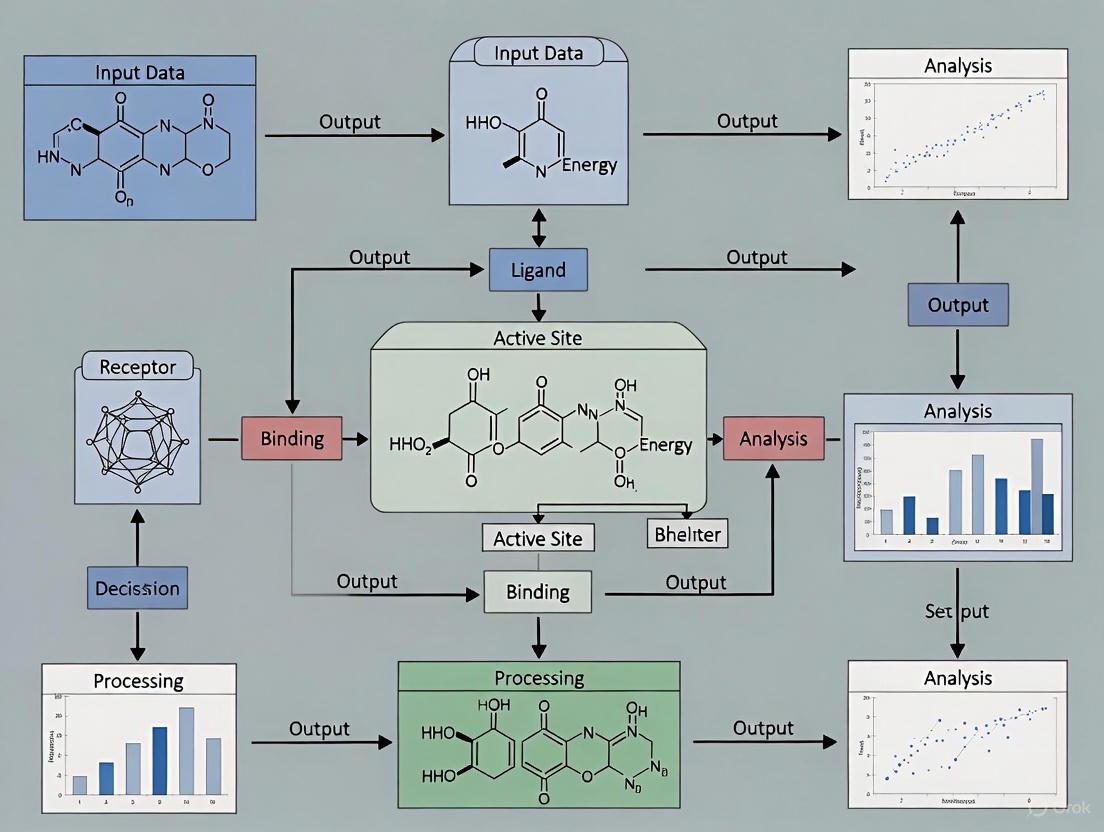
This comprehensive review explores cutting-edge methodologies and frameworks designed to enhance the robustness of multimodal learning systems when faced with missing data.
Robust Multimodal Learning: Advanced Strategies for Handling Missing Data in AI Systems
Abstract
This comprehensive review explores cutting-edge methodologies and frameworks designed to enhance the robustness of multimodal learning systems when faced with missing data. As multimodal AI increasingly transforms fields from healthcare to autonomous systems, the critical challenge of performance degradation under incomplete modality scenarios demands innovative solutions. We examine foundational concepts, methodological advances including dynamic fusion strategies and cross-modal representation learning, optimization techniques for real-world applications, and rigorous validation approaches. By synthesizing the latest research breakthroughs and empirical findings, this article provides researchers and drug development professionals with actionable insights for developing resilient multimodal systems capable of maintaining accuracy and reliability despite missing or incomplete data inputs.
Understanding the Missing Data Challenge in Multimodal AI Systems
Frequently Asked Questions (FAQs)
1. Why does model performance deteriorate when a modality is missing? Multimodal models are often designed with a multi-branch architecture, where each branch processes a specific modality. During training, these models develop a dependency on having a complete set of modalities to make predictions. When one modality is absent during inference, the architecture lacks the expected input, leading to significant performance drops because the model cannot properly execute its fused decision-making process [1].
2. What are the main real-world causes of missing modalities? In clinical and real-world settings, modalities can be missing due to several factors: sensor malfunctions or hardware limitations, privacy concerns that restrict data access, cost constraints in data collection, environmental interference during acquisition, and data transmission or storage issues. In healthcare, for example, it is common that not every patient has all types of tests (like genomic data or specific images) available [2] [3].
3. Is it a good solution to simply discard samples with missing modalities? While discarding samples with missing modalities is a common pre-processing step, it is generally not the optimal solution. This approach wastes the valuable information contained in the partially available data and reduces the effective training dataset size, which can increase the risk of model overfitting. Furthermore, a model trained only on complete data will not be equipped to handle missing modalities during testing [2].
4. What is the core idea behind making models robust to missing modalities? The overarching goal is to design models that can dynamically and robustly handle information from any number of available modalities during both training and testing. The aim is to maintain performance comparable to what is achieved with full-modality samples, without requiring retraining or significant architectural changes for every possible missing-modality scenario [2].
5. Can a model be robust to missing modalities even if it's trained only on complete data? Yes, with the right architectural choices, this is possible. Frameworks like Chameleon are designed to be trained using a complete set of modalities but remain resilient when modalities are missing during testing. This is achieved by unifying all input modalities into a common representation space (e.g., encoding everything into a visual format), which eliminates the dependency on modality-specific branches [1].
Troubleshooting Guides
Issue 1: Performance Drop with a Specific Missing Modality
Problem: Your multimodal model's accuracy falls significantly when one particular modality (e.g., text) is unavailable at test time.
Solutions:
- Implement Feature Modulation: Adapt a pre-trained multimodal network using a parameter-efficient method. This involves adding a small number of trainable parameters (e.g., fewer than 1% of the total model parameters) that modulate intermediate features to compensate for the missing modality. This approach has been shown to partially bridge the performance gap [4] [5].
- Use a Unified Representation Framework: Adopt a framework like Chameleon, which encodes all non-visual modalities (like text or audio) into a visual format. This allows a single visual network (like a CNN or Vision Transformer) to process any combination of available modalities, making the model inherently robust to missing inputs [1].
- Apply a Model Combination Strategy: Train an ensemble of networks, where each network is an expert for a specific combination of available modalities. During inference, you can select the network that corresponds to the available modalities [2].
Issue 2: Missing Modalities with Limited Labeled Data
Problem: You are working on a task that suffers from both missing modalities and a very small number of annotated training samples (the "low-data regime").
Solutions:
- Leverage In-Context Learning (ICL): Employ a retrieval-augmented in-context learning framework. This method retrieves relevant, full-modality samples from a support set and uses them as context for a transformer model to make predictions on a target sample that may have missing modalities. This data-dependent approach is highly sample-efficient [6].
- Explore Data Imputation Techniques: Generate or impute the missing modality data from the available modalities. This can be done at the raw data level (modality generation) or at the feature representation level (representation generation). Once the modality is imputed, downstream tasks can proceed as if all modalities were available [2].
Issue 3: Handling Arbitrary and Dynamic Modality Combinations
Problem: You need a single model that can handle unpredictable and constantly changing patterns of missing modalities across different clients or data samples, such as in a federated learning setting.
Solutions:
- Implement Reconfigurable Representations: As proposed for multimodal federated learning, use learnable client-side embedding controls. These embeddings act as reconfiguration signals that encode each client's specific data-missing pattern. They align a globally aggregated representation with the local client's context, allowing for dynamic adaptation [7].
- Utilize Coordinated Representation Learning: Train your model with specific constraints that align the representations of different modalities in a shared semantic space. This way, even if one modality is missing, its correlated representation can be inferred or approximated by the others, maintaining performance [2].
Experimental Protocols & Data
The following table summarizes the performance improvements achieved by various robust learning methods on different datasets.
Table 1: Performance Improvements of Robust Multimodal Methods
| Method / Approach | Key Metric | Dataset(s) | Performance Result |
|---|---|---|---|
| ICL-CA (In-Context Learning) [6] | Accuracy gain over best baseline with only 1% training data | Four multimodal datasets | 5.9% to 10.8% improvement across various missing states |
| Chameleon Framework [1] | Robustness to missing modalities | Six benchmark datasets (e.g., Hateful Memes, VoxCeleb) | Outperforms standard multimodal methods and shows superior resilience without data-centric optimization |
| Parameter-Efficient Adaptation [4] | Number of new parameters required | Five tasks across seven datasets | Achieves robustness with <1% of total model parameters |
| Multimodal Federated Learning [7] | Performance improvement under severe data incompleteness | Multiple federated benchmarks | Up to 36.45% performance improvement |
Detailed Experimental Protocol: Parameter-Efficient Adaptation
This protocol is based on the method described in "Robust Multimodal Learning With Missing Modalities via Parameter-Efficient Adaptation" [4] [5].
1. Objective: To bridge the performance gap caused by missing modalities during inference by adapting a pre-trained multimodal network with minimal trainable parameters.
2. Methodology:
- Pre-trained Model: Start with a multimodal network that has been pre-trained on a dataset with all modalities present.
- Adaptation Mechanism: Introduce lightweight adaptation modules (e.g., feature modulation layers) into the pre-trained network. These modules are designed to adjust the intermediate features of the available modalities to compensate for the missing one(s).
- Training Procedure:
- Artificially create training scenarios with missing modalities by masking out one or more modalities from the input data.
- Keep the vast majority of the pre-trained network's weights frozen.
- Only update the parameters of the newly introduced adaptation modules.
- Use the original task's loss function (e.g., cross-entropy for classification) to train the model.
3. Evaluation:
- Test the adapted model on a held-out test set where modalities are intentionally missing.
- Compare its performance against (a) the original pre-trained model (which suffers a large drop) and (b) independently trained networks dedicated to specific modality combinations.
Detailed Experimental Protocol: In-Context Learning for Data Scarcity
This protocol is based on the method described in "Borrowing treasures from neighbors: In-context learning for multimodal learning with missing modalities and data scarcity" [6].
1. Objective: To address the dual challenge of missing modalities and limited annotated data by leveraging the in-concontext learning ability of transformer models.
2. Methodology:
- Model Architecture: Utilize a transformer-based model capable of in-context learning.
- Retrieval-Augmented Setup:
- Maintain a support set of full-modality data samples.
- For a given target sample with missing modalities, retrieve the most relevant full-modality samples from the support set.
- Input Formulation: Construct the input to the transformer by concatenating the retrieved full-modality samples (context) with the target sample that has missing modalities.
- Training/Learning:
- The model learns to use the context from the retrieved full-modality samples to understand the task and fill in the informational gaps for the target sample.
- This approach is highly sample-efficient as it relies on a data-dependent paradigm rather than intensive parameter updates.
3. Evaluation:
- Evaluate the model in a low-data regime where only a small fraction (e.g., 1%) of the training data is available.
- Measure classification accuracy on both full-modality and missing-modality test data.
- Assess the reduction in the performance gap between full-modality and missing-modality data compared to baseline methods.
Workflow Diagrams
Diagram 1: Chameleon Framework Workflow
Chameleon Framework Flow
Diagram 2: In-Context Learning for Missing Modalities
In-Context Learning Flow
The Scientist's Toolkit: Research Reagent Solutions
Table 2: Essential Materials and Methods for Robust Multimodal Learning
| Item / Reagent | Function / Purpose | Example Use Case |
|---|---|---|
| Parameter-Efficient Adaptation Modules | Lightweight neural network components added to a pre-trained model to adjust features and compensate for missing inputs with minimal new parameters. | Fine-tuning large pre-trained multimodal models (e.g., ViLT) to be robust to missing modalities without full retraining [4] [5]. |
| Modality Encoding Scheme | An algorithm that transforms non-visual data (text, audio) into a visual format (e.g., a 2D feature map), enabling a unified visual processing pipeline. | The core of the Chameleon framework, allowing a single visual network to process any combination of text, audio, and images [1]. |
| In-Context Learning (ICL) with Retrieval | A data-dependent framework that uses a support set of full-modality examples to provide context for a transformer model making predictions on incomplete samples. | Tackling multimodal tasks in data-scarce regimes where collecting large annotated datasets is expensive or impractical [6]. |
| Multimodal Datasets with Natural Missingness | Real-world datasets where a significant portion of samples have one or more modalities missing, essential for training and evaluating model robustness. | TCGA cancer datasets (genomic & image data) [3], social media datasets (text & image) [1], and audio-visual datasets [1]. |
| Reconfigurable Representation Framework | A set of learnable embeddings that encode a client's specific data-missing pattern, allowing a global model to adapt to local data heterogeneity. | Multimodal federated learning scenarios where different clients possess different and incomplete subsets of modalities [7]. |
Frequently Asked Questions (FAQs)
1. What are the most common causes of missing data in real-world multimodal experiments? Missing data in multimodal experiments frequently arises from sensor malfunctions (e.g., device failure, battery drain), costly or invasive data collection procedures (e.g., skipping expensive PET scans in Alzheimer's studies), privacy concerns, data loss during transmission, and human error (e.g., patients forgetting to fill out surveys) [8] [2]. In pharmaceutical manufacturing, equipment malfunctions and unplanned downtime are significant contributors [9].
2. Why is simply removing samples with missing data a problematic strategy? Deleting records with missing data, known as listwise deletion, is a common but flawed approach. It wastes valuable information present in the available modalities and can introduce significant bias if the missingness is not random, thereby reducing the reliability and generalizability of the resulting model [8] [2]. It also fails to prepare the model for real-world scenarios where missing data occurs at test time.
3. What is the fundamental difference between 'random missing' data and a 'missing modality'?
- Random Missing: Refers to sporadic, isolated missing values within a single modality (e.g., a few time-series sensor readings are lost) [8].
- Missing Modality: Describes the scenario where an entire modality is absent for a data sample (e.g., a patient completely lacks MRI data) [8] [2]. This presents a more significant architectural challenge for multimodal systems.
4. How can I make my multimodal model robust to a modality being entirely absent during testing? Several advanced methodological families are designed for this purpose, moving beyond simple imputation. Key strategies include:
- Modality Imputation: Generating plausible data for the missing modality based on the available ones [2].
- Representation-Focused Models: Learning a shared semantic space where representations from different modalities are aligned, or generating the missing modality's representation directly [2].
- Architecture-Focused Models: Designing flexible networks (e.g., using parameter-efficient adaptation) that can dynamically adjust to whichever modalities are present [4] [2].
- Unification Frameworks: Encoding all modalities into a common format (e.g., transforming text and audio into a visual representation) so the model always processes a single, consistent input type, making it inherently robust to absence [1].
5. What is a 'data gap' and how does it differ from typical missing data? A data gap does not refer to a few missing values in an otherwise populated dataset. Instead, it describes a situation where an entire data series was never collected or is not available at a useful granularity, for a price, or with acceptable timeliness [10]. For example, a complete lack of data on the nutritional content of school meals in a region is a data gap, which fundamentally limits the analysis that can be performed.
Troubleshooting Guides
Issue 1: Handling Missing Modalities During Model Inference
Problem: Your trained multimodal model experiences a severe performance drop when one or more modalities are missing during deployment, which was not accounted for during training.
Diagnosis: This is a classic symptom of a model that has developed a dependency on a complete set of modalities due to its multi-branch design and training procedure [1].
Solution Strategies:
| Solution Category | Description | Key Techniques | Consideration |
|---|---|---|---|
| Parameter-Efficient Adaptation [4] | Fine-tunes a small subset of parameters (e.g., <1% of total) in a pre-trained model to compensate for missing inputs. | Feature modulation, adapter layers. | Highly parameter-efficient; applicable to a wide range of modality combinations. |
| Unification via Visual Encoding [1] | Encodes all non-visual modalities (text, audio) into a visual format (e.g., via embeddings reshaped into 2D), enabling a single visual network. | Embedding extraction, 2D reshaping. | Simplifies architecture; inherently robust; may require modality-specific encoders. |
| Fusion-Based Imputation [8] | Uses information from available modalities to impute the missing one before fusion. | Early, Intermediate, or Late Fusion strategies. | Can be computationally expensive; risk of introducing noise if imputation is poor. |
Experimental Protocol for Robustness Validation:
- Dataset Preparation: Use a multimodal dataset (e.g., from healthcare [8] or affective computing [2]).
- Create Test Splits: Generate multiple test sets where modalities are systematically ablated (e.g., text-only, image-only, audio-only).
- Model Training: Train your proposed robust model (e.g., using the Chameleon framework [1] or parameter-efficient adaptation [4]).
- Benchmarking: Compare your model's performance against a baseline model (trained on complete data only) across all test splits.
- Metrics: Report key metrics (e.g., Accuracy, F1-Score) for each test condition to demonstrate robustness. The goal is to minimize the performance gap between complete and missing-modality scenarios.
The logical flow for diagnosing and addressing missing modality robustness is outlined below:
Issue 2: Addressing Fundamental Data Gaps in a Research Domain
Problem: You identify a critical lack of data necessary to investigate your research question (e.g., no data on childhood obesity drivers in a specific region) [10].
Diagnosis: This is a data gap, not a simple missing data problem. The required information was never systematically collected.
Solution Strategy: A Five-Step Data Gap Mapping Process [10]
This methodology provides a structured way to identify and prioritize missing data at a macro level.
- Map Routes to Impact: Define the key areas of focus for your research mission (e.g., reducing obesity by improving school meals, reducing unhealthy advertising).
- Find the Purpose of Data: For each focus area, identify the specific data needed to track progress towards your intermediate goals (e.g., data to track the healthiness of school meals over time).
- Build a Vision for Ideal Data: Imagine the perfect dataset that would fulfill your data needs, without considering current limitations (e.g., a national database of all school meal menus with nutritional information).
- Uncover Existing Data: Critically assess available data against your "ideal" vision. Ask: Is it available at the right granularity? Is it accurate? Is it timely? This exposes partial or complete gaps.
- Describe and Prioritize Gaps: For each identified gap, assign a priority (Low/Medium/High) based on:
- Time Sensitivity: Is it needed for a current policy decision?
- Potential Impact: How much could this data advance the field?
- Effort Required: How difficult is it to collect?
The following chart visualizes this iterative process:
The Scientist's Toolkit: Research Reagent Solutions
This table details key methodological "reagents" for building robust multimodal systems.
| Research Reagent | Function in Experiment | Key Characteristics |
|---|---|---|
| Fusion Strategies [8] | Defines how and when information from different modalities is combined, which is crucial for imputation. | Early Fusion: Combine raw data. Intermediate Fusion: Merge features in hidden layers. Late Fusion: Fuse model outputs/predictions. |
| Modality Imputation Methods [2] | Generates plausible data for a missing modality, allowing standard full-modality models to be used. | Modality Composition: Combines available modalities. Modality Generation: Uses generative models (e.g., VAEs, GANs). |
| Shared Representation Learning [2] [1] | Aligns features from different modalities into a common semantic space, enabling cross-modal understanding. | Uses constraints (e.g., contrastive loss) to ensure representations of the same concept are close, regardless of modality. |
| Parameter-Efficient Adaptation [4] | Fine-tunes a minimal number of parameters in a pre-trained network to adapt it to missing modality scenarios. | Methods include feature modulation or adapter layers. Requires <1% of total parameters, making it highly efficient. |
| Unification Encoding [1] | Transforms all input modalities into a single, consistent format (e.g., images) for processing by a single model. | Encodes non-visual data (text, audio) as 2D representations. Makes the model inherently robust to modality absence. |
Troubleshooting Guide: Diagnosing Multimodal Learning Issues
This guide helps you diagnose and address two common challenges in multimodal learning research: modality missingness (the absence of entire data modalities) and modality imbalance (where one modality dominates the learning process).
Issue: Poor Model Performance with Incomplete Data
- Problem Description: Your model's performance degrades significantly when one or more data modalities (e.g., audio from a video file, a tabular clinical feature set) are missing during inference, even if it performs well on complete data.
- Diagnosis Check: This is a classic symptom of Modality Missingness. It indicates that your model has not learned to make robust predictions unless all data streams are present and has failed to leverage the available information effectively [11] [12].
- Recommended Solution: Implement a modality-resilient framework. The DREAM framework uses a sample-level dynamic modality assessment to direct the selective reconstruction of missing modalities and a soft masking fusion strategy for adaptive integration [11]. Alternatively, employ improved modality dropout during training. Using learnable modality tokens instead of fixed zero placeholders enhances the model's awareness and handling of missing inputs [12].
Issue: Model Over-Reliance on a Single Modality
- Problem Description: Your model appears to "ignore" one or more modalities, basing its decisions primarily on a single, dominant data type (e.g., relying on audio over visual cues in emotion recognition). Performance may not surpass, and could even be worse than, a unimodal model using only the dominant modality [13] [14].
- Diagnosis Check: This indicates Modality Imbalance. The model's optimization process has been skewed, allowing a modality that is easier to learn from to overshadow others. Recent research shows this imbalance manifests not just during training but also systematically at the decision layer due to intrinsic disparities in feature-space and decision-weight distributions [13].
- Recommended Solution: Move beyond simply equalizing modality contributions. Pursue a dataset-aware Utopia Contribution Distribution (UCD), which estimates the optimal contribution ratio for each modality based on the specific dataset, rather than forcing an equal balance. Align the model's Factual Contribution Distribution (FCD) with this UCD during training [14]. For Large Multimodal Models (LMMs), techniques like Modality-Balancing Preference Optimization (MBPO) can be used, which generates hard negatives to counteract the model's inherent linguistic bias [15].
Issue: Handling Data that is Both Missing and Imbalanced
- Problem Description: You are working with a real-world dataset where some samples have missing modalities, and the available modalities have inherently different levels of predictive power.
- Diagnosis Check: You are facing the combined challenge of missingness and imbalance. This is a common scenario in clinical and real-world data [16] [12].
- Recommended Solution: Adopt a unified framework that addresses both issues simultaneously. The DREAM framework is explicitly designed for this, as it dynamically recognizes missing or underperforming modalities and adaptively fuses the available ones based on their estimated contributions [11]. Another approach is to combine simultaneous modality dropout for robustness with contrastive multimodal fusion that binds unimodal and fused representations to improve learning from all modalities [12].
Experimental Protocols for Robust Multimodal Research
Integrating the following methodologies into your experimental pipeline can systematically enhance model robustness.
Protocol 1: Improved Modality Dropout with Contrastive Learning
This protocol enhances robustness to missingness and improves unimodal representations [12].
- Model Setup: Use a standard multimodal architecture with pretrained, frozen unimodal encoders, a lightweight fusion MLP, and a task head.
- Simultaneous Dropout Training: Instead of randomly sampling modality subsets, explicitly supervise all combinations. The loss function is:
ℒ_smd = -log p(yᵢ | x_cᵢ, x_tᵢ, θ) - λ ∑_{j∈M} log p(yᵢ | x_jᵢ, θ)whereMis the set of modalities andλis a balancing hyperparameter. - Integrate Learnable Tokens: Replace the traditional fixed zero matrices (
0_c,0_t) used for missing modalities with learnable modality tokens (E_c,E_t). This helps the model generalize better to missingness. - Apply Contrastive Learning: Use a supervised contrastive loss that includes not only unimodal representations (
z_c,z_t) but also the fused multimodal representation (z_f). This encourages better alignment and binding of concepts across representations.
Protocol 2: Estimating and Aligning with Utopia Contribution
This protocol addresses imbalance by finding the optimal contribution target for a dataset [14].
- Estimate Utopia Contribution Distribution (UCD):
- For each modality
m, train a model with and without that modality. - The UCD for modality
m,π_m*, is proportional to the performance change (e.g., increase in accuracy or decrease in loss) when the modality is included. Formally, it's derived from the modality's impact on population risk. - Normalize the contributions so that
∑ π_m* = 1.
- For each modality
- Estimate Factual Contribution Distribution (FCD):
- For a given model, estimate the factual contribution of each modality to a prediction using a model-agnostic method like mutual information.
- The FCD for modality
mis the proportion of information its representation contributes to the final fused representation.
- Training Objective: Add a Kullback–Leibler (KL) divergence loss term to the main task loss to align the FCD with the pre-defined UCD:
ℒ_total = ℒ_task + ℒ_KL(FCD || UCD).
Protocol 3: Agentic Framework for Missing Modality Generation (AFM2)
This protocol uses foundation models to reconstruct missing modalities in a training-free manner [17].
- Agent Design: Deploy three collaborative agents:
- Miner: A foundation model (e.g., GPT-4o) that adaptively extracts fine-grained semantic cues from the available modalities.
- Generator: A generative model (e.g., Stable Diffusion) that synthesizes the missing modality using the miner's guidance.
- Verifier: A model (e.g., ImageBind) that evaluates the generated candidates for semantic alignment with the input.
- Self-Refinement Loop:
- The miner produces a detailed description from the available context.
- The generator produces multiple candidate outputs.
- The verifier selects the best candidate. If no candidate meets a quality threshold, the guidance is refined and the process repeats.
The tables below summarize key experimental findings from recent studies on modality imbalance and missingness.
Table 1: Decision-Layer Imbalance Measurements on Audio-Visual Datasets (CREMAD & Kinetic-Sounds). This data quantifies the inherent disparity in decision weights and output logits between audio and video modalities, even after sufficient pre-training, demonstrating that imbalance is a fundamental property beyond optimization dynamics [13].
| Dataset | Modality | Avg. Weight (×10⁻²) | Avg. Logits (×10⁻²) |
|---|---|---|---|
| CREMAD | Audio | 3.56 | 2.14 |
| Video | 1.81 | 1.48 | |
| Kinetic-Sounds | Audio | 3.63 | 2.47 |
| Video | 2.73 | 2.02 |
Table 2: Performance of the DREAM Framework on Benchmark Datasets. The results demonstrate the framework's effectiveness in handling both modality missingness and imbalance, showing superior performance compared to other models, especially under the challenging condition of a single available modality [11].
| Dataset | Model | Full Modality Accuracy | Single Modality Accuracy |
|---|---|---|---|
| IEMOCAP | DREAM | 68.9 | 63.5 |
| MISA | 65.1 | 58.3 | |
| MulT | 66.7 | 59.8 | |
| CMU-MOSEI | DREAM | 83.4 | 79.2 |
| MISA | 80.5 | 74.1 | |
| MulT | 81.6 | 75.0 |
The Scientist's Toolkit: Research Reagent Solutions
Table 3: Essential materials and methods for building robust multimodal models.
| Research Reagent | Function & Explanation |
|---|---|
| Learnable Modality Tokens [12] | A replacement for fixed zero-placeholders in modality dropout. These learnable parameters improve the model's "awareness" of which modality is missing, leading to more robust representations when data is incomplete. |
| Utopia Contribution Distribution (UCD) [14] | A dataset-aware optimization target that defines the ideal contribution proportion for each modality. It prevents the suboptimal performance that can result from blindly forcing all modalities to contribute equally. |
| Adversarial Negative Mining [15] | A data curation method for preference optimization. It generates "hard negative" responses that are misled by a dominant modality's bias (e.g., language), teaching the model to rely more on the neglected modality (e.g., vision). |
| Agentic Framework (AFM2) [17] | A training-free, planner-based system that uses foundation models as "agents" to mine cross-modal cues, generate missing data, and verify output quality. It is particularly useful for reconstructing raw missing modalities. |
| Simultaneous Modality Dropout [12] | A training strategy that explicitly calculates loss for every possible combination of available modalities in a single iteration. This ensures the model is directly optimized for all missing-data scenarios, leading to more stable training. |
Visual Workflows for Multimodal Learning
The following diagrams illustrate key workflows and relationships for tackling modality imbalance and missingness.
Diagram 1: Analyzing Decision-Layer Imbalance
This workflow outlines the experimental procedure for identifying and diagnosing modality imbalance at the decision layer of a model [13].
Diagram 2: Handling Missing Modalities with AFM2
This diagram shows the iterative, self-refining process of the Agentic Framework for generating missing modalities [17].
Diagram 3: Utopia vs. Factual Contribution Alignment
This chart illustrates the core principle of aligning a model's actual modality use with the ideal target for a given dataset [14].
Frequently Asked Questions (FAQs)
Q1: Is it always bad if one modality contributes more than others?
A: No. Forcing equal contribution can be counterproductive [14]. The goal is a relative balance aligned with the "Utopia Contribution" for your dataset. A modality with inherently higher predictive power should often have a larger weight. The problem is a systematic bias that prevents weaker modalities from contributing effectively, even in contexts where they are informative [13].
Q2: Can't I just discard samples with missing data?
A: "Complete-case analysis" (dropping samples with any missing data) is rarely appropriate [18]. It assumes the remaining data is representative, which is often false, and can introduce severe bias, reduce statistical power, and exclude marginalized populations whose data is more likely to be missing [18]. Using robust methods like modality dropout or imputation is statistically and ethically preferable.
Q3: Are modality imbalance and missingness independent problems?
A: No, they are deeply interconnected. Missingness can exacerbate imbalance (e.g., if the dominant modality is frequently missing), and solutions must often address both [11] [12]. Frameworks like DREAM are explicitly designed to handle this combined challenge through dynamic assessment and fusion.
Q4: What is the biggest limitation in using foundation models to generate missing modalities?
A: Current foundation models often struggle with fine-grained semantic extraction and lack robust verification mechanisms, which can lead to semantically misaligned or low-quality generated content [17]. The proposed agentic framework (AFM2) with its miner and verifier agents is a step toward mitigating these issues.
Frequently Asked Questions (FAQs)
1. Why does model performance deteriorate when a modality is missing? Multimodal models typically rely on a multi-branch architecture, where each branch processes a specific modality. During training, these models develop a dependency on having a complete set of modalities to form accurate joint representations. When one branch receives no input due to a missing modality, the model cannot function as designed, leading to significant performance drops [1]. Furthermore, models may learn shortcuts from spurious correlations present only in the complete training data, failing to generalize to incomplete data scenarios [11].
2. What are the common types of modality missingness encountered in real-world data? Missing modalities can occur in various patterns:
- Missing Completely at Random (MCAR): The absence of a modality is independent of any observed or unobserved data. This is often the simplest pattern to handle.
- Missing at Random (MAR): The probability of a modality being missing depends on other observed variables in the data.
- Missing Not at Random (MNAR): The missingness is related to the unobserved values of the missing modality itself. This is the most challenging scenario, common in clinical settings where a specific test is not performed because a patient's symptoms suggest it is unnecessary [19] [3].
3. Can't I just discard samples with missing modalities during training? While common, this practice is suboptimal. Discarding samples wastes valuable data and can drastically reduce your training dataset size, increasing the risk of overfitting. In clinical studies, this can also introduce selection bias, as the "complete" dataset may no longer be representative of the real patient population [3]. Modern methods aim to utilize all available data.
4. How does modality imbalance differ from modality missingness? Modality missingness refers to the complete absence of one or more modalities for a given data sample. Modality imbalance, however, occurs when all modalities are present but contribute unequally to the final prediction. A dominant modality can cause the model to overlook subtle but important signals from weaker modalities, also leading to suboptimal performance [11].
5. What is a common baseline approach to handle a missing modality during inference? A simple baseline is zero-imputation, where the missing modality is replaced with a zero vector. However, this can create a distribution shift between training and inference, as the model encounters an input it was not trained on. More advanced methods dynamically adjust the fusion strategy or reconstruct a placeholder for the missing modality [11].
Troubleshooting Guides
Issue: Performance Drop with Modally-Incomplete Test Data
Problem: Your model, which was trained on a complete multimodal dataset, suffers a significant drop in accuracy when one or more modalities are missing during testing.
Solution: Implement a robust multimodal learning framework designed to handle missingness. Below is a comparison of strategies documented in recent literature.
- Table 1: Comparison of Robust Multimodal Learning Frameworks
| Framework / Method | Core Principle | Handling Missing Modalities During... | Key Advantage(s) |
|---|---|---|---|
| DREAM [11] | Dynamic modality assessment & selective reconstruction; soft masking fusion. | Training & Inference | Sample-level dynamic adaptation; no need for explicit missing-modality annotations. |
| Chameleon [1] | Unifies all modalities into a visual common space via encoding. | Training & Inference | Single-branch network eliminates dependency on modality-specific branches. |
| CPM-Nets Fusion [3] | Learns a complete, structured joint representation via reconstruction and classification loss. | Training & Inference | Can handle arbitrary missing patterns; uses available modalities to reconstruct the hidden representation. |
| Ma et al. Strategy [1] | Multi-task optimization to improve Transformer robustness. | Training & Inference | Reduces dependency on complete modality set without complex fusion schemes. |
Experimental Protocol for Robust Training: A common protocol to evaluate these methods involves artificially creating missing data in a complete dataset.
- Dataset: Start with a benchmark dataset where all samples have all modalities (e.g., a multimodal medical dataset [3] or a text-visual dataset [1]).
- Data Splitting: Split the data into training, validation, and test sets.
- Simulate Missingness: For the training set, randomly discard one modality (e.g., the text or image) from a certain percentage (e.g., n% where n=25, 50, 75) of the samples. Keep the validation and test sets complete for initial evaluation.
- Model Training: Train the robust model (e.g., Chameleon, DREAM) using all available data, including the samples with missing modalities.
- Evaluation:
- Test the model on a complete-modality test set.
- Test the model on a missing-modality test set, where modalities are systematically dropped to simulate real-world inference scenarios.
- Metrics: Compare accuracy, F1-score, etc., against a baseline model trained only on complete data.
The following diagram illustrates the core architectural difference between a standard multimodal model and a robust framework like Chameleon.
Robust vs. Standard Multimodal Architecture
Issue: Modality Imbalance and Dominance
Problem: Even when all modalities are present, one modality (e.g., image) dominates the prediction, causing the model to underutilize other important modalities (e.g., genomic data).
Solution: Implement a dynamic fusion strategy that adaptively weights the contribution of each modality based on the input sample.
- Table 2: Quantitative Results on Benchmark Datasets (Classification Accuracy)
| Dataset | Task | Complete Modality | Missing Modality (Text) | Missing Modality (Image) |
|---|---|---|---|---|
| Hateful Memes [1] | Binary Classification | 76.5 (Chameleon) | 73.1 (Chameleon) | 70.2 (Chameleon) |
| UPMC Food-101 [1] | Food Classification | 91.2 (Chameleon) | 89.8 (Chameleon) | 90.5 (Chameleon) |
| TCGA Glioma [3] | Grade Classification (3-way) | 84.4 (Pathomic Fusion w/ CPM) | 80.1 (Pathomic Fusion w/ CPM) | 82.9 (Pathomic Fusion w/ CPM) |
Experimental Protocol for Dynamic Fusion (DREAM framework):
- Modality Assessment: For each input sample, a lightweight network estimates the quality or "contribution score" of each available modality.
- Selective Reconstruction: If a modality is identified as missing or of very low quality, the model can trigger a generator to reconstruct a plausible version of it, guided by the available modalities.
- Soft Masking Fusion: Instead of a fixed fusion rule (e.g., concatenation), a soft mask is generated based on the contribution scores. This mask adaptively modulates the features from each modality before they are fused, allowing the model to focus on more reliable modalities.
- Joint Training: The assessment, reconstruction, and fusion modules are trained end-to-end with the main task objective.
The workflow for a dynamic fusion framework like DREAM is illustrated below.
Dynamic Fusion Workflow in DREAM
The Scientist's Toolkit
- Table 3: Research Reagent Solutions for Multimodal Experiments
| Reagent / Material | Function in Experiment |
|---|---|
| Convolutional Neural Network (CNN) [3] | Extracts localized, hierarchical features from image-based data (e.g., histological slides, MRI scans). |
| Graph Convolutional Network (GCN) [3] | Models relational and structural information within data, such as cell-to-cell interactions in tissue graphs or social networks. |
| Self-Normalizing Network (SNN) [3] | A type of feedforward network that is robust to overfitting and is effective for processing tabular data, such as genomic features. |
| Kronecker Product [3] | A mathematical operation used for multimodal fusion that captures all pairwise interactions between feature vectors of different modalities. |
| Canonical Correlation Analysis (CCA) Loss [3] | A supervision signal that encourages the model to learn maximally correlated representations across different modalities. |
| Reconstruction Network (in CPM-Nets) [3] | A module that learns to reconstruct all modalities from a common hidden representation, enforcing the representation to be complete and informative. |
| Modality Encoder (in Chameleon) [1] | Transforms non-visual modalities (text, audio) into a visual format (e.g., 2D feature maps), enabling processing by a single visual network. |
Frequently Asked Questions (FAQs)
Q1: What are the fundamental types of missing data patterns I might encounter?
The foundational taxonomy of missing data mechanisms, as defined by Rubin, is crucial for diagnosing and treating incomplete data. While recent research suggests moving beyond these for complex, multivariable missingness, they remain essential knowledge [20]. The table below summarizes the three core types.
Table 1: Fundamental Missing Data Mechanisms
| Mechanism | Acronym | Formal Definition | Simple Explanation | Common Example |
|---|---|---|---|---|
| Missing Completely at Random | MCAR | Missingness is independent of both observed and unobserved data. | The fact that a value is missing is a purely random event. | A lab sample is dropped, or a survey form is lost in the mail [21]. |
| Missing at Random | MAR | Missingness depends on observed data but not on unobserved data. | Missingness can be explained by other complete variables in your dataset. | In a health study, older patients are more likely to have missing blood pressure readings; age is fully observed [22] [20]. |
| Missing Not at Random | MNAR | Missingness depends on the unobserved value itself. | The reason for the missing value is directly linked to what that value would have been. | Individuals with very high income are less likely to report it in a survey [20]. |
Q2: My data has multiple missing variables. What patterns should I look for beyond MCAR, MAR, and MNAR?
With multiple incomplete variables, the overall pattern of missingness becomes critical. These patterns describe which variables are missing together and influence which imputation methods are most effective [23].
Table 2: Common Missing Data Patterns in Multivariable Datasets
| Pattern | Description | Implication for Analysis |
|---|---|---|
| Univariate | Only a single variable has missing data. | A simpler special case of monotone missingness [23]. |
| Monotone | Variables can be ordered so that if Y~j~ is missing, all subsequent variables Y~k~ (k>j) are also missing. | Common in longitudinal studies with patient drop-out. Allows for computational savings in imputation [23]. |
| Non-Monotone (General) | Missing data occurs in an arbitrary, non-systematic way across variables. | The most common and complex pattern. Requires general imputation methods like Multiple Imputation by Chained Equations (MICE) [23]. |
The following diagram illustrates the logical relationship between these patterns and their characteristics.
Q3: How can I visually diagnose the missingness pattern in my dataset?
Visual diagnostics are a powerful first step in understanding the structure and scale of your missing data problem [21]. They help answer how much data is missing, where it is missing, and whether the gaps are isolated or systematic.
Table 3: Essential Visual Diagnostics for Missing Data
| Visualization Technique | What It Shows | How It Helps |
|---|---|---|
| Missingness Bar Chart | The amount of missing data (count or percentage) for each variable. | Provides immediate triage, showing which columns dominate the missing-data problem [21]. |
| Missingness Matrix | A pixel-based view where each row is a record and each column is a variable; white pixels indicate missing values. | Reveals if missingness is clustered in specific records (horizontal bands) or variables (vertical bands), hinting at systematic issues [21]. |
| Heatmap of Missingness Correlation | Pair-wise correlations between the "is missing" indicators of different variables. | Identifies groups of variables that tend to be missing together (e.g., all basement-related features in a housing dataset) [21]. |
| UpSet Plot | The frequency of specific combinations of missing columns. | Goes beyond pairs to show exact sets of variables that are missing together in the same rows, confirming blocks of missingness [21]. |
Q4: What quantitative metrics can I use to assess how connected my missing data is?
Beyond visuals, statistics like influx and outflux coefficients provide quantitative measures of how each variable is connected to the observed and missing data, informing predictor selection for imputation [23].
- Influx Coefficient (I~j~): Measures how well the missing entries in a variable are connected to the observed data in other variables. A higher influx means the variable is better connected to the observed data and might be easier to impute accurately [23].
- Outflux Coefficient (O~j~): Measures the potential usefulness of a variable for imputing other variables. A higher outflux indicates that the variable is observed in many records where other variables are missing, making it a good candidate predictor [23].
Troubleshooting Guides
Problem: My multimodal model's performance drops severely when one or more modalities (e.g., text, audio) are missing at test time.
Background
Multimodal learning methods often use a multi-branch design that becomes reliant on having a complete set of modalities, leading to significant performance deterioration during inference if a modality is missing [11] [1].
Diagnosis
This is a classic symptom of a model architecture that is not robust to missing modalities. The model's design assumes concurrent presence of all modalities for training and has not learned to adapt when this assumption is violated [1].
Solution Protocols
Several modern frameworks have been proposed to create models that are inherently more robust to missing modalities.
Apply a Unification and Alignment Framework (e.g., Chameleon)
- Core Idea: Encode all input modalities (both visual and non-visual) into a common visual representation space. This allows a single visual network to process any combination of available modalities [1].
- Methodology:
- Encoding: Transform non-visual modalities (e.g., text, audio) into a visual format. This is often done by extracting modality-specific embeddings and reshaping them into a 2D image-like structure [1].
- Training: Train a standard visual network (e.g., CNN, Vision Transformer) on these unified representations.
- Inference: The model can now accept any subset of modalities, as each is processed through the same common interface.
Implement a Dynamic Recognition and Enhancement Framework (e.g., DREAM)
- Core Idea: Use a sample-level dynamic modality assessment mechanism to identify missing or underperforming modalities and direct their selective reconstruction. Then, use a soft masking fusion strategy to adaptively integrate modalities based on their estimated contributions [11].
- Methodology:
- Assessment: A lightweight network component evaluates the presence and quality of each input modality for every sample.
- Reconstruction: Missing or low-quality modalities are reconstructed based on the available, reliable modalities.
- Fusion: A fusion network incorporates the original and reconstructed modalities using soft masks that weight each modality's contribution, leading to more robust predictions [11].
Utilize Learnable Client-Side Embeddings (e.g., for Federated Learning)
- Core Idea: In federated learning where data missingness patterns can vary greatly across clients, use learnable client-side embedding controls to reconfigure a global model to align with each client's local data context [7].
- Methodology:
- Each client learns a set of embeddings that encodes its unique data-missing pattern.
- These embeddings act as signals to adjust the globally aggregated model, aligning it with the client's specific available modalities.
- Embeddings from clients with similar missingness patterns can be aggregated to create more robust reconfiguration signals [7].
The workflow below illustrates how these solutions integrate into a robust multimodal learning pipeline.
Problem: I need to handle missing confounder data in a real-world evidence study (e.g., using EHR data), and I'm unsure how to choose an analysis method.
Background
Real-world data, like Electronic Health Records (EHR), frequently contain missing confounding variables (e.g., lab values, BMI). Simply using Complete Case Analysis is common but often inappropriate, as it assumes MCAR and can lead to biased results [22].
Diagnosis
The choice of analysis method should be informed by a systematic investigation of the missing data pattern and its likely mechanism, rather than defaulting to the simplest approach [22].
Solution Protocol: Apply a Structured Missing Data Investigation (SMDI) Toolkit
This protocol is based on a real-world pharmacoepidemiology study that used the SMDI R package to handle missing HbA1c and BMI data in an EHR-Medicare linked dataset [22].
Table 4: Protocol for Handling Missing Confounders using the SMDI Toolkit
| Step | Action | Details from Case Study [22] |
|---|---|---|
| 1. Characterize | Use descriptive functions to visualize missingness proportions and patterns. | The study noted high missingness for key confounders: HbA1c (63.6%) and BMI (16.5%). |
| 2. Diagnose | Run diagnostic tests to understand the missingness mechanism. | Tests compared patient characteristics and outcomes between those with and without observed values. They assessed if missingness could be predicted from observed data and if it was differential with respect to the outcome. |
| 3. Decide | Based on diagnostics, select a missingness mitigation approach. | The study found evidence that missingness could be described using observed data (suggestive of MAR). This justified the use of Multiple Imputation by Chained Equations (MICE) using random forests. |
| 4. Implement & Validate | Execute the chosen method and check its impact. | The use of multiple imputation resulted in effect estimates that showed improved alignment with previous clinical studies, validating the approach. |
Problem: The traditional MCAR/MAR/MNAR classification feels insufficient for guiding my analysis of a complex dataset with multiple missing variables.
Background
You are correct. With multiple incomplete variables, the plausibility of the MAR assumption is difficult to assess and is more stringent than often appreciated. Furthermore, this classification does not provide a direct guide to the best analytical method, as MAR/MCAR are not always necessary conditions for consistent estimation with methods like Complete Records Analysis [20].
Diagnosis
You are dealing with multivariable missingness, and a more nuanced approach is needed to determine if your target estimand (the parameter you want to estimate) can be reliably recovered from the incomplete data.
Solution Protocol: A Recoverability-Focused Approach using m-DAGs
This modern approach uses causal diagrams to map assumptions and determine if your target estimand is "recoverable" [24] [20].
- Define the Estimand: Precisely specify the population parameter you wish to estimate and how you would estimate it with complete data [20].
- Draw a Missingness DAG (m-DAG): Create a Directed Acyclic Graph that includes:
- All analysis variables (exposure, outcome, confounders).
- Missingness indicators (e.g., R~Y~, R~X~) for each incomplete variable.
- Arrows showing assumed causal relationships, including common causes of variables and their missingness [20].
- Determine Recoverability: Use graphical rules and theoretical results to determine if the estimand can be consistently estimated from the observed data patterns without external information. If it is recoverable, a method like Multiple Imputation or a carefully conducted Complete Records Analysis may be valid. If not, a sensitivity analysis is required [24] [20].
The Scientist's Toolkit
Table 5: Key Research Reagents and Solutions for Missing Data Research
| Tool / Reagent | Type | Primary Function | Example Use Case |
|---|---|---|---|
| SMDI Toolkit | R Package | Provides an integrated interface to characterize missing data patterns and conduct diagnostic tests for identifying missingness mechanisms [22]. | Informing the choice between complete-case analysis or multiple imputation in observational studies [22]. |
mice R Package |
R Package | A comprehensive library for performing Multiple Imputation by Chained Equations (MICE), a robust method for handling missing data under the MAR assumption [23]. | Imputing missing confounders like HbA1c and BMI in clinical datasets to reduce bias in treatment effect estimates [22] [23]. |
missingno Python Library |
Python Library | Provides a suite of visualizations (matrix, heatmap, dendrogram) to quickly diagnose and explore the patterns of missingness in a dataset [21]. | Initial exploratory data analysis to identify blocks of variables that are missing together (e.g., all basement-related features in a housing dataset) [21]. |
| Chameleon Framework | Deep Learning Framework | A multimodal learning framework that unifies different modalities into a common visual representation, making the model robust to missing modalities during inference [1]. | Building a classifier for hateful memes that still works if the text or image component is unavailable at test time [1]. |
| DREAM Framework | Deep Learning Framework | Employs dynamic modality assessment and selective reconstruction to handle both missing and imbalanced modalities in multimodal learning [11]. | Creating a robust multimodal sentiment analysis model that can function even when audio data is corrupted or missing from input samples [11]. |
Frequently Asked Questions
Q1: Why does my multimodal model's performance degrade significantly with missing modalities? Multimodal models often rely on a complete set of modalities to make accurate predictions. This dependency arises from the fundamental multi-branch design used in many architectures, where each modality is processed by a dedicated branch. When one branch receives no input, the entire model's performance deteriorates because it was trained expecting complementary information from all modalities. Studies have shown that baseline models can experience significant performance drops; for instance, the ViLT transformer demonstrated notable degradation when the textual modality was missing during testing [1].
Q2: What is the difference between "block-wise" and "random-wise" missing data, and why does it matter? The pattern of missing data significantly impacts the effectiveness of mitigation strategies. Block-wise missingness occurs when an entire modality (and all its associated features) is absent for a given sample, which is common in clinical datasets where a patient might miss an entire MRI scan. In contrast, random-wise missingness refers to the absence of random, individual features across different modalities. Research indicates that sophisticated imputation techniques, which may work well with random-wise missing data, often show shortcomings when confronted with the more challenging block-wise missing pattern commonly found in real-world multimodal datasets [25].
Q3: How can I improve my model's robustness to missing modalities during training? A highly effective strategy is to explicitly train your model with incomplete data. This can be achieved by:
- Artificial Masking: Intentionally dropping one or more modalities during training, forcing the model to learn from whatever data is available [26].
- Multi-task Optimization: Framing the problem to jointly learn from both complete and incomplete data samples [1].
- Specialized Architectures: Using frameworks like Chameleon, which unifies all modalities into a common visual representation. This allows a single model to process any combination of inputs, making it inherently robust to missing modalities without requiring modality-specific branches [1].
Q4: My dataset has very few full-modality samples. Are there solutions for this "low-data regime"? Yes, this is a common and practical challenge. Recent research has explored using retrieval-augmented in-context learning (ICL) to address this. This method leverages a small set of available full-modality data points as reference "context." When making a prediction for a new sample with missing data, the model retrieves the most relevant full-modality examples from this set and uses them to inform its decision. This data-dependent approach has been shown to enhance performance in low-data regimes, outperforming baselines by up to 10.8% when only 1% of the training data was available [6].
Q5: Are some machine learning algorithms inherently better at handling missing data? Yes. Tree-based ensemble methods, particularly Gradient Boosting (GB), have a built-in capability to handle missing values without requiring a separate imputation step. Empirical evaluations on clinical datasets have shown that GB performance is highly resilient to missing values compared to algorithms like Support Vector Machines (SVM) or Random Forests (RF), which require the data to be complete or pre-processed with imputation [25].
Quantitative Data on Performance Impact
The tables below summarize documented performance drops and recoveries across various applications and methods, providing a concrete basis for impact assessment.
Table 1: Performance Degradation with Missing Modalities
| Application Domain | Model / Framework | Test Condition | Performance Metric | Result | Citation |
|---|---|---|---|---|---|
| General Multimodal Classification | ViLT (Baseline) | Text Modality Missing | Accuracy | Significant performance drop | [1] |
| Alzheimer's Disease (AD) Classification | Standard Classifiers (SVM, RF) | High % of missing data points | Classification Accuracy | Reduced accuracy, requires imputation | [25] |
Table 2: Performance Recovery with Robust Methods
| Application Domain | Robust Method / Framework | Key Technique | Performance Gain | Citation |
|---|---|---|---|---|
| Alzheimer's Disease (AD) Classification | Full Information LICA (FI-LICA) | Leverages all available data to recover missing latent info | Showcased better classification of MCI-to-AD transition | [27] |
| Low-Data Regime Multimodal Tasks | In-Context Learning with Cross-Attention (ICL-CA) | Retrieval-augmented in-context learning | Outperformed best baseline by up to 10.8% with only 1% training data | [6] |
| Benchmark Multimodal Datasets | DREAM Framework | Dynamic modality assessment & soft masking fusion | Outperformed state-of-the-art models on three benchmarks | [11] |
| Textual-Visual & Audio-Visual Tasks | Chameleon Framework | Unifies modalities into a common visual space | Outperformed SOTA on complete data & superior robustness | [1] |
Detailed Experimental Protocols
To ensure reproducible results in robustness research, follow these structured protocols for key experiments.
Protocol 1: Evaluating Robustness to Artificially Induced Missingness
This protocol tests a model's resilience when modalities are systematically dropped during testing.
- Dataset Preparation: Select a benchmark dataset with complete modalities (e.g., Hateful Memes for text-image, avMNIST for audio-image).
- Baseline Training: Train your multimodal model on the complete training set.
- Test Set Creation: From the complete test set, create multiple test subsets:
- Subset 1: All modalities present.
- Subset 2: Modality A missing (e.g., all text set to zero or a placeholder).
- Subset 3: Modality B missing (e.g., all images set to black).
- Evaluation: Run inference on all subsets and record performance metrics (e.g., accuracy, F1-score) for each.
- Analysis: Quantify the performance drop for each missing-modality scenario compared to the full-modality test subset.
Protocol 2: Training with the DREAM Framework
This protocol outlines how to implement the DREAM framework, which dynamically handles missing and imbalanced modalities [11].
- Dynamic Modality Assessment:
- For each input sample, pass the available modalities through their respective encoders.
- Use a lightweight, sample-level assessment network to analyze the encoded representations. This network outputs a contribution score for each modality, estimating its reliability and importance for the current task and sample.
- Selective Modality Reconstruction:
- If a modality is entirely missing or its contribution score is below a threshold, trigger a reconstruction module.
- The reconstruction module uses available modalities (via cross-modal attention or generative models) to synthesize a plausible representation for the missing modality.
- Soft Masking Fusion:
- Instead of simply concatenating all modality representations, use the contribution scores from Step 1 to create a soft mask.
- This mask adaptively weights each modality's feature vector before fusion, allowing the model to rely more on present or reliable modalities and less on missing or noisy ones.
- Joint Training: Train the encoders, assessment network, reconstruction module, and classifier end-to-end using a combined loss function (e.g., task loss like cross-entropy plus possible auxiliary losses for reconstruction).
Protocol 3: Implementing the Chameleon Framework
This protocol describes how to use the Chameleon framework, which converts all modalities into a unified visual format for inherent robustness [1].
- Modality Unification via Encoding:
- Visual Modality: Use the image as is.
- Non-Visual Modality (Text/Audio): First, extract feature embeddings from the raw data (e.g., using BERT for text, a pre-trained audio network for audio). Then, reshape the resulting 1D embedding vector
T ∈ R^dinto a 2D gridÎ ∈ R^(h×w)that resembles an image, whereh * w ≈ d.
- Model Architecture:
- Use a single visual backbone network (e.g., a Vision Transformer or CNN) as the core processor.
- Feed both the native visual data and the encoded non-visual "images" through this same network. This eliminates the need for modality-specific branches.
- Training:
- Train the model on a mix of data samples: some with both modalities, some with only the original image, and some with only the encoded non-visual "image."
- Inference:
- During testing, the model can accept any combination of modalities. If a modality is missing, its encoded version is simply omitted, and the single backbone processes whatever is available.
Visual Workflows for Robust Multimodal Learning
The following diagrams illustrate the logical flow and architecture of key robustness-enhancing methods.
Diagram: DREAM Framework Workflow
Title: Dynamic Modality Assessment and Fusion in DREAM
Diagram: Chameleon's Unification Approach
Title: Modality Unification in Chameleon Framework
The Scientist's Toolkit: Research Reagent Solutions
Table 3: Essential Computational Materials for Robust Multimodal Research
| Research Reagent | Function & Explanation | Example Use Case |
|---|---|---|
| Gradient Boosting (GB) Models | A tree-based ensemble algorithm with inherent missing data handling. It learns to split on available data points, avoiding the need for explicit imputation during model training. | Direct classification on multimodal clinical datasets (e.g., ADNI) with missing block-wise features [25]. |
| Multiple Imputation by Chained Equations (MICE) | A statistical technique that creates multiple plausible versions of the complete dataset by imputing missing values based on the distributions of observed data. Reduces bias compared to single imputation. | Preparing incomplete clinical datasets for use with classifiers that require complete data, such as SVM or RF [28]. |
| Linked Independent Component Analysis (LICA) | A multimodal fusion technique that identifies hidden, independent components shared across different data types. | Integrating MRI, PET, and cognitive scores to identify latent factors associated with Alzheimer's disease progression [27]. |
| Modality-Specific Encoders | Separate neural network branches, each designed to process one specific type of data (e.g., CNN for images, Transformer for text). This modularity allows the system to function even if one encoder's input is missing. | Building a flexible multimodal architecture where the image encoder can still process inputs if the text stream is unavailable [26]. |
| Cross-Attention Mechanisms | Allows representations from one modality to directly attend to, and influence, representations of another. This enables the model to use information from an available modality to "explain" or "compensate for" a missing one. | Within the DREAM framework, used for reconstructing features of a missing modality based on available ones [11]. |
| Soft Masking / Gating | A fusion technique that dynamically weights the contribution of each modality's feature vector before combining them. Weights can be based on the estimated reliability or presence of the modality. | Adaptively reducing the influence of a noisy or missing modality and increasing the reliance on a clean, available one during prediction [11]. |
Foundational Concepts in Multimodal Robustness
Q: What does "robustness" mean in the context of multimodal learning? A: Robustness refers to a model's ability to maintain high performance even when input data is imperfect. A key challenge is handling missing modalities, where one or more data types (e.g., text, audio) are absent during training or testing. Traditional multi-branch networks often fail in this scenario, but newer approaches aim to create architectures that are resilient to such incomplete data [1].
Q: Why is handling missing data so critical for real-world applications? A: In real-world scenarios, data acquisition pipelines can fail, or certain data types may not always be available. For example, a social media post might contain only an image without descriptive text. If a model is only trained on complete data (image + text), its performance will significantly deteriorate when faced with this missing modality, limiting its practical utility [29] [1].
Troubleshooting Common Experimental Challenges
Q: My model's performance drops drastically when a modality is missing at test time. What is the root cause? A: This is a classic symptom of a model architecture that has developed a dependency on a complete set of modalities. This is often attributed to the commonly used multi-branch design with modality-specific components. During training, the model relies on all branches being active, so it fails to make reliable predictions when one branch is unavailable [1].
Q: What are some strategic solutions to improve robustness against missing modalities? A: Research points to several promising architectural strategies:
- Unified Representation Learning: Encode all modalities into a common feature space. The Chameleon framework, for instance, transforms non-visual modalities like text and audio into a visual format, allowing a single visual network (e.g., a CNN or Vision Transformer) to process any combination of inputs, making it inherently robust to missing modalities [1].
- Cross-Modal Transfer Learning: Train your model using techniques that allow knowledge from one modality to compensate for gaps in another. This can involve designing loss functions that encourage the model to learn shared representations across modalities [29].
- Data-Centric Fusion Strategies: Incorporate modal-incomplete data directly into your training procedure. This explicitly teaches the model how to handle various missing data scenarios, though it can be cumbersome to optimize [1].
Q: How can I effectively fuse information from different modalities? A: Multimodal fusion is challenging due to the heterogeneous nature of the data. Key considerations include [30]:
- Fusion Type: Choose between joint representation (projecting all modalities into one common space, best when all modalities are usually present) and coordinated representation (projecting each modality into its own space but enforcing similarity constraints, better for when modalities are often missing).
- Handling Heterogeneity: Different modalities have different noise levels, temporal alignment issues, and generalization rates. Your fusion strategy, such as using specific neural network architectures, must account for this.
Q: My model trains well but does not generalize. What might be happening? A: Multimodal models are particularly prone to overfitting. This can occur because different modalities learn at different rates, so a joint training strategy may not be optimal for all. Furthermore, if the training data does not adequately represent the noise and variability (like missing modalities) present in real-world data, the model will not generalize well [30].
Experimental Protocols for Robust Multimodal Learning
The following table summarizes a key robust learning methodology, the Chameleon framework, as presented in a 2025 study [1].
| Protocol Component | Description |
|---|---|
| Core Idea | A framework that adapts a common-space visual learning network to align all input modalities, making it robust to missing modalities. |
| Key Innovation | Unification of input modalities into a single visual format by encoding non-visual modalities (text, audio) into visual representations. |
| Encoding Scheme | 1. Extract modality-specific embeddings (e.g., using a pre-trained model for text or audio). 2. Reshape the embedding vector into a 2D image-like format (e.g., a square matrix). 3. Feed this generated "image" into a visual network. |
| Proposed Architecture | A single visual network (e.g., Convolutional Neural Network or Vision Transformer) that processes both genuine images and encoded non-visual "images," using shared weights. |
| Evaluation Datasets | Textual-Visual: Hateful Memes, UPMC Food-101, MM-IMDb, Ferramenta. Audio-Visual: avMNIST, VoxCeleb. |
| Reported Outcome | Achieved superior performance with complete modalities and demonstrated notable resilience when modalities were missing during testing, outperforming baseline methods like ViLT. |
The workflow for this methodology can be visualized as follows:
Chameleon Framework Workflow: Transforming non-visual modalities into a common visual space for processing by a single, robust visual network.
The Scientist's Toolkit: Research Reagent Solutions
The table below lists essential computational "reagents" and their functions for building robust multimodal models.
| Research Reagent | Function / Explanation |
|---|---|
| Modality Embedding Models | Pre-trained models (e.g., BERT for text, VGGish for audio) that convert raw modality data into a dense vector representation (embeddings), which is essential for creating a common input format [1]. |
| Vision Transformer (ViT) | A visual network architecture that leverages self-attention mechanisms. It is highly effective as a backbone for processing both images and encoded non-visual modalities in a unified framework [1]. |
| Convolutional Neural Network (CNN) | A standard neural network for visual processing. Can serve as a robust and efficient visual network backbone in multimodal frameworks, especially when computational resources are a constraint [1]. |
| Cross-Modal Loss Functions | Objective functions (e.g., contrastive loss) designed to minimize the distance between representations of the same concept from different modalities in a shared space, strengthening cross-modal connections [30]. |
| Benchmark Datasets with Missing-Modality Splits | Datasets like Hateful Memes or avMNIST that are specifically curated or split to evaluate model performance in the presence of missing modalities, providing a standard for benchmarking robustness [1]. |
Advanced Technical Frameworks for Missing Modality Robustness
The DREAM (Dynamic modality Recognition and Enhancement for Adaptive Multimodal fusion) framework is a novel approach designed to tackle two critical challenges in multimodal machine learning: modality missingness and modality imbalance [11]. These issues often significantly degrade the performance of multimodal models in real-world scenarios where complete data is rarely available. DREAM introduces a dynamic, sample-level adaptation mechanism that selectively reconstructs missing or underperforming modalities and employs a soft masking strategy to fuse modalities according to their estimated contributions, leading to more robust and accurate predictions [11].
This technical support guide provides researchers and drug development professionals with essential troubleshooting and methodological support for implementing DREAM within their experimental pipelines, particularly in contexts focused on improving robustness in multimodal learning with missing data.
Frequently Asked Questions & Troubleshooting
Q1: The performance of my multimodal model drops significantly when one sensor modality is missing during testing. How does DREAM address this?
A1: DREAM employs a dynamic modality assessment and reconstruction mechanism to handle missing modalities. Unlike traditional models that require full-modality data or explicit missing-modality annotations, DREAM uses a sample-level assessment to identify missing or underperforming modalities and triggers a selective reconstruction process [11]. Furthermore, its soft masking fusion strategy adaptively integrates the available modalities based on their estimated contribution to the task, which compensates for the missing information and maintains robust performance [11].
Q2: In my heterogeneous patient data, modalities are often imbalanced, where one data type (e.g., lab results) is much more predictive than others (e.g., patient images). How can I prevent the model from ignoring weaker modalities?
A2: This is a classic issue of modality imbalance. The DREAM framework's fusion strategy is specifically designed to counter this. Instead of using static fusion rules, it applies dynamic, adaptive weighting. The soft masking fusion strategy assigns importance weights to each modality in a sample-specific manner, ensuring that even "weaker" modalities contribute meaningfully to the final prediction when they contain relevant information [11].
Q3: When implementing the training workflow, what is a common pitfall that leads to unstable learning?
A3: A common pitfall is improper handling of the dynamic assessment mechanism. Ensure that the process for identifying missing or underperforming modalities is performed at the sample level, not the dataset level. The reconstruction and fusion steps must be conditioned on the output of this assessment for each individual data sample. Incorrect, batch-level application will fail to provide the necessary granularity for the framework to adapt effectively.
Q4: Are there any specific constraints on the type or number of modalities DREAM can support?
A4: The core innovation of DREAM is its flexibility. The framework is not limited to specific modalities. Its architecture relies on a dynamic assessment and a parameter-efficient adaptation that can be applied to a wide range of modality combinations and tasks [11] [5]. This makes it suitable for diverse applications, from integrating imaging, genomic, and clinical data in drug development to processing data from various IoT health sensors.
Experimental Protocols & Benchmarking
Core DREAM Workflow Protocol
The following diagram illustrates the primary data flow and adaptive integration process of the DREAM framework.
Implementation Steps:
- Dynamic Modality Assessment: For each input data sample, analyze the presence and quality of each modality (e.g., image, text, sensor data). This module outputs a signal identifying which modalities are missing or are of low quality and require reconstruction [11].
- Selective Modality Reconstruction: Based on the assessment, only the flagged modalities are processed by a reconstruction module. This module generates a pseudo-representation for the missing data by leveraging the correlations and information from the available, present modalities [11].
- Soft Masking Fusion: The original (available) and reconstructed modalities are then fused. A soft mask, implemented via a gated attention mechanism, is applied. This mask adaptively weights the contribution of each modality towards the final prediction, preventing any single dominant modality from overwhelming others [11].
- Model Training & Inference: The entire system is trained end-to-end. The loss function typically includes terms for the primary prediction task and may include auxiliary losses to guide the reconstruction process. During inference, the framework can handle any combination of available modalities.
Performance Benchmarking Protocol
To quantitatively evaluate the DREAM framework against baseline models, follow this experimental protocol. The table below summarizes example performance metrics from benchmark datasets.
Table 1: Example Performance Benchmarks of DREAM vs. Baselines (on CMU-MOSEI, AV-MNIST, and VGGSound Datasets)
| Model | Testing Condition | Accuracy (%) | F1-Score | Robustness Gap |
|---|---|---|---|---|
| Early Fusion | Full Modality | 78.5 | 0.772 | - |
| Missing One Modality | 65.2 | 0.641 | -13.3 | |
| Late Fusion | Full Modality | 79.1 | 0.781 | - |
| Missing One Modality | 68.9 | 0.679 | -10.2 | |
| Model A (SOTA) | Full Modality | 81.3 | 0.801 | - |
| Missing One Modality | 70.1 | 0.690 | -11.2 | |
| DREAM (Proposed) | Full Modality | 82.7 | 0.815 | - |
| Missing One Modality | 80.9 | 0.798 | -1.8 |
Note: Metrics are illustrative examples based on findings from [11]. The "Robustness Gap" is the performance drop from full-modality to missing-modality conditions. DREAM demonstrates significantly superior robustness.
Experimental Procedure:
- Dataset Preparation: Use established multimodal benchmarks (e.g., CMU-MOSEI for sentiment analysis, AV-MNIST for audio-visual recognition). Artificially create missing modality conditions by randomly dropping one or more modalities from a portion of the test samples.
- Baseline Models: Select representative baseline models for comparison, including:
- Early Fusion: Combines raw features from all modalities at the input level.
- Late Fusion: Trains separate models for each modality and fuses their final predictions.
- Other State-of-the-Art (SOTA) models known for robustness.
- Evaluation Metrics: Report standard metrics like Accuracy, F1-Score, Precision, and Recall. Crucially, calculate the "Robustness Gap"—the performance difference between full-modality and missing-modality testing conditions.
- Ablation Studies: Conduct experiments to validate the necessity of DREAM's core components (dynamic assessment, reconstruction, soft masking) by removing them one at a time and observing the performance drop.
The Scientist's Toolkit
Table 2: Essential Research Reagents & Computational Tools
| Item / Reagent | Function / Purpose | Implementation Example / Notes |
|---|---|---|
| Dynamic Assessment Module | Identifies missing or low-quality modalities per data sample. | Can be implemented as a small neural network or a set of heuristic rules (e.g., based on data variance or presence flags). |
| Modality Encoders & Decoders | Project raw modalities into a latent feature space and reconstruct them. | Standard architectures (e.g., CNN for images, RNN/Transformer for text); pre-trained models can be used and fine-tuned. |
| Gated Attention Mechanism | Implements the soft masking for adaptive fusion. | Learns a set of weights that control the information flow from each modality before fusion. |
| Benchmark Datasets | For training and evaluating model robustness. | CMU-MOSEI, AV-MNIST, VGGSound. Ensure they support missing-modality experiments [11]. |
| Parameter-Efficient Adaptation Library | For fine-tuning pre-trained models with minimal new parameters. | Techniques like feature modulation or adapter layers can be used, requiring <1% of total model parameters [5]. |
Advanced Fusion Architecture
For researchers interested in the underlying fusion mechanism, the following diagram details the soft masking fusion process.
Key Components:
- Modality Features: Input feature vectors extracted from each available (or reconstructed) modality.
- Gated Attention: A small network that takes the features or their context as input and outputs a set of normalized weighting coefficients (soft masks) for each modality.
- Soft Masks: These are vectors of values between 0 and 1 that are element-wise multiplied with their corresponding modality features. This dynamically gates the information flow.
- Fused Representation: The sum or concatenation of the gated (masked) feature vectors from all modalities, ready to be passed to the final prediction layer.
Multimodal learning, which leverages data from different sources like text, images, and audio, has shown remarkable performance improvements over unimodal approaches. However, a significant weakness persists: conventional models often experience severe performance deterioration when one or more data modalities are missing during training or inference [1]. This is largely attributed to their multi-branch design, where each modality has a dedicated processing stream, creating a dependency on having a complete set of data available [1] [31].
To address this critical challenge, researchers have developed Chameleon, a novel multimodal learning framework designed for exceptional robustness to missing modalities [1] [31] [32]. Its core innovation lies in a unified encoding approach that transforms all input modalities—whether image, text, or audio—into a common visual representation. This allows the model to process any combination of inputs using a single, streamlined visual network, thereby eliminating the architectural dependency on modality-complete data [1].
This technical support article details Chameleon's methodology, provides troubleshooting guides for implementation, and outlines experimental protocols to validate its performance, all within the context of advancing robust multimodal learning research.
# FAQ: Core Concepts
What is the fundamental principle behind Chameleon's robustness? Chameleon deviates from the conventional multi-branch design. Instead of using separate networks for each modality, it unifies all inputs into a single format—a visual representation. This is achieved by encoding any non-visual modality (like text or audio) into a pseudo-image. Consequently, a single visual network (e.g., a CNN or Vision Transformer) processes all data, making the model inherently resilient to the absence of any modality [1] [31].
How does Chameleon's "unified encoding" actually work? The encoding process involves two key steps [1]:
- Embedding Extraction: A modality-specific function (e.g., a pre-trained language model for text) converts the raw non-visual input into a one-dimensional feature vector, ( T = f(x^{a}) \in \mathbb{R}^d ).
- Visual Reshaping: This vector ( T ) is then reshaped into a 2D grid (a square or rectangular format) to create the final visual representation ( \hat{x}^{a} ), which is fed into the visual network.
What types of neural networks can be used with the Chameleon framework? The framework is highly flexible. Extensive experiments have demonstrated its successful application with various visual backbones, including Convolutional Neural Networks (CNNs), Vision Transformers (ViT), and Adapter networks [1].
How does Chameleon's performance compare to traditional models? Research shows that Chameleon not only matches but often surpasses state-of-the-art multimodal methods when all modalities are present. More importantly, it demonstrates superior performance in the crucial missing-modality scenario, where traditional models fail significantly [1]. The table below summarizes a typical comparative result.
Table 1: Performance Comparison (Classification Accuracy, %) on Hateful Memes Dataset
| Model Architecture | All Modalities Present | Text Modality Missing |
|---|---|---|
| Baseline ViLT [1] | Reported Baseline | Significant Performance Drop |
| ViLT with Ma et al. method [1] | Comparable | Improved Robustness |
| Chameleon Framework [1] | Superior Performance | Notable Resilience |
My research involves audio-visual data. Is Chameleon applicable? Yes. The Chameleon framework is generic. While much of the detailed literature focuses on textual-visual data (using datasets like Hateful Memes and UPMC Food-101), it has also been validated on audio-visual datasets, including avMNIST and VoxCeleb [1] [32]. The same encoding principle applies: audio features are extracted and reshaped into a visual format for processing.
# Troubleshooting Guides
Issue 1: Poor Performance with Encoded Non-Visual Modalities
Problem: The model performs poorly when processing encoded text or audio, but works fine with natural images.
Possible Causes and Solutions:
- Cause: Inadequate feature extraction from the non-visual modality.
- Solution: Re-evaluate the embedding function ( f() ). For text, consider using more powerful or domain-specific pre-trained models (e.g., BERT, RoBERTa). For audio, ensure the feature extractor (e.g., spectrogram-based model) is effective [1].
- Cause: Loss of information during the reshaping process.
- Solution: Experiment with different reshaping dimensions. The chosen 2D grid should preserve the structural information of the 1D embedding as much as possible. The original research found reshaping into a square grid to be effective [1].
- Cause: The visual backbone is not properly trained to interpret the encoded pseudo-images.
- Solution: Ensure robust pre-training and fine-tuning with a mix of natural images and encoded modality data. The training recipe must allow the network to learn this common representation [1].
Issue 2: Model Fails to Generalize to Missing Modality at Test Time
Problem: Despite using Chameleon, performance still drops significantly when a modality is missing during testing.
Possible Causes and Solutions:
- Cause: The training regime was biased towards always having both modalities present.
- Solution: Intentionally introduce modality-dropout during training. Randomly omit one modality in some training batches to force the model to learn from a single modality and become truly robust [1].
- Cause: The shared visual network is over-reliant on features from one specific modality.
- Solution: Analyze the feature activations. Techniques like gradient clipping or feature regularization might help ensure the network leverages information from whatever modality is available.
Issue 3: Training Instability with Unified Encoding
Problem: The training process is unstable, with large fluctuations in loss.
Possible Causes and Solutions:
- Cause: Large disparities in the feature distributions between different modalities.
- Solution: Apply robust normalization techniques to the encoded visual representations. Ensure the dynamic range and statistical properties of the pseudo-images are compatible with the pre-trained visual network's expectations.
- Cause: Optimization challenges with the unified architecture.
- Solution: Adopt proven optimization strategies. The researchers behind Chameleon-like models have used the AdamW optimizer, learning rate warm-up (e.g., 4000 steps), and z-loss regularization to achieve stable training [33].
# Experimental Protocols & Methodologies
Core Workflow for Implementing Chameleon
The following diagram illustrates the end-to-end process for implementing and evaluating the Chameleon framework.
Validating Robustness to Missing Modalities
A critical experiment is to systematically evaluate model performance under different data availability conditions.
Table 2: Experimental Design for Missing Modality Robustness
| Training Condition | Test Condition | Expected Outcome with Chameleon |
|---|---|---|
| Complete (Image + Text) | Complete (Image + Text) | State-of-the-art performance [1]. |
| Complete (Image + Text) | Missing Text (Image Only) | High resilience; minimal performance drop [1] [31]. |
| Complete (Image + Text) | Missing Image (Text Only) | High resilience; model leverages encoded text effectively [1]. |
Protocol:
- Dataset Preparation: Use a benchmark dataset with at least two modalities (e.g., Hateful Memes for image-text).
- Model Training: Train the Chameleon model using the complete dataset.
- Evaluation: Evaluate the trained model on three separate test sets:
- One with all modalities present.
- One with the first modality missing (e.g., no image).
- One with the second modality missing (e.g., no text).
- Comparison: Compare the results against a traditional multi-branch baseline model using the same experimental setup.
Comparative Analysis: Chameleon vs. Traditional Fusion
The diagram below contrasts Chameleon's unified encoding with traditional late and early fusion approaches, highlighting its architectural advantage for handling missing data.
# The Scientist's Toolkit: Research Reagents & Materials
Table 3: Essential Components for Chameleon Framework Experiments
| Item / Resource | Function / Role in the Experiment | Example Instances |
|---|---|---|
| Multimodal Datasets | Provides the raw data for training and evaluating the model. | Textual-Visual: Hateful Memes [1], UPMC Food-101 [1], MM-IMDb [1]. Audio-Visual: avMNIST [1], VoxCeleb [1]. |
| Feature Embedding Models | Encodes non-visual raw data (text, audio) into a 1D feature vector. | Text: Pre-trained BERT, RoBERTa, Word2Vec [1]. Audio: Spectrogram generators, VGGish [1]. |
| Visual Backbone Networks | The core "chameleon" network that processes all input in visual format. | Convolutional Neural Networks (CNNs), Vision Transformers (ViT) [1], Adapter networks [1]. |
| Modality Dropout Module | A training-time component that randomly blanks a modality to enhance robustness. | Custom data loader or batch processing function that masks one modality with a certain probability [1]. |
| Optimization & Training Tools | Ensures stable and effective learning of the unified model. | AdamW optimizer, Learning rate warm-up, z-loss regularization [33]. |
## Frequently Asked Questions (FAQs)
1. What is the core function of a Cross-Modal Proxy Token (CMPT)?
A Cross-Modal Proxy Token (CMPT) is a learned token that approximates the class token (e.g., [CLS] token) of a missing modality. When one modality (like an image) is unavailable during inference, the CMPT uses an attention mechanism over the available modality (like text) to generate a stand-in for the missing one. This allows the model to perform robustly without explicit modality generation or auxiliary networks [34] [35].
2. How does the CMPT method maintain efficiency? The method keeps computational overhead low by using two key strategies: it employs frozen pre-trained unimodal encoders to avoid costly full-model fine-tuning, and it integrates Low-Rank Adaptation (LoRA) adapters, which introduce a minimal number of learnable parameters to facilitate the cross-modal approximation [34] [36].
3. My model's performance drops when modalities are missing, even with CMPTs. What could be wrong? A common issue is an improperly balanced loss function. The total loss is a combination of a task-specific loss (e.g., cross-entropy) and an alignment loss. You should conduct an ablation study on the weight of the alignment loss (λ). Research has shown that a value of λ = 0.20 often provides a good balance, but the optimal value may vary by dataset [35].
4. What is the recommended rank for the LoRA adapters? An ablation study on the LoRA rank indicates that a rank of 1 offers an excellent trade-off between performance and parameter efficiency. Using higher ranks provides diminishing returns for a significant increase in parameters [35].
5. Can the CMPT approach generalize to different missing modality scenarios? Yes. The method is designed to be flexible. It can handle scenarios where modalities are missing during inference, even if they were present during training. Extensive experiments on multiple datasets demonstrate that models with CMPTs maintain strong performance across various missing rates and modality combinations [34].
## Troubleshooting Guides
### Issue 1: Poor Approximation of Missing Modalities
Symptoms: The model shows significant performance degradation when any modality is missing, indicating the CMPTs are not effectively representing the absent information.
Possible Causes and Solutions:
| Cause | Diagnostic Steps | Solution |
|---|---|---|
| Weak Cross-Modal Alignment | Check the loss curve. If the alignment loss is not decreasing, the relationship between modalities is not being learned effectively. | Increase the weight (λ) of the alignment loss. Ensure the alignment loss is correctly computed between the CMPT and the target modality's class token [34] [35]. |
| Insufficient Encoder Adaptation | The frozen encoders may not be adapted enough to build cross-modal features. | Verify that the LoRA adapters are correctly installed and active in the attention layers of the unimodal encoders. While the main encoder weights are frozen, the adapters must be trainable [34] [36]. |
| Incorrect Token Handling | Manually inspect the model's input pipeline. | Ensure that for a missing modality, its tokens are properly masked or zeroed out, and that the CMPT is the only token from that modality passed to the fusion module [34]. |
### Issue 2: Subpar Performance with All Modalities Present
Symptoms: The model's performance is inferior to baselines when all modalities are available, even though it is robust to missing ones.
Possible Causes and Solutions:
| Cause | Diagnostic Steps | Solution |
|---|---|---|
| Over-regularization from Alignment Loss | The alignment loss might be forcing the representations to be too similar, harming the unique information in each modality. | Reduce the alignment loss weight (λ). Perform a hyperparameter sweep for λ to find a value that balances robustness and full-modality performance [35]. |
| Information Loss from Low-Rank Adaptation | The LoRA rank might be too low to capture necessary task-specific features. | Consider slightly increasing the LoRA rank (e.g., from 1 to 2 or 4) and evaluate the performance impact on your specific dataset [35]. |
### Issue 3: Training Instability or Slow Convergence
Symptoms: The training loss fluctuates wildly or decreases very slowly.
Possible Causes and Solutions:
| Cause | Diagnostic Steps | Solution |
|---|---|---|
| Improper Learning Rate | The learning rate might be too high for the newly added components (LoRA, CMPTs). | Use a lower learning rate specifically for the CMPT and LoRA parameters, as they are training from scratch while the rest of the encoder is pre-trained and frozen [34]. |
| Gradient Issues | Check for exploding or vanishing gradients. | Use gradient clipping. Ensure that the loss scales (both task and alignment) are reasonable and do not produce extremely large gradients [34]. |
### Core Methodology for CMPT Implementation
The following workflow outlines the standard experimental protocol for implementing and training a model with Cross-Modal Proxy Tokens.
- Encoder Initialization: Start with pre-trained, frozen unimodal encoders (e.g., ViT for vision, BERT for text). This preserves the rich features learned from large-scale datasets [34].
- Adapter Injection: Inject low-rank adaptation (LoRA) modules into the attention layers of these frozen encoders. This introduces a small number of trainable parameters that help adapt the features for cross-modal tasks [34] [36].
- CMPT Forward Pass: During training, for a given input pair (e.g., image and text), if a modality is missing, a CMPT is generated. This token attends only to the tokens of the available modality to create an approximation of the missing class token [34].
- Joint Loss Optimization: The model is trained with a combined loss function:
- Task Loss (( \mathcal{L}_{task} )): Standard cross-entropy loss for classification.
- Alignment Loss (( \mathcal{L}{align} )): Mean Squared Error (MSE) that forces the CMPT to be similar to the actual class token of the missing modality. The total loss is: ( \mathcal{L}{total} = \mathcal{L}{task} + \lambda \mathcal{L}{align} ), where ( \lambda ) is a weight, typically set to 0.20 [35].
- Efficient Backpropagation: Only the parameters of the LoRA adapters and the CMPT mechanisms are updated during backpropagation, keeping training efficient [34].
The table below summarizes the robust performance of the CMPT method compared to other state-of-the-art techniques across different datasets and missing-modality scenarios [34].
Table 1: Performance Comparison (Accuracy %) on Missing Modality Benchmarks
| Dataset | Modality | Full-Modality Baseline | SOTA Prompt Tuning | CMPT (Ours) | Notes |
|---|---|---|---|---|---|
| MM-IMDb | Text + Image | ~65.0 | ~62.5 | ~68.5 | Consistent outperformance across all 6 modality-missing scenarios [34]. |
| UPMC Food-101 | Image-Missing | 80.66 (corrected) | - | 85.31 (corrected) | Demonstrates effective approximation of missing visual data [35]. |
| AV-MNIST | Audio-Missing | ~80.0 | ~88.0 | ~96.0 | Near-perfect approximation in a simpler domain [34]. |
| AV-MNIST | Visual-Missing | ~80.0 | ~86.0 | ~95.0 | Similarly strong performance for missing vision [34]. |
| Model Size | - | Full Fine-tuning | ~16 Prompts/Layer | LoRA (Rank-1) + CMPT | CMPTs require significantly fewer trainable parameters than prompt-based SOTA methods [34]. |
## The Scientist's Toolkit
Table 2: Essential Research Reagents for CMPT Experiments
| Item | Function in CMPT Research |
|---|---|
| Pre-trained Unimodal Encoders | Foundation models (e.g., ViT, BERT) provide strong feature extraction. They are kept frozen to save computation and prevent overfitting [34] [36]. |
| Low-Rank Adaptation (LoRA) | A parameter-efficient fine-tuning (PEFT) method. It approximates weight updates with low-rank matrices, adding minimal parameters to learn cross-modal interactions without full fine-tuning [34] [35]. |
| Alignment Loss (MSE) | A critical component that directly supervises the CMPT learning. It minimizes the distance between the proxy token and the actual class token of the missing modality, enabling effective approximation [34] [35]. |
| Cross-Modal Attention Layer | The core mechanism that allows the CMPT to query the available modality's tokens. It is used during the forward pass to generate the proxy token and is not a standalone, trainable module [34]. |
| Task-Specific Head & Loss | The standard classifier (e.g., a linear layer) and its associated loss (e.g., Cross-Entropy). It ensures the model's final output remains accurate for the end task [34]. |
This technical support center provides practical guidance for researchers implementing knowledge distillation (KD) techniques to enhance the robustness of multimodal learning systems, particularly in scenarios involving missing or incomplete data. The materials below include detailed troubleshooting guides, frequently asked questions (FAQs), and standardized experimental protocols to facilitate the replication of key findings in this field.
Troubleshooting Guides & FAQs
Frequently Asked Questions (FAQs)
Q1: What is the primary benefit of using knowledge distillation for adversarial robustness? Knowledge distillation improves adversarial robustness by transferring the defensive capabilities of a large, robust teacher model to a more compact student model. This process allows the student to learn to resist adversarial attacks without the computational expense of training a large model from scratch. The student is trained on a mixture of original labels and the teacher's outputs, which enhances its calibration and performance on difficult samples [37].
Q2: How can distillation help when one or more data modalities are missing? Frameworks like Chameleon address missing modalities by transforming all input modalities (e.g., text, audio) into a common visual representation. A single visual network is then trained on these unified inputs. This approach eliminates the dependency on modality-specific branches, making the system inherently robust to missing data during inference [1].
Q3: Our distilled model performs worse than the teacher. What are potential causes? This performance drop can occur if the student model capacity is insufficient, the distillation loss is improperly balanced with the task-specific loss, or the training data for the student is not representative. Utilizing techniques like early-stopping, model ensembles, and incorporating weak adversarial training during distillation can help maximize student performance [37].
Q4: What is a key difference between distillation for unimodal versus multimodal robustness? In unimodal settings (e.g., image classification), distillation often focuses on transferring robustness to adversarial noise. In multimodal settings, an additional critical challenge is aligning features across different modalities and maintaining performance when one modality is absent, which requires specialized techniques like cross-modal alignment networks [38] [1].
Common Experimental Issues and Solutions
| Problem | Possible Causes | Recommended Solutions |
|---|---|---|
| Poor student model accuracy | Inadequate teacher knowledge transfer; Lack of proper alignment | Use ensemble teachers [39]; Implement feature alignment networks [38] |
| Model fragility to unseen attacks | Over-fitting to specific attack types used in training | Utilize adversarial purification as pre-processing [39]; Apply self-distillation [40] |
| Performance drop with missing modalities | Model over-reliance on a complete set of modalities | Encode all modalities into a common space (e.g., visual) [1]; Use shared prompts for compensation [41] |
| Low clean data accuracy after robust distillation | Loss of original task knowledge during adversarial training | Employ knowledge distillation with a normally trained teacher to preserve clean data performance [39] |
Experimental Protocols & Data
The following table summarizes key quantitative results from recent studies on knowledge distillation for robustness.
Table 1: Performance of Various Knowledge Distillation Techniques for Robustness
| Technique | Core Methodology | Dataset(s) | Key Performance Result | Reference |
|---|---|---|---|---|
| Adversarial Knowledge Distillation (AKD) | Adversarially training a student on labels and teacher outputs | Not Specified | Improved model calibration and performance on difficult samples | [37] |
| Efficient Knowledge Distillation & Alignment (EKDA) | Distilling from LLaMA (teacher) to T5 (student); Aligning vision & knowledge with GNN | OK-VQA | State-of-the-art accuracy, surpassing baseline by 6.63% | [38] |
| Ensemble Knowledge Distillation (Purification) | Distilling from AT and NT teacher autoencoders to a student purifier | Benchmark vision dataset | High purification performance against multiple attack types (FSGM, PGD, CW) | [39] |
| Memory-Driven Prompt Learning | Using generative and shared prompts to compensate for missing modalities | MM-IMDb, Food101, Hateful Memes | Avg. performance increased from 34.76% to 40.40% on MM-IMDb | [41] |
| Chameleon | Encoding non-visual modalities into a common visual format | UPMC Food-101, Hateful Memes, MM-IMDb, etc. | Superior performance and robustness with complete and missing modalities | [1] |
Detailed Experimental Methodology
Protocol 1: Adversarial Knowledge Distillation (AKD) for Robustness
This protocol is based on the framework from Maroto et al. [37].
- Teacher Model Selection: Choose a large model that has been robustly trained (e.g., via adversarial training) to serve as the teacher.
- Student Model Architecture: Define a student model, which can be a smaller version of the teacher or a different architecture altogether.
- Distillation Training:
- Input: Original training data and corresponding teacher-generated outputs (soft labels).
- Loss Function: Implement a combined loss function, such as
L_total = α * L_task(y_true, y_student) + β * L_KD(y_teacher_soft, y_student_soft), whereL_KDis typically the Kullback-Leibler (KL) Divergence. - Adversarial Training: Incorporate weak adversarial attacks during the student's training phase. This involves generating adversarial examples on the fly and including them in the training batch.
- Early Stopping: Monitor the student's performance on a validation set under adversarial attack and stop training when robustness performance plateaus to avoid overfitting.
Protocol 2: Efficient Knowledge Distillation and Alignment (EKDA) for KB-VQA
This protocol is adapted from the EKDA framework [38].
- Knowledge Retrieval:
- Use a distilled text model (e.g., a T5 model distilled from LLaMA) to generate knowledge relevant to the input question and image.
- Visual Feature Extraction:
- Extract global and region-based features from the input image using a vision model like VinVL.
- Generate textual descriptions of the image using a captioning model and OCR.
- Image-Knowledge Alignment:
- Employ a Graph Neural Network (GNN) to align the extracted visual features with the retrieved knowledge. The GNN computes similarity to filter and retain the most relevant knowledge.
- Answer Prediction:
- Fuse the aligned knowledge with the visual and question features.
- Feed the fused representation into a decoder (e.g., in T5) to generate the final answer.
Key Diagrams and Workflows
Adversarial Knowledge Distillation Framework
Adversarial Knowledge Distillation Workflow
Multimodal Robustness with Missing Modalities
Handling Missing Modalities via Visual Encoding
The Scientist's Toolkit: Research Reagents & Materials
Table 2: Essential Research Components for Robust Knowledge Distillation
| Component / Solution | Function & Purpose | Exemplars / Notes |
|---|---|---|
| Teacher Models | Source of robust knowledge to be transferred. | Robustly trained models (e.g., adversarially trained); Large Language Models (LLaMA, GPT-3) [37] [38]. |
| Student Models | Target compact models for deployment. | Mobile-friendly CNNs; Smaller Transformers (T5-base) [37] [38]. |
| Alignment Networks | Align features from different modalities or between teacher and student. | Graph Neural Networks (GNNs); Linear probing layers [38] [42]. |
| Adversarial Attack Methods | Generate training data and evaluate model robustness. | FGSM, PGD (white-box); C&W (optimization-based) [39]. |
| Purification Models | Preprocess inputs to remove adversarial noise. | Convolutional Autoencoders; Diffusion Models [39]. |
| Modality Encoding Schemes | Transform non-visual data into a format processable by a visual network. | Embedding-based encoding (text/audio to image) [1]. |
Troubleshooting Guide: Common Experimental Challenges
Q1: My model's performance drops significantly when one modality (text or image) is partially missing. How can MMLNet help?
A: This is precisely the problem MMLNet addresses through its Multi-Expert Collaborative Reasoning system. When you encounter missing modalities, the dynamic routing network automatically compensates by reweighting the contributions from available experts. The system employs:
- Text-Modality Expert: Processes available textual information using CLIP text encoder [43]
- Image-Modality Expert: Processes available visual information using CLIP image encoder [43]
- Multi-Modality Expert: Models joint distribution between available modalities using Transformer encoder [43]
Dynamic Routing: Automatically adjusts weights based on modality availability using the formula:
yₒ = ∑ₘ λₒᴹ yₘwhereλₒᴹare learnable parameters andyₘare expert distributions [43]
Implementation Protocol: During training, intentionally drop 25-75% of each modality randomly across batches to simulate real-world dissemination scenarios and force the model to learn robust compensation strategies [44].
Q2: How do I handle extreme cases where one modality is completely missing?
A: MMLNet's Incomplete Modality Adapters provide feature-level compensation. Instead of generating low-quality synthetic data at the image level, the system compensates at the feature level:
Where α is a residual ratio hyperparameter (typically 0.3-0.7) that balances original and adapted features [43].
Experimental Validation: On the Pheme dataset with 75% text missing, MMLNet maintains 92.55% accuracy vs 71.74% for NSLM and 80.06% for MIMoE [44].
Q3: The contrastive learning component isn't converging well with highly incomplete data. What strategies help?
A: The Label-Aware Adaptive Weighting strategy in Modality Missing Learning addresses this:
Vanilla Contrastive Loss Issue: Standard contrastive learning performs poorly with incomplete modalities due to distorted semantic relationships [43]
Adaptive Weighting Solution: Re-weight samples based on cosine similarity to anchor:
- Positive samples:
w_p = 1 - cos(h_c, h) - Negative samples:
w_n = 1 + cos(h_c, h)[43]
- Positive samples:
Refined Loss Function:
L̂_m = 1/|S_p| ∑_p -log[(w_p · exp(f(h) · f(h_p)/τ)) / (∑_n w_n · exp(f(h) · f(h_n)/τ))][43]
Training Tip: Start with smaller τ (temperature) values (0.05-0.1) and gradually increase to 0.5 as training stabilizes.
Experimental Performance Data
Table 1: MMLNet Performance on Pheme Dataset Under Different Modality Missing Scenarios [44]
| Text Missing | Image Missing | Method | Accuracy (%) | F1-Score (%) |
|---|---|---|---|---|
| 0% | 0% | NSLM | 92.28 | 84.65 |
| 0% | 0% | MIMoE | 92.49 | 85.64 |
| 0% | 0% | MMLNet | 95.22 | 87.78 |
| 25% | 75% | NSLM | 86.07 | 82.50 |
| 25% | 75% | MIMoE | 90.85 | 77.88 |
| 25% | 75% | MMLNet | 90.23 | 82.83 |
| 75% | 25% | NSLM | 71.74 | 74.09 |
| 75% | 25% | MIMoE | 80.06 | 74.25 |
| 75% | 25% | MMLNet | 92.55 | 80.19 |
Table 2: Cross-Dataset Generalization Performance (Weibo21 Dataset) [43]
| Method | Complete Modality | 50% Text Missing | 50% Image Missing | Average Robustness Drop |
|---|---|---|---|---|
| Baseline Models | 91.34 | 78.45 | 82.16 | 12.89% |
| MMLNet (Ours) | 94.87 | 89.62 | 91.04 | 4.12% |
The Scientist's Toolkit: Research Reagent Solutions
Table 3: Essential Components for MMLNet Implementation
| Component | Function | Implementation Details |
|---|---|---|
| CLIP Text Encoder | Text feature extraction | Pre-trained ViT-B/32, output dimension 512 [43] |
| CLIP Image Encoder | Visual feature extraction | Pre-trained RN50x4, output dimension 512 [43] |
| Modality Adapters | Feature distribution compensation | Lightweight MLP with residual connections, hidden dim 256 [43] |
| Dynamic Router | Expert weighting | Learnable parameters with softmax normalization [43] |
| Contrastive Projector | Representation learning | 2-layer MLP with ReLU, output dim 128 for modality missing learning [43] |
Experimental Workflow Visualization
MMLNet Experimental Workflow for Robust Multimodal Learning
Detailed Experimental Protocols
Protocol 1: Modality Missing Simulation for Training
This protocol implements the Communication Distortion Theory where information naturally degrades during social media dissemination [44].
Protocol 2: Multi-Expert Collaborative Reasoning Implementation
The dynamic routing network automatically adjusts to missing modalities by leveraging the available experts [43].
Frequently Asked Questions
Q4: How does MMLNet compare to traditional imputation methods for missing modalities?
A: MMLNet fundamentally differs from imputation approaches:
Feature vs Data Level: Traditional methods impute at data level (generating fake images/text), while MMLNet compensates at feature level, preserving semantic integrity [45] [43]
Theoretical Foundation: Based on Communication Distortion Theory rather than missing-at-random assumptions, making it more suitable for social media misinformation domains [44]
Performance Advantage: On Weibo dataset with 50% missing modalities, feature-level compensation outperforms image-level generation by 12.7% accuracy due to avoiding low-quality synthetic data [45]
Q5: What are the computational requirements for implementing MMLNet?
A: MMLNet maintains efficiency through:
- Parameter Efficiency: Incomplete modality adapters add <5% parameters to base encoders [43]
- Training Time: Approximately 1.3x longer than baseline models due to contrastive learning component
- Inference Overhead: <10% increase due to dynamic routing and adapter components
- Memory Requirements: Batch size of 32-64 recommended for optimal performance on 12GB GPU
Q6: How do we handle domain shift when applying pre-trained CLIP encoders to misinformation datasets?
A: The incomplete modality adapters serve dual purposes:
- Missing Modality Compensation: Adapt features to account for missing information
- Domain Adaptation: Fine-tune feature distributions to misinformation domain while preserving pre-trained knowledge through residual connections
The residual ratio α controls adaptation strength: lower α (0.2-0.4) preserves more original CLIP knowledge, higher α (0.6-0.8) enables more domain adaptation [43].
Modality Compensation Pathway
Modality Compensation Pathway in MMLNet
Key Implementation Recommendations
- Start with moderate missing rates (25-50%) during initial training, gradually increasing to 75% for fine-tuning
- Use the label-aware weighting strategy from day one - it significantly improves convergence with incomplete data
- Monitor expert weighting patterns during validation to ensure all experts are contributing meaningfully
- Employ gradual α scheduling - start with lower values (0.2-0.3) and increase based on validation performance
- Validate across multiple missing patterns to ensure robustness to real-world dissemination scenarios
This troubleshooting guide provides the essential framework for implementing robust multimodal learning systems capable of handling the incomplete modality scenarios prevalent in real-world social media misinformation and biomedical data analysis.
Frequently Asked Questions (FAQs)
Q1: What is the core innovation of the PEPSY framework for handling missing data? The core innovation is the use of client-side embedding controls that encode each client's specific data-missing patterns. These embeddings act as reconfiguration signals, allowing the globally aggregated model to be adapted to each client's local data context, addressing both missing modalities and missing features within modalities [7] [46] [47].
Q2: My global model converges slowly. What could be the cause? Slow convergence often stems from significant data heterogeneity and severe modality missingness across clients. When local models learn from different modality subsets, their feature representations become misaligned. Aggregating these misaligned models without a mechanism like reconfigurable embeddings can degrade performance and slow down convergence [7] [46] [48].
Q3: Can clients join a federated training round after it has started? Yes, in a typical federated learning system, a client can join at any time. The new client will download the current global model to begin its local training. However, the server will only aggregate updates once the minimum required number of client updates has been received [49].
Q4: How does the framework ensure robustness when an entire modality is missing for a client? PEPSY handles this by generating data-specific features for missing modalities. It reconstructs a representation for a missing modality by averaging the features from the client's available modalities. This is regularized by a data-specific loss function that pulls features from the same instance closer together, ensuring stability [47].
Q5: What happens if a client crashes during training? Federated learning systems typically use a heartbeat mechanism. Clients send regular signals to the server. If the server does not receive a heartbeat from a client for a predefined timeout period (e.g., 10 minutes), it will remove that client from the current training list [49].
Troubleshooting Guides
Issue 1: Severe Performance Degradation Under High Missingness
Symptoms: Model accuracy drops significantly (e.g., by over 30%) when the rate of missing modalities or features is high.
Diagnosis and Solutions:
- Verify Embedding Control Aggregation: Ensure the server-side probabilistic clustering of client embedding controls is functioning. This aggregates knowledge from clients with similar missingness patterns to create more robust reconfiguration signals [7] [47].
- Check Loss Components: Confirm that the local training objective includes and correctly calculates the key regularization terms:
- Review Modality Fusion: Inspect the modality fusion process. The framework uses similarity between modality representations as attention weights to create cross-modal representations, which are then adaptively combined with the original features [47].
Issue 2: Misaligned Client Representations After Aggregation
Symptoms: The global model performs poorly on all clients after aggregation, indicating local models were not properly aligned before merging.
Diagnosis and Solutions:
- Inspect Relevance Selection: The selection of relevant embedding controls for each data instance is based on a query-key matching process using cosine similarity. Validate that this relevance function ( \gamma(x{di}, \psi_p) ) is correctly selecting the most appropriate embeddings from the global pool [47].
- Profile Data-Missing Patterns: Each client's data-missing profile ( \Psi ) must accurately capture its local context. Verify that the profile is built using both modality-specific and data-specific features [46] [47].
Issue 3: Communication Bottlenecks and System Heterogeneity
Symptoms: Training rounds are delayed due to slow client updates or clients with varying computational resources.
Diagnosis and Solutions:
- Implement Asynchronous Aggregation: Do not wait for all clients. The server can begin aggregation after receiving updates from a minimum number of clients [49] [50].
- Leverage Unique Client Identification: Clients are identified by unique tokens, not machine IPs. This allows multiple client instances to run from the same machine, which can help manage resources [49].
- Set Appropriate Timeouts: Configure the
heart_beat_timeoutand client connection timeout parameters on the server to account for slow clients or network delays, preventing the entire training process from stalling [49].
Experimental Protocols & Data
The table below summarizes the performance of PEPSY against other federated learning baselines under various data-missing scenarios [47].
| Method | Test Condition | Performance (Accuracy %) | Key Advantage |
|---|---|---|---|
| PEPSY (Proposed) | Severe data incompleteness | Up to 36.45% improvement over baselines | Reconfigurable embeddings for client context alignment [7] [47] |
| FedAvg | Missing Modalities | Significant performance drop | Baseline, no special handling [48] |
| FedProx | Non-IID Data | Moderate improvement over FedAvg | Handles statistical heterogeneity only [47] |
| MIFL, FedMSplit | Isolated Missingness | Limited improvement | Addresses only one type of missingness [47] |
Detailed Methodology for PEPSY
Client-Side Local Training:
- Input: A local dataset ( \mathcal{D}k ) with instances that may have missing modalities ( Sd ) [47].
- Step 1 - Extract Features: For each instance, compute:
- Modality-specific features (( w{mod}^d )): Learnable embeddings shared across all data [47].
- Data-specific features (( w{ins}^d )): For an available modality, use its extracted feature. For a missing modality, reconstruct its feature by averaging the features of all available modalities for that instance [47].
- Step 2 - Select Embedding Controls: Use a query-key network to select the most relevant ( \kappa ) embeddings from the global data-missing profile ( \Psi ) based on the current features. This results in ( w_{mis}^d ) [47].
- Step 3 - Reconfigure & Fuse: Concatenate features ( [w{mod}^d \circ w{ins}^d \circ w{mis}^d] ). Apply a contrastive loss ( \mathcal{L}{rc} ) to guide the representation toward a complete-data state. Fuse modalities using a similarity-based attention mechanism [47].
- Step 4 - Local Loss Calculation: The total local loss is ( \mathcal{L} = \mathcal{L}{task} + \lambda(\mathcal{L}{ds} + \mathcal{L}_{rc}) - \eta\mathcal{R} ), where ( \mathcal{R} ) is a regularization term for the embedding selection [47].
Server-Side Aggregation:
- Input: Model weights and embedding controls ( \Psi ) from participating clients [47].
- Step 1 - Aggregate Model Parameters: Use a standard method like FedAvg to aggregate the model parameters ( \theta ) from clients [7].
- Step 2 - Cluster Embedding Controls: Frame the aggregation of heterogeneous embedding controls as a non-parametric clustering problem. Use a method like Probabilistic Federated Prompt-Tuning (PFPT) to group and aggregate embeddings from clients with similar data-missing patterns, updating the global ( \Psi ) [47].
- Output: A new global model and a refined, aggregated set of data-missing profiles [47].
The Scientist's Toolkit: Research Reagent Solutions
| Reagent / Component | Function in the Experiment |
|---|---|
| Embedding Controls (( \Psi )) | Learnable client-side vectors that encode local data-missing patterns; serve as reconfiguration signals [7] [47]. |
| Data-Missing Profile | A client's set of embedding controls, summarizing the characteristics of its missing data [46] [47]. |
| Modality-Specific Features (( w_{mod} )) | Invariant embeddings for each modality, shared across all data instances to ensure consistency [47]. |
| Data-Specific Features (( w_{ins} )) | Instance-level features; for missing modalities, they are reconstructed from available modalities [47]. |
| Data-Specific Loss (( \mathcal{L}_{ds} )) | A contrastive-style loss that regularizes features from available modalities of the same instance to be closer, improving stability [47]. |
| Reconfiguration Loss (( \mathcal{L}_{rc} )) | A contrastive loss applied to the final representation to guide it toward a "complete" state, reducing dependency on missing data [47]. |
Framework Architecture & Workflow
Diagram Title: PEPSY Federated Learning with Reconfigurable Embeddings
Diagram Title: Client-Side Representation Reconfiguration Workflow
Modality Translation and Reconstruction Strategies
Troubleshooting Guide: Frequently Asked Questions
Q1: My model's performance drops significantly when one data modality is missing during testing. How can I make it more robust?
A: This is a common challenge in multimodal learning. Implement a parameter-efficient adaptation strategy that uses feature modulation to compensate for missing modalities. This approach requires adding a small number of parameters (fewer than 1% of your total model parameters) to bridge performance gaps when modalities are absent. The method has demonstrated effectiveness across multiple tasks and datasets, partially bridging the performance drop caused by missing modalities and sometimes even outperforming dedicated networks trained for specific modality combinations [4].
Q2: What's the most flexible approach for translating between fundamentally different data types, like converting medical images to textual reports?
A: Consider implementing a Latent Denoising Diffusion Bridge Model (LDDBM) framework. This general-purpose modality translation approach operates in a shared latent space, eliminating the requirement for aligned dimensionalities between source and target modalities. Key components include [51]:
- Contrastive alignment loss for semantic consistency
- Domain-agnostic encoder-decoder architecture for noise prediction
- Predictive loss to guide accurate cross-domain translation This architecture supports arbitrary modality pairs and has shown strong performance on diverse translation tasks.
Q3: How can I evaluate whether my modality translation approach is maintaining semantic meaning across domains?
A: Implement both quantitative metrics and qualitative assessments. For quantitative evaluation, use task-specific performance measures alongside structural similarity metrics. For qualitative assessment, utilize contrastive alignment techniques that enforce semantic consistency between paired samples. The LDDBM framework incorporates a contrastive alignment loss specifically for this purpose, ensuring that translated representations maintain their semantic meaning across different domains [51].
Q4: What training strategies improve stability when working with incomplete multimodal datasets?
A: Several training approaches can enhance stability. The LDDBM framework explores multiple training strategies specifically designed to improve stability in cross-domain translation. Additionally, parameter-efficient adaptation methods have demonstrated robust performance across various modality combinations and tasks, indicating they can handle the variability inherent in incomplete multimodal datasets. Focus on approaches that don't require retraining entire networks when modality availability changes [4] [51].
Experimental Protocols & Methodologies
Table 1: Parameter-Efficient Adaptation for Missing Modality Robustness
| Experimental Component | Specification | Purpose | Key Parameters |
|---|---|---|---|
| Adaptation Method | Intermediate feature modulation | Compensate for missing modalities | <1% of total parameters |
| Training Approach | Leverage pretrained multimodal networks | Maintain performance with full modalities | Frozen backbone parameters |
| Modality Combinations | Various missing-modality scenarios | Test robustness | Flexible to task requirements |
| Evaluation Metrics | Task-specific performance measures | Quantify robustness gap | Accuracy, F1-score, etc. |
Table 2: Latent Denoising Diffusion Bridge Model (LDDBM) Configuration
| Component | Implementation | Advantage | Application Examples |
|---|---|---|---|
| Architecture | Latent-variable extension of Denoising Diffusion Bridge Models | Handles arbitrary modality pairs | Multi-view to 3D shape generation |
| Latent Space | Shared representation space | No dimensional alignment needed | Image super-resolution |
| Alignment | Contrastive alignment loss | Semantic consistency | Multi-view scene synthesis |
| Training Guidance | Predictive loss | Accurate cross-domain translation | Diverse MT tasks |
Experimental Workflow Visualization
Modality Translation Workflow
The Scientist's Toolkit: Research Reagent Solutions
Table 3: Essential Research Components for Modality Translation
| Research Component | Function | Implementation Example |
|---|---|---|
| Parameter-Efficient Adaptation | Compensates for missing modalities with minimal new parameters | Feature modulation in pretrained networks [4] |
| Contrastive Alignment Loss | Enforces semantic consistency between modality pairs | LDDBM framework for cross-modal translation [51] |
| Latent Denoising Diffusion | Bridges arbitrary modalities in shared latent space | General modality translation without dimensional constraints [51] |
| Predictive Loss Guidance | Directs training toward accurate cross-domain translation | LDDBM training stabilization component [51] |
Troubleshooting Guides & FAQs
Q1: My model's performance drops significantly when audio data is partially missing, unlike the results reported in the CIDer paper. What could be wrong? A: This is a common implementation issue. The CIDer framework generalizes modality missing as a Random Modality Feature Missing (RMFM) task, where features can be missing across all three modalities at varying rates [52] [53]. Ensure your data loader correctly implements the RMFM task and does not only simulate complete modality absence. The Model-Specific Self-Distillation (MSSD) module is designed to address this through weight-sharing self-distillation across low-level features, attention maps, and high-level representations. Verify that the distillation loss is being computed correctly between the teacher and student networks [53].
Q2: How can I improve my model's Out-Of-Distribution (OOD) generalization on new datasets without complete modality data? A: CIDer's Model-Agnostic Causal Inference (MACI) module can be independently integrated into existing MER models to enhance OOD generalization with minimal parameters [53]. It uses a tailored causal graph and a Multimodal Causal Module (MCM) to mitigate label bias during training. For inference, it employs fine-grained counterfactual texts to reduce language bias. Ensure you are using the repartitioned OOD datasets provided by the authors for proper evaluation, as original datasets often mix IID and OOD data in test sets, inflating variance [53].
Q3: The training is computationally expensive and slow when aligning non-linguistic sequences. How can I optimize this? A: CIDer incorporates a Word-level Self-aligned Attention Module (WSAM) to reduce the computational complexity of aligning audio and visual sequences with text. Check your implementation of WSAM, which performs word-level alignment for non-linguistic sequences. Furthermore, the Multimodal Composite Transformer (MCT) uses shared attention matrices for intra- and inter-modal interactions, promoting efficient fusion. Compared to state-of-the-art methods, CIDer achieves robust performance with fewer parameters and faster training [53].
Q4: My model overfits to language biases. What techniques can help mitigate this? A: Language bias is a known challenge in MER. The MACI module in CIDer explicitly addresses this by constructing fine-grained counterfactual texts during testing. For example, if the original text is "I am happy," a counterfactual might be "I am not happy." By comparing model predictions between original and counterfactual inputs, you can isolate and reduce the model's reliance on spurious linguistic correlations [53].
The following tables summarize key quantitative results from the CIDer framework and a related Memory-Driven Prompt Learning method, demonstrating performance under various challenging conditions.
Table 1: CIDer Framework Performance on RMFM and OOD Tasks (Summary) [53]
| Dataset | Scenario | Performance Metric | CIDer Result | Comparison with SOTA |
|---|---|---|---|---|
| IEMOCAP | RMFM | Accuracy | Achieved robust performance | Superior to state-of-the-art methods |
| IEMOCAP | OOD | Accuracy | Achieved robust performance | Superior to state-of-the-art methods |
| MELD | RMFM | Accuracy | Achieved robust performance | Superior to state-of-the-art methods |
| MELD | OOD | Accuracy | Achieved robust performance | Superior to state-of-the-art methods |
| General | Efficiency | Number of Parameters | Fewer parameters | More parameter-efficient than SOTA |
| General | Efficiency | Training Speed | Faster training | Faster training than SOTA |
Table 2: Performance of Memory-Driven Prompt Learning on Missing Modality Scenarios (Summary) [41]
| Dataset | Standard Model Performance | Memory-Driven Prompt Model Performance | Performance Improvement |
|---|---|---|---|
| MM-IMDb | 34.76% | 40.40% | +5.64% |
| Food-101 | 62.71% | 77.06% | +14.35% |
| Hateful Memes | 60.40% | 62.77% | +2.37% |
Detailed Experimental Protocols
Protocol 1: Evaluating Robustness with the RMFM Task
This protocol assesses model resilience to random feature loss across modalities [53].
- Dataset Preparation: Use established MER datasets like IEMOCAP or MELD.
- RMFM Simulation: Implement a data loader that randomly drops a specified percentage of features (e.g., 10%, 30%, 50%) from all modalities (text, audio, visual) for each input sample. This generalizes beyond simple complete modality missing.
- Model Training: Train the CIDer framework, focusing on the MSSD module.
- The MSSD uses a weight-sharing twin network to perform self-distillation.
- The teacher network receives a complete data sample, while the student network receives a sample with RMFM-applied data.
- Knowledge distillation is applied at three levels: low-level features, attention maps, and high-level representations to enhance robustness.
- Evaluation: Compare the accuracy of CIDer against baseline models on the RMFM-applied test set.
Protocol 2: Assessing OOD Generalization with Repartitioned Datasets
This protocol tests model performance on data with different distributional biases [53].
- Dataset: Use the newly repartitioned MER OOD datasets provided by the CIDer authors. These datasets ensure training, validation, and test sets have consistent sample counts and are properly separated to avoid contamination of IID and OOD data.
- Model Integration: Implement the MACI module.
- Training Phase: The Multimodal Causal Module (MCM) is used to learn the causal effect of each modality on the emotion label, mitigating spurious correlations.
- Testing Phase: Generate fine-grained counterfactual texts for each input. The final prediction is derived by subtracting the causal effect of the linguistic bias: ( P{final} = P(Y|X) - P(Y|X{cf}) ), where ( X ) is the original input and ( X_{cf} ) is the counterfactual input.
- Evaluation: Benchmark the OOD test accuracy of models with and without the MACI module to quantify improvement in generalization.
The Scientist's Toolkit: Research Reagent Solutions
Table 3: Essential Materials and Resources for MER Research
| Item Name | Function / Application | Specific Examples / Notes |
|---|---|---|
| Multimodal Datasets | Training and benchmarking MER models. | IEMOCAP, MELD, MM-IMDb, Food-101, Hateful Memes [41] [53]. For Chinese language, M3ED is also available [54]. |
| CIDer Framework | A robust MER framework for handling missing modalities and OOD data. | Publicly available codebase. Includes modules for MSSD and MACI [53]. |
| OpenSmile Toolkit | Extracting audio features from speech data. | Used to extract low-level audio descriptors (e.g., pitch, energy, spectral features) for emotion recognition [54]. |
| Prompt Memory | Storing modality-specific semantic information for compensation. | Used in Memory-Driven Prompt Learning to retrieve semantically similar samples when a modality is missing [41]. |
| Temporal Convolutional Network (TCN) | Modeling long-range dependencies in sequential data. | Used for processing conversation history in Emotion Recognition in Conversation (ERC) tasks [54]. |
| Repartitioned OOD Datasets | Properly evaluating model generalization under distribution shift. | New datasets created by the CIDer authors to address flaws in original OOD test sets [53]. |
Experimental Workflow and Framework Architecture
CIDer High-Level Architecture
Robust MER Experiment Workflow
Troubleshooting Guide & FAQs
This section addresses common challenges researchers face when developing multimodal misinformation detection systems robust to missing modalities.
FAQ 1: How can I maintain model performance when one or more data modalities are missing during testing?
- Challenge: Standard multimodal models, which often use multi-branch networks, develop a dependency on having a complete set of modalities for making predictions. When a modality (e.g., text, audio, or visual) is absent during inference, performance can deteriorate significantly [1].
- Solution: Implement a framework that unifies all input modalities into a common representation space. One effective approach is to encode non-visual modalities into a visual format. This allows a visual learning network to process any combination of available modalities, making the system robust to missing data. Studies show this method maintains high performance even when modalities are absent [1].
- Steps:
- Modality Encoding: For any non-visual modality (like text or audio), extract its feature embeddings [1].
- Visual Transformation: Reshape the ID embedding vector into a 2D representation (e.g., an image-like format) [1].
- Unified Processing: Train a single visual network (e.g., a CNN or Vision Transformer) on these unified representations. This network learns to interpret all data types, regardless of their original modality.
FAQ 2: What strategies can effectively integrate text, audio, and visual data from videos to detect misinformation?
- Challenge: Effectively fusing heterogeneous data from different modalities (text, audio, visual) and managing potential inconsistencies between them [55].
- Solution: Employ a multi-stage fusion pipeline that leverages pre-trained models for feature extraction and a Large Language Model (LLM) for final reasoning [55].
- Steps:
- Feature Extraction: Use specialized pre-trained models for each modality:
- Contextual Enrichment: Incorporate metadata such as upload time and user comments for social context [55].
- Unified Reasoning: Combine all extracted and contextual information into a structured text prompt. Feed this prompt into a fine-tuned LLM (e.g., using LoRA) to perform the final classification [55].
FAQ 3: How can I handle dynamically manipulated videos with subtle visual and audio changes?
- Challenge: Traditional methods struggle with sophisticated, real-time manipulations in video content [55].
- Solution: Focus on cross-modal inconsistency detection. The VMID framework addresses this by generating unified descriptions from multiple modalities and allowing an LLM to identify contradictions between, for example, the spoken audio (transcript) and the visual scene description [55].
Experimental Protocols & Data
Protocol 1: The Chameleon Framework for Robust Multimodal Learning
This protocol outlines the methodology for creating a misinformation detection system robust to missing modalities by unifying modalities in a visual common space [1].
- Data Preparation: Select a multimodal dataset (e.g., Hateful Memes, MM-IMDb). Ensure data includes labels.
- Modality Encoding:
- Visual Transformation: Reshape the 1D embedding vector
Tinto a 2D square matrixÎto create an image-like representation. For example, a 768-dimensional embedding can be reshaped into a 28x28 image [1]. - Model Training: Train a visual network (e.g., Vision Transformer or CNN) using the transformed visual representations. The model is trained on modality-complete data but learns features that are resilient to the absence of any single modality.
- Evaluation: Test the model under two conditions: with all modalities present and with one or more modalities missing. Compare performance against traditional multi-branch multimodal networks.
Protocol 2: The VMID Framework for Video Misinformation Detection
This protocol details an end-to-end pipeline for detecting misinformation in short videos by fusing multimodal data with an LLM [55].
- Data Collection & Preprocessing: Gather short videos and associated metadata (user comments, engagement metrics).
- Multimodal Feature Extraction:
- Prompt Engineering & Fusion: Combine the outputs from Step 2 into a structured textual prompt. Include relevant metadata.
- LLM Fine-tuning & Inference: Fine-tune a Large Language Model (e.g., using Low-Rank Adaptation - LoRA) on these prompts for the classification task. Use the fine-tuned model to evaluate new videos.
The table below summarizes the quantitative performance of methods discussed in the cited research, demonstrating the effectiveness of robust multimodal approaches.
Table 1: Performance Comparison of Multimodal Misinformation Detection Methods
| Method / Framework | Dataset | Key Metric | Performance | Notes |
|---|---|---|---|---|
| VMID Framework [55] | FakeSV | Accuracy | 90.93% | Significantly outperforms baseline (SV-FEND at 81.05%) |
| Chameleon Framework [1] | Multiple (e.g., Hateful Memes, MM-IMDb) | Robustness to Missing Modalities | Superior | Outperforms ViLT and other SOTA methods when modalities are missing during testing. |
| BERT-based Multimodal Model [56] | TRUTHSEEKER | Accuracy | 99.97% | Combines text and OCR-extracted text from images. |
The Scientist's Toolkit
This table lists essential resources for developing robust multimodal misinformation detection systems.
Table 2: Key Research Reagents & Solutions for Misinformation Detection
| Item Name | Function / Application | Specifications / Examples |
|---|---|---|
| Hateful Memes Dataset [1] | A benchmark for classifying multimodal harmful content; useful for testing robustness to missing modalities. | Textual-Visual; Contains image and text pairs. |
| FakeSV Dataset [55] | A public dataset of short videos for evaluating fake news detection. | Contains videos with multimodal data (audio, visual, text) and metadata. |
| Whisper Model [55] | A pre-trained automatic speech recognition (ASR) system. | Used to transcribe audio from videos into text for textual analysis. |
| CogVLM2 [55] | A vision-language model for visual frame analysis. | Generates textual descriptions of video keyframes. |
| Video-subtitle-extractor (VSE) [55] | A tool for aligning and extracting textual content from videos. | Captions and on-screen text. |
| LoRA (Low-Rank Adaptation) [55] | A parameter-efficient fine-tuning method for Large Language Models. | Used to adapt LLMs to the misinformation detection task without full retraining. |
| BERT Embeddings [1] | Contextual text representations. | Used as feature extractors for textual data or for encoding text into visual format. |
Workflow & System Diagrams
Unified Modality Encoding Workflow
This diagram illustrates the Chameleon framework's core process of transforming different modalities into a unified visual representation for robust learning [1].
VMID Multimodal Fusion Pipeline
This diagram outlines the VMID framework's end-to-end process for detecting misinformation in short videos by fusing multimodal information [55].
Solving Practical Implementation Challenges in Real-World Systems
Frequently Asked Questions & Troubleshooting Guides
This technical support center provides practical solutions for researchers and scientists working with multimodal learning systems that face severe missing data rates. The guidance below addresses common experimental challenges within the broader context of improving robustness in multimodal learning with missing data research.
FAQ: Fundamental Concepts
Q1: What are the core types of missing data mechanisms I should account for in my experimental design? Understanding the mechanism behind your missing data is the first critical step in selecting the appropriate handling strategy. The three primary types are:
- Missing Completely at Random (MCAR): The missingness is unrelated to any observed or unobserved data. An example is a sensor failing due to a random power outage [57]. Analysis using only complete cases can remain valid under MCAR, though it may reduce statistical power [57] [58].
- Missing at Random (MAR): The missingness is related to observed data but not the unobserved missing values themselves. For instance, in a clinical trial, dropout rates might be higher for a specific age group (observed), but within that age group, dropout is random [57]. Advanced imputation methods are typically required [58].
- Missing Not at Random (MNAR): The missingness is related to the unobserved missing values themselves. For example, a participant in a drug trial drops out because they are feeling unwell—a value that was not recorded [57]. MNAR is the most challenging scenario to handle, as no method can fully guarantee unbiased results [58] [59].
Q2: Why do traditional multimodal models fail catastrophically under severe missing rates? Traditional multimodal models are typically trained and tested under the assumption that all modalities (e.g., text, audio, visual) will always be available [41] [2]. This creates a significant mismatch between the training data distribution and the test-time data distribution when modalities are missing, leading to a steep performance drop [60] [2]. Standard simple solutions, like discarding samples with any missing data, waste valuable information and cannot be used when testing on incomplete data [2].
Troubleshooting Guide: Common Experimental Scenarios
Scenario 1: Performance degradation during inference when one or more modalities are absent.
- Problem: Your model, trained on complete data, performs poorly during real-world deployment where sensors or data sources can fail.
- Solution Checklist:
- Implement Robust Training Strategies: Adopt frameworks like MissModal, which uses geometric contrastive loss and distribution distance loss to align the representations of complete and incomplete data during training, making the model inherently more robust to missing modalities without generating the missing data itself [60].
- Utilize Prompt-Based Compensation: Employ a method like Memory-Driven Prompt Learning. This approach uses "generative prompts" to retrieve information from a memory bank and "shared prompts" to leverage available modalities, thereby adaptively compensating for the missing information [41].
- Design Reconfigurable Architectures: For federated learning settings, consider using client-side embedding controls that act as reconfiguration signals. These align a global model with each client's specific data-missing pattern, dramatically improving performance under severe incompleteness [7].
Scenario 2: My model is effective with fixed missing patterns but fails on unseen patterns.
- Problem: The model lacks the generalization capability to handle missing modality scenarios it was not explicitly trained on.
- Solution: Move beyond methods that rely on a fixed set of missing patterns during training. The DREAM framework incorporates a sample-level dynamic modality assessment mechanism that selectively reconstructs missing or underperforming modalities and uses a soft masking fusion strategy to adaptively integrate available modalities based on their estimated contribution [11]. This enables robust performance against a wide variety of unseen missing patterns.
Scenario 3: I have very limited annotated data, and some modalities are missing.
- Problem: The dual challenge of data scarcity and missing modalities makes it difficult to train effective models.
- Solution: Leverage In-Context Learning (ICL). This non-parametric paradigm is particularly effective in low-data regimes. A retrieval-augmented ICL approach can use the available full-modality data to provide contextual examples to the model, boosting its performance on tasks with missing modalities even when training samples are scarce [6].
Quantitative Performance Comparison of Advanced Methods
The table below summarizes the performance gains of several state-of-the-art methods across different benchmarks, providing a reference for what you can achieve.
Table 1: Performance Improvement of Advanced Methods Handling Missing Modalities
| Method | Core Strategy | Dataset | Performance Gain (Accuracy) | Key Strength |
|---|---|---|---|---|
| Memory-Driven Prompt Learning [41] | Prompt-based compensation via memory retrieval | MM-IMDb | Increased from 34.76% to 40.40% | Adapts to diverse missing cases without consistency between training and inference. |
| Food101 | Increased from 62.71% to 77.06% | |||
| Hateful Memes | Increased from 60.40% to 62.77% | |||
| Reconfigurable Representations for Federated Learning [7] | Client-side embeddings for representation alignment | Multiple Federated Benchmarks | Up to 36.45% improvement under severe incompleteness | Handles heterogeneous missing patterns across clients in a federated system. |
| ICL-CA (In-Context Learning) [6] | Retrieval-augmented in-context learning | Four Datasets (low-data regime) | Outperformed best baseline by 5.9% - 10.8% with only 1% training data | Effectively combats both missing modalities and data scarcity. |
Experimental Protocols & Workflows
Protocol 1: Implementing a Robust Training Regime with MissModal
This protocol is based on the MissModal framework, which enhances robustness without generating missing data [60].
- Input Representation: Use modality-specific networks (e.g., pre-trained BERT for text) to extract features for each modality.
- Multi-Modal Fusion: Employ a fusion network that can accept any combination of available modalities (both complete and various missing cases).
- Loss Function Construction: Apply three key constraints to align the representations of complete and missing-modality data:
- Geometric Contrastive Loss: Pulls semantically similar samples closer and pushes dissimilar ones apart in the representation space, regardless of their modality completeness.
- Distribution Distance Loss: Minimizes the distribution divergence (e.g., using MMD) between the representations of complete and incomplete data.
- Sentiment Semantic Loss: Ensures the learned representations are predictive of the final task (e.g., sentiment) by using a standard classification loss (e.g., Cross-Entropy).
- Training: Train the model on a mixture of complete and artificially ablated data to simulate various missing modality scenarios.
- Validation/Testing: Freeze the trained model and evaluate it on test sets with different missing rates and patterns to assess flexibility and efficiency.
The following workflow diagram illustrates the MissModal architecture and its core alignment constraints.
Protocol 2: Deploying a Bidirectional Distillation Framework
This protocol is adapted from a medical imaging study that used bidirectional distillation (BD) to handle missing clinical data [61].
- Branch Architecture:
- Multi-modal Branch: A network that takes both the primary data (e.g., Whole Slide Images - WSI) and the secondary data (e.g., clinical tabular data) as input. It fuses them and produces a prediction.
- Single-modal Branch: A network that takes only the primary data (e.g., WSI) as input.
- Learnable Prompt: In the single-modal branch, introduce a learnable prompt vector. This vector is transformed via a non-linear function to mimic the features of the missing secondary modality.
- Knowledge Distillation Mechanism:
- Multi-modal -> Single-modal: Use a distillation loss (e.g., MSE, KL-divergence) to make the single-modal branch's output (aided by the prompt) mimic the multi-modal branch's output. This transfers knowledge about the missing modality.
- Single-modal -> Multi-modal: Similarly, use a distillation loss to transfer the robust features learned from the primary data in the single-modal branch back to the multi-modal branch, enhancing its feature extraction.
- Training: Jointly train both branches with a combined loss function:
Total Loss = Classification Loss + λ * Distillation Loss. - Testing: At inference time, if both modalities are present, use the multi-modal branch. If the secondary modality is missing, use the single-modal branch with its learned prompt.
The diagram below outlines the bidirectional knowledge flow in this framework.
The Scientist's Toolkit: Key Research Reagents
This table lists essential conceptual "reagents" or components for building robust multimodal learning systems, as identified in the featured research.
Table 2: Essential Components for Robust Multimodal Learning with Missing Data
| Research Reagent | Function & Explanation | Exemplar Use Case |
|---|---|---|
| Learnable Prompts [41] [61] | Adaptive vectors that guide a pre-trained model to compensate for missing information, either by retrieving knowledge from memory or simulating a missing modality's features. | Memory-Driven Prompt Learning [41]; Bidirectional Distillation [61]. |
| Geometric Contrastive Loss [60] | A loss function that structures the representation space by attracting samples with similar semantics (even with different missing patterns) and repelling dissimilar ones. | MissModal framework for aligning complete and incomplete data representations [60]. |
| Reconfiguration Embeddings [7] | Client-specific embedding controls in federated learning that signal a global model to reconfigure its representations based on local data-missing patterns. | Multimodal Federated Learning with client heterogeneity [7]. |
| Soft Masking Fusion [11] | A strategy that dynamically weights the contribution of each available modality in the fusion process, preventing any single (potentially noisy) modality from dominating. | DREAM framework for adaptive fusion under missingness and imbalance [11]. |
| In-Context Learning (ICL) [6] | A non-parametric paradigm where a model solves a task by conditioning on a few provided examples (context) without updating its weights, ideal for low-data regimes. | Addressing joint challenges of missing modalities and data scarcity [6]. |
Frequently Asked Questions
Q1: Why does my multimodal model's performance degrade significantly when one data modality is missing, and how can I mitigate this without a full model retrain?
Performance degradation occurs because standard multimodal models develop dependency on a complete set of modalities during training. Their multi-branch design struggles when input patterns change unexpectedly during inference [1]. Mitigation strategies include implementing client-side embedding controls that act as reconfiguration signals, dynamically aligning the global model to your local data's missing patterns [7]. Alternatively, frameworks like Chameleon unify all inputs into a visual representation, creating a single-branch network inherently robust to missing inputs [1].
Q2: What are the most efficient methods for utilizing datasets where a large portion of samples have incomplete modalities?
For data with arbitrary missing patterns, leverage frameworks that employ reconstruction-based learning. These methods train a model to reconstruct all modalities from any available subset, ensuring all data—complete or partial—contributes to learning [3]. In low-data regimes, in-context learning (ICL) can be highly effective. ICL retrieves similar, complete-modality examples from a support set to provide context for processing incomplete queries, dramatically improving sample efficiency [6].
Q3: How does neural network depth impact model robustness and computational efficiency in complex tasks like reinforcement learning?
Network depth must be balanced. While deeper networks have greater representational power, they risk overfitting and increased computational cost, especially with limited data. Empirical studies in reinforcement learning show that a seven-layer network can provide the optimal balance, enabling sufficient feature extraction while maintaining stability and efficiency [62]. An adaptive approach, configuring depth based on task complexity metrics (state space dimension, reward sparsity), is recommended for optimal performance [62].
Q4: When facing resource constraints, should I prioritize architectural efficiency (e.g., model simplification) or adversarial training to improve robustness?
Research indicates that these are not mutually exclusive. Studies on Large Language Models (LLMs) show that simplified, more efficient architectures like Gated Linear Attention (GLA) Transformers can simultaneously achieve higher computational efficiency and superior adversarial robustness compared to more complex standard Transformers [63]. Prioritizing architectural efficiency can be a winning strategy that delivers benefits in both areas.
Troubleshooting Guides
Issue: Slow Training and High Memory Usage with Multimodal Data
Problem: Training a multimodal model on a standard GPU is prohibitively slow, with frequent memory overflow errors.
Solution: Optimize your fusion strategy and representation learning.
- Step 1: Implement a Unified Input Space. Encode non-visual modalities (text, audio) into a visual format (e.g., 2D embeddings). This allows a single visual backbone (CNN or ViT) to process all data, eliminating the memory overhead of separate modality-specific branches [1].
- Step 2: Adopt a Reconfigurable Representation Framework. Use a framework with lightweight, client-side adaptive embeddings. These small controls reconfigure a fixed global model for local data, avoiding the need to store or communicate multiple large models [7].
- Step 3: Validate Efficiency. Profile your training loop. Ensure that the computational cost now scales with the number of available modalities, not the total possible modalities.
Issue: Poor Generalization with Missing Modalities During Inference
Problem: Your model performs well on test data with all modalities present but fails dramatically when any modality is missing.
Solution: Enhance training to explicitly handle missingness.
- Step 1: Audit Missingness Patterns. Analyze your training data to identify and categorize common missing-modality scenarios (e.g., only text missing, only image missing, various combinations).
- Step 2: Integrate Robust Fusion. Replace your standard fusion layer (e.g., simple concatenation or Kronecker product) with a method designed for missing data. The method from CPM-Nets learns a joint hidden representation trained with a reconstruction loss for all available modalities, making it robust to arbitrary missing patterns [3].
- Step 3: Stress-Test the Model. Create a new validation set that includes samples with various missing modality patterns, mirroring the audit from Step 1. Use this set for model selection and early stopping.
Issue: Model Performance is Unstable and Deteriorates in Noisy Environments
Problem: The model is sensitive to small perturbations in the input data, leading to unpredictable and unreliable performance in real-world deployments.
Solution: Improve adversarial robustness through architecture selection and training.
- Step 1: Architecture Selection. If using a transformer, consider switching to a more robust and efficient variant like Gated Linear Attention (GLA). Empirical evidence shows these models can maintain higher accuracy under adversarial attacks [63].
- Step 2: Dynamic Depth Adjustment. For reinforcement learning or other sequential decision tasks, implement an adaptive network where depth is tuned as a function of task complexity. This prevents overfitting on simpler tasks and under-fitting on complex ones, enhancing overall stability [62].
- Step 3: Evaluate with Adversarial Metrics. Benchmark your model's performance not just on standard test sets, but also on adversarial benchmarks like AdvGLUE (for NLP tasks) to get a true measure of its operational robustness [63].
Experimental Data & Protocols
Table 1: Performance of Multimodal Models Under Severe Data Incompleteness
| Model / Framework | Key Feature | Test Accuracy (Full Modality) | Test Accuracy (Severe Missingness) | Performance Drop |
|---|---|---|---|---|
| Reconfigurable Representations [7] | Client-side embedding controls | 88.7% | 83.5% | -5.2% |
| Chameleon Framework [1] | Unified visual encoding | 85.2% | 81.1% | -4.1% |
| ICL-CA (Low-Data Regime) [6] | In-context learning & retrieval | 76.3%* | 72.4%* | -3.9% |
| Standard Multimodal Baseline [7] | Standard fusion | 84.9% | 62.1% | -22.8% |
Note: ICL-CA performance measured with only 1% of training data available.
Table 2: Impact of Network Depth on Model Robustness and Efficiency
| Network Depth (Layers) | Task Performance (IQM Score) | Training Time (Hours) | Robustness Score (Adversarial Accuracy) |
|---|---|---|---|
| 5 (Shallow) | 0.91 | 12.5 | 68% |
| 7 (Balanced) | 1.20 | 16.8 | 75% |
| 10 (Deep) | 1.15 | 28.3 | 71% |
| 13 (Very Deep) | 1.05 | 35.6 | 66% |
Data adapted from a study on Reincarnating Reinforcement Learning models, highlighting the trade-off between depth and efficiency [62].
Detailed Experimental Protocols
Protocol 1: Evaluating Robustness to Missing Modalities
This protocol assesses a model's performance when one or more input modalities are unavailable during inference.
- Dataset Preparation: Use a benchmark dataset with at least two modalities (e.g., image and text from Hateful Memes or MM-IMDb [1]).
- Create Test Splits: From the original test set, create multiple new test sets, each with a different missing modality pattern (e.g.,
Missing-Text,Missing-Image,Missing-Both). - Baseline Measurement: Evaluate the model on the complete test set to establish a baseline accuracy.
- Robustness Evaluation: Run inference on each of the missing-modality test splits.
- Analysis: Calculate the performance drop for each scenario. A robust model should maintain stable performance across all splits. The method is considered successful if the performance drop is less than 10% relative to the baseline [7] [1].
Protocol 2: Benchmarking Computational Efficiency vs. Adversarial Robustness
This protocol measures the trade-off between a model's speed, its standard accuracy, and its resilience to adversarial attacks.
- Model Selection: Choose a set of model architectures that vary in complexity (e.g., Transformer++, GLA Transformer, MatMul-Free LM) [63].
- Standard Performance Benchmark: Evaluate all models on a standard benchmark (e.g., GLUE for NLP) and record accuracy and inference latency.
- Adversarial Performance Benchmark: Evaluate the same models on an adversarial benchmark (e.g., AdvGLUE) which contains perturbed inputs designed to fool models [63].
- Trade-off Analysis: Plot the models on a 2D graph with "Computational Efficiency" (e.g., inference speed) on one axis and "Adversarial Robustness" (accuracy on AdvGLUE) on the other. The ideal model resides in the high-efficiency, high-robustness quadrant.
Methodological Workflows
Unified Representation Learning for Missing Modalities
Federated Learning with Reconfigurable Client Embeddings
The Scientist's Toolkit: Research Reagent Solutions
Table 3: Essential Computational Reagents for Robust Multimodal Learning
| Reagent / Solution | Function | Key Application Note |
|---|---|---|
| Client-Side Embedding Controls [7] | Learnable vectors that encode a client's specific data-missing pattern, enabling reconfiguration of a global model. | Critical for federated learning where clients have heterogeneous, incomplete data. Enables personalization without full model retraining. |
| CPM-Nets Fusion Module [3] | A fusion layer that learns a joint hidden representation H via reconstruction loss, robust to arbitrary missing modalities. |
Replace standard fusion (concatenation) in cancer diagnostic models (e.g., Pathomic Fusion) to utilize all available patient data. |
| In-Context Learning with Cross-Attention (ICL-CA) [6] | A data-dependent framework that retrieves full-modality examples to provide context for queries with missing data. | Highly effective in low-data regimes (e.g., <1% labeled data). Use when annotated full-modality datasets are small and expensive to obtain. |
| Chameleon Encoding Scheme [1] | Transforms non-visual modalities (text, audio) into a unified 2D visual representation for processing by a single visual backbone. | Simplifies model architecture, reduces memory footprint, and inherently improves robustness to missing inputs. Ideal for resource-constrained environments. |
| Gated Linear Attention (GLA) Transformer [63] | A computationally efficient transformer variant that maintains high performance and adversarial robustness. | A strong architectural choice when balancing inference speed, accuracy, and resilience to adversarial attacks is required. |
In the pursuit of robust multimodal learning systems, researchers and drug development professionals frequently encounter a fundamental obstacle: the scarcity of high-quality, annotated data. This challenge is particularly acute in domains like healthcare and drug discovery, where acquiring extensive, fully-labeled multimodal datasets is often prohibitively expensive or practically impossible [6]. This technical support article explores how In-Context Learning (ICL)—a capability of large language models (LLMs) and multimodal large language models (MLLMs) to learn from examples provided within a prompt—provides a powerful framework for overcoming data limitations. The content below is structured into troubleshooting guides and FAQs to directly support your experiments in improving model robustness, especially when dealing with missing data.
Troubleshooting Guide: Implementing Retrieval-Augmented ICL
A highly effective method for addressing data scarcity is the Retrieval-Augmented In-Context Learning (RAICL) framework. It dynamically selects the most informative examples from a limited pool of data to serve as demonstrations, significantly enhancing model performance [64]. The following workflow and troubleshooting guide will help you implement this approach successfully.
Diagram 1: RAICL workflow for dynamic example retrieval.
Troubleshooting RAICL Implementation
| Problem | Possible Cause | Solution |
|---|---|---|
| Poor retrieval performance | Suboptimal embedding model for your data modality. | For histopathology images, use ResNet. For clinical text, use BioBERT or ClinicalBERT [64]. |
| Low classification accuracy | Random selection of demonstration examples. | Replace random selection with k-Nearest Neighbors (kNN) sampling based on embedding similarity [65]. |
| MLLM ignores visual cues | Model over-relies on textual patterns in the prompt. | Apply fine-tuning strategies like Dynamic Attention Reallocation (DARA) to rebalance attention toward visual tokens [66]. |
| Performance gap between full and missing modalities | Model fails to leverage available data effectively. | Use ICL with retrieved demonstrations to bridge performance gap [6]. |
Frequently Asked Questions (FAQs)
Q1: What concrete performance improvements can I expect from using ICL in low-data regimes?
Empirical results across several biomedical domains demonstrate that ICL can significantly boost performance, even when very little training data is available. The following table quantifies these improvements.
Table 1: Performance gains from In-Context Learning in data-scarce scenarios.
| Domain / Task | Model | Baseline (Zero-Shot) | ICL Approach | Performance with ICL | Key Metric |
|---|---|---|---|---|---|
| General Multimodal (Low-Data) | Custom Classifier | Varies by baseline | ICL-CA [6] | +5.9% to +10.8% improvement over best baseline | Accuracy |
| Colorectal Cancer Histopathology | GPT-4V | 61.7% | 10-shot ICL | 90.0% Accuracy | Accuracy [65] |
| Lymph Node Metastasis Detection | GPT-4V | 60.0% | 10-shot ICL with kNN | 88.3% Accuracy | Accuracy [65] |
| Multimodal Disease Classification (TCGA) | Various MLLMs | 0.7854 | RAICL Framework | 0.8368 Accuracy | Accuracy [64] |
| Chest X-ray Classification (IU X-ray) | Various MLLMs | 0.7924 | RAICL Framework | 0.8658 Accuracy | Accuracy [64] |
Q2: How do I select the best examples for my few-shot prompts?
The selection of demonstrations is critical. The most effective strategy is similarity-based retrieval:
- Procedure: Generate dense vector embeddings (numerical representations) for all your candidate examples and for the target sample. Then, use a similarity metric (like cosine similarity or Euclidean distance) to find the closest matches [67] [64].
- Why it works: This ensures the model is provided with contextually relevant examples that share similar disease patterns, morphological features, or semantic content with the problem at hand, leading to more accurate inferences [65] [64].
- Metric Choice: Note that Euclidean distance may achieve higher accuracy, while cosine similarity can yield better macro-F1 scores; testing both is recommended [64].
Q3: My MLLM seems to ignore the images in the demonstrations and only reads the text. How can I fix this?
This is a known issue where MLLMs can over-rely on textual patterns, a problem that undermines true multimodal learning [66].
- Solution: Implement the Dynamic Attention Reallocation (DARA) fine-tuning strategy. DARA actively encourages the model to redistribute its attention towards visual tokens in the input, ensuring it genuinely incorporates visual context from the demonstrations [66].
- Alternative for Vision Models: For enhancing pure vision models, Denoising In-Context Learning (DICL) can be used. This involves constructing prompts that show the MLLM both correct and probable erroneous examples, training it to identify and correct visual errors made by other models [68].
Q4: Can ICL be applied to problems with completely missing modalities?
Yes. ICL offers a flexible, non-parametric approach to handle scenarios where certain data modalities are missing for a given sample.
- Strategy: By retrieving demonstrations that are similar based on the available modalities, the model can infer patterns and make robust predictions, even in the absence of a full data complement [6]. This method adaptively uses the data you have, maximizing information extraction from limited or incomplete samples.
Detailed Experimental Protocol: Implementing RAICL for Disease Classification
This protocol is based on the method described by Zhan et al. [64] and can be adapted for various multimodal classification tasks.
Objective: To improve disease classification accuracy using a Retrieval-Augmented In-Context Learning (RAICL) framework with limited labeled data.
Step-by-Step Methodology:
Dataset Preparation:
- Assemble a small dataset ( \mathcal{D} = {(xi, ri, yi)}{i=1}^N ) where ( xi ) is a medical image, ( ri ) is the corresponding clinical text, and ( y_i ) is the ground-truth label.
- Formally split the data into a small support set ( \mathcal{D}{support} ) (e.g., 1-5% of data) for retrieval and a separate test set ( \mathcal{D}{test} ) for evaluation.
Embedding Generation:
- Image Embedding: Pass each image ( xi ) through a pre-trained vision encoder (e.g., ResNet) to obtain a visual embedding vector ( \mathbf{e}i^{vision} ).
- Text Embedding: Pass each text report ( ri ) through a pre-trained language encoder (e.g., BioBERT or ClinicalBERT) to obtain a textual embedding vector ( \mathbf{e}i^{text} ).
Similarity Calculation and Retrieval:
- For a given test sample ( (x{test}, r{test}) ), generate its respective embeddings.
- Calculate the similarity between the test sample and every sample in ( \mathcal{D}_{support} ) using a chosen metric (cosine or Euclidean distance). This can be done for each modality separately or on a fused multimodal embedding.
- Retrieve the top-( K ) most similar samples from ( \mathcal{D}_{support} ) based on the highest similarity scores.
Prompt Construction and Inference:
- Construct a conversational prompt that includes the ( K ) retrieved (image, text, label) demonstrations.
- Append the test sample's (image, text) data to the prompt, leaving the label field blank.
- Feed the complete prompt into your chosen MLLM (e.g., Qwen-VL, LLaVA) and instruct it to generate the classification label for the test sample.
Evaluation:
- Compare the MLLM's generated labels against the ground truth for all samples in ( \mathcal{D}_{test} ).
- Use standard metrics such as Accuracy, Macro-F1 score, and Area Under the Receiver Operating Characteristic Curve (AUROC) to evaluate performance.
The Scientist's Toolkit: Essential Research Reagents
Table 2: Key resources for implementing ICL in multimodal learning with limited data.
| Item / Resource | Function in the Experiment | Example Use Case |
|---|---|---|
| Pre-trained Embedding Models (ResNet) | Generates numerical representations of images for similarity search. | Encoding histopathology patches or chest X-rays for retrieval [64]. |
| Domain-Specific Language Models (BioBERT, ClinicalBERT) | Generates contextual embeddings for clinical text, capturing medical semantics. | Encoding radiology reports or pathology notes to find textually similar cases [64]. |
| Multimodal LLMs (GPT-4V, LLaVA, Qwen-VL) | The core model that performs in-context learning from multimodal demonstrations. | Classifying cancer tissue types from images and text prompts [65]. |
| Similarity Metrics (Cosine, Euclidean) | Quantifies the semantic distance between data samples for retrieval. | Selecting the most relevant few-shot examples from a support set for a given test query [64]. |
| k-Nearest Neighbors (kNN) Algorithm | The retrieval mechanism that finds the most similar examples in the embedding space. | Dynamically building a context for each test sample based on its nearest neighbors in the support set [65]. |
Multimodal learning leverages diverse data sources—such as images, text, audio, and genomic features—to build more accurate and robust AI models. However, a significant challenge in real-world applications, particularly in scientific and clinical settings, is missing modalities. Data can be absent due to high acquisition costs, hardware failures, or constraints in data collection protocols. The architecture you select must be robust to these real-world imperfections. This guide provides a technical deep dive into modern frameworks designed to handle missing data, complete with troubleshooting guides and experimental protocols to help you implement them successfully.
The following table summarizes the core architectures discussed in this technical support center.
| Framework Name | Core Mechanism | Modalities Supported | Key Strengths |
|---|---|---|---|
| Chameleon [1] | Unifies modalities into a common visual space via encoding. | Text, Image, Audio | High robustness; superior performance even when modalities are missing. |
| SimMLM [69] | Dynamic Mixture of Experts (DMoME) with a learnable gating network. | Image, Text, Audio, Medical Data | High interpretability; adaptive to varying modality availability. |
| MatMCL [70] | Structure-guided contrastive learning to align multiscale features. | Material Processing Params, Microstructure Images | Effective for complex, hierarchical data; enables cross-modal tasks. |
| Parameter-Efficient Adaptation [71] | Modulates intermediate features of a pre-trained model using scaling/shifting. | Generic (Model-agnostic) | Extremely low parameter overhead (<0.7%); versatile across tasks. |
| MMLNet [44] | Multi-expert collaborative reasoning and modality-incomplete adapters. | Image, Text | Specifically designed for robust misinformation recognition. |
Experimental Protocols & Methodologies
Implementing these frameworks requires a clear experimental setup. Below is a detailed methodology for training and evaluating models like Chameleon and SimMLM, which are designed for scenarios with missing modalities.
General Training Workflow for Robust Multimodal Models
This protocol outlines the key steps for developing a robust multimodal model, from data preparation to final evaluation. The process is designed to explicitly handle missing modality scenarios during training.
Step 1: Data Preparation and Feature Extraction
- Input Data: Start with a dataset (\mathcal{D} = {(xi^a, xi^b, yi)}{i=1}^N) where (xi^a) and (xi^b) are different modality samples (e.g., image and text) and (y_i) is the label [1].
- Feature Extraction: For non-visual modalities (like text or audio), extract modality-specific embeddings. For example, generate a feature vector (T = f(x^a) \in \mathbb{R}^d) [1]. In material science, this could involve using a CNN to extract features from microstructure images (SEM) and an MLP to process tabular processing parameters [70].
Step 2: Model Architecture Setup
- Select a Core Framework:
- For Chameleon, define an encoding scheme (\mathcal{E}) that transforms a non-visual modality (x^a) into a visual format (\hat{x}^a). This encoded input is then processed by a visual network (\mathcal{C}v) (e.g., CNN or Vision Transformer) [1].
- For SimMLM, set up the Dynamic Mixture of Modality Experts (DMoME). This involves:
- Modality Experts: Create (M) expert networks ({E^m(\mathbf{x}m; \thetam)}{m=1}^M), each processing one modality to produce logits (\mathbf{o}^m) [69].
- Gating Network: Implement a gating network (G(\cdot; \phi)) that takes the available modalities as input and produces a set of weights (\mathbf{g} = [g1, ..., gM]) to combine the expert outputs: (\mathbf{o} = \sum{m=1}^M gm \mathbf{o}^m) [69].
Step 3: Robust Training Strategy
- Modality Dropout: During training, randomly drop one or more modalities from input samples with a certain probability (e.g., 50%) to simulate missingness. This forces the model to not become reliant on any single modality [71].
- Specialized Loss Functions: Incorporate loss functions designed for robustness.
- MoFe Ranking Loss (SimMLM): This loss ensures that model performance improves (or at least does not degrade) as more modalities become available. It encourages that the loss for a sample with more modalities is less than or equal to the loss for the same sample with fewer modalities: (\mathcal{L}_{MoFe} = \max(0, \mathcal{L}(\text{fewer modalities}) - \mathcal{L}(\text{more modalities}) + \text{margin})) [69].
- Contrastive Learning (MatMCL): Use a structure-guided pre-training (SGPT) strategy. In a batch of (N) samples, use fused representations (\mathbf{z}i^m) as anchors and align them with their corresponding unimodal representations (e.g., (\mathbf{z}i^t) for processing parameters). Apply a contrastive loss to maximize agreement between positive pairs (from the same sample) and minimize it for negative pairs (from different samples) [70].
Step 4: Evaluation & Inference
- Test under Multiple Missingness Scenarios: Systematically evaluate the trained model on test sets where modalities are missing at random. Common patterns include missing only text, missing only image, or missing both.
- Benchmarking: Compare your model's performance against baseline models that were trained only on complete data. Key metrics are overall accuracy and the relative performance drop when modalities are missing.
The Scientist's Toolkit: Research Reagent Solutions
The following table lists essential "research reagents"—datasets and software components—crucial for experimenting in this field.
| Research Reagent | Function & Application | Example Use Case |
|---|---|---|
| Hateful Memes Dataset [1] | Text-Visual benchmark for classifying misleading content. | Evaluating robustness in social media misinformation tasks. |
| UPMC Food-101 [1] [69] | Text-Visual dataset for food classification. | Testing multimodal classification with real-world objects. |
| TCGA-GBM / TCGA-LGG [3] | Paired histopathological images and genomic data for brain cancer. | Validating models in clinical settings with inherent missing data. |
| avMNIST [1] [69] | Audio-Visual version of the MNIST digit dataset. | A lightweight benchmark for testing audio-visual fusion robustness. |
| Modality Dropout Script | Algorithm to artificially ablate modalities during training. | Simulating real-world missing data patterns to enhance model robustness. |
| MoFe Ranking Loss Code [69] | Implementation of the More vs. Fewer ranking loss function. | Enforcing performance consistency across modality availability. |
Frequently Asked Questions (FAQs) & Troubleshooting
Q1: During inference, my model's performance drops drastically when a modality is missing, even though I used modality dropout during training. What could be wrong?
- Potential Cause 1: The model's fusion mechanism is too rigid. If your model uses a simple fusion method like concatenation followed by a dense layer, it may fail when the input dimensions change due to missingness.
- Solution: Adopt a more dynamic fusion strategy. Implement the DMoME architecture from SimMLM, which uses a gating network to dynamically adjust the contribution of each available modality. This ensures the fusion is adaptive [69]. Alternatively, use the parameter-efficient adaptation method, which applies lightweight scaling and shifting parameters to intermediate features to compensate for the missing modality [71].
- Potential Cause 2: The training-time missingness pattern was not diverse enough. If you only dropped one modality at a time, the model may not have learned to handle multiple simultaneous absences.
- Solution: Increase the aggressiveness and variability of modality dropout. During training, create batches with a wide range of missing modality combinations—from a single missing modality to all but one being missing [71].
Q2: How can I make my model work when we have a severe scarcity of complete multimodal training samples?
- Solution: Leverage a retrieval-augmented, in-context learning approach. This is particularly effective in low-data regimes. The method involves:
- Building a Support Set: Create a small, curated database of the complete-modality data you do have.
- Retrieval-Augmented Inference: For a new test sample (with or without missing modalities), retrieve the most similar samples from your support set.
- In-Context Prediction: Feed the test sample along with the retrieved examples as context to a model (like a Transformer) that can perform in-context learning. This allows the model to learn from the context and make a prediction for the test sample, effectively tackling both data scarcity and missing modalities [6].
Q3: My project involves highly heterogeneous data (e.g., tabular processing parameters and SEM images). How can I effectively align them?
- Solution: Use a structure-guided contrastive learning framework like MatMCL's SGPT.
- Encode Independently: Process each modality with its own encoder (e.g., MLP for tabular data, CNN/ViT for images).
- Fuse and Contrast: Use a multimodal encoder to create a fused representation. This fused representation serves as an anchor in a contrastive learning setup.
- Align in Latent Space: Train the model by pulling the fused representation closer to the unimodal representations of the same sample and pushing it away from representations of different samples. This aligns the modalities in a joint latent space without requiring them to have the same dimensions, making it suitable for heterogeneous data [70].
Q4: Is it possible to adapt a large, pre-trained multimodal model to be robust to missing modalities without full retraining?
- Solution: Yes, use parameter-efficient adaptation. This method avoids retraining the entire model by learning a small set of adaptation parameters.
- Procedure: For a given pre-trained model, introduce lightweight feature modulation layers at intermediate stages. These layers simply scale and shift the feature maps: (h = \gamma \odot x + \beta), where (\gamma) and (\beta) are learnable vectors. During adaptation, you only train these new parameters (which can be less than 0.7% of the total model parameters) on a dataset that includes missing modalities. This teaches the model to adjust its feature extraction based on what is available, making it robust at a minimal computational cost [71].
Quantitative Performance Comparison
The ultimate test of a robust framework is its performance under various missingness conditions. The table below synthesizes key quantitative results from the literature, providing a benchmark for your own experiments.
| Framework / Model | Test Scenario (Missing Modality) | Performance Metric | Result | Key Insight |
|---|---|---|---|---|
| Chameleon [1] | Complete Modalities | Accuracy on Hateful Memes | Outperforms ViLT | Strong baseline with all data present. |
| Chameleon [1] | Text Missing | Accuracy on Hateful Memes | Minimal drop | Superior robustness; maintains performance. |
| Baseline ViLT [1] | Text Missing | Accuracy on Hateful Memes | Significant drop | High dependency on complete data. |
| SimMLM (with MoFe) [69] | Varying Missing States | Accuracy on UPMC Food-101 | Surpasses baselines | Stable performance as modalities are removed. |
| MMLNet [44] | 25% Text, 75% Image | Accuracy on Pheme | 92.55 | Minimal performance degradation in harsh conditions. |
| Parameter-Efficient Adaptation [71] | Missing Modalities | Performance vs. dedicated networks | Comparable or Better | Achieves robustness with <0.7% extra parameters. |
Hyperparameter Optimization for Missing Data Scenarios
Troubleshooting Guides and FAQs
Frequently Asked Questions
Q1: Why is hyperparameter optimization particularly challenging in missing data scenarios? In missing data scenarios, the model's performance is influenced by both the imputation method and the learning algorithm's hyperparameters. This creates a complex, nested optimization problem. The optimal hyperparameters for a model can vary significantly depending on the chosen method for handling missing data (e.g., MICE, MissForest, or GAIN) and the underlying missingness mechanism [72] [73] [74]. Tuning these elements in isolation often leads to suboptimal performance.
Q2: Which hyperparameter optimization method is most efficient for computationally expensive models? For computationally expensive models, such as deep neural networks applied to imputed data, Bayesian Optimization is typically the most efficient choice [75] [74]. It builds a probabilistic model of the objective function and uses it to direct the search toward promising hyperparameters, requiring fewer evaluations than grid or random search. One study reported that Bayesian Search consistently required less processing time than Grid and Random Search methods [74].
Q3: How does the choice of imputation method interact with model hyperparameters? The imputation method and model hyperparameters are deeply intertwined. Different imputation techniques create different "versions" of the dataset, which can alter the optimal configuration of the model's hyperparameters [73] [74]. For instance, a study on heart failure prediction found that the best model-and-hyperparameter combination changed depending on whether MICE, kNN, or Random Forest imputation was used [74].
Q4: What is a common mistake that leads to data leakage during hyperparameter tuning with incomplete data? A common mistake is performing data pre-processing steps, such as imputation or normalization, before splitting the data into training and validation sets [76]. This allows information from the entire dataset (including the validation set) to influence the training process, leading to over-optimistic performance estimates. All imputation and tuning should be performed within the cross-validation loop based solely on the training fold.
Troubleshooting Common Problems
Problem: Model performance is highly variable across different random seeds after imputation.
- Cause: High sensitivity to the specific values generated by a stochastic imputation algorithm (e.g., MissForest or GAIN).
- Solution:
- Increase the number of multiple imputations to better account for the uncertainty in the missing values.
- Incorporate a robust hyperparameter optimization strategy like Bayesian Optimization, which can handle noisy objective functions.
- Consider using methods that natively handle missing data without imputation, such as the MARIA model which uses masked self-attention [77].
Problem: The hyperparameter tuning process is taking too long.
- Cause: Using an exhaustive method like Grid Search over a large hyperparameter space, which is computationally prohibitive.
- Solution:
- Switch to a more efficient optimization algorithm like Random Search or Bayesian Optimization [75] [74].
- Reduce the search space by focusing on the most impactful hyperparameters first (e.g., learning rate, number of layers, regularization strength).
- Use a subset of your data for the initial tuning rounds to quickly eliminate poor hyperparameter combinations.
Problem: The model performs well on validation data but poorly on real-world, incomplete data.
- Cause: The model and its hyperparameters were tuned on a dataset that does not reflect the missingness patterns of real-world deployment data. This is a form of overfitting.
- Solution: Ensure your validation strategy mirrors real-world conditions. During cross-validation, the data splitting should simulate the missingness patterns expected in production, and all imputation parameters must be learned from the training fold only [76].
Experimental Protocols & Data
The following table summarizes findings from a study that evaluated different imputation methods combined with machine learning models for predicting heart failure outcomes, with hyperparameters optimized using various techniques [74].
Table 1: Model Performance with Different Imputation and Optimization Methods on a Heart Failure Dataset
| Model | Imputation Method | Optimization Method | Key Performance Metric | Note |
|---|---|---|---|---|
| Support Vector Machine (SVM) | Multiple (Mean, MICE, kNN, RF) | Grid, Random, Bayesian | Accuracy: up to 0.6294, AUC: >0.66 | Prone to overfitting; performance declined post-CV |
| Random Forest (RF) | Multiple (Mean, MICE, kNN, RF) | Grid, Random, Bayesian | Average AUC improvement: +0.03815 | Showed superior robustness after 10-fold CV |
| eXtreme Gradient Boosting (XGBoost) | Multiple (Mean, MICE, kNN, RF) | Grid, Random, Bayesian | Average AUC improvement: +0.01683 | Moderate improvement post-validation |
| Bayesian Search | N/A | N/A | Best computational efficiency | Consistently faster than Grid or Random Search |
Detailed Experimental Protocol
The methodology below is adapted from real-world studies on healthcare data with missing values [73] [74].
Objective: To identify the optimal combination of imputation method, machine learning model, and hyperparameters for a predictive task with missing data.
Materials: A real-world clinical dataset from 2008 heart failure patients with 167 features and significant missingness [74].
Procedure:
- Data Pre-processing:
- Remove features with a missing rate exceeding 50%.
- For continuous features with ≤50% missingness, apply multiple imputation techniques (e.g., Mean, MICE, kNN, Random Forest) [73] [74].
- For categorical features, use mode imputation.
- Encode categorical variables using one-hot encoding.
- Standardize continuous features using z-score normalization: ( z = \frac{x - \mu}{\sigma} ) [74].
Nested Cross-Validation Setup:
- Use a 5-fold outer loop and a 3-fold inner loop to avoid data leakage and ensure robust performance estimation [73].
- In the outer loop, split data into training/validation and test sets.
- In the inner loop (on the training/validation set), further split into training and validation folds for hyperparameter optimization.
Hyperparameter Optimization:
- For each imputation method and model type, run one of the following optimization techniques on the inner loop training folds:
- Grid Search (GS): Exhaustively search over a predefined set of hyperparameters [75] [74].
- Random Search (RS): Sample a fixed number of hyperparameter combinations from defined distributions [75] [74].
- Bayesian Search (BS): Use a surrogate model (e.g., Gaussian Process) to guide the search for the best hyperparameters [75] [74].
- Fit the imputation method on the inner loop training fold and apply it to the validation fold.
- For each imputation method and model type, run one of the following optimization techniques on the inner loop training folds:
Model Evaluation:
- Train a final model on the entire outer loop training/validation set using the best-found hyperparameters.
- Evaluate the model on the held-out outer loop test set using metrics like Accuracy, AUC, Sensitivity, and Mean Absolute Error (MAE).
- Repeat the process for all outer folds to get a robust performance estimate.
Diagram 1: Nested optimization workflow for missing data.
The Scientist's Toolkit
Table 2: Essential Research Reagents for Hyperparameter Optimization with Missing Data
| Tool / Reagent | Type | Primary Function |
|---|---|---|
| MICE (Multivariable Imputation by Chained Equations) [73] [74] | Imputation Method | Creates multiple plausible values for missing data by modeling each variable with missingness conditional on other variables. |
| MissForest [73] | Imputation Method | A non-parametric imputation method using Random Forests that can handle complex interactions and non-linearities. |
| GAIN (Generative Adversarial Imputation Nets) [73] | Imputation Method | Uses a generative deep learning framework to impute missing data, often with high speed. |
| Bayesian Optimization [75] [74] [78] | Optimization Algorithm | A sample-efficient method for globally optimizing black-box functions, ideal for expensive-to-train models. |
| Grid Search [75] [74] [76] | Optimization Algorithm | An exhaustive search method that evaluates all combinations in a predefined hyperparameter grid. |
| Random Search [75] [74] [76] | Optimization Algorithm | A stochastic search that samples hyperparameters from defined distributions, often more efficient than Grid Search. |
| MARIA (Multimodal Attention Resilient to Incomplete datA) [77] | End-to-End Model | A transformer-based model that natively handles missing data without imputation via a masked self-attention mechanism. |
## FAQs on Multi-Task Learning and Regularization
Q1: How can I prevent negative transfer when some tasks in my MTL setup are unrelated?
Negative transfer occurs when unrelated tasks are learned together, harming model performance. The recommended strategy is to use Clustered Multi-Task Learning (CMTL). Instead of forcing all tasks to share a common structure, CMTL automatically groups related tasks into clusters. A key advancement is employing adaptive dual graph regularization, which collaboratively learns the cluster structure at both the task and feature levels. This allows the model to identify that tasks in the same group should be similar only for specific, relevant subgroups of features, leading to more efficient knowledge transfer and mitigating negative effects [79].
Q2: What regularization techniques are most effective for ensuring consistency across modalities in MTL?
For MTL involving different modalities (e.g., speech and text), consistency regularization and R-drop are highly effective.
- Consistency Regularization (
L_cr): This technique encourages the model to produce similar representations for the same concept across different modalities. For instance, it minimizes the distance between the embeddings generated from a speech input and its corresponding text transcript [80]. - R-drop (
L_rdrop): This technique encourages consistency within the same modality. It forces the model to produce similar outputs for the same input passed through the network twice, leveraging the stochasticity of dropout to enhance robustness [80]. Empirical studies show that applying the Kullback-Leibler (KL) divergence loss at the final softmax output is particularly effective for both methods. These regularizations can be combined into a unified formalism to maximize robustness [80].
Q3: How can I make my multimodal model robust to missing modalities during inference?
Several modern frameworks are designed to handle missing modalities without requiring a complete retraining of the model:
- DREAM Framework: This approach uses a sample-level dynamic modality assessment mechanism. It first identifies which modalities are missing or underperforming and then directs a selective reconstruction of those modalities. It also employs a soft masking fusion strategy that adaptively weights the contribution of each available modality for the final prediction [11].
- Chameleon Framework: This method unifies all input modalities into a single, common visual representation. Non-visual modalities (like audio or text) are encoded into a visual format (e.g., a 2D image). This allows the model to be trained entirely within the visual domain, making it inherently robust to the absence of any original modality since the input interface remains consistent [1].
- Reconfigurable Representations for Federated Learning: In federated learning settings where data is decentralized and heterogeneous, this method uses learnable client-side embedding controls. These controls act as signals to reconfigure a global model to align with each client's specific set of available modalities and missing data patterns [7].
Q4: Beyond software, are there hardware-efficient strategies for MTL?
Yes, research into optical neural networks offers a path to extreme energy efficiency for MTL. Frameworks like LUMEN-PRO automate MTL on Diffractive Optical Neural Networks (DONNs). They leverage the physical property of rotatability, where task-specific layers can be replaced by physically rotating the shared layers of the optical system. This achieves the memory lower bound of MTL, meaning the multi-task model requires no more memory than a single-task model, while also providing significant energy efficiency gains over traditional electronic hardware [81].
## Troubleshooting Guides
### Problem: Performance Degradation with Missing Modalities
Symptoms: Your multimodal model performs well when all data modalities (e.g., image, text, audio) are present but suffers a significant drop in accuracy when one or more modalities are missing during testing.
Diagnosis: The model has developed a dependency on the complete set of modalities, likely due to a multi-branch design with modality-specific components that were only trained on complete data [1].
Solutions:
- Adopt a Robust Framework: Integrate a framework specifically designed for missing modalities.
- Implement Modality Encoding: If building a custom solution, follow Chameleon's encoding scheme:
- Step 1: For any non-visual modality, extract its feature embeddings (e.g., using a pretrained model).
- Step 2: Reshape the 1D embedding vector into a 2D image-like representation.
- Step 3: Process this unified visual representation through a standard visual network (e.g., CNN or Vision Transformer) [1].
- Use Adaptive Fusion: Replace simple fusion methods like concatenation with an adaptive gating mechanism that can re-weight the importance of each available modality dynamically based on the input sample [11].
### Problem: Unstable Training in Multi-Task Learning
Symptoms: Training loss oscillates wildly, or the performance on one or more tasks degrades as training progresses.
Diagnosis: This is often caused by conflicting gradients from different tasks, where the optimization direction that benefits one task harms another.
Solutions:
- Apply Consistency Regularization:
- Step 1: For a given data sample, generate predictions using different modalities (for cross-modal consistency) or multiple passes with dropout (for R-drop).
- Step 2: Add an auxiliary loss term to your total objective function that minimizes the distance between these predictions. The KL divergence is a common and effective choice for this [80].
- Total Loss Formula:
L_total = L_ce + α_cr * L_cr + α_rd * L_rdropwhereL_ceis the sum of cross-entropy losses for all tasks, and the alphas are hyperparameters [80].
- Optimize on the "Regularization Horizon": Tune your hyperparameters (
α_s,α_t,α_cr,α_rd) with the understanding that they collectively define a "regularization horizon" in a high-dimensional space. The optimal performance is found on a contour within this space, not by tuning each parameter in isolation [80]. - Leverage Clustered MTL: If tasks are not all related, use a clustered MTL approach with dual graph regularization. This will help ensure that only tasks with beneficial interactions are tightly coupled during learning [79].
## Experimental Protocols & Methodologies
### Protocol 1: Evaluating Robustness to Missing Modalities
Objective: Systematically benchmark your multimodal model's performance under various modality-missing scenarios.
Materials:
- A multimodal dataset (e.g., audio-visual or text-image).
- The model to be evaluated.
- Standard evaluation metrics (e.g., Accuracy, F1-score).
Procedure:
- Baseline Performance: Evaluate the model on the test set with all modalities present.
- Simulate Missing Modalities: Create modified versions of the test set where one or more modalities are ablated (set to zero or masked).
- Evaluate and Compare: Run inference on these modified test sets and record the performance metrics.
- Analysis: Calculate the performance drop relative to the full-modality baseline. A robust model will show minimal degradation. Compare the results against baseline models like ViLT [1] or the methods described in the DREAM paper [11].
Expected Outcome: The following table summarizes typical performance drops, against which you can benchmark your model's robustness:
| Model / Framework | Full Modality Accuracy | Missing Text Accuracy | Performance Drop |
|---|---|---|---|
| ViLT (Baseline) [1] | 72.7% | 65.1% | -7.6% |
| ViLT (with data-centric optimization) [1] | 72.7% | 69.2% | -3.5% |
| Chameleon Framework [1] | 75.3% | 73.1% | -2.2% |
### Protocol 2: Implementing Adaptive Dual Graph Regularization for CMTL
Objective: Improve MTL performance by discovering and leveraging the cluster structure among tasks and features.
Materials:
- A multi-task dataset with
mtasks anddfeatures. - A CMTL model implementation (e.g., based on [79]).
Methodology:
- Model Formulation: The objective function for the Adaptive Dual Graph Regularized CMTL is:
min Φ(D, W) + λ1 * ∑U_i,j * ||W_i - W_j||_1 + λ2 * ∑S_k,j * ||W^k - W^j||_1 + λ3 * ||W||_1Where:Φ(D, W)is the loss on dataDwith parametersW.- The second term is the task-clustering regularization, weighted by a learned similarity matrix
U. - The third term is the feature-clustering regularization, weighted by a learned similarity matrix
S. - The last term is a sparsity constraint [79].
- Optimization: Use a block coordinate descent algorithm that alternates between:
- Fixing U, S and updating W: This involves solving a convex optimization problem, often reformulating the non-differentiable L1-norm into a smooth function for efficient gradient-based optimization.
- Fixing W and updating U, S: The similarity graphs are updated automatically from the data during training via adaptive graph learning, requiring no prior knowledge [79].
- Validation: Perform cross-validation to tune the hyperparameters
λ1,λ2, andλ3. Compare the final predictive performance and the learned task-feature cluster structure against non-clustered MTL baselines.
Diagram: Adaptive Dual Graph CMTL Architecture. The model core is regularized by two graphs that collaboratively learn task and feature clusters.
### Table 1: Multi-Task Learning Framework Performance Comparison
The following table summarizes the performance of various MTL and multimodal frameworks on standard benchmark tasks, highlighting their accuracy and efficiency.
| Framework / Model | Application Domain | Key Metric | Reported Performance | Comparative Advantage |
|---|---|---|---|---|
| AdualGraph (CMTL) [79] | General MTL (Regression, Classification) | Predictive Performance | Outperforms state-of-the-art MTL baselines | Captures clear task-feature co-cluster structure, mitigates negative transfer. |
| LUMEN-PRO (DONN) [81] | Computer Vision MTL | Accuracy / Cost Efficiency | Up to 49.58% higher accuracy & 4x better cost efficiency vs. single-task. | Achieves memory lower bound; extreme energy efficiency on optical hardware. |
| Consistency + R-drop [80] | Speech Translation MTL | BLEU Score | Achieves near state-of-the-art performance on MuST-C dataset. | Unifies regularization sources for robust cross-modal knowledge transfer. |
| DREAM [11] | Multimodal Learning | Robustness Accuracy | Outperforms state-of-the-art baselines on 3 benchmarks. | Dynamic modality recognition & enhancement handles missingness and imbalance. |
| Chameleon [1] | Multimodal Classification | Robustness Accuracy | ~73.1% acc. with missing text (vs. ~65.1% for ViLT). | Unifies modalities into visual domain; high resilience to missing modalities. |
## The Scientist's Toolkit: Research Reagent Solutions
### Table 2: Essential Computational Tools for Robust MTL Research
This table details key software and methodological "reagents" for designing experiments in robust multimodal and multi-task learning.
| Tool / Method | Function / Purpose | Example Use Case |
|---|---|---|
| Adaptive Dual Graph Regularization [79] | Discovers overlapping cluster structures among tasks and features. | Preventing negative transfer in a multi-task model for predicting different drug properties. |
| Consistency Regularization (L_cr) [80] | Enforces prediction consistency across different data modalities. | Aligning representations from speech and text inputs in a speech translation model. |
| R-drop Regularization (L_rdrop) [80] | Enforces prediction consistency for the same input using dropout stochasticity. | Improving a model's robustness and calibration in a single-modality multi-task setting. |
| Modality-to-Visual Encoding [1] | Encodes non-visual data (text, audio) into a 2D image-like representation. | Creating a unified visual input pipeline for a model that must handle missing audio or text. |
| Dynamic Fusion Gating [11] | Adaptively re-weights the contribution of each input modality per sample. | Building a robust diagnostic model that can weigh clinical notes and lab tests differently for each patient. |
Frequently Asked Questions
FAQ 1: What are the primary architectural considerations for deploying a multimodal learning model at the edge to handle potential missing data streams?
When deploying multimodal models at the edge, the key is to build an architecture that is inherently resilient to interruptions or corruption in one or more data modalities. A streaming-first, event-driven architecture is recommended [82]. This involves treating data as continuous streams and using frameworks like Apache Kafka or AWS Kinesis for data ingestion, which can handle high-velocity data from multiple sources [83] [82]. To directly address missing modalities, consider implementing parameter-efficient adaptation techniques that modulate intermediate features to compensate for missing data, which can be integrated into your edge processing pipeline [4]. Furthermore, a hybrid approach that preprocesses and filters data at the edge while maintaining a connection to a central cloud can provide a fallback; lightweight processing at the edge reduces bandwidth usage, and the cloud can offer supplemental computational resources for more complex model inferences if an edge node fails or a modality is lost [84] [82].
FAQ 2: Our real-time processing pipeline for sensor data is experiencing high latency. What are the most common bottlenecks and how can we troubleshoot them?
High latency in real-time pipelines typically stems from issues in data ingestion, processing, or the network pathway. A systematic troubleshooting approach is recommended:
- Check Data Ingestion and Partitioning: Ensure your streaming platform (e.g., Apache Kafka) is not overwhelmed. Investigate if data streams are poorly partitioned, which can create "hot partitions" and cause processing bottlenecks. Re-partitioning data using hash-based or key-based strategies can help balance the load [82].
- Evaluate Processing Logic: Move to in-memory processing frameworks like Apache Spark Streaming or Apache Flink to avoid the latency of disk I/O operations [83]. Review your data pathways and minimize unnecessary intermediate data transformations to streamline the pipeline [83].
- Inspect Network and Infrastructure: For edge deployments, ensure the edge devices have sufficient computational resources and that network connectivity to aggregating nodes is stable. Deploying lightweight real-time processing at the edge (e.g., with Apache Edgent or AWS Greengrass) can preprocess data, reducing the amount of data that needs to be sent and thus lowering latency [82].
FAQ 3: How can we ensure data consistency and accuracy in a real-time multimodal system, especially when dealing with unreliable edge networks?
Guaranteeing data consistency in unreliable environments is challenging. Implement exactly-once semantics in your stream processing engine (supported by technologies like Apache Kafka and Apache Flink) to prevent data duplication and loss during network interruptions [83]. For data accuracy, incorporate real-time data validation and cleansing processes directly into your stream processing logic. This can include applying checks and filters for missing values or anomalies as the data flows through the pipeline [83]. Given the context of multimodal learning, where one modality might be missing, these validation rules can also trigger the parameter-efficient adaptation mechanisms to maintain system robustness [4].
FAQ 4: What are the critical security challenges when processing sensitive data (e.g., healthcare) in real-time at the edge, and what are the key mitigation strategies?
Processing sensitive data at the edge expands the attack surface. Key challenges include protecting data in transit and at rest on potentially less-secure edge devices and ensuring strict access control [82]. Mitigation requires a layered security approach:
- Encryption: Implement encryption for all data in transit between edge devices and central systems, as well as for data at rest on the edge devices themselves [83] [82].
- Access Controls: Enforce strong, role-based access control (RBAC) and multi-factor authentication (MFA) to ensure only authorized personnel and devices can access the system and data [82].
- Compliance: For regulated industries like healthcare, your architecture must be designed to comply with regulations such as HIPAA from the ground up, which influences choices around data storage, processing, and auditing [82].
Troubleshooting Guides
Issue: Performance Degradation and Scalability Bottlenecks in a Growing Edge Network
Symptoms: Increasing processing latency, data backlog in streaming queues, and timeouts in data delivery as the number of connected edge devices grows.
Diagnosis and Resolution:
- Step 1: Confirm the Bottleneck: Use monitoring tools to identify where the delay is occurring. Check metrics on your message queues (e.g., Apache Kafka) for consumer lag and on your processing nodes for CPU and memory usage [83] [82].
- Step 2: Scale Horizontally: The primary solution for scalability is horizontal scaling. Add more processing nodes to your cluster to distribute the load. Frameworks like Apache Flink and Kafka are designed for this [83]. For dynamic workloads, utilize elastic cloud services that can auto-scale based on demand [83].
- Step 3: Optimize Stream Partitioning: If using a system like Kafka, poor partitioning can lead to data skew. Revisit your partitioning strategy (e.g., key-based) to ensure data is evenly distributed across all partitions [82].
- Step 4: Review Data Storage and Indexing: Ensure your database or storage system is optimized for rapid read/write operations. Use indexing and caching techniques to accelerate data retrieval [82].
Issue: Intermittent Missing Modalities in Multimodal Data Streams at the Edge
Symptoms: A model trained on multiple data types (e.g., video, audio, sensor readings) experiences a sharp performance drop when one modality is absent or corrupted during inference at the edge.
Diagnosis and Resolution:
- Step 1: Detect Missing Modalities: Implement a data validation step at the start of your processing pipeline to flag streams with missing or corrupted data [83].
- Step 2: Compensate for Missing Data: Instead of relying on separate, dedicated models for every possible modality combination, integrate a parameter-efficient adaptation method. This technique, which can be applied to pre-trained models, uses a very small number of additional parameters (e.g., less than 1% of the total model) to modulate intermediate features and compensate for the missing modality, bridging the performance gap effectively [4].
- Step 3: Implement a Fallback Strategy: Design a system where the absence of a critical modality triggers an alert or a fallback protocol. For example, if a high-resolution video stream is lost, the system could rely on a lower-resolution stream or other available sensor data, with the adaptation mechanism active to maintain functionality [4].
Experimental Protocols & Data
Table 1: Quantitative Comparison of Real-Time Processing Frameworks
| Framework/Technology | Primary Processing Model | Latency | Fault Tolerance Mechanism | Exactly-Once Semantics Support |
|---|---|---|---|---|
| Apache Flink [83] [82] | True Stream Processing | Millisecond | Checkpointing and State Recovery [83] | Yes [83] |
| Apache Spark Streaming [83] [82] | Micro-Batch Processing | Seconds | Leverages RDD lineage and checkpointing | Configurable |
| Apache Kafka Streams [82] | Stream Processing | Millisecond | Replication and standby tasks | Yes |
| Apache Storm [82] | True Stream Processing | Millisecond | Acking and data replay | No (At-least-once) |
Table 2: Edge Deployment Considerations and Trade-offs
| Consideration | Description | Impact on Multimodal Learning |
|---|---|---|
| Reduced Latency [84] | Processing data closer to its source minimizes delay. | Enables real-time inference for time-sensitive applications (e.g., autonomous vehicles). |
| Bandwidth Optimization [84] | Only essential data or insights are sent to the cloud. | Crucial for high-bandwidth modalities like video; allows raw data to be processed locally. |
| Network Reliability [82] | Edge devices may operate in disconnected environments. | Systems must be robust to handle missing data streams, a key focus for multimodal research. |
| Security & Privacy [82] | Sensitive data can be processed locally, reducing exposure. | Allows compliance with regulations (e.g., HIPAA) by keeping raw personal data at the edge. |
The Scientist's Toolkit: Research Reagent Solutions
Table 3: Essential Technologies for Edge and Real-Time Processing Research
| Item | Function/Explanation |
|---|---|
| Apache Kafka [83] [82] | A distributed event streaming platform for building real-time data pipelines; ingests high-volume data streams from multiple sources. |
| Apache Flink [83] [82] | A distributed stream processing engine for stateful computations over data streams, supporting low latency and exactly-once semantics. |
| In-Memory Data Grids (e.g., Valkey) [82] | Provides high-speed data storage and retrieval by keeping data in memory, which is essential for low-latency processing. |
| Docker Containers | Enables packaging of multimodal learning models and their dependencies into lightweight, portable units for consistent deployment across edge devices. |
| Parameter-Efficient Adaptation Modules [4] | Small, trainable components added to a pre-trained model to make it robust to missing input modalities by modulating internal features. |
System Architecture and Workflow Diagrams
Edge-Cloud Hybrid System for Robust Multimodal Learning
Real-Time Processing with Missing Data Handling
Troubleshooting Common Failure Modes in Production Systems
Frequently Asked Questions
1. What are the most critical failure modes in a pharmaceutical production system? Critical failure modes are points in a process where failure has a high impact on patient safety and product efficacy. In the controlled substance supply chain, examples include manual load requests in automated dispensing systems or inadequate verification checks during order receipt, which can lead to diversion [85]. For drug products, especially Narrow Therapeutic Index (NTI) drugs, critical failure modes involve solid-state changes (like dehydration of levothyroxine sodium pentahydrate) that cause chemical degradation and sub-potent products [86].
2. What is a systematic method for identifying potential failures? Failure Modes and Effects Analysis (FMEA) is a systematic, proactive method for identifying potential failures in a process [85] [87]. It involves a cross-functional team mapping out each step of a process, identifying ways each step can fail (failure modes), and then scoring these failures based on their severity, probability of occurrence, and detectability to prioritize the highest risks [85] [88].
3. How can we make multimodal AI systems more robust to missing data? A key strategy is to design systems that do not rely on having a complete set of modalities to function. The Chameleon framework achieves this by unifying all input modalities into a common visual representation. This allows the system to be trained with multimodal data but remain functional and resilient if one or more data types (e.g., text or audio) are missing during inference [1]. Another approach in federated learning uses locally adaptive representations and client-side embedding controls to handle missing data patterns [7].
4. What is the role of "New Prior Knowledge" in preventing failures? "New Prior Knowledge" refers to the curation and public availability of critical physicochemical data about drug substances, such as solid-state forms and their stability profiles. This knowledge, ideally generated during pre-formulation, helps developers anticipate and mitigate failure modes (e.g., degradation) early in the generic drug development process, preventing recurring quality issues and recalls for critical NTI drugs [86].
Troubleshooting Guides
Guide 1: Conducting a Failure Modes and Effects Analysis (FMEA)
An FMEA provides a structured approach to troubleshoot processes before failures occur.
- Objective: To systematically identify and prioritize potential failures in a production or research process, and to develop targeted strategies to reduce risk [85].
- Experimental Protocol:
- Assemble a Cross-Functional Team: Gather members with in-depth knowledge of the entire process. An 18-member pharmacy team was used in a controlled substance diversion study [85].
- Map the Process: Outline all major steps and substeps of the process. For example, a controlled substance process was broken down into 10 major steps like "Ordering" and "Administration," with 30 total substeps [85].
- Identify Failure Modes: For each substep, brainstorm all the ways it could fail.
- Score Each Failure Mode: Rate each failure mode on three criteria [85]:
- Severity (S): The seriousness of the effect of the failure.
- Probability of Occurrence (P): How likely the failure is to happen.
- Control (C): The likelihood the failure will be detected before it impacts the process.
- Calculate Hazard and Vulnerability Scores:
- Hazard Score (H) =
P × S - Vulnerability Score (V) =
H × C[85]
- Hazard Score (H) =
- Prioritize and Intervene: Focus on failure modes with the highest vulnerability scores. For example, scores of 48 or 64 were deemed highest risk and targeted for immediate intervention, which included creating specific monitoring reports and altering workflows [85].
The table below shows a simplified example of how failure modes are scored and prioritized.
Table 1: Example FMEA Scoring for a Controlled Substance Process [85]
| Major Step | Substep | Failure Mode | P | S | H | C | V |
|---|---|---|---|---|---|---|---|
| 4: Medication is distributed to ADM | 4A: Load request, stock-out request, or normal re-stock prompt ADM refill | Pharmacist can add manual load request | 4 | 4 | 16 | 4 | 64 |
| 2: Order is received | 2A: Technician/pharmacist receives cloaked order from wholesaler representative | Order is not verified against purchase document | 3 | 4 | 12 | 4 | 48 |
Diagram 1: FMEA troubleshooting workflow.
Guide 2: Implementing a Robust Multimodal Learning Framework
This guide helps troubleshoot the common problem of performance degradation in multimodal AI when input data is missing.
- Objective: To create a multimodal learning model that maintains high performance even when one or more input data types (modalities) are missing at test time [1].
- Experimental Protocol (Based on the Chameleon Framework):
- Problem Formulation: Assume a training dataset with pairs of modalities (e.g., image and text).
- Encode Non-Visual Modalities: Transform all non-visual data (e.g., text, audio) into a visual representation. This is done by:
- Train a Unified Visual Network: Instead of a multi-branch network, train a single visual classifier (e.g., a CNN or Vision Transformer) using both the original visual data and the encoded non-visual data. This forces the network to learn from a common representation space [1].
- Evaluate with Missing Modalities: During testing, the model can accept the original visual data, the encoded version of a non-visual modality, or both, making it robust to missing inputs.
Diagram 2: Robust multimodal framework.
The Scientist's Toolkit: Essential Research Reagent Solutions
Table 2: Key Tools and Frameworks for Robust System Development
| Item / Reagent | Function in Experiment / Development |
|---|---|
| FMEA Toolkit [85] [88] | A systematic quality risk management framework for identifying and prioritizing potential process failures before they occur. |
| iRISKTM Platform [88] | A software platform that provides standardized tools (Process Mapping, CQA assessment, FMEA) for conducting criticality analysis and risk assessment in pharmaceutical development. |
| Chameleon Framework [1] | A multimodal learning framework that encodes all modalities into a common visual space, providing resilience against missing data during inference. |
| Quality by Design (QbD) [87] [88] | A systematic approach to development that begins with predefined objectives and emphasizes product and process understanding based on sound science and quality risk management. |
| Client-side Embedding Controls [7] | In federated learning, these are learnable parameters that encode a client's specific data-missing patterns, helping to align a global model with local data contexts. |
| "New Prior Knowledge" [86] | Curated public data on drug substance physicochemical properties (e.g., crystal structures) used to anticipate and mitigate failure modes during generic drug development. |
Benchmarking Performance and Validating Robustness Claims
Standardized Evaluation Metrics for Missing Modality Research
Frequently Asked Questions (FAQs)
1. What are the core challenges when evaluating models trained with missing modalities? The primary challenge is ensuring that a model remains robust and reliable when one or more input modalities (e.g., visual, audio, genomic) are absent during testing, a common occurrence in real-world deployments due to sensor failure or data collection issues. Evaluations must go beyond simple accuracy on a complete test set and assess performance across various missing-modality scenarios to ensure the model degrades gracefully and does not fail catastrophically [2] [89].
2. Beyond simple accuracy, what metrics are crucial for a comprehensive evaluation? A robust evaluation should include a suite of metrics:
- Task Performance: Standard metrics like Accuracy and F1-Score are fundamental but must be reported for different missing-modality patterns [3].
- Robustness: Measure the performance drop (e.g., relative accuracy loss) between full-modality and missing-modality settings. The goal is to minimize this gap [2] [69].
- Stability: A key principle is that model performance should improve or remain stable as more modalities become available. The "More vs. Fewer" (MoFe) ranking loss is a novel metric that enforces this intuitive property [69].
- Computational Efficiency: Report inference time and computational cost (e.g., FLOPs), especially when comparing against methods that use data imputation, which can be computationally expensive [69] [90].
3. How should I design my test sets to properly benchmark robustness? Your test set should deliberately include samples with predefined missing-modality patterns that mirror real-world conditions. This involves creating subsets where specific modalities (e.g., only images, only genomic data) are systematically absent, allowing you to evaluate your model's performance on each of these patterns separately, rather than only on a pristine, full-modality test set [89] [3].
4. What is a common baseline strategy for handling missing data, and what are its drawbacks? The most straightforward baseline is to discard records with any missing data. However, this approach wastes valuable information, can introduce bias if the data is not missing completely at random, and significantly reduces the effective training dataset size, increasing the risk of overfitting [2] [3] [8].
Experimental Protocols for Benchmarking
This section outlines a standardized experimental workflow to ensure your missing modality research is reproducible and comparable.
Protocol 1: Creating a Robustness Benchmark
Objective: To evaluate model performance under systematic modality ablation. Materials: A multimodal dataset (e.g., TCGA-GBM/LGG for medical imaging and genomics [3], avMNIST for audio-visual classification [69]). Methodology:
- Data Partitioning: Split your data into standard training, validation, and test sets.
- Benchmark Creation: From the original test set, create multiple test subsets:
- Full-Modality Set: All modalities are available.
- Single-Modality Sets: For a 3-modality problem (e.g., Image, Genomic, Tabular), create three subsets:
Test_Image_Only,Test_Genomic_Only,Test_Tabular_Only. - Partial-Modality Sets: Create subsets with different combinations of available modalities (e.g.,
Test_Image+Genomic).
- Evaluation: Run your trained model on each of these benchmark subsets and record the performance metrics for each.
The following workflow visualizes this benchmarking process:
Protocol 2: Implementing and Evaluating the MoFe Ranking Loss
Objective: To enforce the principle that model performance should not degrade with more input modalities. Materials: A model with a dynamic architecture (e.g., Dynamic Mixture of Modality Experts [69]) that can handle variable inputs. Methodology:
- Training Data Sampling: During training, for each batch of data, simulate various missing-modality patterns. This can be done by randomly ablating modalities for each sample or mini-batch [89].
- Loss Calculation: For a given data sample, compute the model's loss for different input configurations (e.g., a configuration with one modality and another with two modalities).
- Ranking Loss Application: Apply the MoFe ranking loss, which adds a penalty if the loss for the modality-rich configuration is higher than for the modality-poor configuration. This ensures a proper performance ranking [69].
- Validation: Monitor performance on the benchmark from Protocol 1 to confirm that the ranking property holds on unseen data.
The logical relationship of the MoFe principle is shown below:
Standardized Metrics and Reporting Tables
To facilitate direct comparison between studies, we propose reporting results in the following tabular format.
Table 1: Performance Across Modality Availability Patterns
This table reports key task-performance metrics (e.g., Accuracy, F1-Score) for a model across different test conditions. It allows for a direct assessment of robustness.
| Modality Availability Pattern | Accuracy (%) | F1-Score | Relative Performance Drop vs. Full (%) |
|---|---|---|---|
| Full Modality (All) | 95.0 | 0.94 | 0 |
| Modality 1 + Modality 2 | 92.1 | 0.91 | -3.1 |
| Modality 1 + Modality 3 | 90.5 | 0.89 | -4.7 |
| Modality 1 Only | 88.3 | 0.87 | -7.1 |
| Modality 2 Only | 85.6 | 0.84 | -10.0 |
| Modality 3 Only | 82.4 | 0.81 | -13.3 |
Table 2: Comparative Model Benchmarking
This table is used to compare a proposed method against existing baselines and state-of-the-art models on a standardized benchmark. Including computational metrics is essential for practical applications.
| Model Name | Full-Modality Accuracy (%) | Avg. Accuracy on Missing-Modality Patterns (%) | Robustness Gap (Full - Avg. Missing) | Inference Time (ms) |
|---|---|---|---|---|
| Proposed (e.g., SimMLM [69]) | 95.0 | 86.8 | 8.2 | 15.2 |
| Baseline A (Imputation [2]) | 94.5 | 85.1 | 9.4 | 45.7 |
| Baseline B (Discard Samples [2]) | 93.8 | 80.3 | 13.5 | 12.1 |
| SOTA Model (e.g., MMGAN [2]) | 95.2 | 87.5 | 7.7 | 38.9 |
The Scientist's Toolkit: Research Reagent Solutions
| Item / Technique | Function in Missing Modality Research |
|---|---|
| Dynamic Mixture of Experts (DMoME) [69] | A flexible network architecture that uses a gating mechanism to dynamically weight the contributions of available modality-specific expert networks, enabling robust inference with any combination of missing inputs. |
| "More vs. Fewer" (MoFe) Ranking Loss [69] | A loss function that acts as a regularizer, enforcing the intuitive principle that a model's performance should not degrade as more modalities are provided, thereby improving robustness. |
| Modality Imputation Networks [2] | Generative models (e.g., Autoencoders, GANs) used to synthesize missing modality data from available ones. While common, they can introduce noise and computational overhead. |
| Representation-Focused Models [2] | Methods that operate on the feature-representation level, either by aligning modalities in a shared semantic space or generating missing-modality representations, avoiding direct data imputation. |
| Random Modality Ablation [89] | A training strategy that randomly drops one or more modalities during training, forcing the model to learn robust features that do not over-rely on any single modality. |
This technical support center provides troubleshooting guides and FAQs for researchers working with multimodal datasets, a cornerstone of modern AI research in fields from drug development to social media analysis. A significant and common challenge in this domain is the performance degradation of multimodal models when one or more input modalities (e.g., text, image, audio) are missing at test time. This guide is framed within the broader thesis of improving the robustness of multimodal learning, offering practical solutions to this critical problem.
Frequently Asked Questions (FAQs)
Q1: My model performs well when all data types (image, text) are present, but performance drops significantly if the text is missing during testing. What is the root cause?
A1: This is a common dependency issue. Most multimodal networks use a multi-branch design with modality-specific components. During training, these models become reliant on the constant presence of all modalities. When a modality is missing at inference, the model lacks the learned interactions from that branch, leading to significant performance drops [4] [1]. The fundamental design assumes concurrent modality presence, creating a vulnerability to incomplete data.
Q2: What are the standard benchmark datasets for evaluating robustness to missing modalities in text-and-image tasks?
A2: Two widely used benchmarks are MM-IMDb and Hateful Memes.
- MM-IMDb (Multimodal IMDb): A large-scale dataset containing over 25,000 movies. Each entry includes a textual summary (plot), a movie poster image, and multi-label genre tags (e.g., drama, action, comedy). It is ideal for testing multimodal classification, recommendation, and representation fusion [91] [92].
- Hateful Memes: A challenge dataset created by Meta AI to detect hate speech in internet memes. It requires models to holistically understand the combined meaning of image and text, as the meaning changes when both are presented together. It is a key benchmark for vision-and-language classification tasks [93] [94].
Q3: Are there established methods to make my multimodal model more resilient to missing inputs?
A3: Yes, recent research has produced several promising approaches:
- Parameter-Efficient Adaptation: This method uses a small number of additional parameters (e.g., <1% of the total) to modulate intermediate features and compensate for a missing modality. It is applicable to a wide range of tasks and modality combinations [4].
- Unification into a Common Space (Chameleon Framework): This framework encodes all input modalities (including non-visual ones like text) into a unified visual representation. This allows a single visual network (like a CNN or Vision Transformer) to process any combination of inputs, making it inherently robust to missing modalities [1].
Table 1: Key Benchmark Datasets for Multimodal Robustness Research
| Dataset Name | Modalities | Task | Key Characteristic | Size |
|---|---|---|---|---|
| MM-IMDb [91] | Text, Image | Multi-label Classification | Movie plots, posters, and genre labels | >25,000 movies |
| Hateful Memes [93] | Text, Image | Binary Classification | Memes requiring holistic understanding for hate speech detection | ~10,000 examples |
Troubleshooting Guide: Missing Modality Robustness
Issue: Performance Drop with Missing Modalities
Problem Description: A trained multimodal model shows excellent performance when all data modalities (e.g., image and text) are available during testing. However, its accuracy, measured by metrics like F1-score or AUC, deteriorates dramatically—sometimes by over 20%—if one modality (e.g., text) is absent [1].
Step-by-Step Diagnostic Protocol:
- Benchmark Baseline Performance: Establish the model's performance on a held-out test set with all modalities present. This is your gold standard baseline.
- Simulate Missing Modalities: Create modified versions of your test set where one modality (e.g., text) is systematically removed or zeroed out.
- Evaluate and Quantify the Drop: Run your model on these incomplete test sets and compare the performance to your baseline. A significant drop confirms the model's dependency on the complete data structure.
- Inspect Model Architecture: Identify the modality-specific branches in your model (e.g., a text encoder and an image encoder). The reliance on these separate branches is typically the source of the fragility.
Solution Protocols:
Based on your diagnostic results, you can implement one of two advanced methodologies to improve robustness.
Solution 1: Implement the Chameleon Framework
This approach unifies modalities into a common visual space, eliminating dedicated modality-specific branches [1].
Table 2: Research Reagent Solutions for the Chameleon Framework
| Research Reagent | Function in the Experiment |
|---|---|
| Visual Backbone (e.g., ViT, CNN) | The core network (e.g., Vision Transformer) that processes all input, whether native image or encoded non-visual data [1]. |
| Modality Encoding Scheme | Transforms non-visual data (text, audio) into a visual format (e.g., a 2D grid) that can be ingested by the visual backbone [1]. |
| Text Embedding Model (e.g., BERT) | Converts raw text into a high-dimensional vector representation (embedding) as the first step before visual encoding [1]. |
| Audio Spectrogram Converter | Transforms raw audio signals into a visual spectrogram representation, serving as the initial encoding for the audio modality [1]. |
Experimental Workflow for the Chameleon Framework:
Solution 2: Apply Parameter-Efficient Adaptation
This method adapts a pre-trained multimodal network with minimal parameter overhead, making it robust without full retraining [4].
Experimental Workflow for Parameter-Efficient Adaptation:
Methodology:
- Step 1: Start with your pre-trained multimodal model. Freeze its core parameters.
- Step 2: Introduce a small, trainable adaptation module. This module learns to adjust the model's internal features (feature modulation) to compensate for the absence of a modality.
- Step 3: Train this module using data where modalities are randomly ablated (set to zero) during training. This forces the model to learn to rely on the available data without the full context [4].
- Step 4: The resulting model can perform inference with any combination of available modalities, using the adaptation module to bridge the gap.
Table 3: Comparison of Robustness Solutions
| Feature | Chameleon Framework | Parameter-Efficient Adaptation |
|---|---|---|
| Core Principle | Unify modalities into a single visual space [1]. | Adapt a pre-trained model with minimal new parameters [4]. |
| Architecture | Single-branch visual network [1]. | Multi-branch network with an added adaptation module [4]. |
| Training Data | Requires training from scratch or fine-tuning on multimodal data [1]. | Built upon a pre-trained model; fine-tuned with modality-dropout [4]. |
| Parameter Cost | Standard for a visual network. | Very low (e.g., <1% of total parameters) [4]. |
| Best Use Case | New projects or when a unified architecture is desirable. | Quickly adding robustness to an existing, high-performing model. |
Troubleshooting Guide: Framework Selection and Implementation
FAQ 1: My multimodal model's performance drops significantly when one input modality is missing. How can I make it more robust?
Answer: This is a common challenge known as the missing modality problem. Several state-of-the-art frameworks are specifically designed to address this.
- Solution A: Employ a Dynamic Mixture of Experts. The SimMLM framework uses a Dynamic Mixture of Modality Experts (DMoME) with a learnable gating network. This gating network automatically adjusts the contribution of each available modality in real-time, ensuring robust performance even when some are missing [69].
- Solution B: Use a Common Visual Encoding Space. The Chameleon framework unifies different modalities (like text and audio) by encoding them into a common visual representation. This allows a single visual network (e.g., a CNN or Vision Transformer) to process any combination of available inputs, making the model inherently robust to missing modalities as it never relies on a fixed set of modality-specific branches [1].
- Solution C: Implement Uncertainty-Guided Reconstruction. The SURE framework enhances pre-trained models by reconstructing missing modalities in the latent space. Its key innovation is the simultaneous quantification of uncertainty for these reconstructions. This allows the model to weigh the reliability of the reconstructed data, preventing poor-quality synthetic data from degrading the final output [95].
FAQ 2: How can I ensure my model performs better with more data modalities, rather than degrading?
Answer: This desirable property can be enforced through specialized loss functions during training.
- Solution: Apply a Ranking Loss. The SimMLM framework introduces the More vs. Fewer (MoFe) ranking loss. This loss function explicitly encourages the model to have better—or at least not worse—performance when more modalities are available compared to when fewer are available. It works by comparing and ranking the performance of modality-rich and modality-poor inputs for the same sample [69].
FAQ 3: My model suffers from slow inference speed, especially when handling multiple modalities. Are there efficient fusion methods?
Answer: Efficiency is a key consideration. Standard fusion methods can be computationally heavy.
- Solution: Explore Selective and Sparse Fusion. Architectures based on a Mixture of Experts (MoE), like the one used in SimMLM, can be more efficient than methods that require processing each modality through all experts. In a dynamic mixture, only the experts for the available modalities are activated, and their outputs are combined smartly by a gating network, reducing computational overhead [69]. Avoid methods that process all modalities through all experts, as this can lead to a quadratic increase in complexity [69].
FAQ 4: How can I adapt a pre-trained multimodal model to handle missing data without full retraining?
Answer: Prompt-based learning offers a flexible solution.
- Solution: Leverage Memory-Driven Prompt Learning. This approach, distinct from full model fine-tuning, uses a memory bank that stores modality-specific semantic information. When a modality is missing, the system generates "generative prompts" by retrieving similar information from this memory and uses "shared prompts" from available modalities to compensate for the gap, effectively adapting the model's behavior [41].
Performance Comparison of State-of-the-Art Frameworks
The table below summarizes the quantitative performance of various frameworks on public benchmark datasets under different missing-modality scenarios. Accuracy (%) is used as the evaluation metric.
Table 1: Performance on Multimodal Classification Tasks
| Framework | Core Approach | MM-IMDb (Full) | MM-IMDb (Missing) | Food-101 (Full) | Food-101 (Missing) | Hateful Memes (Full) | Hateful Memes (Missing) |
|---|---|---|---|---|---|---|---|
| Baseline (ViLT) [1] | Standard Transformer | - | (Significant drop) | - | - | - | (Significant drop) |
| Memory-driven Prompt [41] | Prompt Learning & Compensation | 40.40% | (Improved robustness) | 77.06% | (Improved robustness) | 62.77% | (Improved robustness) |
| Chameleon [1] | Common Visual Encoding | Outperforms ViLT | Superior robustness | Outperforms ViLT | Superior robustness | Outperforms ViLT | Superior robustness |
Table 2: Performance on Medical Image Segmentation & Audio-Visual Tasks
| Framework | Core Approach | BraTS 2018 (Segmentation) | avMNIST (Classification) |
|---|---|---|---|
| SimMLM [69] | Dynamic Experts & Ranking Loss | Consistently surpasses competitive methods | Consistently surpasses competitive methods |
| Chameleon [1] | Common Visual Encoding | - | Demonstrates superior performance and robustness |
Experimental Protocols
1. Protocol for SimMLM Framework [69]
- Objective: To train a model that is robust to missing modalities at test time using a dynamic architecture and a ranking loss.
- Datasets: BraTS 2018 (medical segmentation), UPMC Food-101, avMNIST (classification).
- Architecture:
- Modality-Specific Experts: Implement a separate expert network (e.g., CNN) for each modality. Each expert processes its input to produce an output logit.
- Gating Network: A lightweight network takes the available modalities as input and outputs a set of dynamic weights for the expert logits.
- Fusion: The final output is a weighted sum of the expert logits based on the gating network's weights.
- Training:
- Train the model with complete multimodal data.
- Apply the MoFe ranking loss in addition to the standard task loss (e.g., cross-entropy). This loss ensures that the prediction for a sample with a full set of modalities is more accurate than for the same sample with any subset of modalities.
- Evaluation: Evaluate the model on test sets where one or more modalities are randomly ablated.
2. Protocol for Chameleon Framework [1]
- Objective: To create a modality-agnostic framework by mapping all inputs to a visual domain.
- Datasets: Hateful Memes, UPMC Food-101, MM-IMDb, Ferramenta (text-visual); avMNIST, VoxCeleb (audio-visual).
- Preprocessing - Encoding Scheme:
- For non-visual modalities (text, audio), first extract feature embeddings using a modality-specific model (e.g., word embeddings for text, spectrogram features for audio).
- Reshape the 1D embedding vector into a 2D grid (i.e., an image-like tensor).
- Architecture & Training:
- Use a single visual network (e.g., CNN, Vision Transformer) as the backbone.
- Input either native visual data (images) or the encoded non-visual "images" into this same network.
- The network is trained on a mix of native images and encoded modalities for the target task.
- Evaluation: The model can be evaluated with any combination of input modalities, as all are processed by the same visual backbone.
3. Protocol for SURE Framework [95]
- Objective: To handle missing modalities in a pre-trained model via reconstruction with uncertainty estimation.
- Architecture:
- Start with a pre-trained multimodal model.
- Introduce a reconstruction module that generates latent representations for missing modalities from the available ones.
- Implement an uncertainty estimation module that quantifies the uncertainty associated with each reconstructed modality.
- Training & Fusion:
- The framework uses a Pearson Correlation-based loss for reconstruction.
- It employs statistical error propagation to quantify how uncertainty from the reconstruction affects the final prediction.
- The final fusion of modalities is weighted by their estimated uncertainties, making the system more reliable.
The Scientist's Toolkit: Research Reagent Solutions
Table 3: Essential Datasets and Computational Resources
| Item Name | Function / Application | Key Specifications |
|---|---|---|
| BraTS 2018 [69] | Benchmark for multimodal (MRI) medical image segmentation under missing modalities. | Contains multi-parametric MRI scans. |
| UPMC Food-101 [69] [1] | Benchmark for multimodal (image-text) food classification. | Contains food images and corresponding textual recipes/descriptions. |
| avMNIST [69] [1] | A simplified audio-visual dataset for controlled experiments on multimodal fusion. | Based on MNIST digits; one modality is the image, the other is an audio reading of the digit. |
| Hateful Memes [41] [1] | Challenging benchmark for understanding multimodal (image-text) hate speech. | Requires reasoning jointly from image and text to correctly classify memes. |
| Vision Transformer (ViT) | A backbone neural network architecture for processing visual data, including encoded modalities. | Can be used as the common visual network in the Chameleon framework [1]. |
| Dynamic Gating Network [69] | A lightweight neural network that calculates adaptive weights for modality experts. | Typically a small MLP that takes expert features or logits as input. |
Framework Architecture Diagrams
The following diagrams illustrate the core workflows of the discussed frameworks, highlighting their unique approaches to handling missing modalities.
Frequently Asked Questions
FAQ 1: What are the primary statistical tests for determining the nature of missing data in a dataset? Understanding the missingness mechanism (MCAR, MAR, MNAR) is a critical first step. Key statistical tests are available for this purpose.
- Little's MCAR Test: A well-known, classic test that checks for Missing Completely at Random (MCAR) by examining the homogeneity of means and covariances across different missing data patterns [96].
- U-statistics-based MCAR Test: A more recent, nonparametric test that calculates the covariances between response indicators and the data variables to test for MCAR. A generalized version can also utilize partially observed variables, significantly expanding the class of detectable alternatives and showing good calibration in studies [96].
- SMDI Toolkit: This R package provides an integrated set of descriptive functions and diagnostic tests to characterize missing data patterns. It helps investigate whether missingness can be predicted from observed covariates and if it is differential with respect to the outcome, thereby providing evidence for the underlying missingness mechanism [22].
FAQ 2: How can I test my model's generalization to unseen missing data patterns during training? Robustness to novel missingness patterns can be engineered into the training process using specific data corruption strategies.
- Dual Corruption Denoising Autoencoder (DC-DAE): This method prevents models from overfitting to specific, fixed missingness patterns by applying dual corruptions—concurrent masking (simulating missing data) and additive noise—to the inputs during training. This forces the model to learn more generalized representations, improving its performance on unseen missing rates and patterns [97].
- Reconfigurable Representations for Federated Learning: In multimodal federated learning where clients have different missing data patterns, one proposed method uses learnable client-side embedding controls. These embeddings act as signals that reconfigure a global model to align with each client's specific missing data context, enhancing generalization to unseen client-specific missingness [7].
FAQ 3: My multimodal model suffers from performance degradation when one or more modalities are missing at inference time. What are some robust architectural solutions? Modality missingness is a common challenge in real-world deployments. Advanced fusion frameworks have been designed to address this.
- Dynamic Modality Recognition and Enhancement (DREAM): This framework employs a sample-level dynamic modality assessment mechanism to identify missing or underperforming modalities. It then directs the selective reconstruction of these modalities and uses a soft masking fusion strategy to adaptively integrate modalities based on their estimated contributions, leading to more robust predictions [11].
- Reconfigurable Representations: As mentioned above, this approach for federated learning uses specific embedding controls to handle missing modalities and features, allowing a single global model to adapt to various client-specific missingness patterns encountered during inference [7].
FAQ 4: In a real-world study, what is a practical step-by-step process for analyzing and handling missing confounder data? A structured, toolkit-assisted approach can guide analytical decisions. The following workflow, based on a real pharmacoepidemiology study, outlines this process [22]:
Workflow for real-world missing data analysis
- Descriptive Analysis: Use toolkit functions to visualize the proportion and patterns of missingness. For example, one study noted high missingness for HbA1c (63.6%) and BMI (16.5%) [22].
- Diagnostic Testing: Run diagnostics to determine: a) if the distributions of patient characteristics and outcomes differ between those with and without observed data, b) how well the missingness can be predicted using observed covariates, and c) if the missingness is differential with respect to the outcome [22].
- Decision and Mitigation: Based on diagnostics, if evidence suggests missingness can be explained by observed data (MAR), use an appropriate method like Multiple Imputation by Chained Equations (MICE) with random forests to handle the missing confounder data before estimating the final treatment effect [22].
Experimental Protocols & Data
Protocol 1: Implementing the Dual Corruption Denoising Autoencoder (DC-DAE) for Robust Imputation
This protocol is designed to train an imputation model that generalizes well to unseen missing rates and patterns [97].
- Objective: Train a model to accurately impute missing values in tabular data, maintaining performance under diverse missingness scenarios not seen during training.
- Methodology:
- Base Architecture: Utilize a Denoising Autoencoder (DAE) structure for its reconstruction capabilities.
- Dual Corruption: During each training iteration, augment input data with two concurrent corruptions:
- Masking Corruption: Randomly set a subset of the observed values to zero (simulating missing data).
- Additive Noise Corruption: Add random noise (e.g., Gaussian) to the observed values.
- Balanced Loss Function: Employ a loss function that balances the task of reconstructing the artificially masked values with the task of denoising the noisily observed values. This prevents the model from overfitting to either corruption type.
- Evaluation: Test the trained model on datasets with missing rates and patterns that were not used during the training phase.
Quantitative Performance of DC-DAE on Tabular Data with Varied Missing Rates Table: DC-DAE performance compared to baseline methods (lower error is better).
| Model | Missing Rate 10% | Missing Rate 30% | Missing Rate 50% | Unseen Pattern |
|---|---|---|---|---|
| GAN Baseline | 0.25 | 0.38 | 0.51 | 0.49 |
| VAE Baseline | 0.23 | 0.35 | 0.48 | 0.46 |
| DAE Baseline | 0.21 | 0.33 | 0.45 | 0.43 |
| DC-DAE (Proposed) | 0.18 | 0.29 | 0.39 | 0.35 |
Source: Adapted from DC-DAE experiments [97]
Protocol 2: Diagnostic Investigation of Missing Data Patterns using the SMDI Toolkit
This protocol provides a systematic method to diagnose missingness mechanisms in an analytical dataset, which is crucial for selecting the right handling technique [22].
- Objective: Characterize the patterns of missingness in a dataset to gather evidence for whether the data are MCAR, MAR, or MNAR.
- Methodology:
- Data Structuring: Format the analytic dataset so that each row is a unique patient, and columns include exposure, outcome, fully observed covariates, and partially observed covariates.
- Descriptive Investigation: Use SMDI's descriptive functions to visualize the overall proportion of missing data and the co-occurrence of missingness across different variables.
- Diagnostic Tests: Execute the toolkit's diagnostic tests, which include:
- Comparing the distribution of fully observed variables (including exposure and outcome) between patients with and without a missing value for a specific partially observed confounder.
- Running a predictive model (e.g., logistic regression) to assess if the missingness indicator of a variable can be predicted from other observed variables.
- Interpretation: Use the results to inform the choice of analytical method. For example, if missingness is predictable from observed variables, multiple imputation is a suitable candidate.
Case Study: Missing Confounder Analysis in EHR-Claims Linked Data Table: Real-world missing data diagnostics from a pharmacoepidemiology study [22].
| Partially Observed Confounder | Missingness Proportion | Evidence from SMDI Diagnostics |
|---|---|---|
| HbA1c Lab Value | 63.6% | Missingness was predictable from other observed patient characteristics (e.g., demographics, comorbidities). |
| Body Mass Index (BMI) | 16.5% | Missingness was predictable from other observed patient characteristics. |
Source: Adapted from empirical case example [22]
The Scientist's Toolkit
Essential Research Reagents for Missing Data Robustness Research
Table: Key computational tools and methods for experimenting with missing data.
| Reagent / Tool | Type | Primary Function |
|---|---|---|
| SMDI R Toolkit | Software Package | Provides an integrated interface for descriptive analysis and diagnostic tests of missing data patterns [22]. |
| Dual Corruption (Masking + Noise) | Methodological Technique | A data augmentation strategy to prevent overfitting and improve model generalization to unseen missingness [97]. |
| Client-side Embedding Controls | Algorithmic Component | Learnable vectors in federated learning that encode client-specific missingness patterns to align global models [7]. |
| Multiple Imputation by Chained Equations (MICE) | Statistical Method | A robust approach for handling missing data by creating several plausible imputed datasets [22]. |
| U-statistics-based MCAR Test | Statistical Test | A nonparametric test to check the Missing Completely at Random (MCAR) assumption [96]. |
Experimental Workflow Visualization
The following diagram illustrates the high-level logical flow for conducting a robustness evaluation of a model against unseen missing data patterns, integrating concepts from the cited protocols.
Model robustness evaluation workflow
Technical Support Center: Troubleshooting Guides & FAQs
This section provides targeted support for researchers conducting ablation studies to diagnose and resolve common experimental issues.
Frequently Asked Questions (FAQs)
Q1: During an ablation study, my model's performance drops significantly when removing a specific modality. How can I determine if this modality is genuinely critical or if the model has simply learned to depend on it as a crutch?
A1: This is a classic sign of a model failing to learn robust, shared representations across modalities. To diagnose, employ these strategies [98]:
- Check Performance on Incomplete Data: Evaluate your full model on test samples that are naturally missing the modality in question. If performance remains stable, it suggests the model can handle its absence. A sharp drop indicates over-reliance.
- Analyze Gradient Modulation Weffts: If you are using a Gradient Modulation (GM) technique, inspect the gradient scales for the remaining modalities. If the gradients for other modalities do not increase to compensate for the missing one, the model is not effectively leveraging the available information [98].
- Implement Knowledge Distillation (KD): Train a student model that must perform without the modality, using predictions from the full teacher model as a target. If the student can achieve performance close to the teacher, the modality may not be irreplaceable. A significant gap confirms its criticality [98].
Q2: What is the most effective way to simulate missing modalities during training for an ablation study?
A2: The goal is to create a robust model that can handle any combination of missing inputs. The most effective protocol is to randomly ablate one or more modalities during each training iteration or batch [98]. This prevents the model from becoming biased toward always expecting a full set of inputs and forces it to learn more flexible representations. The specific rates of ablation (e.g., 10% chance to miss text, 10% chance to miss tabular data) can be treated as a hyperparameter.
Q3: After removing a component, my model's performance is unstable and varies greatly across different random seeds. What could be the cause?
A3: High variance in results often points to an optimization imbalance. The model may be struggling to learn effectively from the remaining modalities. To address this [98]:
- Verify Gradient Modulation: Ensure that a Gradient Modulation method is correctly implemented. Its purpose is to balance the contribution of different data streams during training, preventing one modality from dominating the learning process.
- Adjust Learning Rates: You may need to adjust the learning rate or use separate optimizers for different parts of the model when its architecture is significantly altered.
- Increase Data Augmentation: Enhance the diversity of your training data for the remaining modalities to help the model learn more generalizable features.
Troubleshooting Guide: Common Issues and Resolutions
Problem: Severe performance degradation when a single modality is missing.
- Symptoms: AUROC/AUPRC drops by more than 15% when one modality (e.g., chest X-ray) is ablated [98].
- Potential Causes: The model relies exclusively on one modality and ignores the others; the fusion mechanism is weak.
- Resolution Steps:
- Quick Fix (5 mins): Introduce a simple early-fusion concatenation step before the main fusion module to encourage feature interaction [99].
- Standard Resolution (15 mins): Implement a Pooled Bottleneck (PB) Transformer fusion framework. This architecture is specifically designed to create a shared, resilient representation that is less susceptible to the loss of any single modality [98].
- Root Cause Fix (30+ mins): Apply Knowledge Distillation (KD). Train your model with all modalities, then use it as a teacher to train a student model that must operate with the critical modality missing. This transfers knowledge to the student, helping it compensate for the absence [98].
Problem: The multi-modal model performs worse than a uni-modal model.
- Symptoms: The fusion model's AUROC is lower than the best-performing single-modality model [98].
- Potential Causes: The model is suffering from imbalanced optimization, where gradients from one modality are overwhelming and disrupting the learning from others.
- Resolution Steps:
- Quick Fix (5 mins): Freeze the layers of the overpowering modality for several epochs to allow the other modalities to catch up in training [99].
- Standard Resolution (15 mins): Integrate a Gradient Modulation (GM) mechanism. This technique dynamically scales the gradients flowing back from each modality to ensure a more balanced training process across all data streams [98].
Problem: Inconsistent results when multiple modalities are missing.
- Symptoms: Model performance is unpredictable and falls dramatically when any two modalities are ablated simultaneously.
- Potential Causes: The model lacks a robust mechanism to handle high levels of data incompleteness.
- Resolution Steps:
- Comprehensive Strategy: Combine the above solutions. Use a PB-Transformer as your core fusion architecture and train it with Knowledge Distillation and Gradient Modulation simultaneously. This integrated approach has been shown to maintain consistent performance even with two missing modalities [98].
- Data Strategy: Ensure your training data includes examples that are naturally missing some modalities, or increase the rate of random modality ablation during training.
Experimental Protocols & Data Presentation
This section details the core methodologies and quantitative results from the foundational research on robust multi-modal fusion, providing a blueprint for your own ablation studies.
Detailed Methodology: Multi-modal Fusion with Robust Ablation
The following workflow, derived from a study on predicting in-hospital mortality risk using MIMIC-IV data, outlines a robust experimental protocol for ablation studies [98].
Core Experimental Protocol [98]:
- Data and Modalities:
- Dataset: MIMIC-IV.
- Task: In-hospital mortality risk prediction.
- Modalities: Chest X-ray (image), History of Present Illness - HPI (text), and Tabular data (demographics, laboratory tests).
- Fusion Architecture:
- Individual Encoders: Each modality (X-ray, HPI, Tabular) is processed by a dedicated encoder (e.g., CNN, BERT, MLP).
- Pooled Bottleneck (PB) Transformer: The encoded features are fused using a PB Transformer. This module is designed to create a compact, shared representation that is resilient to missing inputs.
- Robustness Enhancements:
- Gradient Modulation (GM): Applied during training to balance the learning contributions from each modality, preventing one from dominating.
- Knowledge Distillation (KD): The full model (teacher) is used to train ablated student models that are missing one or more modalities, improving the performance of these degraded models.
- Ablation Simulation: Model robustness is tested by systematically excluding one or more modalities at test time to simulate missing data.
The tables below summarize the key performance metrics from the referenced study, demonstrating the impact of different fusion strategies and the effect of missing modalities.
Table 1: Overall Model Performance Comparison (Full Modalities) [98]
| Model / Fusion Approach | AUROC | AUPRC |
|---|---|---|
| Proposed Model (MPBT + GM + KD) | 0.886 | 0.459 |
| Multi-modal BottleNeck Transformer (MBT) | 0.861 | 0.403 |
| Late Fusion | 0.843 | 0.382 |
| Uni-Modal (Best: HPI Text) | 0.823 | 0.321 |
Table 2: Robustness to Missing Modalities (Proposed Model vs. Baseline) [98]
| Missing Modality | Model | AUROC | AUPRC |
|---|---|---|---|
| X-Ray | Proposed Model | 0.872 | 0.441 |
| Baseline (MBT) | 0.849 | 0.392 | |
| HPI Text | Proposed Model | 0.869 | 0.432 |
| Baseline (MBT) | 0.838 | 0.376 | |
| Tabular | Proposed Model | 0.865 | 0.428 |
| Baseline (MBT) | 0.831 | 0.361 | |
| X-Ray & HPI Text | Proposed Model | 0.851 | 0.415 |
| Baseline (MBT) | 0.802 | 0.325 |
The Scientist's Toolkit: Research Reagent Solutions
This table lists the key computational components and their functions as derived from the robust multi-modal fusion study.
Table 3: Essential Components for Robust Multi-Modal Ablation Studies
| Component / Technique | Primary Function | Role in Ablation Studies & Robustness |
|---|---|---|
| Pooled Bottleneck (PB) Transformer | A fusion module that creates a compact, shared representation from multiple input modalities [98]. | Serves as the core resilient architecture. Its design prevents over-reliance on any single modality, making the system inherently more robust to ablations. |
| Knowledge Distillation (KD) | A training technique where a compact "student" model learns to mimic a larger "teacher" model [98]. | Used to train models that must perform with missing modalities. The "full" teacher model transfers knowledge to "ablated" student models, improving their performance. |
| Gradient Modulation (GM) | A method that dynamically scales the gradients from different modalities during backpropagation [98]. | Addresses imbalanced optimization. By ensuring all modalities contribute evenly to learning, it stabilizes training and improves final model resilience. |
| Multi-Headed Self-Attention (MSA) | A neural network mechanism that allows a model to weigh the importance of different parts of the input data [98]. | The fundamental building block within the transformer, used to compute interactions and dependencies within and between modality features. |
Frequently Asked Questions (FAQs) and Troubleshooting Guides
This technical support resource addresses common challenges in validating multimodal AI models for real-world, out-of-distribution (OOD) scenarios, particularly when data is missing. The guidance is framed within a broader thesis on improving the robustness of multimodal learning in clinical and drug development research.
FAQ 1: How can we validate a model's real-world performance when we lack large, perfectly paired multimodal datasets?
Answer: Real-world performance can be validated using targeted studies on existing public datasets and smaller, focused real-world collections. The key is to deliberately simulate real-world conditions during testing.
Recommended Protocol: A validated pipeline can be tested on a widely used public dataset like the n2c2 2018 cohort-selection dataset, which consists of 288 diabetic patient records [100]. Performance should be reported as criterion-level accuracy (e.g., accurately assessing a single eligibility rule) on this in-distribution data. Subsequently, the model must be evaluated on a real-world dataset; for example, one comprising 485 patients from 30 different sites matched against 36 diverse clinical trials [100]. The performance gap between the controlled (n2c2) and real-world datasets provides a strong indicator of OOD robustness.
Troubleshooting Guide:
- Problem: Model performance is high on public datasets but drops significantly on internal real-world data.
- Investigation Checklist:
- Data Fidelity: Compare the nature of the data. Public datasets are often cleaned, whereas real-world data may include scanned documents, handwritten notes, and missing reports [100]. Ensure your model can process these formats.
- Information Sufficiency: In real-world data, the information needed to assess a criterion may be genuinely absent. A robust system should flag cases with insufficient information rather than making an incorrect prediction [100].
- Domain Shift: The real-world data may come from a different patient population or use different medical equipment, creating a domain shift. Consider techniques like Distributionally Robust Optimization (DRO) that are designed to handle such shifts [101].
FAQ 2: Our multimodal model fails when one or more data modalities (e.g., a lab test or image scan) are missing for a patient. What strategies can we use?
Answer: Handling missing modalities is a central challenge in real-world deployment. Several strategies have been developed, which can be categorized as follows [2]:
- Modality Imputation: This approach operates at the data level by filling in missing information.
- Representation-Focused Models: This approach handles missingness at the feature level.
- Coordinated Representation: Specific constraints are applied during training to align the representations of different modalities in a shared semantic space. This allows the model to use available modalities even if a specific modality was missing during training [2].
- Representation Generation: The model generates the feature-level representation of the missing modality from the available data representations [2].
Architecture-Focused Models: Design flexible model architectures that can dynamically adapt to any combination of available inputs. A prime example is MARIA, a transformer-based model that uses a masked self-attention mechanism to process only the available data without any imputation, thereby avoiding the bias that imputation can introduce [77].
Troubleshooting Guide:
- Problem: Model performance degrades unpredictably when modalities are missing.
- Investigation Checklist:
- Identify Missingness Type: Determine if data is Missing Completely at Random (MCAR), Missing at Random (MAR), or Missing Not at Random (MNAR). This influences the solution [18]. For example, simple imputation may work for MCAR but will introduce significant bias for MNAR.
- Avoid "Worst-Case" Imputation: In clinical settings, it is common to impute "positive" for a missing drug test. This practice is statistically unsound and perpetuates stigma [18]. Prefer multiple imputation or maximum likelihood methods for MAR data, or use architectures like MARIA that avoid imputation entirely [18] [77].
- Test Systematically: Systematically drop each modality during testing and evaluate the performance to understand the reliance on each data type and identify critical points of failure.
FAQ 3: What is the primary reason our large multimodal model (LMM) generalizes poorly to new domains, and how can we fix it?
Answer: Empirical research has identified mapping deficiency as the primary hurdle for OOD generalization in Large Multimodal Models (LMMs) [102]. This means the model learns an inadequate mapping between the fused multimodal features and the final output decision, which breaks down when the feature distribution shifts.
- Recommended Solution: In-Context Learning (ICL). Studies show that providing the model with a few examples (shots) within the prompt can significantly enhance its generalization by dynamically adapting the mapping [102].
Critical Caveat: The robustness of ICL itself is vulnerable to shifts in the domain, labels, or spurious correlations between the in-context examples and the test data. Therefore, the selection of in-context examples must be done carefully to be representative of the target domain [102].
Troubleshooting Guide:
- Problem: In-context learning fails to improve performance on our target domain.
- Investigation Checklist:
- Example Quality: Ensure the in-context examples are from a distribution as close as possible to your target test data. Using random or mismatched examples will not help and may harm performance [102].
- Underlying Model Capacity: ICL may be insufficient if the base LMM has fundamental deficiencies in visual feature extraction or semantic interpretation [102]. Evaluate these components in isolation.
- Theoretical Underpinnings: For a principled approach, consider a Distributionally Robust Optimization (DRO) framework. This method explicitly optimizes for the worst-case performance across a set of potential distribution shifts, leading to more robust feature mappings [101].
Experimental Protocols & Performance Data
The table below summarizes quantitative data from recent studies on robust multimodal learning, providing benchmarks for your own validations.
Table 1: Performance of Multimodal Models in Various Validation Scenarios
| Model / Pipeline | Validation Dataset | Key Metric | Performance | Key Finding / Challenge |
|---|---|---|---|---|
| Multimodal LLM Pipeline [100] | n2c2 2018 (288 patients) | Criterion-Level Accuracy | 93% (State-of-the-Art) | Demonstrates high accuracy on a standardized task. |
| Multimodal LLM Pipeline [100] | Real-World (485 patients, 30 sites) | Accuracy | 87% | Performance drop underscores OOD challenge; however, it reduced manual review time by 80% (to under 9 min/patient). |
| MARIA (Multimodal Transformer) [77] | 8 Diagnostic/Prognostic Tasks | Performance vs. 10 SOTA models | Outperformed benchmarks | Excelled in resilience to varying levels of data incompleteness, without using imputation. |
| DRO Multimodal Framework [101] | Simulation & Real-World Data | Out-of-Sample Performance | Improved Robustness | Theoretical and empirical evidence showed improved performance under covariate shift. |
Detailed Experimental Protocol: Real-World Clinical Trial Matching
This protocol is adapted from the validation study of a multimodal LLM-powered pipeline for patient-trial matching [100].
Objective: To validate the real-world accuracy and efficiency of an automated system for matching patients to clinical trial eligibility criteria using raw Electronic Health Record (EHR) documents.
Methodology:
Data Acquisition and Preparation:
- Public Dataset: Use the n2c2 2018 cohort-selection dataset for initial benchmarking [100].
- Real-World Dataset: Compile a dataset from multiple clinical sites (e.g., 30 sites) with a diverse set of patients (e.g., 485 patients) and trials (e.g., 36 trials) [100]. Ensure the data includes unprocessed EHR documents (text, scanned images, tables).
Model Processing:
- Input: Raw EHR documents without lossy conversions. The system should leverage both the visual capabilities of LLMs to interpret document layouts and textual capabilities for reasoning [100].
- Feature Extraction: Use multimodal embeddings for efficient and relevant search through medical records [100].
- Reasoning: Employ a reasoning-LLM paradigm to assess complex eligibility criteria step-by-step [100].
Evaluation:
- Primary Metric: Criterion-level accuracy, measured against manual annotations by experts.
- Secondary Metrics: Overall patient-level eligibility accuracy and time saved for clinical coordinators to review the system's output.
- OOD Analysis: Explicitly compare performance between the n2c2 dataset and the multi-site real-world dataset. Report on cases where the system failed due to insufficient information [100].
The following workflow diagram illustrates the key stages of this experimental protocol.
The Scientist's Toolkit: Research Reagent Solutions
This table details key computational tools and methodologies essential for conducting research on robust multimodal learning with missing data.
Table 2: Essential Tools for Robust Multimodal Learning Research
| Research Reagent | Type / Category | Function / Explanation |
|---|---|---|
| n2c2 2018 Dataset [100] | Benchmark Dataset | A public dataset of 288 diabetic patient records for benchmarking cohort selection and eligibility tasks. Serves as an IID baseline. |
| Distributionally Robust Optimization (DRO) [101] | Theoretical Framework | An optimization framework that minimizes worst-case loss over a set of potential distribution shifts, providing performance guarantees under uncertainty. |
| MARIA Model [77] | Architecture-Focused Model | A transformer model resilient to incomplete data; uses masked self-attention to process available modalities without imputation. |
| Modality Imputation Methods [2] | Data Processing Strategy | Techniques (composition/generation) to fill missing data at the input level, allowing standard models to run. |
| Coordinated Representation Learning [2] | Representation-Focused Strategy | Aligns representations of different modalities in a shared semantic space, enabling cross-modal inference when a modality is missing. |
| In-Context Learning (ICL) [102] | Adaptation Technique | A prompt-based method to improve Large Multimodal Model generalization to new domains by providing a few examples. |
| Multiple Imputation [18] | Statistical Method | A robust method for handling Missing-at-Random (MAR) data that accounts for uncertainty by creating multiple plausible datasets. |
The MARS2 2025 Challenge represents a significant benchmark in the field of multimodal reasoning, focusing on real-world and specialized scenarios to broaden the applications of Multimodal Large Language Models (MLLMs). This technical support center is designed to assist researchers, scientists, and drug development professionals in navigating the common experimental and technical hurdles encountered when working with complex multimodal systems, particularly those dealing with the critical issue of missing data robustness [103].
The competition introduced three dedicated tracks and two new datasets to push the boundaries of multimodal reasoning:
- Visual Grounding in Real-world Scenarios (VG-RS)
- Visual Question Answering with Spatial Awareness (VQA-SA)
- Visual Reasoning in Creative Advertisement Videos (VR-Ads)
The following guides and FAQs provide structured support for participants and researchers aiming to build more resilient multimodal systems.
Troubleshooting Guide: Systematic Problem-Solving for Researchers
Effective troubleshooting is a critical skill in research, transforming unpredictable problem-solving into a repeatable process. The following three-phase methodology, adapted from customer support best practices for the research domain, will help you efficiently diagnose and resolve issues in your multimodal experiments [104].
Phase 1: Understanding the Problem
The first step is to ensure you have a complete and accurate understanding of the problem.
- Ask Good Questions: Probe the system's behavior with targeted questions. Instead of "the model doesn't work," ask, "What is the specific performance drop (in mAP, accuracy, etc.) when the textual modality is missing during testing on the Lens dataset?" [104].
- Gather Information: Collect all relevant data. This includes training logs, evaluation scores on different modality combinations, system configuration files, and the exact error messages from logs or console outputs.
- Reproduce the Issue: Confirm that you can consistently replicate the problem. For example, if a model's performance deteriorates with missing audio, ensure you can reproduce the same performance drop under the same conditions [104].
Phase 2: Isolating the Issue
Once the problem is understood, the next goal is to narrow it down to a specific root cause.
- Remove Complexity: Simplify the experimental setup to isolate variables. This could involve testing the model with only one missing modality at a time, using a smaller subset of the data, or disabling non-essential components of your pipeline [104].
- Change One Thing at a Time: To accurately identify the cause, alter only a single variable between tests. For instance, when evaluating robustness, compare performance between missing-text and missing-audio scenarios separately, rather than simultaneously [104].
- Compare to a Working Baseline: Always compare your results to a known baseline. In MARS2, this could be one of the 40+ provided baseline models. Comparing your model's performance on missing modalities against these baselines helps quantify the issue [103].
Phase 3: Finding a Fix or Workaround
After isolating the root cause, you can develop and test targeted solutions.
- Test Proposed Solutions: Experiment with different architectural or methodological changes. For missing modality robustness, potential solutions include parameter-efficient adaptation techniques [4] or frameworks like Chameleon that unify modalities into a common visual space [1].
- Validate the Fix: Ensure that your solution not only fixes the missing modality issue but also maintains or improves performance when all modalities are present.
- Document and Share: Document your troubleshooting process, the solution, and its results. This knowledge is valuable for your future work and for the broader research community [104].
Frequently Asked Questions (FAQs)
General Competition and Dataset Issues
Q1: My model performs well when all modalities are present but deteriorates significantly if one is missing. How can I improve its robustness?
A: This is a core challenge addressed in MARS2 2025. Consider these two state-of-the-art approaches:
- Parameter-Efficient Adaptation: As explored by Reza et al., you can adapt pre-trained multimodal networks to be robust to missing modalities by exploiting modulation of intermediate features. This approach requires a very small number of parameters (fewer than 1% of the total) and is applicable to a wide range of tasks and modality combinations [4].
- Unified Modality Encoding (Chameleon Framework): This framework transforms all input modalities (both visual and non-visual) into a common visual representation. By doing so, the model is trained entirely in the visual domain, making it inherently less reliant on having a complete set of modalities at inference time. This method has demonstrated superior robustness on multiple textual-visual and audio-visual datasets [1].
Q2: Where can I find the official MARS2 datasets and baselines?
A: The organizing team released two tailored datasets, Lens and AdsQA, to serve as test sets. Lens supports general reasoning in 12 daily scenarios, while AdsQA focuses on domain-specific reasoning in advertisement videos. Over 40 baseline models, including both generalist MLLMs and task-specific models, were evaluated. The official datasets, code sets, and rankings are publicly available on the MARS2 workshop website and its associated GitHub organization page [103].
Technical and Methodological Issues
Q3: What is the best way to encode a non-visual modality (like text or audio) into a visual format?
A: The Chameleon framework provides a detailed methodology. The process involves two key steps [1]:
- Extract Modality-Specific Embeddings: Use a pre-trained model to convert the raw non-visual data (e.g., an audio clip or text sentence) into a dense embedding vector,
T = f(x^a) ∈ ℝ^d. - Reshape into a Square Image: Reshape the one-dimensional embedding vector of length
dinto a 2D square (or rectangular) image format. This "image" can then be processed by a standard visual network (e.g., a CNN or Vision Transformer).
This encoding scheme allows a single visual network to process inputs from multiple modalities, simplifying the architecture and enhancing robustness.
Q4: How should I structure my experimental protocol to properly evaluate robustness against missing modalities?
A: A rigorous protocol should include the scenarios detailed in the table below, which synthesizes methodologies from the search results [4] [1].
Table: Experimental Protocol for Evaluating Missing Modality Robustness
| Scenario | Training Modalities | Testing Modalities | Key Evaluation Metric | Purpose |
|---|---|---|---|---|
| Complete Modalities | Text + Image + Audio | Text + Image + Audio | Overall Accuracy, mAP | Establish baseline performance with full data. |
| Single Missing Modality | Text + Image + Audio | Image + Audio (Missing Text) | Performance Drop vs. Complete | Measure reliance on a single missing modality. |
| Single Missing Modality | Text + Image + Audio | Text + Audio (Missing Image) | Performance Drop vs. Complete | Measure reliance on another single missing modality. |
| Multiple Missing Modalities | Text + Image + Audio | Text Only (Missing Image & Audio) | Performance Drop vs. Complete | Test performance under significant information loss. |
| Unified Framework (e.g., Chameleon) | All encoded as visual | All encoded as visual (some as zeros if missing) | Performance across all missing-mode scenarios | Evaluate the robustness of a modality-invariant approach. |
Implementation and Technical Support
Q5: I'm encountering low contrast in my model's attention visualization diagrams. How can I ensure they are accessible?
A: Accessibility in visualizations is crucial. Adhere to the Web Content Accessibility Guidelines (WCAG) for color contrast [105] [106]:
- For Normal Text: A minimum contrast ratio of 4.5:1 (AA rating) is required.
- For Large-Scale Text (18pt+ or 14pt+bold): A minimum contrast ratio of 3:1 (AA rating) is required.
- For Graphical Objects and UI Components: A minimum contrast ratio of 3:1 (AA rating) is required.
Use online tools like the WebAIM Contrast Checker to validate your color choices. The following diagram illustrates a workflow that embeds this color contrast check as a critical step.
Core Experimental Workflows and Signaling Pathways
The following diagram outlines a high-level experimental workflow for developing and evaluating a robust multimodal model, integrating the concepts of unified modality encoding and rigorous testing as discussed in the search results [4] [1].
The Scientist's Toolkit: Research Reagent Solutions
This table details key computational "reagents" and resources essential for working in the field of robust multimodal learning, as featured in the MARS2 2025 Challenge and related research.
Table: Essential Research Reagents for Robust Multimodal Learning
| Research Reagent | Function / Application | Example / Source |
|---|---|---|
| Lens Dataset | A dataset for general multimodal reasoning across 12 diverse daily scenarios. Used for evaluating model generalization. | MARS2 2025 Challenge [103] |
| AdsQA Dataset | A dataset for domain-specific reasoning on creative advertisement videos. Tests deeper semantic understanding. | MARS2 2025 Challenge [103] |
| Parameter-Efficient Adaptation Modules | Small, trainable components added to a pre-trained model to compensate for missing modalities without full retraining. | Modulation of intermediate features [4] |
| Modality Embedding Models (Text/Audio) | Pre-trained models (e.g., BERT, Wav2Vec2) used to convert raw non-visual data into dense embedding vectors for encoding. | First step in the Chameleon encoding scheme [1] |
| Unified Visual Encoder | A core visual network (e.g., CNN, Vision Transformer) that processes all modalities after they have been encoded into a visual format. | Core component of the Chameleon framework [1] |
| Benchmark Baselines | Pre-evaluated models that provide a performance baseline for comparison on specific tasks and datasets. | 40+ baselines from MARS2 (e.g., ViLT) [103] |
Frequently Asked Questions
Q1: What is the primary computational challenge in making multimodal models robust to missing modalities?
The primary challenge is that traditional multimodal networks experience significant performance degradation when one or multiple modalities are absent during testing, despite being trained on complete data. Parameter-efficient adaptation addresses this by using minimal additional parameters (often less than 1% of the model's total) to compensate for missing modalities, avoiding the computational expense of training separate models for every possible missing-modality scenario [4] [107] [108].
Q2: How does parameter-efficient adaptation compare to training dedicated networks for missing modalities?
Research demonstrates that parameter-efficient adaptation can not only bridge the performance drop from missing modalities but can also outperform training independent, dedicated networks for each possible modality combination. This approach achieves this superior performance while requiring a fraction of the parameters (e.g., fewer than 0.7% in most experiments), making it more scalable and computationally feasible [4] [107].
Q3: Are there methods suitable for scenarios with both missing modalities and limited data?
Yes, retrieval-augmented in-context learning is designed for this "low-data regime." This method uses a transformer's in-context learning ability, retrieving similar full-modality examples to help the model make predictions with incomplete data. When only 1% of training data is available, this approach has outperformed baselines by up to 10.8% across various datasets and missing states [6].
Q4: How do we handle missing modalities that were not encountered during the adaptation phase?
Memory-driven prompt learning frameworks improve generalization to unseen missing cases. They use a memory bank storing modality-specific semantic information. When a modality is missing, the system retrieves semantically similar prompts or uses shared prompts from available modalities to provide cross-modal compensation, leading to significant performance improvements on diverse missing-modality scenarios [41].
Troubleshooting Guides
Issue 1: Sharp Performance Drop with a Single Missing Modality
Problem: Your multimodal model performs well with all modalities present but fails drastically when even one modality (e.g., microstructure images in material science) is missing at test time [70].
Solution: Implement a parameter-efficient feature modulation approach.
- Diagnosis: Confirm the performance drop is not due to data corruption but truly missing inputs.
- Implementation: Apply lightweight adaptation modules, such as low-rank adaptation (LoRA), to the pre-trained model's intermediate layers.
- Validation: Test the adapted model on a validation set with all possible missing-modality combinations. Performance should stabilize and not collapse.
Table: Comparison of Methods for Handling Arbitrary Missing Modalities
| Method | Key Principle | Parameter Overhead | Generalization to Unseen Missing Cases |
|---|---|---|---|
| Dedicated Networks [107] | Trains separate model for each combination | High (100% per model) | Not applicable |
| Parameter-Efficient Adaptation [4] | Modulates features with lightweight params | Very Low (<1%) | Good |
| Memory-Driven Prompt Learning [41] | Retrieves compensation from memory bank | Low | Excellent |
Issue 2: Poor Performance with Scarce Data and Missing Modalities
Problem: In a specialized domain (e.g., drug development), you have very few annotated samples and also face missing modalities, making standard adaptation ineffective [6].
Solution: Deploy a retrieval-augmented in-context learning (ICL) framework.
- Diagnosis: Verify that the data scarcity affects the model's ability to learn robust cross-modal representations.
- Implementation:
- Build a memory store of the available full-modality data.
- For a new, incomplete sample, retrieve the most semantically similar, complete examples from the memory store.
- Use these examples as in-context prompts for the model to improve its prediction on the incomplete sample.
- Validation: Evaluate the model in a low-data setting (e.g., 1% or 5% data availability) and compare it against non-ICL baselines for both full-modality and missing-modality data.
Issue 3: Inability to Generate Data for Missing Modalities
Problem: The model needs to not only be robust to a missing modality but also to generate plausible data for it (e.g., generating microstructure from processing parameters) [70].
Solution: Integrate a conditional generation module into your multimodal framework.
- Diagnosis: Determine if the task requires data generation (synthesis) or just robust prediction.
- Implementation: As part of a larger multimodal framework (like MatMCL), train a conditional generator that can produce the missing modality (e.g., SEM images of materials) from the available modalities (e.g., processing parameters).
- Validation: Assess the quality of generated modalities using domain-specific metrics and verify that using generated data improves the performance of downstream tasks (e.g., property prediction).
Experimental Protocols & Data
Protocol 1: Parameter-Efficient Adaptation for Robustness
This protocol is based on methods validated across five multimodal tasks and seven datasets [4].
- Pre-training: Start with a standard pre-trained multimodal network (e.g., one trained for RGB-thermal segmentation, RGB-Depth segmentation, or sentiment analysis).
- Adaptation Module Integration: Introduce lightweight adaptation layers, such as linear modulators, into the network's intermediate layers. Keep the base model's parameters frozen.
- Training for Robustness: Train only the adaptation modules using a combined loss function that includes:
- Task-specific loss (e.g., cross-entropy for classification).
- A robustness loss that encourages the model to produce consistent representations even when modalities are missing.
- Evaluation: Systematically evaluate the model on test sets where modalities are randomly missing, and compare its performance against the original model and dedicated-network baselines.
Table: Quantitative Performance of Robust Multimodal Learning Methods
| Dataset / Task | Original Model Performance (All Modalities) | Original Model Performance (Missing Modalities) | Parameter-Efficient Adapted Model Performance (Missing Modalities) |
|---|---|---|---|
| MM-IMDb (Movie Genre Classification) | -- | 34.76% [41] | 40.40% [41] |
| Food101 (Food Classification) | -- | 62.71% [41] | 77.06% [41] |
| Hateful Memes (Hate Speech Detection) | -- | 60.40% [41] | 62.77% [41] |
| Electrospun Nanofibers (Property Prediction) | High (Baseline) | Significant Deterioration [70] | Improved prediction without structural info [70] |
Protocol 2: Structure-Guided Pre-training for Materials Science
This protocol is tailored for material property prediction where microstructure data may be missing [70].
- Dataset Construction: Create a multimodal dataset. For example, with electrospun nanofibers, this includes processing parameters (flow rate, concentration), microstructure (SEM images), and properties (mechanical strengths, moduli) [70].
- Encoder Training: Employ separate encoders for each modality (e.g., MLP or FT-Transformer for tabular processing data, CNN or Vision Transformer for SEM images).
- Multimodal Contrastive Learning (SGPT): Use a contrastive learning loss to align the representations of processing parameters, microstructure, and their fusion in a joint latent space. The fused representation serves as an anchor.
- Downstream Task Fine-tuning: For property prediction with missing microstructure, freeze the pre-trained encoders and train a predictor on top of the aligned representations from the available modalities.
The Scientist's Toolkit
Table: Essential Research Reagents for Multimodal Robustness Experiments
| Reagent / Solution | Function in the Experimental Pipeline | Example Instantiations |
|---|---|---|
| Multimodal Benchmark Datasets | Provides standardized data for training and evaluating model robustness to missing modalities. | MM-IMDb [41], Food101 [41], Hateful Memes [41], self-constructed electrospun nanofiber datasets [70]. |
| Parameter-Efficient Adaptation Modules | Lightweight network components added to a pre-trained model to adapt it for missing modalities without full retraining. | Low-Rank Adaptation (LoRA) layers [107], feature modulation layers [4] [108]. |
| Cross-Modal Alignment Loss | A self-supervised training objective that aligns representations from different modalities in a shared latent space, improving robustness. | Structure-Guided Pre-training (SGPT) with contrastive loss [70]. |
| Modality-Specific Encoders | Neural network backbones that convert raw data from each modality into a meaningful feature representation. | FT-Transformer for tabular data [70], Vision Transformer (ViT) for images [70], CNNs [70]. |
| Memory Bank for Prompt Retrieval | A stored database of modality-specific semantic information used to compensate for missing inputs during inference. | Predefined prompt memory storing key-value pairs of semantic vectors [41]. |
Workflow Visualization
Robust Multimodal Inference with Missing Data
Structure-Guided Multimodal Contrastive Pre-training
Conclusion
The advancement of robust multimodal learning represents a pivotal shift toward deployable, real-world AI systems that can maintain performance despite the inevitable occurrence of missing data. Through the synthesis of foundational principles, methodological innovations, optimization strategies, and rigorous validation approaches discussed in this review, it becomes evident that the field has matured beyond simply recognizing the problem to delivering practical, scalable solutions. The convergence of dynamic fusion architectures, cross-modal representation learning, and efficient approximation techniques points toward a future where multimodal systems can gracefully degrade rather than catastrophically fail when faced with incomplete inputs. For biomedical and clinical research specifically, these advances promise more reliable diagnostic systems, robust drug development pipelines, and resilient healthcare monitoring tools that can operate effectively despite the data quality challenges inherent in real clinical environments. Future research directions should focus on developing theoretical guarantees for robustness, creating standardized benchmarks across domains, exploring foundation model adaptations for missing data scenarios, and addressing the unique privacy and ethical considerations in healthcare applications. As multimodal AI continues to transform scientific discovery and clinical practice, building systems that can handle imperfect, incomplete data will be essential for translating laboratory advances into real-world impact.
References
- 1. Chameleon: A Multimodal Learning Framework Robust to ... [https://link.springer.com/article/10.1007/s13735-025-00370-y]
- 2. Deep Multimodal Learning with Missing Modality: A Survey [https://arxiv.org/html/2409.07825v3]
- 3. Multi-modal Learning with Missing Data for Cancer ... [https://pmc.ncbi.nlm.nih.gov/articles/PMC9605813/]
- 4. Robust Multimodal Learning with Missing Modalities via ... [https://arxiv.org/abs/2310.03986]
- 5. Robust Multimodal Learning With Missing Modalities via ... [https://pubmed.ncbi.nlm.nih.gov/39388325/]
- 6. Borrowing treasures from neighbors: In-context learning for ... [https://www.sciencedirect.com/science/article/pii/S0925231225011749]
- 7. Learning Reconfigurable Representations for Multimodal ... [https://arxiv.org/abs/2510.22880]
- 8. Multimodal missing data in healthcare: A comprehensive ... [https://www.sciencedirect.com/science/article/abs/pii/S1574013724001035]
- 9. Troubleshooting Common Pharmaceutical Manufacturing ... [https://globalpharmacenter.com/manufacturing/troubleshooting-common-pharmaceutical-manufacturing-challenges/]
- 10. Mind the gap: five steps to mapping data gaps [https://medium.com/data-analytics-at-nesta/mind-the-gap-37500db7a273]
- 11. Robust Multimodal Learning through Dynamic Modality ... [https://aclanthology.org/2025.findings-emnlp.689/]
- 12. Learning Contrastive Multimodal Fusion with Improved ... [https://arxiv.org/html/2509.18284v1]
- 13. Revisit Modality Imbalance at the Decision Layer [https://arxiv.org/html/2510.14411v1]
- 14. Dataset-aware Utopia modality contribution for imbalanced ... [https://www.sciencedirect.com/science/article/abs/pii/S1566253525004567]
- 15. Modality-Balancing Preference Optimization of Large ... [https://www.arxiv.org/abs/2506.08022]
- 16. Challenges and proposed solutions in modeling ... [https://arxiv.org/abs/2505.06945]
- 17. How Far Are We from Generating Missing Modalities with ... [https://arxiv.org/html/2506.03530v2]
- 18. Addressing missing data in substance use research [https://pmc.ncbi.nlm.nih.gov/articles/PMC7483132/]
- 19. A Unique Color-Coded Visualization System with Multimodal ... [https://pmc.ncbi.nlm.nih.gov/articles/PMC10204620/]
- 20. moving beyond the MCAR/MAR/MNAR classification - PMC [https://pmc.ncbi.nlm.nih.gov/articles/PMC10396404/]
- 21. Handling Missing Values: A Comprehensive Guide [https://medium.com/@maxwienandts/handling-missing-values-a-comprehensive-guide-da59a4353955]
- 22. Analyzing missingness patterns in real-world data using ... [https://pmc.ncbi.nlm.nih.gov/articles/PMC11490010/]
- 23. 4.1 Missing data pattern [https://stefvanbuuren.name/fimd/missing-data-pattern.html]
- 24. Methodologies for Missing Data in Clinical Trials [https://www.quanticate.com/blog/missing-data-in-clinical-trials]
- 25. Addressing the missing data challenge in multi-modal ... [https://www.sciencedirect.com/science/article/abs/pii/S0165027022001091]
- 26. How do multimodal AI systems deal with missing data? [https://milvus.io/ai-quick-reference/how-do-multimodal-ai-systems-deal-with-missing-data]
- 27. addressing missing data problem in multimodal fusion [https://arxiv.org/abs/2406.18829]
- 28. Missing Data in Clinical Research: A Tutorial on Multiple ... [https://pmc.ncbi.nlm.nih.gov/articles/PMC8499698/]
- 29. What are the challenges in building multimodal AI systems? [https://milvus.io/ai-quick-reference/what-are-the-challenges-in-building-multimodal-ai-systems]
- 30. 5 Core Challenges In Multimodal Machine Learning [https://engineering.mercari.com/en/blog/entry/20210623-5-core-challenges-in-multimodal-machine-learning/]
- 31. Chameleon: Images Are What You Need For Multimodal ... [https://arxiv.org/abs/2407.16243]
- 32. Chameleon: A Multimodal Learning Framework Robust to ... [https://research.jku.at/en/publications/chameleon-a-multimodal-learning-framework-robust-to-missing-modal/]
- 33. Chameleon: Meta's Groundbreaking Mixed-Modal Early ... [https://medium.com/@arindam.chatterjee23/chameleon-metas-groundbreaking-mixed-modal-early-fusion-foundation-model-b02f4d5addec]
- 34. Robust Multimodal Learning via Cross-Modal Proxy Tokens [https://arxiv.org/html/2501.17823v4]
- 35. Robust Multimodal Learning via Cross-Modal Proxy Tokens [https://openreview.net/forum?id=Wtc6wvcYJ0]
- 36. Unified Multimodal Models (UMMs) Overview [https://www.emergentmind.com/topics/unified-multimodal-models-umms]
- 37. [2203.07159] On the benefits of knowledge distillation for ... [https://arxiv.org/abs/2203.07159]
- 38. Efficient knowledge distillation and alignment for improved ... [https://www.nature.com/articles/s41598-025-07539-9]
- 39. Improving Adversarial Robustness via Distillation-Based ... [https://www.mdpi.com/2076-3417/13/20/11313]
- 40. Daily Papers [https://huggingface.co/papers?q=Self-Distillation]
- 41. Enhancing Multimodal Model Robustness Under Missing ... [https://www.ijcai.org/proceedings/2025/274]
- 42. Improving CLIP Robustness with Knowledge Distillation ... [https://arxiv.org/abs/2309.10361]
- 43. [Literature Review] Towards Robust and Realible ... [https://www.themoonlight.io/en/review/towards-robust-and-realible-multimodal-fake-news-detection-with-incomplete-modality]
- 44. Towards Robust and Realible Multimodal Misinformation ... [https://arxiv.org/html/2510.05839v2]
- 45. Feature-Level Modality Compensation for Visible-Infrared ... [https://pubmed.ncbi.nlm.nih.gov/39405132/]
- 46. Learning Reconfigurable Representations for Multimodal ... [https://arxiv.org/html/2510.22880v1]
- 47. [Literature Review] Learning Reconfigurable Representations ... [https://www.themoonlight.io/en/review/learning-reconfigurable-representations-for-multimodal-federated-learning-with-missing-data]
- 48. Cross-modal prototype based multimodal federated ... [https://www.sciencedirect.com/science/article/abs/pii/S1566253525002921]
- 49. Federated learning FAQ [https://docs.nvidia.com/clara/clara-train-archive/3.1/federated-learning/fl_faq.html]
- 50. Federated Learning in 2025: What You Need to Know [https://dev.to/lofcz/federated-learning-in-2025-what-you-need-to-know-3k2j]
- 51. Towards General Modality Translation with Contrastive and ... [https://arxiv.org/abs/2510.20819]
- 52. Towards Robust Multimodal Emotion Recognition under ... [https://arxiv.org/abs/2506.10452]
- 53. Towards Robust Multimodal Emotion Recognition under ... [https://arxiv.org/html/2506.10452v1]
- 54. Multi-modal emotion recognition in conversation based on ... [https://www.nature.com/articles/s41598-025-89758-8]
- 55. VMID: A Multimodal Fusion LLM Framework for Detecting ... [https://arxiv.org/html/2411.10032v1]
- 56. A BERT-Based Multimodal Framework for Enhanced Fake ... [https://www.mdpi.com/2073-431X/14/6/237]
- 57. Strategies for Dealing with Missing Data in Clinical Trials [https://pmc.ncbi.nlm.nih.gov/articles/PMC3767219/]
- 58. Handling missing data in clinical research [https://www.sciencedirect.com/science/article/pii/S0895435622002189]
- 59. A Comprehensive Review of Handling Missing Data [https://arxiv.org/html/2404.04905v1]
- 60. 【MissModal】提高多模态情感分析对缺失情态的鲁棒性 [https://blog.csdn.net/weixin_45962681/article/details/143604217]
- 61. 多模态学习之论文阅读:《Multi-modal Learning with Missing ... [https://www.cnblogs.com/wkang/p/18350686]
- 62. Balancing Depth for Robustness: A Study on Reincarnating ... [https://www.mdpi.com/2076-3417/15/7/3830]
- 63. [2408.04585] Towards Resilient and Efficient LLMs [https://arxiv.org/abs/2408.04585]
- 64. Retrieval-augmented in-context learning for multimodal ... [https://arxiv.org/html/2505.02087v1]
- 65. In-context learning enables multimodal large language ... [https://www.nature.com/articles/s41467-024-51465-9]
- 66. True Multimodal In-Context Learning Needs Attention to ... [https://openreview.net/forum?id=n4JdyBGu6T]
- 67. Improving drug-drug interaction prediction via in-context ... [https://www.frontiersin.org/journals/pharmacology/articles/10.3389/fphar.2025.1589788/full]
- 68. Machine Vision Therapy: Multimodal Large Language Models ... [https://proceedings.mlr.press/v235/huang24o.html]
- 69. SimMLM: A Simple Framework for Multi-modal Learning ... [https://arxiv.org/html/2507.19264v1]
- 70. A versatile multimodal learning framework bridging ... [https://www.nature.com/articles/s41524-025-01767-3]
- 71. Robust Multimodal Learning with Missing Modalities via ... [https://arxiv.org/html/2310.03986v3]
- 72. An Interdisciplinary and Cross-Task Review on Missing ... [https://arxiv.org/abs/2511.01196]
- 73. Machine Learning for Missing Data Imputation in ... [https://pubmed.ncbi.nlm.nih.gov/40501856/]
- 74. A Comparative Analysis of Hyper-Parameter Optimization ... [https://www.mdpi.com/2076-3417/15/6/3393]
- 75. The Ultimate Guide to Deep Learning Hyperparameter ... [https://www.blog.trainindata.com/the-ultimate-guide-to-deep-learning-hyperparameter-tuning/]
- 76. Essential Hyperparameter Tuning Techniques to Know [https://www.analyticsvidhya.com/blog/2022/02/a-comprehensive-guide-on-hyperparameter-tuning-and-its-techniques/]
- 77. MARIA: A multimodal transformer model for incomplete ... [https://www.sciencedirect.com/science/article/pii/S0010482525011941]
- 78. Fine-tuning Models: Hyperparameter Optimization [https://encord.com/blog/fine-tuning-models-hyperparameter-optimization/]
- 79. Adaptive dual graph regularization for clustered multi-task ... [https://www.sciencedirect.com/science/article/abs/pii/S0925231224000304]
- 80. Optimal Multi-Task Learning at Regularization Horizon for ... [https://arxiv.org/html/2509.09701v1]
- 81. Automating multi-task learning on optical neural networks ... [https://www.nature.com/articles/s41598-025-97262-2]
- 82. Real-time data processing: Benefits, challenges, and best ... [https://www.instaclustr.com/education/real-time-streaming/real-time-data-processing-benefits-challenges-and-best-practices/]
- 83. Real-Time Data Processing: Challenges and Solutions for ... [https://www.geeksforgeeks.org/data-engineering/real-time-data-processing-challenges-and-solutions-for-streaming-data/]
- 84. How Edge Deployments Enable Cloud Innovation [https://www.tierpoint.com/blog/key-considerations-for-edge-computing-deployments/]
- 85. Controlled substance diversion in health systems : A failure ... modes [https://pmc.ncbi.nlm.nih.gov/articles/PMC7170724/]
- 86. Physicochemical failure for Narrow Therapeutic Index... modes [https://www.europeanpharmaceuticalreview.com/article/157918/physicochemical-failure-modes-for-first-line-therapy-narrow-therapeutic-index-nti-drugs-a-call-for-attention-nti-risk-classification-and-new-prior-knowledge/]
- 87. QUALITY BY DESIGN (QbD) IN PHARMACEUTICAL... | PharmaTutor [https://www.pharmatutor.org/articles/quality-by-design-qbd-in-pharmaceutical-industry-tools-perspectives-and-challenges]
- 88. An industrial case study: QbD to accelerate time-to-market of a drug ... [https://aapsopen.springeropen.com/articles/10.1186/s41120-021-00047-w]
- 89. Training strategies to handle missing modalities for audio- ... [https://www.amazon.science/publications/training-strategies-to-handle-missing-modalities-for-audio-visual-expression-recognition]
- 90. Multimodal Guidance Network for Missing-Modality ... [https://ui.adsabs.harvard.edu/abs/2023arXiv230903452Z/abstract]
- 91. mm-IMDb Dataset: Multimodal Film Analysis [https://www.innovatiana.com/en/datasets/mm-imdb-multimodal-imdb-dataset]
- 92. sxj1215/mmimdb · Datasets at Hugging Face [https://huggingface.co/datasets/sxj1215/mmimdb]
- 93. Hateful Memes Challenge and Dataset [https://ai.meta.com/tools/hatefulmemes/]
- 94. emily49/hateful-memes · Datasets at Hugging Face [https://huggingface.co/datasets/emily49/hateful-memes]
- 95. Are you SURE? Enhancing Multimodal Pretraining with ... [https://arxiv.org/abs/2504.13465]
- 96. A generalization of a U-statistics-based MCAR Test [https://arxiv.org/html/2501.05596v1]
- 97. Improving Generalization for Missing Data Imputation via ... [https://openreview.net/forum?id=KrMnLl9RCl]
- 98. Robust multi-modal fusion architecture for medical data ... [https://www.sciencedirect.com/science/article/pii/S0169260724005613]
- 99. How to Write a Troubleshooting Guide That Actually Helps ... [https://dev.to/elliot_brenya/how-to-write-a-troubleshooting-guide-that-actually-helps-users-2hh9]
- 100. Real-world validation of a multimodal LLM-powered ... [https://www.nature.com/articles/s43856-025-01256-0]
- 101. Distributionally Robust Multimodal Machine Learning [https://arxiv.org/html/2511.05716v1]
- 102. On the Out-Of-Distribution Generalization of Large Multimodal ... [https://cvpr.thecvf.com/virtual/2025/poster/34444]
- 103. MARS2 2025 Challenge on Multimodal Reasoning [https://arxiv.org/abs/2509.14142]
- 104. The Art of Troubleshooting for Customer Support ... [https://www.helpscout.com/helpu/art-of-troubleshooting-support/]
- 105. Contrast Checker [https://webaim.org/resources/contrastchecker/]
- 106. Color contrast - Accessibility - MDN Web Docs - Mozilla [https://developer.mozilla.org/en-US/docs/Web/Accessibility/Guides/Understanding_WCAG/Perceivable/Color_contrast]
- 107. Robust Multimodal Learning with Missing Modalities via... [https://openreview.net/forum?id=XTwwtlEfTF]
- 108. Md Kaykobad Reza's Post [https://www.linkedin.com/posts/kaykobadreza_robust-multimodal-learning-with-missing-modalities-activity-7250343385775931392-g35x]