Prussian Blue vs. Metal Nanoparticles: Advancing H2O2 Sensing for Biomedical Research and Drug Development
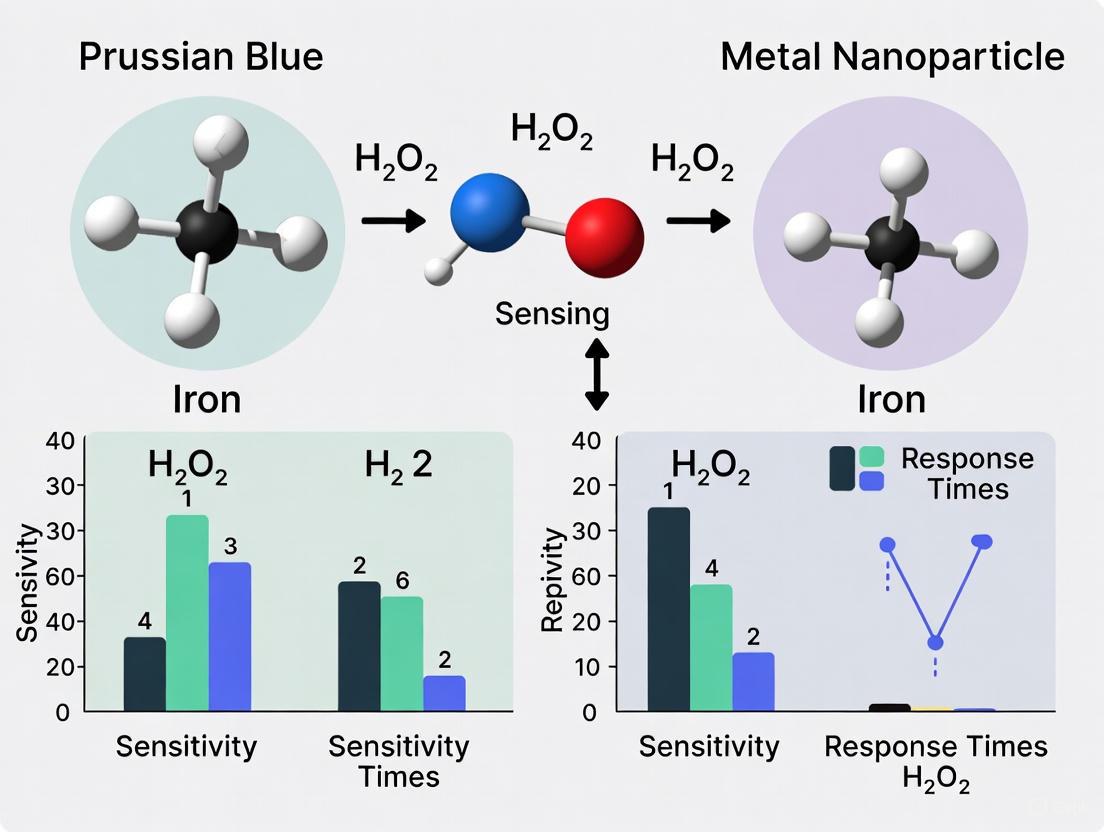
This article provides a comprehensive analysis of hydrogen peroxide (H2O2) electrochemical sensors based on Prussian Blue (PB) and metal nanoparticles, crucial for researchers and professionals in drug development.
Prussian Blue vs. Metal Nanoparticles: Advancing H2O2 Sensing for Biomedical Research and Drug Development
Abstract
This article provides a comprehensive analysis of hydrogen peroxide (H2O2) electrochemical sensors based on Prussian Blue (PB) and metal nanoparticles, crucial for researchers and professionals in drug development. It explores the foundational principles of PB as an 'artificial peroxidase' and its synergy with carbon nanomaterials. The review details advanced fabrication methodologies, including inkjet printing and novel nanocomposite synthesis, and addresses critical operational stability challenges such as pH-dependent performance decay. A comparative validation of sensitivity, detection limits, and selectivity is presented, synthesizing key performance metrics to guide sensor selection and development for biomedical applications, from biosensor integration to sterility testing.
The Fundamental Chemistry: Why Prussian Blue is an 'Artificial Peroxidase'
Prussian Blue (PB), a historic iron hexacyanoferrate pigment, has emerged as a premier electrocatalyst for hydrogen peroxide (H₂O₂) reduction. Its open framework structure facilitates rapid ion transport and electrocatalysis, operating via a low-potential, selective mechanism that minimizes interference. This guide details PB's structure, catalytic mechanism, and experimental protocols, providing a comparative analysis with prominent metal oxide alternatives to highlight its distinct advantages in sensor design.
Historical Context and Fundamental Properties
Prussian Blue (iron(III) hexacyanoferrate(II)), first synthesized accidentally in the early 18th century, has evolved from a pigment to a multifunctional material in electrochemical sensing [1]. Its significance stems from a robust cyanide-bridged framework, reversible redox chemistry, and an open structure with large interstitial cavities. This architecture allows facile migration of alkali metal cations (e.g., K⁺, Na⁺), which is critical for charge compensation during electrochemical reactions [1]. PB can be electrodeposited on electrodes, exhibiting well-defined redox transitions between Prussian Blue (PB, oxidized form), Prussian White (PW, reduced form), and Berlin Green (BG, further oxidized form) [1].
Structural Analysis and Electrocatalytic Mechanism
Crystal Structure and Redox Behavior
The PB lattice features a cubic framework with Fe³⁺ (high-spin) and [Fe²⁺(CN)₆]⁴⁻ (low-spin) units. The "soluble" form, AFeᴵᴵᴵ[Feᴵᴵ(CN)₆] (where A is an alkali metal cation), contains A⁺ in interstitial sites, while the "insoluble" form, Feᴵᴵᴵ₄[Feᴵᴵ(CN)₆]₃·xH₂O, has [Fe(CN)₆]⁴⁻ vacancies [1]. The key redox couple for H₂O₂ reduction is the PB/PW transition:
KFeᴵᴵᴵ[Feᴵᴵ(CN)₆] + e⁻ + K⁺ ⇌ K₂Feᴵᴵ[Feᴵᴵ(CN)₆] [2]
This reaction involves one electron and one cation transfer per formula unit, with K⁺ being an optimal charge-balancing ion [3].
Mechanism of H₂O₂ Electrocatalytic Reduction
PB operates as an "artificial peroxidase" for H₂O₂ reduction. The generally accepted net reaction is a two-electron process:
H₂O₂ + 2e⁻ → 2OH⁻ [3]
In situ Raman spectroelectrochemical studies reveal that during H₂O₂ reduction at PW potentials, the catalyst layer contains a mixture of PB and PW. The ratio depends on H₂O₂ concentration, confirming that electrocatalysis occurs within the film rather than only at the outer surface [2]. The catalytic cycle involves:
- Reduction: The electrode reduces PB to PW at ~0.2 V (vs. Ag/AgCl).
- Chemical Oxidation: PW is chemically re-oxidized to PB by H₂O₂.
- Charge Compensation: K⁺ ions ingress/egress to maintain electroneutrality.
- Product Formation: Hydroxyl ions (OH⁻) are the primary reduction product, making buffer capacity crucial for operational stability [3].
Recent studies show the mechanism is highly dependent on the Fe coordination environment. Defective FeN₄ sites favor a non-radical pathway via ferryl (Fe=O) species, while higher-coordination FeN₅ sites can generate ·OH radicals via H₂O₂ homolysis under acidic conditions [4].
Experimental Protocols for Sensor Fabrication and Characterization
Electrodeposition of Prussian Blue Films
Methodology from Karyakin et al. [3]
- Solution Preparation: Prepare an electrodeposition solution containing 2.0 mM each of K₃[Fe(CN)₆] and FeCl₃, in an aqueous supporting electrolyte of 0.1 M KCl and 0.1 M HCl.
- Electrodeposition: Use cyclic voltammetry (CV), typically scanning between -0.05 V and +0.35 V (vs. Ag/AgCl) at 50 mV/s for 10-50 cycles. This produces a stable, selective PB film where all ferrous ions are not expected to contain hydroxide ions.
- Post-treatment: Rinse the modified electrode thoroughly and stabilize in a neutral phosphate buffer solution (PBS, 0.1 M, pH 7.4) before use.
Characterization and H₂O₂ Detection
- Cyclic Voltammetry (CV): Characterize the PB-modified electrode in a blank buffer (e.g., 0.1 M PBS, pH 7.4) between -0.05 V and +0.35 V. Well-defined, reversible PB/PW peaks indicate successful modification [3].
- H₂O₂ Sensing via Amperometry: Apply a constant potential of 0.0 V (vs. Ag/AgCl) in stirred PBS. successive additions of H₂O₂ standard solution result in a rapid increase in cathodic current, which stabilizes [3] [5].
- In Situ Raman Spectroelectrochemistry: To study the mechanism, acquire Raman spectra during potentiostatic H₂O₂ reduction. The characteristic CN stretching band (~2095 cm⁻¹ for PW, ~2150 cm⁻¹ for PB) shifts, indicating the coexistence of both forms during catalysis [2].
Performance Comparison: Prussian Blue vs. Metal Oxide Alternatives
Table 1: Performance comparison of H₂O₂ electrochemical sensors.
| Material | Sensitivity (µA mM⁻¹ cm⁻²) | Linear Range (mM) | Detection Limit (µM) | Operating Potential (V vs. Ag/AgCl) | Key Features |
|---|---|---|---|---|---|
| Prussian Blue (PB) [5] | Not Specified | 0.1 - 1.0 | 17.93 | ~0.0 V (Reduction) | High selectivity in presence of O₂, "Artificial peroxidase" |
| NiO Octahedrons/3D Graphene [6] | 117.26 | 0.01 - 33.58 | 5.3 | ~0.5 V (Oxidation)* | Wide linear range, good stability |
| MnO₂/Polyacrylic Acid [7] | Not Specified | 15 - 121 (mg m⁻³, gas) | 2 (µg m⁻³, gas) | +0.6 V (Oxidation)* | Designed for gaseous H₂O₂ detection |
Note: Typical operating potentials for NiO and MnO₂-based sensors are for H₂O₂ oxidation, whereas PB is unique for its low-potential reduction.
Table 2: Comparative advantages and limitations of sensor materials.
| Material | Advantages | Limitations |
|---|---|---|
| Prussian Blue | Low operating potential minimizes interferents; High selectivity for H₂O₂ over O₂; Simple and inexpensive synthesis; Bio-compatibility [3] [1] | pH sensitivity (dissolves in alkali); Slow degradation during catalysis; Performance depends on cation type and film stability [3] |
| NiO-based Nanocomposites | High sensitivity and wide linear range; Good stability and reproducibility; Natural abundance of Ni [6] | Higher operating potential (risk of interferents); Synthesis of nanostructures can be complex [6] |
| MnO₂-based Sensors | Effective for gaseous H₂O₂ detection; Can be integrated into polymer membranes [7] | Limited data for liquid-phase sensing; Performance depends on membrane properties [7] |
The Scientist's Toolkit: Key Research Reagents and Materials
Table 3: Essential reagents and materials for Prussian Blue-based H₂O₂ sensor research.
| Reagent/Material | Function/Application | Example Specification |
|---|---|---|
| Potassium Ferricyanide (K₃[Fe(CN)₆]) | Iron precursor for PB electrodeposition [3] | Analytical grade, used in mM concentrations with FeCl₃ |
| Iron (III) Chloride (FeCl₃) | Second precursor for PB electrodeposition [3] | Analytical grade |
| Potassium Chloride (KCl) | Supporting electrolyte; provides K⁺ for charge balance [3] | 0.1 M in deposition and electrolyte solutions |
| Phosphate Buffered Saline (PBS) | Physiological supporting electrolyte for H₂O₂ detection [3] [5] | 0.1 M, pH 7.4 |
| Hydrogen Peroxide (H₂O₂) | Target analyte; standard solutions for calibration [3] | Titrated stock solution, diluted daily |
| Glassy Carbon Electrode (GCE) | Common substrate for PB modification [5] | Polished to mirror finish before modification |
| Nafion | Cation-exchange polymer coating to stabilize PB film [3] | Aqueous suspensions, often diluted |
Prussian Blue remains a benchmark electrocatalyst for H₂O₂ reduction due to its unique structure and exceptional catalytic properties. Its key advantage is the ability to operate at very low potentials, enhancing selectivity in complex matrices. While newer materials like NiO nanocomposites offer wider linear ranges, PB's "artificial peroxidase" characteristics and well-understood mechanism secure its vital role in sensor development. Future research focuses on enhancing stability through nanocomposites with carbon nanotubes or graphene and tailoring its properties via structural analogues for specific sensing applications [1] [4].
Hydrogen peroxide (H₂O₂) is a pivotal molecule in biological processes and a crucial reagent in industrial applications. Its precise detection is essential across biomedical diagnostics, environmental monitoring, and food safety. Electrochemical techniques have emerged as the preferred methodology due to their simplicity, cost-effectiveness, high sensitivity, and selectivity [8]. While enzymatic biosensors were initially dominant, their susceptibility to degradation and sensitivity to environmental conditions has spurred the development of more robust non-enzymatic alternatives [8] [9]. Within this landscape, two primary catalytic material classes have risen to prominence: metal nanoparticles and Prussian Blue (PB)-based structures. This guide provides a systematic comparison of these materials, focusing on their catalytic properties, electron transfer enhancement capabilities, and overall performance in H₂O₂ sensing, providing researchers with the experimental data necessary for informed material selection.
Performance Comparison of Catalytic Nanomaterials
The performance of non-enzymatic H₂O₂ sensors is governed by the intrinsic properties of their catalytic nanomaterials. The table below provides a quantitative comparison of representative materials from different classes, including metal nanoparticles, Prussian Blue composites, and metal oxides.
Table 1: Performance Metrics of Selected H₂O₂ Sensor Nanomaterials
| Material Class | Specific Material | Linear Range (μM or mM) | Sensitivity (μA·mM⁻¹·cm⁻²) | Limit of Detection (LOD, μM) | Key Advantages |
|---|---|---|---|---|---|
| Platinum Nanoparticles | P-Ru/NC Nanocomposite [9] | 20 μM - 6.1 mM | 544.57 | 4.41 | High conductivity, synergistic doping effects |
| Silver-based Composite | Ag-doped CeO₂/Ag₂O [10] | 0.01 - 500 | 2728 (µA cm⁻² µM⁻¹)* | 6.34 | High active site density, excellent selectivity |
| Prussian Blue Composite | PB-MWCNTs with Ionic Liquid [8] | 5 - 1645 | 0.436 | 0.35 | Low operating potential, high selectivity |
| Prussian Blue Composite | CF/PB-FeOOH [11] | 1.2 - 300 | Not Specified | 0.36 | Excellent stability in neutral pH, good recovery in serum |
| Iron Oxyhydroxide | δ-FeOOH with Ag NPs [11] | Not Specified | Not Specified | 71 | Low-cost, good catalytic performance |
Note: The sensitivity for Ag-doped CeO₂/Ag₂O is reported in a different unit (µA cm⁻² µM⁻¹) reflecting its very high performance [10].
Analysis of Performance Data
- Metal Nanoparticles (Pt, Ag, Ru): These materials consistently achieve high sensitivity and wide linear ranges, as exemplified by the P-Ru/NC nanocomposite and Ag-doped CeO₂/Ag₂O [9] [10]. Their efficacy stems from large electrochemical surface areas, rich active sites, and fast electron transfer rates. The synergy between the metal nanoparticle (e.g., Ru) and heteroatom doping (e.g., Phosphorus) significantly enhances electrocatalytic activity [9].
- Prussian Blue and Its Analogs: PB-based sensors are renowned for their exceptional selectivity and low limits of detection. Their unique lattice structure acts as a molecular sieve, allowing H₂O₂ to penetrate while excluding larger interfering molecules like ascorbic acid, uric acid, and dopamine [8] [11]. This enables detection at low operating potentials (~0 V), minimizing interference [8]. Recent work on CF/PB-FeOOH demonstrates remarkable stability in neutral pH and high accuracy in biological samples [11].
Experimental Protocols for Key Sensor Fabrication
Reproducibility is paramount in sensor development. Below are detailed methodologies for fabricating two prominent sensors from the comparison table.
Protocol 1: Fabrication of P-Ru/NC Nanocomposite Sensor
This protocol outlines the synthesis of a high-performance platinum-ruthenium-based sensor [9].
- Step 1: Synthesis of Ru@ZIF-8 Precursor. The metal-organic framework (MOF) ZIF-8 is used as a template. RuCl₃ is incorporated into the ZIF-8 structure via a double solvent-induced nucleation method to form Ru@ZIF-8.
- Step 2: Polymer Coating. The surface of Ru@ZIF-8 is coated with a PZM (phosphazene-based) monomer, which is subsequently polymerized to form a core-shell structure, Ru@ZIF-8@PZM.
- Step 3: Pyrolysis. The Ru@ZIF-8@PZM composite is calcined under an inert atmosphere. This critical step simultaneously (a) carbonizes the ZIF-8 framework into a nitrogen-doped carbon (NC) support, (b) reduces Ru³⁺ to metallic Ru nanoparticles (Ru NP), and (c) dopes the carbon matrix with phosphorus (P) from the PZM polymer shell, resulting in the final P-Ru/NC nanocomposite.
- Step 4: Electrode Modification. 5 mg of P-Ru/NC powder is dispersed in 1 mL of deionized water and sonicated for 2 hours. A 10 μL aliquot of this suspension is drop-cast onto a pre-polished glassy carbon electrode (GCE) and dried at ambient temperature to obtain the P-Ru/NC/GCE working electrode [9] [10].
Protocol 2: Fabrication of CF/PB-FeOOH Composite Sensor
This protocol describes creating a stable, selective PB-based sensor on a flexible carbon felt substrate [11].
- Step 1: Substrate Preparation. Carbon felt (CF) is cut into small ribbons with a geometric area of 2.5 cm².
- Step 2: Electrodeposition Solution Preparation. A solution is prepared containing 2.5 mM FeCl₃, 2.5 mM K₃[Fe(CN)₆], 0.1 M KCl, 0.01 M HCl, and 0.01% (w/w) chitosan.
- Step 3: Electrodeposition of Composite Film. The CF working electrode is immersed in the deposition solution along with a platinum counter electrode and an Ag|AgCl reference electrode. A constant potential of +0.4 V (vs. Ag|AgCl) is applied to facilitate the site-specific co-deposition of Prussian blue and chitosan onto the CF surface. The strong interaction between the δ-FeOOH suspension in the solution and the PB precursors ensures a stable composite film.
- Step 4: Post-treatment. The functionalized CF/PB-FeOOH electrode is thoroughly rinsed with deionized water and stored at 4°C when not in use.
Electron Transfer Mechanisms and Pathways
The superior performance of these nanomaterials is rooted in their ability to facilitate electron transfer during the electrocatalytic reduction of H₂O₂. The mechanisms differ significantly between material classes.
Electron Transfer in Prussian Blue Nanozymes
Prussian Blue nanozymes exhibit a unique and robust dual-path electron transfer mechanism that contributes to their long-term catalytic activity, which can even self-increase over time [12].
This dual-path mechanism, involving both valence band and conduction band mediated electron transfer, ensures sustained and self-increasing catalytic activity, as the pre-oxidation of PB irreversibly promotes both pathways [12].
Electron Transfer in Metal Nanoparticle Composites
Metal nanoparticles enhance electron transfer through different principles, which can be visualized in a typical sensor fabrication and operation workflow.
The electron transfer enhancement in metal nanoparticle composites arises from several interconnected factors:
- Increased Electrochemical Surface Area: The dispersion of metal nanoparticles on a high-surface-area support (like NC from ZIF-8) provides a multitude of active sites for H₂O₂ reaction [9].
- Doping-Induced Charge Transfer: Heteroatom doping (e.g., P in P-Ru/NC) modulates the electronic structure of the carbon support, improving conductivity and facilitating faster electron transfer from the electrode to the analyte [9].
- Synergistic Catalysis: The anchoring of metal nanoparticles (Ru NP) and doping of heteroatoms (P) create a synergistic effect that not only provides more efficient active sites but also accelerates the overall electrochemical reaction rate [9].
The Scientist's Toolkit: Essential Research Reagents and Materials
Selecting the appropriate materials is critical for developing high-performance H₂O₂ sensors. The following table catalogues key reagents and their functions in nanomaterial synthesis and sensor fabrication.
Table 2: Essential Research Reagents for H₂O₂ Sensor Development
| Material/Reagent | Function in Sensor Development | Example Use Case |
|---|---|---|
| Chitosan | Biopolymer for stabilizing Prussian blue films and minimizing leaching; provides mechanical stability. | Co-deposited with PB on LIG electrodes to enhance film stability [13]. |
| Laser-Induced Graphene (LIG) | Porous, high-surface-area conductive substrate enabling rapid prototyping of electrode architectures. | Used as a substrate for PB-chitosan composite in bacterial peroxide monitoring [13]. |
| Carbon Felt | Flexible, 3D macroporous electrode substrate with extensive electrochemical surface area and robust mechanical properties. | Served as a support for PB-FeOOH composite, facilitating efficient H₂O₂ detection [11]. |
| ZIF-8 (Zeolitic Imidazolate Framework-8) | MOF precursor and template for creating nitrogen-doped carbon supports with high porosity and surface area. | Pyrolyzed to form the NC support in P-Ru/NC nanocomposites [9]. |
| Ionic Liquids | High-conductivity electrolytes and modification agents for composite electrodes to enhance electron transfer. | Doped into PB-MWCNTs to improve sensor performance in milk samples [8]. |
| Polyvinylpyrrolidone | Stabilizing agent and capping ligand in nanoparticle synthesis to control growth and prevent agglomeration. | Used in the synthesis of Ag-doped CeO₂/Ag₂O nanocomposites [10]. |
The strategic selection between metal nanoparticles and Prussian Blue-based materials for H₂O₂ sensor design hinges on the specific analytical requirements of the application. Metal nanoparticles (Pt, Ru, Ag) and their composites excel in scenarios demanding high sensitivity and a wide linear range, leveraging their superior conductivity and synergistic effects with doped carbon supports. Conversely, Prussian Blue and its analogs are the materials of choice for applications where high selectivity, a low detection limit, and operation at low potential are critical, particularly in complex matrices like biological fluids. Recent advances, such as the development of PB composites with iron oxyhydroxides for improved stability in neutral pH and the creation of sophisticated metal nanoparticle-doped carbon composites, continue to push the boundaries of performance. Understanding the fundamental electron transfer mechanisms—such as the dual-path model in PB and the synergy-driven enhancement in metal nanocomposites—empowers researchers to tailor material properties for optimized sensor platforms, driving innovation in biomedical, environmental, and industrial monitoring.
The detection of hydrogen peroxide (H₂O₂) is critically important across diverse fields, including modern medicine, environmental monitoring, and the food industry, due to its role as a essential signaling molecule in physiological processes and its widespread use as a disinfecting and bleaching agent [14] [5]. Electrochemical sensors utilizing nanomaterials have emerged as powerful tools for this purpose. Within this domain, a key research focus involves comparing sensor platforms based on Prussian Blue (PB), an artificial peroxidase, against those employing metal nanoparticles like silver (Ag) and platinum (Pt) [14] [15].
Prussian Blue is renowned for its high electrocatalytic activity and exceptional selectivity for H₂O₂ reduction at low operating potentials, minimizing interference from oxygen [5]. However, a significant limitation is its low intrinsic electrical conductivity [16]. To overcome this, researchers have developed hybrid nanocomposites that combine PB with conductive carbon nanomaterials. These synergistically merge PB's catalytic prowess with the superior electrical conductivity, high surface area, and structural versatility of materials like carbon black (CB) and carbon nanotubes (CNTs) [17] [5]. This review provides a comparative analysis of these hybrid composites, evaluating their performance against both traditional PB sensors and alternative metal nanoparticle-based sensors, supported by experimental data and detailed methodologies.
Performance Comparison of H₂O₂ Sensors
The tables below summarize the key performance metrics of various H₂O₂ sensors, highlighting the distinct advantages of different material combinations.
Table 1: Performance comparison of Prussian Blue-based hybrid nanocomposite sensors.
| Sensor Material | Linear Range (μM) | Detection Limit (μM) | Sensitivity | Key Findings | Source |
|---|---|---|---|---|---|
| PB-CB (Bilayer) | Not Specified | ~0.3 | Higher | Larger PBNPs (138 nm); higher sensitivity but higher LOD. | [17] |
| PB-CB (Nanocomposite) | Not Specified | 0.3 | High | Smaller PBNPs (19 nm); optimized for a lower detection limit. | [17] |
| PB/TiO₂.ZrO₂-fCNTs/GC | 100 – 1,000 | 17.93 | Good | Excellent reversibility and electric communication; used in whey milk. | [5] |
Table 2: Performance comparison of alternative metal nanoparticle-based and other H₂O₂ sensors.
| Sensor Material | Linear Range | Detection Limit | Sensitivity | Key Findings | Source |
|---|---|---|---|---|---|
| COF-AgNPs | 0.5 nM – 1000 μM | 0.126 nM | High | Dual detection of H₂O₂ and rutin; high recovery in real food/drug samples. | [14] |
| rGO-PANI-PtNP/GCE | Expanded range specified | Lower than many counterparts | Higher than many counterparts | Outstanding reproducibility and selectivity in real-sample examination. | [15] |
| PB on 3D-printed electrode | Not Specified | Not Specified | Good | Utilized iron impurities in filament for synthesis; effective for sensing. | [18] |
Experimental Protocols for Key Hybrid Composites
PB-Carbon Black (CB) Nanocomposites
The protocol for creating screen-printed electrodes (SPEs) modified with PB-CB nanocomposites involves several strategies to tailor nanoparticle size and performance [17]:
- Bilayer Modification: SPEs are first modified with a dispersion of CB, followed by in situ chemical deposition of PB nanoparticles (PBNPs).
- Integrated Ink Formulation: SPEs are prepared using a graphite ink containing 10% (w/w) CB, followed by in situ PBNPs deposition.
- Nanocomposite Casting: SPEs are modified by directly casting a stable, pre-mixed dispersion of CB and PBNPs.
- Morphological & Electrochemical Characterization: The resulting sensors are characterized using Scanning Electron Microscopy (SEM) to determine PBNPs size and cyclic voltammetry/amperometry to assess analytical performance towards H₂O₂. The study found that a CB "film" substrate promoted the growth of smaller, 19 nm PBNPs, leading to a superior detection limit of 0.3 μM [17].
PB-Carbon Nanotube (CNT) Hybrids with Metal Oxides
A sophisticated sensor was developed based on a glassy carbon (GC) electrode modified with carbon nanotubes functionalized with a mix of titanium and zirconium dioxide nanoparticles (TiO₂.ZrO₂-fCNTs), onto which PB was electrodeposited (PB/TiO₂.ZrO₂-fCNTs/GC) [5]:
- Nanomaterial Synthesis: Functionalized CNTs (fCNTs) are coated with amorphous TiO₂.ZrO₂ nanoparticles via direct synthesis on the CNT walls, with the material aged for 20 days to achieve a high surface area and well-dispersed structure.
- Electrode Modification: The GC electrode is coated with the synthesized TiO₂.ZrO₂-fCNTs nanostructured material.
- Prussian Blue Electrodeposition: PB is immobilized onto the modified electrode surface via electrodeposition from a solution containing FeCl₃ and K₃[Fe(CN)₆].
- Sensor Evaluation: The fabricated sensor is studied using cyclic voltammetry and chronoamperometry in phosphate-buffered saline (PBS) with additions of H₂O₂. The TiO₂.ZrO₂ composite improves the immobilization of PB and enhances electron transfer, resulting in a sensor with a linear range of 100–1000 μmol L⁻¹ and a detection limit of 17.93 μmol L⁻¹, successfully applied for H₂O₂ detection in whey milk samples [5].
The Researcher's Toolkit: Essential Reagents and Materials
Table 3: Key research reagents and materials for fabricating PB-based hybrid composite sensors.
| Material/Reagent | Function in Sensor Fabrication | Key Characteristics |
|---|---|---|
| Carbon Black (CB) | Conductive substrate/nucleation site | Cost-effective (∼€1/kg), high defect density for PBNPs growth, electrocatalytic [17]. |
| Carbon Nanotubes (CNTs) | Conductive network and support | High conductivity, functionalizable surface, unique mechanical/electrical properties [5]. |
| Titanium/Zirconium Dioxide (TiO₂.ZrO₂) | Nanostructuring agent on CNTs | High surface area, catalytic properties, improves PB immobilization and sensor sensitivity [5]. |
| Potassium Hexacyanoferrate (III) (K₃[Fe(CN)₆]) | Prussian Blue synthesis precursor | Source of the [Fe(CN)₆]³⁻ ion for forming the PB crystal lattice [18]. |
| Iron (III) Chloride (FeCl₃) | Prussian Blue synthesis precursor | Source of Fe³⁺ ions for forming the PB crystal lattice [18]. |
| Phosphate Buffered Saline (PBS) | Electrolyte for electrochemical testing | Provides a stable, physiologically relevant pH environment for H₂O₂ detection [5]. |
Comparative Signaling Pathways and Workflows
The diagrams below illustrate the core conceptual and experimental pathways involved in developing and operating these advanced sensors.
Material Synergy Logic
Composite Fabrication Workflow
In the field of electrochemical sensing, particularly for biologically and clinically significant molecules like hydrogen peroxide (H₂O₂), the rigorous evaluation of sensor performance is paramount. For researchers, scientists, and drug development professionals, understanding the core metrics of sensitivity, selectivity, and limit of detection (LOD) is essential for selecting appropriate sensor technologies for specific applications. Hydrogen peroxide serves as a crucial biomarker in numerous physiological processes, with concentrations fluctuating between 1 nM and 0.5 µM in the human body, and imbalances linked to conditions including cancer, diabetes, and neurodegenerative disorders [19]. Its accurate detection is also vital in industrial processes, food safety monitoring, and clinical diagnostics [20] [21].
This guide provides a structured comparison between two prominent classes of H₂O₂ sensors: those based on Prussian Blue (PB) and its analogues, and those utilizing metal nanoparticles. By presenting standardized performance data and detailed experimental methodologies, this analysis aims to equip researchers with the objective information necessary to select the optimal sensing platform for their specific requirements, whether for fundamental biological research, diagnostic development, or environmental monitoring.
Performance Metrics Comparison: Prussian Blue vs. Metal Nanoparticle Sensors
The tables below synthesize key performance data from recent research, enabling a direct comparison between Prussian Blue-based and metal nanoparticle-based sensors for H₂O₂ detection.
Table 1: Performance Metrics of Prussian Blue-Based Sensors
| Sensor Modification | LOD (Limit of Detection) | Linear Range | Sensitivity | Selectivity Notes | Reference |
|---|---|---|---|---|---|
| Mesoporous Co-MOF/PBA | 0.47 nM | 1 to 2041 nM | Not Specified | Excellent selectivity against urea, uric acid, NaCl, L-cysteine, ascorbic acid, glucose | [19] |
| Prussian Blue Nanoparticles (20 layers) | 0.2 µM | 0 to 4.5 mM | 762 µA·mM⁻¹·cm⁻² | Operates at low potential (~0 V), minimizing interference | [21] |
| Polyaniline/Prussian Blue Nanolayer | 2.52 µM | 0–1 mM | Not Specified | Integrated into a portable mask for exhaled breath condensate | [22] |
| PB-based Electrode Array | 1.9 µM | Not Specified | Not Specified | Used for real-time detection from HeLa cell populations | [23] |
| PB/TiO₂.ZrO₂-fCNTs/GC | 17.93 µM | 100–1000 µM | Not Specified | Applied in whey milk samples | [24] |
Table 2: Performance Metrics of Metal Nanoparticle-Based Sensors
| Sensor Modification | LOD (Limit of Detection) | Linear Range | Sensitivity | Selectivity Notes | Reference |
|---|---|---|---|---|---|
| Gold Nanoparticles / Polydopamine | Not Specified | Not Specified | Enhanced | Mentioned as an improvement for Prussian blue sensors | [22] |
| Gold and Silver Bimetallic Alloy NPs | Not Specified | Not Specified | Not Specified | Flower-like structure used for H₂O₂ sensing | [22] |
| Palladium Nanowires | Not Specified | Not Specified | Not Specified | Large surface area and outstanding electrocatalytic activities | [8] |
| Pt, Au, Pd, Ag Nanoparticles | Not Specified | Not Specified | Not Specified | Widely applied in enzymeless H₂O₂ sensing | [8] |
Comparative Analysis of Key Metrics
- Limit of Detection (LOD): Prussian Blue-based sensors demonstrate a significant advantage in achieving ultra-low detection limits, as evidenced by the Co-MOF/PBA composite's remarkable 0.47 nM LOD [19]. This makes them exceptionally suited for detecting physiologically relevant concentrations of H₂O₂. Metal nanoparticle sensors, while praised for their catalytic properties, often lack specifically reported LOD values in the surveyed literature, making direct comparison difficult.
- Sensitivity: This metric refers to the magnitude of the electrochemical signal change per unit change in analyte concentration. The PB nanoparticle-modified screen-printed electrode achieved a high sensitivity of 762 µA·mM⁻¹·cm⁻², which was optimized by controlling the number of printed PBNP layers [21]. The three-dimensional nanostructuring of PB, such as in the polyaniline/PB nanolayer, enhances the electrode surface roughness, further improving sensitivity [22].
- Selectivity: A paramount advantage of Prussian Blue is its ability to operate as an "artificial peroxidase" at very low applied potentials (around 0 V vs. Ag/AgCl) for the electrocatalytic reduction of H₂O₂ [8] [21]. This low potential window effectively avoids the electrochemical oxidation of common interfering species found in biological samples, such as ascorbic acid, uric acid, glucose, and dopamine, thereby granting PB sensors exceptional selectivity [23] [8]. Metal electrodes like Pt or Au, which often detect H₂O₂ via oxidation, are more susceptible to these interferents [23].
Experimental Protocols for Key Sensor Platforms
Reproducibility is a cornerstone of scientific research. The following sections detail the experimental protocols for fabricating and characterizing two prominent types of Prussian Blue-based sensors, as documented in the literature.
Protocol 1: Prussian Blue Nanoparticle-modified Screen-Printed Electrodes
This protocol, adapted from Cinti et al. [21], describes a method for creating highly reproducible and sensitive disposable sensors.
Sensor Fabrication:
- PBNP Synthesis: Mix equimolar amounts (2 mM) of potassium ferrocyanide (K₄[Fe(CN)₆]) and iron(III) chloride (FeCl₃) in an acidic aqueous solution containing 10 mM HCl and 0.1 M KCl. The reaction is allowed to proceed overnight to form a stable, blue colloidal dispersion.
- Inkjet Printing Deposition: Use a piezoelectric inkjet printer (e.g., Dimatix DMP 2831) to deposit the PBNP dispersion onto the working electrode of a screen-printed carbon electrode (SPE). A drop spacing of 20 µm is used, and the process is repeated to build multiple layers (20 layers were found to be optimal).
- Curing: The modified SPEs are dried and stored at room temperature. They remain stable for up to two months.
Electrochemical Characterization and H₂O₂ Detection:
- Characterization: Use Cyclic Voltammetry (CV) in a 0.05 M phosphate buffer with 0.1 M KCl (pH 7.4) between -0.3 V and +0.5 V to confirm the successful electrodeposition of PB. A well-defined redox pair indicates the conversion between PB and its reduced form, Prussian White (PW).
- Amperometric Detection: Perform amperometric measurements at an applied potential of 0 V vs. the Ag/AgCl reference electrode of the SPE. Under constant stirring, successive additions of H₂O₂ standard solutions are made.
- Calibration: The resulting reduction current is plotted against the concentration of H₂O₂ to generate a calibration curve from which the LOD, sensitivity, and linear range are determined.
Protocol 2: Mesoporous Core-Shell Co-MOF/PBA Probe for Dual-Mode Detection
This protocol, based on the work of Li et al. [19], outlines the synthesis of an advanced nanozyme for highly sensitive dual-mode detection.
Probe Synthesis:
- Co-MOF Precursor: Synthesize the 3D Co-MOF precursor as described in the literature.
- Cation-Exchange and Self-Assembly: Disperse 22 mg of the Co-MOF precursor in 15 mL of ethanol. Swiftly introduce a transparent solution of 50 mg of K₃[Fe(CN)₆] into the suspension under persistent agitation. The Co-MOF/PBA core-shell structure forms based on the Kirkendall effect at ambient temperature.
Colorimetric Detection Workflow:
- Incubate the Co-MOF/PBA probe with a solution of H₂O₂ and a chromogenic substrate (e.g., TMB).
- The probe's peroxidase-like activity catalyzes a Fenton-like reaction with H₂O₂, generating ·OH radicals that oxidize the substrate, producing a colored product.
- Measure the absorbance of the solution spectrophotometrically to quantify H₂O₂ concentration.
Electrochemical Detection Workflow:
- Electrode Modification: Deposit the Co-MOF/PBA probe onto a glassy carbon electrode (GCE) surface.
- Amperometric Measurement: Using a standard three-electrode system (modified GCE as working electrode, Ag/AgCl reference electrode, Pt wire counter electrode), perform amperometric i-t measurements at a defined low potential.
- The electrocatalytic current, enhanced by the self-sustaining redox cycling between Fe³⁺/Co²⁺, is measured and correlated to H₂O₂ concentration.
The workflow for this dual-mode sensor is illustrated below.
Signaling Pathways and Sensing Mechanisms
Understanding the underlying electrocatalytic mechanisms is crucial for appreciating the performance differences between sensor classes. The following diagrams illustrate the signaling pathways for Prussian Blue and a synergistic composite sensor.
Prussian Blue 'Artificial Peroxidase' Mechanism
Prussian Blue operates as an exceptional electrocatalyst for H₂O₂ reduction via its reduced form, Prussian White (PW). The mechanism can be summarized as follows [8] [21]:
The key steps are:
- Electrochemical Reduction: PB is electrochemically reduced to PW at a low applied potential (~0 V).
- Catalytic Reaction: PW chemically reacts with and reduces H₂O₂, regenerating PB in the process and producing water. This catalytic cycle allows for the sensitive and selective detection of H₂O₂ at a potential where most interfering substances are electrochemically silent.
Synergistic Catalysis in Co-MOF/PBA Composite
Advanced materials like the core-shell Co-MOF/PBA probe leverage synergistic effects between different metal centers to achieve ultra-high sensitivity [19]. The signaling pathway involves a self-sustaining catalytic cycle.
This mechanism involves:
- Co-catalytic Redox Cycling: Fe³⁺ is reduced to Fe²⁺ by Co²⁺ from the Co-MOF, while Co²⁺ is simultaneously oxidized to Co³⁺.
- Fenton-like Reaction: The generated Fe²⁺ reacts with H₂O₂, producing ·OH radicals (for colorimetry) and regenerating Fe³⁺, perpetuating the cycle.
- Electron Transfer: The Co³⁺/Co²⁺ couple facilitates efficient electron transfer to the electrode, generating a strong amperometric signal. This interplay creates a signal amplification effect.
The Scientist's Toolkit: Essential Research Reagents and Materials
The table below lists key reagents, materials, and instruments used in the development and characterization of the featured H₂O₂ sensors, providing a quick reference for experimental planning.
Table 3: Essential Research Reagents and Materials for H₂O₂ Sensor Development
| Item Name | Function / Application | Example Use Case |
|---|---|---|
| Potassium Ferricyanide (K₃[Fe(CN)₆]) | Prussian Blue synthesis precursor | Formation of PB and PBA nanostructures [19] [21] |
| Iron (III) Chloride (FeCl₃) | Prussian Blue synthesis precursor | Reacts with ferricyanide to form PB [21] |
| Polyaniline (PANI) | Conductive polymer for 3D electrode structuring | Enhancing electrode surface roughness and conductivity [22] |
| Screen-Printed Electrodes (SPEs) | Disposable, miniaturized sensor platforms | Low-cost, portable sensor fabrication [22] [21] |
| Anodized Aluminum Oxide (AAO) Templates | Nanofabrication to create 3D structures | Constructing 3D nanocolumnar electrode surfaces [22] |
| Metal-Organic Framework (MOF) Precursors | Building blocks for porous, high-surface-area materials | Synthesizing Co-MOF for core-shell probes [19] |
| Potassium Chloride (KCl) | Supporting electrolyte | Essential for electrochemical stability of PB films [21] |
| Phosphate Buffered Saline (PBS) | Physiological buffer medium | Electrochemical testing in biologically relevant conditions [23] [24] |
| Piezoelectric Inkjet Printer | Precise deposition of nanomaterial inks | Fabricating reproducible PBNP-modified sensors [21] |
| Potentiostat/Galvanostat | Applying potential and measuring current | Core instrument for all electrochemical measurements [23] [21] |
Sensor Fabrication and Practical Integration in Biomedical Assays
The accurate detection of hydrogen peroxide (H₂O₂) is a critical requirement in diverse fields, including clinical diagnostics, food processing, and pharmaceutical research [21] [8]. Within this domain, Prussian Blue (PB) and metal nanoparticles (MNPs) have emerged as two predominant sensing materials, each offering distinct advantages in electrocatalytic activity and biocompatibility [8]. The performance of sensors based on these materials is profoundly influenced by the fabrication method employed to create the functional sensing layers. This guide provides an objective comparison of three key fabrication techniques—electrodeposition, inkjet printing, and drop-casting—contextualized within the broader research theme of PB versus metal nanoparticle sensors for H₂O₂ detection. We summarize experimental data and provide detailed protocols to assist researchers in selecting and implementing the most appropriate fabrication method for their specific application.
Performance Comparison of Fabrication Techniques
The table below summarizes the key performance characteristics of H₂O₂ sensors fabricated using electrodeposition, inkjet printing, and drop-casting, based on recent experimental findings.
Table 1: Performance comparison of H₂O₂ sensors based on fabrication technique and material.
| Fabrication Method | Sensing Material | Sensitivity (μA mM⁻¹ cm⁻²) | Linear Range (μM) | Limit of Detection (LOD, μM) | Key Advantages | Reported Challenges |
|---|---|---|---|---|---|---|
| Electrodeposition | Prussian Blue (on LIG-Chitosan) [13] | 122,000 | 20 – 1,000 | 30 | Site-specific deposition; strong adhesion; controlled morphology [13]. | Requires optimized deposition parameters (potential, cycles) [13]. |
| Inkjet Printing | Prussian Blue Nanoparticles (PBNPs) [21] | 762 | 0 – 4,500 | 0.2 | High reproducibility (<5% RSD); rapid prototyping; precise patterning [21]. | Sensitivity depends on number of printed layers (20 layers optimal) [21]. |
| Drop-Casting | Green AgNPs (OPE synthesized) [25] | 20,160 | 0.5 – 10 and 10 – 161.8 | 0.3 | Simplicity; compatibility with green nanomaterials; high sensitivity [25]. | Potential film inhomogeneity; weaker adhesion [25]. |
| Drop-Casting (Composite) | PB-Carbon Nanotube (CNT) [26] | 954.1 | 1 – 10,000 (Linear) | Not Specified | Creates porous 3D structures; high sensitivity and ultra-wide range [26]. | Requires homogenous dispersion of composite materials [26]. |
Detailed Experimental Protocols
Electrodeposition of Prussian Blue
Application Example: Electrodeposition of a PB-Chitosan composite on Laser-Induced Graphene (LIG) for bacterial peroxide monitoring [13].
- Substrate Preparation: Laser-induced graphene (LIG) electrodes are fabricated by irradiating a 75 µm polyimide film with a CO₂ laser (fluence of 6.9 J cm⁻²). The LIG electrodes are designed as standalone working electrodes or complete three-electrode arrays [13].
- Deposition Solution Preparation: A solution is prepared containing 2.5 mM FeCl₃, 2.5 mM K₃Fe(CN)₆, 0.1 M KCl, 0.01 M HCl, and 0.01% w/w chitosan [13].
- Electrodeposition Process: The LIG working electrode is held at a constant potential of +0.4 V (vs. Ag/AgCl) in the deposition solution. This facilitates the site-specific co-deposition of PB and chitosan onto the LIG surface, forming the composite sensing layer [13].
- Post-treatment: After deposition, the electrode is thoroughly rinsed with deionized water and stored at 4°C when not in use [13].
Inkjet Printing of Prussian Blue Nanoparticles
Application Example: Piezoelectric inkjet printing of PBNPs onto screen-printed carbon electrodes (SPCEs) [21].
- PBNP Ink Synthesis: PBNPs are synthesized by mixing equimolar amounts of 2 mM potassium ferrocyanide (K₄[Fe(CN)₆]) and 2 mM iron (III) chloride (FeCl₃) in an acidic environment (10 mM HCl) with 0.1 M KCl. The reaction proceeds overnight to form a stable blue colloidal dispersion [21].
- Substrate Modification: A piezoelectric inkjet printer (e.g., Dimatix DMP 2831) is used to deposit the PBNP dispersion onto the working area of screen-printed electrodes. A drop spacing of 20 µm is typically used [21].
- Layer Optimization: The process is repeated to build up multiple layers. Research indicates that 20 print cycles provide an optimal balance of performance, offering high sensitivity and a low detection limit [21].
- Sensor Storage: The printed sensors are stored dry at room temperature and can retain their activity for up to two months [21].
Drop-Casting of Metal Nanoparticles
Application Example: Fabrication of a non-enzymatic H₂O₂ sensor using green-synthesized silver nanoparticles (AgNPs) [25].
- Green Synthesis of AgNPs: Silver nanoparticles are synthesized using a green route. Orange peel extract (OPE) acts as both a natural reducing and stabilizing agent. The synthesis yields crystalline AgNPs with an average diameter of ~32 nm [25].
- Electrode Modification: A measured volume of the synthesized AgNP dispersion is directly dropped onto the surface of a screen-printed carbon electrode (SPCE).
- Film Formation: The electrode is then allowed to dry under ambient conditions or with mild heating to form the sensing film. The simplicity of this method makes it highly accessible, though control over film uniformity can be a challenge [25].
Fabrication Workflow and Material Selection
The following diagram illustrates the logical workflow for selecting and implementing a fabrication technique for H₂O₂ sensor development.
The Scientist's Toolkit: Essential Research Reagents and Materials
This section details the key reagents and materials required for fabricating H₂O₂ sensors using the discussed techniques.
Table 2: Essential research reagents and materials for H₂O₂ sensor fabrication.
| Item Name | Function / Role | Example Application / Note |
|---|---|---|
| Potassium Ferrocyanide (K₄[Fe(CN)₆]) | Prussian Blue precursor; provides the Fe(II) and [Fe(CN)₆]⁴⁻ ions [21]. | Used in the synthesis of PBNP ink for inkjet printing [21]. |
| Iron (III) Chloride (FeCl₃) | Prussian Blue precursor; provides the Fe(III) ions [21] [13]. | Reacts with ferrocyanide to form the PB crystal lattice [21]. |
| Chitosan | Cationic biopolymer; stabilizes PB and minimizes leaching from the electrode [13]. | Used in electrodeposition to form a composite PB-Chitosan film on LIG [13]. |
| Silver Nitrate (AgNO₃) | Silver ion source for the synthesis of silver nanoparticles (AgNPs) [25] [27]. | Reduced by orange peel extract for green synthesis of AgNPs [25]. |
| Laser-Induced Graphene (LIG) | Porous, high-surface-area electrode substrate [13]. | Enables rapid prototyping of flexible electrode platforms [13]. |
| Screen-Printed Carbon Electrodes (SPCEs) | Disposable, low-cost, mass-producible electrode platforms [25] [21]. | Serve as a substrate for both inkjet printing and drop-casting methods [25] [21]. |
| Orange Peel Extract (OPE) | Natural reducing and stabilizing agent for green nanotechnology [25]. | Used in the eco-friendly synthesis of AgNPs, replacing harsh chemicals [25]. |
| Cetyltrimethylammonium Chloride (CTAC) | Capping agent and surfactant for nanostructure synthesis [27]. | Controls the growth and morphology of Au@Ag core-shell nanocubes [27]. |
The choice of fabrication technique is paramount in determining the final performance and applicability of an H₂O₂ sensor. Electrodeposition offers excellent control and adhesion for creating stable, site-specific films. Inkjet printing stands out for its high reproducibility and suitability for rapid prototyping and mass production. Drop-casting remains a valuable technique for its simplicity and effectiveness, particularly when working with novel nanomaterials like green-synthesized AgNPs or complex composites. The decision matrix hinges on the specific research or development goals, whether they prioritize the superior sensitivity of metal nanoparticles, the selective "artificial peroxidase" activity of Prussian Blue, or the manufacturing advantages of modern printing techniques. Researchers are equipped to make informed decisions to advance their work in sensor development and diagnostic applications.
The detection of hydrogen peroxide (H₂O₂) is a critical requirement in diverse fields, including biomedical diagnostics, food processing, and environmental monitoring [5] [28]. Electrochemical sensors are a predominant technology for this purpose, and their core challenge lies in the design of the working electrode's catalytic layer. For decades, research has been divided into two primary paths: enzymatic sensors, known for their high selectivity but poor long-term stability, and non-enzymatic sensors, which offer robustness and lower cost [29] [28]. Within the non-enzymatic domain, a significant scholarly debate exists between sensors based on Prussian Blue (PB) and those utilizing noble metal nanoparticles.
Prussian Blue, an inorganic coordination polymer often termed an "artificial peroxidase," has been extensively used due to its high electrocatalytic activity for H₂O₂ reduction, exceptional selectivity (particularly in the presence of oxygen), and low cost [5] [30]. Its catalytic mechanism is distinct from that of noble metals, which often rely on materials like platinum or gold nanoparticles and function through direct electrocatalytic oxidation or reduction [29] [28]. While noble metals offer excellent conductivity, they are prone to aggregation and are significantly more expensive [28].
Recent innovations aim to transcend this binary comparison by engineering advanced nanocomposites. This guide provides an objective comparison of two such innovative material platforms: Prussian Blue integrated with Zirconia-doped Carbon Nanotubes and Prussian Blue synthesized directly on Carbon Black supports. The performance of these hybrid systems is benchmarked against traditional PB sensors and leading noble metal alternatives to provide a clear resource for researchers and development professionals.
Performance Comparison of H₂O₂ Sensing Materials
The table below summarizes key performance metrics for various state-of-the-art H₂O₂ sensor materials, including the two platforms in focus.
Table 1: Performance Comparison of Non-enzymatic H₂O₂ Sensor Materials
| Sensor Material | Sensitivity (A·M⁻¹·cm⁻²) | Limit of Detection (LOD) | Linear Range | Key Advantages |
|---|---|---|---|---|
| PB/Carbon Black Nanocomposite [31] | 1.5 ± 0.1 | Not Specified | Not Specified | Record sensitivity; simple, one-pot synthesis; low-cost. |
| PB/Zirconia-doped CNTs [5] | Not Specified | 17.93 μmol L⁻¹ | 100 - 1,000 μmol L⁻¹ | Tunable properties; enhanced immobilization and reversibility. |
| Au@C-Co₃O₄ Heterostructures [28] | 7553 μA mM⁻¹ cm⁻² (7.553 A·M⁻¹·cm⁻²) | 19 nM | Not Specified | Ultra-high sensitivity; suitable for cellular H₂O₂ monitoring. |
| PB Screen-Printed (60-100 nm PB) [30] | Not Specified | Not Specified | 10⁻⁵ - 10⁻² M | Excellent reproducibility and time-stability. |
| PB/TiO₂.ZrO₂-fCNTs/GC [5] | Not Specified | 17.93 μmol L⁻¹ | 100 - 1,000 μmol L⁻¹ | Superior reversibility and electric communication. |
Analysis of Comparative Data
- Sensitivity: The PB/Carbon Black nanocomposite claims record sensitivity for a PB-based system [31]. However, the noble metal-based Au@C-Co₃O₄ heterostructure exhibits an sensitivity that is several orders of magnitude higher, making it more suitable for applications requiring ultra-low detection limits, such as monitoring H₂O₂ release from living cells [28].
- Stability and Reproducibility: The PB/Zirconia-doped CNT sensor demonstrates good electrochemical properties and reversibility [5]. Furthermore, studies on screen-printed PB sensors indicate that those using larger PB nanoparticles (60-100 nm) offer the most reproducible and time-stable response [30].
- Linearity: The PB/Zirconia-doped CNT sensor provides a well-defined linear response across a physiologically and industrially relevant concentration range (100 to 1,000 μmol L⁻¹), which is crucial for quantitative analysis [5].
Experimental Protocols for Key Sensor Platforms
Synthesis of PB/Zirconia-doped CNT Nanocomposite
The fabrication of this sensor is a multi-step process focused on creating a stable, high-surface-area platform for PB electrodeposition [5].
- Synthesis of TiO₂.ZrO₂-fCNTs Nanostructured Material: Functionalized CNTs (fCNTs) are coated with a mixture of titania (TiO₂) and zirconia (ZrO₂) nanoparticles via a sol-gel process. The nanoparticles, with a size of approximately 5.0 ± 2.0 nm, are directly synthesized on the CNT walls. The material is aged for 20 days to achieve a well-dispersed distribution with a high surface area [5].
- Electrode Modification: A glassy carbon (GC) electrode is polished and cleaned using standard protocols. The TiO₂.ZrO₂-fCNTs nanostructured material is then dispersed in a solvent (e.g., dimethylformamide) and drop-cast onto the GC electrode surface [5].
- Electrodeposition of Prussian Blue: The modified electrode is immersed in an aqueous solution containing a mixture of FeCl₃ and K₃[Fe(CN)₆] (typically 2.5 mM each) with 100 mM KCl and 25 mM HCl. PB is electrodeposited onto the TiO₂.ZrO₂-fCNTs/GC surface by performing cyclic voltammetry, typically between -0.05 and 0.35 V (vs. Ag/AgCl) at a scan rate of 50 mV/s for multiple cycles [5].
Synthesis of PB/Carbon Black Nanocomposite
This approach uses a one-pot synthesis that directly deposits PB nanoparticles onto the carbon black support, simplifying the fabrication process [31].
- One-Pot Synthesis: An aqueous equimolar mixture of FeCl₃ and K₃[Fe(CN)₆] is prepared. Hydrogen peroxide is used as a reducing agent in the presence of a specific loading of carbon black (optimal at a carbon-to-iron molar ratio of 35). The reduction leads to the in-situ formation and deposition of PB nanoparticles onto the carbon black supports, resulting in nanocomposites with a hydrodynamic size of approximately 115 ± 10 nm [31].
- Electrode Fabrication: The resulting suspension of Carbon Black/Prussian Blue nanoparticles is simply drop-cast onto the surface of screen-printed carbon electrodes and allowed to dry, creating the functional H₂O₂ sensor [31].
Logical Workflow for Sensor Design and Evaluation
The following diagram illustrates the logical decision-making pathway and experimental workflow for developing and evaluating these H₂O₂ sensors, from material selection to performance assessment.
The Scientist's Toolkit: Essential Research Reagents and Materials
The following table details key materials used in the fabrication of the featured Prussian Blue-based sensors, along with their primary functions.
Table 2: Key Research Reagents and Their Functions in Sensor Fabrication
| Material/Reagent | Function in Sensor Fabrication |
|---|---|
| Carbon Black | A low-cost carbon support material with a large surface area and disordered structure, providing high reversible capacity and enhancing electron transfer [32] [31]. |
| Zirconia (ZrO₂) Nanoparticles | A metal oxide nanoparticle that, when doped onto CNTs, improves the immobilization of the catalytic layer (PB), enhances electrochemical properties, and increases the sensor's stability [5]. |
| Functionalized Carbon Nanotubes (fCNTs) | Serve as a high-surface-area conductive scaffold. Functionalization (e.g., with carboxylic groups) improves dispersion and facilitates the attachment of other nanocomponents [5] [33]. |
| Potassium Ferricyanide (K₃[Fe(CN)₆]) | A precursor providing the [Fe(CN)₆]³⁻ ions essential for the synthesis of Prussian Blue [5] [31]. |
| Iron (III) Chloride (FeCl₃) | A precursor providing the Fe³⁺ ions essential for the synthesis of Prussian Blue [5] [31]. |
| Nafion | A perfluorinated sulfonated cation-exchange polymer used as a binder. It provides chemical inertness, thermal stability, mechanical strength, and antifouling properties to the modified electrode layer [32]. |
The development of H₂O₂ sensors is increasingly focused on creating sophisticated nanocomposites that leverage the strengths of multiple materials. The comparison presented in this guide reveals a trade-off between performance and practicality.
- The PB/Zirconia-doped CNT platform is a robust system that offers tunable properties, excellent reversibility, and a reliable linear range, making it a strong candidate for general-purpose and environmental sensing applications [5].
- The PB/Carbon Black platform achieves record sensitivity for a PB-based material through an elegantly simple and low-cost one-pot synthesis, which is highly attractive for scalable sensor production [31].
- For the most demanding applications, such as tracking subtle biological processes in real-time, noble metal-based heterostructures like Au@C-Co₃O₄ currently provide unmatched sensitivity and low detection limits, albeit at a higher cost and with more complex synthesis [28].
The choice between these platforms ultimately depends on the specific requirements of the application, balancing factors such as required sensitivity, detection limit, linear range, cost, and manufacturing complexity. Future research will likely continue to refine these composites, pushing the boundaries of sensitivity and selectivity while improving stability and reducing production costs.
One-Pot Synthesis Strategies for Enhanced Performance and Simplified Production
Hydrogen peroxide (H₂O₂) detection is critical across diverse fields including biomedical diagnostics, environmental monitoring, and industrial processes. As a key biomarker of oxidative stress associated with aging and various pathologies, H₂O₂ requires sensitive and selective detection for reliable biomedical diagnostics [25]. Similarly, in industrial applications such as UV/H₂O₂-based advanced oxidation processes for wastewater treatment, accurate monitoring of H₂O₂ concentration is essential for optimizing hydroxyl radical production and improving disinfection efficiency [34]. The effectiveness of these processes is highly sensitive to H₂O₂ concentration, with both insufficient and excessive levels leading to significantly diminished process efficiency [34].
The field of H₂O₂ sensing has witnessed substantial evolution, with electrochemical techniques gaining prominence due to their simplicity, low cost, high sensitivity, and selectivity [8]. Among electrochemical approaches, sensors based on Prussian Blue (PB) and metal nanoparticles have emerged as particularly promising platforms. Prussian Blue, an artificial peroxidase, catalyzes hydrogen peroxide reduction at low voltages that minimize interference from common electroactive species [8]. Metal nanoparticles such as platinum, silver, and gold offer exceptional electrocatalytic activities, large specific surface areas, and excellent conductivities [8] [35]. Recently, one-pot synthesis strategies have revolutionized the fabrication of these sensing materials, enabling controlled, homogenous blends through simplified production processes that enhance performance while reducing manufacturing complexity [36]. This review comprehensively compares Prussian Blue and metal nanoparticle sensors for H₂O₂ detection, with particular emphasis on how one-pot synthesis strategies enhance sensor performance and simplify production.
Performance Comparison: Prussian Blue vs. Metal Nanoparticle Sensors
The quantitative performance characteristics of Prussian Blue and metal nanoparticle sensors vary significantly based on their composition, structure, and fabrication methods. The tables below summarize key performance metrics for both sensor types across multiple studies.
Table 1: Performance metrics of Prussian Blue-based H₂O₂ sensors
| Sensor Modification | Linear Range (μM) | Sensitivity | Detection Limit (μM) | Reference |
|---|---|---|---|---|
| PB bulk modified SPCE | Up to 100 | 137 μA mM⁻¹ cm⁻² | 0.4 | [37] |
| PEDOT/PB nanocomposite | 0.5–839 | Not specified | 0.16 | [38] |
| PB-MWCNTs with ionic liquid | 5–1645 | 0.436 μA·mM⁻¹·cm⁻² | 0.35 | [8] |
| PB/PANI HNTs | 4–1064 | Not specified | 0.226 | [8] |
Table 2: Performance metrics of metal nanoparticle-based H₂O₂ sensors
| Nanoparticle Type | Linear Range | Sensitivity | Detection Limit | Reference |
|---|---|---|---|---|
| Platinum NPs | Not specified | ~382.2 μA cm⁻² mM⁻¹ | Not specified | [35] |
| Green-synthesized Silver NPs | 0.5–10 μM and 10–161.8 μM | 20,160 μA mM⁻¹ cm⁻² | 0.3 μM | [25] |
| LPFG with GO/2L-Fht | 10⁻⁸ to 10⁻² M and 0.01 to 1 M | 95.18 and 285 pm/lg(c) | 3.99 nM | [34] |
Prussian Blue-based sensors generally offer excellent selectivity due to their unique structure that allows H₂O₂ to penetrate the crystalline lattice while excluding larger molecules [8]. They operate effectively at low voltages (close to 0 V), minimizing signals from interference species like ascorbic acid, uric acid, and acetaminophen commonly found in real samples [8] [37]. However, PB sensors face challenges with long-term stability, particularly at neutral pH, with sensitivity decreases up to 40% observed in pH 7.3 solutions [8].
Metal nanoparticle sensors typically offer higher sensitivities and wider linear ranges, as evidenced by the exceptional performance of green-synthesized silver nanoparticles (20,160 μA mM⁻¹ cm⁻²) [25] and Pt NP-based sensors (382.2 μA cm⁻² mM⁻¹) [35]. The LPFG sensor using GO/2L-Fht nanozymes achieved remarkable detection limits down to 3.99 nM, demonstrating the potential of nanozyme-based approaches [34]. Metal nanoparticles can be synthesized through green routes using plant extracts, enhancing their biocompatibility and environmental sustainability [25].
One-Pot Synthesis Methodologies
One-pot synthesis represents a significant advancement in material fabrication, creating multiple components simultaneously in a single vessel rather than through separate synthesis pathways. This approach generates controlled, homogenous blends with potential for chemical bonding between components, enhancing material properties while simplifying production [36].
Fundamental Principles and Advantages
Traditional hybrid material manufacturing requires synthesizing components separately before combining them, introducing complexities in achieving uniform mixing and creating economic hurdles at industrial scales [36]. One-pot synthesis addresses these limitations through:
- Simplified Production: Combining multiple synthesis steps into a single vessel reduces labor requirements and processing time [36].
- Enhanced Homogeneity: Simultaneous formation promotes more uniform distribution of components at the molecular level [36].
- Novel Chemistry: The approach can yield unique chemical bonds between components that are unattainable through separate synthesis routes [36].
- Reduced Lumping: Eliminates the agglomeration problems common in physical mixing processes [36].
The one-pot method is particularly valuable for creating hybrid materials that combine advantageous properties of different components, such as the high ionic conductivity of inorganic solids with the favorable mechanical properties of polymers [36].
Experimental Protocols for Sensor Fabrication
Prussian Blue-PEDOT Nanocomposite Synthesis
Wang et al. developed a one-pot electrochemical deposition method for creating PEDOT/PB nanocomposites [38]. The protocol involves:
- Electrochemical Deposition: Using a solution containing iron chloride, potassium ferricyanide, and EDOT monomer in phosphate buffer saline (PBS, pH 5).
- Potential Cycling: Applying cyclic voltammetry scans between -0.2 and 0.8 V (vs. Ag/AgCl) for multiple cycles.
- Composite Formation: Simultaneous electropolymerization of EDOT and deposition of PB nanoparticles, resulting in PEDOT-wrapped PB nanoparticles.
This one-pot approach creates a structure where the conducting polymer PEDOT protects PB particles to ensure high stability while connecting them to enhance electron transfer [38]. The resulting sensor demonstrated excellent catalytic activity toward H₂O₂ reduction with a detection limit of 0.16 μM and high stability.
Green Synthesis of Silver Nanoparticles
The green synthesis of silver nanoparticles using orange peel extract represents a sustainable one-pot approach [25]:
- Extract Preparation: Orange peel extract is prepared as both reducing and stabilizing agent.
- Reaction Mixture: Silver precursor solution is mixed with the extract without additional reagents.
- Nanoparticle Formation: The mixture is incubated at specific temperatures, allowing nanoparticle formation through natural reduction.
- Sensor Fabrication: The resulting AgNPs are drop-casted onto screen-printed carbon electrodes.
This method produces crystalline AgNPs with an average diameter of ∼32 nm, creating a sensor with dual linear ranges (0.5–10 μM and 10–161.8 μM) and high sensitivity of 20,160 μA mM⁻¹ cm⁻² [25].
GO/2L-Fht Nanozyme Sensor Fabrication
Zhou et al. developed an LPFG sensor using GO-loaded 2L-Fht nanozymes through a combination of chemical bonding and physical adsorption techniques [34]:
- Surface Functionalization: LPFG surface is treated with piranha solution and APTES for silanization.
- GO Immobilization: GO suspension is applied to the silanized region.
- Composite Formation: GO/2L-Fht sensing layer is synthesized via surface precipitation and immobilized onto the grating surface.
The resulting sensor achieved exceptional sensitivity across broad concentration ranges (10⁻⁸ to 10⁻² M and 0.01 to 1 M) with a detection limit of 3.99 nM [34].
The following diagram illustrates the comparative synthesis pathways and sensing mechanisms for both Prussian Blue and metal nanoparticle-based sensors:
The Scientist's Toolkit: Essential Research Reagents and Materials
Fabricating high-performance H₂O₂ sensors requires specific reagents and materials that enable precise control over sensor properties. The following table outlines essential components for developing both Prussian Blue and metal nanoparticle-based sensors.
Table 3: Essential research reagents for H₂O₂ sensor fabrication
| Reagent/Material | Function | Application Examples |
|---|---|---|
| Ferric Chloride (FeCl₃) | Iron precursor for PB synthesis | Forms PB with ferricyanide [8] [37] |
| Potassium Ferricyanide (K₃[Fe(CN)₆]) | Cyanometalate precursor | Forms PB crystal structure [8] [37] |
| PEDOT | Conducting polymer matrix | Enhances stability and electron transfer in PB composites [38] |
| Platinum Nanoparticles | Electrocatalyst for H₂O₂ reduction | High-sensitivity detection in electrochemical sensors [35] |
| Silver Nitrate | Silver precursor for NP synthesis | Forms AgNPs for green sensor fabrication [25] |
| Plant Extracts (e.g., Orange Peel) | Green reducing and stabilizing agents | Sustainable synthesis of metal nanoparticles [25] |
| Screen-Printed Carbon Electrodes | Sensor substrate platform | Low-cost, disposable sensor platforms [37] [25] |
| Graphene Oxide (GO) | Support material with high surface area | Immobilizes nanozymes in LPFG sensors [34] |
| Two-line Ferrihydrite (2L-Fht) | Peroxidase-like nanozyme | Catalyzes H₂O₂ decomposition in optical sensors [34] |
| Ionic Liquids | High conductivity additives | Enhance electron transfer in composite sensors [8] |
The experimental workflow for developing and evaluating these sensors typically involves material synthesis, electrode modification, electrochemical characterization, and sensor validation. The process can be visualized as follows:
Application-Specific Sensor Selection
The optimal choice between Prussian Blue and metal nanoparticle sensors depends heavily on the specific application requirements:
Biomedical Applications
For clinical diagnostics involving complex biological fluids like urine or serum, Prussian Blue-based sensors offer significant advantages due to their exceptional selectivity at low operating potentials. Their ability to exclude interfering species like ascorbate, urate, and acetaminophen while detecting H₂O₂ at voltages close to 0 V makes them ideal for biomedical applications [8] [37]. The PEDOT/PB nanocomposite demonstrated excellent performance in biological relevant conditions with high reproducibility and long-term stability [38].
Industrial and Environmental Monitoring
For industrial process control and environmental monitoring where sensitivity and broad dynamic range are prioritized, metal nanoparticle sensors are often superior. The Pt NP-based sensor achieved remarkable sensitivity (~382.2 μA cm⁻² mM⁻¹) suitable for monitoring H₂O₂ in advanced oxidation processes for wastewater treatment [35]. The LPFG sensor with GO/2L-Fht nanozymes offers exceptional sensitivity across an extraordinarily broad concentration range (10⁻⁸ to 1 M), making it ideal for industrial applications requiring detection of trace H₂O₂ in the presence of high concentrations [34].
Sustainable and Point-of-Care Applications
For point-of-care testing and applications requiring environmentally friendly fabrication, green-synthesized metal nanoparticle sensors provide an optimal balance of performance and sustainability. The green-synthesized AgNP sensor demonstrated reliable detection of H₂O₂ in human urine with high sensitivity (20,160 μA mM⁻¹ cm⁻²) and dual linear ranges, highlighting its potential for clinical applications [25].
The evolution of H₂O₂ sensing technology has been significantly accelerated by one-pot synthesis strategies that enhance performance while simplifying production. Both Prussian Blue and metal nanoparticle sensors offer distinct advantages for different application scenarios. Prussian Blue-based sensors provide exceptional selectivity and low interference, making them ideal for complex matrices like biological fluids. Metal nanoparticle sensors deliver superior sensitivity and broader dynamic ranges, advantageous for industrial and environmental monitoring.
The integration of one-pot synthesis methods has addressed critical challenges in sensor manufacturing, including aggregation issues, production complexity, and performance inconsistencies. These approaches enable the creation of novel composite materials with enhanced properties unattainable through traditional sequential synthesis methods. As the field advances, the convergence of green synthesis principles, nanozyme technology, and one-pot fabrication strategies will likely yield next-generation H₂O₂ sensors with further improved performance characteristics and reduced environmental impact.
Researchers and developers should consider application-specific requirements when selecting between these sensing platforms, with Prussian Blue excelling in selective biological detection and metal nanoparticles offering advantages for sensitive industrial monitoring. The continued refinement of one-pot synthesis protocols promises to further enhance sensor performance while streamlining production processes across both platforms.
Hydrogen peroxide (H2O2) plays a dual role in modern life sciences and pharmaceutical development. It serves as a powerful sterilizing agent in vaporized form for bio-decontamination of equipment and facilities while simultaneously representing a crucial biomarker in numerous biological processes. The accurate detection and monitoring of H2O2 across different phases and concentration ranges has become imperative for ensuring both pharmaceutical product safety and advancing biochemical research. This comparison guide objectively evaluates the performance of two dominant sensing approaches: Prussian Blue-based electrochemical sensors and metal nanoparticle-enhanced biosensors, drawing upon recent experimental studies to delineate their respective advantages, limitations, and optimal application scopes for researchers and drug development professionals.
Table 1: Core Sensor Technologies for H2O2 Detection
| Sensor Technology | Detection Principle | Typical H2O2 Phase | Key Advantages |
|---|---|---|---|
| Prussian Blue (PB)-Based Electrochemical Sensors | Electrocatalytic reduction of H2O2 at low potentials | Liquid | High selectivity, low detection limits, cost-effective |
| Metal Nanoparticle-Enhanced Biosensors (e.g., AuNPs) | Localized Surface Plasmon Resonance (LSPR) or catalytic activity | Liquid/Vapor | Tunable optical properties, high sensitivity, real-time monitoring |
| Enzyme-Based Biosensors (e.g., Catalase, HRP) | Biological recognition with electrochemical or capacitive transduction | Liquid/Vapor | High biological relevance, excellent selectivity |
Performance Comparison: Quantitative Data Analysis
Direct comparison of experimental data reveals how each sensor technology performs across critical parameters including detection limits, linear ranges, and response characteristics, enabling researchers to select the most appropriate technology for specific applications.
Table 2: Experimental Performance Metrics for H2O2 Sensors
| Sensor Type | Detection Limit | Linear Range | Response Time | Key Materials/Components | Reference | |
|---|---|---|---|---|---|---|
| Catalase Enzyme Biosensor with Poly(Safranine T) | 34 nM | Not specified | Not specified | Multiwalled carbon nanotube, ternary deep eutectic solvent, catalase enzyme | [39] | |
| PB-Based Sensor (Screen-printed) | Not specified | 10⁻⁵ to 10⁻² M | Not specified | Commercial PB nanoparticles (60-100 nm), carbon paste, Al2O3 substrate | [40] | |
| PB/ZrO2-fCNTs/GC Electrochemical Sensor | 3.59 μΜ | Linear relationship demonstrated (specific range not fully quantified) | Not specified | Zirconia-doped functionalized CNTs, Prussian blue, glassy carbon electrode | [41] | |
| IDE-Type Enzymatic Biosensor (HRP-based) | Not specified | Up to 630 ppm (vapor/aerosol) | < 60 seconds | Horseradish peroxidase, Ti/Pt interdigitated electrodes | [42] | |
| PB-Based Wake-Up Signaling Sensor | 0.6 mM (threshold) | Power density slope: 37 mW M⁻¹ cm⁻² | Not specified | Prussian Blue, silver | silver chloride electrode | [43] |
Experimental Protocols and Methodologies
Prussian Blue-Based Sensor Fabrication
Screen-printed electrodes with controlled morphology represent a significant advancement in reproducible H2O2 sensor production. The optimal protocol utilizes commercially available PB nanoparticles (60-100 nm) mixed with carbon paste and printed onto Al2O3 templates. This approach yields sensors with reproducible and time-stable response versus the analyte, significantly outperforming sensors fabricated with synthesized smaller PB nanoparticles (20-30 nm) which suffered from sensitivity degradation over time due to KCl impurities. The critical success factors include precise control over electrode thickness, shape, and size, along with optimized paste composition to ensure consistent performance across production batches [40].
For enhanced electrochemical performance, researchers have developed a layer-by-layer fabrication method for PB/ZrO2-fCNTs/GC electrodes. The process begins with functionalization of carbon nanotubes through refluxing in nitric and sulfuric acids (3:1 ratio) at 80°C for six hours, followed by extensive washing to neutral pH and drying at 60°C under vacuum. This introduces carboxylic and hydroxyl groups to the CNT side-walls, crucial for subsequent material integration. Zirconia nanocrystallites (6.6 ± 1.8 nm) are then synthesized in situ on the functionalized CNTs using zirconia isopropoxide in isopropanol with acetic acid under ultrasonic agitation. The modified electrode demonstrates exceptional H2O2 detection capabilities with a detection limit of 3.59 μmol·L⁻¹, achieved through the synergistic effects of the high surface area nanostructured system [41].
Enzyme-Based Biosensor Development
The development of a catalase enzyme biosensor involves sophisticated electrode modification procedures. The protocol employs a multi-walled carbon nanotube modified glassy carbon electrode covered by a poly(safranine T) polymer film prepared by potential cycling electropolymerization in a ternary deep eutectic solvent (DES). The optimal DES composition was identified as 16% choline chloride:malonic acid / 84% choline chloride:ethylene glycol, which promotes greater polymer growth and improved film properties compared to binary DES systems. The catalase enzyme is subsequently immobilized on this meticulously engineered platform, resulting in a biosensor capable of achieving an exceptionally low detection limit of 34 nM for hydrogen peroxide while maintaining excellent selectivity against common interferents [39].
For vapor phase H2O2 detection, an innovative interdigitated electrode (IDE) biosensor employs horseradish peroxidase (HRP) immobilization. The fabrication process involves microfabrication techniques to create Ti/Pt IDE structures on borosilicate glass wafers. Photoresist (AZ 5214 E) is spin-coated onto the wafer and patterned through UV exposure using a mask aligner followed by development. Electron-beam evaporation deposits 20 nm titanium and 200 nm platinum layers, with lift-off processing completing the IDE structures. The enzymatic membrane containing HRP is specifically immobilized on the active IDE sensor element, while a passive IDE element serves as a reference in a differential setup. This configuration enables highly sensitive capacitive detection of H2O2 vapor/aerosol at room temperature, with minimal cross-sensitivity to relative humidity fluctuations [42].
Metal Nanoparticle-Enhanced Sensing Systems
Spherical gold nanoparticles (AuNPs) provide a versatile platform for H2O2 detection through LSPR-based sensing. Performance optimization requires careful consideration of nanoparticle size, with systematic studies showing that 60 nm diameter spherical AuNPs provide the optimal Figure of Merit (FoM) by balancing sensitivity and spectral broadening. The penetration depth of the electromagnetic field around AuNPs critically determines the sensor design, as target molecules must reside within this region for effective detection. For dimer configurations, the interparticle distance significantly influences refractive index sensitivity, with narrowing gaps creating enhanced "hot spots" until reaching quantum tunneling limits. These fundamental parameters guide the rational design of AuNP-based sensors for specific H2O2 detection scenarios [44].
Technological Applications and Case Studies
Bio-decontamination Process Monitoring
Vaporized Hydrogen Peroxide (vH2O2) has emerged as a preferred method for bio-decontamination in pharmaceutical and medical settings. The PEROXCAP sensor technology represents a sophisticated approach for monitoring these processes, utilizing two HUMICAP sensors—one standard and one with a catalytic layer that prevents H2O2 molecules from entering the sensor membrane. This configuration enables precise measurement of H2O2 concentration while compensating for humidity variations. These probes incorporate sensor warming to prevent condensation and purge functions to clean the sensor membrane, maintaining accuracy over multiple bio-decontamination cycles. Such systems provide critical process control for sterilization in isolators, transfer hatches, and production lines, with the ability to evaluate sensor performance through ongoing "Sensor Vitality" diagnostics [45].
Commercial vH2O2 systems like the VHP 1000ED Biodecontamination Unit leverage these sensing technologies to achieve validated 6-log bioburden reduction for small to medium-sized rooms and enclosures. These systems utilize Vaprox Sterilant, an EPA-registered sterilant, delivering reliable, repeatable results through sub-micron particle vaporization. The integration of automatic pressure control, leak testing, and onboard sensors enables comprehensive process monitoring compliant with EU GMP Annex 1 guidelines, representing the industrial application of advanced H2O2 detection methodologies [46].
Self-Powered and Wake-Up Sensing Systems
Innovative research has demonstrated the feasibility of autonomous wake-up sensors based on Prussian Blue for H2O2 monitoring. These systems operate as galvanic cells where the maximum power density shows linear proportionality to analyte concentration (37 mW M⁻¹ cm⁻² for H2O2). At a threshold concentration of 0.6 mM H2O2, the generated power becomes sufficient to switch on a light-emitting diode (LED), enabling naked-eye semiquantitative analysis without external power sources. This capability is particularly valuable for applications in medical, industrial, or environmental monitoring where continuous power supply is impractical, representing a significant advancement toward autonomous sensing systems for hydrogen peroxide [43].
Decision Framework: Selecting the Optimal Technology
The choice between Prussian Blue-based sensors, enzyme-based biosensors, and metal nanoparticle-enhanced platforms depends on specific application requirements:
For Ultra-Sensitive Liquid Phase Detection: The catalase enzyme biosensor with poly(safranine T) and ternary DES delivers exceptional 34 nM detection limits, ideal for trace biological H2O2 measurement [39].
For Vaporized H2O2 Sterilization Monitoring: The IDE-type HRP-based biosensor provides rapid response (<60 s) to vapor/aerosol H2O2 up to 630 ppm with minimal humidity cross-sensitivity, suitable for pharmaceutical isolator mapping [42].
For Cost-Effective, Reproducible Sensing: Screen-printed PB electrodes with commercial 60-100 nm nanoparticles offer reliable performance across 10⁻⁵ to 10⁻² M concentrations with excellent production scalability [40].
For Self-Powered Applications: PB-based wake-up sensors operate without external power sources, activating at 0.6 mM H2O2 thresholds for autonomous monitoring scenarios [43].
For Optical Sensing Platforms: AuNP-based LSPR sensors utilizing 60 nm spherical nanoparticles provide optimal FoM for label-free detection systems [44].
Visualizing Sensor Architectures and Working Principles
The Scientist's Toolkit: Essential Research Reagents and Materials
Table 3: Key Research Reagents and Materials for H2O2 Sensor Development
| Material/Reagent | Function/Application | Specific Examples/Notes |
|---|---|---|
| Prussian Blue Nanoparticles | Electrocatalytic H2O2 reduction | Commercial 60-100 nm particles show superior stability vs synthesized 20-30 nm [40] |
| Carbon Nanotubes (CNTs) | Electrode modification for enhanced electron transfer | Functionalized with -COOH and -OH groups for improved material integration [41] |
| Ternary Deep Eutectic Solvents | Polymer film formation medium | ChCl:MA/ChCl:EG (16:84) optimal for poly(safranine T) growth [39] |
| Horseradish Peroxidase (HRP) | Enzymatic recognition element for H2O2 | Selective towards H2O2 vapor/aerosol; stable at 2-8°C storage [42] |
| Gold Nanoparticles (AuNPs) | LSPR-based sensing platform | 60 nm spherical particles provide optimal Figure of Merit [44] |
| Zirconia Nanoparticles | Biosensing platform component | ~6.6 nm crystallites synthesized on fCNT walls [41] |
| Screen-Printed Electrodes | Scalable sensor fabrication | Al2O3 templates with controlled electrode geometry [40] |
The evolving landscape of hydrogen peroxide sensing demonstrates a clear trajectory toward increased specialization across different application domains. Prussian Blue-based sensors continue to dominate in electrochemical applications requiring high selectivity and low detection limits, particularly in liquid phase analysis. Meanwhile, enzyme-based biosensors have established their niche in vapor phase detection for bio-decontamination monitoring, with miniaturized IDE configurations enabling three-dimensional mapping of sterilization chambers. Metal nanoparticle platforms, particularly those leveraging LSPR effects, offer compelling advantages for label-free, real-time monitoring scenarios. Future developments will likely focus on enhancing sensor autonomy through self-powered designs, improving stability under challenging environmental conditions, and further miniaturization for implantable or distributed sensing applications. For researchers and pharmaceutical professionals, the selection criteria must balance detection performance, operational practicality, and economic considerations within the specific context of their H2O2 monitoring requirements.
Overcoming Stability Challenges and Optimizing Sensor Performance
Prussian Blue (PB), often termed an "artificial peroxidase," has emerged as a highly effective and selective catalyst for hydrogen peroxide (H₂O₂) detection, finding applications across biomedical, environmental, and industrial monitoring. Its zeolitic structure allows small molecules like H₂O₂ to diffuse freely while excluding larger interferents, enabling highly selective sensing at low operating potentials [8] [47]. Despite its renowned electrocatalytic properties, PB-based sensors face significant stability challenges that can limit their practical deployment, primarily related to operational pH environments and long-term continuous use. When researchers and developers evaluate sensing platforms for critical applications such as drug development or in vivo monitoring, understanding these limitations becomes paramount for selecting appropriate materials and designing robust systems.
This comparison guide objectively analyzes the stability profile of PB sensors against emerging alternatives, particularly metal nanoparticle-based systems, by examining quantitative performance data across standardized testing parameters. By synthesizing experimental evidence from recent studies, we provide a structured framework for assessing sensor viability under challenging operational conditions, offering methodologies for stability testing and key considerations for technology selection in research and development settings.
Quantitative Stability Comparison: PB Sensors vs. Metal Nanoparticle Alternatives
Table 1: Comparative pH Stability of H₂O₂ Sensing Platforms
| Sensor Platform | Optimal pH Range | Stability Performance at Neutral pH | Key Stability Findings | Experimental Conditions |
|---|---|---|---|---|
| Prussian Blue (PB) | Acidic conditions (pH 3-5) | Significant sensitivity degradation at neutral pH | 40% sensitivity drop after 3 calibrations at pH 7.3; Only 15% decrease at pH 5.2 [8] | Cyclic voltammetry in buffer solutions; Sensitivity measured via H₂O₂ calibration curves |
| Carbon Nanotube/PB Composite | Expanded range due to CNT support | Improved stability at neutral pH | Maintains electrochemical stability in neutral pH; Intimate CNT/PB contact enhances stability [47] | PB electrosynthesized on Fe-CNT paste electrode in neutral ferricyanide solution |
| ZnO TFT with PBNCs/Pt-NPs/TNTAs | pH 6.2 | Excellent stability demonstrated | Constant results from day 1 to day 27; Good long-term stability over 27 days of continuous measurement [48] | Phosphate buffer solution (PBS, pH 6.2); Continuous measurement over 27 days |
| Pt Nanoparticles (Pt-NPs) | Wide pH range | Maintains catalytic activity across pH range | High conductivity and catalytic activity preserved; Smaller size, larger specific surface area [48] | Incorporated in TNTAs electrode structure; Performance tested across pH conditions |
Table 2: Continuous Operational Stability Performance Data
| Sensor Platform | Test Duration | Stability Outcome | Key Quantitative Metrics | Testing Methodology |
|---|---|---|---|---|
| ZnO TFT with PBNCs/Pt-NPs/TNTAs | 27 days | Constant results maintained | Detection limit: 5.19 nM; Linear range: 0.1–50 μM and 50 μM–5 mM [48] | Continuous measurement in PBS (pH 6.2); Regular calibration with H₂O₂ standards |
| Carbon Nanotube/PB Paste Electrode | Not specified | Good repeatability and reproducibility | LOD: 4.74 × 10⁻⁹ mol L⁻¹; Sensitivity: 31.4 A cm⁻²/mol L⁻¹; <1% deviation from 4/6 interferents [47] | Cyclic voltammetry; Amperometric H₂O₂ detection in presence of interferents |
| Traditional PB Electrodes | Short-term (hours) | Rapid degradation in continuous operation | Sensitivity drop up to 40% at neutral pH; Performance dependence on pH [8] | Successive calibration curves in buffer solutions; Continuous potential cycling |
Experimental Protocols for Assessing Sensor Stability
pH Stability Testing Methodology
The investigation of pH stability follows a standardized protocol to ensure comparable results across different sensor platforms. Electrodes are prepared with precise modification procedures, typically involving electrodeposition of PB or other catalytic materials onto substrate electrodes. The experimental workflow involves preparing a series of buffer solutions across the pH range of interest (typically pH 3-9), with careful control of ionic strength and composition. Sensors are immersed in each buffer solution while performing cyclic voltammetry to assess electrochemical behavior and catalytic activity. Specifically, the protocol involves obtaining successive calibration curves in each pH condition by adding standard concentrations of H₂O₂ while measuring the amperometric response. The sensitivity (slope of the calibration curve) is calculated at each pH value and normalized to the maximum sensitivity observed to determine percentage retention. For accelerated stability assessment, sensors may be subjected to continuous potential cycling in buffer solutions at different pH values while monitoring the decay of PB redox peaks [8] [47].
Long-Term Operational Stability Assessment
Evaluating continuous operational stability requires extended testing under controlled conditions. The protocol involves immobilizing the sensor in a measurement cell containing buffer solution at the desired pH, typically with continuous stirring. Sensors are operated either in continuous measurement mode or with periodic calibrations using H₂O₂ standards over the testing period. Key parameters monitored include sensitivity (measured daily via calibration curves), detection limit, and response time. The experimental setup maintains constant temperature and may incorporate automated fluid handling systems for repeated calibration. For example, in the 27-day stability test of the ZnO TFT sensor, the device was continuously measured in PBS (pH 6.2) with regular performance assessments [48]. Additionally, reproducibility is tested using multiple independently fabricated sensors, while repeatability is assessed through successive measurements with the same device.
Experimental Workflow for Sensor Stability Assessment
The Scientist's Toolkit: Essential Research Reagents and Materials
Table 3: Key Research Reagents for Sensor Stability Investigations
| Reagent/Material | Function in Stability Testing | Application Notes | Representative Examples |
|---|---|---|---|
| Phosphate Buffered Saline (PBS) | Provides controlled pH environment for stability assessment | Critical for maintaining consistent pH; Varying concentrations (0.1-0.2 M) used across studies | PBS pH 6.2 for optimal PB stability; PBS pH 7.4 for physiological relevance [48] [8] |
| Carbon Nanotubes (CNTs) | Enhance stability of PB in composite electrodes | Provide support matrix; Improve electron transfer; Expand operable pH range | Functionalized CNTs used with TiO₂.ZrO₂ nanoparticles for PB immobilization [5] |
| Titanium Dioxide Nanotube Arrays (TNTAs) | Serve as high-surface-area support structure | Enable efficient loading of catalytic nanoparticles; Provide ordered substrate | Used as substrate for Pt nanoparticles and PBNCs in ZnO TFT sensor [48] |
| Interference Solutions | Test selectivity during stability assessment | Ascorbic acid, uric acid, glucose, dopamine common interferents | <1% deviation observed for most interferents in CNT/PB sensors [47] |
| Metal Nanoparticles (Pt, Au, Pd) | Provide alternative catalytic platforms | Offer wider pH tolerance; Higher stability in continuous operation | Pt nanoparticles incorporated in TNTAs electrode structure [48] |
Stability Mechanisms and Material Design Strategies
The fundamental instability of Prussian Blue in neutral and alkaline conditions stems from its chemical degradation during electrocatalytic reduction of hydrogen peroxide. In the reduced Prussian White (PW) state, the material becomes susceptible to hydroxide ion attack, leading to dissolution of the coordination framework. This process accelerates as pH increases, resulting in the irreversible loss of electrocatalytic activity [8]. The structural transformation between PB and its different redox states (Prussian White, Berlin Green, Prussian Yellow) creates lattice stresses that further contribute to mechanical degradation during continuous operation.
Material design strategies to enhance PB stability focus on nanostructuring and composite formation. Incorporating PB within carbon nanotube networks creates a protective microenvironment that shields the coordination complex from hydroxide ion attack while facilitating electron transfer [47]. Similarly, coupling PB with metal oxide nanoparticles like TiO₂.ZrO₂ generates synergistic stabilization effects, where the oxide surfaces provide anchoring sites that minimize PB leaching and degradation [5]. These composite approaches effectively expand the operable pH range of PB sensors while significantly extending their operational lifetime, making them viable for applications requiring neutral pH conditions.
Stability Challenges and Stabilization Approaches for PB Sensors
The stability limitations of Prussian Blue sensors present significant but addressable challenges for research applications. While traditional PB electrodes exhibit marked sensitivity to pH variations and operational degradation, advanced composite designs demonstrate substantially improved performance profiles. The quantitative data presented in this guide enables researchers to make informed material selections based on specific application requirements.
For applications demanding operation at physiological pH (7.4) or extended continuous monitoring, PB-carbon nanocomposites or alternative metal nanoparticle systems offer superior stability despite potentially higher complexity and cost. Conversely, for controlled environments where acidic conditions can be maintained, traditional PB sensors remain cost-effective options with excellent sensitivity and selectivity. Future research directions should focus on further optimizing composite architectures, developing accelerated stability testing protocols, and establishing standardized reporting metrics for sensor lifetime assessment. These advances will strengthen the translation of laboratory sensor developments to robust analytical tools for drug development and clinical research applications.
The exploration of functional nanomaterials has positioned Prussian blue (PB) and its analogues as a cornerstone for advanced technological applications. Within this family, cobalt hexacyanoferrate (CoHCF) has emerged as a particularly promising material due to its open crystal framework, remarkable electrochemical stability, and versatile functionality. This guide provides an objective comparison of CoHCF-based nanocomposites against other prominent materials, including Prussian blue itself and metal nanoparticles, with a specific focus on applications in hydrogen peroxide (H₂O₂) sensing and energy storage. The analysis is grounded in experimental data to aid researchers, scientists, and drug development professionals in making informed material selection decisions for their specific projects.
The fundamental appeal of CoHCF lies in its unique properties. As a Prussian blue analogue, it possesses a face-centered cubic crystal structure with interconnected channels that facilitate rapid ion diffusion and electron transfer [49] [50]. This structure not only provides numerous active sites for electrochemical reactions but also ensures minimal volume variation during ion intercalation and deintercalation processes, leading to exceptional cycling stability [49]. When designed into nanocomposites, these inherent characteristics can be significantly enhanced, enabling tailored performance for specialized applications from diagnostic sensors to miniaturized energy storage devices.
Performance Comparison of Material Systems
Quantitative Comparison of H₂O₂ Sensing Platforms
Table 1: Performance metrics of different H₂O₂ sensor materials.
| Material Platform | Detection Mechanism | Linear Range (μM) | Detection Limit (μM) | Sensitivity | Key Advantages |
|---|---|---|---|---|---|
| Prussian Blue/TiO₂.ZrO₂-fCNT [5] | Electrochemical (Amperometric) | 100 - 1,000 | 17.93 | Not Specified | Excellent selectivity, artificial peroxidase activity |
| Green-Synthesized Ag Nanoparticles [25] | Electrochemical (Amperometric) | 0.5-10 and 10-161.8 | 0.3 | 20,160 μA mM⁻¹ cm⁻² | Biocompatibility, cost-effectiveness, dual linear range |
| Fluorescence-Based Sensors [51] | Optical (Fluorescence) | Varies by design | ~1 (for advanced systems) | High for nanostructured systems | Real-time monitoring, spatial imaging capability |
| CoHCF-Based Composites (Projected) | Electrochemical | Research Phase | Research Phase | Research Phase | High stability, tunable porosity |
Quantitative Comparison of Energy Storage Electrodes
Table 2: Performance metrics of CoHCF-based supercapacitor electrodes.
| Electrode Material | Specific Capacitance | Cycle Stability | Voltage Window | Energy Density | Power Density |
|---|---|---|---|---|---|
| CoHCF/MnO₂ Nanocomposite [49] | 385 F g⁻¹ at 1 A g⁻¹ | 86% after 5,000 cycles | 2.0 V (Device) | 37.6 Wh kg⁻¹ | 1.1 kW kg⁻¹ |
| 3D-Printed CoHCF//AC Asymmetric MSC [50] | 1.33 F cm⁻² at 1 mA cm⁻² | 104.9% after 15,000 cycles | 1.5 V (Device) | 415.8 μWh cm⁻² | 7.5 mW cm⁻² |
| CoHCF Nanocube [49] | Lower than nanocomposite | High but less than composite | ~1.0 V (Electrode) | Lower than composite | Lower than composite |
Experimental Protocols and Methodologies
Synthesis of CoHCF and Its Nanocomposites
CoHCF/MnO₂ Nanocomposite Synthesis [49] The synthesis involves a co-precipitation reaction where Co²⁺ cations react with [Fe(CN)₆]³⁻ anions in the presence of pre-formed MnO₂ nanosheets (MnO₂ NS). Specifically, MnO₂ NS are first dispersed in deionized water via sonication. Then, 0.6 mmol of CoCl₂ and 0.9 mmol of potassium ferricyanide (K₃[Fe(CN)₆]) are added to the dispersion. The mixture is stirred continuously at room temperature for 3 hours. The resulting CoHCF/MnO₂ composite is collected by centrifugation, washed repeatedly with deionized water and ethanol, and finally dried at 60°C for 12 hours. In this architecture, CoHCF particles (50-200 nm) are covered by flexible MnO₂ NS, with both materials acting as spacers to prevent aggregation and increase the electrochemically accessible area.
3D-Printable CoHCF Ink Formulation [50] This protocol creates a viscoelastic ink for direct ink writing (DIW) 3D printing. CoHCF nanoparticles are first synthesized via a simple aqueous coprecipitation method. These nanoparticles are then mixed with carbon nanotubes (CNTs) and reduced graphene oxide (rGO), which serve as conductive fillers and rheology modifiers, respectively. The mixture is homogenized to create a uniformly dispersed viscoelastic ink with excellent shear-thinning behavior, crucial for extrusion-based printing. The printed structures maintain their shape after deposition, enabling the fabrication of multi-layer, porous 3D electrodes.
Figure 1: Experimental workflow for CoHCF/MnO₂ nanocomposite synthesis.
Sensor Fabrication and Testing Protocols
Prussian Blue-Based H₂O₂ Sensor [5] A glassy carbon (GC) electrode is first polished and cleaned. Carbon nanotubes functionalized with TiO₂.ZrO₂ nanoparticles (TiO₂.ZrO₂-fCNTs) are then deposited on the GC surface. Prussian blue (PB) is subsequently electrodeposited onto this modified electrode, resulting in the PB/TiO₂.ZrO₂-fCNTs/GC sensor. The electrochemical properties are studied using cyclic voltammetry and chronoamperometry in phosphate-buffered saline (PBS). For H₂O₂ detection, the sensor is tested across concentrations from 100 to 1,000 μmol L⁻¹, showing a linear relationship between H₂O₂ concentration and reduction current.
Green-Synthesized Silver Nanoparticle Sensor [25] Silver nanoparticles (AgNPs) are synthesized using orange peel extract as both a reducing and stabilizing agent. The resulting AgNPs (average diameter ~32 nm) are then used to modify screen-printed carbon electrodes (SPCEs). The sensor performance is evaluated by cyclic voltammetry and amperometry, demonstrating high selectivity against common interferents like ascorbic acid, dopamine, and uric acid. The sensor is validated for detecting H₂O₂ in human urine samples, confirming its potential for clinical diagnostics.
The Scientist's Toolkit: Essential Research Reagents and Materials
Table 3: Key reagents and materials for CoHCF and nanocomposite research.
| Material/Reagent | Function/Application | Key Characteristics |
|---|---|---|
| Cobalt Chloride (CoCl₂) [49] [50] | CoHCF precursor source of Co²⁺ ions | High purity (>99%) essential for reproducible synthesis |
| Potassium Ferricyanide (K₃[Fe(CN)₆]) [49] [50] | CoHCF precursor source of [Fe(CN)₆]³⁻ ions | Oxidizing agent, determines framework structure |
| Manganese Dioxide (MnO₂) Nanosheets [49] | Nanocomposite component | Enhances specific capacitance, provides structural support |
| Carbon Nanotubes (CNTs) [50] [5] | Conductive additive | Improves electron transfer, can be functionalized |
| Reduced Graphene Oxide (rGO) [50] | Conductive filler and rheology modifier | Enables 3D printing, enhances electrical conductivity |
| Poly(vinyl alcohol) (PVA) [50] | Polymer electrolyte matrix | Quasi-solid-state electrolyte for flexible devices |
| Sodium Sulfate (Na₂SO₄) [49] | Aqueous electrolyte | Neutral pH, safe, enables high voltage windows |
| Potassium Hydroxide (KOH) [50] | Alkaline electrolyte | Used in some asymmetric supercapacitor configurations |
Signaling Mechanisms and Material Behavior
Charge Storage Mechanisms in CoHCF Composites
The enhanced electrochemical performance of CoHCF-based nanocomposites stems from their complex charge storage mechanism. Research using X-ray photoelectron spectroscopy (XPS) has verified that charge storage in CoHCF/MnO₂ involves reversible electrochemical reactions of three distinct redox couples: Co³⁺/Co²⁺, Fe³⁺/Fe²⁺, and Mn⁴⁺/Mn³⁺ [49]. This multi-redox behavior significantly enhances the total specific capacitance compared to pure components. In CoHCF, the Fe³⁺/Fe²⁺ redox couple was traditionally considered the primary active center, while Co ions were thought to be electrochemically inactive in aqueous electrolytes due to water decomposition constraints. However, it has been demonstrated that the proper design of nanocomposites can activate the Co³⁺/Co²⁺ redox couple, unlocking additional capacity [49].
Figure 2: Multi-redox charge storage mechanism in CoHCF/MnO₂ nanocomposites.
H₂O₂ Sensing Mechanisms
Prussian blue and its analogues function as "artificial peroxidases" for H₂O₂ detection [5]. Their catalytic activity enables both oxidation and reduction of H₂O₂ at low overpotentials, with high selectivity in the presence of oxygen. This mechanism is particularly effective in neutral media, making it suitable for biological applications. The sensing performance is further enhanced when PB is combined with nanomaterials like functionalized carbon nanotubes and metal oxide nanoparticles, which improve electron transfer and provide higher surface area for catalyst immobilization [5].
In contrast, silver nanoparticle-based sensors operate through different principles. The green-synthesized AgNPs facilitate the electrocatalytic oxidation or reduction of H₂O₂, with the measured current being directly proportional to the H₂O₂ concentration [25]. The high surface area and catalytic properties of the nanoparticles contribute to the enhanced sensitivity observed in these systems.
The experimental data presented in this guide enables evidence-based material selection for research and development applications. CoHCF-based nanocomposites demonstrate clear advantages in energy storage applications, particularly where high cycling stability, specific capacitance, and tunable voltage windows are required. The ability to formulate these materials into 3D-printable inks further expands their potential for customized, miniaturized energy storage devices [50].
For H₂O₂ sensing applications, the comparison reveals a more nuanced landscape. While CoHCF shows promise, well-established Prussian blue sensors offer robust performance with excellent selectivity and lower detection limits in the micromolar range [5]. Silver nanoparticle platforms provide exceptional sensitivity at the nanomolar level, with the added benefit of biocompatibility and green synthesis routes [25].
The choice between these material platforms ultimately depends on the specific application requirements: energy density and cycle life for supercapacitors, versus detection limit, sensitivity, and biocompatibility for sensors. Future research directions will likely focus on further optimizing the synergy between different material components in nanocomposites and developing more sophisticated manufacturing techniques like 3D printing to unlock new application possibilities.
The detection of hydrogen peroxide (H₂O₂) is critically important across diverse fields, including clinical diagnostics, environmental monitoring, and food safety. Electrochemical sensors, particularly those utilizing Prussian Blue (PB) and metal nanoparticles, have emerged as premier platforms for this task due to their high sensitivity and electrocatalytic activity. The performance of these sensors is not intrinsic to the electrocatalyst alone but is profoundly influenced by two key experimental parameters: the carbon support loading and the electrolyte pH. This guide objectively compares the performance of PB-based and metal nanoparticle-based sensors by examining how these parameters control sensor function, providing researchers with a structured comparison of supporting experimental data to inform sensor selection and optimization.
Performance Comparison: Prussian Blue vs. Metal Nanoparticle Sensors
The tables below summarize key performance metrics from recent studies for PB-based and metal nanoparticle-based H₂O₂ sensors, highlighting the impact of carbon support and pH.
Table 1: Performance of Prussian Blue-Based H₂O₂ Sensors
| Sensor Modification | Carbon Support/Platform | Optimal pH | Linear Range (μM) | Limit of Detection (μM) | Sensitivity | Ref. |
|---|---|---|---|---|---|---|
| PB (60-100 nm particles) | Screen-printed carbon paste | Neutral | 10 - 10,000 | Not Specified | Most reproducible and stable response | [52] |
| nano-PANI/PB | Screen-printed carbon electrode | Not Specified | 0 - 1,000 | 2.52 | Enhanced sensitivity from 3D nanostructure | [22] |
| PB/δ-FeOOH | Carbon felt | pH-neutral | 1.2 - 300 | 0.36 | Excellent selectivity in biological samples | [11] |
| PB/TiO₂.ZrO₂-fCNTs | Glassy Carbon Electrode | Neutral (PBS) | 100 - 1,000 | 17.93 | Good reversibility and electric communication | [5] |
| PB/CNTs with Zein/Gelatin | Screen-printed carbon electrode | Not Specified | Not Specified | Not Specified | User-friendly, stable, interference-free | [53] |
Table 2: Performance of Metal Nanoparticle-Based H₂O₂ Sensors
| Sensor Modification | Carbon Support/Platform | Optimal pH | Linear Range | Limit of Detection | Sensitivity | Ref. |
|---|---|---|---|---|---|---|
| Ag-CuI-exGRc | Carbon Ink/Stainless Steel | Not Specified | Not Specified | 1.2 μM | 760 mA·M⁻¹·cm⁻² | [54] |
| Ag-CuI-exGRc/GOx | Carbon Ink/Stainless Steel | Not Specified | Not Specified | Not Specified | 231 mA·M⁻¹·cm⁻² (for glucose) | [54] |
| Pt@UiO66–NH₂ | Not Specified | Not Specified | 4.9x10⁻¹⁵ - 1x10⁻⁹ M | 4.9x10⁻¹⁵ M | For organophosphorus pesticide detection | [55] |
The Critical Role of Carbon Support
The carbon support is far more than a passive scaffold; it is an active component that dictates electron transfer kinetics, catalyst dispersion, and overall sensor stability.
Carbon Support in Prussian Blue Sensors
In PB-based sensors, the carbon support's primary role is to provide a high-surface-area conductive network that facilitates the efficient electrodeposition and stabilization of PB. The choice of carbon material directly influences the sensor's performance.
- Carbon Felt (CF): The use of CF in a
CF/PB-FeOOHelectrode creates a flexible, three-dimensional framework with a high electrochemical surface area. This structure allows for superior loading of the activePB-FeOOHcomposite, leading to a wide linear range and a very low detection limit of 0.36 μM. The synergy between the δ-FeOOH and PB, coupled with the CF, significantly increases electrocatalytic activity toward H₂O₂ [11]. - Carbon Nanotubes (CNTs): CNTs, especially when functionalized with metal oxides like
TiO₂.ZrO₂, create a nanostructured material that enhances the immobilization of PB. This composite provides a large surface area and excellent electric communication, resulting in a sensor with good reversibility and a detection limit of 17.93 μmol L⁻¹ [5]. - Screen-Printed Carbon Paste: This platform is valued for its mass producibility and miniaturization potential. The incorporation of PB nanoparticles with a controlled size distribution (e.g., 60-100 nm) into the carbon paste is a common and effective method for creating robust, reproducible, and time-stable sensors [52].
Carbon Support in Metal Nanoparticle Sensors
For metal nanoparticle sensors, the carbon support is crucial for preventing aggregation and maintaining catalytic activity by ensuring a high dispersion of nanoparticles.
- Mixed Carbon Supports (
Ketjenblack/GNP): Research on Pt-based fuel cell catalysts demonstrates the impact of carbon support. A hybrid support ofKetjenblack(a high-surface-area carbon black) and Graphene Nanoplatelets (GNP) was shown to optimize structural properties. The GNP facilitates gas convection and diffusion, while theKetjenblackprovides a high surface area for the uniform dispersion of ~2.15 nm Pt nanoparticles. This synergy led to a 1.68-fold higher mass activity compared to Pt/GNP alone [56]. This principle is directly transferable to sensing applications, where efficient mass transport of H₂O₂ to the active sites is critical. - Carbon Ink/Stainless Steel Platform: Sensors using nanohybrids (e.g.,
Ag-CuI-exGRc) dispersed in a commercial carbon ink on a stainless steel substrate (Ag-CuI-exGRc-CI/SS) have demonstrated exceptionally high sensitivity for H₂O₂ detection (760 mA·M⁻¹·cm⁻²). The carbon ink acts as a conductive binder that integrates the catalytic nanohybrids onto the electrode surface [54].
The Influence of Electrolyte pH
The local pH environment is a critical determinant of the electrocatalytic reaction mechanism, the stability of the sensing material, and the resulting sensor performance.
pH Effects on Prussian Blue Sensors
PB is renowned as an "artificial peroxidase" for its excellent electrocatalytic activity towards H₂O₂ reduction in neutral pH media [5]. This makes it ideally suited for biological and clinical applications where a neutral pH is the norm. However, a significant challenge for PB is its tendency to decompose in media with neutral or basic pH, which can reduce the sensor's long-term stability [11]. Strategies to mitigate this include integrating PB with stabilizing materials like δ-FeOOH, which provides remarkable stability due to strong interfacial interactions [11]. Furthermore, the local pH at the electrode surface is not always equal to the bulk pH. Simulations and optical measurements show that electrochemical reactions can create significant local pH gradients in unbuffered or weakly buffered electrolytes, which must be considered for accurate sensor design and interpretation [57].
pH Effects on Metal Nanoparticle Sensors
While the provided search results for metal nanoparticle sensors less frequently specify an optimal pH, their performance is also heavily influenced by the electrolyte environment. The operational pH can affect the surface oxidation state of metal nanoparticles like Ag and Cu, thereby modulating their catalytic activity for H₂O₂ reduction [54]. Furthermore, in enzymatic sensors that detect H₂O₂ as a byproduct (e.g., glucose oxidase-based biosensors), the enzyme's activity is highly dependent on pH, indirectly governing the sensor's performance [55].
Experimental Protocols for Key Studies
Protocol 1: Fabrication of a CF/PB-FeOOH Electrode
This protocol outlines the creation of a high-performance non-enzymatic H₂O₂ sensor [11].
- Electrode Pretreatment: Carbon felt (CF) is cut into ribbons with an area of 2.5 cm² and cleaned ultrasonically in ethanol and deionized water to remove impurities.
- δ-FeOOH Suspension Preparation: A suspension of δ-FeOOH is prepared and acidified.
- Electrochemical Deposition of PB: The CF is immersed in an electrochemical cell containing the acidified δ-FeOOH suspension and potassium ferricyanide (K₃[Fe(CN)₆]). PB is synthesized directly on the CF surface and adsorbed δ-FeOOH using cyclic voltammetry (CV), typically for 10 cycles between -0.2 and +0.8 V (vs. Ag|AgCl).
- Sensor Characterization and Testing: The modified
CF/PB-FeOOHelectrode is characterized by SEM, EDS, and XRD. Electrochemical performance is evaluated via CV and chronoamperometry in a neutral phosphate buffer solution (PBS) by successive additions of H₂O₂ standard solution.
Protocol 2: Screen-Printing of PB Sensors with Controlled Nanoparticle Size
This protocol describes the mass production of stable and reproducible H₂O₂ sensors [52].
- Electrode Paste Formulation: Commercially available PB nanoparticles (60-100 nm) are mixed into a carbon paste formulation.
- Screen-Printing: The PB/carbon composite paste is screen-printed onto an Al₂O₃ ceramic template to form the working electrode with a controlled thickness, shape, and size.
- Hydrogel Coating (Optional): For detecting gaseous H₂O₂, a thin film of collecting electrolyte based on agarose gel can be printed over the sensor structure.
- Sensor Testing: The screen-printed sensors are tested in H₂O₂/water solutions across concentrations of 10⁻⁵ to 10⁻² M to establish calibration curves and assess reproducibility.
The Scientist's Toolkit: Essential Research Reagents
Table 3: Key Reagents and Materials for H₂O₂ Sensor Development
| Reagent/Material | Function in Sensor Development | Example from Context |
|---|---|---|
| Prussian Blue (PB) | Electrocatalyst; "artificial peroxidase" for H₂O₂ reduction. | Primary sensing element in PB-based electrodes [52] [11] [5]. |
| Carbon Felt (CF) | 3D, flexible, high-surface-area conductive support. | Platform for CF/PB-FeOOH electrode [11]. |
| Carbon Nanotubes (CNTs) | 1D conductive support; enhances electron transfer and surface area. | Functionalized with TiO₂.ZrO₂ to support PB [5]. |
| Screen-Printed Carbon Paste | Platform for mass-produced, disposable, and miniaturized electrodes. | Base for incorporating PB nanoparticles [52] [53]. |
| δ-FeOOH (Iron Oxyhydroxide) | Stabilizing agent and co-catalyst; enhances PB adhesion and performance. | Synergistic component in CF/PB-FeOOH electrode [11]. |
| Metal Nanoparticles (Ag, Cu, Pt) | High-activity electrocatalysts for H₂O₂ oxidation/reduction. | Ag-CuI nanohybrids and Pt nanoparticles used in non-enzymatic sensors [54] [55]. |
| Phosphate Buffered Saline (PBS) | Common supporting electrolyte; maintains stable pH for biological sensing. | Used for electrochemical testing in neutral conditions [11] [5]. |
| Zein & Gelatin | Biopolymer glaze; protects sensing film and prevents PB leakage. | Top layers in a user-friendly, stable PB/CNT sensor [53]. |
Experimental Workflow and Signaling Pathways
The following diagram illustrates the logical workflow for developing and optimizing an H₂O₂ sensor, from material selection to performance evaluation, as discussed in this guide.
Sensor Development Workflow
Ensuring Long-Term Reliability and Reproducibility in Complex Media
The accurate detection of hydrogen peroxide (H₂O₂) in complex biological and environmental matrices presents a significant challenge for researchers and drug development professionals. The presence of interfering species, variable pH conditions, and the need for prolonged stability directly impact the reliability of analytical data. Among the various sensing platforms developed, those based on Prussian Blue (PB) and metal nanoparticles have emerged as leading technologies, each offering distinct advantages and limitations. This comparison guide provides an objective evaluation of these sensor classes, focusing on their performance in maintaining long-term reliability and reproducibility when analyzing complex samples such as cell cultures, biological fluids, and environmental waters. The selection between PB-based "artificial peroxidase" sensors and metallic nanoparticle platforms represents a critical methodological decision that can profoundly influence experimental outcomes in oxidative stress research, pharmaceutical development, and environmental monitoring.
Performance Comparison: Prussian Blue vs. Metal Nanoparticle Sensors
Extensive research has quantified the performance characteristics of both Prussian Blue and metal nanoparticle-based sensors for H₂O₂ detection. The following comparison synthesizes experimental data from multiple studies to highlight key differences in sensitivity, stability, and applicability to complex media.
Table 1: Performance Comparison of Prussian Blue and Metal Nanoparticle H₂O₂ Sensors
| Sensor Characteristic | Prussian Blue-Based Sensors | Metal Nanoparticle Sensors |
|---|---|---|
| Typical Detection Mechanism | Electrocatalytic reduction at low potentials (~0V) [8] | Oxidation or reduction (varies by metal) [58] [8] |
| Operating Potential | Low (-100 mV to 0 V vs. Ag/AgCl) [23] [8] | Higher (varies; Au NWs: -0.3V to 0.5V vs. Ag/AgCl) [58] |
| Linear Range | 10 μM – 1645 μM [8] up to 1 mM [22] | 10 μM – 10 mM (Au NWs) [58] |
| Limit of Detection (LOD) | 1.9 μM – 2.52 μM [22] [23] | 3.2 μM (Au NWs) [58] |
| Selectivity in Complex Media | High; minimal interference from ascorbate, urate, acetaminophen, O₂ [23] [8] | Moderate; susceptible to O₂ interference (Pt, Au) [8] |
| Stability at Neutral pH | Moderate; 40% sensitivity drop after 3 calibrations at pH 7.3 [8] | Generally high; dependent on nanoparticle stabilization |
| Key Advantage | Inherent selectivity at low potentials, "artificial peroxidase" [5] [8] | High surface area, good conductivity, catalytic activity [58] [8] |
| Primary Limitation | Chemical degradation during H₂O₂ reduction, especially at neutral pH [8] | Signal interference from oxygen and electroactive species [23] |
Table 2: Application-Based Performance in Complex Media
| Application Context | Sensor Type | Reported Performance | Key Experimental Findings |
|---|---|---|---|
| Cell Culture Monitoring | PB-based Electrode Array [23] | LOD: 1.9 μM; Real-time detection from HeLa cells | Successfully detected H₂O₂ from HeLa cells stimulated with fMLP; monitored effects of cocoa polyphenols |
| Wearable/Sweat Sensing | Gold Nanowires (NWs) [58] | Linear Range: 10 μM – 10 mM; LOD: 3.2 μM | Quantified H₂O₂ from airway cells; high concordance with flow cytometry |
| Exhaled Breath Condensate | Nano-PANI/PB Modified Electrode [22] | Linear Range: 0–1 mM; LOD: 2.52 μM | Integrated into N95 mask for portable EBC detection |
| Environmental/Water Monitoring | Commercial Amperometric (Badger Meter) [59] | Not fully specified | Tolerates strong surfactants; stable under pH/temperature fluctuations |
| Food & Biological Samples | PB/TiO₂.ZrO₂-fCNTs/GC [5] | LOD: 17.93 μM; Linear Range: 100–1000 μM | Detected H₂O₂ in whey milk samples; good recovery in complex matrix |
The data reveals that Prussian Blue sensors excel in selective detection at low operating potentials, effectively minimizing signals from common interferents like ascorbic acid, uric acid, and acetaminophen [8]. This characteristic is paramount for analyzing complex biological fluids where these compounds are prevalent. However, their limited stability at physiological pH requires careful consideration for long-term cell culture or in vivo applications [8]. In contrast, metal nanoparticle sensors, particularly gold nanowires, offer wider dynamic ranges and robust physical structures, making them suitable for applications requiring the detection of H₂O₂ across concentration scales, from physiological to pathological levels [58]. Their main challenge lies in potential signal interference from oxygen, which can be mitigated through careful electrode design and potential control.
Experimental Protocols for Reliability Assessment
To ensure the reliability and reproducibility of data, standardized experimental protocols for sensor fabrication and testing are essential. The following section details key methodologies cited in the literature.
Prussian Blue-Based Sensor Fabrication and Testing
Protocol 1: Prussian Blue Electrodeposition on Glassy Carbon Electrode [8]
- Pretreatment: Polish the glassy carbon electrode (GCE) successively with 1 μm, 0.3 μm, and 0.05 μm alumina powder. Rinse thoroughly with deionized water and dry.
- Electrodeposition: Immerse the GCE in a deoxygenated solution containing 1 mM FeCl₃, 1 mM K₃[Fe(CN)₆], 0.025 M HCl, and 0.1 M KCl (supporting electrolyte).
- Cycling: Perform cyclic voltammetry (CV) typically between -0.05 V and +0.35 V (vs. Ag/AgCl) for 5-20 cycles at a scan rate of 50 mV/s to deposit a dense PB film.
- Stabilization: Condition the PB-modified electrode in a supporting electrolyte (e.g., 0.1 M KCl, pH 5.2) via repeated CV cycling until a stable voltammogram is obtained.
- H₂O₂ Detection: Use amperometry at a constant potential of -100 mV to 0 V vs. Ag/AgCl in stirred solution. Add successive aliquots of H₂O₂ standard solution to build a calibration curve.
Protocol 2: Screen-Printed PB Sensor with Nanoparticles [60]
- Paste Preparation: Mix commercially available PB nanoparticles (60-100 nm) with a carbon paste composite to ensure homogenous dispersion.
- Printing: Screen-print the PB/carbon paste onto an Al₂O₃ ceramic substrate using a patterned screen to define the working electrode geometry.
- Curing: Thermally cure the printed electrodes according to the paste manufacturer's specifications.
- Hydrogel Coating (Optional): For gaseous/aerosol sensing, coat the sensor with a thin film of agarose gel as a collecting electrolyte.
Metal Nanoparticle Sensor Fabrication
Protocol 3: Gold Nanowire Array Sensor [58]
- Template Preparation: Use a porous template (e.g., anodic aluminum oxide - AAO) as a scaffold.
- Electrodeposition: Electrodeposit gold into the nanopores of the template from a commercial gold plating solution.
- Template Removal: Dissolve the AAO template in a suitable etchant (e.g., NaOH solution) to reveal the free-standing gold nanowire array.
- Characterization: Confirm nanowire morphology (~5 μm height, ~200 nm diameter) via scanning electron microscopy (SEM). The high surface area (7x planar) is key to sensitivity.
- H₂O₂ Detection: Perform amperometric measurements at a applied potential optimal for gold (e.g., -0.3 V for reduction). Test selectivity against common biological interferents.
Protocol 4: Nanocomposite Sensor with Metal Oxides [5]
- CNT Functionalization: Synthesize titanium dioxide–zirconia nanoparticles (TiO₂.ZrO₂) directly onto functionalized carbon nanotube (fCNT) walls, aging the mixture for 20 days.
- Electrode Modification: Deposit the TiO₂.ZrO₂-fCNTs nanocomposite onto a glassy carbon electrode and allow to dry.
- PB Immobilization: Electrodeposit PB onto the modified GC electrode from a solution containing FeCl₃ and K₃[Fe(CN)₆] to create a PB/TiO₂.ZrO₂-fCNTs/GC sensor.
Logical Workflow for Sensor Selection and Validation
The following diagram illustrates the critical decision points and validation steps for selecting and implementing H₂O₂ sensors in complex media, based on the comparative data.
Diagram 1: Sensor Selection and Validation Workflow. This logic tree guides the choice between sensor types based on application priorities and outlines essential validation steps.
The Scientist's Toolkit: Essential Research Reagents and Materials
Successful implementation and validation of H₂O₂ sensors require specific materials and reagents. The following table details essential components for research in this field.
Table 3: Key Research Reagent Solutions for H₂O₂ Sensor Development
| Reagent/Material | Function/Purpose | Example Application |
|---|---|---|
| Prussian Blue Nanoparticles | Catalytic element for H₂O₂ reduction; "artificial peroxidase" | Screen-printed electrode fabrication [60] |
| Chloroauric Acid (HAuCl₄) | Precursor for gold nanoparticle and nanowire synthesis | Electrodeposition of gold nanostructures [58] |
| Functionalized Carbon Nanotubes (fCNTs) | High-conductivity scaffold; enhances electron transfer | Nanocomposite with TiO₂.ZrO₂ for PB immobilization [5] |
| Potassium Ferricyanide (K₃[Fe(CN)₆]) | Iron source for Prussian Blue electrodeposition | Formation of PB film on electrode surfaces [22] [8] |
| Nafion Perfluorinated Resin | Cation-exchange polymer coating; rejects interferents | Selective membrane on sensor surfaces [22] |
| Phosphate Buffered Saline (PBS) | Standard physiological electrolyte for testing | Simulating biological conditions during calibration [5] |
| Tetrathiafulvalene (TTF) | Electron transfer mediator in enzymatic sensors | Lactate sensing in wearable platforms [61] |
| Aniline Monomer | Precursor for conductive polymer polyaniline (PANI) | Forming nano-PANI/PB composite for enhanced sensitivity [22] |
The choice between Prussian Blue and metal nanoparticle sensors for H₂O₂ detection in complex media is not a matter of absolute superiority but of strategic alignment with application-specific requirements. Prussian Blue sensors are the preferred choice for applications demanding high selectivity in oxygenated environments with significant interfering species, such as direct analysis of biological fluids (e.g., sweat, EBC) and cell culture media, where their low operating potential is a decisive advantage. Conversely, metal nanoparticle sensors, particularly gold nanowires, offer robust performance where wide dynamic range and physical durability are prioritized, making them suitable for environmental monitoring, industrial applications, and wearable devices that may encounter variable conditions. For the researcher, ensuring long-term reliability hinges on a rigorous validation protocol that includes selectivity profiling against relevant interferents, stability assessment over multiple calibration cycles at the intended operational pH, and recovery tests in the actual sample matrix. By applying the systematic comparison and workflows outlined in this guide, scientists and drug developers can make informed decisions that enhance the reproducibility and reliability of their H₂O₂ sensing data.
Benchmarking Performance: A Data-Driven Comparison of Sensor Technologies
The detection of hydrogen peroxide (H₂O₂) is a critical analytical requirement in fields ranging from clinical diagnostics and biomedical research to food processing and environmental monitoring. The pursuit of highly sensitive, selective, and stable sensors has driven the exploration of various advanced materials, with Prussian Blue (PB) and traditional metal nanoparticles emerging as two leading electrocatalysts. This guide provides an objective, data-driven comparison of the sensitivity and overall performance of sensors based on PB nanocomposites against those utilizing traditional metal nanoparticles, such as Pt, Au, and Pd. Framed within the broader context of electrochemical sensor research, this analysis aims to equip scientists and drug development professionals with the experimental evidence needed to select the most appropriate sensing platform for their specific applications.
Performance Comparison: Sensitivity and Analytical Figures of Merit
Quantitative data from recent studies clearly illustrate the performance advantages of advanced PB-based nanocomposites. The table below summarizes key analytical figures of merit for H₂O₂ sensors, highlighting the superior sensitivity achievable with optimized PB structures.
Table 1: Sensitivity and Analytical Performance of H₂O₂ Sensors
| Material Type | Specific Material | Sensitivity (A·M⁻¹·cm⁻²) | Limit of Detection (LOD) | Linear Range | Key Advantage |
|---|---|---|---|---|---|
| PB Nanocomposite | PB-modified Carbon Black [31] | 1.5 ± 0.1 | Not Specified | Not Specified | Record sensitivity, simple one-pot synthesis |
| PB Nanocomposite | Partly-filled Macroporous PB [62] | 8.8 ± 0.7 | Not Specified | Not Specified | Record sensitivity, improved operational stability |
| PB Nanocomposite | Inkjet-printed PBNPs (20 layers) [21] | 0.762 | 0.2 μM | 0 - 4.5 mM | Excellent reproducibility (<5% RSD), low-cost production |
| Traditional Metal NP | Pd Nanowires [8] | ~0.2 (estimated from graph) | ~1 μM (estimated) | Not Specified | Large surface area, good conductivity |
| Traditional Metal NP | Pt, Au, Pd, Ag NPs [8] | Variable (typically lower than PB) | Low μM range | Varies | Good electrocatalytic activity, wide availability |
The data demonstrates that PB-based sensors consistently achieve higher sensitivities than those based on traditional metal nanoparticles. The exceptional performance of PB stems from its unique catalytic properties; it acts as an "artificial peroxidase," catalyzing the reduction of H₂O₂ at low operating potentials (around 0 V vs. Ag/AgCl). This not only enhances sensitivity but also improves selectivity by minimizing signals from common interferents like ascorbic acid, urate, and acetaminophen [8]. While traditional metal NPs (Pt, Au, Pd, Ag) offer good conductivity and electrocatalytic activity, their sensitivity generally does not reach the record levels seen with optimized PB nanocomposites [8].
Experimental Protocols and Methodologies
A critical factor in achieving high sensor performance is the experimental protocol for electrode preparation. The methodologies for the leading sensors from Table 1 are detailed below.
High-Sensitivity PB-Modified Carbon Black Nanoparticles
- Synthesis of Nanocomposite: Prussian blue nanoparticles are deposited directly onto carbon black supports through a one-pot synthesis involving the reduction of an equimolar mixture of FeCl₃ and K₃Fe(CN)₆ by hydrogen peroxide. This method eliminates the need for volatile organic solvents and additional synthetic steps [31].
- Electrode Fabrication: The modified electrodes are fabricated by simple drop-casting of the nanoparticle suspensions onto the surface of screen-printed carbon electrodes [31].
- Optimization: The highest electroactivity is achieved at a carbon-to-iron molar ratio of 35, resulting in nanocomposites with a hydrodynamic size of 115 ± 10 nm [31].
Inkjet-Printed Prussian Blue Nanoparticle (PBNP) Sensors
- PBNPs Synthesis: PBNPs are synthesized by mixing equimolar amounts of potassium ferrocyanide (K₄[Fe(CN)₆]) and iron (III) chloride (FeCl₃) in the presence of HCl and KCl under acidic conditions. A stable blue colloidal solution forms overnight [21].
- Electrode Modification: Screen-printed carbon electrodes (SPEs) are modified using a piezoelectric inkjet printer to deposit the PBNP dispersion. The printer uses a drop spacing of 20 μm. Sensors with 20 layers of printed PBNPs were identified as optimal [21].
- Electrochemical Characterization: The sensors are characterized by cyclic voltammetry in a phosphate buffer (pH 7.4) with KCl. The insoluble form of PB, involving a 4-electron transfer process, is responsible for the catalytic activity [21].
Diagram 1: Sensor Fabrication Workflow
The Scientist's Toolkit: Essential Research Reagents and Materials
The development and fabrication of high-performance H₂O₂ sensors rely on a core set of materials and reagents. The following table details these essential components and their functions in typical experimental protocols.
Table 2: Key Research Reagent Solutions and Materials
| Material/Reagent | Function in Sensor Development | Example Application |
|---|---|---|
| Carbon Black | High-surface-area support material to enhance the dispersion and electroactivity of deposited PB nanoparticles [31]. | Used as a conductive support in the one-pot synthesis of PB-carbon black nanocomposites [31]. |
| Prussian Blue (PB) Precursors (FeCl₃, K₃Fe(CN)₆) | To chemically synthesize PB nanoparticles or for the direct electrochemical deposition of PB films on electrodes [31] [21]. | Formation of the active catalytic layer for H₂O₂ reduction [31] [21]. |
| Screen-Printed Electrodes (SPEs) | Low-cost, disposable, and mass-producible electrode substrates that facilitate sensor miniaturization and portability [21]. | Serve as the base platform for modifying with PBNPs or other catalysts [21]. |
| Metal Nanoparticles (Pt, Au, Pd, Ag) | Act as electrocatalysts for H₂O₂ oxidation or reduction, offering high conductivity and catalytic activity [8]. | Used in non-enzymatic sensors, often combined with polymers or other nanomaterials to improve performance [8]. |
| Functionalized Carbon Nanotubes (fCNTs) | Nanostructured material that improves electron transfer, increases surface area, and can be decorated with metal oxides for enhanced sensor performance [24]. | Creating a composite matrix on a glassy carbon electrode for the subsequent electrodeposition of PB [24]. |
Underlying Mechanisms and Signaling Pathways
The superior performance of PB is rooted in its distinct electrocatalytic mechanism for reducing H₂O₂, which differs from the surface-based catalysis of traditional metal nanoparticles.
The Prussian Blue "Artificial Peroxidase" Cycle
Prussian Blue functions through a redox cycle between its two states: Prussian Blue (PB, Feᴵᴵᴵ₄[Feᴵᴵ(CN)₆]₃) and Prussian White (PW, Feᴵᴵ₄[Feᴵᴵ(CN)₆]₃). The catalytic reduction of H₂O₂ occurs via its reduced form, Prussian White [8]:
- Reduction of PB to PW: The electrode applies a low potential (around 0 V), reducing PB to PW.
- Catalytic Reduction of H₂O₂: Prussian White reacts with hydrogen peroxide in the presence of protons, oxidizing back to PB and completing the cycle. The overall reaction is: K₄Feᴵᴵ₄[Feᴵᴵ(CN)₆]₃ (PW) + 2H₂O₂ + 4H⁺ → Feᴵᴵᴵ₄[Feᴵᴵ(CN)₆]₃ (PB) + 4H₂O + 4K⁺ [8]
A key advantage of this mechanism is the size-exclusion property of the PB crystal lattice. Its interstitial channels allow small H₂O₂ molecules to penetrate and be catalytically reduced while excluding larger, potentially interfering molecules commonly found in complex samples like ascorbate, urate, and acetaminophen [8]. This intrinsic selectivity is a significant advantage over traditional metal nanoparticles.
Catalysis on Traditional Metal Nanoparticles
In contrast, traditional metal nanoparticles (Pt, Au, Pd) typically catalyze the reduction or oxidation of H₂O₂ directly on their exposed surface. This process can be more susceptible to interference from other electroactive species and often requires a higher operating potential to achieve significant current response, which further increases the risk of interference [8].
Diagram 2: PB Catalytic & Size-Exclusion Mechanism
This comparative analysis demonstrates that Prussian Blue nanocomposites hold a distinct sensitivity advantage over traditional metal nanoparticles for the electrochemical detection of hydrogen peroxide. The "artificial peroxidase" activity of PB, coupled with its unique size-exclusion selectivity and operation at low potentials, makes it a superior transducer material. The development of PB-based nanocomposites, such as those integrated with carbon black or deposited via inkjet printing, has pushed sensitivity to record levels while maintaining cost-effectiveness and fabrication simplicity.
For researchers and drug development professionals, the choice of sensor platform depends on the specific application requirements. Where the highest possible sensitivity and minimal interference are paramount, PB nanocomposites are the unequivocal material of choice. Future research directions will likely focus on further improving the long-term stability of PB sensors at physiological pH and integrating them with advanced manufacturing techniques and AI-driven data analysis for real-time monitoring in complex biomedical and industrial environments.
Evaluation of Detection Limits and Linear ranges for Trace H2O2 Measurement
The accurate detection of hydrogen peroxide (H2O2) is critically important across biomedical research, clinical diagnostics, and drug development. As a key reactive oxygen species, H2O2 functions as a vital signaling molecule in cellular processes, with normal physiological concentrations maintained between 1 nM and 50 μM; imbalances are associated with aging, cancer, and neurodegenerative diseases [63] [64]. The performance of any H2O2 sensor is primarily evaluated through two key analytical parameters: the limit of detection (LOD), which defines the lowest measurable concentration, and the linear range, which specifies the concentration interval over which the sensor response remains linearly proportional to the analyte concentration.
Electrochemical sensors have emerged as powerful tools for H2O2 detection, with ongoing research focused on enhancing their sensitivity and selectivity through advanced nanomaterials. This guide provides a objective comparison of two predominant classes of non-enzymatic electrochemical sensors: those based on Prussian Blue (PB) and its analogues, and those utilizing metal nanoparticles (NPs). The comparative analysis focuses on their operational performance, experimental protocols, and suitability for specific research applications in trace H2O2 measurement.
Performance Comparison: Prussian Blue vs. Metal Nanoparticle Sensors
The following tables summarize the key performance metrics of state-of-the-art sensor architectures for trace H2O2 detection, organized by transducer material.
Table 1: Performance of Prussian Blue and Analogue-Based H2O2 Sensors
| Sensor Architecture | Linear Range | Limit of Detection (LOD) | Sensitivity | Key Features & Applications |
|---|---|---|---|---|
| Prussian Blue Nano-electrode Array [65] | Up to 7 orders of magnitude | 1 nM (0.03 ppb) | Not Specified | Record dynamic range; mass transport-limited performance |
| Mesoporous Co-MOF/PBA [19] | 1 - 2041 nM (Electrochemical) | 0.47 nM (Electrochemical) | Not Specified | Dual-mode (colorimetric/electrochemical) detection; for living cell secretion |
| PB/TiO2.ZrO2-fCNTs/GC [5] | 100 - 1000 μmol L⁻¹ | 17.93 μmol L⁻¹ | Not Specified | Used in whey milk samples; good reversibility and electric communication |
| Luminol ECL at BDD Electrode [66] | 0 - 100 μM | 2.59 μM | Not Specified | High signal stability; optimized at physiological pH (7.4) |
| PB-MWCNTs with Ionic Liquid [8] | 5 - 1645 μM | 0.35 μM | 0.436 μA·mM⁻¹·cm⁻² | Good selectivity tested in milk samples |
Table 2: Performance of Metal Nanoparticle-Based H2O2 Sensors
| Sensor Architecture | Linear Range | Limit of Detection (LOD) | Sensitivity | Key Features & Applications |
|---|---|---|---|---|
| AgNPs/SPCEs (Green Synthesis) [25] | 0.5–10 μM and 10–161.8 μM (Dual) | 0.3 μM | 20,160 μA mM⁻¹ cm⁻² | High selectivity in human urine; sustainable/green synthesis |
| "Hairy" Au@Pt Nanorods/GC [64] | 500 nM - 50 μM | 189 nM | Nearly 2x "Smooth" type | Rapid stabilization (<5s); low cell toxicity; for biomedical diagnostics |
| "Smooth" Au@Pt Nanorods/GC [64] | 1 - 50 μM | 370 nM | Baseline for comparison | Core-shell structure reduces precious metal usage |
Comparative Analysis of Sensor Performance
- Ultra-Sensitive Detection: The Mesoporous Co-MOF/PBA sensor [19] achieves the lowest reported LOD (0.47 nM) via a synergistic co-catalytic effect, making it ideal for detecting basal H2O2 levels in cellular environments.
- Broad Dynamic Range: Prussian Blue nano-electrode arrays [65] hold the record for the largest linear dynamic range, extending over seven orders of magnitude of H2O2 concentration. This is advantageous for applications where H2O2 concentration can vary dramatically.
- High Sensitivity and Practical Application: Green-synthesized AgNPs [25] demonstrate exceptionally high sensitivity and reliable detection in complex biological media like human urine, highlighting their potential for clinical diagnostic applications.
- Rapid Response and Biocompatibility: Au@Pt core-shell nanorods [64], particularly the "Hairy" variant, offer an excellent combination of rapid response (<5 seconds), low detection limit (189 nM), and proven low cytotoxicity, which is crucial for in vitro and potentially in vivo sensing.
Experimental Protocols for Sensor Fabrication and Measurement
Prussian Blue-Based Sensors
Protocol 1: Electrodeposition of Prussian Blue on Electrode Surfaces This is a foundational method for creating PB-modified electrodes [5] [67].
- Electrode Preparation: Polish a glassy carbon (GC) electrode (e.g., 3 mm diameter) successively with alumina slurries (e.g., 1 μm, 0.3 μm) on a microcloth pad. Rinse thoroughly with deionized water between each polishing step and after the final polish.
- Electrodeposition Solution: Prepare a solution containing 1 mM of both FeCl₃ and K₃[Fe(CN)₆], in a supporting electrolyte of 0.025 M HCl and 0.1 M KCl [8]. Deaeration is sometimes performed to optimize film quality.
- Deposition Process: Immerse the cleaned working electrode, along with a reference (e.g., Ag/AgCl) and counter electrode (e.g., Pt wire), into the deposition solution. Using cyclic voltammetry, cycle the potential typically between -0.05 V and +0.35 V (vs. Ag/AgCl) for a set number of cycles (e.g., 5-10 cycles) at a scan rate of 50 mV/s. A blue film on the electrode surface indicates successful PB formation.
- Activation and Stabilization: After deposition, transfer the modified electrode to a fresh supporting electrolyte solution (e.g., 0.1 M KCl, pH 5-6). Cycle the potential over a similar range until a stable voltammogram characteristic of PB is obtained. This step improves the operational stability of the sensor [67].
Protocol 2: Fabrication of a Mesoporous Co-MOF/PBA Probe for Dual-Mode Sensing This advanced protocol creates a probe for both colorimetric and electrochemical detection [19].
- Synthesis of Co-MOF Precursor: Synthesize or obtain cubic micro-crystal 3D Co-MOF precursors.
- Formation of Core-Shell Structure: Disperse 22 mg of the Co-MOF precursor uniformly in 15 mL of ethanol. Under persistent agitation, swiftly introduce a transparent solution of 50 mg of K₃[Fe(CN)₆] into the Co-MOF suspension. The Co-MOF/PBA core-shell structure forms via a cation-exchange process driven by the Kirkendall effect.
- Sensor Assembly: The synthesized Co-MOF/PBA composite can be drop-cast onto a electrode surface for electrochemical measurements. For colorimetric assays, the probe is dispersed in a solution containing a chromogen (e.g., TMB) and exposed to H₂O₂, producing a colored product.
Metal Nanoparticle-Based Sensors
Protocol 1: Green Synthesis of AgNPs for Sensor Modification This protocol uses orange peel extract for eco-friendly nanoparticle synthesis [25].
- Nanoparticle Synthesis: Use orange peel extract (OPE) as both a natural reducing and stabilizing agent. Mix the OPE with a silver salt solution (e.g., AgNO₃) under specific conditions (concentration, temperature, time) to form crystalline silver nanoparticles (AgNPs) with an average diameter of ~32 nm.
- Electrode Modification: Modify a screen-printed carbon electrode (SPCE) by drop-casting the synthesized AgNP suspension onto the working electrode surface and allowing it to dry. This creates a AgNP-modified SPCE (AgNPs/SPCE).
- Sensor Testing: The non-enzymatic H₂O₂ sensor is tested using cyclic voltammetry and amperometry, typically in phosphate buffer saline (PBS, pH 7.4) to simulate physiological conditions.
Protocol 2: Modification with Au@Pt Core-Shell Nanorods This protocol details the modification of electrodes with sophisticated bimetallic nanostructures [64].
- Nanorod Fabrication: Fabricate gold nanorod (Au NR) cores using a seed-mediated growth method in the presence of cetyltrimethylammonium bromide (CTAB). Subsequently, deposit a platinum shell by reducing K₂PtCl₄ onto the Au NR surfaces. Varying the synthesis parameters produces two distinct morphologies: "Smooth" and "Hairy" Au@Pt NRs.
- Electrode Modification: Polish a glassy carbon electrode as described in Protocol 1.1. Using a micropipette, deposit 5 μL of the "Smooth" or "Hairy" Au@Pt NR solution onto the polished electrode surface. Allow the electrode to dry for 2 hours in the dark at room temperature.
- Electrochemical Characterization: Perform cyclic voltammetry and chronoamperometry in a standard three-electrode setup with PBS (pH 7.4) as the electrolyte to evaluate the H₂O₂ sensing performance.
Signaling Pathways and Experimental Workflows
Electrocatalytic Mechanism of Prussian Blue
The following diagram illustrates the catalytic cycle of Prussian Blue for the reduction of hydrogen peroxide, which is the basis for its "artificial peroxidase" activity.
Catalytic Cycle of Prussian Blue
The electrocatalytic mechanism involves the redox cycling between Prussian Blue (PB, Feᴵᴵᴵ₄[Feᴵᴵ(CN)₆]₃) and its reduced form, Prussian White (PW, Feᴵᴵ₄[Feᴵᴵ(CN)₆]₃) [8]. At a low applied potential, PW is electrochemically oxidized back to PB, completing the cycle. This selective catalysis at low potentials (often close to 0 V vs. Ag/AgCl) minimizes interference from other electroactive species like ascorbate or urate, providing high selectivity.
Experimental Workflow for Sensor Evaluation
A generalized workflow for fabricating, characterizing, and analytically validating an H₂O₂ sensor is depicted below.
H2O2 Sensor Development Workflow
The process begins with meticulous electrode preparation to ensure a clean, reproducible surface [5] [64]. The sensing material is then immobilized via methods like electrodeposition or drop-casting. The modified electrode is characterized using material and electrochemical techniques to confirm successful modification and study its properties. The core analytical performance is evaluated by measuring the sensor's response to standard H₂O₂ solutions. Finally, the sensor's selectivity against common interferents and its performance in real-world sample matrices are assessed to determine practical applicability [25] [19].
The Scientist's Toolkit: Essential Research Reagents and Materials
Table 3: Essential Reagents and Materials for H2O2 Sensor Research
| Item | Function and Application | Example Use Case |
|---|---|---|
| Screen-Printed Electrodes (SPCEs) | Disposable, miniaturized, and portable electrode platforms. Ideal for single-use biosensors and field deployment. | AgNPs/SPCEs for point-of-care urine H₂O₂ detection [25]. |
| Prussian Blue (PB) | "Artificial peroxidase"; superior electrocatalyst for H₂O₂ reduction at low potentials, minimizing interference. | PB-modified GC electrodes for stable, sensitive detection in flow-injection systems [67]. |
| Metal Nanoparticles (Ag, Au, Pt) | Provide high catalytic activity, large surface area, and biocompatibility for non-enzymatic sensing. | Au@Pt core-shell nanorods for sensitive detection in physiological conditions [64]. |
| Carbon Nanotubes (fCNTs) | Enhance electron transfer, increase effective surface area, and provide a scaffold for immobilizing catalysts. | TiO₂.ZrO₂-doped fCNTs used as a support for PB immobilization [5]. |
| Ionic Liquids (IL) | High conductivity and chemical stability. Improve electron transfer and stability when used as a composite modifier. | IL-doped PB-MWCNT composites for improved sensor performance [8]. |
| Phosphate Buffered Saline (PBS) | Standard physiological pH buffer (typically 7.4). Used as the supporting electrolyte for most bio-sensing applications. | Standard medium for electrochemical testing of Au@Pt NRs and AgNPs/SPCEs [25] [64]. |
The choice between Prussian Blue and metal nanoparticle-based sensors for trace H₂O₂ measurement is application-dependent. Prussian Blue and its advanced analogues currently hold the edge in achieving the widest dynamic ranges and, in configurations like the Co-MOF/PBA, the absolute lowest detection limits, making them superior for fundamental cellular studies requiring ultra-high sensitivity. In contrast, metal nanoparticles, such as green-synthesized AgNPs and engineered Au@Pt core-shell structures, offer compelling advantages in terms of high sensitivity, rapid response, biocompatibility, and potential for sustainable fabrication. These attributes position them as strong candidates for development in clinical diagnostics, point-of-care testing, and real-time monitoring in biological environments. Researchers and drug development professionals should weigh these performance characteristics against their specific needs for sensitivity, speed, and operational context when selecting a sensor platform.
The detection of hydrogen peroxide (H₂O₂) holds significant importance in biomedical research, food monitoring, and clinical diagnostics, as it serves as a key biomarker for oxidative stress and a byproduct of numerous enzymatic reactions [5] [27]. The pursuit of reliable, sensitive, and stable sensors for H₂O₂ quantification has led to the prominent development of two major classes of electrochemical sensors: those based on the artificial peroxidase Prussian Blue (PB) and those utilizing metal nanoparticles (NPs) such as gold and silver [8] [27]. While raw sensitivity and limit of detection are often the initial metrics for comparison, the operational stability of these sensors under physiological conditions—typically neutral pH (∼7.4), complex matrices, and ambient temperature—is a more critical and challenging parameter for real-world applications. This guide provides an objective, data-driven comparison of the operational stability of PB-based and metal NP-based H₂O₂ sensors, equipping researchers with the necessary information to select the optimal material for their specific biomedical or diagnostic context.
Performance and Stability Metrics: A Direct Comparison
The following tables summarize the key performance characteristics and stability profiles of various H₂O₂ sensors as reported in the literature, providing a direct, data-centric comparison.
Table 1: Key Performance Metrics of Prussian Blue and Metal Nanoparticle Sensors
| Sensor Material | Detection Limit (μM) | Linear Range | Sensitivity | Optimal pH for Operation | Reference |
|---|---|---|---|---|---|
| Nano-PANI/PB | 2.52 | 0–1 mM | Not specified | Not specified (Tested in PBS) | [22] |
| Au Nanowires | 3.2 | 10 μM – 10 mM | 0.98 μA μM⁻¹cm⁻² | Not specified (Validated with cell culture) | [58] |
| Au@Ag Nanocubes | 0.60 (in 0-40 μM range) | 0 – 200 μM | Not specified | Not specified (Selectivity tested in aqueous solution) | [27] |
| PB/TiO₂.ZrO₂-fCNTs | 17.93 | 100 – 1000 μM | Not specified | Not specified | [5] |
Table 2: Operational Stability Comparison Under Physiological Conditions
| Sensor Material | Stability Challenge | Experimental Observation | Proposed Mechanism for Degradation | Reference |
|---|---|---|---|---|
| Prussian Blue (PB) | Chemical degradation at neutral pH | 40% drop in sensitivity after 3 calibrations at pH 7.3; 15% drop at pH 5.2 | Leaching of ferric ions and structural degradation of the PB lattice | [8] |
| Gold Nanowires | Performance validation in biological media | Successful quantification of H₂O₂ from human airway cells; results concordant with flow cytometry | High catalytic activity and stability of gold in complex matrices | [58] |
| Au@Ag Nanocubes | Structural stability during sensing | Remarkable stability of signal over a 4-week testing period | Oxidation and dissolution of the silver shell in the presence of H₂O₂ | [27] |
Underlying Signaling and Degradation Pathways
The fundamental operational stability of these sensors is governed by their intrinsic chemical and electrochemical signaling and degradation pathways, particularly when exposed to a physiological environment.
The Prussian Blue Signaling and Instability Cycle
Prussian Blue operates as an "artificial peroxidase." Its reduced form, Prussian White (PW), electrocatalyzes the reduction of H₂O₂ at low potentials, which minimizes interference from other electroactive species like ascorbate, urate, and acetaminophen [8]. The catalytic cycle involves the oxidation of PW back to PB, generating a measurable current signal [8] [5]. However, a critical competing pathway exists: chemical degradation at neutral pH. The PB lattice becomes unstable in solutions with pH ≥ 7, leading to the leaching of ferric ions and a consequent, often rapid, decay in sensor sensitivity [8]. This fundamental vulnerability is the primary obstacle for PB sensors in long-term physiological monitoring.
The Metal Nanoparticle Signaling and Stability Profile
Metal nanoparticles, such as gold nanowires and Au@Ag nanocubes, detect H₂O₂ through direct catalytic activity. Gold nanostructures provide a high surface area for the catalytic reduction or oxidation of H₂O₂, translating the reaction into an electrical current [58] [8]. Silver, on the other hand, can be oxidized by H₂O₂ due to their difference in reduction potential, a reaction that can be monitored optically via changes in the Localized Surface Plasmon Resonance (LSPR) signal [27]. The primary degradation pathway for these sensors, particularly for silver-containing structures, is the oxidation and dissolution of the metal itself during the sensing event [27]. While this can be a limiting factor, core-shell structures like Au@Ag nanocubes have demonstrated remarkable stability, maintaining performance over a four-week period, suggesting that careful nanostructure engineering can effectively mitigate this issue [27].
Experimental Protocols for Stability Assessment
To critically evaluate the claims of stability, it is essential to understand the experimental protocols used to generate the data. Below are detailed methodologies for key experiments cited in this comparison.
Protocol: Assessing PB Sensor Stability at Neutral pH
This methodology, adapted from Garjonyte et al. and discussed in [8], is designed to quantify the performance decay of PB-based electrodes.
- Step 1: Sensor Fabrication. A glassy carbon electrode (GCE) is polished to a mirror finish and thoroughly cleaned. PB is electrodeposited onto the GCE surface from an oxygen-free solution containing FeCl₃, K₃[Fe(CN)₆], HCl, and KCl.
- Step 2: Calibration and Measurement. The PB-modified electrode is placed in a standard phosphate buffer saline (PBS) solution at pH 7.3. The sensitivity is determined by performing a calibration with successive additions of H₂O₂ standard solution and measuring the amperometric response (e.g., at -0.05 V vs. Ag/AgCl).
- Step 3: Stability Testing. Steps 1 and 2 are repeated consecutively three times using the same sensor. The sensitivity (slope of the calibration curve) from the first calibration is compared to the sensitivity from the third calibration to calculate the percentage loss in performance. For comparison, the same experiment is repeated at a more acidic pH (e.g., 5.2).
Protocol: Validating Metal NP Sensor Stability in Cell Culture
This protocol, based on the work with gold nanowires [58], validates sensor performance and stability in a biologically complex environment.
- Step 1: Sensor Fabrication. Gold nanowire arrays are fabricated by template electrodeposition into a porous membrane, resulting in nanowires approximately 5 μm in height and 200 nm in diameter.
- Step 2: In-Vitro Validation. Human airway epithelial cells (e.g., A549 cell line) are cultured and exposed to a pro-oxidant compound (rotenone) to induce oxidative stress and stimulate H₂O₂ production.
- Step 3: Real-Time Monitoring. The gold nanowire sensor is used to chronoamperometrically quantify the H₂O₂ concentration released by the cells into the culture medium in real-time.
- Step 4: Cross-Validation. In parallel, the same cells are stained with a fluorescent superoxide-sensitive probe (MitoSOX Red) and analyzed by flow cytometry. The results from the electrochemical sensor and flow cytometry are compared to establish a concordance correlation coefficient, validating the sensor's accuracy and stability in a complex, physiologically relevant matrix.
The Scientist's Toolkit: Essential Research Reagents
The following table details key materials and reagents used in the fabrication and validation of the H₂O₂ sensors discussed in this guide, providing a resource for experimental replication and development.
Table 3: Essential Reagents for H₂O₂ Sensor Research
| Reagent / Material | Function in Research | Example Application |
|---|---|---|
| Potassium Ferricyanide (K₃[Fe(CN)₆]) | Iron precursor for the electrochemical synthesis of Prussian Blue. | Electrodeposition of PB films on glassy carbon electrodes [8] [5]. |
| Aniline | Monomer for the synthesis of the conductive polymer polyaniline (PANI), used to create 3D nanocomposites. | Fabrication of nano-PANI/PB modified electrodes to enhance surface roughness and sensitivity [22]. |
| Chitosan | A biopolymer used to form hydrogel films that entrap sensing materials and improve biocompatibility. | Forming a thin film on screen-printed sensors to collect electrolytes and H₂O₂ from aerosols [60]. |
| Silver Nitrate (AgNO₃) | Silver precursor for the growth of silver shells on metal nanoparticle cores. | Synthesis of Au@Ag core-shell nanocubes for label-free H₂O₂ detection [27]. |
| Cetyltrimethylammonium Chloride (CTAC) | A cationic surfactant that acts as a capping and shape-directing agent in nanoparticle synthesis. | Controlling the growth of silver shells into a cubic morphology during Au@Ag nanocube synthesis [27]. |
| Phosphate Buffered Saline (PBS) | A pH-buffered salt solution that mimics the ionic strength and pH of physiological fluids. | Standard medium for electrochemical testing and calibration of sensors under physiological conditions [8] [5]. |
| A549 Cell Line | A model cell line derived from human airway epithelial cells used in oxidative stress studies. | Biological validation of sensor performance by measuring H₂O₂ release from cells [58]. |
The critical comparison of operational stability reveals a clear trade-off for researchers. Prussian Blue-based sensors offer the significant advantage of high selectivity at low operating potentials but are inherently hampered by their instability at neutral pH, limiting their use in prolonged physiological monitoring without robust encapsulation or structural modification [8]. In contrast, metal nanoparticle-based sensors, particularly those employing gold or engineered core-shell structures like Au@Ag, demonstrate superior resilience in complex biological environments, as evidenced by their successful validation in cell culture models and long-term stability studies [58] [27]. The choice between these materials is not a matter of which is universally better, but which is more fit-for-purpose. For short-term, high-selectivity measurements in controlled, slightly acidic conditions, PB remains a strong candidate. For long-term, continuous monitoring in real-world physiological conditions such as cell culture, wound healing monitoring, or implantable devices, the stability of advanced metal nanoparticle sensors makes them the more reliable and promising technology. Future research will likely focus on hybrid materials that seek to combine the selectivity of PB with the physiological stability of noble metal nanostructures.
Suitability Assessment for Specific Applications in Clinical and Pharmaceutical Environments
The accurate detection of hydrogen peroxide (H₂O₂) is critically important across clinical and pharmaceutical domains, serving as a vital biomarker for oxidative stress in physiological processes and a key parameter in sterilization validation. [51] [68] This guide provides a systematic comparison of two prominent sensing technologies: Prussian Blue (PB)-based sensors and metal nanoparticle-based sensors. Within clinical settings, H₂O₂ detection is essential for diagnosing and monitoring oxidative stress-related pathologies, while in pharmaceutical manufacturing, it is indispensable for validating the efficacy of vaporized hydrogen peroxide (VHP) sterilization processes for equipment and facilities. [69] [68] This assessment objectively evaluates both sensor classes based on performance metrics, operational requirements, and suitability for these specific applications, providing researchers and professionals with data-driven insights for sensor selection.
Performance Comparison of H₂O₂ Sensors
The following tables summarize key performance characteristics and application suitability of PB-based and metal nanoparticle-based H₂O₂ sensors, synthesizing data from recent experimental studies.
Table 1: Quantitative Performance Metrics of Featured Sensor Technologies
| Sensor Technology | Detection Limit (μM) | Linear Range (μM) | Sensitivity | Key Advantages | Reported Interferences |
|---|---|---|---|---|---|
| Prussian Blue (PB) with TiO₂.ZrO₂-fCNTs [5] | 17.93 μmol L⁻¹ | 100 – 1,000 μmol L⁻¹ | Not Specified | High selectivity for H₂O₂, "artificial peroxidase" activity, robust in complex samples. | Good selectivity against common interferents. |
| Polyaniline/Prussian Blue Nanolayer [22] | 2.52 | 0 – 1,000 | Enhanced surface roughness for improved sensitivity. | Suitable for portable/wearable devices, low-cost conductive material (PANI). | Not Specified |
| Green-Synthesized Silver Nanoparticles (AgNPs) [25] | 0.3 | 0.5 – 10 and 10 – 161.8 | 20,160 μA mM⁻¹ cm⁻² | High selectivity against ascorbic acid, dopamine, glucose, glutamate, uric acid; biocompatible & cost-effective green synthesis. | High selectivity against common interferents. |
| Au@Ag Nanocubes [27] | 0.60 (in 0-40 μM range) | 0 – 200 | Label- and enzyme-free detection. | High uniformity, LSPR-based detection, excellent stability over 4 weeks. | Selective against Na⁺, K⁺, Cu²⁺, Zn²⁺, Ca²⁺, sucrose, uric acid. |
Table 2: Application Suitability in Clinical and Pharmaceutical Contexts
| Feature | Prussian Blue-Based Sensors | Metal Nanoparticle-Based Sensors |
|---|---|---|
| Best-Suited Applications | Electrochemical detection in complex liquids (e.g., whey milk, biological fluids). [5] | Optical detection (colorimetric/fluorescence), gas phase monitoring, environmental sensing. [27] [51] |
| Biocompatibility & Toxicity | High biocompatibility, established clinical safety profile, used in therapeutic agents. [70] | Varies; green-synthesized AgNPs show promise, but potential cytotoxicity of some metal NPs requires case-by-case evaluation. [25] |
| Miniaturization & Portability | Excellent for electrochemical strips and wearable devices (e.g., integrated into masks). [22] | High potential for portable colorimetric kits and compact LSPR-based readers. [27] |
| Sterilization Compatibility | Not explicitly discussed for VHP environments. | Au@Ag nanocubes demonstrate stability and performance for potential environmental monitoring. [27] |
| Key Operational Challenge | Ensuring stability and reproducible electrodeposition on transducer surfaces. [5] | Preventing aggregation and maintaining nanoparticle stability over time in complex media. |
Experimental Protocols for Key Sensor Technologies
Prussian Blue/Titanium-Zirconia Nanocomposite Sensor
Objective: To fabricate an electrochemical H₂O₂ sensor with high selectivity and sensitivity for application in complex samples like food products (whey milk) or biological fluids. [5]
Workflow Overview: The experimental workflow involves synthesizing and characterizing the nanocomposite material, modifying the electrode surface, and performing electrochemical detection.
Detailed Methodology:
Synthesis of TiO₂.ZrO₂-Functionalized CNTs (TiO₂.ZrO₂-fCNTs):
- Functionalization: Pristine CNTs are first functionalized (fCNTs) using an acid treatment (e.g., with nitric acid) to introduce surface functional groups that facilitate subsequent nanoparticle binding. [5]
- Nanoparticle Synthesis: Titania-zirconia nanoparticles (~5.0 ± 2.0 nm) are directly synthesized on the fCNT walls using a sol-gel method. The precursors, such as titanium and zirconium alkoxides, are hydrolyzed in the presence of fCNTs. [5]
- Aging: The synthesized TiO₂.ZrO₂-fCNT nanocomposite is aged for a critical period of 20 days to achieve an amorphous structure with a high surface area and a well-dispersed distribution of nanoparticles. [5]
Electrode Modification and Prussian Blue Immobilization:
- A glassy carbon electrode (GCE) is polished to a mirror finish using alumina slurry and thoroughly cleaned. [5]
- The TiO₂.ZrO₂-fCNT nanostructured material is dispersed in a solvent (e.g., dimethylformamide, DMF) and drop-cast onto the clean GCE surface. [5]
- Prussian Blue (PB) is subsequently immobilized onto the TiO₂.ZrO₂-fCNT/GCE-modified electrode via electrodeposition. This is typically done by cycling the electrode potential in a solution containing iron trichloride (FeCl₃) and potassium ferricyanide (K₃[Fe(CN)₆]). [5]
H₂O₂ Detection and Analysis:
- The fabricated PB/TiO₂.ZrO₂-fCNTs/GC electrode is characterized using cyclic voltammetry (CV) and chronoamperometry in a phosphate buffer saline (PBS) solution. [5]
- The electrocatalytic reduction of H₂O₂ is measured by adding aliquots of standard H₂O₂ solution to the electrochemical cell under stirring. The change in current is measured at a fixed potential (typically between -0.05 V and 0.0 V vs. Ag/AgCl, where PB catalyzes H₂O₂ reduction). [5]
- The sensor is validated by detecting H₂O₂ in real samples, such as whey milk, requiring minimal sample preparation. [5]
Green-Synthesized Silver Nanoparticle Sensor
Objective: To develop a non-enzymatic, eco-friendly electrochemical H₂O₂ sensor with high sensitivity and selectivity for clinical diagnostics, demonstrated in human urine. [25]
Workflow Overview: This protocol focuses on the green synthesis of silver nanoparticles and their application in modifying screen-printed carbon electrodes for electrochemical sensing.
Detailed Methodology:
Green Synthesis of Silver Nanoparticles (AgNPs):
- Extract Preparation: Orange peel extract (OPE) is prepared by boiling and homogenizing peels in deionized water, followed by filtration. The OPE acts as both a reducing and a stabilizing agent. [25]
- Synthesis: A solution of silver nitrate (AgNO₃) is mixed with the OPE under specific conditions (e.g., constant stirring, controlled temperature). The color change of the solution indicates the reduction of Ag⁺ ions to Ag⁰ and the formation of AgNPs. [25]
- Characterization: The synthesized AgNPs are characterized by techniques such as Transmission Electron Microscopy (TEM) to confirm their size (~32 nm) and shape, and UV-Vis spectroscopy to observe the characteristic surface plasmon resonance (SPR) peak. [25]
Sensor Fabrication and Electrochemical Measurement:
- Screen-printed carbon electrodes (SPCEs) are used as a low-cost, disposable, and miniaturized platform. [25]
- The synthesized AgNPs are drop-cast onto the working electrode area of the SPCE and allowed to dry, forming the AgNP/SPCE sensor. [25]
- Detection: The analytical performance is evaluated using cyclic voltammetry (CV) and amperometry. For amperometry, a constant potential is applied, and the current response is measured upon successive additions of H₂O₂ standard solution. The sensor demonstrates high selectivity against common interferents like ascorbic acid, dopamine, glucose, glutamate, and uric acid. [25]
- Real Sample Analysis: The sensor's applicability is tested by analyzing H₂O₂ spiked into human urine samples, validating its potential for clinical diagnostics. [25]
Sensing Mechanisms and Pathways
The fundamental operating principles of PB-based and metal nanoparticle-based sensors differ significantly, which directly influences their suitability for various applications.
Prussian Blue 'Artificial Peroxidase' Mechanism
Prussian Blue operates as an "artificial peroxidase" by catalyzing the reduction of hydrogen peroxide. Its efficacy is highly dependent on the integration with the underlying electrode material. [5]
- Electrocatalytic Cycle: The mechanism involves the reduction of H₂O₂ at the Prussian Blue film, which is coated on the electrode. The active sites of Prussian Blue contain iron ions (Fe³⁺). Upon application of a suitable potential, H₂O₂ is catalytically reduced to water (2H₂O), and the Fe³⁺ ions in PB are reduced to Fe²⁺ (forming Prussian White, PW). [5]
- Signal Transduction: This catalytic reaction consumes electrons, generating a measurable reduction current that is directly proportional to the concentration of H₂O₂ in the sample. [5]
- Role of Nanocomposites: Nanocomposites like TiO₂.ZrO₂-fCNTs play a critical role in enhancing this process. They provide a high-surface-area, porous scaffold that improves the immobilization of PB, facilitates electron transfer between the electrode and the PB catalyst, and enhances the overall stability of the sensing interface. [5]
Metal Nanoparticle Sensing Pathways
Metal nanoparticles detect H₂O₂ through multiple mechanisms, primarily leveraging their catalytic properties and unique optical behaviors.
- Pathway 1: Direct Electrochemical Oxidation (e.g., AgNPs). Silver nanoparticles can be directly oxidized by H₂O₂ (Ag → Ag₂O), facilitating electron transfer and generating a measurable current in an electrochemical cell. This is the basis for non-enzymatic amperometric sensors. [25]
- Pathway 2: Nanozyme Catalysis. Some metal nanoparticles exhibit intrinsic peroxidase-like activity. They catalyze the oxidation of a colorless chromogenic substrate (e.g., TMB) in the presence of H₂O₂ to produce a colored product, enabling colorimetric detection. [27]
- Pathway 3: Localized Surface Plasmon Resonance (LSPR) Modulation (e.g., Au@Ag Nanocubes). The silver shell of Au@Ag nanocubes is oxidized and etched by H₂O₂, as the reduction potential of H₂O₂ favors the oxidation of Ag. This reaction changes the nanoparticle's size, shape, and dielectric environment, leading to a decrease in the LSPR extinction intensity or a shift in the resonance wavelength, which can be monitored by UV-Vis spectroscopy. [27]
The Scientist's Toolkit: Essential Research Reagents and Materials
This section details the key reagents, nanomaterials, and instruments essential for the development and implementation of the H₂O₂ sensors discussed in this guide.
Table 3: Key Research Reagent Solutions for H₂O₂ Sensor Development
| Item Name | Function / Role in Development | Specific Example / Note |
|---|---|---|
| Prussian Blue (PB) | The core "artificial peroxidase" catalyst; electrocatalyzes H₂O₂ reduction. | Electrodeposited from a solution of FeCl₃ and K₃[Fe(CN)₆]. [5] |
| Carbon Nanotubes (CNTs) | Nanoscale scaffold to enhance electrode surface area and electron transfer kinetics. | Often functionalized (fCNTs) with acids to facilitate nanoparticle binding. [5] |
| Titanium-Zirconia Nanocomposite (TiO₂.ZrO₂) | Metal oxide nanoparticles that improve PB immobilization and sensor stability. | Synthesized via sol-gel on fCNTs; 20-day aging is critical. [5] |
| Silver Nanoparticles (AgNPs) | Active nanomaterial for non-enzymatic H₂O₂ sensing via oxidation or nanozyme activity. | Green synthesis using orange peel extract is a sustainable method. [25] |
| Au@Ag Core-Shell Nanocubes | Plasmonic nanostructure for label-free LSPR-based H₂O₂ detection. | Seed-mediated synthesis ensures high uniformity. [27] |
| Screen-Printed Carbon Electrodes (SPCEs) | Disposable, miniaturized, and portable platform for electrochemical sensing. | Ideal for point-of-care device development. [22] [25] |
| Phosphate Buffered Saline (PBS) | Standard electrolyte solution for maintaining pH and ionic strength during electrochemical testing. | Essential for simulating physiological conditions. [5] |
| Janelia Fluor (JF) Dyes | Bright, photostable fluorophores for advanced fluorescence-based H₂O₂ sensing. | Used in chemigenetic sensors like oROS-HT. [71] |
This suitability assessment demonstrates that both Prussian Blue-based and metal nanoparticle-based sensors offer distinct advantages for H₂O₂ detection in clinical and pharmaceutical environments. Prussian Blue sensors excel in electrochemical applications requiring high selectivity and stability in complex liquid matrices, making them suitable for diagnostic assays in biological fluids. [22] [5] In contrast, metal nanoparticle sensors provide versatile platforms for optical detection methods, including colorimetric and LSPR-based strategies, which are beneficial for environmental monitoring and rapid, instrument-light testing. [25] [27] The choice between these technologies ultimately depends on the specific application requirements, including the required sensitivity, detection modality, sample matrix, and need for portability. Future developments will likely focus on further enhancing the stability and biocompatibility of these nanomaterials and integrating them into multiplexed and intelligent sensing systems for advanced healthcare and pharmaceutical quality control.
Conclusion
Prussian Blue-based sensors, particularly when engineered into nanostructured composites with carbon supports, demonstrate a compelling advantage for H2O2 detection, offering record-breaking sensitivity and a proven pathway for stable operation. The integration of PB with materials like carbon black and functionalized carbon nanotubes creates synergistic effects that outperform sensors based solely on metal nanoparticles or post-synthesis mixtures. Future directions should focus on the commercial translation of optimized, low-cost fabrication methods like inkjet printing, and the development of next-generation hybrids with enhanced stability in physiological pH. For the drug development and biomedical research community, these advances promise more reliable, sensitive, and cost-effective biosensing platforms for everything from glucose monitoring to advanced sterility assurance, ultimately accelerating diagnostic and therapeutic innovation.
References
- 1. The journey of Prussian Blue in electrochemical sensing [https://www.sciencedirect.com/science/article/abs/pii/S3050475925004543]
- 2. Electrocatalytic reduction of hydrogen peroxide at Prussian ... [https://www.sciencedirect.com/science/article/abs/pii/S1572665711003146]
- 3. On the mechanism of H 2 O 2 reduction at Prussian Blue ... [https://www.sciencedirect.com/science/article/abs/pii/S1388248199000107]
- 4. Steering H2O2 lysis pathway for ROS generation in ... [https://www.nature.com/articles/s41467-025-64610-9]
- 5. Electrochemical Sensor for Hydrogen Peroxide Based on ... [https://pmc.ncbi.nlm.nih.gov/articles/PMC9294385/]
- 6. Enzymeless electrochemical detection of hydrogen ... [https://www.nature.com/articles/s41598-025-10472-6]
- 7. Simple electrochemical sensors for highly sensitive ... [https://www.sciencedirect.com/science/article/abs/pii/S092540052101621X]
- 8. Nanostructures in Hydrogen Peroxide Sensing - PMC [https://pmc.ncbi.nlm.nih.gov/articles/PMC8004286/]
- 9. A novel sensor based on P-Ru/NC for sensitive ... [https://www.sciencedirect.com/science/article/abs/pii/S0925838823032528]
- 10. Sensitive and Selective Electrochemical Detection of ... [https://pmc.ncbi.nlm.nih.gov/articles/PMC12467245/]
- 11. A Novel Non-Enzymatic Efficient H2O2 Sensor Utilizing δ- ... [https://www.mdpi.com/2311-5629/10/3/82]
- 12. Elucidating the catalytic mechanism of Prussian blue ... [https://www.nature.com/articles/s41467-024-50344-7]
- 13. Development of a composite graphene-Prussian blue ... [https://link.springer.com/article/10.1007/s10008-025-06260-x]
- 14. Fabrication of hybrid nanocomposites for electrochemical ... [https://www.sciencedirect.com/science/article/abs/pii/S0308814624041529]
- 15. A nanocomposite-based electrochemical sensor for non- ... [https://pmc.ncbi.nlm.nih.gov/articles/PMC5355075/]
- 16. Key issues, material design and application of Prussian ... [https://www.sciencedirect.com/science/article/pii/S138589472511125X]
- 17. Carbon black assisted tailoring of Prussian Blue ... [https://www.sciencedirect.com/science/article/abs/pii/S1388248114002276]
- 18. Prussian blue nanoparticles anchored on activated 3D ... [https://www.sciencedirect.com/science/article/abs/pii/S0925400522004397]
- 19. High-sensitivity dual-mode detection of H2O2 secreted by ... [https://www.sciencedirect.com/science/article/abs/pii/S0925400524015752]
- 20. Solid State Sensors for Hydrogen Peroxide Detection - PMC [https://pmc.ncbi.nlm.nih.gov/articles/PMC7823577/]
- 21. Development of a Hydrogen Peroxide Sensor Based on ... [https://pmc.ncbi.nlm.nih.gov/articles/PMC4179063/]
- 22. Polyaniline/Prussian blue nanolayer enhanced ... [https://www.sciencedirect.com/science/article/abs/pii/S0925400523009048]
- 23. Prussian blue-based electrode array for in situ detection of ... [https://www.sciencedirect.com/science/article/abs/pii/S0956566320306588]
- 24. Electrochemical Sensor for Hydrogen Peroxide Based on ... [https://www.frontiersin.org/journals/chemistry/articles/10.3389/fchem.2022.884050/full]
- 25. Hydrogen peroxide electrochemical sensor using green ... [https://www.sciencedirect.com/science/article/pii/S2468023025019145]
- 26. A high-performance wearable microneedle sensor based ... [https://www.sciencedirect.com/science/article/abs/pii/S0925400524011663]
- 27. Au@Ag nanostructures for the sensitive detection of ... [https://www.nature.com/articles/s41598-022-24344-w]
- 28. High-performance electrochemical biosensor for ... [https://www.sciencedirect.com/science/article/abs/pii/S0956566318305232]
- 29. Electrochemical sensors based on metal nanoparticles ... [https://pmc.ncbi.nlm.nih.gov/articles/PMC8975783/]
- 30. Comparison of H2O2 screen-printed sensors with different Prussian ... [https://pub.iapchem.org/ojs/index.php/JESE/article/view/719?articlesBySimilarityPage=2]
- 31. Prussian blue modified carbon black nanoparticles ... [https://pubmed.ncbi.nlm.nih.gov/41259984/]
- 32. A Novel Composite Voltammetric Sensor Based on Yttria ... [https://www.mdpi.com/2077-0375/13/12/890]
- 33. Synthesis and characterization of zirconium(IV) ... [https://www.sciencedirect.com/science/article/abs/pii/S0379677921000357]
- 34. LPFG Sensor for Rapid and Accurate In-Situ Detection of H ... [https://www.sciencedirect.com/science/article/abs/pii/S0925400525019252]
- 35. Platinum nanoparticles-based electrochemical H 2 O 2 ... [https://www.sciencedirect.com/science/article/abs/pii/S0039914024012141]
- 36. New “one-pot” technique a breakthrough for material synthesis [https://pme.uchicago.edu/news/new-one-pot-technique-breakthrough-material-synthesis]
- 37. bulk modified screen-printed electrodes for... Prussian Blue [https://pubmed.ncbi.nlm.nih.gov/18968406/]
- 38. Enzymeless voltammetric hydrogen peroxide sensor based on the use... [https://link.springer.com/article/10.1007/s00604-016-2025-y]
- 39. A catalase enzyme biosensor for hydrogen peroxide at ... [https://www.sciencedirect.com/science/article/pii/S0026265X23010949]
- 40. (PDF) Comparison of H screen-printed 2 ... - Academia.edu O 2 sensors [https://www.academia.edu/83630245/Comparison_of_H2O2_screen_printed_sensors_with_different_Prussian_blue_nanoparticles_as_electrode_material]
- 41. Electrochemical Sensor Based on Prussian Blue ... [https://pmc.ncbi.nlm.nih.gov/articles/PMC7407494/]
- 42. An Enzyme-Based Interdigitated Electrode-Type Biosensor ... [https://www.mdpi.com/2227-9040/10/6/202]
- 43. Power output of Prussian Blue based (bio)sensors as a ... [https://www.sciencedirect.com/science/article/abs/pii/S1572665719305314]
- 44. Investigation of Performance Parameters of Spherical Gold ... [https://pmc.ncbi.nlm.nih.gov/articles/PMC10535430/]
- 45. Vaporized Hydrogen Peroxide (H2O2) Measurements [https://www.vaisala.com/en/measurement/vaporized-hydrogen-peroxide-h2o2-measurements]
- 46. VHP™ 1000ED Biodecontamination Unit [https://www.sterislifesciences.com/Products/VHP-Equipment/VHP-Biodecontamination-Units/VHP-1000ED]
- 47. Carbon nanotube/Prussian blue paste electrodes [https://www.sciencedirect.com/science/article/abs/pii/S0925400513012604]
- 48. Highly sensitive and selective H2O2 sensors based on ... [https://www.sciencedirect.com/science/article/abs/pii/S0925400521013599]
- 49. Cobalt hexacyanoferrate/MnO2 nanocomposite for ... [https://www.sciencedirect.com/science/article/abs/pii/S0378775320305693]
- 50. 3D-printed cobalt hexacyanoferrate-based asymmetric ... [https://www.sciencedirect.com/science/article/abs/pii/S0009250925005202]
- 51. Advances in Nanostructured Fluorescence Sensors for H 2 ... [https://www.mdpi.com/2673-8023/5/2/15]
- 52. Comparison of H2O2 screen-printed sensors with different ... [https://pub.iapchem.org/ojs/index.php/JESE/article/view/719]
- 53. Prussian Blue/Carbon Nanotube Sensor Spread with ... [https://www.nature.com/nature-index/article/10.1021/acs.analchem.1c05202]
- 54. nanoparticles-oxidized green rust nanohybrids [https://www.sciencedirect.com/science/article/abs/pii/S0026265X25031753]
- 55. Recent advances in platinum nanoparticle-based ... [https://link.springer.com/article/10.1007/s44373-025-00047-5]
- 56. Impact of carbon supports on the Pt-based catalyst activity ... [https://www.sciencedirect.com/science/article/pii/S0196890425000196]
- 57. Buffering effects of supporting electrolytes on pH profiles in ... [https://www.nature.com/articles/s41598-025-18219-z]
- 58. Gold nanowires-based sensor for quantification of H 2 O 2 ... [https://www.sciencedirect.com/science/article/pii/S0039914024001516]
- 59. hyper::lyser Hydrogen Peroxide Sensor [https://www.badgermeter.com/products/water-quality-monitoring/physical-sensors/hyperlyser-h2o2-physical-sensor/]
- 60. Comparison of H2O2 screen-printed sensors with different ... [https://pub.iapchem.org/ojs/index.php/JESE/article/view/719?articlesBySimilarityPage=16]
- 61. Electrophoretic digital colorimetry integrated with ... [https://pmc.ncbi.nlm.nih.gov/articles/PMC11952109/]
- 62. Enhanced hydrogen peroxide sensing based on Prussian ... [https://www.sciencedirect.com/science/article/abs/pii/S1388248113000180]
- 63. Small-molecule fluorescent probes for detecting hydrogen ... [https://www.sciencedirect.com/science/article/abs/pii/S0010854525003558]
- 64. Various Configurations of Au@Pt Nanostructures on ... [https://pmc.ncbi.nlm.nih.gov/articles/PMC12322878/]
- 65. Towards the sensor with the largest dynamic range [https://www.sciencedirect.com/science/article/abs/pii/S0013468608013157]
- 66. Comparison between electrochemiluminescence ... [https://pubs.rsc.org/en/content/articlelanding/2025/ay/d4ay02175d]
- 67. Sensor for Hydrogen Peroxide Based on Prussian Blue ... [https://link.springer.com/article/10.2116/analsci.16.795]
- 68. Detecting Hydrogen Peroxide: A Guide For Healthcare ... [https://gasdetection.com/articles/detecting-hydrogen-peroxide-a-guide-for-healthcare-professionals/]
- 69. Hydrogen Peroxide Gas Monitoring [https://www.badgermeter.com/gas-parameters/hydrogen-peroxide/]
- 70. Investigation into recent advanced strategies of reactive ... [https://www.sciencedirect.com/science/article/pii/S2452199X25000234]
- 71. Far-red and sensitive sensor for monitoring real time H2O2 ... [https://pmc.ncbi.nlm.nih.gov/articles/PMC10871219/]