Precision Plant Breeding: Advancing Gene Targeting via Homology-Directed Repair
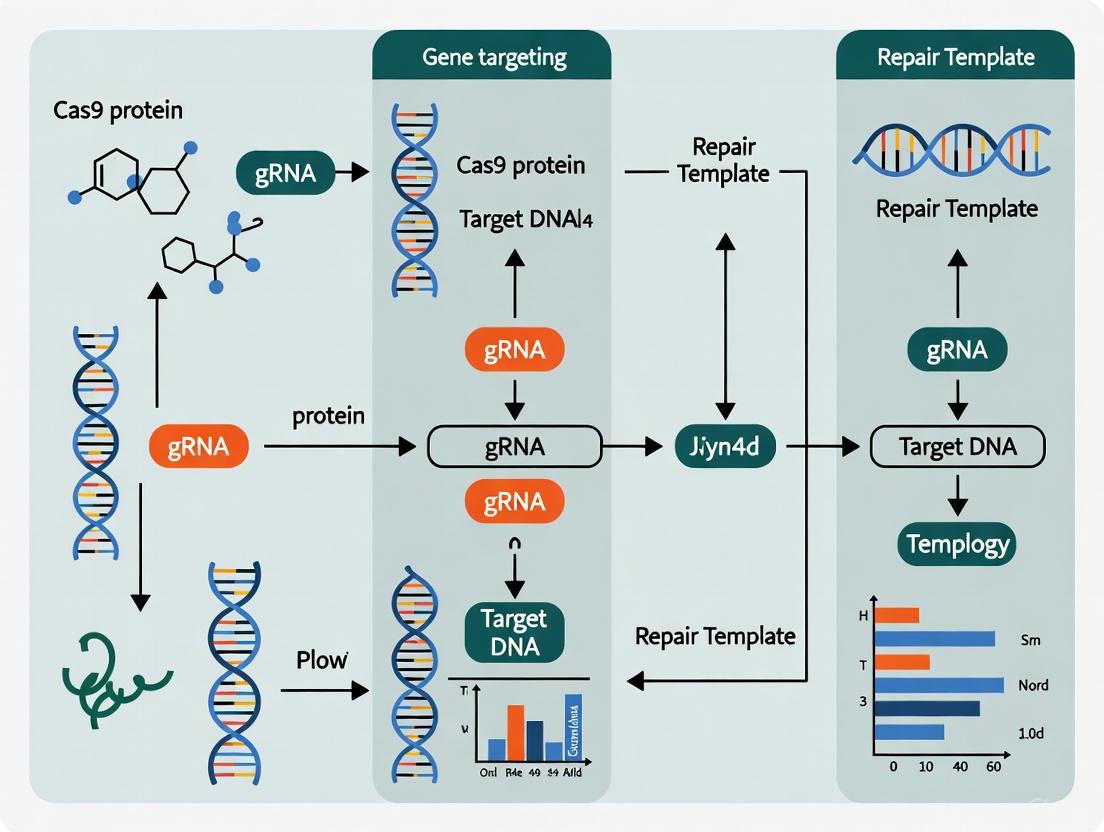
This article provides a comprehensive overview of homology-directed repair (HDR)-mediated gene targeting in plants, a precise genome editing approach crucial for crop improvement.
Precision Plant Breeding: Advancing Gene Targeting via Homology-Directed Repair
Abstract
This article provides a comprehensive overview of homology-directed repair (HDR)-mediated gene targeting in plants, a precise genome editing approach crucial for crop improvement. It explores the fundamental DNA repair mechanisms in plants, details current HDR methodologies using CRISPR/Cas systems, and addresses significant challenges such as low efficiency and competition from non-homologous end-joining pathways. The content compares HDR with alternative precision editing tools like base and prime editing, evaluating their respective advantages and limitations. Designed for researchers and plant biotechnology professionals, this review synthesizes recent advances in strategy optimization, presents validation case studies, and discusses future directions for applying HDR technology to develop resilient, high-yielding crops amid growing climate and food security challenges.
The Biological Basis of Homology-Directed Repair in Plant Systems
In the realm of plant genome engineering, the competition between homology-directed repair (HDR) and non-homologous end joining (NHEJ) represents a fundamental biological challenge that directly impacts the efficiency of precision gene editing. When CRISPR-Cas systems induce double-strand breaks (DSBs) in plant DNA, the cellular repair machinery is activated, triggering a race between these two distinct pathways [1] [2]. NHEJ operates as the dominant, error-prone repair mechanism throughout the cell cycle, efficiently ligating broken DNA ends while often introducing small insertions or deletions (indels) that disrupt gene function [3]. In contrast, HDR serves as a precise template-dependent pathway that utilizes homologous DNA sequences to accurately repair DSBs, enabling precise gene modifications, knock-ins, and corrections [1] [3]. This competition is markedly skewed in plant somatic cells, where NHEJ predominates over HDR, creating a significant bottleneck for achieving precise genome modifications in crop improvement programs [3] [4]. Understanding and manipulating this competitive balance is crucial for advancing plant synthetic biology and developing sustainable agricultural solutions through precision breeding.
Quantitative Comparison of HDR and NHEJ Characteristics
The table below summarizes the key characteristics and comparative dynamics of the NHEJ and HDR pathways in plant systems, highlighting their distinct functional attributes and competitive interactions.
Table 1: Comparative Analysis of NHEJ and HDR Pathways in Plants
| Characteristic | Non-Homologous End Joining (NHEJ) | Homology-Directed Repair (HDR) |
|---|---|---|
| Repair Mechanism | Ligates broken ends without template | Requires homologous DNA template |
| Efficiency in Plants | High (dominant pathway) | Very low (0.5-5% in optimized systems) |
| Fidelity | Error-prone (generates indels) | High-fidelity (precise editing) |
| Cell Cycle Dependence | Active throughout cell cycle | Primarily in S/G2 phases |
| Key Protein Factors | Ku70/Ku80, DNA-PKcs, DNA ligase IV | RAD51, RAD52, BRCA2, RAD54 |
| Primary Applications | Gene knockouts, random mutagenesis | Precise gene editing, knock-ins, allele replacement |
| Template Requirement | Not required | Donor DNA with homology arms essential |
| Repair Outcomes | Random insertions/deletions | Precise sequence changes |
Strategic Modulation of Repair Pathway Competition
Environmental and Physical Optimization
Research demonstrates that physical culture conditions significantly influence HDR efficiency in plant systems. In tomato, a 10-day incubation period at 31°C under light/dark cycles following Agrobacterium-mediated transformation resulted in optimal HDR performance using CRISPR/LbCpf1 systems [4]. This suggests that temperature and light regulation can be leveraged to modestly favor HDR activity, potentially by synchronizing cells into repair-permissive states or enhancing the expression of recombination factors.
Molecular and Genetic Manipulation
The most effective strategy for enhancing HDR efficiency involves suppressing competing repair pathways. Inhibition of key NHEJ components through chemical inhibitors or genetic approaches has proven successful in elevating HDR frequencies [5] [2]. Recent evidence indicates that targeting alternative repair pathways beyond classical NHEJ, such as microhomology-mediated end joining (MMEJ) and single-strand annealing (SSA), can further improve precise editing outcomes [5]. Specifically:
- NHEJ inhibition using compounds like Alt-R HDR Enhancer V2 increased perfect HDR frequency approximately 3-fold in engineered systems [5]
- MMEJ suppression through POLQ inhibition reduced large deletions (≥50 nt) and complex indels [5]
- SSA pathway inhibition via Rad52 suppression decreased asymmetric HDR events and other imprecise integrations [5]
Donor Template Engineering and Delivery
Increasing the local concentration of donor templates near DSB sites dramatically improves HDR success rates. Geminivirus-based replicon systems have demonstrated exceptional utility by achieving high-level replication of donor DNA within plant nuclei [3] [4]. Multi-replicon systems equipped with CRISPR/LbCpf1 have increased HDR efficiency approximately threefold compared to conventional single-replicon systems in tomato [4]. These replicons exploit the natural ability of geminiviral vectors to autonomously replicate and potentially reprogram the cellular environment to become more permissive for homologous recombination [4].
Experimental Protocol: Geminiviral Replicon-Mediated HDR in Tomato
Reagent Preparation
Table 2: Essential Research Reagents for Geminiviral Replicon-Mediated HDR
| Reagent/Category | Specific Examples | Function/Purpose |
|---|---|---|
| CRISPR System | LbCpf1 (Cas12a) nuclease | DSB induction with cohesive ends |
| Vector System | Bean yellow dwarf virus (BeYDV) replicon | High-copy donor template delivery |
| Replicon Elements | Long intergenic regions (LIR), Rep/RepA proteins | Viral replication initiation |
| Plant Selection | Kanamycin resistance, ANT1 anthocyanin marker | Visual selection of HDR events |
| Plant Material | Tomato cotyledon explants (Solanum lycopersicum) | Transformation recipient tissue |
| Delivery Method | Agrobacterium tumefaciens strain EHA105 | DNA transfer to plant cells |
Step-by-Step Methodology
Vector Construction: Engineer a BeYDV-based replicon containing LbCpf1 expression cassettes (driven by CaMV 35S promoter with AtUBI10 intron I), guide RNA scaffolds (driven by AtU6 promoter), and donor templates with appropriate homology arms (90-100 bp) [4].
Replicon Design: Implement a multi-replicon system featuring LIR-SIR-LIR amplicon units with Rep/RepA coding sequences positioned centrally to support autonomous replication [4].
Plant Transformation: Introduce constructs via Agrobacterium-mediated transformation into tomato cotyledon explants using standard protocols [4].
Environmental Optimization: Incubate transformed tissues for 10 days at 31°C under light/dark cycles to enhance HDR efficiency [4].
Selection and Screening: Identify successful HDR events through dual selection using kanamycin resistance and visual screening for anthocyanin overproduction (purple calli/shoots) [4].
Molecular Validation: Confirm precise editing through PCR amplification across target junctions and sequencing of the modified loci to verify perfect HDR events [4].
Figure 1: Competitive Dynamics Between HDR and NHEJ Pathways in Plant Genome Editing and Strategic Enhancement Approaches
Advanced Technical Considerations
Alternative DSB Repair Pathways
Beyond the classical HDR vs. NHEJ paradigm, plant cells employ additional repair mechanisms that influence editing outcomes. Microhomology-mediated end joining (MMEJ) utilizes 2-20 nucleotide microhomologous sequences flanking DSBs, frequently resulting in deletions [5]. Single-strand annealing (SSA) depends on Rad52-mediated annealing of longer homologous sequences (typically >30 bp) and can lead to significant deletions between repeats [5]. Recent evidence indicates that concurrent inhibition of these alternative pathways alongside NHEJ suppression can further enhance perfect HDR efficiency by reducing imprecise repair outcomes [5].
Nuclease-Specific Effects on Repair Outcomes
The choice of CRISPR enzyme significantly influences repair pathway competition. Cas9 generates blunt ends at DSBs, while Cas12a (Cpf1) creates cohesive ends with 4-5 nucleotide overhangs [4]. The cutting site of Cas12a is located distal to the recognition sequence, potentially allowing repeated cleavage even after indel formation, which may provide additional opportunities for HDR to occur [4]. Furthermore, nicking enzyme variants such as Cas9 D10A or H840A nickases create single-strand breaks that can reduce indel formation while potentially stimulating HDR in certain contexts [6].
The competition between HDR and NHEJ in plants presents a significant challenge for precision genome editing, yet recent advances in pathway modulation and donor delivery systems have substantially improved prospects for efficient gene targeting in crops. The integration of multi-replicon systems, rational environmental control, and strategic inhibition of competing pathways represents a powerful combined approach to tilt the cellular balance toward precise HDR events. As these technologies mature, they will increasingly enable the precise allele replacements and gene insertions necessary for developing climate-resilient crops and advancing sustainable agricultural systems. Future research should focus on further elucidating plant-specific DNA repair mechanisms and developing novel tools to precisely control repair pathway choices in diverse crop species.
Cell Cycle Dependencies and HDR Efficiency Limitations
Homology-directed repair (HDR) enables precise genome modifications such as targeted gene insertions, sequence replacements, and specific nucleotide substitutions. This precision makes it an invaluable tool for plant biotechnology, functional genomics, and crop improvement [3] [7]. Unlike error-prone non-homologous end joining (NHEJ), which dominates DNA repair in somatic plant cells, HDR uses a donor template with homologous sequences to repair double-strand breaks (DSBs) accurately [3] [8].
A significant limitation to HDR application in plants is its characteristically low efficiency, which typically ranges from 10⁻³ to 10⁻⁶ in higher plants [9]. This inefficiency stems from multiple factors, with the cell cycle dependence of the HDR pathway being a principal constraint. HDR is primarily active during the late S and G2 phases of the cell cycle, coinciding with the presence of replicated sister chromatids that serve as natural repair templates [3]. In contrast, the NHEJ pathway operates throughout the cell cycle, giving it a competitive advantage in most plant somatic cells [3]. This fundamental aspect of DNA repair biology presents a substantial barrier to achieving efficient gene targeting (GT) in plants.
This application note explores the interplay between the cell cycle and HDR efficiency, detailing experimental strategies to overcome this limitation. We provide structured quantitative data, detailed protocols for key experiments, and visual workflows designed to assist researchers in optimizing HDR-mediated precision genome editing in plant systems.
Biological Background: HDR and the Cell Cycle
DNA Repair Pathway Competition
In plant cells, DSB repair is a competitive process between the high-capacity but error-prone NHEJ pathway and the precise but restricted HDR pathway. The NHEJ pathway is active throughout the cell cycle and represents the dominant repair mechanism in somatic plant cells [3]. It functions by directly ligating broken DNA ends, often resulting in small insertions or deletions (indels). The HDR pathway, in contrast, is restricted to the late S and G2 phases due to its requirement for a homologous template and the involvement of key proteins expressed during these phases [3]. This temporal restriction severely limits HDR opportunities in plant cells.
Table 1: Key Characteristics of DNA Repair Pathways in Plants
| Feature | NHEJ Pathway | HDR Pathway |
|---|---|---|
| Template Requirement | None | Homologous donor template required |
| Cell Cycle Activity | Throughout all phases | Primarily S and G2 phases |
| Repair Fidelity | Error-prone (indels common) | High-fidelity (precise) |
| Native Efficiency in Plants | High (dominant pathway) | Low (10⁻³ to 10⁻⁶) |
| Key Regulating Factors | Ku70, Ku80, DNA Ligase IV | RAD51, RAD52, RAD54, BRCA2 |
Molecular Basis of Cell Cycle Dependence
The HDR pathway's dependency on specific cell cycle phases is governed by the regulated expression and activation of its core components. Cyclin-dependent kinases (CDKs) phosphorylate several HDR proteins, including BRCA2 and RAD51, to activate them specifically as cells enter S and G2 phases [3]. Additionally, the preferred template for HDR is the sister chromatid, which is only available after DNA replication during S phase. These molecular constraints create a narrow window of opportunity for HDR occurrence, presenting a fundamental challenge for efficient gene targeting in plants.
Diagram 1: Cell Cycle Regulation of HDR Pathway. HDR is restricted to S and G2 phases when sister chromatids are available as repair templates.
Quantitative Data on HDR Efficiency Limitations
HDR Efficiency Across Plant Species and Strategies
Recent studies have quantified HDR efficiency using various nuclease systems and optimization strategies. The data reveal that while HDR remains challenging, specific approaches can significantly improve GT frequencies.
Table 2: HDR Efficiency Across Experimental Approaches in Plants
| Plant Species | Nuclease System | Strategy | HDR Efficiency | Reference |
|---|---|---|---|---|
| Arabidopsis thaliana | CRISPR-Cas9 | Sequential transformation | Up to 4.3-fold improvement | [10] |
| Arabidopsis thaliana | ttCas12a | Sequential transformation + enhancers | ~2-fold improvement | [11] |
| Tobacco | ZFN | Protoplast transformation | ~20% (reporter gene) | [9] |
| Tobacco | TALEN | Protoplast transformation | Up to 4% (endogenous ALS) | [9] |
| Tobacco | CRISPR-Cas9 | All-in-one vector | 0.5-4.2 × 10⁻⁴ | [9] |
| Maize | ZFN | Agrobacterium-mediated | Successful GT demonstrated | [9] |
Factors Influencing HDR Efficiency
Multiple experimental parameters significantly impact the observed HDR frequency in plant systems. Understanding these variables is crucial for experimental design and optimization.
Table 3: Factors Affecting HDR Efficiency in Plants
| Factor Category | Specific Factor | Impact on HDR Efficiency |
|---|---|---|
| Nuclease System | Cas9 vs. Cas12a | Cas12a creates staggered ends potentially more favorable for HDR [11] |
| Donor Template | Homology arm length | 1 kb arms successfully used in Arabidopsis [10] |
| Delivery Method | Sequential transformation | Higher efficiency than all-in-one approach [10] [11] |
| Cellular Environment | Cell cycle stage | S/G2 phase critical for HDR competence [3] |
| Enhancer Elements | Transcriptional/translational enhancers | Up to 2-fold improvement with combination enhancers [11] |
| Repair Pathway Modulation | NHEJ inhibition | Can increase HDR efficiency by reducing competition [3] |
Experimental Protocols
Sequential Transformation with Double-Step Screening
This protocol describes a method for enhancing HDR efficiency in Arabidopsis thaliana through sequential transformation and surrogate screening using the endogenous MAR1 gene as a visible marker [10].
Materials and Reagents
- Plant Material: Arabidopsis thaliana DD45 promoter::Cas9 parental line [10]
- Vectors: Binary vectors containing sgRNA expression cassettes targeting both gene of interest and MAR1 locus, donor template with homologous arms [10]
- Growth Media: Standard Arabidopsis growth media, Basta-containing selection media, kanamycin-containing selection media [10]
- Equipment: Plant growth chambers, spray apparatus for selection agents, PCR equipment for genotyping
Procedure
Parental Line Preparation:
- Maintain Arabidopsis DD45::Cas9 parental lines under standard growth conditions (22°C, 16/8h light/dark cycle) [10].
Donor Construct Design:
- Design donor constructs with 1 kb homology arms flanking the desired modification [10].
- Include sgRNA target sites at both ends of the donor sequence to enable donor excision [10].
- Clone sgRNA expression cassettes targeting both your gene of interest and the endogenous MAR1 gene into the transformation vector [10].
First Transformation and Selection:
- Transform the donor construct into the DD45::Cas9 parental line using Agrobacterium-mediated floral dip method [10].
- Select T1 transformants on Basta-containing media to identify successful transformants [10].
- Grow approximately 100 independent Basta-resistant T1 transformants for further analysis [10].
Double-Step Screening:
Genotyping and Validation:
Diagram 2: Sequential Transformation Workflow with Double-Step Screening. This method enriches for plants with high DSB activity, improving HDR efficiency.
Cell Cycle Synchronization for HDR Enhancement
This protocol describes approaches to synchronize plant cells in S/G2 phase to potentially enhance HDR efficiency by increasing the proportion of HDR-competent cells.
Materials and Reagents
- Cell Cycle Inhibitors: Aphidicolin (DNA synthesis inhibitor), hydroxyurea (ribonucleotide reductase inhibitor)
- Plant Material: Plant cell cultures or protoplasts with high regeneration capacity
- Nuclease System: CRISPR-Cas components optimized for your plant system
- Donor Template: High-quality donor DNA with appropriate homology arms
Procedure
Cell Culture Establishment:
- Establish actively dividing cell cultures from your target plant species.
- Optimize culture conditions for maximum cell division rate.
Cell Cycle Synchronization:
- Treat cell cultures with aphidicolin (1-5 μg/mL) for 12-24 hours to arrest cells at the G1/S boundary [3].
- Remove the inhibitor by washing and replace with fresh media to allow synchronized progression into S phase.
- Monitor synchronization efficiency by flow cytometry if available.
Timing of Transformation:
- Deliver CRISPR-Cas components and donor template 2-6 hours after release from aphidicolin block, when maximum cells are in S phase [3].
- Use appropriate transformation method for your system (protoplast transfection, biolistics, etc.).
Validation and Analysis:
- Assess transformation efficiency using reporter genes if included.
- Analyze HDR events using PCR-based methods and sequencing.
- Compare HDR efficiency with non-synchronized controls.
The Scientist's Toolkit: Research Reagent Solutions
Table 4: Essential Reagents for HDR Experiments in Plants
| Reagent Category | Specific Examples | Function & Application |
|---|---|---|
| Nuclease Systems | CRISPR-Cas9, CRISPR-Cas12a (ttCas12a), ZFNs, TALENs | Create target-specific DSBs to initiate DNA repair [11] [9] |
| Donor Template Design | Plasmid DNA, ssODN, dsDNA with homology arms | Provides homologous template for precise repair [10] [3] |
| Enhancer Elements | AtUbq10 first intron, dMac3, TMV omega | Boost nuclease expression and activity [11] |
| Selection Markers | MAR1 endogenous marker, antibiotic resistance genes | Enrich for cells with high editing efficiency [10] |
| Pathway Modulators | KU70/KU80 inhibitors, RAD51/RAD54 overexpression | Shift repair balance from NHEJ to HDR [3] [9] |
| Delivery Tools | Agrobacterium, biolistics, protoplast transfection | Introduce editing components into plant cells [10] [9] |
The cell cycle dependency of HDR represents a fundamental biological constraint on precise genome editing in plants. However, as detailed in this application note, experimental strategies such as sequential transformation, double-step screening, and potentially cell cycle synchronization can significantly improve HDR efficiency. The quantitative data presented here provides realistic expectations for researchers designing GT experiments, while the detailed protocols offer practical guidance for implementation.
Future directions in overcoming HDR limitations may include more sophisticated cell cycle control strategies, development of plant-specific HDR enhancers, and temporal regulation of nuclease activity to coincide with optimal cell cycle phases. By understanding and addressing the cell cycle dependencies of HDR, researchers can advance toward more efficient and reliable precision genome editing in plants.
The journey from homologous recombination (HR) to CRISPR-Cas technology represents a fundamental paradigm shift in genetic engineering. Early gene targeting relied on endogenous homologous recombination pathways in cells, a process that was inherently inefficient and unpredictable. The emergence of CRISPR-Cas systems has revolutionized this landscape, providing researchers with unprecedented precision and flexibility in genomic manipulation. This evolution is particularly significant in plant research, where precise gene editing via homology-directed repair (HDR) enables the development of crops with improved yield, disease resistance, and climate resilience.
Homology-directed repair (HDR) is a versatile platform for creating precise site-specific DNA insertions, deletions, and substitutions using exogenous donor templates carrying desired sequences [7]. While powerful, traditional HDR approaches faced significant limitations due to low efficiency, especially in postmitotic cells. The integration of CRISPR-Cas technology with HDR pathways has created new possibilities for precise genome editing, opening avenues for advanced functional studies, disease modeling, and gene therapy applications [7].
For plant researchers, this technological evolution has been transformative. The ability to perform precise genetic modifications allows for the study of protein functions, development of novel crop traits, and acceleration of breeding programs. This article explores current methodologies, applications, and protocols for implementing CRISPR-Cas-mediated HDR in plant research systems.
Fundamental Mechanisms: DNA Repair Pathways in Gene Editing
The Interplay of DNA Repair Pathways
CRISPR-mediated gene editing operates through the creation of targeted double-strand breaks (DSBs) in DNA, which are subsequently repaired by the cell's endogenous repair mechanisms. The competition between various repair pathways ultimately determines editing outcomes, making understanding these mechanisms crucial for experimental design.
Non-Homologous End Joining (NHEJ) is the predominant and error-prone repair pathway, often resulting in insertions or deletions (indels) that disrupt gene function [12] [13]. While useful for gene knockouts, NHEJ is the primary competitor to precise HDR-based editing.
Homology-Directed Repair (HDR) utilizes homologous DNA sequences as templates for precise repair [7] [14]. When researchers provide an exogenous donor template with homology arms flanking the desired edit, HDR can incorporate this sequence precisely into the genome.
Alternative Repair Pathways including microhomology-mediated end joining (MMEJ) and single-strand annealing (SSA) also contribute to repair outcomes and can lead to imprecise integration even when NHEJ is suppressed [14].
The following diagram illustrates the competitive relationships between these key pathways in determining CRISPR editing outcomes:
CRISPR-Cas Systems for Precision Editing
The type II CRISPR-Cas9 system has been adapted into multiple variants for genome editing, each with distinct advantages for HDR applications. The wild-type Cas9 induces double-strand breaks that can be repaired by either NHEJ or HDR pathways. For improved precision, the Cas9D10A nickase variant cleaves only one DNA strand and, when used in pairs to create adjacent nicks, can reduce off-target effects while maintaining HDR compatibility. For applications requiring no DNA cleavage, nuclease-deficient dCas9 serves as a targeting platform for transcriptional regulators or epigenetic modifiers without altering the DNA sequence [12].
The recent development of AI-designed editors like OpenCRISPR-1 demonstrates the next frontier of CRISPR technology. These synthetic editors, designed using large language models trained on natural CRISPR diversity, exhibit comparable or improved activity and specificity relative to natural Cas9 while being highly divergent in sequence [15].
Advanced Applications in Plant Research
HDR-Mediated Targeted Insertion in Crops
Implementing HDR for large sequence insertion in plants has been particularly challenging. Recent research has demonstrated successful targeted insertion (TIN) of transgenic trait cassettes via HDR in maize using CRISPR-Cas12a. This approach achieved double-junction integrations of sequences up to 10 kilobase pairs at rates of up to 4%, representing a significant advancement for precise genome engineering in major crops [16].
The efficiency of HDR-mediated editing varies significantly based on the experimental system, target locus, and methodology. The table below summarizes key quantitative findings from recent studies:
Table 1: Efficiency Metrics for HDR-Mediated Genome Editing
| Editing System | Application | Efficiency | Key Factors | Reference |
|---|---|---|---|---|
| CRISPR-Cas12a HDR | Targeted insertion in maize | Up to 4% | Donor size, gRNA performance, repair pathway balance | [16] |
| CRISPR-Cas9 HDR | Endogenous tagging in human cells | 5.2-22.1% (increased with NHEJ inhibition) | Cell type, NHEJ/MMEJ/SSA pathway competition | [14] |
| LNP-delivered CRISPR | In vivo therapy for hATTR | ~90% reduction in disease-related protein | Delivery method, target tissue (liver), redosing capability | [17] |
| AI-designed OpenCRISPR-1 | Human cell editing | Comparable/improved vs. SpCas9 | Protein engineering via language models | [15] |
CRISPR Activation for Gain-of-Function Studies
CRISPR activation (CRISPRa) represents a powerful alternative to HDR for gain-of-function studies. This approach uses dCas9 fused to transcriptional activators to upregulate endogenous genes without altering DNA sequence [13]. Unlike traditional overexpression that introduces foreign DNA, CRISPRa maintains genes in their native genomic context, preserving natural regulation. This technology has been successfully applied to enhance disease resistance in crops like tomato and Phaseolus vulgaris by upregulating defense genes [13].
Experimental Protocols
Protocol: Targeted Gene Insertion via HDR in Maize
This protocol summarizes an established workflow for CRISPR-Cas12a-mediated targeted insertion in maize using homology-directed repair [16].
Materials and Reagents
Table 2: Research Reagent Solutions for Plant HDR Editing
| Reagent/Category | Specific Example | Function/Purpose |
|---|---|---|
| CRISPR System | CRISPR-Cas12a (CpF1) | DNA cleavage; creates DSB at target site |
| Delivery Method | Agrobacterium-mediated transformation | Introduces editing components into plant cells |
| Donor Template | PCR-amplified DNA with 90bp homology arms | Provides template for precise HDR repair |
| Plant Material | Maize immature embryos | Regenerable tissue for transformation |
| Selection System | Herbicide or antibiotic resistance | Enriches for successfully edited events |
| Analysis Method | Long-amplicon TaqMan assays, Nanopore sequencing | Verifies precise integration and insert integrity |
Workflow Steps
Target Site Selection and gRNA Design: Prioritize genomic regions in silico using bioinformatics tools. Screen gRNA performance using leaf protoplast transient assays.
Donor Vector Construction: Design donor DNA with homology arms (300-1000bp recommended) flanking the insert of interest. For maize, demonstrate effectiveness with inserts up to 10kb.
Plant Transformation: Deliver CRISPR-Cas12a RNP complexes and donor DNA into immature maize embryos using Agrobacterium-mediated transformation.
Selection and Regeneration: Culture embryos under appropriate selection pressure to identify successful editing events. Regenerate whole plants from edited tissue.
Molecular Analysis: Screen events using large amplicon TaqMan assays. Confirm precise integration and copy number using long-read sequencing technologies such as Nanopore sequencing.
Generational Analysis: Evaluate inheritance and stability of edits through subsequent generations. Monitor for chimerism, partial integration, or linkage with editing machinery.
The following workflow diagram visualizes the key steps for HDR in plants:
Protocol: Chemical Enhancement of HDR Efficiency
This protocol adapts a high-throughput screening approach to identify chemicals that enhance HDR efficiency in plant cells [18].
Materials and Reagents
- Plant protoplasts or cell cultures
- CRISPR-Cas9 components (RNP or plasmid)
- Donor DNA template with appropriate homology arms
- Chemical compound library
- 96-well plates coated with poly-D-lysine
- Cell culture medium and lysis buffers
- β-galactosidase assay reagents (ONPG substrate)
- Plate reader for absorbance measurement
Workflow Steps
Plate Preparation: Coat 96-well plates with poly-D-lysine solution to enhance cell adhesion.
Cell Preparation: Culture plant protoplasts or cell lines in appropriate medium. For HEK293T models, use DMEM with 10% FBS [18].
Transfection: Co-deliver CRISPR-Cas9 components (targeting desired locus) and donor DNA template containing LacZ reporter and homology arms.
Chemical Treatment: Add chemical compounds from screening library to appropriate wells. Include controls without compounds.
Incubation and Analysis: Incubate for 72-96 hours, then lyse cells and measure β-galactosidase activity using ONPG substrate.
Viability Assessment: Perform parallel viability assays (e.g., MTT) to normalize HDR efficiency to cell number.
Hit Validation: Identify compounds that significantly increase HDR efficiency without excessive toxicity. Validate hits in subsequent experiments.
Emerging Technologies and Future Directions
Novel Delivery Systems
Recent advances in delivery systems address one of the most significant challenges in plant genome editing. A breakthrough approach uses the tobacco rattle virus (TRV) to deliver compact CRISPR systems like ISYmu1 into Arabidopsis thaliana [19]. This method achieves heritable, transgene-free editing without tissue culture, significantly simplifying the process. Since TRV infects over 400 plant species, this technology has broad potential for crop improvement.
Repair Pathway Engineering
Research increasingly focuses on modulating DNA repair pathways to favor HDR outcomes. Studies demonstrate that inhibiting NHEJ alone is insufficient to completely suppress non-HDR repairs [14]. Combined inhibition of NHEJ and alternative pathways like MMEJ (via POLQ inhibitors) and SSA (via Rad52 inhibitors) can further enhance precise knock-in efficiency by reducing imprecise integration events [14].
AI-Designed Editing Systems
The integration of artificial intelligence with protein design has produced novel CRISPR systems like OpenCRISPR-1, which was designed using language models trained on 1 million CRISPR operons [15]. These systems demonstrate that AI-generated editors can exhibit optimal properties while being highly divergent from natural sequences, opening possibilities for editors with enhanced specificity, novel PAM preferences, and improved functionality in plant systems.
Technical Challenges and Optimization Strategies
Despite advances, several technical challenges remain in implementing HDR-based editing in plants:
- Low HDR Efficiency: Overcoming the natural dominance of NHEJ remains challenging. Strategy: Combine chemical inhibitors targeting NHEJ, MMEJ, and SSA pathways with optimized donor design [14].
- Delivery Limitations: Many plants are recalcitrant to transformation. Strategy: Implement viral delivery systems that bypass tissue culture requirements [19].
- Complex Integration Patterns: Imprecise donor integration persists even with NHEJ inhibition. Strategy: Optimize homology arm length and use single-stranded DNA donors where possible.
- Cellular Toxicity: Extended CRISPR expression can reduce cell viability. Strategy: Use RNP delivery rather than plasmid-based expression to limit exposure time.
Each of these challenges requires systematic optimization of the multiple factors influencing HDR efficiency, including delivery method, timing, cell cycle synchronization, and donor design. The protocols and applications detailed in this article provide a foundation for researchers to implement and advance precision gene editing in plant systems.
Homology-directed repair (HDR) is a precise DNA repair pathway that maintains genetic integrity by facilitating error-free repair of DNA double-strand breaks (DSBs) using homologous template sequences [20]. In plants, HDR enables precise genome modifications—including gene insertions, replacements, and point mutations—that are invaluable for both basic plant biology research and crop improvement [9]. However, a major barrier to its application is the intrinsically low frequency of HDR in higher plants, which ranges from 10⁻³ to 10⁻⁶, in contrast to the more dominant and error-prone non-homologous end joining (NHEJ) pathway [9]. This low efficiency is particularly problematic for precision breeding efforts aimed at introducing beneficial alleles from landraces or wild relatives into elite crop varieties without linkage drag [3]. The core protein complexes RAD51, MRN (Mre11-Rad50-Nbs1), and BRCA (BRCA1-BRCA2-PALB2) play pivotal roles in executing and regulating the HDR process in plants. Understanding and manipulating these complexes offers a promising path to overcoming the current limitations of HDR in plant systems.
Core HDR Protein Complexes in Plants: Structure and Function
RAD51: The Central Recombinase
Structure and Conservation: RAD51 is a homolog of the bacterial RecA protein and is highly conserved across most eukaryotes, from yeast to plants and humans [21]. It functions as the central catalytic component in the homologous recombination process, forming a helical nucleoprotein filament on single-stranded DNA (ssDNA) [21].
Mechanism of Action: During HDR, RAD51, assisted by mediators like BRCA2, coats the 3' ssDNA overhangs generated by DNA end resection. This RAD51-ssDNA filament then catalyzes the essential steps of homology search and strand invasion into a homologous DNA template, enabling accurate DNA repair synthesis [21]. In plants, as in other eukaryotes, RAD51 activity is supported by several paralogs (RAD51B, RAD51C, RAD51D, XRCC2, and XRCC3) that facilitate its recruitment and stability at DNA damage sites [21].
The MRN Complex: The DSB Sensor and Resection Initiator
Complex Composition: The MRN complex consists of three core subunits: MRE11, RAD50, and NBS1. This complex acts as a primary sensor and signaling hub for DNA double-strand breaks [20].
Functional Roles in HDR Initiation:
- DSB Sensing: The MRN complex is among the first responders to a DSB, detecting the lesion and initiating the DNA damage response [20].
- End Resection: MRE11, the nuclease component of the complex, plays a critical role in initiating DNA end resection—the 5' to 3' nucleolytic processing of DSB ends that generates 3' ssDNA overhangs essential for HDR [20]. This resection step commits the repair process to HDR rather than NHEJ.
- Signaling Activation: The complex also contributes to activating the ATM kinase signaling pathway, which coordinates the cellular response to DNA damage [20].
The BRCA Complex: The RAD51 Mediator
Complex Assembly: The BRCA complex in plants, as in other eukaryotes, typically includes the tumor suppressor proteins BRCA1, BRCA2, and PALB2. These proteins form a functional unit that regulates RAD51 activity [21].
Key Functions:
- RAD51 Loading: BRCA2, in cooperation with PALB2, plays a crucial role in mediating the orderly assembly of RAD51 onto replication protein A (RPA)-coated ssDNA, forming the active RAD51-ssDNA filament required for strand invasion [21].
- Pathway Regulation: BRCA1 interacts with various DNA repair proteins, including CtIP, and has been implicated in regulating DNA resection and repair pathway choice, although its specific functions in plants are still being elucidated [22].
Table 1: Core Protein Complexes in Plant Homology-Directed Repair
| Complex/Protein | Core Components | Primary Function in HDR | Conservation in Plants |
|---|---|---|---|
| RAD51 | RAD51 (and paralogs) | Strand invasion, homology search, DNA strand exchange | Highly conserved |
| MRN Complex | MRE11, RAD50, NBS1 | DSB sensing, end resection initiation, DNA damage signaling | Highly conserved |
| BRCA Complex | BRCA1, BRCA2, PALB2 | RAD51 loading and regulation, repair pathway choice | Conserved (functional homologs identified) |
Experimental Evidence and Key Findings in Plant Systems
Enhancing HDR through MRE11 Overexpression
Recent research in the moss Physcomitrium patens has demonstrated that overexpression of PpMRE11 significantly enhances resistance to genotoxic stress by stimulating homologous recombination [20]. This study provided compelling evidence that:
- Increased Stress Resistance: Overexpression of PpMRE11 conferred enhanced resistance to DNA strand-breaking agents in both bacterial and plant systems [20].
- Elevated HR Frequency: The improved survival under genotoxic stress was directly correlated with higher homologous recombination frequency, a relationship not observed in HR-deficient bacterial mutants [20].
- Application in Crops: Transgenic rice plants ectopically expressing PpMRE11 showed improved genotoxic stress resistance, reduced DNA lesion accumulation, and decreased cellular damage, highlighting the translational potential of this approach for crop improvement [20].
Genetic Manipulation of HDR Pathways
Multiple studies have explored strategies to enhance HDR efficiency in plants by genetically manipulating the core repair complexes and their regulators:
- RAD51 Overexpression: Increasing RAD51 expression has been shown to enhance HDR frequency in plant cells, potentially by shifting the competitive balance between HDR and NHEJ pathways [9].
- NHEJ Pathway Inhibition: Knockout mutations in key NHEJ genes, including Ku70, Ku80, and Lig4, have been successfully used to improve HDR efficiency by reducing competition from the error-prone NHEJ pathway [9].
- BRCA Complex Components: Manipulation of BRCA complex components and their interactors, such as CtIP, influences DNA resection and repair pathway choice, although the phospho-dependent interaction between BRCA1 and CtIP appears dispensable for HDR in some mammalian contexts [22].
Table 2: Experimental Evidence for HDR Enhancement in Plants
| Experimental Approach | Key Finding | Plant System | HDR Enhancement |
|---|---|---|---|
| MRE11 Overexpression | Increased HR frequency and genotoxic stress resistance | Physcomitrium patens, Rice | Demonstrated via reduced DNA lesions and improved survival [20] |
| RAD51 Overexpression | Enhanced strand invasion and recombination | Various plant systems | Reported as a successful strategy [9] |
| NHEJ Gene Knockout (Ku70, Ku80, Lig4) | Reduced competition from error-prone NHEJ | Various plant systems | Increased HDR frequency [9] |
| BRCA1-CtIP Interaction Study | Phospho-dependent interaction not essential for HDR in mammals | Mouse ES cells (informative for plant research) | S326A mutant maintained HDR function [22] |
Protocols for Enhancing HDR in Plant Systems
Protocol: Enhancing HDR Efficiency through MRE11 Overexpression
Principle: Increasing the expression of the MRE11 nuclease, the catalytic core of the MRN complex, enhances the initial resection of DNA ends, committing the repair process to HDR rather than NHEJ [20].
Materials:
- Physcomitrium patens MRE11 (PpMRE11) coding sequence
- Plant expression vector with strong constitutive promoter
- Agrobacterium tumefaciens strain for plant transformation
- Selective media appropriate for your plant system
- Genotoxic stress agent (e.g., Zeocin) for phenotypic validation
Procedure:
- Clone the PpMRE11 coding sequence into a plant expression vector under the control of a strong constitutive promoter.
- Introduce the construct into Agrobacterium tumefaciens and transform your target plant species using standard methods for your system.
- Select transformed lines on appropriate antibiotic-containing media.
- Confirm PpMRE11 overexpression in transgenic lines by quantitative RT-PCR.
- Validate enhanced HDR functionality through:
- Genotoxic stress assays using Zeocin or other DSB-inducing agents
- Direct measurement of HR frequency using specialized reporter systems
- Evaluation of DNA lesion accumulation via comet assays or γ-H2AX foci quantification
Validation: Successful implementation will yield transgenic plants with improved survival under genotoxic stress, reduced DNA damage accumulation, and increased homologous recombination events, as demonstrated in rice systems [20].
Protocol: Modulating DNA Repair Pathway Balance for Enhanced HDR
Principle: Shifting the competitive balance between HDR and NHEJ pathways by inhibiting NHEJ components while promoting HDR factors increases the proportion of repair events that occur via precise HDR [9] [23].
Materials:
- CRISPR-Cas9 system for gene editing
- Constructs for overexpression of RAD51, RAD52, or RAD54
- Vectors for RNAi-mediated knockdown of Ku70, Ku80, or Lig4
- HDR donor template designed for your specific target locus
Procedure:
- Design and synthesize HDR donor template with homology arms specific to your target locus.
- Select modulation approach based on your experimental system:
- Option A: Overexpress HDR-promoting factors (RAD51, RAD52, RAD54)
- Option B: Knock down NHEJ factors (Ku70, Ku80, Lig4) via RNAi or CRISPR knockout
- Option C: Combined approach (most effective)
- Co-deliver HDR donor template, CRISPR-Cas9 components, and pathway modulation constructs to plant cells using appropriate transformation methods.
- Screen for precise HDR events using PCR-based genotyping and sequencing.
- Quantify HDR efficiency by calculating the ratio of precise HDR events to total editing events (including indels).
Technical Notes: The combined inhibition of NHEJ and microhomology-mediated end joining (MMEJ) has been shown to increase HDR rates to as high as 93% of chromosomes in human cell studies, suggesting similar strategies could be effective in plants [23].
Visualization of HDR Pathways and Experimental Workflows
The Plant HDR Pathway: From DSB to Precise Repair
Diagram Title: Plant HDR Pathway
Strategic Modulation of HDR Efficiency in Plants
Diagram Title: HDR Enhancement Strategies
The Scientist's Toolkit: Essential Reagents for Plant HDR Research
Table 3: Key Research Reagent Solutions for Plant HDR Studies
| Reagent/Category | Specific Examples | Function/Application | Experimental Notes |
|---|---|---|---|
| HDR-Enhancing Proteins | PpMRE11, RAD51, RAD52, RAD54 | Overexpression to boost resection, strand invasion, and recombination | RAD51 overexpression requires careful control to avoid toxicity [20] [9] |
| Pathway Inhibitors | Ku70/Ku80 knockout lines, Lig4 mutants, DNA-PKcs inhibitors | Reduce NHEJ competition; shift repair balance toward HDR | Combined NHEJ and MMEJ inhibition dramatically increases HDR purity [23] |
| Donor Template Design | Geminivirus-based replicons, 5'/3'-modified templates, "mini-chromatin" structures | Increase donor template availability and stability | Structural modifications to donor templates can significantly improve HDR efficiency [9] |
| Delivery Systems | Carbon nanotubes, biolistic delivery, Agrobacterium, geminivirus vectors | Efficient co-delivery of editing components and donor templates | Temporal control of DSB induction relative to donor delivery is critical [9] |
| HDR Reporters | GFP-based reconstitution systems, antibiotic resistance restoration | Quantitative measurement of HDR efficiency | Enable rapid screening and optimization of HDR conditions [9] |
The strategic manipulation of key protein complexes—RAD51, MRN, and BRCA—represents a powerful approach for overcoming the intrinsic low efficiency of homology-directed repair in plants. Current evidence demonstrates that enhancing pro-HDR factors like MRE11 and RAD51 while suppressing competing NHEJ pathways can significantly shift the repair balance toward precise genome editing [20] [9]. The emerging toolkit of reagents and protocols, including the use of optimized donor templates, pathway-specific inhibitors, and advanced delivery systems, provides plant researchers with increasingly sophisticated methods for achieving high-precision genetic modifications.
Looking forward, several challenges and opportunities remain. The development of plant-specific inhibitors for DNA repair pathway components, similar to the HDR enhancer proteins used in mammalian systems [24], could provide more precise temporal control over repair pathway choice. Additionally, further characterization of the plant-specific functions and interactions of BRCA complex components may reveal new targets for manipulation. As these technologies mature, the ability to perform efficient HDR-mediated precision genome editing in a wide range of crop species will accelerate both basic plant research and the development of improved varieties with enhanced agricultural traits.
Practical Implementation of HDR-Mediated Gene Targeting in Crops
The application of CRISPR-Cas systems has revolutionized plant genome engineering, offering unprecedented precision for crop improvement. Among the various editing outcomes, homology-directed repair (HDR) enables precise gene insertion or replacement, representing a powerful tool for advanced plant breeding and functional genomics. This application note focuses on the implementation of Cas9 and Cas12a systems—the two predominant CRISPR nucleases—for achieving HDR in plants, with particular emphasis on their comparative advantages, optimized protocols, and novel variants enhancing editing efficiency.
While Cas9 and Cas12a are both RNA-guided endonucleases used for genome editing, they differ significantly in their molecular mechanisms and resulting applications. Cas12a, in particular, offers distinct benefits for complex editing tasks due to its ability to process pre-crRNA via its additional ribonuclease activity, reducing system complexity compared to Cas9-based systems [25]. For HDR-mediated precise editing, these differences profoundly influence experimental design and success rates. The following sections provide a detailed comparison of these systems, practical protocols for implementation, and advanced strategies to enhance HDR efficiency in plant systems.
Comparative Analysis of Cas9 and Cas12a Systems
Molecular Mechanisms and Key Characteristics
CRISPR-Cas9 and CRISPR-Cas12a represent distinct classes of CRISPR systems with different molecular architectures and mechanisms. Cas9 is a Class II Type II nuclease that recognizes G-rich protospacer adjacent motifs (PAMs) and creates blunt-ended double-strand breaks (DSBs) [26]. It requires two RNA components - a CRISPR RNA (crRNA) and trans-activating crRNA (tracrRNA) - often combined into a single guide RNA (sgRNA) [26]. In contrast, Cas12a (formerly Cpf1) is a Class II Type V nuclease that recognizes T-rich PAM sequences and generates staggered DNA breaks with 4-5 nucleotide overhangs [27]. Cas12a requires only a single crRNA and possesses intrinsic RNase activity that enables processing of its own CRISPR arrays, making it particularly suitable for multiplexed editing approaches [25].
These fundamental differences translate to distinct practical applications in plant genome editing. Cas12a's staggered ends may be more favorable for HDR as they can facilitate specific alignment with homologous templates [27]. Additionally, the different PAM requirements (NGG for SpCas9 vs. TTTV for most Cas12a orthologs) significantly influence targetable genomic regions, with Cas12a being particularly advantageous for AT-rich regions that may be difficult to target with Cas9 [28].
Table 1: Fundamental Characteristics of Cas9 and Cas12a Nucleases
| Characteristic | Cas9 | Cas12a |
|---|---|---|
| CRISPR System Class | Class II, Type II | Class II, Type V |
| PAM Requirement | 3'-NGG (SpCas9) | 5'-TTTV (LbCas12a) |
| Guide RNA | crRNA + tracrRNA (often fused as sgRNA, ~100 nt) | crRNA (~42-44 nt) |
| Cleavage Pattern | Blunt ends | Staggered ends (4-5 nt overhangs) |
| RNase Activity | No | Yes (processes own crRNA arrays) |
| Native Multigenic Editing | Requires multiple expression constructs | Possible with single crRNA array |
Editing Efficiency and Precision Profiles
Recent comparative studies in plants have revealed significant differences in editing outcomes between Cas9 and Cas12a systems. In tomato protoplasts, both nucleases demonstrated similar total editing efficiency (20-30%) when delivered as ribonucleoprotein (RNP) complexes with single-stranded oligodeoxynucleotide (ssODN) repair templates [29]. However, Cas12a exhibited slightly higher precision in templated editing and induced significantly larger deletions compared to Cas9, which predominantly creates small insertions and deletions (indels) [29] [27].
The deletion profile differences are particularly noteworthy. Cas9 typically generates predominantly 1 bp insertions and deletions of <10 bp in size, while Cas12a generates larger deletions, typically ranging from 6 to 14 bp [30]. This characteristic makes Cas12a potentially more suitable for applications requiring complete gene knockouts or larger region excisions. In stable transgenic rice lines, various Cas12a orthologs have demonstrated high editing efficiency, with some achieving 70-100% biallelic mutation rates [28].
Table 2: Comparative Editing Profiles in Plant Systems
| Editing Parameter | Cas9 | Cas12a |
|---|---|---|
| Typical Deletion Size | <10 bp [30] | 6-14 bp [30] |
| Precision with ssODN Templates | Moderate | Slightly higher [29] |
| Biallelic Editing Efficiency | Variable (dependent on target) | Up to 100% in rice [28] |
| Off-target Profile | Moderate (dependent on specificity-enhanced variants) | Higher specificity reported [28] |
| HDR Efficiency in Plants | Low (typically <5%) | Low (typically <5%), but up to 4% in maize [16] |
Experimental Protocols for HDR in Plants
Cas12a-Mediated HDR in Maize
The following protocol describes an optimized workflow for Cas12a-mediated targeted insertion (TIN) via HDR in maize, achieving integration efficiencies of up to 4% for donor sequences up to 10 kilobase pairs [16].
Reagent Preparation
- Cas12a Expression Construct: Utilize a plant-codon optimized LbCas12a or Mb2Cas12a variant under the control of a strong constitutive promoter (e.g., ZmUbi). Include a tandem terminator for enhanced expression and nuclear localization signals at both termini [25] [16].
- crRNA Design and Cloning: Design crRNAs targeting genomic regions with TTTV PAM sequences. Screen 3-5 crRNAs per target using a leaf protoplast transient assay. Clone validated crRNAs into a Pol II expression cassette [16] [28].
- Donor Template Construction: Design donor DNA with homology arms of 800-1000 bp flanking the desired insertion cassette. For large insertions (>3 kb), use linearized plasmid DNA; for smaller edits, ssODNs or PCR fragments can be employed [16].
Plant Material Transformation
- Explants Preparation: Isolate immature zygotic embryos (1.5-2.0 mm) from maize ears 10-12 days after pollination.
- Delivery Method: Use biolistic delivery or Agrobacterium-mediated transformation to co-deliver Cas12a-RNP complex (preassembled with crRNA) and donor DNA.
- Culture Conditions: Culture embryos on osmotic medium for 16-24 hours pre-transformation and recovery medium for 5-7 days post-transformation before transferring to selective medium [16].
Molecular Analysis of HDR Events
- Primary Screening: Employ large amplicon TaqMan assays (800-1500 bp) spanning both 5' and 3' junctions to identify precise integration events.
- Validation: Confirm HDR events through nanopore sequencing of long-range PCR amplicons to verify junction integrity and absence of unintended modifications.
- Segregation Analysis: Advance putative HDR events to T1 generation to assess stable inheritance and segregate away from CRISPR machinery [16].
The following workflow diagram illustrates the complete HDR experiment in maize:
Cas9-Mediated HDR Enhancement with Exonuclease Fusions
This protocol describes the fusion of exonucleases to Cas9 to enhance HDR efficiency by promoting larger deletions and altering DNA repair pathway balance.
Exonuclease Selection and Fusion Construct Design
Exonuclease Selection: Choose exonucleases based on desired deletion profiles:
- sbcB (3'-5' exonuclease): Largest deletion enhancement (3.6-fold increase in deletions >15 bp) [30]
- TREX2 (3'-5' exonuclease): Moderate enhancement with high editing efficiency
- AtEXO1B (5'-3' exonuclease): Moderate enhancement with locus-dependent efficiency
Vector Construction: Fuse selected exonuclease to the N-terminus of SpCas9 using an XTEN linker [30]. Express the fusion protein under control of a plant-specific promoter (e.g., ZmUbi or 35S).
Plant Transformation and Screening
- Rice Callus Transformation: Introduce exonuclease-SpCas9 fusion constructs into rice calli via Agrobacterium-mediated transformation.
- Regeneration and Genotyping: Regenerate transgenic plants and genotype by amplicon deep sequencing of target loci.
- MMEJ Pathway Analysis: Inspect deletion junctions for microhomology signatures (2-20 bp) indicative of MMEJ pathway utilization [30].
Advanced Enhancement Strategies for HDR
DNA Repair Pathway Modulation
Precise HDR competes with several alternative DNA repair pathways, primarily non-homologous end joining (NHEJ), microhomology-mediated end joining (MMEJ), and single-strand annealing (SSA). Strategic inhibition of these pathways can significantly enhance HDR efficiency [14] [31].
Table 3: DNA Repair Pathway Modulation Strategies
| Pathway | Key Effectors | Inhibition Strategy | Effect on HDR |
|---|---|---|---|
| NHEJ | DNA-PKcs, Ku70/80 | Alt-R HDR Enhancer V2 | 3-fold increase in knock-in efficiency [14] |
| MMEJ | POLQ (DNA Pol θ) | ART558 inhibitor | Reduces large deletions, increases perfect HDR [14] |
| SSA | Rad52 | D-I03 inhibitor | Reduces asymmetric HDR, increases precise integration [14] |
In human cell studies, combined inhibition of NHEJ and SSA pathways resulted in the highest proportion of perfect HDR events, with SSA suppression particularly effective at reducing asymmetric HDR outcomes where only one side of the donor DNA integrates precisely [14]. While these approaches have been primarily validated in mammalian systems, similar principles are being adapted for plant systems.
Novel Cas12a Variants with Expanded Targeting Scope
The development of novel Cas12a orthologs and engineered variants has significantly expanded the targeting scope for HDR applications in plants. Recent screening of nine Cas12a orthologs in rice identified six with high editing activity: ErCas12a, Lb5Cas12a, BsCas12a, Mb2Cas12a, TsCas12a, and MbCas12a [28].
Among these, Mb2Cas12a demonstrates particularly valuable properties, including high editing efficiency and tolerance to low temperature [28]. Furthermore, engineered Mb2Cas12a-RVR variants enable editing with relaxed PAM requirements (TATV), yielding two times higher genome coverage than wild-type SpCas9 [28]. This expanded targeting scope increases the likelihood of identifying genomic targets with optimal HDR efficiency.
The following diagram illustrates the DNA repair pathways that compete with HDR and strategic inhibition points:
Table 4: Key Research Reagent Solutions for CRISPR-HDR in Plants
| Reagent Category | Specific Examples | Function & Application Notes |
|---|---|---|
| Cas12a Orthologs | LbCas12a, Mb2Cas12a, ErCas12a (MAD7) | Diverse PAM preferences and temperature sensitivities for different plant systems [28] |
| Expression Systems | Pol II promoters for crRNA, tandem terminators for Cas12a | Enhanced expression and processing of CRISPR components [25] |
| Delivery Tools | Biolistic particles, Agrobacterium strains, protoplast transfection | Method-dependent efficiency optimization for different plant species |
| Donor Templates | Linearized plasmids with homology arms, ssODNs, PCR fragments | Size-appropriate template selection critical for HDR efficiency [16] |
| Pathway Modulators | Alt-R HDR Enhancer V2, ART558, D-I03 | Chemical inhibition of competing repair pathways [14] |
| Screening Tools | Large amplicon TaqMan assays, nanopore sequencing | Comprehensive analysis of integration events and junction fidelity [16] |
| Exonuclease Fusions | sbcB-Cas9, TREX2-Cas9, AtEXO1B-Cas12a | Enhanced deletion sizes and altered repair pathway balance [30] |
Homology-directed repair (HDR) enables precise genome modifications by using donor repair templates (DRTs) to introduce specific DNA sequences at targeted genomic loci. This capability is particularly valuable for plant research and crop improvement, as it allows for the introduction of elite alleles from landraces or related species without linkage drag, a process that can take more than a decade using conventional breeding methods [3]. Despite its potential, HDR application in plants faces a significant challenge: low efficiency. In somatic plant cells, HDR is intrinsically rare, with natural frequencies ranging from 10⁻³ to 10⁻⁶, as it primarily occurs during the late S and G2 phases of the cell cycle and must compete with dominant error-prone repair pathways like non-homologous end joining (NHEJ) [9] [3]. The strategic design of the donor template is therefore a critical determinant in overcoming this bottleneck and achieving efficient precise genome editing in plants.
Strategic Design Parameters for Donor Templates
The structure and composition of the donor template profoundly influence HDR efficiency. Key parameters include strandedness, homology arm length, and structural modifications, each of which can be optimized to enhance precise editing outcomes.
Strandedness and Orientation
Recent empirical evidence in plants indicates that single-stranded DNA (ssDNA) DRTs generally outperform double-stranded DNA (dsDNA) donors. A 2025 study in potato protoplasts demonstrated that ssDNA donors in the "target" orientation (coinciding with the strand recognized by the sgRNA) achieved the highest HDR efficiency, up to 1.12% of sequencing reads in the transfected protoplast pool [32]. This configuration likely enhances efficiency by facilitating the annealing process between the donor and the target site during repair.
Homology Arm Length
The length of homology arms (HAs) flanking the desired insert is a crucial design consideration. Contrary to findings in animal systems, recent plant research suggests that HDR efficiency can be achieved even with relatively short HAs.
Table 1: Homology Arm Length Recommendations for Plant HDR
| Donor Type | Recommended HA Length | Key Findings | Reference |
|---|---|---|---|
| ssDNA | 30-97 nt | HDR efficiency appeared independent of HA length within this range; 30 nt HAs enabled targeted insertions. | [32] |
| dsDNA | 200-2000 bp | In animal models, HDR efficiency increases sharply with HAs extending from 200 bp to 2000 bp. | [32] |
Notably, while short HAs (e.g., 30 nt) can facilitate targeted insertion, they may also favor alternative repair pathways like microhomology-mediated end joining (MMEJ) over precise HDR [32]. The optimal HA length may therefore involve a balance between achieving sufficient efficiency and minimizing imprecise integration.
Donor Modifications and Delivery Strategies
Enhancing the stability and nuclear availability of the DRT can improve HDR outcomes. Several strategic modifications have shown promise:
- 5' and 3' End Protection: Modifying the ends of linear dsDNA donors with phosphorothioate linkages or biotin tags can protect them from exonuclease degradation [9].
- Chromatinization: Associating the donor template with histones to form "mini-chromatin" structures may improve nuclear access and utilization by the cellular repair machinery [9].
- Localized Delivery: Covalently conjugating the donor template directly to the Cas9 protein or guide RNA ensures co-localization of the nuclease and the repair template at the target site, significantly increasing local DRT concentration [9].
Experimental Protocol for Optimizing Donor Templates in Plant Protoplasts
This protocol outlines a robust method for rapidly assessing donor template design parameters in potato protoplasts, utilizing ribonucleoprotein (RNP) transfection and next-generation sequencing (NGS) for quantitative analysis [32].
Materials and Reagents
Table 2: Essential Research Reagents for Plant HDR Experiments
| Reagent / Material | Function / Application | Specific Examples / Notes |
|---|---|---|
| CRISPR-Cas RNP Complex | Induces a site-specific double-strand break (DSB). | Pre-assembled with a highly efficient sgRNA (e.g., targeting the SS1 gene in potato). |
| Donor Repair Templates (DRTs) | Provides the template for precise HDR. | Various designs (ssDNA/dsDNA, different HA lengths) to test. Chemically synthesized. |
| Plant Material | Source of protoplasts. | Potato cultivar (Solanum tuberosum L.), e.g., tetraploid cultivar Kuras. |
| Protoplast Isolation Kit | Enzymatic digestion of cell walls to release protoplasts. | Contains cellulase, macerozyme, and other necessary enzymes. |
| Transfection/PEG Solution | Facilitates delivery of RNPs and DRTs into protoplasts. | Polyethylene glycol (PEG)-based solution. |
| NGS Library Prep Kit | Prepares amplicon sequencing libraries from edited protoplast pools. | For high-throughput quantification of editing outcomes. |
Step-by-Step Procedure
sgRNA Validation:
- Select multiple sgRNAs targeting different sites within your gene of interest (e.g., the SS1 gene).
- Transferct protoplasts with RNP complexes for each sgRNA individually.
- Isolate genomic DNA 24-48 hours post-transfection.
- Amplify the target region by PCR and analyze the mutagenesis frequency via NGS to identify the most efficient sgRNA [32].
Donor Template Design and Preparation:
- Design a series of DRTs with your desired edit (e.g., a short insertion or SNP) flanked by homology arms.
- Systematically vary parameters such as:
- Strandedness: Test ssDNA versus dsDNA.
- Orientation: For ssDNA, design both "target" and "non-target" strand configurations.
- Homology Arm Length: Test a range (e.g., 30 nt, 60 nt, 97 nt for ssDNA).
- Obtain chemically synthesized ssDNA oligos or PCR-amplify dsDNA fragments.
Protoplast Transfection:
- Isolate protoplasts from plant tissue via enzymatic digestion.
- Co-transfect a fixed amount of the pre-validated RNP complex with each different DRT design into separate protoplast aliquots using PEG-mediated transfection [32].
Analysis of Editing Outcomes:
- Incubate transfected protoplasts for 2-3 days.
- Harvest protoplasts and extract genomic DNA.
- Perform PCR to amplify the genomic target region from the pooled, transfected protoplasts.
- Prepare an NGS library from the amplicons and sequence.
- Use bioinformatic pipelines to quantify the frequency of precise HDR, indels, and other repair outcomes (e.g., MMEJ) from the sequencing data [32].
Expected Outcomes and Analysis
- The sequencing data will provide a quantitative comparison of HDR efficiency for each DRT design.
- The optimal donor (e.g., ssDNA in "target" orientation) is expected to show a higher percentage of reads containing the precise desired edit.
- Short HA lengths (e.g., 30 nt) may show high rates of targeted insertion but a significant proportion of these will likely be mediated by MMEJ rather than precise HDR, observable as deletions flanking the insertion site [32].
Interplay with DNA Repair Pathways
A critical consideration in HDR-based editing is that the cell employs multiple pathways to repair double-strand breaks. The donor template must compete not only with NHEJ but also with other alternative repair pathways.
Understanding this interplay is vital. Even with effective donor templates and NHEJ suppression, imprecise integration can persist due to MMEJ and SSA activities. Inhibition of key effectors like POLQ (for MMEJ) or Rad52 (for SSA) has been shown in human cells to reduce these imprecise events, thereby increasing the proportion of perfect HDR [5]. While these specific strategies are still being validated in plants, they represent a promising future direction for enhancing the precision of HDR-mediated genome editing.
Case Study and Application in Crop Improvement
The successful application of optimized HDR strategies is exemplified by recent work in maize. Researchers developed a workflow for targeted insertion (TIN) of large DNA fragments (up to 10 kilobases) using CRISPR-Cas12a and HDR in immature maize embryos [16]. Key steps included:
- In silico prioritization of genomic target regions.
- gRNA screening using a leaf protoplast transient assay to identify high-performance guides.
- Delivery of CRISPR-Cas12a components and a donor template with homology arms into immature embryos.
This approach achieved precise, double-junction integrations via HDR at rates of up to 4%, demonstrating that HDR can be the preferential pathway for large sequence insertions in complex crop systems [16]. Molecular analysis of events across generations revealed that efficiency bottlenecks extend beyond initial integration to include issues like chimerism and linkage with editing machinery DNA, highlighting areas for future optimization.
The strategic design of donor templates is a cornerstone for unlocking the full potential of HDR in plant genome engineering. The move toward ssDNA donors with optimized homology arms and protective modifications, combined with delivery methods that enhance local template concentration, represents the current best practice. As the field progresses, integrating these design principles with a deeper manipulation of the plant's innate DNA repair network will be crucial to elevate HDR from a challenging technique to a robust and routine tool for precise crop improvement.
Gene targeting via homology-directed repair (HDR) in plant research requires efficient delivery of editing tools into plant cells. The choice of delivery method significantly impacts the success of HDR, as it influences the cellular environment and the availability of repair templates. This article provides Application Notes and Protocols for three principal delivery methods—Agrobacterium-mediated transformation, biolistic delivery, and nanoparticle-based systems—framed within the context of advancing HDR-based plant genome engineering.
Comparative Analysis of Delivery Methods
The table below summarizes the key characteristics of each delivery method, which are critical for selecting the appropriate strategy for HDR-based experiments.
Table 1: Comparison of Gene Delivery Methods for Plant Research
| Method | Key Feature | Typical Cargo | HDR Suitability | Key Quantitative Metrics | Primary Limitation |
|---|---|---|---|---|---|
| Agrobacterium-mediated | Biological vector using natural DNA transfer mechanism [33]. | T-DNA containing genes of interest and repair templates [33]. | High (Co-delivery of large repair templates is feasible). | Host range dependent; efficiency boosted by developmental regulators (e.g., 2-fold increase in wheat editing) [34]. | Limited host range; complex T-DNA integration patterns [35]. |
| Biolistics | Physical method using high-velocity microprojectiles [36]. | DNA, RNA, or Ribonucleoproteins (RNPs) [36]. | Moderate (Tissue damage and high cargo load can complicate HDR). | 4.5-fold increase in RNP editing efficiency; >10-fold improvement in stable maize transformation [36]. | Significant tissue damage; complex, multi-copy insertions [36] [35]. |
| Nanoparticles | Synthetic nanocarriers for passive or assisted delivery [35]. | DNA, RNA, RNP, and proteins [37] [35]. | Emerging Potential (Protects cargo; enables organelle targeting). | Enables organellar genome transformation; efficiency depends on nanoparticle composition and delivery technique [35] [38]. | Protocol standardization is ongoing; efficiency varies greatly with plant species [35]. |
Application Notes & Experimental Protocols
Agrobacterium-Mediated Transformation
Application Note: The natural biology of Agrobacterium tumefaciens facilitates the transfer of a defined DNA segment (T-DNA) into the plant nucleus, making it ideal for delivering the large, complex constructs often required for HDR, such as Cas9 genes and repair templates [33]. Recent innovations like "Fast-Treated Agrobacterium Co-culture" (Fast-TrACC) and "Direct Delivery" (DD) use developmental regulators to induce de novo meristems, drastically reducing the time from gene delivery to recovery of edited plants to approximately 70 days [34]. These methods are particularly valuable for bypassing tissue culture limitations in recalcitrant species.
Protocol: Direct Delivery (DD) to Soil-Grown Nicotiana benthamiana [34]
- Principle: Deliver developmental regulators (e.g., Wuschel2, Baby Boom) and HDR machinery directly to wounded, soil-grown plants to induce edited meristems in planta.
- Materials:
- Agrobacterium strain (e.g., LBA4404, EHA105) harboring T-DNA vectors for Cas9, sgRNA, and DRs.
- 4-5 week old soil-grown N. benthamiana plants.
- Sterile syringes and needles.
- Induction medium (10 mM MES, 20 µM Acetosyringone, pH 5.6).
- Procedure:
- Plant Preparation: Remove all existing meristems (shoot tips and axillary buds) from the plant using a sterile blade to create wound sites.
- Agrobacterium Preparation: Grow Agrobacterium carrying the T-DNA construct overnight. Resuspend the bacterial pellet in induction medium to an OD₆₀₀ of ~1.0.
- Inoculation: Using a sterile syringe, infiltrate the bacterial suspension into the stem at multiple sites near the wounded areas.
- Plant Growth: Maintain plants under standard growth conditions. New shoots should begin to emerge from the wound sites within 2-4 weeks.
- Screening: Excise and root the newly formed shoots. Screen the resulting plants for gene edits and the presence of the transgene using PCR-based methods and sequencing.
The following diagram illustrates the logical workflow and key biological components of the Agrobacterium-mediated gene delivery process.
Biolistic Delivery (Particle Bombardment)
Application Note: Biolistics is a direct physical method universally applicable across plant species and tissue types, capable of delivering diverse cargoes, including CRISPR-Cas ribonucleoproteins (RNPs) [36]. The use of RNPs minimizes off-target effects and can lead to transgene-free edited plants, which is highly desirable for breeding. Recent advancements, such as the Flow Guiding Barrel (FGB), have addressed fundamental inefficiencies in gas and particle flow, leading to a 22-fold enhancement in transient transfection efficiency and a 4.5-fold increase in CRISPR-Cas9 RNP editing efficiency [36]. This method is particularly powerful for species recalcitrant to Agrobacterium transformation.
Protocol: Enhancing Biolistic Delivery with a Flow Guiding Barrel (FGB) for RNP Delivery [36]
- Principle: Use a 3D-printed FGB device to optimize helium and particle flow dynamics in a standard gene gun (e.g., Bio-Rad PDS-1000/He), resulting in higher particle velocity, greater target area coverage, and improved penetration depth.
- Materials:
- Biolistic PDS-1000/He system.
- 3D-printed FGB device (replaces internal spacer rings).
- Gold microparticles (0.6 µm).
- Purified Cas9 protein and in vitro transcribed sgRNA.
- Target tissue (e.g., onion epidermis, maize immature embryos).
- Procedure:
- RNP Complex Formation: Pre-complex the Cas9 protein and sgRNA at room temperature to form ribonucleoproteins (RNPs).
- Particle Coating: Coat gold microparticles with the pre-formed RNPs using standard precipitation agents (e.g., CaCl₂, spermidine).
- Device Assembly: Install the FGB into the gene gun chamber according to the manufacturer's specifications. The FGB generates a more uniform laminar flow, directing nearly 100% of loaded particles to the target.
- Bombardment Parameters: Use longer target distances and reduced helium pressures compared to the conventional setup. For example, bombard onion epidermis using 1100 psi rupture discs at 12 cm target distance.
- Post-Bombardment Culture: Transfer bombarded tissues to appropriate recovery and regeneration media. The improved efficiency allows for targeting more embryos per bombardment (e.g., 100 maize B104 embryos vs. 30-40 conventionally).
Nanoparticle-Mediated Delivery
Application Note: Nanoparticle (NP) systems represent a rapidly developing frontier for plant genetic engineering. NPs can be engineered from various materials (e.g., lipids, carbon, gold) to protect molecular cargo (DNA, RNA, RNP) and facilitate its passage through the plant cell wall [35] [38]. Their key advantage for HDR is the potential for co-delivering all editing components (e.g., Cas9-sgRNA RNP and a repair template) in a single formulation while minimizing tissue damage. They also show promise for organellar genome transformation [35].
Protocol: Carbon Dot (CD)-Mediated Plasmid DNA Delivery [35]
- Principle: Utilize cationic polymer-functionalized carbon dots (CDs), which are carbon-based nanoparticles less than 10 nm in diameter, to bind and deliver negatively charged plasmid DNA into intact plant cells by bypassing the cell wall.
- Materials:
- Cationic carbon dots (CNDs or CQDs).
- Plasmid DNA (e.g., encoding Cas9 and repair template).
- Syringe or vacuum infiltration setup.
- Target plant tissue (e.g., leaves).
- Procedure:
- NP-DNA Complex Formation: Incubate the plasmid DNA with the carbon dots at a predetermined optimal mass ratio to form stable complexes via electrostatic interactions.
- Delivery to Plant Tissue:
- Syringe Infiltration: Use a needleless syringe to infiltrate the NP-DNA complex solution into the abaxial side of a leaf.
- Vacuum Infiltration: Submerge the plant tissue in the NP-DNA complex solution and apply a vacuum for a short duration (e.g., 5 minutes), followed by a slow release.
- Incubation and Analysis: Maintain the treated plants under normal growth conditions. Analyze the tissue for transient or stable expression of the transgene and screen for HDR events using molecular assays.
The Scientist's Toolkit: Research Reagent Solutions
The table below lists essential reagents and their functions for implementing the gene delivery protocols described.
Table 2: Key Research Reagents for Plant Gene Delivery and HDR Experiments
| Reagent / Tool | Function / Application | Example Use Case |
|---|---|---|
| Developmental Regulators (DRs) | Genes (e.g., Wuschel2, Baby Boom) that promote cell division and induce de novo meristem formation [34]. | Enhancing transformation efficiency in Agrobacterium Fast-TrACC and DD protocols [34]. |
| Flow Guiding Barrel (FGB) | A 3D-printed device that optimizes gas and particle flow in a biolistic gene gun [36]. | Dramatically improving biolistic delivery efficiency and consistency for DNA and RNP cargoes [36]. |
| Cationic Carbon Dots (CDs) | Carbon-based nanoparticles (<10 nm) that bind nucleic acids for cell wall penetration [35]. | Delivering plasmid DNA into intact plant leaves via passive diffusion or infiltration [35]. |
| CRISPR-Cas9 Ribonucleoprotein (RNP) | Pre-assembled complex of Cas9 protein and guide RNA [36] [37]. | Direct delivery of editing machinery for DNA-free editing, reducing off-target effects [36]. |
| INTEGRATE System | A CRISPR RNA-guided transposase system for precise genome engineering in Agrobacterium [39]. | Creating disarmed or auxotrophic Agrobacterium strains to improve transformation efficiency and biosafety [39]. |
Homology-directed repair (HDR) enables precise genomic modifications for crop improvement. This application note details successful HDR implementations in rice, maize, and soybean, providing quantitative outcomes and standardized protocols to facilitate gene targeting in plant research.
Quantitative Outcomes of HDR-Mediated Gene Targeting
The following table summarizes key performance metrics from recent successful HDR applications in the target crops.
Table 1: Quantitative Outcomes of HDR-Mediated Gene Targeting in Crops
| Crop Species | Target Locus | HDR Efficiency | Insert Size | Key Experimental Factors | Reference |
|---|---|---|---|---|---|
| Rice (Oryza sativa) | OsFTL1, OsROS1a | Highly efficient and precise | GFP reporter | Sequential transformation; CRISPR-Cas9; No selection markers at target loci | [40] |
| Maize (Zea mays) | Multiple optimized sites | Up to 4% (double-junction integration) | Up to 10 kb | CRISPR-Cas12a system; HDR as preferential pathway for large inserts | [16] |
| Soybean (Glycine max) | Not specified | Demonstrated HDR-mediated editing | Not specified | Developmental regulators (TaLAX1 homolog) to enhance transformation | [41] |
Experimental Protocols
Sequential Transformation for High-Efficiency Gene Targeting in Rice
This protocol enables precise gene knock-in without retaining selection markers in the final product [40].
Materials:
- Parental rice lines (cv. Nipponbare) stably expressing maize Ubiquitin 1 promoter-driven Cas9
- Agrobacterium strain carrying sgRNA and donor DNA construct
- Donor DNA with ~1 kb homology arms
- Standard rice tissue culture media
Procedure:
- Generate Parental Lines: Create transgenic rice lines constitutively expressing Cas9 nuclease.
- Design Donor Template: Construct donor DNA with desired modification flanked by homology arms (approximately 1 kb each) corresponding to the target locus.
- Sequential Transformation: Infect callus from parental lines with Agrobacterium carrying both sgRNA and donor DNA constructs.
- Selection & Regeneration: Apply appropriate selection and regenerate plants through tissue culture.
- Molecular Analysis: Screen regenerated plants for precise integration via PCR and sequencing.
- Segregation: Cross targeted plants with wild-type to eliminate Cas9 and selection markers.
Validation:
- Confirm precise GFP knock-in at OsFTL1 and OsROS1a loci via sequencing
- Verify unaltered epigenetic DNA methylation patterns at target loci
- Ensure heritable modifications through progeny analysis
CRISPR-Cas12a-Mediated Large Fragment Insertion in Maize
This protocol enables targeted insertion of large DNA fragments up to 10 kb in maize [16].
Materials:
- Maize immature embryos (elite inbred lines)
- CRISPR-Cas12a ribonucleoprotein (RNP) complex
- Donor DNA template with homology arms
- Leaf protoplast system for gRNA screening
Procedure:
- Target Site Identification: Prioritize genomic regions for transgene insertion using bioinformatics tools.
- gRNA Screening: Test gRNA performance using leaf protoplast transient assay.
- RNP Complex Assembly: Form Cas12a crRNA ribonucleoprotein complexes in vitro.
- Delivery: Co-deliver RNP complexes and donor DNA to immature maize embryos.
- Regeneration: Culture treated embryos through standard tissue culture protocols.
- Molecular Analysis: Identify and characterize events using large amplicon TaqMan assays and nanopore sequencing.
Validation:
- Confirm double-junction integrations via molecular analysis
- Verify intact large inserts (up to 10 kb) through nanopore sequencing
- Assess event quality across generations to identify chimerism and additional insertions
HDR Workflow and Pathway Diagrams
HDR Experimental Workflow in Plants
This diagram outlines the generalized workflow for implementing HDR-mediated gene targeting in plants, integrating key steps from both rice and maize protocols.
DNA Repair Pathway Competition
This diagram illustrates the competitive landscape of DNA repair pathways following CRISPR-induced double-strand breaks, highlighting factors that influence HDR efficiency.
Research Reagent Solutions
Table 2: Essential Research Reagents for Plant HDR Experiments
| Reagent Category | Specific Examples | Function & Application Notes | References |
|---|---|---|---|
| Nuclease Systems | CRISPR-Cas9, CRISPR-Cas12a | Induce double-strand breaks; Cas12a preferred for large fragments in maize | [16] [40] |
| Donor Template Design | ssDNA with 30-97 nt homology arms, dsDNA with >200 bp arms | Template for HDR; ssDNA with short arms effective in potato; orientation affects efficiency | [32] [16] |
| Transformation Vectors | Binary vectors with optimized origins of replication | Higher copy number mutants (e.g., pVS1 ORI variants) improve transformation | [42] |
| Developmental Regulators | BBM, WUS2, GRF-GIF fusions | Enhance transformation and regeneration efficiency, especially in recalcitrant species | [41] |
| Delivery Methods | Agrobacterium-mediated, RNP complex delivery | Agrobacterium standard; RNP direct delivery reduces off-target effects | [16] [40] |
In plant genome editing, Homology-Directed Repair (HDR) enables precise modifications by using a DNA template to repair a double-strand break (DSB) at a specific genomic location [43]. While this mechanism holds great promise for plant breeding and research, achieving efficient insertion of large DNA fragments via HDR remains a central challenge in the field [44]. The process is inherently inefficient in somatic plant cells, primarily competing with the error-prone non-homologous end joining (NHEJ) pathway that dominates the cellular repair landscape [3] [9].
This application note details the current technical hurdles in large fragment insertion and provides actionable protocols to enhance HDR efficiency. By synthesizing recent advances and quantifying their outcomes, we aim to equip researchers with practical strategies to overcome the critical bottleneck of low HDR frequency in plants.
Technical Hurdles in HDR-Mediated Large Fragment Insertion
Biological and Technical Barriers
The primary obstacle in HDR-mediated gene targeting (GT) is its characteristically low efficiency in higher plants, with native HR rates ranging from 10⁻³ to 10⁻⁶ [9]. This inefficiency stems from several interconnected biological and technical barriers:
- Pathway Competition: The NHEJ pathway operates throughout the entire cell cycle and is the predominant DSB repair mechanism in plants, consistently outcompeting HDR [45] [3] [9].
- Cell Cycle Limitation: HDR is primarily active during the late S and G2 phases, restricting its window of opportunity [3] [46].
- Template Availability: The plant cell wall presents a physical barrier to efficient donor template delivery, and even successful delivery often fails to achieve sufficient local concentration near the DSB site [3].
- Continuous Cleavage Risk: Integrated CRISPR/Cas systems can repeatedly cleave the target site if the guide RNA or PAM site remains intact after repair, favoring the generation of NHEJ-induced indels over HDR events [43].
Quantifying the Hurdles: Efficiency Comparisons
The table below summarizes the reported efficiencies of different genome editing systems, illustrating the performance gap for precise, large-scale modifications.
Table 1: Capabilities and Efficiencies of Major Genome Editing Systems
| Editing System | Typical Editing Efficiency | Maximum Insert Size | Key Advantages | Primary Limitations |
|---|---|---|---|---|
| HDR-mediated GT | 0.2% - 4% (endogenous genes) [9] | >1 kb [45] | Precisely installs all types of mutations or fragments [3] | Very low efficiency; complex donor design [3] |
| Base Editing | High (for single bases) [3] | Single base changes | High efficiency for single-base substitutions; no DSBs or donor template required [3] | Restricted editing window; only transition mutations; off-target effects [3] |
| Prime Editing | Low to modest [3] | ~50 bp [3] | Mediates all 12 point mutations without DSBs [3] | Low efficiency; limited to small edits [3] |
| NHEJ-mediated KI | High [45] | >1 kb [45] | Not cell cycle-dependent [45] | High frequency of indels and other undesired outcomes [45] |
Strategies to Enhance HDR Efficiency
Manipulating DNA Repair Pathways
A direct approach to enhancing HDR involves shifting the competitive balance away from NHEJ and toward HDR.
- Inhibiting NHEJ: Knocking out key NHEJ pathway genes (Ku70, Ku80, Lig4) or using chemical inhibitors (e.g., AZD7648) has been shown to enhance HDR efficiency by 2- to 9-fold in various systems [45] [9]. A recent study in tomato employed a dominant-negative ku80 (KUDN) mutant, which led to a 1.71 to 9.84-fold increase in GT efficiency [47].
- Stimulating HDR: Overexpression of HDR pathway genes (RAD51, RAD52, RAD54) or the addition of RAD51-stimulatory compounds can improve HDR efficiency by up to 6-fold [45] [9]. The "2iHDR" approach, which involves simultaneous inhibition of DNA-PK and DNA polymerase theta, has been shown to significantly improve both integration efficiency and precision [45].
Optimizing Donor Repair Template (DRT) Design
The structure and delivery of the DRT are critical determinants of HDR success. Key parameters include:
- Template Strandedness: Single-stranded DNA (ssDNA) donors often outperform double-stranded DNA (dsDNA) donors. In potato, ssDNA donors in the "target" orientation achieved the highest HDR efficiency, outperforming other configurations [46].
- Homology Arm (HA) Length: While long HAs (500-1000 bp) are traditionally used for dsDNA donors, ssDNA donors can function efficiently with much shorter HAs. Studies in plants and animals have shown successful HDR with ssDNA HA lengths of just 30-100 nucleotides [46] [48].
- Template Modification: Strategic modifications to the DRT can enhance its stability and availability. These include using 5' phosphorothioate linkages or biotin labels to protect the ends from exonuclease activity, and conjugating the donor template directly to the Cas9 protein or gRNA to ensure co-localization with the DSB [9].
Emerging and Novel Systems
Recent research has yielded innovative systems designed specifically for precise insertion.
- The Mortise-Tenon Joint System: This novel 2025 strategy uses an engineered APOBEC-Cas9-UDG/AP lyase to create a "mortise" structure—a DSB with single or double non-complementary 5'-overhangs. These overhangs are designed to capture complementary "tenons" (dsDNA donors with matching 5' sticky ends). This end-capture interaction facilitated precise insertion and replacement at frequencies of 16.30% to 59.47% in rice for donors of 21-85 bp, showing great promise for larger fragments [49].
- CRISPR-Associated Transposases (CAST): Type I-F and V-K CAST systems can facilitate the integration of large DNA cargos (1 to >100 kb) without requiring homology arms, operating independently of the cell cycle and without generating DSBs [45].
Table 2: Quantitative Outcomes of Strategies to Enhance HDR in Plants
| Strategy Category | Specific Method/Intervention | Reported Increase in HDR/Efficiency | Plant System |
|---|---|---|---|
| DNA Repair Manipulation | Dominant-negative ku80 (KUDN) mutant | 1.71 to 9.84-fold increase [47] | Tomato |
| Donor Template Design | ssDNA donor (vs. dsDNA) | Achieved 1.12% HDR efficiency [46] | Potato |
| Donor Template Design | ssDNA donor with 30-nt Homology Arms | Targeted insertions in up to 24.89% of reads (via MMEJ/HDR) [46] | Potato |
| Novel Editing System | Mortise-Tenon Joint System | 16.30% - 59.47% precise insertion [49] | Rice |
| Delivery & Availability | Geminivirus-based Replicons | Increased donor template copy number [9] | Various |
Detailed Experimental Protocols
Protocol: Enhanced HDR using KUDN and CRISPR/Cas in Tomato
This protocol is adapted from the study that demonstrated a 9.84-fold increase in GT efficiency [47].
Research Reagent Solutions Table 3: Essential Reagents for KUDN-Enhanced HDR Protocol
| Reagent/Material | Function/Description |
|---|---|
| KUDN Construct | Plasmid expressing the dominant-negative Ku80 mutant to suppress the cNHEJ pathway [47]. |
| CRISPR/Cas9 Vector | Binary vector expressing Cas9 and the target-specific gRNA [47]. |
| HDR Donor Template | dsDNA or ssDNA containing desired modification and homology arms. For KUDN co-delivery, design with ~1 kb arms [47]. |
| Agrobacterium tumefaciens | Strain for plant transformation (e.g., GV3101). |
| Tomato Explants | Cotyledons or hypocotyls from sterile seedlings. |
| Selective Antibiotics | For plasmid selection in bacteria and transformed plants. |
| Callus Induction Media | Media containing auxins and cytokinins to induce callus formation. |
Methodology
- Vector Construction: Clone your target-specific gRNA into a CRISPR/Cas9 binary vector. Assemble the HDR donor template in a separate T-DNA binary vector, ensuring the disruption of the gRNA or PAM site in the repaired sequence to prevent re-cleavage.
- KUDN Integration: Incorporate the KUDN expression cassette into the HDR donor vector or a third binary vector for co-transformation.
- Plant Transformation: Introduce the assembled vectors into Agrobacterium tumefaciens. Transform tomato explants via standard Agrobacterium-mediated transformation.
- Selection and Regeneration: Culture the transformed explants on callus induction media with appropriate selection agents. Subsequently, transfer putative transgenic calli to regeneration media to recover whole plants.
- Molecular Analysis: Genotype regenerated plants (T0) by PCR and sequencing across the target locus to identify precise HDR events. The efficiency can be quantified as the percentage of regenerated plants with the correct modification.
Protocol: ssDNA "Drop-In" for Tagging in Cell Cultures
This method, adapted from Drosophila research with applicability to plant protoplasts, uses PCR-generated ssDNA donors for efficient integration of tags (1-2 kb) [48].
Methodology
- Donor Template Production:
- Design a primer pair where the 5' overhangs consist of the 100-nucleotide homology arms specific to your target locus. The inner regions of the primers should be complementary to the "Swappable Integration Cassette" (SIC) you wish to insert (e.g., a GFP tag).
- Phosphorylate one of the primers at its 5' end.
- Perform PCR amplification using the SIC as a template. This yields a dsDNA product where one strand is 5'-phosphorylated.
- Treat the PCR product with Lambda Exonuclease, which degrades the 5'-phosphorylated strand, leaving behind a single-stranded DNA donor.
- Delivery: Co-deliver the purified ssDNA donor with pre-assembled CRISPR/Cas9 Ribonucleoprotein (RNP) complexes into plant protoplasts via transfection.
- Validation: Analyze transfected protoplasts using PCR, sequencing, or fluorescence microscopy (if a fluorescent tag was inserted) to confirm precise integration.
The following workflow diagram illustrates the key steps and strategic approaches for implementing large fragment insertion via HDR in plants.
The field of plant genome editing is rapidly developing innovative solutions to overcome the historic challenge of efficient large fragment insertion. While HDR remains a complex process, the synergistic application of multiple strategies—including modulating DNA repair pathways with tools like KUDN, optimizing donor templates using ssDNA with short homology arms, and leveraging novel systems like the Mortise-Tenon joint—is steadily transforming this holy grail of plant biotechnology into an achievable routine. These protocols and data-driven insights provide a roadmap for researchers to design more efficient experiments, accelerating the development of crops with precisely engineered traits for food security and sustainable agriculture.
Overcoming Efficiency Barriers in Plant HDR Editing
In plant molecular biology, achieving precise genome editing via homology-directed repair (HDR) remains a significant challenge due to the overwhelming dominance of the non-homologous end joining (NHEJ) pathway. This Application Note details established and emerging strategies to suppress NHEJ and thereby enhance HDR-mediated gene targeting efficiency. The content is framed within a broader research thesis on advancing gene targeting in plants, providing life science researchers and drug development professionals with validated protocols and quantitative data to implement in their experimental designs.
NHEJ is the predominant double-strand break (DSB) repair pathway in higher eukaryotes, including plants, often leading to random integration of foreign DNA or indel mutations rather than precise HDR-mediated editing [50] [3]. The competition between these pathways significantly limits the efficiency of precise genetic modifications, making suppression of NHEJ a critical step for successful gene targeting applications in plant research and crop development.
Quantitative Evidence for NHEJ Suppression Efficacy
Key Performance Metrics of NHEJ Suppression Strategies
Table 1: Documented Efficiency Improvements from NHEJ Suppression in Plant Systems
| Suppression Strategy | Experimental System | Target Gene | Efficiency Improvement | Citation |
|---|---|---|---|---|
| AtLIG4 Knockout | Arabidopsis thaliana | AGAMOUS | 28.6% GT efficiency among selected calli (vs. ~0.1% in wildtype) | [51] |
| Chemical NHEJ Inhibition (Alt-R HDR Enhancer V2) | Human RPE1 Cells (Model System) | HNRNPA1, RAB11A | ~3-fold increase in knock-in efficiency (5.2% to 16.8%) | [5] |
| Ku80 Deficiency | Arabidopsis thaliana | CRU3, PPO | Increased large deletions (>20 bp); altered repair junction profiles | [52] |
Strategic Approaches to NHEJ Suppression
Genetic Disruption of Core NHEJ Machinery
The most direct approach to suppress NHEJ involves creating mutations in genes encoding essential pathway components. The core NHEJ machinery in plants includes KU70, KU80, and DNA LIGASE IV (LIG4), which form a complex that binds and ligates broken DNA ends [52] [51].
Experimental Evidence:
- AtLIG4 Mutation: Disruption of the Arabidopsis LIG4 gene enables high-efficiency gene targeting, with reported success rates of 28.6% among selection-marker-positive calli at the AGAMOUS locus [51].
- KU80 Deficiency: Arabidopsis ku80 mutants exhibit altered DSB repair patterns with significantly larger deletions (>20 bp) predominating after CRISPR/Cas9-induced breaks, confirming reduced c-NHEJ activity [52].
Chemical Inhibition of NHEJ Pathway
Small molecule inhibitors provide a transient, reversible alternative to genetic disruption, allowing temporal control over NHEJ suppression during critical HDR windows.
Research-Grade Reagents:
- Alt-R HDR Enhancer V2: A commercially available, potent NHEJ inhibitor that significantly enhances HDR efficiency in human cell models, increasing knock-in efficiency from 5.2% to 16.8% at the HNRNPA1 locus and from 6.9% to 22.1% at the RAB11A locus [5].
- Application Note: Treatment duration is typically limited to 24 hours post-electroporation, coinciding with the peak HDR activity window to maximize precise integration while maintaining cell viability.
Sequential Transformation and Enhanced Nuclease Systems
Advanced delivery strategies and engineered nucleases can indirectly suppress NHEJ outcomes by enhancing HDR competition.
Sequential Transformation Strategy: This method involves first generating parental lines stably expressing Cas nuclease, then introducing sgRNA and donor templates in a second transformation step. This approach separates nuclease expression from donor delivery, potentially increasing HDR efficiency by ensuring continuous DSB generation at the target site [11].
Temperature-Tolerant Cas12a (ttCas12a): An engineered Cas12a variant with a D156R mutation exhibits higher enzymatic activity at plant growth temperatures, generating more frequent DSBs that may favor HDR when combined with donor templates [11].
Research Reagent Solutions
Table 2: Essential Reagents for NHEJ Suppression Experiments
| Reagent / Material | Function / Application | Key Characteristics | Experimental Context |
|---|---|---|---|
| NHEJ-Deficient Plant Lines (e.g., Atlig4, ku80) | Host organisms with compromised classical NHEJ pathway | Increased ratio of HDR:NHEJ events; potential pleiotropic effects | Arabidopsis gene targeting [51] |
| Alt-R HDR Enhancer V2 | Chemical inhibitor of key NHEJ factors | Potent, transient suppression; 24-hour treatment window | Knock-in enhancement in human cell models [5] |
| ttCas12a (ttLbCas12a-D156R) | Engineered nuclease for increased DSB generation | Temperature-tolerant; T-rich PAM (TTTV); staggered ends | Sequential transformation strategy in Arabidopsis [11] |
| POLQ Inhibitor (ART558) | Specific inhibitor of polymerase θ (MMEJ pathway) | Suppresses alternative end-joining; reduces large deletions | HDR enhancement in combination with NHEJ inhibition [5] |
| Rad52 Inhibitor (D-I03) | Chemical suppressor of single-strand annealing (SSA) | Reduces asymmetric HDR and imprecise donor integration | Improving knock-in accuracy [5] |
Experimental Protocols
Protocol 1: Gene Targeting in NHEJ-Deficient Arabidopsis Plants
This protocol adapts methodologies from [51] for achieving high-efficiency gene targeting in DNA LIGASE IV-deficient Arabidopsis.
Materials:
- Arabidopsis Atlig4/Atlig4 T-DNA insertion lines (e.g., SALK044027, SALK095962)
- Binary vector with target gene construct and selection marker
- Particle gun for transformation
- Tissue culture media and selection antibiotics
Procedure:
- Genotype Verification: Confirm homozygous Atlig4 status in Arabidopsis lines using PCR-based genotyping.
- Callus Induction: Surface-sterilize seeds and culture on callus-induction medium (CIM) for 2-3 weeks.
- DNA Delivery: Prepare linearized donor DNA fragments and coat gold microparticles. Perform biolistic transformation using helium-driven particle gun.
- Selection and Regeneration: Transfer transformed calli to selection medium containing appropriate antibiotics. Select for resistant calli over 2-4 weeks.
- Molecular Validation: Confirm targeted integration by PCR and Southern blot analysis across both homology arms.
- Plant Regeneration: Transfer positive calli to regeneration medium to recover whole plants.
Validation Method: Amplify both 5' and 3' integration junctions by PCR using gene-specific and vector-specific primers. Sequence all amplicons to verify precise homologous recombination.
Protocol 2: Chemical Inhibition of NHEJ in Plant Protoplasts
This protocol adapts chemical NHEJ suppression strategies from mammalian studies [5] for plant protoplast systems.
Materials:
- Plant protoplasts isolated from target species
- Alt-R HDR Enhancer V2 or equivalent NHEJ inhibitor
- CRISPR/Cas9 ribonucleoprotein (RNP) complexes
- Donor DNA template with homology arms
- PEG transformation solution
Procedure:
- Protoplast Preparation: Isolate protoplasts from leaf tissue using enzymatic digestion.
- Inhibitor Pre-treatment: Incubate protoplasts with NHEJ inhibitor (diluted in culture medium) for 2-4 hours prior to transformation.
- Co-delivery: Transferd protoplasts with CRISPR RNP complexes and donor DNA template using PEG-mediated transformation.
- Inhibitor Maintenance: Maintain NHEJ inhibitor in culture medium for 24 hours post-transformation.
- Culture and Analysis: Culture protoplasts for 3-7 days, then extract genomic DNA for analysis of editing outcomes.
Outcome Assessment: Use long-read amplicon sequencing (PacBio) of target loci and computational genotyping frameworks (e.g., knock-knock) to quantify perfect HDR, imprecise integration, and indel frequencies [5].
Pathway Diagrams and Workflows
DNA Repair Pathway Competition and Intervention Points
Diagram 1: DNA Repair Pathway Competition and NHEJ Suppression Strategies. The diagram illustrates how NHEJ suppression strategies target key steps in the classical NHEJ pathway to shift the repair balance toward HDR, enabling precise gene editing.
Sequential Transformation Workflow for Enhanced HDR
Diagram 2: Sequential Transformation Workflow for Enhanced HDR. This optimized strategy separates nuclease expression from donor delivery, increasing HDR efficiency by ensuring continuous DSB generation in the presence of donor templates [11].
Strategic suppression of the NHEJ pathway represents a critical enabling technology for precise genome editing in plants. The combination of genetic, chemical, and methodological approaches detailed in this Application Note provides researchers with multiple avenues to enhance HDR efficiency for improved gene targeting outcomes. As the field advances, the integration of NHEJ suppression with emerging technologies like prime editing and base editing will further expand capabilities for plant genetic engineering and trait development.
Cell Cycle Synchronization to Enhance HDR Frequency
In the field of plant genome engineering, achieving precise genetic modifications via homology-directed repair remains a significant challenge due to the inherently low frequency of HDR compared to the dominant and error-prone non-homologous end joining pathway [9] [53]. HDR-mediated gene editing enables error-free precision editing by incorporating specific sequences from donor templates, making it the preferred method for precise gene targeting, including targeted insertions, replacements, and point mutations [9]. However, the natural rate of HR-based repair in higher plants ranges from 10⁻³ to 10⁻⁶, creating a major barrier to efficient plant genome engineering [9].
A critical factor influencing HDR efficiency is cell cycle dependency. Unlike NHEJ, which operates throughout all cell cycle phases, HDR is restricted primarily to the S and G2/M phases of the cell cycle [53] [54]. This restriction occurs because HDR relies on sister chromatids as templates, which are only available after DNA replication [53]. Consequently, strategies that synchronize cells in HDR-permissive phases have emerged as powerful approaches to enhance HDR efficiency in eukaryotic cells [55] [54]. This application note details protocols and mechanistic insights for leveraging cell cycle synchronization to boost HDR frequency in plant genome editing workflows.
Molecular Mechanisms of HDR and Cell Cycle Regulation
DNA Repair Pathway Competition
Upon CRISPR-Cas9-induced double-strand break formation, multiple DNA repair pathways compete to resolve the damage [53]:
- Non-homologous end joining (NHEJ): The dominant, error-prone pathway active throughout all cell cycle phases
- Homology-directed repair (HDR): The precise, template-dependent pathway restricted to S/G2 phases
- Microhomology-mediated end joining (MMEJ): An alternative error-prone pathway that requires end resection
The following diagram illustrates the competitive relationship between these pathways and how cell cycle position influences their activity:
Cell Cycle Regulation of HDR Machinery
The restriction of HDR to S and G2/M phases is governed by both the availability of sister chromatid templates and the cell cycle-dependent expression and activation of key HDR factors [55]. CDK1 and cyclin B1 (CCNB1) accumulate during G2/M phase and can initiate the HDR process by activating HDR factors that facilitate effective end resection of CRISPR-cleaved double-strand breaks [55]. Research has demonstrated that augmenting protein levels of these cell cycle regulators through overexpression can facilitate knock-in efficiency in animal cells, consistent with the effect of small molecule synchronizing agents [55].
Cell Cycle Synchronization Strategies
Small Molecule Inhibitors for Cell Cycle Synchronization
Various chemical inhibitors can synchronize the cell cycle at specific phases to enrich for HDR-competent cells. The table below summarizes characterized compounds, their mechanisms, and effective concentrations:
Table 1: Cell Cycle Synchronization Compounds for HDR Enhancement
| Compound | Primary Target | Cell Cycle Arrest Phase | Mechanism of Action | Effective Concentration Range | Reported HDR Enhancement |
|---|---|---|---|---|---|
| Nocodazole | Microtubules | G2/M | Microtubule depolymerization; inhibits mitotic spindle formation | 0.1-2.5 µM [55] | ~3-fold increase in pig embryos (0.1 µM) [55] |
| Docetaxel | Microtubules | G2/M | Microtubule stabilization; prevents chromosome segregation | 0.5-5 µM [55] | ~2-fold increase in pig embryos (0.5 µM) [55] |
| Irinotecan | Topoisomerase I | S/G2 | Topoisomerase I inhibition; causes replication stress | 1-10 µM [55] | ~2-fold increase in pig embryos (5 µM) [55] |
| Mitomycin C | DNA crosslinking | S/G2 | Alkylating agent; produces interstrand crosslinks | 0.5-5 µM [55] | ~2-fold increase in pig embryos (0.5 µM) [55] |
Combination Approaches
Combinatorial use of cell cycle inhibitors can generate enhanced HDR promotion compared to individual compounds. Experimental evidence indicates that the highest knock-in efficiency can be achieved using combinations of three or four small molecules in most tested cell types with various donors [55]. However, cell type-specific effects have been observed, necessitating empirical optimization for different plant systems.
Experimental Protocols
Workflow for Cell Cycle Synchronization in Plant Protoplasts
The following diagram outlines a comprehensive workflow for implementing cell cycle synchronization to enhance HDR in plant systems:
Detailed Protocol: Nocodazole-Mediated Synchronization
Materials:
- Plant protoplasts (tobacco, Arabidopsis, or target species)
- Nocodazole stock solution (5 mM in DMSO)
- Protoplast culture medium
- CRISPR-Cas9 ribonucleoprotein complexes
- HDR donor template (ssODN or dsDNA with homology arms)
- Regeneration media
Procedure:
Protoplast Preparation: Isolate protoplasts from plant tissues using standard enzymatic digestion protocols.
Cell Cycle Synchronization:
- Resuspend protoplasts at a density of 1-2 × 10⁶ cells/mL in culture medium
- Add nocodazole to a final concentration of 0.5-2.5 µM
- Incubate for 12-16 hours under normal growth conditions
- Optional: Validate synchronization efficiency by flow cytometry if feasible
Genome Editing Delivery:
- Transfect synchronized protoplasts with preassembled CRISPR-Cas9 ribonucleoprotein complexes and HDR donor template using PEG-mediated transformation
- For large DNA fragment insertion (>1 kb), use double-stranded DNA donors with appropriate homology arms [16]
Post-transfection Incubation:
- Maintain nocodazole in culture medium for 24 hours post-transfection to sustain cell cycle arrest
- Culture protoplasts under standard conditions
Recovery and Regeneration:
- Wash protoplasts to remove nocodazole
- Transfer to regeneration media to allow cell division and callus formation
- Select and regenerate edited plants using standard methods
Molecular Analysis:
- Screen regenerated plants for HDR events using PCR-based methods
- Confirm precise editing by Sanger sequencing or next-generation sequencing
Complementary Strategies for Enhanced HDR
HDRobust: Combined Inhibition of Competing Pathways
Recent advances demonstrate that combining cell cycle synchronization with inhibition of competing repair pathways can dramatically enhance HDR precision. The HDRobust method achieves editing efficiencies of up to 93% by simultaneously inhibiting NHEJ and MMEJ [23].
Table 2: Complementary Approaches for Enhanced HDR Efficiency
| Strategy | Mechanism | Implementation | Considerations for Plant Systems |
|---|---|---|---|
| NHEJ Inhibition | Suppresses dominant error-prone pathway | DNA-PKcs inhibition (e.g., small molecules) | Transient expression of dominant-negative DNA-PKcs mutants [23] |
| MMEJ Inhibition | Suppresses alternative error-prone pathway | POLQ knockout/mutation [23] | CRISPR-mediated mutation of Polθ orthologs |
| HDR Factor Expression | Enhances HDR machinery | Overexpression of RAD51, RAD52, RAD54 [9] | Transient expression of HDR factors |
| Donor Template Optimization | Increases donor availability | Gemini-virus based replicons for increased donor copy number [9] | Use of self-replicating vectors in plants |
| Cas9 Variant Selection | Favors HDR-compatible cleavage | High-fidelity Cas9, Cas9 nickases [54] | Cas12a systems for improved HDR in maize [16] |
The Scientist's Toolkit: Essential Reagents
Table 3: Research Reagent Solutions for HDR Enhancement
| Reagent Category | Specific Examples | Function | Application Notes |
|---|---|---|---|
| Cell Cycle Inhibitors | Nocodazole, Docetaxel, Irinotecan, Mitomycin C | Synchronize cells in HDR-permissive phases | Concentration optimization required for each plant species [55] |
| CRISPR Nucleases | Cas9, Cas9-HiFi, Cas9 nickase, Cas12a | Induce targeted DNA breaks | Cas12a shows promising HDR efficiency in maize [16] |
| HDR Donor Templates | ssODNs, dsDNA with homology arms, geminivirus replicons | Provide repair template for precise editing | >10 kb inserts achieved in maize using optimized donors [16] |
| DNA Repair Modulators | DNA-PKcs inhibitors, POLQ inhibitors | Suppress competing repair pathways | HDRobust approach achieves >90% HDR purity [23] |
| HDR Enhancement Factors | RAD51, RAD52, RAD54 expression constructs | Boost natural HDR machinery | Overexpression increases HR frequency in plants [9] |
Cell cycle synchronization represents a powerful strategy to enhance HDR frequency in plant genome editing by enriching for cells in HDR-permissive S/G2 phases. When combined with complementary approaches that suppress competing repair pathways and optimize donor delivery, researchers can achieve unprecedented levels of precise genome modification. The protocols outlined here provide a framework for implementing these strategies in plant systems, with the potential to significantly advance gene targeting applications in crop improvement programs. As these methodologies continue to be refined and adapted for diverse plant species, they promise to overcome one of the most significant limitations in plant precision genetic engineering.
Timing DSB Induction and Donor Delivery for Optimal Results
Achieving efficient homology-directed repair (HDR) in plants remains a significant challenge in plant genome editing. Unlike the error-prone non-homologous end joining (NHEJ) pathway that dominates DSB repair in somatic cells, HDR is a precise repair mechanism that is primarily active in the late S and G2 phases of the cell cycle [3]. This temporal restriction means that the successful coordination of DSB induction and donor template delivery is critical for enhancing HDR efficiency. This protocol details strategies to synchronize these events within the narrow window of opportunity for HDR, providing a methodological framework for researchers aiming to achieve precise gene knock-ins and replacements in plant systems.
Key Principles and Rationale
The core challenge in HDR-mediated plant genome editing lies in the cellular competition between DNA repair pathways. The following principles underpin the protocols described herein:
- Cell Cycle Dependency: HDR requires a homologous template and is active only during the S and G2 phases when sister chromatids are present. In contrast, NHEJ operates throughout the entire cell cycle, making it the dominant and competing pathway [3].
- Spatial and Temporal Co-localization: Maximizing HDR efficiency requires both the DSB and the donor repair template (DRT) to be present simultaneously within the cell nucleus during the HDR-permissive phase [3].
- Donor Template Structure: The molecular format of the DRT—whether single-stranded DNA (ssDNA) or double-stranded DNA (dsDNA), along with the length of its homology arms—significantly influences the repair outcome and efficiency [32].
Quantitative Data on Donor Template Design
Recent empirical studies in plants provide concrete data to inform donor template design. The following table summarizes key findings on how donor structure affects HDR and targeted insertion outcomes in potato protoplasts [32].
Table 1: Impact of Donor Repair Template (DRT) Structure on Editing Efficiency in Potato
| DRT Structure | Homology Arm (HA) Length | HDR Efficiency | Targeted Insertion Efficiency | Primary Repair Pathway |
|---|---|---|---|---|
| ssDNA (target orientation) | 97 nt | 1.12% of sequencing reads | Data Not Provided | HDR |
| ssDNA (target orientation) | 30 nt | Not predominant | Up to 24.89% of reads on average | MMEJ |
| ssDNA (non-target orientation) | 97 nt | Lower than target orientation | Data Not Provided | HDR |
| dsDNA | 97 nt | Lower than ssDNA target | Data Not Provided | HDR |
Key observations from this data include:
- Strandedness and Orientation: Single-stranded DNA (ssDNA) donors in the "target" orientation (coinciding with the strand recognized by the sgRNA) consistently outperformed both dsDNA donors and ssDNA in the "non-target" orientation across multiple loci [32].
- Homology Arm Length: Contrary to studies in animal systems, HDR efficiency in potato appeared largely independent of homology arm length within the tested range of 30-97 nucleotides. Notably, very short homology arms (30 nt) facilitated high-frequency targeted insertions, but primarily via the microhomology-mediated end joining (MMEJ) pathway rather than precise HDR [32].
- Locus Dependency: The optimal donor structure achieved the highest HDR and targeted insertion rates at two out of three tested loci, underscoring the influence of local genomic context [32].
Experimental Protocol: Coordinating DSB and Donor Delivery via RNP Transfection
This protocol describes a method for synchronizing DSB induction and donor delivery in plant protoplasts using pre-assembled CRISPR/Cas9 Ribonucleoprotein (RNP) complexes, coupled with DNA donor templates.
Materials and Reagents
Table 2: Essential Research Reagent Solutions
| Reagent/Material | Function/Description | Example or Note |
|---|---|---|
| CRISPR/Cas9 RNP Complex | Pre-assembled complex of Cas9 nuclease and sgRNA that induces a targeted DSB upon delivery. | Enables precise temporal control over DSB induction. |
| Donor Repair Template (DRT) | A DNA molecule containing the desired edit flanked by homology arms. | Use ssDNA with ~30-100 nt homology arms for small edits; dsDNA for larger inserts [32] [43]. |
| Protoplasts | Plant cells with cell walls removed, allowing direct uptake of editing reagents. | Prepared from target plant tissue (e.g., potato leaf). |
| PEG Solution | Polyethylene glycol solution facilitates the transfection of RNPs and DRTs into protoplasts. | A critical reagent for efficient co-delivery. |
| Nuclease-Free Water | Solvent for resuspending oligonucleotides and complexes. | Prevents degradation of reagents. |
Step-by-Step Procedure
- Protoplast Isolation: Isolate protoplasts from the desired plant tissue (e.g., potato leaf mesophyll) using established enzymatic digestion protocols.
- RNP Complex Assembly:
- Synthesize or purchase high-purity, chemically modified sgRNA targeting your locus of interest.
- Complex the sgRNA with recombinant Cas9 protein in a molar ratio of 1:1 to 1:2 (Cas9:sgRNA) in nuclease-free buffer.
- Incubate at 25°C for 10-15 minutes to allow for complete RNP formation.
- Donor Template Preparation:
- For small edits (e.g., <50 bp), design a single-stranded oligodeoxynucleotide (ssODN) donor.
- Include homology arms of 30-100 nucleotides on either side of the edit. Empirical testing is recommended to determine the optimal length for your system [32].
- For the ssODN, choose the "target" orientation (same strand as the sgRNA) for potentially higher efficiency [32].
- For larger inserts (>200 bp), consider using linear double-stranded DNA templates.
- Co-transfection into Protoplasts:
- Mix the pre-assembled RNP complex and the donor DNA template in a transfection solution containing PEG.
- Immediately add the mixture to the prepared protoplast pellet and gently resuspend.
- Incubate the protoplasts for 10-30 minutes at room temperature. This step is critical, as it represents the synchronized delivery of both the DSB-inducing RNP and the donor template.
- Recovery and Regeneration:
- Wash the protoplasts to remove PEG and resuspend in an appropriate culture medium.
- Culture the protoplasts under conditions that promote cell wall regeneration and subsequent plant regeneration.
Workflow Visualization
The following diagram illustrates the logical sequence and key components of the RNP and donor co-delivery protocol.
Advanced Strategies to Favor HDR
Beyond basic synchronization, several advanced strategies can be employed to tilt the balance of DNA repair toward HDR. The following diagram and table outline these approaches and their rationales.
Table 3: Strategies to Favor HDR over NHEJ
| Strategy | Method | Rationale and Current Evidence |
|---|---|---|
| Cell Cycle Synchronization | Transfect cells during S/G2 phase; use cell cycle-arresting agents. | Maximizes the chance that the DSB occurs when the cellular machinery for HDR is active [3]. |
| NHEJ Pathway Inhibition | Use small-molecule inhibitors of key NHEJ proteins (e.g., Ku70/80, DNA-PKcs). | Reduces competition from the dominant NHEJ pathway, potentially freeing up DSBs for HDR. Note: Success in animal systems has not consistently translated to plants [32]. |
| Donor Template Optimization | Use ssDNA donors in the "target" orientation with empirically determined homology arm lengths. | ssDNA is the native substrate for the Rad51-mediated strand invasion step of HDR. The "target" orientation may be more accessible to the repair machinery [32] [43]. |
| Donor Availability & Stability | Use modified nucleotides in ssODN donors or strategies to tether the donor to the Cas9 complex. | Protects the donor from degradation and increases its local concentration at the DSB site, improving the probability of engagement in HDR [3]. |
The precise timing of DSB induction and donor template delivery is a cornerstone of efficient HDR-mediated genome editing in plants. The protocol outlined here, centered on the co-delivery of RNP complexes and optimized donor templates into protoplasts, provides a robust starting point. While the inherent low frequency of HDR remains a hurdle, the continued refinement of synchronization strategies, coupled with advances in donor design and a deeper understanding of plant-specific DNA repair mechanisms, is paving the way for more reliable precision genome editing in crop improvement programs.
Novel HDR-Enhancing Fusion Proteins and Chemical Treatments
Overcoming the inherent low efficiency of homology-directed repair (HDR) represents a central challenge in achieving precise genome editing for plant research and crop improvement. While non-homologous end joining (NHEJ) dominates DNA repair in plants, HDR enables precise gene insertion, replacement, and specific nucleotide changes. This application note details recent breakthroughs in fusion protein technologies and complementary chemical treatments that significantly enhance HDR frequency, providing researchers with powerful methodologies to advance gene targeting in plants within the broader context of precision genome editing.
Emerging HDR-Enhancing Fusion Proteins
Cas9-Rep: Bridging Donor DNA to Target Sites
The Cas9-Rep fusion system (Rep-Bridged Knock-In, RBKI) addresses the critical bottleneck of donor template availability at double-strand break (DSB) sites by creating a physical link between the editing machinery and the repair template [56].
- Mechanism of Action: The replication protein (Rep) from wheat dwarf virus (WDV) binds to specific origins within the viral replicon. When fused to Cas9, it tethers the donor DNA directly to the Cas9-gRNA complex. This spatial proximity ensures the HDR template is co-localized with the DSB, dramatically increasing the local concentration available for repair [56].
- Experimental Validation: Chromatin immunoprecipitation assays demonstrated that the Cas9-Rep fusion protein binds up to 66-fold more donor DNA than standard Cas9. In rice, this system achieved knock-in frequencies of up to 72.2% in the T0 generation for insertions ranging from 33-519 bp, representing a 4 to 7.6-fold improvement over conventional Cas9 [56].
- Key Features: The system utilizes rolling circle replication of WDV replicons to amplify donor template copies while the Rep moiety directs these copies to the DSB site. Whole-genome sequencing confirmed faithful inheritance of edits in progeny without off-target effects or random donor DNA integration [56].
Cas9-Exonuclease Fusions: Resecting DNA Ends for HDR
Fusing exonucleases to Cas9 proteins represents another strategic approach to steer DNA repair toward HDR by modifying the DNA ends at the break site [57].
- Mechanism of Action: Herpes virus and bacteriophage T7 family exonucleases generate longer 3' single-stranded DNA (ssDNA) overhangs at DSB sites. These extended homologous ends are more favorable for strand invasion and pairing with the donor template, thereby promoting HDR over the competing NHEJ pathway [57].
- Experimental Validation: In Nicotiana benthamiana transient assays, Cas9-exonuclease fusions boosted HDR frequencies by up to 38-fold. The system enabled precise, scar-free insertion of DNA fragments several kilobases in length. Stable transformation in Arabidopsis thaliana and wheat demonstrated 10-fold higher knock-in efficiencies and heritable edits in 1% of primary transformants, a significant achievement for monocot species [57].
- Key Features: This approach is particularly valuable for large DNA fragment integration, addressing a major limitation in plant genome engineering. The method works effectively in both transient and stable transformation systems [57].
Table 1: Comparison of HDR-Enhancing Fusion Protein Strategies
| Fusion System | Core Component | Mechanism of Action | Reported HDR Efficiency Gain | Optimal Application |
|---|---|---|---|---|
| Cas9-Rep (RBKI) | Viral Replication Protein (Rep) | In vivo tethering of donor DNA via replicon | 4 to 7.6-fold increase (up to 72.2% KI) [56] | Small to medium-sized insertions (<500 bp) |
| Cas9-Exonuclease | Herpesvirus/Bacteriophage exonuclease | Generation of 3' ssDNA overhangs | Up to 38-fold increase (stable KI in 1% wheat transformants) [57] | Large fragment insertion (several kb) |
| Cas9-VirD2 | Agrobacterium VirD2 protein | In vitro conjugation to donor DNA | Increased HDR frequency [9] | Protoplast and biolistic transformation |
Chemical and Environmental Modulators of HDR
Beyond fusion proteins, several chemical and environmental factors can be manipulated to tilt the DNA repair balance toward HDR. These can be used alongside fusion proteins for synergistic effects.
- NHEJ Pathway Inhibitors: Chemical suppression of key NHEJ proteins (Ku70, Ku80, DNA Ligase IV) reduces competing repair pathways. This can be achieved through small molecule inhibitors or via genetic approaches such as RNAi and CRISPR knockout [9].
- HDR Pathway Enhancers: Overexpression of HDR core components (RAD51, RAD52, RAD54) elevates the cellular capacity for homologous recombination. This can be implemented through co-transformation with constructs expressing these genes [9].
- Cell Cycle Synchronization: Timing the introduction of DSBs to the S/G2 phases when HDR is active significantly increases efficiency. Chemical treatments like aphidicolin (reversible inhibitor of DNA polymerase) can synchronize plant cells in these phases [9].
- Donor Template Protection: Incorporating phosphorothioate linkages at the ends of single-stranded oligo DNA nucleotides (ssODNs) protects them from exonuclease degradation, increasing their stability and availability for HDR [56] [9].
Table 2: Chemical and Environmental Treatments to Enhance HDR
| Treatment Category | Specific Examples | Mechanism | Considerations |
|---|---|---|---|
| NHEJ Suppression | Ku70/Ku80/Lig4 inhibitors; CRISPR knockout of NHEJ genes | Reduces competing error-prone repair | Potential genomic instability; requires careful control |
| HDR Activation | RAD51, RAD52, RAD54 overexpression | Increases cellular homology-directed repair capacity | May require stable line generation |
| Cell Cycle Synchronization | Aphidicolin, hydroxyurea | Targets DSB induction to HDR-active S/G2 phases | Optimization needed for different cell types |
| Donor Template Engineering | Phosphorothioate modifications, "mini-chromatin" assembly | Enhances donor stability and nuclear availability | More complex synthesis for modified oligonucleotides |
Detailed Experimental Protocols
Protocol: Cas9-Rep Mediated Knock-In in Rice
This protocol outlines the implementation of the Rep-Bridged Knock-In (RBKI) system for precise gene integration in rice [56].
- Vector Construction:
- Clone the WDV replicon containing the donor template into the destination vector.
- Insert the Cas9-Rep fusion expression cassette (either N- or C-terminal fusion) under a constitutive promoter.
- Incorporate the gRNA expression cassette driven by a U6 promoter.
- Critical Note: The WDV replicon must retain the Large Intergenic Region (LIR) with the stem-loop structure containing the TAATATTAT sequence for Rep binding, the Short Intergenic Region (SIR), and the Rep/RepA coding sequence. The donor template replaces the viral coat protein region [56] [58].
- Plant Transformation:
- Utilize Agrobacterium-mediated transformation of rice callus with the constructed vector.
- Select transformed calli on appropriate antibiotics.
- Molecular Validation:
- Confirm replicon circularization: Isolate total nucleic acids from transformed calli and perform PCR with oppositely oriented primers flanking the donor cassette. Amplification confirms successful looping-out and circularization [58].
- Screen for HDR events: Use PCR and sequencing across the target locus to identify precise knock-in.
- Verify inheritance: Analyze T1 progeny for stable transmission of edits.
Protocol: Cas9-Exonuclease Fusion for Large Fragment Integration
This protocol describes the use of Cas9-exonuclease fusions for inserting large DNA fragments in tobacco and wheat [57].
- Fusion Protein Engineering:
- Fuse genes encoding herpesvirus (e.g., T5 exonuclease) or bacteriophage T7 exonuclease to the N- or C-terminus of Cas9 via flexible linkers.
- Clone the fusion construct into a plant expression vector with a strong promoter.
- Donor Template Design:
- Plant Transformation & Analysis:
- For Nicotiana benthamiana: Use TMV-based transient expression by infiltrating leaves with Agrobacterium containing the fusion protein and donor vectors [57].
- For stable transformation in wheat and Arabidopsis: Employ Agrobacterium or biolistic delivery.
- Assess editing efficiency: Use restriction fragment length polymorphism (RFLP) assays and long-range PCR to detect precise integration of large fragments.
The Scientist's Toolkit: Essential Reagents
Table 3: Key Research Reagent Solutions for HDR Enhancement
| Reagent / Tool | Function in HDR Enhancement | Example Source/Implementation |
|---|---|---|
| Geminiviral Replicons (WDV/BeYDV) | Provides high-copy, episomal donor template | Deconstructed WDV vectors [56] [58] |
| Cas9-Rep Fusion Constructs | Physically bridges donor DNA to DSB | N- or C-terminal fusions of SpCas9 and WDV Rep [56] |
| Cas9-Exonuclease Fusions | Creates recombinogenic 3' ssDNA overhangs | Fusions with T5/T7 exonucleases [57] |
| RAD51/RAD54 Expression Vectors | Overexpresses key HDR pathway components | Constitutive expression constructs [9] |
| NHEJ Inhibitors | Chemically suppresses competing repair pathway | Small molecules targeting DNA-PK or Ligase IV [9] |
| Phosphorothioate-Modified Oligos | Protects donor DNA from degradation | Chemically synthesized ssODNs with terminal phosphorothioate bonds [56] [9] |
Mechanism and Workflow Visualization
Figure 1: Strategic approaches for enhancing HDR efficiency in plants. The workflow illustrates two complementary methodologies: fusion protein engineering and chemical/environmental modulation, which can be employed separately or in combination to achieve precise genome editing outcomes.
Figure 2: Cas9-Rep RBKI mechanism and workflow. The diagram illustrates the sequential process from component delivery to precise HDR-mediated editing, highlighting how the Rep protein bridges the donor template to the cleavage site.
Addressing Challenges of Plant-Specific Barriers like Cell Walls
The plant cell wall presents a formidable physical and biochemical barrier that complicates many genetic engineering endeavors. This robust structure, primarily composed of cellulose, hemicellulose, pectin, and lignin, protects plant cells but simultaneously impedes the delivery of genome editing components [59]. For researchers aiming to achieve precision gene editing via homology-directed repair (HDR), overcoming this barrier is a critical first step. The inherent recalcitrance of the cell wall necessitates specialized protocols for its removal and subsequent regeneration, creating a technological bottleneck that distinguishes plant genome editing from work in animal systems [60]. This application note details standardized methodologies for bypassing cell wall barriers, with a specific focus on enabling HDR-based gene targeting in plant species, particularly within the economically significant Solanum genus.
The Scientist's Toolkit: Research Reagent Solutions
The following table catalogues essential reagents and their specific functions in protocols aimed at overcoming plant cell wall barriers for genome editing.
Table 1: Key Research Reagents for Protoplast-Based Genome Editing
| Reagent Category | Specific Examples | Function in Protocol |
|---|---|---|
| Cell Wall-Digesting Enzymes | Cellulase (1.5-2% w/v), Macerozyme, Pectinase | Enzymatically hydrolyzes cellulose, hemicellulose, and pectin components of the primary cell wall to release protoplasts [60]. |
| Osmotic Stabilizers | Mannitol, Sorbitol | Maintains osmotic balance to prevent the fragile, wall-less protoplasts from bursting [60]. |
| Membrane Stabilizers | Calcium Chloride (CaCl₂) | Stabilizes the plasma membrane of protoplasts and facilitates the fusion or transfection process [60]. |
| Editing Machinery Delivery | CRISPR/Cas9 Ribonucleoprotein (RNP) Complexes | Enables DNA-free, transient delivery of editing machinery, reducing off-target effects and preventing transgene integration [46] [60]. |
| Donor Repair Template | Single-stranded DNA (ssDNA) with short homology arms (30-100 nt) | Serves as the template for HDR; ssDNA with short homology arms has shown high efficiency in plants [46]. |
Workflow for Protoplast Isolation, Transfection, and Regeneration
The core strategy for bypassing the cell wall involves its complete removal to create protoplasts, which are plant cells devoid of cell walls. These protoplasts can then be transfected with genome editing components before being regenerated into whole plants. The following diagram illustrates this multi-stage workflow.
Diagram 1: Workflow for gene editing in plants via protoplast transformation. The dashed lines connect each major step to its key technical considerations that are crucial for success.
Detailed Experimental Protocols
High-Efficiency Protoplast Isolation
The goal of this protocol is to obtain a high yield of viable, healthy protoplasts from Solanum species (e.g., tomato, potato) that are competent for transfection.
Materials:
- Plant Material: Young, fully expanded leaves or etiolated hypocotyls from sterile in vitro plantlets.
- Enzyme Solution: 1.5-2% (w/v) Cellulase, 0.5-1% (w/v) Macerozyme, dissolved in protoplast washing solution.
- Protoplast Washing Solution: 0.4 M Mannitol, 20 mM KCl, 20 mM 2-(N-morpholino)ethanesulfonic acid (MES), 10 mM CaCl₂, 0.1% (w/v) Bovine Serum Albumin (BSA), pH 5.7.
- Equipment: Petri dishes, rotary shaker, sterile nylon mesh (70-100 μm), centrifuge.
Step-by-Step Method:
- Tissue Preparation: Slice young leaves or hypocotyls into thin (0.5-1 mm) strips using a sharp razor blade directly into a Petri dish containing the enzyme solution. Using fresh, actively growing tissues is critical as their cell walls are thinner and more susceptible to digestion [60].
- Enzymatic Digestion: Incubate the tissues in the enzyme solution for 4-16 hours in the dark at 24-28°C with gentle shaking (30-40 rpm). The optimal incubation time varies with plant species and tissue type.
- Protoplast Release and Purification: After digestion, gently swirl the mixture and filter the suspension through a sterile nylon mesh into a 50 mL centrifuge tube to remove undigested tissue debris.
- Washing: Centrifuge the filtrate at 100 x g for 5 minutes. Carefully remove the supernatant and resuspend the protoplast pellet in protoplast washing solution. Repeat this washing step twice.
- Viability Assessment: Resuspend the final pellet in a known volume of washing solution. Determine protoplast viability using a dye exclusion test (e.g., 0.1% Fluorescein diacetate) and count using a hemocytometer. A viability of >85% is desirable for transfection.
Protoplast Transfection with HDR Machinery
This protocol describes the co-delivery of CRISPR/Cas9 as RNP complexes and single-stranded DNA (ssDNA) donor templates into protoplasts to facilitate HDR.
Materials:
- Prepared Protoplasts: >1 x 10⁵ viable protoplasts per transfection.
- CRISPR/Cas9 RNP Complex: Commercially purified Cas9 protein complexed with synthetic sgRNA at a molar ratio of 1:2. Pre-incubate at 25°C for 15 minutes to form the RNP.
- HDR Donor Template: Single-stranded DNA (ssDNA) with homology arms of 30-100 nucleotides. The "target" orientation (complementary to the sgRNA-bound strand) is recommended based on recent findings in potato [46].
- Transfection Solution: 40% (w/v) Polyethylene glycol (PEG) 4000, 0.2 M Mannitol, 0.1 M CaCl₂.
- Equipment: Centrifuge, water bath.
Step-by-Step Method:
- Protoplast Preparation: Aliquot 1 x 10⁵ protoplasts in 100 μL of washing solution into a 1.5 mL microcentrifuge tube.
- Complex Formation: To the protoplasts, add the pre-assembled RNP complex (e.g., 5 μg of Cas9 protein) and 2-5 μg of ssDNA donor template. Mix gently.
- PEG-Mediated Transfection: Add an equal volume (100 μL) of PEG transfection solution dropwise while gently tapping the tube. Mix the contents by gentle inversion. The final PEG concentration is critical for efficiency.
- Incubation and Dilution: Incubate the mixture at room temperature for 15-20 minutes. Terminate the transfection by slowly adding 1 mL of protoplast washing solution with gentle mixing.
- Recovery: Pellet the protoplasts at 100 x g for 5 minutes, remove the supernatant, and resuspend in 1 mL of protoplast culture medium. Culture in the dark at 24-28°C for 48-72 hours before analysis or regeneration.
Protoplast Regeneration and Plant Recovery
Regeneration is the most critical and species-dependent bottleneck. This protocol outlines the general steps for Solanum species.
Materials:
- Culture Media: A series of sterile liquid and solid media are required, typically including:
- Liquid Protoplast Culture Medium: Based on KM or MS salts, supplemented with mannitol (0.4 M), auxins (e.g., NAA), and cytokinins (e.g., BAP).
- Callus Induction Medium: Solid MS-based medium with mannitol and plant growth regulators.
- Shoot Regeneration Medium: Solid MS-based medium with adjusted cytokinin-to-auxin ratios.
- Rooting Medium: Solid MS-based medium with auxin (e.g., IBA) and no cytokinins.
Step-by-Step Method:
- Culture and First Division: After a 48-hour recovery, embed the transfected protoplasts in a soft agarose layer or culture in liquid medium. The first cell division should occur within 3-7 days.
- Callus Formation: Once microcalli are visible (after 2-3 weeks), gradually dilute the culture with fresh, low-osmolarity callus induction medium to stimulate further growth.
- Shoot Organogenesis: Transfer established calli (2-4 mm in diameter) to shoot regeneration medium. Subculture to fresh medium every 2-4 weeks.
- Rooting and Acclimatization: Excise developed shoots (2-3 cm tall) and transfer to rooting medium. After a healthy root system is established, transfer plantlets to soil and acclimatize under high-humidity conditions.
Quantitative Data and Design Parameters for HDR
Optimizing the structure of the donor repair template (DRT) is paramount for maximizing HDR efficiency. The following table summarizes key quantitative findings from recent plant studies.
Table 2: Impact of Donor Repair Template Design on HDR Efficiency
| Design Parameter | Tested Conditions | Key Findings | Recommended Application |
|---|---|---|---|
| Template Strandedness | ssDNA vs. double-stranded DNA (dsDNA) | ssDNA donors consistently outperformed dsDNA in achieving higher HDR frequencies in potato protoplasts [46]. | Use ssDNA as the donor template for HDR. |
| Homology Arm (HA) Length | 30 nt to 97 nt | HDR efficiency appeared independent of HA length within this tested range. Notably, ssDNA with HAs as short as 30 nt enabled targeted insertions in up to 24.89% of sequencing reads, though often via MMEJ [46]. | Short HAs of 30-50 nt are sufficient and effective for many applications, simplifying donor synthesis. |
| ssDNA Orientation | Target vs. Non-target strand | A ssDNA donor in the "target" orientation (complementary to the sgRNA-bound strand) outperformed the "non-target" orientation [46]. | Design ssDNA to be homologous to the sgRNA-bound genomic strand. |
| Delivery Method | RNP + ssDNA vs. Agrobacterium T-DNA | RNP/ssDNA delivery into protoplasts avoids transgene integration, a key advantage of this method [60]. | Use RNP delivery for transgene-free, precise editing. |
The integrated protocols and data presented here provide a robust framework for overcoming the plant cell wall barrier to enable sophisticated genome editing. The combination of protoplast-based delivery, RNP-mediated cleavage, and optimized ssDNA donor design significantly enhances the potential for efficient HDR in plants. While regeneration remains a challenge, particularly in some crop species, the continuous refinement of these methods is steadily closing the gap between plant and animal genetic engineering. By systematically applying these strategies, researchers can accelerate the development of precisely engineered crops with improved traits, thereby advancing both basic plant science and agricultural biotechnology.
Evaluating HDR Success Against Alternative Editing Technologies
In plant research, the ability to precisely modify genomic sequences is fundamental for functional genomics and trait improvement. While Clustered Regularly Interspaced Short Palindromic Repeats (CRISPR)-Cas9 nucleases can create double-strand breaks (DSBs), the repair of these breaks often results in stochastic insertions or deletions (indels) through the non-homologous end joining (NHEJ) pathway [61]. For precise nucleotide changes, two primary technologies have emerged: Homology-Directed Repair (HDR) and Base Editing. HDR theoretically enables the introduction of any desired change using a donor DNA template but is hampered by low efficiency in plants [62] [63]. Base editing, a more recent technology, directly converts one base pair to another without requiring DSBs or donor templates, offering higher efficiency but a more restricted scope of changes [61] [64]. This application note provides a comparative analysis of HDR and base editing, detailing their precision, scope, and experimental protocols for plant researchers.
Fundamental Mechanisms
Homology-Directed Repair (HDR) is a precise DSB repair pathway. When a DSB is induced by a nuclease like Cas9, a donor template with homology to the sequences flanking the break can be used to guide repair, resulting in the introduction of specific mutations, insertions, or deletions encoded by the donor [65]. However, in plants, HDR efficiency is typically very low (median ~20% in a mouse study, and often lower in plants) because it competes with the more dominant and error-prone NHEJ pathway [62] [63]. HDR activity is also largely restricted to the late S and G2 phases of the cell cycle, further limiting its efficiency in many plant cell types [65].
Base Editing enables direct, irreversible chemical conversion of a single DNA base into another without making a DSB. Base editors are fusion proteins that typically consist of a catalytically impaired Cas9 (nCas9, which nicks only one DNA strand) or deactivated Cas9 (dCas9) tethered to a deaminase enzyme. Cytosine Base Editors (CBEs) convert a C•G base pair to T•A, while Adenine Base Editors (ABEs) convert an A•T base pair to G•C [66] [65] [63]. The deaminase acts on a single-stranded DNA region created by the Cas moiety within a defined "activity window" of nucleotides. The use of uracil glycosylase inhibitor (UGI) in CBEs prevents the cell from reversing the edit, thereby increasing efficiency [66].
The following diagram illustrates the core mechanisms of both technologies.
Quantitative Comparison of Key Parameters
The choice between HDR and base editing depends on the experimental goal. The following table summarizes their core characteristics for easy comparison.
Table 1: A direct comparison of HDR and Base Editing technologies based on key performance parameters.
| Parameter | HDR-Mediated Editing | Base Editing |
|---|---|---|
| Core Principle | Uses donor DNA template to repair Cas9-induced DSB [65] | Uses deaminase fused to nCas9 for direct chemical base conversion [63] |
| Double-Strand Break | Required, which can trigger NHEJ and indels [65] | Not required, significantly reduces indel formation [64] |
| Donor Template | Essential (e.g., ssODN or plasmid) [62] | Not required [61] |
| Theoretical Scope | Unlimited: all point mutations, insertions, deletions [62] | Restricted: Primarily C•G to T•A and A•T to G•C [64] |
| Typical Efficiency | Low (e.g., median ~20% in a mouse study) and highly variable [62] | High (often 50-80% in human cells, plant efficiency can vary) [61] [64] |
| Key Limitation | Low efficiency due to competition with NHEJ; cell-cycle dependent [65] [63] | Restricted to specific base transitions; bystander edits in window [61] [67] |
| Ideal Use Case | Introducing transgenes, specific SNPs not convertible by BEs, large deletions/insertions [62] | Correcting point mutations responsible for many agronomic traits [66] [63] |
| PAM Dependency | Dependent on the Cas9 nuclease used (typically NGG for SpCas9) [26] | Dependent on the Cas9 variant used in the base editor [61] [64] |
| Product Purity | Low; mixed outcomes with indels are common [65] | High; very low indel rates reported [64] |
Expanding the Targeting Scope of Base Editing
A significant limitation of early base editors was their reliance on the standard SpCas9 NGG PAM, which restricted targetable sites. This has been addressed by creating base editors with altered PAM specificities. Researchers have developed new editors by replacing SpCas9 with natural or engineered Cas9 variants:
- SaBE3: Uses Staphylococcus aureus Cas9 (SaCas9) to target NNGRRT PAMs [61] [63].
- SaKKH-BE3: An engineered SaCas9 variant that recognizes NNNRRT PAMs, further relaxing PAM requirements [61].
- VQR-BE3, EQR-BE3, VRER-BE3: Engineered SpCas9 variants that target NGAN, NGAG, and NGCG PAMs, respectively [61] [64].
Collectively, these new editors have expanded the number of genetically targetable sites by approximately 2.5-fold [61]. Furthermore, engineering the deaminase domain has successfully narrowed the editing window from ~5 nucleotides to as little as 1-2 nucleotides. This reduces "bystander" editing, where non-target Cs or As within the window are modified, thereby doubling the number of disease-associated target Cs that can be corrected preferentially over nearby non-target Cs [61].
Experimental Protocols
Protocol for HDR-Mediated Nucleotide Editing in Plant Cells
This protocol is designed for introducing precise point mutations using single-stranded oligodeoxynucleotides (ssODNs) as repair templates in plant protoplasts or cells amenable to transformation [62].
Research Reagent Solutions Table 2: Essential reagents for implementing HDR and Base Editing protocols in a plant research context.
| Reagent / Solution | Function / Description | Considerations for Plant Systems |
|---|---|---|
| SpCas9 Nuclease | Creates a DSB at the target genomic locus. | Codon-optimize for the target plant species. |
| Target-Specific sgRNA | Guides Cas9 to the target sequence. | Ensure minimal off-target activity in the plant genome. |
| ssODN Donor Template | Provides the template for HDR; should contain the desired edit flanked by homology arms. | 30-60 nt homology arms; design the strand complementary to the sgRNA. |
| CBE/ABE Plasmid | All-in-one expression vector for base editing machinery. | Contains plant-specific promoter (e.g., Ubi, 35S) for expression. |
| UGI (for CBE) | Inhibits uracil glycosylase to prevent repair of C-to-U intermediates, boosting efficiency [66]. | Typically fused as part of the CBE construct. |
| Plant Delivery System | Transforms genetic material into plant cells. | Agrobacterium-mediated, biolistics, or protoplast transfection. |
Procedure
Target Selection and Reagent Design: Use computational tools like CUNE (Computational Universal Nucleotide Editor) to identify genomic targets with predicted high HDR efficiency [62]. Key parameters include:
- sgRNA: Design to create a DSB as close as possible to the intended edit. An inverse relationship exists between the mutation-to-cut distance and HDR efficiency [62].
- ssODN Donor: Synthesize a single-stranded oligodeoxynucleotide (ssODN) donor template. It should contain the desired mutation(s) and be homologous to the PAM-strand. Incorporate silent mutations in the PAM sequence or the sgRNA seed region to prevent re-cleavage of the successfully edited locus [62].
Delivery: Co-deliver the Cas9 protein (or mRNA), sgRNA, and ssODN donor template into plant cells using a suitable method (e.g., PEG-mediated transfection of protoplasts or Agrobacterium-mediated transformation).
Selection and Regeneration: Apply appropriate selection pressure (e.g., antibiotics) to identify transformed cells. Regenerate whole plants from the transformed calli.
Genotyping and Analysis:
- Extract genomic DNA from regenerated plants.
- Perform PCR amplification of the target genomic region.
- Sequence the PCR products using Sanger or next-generation sequencing to identify plants carrying the precise HDR-mediated edit.
- Screen for the presence of the silent PAM/seed mutation to enrich for perfect HDR events and against random mutations.
Protocol for Base Editing in Plants
This protocol outlines the steps for achieving precise point mutations using cytosine or adenine base editors in plants [66] [63].
Procedure
Base Editor Selection and Target Design:
- Select Editor: Choose a CBE (for C•G to T•A) or ABE (for A•T to G•C) appropriate for plants (e.g., BE4, ABE7.10) [63].
- Check PAM Requirement: Ensure the target site is adjacent to a PAM sequence recognized by the Cas9 variant in your base editor.
- Identify Editing Window: Determine the editable nucleotides within the protospacer (typically positions 4-8 for SpCas9-derived BEs). Ensure your target base is within this window and check for potential bystander bases that may also be edited [61].
Vector Construction: Clone the sgRNA expression cassette, targeting your locus of interest, into a plant transformation vector containing the base editor expression construct (driven by a plant-specific promoter).
Plant Transformation: Introduce the base editor vector into your target plant species using standard methods (Agrobacterium-mediated transformation, biolistics, etc.).
Genotyping and Analysis:
- Extract genomic DNA from transformed plant tissue (T0 generation).
- PCR-amplify the target region and subject the product to Sanger or high-throughput sequencing.
- Analyze sequencing data to calculate base editing efficiency as the percentage of sequencing reads containing the desired C-to-T or A-to-G conversion at the target position.
- Scrutinize the sequence for modifications at other Cs or As within the activity window (bystander edits).
HDR and base editing are complementary technologies in the plant genome editing toolbox. Base editing is the superior choice for efficient and clean installation of specific transition point mutations (C>T, A>G), making it ideal for correcting single-nucleotide polymorphisms (SNPs) underlying many agronomic traits [66] [63]. In contrast, HDR remains the only option for more complex edits, such as transgene insertion, specific transversions, or large deletions, despite its characteristically low efficiency in plants [62] [65].
Future advancements will focus on overcoming the current limitations of both technologies. For HDR, suppressing NHEJ or recruiting HDR factors to the DSB site could significantly boost efficiency [65]. For base editing, the development of novel editors, such as dual base editors (for simultaneous C and A editing) and glycosylase base editors (GBEs) that can achieve C-to-G transversions, is already expanding the possible scope of base changes [68] [66]. Furthermore, the continued engineering of deaminases with altered sequence context preferences and narrower editing windows will enhance precision and minimize bystander edits [61] [66]. As these technologies mature, they will profoundly accelerate functional genomics and the development of improved crop varieties through precision breeding.
Within plant research, precise gene targeting is paramount for functional genomics and crop improvement. Homology-Directed Repair (HDR) has traditionally been the primary method for installing specific DNA changes. However, the emergence of prime editing represents a significant technological shift, offering a versatile "search-and-replace" capability without requiring double-strand breaks (DSBs) or donor DNA templates [69] [70]. This application note provides a comparative assessment of HDR and prime editing, focusing on efficiency and applicability, to guide researchers in selecting the optimal strategy for their gene targeting experiments in plants.
The core challenge with traditional CRISPR-Cas9 mediated HDR is its fundamental reliance on inducing DSBs, which engages error-prone repair pathways leading to a high frequency of unintended insertions and deletions (indels) [69] [71]. Furthermore, HDR efficiency in plants is typically very low, often resulting in a majority of edited events being undesirable indels rather than the precise HDR-mediated change [71] [70]. Prime editing was developed precisely to overcome these limitations by enabling a wide range of precise edits without causing DSBs [67].
Mechanisms and Editor Evolution
Mechanism of Homology-Directed Repair (HDR)
HDR requires a donor DNA template and is active primarily in the S and G2 phases of the cell cycle. The process initiates with a CRISPR-Cas9-induced DSB. The cell's repair machinery then uses the provided donor template, which harbors the desired edit flanked by homologous arms, to repair the break. While precise, this process competes with the more dominant and error-prone Non-Homologous End Joining (NHEJ) pathway, which often results in indel mutations [71].
Mechanism of Prime Editing
Prime editing uses a fusion protein consisting of a Cas9 nickase (nCas9) and a reverse transcriptase (RT), programmed by a specialized prime editing guide RNA (pegRNA) [69] [72]. The pegRNA both directs the complex to the target genomic locus and contains the template for the new genetic sequence. The system operates through a multi-step mechanism: first, the nCas9 nicks the target DNA strand; second, the released 3' end hybridizes with the primer binding site (PBS) on the pegRNA, priming the reverse transcription of the edit-containing RT template (RTT) directly into the genome; finally, cellular repair mechanisms resolve the resulting heteroduplex to incorporate the edit [67] [70]. This "search-and-replace" mechanism avoids DSBs and can achieve all 12 possible base-to-base conversions, as well as small insertions and deletions [72].
Figure 1: Prime editing uses a pegRNA-guided nickase and reverse transcriptase to write new genetic information directly into the genome without double-strand breaks.
Evolution of Prime Editing Systems
Since its inception, the prime editing system has undergone rapid evolution to enhance its efficiency and precision, as summarized in Table 1.
Table 1: Evolution of Prime Editing Systems
| Editor | Key Components | Editing Frequency (HEK293T) | Key Innovations |
|---|---|---|---|
| PE1 | nCas9 (H840A) + WT M-MLV RT | ~10-20% | Initial proof-of-concept system [69] |
| PE2 | nCas9 + engineered M-MLV RT (5 mutations) | ~20-40% | Enhanced RT processivity and thermostability [69] [70] |
| PE3/3b | PE2 + additional sgRNA | ~30-50% | Additional nick on non-edited strand to bias repair; PE3b reduces indels [69] [70] |
| PE4/5 | PE2/PE3 + MLH1dn | ~50-70% | Suppresses mismatch repair to improve editing efficiency and purity [69] [70] |
| PEmax | Codon-optimized PE2 architecture | Varies | Improved expression and nuclear localization in human cells [72] [70] |
| PE6a-g | Evolved RTs (Ec48, Tf1) and/or Cas9 variants | ~70-90% | Specialized editors for different edit types (e.g., small vs. large inserts); smaller size for delivery [69] [72] |
| PE7 | PEmax + La protein fusion | ~80-95% | Stabilizes pegRNA 3' tail to enhance efficiency [69] [70] |
| pvPE | Porcine retrovirus RT + nocodazole | Up to 101.69-fold vs. V1 | Novel RT source; small molecule enhancement; demonstrated in mammalian models [73] |
Quantitative Comparison of Editing Outcomes
Efficiency and Byproduct Formation
A direct comparative study in mice provides compelling data on the performance of HDR versus prime editing in a complex organism. The results, summarized in Table 2, highlight critical trade-offs between editing efficiency and precision.
Table 2: Comparative Editing Outcomes in Mouse Models
| Parameter | HDR-based Editing | Prime Editing |
|---|---|---|
| On-target editing efficiency | ~55.65% (mean in founders) | ~21% (on-target frequency) [74] |
| Unwanted on-target indels | ~40% | 0% (no spurious indels detected) [74] |
| Off-target effects | Present (detected) | None detected [74] |
| Key Advantage | High efficiency of targeted sequence integration | High fidelity; minimal unwanted byproducts [74] |
While HDR achieved a higher rate of on-target sequence integration, this came at the cost of a high frequency (~40%) of unwanted indels at the target site, a direct consequence of the DSB. In contrast, prime editing, while exhibiting a lower initial on-target frequency, achieved a much cleaner outcome with no detected on-target indels or off-target effects [74]. This makes prime editing particularly advantageous for applications where purity of the edited product is critical, such as in functional studies or therapeutic development.
Applicability and Versatility
The applicability of each technology extends beyond mere efficiency, encompassing the scope of possible edits and practical delivery considerations.
Table 3: Versatility and Technical Applicability
| Feature | HDR | Prime Editing |
|---|---|---|
| Types of Edits | Theoretically unlimited (dictated by donor template) | All 12 base substitutions, small insertions, deletions, combinations [69] [70] |
| Dependence on DSBs | Absolute requirement | No DSBs; uses nicking, reducing cellular stress and unpredictable repair [69] [67] |
| Donor Template | Required (dsDNA or ssODN) | Encoded within the pegRNA; no separate donor needed [70] |
| PAM Constraint | Constrained by Cas9 PAM requirement for DSB | More flexible; edits can be located farther from the PAM site [70] |
| Bystander Edits | Not applicable | Avoids bystander edits common in base editing [69] [70] |
| Ideal Use Case | Large insertions (e.g., gene knock-ins) | Precise point mutations, conditional mutations, editing in non-dividing cells [72] [74] |
Experimental Protocols
Assessing Editing Efficiency: T7 Endonuclease I (T7EI) Assay
The T7EI assay is a common method for detecting small insertions or deletions (indels) resulting from NHEJ repair of DSBs.
Protocol:
- PCR Amplification: Amplify the target genomic region from edited and control samples using high-fidelity PCR. Design primers to flank the target site, generating an amplicon of suitable length for downstream analysis [75].
- Heteroduplex Formation: Purify the PCR products. To form heteroduplexes, denature and reanneal the amplicons using a thermal cycler program: 95°C for 5-10 minutes, then ramp down to 85°C at -2°C/second, followed by a decrease to 25°C at -0.1°C/second [75].
- T7EI Digestion: Prepare a reaction mix containing:
- Purified, reannealed PCR product: 8 µL
- NEBuffer 2 (10X): 1 µL
- T7 Endonuclease I (M0302, NEB): 1 µL Incubate the reaction at 37°C for 30-60 minutes [75].
- Analysis: Separate the digestion products on an agarose gel (e.g., 1-2%). Visualize the DNA bands. The ratio of cleaved to uncleaved PCR product bands, determined by densitometry, provides a semi-quantitative estimate of the indel frequency [75].
Limitations: The T7EI assay is only semi-quantitative and lacks the sensitivity of more advanced quantitative techniques like ddPCR. It is primarily effective for detecting indels but cannot reliably distinguish between different types of precise edits [75].
Prime Editing Workflow for Plant Cells
The following protocol outlines key steps for implementing a prime editing experiment in plant cells, incorporating optimized components.
Step 1: pegRNA Design
- Design the spacer sequence to target the desired genomic locus adjacent to a PAM (e.g., NGG for SpCas9).
- Define the Reverse Transcriptase Template (RTT) to encode your desired edit. The RTT should typically be 10-16 nucleotides long.
- Design the Primer Binding Site (PBS) to be complementary to the 3' end of the nicked DNA strand. An optimal PBS length is often 10-15 nucleotides.
- To enhance performance, use engineered pegRNAs (epegRNAs). Incorporate structured RNA motifs (e.g., evopreQ or mpknot) at the 3' end of the pegRNA to protect it from degradation and improve editing efficiency [67] [70].
Step 2: Editor Selection and Vector Construction
- For plant systems, the PE2 system is a common starting point [71].
- Clone the sequence for your selected prime editor (e.g., PE2, PEmax) and the pegRNA into appropriate plant expression vectors. Use strong, constitutive promoters such as the Ubiquitin promoter for monocots or the 35S promoter for dicots to drive expression [71].
Step 3: Delivery and Selection
- Deliver the constructed vectors into plant cells using established transformation methods, such as Agrobacterium-mediated transformation or biolistics.
- Apply appropriate selection pressure if your vector includes a selectable marker.
- Regenerate whole plants from the transformed cells or calli.
Step 4: Molecular Analysis
- Extract genomic DNA from regenerated plants.
- Amplify the target locus by PCR and subject the amplicons to Sanger sequencing or next-generation sequencing (NGS).
- Analyze the sequencing data using tools like Tracking of Indels by Decomposition (TIDE) or Inference of CRISPR Edits (ICE) to quantify the precise editing efficiency [75].
Figure 2: Prime editing workflow in plants involves careful pegRNA design, vector delivery, plant regeneration, and deep molecular analysis to confirm precise edits.
The Scientist's Toolkit: Research Reagent Solutions
Table 4: Essential Reagents for Prime Editing Research
| Reagent / Solution | Function / Description | Example Use |
|---|---|---|
| PE Protein Plasmids | Engineered fusion of nCas9 and Reverse Transcriptase (e.g., PE2, PEmax, PE6 variants). | Provides the core editing machinery. PE2 is a common starting point for plants [71]. |
| pegRNA Expression Vectors | Plasmids for expressing pegRNAs or epegRNAs. | Guides the editor to the target locus and encodes the desired edit. epegRNAs improve stability [67] [70]. |
| High-Fidelity PCR Master Mix | Enzyme mix for accurate amplification of target loci from genomic DNA. | Essential for preparing templates for efficiency analysis (e.g., T7EI, sequencing) [75]. |
| T7 Endonuclease I | Mismatch-specific endonuclease for detecting indels. | Used in T7EI assay to quantify byproducts from HDR or other DSB-based editing [75]. |
| Droplet Digital PCR (ddPCR) | Ultra-sensitive, absolute quantification of nucleic acids. | Precisely measures editing efficiency and allelic modifications with high accuracy [75]. |
| NGS Library Prep Kits | Reagents for preparing sequencing libraries from amplified target sites. | Enables comprehensive analysis of editing outcomes, including precise edits and off-target effects. |
Molecular Analysis of Genome Editing Outcomes
The accurate detection and quantification of CRISPR edits is crucial for validating successful gene targeting via Homology-Directed Repair (HDR) in plants [76]. The choice of technique depends on the required sensitivity, throughput, and available resources.
Quantitative Comparison of Molecular Detection Techniques
The following table summarizes the key characteristics of common methods used to analyze genome editing outcomes in plants, benchmarked against the gold standard, targeted amplicon sequencing [76].
Table 1: Benchmarking of Genome Editing Quantification Methods in Plants
| Method | Principle | Typical Application | Key Advantages | Key Limitations |
|---|---|---|---|---|
| Targeted Amplicon Sequencing (AmpSeq) [76] | Next-generation sequencing of PCR amplicons | Gold standard for sensitive, accurate quantification; ideal for heterogeneous cell populations | High sensitivity and accuracy; provides comprehensive sequence-level data [76] | Longer turnaround time; higher cost; requires specialized facilities [76] |
| PCR-Capillary Electrophoresis (PCR-CE)/IDAA [76] | Fragment size analysis via capillary electrophoresis | Rapid screening of edit efficiency (indels) | Accurate for indels; faster and less complex than AmpSeq [76] | Limited information on specific sequence changes |
| Droplet Digital PCR (ddPCR) [76] | Absolute quantification via sample partitioning | Detection and precise quantification of specific edits | High accuracy for known, specific edits [76] | Requires pre-defined assays; not suitable for discovering unknown edits |
| Sanger Sequencing + Deconvolution (ICE, TIDE) [76] | Sanger sequencing followed by computational analysis of trace data | Low-to-medium throughput analysis of edit efficiency | Cost-effective for small sample numbers; provides sequence information [76] | Lower sensitivity for edits below ~5% frequency; accuracy depends on base-calling software [76] |
| PCR-Restriction Fragment Length Polymorphism (RFLP) [76] | Loss or gain of a restriction enzyme site due to editing | Low-cost, rapid initial screening | Inexpensive and technically simple [76] | Only detects edits that affect a specific restriction site |
| T7 Endonuclease 1 (T7E1) Assay [76] | Cleavage of heteroduplex DNA formed by edited and wild-type sequences | Low-cost, rapid initial screening | Inexpensive and widely used [76] | Semi-quantitative; can underestimate editing efficiency [76] |
Detailed Protocol: Targeted Amplicon Sequencing for HDR Detection
This protocol is adapted from comprehensive benchmarking studies [76].
Reagents & Equipment:
- High-quality genomic DNA from edited plant tissue
- High-fidelity DNA polymerase
- PCR purification kit
- Library preparation kit for NGS
- Next-generation sequencer
Procedure:
- PCR Amplification: Design primers to amplify a 300-500 bp region surrounding the target site. Perform PCR using a high-fidelity polymerase to minimize amplification errors.
- Amplicon Purification: Clean up the PCR product to remove primers and enzymes.
- Library Preparation and Barcoding: Prepare the sequencing library according to the kit's instructions. Use dual indexing (unique barcodes for each sample) to enable multiplexing of multiple samples in a single sequencing run.
- Sequencing: Pool the barcoded libraries at equimolar concentrations and sequence on an appropriate NGS platform (e.g., Illumina MiSeq).
- Data Analysis:
- Demultiplex the sequenced reads based on their barcodes.
- Align the reads to the reference genomic sequence.
- Quantify the proportion of reads containing perfect HDR events, as well as those with indels from NHEJ or MMEJ repair.
Critical Considerations:
- Controls: Always include a wild-type (non-edited) control sample to account for natural sequence variations and sequencing errors.
- Primer Design: Ensure primers are outside the homology arms of the donor template to avoid amplification of the donor itself.
- Sequencing Depth: Aim for a minimum coverage of 10,000x per sample to robustly detect low-frequency HDR events, which can be below 1% in pooled cell populations [46] [76].
Phenotypic Confirmation of Precise Genome Editing
Molecular confirmation should be coupled with phenotypic assays to validate the functional outcome of the edit.
Experimental Workflow for Validation
The following diagram outlines the integrated workflow for validating HDR-based edits, from initial transformation to final confirmation.
Detailed Protocol: Phenotypic Assay for Herbicide Resistance
Herbicide resistance genes, such as acetolactate synthase (ALS), are common targets for HDR-mediated edits to confer resistance to specific herbicides [3] [77]. This serves as a selectable and scorable phenotypic marker.
Reagents & Equipment:
- Plantlets regenerated from edited callus
- MS (Murashige and Skoog) medium
- Herbicide (e.g., Chlorsulfuron, Bispyribac-sodium)
- Sterile petri dishes and plant culture facilities
Procedure:
- Preparation of Selective Medium: Supplement standard MS medium with the appropriate herbicide at a concentration known to inhibit the growth of wild-type plants. Include control plates without herbicide.
- Assay Setup: Transfer regenerated plantlets of similar size and developmental stage to both the selective and control media.
- Incubation and Monitoring: Maintain the plants under standard growth conditions. Observe and record the growth, development, and survival of the plants on the selective medium compared to the controls over 2-4 weeks.
- Data Analysis:
- Resistant Phenotype: Sustained growth and development on herbicide-containing medium, similar to growth on control medium.
- Sensitive Phenotype: Bleaching, growth arrest, or death on herbicide-containing medium.
Critical Considerations:
- Dose-Response Curve: For quantitative assessment, a range of herbicide concentrations can be used to determine the level of resistance conferred by the edit.
- Correlation with Genotype: Ensure that plants showing the resistant phenotype are the same as those genotyped with HDR. This confirms the phenotype is due to the targeted edit and not random mutation or transgene expression.
The Scientist's Toolkit: Essential Reagents for HDR in Plants
Table 2: Key Research Reagent Solutions for HDR-Mediated Gene Targeting in Plants
| Item/Category | Function & Rationale | Specific Examples & Notes |
|---|---|---|
| Nuclease System | Induces a site-specific double-strand break (DSB) to stimulate the cell's repair mechanisms, dramatically increasing the frequency of HDR at the target locus [9]. | CRISPR-Cas9 RNP complexes [46], TALENs, ZFNs [9]. RNP delivery can reduce off-target effects. |
| Donor Repair Template (DRT) | Provides the DNA template with the desired edit flanked by homology arms, which the cell uses during HDR to copy the sequence into the genome. | Structure: Single-stranded DNA (ssDNA) is often more efficient than double-stranded (dsDNA) in plants [46]. Orientation: ssDNA in the "target" orientation (complementary to the sgRNA-bound strand) can yield higher HDR efficiency [46]. Homology Arm Length: Short arms (30-100 nt) can be sufficient, especially for ssDNA donors [46]. |
| Delivery Method | Introduces the nuclease and donor template into plant cells. | Protoplast Transfection: Allows for high-throughput RNP/ssDNA delivery and rapid testing [46]. Agrobacterium T-DNA: Common for stable transformation; all-in-one vectors can contain Cas9, sgRNA, and donor [77]. Geminivirus Replicons: Increase donor template copy number, potentially boosting HDR [9]. |
| HDR-Enhancing Compounds | Small molecules that modulate DNA repair pathways to favor HDR over the competing NHEJ pathway. | Rad51-stimulatory compound 1 (RS-1): Shown to slightly but consistently improve GT frequency in rice and tobacco [77]. Other compounds like NHEJ inhibitors (e.g., SCR7) have shown minimal effect in plants [77]. |
| Selection System | Enriches for cells that have undergone the desired genetic modification. | Positive/Negative Selection: Uses a marker integrated via HDR for selection and subsequent excision (e.g., via piggyBac transposon) to obtain marker-free plants [77]. Phenotypic Selection: Direct selection for the trait conferred by the HDR edit, such as herbicide resistance [3] [77]. |
Integrated Experimental Protocol: HDR-Mediated Gene Knock-In in Potato Protoplasts
This detailed protocol is based on a study achieving high-frequency targeted insertions in potato using ssDNA donors and CRISPR/Cas9 RNP [46].
Workflow Overview:
Step-by-Step Procedure:
Component Design and Preparation
- sgRNA Design: Design a sgRNA with high on-target cleavage efficiency for the soluble starch synthase 1 (SS1) gene or your target locus. Validate efficiency prior to HDR experiments [46].
- ssDNA Donor Design: Synthesize a single-stranded oligodeoxynucleotide (ssODN) donor. The donor should contain your desired edit (e.g., a short sequence insertion) flanked by homology arms.
- Recommended parameters: Use a ssDNA donor in the "target" orientation with homology arms of 30-97 nucleotides. Studies showed HAs as short as 30 nt can support high frequencies of targeted insertion, though often via MMEJ; 60-90 nt may provide a good balance for HDR [46].
RNP Complex Assembly
- Procedure: Complex purified S. pyogenes Cas9 protein with the synthesized sgRNA at a molar ratio of 1:2 (e.g., 10 µg Cas9 to 2.5 µg sgRNA) in a suitable buffer. Incubate at 25°C for 10-15 minutes to form the RNP complex.
Protoplast Transfection
- Procedure: Isolate protoplasts from potato cultivar (e.g., Kuras) leaves. Co-deliver the pre-assembled RNP complex and the ssDNA donor template into the protoplasts using PEG-mediated transfection. Include controls (RNP only, donor only).
Incubation and DNA Extraction
- Procedure: After transfection, incubate the protoplasts in the dark at 25°C for 48-72 hours to allow for DNA repair and expression. Harvest the protoplasts and extract high-quality genomic DNA.
Molecular Analysis by Amplicon Sequencing
- PCR: Amplify the target region from the extracted DNA using barcoded primers.
- Sequencing and Analysis: Perform next-generation amplicon sequencing and analyze the data as described in Section 1.2.
- Expected Outcomes: Quantify the percentage of sequencing reads with perfect HDR, as well as those with indels (NHEJ) or other repair outcomes. Efficiencies of ~1-2% for precise HDR and over 24% for total targeted insertions (including MMEJ) have been reported in potato protoplasts using this system [46].
Addressing Off-Target Effects and Ensuring Editing Precision
In the realm of plant genome engineering, the precision of gene targeting via Homology-Directed Repair (HDR) is paramount. While HDR enables precise modifications by using a DNA repair template, the challenge of off-target effects—unintended edits at genomic sites similar to the target—remains a significant concern for researchers and product developers [78] [79]. In plants, the risk profile for off-target effects differs from therapeutic applications; strong selection practices during multigenerational breeding can efficiently eliminate off-type plants, presenting no new safety concerns compared to conventional breeding methods [78]. Nevertheless, a rigorous, protocol-driven approach is essential to minimize off-target mutations and ensure the integrity of engineered lines. This Application Note provides a detailed framework for predicting, quantifying, and mitigating off-target effects within the specific context of HDR-based plant research.
Quantitative Factors Influencing Off-Target Effects
A systematic review of CRISPR/Cas applications in plants provides robust quantitative data on how specific factors affect the likelihood of off-target effects. An analysis of 6,416 potential off-target sequences from high-validity studies reveals clear trends [80].
Table 1: Impact of Mismatch Number and Position on Off-Target Effects
| Factor | Parameter | Observed Off-Target Effect Rate | Key Findings |
|---|---|---|---|
| Number of Mismatches | 1 Mismatch | 59% | Rate decreases steeply with increasing mismatches [80] |
| 2 Mismatches | 22% | ||
| 3 Mismatches | 4% | ||
| ≥4 Mismatches | 0% | ||
| Position of Mismatches | PAM-Proximal Region (first 8-12 nucleotides) | Significant decrease | Mismatches in the "seed sequence" are most effective at reducing off-target cleavage [80] |
| Central Region (positions ~9-15) | Minimal impact | Mismatches here have almost no negative effect on cleavage [80] |
Other factors were also assessed. The evidence indicates that GC-content of the guide RNA does not show a significant correlation with the occurrence of off-target effects [80]. Furthermore, while high-fidelity nuclease variants and specific delivery methods (e.g., Ribonucleoprotein complexes) are theorized to reduce off-target activity, the database from plant studies is currently too poor to confirm their significant impact, as most published work utilizes standard SpCas9 delivered via stable genomic integration [80].
Experimental Protocols for Off-Target Assessment
A comprehensive workflow for off-target assessment involves three key stages: in silico prediction, molecular detection, and final validation.
Protocol: Computational Prediction of Potential Off-Target Sites
Purpose: To bioinformatically identify and rank genomic loci with high sequence similarity to the intended on-target site for subsequent empirical testing [81] [80].
Procedure:
- Input Sequences: Compile the final 20-nucleotide guide RNA spacer sequence (excluding the PAM) and the complete reference genome sequence for your plant species.
- Tool Selection: Utilize established bioinformatics tools. Commonly used options include:
- Parameter Setting: Configure the search algorithm to allow for up to 5 nucleotide mismatches and, if applicable, RNA bulges. The PAM sequence (e.g., NGG for SpCas9) must be specified.
- Output Analysis: Generate a ranked list of potential off-target sites. Prioritize sites based on:
- A lower number of mismatches to the on-target sequence.
- Mismatches located outside the PAM-proximal seed region.
- In silico off-target activity scores provided by the tool (e.g., from tools like crispAI which also provide uncertainty estimates) [82].
Protocol: Molecular Detection of Off-Target Edits
Purpose: To empirically test for the presence of unintended mutations at the predicted off-target loci.
Procedure:
- Sample Preparation: Isolate genomic DNA from at least 10-20 independent, regenerated plant lines (T0 generation) and from a wild-type control of the same genotype.
- Targeted Amplification: Design PCR primers flanking each of the top 10-20 bioinformatically predicted off-target sites. Ensure amplicons are 400-800 bp in length.
- Sequencing and Analysis: Amplify the regions via PCR and subject the products to next-generation sequencing (NGS) for high-depth coverage (recommended >1000x). Alternatively, for a lower throughput approach, use Sanger sequencing followed by analysis with tools like Inference of CRISPR Edits (ICE) to detect trace levels of indels [81].
- Data Interpretation: Align sequences from edited lines to the wild-type control. Identify and quantify insertions or deletions (indels) occurring specifically within the target region of the potential off-target sites. Consider mutations present in multiple independent lines as higher-confidence off-target events.
For a higher degree of certainty, especially in a therapeutic development context, an unbiased method like Whole Genome Sequencing (WGS) is recommended, though it is more costly [81] [80]. Methods like GUIDE-seq or CIRCLE-seq are powerful alternatives but are more readily applied in mammalian cell systems [82] [81].
Diagram 1: Off-target assessment workflow.
Strategies for Minimizing Off-Target Effects
Several well-established strategies can be employed to enhance editing precision during experimental design.
- Optimized gRNA Design: This is the most critical step. Select gRNAs with a high specificity score, as calculated by design tools (e.g., using CRISPOR) [81]. Prefer guides where any potential off-target sites contain 4 or more mismatches, and especially those with mismatches in the PAM-proximal seed region [80]. Guides with a GC-content between 40-60% are generally preferred, though its direct impact on off-targets is not definitive [81] [80].
- Choice of Nuclease: Consider using high-fidelity Cas9 variants (e.g., SpCas9-HF1, eSpCas9) that have been engineered to reduce non-specific DNA binding [81]. Alternatively, explore other Cas nucleases with different PAM requirements, such as Cas12a, which can alter the landscape of potential off-target sites [16] [81].
- Delivery Method Optimization: The use of transient expression systems is highly advantageous. Delivering pre-assembled Cas9-gRNA Ribonucleoprotein (RNP) complexes directly into plant protoplasts or cells leads to rapid activity and degradation, minimizing the window of opportunity for off-target cleavage [81]. This is superior to stable genomic integration of expression cassettes, which leads to prolonged nuclease expression.
- Advanced Editing Systems: For precise nucleotide changes without double-strand breaks, consider base editing or prime editing technologies [81] [67]. Prime editors, which use a catalytically impaired Cas9 (nCas9) fused to a reverse transcriptase, are particularly promising as they do not create double-strand breaks and have been shown to produce very low levels of off-target effects [67].
Table 2: Research Reagent Solutions for Enhanced Precision
| Reagent / Tool Type | Specific Examples | Function in Addressing Off-Targets |
|---|---|---|
| Bioinformatics Tools | CRISPOR, CCTop, crispAI [82] [81] [80] | Predicts and ranks potential off-target sites during guide RNA design; crispAI provides uncertainty estimates [82]. |
| High-Fidelity Nucleases | SpCas9-HF1, eSpCas9 [81] [80] | Engineered protein variants with reduced off-target activity while maintaining on-target efficiency. |
| Alternative Nucleases | Cas12a (Cpf1) [16] [81] | Expands targeting range with different PAM, potentially altering off-target profiles. |
| Detection Kits & Assays | GUIDE-seq, CIRCLE-seq, Sanger/NGS Kits [82] [81] | Molecular biology kits for empirical detection and validation of off-target edits. |
| Analysis Software | ICE (Inference of CRISPR Edits) [81] | Tool for analyzing Sanger sequencing data to quantify editing efficiency and detect off-target indels. |
A multi-faceted approach is key to ensuring editing precision in plant research. By integrating rigorous in silico gRNA selection, employing high-fidelity editing machinery, utilizing transient delivery methods, and implementing robust molecular screening protocols, researchers can significantly mitigate the risk of off-target effects. This comprehensive strategy ensures the development of high-quality, precisely engineered plant lines, thereby reinforcing the reliability and applicability of HDR-based gene targeting for both basic research and biotech trait development.
Regulatory Considerations for HDR-Edited Crop Plants
Homology-Directed Repair (HDR)-mediated gene editing represents a paradigm shift in precision plant breeding, enabling researchers to achieve precise sequence replacements, targeted insertions, and allele substitutions without linkage drag. Unlike earlier genetic engineering approaches that introduced foreign DNA, HDR can facilitate precise genome modifications by using the cell's own repair mechanisms with provided DNA templates. Within the broader thesis on gene targeting in plants, this application note addresses a critical intersection: how advanced HDR methodologies interface with evolving regulatory frameworks. The strategic importance of HDR has intensified as global agricultural systems face climate change, population pressures, and sustainability challenges, with several HDR-edited crops now approaching commercial deployment [83]. This document provides researchers with both the technical protocols and regulatory roadmap for navigating this complex landscape, emphasizing that regulatory compliance must be engineered into the experimental design process from its earliest stages.
Current Regulatory Framework for HDR-Edited Crops
The United States Coordinated Framework
In the United States, biotechnology regulation operates under the Coordinated Framework for the Regulation of Biotechnology, established in 1986 and subsequently updated. This framework distributes authority among three federal agencies: the United States Department of Agriculture (USDA), the Environmental Protection Agency (EPA), and the Food and Drug Administration (FDA) [83] [84]. The framework emphasizes a product-based approach rather than a process-based one, meaning oversight focuses on the characteristics of the final product rather than the method used to create it [84].
- USDA/APHIS Role: The USDA's Animal and Plant Health Inspection Service (APHIS) regulates the "importation, interstate movement, or environmental release of certain organisms developed using genetic engineering that may pose a plant pest risk" [85]. Developers can submit an "Am I Regulated" inquiry to determine if their product falls under USDA jurisdiction and may petition for a "non-regulated status" [83] [85].
- EPA Jurisdiction: The EPA regulates bioengineered products with pesticidal purposes, biofertilizers, and industrial compounds [83].
- FDA Oversight: The FDA focuses on food and feed safety aspects of new crop varieties [83].
Recent regulatory developments include the SECURE rule (implemented in 2020 but vacated in 2024), which aimed to modernize the USDA's biotechnology regulations. Furthermore, Executive Order 14081 (2022) underscored biotechnology as a strategic national priority, emphasizing the need for updated regulatory paradigms [84]. A significant recent development is the recommendation to establish a National Biotechnology Coordination Office (NBCO) to improve interagency coordination and create a centralized application portal [84].
Regulatory Considerations Specific to HDR-Edited Plants
The regulatory status of HDR-edited crops often depends on the presence of foreign DNA in the final product. Plants that contain no introduced genetic material from plant pests and are indistinguishable from those developed through conventional breeding may qualify for exemptions from certain regulations [83]. For instance, the USDA has granted non-regulated status to several gene-edited crops, including:
- Calyxt's high-fiber wheat (cleared in 2018)
- Cibus's herbicide-resistant canola and flax
- Corteva's waxy corn (cleared in 2021)
- Yield10 Bioscience's camelina with increased oil content [83]
Notably, Pairwise has obtained 21 exemptions from regulation for various genome-edited crops [83]. This trend indicates a potentially streamlined pathway for HDR-edited products that lack foreign DNA.
Table 1: Select HDR-Edited Crops and Regulatory Status
| Crop/Trait | Developer | Regulatory Agency | Status/Year |
|---|---|---|---|
| Soybean Oil (Improved Profile) | Calyxt | USDA | Cleared 2018, on market 2019 |
| High-Fiber Wheat | Calyxt | USDA | Cleared 2018 |
| Herbicide Resistant Canola | Cibus | USDA | Cleared & Cultivated (2019) |
| Waxy Corn | Corteva | USDA, Japan's MHLW/MAFF | Cleared 2021 (US), 2023 (Japan) |
| Camelina (High Oil) | Yield10 Bioscience | USDA-APHIS, CFIA, Argentina's CONABIA | Cleared 2024 (US/Canada) |
International Regulatory Variations
The global regulatory landscape for HDR-edited crops remains fragmented. Japan has approved gene-edited tomatoes with increased GABA content, while the United Kingdom has permitted field trials of salt-tolerant gene-edited rice [83]. Argentina's biosafety commission (CONABIA) has also cleared gene-edited camelina, and Kenya is preparing to release several genetically modified crops [83]. Researchers targeting international markets must consider these jurisdictional differences during trait development.
Experimental Design and Protocol for HDR in Plants
Core Principles of HDR
HDR is a precise DNA repair pathway activated when a double-strand break (DSB) occurs and a homologous DNA template is available. In contrast to the error-prone Non-Homologous End Joining (NHEJ) pathway, which often results in random insertions or deletions (indels), HDR uses a donor template to repair the break accurately [3] [43]. The primary cellular HDR pathways are:
- Synthesis-Dependent Strand Annealing (SDSA): The most common pathway in somatic cells, leading to non-crossover products.
- Double-Strand Break Repair (DSBR): Can result in crossover events.
- Break-Induced Repair (BIR): Used for one-ended DSBs [43].
The major challenge in plant HDR is the inherently low efficiency of the pathway, as NHEJ dominates DSB repair in somatic cells [3] [86]. A key statistic underscores this challenge: when foreign DNA enters a plant cell, there may be 10^5 to 10^7 illegitimate recombination (NHEJ) events for every homologous recombination (HDR) event [3].
Sequential Transformation Protocol for Arabidopsis thaliana
The following protocol, adapted from [86], provides a robust method for achieving heritable HDR in Arabidopsis, a model plant. The method uses a two-step transformation process to enhance HDR efficiency in the germline.
Diagram 1: Sequential Transformation Workflow
Reagents and Equipment
Table 2: Essential Research Reagent Solutions
| Reagent/Tool | Function/Description | Example/Specification |
|---|---|---|
| Cas9 Nuclease | Creates DSB at target locus | DD45 promoter-driven expression for egg/early embryo specificity [86] |
| sgRNA Expression Cassette | Guides Cas9 to target site | AtU6 promoter [86] |
| HDR Donor Template | Provides homology for repair | Contains 500-1000 bp homology arms; disrupts PAM/gRNA site to prevent re-cutting [43] [86] |
| Selection Marker | Identifies transformed plants | Basta resistance for plant selection [86] |
| Agrobacterium tumefaciens | Plant transformation vector | Strain GV3101 for floral dip [86] |
Step-by-Step Procedure
Generation of Parental Cas9-Expressing Lines:
- Transform Arabidopsis (ecotype Col-0) with a construct containing Cas9 driven by a germline-specific promoter (e.g., DD45, which shows highest efficiency) and a marker gene (e.g., Basta resistance) [86].
- Screen 32-36 independent T1 lines for high mutation rates at a control locus (e.g., GLABRA2) to identify lines with high functional Cas9/sgRNA expression. Select the 2 highest-efficiency lines for each promoter for further use [86].
Donor Construct Design and Transformation:
- Design the HDR donor construct to contain your gene of interest (e.g., GFP, Luc) flanked by homology arms (approximately 1 kb each) specific to your target locus (e.g., ROS1, DME) [86].
- Crucial Design Consideration: Modify the sequence in the donor to disrupt the Protospacer Adjacent Motif (PAM) site or the sgRNA binding site. This prevents continuous re-cutting of successfully edited alleles by Cas9 [43].
- The donor construct must also contain a different selectable marker (e.g., Basta resistance) and the sgRNA expression cassette targeting your locus of interest [86].
- Transform the donor construct into the pre-selected parental Cas9 lines using the standard floral dip method [86].
Selection and Screening:
- Select T1 plants transformed with the donor construct using the appropriate antibiotic (e.g., Basta).
- Harvest T1 seeds and germinate T2 seedlings without selection. Pool 20-30 T2 seedlings and perform bulk DNA extraction.
- Screen pooled DNA by PCR using primers flanking the target integration site and internal to the inserted sequence. A positive PCR signal indicates potential HDR events [86].
Validation of Heritable HDR Events:
- From PCR-positive pools, grow T2 plants individually and repeat PCR on single plants.
- Confirm precise integration by Sanger sequencing of the PCR product, ensuring no mutations in the homology arms and correct in-frame fusion [86].
- Perform Southern blot analysis on individual T2 plants to confirm the HDR event and determine whether the plant is heterozygous or homozygous [86].
- Advance confirmed T2 plants to T3 generation and analyze segregation patterns and functional expression of the edited gene (e.g., via fluorescence, luminescence, qRT-PCR) [86].
Strategies to Enhance HDR Efficiency
Overcoming the low efficiency of HDR is a primary research focus. The following table summarizes key optimization strategies, with a particular emphasis on those successfully deployed in plants.
Table 3: Strategies for Improving HDR Efficiency in Plants
| Strategy Category | Specific Approach | Mechanism/Goal | Reference |
|---|---|---|---|
| Biological Pathway | Suppress key NHEJ genes (e.g., Ku70) | Reduce competition from error-prone NHEJ pathway | [3] |
| Temporal Control | Induce DSBs synchronously with donor delivery | Improve spatiotemporal co-localization of break and template | [3] |
| Donor Design | Use single-stranded DNA (ssODN) templates | Improve donor accessibility and reduce toxicity; Easi-CRISPR method can generate long ssDNA | [43] |
| Donor Design | Disrupt PAM site in donor template | Prevent re-cleavage of successfully edited alleles | [43] |
| Cell Cycle | Synchronize cells to S/G2 phase | Favor HDR, which is active in late S and G2 phases | [3] |
| Expression Timing | Use germline-specific promoters (e.g., DD45) | Concentrate editing activity in reproductive cells for heritable edits | [86] |
Diagram 2: HDR Challenges and Optimization Strategies
Regulatory-Compliant Experimental Design
Designing for the Regulatory Pathway
To facilitate a smoother regulatory review, researchers should integrate regulatory considerations into the initial experimental design phase. The following practices are recommended:
- Documentation: Maintain meticulous records of all procedures, including donor template sequences, transformation methods, and molecular validation data. This information is crucial for regulatory submissions [83] [85].
- Target Selection: Choose targets where the edit improves a native trait or introduces an allele from a sexually compatible species. Such edits are more likely to be viewed as analogous to conventional breeding outcomes [83].
- Avoiding Transgenes: Whenever possible, develop final edited lines that do not contain any exogenous DNA, including the CRISPR/Cas9 construct itself. This can be achieved through transient expression or subsequent segregation of the editing machinery from the HDR edit [83].
- Early Regulatory Engagement: Utilize mechanisms like the USDA APHIS "Am I Regulated" inquiry early in the development process to gain clarity on the regulatory status of the planned product [85].
HDR-mediated gene editing represents a powerful tool for precise plant breeding, with a regulatory environment that is increasingly distinguishing these products from traditional transgenic GMOs. The sequential transformation protocol and efficiency-enhancing strategies detailed herein provide a roadmap for researchers to generate heritable, precise edits in plants. The future of HDR in crops will likely be shaped by continued advances in precision editing tools like prime editing and base editing, further blurring the lines between conventional breeding and genetic engineering [3] [71]. As global regulatory frameworks evolve, researchers must remain engaged with both the technical and policy landscapes. Proactive design of HDR strategies with regulatory compliance in mind will be paramount for successfully translating laboratory breakthroughs into field-based solutions that contribute to a sustainable and food-secure future.
Conclusion
Homology-directed repair represents a transformative approach for precision genome editing in plants, enabling targeted allele replacement and gene insertion that accelerates crop improvement beyond conventional breeding limitations. While HDR efficiency remains challenging due to biological constraints and pathway competition, emerging strategies in DNA repair manipulation, donor design, and delivery methods show promising advancements. The comparative analysis confirms HDR's unique value for complex edits despite competition from base and prime editing technologies. Future directions should focus on developing more efficient HDR systems, expanding applications across diverse crop species, and establishing clear regulatory frameworks. As climate change and food security challenges intensify, refining HDR technology will be crucial for developing next-generation crops with enhanced resilience, yield, and nutritional quality, ultimately supporting sustainable agricultural systems worldwide.
References
- 1. HDR vs. NHEJ: CRISPR Gene Editing Techniques [https://www.zeclinics.com/blog/hdr-vs-nhej-in-crispr-gene]
- 2. HDR vs NHEJ: DNA Repair Pathway Comparison [https://invivobiosystems.com/crispr/hdr-vs-nhej/]
- 3. An update on precision genome editing by homology- ... [https://pmc.ncbi.nlm.nih.gov/articles/PMC8968426/]
- 4. Highly efficient homology‐directed repair using CRISPR/ ... [https://pmc.ncbi.nlm.nih.gov/articles/PMC7540044/]
- 5. Comparative analysis of multiple DNA double-strand break ... [https://pmc.ncbi.nlm.nih.gov/articles/PMC12075812/]
- 6. Systematic quantification of HDR and NHEJ reveals effects ... [https://www.nature.com/articles/srep23549]
- 7. CRISPR-Cas9-mediated homology-directed repair for ... [https://www.sciencedirect.com/science/article/pii/S2162253124002312]
- 8. CRISPR-Cas gene editing technology and its application ... [https://pmc.ncbi.nlm.nih.gov/articles/PMC8894546/]
- 9. Enhancing HR Frequency for Precise Genome Editing in ... [https://www.frontiersin.org/journals/plant-science/articles/10.3389/fpls.2022.883421/full]
- 10. Double step screening using endogenous marker ... [https://www.nature.com/articles/s41598-024-80352-y]
- 11. Cas12a-mediated gene targeting by sequential transformation ... [https://bmcplantbiol.biomedcentral.com/articles/10.1186/s12870-024-05375-z]
- 12. CRISPR/Cas9 & Targeted Genome Editing: New Era in ... [https://www.neb.com/en/tools-and-resources/feature-articles/crispr-cas9-and-targeted-genome-editing-a-new-era-in-molecular-biology?srsltid=AfmBOooXpE6K4W-L4BUkJ6OMX4agND4JQfziDJz2ZO_54UwGPetYl0Ew]
- 13. CRISPR activation: identifying and using novel genes for ... [https://pmc.ncbi.nlm.nih.gov/articles/PMC12450905/]
- 14. Comparative analysis of multiple DNA double-strand break ... [https://www.nature.com/articles/s42003-025-08187-5]
- 15. Design of highly functional genome editors by modelling ... [https://www.nature.com/articles/s41586-025-09298-z]
- 16. Development of efficient targeted insertion mediated by ... [https://www.frontiersin.org/journals/genome-editing/articles/10.3389/fgeed.2025.1713347/full]
- 17. CRISPR Clinical Trials: A 2025 Update [https://innovativegenomics.org/news/crispr-clinical-trials-2025/]
- 18. Protocol to screen chemicals to enhance homology ... [https://pmc.ncbi.nlm.nih.gov/articles/PMC12491152/]
- 19. Researchers Say New Method Speeds Up Crop Editing [https://www.seedworld.com/us/2025/04/24/researchers-say-new-method-speeds-up-crop-editing/]
- 20. Overexpression of MRE11 from the moss Physcomitrium ... [https://www.sciencedirect.com/science/article/pii/S2667064X2500051X]
- 21. RAD51 - Wikipedia [https://en.wikipedia.org/wiki/RAD51]
- 22. The interaction between CtIP and BRCA1 is not essential for ... [https://pmc.ncbi.nlm.nih.gov/articles/PMC3664708/]
- 23. Efficient high-precision homology-directed repair ... [https://www.nature.com/articles/s41592-023-01949-1]
- 24. Boost HDR precision with Alt-R™ HDR Enhancer Protein [https://www.eu.idtdna.com/page/support-and-education/decoded-plus/alt-r-hdr-enhancer-protein-improving-homology-directed-repair-from-bench-to-bedside/]
- 25. Engineering and comparison of cas12a-based genome ... [https://pubmed.ncbi.nlm.nih.gov/40897312/]
- 26. A long journey towards genome editing technologies in ... [https://www.frontiersin.org/journals/genome-editing/articles/10.3389/fgeed.2025.1663352/full]
- 27. Comparison of Cas12a and Cas9-mediated mutagenesis ... [https://www.nature.com/articles/s41598-024-55088-4]
- 28. Expanding the scope of plant genome engineering with ... [https://www.nature.com/articles/s41467-021-22330-w]
- 29. Comparison of CRISPR/Cas9 and Cas12a for gene editing ... [https://www.sciencedirect.com/science/article/pii/S2211926424004089]
- 30. Increasing Cas12a- and Cas9-mediated deletion sizes with ... [https://pmc.ncbi.nlm.nih.gov/articles/PMC12581816/]
- 31. Advancing CRISPR genome editing into gene therapy clinical ... [https://pmc.ncbi.nlm.nih.gov/articles/PMC12094669/]
- 32. Single-stranded DNA (ssDNA) donor repair templates and ... [https://pmc.ncbi.nlm.nih.gov/articles/PMC12491282/]
- 33. Agrobacterium-Mediated Plant Transformation: the Biology ... [https://pmc.ncbi.nlm.nih.gov/articles/PMC150518/]
- 34. Direct delivery and fast-treated Agrobacterium co-culture ... [https://pmc.ncbi.nlm.nih.gov/articles/PMC9839554/]
- 35. Nanoparticle-mediated gene delivery techniques in plant ... [https://www.frontiersin.org/journals/nanotechnology/articles/10.3389/fnano.2025.1516180/full]
- 36. Enhancing biolistic plant transformation and genome ... [https://www.nature.com/articles/s41467-025-60761-x]
- 37. Nanoparticle Delivery of CRISPR/Cas9 for Genome Editing [https://www.frontiersin.org/journals/genetics/articles/10.3389/fgene.2021.673286/full]
- 38. Review Nanomaterial-based gene delivery in plants [https://www.sciencedirect.com/science/article/abs/pii/S1360138525001281]
- 39. IMAGE: INTEGRATE-Mediated Agrobacterium Genome ... [https://www.frontiersin.org/journals/microbiology/articles/10.3389/fmicb.2025.1676008/full]
- 40. Precise and heritable gene targeting in rice using a ... [https://www.sciencedirect.com/science/article/pii/S2667237522002946]
- 41. Current Advancement and Future Prospects in Simplified ... [https://pmc.ncbi.nlm.nih.gov/articles/PMC11944944/]
- 42. Binary vector copy number engineering improves ... [https://www.nature.com/articles/s41587-024-02462-2]
- 43. CRISPR 101: Homology Directed Repair [https://blog.addgene.org/crispr-101-homology-directed-repair]
- 44. methods for large DNA insertion and gene targeting in plants [https://pubmed.ncbi.nlm.nih.gov/40121601/]
- 45. Recent advances in CRISPR-Cas9-based genome insertion ... [https://pmc.ncbi.nlm.nih.gov/articles/PMC10878794/]
- 46. Frontiers | Single-stranded DNA (ssDNA) donor repair templates and... [https://www.frontiersin.org/journals/genome-editing/articles/10.3389/fgeed.2025.1661829/full]
- 47. Novel CRISPR-Cas strategy increases gene editing ... [https://www.eurekalert.org/news-releases/1099780]
- 48. An efficient CRISPR-based strategy to insert small and large ... [https://elifesciences.org/articles/51539]
- 49. A Mortise-Tenon joint system facilitates precise targeted DNA... [https://pubmed.ncbi.nlm.nih.gov/41261774/]
- 50. Nonhomologous End Joining-Mediated Gene ... [https://pmc.ncbi.nlm.nih.gov/articles/PMC3641218/]
- 51. High efficient gene targeting on the AGAMOUS gene in an ... [https://www.sciencedirect.com/science/article/abs/pii/S0006291X10007515]
- 52. CRISPR/Cas9-Induced Double-Strand Break Repair in ... [https://pmc.ncbi.nlm.nih.gov/articles/PMC5217109/]
- 53. Fine-Tuning Homology-Directed Repair (HDR) for ... [https://www.mdpi.com/1422-0067/26/9/4067]
- 54. Current Strategies for Increasing Knock-In Efficiency in ... [https://www.mdpi.com/1422-0067/25/5/2456]
- 55. Modulation of cell cycle increases CRISPR-mediated ... - PMC [https://pmc.ncbi.nlm.nih.gov/articles/PMC10676593/]
- 56. Cas9‐Rep fusion tethers donor DNA in vivo and boosts the ... [https://pmc.ncbi.nlm.nih.gov/articles/PMC12120896/]
- 57. Efficient scar-free knock-ins of several kilobases in plants ... [https://www.sciencedirect.com/science/article/pii/S1674205224000868]
- 58. A Gemini Virus-Derived Autonomously Replicating System ... [https://www.mdpi.com/2223-7747/14/3/477]
- 59. Genetic and biotechnological strategies to exploit plant cell ... [https://www.sciencedirect.com/science/article/pii/S0960852425016074]
- 60. Optimized protocols for protoplast isolation, transfection, and ... [https://applbiolchem.springeropen.com/articles/10.1186/s13765-024-00870-1]
- 61. Increasing the genome-targeting scope and precision of base ... [https://pmc.ncbi.nlm.nih.gov/articles/PMC5388574/]
- 62. Unlocking HDR-mediated nucleotide editing by identifying ... [https://www.nature.com/articles/s41598-019-39142-0]
- 63. Base Editing in Plants: Applications, Challenges, and ... [https://www.frontiersin.org/journals/plant-science/articles/10.3389/fpls.2021.664997/full]
- 64. Review CRISPR/Cas-Mediated Base Editing [https://www.sciencedirect.com/science/article/abs/pii/S0167779919300538]
- 65. cutting-edge applications of base editing and prime editing in ... [https://translational-medicine.biomedcentral.com/articles/10.1186/s12967-024-05957-3]
- 66. Advances and Applications of Plant Base Editing Technologies [https://pmc.ncbi.nlm.nih.gov/articles/PMC12524351/]
- 67. Emerging trends in prime editing for precision genome ... [https://www.nature.com/articles/s12276-025-01463-8]
- 68. Plant base editing: a decade of progress and future ... [https://www.sciencedirect.com/science/article/pii/S2662173825002103]
- 69. Emerging trends in prime editing for precision genome ... [https://pmc.ncbi.nlm.nih.gov/articles/PMC12322275/]
- 70. Prime Editing: Adding Precision and Flexibility to CRISPR ... [https://blog.addgene.org/prime-editing-crisp-cas-reverse-transcriptase]
- 71. Prime Editing for Crop Improvement: A Systematic Review ... [https://pmc.ncbi.nlm.nih.gov/articles/PMC12385346/]
- 72. Prime editing: therapeutic advances and mechanistic insights [https://www.nature.com/articles/s41434-024-00499-1]
- 73. Highly efficient prime editors for mammalian genome ... [https://www.sciencedirect.com/science/article/pii/S0167779925003142]
- 74. Prime Editing Enables Higher Fidelity Gene Editing in Mice ... [https://www.synthego.com/blog/hdr-vs-prime-editing-in-mice/]
- 75. Comparative Analysis of Methods for Assessing On-Target ... [https://www.mdpi.com/2409-9279/8/2/23]
- 76. Comprehensive benchmarking of genome editing ... [https://pmc.ncbi.nlm.nih.gov/articles/PMC12144422/]
- 77. A Universal System of CRISPR/Cas9-Mediated Gene Using... Targeting [https://pmc.ncbi.nlm.nih.gov/articles/PMC8525384/]
- 78. Plant Genome Editing and the Relevance of Off-Target ... [https://pmc.ncbi.nlm.nih.gov/articles/PMC7401131/]
- 79. Precision genome editing in plants via gene targeting and ... [https://pmc.ncbi.nlm.nih.gov/articles/PMC7955887/]
- 80. Which Factors Affect the Occurrence of Off-Target Effects ... [https://www.frontiersin.org/journals/plant-science/articles/10.3389/fpls.2020.574959/full]
- 81. CRISPR Off-Target Editing: Prediction, Analysis, and More [https://www.synthego.com/blog/crispr-off-target-editing/]
- 82. Learning to quantify uncertainty in off-target activity for ... [https://pmc.ncbi.nlm.nih.gov/articles/PMC11472043/]
- 83. Current Status of Research, Regulations, and Future ... [https://edis.ifas.ufl.edu/publication/HS1315]
- 84. Viewpoint: The U.S. Congress needs to dramatically and ... [https://geneticliteracyproject.org/2025/11/25/viewpoint-the-u-s-congress-needs-to-dramatically-and-quickly-overhaul-its-regulation-of-agricultural-biotechnology/]
- 85. Biotechnology Regulatory Services [https://www.aphis.usda.gov/biotechnology]
- 86. CRISPR/Cas9-mediated gene targeting in Arabidopsis ... [https://www.nature.com/articles/s41467-018-04416-0]