Precision Defense: Harnessing CRISPR-Cas9 for Next-Generation Crop Disease Resistance
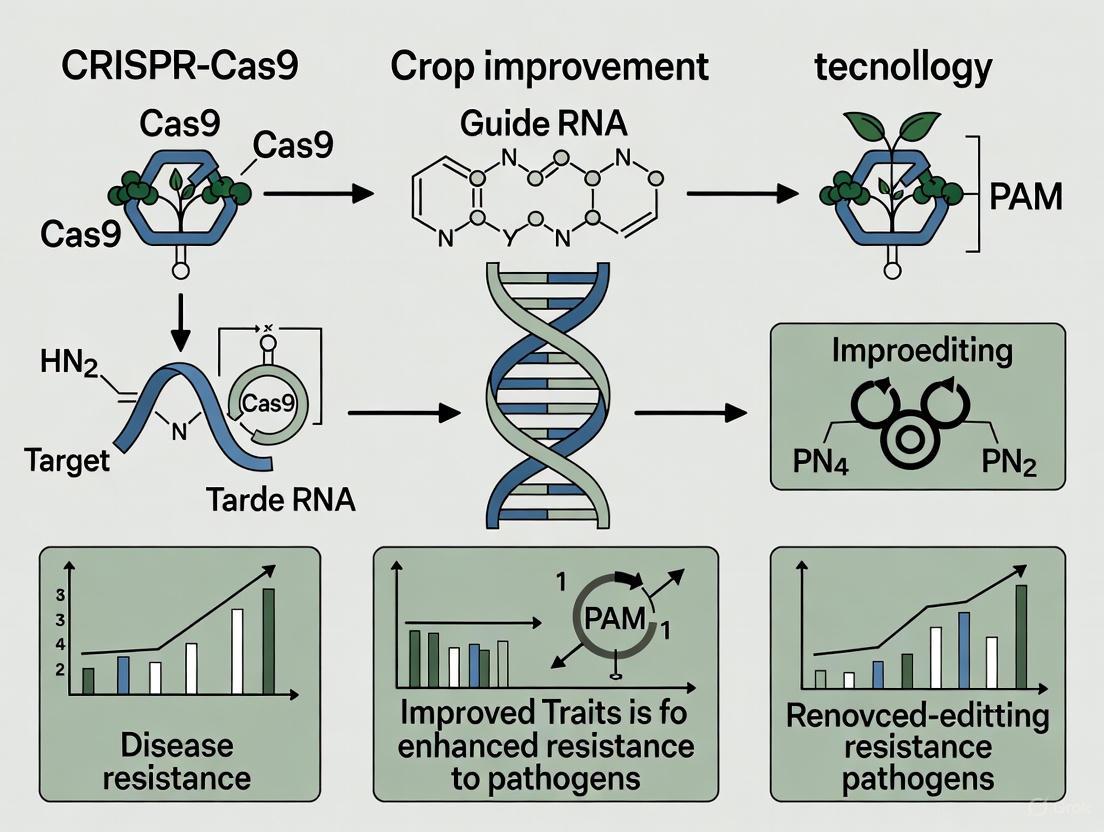
This article provides a comprehensive analysis of CRISPR-Cas9 technology as a transformative tool for developing disease-resistant crops.
Precision Defense: Harnessing CRISPR-Cas9 for Next-Generation Crop Disease Resistance
Abstract
This article provides a comprehensive analysis of CRISPR-Cas9 technology as a transformative tool for developing disease-resistant crops. It explores the foundational mechanisms of CRISPR-Cas9, detailing its operational principles and advantages over previous genetic modification techniques. The content covers methodological approaches for implementing genome editing in various crops, presents real-world application case studies for combating bacterial, fungal, and viral pathogens, and addresses critical challenges including off-target effects and delivery optimization. Furthermore, it examines regulatory frameworks, comparative efficacy against other breeding technologies, and future directions integrating emerging innovations like AI. This resource equips researchers and scientists with both theoretical knowledge and practical insights for advancing crop improvement programs through precision genome editing.
The CRISPR-Cas9 Revolution: Foundations of Precision Genome Editing for Plant Immunity
The CRISPR-Cas9 system has revolutionized genetic engineering by providing an efficient and precise method for targeted genome editing. This application note details the core mechanism of the sgRNA-Cas9 complex and the subsequent DNA repair pathways that enable permanent genetic modifications. Framed within crop improvement and disease resistance research, this protocol provides researchers with detailed methodologies, quantitative data comparisons, and visualization tools to optimize CRISPR experiments for enhancing plant resilience against pathogens.
The CRISPR-Cas9 system, derived from an adaptive immune mechanism in bacteria, enables precise genome editing through a two-step process: targeted DNA cleavage by a guided ribonucleoprotein complex, followed by cellular DNA repair [1]. This technology has become particularly valuable in agricultural biotechnology for developing disease-resistant crops, as it allows for the specific modification of host susceptibility genes or the introduction of pathogen resistance traits without introducing foreign DNA [2] [3].
The system's core components include the Cas9 endonuclease and a guide RNA (gRNA) that directs Cas9 to a specific DNA sequence. For successful targeting, the target DNA must contain a protospacer adjacent motif (PAM) adjacent to the target sequence; for the commonly used Streptococcus pyogenes Cas9 (SpCas9), this PAM sequence is 5'-NGG-3' [4] [1]. Recent advances have identified Cas9 orthologs with diverse PAM requirements, such as Faecalibaculum rodentium Cas9 (FrCas9), which recognizes 5'-NRTA-3' PAM sequences and offers enhanced editing precision [5].
Core Mechanism: sgRNA-Cas9 Complex Formation and DNA Cleavage
Molecular Components of the CRISPR-Cas9 System
The functional CRISPR-Cas9 complex consists of three molecular components [1]:
- Cas9 protein: An endonuclease that creates double-strand breaks (DSBs) in DNA
- crRNA (CRISPR RNA): Contains the 20-nucleotide guide sequence that specifies the DNA target
- tracrRNA (trans-activating CRISPR RNA): Facilitates complex assembly and Cas9 activation
In practice, the crRNA and tracrRNA are often combined into a single-guide RNA (sgRNA) molecule, which simplifies experimental design and delivery [1]. The sgRNA directs the Cas9 protein to the target DNA sequence through complementary base pairing, positioning the Cas9 nuclease domains to create a DSB approximately 3 nucleotides upstream of the PAM sequence [6] [1].
Structural Basis of DNA Recognition and Cleavage
Structural studies using cryo-electron microscopy have revealed the molecular details of Cas9-DNA interactions. The FrCas9-sgRNA-DNA complex exhibits an unusual overwinding of the sgRNA-DNA heteroduplex, which contributes to its enhanced specificity [5]. Key structural elements include:
- PAM Interaction Domain: Recognizes the specific nucleotide motif adjacent to the target site
- Phosphate Lock Loop: Fine-tunes off-target sensitivity and catalytic efficiency
- R-loop Formation: Facilitiates the strand separation and hybridization between sgRNA and target DNA
Targeted residue substitutions in the phosphate lock loop and PAM-distal region have been shown to synergistically enhance both editing precision and efficiency, providing a molecular basis for engineering improved Cas9 variants [5].
DNA Repair Pathways Following CRISPR-Cas9 Cleavage
After Cas9-mediated DNA cleavage, cellular repair mechanisms are activated to resolve the double-strand break. The two primary repair pathways are non-homologous end joining (NHEJ) and homology-directed repair (HDR), each with distinct applications in genome editing [1].
Non-Homologous End Joining (NHEJ)
NHEJ is an error-prone repair pathway that directly ligates broken DNA ends without a template, often resulting in small insertions or deletions (indels) [1]. In crop improvement, NHEJ is commonly used to disrupt susceptibility genes by introducing frameshift mutations that knockout gene function. For example, knocking out the MLO gene in barley and wheat through NHEJ has conferred durable resistance to powdery mildew [2].
Homology-Directed Repair (HDR)
HDR uses a DNA template with homology arms to repair the break, enabling precise genetic modifications including gene insertions, corrections, or replacements [6] [1]. HDR is less frequent than NHEJ but enables more precise editing outcomes, such as inserting disease resistance genes or modifying promoter elements to enhance defense gene expression.
Table 1: Comparison of DNA Repair Pathways in CRISPR-Cas9 Genome Editing
| Parameter | Non-Homologous End Joining (NHEJ) | Homology-Directed Repair (HDR) |
|---|---|---|
| Template Requirement | None | DNA repair template with homology arms |
| Efficiency | High (dominant pathway) | Low (1-20% depending on optimization) |
| Editing Outcome | Random insertions/deletions (indels) | Precise, predetermined sequence changes |
| Primary Application | Gene knockouts, gene disruption | Gene insertion, precise nucleotide changes, gene correction |
| Optimal Cell Cycle Stage | Active throughout cell cycle | Preferentially active in S/G2 phases |
| Key Protein Factors | Ku70/80, DNA-PKcs, XRCC4, DNA Ligase IV | RAD51, RAD52, BRCA2, PALB2 |
| Application in Disease Resistance | Knockout of susceptibility genes (e.g., MLO for powdery mildew resistance) | Precise insertion of resistance genes or promoters |
Quantitative Analysis of HDR Optimization Strategies
Enhancing HDR efficiency is crucial for precise genome editing applications. Recent research has identified multiple factors that influence HDR outcomes, enabling the development of optimized protocols for improved editing precision.
Table 2: Quantitative Effects of HDR Enhancement Strategies in CRISPR-Cas9 Editing
| Optimization Strategy | Experimental Conditions | HDR Efficiency | Template Multiplication | Key Findings |
|---|---|---|---|---|
| Standard dsDNA template | crRNA1+7, 5'-P dsDNA | 2% | 34% | Baseline HDR efficiency with high concatemer formation |
| Denatured DNA template | crRNA1+7, 5'-P denatured | 8% | 17% | 4-fold increase in HDR, 2-fold reduction in multiplication |
| RAD52 supplementation | crRNA1+7, 5'-P denatured + RAD52 | 26% | 30% | 13-fold increase vs dsDNA, but increased multiplication |
| 5'-biotin modification | crRNA1+7, 5'-biotin dsDNA | 14% | 5% | Up to 8-fold increase in single-copy integration |
| 5'-C3 spacer modification | crRNA1+7, 5'-C3 dsDNA | 40% | 9% | Up to 20-fold increase in correctly edited outcomes |
| Antisense strand targeting | crRNA2+8 (-/+), 5'-P denatured | 8% | 8% | Improved HDR precision in transcriptionally active genes |
Data derived from Nup93 locus targeting experiments in mouse zygotes [6]. While this data comes from animal studies, the principles of HDR optimization are applicable to plant systems with appropriate modifications to delivery methods.
Experimental Protocol for sgRNA Design and Validation
sgRNA Design and Selection
Proper sgRNA design is critical for successful CRISPR experiments. The following protocol ensures optimal target selection [4] [1]:
Identify Target Region: Determine the specific genomic locus to be edited. For disease resistance, this may involve susceptibility genes like MLO or specific resistance gene promoters.
Locate PAM Sites: Scan the target region for PAM sequences (5'-NGG-3' for SpCas9). All PAM sites on both strands will be potential starting points for sgRNA design.
Select Target Sequence: Identify the 20 nucleotides immediately 5' to each PAM site. These nucleotides will constitute the sgRNA binding sequence.
Evaluate Specificity: Use computational tools (e.g., CGAT, CHOPCHOP, CRISPRdirect) to assess potential off-target effects across the genome.
Check Efficiency Predictors: Select sgRNAs with high predicted efficiency scores based on sequence composition (GC content 40-60%) and absence of secondary structure.
Finalize Design: Choose 2-3 optimal sgRNAs for experimental testing to account for potential variability in efficiency.
Repair Template Design
For HDR-mediated editing, design repair templates as follows [1]:
- Short edits (<200 nt): Use single-stranded oligodeoxynucleotides (ssODNs) with 80-200 nucleotide total length
- Homology arms: Include 30-90 nucleotides of homologous sequence on each side of the edit
- Large inserts (>200 nt): Use double-stranded DNA templates with 800 bp homology arms or long single-stranded DNA (lssDNA) with 100-400 nt homology arms
- PAM disruption: Incorporate silent mutations to disrupt the PAM sequence, preventing re-cleavage after successful editing
Delivery Methods for Plant Systems
Different delivery methods offer distinct advantages for CRISPR components in plants [3]:
- Agrobacterium-mediated transformation: Most common method for stable transformation
- Biolistic particle delivery: Useful for species recalcitrant to Agrobacterium transformation
- Rhizobium rhizogenes-mediated transformation: Effective for root transformation
- Nanoparticle-mediated delivery: Emerging method offering minimal tissue damage
- Virus-based vectors: Enable transient expression but limited cargo capacity
Table 3: Key Research Reagent Solutions for CRISPR-Cas9 Experiments
| Reagent Category | Specific Examples | Function and Application |
|---|---|---|
| Cas9 Variants | SpCas9, FrCas9, xCas9, Cas12a | Engineered nucleases with varying PAM specificities, sizes, and fidelity |
| sgRNA Design Tools | CGAT, CHOPCHOP, CRISPRdirect | Bioinformatics platforms for designing specific sgRNAs and predicting off-target effects |
| Delivery Vehicles | Agrobacterium strains, gold nanoparticles, viral vectors | Facilitate entry of CRISPR components into plant cells |
| Repair Templates | ssODNs, dsDNA with homology arms, lssDNA | Provide template for HDR-mediated precise editing |
| HDR Enhancers | RAD52 protein, 5'-biotin modified templates | Increase efficiency of precise genome editing |
| Validation Reagents | PCR primers, restriction enzymes, sequencing kits | Confirm successful genome edits and detect off-target effects |
| Plant Selectable Markers | Antibiotic resistance genes, fluorescent proteins | Enable selection of successfully transformed plant tissue |
Applications in Crop Disease Resistance
CRISPR-Cas9 technology has been successfully applied to enhance disease resistance in multiple crop species through various mechanisms [2] [3]:
- Viral Disease Resistance: Targeting and interfering with viral genomes or modifying host susceptibility factors
- Fungal Disease Resistance: Knockout of susceptibility genes (e.g., MLO in wheat and barley) or engineering of resistant alleles
- Bacterial Disease Resistance: Modification of pattern recognition receptors or defense signaling components
- Multiplex Editing: Simultaneous modification of multiple genes or pathways using polycistronic tRNA-gRNA systems
Recent advances include the development of AI-designed CRISPR systems like OpenCRISPR-1, which exhibits comparable or improved activity and specificity relative to SpCas9 while being highly divergent in sequence, offering new possibilities for crop improvement [7].
Emerging Technologies and Future Directions
The field of CRISPR-based crop improvement is rapidly evolving, with several promising advancements [7] [3] [5]:
- AI-Designed Editors: Machine learning models trained on CRISPR-Cas sequences can generate novel editors with optimal properties
- Novel Cas Variants: Proteins like Cas12 and Cas13 expand editing capabilities including RNA targeting
- Base and Prime Editing: Enable precise nucleotide changes without double-strand breaks
- High-Fidelity Systems: Engineered Cas9 variants with reduced off-target effects
- Improved Delivery Methods: Nanoparticle-mediated and viral vector-based delivery systems
These technologies collectively represent the next frontier in CRISPR-based crop improvement, offering enhanced precision, efficiency, and scope for developing disease-resistant varieties to address global food security challenges.
The Clustered Regularly Interspaced Short Palindromic Repeats (CRISPR) and CRISPR-associated (Cas) system represents one of the most transformative biotechnological breakthroughs of the 21st century. Originally identified as an adaptive immune system in bacteria and archaea, this biological mechanism protects prokaryotes from invading viruses and plasmids by storing fragments of foreign DNA and using them to guide the targeted cleavage of subsequent invading genetic elements [8]. The repurposing of this system into a versatile genome-editing tool has revolutionized genetic engineering across biological disciplines, with profound implications for plant science and crop improvement.
The application of CRISPR-Cas technology in agriculture marks a paradigm shift from traditional breeding methods, offering unprecedented precision, efficiency, and speed in introducing desirable traits into crop genomes [9]. This article explores the historical trajectory of CRISPR-Cas systems from their discovery in bacteria to their current status as a powerhouse in plant breeding, with particular emphasis on protocols for enhancing disease resistance—a critical objective in securing global food production against escalating pathogen pressures.
The Evolutionary Journey: From Bacterial Immunity to Genetic Engineering
The molecular machinery of the native CRISPR-Cas system in bacteria consists of two core components: the Cas9 endonuclease and a guide RNA (gRNA). The gRNA is a synthetic fusion of two natural RNA molecules—CRISPR RNA (crRNA), which contains a 20-nucleotide sequence complementary to the target DNA, and trans-activating crRNA (tracrRNA), which facilitates complex formation with the Cas9 protein [8]. This complex scans the genome to locate a target sequence adjacent to a short Protospacer Adjacent Motif (PAM), typically 5'-NGG-3' for the commonly used Streptococcus pyogenes Cas9. Upon recognition, Cas9 introduces a site-specific double-stranded break (DSB) in the DNA [10].
Cellular repair of these breaks occurs primarily through two endogenous pathways: Non-Homologous End Joining (NHEJ) or Homology-Directed Repair (HDR). NHEJ often introduces small insertions or deletions (indels) that can disrupt gene function, making it ideal for gene knockouts. HDR uses a template for precise repair, enabling specific gene corrections or insertions, though with lower efficiency in plants [8]. This fundamental mechanism—programmable DNA cleavage—provides the foundation for CRISPR-Cas9's application as a precise genome-editing tool.
Table 1: Evolution of Genome-Editing Technologies
| Technology Era | Key Features | Applications in Plant Breeding | Limitations |
|---|---|---|---|
| Traditional Breeding | Relies on cross-hybridization and selection; utilizes natural genetic variation | Development of locally adapted cultivars; introgression of wild relative traits | Time-consuming (years to decades); limited to existing genetic diversity; linkage drag |
| Recombinant DNA Technology (1970s) | Enables transfer of genes across species boundaries | First-generation genetically modified crops with herbicide tolerance and insect resistance | Random insertion of transgenes; regulatory concerns; public acceptance issues |
| Zinc Finger Nucleases (ZFNs) & TALENs (2000s) | Early sequence-specific nucleases; require protein engineering for each DNA target | Proof-of-concept for targeted gene editing in model plants and some crops | Complex protein design; high cost; low efficiency; limited scalability |
| CRISPR-Cas Systems (2012-Present) | RNA-programmed; highly specific; multiplexing capability; diverse Cas variants | Precise trait improvement in over 20 crops; gene knockouts, base editing, transcriptional regulation | PAM sequence requirement; potential off-target effects; delivery optimization needed in some species |
CRISPR-Cas Applications in Crop Disease Resistance
Plant diseases caused by fungal, bacterial, and viral pathogens result in substantial global yield losses, estimated at 20-40% annually for major staple crops [11]. CRISPR-Cas technology addresses this challenge through multiple strategic approaches to enhance disease resistance.
Targeting Susceptibility (S) Genes
A predominant strategy involves knocking out plant susceptibility (S) genes—host genes that pathogens require for infection and colonization [11]. Disrupting these genes creates recessive resistance that is often broad-spectrum and durable. The following table summarizes key examples of S-gene editing for disease resistance.
Table 2: CRISPR-Cas-Mediated Disease Resistance through Susceptibility Gene Editing
| Crop Species | Target Gene(s) | Pathogen/Disease | Editing Outcome | Key Experimental Results |
|---|---|---|---|---|
| Rice (Oryza sativa) | OsERF922 [9] | Rice blast (Magnaporthe oryzae) | Knockout via NHEJ | Enhanced resistance to blast fungus; no yield penalty observed |
| Rice | OsSWEET14 [9] | Bacterial blight (Xanthomonas oryzae) | Knockout via NHEJ | Reduced susceptibility to bacterial blight; maintained plant vigor |
| Rice | eIF4G [9] | Rice tungro spherical virus | Knockout via NHEJ | conferred resistance to the virus; demonstrated potential for viral immunity |
| Barley (Hordeum vulgare) | MLO [11] | Powdery mildew | Knockout via NHEJ | Durable resistance to powdery mildew; established proof-of-concept for cereal crops |
| Tomato (Solanum lycopersicum) | Tom1-like genes [11] | Tomato brown rugose fruit virus (ToBRFV) | Multiplex knockout | Complete resistance to ToBRFV; successful field trial performance |
CRISPR Activation for Enhanced Immunity
Beyond gene knockout, CRISPR activation (CRISPRa) represents a more advanced application that employs a catalytically deactivated Cas9 (dCas9) fused to transcriptional activators to upregulate endogenous defense genes [10]. This gain-of-function approach is particularly valuable for enhancing the expression of positive regulators of immunity without altering the DNA sequence itself. For instance, CRISPRa-mediated upregulation of the PATHOGENESIS-RELATED GENE 1 (SlPR-1) in tomato enhanced defense against Clavibacter michiganensis infection [10]. Similarly, targeting SlPAL2 through epigenetic modifications increased lignin accumulation and strengthened physical barriers against pathogens [10].
Experimental Protocols for Enhancing Disease Resistance
Protocol 1: Susceptibility Gene Knockout for Recessive Resistance
This foundational protocol outlines the steps for creating knockout mutations in susceptibility genes to confer disease resistance in dicot plants using Agrobacterium-mediated transformation.
Workflow Overview:
Materials and Reagents:
- Binary vector system: pRGEB32 or similar CRISPR-Cas9 binary vector
- Agrobacterium strain: LBA4404 or GV3101 competent cells
- Plant material: Sterile leaf explants from target species
- Culture media: Co-cultivation media, selection media, regeneration media
- Antibiotics: Kanamycin, carbenicillin, hygromycin (concentration species-dependent)
- Molecular biology reagents: PCR mix, restriction enzymes, sequencing primers
Detailed Procedure:
Target Selection and gRNA Design: Identify optimal S-genes through literature mining or transcriptomic data. Prioritize genes with known roles in pathogen recognition or compatibility (e.g., SWEET sugar transporters, MLO proteins). Design 2-3 gRNAs targeting early exons to maximize frameshift probability. Verify target specificity using Cas-OFFinder to minimize off-target effects.
Vector Construction: Using Golden Gate or standard restriction-ligation cloning, insert the gRNA expression cassette(s) into a binary vector containing a plant codon-optimized Cas9 driven by the CaMV 35S promoter. Include a plant selectable marker (e.g., hptII for hygromycin resistance). Verify the final construct through restriction digest and Sanger sequencing.
Plant Transformation: Transform competent Agrobacterium cells with the verified binary vector. Inoculate sterile leaf explants (5×5 mm) with the Agrobacterium suspension (OD600 = 0.5-0.8) for 15-20 minutes. Co-cultivate on medium for 2-3 days in the dark. Transfer to selection media containing appropriate antibiotics and cytokinins to induce shoot formation. Subculture every 2 weeks until shoots develop.
Regeneration and Rooting: Excise developing shoots (1-2 cm) and transfer to rooting medium with auxins and antibiotics to eliminate Agrobacterium. Maintain cultures at 25°C with 16-hour photoperiod. Acclimate rooted plantlets to greenhouse conditions over 7-10 days.
Genotypic Analysis: Extract genomic DNA from T0 plant leaves. Amplify the target region by PCR using gene-specific primers flanking the gRNA target sites. Sequence PCR products and analyze for indels using tools like TIDE or ICE. Select lines with biallelic or homozygous mutations for further analysis.
Phenotypic Screening: Inoculate T1 generation plants with the target pathogen using standardized methods (e.g., spray inoculation for fungi, infiltration for bacteria). Include wild-type and resistant control varieties. Assess disease symptoms using established rating scales at multiple time points post-inoculation. Confirm reduced pathogen load through qPCR or culture-based methods.
Protocol 2: CRISPR Activation for Defense Gene Upregulation
This protocol describes the use of CRISPRa systems to enhance expression of positive regulators of plant immunity, providing an alternative to gene knockout approaches.
Workflow Overview:
Materials and Reagents:
- CRISPRa vector: pDCP-dCas9-VPR or similar plant-optimized transcriptional activation system
- Plant material: Target species explants or protoplasts
- qPCR reagents: SYBR Green mix, primers for target and reference genes
- Antibodies: Specific to target defense protein (if available)
- Cell culture materials: For protoplast isolation and transformation (optional)
Detailed Procedure:
Target Identification and gRNA Design: Select defense genes with known positive roles in immunity (e.g., PR genes, transcription factors, pattern recognition receptors). Design gRNAs targeting regions 50-150 bp upstream of the transcription start site. Test multiple gRNAs for optimal activation efficiency.
Vector Assembly: Clone validated gRNAs into a plant-optimized CRISPRa vector containing dCas9 fused to transcriptional activation domains (e.g., VP64-p65-Rta, or SunTag system). Include appropriate plant selection markers.
Plant Transformation: Deliver the CRISPRa construct using Agrobacterium-mediated transformation (as in Protocol 1) or protoplast transfection for rapid testing. For protoplasts, isolate from leaf mesophyll, transfert with plasmid DNA using PEG-mediated transformation, and culture for 24-48 hours before analysis.
Molecular Validation: Extract RNA from transformed tissue and perform RT-qPCR to measure transcript levels of the target gene. Include reference genes for normalization. Confirm activation fold-change compared to empty vector controls. For protein-level validation, perform Western blotting if antibodies are available.
Phenotypic Assessment: Inoculate activated lines with target pathogens and evaluate disease symptoms compared to controls. For protoplast-based assays, measure expression of downstream defense markers or use reporter systems.
Stability Analysis: Advance promising T0 lines to T1 generation and assess stability of the activated phenotype. For transgene-free applications, regenerate plants without integrating the CRISPRa machinery by using transient expression systems.
The Scientist's Toolkit: Essential Research Reagents
Table 3: Key Research Reagent Solutions for CRISPR-Cas Crop Improvement
| Reagent/Category | Specific Examples | Function/Application | Considerations for Plant Systems |
|---|---|---|---|
| CRISPR-Cas Vector Systems | pRGEB32, pHEE401, pYLCRISPR/Cas9 | Delivery of Cas9 and gRNA components | Binary vectors for Agrobacterium; includes plant selection markers |
| Transcriptional Activators | dCas9-VP64, dCas9-VPR, SunTag | CRISPRa for gene upregulation | Optimize activator strength for specific plant species |
| gRNA Design Tools | CRISPR-P, CCTop, Cas-OFFinder | In silico gRNA design and off-target prediction | Consider plant-specific genome annotations and polyploidy |
| Delivery Methods | Agrobacterium strain GV3101, biolistics, protoplast transfection | Introduction of editing machinery | Species-dependent efficiency; tissue culture requirements |
| Selection Markers | hptII (hygromycin), nptII (kanamycin), bar (phosphinothricin) | Selection of transformed tissue | Optimize antibiotic/herbicide concentrations for each species |
| Validation Reagents | T7E1/CEL I, PCR primers, sequencing services | Detection of editing events | ICE analysis for complex indel patterns; Sanger and NGS options |
| Plant Culture Media | MS basal medium, callus induction, shooting, rooting media | Tissue culture and regeneration | Hormone optimization critical for regeneration efficiency |
The remarkable journey of CRISPR-Cas systems from a bacterial immune mechanism to a plant breeding powerhouse represents a watershed moment in agricultural biotechnology. The precision, efficiency, and versatility of this technology have enabled previously unimaginable capabilities for crop improvement, particularly in the realm of disease resistance. By leveraging both loss-of-function approaches targeting susceptibility genes and gain-of-function strategies through CRISPR activation, researchers now possess an expanding toolkit to address the mounting challenges of global food security.
As the technology continues to evolve, with emerging innovations in base editing, prime editing, and tissue-specific regulation, the potential for creating climate-resilient, disease-resistant crop varieties will only expand. However, realizing this potential fully will require parallel advances in regulatory frameworks, public engagement, and equitable access to ensure that these transformative technologies can benefit agricultural systems worldwide.
CRISPR-Cas9 genome editing has revolutionized plant breeding by offering unprecedented precision, efficiency, and speed in developing crops with enhanced disease resistance. Unlike conventional breeding, which relies on random genetic recombination and extensive backcrossing over multiple generations, CRISPR-Cas9 enables direct, targeted modifications of specific genes governing disease resistance pathways in a single generation [12]. This technological shift is particularly crucial for addressing the growing challenges to global food security posed by pathogen evolution and climate change [10]. The application of CRISPR-based technologies represents a pivotal tool for plant biologists and breeders, allowing them to create genetic variability and improve adapted cultivars with surgical precision, moving beyond the limitations of traditional methods [12].
Core Advantages of CRISPR-Cas9 Technology
Precision: Targeted Genetic Modifications
The precision of CRISPR-Cas9 stems from its fundamental mechanism as a RNA-guided DNA endonuclease system. The Cas9 nuclease is directed to specific genomic loci by a programmable guide RNA (gRNA) that complements the target DNA sequence, inducing a double-strand break (DSB) at the designated location [13]. This break is then repaired by the cell's natural DNA repair machinery, primarily through either error-prone non-homologous end joining (NHEJ) or homology-directed repair (HDR) pathways [13].
This precision enables several key applications for disease resistance:
- Gene Knockouts: Permanent disruption of susceptibility genes (S-genes) that pathogens require for infection [14]. By targeting constitutively expressed regions or exons coding for essential protein domains, researchers can create complete loss-of-function mutations [14].
- Gene Regulation: Using catalytically dead Cas9 (dCas9) fused to transcriptional activators (CRISPRa) or repressors (CRISPRi) to precisely modulate gene expression without altering the DNA sequence itself [10] [14].
- Precise Base Editing: Employing base editors (CBEs, ABEs) to introduce specific nucleotide changes within coding or regulatory sequences to enhance resistance gene function [15].
The technology's precision is further enhanced by continued innovations including high-fidelity Cas9 variants, prime editing systems that enable search-and-replace editing without double-strand breaks, and artificial intelligence-driven gRNA design tools that improve target specificity [13].
Efficiency: High Success Rates and Scalability
CRISPR-Cas9 demonstrates remarkable efficiency in generating desired genetic modifications, significantly outperforming conventional breeding and earlier genome editing technologies like ZFNs and TALENs [13]. This efficiency manifests in several critical dimensions:
Table 1: Documented Editing Efficiencies in Crop Systems
| Crop Species | Target Gene | Editing Efficiency | Application | Source |
|---|---|---|---|---|
| Rice | OsPsbS1 | Not specified | Disruption for senescence study | [16] |
| Potato | StNADC | Not specified | Knockout for senescence regulation | [16] |
| Foxtail Millet | SiEPF2 | Not specified | Balancing drought tolerance and yield | [16] |
| Tomato | Genome-wide library | 1,300 independent lines | Multi-gene targeting for disease resistance | [16] |
| Elymus nutans | EnTCP4 | 19.23% | Enhanced drought tolerance | [16] |
| Platycodon grandiflorus | chr2.2745 | 16.70% | Establishment of editing platform | [16] |
| Carrot | Invertase gene | 17.3% and 6.5% (two gRNAs) | Sucrose accumulation improvement | [16] |
| Rice (using Cas12i2Max) | Not specified | Up to 68.6% | Demonstration of novel editor efficiency | [16] |
The efficiency of CRISPR systems enables multiplexed editing, where multiple genes can be targeted simultaneously. For example, researchers have developed genome-wide multi-targeted CRISPR libraries in tomatoes comprising 15,804 unique sgRNAs designed to simultaneously target multiple genes within the same families, generating approximately 1,300 independent lines with distinct phenotypes affecting fruit development, flavor, and disease resistance [16]. This approach overcomes functional redundancy challenges common in crop genomes and provides enhanced efficiency compared to traditional single-gene editing approaches [16].
Speed: Accelerated Breeding Timelines
The speed advantage of CRISPR-Cas9 represents one of its most transformative benefits for crop improvement. While conventional breeding programs typically require 7-15 years to develop and commercialize new cultivars, CRISPR-edited lines with enhanced disease resistance can be generated in a fraction of this time [12].
Key factors contributing to this accelerated timeline include:
- Rapid Trait Development: The ability to directly modify specific genes controlling disease resistance pathways eliminates the need for multiple generations of backcrossing to introgress traits while minimizing linkage drag [12].
- Single-Generation Modifications: Stable, heritable edits can be achieved in a single generation, dramatically shortening the breeding cycle [14].
- High-Throughput Screening: CRISPR systems facilitate parallel editing of multiple gene targets, enabling systematic identification of key regulators of disease resistance [16].
Recent technical advances have further accelerated CRISPR workflows. For instance, optimized Agrobacterium-mediated transformation protocols combined with morphogenic regulators have enhanced plant regeneration rates to 21.88% in species like Platycodon grandiflorus, establishing efficient platforms for functional genomics research [16]. Additionally, the development of transgene-free editing methods using ribonucleoprotein (RNP) complexes delivered directly into protoplasts enables researchers to bypass time-consuming regulatory processes associated with transgenic approaches [16].
Application Notes: Enhancing Disease Resistance
Molecular Mechanisms for Disease Resistance
CRISPR-Cas9 technologies enhance disease resistance through multiple molecular mechanisms that can be precisely targeted based on the pathogen and crop system:
Table 2: CRISPR Strategies for Enhanced Disease Resistance
| Strategy | Molecular Mechanism | Example Application |
|---|---|---|
| Susceptibility Gene Knockout | Disrupting host genes essential for pathogen infection | Knockout of ZmGAE1 in maize enhanced resistance to Fusarium ear rot and reduced fumonisin content [16] |
| Resistance Gene Activation | Upregulating endogenous defense genes | CRISPRa-mediated upregulation of SlPR-1 and SlPAL2 in tomato enhanced defense against bacterial infection [10] |
| Pattern Recognition Receptor Engineering | Modifying receptors to recognize broader pathogen signatures | Not specified in results |
| Transcription Factor Modulation | Altering regulation of defense gene networks | Knockout of EnTCP4 in Elymus nutans enhanced drought tolerance [16] |
| Multi-Gene Stacking | Simultaneously editing multiple resistance pathways | Multi-targeted CRISPR libraries in tomatoes targeting gene families for disease resistance [16] |
A notable example of CRISPRa application includes the successful enhancement of tomato plant defense against Clavibacter michiganensis infection by upregulating the PATHOGENESIS-RELATED GENE 1 (SlPR-1) and by upregulating the SlPAL2 gene through targeted epigenetic modifications, leading to enhanced lignin accumulation and increased defense [10]. In another study, a CRISPR–dCas9–6×TAL-2×VP64 (TV) system was successfully employed in Phaseolus vulgaris hairy roots to upregulate defense genes encoding the antimicrobial peptides PvD1, Pv-thionin, and Pv-lectin, resulting in significant increases in target gene expression (e.g., 6.97-fold for Pv-lectin) [10].
Experimental Workflow for Developing Disease-Resistant Crops
The following diagram illustrates a generalized workflow for developing disease-resistant crops using CRISPR-Cas9 technology:
Molecular Mechanism of CRISPR-Mediated Gene Activation for Disease Resistance
The diagram below illustrates the molecular mechanism of CRISPR activation (CRISPRa) systems for enhancing disease resistance in plants:
Detailed Protocols for Key Experiments
Protocol: Multiplexed CRISPR-Cas9 for Stacking Disease Resistance Traits
Objective: Simultaneously edit multiple genes governing disease resistance pathways in tomato to create durable, broad-spectrum resistance.
Materials:
- Plant Material: Tomato cultivar Micro-Tom seeds
- CRISPR Components: Cas9 expression vector, sgRNA cloning backbone
- Transformation: Agrobacterium tumefaciens strain GV3101
- Culture Media: MS basal medium, kanamycin selection medium, regeneration medium
- Molecular Biology Reagents: PCR mix, restriction enzymes, gel extraction kit
Methodology:
- sgRNA Design and Vector Construction:
- Identify target sequences in 3-5 disease resistance genes using CRISPR gRNA design tools (e.g., CRISPR-P, CCTop)
- Design sgRNAs with 20-nt target sequences followed by 5'-NGG-3' PAM
- Synthesize oligos, anneal, and clone into sgRNA expression cassette
- Assemble multiplex CRISPR vector using Golden Gate or similar cloning strategy
Plant Transformation:
- Surface-sterilize tomato seeds and germinate on MS medium
- Excise cotyledonary explants from 7-day-old seedlings
- Inoculate with Agrobacterium carrying CRISPR construct (OD600 = 0.5) for 20 minutes
- Co-cultivate on MS medium for 2 days in dark at 25°C
- Transfer to selection medium containing kanamycin (100 mg/L) and cefotaxime (250 mg/L)
- Subculture every 2 weeks until shoot regeneration
Molecular Characterization:
- Extract genomic DNA from regenerated plantlets using CTAB method
- Perform PCR amplification of target regions
- Conduct restriction enzyme digestion assays to detect mutations
- Confirm edits by Sanger sequencing of cloned PCR products
- Analyze potential off-target effects by sequencing homologous loci
Disease Resistance Phenotyping:
- Challenge T0 and T1 plants with relevant pathogens (e.g., Phytophthora infestans, Botrytis cinerea)
- Quantify disease symptoms using standardized scoring systems
- Measure defense marker gene expression by qRT-PCR
- Assess accumulation of defense compounds (e.g., phenolics, lignin)
Timeline: 9-12 months from vector construction to characterized T1 plants
Expected Outcomes: Transgene-free edited lines with enhanced resistance to multiple pathogens, with 70-90% of lines showing mutations in at least one target gene and 20-40% showing multiplex editing [16].
Protocol: CRISPRa for Targeted Activation of Defense Genes
Objective: Enhance disease resistance by upregulating endogenous defense genes without altering DNA sequence using CRISPR activation systems.
Materials:
- Plant Material: Arabidopsis thaliana Col-0 or target crop species
- CRISPRa System: dCas9-VP64/P65/HSF1 fusion, modified sgRNA scaffolds
- Vector System: Plant-optimized expression vectors
- Transformation Reagents: Protoplast isolation reagents, PEG transformation solution
Methodology:
- sgRNA Design for Transcriptional Activation:
- Target sgRNAs to promoter regions -200 to -50 bp upstream of transcription start site
- Design 3-5 sgRNAs per target gene to test efficacy
- Incorporate MS2, PP7, or com RNA aptamers into sgRNA scaffold for recruiter systems
Vector Assembly:
- Clone dCas9-activator fusion into plant expression vector with strong constitutive promoter
- Clone sgRNA expression cassettes with Pol III promoters into separate vectors
- Use Golden Gate assembly for multiplexed sgRNA constructs
Plant Transformation and Selection:
- For protoplast transformation: isolate protoplasts from leaf tissue, transform with PEG method, incubate 24-48h for expression analysis
- For stable transformation: use Agrobacterium-mediated floral dip (Arabidopsis) or tissue culture methods (crops)
- Select transformants on appropriate antibiotics
Validation and Phenotyping:
- Quantify target gene expression by qRT-PCR 3-7 days after transformation
- Measure defense hormone levels (salicylic acid, jasmonic acid)
- Challenge with pathogens and quantify disease symptoms
- Assess growth and yield parameters under controlled conditions
Timeline: 6-9 months for complete protocol from vector construction to phenotyping
Expected Outcomes: 2-10 fold upregulation of target defense genes, enhanced resistance to specific pathogens, minimal pleiotropic effects on plant growth and development [10].
The Scientist's Toolkit: Essential Research Reagents
Table 3: Essential Reagents for CRISPR-Cas9 Crop Improvement Research
| Reagent Category | Specific Examples | Function & Application |
|---|---|---|
| CRISPR Nucleases | SpCas9, Cas12a (Cpf1), Cas12i, Cas9-NG | DNA cleavage; different variants offer varying PAM requirements and editing efficiencies [14] [16] |
| Base Editors | CBEs, ABEs, DBEs | Introduce precise point mutations without double-strand breaks [15] |
| Prime Editing Systems | PE2, PE3 | Search-and-replace editing for precise insertions, deletions, and point mutations [13] |
| Activation/Repression Systems | dCas9-VP64, dCas9-SunTag, dCas9-KRAB | Gene regulation without altering DNA sequence [10] [14] |
| Delivery Vectors | pCambia, pGreen, pCAMBIA, viral vectors | Delivery of CRISPR components to plant cells [14] |
| Transformation Tools | Agrobacterium tumefaciens, PEG-mediated protoplast transformation, biolistics | Introduction of CRISPR constructs into plant cells [16] |
| Selection Markers | Kanamycin, hygromycin resistance, fluorescent proteins | Selection of successfully transformed plant tissues [14] |
| gRNA Cloning Systems | U3/U6 promoters, tRNA-processing systems, Golden Gate assemblies | Expression of guide RNAs in plant systems [17] |
| Detection Reagents | RAA-CRISPR-Cas12a, restriction enzyme assays, sequencing primers | Validation of editing efficiency and detection of mutations [16] |
The precision, efficiency, and speed advantages of CRISPR-Cas9 technologies represent a paradigm shift in crop improvement for disease resistance. By enabling targeted modifications of specific genes governing defense pathways, researchers can now develop resistant cultivars in a fraction of the time required by conventional breeding. The continuous evolution of CRISPR tools—including base editing, prime editing, and CRISPRa systems—provides an expanding toolkit for precisely engineering disease resistance without compromising other agronomic traits.
For successful integration of these technologies into crop improvement programs, researchers should consider establishing robust transformation protocols for target crops, implementing high-throughput screening methods to identify optimal editing events, and conducting comprehensive phenotyping under field conditions to ensure edited lines perform as expected in agricultural environments. As regulatory frameworks continue to evolve worldwide, CRISPR-edited crops with enhanced disease resistance are poised to make significant contributions to global food security in the coming decades.
The CRISPR-Cas9 system has revolutionized plant biotechnology, offering an unprecedented tool for precise genome engineering to enhance crop disease resistance. This adaptive immune system, derived from bacteria, functions as a versatile molecular toolkit for making targeted modifications in plant genomes [8]. Its application in developing crops with improved resilience to biotic stresses is a key focus of modern agricultural research [10]. The core CRISPR-Cas9 machinery consists of two fundamental components: the Cas9 nuclease which creates double-strand breaks in DNA, and a guide RNA (gRNA) that directs Cas9 to specific genomic locations [8] [1]. The recognition of a protospacer adjacent motif (PAM) sequence adjacent to the target site is essential for Cas9 activity [18]. This article provides a detailed examination of these essential components—guide RNA design strategies, Cas9 variants, and PAM requirements—within the context of developing disease-resistant crops, complete with application notes and protocols for researchers in agricultural biotechnology.
Guide RNA Design for Crop Improvement
The guide RNA is a critical determinant of CRISPR-Cas9 system specificity and efficiency. It is typically engineered as a single-guide RNA (sgRNA), a synthetic fusion of CRISPR RNA (crRNA) containing the target-specific 20-nucleotide sequence, and trans-activating crRNA (tracrRNA) that facilitates complex formation with the Cas9 protein [10] [1]. Successful genome editing in plants depends on rational gRNA design tailored to specific experimental goals.
Design Strategies for Different Editing Outcomes
Gene Knockouts: For generating gene knockouts to disrupt susceptibility genes in crops, gRNAs should target early exons encoding crucial protein domains. This approach maximizes the probability of creating frameshift mutations through non-homologous end joining (NHEJ) repair, which often introduces insertions or deletions (indels) [19]. Targeting regions too close to the N- or C-terminus should be avoided, as the cell may utilize alternative start codons or the truncated protein may retain functionality [19].
Knock-in and Precision Editing: For precision editing through homology-directed repair (HDR), such as inserting disease resistance genes or precise allele substitutions, gRNA design is more constrained. The cut site must be immediately adjacent to the intended edit location because HDR efficiency decreases dramatically with distance from the cleavage site [19]. In these cases, location takes precedence over sequence complementarity during gRNA selection.
CRISPR Activation (CRISPRa): For CRISPRa applications aimed at upregulating defense-related genes, gRNAs are designed to target promoter regions rather than coding sequences [19] [10]. This approach utilizes a deactivated Cas9 (dCas9) fused to transcriptional activators to enhance gene expression without altering the DNA sequence—particularly valuable for activating pathogen response pathways in crops [10].
Optimizing gRNA Specificity and Efficiency
To ensure high on-target activity while minimizing off-target effects, researchers should:
- Utilize established scoring algorithms like the "Doench rules" implemented in various online design tools to predict gRNA efficiency [19]
- Select gRNAs with high sequence complementarity to the target site [19]
- Consider using multiple gRNAs targeting the same gene to improve editing efficiency and increase knockout probability [19]
- Verify minimal off-target potential through comprehensive in silico analysis against the host genome [19] [20]
Table 1: Guide RNA Design Considerations for Different Applications in Crop Improvement
| Application | Primary Target | Key Design Considerations | Repair Mechanism |
|---|---|---|---|
| Gene Knockout | Early exons of susceptibility genes | Avoid N/C-termini; maximize on-target score | NHEJ |
| Knock-in/Precise Editing | Specific allele location | Prioritize proximity to edit site over complementarity | HDR |
| CRISPR Activation | Promoter regions of defense genes | Balance complementarity with optimized location | N/A (dCas9) |
| Multiplex Editing | Multiple genomic loci | Ensure minimal cross-hybridization between gRNAs | NHEJ/HDR |
Cas9 Variants and PAM Requirements
The functional versatility of the CRISPR system is greatly expanded by the diversity of available Cas nucleases, each with distinct PAM requirements and molecular properties. Understanding these variants enables researchers to select the most appropriate nuclease for specific crop improvement goals.
PAM Recognition and Its Role in Target Specificity
The protospacer adjacent motif (PAM) is a short DNA sequence (typically 2-6 base pairs) immediately following the DNA region targeted for cleavage [18]. This sequence is essential for Cas nuclease activation and serves as a recognition signal that distinguishes self from non-self DNA in bacterial immune systems [18]. For the commonly used Streptococcus pyogenes Cas9 (SpCas9), the PAM sequence is 5'-NGG-3' (where "N" can be any nucleotide base) [18] [1]. The PAM requirement constrains targetable genomic locations, as editing can only occur at sites flanked by the appropriate motif.
Cas Nuclease Variants for Expanded Targeting
Different Cas nucleases isolated from various bacterial species recognize different PAM sequences, providing researchers with options when targeting specific genomic regions. Additionally, engineered Cas variants with altered PAM specificities have been developed to expand the targeting range [18].
Table 2: Cas Nuclease Variants and Their PAM Requirements
| CRISPR Nuclease | Organism/Source | PAM Sequence (5' to 3') | Applications in Crop Improvement |
|---|---|---|---|
| SpCas9 | Streptococcus pyogenes | NGG | Standard gene knockouts, most widely applied |
| SaCas9 | Staphylococcus aureus | NNGRRT or NNGRRN | Useful for compact vector design |
| NmeCas9 | Neisseria meningitidis | NNNNGATT | Expanded targeting range |
| Cas12a (Cpf1) | Lachnospiraceae bacterium | TTTV | Different cleavage pattern (staggered cuts) |
| Cas12b | Alicyclobacillus acidiphilus | TTN | High fidelity editing |
| Cas12Max (engineered) | Engineered from Cas12i | TN and/or TNN | Dramatically expanded targeting range |
| SpRY | Engineered SpCas9 | NRN and NYN (near PAM-free) | Maximum targeting flexibility |
| OpenCRISPR-1 | AI-designed | Customizable | Next-generation editing with tailored properties [7] |
Recent advances include the development of SpG and SpRY variants with relaxed PAM requirements, recognizing 5'-NG-3' and 5'-NRN-/NYN-3' respectively, significantly expanding the targetable genomic space [21]. Furthermore, artificial intelligence-enabled design has generated novel editors like OpenCRISPR-1, which exhibits comparable or improved activity and specificity relative to SpCas9 while being highly divergent in sequence [7].
Experimental Protocols for Crop Disease Resistance Research
Protocol: gRNA Design and Validation for Disrupting Susceptibility Genes
This protocol outlines the steps for designing and validating gRNAs to knockout S-genes (susceptibility genes) in crops, thereby enhancing disease resistance.
Materials:
- SnapGene software or similar molecular biology tools
- Synthego CRISPR Design Tool or Benchling CRISPR Design Tool
- Plant genomic DNA sequence of target gene
- Cloning reagents for gRNA expression vector
Procedure:
- Target Identification: Identify susceptibility genes (S-genes) in your crop species through literature review and database mining. Examples include MLO genes for powdery mildew susceptibility or transcription factors that repress defense responses.
PAM Site Identification:
- Using sequence analysis software, scan the coding sequence of your target gene for PAM sites appropriate to your selected Cas nuclease.
- For SpCas9, search for "NGG" sequences within the target gene [1].
- Convert suitable PAM sites to annotated features in your sequence file.
gRNA Sequence Selection:
- For each PAM site, identify the 20 nucleotides immediately 5' to the PAM as the potential gRNA target sequence [1].
- Use online design tools (e.g., Synthego CRISPR Design Tool) to rank gRNAs based on on-target efficiency and off-target potential [19].
- Select 2-3 high-scoring gRNAs targeting different regions of the gene to maximize editing efficiency.
Specificity Validation:
- Perform BLAST analysis of selected gRNA sequences against the host genome to identify potential off-target sites with up to 3-4 mismatches.
- If possible, select gRNAs with at least 3 mismatches to any other genomic sequence.
Experimental Validation:
- Clone validated gRNA sequences into appropriate expression vectors.
- Transform into plant cells along with Cas9 expression construct.
- Evaluate editing efficiency through sequencing of the target locus.
- Assess phenotypic impact through pathogen challenge assays.
Protocol: PAM Determination Using PAM-readID Method
The PAM-readID method provides a rapid, simple approach for determining the functional PAM recognition profile of novel or engineered Cas nucleases directly in plant cells [21].
Materials:
- Plasmid backbone for library construction
- dsODN tag for integration
- Mammalian or plant cell line for testing
- PCR reagents and primers
- High-throughput sequencing platform
Procedure:
- Library Construction:
- Synthesize a plasmid library containing your target sequence followed by randomized nucleotides at the PAM position (e.g., 6N for comprehensive coverage).
Cell Transfection:
- Co-transfect the PAM library plasmid along with plasmids expressing your Cas nuclease and sgRNA into plant protoplasts.
- Include the dsODN tag to mark cleavage sites.
Genome DNA Extraction:
- Harvest cells after 72 hours to allow for sufficient editing and integration events.
- Extract genomic DNA using standard molecular biology methods.
Amplification of Edited Sites:
- Perform PCR using a primer specific to the integrated dsODN tag and another primer specific to the target plasmid.
- This selectively amplifies fragments that were cleaved and repaired with the dsODN tag.
PAM Identification:
- Sequence the amplified products using high-throughput sequencing or, for a cost-effective alternative, Sanger sequencing.
- Analyze the sequences immediately adjacent to the target site to identify functional PAM sequences.
- Generate sequence logos to visualize PAM preferences [21].
This method has successfully defined PAM profiles for SaCas9, Nme1Cas9, SpCas9, SpG, SpRY, and AsCas12a in cellular environments, providing more relevant information than in vitro determination methods [21].
The Scientist's Toolkit: Research Reagent Solutions
Table 3: Essential Research Reagents for CRISPR-Cas9 Experiments in Crop Improvement
| Reagent / Tool | Function | Examples/Sources |
|---|---|---|
| gRNA Design Tools | Predict optimal gRNA sequences with on/off-target scores | Synthego CRISPR Design Tool, Benchling |
| Cas9 Expression Vectors | Delivery of Cas9 nuclease to plant cells | Addgene repository, commercial vectors |
| gRNA Cloning Vectors | Expression of custom gRNAs in plant systems | U6-promoter driven vectors, multiplex arrays |
| HDR Donor Templates | Precision editing through homologous recombination | Single-stranded ODNs, double-stranded DNA fragments |
| Delivery Methods | Introduction of CRISPR components into plant cells | Agrobacterium, biolistics, PEG-mediated transfection |
| Editing Detection | Verification of successful genome modifications | T7E1 assay, digital PCR, Sanger sequencing |
| Altered PAM Cas Variants | Expanded targeting range | SpG, SpRY, Cas12 variants [21] |
| AI-Designed Editors | Novel editing properties | OpenCRISPR-1 [7] |
Workflow and Pathway Diagrams
gRNA Design and Validation Workflow
CRISPR-Cas9 Mechanism for Disease Resistance
The precision and versatility of CRISPR-Cas9 technology have positioned it as an indispensable tool for enhancing crop disease resistance. The fundamental components—strategically designed guide RNAs, appropriately selected Cas9 variants, and understanding of PAM requirements—form the foundation for successful genome editing in plants. By applying the principles and protocols outlined in this article, researchers can effectively design CRISPR experiments to disrupt susceptibility genes, fine-tune defense responses, and introduce beneficial traits into crop species. As the technology continues to advance with novel editors like AI-designed OpenCRISPR-1 and improved delivery methods, the potential for developing durable disease resistance in crops through precise genome engineering becomes increasingly attainable, contributing significantly to global food security.
The induction of double-strand breaks (DSBs) in DNA, whether by engineered molecular scissors like CRISPR-Cas9 or by pathogen attack, represents a critical event that activates sophisticated plant defense gene networks. DSBs are among the most deleterious forms of DNA damage, capable of triggering genomic instability if unrepaired, yet they also serve as potent signaling triggers for cellular defense mechanisms [22] [23]. Understanding how plants perceive and respond to DSBs provides crucial insights for advancing crop improvement strategies, particularly in enhancing disease resistance through genome editing technologies.
Plants, as sessile organisms, have evolved complex DNA damage response (DDR) pathways that integrate with immune signaling networks to maintain genome integrity while combating pathogen attacks [24] [23]. Recent research has revealed that diverse microbial pathogens including bacteria, fungi, and oomycetes can induce DSBs in host plant genomes, suggesting that DNA damage represents a common component of plant-pathogen interactions [24]. This application note explores the molecular mechanisms linking DSB perception to defense gene activation and provides practical methodologies for investigating these pathways within the context of CRISPR-Cas9-mediated crop improvement for disease resistance.
DSB Repair Pathways in Plants
Plants employ two major pathways for repairing DSBs: homologous recombination (HR) and non-homologous end joining (NHEJ). The choice between these pathways depends on cell cycle stage, chromatin context, and the nature of the break itself [22] [23].
Homologous recombination is an error-free repair pathway that operates primarily during the S and G2 phases of the cell cycle when sister chromatids are available as templates. HR involves resection of DNA ends to generate 3' single-stranded DNA overhangs, followed by strand invasion using RAD51 nucleoprotein filaments, and synthesis-dependent repair using homologous sequences [22] [23]. Key players in plant HR include:
- RAD51: Catalyzes strand invasion and exchange during homologous recombination [22]
- MRN Complex (MRE11-RAD50-NBS1): Involved in DNA end resection and DSB signaling [22]
- BRCA1: Functions in checkpoint mediation and repair pathway choice [22]
Non-homologous end joining represents the predominant DSB repair pathway in plants, operating throughout the cell cycle but predominantly in G1. NHEJ directly ligates broken DNA ends without requiring a homologous template, making it error-prone and often resulting in small insertions or deletions (indels) [22]. The core NHEJ machinery includes:
- KU Complex (KU70/KU80): Binds DNA ends and protects them from resection [23]
- DNA Ligase IV: Catalyzes end-joining of broken DNA fragments [23]
- XRCC4: Supports DNA Ligase IV activity [23]
Additionally, plants possess alternative end-joining pathways that utilize microhomology sequences for repair, including the microhomology-mediated end joining (MMEJ) pathway which depends on proteins such as XRCC1, PARP1, and Polθ [23].
Table 1: Major DSB Repair Pathways in Plants
| Pathway | Template Requirement | Fidelity | Key Components | Primary Phase |
|---|---|---|---|---|
| Homologous Recombination (HR) | Homologous template | Error-free | RAD51, MRN complex, BRCA1, RAD52 | S/G2 |
| Non-Homologous End Joining (NHEJ) | No template | Error-prone | KU70/KU80, DNA Ligase IV, XRCC4 | G1 |
| Microhomology-Mediated End Joining (MMEJ) | Microhomology | Error-prone | PARP1, XRCC1, Polθ | Throughout cell cycle |
DSB Signaling and Defense Gene Activation
The recognition and signaling of DSBs initiates a complex cascade that connects DNA repair to defense gene activation. The primary sensors for DSBs in plants are the MRN complex (MRE11-RAD50-NBS1) and the KU complex, which compete for binding to broken DNA ends [23]. These sensors then activate downstream kinases that orchestrate the DNA damage response.
Key Signaling Components
PI3K-like Kinases: Plants possess two conserved PI3K-like kinases—ATM (Ataxia Telangiectasia Mutated) and ATR (ATM and Rad3-related)—that serve as central signaling hubs in the DDR [22] [23]. ATM responds primarily to DSBs, while ATR is activated by single-stranded DNA resulting from replication stress or resection of DSBs [23]. These kinases phosphorylate numerous downstream targets, including the histone variant H2AX (forming γ-H2AX), which serves as a platform for recruitment of additional repair factors [24] [23].
SOG1 Transcription Factor: A plant-specific NAC family transcription factor, SOG1 (Suppressor of Gamma Response 1), functions as a master regulator of the transcriptional response to DNA damage [22]. Activated through phosphorylation by ATM and ATR, SOG1 controls the expression of hundreds of genes involved in cell cycle arrest, DNA repair, and programmed cell death [22].
Histone Modifications: Phosphorylation of H2AX to form γ-H2AX represents one of the earliest chromatin modifications following DSB formation, creating binding sites for DDR proteins [24]. Additionally, chromatin remodeling through poly(ADP-ribosyl)ation by PARP proteins and changes in DNA methylation patterns contribute to the coordination of DNA repair with gene expression changes [24].
Pathogen-Induced DSBs and Plant Immune Crosstalk
Recent evidence demonstrates that microbial pathogens can directly induce DSBs in plant genomes, creating a direct link between DNA damage responses and immune signaling [24]. Bacterial, fungal, and oomycete pathogens have all been shown to trigger γ-H2AX formation, indicative of DSB induction, in host plants [24]. Surprisingly, this pathogen-induced DNA damage occurs independently of the oxidative burst mediated by AtrbohD and AtrbohF NADPH oxidases, suggesting that pathogens employ specific mechanisms to cause genomic damage beyond the production of reactive oxygen species [24].
Plant defense mechanisms actively suppress pathogen-induced DSBs, as demonstrated by the reduced γ-H2AX accumulation in plants with enhanced immunity [24]. Salicylic acid (SA)-mediated defenses and certain R gene-mediated defenses contribute to this protective effect, highlighting the role of immune signaling in maintaining genome integrity during pathogen attack [24].
Table 2: Pathogen-Induced DSBs and Defense Modulation
| Pathogen Type | DSB Induction | Defense Modulation | Key Findings |
|---|---|---|---|
| Bacterial (Pseudomonas syringae) | Yes (γ-H2AX formation within 2 hours) | SA-dependent defenses reduce DSB abundance | DSB formation precedes necrosis; independent of oxidative burst |
| Fungal pathogens | Yes | NPR1-mediated defenses suppress DSBs | Plant immunity protects genome integrity |
| Oomycete pathogens | Yes | R gene-mediated defenses reduce DSBs | Defense responses actively suppress DNA damage |
| Viral pathogens | Indirect via replication | Trigger somatic homologous recombination | Both local and systemic DNA damage responses |
Experimental Protocols
Detecting DSBs in Plant Tissues Using γ-H2AX Immunoblotting
Principle: Phosphorylation of histone H2AX to form γ-H2AX is one of the earliest cellular responses to DSBs and serves as a sensitive marker for DNA damage detection [24].
Materials:
- Plant material (leaves, roots, or cell cultures)
- Liquid N₂ for flash freezing
- Protein extraction buffer (50 mM Tris-HCl pH 7.5, 150 mM NaCl, 1% NP-40, 0.5% sodium deoxycholate, 0.1% SDS, protease inhibitors, phosphatase inhibitors)
- Anti-γ-H2AX antibody (plant-specific if available)
- HRP-conjugated secondary antibody
- ECL detection reagents
- SDS-PAGE and western blotting equipment
Procedure:
- Treatment: Inoculate plant tissues with pathogens, CRISPR-Cas9 components, or DNA-damaging agents. Include mock-treated controls (e.g., 10 mM MgCl₂ for pathogen inoculations) [24].
- Harvesting: Collect tissue samples at multiple time points (e.g., 2, 4, 8, 12, 24, 48 hours post-treatment) and immediately flash-freeze in liquid N₂ [24].
- Protein Extraction: Grind frozen tissues to fine powder and homogenize in protein extraction buffer (1:3 w/v ratio). Centrifuge at 12,000 × g for 15 minutes at 4°C and collect supernatant.
- Protein Quantification: Determine protein concentration using Bradford or BCA assay.
- Western Blotting: Separate 20-50 μg total protein by SDS-PAGE (15% gel) and transfer to PVDF membrane.
- Immunodetection: Block membrane with 5% non-fat milk in TBST, incubate with primary anti-γ-H2AX antibody (1:1000 dilution) overnight at 4°C, followed by HRP-conjugated secondary antibody (1:5000) for 1 hour at room temperature.
- Detection: Develop using ECL reagents and visualize using chemiluminescence detection system.
- Loading Control: Use Ponceau S staining or non-specific bands detected by the antibody as loading controls [24].
Troubleshooting:
- High background: Increase blocking time or optimize antibody concentrations.
- No signal: Verify antibody specificity for plant H2AX; optimize protein loading.
- Inconsistent results: Include positive controls (e.g., gamma-irradiated samples).
Assessing DSB Repair Capacity in Mutant Plants
Principle: This protocol evaluates the efficiency of DSB repair in genetically modified plants, particularly those with alterations in DDR or immune signaling components.
Materials:
- Wild-type and mutant plant lines
- Gamma irradiation source or chemical genotoxins (e.g., bleomycin, zeocin)
- Comet assay materials (if performing single-cell electrophoresis)
- Primers for DNA damage-responsive genes (e.g., BRCA1, RAD51, GR1)
Procedure:
- Plant Growth: Grow wild-type and mutant plants under controlled conditions.
- DSB Induction: Treat plants with gamma irradiation (10-50 Gy) or chemical genotoxins.
- Repair Kinetics Assessment:
- Option A (Molecular): Harvest tissue at time points (0, 1, 2, 4, 8, 24 hours) post-treatment and analyze γ-H2AX persistence by western blotting.
- Option B (Comet Assay): Isolate nuclei at various time points, perform alkaline comet assay to quantify DNA strand breaks, and calculate tail moment as damage indicator.
- Gene Expression Analysis: Extract RNA from parallel samples and analyze expression of DNA repair genes (BRCA1, RAD51) and defense genes (PR1, PDF1.2) by RT-qPCR.
- Phenotypic Assessment: Monitor growth, cell death, and developmental phenotypes post-recovery.
Data Analysis: Compare repair kinetics between genotypes by quantifying the rate of γ-H2AX disappearance or reduction in comet tail moment. Statistical analysis using ANOVA with post-hoc tests (n ≥ 3 biological replicates).
Application in CRISPR-Cas9-Mediated Crop Improvement
The intersection of DSB signaling and plant defense mechanisms has significant implications for CRISPR-Cas9-mediated crop improvement. Understanding how plants respond to programmed DSBs introduced during genome editing can inform strategies to enhance editing efficiency while minimizing unintended activation of defense pathways that might reduce transformation efficiency [25] [26].
CRISPR-Cas9 and Defense Gene Modulation
CRISPR-Cas9 technology has been successfully employed to enhance disease resistance in crops by editing susceptibility (S) genes or introducing resistance (R) genes [25] [26] [9]. For example:
- Rice Bacterial Blight Resistance: Editing the OsSWEET14 promoter to prevent binding of pathogen transcription activator-like effectors (TALEs) resulted in enhanced resistance to Xanthomonas oryzae [9].
- Rice Blast Resistance: Knockout of the OsERF922 gene led to enhanced resistance to Magnaporthe oryzae, the causal agent of rice blast [9].
- Brassica Disease Resistance: CRISPR-Cas9-mediated editing of specific S genes in Brassica species has shown promise for developing resistance to various fungal and bacterial pathogens [26].
Strategies for Optimizing Genome Editing
- Temporal Control: Coordinate editing with cell cycle phases to favor desired repair outcomes—HR during S/G2 for precise edits, NHEJ during G1 for gene knockouts [22].
- Tissue Selection: Target meristematic tissues with active DDR pathways for improved editing efficiency [25].
- Defense Pathway Modulation: Temporarily suppress defense responses during transformation to reduce cellular stress and improve regeneration [24].
- Repair Pathway Engineering: Modulate expression of key DDR components to influence repair pathway choice and editing outcomes [22].
The Scientist's Toolkit: Essential Research Reagents
Table 3: Key Research Reagents for DSB and Plant Defense Studies
| Reagent/Category | Specific Examples | Function/Application | Considerations |
|---|---|---|---|
| DSB Detection | Anti-γ-H2AX antibody | Immunodetection of DSBs | Verify cross-reactivity with plant H2AX |
| Comet assay kit | Single-cell DNA damage quantification | Alkaline version detects DSBs and SSBs | |
| Neutral comet assay | Specific DSB detection | Distinguishes DSBs from single-strand breaks | |
| DSB Induction | Gamma irradiator | Controlled DSB induction | Dose-dependent response (10-50 Gy for plants) |
| Chemical genotoxins (bleomycin, zeocin) | Laboratory-scale DSB induction | Can have pleiotropic effects | |
| CRISPR-Cas9 reagents | Programmable DSB induction | Enables locus-specific breaks | |
| DNA Repair Assays | HR and NHEJ reporter constructs | Pathway-specific repair quantification | Requires stable transformation |
| RAD51 antibodies | Immunodetection of repair foci | Marker for homologous recombination | |
| KU70/KU80 antibodies | NHEJ pathway assessment | Key early players in NHEJ | |
| Plant Defense Markers | SA and JA quantification kits | Defense hormone profiling | LC-MS/MS for highest sensitivity |
| PR gene primers | Defense marker expression | RT-qPCR analysis | |
| DAB staining solution | Hydrogen peroxide detection | Histochemical detection of ROS | |
| Genetic Resources | T-DNA insertion lines (ATM, ATR, SOG1 mutants) | Functional studies of DDR components | Available from stock centers |
| CRISPR mutant collections | High-throughput screening | Emerging resource for major crops |
The intricate interplay between double-strand break signaling and plant defense gene networks represents a critical interface for advancing crop improvement strategies. As CRISPR-Cas9 technologies continue to revolutionize plant biotechnology, understanding how programmed DNA breaks activate defense responses becomes increasingly important for optimizing genome editing workflows and developing disease-resistant crops. The protocols and tools outlined in this application note provide a foundation for investigating these complex interactions, ultimately contributing to the development of sustainable agricultural solutions with enhanced resilience to biotic stresses.
From Lab to Field: Implementing CRISPR for Disease Resistance in Major Crops
The efficacy of CRISPR-Cas9 genome editing in crop improvement, particularly for enhancing disease resistance, is fundamentally dependent on the efficient delivery of editing components into plant cells. The plant cell wall and membrane present significant biological barriers that delivery strategies must overcome to introduce CRISPR cargo—whether as plasmid DNA, mRNA, or ribonucleoprotein (RNP) complexes—into the target genome [27]. Current methodologies each present distinct advantages and limitations. Agrobacterium-mediated transformation leverages a natural genetic engineer but is limited by host range specificity [28] [29]. Biolistic delivery physically bombards cells with DNA-coated microparticles, enabling species-independent transformation but often causing tissue damage and complex integration patterns [28]. Emerging as a promising alternative, nanoparticle-based strategies use engineered nanocarriers to protect cargo and facilitate cell wall penetration, offering potential for high precision with minimal damage [30]. This document provides a detailed technical overview of these three principal delivery methods, focusing on their application in CRISPR-Cas9 workflows for introducing disease resistance traits in crops. We present standardized protocols, quantitative performance comparisons, and essential reagent solutions to support experimental implementation.
Technical Comparison of Delivery Methods
The choice of delivery method significantly influences editing efficiency, transformation quality, and the type of regenerable plant material. The table below provides a comparative analysis of the three primary delivery systems.
Table 1: Technical Comparison of CRISPR-Cas9 Delivery Methods for Plant Systems
| Parameter | Agrobacterium-mediated Transformation | Biolistic Delivery | Nanoparticle-based Delivery |
|---|---|---|---|
| Primary Cargo | Plasmid DNA (T-DNA) [27] | Plasmid DNA, mRNA, or RNPs [28] [27] | DNA, mRNA, RNPs [27] [30] |
| Mechanism of Action | Natural DNA transfer via bacterial T-DNA [29] | High-velocity microprojectile penetration [28] | Nanocarrier facilitated uptake and traversal of cell wall [30] |
| Typical Editing Efficiency | Varies by species; can be high in model systems (e.g., Tomato) [16] | Onion epidermis: 6.6% (RNP); Maize: >10-fold increase in stable transformation frequency with FGB [28] | Under optimization; potentially high for organelle-specific targeting [30] |
| Key Advantages | Preferential single-copy integration, stable inheritance, wide use in dicots [28] [29] | Species/tissue independent, delivers diverse cargoes, enables DNA-free editing [28] | Minimal tissue damage, potential for organelle-specific targeting, scalable production [30] |
| Major Limitations | Narrow host range for many monocots, potential for vector backbone integration [28] [29] | Tissue damage, complex multi-copy insertions, requires specialized equipment [28] | Emerging technology, variable efficiency, requires optimization of material properties [30] |
| Best Suited For | Dicotyledonous plants and transformable monocots (e.g., rice) for stable transformation [29] | Hard-to-transform crops, DNA-free editing (using RNPs), and recalcitrant monocots [28] | Future applications requiring high precision, minimal tissue damage, and novel cargo types [30] |
Detailed Experimental Protocols
Agrobacterium-mediated Transformation of Dicot Leaves
This protocol is adapted for introducing CRISPR-Cas9 constructs to knockout susceptibility genes (e.g., MLO genes for powdery mildew resistance) in dicot species like tomato or tobacco [31] [29].
Key Reagent Solutions:
- LB Medium: For bacterial growth. 10 g/L Tryptone, 5 g/L Yeast Extract, 10 g/L NaCl, pH 7.0. For solid media, add 15 g/L Agar.
- Acetosyringone Solution (100 mM): A signal molecule that induces the Vir genes of Agrobacterium. Dissolve 19.6 mg in 1 mL DMSO. Store at -20°C.
- Co-cultivation Medium (MS-based): Murashige and Skoog (MS) salts and vitamins, 3% sucrose, 0.8% agar, 100 µM acetosyringone, pH 5.8.
- Selection Medium: Co-cultivation medium supplemented with appropriate antibiotics (e.g., Kanamycin for plant selection, Cefotaxime/Timentin to eliminate Agrobacterium).
Step-by-Step Workflow:
- Vector Construction: Clone the gRNA(s) targeting the disease susceptibility gene into a binary CRISPR-Cas9 vector (e.g., pBGK032) and transform into a disarmed Agrobacterium tumefaciens strain such as GV3101.
- Agrobacterium Culture: Inoculate a single colony of the transformed Agrobacterium in 5 mL LB with appropriate antibiotics. Grow overnight at 28°C with shaking (250 rpm).
- Induction: Dilute the overnight culture 1:50 in fresh LB medium with antibiotics and 100 µM acetosyringone. Grow until OD₆₀₀ reaches 0.6-0.8.
- Preparation of Explant: Surface sterilize young leaves from in vitro plants and cut into 0.5 cm² segments.
- Inoculation: Pellet the induced Agrobacterium culture and resuspend in liquid co-cultivation medium to an OD₆₀₀ of ~0.5. Immerse the leaf explants in this suspension for 15-30 minutes with gentle agitation.
- Co-cultivation: Blot the explants dry and transfer them onto solid co-cultivation medium. Incubate in the dark at 22-25°C for 2-3 days.
- Selection & Regeneration: Transfer explants to selection medium. Subculture to fresh medium every 2 weeks to select for transformed calli and promote shoot regeneration.
- Rooting & Molecular Analysis: Excise developed shoots and transfer to rooting medium. Confirm gene editing in regenerated plantlets (T0) via PCR/RE assay and sequencing of the target locus.
Diagram 1: Agrobacterium transformation workflow for generating edited plants.
Biolistic Delivery of CRISPR-Cas9 RNPs to Maize Immature Embryos
This protocol utilizes the Flow Guiding Barrel (FGB) innovation to achieve high-efficiency, DNA-free editing in a monocot crop, enabling the introduction of traits like disease resistance [28].
Key Reagent Solutions:
- Gold Microcarriers (0.6 µm): Suspend 60 mg of gold particles in 1 mL 100% ethanol, vortex, and let settle. Repeat ethanol wash. Wash once with sterile dH₂O. Resuspend in 1 mL sterile 50% glycerol for a final concentration of 60 mg/mL.
- RNP Complex Assembly Mix: For one bombardment: 5 µL of purified Cas9 protein (2 µg/µL), 2 µL of sgRNA (100 µM), 5.8 µL of nuclease-free water. Incubate at 25°C for 15 minutes.
- Spermidine (0.1 M): Filter sterilize and store at -20°C.
- Calcium Chloride (2.5 M): Filter sterilize.
Step-by-Step Workflow:
- Preparation of Microcarriers: Aliquot 50 µL of washed gold suspension (3 mg) into a 1.5 mL microcentrifuge tube. While vortexing vigorously, add in order: 5 µL of assembled RNP complex (or 5 µL plasmid DNA ~1 µg/µL), 50 µL of 2.5 M CaCl₂, and 20 µL of 0.1 M spermidine.
- Coating and Washing: Continue vortexing for 3 minutes. Let the microcarriers settle for 1 minute, then pellet briefly (3-5 sec at 10,000 rpm). Remove supernatant. Wash with 140 µL of 100% ethanol without resuspending. Pellet again and remove supernatant. Resuspend in 48 µL of 100% ethanol.
- Loading Macrocarrier: Pipette 10 µL of the gold/ethanol suspension onto the center of a macrocarrier and allow to dry.
- Preparation of Target Tissue: Isolate immature maize embryos (1.0-1.5 mm in size) from developing seeds and place them scutellum-side up in the center of the target plate. A single plate can hold up to 100 embryos when using the FGB [28].
- Bombardment: Place the macrocarrier in the gene gun (e.g., Bio-Rad PDS-1000/He). Perform bombardment at a pressure of 1,100 psi with a target distance of 6 cm (optimized for FGB) [28].
- Recovery and Regeneration: Transfer bombarded embryos to osmotic medium for 24-48 hours, then to standard regeneration medium without selection. Regenerate plants via somatic embryogenesis.
- Screening of Transgene-free Edited Plants: Extract genomic DNA from regenerated plantlets (T0). Screen for the absence of Cas9 transgene by PCR. Identify edits in the target gene using next-generation sequencing (NGS) or a restriction fragment length polymorphism (RFLP) assay.
Diagram 2: Biolistic RNP delivery process for creating transgene-free plants.
Nanoparticle-mediated Delivery to Plant Protoplasts
This protocol outlines a foundational method for using lipid-based nanoparticles (LNPs) to deliver CRISPR-Cas9 mRNA and gRNA to plant protoplasts, a system under active development for high-throughput editing [27] [30].
Key Reagent Solutions:
- Protoplast Isolation Enzyme Solution: 1.5% Cellulase, 0.4% Macerozyme, 0.4 M Mannitol, 20 mM KCl, 20 mM MES, pH 5.7. Filter sterilize.
- MMg Solution: 0.4 M Mannitol, 15 mM MgCl₂, 4 mM MES, pH 5.7.
- W5 Solution: 154 mM NaCl, 125 mM CaCl₂, 5 mM KCl, 2 mM MES, pH 5.7.
- PEG Solution (40%): 40% PEG 4000, 0.2 M Mannitol, 0.1 M CaCl₂.
Step-by-Step Workflow:
- Protoplast Isolation: Finely chop 1-2 grams of young leaf tissue from in vitro plants. Incubate in 20 mL of enzyme solution in the dark at 25°C with gentle shaking (40 rpm) for 4-6 hours.
- Purification: Filter the digest through a 100 µm nylon mesh into a 50 mL tube. Centrifuge at 100 x g for 5 minutes to pellet protoplasts. Gently resuspend the pellet in 10 mL W5 solution. Let stand on ice for 30 minutes.
- Nanoparticle Formulation: Prepare LNPs using a microfluidic device by mixing an aqueous phase (Cas9 mRNA and gRNA in citrate buffer, pH 4.0) with an ethanol phase containing ionizable cationic lipid, phospholipid, cholesterol, and PEG-lipid [27].
- Incubation: Count protoplasts and dilute to a density of 1 x 10⁶ cells/mL in MMg solution. Mix 100 µL of protoplasts with 10-20 µL of formulated LNPs. Incubate at room temperature for 15-30 minutes.
- PEG-Mediated Transfection (Optional Boost): Add an equal volume (120 µL) of 40% PEG solution, mix gently, and incubate for 15-20 minutes.
- Washing and Culture: Slowly add 1 mL of W5 solution, mix gently, and centrifuge at 100 x g for 5 minutes. Remove supernatant and resuspend protoplasts in 1 mL of appropriate culture medium.
- Analysis: Culture protoplasts in the dark at 25°C. Harvest cells after 48-72 hours to assess editing efficiency by T7 Endonuclease I assay or NGS.
The Scientist's Toolkit: Essential Research Reagent Solutions
The following table catalogs key reagents and their critical functions for implementing the described delivery protocols.
Table 2: Essential Research Reagent Solutions for CRISPR-Cas9 Delivery
| Reagent / Material | Function / Application | Key Considerations |
|---|---|---|
| Binary Vector (e.g., pBGK032) | Carries expression cassettes for Cas9 and gRNA(s) within T-DNA borders for Agrobacterium delivery. | Ensure compatibility with plant selection marker (e.g., Kanamycin, Hygromycin) and Agrobacterium strain. |
| Purified Cas9 Nuclease | Essential component for pre-assembling RNP complexes for biolistic or nanoparticle delivery. | Reduces off-target effects and enables DNA-free editing. Commercial sources offer high-purity, plant-optimized versions. |
| Chemically Synthesized sgRNA | Guides the Cas9 nuclease to the specific genomic target locus. | High-purity synthesis is critical for RNP complex stability and editing efficiency. |
| Gold Microcarriers (0.6 µm) | Inert microprojectiles for coating with DNA or RNP in biolistic delivery. | Size and uniformity affect penetration depth and tissue damage. |
| Ionizable Cationic Lipids | Key component of LNPs, promoting self-assembly with nucleic acids and facilitating endosomal escape. | Critical for nanoparticle stability and intracellular delivery efficiency [27]. |
| Acetosyringone | A phenolic compound that induces the Vir genes of Agrobacterium, enhancing T-DNA transfer. | Crucial for transforming recalcitrant plant species [29]. |
| Plant Tissue Culture Media (MS, N6) | Supports the growth, development, and regeneration of plant tissues and cells post-transformation. | Composition (hormones, salts, carbon source) must be optimized for the specific crop and explant type. |
Bacterial blight, caused by Xanthomonas oryzae pv. oryzae (Xoo), represents one of the most devastating rice diseases worldwide, capable of causing yield losses exceeding 50% in severe epidemics [32] [33]. The pathogen employs a sophisticated virulence mechanism centered on transcription activator-like effectors (TALEs) that are injected into plant cells through a type III secretion system [34]. These TALEs function as eukaryotic-like transcription factors that specifically recognize and bind to effector binding elements (EBEs) in the promoter regions of host susceptibility (S) genes [34] [33].
Among these S genes, OsSWEET14 (also known as Os11N3) encodes a plasma membrane-localized sucrose efflux transporter [34] [35]. Its induction by multiple Xoo TALEs—including AvrXa7, PthXo3, TalC, and TalF—diverts sucrose from rice cells to support pathogen growth and establishment of disease [36] [34] [37]. OsSWEET14 is particularly significant as it is targeted by all sequenced African Xoo strains and most Asian strains, making it a prime target for engineering broad-spectrum resistance [34]. Disrupting this susceptibility mechanism either through knockout of the coding sequence or precise editing of its promoter EBEs has emerged as a powerful strategy for achieving durable bacterial blight resistance in rice [36] [38] [33].
Experimental Approaches and Methodologies
CRISPR-Cas9-Mediated Gene Knockout
Complete disruption of the OsSWEET14 coding sequence represents a straightforward approach for achieving bacterial blight resistance. The following protocol details the methodology based on successful implementation in rice cv. Zhonghua11 [36] [34].
Protocol: OsSWEET14 Coding Sequence Knockout
- Target Selection: Design two guide RNAs (gRNAs) targeting distinct exons of OsSWEET14 (LOC_Os11g31190). Target I: 5'-GACTCCATCTCCGGCACGAG-3' (1st exon); Target II: 5'-GCCGCGTACGTCTACTACCA-3' (3rd exon) [34].
- Vector Construction: Clone gRNA expression cassettes into a CRISPR-Cas9 binary vector under the control of rice U3 promoters, with Cas9 expression driven by the maize ubiquitin promoter [34] [37].
- Rice Transformation: Introduce the constructed vector into embryogenic calli of target rice varieties (japonica or indica) via Agrobacterium-mediated transformation [34] [37].
- Plant Regeneration: Select transformed calli on hygromycin-containing media and regenerate plants under controlled photoperiod conditions (16h light/8h dark) at 28°C [37].
- Genotype Analysis: Extract genomic DNA from T0 plants and amplify the OsSWEET14 target regions by PCR. Identify mutant alleles through sequencing and distinguish homozygous from biallelic mutations [34].
- Segregation Analysis: Advance generations to obtain transgene-free, homozygous mutant lines by screening for the absence of Cas9 and following Mendelian inheritance patterns [34].
This approach has yielded multiple mutant alleles, including both frameshift and in-frame mutations, with demonstrated broad-spectrum resistance to both Asian and African Xoo strains [36] [34].
Base Editing of Effector Binding Elements
For precise promoter editing without complete gene disruption, CRISPR-based base editing technology enables direct conversion of specific nucleotides within EBEs [38].
Protocol: EBE Base Editing Using CRISPR-Cas9 Derived Editors
- EBE Identification: Map TalC EBE in the OsSWEET14 promoter: 5'-TACTGTATCCTTTATCACTTCT-3' [38].
- Base Editor Selection: Choose cytidine base editor (CBE) for C-to-T conversions or adenine base editor (ABE) for A-to-G conversions based on target nucleotides [38].
- gRNA Design: Design gRNAs positioning the target base within the editing window (typically positions 4-8 of the protospacer) [38].
- Plant Transformation and Screening: Follow similar transformation and regeneration steps as above, with screening focused on identifying precise nucleotide changes rather than indels [38].
- Functional Validation: Assess OsSWEET14 inducibility by challenging edited lines with Xoo strains containing TalC and measuring gene expression via qRT-PCR [38].
This approach allows selective disruption of specific TALE recognitions while potentially preserving the native function of OsSWEET14 in rice development [38].
Multi-Gene Editing for Broad-Spectrum Resistance
For comprehensive resistance, simultaneous editing of multiple S genes addresses the diversity of TALEs across different Xoo strains [39] [33].
Protocol: Engineering Multi-SWEET Mutants
- Target Selection: Identify EBEs in OsSWEET11, OsSWEET13, and OsSWEET14 promoters [39] [33].
- Vector Assembly: Construct a multi-target CRISPR-Cas9 vector containing gRNA expression cassettes for all selected EBEs [39].
- Transformation and Screening: Transform rice cultivars (Kitaake, IR64, or Ciherang-Sub1) and screen for mutations in all target loci [33].
- Phenotypic Evaluation: Test edited lines against a diverse panel of Xoo strains to verify broad-spectrum resistance [33].
This approach has successfully generated rice lines with resistance to 95% of tested Xoo strains [33].
Key Research Findings and Data Analysis
Resistance Efficacy of Different Editing Strategies
Table 1: Comparative Resistance of OsSWEET14-Edited Rice Lines to Xoo Strains
| Editing Strategy | Rice Cultivar | Xoo Strains Tested | Lesion Length Reduction | Resistance Spectrum | Citation |
|---|---|---|---|---|---|
| Coding sequence knockout | Zhonghua11 | PXO86 (Asian), AXO1947 (African) | Strong resistance to both strains | Broad-spectrum | [36] [34] |
| Promoter EBE editing (TalC EBE) | Kitaake, IR24, Zhonghua11 | African Xoo strains with TalC | Reduced susceptibility | Strain-specific | [38] |
| Multi-SWEET editing (EBE approach) | Kitaake | 95 diverse Xoo strains | Resistance to 87/95 strains | Very broad spectrum | [33] |
| Promoter editing (AvrXa7 EBE) | Super Basmati | Local Xoo strains with AvrXa7 | Complete resistance | Strain-specific | [37] |
Agronomic Performance of Edited Lines
Table 2: Agronomic Traits of OsSWEET14-Edited Rice Lines
| Trait | Coding Sequence Knockout (Zhonghua11) | Promoter EBE Editing | Multi-SWEET Mutants | Citation |
|---|---|---|---|---|
| Plant height | Increased | No significant difference | Variable | [36] [34] |
| Yield per plant | No reduction | No significant difference | No reduction in elite varieties | [36] [33] |
| Grain weight | Normal | Normal | Normal | [34] [33] |
| Tiller number | Normal | Normal | Increased in some lines | [34] |
| Growth duration | Normal | Normal | Normal | [34] |
The data indicate that coding sequence knockout of OsSWEET14 in Zhonghua11 background not only provides resistance but also enhances plant height without yield penalty [36] [34]. This contrasts with earlier findings where OsSWEET14 knockout in other genetic backgrounds (Kitaake) showed susceptibility to African strains or developmental defects, highlighting the importance of genetic background in editing outcomes [34].
Pathway and Workflow Visualization
Diagram 1: Mechanism of Xoo Pathogenesis and CRISPR-Cas9 Intervention Strategy. The diagram illustrates how Xoo TALEs activate OsSWEET14 expression through EBE binding, leading to sucrose export and disease susceptibility. CRISPR-Cas9 disrupts this pathway either through coding sequence knockout or promoter EBE editing, resulting in disease resistance.
The Scientist's Toolkit: Essential Research Reagents
Table 3: Key Research Reagents for Engineering Bacterial Blight Resistance
| Reagent/Resource | Specifications | Application | Citation |
|---|---|---|---|
| CRISPR-Cas9 Vector | pRGEB32 (Addgene #63142), rice codon-optimized Cas9 driven by Ubi promoter, gRNA under OsU3 promoter | Genome editing in rice | [37] |
| Rice Cultivars | Zhonghua11 (japonica), Kitaake, IR24, Super Basmati, IR64 | Transformation and phenotyping | [36] [38] [33] |
| Xoo Strains | PXO86 (Asian), AXO1947 (African), PXO61, PXO99A | Disease resistance assessment | [36] [34] [33] |
| Base Editors | Cytidine Base Editor (CBE), Adenine Base Editor (ABE) | Precise nucleotide conversion in EBEs | [38] |
| Transformation System | Agrobacterium tumefaciens strain EHA105 | Rice transformation | [34] [37] |
| Selection Marker | Hygromycin resistance gene (hptII) | Selection of transformed plants | [37] |
| gRNA Design Tools | Cas-OFFinder for off-target prediction | gRNA specificity validation | [37] |
The engineering of bacterial blight resistance through OsSWEET14 targeting demonstrates the powerful application of CRISPR-Cas9 technology for crop improvement. The successful development of edited lines with broad-spectrum resistance without yield penalties underscores the potential of this approach for sustainable agriculture [36] [34] [33]. The variation in outcomes across different genetic backgrounds highlights the importance of considering cultivar-specific effects when designing editing strategies [34].
Future research directions should focus on stacking multiple resistance mechanisms, including editing of other SWEET genes and incorporation of executor R genes, to enhance resistance durability against evolving Xoo populations [39] [33] [40]. Additionally, the development of transgene-free edited lines will facilitate regulatory approval and commercialization of these improved rice varieties [34] [41]. The methodologies and findings presented in this case study provide a robust framework for implementing gene editing strategies to address bacterial blight and other devastating plant diseases.
Fusarium diseases pose a severe threat to global agricultural production, causing significant yield losses and mycotoxin contamination in staple crops. In wheat, Fusarium Head Blight (FHB) and Fusarium Crown Rot (FCR) are among the most destructive diseases, while tomatoes face devastation from Fusarium wilt. This case study explores the application of CRISPR-Cas9 genome editing technologies for enhancing resistance to these pathogens within a broader thesis on crop improvement for disease resistance. We present detailed application notes and experimental protocols developed for research scientists and drug development professionals, focusing on the precise manipulation of host genetics to combat fungal diseases. The approaches outlined herein leverage recent advances in functional genomics and genome editing to develop durable resistance in both cereal and vegetable cropping systems.
Wheat-Fusarium Pathosystem: Resistance Mechanisms and Editing Strategies
Pathogen Diversity and Disease Complexity
Wheat Fusarium diseases present complex challenges due to the diversity of causal agents and their infection strategies. FHB, primarily caused by Fusarium graminearum, infects wheat spikes, leading to yield loss and contamination with mycotoxins such as deoxynivalenol (DON) and nivalenol (NIV) [42]. The pathogen population shows significant regional variation, with Brazil dominated by DON-producing F. graminearum and NIV-producing F. meridionale, while China's Huang-Huai-Hai wheat region faces dominance of F. graminearum and F. culmorum [43] [42]. FCR, caused by a similar complex of Fusarium species, represents a soil-borne disease affecting the stem base and root system of wheat plants [43].
The resistance mechanisms in wheat involve multi-layered defense responses:
- Biochemical defenses: Rapid production of reactive oxygen species (ROS), activation of antioxidant enzymes (SOD, CAT, POX), and defense-related enzymes (PAL, LOX, chitinase, glucanase) [42].
- Molecular defenses: Upregulation of detoxification genes (ABC transporters, UDP-glycosyltransferases) and calcium signaling genes (Ca²⁺-ATPases) [42].
- Structural barriers: Reinforcement of cell walls through lignification and deposition of phenolic compounds [43].
Table 1: Key Defense Enzyme Activities in Resistant vs. Susceptible Wheat Genotypes
| Enzyme | Function in Defense | Resistant Genotype (Frontana) | Susceptible Genotype (BRS 194) |
|---|---|---|---|
| Catalase (CAT) | Scavenges H₂O₂ to prevent oxidative damage | High basal activity, rapid induction | Delayed and fragmented activation |
| Phenylalanine Ammonia-Lyase (PAL) | Entry point to phenylpropanoid pathway | Sustained increased activity | Weaker induction pattern |
| Chitinase (CHI) | Degrades fungal cell walls | Early and strong activation | Limited response |
| β-1,3-Glucanase (GLU) | Breaks down fungal cell components | Coordinated upregulation | Uncoordinated activation |
CRISPR Strategies for Enhancing FHB and FCR Resistance
Three primary CRISPR-based approaches show promise for developing Fusarium-resistant wheat varieties:
Knockout of Susceptibility (S) Genes: Targeting negative regulators of plant immunity that pathogens exploit. Research has identified 33 S genes in wheat that could be edited to create mutant lines with enhanced resistance [44].
Manipulation of Resistance (R) Genes and QTLs: Precision editing of endogenous resistance genes, such as the well-characterized Fhb1 locus on chromosome 3BS, which provides Type II resistance (limiting fungal spread within the spike) [45]. Pyramiding multiple R genes through multiplex editing creates more durable resistance.
CRISPR Activation (CRISPRa) for Gain-of-Function: Using deactivated Cas9 (dCas9) fused to transcriptional activators to upregulate endogenous defense genes without altering DNA sequence. This approach is particularly valuable for activating gene families with functional redundancy where single knockouts may not reveal phenotypic changes [10].
Table 2: CRISPR-Based Approaches for Fusarium Resistance in Wheat
| Strategy | Molecular Approach | Target Examples | Expected Outcome |
|---|---|---|---|
| S Gene Knockout | CRISPR-Cas9 knockout | 33 identified negative regulators of immunity [44] | Enhanced basal resistance |
| R Gene Engineering | Precise editing or allelic replacement | Fhb1, Fhb2, Fhb7 QTLs [45] | Specific resistance to pathogen effectors |
| CRISPRa Activation | dCas9-transcriptional activator fusion | Endogenous defense gene families [10] | Enhanced expression of redundant defense genes |
| Multiplex Editing | Simultaneous editing of multiple loci | Pyramiding R genes and S gene knockouts [45] | Durable, broad-spectrum resistance |
Tomato-Fusarium Pathosystem: Targeted Gene Editing for Wilt Resistance
Fusarium Wilt Pathogens and Infection Mechanisms
Tomato Fusarium wilt, caused primarily by Fusarium oxysporum f. sp. lycopersici (Fol), represents a soil-borne vascular disease that leads to yellowing, wilting, and plant death. The pathogen employs Secreted in Xylem (SIX) effector proteins to facilitate colonization and suppress plant immunity [46]. These effector proteins, including SIX9 identified in Fusarium oxysporum f. sp. cubense, are delivered inside plant cells to manipulate host processes [46]. The fungus survives for extended periods in soil through chlamydospores, making field management particularly challenging.
CRISPR Editing Targets in Tomato
Successful development of Fusarium-resistant tomatoes requires careful selection of editing targets to avoid pleiotropic effects while enhancing resistance. The following approaches have shown promise:
Targeting Susceptibility Genes: Knockout of Solyc08g075770 (a PRR gene) has been shown to enhance resistance to multiple fungal pathogens including Fusarium by strengthening pattern-triggered immunity [47].
Editing Hormonal Pathway Genes: Targeted mutagenesis of SlHyPRP1 has yielded tomato lines with significantly improved salt stress tolerance without undesirable pleiotropic effects, demonstrating the potential for similar approaches for disease resistance [47].
Precise Excision of Pathogen Susceptibility Domains: CRISPR-Cas9 can be used to remove specific protein domains that mediate susceptibility while preserving the native function of the genes [47].
Diagram 1: Fusarium-Plant Interaction and CRISPR Intervention - This diagram illustrates the molecular battle between Fusarium pathogens and plants, highlighting how CRISPR technologies can intervene to enhance resistance.
Experimental Protocols for Developing Fusarium-Resistant Crops
Protocol 1: CRISPR-Cas9-Mediated S Gene Editing in Wheat
Objective: Generate heritable mutations in susceptibility genes to enhance basal resistance to FHB.
Materials:
- Wheat cultivar (e.g., Bobwhite or Fielder for transformation)
- CRISPR-Cas9 construct with wheat codon-optimized Cas9
- Guide RNA(s) targeting identified S genes
- Agrobacterium strain EHA105 or particle delivery system
- Tissue culture media for callus induction and regeneration
Methodology:
Target Identification and Validation:
- Consult wheat S gene databases and transcriptomic studies of FHB-responsive genes [44]
- Select targets with high specificity scores and minimal predicted off-target effects
- Validate target sequence accessibility through chromatin accessibility assays (ATAC-seq)
Vector Construction:
- Clone 20-nt guide RNA sequences into appropriate CRISPR binary vectors under U3/U6 promoters
- For multiplex editing, utilize tRNA-based gRNA processing systems
- Include visual selection markers (e.g., GFP) for efficient transformation tracking
Wheat Transformation:
- Isolate immature embryos from greenhouse-grown plants
- Pre-culture embryos on callus induction media for 1-2 days
- Transform via Agrobacterium co-cultivation or particle bombardment
- Transfer to selection media containing appropriate antibiotics
Regeneration and Screening:
- Induce shoot formation on regeneration media containing cytokinins
- Root regenerated plantlets on rooting media
- Acclimatize plants to greenhouse conditions
- Screen primary transformants (T0) by PCR and sequencing for target mutations
Disease Phenotyping:
- Inoculate T1 progeny with Fusarium graminearum macroconidial suspension (10⁵ spores/mL) using point inoculation method [42]
- Maintain high humidity for 48 hours post-inoculation
- Assess disease severity, fungal biomass, and DON content 21 days post-inoculation
Protocol 2: CRISPRa for Defense Gene Activation in Tomato
Objective: Enhance resistance to Fusarium wilt through transcriptional activation of endogenous defense genes.
Materials:
- Tomato cultivar (e.g., Micro-Tom or elite lines)
- dCas9-based transcriptional activator (e.g., dCas9-VPR)
- Guide RNAs designed for promoter regions of target defense genes
- Agrobacterium rhizogenes for hairy root transformation
Methodology:
Target Selection:
- Identify candidate defense genes through transcriptomic analyses of Fusarium-infected tomatoes [47]
- Select genes involved in phenylpropanoid pathway, ROS metabolism, or pathogenesis-related proteins
- Design gRNAs targeting regions -200 to -50 bp upstream of transcription start sites
CRISPRa Vector Assembly:
- Clone dCas9-VPR fusion protein under constitutive promoter
- Incorporate synergistic activation mediator (SAM) complex components if needed
- Clone promoter-targeting gRNAs into appropriate expression vectors
Transformation and Validation:
- Transform tomato cotyledons or hypocotyls via Agrobacterium-mediated method
- Generate composite plants with transgenic roots via hairy root transformation for rapid screening
- Validate gene activation via qRT-PCR 2-3 weeks after transformation
- Assess epigenetic changes at target loci through ChIP-qPCR for H3K27ac marks
Pathogenicity Assays:
- Inoculate roots with Fusarium oxysporum f. sp. lycopersici microconidial suspension (10⁶ spores/mL)
- Monitor disease symptoms over 4-6 weeks using standardized rating scales
- Quantify vascular discoloration and measure fungal biomass through qPCR
- Assess defense responses through histochemical staining for lignin and H₂O₂ production
The Scientist's Toolkit: Essential Research Reagents
Table 3: Key Research Reagent Solutions for Fusarium Resistance Studies
| Reagent Category | Specific Examples | Function/Application | Experimental Notes |
|---|---|---|---|
| CRISPR Systems | Streptococcus pyogenes Cas9, dCas9-VPR, Cas12a | Targeted gene knockout, base editing, transcriptional activation | Wheat requires codon-optimized Cas9 for efficient expression [48] |
| Delivery Systems | Agrobacterium EHA105, A. rhizogenes, gold microparticles | DNA transfer into plant cells | Select based on transformation efficiency for target cultivar [47] |
| Fusarium Isolates | F. graminearum (15-ADON), F. meridionale (NIV), F. oxysporum f. sp. lycopersici | Pathogenicity assays, resistance screening | Chemotype affects plant response; use characterized isolates [42] |
| Selection Markers | Hygromycin phosphotransferase (hpt), GFP, BASTA resistance | Identification of transformed tissues | Consider marker-free approaches for regulatory compliance |
| Enzyme Assay Kits | Catalase, SOD, PAL, LOX, chitinase activity assays | Quantification of defense responses | Use standardized protocols for cross-study comparisons [42] |
| Molecular Screening | Guide RNA specificity checkers, PCR-based genotyping, NGS | Mutation detection, off-target assessment | Amplicon sequencing recommended for precise mutation characterization |
Diagram 2: Experimental Workflow for CRISPR-Mediated Resistance - This workflow outlines the key steps from target identification to the development of advanced breeding lines with enhanced Fusarium resistance.
The application of CRISPR-Cas technologies to enhance Fusarium resistance in wheat and tomato represents a paradigm shift in crop improvement strategies. This case study demonstrates how targeted manipulation of host genetics through S gene knockout, R gene engineering, and CRISPRa activation provides specific solutions to complex fungal diseases. The experimental protocols outlined herein offer researchers standardized methodologies for developing and characterizing edited lines, while the visualization of molecular interactions and experimental workflows facilitates understanding of key concepts.
Future directions in this field will likely focus on several key areas:
- Multiplex editing to pyramid multiple resistance genes and simultaneously target multiple susceptibility factors
- Advanced CRISPR tools including base editing and prime editing for more precise nucleotide changes
- Spatiotemporal control of gene editing through tissue-specific or inducible promoters
- Integration with speed breeding technologies to accelerate the development of commercial varieties
As these technologies continue to evolve, CRISPR-mediated crop improvement promises to play an increasingly important role in achieving sustainable agricultural production and global food security in the face of climate change and emerging disease threats.
Application Note
Multiplex CRISPR-Cas9 genome editing represents a transformative approach for engineering polygenic traits, such as disease resistance, by enabling the simultaneous modification of multiple genetic loci in a single transformation event. This technology is particularly powerful for addressing genetic redundancy, where multiple genes in a family must be knocked out to confer a desired resistance phenotype [49]. For instance, in cucumber, full resistance to powdery mildew was achieved only through the simultaneous knockout of three clade V CsMLO genes (Csmlo1, Csmlo8, and Csmlo11), a feat efficiently accomplished via multiplex editing [49]. Similarly, the technology has been successfully applied to eliminate selectable marker genes (SMGs) from established transgenic lines, enhancing biosafety and streamlining the regulatory path for commercial release of genetically engineered crops [50]. By allowing researchers to dissect gene families, stack multiple resistance alleles, and remove unwanted DNA sequences, multiplex editing accelerates the development of durable, broad-spectrum disease resistance in crops, positioning it as a foundational technology for next-generation crop improvement [49] [8].
Many agronomically important traits, including resistance to complex diseases, are controlled by multiple genes. Conventional breeding methods for stacking these genes are time-consuming and labor-intensive. Multiplex CRISPR-Cas9 editing overcomes this bottleneck by using a single construct expressing multiple guide RNAs (gRNAs) to target several genomic sites simultaneously [49]. This capability is crucial for functional genomics and trait engineering, especially in polyploid species where genetic redundancy is prevalent [49]. The core principle involves the delivery of a Cas nuclease and a set of gRNAs into plant cells, leading to site-specific double-strand breaks (DSBs) at each target locus. The cell's endogenous repair machinery, primarily error-prone non-homologous end joining (NHEJ), then fixes these breaks, often resulting in insertion or deletion (indel) mutations that disrupt gene function [51] [8]. This review details protocols and applications for using multiplex editing to stack resistance genes, providing a framework for advancing crop disease resistance research.
Key Workflows and Signaling Pathways
The following diagrams illustrate the core experimental workflow for multiplex gene stacking and the molecular mechanism of CRISPR-Cas9 action.
Workflow for Multiplex Resistance Gene Stacking
Molecular Mechanism of CRISPR-Cas9
Essential Reagents and Materials
The table below catalogues key reagents and materials required for implementing multiplex CRISPR-Cas9 editing in plants.
Table 1: Research Reagent Solutions for Multiplex CRISPR Editing
| Reagent/Material | Function in the Protocol | Specific Example(s) |
|---|---|---|
| Cas9 Nuclease | Creates double-strand breaks at DNA sites specified by the gRNA. | Streptococcus pyogenes Cas9 (spCas9) with NGG PAM [51] [8]. |
| Guide RNA (gRNA) | Directs Cas9 to a specific genomic locus via base-pairing. | Multiple gRNAs expressed from a single vector using tRNA or ribozyme processing systems [49] [50]. |
| Multiplex Vector | Plasmid backbone for co-expressing Cas9 and multiple gRNAs in plant cells. | Vectors with polymerases (Pol II/Pol III) for gRNA expression and plant-specific resistance markers [49] [50]. |
| Plant Transformation Vector | Delivers the CRISPR construct into the plant genome. | pRI 201-AN, Agrobacterium binary vectors (e.g., pBBR1 origin) [52] [50]. |
| Agrobacterium Strain | Mediates the transfer of T-DNA containing the CRISPR construct into plant cells. | Agrobacterium tumefaciens LBA4404 [50]. |
| Selection Agents | Selects for successfully transformed plant tissues. | Kanamycin, with visual markers like DsRED fluorescence [50]. |
| Plant Growth Media | Supports the regeneration of whole plants from transformed cells. | Murashige and Skoog (MS) medium with plant growth regulators [50]. |
Detailed Experimental Protocol
Protocol for SMG Excision via Multiplex CRISPR-Cas9
This protocol, adapted from Rafi et al. (2025), details the excision of a selectable marker gene (SMG) from transgenic tobacco using a quadruplex gRNA strategy [50]. The workflow can be adapted for stacking resistance genes by targeting their endogenous genomic loci.
Step 1: Multiplex Vector Design and Construction
- gRNA Design: Design four gRNAs targeting the flanking regions of the SMG cassette (e.g., DsRED). Tools like CHOPCHOP or the CRISPR Design Tool can be used for high-efficiency, specific gRNA selection [51] [50].
- Vector Assembly: Clone the selected gRNA sequences into a CRISPR expression vector containing a plant-codon-optimized Cas9 gene and a plant selection marker (e.g., kanamycin resistance). Use a system that allows simultaneous expression of multiple gRNAs, such as tRNA-gRNA or ribozyme-gRNA arrays [49] [50].
Step 2: Plant Transformation
- Starting Material: Use leaf discs from established transgenic tobacco plants carrying the SMG (DsRED) and the gene of interest (GOI) [50].
- Transformation: Re-transform the leaf discs with the multiplex CRISPR vector via Agrobacterium tumefaciens-mediated transformation (strain LBA4404) [50].
- Regeneration: Culture the transformed explants on shoot regeneration medium (e.g., MS medium supplemented with 2 mg/L kinetin, 1 mg/L IAA, and 100 mg/L kanamycin) under a 16/8-h light/dark photoperiod at 22°C [50].
Step 3: Screening and Molecular Analysis
- Primary Screening: Visually screen approximately 20% of regenerated shoots for the loss of red fluorescence, indicating potential SMG excision [50].
- PCR Confirmation: Perform PCR on genomic DNA from putative excision lines using primers flanking the SMG cassette. Successful excision is indicated by a smaller amplicon size. About half of the fluorescence-negative shoots are expected to show this deletion, yielding a net excision efficiency of ~10% [50].
- Sequencing: Sanger sequence the PCR products to confirm precise deletion and identify the nature of indel mutations at the gRNA target sites [50].
- Expression Analysis: Conduct quantitative real-time PCR (qPCR) to verify the absence of SMG (e.g., DsRED) expression and confirm the stable expression of the GOI and Cas9 [50].
Step 4: Recovery of Marker- and Cas9-Free Plants
- Seed Propagation: Advance the confirmed T0 plants to the T1 generation by self-pollination.
- Segregation Screening: Screen the T1 progeny for individuals that have lost the CRISPR transgene (are Cas9-free) but retain the GOI and the edited (SMG-free) locus. This is achieved through Mendelian segregation of the unlinked T-DNAs [50].
Table 2: Key Outcomes from SMG Excision Protocol
| Parameter | Result/Measurement | Implication |
|---|---|---|
| SMG Excision Efficiency | ~10% of regenerated shoots [50] | Demonstrates practical feasibility for cleaning established transgenic lines. |
| Mutation Profile | Small indels at gRNA sites & large cassette deletions [50] | Confirms NHEJ is the primary repair mechanism for multiplexed DSBs. |
| Plant Phenotype | Normal growth, flowering, and seed set [50] | Indicates that the multiplex editing process does not compromise plant fitness. |
| Generation of Cas9-Free Plants | Achieved in T1 generation via segregation [50] | Critical for regulatory compliance and public acceptance. |
Discussion and Outlook
Multiplex editing is revolutionizing the engineering of complex polygenic traits like disease resistance. Its ability to simultaneously inactivate multiple redundant host susceptibility genes, such as members of the MLO family, provides a direct path to durable, broad-spectrum resistance [49]. Furthermore, the technology enables the removal of selection markers, addressing a significant biosafety concern and simplifying the regulatory pipeline for genetically engineered crops [50].
Future advancements will depend on continued innovation in toolkit development. Key areas include creating more user-friendly and scalable computational workflows for gRNA design and outcome analysis, and the identification of experimentally validated inducible or tissue-specific promoters for precise spatiotemporal control of editing [49]. The integration of long-read sequencing technologies will also be crucial for accurately characterizing complex editing outcomes, such as large structural rearrangements, which are often missed by conventional genotyping methods [49]. As these tools mature, multiplex CRISPR editing is poised to become an indispensable platform for developing climate-resilient, sustainable crops.
The escalating threat of viral diseases to global food security necessitates the development of innovative crop protection strategies. RNA viruses, with their high mutation rates, and DNA viruses, with their persistent genomes, present unique challenges for traditional breeding approaches, which are often limited by the scarcity of natural resistance genes in cultivated germplasm [53]. The CRISPR-Cas9 system has emerged as a revolutionary genome editing tool, enabling precise and targeted modifications to engineer crop resistance. This Application Note details experimental protocols for creating CRISPR-edited crops with enhanced resistance to both DNA and RNA viruses, providing researchers with a framework for implementing these strategies in plant disease resistance programs.
Strategic Approaches for Engineering Viral Resistance
Engineering viral resistance in crops using CRISPR-Cas technology primarily involves two strategic approaches: modifying host plant susceptibility (S) genes to impair viral infection, or directly targeting and disrupting the viral genome itself. The selection of an appropriate strategy depends on the nature of the viral pathogen (DNA vs. RNA), available genomic information, and the desired durability of resistance.
Table 1: Strategic Approaches for Engineering Viral Resistance in Crops
| Strategy | Molecular Target | Mechanism of Action | Target Virus Types | Key Advantages | Potential Limitations |
|---|---|---|---|---|---|
| Host S Gene Editing | Plant susceptibility genes (e.g., OsCPR5.1, SlPelo, MLO) [53] [54] | Knocks out host factors essential for viral entry, replication, or movement. | Broad-spectrum (DNA & RNA) | Potentially more durable; broad-spectrum resistance; avoids targeting rapidly evolving viral sequences. | Possible pleiotropic effects on plant growth or yield; requires prior identification of S genes. |
| Direct Viral Genome Targeting | Essential viral genes (e.g., replicase, coat protein) [53] | Introduces mutations into the viral genome via CRISPR cleavage, disrupting the infection cycle. | DNA Viruses (e.g., RTBV, Caulimoviridae) [53] | Highly specific; can be designed upon viral sequence availability. | RNA viruses require Cas13 systems; viral sequence evolution may lead to escape mutants. |
| RNA Targeting (Cas13) | Viral RNA genomes [55] | Degrades viral RNA molecules upon recognition, blocking replication. | RNA Viruses (e.g., TYLCV, Tobamoviruses) [54] [55] | Effective against RNA viruses; collateral RNAse activity can enhance degradation. | Delivery and stability of Cas13 system in plants. |
Detailed Experimental Protocols
Protocol 1: Knocking Out a Host Susceptibility Gene to Confer Broad-Spectrum Resistance
This protocol uses the example of knocking out the OsCPR5.1 gene in rice to confer resistance to Rice Yellow Mottle Virus (RYMV), as demonstrated by [53].
A. Target Identification and sgRNA Design
- Identify S Gene: Select a validated susceptibility gene. For example, OsCPR5.1, a nucleoporin gene in rice, whose knockout confers resistance to RYMV [53].
- sgRNA Design:
- Use bioinformatics tools like CRISPR RGEN Tools (http://www.rgenome.net) to design 3-4 sgRNAs targeting the early exons or functional domains of the gene [56] [57].
- Select sgRNAs with high on-target efficiency scores and minimal off-target potential. The PAM (Protospacer Adjacent Motif) sequence for Streptococcus pyogenes Cas9 is 5'-NGG-3'.
- Example sgRNA sequences for a generic target:
sgRNA1: 5'-GATCGTACGTACGATCGATCG-3'sgRNA2: 5'-ATCGATCGATCGATCGATCTA-3'
B. Vector Construction and Plant Transformation
- Vector Assembly: Clone the selected sgRNA sequences into a CRISPR-Cas9 binary vector (e.g., pRGEB32) under a U3 or U6 promoter. The vector should contain a plant codon-optimized Cas9 nuclease and a selectable marker (e.g., Hygromycin Phosphotransferase II, HPT II) [56].
- Plant Transformation:
- Material: Rice calli derived from mature seeds of cultivar Ilmi [56].
- Method: Use Agrobacterium-mediated transformation (strain EHA105 or LBA4404) to introduce the constructed vector into the calli.
- Selection and Regeneration: Select transformed calli on media containing hygromycin. Regenerate plantlets (T0 generation) from resistant calli [56].
C. Molecular Confirmation of Edits
- Genomic DNA PCR: Extract genomic DNA from regenerated T0 plant leaves.
- Mutation Analysis: Amplify the target region by PCR and sequence the products. Use tools like TIDE or ICE to analyze sequencing chromatograms for insertion/deletion (indel) mutations. A successful edit is indicated by a double thymine (T) base insertion or other indels at the target site [56].
- Transgene Screening: Use PCR to confirm the presence of the Cas9 and HPT II transgenes in the T0 plants. The goal is to select lines with the desired homozygous edit for the S gene while being transgene-free.
Protocol 2: Direct Targeting of a DNA Virus Genome
This protocol outlines the strategy for targeting an integrated DNA virus, such as Rice tungro bacilliform virus (RTBV), within the Caulimoviridae family [53].
A. Viral Target Selection and Multiplex sgRNA Design
- Target Selection: Identify essential genes in the viral genome, such as the replicase or coat protein genes, which are critical for the virus life cycle [53].
- Multiplex sgRNA Design: Design 2-3 sgRNAs targeting conserved regions of these essential viral genes to minimize the chance of viral escape through mutation. Using a polycistronic tRNA-gRNA (PTG) system allows multiple sgRNAs to be expressed from a single transcript.
B. Delivery and Resistance Evaluation
- Delivery: Use the same Agrobacterium-mediated transformation and regeneration steps as in Protocol 1.
- Resistance Assay:
- Challenge the edited T0 and subsequent generations with the virus via agroinfiltration or vector-mediated transmission (e.g., using leafhopper vectors for RTBV).
- Monitor plants for symptom development (e.g., leaf yellowing, stunting) over 2-4 weeks.
- Quantify viral load using ELISA or quantitative PCR (qPCR) and compare to wild-type controls. A significant reduction in viral titer indicates successful resistance.
The Scientist's Toolkit: Essential Research Reagents
Table 2: Key Reagents for Developing CRISPR-Edited Virus-Resistant Crops
| Reagent / Tool | Function / Purpose | Specific Examples |
|---|---|---|
| CRISPR-Cas System | Engineered nuclease for targeted DNA cleavage. | Streptococcus pyogenes Cas9 (SpCas9) [58]. |
| Binary Vector | Plasmid for delivering CRISPR components into plants via Agrobacterium. | pRGEB32 (contains Cas9, sgRNA scaffold, and HPT II marker) [56]. |
| sgRNA Expression Scaffold | Structural template for cloning specific sgRNA sequences. | Vector with BsaI restriction sites for golden gate cloning under a U3/U6 promoter [57]. |
| Selectable Marker | Allows selection of successfully transformed plant tissue. | Hygromycin Phosphotransferase II (HPT II) gene [56]. |
| Agrobacterium Strain | Bacterial vehicle for plant transformation. | Agrobacterium tumefaciens EHA105 [56]. |
| Plant Tissue Culture Media | Supports growth and regeneration of plant cells and tissues. | Callus induction and regeneration media (e.g., N6 media for rice) [56]. |
| Protoplast Isolation & Transfection System | For DNA-free RNP (Ribonucleoprotein) delivery, producing transgene-free plants. | PEG-mediated transfection of protoplasts with pre-assembled Cas9 protein and sgRNA complexes [55] [57]. |
Pathway and Workflow Visualizations
The following diagram synthesizes the two primary antiviral defense strategies enabled by CRISPR-Cas9 technology, highlighting the key components and their interactions within the plant cell.
Navigating Technical Hurdles: Strategies for Enhancing CRISPR Efficiency and Specificity
In the realm of crop improvement and disease resistance research, the CRISPR/Cas9 system has emerged as a revolutionary tool for precise genetic modifications. However, evidence consistently demonstrates that CRISPR/Cas9 can induce off-target effects, leading to unintended mutations that may compromise the precision of gene modifications and confound experimental results [59]. These off-target effects occur when the Cas9 nuclease cleaves DNA at sites other than the intended target, primarily due to tolerance for mismatches between the guide RNA (gRNA) and target DNA, particularly when these mismatches occur in regions distal to the protospacer adjacent motif (PAM) [59] [60].
The implications of off-target editing are particularly significant in agricultural biotechnology, where unintended mutations could potentially affect crop performance, nutritional content, or environmental interactions. For functional genomics studies aimed at identifying disease resistance genes, off-target effects can obscure the correlation between genotype and phenotype, leading to inaccurate conclusions about gene function [60]. Consequently, predicting, detecting, and evaluating these off-target effects is crucial for optimizing the accuracy and reliability of the CRISPR/Cas9 system in crop improvement programs [59].
This application note provides a comprehensive overview of strategies to minimize off-target effects through guide RNA optimization and the use of high-fidelity Cas9 variants, with specific protocols tailored for research in crop disease resistance.
Understanding and Detecting Off-Target Effects
Mechanisms Underlying Off-Target Activity
The CRISPR/Cas9 system's off-target effects primarily stem from two key mechanisms: PAM flexibility and guide RNA mismatches. The most commonly used Streptococcus pyogenes Cas9 (SpCas9) recognizes a canonical "NGG" PAM sequence, but has been shown to tolerate certain variants such as "NAG" and "NGA," albeit with lower efficiency [59]. This flexibility expands the potential off-target sites throughout the genome.
Perhaps more significantly, Cas9 can cleave DNA even with imperfect complementarity between the gRNA and target DNA. Research indicates that CRISPR/Cas9 can induce off-target cleavage even in the presence of up to six base mismatches in the DNA sequence at the distal region of the gRNA binding site (away from the PAM) [59]. The seed region—the PAM-proximal 10–12 nucleotide region of the sgRNA—is crucial for specific recognition and cleavage, with mismatches in this region being more likely to prevent efficient binding [59].
Additional factors contributing to off-target effects include DNA/RNA bulges (extra nucleotide insertions due to imperfect complementarity) and genetic diversity such as single nucleotide polymorphisms (SNPs), which can either reduce on-target efficiency or create novel off-target sites [59].
Detection Methods for Off-Target Effects
Robust detection of off-target effects is essential for validating CRISPR experiments in crop research. The following table summarizes major detection methodologies:
Table 1: Methods for Detecting CRISPR/Cas9 Off-Target Effects
| Method | Principle | Sensitivity | Throughput | Key Applications in Plant Research |
|---|---|---|---|---|
| Digenome-seq [59] | In vitro digestion of genomic DNA with Cas9/sgRNA complexes followed by whole-genome sequencing | High | Genome-wide | Suitable for genome-wide detection without cellular environment limitations |
| BLESS [59] | Direct in situ breaks labelling, streptavidin enrichment and NGS to detect nuclease-induced DSBs in fixed cells | High | Genome-wide | Real-time detection of DSBs; useful for validating edits in plant protoplasts |
| GUIDE-seq [60] | Captures double-strand breaks via integration of a double-stranded oligodeoxynucleotide tag | High | Genome-wide | Comprehensive identification of off-target sites in plant cell cultures |
| CIRCLE-seq [60] | In vitro selection of cleaved genomic DNA followed by high-throughput sequencing | Very High | Genome-wide | Highly sensitive in vitro method for predicting potential off-target sites |
| Whole Genome Sequencing [60] | Comprehensive sequencing of entire genome to identify all mutations | Highest | Genome-wide | Gold standard for final validation of edited lines; detects chromosomal rearrangements |
For crop improvement research, we recommend a tiered approach: begin with computational prediction to inform gRNA design, followed by CIRCLE-seq or Digenome-seq for in vitro off-target profiling, and validate important lines with whole genome sequencing before field trials.
Guide RNA Optimization Strategies
Computational Design and Selection
The foundation of specific genome editing begins with careful gRNA design. Multiple algorithms have been developed to predict on-target efficiency and potential off-target sites. Recent benchmarking studies have demonstrated that tools incorporating the Vienna Bioactivity CRISPR (VBC) scores show strong negative correlation with log-fold changes of guides targeting essential genes, providing a reliable metric for predicting gRNA efficacy [61].
Table 2: Guide RNA Design Considerations for Minimizing Off-Target Effects
| Parameter | Recommendation | Rationale | Implementation in Crop Research |
|---|---|---|---|
| GC Content | 40-60% | Higher GC content stabilizes DNA:RNA duplex but extremely high GC may increase off-target risk | Balance stability and specificity; monitor especially in repetitive crop genomes |
| Seed Region | Perfect match in PAM-proximal 10-12 nt | Critical for specific recognition and cleavage | Prioritize guides with unique seed sequences in target crop genome |
| gRNA Length | 18-20 nt for standard editing | Shorter gRNAs have lower risk of off-target activity | Test truncated gRNAs (tru-gRNAs) for disease resistance gene targeting |
| Specificity Scoring | Use multiple algorithms (CRISPOR, VBC scores) | Cross-validation reduces false positives | Select guides with consistent high rankings across platforms |
| Chemical Modifications [60] | 2'-O-methyl analogs (2'-O-Me) and 3' phosphorothioate bond (PS) | Reduces off-target edits and increases on-target efficiency | Particularly valuable for protoplast transfection in cereals |
Advanced gRNA Engineering
Recent innovations in gRNA engineering have provided additional strategies to enhance specificity:
Circular gRNAs (cgRNAs) represent a promising advancement. These covalently closed RNA molecules offer enhanced protection against exonuclease degradation, resulting in greater stability and reduced off-target effects [62]. Studies implementing cgRNAs with Cas12f systems demonstrated significantly improved activation efficiency (1.9–19.2-fold) while maintaining specificity [62]. The enhanced stability also means that lower concentrations of cgRNAs can be used, further reducing off-target potential while maintaining editing efficiency.
Chemical modifications to synthetic gRNAs, particularly the addition of 2'-O-methyl analogs (2'-O-Me) and 3' phosphorothioate bonds (PS), have been shown to reduce off-target edits while increasing editing efficiency at the target site [60]. These modifications are especially valuable for applications in crop species where delivery efficiency is often limited.
High-Fidelity Cas9 Variants
Engineered High-Fidelity Cas9 Variants
To address the inherent off-target propensity of wild-type SpCas9, several research groups have engineered high-fidelity variants through rational design and directed evolution. These variants typically feature mutations that reduce non-specific interactions with the DNA backbone, thereby increasing dependency on precise guide RNA:DNA complementarity.
Table 3: High-Fidelity Cas9 Variants for Precision Genome Editing
| Variant | Key Mutations | Off-Target Reduction | On-Target Efficiency | Considerations for Crop Applications |
|---|---|---|---|---|
| SpCas9-HF1 [59] | N497A/R661A/Q695A/Q926A | Significant reduction compared to wtSpCas9 | Similar to wtSpCas9 | Maintains efficiency in monocots and dicots; ideal for disease resistance gene editing |
| eSpCas9 [59] [63] | K848A/K1003A/R1060A | ~10-fold reduction | Similar to wtSpCas9 | Well-validated in rice and tomato; reliable for high-specificity editing |
| HypaCas9 [63] | N692A/M694A/Q695A/H698A | Enhanced specificity | High | Particularly effective in plant systems with high expression levels |
| evoCas9 [63] | Developed through directed evolution | >10-fold improvement | Maintained | Broad applicability across crop species |
| xCas9 [59] | Engineered to recognize multiple PAM sequences including NG, GAA, GAT | Reduced off-targets with broader PAM recognition | Variable depending on PAM | Expanded targeting range useful for specific genomic contexts in crops |
AI-Designed Cas Variants
Recent breakthroughs in artificial intelligence have enabled the design of novel CRISPR effectors with enhanced properties. Researchers have used large language models trained on biological diversity to generate OpenCRISPR-1, an AI-designed gene editor that exhibits comparable or improved activity and specificity relative to SpCas9 while being 400 mutations away in sequence [7]. This approach represents a promising frontier for developing custom editors optimized for specific crop genomes.
Experimental Protocols for Off-Target Assessment in Crop Research
Protocol 1: Guide RNA Design and Validation for Disease Resistance Genes
Application: Designing specific gRNAs for targeting nucleotide-binding site leucine-rich repeat (NLR) genes for disease resistance engineering in solanaceous crops.
Materials:
- CRISPOR software
- Plant genome annotation files (e.g., ITAG for tomato)
- Synthetic gRNA with 2'-O-methyl modifications [60]
- High-fidelity Cas9 expression vector
Procedure:
- Identify target sequence within the NLR gene, avoiding regions with high homology to other NLR genes
- Use CRISPOR to design 5-10 candidate gRNAs with off-target predictions
- Apply additional filtering using the VBC scoring system [61]
- Select top 3-5 gRNAs with highest specificity scores and synthesize with 2'-O-Me and PS modifications
- Clone into high-fidelity Cas9 expression vector
- Validate editing efficiency in protoplasts or plant tissue culture
- Perform CIRCLE-seq or targeted sequencing of predicted off-target sites
Troubleshooting: If low on-target efficiency is observed with high-fidelity variants, test wild-type SpCas9 with the same gRNA to distinguish between gRNA and Cas9 limitations.
Protocol 2: Comprehensive Off-Target Assessment Using Digenome-seq
Application: Genome-wide off-target profiling for candidate edited lines before regeneration and field trials.
Materials:
- Isolated genomic DNA from edited plant tissue
- Purified Cas9 protein
- In vitro transcribed or synthetic gRNA
- Next-generation sequencing platform
Procedure:
- Extract high molecular weight genomic DNA from CRISPR-treated plant tissue
- Perform in vitro digestion with assembled Cas9-gRNA ribonucleoprotein (RNP) complexes
- Prepare sequencing libraries using the digested DNA
- Sequence using Illumina platform (minimum 30x coverage)
- Map cleavage sites to the reference genome using Digenome-seq analysis pipeline
- Validate potential off-target sites with amplicon sequencing in original samples
Note: Digenome-seq is particularly suitable for plant research as it can be performed without cell culture systems and provides comprehensive genome-wide coverage [59].
Table 4: Research Reagent Solutions for Minimizing Off-Target Effects
| Reagent Type | Specific Examples | Function | Application Notes for Crop Research |
|---|---|---|---|
| High-Fidelity Cas9 Variants | SpCas9-HF1, eSpCas9, HypaCas9 [59] [63] | Reduce off-target cleavage while maintaining on-target activity | Available in plant expression vectors with plant-specific promoters (35S, Ubiquitin) |
| Chemically Modified gRNAs [60] | 2'-O-Me, 3' phosphorothioate modifications | Enhance nuclease resistance and reduce off-target effects | Particularly beneficial for direct delivery methods (RNP) to plant protoplasts |
| Computational Design Tools | CRISPOR, VBC scores [61] [60] | Predict on-target efficiency and potential off-target sites | Essential first step for any plant genome editing project |
| Circular gRNAs [62] | Tornado expression system-derived cgRNAs | Increased stability and reduced off-target frequency | Emerging technology with promise for stable transformation approaches |
| Off-Target Detection Kits | CIRCLE-seq, GUIDE-seq kits [60] | Comprehensive identification of off-target sites | Commercial kits now available optimized for plant genomes |
The minimization of off-target effects in CRISPR/Cas9 applications for crop improvement requires a multi-faceted approach combining computational gRNA design, high-fidelity Cas variants, and rigorous validation methods. As CRISPR technologies continue to evolve, emerging strategies such as prime editing and base editing offer alternative pathways to precise genome modification with potentially reduced off-target risks [3] [64].
For crop disease resistance research, where the accurate manipulation of immune receptor genes is critical, implementing the described strategies for off-target minimization is essential. We recommend adopting a tiered approach: begin with careful gRNA selection using multiple algorithms, employ high-fidelity Cas9 variants for initial editing, and validate results with genome-wide off-target assessment methods before advancing edited lines to field trials.
The integration of these refined genome editing tools with traditional plant breeding methods will accelerate the development of disease-resistant crops with precise genetic improvements and minimal unintended consequences, contributing to sustainable agricultural systems and global food security.
The following diagram illustrates the comprehensive workflow for minimizing and assessing off-target effects in CRISPR/Cas9 experiments for crop improvement:
Diagram 1: Comprehensive workflow for minimizing CRISPR off-target effects in crop research
The application of CRISPR/Cas technology in crop improvement, particularly for enhancing disease resistance, is revolutionizing plant breeding. However, the path from gene editing to a regenerated, genetically stable plant is fraught with technical hurdles. The rigid plant cell wall presents a primary physical barrier to reagent delivery, while tissue culture limitations, including genotypic specificity and somaclonal variation, can prevent successful regeneration of edited cells into whole plants [65] [66]. These bottlenecks are often the determining factors between a successful editing project and failure, especially in non-model or recalcitrant crop species. This document outlines the key challenges and provides detailed, actionable protocols and solutions to overcome them, specifically framed within the context of engineering disease-resistant crops.
Cargo and Vehicle Options for Delivery
The first critical decision in any CRISPR experiment is the form of the editing reagents (cargo) and the method used to introduce them into plant cells (vehicle). This choice profoundly impacts editing efficiency, regeneration success, and the potential for transgene integration.
Choosing Your Cargo
The CRISPR/Cas system can be delivered in several forms, each with distinct advantages and drawbacks, summarized in the table below.
Table 1: Comparison of CRISPR/Cas Delivery Cargos
| Cargo Type | Pros | Cons | Ideal Use Cases |
|---|---|---|---|
| DNA (Plasmid) | Stable; easy to prepare; inherent amplification via transcription/translation [65]. | Typically results in transgenic intermediates; requires host cell machinery; potential for random integration [65]. | Stable transformation where segregation of T-DNA is feasible (e.g., Agrobacterium-mediated transformation in tomato, tobacco). |
| mRNA | Avoids DNA integration; compatible with nucleic acid delivery vehicles [65]. | Less stable; requires in vivo translation; gRNA must be delivered separately or complexed [65]. | Protoplast or particle bombardment-mediated delivery where transient expression is sufficient. |
| Ribonucleoprotein (RNP) | DNA-free; "ready-to-edit"; immediate activity; reduced off-target effects and no integration concerns [65]. | Less stable; more expensive to produce; requires efficient delivery vehicle [65]. | Transgene-free editing in protoplasts or with nanoparticle delivery; species with long life cycles (e.g., trees, vines) [65]. |
For research aimed at commercial crop development, where regulatory approval and public acceptance are concerns, DNA-free editing using RNP complexes is often the preferred approach as it avoids any foreign DNA integration [65].
Selecting a Delivery Vehicle
The delivery vehicle must be matched to both the chosen cargo and the plant explant.
Table 2: Common Delivery Vehicles for CRISPR in Plants
| Vehicle | Mechanism | Compatible Cargos | Considerations |
|---|---|---|---|
| Agrobacterium- mediated | Uses natural bacterial pathogen to transfer T-DNA carrying CRISPR constructs into the plant genome. | DNA (for sgRNA/Cas9 expression cassettes) [67]. | Well-established; high efficiency in transformable species; but results in transgenic intermediates. Genotype-dependent efficiency [67]. |
| PEG-mediated (Protoplasts) | Chemical-induced permeabilization of the cell membrane to uptake reagents. | DNA, mRNA, RNP [65]. | Bypasses cell wall; high efficiency for transfection. Regeneration from protoplasts is a major bottleneck for many species [65]. |
| Particle Bombardment | Physical delivery using gold/tungsten microparticles coated with CRISPR reagents shot into cells. | DNA, RNP [65]. | Bypasses cell wall; genotype-independent. Can cause significant cell damage and complex integration patterns. |
| Nanoparticles | Synthetic or natural nanocarriers (e.g., lipid, polymeric) that encapsulate and deliver reagents. | DNA, mRNA, RNP [65]. | Emerging method; potential for cell-type specific delivery and avoiding tissue culture. Efficiency and protocols still under optimization. |
The following workflow diagram illustrates the decision-making process for selecting a delivery strategy, with a focus on achieving transgene-free edited plants.
The Scientist's Toolkit: Key Reagents and Materials
Successful genome editing requires a suite of specialized reagents and materials. The following table details essential components for a typical RNP-based editing pipeline in plants.
Table 3: Research Reagent Solutions for CRISPR/Cas Delivery
| Reagent / Material | Function | Key Considerations |
|---|---|---|
| Purified Cas9 Protein | The core endonuclease enzyme. For RNP delivery, high-purity, nuclease-free protein is essential. | Commercially available from various suppliers (e.g., IDT, Thermo Fisher). Ensure compatibility with buffer systems. |
| In Vitro-Transcribed sgRNA | Guides the Cas9 protein to the specific genomic target site. | Requires careful design to minimize off-targets. Must be purified to remove contaminants. Alternatively, synthetic sgRNA can be used. |
| Cellulases & Pectinases | Enzyme cocktails for digesting plant cell walls to create protoplasts. | The specific mixture and concentration must be optimized for each plant species and tissue type. |
| Polyethylene Glycol (PEG) | A chemical transfection agent that facilitates the uptake of RNPs or DNA into protoplasts. | PEG concentration and molecular weight are critical optimization parameters; high toxicity requires precise timing. |
| Agrobacterium Strains | Bacterial strains (e.g., EHA105, GV3101) engineered to deliver T-DNA containing CRISPR constructs. | Strain selection can impact transformation efficiency; must be used with appropriate selectable markers (e.g., hygromycin). |
| Plant Tissue Culture Media | Nutrient media (e.g., MS, CSM, GM) supporting the growth and regeneration of transformed tissues. | Composition (hormones, sugars, salts) is species-specific and crucial for inducing callus and shoot formation [67]. |
Optimized Experimental Protocols
Protocol: RNP Delivery via Protoplast Transfection
This protocol is designed to achieve DNA-free gene editing, ideal for knocking out susceptibility (S) genes to confer disease resistance [44].
I. Preparation of Reagents
- sgRNA Design and Synthesis: Design sgRNAs with high GC content (e.g., >60%) to improve editing efficiency, as demonstrated in grapevine [67]. Use online tools (e.g., CRISPR-P, CHOPCHOP) and synthesize sgRNA via in vitro transcription or commercial synthesis.
- RNP Complex Formation: Mix purified Cas9 protein (e.g., 20 µg) and sgRNA (molar ratio 1:2-1:5) in nuclease-free buffer. Incubate at 25°C for 15-30 minutes to form active RNP complexes.
II. Protoplast Isolation and Transfection
- Tissue Preparation: Harvest 1-2 grams of young, healthy leaf tissue from in vitro plantlets. Slice tissue into thin strips (0.5-1 mm) with a sterile razor blade.
- Enzymatic Digestion: Submerge tissue in 10 mL of enzyme solution (e.g., 1.5% Cellulase R10, 0.4% Macerozyme R10 in 0.4 M mannitol, pH 5.7). Digest in the dark with gentle shaking (40-50 rpm) for 4-16 hours.
- Protoplast Purification: Filter the digestion mixture through a 40-70 µm nylon mesh. Wash the filtrate with 10 mL of W5 solution (154 mM NaCl, 125 mM CaCl₂, 5 mM KCl, 5 mM glucose, pH 5.7). Centrifuge at 100 x g for 5 minutes to pellet protoplasts. Gently resuspend in MMg solution (0.4 M mannitol, 15 mM MgCl₂, 4 mM MES, pH 5.7) and count using a hemocytometer. Adjust density to 1-2 x 10⁶ protoplasts/mL.
- PEG-Mediated Transfection: Combine 100 µL of protoplast suspension with 10-20 µL of pre-formed RNP complexes. Add an equal volume (110-120 µL) of 40% PEG solution (40% PEG 4000, 0.2 M mannitol, 0.1 M CaCl₂). Mix gently and incubate at room temperature for 15-30 minutes.
- Washing and Culture: Slowly dilute the transfection mixture with 1 mL of W5 solution. Centrifuge at 100 x g for 5 minutes. Carefully remove the supernatant and resuspend the protoplast pellet in 1 mL of appropriate culture medium. Culture in the dark at 25°C.
III. Regeneration and Analysis
- Regeneration: This remains the most challenging step. Transfer cultured protoplasts to solid regeneration media with a progressive shift in hormone ratios to induce callus formation, followed by shoot and root organogenesis. This process is highly species-specific.
- Mutation Detection: After callus formation, extract genomic DNA from a small sample. Use a mismatch detection assay (e.g., T7 Endonuclease I or PCR/RE assay) to confirm editing [67]. For precise characterization, amplify the target region and perform Sanger sequencing, followed by decomposition analysis (e.g., using TIDE or ICE tools).
Protocol: Optimizing Editing Efficiency in Recalcitrant Crops
For species where protoplast regeneration is inefficient, Agrobacterium-mediated transformation is a primary alternative. Key parameters can be optimized to improve success.
- Explant and Genotype Selection: The choice of explant (e.g., embryogenic callus, apical meristems) and plant genotype is critical. Research indicates that even within a species, different cultivars can exhibit significantly different transformation and editing efficiencies [67].
- CRISPR Construct Optimization: When using DNA vectors, drive Cas9 expression with promoters known to be highly active in your target species and tissue (e.g., CaMV 35S, Ubi). Ensure sgRNAs are expressed under a strong Pol III promoter (e.g., U6, U3).
- Transformation and Selection: Follow established Agrobacterium co-cultivation protocols for your crop [67]. Use appropriate antibiotics for selection of transformed tissues. The duration of selection and the concentration of plant growth regulators in the culture media must be carefully titrated to balance selection pressure with regeneration capacity.
- Efficiency Analysis: To quantitatively assess editing efficiency, the following table from a study on grapevine provides a model for how to analyze key parameters:
Table 4: Quantitative Analysis of Editing Efficiency Parameters in Grapevine [67]
| Target Gene | sgRNA GC Content | Cultivar | SpCas9 Expression Level (Relative) | Editing Efficiency (%) |
|---|---|---|---|---|
| VvPDS | 45% | 'Chardonnay' | 1.0 | 20% |
| VvPDS | 55% | 'Chardonnay' | 1.2 | 40% |
| VvPDS | 60% | 'Chardonnay' | 1.5 | 55% |
| VvPDS | 65% | 'Chardonnay' | 2.0 | 70% |
| VvPDS | 65% | '41B' | 2.5 | 85% |
Data adapted from a study optimizing CRISPR in grape, showing the impact of GC content and cultivar [67].
Overcoming the dual barriers of the plant cell wall and tissue culture recalcitrance is paramount for unlocking the full potential of CRISPR/Cas9 in developing disease-resistant crops. A strategic approach that involves selecting the right cargo-vehicle combination—prioritizing DNA-free RNP delivery where possible—and rigorously optimizing protocols for the specific target crop can significantly increase the odds of success. While challenges remain, particularly in the regeneration of protoplasts and transformation of agronomically important staple crops, the continuous development of novel delivery vehicles and a deeper understanding of plant regeneration pathways promise to expand the scope of editable crops. This will ultimately accelerate the creation of durable, disease-resistant varieties, bolstering global food security.
The application of CRISPR-Cas9 in crop improvement, particularly for enhancing disease resistance, represents a paradigm shift in agricultural biotechnology. However, the potential for unintended, off-target mutations remains a significant concern for the safety and regulatory acceptance of edited crops [68]. Off-target effects occur when the CRISPR-Cas9 system cleaves DNA at sites other than the intended target, which can lead to unpredictable genomic alterations [69]. Accurate detection of these effects is therefore a critical step in the development of new crop varieties. This document provides Application Notes and Protocols for modern, genome-wide methods to verify editing accuracy, with a focus on techniques like GUIDE-seq, which are essential for pre-clinical safety assessment within crop disease resistance research [68]. The ability to precisely identify off-target sites ensures that edited crops with enhanced pathogen resistance do not carry unintended mutations that could affect crop health, yield, or nutritional quality.
Selecting an appropriate off-target assay depends on the stage of research and the required balance between comprehensive discovery and biological validation. The U.S. Food and Drug Administration (FDA) now recommends using multiple methods, including genome-wide analysis, to measure off-target editing events [68]. These methods can be broadly categorized into two groups: biased (or in silico prediction) and unbiased (or genome-wide experimental) methods. The latter can be further divided into biochemical (using purified DNA) and cellular (using living cells) approaches [68].
Biochemical methods, such as CIRCLE-seq and CHANGE-seq, offer high sensitivity for broad discovery. They profile nuclease activity on purified, fragmented genomic DNA in a test tube, free from the influences of cellular context like chromatin structure [68]. While this makes them powerful for identifying a wide spectrum of potential off-target sites, they may overestimate cleavage activity compared to real cellular conditions [68].
Cellular methods, such as GUIDE-seq and DISCOVER-seq, assess nuclease activity within living cells. These techniques capture the effects of the native cellular environment, including chromatin accessibility and DNA repair pathways, providing a picture of biologically relevant off-target edits [68]. The following table summarizes the key characteristics of leading cellular and biochemical methods.
Table 1: Summary of Genome-Wide Off-Target Detection Methods
| Method | Approach | Input Material | Key Strengths | Key Limitations |
|---|---|---|---|---|
| GUIDE-seq [68] | Cellular | Living cells (edited) | High sensitivity; identifies DSBs in native chromatin | Requires efficient oligonucleotide delivery |
| DISCOVER-seq [68] | Cellular | Living cells (edited) | Uses native DNA repair (MRE11); non-destructive | May miss rare off-target sites |
| CIRCLE-seq [68] | Biochemical | Purified genomic DNA | Ultra-sensitive; comprehensive; standardized | Lacks biological context; may overestimate cleavage |
| CHANGE-seq [68] | Biochemical | Purified genomic DNA | Very high sensitivity; reduced bias and false negatives | Lacks biological context; may overestimate cleavage |
| DIGENOME-seq [68] | Biochemical | Purified genomic DNA | Direct sequencing of cleaved DNA; no enrichment needed | Lower sensitivity; requires deep sequencing |
For crop researchers, the choice of method is crucial. Biochemical assays are excellent for initial, sensitive screening during guide RNA (gRNA) design. In contrast, cellular methods like GUIDE-seq are indispensable for final validation in the specific crop cell type being engineered, as they reflect the true activity within a plant cellular context [68].
Detailed Experimental Protocols
Protocol 1: GUIDE-seq (Genome-wide, Unbiased Identification of DSBs Enabled by Sequencing)
GUIDE-seq is a highly sensitive cellular method that directly captures and sequences double-strand breaks (DSBs) in their native chromatin context [68]. It is considered one of the most effective methods for unbiased off-target profiling in living cells.
1. Principle A short, double-stranded oligodeoxynucleotide (dsODN) tag is incorporated into DSBs generated by the CRISPR-Cas9 nuclease during the cell's repair process. These tagged sites are then enriched and sequenced, providing a genome-wide map of both on-target and off-target cleavage events [68].
2. Applications in Crop Disease Resistance Research
- Validating the specificity of CRISPR-Cas9 systems designed to knock out plant susceptibility (
S) genes. - Profiling the safety of edits in disease resistance genes (e.g.,
MLOin wheat for powdery mildew resistance) or executorRgenes before regenerating whole plants. - Providing comprehensive off-target data for regulatory dossiers.
3. Materials and Reagents Table 2: Research Reagent Solutions for GUIDE-seq
| Reagent/Material | Function | Example/Note |
|---|---|---|
| CRISPR-Cas9 Components | Induces targeted DSBs | Cas9 nuclease and specific sgRNA complex. |
| GUIDE-seq dsODN Tag | Labels DSBs for capture and sequencing | A short, blunt, double-stranded oligo that is phosphorylated on both ends [68]. |
| Delivery Vehicle | Introduces components into plant cells | Agrobacterium tumefaciens, PEG-mediated transfection of protoplasts, or biolistics. |
| PCR Reagents | Amplifies tagged genomic DNA | High-fidelity polymerase, primers specific to the dsODN tag. |
| Next-Generation Sequencer | Sequences amplified libraries | Illumina, PacBio, or other NGS platforms. |
4. Workflow The following diagram outlines the key steps in the GUIDE-seq protocol:
5. Key Steps Explanation
- Step 1: Co-delivery. The Cas9 protein complexed with sgRNA (as a Ribonucleoprotein, RNP) and the GUIDE-seq dsODN tag are simultaneously delivered into plant cells, typically using protoplast transfection [68]. RNP delivery can reduce off-target effects compared to plasmid-based expression.
- Step 2: Incubation and DNA Extraction. Cells are incubated to allow for CRISPR-mediated cleavage and cellular repair mechanisms to incorporate the dsODN tag into the DSBs. Genomic DNA is then extracted.
- Step 3: Library Preparation. The genomic DNA is fragmented, and a sequencing library is prepared. A critical step is the PCR enrichment of fragments that have the dsODN tag incorporated, ensuring that only DSB sites are sequenced.
- Step 4: Sequencing & Data Analysis. The enriched library is sequenced on an NGS platform. Reads are aligned to the crop's reference genome, and sites of dsODN integration are identified, revealing the full spectrum of Cas9 cleavage activity.
- Step 5: Independent Validation. Potential off-target sites identified by GUIDE-seq should be independently validated using a targeted method like amplicon sequencing to confirm the presence of indels.
Protocol 2: DISCOVER-seq (Discovery of In Situ Cas Off-Targets by Verification and Sequencing)
DISCOVER-seq is a cellular method that leverages the native DNA repair machinery to identify off-target sites, offering a non-destructive and potentially in situ approach to mapping edits [68].
1. Principle This technique utilizes the fact that the MRE11 protein is an early responder in the repair of CRISPR-Cas9-induced DSBs. DISCOVER-seq uses chromatin immunoprecipitation (ChIP) with an antibody against MRE11 to pull down DNA fragments at the sites of active repair. These fragments are then sequenced to map off-target loci [68].
2. Applications in Crop Disease Resistance Research
- Identifying off-target effects in a wider range of plant tissues where GUIDE-seq tag delivery might be inefficient.
- Profiling editing accuracy in regenerable plant tissues like callus, which is crucial for tracking edits through the regeneration process.
3. Workflow The core workflow for DISCOVER-seq is summarized below:
4. Key Steps Explanation
- Step 1: CRISPR Editing. Standard CRISPR-Cas9 reagents are delivered into plant cells.
- Step 2: Cross-linking. Cells are harvested shortly after editing (e.g., 6 hours) to capture early repair events and fixed with formaldehyde. This cross-links proteins (like MRE11) to the DNA at the site of the break.
- Step 3: Chromatin Immunoprecipitation (ChIP). Cells are lysed, and chromatin is sheared. An antibody specific to the MRE11 protein is used to pull down the protein-DNA complexes, enriching for fragments located at DSBs.
- Step 4: Library Preparation and Sequencing. The cross-links are reversed, the DNA is purified, and a sequencing library is constructed and sequenced.
- Step 5: Data Analysis. Sequencing reads are aligned to the reference genome to identify peaks of MRE11 enrichment, which correspond to both on-target and off-target Cas9 cleavage sites.
Integration with Crop Improvement Workflow
Integrating robust off-target analysis into the standard pipeline for developing disease-resistant crops is critical for success. The process begins with in silico gRNA design using tools like CRISPR-HNN or CHOPCHOP, which are trained on plant data where possible, to select gRNAs with high predicted specificity [69] [70]. This is especially important for polyploid crops like wheat, where the presence of multiple homeologs increases the risk of off-targeting [70]. Following gRNA selection, a biochemical method like CIRCLE-seq can be employed for an ultra-sensitive, initial in vitro screen to profile potential off-target sites across the entire genome [68].
The most critical validation step occurs in the target plant cells. A cellular method like GUIDE-seq should be performed using the same delivery method (e.g., protoplast transfection) intended for the final experiment. This confirms which predicted off-target sites are actually cut in a living cellular environment and may reveal unexpected sites [68]. Finally, any high-confidence off-target sites identified must be independently validated via amplicon sequencing in the final edited plant lines, such as regenerated T0 plants or their progeny. This layered approach, combining computational, biochemical, and cellular methods, provides a comprehensive safety profile, strengthening regulatory submissions and ensuring the development of clean, precise edits for durable crop disease resistance.
In the pursuit of crop improvement, particularly for enhancing disease resistance, the editing efficiency of CRISPR/Cas9 systems is paramount. Efficiency determines the rate at which desired genetic modifications are achieved, directly impacting the speed and success of developing new, resilient crop varieties. For researchers aiming to implement pathogen resistance, this involves the precise knockout of susceptibility genes or the introduction of specific resistance alleles [2]. The editing process is influenced by a complex interplay of factors, from molecular tool selection to species-specific physiological characteristics. Understanding and optimizing these factors is not merely a technical exercise but a critical step in rewriting plant genomes to combat economic losses caused by viral, fungal, and bacterial diseases [2]. This document outlines the key factors, provides comparative data, and details protocols to maximize editing efficiency in diverse crop species.
Key Factors Influencing Editing Efficiency
The success of genome editing is governed by several factors, which can be categorized as follows:
- Molecular Tool Components: This includes the design and selection of the Cas protein, the single-guide RNA (sgRNA), and the presence of a repair template.
- Delivery and Transformation Method: The technique used to introduce editing components into plant cells, such as Agrobacterium-mediated transformation or biolistics, significantly impacts efficiency.
- Host Plant Genotype and Physiology: The crop species, its ploidy level, the specific tissue targeted, and the activity of endogenous DNA repair machinery are major determining factors.
The table below summarizes the primary factors and their impact on editing efficiency.
Table 1: Key Factors Influencing CRISPR/Cas9 Editing Efficiency in Plants
| Factor Category | Specific Factor | Description & Impact on Efficiency |
|---|---|---|
| CRISPR Components | sgRNA Design & Specificity | High on-target activity and minimal off-target potential are crucial. Efficiency is influenced by GC content, sequence uniqueness, and secondary structure [71]. |
| Cas Protein Ortholog & PAM Requirement | The choice of Cas9 (e.g., SpCas9, NmCas9) and its PAM requirement (e.g., SpCas9: NGG) determines targetable sites. Engineered variants like xCas9 recognize broader PAMs, increasing target range [2]. | |
| Expression Cassette & Promoters | Strong, constitutive promoters (e.g., U3, U6 for sgRNA; 35S for Cas9) often enhance expression and editing. Species-specific optimal promoters exist [2]. | |
| Delivery Method | Agrobacterium-mediated | Common in dicots; efficiency depends on the virulence of the strain, explant type, and co-cultivation conditions. Can lead to low-copy, complex integration. |
| Biolistics / Gene Gun | Frequently used for monocots and recalcitrant species. Efficiency is influenced by particle size, pressure, and DNA precipitation quality. Can cause high-copy, rearranged integrations. | |
| PEG-mediated Protoplast Transfection | Allows direct delivery into plant cells without DNA integration, enabling rapid assessment of editing. Regeneration from protoplasts can be a major bottleneck. | |
| Host Plant Factors | Ploidy Level | In polyploid crops (e.g., wheat, Brassica), multiple homoeologs must be edited to observe a phenotype. This requires highly efficient systems or multiple generations of segregation [2] [26]. |
| Cellular Repair Pathways | The balance between error-prone NHEJ and precise HDR pathways affects the outcome. NHEJ dominates in plants, favoring knock-out mutations over precise edits [71]. | |
| Tissue Culture & Regenerability | The inherent capacity of the transformed explant to regenerate into a whole plant is a critical, often limiting, step that varies greatly by species and genotype. |
Quantitative Data on Editing Efficiency Across Crop Species
Editing efficiency, often reported as the mutation rate in regenerated plants, varies significantly across different crop species and targeted genes. The following table compiles data from published studies to illustrate this variation.
Table 2: Comparative Editing Efficiencies in Different Crop Species for Disease Resistance
| Crop Species (Ploidy) | Target Gene(s) | Target Trait | Delivery Method | Average Editing Efficiency (Mutation Rate) | Key Factor Influencing Efficiency |
|---|---|---|---|---|---|
| Rice (Oryza sativa) (Diploid) | OsERF922 | Blast resistance | Agrobacterium-mediated | Up to 50% in T0 plants | High regeneration efficiency; well-optimized protocols. |
| Tomato (Solanum lycopersicum) (Diploid) | MLO1 | Powdery mildew resistance | Agrobacterium-mediated | 80-90% in T0 plants | Efficient targeting of a single-copy susceptibility gene. |
| Wheat (Triticum aestivum) (Hexaploid) | TaMLO | Powdery mildew resistance | Biolistics | 5-30% per allele in T0 plants | High ploidy (three homoeologs); requires multiplex editing [2]. |
| Maize (Zea mays) (Diploid) | ZmPLA1 | Male sterility (model trait) | Agrobacterium-mediated | ~70% in T0 plants | Advanced transformation systems for elite inbred lines. |
| Brassica napus (Tetraploid) | ARC1 | Self-incompatibility | Agrobacterium-mediated | Varies; requires biallelic mutation | Polyploid genome; complex inheritance [26]. |
Detailed Experimental Protocol for High-Efficiency Editing
This protocol outlines a generalized workflow for achieving high editing efficiency in dicot crops using Agrobacterium-mediated transformation, with notes for monocot species.
Stage 1: Vector Construction and sgRNA Design
Objective: To clone one or more sgRNA expression cassettes into a plant CRISPR/Cas9 binary vector.
Materials:
- Plant-optimized CRISPR/Cas9 binary vector (e.g., pRGEB31, pHEE401).
- E. coli and Agrobacterium tumefaciens competent cells (e.g., strain EHA105 or GV3101).
- Enzymes for Golden Gate or standard restriction-ligation cloning.
Procedure:
- sgRNA Selection: For the target gene sequence (e.g., a susceptibility gene like MLO), identify 20-nt protospacer sequences adjacent to a 5'-NGG PAM.
- Specificity Check: Use bioinformatics tools (e.g., CRISPR-P, Cas-OFFinder) to screen selected sgRNAs against the entire host genome to minimize off-target effects [71].
- Vector Assembly: Clone the selected sgRNA sequence(s) into the binary vector under a U6 or U3 RNA polymerase III promoter. For multiplexing, use a tRNA-based system to express multiple gRNAs from a single transcript (e.g., PTG system) [2].
- Transformation into Agrobacterium: Verify the final plasmid sequence and introduce it into Agrobacterium using the freeze-thaw method or electroporation.
Stage 2: Plant Transformation and Regeneration
Objective: To deliver the CRISPR/Cas9 construct into plant cells and regenerate edited whole plants.
Materials:
- Sterilized seeds or explants (e.g., cotyledons, embryogenic calli) of the target crop.
- Plant tissue culture media: Co-cultivation, Selection, and Regeneration media with appropriate plant growth regulators (auxins, cytokinins).
- Selective agents (e.g., antibiotics, herbicides).
Procedure:
- Explant Preparation: Aseptically prepare the target explants. For dicots like tomato, use cotyledon or leaf discs. For monocots like rice and wheat, use immature embryos or embryogenic callus.
- Agrobacterium Co-cultivation: Inoculate explants with an Agrobacterium culture (OD600 ~0.5-0.8) for 15-30 minutes. Blot dry and co-cultivate on solid medium for 2-3 days in the dark.
- Selection and Regeneration: Transfer explants to selection media containing antibiotics to kill Agrobacterium and a selective agent to eliminate non-transformed plant cells. Subculture regularly to fresh selection media until putative transgenic shoots develop.
- Rooting and Acclimatization: Excise shoots and transfer to rooting medium. Once a healthy root system is established, transfer plantlets to soil and acclimatize in a controlled environment.
Stage 3: Molecular Analysis and Identification of Edits
Objective: To confirm the presence of the transgene and identify mutations at the target locus.
Materials:
- DNA extraction kit (e.g., CTAB method).
- PCR reagents, restriction enzymes (for T7E1 assay if used), and gel electrophoresis equipment.
- Sanger sequencing reagents.
Procedure:
- Genomic DNA Extraction: Isolate genomic DNA from regenerated plantlets (T0) and subsequent generations.
- PCR Amplification: Design primers flanking the target site (~500-800 bp amplicon) and PCR-amplify the genomic region.
- Mutation Detection:
- Restriction Enzyme (RE) Assay: If the edit disrupts a natural or introduced restriction site, digest the PCR product and analyze via gel electrophoresis. A loss of cleavage indicates potential mutation.
- T7 Endonuclease I (T7E1) Assay: Denature and reanneal the PCR products to form heteroduplex DNA in heterozygous mutants. Digest with T7E1, which cleaves mismatched DNA, and analyze fragments on a gel.
- Sanger Sequencing: Directly sequence the PCR products. For polyploid crops or biallelic edits, sequence PCR clones or use next-generation sequencing (NGS) for a comprehensive view of the mutation spectrum.
Workflow and Pathway Visualization
The following diagram illustrates the critical decision points and workflow for optimizing editing efficiency, from design to validation.
CRISPR Workflow Optimization
The DNA repair pathway activated after a CRISPR-induced double-strand break is a fundamental factor determining the editing outcome. The following diagram outlines the two primary pathways in plants.
DNA Repair Pathways in Plants
The Scientist's Toolkit: Essential Research Reagents
Table 3: Key Research Reagent Solutions for CRISPR/Cas9 in Plants
| Reagent / Solution | Function & Application in Plant CRISPR Workflows |
|---|---|
| Plant-Specific CRISPR Vectors | Binary vectors with plant promoters (e.g., CaMV 35S, U6) and selection markers (e.g., Hygromycin, Bialaphos resistance) for stable transformation. |
| Cas9 Orthologs & Variants | Different Cas proteins (SpCas9, FnCas9, xCas9) and base editors to expand PAM compatibility and enable precise single-base changes without DSBs. |
| Multiplex gRNA Cloning Systems | Systems like Polycistronic tRNA-gRNA (PTG) or Csy4-based processing for simultaneous targeting of multiple genes from a single construct [2]. |
| High-Efficiency Agrobacterium Strains | Strains such as EHA105 and GV3101, optimized for virulence and used for transforming a wide range of dicot and some monocot species. |
| Cell-Penetrating Peptides (CPPs) | Used for complexing with RNPs (ribonucleoproteins) to facilitate direct delivery of pre-assembled Cas9-gRNA complexes into plant cells, reducing off-targets and avoiding integration. |
Recalcitrant crops pose significant challenges for CRISPR-Cas9 genome editing due to their inherent biological constraints, including long life cycles, complex polyploid genomes, inefficient transformation systems, and poor in vitro regeneration capacity [72] [73]. Species such as citrus, coffee, sugarcane, and many forest trees exhibit these recalcitrant characteristics, which substantially limit the application of conventional genetic engineering approaches [72]. For researchers focusing on enhancing disease resistance, these limitations become critical barriers to rapid development of improved cultivars. The fundamental challenge lies in delivering CRISPR components into plant cells and successfully regenerating whole plants with the desired edits, while working within the constraints of limited genotype-specific protocols and low transformation efficiencies [66]. This article addresses these challenges by providing specialized approaches and optimized protocols tailored specifically for difficult-to-transform species, with emphasis on achieving durable disease resistance through precise genome editing.
Methodological Approaches for Recalcitrant Species
Advanced Delivery Methods
Successful genome editing in recalcitrant crops requires moving beyond standard Agrobacterium-mediated transformation. The following specialized approaches have demonstrated improved efficacy:
DNA-Free Editing Using Ribonucleoprotein (RNP) Complexes: This approach involves direct delivery of pre-assembled Cas9 protein and guide RNA complexes into plant cells, eliminating the need for DNA vector integration [72] [74]. The RNP system enables immediate genome editing activity while reducing off-target effects and avoiding transgenic integration. Recent success in raspberry with 19% editing efficiency using RNP demonstrates its potential for recalcitrant species [74]. Additionally, DNA-free approaches facilitate regulatory approval and public acceptance as the final edited plants are often classified as non-transgenic [72].
Protoplast-Based Transformation: Isolation and transfection of protoplasts (plant cells without cell walls) provides direct access to the plant cell for CRISPR component delivery [72] [74]. Recent protocol optimizations for chili pepper protoplasts have achieved 48.71% transfection efficiency with GFP plasmids using PEG-mediated delivery [74]. This method is particularly valuable for rapid validation of gRNA efficiency and performing precise edits before going through the lengthy regeneration process.
Nanoparticle-Mediated Delivery: Emerging nanotechnology approaches utilize customized carbon nanotubes or other nanoparticles to deliver CRISPR components directly into plant cells, bypassing the need for tissue culture [72]. This method shows promise for species with extremely low regeneration capacity, though optimization is still required for many recalcitrant crops.
Regeneration Optimization Strategies
Overcoming regeneration bottlenecks is crucial for recovering edited plants from recalcitrant species:
Genotype-Independent Regeneration Systems: Developing regeneration protocols that function across multiple genotypes within a species expands the range of editable cultivars. This involves optimizing plant growth regulator combinations, light conditions, and basal media formulations specifically for difficult-to-transform species [66].
Morphogenic Regulator Co-expression: Co-delivering CRISPR components with developmental regulators such as BABY BOOM or WUSCHEL can dramatically enhance regeneration efficiency in transformation-recalcitrant genotypes [66]. This approach has successfully enabled transformation of previously untransformable maize lines.
Table 1: Comparison of Delivery Methods for Recalcitrant Crops
| Delivery Method | Key Advantage | Editing Efficiency | Species Demonstrated | Primary Limitation |
|---|---|---|---|---|
| RNP Complexes | DNA-free, minimal off-target effects | 2.94-19% [74] | Raspberry, Chili | Low regeneration from protoplasts |
| Protoplast Transfection | Bypasses cell wall barrier | ~49% transfection efficiency [74] | Chili, Citrus | Technical complexity, regeneration challenges |
| Agrobacterium-Mediated | Well-established, whole plant regeneration | Variable (genotype-dependent) [72] | Coffee, Sugarcane | Host specificity, somaclonal variation |
| Nanoparticle Delivery | No tissue culture required | Under optimization | Model species | Limited validation in crops |
Experimental Protocols
DNA-Free Genome Editing in Raspberry Using RNP Complexes
This protocol adapts recent breakthroughs in DNA-free editing of raspberry for application to other recalcitrant crops [74]:
Materials:
- Young leaf tissue from healthy plants
- Cellulase R-10 and Macerozyme R-10 enzymes
- Cas9 protein (commercially available)
- In vitro-transcribed sgRNA
- PEG solution (40% PEG-4000)
- Protoplast culture media
- Regeneration media
Step-by-Step Procedure:
Protoplast Isolation:
- Harvest young expanded leaves and surface sterilize
- Thinly slice leaves into 0.5-1mm strips using a sharp razor blade
- Digest tissue in enzyme solution (1.5% Cellulase R-10, 0.4% Macerozyme R-10, 0.4M mannitol, 20mM KCl, 20mM MES, pH 5.7, 10mM CaCl₂, 0.1% BSA) for 16 hours in the dark with gentle shaking (30rpm)
- Filter through 100μm and 40μm mesh sequentially
- Centrifuge at 100xg for 10 minutes and collect protoplasts
RNP Complex Assembly and Delivery:
- Assemble RNP complexes by mixing 10μg Cas9 protein with 5μg sgRNA in nuclease-free buffer
- Incubate at room temperature for 15 minutes
- Mix 1x10⁵ protoplasts with RNP complexes in a 2mL tube
- Add equal volume of 40% PEG-4000 solution dropwise while gently mixing
- Incubate for 20 minutes at room temperature
- Stop reaction by adding 2 volumes of W5 solution (154mM NaCl, 125mM CaCl₂, 5mM KCl, 5mM glucose, pH 5.7)
- Centrifuge at 100xg for 5 minutes and resuspend in protoplast culture media
Regeneration of Edited Plants:
- Culture protoplasts in the dark at 25°C for 72 hours
- Transfer developing microcalli to regeneration media with appropriate plant growth regulators
- Subculture every 2 weeks until shoot initiation
- Transfer shoots to rooting media
- Acclimate plantlets to greenhouse conditions
Validation:
- Perform PCR amplification of target region followed by restriction enzyme digest for initial screening
- Confirm edits by Sanger sequencing of cloned PCR products
- Analyze potential off-target sites using specialized software predictions
Optimized Protoplast Isolation and Transfection for Woody Species
This protocol addresses the particular challenges of working with woody plant species, based on advances in forest tree editing [73]:
Materials:
- Actively growing callus tissue or young leaves
- Enzyme solution optimized for lignified tissues
- Plasmid DNA or RNP complexes
- Protoplast culture media supplemented with species-specific nutrients
- Regeneration media
Procedure Highlights:
Enhanced Tissue Preparation:
- Use 3-5 day old suspension cells or etiolated young leaves for reduced lignification
- Perform vacuum infiltration with enzyme solution to enhance penetration
- Include 0.1% pectolyase for highly lignified species
Improved Viability:
- Maintain protoplasts at high density (1x10⁶/mL) during initial culture
- Include antioxidant supplements (ascorbic acid, glutathione) in culture media
- Use nurse cultures or conditioned media for sensitive species
Visualization of Workflows
DNA-Free Genome Editing Pipeline
S-Gene Targeting Strategy for Disease Resistance
The Scientist's Toolkit: Research Reagent Solutions
Table 2: Essential Reagents for CRISPR Editing in Recalcitrant Crops
| Reagent/Category | Specific Examples | Function & Application | Optimization Tips |
|---|---|---|---|
| CRISPR Systems | SpCas9, Cas12a (Cpf1), Cas12j-8 [72] [74] | DNA cleavage; Cas12j-8 shows enhanced efficiency in soy and rice | Engineered Cas12j-8 achieves 5.36-6.85× base editing efficiency [74] |
| Delivery Vectors | Plant-optimized binary vectors, Gateway-compatible systems | CRISPR component expression | Use species-specific promoters (e.g., U6, U3) for improved expression [73] |
| Transformation Aids | pHEE901-BE3 (base editing), SEEDIT platform [74] [73] | Specialized editing applications; SEEDIT enables multiplex editing | Prime editing systems allow precise changes without double-strand breaks [73] |
| Detection Tools | Tracking-seq, LAMP-HNB assay, RPA-Cas12a detection [74] [73] | Edit verification; LAMP-HNB detects edits in 30 minutes with color change | RPA-Cas12a assay detects as little as 10 fg pathogen DNA for disease screening [74] |
Application Notes for Disease Resistance
Targeting Susceptibility (S) Genes represents a particularly promising strategy for achieving durable, broad-spectrum disease resistance in recalcitrant crops [75]. Unlike traditional resistance (R) genes that confer pathogen-specific immunity, S-gene inactivation provides protection against multiple pathogen strains and species. Key S-gene targets include:
MLO Genes: Loss-of-function mutations in Mildew Resistance Locus O (MLO) genes provide durable resistance against powdery mildew across multiple species [75]. This approach has remained effective in barley for over 50 years, demonstrating exceptional durability. Orthologs have been successfully targeted in tomato (SlMLO1), wheat (TaMLO), and other crops [76] [75].
eIF4E Genes: Eukaryotic translation initiation factors are exploited by viruses for replication [75]. Mutating eIF4E or eIF(iso)4E confers resistance against potyviruses in tomato, rice, barley, lettuce, melon, pea, and pepper with minimal pleiotropic effects.
Implementation Strategy:
- Identify S-gene orthologs in target species through comparative genomics
- Design multiple gRNAs targeting conserved functional domains
- Use multiplexed editing to create complete knockouts
- Screen for desired resistance with minimal yield penalties
For bacterial and fungal diseases, targeting genes involved in pathogen recognition compatibility or toxin activation provides alternative routes to resistance. The durability of S-gene mediated resistance stems from the evolutionary constraint it imposes on pathogens, which must either regain lost functions or identify entirely new host compatibility factors—both evolutionarily challenging trajectories [75].
Concluding Remarks
Editing recalcitrant crops for disease resistance requires specialized approaches that address both delivery and regeneration challenges. DNA-free methods, particularly RNP delivery to protoplasts, offer viable solutions for species with transformation limitations. Targeting S-genes rather than traditional R-genes provides broader and more durable resistance, making the considerable effort required to edit recalcitrant species worthwhile. As CRISPR tools continue to advance—with improved base editors, prime editors, and Cas variants with expanded targeting ranges—the barriers to editing these challenging species will continue to diminish. Future efforts should focus on developing genotype-independent transformation systems and expanding the toolkit for major recalcitrant crops to enhance global food security through improved disease resistance.
Beyond the Bench: Regulatory Status, Efficacy Assessment, and Technology Comparison
Application Notes & Protocols for Research and Development
The global regulatory landscape for CRISPR-edited crops is complex and fragmented, directly impacting the research, development, and commercial deployment of disease-resistant varieties. Regulatory approaches are primarily divided based on whether a country's policy is process-triggered (focused on the breeding technique) or product-triggered (focused on the final trait) [77] [78]. For researchers, this dictates the pathway from laboratory discovery to field application. This document provides a synthesized overview of global classifications, a detailed experimental protocol for developing disease-resistant crops, and essential tools to navigate this evolving field, all within the context of enhancing disease resistance in crops.
The following table summarizes the regulatory status and approved products for a selection of key countries and regions, highlighting the diverse global approach to CRISPR-edited crops and foods.
Table 1: Global Regulatory and Product Status for CRISPR-Edited Crops
| Country/Region | Regulatory Approach | Food/Crops Rating* | Notable Approved/Developed Crops for Disease Resistance & Other Traits |
|---|---|---|---|
| Argentina | Product-based | 10 | Various crops with improved traits [77] |
| Australia | Lightly Regulated | 8 | – |
| Brazil | Product-based | 10 | – |
| Canada | Lightly Regulated | 8 | Non-browning apple (Okanagan Specialty Fruits) [77] |
| China | Case-by-case | 5 | Fungal resistant wheat (Conferring resistance to powdery mildew) [77] |
| European Union | Process-based (GMO regulations) | 2 | – |
| India | Proposed: No Unique Regulations | 6 | – |
| Japan | Lightly Regulated | 8 | GABA tomato (Sanantech Seed); High-starch waxy corn (Corteva) [77] |
| United States | Product-based (Mostly) | 10 | Non-browning lettuce (GreenVenus); Non-browning mushroom; High-oleic soybean oil (Calyxt) [77] [79] |
| United Kingdom | Process-based (GMO regulations) | 2 | – |
The "Food/Crops Rating" is derived from the Gene Editing Index (0-10 scale), where 10 represents "No Unique Regulations" and 2 represents "Mostly Prohibited" [77].
Experimental Protocol: Developing Disease-Resistant Crops via CRISPR/Cas9
This protocol outlines a standardized workflow for improving disease resistance in cereals (e.g., wheat, rice) by knocking out susceptibility (S) genes, using the MLO gene for powdery mildew resistance as a prime example [11] [80].
Reagents and Equipment
Table 2: Research Reagent Solutions for CRISPR/Cas9-Mediated Gene Editing
| Item | Function/Description | Example/Catalog Consideration |
|---|---|---|
| Cas9 Nuclease | Engineered enzyme that creates double-strand breaks in DNA at a target site. | Streptococcus pyogenes Cas9 (SpCas9) is most common. |
| Guide RNA (gRNA) | A synthetic RNA that combines the functions of crRNA and tracrRNA to direct Cas9 to the specific genomic target. | Designed as a 20-nt sequence complementary to the target gene, followed by a PAM (5'-NGG-3'). |
| Delivery Vector | A plasmid or other system to introduce the CRISPR components into plant cells. | Often a T-DNA binary vector for Agrobacterium-mediated transformation. |
| Plant Material | Sterile explants or protoplasts of the target crop species. | e.g., Embryogenic calli of rice or wheat. |
| Tissue Culture Media | Media for plant cell regeneration, including selection agents. | Murashige and Skoog (MS) basal medium with appropriate plant growth regulators. |
| PCR Reagents & Gel Electrophoresis | For genotyping and initial screening of edited events. | Primers flanking the target site to detect indel mutations. |
Step-by-Step Workflow
Step 1: Target Gene Identification and gRNA Design
- Objective: Identify and validate a susceptibility (
S) gene, the knockout of which confers recessive resistance [11]. - Protocol:
- Identify
SGenes: Use literature mining (e.g., knownSgenes likeMLOfor powdery mildew) or functional genomics (e.g., transcriptomics during pathogen infection) to identify candidate genes [11]. - Design gRNAs: Design 2-3 gRNAs targeting early exons of the candidate gene to maximize the chance of a disruptive knockout. Tools like CRISPR-P or CHOPCHOP are recommended.
- Check Specificity: Perform an in silico BLAST of the gRNA sequences against the host genome to minimize off-target effects.
- Identify
Step 2: Vector Construction and Plant Transformation
- Objective: Assemble the CRISPR/Cas9 construct and deliver it into plant cells.
- Protocol:
- Vector Assembly: Clone the selected gRNA sequence(s) into a CRISPR/Cas9 expression vector under the control of a U3 or U6 promoter. The Cas9 is typically driven by a constitutive promoter like Ubiquitin or 35S [80].
- Delivery: Introduce the assembled vector into plant cells. The most common methods are:
- Regeneration: Transfer the transformed tissues to selection media containing antibiotics to eliminate non-transformed cells, and then to regeneration media to induce shoot and root development.
Step 3: Molecular Screening and Genotyping of T0 Plants
- Objective: Identify plants with successful gene edits and characterize the mutation.
- Protocol:
- DNA Extraction: Extract genomic DNA from regenerated plantlets (T0 generation).
- PCR Amplification: Use primers flanking the target site to amplify the region.
- Mutation Analysis:
- Restriction Enzyme (RE) Assay: If the edit disrupts a natural restriction site, digest the PCR product and analyze via gel electrophoresis.
- Sequencing: Sanger sequence the PCR products. Use tools like TIDE or ICE analysis to deconvolute sequencing chromatograms and quantify editing efficiency.
Step 4: Disease Resistance Phenotyping
- Objective: Validate the functional consequence of the gene edit.
- Protocol:
- Pathogen Inoculation: Inoculate edited and wild-type control plants with the target pathogen (e.g., powdery mildew spores) under controlled conditions.
- Disease Assessment: After an appropriate incubation period, score disease symptoms. For powdery mildew, this typically involves quantifying fungal sporulation or the presence of necrotic/chlorotic spots compared to susceptible controls [80].
- Statistical Analysis: Perform analyses (e.g., t-test) to confirm that the edited lines show a statistically significant reduction in disease symptoms.
Step 5: Segregation and Generation of Transgene-Free Plants
- Objective: Obtain edited plants without the integrated CRISPR/Cas9 transgene.
- Protocol:
- Self-Pollination: Self-pollinate the primary edited (T0) plants to generate T1 progeny.
- Genetic Segregation: Screen T1 plants for the desired gene edit (e.g., homozygous
mlomutation) but absence of the Cas9/gRNA transgene using PCR. - Selection: Select transgene-free, homozygous edited lines for advanced field trials and regulatory consideration [78].
Visual Workflows for Research and Development
The following diagrams illustrate the core scientific and regulatory pathways.
The Scientist's Toolkit: Key Research Reagents & Materials
Table 3: Essential Reagents and Kits for CRISPR/Cas9 Cereal Research
| Category | Specific Item / Kit Name | Critical Function |
|---|---|---|
| gRNA Design & Synthesis | CHOPCHOP Web Tool; Custom gRNA Synthesis Service | In silico design of high-specificity guides; chemical synthesis of gRNA sequences. |
| CRISPR System Delivery | pRGEB32 Vector (Addgene); GoldenBraid Kit; Agrobacterium Strain EHA105 | Modular binary vectors for plant transformation; disarmed bacterial strain for T-DNA delivery. |
| Plant Tissue Culture | Murashige & Skoog (MS) Basal Salt Mixture; Phytagel; 2,4-Dichlorophenoxyacetic acid (2,4-D) | Provides essential nutrients for plant cell growth; gelling agent; auxin for callus induction in cereals. |
| Genotyping & Analysis | CTAB DNA Extraction Buffer; GoTaq G2 Flexi DNA Polymerase; Surveyor Nuclease Assay Kit | Isolates high-quality plant DNA; amplifies target locus for sequencing; detects mismatches in heteroduplex DNA. |
| Phenotyping | Spore Suspension Buffer (e.g., with Tween 20); Disease Severity Index (DSI) Chart | Ensures even pathogen inoculation; provides a standardized scale for quantifying disease symptoms. |
The application of CRISPR-Cas9 in crop biotechnology represents a paradigm shift in how researchers approach genetic improvement for disease resistance. Unlike traditional transgenesis, which involves inserting foreign DNA, Site-Directed Nuclease (SDN) strategies enable precise modification of a plant's existing genetic blueprint [81]. These approaches are categorized into three distinct types: SDN1, SDN2, and SDN3, with SDN1 and SDN2 being particularly crucial for developing non-genetically modified (non-GM) crops [82].
SDN1 approaches utilize CRISPR-Cas9 to create targeted double-strand breaks in the genome, which are then repaired by the cell's endogenous non-homologous end joining (NHEJ) pathway [51]. This error-prone repair mechanism typically results in small insertions or deletions (indels) that often disrupt gene function, effectively creating gene knockouts [51]. This strategy is exceptionally valuable for inactivating negative regulators of disease resistance or susceptibility genes that pathogens require for infection [8].
SDN2 methodologies also initiate with targeted double-strand breaks but incorporate a donor DNA template with homologous sequences flanking the target site [81]. This enables the cell's homology-directed repair (HDR) machinery to introduce specific, predefined nucleotide changes or very short sequence insertions without incorporating foreign DNA [51]. SDN2 is particularly powerful for precisely altering specific protein domains or regulatory sequences to enhance disease resistance traits.
The fundamental distinction of SDN1 and SDN2 approaches lies in their ability to create genetic changes indistinguishable from natural mutations or those obtained through conventional breeding, as they do not incorporate transgenes [82]. This technical characteristic forms the basis for the non-GMO status of crops developed through these methods in many countries.
Experimental Protocols for SDN1/SDN2 Implementation
Comprehensive Workflow for Transgene-Free Genome Editing
The following diagram outlines the complete experimental workflow for developing transgene-free, genome-edited crops using SDN1/SDN2 approaches:
Protocol 1: Efficient gRNA Design for SDN1 Applications in Complex Genomes
Designing highly specific guide RNAs is particularly challenging in polyploid crops like wheat, which possess large genomes with substantial repetitive DNA content [70]. The following protocol provides a systematic approach for efficient gRNA design:
Phase 1: Gene Verification and Target Selection
- Step 1.1: Identify target genes through comprehensive literature review of loss-of-function mutants (RNAi, TILLING) demonstrating enhanced disease resistance without pleiotropic effects [70].
- Step 1.2: Verify gene structure, homologs, and chromosomal location using genomic databases (Ensembl Plants, Wheat PanGenome) [70].
- Step 1.3: Analyze sequence conservation across sub-genomes (in polyploid crops) and identify unique target regions to minimize off-target editing [70].
Phase 2: gRNA Design and In Silico Validation
- Step 2.1: Utilize crop-specific design tools (WheatCRISPR for wheat) to identify potential gRNA sequences with 5'-GN(19-21)-NGG-3' pattern [70].
- Step 2.2: Select gRNAs with high predicted on-target activity scores and minimal off-target potential using specialized algorithms [70].
- Step 2.3: Validate gRNA secondary structure and Gibbs free energy to ensure proper complex formation with Cas9 [70].
Phase 3: Experimental Validation
- Step 3.1: Clone validated gRNAs into appropriate expression vectors for in vitro or in vivo testing [51].
- Step 3.2: Perform in vitro cleavage assays with purified Cas9 protein to verify gRNA efficiency before plant transformation [51].
Protocol 2: Transgene-Free Editing Using Agrobacterium-Mediated Transient Expression
This recently enhanced method achieves significantly higher efficiency in producing transgene-free edited plants through optimized selection [83]:
Materials Required:
- Agrobacterium tumefaciens strain with CRISPR/Cas9 expression vector
- Plant explants (embryonic calli, leaf discs, or meristem tissues)
- Kanamycin-containing selection media (concentration optimized for species)
- Regeneration media without selection agents
- Molecular analysis reagents (PCR, sequencing)
Procedure:
- Step 1: Transform Agrobacterium with CRISPR/Cas9 construct containing target-specific gRNA expression cassette [83].
- Step 2: Inoculate plant explants with Agrobacterium suspension for 15-30 minutes [83].
- Step 3: Co-cultivate explants on appropriate media for 3 days to allow T-DNA transfer and transient expression [83].
- Step 4: Transfer to selection media containing kanamycin for 3-4 days—this critical step enriches successfully edited cells by preventing growth of non-transformed cells while avoiding stable integration [83].
- Step 5: Culture explants on regeneration media without selection to recover complete plants [83].
- Step 6: Perform molecular characterization to identify transgene-free edited lines through PCR screening and sequencing [83].
This optimized protocol demonstrates 17-fold higher efficiency compared to earlier versions and can be applied to a wide range of plant species, including perennial crops that are vegetatively propagated [83].
Protocol 3: Ribonucleoprotein (RNP) Delivery for DNA-Free Genome Editing
RNP delivery represents the most direct approach to transgene-free editing by completely eliminating nucleic acid vectors [84]:
Materials:
- Purified Cas9 protein (commercially available or laboratory-purified)
- In vitro transcribed or synthetic target-specific gRNA
- Protoplast isolation enzymes (cellulase, macerozyme)
- Polyethylene glycol (PEG) transformation solution
- Protoplast culture media
Procedure:
- Step 1: Isolate protoplasts from target plant tissue using enzymatic digestion [84].
- Step 2: Pre-assemble RNP complexes by incubating Cas9 protein with gRNA (molar ratio 1:2-1:5) at 25°C for 15 minutes [84].
- Step 3: Deliver RNP complexes to protoplasts using PEG-mediated transformation [84].
- Step 4: Culture transformed protoplasts under appropriate conditions to allow cell wall regeneration and editing to occur [84].
- Step 5: Regenerate whole plants from edited protoplasts through somatic embryogenesis [84].
- Step 6: Screen regenerated plants for desired edits and confirm absence of transgenes [84].
Key Advantages: RNPs function immediately upon delivery, minimize off-target effects due to rapid degradation, and completely avoid DNA integration, making them ideal for regulatory compliance [84].
Quantitative Analysis of SDN Approaches
Comparative Analysis of Genome Editing Approaches
Table 1: Technical and Regulatory Comparison of Genome Editing Strategies
| Parameter | SDN1 | SDN2 | SDN3 | Traditional Transgenesis |
|---|---|---|---|---|
| Foreign DNA Integration | None | None | Contains foreign DNA | Contains foreign DNA |
| Molecular Mechanism | NHEJ repair causing indels | HDR with short donor template | HDR with large DNA cassette | Random integration of foreign gene |
| Typical Edit Size | 1-50 bp | 1-100 bp | >100 bp | >1000 bp |
| Regulatory Status in US | Non-GMO | Non-GMO | GMO-regulated | GMO-regulated |
| Regulatory Status in EU | GMO-regulated | GMO-regulated | GMO-regulated | GMO-regulated |
| Time to Market | 2-4 years | 3-5 years | 5-10 years | 5-10+ years |
| Key Applications | Gene knockouts, loss-of-function | Precise amino acid changes, gene correction | Gene insertion, trait stacking | Transgenic trait introduction |
Efficiency Metrics for Transgene-Free Editing Methods
Table 2: Efficiency Comparison of Transgene-Free Editing Delivery Methods
| Delivery Method | Typical Editing Efficiency | Regeneration Rate | Transgene-Free Frequency | Key Applications |
|---|---|---|---|---|
| Agrobacterium Transient | 5-15% | 40-70% | >90% | Dicot crops, cereals |
| RNP Protoplast | 1-10% | 1-20% (species-dependent) | 100% | Arabidopsis, tobacco, rice |
| Biolistic DNA-Free | 0.5-5% | 10-50% | 70-90% | Cereals, recalcitrant species |
| Virus-Based Delivery | 10-40% (systemic infection) | N/A | 100% | Herbaceous plants |
The Scientist's Toolkit: Essential Research Reagents
Table 3: Key Reagents for SDN1/SDN2 Genome Editing Research
| Reagent Category | Specific Examples | Function & Application Notes |
|---|---|---|
| Cas9 Variants | SpCas9, LbCas12a, High-fidelity Cas9 | Catalyzes DNA cleavage; Cas12a processes crRNAs natively |
| gRNA Scaffolds | U6/U3 pol III promoters, tRNA-gRNA | Enables gRNA expression; tRNA systems allow multiplexing |
| Delivery Vectors | pCambia, pGreen, geminiviral vectors | Plasmid systems for reagent delivery |
| Selection Markers | Kanamycin, Hygromycin, BASTA | Identifies transformed tissues |
| HDR Donor Templates | ssODNs, dsDNA with homology arms | Template for precise editing (SDN2) |
| Plant Regeneration Media | MS, B5 basal media with hormones | Supports recovery of edited plants |
| Editing Detection Tools | T7E1 assay, TIDE, RFLP analysis | Confirms successful genome modification |
Regulatory Landscape and Non-GMO Status Considerations
The following diagram illustrates the decision-making process for achieving non-GMO status in genome-edited crops:
The regulatory classification of CRISPR-edited crops varies significantly across jurisdictions, primarily hinging on the presence or absence of foreign DNA [81] [82]. This distinction forms the cornerstone of whether edited crops are designated as genetically modified organisms (GMOs) or non-GMOs.
United States Regulatory Framework: The USDA has explicitly exempted SDN1 and SDN2 edited crops from GMO regulations, provided they contain no foreign DNA and do not introduce pesticidal properties [81] [82]. This position stems from the recognition that SDN1/SDN2 modifications are indistinguishable from conventional breeding outcomes [82]. The precedent-setting case involved CRISPR-edited mushrooms developed by Yinong Yang at Pennsylvania State University, which were approved without being subject to GMO regulations [81].
European Union Regulatory Approach: In contrast, the European Union employs a more precautionary principle, regulating all plants modified through gene editing as GMOs, regardless of whether they contain foreign DNA [81] [82]. This regulatory stance has significant implications for CRISPR research, development, and commercialization in Europe [82].
Global Regulatory Landscape: A growing number of countries, including Argentina, Brazil, Japan, and Australia, have adopted positions similar to the United States, excluding SDN1 and SDN2 edited crops from GMO regulations when no foreign DNA is present [82]. This regulatory mosaicism creates both challenges and opportunities for global development and commercialization of edited crops [81].
SDN1 and SDN2 genome editing approaches represent powerful strategies for developing crops with enhanced disease resistance while navigating the complex regulatory landscape surrounding GMO classification. The experimental protocols outlined—particularly the advanced transient expression methods and DNA-free RNP delivery systems—provide researchers with robust methodologies for creating transgene-free edited plants. As the regulatory environment continues to evolve, these precise genetic tools offer a promising path forward for developing sustainable crop improvement solutions with potentially simpler regulatory pathways and greater public acceptance compared to traditional transgenic approaches.
Within crop improvement programs utilizing CRISPR-Cas9, performance validation of gene-edited lines represents a critical bridge between laboratory development and commercial application. While initial in vitro assays confirm genetic modifications, comprehensive field testing under real-world conditions remains the definitive assessment for disease resistance and agronomic trait stability [85] [86]. This protocol outlines a systematic approach for evaluating CRISPR-edited crops, integrating molecular validation with multi-location field trials to generate robust data supporting the advancement of promising lines. The framework emphasizes statistical rigor, standardized phenotyping, and correlation of molecular signatures with phenotypic outcomes, providing researchers with a standardized methodology for trait confirmation.
Experimental Design and Replication
A robust experimental design is fundamental for generating statistically valid field data. Proper replication and randomization control for environmental variability, while isogenic controls isolate the phenotypic effects of CRISPR-induced mutations from background genetic variation [51].
Key Design Parameters:
- Experimental Units: Utilize Randomized Complete Block (RCB) designs with a minimum of three replications per trial location to account for field heterogeneity.
- Plot Specifications: Standardize plot dimensions based on crop type and mechanization requirements (e.g., 2-row plots, 4m length for cereals).
- Control Lines: Include three critical control groups:
- Wild-Type Isogenic Line: The non-edited progenitor line.
- Negative Segregant Line: An edited line where the CRISPR transgene has been segregated out, if applicable.
- Positive Resistant Check: A known resistant variety for benchmark comparison.
- Multi-Location Trials: Conduct trials across a minimum of three distinct geographic locations representing target agro-ecological zones, with trials repeated over at least two growing seasons to assess Genotype × Environment (G×E) interactions [87].
Table 1: Key Components of Field Trial Experimental Design
| Component | Specification | Purpose |
|---|---|---|
| Design | Randomized Complete Block | Controls for field spatial variation |
| Replications | ≥3 per location | Ensures statistical power and reliability |
| Plot Size | Crop-specific (e.g., 4-6 m²) | Balances resource use and data accuracy |
| Control Lines | Wild-type, Negative Segregant, Positive Check | Provides baseline for comparison |
| Trial Duration | ≥2 growing seasons | Captures seasonal variability and trait stability |
Molecular Validation of Edited Lines Pre-Field Trial
Prior to field sowing, confirm the genetic status of edited lines to ensure phenotyping correlates with specific genomic alterations.
Protocol: Genotyping and Homozygous Line Selection
Principle: Identify plants with the desired, heritable edit and obtain homozygous, transgene-free lines to avoid confounding effects during phenotyping [85] [88].
Materials:
- Reagents: DNA extraction kit (e.g., CTAB method), PCR reagents, T7 Endonuclease I or Authenticase (e.g., NEB #M0689), Sanger or NGS sequencing reagents [88].
- Equipment: Thermal cycler, gel electrophoresis system, sequencing platform.
Procedure:
- Genomic DNA Extraction: Extract high-quality genomic DNA from leaf tissue of the T1 or subsequent generation plants.
- PCR Amplification: Design primers flanking the CRISPR target site(s) and amplify the region using a high-fidelity DNA polymerase.
- Edit Detection:
- Sanger Sequencing: Sequence PCR products and analyze chromatograms for indels using alignment software (e.g., Benchling, ClustalW).
- Next-Generation Sequencing (NGS): For a comprehensive view, especially in polyploid species or for detecting large deletions, prepare NGS libraries (e.g., using NEBNext Ultra II DNA Library Prep Kit) and perform amplicon sequencing [88].
- Enzymatic Mismatch Cleavage: As a preliminary screen, use assays like T7 Endonuclease I or Authenticase, which cleave heteroduplex DNA formed by annealing wild-type and mutant strands [88].
- Homozygous Plant Selection: Identify plants with identical edits on both alleles through sequencing.
- Transgene Segregation: Use PCR to screen for the absence of the Cas9/sgRNA transgene cassette in the selected homozygous plants, creating "transgene-free" edited lines for field trials [85].
Field-Based Disease Resistance Phenotyping
Quantitative assessment of disease resistance under natural or controlled field infection is crucial.
Protocol: Artificial Disease Inoculation and Assessment
Principle: Simulate disease pressure and quantitatively measure resistance to pathogens such as Xanthomonas oryzae (bacterial blight), Magnaporthe oryzae (blast), or powdery mildew fungi [89] [86].
Materials:
- Pathogen Isolates: Collect and maintain locally prevalent, characterized isolates of the target pathogen.
- Inoculation Equipment: Sprayers, needles (for syringe infiltration), or atomizers.
Procedure:
- Pathogen Preparation: Culture pathogens using standard microbiological techniques. Prepare spore/pathogen suspensions in an appropriate buffer or nutrient medium, calibrating to a standardized concentration (e.g., 10⁵ CFU/mL for bacteria, 10⁴ spores/mL for fungi).
- Plant Inoculation: At the appropriate growth stage (e.g., seedling, booting), inoculate plants.
- Spray Inoculation: Evenly mist the spore suspension onto plants. Maintain high humidity (>90%) for 24-48 hours post-inoculation to facilitate infection.
- Leaf Clipping/Injection: For specific pathogens like Xanthomonas, clip leaf tips with scissors dipped in the bacterial suspension or infiltrate the suspension directly into the leaf mesophyll [86].
- Disease Scoring: After the incubation period (typically 7-14 days), evaluate disease symptoms using standardized scales.
Table 2: Standardized Scales for Major Crop Diseases
| Disease | Pathogen | Scoring Method | Resistance Rating |
|---|---|---|---|
| Rice Blast | Magnaporthe oryzae | 0-9 scale based on lesion type and size [86] | 0-3 = Resistant, 4-5 = Moderately Resistant, 6-9 = Susceptible |
| Bacterial Blight | Xanthomonas oryzae | Lesion length (cm) 14 days after inoculation [86] | <5 cm = Resistant, 5-10 cm = Moderately Resistant, >10 cm = Susceptible |
| Powdery Mildew | Blumeria graminis | 0-5 scale based on % leaf area covered [89] | 0-2 = Resistant, 3 = Moderately Resistant, 4-5 = Susceptible |
Agronomic Trait Evaluation
Concurrent with disease assessment, monitor key agronomic traits to identify any unintended pleiotropic effects or yield penalties.
Key Traits and Measurement Methods:
- Plant Height & Morphology: Measure from soil base to the tip of the main panicle at physiological maturity.
- Yield Components:
- Panicle/Harvest Index: Count the number of panicles per plant or per unit area.
- Grains per Panicle: Manually count filled grains from a representative sample of panicles.
- Thousand-Grain Weight (TGW): Randomly select 1000 filled grains and weigh them.
- Days to Flowering: Record the number of days from sowing to when 50% of plants in a plot have visible panicles.
Table 3: Key Agronomic Traits and Quantitative Metrics for Field Evaluation
| Trait Category | Specific Metric | Measurement Method | Units |
|---|---|---|---|
| Growth & Development | Days to 50% Flowering | Visual observation of plot | Days |
| Plant Height | Measurement at maturity | cm | |
| Yield Components | Panicle Number | Count per plant or linear meter | Number |
| Grain Number per Panicle | Manual count from sample | Number | |
| Thousand-Grain Weight | Weighing counted filled grains | grams | |
| Final Yield | Grain Yield per Plot | Harvesting, threshing, and weighing | kg/ha |
Data Integration and Statistical Analysis
Integrate molecular and phenotypic datasets to draw conclusive evidence about the performance of edited lines.
Analytical Workflow:
- Data Compilation: Create a unified dataset incorporating genotyping, disease scoring, and agronomic data.
- Statistical Analysis:
- Analysis of Variance (ANOVA): Perform ANOVA to test for significant differences between edited lines and controls for all measured traits, using trial location, replication, and genotype as factors.
- Disease Severity Indices: Calculate Area Under the Disease Progress Curve (AUDPC) for dynamic diseases to comprehensively assess resistance.
- Correlation Analysis: Investigate correlations between disease resistance scores and key agronomic traits (e.g., yield) to identify any trade-offs.
The following workflow diagram summarizes the comprehensive performance validation pipeline from laboratory to data analysis.
The Scientist's Toolkit: Research Reagent Solutions
Successful validation relies on a suite of specialized reagents and tools for molecular biology, plant transformation, and phenotypic analysis.
Table 4: Essential Research Reagents and Materials for CRISPR Validation
| Category / Reagent | Specific Example / Product | Function in Validation Pipeline |
|---|---|---|
| Genotyping & Edit Detection | Authenticase / T7 Endonuclease I (NEB #M0689) [88] | Detects induced mutations via enzymatic mismatch cleavage. |
| NEBNext Ultra II DNA Library Prep Kit (NEB #E7645) [88] | Prepares high-quality sequencing libraries for NGS-based genotyping. | |
| Plant Transformation | Agrobacterium tumefaciens Strain | Standard vector for delivering CRISPR/Cas9 components into plant cells. |
| Ribonucleoprotein (RNP) Complexes [85] | Pre-assembled Cas9-gRNA complexes for direct delivery, reducing off-target effects. | |
| Selection & Regeneration | Tissue Culture Media (e.g., MS Media) | Supports growth and regeneration of transformed plant cells. |
| WIND1 and IPT Genes [90] | Synthetic genes to induce direct shoot regeneration, bypassing tissue culture. | |
| Phenotyping Tools | Pathogen Isolates | Characterized strains for controlled disease resistance screening. |
| Portable DNA Extraction Kits | Rapid in-field genotyping to confirm genetic identity of trial plants. |
This application note provides a comprehensive framework for the performance validation of CRISPR-edited crops, detailing protocols for molecular confirmation, rigorous field testing, and integrated data analysis. Adherence to these standardized methodologies ensures the generation of reliable, reproducible data critical for assessing the efficacy and stability of novel disease-resistant traits. The outlined approach, which incorporates advanced genotyping techniques, controlled phenotyping, and robust statistical evaluation, is essential for advancing promising gene-edited lines through the development pipeline and for securing regulatory approval, ultimately contributing to the sustainable enhancement of crop productivity.
The advent of programmable nucleases has revolutionized plant biotechnology, providing researchers with unprecedented tools for precise genome engineering. For crop improvement, technologies such as Zinc-Finger Nucleases (ZFNs), Transcription Activator-Like Effector Nucleases (TALENs), and the Clustered Regularly Interspaced Short Palindromic Repeats and associated Cas9 system (CRISPR-Cas9) offer diverse pathways to introduce valuable traits like disease resistance. This application note provides a comparative analysis of these three major genome-editing platforms, summarizing key quantitative data into structured tables and providing detailed protocols for their application in crop disease resistance research. The content is framed within the broader thesis that CRISPR-Cas9 represents a paradigm shift in agricultural biotechnology due to its simplicity, efficiency, and multiplexing capabilities [12] [91].
Technology Comparison Tables
Table 1: Fundamental Characteristics of Genome Editing Platforms
| Feature | ZFNs | TALENs | CRISPR-Cas9 |
|---|---|---|---|
| Target Recognition Mechanism | Protein-DNA interaction [92] | Protein-DNA interaction [92] | RNA-DNA interaction (Watson-Crick base pairing) [92] |
| Nuclease Domain | FokI [93] [92] | FokI [93] [92] | Cas9 [92] |
| Recognition Site Length | 9-18 bp [92] | 30-40 bp [92] | 20 bp guide sequence + PAM (e.g., 5'-NGG-3') [92] |
| Design Complexity | Challenging; context-dependent effects [93] [92] | Easy; modular assembly [93] [92] | Very easy; guide RNA design [94] [92] |
| Cloning and Assembly | Requires engineering linkages between zinc finger motifs [92] | Easier; Golden Gate assembly of TALE motifs [92] | Simple; expression vectors for Cas9 and guide RNA [92] |
| Multiplexing Potential | Low [94] | Low [94] | High; multiple gRNAs can be used simultaneously [95] |
Table 2: Performance Metrics for Crop Improvement
| Metric | ZFNs | TALENs | CRISPR-Cas9 |
|---|---|---|---|
| Targeting Efficiency | Variable; can be high but difficult to achieve [93] | High success rate in design [93] | High efficiency across diverse plant species [12] [91] |
| Specificity (Off-Target Activity) | Can generate massive off-targets [96] | Fewer off-targets than ZFNs in some studies [96] [93] | Subject to off-target effects; can be mitigated with high-fidelity variants [96] [97] |
| Typical Mutation Pattern | Double-strand break with overhangs [93] | Double-strand break with overhangs [93] | Primarily blunt-end double-strand break [92] |
| Cost and Development Time | High cost, time-consuming design [94] | Labor-intensive assembly [94] | Low cost, rapid design (days) [94] |
| Key Advantage for Crops | Proven precision in therapeutic applications [94] | High precision, effective in high-GC or repetitive regions [98] | Unparalleled ease of use, scalability, and multiplexing for complex traits [12] [91] |
Experimental Protocols for Disease Resistance Gene Editing
The following protocols outline a general workflow for knocking out a susceptibility (S) gene in a model crop plant (e.g., rice or tomato) to confer broad-spectrum disease resistance.
Protocol A: CRISPR-Cas9 Workflow for Multiplexed S-Gene Knockout
Objective: To simultaneously disrupt multiple S-genes in the plant genome using a multiplex CRISPR-Cas9 system.
Materials:
- Vector: pRGE series binary vector with a plant codon-optimized Cas9 and a polycistronic tRNA-gRNA (PTG) array.
- Agrobacterium Strain: EHA105 or LBA4404.
- Plant Material: Sterile cotyledons or embryogenic calli of the target crop.
- Culture Media: Co-cultivation medium, selection medium, regeneration medium.
- Reagents: Restriction enzymes, T4 DNA ligase, primers for gRNA cloning and genotyping.
Procedure:
- gRNA Design and Vector Construction: Design four 20-bp gRNA sequences targeting distinct S-genes (e.g., OsSWEET14 in rice for bacterial blight resistance). Clone these gRNAs into the PTG array of the pRGE vector using a Golden Gate assembly reaction [91].
- Plant Transformation: Introduce the constructed vector into Agrobacterium tumefaciens. Infect the plant explants with the transformed Agrobacterium via standard co-cultivation techniques.
- Selection and Regeneration: Transfer the infected explants to selection media containing the appropriate antibiotic (e.g., hygromycin) to select for transformed cells. Subsequently, move resistant calli to regeneration media to induce shoot and root formation.
- Molecular Analysis (Genotyping):
- Extract genomic DNA from regenerated plantlets (T0 generation).
- Perform PCR amplification of the targeted genomic regions using gene-specific primers.
- Analyze the PCR products by Sanger sequencing or next-generation sequencing (amplicon-seq) to detect insertion/deletion (indel) mutations at each target site.
- Phenotypic Validation: Challenge the edited T0 and T1 plants with the relevant pathogen (e.g., Xanthomonas oryzae pv. oryzae) and assess the level of disease resistance compared to wild-type controls.
CRISPR-Cas9 workflow for creating disease-resistant crops.
Protocol B: TALEN Pair Design and Validation for a Single Locus
Objective: To generate a pair of TALENs for high-precision editing of a single S-gene.
Materials:
- TALEN Assembly Kit: Such as the Golden Gate TALEN kit.
- Backbone Vectors: Plasmids for left and right TALEN arms fused to the FokI nuclease domain.
- Validation Cells: Arabidopsis protoplasts or a model plant cell line.
Procedure:
- Target Site Selection: Identify a 14-20 bp target sequence for both the left and right TALENs, flanking the site to be cleaved. The spacer should be 14-20 bp long.
- TALEN Assembly: Using the Golden Gate assembly method, sequentially ligate the TALE repeat modules (NN, NG, NI, HD for A, T, C, G, respectively) into the backbone vectors according to the kit protocol [92].
- In Vitro Validation:
- Co-transform the assembled TALEN pair plasmids into isolated plant protoplasts.
- Incubate for 48-72 hours.
- Extract genomic DNA and use a mismatch detection assay (e.g., T7 Endonuclease I) to survey cleavage activity at the target site.
- Stable Plant Transformation: Once activity is confirmed in vitro, proceed to stable transformation of the TALEN pair into plant explants using Agrobacterium, followed by the same selection, regeneration, and genotyping steps outlined in Protocol A.
The Scientist's Toolkit: Essential Research Reagents
Table 3: Key Reagent Solutions for Genome Editing in Plants
| Reagent / Solution | Function | Example & Notes |
|---|---|---|
| CRISPR-Cas9 Vector System | Delivers Cas9 and gRNA(s) into plant cells. | pRGE32 Vector: Allows for multiplexed gRNA expression via a PTG array. A plant-specific promoter (e.g., Ubi) drives Cas9 expression [91]. |
| TALEN Assembly Kit | Standardizes and simplifies the construction of custom TALEN plasmids. | Golden Gate TALEN Kit: Provides a library of pre-made TALE repeat vectors for modular assembly, significantly reducing cloning time [92]. |
| Agrobacterium tumefaciens Strain | Mediates the transfer of T-DNA containing the editing machinery into the plant genome. | Strain EHA105: A disarmed hyper-virulent strain often used for transformation of monocots and dicots. |
| Plant Tissue Culture Media | Supports the growth, selection, and regeneration of transformed plant cells. | Murashige and Skoog (MS) Medium: Basal medium supplemented with plant growth regulators (auxins, cytokinins) and selection antibiotics (e.g., hygromycin). |
| Genotyping Primers | Amplifies the targeted genomic locus for sequencing to confirm edits. | Locus-Specific Primers: Should be designed to flank the target site by 200-400 bp to allow for clear detection of indels after sequencing. |
| Mismatch Detection Assay | Rapidly detects nuclease-induced mutations in a population of cells without sequencing. | T7 Endonuclease I (T7E1): Cleaves heteroduplex DNA formed by annealing of wild-type and mutant PCR products, indicating editing efficiency [96]. |
Safety and Regulatory Considerations
A critical advantage of nuclease-based editing platforms is that they can, in some cases, be used to generate products that are indistinguishable from those obtained through conventional breeding, especially if no foreign DNA is integrated into the final plant. Such edited plants may face fewer regulatory hurdles compared to traditional transgenic plants [91]. However, all editing platforms carry the risk of unintended off-target effects. While CRISPR's off-target effects are well-documented and can be mitigated [97], ZFNs have been shown to generate distinct and massive off-targets [96], and TALENs also exhibit off-target activity [96]. A comprehensive genomic analysis using methods like GUIDE-seq, adapted for plants, is recommended to identify and quantify these effects before finalizing a line for further development [96].
For crop improvement, particularly in engineering disease resistance, the choice of editing platform involves a trade-off between precision, efficiency, and practicality. While ZFNs and TALENs offer high specificity and remain valuable for certain niche applications, the CRISPR-Cas9 system stands out due to its unparalleled ease of design, low cost, high efficiency, and powerful multiplexing capability. This allows plant scientists to rapidly engineer durable, broad-spectrum resistance by targeting multiple susceptibility genes or pathogenicity factors simultaneously. As CRISPR technology continues to evolve with base editing, prime editing, and improved Cas variants, it is poised to remain the dominant platform driving the next generation of climate-resilient and sustainable crops.
Clustered Regularly Interspaced Short Palindromic Repeats and associated protein 9 (CRISPR-Cas9) genome editing has emerged as a transformative technology in agricultural biotechnology, offering unprecedented precision in crop improvement. This application note assesses the economic and environmental impacts of CRISPR-edited crops within the broader context of crop improvement and disease resistance research. We provide a comprehensive analysis of quantitative benefits, detailed experimental protocols for developing disease-resistant cultivars, and visualization of key molecular pathways. Our synthesis of current research demonstrates that CRISPR-Cas9 technology can significantly reduce yield losses from fungal pathogens while diminishing agricultural environmental footprints through reduced pesticide application and enhanced resource efficiency. This resource aims to equip researchers and drug development professionals with practical methodologies and analytical frameworks for advancing CRISPR applications in sustainable agriculture.
Global agricultural production faces unprecedented challenges from climate change, pathogen evolution, and resource limitations, threatening food security worldwide. Fungal pathogens alone cause devastating yield losses in staple crops, with 20-40% of global crop production lost annually to diseases and pests [44]. Traditional breeding methods and chemical controls have proven insufficient in addressing these challenges sustainably, creating an urgent need for precise genetic solutions.
CRISPR-Cas9 technology has revolutionized plant biotechnology by enabling targeted genome modifications without introducing foreign DNA, distinguishing it from conventional transgenic approaches [99]. This precision editing capability allows researchers to directly manipulate susceptibility (S) genes and other genetic determinants of disease resistance, facilitating the development of crops with enhanced resilience and reduced environmental impact. The technology's simplicity, efficiency, and versatility have made it the predominant tool for genome editing in agriculture, with applications documented in over 20 crop species [8] [100].
Framed within a broader thesis on CRISPR-Cas9 for crop improvement, this application note provides a dual-focused assessment of both economic and environmental dimensions. We present structured quantitative data, detailed experimental protocols, and visualizations of key pathways to support research initiatives aimed at developing climate-resilient, productive, and sustainable agricultural systems through genome editing.
Quantitative Economic and Environmental Impact Assessment
Documented Benefits of CRISPR-Edited Crops
CRISPR-Cas9 editing has demonstrated significant improvements across multiple crop species and traits. The table below summarizes key quantitative findings from recent studies, highlighting the potential economic and agronomic impacts.
Table 1: Documented Improvements in CRISPR-Edited Crops
| Crop | Edited Trait | Key Genetic Target(s) | Improvement Documented | Potential Economic/Environmental Impact |
|---|---|---|---|---|
| Rice | Nutritional quality | Metabolic pathway genes | 6x increase in β-carotene [101] | Reduced vitamin A deficiency, improved public health |
| Tomato | Nutritional quality | GABA biosynthesis genes | 15x increase in GABA content [101] | Enhanced nutritional value, new health food markets |
| Maize | Drought tolerance | Stress-responsive genes | 5% higher yield under stress [101] | Reduced crop loss in drought-prone regions |
| Rice | Yield | Abscisic acid receptor genes | 25-31% increased grain yield [79] | Higher productivity per land unit |
| Wheat | Input efficiency | ARE1 gene | Increased nitrogen use efficiency [102] | Reduced fertilizer requirement and environmental runoff |
| Various | Fungal resistance | S genes (e.g., MLO, EDR1) | Enhanced resistance without yield penalty [44] | Reduced pesticide use, lower production costs |
Environmental and Sustainability Impacts
The application of CRISPR-Cas9 in crop improvement aligns directly with multiple United Nations Sustainable Development Goals (SDGs), particularly SDG 2 (Zero Hunger) and SDG 13 (Climate Action) [103]. Bibliometric analysis reveals a 30% growth in CRISPR-related environmental biotechnology publications since 2014, reflecting strong research interest in these applications [103].
Table 2: Environmental Benefits of CRISPR-Cas9 Applications in Agriculture
| Application Area | Environmental Benefit | Mechanism | Relevant SDGs |
|---|---|---|---|
| Disease Resistance | Reduced pesticide use | Editing S genes to enhance innate immunity; e.g., resistance to powdery mildew, fusarium head blight [44] | SDG 12, 15 |
| Abiotic Stress Tolerance | Sustainable land/water use | Engineering drought/salinity tolerance genes (e.g., DREB, NHX1) [8] | SDG 2, 6 |
| Nutritional Biofortification | Improved public health | Enhancing vitamin/mineral content (e.g., β-carotene in rice) [101] | SDG 2, 3 |
| Nitrogen Use Efficiency | Reduced fertilizer pollution | Optimizing nitrogen metabolism (e.g., editing ARE1 in wheat) [102] | SDG 12, 14 |
| Phytoremediation | Soil detoxification | Enhancing metal accumulation/ tolerance in plants [103] | SDG 15 |
Experimental Protocols for Developing Fungal-Resistant Crops
Workflow for CRISPR-Cas9 Mediated Disease Resistance
This protocol outlines a comprehensive workflow for enhancing fungal disease resistance in staple crops through CRISPR-Cas9-mediated genome editing, with specific examples from wheat and rice.
Stage 1: Target Identification and gRNA Design
Objective: Identify optimal genetic targets and design specific guide RNAs (gRNAs) for fungal resistance.
Target Selection: Prioritize susceptibility (S) genes that negatively regulate plant immunity. Examples include:
gRNA Design:
- Design 3-5 gRNAs per target gene to maximize editing efficiency.
- Use tools such as CRISPR-P or CCTop for in silico gRNA design and off-target prediction.
- Select gRNAs with high on-target efficiency scores (>80) and minimal off-target sites in the genome.
- Control: Include a non-targeting gRNA as a negative control.
Vector Construction:
- Clone selected gRNAs into a CRISPR-Cas9 binary vector (e.g., pRGEB32 or pBUN421) using Golden Gate or Gateway cloning.
- For multiplex editing, utilize a tRNA-based system to express multiple gRNAs from a single transcript.
- Verify the final construct using Sanger sequencing and restriction digestion.
Stage 2: Plant Transformation and Regeneration
Objective: Deliver CRISPR constructs into plant cells and regenerate edited plants.
Transformation:
- For monocots (e.g., wheat, rice): Use Agrobacterium tumefaciens-mediated transformation (strain EHA105 or AGL1) of embryogenic calli [44].
- For dicots (e.g., tomato): Use Agrobacterium-mediated transformation of cotyledon or leaf explants.
- Alternative: For species recalcitrant to Agrobacterium, use biolistic delivery or protoplast transfection with Ribonucleoprotein (RNP) complexes [16].
Regeneration:
- Culture transformed tissues on selection media containing appropriate antibiotics (e.g., hygromycin) for 4-6 weeks.
- Transfer developing shoots to rooting media to regenerate whole plants (T0 generation).
- Maintain control plants transformed with an empty vector.
Stage 3: Molecular Characterization and Phenotypic Validation
Objective: Confirm genetic edits and assess enhanced fungal resistance.
Genotype Analysis:
- Extract genomic DNA from T0 plant leaves using a CTAB-based method.
- Amplify the target region by PCR and sequence using Sanger or Next-Generation Sequencing (NGS) to detect insertion/deletion (indel) mutations.
- Analyze sequencing data with tools like TIDE or CRISPResso2 to determine editing efficiency and characterize mutation spectra.
Homozygous Line Selection:
- Advance T0 plants to T1 and subsequent generations through self-pollination.
- Screen progeny by PCR and sequencing to identify transgene-free, homozygous mutant lines.
Phenotypic Validation:
- Pathogen Assay: Inoculate 4-week-old edited and control plants with fungal spores (e.g., Fusarium graminearum for wheat, Magnaporthe oryzae for rice) using a standardized spray or point inoculation method [44].
- Disease Scoring: After 7-14 days, rate disease symptoms using standardized scales (e.g., 0-5 for lesion size/type). Document with photography.
- Biomass Measurement: Compare yield parameters (e.g., grain weight, plant biomass) between edited and control plants under infected and non-infected conditions to confirm no fitness cost.
Figure 1: Experimental workflow for developing fungal-resistant crops. The process begins with target identification and proceeds through genetic transformation, molecular screening, and phenotypic validation to identify elite edited lines.
Key Signaling Pathways and Molecular Mechanisms
Understanding plant-pathogen interactions is crucial for effective CRISPR target selection. The diagram below illustrates core immune signaling pathways and key intervention points for genome editing.
Figure 2: Core plant immune signaling pathway. Fungal Pathogen-Associated Molecular Patterns (PAMPs) are recognized by plant Pattern Recognition Receptors (PRRs), activating defense responses. Susceptibility (S) genes negatively regulate this immunity. CRISPR-Cas9 knocks out S genes to enhance resistance [44].
The Scientist's Toolkit: Research Reagent Solutions
Successful implementation of CRISPR protocols requires specific reagents and tools. The table below details essential materials for CRISPR-Cas9-mediated crop improvement.
Table 3: Essential Research Reagents for CRISPR-Cas9 Crop Experiments
| Reagent/Tool Category | Specific Examples | Function/Purpose | Application Notes |
|---|---|---|---|
| CRISPR Vectors | pRGEB32, pBUN421, pHEE401E | Delivery of Cas9 and gRNA expression cassettes | Choose species-specific backbones; include plant selection markers (e.g., hptII, bar) [44] |
| gRNA Design Tools | CRISPR-P, CCTop, CHOPCHOP | In silico gRNA design and off-target prediction | Prioritize gRNAs with high efficiency and low off-target scores [44] |
| Transformation Systems | Agrobacterium strains (EHA105, AGL1), Biolistic gun | Delivery of CRISPR constructs into plant cells | Agrobacterium preferred for dicots; biolistics useful for monocots [16] |
| Selection Agents | Hygromycin, Kanamycin, Glufosinate | Selection of successfully transformed plant tissues | Concentration must be optimized for each plant species and tissue type |
| Editing Detection Tools | TIDE, CRISPResso2, NGS platforms | Molecular characterization of induced mutations | NGS provides the most comprehensive analysis of editing spectrum [16] |
| Pathogen Assay Materials | Fungal spores (e.g., Fusarium graminearum), inoculation chambers | Phenotypic validation of disease resistance | Maintain consistent spore concentration and environmental conditions for reproducible assays [44] |
CRISPR-Cas9 technology presents a powerful and precise tool for enhancing crop disease resistance with significant concomitant economic and environmental benefits. The protocols and analyses provided in this application note demonstrate a clear pathway for developing novel crop varieties with reduced pesticide requirements, enhanced resource efficiency, and improved yield stability under pathogen pressure. As regulatory frameworks evolve and public acceptance grows, CRISPR-edited crops are poised to make substantial contributions to global food security and sustainable agricultural systems. Future research should focus on optimizing delivery methods for transgene-free editing, exploring base-editing for more precise modifications, and developing stacked traits that address multiple challenges simultaneously.
Conclusion
CRISPR-Cas9 technology represents a paradigm shift in developing disease-resistant crops, offering unprecedented precision, speed, and versatility compared to conventional breeding methods. By enabling targeted manipulation of plant immune genes and pathways, this technology addresses critical challenges in agricultural sustainability and food security. Successful case studies across multiple crop-pathogen systems demonstrate its practical potential, while ongoing advancements in delivery systems, editing specificity, and regulatory frameworks continue to overcome implementation barriers. Future directions will likely involve integration with artificial intelligence for improved gRNA design, expanded use of base editing for single-nucleotide changes, and development of novel Cas variants with expanded targeting capabilities. As research progresses, CRISPR-edited crops are poised to make significant contributions to resilient agricultural systems, potentially reducing pesticide dependence and stabilizing yields against evolving pathogen threats. The continued refinement of this technology promises to accelerate the development of durable disease resistance, fundamentally transforming crop improvement programs worldwide.
References
- 1. CRISPR: Guide to gRNA design [https://www.snapgene.com/guides/design-grna-for-crispr]
- 2. The Enhancement of Plant Disease Resistance Using ... [https://pmc.ncbi.nlm.nih.gov/articles/PMC6117396/]
- 3. Recent advances of CRISPR-based genome editing for ... [https://www.frontiersin.org/journals/plant-science/articles/10.3389/fpls.2024.1478398/full]
- 4. A quick guide to CRISPR sgRNA design tools - PMC [https://pmc.ncbi.nlm.nih.gov/articles/PMC5033207/]
- 5. Structural and functional bases of F. rodentium Cas9 ... [https://pubmed.ncbi.nlm.nih.gov/41106392/]
- 6. CRISPR-Cas9 HDR optimization: RAD52, denatured, and 5 [https://pmc.ncbi.nlm.nih.gov/articles/PMC12616026/]
- 7. Design of highly functional genome editors by modelling ... [https://www.nature.com/articles/s41586-025-09298-z]
- 8. Unlocking crop resilience through CRISPR Cas9 mediated ... [https://link.springer.com/article/10.1007/s44372-025-00408-9]
- 9. Crispr-Cas Systems in Crop Improvement [https://www.orientjchem.org/vol41no4/crispr-cas-systems-in-crop-improvement-a-chemistry-genetics-interface-for-precision-agriculture/]
- 10. CRISPR activation: identifying and using novel genes for ... [https://pmc.ncbi.nlm.nih.gov/articles/PMC12450905/]
- 11. Applications of CRISPR/Cas to Improve Crop Disease ... [https://pmc.ncbi.nlm.nih.gov/articles/PMC7479627/]
- 12. CRISPR/CAS9: A new paradigm for crop improvement ... [https://www.sciencedirect.com/science/article/pii/S2666154322002174]
- 13. Revolution of Biotechnology with CRISPR [https://www.nature.com/articles/s12276-025-01452-x]
- 14. Plan Your CRISPR Experiment [https://www.addgene.org/guides/crispr/plan-your-experiment/]
- 15. Plant base editing: a decade of progress and future ... [https://www.sciencedirect.com/science/article/pii/S2662173825002103]
- 16. CARBON Newsletter (27 May 2025) - Your Latest ... [https://crisprmedicinenews.com/news/carbon-newsletter-27-may-2025-your-latest-news-about-crispr-in-agrobio/]
- 17. Synthetic guide sequence to generate CRISPR-Cas9 entry ... [https://pubmed.ncbi.nlm.nih.gov/40718578/]
- 18. Importance of the PAM Sequence in CRISPR Experiments [https://www.synthego.com/guide/how-to-use-crispr/pam-sequence/]
- 19. How To Design Guide RNA for CRISPR [https://www.synthego.com/guide/how-to-use-crispr/design-grna-crispr/]
- 20. Off-target interactions in the CRISPR-Cas9 Machinery [https://pubmed.ncbi.nlm.nih.gov/40688512/]
- 21. PAM-readID is a rapid, simple, and accurate ... [https://www.nature.com/articles/s42003-025-08984-y]
- 22. DNA Double-Strand Break Repairs and Their Application in ... [https://pmc.ncbi.nlm.nih.gov/articles/PMC8871565/]
- 23. Signaling of double strand breaks and deprotected ... [https://www.frontiersin.org/journals/plant-science/articles/10.3389/fpls.2013.00405/full]
- 24. Microbial Pathogens Trigger Host DNA Double-Strand Breaks ... [https://journals.plos.org/plospathogens/article?id=10.1371/journal.ppat.1004030]
- 25. Application of CRISPR-Cas9 genome editing technology in ... [https://pmc.ncbi.nlm.nih.gov/articles/PMC10916045/]
- 26. CRISPR/Cas9: efficient and emerging scope for Brassica ... [https://pubmed.ncbi.nlm.nih.gov/40464976/]
- 27. CRISPR/Cas9 Delivery Systems to Enhance Gene Editing ... [https://www.mdpi.com/1422-0067/26/9/4420]
- 28. Enhancing biolistic plant transformation and genome ... [https://www.nature.com/articles/s41467-025-60761-x]
- 29. Agrobacterium-Mediated Genome Modification for ... [https://www.lidsen.com/journals/genetics/genetics-09-02-292]
- 30. Review Nanomaterial-based gene delivery in plants [https://www.sciencedirect.com/science/article/abs/pii/S1360138525001281]
- 31. Genome editing in future crop protection: utilizing CRISPR ... [https://link.springer.com/article/10.1007/s44279-024-00124-0]
- 32. A new bacterial blight resistance gene Xa50(t) in the Xa4 ... [https://www.frontiersin.org/journals/plant-science/articles/10.3389/fpls.2025.1657476/full]
- 33. Broad-spectrum resistance to bacterial blight in rice using ... [https://www.nature.com/articles/s41587-019-0267-z]
- 34. CRISPR/Cas9-mediated mutation of OsSWEET14 in rice cv ... [https://bmcplantbiol.biomedcentral.com/articles/10.1186/s12870-020-02524-y]
- 35. Os11N3,OsSWEET14 - funRiceGenes [https://funricegenes.github.io/LOC_Os11g31190/]
- 36. CRISPR/Cas9-mediated Mutation of OsSWEET14 in Rice ... [https://pubmed.ncbi.nlm.nih.gov/32620100/]
- 37. Precise CRISPR-Cas9 Mediated Genome Editing in Super ... [https://www.frontiersin.org/journals/plant-science/articles/10.3389/fpls.2020.00575/full]
- 38. Enhancing resistance to bacterial blight in rice using ... [https://www.sciencedirect.com/science/article/pii/S2214514124001831]
- 39. Engineering Broad-Spectrum Bacterial Blight Resistance ... [https://www.sciencedirect.com/science/article/pii/S1674205219302898]
- 40. Programmable broad-spectrum resistance to bacterial ... [https://www.nature.com/articles/s41421-024-00714-8]
- 41. Editing the D3 gene boosts yield and disease resistance [https://www.eurekalert.org/news-releases/1103608]
- 42. and NIV-Producing Fusarium Species - PMC - PubMed Central [https://pmc.ncbi.nlm.nih.gov/articles/PMC12383778/]
- 43. Research progress on the analysis of resistance genes and ... [https://pmc.ncbi.nlm.nih.gov/articles/PMC12537743/]
- 44. The Enhancement of Fungal Disease Resistance in Major ... [https://www.mdpi.com/2073-4425/16/11/1263]
- 45. CRISPR-mediated genome editing of wheat for enhancing ... [https://www.frontiersin.org/journals/genome-editing/articles/10.3389/fgeed.2025.1542487/full]
- 46. Optimization of a CRISPR-Cas9 in vitro protocol for ... [https://www.frontiersin.org/journals/plant-science/articles/10.3389/fpls.2025.1523884/full]
- 47. Key issues in editing elite-tomato lines by CRISPR-Cas9 ... [https://link.springer.com/article/10.1007/s10681-025-03648-8]
- 48. CRISPR-mediated acceleration of wheat improvement [https://www.sciencedirect.com/science/article/pii/S1673852723001911]
- 49. harnessing multiplex editing for polygenic trait engineering ... [https://pmc.ncbi.nlm.nih.gov/articles/PMC12527382/]
- 50. Application of a multiplex CRISPR/Cas9 strategy for ... [https://www.frontiersin.org/journals/genome-editing/articles/10.3389/fgeed.2025.1633104/full]
- 51. Comprehensive protocols for CRISPR/Cas9-based gene ... [https://pmc.ncbi.nlm.nih.gov/articles/PMC4988528/]
- 52. Recombineering-assisted linear CRISPR/Cas9-mediated ... [https://www.protocols.io/view/recombineering-assisted-linear-crispr-cas9-mediate-g8frbztm7.html]
- 53. Revolutionizing viral resistance strategies in rice: Evolution ... [https://www.sciencedirect.com/science/article/abs/pii/S0042682225000613]
- 54. Engineering tomato disease resistance by manipulating ... [https://www.frontiersin.org/journals/genome-editing/articles/10.3389/fgeed.2025.1537148/full]
- 55. CRISPR-Cas Gene Editing Technology in Potato - PMC [https://pmc.ncbi.nlm.nih.gov/articles/PMC12347620/]
- 56. Development of Resistance to Damping-Off in Rice, Oryza ... [https://www.mdpi.com/1422-0067/26/19/9761]
- 57. CRISPR/Cas9-Mediated Development of Potato Varieties ... [https://www.mdpi.com/2079-7737/14/4/445]
- 58. CRISPR-Cas9 System: A Prospective Pathway toward ... [https://pmc.ncbi.nlm.nih.gov/articles/PMC10295005/]
- 59. Methods for detecting off-target effects of CRISPR/Cas9 [https://www.sciencedirect.com/science/article/abs/pii/S0734975025002368]
- 60. CRISPR Off-Target Editing: Prediction, Analysis, and More [https://www.synthego.com/blog/crispr-off-target-editing/]
- 61. A benchmark comparison of CRISPRn guide-RNA design ... [https://bmcgenomics.biomedcentral.com/articles/10.1186/s12864-025-11386-3]
- 62. Engineered circular guide RNAs enhance miniature ... [https://www.nature.com/articles/s41467-025-58367-4]
- 63. CRISPR/Cas9: a sustainable technology to enhance climate ... [https://pmc.ncbi.nlm.nih.gov/articles/PMC11958969/]
- 64. Emerging trends in the development of efficient CAS ... [https://www.sciencedirect.com/science/article/abs/pii/S0168945225004388]
- 65. Strategies for delivery of CRISPR/Cas-mediated genome ... [https://pmc.ncbi.nlm.nih.gov/articles/PMC10398581/]
- 66. CRISPR/Cas-mediated plant genome editing [https://www.sciencedirect.com/science/article/pii/S1360138523001644]
- 67. Efficiency Optimization of CRISPR/Cas9-Mediated ... [https://www.frontiersin.org/journals/plant-science/articles/10.3389/fpls.2019.00612/full]
- 68. BLOG: Selecting the Right Gene Editing Off-Target Assay [https://seqwell.com/guide-to-selecting-right-gene-editing-off-target-assay/]
- 69. Artificial Intelligence-Assisted CRISPR/Cas Systems for ... [https://pmc.ncbi.nlm.nih.gov/articles/PMC12652787/]
- 70. Comprehensive approaches to design efficient gRNA for ... [https://pmc.ncbi.nlm.nih.gov/articles/PMC12259558/]
- 71. CRISPR/Cas System and Factors Affecting Its Precision ... [https://pmc.ncbi.nlm.nih.gov/articles/PMC8652214/]
- 72. CRISPR technology towards genome editing of the ... [https://pmc.ncbi.nlm.nih.gov/articles/PMC10801916/]
- 73. Applications of CRISPR Technologies in Forestry and ... [https://www.mdpi.com/1422-0067/25/21/11792]
- 74. CARBON Newsletter (28 January 2025) - Your Latest ... [https://crisprmedicinenews.com/news/carbon-newsletter-28-january-2025-your-latest-news-about-crispr-in-agrobio/]
- 75. Turning Susceptibility into Strength: A New Era of Durable ... [https://www.mdpi.com/2223-7747/14/19/3080]
- 76. Harnessing CRISPR-Gene Editing to Create Disease ... [https://acts-net.org/harnessing-crispr-gene-editing-to-create-disease-resistant-crops/]
- 77. Global Gene Editing Regulation Tracker and Index [https://crispr-gene-editing-regs-tracker.geneticliteracyproject.org/]
- 78. An Outlook on Global Regulatory Landscape for Genome ... [https://pmc.ncbi.nlm.nih.gov/articles/PMC8583973/]
- 79. CRISPR in Agriculture: An Era of Food Evolution [https://www.synthego.com/blog/crispr-agriculture-foods/]
- 80. The Enhancement of Plant Disease Resistance Using ... [https://www.frontiersin.org/journals/plant-science/articles/10.3389/fpls.2018.01245/full]
- 81. GMOs or non-GMOs? The CRISPR Conundrum [https://www.frontiersin.org/journals/plant-science/articles/10.3389/fpls.2023.1232938/full]
- 82. GMOs or non-GMOs? The CRISPR Conundrum - PMC [https://pmc.ncbi.nlm.nih.gov/articles/PMC10591184/]
- 83. New Method Makes Transgene-Free Gene Editing Even More ... [https://today.uconn.edu/2025/11/new-method-makes-transgene-free-gene-editing-even-more-promising/]
- 84. Non-GM Genome Editing Approaches in Crops [https://www.frontiersin.org/journals/genome-editing/articles/10.3389/fgeed.2021.817279/full]
- 85. Guidelines for Performing CRISPR/Cas9 Genome Editing ... [https://pmc.ncbi.nlm.nih.gov/articles/PMC10610170/]
- 86. An insight into the journey of CRISPR-CAS9 and its ... [https://link.springer.com/article/10.1007/s44372-025-00343-9]
- 87. Meta-analysis of the quantitative trait loci associated with ... [https://pubmed.ncbi.nlm.nih.gov/37328945/]
- 88. Validation of CRISPR-based Gene Editing [https://www.neb.com/en-us/products/crispr-cas-gene-editing/crispr-validation?srsltid=AfmBOornSJCXm55gwQrxKbikZXefX2jZxo_QhhQHiK0rHezjCV1GbWQu]
- 89. Recent advances in innovative strategies for plant disease ... [https://www.frontiersin.org/journals/plant-science/articles/10.3389/fpls.2025.1586375/full]
- 90. Texas Tech Scientists Develop Novel Acceleration ... [https://www.ttu.edu/now/posts/2025/11/texas-tech-scientists-develop-novel-acceleration-technique-for-crop-creation.php]
- 91. CRISPR-Cas9: Tool for Qualitative and Quantitative Plant ... [https://www.frontiersin.org/journals/plant-science/articles/10.3389/fpls.2016.01740/full]
- 92. CRISPR-Cas9, TALENs and ZFNs - the battle in gene editing [https://www.ptglab.com/news/blog/crispr-cas9-talens-and-zfns-the-battle-in-gene-editing/?srsltid=AfmBOopLoXaznCBMZWoeIV3_BOPsdg39IK6mx7guht19KCAPdyX_hd-E]
- 93. Expanding the genetic editing tool kit: ZFNs, TALENs, and ... [https://pmc.ncbi.nlm.nih.gov/articles/PMC4191047/]
- 94. Comparing Gene Editing Platforms: CRISPR vs. Traditional ... [https://blog.crownbio.com/comparing-gene-editing-platforms-crispr-vs-traditional-methods]
- 95. Pros and cons of ZNFs, TALENs, and CRISPR/Cas [https://www.jax.org/news-and-insights/jax-blog/2014/march/pros-and-cons-of-znfs-talens-and-crispr-cas]
- 96. The comparison of ZFNs, TALENs, and SpCas9 by GUIDE ... [https://pmc.ncbi.nlm.nih.gov/articles/PMC8655392/]
- 97. The hidden risks of CRISPR/Cas: structural variations and ... [https://www.nature.com/articles/s41467-025-62606-z]
- 98. CRISPR-Cas9 vs TALEN vs ZFN: Precision Gene Editing ... [https://synapse.patsnap.com/article/crispr-cas9-vs-talen-vs-zfn-precision-gene-editing-compared]
- 99. CRISPR/Cas: A precise and advanced tool for quality trait ... [https://www.sciencedirect.com/science/article/abs/pii/S2405985425000254]
- 100. Applications of CRISPR in Crop Improvement and Global ... [https://www.intechopen.com/chapters/1227074]
- 101. CRISPR-Cas9 Application in Crop Biotechnology [https://nhsjs.com/2025/crispr-cas9-application-in-crop-biotechnology-a-decade-of-research-2014-to-2024-toward-food-security-in-developing-countries/]
- 102. CRISPR/Cas9 Genome Editing Technology In Agriculture [https://www.genesispcl.com/articles/vol-2-issue-2/jber-25-22-0004/]
- 103. Advances in environmental biotechnology with CRISPR ... [https://link.springer.com/article/10.1007/s42452-025-06609-x]