Precise Genome Engineering in Plants: Harnessing Base Editing to Avoid Double-Strand Breaks
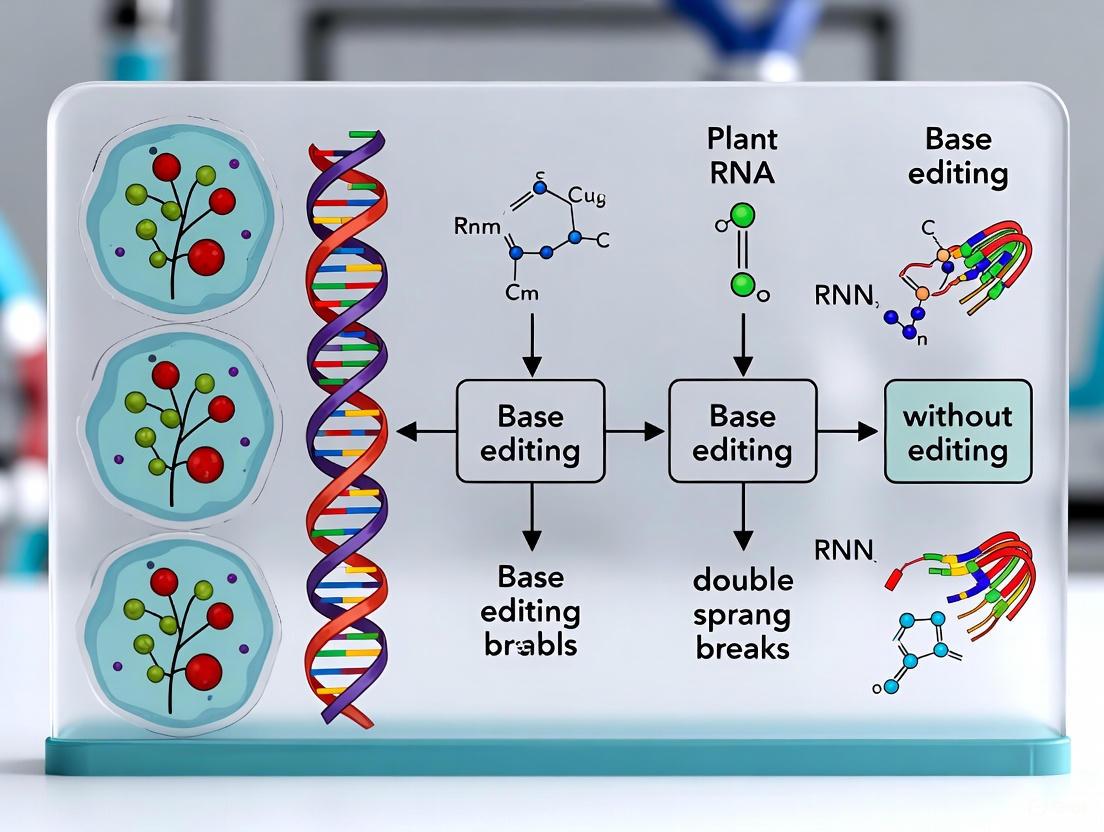
This article provides a comprehensive overview of base editing, a groundbreaking CRISPR-derived technology that enables precise single-nucleotide changes in plant genomes without inducing double-strand DNA breaks.
Precise Genome Engineering in Plants: Harnessing Base Editing to Avoid Double-Strand Breaks
Abstract
This article provides a comprehensive overview of base editing, a groundbreaking CRISPR-derived technology that enables precise single-nucleotide changes in plant genomes without inducing double-strand DNA breaks. Tailored for researchers and scientists, we explore the foundational principles of cytosine and adenine base editors, their methodological applications in crop improvement, strategies to overcome current limitations like off-target effects and PAM constraints, and a comparative analysis with traditional nuclease-dependent editing. By synthesizing recent advances and validation studies, this review highlights the transformative potential of base editing for developing resilient crops and its broader implications for biomedical and clinical research.
The Foundations of Breakthrough Editing: Principles of DSB-Free Genome Modification
Traditional CRISPR-Cas9 technology has revolutionized genetic engineering by enabling precise DNA targeting. However, its fundamental reliance on generating double-strand breaks (DSBs) presents critical limitations for applications requiring precision, particularly in plant research and therapeutic development. The DSB repair process initiates a competition between two primary cellular repair pathways: the error-prone non-homologous end joining (NHEJ) and the precise but inefficient homology-directed repair (HDR) [1] [2].
NHEJ frequently results in small insertions or deletions (indels) at the break site, often producing frameshift mutations that lead to gene knockouts [2] [3]. While valuable for gene disruption, this unpredictability is a major drawback for precise editing. Although HDR can facilitate precise edits using a DNA repair template, its efficiency is notably low in many plant species and is largely confined to specific phases of the cell cycle, making it outperformed by NHEJ in most therapeutically relevant and plant cells [1] [4]. This reliance on DSBs and the subsequent imperfect repair mechanisms limits the applicability of traditional CRISPR-Cas9 for correcting point mutations, which constitute approximately half of all known pathogenic genetic variants [1].
Base Editing: A Paradigm Shift Toward Precision
Base editing represents a transformative advancement that addresses the core limitation of DSB reliance. This technology enables the direct, irreversible chemical conversion of one DNA base into another at a target genomic locus without requiring DSBs or a donor DNA template [5] [4] [6].
Core Architectures and Mechanisms
Base editors are fusion proteins comprising three key components:
- A catalytically impaired Cas protein (e.g., dead Cas9 or nickase Cas9) that maintains programmable DNA binding without causing DSBs.
- A nucleotide deaminase enzyme that catalyzes the chemical conversion of a specific base on the exposed single-stranded DNA within the R-loop.
- Additional auxiliary domains to improve the efficiency and fidelity of the editing outcome, such as Uracil Glycosylase Inhibitor (UGI) [1] [5] [6].
The following diagram illustrates the fundamental mechanism by which base editors operate without creating double-strand breaks.
Base Editing Mechanism: This diagram illustrates the core mechanism of base editing, which avoids double-strand breaks through targeted chemical conversion.
Major Classes of DNA Base Editors
The base editing toolbox has expanded to include several distinct editors, each designed for specific transition and transversion mutations.
Cytosine Base Editors (CBEs)
CBEs mediate the conversion of C•G to T•A base pairs. The first-generation base editor (BE1) fused a rat cytidine deaminase (APOBEC1) to dCas9 [1] [5] [6]. However, the cellular base excision repair (BER) pathway, initiated by uracil DNA glycosylase (UDG), often recognized and reverted the intermediate U•G pair back to C•G. This limitation was overcome in subsequent generations:
- BE2: Incorporation of Uracil Glycosylase Inhibitor (UGI) to block BER, improving editing efficiency approximately 3-fold [1] [6].
- BE3: Use of Cas9 nickase (nCas9) to nick the unedited G-containing strand, biasing cellular mismatch repair (MMR) to use the U-containing strand as a template, resulting in a further 2- to 6-fold efficiency increase [1] [5] [7].
- BE4: Addition of a second UGI molecule, further enhancing editing efficiency and product purity [7] [6].
Adenine Base Editors (ABEs)
ABEs catalyze A•T to G•C conversions. As naturally occurring adenosine deaminases acting on single-stranded DNA were unknown, the tRNA-specific adenosine deaminase (TadA) from E. coli was engineered through directed evolution to accept ssDNA as a substrate [1] [6]. ABEs deaminate adenine to inosine, which is read as guanine by cellular polymerases. Unlike CBEs, ABEs do not require UGI, as the A•I intermediate is not efficiently recognized by the cellular DNA repair machinery [6].
Advanced and Dual Base Editors
Recent innovations have expanded editing capabilities:
- Glycosylase Base Editors (GBEs): Combine a cytidine deaminase with a uracil DNA glycosylase to achieve C•G to G•C transversions, a valuable conversion not possible with CBEs or ABEs alone [5] [6].
- Dual Base Editors (DBEs): Engineered to simultaneously perform both C-to-T and A-to-G conversions within a single target site using a single guide RNA, increasing the versatility of base editing approaches [5] [6].
Table 1: Summary of Major DNA Base Editors and Their Properties
| Base Editor Class | Key Components | Base Conversion | Repair Mechanism Bypassed | Primary Applications |
|---|---|---|---|---|
| Cytosine (CBE) | nCas9, cytidine deaminase (e.g., APOBEC1), UGI | C•G → T•A | Base Excision Repair (BER) | Correcting C-to-T or G-to-A mutations; introducing stop codons. |
| Adenine (ABE) | nCas9, engineered adenosine deaminase (e.g., TadA) | A•T → G•C | (Not applicable) | Correcting A-to-G or T-to-C mutations; creating beneficial amino acid substitutions. |
| Glycosylase (GBE) | nCas9, cytidine deaminase, Uracil N-glycosylase (UNG) | C•G → G•C | Base Excision Repair (BER) | Accessing a broader range of transversion mutations. |
| Dual (DBE) | nCas9, cytidine deaminase, adenosine deaminase | C•G → T•A & A•T → G•C | Base Excision Repair (BER) | Multiplexed base editing at a single locus. |
Application Notes: Base Editing in Plant Research
Base editing is particularly advantageous for plant biotechnology, as it enables the direct introduction of agronomically valuable point mutations that mimic naturally occurring elite alleles without incorporating foreign DNA [5] [3] [6].
Experimental Protocol: CBE-Mediated Herbicide Resistance in Rice
The following workflow details a proven protocol for creating herbicide-resistant rice plants using base editing, as demonstrated in multiple studies [5] [6] [8].
Plant Base Editing Workflow: A standard protocol for developing herbicide-resistant crops using cytosine base editing.
Key Steps:
- Target Selection and gRNA Design: Identify a target gene (e.g., OsALS or OsACC) where a specific C•G to T•A mutation is known to confer herbicide resistance. Design a sgRNA that places the target cytosine within the optimal editing window (typically positions 4-8, counting the PAM as 21-23) [5] [6].
- Vector Construction: Clone the sequence encoding a CBE (e.g., BE4 architecture) and the designed sgRNA into a plant transformation-compatible binary vector.
- Plant Transformation and Regeneration: Introduce the constructed vector into rice embryogenic calli using Agrobacterium-mediated transformation or biolistics. Select transformed calli on appropriate antibiotics and regenerate whole plants under controlled conditions [6] [8].
- Genotyping and Validation: Extract genomic DNA from regenerated plant leaves. Amplify the target region by PCR and analyze edits using Sanger sequencing (for initial screening) or next-generation amplicon sequencing (for precise quantification of editing efficiency and detection of any bystander edits) [5].
- Phenotypic Confirmation: Test T0 or T1 plants by applying the relevant herbicide at standard field concentrations to confirm the resistant phenotype.
The Scientist's Toolkit: Essential Reagents for Plant Base Editing
Table 2: Key Research Reagent Solutions for Plant Base Editing Experiments
| Reagent / Material | Function & Description | Example Specifications |
|---|---|---|
| Base Editor Plasmid | Core editing machinery. A plant-codon optimized vector expressing nCas9-deaminase-UGI (for CBE) or nCas9-TadA (for ABE). | pBE3, pBE4, pABE8e; containing plant-specific promoters (e.g., CaMV 35S, Ubi). |
| sgRNA Expression Cassette | Guides the editor to the target genomic locus. A polymerase III promoter drives the expression of the target-specific gRNA. | pU6-gRNA vector; 20-nt spacer sequence specific to the target. |
| Plant Transformation Vector | Delivers genetic components into plant cells. A binary vector (for Agrobacterium) or a high-copy plasmid (for biolistics). | pCAMBIA1300-based vector with plant selection marker (e.g., Hygromycin R). |
| Plant Material | The organism to be edited. Sterile, high-quality embryogenic calli are most commonly used for transformation. | Oryza sativa (Rice) japonica or indica cultivar calli. |
| Delivery System | Introduces genetic material into plant cells. | Agrobacter tumefaciens strain EHA105; or Gene Gun for biolistics. |
| Selection Agents | Identifies successfully transformed plant tissue. | Hygromycin B, Glufosinate, or other appropriate antibiotics/herbicides. |
| Genotyping Tools | Confirms the presence and nature of the edit at the DNA level. | PCR primers flanking the target site; T7 Endonuclease I; NGS services. |
Quantitative Data and Editor Performance
The performance of base editors is quantified by their editing efficiency (percentage of reads with the desired edit) and product purity (percentage of edited products that are the desired base change without indels or bystander edits). Optimization efforts have led to significant improvements.
Table 3: Base Editing Efficiency and Optimization Landmarks
| Base Editor | Reported Efficiency (Context) | Key Optimization | Notable Application/Outcome |
|---|---|---|---|
| BE1 | Low (< 5% in human cells) [1] | Proof-of-concept; dCas9-APOBEC1 fusion. | First demonstration of programmable base editing. |
| BE3 | Up to ~37% (Human cells) [1] | Incorporation of nCas9 and UGI. | Established the standard CBE architecture. |
| BE4 | Further 1.5-2x increase over BE3 [7] | Addition of a second UGI molecule. | Reduced indel formation and improved product purity. |
| ABE7.10 | Up to ~50% (Human cells) [1] | First-generation engineered TadA. | Enabled A•T to G•C conversions. |
| ABE8e | High efficiency in plants [5] | Further evolved TadA (TadA8e) with enhanced activity. | Herbicide resistance in rice with high efficiency [6]. |
| STEMEs (DBE) | Simultaneous C&T and A&G editing >15% (Rice) [6] | Fusion of both APOBEC3A and ecTadA deaminases. | Multiplexed base editing in plants. |
Base editing technology effectively decouples precise genome modification from the unpredictable and damaging effects of DSBs, directly addressing the critical limitation of traditional CRISPR-Cas9. Its ability to efficiently install single-nucleotide changes in a programmable manner without requiring donor DNA templates or active HDR has opened new frontiers in both basic research and applied biotechnology [4] [6].
In plants, base editing is poised to become a cornerstone of modern crop improvement programs. It enables the rapid development of novel agronomic traits—such as herbicide resistance, disease tolerance, and improved nutritional quality—by recreating known beneficial alleles or introducing new ones with unprecedented precision and speed compared to conventional breeding [5] [3] [8]. The ongoing development of new editors with expanded targeting scopes (e.g., relaxed PAM requirements), novel conversion capabilities (e.g., transversions), and enhanced specificity will further solidify base editing's role as an indispensable tool for sustainable agriculture and functional genomics.
What is Base Editing? Defining a New Paradigm in Precision Genome Engineering
Base editing represents a revolutionary advancement in the field of precision genome engineering, enabling direct, irreversible conversion of one target DNA base into another without requiring double-strand breaks (DSBs) or donor DNA templates [9] [10]. This technology has emerged as a powerful alternative to conventional CRISPR/Cas9 systems, particularly for applications requiring precise single-nucleotide changes, which underlie many important agronomic traits in plants [11] [10].
Built upon the CRISPR/Cas system, base editors utilize catalytically impaired Cas proteins fused with nucleobase deaminase enzymes that chemically alter specific DNA bases in a programmable manner [7]. The core innovation lies in their ability to make precise point mutations while minimizing the formation of insertions and deletions (indels) that commonly occur with DSB-dependent editing approaches [12]. Since the first base editors were developed in 2016, the technology has rapidly evolved through multiple generations with improved editing efficiency, precision, and versatility [9] [11].
For plant research and breeding, base editing offers unprecedented opportunities for functional genomics and crop improvement. Many desirable traits in crops, including herbicide resistance, disease resistance, and yield-related characteristics, are determined by single-nucleotide polymorphisms (SNPs) [11] [10]. Base editing enables the creation of these elite trait variants in crop plants, accelerating the development of improved varieties with precision that was previously unattainable through conventional breeding methods or earlier genome editing technologies [9].
Technical Foundations of Base Editing Systems
Core Architecture and Mechanism
Base editors are chimeric proteins composed of two essential components: a DNA targeting module and a catalytic deaminase domain [7]. The DNA targeting module is typically a catalytically dead Cas9 (dCas9) or Cas9 nickase (nCas9) guided by a single-guide RNA (sgRNA) to specific genomic loci [9]. The deaminase domain acts on single-stranded DNA within the R-loop structure formed when the Cas complex binds to its target sequence, chemically converting one base to another [9].
The editing process occurs within a defined "catalytic window" of approximately 5-8 nucleotides in the single-stranded DNA region [9]. This window's position relative to the protospacer adjacent motif (PAM) sequence varies among different base editors and represents the region where deamination can occur effectively [9]. Unlike conventional CRISPR/Cas9 systems that induce double-strand breaks, base editors function without cleaving both DNA strands, thereby significantly reducing error-prone repair and indel formation [10].
Table: Evolution of Cytosine Base Editors (CBEs) in Plants
| Base Editor | Key Components | Editing Window | Efficiency Range | Notable Improvements |
|---|---|---|---|---|
| BE1 | rAPOBEC1-XTEN-dCas9 | -17 to -13 | 0.8-7.7% | First-generation editor |
| BE2 | BE1 + UGI | -17 to -13 | ~20% | 3-fold increase with UGI inhibition |
| BE3 | rAPOBEC1-XTEN-nCas9-UGI | -16 to -12 | Up to 37% | 6-fold increase with nickase activity |
| BE4 | rAPOBEC1-linker-nCas9-2xUGI | -17 to -13 | 15-90% | Enhanced purity with dual UGI |
| BE4max | Codon-optimized BE4 with bpNLS | Variable | Up to 89% | Improved nuclear localization |
| A3A/Y130F-BE3 | Engineered human APOBEC3A | -19 to -15 | 20-50% | Higher precision with TC motif preference |
| hyPopCBE-V4 | A3A/Y130F + MS2-UGI + Rad51 + bpNLS | Narrowed window | 21.43% homozygous | Synergistic optimization for woody plants |
Major Classes of DNA Base Editors
Cytosine Base Editors (CBEs)
Cytosine base editors catalyze the conversion of cytosine (C) to thymine (T) through a multi-step process [9] [10]. The cytidine deaminase enzyme removes an amino group from cytosine, converting it to uracil (U), which results in a U-G mismatch [9]. Cellular repair mechanisms then resolve this mismatch to form U-A base pairs, and subsequently T-A base pairs after DNA replication, effectively achieving C-G to T-A conversion [9].
The first base editor (BE1) was developed by fusing the rat cytidine deaminase APOBEC1 to dCas9 via a 16-amino acid XTEN linker [9]. Subsequent generations incorporated critical improvements: BE2 added uracil DNA glycosylase inhibitor (UGI) to block base excision repair, increasing efficiency three-fold [9] [11]; BE3 utilized Cas9 nickase to create a single-strand break in the non-edited strand, further improving efficiency 2-6 fold [9]; and BE4 incorporated two UGI molecules and extended linkers for enhanced editing purity [11].
Recent optimizations have focused on nuclear localization signals, codon optimization, and engineering novel deaminases. For example, CBE4max demonstrated 77% efficiency at difficult-to-edit sites, representing a 5.5-fold increase over previous versions [11]. Engineered deaminases like evoAPOBEC1 and evoFERNY have further expanded targeting capabilities, particularly at GC-rich sites [11].
Adenine Base Editors (ABEs)
Adenine base editors catalyze the conversion of adenine (A) to guanine (G) through a different mechanism [9]. These editors utilize an engineered tRNA adenosine deaminase (TadA) that converts adenine to inosine, which is subsequently read as guanine by cellular machinery during DNA replication, resulting in A-T to G-C base substitutions [10].
The development of ABEs required extensive protein engineering since natural adenine deaminases acting on DNA do not exist [11]. The first ABEs used the TadA dimer with both wild-type and evolved TadA (TadA7.10) components fused to nCas9 [11]. Recent versions like ABE8e incorporate the TadA8e variant with eight additional mutations that catalyze DNA deamination approximately 1,100 times faster than early ABEs [13]. In cotton, GhABE8e demonstrated remarkable efficiency of 99.9% at some target sites, significantly outperforming GhABE7.10 (64.9% maximum efficiency) [13].
Table: Adenine Base Editor (ABE) Development and Applications
| ABE Version | Deaminase Component | Notable Features | Efficiency in Plants | Key Applications |
|---|---|---|---|---|
| ABE7.10 | wtTadA-TadA7.10 | First-generation adenine editor | 5-64.9% (cotton) | Proof-of-concept studies |
| GhABE8e | TadA8e (V106W) | 1100x faster deamination | 60-99.9% (cotton) | High-throughput mutagenesis |
| ABE8e-dCpf1 | TadA8e + dead Cpf1 | Recognizes TTTV PAM | Enhanced targeting range | Multiplexed editing |
| YEE-BE3 | Triple mutant (W90Y+R126E+R132E) | Narrowed editing window | -15 to -13 | Improved specificity |
Experimental Protocols for Plant Base Editing
Generalized Workflow for Plant Base Editing
The following protocol outlines the key steps for implementing base editing in plants, adapted from multiple sources with specific examples from rice and poplar protocols [14] [15].
Step 1: Target Selection and sgRNA Design
- Identify target sequence containing the base to be edited within the editing window of selected base editor
- Ensure presence of appropriate PAM sequence (NGG for SpCas9-based editors)
- For multiple homologs, design sgRNAs targeting conserved regions across gene family members
- Example: In poplar, a single sgRNA was designed to target all four PagALS homologs simultaneously by identifying conserved regions [15]
Step 2: Vector Construction
- Select appropriate base editor backbone (CBE or ABE depending on desired conversion)
- Clone sgRNA expression cassette into base editor vector
- For multiplex editing, construct tRNA-sgRNA arrays or use polycistronic systems
- Example: hyPopCBE vectors used Ubi promoter to drive fusion protein and AtU3 promoter for sgRNA expression [15]
Step 3: Plant Transformation
- Deliver constructed vectors into plant cells using appropriate method (Agrobacterium-mediated transformation, particle bombardment, or protoplast transfection)
- Select transformed tissues using appropriate antibiotics or visual markers
- Regenerate whole plants from transformed cells through tissue culture
- Example: Rice base editing protocol used Agrobacterium-mediated transformation of embryogenic calli [14]
Step 4: Molecular Analysis and Genotyping
- Extract genomic DNA from transformed and control plants
- Amplify target regions by PCR and sequence using Sanger or next-generation sequencing
- Analyze sequencing chromatograms for base substitutions using decomposition tools
- Identify plants with desired edits and minimal off-target effects
- Example: Targeted deep sequencing was used to quantify editing efficiency in cotton GhABE8e experiments [13]
Step 5: Phenotypic Validation
- Grow edited plants under controlled conditions
- Assess phenotypic changes associated with targeted mutations
- Conduct functional assays to confirm trait modifications
- Example: Herbicide-resistant poplar lines were validated by applying tribenuron and nicosulfuron to edited plants [15]
Case Study: Optimized Base Editing in Poplar
Recent research has demonstrated the successful optimization of base editing systems for challenging plant species like poplar [15]. The hyPopCBE system was developed through synergistic optimization with four distinct versions:
hyPopCBE-V1: Base system using A3A/Y130F deaminase fused to nCas9-UGI [15] hyPopCBE-V2: Incorporated MS2-UGI system with MCP-UGI fusion protein and MS2-binding sequences in sgRNA scaffold [15] hyPopCBE-V3: Fused Rad51 DNA-binding domain to nCas9 to increase binding affinity to single-stranded DNA [15] hyPopCBE-V4: Modified nuclear localization signal using bipartite NLS (bpNLS) for improved nuclear targeting [15]
This systematic optimization resulted in dramatic improvements: the proportion of plants with clean C-to-T edits (without byproducts) increased from 20.93% in V1 to 40.48% in V4, while efficiency of clean homozygous C-to-T editing rose from 4.65% to 21.43% [15]. The editing window also became narrower, enhancing precision [15].
Applications in Plant Research and Crop Improvement
Herbicide Resistance Development
Base editing has been successfully employed to develop herbicide-resistant crops by introducing specific point mutations in herbicide target genes [15]. In poplar, researchers targeted the acetolactate synthase (ALS) gene, which is inhibited by tribenuron and nicosulfuron herbicides [15]. By using the optimized hyPopCBE system to convert a single proline (CCT) to leucine (CTT) at position 197 (Pro197Leu) in all four PagALS homologs, they created herbicide-resistant poplar lines [15]. The edited trees exhibited high resistance to both herbicides while maintaining normal growth characteristics, demonstrating the practical application of base editing for crop improvement [15].
Optimizing Plant Architecture
In cotton, base editing was used to fine-tune the GhTFL1 gene, a key regulator of plant architecture [13]. Researchers generated a comprehensive allelic population including 300 independent lines with mutations in both coding and non-coding regions of GhTFL1 [13]. This allowed revelation of hidden pleiotropic roles for GhTFL1 and enabled directed domestication of cotton with ideal plant architecture characteristics: moderate height, shortened fruiting branches, compact plant structure, and early flowering [13]. The GhABE8e system achieved editing efficiencies up to 99.9%, facilitating high-throughput functional analysis of nucleotide variations [13].
Creating Novel Genetic Diversity
Base editing serves as a powerful tool for creating novel genetic diversity by introducing precise point mutations that can generate elite trait variants [9] [11]. This application is particularly valuable for traits determined by single-nucleotide polymorphisms, such as disease resistance, grain quality, and stress tolerance [11]. The technology enables rapid evolution of functional proteins and exploration of gene function through targeted saturation mutagenesis, significantly accelerating crop improvement programs [13].
Table: Research Reagent Solutions for Plant Base Editing
| Reagent Category | Specific Examples | Function in Experiment |
|---|---|---|
| Base Editor Plasmids | BE3, BE4, ABE7.10, ABE8e, Target-AID | Core editing machinery with specific conversion capabilities |
| sgRNA Cloning Vectors | tRNA-sgRNA arrays, MS2-modified scaffolds | Target specificity and editor recruitment |
| Plant Transformation Vectors | pCAMBIA, pGreen, Gateway-compatible | Delivery of editing system to plant cells |
| Promoter Systems | Ubi, 35S, AtU3, OsU3 | Drive expression of editor components |
| Selection Markers | Hygromycin, Kanamycin, GFP, YFP | Identify successfully transformed tissues |
| Genotyping Tools | Hi-TOM, Sanger sequencing, T7E1 assay | Detect and quantify editing events |
| Plant Tissue Culture Media | Callus induction, regeneration media | Support growth and development of edited cells |
Current Limitations and Future Perspectives
Despite significant advancements, base editing technologies still face several challenges that require further optimization. The requirement for specific PAM sequences limits the targeting range of current editors [11]. Additionally, off-target effects, variable editing efficiency across different genomic loci, and the potential for Cas-independent DNA and RNA off-target editing remain concerns [11] [10]. The restricted types of base conversions possible with current editors (primarily C-to-T and A-to-G) also represents a limitation for certain applications [11].
Future developments in base editing will likely focus on expanding PAM compatibility through engineering Cas protein variants, developing editors with novel activities such as transversion base editing, and further improving editing precision through reduced off-target effects [11] [16]. The integration of base editing with other emerging technologies like prime editing and multiplexed editing approaches will further enhance its utility for plant research and breeding [17]. As these tools become more sophisticated and accessible, base editing is poised to play an increasingly central role in crop genetic improvement and functional genomics research [11] [10].
Base editing represents a significant advancement in the field of genome editing, enabling precise single-nucleotide changes in DNA without inducing double-strand breaks (DSBs). This technology is particularly valuable for plant research and breeding, as it allows for the introduction of agronomically beneficial point mutations—such as those conferring herbicide resistance, disease tolerance, or improved quality traits—while maintaining genetic stability and avoiding the insertion of foreign DNA [11] [4]. The system relies on three core molecular components that function in concert: a catalytically impaired Cas9 (dCas9 or nCas9), a deaminase enzyme, and a guide RNA (gRNA) [11] [18]. These components form a complex that can be programmed to target specific genomic loci, where the deaminase catalyzes a chemical conversion on a single DNA base within a narrow editing window. This article details the function, optimization, and practical application of these core components, with a specific focus on protocols for plant systems.
Molecular Components and Mechanisms
Catalytically Impaired Cas9 Variants
The Cas9 protein serves as the programmable DNA-targeting module of the base editing system. In its native form, Cas9 creates double-strand breaks (DSBs), which are undesirable for precise base editing. Therefore, catalytically impaired variants are used:
- dead Cas9 (dCas9): Contains double mutations (D10A and H840A for Streptococcus pyogenes Cas9) that completely abolish both nuclease activities, rendering the protein capable only of binding DNA without cutting [11] [18].
- nickase Cas9 (nCas9): Contains a single mutation (D10A) that inactivates the RuvC domain, leaving the HNH domain active. This results in a protein that nicks the non-target DNA strand (the strand that is complementary to the gRNA) [11] [4].
The nCas9 is the preferred variant in most modern base editors. The single-strand nick it creates serves two critical purposes: it increases editing efficiency by inducing cellular repair processes that favor the incorporation of the edited base, and it biases the editing outcome to the non-target strand [11] [19].
Table 1: Cas9 Variants Used in Base Editing
| Cas9 Variant | Key Mutations | Nuclease Activity | Role in Base Editing |
|---|---|---|---|
| Wild-Type Cas9 | None | Creates double-strand breaks | Not suitable for base editing |
| dead Cas9 (dCas9) | D10A, H840A | No cleavage | DNA binding only; used in early editors |
| nickase Cas9 (nCas9) | D10A | Nicks non-target DNA strand | Increases efficiency & product purity; industry standard |
Deaminase Enzymes
Deaminases are the catalytic engines of base editors, responsible for directly modifying DNA bases. They operate on single-stranded DNA (ssDNA), which becomes accessible when Cas9 unwinds the DNA duplex upon binding to its target site.
Cytidine Deaminases: Used in Cytosine Base Editors (CBEs), these enzymes convert cytidine (C) to uridine (U) in DNA. The cell's DNA replication and repair machinery then interpret the U as a thymine (T), resulting in a C•G to T•A base pair conversion [11] [4]. Common cytidine deaminases include:
- rAPOBEC1: Isolated from rat; the deaminase used in the first-generation CBEs [11].
- hAID, hAPOBEC3G, pmCDA1: Other naturally occurring deaminases tested in early development [11].
- Engineered variants (e.g., eA3A, evoAPOBEC1, evoFERNY): Developed through protein engineering to alter editing windows, improve efficiency, and change sequence context preferences (e.g., favoring TC motifs) [11].
Adenine Deaminases: Used in Adenine Base Editors (ABEs), these enzymes convert adenine (A) to inosine (I). Inosine is read as guanine (G) by cellular machinery, leading to an A•T to G•C conversion. A major breakthrough was the engineering of the TadA enzyme (originally a tRNA-specific adenine deaminase) to act on ssDNA, as no natural DNA adenine deaminase was known [11] [20].
Table 2: Major Classes of Deaminases in Base Editing
| Base Editor Class | Deaminase Type | Key Enzymes | Base Conversion | Notes |
|---|---|---|---|---|
| Cytosine Base Editor (CBE) | Cytidine Deaminase | rAPOBEC1, A3A, CDA1 | C → T (G → A) | First base editors developed; requires UGI to prevent uracil excision [11] |
| Adenine Base Editor (ABE) | Adenine Deaminase | engineered TadA (e.g., TadA-8e) | A → G (T → C) | Corrects the most common type of pathogenic single-base substitution [20] |
Guide RNA (gRNA)
The guide RNA is the targeting component of the system. It is a chimeric RNA molecule comprising:
- Spacer Sequence: A ~20-nucleotide sequence at the 5' end that is complementary to the target DNA locus, dictating where the base editor will bind [18].
- Scaffold Sequence: A conserved structural component that binds to the Cas9 protein, forming the ribonucleoprotein (RNP) complex [18].
For base editing, the gRNA must be designed so that the target base (the "C" for CBEs or "A" for ABEs) falls within the editing window, typically positions 4-9 within the protospacer (counting the PAM-distal end as position 1) [11] [21]. The sequence of the gRNA spacer is critical not only for on-target efficiency but also for minimizing off-target editing, with mismatches in the "seed" region (PAM-proximal) being particularly disruptive [18].
Figure 1: Architecture of a Base Editing Complex. The core components—nCas9, deaminase, and gRNA—assemble into a complex that is directed to a specific genomic locus by the gRNA's complementarity to the target DNA and the recognition of a PAM sequence by nCas9.
Experimental Protocols for Plant Systems
Protocol: Designing and Cloning Base Editing gRNAs for Plants
Principle: The success of base editing in plants hinges on the precise design and efficient delivery of the gRNA expression cassette [18].
Materials:
- Plant-specific gRNA expression vector (e.g., with U6 or U3 Pol III promoter)
- Software for gRNA design (e.g., CHOPCHOP, CRISPR-P)
- DNA oligonucleotides corresponding to the target spacer sequence
- Restriction enzymes (e.g., BsaI) and T4 DNA ligase
- High-fidelity DNA polymerase
Procedure:
- Target Selection: Identify a ~20-nt target sequence adjacent to a 5'-NGG-3' PAM. Ensure the target base (C for CBE, A for ABE) is within the editing window (typically positions 4-9 of the protospacer).
- Off-Target Assessment: Use bioinformatics tools to screen the plant genome for sequences similar to the chosen target. Select a gRNA with minimal off-target potential.
- Oligonucleotide Design: Design forward and reverse oligonucleotides that, when annealed, produce sticky ends compatible with the gRNA cloning site in your expression vector.
- Cloning: a. Anneal the oligonucleotides and phosphorylate the duplex. b. Digest the destination vector with the appropriate restriction enzyme. c. Ligate the annealed oligo duplex into the prepared vector. d. Transform the ligation product into competent E. coli cells and select positive clones.
- Sequence Verification: Sanger sequence the cloned construct to confirm the correct insertion of the gRNA spacer sequence.
Protocol: Delivery of Base Editors into Plant Cells and Regeneration
Principle: Base editor components are delivered into plant cells, and edited cells are selected and regenerated into whole plants [11] [18].
Materials:
- Plasmid DNA encoding the base editor (nCas9-deaminase fusion) and the plant codon-optimized gRNA
- Agrobacterium tumefaciens strain (e.g., EHA105, GV3101) for transformation OR a biolistic gene gun
- Sterilized plant explants (e.g., embryogenic calli, leaf disks)
- Selective media containing appropriate antibiotics and plant growth regulators
Procedure:
- Vector Assembly: Co-clone the base editor and gRNA expression cassettes into a single T-DNA binary vector for Agrobacterium-mediated transformation.
- Plant Transformation:
- Agrobacterium-mediated: Co-cultivate explants with Agrobacterium carrying the binary vector. After co-cultivation, transfer explants to selection media to eliminate Agrobacterium and select for transformed plant cells.
- Biolistics: Coat gold or tungsten microparticles with the base editor/gRNA plasmid DNA and bombard them into plant explants.
- Regeneration: Transfer the transformed explants through a series of media to induce shoot formation and subsequently root formation.
- Molecular Analysis: a. Extract genomic DNA from regenerated shoots (T0 plants). b. Amplify the target genomic region by PCR. c. Sequence the PCR amplicon using Sanger sequencing to detect base substitutions. For a more detailed view of editing efficiency and potential byproducts, use next-generation sequencing (NGS) of the amplicons.
Figure 2: Workflow for Plant Base Editing. The process from gRNA design to the production of genetically stable edited plants involves tissue culture, molecular verification, and a seed generation cycle.
The Scientist's Toolkit: Research Reagent Solutions
Table 3: Essential Reagents for Base Editing Research
| Reagent / Material | Function / Description | Example Specifications | Key Considerations for Plant Research |
|---|---|---|---|
| Base Editor gRNA | Synthetic guide RNA for targeting | 97-140 nt; HPLC-purified; modifications (2'-O-Methyl, phosphorothioate) for stability [21] | Ensure compatibility with plant codon-optimized Cas9 and plant-specific promoters (e.g., OsU6). |
| Base Editor Plasmid | Expresses the nCas9-deaminase fusion protein | CMV or plant-specific promoter (e.g., 35S); plant codon-optimized nCas9 sequence | Vector must be compatible with plant transformation (e.g., T-DNA binary vector). |
| CBE & ABE Control Kits | Validate experimental system | e.g., Human B2M sgRNA with ABE8e or CBEmax mRNA [21] | Use plant-positive control targets with known phenotypes (e.g., herbicide resistance genes). |
| Delivery Reagents | Introduce constructs into plant cells | Agrobacterium strains, gold microparticles for biolistics | Choice depends on plant species and transformation efficiency. |
| Selection Agents | Select for transformed plant tissue | e.g., Hygromycin, Kanamycin | Concentration must be optimized for each plant species and explant type. |
| NGS Amplicon Seq Kit | Quantify editing efficiency and byproducts | High-fidelity PCR and library prep for deep sequencing | Critical for detecting low-frequency off-target edits and precise measurement of outcomes. |
In the realm of precision genome editing, the catalytic window represents the crucial zone of single-stranded DNA where deaminase enzymes act on specific nucleotides. This window, typically spanning 4-10 nucleotides, is exposed when the CRISPR-Cas9 complex binds to its target DNA and locally unwinds the double helix, creating an R-loop structure [22] [11]. The spatial positioning of this window is determined by the structural constraints of the base editor complex, with the deaminase enzyme operating within a defined range from the protospacer adjacent motif (PAM) site [23]. For the most commonly used base editors derived from Streptococcus pyogenes Cas9, the catalytic window generally extends from approximately positions 4-9 when counting from the PAM-distal end of the target sequence [24].
The concept of the catalytic window is fundamental to understanding base editing efficiency and precision. Within this confined region, deaminase enzymes can catalyze the chemical conversion of nucleotides: cytosine base editors (CBEs) convert cytosine (C) to uracil (U), which is then replicated as thymine (T), while adenine base editors (ABEs) convert adenine (A) to inosine (I), which is replicated as guanine (G) [23] [11]. However, a significant challenge arises when identical bases are present at multiple positions within this window, potentially leading to bystander edits at non-target nucleotides alongside the desired target edits [22]. This phenomenon underscores the importance of strategic target selection and ongoing optimization of base editing systems to maximize editing precision.
Quantitative Analysis of Editing Windows by Base Editor Type
The precise location and efficiency of editing within the catalytic window varies significantly depending on the type of base editor and its specific composition. Different deaminase enzymes exhibit distinct sequence preferences and editing efficiencies across the window, influencing both the yield of desired edits and the prevalence of bystander mutations.
Table 1: Characteristics of Major Base Editing Systems and Their Catalytic Windows
| Base Editor Type | Base Conversion | Typical Editing Window (positions from PAM) | Key Deaminase Components | Editing Efficiency Range | Notable Features |
|---|---|---|---|---|---|
| CBE (early versions) | C→T (G→A) | -16 to -12 [23] | rAPOBEC1 [11] | 0.8-7.7% (CBE1) [11] | First-generation system |
| CBE (optimized) | C→T (G→A) | 4-10 nucleotides [22] | rAPOBEC1 + UGI + nCas9 [11] | 15-90% (CBE4) [11] | UGI inhibition of base excision repair |
| ABE7.10 | A→G (T→C) | Positions 4-7 [24] | TadA-8e [11] | Up to 64% in cotton [24] | High precision with minimal indels |
| ABE6.3, ABE7.8, ABE7.9 | A→G (T→C) | Positions 4-9 [24] | Engineered TadA variants [24] | Varies by variant | Broader editing window |
| CGBE | C→G (G→C) | Similar to CBE | cytidine deaminase + UNG [6] | Up to 27.3% in rice [6] | Enables transversion mutations |
| Dual Base Editors | C→T & A→G | Combines CBE and ABE windows | APOBEC3A + ecTadA [6] | Varies by system | Simultaneous dual base conversions |
The editing efficiency within the catalytic window is not uniform, with certain positions typically showing higher conversion rates. Research in allotetraploid cotton demonstrated that the GhABE7.10n editor exhibited its highest editing efficiency at position A5 (counting the PAM as positions 21-23) [24]. This positional bias within the window is consistent across many base editing platforms and must be considered when designing targeting strategies.
Table 2: Factors Influencing Catalytic Window Efficiency and Specificity
| Factor | Impact on Catalytic Window | Optimization Strategies |
|---|---|---|
| Deaminase Type | Different deaminases have varying activity levels and sequence preferences (e.g., TC motifs for A3A) [11] | Engineer or evolve deaminases (e.g., evoFERNY, evoAPOBEC1) [11] |
| Cas9 Variant | nCas9 vs dCas9 affects efficiency; nCas9 increases editing by 2-6× [11] | Use nCas9 (D10A) with single-strand nicking activity [11] |
| UGI Fusion | Inhibits uracil excision repair, increasing CBE efficiency 3-fold [11] | Fuse one or two UGI units to editor C-terminus [11] |
| Linker Length | Affects spatial flexibility and deaminase positioning | Optimize linker sequences between domains [11] |
| Nuclear Localization Signals | Affects nuclear import and expression levels | Use bipartite NLS at both N- and C-termini [11] |
| PAM Compatibility | Restricts targetable positions in genome | Use Cas9 variants with altered PAM specificities [25] |
Experimental Protocol for Determining Catalytic Window Parameters
Protocol: Mapping the Editing Window of a Novel Base Editor
This protocol outlines a systematic approach to characterize the catalytic window of a newly developed base editing system in plants, using the GhABE7.10n characterization in cotton as an exemplary case [24].
Materials and Reagents:
- Plant codon-optimized base editor construct (e.g., nCas9-D10A fused to deaminase)
- Target plant species (e.g., Gossypium hirsutum for cotton)
- Agrobacterium strain for transformation (e.g., LBA4404)
- Tissue culture media for plant regeneration
- PCR reagents and Sanger sequencing platform or next-generation sequencing platform
- Target genes with known phenotypes (e.g., GhCLA1 for albino phenotype, GhPEBP for plant architecture)
Procedure:
Vector Construction:
- Clone your base editor construct into a plant binary vector, ensuring codon optimization for your target plant species [24].
- Incorporate nuclear localization signals (NLS) at both N- and C-termini to enhance nuclear import [11].
- For initial testing, include a visual marker gene such as GhCLA1 which produces an easily identifiable albino phenotype when successfully edited [24].
Target Selection and sgRNA Design:
- Identify target sequences containing multiple potential editing sites (adenines for ABE, cytosines for CBE) distributed across the potential editing window.
- Design sgRNAs to target regions with potential edits at different positions relative to the PAM site (e.g., positions 3-10).
- For multiplex editing assessment, consider using tRNA-sgRNA arrays to target multiple sites simultaneously [24].
Plant Transformation:
- Transform your plant material using Agrobacterium-mediated transformation appropriate for your species [24].
- For cotton, use hypocotyls from sterilized seeds as explants, co-cultivate with Agrobacterium carrying the base editor construct, and select on appropriate antibiotic media.
- Regenerate transformed plants through somatic embryogenesis.
Editing Efficiency Analysis:
- Extract genomic DNA from transgenic plant lines.
- Amplify target regions by PCR using primers flanking the edited sites.
- Perform Sanger sequencing of PCR amplicons initially to identify edited lines [24].
- For comprehensive analysis, use next-generation sequencing (e.g., Illumina MiSeq) of amplified target regions to quantify editing efficiencies at each position [24].
- Sequence a sufficient number of reads (e.g., >10,000 per sample) to detect lower-frequency editing events.
Data Analysis and Window Determination:
- Calculate editing efficiency for each position within the target region as percentage of reads containing the specific base substitution.
- Plot editing efficiency against position relative to PAM to visualize the effective catalytic window.
- Identify the position of maximum efficiency within the window (e.g., position A5 for GhABE7.10n) [24].
- Assess bystander editing rates by examining non-target bases within the window that show unintended editing.
Validation:
Workflow Visualization: Determining Catalytic Window Parameters
Molecular Mechanisms and Theoretical Framework
The catalytic window in base editing systems is fundamentally determined by the molecular architecture of the base editor complex and its interaction with target DNA. When the Cas9 component binds to its target DNA, it induces local strand separation, creating a single-stranded DNA bubble where the deaminase domain operates [11]. The spatial constraints of this complex define the accessible region where deaminase enzymes can engage with their substrate nucleotides.
Theoretical models of base editing dynamics provide insights into the temporal aspects of editing within the catalytic window. Stochastic modeling approaches reveal that target and bystander editing events occur at different timescales, suggesting the possibility of dynamic selectivity where editing precision could be improved by controlling exposure times [22]. This temporal separation arises from the complex kinetic pathways involved in the editing process, including:
- Cas9 binding to target DNA
- Deaminase engagement with specific nucleotides
- The deamination reaction itself
- DNA repair and replication that fix the edits
The catalytic window is influenced by several molecular factors:
- Deaminase accessibility: The physical reach of the deaminase domain relative to the Cas9 DNA-binding region
- DNA conformation: The flexibility and structure of the single-stranded DNA bubble
- Enzyme kinetics: The binding affinity and catalytic rate of the deaminase for different nucleotide positions
- Cellular environment: The local concentration of cellular repair enzymes that process the initial deamination products
Mathematical modeling of these systems has shown that for most parameter ranges, it's possible to temporally separate target and bystander editing products, supporting the concept of dynamic selectivity as a method to improve single-base editing precision [22].
Visualization: Molecular Architecture of Base Editing Complex
Research Reagent Solutions for Base Editing Studies
Table 3: Essential Research Reagents for Catalytic Window Studies
| Reagent Category | Specific Examples | Function in Catalytic Window Studies |
|---|---|---|
| Base Editor Plasmids | CBE4max [11], ABE7.10 [24], GhABE7.10n [24] | Core editing machinery with optimized efficiency |
| Deaminase Variants | rAPOBEC1, evoAPOBEC1, evoFERNY, TadA-8e [11] | Catalyze specific base conversions with varying efficiencies and preferences |
| Cas9 Variants | nCas9 (D10A), dCas9, dCpf1 [24] | DNA binding and unwinding to create single-stranded window |
| Plant Binary Vectors | pCAMBIA, pGreen series | Delivery of editing constructs to plant cells |
| Repair Pathway Modulators | UGI (for CBEs) [11], UNG (for CGBEs) [6] | Influence cellular processing of deaminated bases |
| Visual Marker Genes | GhCLA1 [24] | Rapid phenotypic assessment of editing efficiency |
| Transformation Tools | Agrobacterium strains (LBA4404, EHA105) | Delivery of editing constructs to plant cells |
| Analysis Tools | Illumina sequencing platforms, Sanger sequencing | Quantification of editing efficiencies across positions |
The precise definition and optimization of the catalytic window remains a central challenge in advancing base editing technologies for plant applications. While current systems typically operate within a 4-10 nucleotide window, ongoing research aims to develop editors with narrower activity windows to reduce bystander edits, as well as systems with expanded targeting ranges through PAM-relaxed Cas variants [11] [25]. The development of computational models that can predict editing efficiency and specificity based on sequence context and editor architecture will further enhance our ability to harness these powerful tools for precise plant genome engineering [22]. As these technologies mature, the strategic selection of target sites within the catalytic window will continue to be essential for achieving high-precision single-base edits in plant genomes without double-strand breaks, advancing both functional genomics and crop improvement efforts.
The pursuit of precise genome editing has driven the development of technologies that enable specific, targeted modifications to DNA sequences. This evolutionary pathway began with oligonucleotide-directed mutagenesis (ODM) and has culminated in the sophisticated base editing systems available today. These technologies represent a paradigm shift in genetic engineering, moving away from methods that rely on double-strand breaks (DSBs) and error-prone repair mechanisms toward more precise, efficient, and predictable editing approaches. In plant research, where many agriculturally important traits are determined by single-nucleotide polymorphisms (SNPs), this progression has been particularly transformative, enabling precise genetic improvements without the genomic instability associated with DSBs [10]. This application note traces this technological evolution, providing historical context, detailed experimental protocols, and practical resources for researchers working in plant genomics and biotechnology.
Oligonucleotide-Directed Mutagenesis: The Foundation
Historical Context and Mechanism
Oligonucleotide-directed mutagenesis (ODM) represents one of the earliest approaches to precision genome editing, enabling targeted nucleotide changes without requiring double-strand breaks. The technology utilizes chemically synthesized oligonucleotides that are homologous to the target genomic region but incorporate specific desired mutations. These oligonucleotides serve as templates during cellular DNA repair processes, ultimately leading to the incorporation of the mutation into the genome [26].
Early ODM applications in plants employed chimeric DNA-RNA oligonucleotides, known as "chimeraplasts," which contained hairpin-capped ends to improve hybridization efficiency with genomic DNA. The DNA segment provided complementarity to the target gene along with the desired mutation, while the RNA segments enhanced formation of the genomic DNA-chimeric oligonucleotide heteroduplex. This complex was then recognized and processed by the endogenous cellular mismatch repair machinery, which occasionally used the chimeraplast as a template instead of the genomic DNA, resulting in site-specific base changes [26].
Key Applications in Early Plant Genome Editing
ODM technology demonstrated early success in plant systems for introducing targeted mutations in agriculturally important genes. Researchers utilized this approach to target the acetolactate synthase (ALS) gene in tobacco, maize, and oilseed rape, creating herbicide-resistant plants [27]. In oilseed rape, specifically, oligonucleotides featuring a 5'Cy3 dye and a 3'idC reverse base chemistry proved more effective and less toxic than earlier designs that used phosphorothioate linkages [27]. These pioneering applications established ODM as a valuable non-transgenic approach for plant trait development, with one commercial outcome being the development of non-transgenic herbicide-resistant canola [26].
Table 1: Early Applications of Oligonucleotide-Directed Mutagenesis in Plants
| Plant Species | Target Gene | Modification | Trait Developed | Efficiency | Reference |
|---|---|---|---|---|---|
| Tobacco (Nicotiana tabacum) | Acetolactate synthase (ALS) | Single nucleotide change | Herbicide resistance | Not specified | Beetham et al., 1999 |
| Maize (Zea mays) | Acetolactate synthase (ALS) | Single nucleotide change | Herbicide resistance | Not specified | Zhu et al., 1999 |
| Oilseed rape (Brassica napus) | Acetolactate synthase (ALS) | Single nucleotide change | Herbicide resistance | Not specified | Gocal et al., 2015 |
The Transition to Enhanced Specificity
Combining ODM with Site-Specific Nucleases
A significant advancement in precision editing came from combining ODM with site-specific nuclease systems. This approach recognized that the efficiency of ODM could be substantially enhanced by creating targeted DNA lesions in close proximity to the desired edit site. Early experiments in Arabidopsis thaliana demonstrated that pretreatment with the glycopeptide antibiotic phleomycin, a nonspecific double-strand breaker, resulted in a dose-dependent increase in editing frequency when combined with single-stranded oligonucleotides (ssODNs) [27].
This principle was further refined by integrating ODM with engineered nuclease systems, including transcription activator-like effector nucleases (TALENs) and the CRISPR/Cas9 system. When ssODNs were delivered alongside TALENs designed to create a double-strand break near the target edit site in Arabidopsis, researchers observed a dramatic 25- to 45-fold increase in editing efficiency compared to treatments with DNA double-strand-breaking reagents alone [27]. Similar enhancements were achieved with CRISPR/Cas9, establishing a powerful combined approach for precision genome editing in plants.
Experimental Protocol: ODM with CRISPR/Cas9 in Plant Protoplasts
Principle: This protocol describes a method for achieving precise genome edits in plant protoplasts by co-delivering single-stranded oligonucleotides (ssODNs) with CRISPR/Cas9 components. The approach leverages the creation of a targeted double-strand break to enhance the incorporation of the desired edit from the oligonucleotide template [27].
Materials:
- Plant protoplasts (e.g., from Arabidopsis, flax, or target crop species)
- CRISPR/Cas9 plasmid expressing Cas9 nuclease and guide RNA
- Chemically synthesized ssODN with desired mutation and appropriate terminal modifications (e.g., 5'Cy3 dye and 3'idC reverse base)
- Protoplast transformation reagents (PEG solution)
- Cell culture media and supplies
- Genomic DNA extraction kit
- PCR amplification reagents
- Sequencing primers and facilities
Procedure:
- Protoplast Isolation: Isolate protoplasts from plant tissues using appropriate enzymatic digestion protocols specific to the plant species.
- Reagent Preparation: Prepare the transformation mixture containing CRISPR/Cas9 plasmid (10-20 μg) and ssODN (5-10 μg) in transformation buffer.
- Transformation: Add the DNA mixture to protoplasts, followed by an equal volume of PEG transformation solution (40% PEG). Incubate for 15-30 minutes at room temperature.
- Recovery and Culture: Carefully wash protoplasts to remove PEG and resuspend in appropriate culture medium. Culture for 48-72 hours under suitable conditions.
- Genotype Analysis: Extract genomic DNA from transformed protoplasts. Amplify the target region by PCR using gene-specific primers.
- Edit Detection: Sequence PCR products using Sanger sequencing or next-generation sequencing to detect and quantify precise edits.
- Plant Regeneration: For applications requiring whole plants, regenerate plants from edited protoplasts using appropriate tissue culture protocols and confirm edit stability in subsequent generations.
Technical Notes:
- Optimal ssODN length typically ranges from 40-100 nucleotides, with the mutation positioned centrally.
- Chemical modifications to ssODN terminals (e.g., phosphorothioate linkages) can enhance stability but may increase cellular toxicity in some plant species.
- Editing efficiency can be quantified using flow cytometry for fluorescent reporter systems or by deep sequencing for endogenous genes.
The Rise of Modern Base Editing Systems
Fundamental Principles and Classification
Base editing represents a revolutionary advancement in precision genome editing, enabling direct, irreversible conversion of one DNA base pair to another without requiring double-strand breaks or donor DNA templates. These systems combine catalytically impaired CRISPR-Cas proteins with nucleobase deaminase enzymes to achieve precise nucleotide changes [5]. The development of base editors addressed a fundamental limitation of earlier technologies: the reliance on error-prone repair pathways that often resulted in stochastic mixtures of edits rather than precise, predictable outcomes [26].
Base editors can be classified into several categories based on their editing capabilities:
Cytosine Base Editors (CBEs) catalyze the conversion of cytosine (C) to thymine (T), resulting in C•G to T•A base pair changes. These systems typically consist of a cytidine deaminase enzyme fused to a Cas9 nickase (nCas9) that contains a D10A mutation to cut only the non-edited DNA strand [11].
Adenine Base Editors (ABEs) facilitate the conversion of adenine (A) to guanine (G), resulting in A•T to G•C base pair changes. ABEs employ engineered adenosine deaminase enzymes derived from the Escherichia coli TadA tRNA deaminase [11].
Dual Base Editors (DBEs) simultaneously achieve both C-to-T and A-to-G conversions through the combination of cytidine and adenosine deaminase activities within a single system [5].
Glycosylase Base Editors (GBEs) enable transversion mutations, particularly C•G to G•C base pair changes, by combining cytidine deaminase activity with uracil DNA glycosylase [5].
Table 2: Evolution of Base Editing Systems and Their Characteristics
| Base Editor | Key Components | Base Conversion | Editing Window | Notable Features | References |
|---|---|---|---|---|---|
| BE1 (1st Gen CBE) | dCas9 + rAPOBEC1 | C•G to T•A | ~5 nucleotides | Low efficiency (0.8-7.7%) due to BER | [11] |
| BE3 (3rd Gen CBE) | nCas9 (D10A) + rAPOBEC1 + UGI | C•G to T•A | ~5 nucleotides | 6-fold improvement over BE2; reduced indels | [10] |
| BE4 (4th Gen CBE) | nCas9 (D10A) + rAPOBEC1 + 2xUGI | C•G to T•A | ~5 nucleotides | Enhanced efficiency; reduced byproducts | [11] |
| ABE7.10 (1st Gen ABE) | nCas9 (D10A) + ecTadA | A•T to G•C | ~5 nucleotides | First ABE system | [5] |
| ABE8e | nCas9 (D10A) + TadA8e | A•T to G•C | ~5 nucleotides | High efficiency with evolved deaminase | [5] |
| GBE/CGBE | nCas9 + cytidine deaminase + UNG | C•G to G•C | Varies | Enables transversion mutations | [5] |
Molecular Mechanism of Base Editing
The operational mechanism of base editors involves a coordinated series of molecular events:
Target Recognition: The guide RNA directs the base editor complex to the specific genomic locus through complementary base pairing, while the Cas component recognizes the protospacer adjacent motif (PAM) sequence [28].
DNA Melting: Upon binding, the Cas protein locally denatures the target double-stranded DNA, forming an R-loop structure that exposes a small window of single-stranded DNA (typically 3-5 nucleotides) [28].
Nucleobase Deamination: The tethered deaminase enzyme catalyzes the chemical modification of exposed nucleotides within the editing window - cytosine deamination to uracil for CBEs, or adenine deamination to inosine for ABEs [5].
DNA Mismatch Resolution: Cellular DNA repair and replication processes permanently incorporate the base change. For CBEs, uracil is read as thymine during DNA replication, while for ABEs, inosine is read as guanine [10].
Edited Strand Integration: The nCas9 component creates a nick in the non-edited strand, prompting cellular repair mechanisms to use the edited strand as a template, thereby enhancing editing efficiency [11].
The following diagram illustrates the core mechanism of cytosine and adenine base editors:
Advanced Base Editing Applications in Plant Research
Trait Improvement in Crop Species
Base editing technologies have been successfully applied to improve important agronomic traits in numerous crop species. Unlike traditional breeding methods that rely on existing genetic variation or random mutagenesis, base editing enables direct, precise modification of genes known to control desirable traits. This approach is particularly valuable for optimizing genes where single-nucleotide changes can confer significant improvements [11].
In rice, base editing has been used to develop novel Wx alleles that improve grain quality [5]. Similarly, precise editing of the OsALS1 gene has created novel herbicide-tolerant rice germplasms, providing effective weed management solutions [5]. These applications demonstrate how single-base changes can generate valuable traits without introducing foreign DNA, potentially streamlining regulatory approval processes.
In flax, researchers successfully applied a combination of ssODNs and CRISPR/Cas9 to develop herbicide tolerance by precisely editing the 5'-enolpyruvylshikimate-3-phosphate synthase (EPSPS) genes. The edits occurred at sufficient frequency to regenerate whole plants from edited protoplasts without selection, and subsequent generations showed expected Mendelian segregation of the edits [27].
Experimental Protocol: Base Editing for Herbicide Resistance in Plants
Principle: This protocol describes a method for developing herbicide-resistant plants through base editing of the EPSPS gene, which is targeted by glyphosate herbicides. The approach uses a cytosine base editor to create a specific nucleotide change that confers herbicide tolerance without affecting normal enzyme function [27].
Materials:
- Plant material (seeds or tissue explants)
- CBE plasmid (e.g., BE3 or BE4 system)
- Target-specific guide RNA expression cassette
- Plant transformation vectors (e.g., binary vectors for Agrobacterium-mediated transformation)
- Agrobacterium tumefaciens strain (e.g., EHA105 or GV3101)
- Plant tissue culture media (callus induction, regeneration, selection)
- Glyphosate herbicide for selection and testing
- Genomic DNA extraction kit
- PCR reagents and sequencing primers
Procedure:
- Target Selection and gRNA Design: Identify the specific base in the EPSPS gene that requires modification (e.g., C-to-T change at position 2186 in rice EPSPS). Design gRNA with the target base positioned within the editing window (typically positions 4-8 of the protospacer).
- Vector Construction: Clone the gRNA expression cassette into a base editor binary vector containing nCas9(D10A)-cytidine deaminase-UGI fusion.
- Plant Transformation: Introduce the base editing construct into plants using Agrobacterium-mediated transformation, particle bombardment, or protoplast transformation, depending on the target species.
- Selection and Regeneration: Culture transformed tissues on appropriate media with selection agents. Regenerate shoots and then whole plants through standard tissue culture protocols.
- Genotyping: Extract genomic DNA from regenerated plants. Amplify the target region by PCR and sequence the products to identify successful base edits.
- Phenotypic Validation: Test T0 plants and subsequent generations for glyphosate tolerance by applying field-relevant doses of the herbicide and assessing plant injury symptoms.
- Segregation Analysis: Evaluate inheritance patterns in T1 and T2 generations to identify lines with stable, heritable edits.
Technical Notes:
- The editing efficiency can be influenced by the sequence context of the target base; preferences exist for certain flanking nucleotides.
- Bystander edits (unintended editing of nearby bases within the editing window) should be carefully assessed through comprehensive sequencing.
- For commercial applications, extensive molecular characterization should be performed to confirm the absence of off-target edits and vector backbone integration.
Table 3: Research Reagent Solutions for Base Editing in Plants
| Reagent Category | Specific Examples | Function | Considerations for Plant Applications |
|---|---|---|---|
| Base Editor Systems | BE3, BE4, ABE7.10, ABE8e, Target-AID | Catalyze specific base conversions | Efficiency varies by plant species; codon optimization may be required |
| Cas Variants with Altered PAM Specificity | xCas9, SpCas9-NG, VQR-Cas9 | Expand targeting range to non-NGG PAM sites | Enables editing of previously inaccessible genomic regions |
| Guide RNA Design Tools | CRISPR-P, CCTop, CHOPCHOP | Design specific gRNAs for target loci | Plant-specific tools account for unique genomic features |
| Plant Transformation Vectors | pBE, pCBE, pABE binary vectors | Deliver editing components to plant cells | Choice of promoter (e.g., Ubi, 35S) affects expression across species |
| Delivery Methods | Agrobacterium, PEG-mediated protoplast transformation, Particle bombardment | Introduce editing reagents into plant cells | Method affects editing efficiency and regeneration potential |
| Editing Detection Methods | Sanger sequencing, amplicon deep sequencing, rhAmpSeq | Identify and quantify base edits | Deep sequencing provides accurate efficiency measurements and detects bystander edits |
| Off-Target Assessment Tools | whole-genome sequencing, GUIDE-seq | Identify potential off-target edits | Essential for comprehensive characterization of edited lines |
Technological Evolution and Future Perspectives
The progression from oligonucleotide-directed mutagenesis to modern base editors represents a remarkable evolution in precision genome editing capabilities. The following diagram illustrates this technological trajectory and the key innovations at each stage:
This evolution has addressed fundamental limitations at each stage: ODM faced challenges with efficiency and reproducibility; the combination with nucleases improved efficiency but still relied on cellular repair pathways; early base editors provided greater precision but had PAM sequence constraints and bystander editing issues; while current systems offer expanded editing capabilities with improved specificity and efficiency.
Future developments in base editing technology will likely focus on further expanding the targeting scope through engineered Cas proteins with relaxed PAM requirements, enhancing editing specificity to minimize off-target effects, developing novel editors capable of additional base conversions, and optimizing delivery methods for diverse plant species. As these technologies continue to mature, they hold tremendous promise for accelerating crop improvement programs and enabling precise genetic modifications that were previously impossible or impractical to achieve.
Toolkit and Transformative Applications: From CBEs and ABEs to Crop Improvement
Cytosine base editors (CBEs) are precision genome editing tools that enable the direct, irreversible conversion of a cytosine (C) to a thymine (T) within a specific DNA sequence without introducing double-strand breaks (DSBs). [29] [30] This C•G to T•A base pair change is achieved through a sophisticated mechanism that combines the programmability of CRISPR systems with the enzymatic activity of cytidine deaminases. [31] [32] The development of CBEs has been particularly transformative for plant research and breeding, as it allows for the precise introduction of single nucleotide polymorphisms (SNPs) that can significantly alter agronomic traits such as herbicide resistance, disease resistance, and grain quality. [11] Unlike traditional CRISPR-Cas9 editing which relies on the error-prone repair of DSBs, base editing offers higher efficiency and precision for creating point mutations, making it ideal for functional genomics and trait improvement in plants. [30] [18]
Core Mechanism of C•G to T•A Conversion
The fundamental mechanism of cytosine base editing involves a coordinated multi-step process that chemically modifies a targeted DNA base and exploits cellular repair pathways to achieve a permanent genetic change.
- Programmable DNA Targeting: A guide RNA (gRNA) directs a fusion protein consisting of a catalytically impaired Cas9 variant (typically a nickase, nCas9) and a cytidine deaminase enzyme to a specific genomic locus. The Cas9 component binds to the DNA at a site adjacent to a protospacer adjacent motif (PAM), locally unwinding the DNA double helix and creating a displacement bubble known as an R-loop. This exposes a short stretch of single-stranded DNA (ssDNA) on the non-target strand, typically within a 5-nucleotide window approximately positions 4-8 counting from the PAM-distal end. [29] [31] [32]
- Cytidine Deamination: The cytidine deaminase enzyme (e.g., rAPOBEC1) acts on the exposed ssDNA, catalyzing the hydrolytic deamination of cytidine (C) to uridine (U). This creates a U•G mismatch within the DNA duplex. [30] [32]
- Uracil Protection and Strand Nicking: To prevent the cellular base excision repair (BER) pathway from recognizing and excising the non-canonical uracil base, a uracil glycosylase inhibitor (UGI) protein is fused to the editor. Concurrently, the nCas9 component nicks the non-edited (G-containing) DNA strand. [30] [31] [32]
- DNA Repair and Permanent Mutation: The cell's DNA repair machinery is activated by the nick. During repair, the U-containing strand is used as a template, leading to the replacement of the G in the opposite strand with an A. Subsequent DNA replication or additional repair processes then permanently fixate the change, resulting in a C•G to T•A base pair conversion. [29] [30] [32]
Evolution of CBE Architecture: From BE1 to BE4max
The journey from the first-generation base editor to the highly optimized BE4max involved sequential improvements to enhance editing efficiency, product purity, and nuclear delivery.
Table 1: Evolution of Cytosine Base Editors from BE1 to BE4max
| Editor | Key Components | Mechanistic Improvements | Typical Editing Efficiency | Key Limitations |
|---|---|---|---|---|
| BE1 [32] | dCas9 + rAPOBEC1 | - Catalytically dead Cas9 (dCas9) binds DNA without cleavage- rAPOBEC1 deaminates C to U in ssDNA | 0.8%-7.7% [11] | Uracil excision by cellular repair leads to low efficiency and C•G to T•A conversion. |
| BE2 [32] | dCas9 + rAPOBEC1 + UGI | - Addition of Uracil Glycosylase Inhibitor (UGI) to block base excision repair | ~50% max yield [32] | Lacks strand nicking; lower efficiency than subsequent versions. |
| BE3 [30] [32] | nCas9 (D10A) + rAPOBEC1 + UGI | - Uses Cas9 nickase (nCas9) to cut non-edited strand- Encourages cellular repair to use U-containing template | Up to 37% [11], but highly variable by site | Can still produce undesired byproducts (indels, C→A/G); suboptimal nuclear localization. |
| BE4 [30] [11] | nCas9 + rAPOBEC1 + 2x UGI + optimized linkers | - Second UGI domain improves uracil retention- Longer linkers enhance editing window and product purity | ~50% improvement over BE3 [11] | Limited by delivery and expression in some cell types. |
| BE4max [11] | BE4 architecture + codon optimization + enhanced NLS | - Codon optimization and improved Nuclear Localization Signals (NLS) boost protein expression and nuclear concentration | 1.8-9.0x BE4, up to 89% [11] | Remaining sequence context preferences of deaminase. |
The progression from BE1 to BE4max demonstrates a systematic approach to overcoming the biological challenges of precise genome editing. BE1 established the core principle but suffered from low efficiency due to cellular repair mechanisms reversing the C-to-U conversion. [32] BE2 addressed this by incorporating UGI to preserve the uracil intermediate. [32] A significant leap came with BE3, which used a nickase Cas9 to actively guide the cellular machinery to replace the non-edited strand, dramatically increasing editing efficiency. [30] [11] [32] BE4 further refined the system by adding a second UGI and optimizing linker lengths, which collectively reduced undesired editing byproducts and indels. [30] [11] Finally, BE4max focused on delivery and expression through codon optimization and enhanced nuclear localization signals, ensuring robust editor performance across diverse cellular contexts, including plant cells. [11]
Experimental Protocol: Application of BE4max in Plant Cells
This protocol details the steps for using the BE4max cytosine base editor to introduce a point mutation in plant cells, using Arabidopsis thaliana protoplasts as a model system.
Materials and Reagents
Table 2: Research Reagent Solutions for Plant Base Editing
| Reagent / Material | Function / Purpose | Example or Source |
|---|---|---|
| BE4max Plasmid | Expresses the optimized CBE fusion protein (nCas9-rAPOBEC1-2xUGI). | Addgene #112402 [11] |
| sgRNA Expression Cassette | Guides the BE4max complex to the specific target genomic locus. | Cloned in a plant expression vector with U3/U6 promoter. |
| Plant Codon-Optimized nCas9 | Ensures high expression of the Cas9 nickase in plant cells. | [11] |
| Protoplast Isolation Enzymes | Digests plant cell wall to release protoplasts for transfection. | Cellulase and Macerozyme mix. |
| PEG Solution (40%) | Facilitates plasmid uptake by protoplasts during transfection. | Polyethylene Glycol (PEG) 4000. |
| WI Solution | Maintains protoplast viability after transfection. | 0.5 M Mannitol, 20 mM KCl, 4 mM MES. |
| Lysis Buffer | Breaks open protoplasts for genomic DNA extraction. | CTAB-based buffer. |
| PCR Reagents | Amplifies the target genomic region for sequencing analysis. | High-fidelity DNA Polymerase. |
| Restriction Enzyme (if using RFLP) | Detects successful editing by loss of a cleavage site. | Enzyme cutting at the target C site. |
Step-by-Step Procedure
sgRNA Design and Cloning:
- Design: Select a 20-nt target sequence adjacent to a 5'-NGG-3' PAM. Ensure the target cytosine(s) to be edited are within the typical editing window (positions 4-8, counting the PAM as positions 21-23). [30] [31]
- Cloning: Synthesize and clone the sgRNA sequence into a plant expression vector under the control of a U3 or U6 RNA polymerase III promoter. [18]
Plant Protoplast Transformation:
- Isolation: Isolate protoplasts from etiolated Arabidopsis seedlings or other plant tissues using an enzymatic solution (e.g., 1.5% cellulase and 0.4% macerozyme) for 3-5 hours with gentle shaking. [18]
- Transfection: Co-transfect 10⁵ to 10⁶ protoplasts with 10-20 µg of BE4max plasmid and 5-10 µg of the sgRNA plasmid using a 40% PEG solution. Incubate for 15-30 minutes at room temperature. [18]
- Recovery: Carefully stop the PEG reaction by adding WI solution. Wash the protoplasts and resuspend in culture medium. Incubate in the dark at 22-25°C for 48-72 hours to allow for gene expression and editing. [18]
Editing Efficiency Analysis:
- Genomic DNA Extraction: Harvest the protoplasts by centrifugation and extract genomic DNA using a standard CTAB or silica-column method.
- Target Amplification: Design primers flanking the target site and amplify a 300-500 bp region by PCR.
- Analysis:
- Sanger Sequencing: Purify the PCR product and submit for Sanger sequencing. Use computational tools like TIDE or EditR to deconvolute the sequencing chromatograms and quantify the C-to-T editing efficiency. [30]
- Restriction Fragment Length Polymorphism (RFLP): If the C-to-T mutation abolishes a restriction enzyme site, digest the purified PCR product and analyze the fragment sizes by gel electrophoresis. The ratio of cleaved to uncut DNA indicates editing efficiency. [11]
Critical Steps and Troubleshooting
- Low Editing Efficiency: Ensure the target cytosine is within the optimal editing window. Verify the activity and specificity of the sgRNA. Increase the amount of BE4max plasmid or use a different promoter (e.g., 35S) for stronger expression in plants. [11]
- High Bystander Editing: If multiple Cs are present in the editing window, BE4max may edit several of them. To achieve single C editing, consider using engineered deaminase variants like evoAPOBEC1 or TadA-derived CBEs that have narrower editing windows. [33] [11] [34]
- Protoplast Viability: Handle protoplasts gently and avoid prolonged incubation in PEG, as this can significantly reduce viability and transformation efficiency.
Advanced CBE Systems: TadA-Derived Editors
Recent innovations have led to the development of CBEs that utilize engineered TadA cytidine deaminases (TadCBEs or CBE-Ts) instead of naturally occurring cytidine deaminases like APOBEC1. [33] [34] These editors were created by applying directed evolution and phage-assisted continuous evolution (PACE) to the TadA-8e deoxyadenosine deaminase, reprogramming its substrate specificity to strongly favor deoxycytidine over deoxyadenosine deamination. [33] [34]
Key Advantages for Plant Research:
- Reduced Off-Targets: TadCBEs demonstrate substantially lower Cas-independent DNA and RNA off-target editing activity compared to APOBEC1-based editors, a critical consideration for research and biotechnological applications. [33] [34]
- Smaller Size: The TadA deaminase (166 amino acids) is smaller than rAPOBEC1 (227 amino acids), resulting in a more compact editor that is easier to deliver, especially via size-constrained vectors like adeno-associated virus (AAV). While viral delivery is less common in plants, a smaller size can be beneficial for certain transformation strategies. [34]
- High On-Target Efficiency: These editors achieve similar or higher on-target C•G-to-T•A editing efficiencies across a variety of endogenous sites in mammalian and plant cells. [33] [11] [34]
The refinement of CBEs from BE1 to the highly efficient BE4max and the recent emergence of TadA-derived editors represent a significant advancement in precision genome editing for plant research. These tools provide plant scientists with an unprecedented ability to model SNPs, study gene function, and engineer crops with improved traits—all without inducing double-strand breaks. Future directions in CBE technology will likely focus on further narrowing the editing window to minimize bystander mutations, expanding PAM compatibility to access more genomic sites, and developing editors that are completely devoid of DNA and RNA off-target effects. [11] [34] As these tools continue to evolve, they will undoubtedly accelerate both basic plant research and the development of improved crop varieties through molecular breeding.
Adenine Base Editors (ABEs) represent a groundbreaking class of genome editing tools that enable the direct, irreversible conversion of adenine (A) to guanine (G) within DNA, resulting in precise A•T to G•C base pair changes without inducing double-strand breaks (DSBs) [10]. This technology is particularly valuable for plant research and crop improvement, as many agronomically important traits are determined by single-nucleotide polymorphisms (SNPs) [35] [11]. The core innovation behind ABEs involves the fusion of a catalytically impaired CRISPR-Cas nuclease (most commonly a nickase variant, nCas9) with an engineered adenosine deaminase enzyme [11]. The development of ABEs addressed a significant gap in genome editing capabilities, as early CRISPR systems were primarily effective for gene knockout but inefficient for precise nucleotide conversion [10]. Since their initial development, ABEs have undergone substantial optimization through protein engineering and directed evolution, resulting in enhanced editing efficiency, precision, and expanded targeting scope for plant genome engineering applications [11] [36].
Technical Mechanisms and Components
Core Architecture and Mechanism of Action
The fundamental architecture of an ABE consists of several essential components working in concert to achieve precise base editing. First, a catalytically impaired Cas9 protein (typically a nickase, nCas9, with a D10A mutation that inactivates the RuvC domain) serves as the DNA-targeting module [18] [10]. This nCas9 is fused to an engineered adenosine deaminase enzyme, such as the highly evolved TadA8e, which catalyzes the direct conversion of adenosine (A) to inosine (I) in DNA [35] [11]. The complex is guided to specific genomic loci by a single-guide RNA (sgRNA) that recognizes complementary DNA sequences adjacent to a protospacer adjacent motif (PAM), typically NGG for Streptococcus pyogenes Cas9 [18].
The mechanism of action unfolds in several coordinated steps, illustrated in the diagram below:
Upon binding to the target DNA sequence, the Cas9 component induces local DNA melting, creating a displacement bubble known as an R-loop where the target strand becomes temporarily single-stranded [35] [18]. This structural rearrangement exposes the target adenosine within a defined editing window (typically positions 4-8 in the protospacer, counting from the PAM-distal end) to the engineered deaminase domain [36]. The TadA8e enzyme then catalyzes the hydrolytic deamination of adenine to form inosine, which is subsequently interpreted by cellular replication and repair machinery as guanine [10]. Finally, the nickase activity of nCas9 introduces a single-strand break in the non-edited strand, encouraging the cell's DNA repair pathways to replace the original thymine (T) with a cytosine (C), thus completing the A•T to G•C conversion [11] [10].
ABE Evolution and Engineering
The development of efficient ABEs required extensive protein engineering, as natural adenosine deaminases acting on DNA were not available. The current generation of ABEs utilizes the highly evolved TadA8e variant, which demonstrates dramatically improved editing efficiency compared to earlier versions [35]. Directed evolution approaches in human cells have further enhanced ABE performance, yielding variants such as NG-ABEmax-SGK (R101S/D139G/E140K), NG-ABEmax-R (Q154R), and NG-ABEmax-K (N127K) with superior editing activities [36]. These enhanced editors have shown particularly significant improvements at challenging target sites, with some variants demonstrating more than four-fold increases in editing efficiency compared to the original ABEmax [36].
Recent innovations have expanded the ABE toolkit beyond CRISPR-Cas9 systems to include TALE-based architectures. TALE-ABEs combine Transcription Activator-Like Effector (TALE) DNA-binding domains with the TadA8e deaminase, offering alternative targeting modalities that can operate independently of PAM sequences and access previously inaccessible genomic regions [35]. These TALE-ABEs have demonstrated particular utility for organellar genome editing in plants, including modifications to chloroplast DNA, where they have successfully generated stable, inherited mutations in rice [35].
Applications in Plant Research
ABE technology has been successfully implemented across numerous plant species to introduce agronomically valuable traits through precise nucleotide conversions. The following table summarizes key applications of base editing in plant species, with a focus on ABE-mediated improvements:
Table 1: Applications of Base Editing in Plant Species
| Plant Species | Target Gene | Base Change | Resulting Phenotype | Editing Efficiency | Citation |
|---|---|---|---|---|---|
| Rice | OsPSAA (chloroplast) | A•T to G•C | Chloroplast function modification | Successful plant regeneration | [35] |
| Rice | Various nuclear genes | A•T to G•C | Proof-of-concept editing | High product purity in protoplasts | [35] |
| Multiple crops | Endogenous genes | A•T to G•C | Herbicide resistance | Varies by target (e.g., 15-90% in models) | [11] [10] |
| Multiple crops | Endogenous genes | A•T to G•C | Disease resistance | Dependent on specific loci | [11] |
| Multiple crops | Endogenous genes | A•T to G•C | Improved grain quality | Efficiency varies by target site | [11] |
The applications extend beyond single-gene modifications to include multiplexed editing approaches, where multiple A•T to G•C conversions are introduced simultaneously to engineer complex traits or stack beneficial alleles [10]. This capability is particularly valuable for crop improvement, as many important agricultural characteristics are polygenic in nature. Furthermore, ABEs have enabled the precise recapitulation of known beneficial SNPs in elite crop varieties without introducing foreign DNA, potentially streamlining regulatory approval processes for edited crops [11].
Experimental Protocols
Protocol: TALE-ABE Assembly and Testing in Rice
This protocol describes the modular cloning (MoClo) pipeline for constructing TALE-ABEs and evaluating their editing efficiency in rice, adapted from the research by et al. [35].
Reagent Setup
- TALE Array Modules: Prepare Golden Gate-compatible modules containing bipartite nuclear localization sequence (bpNLS), N-terminal TALE domain, RVD repeat region, and C-terminal TALE domain.
- Deaminase Modules: Modules encoding TadA8e monomer, TadA8e dimer, and DddA variants (catalytically active and inactive).
- Backbone Vectors: Plant expression vectors suitable for protoplast transformation or stable plant regeneration.
- GUS Reporter Construct: Contains inactivated β-glucuronidase (GUS) gene with a stop codon (TAA) that can be reverted to glutamine codon (CAA) via A•T to G•C editing.
- Rice Materials: Rice protoplasts prepared from embryogenic callus or seeds of relevant cultivars.
Step-by-Step Procedure
Step 1: Construct Assembly via Golden Gate Cloning
- Combine TALE array modules with selected deaminase fusion architectures in a Golden Gate reaction. Common architectures include:
- sTABEv1: TALE-TadA8e monomer
- sTABEv2: TALE-TadA8e dimer
- sTABE_v3: TALE-TadA8e-DddA(E1347A) [catalytically inactive]
- Incubate reactions according to standard Golden Gate protocols using BsaI restriction enzyme and T4 DNA ligase.
- Transform assembled constructs into competent E. coli cells and verify positive clones by colony PCR and Sanger sequencing.
Step 2: Initial Efficiency Screening in Nicotiana benthamiana
- Co-infiltrate Agrobacterium strains containing TALE-ABE constructs and GUS reporter into N. benthamiana leaves.
- Incubate plants for 48-72 hours under standard growth conditions.
- Harvest infiltrated leaf tissue and assay for GUS activity using histochemical or fluorometric assays.
- Quantify editing efficiency by normalizing GUS activity to that of wild-type GUS control.
Step 3: Genomic Target Evaluation in Rice Protoplasts
- Isolate protoplasts from rice embryogenic callus or etiolated seedlings using enzyme digestion.
- Co-transform protoplasts with TALE-ABE constructs and sgRNA (for CRISPR-based ABEs) using PEG-mediated transformation.
- Incubate transformed protoplasts for 48-72 hours in recovery medium.
- Extract genomic DNA using CTAB or commercial kit methods.
Step 4: Editing Efficiency Analysis
- Amplify target genomic regions by PCR using gene-specific primers.
- Analyze editing efficiency using one of the following methods:
- Sanger Sequencing with Decomposition: Sequence PCR products and use trace decomposition software (e.g., EditR, BEAT) to quantify base conversion percentages.
- Restriction Fragment Length Polymorphism (RFLP): If editing creates or disrupts a restriction site, digest PCR products and analyze fragment patterns by gel electrophoresis.
- High-Throughput Sequencing: For most accurate quantification, prepare sequencing libraries from PCR amplicons and sequence on Illumina or other NGS platforms.
Step 5: Plant Regeneration (for stable lines)
- Transfer transfected protoplasts to regeneration medium.
- Develop callus and subsequently regenerate whole plants under appropriate selective conditions.
- Genotype regenerated plants to identify those with desired edits.
Protocol: Directed Evolution of ABE Variants in Human Cells
This protocol outlines the human cell-based directed evolution system for developing enhanced ABE variants with improved editing activity [36].
Reagent Setup
- EGFP Reporter Plasmid: Engineered EGFP gene containing an amber (TAG) or opal (TGA) stop codon at position W58, with flanking adenines replaced to prevent confounding edits.
- Error-Prone PCR Components: Template plasmid encoding TadA8e, Taq polymerase, unbalanced dNTP concentrations, MnCl₂ to increase mutation rate.
- Library Transformation Components: Electrocompetent E. coli, recovery media, antibiotic selection plates.
- Cell Culture Materials: HEK-293 cell line, appropriate growth media, transfection reagents (e.g., PEI, lipofectamine).
Step-by-Step Procedure
Step 1: Generate ABE Variant Libraries
- Perform error-prone PCR on TadA8e domain using conditions that yield approximately 4-5 mutations per kilobase.
- Clone mutated TadA8e variants into ABE backbone vectors using Gibson assembly or restriction enzyme-based cloning.
- Transform library into electrocompetent E. coli and determine library size by plating dilution series.
Step 2: High-Throughput Screening in HEK-293 Cells
- Seed HEK-293 cells in 96-well plates at appropriate density.
- Co-transfect individual ABE variant plasmids with EGFP reporter and sgRNA targeting the stop codon.
- Incubate cells for 48-72 hours to allow editing and EGFP expression.
- Analyze EGFP fluorescence restoration using flow cytometry.
- Identify top variants showing significantly enhanced fluorescence compared to wild-type ABE control.
Step 3: Secondary Validation of Hits
- Isolate plasmid DNA from high-performing variants.
- Re-transfect validated variants into fresh HEK-293 cells with EGFP reporter.
- Quantify editing efficiency more precisely using next-generation sequencing of target sites.
- Sequence validated variants to identify specific mutations responsible for enhanced activity.
Step 4: Characterization in Plant Systems
- Clone evolved ABE variants into plant expression vectors.
- Evaluate performance in plant protoplast systems (as described in Protocol 4.1) to assess transferability of enhanced activity to plant cells.
Quantitative Data and Performance Metrics
The editing efficiency of ABEs varies significantly depending on the specific editor variant, target sequence context, and delivery method. The following table summarizes performance characteristics of different ABE systems:
Table 2: Performance Characteristics of Adenine Base Editor Systems
| Editor System | Editing Window | Typical Efficiency Range | PAM Requirement | Key Features | Primary Applications |
|---|---|---|---|---|---|
| ABE7.10 | Positions 4-8 | 5-50% (varies by site) | NGG | First-generation efficient ABE | Proof-of-concept studies |
| ABE8e | Positions 4-8 | 20-80% | NGG | Enhanced efficiency from protein engineering | Most plant applications |
| NG-ABEmax | Positions 4-8 | 15-70% | NG | Relaxed PAM requirement | Expanded targeting scope |
| Evolved NG-ABEmax variants | Positions 4-8, some with shifted windows | Up to 4-fold improvement over NG-ABEmax | NG | Higher activity at difficult sites | Challenging targets with low efficiency |
| TALE-ABE | Defined by TALE binding | Demonstrated in organellar genomes | PAM-independent | Organellar genome editing | Chloroplast and mitochondrial editing in plants |
Multiple factors influence ABE efficiency in plant systems. The choice of promoter driving the ABE expression cassette significantly impacts editing outcomes, with strong constitutive promoters (e.g., Ubi, 35S) generally yielding higher efficiency [11]. The design of the sgRNA, particularly the positioning of the target adenine within the protospacer, is critical, with optimal activity typically observed at positions 4-8 from the PAM sequence [36] [18]. Delivery method also substantially affects efficiency, with protoplast transformation generally yielding higher editing rates than Agrobacterium-mediated stable transformation, though the latter produces heritable edits [35].
Research Reagent Solutions
Successful implementation of ABE technology requires carefully selected molecular tools and reagents. The following table outlines essential components for establishing ABE workflows in plant research:
Table 3: Essential Research Reagents for ABE Experiments in Plants
| Reagent Category | Specific Examples | Function | Considerations for Plant Applications |
|---|---|---|---|
| Base Editor Plasmids | ABE8e, NG-ABEmax, TALE-ABE variants | Engineered deaminase and Cas9 fusion for A to G conversion | Select plant-codon optimized versions with appropriate plant regulatory elements |
| Delivery Vectors | Golden Gate modules, plant binary vectors | Modular cloning and plant transformation | Compatibility with your plant species (monocot vs. dicot preferences) |
| Guide RNA Scaffolds | U3/U6 Pol III promoters for sgRNA expression | Targets Cas9 to specific genomic loci | Verify promoter functionality in your plant species |
| Reporter Systems | GUS-based reporters, EGFP-based editors | Rapid efficiency assessment | Transient assays (GUS) vs. stable expression (GFP) |
| Plant Transformation Systems | Protoplast isolation kits, Agrobacterium strains | Delivery of editing components into plant cells | Species-specific optimization required |
| Editing Detection Tools | RFLP assays, sequencing primers, NGS library prep kits | Validation and quantification of base edits | Method choice depends on required sensitivity and throughput |
| Cell Culture Materials | Enzyme solutions for protoplasting, plant growth media | Maintenance of plant cells and tissues | Sterile technique essential for regeneration |
Troubleshooting and Optimization
Despite the robustness of modern ABE systems, researchers may encounter suboptimal editing efficiency. The following workflow outlines a systematic approach to diagnose and resolve common issues:
When troubleshooting ABE experiments, several specific strategies often yield improvements. If initial editing efficiency is low, first verify that the target adenine is positioned within the optimal editing window (typically positions 4-8 from the PAM) [36] [18]. If the position is suboptimal, redesign the sgRNA to reposition the target base. For ABE systems with strict PAM requirements, consider switching to NG-ABEmax or similar variants that recognize relaxed NG PAMs, thereby expanding potential targeting sites [36]. When working with challenging targets that persist in showing low efficiency despite optimal positioning, evolved ABE variants such as NG-ABEmax-KR (N127K/Q154R) have demonstrated substantial improvements, showing up to four-fold increases in editing activity at difficult sites [36]. For organellar genome editing or PAM-independent targeting, TALE-ABEs offer a valuable alternative, though they require more complex cloning procedures [35]. Additionally, ensure that the editor expression is sufficient by using strong, appropriate promoters and verify the nuclear localization signal configuration, as this can dramatically affect performance [11].
Base editing technologies represent a significant leap forward in precision genome engineering, enabling targeted single-nucleotide changes without requiring double-strand breaks (DSBs) in DNA. This is particularly valuable for plant research, where avoiding DSBs minimizes unintended mutagenesis and simplifies regulatory approval for improved crop varieties. Among the most advanced editors are Glycosylase Base Editors (GBEs) and Dual Base Editors (DBEs), which substantially expand the possible base conversions and applications in plant biotechnology. GBEs facilitate base transversions (e.g., C-to-G, G-to-C), conversions that were historically difficult to achieve, while DBEs allow for multiple types of base changes (e.g., C-to-T and A-to-G) simultaneously within a single editing window. These tools are revolutionizing functional genomics and the development of new plant traits by offering a broader and more versatile editing scope.
Glycosylase Base Editors (GBEs)
Glycosylase Base Editors represent a distinct class of editors that operate through a base excision repair (BER) mechanism. Unlike CBEs and ABEs that primarily cause transitions, GBEs are engineered to achieve transversion mutations [5].
The core mechanism of a typical GBE involves a fusion protein consisting of a Cas9 nickase (nCas9), a cytidine deaminase, and a uracil DNA glycosylase (UNG) [5]. The process can be broken down into three key steps, as illustrated in the diagram below.
GBE Mechanism: Deamination, Excision, and Repair
- Step 1: Cytosine Deamination: The cytidine deaminase component within the GBE acts on a target cytosine (C) within the single-stranded DNA R-loop, converting it into uracil (U). This creates a U:G mismatch in the DNA [5].
- Step 2: Uracil Excision: The uracil DNA glycosylase (UNG) enzyme recognizes and excises the uracil base, leaving behind an abasic site (AP site) in the DNA backbone where the base is missing [5].
- Step 3: DNA Repair and Transversion: Cellular repair mechanisms process this abasic site. Unlike the repair pathway used by CBEs, the BER pathway in this context is biased toward inserting a guanine (G) opposite the abasic site. Subsequent DNA replication or repair then fixes the change, resulting in a final C-to-G base transversion [5].
Recent research has led to specialized GBEs like the A-to-Y base editor (AYBE), which uses an N-methylpurine DNA glycosylase (MPG) to excise the deaminated adenine product (hypoxanthine), ultimately leading to A-to-C or A-to-T transversions [37]. Another variant, the gGBE, directly fuses an engineered MPG to Cas9 nickase to achieve G-to-C or G-to-T transversions [37].
Dual Base Editors (DBEs)
Dual Base Editors are engineered to overcome a key limitation of single-function editors: the ability to install only one type of point mutation per experiment. DBEs are designed to perform multiple types of base conversions concurrently at a target site [5].
The architecture of a DBE typically combines the core components of both CBEs and ABEs into a single system. This can involve fusing both a cytidine deaminase and an adenosine deaminase (like the evolved tRNA-specific adenosine deaminase, TadA) to a Cas9 nickase [5]. Guided by a single sgRNA, the DBE complex localizes to the target DNA. Within the editing window, the cytidine deaminase can catalyze C-to-T changes while the adenosine deaminase simultaneously catalyzes A-to-G changes. This enables the correction of multiple pathogenic single-nucleotide polymorphisms (SNPs) or the introduction of complex allelic variations in a single experiment, significantly accelerating research and breeding efforts.
Quantitative Performance Data
The editing efficiency, product purity, and byproduct profiles are critical metrics for evaluating and selecting the appropriate base editor. The following tables summarize quantitative data for GBE and DBE systems.
Table 1: Performance Characteristics of Glycosylase Base Editors (GBEs)
| Editor Name | Core Components | Primary Conversion | Reported Efficiency | Key Features / Applications |
|---|---|---|---|---|
| gGBE [37] | Engineered MPG (e.g., MPGv6.3) + nCas9 | G-to-C/T (G-to-Y) | 21.0% to 85.3% (in mouse embryos) | Deaminase-independent; induces base transversions. |
| AYBE [37] [5] | ABE8e + MPG/mAAG + nCas9 | A-to-C/T (A-to-Y) | 47.4% to 99.9% (in mouse embryos) | Low RNA off-targets (TadA8e-V106W variant); applicable in plants and animals. |
| CGBE [5] | Cytidine Deaminase + UNG + nCas9 | C-to-G | Information Missing | Low off-target rate; expands transversion editing capabilities. |
Table 2: Performance Characteristics of Dual Base Editors (DBEs)
| Editor Name | Core Components | Primary Conversion | Reported Efficiency | Key Features / Applications |
|---|---|---|---|---|
| STEMEs [5] | hAPOBEC3A + ecTadA* + nCas9 | C-to-T & A-to-G | >15% (simultaneous editing) | Efficient co-editing at the same target site. |
| pDuBE1 [5] | TadA8e + nCas9 | C-to-T & A-to-G | Up to 49.7% (in rice) | High co-editing efficiency demonstrated in plants. |
| ACBE [5] | PmCDA1 + ecTadA + nCas9 | C-to-T & A-to-G | Information Missing | Combines different deaminases for dual editing. |
| SPACE [5] | PmCDA1 + ecTadA* + nCas9 | C-to-T & A-to-G | Information Missing | An engineered system for concurrent base changes. |
Experimental Protocols
Protocol for Evaluating GBE On-Target Efficiency in Embryos
This protocol, adapted from a recent study, details the assessment of GBE activity and specificity in mouse embryos using the GOTI method, a process that can be conceptually translated to plant embryo systems [37].
GBE Evaluation Workflow in Embryos
- Step 1: Embryo Injection: Microinject the in vitro transcribed mRNA of the GBE (e.g., gGBE or AYBE, 100 ng/μL) along with the target sgRNA (50 ng/μL) into one blastomere of a two-cell stage embryo. For the GOTI assay, also co-inject Cre mRNA [37].
- Step 2: Embryo Development and Collection: Transfer the injected two-cell embryos into surrogate mothers. Allow the embryos to develop until embryonic day 14.5 (E14.5) and then collect them [37].
- Step 3: Cell Dissociation and Sorting: Digest the E14.5 embryos into a single-cell suspension. Use Fluorescence-Activated Cell Sorting (FACS) to separate the population of edited cells from the non-edited cells. In the GOTI system, this is based on a fluorescent reporter (e.g., tdTomato+) activated by Cre recombination [37].
- Step 4: Genotyping and Sequencing Analysis: Extract genomic DNA from the sorted cell populations.
- On-Target Efficiency: Amplify the target genomic locus by PCR and perform Sanger sequencing or high-throughput sequencing to calculate the frequency of G-to-Y or other intended base conversions.
- Off-Target Analysis: Subject the DNA to Whole-Genome Sequencing (WGS). Use a stringent bioinformatics pipeline to compare the sorted edited cells with the non-edited control cells from the same embryo to identify any potential sgRNA-independent off-target single-nucleotide variants (SNVs) or indels [37].
Protocol for Plant Protoplast Transformation and DBE Analysis
This protocol outlines a standard workflow for testing and validating DBE performance in plant cells using a protoplast system.
- Step 1: Vector Construction: Clone the DBE expression construct (e.g., pDuBE1, STEME) into an appropriate plant expression vector with strong constitutive promoters (e.g., Ubiquitin for monocots, 35S for dicots). Also, clone the corresponding sgRNA expression cassette targeting your gene of interest into a vector or the same T-DNA region.
- Step 2: Plant Protoplast Isolation and Transfection:
- Isolate protoplasts from etiolated shoots or young leaves of the target plant species (e.g., rice, Arabidopsis) using enzymatic digestion (e.g., Cellulase R-10 and Macerozyme R-10).
- Transfect the protoplasts with the purified DBE and sgRNA plasmids using polyethylene glycol (PEG)-mediated transformation.
- Step 3: Incubation and DNA Extraction: Incubate the transfected protoplasts in the dark for 24-48 hours to allow for gene expression and editing. After incubation, extract high-quality genomic DNA from the protoplast population.
- Step 4: Editing Efficiency Analysis:
- PCR Amplification: Design primers to amplify a 300-500 bp region surrounding the target site from the extracted DNA.
- High-Throughput Sequencing (HTS): Prepare a sequencing library from the PCR amplicons and sequence on an Illumina platform to obtain deep coverage.
- Data Processing: Use bioinformatics tools to analyze the sequencing reads. Calculate the percentage of reads with C-to-T, A-to-G, and, importantly, combined C-to-T and A-to-G edits to determine the co-editing efficiency. Also, monitor for undesired byproducts like indels or other base substitutions.
Essential Research Reagent Solutions
The successful implementation of GBE and DBE technologies relies on a suite of specialized reagents and tools.
Table 3: Essential Research Reagents for GBE and DBE Experiments
| Reagent / Tool | Function / Description | Example Use Case |
|---|---|---|
| Base Editor Plasmids | Expression vectors for GBE (e.g., AYBE, gGBE) or DBE (e.g., pDuBE1, STEME) constructs. | Providing the genetic code for the editor machinery in the target cells. |
| sgRNA Cloning Kit | Tools for efficient design and cloning of sequence-specific guide RNAs. | Ensuring high-efficiency targeting of the genomic locus of interest. |
| In Vitro Transcription Kit | For synthesizing mRNA encoding base editors, used in embryo microinjection. | Generating the transient expression template for editors in sensitive systems like embryos. |
| Cell Line Engineering Service | External services for creating stable cell lines expressing base editors. | Generating scalable and consistent cellular models for high-throughput screening. |
| Whole-Genome Sequencing (WGS) | Unbiased, comprehensive sequencing of the entire genome. | Gold-standard method for identifying rare, sgRNA-independent off-target effects. |
| High-Throughput Sequencing (HTS) | Deep sequencing of PCR amplicons from target sites. | Precisely quantifying on-target editing efficiency and product purity at scale. |
| Cas-OFFinder / CasOT | In silico software for predicting potential sgRNA-dependent off-target sites. | Pre-experiment design and risk assessment for guide RNA specificity. |
Visualization of GBE and DBE Workflows
The following diagram illustrates the parallel workflows for conducting base editing experiments in plant and animal model systems, highlighting the common steps from design to validation.
Parallel Workflows for Plant and Animal Models
The advent of clustered regularly interspaced short palindromic repeats (CRISPR)-based technologies has revolutionized genetic engineering, offering unprecedented precision in genome modification. Among these innovations, base editing has emerged as a powerful approach for introducing precise genetic changes without requiring double-strand breaks (DSBs) in the DNA backbone. This application note focuses specifically on employing cytosine base editors (CBEs) to introduce premature stop codons into target genes—a technique widely referred to as CRISPR-STOP or iSTOP (induction of STOP codons).
Traditional CRISPR-Cas9-mediated gene knockout relies on the error-prone non-homologous end joining (NHEJ) pathway to repair DSBs, which often results in a spectrum of insertion/deletion mutations (indels) that can be unpredictable and inefficient for generating complete gene knockouts [7]. In contrast, base editing systems directly convert one DNA base to another without creating DSBs, thereby minimizing unintended genetic consequences and enhancing the predictability of editing outcomes [7] [38].
Cytosine base editors can precisely convert four codons (CAA, CAG, CGA, and TGG) into STOP codons (TAA, TAG, or TGA), effectively truncating the target protein and ablating its function [39]. This DSB-free approach is particularly valuable in plant research where genomic stability is paramount, and in contexts where precise gene inactivation is needed without the collateral damage associated with conventional nuclease-based methods [38].
Molecular Architecture of Cytosine Base Editors
Cytosine base editors are fusion proteins that typically consist of three key components: (1) a catalytically impaired Cas9 variant (most commonly a nickase, nCas9, that cuts only the non-edited DNA strand), (2) a cytidine deaminase enzyme that converts cytosine to uracil within a defined editing window, and (3) a uracil glycosylase inhibitor (UGI) that prevents cellular repair mechanisms from reversing the C-to-U conversion [7] [15]. The uracil is then interpreted as thymine during DNA replication, resulting in a C•G to T•A base pair transition [7].
The editing efficiency and specificity are influenced by several factors, including the type of cytidine deaminase used, the positioning of functional domains, and the nuclear localization signals. Recent optimized systems, such as the hyPopCBE series for poplar, have demonstrated enhanced performance through strategic improvements like incorporating the MS2-UGI system, fusing Rad51 DNA-binding domains to increase single-stranded DNA binding affinity, and optimizing nuclear localization signals [15].
Codon Conversion Principles
The strategic introduction of stop codons relies on the precise conversion of specific codons within the protein-coding sequence. CBEs can create STOP codons through single-nucleotide changes in four specific sense codons [39]:
- CAA (Gln) → TAA (STOP)
- CAG (Gln) → TAG (STOP)
- CGA (Arg) → TGA (STOP)
- TGG (Trp) → TGG (STOP) - Note: This actually requires two adjacent C-to-T changes
The editing window for most CBEs spans approximately positions 3-10 upstream of the protospacer adjacent motif (PAM) site, though this varies depending on the specific deaminase employed [40]. The development of CBEs with expanded PAM compatibility through Cas9 variants (e.g., Cas9-NG, SpRY) has significantly increased the targetable genomic space for STOP codon introduction [40].
Table 1: Codons Convertible to STOP Codons via Cytosine Base Editing
| Original Codon | Amino Acid | STOP Codon | C-to-T Changes Required |
|---|---|---|---|
| CAA | Glutamine | TAA | 1 |
| CAG | Glutamine | TAG | 1 |
| CGA | Arginine | TGA | 1 |
| TGG | Tryptophan | TGA | 2 (within editing window) |
The following diagram illustrates the molecular mechanism of stop codon introduction via cytosine base editing:
Experimental Design and gRNA Selection
Bioinformatics Tools for gRNA Design
Effective introduction of STOP codons requires careful gRNA design to maximize editing efficiency while minimizing off-target effects. Several specialized computational tools have been developed for this purpose:
CRISPR-BETS (Base Editing To Stop): A user-friendly design tool that helps researchers identify optimal gRNAs for introducing STOP codons in protein-coding genes of interest. While tailored for the plant research community, it can also serve non-plant species [40].
iSTOP: A comprehensive database providing over 3.4 million single guide RNAs (sgRNAs) targeting 97%-99% of genes in eight eukaryotic species, with annotations for off-target propensity, percentage of isoforms targeted, prediction of nonsense-mediated decay, and restriction enzymes for RFLP analysis [39].
CRISPR-CBEI (Cytosine Base Editor-mediated gene Inactivation): An interactive web-based tool for designing gRNAs to introduce STOP codons through C-to-T base editing, though it has limitations in usability and accessibility [40].
When designing gRNAs for STOP codon introduction, researchers should prioritize targets that: (1) fall within the effective editing window of the selected CBE, (2) minimize potential off-target editing, (3) target exonic regions upstream of critical functional domains, and (4) affect all relevant transcript variants of the target gene.
Base Editor Selection
The choice of cytosine base editor significantly influences editing efficiency and specificity. Different deaminase domains exhibit varying editing windows and activities:
Table 2: Characteristics of Selected Cytosine Base Editors
| Base Editor | Deaminase Domain | Editing Window | Editing Efficiency | Applications |
|---|---|---|---|---|
| BE3 | rAPOBEC1 | ~4-10 nt | Moderate | Early proof-of-concept studies |
| A3A/Y130F-BE3 | hA3A/Y130F | Broader window | High (up to 95.5%) | Plants (tomato, poplar) [40] [15] |
| Target-AID | PmCDA1 | Distal from PAM | Moderate to high | Microalgae, mammalian cells [38] |
| hA3A-BE3-Y130F | hA3A/Y130F | Positions 3-8 | Very high (>98%) | Mammalian cells [41] |
| hyPopCBE-V4 | hA3A/Y130F with optimizations | Narrower window | High (21.43% homozygous) | Woody plants [15] |
Recent optimization efforts have focused on improving editing precision through protein engineering. For example, the hyPopCBE system development for poplar incorporated the MS2-UGI system to increase UGI copies at the editing site, fused Rad51 DNA-binding domain to enhance single-stranded DNA binding, and modified nuclear localization signals, collectively resulting in improved C-to-T editing efficiency while reducing byproducts [15].
Research Reagent Solutions
Successful implementation of base editing for STOP codon introduction requires access to specialized reagents and tools. The following table outlines essential materials and their functions:
Table 3: Essential Research Reagents for Base Editing-Mediated STOP Codon Introduction
| Reagent Category | Specific Examples | Function | Considerations |
|---|---|---|---|
| Base Editor Plasmids | pCMV-hA3A-BE3-Y130F (Addgene #113428), hyPopCBE vectors, Target-AID systems | Engineered fusion proteins for C-to-T editing | Select based on editing window, efficiency, and PAM requirements |
| sgRNA Expression Systems | pGL3-U6-sgRNA-PGK-puromycin, pMD20-ARS vectors | Delivery of guide RNA components | Episomal vectors enable transgene-free editing [38] |
| Delivery Tools | Lipid nanoparticles (LNPs), Agrobacterium-mediated transformation, Electroporation | Introduction of editing components into cells | LNPs enable redosing; Agrobacterium suitable for plants [42] [43] |
| Validation Reagents | Restriction enzymes for RFLP analysis, Sanger sequencing primers, Antibodies for protein detection | Confirmation of editing efficiency and functional knockout | NGS recommended for comprehensive off-target assessment |
| Cell Culture Materials | Selection antibiotics (puromycin), Cell culture media, Transformation reagents | Isolation and growth of successfully edited cells/cells | Optimal selection windows vary by cell type |
Detailed Experimental Protocol
Vector Construction and sgRNA Cloning
The following protocol outlines the steps for creating transgene-free, DSB-free gene knockouts in plant systems using base editing, adaptable to other eukaryotic systems:
Step 1: gRNA Design and Vector Assembly
- Design sgRNAs using CRISPR-BETS or similar tools to target CAA, CAG, or CGA codons within the editing window of your selected CBE [40].
- Clone sgRNA expression cassettes into appropriate base editing vectors. For plant systems, the hyPopCBE vector series has demonstrated high efficiency [15]. For microalgae, all-in-one ARS base editing (ArBE) vectors have proven effective [38].
- For multiplexed editing, clone multiple sgRNAs with appropriate expression systems. Researchers have successfully simultaneously introduced premature stop codons into three tumor suppressor genes (TP53, PTEN, and APC) in porcine fetal fibroblasts with 80% efficiency in triple-edited colonies [41].
Step 2: Delivery of Editing Components
- For plant systems: Use Agrobacterium-mediated transient transformation with the refined method employing kanamycin selection to identify cells transiently expressing CRISPR-related genes for 3-4 days during the genome editing process, achieving 17x higher efficiency than previous methods [43].
- For mammalian cells: Use electroporation with optimized parameters (e.g., 210 V, 1 ms, 3 pulses for porcine fetal fibroblasts) [41].
- For algal systems: Employ episomal vectors containing CEN/ARS elements that enable plasmid removal after base substitution, creating transgene-free edited lines [38].
Step 3: Selection and Isolation of Edited Cells
- Apply appropriate antibiotic selection (e.g., puromycin at 2.5 μg/mL for mammalian cells) 24-48 hours post-transformation [41].
- Culture under selection for 2-7 days, then plate at various densities for single-cell colony isolation.
- For plant systems, transfer to regeneration media appropriate for the species after the editing period.
Step 4: Screening and Validation
- Screen individual colonies/clones using restriction fragment length polymorphism (RFLP) assays or PCR amplification followed by Sanger sequencing [39].
- For comprehensive analysis, use next-generation sequencing to assess editing efficiency and potential bystander edits within the editing window.
- Validate functional knockout through Western blotting to confirm protein ablation and RT-qPCR to assess nonsense-mediated decay of the target transcript [41].
The following workflow diagram summarizes the key experimental steps for creating precise gene knockouts using base editing:
Optimization and Troubleshooting
Enhancing Efficiency: If editing efficiency is low, consider using optimized base editor versions such as hyPopCBE-V4, which incorporates multiple enhancements including MS2-UGI, Rad51 fusion, and improved nuclear localization signals, increasing the proportion of plants with clean C-to-T edits from 20.93% to 40.48% compared to the original version [15].
Reducing Byproducts: To minimize C-to-G or C-to-A transversions and indels, ensure adequate UGI activity through systems like MS2-UGI that recruit additional UGI copies to the editing site [15].
Addressing Inefficient Delivery: For challenging plant species, optimize Agrobacterium strains or use biolistic methods. The kanamycin-assisted method developed for citrus plants significantly improves editing efficiency by preventing unedited cells from outcompeting edited cells during regeneration [43].
Eliminating Transgenes: For transgene-free editing, use removable vector systems such as episomal vectors containing CEN/ARS elements that can be lost after editing is complete, as demonstrated in Nannochloropsis oceanica [38].
Applications and Validation in Plant Research
The application of base editing for STOP codon introduction has proven valuable across multiple plant species, enabling precise functional genomics studies and trait development. Recent advances include:
Herbicide-Resistant Poplar: Using the hyPopCBE system, researchers introduced a Pro197Leu mutation in the PagALS gene, conferring resistance to tribenuron and nicosulfuron herbicides. This application demonstrates the potential for precise trait development in woody plant species [15].
Metabolic Engineering in Microalgae: The combination of removable plasmid vectors and CRISPR base editing has been successfully applied in Nannochloropsis oceanica to edit genes involved in lipid metabolism, including delta-9 fatty acid desaturase, seipin, and LDSP (lipid droplet surface protein), with potential applications in biofuel production [38].
Multiplexed Gene Knockout: Simultaneous introduction of STOP codons into multiple genes has been achieved with high efficiency. In mammalian cells, 80% of isolated single-cell colonies contained premature stop codons in three target genes when using the hA3A-BE3-Y130F system [41]. Similar approaches can be adapted for plant gene networks.
Validation of successful STOP codon introduction should include both molecular and functional assessments:
- Molecular validation: Sanger sequencing or next-generation sequencing to confirm C-to-T conversions at target codons.
- Transcript analysis: RT-qPCR to assess potential nonsense-mediated decay of the edited transcript.
- Protein validation: Western blotting to confirm reduction or elimination of the target protein.
- Phenotypic validation: Functional assays specific to the target gene's biological role.
The precision, efficiency, and DSB-free nature of base editing-mediated STOP codon introduction make it an invaluable tool for plant genetic research, particularly as regulatory frameworks increasingly distinguish between transgene-free edited plants and traditional GMOs. This methodology enables the creation of precisely defined genetic knockouts that accelerate functional genomics and trait development while addressing safety concerns associated with earlier genome editing approaches.
The advent of base editing technologies represents a paradigm shift in plant biotechnology, enabling precise genetic modifications without inducing double-strand DNA breaks (DSBs). This precision is critical for developing advanced crop varieties with enhanced traits such as herbicide resistance and improved grain quality. Unlike traditional CRISPR-Cas9 systems that rely on DSBs and error-prone repair mechanisms, base editors facilitate direct, single-nucleotide conversions in the genome, minimizing unintended mutations and increasing editing efficiency [44]. This article details application notes and protocols for employing base editing in plant research, providing a framework for scientists to engineer next-generation crops with tailored agronomic traits.
Technical Foundation of Base Editing
Base editors are fusion proteins that combine a catalytically impaired Cas nuclease with a deaminase enzyme. They are guided to a specific genomic locus by a guide RNA (gRNA) where the deaminase performs a chemical conversion on a target DNA base [45] [44].
- Cytosine Base Editors (CBEs) convert a cytosine (C) to a thymine (T), effecting a C•G to T•A base pair substitution. A typical CBE architecture fuses a cytidine deaminase (e.g., rAPOBEC1) to a Cas9 nickase (nCas9). The deaminase acts on a single-stranded DNA region exposed by the bound Cas complex, converting cytosine to uracil. Subsequent cellular repair or DNA replication then interprets this uracil as thymine. To prevent the cell from reversing this change, uracil glycosylase inhibitor (UGI) is often included in the editor construct [45] [44].
- Adenine Base Editors (ABEs) convert an adenine (A) to a guanine (G), resulting in an A•T to G•C substitution. Since no natural deaminase acts on adenine in DNA, ABEs utilize an engineered tRNA adenosine deaminase (TadA) that forms a heterodimer to perform the conversion, turning adenine into inosine, which is read as guanine by the cell's machinery [45] [44].
The use of nCas9 or dead Cas9 (dCas9) is crucial as it abolishes or reduces double-strand break activity, thereby favoring precise base editing over the indels typically associated with DSB repair pathways like non-homologous end joining (NHEJ) [12] [44].
Case Study 1: Engineering Herbicide Tolerance
Application Note
This protocol outlines the use of a CBE to introduce a specific point mutation in the acetolactate synthase (ALS) gene in wheat. Specific mutations in ALS can confer resistance to Group 2 (e.g., imidazolinone) herbicides, allowing the crop to survive herbicide applications that control weeds [46] [47]. The targeted base conversion of C to T at a predetermined position within the ALS gene leads to an amino acid change (e.g., Proline to Serine) that inhibits herbicide binding while preserving the enzyme's natural function.
Experimental Protocol
Target Selection and gRNA Design
- Identify Target Site: Analyze the ALS gene sequence from the cultivar of interest. Identify a cytosine (C) residue within a known resistance-conferring codon that lies within the base editor's effective "editing window" (typically positions 4-8 from the 5' end of the protospacer) and is adjacent to a PAM sequence (e.g., 5'-NGN-3' for certain Cas9 variants) [45].
- Design gRNA: Design a 20-nucleotide gRNA sequence that is complementary to the target DNA strand and ensures the target C is within the editing window. Perform thorough in silico analysis to minimize off-target editing potential across the genome.
Vector Construction
- Assemble BE Construct: Clone the following components into a plant transformation vector:
- A plant-codon-optimized CBE gene (e.g., nCas9-APOBEC1-UGI).
- The designed gRNA expression cassette under a U6 or U3 promoter.
- A plant-selectable marker (e.g., hptII for hygromycin resistance).
- The final construct should be verified by sequencing.
Plant Transformation and Selection
- Transform Wheat: Use Agrobacterium-mediated transformation or biolistics to introduce the base editing vector into wheat embryogenic calli.
- Regenerate Plants: Culture the transformed tissue on media containing the appropriate selection agent (e.g., hygromycin) to regenerate T0 plants.
- Molecular Screening: Isplant genomic DNA from T0 plants and perform PCR on the ALS target region. Sequence the PCR products to identify plants with the desired C-to-T mutation. Discard plants carrying the transgene by screening subsequent generations to obtain transgene-free, edited lines.
Validation and Phenotyping
- Herbicide Application: At the 3-5 leaf stage, apply the target Group 2 herbicide (e.g., imazamox) at the recommended field rate to edited and wild-type plants in a controlled environment.
- Data Collection: Monitor plant health for 21 days post-application. Score for chlorosis, necrosis, and plant survival. Compare the percentage of healthy plants between edited and wild-type lines.
- Biochemical Assay: Measure ALS enzyme activity in vitro in the presence and absence of the herbicide to confirm functional resistance.
The experimental workflow for this case study is outlined below.
Case Study 2: Enhancing Grain Quality via Nitrogen Use Efficiency
Application Note
This case study is based on a recent breakthrough where CRISPR was used to develop wheat lines with enhanced nitrogen-fixing capabilities, a trait directly linked to grain protein content and yield [48]. Researchers at UC Davis employed gene editing to increase the production of apigenin, a natural compound exuded by roots that stimulates soil bacteria to form biofilms. These biofilms create a low-oxygen microenvironment, enabling the bacteria to convert atmospheric nitrogen into ammonia, a usable form for the plant [48]. This approach bypasses the need for root nodules and leverages naturally occurring soil microbes to provide biological nitrogen fixation.
Experimental Protocol
Gene Identification and Vector Design
- Identify Biosynthetic Genes: Map the biosynthetic pathway for the target compound (e.g., apigenin). Identify key genes whose enhanced expression would increase the compound's production [48].
- Design Editing Strategy: Use CRISPR to modify the promoter region of a key biosynthetic gene to boost its expression. This may involve a CBE to create specific base changes that enhance promoter activity or an ABE to correct inhibitory polymorphisms.
Plant Transformation and Selection
- Follow a transformation and regeneration protocol similar to Section 3.2.3, using a base editor construct designed for the identified promoter region.
Metabolic and Physiological Screening
- Metabolite Profiling: Use High-Performance Liquid Chromatography (HPLC) or LC-Mass Spectrometry to quantify the levels of the target compound (e.g., apigenin) in root exudates of edited and control plants.
- Nitrogen Fixation Assay: Employ an acetylene reduction assay to measure nitrogenase activity in the rhizosphere of growing plants.
- Field Evaluation: Conduct multi-location field trials over two growing seasons to evaluate grain yield and grain protein content under varying nitrogen fertilizer regimes.
Quantitative Data Analysis
The edited wheat lines showed significant improvements in key agronomic traits under low-nitrogen conditions in field trials [48].
Table 1: Grain Yield and Protein Content in Edited vs. Control Wheat Lines under Limiting Nitrogen Conditions
| Plant Line | Grain Yield (tons/ha) | Grain Protein Content (%) | Nitrogen Fertilizer Applied (kg/ha) |
|---|---|---|---|
| Edited Line 1 | 5.8 | 13.5 | 50 |
| Control Line 1 | 4.9 | 12.1 | 50 |
| Edited Line 2 | 6.1 | 13.8 | 50 |
| Control Line 2 | 5.2 | 12.3 | 50 |
Table 2: Key Reagents for Nitrogen Use Efficiency Experiment
| Reagent / Material | Function / Application in the Experiment |
|---|---|
| CBE (nCas9-APOBEC1) | Performs precise C-to-T base editing in the target promoter gene. |
| HPLC System | Quantifies the level of apigenin in collected root exudates. |
| Acetylene Reduction Assay Kit | Measures nitrogenase activity from bacteria in the plant rhizosphere. |
| Plant Growth Chambers | Provides controlled environment for initial plant screening. |
The logical pathway manipulated in this case study is summarized in the following diagram.
Successful implementation of base editing protocols requires a suite of specialized reagents and tools. The following table catalogs key solutions for plant base editing research.
Table 3: Key Research Reagent Solutions for Plant Base Editing
| Reagent / Resource | Function / Description | Example / Source |
|---|---|---|
| Base Editor Plasmids | Pre-assembled vectors encoding CBEs or ABEs. | Addgene (e.g., pnCas9-PBE, A3A-PBE) [45] |
| gRNA Design Tools | In silico software for designing specific gRNAs and predicting off-targets. | CHOPCHOP, CRISPR-P 2.0, CCTop [45] |
| Plant Codon-Optimized Cas9 | Cas9 variants (nCas9, dCas9) engineered for high expression in plants. | Commercial suppliers (e.g., Synthego) [45] |
| Deaminase Enzymes | Engineered cytidine (e.g., rAPOBEC1) or adenine (e.g., TadA) deaminases. | Integrated into base editor plasmids [45] [44] |
| Plant Transformation Vectors | Binary vectors for Agrobacterium-mediated transformation. | pCAMBIA, pGreen series |
| Selection Agents | Antibiotics or herbicides for selecting transformed plant tissue. | Hygromycin, Kanamycin, Glufosinate |
| DNA Extraction Kits | For high-quality genomic DNA from plant tissue for PCR and sequencing. | CTAB method or commercial kits |
| Sanger Sequencing Services | To confirm edits and check for off-target mutations. | In-house facility or commercial provider |
| Cell-free Editing Systems | In vitro platforms to test gRNA efficiency before plant work. | Pre-designed systems [45] |
Concluding Remarks
Base editing provides a powerful and precise genetic toolset for crop enhancement, effectively addressing complex agronomic challenges such as herbicide resistance and grain quality. The detailed application notes and protocols presented here for engineering herbicide tolerance in wheat and enhancing nitrogen use efficiency offer a reproducible framework for plant biotechnologists. As the field progresses, future efforts will focus on expanding the scope of base editing to polyploid crops, improving delivery methods, and leveraging multiplex editing to pyramid multiple beneficial traits. The integration of these technologies is poised to play a central role in developing sustainable, high-yielding crop varieties to ensure global food security.
Navigating Challenges and Enhancing Performance: Strategies for Optimizing Plant Base Editing
Addressing PAM Sequence Constraints with Engineered Cas Protein Variants
The protospacer adjacent motif (PAM) serves as a critical recognition signal for CRISPR-Cas systems, enabling the distinction between self and non-self DNA in bacterial adaptive immunity. For the widely adopted Streptococcus pyogenes Cas9 (SpCas9), this PAM sequence is the short 5'-NGG-3' motif, where "N" represents any nucleotide [49] [18]. This requirement presents a significant constraint for plant genome engineering, as it restricts targetable sites to approximately 1 in 8 base pairs in the genome, creating substantial limitations for precise base editing applications aimed at introducing agronomically valuable traits [49] [11].
The foundational mechanism of base editing relies on catalytically impaired Cas proteins (dCas9) or nickases (nCas9) fused to nucleotide deaminase enzymes. These fusion proteins enable targeted single-nucleotide conversions without generating double-stranded DNA breaks (DSBs), thereby avoiding the error-prone repair pathways that often produce stochastic insertions or deletions (indels) [26] [4] [50]. However, the efficiency and applicability of these base editing systems are inherently limited by the PAM requirements of the Cas protein component, creating a pressing need for engineered variants with relaxed PAM specificity, particularly for plant research and breeding programs where target flexibility is paramount [11] [51].
Engineered Cas Variants with Expanded PAM Compatibility
Substantial protein engineering efforts have yielded several Cas variants with altered PAM recognition profiles, dramatically expanding the targeting scope for plant base editing. The following table summarizes key engineered Cas variants and their characteristics:
Table 1: Engineered Cas Variants for Expanded PAM Compatibility
| Cas Variant | PAM Preference | Target Range Expansion | Key Applications in Plants |
|---|---|---|---|
| SpCas9 | 5'-NGG-3' | Reference standard | General genome editing [49] |
| SpCas9-NG | 5'-NG-3' | ~2-4x | Editing AT-rich genomic regions [11] |
| SpRY | 5'-NRN* > 5'-NYN | ~4-8x | Nearly PAM-less editing capability [51] |
| xCas9 | 5'-NG-3', 5'-GAA-3' | ~2-4x | Broad PAM recognition [11] |
| ScCas9 | 5'-NNG-3' | ~2x | Intermediate PAM flexibility [11] |
| OpenCRISPR-1 | Altered specificity | Varies | AI-designed editor with optimized properties [52] |
NRN = preferred purine bases (A/G); *NYN = preferred pyrimidine bases (C/T) [51]*
Technical Details of Key Variants
The SpRY variant represents a landmark achievement in Cas9 engineering, with mutations in the PAM-interacting domain that substantially reduce PAM stringency. While SpRY maintains a preference for NRN PAMs (where R is A or G), it exhibits significant activity against most NYN PAMs (where Y is C or T), effectively enabling targeting of virtually any genomic locus [51]. Recent studies with zevoCDA1-SpRY-BE4max, a cytosine base editor incorporating the SpRY variant, demonstrated efficient C-to-T conversions at non-canonical PAM sites with editing efficiencies ranging from 25% to 90% across various targets, significantly outperforming previous editors with standard SpCas9 [51].
The SpCas9-NG variant represents another important engineering achievement, recognizing simple NG PAMs instead of the traditional NGG requirement. This variant is particularly valuable for targeting AT-rich genomic regions that frequently lack NGG sites [11]. In plant systems, SpCas9-NG has been successfully deployed in base editing applications for rice, wheat, and other crops, enabling modifications in previously inaccessible gene targets associated with important agronomic traits.
Recent advances in artificial intelligence-guided protein design have yielded novel CRISPR effectors such as OpenCRISPR-1, which demonstrates comparable or improved activity and specificity relative to SpCas9 while being approximately 400 mutations distant in sequence space [52]. Such AI-designed editors represent a promising frontier for overcoming PAM constraints without relying solely on natural protein engineering approaches.
Experimental Protocols for PAM-Flexible Base Editing in Plants
Protocol 1: Designing Base Editing Experiments with Engineered Cas Variants
Principle: This protocol outlines the systematic approach for planning and designing base editing experiments using PAM-expanded Cas variants in plant systems, with emphasis on target selection, editor configuration, and outcome prediction.
Figure 1: Experimental Workflow for PAM-Flexible Base Editing in Plants
Step-by-Step Procedure:
Target Site Identification:
- Identify the specific nucleotide(s) requiring modification for desired trait improvement.
- Analyze a ~30-bp genomic region surrounding the target base, noting its position relative to potential PAM sequences.
- For single-nucleotide polymorphism (SNP) introduction, verify that the change will produce the desired amino acid substitution or regulatory element alteration.
PAM Analysis and Cas Variant Selection:
- Scan the target region for naturally occurring PAM sequences (NGG for SpCas9).
- If no suitable NGG PAM is available within an optimal distance (typically positions 4-8 upstream of the PAM for base editing), identify alternative PAM sequences using Table 1 as a reference.
- Select the appropriate engineered Cas variant based on available PAMs:
- For NG PAMs: Utilize SpCas9-NG or xCas9
- For NRN/NYN PAMs: Utilize SpRY
- For non-standard PAMs: Consider OpenCRISPR-1 or similar AI-designed editors
Base Editor Selection:
gRNA Design and Validation:
- Design gRNA spacer sequences of 18-20 nucleotides with complementarity to the target site.
- Ensure the seed region (positions 14-20 upstream of the PAM) has perfect complementarity to minimize off-target effects [49] [18].
- Utilize computational tools to predict potential off-target sites across the plant genome.
- For SpRY-based editing, design gRNAs with standard length but account for potentially reduced efficiency at NYN PAM sites.
Protocol 2: Implementation of SpRY-Mediated Base Editing in Plants
Principle: This protocol provides detailed methodology for implementing base editing using the PAM-relaxed SpRY variant in plant systems, from vector construction to molecular analysis of editing outcomes.
Materials:
Table 2: Essential Research Reagents for Plant Base Editing
| Reagent Category | Specific Examples | Function & Notes |
|---|---|---|
| Base Editor Systems | BE4max, ABE8e, zevoCDA1-BE4max | Core editor architecture; codon-optimize for plant species [11] [51] |
| Cas Variants | SpRY-nCas9, SpCas9-NG-nCas9 | Engineered Cas proteins with nicks activity [51] |
| Plant Expression Vectors | pCambia, pGreen, pCAMBIA | Binary vectors for plant transformation |
| Promoters | Ubiquitin (Ubi), CaMV 35S, Rice Actin | Drive constitutive expression of editor components |
| Plant Transformation Systems | Agrobacterium tumefaciens, Biolistics | Delivery method depends on plant species |
| Selection Agents | Hygromycin, Kanamycin, BASTA | Select for transformed plant tissue |
| Analysis Reagents | PCR primers, Restriction enzymes, Sanger sequencing | Validate editing outcomes |
Step-by-Step Procedure:
Vector Construction:
- Clone the selected base editor (e.g., zevoCDA1-SpRY-BE4max) into a plant binary expression vector under control of a strong constitutive promoter (e.g., maize Ubiquitin for monocots, CaMV 35S for dicots).
- Clone the expression cassette for the target-specific gRNA into the same or compatible vector, using a Pol III promoter (e.g., U6 or U3 snRNA promoter).
- Transform the assembled construct into Agrobacterium tumefaciens strain EHA105 or GV3101 for plant transformation.
Plant Transformation and Selection:
- For rice: Transform embryogenic calli using standard Agrobacterium-mediated transformation protocols.
- For Arabidopsis: Utilize the floral dip method for efficient transformation.
- For other species: Employ established transformation protocols specific to the target plant.
- Transfer infected explants to selection media containing appropriate antibiotics and incubate under standard growth conditions for 4-8 weeks until shoot regeneration occurs.
Molecular Analysis of Edited Plants:
- Extract genomic DNA from putative transgenic plantlets using CTAB or commercial kit methods.
- Amplify the target genomic region by PCR using gene-specific primers flanking the target site.
- Initially screen for edits by Sanger sequencing of PCR products. Mixed chromatogram peaks around the target site indicate successful editing.
- For precise quantification of editing efficiency, clone PCR products and sequence multiple clones, or utilize next-generation sequencing (NGS) for more comprehensive analysis.
- Analyze potential off-target effects by sequencing the top 3-5 predicted off-target sites based on sequence similarity to the gRNA.
Efficiency Optimization:
- If initial editing efficiency is low, optimize the editor expression level by testing different promoters or vector systems.
- For difficult-to-edit sites, consider testing multiple gRNAs targeting the same locus with different spacer lengths or sequences.
- Evaluate the possibility of increasing the stability of the editor complex by incorporating nuclear localization signals (NLS) or codon optimization specific to the plant host [11].
Applications in Plant Breeding and Trait Development
The implementation of PAM-flexible base editing systems has enabled precise modification of previously inaccessible genetic targets for crop improvement. Notable successes include:
Herbicide Resistance: Introduction of specific point mutations in acetolactate synthase (ALS) genes using SpRY-based editors, conferring resistance to commercial herbicides while maintaining normal enzyme function [11].
Disease Resistance: Precise editing of promoter elements or coding sequences in disease susceptibility genes to create loss-of-function alleles that confer broad-spectrum resistance to bacterial, fungal, and viral pathogens [11].
Quality Traits: Optimization of grain quality parameters through targeted modification of genes involved in starch composition, storage protein content, or nutritional quality components. For example, editing of the OsSPL14 gene in rice to enhance yield through precise nucleotide changes [11].
Climate Resilience: Development of climate-resilient crops through targeted modification of genes involved in drought tolerance, heat stress response, or nutrient use efficiency, addressing challenges posed by changing environmental conditions [53] [11].
Engineered Cas protein variants with expanded PAM compatibility represent a transformative advancement in plant base editing technology, significantly increasing the targetable genomic space for precision breeding. The continuous development of new variants such as SpRY, SpCas9-NG, and AI-designed editors like OpenCRISPR-1 is systematically removing the technical barriers that have limited the application of base editing in plants [52] [51].
Future directions in this field will likely focus on achieving truly PAM-less editing capabilities without compromising efficiency or specificity, developing virus-based delivery systems for transient base editor expression, and creating tissue-specific or inducible editing systems for spatiotemporal control of genome modifications [53]. Furthermore, the integration of machine learning approaches for editor design and gRNA optimization promises to enhance the precision and predictability of editing outcomes [52].
As these technologies mature, PAM-flexible base editing is poised to become an increasingly powerful tool for plant breeders and researchers, enabling the development of novel crop varieties with improved yield, resilience, and sustainability to meet global agricultural challenges.
In the rapidly advancing field of plant genome engineering, base editing technologies represent a transformative approach for achieving precise genetic modifications without inducing double-strand DNA breaks (DSBs). These technologies, including cytosine base editors (CBEs), adenine base editors (ABEs), and glycosylase base editors (GBEs), have demonstrated remarkable potential for crop improvement by enabling single-nucleotide changes associated with desirable agronomic traits [16] [11]. However, the substantial utility of base editing is counterbalanced by a significant challenge: off-target editing activity, which poses considerable risks for both basic research and clinical applications [54] [55]. Off-target effects occur when base editors modify genomic sites with sequence similarity to the intended target, potentially leading to unintended mutations that can confound experimental results, create undesirable phenotypes, or even activate oncogenes in therapeutic contexts [54] [55]. This application note systematically addresses this critical challenge by presenting evidence-based strategies and detailed protocols to enhance the specificity and fidelity of base editing systems, with particular emphasis on plant research applications where the minimization of off-target effects is paramount for both functional genetics and crop breeding initiatives.
Technical Mechanisms and Optimization Strategies
Protein Engineering for Enhanced Specificity
The foundation of precise base editing lies in the strategic engineering of the editor proteins themselves. Significant improvements in specificity have been achieved through rational design of high-fidelity variants. A landmark approach involved the installation of four point mutations (N497A, R661A, Q695A, and Q926A) into the third-generation base editor (BE3) to create HF-BE3, a high-fidelity base editor designed to eliminate non-specific interactions between Cas9 and the phosphate backbone of the DNA target strand [56]. This engineered variant demonstrated a dramatic 37-fold reduction in average off-target editing across nine frequently modified off-target loci for standard non-repetitive target sites, while maintaining robust on-target editing efficiency [56]. The mechanistic basis for this improvement stems from the disruption of non-specific protein-DNA interactions that contribute to off-target binding, thereby increasing the dependency on precise guide RNA:DNA complementarity for editor activity [56].
Further protein engineering efforts have focused on optimizing the deaminase components of base editors. For plant applications, the engineering of human APOBEC3A (A3A) with a Y130F mutation has yielded editors with enhanced precision and reduced off-target potential [57]. Similarly, evolved deaminase variants such as evoAPOBEC1, evoCDA1, and evoFERNY, developed through bacteriophage-assisted continuous evolution (BE-PACE), have demonstrated improved editing efficiency at challenging genomic contexts while maintaining high specificity [11]. Notably, TadA-derived cytosine base editors (Td-CBE or TadCBE) have emerged as promising alternatives, offering not only maintained or superior editing activity but also significantly reduced Cas-independent DNA and RNA off-target editing due to their smaller size and specialized deaminase properties [11].
Table 1: Engineered Base Editor Variants with Enhanced Fidelity
| Editor Variant | Key Modification | Specificity Improvement | Applications | Reference |
|---|---|---|---|---|
| HF-BE3 | Four mutations in Cas9 (N497A, R661A, Q695A, Q926A) | 37-fold reduction in off-target editing | Mammalian cells, zebrafish, mice | [56] |
| A3A/Y130F-CBE_V01 | Y130F mutation in human APOBEC3A deaminase | High efficiency with broad editing window | Rice, Arabidopsis | [57] |
| TadCBE | Engineered TadA-8e with cytidine deamination activity | Reduced Cas-independent DNA/RNA off-targets | Human cells, potential for plants | [11] |
| eA3A-BE3 | Engineered APOBEC3A with minimized off-target effects | Reduced genome-wide off-target mutations | Human cells, plants | [57] |
| CBE_V04 systems | Enhanced UGI recruitment via engineered sgRNA 2.0 scaffold | Improved editing purity and specificity | Rice | [57] |
Delivery Method Optimization
The method by which base editing components are delivered into cells exerts a profound influence on editing specificity. Plasmid-based delivery systems, which result in prolonged intracellular expression of editing components, are associated with significantly higher off-target effects due to the continuous presence of editors beyond the time required for on-target modification [56] [55]. In contrast, ribonucleoprotein (RNP) delivery, where preassembled editor protein:guide RNA complexes are directly introduced into cells, enables transient editing activity that dramatically reduces the window of opportunity for off-target effects [56]. Experimental evidence demonstrates that RNP delivery of BE3 confers higher specificity than even plasmid transfection of HF-BE3, with off-target editing often reduced to below measurable levels, even when targeting highly repetitive genomic sequences with notoriously promiscuous guide RNAs [56].
For plant systems, the delivery method must be carefully considered in the context of the specific transformation protocol employed. While RNP delivery has been successfully demonstrated in zebrafish embryos and live mice [56], plant applications may require adaptation to protoplast-based systems or other transformation methodologies. The transient nature of RNP activity is particularly advantageous for minimizing off-target effects in all systems, as it prevents continued editor expression after the initial editing window, thereby reducing the cumulative probability of off-target modifications [54] [56].
Guide RNA Design and Selection
The design and selection of guide RNAs represent perhaps the most accessible yet critical factor in minimizing off-target editing. Computational tools have been developed to predict potential off-target sites and rank guide RNAs based on their specificity potential [54] [55]. These tools employ either alignment-based models, which identify genomic regions with sequence homology to the guide RNA, or scoring-based models, which provide quantitative assessments of off-target risk [54].
Key considerations for guide RNA design include:
- GC Content: Guides with higher GC content (40-60%) generally exhibit improved specificity due to enhanced binding stability at the intended target site [55].
- Guide Length: Modifying guide length to 18-20 nucleotides or employing truncated guides can reduce off-target potential while maintaining on-target efficiency [54] [55].
- Chemical Modifications: Incorporation of specific chemical modifications such as 2'-O-methyl analogs (2'-O-Me) and 3' phosphorothioate bonds (PS) into synthetic guide RNAs can reduce off-target editing while potentially enhancing on-target efficiency [55].
- Specificity Scoring: Utilizing tools like CRISPOR, which provide off-target scores and rankings, enables selection of guides with optimal on-target to off-target activity ratios [55].
Table 2: Computational Tools for Off-Target Prediction and Guide RNA Design
| Tool Name | Method Type | Key Features | Access | Reference |
|---|---|---|---|---|
| Cas-OFFinder | Alignment-based | Fast detection with unlimited mismatch numbers | http://www.rgenome.net/cas-offinder | [54] |
| FlashFry | Alignment-based | Provides GC content, on/off-target scores | http://aaronmck.github.io/FlashFry/ | [54] |
| MIT CRISPR | Scoring-based | Early off-target prediction without PAM requirement | http://www.genome-engineering.org/ | [54] |
| Cutting Frequency Determination (CFD) | Scoring-based | Extensive off-target evaluation with PAM | http://www.broadinstitute.org/rnai/public/software/index | [54] |
| DeepCRISPR | Scoring-based | Deep learning-based simultaneous on/off-target prediction | Not specified | [54] |
Experimental Protocols for Specificity Assessment
Protocol 1: Whole-Genome Sequencing for Off-Target Detection
Purpose: To comprehensively identify and quantify genome-wide off-target effects of base editing systems in plant models.
Materials:
- Genomic DNA extraction kit (plant-specific)
- High-quality DNA library preparation kit
- Sequencing platform (Illumina recommended for coverage)
- Bioinformatics pipeline for variant calling
Procedure:
- Plant Material Generation: Generate stable transgenic plants expressing the base editing system or treat plant protoplasts with RNP complexes.
- DNA Extraction: Isolate high-molecular-weight genomic DNA from edited and control plants using a plant-specific extraction method.
- Library Preparation and Sequencing: Prepare sequencing libraries following manufacturer protocols. Sequence to a minimum coverage of 30× using paired-end reads.
- Bioinformatic Analysis:
- Align sequencing reads to the reference genome using optimized aligners (BWA-MEM recommended).
- Perform variant calling using multiple callers to identify single-nucleotide variants (SNVs).
- Filter variants against control samples to distinguish background mutations from true off-target events.
- Annotate identified off-target sites for genomic context and potential functional consequences.
Validation: Confirm high-frequency off-target sites using amplicon sequencing with target-specific primers.
Application Note: This protocol was successfully applied in rice to compare six CBEV01 systems and four CBEV04 systems, revealing different levels of cytidine deaminase-dependent and sgRNA-independent off-target effects [57].
Protocol 2: RNP Delivery in Plant Protoplasts
Purpose: To achieve highly specific base editing in plant cells through delivery of preassembled ribonucleoprotein complexes.
Materials:
- Purified base editor protein (e.g., HF-BE3, A3A/Y130F-CBE)
- In vitro transcribed or synthetic guide RNA
- Plant protoplast isolation reagents
- PEG transformation solution
- Cell culture media appropriate for plant species
Procedure:
- RNP Complex Assembly:
- Dilute purified base editor protein to working concentration in appropriate buffer.
- Complex with guide RNA at a 1:1.2 molar ratio (protein:RNA).
- Incubate at 25°C for 15 minutes to allow complex formation.
Protoplast Preparation:
- Isolate protoplasts from target plant tissue using enzymatic digestion.
- Purify and quantify protoplasts, adjusting to 10^6 cells/mL in transformation buffer.
Transformation:
- Mix 100μL protoplast suspension with 10μL RNP complex.
- Add 110μL 40% PEG solution, mix gently, and incubate for 15-30 minutes.
- Dilute slowly with culture media and wash to remove PEG.
Culture and Analysis:
- Culture transformed protoplasts under appropriate conditions.
- Harvest cells after 48-72 hours for genomic DNA extraction.
- Analyze editing efficiency at on-target and predicted off-target sites by amplicon sequencing.
Application Note: This DNA-free approach minimizes off-target effects by limiting editing activity to a short timeframe and avoids vector integration concerns [56].
Table 3: Research Reagent Solutions for High-Fidelity Base Editing
| Reagent Category | Specific Examples | Function and Utility | Considerations |
|---|---|---|---|
| High-Fidelity Base Editors | HF-BE3, HF-CBE, HF-ABE | Engineered variants with reduced off-target activity | Balance between specificity and efficiency |
| Optimized Deaminases | A3A/Y130F, evoAPOBEC1, evoFERNY, TadA-derived | Enhanced precision and reduced off-target potential | Species- and context-dependent performance |
| Delivery Tools | RNP complexes, modified mRNA | Transient expression reduces off-target risk | Plant cell wall presents unique delivery challenges |
| Specificity-Enhanced Cas Variants | SpCas9-HF1, eSpCas9, xCas9 | Reduced non-specific DNA binding | PAM compatibility may be altered |
| Uracil Glycosylase Inhibitors (UGI) | Single or tandem UGI domains | Suppresses base excision repair to improve CBE efficiency | Copy number affects product purity |
| Off-Target Detection Kits | GUIDE-seq, CIRCLE-seq, DISCOVER-seq | Comprehensive identification of off-target sites | Adaptation needed for plant genomes |
| gRNA Modification Reagents | 2'-O-methyl, 3' phosphorothioate bonds | Enhanced stability and specificity | Chemical synthesis expertise required |
Visualization of Experimental Workflows
Workflow for High-Fidelity Base Editing in Plants
High-Fidelity Base Editing Workflow
Strategies for Off-Target Minimization
Off-Target Minimization Strategy Map
The strategic integration of protein engineering, optimized delivery methods, and computational guide design represents a comprehensive approach to minimizing off-target effects in plant base editing systems. The development of high-fidelity base editors such as HF-BE3 and A3A/Y130F-CBE_V04, combined with DNA-free RNP delivery, provides researchers with powerful tools to achieve precise genetic modifications while minimizing unintended consequences [56] [57]. As base editing technologies continue to evolve, future efforts should focus on expanding PAM compatibility, further refining deaminase specificity, and developing plant-optimized delivery systems that maximize editing efficiency while maintaining the highest standards of specificity. The implementation of robust off-target detection methods, including whole-genome sequencing and targeted screening approaches, remains essential for validating new editors and establishing confidence in their research and applications [54] [57]. Through the systematic application of these strategies, plant researchers can harness the full potential of base editing technologies for both fundamental biological discovery and the development of improved crop varieties with precision and confidence.
In the field of plant genome engineering, base editing technologies have emerged as powerful tools for enabling precise single-nucleotide changes without inducing double-strand breaks (DSBs), thereby accelerating crop improvement and functional genomics research [58] [11]. However, a significant challenge impeding their broader application, particularly in therapeutic and precision breeding contexts, is the phenomenon of bystander editing – the unintended modification of non-target bases within the activity window [59]. The editing window, typically a narrow range of nucleotides within the protospacer where deaminase activity occurs, often encompasses multiple editable bases, leading to heterogeneous editing outcomes that can compromise product purity and safety [59] [45].
This Application Note addresses the critical need for refined base editing systems within plant research, where precision is paramount for developing crops with enhanced agronomic traits without introducing unintended mutations. We summarize recent breakthroughs in editor engineering, provide detailed protocols for assessing editing outcomes, and present a toolkit of reagents and analytical methods to help researchers achieve unprecedented precision in genome modification.
Technical Background: Understanding the Precision Challenge
Base editors are fusion proteins that typically consist of a catalytically impaired Cas nuclease (nCas9 or dCas9) tethered to a deaminase enzyme via a linker sequence [45]. The system is guided to a specific genomic locus by a gRNA, where the Cas moiety partially unwinds DNA, exposing single-stranded DNA for deaminase activity [45].
Molecular Basis of Bystander Editing
The broad activity windows of current base editors pose a major challenge to their therapeutic application [59]. For example, ABE8e – a highly active adenine base editor – exhibits a 10-base pair editing window, much wider than the five-nucleotide activity window of canonical ABEs [59]. This expansive window means that when multiple editable nucleotides are present within or near the activity window, base editors cannot discriminate the target base, resulting in bystander single-nucleotide conversions [59].
Approximately 82.3% of human disease-associated mutations that can be corrected by ABEs are located within regions containing multiple adenines [59], suggesting that ABEs may induce undesired mutations when correcting the majority of pathogenic variants. This statistic underscores the universal nature of the bystander editing problem across plant and animal systems.
Advanced Approaches for Editing Window Optimization
Recent research has yielded multiple strategic approaches to narrow the editing window and reduce bystander effects. The most promising strategies are compared in Table 1 below.
Table 1: Strategic Approaches for Optimizing Base Editing Precision
| Strategy | Mechanism | Key Editor/Variant | Editing Window Size | Advantages |
|---|---|---|---|---|
| Deaminase Engineering | Incorporating oligonucleotide-binding modules into deaminase active center | TadA-NW1 [59] | 4 nucleotides (positions 4-7) | >15-fold reduction in bystander ratios; maintains robust on-target efficiency |
| REC Domain Expansion | Enlarging REC domain of Cas9 to regulate N-terminal deaminase activity | GS-Cas9 (Giant SpCas9) [60] | Not specified (improved precision) | Evolution-inspired; regulates deaminase activity; improved specificity |
| Structural Optimization | Strategic mutations to alter substrate binding affinity | ABE8e variants with N108Q, V28C [59] | Reduced from standard ABE8e | Targeted approach; builds on established editors |
| System Selection | Using alternative editing systems with different intrinsic windows | Prime Editing systems [61] | Programmable (not fixed) | Versatile; all 12 base conversions; minimal bystander editing |
Deaminase Engineering: The TadA-NW1 Breakthrough
A groundbreaking streamlined protein engineering strategy has been developed that integrates a naturally occurring oligonucleotide-binding module into the deaminase active center of TadA-8e [59]. This approach was inspired by the observation that highly flexible U-shaped conformations of DNA nontarget strands in active-site pockets increase accessibility of flanking nucleotides to the deaminase active center, promoting bystander editing [59].
The engineering strategy recapitulated structural features of the RNA-binding domain of human Pumilio1 protein, introducing mutations into TadA-8e's substrate-binding pocket to establish additional stacking interactions, hydrogen bonds, and electrostatic interactions with nucleotides flanking the target base [59]. The resulting TadA-NW1 variant, when conjugated with Cas9 nickase, consistently achieves robust A-to-G editing efficiencies within a refined editing window consisting of four nucleotides (protospacer positions 4-7), substantially narrower than the 10-bp editing window of TadA-8e-derived ABEs [59].
Diagram: Engineering Strategy for TadA-NW1 Development
Cas9 Scaffold Engineering: The Giant SpCas9 Approach
An alternative evolution-inspired approach involves engineering the Cas9 scaffold itself rather than the deaminase component. Recent research has demonstrated that enlarging the non-catalytic REC domain of Streptococcus pyogenes Cas9 creates a "Giant SpCas9" (GS-Cas9) that shows substantially improved editing precision [60].
This approach was inspired by natural evolution patterns observed in Cas9 orthologs, where the REC domain shows high flexibility in size and tolerance for continuous insertions [60]. Bioinformatic analysis revealed that REC domains can be significantly larger than those in commonly used Cas9 variants, suggesting untapped potential for engineering. By creating GS-Cas9 with an expanded REC domain, researchers discovered that this enlargement enables regulation of the N-terminal adenine deaminase TadA8e tethered to the Cas9 scaffold, contributing to reduced unexpected editing and improved precision of the ABE8e base editor [60].
Application Notes: Quantitative Assessment of Editing Precision
Performance Metrics of Advanced Base Editors
Comprehensive characterization of editing precision is essential for evaluating optimized base editors. The following table summarizes quantitative performance data for key precision-optimized base editors compared to conventional systems.
Table 2: Quantitative Comparison of Base Editor Performance Characteristics
| Editor | Editing Window Size | Bystander Reduction Ratio | On-target Efficiency | Off-target Profile | Key Applications Demonstrated |
|---|---|---|---|---|---|
| ABE8e (Conventional) | 10 bp (positions 3-12) | Reference | High (peak 40-60%) | Significant Cas-dependent and independent off-target activity | General genome editing |
| ABE-NW1 | 4 bp (positions 4-7) | Up to 97.1-fold reduction at specific sites [59] | Comparable to ABE8e at most sites | Significantly reduced Cas-dependent and independent off-target | CFTR W1282X correction in cystic fibrosis model [59] |
| GS-Cas9 ABE | Not specified (improved precision) | Substantially reduced unexpected editing [60] | Maintained activity with altered kinetics | Improved precision | GFP disruption assays; compatible with various base editors |
| Prime Editors | Programmable (no fixed window) | Minimal bystander editing by design [61] | 20-50% (PE3 systems) [61] | Minimal RNA off-targets | All 12 base conversions; small insertions/deletions |
Protocol: Assessing Base Editing Outcomes in Plant Systems
Experimental Workflow for Precision Evaluation
Diagram: Comprehensive Workflow for Assessing Editing Precision
Detailed Methodologies for Efficiency Assessment
Method 1: Next-Generation Sequencing (NGS) - Gold Standard
Target Amplification: Design primers flanking the target site with overhang adapters for NGS. Perform PCR using high-fidelity DNA polymerase with the following cycling conditions:
- Initial denaturation: 98°C for 30 seconds
- 30 cycles of: 98°C for 10 seconds, 60°C for 30 seconds, 72°C for 30 seconds
- Final extension: 72°C for 2 minutes [62]
Library Preparation and Sequencing: Purify PCR products using magnetic beads, quantify, and prepare sequencing libraries following platform-specific protocols. Sequence on an Illumina MiSeq or similar platform to obtain >10,000 reads per sample for statistical significance.
Data Analysis: Process sequencing data using tools like CRISPResso2 or custom pipelines to quantify:
- Percentage of reads with intended base conversion
- Percentage of reads with bystander edits at each position
- Insertion/deletion frequencies
- Calculate bystander-to-target ratio: (bystander edits)/(target edits) [59]
Method 2: T7 Endonuclease I (T7EI) Assay - Rapid Screening
PCR Amplification: Amplify target region as described in Method 1.
Heteroduplex Formation: Purify PCR products and denature at 95°C for 5 minutes, then slowly reanneal by ramping down to 25°C at 0.1°C/second.
T7EI Digestion: Digest heteroduplex DNA with T7 Endonuclease I:
- 8 μL purified PCR product
- 1 μL NEBuffer 2
- 1 μL T7 Endonuclease I (M0302, New England Biolabs)
- Incubate at 37°C for 30 minutes [62]
Analysis: Separate fragments by agarose gel electrophoresis (1-2% gel), image, and use densitometric analysis to estimate editing efficiency using the formula: % editing = 100 × (1 - (1 - (b + c)/(a + b + c))^{1/2}), where a is the undigested band intensity, and b and c are digested band intensities [62].
Method 3: Tracking Indels by Decomposition (TIDE) - Sanger Sequencing Alternative
Sanger Sequencing: Amplify target region and submit for Sanger sequencing in both directions.
TIDE Analysis:
- Upload wild-type and edited sample sequencing files (.ab1 format) to TIDE web tool
- Set reference sequence and identify cut site position (typically 3 bases upstream of PAM)
- Set analysis window (typically 100-200 bp around cut site)
- Adjust decomposition parameters as needed [62]
Interpretation: TIDE decomposes the mixed sequencing chromatograms into quantitative proportions of wild-type and edited sequences, providing efficiency estimates for various editing outcomes.
Table 3: Research Reagent Solutions for Precision Base Editing Studies
| Reagent / Tool | Function | Specific Examples / Notes |
|---|---|---|
| Precision-Optimized Base Editors | Enable targeted single-nucleotide changes with reduced bystander editing | ABE-NW1 [59], GS-Cas9 ABE [60], TadA-derived CBEs [11] |
| Specialized gRNAs | Direct editors to specific genomic loci with optimized positioning | Design requires precise positioning of target base within editing window; modified gRNAs with enhanced stability [45] |
| Delivery Systems | Introduce editing components into plant cells | Agrobacterium-mediated transformation, protoplast transfection, nanoparticle delivery |
| Assessment Tools | Quantify editing efficiency and precision | NGS platforms, T7 Endonuclease I (M0302, NEB) [62], TIDE/ICE analysis tools [62], ddPCR systems |
| Cell Models | Test editing efficiency in relevant systems | Plant protoplasts, callus cultures, model crop lines (rice, wheat, tomato) |
| Deaminase Variants | Provide different editing window characteristics | evoFERNY, evoAPOBEC1, TadA-CD [11], each with distinct sequence preferences and window sizes |
Concluding Remarks and Future Perspectives
The rapid advancement of precision base editing technologies, particularly through deaminase engineering and Cas9 scaffold optimization, is addressing the critical challenge of bystander editing that has limited the application of these tools in both therapeutic and agricultural contexts. The development of editors like ABE-NW1 with constrained activity windows represents a significant leap forward, demonstrating that robust on-target efficiency can be maintained while dramatically reducing off-target modifications [59].
For plant research and crop improvement, these precision-optimized base editors open new possibilities for introducing agronomically valuable point mutations – such as those conferring herbicide resistance, disease tolerance, or improved quality traits – without accumulating unintended mutations that could compromise breeding programs [58] [11]. As these technologies continue to evolve, we anticipate further refinement of editing windows, expansion of PAM compatibilities, and development of editors with novel capabilities, ultimately enabling unprecedented precision in plant genome engineering for both basic research and applied crop improvement.
The pursuit of efficient genome editing in plants has positioned cytosine base editing (CBE) as a transformative technology that enables precise nucleotide substitutions without inducing double-strand DNA breaks (DSBs). The editing efficiency of these CRISPR-Cas-derived systems is not solely dependent on the catalytic components but is profoundly influenced by their successful delivery into the nucleus. Nuclear Localization Signals (NLS) are short peptide sequences that mediate the active transport of proteins from the cytoplasm into the nucleus through the nuclear pore complex, a process facilitated by members of the importin superfamily [63]. In the context of plant base editing, optimizing the composition, number, and architecture of NLS peptides fused to base editor proteins has emerged as a critical strategy for enhancing nuclear import and, consequently, editing efficiency, particularly in challenging transformation systems like woody plant species [15].
Understanding Nuclear Localization Signals
Types and Mechanisms of NLS
Nuclear localization signals are broadly categorized into classical (cNLS) and non-classical (ncNLS) types, each with distinct characteristics and import mechanisms [63].
Classical NLS (cNLS) are recognized by the importin-α/β heterodimer. They are further subdivided into:
- Monopartite NLS (MP NLS): Characterized by a single cluster of 4-8 basic amino acids (lysine or arginine). The consensus motif is typically K(K/R)X(K/R), where X represents any amino acid. The prototype is the SV40 large T-antigen NLS (¹²⁶PKKKRKV¹³²) [63].
- Bipartite NLS (BP NLS): Composed of two clusters of basic amino acids separated by a 9-12 amino acid linker region. The consensus sequence is R/K(X)₁₀₋₁₂KRXK. A well-studied example is the nucleoplasmin NLS (¹⁵⁵KRPAATKKAGQAKKKK¹⁷⁰) [63].
Non-classical NLS (ncNLS) do not conform to the classical patterns and can be recognized directly by importin-β, bypassing importin-α. A prominent subgroup is the PY-NLS, which is characterized by 20-30 disordered amino acids containing N-terminal hydrophobic or basic motifs and a C-terminal R/K/H(X)₂₋₅PY motif [63].
Table 1: Characteristics of Major Nuclear Localization Signal Types
| NLS Type | Consensus Motif | Importin Binder | Example Sequence | Key Features |
|---|---|---|---|---|
| Monopartite (Classical) | K(K/R)X(K/R) | Importin-α/β | SV40 T-Ag: PKKKRKV [63] | Single cluster of 4-8 basic residues (K, R) |
| Bipartite (Classical) | R/K(X)₁₀₋₁₂KRXK | Importin-α/β | Nucleoplasmin: KRPAATKKAGQAKKKK [63] | Two basic clusters separated by a 9-12 aa spacer |
| PY-NLS (Non-classical) | [Basic/Hydrophobic]-Xₙ-[R/H/K]-(X)₂₋₅-PY | Importin-β (e.g., TNPO1) | hnRNP A1: FGPMKGGNFGGRSSGPY [63] | N-terminal hydrophobic/basic motif, C-terminal PY motif; disordered structure |
The Critical Role of NLS in Plant Base Editing
In plant systems, the functionality of transcription factors and genome-editing tools is contingent upon their nuclear localization. For instance, the Arabidopsis R2R3-MYB transcription factor MS188, essential for pollen development, contains three distinct NLS regions within its R2R3-MYB domain. Mutational studies demonstrated that the loss of these NLS sequences completely abolished nuclear localization and, critically, the protein's ability to complement the male sterile phenotype in ms188 mutants, underscoring the non-negotiable requirement of NLS for in vivo function [64].
This principle directly extends to base editing platforms. The base editor protein—a large fusion typically comprising a deaminase, a Cas9 nickase (nCas9), and a uracil glycosylase inhibitor (UGI)—must be efficiently imported into the nucleus to access the genomic DNA. Suboptimal nuclear import is a significant bottleneck contributing to low editing efficiencies observed in many plant species, including poplar [15]. Therefore, strategic NLS optimization is not merely an enhancement but a fundamental requirement for developing robust base editing systems in plants.
Strategies for NLS Optimization
Optimizing NLS performance involves several interconnected strategies, from selecting high-affinity signals to modifying their topological arrangement on the base editor cargo.
NLS Selection and Composition
The choice of NLS sequence directly impacts nuclear import efficiency. Empirical evidence suggests that not all NLS are equally effective. A key study on Cas12a optimization revealed that substituting the commonly used SV40 NLS with the c-Myc NLS (which has a higher affinity for importin α) resulted in a significant ~1.5 to 2-fold increase in editing efficiency in human cell lines [65]. This finding highlights the importance of testing NLS variants beyond the standard SV40 sequence. Furthermore, cell-type-specific differences exist; in neurons, for example, KPNA2-binding NLS like Myc and SV40 are suboptimal, suggesting that the most effective NLS may depend on the importin expression profile of the target tissue or organism [66].
NLS Valency and Architecture
Increasing the number of NLS peptides, a concept known as valency, is a potent method for boosting nuclear import. A seminal optimization of Cas12a demonstrated that moving from a two-NLS architecture (2xNLS) to a three-NLS architecture (3xNLS) with one N-terminal and two C-terminal NLS, or three C-terminal NLS, provided a further significant improvement in editing activity across multiple cell types, including primary cells [65]. This "3xNLS" architecture facilitated highly efficient targeted mutagenesis, underscoring the synergistic effect of multiple NLS on a single protein cargo.
Advanced NLS: The BPSV40 NLS
Recent work in plants has identified a superior NLS variant for Cas protein expression. The BPSV40NLS (bpNLS) has been shown to be more effective than the traditional SV40NLS peptide [15]. In Arabidopsis, the application of bpNLS on both the N- and C-termini of Cas9 significantly increased editing efficiency [15]. This advanced NLS represents a direct and powerful upgrade for plant base editor design.
Table 2: Quantitative Impact of NLS Optimization Strategies on Editing Efficiency
| Optimization Strategy | Experimental System | Effect on Editing Efficiency | Key Finding |
|---|---|---|---|
| NLS Composition (c-Myc vs. SV40) | Cas12a RNP in HEK293T cells [65] | ~1.5 to 2-fold increase | Substituting SV40 with c-Myc NLS enhances nuclear import and activity. |
| NLS Valency (3xNLS vs. 2xNLS) | Cas12a RNP in HEK293T, Jurkat, K562 cells [65] | 1.25 to 3-fold increase | Adding a third NLS (e.g., c-Myc) provides a robust boost in diverse cell types. |
| Advanced NLS (bpNLS) | Cas9 in Arabidopsis [15] | Significant increase | BPSV40NLS is more effective than traditional SV40NLS for plant systems. |
| Synergistic Multi-Optimization | hyPopCBE-V4 in Poplar [15] | Increased clean homozygous C-to-T editing from 4.65% to 21.43% | Combining NLS optimization with other enhancements (e.g., MS2-UGI, Rad51) has a multiplicative effect. |
The following diagram illustrates the strategic enhancement of a base editor's journey into the nucleus, highlighting the key optimization points from NLS selection to final activity.
Experimental Protocol for NLS Testing in Plants
This protocol details the identification and functional validation of NLS, based on methodologies used to characterize the NLS in Arabidopsis transcription factors like MS188 [64], adapted for base editor optimization.
Determining Subcellular Localization of NLS Constructs
Objective: To visually confirm the nuclear localization capability of candidate NLS sequences. Materials:
- p35S-GFP vector or similar plant expression binary vector with a strong promoter (e.g., Ubiquitin).
- Agrobacterium tumefaciens strain (e.g., GV3101).
- Young leaves of Nicotiana benthamiana (4-week-old plants).
- MES/MgCl₂/AS solution (10 mM MES, pH 5.6, 10 mM MgCl₂, 0.5 mM acetosyringone).
- Laser scanning confocal microscope (e.g., Olympus FV3000).
Procedure:
- Construct Generation: Fuse the candidate NLS sequence N- or C-terminally to the Green Fluorescent Protein (GFP) coding sequence in the p35S-GFP vector. As a positive control, use a known NLS (e.g., SV40). As a negative control, use GFP alone or a cytoplasmic marker (e.g., FBA6 [64]).
- Site-Directed Mutagenesis: Generate mutant versions of the candidate NLS where critical basic residues (Lysine/K, Arginine/R) are replaced with neutral or acidic residues (e.g., Alanine/A) to confirm the necessity of the identified sequence.
- Agrobacterium Transformation: Introduce the constructed plasmids into Agrobacterium strain GV3101.
- Transient Transformation: a. Grow Agrobacterium cultures overnight to an OD₆₀₀ of ~1.2–1.5. b. Pellet the bacteria and resuspend in MES/MgCl₂/AS solution to a final OD₆₀₀ of 1.0. c. Infiltrate the bacterial suspension into the abaxial air spaces of young N. benthamiana leaves using a needleless syringe.
- Incubation and Imaging: a. Maintain the plants under normal growth conditions for 36–48 hours. b. Examine the infiltrated leaf areas under a confocal microscope to detect GFP fluorescence. Co-stain with nuclear markers (e.g., DAPI) if necessary. c. A functional NLS will result in GFP fluorescence predominantly overlapping with the nucleus, while the negative control will show diffuse fluorescence throughout the cell.
Functional Complementation Assay
Objective: To validate that the identified NLS is essential for the in vivo function of a protein, such as a base editor or a native transcription factor. Materials:
- Binary vector with the native promoter of the gene of interest (e.g., pCAMBIA1300).
- Mutant plant line (e.g., ms188 for a transcription factor, or a wild-type line for a base editor activity assay).
Procedure:
- Construct Generation: Clone the full-length coding sequence of the protein of interest (e.g., base editor) under the control of its native promoter into the binary vector. Generate a second construct where the identified NLS sites are mutated or deleted, as described in Step 1.2 of the previous protocol.
- Plant Transformation: Stably transform the mutant plant line (ms188) or a wild-type line (for base editors) with both constructs using Agrobacterium-mediated transformation (e.g., floral-dip for Arabidopsis).
- Phenotypic Analysis:
- For transcription factors (e.g., MS188): Assess the ability of the NLS-mutated construct to rescue the mutant phenotype (e.g., male sterility) compared to the wild-type construct. Failure to complement indicates the NLS is essential for function [64].
- For base editors: Cross the transformed plants with a line containing the target sequence. Measure the editing efficiency in the progeny by sequencing. A significant drop in efficiency in the NLS-mutated line compared to the wild-type NLS base editor confirms the critical role of the optimized NLS.
Case Study: NLS Optimization in a Poplar Base Editor
The development of the high-efficiency poplar CBE system (hyPopCBE) provides a compelling case study of synergistic NLS optimization in a woody plant species [15].
Challenge: Initial CBE systems in poplar exhibited low efficiency and imprecise base substitutions, with the proportion of plants with clean homozygous C-to-T edits as low as 4.65% (hyPopCBE-V1) [15].
Optimization Strategy: A multi-component optimization was undertaken, one pillar of which was modifying the nuclear localization signal. The researchers replaced the traditional SV40 NLS with the more effective BPSV40NLS (bpNLS) to enhance the nuclear import of the base editor machinery [15].
Result: This NLS modification, when combined with other enhancements (incorporation of the MS2-UGI system and fusion of the Rad51 DNA-binding domain), created the hyPopCBE-V4 system. This synergistically optimized system demonstrated a dramatic improvement in performance:
- The proportion of plants with clean C-to-T edits (without byproducts) increased from 20.93% to 40.48%.
- The efficiency of clean homozygous C-to-T editing rose from 4.65% to 21.43% [15].
Application: The optimized hyPopCBE-V4 system was successfully used to induce a Pro197Leu mutation in the herbicide target gene PagALS, generating poplar lines with high resistance to tribenuron and nicosulfuron herbicides. This demonstrates the tangible application of NLS optimization in creating valuable agricultural traits.
The Scientist's Toolkit: Research Reagent Solutions
Table 3: Essential Reagents for NLS and Base Editor Research
| Reagent / Tool | Function / Description | Example Use Case |
|---|---|---|
| p35S-GFP Vector | Plant binary vector for strong constitutive expression of GFP fusion proteins. | Used for transient assays in N. benthamiana to test NLS functionality by visualizing subcellular localization [64]. |
| BPSV40NLS (bpNLS) | An enhanced nuclear localization signal peptide. | Used to replace SV40NLS on Cas9 or base editors to improve nuclear import and editing efficiency in plants [15]. |
| c-Myc NLS | A classical monopartite NLS with high affinity for importin-α. | Can be used to substitute for SV40 NLS in Cas protein fusions to enhance nuclear import activity, as demonstrated in Cas12a optimization [65]. |
| MS188 NLS sequences | Three identified NLS regions (AAs 12-15, 18-22, 96-107) within an R2R3-MYB TF. | Serve as a model for studying bipartite-type NLS in plant transcription factors and validate the necessity of NLS for in vivo function [64]. |
| hyPopCBE-V4 System | An optimized cytosine base editor for poplar. | A fully optimized system demonstrating the successful integration of NLS modification (bpNLS) with other strategies to achieve high editing efficiency in a woody plant [15]. |
| Agrobacterium GV3101 | A disarmed strain of A. tumefaciens for plant transformation. | Standard workhorse for transient expression in N. benthamiana and stable transformation of many plant species, including Arabidopsis [64]. |
Base editing technologies, which enable precise nucleotide changes without inducing double-stranded DNA breaks (DSBs), represent a transformative advance in plant genomics and breeding [11] [20]. These tools are particularly valuable for woody plants, where traditional breeding is hampered by long life cycles and genetic complexity [15]. Among cytosine base editors (CBEs), a persistent challenge has been balancing high editing efficiency with precision, as low efficiency and imprecise editing with unwanted byproducts often limit practical application in perennial species [15]. To address these limitations, a multi-component synergistic optimization strategy has been employed, culminating in systems like hyPopCBE for poplar. This approach integrates several modifications—MS2-UGI recruitment, DNA-binding domain fusion, and enhanced nuclear localization—to significantly boost performance [15]. This Application Note details the development, quantitative performance, and implementation protocols for the hyPopCBE system, providing a framework for achieving precise genetic modifications in woody plants.
Quantitative Performance Analysis of hyPopCBE Variants
Systematic optimization of the hyPopCBE system through multiple generations has yielded substantial improvements in editing efficiency and precision. The performance metrics for key variants are summarized in Table 1.
Table 1: Performance Comparison of hyPopCBE Variants
| Variant | Key Modifications | C-to-T Editing Efficiency | Clean Homozygous Editing Efficiency | Proportion of Plants with Clean C-to-T Edits (No Byproducts) | Editing Window |
|---|---|---|---|---|---|
| hyPopCBE-V1 | A3A/Y130F deaminase-nCas9-UGI (Baseline) | Baseline | 4.65% | 20.93% | Wider |
| hyPopCBE-V2 | V1 + MS2-UGI system | Improved | Increased | Increased | Narrower |
| hyPopCBE-V3 | V1 + Rad51 DNA-binding domain | Improved | Increased | Increased | Narrower |
| hyPopCBE-V4 | Synergistic integration of all modifications (MS2-UGI, Rad51, bpNLS) | Highest | 21.43% | 40.48% | Narrowest |
The data demonstrate that the fully optimized hyPopCBE-V4 achieves a 4.6-fold increase in clean homozygous editing efficiency and nearly doubles the proportion of plants with error-free edits compared to the original V1 system [15]. Furthermore, the editing window becomes narrower, enhancing targeting precision.
Experimental Protocol: Implementing hyPopCBE for Herbicide-Resistant Poplar
The following protocol describes the methodology for using the hyPopCBE system to introduce herbicide resistance traits in poplar (Populus alba x P. tremula var. glandulosa, hybrid 84K) by targeting the acetolactate synthase (PagALS) gene.
Stage 1: Target Selection and Vector Construction
Objective: To design a sgRNA targeting the Pro197 codon of all PagALS homologs and construct the hyPopCBE vectors. Materials:
- Poplar genomic data for hybrid 84K
- Sequence alignment software (e.g., Clustal Omega)
- Molecular cloning reagents and equipment
- hyPopCBE backbone vectors (V1-V4)
Procedure:
- Identify Homologs: Using the Arabidopsis thaliana ALS gene (AT3G48560) coding sequence as a query, perform a BLAST search against the poplar 84K genome to identify homologous genes (PagALS-A01, PagALS-G01, PagALS-A02, PagALS-G02) [15].
- Design sgRNA: Align the coding sequences of the four PagALS homologs. Design a single sgRNA targeting a conserved region encompassing the Pro197 site to enable simultaneous editing of all four genes [15].
- Construct hyPopCBE-V1 (Baseline):
- Assemble a expression cassette containing the following components [15]:
- Promoter: Ubi promoter to drive the expression of the fusion protein.
- Fusion Protein: A3A/Y130F deaminase-nCas9-UGI.
- sgRNA Expression: AtU3 promoter to drive the expression of the designed sgRNA.
- Assemble a expression cassette containing the following components [15]:
- Construct hyPopCBE-V2 (MS2-UGI Recruitment):
- Engineer a fusion protein, MCP-UGI, consisting of the MS2 coat protein (MCP) and UGI, connected by a 5x glycine-serine (GSGSGSGSGS) linker. Add SV40NLS to both the N-terminus of MCP and the C-terminus of UGI.
- Fuse this MCP-UGI to the C-terminus of the original A3A/Y130F deaminase-nCas9-UGI construct via a T2A self-cleaving peptide for co-expression.
- Modify the sgRNA scaffold by inserting MS2 RNA aptamer sequences at the 13th and 50th nucleotide positions to recruit the MCP-UGI fusion proteins [15].
- Construct hyPopCBE-V3 (Rad51 Fusion): Fuse a non-sequence-specific single-stranded DNA-binding domain (DBD), such as Rad51, to the nCas9 component within the V1 construct to increase binding affinity and editing activity [15].
- Construct hyPopCBE-V4 (Synergistic Optimization): Integrate all modifications from V2 and V3 into a single system. Additionally, replace the traditional SV40 nuclear localization signal (NLS) with a more effective bipartite NLS (e.g., BPSV40NLS or bpNLS) on both the N- and C-termini of the base editor fusion protein to enhance nuclear import [15].
Stage 2: Plant Transformation and Selection
Objective: To introduce the hyPopCBE vectors into poplar and regenerate edited plants. Materials:
- Sterilized poplar 84K leaf explants
- Agrobacterium tumefaciens strain (e.g., GV3101)
- Plant transformation media: co-cultivation, delay, selection, and regeneration media
- Antibiotics for selection (appropriate for the vector system)
Procedure:
- Agrobacterium Preparation: Transform the constructed hyPopCBE plasmids into Agrobacterium. Inoculate a single colony and culture to mid-log phase (OD₆₀₀ ≈ 0.5-0.8) [15].
- Plant Transformation: Immerse sterilized poplar leaf discs in the Agrobacterium suspension for co-cultivation. Transfer explants to co-cultivation media for 2-3 days in the dark.
- Regeneration and Selection: After co-cultivation, transfer explants to delay media without antibiotics for 1 week, then to selection media containing appropriate antibiotics to eliminate untransformed cells and promote the growth of transformed tissue. Subsequently, transfer putative transgenic calli to regeneration media to induce shoot formation [15].
- Rooting and Acclimatization: Excise developed shoots and transfer to rooting media. Once a robust root system is established, transfer plantlets to soil and acclimatize in a controlled growth chamber.
Stage 3: Molecular Analysis and Phenotypic Validation
Objective: To confirm the presence and type of edits and assess herbicide resistance. Materials:
- DNA extraction kit
- PCR reagents and gel electrophoresis equipment
- Sanger sequencing or next-generation sequencing platforms
- Herbicides: tribenuron-methyl and nicosulfuron
Procedure:
- Genomic DNA Extraction: Isolate genomic DNA from regenerated poplar lines using a standard CTAB method or commercial kit.
- Edit Detection:
- Amplify the target region surrounding the PagALS Pro197 site by PCR using gene-specific primers.
- Sequence the PCR products via Sanger sequencing. For a detailed analysis of editing efficiency and byproduct profiles, deep amplicon sequencing is recommended [15].
- Analyze sequencing chromatograms or NGS data to identify C-to-T conversions and quantify the presence of other byproducts such as insertions, deletions, or non-C-to-T substitutions.
- Herbicide Resistance Assay:
- Apply recommended field rates of ALS-inhibiting herbicides (e.g., tribenuron-methyl and nicosulfuron) to edited and wild-type control plants.
- Monitor plants over 2-4 weeks for symptom development (chlorosis, necrosis, growth stunting). Lines with successful Pro197Leu mutations in all four PagALS homologs will exhibit significant resistance compared to wild-type controls [15].
The Scientist's Toolkit: Essential Research Reagents
The successful implementation of the hyPopCBE system relies on several key reagents, as detailed in Table 2.
Table 2: Key Research Reagent Solutions for hyPopCBE Implementation
| Reagent / Component | Function / Role in the System |
|---|---|
| A3A/Y130F Deaminase | Engineered cytidine deaminase that catalyzes the conversion of cytosine (C) to uracil (U) on single-stranded DNA within the R-loop formed by Cas9 [15]. |
| nCas9 (D10A) | Cas9 nickase that cleaves the non-edited DNA strand, biasing cellular repair to incorporate the edit and improving overall efficiency [15] [11]. |
| Uracil Glycosylase Inhibitor (UGI) | Blocks base excision repair by inhibiting uracil DNA glycosylase, preventing the reversal of the C-to-U conversion and thereby increasing editing efficiency and purity [15] [11]. |
| MS2-MCP-UGI System | Recruits additional UGI molecules to the target site via RNA-protein interaction (MS2 RNA aptamers and MCP coat protein), further enhancing editing efficiency and reducing uracil excision-based byproducts [15]. |
| Rad51 DNA-Binding Domain | A single-stranded DNA-binding domain that increases the binding affinity and stability of the editor on the target DNA, boosting editing activity [15]. |
| Bipartite NLS (bpNLS) | An enhanced nuclear localization signal that ensures efficient import of the base editor machinery into the nucleus, a critical step for high editing efficiency [15]. |
| T2A Self-Cleaving Peptide | Enables the co-expression of multiple proteins (e.g., the main base editor and the MCP-UGI fusion) from a single transcript, ensuring their separation into individual functional proteins post-translation [15]. |
Workflow and System Architecture Diagrams
The following diagrams illustrate the strategic optimization and experimental workflow of the hyPopCBE system.
Diagram 1: hyPopCBE Multi-Component Optimization Strategy
Diagram 2: Experimental Workflow for Herbicide-Resistant Poplar
Efficacy, Specificity, and Advantage: Validating Base Editing Systems and Comparative Analysis
In the context of plant genome editing without double-strand breaks, the precise analysis of editing outcomes is paramount for assessing the success and safety of base editing experiments. Base editors, including cytosine base editors (CBEs) and adenine base editors (ABEs), enable precise single-nucleotide changes in plant genomes, offering tremendous potential for crop improvement [11]. However, these tools can produce a spectrum of outcomes beyond the desired base conversion, including unintended byproducts such as insertions, deletions (indels), and non-target base substitutions [15]. The efficiency, purity, and specificity of editing are influenced by multiple factors, including the type of base editor used, its composition, and the specific genomic context of the target site [11] [15].
Quantifying these outcomes accurately presents significant technical challenges, particularly in plant systems where polyploidy and sequence heterogeneity between homeologs can complicate analysis [67]. This Application Note provides a comprehensive framework for analyzing base editing outcomes in plants, with detailed protocols for quantifying efficiency, product purity, and byproduct formation, specifically tailored for researchers working within the broader field of base editing in plants without double-strand breaks.
Technical Foundations of Base Editing Analysis
Core Concepts and Definitions
- Editing Efficiency: The percentage of target alleles that have undergone any type of modification at the intended editing site [67]. This fundamental metric indicates the overall activity of the base editing system.
- Product Purity: The proportion of edited alleles that contain precisely the desired base conversion without other sequence alterations [15]. High product purity indicates specific editing with minimal collateral damage.
- Byproduct Formation: Undesired outcomes resulting from base editing, which can include:
- Indels: Small insertions or deletions, particularly concerning in therapeutic contexts [68].
- Bystander Editing: Unintended base conversions at non-target cytosines or adenines within the editing window [68].
- Non-Canonical Base Conversions: For CBEs, unwanted C-to-G or C-to-A conversions; for ABEs, A-to-non-G conversions [15].
- Editing Window: The region of the target DNA where base editing occurs, typically spanning approximately 4-7 nucleotides for ABEs and a similar but variable range for CBEs, positioned at specific distances from the protospacer adjacent motif (PAM) site [29].
Molecular Basis of Byproduct Formation
Byproducts in base editing arise from several molecular mechanisms. In CBE systems, the conversion of cytosine to uracil can trigger cellular repair pathways that sometimes result in indels or other base substitutions [15]. When uracil DNA glycosylase (UDG) excises the uracil base, it creates an abasic site that can be processed through error-prone repair pathways, leading to these undesired outcomes [29]. The presence of multiple targetable bases within the editing window increases the likelihood of bystander edits, where additional cytosines or adenines near the target base are unintentionally modified [68].
Table 1: Common Base Editing Byproducts and Their Causes
| Byproduct Type | Primary Causes | Most Affected Systems |
|---|---|---|
| Indels | Uracil excision repair; NHEJ activation | CBE systems without sufficient UGI [15] |
| Bystander Edits | Wide editing windows; multiple target bases | CBE with broad-window deaminases [68] |
| Non-Target Base Conversions | Error-prone repair of abasic sites | CBE systems with inadequate UGI inhibition [15] |
| Off-Target Editing | Cas9 binding to homologous sequences | All Cas9-based editors [67] |
Quantitative Assessment of Editing Outcomes
Benchmarking Editing Efficiency Across Platforms
Recent optimization efforts have significantly improved base editing efficiencies in plants. In poplar, a notoriously challenging system for genome editing, the development of the hyPopCBE system through synergistic optimization increased the proportion of plants with clean C-to-T edits from 20.93% to 40.48%, while clean homozygous C-to-T editing efficiency rose from 4.65% to 21.43% [15]. These improvements were achieved through three key modifications: incorporation of the MS2-UGI system, fusion of the Rad51 DNA-binding domain, and optimization of nuclear localization signals [15].
In mammalian systems, evolved editors such as evoAPOBEC1-BE4max have demonstrated editing efficiencies of 58-70% at GC-rich sites that were previously difficult to modify, while TadA-derived CBEs achieve C-to-T editing efficiencies of 57.7-94.9% across multiple endogenous loci [11]. ABE systems have shown remarkable efficiency, with ABE7.10 achieving average editing efficiency of 53% and ABE8 variants reaching 98-99% modification in primary T cells [29].
Table 2: Comparison of Base Editing Efficiencies Across Systems
| Base Editor | Editing Type | Reported Efficiency | System | Key Features |
|---|---|---|---|---|
| hyPopCBE-V4 | C-to-T | 21.43% (homozygous) | Poplar | MS2-UGI, Rad51, optimized NLS [15] |
| BE3 | C-to-T | ~37% | Human cells | Original nickase-based CBE [29] |
| BE4max | C-to-T | Up to 89% | Mammalian cells | Enhanced nuclear localization [11] |
| evoAPOBEC1-BE4max | C-to-T | 58-70% at GC-rich sites | Mammalian cells | Evolved deaminase [11] |
| TadCBE | C-to-T | 51-60% (average) | Mammalian cells | TadA-derived; lower off-targets [11] |
| ABE7.10 | A-to-G | 53% (average) | Mammalian cells | First-generation ABE [29] |
| ABE8e | A-to-G | 98-99% | Primary T cells | Evolved for speed and efficiency [29] |
Methodologies for Quantifying Editing Outcomes
Amplicon Sequencing (AmpSeq)
Targeted amplicon sequencing is widely considered the "gold standard" for quantifying genome editing outcomes due to its sensitivity, accuracy, and reliability [67]. This method involves PCR amplification of the target region from genomic DNA, followed by high-throughput sequencing to characterize the entire spectrum of sequence variations at the target site.
Protocol:
- Design primers flanking the target site, ensuring they are at least 50-100 bp away from the expected editing window.
- Extract high-quality genomic DNA from edited plant tissues using a standardized protocol.
- Perform PCR amplification with barcoded primers to enable multiplexing.
- Purify amplicons and prepare sequencing library using a platform-specific kit.
- Sequence on an appropriate high-throughput platform (Illumina, Ion Torrent, etc.).
- Analyze sequencing data using specialized tools (CRISPResso2, BE-Analyzer, etc.) to quantify:
- Percentage of reads with desired base conversion
- Percentage of reads with indels
- Percentage of reads with bystander edits
- Percentage of unmodified reads
AmpSeq can detect editing frequencies as low as 0.1% and provides comprehensive information about all editing outcomes simultaneously, making it ideal for characterizing new base editors or evaluating editing at challenging targets [67].
PCR-Restriction Fragment Length Polymorphism (RFLP)
PCR-RFLP assays provide a rapid, cost-effective method for quantifying editing efficiency when the base edit creates or disrupts a restriction enzyme recognition site [67].
Protocol:
- Design PCR primers flanking the target site.
- Amplify the target region from genomic DNA.
- Digest PCR products with a restriction enzyme whose site is created or destroyed by the desired edit.
- Separate fragments by gel electrophoresis and visualize.
- Quantify band intensities using gel analysis software.
- Calculate editing efficiency based on the ratio of cut to uncut fragments.
While less sensitive than AmpSeq (detection limit typically ~5%), PCR-RFLP is valuable for rapid screening of large plant populations [67].
Droplet Digital PCR (ddPCR)
ddPCR enables absolute quantification of editing efficiency by partitioning PCR reactions into thousands of nanoliter-sized droplets [67]. This method offers high precision and sensitivity without the need for standard curves.
Protocol:
- Design two probe-based assays: one specific for the edited sequence and one for the unedited reference sequence.
- Prepare the PCR reaction mix with genomic DNA, probes, and ddPCR supermix.
- Generate droplets using a droplet generator.
- Perform PCR amplification.
- Read droplets on a droplet reader to count positive and negative droplets for each assay.
- Calculate editing efficiency as the ratio of edited to total alleles.
ddPCR is highly accurate for quantifying low-frequency edits and can detect editing efficiencies below 1% [67].
Experimental Protocols for Comprehensive Analysis
Protocol 1: Systematic Evaluation of New Base Editors
This protocol provides a standardized approach for characterizing the efficiency, product purity, and byproduct formation of novel base editing systems in plants.
Materials:
- Plant material (protoplasts, callus, or whole plants)
- Base editing constructs
- Genomic DNA extraction kit
- PCR reagents
- Restriction enzymes (for RFLP analysis)
- Next-generation sequencing platform access
Procedure:
- Delivery: Introduce base editing constructs into plant cells using an appropriate method (Agrobacterium-mediated transformation, particle bombardment, or protoplast transfection).
- Sampling: Collect tissue at appropriate time points post-transformation (e.g., 3-7 days for transient assays, or after regeneration for stable transformation).
- DNA Extraction: Isolve genomic DNA using a standardized protocol.
- Initial Screening: Perform PCR-RFLP analysis on bulk population to estimate editing efficiency.
- Comprehensive Characterization: Conduct AmpSeq on at least 3-5 independent biological replicates to quantify:
- On-target editing efficiency at each position in the editing window
- Product purity (percentage of desired edit among all edited alleles)
- Byproduct formation (indels, bystander edits, non-target conversions)
- Clonal Analysis (if applicable): Isolate and sequence individual edited lines to assess editing patterns in homogeneous populations.
- Statistical Analysis: Compare editing outcomes across replicates and constructs using appropriate statistical tests.
Expected Outcomes: This protocol will generate comprehensive data on the performance characteristics of base editors, including their effective editing window, sequence preferences, and propensity for byproduct formation.
Protocol 2: Optimization of Editing Conditions for Enhanced Purity
This protocol systematically evaluates factors that influence product purity and provides strategies for minimizing byproducts.
Materials:
- Base editor variants (e.g., with different deaminases, UGIs, or localization signals)
- Plant transformation materials
- DNA extraction and analysis reagents
Procedure:
- Construct Design: Prepare multiple base editor variants targeting the same locus, including:
- Editors with different deaminase domains (e.g., A3A/Y130F, evoAPOBEC1, TadA-derived)
- Editors with varying UGI copy number (e.g., single vs. double UGI)
- Editors with optimized nuclear localization signals
- Editors with additional domains (e.g., Rad51 DNA-binding domain)
- Parallel Transformation: Introduce all variants into plant material using identical conditions.
- Analysis: Quantify editing outcomes for each variant using AmpSeq.
- Compare Key Metrics:
- Total editing efficiency
- Product purity (percentage of clean desired edits)
- Byproduct rates (indels, bystander edits)
- Editing window width and specificity
- Select Optimal Construct: Identify the variant with the best balance of efficiency and purity for further applications.
Application Example: In poplar, implementing the MS2-UGI system, fusing the Rad51 DNA-binding domain, and modifying the nuclear localization signal synergistically improved C-to-T editing efficiency while reducing byproducts and narrowing the editing window [15]. The hyPopCBE-V4 variant increased the proportion of plants with clean C-to-T edits from 20.93% to 40.48% compared to the original hyPopCBE-V1 [15].
Table 3: Research Reagent Solutions for Analyzing Base Editing Outcomes
| Reagent/Resource | Function | Examples/Specifications |
|---|---|---|
| Cytosine Base Editors | C-to-T base conversion | BE3, BE4, BE4max, A3A/Y130F-BE3, Target-AID, hyPopCBE [15] [29] |
| Adenine Base Editors | A-to-G base conversion | ABE7.10, ABEmax, ABE8 variants [29] |
| UNG Inhibitor (UGI) | Prevents uracil excision, reduces indels | Single or double UGI copies; MS2-UGI fusion [15] |
| Optimized NLS | Enhances nuclear localization | BPSV40NLS (bpNLS) more effective than SV40NLS [15] |
| DNA-binding Domains | Increases editing efficiency | Rad51 fusion enhances ssDNA binding [15] |
| High-Fidelity Cas9 | Reduces off-target effects | HF-Cas9 incorporated into HF-BE3 [29] |
| Structured RNA Motifs | Protects pegRNA from degradation | evopreQ1, mpknot for prime editing applications [68] |
Visualization of Experimental Workflows
Base Editing Analysis Workflow
Base Editing Analysis Workflow: This diagram illustrates the comprehensive process for analyzing base editing outcomes, from initial delivery through optimization cycles.
Byproduct Formation Pathways
Byproduct Formation Pathways: This diagram illustrates the molecular pathways leading to desired editing outcomes versus byproducts in cytosine base editing systems.
The precise analysis of editing outcomes—encompassing efficiency, product purity, and byproduct formation—is essential for advancing base editing applications in plant biotechnology. As this field progresses, the development of more sophisticated analytical methods and optimized editing tools will continue to enhance our ability to achieve precise genetic modifications without double-strand breaks. The protocols and guidelines presented here provide researchers with a comprehensive framework for characterizing base editing systems, enabling the development of improved editing tools with enhanced precision for crop improvement and functional genomics.
Precise genome editing is indispensable for functional genomics and crop improvement. Traditional CRISPR-Cas9 editing relies on the creation of double-strand breaks (DSBs), which are primarily resolved by either error-prone non-homologous end joining (NHEJ) or the more precise, but less efficient, homology-directed repair (HDR) pathway [69] [70]. While HDR can facilitate precise gene correction, its low efficiency in plants, particularly in non-dividing cells, poses a significant limitation [29].
Base editing has emerged as a powerful alternative that enables direct, irreversible chemical conversion of a single DNA base into another without inducing DSBs or requiring donor DNA templates [16] [11]. This Application Note provides a comparative analysis of base editing and HDR-mediated gene correction, detailing their mechanisms, efficiencies, and applications, supplemented with structured data and actionable protocols for plant researchers.
Technical Mechanisms and Components
Core Mechanism of Base Editing
Base editors are fusion proteins that typically consist of a catalytically impaired Cas protein (a nickase, nCas9, or a dead Cas9, dCas9) tethered to a nucleobase deaminase enzyme. The complex is guided to a specific genomic locus by a single-guide RNA (sgRNA) [29] [45]. Upon binding, it locally unwinds the DNA, exposing a single-stranded DNA region. The deaminase enzyme then acts on a specific base within a defined "editing window" to catalyze a chemical change [11].
- Cytosine Base Editors (CBEs) convert a cytosine (C) to a thymine (T) (C•G to T•A). They typically use a cytidine deaminase (e.g., APOBEC1) to convert C to uracil (U). The subsequent incorporation of UGI (uracil glycosylase inhibitor) blocks base excision repair, and cellular replication or repair processes ultimately convert the U to a T [29] [45].
- Adenine Base Editors (ABEs) convert an adenine (A) to a guanine (G) (A•T to G•C). They use an engineered tRNA adenosine deaminase (TadA) to convert A to inosine (I), which is read as G by cellular machinery [29].
The following diagram illustrates the fundamental mechanism of a cytosine base editor.
Core Mechanism of HDR-Mediated Gene Correction
HDR-mediated correction requires a donor DNA template containing the desired sequence flanked by homology arms. The process initiates with a CRISPR-Cas9-induced DSB at the target site. In the presence of the donor template, the cell's HDR machinery uses this template to repair the break, thereby integrating the precise genetic change [70]. However, this process is inherently competitive with the more dominant and error-prone NHEJ pathway, which often leads to a high frequency of indels [71].
Comparative Performance Analysis
Quantitative Efficiency and Product Purity
Table 1: Direct Comparison of Base Editing vs. HDR-Mediated Gene Correction
| Parameter | Base Editing | HDR-Mediated Correction |
|---|---|---|
| Editing Efficiency | High (often >30%, up to 50-90% in optimized systems) [29] [15] | Low (typically ~0.5-5%, highly variable) [29] [71] |
| Byproduct Formation | Low to moderate indels (1-2% with BE4) [29]; bystander edits possible in multi-C windows [71] | Very high indel frequency from competing NHEJ [71] [70] |
| Product Purity | High for intended base changes; improved purity with BE4 (2.3-fold reduction in indels vs BE3) [29] | Low; desired HDR product often outnumbered by NHEJ-derived indels [70] |
| DSB Formation | No DSBs; uses nicking or binding only [29] [45] | Requires DSB formation [70] |
| Donor Template Required | No [29] | Yes (single or double-stranded DNA) [70] |
Applications and Practical Considerations
Table 2: Suitability for Different Research Applications
| Application | Base Editing | HDR-Mediated Correction |
|---|---|---|
| Single Nucleotide Polymorphism (SNP) Correction | Excellent for transition mutations (C→T, G→A, A→G, T→C) [11] [45] | Suitable for all mutation types, but low efficiency is a major barrier [70] |
| Gene Knock-Out (iSTOP) | Highly efficient for introducing premature STOP codons [71] | Possible but inefficient due to reliance on NHEJ for frameshifts [71] |
| Large Fragment Insertion/Replacement | Not possible | Required method [72] |
| Multiplexed Editing | Well-suited for simultaneous multi-gene editing [69] | Challenging due to complexity of multiple donor templates [70] |
| Transgene-Free Editing | Excellent (can be delivered as RNPs) [29] [15] | Possible, but lower efficiency complicates recovery of clean events [70] |
Experimental Protocols
Protocol 1: Gene Inactivation via Base Editing (iSTOP)
This protocol uses base editing to introduce stop codons for gene knockout without DSBs, adapted from Billon et al. and plant-specific optimizations [71] [15].
Research Reagent Solutions: Table 3: Essential Reagents for Base Editing in Plants
| Reagent | Function | Example/Notes |
|---|---|---|
| Base Editor Vector | Encodes the editor protein (e.g., nCas9-deaminase-UGI). | hyPopCBE-V4 [15], BE4max [11], or ABEmax [29]. |
| sgRNA Expression Cassette | Guides the editor to the target genomic locus. | Target CAA, CAG, CGA, or TGG codons for iSTOP [71]. |
| Plant Transformation System | Delivers genetic constructs into plant cells. | Agrobacterium-mediated transformation or biolistics. |
| Selection Agents | Identifies successfully transformed plant cells. | Antibiotics or herbicides, depending on the vector's selectable marker. |
| Restriction Enzymes | Enables RFLP assay for rapid efficiency check. | Select enzymes whose recognition site is lost upon successful editing [71]. |
Methodology:
sgRNA Design and Vector Construction:
- Identify target codons (CAA, CAG, CGA, TGG) within the gene of interest that are located in the base editor's activity window (typically positions 4-8, counting from the PAM-distal end) [71].
- Clone the sgRNA sequence into a base editor vector (e.g., hyPopCBE-V4 for woody plants [15] or BE4max for cereals [11]).
Plant Transformation:
- Introduce the constructed plasmid into your plant system using your standard method (e.g., Agrobacterium-mediated transformation for dicots like poplar or rice [15]).
Mutation Detection (RFLP Assay):
- Extract genomic DNA from transformed plant tissue.
- Amplify the target region by PCR using specific primers.
- Digest the purified PCR product with a restriction enzyme whose recognition site overlaps the target base and will be disrupted by a successful C-to-T or A-to-G edit.
- Analyze the digestion pattern via gel electrophoresis. The presence of an uncut PCR band indicates successful base editing [71].
Sequencing Validation:
- Sanger sequence the PCR products from putative positive events to confirm the precise nucleotide change and assess the presence of any bystander edits within the editing window.
The workflow for this protocol is summarized below.
Protocol 2: HDR-Mediated Gene Correction
Methodology:
Donor Template Design:
- Design a donor DNA template (single-stranded oligodeoxynucleotide - ssODN or double-stranded DNA - dsDNA) containing the desired correction flanked by homology arms (typically 50-100 bp for plants).
RNP Complex Delivery:
- Complex purified Cas9 protein and sgRNA to form Ribonucleoprotein (RNPs). Co-deliver this complex with the donor template into plant protoplasts or cells using biolistics or PEG-mediated transformation to minimize the duration of nuclease activity and reduce off-target effects [70].
Screening and Validation:
- Screen a large population of regenerated plants via PCR and sequencing, as HDR efficiency is typically low. The use of NHEJ inhibitors (e.g., Scr7) during the initial transformation phase can be explored to potentially enhance HDR outcomes, though efficacy in plants can be variable [70].
Base editing and HDR-mediated correction represent complementary tools in the plant genome editing arsenal. Base editing offers a highly efficient and precise method for introducing point mutations and creating gene knockouts without DSBs, making it the superior choice for applications such as functional analysis of SNPs, developing herbicide resistance, and optimizing single amino acids in metabolic pathways [71] [15]. In contrast, HDR remains the only option for precise insertion of large DNA fragments or transgenes, despite its characteristically low efficiency and challenges with byproduct formation in plants [72] [70].
The decision between these technologies should be guided by the specific research goal: base editing for single-base changes and DSB-free inactivation, and HDR for more complex sequence integrations. Future advancements in editing precision, PAM compatibility, and delivery efficiency will further solidify the role of these technologies in accelerating crop improvement and functional genomics.
The advent of CRISPR-Cas9 nuclease editing revolutionized genetic engineering but revealed significant limitations due to its reliance on double-strand breaks (DSBs). The repair of DSBs through non-homologous end joining (NHEJ) often leads to unpredictable insertion/deletion (indel) mutations and potential chromosomal rearrangements, posing substantial safety concerns for both therapeutic applications and functional genomics research [61] [73]. In plants, where precise genetic modifications are crucial for crop improvement, these limitations present particular challenges for breeding programs requiring high precision.
Base editing technologies have emerged as a transformative alternative that addresses these fundamental limitations. By enabling direct chemical conversion of one base pair to another without creating DSBs, base editors achieve dramatically reduced indel formation and minimized off-target effects compared to conventional nuclease-based approaches [11] [20]. This application note provides a comprehensive assessment of these advantages within the context of plant genomics research, supported by quantitative data, experimental protocols, and practical implementation guidelines.
Technical Mechanisms: How Base Editing Minimizes Unwanted Mutations
Fundamental Limitations of Nuclease-Based Editing
Traditional CRISPR-Cas9 systems create blunt-ended DSBs at target sites, triggering cellular repair mechanisms that introduce random mutations through error-prone NHEJ. The DSB repair process can activate p53-mediated stress responses, potentially leading to apoptosis or cellular transformation [61]. Additionally, the persistence of active Cas9 nucleases increases the likelihood of off-target cleavage at sites with sequence similarity to the intended target, compounding the risk of unintended genomic damage [73].
Precision Mechanisms of Base Editing
Base editors achieve precision through a fundamentally different mechanism that avoid DSBs entirely. These fusion proteins combine a catalytically impaired Cas protein (nickase or dead Cas9) with a deaminase enzyme that directly converts one nucleotide to another [11]. The core architecture of major base editing systems includes:
- Cytosine Base Editors (CBEs): Utilize cytidine deaminase enzymes to convert cytosine to uracil, which is then replicated as thymine, effecting a C•G to T•A conversion [11].
- Adenine Base Editors (ABEs): Employ engineered adenine deaminases to convert adenine to inosine, which is read as guanine during DNA replication, achieving A•T to G•C conversion [11] [20].
- Glycosylase Base Editors (GBEs): Combine deaminase activity with DNA glycosylase enzymes to enable additional transversion mutations [11].
The nickase function of base editors (nCas9) creates only a single-strand break, which is repaired using the edited strand as a template, further enhancing precision while minimizing the introduction of indels [11].
Table 1: Comparative Mechanisms of Genome Editing Technologies
| Editing Technology | DNA Cleavage Mechanism | Cellular Repair Pathway | Primary Editing Outcomes | Major Byproducts |
|---|---|---|---|---|
| CRISPR-Cas9 Nuclease | Double-strand break | NHEJ, HDR, MMEJ | Gene knockouts, large deletions | Indels, chromosomal rearrangements |
| Cytosine Base Editor (CBE) | Single-strand nick | Base excision repair | C•G to T•A conversions | Rare bystander edits (C's within window) |
| Adenine Base Editor (ABE) | Single-strand nick | Base excision repair | A•T to G•C conversions | Minimal bystander edits |
| Prime Editing | Single-strand nick | DNA mismatch repair | All 12 base-to-base conversions, small insertions/deletions | Low indel formation |
Quantitative Assessment: Indel Formation and Off-Target Effects
Comparative Analysis of Indel Formation
Multiple studies have demonstrated that base editing systems generate significantly fewer indels compared to nuclease-based approaches. The strategic avoidance of DSBs is the fundamental factor underlying this improvement.
Table 2: Quantitative Comparison of Indel Formation Across Editing Platforms
| Editing System | Average Indel Rate (%) | Control Experiment | Study Model | Key Contributing Factors |
|---|---|---|---|---|
| CRISPR-Cas9 Nuclease | 5-20% | Unedited controls | Plant protoplasts | DSB repair via NHEJ/MMEJ |
| First-generation CBE | 1-3% | Cas9 nuclease control | Rice callus | UGI inhibition of uracil excision |
| Optimized CBE (CBE4max) | 0.1-1.0% | Earlier CBE versions | Wheat, maize | Dual UGI, improved nuclear localization |
| Adenine Base Editor (ABE) | 0.05-0.5% | CBE and Cas9 controls | Tomato, potato | Minimal uracil formation in DNA |
| Prime Editing (PE3) | 0.1-2.0% | Cas9 and BE controls | Arabidopsis | No deaminase activity, nickase only |
Data synthesized from multiple studies indicates that optimized base editors reduce indel formation by 10 to 100-fold compared to conventional CRISPR-Cas9 nucleases [11]. The exceptionally low indel rates of ABE systems (consistently <0.5%) make them particularly suitable for applications requiring minimal unintended mutations, such as the introduction of precise single-nucleotide changes for functional studies or crop improvement [11].
Off-Target Profile Assessment
Base editors demonstrate substantially improved specificity through multiple mechanisms:
- Reduced DNA off-target editing: By avoiding DSBs, base editors eliminate the major pathway for large genomic rearrangements and complex off-target indels [73].
- Improved sgRNA specificity: The requirement for precise positioning within the editing window constrains potential off-target sites compared to standard CRISPR nucleases [11].
- Engineered high-fidelity deaminases: Recent variants such as evoAPOBEC1-BE4max and evoFERNY-BE4max demonstrate enhanced precision by favoring specific sequence contexts (e.g., TC motifs) [11].
The following diagram illustrates the key mechanistic differences that contribute to reduced indel formation in base editing compared to nuclease-based approaches:
Diagram 1: Mechanisms of indel formation in nuclease editing versus base editing. Base editors avoid double-strand breaks, the primary cause of indels in conventional CRISPR systems.
Experimental Protocols for Assessing Editing Precision
Protocol: Comprehensive Analysis of Indel Formation in Plant Systems
Objective: Quantify and compare indel formation rates between base editing and nuclease editing systems in plant tissues.
Materials:
- Plant material: Rice callus or Arabidopsis protoplasts
- Editing constructs: ABE8e, BE4max, SpCas9 (positive control)
- Detection reagents: PCR primers flanking target sites, gel electrophoresis equipment
- Sequencing platform: Illumina MiSeq for amplicon sequencing
Methodology:
Plant Transformation:
- Deliver editing constructs to plant tissues using Agrobacterium-mediated transformation or particle bombardment.
- Include appropriate negative controls (untransformed tissue) and positive controls (Cas9 nuclease).
- Culture tissues for 7-14 days post-transformation to allow editing to occur.
DNA Extraction and Amplification:
- Extract genomic DNA using CTAB method with RNase A treatment.
- Design PCR primers to amplify 300-400 bp regions surrounding each target site.
- Include Illumina sequencing adapters in PCR primers for amplicon sequencing.
Sequencing and Analysis:
- Purify PCR products using SPRI bead cleanup.
- Prepare sequencing libraries using dual indexing to enable sample multiplexing.
- Sequence on Illumina platform (minimum 10,000 reads per target).
- Analyze sequencing data using CRISPResso2 or similar software to quantify:
- Editing efficiency (percentage of reads with intended base conversion)
- Indel frequency (percentage of reads with insertions/deletions)
- Bystander editing (unintended base conversions within editing window)
Statistical Validation:
- Perform three biological replicates for each construct.
- Use Fisher's exact test to compare indel rates between base editors and nuclease controls.
- Apply Benjamini-Hochberg correction for multiple hypothesis testing.
Troubleshooting Notes:
- Low editing efficiency may require optimization of promoter selection (e.g., using Pol II promoters for base editor expression).
- High indel rates in base editing samples may indicate suboptimal expression or nuclease contamination.
- Include multiple target sites to account for sequence context variability.
Protocol: Genome-Wide Off-Target Assessment
Objective: Identify and quantify off-target editing across the genome using complementary methods.
Materials:
- Whole genome sequencing services (Illumina or PacBio)
- CELL-seq or GUIDE-seq reagents for in vitro off-target detection
- Bioinformatics pipelines for variant calling
Methodology:
In Vitro Cleavage Assays:
- Synthesize potential off-target sites identified by computational prediction (Cas-OFFinder)
- Incubate genomic DNA with ribonucleoprotein complexes (editor + sgRNA)
- Detect cleavage products using mismatch-sensitive T7 endonuclease I assay
Whole Genome Sequencing:
- Extract high-molecular-weight DNA from edited and control plants
- Prepare sequencing libraries with ≥30x coverage
- Analyze using robust variant calling pipelines (GATK) with careful filtering for:
- Unique single-nucleotide variants distant from target sites
- Structural variations and indels outside target regions
Comparative Analysis:
- Compare off-target mutation profiles between base editors and nuclease editors
- Normalize for editing efficiency when comparing mutation loads
- Validate potential off-target sites by amplicon sequencing
The Scientist's Toolkit: Research Reagent Solutions
Table 3: Essential Reagents for Precision Genome Editing Research
| Reagent Category | Specific Examples | Function | Considerations for Plant Research |
|---|---|---|---|
| Base Editor Plasmids | pCBE-4max, pABE8e, pTadCBE | Express optimized base editor variants | Select plant-specific promoters (Ubiquitin, 35S) and terminators |
| Control Constructs | SpCas9-GFP, dCas9-VP64 | Benchmark editing efficiency and specificity | Include nuclease controls for indel comparison |
| Delivery Tools | Golden Gate vectors, LNP formulations, Agrobacterium strains | Introduce editing components into cells | Consider species-specific transformation protocols |
| Detection Assays | Next-generation sequencing kits, T7E1 mismatch detection | Quantify editing outcomes and off-target effects | Optimize for plant secondary metabolites that inhibit enzymes |
| sgRNA Scaffolds | tRNA-gRNA arrays, modified sgRNAs with MS2 aptamers | Guide editor to target sites | Pol III promoters (U6, U3) require species-specific validation |
| Analysis Software | CRISPResso2, Cas-OFFinder, BE-Analyzer | Process and interpret editing data | Ensure compatibility with relevant plant genome assemblies |
Applications in Plant Research and Breeding
The precision advantages of base editing have enabled novel applications in plant biotechnology that were challenging with nuclease-based approaches:
Functional Genomics
Base editing allows for saturating mutagenesis of specific protein domains to map structure-function relationships without the confounding effects of null alleles created by frameshift indels. The ability to create precise amino acid substitutions enables detailed study of enzyme active sites and regulatory domains in transcription factors [11].
Trait Improvement
Multiple studies have demonstrated the application of base editing for improving agronomic traits in crops:
- Herbicide resistance: Introduction of specific point mutations in acetolactate synthase (ALS) genes to confer resistance to commercial herbicides while maintaining enzyme function [11].
- Grain quality: Modulation of starch composition and protein content through precise editing of biosynthetic enzymes [11].
- Disease resistance: Recreation of natural loss-of-susceptibility alleles by introducing premature stop codons in susceptibility genes [11].
The following workflow illustrates a typical pipeline for developing improved crop varieties using base editing:
Diagram 2: Pipeline for developing improved crop varieties using base editing. The minimal indel formation simplifies regulatory approval processes.
Base editing technologies represent a significant advancement in precision genome editing, offering substantially reduced indel formation and improved off-target profiles compared to conventional nuclease-based approaches. The quantitative data summarized in this application note demonstrates that optimized base editors can achieve indel rates below 1% – a dramatic improvement over the 5-20% indel rates typically observed with CRISPR-Cas9 nucleases.
For plant researchers, these precision advantages translate to more predictable editing outcomes, reduced screening burden, and streamlined regulatory approval for improved crop varieties. The experimental protocols provided herein enable comprehensive assessment of editing precision, while the reagent toolkit facilitates implementation across diverse plant systems.
As base editing continues to evolve with enhanced specificity variants and expanded targeting capabilities, these technologies are poised to become the standard for applications requiring precise genetic modifications in both basic plant research and applied crop improvement programs.
The emergence of herbicide-resistant weeds poses a significant threat to global food security, driving the need for precise functional validation of resistance mechanisms in crops. This application note provides a comprehensive framework for confirming herbicide resistance from genomic discovery to phenotypic validation, contextualized within the emerging paradigm of base editing technologies that enable precise single-nucleotide modifications without inducing double-strand breaks in DNA [20] [50]. Unlike traditional CRISPR-Cas9 approaches that rely on error-prone repair of DNA breaks, base editing systems directly convert one base to another through deamination, achieving higher precision and efficiency while minimizing unintended mutations [58]. This technical guide outlines standardized protocols for researchers validating herbicide resistance mechanisms, with particular emphasis on leveraging base editing for functional confirmation of candidate genes identified through sequencing approaches.
The protocols detailed herein integrate contemporary genomic, molecular, and phenotypic analysis methodologies to establish causal relationships between genetic modifications and herbicide resistance phenotypes. We focus specifically on validating two primary resistance mechanisms: target-site resistance (TSR) involving mutations in herbicide target-site proteins, and non-target-site resistance (NTSR) involving enhanced herbicide metabolism or sequestration [74]. Recent advances in base editing technology now enable precise recapitulation of endogenous resistance mutations in crop plants, facilitating direct functional validation without the genomic disruptions associated with conventional gene editing approaches [50] [58].
Technical Specifications for Herbicide Resistance Validation
Key Resistance Mechanisms and Validation Approaches
Table 1: Herbicide Resistance Mechanisms and Corresponding Validation Methods
| Resistance Mechanism | Molecular Basis | Genomic Validation Approach | Phenotypic Confirmation |
|---|---|---|---|
| Target-Site Resistance | Single nucleotide polymorphisms (SNPs) in target proteins [74] | RNA-Sequencing for differential expression; SNP identification [74] | Whole-plant herbicide dose-response assays |
| Enhanced Metabolic Resistance | Cytochrome P450 monooxygenases or GST overexpression [75] | qPCR for gene expression; chromatin accessibility profiling [75] | Herbicide metabolism studies with radiolabeled herbicides |
| Gene Amplification | Tandem duplication of GST genes [75] | Genome assembly and comparative genomics [75] | Enzyme activity assays with CDNB substrate |
Base Editing Systems for Functional Validation
Table 2: Base Editor Systems for Recapitulating Herbicide Resistance Mutations
| Base Editor Type | Base Conversion | Protospacer Adjacent Motif (PAM) | Editing Efficiency in Plants | Primary Applications in Resistance Validation |
|---|---|---|---|---|
| Cytosine Base Editor (CBE) | C•G to T•A [50] [58] | NGG (SpCas9) [58] | 15-90% in human cells; varies by plant species [58] | Introducing gain-of-function mutations in herbicide target sites |
| Adenine Base Editor (ABE) | A•T to G•C [50] [58] | NGG (SpCas9) [58] | Up to 50% in human cells [50] [58] | Reverting deleterious mutations to restore herbicide sensitivity |
| Dual Base Editors | C→T and A→G concurrently [58] | NG (SpCas9-NG) [58] | Under optimization | Multiplexed validation of haplotype contributions to resistance |
Experimental Protocols
Protocol 1: Identification of Herbicide Resistance Loci Through Population Genomics
Purpose: To identify candidate genes and mutations associated with herbicide resistance through comparative genomics of resistant and susceptible populations.
Materials:
- Plant tissues from resistant and susceptible biotypes
- DNA extraction kit (e.g., CTAB method)
- Library preparation kits for whole-genome sequencing
- Computing resources for genomic analysis
Methodology:
- Sample Collection: Collect leaf tissue from confirmed herbicide-resistant and susceptible plants, flash-freeze in liquid nitrogen, and store at -80°C.
- DNA Extraction: Extract high-molecular-weight genomic DNA using modified CTAB protocol with RNAse treatment.
- Library Preparation and Sequencing: Prepare sequencing libraries using Illumina NovaSeq for polymorphism discovery and PacBio HiFi for genome assembly. For Avena fatua, the following sequencing depths are recommended: 306.43 Gb Pacbio HiFi long reads (N50 19.61 kb), 317.73 Gb ONT ultra-long reads (N50 74.51 kb), and 196.64 Gb Hi-C data for scaffolding [75].
- Variant Calling: Map sequencing reads to a reference genome using BWA-MEM or Minimap2, then call SNPs and indels using GATK best practices.
- Selective Sweep Analysis: Identify regions of high genetic differentiation (FST) between resistant and susceptible populations. In Avena fatua, a highly differentiated haplotype on chromosome 4D containing expanded GST genes was associated with herbicide resistance [75].
- Gene Annotation: Annotate candidate regions using combined evidence from RNA-seq, homology searches, and ab initio predictions. The A. fatua genome annotation identified 135,470 high-confidence protein-coding genes [75].
Validation: Confirm association of candidate loci with resistance phenotypes through bulk segregant analysis or genome-wide association studies.
Protocol 2: Base Editing for Functional Validation of Candidate Mutations
Purpose: To introduce candidate resistance mutations into susceptible backgrounds using base editing and validate their functional role in herbicide resistance.
Materials:
- Plant transformation vectors for base editors (e.g., pBE-01 for CBE, pABE-02 for ABE)
- Agrobacterium tumefaciens strain EHA105 or GV3101
- Plant tissue culture media and selection antibiotics
- Target plant species with established transformation protocol
Methodology:
- Guide RNA Design: Design sgRNAs with target bases positioned within the editing window (typically positions 4-8 for CBEs, 4-7 for ABEs) counting from the PAM-distal end. For SNP validation similar to the ARF9 leucine to phenylalanine substitution identified in MCPA-resistant pigweed, position the target cytosine within the editing window [74].
- Vector Construction: Clone sgRNA expression cassettes into plant-optimized base editing vectors. For cytosine base editing, use CBE4max architecture with two nuclear localization signals (bpNLS) and two copies of uracil glycosylase inhibitor (UGI) to enhance editing efficiency up to 89% in some systems [58].
- Plant Transformation: Transform susceptible plant lines using Agrobacterium-mediated transformation or biolistics appropriate for the target species.
- Molecular Characterization of Edited Lines:
- Extract genomic DNA from T0 plants and amplify target region by PCR
- Sequence amplicons using Sanger sequencing to confirm base conversions
- Use digital PCR or high-resolution melting analysis to detect editing efficiency
- Segregation Analysis: Advance edited lines to T1 generation and identify homozygous edited lines without T-DNA insertion through segregation analysis.
Troubleshooting: If editing efficiency is low, optimize codon usage of deaminase domains, improve nuclear localization signals, or use different Cas9 variants with altered PAM specificities.
Protocol 3: Molecular Confirmation of Editing and Expression Analysis
Purpose: To confirm successful base editing at the target locus and analyze expression patterns of resistance genes.
Materials:
- RNA extraction kit (e.g., TRIzol method)
- cDNA synthesis kit with reverse transcriptase
- Quantitative PCR system and reagents
- Primers for target genes and reference genes
Methodology:
- RNA Extraction and cDNA Synthesis: Extract total RNA from edited and control plants, treat with DNase I, and synthesize cDNA using oligo(dT) or random hexamer primers.
- Quantitative PCR: Perform qPCR using gene-specific primers for validated reference genes and target genes. For GST gene validation, use the following cycling conditions: 95°C for 3 min, followed by 40 cycles of 95°C for 10 s and 60°C for 30 s [75].
- RNA-Sequencing for Differential Expression: Prepare RNA-seq libraries from resistant and susceptible lines, sequence on Illumina platform (minimum 30 million 150-bp paired-end reads per sample), and analyze differential expression using DESeq2 or edgeR. In the MCPA-resistant pigweed study, RNA-Sequencing confirmed no significant differences in absorption, translocation, and metabolism of 14C-MCPA, pointing to target-site mechanisms [74].
- Splicing Variant Analysis: For mutations affecting splice sites, perform RT-PCR with primers flanking the alternative exon and analyze products by capillary electrophoresis.
Validation: Confirm base editing at the transcript level by amplifying and sequencing cDNA from edited plants.
Protocol 4: Whole-Plant Phenotypic Validation of Herbicide Resistance
Purpose: To quantitatively assess herbicide resistance in base-edited plants under controlled conditions.
Materials:
- Formulated herbicides of interest
- Spray chamber with calibrated nozzle
- Growth chambers with controlled environment
- Image analysis system for biomass quantification
Methodology:
- Dose-Response Assays: Grow edited and control plants under standardized conditions. At the 3-4 leaf stage, apply herbicide treatments at multiple doses (e.g., 0.125x, 0.25x, 0.5x, 1x, 2x, 4x recommended field rate) using a precision spray chamber.
- Response Assessment: Evaluate plant response 7, 14, and 21 days after treatment (DAT) using visual injury assessment (0-100% scale), digital biomass measurement, and plant height quantification.
- Resistance Factor Calculation: Calculate resistance factor (RF) as the ratio of LD50 (herbicide dose causing 50% biomass reduction) for edited plants divided by LD50 for susceptible controls. In the MCPA-resistant green pigweed population, a resistance factor of 4.4 was observed [74].
- Herbicide Metabolism Studies: For non-target-site resistance validation, apply 14C-radiolabeled herbicide to edited and control plants. Track absorption, translocation, and metabolism over time using phosphor imaging and liquid scintillation counting [74].
- Enzyme Activity Assays: For GST-mediated resistance, measure enzyme activity using 1-chloro-2,4-dinitrobenzene (CDNB) as substrate. Monitor conjugation kinetics spectrophotometrically at 340 nm [75].
Statistical Analysis: Analyze dose-response data using non-linear regression models (e.g., four-parameter log-logistic model) in R with the 'drc' package.
The Scientist's Toolkit: Research Reagent Solutions
Table 3: Essential Research Reagents for Herbicide Resistance Validation
| Reagent/Category | Specific Examples | Function/Application | Key Considerations |
|---|---|---|---|
| Base Editing Systems | CBE4max, ABE8e, evoFERNY-BE4max [58] | Precision introduction of resistance mutations | Editing efficiency, PAM compatibility, off-target effects |
| Herbicide Formulations | MCPA, 2,4-D, dicamba, imazethapyr [74] [76] | Phenotypic screening and selection | Chemical purity, formulation type, application timing |
| Radiolabeled Herbicides | 14C-MCPA, 14C-2,4-D [74] | Tracing herbicide absorption, translocation, and metabolism | Radiation safety, detection methodology |
| Enzyme Activity Assays | CDNB substrate for GST [75] | Quantifying detoxification enzyme activity | Substrate specificity, kinetic parameters |
| RNA-Seq Library Prep | Illumina Stranded mRNA Prep | Transcriptome profiling of resistance mechanisms | Library complexity, read depth, differential expression analysis |
Workflow Visualization
Functional Validation Workflow for Herbicide Resistance
This application note provides a comprehensive framework for functionally validating herbicide resistance mechanisms in crops, with particular emphasis on the transformative potential of base editing technologies. The integrated approach—spanning genomic discovery, precise genome modification, and rigorous phenotypic assessment—enables researchers to establish causal relationships between genetic modifications and herbicide resistance phenotypes. The protocols outlined for base editing specifically address the need for precise single-nucleotide modifications without double-strand breaks, offering higher efficiency and fewer unintended mutations compared to conventional CRISPR-Cas9 approaches.
As herbicide resistance continues to evolve in weed populations worldwide, these functional validation methodologies will prove increasingly valuable for both understanding resistance mechanisms and developing novel crop protection strategies. The combination of population genomics to identify candidate genes and base editing to recapitulate resistance mutations in susceptible backgrounds represents a powerful approach for confirming resistance mechanisms and informing herbicide management strategies. Future methodological advances will likely focus on improving base editing efficiency in recalcitrant crop species, expanding PAM compatibility, and developing multiplexed editing approaches to validate complex resistance haplotypes.
Base editing technologies represent a significant breakthrough in plant genome engineering, enabling precise single-nucleotide changes without inducing double-strand DNA breaks (DSBs) [4]. These tools, including cytosine base editors (CBEs), adenine base editors (ABEs), and glycosylase base editors (GBEs), have demonstrated remarkable potential for crop improvement by facilitating targeted modifications for traits such as disease resistance, herbicide tolerance, and nutritional quality [58] [11]. However, the broader physiological impacts of these precise edits remain a critical area of investigation. Pleiotropic effects—where a single genetic modification influences multiple, seemingly unrelated phenotypic traits—can significantly affect the agronomic performance and commercial viability of edited plants [77]. This application note establishes a standardized framework for comprehensive pleiotropic effect analysis of base edits in plants, providing researchers with detailed protocols for evaluating both intended and unintended phenotypic consequences.
Technical Foundations of Plant Base Editing
Base editors are fusion proteins that typically consist of a catalytically impaired Cas nuclease (dCas9 or nCas9) tethered to a nucleobase deaminase enzyme [58] [4]. The fundamental mechanism involves RNA-guided targeting to specific genomic loci, where the deaminase catalyzes chemical conversion of nucleobases within a narrow editing window, typically resulting in C•G to T•A or A•T to G•C transitions without DSB formation [11].
Base Editor Architectures and Properties
Table 1: Major Base Editor Systems and Their Characteristics
| Editor Type | Core Components | Primary Editing Outcome | Key Features | Common Applications in Plants |
|---|---|---|---|---|
| Cytosine Base Editors (CBEs) | nCas9 (D10A) + Cytidine Deaminase (e.g., rAPOBEC1) + UGI | C•G to T•A | - Requires UGI to block uracil excision repair- Editing window typically ~5 nucleotides- Can exhibit off-target deamination | Introduction of premature stop codons, targeted missense mutations |
| Adenine Base Editors (ABEs) | nCas9 (D10A) + Engineered Adenine Deaminase (e.g., TadA) | A•T to G•C | - Evolved from tRNA deaminase- Generally lower off-target rates than CBEs- No requirement for UGI | Conversion of target codons, functional domain modifications |
| Glycosylase Base Editors (GBEs) | nCas9 + UGI + Uracil DNA Glycosylase | C•G to G•C, C•G to A•T | - Expands editing outcomes beyond transitions- Utilizes base excision repair pathway- More complex editing outcomes | Transversion mutations, broader range of amino acid changes |
Advanced base editor systems continue to emerge with optimized properties. For instance, CBE4max incorporates codon optimization and enhanced nuclear localization signals to improve editing efficiency up to 89% in some systems [11]. Similarly, engineered deaminases like evoAPOBEC1 and evoFERNY demonstrate improved activity at GC-rich sites, while TadA-derived CBEs offer smaller size and reduced off-target effects [11]. Understanding these technical specifications is crucial for selecting appropriate editors and interpreting pleiotropic analysis results.
Comprehensive Pleiotropic Effect Analysis Framework
Primary Phenotypic Screening Protocol
Objective: Systematically evaluate edited plants for both target and non-target traits across developmental stages.
Materials:
- T0 generation edited plants and wild-type controls
- Growth chambers with controlled environmental conditions
- High-resolution imaging systems
- Phenotypic scoring sheets
Methodology:
- Establish Experimental Groups: Include at least 15 independent edited lines per construct, non-edited wild-type controls, and negative segregants when available.
- Multi-Stage Cultivation: Grow plants under controlled conditions with detailed phenotypic recording at critical developmental stages:
- Vegetative stage (2-4 weeks): Document germination rate, seedling vigor, leaf morphology, and coloration.
- Reproductive transition: Record flowering time, inflorescence architecture.
- Maturity: Assess plant height, tiller number, panicle morphology.
- High-Throughput Phenotyping: Employ automated imaging systems to capture morphological data daily, with manual verification of digital phenotypes.
- Statistical Analysis: Perform ANOVA with post-hoc testing to identify significant phenotypic deviations (p < 0.01) from wild-type controls.
Data Interpretation: Significant differences in non-target traits suggest potential pleiotropic effects requiring further investigation through secondary screening.
Physiological Profiling Workflow
Objective: Characterize functional consequences of base edits on plant physiological processes.
Materials:
- Leaf sampling equipment
- Photosynthesis measurement system (e.g., LI-COR)
- Nutrient analysis supplies
- Stress treatment facilities
Methodology:
- Photosynthetic Performance:
- Measure light response curves and CO₂ response curves using an infrared gas analyzer.
- Quantify chlorophyll content via SPAD meter or extraction method.
- Assess chlorophyll fluorescence parameters (Fv/Fm, ΦPSII) under adapted and stressed conditions.
Nutrient Assimilation Analysis:
- Conduct elemental analysis of leaf tissue for macro/micronutrients.
- Measure nitrate reductase activity in fresh leaf tissue.
- Quantify nutrient uptake efficiency using isotopic labeling (¹⁵N, ³²P).
Stress Response Profiling:
- Implement controlled drought stress with progressive soil drying.
- Apply pathogen inoculation assays with relevant local strains.
- Expose to temperature extremes with recovery monitoring.
Quality Control: Include positive and negative controls in all assays, with three technical replicates per biological sample (n ≥ 8).
Molecular Characterization of Pleiotropic Effects
Transcriptome Profiling Protocol
Objective: Identify genome-wide expression changes resulting from base edits.
Materials:
- RNA extraction kit (e.g., TRIzol)
- RNA quality assessment equipment (Bioanalyzer)
- RNA-seq library preparation reagents
- High-throughput sequencing platform
Methodology:
- Sample Collection: Harvest tissues from edited and control plants at identical developmental stages (minimum three biological replicates).
- RNA Extraction and Quality Control:
- Extract total RNA using standard protocols.
- Verify RNA Integrity Number (RIN) > 8.0.
- Confirm absence of genomic DNA contamination.
- Library Preparation and Sequencing:
- Prepare stranded mRNA-seq libraries.
- Sequence on Illumina platform to depth of 30-40 million reads per sample.
- Bioinformatic Analysis:
- Align reads to reference genome using STAR aligner.
- Perform differential expression analysis with DESeq2.
- Conduct gene set enrichment analysis (GSEA) for pathway identification.
- Validation: Confirm key expression changes via RT-qPCR with three reference genes.
Troubleshooting: If few differentially expressed genes are detected, consider sampling additional time points or tissues. High levels of differential expression may indicate widespread pleiotropy requiring further investigation.
Metabolite Profiling Protocol
Objective: Characterize metabolic consequences of base edits.
Materials:
- Liquid chromatography-mass spectrometry system
- Extraction solvents (methanol, acetonitrile)
- Standard compound libraries
- Sample preparation equipment
Methodology:
- Metabolite Extraction:
- Flash-freeze tissue samples in liquid N₂.
- Homogenize with ceramic beads in 80% methanol.
- Centrifuge and collect supernatant.
- Dry samples and reconstitute in appropriate solvent.
- LC-MS Analysis:
- Separate metabolites using reverse-phase chromatography.
- Acquire data in both positive and negative ionization modes.
- Include quality control samples (pooled reference).
- Data Processing:
- Perform peak picking, alignment, and annotation.
- Normalize data using internal standards.
- Conduct multivariate statistical analysis (PCA, OPLS-DA).
- Pathway Analysis: Map significantly altered metabolites to biochemical pathways using KEGG or PlantCyc databases.
Data Interpretation: Significant changes in metabolic pathways unrelated to the targeted trait suggest potential pleiotropic effects at the biochemical level.
Essential Research Reagent Solutions
Table 2: Key Reagents for Pleiotropic Effect Analysis
| Reagent Category | Specific Examples | Primary Function | Considerations for Plant Applications |
|---|---|---|---|
| Base Editor Systems | CBE4max, ABE8e, evoFERNY-BE4max | Precise genome editing without DSBs | Select editors based on PAM compatibility, editing window, and efficiency for target species [11] |
| Plant Transformation Tools | Agrobacterium strains, biolistic particles, CRISPR-Cas ribonucleoproteins | Delivery of editing components | Optimization required for different species and genotypes; transient expression can reduce mosaicism |
| Phenotyping Equipment | High-resolution imaging systems, infrared gas analyzers, chlorophyll fluorimeters | Quantitative trait measurement | Standardize protocols across experiments; ensure environmental control |
| Molecular Analysis Kits | RNA-seq library prep, bisulfite sequencing, chromatin immunoprecipitation | Molecular characterization | Verify compatibility with plant tissues; include appropriate controls |
| Bioinformatics Tools | DESeq2, MetaboAnalyst, PlantPAN, PhytoMine | Data analysis and interpretation | Use plant-specific databases and references for accurate annotation |
Experimental Workflow and Data Integration
The systematic evaluation of pleiotropic effects requires an integrated approach combining phenotypic, physiological, and molecular data. The following workflow ensures comprehensive assessment:
Data Integration and Pleiotropy Scoring
Objective: Synthesize multi-modal data to quantify pleiotropic effects.
Methodology:
- Data Normalization: Standardize all datasets using z-score transformation or similar approaches.
- Multi-Omics Integration: Employ integrative analysis tools (DIABLO, MOFA) to identify correlated patterns across data types.
- Network Analysis: Construct gene-metabolite-phenotype networks to identify interconnected modules.
- Pleiotropy Scoring:
- Calculate the number of significantly affected traits across categories.
- Weight traits by biological importance (e.g., yield components > vegetative measurements).
- Compute overall pleiotropy score: PS = Σ(wi × ti) where wi is trait weight and ti is significance score.
Interpretation Guidelines:
- Low pleiotropy (PS < 5): Minimal unintended effects, suitable for further development.
- Moderate pleiotropy (PS 5-15): Some unintended effects requiring evaluation of trade-offs.
- High pleiotropy (PS > 15): Widespread unintended effects, may limit practical application.
The comprehensive pleiotropic effect analysis framework presented here enables rigorous evaluation of base-edited plants, facilitating the development of improved crops with minimal unintended consequences. By implementing these standardized protocols, researchers can systematically assess both targeted improvements and potential pleiotropic effects, supporting the responsible advancement of precision genome editing in agriculture. As base editing technologies continue to evolve [58] [4], ongoing refinement of pleiotropic assessment methodologies will be essential for predicting and managing the complex outcomes of precise genetic modifications.
Conclusion
Base editing represents a monumental shift in plant genome engineering, offering an unprecedented ability to make precise, single-base changes without the complications of double-strand breaks. The development of sophisticated editors like CBEs, ABEs, and GBEs, coupled with optimization strategies to enhance their efficiency and specificity, has already enabled the creation of crops with valuable agronomic traits such as herbicide resistance and improved yield. For biomedical and clinical research, the principles validated in plants provide a robust framework for developing novel therapeutic strategies, including the correction of pathogenic point mutations in human cells. Future directions will focus on further expanding the targeting scope, achieving near-perfect product purity, and adapting these powerful tools for in vivo therapeutic applications, solidifying base editing's role as a cornerstone technology in both agricultural and medical sciences.
References
- 1. Base editing: advances and therapeutic opportunities - PMC [https://pmc.ncbi.nlm.nih.gov/articles/PMC7721651/]
- 2. Challenges and Opportunities in the Application of CRISPR ... [https://pmc.ncbi.nlm.nih.gov/articles/PMC12503735/]
- 3. Unlocking crop resilience through CRISPR Cas9 mediated ... [https://link.springer.com/article/10.1007/s44372-025-00408-9]
- 4. cutting-edge applications of base editing and prime editing in ... [https://translational-medicine.biomedcentral.com/articles/10.1186/s12967-024-05957-3]
- 5. Advancements of CRISPR-Mediated Base Editing in Crops ... [https://pmc.ncbi.nlm.nih.gov/articles/PMC11313136/]
- 6. and Prime Base | SpringerLink Editing Editing [https://link.springer.com/chapter/10.1007/978-3-031-46150-7_2]
- 7. CRISPR base : genome editors without editing - double ... stranded [https://pmc.ncbi.nlm.nih.gov/articles/PMC5995079/]
- 8. CRISPR/Cas9 in plant biotechnology: applications and ... [https://www.biotechnologia-journal.org/CRISPR-Cas9-in-plant-biotechnology-applications-and-challenges,143748,0,2.html]
- 9. Base editing in crops: current advances, limitations and ... [https://pmc.ncbi.nlm.nih.gov/articles/PMC6920333/]
- 10. Base Editing in Plants: Applications, Challenges, and ... [https://www.frontiersin.org/journals/plant-science/articles/10.3389/fpls.2021.664997/full]
- 11. Advances and Applications of Plant Base Editing Technologies [https://pmc.ncbi.nlm.nih.gov/articles/PMC12524351/]
- 12. Base editing: What is it and what does it mean for ... [https://www.genomicseducation.hee.nhs.uk/blog/base-editing-what-is-it-and-what-does-it-mean-for-healthcare/]
- 13. Precise fine-turning of GhTFL1 by base editing tools defines ... [https://genomebiology.biomedcentral.com/articles/10.1186/s13059-024-03189-8]
- 14. Protocol for targeted modification of the rice genome using ... [https://pubmed.ncbi.nlm.nih.gov/36595935/]
- 15. Synergistic optimization enhancing the precision and ... [https://www.nature.com/articles/s42003-025-08308-0]
- 16. Plant base editing: a decade of progress and future ... [https://www.sciencedirect.com/science/article/pii/S2662173825002103]
- 17. Base and Prime Genome Editing in Precision Oncology [https://frontlinegenomics.com/base-and-prime-genome-editing-in-precision-oncology/]
- 18. A long journey towards genome editing technologies in ... [https://www.frontiersin.org/journals/genome-editing/articles/10.3389/fgeed.2025.1663352/full]
- 19. Elucidating the genetic mechanisms governing cytosine ... [https://www.nature.com/articles/s41467-025-59948-z]
- 20. David Liu Wins 2025 Breakthrough Prize for Base Editing and ... [https://www.the-scientist.com/david-liu-wins-2025-breakthrough-prize-for-base-editing-and-prime-editing-72888]
- 21. Base Editing Guide RNA Synthesis [https://www.genscript.com/base-editing-guide-rna.html]
- 22. Dynamics of single - base : Theoretical analysis - PMC editing [https://pmc.ncbi.nlm.nih.gov/articles/PMC10908558/]
- 23. Methods and applications of CRISPR-mediated base editing ... [https://pmc.ncbi.nlm.nih.gov/articles/PMC5997582/]
- 24. Development of an efficient and precise adenine base ... editor [https://bmcbiol.biomedcentral.com/articles/10.1186/s12915-022-01232-3]
- 25. ProPE expands the prime editing window and enhances ... [https://www.nature.com/articles/s41929-025-01406-6]
- 26. Editing the Genome Without Double-Stranded DNA Breaks [https://pmc.ncbi.nlm.nih.gov/articles/PMC5891729/]
- 27. Oligonucleotide-Mediated Genome Editing Provides ... [https://pmc.ncbi.nlm.nih.gov/articles/PMC4825113/]
- 28. Base Editing in Human Cells to Produce Single Nucleotide ... [https://pmc.ncbi.nlm.nih.gov/articles/PMC7654285/]
- 29. CRISPR 101: Cytosine and Adenine Base Editors [https://blog.addgene.org/single-base-editing-with-crispr]
- 30. Base editing: a brief review and a practical example - PMC [https://pmc.ncbi.nlm.nih.gov/articles/PMC8038524/]
- 31. Base Editors: Modular Tools for the Introduction of Point ... [https://pmc.ncbi.nlm.nih.gov/articles/PMC7141416/]
- 32. Base Editing [https://www.labome.com/method/Base-Editing.html]
- 33. Improved cytosine base editors generated from TadA variants [https://www.nature.com/articles/s41587-022-01611-9]
- 34. Evolution of an adenine base editor into a small, efficient ... [https://www.nature.com/articles/s41587-022-01533-6]
- 35. Development of TALE‐adenine base editors in plants - PMC [https://pmc.ncbi.nlm.nih.gov/articles/PMC11022790/]
- 36. Human cell based directed evolution of adenine ... [https://www.nature.com/articles/s41467-021-26211-0]
- 37. Efficient glycosylase-mediated base editing with minimal off ... [https://genomebiology.biomedcentral.com/articles/10.1186/s13059-025-03838-6]
- 38. Double-strand break-free and transgene-free genome ... [https://www.nature.com/articles/s41598-025-26657-y]
- 39. CRISPR-Mediated Base Editing Enables Efficient ... [https://www.sciencedirect.com/science/article/pii/S1097276517306056]
- 40. CRISPR‐BETS: a base‐editing design tool for generating ... [https://pmc.ncbi.nlm.nih.gov/articles/PMC8882796/]
- 41. Efficient Simultaneous Introduction of Premature Stop ... [https://www.mdpi.com/2073-4425/13/5/835]
- 42. CRISPR Clinical Trials: A 2025 Update [https://innovativegenomics.org/news/crispr-clinical-trials-2025/]
- 43. New Method Makes Transgene-Free Gene Editing Even More ... [https://today.uconn.edu/2025/11/new-method-makes-transgene-free-gene-editing-even-more-promising/]
- 44. Breaking genetic shackles: The advance of base editing in ... [https://pmc.ncbi.nlm.nih.gov/articles/PMC10953296/]
- 45. CRISPR Base Editing Explained | ABE & CBE in Gene ... [https://www.synthego.com/crispr-base-editing-guide/]
- 46. New herbicides for the 2025 growing season [https://blog-crop-news.extension.umn.edu/2025/03/new-herbicides-for-2025-growing-season.html]
- 47. Take Action's 2025 Herbicide Classification Chart Now ... [https://growiwm.org/take-actions-2025-herbicide-classification-chart-now-available/]
- 48. CRISPR wheat that makes its own fertilizer [https://www.sciencedaily.com/releases/2025/11/251123115435.htm]
- 49. How to use CRISPR/Cas9 in plants: from target site selection ... [https://pmc.ncbi.nlm.nih.gov/articles/PMC11389839/]
- 50. Single base editing | IDT [https://www.idtdna.com/page/support-and-education/decoded-plus/single-base-editing/]
- 51. Cytosine base editors with increased PAM and deaminase ... [https://www.nature.com/articles/s41467-024-53735-y]
- 52. Design of highly functional genome editors by modelling ... [https://www.nature.com/articles/s41586-025-09298-z]
- 53. Programmable genome engineering and gene ... [https://www.sciencedirect.com/science/article/pii/S2590346225001890]
- 54. Latest Developed Strategies to Minimize the Off-Target ... [https://pmc.ncbi.nlm.nih.gov/articles/PMC7407193/]
- 55. CRISPR Off-Target Editing: Prediction, Analysis, and More [https://www.synthego.com/blog/crispr-off-target-editing/]
- 56. Improving the DNA specificity and applicability of base ... [https://www.nature.com/articles/ncomms15790]
- 57. Improved plant cytosine base editors with high editing ... [https://pmc.ncbi.nlm.nih.gov/articles/PMC8486236/]
- 58. Advances and Applications of Plant Base Editing ... [https://www.mdpi.com/1422-0067/26/19/9452]
- 59. A streamlined base editor engineering strategy to reduce ... [https://www.nature.com/articles/s41467-025-63609-6]
- 60. Improving adenine base editing precision by enlarging the ... [https://www.nature.com/articles/s41467-025-57154-5]
- 61. Emerging trends in prime editing for precision genome ... [https://pmc.ncbi.nlm.nih.gov/articles/PMC12322275/]
- 62. Comparative Analysis of Methods for Assessing On-Target ... [https://pmc.ncbi.nlm.nih.gov/articles/PMC11932317/]
- 63. Types of nuclear localization signals and mechanisms of ... [https://biosignaling.biomedcentral.com/articles/10.1186/s12964-021-00741-y]
- 64. Identification of Nuclear Localization Sequence (NLS) Sites ... [https://pmc.ncbi.nlm.nih.gov/articles/PMC11987959/]
- 65. Optimization of Nuclear Localization Signal Composition ... [https://pmc.ncbi.nlm.nih.gov/articles/PMC10887433/]
- 66. Nuclear Localization Signals for Optimization of Genetically ... [https://www.frontiersin.org/journals/cell-and-developmental-biology/articles/10.3389/fcell.2022.931237/full]
- 67. Comprehensive benchmarking of genome editing ... [https://pmc.ncbi.nlm.nih.gov/articles/PMC12144422/]
- 68. Emerging trends in prime editing for precision genome ... [https://www.nature.com/articles/s12276-025-01463-8]
- 69. Emerging applications of gene editing technologies for the ... [https://www.frontiersin.org/journals/genome-editing/articles/10.3389/fgeed.2025.1524767/full]
- 70. Recent applications, future perspectives, and limitations of the ... [https://pmc.ncbi.nlm.nih.gov/articles/PMC12329533/]
- 71. CRISPR-Mediated Base Editing Enables Efficient ... [https://pmc.ncbi.nlm.nih.gov/articles/PMC5610906/]
- 72. Advances and prospects of large DNA fragment editing in ... [https://www.nature.com/articles/s41477-025-02160-0]
- 73. Beyond the Double-Stranded Cut: Evolution of CRISPR ... [https://www.synthego.com/blog/beyond-crispr-methods/]
- 74. Determination of the Mechanisms of MCPA Resistance in ... [https://pmc.ncbi.nlm.nih.gov/articles/PMC12426415/]
- 75. Reference genome and population ... [https://www.nature.com/articles/s41467-025-64825-w]
- 76. 2025 Weed Control Guide [https://www.canr.msu.edu/weeds/2025-weed-control-guide]
- 77. CRISPR-mediated genome editing of wheat for enhancing ... [https://www.frontiersin.org/journals/genome-editing/articles/10.3389/fgeed.2025.1542487/full]