Plant Transformation Efficiency: A Comprehensive Comparison of Traditional and Next-Generation Methods
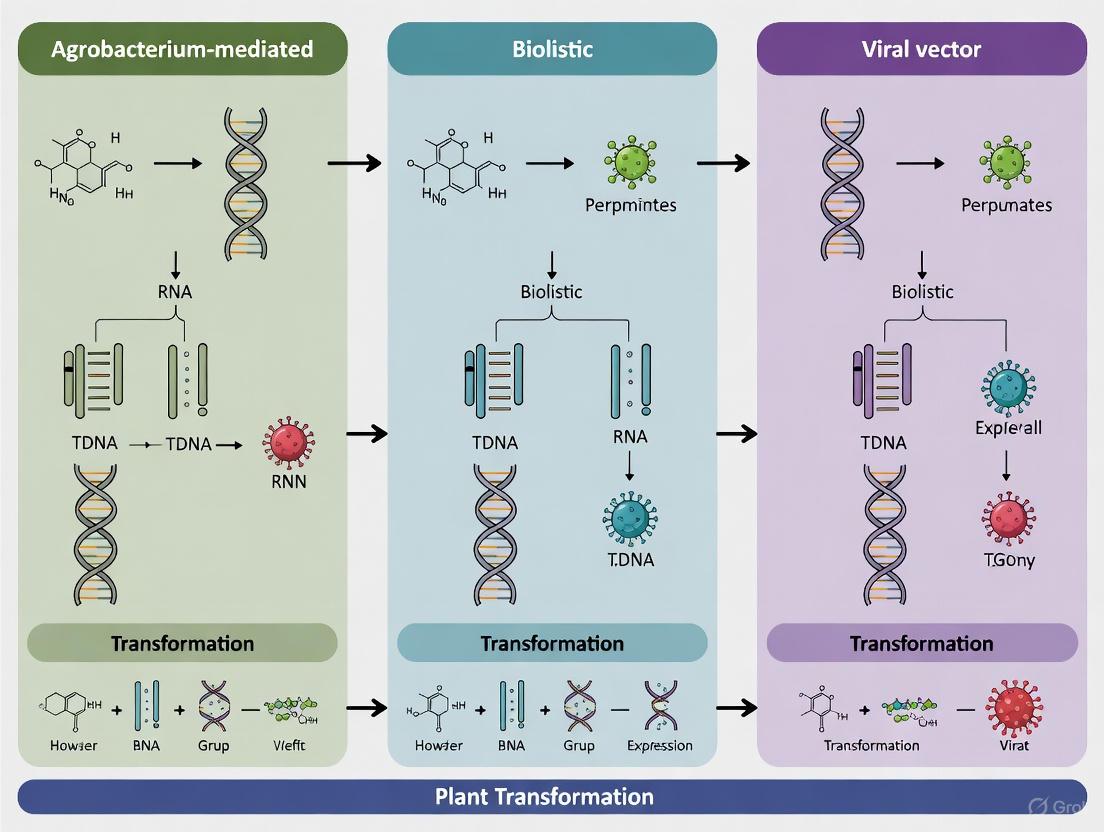
This article provides a systematic comparison of plant transformation methodologies, addressing a critical bottleneck in functional genomics and crop improvement.
Plant Transformation Efficiency: A Comprehensive Comparison of Traditional and Next-Generation Methods
Abstract
This article provides a systematic comparison of plant transformation methodologies, addressing a critical bottleneck in functional genomics and crop improvement. It explores the efficiency, applicability, and limitations of both established and emerging techniques, including Agrobacterium-mediated transformation, biolistics, and novel tissue culture-free in planta approaches. Tailored for researchers and scientists, the content covers foundational principles, practical applications, optimization strategies, and comparative validation of transformation efficiency across diverse plant species. The review synthesizes recent advancements in developmental regulators, nanomaterial delivery, and viral vectors, offering a roadmap for selecting optimal transformation strategies to accelerate biomedical and agricultural research.
The Plant Transformation Bottleneck: Understanding Core Methods and Historical Challenges
In plant genetic engineering, the choice between stable and transient transformation is fundamental, influencing experimental design, timelines, and potential applications. Stable transformation results in the permanent integration of foreign DNA into the host plant's genome, enabling hereditary transmission to subsequent generations [1]. In contrast, transient transformation involves the temporary introduction and expression of foreign DNA without genomic integration, typically lasting from several hours to a few days [1]. This guide provides a comparative analysis of these core techniques, underpinning a broader thesis on the efficiency of plant transformation methods.
Core Conceptual Comparison
The table below summarizes the fundamental distinctions between stable and transient transformation.
Table 1: Fundamental Characteristics of Stable and Transient Transformation
| Feature | Stable Transformation | Transient Transformation |
|---|---|---|
| Genomic Integration | Foreign DNA is permanently integrated into the host genome [1] | No integration into the host genome; DNA remains episomal [1] |
| Inheritance | Heritable by subsequent generations [1] | Not heritable; expression is lost after one or a few generations [1] |
| Expression Duration | Long-term, potentially throughout plant's life cycle [1] | Short-term, typically from hours to a few weeks [1] |
| Experimental Timeline | Months to years, requiring regeneration and progeny testing [1] | Days to weeks, allowing for rapid analysis [1] |
| Primary Applications | Long-term genetic studies, trait introgression, generation of transgenic lines [1] | Rapid gene function analysis, promoter studies, protein production, pathway engineering [1] [2] |
| Key Advantage | Creates permanent, heritable genetic change | Speed and high throughput; avoids complications of genomic integration [1] |
Comparative Efficiency and Performance Data
The efficiency of transformation methods is quantified through key performance metrics. The following table consolidates experimental data from recent studies, providing a basis for objective comparison.
Table 2: Experimental Data Comparison of Transformation Methods and Efficiencies
| Transformation Method | Key Experimental Findings and Efficiencies | Experimental Organism | Citation |
|---|---|---|---|
| Agrobacterium-mediated Stable | Considered a widely used method for stable transformation; efficiency can be enhanced using developmental regulator genes [2]. | Various dicots and some monocots [2] | |
| Biolistic Stable | Conventional biolistics: Baseline efficiency. Flow Guiding Barrel (FGB) biolistics: >10-fold increase in stable transformation frequency [3]. | Maize (B104 immature embryos) [3] | |
| In Planta Stable | Technique designed to be genotype-independent with minimal tissue culture; efficiency can be highly variable (e.g., floral dip) but offers a simplified workflow [1] [4]. | Arabidopsis, Rice, Wheat, etc. [4] | |
| Agroinfiltration (Transient) | High efficiency for transient expression in amenable species; suppression of plant immunity (e.g., with dexamethasone) can enhance efficiency [1]. | Tobacco, Lettuce, Tomato [1] | |
| Biolistic Transient | Conventional biolistics: Baseline. FGB Biolistics: 22-fold enhancement in transient transfection efficiency and 4.5-fold increase in CRISPR-Cas9 RNP editing efficiency [3]. | Onion epidermis [3] | |
| Virus-Mediated Transient | FGB Biolistics: Increased viral infection efficiency from 5% to 83.5% for SCMV in maize and from 66% to 100% for SMV in soybean [3]. | Maize and Soybean seedlings [3] |
Detailed Experimental Protocols
To ensure reproducibility and provide context for the data above, this section outlines standard and advanced protocols for key transformation methods.
Agrobacterium-Mediated Stable Transformation (Floral Dip)
The floral dip method is a classic in planta technique for stable transformation, famously used in Arabidopsis thaliana [4].
Methodology:
- Plant Material: Healthy plants with numerous immature floral buds.
- Agrobacterium Preparation: A disarmed Agrobacterium tumefaciens strain harboring a binary vector with the gene of interest and a selectable marker is cultured. The bacterial cells are resuspended in an infiltration medium (often containing sucrose and a surfactant like Silwet L-77) to an optimal density (e.g., OD₆₀₀ = 0.8) [1] [4].
- Transformation: The above-ground parts of the plants are inverted and dipped into the Agrobacterium suspension for several minutes.
- Post-Treatment: Dipped plants are covered to maintain high humidity for 24 hours, then grown to maturity under standard conditions.
- Selection: T1 seeds are harvested and sown on selective media (e.g., containing antibiotics or herbicides). Only plants that have stably integrated the T-DNA will survive [1] [4].
Agroinfiltration for Transient Transformation
Agroinfiltration is a widely adopted transient expression method, particularly effective in tobacco (Nicotiana benthamiana) [1].
Methodology:
- Agrobacterium Preparation: Cultures of Agrobacterium strains carrying the gene of interest are grown and resuspended in an induction buffer (e.g., with acetosyringone, which activates virulence genes) to a standard OD₆₀₀ (e.g., 0.5 to 1.0). Multiple strains can be mixed for co-expression studies.
- Infiltration: Using a needleless syringe or vacuum, the bacterial suspension is infiltrated into the interstitial air spaces of a leaf. The Agrobacterium transfers the T-DNA to the plant cells, but it is not integrated.
- Incubation & Analysis: Infiltrated plants are incubated for 2 to 5 days. High-level expression of the gene of interest is typically detected within this window before the plant cells silence the episomal DNA [1].
Enhanced Biolistic Transformation (with Flow Guiding Barrel)
Recent advances in biolistic delivery have significantly improved its efficiency. The Flow Guiding Barrel (FGB) is a 3D-printed device that optimizes gas and particle flow dynamics within a standard gene gun [3].
Methodology:
- Device Setup: The FGB replaces the internal spacer rings in a Bio-Rad PDS-1000/He system.
- Particle Preparation: Tungsten or gold microcarriers (0.6-1.0 µm) are coated with DNA, RNA, or proteins (e.g., CRISPR-Cas9 ribonucleoproteins).
- Bombardment Parameters: The FGB allows for the use of longer target distances and reduced helium pressures while maintaining high efficiency. Its design creates a uniform laminar flow, directing nearly 100% of the loaded particles to the target tissue with twice the velocity and four times the coverage area of conventional devices [3].
- Application: This method is highly effective for both stable and transient transformation across a wide range of tissues, including onion epidermis, maize immature embryos, and wheat shoot apical meristems, and is particularly valuable for DNA-free genome editing [3].
Visualization of Transformation Workflows and Key Concepts
Diagram 1: Stable vs. Transient Transformation Workflow. Stable transformation leads to heritable genetic modification, while transient transformation offers rapid, temporary expression.
Diagram 2: Key Delivery Methods and Their Applications. Agrobacterium and biolistics are the two primary methods for introducing foreign DNA, RNA, or proteins into plant cells, enabling a wide range of applications in both stable and transient contexts.
The Scientist's Toolkit: Essential Research Reagents and Materials
Successful plant transformation relies on a suite of specialized reagents and materials. The following table details key components and their functions.
Table 3: Essential Research Reagent Solutions for Plant Transformation
| Reagent/Material | Function and Application |
|---|---|
| Disarmed Agrobacterium Strain | A non-pathogenic strain (e.g., GV3101, LBA4404) with tumor-inducing (Ti) genes removed from its T-DNA, used as a biological vector for safe gene transfer [1]. |
| Binary Vector System | A plasmid system where the T-DNA (with gene of interest) and virulence (vir) genes are on separate plasmids, enabling efficient cloning and DNA transfer in Agrobacterium [1] [5]. |
| Selectable Marker Genes | Genes (e.g., for antibiotic or herbicide resistance) inserted into the T-DNA to allow selective growth of successfully transformed cells and tissues [1] [2]. |
| Reporter Genes | Genes like β-D-glucuronidase (GUS), Green Fluorescent Protein (GFP), and Luciferase (LUC) used to visually identify and quantify transformation success and gene expression patterns [1] [3]. |
| Acetosyringone | A phenolic compound secreted by wounded plants that induces the Agrobacterium virulence (vir) gene system, significantly enhancing T-DNA transfer efficiency [5]. |
| Microcarriers (Gold/Tungsten) | Microscopic particles (0.6-1.0 µm) coated with genetic material (DNA, RNA) or proteins (RNPs) that are physically shot into plant cells using a biolistic gene gun [3] [5]. |
| Developmental Regulators | Genes (e.g., Baby boom / BBM, Wuschel / WUS) that promote meristem formation and regeneration, used to enhance transformation efficiency in recalcitrant species [6] [2]. |
| CRISPR-Cas Ribonucleoproteins (RNPs) | Pre-assembled complexes of Cas protein and guide RNA delivered directly into cells for DNA-free genome editing, minimizing off-target effects and avoiding transgene integration [3]. |
Agrobacterium-mediated transformation is a cornerstone of plant biotechnology, harnessing the natural ability of Agrobacterium tumefaciens to transfer DNA into host plant genomes [7]. This process is the foundation for producing transgenic plants, enabling functional genomics, crop improvement, and synthetic biology applications. The efficiency of this method is governed by a complex interplay between bacterial virulence mechanisms and host plant responses. This guide provides a comparative analysis of different Agrobacterium-mediated transformation strategies, evaluating their efficiency, applications, and limitations to inform methodological selection for plant research and development.
Comparative Analysis of Transformation Methods
Agrobacterium-mediated transformation techniques are broadly categorized into stable transformation, where the transferred T-DNA is permanently integrated into the plant genome, and transient transformation, where T-DNA is expressed without genomic integration [8]. The choice of method significantly impacts transformation efficiency, timeframe, and applicability across plant species.
Table 1: Comparison of Major Agrobacterium-Mediated Transformation Approaches
| Transformation Method | Key Features | Transformation Efficiency | Time Required | Key Advantages | Major Limitations |
|---|---|---|---|---|---|
| Hairy Root (A. rhizogenes) | Uses A. rhizogenes with Ri plasmid to generate transgenic roots [9]. | Varies by method and species [9]. | Weeks | Useful for root biology studies; rapid results [9]. | Cannot replace whole plant for analysis of traits like low-P inducibility [9]. |
| Whole Plant (A. tumefaciens) | Uses disarmed A. tumefaciens with Ti plasmid for stable transformation [9] [10]. | Varies by species and explant (e.g., 2.8–53% in wheat) [10]. | Months to years | Heritable modifications; stable transgenic lines [8]. | Species/genotype dependence; requires tissue culture for many species [10]. |
| Floral Dip | In planta method; inflorescences dipped in Agrobacterium culture [4] [8]. | Highly variable [8]. | Months (to harvest T1 seeds) | Avoids tissue culture; simple; no somaclonal variation [8]. | Limited to amenable species like Arabidopsis; efficiency can be variable [4]. |
| Agroinfiltration | Transient method; bacterial culture infiltrated into leaves [11] [8]. | Very high (>90% reported in sunflower) [12]. | Days to weeks | Rapid gene expression; high efficiency; for studies of gene function & protein production [8]. | No stable inheritance; expression is temporary [8]. |
| RAPID | In planta method based on active regeneration; injection into meristems [13]. | High in demonstrated species (sweet potato, potato) [13]. | Shorter than traditional methods | No tissue culture; high efficiency; genotype-independent for species with high regeneration [13]. | Limited to plants with strong active regeneration capacity [13]. |
Table 2: Comparison of Co-Transformation Systems for Generating Marker-Free Transgenic Plants
| Co-Transformation System | Description | Average Co-Transformation Frequency (T0 Plants) | Marker-Free Obtainment Frequency (T1 Generation) |
|---|---|---|---|
| Mixed-Strain (Two Strains/Two Plasmids) | Mixture of two A. tumefaciens strains, each with a single T-DNA plasmid [14]. | Up to 81% (at 1:1 strain ratio) [14]. | Up to 50% of T0 lines produced marker-free T1 plants [14]. |
| Double T-DNA (One Strain/One Plasmid, Tandem) | Two independent T-DNAs on a single plasmid in tandem orientation [14]. | 24% [14]. | Up to 77% of T0 lines produced marker-free T1 plants [14]. |
| Double T-DNA (One Strain/One Plasmid, Inverted) | Two independent T-DNAs on a single plasmid in inverted orientation [14]. | 38% [14]. | Up to 77% of T0 lines produced marker-free T1 plants [14]. |
Key Experimental Protocols and Workflows
Agroinfiltration for Transient Transformation in Sunflower
An optimized protocol for transient transformation in sunflower achieved efficiencies exceeding 90% using three distinct delivery methods [12].
- Infiltration Method: Hydroponically grown 3-day-old seedlings are immersed in an Agrobacterium suspension (OD~600~ = 0.8) containing 0.02% Silwet L-77 for 2 hours [12].
- Injection Method: The Agrobacterium suspension (OD~600~ = 0.8 with 0.02% Silwet L-77) is injected into the cotyledons of 4-6 day-old soil-grown seedlings. Injected seedlings are cultured in the dark at room temperature for three days [12].
- Ultrasonic-Vacuum Method: Seedlings cultured in Petri dishes for 3 days are subjected to ultrasonication at 40 kHz for 1 minute, followed by vacuum infiltration at 0.05 kPa for 5–10 minutes in the bacterial suspension [12].
Critical optimized parameters include using Silwet L-77 over Triton X-100 as a surfactant, an Agrobacterium concentration of OD~600~ = 0.8, and a 2-hour infiltration time to balance efficiency with avoiding tissue damage [12].
In Planta Transformation Using the RAPID Method
The Regenerative Activity–dependent in planta Injection Delivery (RAPID) method enables efficient stable transformation without tissue culture [13].
- Agrobacterium Preparation: Agrobacterium tumefaciens carrying the binary vector with the gene of interest is prepared in a suitable suspension medium.
- Plant Injection: The bacterial suspension is injected into the plant meristems to transfect nascent tissues.
- Plant Regeneration and Selection: Positive nascent tissues are vegetatively propagated to obtain stable transgenic plants, leveraging the plant's innate regenerative capacity [13].
This method has been successfully applied to sweet potato, potato, and bayhops, showing high transformation efficiency and shorter duration compared to traditional methods [13].
Co-Transformation for Marker-Free Transgenic Plants
The following workflow is used to generate marker-free transgenic Brassica napus plants using co-transformation systems [14]:
- Vector Design: Employ either a mixed-strain system (two Agrobacterium strains, each with a single T-DNA plasmid) or a double T-DNA system (a single plasmid with two independent T-DNAs in tandem or inverted orientation).
- Plant Transformation: Transform allotetraploid B. napus genotype (e.g., Zhongshuang 6) using the selected Agrobacterium strain(s) via standard A. tumefaciens-mediated transformation.
- Selection of T0 Plants: Regenerate transgenic T0 plants and confirm co-transformation (simultaneous integration of both T-DNAs) via PCR and Southern blot analysis.
- Segregation in T1 Generation: Self-pollinate T0 co-transformants and screen the T1 progeny for plants that have inherited the gene of interest but have lost the selectable marker gene through genetic segregation.
The success rate for obtaining marker-free plants is highest in progeny from T0 lines with low copy numbers of the marker gene [14].
Visualization of Processes and Workflows
T-DNA Transfer and Integration Pathway
Agroinfiltration Experimental Workflow
The Scientist's Toolkit: Essential Research Reagents
Table 3: Key Reagent Solutions for Agrobacterium-Mediated Transformation
| Research Reagent | Function and Application | Examples and Optimization Notes |
|---|---|---|
| Agrobacterium Strains | Delivery vector for T-DNA. Different strains have varying virulence and host ranges. | GV3101: Commonly used for transient transformation [12]. EHA105, AGL1: Hypervirulent strains used for recalcitrant monocots [10]. |
| Binary Vectors | Plasmid carrying T-DNA with gene of interest and selection marker. | Copy number engineering can dramatically improve transformation efficiency [15]. "Double T-DNA" vectors enable marker-free transgenic plant production [14]. |
| Surfactants | Reduce surface tension to enhance bacterial penetration into plant tissues. | Silwet L-77: Superior to Triton X-100 in sunflower transformation [12]. Concentration must be optimized to balance efficiency and tissue damage. |
| Reporter Genes | Visual markers to identify and quantify transformed cells and tissues. | GUS (β-glucuronidase): Histochemical staining [12] [14]. GFP (Green Fluorescent Protein): Live visualization [11]. LUC (Luciferase): Sensitive quantitative assays. |
| Selection Agents | Antibiotics or herbicides to select transformed cells carrying resistance genes. | Hygromycin, Kanamycin: Common antibiotic selection [10] [14]. Phosphinothricin (BASTA, Bialaphos): Herbicide-based selection [10] [14]. |
| Morphogenetic Transcription Factors (MTFs) | Enhance regeneration capacity of transformed cells, overcoming genotype dependence. | Bbm (Baby boom), Wus2 (Wuschel2): Promote pluripotency and regeneration [10]. GRF-GIF Chimeras: Improve regeneration and transformation range in difficult genotypes [10]. |
The genetic improvement of plants is a cornerstone of modern agricultural and biological research, aimed at enhancing traits such as yield, nutritional value, and resistance to diseases and environmental stressors. The delivery of genetic material into plant cells is a critical step in this process. Among the available techniques, biolistic delivery, commonly known as the "gene gun," represents a major physical method alongside biological methods like Agrobacterium-mediated transformation [2]. For over three decades, since its inception in 1988, the gene gun has served as a universal tool for genetically modifying not only plants but also animal and bacterial cells [16] [17]. Its principle of being independent of tissue type, genotype, or species has made it particularly valuable for transforming recalcitrant species and for specialized applications like DNA-free genome editing [18]. However, despite its broad host range, the biolistic method has been plagued by inherent limitations related to its efficiency, consistency, and tendency to cause tissue damage [16] [18]. This guide provides a objective comparison of biolistic transformation against other methods, focusing on its core principles, advantages, and physical limitations, with a specific emphasis on recent experimental data and innovations that address these challenges.
Principles of Biolistic Transformation
Core Mechanism and Workflow
The biolistic transformation method is a direct physical approach for introducing foreign genetic material into cells. The core mechanism involves coating microscopic gold or tungsten particles (0.6 to 1.0 µm in diameter) with the desired genetic payload—which can be DNA, RNA, or proteins like CRISPR-Cas ribonucleoproteins (RNPs) [16] [18]. These coated microprojectiles are then loaded onto a macrocarrier and placed inside a gene gun device. The most commonly used system is the Bio-Rad PDS-1000/He [18] [19].
A high-pressure helium pulse ruptures a disk, accelerating the macrocarrier toward a stopping screen. The microprojectiles continue their trajectory, penetrating the target plant cells or tissues. Some cells survive this bombardment, take up the introduced genetic material, and express the corresponding traits. Whole, genetically transformed plants can then be regenerated from these successfully transformed cells through tissue culture [16].
Standard Experimental Protocol
A typical biolistic transformation experiment follows a detailed protocol to ensure reproducibility. The following workflow, commonly used for onion epidermal cells as a model system, illustrates the key steps [19]:
- Particle Preparation: Gold microparticles (approximately 0.6 µm) are washed and resuspended in a solution of 50% ethanol.
- DNA Coating: Plasmid DNA containing the gene of interest (e.g., a Green Fluorescent Protein, GFP, construct) is precipitated onto the gold particles using reagents like spermidine and calcium chloride.
- Target Preparation: Plant tissues, such as onion epidermis, maize immature embryos, or wheat meristems, are prepared and placed in the bombardment chamber.
- Bombardment Parameters: Key parameters are set, including the helium pressure (e.g., 650-1100 psi), the distance between the stopping screen and the target tissue (e.g., 6-12 cm), and the vacuum level within the chamber.
- Bombardment: The gene gun is fired, delivering the microprojectiles.
- Post-Bombardment Culture: Tissues are transferred to appropriate culture media to allow for recovery, transient gene expression, or selection for stable transformation.
- Analysis: Transformation efficiency is quantified, often by counting cells expressing a reporter gene like GFP under a fluorescence microscope or by molecular analysis such as next-generation sequencing (NGS) to confirm gene edits [18] [19].
Advantages of Biolistic Delivery
Biolistic delivery offers several distinct advantages that make it indispensable for specific research and application scenarios, particularly where other methods fail.
- Genotype and Species Independence: Unlike Agrobacterium-mediated transformation, which has a narrow host range and is often genotype-dependent, biolistics is a purely physical method. It can deliver cargo to virtually any plant species and tissue type, making it the primary tool for transforming recalcitrant crops like many cereals and woody plants [18] [2] [5].
- Versatility of Deliverable Cargo: A key advantage of biolistics is its ability to deliver a wide range of biomolecules. This includes not only DNA but also RNA, proteins, and, most importantly for modern genome editing, pre-assembled CRISPR-Cas ribonucleoproteins (RNPs) [18]. Delivering RNPs enables DNA-free gene editing, which minimizes off-target effects and can help in generating transgene-free edited plants. This is a significant benefit for regulatory approval and public acceptance [18] [20].
- Delivery to Organelles: Biolistics is uniquely capable of efficiently transforming chloroplast and mitochondrial genomes. This is difficult or impossible to achieve with Agrobacterium-based methods and is crucial for research in organellar genetics and engineering [5].
- Minimal Vector Constraints: The method allows for the delivery of minimal expression cassettes, avoiding the integration of unnecessary bacterial vector backbone sequences, which can be a concern in Agrobacterium-mediated transformation [5].
Physical Limitations and Challenges
Despite its advantages, the biolistic method faces significant physical and practical challenges that have historically limited its efficiency and widespread adoption.
- Tissue Damage and Cell Viability: The high-velocity impact of microprojectiles inevitably causes physical damage to plant tissues, leading to cell death. This reduces the number of cells available for regeneration and transformation. Studies optimizing bombardment parameters have shown that shorter target distances and higher pressures, while increasing delivery, also result in larger areas of cell death, as assessed by staining with fluorescein diacetate (FDA) [19].
- Low Efficiency and Inconsistency: The efficiency of stable transformation via biolistics is often very low. A major cause is the inefficient and unpredictable flow dynamics within the gene gun. Computational fluid dynamic (CFD) simulations of the conventional Bio-Rad PDS-1000/He system revealed that its small internal barrel acts as a choke point, leading to a diffusive and turbulent helium flow. This results in only about 21% of the loaded particles being directed toward the target, with the rest being lost [16] [18]. This inefficiency contributes to high shot-to-shot variability, making quantitative comparisons challenging [19].
- Complex Transgene Integration: Biolistic delivery often leads to the integration of multiple, fragmented copies of the transgene at a single locus. This complex integration pattern can lead to transgene silencing, unpredictable expression, and co-suppression, complicating the analysis of transgenic plants [18] [5].
- Dependence on Tissue Culture: Like most plant transformation methods, biolistics relies on the regeneration of whole plants from transformed cells through tissue culture, which is a major bottleneck. This process is time-consuming, labor-intensive, and highly genotype-dependent, slowing down the overall pipeline for creating edited plants [20] [21].
- Equipment and Operational Cost: Gene gun devices and their consumables, such of gold microcarriers and rupture disks, are expensive, making the method more costly than Agrobacterium-mediated transformation [21].
Comparative Analysis with Alternative Methods
The following tables provide a quantitative and qualitative comparison between biolistic transformation and other common plant transformation techniques.
Table 1: Quantitative Performance Comparison of Transformation Methods
| Performance Metric | Biolistic Delivery (Conventional) | Biolistic Delivery (with FGB) | Agrobacterium-mediated | Nanoparticle-mediated |
|---|---|---|---|---|
| Transient Transfection (Onion) | 153 GFP+ cells [18] | 3,351 GFP+ cells (22x improvement) [18] | N/A | Varies widely |
| Stable Transformation (Maize) | Low, ~3-5% [18] | >10-fold increase [18] | Medium to High | Under investigation |
| CRISPR Editing (Wheat) | Baseline | 2x efficiency in T0/T1 [16] [18] | Possible, but delivers DNA | DNA-free potential |
| Virus Delivery (Maize) | 5% infection rate [18] | 83.5% infection rate (17x improvement) [18] | N/A | N/A |
| Typical Transgene Copies | Multiple, fragmented [5] | Multiple, fragmented | Low copy (1-3) [5] | Unknown |
Table 2: Qualitative Comparison of Plant Transformation Methods
| Feature | Biolistic Delivery | Agrobacterium-mediated | Pollen-tube Pathway | Nanoparticle-mediated |
|---|---|---|---|---|
| Host Range | Universal [18] | Narrow, genotype-dependent [2] | Wide | Potentially wide |
| Cargo Type | DNA, RNA, RNP, Proteins [18] | Primarily DNA [2] | DNA | DNA, RNA, Proteins |
| Tissue Damage | High (Physical impact) | Low (Biological process) | Low | Low to Moderate |
| Tissue Culture | Required | Required | Not required [2] | Often required |
| Integration Pattern | Complex, multicopy | Simple, low-copy [5] | Simple | Unknown |
| Equipment Cost | High | Low | Very Low | Medium |
Recent Innovations: The Flow Guiding Barrel
A recent breakthrough in biolistic technology directly addresses the fundamental issue of inefficient flow dynamics. Researchers from Iowa State University and the University of Maryland developed a 3D-printed Flow Guiding Barrel (FGB) that replaces the internal spacer rings in the conventional Bio-Rad PDS-1000/He system [16] [18].
- Principle: Computational modeling showed that the FGB optimizes helium and particle flow, creating a more uniform laminar flow pattern compared to the diffusive flow of the conventional device. This innovation guides nearly 100% of the loaded particles to the target, a dramatic increase from the 21% efficiency of the standard barrel [16] [18].
- Impact on Performance: The FGB not only increases particle delivery but also improves particle velocity and distribution. It generates a four-fold larger target area and achieves deeper penetration into tissues, such as the shoot apical meristem, where heritable edits occur [18]. This leads to higher efficiency of heritable genome editing in subsequent generations, as demonstrated in wheat [16].
This diagram illustrates the fundamental fluid dynamic improvement offered by the FGB, transforming an inefficient, diffusive flow into an efficient, guided laminar flow.
The Scientist's Toolkit: Key Reagents and Materials
Table 3: Essential Research Reagent Solutions for Biolistic Transformation
| Item | Function/Description | Example Use Case |
|---|---|---|
| Gold Microcarriers (0.6-1.0 µm) | Spherical particles that serve as the physical carrier for genetic material. | Coated with plasmid DNA or CRISPR RNPs for bombardment [16] [19]. |
| Plasmid DNA Vectors | Vectors containing the gene of interest (e.g., GFP for visualization) or CRISPR components. | pLMNC95 (GFP) for transient expression assays [18] [19]. |
| Spermidine & CaCl₂ | Chemicals used to precipitate DNA onto the surface of the gold particles. | Standard protocol for preparing microprojectiles before bombardment [19]. |
| Rupture Disks | Disks that burst at specific helium pressures (e.g., 650-1100 psi), controlling the force of delivery. | Determining the velocity and penetration depth of microprojectiles [18] [19]. |
| Flow Guiding Barrel (FGB) | A 3D-printed device that optimizes gas and particle flow inside the gene gun. | Dramatically improving transformation efficiency across diverse species and cargo types [16] [18]. |
| Fluorescein Diacetate (FDA) | A viability stain used to assess cell health and the extent of tissue damage after bombardment. | Optimizing bombardment parameters to balance delivery efficiency with cell survival [19]. |
Biolistic transformation remains a vital tool in the plant biotechnologist's arsenal, primarily due to its unique ability to deliver diverse cargo to a wide range of species independently of genotype. However, its value has been constrained by significant physical limitations, including low efficiency, tissue damage, and complex transgene integration. The development of the Flow Guiding Barrel (FGB) represents a monumental leap forward, directly addressing the core issue of inefficient flow dynamics and resulting in order-of-magnitude improvements in performance [16] [18] [17].
The future of plant genetic engineering lies in overcoming the dual bottlenecks of delivery and regeneration. While innovations like the FGB revolutionize delivery, the field is also advancing toward tissue culture-free transformation methods, such as the use of developmental regulators (e.g., BBM, WUS) to enhance regeneration and in planta delivery approaches [20] [21]. For the many recalcitrant crops where Agrobacterium is ineffective, an optimized biolistic system, potentially combined with regeneration-enhancing genes, will be the primary pathway to achieving efficient, precise genome editing. Therefore, within the broader thesis of comparing plant transformation methods, biolistics—especially when enhanced by modern engineering—is not a legacy technology but a critically evolving one, poised to unlock the genetic potential of a wider array of crops for global food security.
Plant genetic transformation is a cornerstone of modern crop improvement, enabling gene function studies and the development of elite cultivars with precision. However, this potential is constrained by a persistent bottleneck: the reliance on tissue culture-based regeneration. This process is not only time-consuming and labor-intensive but also notoriously genotype-dependent, creating a significant barrier to applying biotechnology across a wide range of crop species, particularly perennial grasses, woody plants, and many elite commercial varieties [21] [20] [22]. The regeneration capacity of a plant—its ability to form a callus and then regenerate shoots from a single transformed cell—varies dramatically between species and even between genotypes of the same species. This "recalcitrance" means that many important crops are left behind in the biotechnological revolution. This guide objectively compares the performance of emerging strategies designed to overcome this barrier, providing researchers with a data-driven overview of the current landscape.
Comparative Analysis of Transformation Enhancement Strategies
Recent research has focused on two parallel strategies to overcome the tissue culture bottleneck: optimizing the tissue culture process itself to make it more efficient and less genotype-dependent, and developing novel methods that bypass tissue culture entirely.
Table 1: Quantitative Comparison of Developmental Regulators in Enhancing Transformation Efficiency
| Developmental Regulator | Target Species | Effect on Regeneration/Transformation Efficiency | Key Findings | Reference |
|---|---|---|---|---|
| TaWOX5 | Wheat | ↑ Transformation efficiency from 5.8% to 55.4% in recalcitrant variety Jimai22; up to 94.5% in transformable varieties | Achieved high efficiency with less genotype dependency; induced phenotypic markers for visual screening. | [23] |
| ZmBBM & ZmWUS2 | Maize | Significant increase in transformation efficiency | Combination enhanced efficiency but induced developmental abnormalities; required tissue-specific promoters to mitigate pleiotropic effects. | [23] |
| GRF4-GIF1 Fusion | Wheat, Lettuce, Melon | ↑ Regeneration frequency to 63.0% in tetraploid wheat (vs 2.5% control); 61.8% in hexaploid wheat (vs 12.7%). In melon, transformation efficiency reached 67.27%. | Chimeric protein promotes cell regeneration; effective across multiple species. | [21] [24] [23] |
| WIND1 | Maize, Rapeseed, Tomato | Increased callus induction rates to 60.22% and 47.85% in maize inbred lines | Overexpression induces callus formation even on hormone-free media. | [21] |
| REF1 | Tomato, Wheat, Maize | ↑ Wild tomato regeneration by 5- to 19-fold; transformation by 6- to 12-fold. In wheat Jimai22, regeneration ↑ 8-fold, transformation ↑ 4-fold. | Wound-signaling molecule that activates downstream regulators like WIND1. | [21] |
| PLT5 | Snapdragon, Tomato, Rapeseed, Sweet pepper | Transformation efficiencies reached 6.7–13.3% | Enhanced genetic transformation efficiency and plant germination across multiple dicot species. | [21] |
Table 2: Performance Comparison of Tissue Culture-Bypassing "In Planta" Transformation Methods
| In Planta Method | Key Principle | Example Species | Advantages | Limitations/Challenges | Reference |
|---|---|---|---|---|---|
| Floral Dip | Infiltration of young flowers with Agrobacterium; transformation of ovules. | Arabidopsis thaliana (widely used) | Technically simple, no tissue culture, high-throughput. | Low efficiency in many species, especially monocots; requires synchronized flowering. | [4] [22] |
| Pollen-Tube Pathway | Injection of DNA into ovary post-pollination; pollen tube delivers DNA to fertilized egg. | Cotton, Melon, Soybean, Wheat | Bypasses tissue culture, simple and accessible. | Efficiency can be variable; optimization needed for each species. | [2] |
| Meristem Transformation | Direct DNA delivery into shoot apical meristem (SAM) cells. | Multiple monocots and dicots | Genotype-independent, avoids chimerism, regenerated plants are directly edited. | Requires precise targeting of meristematic cells. | [4] [22] |
| Viral Vector Delivery | Engineered viruses deliver genome editing components. | Various | High replication and movement within plant; efficient delivery. | Limited cargo capacity, often results in transient expression (non-heritable). | [6] |
| WIND1-IPT Synergy | Activation of wound-response and hormone-synthesis pathways to induce shoot formation. | Tobacco, Tomato, Soybean | Generates edited shoots directly from wounded tissue; integrated with CRISPR. | New method; broad applicability across crops still under investigation. | [25] |
Experimental Protocols for Key Approaches
Enhancement via Developmental Regulators (DRs)
The use of DRs like BBM and WUS involves their coordinated expression during the transformation process. A typical protocol for a difficult-to-transform monocot like maize is as follows [21] [23]:
- Vector Construction: Clone ZmBBM and ZmWUS2 genes into expression cassettes. To avoid pleiotropic effects in regenerated plants (e.g., sterility, developmental abnormalities), use tissue- or development-specific promoters (e.g., Zm-PLTPpro for ZmBBM, auxin-inducible Zm-Axig1pro for ZmWUS2) or include a site-specific recombinase system (e.g., Cre-lox) to excise the DR genes after transformation but before regeneration.
- Explant Preparation and Transformation: Isolate immature embryos and infect with Agrobacterium strains carrying the DR and gene-of-interest constructs.
- Regeneration: Transfer infected embryos to regeneration media. Co-expression of BBM and WUS promotes the formation of somatic embryos, leading to a higher frequency of regenerated, transformed plants compared to conventional methods.
- Selection and Molecular Confirmation: Select putative transgenic events using appropriate antibiotics or herbicides and confirm via PCR and Southern blot analysis.
An alternative "altruistic" transformation system uses two Agrobacterium strains mixed at a 9:1 ratio (selectable marker: ZmWUS2). Transient WUS2 expression in a cell stimulates somatic embryogenesis in neighboring cells that have taken up the gene-editing construct, improving efficiency while avoiding the integration of the morphogenic gene [23].
Tissue Culture-Bypassing "In Planta" Methods
Meristem transformation is a promising in planta strategy, particularly for monocots. A representative protocol is outlined below [4] [22]:
- Plant Material Preparation: Use sterilized mature seeds or vegetative organs (e.g., bulbous structures, rhizomes in perennials) containing active meristems.
- Meristem Exposure and Wounding: Carefully dissect to expose the shoot apical meristem (SAM) without causing fatal damage. Light wounding of the meristematic tissue can enhance Agrobacterium infection or DNA delivery.
- Agrobacterium Co-cultivation: Apply an Agrobacterium tumefaciens suspension (OD600 ~0.5-1.0) containing the gene-editing construct directly to the exposed meristem. Co-cultivate for 2-3 days in the dark.
- Recovery and Seed Set: Transfer treated plants to soil and grow to maturity under controlled conditions. The transformed L2 layer of the meristem gives rise to germ cells, resulting in the production of transformed seeds in the T1 generation.
- Screening: Screen the T1 progeny for the desired genetic modification using molecular techniques.
Visualization of Key Mechanisms and Workflows
WIND1-IPT Synergy Pathway for Direct Shoot Regeneration
Diagram 1: The WIND1-IPT synergy pathway illustrates how activating wound-response and hormone-synthesis pathways induces direct shoot formation, bypassing traditional tissue culture. This mechanism enables the growth of gene-edited shoots directly from wounded parent plant tissue [25].
In Planta Transformation Workflow
Diagram 2: The in planta transformation workflow demonstrates how these methods bypass tissue culture. Genetic material is delivered directly into intact plants via floral, meristem, or viral routes, leading to the production of seeds. Stable, heritable transformations are identified through screening of the subsequent generation [4] [22].
The Scientist's Toolkit: Essential Research Reagents
Table 3: Key Research Reagent Solutions for Advanced Plant Transformation
| Reagent / Material | Function in Transformation | Specific Examples & Applications |
|---|---|---|
| Morphogenic Regulators | Engineered to enhance cell pluripotency and regeneration capacity, overcoming genotype limitations. | BBM/WUS combinations in maize, rice, sorghum [21] [23]; GRF-GIF fusions in wheat, lettuce, tomato [24] [23]; TaWOX5 in wheat [21] [23]. |
| Optimized Agrobacterium Strains | Delivery vehicle for T-DNA containing gene-editing constructs and morphogenic regulators. | Super-virulent strains (e.g., AGL1), ternary vector systems [5]; Rhizobium rhizogenes for hairy root transformation in dicots [5]. |
| Visual Reporter Genes | Non-destructive, instrument-free visual tracking of transformation success. | RUBY reporter (produces betalain pigment) effective in Arabidopsis, tomato [24]; GFP, RFP, YFP for fluorescence-based selection. |
| Chemically Defined Media | Supports growth and regeneration of transformed tissues with optimized hormone ratios. | Callus Induction Medium (CIM, auxin-rich); Shoot Induction Medium (SIM, cytokinin-enriched) [23]; specific formulations for perennial grasses and woody plants [22]. |
| Nanoparticle Carriers | Physical delivery of biomolecules, protecting genetic material and enabling direct cellular entry. | Carbon nanotubes, magnetic nanoparticles used in pollen transformation [5]; cell-penetrating peptides [5]. |
The field of plant transformation is undergoing a significant paradigm shift, moving from reliance on empirical optimization of tissue culture to the rational design of transformation systems. Strategies utilizing developmental regulators like GRF-GIF and BBM-WUS are proving highly effective at "fixing the system" by making tissue culture more efficient and less genotype-dependent. Concurrently, in planta methods and synthetic biology approaches like the WIND1-IPT system aim to "change the system" entirely by bypassing tissue culture. The choice between these strategies depends on the target species, available resources, and desired outcome. For rapid gene function validation in a model plant, a simple in planta method may suffice. For the precise improvement of a recalcitrant, elite crop variety, a combination of morphogenic regulators and advanced delivery systems may be the most viable path forward. As these technologies mature and converge, the tissue culture barrier will progressively lower, finally unlocking the full potential of genome editing for a much wider array of crops.
The field of genetic transformation has undergone a revolutionary journey, evolving from early transgenic techniques to the precision of modern genome editing. This progression represents a fundamental shift in how researchers approach genetic engineering, moving from the insertion of foreign DNA to the precise alteration of an organism's own genetic blueprint. The development of these technologies has been driven by a consistent pursuit of greater efficiency, precision, and applicability across diverse species.
This evolution began with methods that relied on random integration of genetic material and has progressed to the current CRISPR-era, characterized by targeted, specific modifications. Understanding this historical context is crucial for researchers evaluating which transformation technology to employ for specific applications in both plant and animal systems. The comparison of these methods across key parameters such as efficiency, precision, scalability, and technical complexity provides invaluable insights for the scientific community working in functional genomics, crop improvement, and therapeutic development.
Historical Trajectory of Transformation Technologies
The development of genetic transformation technologies can be divided into distinct generations, each marked by significant advancements in precision and usability. The earliest methods established the fundamental principle that genetic material could be transferred between organisms, while subsequent innovations focused on improving the specificity and control of these modifications.
Early Transgenics (1980s-1990s) established the foundational principles of genetic engineering. Agrobacterium-mediated transformation utilized the natural DNA transfer capabilities of the soil bacterium Agrobacterium tumefaciens, which was engineered to deliver specific gene sequences into plant genomes [21]. This method became particularly valuable for dicotyledonous plants and remains widely used today. Concurrently, biolistic transformation (particle bombardment) emerged as a physical delivery method that propelled DNA-coated metal particles into plant cells using high pressure [21]. This approach addressed the host-range limitations of Agrobacterium, proving especially useful for monocot species and organisms resistant to bacterial transformation.
Protein-Based Editing Platforms (2000-2010) represented the first generation of targeted genome editing tools. Zinc Finger Nucleases (ZFNs) utilized engineered zinc finger proteins fused to the FokI nuclease domain to create double-strand breaks at specific DNA sequences [26] [27]. Each zinc finger recognized approximately three base pairs, requiring assembly of multiple fingers for sufficient specificity. Transcription Activator-Like Effector Nucleases (TALENs) employed a similar modular architecture but with each TALEN repeat recognizing a single nucleotide, providing greater design flexibility and specificity than ZFNs [26] [27]. Both systems required complex protein engineering for each new target site, presenting significant technical barriers to widespread adoption.
The CRISPR Revolution (2012-Present) fundamentally transformed genetic engineering through its RNA-guided precision. The CRISPR-Cas9 system utilizes a guide RNA (gRNA) molecule to direct the Cas9 nuclease to specific genomic locations complementary to the gRNA sequence [26] [27]. This mechanism dramatically simplified the design process, as changing target sites only requires modifying the gRNA sequence rather than re-engineering proteins. The system creates double-strand breaks that are repaired through either error-prone non-homologous end joining (NHEJ) or homology-directed repair (HDR) [26]. Subsequent advancements have expanded the CRISPR toolkit to include base editing (enabling single-nucleotide changes without double-strand breaks) and prime editing (allowing precise small insertions, deletions, and base conversions) [28] [29].
Table: Historical Evolution of Key Transformation Technologies
| Technology | Era | Recognition Mechanism | Key Innovation | Primary Application |
|---|---|---|---|---|
| Agrobacterium-mediated | 1980s-present | Bacterial infection | Natural DNA transfer | Stable transformation in plants |
| Biolistic | 1990s-present | Physical penetration | Species-independent | Transformation of recalcitrant species |
| ZFNs | 2000-2010 | Protein-DNA | First targeted cleavage | Gene correction in model systems |
| TALENs | 2010-2015 | Protein-DNA | Simplified targeting | Therapeutic applications |
| CRISPR-Cas9 | 2012-present | RNA-DNA | Programmable RNA guide | Multiplexed editing across diverse species |
Comparative Analysis of Transformation Technologies
Efficiency and Precision Metrics
The quantitative assessment of transformation technologies reveals significant differences in their editing efficiencies, specificity, and practical implementation requirements. These parameters directly influence technology selection for specific research or application goals.
Editing Efficiency and Specificity: CRISPR-Cas9 systems demonstrate the highest reported editing efficiencies among programmable nucleases, achieving 0-81% modification rates across various applications [27]. This compares to TALENs (0-76%) and ZFNs (0-12%) under similar conditions. The precision of these systems varies considerably, with CRISPR's off-target effects being more predictable than earlier technologies due to the straightforward relationship between gRNA complementarity and binding affinity [27]. TALENs and ZFNs generally exhibit fewer off-target effects overall but with less predictable patterns, making comprehensive validation essential [26].
Technical Implementation: A fundamental differentiator between technology generations is the ease of design and implementation. CRISPR systems require only the synthesis of a guide RNA sequence complementary to the target DNA, a process that can be accomplished in days. In contrast, both ZFNs and TALENs demand extensive protein engineering – ZFNs require assembly of multiple zinc finger domains (each recognizing 3 bp), while TALENs necessitate construction of repetitive arrays where each module recognizes a single nucleotide [26] [27]. This design complexity translates directly to time and cost requirements, with CRISPR representing a significant reduction in both parameters.
Multiplexing Capability: CRISPR technology enables simultaneous editing of multiple genomic loci through the use of several guide RNAs, a feature that is exceptionally challenging with protein-based platforms. This multiplexing capability facilitates genome-wide screening approaches and the engineering of complex traits [26]. Large-scale library construction for high-throughput screening is dramatically simplified with CRISPR, requiring only plasmids containing small oligonucleotides, whereas equivalent approaches with ZFNs or TALENs demand individual gene tailoring [27].
Table: Performance Comparison of Major Gene Editing Platforms
| Parameter | CRISPR-Cas9 | TALENs | ZFNs |
|---|---|---|---|
| Targeting Efficiency | 0-81% [27] | 0-76% [27] | 0-12% [27] |
| Target Site Size | 22 bp [27] | 30-40 bp/TALEN pair [27] | 18-36 bp/ZFN pair [27] |
| Design Complexity | Low (RNA-based) [26] | High (Protein-DNA) [27] | High (Protein-DNA) [27] |
| Development Time | Days [26] | Weeks-months [26] | Weeks-months [26] |
| Multiplexing Capacity | High [26] [27] | Low [27] | Low [27] |
| Cost Considerations | Low [26] [27] | High [26] | High [26] |
| Primary Advantage | Simplicity, versatility | Specificity | Established clinical use |
Experimental Workflows and Protocols
The practical implementation of transformation technologies involves distinct experimental workflows, with Agrobacterium-mediated transformation serving as a foundational method across plant biotechnology applications. The protocol below represents a generalized approach for plant transformation, with specific optimizations required for different species and editing technologies.
Vector Construction and Agrobacterium Preparation: The process begins with assembly of the editing construct using modular cloning systems such as Golden Gate assembly [30] [31]. For CRISPR systems, this involves inserting specific guide RNA sequences behind appropriate promoters (e.g., AtU6-26) in binary vectors containing Cas9 nuclease. The constructed vector is then introduced into Agrobacterium strains (e.g., EHA105 or AGL1) through electroporation or heat shock [31]. Optimized protocols utilize hypervirulent Agrobacterium strains and incorporate minimal salts (e.g., AB salts) and surfactants (e.g., Pluronic F68) to enhance transformation efficiency [32] [15].
Plant Material Preparation and Co-cultivation: Sterile explants (cotyledons, embryos, or tissue segments) are prepared and pre-cultured on appropriate media. For Fraxinus mandshurica, embryos are germinated for 7 days on Woody Plant Medium (WPM) solid medium [31], while tomato transformations utilize cotyledons from sterile seedlings [30]. Bacterial suspensions (OD600 0.5-0.8) are prepared in transformation solution containing acetosyringone (120-200 μM) to induce virulence genes [32] [31]. Co-cultivation occurs on solidified medium plates for 2 days, with recent research demonstrating that engineering binary vectors for higher copy numbers can improve transformation efficiency by up to 100% in plants and 400% in fungi [15].
Selection and Regeneration: Following co-cultivation, explants are transferred to selection media containing antibiotics to eliminate Agrobacterium and selective agents (antibiotics/herbicides) to identify transformed cells. Tissue culture processes then induce callus formation and subsequent organogenesis through precise hormonal manipulation. Key developmental regulators (DRs) such as WUS, BBM, and GRF-GIF fusions can be employed to enhance regeneration efficiency, particularly in recalcitrant species [21]. In tomato transformation, this process yields approximately 10 Cas-positive independent lines per 100 cotyledons explants [30].
Molecular Confirmation: Regenerated plants are systematically screened through PCR amplification of target regions and sequencing to verify editing events. The editing efficiency is calculated as the percentage of successfully edited lines from the total regenerated plants. In optimized systems using growth point transformation, efficiencies of 18% have been achieved in challenging species like Fraxinus mandshurica [31].
Advanced CRISPR Applications and Optimization Strategies
Enhanced Delivery and Editing Systems
Recent advancements have focused on overcoming the primary limitation of CRISPR technology: efficient delivery of editing components to target cells. Both viral and non-viral delivery systems have been developed, each with distinct advantages and applications.
Viral Vector Systems: Adenovirus (AV), adeno-associated virus (AAV), and lentivirus vectors are commonly employed for CRISPR delivery, particularly in therapeutic contexts. These systems offer high transduction efficiency but are constrained by packaging capacity limitations, especially for the standard Streptococcus pyogenes Cas9 (SpCas9) which approaches the size limit for AAV vectors [27]. This limitation has driven the development of smaller Cas orthologs (e.g., SaCas9) and split-Cas9 systems that can be delivered via multiple vectors.
Non-Viral Delivery Methods: Nanoparticle-mediated delivery has emerged as a promising alternative, utilizing lipid nanoparticles (LNPs), gold nanoparticles, or polymeric carriers to deliver CRISPR components as ribonucleoproteins (RNPs) or mRNA/gRNA complexes [29]. These approaches reduce immunogenicity concerns and enable transient editing without genomic integration of foreign DNA. In plant systems, nanomaterial-based delivery is being developed to overcome transformation barriers in recalcitrant species, potentially bypassing tissue culture requirements [21].
Novel Vector Engineering: Recent innovations in Agrobacterium-mediated delivery have focused on optimizing binary vector systems. Research demonstrates that engineering the origin of replication to increase plasmid copy number through specific point mutations can enhance transformation efficiency by up to 100% in plants and 400% in fungi [15]. This approach represents a significant advancement in delivery optimization without altering the fundamental transformation protocol.
Tissue Culture Bypass Strategies
A major bottleneck in plant transformation is the dependency on tissue culture, which is time-consuming, genotype-dependent, and often inefficient. Several strategies have been developed to overcome this limitation:
Developmental Regulator Assistance: Key transcription factors that promote cell proliferation and organogenesis can be leveraged to enhance transformation efficiency. Molecules such as WUSCHEL (WUS), BABY BOOM (BBM), and GROWTH-REGULATING FACTORS (GRFs) can be co-delivered with editing components to stimulate regeneration [21]. For example, GRF4-GIF1 fusion proteins have been shown to increase wheat regeneration frequency from 2.5% to 63.0% in tetraploid varieties [21].
In Planta Transformation Methods: These approaches aim to deliver editing reagents directly to meristematic tissues, enabling the recovery of edited progeny without tissue culture. Techniques such as floral dip, vacuum infiltration, and shoot apical meristem targeting have been successfully employed in some species [21]. Recent advances include the development of growth point transformation methods that achieve 18% editing efficiency in Fraxinus mandshurica without traditional tissue culture [31].
Viral Vector-Mediated Delivery: Engineered plant viruses can be used to deliver CRISPR components systemically throughout the plant. Virus-induced genome editing (VIGE) utilizes modified RNA or DNA viruses to transport gRNAs and sometimes Cas nucleases, creating editing events in meristem cells that can be transmitted to the next generation [21]. This approach shows particular promise for bypassing transformation in recalcitrant species.
The Researcher's Toolkit: Essential Reagents and Solutions
Successful implementation of transformation technologies requires specific reagent systems optimized for each platform. The following toolkit summarizes essential components and their functions:
Table: Essential Research Reagents for Transformation Technologies
| Reagent Category | Specific Examples | Function | Technology Application |
|---|---|---|---|
| Nuclease Systems | Cas9, Cas12, Cpf1, Base Editors | DNA recognition and cleavage | CRISPR platforms |
| Delivery Tools | Agrobacterium AGL1, Lipofectamine, Gold nanoparticles | Component delivery to cells | All transformation methods |
| Vector Systems | pYLCRISPR/Cas9P35S-N, Golden Gate vectors | Editing component expression | All transformation methods |
| Culture Media | MS, WPM, AB-MES, Co-cultivation media | Support cell growth and transformation | Plant and microbial systems |
| Selection Agents | Kanamycin, Hygromycin, Herbicides | Transformed cell identification | Stable transformation |
| Hormones/Regulators | BAP, 2,4-D, TDZ, WUS, BBM | Regulate growth and differentiation | Plant tissue culture |
| Detection Reagents | PCR primers, Sequencing kits, Antibodies | Edit verification and protein detection | All editing technologies |
The historical progression from first transgenics to the current CRISPR era represents a fundamental transformation in genetic engineering capabilities. Early methods established the feasibility of DNA transfer between organisms, while protein-based platforms introduced targeted modification. The advent of CRISPR technology has democratized gene editing through its simplified design, reduced costs, and enhanced versatility.
The quantitative comparisons presented in this guide demonstrate clear advantages of CRISPR systems in efficiency, multiplexing capability, and accessibility. However, the optimal technology choice remains application-dependent, with established methods like Agrobacterium-mediated transformation continuing to play crucial roles in plant biotechnology. Ongoing innovations in delivery systems, editing precision, and tissue culture bypass strategies are further expanding the potential applications of these transformative technologies across research, therapeutics, and agriculture.
As the field continues to evolve, researchers are equipped with an increasingly sophisticated toolkit for genetic transformation. Understanding the historical context, technical parameters, and practical considerations of these technologies enables informed selection of appropriate methods for specific research objectives, ultimately accelerating scientific discovery and application development.
Next-Generation Transformation Techniques: In Planta, Developmental Regulators, and Novel Delivery Systems
The ability to introduce new genetic material into plants is fundamental to both basic plant research and applied crop improvement. For decades, conventional genetic transformation has relied heavily on lengthy tissue culture processes that include explant preparation, callus induction, and in vitro regeneration [33]. These methods, while successful in many species, face significant challenges including genotype dependency, low transformation efficiency in recalcitrant species, lengthy timelines, and the induction of somaclonal variations due to extended culture periods [33] [21]. These limitations have created a major bottleneck, particularly for minor crops, perennial species, and commercially important cultivars that are resistant to in vitro regeneration.
In planta transformation—defined as the stable integration of foreign DNA into the genome of intact plants with minimal or no tissue culture steps—has emerged as a revolutionary alternative [4]. These techniques are considered genotype-independent, technically simpler, more cost-effective, and easier to implement across a wide range of experimental settings compared to conventional methods [4]. Since the groundbreaking development of the Arabidopsis floral dip method nearly three decades ago, which dramatically accelerated plant genomic research, significant efforts have been made to extend similar principles to other plant species [33]. Recent advances in understanding plant development and regeneration biology have finally enabled successful implementation of efficient in planta transformation systems in several crops using novel approaches [33] [6]. This guide provides a comprehensive comparison of these tissue culture-free methods, their experimental protocols, and their performance relative to traditional transformation systems.
Comparative Analysis of In Planta Transformation Methods
The efficiency of in planta transformation methods varies significantly depending on the target species, explant type, and technical approach. The table below summarizes key performance metrics for major in planta techniques across different plant species.
Table 1: Comparative Efficiency of Major In Planta Transformation Methods
| Method | Target Species | Transformation Efficiency | Key Advantages | Limitations |
|---|---|---|---|---|
| Floral Dip/Infiltration [4] [34] | Arabidopsis thaliana | 0.5%-3% per seed [34] | Simple, no tissue culture, high-throughput potential | Limited success in non-Brassicaceae |
| Shoot Apical Meristem (SAM) [33] | Soybean, Wheat | Varies by genotype | Genotype-independent, avoids chimerism | Requires precise targeting |
| Germinating Seed Explants (GiFT) [33] | Soybean | High (genotype-independent) | Fast (8-9 weeks), herbicide selection eliminates chimeras | Requires axillary meristem regeneration |
| Pollen-Based Transformation [4] | Various | Highly variable | Avoids chimera formation, targets germline | Technical challenges in delivery |
| RAPID (Regenerative Activity-Dependent In Planta Injection Delivery) [33] | Sweet Potato, Potato, Bayhops | High transformation rate | Simple, no tissue culture, short duration | Limited to species with active regeneration capacity |
| Developmental Regulator-Assisted (DR) [33] [21] | Tomato, Snapdragon, Brassica | 6.7%-13.3% with PLT5 [21] | Bypasses genotype limitations, induces de novo meristems | Potential developmental abnormalities |
| Hairy Root (A. rhizogenes) [35] | Medicinal Plants (C. stauntonii, A. argyi, C. morifolium) | 9.3%-51.7% [35] | Simple, rapid, suitable for root studies | Primarily generates transgenic roots, not whole plants |
| Biolistic Meristem (Flow Guiding Barrel) [3] | Wheat, Maize | 2-fold increase in editing efficiency [3] | Species-independent, delivers diverse cargo | Requires specialized equipment, can cause tissue damage |
Table 2: Comparison of Developmental Regulators for Enhancing Transformation
| Developmental Regulator | Function | Impact on Transformation | Example Species |
|---|---|---|---|
| WUSCHEL (WUS) [21] | Promotes meristem formation and bud development | Enables somatic embryo formation on hormone-free medium | Arabidopsis, Maize, Rice |
| BABY BOOM (BBM) [21] | Activates embryonic pathway genes | Enhances cell sensitivity to auxin, promotes division | Maize, Rice, Sorghum |
| PLETHORA (PLT5) [33] [21] | Establishes cell pluripotency | 6.7%-13.3% transformation efficiency | Snapdragon, Tomato, Rapeseed |
| WOUND INDUCED DEDIFFERENTIATION 1 (WIND1) [21] | Activates cell dedifferentiation genes | Induces callus formation even in hormone-free mediums | Maize, Rapeseed, Tomato |
| GROWTH-REGULATING FACTOR (GRF)-GIF [21] | Promotes cell proliferation | Enhanced regeneration frequency (12.7% to 61.8% in wheat) | Wheat, Dicot species |
| REGENERATION FACTOR 1 (REF1) [21] | Wound-signaling molecule | 5- to 19-fold increase in regeneration | Tomato, Wheat, Maize |
Key Methodologies and Experimental Protocols
Floral Dip and Infiltration Methods
The floral dip method, pioneered in Arabidopsis thaliana, represents the gold standard for in planta transformation [4]. The standard protocol involves:
- Plant Growth: Grow plants until the primary inflorescence is ~1 cm tall and secondary inflorescences are beginning to develop.
- Agrobacterium Preparation: Culture Agrobacterium tumefaciens carrying the binary vector for 24-48 hours, then resuspend in infiltration medium (5% sucrose, 0.05% Silwet L-77) to OD₆₀₀ = 0.8-1.0.
- Infiltration: Dip developing inflorescences into the bacterial suspension for 2-5 minutes with gentle agitation.
- Post-Treatment: Maintain dipped plants in high humidity for 24 hours, then grow to seed maturity under normal conditions.
- Selection: Surface-sterilize and plate T1 seeds on appropriate antibiotic selection medium to identify transformants [4] [34].
Modifications including vacuum infiltration (applying a weak vacuum during dipping), floral spray (spraying bacterial suspension onto inflorescences), and brush application have been developed to improve efficiency in other species [4].
Shoot Apical Meristem Transformation
Transformation of shoot apical meristems targets the actively dividing cells that give rise to germline tissues:
- Meristem Exposure: For seed-based systems, imbibe seeds and carefully remove coleoptiles and leaf primordia to expose apical meristems [33].
- Agrobacterium Infection or Biolistics: Apply Agrobacterium suspension directly to exposed meristems or use biolistic delivery with a flow guiding barrel for improved efficiency [3].
- Plant Recovery: Grow treated plants under high humidity conditions for 1-2 weeks to facilitate recovery.
- Selection: Apply herbicide selection at appropriate stages to eliminate chimeric plants and enrich for stable transformants [33].
The recently developed flow guiding barrel (FGB) for biolistic transformation has demonstrated significant improvements in meristem transformation efficiency, achieving a 2-fold increase in CRISPR-Cas12a editing efficiency in wheat shoot apical meristems in both T0 and T1 generations compared to conventional biolistics [3].
Developmental Regulator-Assisted Transformation
The use of developmental regulators represents a breakthrough in overcoming species and genotype limitations:
- Vector Construction: Clone developmental regulators (WUS, BBM, PLT5, etc.) under appropriate inducible or constitutive promoters into transformation vectors.
- Plant Treatment: For whole plant transformation, inject Agrobacterium strains carrying DR vectors into stems or leaf axils of soil-grown plants [33].
- De Novo Meristem Induction: Transformed cells expressing DRs induce formation of new meristems that develop into transgenic shoots.
- Shoot Recovery: Excise and root emerging shoots that exhibit transgenic markers without tissue culture steps [33] [21].
This approach has successfully achieved stable transformation in tobacco, tomato, grape, potato, and Brassica species, with PLT5 expression proving particularly effective in snapdragon and tomato [33].
Technical Advancements and Enabling Technologies
High-Throughput Implementation
Recent advances have focused on increasing the throughput of in planta transformation to support large-scale functional genomics studies:
- Semi-Automated Agrobacterium Transformation: Optimized freeze-thaw methods in multi-well plates enable high-throughput Agrobacterium transformation, with potential for robotic automation using open-source platforms like Opentrons OT-2 [36].
- Miniaturized Selection Systems: Transformation and selection in six-well plate systems reduce space requirements and costs while maintaining efficiency.
- Flow Guiding Barrel Technology: The FGB device increases biolistic transformation efficiency by optimizing gas and particle flow dynamics, enabling a 10-fold improvement in stable transformation frequency in maize and doubling editing efficiency in wheat [3].
Enhanced Delivery Systems
Improved delivery methods address one of the key limitations in in planta transformation:
- Agrobacterium Strain Optimization: Different Agrobacterium strains (AGL1, GV3101, A4, MSU440) show variable efficiency across plant species, requiring empirical testing for optimal results [33] [35].
- Mechanical Damage Enhancement: Strategic wounding through scraping of epidermal tissues significantly enhances infection efficiency in medicinal plants, with transformation rates up to 51.7% in C. stauntonii [35].
- Vacuum and Surfactant Applications: Vacuum infiltration and surfactant additives (Silwet L-77) improve tissue penetration of Agrobacterium suspensions [4].
Table 3: Essential Research Reagents for In Planta Transformation
| Reagent Category | Specific Examples | Function | Application Notes |
|---|---|---|---|
| Agrobacterium Strains [33] [35] | AGL1, GV3101, A4, MSU440 | DNA transfer to plant cells | Strain efficiency varies by plant species |
| Developmental Regulators [21] | WUS, BBM, PLT5, GRF-GIF | Enhance regeneration capacity | Constitutive expression may cause abnormalities |
| Surfactants [4] | Silwet L-77 | Improve tissue penetration | Critical for floral dip methods |
| Selection Agents [33] | Herbicides, Antibiotics | Enrich for transformed tissues | Concentration must be optimized for each species |
| Vectors [21] | Binary vectors with DR genes | Carry genes of interest | Inducible promoters preferred for DR expression |
In planta transformation methods have evolved from curious alternatives to essential tools for plant genetic engineering. The comparative data presented in this guide demonstrates that tissue culture-free systems now achieve comparable or superior efficiency to conventional methods in an expanding range of plant species. The integration of developmental regulators to enhance natural regeneration capacity, coupled with improved delivery technologies like the flow guiding barrel for biolistics, addresses previous limitations in efficiency and species range.
Future developments will likely focus on further reducing genotype dependence, increasing throughput through automation, and eliminating selectable markers through visual screening or haploid induction systems. As these technologies mature, in planta transformation is poised to become the default approach for plant genetic engineering, fundamentally changing how researchers approach gene function studies and crop improvement programs across diverse plant species.
In planta transformation techniques, characterized by their minimal or absent tissue culture steps, have revolutionized plant genetic engineering. The floral dip method and vacuum infiltration are two such strategies that have become synonymous with the transformation of the model plant Arabidopsis thaliana [37] [4]. Their simplicity, cost-effectiveness, and capacity for high-throughput processing have propelled Arabidopsis to the forefront of plant biology research. However, a significant challenge in plant biotechnology is the recalcitrance of many species to genetic transformation, which often relies on complex and genotype-dependent tissue culture [38]. This guide objectively compares the performance of floral dip and vacuum infiltration by examining their application across a diverse range of non-model plant species, providing experimental data and protocols to inform researchers and scientists in their method selection.
Core Principles and Methodological Comparison
Conceptual Framework of In Planta Transformation
In planta stable transformation is defined as a means of plant genetic transformation with no or minimal tissue culture steps, where "minimal" implies short duration, high technical simplicity, and regeneration that does not undergo a callus development stage [4]. These methods aim to directly integrate foreign T-DNA into the genome of intact plants, bypassing the bottlenecks of tissue culture that make many commercial and minor crops recalcitrant to genetic improvement [4] [38].
Comparative Analysis of Floral Dip and Vacuum Infiltration
While both methods share the goal of transforming reproductive tissues to generate transgenic seeds, they differ in their technical execution and historical development. Vacuum infiltration was the earlier method, involving the submission of entire plants to a vacuum to facilitate Agrobacterium entry into floral tissues [37]. The floral dip method emerged as a substantially modified transformation method where the "labor-intensive vacuum infiltration process was eliminated in favor of simple dipping of developing floral tissues" into an Agrobacterium solution [37].
The following workflow illustrates the general procedure for Agrobacterium-mediated in planta transformation, which forms the basis for both methods:
Applications in Non-Model Systems: Experimental Evidence
Quantitative Comparison Across Species
Extensive research has validated the application of floral dip and vacuum infiltration beyond Arabidopsis. The following table summarizes key experimental data and transformation efficiencies achieved in various plant species:
Table 1: Comparison of Floral Dip and Vacuum Infiltration Applications Across Plant Species
| Plant Species | Transformation Method | Key Parameters | Transformation Efficiency | Experimental Confirmation | Reference |
|---|---|---|---|---|---|
| Rapid-cycling Brassica rapa (Wisconsin Fast Plants) | Vacuum Infiltration | 14-22 day old plants; OD₆₀₀ ~0.8; GFP screening | 0.10% - 0.44% (of T1 seeds) | PCR, Southern blot, GFP expression | [39] [40] |
| Rapid-cycling Brassica rapa (Wisconsin Fast Plants) | Floral Dip | 8-14 day old plants; OD₆₀₀ ~0.8; buds <1mm; GFP screening | 0.06% - 0.20% (of T1 seeds) | PCR, Southern blot, GFP expression | [39] [40] |
| Cosmos sulphureus Cav. (Yellow cosmos) | Floral Dip | 5-7 mm flower buds; OD₆₀₀=0.8; 0.1% Silwet L-77; 30s dip | 12.78 ± 1.53% | Kanamycin resistance, GFP expression, PCR | [41] |
| Setaria viridis (Green foxtail) | Floral Dip | Spikes at boot stage; RFP reporter | Successful transformation confirmed | Molecular analysis, RFP expression | [42] |
Critical Parameters for Success Across Species
Research across species reveals several universal parameters critical for transformation success:
Developmental Stage: The presence of immature floral buds with unsealed carpels is essential. In Rapid-cycling Brassica rapa, only buds with a diameter less than 1 mm had unsealed carpels, while larger buds were closed and non-transformable [39] [40]. Similarly, in Cosmos sulphureus, buds of 5-7 mm were optimal [41].
Agrobacterium Density: Optical density at 600 nm (OD₆₀₀) typically ranges from 0.5 to 0.8 across species, with Cosmos sulphureus achieving highest efficiency at OD₆₀₀=0.8 [41].
Surfactant and Sucrose: The addition of 5% sucrose and a surfactant like Silwet L-77 (0.01-0.1%) is critical for success. Sucrose likely serves as a nutrition source for Agrobacterium, while surfactant reduces surface tension, allowing the solution to penetrate floral tissues [37] [41].
Selection Markers: Antibiotic selection with kanamycin may be suboptimal in some species. Rapid-cycling Brassica rapa showed relative kanamycin-insensitivity, making visual screening with GFP more effective [39] [40].
Detailed Experimental Protocols
Generalized Floral Dip Protocol for Non-Model Species
Based on successful applications across species, the following protocol can be adapted for new plant systems:
Agrobacterium Culture: Grow Agrobacterium tumefaciens (e.g., strain GV3101) carrying the binary vector of interest in appropriate antibiotic selection until OD₆₀₀ reaches 0.5-0.8 [39] [41].
Preparation of Infiltration Medium: Centrifuge the bacterial culture and resuspend in infiltration medium to the desired OD. The standard medium contains:
Plant Selection and Preparation: Identify plants at the optimal developmental stage when they contain numerous immature floral buds but few or no siliques. For some species, removal of mature siliques may improve results [39].
Inoculation: Dip the above-ground floral tissues into the Agrobacterium suspension for 15-30 seconds, ensuring complete coverage of floral buds [37] [41]. Gently agitate to ensure penetration.
Post-Inoculation Care: Lay treated plants horizontally and cover with transparent plastic or dome to maintain high humidity for 16-24 hours, which can improve transformation rates approximately twofold [37].
Seed Harvest and Screening: Return plants to normal growth conditions and allow seeds to mature. Screen T1 seeds using appropriate methods (antibiotic selection, fluorescence, or molecular analysis) [39] [40].
Vacuum Infiltration Adaptation
For vacuum infiltration, follow the same preparation steps but submerge the entire aerial portion of the plant in the Agrobacterium suspension and apply a vacuum (~0.5-1 bar) for 5-10 minutes before releasing [39]. This method may be more suitable for larger plants or species where floral structures are less accessible to simple dipping.
The Scientist's Toolkit: Essential Research Reagents
Table 2: Essential Reagents for Floral Dip and Vacuum Infiltration Transformation
| Reagent/Material | Function | Typical Concentration/Range | Considerations for Use |
|---|---|---|---|
| Agrobacterium tumefaciens (e.g., GV3101) | T-DNA delivery vector | OD₆₀₀ 0.5-0.8 | Strain and plasmid selection affects host range and efficiency |
| Silwet L-77 | Surfactant that reduces surface tension | 0.01-0.1% (v/v) | Critical for penetration into floral tissues; concentration may require optimization |
| Sucrose | Osmoticum and nutrition for Agrobacterium | 5% (w/v) | Enhances bacterial survival and activity during transformation |
| Antibiotics (e.g., Kanamycin) | Selection of transformed progeny | Species-dependent (e.g., 50-200 mg/L) | Some species like RCBr are relatively insensitive; visual markers may be preferable |
| Visual Markers (e.g., GFP, RFP) | Screenable marker for transformation | Varies by construct | Enables early screening without selection pressure; requires specialized equipment |
| Plant Growth Media (e.g., ½ MS) | Germination and selection medium | Half or full strength | Used for post-transformation seed germination and screening |
The experimental evidence demonstrates that both floral dip and vacuum infiltration methods have successfully been applied to diverse plant species beyond Arabidopsis, including Rapid-cycling Brassica rapa, Cosmos sulphureus, and Setaria viridis. While transformation efficiencies vary significantly across species (from 0.06% to 12.78%), both methods offer viable alternatives to tissue culture-based transformation. The floral dip method provides technical simplicity and eliminates the need for specialized vacuum equipment, while vacuum infiltration may offer advantages for certain plant architectures. Success across species depends critically on optimizing developmental stage, Agrobacterium density, and surfactant concentration. These in planta methods represent valuable tools for researchers seeking to transform non-model species, particularly for high-throughput applications and in laboratories with limited tissue culture capabilities.
Plant transformation is a cornerstone of modern crop improvement, yet many species remain recalcitrant to traditional methods that depend on tissue culture. Meristem transformation has emerged as a powerful alternative that directly targets the shoot apical meristem (SAM), a region containing stem cells that give rise to the entire above-ground plant body, including the germline. This approach leverages the natural developmental fate of meristematic cells to achieve heritable genetic changes, bypassing the need for somatic embryogenesis and dramatically reducing genotype-dependent limitations. For researchers and drug development professionals evaluating transformation platforms, understanding the efficiency, practicality, and specific applications of different meristem-targeting strategies is crucial for experimental and commercial success. This guide provides a comparative analysis of the leading meristem transformation methodologies, supported by quantitative data and detailed protocols.
Biological Foundations of the Shoot Apical Meristem
The shoot apical meristem (SAM) is organized into distinct cell layers—L1, L2, and L3—each with a defined developmental fate. The L1 layer forms the epidermis, the L2 layer gives rise to the germline and much of the internal somatic tissue, and the L3 layer contributes to the vascular system and ground tissue [43]. A key principle for germline editing is that only mutations occurring in the L2 layer initials are reliably transmitted to the next generation [43]. This layered architecture creates a system where the mutation rate is not uniform; studies in potato have shown that mutations accumulate at a 1.6 to 4-fold higher rate in the L1 layer compared to the deeper L2/L3 layers, suggesting the plant has evolved mechanisms to protect the germline-progenitor cells from excessive genetic variation [43]. This biological insight directly informs transformation strategies, as successfully targeting the L2 layer is the definitive factor for achieving heritable edits.
Comparison of Meristem Transformation Methodologies
The following table compares the core technical aspects, advantages, and limitations of the primary meristem transformation methods in use today.
Table 1: Comparison of Key Meristem Transformation Methods
| Method | Key Principle | Optimal Target Tissue | Heritability | Key Advantage | Primary Limitation |
|---|---|---|---|---|---|
| iPB-RNP (in planta Particle Bombardment-RiboNucleoProtein) | Direct delivery of pre-assembled CRISPR-Cas9 ribonucleoproteins via biolistics [44]. | Exposed Shoot Apical Meristem (SAM) [44]. | Confirmed in progeny (E1 generation) [44]. | DNA-free; eliminates transgenes and regulatory hurdles; bypasses tissue culture [44]. | Requires specialized equipment (biolistic gun); optimization of bombardment parameters needed. |
| Agrobacterium-Mediated In Planta | Utilizes Agrobacterium tumefaciens to deliver T-DNA containing gene-editing constructs [2] [22]. | Floral meristems (floral dip), vegetative meristems, or induced meristems [22]. | Possible, but requires transformation of germline precursor cells. | Versatile; can be low-cost; suitable for high-throughput floral dip in amenable species [2]. | Risk of bacterial contamination; complex T-DNA integration pattern; can be inefficient in monocots. |
| Developmental Regulator-Assisted Transformation | Co-expression of morphogenic genes (Wus2, Bbm) to induce de novo meristem formation [22]. | Somatic cells transformed with morphogenic factors. | High, as edits are in newly formed meristems. | Overcomes genotype-specific regeneration barriers; expands range of transformable species [22]. | Risk of introducing developmental abnormalities; may involve more complex vector design. |
Performance and Efficiency Data
Quantitative data from recent studies provides a basis for comparing the practical efficacy of these methods. The iPB-RNP platform has demonstrated notable success in crop species traditionally recalcitrant to transformation.
Table 2: Experimental Efficiency Metrics for iPB-RNP Genome Editing
| Species | Target Gene | Mutation Efficiency (E0 plants) | Germline Transmission Rate | Key Experimental Finding | Source |
|---|---|---|---|---|---|
| Melon | CmACO1 | Not specified | A subset of E0 plants produced mutant E1 progeny [44]. | Successfully created a non-transgenic melon with extended shelf-life; phenotype rescuable with ethylene. | [44] |
| Wheat, Barley, Soybean | Various | Successful mutation induction confirmed [44]. | Confirmed transmission to next generation [44]. | Validated the broad applicability of the iPB-RNP method across diverse dicot and monocot species. | [44] |
A critical consideration is the mutation load in different cell layers. Research in potato reveals a significantly higher mutation rate in the L1 (epidermal) layer compared to the L2/L3 layers, with a 4.6-fold higher accumulation of mutations in L1-derived tissue [43]. This underscores the importance of targeting deeper meristem layers (L2) for heritable edits, as L1 mutations are not passed to progeny.
Experimental Protocols
Detailed Workflow: iPB-RNP for Melon
The following diagram illustrates the complete experimental workflow for creating edited melon plants using the iPB-RNP method, from sample preparation to mutant characterization.
Key Experimental Steps [44]:
- Plant Material Preparation: Mature seeds are imbibed for 20 hours at 25°C. Under a stereomicroscope, one cotyledon covering the SAM is carefully removed to expose the meristematic tissue.
- RNP Complex Assembly: The editing machinery consists of purified Streptococcus pyogenes Cas9 protein (250 pmol) and target-specific guide RNA (700 pmol for sgRNA). These components are mixed in a suitable buffer (e.g., CutSmart Buffer) and incubated at room temperature for 10 minutes to form active ribonucleoprotein (RNP) complexes. TransIT-LT1 transfection reagent is added to stabilize the complexes.
- Biolistic Delivery: The assembled RNPs are coated onto micron-sized gold particles (0.6 µm). The RNP-gold mixture is then loaded into a particle delivery system (e.g., PDS-1000/He) and bombarded into the exposed SAMs. Typical parameters include a vacuum of 27 inches Hg and a helium pressure of 1,350 psi. Each sample plate is usually bombarded multiple times (e.g., four times) to increase delivery efficiency.
- Plant Recovery and Screening: Bombarded embryos are cultured on Murashige and Skoog (MS) medium. After 3 days in darkness, they are moved to a growth chamber. Seedlings are eventually transferred to soil. Genomic DNA is extracted from leaf tissue of the first generation (E0) plants. Mutations are detected using methods like Cleaved Amplified Polymorphic Sequences (CAPS) analysis or sequencing. E0 plants with mutations are grown to maturity, and seeds (E1 generation) are collected to confirm heritability of the edits.
The Scientist's Toolkit: Essential Research Reagents
Table 3: Key Reagent Solutions for Meristem Transformation Experiments
| Reagent / Material | Function / Application | Example from Literature |
|---|---|---|
| Recombinant Cas9 Protein | The core enzyme of the CRISPR-Cas9 system; creates double-strand breaks in DNA at target sites. | Purified from E. coli [44]. |
| Chemically Synthesized Guide RNA (sgRNA/crRNA) | Directs the Cas9 protein to the specific genomic locus for editing. | Chemically synthesized by commercial suppliers (e.g., FASMAC, IDT) [44]. |
| Gold Microcarriers (0.6 µm) | Inert particles that serve as a physical carrier for DNA or RNPs during biolistic transformation. | Used from Bio-Rad at 40 mg/mL concentration [44]. |
| Particle Delivery System | Instrument used to accelerate microcarriers into target cells at high velocity. | PDS-1000/He system (Bio-Rad) [44]. |
| Murashige and Skoog (MS) Medium | A standardized plant growth medium used for the in vitro culture of plant tissues after transformation. | Used for culturing melon embryos post-bombardment [44]. |
| Developmental Regulator Genes (e.g., Wus2, Bbm) | Pluripotency factors used to induce the formation of new meristems from somatic tissues, enhancing regeneration. | Co-expressed to promote embryo formation and improve transformation efficiency in recalcitrant species [22]. |
Meristem transformation represents a paradigm shift in plant genetic engineering, moving away from the bottlenecks of tissue culture and toward more direct and genotype-independent methods. The comparative data and protocols presented here highlight iPB-RNP as a particularly robust method for achieving heritable, transgene-free edits in a range of species, as evidenced by its success in melon, wheat, and soybean [44]. The primary challenge across all methods remains the precise and efficient targeting of the L2 germline progenitor cells within the meristem [43]. Future advancements will likely focus on refining delivery systems to improve L2 targeting efficiency and further simplifying protocols to make meristem transformation accessible for a wider array of crop species, ultimately accelerating the development of improved varieties for both agriculture and pharmaceutical applications.
Genetic transformation serves as a critical delivery platform for gene editing tools and overexpression constructs, enabling precise genomic modification in plants. However, transformation efficiency remains low and highly dependent on species, genotypes, and explant types, significantly restricting broader application. Developmental regulators (DRs) have emerged as powerful tools to overcome these limitations by enhancing plant regeneration capacity. This guide provides an objective comparison of three prominent DR systems—BBM, WUS, and GRF-GIF—focusing on their performance across species, experimental protocols, and practical applications for researchers and drug development professionals.
Comparative Performance of Developmental Regulator Systems
Efficiency Metrics Across Plant Species
Table 1: Transformation Efficiency Enhancement by Developmental Regulator Systems
| Developmental Regulator | Target Species | Baseline Efficiency | Enhanced Efficiency | Key Findings | Citation |
|---|---|---|---|---|---|
| TaWOX5 | Wheat (cv. Jimai22) | 5.8% | 55.4% | Overcame genotype dependency in recalcitrant variety | [45] |
| ZmBBM + ZmWUS2 | Maize | Variable | Significant increase | Combined effect greater than individual genes | [45] |
| GRF4-GIF1 Chimera | Wheat, Rice | Control level | 2-fold increase | ~2x higher regeneration than separated genes | [45] [46] |
| GRF4-GIF1 Chimera | Citrus, Grape | Control level | 4.7-fold increase | Dramatic enhancement in regeneration frequency | [24] |
| SlGRF4-GIF1 | Tomato | Variable | Most consistent enhancement | Superior performance across genotypes | [24] |
| ClGRF4-GIF1 | Melon | Control level | 67.27% | Enabled genotype-independent system | [24] |
| ZmWIND1 | Maize (Xiang249) | Control level | 37.5% | Significant improvement in transformation | [47] |
Key Characteristics and Applications
Table 2: Functional Characteristics and Applications of Developmental Regulators
| Developmental Regulator | Gene Family | Primary Function | Optimal Expression Strategy | Notable Applications |
|---|---|---|---|---|
| BBM (BABY BOOM) | AP2/ERF | Activator of cell proliferation and morphogenesis | Constitutive or tissue-specific promoters | Somatic embryogenesis, direct transformation of mature tissues |
| WUS (WUSCHEL) | Homeodomain | Master regulator of stem cell fate | Transient expression or induced promoters | Shoot regeneration, stem cell maintenance |
| GRF-GIF Chimera | GRF (QLQ/WRC) + GIF (Co-activator) | Regulation of cell proliferation and organ development | Constitutive expression with miRNA resistance | Enhanced regeneration across dicots and monocots |
| WOX Family | WUS-related homeobox | Pluripotency acquisition of callus | Constitutive expression | Overcoming genotype dependency in cereals |
Experimental Protocols and Methodologies
BBM-WUS Mediated Transformation
The BBM-WUS system has been successfully implemented in monocot species, particularly maize. The standard protocol involves:
Vector Construction: Early systems used Nospro::ZmWUS2 with ZmPLTPpro::ZmBBM or ZmAxig1pro::ZmBBM for tissue- and timing-specific expression to minimize pleiotropic effects [45]. More advanced configurations employ stronger promoter combinations like 3xEnh-Ubi::Bbm with Actin::Wus2 for enhanced efficiency in leaf transformation [48].
Transformation Protocol: For maize leaf transformation, researchers use Agrobacterium tumefaciens strain LBA4404 TD THY- harboring helper plasmid PHP71539 (pVIR9) and a binary donor vector containing WUS2 and BBM expression cassettes [48]. Leaf fragments from the lower portion of seedlings are infected, co-cultivated, and transferred to regeneration media. Somatic embryos typically appear within 14 days with optimal promoter combinations.
The "Altruistic" Transformation System: This innovative approach utilizes two Agrobacterium strains mixed at a 9:1 ratio (selectable marker:ZmWUS2). Transient ZmWUS2 expression stimulates somatic embryogenesis in neighboring cells containing the selectable marker, improving transformation efficiency while avoiding developmental abnormalities in transgenic plants [45].
GRF-GIF Mediated Transformation
The GRF-GIF system leverages the natural partnership between growth-regulating factors and their interacting co-factors:
Vector Design: The most effective configuration involves a chimeric protein fusing GRF4 with GIF1. The design often includes miRNA-resistant GRF (rGRF4) to prevent degradation by endogenous miR396 [24]. For tomato transformation, SlGRF4 and SlGIF1 are cloned in fusion configuration, with the RUBY visual marker system enabling efficient screening [24].
Transformation Workflow: Explants are cultured on callus induction medium (CIM) containing auxin-rich media, followed by transfer to shoot induction medium (SIM) with cytokinin enrichment. The GRF-GIF complex significantly enhances the transition from callus formation to shoot regeneration, with some systems requiring only auxin for green shoot regeneration without antibiotic selection [45] [49].
Species-Specific Optimization: In wheat, the GRF4-GIF1 chimera increased regeneration efficiency approximately two-fold compared to separated genes. Similar enhancements were observed in rice (2.1-fold), citrus, and grape (4.7-fold) [24].
Molecular Mechanisms and Signaling Pathways
The developmental regulators function through distinct but interconnected molecular pathways:
Developmental Regulator Pathways to Regeneration
BBM Signaling Mechanisms
BBM (BABY BOOM) is an AP2/ERF domain transcription factor that functions as a key activator of cell proliferation and morphogenesis during somatic embryogenesis. It promotes the conversion of vegetative to embryonic growth without fertilization, enabling direct somatic embryogenesis from explant tissues [45] [46]. In maize, BBM expression alone can induce somatic embryo formation, but its combination with WUS2 generates synergistic effects for enhanced transformation efficiency.
WUS Signaling Mechanisms
WUSCHEL (WUS) is a homeodomain protein that functions as a master regulator of embryogenic and meristematic stem cells. It maintains stem cell populations in shoot apical meristems by balancing differentiation and self-renewal. During in vitro regeneration, WUS expression promotes the vegetative-to-embryonic transition, a critical step for acquiring cellular pluripotency [45] [50]. However, constitutive WUS expression can inhibit shoot regeneration and cause developmental abnormalities, necessitating precise temporal control.
GRF-GIF Signaling Mechanisms
GROWTH-REGULATING FACTORS (GRFs) are plant-specific transcription factors containing QLQ and WRC domains that form functional complexes with GRF-INTERACTING FACTORS (GIFs). The WRC domain facilitates DNA binding, while the QLQ domain mediates protein-protein interactions with GIF co-activators [45] [24]. This complex regulates the transition between stem cells and transit-amplifying cells, promoting cell proliferation during organ development. The GRF-GIF system is particularly valuable because it enhances regeneration without the pleiotropic effects associated with BBM-WUS overexpression.
The Scientist's Toolkit: Essential Research Reagents
Table 3: Key Research Reagents for Developmental Regulator Studies
| Reagent/Category | Specific Examples | Function/Application | Considerations |
|---|---|---|---|
| Expression Vectors | pG3GB411-ZmWIND1, PHP71539 (pVIR9), PHP96037 | Delivery of developmental regulator genes | Promoter selection critical for optimizing expression |
| Visual Markers | RUBY, GFP, RFP, GUS | Transformation efficiency assessment | RUBY enables visible detection without equipment |
| Agrobacterium Strains | LBA4404 TD THY- | Gene delivery into plant tissues | Compatibility with helper plasmids essential |
| Promoter Systems | Nos, Ubi, Axig1, Pltp, 3xEnh-Ubi | Regulating transgene expression | Inducible/tissue-specific promoters reduce pleiotropy |
| Culture Media | Callus Induction Medium (CIM), Shoot Induction Medium (SIM) | Supporting plant regeneration | Hormonal composition must be species-specific |
| Hormonal Regulators | Auxins (IAA, 2,4-D, NAA), Cytokinins (6-BA) | Modulating developmental pathways | Concentration optimization critical for response |
The strategic application of developmental regulators represents a transformative approach for enhancing plant transformation systems. BBM-WUS combinations offer powerful induction of somatic embryogenesis but require careful regulation to avoid pleiotropic effects. GRF-GIF systems provide more controlled enhancement of regeneration capacity with broader species applicability. WOX genes demonstrate remarkable ability to overcome genotype-dependent limitations in cereal crops. For researchers, selection of the appropriate DR system depends on target species, available explant types, and desired transformation outcomes. Continued optimization of expression systems, particularly through tissue-specific promoters and inducible systems, will further expand the utility of these technologies for both basic research and applied crop improvement programs.
Plant genetic transformation is a cornerstone of modern biotechnology, enabling the introduction of novel traits for crop improvement, synthetic biology, and sustainable agriculture. Transformation techniques can be broadly classified into biological methods, which utilize modified pathogens like Agrobacterium tumefaciens, and non-biological physical and chemical methods, which include gene guns and direct DNA transfer [2]. While biological methods, particularly Agrobacterium-mediated transformation, are widely used for their efficiency in stable DNA integration, they face significant limitations. These include host genotype dependency, lengthy tissue culture processes, and the challenge of transforming recalcitrant species, especially many perennial crops [4] [22].
This guide focuses on two emerging non-biological platforms revolutionizing plant genetic engineering: viral vectors and nanomaterial-mediated delivery. Viral vectors harness the natural ability of viruses to transfer genetic material into host cells, while nanomaterials use synthetic particles to deliver nucleic acids. Both platforms are being advanced to overcome the bottlenecks of traditional methods, offering potential for high efficiency, genotype-independent transformation, and the delivery of diverse cargo, including genome-editing machinery [51] [6] [52]. The following sections provide a detailed, data-driven comparison of their performance, protocols, and applications.
Performance and Efficiency Comparison
The efficiency of a delivery platform is measured by its transformation rate, cargo capacity, and the resulting expression level and duration of the transgene. The table below summarizes key performance metrics for viral vectors and nanomaterials, contextualized with established non-biological methods.
Table 1: Performance Comparison of Selected Non-Biological Plant Transformation Platforms
| Platform | Key Example(s) | Reported Efficiency/Transformation Rate | Cargo Capacity | Expression Nature | Key Advantages | Major Limitations |
|---|---|---|---|---|---|---|
| Viral Vector | Apple latent spherical virus (ALSV), Tobacco rattle virus (TRV) [6] | High, systemic infection; efficient in planta editing reported [6] | Limited (~<2 kb for VIGE) [6] | Primarily Transient | High efficiency, systemic spread, bypasses tissue culture [6] | Limited cargo capacity, potential immune response, insertional mutagenesis risk [51] |
| Nanomaterial-Based | Lipid Nanoparticles (LNPs), Gold-Nanoparticles, Cell-Penetrating Peptides (CPPs) [52] | Improving; demonstrated stable transfection in human cells, research ongoing in plants [53] [52] | High and flexible (DNA, mRNA, ribonucleoproteins) [52] | Transient or Stable (via DNA integration) | Flexible cargo, tunable properties, low immunogenicity, re-dosing possible [53] [52] | Lower transfection efficiency vs. viral in some cases, potential cytotoxicity, complex synthesis [52] |
| Physical Methods | Microprojectile Bombardment (Gene Gun) [2] | Varies by species and explant; widely successful but can be low | Very High | Stable | Genotype-independent, delivers large DNA fragments or organelles [2] | High cost, complex equipment, frequent transgene rearrangement [2] |
| Direct Transfer | Pollen Tube Pathway [2] [4] | Up to 2.54% in Paphiopedilum [2] | High | Stable | Bypasses tissue culture, technically simple [2] [4] | Low efficiency, limited to specific developmental stages, not genotype-independent [4] |
The global market trend reflects a technological shift, with the non-viral vectors segment anticipated to register the fastest CAGR of 22.12% during the 2025-2034 forecast period, driven by the need to overcome the safety and scalability challenges of viral systems [54].
Experimental Protocols and Workflows
A critical understanding of these platforms comes from examining their experimental workflows. The protocols for virus-induced genome editing (VIGE) and nanomaterial-mediated delivery are distinct, reflecting their different biological and synthetic natures.
Protocol for Virus-Induced Genome Editing (VIGE)
VIGE leverages engineered viruses to deliver CRISPR-Cas components into plants. The following diagram and protocol describe a typical workflow for creating a virus carrying a sgRNA for heritable editing.
Diagram 1: Workflow for virus-induced genome editing (VIGE).
Detailed Methodology:
- Step 1: Viral Vector Engineering. A plant virus (e.g., TRV or ALSV) is engineered by replacing non-essential genes with one or more sgRNA expression cassettes targeting the host plant's genes. The Cas9 gene is typically not included in the viral vector due to its size and is instead provided by a transgenic plant line or delivered via a separate method [6].
- Step 2: Inoculum Preparation. The engineered viral genome is cloned into a plasmid under a constitutive promoter (e.g., CaMV 35S). For inoculation, the plasmid is transferred into Agrobacterium or used for in vitro transcription to create infectious RNA transcripts [6].
- Step 3: Plant Inoculation. Young, wild-type or Cas9-expressing plants are inoculated. Mechanical methods involve rubbing leaves with an abrasive (e.g., carborundum) mixed with the viral inoculum. Agrobacterium-mediated delivery (agroinfiltration) of the viral vector is also common [6].
- Step 4: Viral Infection & Spread. The virus replicates in the initial infected cells and moves systemically through the plant's vasculature, spreading the sgRNA to distant tissues, including meristematic cells [6].
- Step 5: Somatic Tissue Editing. In cells expressing both Cas9 and the sgRNA, the CRISPR-Cas complex is formed, creating double-strand breaks in the target DNA, which are repaired to generate mutations.
- Step 6: Seed Collection & Screening. Seeds (T1) are collected from the inoculated plants. The progeny are screened via PCR/restriction enzyme (PCR/RE) assays or sequencing to identify individuals that have inherited the desired genetic edits [6].
Protocol for Nanomaterial-Mediated Delivery
Nanomaterial-based delivery involves complexing nucleic acids with synthetic nanoparticles and applying them to plants. This protocol details the process for using lipid nanoparticles (LNPs).
Diagram 2: Workflow for nanomaterial-mediated nucleic acid delivery.
Detailed Methodology:
- Step 1: Nanoparticle Synthesis. LNPs are typically formulated using microfluidic devices that mix an ethanol phase containing ionizable lipids, helper phospholipids, cholesterol, and PEG-lipids with an aqueous phase containing the nucleic acid payload (e.g., mRNA, plasmid DNA, or ribonucleoproteins). The components self-assemble into nanoparticles that encapsulate the genetic material [53] [52].
- Step 2: Nucleic Acid Loading. The nucleic acid cargo is encapsulated during the self-assembly process. The positive surface charge of the nanoparticles or the ionizable lipids at low pH facilitates complexation with the negatively charged phosphate backbone of the nucleic acids [52].
- Step 3: Plant Treatment. The LNP suspension is applied to plant tissues. Common methods include vacuum infiltration of whole leaves or seedlings, incubation with explants like callus or embryo scutella, or direct application to specific organs. The addition of surfactants like Pluronic F68 can enhance efficiency [32] [52].
- Step 4: Cellular Uptake & Release. Nanoparticles are taken up by plant cells through endocytosis. The key step is endosomal escape, where the ionizable lipids in the LNP become protonated in the acidic endosome, disrupting the endosomal membrane and releasing the cargo into the cytoplasm [52].
- Step 5: Functional Cargo Expression. Once in the cytoplasm, mRNA is directly translated into protein. For DNA to be expressed or integrated, it must be imported into the nucleus. Ribonucleoprotein (RNP) complexes can function directly in the nucleus for genome editing [52].
- Step 6: Analysis of Editing. Treated tissues are analyzed for transient transgene expression (e.g., via fluorescent reporter proteins like GFP) or screened for stable genome edits using methods like next-generation sequencing or phenotypic assays [32].
The Scientist's Toolkit: Essential Research Reagents
Successful implementation of these platforms relies on a suite of specialized reagents and materials. The following table catalogs key solutions for researchers.
Table 2: Essential Research Reagent Solutions for Emerging Transformation Platforms
| Reagent/Material | Function | Example Use Cases |
|---|---|---|
| Ionizable Lipids | Core component of LNPs; enables nucleic acid encapsulation and endosomal escape. | SM-102, DLin-MC3-DMA; used in formulating LNPs for mRNA delivery [53] [52]. |
| Polymer-based Nanoparticles | Polymeric vectors that condense nucleic acids into polyplexes for protection and delivery. | Polyethylenimine (PEI), chitosan; used for DNA and siRNA delivery in plants [52]. |
| Gold Nanoparticles (AuNPs) | Inorganic carriers that can be coated with nucleic acids and delivered via biolistics or infiltration. | Delivery of plasmid DNA or CRISPR RNPs; often used with gene guns or passive delivery [52]. |
| Cell-Penetrating Peptides (CPPs) | Short peptides that facilitate the transport of cargo across cell membranes. | Delivery of proteins and nucleic acids; used to internalize CRISPR RNPs into plant cells [52]. |
| Pluronic F68 | Non-ionic surfactant that reduces shear stress and may enhance nanoparticle penetration. | Added to co-cultivation media in Agrobacterium and potentially nanomaterial transformations to improve cell viability and efficiency [32]. |
| Acetosyringone | Phenolic compound that induces the Agrobacterium Vir genes, facilitating T-DNA transfer. | Critical for Agrobacterium-mediated delivery of viral vectors (agroinfiltration) [32]. |
| Vir-Specific Inducers | Small molecules like acetosyringone that activate the virulence system of Agrobacterium. | Used to enhance the efficiency of T-DNA transfer in viral vector agroinoculation [2] [32]. |
The comparative analysis indicates that viral vectors and nanomaterial-based platforms are not mutually exclusive but rather complementary. The choice of platform depends heavily on the experimental goal: viral vectors excel in high-efficiency, transient, and systemic delivery for functional genomics or VIGE, while nanomaterials offer a versatile, customizable, and potentially safer alternative for delivering diverse cargoes, with a promising trajectory for stable transformation.
The future of these platforms lies in continued innovation and integration. Machine learning (ML) is now being employed to navigate the vast design space of non-viral vectors, using algorithms like Bayesian optimization to predict optimal LNP compositions and polymer architectures, thereby accelerating development and enhancing performance [53]. Furthermore, the concept of hybrid systems is emerging, combining the high efficiency of viral components with the safety and cargo flexibility of nanomaterials. As these technologies mature, they are poised to overcome the persistent challenge of genotype-dependent transformation, unlocking the full potential of precision breeding and synthetic biology for a wider range of crop species [54] [55].
Optimizing Transformation Workflows: Strategies to Overcome Recalcitrance and Improve Efficiency
Plant genetic transformation is a cornerstone of modern crop improvement, enabling the introduction of valuable traits such as disease resistance, enhanced nutritional content, and environmental resilience. However, a significant bottleneck persists: the pronounced genotype dependence of transformation protocols. This limitation restricts biotechnological advancements to a narrow range of laboratory-model genotypes, leaving many elite cultivars and economically important species untransformable. The demand for transgenic and genome-edited lines now far exceeds the production capacity, creating a critical barrier to research and development [38].
Addressing this challenge requires moving beyond universal transformation methods toward tailored, species-specific, and cultivar-specific solutions. This guide objectively compares current strategies aimed at overcoming genotype dependence, providing experimental data and detailed protocols to assist researchers in selecting and optimizing the most appropriate techniques for their plant systems. The following sections synthesize the most recent advances in the field, focusing on practical applications and providing a foundation for improving transformation efficiency across diverse genetic backgrounds.
Comparative Analysis of Transformation Enhancement Methods
The table below summarizes the performance of different approaches to overcoming genotype dependence, as demonstrated in recent studies across various plant species.
Table 1: Comparison of Strategies for Overcoming Genotype Dependence in Plant Transformation
| Strategy | Target Species | Key Factors Optimized | Transformation Efficiency Achieved | Experimental Evidence |
|---|---|---|---|---|
| Morphogenic Regulators | Monocots & Dicots [38] | Expression of BABY BOOM, WUSHEL, GROWTH REGULATING FACTORS | Significant increase across multiple species (specific quantitative data not provided) | Enhanced transformation and regeneration in previously recalcitrant species [38] |
| Protocol Optimization (Transient) | Sunflower (Helianthus annuus) [56] | Surfactant (Silwet L-77), Agrobacterium concentration (OD~600~=0.8), infiltration time (2h) | >90% (transient GUS expression) | 90% positive seedling rate with intense GUS staining [56] |
| Protocol Optimization (Stable) | Photosynthetic Arabidopsis cells [32] | Hypervirulent Agrobacterium strain AGL1, solid co-cultivation medium, surfactant Pluronic F68 | Nearly 100% (transient) | High-throughput image-based analysis confirming near-total infection rate [32] |
| Agrobacterium Strain Selection | Oil Palm (Elaeis guineensis) [57] | Hypervirulent Agrobacterium strains | Low (0.7%-1.5%) but crucial for enabling transformation | Foundation for stable transformation and genome editing in a recalcitrant perennial crop [57] |
Detailed Experimental Protocols for Specific Systems
Sunflower Transient Transformation via Agroinfiltration
Sunflower is an important oilseed crop known for its salt and drought tolerance, but its functional genomics studies have been hampered by the lack of an efficient transformation system. A 2025 study established a highly efficient transient transformation protocol achieving over 90% efficiency, which is critical for rapid gene function validation [56].
Table 2: Key Reagent Solutions for Sunflower Transient Transformation
| Research Reagent | Function | Optimal Concentration/Type |
|---|---|---|
| Agrobacterium tumefaciens GV3101 | DNA delivery vector | OD~600~ = 0.8 |
| Silwet L-77 | Surfactant that promotes bacterial invasion | 0.02% (v/v) |
| pBI121 Vector | Binary vector with GUS reporter gene | - |
| Acetosyringone | Vir gene inducer | 200 µM |
| Sucrose | Osmoticum in infiltration medium | Not specified in excerpt |
Methodology:
- Plant Material: Use sunflower seedlings grown hydroponically for 3 days.
- Agrobacterium Preparation: Transform the pBI121 vector (containing a GUS reporter gene) into Agrobacterium tumefaciens strain GV3101. Grow a preculture in YEB medium with appropriate antibiotics, then inoculate the main culture in AB-MES medium containing 200 µM acetosyringone. Harvest bacteria at OD~600~=0.3-0.5 by centrifugation and resuspend in infiltration medium to OD~600~=0.8 [56].
- Infiltration: Add Silwet L-77 to the bacterial suspension at 0.02% final concentration. Immerse seedlings in this suspension for 2 hours. Avoid longer incubation times (4-8 hours) which cause tissue damage, particularly root necrosis [56].
- Post-Treatment Culture: Keep infiltrated seedlings in the dark at room temperature for three days to promote transgene expression before analysis.
- Validation: Assess transformation efficiency through GUS staining and quantitative measurement of GUS gene expression.
The optimization process revealed that surfactant type was critical—Silwet L-77 increased GUS expression by 44.4% compared to Triton X-100. The Agrobacterium concentration was also crucial; OD~600~=0.8 provided optimal efficiency while higher concentrations (OD~600~=1.2) caused significant tissue damage despite higher expression [56].
High-Efficiency Transformation of Photosynthetic Arabidopsis Cells
While Arabidopsis thaliana is a model plant, achieving high-efficiency transformation in photosynthetically active suspension cells requires specific optimization. A 2025 protocol demonstrated nearly 100% transformation efficiency through systematic optimization of co-cultivation conditions [32].
Methodology:
- Plant Material: Use green Arabidopsis thaliana cv. Columbia suspension cells cultivated in MS medium supplemented with 0.25 mg/L 6-benzylaminopurine (BAP) and 0.5 mg/L 2,4-dichlorophenoxyacetic acid (2,4-D). Maintain cells under a 16/8 h light/dark photoperiod and subculture weekly [32].
- Agrobacterium Preparation: Use the hypervirulent Agrobacterium tumefaciens strain AGL1 transformed with a GFP-containing vector. Grow Agrobacterium in AB-MES medium with 200 µM acetosyringone until OD~600~=0.3-0.5. Resuspend in ABM-MS medium to OD~600~=0.8 [32].
- Co-cultivation: Wash Arabidopsis suspension cells twice with ABM-MS medium and adjust packed cell volume to 70%. Mix with Agrobacterium suspension and 200 µM acetosyringone. Plate onto solid ABM-MS medium containing 8 g/L plant agar. Spread cells evenly and allow liquid to dry before sealing plates [32].
- Additives: Include 0.05% (w/v) Pluronic F68 in the solid co-cultivation medium to enhance transformation efficiency.
- Incubation: Co-cultivate at 24°C under continuous light for 2 days.
- Analysis: After co-cultivation, wash cells with ABM-MS medium containing 250 µg/mL ticarcillin to reduce Agrobacterium concentration. Analyze transformation efficiency using a microplate confocal imaging system to detect GFP fluorescence [32].
This protocol emphasized the importance of solid medium for co-cultivation and the use of the surfactant Pluronic F68, which significantly improved transformation rates compared to liquid culture methods.
The Scientist's Toolkit: Essential Research Reagents
Successful transformation of recalcitrant plant genotypes often depends on selecting appropriate reagents and materials. The following table details key solutions used in the protocols discussed above.
Table 3: Essential Research Reagents for Overcoming Genotype Dependence
| Reagent/Material | Function | Application Examples |
|---|---|---|
| Hypervirulent Agrobacterium Strains | Enhanced T-DNA transfer capability | AGL1 (Arabidopsis suspension cells [32]), GV3101 (sunflower [56]) |
| Silwet L-77 | Surfactant that promotes tissue penetration | Sunflower transient transformation (0.02%) [56] |
| Pluronic F68 | Surfactant that enhances transformation efficiency | Arabidopsis suspension cell transformation (0.05%) [32] |
| Acetosyringone | Phenolic compound that induces Agrobacterium vir genes | Essential component in co-cultivation medium (200 µM) [32] [56] |
| Morphogenic Regulators | Transcription factors that drive plant cell morphogenesis | BABY BOOM, WUSHEL, GROWTH REGULATING FACTORS [38] |
| Solid Co-cultivation Medium | Provides physical support for plant cell-Agrobacterium interaction | Arabidopsis suspension cells (ABM-MS with plant agar) [32] |
Overcoming genotype dependence in plant transformation requires a multifaceted approach tailored to specific plant species and cultivars. As demonstrated by the comparative data and detailed protocols presented, key factors for success include the selection of appropriate Agrobacterium strains, optimization of chemical additives and surfactants, implementation of proper co-cultivation conditions, and potentially the incorporation of morphogenic regulators. The experimental workflows and reagent solutions outlined provide researchers with practical tools to develop efficient transformation systems for previously recalcitrant genotypes. Continuing advances in these species-specific and cultivar-specific strategies will be essential for accelerating crop improvement programs and meeting global agricultural challenges.
Agrobacterium-mediated transformation (AMT) remains a cornerstone of plant biotechnology, essential for both fundamental research and the development of genetically modified crops [58]. Despite decades of optimization, transformation efficiency continues to be a significant bottleneck for many plant species, especially recalcitrant crops and non-model organisms [21]. The quest for enhanced virulence has led researchers to focus on two primary optimization strategies: the use of chemical virulence inducers such as acetosyringone and the engineering of advanced vector systems. These approaches target fundamental biological processes in the Agrobacterium-plant interaction, from initial signal perception to T-DNA processing and transfer. This guide provides a comprehensive comparison of these optimization strategies, presenting experimental data and methodologies to assist researchers in selecting appropriate protocols for their transformation projects. Within the broader context of plant transformation methods research, understanding these nuanced optimization techniques is crucial for developing efficient, genotype-independent transformation systems applicable to a wider range of plant species [4].
Acetosyringone: Mechanism and Optimization
Chemical Induction of Virulence
Acetosyringone (AS) is a phenolic compound exuded by wounded plant tissues that serves as a potent chemical signal for inducing the bacterial virulence system. This molecule activates the VirA/VirG two-component regulatory system, initiating the expression of virulence (vir) genes responsible for T-DNA processing and transfer [58]. The critical importance of acetosyringone in AMT protocols is demonstrated by dramatic efficiency improvements across diverse plant species.
Experimental data from Arabidopsis thaliana transformation reveals that the addition of acetosyringone to Agrobacterium tumefaciens cultures prior to incubation with leaf segments increased transformation rates from 2-3% to 55-63% [59]. Similar enhancement effects have been observed in monocot species, with studies on Moroccan durum wheat demonstrating optimal transformation efficiency at acetosyringone concentrations of 200-400 µM [60].
Experimental Optimization Parameters
The efficacy of acetosyringone is influenced by several experimental parameters that researchers must systematically optimize for specific plant-bacterium combinations:
- Concentration Optimization: Studies typically test a concentration range of 0-400 µM, with optimal concentrations varying by species and explant type [60].
- Timing of Application: Acetosyringone is most effective when added to Agrobacterium cultures during the pre-induction phase prior to plant co-cultivation.
- Combination with Other Phenolics: Some protocols combine acetosyringone with other phenolic compounds such as syringaldehyde for synergistic effects.
- Solvent Considerations: Acetosyringone is typically dissolved in dimethyl sulfoxide (DMSO) or ethanol before addition to aqueous media.
Table 1: Acetosyringone Optimization Across Plant Species
| Plant Species | Explant Type | Optimal AS Concentration | Transformation Efficiency | Citation |
|---|---|---|---|---|
| Arabidopsis thaliana | Leaf explants | 100-200 µM | 55-63% (vs. 2-3% without AS) | [59] |
| Durum wheat (Amria variety) | Embryogenic calli | 200-400 µM | Up to 2.33% | [60] |
| Nicotiana benthamiana | Leaf discs | 100-200 µM | Variable by strain and vector | [61] |
Vector System Engineering Strategies
Ternary Vector Systems
Ternary vector systems represent a significant advancement in Agrobacterium virulence enhancement. These systems incorporate an additional plasmid alongside the binary vector and disarmed Ti plasmid, designed to express key virulence factors or defense-counteracting enzymes at elevated levels [61]. Recent innovations in ternary vector design have incorporated novel components to address plant defense responses:
- Salicylic acid-degrading enzymes: Counteract salicylic acid-mediated defense signaling
- GABA and ethylene-degrading enzymes: Mitivate additional plant defense hormones
- Constitutive virG mutations: Provide sustained activation of the virulence cascade
Experimental validation of these advanced ternary systems demonstrates substantial improvements in transformation efficiency. In tomato, ternary vector systems combined with geminivirus replicons markedly increased GUS gene expression and enhanced genome editing efficiency by up to 4.5-fold compared to conventional binary systems [61]. Similar systems showed dramatic improvements in Nicotiana benthamiana, with increases in GFP and RUBY expression of >5-fold and 13-fold, respectively [61].
Binary Vector Copy Number Engineering
A groundbreaking approach to enhancing AMT efficiency involves direct engineering of binary vector copy number through targeted mutations in plasmid replication origins (ORIs) [62]. This strategy recognizes that binary vector copy number directly influences the number of T-DNA copies available for transfer to plant cells.
Recent research has employed a directed evolution pipeline using growth-coupled selection to identify mutations in RepA proteins that increase plasmid copy number across four broad-host-range ORIs (pVS1, RK2, pSa, and BBR1) [62]. This innovative approach has yielded remarkable improvements in transformation efficiency:
- pVS1 ORI variants increased stable transformation efficiency by 60-100% in Arabidopsis thaliana
- The same pVS1 variants demonstrated 390% improvement in transformation of the oleaginous yeast Rhodosporidium toruloides
- Transient expression in Nicotiana benthamiana improved across all four engineered ORIs
Table 2: Comparison of Vector Engineering Strategies
| Engineering Approach | Key Components | Mechanism of Action | Efficiency Improvement | Applications |
|---|---|---|---|---|
| Ternary Vector Systems | vir gene overexpression, defense-counteracting enzymes | Enhanced virulence gene expression, suppression of plant immunity | Up to 4.5-fold in tomato genome editing [61] | Recalcitrant dicot species, genome editing |
| Binary Vector Copy Number Engineering | Mutated RepA proteins, modified replication origins | Increased T-DNA template availability | 60-390% across plants and fungi [62] | Broad-host-range applications |
| INTEGRATE System | CRISPR-associated transposase | Precise genome engineering of Agrobacterium strains | Enables creation of disarmed, specialized strains [63] | Strain development, functional genomics |
Experimental Protocols
Acetosyringone Optimization Protocol
Protocol for Acetosyringone-Mediated Transformation Enhancement (Adapted from Sheikholeslam et al., 1987 and Ahansal et al., 2022) [59] [60]:
Preparation of Acetosyringone Stock Solution:
- Dissolve acetosyringone in DMSO or ethanol to prepare a 100 mM stock solution.
- Filter-sterilize and store at -20°C in aliquots.
Bacterial Pre-induction:
- Grow Agrobacterium tumefaciens in appropriate liquid medium to mid-log phase (OD₆₀₀ ≈ 0.5-0.8).
- Add acetosyringone to final concentrations ranging from 100-400 µM.
- Incubate with shaking for 4-16 hours at optimal growth temperature.
Plant Explant Inoculation:
- Prepare explants (leaf discs, embryos, etc.) and immerse in the pre-induced Agrobacterium suspension.
- Add acetosyringone to the inoculation medium at the same concentration used for pre-induction.
- Co-cultivate for 2-3 days under appropriate light and temperature conditions.
Control Treatments:
- Include negative controls without acetosyringone to establish baseline transformation efficiency.
Ternary Vector System Implementation
Protocol for Ternary Vector-Assisted Transformation (Adapted from Jeong et al., 2025) [61]:
Strain Preparation:
- Transform Agrobacterium with the ternary vector containing virulence enhancers (e.g., salicylic acid-degrading enzymes, GABA, ethylene-degrading enzymes).
- Include appropriate antibiotic selection for the ternary vector.
Co-transformation Setup:
- Maintain the ternary vector alongside conventional binary and helper plasmids in the same Agrobacterium strain.
- Verify plasmid stability through appropriate marker selection.
Plant Inoculation:
- Follow standard transformation protocols for the target species.
- Consider extended co-cultivation periods to maximize virulence induction.
Efficiency Assessment:
- Quantify transformation efficiency through reporter gene expression (GUS, GFP, RUBY).
- Compare with isogenic strains lacking the ternary vector.
Visualization of Key Mechanisms
The following diagrams illustrate the molecular mechanisms and experimental workflows for enhancing Agrobacterium virulence.
The Scientist's Toolkit: Essential Research Reagents
Table 3: Key Reagents for Agrobacterium Virulence Optimization
| Reagent | Function | Application Examples | Considerations |
|---|---|---|---|
| Acetosyringone | Phenolic inducer of vir genes | Arabidopsis, wheat, tobacco transformation [59] [60] | Concentration optimization required; dissolve in DMSO/ethanol |
| Ternary Vector Systems | Additional virulence and defense-counteracting genes | Tomato genome editing, Nicotiana transformation [61] | Requires specific Agrobacterium strains; additional selection markers |
| High-Copy Binary Vectors | Increased T-DNA template availability | Arabidopsis, yeast transformation [62] | Plasmid stability considerations; optimized replication origins |
| INTEGRATE System | CRISPR-mediated Agrobacterium engineering | Strain domestication, T-DNA deletion [63] | Specialized molecular biology expertise required |
| Vir Gene Inducers | Enhanced virulence activation | Recalcitrant species transformation | May include synthetic vir gene inducers beyond acetosyringone |
The optimization of Agrobacterium-mediated transformation through acetosyringone and advanced vector systems represents a multifaceted approach to overcoming efficiency barriers in plant biotechnology. Acetosyringone remains a fundamental tool for basic transformation protocols, providing consistent enhancement across diverse plant species through chemical induction of the native virulence system. Meanwhile, vector engineering strategies offer more sophisticated solutions for challenging transformation applications, with ternary vectors addressing plant defense responses and copy number engineering maximizing T-DNA availability. The experimental data presented in this guide demonstrates that these approaches are not mutually exclusive; rather, they can be integrated in complementary fashion to achieve transformative improvements in transformation efficiency. As plant biotechnology continues to expand into non-model species and precision genome editing applications, these optimization strategies will play an increasingly vital role in enabling efficient genetic transformation across the plant kingdom.
Plant regeneration efficiency represents a critical bottleneck in functional genomics and crop molecular breeding. The traditional reliance on tissue culture-based transformation processes, which are often lengthy, labor-intensive, and genotype-dependent, has significantly impeded the full utilization of advanced genome editing technologies like CRISPR/Cas systems [21]. Recent scientific advances have focused on two primary strategic approaches to overcome these limitations: the targeted manipulation of endogenous hormonal signaling pathways and the application of developmental regulator (DR) fusion proteins. These approaches aim to reactivate the innate regenerative capacity of plant cells, thereby bypassing complex tissue culture procedures and genotype-specific restrictions [21] [25]. This guide provides a comparative analysis of these emerging technologies, evaluating their performance, experimental protocols, and practical applications to assist researchers in selecting appropriate methods for their plant transformation projects.
Comparative Performance Analysis of Regeneration Enhancement Strategies
The table below summarizes the quantitative performance data for various hormonal regulators and DR fusion proteins in enhancing plant regeneration efficiency across different species.
Table 1: Performance Data of Hormonal Regulators and DR Fusion Proteins in Plant Regeneration
| Regulator Category | Specific Regulator | Plant Species | Baseline Efficiency | Enhanced Efficiency | Key Outcomes | Reference |
|---|---|---|---|---|---|---|
| Transcription Factors | ZmWIND1 | Maize (inbred lines) | 37.5%, 16.56% | 60.22%, 47.85% | Increased callus induction and transformation | [21] |
| PLT5 | Antirrhinum majus, tomato, rapeseed, sweet pepper | Not specified | 6.7–13.3% | Enhanced genetic transformation and germination | [21] | |
| TaWOX5 | Wheat | Not specified | 75.7–96.2% (easy varieties); 17.5–82.7% (recalcitrant) | Significantly improved transformation efficiency | [21] | |
| DR Fusion Proteins | GRF4-GIF1 | Wheat (tetraploid) | 2.5% | 63.0% | Dramatic increase in regeneration frequency | [21] |
| GRF4-GIF1 | Wheat (hexaploid) | 12.7% | 61.8% | Enabled marker-free transgenic selection | [21] | |
| Hormone Pathway Components | REF1 Peptide | Wild Tomato | Baseline | 5- to 19-fold increase (regeneration); 6- to 12-fold (transformation) | Enhanced regeneration and transformation | [21] |
| REF1 Peptide | Wheat, Maize | Baseline | 4- to 8-fold increase (regeneration) | Improved regeneration in recalcitrant crops | [21] | |
| Synthetic Systems | WIND1 + IPT | Tobacco, Tomato, Soybean | Tissue culture-dependent | Tissue culture-free | Generated gene-edited shoots without tissue culture | [25] |
Key Signaling Pathways Regulating Plant Regeneration
The REF1-PORK1-WIND1 Regulatory Loop
This recently discovered pathway establishes a positive feedback loop that amplifies regenerative responses, particularly following wounding.
Diagram 1: REF1-PORK1-WIND1 regulatory loop for enhanced regeneration.
The REF1 peptide, derived from its precursor PRP, serves as a critical wound-signaling molecule [64] [65]. Upon binding to its receptor PORK1, it activates the transcription factor WIND1, which in turn binds to the PRP promoter, creating a self-reinforcing loop that enhances callus formation and shoot regeneration [64] [65]. This pathway has been successfully leveraged to improve transformation in recalcitrant species like soybean, wheat, and maize [65].
ESR2-Mediated Cytokinin Regulation Network
ESR2 functions as a central regulator of cytokinin homeostasis during the regeneration process, directly influencing two key components of the cytokinin pathway.
Diagram 2: ESR2 regulation of cytokinin dynamics for callus formation.
Research demonstrates that ESR2 directly binds to promoter regions of both IPT5 (a key biosynthesis gene) and AHP6 (a signaling suppressor) [66]. This dual regulation fine-tunes cytokinin levels and signaling, leading to arrested leaf and root growth while promoting green callus formation along the root length—a crucial step in shoot regeneration [66].
CLE-CLV1/BAM1 Signaling Module
The CLE peptide family acts as a negative regulator of shoot regeneration, providing a counterbalance to positive regulators like ESR2 and REF1.
Diagram 3: CLE peptide suppression of shoot regeneration.
CLE peptides are differentially activated during shoot regeneration, with CLE1-CLE7 and CLE9/10 identified as key negative regulators [65]. These peptides signal through CLV1 and BAM1 receptors to suppress WUSCHEL expression, a critical transcription factor for meristem maintenance and shoot regeneration [65]. Mutants in cle genes or their receptors exhibit significantly enhanced shoot regeneration capabilities [65].
Experimental Protocols for Regeneration Enhancement
Protocol: DR Fusion Protein-Mediated Transformation
The GRF-GIF fusion protein system has demonstrated remarkable success in enhancing regeneration frequency, particularly in monocot species like wheat.
Table 2: Key Research Reagent Solutions for DR Fusion Protein Experiments
| Reagent/Material | Function/Application | Example Specifications |
|---|---|---|
| GRF4-GIF1 Fusion Construct | Promotes cell proliferation and regeneration; enables selection without antibiotic markers | Vector system suitable for the target species; [21] |
| TaLAX1 Gene | Activates regeneration genes (TaGRF4, TaGIF1) to improve transformation | Used in wheat, with homologs effective in soybean and maize; [21] |
| Plant Growth Regulators | Control callus induction and organogenesis | Specific auxin/cytokinin ratios; e.g., high cytokinin for shoot induction; [21] [67] |
| Proline Supplement | Improves callus texture and differentiation potential | 0.2 g/L in callus subculture medium; [67] |
| REF1 Synthetic Peptide | Applied exogenously to enhance callus formation and shoot regeneration | Dose-dependent response observed; [21] [64] |
Methodology:
- Vector Construction: Clone the GRF4-GIF1 fusion protein sequence into an appropriate plant expression vector, ensuring inclusion of species-optimized codons and regulatory elements [21].
- Plant Transformation: Introduce the construct into plant tissues using established methods (e.g., Agrobacterium-mediated transformation or particle bombardment) [21].
- Callus Induction: Culture transformed tissues on auxin-rich medium to induce callus formation. The GRF-GIF system enables green bud formation even on auxin-only medium, eliminating the need for antibiotic selection markers [21].
- Regeneration: Transfer callus to shoot induction medium with high cytokinin-to-auxin ratios to promote adventitious shoot formation [21].
- Rooting and Acclimatization: Induce roots on appropriate medium before transferring regenerated plants to soil conditions [67].
Key Parameters:
- The GRF4-GIF1 system increased regeneration frequency in tetraploid wheat from 2.5% to 63.0% and in hexaploid wheat from 12.7% to 61.8% [21].
- This approach facilitates the selection of transgenic plants without antibiotic resistance genes, addressing regulatory concerns in some jurisdictions [21].
Protocol: Hormonal Optimization for Quinoa Regeneration
A systematic approach to optimizing plant growth regulators (PGRs) has successfully established an efficient regeneration system for quinoa, overcoming challenges with premature senescence.
Methodology:
- Explant Preparation: Surface-sterilize quinoa seeds and culture on germination medium. Use hypocotyls from 10-14 day old seedlings as explants [67].
- Callus Induction: Culture hypocotyl segments on MS medium containing 0.2 mg/L BA and 2.0 mg/L NAA. This combination achieved a 97.78% callus induction rate in quinoa [67].
- Callus Quality Improvement: Transfer induced callus to subculture medium supplemented with 0.2 g/L proline to improve callus density and differentiation potential [67].
- Adventitious Shoot Induction: Culture embryonic callus on MS medium with 1.0 mg/L BA, 0.1 mg/L NAA, and 0.2 g/L proline. This combination yielded up to 40.5 adventitious shoots per explant with an 89.63% regeneration rate [67].
- Shoot Elongation and Premature Senescence Prevention: Transfer shoots to medium with triple-strength MS macronutrients (3MS), 0.1 mg/L BA, and 0.01 mg/L NAA. This formulation reduced premature senescence to 8.15% while achieving an 88.76% elongation rate [67].
- Root Induction: Culture elongated shoots on medium containing 0.6 mg/L IBA, resulting in 98.52% rooting within 9 days [67].
Protocol: Tissue Culture-Free Transformation Using WIND1-IPT System
The recently developed synthetic regeneration system combines wound-response activation with hormonal manipulation to bypass tissue culture entirely.
Methodology:
- System Design: Engineer a genetic construct combining WIND1 (wound-induced dedifferentiation trigger) and IPT (isopentenyl transferase for cytokinin production) genes [25].
- Delivery: Introduce the construct into plant tissues using appropriate transformation methods. The RAPID (Regenerative Activity-dependent In Planta Injection Delivery) method injects Agrobacterium directly into plant meristems to induce transfected nascent tissues [13] [25].
- Shoot Induction: Activated WIND1 reprograms cells near wound sites, while IPT-driven cytokinin production promotes direct shoot formation from wounded tissue without callus intermediates [25].
- Plant Recovery: Excise and vegetatively propagate positive shoots to obtain stable transgenic or gene-edited plants [13].
Key Advantages:
- Eliminates months-long tissue culture process
- Successfully demonstrated in tobacco, tomatoes, and soybeans
- Higher regeneration success rates compared to existing tissue culture-free methods
- Integrates seamlessly with CRISPR-based genome editing tools [25]
Discussion and Comparative Analysis
The regeneration enhancement strategies discussed herein offer distinct advantages and limitations. DR fusion proteins, particularly GRF-GIF combinations, provide dramatic improvements in regeneration frequency across a broad range of genotypes, including recalcitrant wheat varieties [21]. The additional benefit of selectable marker-free transformation addresses significant regulatory hurdles in crop biotechnology.
Hormonal pathway manipulation through transcription factors like WIND1 or WOX family genes demonstrates remarkable versatility, with successful applications in both monocot and dicot species [21]. The recently characterized REF1-PORK1 module reveals how endogenous peptide signaling can be harnessed to boost regenerative capacity, with REF1 application showing 5- to 19-fold improvements in regeneration efficiency [21] [64].
The novel tissue culture-free approaches represent perhaps the most significant advancement, potentially democratizing plant biotechnology by reducing dependency on sophisticated tissue culture facilities [13] [25]. The WIND1-IPT combined system successfully generated gene-edited shoots in multiple crops without tissue culture, addressing a fundamental bottleneck in plant genetic engineering [25].
When selecting an appropriate strategy, researchers should consider species-specific responses, available resources, and regulatory constraints. DR fusion proteins offer high efficiency but require stable transformation, while peptide applications provide a potentially transient alternative. Tissue culture-free methods present the most radical departure from conventional approaches but may require optimization for specific species.
The field of plant regeneration enhancement has progressed significantly beyond simple hormonal manipulations to include sophisticated DR fusion proteins and targeted activation of endogenous signaling pathways. The experimental data and protocols presented herein demonstrate that substantial improvements in regeneration efficiency are achievable across diverse plant species, including traditionally recalcitrant crops. These advances directly support the broader thesis that transformation method efficiency can be dramatically improved through targeted molecular interventions, potentially cutting development timelines for improved crop varieties by half or more. As these technologies mature and integrate with precision genome editing tools, they promise to accelerate both basic plant research and applied crop breeding programs aimed at addressing global food security challenges.
Somaclonal variation, the genetic and epigenetic variability observed in plants regenerated from tissue culture, presents a significant challenge in plant biotechnology and genetic transformation. While it can be a source of novel traits, uncontrolled variation compromises genetic fidelity in micropropagation and conservation programs. Emerging evidence indicates that epigenetic changes, particularly DNA methylation alterations, constitute a major component of somaclonal variation and can remain stable across generations. This review systematically compares contemporary plant transformation and regeneration strategies, evaluating their capacity to minimize epigenetic instability. We synthesize experimental data and molecular protocols to provide evidence-based guidance for researchers seeking to maintain epigenomic integrity in regenerated plants, with particular relevance for medicinal species where secondary metabolite consistency is paramount.
Somaclonal variation encompasses phenotypic and genotypic changes in plants regenerated from in vitro cultures, arising from both genetic alterations (chromosomal rearrangements, ploidy changes, point mutations) and epigenetic reprogramming [68] [69]. The latter involves stable, heritable changes in gene expression without DNA sequence alterations, primarily through DNA methylation, histone modifications, and chromatin remodeling [70]. The tissue culture environment itself—characterized by hormonal imbalances, wounding stress, and dedifferentiation—acts as a potent inducer of epigenetic instability [71] [69].
Research in rice has demonstrated that regenerated plants consistently exhibit significant hypomethylation compared to non-regenerated controls, with these changes enriched at gene promoters and associated with altered gene expression patterns [71]. Critically, these epigenetic modifications are frequently stable across generations, with one study showing 84% of hypomethylated sites maintaining their state through T6 generation [71]. This epigenetic memory effect poses particular challenges for transgenic line maintenance and germplasm conservation, where genetic fidelity is essential.
Comparative Analysis of Transformation Methods and Epigenetic Stability
Different plant transformation approaches vary significantly in their propensity to induce epigenetic variation, largely dependent on their engagement with the tissue culture phase and associated dedifferentiation processes. The table below summarizes key transformation methodologies and their relative impacts on epigenetic stability.
Table 1: Comparison of Plant Transformation Methods and Their Association with Epigenetic Variation
| Transformation Method | Tissue Culture Phase | Key Epigenetic Impacts | Typical Efficiency | Major Advantages | Major Limitations |
|---|---|---|---|---|---|
| Agrobacterium-mediated (Traditional) | Required (Callus) | High hypomethylation; Stable across generations [71] | Varies by genotype | Wide host range; Single-copy inserts | High somaclonal variation |
| Direct Organogenesis | Required (Minimal callus) | Reduced variation compared to callus-based routes [72] | Medium to High | Bypasses undifferentiated callus | Limited to amenable species |
| In Planta (RAPID Method) | Not Required | Potentially minimal (avoids dedifferentiation) [13] | High in regenerative species | No tissue culture; Rapid; Simple | Requires regenerative capacity |
| Pollen-Tube Pathway | Not Required | Minimal reported data; theoretically low | ~2.5% [2] | No specialized equipment needed | Low efficiency; Limited species applicability |
The data reveal a clear correlation between extended tissue culture and increased epigenetic instability. Methods that bypass the callus phase or eliminate tissue culture altogether theoretically offer significant advantages for minimizing somaclonal variation, though their applicability varies across species.
Molecular Mechanisms: How Transformation Triggers Epigenetic Change
The following diagram illustrates the primary molecular pathways through which conventional tissue culture and transformation trigger epigenetic changes, particularly focusing on DNA methylation dynamics.
Diagram 1: Molecular Pathways from Tissue Culture to Stable Epigenetic Variation. The diagram summarizes key mechanistic insights from recent studies, illustrating how culture conditions trigger a cascade of molecular events culminating in heritable epigenetic changes [71] [69] [70].
The critical regulators in this process include DNA methyltransferases (e.g., MET1, CMT3, DRM2) and demethylases (e.g., ROS1), whose expression becomes dysregulated during callus proliferation [70]. The associated loss of 24-nt small interfering RNAs further destabilizes methylation patterns, particularly in heterochromatic regions [71].
Experimental Protocols for Assessing Epigenetic Changes
To effectively monitor and minimize epigenetic variation, researchers must employ precise molecular assessments. The following protocols represent current best practices for epigenetic analysis in regenerated plants.
Whole-Genome Bisulfite Sequencing (WGBS) for DNA Methylation Analysis
This protocol provides single-base resolution mapping of DNA methylation across all cytosine contexts (CG, CHG, CHH) [71].
- Sample Preparation: Isolate genomic DNA from regenerated plant leaves (approximately 100mg tissue per sample using CTAB method) and include control plants (seed-derived or mother plants) for comparison. Pool samples from at least three independently regenerated lines.
- Bisulfite Conversion: Treat 100ng of purified DNA using a commercial bisulfite conversion kit (e.g., EZ DNA Methylation-Gold Kit, Zymo Research). Conversion conditions: 98°C for 10 min, 64°C for 2.5 hours, followed by desulfonation. Determine conversion efficiency (>99.5%) by spike-in controls.
- Library Preparation & Sequencing: Prepare sequencing libraries from bisulfite-converted DNA using kits designed for bisulfite-treated DNA (e.g., Pico Methyl-Seq Library Prep Kit). Sequence on an Illumina platform to achieve minimum 15x genome coverage. For rice, this typically requires ~50 million 150bp paired-end reads per sample [71].
- Bioinformatic Analysis: Align sequences to a reference genome using Bismark or BS-Seeker2. Calculate methylation percentages for each cytosine in all sequence contexts. Identify Differentially Methylated Regions (DMRs) using tools like methylKit or DMRcaller, applying stringent thresholds (e.g., ≥100bp length, ≥25% methylation difference, statistical significance after multiple-testing correction) [71].
Methylation-Sensitive Molecular Marker Analysis
For laboratories without access to whole-genome sequencing, these techniques offer a targeted approach.
- MSAP (Methylation-Sensitive Amplified Polymorphism):
- Digest 200ng genomic DNA with two pairs of restriction enzymes: EcoRI/HpaII and EcoRI/MspI (HpaII and MspI are isoschizomers with differential sensitivity to methylation).
- Ligate adapters and pre-amplify DNA with primers complementary to adapters.
- Perform selective amplification with fluorescently labeled primers.
- Separate fragments by capillary electrophoresis and analyze profile differences between regenerated and control plants. Polymorphisms indicate methylation changes at CCGG sites [68].
- RNA-Seq for Transcriptional Analysis:
- Extract total RNA from regenerated and control plants using a method that preserves RNA integrity (RIN > 8.0).
- Prepare stranded RNA-seq libraries and sequence to a depth of ~20-30 million reads per sample.
- Align reads to reference genome and perform differential expression analysis.
- Integrate with DMR data to identify genes with expression changes correlated with promoter methylation alterations [71].
Strategic Framework for Minimizing Epigenetic Variation
Based on comparative analysis of transformation methods and their epigenetic impacts, the following strategic approaches are recommended for minimizing unwanted epigenetic variation.
Table 2: Strategic Framework for Minimizing Somaclonal Epigenetic Variation
| Strategy Category | Specific Protocol Recommendations | Expected Impact on Epigenetic Variation | Experimental Support |
|---|---|---|---|
| Transformation Method Selection | Adopt in planta methods (e.g., RAPID) where possible [13]; Use direct organogenesis over indirect | Potentially dramatic reduction by avoiding dedifferentiation | RAPID method successful in sweet potato, potato, bayhops [13] |
| Explant Selection & Handling | Use meristematic tissues (shoot apices, axillary buds); Avoid highly differentiated tissues (leaves, roots); Minimize wounding stress | Significant reduction by reducing need for epigenetic reprogramming | Meristematic explants reduce variations [72] |
| Culture Condition Optimization | Avoid potent auxins like 2,4-D; Use stable cytokinin-auxin combinations (e.g., BAP/IBA); Limit subculture duration and number; Add antioxidants to medium | Moderate to significant reduction by reducing culture stress | 2,4-D known to induce variation [69]; Subculture duration critical [68] |
| Epigenetic Profiling & Selection | Implement WGBS or MSAP screening of regenerants; Select lines with methylation patterns matching donor plants; Discard epi-mutated lines early | Direct selection against epigenetic variants | Hypomethylation DMRs identifiable in all regenerated rice lines [71] |
The most effective approaches combine methodological choices that minimize cellular stress with rigorous epigenetic screening to identify and eliminate unstable lines early in the regeneration pipeline.
The Scientist's Toolkit: Essential Reagents for Epigenetic Stability Research
Table 3: Essential Research Reagents for Investigating Epigenetic Variation
| Reagent / Tool Category | Specific Examples | Primary Function in Research | Key Considerations |
|---|---|---|---|
| DNA Methylation Analysis Kits | Bisulfite Conversion Kits (e.g., Zymo Research EZ DNA Methylation kits); Whole-Genome Bisulfite Sequencing Library Prep Kits | Convert unmethylated cytosines to uracils for sequencing-based detection; Prepare sequencing libraries from bisulfite-treated DNA | Conversion efficiency >99.5% critical; Library kits must be designed for bisulfite-converted DNA |
| Methylation-Sensitive Enzymes | HpaII, MspI (for MSAP); Other methylation-sensitive restriction enzymes | Detect methylation status at specific recognition sites (e.g., CCGG) without full genome sequencing | Cost-effective for initial screening; Lower resolution than sequencing |
| Plant Growth Regulators (PGRs) | BAP (Cytokinin); IBA (Auxin); Avoid 2,4-D where fidelity is critical | Promote stable regeneration with minimal epigenetic disruption; BAP/IBA combinations favor stability | 2,4-D is a known inducer of chromosomal and epigenetic abnormalities [69] |
| Antioxidant Supplements | Ascorbic acid, Citric acid, Polyvinylpyrrolidone (PVP) | Reduce oxidative stress (ROS) that contributes to DNA damage and epigenetic instability | Particularly important in prone species and long-term cultures |
| Bioinformatic Tools | Bismark, BS-Seeker2 (alignment); methylKit, DMRcaller (DMR detection) | Map bisulfite sequencing reads and identify statistically significant differentially methylated regions | Require substantial computational resources; Choice depends on genome size and sample number |
| Morphogenic Regulators | GRF-GIF chimeric proteins, Baby boom, Wuschel | Enhance regeneration efficiency, potentially reducing culture time and associated epigenetic stress | Emerging technology showing promise in recalcitrant species [73] |
The strategic minimization of somaclonal variation requires a paradigm shift from simply achieving regeneration to optimizing for epigenetic fidelity. Evidence consistently demonstrates that transformation methodologies avoiding prolonged tissue culture, particularly those enabling in planta transformation, offer the most promising path toward epigenetic stability. For protocols requiring in vitro culture, the careful selection of explant type, judicious use of stabilizing PGR combinations, and strict limitation of culture duration are critical control points.
Future directions will likely involve the development of epigenetic stability markers for routine screening and the application of morphogenic regulators to shorten regeneration phases. As single-cell epigenomic technologies become more accessible, they will provide unprecedented resolution in mapping the earliest epigenetic changes triggered by culture conditions [70]. By integrating these methodological advances with the comparative framework presented here, researchers can significantly enhance the genetic fidelity of regenerated plants, ensuring greater reliability in both commercial micropropagation and advanced molecular breeding programs.
In the field of plant biotechnology, Agrobacterium-mediated transformation is a cornerstone technique for introducing new genetic material into plants. However, the efficiency of this process is highly dependent on the ability of the Agrobacterium to deliver T-DNA to competent plant cells. Technical modifications to the transformation protocol, specifically to the initial infection step, are often required to overcome the natural barriers presented by plant tissues, especially in recalcitrant species. This guide objectively compares the performance of three key physical modification strategies—vacuum infiltration, wounding techniques (including sonication and micro-brushing), and their combination—based on recent experimental data. The optimization of these parameters is crucial for advancing functional genomics and molecular breeding in a wide range of crops.
Comparative Analysis of Technical Modifications
The table below summarizes experimental data from recent studies that quantitatively assessed the impact of different technical modifications on transformation efficiency across various plant species.
Table 1: Comparison of Technical Modification Performance Across Plant Species
| Plant Species | Technical Modification | Key Parameters | Transformation Efficiency (%) / Improvement | Citation |
|---|---|---|---|---|
| Horse Gram | Sonication + Vacuum Infiltration | 5 min sonication + vacuum at 0.6 OD | 20.8% (Stable) | [74] |
| Sunflower | Ultrasonic-Vacuum | 40 kHz for 1 min + 0.05 kPa for 5-10 min | >90% (Transient) | [56] |
| Melon | Sonication + Vacuum Infiltration | 20 sec sonication + -1.0 kPa for 90 s | Significant increase in infected explants | [75] |
| Melon | Micro-brushing + Vacuum Infiltration | Micro-brush + -1.0 kPa for 90 s | Strongest GFP signal | [75] |
| Avocado | Vacuum Infiltration | -0.07 MPa for 5 min, two cycles | Up to 27% (Transient) | [76] |
| Sunflower | Injection | OD~600~ 0.8, Silwet L-77 | >90% (Transient) | [56] |
| Sunflower | Infiltration | OD~600~ 0.8, Silwet L-77, 2 hours | >90% (Transient) | [56] |
Detailed Experimental Protocols and Methodologies
Combined Sonication and Vacuum Infiltration
This combined method uses ultrasound to create micro-wounds across the tissue surface, followed by vacuum infiltration to force the Agrobacterium suspension into the newly created openings and intercellular spaces.
- Protocol for Melon Transformation [75]:
- Explant Preparation: Use proximal segments of melon cotyledons as explants.
- Sonication: Submerge explants in the Agrobacterium suspension and subject them to sonication for 20 seconds.
- Vacuum Infiltration: Immediately transfer the suspension and explants to a vacuum chamber. Apply a vacuum of -1.0 kPa for 90 seconds.
- Co-culture: Blot-dry the explants and co-cultivate them on appropriate medium for subsequent regeneration.
Micro-Brushing and Vacuum Infiltration
This technique employs a micro-brush to physically wound the explant surface, often targeting specific regions like the vascular tissue, before applying vacuum infiltration.
- Protocol for Melon Transformation [75]:
- Explant Preparation: Use proximal segments of melon cotyledons.
- Wounding: Gently scratch or brush the surface of the explants, particularly the vascular tissue, using a sterile micro-brush.
- Vacuum Infiltration: Submerge the wounded explants in the Agrobacterium suspension and apply a vacuum of -1.0 kPa for 90 seconds.
- Co-culture: Proceed with standard co-culture procedures. This specific study reported the strongest GFP signal with this method [75].
Vacuum Infiltration for In Planta Transformation
Vacuum infiltration can be adapted for in planta transformation, where the goal is to transform tissues without going through a tissue culture stage. This is particularly useful for large plants or recalcitrant species.
- Protocol for Avocado and Cocoa [77] [76]:
- Plant Material: Use detached leaves or, uniquely, attached leaves on the whole plant by partially submerging the target leaf in the bacterial suspension within a localized chamber.
- Vacuum Application: Place the setup in a vacuum chamber. Apply a vacuum of -0.07 MPa until the air is evacuated from the intercellular spaces (typically for several minutes).
- Vacuum Release: Slowly release the vacuum, allowing the atmospheric pressure to force the Agrobacterium suspension into the leaves.
- Incubation: For detached leaves, incubate in the dark on moist filter paper for 2-3 days before analysis.
Workflow and Logical Relationships
The following diagram illustrates the decision-making workflow for selecting and applying these technical modifications to a plant transformation protocol.
The Scientist's Toolkit: Key Research Reagent Solutions
The table below lists essential reagents and materials used in the featured experiments, along with their specific functions in the transformation process.
Table 2: Essential Research Reagents for Technical Modifications
| Reagent/Material | Function in Protocol | Example Use Case |
|---|---|---|
| Silwet L-77 | Surfactant that reduces surface tension, improving the wettability and spread of the Agrobacterium suspension over the plant tissue. | Critical for achieving >90% transient transformation efficiency in sunflower via infiltration and injection methods [56]. |
| Acetosyringone | A phenolic compound that induces the vir genes of the Agrobacterium Ti plasmid, enhancing its ability to transfer T-DNA. | Added to the inoculation and co-culture media at 100-200 μM to increase transformation frequency in horse gram and melon [75] [74]. |
| Agrobacterium Strains (e.g., EHA105, LBA4404, GV3101) | Different strains have varying host ranges and virulence efficiencies. Selection is species-specific. | LBA4404 was the most effective strain for transient transformation of avocado leaves [76]. EHA105 was used for stable transformation in melon and horse gram [75] [74]. |
| RUBY Reporter System | A visual reporter system that produces a red pigment (betalain), allowing for easy, equipment-free visualization of successful transformation events. | Used to confirm transient expression in avocado and cocoa without the need for complex assays [77] [76]. |
| GUS Reporter Gene (β-glucuronidase) | A classic enzymatic reporter gene. Transformation success is visualized through a histochemical stain that produces a blue color. | Used as a reporter to optimize transformation parameters (e.g., surfactant, OD, time) in sunflower [56]. |
| Developmental Regulators (e.g., AtGRF5, AtPLT5) | Genes that promote plant regeneration by enhancing meristematic activity and organogenesis. | Co-expressed with CRISPR/Cas9 to significantly boost regeneration and transformation efficiency in recalcitrant melon genotypes [75]. |
Transformation Method Showdown: Quantitative Efficiency Comparison Across Species and Techniques
Plant genetic transformation is a cornerstone of modern plant biotechnology, enabling the characterization of gene functions and the development of new cultivars with improved traits. The efficiency of this process is critical for advancing fundamental research and applied crop breeding, particularly for species recalcitrant to standard protocols. Transformation efficiency is fundamentally defined as the successful integration and expression of foreign DNA in plant cells, followed by the regeneration of whole, fertile plants. This multi-stage process involves several key metrics: the percentage of explants producing transgenic callus, the proportion of transgenic callus lines regenerating into shoots, and the final percentage of explants yielding stable transgenic plants. For broomcorn millet, a species known for its abiotic stress tolerance, recent protocol optimizations have achieved transformation efficiencies of 21.25%, a significant improvement over previous rates of approximately 4% [78]. Such advancements are pivotal for functional genomics and trait improvement in less-studied crops.
The pursuit of higher efficiency is driving innovation in two primary directions: the refinement of tissue culture-based methods using morphogenic regulators and the development of novel in planta strategies that bypass tissue culture entirely. These approaches are particularly vital for perennial grain crops, which offer environmental benefits like improved soil health and natural stress resilience but present significant transformation challenges due to their outcrossing nature, high ploidy, and unsynchronized flowering [22]. This article provides a comparative analysis of transformation and regeneration efficiency metrics across different methodologies and species, detailing the experimental protocols that underpin these advancements to serve researchers and scientists in selecting and optimizing systems for their specific needs.
Key Efficiency Metrics and Comparative Analysis
Defining and measuring success rates requires a clear understanding of the standard metrics used across different transformation protocols. The most critical metric is the transformation efficiency, which is typically calculated as the percentage of initial explants that yield stable, transgenic plants. For example, in a recent optimized protocol for broomcorn millet, the transformation efficiency was reported at 21.25% [78]. This metric encompasses the entire process, from the initial treatment of explants with Agrobacterium to the final acquisition of rooted transgenic plants.
Other essential metrics provide insight into the efficiency of specific stages:
- Callus Induction Rate: The percentage of explants that form embryogenic callus, which is the precursor to regeneration.
- Regeneration Rate: The percentage of (transgenic) calli that develop into shoots and subsequently into whole plants.
These rates can vary dramatically based on the plant species, genotype, explant type, and the specific hormones and media used. The following table summarizes quantitative efficiency data from recent research, highlighting the impact of optimized protocols.
Table 1: Comparative Efficiency Metrics in Plant Transformation Systems
| Plant Species | Transformation Method | Key Optimized Parameters | Transformation Efficiency | Key Findings/Impact |
|---|---|---|---|---|
| Broomcorn Millet ('Longmi 4') [78] | Agrobacterium-mediated (tissue culture) | Hormones: 2.5 mg/L 2,4-D & 0.5 mg/L BAP (callus); 2 mg/L BAP & 0.5 mg/L NAA (regeneration). Co-cultivation: 3 days. Hygromycin: 20 mg/L. | 21.25% | A significant increase from previous 4% efficiency; enables functional gene studies in this stress-tolerant crop. |
| Perennial Grasses (Theoretical) [22] | In planta methods (e.g., floral dip, meristem transformation) | Bypasses tissue culture; targets meristems, flowers, or pollen. | Not yet fully quantified (genotype-dependent) | Offers a potential solution for species recalcitrant to tissue culture; method is simpler and potentially more genotype-independent. |
| Woody & Herbaceous Species [79] | Various (Agrobacterium, biolistics) | Use of morphogenic regulators (e.g., Bbm, Wus2). | Highly variable | Hormonal networks and specific regeneration factors are critical for success across diverse species. |
The data demonstrates that while tissue culture-based methods can achieve high efficiency in some systems, the broader application of transformation technologies, especially to perennial and recalcitrant species, relies on the continued development of alternative strategies like in planta transformation [6] [22]. These methods aim to overcome the bottlenecks of genotype dependence and long regeneration cycles.
Detailed Experimental Protocols for Efficiency Measurement
The reliability of efficiency metrics is entirely dependent on the rigor of the underlying experimental protocols. The following details a specific, optimized protocol for broomcorn millet, which serves as an excellent case study for measuring transformation and regeneration success [78].
Optimized Protocol for Broomcorn Millet Transformation
1. Plant Material and Sterilization:
- Material: Mature seeds of the broomcorn millet cultivar 'Longmi 4'.
- Sterilization: Dehusk seeds with abrasive paper. Surface sterilize by shaking in 75% (v/v) ethanol for 1 minute, followed by 20% sodium hypochlorite for 5 minutes. Rinse thoroughly with sterile water five times.
2. Embryogenic Callus Induction:
- Medium: Use Callus Induction Medium (CIM) containing MS salts, 300 mg/L casein enzymatic hydrolysate, 600 mg/L L-proline, 30 g/L maltose, and 3 g/L Phytagel (pH 5.8).
- Hormones: The optimal hormone combination for 'Longmi 4' is 2.5 mg/L 2,4-Dichlorophenoxyacetic acid (2,4-D) and 0.5 mg/L 6-Benzylaminopurine (BAP).
- Culture: Incubate sterilized seeds on CIM in the dark at 26 ± 2°C. Primary callus appears in 2 weeks; subculture for another 2 weeks to obtain embryogenic callus.
3. Genetic Transformation:
- Vector & Agrobacterium: Use the binary vector pRHVcGFP (containing GFP and hpt genes) in Agrobacterium tumefaciens strain EHA105.
- Preparation: Grow Agrobacterium in LB liquid medium to OD₆₀₀ = 1.0. Centrifuge and resuspend in inflation medium (MS salts, 30 g/L maltose, 2.5 mg/L 2,4-D, 0.5 mg/L BAP, 0.3 g/L casein enzymatic hydrolysate, pH 5.2) supplemented with 200 µM acetosyringone. Adjust final OD₆₀₀ to 0.5 and incubate at 22°C for 90 minutes.
- Infection & Co-cultivation: Immerse embryogenic calli in the Agrobacterium suspension for 30 minutes. Blot dry and transfer to co-cultivation medium. The optimal co-cultivation time is 3 days in the dark at 22°C.
- Selection: After co-cultivation, wash calli and transfer to selection medium containing 20 mg/L hygromycin (the determined optimal concentration) and 300 mg/L Timentin. Culture in the dark at 27°C for 3-4 weeks.
4. Plant Regeneration:
- Shoot Regeneration: Transfer putative transgenic calli to Shoot Regeneration Medium (SRM): MS salts with vitamins, 2 mg/L BAP, 0.5 mg/L NAA, 15 g/L maltose, 300 mg/L casein enzymatic hydrolysate, and 3 g/L Phytagel (pH 5.8). Culture at 26 ± 2°C under a 16/8 h light/dark cycle.
- Rooting: Once shoots grow to 1–2 cm, transfer them to rooting medium (half-strength MS salts with 30 g/L sucrose and 3 g/L Phytagel).
5. Calculation of Efficiency:
- Transformation Efficiency: Calculated as (Number of hygromycin-resistant, GFP-positive plants / Number of embryogenic calli used for infection) × 100%.
This workflow can be visualized as follows:
The Scientist's Toolkit: Essential Research Reagents
The success of plant transformation protocols hinges on the precise use of specific reagents, hormones, and selection agents. The following table details the function of key components used in the featured protocols and the broader field.
Table 2: Essential Reagents for Plant Transformation and Regeneration
| Reagent / Component | Function and Role in Transformation |
|---|---|
| 2,4-Dichlorophenoxyacetic acid (2,4-D) [78] | A potent auxin used to induce and maintain embryogenic callus from explants like mature seeds. |
| 6-Benzylaminopurine (BAP) [78] | A cytokinin that promotes cell division and shoot formation; often used in combination with auxins. |
| α-Naphthaleneacetic acid (NAA) [78] | A synthetic auxin used in regeneration media to support the development of roots and shoots. |
| Acetosyringone [78] | A phenolic compound secreted by wounded plant cells; induces the Agrobacterium Vir genes essential for T-DNA transfer. |
| Hygromycin [78] | An antibiotic used as a selection agent to eliminate non-transformed tissues; only cells with the hpt resistance gene survive. |
| Casein Enzymatic Hydrolysate [78] | A complex mixture of amino acids that provides organic nitrogen, supporting cell growth and callus proliferation. |
| Morphogenic Regulators (Bbm, Wus2) [6] [22] | Transcription factors that enhance transformation efficiency and regeneration in recalcitrant species by promoting embryonic fate and meristem proliferation. |
| Agrobacterium tumefaciens (e.g., EHA105) [78] | A soil bacterium naturally capable of transferring DNA into plant genomes; the primary vector for delivering transgenes. |
Comparative Analysis of Transformation Methodologies
Transformation technologies can be broadly categorized into two strategies: tissue culture-based methods and in planta approaches. Each has distinct advantages, limitations, and associated efficiency metrics.
Tissue Culture-Based vs. In Planta Transformation
The core difference between these strategies lies in the use of in vitro regeneration. Tissue culture methods rely on the de-differentiation of explants into callus, followed by transformation and regeneration under sterile conditions. In contrast, in planta methods aim to introduce DNA directly into plants without an intermediate tissue culture phase, which can be less genotype-dependent and faster [6] [22].
Table 3: Comparison of Fundamental Transformation Strategies
| Feature | Tissue Culture-Based Methods | In Planta Methods |
|---|---|---|
| Process | Involves sterile culture, callus induction, transformation, and regeneration. | Bypasses tissue culture; DNA delivered directly to plant cells in vivo. |
| Key Techniques | Agrobacterium-mediated transformation of explants; biolistics. | Floral dip, meristem transformation, pollen transformation, virus-mediated delivery. |
| Efficiency | Can be very high in model systems (e.g., 21.25% in broomcorn millet) [78]. | Often lower and more variable, but improving with new techniques [22]. |
| Genotype Dependence | High; success is often limited to specific, transformable genotypes. | Lower; potentially more genotype-independent [6]. |
| Throughput | Lower to moderate, due to labor-intensive tissue culture steps. | Potentially higher and more scalable. |
| Ideal For | Model species and cultivars amenable to in vitro regeneration. | Recalcitrant species, perennial grasses, and complex genotypes [22]. |
The choice between these methods involves a trade-off between achieving high efficiency in a optimized system (tissue culture) and achieving broader applicability across diverse genotypes (in planta). The conceptual relationship between these methods and their key attributes is summarized in the following diagram:
The Role of Morphogenic Regulators
A significant advancement in tissue culture-based transformation is the use of morphogenic regulators, such as Baby boom (Bbm) and Wuschel2 (Wus2). These transcription factors can dramatically increase transformation efficiency and expand the range of transformable genotypes by promoting the formation of embryonic cells and enhancing regeneration capacity [6]. Their application has been key to improving transformation in major cereals like maize and shows great promise for other recalcitrant species [79] [22].
The precise definition and measurement of transformation and regeneration efficiency metrics are fundamental to advancing plant biotechnology. As demonstrated, protocols can be systematically optimized for specific species, as seen with broomcorn millet, to achieve high efficiency. However, the future of plant transformation lies in developing more universal, genotype-independent methods. The combination of tissue culture refinement using morphogenic regulators and the innovative development of in planta strategies represents a powerful, dual-pronged approach to overcome current bottlenecks. These advancements will be crucial for unlocking the genetic potential of a wider range of crops, particularly perennial grasses, ensuring global food security in the face of climate change. For researchers, the choice of method must be guided by the target species, the specific research goals, and a clear understanding of the efficiency metrics that define success.
Plant genetic transformation is a cornerstone of modern crop improvement, enabling the introduction of desirable traits such as improved yield, enhanced nutritional value, and resistance to biotic and abiotic stresses. The efficacy of genetic engineering and genome editing projects is profoundly influenced by the selection of an appropriate gene delivery method. Among the diverse techniques available, Agrobacterium-mediated transformation, biolistic delivery, and emerging in planta strategies represent the most widely utilized approaches. Each method possesses distinct advantages and limitations concerning efficiency, practicality, and applicability across different plant species.
This guide provides an objective, data-driven comparison of these three fundamental transformation techniques. It is structured to assist researchers, scientists, and biotechnology professionals in making informed decisions by synthesizing current experimental data, detailing core methodologies, and highlighting recent technological advancements. The comparison is framed within the broader context of optimizing transformation efficiency, a critical factor for the success of functional genomics studies and precision breeding programs.
At a Glance: Method Comparison
The following table summarizes the core characteristics, typical efficiency ranges, and key applications of the three transformation methods based on current research.
Table 1: Core characteristics and efficiency data of plant transformation methods
| Transformation Method | Key Characteristics | Typical Efficiency Range (Stable) | Primary Applications & Advantages |
|---|---|---|---|
| Agrobacterium-mediated | Biological delivery using Agrobacterium tumefaciens; often requires tissue culture [80]. | Varies widely by species and protocol; enhanced protocols can achieve high efficiency in models like Arabidopsis [80]. | - Preferred for low-copy, stable integration- Suitable for large DNA fragments- Works well for many dicots and some monocots |
| Biolistic Delivery | Physical delivery using DNA-coated microparticles propelled into cells; genotype-independent [18]. | Highly variable; from <1% in stable transformation to 83.5-100% viral infection rates with optimized devices [18]. | - Species- and tissue-independent- Delivers DNA, RNA, or proteins (RNPs)- Essential for recalcitrant species |
| In Planta Transformation | Direct transformation of intact plants, bypassing tissue culture; includes floral dip, meristem transformation [4]. | Highly variable; 0% to over 40% in T0 plants depending on species and technique [81]. | - Bypasses tissue culture bottlenecks- Genotype-independent potential- Faster and more affordable |
Detailed Efficiency Data and Experimental Evidence
Agrobacterium-Mediated Transformation
Agrobacterium-mediated transformation is a sophisticated biological process where Agrobacterium tumefaciens transfers a segment of DNA (T-DNA) into the plant genome. Its efficiency is influenced by multiple factors, including bacterial strain, plant genotype, explant type, and co-cultivation conditions [80].
Recent advancements focus on optimizing these parameters and developing novel vector systems. Ternary vector systems, for instance, incorporate accessory virulence genes and immune suppressors to overcome transformation barriers in recalcitrant crops. This innovation has enabled a 1.5- to 21.5-fold increase in stable transformation efficiency in species like maize, sorghum, and soybean [82].
For transient transformation, which is valuable for rapid gene function validation, optimized protocols can achieve remarkably high efficiency. In a study establishing a transient system in sunflower, researchers achieved over 90% transformation efficiency by optimizing parameters such as Agrobacterium concentration (OD600 = 0.8) and using the surfactant Silwet L-77 [56]. Similar high-efficiency transient transformation (approaching 100% infection rate) was also reported in photosynthetic Arabidopsis suspension cells using the hypervirulent AGL1 strain and optimized co-cultivation on solidified medium [32].
Biolistic Delivery
Biolistic delivery, or particle bombardment, uses high-velocity microprojectiles to deliver genetic material directly into cells. A longstanding challenge has been its relatively low and inconsistent efficiency. However, a recent breakthrough with the Flow Guiding Barrel (FGB), a 3D-printed device that optimizes gas and particle flow dynamics within the gene gun, has demonstrated substantial improvements [18].
Table 2: Experimental efficiency data for biolistic delivery with the Flow Guiding Barrel (FGB)
| Application / Target Tissue | Delivered Cargo | Conventional Device Result | FGB Device Result | Fold Improvement |
|---|---|---|---|---|
| Onion Epidermis | GFP-DNA | 153 fluorescent cells | 3,351 fluorescent cells | 22-fold [18] |
| Onion Epidermis | CRISPR-Cas9 RNP | Not specified | 6.6% editing efficiency | 4.5-fold [18] |
| Maize Seedlings | SCMV-CS1-GFP Virus | 5% infection rate | 83.5% infection rate | 17-fold [18] |
| Soybean Seedlings | SMV-GFP Virus | 66% infection rate | 100% infection rate | Significant increase [18] |
| Maize B104 Immature Embryos | Stable Transformation | Baseline | Over 10-fold increase | >10-fold [18] |
The data demonstrates the FGB's ability to enhance both transient and stable transformation across a variety of applications, including the delivery of proteins and ribonucleoproteins (RNPs) for DNA-free genome editing [18]. Another study addressed biolistic inconsistency with a double-barrel device and automated cell counting software, which reduced the standard deviation of results by half and improved statistical reliability [19].
In Planta Transformation
In planta transformation encompasses various techniques that directly transform cells within an intact plant, thereby bypassing the need for tedious and genotype-dependent tissue culture [4]. These methods are particularly promising for transforming recalcitrant species, including perennial grasses [22].
Efficiency varies significantly depending on the specific technique and plant species. For example:
- In barley, a biolistic-based in planta method (iPB-RNP) targeting mature embryos achieved editing efficiencies of 1% to 4.2% in the T0 generation [81].
- In rice, Agrobacterium-mediated transformation of mature embryos has reported efficiencies up to 40-43% for T0 plants, while transformation of seedlings yielded around 9% [81].
- Floral dip, the most famous in planta method, is highly efficient in the model plant Arabidopsis but has limited success in many other species due to biological constraints like unsynchronized flowering and outcrossing [22].
These methods are collectively valued for their technical simplicity, low cost, and potential for genotype-independence, making them accessible tools for labs focusing on minor crops or species resistant to traditional transformation [4].
Essential Methodologies and Workflows
Key Experimental Protocols
Optimized Agrobacterium Transient Transformation (Sunflower) [56]:
- Agrobacterium Strain: GV3101.
- Vector: pBI121 with a GUS reporter.
- Bacterial Suspension: OD600 = 0.8 in infiltration solution.
- Surfactant: 0.02% Silwet L-77.
- Infiltration: Hydroponically grown 3-day-old seedlings immersed for 2 hours.
- Post-treatment: Cultured in dark at room temperature for 3 days.
- Outcome: >90% transient transformation efficiency.
High-Efficiency Biolistic Delivery with FGB (Onion Epidermis) [18]:
- Device: Bio-Rad PDS-1000/He equipped with Flow Guiding Barrel (FGB).
- Microcarriers: Gold particles (0.6 µm).
- DNA Loading: 2.2 ng of GFP plasmid DNA.
- Bombardment Parameters: 650 psi rupture disk, 12 cm target distance.
- Analysis: GFP-expressing cells counted after 1 day.
- Outcome: 1,031 fluorescent cells, demonstrating high efficiency with low DNA input.
In Planta Meristem Transformation [22] [81]:
- Target Tissue: Shoot Apical Meristem (SAM) of mature embryos or seedlings.
- Delivery Method: Agrobacterium co-cultivation or particle bombardment.
- Key Technique: Wounding of meristematic tissue to facilitate transformation.
- Regeneration: Direct regeneration from the transformed meristem cells without an intervening callus phase.
- Application: Successfully used for CRISPR-Cas9 editing in wheat and barley.
Transformation Workflow Diagram
The following diagram illustrates the general workflows and key decision points for the three plant transformation methods.
Title: Workflow comparison of plant transformation methods.
The Scientist's Toolkit: Essential Research Reagents & Solutions
Successful plant transformation relies on a suite of specialized reagents and tools. The following table details key solutions referenced in the studies analyzed.
Table 3: Key research reagents and solutions for plant transformation
| Reagent / Tool | Function | Example Use-Cases |
|---|---|---|
| Agrobacterium tumefaciens Strains (e.g., AGL1, GV3101) | Disarmed pathogen used to transfer T-DNA into the plant genome. | AGL1 (hypervirulent) for high-efficiency suspension cell transformation [32]; GV3101 for sunflower transient transformation [56]. |
| Ternary Vector Systems | Plasmid systems with accessory virulence genes to enhance T-DNA transfer. | Overcoming recalcitrance in maize, sorghum, and soybean; achieved 1.5- to 21.5-fold efficiency increases [82]. |
| Flow Guiding Barrel (FGB) | A 3D-printed device optimizing gas/particle flow in biolistic guns. | Increasing particle velocity, coverage, and penetration depth, leading to >10-fold higher stable transformation in maize [18]. |
| Surfactants (e.g., Silwet L-77, Pluronic F68) | Reduce surface tension, improving Agrobacterium infiltration and contact with plant tissues. | 0.02% Silwet L-77 in sunflower infiltration [56]; Pluronic F68 in Arabidopsis suspension cell transformation [32]. |
| Acetosyringone | A phenolic compound that induces the Agrobacterium vir genes, activating the T-DNA transfer machinery. | Added to co-cultivation media at ~200 µM to maximize transformation efficiency [32]. |
| Morphogenic Regulators (e.g., Bbm, Wus2) | Transcription factors that promote plant cell proliferation and regeneration. | Transient expression can enhance regeneration from transformed tissues, expanding the range of transformable genotypes [82]. |
The choice between Agrobacterium-mediated transformation, biolistic delivery, and in planta methods is not a matter of selecting a universally superior technique, but rather of identifying the optimal tool for a specific research context. Agrobacterium remains the preferred method for its ability to generate low-copy, clean integration events, especially in amenable species. Biolistics offers unparalleled flexibility for delivering diverse cargoes into a wide range of tissues and species, with recent engineering breakthroughs like the FGB dramatically boosting its efficiency and reliability. In planta strategies present a compelling alternative for recalcitrant species by circumventing the major bottleneck of tissue culture, promising a future of more genotype-independent and accessible transformation.
The ongoing evolution of these technologies—through improved vectors, refined devices, and novel delivery strategies—continues to push the boundaries of plant genetic engineering. As these methods become more efficient and accessible, they empower researchers to address pressing challenges in crop improvement and sustainable agriculture with greater speed and precision.
Plant genetic transformation serves as a foundational technique for genetic engineering, functional genomics, and crop improvement. However, significant efficiency disparities exist across different plant species, creating bottlenecks in research and development. This analysis objectively compares transformation efficiency benchmarks across three critical agricultural categories: citrus, cereals, and legumes. The comparison focuses on quantitative efficiency data, detailed experimental protocols, and emerging strategies that enhance transformation capabilities, providing researchers with a comprehensive reference for selecting and optimizing transformation approaches.
Comparative Efficiency Analysis of Transformation Systems
Transformation efficiency varies substantially across plant species due to differences in regenerative capacity, tissue culture responsiveness, and structural barriers. The following table summarizes key efficiency benchmarks for citrus, cereal, and legume crops based on current literature.
Table 1: Transformation Efficiency Benchmarks Across Crop Types
| Crop Category | Specific Crops | Transformation Method | Transformation Efficiency | Key Factors Influencing Efficiency | References |
|---|---|---|---|---|---|
| Citrus | Various cultivars | Agrobacterium-mediated with kanamycin selection | 17-fold improvement over previous methods | Use of kanamycin to pinpoint CRISPR-expressing cells; short Agrobacterium co-culture | [83] |
| Cereal | Elite Wheat | JD633-GRF4-GIF1 CRISPR vector | Regeneration time <90 days; "high-efficiency" | Morphogenic regulators (GRF4-GIF1) to reduce regeneration time and overcome genotype dependence | [84] |
| Legume | Soybean, Alfalfa, Lotus japonicus | Agrobacterium-mediated | Relatively high (commercially viable for soybean) | Explant type, cultivar selection, optimized selection markers | [85] |
| Most Legumes (Cowpea, Chickpea, etc.) | Agrobacterium-mediated or biolistic | Very Low (<5% in many cases) | High recalcitrance due to complex genetics and poor regeneration in tissue culture | [85] | |
| General | Sweet Potato, Potato | RAPID (In Planta Injection) | Up to 37% | Injection into meristems of plants with strong regeneration capacity; use of Silwet-L77 & acetosyringone | [86] |
The data reveals a clear efficiency hierarchy, with cereals achieving the highest transformation rates through advanced morphogenic regulators, followed by citrus showing remarkable improvement with optimized selection. Legumes largely remain recalcitrant, with the notable exception of a few amenable species [85].
Detailed Experimental Protocols and Methodologies
High-Efficiency Wheat Transformation and Genome Editing
The protocol for elite wheat cultivars demonstrates how morphogenic regulators can overcome traditional bottlenecks [84].
- Key Vector: JD633-GRF4-GIF1 CRISPR vector.
- Critical Steps:
- Explant Preparation: Use of immature embryos as target tissue.
- Agrobacterium Co-culture: Infection with Agrobacterium tumefaciens carrying the GRF4-GIF1 vector.
- Regeneration: Leveraging GRF4-GIF1 to promote somatic embryogenesis and shoot regeneration, significantly reducing the time from transformation to plantlet to under 90 days.
- Selection & Rooting: Application of appropriate selection agents to identify positive transformants.
- Efficiency Outcome: This system achieves high efficiency and reduces genotype dependence, making previously recalcitrant elite cultivars accessible to genetic modification and genome editing [84].
Improved Gene Editing in Citrus
The enhanced citrus transformation protocol focuses on increasing the efficiency of transgene-free editing [83].
- Key Innovation: Use of kanamycin selection during a brief 3-4 day window when CRISPR genes are transiently expressed in Agrobacterium-infected cells.
- Workflow:
- Agrobacterium Infection: Introduce CRISPR/Cas9 constructs into citrus explants.
- Kanamycin Selection: Apply kanamycin to selectively eliminate cells that were not successfully infected or are not transiently expressing the CRISPR constructs. This enriches the population for edited cells.
- Regeneration: Regenerate plants from the selected cell population under non-selective conditions to allow for the growth of edited, transgene-free plants.
- Efficiency Outcome: This simple methodological tweak resulted in a 17-fold increase in editing efficiency compared to the previous method [83].
Regenerative Activity-Dependent In Planta Injection Delivery (RAPID)
The RAPID method offers a tissue culture-free alternative for plants with strong innate regenerative capacity [86].
- Target Plants: Successfully applied to sweet potato, potato, and bayhops.
- Optimized Protocol:
- Agrobacterium Preparation: Use A. tumefaciens strain AGL1 resuspended in a solution containing 0.02% Silwet-L77 and 100 µM acetosyringone, adjusted to an optimal OD~600~ of 0.5 [86].
- Injection: Excise stems with several nodes and inject the Agrobacterium suspension upward into the stem until the solution emerges from other pinholes and cut ends.
- Planting and Regeneration: Plant the injected stems directly into soil substrate. Adventitious roots sprout within one week, and positive transformants are detected in these roots and subsequent lateral shoots and tubers.
- Plant Production: Obtain independent transgenic plants by vegetatively propagating the positive nascent tissues [86].
- Efficiency Outcome: Achieved transformation efficiency up to 37%, with a much shorter duration than traditional tissue-culture based methods [86].
The Scientist's Toolkit: Essential Research Reagents
The efficiency of plant transformation protocols is heavily dependent on specific reagents and their optimized use. The following table details key solutions employed in the featured protocols.
Table 2: Key Research Reagent Solutions for Plant Transformation
| Reagent/Component | Function in Protocol | Application Example & Optimization Notes |
|---|---|---|
| Morphogenic Regulators (e.g., GRF4-GIF1, Bbm/Wus2) | Promotes somatic embryogenesis and shoot regeneration; reduces genotype dependence and regeneration time. | Used in elite wheat transformation to cut regeneration to <90 days and transform previously recalcitrant inbred lines [84]. |
| Agrobacterium Strains (e.g., AGL1, GV3101, EHA105) | Delivery vector for T-DNA containing genes of interest. Efficiency is strain-dependent. | In RAPID method, AGL1 showed highest efficiency (28%) for sweet potato; GV3101 and EHA105 showed 19% efficiency [86]. |
| Chemical Additives (Silwet-L77 & Acetosyringone) | Surfactant (Silwet-L77) improves tissue penetration; phenolic compound (acetosyringone) induces Agrobacterium vir genes. | Critical for RAPID efficiency. Optimal combination was 0.02% Silwet-L77 + 100 µM acetosyringone [86]. |
| Selection Agents (Kanamycin, Antibiotics/Herbicides) | Selects for cells that have taken up and express the transgene (e.g., antibiotic resistance marker). | In citrus editing, kanamycin applied transiently (3-4 days) enriched for edited cells, boosting efficiency 17-fold [83]. |
| SOC Medium | Rich recovery medium after bacterial heat shock or electroporation. Contains nutrients for rapid cell wall repair and gene expression. | Increases transformation efficiency (TE) of bacteria 2-3 fold compared to LB medium, crucial for plasmid amplification [87] [88]. |
Discussion and Future Perspectives
The comparative analysis underscores that transformation efficiency is no longer a static barrier but a dynamic frontier being actively pushed forward by methodological innovations. For cereals, the integration of morphogenic regulators like GRF4-GIF1 represents a paradigm shift, directly addressing the core challenge of plant regeneration [84]. For citrus, the strategic application of selection during a critical transient expression window demonstrates how nuanced protocol adjustments can yield dramatic efficiency gains [83].
The persistent recalcitrance of most legumes, however, highlights an area requiring disruptive solutions. The development of genotype-independent methods is crucial. Here, in planta transformation strategies, such as the RAPID method, offer a promising alternative by bypassing tissue culture entirely [86] [4] [22]. While currently most effective in species with high regenerative activity, the principles of directly transforming meristematic tissues in intact plants are being actively explored for a wider range of crops [22]. The future of plant transformation will likely involve a combination of these approaches: leveraging morphogenic regulators to tame recalcitrant species in vitro while advancing universal in planta delivery systems to make transformation as routine in crop plants as it is in the model plant Arabidopsis.
For researchers and drug development professionals, the timeline from genetic modification to a regenerated plant is a critical path in R&D. Traditional plant transformation, reliant on tissue culture, is a significant bottleneck, often consuming 3 to 12 months depending on the species. A groundbreaking development from Texas Tech University, published in late 2025, introduces a novel tissue culture-free method that leverages a synthetic transcription cascade (WIND1-ESR1) to dramatically accelerate this process. This new technique has demonstrated the generation of transgenic shoots in as little as 3.5 weeks in soybeans, a species notoriously difficult to transform, representing a potential reduction in regeneration time of 75% or more compared to conventional methods [25] [89].
The following analysis compares the timelines of established and emerging plant transformation methods, providing a data-driven guide for selecting the most efficient protocol for your research.
Comparative Timeline Analysis of Plant Transformation Methods
| Method | Key Technology / Feature | Typical Timeline Range (Species Dependent) | Key Experimental Species & Observed Timelines | Relative Efficiency |
|---|---|---|---|---|
| Conventional Tissue Culture-Based | In vitro regeneration from single cells | 4 to 12+ months [89] | Tomato: ~4 months minimum [89]Soybean: 3-4 months [89]Cotton: Up to 12 months [89] | Baseline |
| High-Efficiency Agrobacterium Protocol | Optimized co-cultivation on solid medium with surfactants | ~5 days for transient expression; stable lines require additional regeneration time [32] | Arabidopsis suspension cells: Near 100% transient transformation in 2 days of co-cultivation [32] | High for in vitro cells, but regeneration bottleneck remains |
| Novel Tissue Culture-Free Method | In planta shoot regeneration via synthetic WIND1-ESR1 cascade | 3.5 weeks to emergence of transformed shoots [25] [89] | Soybean: 28% success rate in ~3.5 weeks [89]Tomato: 21% success rate [89]Tobacco: 35% success rate [89] | Very High |
Experimental Protocols for Key Methods
Conventional Tissue Culture-Based Transformation
This method is the long-standing standard for generating stable transgenic plants but is limited by its lengthy timeline and species-specific regeneration challenges [89].
- Workflow Overview: The process begins with the delivery of DNA (often via Agrobacterium tumefaciens) into isolated plant cells or explants. These transformed cells are then selected and induced to dedifferentiate into a mass of cells called callus. Finally, the callus is subjected to a carefully balanced regimen of plant hormones to regenerate entire, fertile plants [89].
- Key Limitation: The regeneration phase is a major bottleneck. "Relatively regenerable plants like tomatoes require a minimum of four months, whereas species such as cotton can extend the process close to twelve months. More recalcitrant species, including beans and peppers, often pose insurmountable challenges under standard tissue culture protocols" [89].
High-Efficiency Agrobacterium-Mediated Transient Transformation
This 2025 protocol is optimized for speed and efficiency in plant suspension cells, ideal for high-throughput functional genomics or rapid protein production [32].
- Plant Material: Photosynthetic Arabidopsis thaliana suspension cells, cultivated in MS medium and subcultured weekly [32].
- Agrobacterium Strain & Vector: The hypervirulent A. tumefaciens strain AGL1 is used, harboring a plasmid with a gene of interest (e.g., GFP) [32].
- Key Protocol Steps:
- Agrobacterium Preparation: A main culture is grown in AB-MES medium with acetosyringone to an OD600 of 0.3-0.5 [32].
- Co-cultivation on Solid Medium: Washed suspension cells and concentrated Agrobacterium are mixed with acetosyringone and Pluronic F68. The mixture is droplet-cultured on solidified ABM-MS medium plates [32].
- Incubation: Plates are incubated at 24°C under continuous light for 2 days [32].
- Analysis: Cells are washed and analyzed. This method achieved "almost 100%" transient transformation efficiency within the 2-day co-cultivation period [32].
Novel Tissue Culture-Free Regeneration for Transgenesis
This breakthrough method, published in November 2025, bypasses tissue culture by activating the plant's innate wound-regeneration pathways [25] [89].
Core Principle: The method engineers Agrobacterium to deliver a genetic construct containing key developmental genes. "By combining two powerful genes – WIND1, which triggers cells near a wound to reprogram themselves, and the isopentenyl transferase (IPT) gene, which produces natural plant hormones promoting new shoot growth – the team created a self-contained regeneration cascade" [25]. This "synthetic transcription cascade" reprograms plant cells in their natural context [89].
General Workflow:
Soybean-Specific Protocol Refinement:
- Modification: For the recalcitrant soybean, the protocol was adapted. Instead of pruned shoots, germinating soybean seeds were exposed to the engineered Agrobacterium [89].
- Timeline: "Following a brief 3.5-week incubation in tissue culture conditions before transfer to soil, transgenic shoots were obtained with an encouraging success rate of 28%. This represents a seismic reduction from the conventional 3-4 month tissue culture period" [89].
Wound-Induced Regeneration Pathway
The Scientist's Toolkit: Essential Research Reagent Solutions
The following table details key reagents and their functions in the featured experimental protocols.
| Research Reagent / Material | Function in Plant Transformation |
|---|---|
| Agrobacterium tumefaciens (e.g., strain AGL1) | A soil bacterium naturally capable of transferring T-DNA into plant genomes; used as a primary vector for DNA delivery [32]. |
| Acetosyringone | A phenolic compound that activates the Agrobacterium Virulence (Vir) genes, crucial for efficient T-DNA transfer [32]. |
| Pluronic F68 | A non-ionic surfactant that enhances transformation efficiency, likely by improving contact between Agrobacterium and plant cells [32]. |
| AB-MES / ABM-MS Medium | Specially formulated co-cultivation media that support Agrobacterium viability and the DNA transfer process [32]. |
| WIND1 Transcription Factor | A key regulator that initiates cellular reprogramming and dedifferentiation in response to wounding, kick-starting the regeneration cascade [25] [89]. |
| Isopentenyl Transferase (IPT) Gene | A gene involved in cytokinin biosynthesis; its expression promotes shoot formation, a critical step in regenerating a whole plant [25]. |
| Lipid Nanoparticles (LNPs) | An emerging non-viral delivery vehicle for genome-editing components, noted for potential in future plant transformation methods and allowing for re-dosing [90]. |
The field of plant transformation is undergoing a significant efficiency revolution. While optimized tissue culture protocols remain important, the novel tissue culture-free method that hijacks the plant's natural WIND1-mediated regeneration pathway represents a paradigm shift. For researchers requiring speed, particularly when working with traditionally recalcitrant species like soybeans, this new approach offers a dramatic reduction in timeline from several months to a matter of weeks. Integrating these accelerated methods into R&D pipelines can substantially shorten development cycles for new genetically modified crops, therapeutic protein producers, and research models.
Plant transformation is a critical bottleneck in plant research and crop improvement, with the choice of method significantly impacting project timelines, resource allocation, and overall success [38]. This guide provides a systematic comparison of major plant transformation methodologies, focusing on the core economic and practical considerations of equipment, labor, and facility requirements. As noted by the PlantGENE community, capacity constraints and a shortage of skilled personnel continue to hinder research progress, making informed method selection more crucial than ever [38]. This assessment aims to equip researchers with the data needed to select the most efficient and cost-effective transformation strategy for their specific experimental and budgetary context.
The table below synthesizes the key cost and resource parameters for the most prevalent plant transformation methods, providing a high-level overview for initial decision-making.
Table 1: Comprehensive Comparison of Plant Transformation Methods
| Transformation Method | Key Equipment & Initial Costs | Labor Intensity & Skill Requirements | Facility & Operational Requirements | Typical Transformation Efficiency | Key Applications & Notes |
|---|---|---|---|---|---|
| Agrobacterium-mediated | Incubator shakers, laminar flow hoods, centrifuges, spectrophotometer [91]. Moderate initial equipment cost. | High technical skill for tissue culture; labor-intensive and time-consuming [38]. | High; requires extensive sterile culture space, growth chambers, media kitchen with autoclave [91]. | Varies by species and genotype; can be high for model systems [10]. | Most common method; suitable for many dicots and some monocots; genotype-dependent [10]. |
| Biolistic (Gene Gun) | Biolistic PDS-1000/He system, helium tank, vacuum pump, microparticle preparation station [91]. High initial equipment cost. | High technical skill for handling equipment and sterile tissue culture [92]. | High; requires extensive sterile culture space, growth chambers, media kitchen [91]. | Can be high but may cause transgene fragmentation [93]. | Used for species recalcitrant to Agrobacterium; applicable to organelles [92]. |
| In Planta Methods | Laminar flow hood, basic dissecting tools, growth chambers [93]. Low initial equipment cost. | Low to moderate; minimal tissue culture skill needed, technically simple protocol [4]. | Low to moderate; can often be performed in non-sterile greenhouse or growth chamber conditions post-infection [93] [4]. | Generally low (e.g., ~3%) but can be optimized [93]. | Considered genotype-independent; avoids somaclonal variation; exemplified by floral dip and apical meristem targeting [93] [4]. |
| Chloroplast Transformation | Biolistic gun, laminar flow hoods, incubators [92]. High initial cost due to biolistics. | Very high; requires advanced skills in tissue culture and molecular validation for homoplasmy [92]. | High; requires sophisticated tissue culture and plant growth facilities [92]. | Low for most species, with tobacco being a notable exception [92]. | Used for high-level foreign protein expression, transgene containment via maternal inheritance [92]. |
Detailed Methodologies and Economic Analysis
1Agrobacterium-Mediated Transformation
Experimental Protocol: The standard protocol involves several key stages. First, explants (e.g., leaf discs, immature embryos) are prepared and pre-cultured. An actively growing Agrobacterium tumefaciens culture, harboring the binary vector with the gene of interest, is prepared and resuspended in inoculation medium, often containing acetosyringone to induce virulence genes [94]. The explants are then inoculated with the bacterial suspension. This is followed by a co-cultivation period on solid medium for T-DNA transfer. After co-cultivation, the explants are transferred to selective medium containing antibiotics to kill the Agrobacterium and to select for transformed plant cells. The resulting calli are then transferred to regeneration medium to induce shoots and roots. Finally, the regenerated plantlets are acclimatized to greenhouse conditions [10] [94].
Cost-Benefit Assessment: This method often presents a favorable cost-benefit ratio for species and genotypes known to be amenable to Agrobacterium infection and subsequent tissue culture. The primary costs are not in the equipment but in the recurring labor and materials for maintaining sterile conditions and performing tissue culture over weeks or months. The method's main economic disadvantage is its genotype dependence, which can lead to costly and time-consuming optimization for recalcitrant species, contributing to the overall research bottleneck [38].
In Planta Transformation
Experimental Protocol: The in planta method represents a significant departure from tissue culture-based approaches. A representative protocol for wheat, as described by [93], is as follows. Seeds are surface-sterilized and germinated. The apical meristem of 2-day-old seedlings is pierced with a sterile needle, and a drop of Agrobacterium inoculum is injected into the site. The infected seedlings are kept in the dark for 2 days before being treated with an antibiotic solution to eliminate excess Agrobacterium. The seedlings are then transferred to soil and grown to maturity in a greenhouse or growth chamber. The resulting T1 seeds are harvested and screened on selective medium or by herbicide spray to identify positive transformants [93].
Cost-Benefit Assessment: The in planta method offers a compelling economic advantage by drastically reducing facility and labor costs associated with tissue culture [4]. It is technically simpler, faster, and considered more genotype-independent, making it accessible to labs with limited budgets or tissue culture expertise [4]. The primary economic trade-off is its generally lower transformation efficiency compared to optimized traditional methods. However, the significantly lower overhead and operational costs can make it more cost-effective overall, especially for high-throughput projects or work with recalcitrant species where tissue culture is not established.
Diagram 1: In Planta Transformation Workflow
Biolistic and Chloroplast Transformation
Experimental Protocol: For biolistic transformation, tungsten or gold microparticles are coated with the DNA vector containing the gene of interest and a selectable marker [92]. These particles are loaded into a gene gun and propelled by a high-pressure helium pulse to penetrate the target plant cells (e.g., leaf pieces, embryonic calli). The bombarded tissues are then placed on regeneration medium with selective agents. For chloroplast transformation, the vector includes flanking sequences homologous to the plastome to facilitate integration via homologous recombination. The selection process is prolonged to achieve homoplasmy, where all chloroplast genomes carry the transgene, which is verified by PCR and Southern blot [92].
Cost-Benefit Assessment: The biolistic method requires a high capital investment for the gene gun system and consumables. Chloroplast transformation adds further layers of cost and labor due to the extended time and molecular analyses required to confirm homoplasmy [92]. The cost-benefit justification for these methods comes from their unique applications: biolistics for recalcitrant species and chloroplast engineering for high-yield protein production or gene containment [92]. These are typically specialized approaches used when other methods fail or for specific industrial/pharmaceutical applications.
The Scientist's Toolkit: Essential Research Reagents and Materials
The following table details key reagents and materials central to plant transformation workflows, along with their critical functions.
Table 2: Essential Research Reagent Solutions for Plant Transformation
| Reagent/Material | Function | Application Notes |
|---|---|---|
| Agrobacterium tumefaciens | A biological vector that naturally transfers T-DNA from its Ti plasmid into the plant genome [10]. | Strains like EHA105 and LBA4404 are common; virulence varies. Requires the use of a binary vector system [10] [93]. |
| Binary Vector | A plasmid engineered to carry the gene of interest between the T-DNA borders, compatible with Agrobacterium [94]. | Contains plant selection markers (e.g., nptII, bar) and bacterial selection markers [94]. |
| Acetosyringone | A phenolic compound that induces the Vir genes of Agrobacterium, enhancing T-DNA transfer efficiency [94]. | Added to the inoculation and co-cultivation media during Agrobacterium-mediated transformation [94]. |
| Selective Agents | Chemicals that inhibit the growth of non-transformed plants, allowing for the selection of transformants. | Common agents include antibiotics (kanamycin, hygromycin) or herbicides (phosphinothricin/BASTA) [10] [93]. |
| Morphogenetic Transcription Factors (MTFs) | Genes like Bbm and Wus2 that enhance plant regeneration and can overcome genotype-dependent regeneration barriers [10] [38]. | Co-transformed with the gene of interest to improve transformation efficiency in recalcitrant species [10]. |
The choice of plant transformation method involves a direct trade-off between initial capital expenditure, ongoing operational costs, technical complexity, and the biological requirements of the target species. Traditional in vitro methods like Agrobacterium-mediated and biolistic transformation, while often highly efficient, demand significant investment in specialized facilities and trained personnel [38]. In contrast, in planta strategies offer a low-cost, accessible alternative with a different set of trade-offs, primarily in efficiency [4].
Future developments are focused on reducing these costs and overcoming technical bottlenecks. The use of morphogenetic transcription factors (Bbm, Wus2, GRF-GIF) is a promising strategy to enhance regeneration and expand the range of transformable genotypes, potentially improving the return on investment for all methods [10] [38]. Community-driven initiatives like PlantGENE are also vital for addressing the "skills gap" by providing training and shared resources, which helps to lower the barrier to entry and improve overall efficiency in the field [38]. As these technologies mature, the economic calculus for plant transformation will continue to evolve, enabling more efficient and accessible crop improvement.
Conclusion
The evolution of plant transformation methods is progressively overcoming the critical bottleneck that has long constrained functional genomics and crop improvement. While Agrobacterium-mediated transformation remains a versatile workhorse, the emergence of in planta strategies and developmental regulator-assisted techniques offers genotype-independent solutions with significantly reduced timelines and labor. The optimal transformation strategy is highly context-dependent, requiring careful consideration of target species, desired efficiency, and available resources. Future directions will focus on refining tissue culture-free methods, expanding the applicability of nanoparticle and viral delivery systems, and integrating these advanced transformation platforms with precision genome editing tools like base and prime editing. These advancements promise to democratize plant bioengineering, enabling more researchers to contribute to sustainable crop development and foundational plant biology research.
References
- 1. An Overview of Stable and Transient Transformation [https://www.goldbio.com/blogs/articles/a-deep-overview-of-stable-and-transient-transformation?srsltid=AfmBOoo0luwcgP5jA5iJP9rDe3XXVg0MG0r8F11mkfxpqdLZSGTsjBFL]
- 2. Plant genetic transformation: achievements, current status ... [https://pmc.ncbi.nlm.nih.gov/articles/PMC12120897/]
- 3. Enhancing biolistic plant transformation and genome ... [https://www.nature.com/articles/s41467-025-60761-x]
- 4. A comprehensive review of in planta stable transformation ... [https://plantmethods.biomedcentral.com/articles/10.1186/s13007-024-01200-8]
- 5. Woody Plant Transformation: Current Status, Challenges, ... [https://www.mdpi.com/2223-7747/14/22/3420]
- 6. New strategies to advance plant transformation [https://www.sciencedirect.com/science/article/pii/S0958166924001770]
- 7. Review Article Agrobacterium tumefaciens: A Bacterium ... [https://www.sciencedirect.com/science/article/pii/S2693125724000074]
- 8. An Overview of Stable and Transient Transformation [https://www.goldbio.com/blogs/articles/a-deep-overview-of-stable-and-transient-transformation?srsltid=AfmBOor-uOALZfbm59K1tyNzcoUtD3abBurpY56bTK4hCQ4jTipDATl1]
- 9. A comparison study of Agrobacterium-mediated ... [https://pubmed.ncbi.nlm.nih.gov/25097075/]
- 10. Technological Development and Application of Plant ... [https://pmc.ncbi.nlm.nih.gov/articles/PMC10341552/]
- 11. Quantitative dissection of Agrobacterium T-DNA ... [https://www.nature.com/articles/s41477-025-01996-w]
- 12. Establishment of Agrobacterium-Mediated Transient ... [https://pmc.ncbi.nlm.nih.gov/articles/PMC12349338/]
- 13. A simple and efficient in planta transformation method ... [https://www.sciencedirect.com/science/article/pii/S2590346224000427]
- 14. Comparison of three Agrobacterium-mediated co ... [https://plantmethods.biomedcentral.com/articles/10.1186/s13007-020-00628-y]
- 15. Breakthrough Dramatically Improves Researchers' Ability ... [https://innovativegenomics.org/news/improving-agrobacterium-mediated-transformation/]
- 16. Better Gene Gun Makes Plant Gene Editing More Efficient [https://agnr.umd.edu/news/better-gene-gun-makes-plant-gene-editing-more-efficient]
- 17. Enhanced 'Gene Gun' Innovation Boosts Efficiency in Plant ... [https://bioengineer.org/enhanced-gene-gun-innovation-boosts-efficiency-in-plant-research/]
- 18. Enhancing biolistic plant transformation and genome editing ... [https://pmc.ncbi.nlm.nih.gov/articles/PMC12216195/]
- 19. An improved biolistic delivery and analysis method for ... [https://www.nature.com/articles/s41598-021-86549-9]
- 20. Eliminating tissue culture from plant gene editing in the ... [https://www.sciencedirect.com/science/article/pii/S2214662825000015]
- 21. Current Advancement and Future Prospects in Simplified ... [https://pmc.ncbi.nlm.nih.gov/articles/PMC11944944/]
- 22. In planta transformation methods to accelerate the ... [https://www.frontiersin.org/journals/plant-science/articles/10.3389/fpls.2025.1638144/full]
- 23. Mechanism and Application of Developmental Factors in ... [https://www.mdpi.com/1422-0067/26/20/10135]
- 24. Genotype-dependent enhancement of tomato ... [https://link.springer.com/article/10.1007/s10725-025-01381-9]
- 25. Texas Tech Scientists Develop Novel Acceleration ... [https://www.ttu.edu/now/posts/2025/11/texas-tech-scientists-develop-novel-acceleration-technique-for-crop-creation.php]
- 26. Comparing Gene Editing Platforms: CRISPR vs. Traditional ... [https://blog.crownbio.com/comparing-gene-editing-platforms-crispr-vs-traditional-methods]
- 27. Exploring CRISPR-Cas: The transformative impact of gene ... [https://pmc.ncbi.nlm.nih.gov/articles/PMC12506487/]
- 28. Global CRISPR Gene Editing Market Size, Share 2025 [https://www.custommarketinsights.com/report/crispr-gene-editing-market/]
- 29. Global CRISPR Gene Editing Market Growth 2025–2033 [https://www.datamintelligence.com/research-report/crispr-gene-editing-market]
- 30. A Simple and Efficient Protocol to Transform ... [https://pubmed.ncbi.nlm.nih.gov/40380064/]
- 31. Establishment of a CRISPR/Cas9 gene editing system based ... [https://bmcplantbiol.biomedcentral.com/articles/10.1186/s12870-025-07094-5]
- 32. Efficient Agrobacterium‐Mediated Transformation of Green ... [https://pmc.ncbi.nlm.nih.gov/articles/PMC12550646/]
- 33. Development of high‐throughput tissue ‐ culture ... free plant [https://pmc.ncbi.nlm.nih.gov/articles/PMC11711879/]
- 34. DNA-Delivery Methods to Produce Transgenic Plants [https://scialert.net/fulltext/?doi=biotech.2008.385.402]
- 35. Establish methods to improve the efficiency of tissue-free ... [https://www.maxapress.com/article/doi/10.48130/mpb-0025-0023]
- 36. Semi‐automated workflow for high‐throughput Agrobacterium ... [https://pmc.ncbi.nlm.nih.gov/articles/PMC11993085/]
- 37. Floral dip: a simplified method for Agrobacterium-mediated ... [https://pubmed.ncbi.nlm.nih.gov/10069079/]
- 38. PlantGENE: Advancing plant transformation through ... [https://pmc.ncbi.nlm.nih.gov/articles/PMC11798425/]
- 39. Agrobacterium-mediated vacuum infiltration and floral dip ... [https://pmc.ncbi.nlm.nih.gov/articles/PMC6558690/]
- 40. Agrobacterium-mediated vacuum infiltration and floral dip ... [https://bmcplantbiol.biomedcentral.com/articles/10.1186/s12870-019-1843-6]
- 41. Efficient floral dip transformation method using ... [https://www.sciencedirect.com/science/article/pii/S1319562X2300147X]
- 42. Setaria viridis floral-dip: A simple and rapid Agrobacterium- ... [https://www.sciencedirect.com/science/article/pii/S2215017X15000144]
- 43. Spatial variation in the mutation rate within the plant shoot ... [https://pmc.ncbi.nlm.nih.gov/articles/PMC12646271/]
- 44. A long shelf-life melon created via CRISPR/Cas9 RNP- ... [https://www.frontiersin.org/journals/genome-editing/articles/10.3389/fgeed.2025.1623097/full]
- 45. Mechanism and Application of Developmental Factors in Plant ... [https://pmc.ncbi.nlm.nih.gov/articles/PMC12564847/]
- 46. New opportunities for using WUS/BBM and GRF-GIF genes ... [https://www.maxapress.com/article/doi/10.48130/OPR-2022-0004?viewType=HTML]
- 47. Developmental regulators in promoting genetic ... [https://www.sciencedirect.com/science/article/pii/S2214662824000653]
- 48. Leaf transformation for efficient random integration and ... [https://www.nature.com/articles/s41477-022-01338-0]
- 49. Genome-wide characterization and expression analysis of the ... [https://bmcplantbiol.biomedcentral.com/articles/10.1186/s12870-025-07219-w]
- 50. Understanding the molecular landscape of de novo ... [https://link.springer.com/article/10.1007/s44340-025-00035-w]
- 51. Is the tide turning on viral vectors? The shifting landscape ... [https://www.bioprocessintl.com/therapeutic-class/is-the-tide-turning-on-viral-vectors-the-shifting-landscape-of-gene-therapy-delivery]
- 52. Nano Approaches to Nucleic Acid Delivery: Barriers, Solutions ... [https://pmc.ncbi.nlm.nih.gov/articles/PMC11994986/]
- 53. Guiding design and performance of nonviral nucleic acid ... [https://www.sciencedirect.com/science/article/pii/S0169409X25002248]
- 54. Gene Vector Market Size, Share & Growth Report by 2034 [https://straitsresearch.com/report/gene-vector-market]
- 55. Plant Transformation and Genome Editing for Precise ... [https://www.mdpi.com/2674-0583/3/3/9]
- 56. Establishment of Agrobacterium-Mediated Transient ... [https://www.mdpi.com/2223-7747/14/15/2412]
- 57. Agrobacterium-Mediated Genome Modification for ... [https://www.lidsen.com/journals/genetics/genetics-09-02-292]
- 58. Engineering Agrobacterium for improved plant transformation [https://pmc.ncbi.nlm.nih.gov/articles/PMC11885899/]
- 59. Acetosyringone promotes high efficiency transformation of ... [https://pubmed.ncbi.nlm.nih.gov/24301191/]
- 60. Effect of type of mature embryo explants and ... [https://seer.ufu.br/index.php/biosciencejournal/article/view/54513]
- 61. mediated plant transformation and genome editing efficiency. [https://ngdc.cncb.ac.cn/openlb/publication/OLB-PM-39247884]
- 62. Binary vector copy number engineering improves ... [https://www.nature.com/articles/s41587-024-02462-2]
- 63. IMAGE: INTEGRATE-Mediated Agrobacterium Genome ... [https://www.frontiersin.org/journals/microbiology/articles/10.3389/fmicb.2025.1676008/full]
- 64. Unlocking plant regeneration capacity: small signaling ... [https://www.frontiersin.org/journals/plant-science/articles/10.3389/fpls.2025.1679487/full]
- 65. Unlocking plant regeneration capacity: small signaling ... [https://pmc.ncbi.nlm.nih.gov/articles/PMC12554668/]
- 66. ESR2 regulates cytokinin dynamics for plant regeneration - PMC [https://pmc.ncbi.nlm.nih.gov/articles/PMC12204314/]
- 67. Efficient in vitro regeneration and overcoming premature ... [https://www.nature.com/articles/s41598-025-03598-0]
- 68. Somaclonal Variation—Advantage or Disadvantage in ... [https://pmc.ncbi.nlm.nih.gov/articles/PMC9821087/]
- 69. When is Somaclonal Variation a Tool, Not a Flaw? [https://plantcelltechnology.com/blogs/blog/when-is-somaclonal-variation-a-tool-not-a-flaw?srsltid=AfmBOopVCMrI8cdeQByezAB4WRifj2ni0SgRVO4xiEiCJ3Dhfy_8G-U6]
- 70. The roles of epigenetic regulators in plant regeneration [https://pmc.ncbi.nlm.nih.gov/articles/PMC10980418/]
- 71. Plants regenerated from tissue culture contain stable ... [https://elifesciences.org/articles/00354]
- 72. Somaclonal Variation in Tissue Culture: Definition and ... [https://plantcelltechnology.com/blogs/blog/blogsomaclonal-variation-in-tissue-culture-definition-and-causes?srsltid=AfmBOoqETIcaRUlax0EAr6_7vcxmF1eeE4OHNuPEvXGUkj5aq9Cr580i]
- 73. Improving transformation and regeneration efficiency in ... [https://pmc.ncbi.nlm.nih.gov/articles/PMC11659184/]
- 74. A simple and efficient Agrobacterium-mediated in planta ... [https://www.sciencedirect.com/science/article/pii/S1687157X23005905]
- 75. Optimised Agrobacterium-Mediated Transformation and ... [https://pmc.ncbi.nlm.nih.gov/articles/PMC10378916/]
- 76. In-planta transient transformation of avocado (Persea americana) by... [https://link.springer.com/article/10.1007/s11240-022-02436-9]
- 77. -Forced Agroinfiltration for In planta Vacuum of... Transformation [https://www.jove.com/pl/t/66024/vacuum-forced-agroinfiltration-for-planta-transformation-recalcitrant]
- 78. An optimized protocol for in vitro regeneration and genetic ... [https://bmcgenomics.biomedcentral.com/articles/10.1186/s12864-025-11899-x]
- 79. genetic Plant : achievements, current status and future... transformation [https://pubmed.ncbi.nlm.nih.gov/40052992/]
- 80. Agrobacterium-mediated in planta transformation of ... [https://www.sciencedirect.com/science/article/abs/pii/S0304423823008610]
- 81. In planta transformation methods to accelerate the ... [https://pmc.ncbi.nlm.nih.gov/articles/PMC12310747/]
- 82. Empowering Agrobacterium: Ternary vector systems as a ... [https://www.sciencedirect.com/science/article/pii/S073497502500117X]
- 83. Experts Improve Efficiency of Transgene-free Gene Editing ... [https://www.isaaa.org/kc/cropbiotechupdate/article/default.asp?ID=21591]
- 84. A Protocol for High-efficiency Transformation and Genome ... [https://pubmed.ncbi.nlm.nih.gov/40198566/]
- 85. Recalcitrance to transformation, a hindrance for genome ... [https://www.frontiersin.org/journals/genome-editing/articles/10.3389/fgeed.2023.1247815/full]
- 86. A simple and efficient in planta transformation method ... [https://pmc.ncbi.nlm.nih.gov/articles/PMC11009361/]
- 87. Bacterial Transformation Workflow [https://www.thermofisher.com/us/en/home/life-science/cloning/cloning-learning-center/invitrogen-school-of-molecular-biology/molecular-cloning/transformation/bacterial-transformation-workflow.html]
- 88. Chemical Transformation Tips [https://www.neb.com/en-us/tools-and-resources/usage-guidelines/chemical-transformation-tips?srsltid=AfmBOoroFMX5RNMZ0ju80J-nuce0Xcl5yWyeKHryM0GDHQzYLL7r7woV]
- 89. Speeding Up Transgenic Plant Growth: Harnessing Natural ... [https://bioengineer.org/speeding-up-transgenic-plant-growth-harnessing-natural-regeneration-to-cut-weeks-down-to-days/]
- 90. CRISPR Clinical Trials: A 2025 Update [https://innovativegenomics.org/news/crispr-clinical-trials-2025/]
- 91. Plant Transformation Facility [https://www.danforthcenter.org/our-work/core-facilities/plant-transformation/]
- 92. Frontiers | Recent trends and advances in chloroplast engineering and... [https://www.frontiersin.org/journals/plant-science/articles/10.3389/fpls.2025.1526578/full]
- 93. A quick, easy and cost-effective in planta method ... [https://pmc.ncbi.nlm.nih.gov/articles/PMC6470228/]
- 94. Mastering Plant Techniques Transformation [https://www.numberanalytics.com/blog/mastering-plant-transformation-techniques]