Overcoming Genotype-Dependency in VIGS: Robust Protocols for Consistent Gene Silencing in Diverse Plant Species
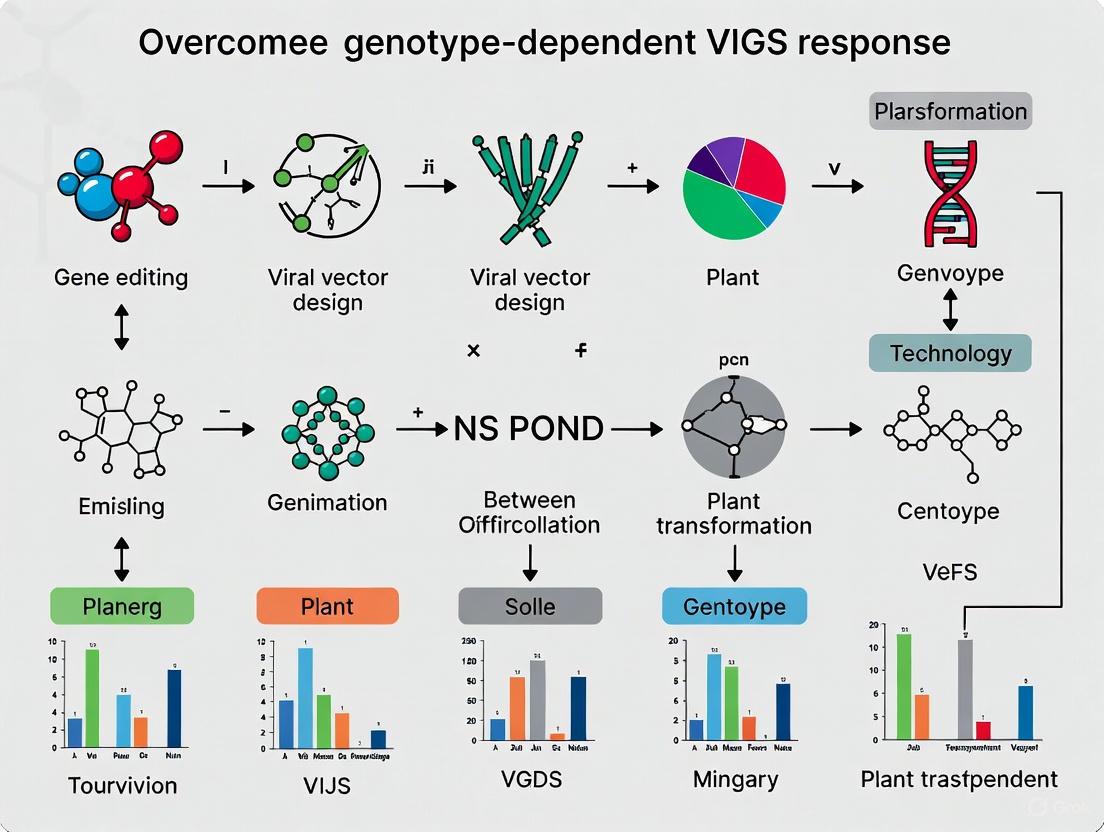
This article provides a comprehensive guide for researchers and scientists tackling the significant challenge of genotype-dependent responses in Virus-Induced Gene Silencing (VIGS).
Overcoming Genotype-Dependency in VIGS: Robust Protocols for Consistent Gene Silencing in Diverse Plant Species
Abstract
This article provides a comprehensive guide for researchers and scientists tackling the significant challenge of genotype-dependent responses in Virus-Induced Gene Silencing (VIGS). It explores the molecular and genetic basis of variable silencing efficiency across different plant genotypes and species. The content details optimized methodological approaches, including vector selection, inoculation techniques, and environmental controls, to enhance VIGS reliability. Practical troubleshooting strategies and validation frameworks are presented to ensure experimental rigor. By synthesizing recent advances and proven protocols, this resource aims to empower consistent and reproducible gene function analysis in non-model and recalcitrant species, accelerating functional genomics and crop improvement programs.
Understanding the Genetic and Molecular Basis of Variable VIGS Efficiency
Frequently Asked Questions (FAQs)
Q1: What does "genotype-dependent VIGS response" mean in practical terms? A genotype-dependent VIGS response means that the efficiency of virus-induced gene silencing can vary significantly between different genetic lines of the same plant species. This results in differences in how effectively the target gene is silenced and the subsequent phenotypic manifestations. For example, in sunflowers, infection rates from the same TRV-VIGS protocol ranged from 62% to 91% across different genotypes, and the spread of silencing phenotypes also varied considerably [1].
Q2: Which crops have demonstrated genotype-dependent responses to VIGS? Research has documented genotype-dependent VIGS responses in several major crops. Evidence exists for sunflower (Helianthus annuus L.) [1], soybean [1], cassava [1], citrus [1], wheat [1], and quinoa (Chenopodium quinoa) [2]. This suggests it is a widespread phenomenon that researchers should anticipate.
Q3: What are the primary factors causing genotype-dependent VIGS efficiency? The key factors include the plant's inherent susceptibility to the viral vector (e.g., TRV), the efficiency of Agrobacterium infection (for Agrobacterium-delivered VIGS), and variations in the plant's endogenous RNA interference machinery, such as Argonaute proteins and the intercellular movement of siRNAs [3] [1]. These components can all differ between genotypes.
Q4: How can I troubleshoot low VIGS efficiency in a recalcitrant genotype? You can optimize your protocol by:
- Testing different inoculation methods: For challenging species like sunflowers, seed vacuum infiltration proved more effective than leaf infiltration [1].
- Adjusting Agrobacterium concentration and co-cultivation time: In sunflowers, a 6-hour co-cultivation period was optimal [1].
- Optimizing plant growth conditions: Factors like temperature, humidity, and photoperiod can influence silencing efficiency [3] [1].
- Using viral suppressors of RNA silencing (VSRs): Co-expressing VSRs like P19 can enhance VIGS efficiency in some species [3].
Q5: Can genotype-dependency be exploited positively in research? Yes. Studying the genetic basis of these variations can help identify host genes involved in viral spread and the RNAi pathway. Furthermore, understanding genotype-specific responses in crops like quinoa has been key to uncovering mechanisms behind complex traits such as salt tolerance [2].
Troubleshooting Guide for Genotype-Dependency
Problem: Inconsistent Silencing Across Different Plant Lines
This occurs when your VIGS construct works well in one genotype but shows weak or no silencing in another genetically distinct line of the same species.
| Troubleshooting Step | Action & Details | Expected Outcome / Rationale |
|---|---|---|
| 1. Verify Controls | Always include a positive control (e.g., TRV::PDS for photo-bleaching) and an empty vector control (e.g., TRV::00) in every genotype tested [4] [5]. | Confirms the VIGS system is functional and that observed phenotypes are due to gene silencing, not viral symptoms. |
| 2. Quantify Silencing | Use qRT-PCR to measure transcript levels of the target gene in the problematic genotype, even if no visual phenotype is apparent [3]. | Determines if the issue is a lack of molecular silencing or a disconnection between transcript reduction and phenotype. |
| 3. Optimize Delivery | For recalcitrant genotypes, switch from leaf infiltration to more efficient methods like seed vacuum infiltration, as demonstrated in sunflower and wheat [1]. | Enhances initial infection rates and systemic spread of the viral vector throughout the plant. |
| 4. Adjust Conditions | Optimize Agrobacterium optical density (OD600), vacuum duration, and co-cultivation time. For sunflower, 6h co-cultivation was key [1]. Also, modulate growth temperature and light intensity [3]. | Fine-tunes the biological interaction between the Agrobacterium, viral vector, and host plant for improved efficiency. |
| 5. Try Alternative Vectors | If TRV is inefficient, test other VIGS vectors like Bean Pod Mottle Virus (BPMV) for legumes or Apple Latent Spherical Virus (ALSV) [3]. | Different viruses have varying host ranges and may bypass the limitations of a specific vector in a given genotype. |
Quantitative Evidence of Genotype-Dependency in Sunflower
The table below summarizes data from a study that applied a standardized seed-vacuum TRV-VIGS protocol to six different sunflower genotypes, clearly illustrating the genotype-dependent response [1].
| Sunflower Genotype | Infection Percentage (%) | Relative HaPDS Expression (Silencing Efficiency) |
Silencing Phenotype Spreading |
|---|---|---|---|
| Smart SM-64B | 91% | 0.01 (Extreme knockdown) | Lowest |
| ZS | 77% | 0.01 (Extreme knockdown) | Moderate |
| Buzuluk | 76% | Data Not Provided | Data Not Provided |
| Lakomka | 62% | Data Not Provided | Data Not Provided |
| Kubanski Semechki | 69% | Data Not Provided | Data Not Provided |
| Oreshek | 68% | Data Not Provided | Data Not Provided |
Key Insight from Data: The genotype 'Smart SM-64B' showed the highest infection rate (91%), demonstrating excellent susceptibility to the TRV vector. However, it exhibited the lowest spread of the photo-bleached silencing phenotype. This indicates that high viral infection does not always correlate with strong spatial silencing, and these two aspects of VIGS efficiency may be governed by separate genetic factors in the host [1].
Detailed Experimental Protocol: TRV-Based VIGS for Forward Genetics Screening
This protocol, adapted from a study on nonhost resistance in Nicotiana benthamiana, is an example of a high-throughput method that can be adapted to study genotype-dependency [5].
Objective: To identify plant genes involved in a specific trait (e.g., nonhost resistance) by silencing individual genes from a cDNA library and screening for phenotypic changes.
Key Reagents & Materials:
| Research Reagent | Function in the Experiment |
|---|---|
| TRV Vectors (pTRV1, pTRV2) | Bipartite viral vector system for delivering gene fragments and inducing silencing [5]. |
| Agrobacterium tumefaciens (GV2260/GV3101) | Bacterial strain used to deliver the TRV vectors into plant cells [5] [1]. |
| cDNA Library in TRV2 | A collection of cDNA fragments cloned into the TRV2 vector, each representing a potential gene to silence [5]. |
| GFPuv-expressing Pathogens | Engineered bacteria that fluoresce green under UV light, allowing visual assessment of pathogen growth in silenced plants [5]. |
| Inoculation Buffer (10 mM MES, 200 μM Acetosyringone) | Buffer that induces Agrobacterium to transfer DNA into plant cells [5]. |
Step-by-Step Workflow:
- Plant Material & Growth: Sow seeds in a suitable growth medium. Grow plants under controlled conditions (e.g., 21±2°C). Use 3-4 week-old plants for VIGS [5].
- Agrobacterium Preparation:
- Streak Agrobacterium containing pTRV1 and the pTRV2-cDNA library from glycerol stocks onto LB agar plates with appropriate antibiotics (e.g., rifampicin, kanamycin). Incubate at 28°C for 2 days [5].
- For pTRV1, grow a liquid culture overnight. Harvest cells by centrifugation and resuspend in inoculation buffer to an OD600 of ~0.3-0.5. Induce for 3-4 hours at room temperature [5] [1].
- Plant Inoculation (Prick Method):
- Post-Inoculation Care: Maintain plants in optimal conditions with adequate nutrition. Vigorous plant growth is crucial for high silencing efficiency [5].
- Pathogen Challenge Assay:
- At about 3 weeks post-VIGS, challenge silenced plants with GFPuv-expressing nonhost pathogens.
- Grow bacterial pathogens in liquid media, wash, and resuspend in sterile water.
- Inoculate the abaxial side of leaves (5th to 8th leaf) as spots or infiltrate whole plants via vacuum infiltration with a bacterial suspension containing 0.01% Silwet L-77 [5].
- Phenotypic Screening:
- Observe inoculated leaves under long-wave UV light from 2 to 5 days post-inoculation (dpi).
- GFPuv-expressing bacterial colonies will appear as green fluorescent dots. Gene-silenced plants that have lost nonhost resistance will show significant bacterial growth compared to empty vector controls [5].
- Confirmation:
- Shortlist candidate clones from the primary screen.
- Repeat VIGS and pathogen challenge for these clones.
- Quantify bacterial growth using a conventional growth assay: plate leaf extracts on agar media at 0, 3, and 5 dpi and count colonies [5].
- Sequence the insert in the TRV2 vector from confirmed positive clones to identify the silenced gene [5].
Visualizing the VIGS Workflow and Genotype Influence
The diagram below illustrates the core experimental workflow for a VIGS forward genetics screen, highlighting key points where plant genotype can influence the outcome.
Diagram 1: VIGS Workflow and Genotype Impact. This chart outlines the key steps in a VIGS forward genetics screen. The red circles indicate critical stages where the plant's genotype can significantly influence the process: (1) initial infection and Agrobacterium susceptibility, (2) systemic spread of the virus and silencing signal, and (3) the final observable phenotype [3] [1].
The following diagram conceptualizes the molecular mechanism of VIGS and the specific points where genotypic variation can alter its efficiency.
Diagram 2: VIGS Mechanism and Genotype Interference. This figure details the core molecular pathway of Virus-Induced Gene Silencing. The red circles highlight stages where the plant's genotype can introduce variability, including viral replication, siRNA processing, RISC complex function, and the cell-to-cell movement of the silencing signal [6] [3].
Frequently Asked Questions (FAQs)
1. What are the core components of the RNA silencing machinery in plants? The core machinery comprises Argonaute (AGO) proteins and small interfering RNAs (siRNAs). siRNAs, generated by DICER-like (DCL) enzymes, act as guide molecules. They are loaded into an AGO protein to form the core of the RNA-Induced Silencing Complex (RISC). This complex identifies and silences target mRNA sequences through complementary base-pairing, leading to mRNA cleavage or translational repression [6] [7] [8].
2. What specific roles do different Argonaute proteins play in VIGS? Different AGO family members have specialized functions:
- AGO1 is a key player in post-transcriptional gene silencing (PTGS), which is the primary mechanism behind VIGS. It uses siRNAs to mediate the cleavage of target mRNAs in the cytoplasm [9] [10].
- AGO4 is involved in transcriptional gene silencing (TGS) through the RNA-directed DNA methylation (RdDM) pathway. It can be recruited to target loci by siRNAs, leading to epigenetic modifications that heritably silence gene expression [6] [10].
- AGO2 and AGO7 have more distinct roles. For instance, AGO7 is related to developmental timing and is not typically involved in transgene-induced silencing [8].
3. Why does silencing spread more effectively in some plant genotypes than others? Genotype-dependent variation in VIGS efficiency is a common challenge. A study in sunflowers found infection rates (presence of the virus) varied from 62% to 91% across different genotypes. However, the spread of the silencing phenotype (e.g., photobleaching) was independent of viral presence and varied significantly between genotypes [1]. This suggests that innate differences in the host's RNA silencing machinery, such as the expression levels of AGOs, DCLs, or other components, significantly impact the mobility and amplification of the silencing signal.
4. Which Dicer-like enzyme is critical for the systemic spread of silencing? Research indicates that DCL2 is a critical genetic factor for the non-cell-autonomous spread of RNA silencing. DCL2, which processes 22-nucleotide siRNAs, is required for both the production of the mobile silencing signal in local tissues and the response to this signal in distant tissues. In contrast, DCL4 (which produces 21-nt siRNAs) often plays a more dominant role in cell-autonomous silencing and can even suppress the spread of silencing in some contexts [11].
5. How can I improve VIGS efficiency in recalcitrant plant species? Optimizing the delivery method is crucial. A robust protocol established for sunflowers, a traditionally challenging species, involves a seed vacuum infiltration technique. Key factors for success include:
- Delivery Method: Vacuum infiltration of seeds, which is less invasive and does not require in vitro culture [1].
- Co-cultivation Time: A 6-hour co-cultivation with Agrobacterium was identified as optimal [1].
- Plant Growth Conditions: Maintaining consistent temperature, light (18-hour photoperiod), and humidity (around 45%) in the greenhouse [1].
Troubleshooting Guide
Table 1: Common VIGS Problems and Solutions
| Problem | Potential Cause | Solution / Factor to Investigate |
|---|---|---|
| No Silencing Phenotype | Inefficient vector delivery or low viral titer. | Optimize Agrobacterium concentration (OD600) and vacuum infiltration parameters [1]. |
| The target gene is essential, causing lethal silencing. | Use VIGS to achieve transient, non-lethal knockdown instead of stable knockout [12]. | |
| Patchy or Inconsistent Silencing | Genotype-dependent response of the host plant. | Test multiple genotypes of your plant species; some may be more susceptible to VIGS than others [1]. |
| Insufficient spread of the silencing signal. | Ensure young tissue is used for infiltration, as silencing spreads more actively in young versus mature tissues [1]. | |
| Silencing Does Not Spread Systemically | Disruption in the mobility of siRNA signals. | Focus on the DCL2-dependent genetic pathway; ensure the functionality of genes involved in generating 22-nt mobile siRNAs [11]. |
| Short Silencing Duration | Viral clearance by the plant's immune system. | The choice of viral vector can impact persistence; compare vectors like TRV and TYMV for your species [13]. |
| Off-Target Effects | Non-specific silencing of genes with high sequence similarity. | Design VIGS constructs with unique fragments for the target gene and bioinformatically check for potential off-targets [1]. |
Table 2: Genetic Factors Influencing siRNA Mobility and Silencing Spread
| Genetic Factor | Role in Silencing Mobility | Experimental Evidence |
|---|---|---|
| DCL2 | Critical for systemic silencing; produces 22-nt siRNAs that act as mobile signals [11]. | In N. benthamiana, suppression of DCL2 eliminated systemic PTGS and prevented signal movement from vascular tissues [11]. |
| DCL4 | Primarily for cell-autonomous silencing; can inhibit non-cell-autonomous silencing [11]. | In Arabidopsis dcl4 mutants, an increase in cell-to-cell spread of PTGS was observed [11]. |
| RDR6 | Amplifies silencing by generating double-stranded RNA for secondary siRNA production [6] [11]. | Required for the perception of the systemic silencing signal in distal tissues of N. benthamiana [11]. |
| AGO1 | The main effector; binds siRNAs to form RISC and cleave target mRNAs during PTGS [9] [8]. | AGO1 is required for the cell-to-cell spread of virus-induced gene silencing [9]. |
| AGO4 | Involved in receiving the signal for transcriptional gene silencing in the nucleus [11]. | Partially involved in the reception of signals for systemic PTGS in Arabidopsis [11]. |
Detailed Experimental Protocols
Protocol 1: Seed Vacuum Infiltration for VIGS in Recalcitrant Species
This protocol, adapted from a sunflower study, provides a high-efficiency method for challenging species [1].
Key Reagents:
- pYL192 (TRV1) and pYL156 (TRV2) vectors or similar.
- Agrobacterium tumefaciens strain GV3101.
- Target plant seeds.
Methodology:
- Vector Construction: Clone a ~200-300 bp fragment of your target gene (e.g., Phytoene Desaturase (PDS) as a positive control) into the TRV2 vector. Use tools like
pssRNAitto select a fragment with high predicted siRNA counts [1]. - Agrobacterium Preparation:
- Transform the recombinant TRV2 and the helper TRV1 plasmids into A. tumefaciens GV3101.
- Grow single colonies in LB media with appropriate antibiotics (e.g., Kanamycin, Gentamicin, Rifampicin) at 28°C.
- Centrifuge the bacterial culture and resuspend the pellet in an induction medium (e.g., 10 mM MES, 10 mM MgCl₂, 200 µM Acetosyringone) to a final OD600 of 2.0.
- Incubate the suspension at room temperature for 3-4 hours.
- Seed Infiltration:
- Peel the seed coats to improve infiltration.
- Mix the TRV1 and TRV2 Agrobacterium cultures in a 1:1 ratio.
- Submerge the seeds in the bacterial suspension and apply a vacuum (e.g., 0.8 bar) for 2 minutes. Rapidly release the vacuum to force the bacteria into the seeds.
- Co-cultivation and Growth:
- Co-cultivate the infiltrated seeds for 6 hours on moist filter paper.
- Sow the seeds directly in a soil mixture (e.g., 3:1 peat-perlite) and grow under controlled conditions (22°C, 18-h light/6-h dark photoperiod, ~45% humidity). No in vitro recovery is needed.
Expected Results: Silencing symptoms (e.g., photobleaching for PDS) should appear in young leaves within 2-4 weeks post-infiltration. Efficiency can be quantified by the percentage of plants showing symptoms and by measuring target gene expression via qRT-PCR.
Protocol 2: Verifying the Role of DCL2 in siRNA Mobility
This genetic approach helps confirm the key role of DCL2 in systemic silencing.
Key Reagents:
- Wild-type and dcl2/dcl4 mutant Arabidopsis or N. benthamiana plants.
- A VIGS vector (e.g., TRV) containing a reporter gene like GFP or endogenous gene fragment.
Methodology:
- Plant Genotyping: Genetically confirm the mutant status of your plant lines (e.g., dcl2 mutant, dcl4 mutant, and dcl2/dcl4 double mutant).
- Induce Local Silencing: Use Agrobacterium infiltration or grafting to initiate VIGS in a single local leaf or the rootstock of wild-type and mutant plants.
- Monitor Systemic Spread:
- Phenotype: Visually track the appearance of the silencing phenotype (e.g., photobleaching) in leaves distal to the inoculation site over time.
- Molecular Analysis: Use RNA blotting or high-throughput sequencing to detect and quantify the presence of 22-nt siRNAs in both local (infiltrated) and systemic (non-infiltrated) leaves.
- Compare Efficiency: Compare the rate and intensity of systemic silencing spread and the accumulation of 22-nt siRNAs in systemic leaves between wild-type and mutant lines.
Expected Results: In dcl2 mutants, you will observe a significant reduction or complete absence of systemic silencing and a corresponding lack of 22-nt siRNAs in distal tissues, even if local silencing occurs. This confirms DCL2's critical role in generating the mobile signal [11].
Signaling Pathway and Experimental Workflow
Diagram 1: VIGS Mechanism and siRNA Mobility Pathway
Diagram 2: Experimental Workflow for VIGS Optimization
The Scientist's Toolkit: Essential Research Reagents
Table 3: Key Research Reagent Solutions
| Reagent / Material | Function in VIGS Research | Specific Examples / Notes |
|---|---|---|
| VIGS Vectors | Engineered viruses to deliver target gene fragments and trigger silencing. | TRV (Tobacco Rattle Virus): Wide host range [6] [1]. TYMV (Turnip Yellow Mosaic Virus): Can show higher efficiency than TRV in some species like radish [13]. |
| Agrobacterium Strains | Bacterial vehicle for delivering DNA-based VIGS vectors into plant cells. | GV3101: A widely used strain for plant transformation and VIGS [1]. |
| Genetic Markers | Visual reporters for successful infection and silencing. | Phytoene Desaturase (PDS): Silencing causes photobleaching, a positive control [6] [1]. GFP in transgenic lines: Silencing quenches fluorescence [11]. |
| DCL Mutant Lines | Genetic tools to dissect the role of specific Dicer proteins in siRNA biogenesis and mobility. | dcl2 mutants: To study systemic silencing defects [11]. dcl4 mutants: To study cell-autonomous silencing and its suppressive role on non-cell-autonomous silencing [11]. |
| AGO Mutant/Study Lines | Tools to investigate the function of specific Argonaute proteins. | ago1 mutants: Critical for confirming AGO1's role in PTGS [9] [8]. Transgenic AGO1 overexpression lines: Used to study enhanced silencing and nuclear functions of AGO1 [9]. |
| Syn-tasiRNA System | A high-specificity, second-generation RNAi tool for multiplexed gene silencing, usable in a transgene-free VIGS format. | syn-tasiR-VIGS: Uses minimal, non-TAS precursors expressed from a viral vector for precise, off-target-free silencing and plant vaccination [14]. |
RNA silencing serves as a fundamental antiviral defense mechanism in plants, targeting viral RNAs for sequence-specific degradation. To establish successful infections, plant viruses have evolved sophisticated counter-defenses, most notably through the expression of Viral Suppressors of RNA Silencing (VSRs). These versatile proteins are crucial for overcoming host immunity and have become indispensable tools in plant biotechnology and functional genomics. Within the context of overcoming genotype-dependent Virus-Induced Gene Silencing (VIGS) responses, understanding VSR function is paramount. VSRs can significantly enhance the efficiency and broaden the host range of VIGS-based approaches, enabling more reliable gene function studies across diverse genetic backgrounds. This technical resource center provides practical guidance for researchers leveraging VSRs to overcome experimental challenges in plant-virus interactions and molecular farming.
Section 1: VSR Mechanisms - FAQ for Researchers
What are Viral Suppressors of RNA Silencing (VSRs) and why are they crucial in plant-virus interactions?
VSRs are proteins encoded by plant viruses that inhibit the host's RNA silencing machinery, an adaptive inducible antiviral defense system [15]. They are essential for viral pathogenicity, enabling viruses to establish infection by counteracting the plant's ability to degrade viral RNA [16] [17]. Nearly all plant virus genera have evolved VSRs, which exhibit remarkable diversity in their mechanisms of action despite often lacking sequence similarities [15].
At which steps of the RNA silencing pathway do VSRs typically act?
VSRs have evolved diverse strategies to inhibit key steps of the antiviral silencing pathway, often targeting multiple components simultaneously:
- Inhibition of Viral RNA Sensing and Dicing: Some VSRs, like P38 from Turnip crinkle virus (TCV) and P14 of Pothos latent aureusvirus, bind to double-stranded RNA (dsRNA) in a size-independent manner, preventing its processing into small interfering RNAs (siRNAs) by Dicer-like (DCL) enzymes [15]. P38 specifically inhibits DCL4 activity [15].
- Prevention of RISC Assembly: This is a common strategy where VSRs sequester siRNAs, preventing their incorporation into the RNA-induced silencing complex (RISC). Proteins like P19 (Tomato bushy stunt virus) and P1 (Rice yellow mottle virus) use this approach [17] [15]. Other VSRs directly target Argonaute (AGO) proteins, core components of RISC [17].
- Inhibition of Silencing Amplification: VSRs like the 2b protein of Cucumber mosaic virus (CMV) and the V2 protein from Tomato yellow leaf curl virus (TYLCV) suppress the host RNA-dependent RNA polymerase (RDR)-mediated amplification of secondary viral siRNAs, which are crucial for sustained antiviral defense [15].
- AGO Protein Degradation: Many VSRs, including the P0 protein of poleroviruses and the TGB1 protein of Potato virus X (PVX), induce the degradation of AGO proteins [17] [18]. PVX TGB1 interacts with and causes the degradation of AGO1, AGO2, AGO3, and AGO4 [17].
How can the multifunctionality of VSRs impact my experimental outcomes?
Many VSRs are multifunctional, performing additional roles during viral infection, such as cell-to-cell movement, genome replication, or encapsidation [16] [17]. For example, the TGB1 protein in potexviruses and the HC-Pro protein in potyviruses act as both movement proteins (MPs) and VSRs [17]. This dual functionality means that observed phenotypic changes in experiments could result from either suppressed silencing or disrupted cellular processes unrelated to silencing. Researchers should design appropriate controls to distinguish between these effects.
Section 2: The Scientist's Toolkit - Key Research Reagents and VSR Applications
Table 1: Characterized Viral Suppressors of RNA Silencing (VSRs) and Their Mechanisms
| VSR | Virus of Origin | Primary Mechanism of Action | Experimental Applications |
|---|---|---|---|
| P19 | Tomato bushy stunt virus (TBSV) | Sequesters siRNA duplexes to prevent RISC loading [18] | Enhances recombinant protein expression in molecular farming [18] |
| P38 | Turnip crinkle virus (TCV) | Binds dsRNA; inhibits DCL4; directly binds and inhibits AGO1 [15] | Used to boost protein yield in plant expression systems [18] |
| HC-Pro | Potato virus Y (PVY) | Binds and inhibits siRNA and miRNA pathways [17] [15] | Historical model for studying VSR mechanisms |
| 2b | Cucumber mosaic virus (CMV) | Binds AGO proteins to inhibit slicing; prevents systemic silencing [15] | Tool for studying long-distance silencing signaling |
| TGB1 | Potato virus X (PVX) | Causes degradation of AGO1, AGO2, AGO3, AGO4 [17] | Native VSR in PVX vectors; studied for MP-VSR duality [17] |
| P0 | Poleroviruses | Targets AGO proteins for degradation [15] | Model for studying ubiquitination in AGO degradation |
| NSs | Tomato zonate spot virus (TZSV) | Targets SGS3 for degradation via autophagy and ubiquitin-proteasome pathway [18] | Highly effective enhancer in optimized PVX expression vectors [18] |
How are VSRs applied in biotechnology and functional genomics?
The primary application of VSRs in research is to enhance the efficiency of recombinant protein expression and VIGS in plants. In molecular farming, VSRs are co-expressed with target genes to inhibit silencing, leading to higher protein yields. For instance, engineering PVX-based vectors to express heterologous VSRs like P19, P38, and NSs significantly increased the accumulation of vaccine antigens and other recombinant proteins [18]. In functional genomics, VSRs can be used to optimize VIGS protocols, particularly in plant species or genotypes where silencing efficiency is low, thereby helping to overcome genotype-dependent limitations [3].
Section 3: Troubleshooting VIGS Experiments – Technical Guides
Problem: Low Silencing Efficiency in Recalcitrant Plant Genotypes
Potential Cause: Genotype-specific differences in the RNA silencing machinery, such as variations in Argonaute protein expression or efficiency of intercellular siRNA movement, can limit VIGS spread and efficacy [3].
Solutions:
- Co-express a heterologous VSR: Co-deliver a vector expressing a strong VSR like P19 or NSs alongside your VIGS vector. This can transiently suppress host defenses and enhance the establishment of silencing [3] [18].
- Optimize the VIGS vector architecture: As demonstrated in recent studies, engineering the viral backbone to include a VSR expression cassette in the reverse orientation can mitigate transcriptional interference and dramatically improve both VSR and target gene expression. This strategy has yielded over 100-fold improvements in antigen accumulation [18].
- Optimize agroinfiltration methodology: For species with thick cuticles or dense trichomes (e.g., soybean), standard infiltration methods may fail. An optimized protocol using cotyledon node immersion in Agrobacterium suspension for 20-30 minutes can achieve up to 95% infection efficiency [19].
Problem: Viral Vector Instability or Poor Systemic Spread
Potential Cause: Large insert sizes or the inherent properties of the viral vector can hinder replication and movement.
Solutions:
- Use deconstructed viral vectors: Second-generation vectors that lack movement and coat protein genes (e.g., deconstructed PVX) can be more stable and have a higher capacity for foreign genes [18].
- Select the optimal VSR for your system: Test different VSRs (e.g., P19, P38, NSs) to identify which one provides the strongest silencing suppression with the least cytotoxicity for your specific host plant [18]. Research shows that NSs and P38 can be more effective than P19 in certain PVX-based systems [18].
- Control environmental conditions: Factors like temperature, humidity, and photoperiod significantly influence VIGS efficiency. Maintain consistent and optimal growth conditions throughout the experiment [3].
Problem: Severe Viral Symptomology Masks the Silencing Phenotype
Potential Cause: The viral vector or the co-expressed VSR is causing excessive pathogenicity, making it difficult to observe the phenotype resulting from the knockdown of your target gene.
Solutions:
- Use a milder viral vector: The Tobacco Rattle Virus (TRV) is widely adopted for VIGS because it elicits milder symptoms compared to other viruses, minimizing harm to plants and preventing the masking of the silencing phenotype [19].
- Titrate the agroinoculum concentration: Reduce the concentration of the Agrobacterium strain carrying the VIGS vector or the VSR. Conducting a dilution series can help find a balance between efficient silencing and minimal viral pathology [3].
Section 4: Visualizing VSR Mechanisms and Experimental Workflows
Diagram 1: VSR Inhibition of Antiviral RNA Silencing. This diagram maps the key steps of the plant antiviral silencing pathway (yellow) and the points where different VSRs (red) exert their inhibitory effects [17] [18] [15].
Section 5: Reference Data – Quantitative VSR Performance
Table 2: Enhancement of Recombinant Protein Expression via Engineered PVX Vectors with Heterologous VSRs [18]
| Expression Construct | VSR Integrated | Target Protein | Yield (mg/g Fresh Weight) | Fold Improvement vs. Parental PVX |
|---|---|---|---|---|
| Parental PVX (pPVX:GFP) | Native TGB1 (weak) | GFP | 0.13 | (Baseline) |
| pP3NSs:GFP | NSs (TZSV) | GFP | 0.50 | ~3.8x |
| pP3-based vector | NSs (TZSV) | FMDV VP1 (antigen) | 0.016 | >100x |
| pP3-based vector | NSs (TZSV) | SARS-CoV-2 S2 (antigen) | 0.017 | >100x |
| pP3P38:GFP | P38 (TCV) | GFP | ~0.50* | ~3.8x* |
Note: *Value estimated from graphical data in [18]. The pP3 vectors feature reverse-oriented VSR cassettes that mitigate transcriptional interference.
Section 6: Core Experimental Protocol – Enhancing Expression with VSRs
Objective: To significantly increase the yield of a recombinant protein (e.g., GFP or a vaccine antigen) in Nicotiana benthamiana leaves using an optimized PVX vector with an integrated heterologous VSR.
Materials:
- Plasmids: Engineered pP3-based PVX vectors (e.g., pP3NSs:GFP, pP3P38:GFP) where the VSR (NSs or P38) is cloned in reverse orientation downstream of the NOS terminator [18].
- Agrobacterium tumefaciens: Strain GV3101.
- Plant Material: 3-4 week old N. benthamiana plants.
- Solution: Induction medium (e.g., LB or MES buffer with acetosyringone).
Methodology:
- Vector Construction: Clone your gene of interest (GOI) into the optimized PVX backbone (e.g., pP2 or pP3). Insert the chosen heterologous VSR (NSs, P38, or P19) under a strong promoter (e.g., CaMV 35S), ensuring the cassette is placed in reverse orientation to the GOI to minimize transcriptional interference [18].
- Agrobacterium Preparation: Transform the constructed plasmid into A. tumefaciens GV3101. Grow positive colonies overnight, then resuspend and dilute the bacterial culture to an optimal optical density (OD₆₀₀ typically ~0.5) in induction medium containing acetosyringone (e.g., 150 µM). Incubate the suspension for several hours at room temperature [18] [19].
- Plant Infiltration: Use a needleless syringe to infiltrate the bacterial suspension into the abaxial side of N. benthamiana leaves.
- Plant Maintenance: Grow inoculated plants under standard conditions (e.g., 23-25°C, 16h light/8h dark photoperiod) for 3-7 days post-infiltration (dpi) before analysis [3].
- Validation and Analysis:
- Phenotypic Check: Use UV illumination to visualize GFP fluorescence.
- Molecular Analysis: Quantify protein accumulation by Western blotting and quantify transcript levels for both the GOI and VSR using qRT-PCR to confirm the system's efficiency [18].
Viral Suppressors of RNA Silencing represent a powerful adaptation by plant viruses and an equally powerful tool for researchers. A deep understanding of their diverse mechanisms and strategic application, as outlined in this technical guide, is essential for advancing studies in plant-virus interactions, functional genomics, and molecular farming. By systematically troubleshooting issues related to silencing efficiency and leveraging quantitative data on VSR performance, scientists can overcome the challenges of genotype-dependent responses and push the boundaries of plant biotechnology.
Virus-Induced Gene Silencing (VIGS) has emerged as a versatile tool for functional genomics, enabling researchers to investigate gene function without stable transformation. However, its application in non-model species like sunflower is significantly complicated by genotype-dependent responses, presenting a major hurdle for reproducible experiments. This case study and technical guide addresses this challenge head-on, providing a detailed analysis of VIGS susceptibility across sunflower genotypes showing 62-91% infection rates. By integrating optimized protocols, troubleshooting guides, and reagent solutions, this resource aims to equip researchers with practical strategies to overcome genotype-specific limitations in their VIGS experiments, thereby enhancing the reliability and scope of functional genomics research in recalcitrant species.
Understanding VIGS and the Genotype Dependency Challenge
VIGS is a post-transcriptional gene silencing technique that exploits plants' natural antiviral defense mechanisms [20]. When a recombinant virus carrying a fragment of a plant gene is introduced, the plant's RNA interference machinery processes it into small interfering RNAs (siRNAs). These siRNAs then guide the sequence-specific degradation of complementary endogenous mRNA, effectively knocking down target gene expression [20] [3]. The Tobacco rattle virus (TRV) is particularly valued for VIGS due to its broad host range, efficient systemic movement, and minimal viral symptoms [20] [3].
The Critical Problem of Genotype-Dependent Efficiency
Genotype-dependent VIGS efficiency has been observed across multiple crop species, including soybean, cassava, citrus, and wheat [1]. In sunflower, this manifests dramatically, with infection percentages ranging from 62% to 91% across different genotypes [1] [21]. This variability stems from differences in viral susceptibility, systemic movement, and the efficiency of the plant's RNA silencing machinery among genotypes. Overcoming this challenge is essential for applying VIGS as a robust functional genomics tool across diverse germplasm.
Frequently Asked Questions (FAQs) on Sunflower VIGS
Q1: What is the typical range of VIGS susceptibility I can expect across different sunflower genotypes? In a comprehensive study evaluating six sunflower genotypes, infection percentages varied significantly from 62% to 91% [1] [21]. This demonstrates that genotype is a critical factor in experimental planning. The genotype 'Smart SM-64B' showed the highest infection rate (91%), while other commercial cultivars exhibited lower susceptibility [1].
Q2: Does higher infection percentage always correlate with stronger silencing phenotypes? Not necessarily. Research revealed that while 'Smart SM-64B' had the highest number of infected plants (91%), it showed the lowest spreading of the silencing phenotype (photo-bleached area) compared to other genotypes [1]. This indicates that infection efficiency and phenotype spread are influenced by different genetic factors.
Q3: Can the virus be present in tissues without visible silencing symptoms? Yes. Studies using RT-PCR detected TRV in green tissues without observable silencing symptoms, similar to findings in Thalictrum dioicum and Nicotiana benthamiana [1]. The presence of TRV is not necessarily limited to tissues exhibiting a silencing phenotype.
Q4: What are the key advantages of the seed vacuum infiltration method for sunflower VIGS? This method eliminates the need for in vitro recovery or surface sterilization steps required in previous protocols [1]. It simply involves peeling seed coats followed by vacuum infiltration and co-cultivation, making it more accessible and scalable for sunflower functional genomics studies.
Troubleshooting Common VIGS Experimental Challenges
Problem: Low Infection Rates Across Multiple Genotypes
Possible Causes and Solutions:
- Insufficient co-cultivation time: Extend co-cultivation to 6 hours, which was optimal in the sunflower protocol [1].
- Suboptimal bacterial concentration: Ensure Agrobacterium cultures are grown to mid-log phase (OD600 ~1.0) before infiltration [1].
- Improper plant growth conditions: Maintain consistent temperature (~22°C), humidity (~45%), and photoperiod (18h light/6h dark) [1].
Problem: Uneven Silencing Phenotypes Within Infected Plants
Possible Causes and Solutions:
- Variable viral movement: Younger tissues typically show more active spreading of silencing phenotypes compared to mature tissues [1].
- Insufficient monitoring period: Allow 3-4 weeks for full systemic silencing manifestation and perform time-lapse observations to track phenotype progression [1].
- Fragment design issues: Use bioinformatic tools like pssRNAit to identify optimal silencing fragments with multiple siRNA binding sites [1].
Problem: Inconsistent Results Between Experimental Replicates
Possible Causes and Solutions:
- Genetic heterogeneity: Use homozygous lines where possible and account for genetic diversity in sample size calculations.
- Environmental fluctuations: Strictly control growth chamber conditions, as temperature, humidity, and light intensity significantly impact VIGS efficiency [3].
- Agrobacterium viability: Use fresh plates from glycerol stocks for each experiment and verify bacterial viability through plate PCR [1].
Experimental Protocols and Workflows
Optimized Sunflower VIGS Protocol
The following workflow details the seed vacuum infiltration method that achieved up to 91% infection efficiency in susceptible sunflower genotypes:
Key Protocol Steps:
- Vector Preparation: Clone target gene fragment (193bp for HaPDS) into TRV2 vector using appropriate restriction sites (XbaI and BamHI) [1].
- Agrobacterium Preparation: Transform TRV constructs into Agrobacterium strain GV3101 and culture with appropriate antibiotics (gentamicin, kanamycin, rifampicin) [1].
- Seed Preparation: Peel seed coats without surface sterilization or in vitro recovery steps [1].
- Vacuum Infiltration: Submerge peeled seeds in Agrobacterium suspension and apply vacuum infiltration.
- Co-cultivation: Incubate infiltrated seeds for 6 hours in Agrobacterium suspension [1].
- Planting and Growth: Sow seeds in soil mixture (3:1 peat:perlite) and maintain at 22°C with 18h light/6h dark photoperiod [1].
- Phenotype Monitoring: Observe photo-bleaching symptoms beginning at 2-3 weeks post-infiltration, with extensive spreading in young tissues [1].
Genotype Susceptibility Screening Protocol
To evaluate new sunflower genotypes for VIGS susceptibility:
- Inoculate a minimum of 12 plants per genotype using the optimized protocol above.
- Include a positive control (PDS silencing) and negative control (empty vector).
- Score infection percentage based on visible phenotypes at 3-4 weeks post-infiltration.
- Confirm TRV presence in both symptomatic and asymptomatic tissues by RT-PCR.
- Quantify silencing efficiency through qRT-PCR of target genes.
Research Reagent Solutions
Table: Essential Research Reagents for Sunflower VIGS Experiments
| Reagent/Resource | Function/Application | Specifications/Notes |
|---|---|---|
| TRV Vectors | Delivery system for silencing constructs | Use pYL192 (TRV1) and pYL156 (TRV2) available from Addgene [#148968, #148969] [1] |
| Agrobacterium Strain | Vector delivery into plant cells | Strain GV3101 with appropriate antibiotic resistance [1] |
| Sunflower Genotypes | Experimental material with varying susceptibility | 'Smart SM-64B' shows highest infection (91%); other cultivars range 62-91% [1] |
| HaPDS Gene Fragment | Positive control for silencing | 193bp fragment (nucleotides 1-193) of phytoene desaturase gene [1] |
| Bioinformatics Tools | siRNA target prediction | pssRNAit tool for identifying optimal silencing fragments [1] |
Data Presentation: Comparative Genotype Susceptibility
Table: VIGS Susceptibility Across Sunflower Genotypes
| Genotype | Infection Percentage | Silencing Phenotype Spread | TRV Detection in Upper Nodes | Recommended Applications |
|---|---|---|---|---|
| Smart SM-64B | 91% | Low | Up to node 9 | High-efficiency initial screens |
| ZS Line | 77% | Moderate | Data not specified | General functional studies |
| Commercial Cultivars | 62-91% | Variable | Data not specified | Genotype-specific studies |
Key Observations:
- The presence of TRV up to node 9 indicates extensive systemic viral movement throughout infected plants using the seed vacuum protocol [1].
- Silencing phenotype spread does not necessarily correlate with infection percentage, as genotype 'Smart SM-64B' showed highest infection but lowest phenotype spreading [1].
- Young tissues demonstrate more active spreading of photo-bleached spots compared to mature tissues [1].
Advanced Technical Considerations
Molecular Validation of Silencing
Beyond visible phenotypes, successful VIGS should be confirmed molecularly:
- RT-PCR Detection: Verify TRV presence in both green and bleached tissues [1].
- qRT-PCR Analysis: Quantify target gene expression reduction in silenced tissues.
- siRNA Detection: Confirm generation of target-specific 21-24nt siRNAs.
Environmental Optimization
VIGS efficiency is influenced by environmental factors that must be controlled:
- Temperature: Maintain consistent temperatures around 22°C [1].
- Humidity: Keep approximately 45% relative humidity [1].
- Photoperiod: Provide 18 hours light and 6 hours dark cycle [1].
- Plant Density: Avoid gaps between pots to maintain consistent microclimate [1].
The genotype-dependent VIGS susceptibility in sunflower, while challenging, can be effectively managed through the optimized protocols and troubleshooting approaches outlined in this technical resource. By selecting appropriate genotypes, strictly following the seed vacuum infiltration method, and implementing rigorous environmental controls, researchers can overcome the 62-91% susceptibility range to achieve reproducible, high-efficiency gene silencing in their functional genomics studies.
Virus-Induced Gene Silencing (VIGS) is a powerful reverse genetics tool that exploits the plant's natural antiviral defense mechanism, Post-Transcriptional Gene Silencing (PTGS), to knock down the expression of target genes [20] [6]. The effectiveness of VIGS is crucial for functional genomics studies, but its application is often challenged by genotype-dependent responses in various plant species [1]. Understanding the molecular journey from the initial activation of PTGS to the spread of the systemic silencing signal is fundamental to overcoming this limitation and developing robust, genotype-independent VIGS protocols. This technical guide details the mechanisms, provides troubleshooting advice, and outlines optimized methodologies to enhance VIGS efficacy across diverse genetic backgrounds.
Core Molecular Mechanisms
The PTGS Pathway: From Viral Infection to Target mRNA Degradation
The silencing process begins when a recombinant virus, carrying a fragment of a host plant gene, is introduced into the plant cell [20] [3]. The underlying mechanism is a sequence-specific RNA degradation pathway triggered by double-stranded RNA (dsRNA) [22].
- Viral Replication and dsRNA Production: After agroinfiltration, the T-DNA containing the viral genome is transcribed into single-stranded RNA (ssRNA) within the host nucleus [23]. Viral RNA-dependent RNA polymerase (RdRP) then uses this ssRNA as a template to synthesize complementary strands, forming dsRNA molecules [20] [6]. These dsRNAs are the key trigger for PTGS.
- Dicing and siRNA Generation: The plant recognizes the dsRNA as aberrant or viral in origin. Dicer-like (DCL) enzymes, a class of ribonucleases, cleave the long dsRNA into large quantities of short duplexes of 21-24 nucleotides, known as small interfering RNAs (siRNAs) [22] [6].
- RISC Assembly and Target Cleavage: The siRNAs are incorporated into an RNA-induced silencing complex (RISC). Within RISC, the siRNA duplex is unwound, and the single-stranded guide RNA directs the complex to complementary endogenous mRNA sequences [20] [6]. The "Slicer" activity of the Argonaute (AGO) protein, a core component of RISC, then cleaves the target mRNA, leading to its degradation and thus, gene silencing [6].
Systemic Silencing Signal Spread
A remarkable feature of VIGS is that silencing is not confined to the site of virus inoculation but spreads systemically throughout the plant. This requires a mobile silencing signal [22] [24].
- Signal Generation and Amplification: The initial siRNAs (primary siRNAs) generated in the infected cell can act as primers for plant-encoded RNA-dependent RNA polymerases (RDRs, such as RDR6/SDE1). RDRs use the target mRNA as a template to synthesize new dsRNAs, which are in turn processed into a secondary wave of secondary siRNAs [24]. This process amplifies the silencing signal.
- Nature of the Signal and Movement: The systemic signal is likely composed of siRNAs themselves or a combination of siRNAs and RDR6-dependent components [24]. This signal moves from cell to cell through plasmodesmata and over long distances via the phloem, mirroring the movement of viral particles and photoassimilates [22].
- Establishment of Systemic Silencing: Once the mobile signal enters a distant cell, it can trigger the same PTGS machinery, leading to the degradation of homologous mRNAs in tissues far removed from the initial infection site [22]. This results in the observable systemic silencing phenotype.
The Scientist's Toolkit: Essential Research Reagents
Table 1: Key Reagents for VIGS Experiments
| Reagent / Solution | Function & Purpose | Key Considerations |
|---|---|---|
| TRV-Based Vectors (pTRV1, pTRV2) [3] [1] | Bipartite viral vector system. TRV1 encodes replication and movement proteins. TRV2 carries the coat protein and the insert for the target gene fragment. | Widely used due to broad host range, efficient systemic movement, and mild symptoms. |
| Agrobacterium tumefaciens (e.g., Strain GV3101) [1] [19] | Delivery vehicle for the T-DNA containing the viral vectors into plant cells. | The optical density (OD600) and virulence of the culture are critical for efficiency. |
| Gene-Specific Fragment | A 300-500 bp sequence from the target gene's cDNA, cloned into the TRV2 vector [20]. | Must be designed for high specificity to avoid off-target silencing. Tools like pssRNAit can help select effective fragments [1]. |
| Silencing Markers (e.g., Phytoene Desaturase (PDS), Chalcone Synthase (CHS)) [3] [19] | Endogenous genes whose silencing produces a visible, non-lethal phenotype (e.g., photo-bleaching). | Serves as a positive control to confirm the VIGS system is working in the plant. |
| Viral Suppressors of RNAi (VSRs) (e.g., P19, HC-Pro) [3] | Proteins that can temporarily inhibit the plant's silencing machinery. | Co-expression can enhance VIGS efficiency by delaying the antiviral response, allowing greater viral spread [3]. |
Troubleshooting Guides & FAQs
Frequently Asked Questions (FAQs)
Q1: What are the primary molecular players in the PTGS pathway that are essential for an efficient VIGS response? The core machinery includes Dicer-like (DCL) enzymes for generating siRNAs, Argonaute (AGO) proteins as the catalytic component of RISC for mRNA cleavage, and RNA-dependent RNA Polymerases (RDRs, particularly RDR6) for amplifying the silencing signal. Mutations in these genes can severely impair VIGS efficiency and are a potential source of genotype-dependent variability [22] [24].
Q2: How does the systemic silencing signal overcome cellular boundaries, and why might this fail in some genotypes? The signal, likely comprising 21-24 nt siRNAs, moves through plasmodesmata and the phloem [22] [24]. Failure can occur due to genetic differences in the size exclusion limits of plasmodesmata, the activity of specific proteins that facilitate the movement of RNA (e.g., RNA-binding proteins), or the presence of endogenous factors that degrade the signal before it can amplify in new tissues.
Q3: Can VIGS induce stable, heritable epigenetic modifications? Yes, in some cases. When the VIGS vector targets a gene's promoter region instead of its coding sequence, it can trigger RNA-directed DNA methylation (RdDM), leading to Transcriptional Gene Silencing (TGS). This epigenetic modification, characterized by DNA methylation, can sometimes be meiotically inherited over several generations, providing a stable silencing phenotype [6].
Q4: What is the role of viral suppressors of RNA silencing (VSRs) in optimizing VIGS? Many plant viruses encode VSRs to counteract the host's PTGS defense. In VIGS, transient co-expression of weak VSRs (e.g., P19) can be a strategy to enhance silencing by temporarily suppressing the plant's RNAi machinery, allowing the recombinant virus to replicate and spread more effectively before being targeted, thus improving knockdown efficiency [3].
Troubleshooting Common Experimental Issues
Table 2: Troubleshooting VIGS Experiments
| Problem | Potential Cause | Solutions & Optimization Strategies |
|---|---|---|
| No or weak systemic silencing | 1. Poor initial infection.2. Genotype-specific barriers to virus movement/signal propagation.3. Suboptimal environmental conditions. | - Optimize agroinfiltration method (e.g., use vacuum infiltration for difficult species) [1].- Increase agroinoculum concentration (OD600 0.5-2.0) and co-cultivation time [1].- Adjust growth conditions (temperature ~22°C, high humidity, 18-hr photoperiod) [1]. |
| High variability in silencing efficiency between plants | 1. Inconsistent Agrobacterium delivery.2. Plant-to-plant genetic heterogeneity.3. Uncontrolled environmental fluctuations. | - Standardize the Agrobacterium culture preparation and inoculation protocol meticulously.- Use a highly homozygous plant population or inbred lines.- Strictly control growth chamber/greenhouse conditions (light, temperature, humidity). |
| Severe viral symptoms mask the silencing phenotype | 1. Overly aggressive viral vector.2. High viral titer due to high OD600. | - Use viral vectors known for mild symptoms (e.g., TRV) [23].- Titrate the Agrobacterium concentration to find a balance between infection and symptom severity. |
| Silencing is transient or non-heritable | 1. The silencing is purely post-transcriptional (PTGS).2. Recovery from viral infection. | - To achieve heritable silencing, design vectors to target promoter regions and induce TGS via RdDM [6].- Use viral vectors that can persist in meristematic tissues for longer-lasting effects. |
Advanced Protocols for Overcoming Genotype-Dependency
Optimized Agrobacterium-Mediated VIGS Protocol for Recalcitrant Genotypes
This protocol is adapted from successful applications in challenging species like sunflower and soybean [1] [19].
Vector Construction:
- Clone a ~200-300 bp fragment of the target gene into the pTRV2 vector. Use bioinformatics tools (e.g., pssRNAit) to select a fragment with high predicted siRNA generation and no off-targets [1].
- Use a visible marker like PDS in a separate construct as a positive control.
Agrobacterium Preparation:
- Transform the pTRV1 and recombinant pTRV2 vectors into Agrobacterium tumefaciens (strain GV3101).
- Grow individual colonies in liquid LB media with appropriate antibiotics at 28°C for 24-36 hours.
- Pellet the bacteria and resuspend in an induction medium (10 mM MES, 10 mM MgCl₂, 200 µM Acetosyringone) to a final OD600 of 0.8-1.5. Incubate for 3-4 hours at room temperature.
Plant Inoculation (Seed Vacuum Infiltration for Dicots):
- For genotypes resistant to leaf infiltration, peel the seed coats and soak seeds in sterile water until swollen.
- Mix the pTRV1 and pTRV2 agrobacterial suspensions in a 1:1 ratio.
- Subject the swollen seeds or bisected half-seed explants to vacuum infiltration in the agrobacterial suspension for 2-5 minutes.
- Co-cultivate the seeds/explants on moist filter paper in the dark for ~6 hours [1].
- Transfer seeds to soil or culture medium for germination and growth.
Post-Inoculation Care:
- Maintain plants under optimized environmental conditions: temperature of 20-22°C, high humidity (>70%) for the first few days, and a long photoperiod (18-h light/6-h dark) to promote viral spread and silencing [1].
- Monitor for the appearance of silencing symptoms in positive controls at 2-3 weeks post-inoculation.
Workflow for Testing Genotype-Dependent VIGS Efficiency
Strategic Selection and Application of VIGS Tools for Challenging Genotypes
Virus-Induced Gene Silencing (VIGS) is a powerful reverse genetics tool that uses recombinant viral vectors to silence endogenous plant genes. The process leverages the plant's post-transcriptional gene silencing (PTGS) machinery, an antiviral defense mechanism that leads to sequence-specific degradation of mRNA homologous to the sequence inserted into the viral vector [6]. When a viral vector carrying a fragment of a host gene is introduced into a plant, the plant's defense system processes the viral RNA into small interfering RNAs (siRNAs). These siRNAs are then incorporated into the RNA-induced silencing complex (RISC), which guides the cleavage and degradation of the corresponding endogenous mRNA, resulting in a loss-of-function phenotype that allows researchers to infer gene function [6] [3].
The effectiveness of a VIGS experiment is highly dependent on the choice of viral vector, a decision complicated by the challenge of genotype-dependent responses in many plant species. The susceptibility to viral infection, the efficiency of systemic silencing, and the severity of viral symptom development can vary significantly between different genotypes of the same species [1]. This guide provides a comparative overview of key VIGS vectors and offers troubleshooting advice to help overcome these variability challenges.
Comparative Analysis of VIGS Vectors
The table below summarizes the core characteristics of four prominent VIGS vectors to aid in initial selection.
| Vector Name | Virus Type | Genome Structure | Key Advantages | Primary Host Range | Key Limitations |
|---|---|---|---|---|---|
| TRV(Tobacco Rattle Virus) | RNA Virus | Bipartite (TRV1 & TRV2) [3] | - Broad host range (Solanaceae, Arabidopsis, etc.) [3]- Efficient systemic movement & strong silencing [3]- Can target meristematic tissues [3] | Solanaceae, Arabidopsis thaliana, Nicotiana benthamiana [3] | - May require optimization for new species [1] |
| BPMV(Bean Pod Mottle Virus) | RNA Virus | Bipartite | - Effective in many legume species [6] | Soybean, common bean, other legumes [6] | - Host range largely restricted to legumes [6] |
| CMV(Cucumber Mosaic Virus) | RNA Virus | Tripartite | - Extremely broad host range [3] | Wide range of dicots and monocots [3] | - Can cause severe viral symptoms [3] |
| SYCMV | DNA Virus(Geminivirus) | Single-component, monopartite | - Useful for species recalcitrant to RNA viruses [3]- Can be used for virus-induced gene editing [6] | Cotton, Nicotiana benthamiana [3] | - More complex genome structure [3] |
For a more detailed comparison of a wider range of vectors, including their specific origins and a more exhaustive list of advantages and limitations, consult specialized review articles [3].
Troubleshooting Guide: Overcoming Genotype-Dependent VIGS Responses
▷ Frequently Asked Questions
Q1: Our model genotype silences well with TRV, but our target crop genotype shows poor silencing efficiency. What are the first parameters to optimize?
A: Genotype dependency is a common hurdle [1]. Your initial optimization should focus on:
- Delivery Method: If syringe infiltration is ineffective, switch to a seed vacuum infiltration protocol. A robust protocol for sunflowers involved peeling seed coats, followed by vacuum infiltration and a 6-hour co-cultivation with Agrobacterium, achieving up to 91% infection rates in some genotypes [1].
- Plant Developmental Stage: Infiltrate plants at the youngest possible stage. Seed or sprout infiltration often yields higher efficiency in recalcitrant species [1].
- Agrobacterium Concentration (OD600): Test a range of optical densities (e.g., from OD600 = 0.5 to 2.0) to find the optimal balance between high silencing and minimal viral symptoms [1].
Q2: We detect the virus via PCR in infiltrated leaves, but the silencing signal does not spread systemically. How can we enhance viral movement?
A: This indicates the viral vector is replicating but not moving efficiently. To address this:
- Optimize Environmental Conditions: Increase the ambient temperature, as many viruses replicate and move more efficiently at mildly elevated temperatures (e.g., 22-25°C) [1]. Ensure adequate light intensity and humidity [3].
- Utilize Viral Suppressors: Co-express viral suppressors of RNA silencing (VSRs) like P19 or HC-Pro from other viruses. These proteins can inhibit the plant's silencing machinery, allowing the VIGS vector to spread more effectively before being degraded [3].
- Confirm Vector Integrity: Ensure your vector construct contains all necessary genetic elements for systemic movement, such as the movement protein encoded in the TRV1 plasmid [3].
Q3: The viral vector causes severe physiological symptoms, confounding the phenotypic analysis of our gene of interest. What can be done?
A: Viral symptoms can mask silencing phenotypes.
- Titrate Inoculum Strength: Reduce the Agrobacterium concentration (OD600) used for infiltration [1].
- Shorten Co-cultivation Period: If using Agrobacterium-delivery, reduce the co-cultivation time with the plant material [1].
- Switch Vectors: If available, try an alternative VIGS vector that is known to cause milder symptoms in your target species. For example, TRV typically causes mild symptoms in many hosts [3].
The Scientist's Toolkit: Essential Research Reagent Solutions
The following table lists key reagents and materials critical for successful VIGS experiments.
| Item | Function & Application |
|---|---|
| TRV-based Vectors (e.g., pYL192/TRV1, pYL156/TRV2) | The most widely used bipartite vector system for VIGS. TRV1 encodes proteins for replication and movement, while TRV2 carries the target gene insert for silencing [1]. |
| Agrobacterium tumefaciens (e.g., strain GV3101) | A standard bacterial strain used for the stable maintenance and delivery of T-DNA vectors (containing the VIGS constructs) into plant cells via agroinfiltration [1]. |
| Phytoene Desaturase (PDS) Gene Fragment | A "reporter" for silencing efficiency. Silencing PDS causes photobleaching, providing a visible, non-lethal marker to optimize protocols and visualize systemic silencing [1]. |
| Viral Suppressors of RNA Silencing (VSRs) (e.g., P19, C2b) | Proteins that transiently inhibit the plant's RNAi machinery. Co-expressing a VSR like P19 with your VIGS vector can dramatically enhance silencing efficiency and stability [3]. |
| Selection Antibiotics (e.g., Kanamycin, Gentamicin, Rifampicin) | Used in bacterial growth media to selectively maintain plasmids in Agrobacterium and prevent contamination [1]. |
Optimized Experimental Protocol for Challenging Genotypes
Below is a generalized and robust workflow, adapted from a successful sunflower protocol, designed to maximize VIGS efficiency in genotypes that may be resistant to standard methods [1].
Step-by-Step Methodology:
- Vector Construction: Clone a 100-300 bp fragment of your target gene (or a PDS control) into the multiple cloning site of the TRV2 vector. Use tools like
pssRNAitto select a fragment with high predicted siRNA activity [1]. - Agrobacterium Preparation: Transform the recombinant TRV2 and the helper TRV1 plasmids into Agrobacterium tumefaciens (e.g., strain GV3101). Grow two independent colonies from each culture in LB medium with appropriate antibiotics (e.g., Kanamycin, Gentamicin, Rifampicin) to an OD600 of ~1.0 [1].
- Infiltration Suspension: Centrifuge the bacterial cultures and resuspend the pellets in an induction medium (e.g., containing 10 mM MES, 10 mM MgCl2, and 200 µM acetosyringone). Adjust the final OD600 to a pre-optimized value, typically between 0.5 and 2.0. Mix the TRV1 and TRV2 suspensions in a 1:1 ratio [1].
- Seed Vacuum Infiltration: Peel the coats of your plant seeds to improve permeability. Submerge the seeds in the Agrobacterium suspension inside a sealed vessel. Apply a vacuum (e.g., 0.5-1.0 bar) for a few minutes, then slowly release it. The vacuum forces the suspension into the seed tissues [1].
- Co-cultivation: After infiltration, keep the seeds in the bacterial suspension for a co-cultivation period in the dark. A 6-hour co-cultivation was found to be highly effective in sunflowers [1].
- Plant Growth and Monitoring: Sow the treated seeds directly into soil. Maintain plants under controlled environmental conditions (e.g., 22°C, 18h light, 45% humidity). Monitor for the development of a photobleaching phenotype in PDS-control plants after 2-3 weeks, which indicates successful silencing. Validate the silencing of your target gene using quantitative RT-PCR on tissue samples [1].
This technical support center is designed for researchers investigating gene function in non-model plant species, with a specific focus on overcoming the critical challenge of genotype-dependent responses in Virus-Induced Gene Silencing (VIGS). VIGS is a powerful reverse genetics tool, but its efficiency is often hampered by the plant's genotype, viral movement, and environmental conditions. The following guides and FAQs provide targeted, evidence-based solutions for optimizing host-adapted VIGS vectors, leveraging species-specific systems like the banana-infecting Cucumber Mosaic Virus (CMV) to achieve robust and reproducible gene silencing across diverse genetic backgrounds.
Frequently Asked Questions (FAQs)
FAQ 1: What are the primary advantages of using a host-adapted VIGS vector, such as a banana-infecting CMV isolate?
Host-adapted viral isolates are pre-adapted to efficiently infect and move systemically within their native host species. Using the banana-infecting CMV 20 isolate, researchers achieved an infection rate of 95% in banana (Musa acuminata cv. Cavendish), a crop known for its low transformation efficiency and triploid genome. This system successfully silenced phytoene desaturase (PDS) and other genes, reducing transcript levels to as low as 10-18% of control plants, and effectively circumvents challenges posed by polyploidy [25].
FAQ 2: My VIGS experiment shows low silencing efficiency. What are the first parameters I should optimize?
Low silencing efficiency is frequently tied to suboptimal inoculation protocols and environmental conditions. Systematic optimization of the following factors has been proven to significantly enhance VIGS efficacy [26] [1]:
- Plant Developmental Stage: Inoculate at the cotyledon stage or when the first unifoliate leaves are unrolled.
- Agroinoculum Concentration: Use an optimal optical density (OD₆₀₀) typically between 1.0 and 2.0.
- Environmental Conditions: Maintain a growth temperature of approximately 25-27°C and a long-day photoperiod (16 hours light/8 hours dark).
FAQ 3: How can I improve VIGS efficacy in a specific, recalcitrant plant genotype?
Genotype dependency is a major hurdle. A multi-pronged strategy is recommended:
- Screen Multiple Genotypes: If possible, test your VIGS protocol on a panel of genotypes, as susceptibility can vary widely [1] [27].
- Optimize the Delivery Method: For difficult-to-transform species, a seed vacuum infiltration protocol can be highly effective, achieving high infection rates without the need for in vitro culture [1].
- Engineer the Viral Suppressor of RNA Silencing (VSR): Recent research shows that structure-guided truncation of the CMV 2b protein (e.g., creating C2bN43) can abrogate local silencing suppression while retaining systemic suppression activity. This decoupling significantly enhances target gene silencing in systemically infected tissues [28].
FAQ 4: Can VIGS be used to silence genes in reproductive tissues or roots?
Yes, the systemic movement of certain VIGS vectors allows for silencing in various tissues. The Apple Latent Spherical Virus (ALSV)-based VIGS system, for example, has been successfully used to silence genes in soybean pods, embryos, leaves, stems, and roots [27]. Furthermore, the optimized TRV-C2bN43 system has demonstrated high efficacy in silencing an anther-specific gene (CaAN2) in pepper, establishing its utility for functional studies in reproductive organs [28].
Troubleshooting Guides
Issue 1: Low Infection Rate or No Systemic Viral Spread
This problem indicates a failure in the initial establishment or movement of the VIGS vector.
- Potential Cause 1: Inefficient Inoculation Method.
- Solution: For seedlings, employ a seed vacuum infiltration protocol. Peel the seed coats and subject them to vacuum infiltration with the Agrobacterium suspension, followed by a 6-hour co-cultivation period. This method has proven effective in sunflower and other species [1]. For established plants, ensure agroinfiltration is performed thoroughly on the abaxial side of leaves.
- Potential Cause 2: Non-host-adapted viral vector.
- Potential Cause 3: Incorrect Agrobacterium strain or culture preparation.
Issue 2: Weak or Transient Silencing Phenotype
The virus is present, but the knockdown of the target gene is insufficient to produce a clear, lasting phenotype.
- Potential Cause 1: Suboptimal environmental conditions.
- Solution: Strictly control plant growth conditions. The data suggests that a temperature of ~27°C and a 16/8-hour light/dark photoperiod are often optimal for strong VIGS [26]. Lower temperatures can impede viral replication and movement.
- Potential Cause 2: Ineffective insert design or position.
- Solution: Design a insert fragment of 200-300 base pairs with high sequence identity to the target gene. Use online tools like
pssRNAitto predict effective siRNA target sites [1]. For CMV-based vectors, the insert is typically placed in RNA2, downstream of the 2a open reading frame, which disrupts the 2b gene and leads to milder symptoms and effective silencing [25].
- Solution: Design a insert fragment of 200-300 base pairs with high sequence identity to the target gene. Use online tools like
- Potential Cause 3: Overly potent local silencing suppression.
- Solution: Engineer the viral vector to modulate the VSR. As demonstrated in pepper, incorporating a truncated VSR like C2bN43 into the TRV vector (creating pTRV2-C2bN43) enhances systemic silencing by retaining the VSR's ability to promote viral spread while disabling its local suppression activity, which paradoxically strengthens the plant's silencing response against the target gene in systemic leaves [28].
Issue 3: High Genotype Dependency in a Germplasm Collection
Your VIGS protocol works well in one genotype but fails in others.
- Potential Cause: Natural genetic variation in antiviral defense mechanisms.
- Solution: Conduct a small-scale genotype susceptibility screen. Inoculate multiple genotypes with a VIGS vector targeting a visual marker gene like PDS. As seen in soybean, different genotypes exhibit vastly different silencing efficiencies, allowing you to identify amenable lines for future studies [27]. The table below summarizes the variable response of different species and genotypes to VIGS.
Table 1: Genotype-Dependent VIGS Efficiency Across Plant Species
| Plant Species | Number of Genotypes Tested | VIGS Vector | Key Finding on Genotype Dependency | Citation |
|---|---|---|---|---|
| Soybean (Glycine max) | 19 | Apple Latent Spherical Virus (ALSV) | 9 genotypes showed photo-bleaching; efficiency varied significantly. | [27] |
| Sunflower (Helianthus annuus) | 6 | Tobacco Rattle Virus (TRV) | Infection rates varied from 62% to 91%; silencing phenotype spread differed. | [1] |
| Banana (Musa acuminata) | 1 (Cavendish) | Cucumber Mosaic Virus (CMV) | 95% infection rate in Cavendish using a host-adapted isolate. | [25] |
Experimental Protocols & Best Practices
Protocol 1: Optimized SYCMV-Based VIGS in Soybean
This protocol, optimized for soybean, provides a template for parameter optimization in other species [26].
- Vector Construction: Clone a 207-bp fragment of the target gene (e.g., GmPDS) into the BsrGI site of the SYCMV vector.
- Agrobacterium Preparation: Transform the construct into A. tumefaciens strain GV3101. Grow cultures to a final OD₆₀₀ = 2.0 in LB medium with appropriate antibiotics.
- Plant Inoculation:
- Growth Stage: Use soybean seedlings at the cotyledon stage with unrolled unifoliate leaves.
- Resuspension: Pellet bacteria and resuspend in an induction buffer (10 mM MES, 10 mM MgCl₂, 200 μM acetosyringone).
- Infiltration: Syringe-infiltrate the abaxial side of unifoliate leaves.
- Post-Inoculation Conditions: Grow plants under a 16/8-hour light/dark photoperiod at 27°C.
Protocol 2: Seed Vacuum Infiltration for Sunflower VIGS
This method is highly effective for recalcitrant species and avoids in vitro steps [1].
- Seed Preparation: Peel the seed coats of sunflower seeds.
- Agrobacterium Inoculum: Prepare a suspension of Agrobacterium (carrying TRV1 and TRV2-HaPDS) in induction buffer, adjusted to an OD₆₀₀ of 1.0.
- Vacuum Infiltration: Submerge the peeled seeds in the bacterial suspension. Apply a vacuum (0.8-1.0 bar) for 2 minutes, then gently release.
- Co-cultivation: Incubate the seeds in the suspension for 6 hours in the dark.
- Planting: Sow the seeds directly into soil and grow under standard greenhouse conditions.
Table 2: Key Research Reagent Solutions for Host-Adapted VIGS
| Reagent / Solution | Function / Application | Example & Notes |
|---|---|---|
| Host-Adapted Viral Vector | Ensures high infection rates and systemic spread in specific host species. | CMV 20 binary vectors (pJLCMV20-R1/R2E/R3) for banana [25]. SYCMV vector for soybean [26]. |
| Engineered VSR | Enhances systemic silencing efficacy by modulating the plant's RNAi response. | TRV-C2bN43 vector: A TRV2 vector incorporating a truncated CMV 2b protein for enhanced VIGS in pepper [28]. |
| Agrobacterium Strain GV3101 | Standard strain for agroinfiltration-based delivery of VIGS vectors. | Used in protocols for soybean, sunflower, and pepper [26] [28] [1]. |
| Induction Buffer | Activates Agrobacterium Vir genes and facilitates T-DNA transfer. | Composition: 10 mM MgCl₂, 10 mM MES (pH 5.6), 200 µM acetosyringone [26] [1]. |
| Visual Marker Gene | Allows for rapid, non-destructive assessment of VIGS efficiency. | Phytoene Desaturase (PDS): Silencing causes photobleaching. Used in banana, soybean, sunflower, and pepper [25] [26] [1]. |
Visualization of Workflows and Mechanisms
Diagram 1: VIGS Experimental Workflow
This diagram outlines the key decision points and steps in a typical VIGS experiment, integrating optimization strategies for overcoming genotype dependency.
Diagram 2: Mechanism of Enhanced VIGS with Engineered VSR
This diagram illustrates how a truncated viral suppressor protein (C2bN43) enhances systemic gene silencing.
Core Principles and Reagent Solutions
Q1: What are the core principles behind these advanced VIGS delivery methods?
These advanced delivery methods share a common goal: to overcome the primary physical and biological barriers that limit the efficient transmission of Tobacco Rattle Virus (TRV) vectors into plants, especially in non-model and recalcitrant species. Cotyledon Node Immersion, Seed Vacuum Infiltration, and advanced Agroinfiltration techniques all leverage the unique physiological state of young plant tissues—such as thin cuticles, active cell division, and less developed defense responses—to achieve higher transformation and silencing efficiencies. Their development is central to overcoming genotype-dependent responses in VIGS research, as they provide more universal and reliable entry points for the silencing machinery across diverse genetic backgrounds [29] [30] [31].
Research Reagent Solutions
The table below details essential reagents and their functions for implementing these VIGS delivery methods.
| Reagent / Material | Function & Explanation |
|---|---|
| Agrobacterium tumefaciens GV3101 | Standard bacterial strain for delivering TRV vectors (T-DNA) into plant cells. [29] [30] [31] |
| TRV Vectors (pTRV1 & pTRV2) | A bipartite viral vector system. pTRV1 encodes proteins for replication and movement, while pTRV2 carries the target gene fragment for silencing. [29] [3] |
| Acetosyringone | A phenolic compound that induces the Agrobacterium virulence genes, crucial for efficient T-DNA transfer. [32] |
| Infiltration Solution (with Cysteine, Tween 20) | Enhances Agrobacterium infection. Cysteine may act as an antioxidant, while Tween 20 is a surfactant that reduces surface tension for better tissue penetration. [32] |
| Marker Genes (ChlH, PDS) | Visual reporter genes. Silencing ChlH (magnesium chelatase) causes yellow cotyledons, while silencing PDS (phytoene desaturase) causes photo-bleaching, allowing for easy assessment of silencing efficiency. [29] [32] [31] |
Detailed Experimental Protocols
Q2: Can you provide a detailed protocol for the Cotyledon-based VIGS method?
This protocol, optimized for medicinal plants like Catharanthus roseus, is valued for its speed and high efficiency [29] [33].
Key Steps:
- Plant Material: Germinate sterilized seeds in the dark at a controlled temperature (e.g., 25°C) for approximately 5 days, until the radicle emerges and cotyledons are fully expanded but etiolated (grown in darkness) [29].
- Agrobacterium Preparation: Transform the pTRV1 and pTRV2 (containing your target gene fragment) vectors into Agrobacterium strain GV3101. Grow single colonies in liquid culture with appropriate antibiotics until they reach the mid-log phase. Centrifuge the cultures and resuspend the pellets in an infiltration buffer (e.g., 10 mM MgCl₂, 10 mM MES, and 200 μM acetosyringone) to a final OD₆₀₀ of 1.0. Mix the pTRV1 and pTRV2 suspensions in a 1:1 ratio and let them incubate at room temperature for several hours [29].
- Vacuum Infiltration: Submerge the 5-day-old etiolated seedlings completely in the prepared Agrobacterium suspension. Place the container in a vacuum chamber and apply a vacuum of 0.8 to 1.0 bar for 2 to 5 minutes. Rapidly release the vacuum to force the bacterial suspension into the intercellular spaces of the cotyledons [29].
- Co-cultivation and Recovery: After infiltration, blot the seedlings dry and co-cultivate them on sterile filter paper or medium in the dark for 2-3 days.
- Phenotype Observation: Transfer the seedlings to a growth chamber with a normal light cycle. Silencing phenotypes, such as yellowing of cotyledons when targeting ChlH, can be observed as early as 6 days post-infiltration [29].
Q3: What is the specific protocol for Seed Vacuum Infiltration in a challenging species like sunflower?
This protocol for sunflowers highlights a simple yet effective seed-based approach that eliminates the need for in vitro culture [31].
Key Steps:
- Seed Preparation: Partially remove the seed coats from dry sunflower seeds to facilitate infiltration. No surface sterilization is required [31].
- Agrobacterium Preparation: Prepare Agrobacterium GV3101 carrying the TRV vectors as described above, resuspending to an OD₆₀₀ of 1.5 in infiltration medium [31].
- Infiltration: Submerge the de-coated seeds in the bacterial suspension and apply a vacuum of 0.8 bar for 5 minutes.
- Co-cultivation: This is a critical step. After infiltration, co-cultivate the seeds on moist filter paper or germination medium in the dark for 6 hours [31].
- Planting and Growth: Sow the treated seeds directly into a soil mixture (e.g., 3:1 peat to perlite) and grow under standard greenhouse conditions. Silencing can be assessed in the emerging true leaves.
Troubleshooting Common Technical Challenges
Q4: Our VIGS efficiency is low and inconsistent. What are the key parameters to optimize?
Low silencing efficiency is often due to suboptimal conditions for Agrobacterium infection or viral spread. Systematically check and optimize the following parameters, summarized in the table below.
| Problem | Possible Cause | Solution & Optimization Strategy |
|---|---|---|
| No or Weak Silencing Phenotype | Suboptimal Agrobacterium Concentration | Titrate the OD₆₀₀ during infiltration; common effective ranges are 0.8 to 1.5. Avoid using overgrown cultures [29] [31]. |
| Inadequate Vacuum Infiltration | Ensure seedlings/seeds are fully submerged. Test different vacuum pressure (0.8-1.0 bar) and duration (2-10 min) combinations [29] [32]. | |
| Insufficient Co-cultivation Time | Extend the co-cultivation period in the dark post-infiltration. 3-6 hours has been shown to be effective for seeds and sprouts [31]. | |
| Plant Developmental Stage | Use the youngest tissue possible. For cotyledon-based methods, 5-day-old etiolated seedlings are ideal. For seed vacuum, use freshly imbibed or germinated seeds [29]. | |
| High Plant Mortality Post-Infiltration | Agrobacterium Overgrowth | Reduce the OD₆₀₀ of the infiltration suspension. Ensure proper washing or blotting of plant material after infiltration to remove excess bacteria [30]. |
| Excessive Vacuum Stress | For sensitive species or genotypes, reduce the vacuum pressure and duration. | |
| Silencing is Not Systemic | Viral Movement Blockage | Ensure optimal post-infiltration growth conditions. Temperature is critical; maintaining plants at ~22°C often promotes viral systemic movement [3]. |
| Inefficient Vector Construct | Verify the integrity of your TRV2 insert. The fragment size should typically be 200-300 bp and designed with tools like pssRNAit to ensure effective siRNA generation [31]. |
Q5: How can we address the significant challenge of genotype-dependent VIGS efficiency?
Genotype-dependency is a major bottleneck. A multi-pronged strategy is required to overcome it.
Strategies:
- Universal Delivery Method Optimization: Start with the most robust delivery method available. The cotyledon-based vacuum infiltration and seed vacuum methods have demonstrated success across a phylogenetically diverse range of plants, including periwinkle, licorice, wormwood, sunflower, and wheat, suggesting they can be a good starting point for new genotypes [29] [32] [31].
- Systematic Genotype Screening: Do not assume one protocol fits all. Actively screen different genotypes of your target species. For example, in sunflowers, infection rates varied from 62% to 91% across different genotypes when using the same seed-vacuum protocol [31]. Identify the most responsive genotype for initial functional studies.
- Tailor Infiltration Parameters: Once a delivery method is chosen, fine-tune it for the specific genotype. This may involve adjusting the Agrobacterium strain, OD₆₀₀, additive compounds (e.g., surfactants), and vacuum settings [3].
- Combine with Transcriptional Activators: For highly recalcitrant genotypes, consider co-infiltrating the TRV vectors with constructs overexpressing key transcriptional activators or even viral silencing suppressors (VSRs) to enhance the initial infection and systemic spread of the virus [29] [3].
Visual Experimental Workflows
The following diagrams illustrate the optimized workflows and strategic approaches for dealing with genotype dependency.
Cotyledon-VIGS Workflow
Genotype Optimization Strategy
Frequently Asked Questions (FAQs)
FAQ 1: What is the optimal fragment size for a VIGS insert and why?
Answer: The recommended fragment size for a VIGS insert is typically between 300 to 500 base pairs (bp). This range is chosen to ensure efficient processing into siRNAs and to maximize the potential for effective gene silencing.
Using a fragment within this size range promotes the generation of a diverse pool of siRNAs, which increases the likelihood of producing highly effective siRNAs against your target mRNA. Fragments shorter than this may not generate a sufficient variety of siRNAs, while much longer fragments can be cumbersome to clone into viral vectors and may not significantly improve silencing efficiency [6] [34].
FAQ 2: How does insert orientation within the viral vector influence siRNA production and silencing efficiency?
Answer: The insert orientation dictates how the double-stranded RNA (dsRNA) precursor is transcribed, which is crucial for initiating the silencing pathway. For many viral vectors, the insert is cloned in a sense orientation. During viral replication, the RNA forms secondary structures or uses viral RNA-dependent RNA polymerase to create dsRNA molecules.
These dsRNAs are then recognized and cleaved by the plant's Dicer-like (DCL) enzymes into 21- to 24-nucleotide small interfering RNAs (siRNAs) [6] [3]. These siRNAs guide the RNA-induced silencing complex (RISC) to cleave complementary target mRNAs. Ensuring the correct orientation is vital for the virus to produce the dsRNA trigger that is processed into functional siRNAs.
FAQ 3: My VIGS construct is not inducing silencing. What could be wrong with my insert design?
Answer: A non-functional VIGS construct can often be traced back to several insert design issues. The following table summarizes common pitfalls and their solutions:
| Problem Area | Potential Issue | Troubleshooting Solution |
|---|---|---|
| Target Site | The selected mRNA region is highly structured or inaccessible. | Use tools like RNAup to predict target site accessibility. Prioritize coding sequences over UTRs [35] [36]. |
| Sequence Specificity | The insert has high sequence similarity to off-target genes. | Perform a rigorous BLASTN analysis against the plant's transcriptome. Use tools like psRNATarget to predict and minimize off-target effects [35] [37]. |
| siRNA Efficacy | The fragment does not generate effective siRNAs. | Utilize siRNA prediction tools (e.g., pssRNAit, si-Fi) that use computational models to select fragments with a high probability of producing potent siRNAs [35] [38]. |
| GC Content | The GC content is too high or too low. | Aim for a fragment with 30-50% GC content for optimal siRNA activity and to avoid overly stable secondary structures [37] [36]. |
FAQ 4: Which tools can I use to predict effective siRNA sequences from my chosen insert?
Answer: Several bioinformatics tools are available to help design and select RNAi fragments with high silencing efficacy and specificity. The table below compares some key tools:
| Tool | Key Features | Best For | Reference |
|---|---|---|---|
| pssRNAit | Plant-specific; integrates siRNA efficacy prediction (SVM model), target accessibility, off-target prediction, and RISC loading. | Designing highly specific and effective RNAi, VIGS, or synthetic trans-acting siRNA constructs for over 160 plant species. | [35] |
| siRNA-Finder (si-Fi) | Open-source software; offers efficiency prediction and off-target search; can use custom FASTA databases. | Design optimization of RNAi constructs, especially in non-model plants or for high-throughput screening. | [38] |
| psRNATarget | A plant small RNA target analysis server; used for off-target prediction. | Analyzing the specificity of your designed insert or siRNA sequence against a plant transcript library. | [35] |
| Ambion/i-Score | Provides guidelines (e.g., starting with 'AA', 30-50% GC content) and algorithms for siRNA design. | General siRNA design based on established empirical rules and thermodynamic properties. | [37] [38] |
FAQ 5: How can I optimize my VIGS protocol for a genotype-dependent response?
Answer: Overcoming genotype-dependent silencing efficiency requires optimization of both the insert design and the experimental conditions. Beyond the core design principles, fine-tune your protocol with these parameters:
| Optimization Factor | Method | Application Note |
|---|---|---|
| Agroinfiltration Parameters | Adjust the optical density at 600 nm (OD₆₀₀) of the Agrobacterium culture and the concentration of acetosyringone. | For Styrax japonicus, optimal OD₆₀₀ was 0.5-1.0 with 200 μmol·L⁻¹ acetosyringone [39]. |
| Inoculation Method | Test different delivery methods such as agroinfiltration, agro-drench, or vacuum infiltration. | Vacuum infiltration was highly efficient (83%) in Styrax japonicus [39]. Agro-drench was effective in Striga hermonthica, though slower than infiltration [40]. |
| Plant Growth Conditions | Control temperature, humidity, and photoperiod post-inoculation. | Modifying growth conditions to favor viral multiplication can extend the duration of silencing [34]. |
| Viral Suppressors | Co-express viral suppressors of RNA silencing (VSRs) like P19 or HC-Pro. | VSRs can enhance VIGS efficiency by temporarily inhibiting the plant's silencing machinery, allowing greater viral accumulation [3]. |
Experimental Protocols
Protocol 1: Designing a VIGS Insert Using the pssRNAit Web Server
This protocol uses the plant-specific small noncoding RNA interference tool (pssRNAit) to design a highly effective and specific VIGS insert [35].
- Access the Tool: Navigate to the pssRNAit web server at https://plantgrn.noble.org/pssRNAit/.
- Input Target Sequence: Provide the cDNA or mRNA sequence of your target gene.
- Select Species: Choose the appropriate plant species from the list of over 160 supported species.
- Run Analysis: The back-end pipeline will execute a series of integrated steps:
- Effective siRNA Prediction: A Support Vector Machine (SVM) model scores potential siRNAs based on hybrid features, including efficacy scores from other models and nucleotide frequency [35].
- Target Accessibility: The tool analyzes the two-dimensional structure of the mRNA using RNAup to identify accessible target regions [35].
- RISC Loading Bias: The algorithm selects for siRNA sequences whose antisense strand is preferentially loaded into the RISC complex [35].
- Off-target Prediction: The pipeline scans the species-specific transcript library using psRNATarget to identify and avoid sequences with high homology to non-target genes [35].
- Output: The server returns a pool of recommended siRNA sequences or genomic fragments. Select a fragment of 300-500 bp that encompasses a high-scoring region for cloning into your VIGS vector.
Protocol 2: Experimental Validation of siRNA Efficacy and Specificity
This protocol outlines a method for transiently testing RNAi constructs, which can be adapted for pre-validating VIGS inserts [38].
- Construct Design: Clone your designed 500 bp fragment into an appropriate RNAi vector (e.g., pIPKTA30N) in an inverted repeat arrangement, if applicable.
- Plant Material Preparation: Use leaf segments from your target plant species (e.g., barley).
- Transient Transformation: Deliver the constructs into plant cells using particle bombardment (biolistics).
- Efficacy Readout:
- Phenotypic Assessment: If targeting a gene with a known phenotype (e.g., Mlo for powdery mildew resistance), score the resistance phenotype post-inoculation with the pathogen [38].
- Molecular Analysis: Use reverse transcription quantitative PCR (RT-qPCR) to measure the reduction in target mRNA levels in transformed tissues compared to controls [39].
- Specificity Validation:
- Transcriptome Analysis: For a comprehensive assessment, perform RNA-sequencing (RNA-seq) on silenced and control plants to analyze genome-wide expression changes and confirm the absence of significant off-target gene silencing [35].
Signaling Pathways and Workflows
VIGS Mechanism and Insert Design Workflow
This diagram illustrates the molecular mechanism of Virus-Induced Gene Silencing and how insert design principles integrate with the biological pathway to ensure effective gene silencing.
siRNA Design and Optimization Logic
This flowchart outlines the key decision points and optimization strategies in the siRNA design process, which forms the computational foundation for effective VIGS insert design.
The Scientist's Toolkit: Research Reagent Solutions
| Item | Function/Description | Application Note |
|---|---|---|
| TRV-based VIGS Vectors (TRV1 & TRV2) | A bipartite RNA virus system; one of the most versatile and widely used VIGS vectors due to its broad host range and efficient systemic movement. | Ideal for Solanaceae species (e.g., pepper, tomato) and many other dicots. TRV1 encodes replication proteins, TRV2 carries the target gene insert [3] [34]. |
| BSMV-based VIGS Vectors | Barley Stripe Mosaic Virus-based vectors used for gene silencing in monocotyledonous plants. | The primary VIGS system for functional genomics in cereals like barley and wheat [34]. |
| pssRNAit Web Server | A plant-specific web server for designing highly effective and specific siRNA pools and RNAi constructs. | Use this tool for the initial in silico design of your VIGS insert to predict efficacy and minimize off-targets [35]. |
| psRNATarget | A plant small RNA target analysis server. | Use this tool independently or as part of the pssRNAit pipeline to perform rigorous off-target prediction against plant transcript libraries [35]. |
| Agrobacterium tumefaciens (GV3101) | A disarmed strain of Agrobacterium used for delivering T-DNA containing the VIGS vectors into plant cells. | The standard workhorse for agroinfiltration and agro-drench VIGS protocols [39] [40]. |
| Acetosyringone | A phenolic compound that induces the Agrobacterium Vir genes, facilitating T-DNA transfer. | Critical for efficient transformation. Concentration must be optimized (e.g., 200 μmol·L⁻¹) [39]. |
| Viral Suppressors of RNAi (e.g., P19, HC-Pro) | Proteins that inhibit the plant's RNA silencing machinery. | Can be co-expressed transiently to enhance VIGS efficiency by boosting viral accumulation, especially in recalcitrant genotypes [3]. |
The optimization of Virus-Induced Gene Silencing (VIGS) is crucial for functional genomics, particularly for overcoming species-specific challenges. The table below summarizes key quantitative data from established protocols in soybean and sunflower. Please note that specific protocol data for Agapanthus was not identified in the available literature.
Table 1: Quantitative Data from VIGS Optimization Studies
| Plant Species | Target Gene | Silencing Efficiency | Key Optimized Infiltration Parameter | Plant Genotype(s) Tested | Reference |
|---|---|---|---|---|---|
| Soybean (Glycine max) | GmPDS, GmRpp6907, GmRPT4 | 65% - 95% | Cotyledon node immersion for 20-30 min | Tianlong 1 | [19] [30] |
| Sunflower (Helianthus annuus) | HaPDS | Up to 77% (infection rate) | Seed vacuum infiltration & 6h co-cultivation | 6 genotypes (e.g., 'Smart SM-64B': 91% infection rate) | [1] |
Detailed Experimental Protocols
TRV-based VIGS in Soybean via Cotyledon Node Infiltration
This protocol provides a high-efficiency method for soybean using Agrobacterium tumefaciens-mediated delivery of the Tobacco Rattle Virus (TRV) vector [19] [30].
Key Materials:
- Vectors: pTRV1, pTRV2-GFP derivatives (e.g., pTRV2-GFP-GmPDS).
- Agrobacterium Strain: GV3101.
- Plant Material: Sterilized soybean seeds.
Step-by-Step Workflow:
- Seed Preparation: Imbibe sterilized soybean seeds in sterile water for 5-6 hours until swollen [30].
- Explant Preparation: Bisect the swollen seeds longitudinally to create half-seed explants [19] [30].
- Agroinfiltration: Immerse the fresh half-seed explants in an Agrobacterium suspension (containing a 1:1 mixture of pTRV1 and the recombinant pTRV2) for 20-30 minutes. This duration was identified as optimal [19] [30].
- Co-cultivation: Blot-dry the explants and co-cultivate them in the dark on appropriate medium for several days [30].
- Plant Growth: Transfer the explants to a shooting induction medium, then select suitable seedlings for transplantation into soil [30].
- Phenotype Observation: Silencing phenotypes (e.g., photobleaching for GmPDS) typically appear within 21 days post-inoculation (dpi) [19].
Seed Vacuum-Infiltration VIGS in Sunflower
This protocol is optimized for sunflower, a species traditionally considered recalcitrant to transformation, and requires no in vitro recovery step [1].
Key Materials:
- Vectors: pYL192 (TRV1), pYL156 (TRV2) with an insert from the target gene (e.g., HaPDS).
- Agrobacterium Strain: GV3101.
- Plant Material: Sunflower seeds with seed coats peeled [1].
Step-by-Step Workflow:
- Agrobacterium Preparation: Prepare infiltration suspensions from glycerol stocks of transformed Agrobacterium grown on selective LB-agar plates [1].
- Vacuum Infiltration: Subject the peeled seeds to vacuum infiltration with the Agrobacterium suspension [1].
- Co-cultivation: Co-cultivate the seeds for 6 hours, which was determined to produce the most efficient VIGS results [1].
- Plant Cultivation: Sow the treated seeds directly in soil and cultivate under standard greenhouse conditions (e.g., 22°C, 18-h light/6-h dark photoperiod) [1].
- Efficiency Assessment: Infection percentage and silencing symptoms can be evaluated. The protocol achieved infection rates of 62-91% across different genotypes [1].
Troubleshooting Guides and FAQs
Frequently Asked Questions (FAQs)
Q1: I am getting low silencing efficiency in my soybean plants. What could be the reason? A: Low efficiency in soybean is often due to its thick leaf cuticle and dense trichomes, which impede liquid penetration [19]. The recommended solution is to avoid conventional methods like misting or direct injection and instead use the cotyledon node immersion method [19] [30]. Ensure the Agrobacterium suspension optical density (OD600) and immersion time (20-30 min) are optimized.
Q2: The silencing phenotype in my sunflower plants is uneven or does not spread. How can I improve this? A: Silencing spread is highly genotype-dependent [1]. If possible, select a genotype with known high susceptibility to TRV infection, such as 'Smart SM-64B' (91% infection rate). Furthermore, ensure that key steps like seed vacuum infiltration and a 6-hour co-cultivation period are strictly followed, as these were critical for systemic spreading in sunflower [1].
Q3: How do I confirm that the observed phenotype is due to gene silencing and not viral symptoms or other artifacts? A: Always include multiple controls in your experiment [1] [19]:
- Empty Vector Control (pTRV2-empty): Plants infiltrated with the TRV vector lacking the target gene insert. This controls for effects caused by the virus itself.
- Positive Control (pTRV2-PDS): Silencing a marker gene like Phytoene Desaturase (PDS), which produces a visible photobleaching phenotype, validates the entire system is working.
- Molecular Confirmation: Use RT-qPCR to measure the expression level of the target gene in silenced tissues compared to control plants to confirm knockdown [19].
Q4: Why is there no specific protocol for Agapanthus in this guide? A: The available scientific literature from the current search did not contain specific, optimized VIGS protocols for Agapanthus. For species like Agapanthus where established protocols are lacking, researchers typically need to adapt methods from closely related species or pioneer the optimization of key parameters (e.g., infiltration method, viral vector, plant growth stage) de novo.
Research Reagent Solutions
Table 2: Essential Reagents for TRV-based VIGS Experiments
| Reagent / Material | Function in VIGS Experiment | Key Considerations |
|---|---|---|
| TRV Vectors (pTRV1, pTRV2) | Bipartite viral vector system. pTRV1 encodes proteins for replication and movement. pTRV2 carries the target gene fragment for silencing [3]. | Ensure the multiple cloning site (MCS) in pTRV2 is compatible with your insert. A version with a GFP marker (pTRV2-GFP) can help visualize infection [19]. |
| Agrobacterium tumefaciens (e.g., GV3101) | Delivers the TRV vectors into plant cells through a T-DNA transfer mechanism [1] [19]. | The strain GV3101 is widely used. Prepare cultures with appropriate antibiotics and induce with acetosyringone for optimal T-DNA transfer. |
| Phytoene Desaturase (PDS) Gene Fragment | A positive control marker gene. Its silencing disrupts chlorophyll synthesis, causing a visible photobleaching phenotype [1] [19]. | Allows for rapid visual assessment of VIGS efficiency before analyzing genes of unknown function. |
| Sterile Plant Tissue Culture Media | Supports the growth and regeneration of plant explants after Agrobacterium infection [19] [30]. | Composition is species-specific. Required for methods involving explant immersion and co-cultivation. |
Signaling Pathways and Experimental Workflows
The following diagram illustrates the molecular mechanism of Virus-Induced Gene Silencing (VIGS) in plants.
VIGS Molecular Mechanism
The workflow below outlines the key steps for establishing a VIGS system in a new plant species or genotype, based on the optimized protocols from the literature.
VIGS Establishment Workflow
Optimizing Environmental and Technical Parameters for Maximum Silencing Penetrance
Troubleshooting Guides
Problem: Low Silencing Efficiency Across Different Plant Genotypes
Issue: The VIGS system fails to induce adequate gene knockdown in certain plant varieties, despite successful vector construction. Solution: Optimize environmental parameters and infiltration techniques to overcome genotype-dependent resistance.
- Adjust Growth Conditions: Lower the temperature to 15–20 °C and reduce humidity to 30–40% post-inoculation to enhance viral spread and silencing efficiency [41] [42].
- Modify Inoculation Method: For recalcitrant genotypes, switch to more efficient delivery methods such as the root wounding-immersion protocol or the injection of no-apical-bud stem sections (INABS) [43] [44]. These methods can achieve silencing efficiencies of 56.7% to 95-100% in various species.
- Verify Infiltration Solution: Ensure the agroinoculum optical density (OD600) is optimized, typically between 0.8 and 1.5, with an optimal point often found at 1.0 for many systems [43].
Problem: Severe Viral Symptoms in Control Plants
Issue: Plants inoculated with empty vector controls (e.g., pTRV2) exhibit stunting, necrosis, or other viral symptoms that confound experimental phenotyping. Solution: Replace the standard empty vector control with a construct containing a fragment of non-plant DNA, such as the green fluorescent protein (GFP) gene (e.g., pTRV2-sGFP) [41]. This practice nearly eliminates severe viral symptoms while maintaining the necessary experimental control.
Frequently Asked Questions (FAQs)
Q1: What is the single most critical environmental factor for improving VIGS efficiency? While all factors are interlinked, temperature is often the most critical. Studies consistently show that lower temperatures (15–20°C) significantly enhance the systemic spread of the virus and the maintenance of silencing, compared to standard growth temperatures of 23–26°C [41] [42].
Q2: How can I silence genes in plant species or genotypes that are difficult to transform? Employing advanced inoculation methods that bypass traditional leaf infiltration can overcome genotype-dependent limitations. The root wounding-immersion method has proven highly effective in silencing genes across a wide range of Solanaceae species, including pepper and eggplant, with very high efficiency [44]. Similarly, the INABS method provides high transformation rates in tomato [43].
Q3: My target gene is part of a large gene family. How can I minimize off-target silencing? To ensure specificity:
- Target Non-Coding Regions: Design VIGS constructs using sequences from the more variable 3'- or 5'-untranslated regions (UTRs) instead of the conserved coding sequence [45].
- Use Bioinformatics Tools: Subject your target sequence to siRNA prediction software (e.g., si-Fi software) to select regions that maximize effective siRNAs and minimize off-target potential through sequence similarity analysis [45].
Q4: Why is it recommended to use a non-plant gene insert in control vectors? Using a control vector with a non-plant insert (e.g., GFP) instead of a truly "empty" vector reduces the viral load and associated stress on the plant. This results in milder or no viral symptoms, ensuring that phenotypic observations in your experimental plants are due to the silencing of the target gene and not general viral pathology [41] [43].
Data Presentation
Table 1: Quantitative Effects of Environmental Factors on VIGS Efficiency
This table summarizes optimal conditions based on experimental data from model plants and crops.
| Environmental Factor | Optimal Range for VIGS | Experimental Effect | Plant Species Studied | Citation |
|---|---|---|---|---|
| Temperature | 15–20 °C | Induced stronger gene silencing; a dramatic reduction in target mRNA levels | Tomato, Petunia | [41] [42] |
| Humidity | ~30% | Enhanced silencing efficiency compared to higher humidity | Tomato | [42] |
| Photoperiod | 16 hours light / 8 hours dark | Standard condition used in multiple optimized protocols | Petunia, Tomato, Luffa | [41] [46] [43] |
| Plant Age at Inoculation | 3–4 weeks after sowing | More pronounced silencing development than in older plants | Petunia | [41] |
Table 2: Comparison of Advanced VIGS Inoculation Methods
A guide to selecting the right inoculation technique for challenging genotypes.
| Inoculation Method | Key Principle | Reported Silencing Efficiency | Key Advantages | Ideal for Genotypes |
|---|---|---|---|---|
| Root Wounding-Immersion | Cutting 1/3 of root length and immersing in Agrobacterium solution for 30 min. | 95–100% (N. benthamiana, Tomato) [44] | High-throughput; suitable for seedlings and root studies. | Recalcitrant Solanaceae (e.g., pepper, eggplant) |
| INABS | Injecting Agrobacterium into the stem section of a no-apical-bud cutting. | 56.7% (Tomato PDS) [43] | Rapid (symptoms in ~8 dpi); saves space. | Plants that propagate well from cuttings |
| Shoot Apical Meristem Inoculation | Inoculating mechanically wounded shoot apical meristems. | Most effective and consistent in comparative study [41] | Targets developing tissues directly. | Species with accessible meristems |
Experimental Protocols
Detailed Protocol: Root Wounding-Immersion for VIGS
Application: This method is highly effective for high-throughput functional screening and for plant species or genotypes that are susceptible to root inoculation [44].
Materials:
- pTRV1 and pTRV2-derived binary vectors
- Agrobacterium tumefaciens strain GV3101
- Infiltration buffer (10 mM MgCl₂, 10 mM MES, pH 5.6, 150 μM acetosyringone)
- Healthy 3-week-old seedlings with 3-4 real leaves
Method:
- Agrobacterium Preparation: Culture Agrobacterium harboring pTRV1 and pTRV2-derived vectors overnight. Resuspend the bacterial pellets in infiltration buffer to a final OD600 of 0.8. Mix the pTRV1 and pTRV2 suspensions in a 1:1 ratio and incubate in the dark for 3-4 hours [44].
- Plant Preparation: Gently remove seedlings from the soil, preserving the root system. Carefully wash the roots with pure water to remove all soil particles.
- Root Wounding: Using a disinfected blade, cut approximately one-third of the root length longitudinally. This wounding facilitates Agrobacterium entry.
- Immersion: Immerse the wounded roots in the prepared Agrobacterium mixture for 30 minutes. Ensure the solution makes contact with all wounded areas.
- Re-planting: After immersion, re-plant the seedlings into fresh soil or a suitable growth medium.
- Post-Inoculation Care: Maintain plants under optimized environmental conditions, typically at lower temperatures (e.g., 20 °C) and standard photoperiod (16h light/8h dark) to maximize silencing efficiency [41] [44].
Pathway and Workflow Visualizations
Environmental and Methodological Optimization for VIGS
Decision Workflow for Inoculation Method Selection
The Scientist's Toolkit: Research Reagent Solutions
| Reagent / Material | Function in VIGS Protocol | Technical Notes |
|---|---|---|
| TRV-based Vectors (pTRV1, pTRV2) | Bipartite viral vector system for inducing silencing; pTRV1 encodes replication proteins, pTRV2 carries the target gene insert [3]. | The most versatile and widely used VIGS system, especially in Solanaceae [3] [6]. |
| Control Insert (e.g., GFP) | A non-plant gene fragment used in control vectors to minimize severe viral symptoms in control plants, allowing for cleaner phenotyping [41] [43]. | Critical for ensuring that observed phenotypes are due to target gene silencing and not general viral stress. |
| Visual Marker Genes (PDS, CHS) | Reporter genes that cause visible phenotypes (photobleaching, white petals) when silenced, used to visually confirm VIGS efficiency [45] [41] [46]. | PDS for green tissues, CHS for floral tissues. Essential for protocol optimization and validation. |
| Acetosyringone | A phenolic compound that induces the virulence genes of Agrobacterium, enhancing the efficiency of T-DNA transfer into plant cells [44]. | Typically used at 150-200 μM in the infiltration buffer. |
| Agrobacterium Strain GV3101 | A disarmed helper strain of Agrobacterium used for the efficient delivery of T-DNA binary vectors into plant cells [46] [44]. | A standard workhorse for agroinfiltration-based VIGS protocols. |
Within functional genomics research, a significant challenge is the genotype-dependent response in Virus-Induced Gene Silencing (VIGS) experiments. This variability often stems from differences in how various plant genotypes interact with the Agrobacterium delivery system during agroinoculation. The efficiency of VIGS is critically dependent on three key technical parameters: the optical density (OD) of the agroinoculum, the concentration of acetosyringone in the inoculation medium, and the duration of co-cultivation. Optimizing these parameters is essential for overcoming host-specific limitations and achieving reproducible, high-efficiency gene silencing across diverse genetic backgrounds, thereby advancing research in plant biology and drug development from natural products.
The following table summarizes optimized parameters for various plant species as reported in recent research, providing a benchmark for experimental design.
Table 1: Optimized agroinoculum parameters for different plant species
| Plant Species | Optimal OD₆₀₀ | Optimal Acetosyringone Concentration | Optimal Co-cultivation Time | Transformation Efficiency / Silencing Success | Primary Application | Citation |
|---|---|---|---|---|---|---|
| Cotton (Gossypium hirsutum) | 1.5 | Not Specified | Not Specified | Clear silencing in leaves at 12-14 dpi | Seed Soak Agroinoculation VIGS (SSA-VIGS) | [47] |
| Jute (Corchorus sp.) | Not Specified | 200 µM | 3 days | 15.55% - 20.44% (Transformation Efficiency) | Stable Transformation (Imbibed Seed Piercing) | [48] |
| Tomato (Solanum lycopersicum) | 1.0 | Not Specified | Not Specified | 56.7% (VIGS efficiency), 68.3% (virus inoculation) | VIGS & Virus Inoculation (INABS method) | [49] |
| Passion Fruit (KPF4 Hybrid) | 0.5 | 200 µM | 3 days | 0.67% (Stable Transformation Efficiency) | Stable Transformation (Leaf Disc) | [50] |
Troubleshooting Guide: Common Agroinoculation Issues
FAQ 1: What is the most common cause of low transformation or silencing efficiency, and how can it be addressed? The most common cause is suboptimal agroinoculum density (OD₆₀₀). Either too few or too many bacteria can hinder successful T-DNA transfer. Low OD results in insufficient infection, while high OD can cause plant stress or overgrowth, suppressing regeneration.
- Troubleshooting Steps:
- Empirically determine the optimal OD for your specific plant system. As shown in Table 1, optimal OD can vary, from 0.5 for passion fruit leaf discs [50] to 1.5 for cotton seed soak [47].
- Conduct an OD gradient experiment testing a range from 0.3 to 1.5 during protocol establishment.
- Ensure accurate OD measurement by blanking the spectrophotometer with the inoculation medium (e.g., MMA or MGL) and verifying the instrument's calibration.
FAQ 2: How does acetosyringone function, and when is it necessary? Acetosyringone is a phenolic compound that activates the Agrobacterium Vir (virulence) genes, which are essential for T-DNA processing and transfer into the plant cell. It is crucial for transforming many recalcitrant plant species.
- Troubleshooting Steps:
- Incorporate acetosyringone at a standard concentration of 200 µM in both the bacterial induction medium and the co-cultivation medium, as demonstrated in efficient protocols for jute and passion fruit [48] [50].
- If efficiency remains low, test a concentration gradient (e.g., 100-400 µM) to identify the ideal level for your specific plant genotype.
- For highly recalcitrant genotypes, consider a pre-induction step where the Agrobacterium culture is incubated with acetosyringone prior to inoculation.
FAQ 3: What are the consequences of an incorrect co-cultivation time, and how is it optimized? Co-cultivation time is a critical balance. Insufficient time prevents adequate T-DNA transfer, while excessive time leads to Agrobacterium overgrowth, which can harm the plant tissue and is difficult to control with antibiotics later.
- Troubleshooting Steps:
- Start with a standard duration of 2-4 days. A 3-day co-cultivation is frequently optimal, as seen in jute and passion fruit protocols [48] [50].
- Monitor for bacterial overgrowth visually. If excessive, reduce the co-cultivation time by 24-hour increments.
- Ensure co-cultivation occurs under appropriate environmental conditions: typically 19-25°C in the dark or under low light to support bacterial activity without stressing the plant tissue.
FAQ 4: Our VIGS efficiency is highly variable between experiments using the same protocol. What could be the source of this inconsistency? Inconsistency often stems from variations in the physiological state of the Agrobacterium culture or the plant material.
- Troubleshooting Steps:
- Standardize the bacterial growth protocol. Always use freshly streaked plates from a -80°C glycerol stock and ensure the liquid culture is in the mid-logarithmic growth phase (typically OD₆₀₀ ~0.6-1.0) when harvested for inoculation. Avoid using cultures that are over-saturated.
- Standardize plant material. Use plants or explants of the same age, developmental stage, and grown under uniform conditions. The "no-apical-bud stem section" used in the INABS method is an excellent example of using defined plant tissue to achieve high, consistent efficiency [49].
The Scientist's Toolkit: Essential Research Reagent Solutions
Table 2: Key reagents and materials for agroinoculum preparation and optimization
| Reagent/Material | Function/Application | Example from Literature |
|---|---|---|
| Acetosyringone | A phenolic compound that induces the Vir genes of Agrobacterium, enhancing T-DNA transfer efficiency. | Used at 200 µM in transformation protocols for jute and passion fruit [48] [50]. |
| Agrobacterium tumefaciens Strain LBA4404 | A common, disarmed Agrobacterium strain used for plant transformation, known for its broad host range. | Used in transformation protocols for jute and passion fruit [48] [50]. |
| TRV-based VIGS Vectors (pTRV1, pTRV2) | A bipartite viral vector system derived from Tobacco Rattle Virus, widely used for inducing gene silencing due to its ability to spread systemically and target meristems. | Used for VIGS in tomato, cotton, and other Solanaceae species [47] [3] [49]. |
| pCAMBIA Series Vectors | Plant binary vectors containing reporter genes (e.g., gusA) and selectable markers (e.g., hpt for hygromycin resistance) for stable transformation. | pCAMBIA1301 was used for stable transformation of jute and passion fruit [48] [50]. |
| Hygromycin-B | An antibiotic used as a selection agent for plants transformed with vectors containing a hygromycin resistance gene (e.g., hpt). | Used for selecting transformed jute seeds and passion fruit plants [48] [50]. |
| Murashige and Skoog (MS) Medium | A basal salt mixture providing essential nutrients for in vitro plant growth and regeneration, used in co-cultivation and subsequent plant recovery stages. | Used as the base medium for passion fruit regeneration and transformation [50]. |
Experimental Workflow for Parameter Optimization
The following diagram visualizes a systematic workflow for establishing an optimized agroinoculation protocol, particularly for a new or recalcitrant plant genotype.
Detailed Methodologies for Key Experiments
Optimization of Optical Density: A Representative Protocol
The following protocol is adapted from the INABS (Injection of No-Apical-Bud Stem Section) method developed for tomato [49], which systematically identified an optimal OD600 of 1.0.
- Prepare Agrobacterium Cultures: Inoculate a single colony of Agrobacterium harboring the VIGS vector (e.g., pTRV1 and pTRV2 with target insert) in liquid LB medium with appropriate antibiotics. Grow overnight at 28°C with shaking (200 rpm) until the culture reaches the mid-log phase.
- Pellet and Resuspend Cells: Centrifuge the cultures at 3000-5000 × g for 10-15 minutes. Resuspend the bacterial pellet in an infiltration medium (e.g., MMA: MS salts, 10 mM MES, 200 µM acetosyringone) to generate a master suspension with an OD600 of approximately 2.0.
- Prepare OD Gradient: Dilute the master suspension with infiltration medium to create a series of standardized ODs (e.g., 0.5, 1.0, and 1.5). Allow the suspensions to incubate at room temperature for 1-3 hours before use.
- Plant Inoculation: Use a needleless plastic syringe to inject 100-200 µL of each agroinfiltration suspension into the bare stem of "Y-type" no-apical-bud stem sections. A film of liquid should form at the top, indicating full infiltration.
- Co-cultivation and Analysis: Maintain the inoculated plants under high humidity for 2-3 days. Monitor for the development of a silencing phenotype (e.g., photo-bleaching for PDS) and quantify silencing efficiency via qRT-PCR at 8-14 days post-inoculation (dpi) to determine the optimal OD.
Optimization of Acetosyringone and Co-cultivation: A Representative Protocol
This protocol is based on the highly efficient transformation system established for passion fruit KPF4, which identified 200 µM acetosyringone and a 3-day co-cultivation as optimal [50].
- Prepare Explants: Generate sterile leaf disc explants (approx. 6 mm²) from 21-day-old in vitro-grown seedlings.
- Prepare Agrobacterium Inoculum: Grow Agrobacterium (e.g., strain LBA4404 with pCAMBIA1301) to an OD600 of 0.5. Pellet the cells and resuspend in liquid MS medium supplemented with a gradient of acetosyringone concentrations (e.g., 0, 100, 200, 400 µM).
- Infect and Co-cultivate: Immerse leaf discs in the Agrobacterium suspension for 30 minutes. Blot the explants dry on sterile filter paper and transfer them to co-cultivation medium (solid MS medium with the same acetosyringone concentration). Seal the plates and wrap them in aluminum foil to create dark conditions. Co-cultivate for a gradient of durations (e.g., 2, 3, and 4 days) at 25±2°C.
- Selection and Regeneration: After co-cultivation, transfer the explants to a delay medium (MS with antibiotics like Timentin to kill Agrobacterium, but without plant selection agent) for a few days. Subsequently, transfer to selection medium (e.g., MS with Hygromycin-B and Timentin) to select for transformed tissues.
- Efficiency Calculation: After 4-8 weeks, calculate transformation efficiency based on the number of explants developing resistant shoots or showing stable reporter gene (GUS) expression, divided by the total number of explants inoculated, expressed as a percentage.
Troubleshooting Guides and FAQs
Frequently Asked Questions
Q1: Why is the choice of plant growth stage so critical for VIGS efficiency? The plant's developmental stage directly influences its physiological state, including cell division activity, vascular connectivity, and the plant's ability to support viral replication and movement. Younger tissues often have higher metabolic activity and are more susceptible to Agrobacterium infection and viral spread, leading to more consistent systemic silencing [43]. Selecting the wrong stage can result in localized, weak, or no silencing.
Q2: How does plant genotype influence the optimal inoculation stage? Different plant genotypes can vary in their growth rates, tissue morphology (e.g., thickness of cuticle, density of trichomes), and innate immune responses [19] [31]. A stage that works perfectly for one cultivar might be suboptimal for another. Therefore, the inoculation protocol, including the growth stage, may require optimization for each specific genotype [31].
Q3: Our VIGS experiment resulted in only local silencing, not systemic. Could the inoculation stage be the issue? Yes, this is a common problem. Silencing that fails to spread systemically often indicates that the virus could not effectively move from the initial infection site. Inoculating at a later, more mature growth stage can sometimes hinder the systemic movement of the viral vector. Using younger plants or more meristematic tissues, as in the INABS method, can promote better vascular connectivity and systemic spread [43].
Q4: We observed severe toxicity or plant death after agroinfiltration. How can the growth stage help mitigate this? Using overly concentrated Agrobacterium cultures can cause toxicity. This effect can be exacerbated in very young, tender seedlings. Adjusting the bacterial concentration in conjunction with the growth stage is key. For instance, in the root wounding-immersion method, an OD600 of 0.8 is used for 3-4 leaf stage seedlings to balance high efficiency with minimal damage [44].
Troubleshooting Common Problems
Problem: Low Silencing Efficiency or No Observable Phenotype
- Potential Cause: Inoculation performed on plants that are too old or at a developmental stage with low viral mobility.
- Solution: Shift to earlier growth stages. For many species, the seedling stage with 2-4 true leaves is ideal [44]. For stem-injection methods, using younger stem sections with active axillary buds significantly improves efficiency [43].
- Advanced Tip: For recalcitrant woody tissues, the developmental stage of the specific organ is crucial. In Camellia drupifera capsules, silencing efficiency was highest at the early and mid stages of capsule development, not at maturity [51].
Problem: High Plant Mortality Post-Inoculation
- Potential Cause: The plants were too young and delicate to withstand the physical stress of the inoculation method (e.g., injection, vacuum infiltration).
- Solution: If using very young seedlings, ensure the bacterial optical density (OD600) is not too high. For vacuum infiltration of sunflower seeds, an OD600 of 1.0 is effective [31]. Alternatively, slightly older plants can be more resilient.
Problem: Inconsistent Silencing Across a Batch of Plants
- Potential Cause: Inconsistent developmental stages within the inoculated plant batch.
- Solution: Implement strict seedling selection based on defined morphological criteria (e.g., number of true leaves, stem diameter, days after germination) to ensure developmental homogeneity. In soybean, using uniformly prepared half-seed explants ensured consistent infection [19].
Problem: Genotype-Dependent Variation in Silencing Success
- Potential Cause: The chosen growth stage protocol is not optimal for a particular genotype.
- Solution: There is no universal "best" stage for all genotypes. It is essential to empirically test 2-3 different developmental stages (e.g., 2-leaf, 4-leaf, 6-leaf) for new plant varieties or recalcitrant genotypes to identify the optimal window [31].
The table below synthesizes optimal growth stages and key parameters from successful VIGS protocols across various plant species.
Table 1: Optimized Plant Growth Stages for VIGS Inoculation Across Species
| Plant Species | Optimal Growth Stage | Inoculation Method | Key Parameters | Reported Efficiency | Citation |
|---|---|---|---|---|---|
| Tomato | No-apical-bud stem section (1-3 cm axillary bud) | Stem Section Injection (INABS) | OD600: 1.0; Time: 8 dpi | VIGS: 56.7%; Virus Inoculation: 68.3% | [43] |
| Sunflower | Vacuum-infiltration of de-coated seeds | Seed Vacuum Infiltration | Co-cultivation: 6 hours | Infection: 62-91% (genotype-dependent) | [31] |
| Soybean | Half-seed explants | Cotyledon Node Immersion | Immersion: 20-30 min | Silencing: 65-95% | [19] |
| Nicotiana benthamiana, Tomato | Seedlings with 3-4 real leaves (3 weeks old) | Root Wounding-Immersion | Root cut: 1/3 length; OD600: 0.8 | Silencing: 95-100% | [44] |
| Camellia drupifera | Early & Mid-stage capsules (279 DAP) | Pericarp Cutting Immersion | N/A | Silencing: ~69.8-90.9% | [51] |
Experimental Protocols for Key Methods
Protocol 1: Injection of No-Apical-Bud Stem Sections (INABS) for Tomato
This protocol is designed for rapid, high-efficiency VIGS and virus inoculation [43].
- Plant Material Preparation: Grow tomato plants until they develop stem sections with a "Y-type" asymmetric structure containing an axillary bud approximately 1-3 cm in length. Remove the apical bud to create the "no-apical-bud" stem section.
- Agrobacterium Preparation: Transform the appropriate TRV vectors (pTRV1 and pTRV2 with your gene of interest) into Agrobacterium tumefaciens. Grow cultures overnight in LB medium with appropriate antibiotics until they reach an OD600 of 1.0.
- Inoculum Preparation: Centrifuge the bacterial culture and resuspend the pellet in an infiltration buffer (10 mM MgCl₂, 10 mM MES, and 150 µM acetosyringone) to the final OD600 of 1.0. Incubate the suspension in the dark for 3-4 hours.
- Inoculation: Using a plastic syringe and needle, slowly inject 100-200 µL of the agroinfiltration liquid into the bare stem of the prepared stem section. A successful fill is indicated by a film of liquid forming at the top of the section.
- Post-Inoculation Care: Maintain inoculated plants under standard growth conditions. Silencing phenotypes, such as photobleaching when targeting PDS, can be observed in the newly grown axillary buds as early as 6-10 days post-inoculation.
Protocol 2: Seed Vacuum Infiltration for Sunflower
This protocol is optimized for sunflowers, a species traditionally considered recalcitrant to transformation [31].
- Seed Preparation: Peel the seed coats of sunflower seeds. No surface sterilization or in vitro recovery steps are necessary.
- Agrobacterium Preparation: Prepare Agrobacterium (strain GV3101) carrying the TRV vectors as described in other protocols. Adjust the culture to an OD600 of 1.0.
- Vacuum Infiltration: Place the de-coated seeds in the Agrobacterium suspension. Apply a vacuum for a predetermined duration (extensive optimization is required for new species).
- Co-cultivation: After infiltration, co-cultivate the seeds for 6 hours.
- Planting and Growth: Plant the seeds directly into soil and grow under controlled greenhouse conditions. Monitor for silencing symptoms.
Visual Workflow for Stage Selection
The following diagram outlines a logical workflow for selecting and optimizing the plant growth stage for VIGS inoculation, integrating the need to address genotype dependency.
The Scientist's Toolkit: Key Research Reagent Solutions
Table 2: Essential Reagents and Materials for VIGS Experiments
| Item | Function/Description | Example Usage & Notes |
|---|---|---|
| TRV Vectors (pTRV1, pTRV2) | Bipartite viral vector system. pTRV1 encodes replication and movement proteins. pTRV2 carries the coat protein and the cloning site for the target gene insert. | The most widely used VIGS vector due to broad host range and mild symptoms [19] [3] [44]. |
| Agrobacterium tumefaciens GV3101 | A disarmed strain used to deliver the recombinant TRV vectors into plant cells via T-DNA transfer. | Commonly used in protocols for soybean, sunflower, and tomato [19] [31] [43]. Alternative strains include GV1301 [44]. |
| Infiltration Buffer | A solution to suspend Agrobacterium for inoculation, maintaining cell viability and facilitating T-DNA transfer. | Typical components: 10 mM MgCl₂, 10 mM MES (pH 5.6), 150-200 µM acetosyringone. Acetosyringone induces vir genes [43] [44]. |
| Phytoene Desaturase (PDS) Gene Fragment | A visual reporter gene for silencing. Silencing PDS causes photobleaching (white patches) due to chlorophyll degradation. | Essential positive control to validate the entire VIGS system is working before targeting genes of interest [19] [31] [43]. |
| Antibiotics (Kanamycin, Rifampicin) | Selective agents to maintain bacterial plasmids and ensure pure Agrobacterium culture. | Used in growth media. Concentrations vary (e.g., Kanamycin 50 µg/mL, Rifampicin 25-50 µg/mL) [31] [44]. |
| qRT-PCR Primers for Target Gene | To quantitatively measure the knockdown efficiency of the target gene at the mRNA level. | Crucial for confirming silencing when no visible phenotype is present [19] [43]. |
Within the critical research aim of overcoming genotype-dependent VIGS responses, the controlled use of Viral Suppressors of RNA silencing (VSRs) has emerged as a powerful strategy. Virus-Induced Gene Silencing (VIGS) is a key tool in functional genomics, but its variable efficacy across different plant genotypes remains a significant bottleneck. This technical support guide details how the strategic application of VSRs, such as P19 and the Cucumber Mosaic Virus 2b protein (C2b), can enhance VIGS efficiency by countering the host's innate antiviral RNA silencing machinery. By understanding and implementing these protocols, researchers can achieve more robust and reliable gene silencing, even in recalcitrant plant varieties.
Researcher's FAQ: Fundamental VSR Concepts
Q1: How do VSRs like P19 and C2b fundamentally enhance VIGS efficiency?
VIGS relies on recombinant viral vectors to trigger post-transcriptional gene silencing. The host plant's RNA silencing defense system targets these vectors, limiting their spread and the potency of silencing. VSRs are viral proteins that inhibit this host defense. P19 and C2b enhance VIGS through distinct mechanisms [52] [53] [54]:
- P19 acts as a "molecular caliper," forming a homodimer that size-selectively sequesters 21-nucleotide small interfering RNA (siRNA) duplexes. By binding siRNAs, it prevents their incorporation into the RNA-induced silencing complex (RISC), which is the effector complex that cleaves target mRNAs [52] [55].
- C2b possesses dual suppression activities. It can bind both long and short double-stranded RNAs, inhibiting key steps in the silencing pathway. A key recent advance is the use of a truncated version, C2bN43, which retains the ability to suppress systemic silencing (promoting virus spread) but has abrogated local suppression activity, thereby enhancing the efficacy of gene silencing in systemically infected tissues [56].
Q2: What are the advantages of using a truncated VSR like C2bN43?
Structure-guided truncation of C2b to create C2bN43 represents a sophisticated optimization of the VIGS tool. Its primary advantage is the functional segregation of silencing suppression [56]:
- Retained Function: It maintains systemic silencing suppression, which facilitates the long-distance movement of the TRV vector throughout the plant.
- Abrogated Function: It loses local silencing suppression activity. This is crucial because strong local suppression can paradoxically reduce the efficacy of the VIGS machinery in the tissues where target gene silencing is desired. This decoupling leads to significantly enhanced VIGS efficacy, particularly in challenging systems like pepper, and provides a clearer phenotypic readout [56].
Troubleshooting Guide: Common Experimental Issues
| Problem | Possible Cause | Solution & Recommended Action |
|---|---|---|
| Low Silencing Efficiency | Host genotype recalcitrance; suboptimal VSR activity. | - Incorporate TRV-C2bN43 vector for enhanced systemic spread without compromising local silencing [56].- Test multiple VSRs (e.g., C2b, P19) to find the most effective one for your specific host plant [53]. |
| Strong Viral Symptoms | Over-accumulation of viral vector due to potent VSR. | - Titrate the agroinoculum concentration (e.g., test OD600 from 0.004 to 0.2) [56] [53].- Use milder VSRs or truncated variants (e.g., C2bN43) that provide a better balance between spread and fitness cost [56]. |
| Silencing Inefficient in Flowers/Fruits | Poor viral movement into reproductive tissues. | - Utilize the TRV-C2b system, which has demonstrated high efficiency in silencing genes in pepper flowers and fruits [53].- Ensure plant inoculation at an appropriate developmental stage (e.g., cotyledon or two-leaf stage). |
| Unclear or Mosaic Phenotype | Incomplete or chimeric silencing. | - Optimize growth conditions (temperature, light) to favor silencing spread [3].- Use a fused GFP reporter in the VIGS vector to visually track virus spread and identify tissues with high silencing potential [53]. |
Essential Protocols & Methodologies
Protocol 1: Enhancing TRV-Based VIGS with Heterologous VSRs
This protocol is adapted from studies demonstrating that expressing heterologous VSRs from the TRV vector can significantly enhance silencing efficiency in pepper [53].
Vector Construction:
- Use a standard pTRV2 vector (e.g., pTRV2-LIC or pTRV2-GFP-CaPDS) as the backbone.
- Amplify the coding sequence of the chosen VSR (e.g., C2b, P19) and clone it into the pTRV2 vector. The construct should be in-frame if a fluorescent protein like GFP is used for tracking.
- Clone a fragment (250-400 bp) of your target plant gene (e.g.,
CaPDSfor photobleaching visual control) into the same pTRV2-VSR vector.
Agrobacterium Preparation and Inoculation:
- Transform the resulting plasmid (e.g., pTRV2-C2b-CaPDS) and a pTRV1 plasmid into Agrobacterium tumefaciens strain GV3101.
- Grow agrobacterial cultures to an OD600 of ~0.5. Pellet the cultures and resuspend in an infiltration buffer (10 mM MES, 10 mM MgCl2, 200 µM acetosyringone).
- Mix the pTRV1 and pTRV2-VSR agrobacteria in a 1:1 ratio.
- For pepper, infiltrate the agrobacterial mixture into the cotyledons of two-week-old seedlings using a needleless syringe. An OD600 as low as 0.004 has been used successfully for high-efficiency silencing [53].
Plant Growth and Phenotyping:
- Maintain inoculated plants at lower temperatures (e.g., 20°C) to promote viral replication and silencing.
- Silencing phenotypes (e.g., photobleaching for
PDS) typically appear in systemic leaves 2-4 weeks post-inoculation.
Protocol 2: Employing a Truncated C2bN43 Suppressor
This protocol uses a recently engineered, optimized VSR system for high-efficiency VIGS, particularly in pepper [56].
Vector Construction:
- The C2bN43 mutant is generated by structure-guided truncation of the wild-type C2b protein.
- Clone the
C2bN43sequence into a pTRV2 vector, driven by a subgenomic RNA promoter (e.g., from Pea Early Browning Virus). - Insert the target gene fragment (e.g.,
CaAN2for anther pigmentation) to create the final silencing constructpTRV2-C2bN43-CaAN2.
Experimental Workflow:
- Co-infiltrate Agrobacterium carrying pTRV1 and pTRV2-C2bN43-CaAN2 into pepper seedlings as described in Protocol 1.
- This system has proven highly effective for silencing genes in reproductive organs, a previously challenging task. For example, silencing the
CaAN2transcription factor leads to a clear loss of anthocyanin pigmentation in anthers [56].
Validation:
- Monitor phenotypic changes.
- Use qRT-PCR to quantify the knockdown of target gene mRNA levels in silenced tissues, using a reference gene like
GAPDHfor normalization [56].
Data & Reagent Tables
Table 1: Quantitative Comparison of VSR Performance in VIGS
| VSR | Origin | Key Mechanism | Silencing Efficiency (Example) | Best Use Case |
|---|---|---|---|---|
| C2b (full-length) | Cucumber Mosaic Virus | Binds long/short dsRNAs; suppresses systemic silencing [56] [53]. | 93% of plants showed CaPDS silencing [53]. |
General enhancement of VIGS in leaves; fruit & flower silencing [53]. |
| C2bN43 (truncated) | Engineered from CMV C2b | Retains systemic suppression, abrogates local suppression [56]. | Significantly enhanced efficacy over wild-type C2b [56]. | High-efficiency silencing in challenging tissues (e.g., anthers); reducing pleiotropic effects [56]. |
| P19 | Tombusviruses (e.g., CymRSV) | Sequesters 21-nt siRNA duplexes; prevents RISC assembly [52] [54] [55]. | Widely used in model plants like N. benthamiana; data suggests potential symptom severity. | Robust silencing in model systems; can be used to study siRNA binding. |
| p23 | Citrus Tristeza Virus (CTV) | Suppresses local silencing; localizes to nucleus and plasmodesmata [57]. | Confirmed local suppressor activity; less efficient than p19 in comparative assays [57]. | Studies in citrus or related species; exploring functions of less common VSRs. |
Table 2: The Scientist's Toolkit: Key Research Reagents
| Reagent | Function in Experiment | Example Application |
|---|---|---|
| pTRV1 & pTRV2 Vectors | Bipartite TRV genome components for VIGS; TRV2 carries the insert [3]. | The backbone for constructing most VIGS vectors in Solanaceae plants [56] [53]. |
| Agrobacterium tumefaciens (GV3101) | Delivery vehicle for introducing TRV vectors into plant cells via agroinfiltration [56] [57]. | Used for inoculating pepper cotyledons or N. benthamiana leaves. |
| CaPDS Gene Fragment | A visual marker gene; its silencing causes photobleaching, allowing for easy efficiency assessment [56] [53]. | Served as a visual marker to optimize TRV-C2b system, showing 60-100% efficiency in pepper [53]. |
| TRV-C2bN43 Vector | An optimized VIGS vector providing enhanced systemic spread without inhibiting local silencing [56]. | Used to successfully silence the CaAN2 gene in pepper anthers, confirming its role in anthocyanin regulation [56]. |
Visualizing VSR Mechanisms & Workflows
Diagram 1: Molecular Mechanism of P19 and C2b
Diagram 2: Experimental Workflow for VIGS with VSRs
Frequently Asked Questions (FAQs) & Troubleshooting Guides
FAQ 1: What are the key factors that influence the spread of the silencing phenotype across different plant tissues?
The spread and stability of Virus-Induced Gene Silencing (VIGS) are influenced by a combination of viral vector properties, plant physiology, and environmental conditions.
- Plant Genotype: The genetic background of the plant is a major factor. Different genotypes of the same species can show significant variation in both susceptibility to the initial viral infection and the subsequent spread of the silencing signal. For example, in sunflowers, infection percentages ranged from 62% to 91% across genotypes, and the extent of the visible silencing phenotype (photo-bleached area) also varied significantly [1].
- Plant Developmental Stage and Tissue Age: Silencing spreads more actively in young, developing tissues compared to mature ones. Time-lapse observations have shown that photo-bleached spots spread more rapidly in young sunflower leaves [1]. The plant's vascular development and the efficiency of intercellular movement of the silencing signal are key here.
- Viral Vector Movement: The ability of the viral vector to move systemically through the plant is fundamental. Some vectors, like Tobacco Rattle Virus (TRV), are known for their efficient systemic movement, even reaching meristematic tissues [3]. The presence of the virus is not always limited to tissues with an observable silencing phenotype, indicating that viral movement and the manifestation of silencing can be uncoupled [1].
- Environmental Conditions: Factors such as temperature, humidity, and photoperiod can impact both viral replication and the plant's RNA silencing machinery, thereby affecting the stability and spread of VIGS [3].
FAQ 2: Why is the silencing phenotype mosaic or uneven in my plants, and how can I improve homogeneity?
A mosaic pattern of silenced and non-silenced tissue is a common characteristic of VIGS, but its extent can be managed.
- Inherent Nature of VIGS: The mosaic effect is a fundamental aspect of the technology, observed across all host plants. It occurs because the silencing signal does not reach all cells uniformly, and the level of target gene knockdown can vary [58].
- Optimize Inoculation Method: The delivery technique greatly affects initial infection and spread. For difficult-to-transform species, methods like seed vacuum infiltration have been shown to provide more efficient and widespread silencing compared to leaf infiltration. In sunflowers, this method facilitated viral presence in leaves up to node 9, indicating extensive systemic spread [1].
- Ensure Construct Design is Optimal: The design of the insert in the viral vector is critical. Follow these guidelines for TRV vectors [58]:
- Insert Length: Use fragments between 200 bp and 1300 bp.
- Insert Position: Target a region in the middle of the cDNA sequence, as fragments from the 5' or 3' ends can lead to less efficient silencing.
- Avoid Homopolymers: Do not include poly(A) or poly(G) tails, as they reduce silencing efficiency.
- Control Environmental Conditions: Maintaining stable and optimal growth conditions (e.g., temperature, light) after inoculation is crucial for consistent viral spread and silencing stability [3].
FAQ 3: How can I confirm that the observed phenotype is due to gene silencing and not a viral symptom or other stress response?
It is essential to include the proper experimental controls and confirmatory assays.
- Include Necessary Controls:
- Empty Vector Control (TRV:Empty): Plants infected with the viral vector lacking the target gene insert. This controls for phenotypic effects caused by the virus itself [19].
- Untreated/Mock-inoculated Control: Plants treated with the infiltration buffer only, controlling for physical damage from the inoculation process [58].
- Molecular Confirmation:
- Quantitative PCR (qPCR): Measure the transcript levels of your target gene in both silenced (e.g., bleached) and non-silenced (green) tissues. Successful silencing should show a significant reduction in mRNA in the affected tissues [1] [19].
- RT-PCR for Viral Presence: Confirm the presence of the virus in both types of tissues. This can demonstrate that the absence of a phenotype in some areas is not due to the absence of the virus [1].
- Use a Marker Gene: Initially, validate your entire system (plant genotype, inoculation method, and growth conditions) by silencing a marker gene like Phytoene Desaturase (PDS), which produces a clear, non-lethal photo-bleaching phenotype. This helps establish the expected timing and pattern of silencing spread for your specific experimental setup [1] [19] [58].
Quantitative Data on Silencing Spread and Efficiency
The following tables summarize key quantitative findings from recent studies on VIGS phenotype monitoring.
Table 1: Genotype-Dependent Variation in VIGS Efficiency in Sunflower [1]
| Sunflower Genotype | Infection Percentage (%) | Silencing Phenotype Spread (Relative) |
|---|---|---|
| Smart SM-64B | 91 | Low |
| ZS | 77 | Medium |
| Other Commercial Cultivars | 62 - 91 | Variable (Low to High) |
Table 2: Effect of cDNA Insert Properties on Silencing Efficiency in N. benthamiana [58]
| Insert Property | Parameter Tested | Impact on Silencing Efficiency |
|---|---|---|
| Length | 54 bp | Inefficient |
| 192 bp - 1304 bp | Efficient | |
| 1661 bp - 2046 bp | Efficient (but may impact viral fitness) | |
| Position | 5' end of cDNA | Less Efficient |
| Middle of cDNA | Most Efficient | |
| 3' end of cDNA | Less Efficient | |
| Sequence | Inclusion of 24bp poly(A) tail | Reduced Efficiency |
| Inclusion of 24bp poly(G) tail | Reduced Efficiency |
Table 3: Silencing Efficiency in Different Crops Using Optimized Protocols
| Plant Species | Vector | Inoculation Method | Silencing Efficiency | Key Finding |
|---|---|---|---|---|
| Soybean [19] | TRV | Cotyledon node immersion | 65% - 95% | Effective systemic silencing achieved. |
| Sunflower [1] | TRV | Seed vacuum infiltration | Up to 91% (genotype-dependent) | TRV detected in leaves up to node 9. |
Experimental Protocols for Tracking Silencing Spread
Protocol 1: Time-Lapse Monitoring of Phenotype Spreading
This protocol is adapted from a sunflower study to track the dynamics of silencing over time [1].
- Plant Material & Growth Conditions: Use a uniform batch of seeds. After VIGS inoculation, grow plants under strictly controlled greenhouse conditions (e.g., 22°C, 18/6h light/dark photoperiod, ~45% relative humidity).
- Inoculation: Perform VIGS using the optimized method for your species (e.g., seed vacuum infiltration for sunflowers).
- Documentation: Begin daily observations from the first appearance of the silencing phenotype (e.g., photo-bleaching).
- Imaging: Take high-resolution photographs of the same leaves and shoot apices at the same time each day.
- Analysis: Use image analysis software (e.g., ImageJ) to quantify the area of the phenotype (e.g., bleached spots) over time. This allows you to calculate the rate of silencing spread in young versus mature tissues.
Protocol 2: Molecular Verification of Viral Spread and Silencing
This protocol is used to correlate the visible phenotype with the presence of the virus and the reduction of target mRNA [1] [19].
- Tissue Sampling: At the peak of phenotype manifestation, separately collect tissue samples from:
- Areas with a strong silencing phenotype.
- Areas with no silencing phenotype on the same plant.
- Equivalent tissues from empty-vector control plants.
- RNA Extraction: Isect total RNA from all samples.
- Reverse Transcription-PCR (RT-PCR):
- For Viral Presence: Design primers specific to the viral vector (e.g., TRV coat protein). This confirms the virus has spread to both phenotypically silenced and non-silenced tissues.
- For Silencing Efficacy: Perform quantitative RT-PCR (qRT-PCR) with primers for your target gene (e.g., PDS). Normalize expression to a stable housekeeping gene. Compare transcript levels in silenced tissues to control tissues to confirm knockdown.
Research Reagent Solutions
Table 4: Essential Reagents for VIGS Phenotype Monitoring Experiments
| Reagent / Material | Function / Application | Examples / Specifications |
|---|---|---|
| TRV Vectors | Binary viral vector system for VIGS. | pYL192 (TRV1), pYL156 (TRV2) [1]. |
| Agrobacterium Strain | Delivery vehicle for the TRV DNA constructs. | GV3101 [1] [19]. |
| Marker Gene Construct | Positive control for VIGS efficiency and spread. | TRV2-PDS (Phytoene Desaturase) [1] [19] [58]. |
| High-Fidelity Polymerase | Accurate amplification of candidate gene fragments for cloning. | Tersus Plus PCR kit [1]. |
| Restriction Enzymes & Ligase | Cloning the target gene fragment into the VIGS vector. | FastDigest enzymes (e.g., XbaI, BamHI), T4 DNA Ligase [1]. |
| qRT-PCR Kit | Molecular verification of target gene knockdown. | SYBR Green-based kits for quantitative analysis. |
Signaling Pathways and Workflows
VIGS Mechanism and Phenotype Monitoring Workflow
This diagram illustrates the core molecular mechanism of VIGS and the subsequent experimental steps for monitoring the silencing phenotype in different tissues.
Tissue-Specific Silencing Dynamics
This diagram visualizes the key factors that influence the stability and spread of the silencing phenotype in different plant tissues, as observed in the cited research.
Validating Silencing Efficacy and Comparing VIGS with Alternative Functional Genomic Tools
FAQs on Knockdown Verification in VIGS Experiments
Q1: Why might I see no knockdown of my target gene despite a successful VIGS treatment?
Several factors could be at play. First, not all RNAi constructs (shRNA/siRNA) are effective; typically, only 50-70% show a noticeable knockdown effect [59]. The issue could also lie with the assay itself. For qRT-PCR, ensure primers are specific, span an exon-exon junction to avoid genomic DNA amplification, and that the reaction is optimized [59]. For protein-level analysis via Western blot, non-specific antibody binding can produce false positive bands, mistakenly suggesting a lack of knockdown [59]. Finally, the VIGS construct might only target a subset of the gene's transcript isoforms, missing the predominant one in your tissue [59].
Q2: What are the critical controls for a reliable siRNA knockdown experiment?
Including appropriate controls is fundamental. You must always use a positive control siRNA (e.g., targeting a gene like GAPDH) to monitor transfection efficiency and confirm the system is working [60]. A nontargeting negative control siRNA is essential to establish a baseline for evaluating specific target knockdown and rule out off-target effects [60]. Additionally, a nontransfected cell control helps assess the health impact of the transfection process itself [60].
Q3: My qRT-PCR shows mRNA knockdown, but I see no reduction in protein. What could be the reason?
This is a common scenario often explained by protein turnover rates. The target protein may have a long half-life and persists in the cell long after its mRNA template has been degraded [61]. To observe a protein-level effect, you may need to extend the time course of your experiment beyond the 24-48 hours typically used for mRNA assessment [61].
Q4: How can I prevent genomic DNA contamination in my qRT-PCR assays?
Two primary strategies are recommended. First, you can treat your RNA samples with DNase during purification to enzymatically degrade contaminating DNA [62]. Second, a robust in silico strategy is to design primers that span an exon-exon junction. This ensures that any signal comes from spliced cDNA and not from contaminating genomic DNA [59].
Troubleshooting Guides
Guide 1: Troubleshooting Failed qRT-PCR for Knockdown Verification
qRT-PCR is the most sensitive and common method for evaluating knockdown at the mRNA level. The following table outlines common problems and solutions.
| Problem | Potential Causes | Recommended Solutions |
|---|---|---|
| No amplification or very late Cq values | RNA degradation, low cDNA quality, inefficient primers/probes, low target abundance. | Check RNA integrity; run primers on a gel to check for primer-dimmers; verify primer efficiency; use a TaqMan probe assay for higher specificity [61] [62]. |
| High background or non-specific amplification | Genomic DNA contamination, non-specific primer binding, primer-dimer formation. | Use DNase treatment; design exon-exon junction primers; optimize annealing temperature; use a hot-start polymerase; perform melt curve analysis for SYBR Green assays [59] [63] [62]. |
| Irreproducible technical replicates | Pipetting errors, poor sample mixing, contaminated equipment or reagents. | Use a master mix; aliquot reagents; use sterile filter tips; designate a clean pre-PCR workspace [63]. |
| Suboptimal knockdown reading | Assessing knockdown too early or too late, incorrect siRNA concentration. | Perform a time-course experiment (e.g., 24-72 hours); titrate siRNA concentration (e.g., 5-100 nM) to find optimal conditions [61]. |
Guide 2: Troubleshooting Protein Verification (Western Blot) After Knockdown
When mRNA knockdown does not translate to the protein level, use this guide to troubleshoot your Western blot.
| Problem | Potential Causes | Recommended Solutions |
|---|---|---|
| No knockdown observed on blot | Long protein half-life; non-specific antibody binding masking knockdown; insufficient knockdown. | Extend the time course post-transfection; validate antibody specificity with a knockout/knockdown control; confirm mRNA knockdown is >70% [59] [61]. |
| High background noise | Non-specific antibody binding; insufficient blocking or washing. | Optimize antibody concentrations; increase blocking time; include more stringent washes [64]. |
| Weak or no signal | Low protein abundance; low antibody sensitivity or titer; inefficient detection. | Switch to a more sensitive chemiluminescent detection method; increase protein loading; optimize antibody concentration [64]. |
| Multiple bands | Antibody cross-reactivity with other proteins; protein degradation. | Check antibody specificity on a database; include positive and negative controls; use fresh protease inhibitors during protein extraction [59]. |
Optimized Experimental Protocols
Protocol 1: mRNA Knockdown Validation via RT-qPCR
This protocol is optimized for verifying gene silencing in VIGS experiments.
Key Reagents & Materials:
- RNA Isolation Kit: A kit with a DNase treatment step is recommended.
- Reverse Transcriptase: e.g., M-MLV or AMV.
- qPCR Master Mix: Choose SYBR Green or TaqMan based on specificity needs and budget [62].
- Validated Primers: Designed to span an exon-exon junction.
- Positive Control siRNA: e.g., targeting a housekeeping gene like GAPDH.
- Negative Control siRNA: A non-targeting sequence.
Step-by-Step Procedure:
- RNA Extraction & DNase Treatment: Isolate total RNA from VIGS-treated and control tissues using a standardized method. Treat the RNA with DNase to remove genomic DNA contamination [62].
- Reverse Transcription: Convert equal amounts of RNA (e.g., 1 µg) into cDNA using a reverse transcriptase. For flexibility in analyzing multiple targets, use a 2-step RT-PCR protocol with oligo-dT or random hexamer primers [62].
- qPCR Setup:
- Prepare a master mix containing the qPCR reagents, primers, and cDNA template.
- Load the reactions into a qPCR plate. Always include a no-template control (NTC) to check for contamination and minus-RT controls to confirm the absence of gDNA [59] [63].
- Run the qPCR using the manufacturer's recommended cycling conditions.
- Data Analysis: Calculate the Cq values. Use the comparative ΔΔCq method to analyze the relative gene expression in VIGS-treated samples compared to controls, normalized to a stable reference gene [60].
Protocol 2: Protein Knockdown Validation via Western Blot
Key Reagents & Materials:
- Lysis Buffer: RIPA buffer supplemented with protease inhibitors.
- Primary Antibody: Validated for specificity in your species and application.
- Secondary Antibody: HRP- or fluorophore-conjugated.
- Detection Substrate: Chemiluminescent for high sensitivity, fluorescent for multiplexing [64].
Step-by-Step Procedure:
- Protein Extraction: Lyse tissues or cells from VIGS-treated and control samples in a suitable lysis buffer. Quantify protein concentration to ensure equal loading.
- Gel Electrophoresis & Transfer: Separate equal amounts of protein (e.g., 20-30 µg) by SDS-PAGE. Transfer proteins to a PVDF or nitrocellulose membrane.
- Blocking and Antibody Incubation:
- Block the membrane with 5% non-fat milk or BSA for 1 hour.
- Incubate with a validated primary antibody overnight at 4°C.
- Wash the membrane and incubate with an appropriate secondary antibody for 1 hour at room temperature.
- Detection and Analysis:
- For chemiluminescent detection, incubate the membrane with the substrate and capture the signal using X-ray film or a CCD imager. Try different exposure times for optimal results [64].
- For fluorescent detection, scan the membrane with an appropriate imaging system. This method allows for straightforward multiplexing [64].
- Always re-probe the membrane with a loading control antibody (e.g., against Actin or GAPDH) for normalization.
Research Reagent Solutions for Knockdown Studies
The following table lists essential reagents for successful knockdown verification experiments.
| Reagent Category | Specific Examples | Function & Application Notes |
|---|---|---|
| Positive Control siRNA | GAPDH siRNA, Silencer Select siRNA [61] [60] | Monitors transfection/infection efficiency; confirms the experimental system is working. |
| Negative Control siRNA | Silencer Negative Control #1, other non-targeting sequences [60] | Distinguishes sequence-specific effects from non-specific effects of the RNAi process. |
| qPCR Chemistry | SYBR Green, TaqMan Probes, Molecular Beacons [62] | SYBR Green is cost-effective; probe-based methods offer higher specificity and multiplexing capability. |
| Western Blot Detection | HRP-conjugated secondary antibodies with chemiluminescent substrate, Fluorescently-conjugated antibodies [64] | Chemiluminescence offers high sensitivity for low-abundance proteins; fluorescence enables multiplexing. |
| VIGS Vector Systems | Tobacco Rattle Virus (TRV)-based vectors [3] | A widely used, versatile vector for inducing gene silencing in a broad range of plant species. |
Workflow and Pathway Visualizations
Knockdown Verification Workflow
qRT-PCR Optimization Pathway
Virus-induced gene silencing (VIGS) has emerged as a powerful reverse genetics tool for rapid functional genomics studies, particularly in species recalcitrant to stable genetic transformation. However, a significant challenge in VIGS applications, especially in the context of overcoming genotype-dependent responses, is the reliable and rapid assessment of silencing efficiency. The use of endogenous visual marker genes, such as Phytoene Desaturase (PDS), provides an immediate, non-destructive phenotypic readout that enables researchers to visually score silencing efficiency before targeting genes of unknown function.
This technical resource center addresses the critical need for standardized phenotypic validation methods in VIGS experiments. By integrating visual markers like PDS into experimental designs, researchers can optimize delivery methods, determine optimal sampling times, and account for genotype-specific variations in silencing efficiency—all essential factors for generating reproducible and reliable functional genomics data.
Technical Guide: Implementing PDS as an Endogenous Visual Marker
Understanding the PDS Silencing Phenotype
Phytoene Desaturase (PDS) is a key enzyme in the carotenoid biosynthesis pathway. Successful silencing of PDS inhibits carotenoid production, which protects chlorophyll from photo-bleaching. This results in a characteristic white or bleached leaf phenotype due to chlorophyll degradation under light conditions [3]. This visible phenotype serves as a reliable indicator of successful VIGS establishment and can be used to:
- Validate the entire VIGS experimental workflow
- Optimize delivery methods for new plant species or genotypes
- Identify the timing and spread of silencing effects
- Troubleshoot inefficient silencing in recalcitrant genotypes
Experimental Protocol: PDS-Based VIGS Efficiency Testing
Materials Required:
- pTRV1 and pTRV2 vectors (or other appropriate VIGS vectors for your system)
- pTRV2-PDS construct containing a fragment of the target species' PDS gene
- Agrobacterium tumefaciens strain GV3101
- Appropriate plant materials (seeds or seedlings)
- Selection antibiotics (kanamycin, rifampicin)
- Infiltration buffer (10 mM MgCl₂, 10 mM MES, 150 μM acetosyringone)
Step-by-Step Procedure:
Vector Construction:
Agrobacterium Preparation:
- Transform the constructed vector and empty vector control into Agrobacterium.
- Inoculate a single colony into LB medium with appropriate antibiotics.
- Grow overnight at 28°C with shaking until OD₆₀₀ reaches 0.4-1.5 [19] [43].
- Centrifuge and resuspend in infiltration buffer to the desired OD₆₀₀.
- Incubate the resuspended culture for 3-4 hours at room temperature before infiltration.
Plant Infiltration:
- For tomato, the INABS (Injection of No-Apical-Bud Stem Section) method has shown high efficiency [43].
- Mix Agrobacterium containing pTRV1 and pTRV2-PDS in 1:1 ratio.
- For injection-based methods, slowly inject 100-200 μL of the Agro-infiltration mixture into stem sections using a plastic syringe without a needle.
- For vacuum infiltration, submerge wounded plant tissues in the Agro-suspension and apply vacuum (0.8 KPA for passion fruit) for 10 minutes [67].
Post-Inoculation Care:
- Maintain inoculated plants in dark conditions for 24 hours.
- Transfer to normal growth conditions (varies by species).
- Monitor daily for the appearance of photobleaching symptoms.
Phenotypic Scoring:
- Initial bleaching typically appears 6-10 days post-infiltration in newly emerging leaves [43].
- Document the progression and extent of photobleaching.
- Correlate visual observations with molecular analyses to confirm silencing efficiency.
Figure 1: Experimental workflow for implementing PDS as a visual marker in VIGS experiments
Troubleshooting Guide: Addressing Common Challenges
No Observed Photobleaching Phenotype
| Problem | Possible Causes | Solutions |
|---|---|---|
| No photobleaching | Incorrect Agrobacterium density | Optimize OD₆₀₀ (typically 0.5-1.5); 1.0 showed highest efficiency in tomato [43] |
| Low infiltration efficiency | Use younger tissues; apply vacuum infiltration; add Silwet L-77 (0.005%) to infiltration buffer | |
| Non-optimal plant growth stage | Use younger plants (2-3 week seedlings for tomato); plants at later developmental stages show reduced silencing [66] | |
| Insufficient fragment homology | Use species-specific PDS fragment with high sequence identity (>85%) to target gene | |
| Incorrect environmental conditions | Maintain optimal temperature (21-25°C); ensure proper light intensity for phenotype development |
Patchy or Irregular Silencing
| Problem | Possible Causes | Solutions |
|---|---|---|
| Inconsistent silencing pattern | Uneven Agrobacterium distribution | Ensure thorough infiltration; use needleless syringe for even distribution |
| Variable plant genotype response | Include positive control; test multiple genotypes if available; consider genotype-specific optimization | |
| Insufficient viral movement | Extend incubation period; check for proper viral vector selection for target species | |
| Tissue-specific silencing limitations | Acknowledge that some tissues may show stronger silencing (e.g., leaves vs. roots in switchgrass) [66] |
Excessive Plant Stress or Lethality
| Problem | Possible Causes | Solutions |
|---|---|---|
| Severe stress responses | Agrobacterium density too high | Reduce OD₆₀₀ to 0.5-0.8; test range for optimal density [67] |
| Contamination in infiltration | Use sterile techniques; include appropriate antibiotics in infiltration buffers | |
| Off-target effects | Design specific PDS fragments; use bioinformatics tools to check for off-target potential |
Quantitative Data Reference Tables
Silencing Efficiency Across Plant Species
Table 1: PDS Silencing Efficiency in Various Plant Species Using Different VIGS Methods
| Plant Species | VIGS Vector | Delivery Method | Silencing Efficiency | Time to Phenotype | Reference |
|---|---|---|---|---|---|
| Tomato | TRV | INABS | 56.7% | 8-10 days | [43] |
| Soybean | TRV | Cotyledon node | 65-95% | 21 days | [19] |
| Passion fruit | TRV | Vacuum infiltration | 46.7% | 7 days | [67] |
| Primulina | TRV | Leaf vacuum infiltration | 75% | 14-21 days | [68] |
| Switchgrass | FoMV | Leaf rub-inoculation | 63-94% (leaves) | 14-21 days | [66] |
Optimization Parameters for Different Infiltration Methods
Table 2: Key Optimization Parameters for Different VIGS Delivery Methods
| Parameter | INABS Method | Vacuum Infiltration | Leaf Injection | Cotyledon Node |
|---|---|---|---|---|
| Optimal OD₆₀₀ | 1.0 | 0.5-0.8 | 0.8-1.0 | 1.0-1.5 |
| Optimal Plant Stage | 1-3 cm axillary bud | 2-3 leaf seedling | 2-3 leaf seedling | 7-10 day seedling |
| Incubation Time | 3-4 hours | 10-20 minutes | Immediate | 20-30 minutes |
| Phenotype Appearance | 6-8 days | 7-10 days | 10-14 days | 14-21 days |
| Key Advantage | High efficiency (56.7%) | Good for difficult tissues | Simple equipment | Systemic silencing |
Advanced Applications and Methodologies
Dual Marker Systems for Enhanced Validation
For more precise quantification of silencing efficiency, especially in non-visual phenotypes, consider implementing a dual marker system:
Anthocyanin-Monitored Fruit VIGS (AMFV):
- Utilizes transgenic tomato lines (Del/Ros1) expressing anthocyanin pigments in fruit [69]
- VIGS construct incorporates fragments of both anthocyanin transcription factors and target gene
- Silencing restores red fruit phenotype, providing visual marker for successful silencing
- Enables precise dissection of silenced versus non-silenced tissues for downstream analyses
Quantitative Assessment of Silencing Efficiency
Beyond visual scoring, implement these quantitative methods to validate PDS silencing:
Molecular Validation:
- Quantitative RT-PCR to measure PDS transcript reduction
- Specific primers should amplify outside the region used for VIGS construct
- Expect 70-90% reduction in transcript levels in successfully silenced tissues
Biochemical Analysis:
- Chlorophyll content measurement (spectrophotometrically at 645nm and 663nm)
- Carotenoid extraction and quantification
- Significant reduction in both pigment classes expected in PDS-silenced tissues
Histological Examination:
- Leaf sectioning to examine chloroplast structure
- Expect disrupted thylakoid membranes and reduced chloroplast number
Figure 2: Relationship between molecular silencing events and observable phenotypes in PDS-based VIGS validation
Key Research Reagent Solutions
Table 3: Essential Materials for PDS-VIGS Experiments
| Reagent/Resource | Function | Example Specifications | Alternative Options |
|---|---|---|---|
| pTRV1/pTRV2 Vectors | Bipartite TRV vector system | Contains RNA1 and RNA2 of TRV genome | BBWV2, CMV, FoMV for monocots [3] |
| PDS Reference Sequence | Template for fragment design | Species-specific PDS coding sequence | NCBI, Phytozome, or species-specific databases |
| Agrobacterium GV3101 | Vector delivery | With pMP90 helper plasmid | Other A. tumefaciens strains (LBA4404, EHA105) |
| Acetosyringone | Vir gene inducer | 150-200 μM in infiltration buffer | None recommended |
| Silwet L-77 | Surfactant | 0.005-0.01% in infiltration buffer | Pluronic F-68, Tween 20 (less effective) |
| Selection Antibiotics | Bacterial selection | Kanamycin (50 μg/mL), Rifampicin (50 μg/mL) | Other appropriate antibiotics based on vector |
Frequently Asked Questions (FAQs)
Q1: How long does the PDS silencing phenotype typically last? The duration varies by species and growth conditions. In tomato, photobleaching can be maintained for several weeks [43]. In passion fruit, the albino phenotype typically lasts 14-16 days [67]. In perennial systems like switchgrass, silencing can persist for multiple weeks, allowing for extended phenotypic observation [66].
Q2: Can PDS silencing be used in monocot species? Yes, PDS silencing has been successfully implemented in monocots using appropriate viral vectors. Foxtail mosaic virus (FoMV) has shown excellent efficiency in switchgrass, with silencing observed in both leaves (63-94%) and roots (48-78%) [66]. Other vectors like BSMV have also been successfully used in monocot species.
Q3: What is the optimal fragment size for PDS silencing? Most studies use fragments between 200-400 bp. For watermelon, 200-300 bp fragments were successfully used to silence 38 candidate genes [65]. In switchgrass, 200-400 bp fragments provided effective silencing [66]. The fragment should have high sequence identity to the target gene and be positioned within conserved domains.
Q4: How can I distinguish viral symptoms from true silencing phenotypes? Always include multiple controls: empty vector (TRV-only) to identify virus-specific symptoms, non-infiltrated wild-type plants, and if possible, a previously validated positive control. True PDS silencing shows specific photobleaching in new growth, while viral symptoms often include stunting, mosaic patterns, or necrosis.
Q5: My PDS silencing works but my gene of interest doesn't silence - what could be wrong? This suggests the issue is with your target gene construct rather than the VIGS system. Check (1) fragment specificity and size, (2) orientation of the insert in the vector, (3) secondary structure of the target sequence that might affect processing, and (4) potential redundancy of your target gene within gene families.
Q6: How does temperature affect PDS silencing efficiency? Temperature significantly impacts VIGS efficiency. Most systems perform optimally between 21-25°C. Lower temperatures can reduce viral replication and movement, while higher temperatures may enhance plant defense responses against the virus. Maintain consistent temperatures throughout the experiment.
Frequently Asked Questions (FAQs)
Q1: Why is VIGS considered superior to stable transformation for studying essential genes in polyploid species? VIGS enables transient, partial knockdown of gene expression, allowing researchers to study the function of essential genes that would be lethal if completely knocked out. In contrast, stable transformation via CRISPR/Cas9 often creates permanent knockouts, which can be lethal for genes critical to plant survival and regeneration. The transient nature of VIGS facilitates the study of these genes without permanently altering the plant's genome or affecting its viability and seed production [12].
Q2: What are the primary viral vectors used for VIGS in polyploid crops, and how do I choose? The choice of viral vector is critical and depends on your host plant species. Tobacco Rattle Virus (TRV) is one of the most versatile and widely used systems, especially for Solanaceae family crops, due to its broad host range and efficient systemic movement [3]. Other vectors include Bean Pod Mottle Virus (BPMV) for legumes, Barley Stripe Mosaic Virus (BSMV) for monocots, and Geminiviruses for some difficult-to-transform species [70] [3]. You must select a vector that is compatible with and can systemically infect your specific polyploid host.
Q3: My VIGS experiment shows weak or no silencing phenotype. What are the key factors to optimize? Weak silencing can result from several factors. The table below outlines common issues and their troubleshooting solutions.
Table: Troubleshooting Guide for Weak VIGS Silencing
| Problem Area | Specific Issue | Potential Solution |
|---|---|---|
| Insert Design | Low sequence homology or short insert | Use a highly conserved 200-500 bp fragment from the target gene family; ensure high sequence identity [12] [3]. |
| Agroinfiltration | Low agrobacterial concentration or incorrect plant developmental stage | Use an OD600 of 0.5-1.0 for the agrobacterium inoculum; infiltrate at the 4-6 leaf stage for optimal results [3]. |
| Environmental Factors | Suboptimal growth conditions | Maintain plants at 18-22°C after infiltration; ensure adequate humidity and light intensity [3]. |
| Host Immune Response | Plant RNA silencing mechanisms degrading the vector | Utilize viral vectors that encode Suppressors of RNA Silencing (VSRs), such as P19 or HC-Pro, to enhance vector stability and silencing efficiency [70] [3]. |
Q4: Can VIGS be used to induce stable, heritable epigenetic modifications in polyploid plants? Yes, a technique known as Virus-Induced Transcriptional Gene Silencing (ViTGS) can achieve this. When the viral vector carries a sequence homologous to a gene's promoter region (not the coding sequence), it can trigger RNA-directed DNA methylation (RdDM). This epigenetic modification can lead to stable transcriptional silencing that is sometimes heritable over multiple generations, effectively creating new stable genotypes with desired traits without altering the DNA sequence itself [6].
Research Reagent Solutions
The following table details key reagents and materials essential for implementing VIGS technology in your research on polyploid species.
Table: Essential Research Reagents for VIGS Experiments
| Reagent/Material | Function/Application | Key Considerations |
|---|---|---|
| TRV-based Vectors (e.g., TRV1, TRV2) | Bipartite viral vector system for inducing silencing; TRV1 encodes replication proteins, TRV2 carries the target gene insert [3]. | The most versatile system for Solanaceae and other dicots; requires a two-plasmid agrobacterium mixture for infiltration. |
| Agrobacterium tumefaciens (e.g., GV3101) | Delivery vehicle for transferring the viral vector DNA from a plasmid into the plant cells [12]. | Strain choice can affect transformation efficiency; ensure the helper plasmid is appropriate for your Agrobacterium strain. |
| Silencing Suppressors (e.g., P19, HC-Pro) | Co-delivery of these viral proteins inhibits the plant's RNAi machinery, boosting viral accumulation and enhancing silencing efficiency [70] [3]. | Particularly useful in species with strong innate anti-viral silencing responses. |
| Marker Gene Constructs (e.g., PDS) | Phytoene desaturase is a visual reporter gene; its silencing causes photobleaching, allowing you to confirm the VIGS system is working before using your target gene [12] [3]. | A critical control for optimizing and validating your VIGS protocol in a new species or genotype. |
Technical Workflow & Pathway Visualizations
VIGS Workflow in Polyploid Species
The following diagram illustrates the core experimental workflow for implementing VIGS, from vector construction to phenotypic analysis.
Molecular Mechanism of VIGS
This diagram details the key molecular biological pathway of Virus-Induced Gene Silencing within the plant cell.
The table below provides a structured comparison of key technical parameters between VIGS, Stable Transformation, and CRISPR/Cas9, with a focus on application in polyploid species.
Table: Comparative Analysis of Genome Modification Technologies for Polyploid Species
| Parameter | VIGS | Stable Transformation | CRISPR/Cas9 |
|---|---|---|---|
| Primary Mechanism | Post-transcriptional gene silencing (PTGS) via viral vector [6] [3] | Random integration of T-DNA into plant genome [70] | Targeted DNA cleavage and repair (NHEJ/HDR) [71] [72] |
| Nature of Modification | Transient knockdown [12] | Stable, heritable integration [70] | Stable, heritable edit [72] |
| Tissue Culture Required | Not required [70] | Required [71] | Typically required [71] [73] |
| Typical Experimental Timeline | Several weeks [12] | Several months to years [71] | Several months to years [71] |
| Efficiency in Polyploids | High (can target multiple homologous copies simultaneously) [12] | Low (challenging transformation, high heterozygosity) [71] [74] | Variable (requires efficient targeting of all gene copies) [72] |
| Ideal for Studying Essential Genes | Yes (partial, transient knockdown) [12] | No (often lethal if knocked out) | No (often lethal if knocked out) |
| End Product Status | Transgene-free (virus not integrated) [70] | Regulated as GMO (transgene present) [70] | Often deregulated if transgene-free [70] |
Troubleshooting Guide: FAQs on VIGS Experiments for NBS-LRR Gene Validation
This section addresses common challenges researchers face when using Virus-Induced Gene Silencing (VIGS) to validate the function of disease resistance genes like NBS-LRRs in cotton and other plants.
FAQ 1: Our VIGS experiment shows low silencing efficiency across different cotton genotypes. What factors should we optimize?
Low silencing efficiency, especially in non-model species like cotton, is often due to genotype-dependent responses and suboptimal inoculation protocols. Key factors to optimize include [31] [3]:
- Infiltration Method: The seed vacuum infiltration technique, followed by 6 hours of co-cultivation, has been demonstrated to significantly improve infection rates in recalcitrant species. This method yielded infection percentages of 62% to 91% across various sunflower genotypes [31].
- Agroinoculum Concentration: The optical density at 600 nm (OD~600~) of the Agrobacterium culture is critical. Testing a range between 0.5 and 2.0 is recommended, as both high and low densities can impede efficiency [3].
- Plant Developmental Stage: Younger tissues are generally more susceptible to silencing. One study noted "a more active spreading of the photo-bleached spots in young tissues compared to mature ones" [31].
- Environmental Conditions: Temperature, humidity, and photoperiod post-inoculation heavily influence silencing spread and durability. Maintaining a consistent environment, often at 23°C with a 16/8 light/dark photoperiod, is standard practice [3] [75].
FAQ 2: How can we confirm that the observed disease susceptibility is due to the silencing of our target NBS-LRR gene and not off-target effects?
Proper experimental design and rigorous controls are essential to confirm target-specific silencing.
- Use Multiple Controls: Always include both empty vector controls (TRV2:00) and a positive control for silencing, such as a PDS or CLA1 gene that causes a visible photo-bleaching phenotype [31] [75].
- Quantify Silencing Efficiency: Use quantitative real-time PCR (qRT-PCR) to directly measure the transcript levels of your target NBS-LRR gene in the silenced tissues and compare them to control plants. A successful experiment should show a significant knockdown (e.g., >70% reduction) [76] [77].
- Monitor a Novel Marker: To trace silencing throughout the plant's life without affecting its health, consider using a marker like
GoPGF(Pigment Gland Formation Gene). SilencingGoPGFreduces gland formation, providing a constant, non-lethal visual marker from seedling to reproductive stages [75].
FAQ 3: The viral vector itself is causing symptoms that interfere with our disease resistance phenotyping. How can this be mitigated?
Some viral vectors can induce mild symptoms, but this can be managed.
- Choose a Mild Vector: The Tobacco Rattle Virus (TRV) is widely preferred because it typically induces very mild symptoms in hosts like cotton and tomato, allowing for clearer observation of the silencing phenotype [3] [75].
- Include Appropriate Controls: The empty vector control (plants infected with TRV without the target gene insert) is crucial. Any disease-like symptoms present in these controls are likely vector-related and not due to gene silencing [3].
- Timing of Analysis: Conduct the pathogen challenge assay after the viral vector has established systemic movement but before any minor viral symptoms become pronounced. This window is typically 2-3 weeks post-inoculation for TRV in cotton [77] [75].
FAQ 4: How do we determine the defense signaling pathway activated by a specific NBS-LRR gene after validation?
Once a NBS-LRR gene is shown to confer resistance, its mechanism can be investigated.
- Measure Defense Markers: Analyze the expression of pathogenesis-related (
PR) genes and the levels of defense hormones like salicylic acid (SA) and jasmonic acid (JA) in silenced vs. non-silenced plants after pathogen challenge. For example, the cottonGbCNL130gene was shown to confer resistance by activating the SA pathway [77]. - Assess Oxidative Burst: Monitor the production of reactive oxygen species (ROS) in plant tissues. The function of
PmNBS-LRR97in pine andGbaNA1in cotton was linked to a significant activation of ROS-related genes and ROS production [78] [79]. - Heterologous Expression: Expressing the cotton NBS-LRR gene in a model plant like Arabidopsis thaliana allows you to leverage genetic mutants to dissect the signaling pathway. Research on
GbaNA1used this method to confirm its role in activating ethylene signaling [79].
Experimental Protocols for Key Validation Experiments
Protocol: VIGS for Functional Knockdown of NBS-LRR Genes in Cotton
This protocol outlines the steps for validating NBS-LRR gene function via TRV-based VIGS in cotton [31] [3] [75].
Principle: A recombinant tobacco rattle virus (TRV) vector carrying a fragment of the target NBS-LRR gene is delivered into cotton seedlings via Agrobacterium tumefaciens. The plant's RNAi machinery processes the viral RNA, generating siRNAs that target and degrade the corresponding endogenous mRNA, leading to a loss-of-function phenotype.
Workflow Diagram: VIGS-Mediated Functional Validation of NBS-LRR Genes
Key Reagents and Solutions:
Step-by-Step Procedure:
- Vector Construction: Amplify a 200-300 bp fragment from the target NBS-LRR gene. Clone this fragment into the TRV2 vector using appropriate restriction enzymes (e.g., XbaI and BamHI) [31].
- Agrobacterium Preparation: Transform the recombinant TRV2 and the helper TRV1 plasmids into Agrobacterium strain GV3101. Grow single colonies in LB medium with antibiotics overnight at 28°C.
- Induction and Mixing: Pellet the bacteria and resuspend in infiltration medium to an OD~600~ of 1.5. Induce for 3-4 hours at room temperature. Mix the TRV1 and TRV2-NBS-LRR cultures in a 1:1 ratio [75].
- Plant Inoculation: For cotton, use a needleless syringe to infiltrate the mixture into the abaxial side of fully expanded cotyledons. Alternatively, for difficult-to-transform species, the seed vacuum infiltration method can be employed [31].
- Plant Growth and Monitoring: Grow inoculated plants in a controlled environment. A positive control (e.g., TRV2:GoPGF) should show reduced pigment glands in new leaves within 2-3 weeks, confirming successful silencing [75].
- Functional Validation: Once silencing is confirmed, challenge the plants with the relevant pathogen (e.g., Verticillium dahliae). Monitor disease symptoms and collect tissue samples for molecular analysis.
Protocol: Measuring Defense Responses Following NBS-LRR Activation
This protocol details how to analyze the downstream defense pathways activated by a functional NBS-LRR gene [77] [78] [79].
Principle: Successful activation of an NBS-LRR protein triggers a cascade of defense responses, including the production of reactive oxygen species (ROS), activation of specific hormone signaling pathways (like SA and JA), and induction of Pathogenesis-Related (PR) genes.
Workflow Diagram: Analysis of NBS-LRR-Mediated Defense Signaling
Key Reagents and Solutions:
- RNA Extraction Kit: For high-quality RNA from plant tissue.
- qRT-PCR Reagents: SYBR Green mix, gene-specific primers for
PRgenes (e.g.,PR1,PR2), and reference genes (e.g.,Ubiquitin). - DAB Staining Solution: 1 mg/mL 3,3'-Diaminobenzidine tetrahydrochloride, pH 3.8, for detecting hydrogen peroxide.
- Hormone Assay Kits: ELISA or other kits for quantifying Salicylic Acid and Jasmonic Acid.
Step-by-Step Procedure:
- Gene Expression Analysis (qRT-PCR): Extract total RNA from silenced and control tissues after pathogen challenge. Synthesize cDNA and perform qRT-PCR using primers for defense marker genes. The upregulation of
PR1is often indicative of SA pathway activation [77]. - Reactive Oxygen Species (ROS) Detection:
- DAB Staining: Infiltrate leaf discs with DAB solution. Incubate in the dark for 8 hours. Decolorize in boiling ethanol (96%). A brown precipitate indicates the presence of H~2~O~2~ [78].
- Quantitative Measurement: Use a fluorescence-based assay kit to quantify ROS levels in plant extracts.
- Phytohormone Profiling: Grind frozen plant tissue and extract hormones according to the protocol of your chosen assay kit (e.g., ELISA). Compare the levels of SA and JA between NBS-LRR-silenced and control plants. The cotton
GbCNL130gene, for instance, was shown to promote resistance by activating the SA pathway [77].
- Gene Expression Analysis (qRT-PCR): Extract total RNA from silenced and control tissues after pathogen challenge. Synthesize cDNA and perform qRT-PCR using primers for defense marker genes. The upregulation of
Table 1: Efficacy of Different VIGS Optimization Strategies in Non-Model Plants
| Optimization Strategy | Tested Parameter Range | Observed Outcome (Efficiency/Infection %) | Key Finding / Application Context | Reference |
|---|---|---|---|---|
| Infiltration Method | Seed vacuum vs. syringe | 62% - 91% (across genotypes) | Seed vacuum infiltration followed by 6h co-cultivation produced the most efficient VIGS. | [31] |
| Genotype Selection | Six sunflower genotypes | 91% (highest, 'Smart SM-64B') | Susceptibility to TRV-VIGS and phenotype spread varied significantly among genotypes. | [31] |
| Positive Control Marker | CLA1 vs. GoPGF |
N/A | GoPGF silencing provides a non-lethal, whole-lifecycle visual marker, unlike the lethal CLA1. |
[75] |
| Agroinoculum Concentration (OD600) | 0.3 - 2.0 | Varies by species | Critical for balancing infection efficiency and plant health; requires empirical optimization. | [3] |
Table 2: Documented Defense Responses Mediated by Validated NBS-LRR Genes
| Validated NBS-LRR Gene / Orthogroup | Plant Species | Pathogen / Stress | Key Measurable Defense Markers Activated | Reference |
|---|---|---|---|---|
| GbCNL130 | Gossypium barbadense (Cotton) | Verticillium dahliae (VW) | SA pathway, PR genes, ROS accumulation. | [77] |
| OG2 (GaNBS) | Gossypium arboreum (Cotton) | Cotton Leaf Curl Disease (CLCuD) | Interacts with viral proteins; silencing increases virus titre. | [80] |
| GbaNA1 | Gossypium barbadense (Cotton) | Verticillium dahliae (VW) | ROS production, ethylene signaling pathway. | [79] |
| PmNBS-LRR97 | Pinus massoniana (Pine) | Pine Wood Nematode (PWN) | ROS production, activation of ROS-related genes. | [78] |
| Vm019719 | Vernicia montana (Tung Tree) | Fusarium wilt | Upregulated in resistant species; activated by VmWRKY64. | [76] |
The Scientist's Toolkit: Research Reagent Solutions
Table 3: Essential Reagents for VIGS-based Functional Validation of NBS-LRR Genes
| Research Reagent | Function / Application in Experiment | Examples & Technical Notes |
|---|---|---|
| TRV VIGS System | Bipartite viral vector system for inducing silencing; TRV1 encodes replication proteins, TRV2 carries the target gene fragment. | pYL192 (TRV1), pYL156 (TRV2); broad host range, mild symptoms [31] [3]. |
| Agrobacterium tumefaciens | Delivery vehicle for introducing TRV vectors into plant cells. | Strain GV3101; ensure compatibility with plant genotype and vector antibiotics [75]. |
| Marker Gene Constructs | Positive controls to visually confirm successful silencing. | TRV2:PDS/CLA1 (photo-bleaching) [3], TRV2:GoPGF (glandless phenotype, non-lethal) [75]. |
| Infiltration Buffer | Medium for preparing Agrobacterium suspension for inoculation. | 10 mM MgCl~2~, 10 mM MES, 200 µM acetosyringone; acetosyringone enhances T-DNA transfer [75]. |
| qRT-PCR Assays | Gold-standard method to quantitatively confirm knockdown of target NBS-LRR gene and measure defense marker expression. | Requires specific primers for target NBS-LRR and defense genes (e.g., PR1, PR5); normalize with stable reference genes (e.g., UBQ7) [76] [77]. |
| ROS Detection Kits | To measure the oxidative burst, a rapid defense response following R gene activation. | DAB Staining: In-situ detection of H~2~O~2~ [78]. Fluorometric Assays: Quantitative measurement in tissue extracts. |
| Pathogen Strains | Specific, well-characterized isolates used to challenge silenced plants and assess loss of resistance. | e.g., Verticillium dahliae Vd991 for cotton [79]; use consistent inoculation methods (root-dip, spray). |
Frequently Asked Questions (FAQs)
Q1: What is VIGS-Induced Transgenerational Silencing and why is it relevant to genotype-dependent response research? Virus-induced gene silencing (VIGS) is a reverse genetics technique that uses a plant's own antiviral RNA interference machinery to transiently knock down the expression of a targeted endogenous gene [6] [20]. In some cases, this silencing can induce heritable epigenetic modifications, meaning the silenced gene state is passed on to subsequent generations even without the continued presence of the viral vector [6]. For research focused on overcoming genotype-dependent VIGS responses, this phenomenon is crucial because it demonstrates that stable, inherited traits can be achieved through transient VIGS treatments, potentially bypassing the variable efficacy seen across different plant genotypes [6] [3].
Q2: Which viral vectors are most suitable for inducing heritable epigenetic changes? The Tobacco Rattle Virus (TRV) is one of the most widely used and versatile vectors for VIGS. It is particularly effective due to its broad host range, ability to spread systemically throughout the plant (including meristematic tissues), and because it typically causes mild symptoms, minimizing interference with plant phenotype [3] [20]. TRV-based VIGS has been successfully used to demonstrate transgenerational epigenetic silencing, for instance, of the FWA gene in Arabidopsis thaliana [6].
Q3: What are the key molecular mechanisms behind VIGS-induced heritable silencing? The process involves two main phases. Initially, VIGS operates through Post-Transcriptional Gene Silencing (PTGS), leading to the degradation of targeted mRNA in the cytoplasm [6] [40]. For heritable silencing, the key is the induction of Transcriptional Gene Silencing (TGS) via RNA-directed DNA Methylation (RdDM) in the nucleus [6]. In this process, small interfering RNAs (siRNAs) generated from the viral RNA are incorporated into an Argonaute (AGO) protein complex. This complex can be directed to the nuclear DNA, leading to the recruitment of DNA methyltransferases that deposit methyl groups (5mC) onto the cytosine residues in the promoter region of the target gene. This epigenetic mark can be maintained across cell divisions and, in some cases, transmitted to the next generation, leading to stable gene silencing [6] [81].
Q4: What are the most critical factors for successful VIGS that I should optimize in my protocol? Success depends on several interdependent factors, summarized in the table below.
| Factor | Description | Optimization Tip |
|---|---|---|
| Insert Design | Fragment of target gene cloned into the viral vector [20]. | Use a 300-500 bp fragment with high specificity to the target gene to avoid off-target silencing [20]. |
| Agroinoculum Concentration | Concentration of the Agrobacterium culture carrying the VIGS vector [3]. | An optical density at 600 nm (OD600) of 0.5-2.0 is often used; optimal concentration can be genotype-dependent [3]. |
| Plant Developmental Stage | The age of the plant at inoculation [3]. | Younger plants (e.g., 2-3 leaf stage) are generally more susceptible to infection and show more efficient silencing [3]. |
| Environmental Conditions | Growth conditions post-inoculation [3]. | Temperature is critical. Maintaining plants at 19-22°C after agroinfiltration often enhances silencing efficiency [3]. |
Troubleshooting Guide
This guide addresses common problems encountered when establishing VIGS, with a focus on achieving consistent results across different genotypes.
Problem 1: Low or No Silencing Efficiency
This is the most frequent challenge, especially when working with non-model plant species or new genotypes.
- Potential Cause: Incorrect agroinfiltration methodology or suboptimal bacterial concentration.
- Solutions:
- Verify Agroinfiltration Technique: For vacuum infiltration, ensure the vacuum pressure and duration are sufficient for the specific plant species. For syringe infiltration, ensure the leaf is fully infiltrated (a water-soaked appearance).
- Titrate Agroinoculum Concentration: Test a range of OD600 values (e.g., 0.4, 0.8, 1.2, 1.6) to identify the optimal concentration for your plant genotype [3].
- Co-infiltration with a Silencing Suppressor: Co-infiltrate with a vector expressing a viral suppressor of RNA silencing (VSR) like P19 or HC-Pro. This can temporarily dampen the plant's innate defense, allowing the VIGS vector to replicate and spread more effectively [3].
- Include a Positive Control: Always include a positive control, such as a vector targeting the Phytoene Desaturase (PDS) gene, which causes a visible photo-bleaching phenotype. This confirms your entire system is functional [40].
Problem 2: Silencing is Not Systemic
The silencing effect remains localized to the infiltrated leaves and does not spread to new growth.
- Potential Cause: The viral vector is not moving effectively through the plant's vascular system, which can be genotype-dependent.
- Solutions:
- Extend Post-Inoculation Incubation Time: Systemic silencing can take 1-4 weeks to manifest. Ensure you are observing plants for a sufficient duration [20].
- Optimize Environmental Conditions: Lower the growth temperature to 19-22°C. Cooler temperatures generally favor viral replication and movement, enhancing systemic spread [3].
- Confirm Vector Integrity: Ensure your viral vector is capable of systemic movement. TRV-based vectors are preferred for their strong systemic movement [20].
Problem 3: Severe Viral Symptoms or Plant Death
The plant shows strong signs of viral infection (e.g., leaf curling, mosaic patterns, stunting) independent of the target gene's function.
- Potential Cause: The viral vector itself is causing phytotoxicity, or the bacterial concentration is too high.
- Solutions:
- Reduce Agroinoculum Concentration: Lower the OD600 of the infiltration culture.
- Switch Viral Vectors: Some vectors cause stronger symptoms than others. TRV typically induces mild symptoms. If using a different vector, consider switching to a TRV-based system [20].
Problem 4: Silencing is Not Heritable
The silenced phenotype is observed in the treated (T0) generation but is not transmitted to the next (T1) generation.
- Potential Cause: The VIGS protocol induced PTGS but failed to establish stable epigenetic marks via the RdDM pathway.
- Solutions:
- Target the Gene Promoter: To induce transcriptional silencing (TGS) that can be inherited, the insert in the VIGS vector must correspond to the promoter region of the target gene, not its coding sequence [6].
- Ensure Functional RdDM Machinery: Use genetic backgrounds with functional RNA-directed DNA methylation pathways. Mutations in genes like DCL3, Pol IV, or Pol V can abolish the establishment of heritable silencing [6].
- Confirm DNA Methylation: Use molecular techniques like bisulfite sequencing to verify that cytosine methylation has been established in the target gene's promoter in the T0 generation [6] [81].
Key Experimental Protocols
Protocol 1: Standard TRV-VIGS via Agroinfiltration in Nicotiana benthamiana
This is a foundational protocol for initiating VIGS.
- Vector Construction: Clone a ~300 bp fragment of your target gene into the multiple cloning site of the TRV2 vector [3] [20].
- Agrobacterium Preparation: Transform the recombinant TRV2 and the helper TRV1 plasmids separately into an Agrobacterium tumefaciens strain (e.g., GV3101). Select positive colonies and grow overnight cultures in Luria-Bertani (LB) medium with appropriate antibiotics.
- Induction and Mixing: The next day, pellet the bacteria and resuspend in an induction buffer (10 mM MES, 10 mM MgCl₂, 200 µM acetosyringone, pH 5.6). Adjust the OD600 to the desired final concentration (e.g., 0.5 for each). Incubate the resuspended cultures at room temperature for 3-4 hours. Mix the TRV1 and TRV2 cultures in a 1:1 ratio.
- Plant Inoculation: Using a needleless syringe, gently infiltrate the bacterial mixture into the abaxial (lower) side of the leaves of young plants (e.g., 2-3 leaf stage).
- Post-Inoculation Care: Maintain the inoculated plants in a growth chamber or greenhouse at a lower temperature (19-22°C) with high humidity for 2-3 days to facilitate infection. Then, grow under standard conditions and monitor for silencing phenotypes [3] [20].
Protocol 2: Molecular Validation of Heritable Epigenetic Silencing
This protocol outlines how to confirm that silencing has been passed to the next generation via epigenetic marks.
- Phenotypic Scoring: In the T1 generation (progeny of silenced T0 plants), visually screen for the silencing phenotype (e.g., albinism for PDS) without any viral treatment.
- Molecular Analysis:
- RNA Extraction and RT-qPCR: Isolate RNA from T1 plant tissue and perform Reverse Transcription quantitative PCR (RT-qPCR) to measure the transcript level of the target gene. Compare to control plants to confirm the gene remains silenced.
- DNA Extraction and Bisulfite Sequencing: Isolate genomic DNA from T1 plant tissue. Treat the DNA with sodium bisulfite, which converts unmethylated cytosines to uracils (read as thymines in sequencing) but leaves methylated cytosines unchanged. Amplify the promoter region of your target gene by PCR and subject the product to next-generation sequencing. This allows you to map methylated cytosines at base-precision and confirm the presence of heritable epigenetic marks [6] [81].
Signaling Pathway and Workflow Diagrams
Diagram 1: Workflow for Establishing VIGS-Induced Transgenerational Silencing.
Diagram 2: Molecular Mechanism of VIGS-Induced PTGS and TGS.
Research Reagent Solutions
The following table lists essential materials and reagents for conducting VIGS experiments aimed at inducing heritable epigenetic modifications.
| Reagent/Resource | Function/Description | Example Use Case |
|---|---|---|
| TRV-Based VIGS Vectors (TRV1 & TRV2) | A bipartite RNA virus system; TRV1 encodes replication proteins, TRV2 carries the target gene insert. Preferred for its mild symptoms and systemic movement [3] [20]. | The most widely used vector system for VIGS in Solanaceae species (e.g., pepper, tomato) and N. benthamiana [3]. |
| Agrobacterium tumefaciens (GV3101) | A disarmed strain used to deliver the T-DNA containing the VIGS vector from a binary plasmid into the plant cell [40]. | The standard workhorse for agroinfiltration and agro-drench inoculation methods [40]. |
| Acetosyringone | A phenolic compound that induces the Vir genes of the Agrobacterium Ti plasmid, enhancing the efficiency of T-DNA transfer into the plant genome [3]. | Added to the agroinfiltration and induction buffers to maximize transformation efficiency. |
| Viral Suppressors of RNAi (VSRs) | Proteins like P19 or HC-Pro that inhibit the plant's RNA silencing machinery, allowing for stronger and more sustained viral replication and VIGS efficiency [3]. | Co-infiltrated with the VIGS vectors to boost silencing levels, particularly in recalcitrant genotypes. |
| Bisulfite Conversion Kit | A chemical treatment kit that converts unmethylated cytosine to uracil for sequencing, allowing for the precise detection of methylated cytosines (5mC) in DNA [81]. | Used to validate the establishment of heritable epigenetic marks in the promoter of the target gene in subsequent generations [6] [81]. |
Conclusion
Overcoming genotype-dependency in VIGS is achievable through a multifaceted strategy that combines a deep understanding of host-virus interactions with meticulously optimized protocols. The integration of species-appropriate viral vectors, refined delivery techniques, and controlled environmental parameters can significantly enhance silencing efficiency and reliability across diverse genetic backgrounds. As a rapid and versatile functional genomics tool, a robust VIGS system is invaluable for bridging the gap between genomic data and gene function validation, especially in transformation-recalcitrant and polyploid species. Future efforts should focus on expanding the toolkit of host-adapted vectors, standardizing optimization frameworks, and exploring synergistic applications with genome editing technologies. These advances will profoundly impact plant biotechnology, enabling accelerated gene discovery and the development of improved crop varieties with enhanced resilience and productivity.
References
- 1. Advancing virus-induced gene silencing in sunflower [https://plantmethods.biomedcentral.com/articles/10.1186/s13007-024-01241-z]
- 2. CqHKT1 and CqSOS1 mediate genotype-dependent Na+ ... [https://pmc.ncbi.nlm.nih.gov/articles/PMC12213900/]
- 3. Virus-Induced Gene Silencing (VIGS) in Functional Genomics [https://www.mdpi.com/2311-7524/11/11/1297]
- 4. Genotyping Troubleshooting Guide [https://www.jax.org/jax-mice-and-services/customer-support/technical-support/genotyping/troubleshooting]
- 5. VIGS-Mediated Forward Genetics Screening for ... [https://pmc.ncbi.nlm.nih.gov/articles/PMC3856292/]
- 6. Virus-Induced Gene Silencing (VIGS): A Powerful Tool for ... [https://pmc.ncbi.nlm.nih.gov/articles/PMC10057534/]
- 7. Argonaute proteins: key players in RNA silencing | Nature Reviews Molecular Cell Biology [https://www.nature.com/articles/nrm2321]
- 8. Argonaute - Wikipedia [https://en.wikipedia.org/wiki/Argonaute]
- 9. Multitasker Argonaute leaves no stone unturned - PMC [https://pmc.ncbi.nlm.nih.gov/articles/PMC11663577/]
- 10. The Argonaute protein family | Genome Biology | Full Text [https://genomebiology.biomedcentral.com/articles/10.1186/gb-2008-9-2-210]
- 11. Mini review: Revisiting mobile RNA silencing in plants - PMC [https://pmc.ncbi.nlm.nih.gov/articles/PMC6556431/]
- 12. Application and Expansion of Virus-Induced Gene ... [https://www.mdpi.com/2311-7524/9/8/934]
- 13. Establishing VIGS and CRISPR/Cas9 techniques to verify ... [https://www.sciencedirect.com/science/article/pii/S209531192400131X]
- 14. Syn-tasiR-VIGS: virus-based targeted RNAi in plants by ... [https://pmc.ncbi.nlm.nih.gov/articles/PMC11920798/]
- 15. Viral suppressors of RNA silencing [https://www.sciencedirect.com/science/article/abs/pii/S1360138511000458]
- 16. viral silencing suppressors: Tools forged to fine-tune host- ... [https://www.sciencedirect.com/science/article/pii/S0042682215000744]
- 17. Role of Plant Virus Movement Proteins in Suppression of Host ... [https://pmc.ncbi.nlm.nih.gov/articles/PMC10219291/]
- 18. Engineering PVX vectors harboring heterologous VSRs to ... [https://www.nature.com/articles/s41598-025-24470-1]
- 19. Efficient Virus-Induced Gene Silencing (VIGS) Method for ... [https://pmc.ncbi.nlm.nih.gov/articles/PMC12115190/]
- 20. Virus-induced gene silencing is a versatile tool for unraveling ... [https://pmc.ncbi.nlm.nih.gov/articles/PMC4085877/]
- 21. Advancing virus-induced gene silencing in sunflower [https://pubmed.ncbi.nlm.nih.gov/39135113/]
- 22. Post-Transcriptional Gene Silencing in Plants - NCBI - NIH [https://www.ncbi.nlm.nih.gov/books/NBK6037/]
- 23. A Methodological Advance of Tobacco Rattle Virus ... [https://www.frontiersin.org/journals/plant-science/articles/10.3389/fpls.2021.671091/full]
- 24. Review Systemic antiviral silencing in plants [https://www.sciencedirect.com/science/article/abs/pii/S0168170205003515]
- 25. Cucumber mosaic virus-induced gene silencing in banana [https://www.nature.com/articles/s41598-019-47962-3]
- 26. Optimization of a Virus-Induced Gene Silencing System ... [https://pmc.ncbi.nlm.nih.gov/articles/PMC4853101/]
- 27. Improved apple latent spherical virus-induced gene silencing ... [https://plantmethods.biomedcentral.com/articles/10.1186/s13007-018-0286-7]
- 28. Truncated CMV2b N43 enhances virus-induced gene ... [https://plantmethods.biomedcentral.com/articles/10.1186/s13007-025-01446-w]
- 29. A Cotyledon-based Virus-Induced Gene Silencing (Cotyledon ... [https://pmc.ncbi.nlm.nih.gov/articles/PMC10860238/]
- 30. Efficient Virus-Induced Gene Silencing (VIGS) Method for ... [https://www.mdpi.com/2223-7747/14/10/1547]
- 31. Advancing virus-induced gene silencing in sunflower [https://pmc.ncbi.nlm.nih.gov/articles/PMC11318282/]
- 32. Vacuum and Co-cultivation Agroinfiltration of (Germinated) ... [https://www.frontiersin.org/journals/plant-science/articles/10.3389/fpls.2017.00393/full]
- 33. A Cotyledon-based Virus-Induced Gene Silencing ... [https://pubmed.ncbi.nlm.nih.gov/38347628/]
- 34. Virus-induced gene silencing is a versatile tool for ... [https://www.frontiersin.org/journals/plant-science/articles/10.3389/fpls.2014.00323/full]
- 35. A Web Server for Designing Effective and Specific Plant ... [https://pmc.ncbi.nlm.nih.gov/articles/PMC7479913/]
- 36. Mastering siRNA Design: Steps to Achieve Precision Gene ... [https://www.genscript.com/synthetic-biology-news/mastering-sirna-design-precision-gene-silencing.html]
- 37. siRNA Design Guidelines | Technical Bulletin #506 [https://www.thermofisher.com/us/en/home/references/ambion-tech-support/rnai-sirna/general-articles/-sirna-design-guidelines.html]
- 38. siRNA-Finder (si-Fi) Software for RNAi-Target Design and ... [https://www.frontiersin.org/journals/plant-science/articles/10.3389/fpls.2019.01023/full]
- 39. an efficient virus induced gene silencing (VIGS) system [https://www.sciencedirect.com/science/article/pii/S2468014123000833]
- 40. A virus-induced gene silencing (VIGS) system for functional ... [https://plantmethods.biomedcentral.com/articles/10.1186/1746-4811-10-16]
- 41. An Optimized Protocol to Increase Virus-Induced Gene ... [https://pmc.ncbi.nlm.nih.gov/articles/PMC3893464/]
- 42. Enhancement of Virus-induced Gene Silencing in Tomato ... [https://www.sciencedirect.com/science/article/pii/S1016847823129141]
- 43. A rapid, simple, and highly efficient method for VIGS and in ... [https://pmc.ncbi.nlm.nih.gov/articles/PMC8605592/]
- 44. Establishment and application of a root wounding ... [https://www.frontiersin.org/journals/plant-science/articles/10.3389/fpls.2024.1336726/full]
- 45. Virus induced gene silencing (VIGS) for functional analysis ... [https://pmc.ncbi.nlm.nih.gov/articles/PMC4510315/]
- 46. Establishment of virus-induced gene silencing (VIGS) system ... [https://plantmethods.biomedcentral.com/articles/10.1186/s13007-023-01064-4]
- 47. A novel VIGS method by agroinoculation of cotton seeds ... [https://pubmed.ncbi.nlm.nih.gov/29868984/]
- 48. Protocol for imbibed seed piercing for Agrobacterium ... [https://pmc.ncbi.nlm.nih.gov/articles/PMC10726289/]
- 49. A rapid, simple, and highly efficient method for VIGS and in ... [https://bmcplantbiol.biomedcentral.com/articles/10.1186/s12870-021-03331-9]
- 50. A simple and fast Agrobacterium-mediated transformation ... [https://plantmethods.biomedcentral.com/articles/10.1186/s13007-020-00684-4]
- 51. Development of a robust and efficient virus-induced gene ... [https://plantmethods.biomedcentral.com/articles/10.1186/s13007-024-01320-1]
- 52. Molecular mechanism of RNA silencing suppression mediated ... [https://pmc.ncbi.nlm.nih.gov/articles/PMC381004/]
- 53. Promoting virus‐induced gene silencing of pepper genes by a ... [https://pmc.ncbi.nlm.nih.gov/articles/PMC8633498/]
- 54. Distinct Effects of p19 RNA Silencing Suppressor on Small ... [https://pmc.ncbi.nlm.nih.gov/articles/PMC5053613/]
- 55. RNA silencing suppressor p19 [https://en.wikipedia.org/wiki/RNA_silencing_suppressor_p19]
- 56. Truncated CMV2bN43 enhances virus-induced gene ... [https://pmc.ncbi.nlm.nih.gov/articles/PMC12542452/]
- 57. Identification of Key Residues Required for RNA Silencing ... [https://www.mdpi.com/1999-4915/11/9/782]
- 58. Optimized cDNA libraries for virus-induced gene silencing ... [https://pmc.ncbi.nlm.nih.gov/articles/PMC2254408/]
- 59. Why isn't my shRNA knocking down my gene of interest? [https://en.vectorbuilder.com/resources/faq/failed-shrna.html]
- 60. Tips from the Bench: Get Control of Your siRNA Experiments [https://www.thermofisher.com/us/en/home/references/ambion-tech-support/rnai-sirna/tech-notes/get-control-of-your-sirna-experiments.html]
- 61. RNAi Synthetics Support—Troubleshooting [https://www.thermofisher.com/us/en/home/technical-resources/technical-reference-library/rnai-support-center/rnai-synthetics-support/rnai-synthetics-support-troubleshooting.html]
- 62. From RNA to results: the essential guide to RT-PCR [https://www.integra-biosciences.com/united-states/en/blog/article/rna-results-essential-guide-rt-pcr]
- 63. Tips for successful PCR and Troubleshooting PCR-qPCR [https://info.abmgood.com/polymerase-chain-reaction-pcr-qpcr-troubleshooting]
- 64. Choosing The Right Western Blot Detection Method [https://www.ptglab.com/support/western-blot-protocol/choosing-the-right-western-blot-detection-method/?srsltid=AfmBOorOhmniqesOT3nMkDnw6mljn5UzZrClPPYNYagqnmFxEzly-ee8]
- 65. Virus-induced gene silencing for in planta validation of ... [https://pmc.ncbi.nlm.nih.gov/articles/PMC9706489/]
- 66. Foxtail mosaic virus-induced gene silencing (VIGS) in ... [https://plantmethods.biomedcentral.com/articles/10.1186/s13007-022-00903-0]
- 67. Establishment of a Virus-Induced Gene-Silencing (VIGS) ... [https://www.mdpi.com/2311-7524/10/4/422]
- 68. Efficient virus-induced gene silencing in Primulina using ... [https://www.sciencedirect.com/science/article/abs/pii/S0304423824009816]
- 69. A Visual Reporter System for Virus-Induced Gene Silencing in ... [https://pmc.ncbi.nlm.nih.gov/articles/PMC2705029/]
- 70. Virus-Induced Genome Editing (VIGE): One Step Away ... [https://pmc.ncbi.nlm.nih.gov/articles/PMC12111327/]
- 71. Challenges Facing CRISPR/Cas9-Based Genome Editing ... [https://pmc.ncbi.nlm.nih.gov/articles/PMC9169250/]
- 72. Unlocking genetic potential: a review of the role of CRISPR ... [https://pmc.ncbi.nlm.nih.gov/articles/PMC12058570/]
- 73. CRISPR/Cas-mediated plant genome editing [https://www.sciencedirect.com/science/article/pii/S1360138523001644]
- 74. Applications of CRISPR/Cas genome editing in economically ... [https://molhort.biomedcentral.com/articles/10.1186/s43897-023-00049-0]
- 75. Visible gland constantly traces virus-induced gene ... [https://www.frontiersin.org/journals/plant-science/articles/10.3389/fpls.2022.1020841/full]
- 76. Functional characterization of NBS-LRR genes reveals an ... [https://pmc.ncbi.nlm.nih.gov/articles/PMC10898138/]
- 77. Cotton CC-NBS-LRR Gene GbCNL130 Confers ... [https://www.frontiersin.org/journals/plant-science/articles/10.3389/fpls.2021.695691/full]
- 78. Comprehensive Analysis and Functional Verification of the ... [https://www.mdpi.com/1422-0067/24/3/1812]
- 79. Heterologous Expression of the Cotton NBS-LRR Gene ... [https://pmc.ncbi.nlm.nih.gov/articles/PMC5808209/]
- 80. Comparative analysis, diversification, and functional ... [https://www.nature.com/articles/s41598-024-62876-5]
- 81. Mapping epigenetic modifications by sequencing ... [https://www.nature.com/articles/s41418-023-01213-1]