Orthogroup Analysis for NBS Gene Evolution: A Comprehensive Guide from Foundations to Biomedical Applications
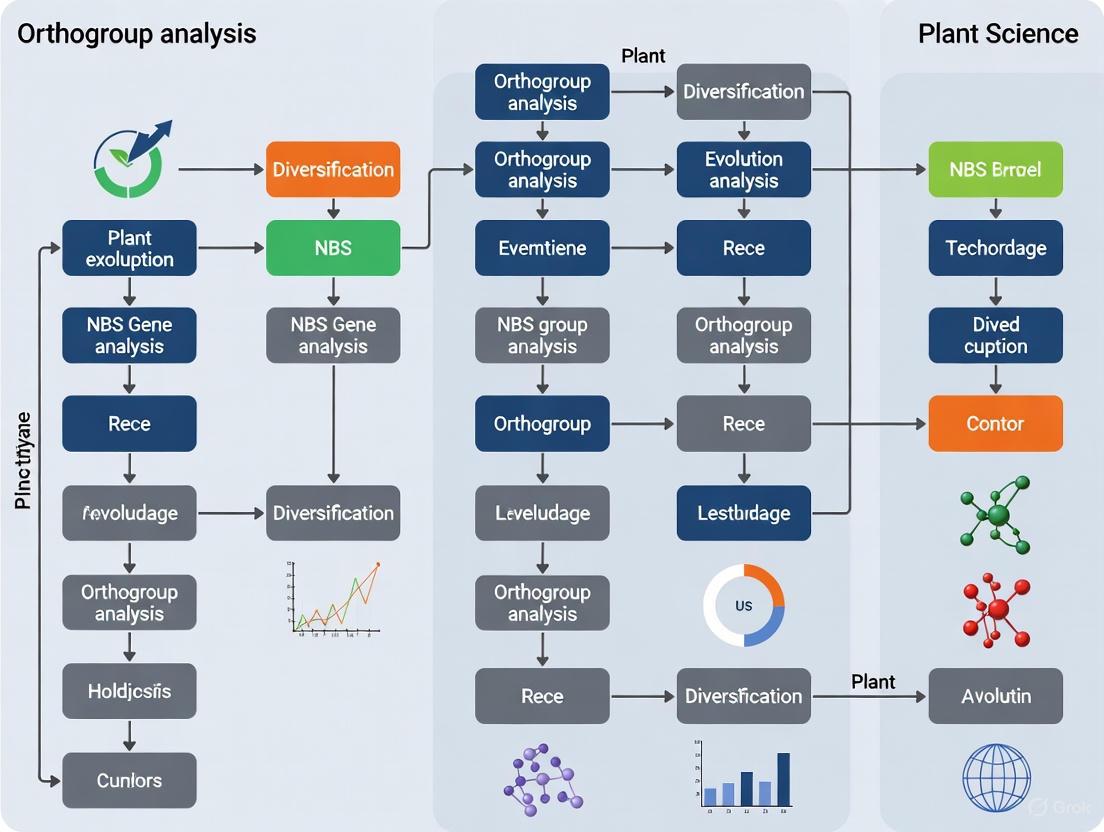
Orthogroup analysis has emerged as a pivotal methodology for deciphering the complex evolution and diversification of Nucleotide-Binding Site (NBS) genes, the largest family of plant disease resistance genes.
Orthogroup Analysis for NBS Gene Evolution: A Comprehensive Guide from Foundations to Biomedical Applications
Abstract
Orthogroup analysis has emerged as a pivotal methodology for deciphering the complex evolution and diversification of Nucleotide-Binding Site (NBS) genes, the largest family of plant disease resistance genes. This article provides a comprehensive framework for researchers and scientists engaged in drug development and comparative genomics. We begin by establishing the foundational principles of NBS gene classification and the significance of orthogroups in evolutionary studies. The core of the guide delves into modern methodological workflows for orthology inference, utilizing tools like OrthoFinder and addressing domain-level complexities. Critical sections are dedicated to troubleshooting systematic errors in orthology prediction and optimizing analyses for accuracy. Finally, we explore validation strategies through expression profiling, genetic variation studies, and cross-species comparative genomics, illustrating how orthogroup insights can identify core conserved resistance elements and inform targeted breeding strategies.
The Evolutionary Landscape of NBS Genes: Unraveling Diversity and Orthogroup Fundamentals
Core Domain Architecture and Classification of Plant NBS Genes
The Nucleotide-Binding Site (NBS) gene superfamily encodes a major class of intracellular immune receptors in plants, also known as NLRs (Nucleotide-Binding Leucine-Rich Repeat receptors). These proteins are central to the plant immune system, mediating effector-triggered immunity (ETI) by recognizing specific pathogen effector molecules [1].
The canonical NLR protein structure consists of three core domains:
- A central NBS (NB-ARC) domain responsible for nucleotide binding (ATP/GTP) and activation regulation
- A C-terminal Leucine-Rich Repeat (LRR) domain involved in effector recognition and protein-protein interactions
- A variable N-terminal domain that defines the primary subfamilies [2] [3]
Based on the structure of the N-terminal domain, the NBS superfamily is classified into three major subfamilies:
- TNL (TIR-NBS-LRR): Characterized by an N-terminal Toll/Interleukin-1 Receptor (TIR)-like domain. TIR domains are often involved in signal transduction and can possess enzymatic activity [1] [2].
- CNL (CC-NBS-LRR): Feature an N-terminal Coiled-Coil (CC) domain. The CC domain can mediate protein oligomerization and is crucial for immune signaling [1] [2] [4].
- RNL (RPW8-NBS-LRR): Possess an N-terminal Resistance to Powdery Mildew 8 (RPW8)-like domain. RNLs often act as helper NLRs in signaling networks and are more conserved in number across plant species [1] [5].
In addition to these full-length architectures, many truncated forms exist in plant genomes, such as NL, CN, TN, or N-only proteins, which may retain regulatory or functional roles [3] [5].
Table 1: Major NBS Gene Classes and Their Defining Domains
| Gene Class | N-Terminal Domain | Central Domain | C-Terminal Domain | Presence in Plant Groups |
|---|---|---|---|---|
| TNL | TIR (Toll/Interleukin-1 Receptor) | NBS (NB-ARC) | LRR (Leucine-Rich Repeat) | Dicots only [2] |
| CNL | CC (Coiled-Coil) | NBS (NB-ARC) | LRR (Leucine-Rich Repeat) | Monocots and Dicots |
| RNL | RPW8 (Resistance to Powdery Mildew 8) | NBS (NB-ARC) | LRR (Leucine-Rich Repeat) | Monocots and Dicots |
| NL | (None) | NBS (NB-ARC) | LRR (Leucine-Rich Repeat) | Monocots and Dicots |
| TN | TIR (Toll/Interleukin-1 Receptor) | NBS (NB-ARC) | (None) | Dicots only |
| CN | CC (Coiled-Coil) | NBS (NB-ARC) | (None) | Monocots and Dicots |
| N | (None) | NBS (NB-ARC) | (None) | Monocots and Dicots |
Conserved Motifs and Functional Regions of the NBS Domain
The central NBS (NB-ARC) domain is the engine of the NLR protein and contains several highly conserved motifs critical for nucleotide binding, hydrolysis, and molecular switching between inactive (ADP-bound) and active (ATP-bound) states [2] [6].
The following table details the key conserved motifs within the NBS domain and their functions:
Table 2: Key Conserved Motifs in the Plant NBS (NB-ARC) Domain
| Motif Name | Consensus Sequence | Functional Role |
|---|---|---|
| P-loop | GxPGSGKS | Binds the phosphate of ATP/GTP (Walker A motif) [6] |
| RNBS-A | LVVLDDVW | Sensor for nucleotide state; shows subfamily-specific variation (TNL vs. CNL) [2] |
| Kinase-2 | GGLPLLRVLDD | Putative catalytic site for nucleotide hydrolysis (Walker B motif) [6] |
| RNBS-B | FLHIACF | Structural role; potential sensor for nucleotide binding [6] |
| RNBS-C | CSRLKALMFK | TIR-specific motif; function not fully elucidated [2] |
| GLPL | GLPLAHL | Structural role; part of the "Arc" subdomain [6] |
| RNBS-D | CFLYCALF | Shows subfamily-specific variation (TNL vs. CNL) [2] |
| MHD | MHDIVLFL | Key molecular switch; mutation can lead to autoimmunity [2] |
Table 3: Key Research Reagents and Resources for NBS Gene Analysis
| Reagent/Resource | Function/Application | Example Tools/Databases |
|---|---|---|
| HMM Profile (Pfam) | Identifying NBS domains in protein sequences | Pfam NB-ARC domain (PF00931) [1] [2] [7] |
| Genome Databases | Source of protein and genomic sequences for analysis | Phytozome, NCBI, Plaza, organism-specific databases (e.g., SunflowerGenome.org) [1] [2] |
| Orthogroup Analysis Software | Clustering genes into orthologous groups across species | OrthoFinder [1] [7] |
| Domain Analysis Tools | Annotating and visualizing protein domains and motifs | InterProScan, NCBI CD-Search, MEME Suite [2] [7] [5] |
| Sequence Alignment & Phylogenetics | Multiple sequence alignment and evolutionary tree building | MAFFT, Clustal Omega, MEGA [1] [5] |
| Synteny & Duplication Analysis | Identifying gene clusters and duplication events | MCscanX, BEDTools [7] [5] |
Experimental Workflow for Genome-Wide Identification and Classification of NBS Genes
The following diagram illustrates a standard bioinformatics pipeline for the identification and evolutionary analysis of NBS genes, integrating orthogroup construction as a core step.
NBS Gene Identification and Orthogroup Analysis Workflow
Detailed Protocol: Key Steps for NBS Gene Identification and Orthogroup Analysis
Step 1: HMM Search for NBS Domain Identification
- Objective: To identify all potential NBS-encoding genes from a proteome.
- Procedure:
- Obtain the HMM profile for the NB-ARC domain (PF00931) from the Pfam database.
- Download the complete set of predicted protein sequences for your target genome(s).
- Use HMMER software (e.g.,
hmmsearch) to scan the proteome. A stringent E-value cutoff (e.g., 1.1e-50 as used in [1] or 1e-10 [2]) is recommended to minimize false positives. - Extract all protein sequences that significantly match the NB-ARC HMM profile.
- Note: This step generates the primary candidate list of NBS-containing genes.
Step 2-4: Candidate Validation and Curation
- Objective: To filter and validate candidates, ensuring they contain a complete NBS domain.
- Procedure:
- Submit candidate sequences to domain analysis tools like NCBI's Conserved Domain Database (CDD) or InterProScan [2] [5].
- Retain only sequences confirmed to contain a complete NBS domain. This excludes fragments and ensures data quality for subsequent evolutionary analysis.
- Use tools like COILS or PCOILS and HMM scans for TIR domains to identify the N-terminal domain (CC, TIR, RPW8) for each candidate [6].
- Classify each gene into structural classes (TNL, CNL, RNL, NL, etc.) based on its domain architecture [3].
Step 5: Orthogroup Clustering for Evolutionary Analysis
- Objective: To group NBS genes into orthogroups (OGs) across multiple species, identifying evolutionarily conserved lineages.
- Procedure:
- Compile the curated NBS protein sequences from multiple plant genomes into a single FASTA file.
- Run OrthoFinder with default parameters. This software uses DIAMOND for fast sequence similarity searches and the MCL algorithm for clustering [1] [7].
- Analyze the output. OrthoFinder will assign genes to orthogroups. You will identify:
- Application in Thesis Research: Orthogroup analysis forms the backbone for comparative studies of NBS gene evolution and diversification, allowing you to trace the history of specific gene lineages across plant phylogeny.
Advanced Concepts: Integrated Decoy Domains and NBS Gene Evolution
Beyond the standard domains, many NLR proteins, particularly in dicots, incorporate Integrated Decoy Domains (IDs). These are non-canonical domains fused within the NLR structure that act as molecular baits for pathogen effectors. The "integrated decoy model" proposes that these IDs mimic the genuine host targets of effectors. When an effector binds to the decoy, it triggers a conformational change in the NLR, activating defense responses [4].
Examples of Integrated Decoy Domains include:
- WRKY domains found in Arabidopsis RRS1 and soybean GmNLR-ID#85, which decoy effectors like PopP2 [4].
- HMA (Heavy Metal Associated) domains in rice RGA5, which bind fungal effectors [4].
- A recent screen in soybean identified 36 different IDs in TNL-like proteins, including AAA_22, zf-RVT, and WRKY domains, with demonstrated roles in resistance to multiple viruses [4].
The evolution of the NBS gene superfamily is driven by several genetic mechanisms:
- Tandem Duplication: The most common mechanism, leading to clusters of NBS genes on chromosomes. This allows for the rapid generation of new specificities [1] [5] [6].
- Whole-Genome Duplication (WGD): Provides raw genetic material for neofunctionalization and subfunctionalization of NBS genes [1] [7].
- Birth-and-Death Evolution: New resistance specificities are created by duplication (birth), while others are deactivated or lost (death) over evolutionary time, leading to dynamic and species-specific NBS repertoires [5].
Application Note: Unprecedented Scale in NBS Gene Family Diversity
This application note details the findings and methodologies from a large-scale comparative genomic analysis of nucleotide-binding site (NBS) domain genes, the primary components of plant immune responses. The research identified 12,820 NBS-domain-containing genes across 34 plant species, spanning an evolutionary range from mosses to monocots and dicots [1].
These genes were classified into 168 distinct classes based on their domain architecture, revealing both classical patterns (NBS, NBS-LRR, TIR-NBS, TIR-NBS-LRR) and novel, species-specific structural combinations (TIR-NBS-TIR-Cupin1-Cupin1, TIR-NBS-Prenyltransf, Sugar_tr-NBS) [1]. Orthogroup (OG) analysis delineated 603 orthogroups, which included both core orthogroups (OG0, OG1, OG2) common across many species and unique orthogroups (OG80, OG82) specific to particular lineages [1]. The functional significance of this diversity was confirmed through virus-induced gene silencing (VIGS) of GaNBS (OG2) in resistant cotton, which demonstrated its critical role in viral titering, directly linking sequence diversity to disease resistance function [1].
Table 1: Summary of NBS Gene Family Diversity Across Major Studies
| Study Focus/Clade | Number of Species | Total NBS Genes Identified | Notable Evolutionary Pattern | Key Citation |
|---|---|---|---|---|
| Broad Plant Lineages | 34 | 12,820 | 168 domain architecture classes | [1] |
| Nicotiana Species | 3 | 1,226 | ~76.6% of allotetraploid N. tabacum NBS genes traceable to parental genomes | [8] |
| Asparagus Species | 3 | 137 (combined) | Marked gene family contraction from wild (63 in A. setaceus) to domesticated (27 in A. officinalis) species | [9] |
| Wild Strawberry Species | 8 | Not Specified | Non-TNLs constitute >50% of NLRs; positive selection and higher expression observed | [10] |
Protocol: Genome-Wide Identification and Classification of NBS Genes
Computational Identification Pipeline
Principle: Identify NBS-encoding genes from genome assemblies using conserved domain models and classify them based on domain architecture.
Reagents/Resources:
- Genome Assemblies & Annotations: From databases like NCBI, Phytozome, or Plaza [1].
- HMM Profile: PF00931 (NB-ARC domain) from the Pfam database [1] [8] [9].
- Software: HMMER suite (e.g.,
PfamScan.pl) [1], NCBI Conserved Domain Database (CDD) [8], InterProScan [9], COILS program for coiled-coil (CC) domains [10].
Procedure:
- Data Retrieval: Download the latest genome assemblies and annotated protein sequences for your target species.
- Domain Screening: Perform a Hidden Markov Model (HMM) search against the proteome using the PF00931 profile. Use a stringent E-value cutoff (e.g., 1.1e-50 [1] or 1e-10 [9]).
- Domain Validation & Classification: Submit candidate sequences containing the NB-ARC domain to tools like CDD or InterProScan to identify associated N-terminal (TIR, CC, RPW8) and C-terminal (LRR) domains.
- Architecture-Based Classification: Classify genes into subfamilies (e.g., CNL, TNL, RNL, NL) based on their complete domain composition [8] [9].
Protocol: Evolutionary and Orthogroup Analysis of NBS Genes
Orthology Inference and Evolutionary History
Principle: Cluster NBS genes from multiple species into orthogroups to infer evolutionary relationships, gene duplication events, and functional conservation.
Reagents/Resources:
- Software: OrthoFinder [1] [9], DIAMOND [1], MAFFT [1], FastTree/ IQ-TREE [1] [10], MCScanX [8] [10].
Procedure:
- Sequence Preparation: Compile protein sequences of all identified NBS genes from the analyzed species.
- Orthogroup Clustering: Run OrthoFinder, which uses DIAMOND for all-vs-all sequence comparison and MCL for clustering, to group sequences into orthogroups [1].
- Phylogenetic Reconstruction: Perform multiple sequence alignment (e.g., with MAFFT or Clustal Omega) of NBS domains or full-length sequences [1] [9]. Construct a maximum likelihood phylogenetic tree (e.g., with FastTreeMP or IQ-TREE) with bootstrap support [1] [10].
- Duplication Analysis: Use MCScanX to identify tandem and segmental (whole-genome) duplication events by analyzing genomic collinearity [8] [10].
Protocol: Functional Validation Using Virus-Induced Gene Silencing (VIGS)
Functional Assessment of Candidate NBS Genes
Principle: Rapidly test the function of a candidate NBS gene in plant disease resistance by knocking down its expression in vivo.
Experimental Context: This protocol is based on the functional validation of GaNBS (OG2) in resistant cotton, which confirmed its role in defense against Cotton Leaf Curl Disease [1].
Reagents/Resources:
- Plant Material: Resistant and susceptible plant accessions (e.g., resistant G. arboreum or tolerant G. hirsutum 'Mac7' for CLCuD studies [1]).
- VIGS Vector: A virus-based vector (e.g., based on Tobacco Rattle Virus).
- Agrobacterium tumefaciens: Strain capable of delivering the VIGS vector into plant cells.
Procedure:
- Target Sequence Cloning: Clone a ~200-300 bp fragment of the candidate NBS gene (e.g.,
GaNBS) into the VIGS vector. - Agrobacterium Transformation: Introduce the recombinant VIGS vector into Agrobacterium tumefaciens.
- Plant Infiltration: Grow plants to the cotyledon or two-leaf stage. Infiltrate the Agrobacterium culture containing the VIGS construct into the leaves. Include control plants infiltrated with an empty vector.
- Pathogen Challenge: After VIGS-mediated gene silencing is established (typically 2-3 weeks post-infiltration), challenge the plants with the target pathogen (e.g., CLCuD virus via whitefly transmission [1]).
- Phenotypic & Molecular Analysis:
- Disease Assessment: Monitor and score disease symptoms in control and silenced plants.
- Viral Titer Quantification: Measure pathogen biomass (e.g., through qPCR for viral DNA).
- Gene Silencing Confirmation: Verify knockdown of the target NBS gene expression via RT-qPCR.
Table 2: The Scientist's Toolkit: Key Research Reagents and Resources
| Reagent/Resource | Function/Application | Example Sources/Tools |
|---|---|---|
| Pfam HMM Profile (PF00931) | Computational identification of the core NBS domain in protein sequences. | Pfam Database [1] [8] |
| OrthoFinder Software | Inferring orthogroups and gene evolutionary relationships from genomic data. | Open-source bioinformatics tool [1] [9] |
| VIGS Vector System | Functional validation through transient gene silencing in plants. | e.g., Tobacco Rattle Virus (TRV)-based vectors [1] |
| RNA-seq Datasets | Profiling NBS gene expression under stress conditions and across tissues. | NCBI SRA, IPF Database [1] [8] |
| MCScanX Software | Identifying gene duplication modes (tandem, segmental) from genomic data. | Open-source bioinformatics tool [8] [10] |
In comparative genomics, an orthogroup is defined as the set of all genes descended from a single gene in the last common ancestor of the species being considered [11]. This concept provides a coherent framework for understanding gene evolution across multiple species, as it encompasses both orthologs (genes separated by speciation events) and paralogs (genes separated by duplication events) that share a common ancestral gene [12]. The identification and classification of orthogroups enables researchers to trace the evolutionary history of gene families, infer functional relationships, and understand the genetic basis of diversification and adaptation.
Orthogroups can be systematically categorized based on their distribution patterns across a set of genomes, with three primary classifications emerging: core orthogroups (universally present across all studied genomes), unique orthogroups (present in only one species within the dataset), and species-specific orthogroups (expanded or contracted in a particular lineage) [13]. This classification system provides critical insights into genome evolution, functional conservation, and lineage-specific adaptations. For research focusing on Nucleotide-Binding Site (NBS) genes—key players in plant immune responses—orthogroup analysis offers a powerful approach to unraveling their evolutionary diversification and functional specialization across taxa [6].
Table 1: Classification of Orthogroups in Pan-Genome Analysis
| Category | Definition | Presence Threshold | Biological Significance |
|---|---|---|---|
| Core | Orthogroups conserved across all genomes | 100% of genomes | Essential biological functions, cellular maintenance |
| Softcore | Orthogroups with minimal absence | ≥90% of genomes | Evolutionary conservation with minor population-specific variability |
| Dispensable | Orthogroups variably present | 1% to 90% of genomes | Environmental adaptation, stress response, phenotypic diversity |
| Unique/Private | Orthogroups restricted to a single genome | 1 genome | Recent insertions, horizontal transfer, or annotation artifacts |
Orthogroup Inference: Methodologies and Protocols
Computational Tools for Orthogroup Inference
Several sophisticated algorithms have been developed to infer orthogroups from genomic data. OrthoFinder is a widely used method that employs a novel score transformation to eliminate gene length bias in orthogroup inference, significantly improving accuracy compared to earlier approaches [11]. The algorithm uses length-normalized BLAST or DIAMOND similarity scores and applies the MCL (Markov Clustering) algorithm to identify orthogroups [14]. More recently, FastOMA has been developed to address scalability challenges, enabling linear-time processing of thousands of eukaryotic genomes while maintaining high accuracy through k-mer-based homology clustering and taxonomy-guided subsampling [15]. Alternative approaches like RD-MCL (Recursive Dynamic Markov Clustering) replace BLASTP E-values with AlignMe scores as similarity metrics and use Metropolis-coupled Markov chain Monte Carlo (MCMCMC) to automate parameter selection for MCL, providing enhanced resolution for closely related sequences in large gene families [16].
Standard Protocol for Orthogroup Inference Using OrthoFinder
Protocol 1: Orthogroup Inference with OrthoFinder
Input Data Preparation
- Collect proteome sequences in FASTA format for all species of interest
- Ensure consistent gene annotation across species
- For NBS gene studies, include representative species spanning the phylogenetic range of interest
Software Installation
Running OrthoFinder
Output Analysis
- Orthogroups are output in the directory "OrthoFinder/Results_Date"
- Key files include "Orthogroups.GeneCount.tsv" (presence/absence matrix) and "Orthogroups.tsv" (gene assignments)
- The "Orthogroups.GeneCount.tsv" file is used for categorizing orthogroups into core, unique, and species-specific classes [13]
Workflow for Orthogroup Analysis
The following diagram illustrates the complete workflow for orthogroup inference and classification:
Classification of Orthogroups: Core, Unique, and Species-Specific
Computational Protocol for Orthogroup Classification
Protocol 2: Categorical Assignment of Orthogroups
Data Import and Preprocessing
Category Assignment
Visualization
Biological Significance of Orthogroup Categories
Core orthogroups represent the conserved genetic backbone across species and are enriched for essential cellular functions such as DNA replication, transcription, translation, and metabolic pathways [13]. In the context of NBS genes, core orthogroups may represent ancestral defense mechanisms maintained across evolutionary lineages due to their fundamental importance in pathogen recognition [6].
Species-specific orthogroups (including private and dispensable categories) contribute to phenotypic diversity and adaptive evolution. In NBS gene families, species-specific expansions through tandem duplications have been associated with adaptation to specific pathogen pressures [6] [17]. These lineage-specific innovations may enable particular species to recognize pathogen effectors that are ecologically relevant to their specific environments.
Table 2: Characteristics of Orthogroup Categories in Eukaryotic Genomes
| Category | Average % of Genes | Evolutionary Rate | Functional Tendencies |
|---|---|---|---|
| Core | 25-65% | Slow, strong constraints | Essential cellular processes, conserved domains |
| Softcore | 10-20% | Moderate constraints | Environment-specific adaptations |
| Dispensable | 15-50% | Faster, relaxed constraints | Stress response, immunity, secondary metabolism |
| Private | 1-10% | Highly variable | Recent innovations, horizontal transfer |
Advanced Applications in NBS Gene Evolution Research
Specialized Workflow for NBS Gene Orthogroup Analysis
Protocol 3: NBS Gene Identification and Classification
HMM-Based NBS Gene Identification
Motif Identification and Classification
Integration with Orthogroup Analysis
- Map identified NBS genes to orthogroups from OrthoFinder output
- Categorize NBS-containing orthogroups as core, dispensable, or private
- Corrogate expression data and duplication patterns for each category [6]
NBS Gene Orthogroup Diversification Analysis
The evolutionary dynamics of NBS genes can be quantified through measures of sequence and expression divergence within orthogroups. Research has demonstrated that NBS genes show distinct patterns of molecular diversification across evolutionary lineages, with some orthogroups exhibiting strong conservation (core) while others show lineage-specific expansions (species-specific) [17].
For orthogroups containing NBS genes, the following analytical approach is recommended:
- Calculate sequence similarity within orthogroups using protein alignment scores
- Determine expression profiles across homologous tissues or conditions
- Identify duplication events through phylogenetic analysis of gene trees
- Correlate diversification patterns with functional specialization
The diagram below illustrates the specialized workflow for NBS gene orthogroup analysis:
Table 3: Research Reagent Solutions for Orthogroup Analysis
| Tool/Resource | Function | Application Context |
|---|---|---|
| OrthoFinder | Infers orthogroups from proteomes | General orthogroup identification, species tree inference |
| FastOMA | Scalable orthology inference for large datasets | Pan-genome analyses with thousands of genomes |
| OMAmer | k-mer-based protein sequence placement | Fast homology detection in FastOMA pipeline |
| OrthoBrowser | Visualization of orthogroup results | Interactive exploration of gene trees and synteny |
| HMMER | Profile hidden Markov model searches | Domain-specific gene identification (e.g., NBS genes) |
| MEME Suite | Motif discovery and analysis | Identification of conserved motifs in NBS domains |
| DIAMOND | Accelerated protein sequence similarity | Fast alternative to BLAST for large datasets |
| PSVCP Pipeline | Pan-genome construction and SV calling | Gene presence-absence variation analysis |
The classification of orthogroups into core, unique, and species-specific categories provides a powerful framework for investigating gene family evolution and diversification. For NBS gene research, this approach enables the identification of conserved immune mechanism components versus lineage-specific innovations that may underlie adaptations to distinct pathogen pressures. The integration of orthogroup analysis with motif identification, expression profiling, and duplication history reconstruction offers a comprehensive methodology for unraveling the evolutionary dynamics of these critical plant immune genes across taxonomic boundaries.
This application note provides a structured framework for investigating the evolutionary dynamics of Nucleotide-Binding Site Leucine-Rich Repeat (NBS-LRR) genes, with a specific focus on the distinct roles of tandem and whole-genome duplication (WGD) events. Designed for researchers in plant genomics and disease resistance, it details computational protocols for identifying duplication mechanisms, presents quantitative evolutionary patterns across Rosaceae species, and outlines essential bioinformatic toolkits for orthogroup-based analysis.
NBS-LRR genes constitute the largest and most critical class of disease resistance (R) genes in plants, encoding intracellular receptors that initiate effector-triggered immunity against diverse pathogens [1] [18]. Their genomic organization and evolutionary expansion are fundamental to a plant's ability to adapt to pathogen pressures. Two primary genetic mechanisms drive this expansion: tandem duplication and whole-genome duplication. Tandem duplication, involving the repetitive copying of genes adjacent to each other on a chromosome, enables rapid, localized expansion of specific gene families, often facilitating adaptive evolution through neofunctionalization [19]. In contrast, WGD events simultaneously duplicate the entire genome, providing raw genetic material for long-term evolutionary innovation [19].
Research across plant genomes has revealed that the NBS-LRR family exhibits remarkably dynamic and distinct evolutionary patterns in different plant lineages [20]. Comparative genomics within the Rosaceae family, which includes economically vital fruit crops like apple, peach, and strawberry, offers a powerful model system to dissect these patterns due to the family's diverse genome histories and the availability of multiple sequenced genomes [21] [20] [19]. This note integrates quantitative findings and methodologies to guide research on the evolutionary drivers of NBS expansion.
Quantitative Analysis of NBS-LRR Expansion
Comparative NBS-LRR Gene Counts Across Plant Families
Table 1: NBS-Encoding Gene Numbers in Selected Plant Genomes
| Family | Species | Genome Size (Mb) | Estimated Gene Number | NBS-Encoding Genes | Percentage of NBS Genes | Primary Expansion Mechanism |
|---|---|---|---|---|---|---|
| Rosaceae | Apple (Malus domestica) | ~742 | ~63,000 | 1303 | 2.05% | Tandem & WGD |
| Pear (Pyrus bretschneideri) | ~527 | ~43,000 | 617 | 1.44% | WGD | |
| Peach (Prunus persica) | ~265 | ~29,000 | 437 | 1.51% | Tandem | |
| Mei (Prunus mume) | ~280 | ~31,000 | 475 | 1.51% | Tandem | |
| Strawberry (Fragaria vesca) | ~240 | ~33,000 | 346 | 1.05% | Tandem | |
| Cucurbitaceae | Cucumber (Cucumis sativus) | ~367 | ~26,500 | 59-71 | 0.22-0.27% | Limited Expansion |
| Melon (Cucumis melo) | ~450 | ~27,400 | 80 | 0.29% | Limited Expansion | |
| Watermelon (Citrullus lanatus) | ~425 | ~23,000 | 45 | 0.20% | Limited Expansion |
The data reveals extreme expansion of NBS-encoding genes in Rosaceae species compared to Cucurbitaceae, with apple possessing a remarkably high number (1303 genes, 2.05% of its predicted genes), which may be the highest reported for a diploid plant [21]. This suggests pronounced lineage-specific evolutionary pressures and mechanisms.
Duplication Types in Young Duplicate Genes of Rosaceae
Table 2: Distribution of Young Duplicate Gene Types in Six Rosaceae Species
| Species | Expansion Type | Tandem Duplication | Transposon-Related Duplication | Whole-Genome Duplication (WGD) |
|---|---|---|---|---|
| F. vesca | Species-Specific | 65.38% | 11.54% | 23.08% |
| Lineage-Specific | 13.55% | 11.83% | 9.94% | |
| M. domestica | Species-Specific | 46.98% | 12.43% | 40.59% |
| Lineage-Specific | 15.17% | 9.67% | 39.99% | |
| P. communis | Species-Specific | 31.36% | 14.36% | 54.28% |
| Lineage-Specific | 12.07% | 8.90% | 44.85% | |
| P. persica | Species-Specific | 37.54% | 19.17% | 25.52% |
| Lineage-Specific | 10.53% | 15.79% | 26.32% | |
| R. chinensis | Species-Specific | 63.16% | 15.79% | 21.05% |
| Lineage-Specific | 12.90% | 11.83% | 9.68% | |
| R. occidentalis | Species-Specific | 50.00% | 16.67% | 33.33% |
| Lineage-Specific | 9.52% | 14.29% | 4.76% |
Analysis of young duplicate genes shows that tandem duplications are the predominant force in species-specific expansions for most Rosaceae species, while WGD plays a major role in lineage-specific expansions, particularly in M. domestica and P. communis which underwent a recent shared WGD event [19].
Evolutionary Patterns and Adaptive Significance
Distinct Evolutionary Patterns in Rosaceae
Research on 12 Rosaceae genomes has identified several distinct evolutionary patterns for NBS-LRR genes [20]:
- "First expansion and then contraction": Observed in Rubus occidentalis, Potentilla micrantha, Fragaria iinumae, and Gillenia trifoliata.
- "Continuous expansion": Exhibited by Rosa chinensis.
- "Expansion followed by contraction, then a further expansion": Found in F. vesca.
- "Early sharp expanding to abrupt shrinking": Shared by three Prunus species and three Maleae species.
These dynamic patterns result from independent gene duplication and loss events following the divergence of Rosaceae species from a common ancestor that possessed an estimated 102 NBS-LRR genes (7 RNLs, 26 TNLs, and 69 CNLs) [20].
Adaptive Evolution of Young Duplicates
Young duplicate genes in Rosaceae species show strong signatures of positive selection and functional preference for stress response [19]. A genome-wide study of six Rosaceae species revealed that 60.25% of gene families contained young duplicates, with 41.67% of genes in universal core orthogroups involved in recent species-specific duplications [19]. These young duplicates are enriched in NBS domains and other domains related to environmental stress responses, indicating that adaptive evolution to biotic and abiotic pressures is a primary driver of NBS gene expansion and retention.
Diagram Title: NBS Gene Evolution Research Workflow
Experimental Protocols
Protocol 1: Genome-Wide Identification of NBS-LRR Genes
Principle: This protocol uses Hidden Markov Models (HMMs) of conserved protein domains to systematically identify NBS-LRR genes from whole-genome sequences [1] [18] [20].
Procedure:
- Data Acquisition: Download whole-genome sequences and protein annotation files from databases such as the Genome Database for Rosaceae (https://www.rosaceae.org/) or Phytozome.
- HMMER Search: Perform a HMMER search (v3.0 or later) against the annotated protein sequences using the NB-ARC (PF00931) HMM profile from the Pfam database.
- Command example:
hmmsearch --domtblout output_file PF00931.hmm protein_dataset.fa - Initial E-value cutoff: < 1.0 [20]
- Command example:
- Domain Validation: Confirm the presence of characteristic N-terminal domains (CC/TIR/RPW8) and C-terminal LRR domains in candidate sequences using:
- PfamScan with Pfam-A database
- NCBI's Conserved Domain Database (CDD) search
- Coiled-coil domains predicted by Paircoil2 or similar tools
- Manual Curation: Remove redundant hits and verify domain architecture. Classify final NBS-LRR genes into subclasses (TNL, CNL, RNL) based on N-terminal domains.
Protocol 2: Orthogroup Analysis and Duplication Classification
Principle: Orthogroup analysis clusters genes into lineages of descent, allowing for the differentiation between species-specific and lineage-specific expansions and the classification of duplication types [1] [19].
Procedure:
- Orthogroup Inference: Use OrthoFinder (v2.5.1 or later) with default parameters to cluster protein sequences from multiple species into orthogroups.
- Command example:
orthofinder -f path/to/protein_fastas -t 4
- Command example:
- Identification of Young Duplicates: Within orthogroups, identify genes resulting from recent, species-specific duplications.
- Duplication Type Classification: Use tools like DupGen_finder to classify the genomic mechanism behind each duplication event [19]:
- Tandem Duplication: Genes located adjacent to each other on the same chromosome (typically separated by ≤ 10 intervening genes) [19].
- Whole-Genome Duplication (WGD): Genes originating from documented polyploidy events, often identified through synteny analysis.
- Transposon-Related Duplication: Duplications associated with transposable element activity.
- Singleton: Genes not resulting from the above duplication modes.
Protocol 3: Evolutionary Analysis for Positive Selection
Principle: This protocol tests whether duplicate NBS-LRR genes have undergone adaptive evolution by comparing the rates of non-synonymous to synonymous nucleotide substitutions [19].
Procedure:
- Sequence Alignment: Extract coding sequences for orthogroups of interest. Perform multiple sequence alignment using MAFFT or MUSCLE.
- Phylogeny Reconstruction: Construct phylogenetic trees for each orthogroup using maximum likelihood methods (e.g., FastTree or IQ-TREE).
- Selection Test: Use the CodeML program in the PAML package to fit models of codon evolution and calculate ω (dN/dS) ratios.
- Key comparison: Branch-site model A (allows ω>1) vs. Null model (fixes ω=1)
- Statistical Analysis: Apply likelihood ratio tests to identify genes or lineages under positive selection (ω > 1). Correct for multiple testing using False Discovery Rate (FDR) control.
The Scientist's Toolkit
Table 3: Essential Research Reagents and Computational Tools
| Category | Item/Software | Specific Function/Use | Key Features |
|---|---|---|---|
| Bioinformatics Software | HMMER v3 | Identification of NBS domains using HMM profiles | Scans sequence databases for matches to profile HMMs; uses Pfam NB-ARC domain (PF00931) |
| OrthoFinder v2.5+ | Orthogroup inference from multiple genomes | Infers orthogroups and gene duplication events; outputs hierarchical orthogroups | |
| MEME Suite | Motif discovery and analysis in NBS domains | Identifies conserved protein motifs (e.g., P-loop, GLPL, Kinase-2) | |
| PAML (CodeML) | Phylogenetic analysis by maximum likelihood | Estimates synonymous/non-synonymous substitution rates (dN/dS) to detect selection | |
| MCScanX | Genome collinearity and duplication type classification | Identifies tandem, segmental, and WGD events; visualizes syntenic blocks | |
| Databases | Pfam Database | Protein family and domain annotation | Provides curated HMM profiles (e.g., NB-ARC PF00931, TIR PF01582, LRR PF00560) |
| Genome Database for Rosaceae (GDR) | Central repository for Rosaceae genomics | Curated genomic data for apple, pear, peach, strawberry, and other Rosaceae species | |
| NCBI Conserved Domain Database (CDD) | Domain annotation and classification | Annotates conserved protein domains in candidate NBS-LRR genes | |
| Experimental Validation | Virus-Induced Gene Silencing (VIGS) | Functional validation of NBS-LRR genes | Rapid in planta assessment of gene function in disease resistance pathways |
| RNA-Seq Analysis | Expression profiling of NBS-LRR genes | Quantifies gene expression changes under pathogen stress; validates tissue-specific expression |
Concluding Remarks
The expansion of NBS-LRR genes in Rosaceae is driven by a complex interplay of tandem and whole-genome duplications, with the relative contribution of each mechanism varying significantly between species and lineages. Tandem duplication facilitates rapid, adaptive expansion of specific NBS families, often in response to immediate pathogen pressures, while WGD provides the foundational genetic material for long-term evolutionary diversification. The protocols and analyses outlined herein provide a robust framework for dissecting these evolutionary mechanisms through orthogroup analysis, enabling researchers to identify candidate NBS-LRR genes underpinning disease resistance traits in Rosaceae and other plant families.
Plant immunity against a myriad of pathogens relies significantly on nucleotide-binding site (NBS) domain genes, which constitute one of the largest and most dynamic gene families in plant genomes. These genes, particularly those encoding NBS-leucine-rich repeat (NBS-LRR) proteins, function as intracellular immune receptors that detect pathogen effectors and initiate effector-triggered immunity (ETI) [22] [23]. Understanding the phylogenetic distribution of NBS genes from ancestral plants to modern crops provides crucial insights into plant-pathogen co-evolution and reveals opportunities for breeding disease-resistant crops. This Application Note frames this evolutionary tracing within the context of orthogroup analysis, a powerful computational framework for identifying groups of genes descended from a single ancestral gene in the last common ancestor of the species being compared. We detail protocols for identifying NBS gene orthogroups, reconstructing their evolutionary history, and interpreting these patterns to inform modern crop improvement.
Evolutionary Origins and Diversification of NBS Genes
Deep Evolutionary Origins and Primary Classification
NBS-LRR genes originated in the green plant lineage, with their divergence into three major subclasses traceable to the common ancestor of the green lineage [22]. Extensive analyses across angiosperms provide strong evidence that NBS-LRR genes derive from three anciently separated classes:
- TIR-NBS-LRR (TNL): Characterized by a Toll/Interleukin-1 receptor domain at the N-terminus
- CC-NBS-LRR (CNL): Featuring a coiled-coil domain at the N-terminus
- RPW8-NBS-LRR (RNL): Containing a Resistance to Powdery Mildew 8 domain at the N-terminus [24]
These three classes have undergone dramatically different evolutionary trajectories. RNL genes evolved conservatively to maintain their role in defense signal transduction, while TNL and CNL classes underwent convergent recent expansions in various plant genomes, reflecting a long history of competition between plants and pathogens [24].
Table 1: Evolutionary Patterns of Major NBS-LRR Classes
| Class | N-terminal Domain | Evolutionary Pattern | Functional Role |
|---|---|---|---|
| TNL | TIR (Toll/Interleukin-1 Receptor) | Recent expansions in various lineages | Pathogen recognition and defense activation |
| CNL | CC (Coiled-Coil) | Recent expansions in various lineages | Pathogen recognition and defense activation |
| RNL | RPW8 (Resistance to Powdery Mildew 8) | Conservative evolution | Defense signal transduction |
Reconstruction of Ancestral NBS Gene Lineages
Comprehensive phylogenetic analyses have enabled reconstruction of ancestral NBS gene lineages at key divergence points in plant evolution. Tracing ancient states of NBS genes step by step through angiosperm radiation has revealed that:
- A total of 23 ancestral NBS-LRR lineages were recovered in the common ancestor of investigated angiosperms [24]
- Among these, 7 were RNL lineages, 26 were TNL lineages, and 69 were CNL lineages [20]
- At least 740 NBS-LRR lineages were present in the common ancestor of Secale cereale, Hordeum vulgare, and Triticum urartu [22]
- Most ancestral lineages have been inherited by only one or two modern species, with only 65 preserved in all three species [22]
The starting point of intensive expansions for both TNL and CNL genes from different angiosperm lineages has been traced to the K-P boundary approximately 66 million years ago, coinciding with dramatic environmental changes and bloom of pathogenic fungi [24].
Orthogroup Analysis: Methodological Framework
Protocol for Genome-Wide Identification of NBS Genes
Principle: Comprehensive identification of NBS-encoding genes from plant genomes using a combination of homology and hidden Markov model-based searches.
Materials:
- High-quality genome assemblies (FASTA format)
- Genome annotation files (GFF/GTF format)
- Computing infrastructure (high-performance computing cluster recommended)
Procedure:
Data Acquisition
- Download genome sequences and annotation files from Phytozome, EnsemblPlants, or other specialized genome databases [22] [23]
- For the analyses described herein, genome data were obtained from https://bigd.big.ac.cn/ for Secale cereale, https://ftp.ensemblgenomes.org/ for Triticum aestivum, and http://doi.org/10.5447/ipk/2021/3 for Hordeum vulgare [22]
HMMER Search
- Use the HMMER-3.0 package to perform HMMsearch against protein sequences
- Apply the Hidden Markov Model profile of the NB-ARC domain (Pfam accession: PF00931) as query
- Set E-value threshold to 1.0 [22]
- Command:
hmmsearch --domtblout output_file -E 1.0 PF00931.hmm protein_dataset.fasta
BLAST Confirmation
- Use obtained amino acid sequences as queries for BLASTp search against the protein sequences
- Set E-value threshold to 1.0 [22]
- Command:
blastp -query candidate_sequences.fasta -db protein_database -evalue 1.0 -outfmt 6 -out blast_output
Domain Validation
- Scan obtained protein sequences with HMMscan against the Pfam-A database
- Set E-value cut-off to 0.0001 to confirm NB-ARC domain presence [22]
- Use NCBI Conserved Domains Database (CDD) to verify CC, TIR, RPW8, and LRR domains
- Remove genes without conserved NBS domain from datasets
Classification
- Classify validated NBS genes into TNL, CNL, and RNL subclasses based on N-terminal domains
- Use COILS/PCOILS (P ≥ 0.9) and PAIRCOIL2 (P ≤ 0.025) for CC domain identification [6]
Figure 1: Workflow for identification and evolutionary analysis of NBS genes
Protocol for Orthogroup Analysis of NBS Genes
Principle: Identify groups of orthologous NBS genes across multiple species to infer evolutionary relationships and history.
Procedure:
Data Preparation
- Compile non-redundant protein sequences from target species
- Include species representing evolutionary diversity within clade of interest
Orthogroup Clustering
Evolutionary Analysis
Synteny Analysis
- Perform syntenic analysis to reveal duplication mechanisms using BLASTP and MCscanX software with default parameters [7]
- Identify tandem duplications by locating NBS genes clustered physically on chromosomes
Case Studies: NBS Gene Evolution Across Plant Families
Poaceae Family: Secale cereale as a Resource for Triticeae Breeding
Comprehensive analysis of the rye (Secale cereale) genome revealed 582 NBS-LRR genes, including one RNL and 581 CNL subclass genes [22]. This number exceeds that found in barley and diploid wheat genomes. Key findings include:
- S. cereale chromosome 4 contains the largest number of NBS-LRR genes, similar to pattern in wheat genome A but different from barley and wheat genomes B and D [22]
- Synteny analysis suggests more NBS-LRR genes on chromosome 4 were inherited from a common ancestor by S. cereale and wheat genome A than by wheat genomes B and D [22]
- The S. cereale genome inherited 382 ancestral NBS-LRR lineages, with 120 of them lost in both H. vulgare and T. urartu [22]
These findings position S. cereale as an important resource for molecular breeding of other Triticeae crops, with its unique NBS-LRR profile offering resistance genes lost in related species.
Table 2: Comparative NBS-LRR Gene Content in Selected Poaceae Species
| Species | Total NBS-LRR Genes | TNL | CNL | RNL | Notable Features |
|---|---|---|---|---|---|
| Secale cereale (Rye) | 582 | 0 | 581 | 1 | High number on chromosome 4 |
| Hordeum vulgare (Barley) | 214 expanded orthogroups | - | - | - | Significant expansions in 214 orthogroups |
| Saccharum spontaneum (Wild Sugarcane) | - | - | - | - | Greater contribution to disease resistance in modern cultivars |
| Zea mays (Maize) | 129 | - | - | - | Contracting evolutionary pattern |
| Oryza sativa (Rice) | 508 | - | - | - | Four-fold more than maize |
Diverse Evolutionary Patterns Across Plant Families
Orthogroup analysis has revealed remarkable diversity in NBS gene evolutionary patterns across plant families:
Rosaceae Family (2,188 NBS-LRR genes across 12 species):
- Rosa chinensis exhibited "continuous expansion" pattern
- Fragaria vesca showed "expansion followed by contraction, then further expansion"
- Three Prunus species and three Maleae species shared "early sharp expanding to abrupt shrinking" pattern [20]
Solanaceae Family:
- Pepper (Capsicum annuum): 252 NBS-LRR genes with dominance of nTNL subfamily (248 genes) over TNL subfamily (4 genes) [25]
- 54% of pepper NBS-LRR genes form 47 gene clusters, driven by tandem duplications and genomic rearrangements [25]
Cucurbitaceae Family:
- Cucumber has relatively few NBS-encoding genes (57 members in 'Gy14' inbred line) [26]
- Maintains genes belonging to both TIR and CC families [26]
- Gene duplication, sequence divergence, and gene loss identified as major evolutionary modes [26]
Table 3: Key Research Reagents and Computational Tools for NBS Gene Orthogroup Analysis
| Resource | Type | Function | Application Notes |
|---|---|---|---|
| HMMER Suite | Software Package | Profile hidden Markov model searches | Identify NBS domains using PF00931 model |
| OrthoFinder | Software Tool | Orthogroup inference from genomic data | Resolves gene families across species |
| Pfam NB-ARC (PF00931) | HMM Profile | NB-ARC domain identification | Critical for initial NBS gene identification |
| CAFÉ | Software Tool | Gene family evolution analysis | Computes expansion/contraction significance |
| MCscanX | Software Tool | Synteny visualization and analysis | Identifies tandem duplications and genomic context |
| MEME Suite | Motif Analysis | Discover conserved protein motifs | Identifies NBS domain conserved motifs (P-loop, RNBS-A, kinase-2, etc.) |
| PhyloSuite | Software Platform | Phylogenomic analysis | Integrates multiple phylogenetic tools |
| Plant Genome Databases | Data Resources | Genome sequences and annotations | Phytozome, EnsemblPlants, crop-specific databases |
Functional Validation and Application in Crop Improvement
Protocol: Expression Profiling of NBS Genes in Response to Pathogen Challenge
Principle: Determine NBS gene expression patterns under biotic stress to identify functional resistance genes.
Procedure:
Experimental Design
- Collect plant tissues from susceptible and resistant varieties under control and pathogen-inoculated conditions
- Include multiple time points post-inoculation to capture dynamic expression changes
RNA Sequencing
- Extract total RNA using trizol method with DNase treatment
- Prepare RNA-seq libraries with poly-A selection for mRNA enrichment
- Sequence on Illumina platform (minimum 30 million reads per sample)
Differential Expression Analysis
- Calculate FPKM values for NBS genes identified through orthogroup analysis
- Perform differential expression analysis using DESeq2 or edgeR
- Categorize expression into tissue-specific, abiotic stress-specific, and biotic stress-specific profiles [1]
Validation
- Confirm key expression patterns using qRT-PCR with gene-specific primers
- For critical candidate genes, implement functional validation through Virus-Induced Gene Silencing (VIGS) [1]
Translating Evolutionary Insights to Breeding Applications
Evolutionary analysis of NBS genes directly informs crop improvement strategies:
Wild Relative Utilization: In sugarcane, transcriptome data from multiple diseases revealed that more differentially expressed NBS-LRR genes were derived from S. spontaneum than from S. officinarum in modern cultivars, at proportions significantly higher than expected [23]. This reveals that wild relatives can make greater contributions to disease resistance in modern cultivars.
Orthogroup-Informed Gene Discovery: In barley, expanded orthogroups showed distinct evolutionary characteristics: they evolved more rapidly, experienced lower negative selection, had shorter gene sequences with fewer exons, lower GC content, and showed lower expression levels with higher tissue specificity compared to non-expanded genes [7]. These patterns help prioritize candidate genes for functional studies.
Conserved Orthogroup Targeting: Studies across 34 species identified 603 orthogroups with some core (most common) and unique (highly species-specific) orthogroups with tandem duplications [1]. Expression profiling demonstrated putative upregulation of OG2, OG6, and OG15 in different tissues under various biotic and abiotic stresses, highlighting conserved orthogroups as targets for broad-spectrum resistance.
Phylogenetic distribution analysis of NBS genes through orthogroup analysis provides a powerful framework for understanding plant immunity evolution and informing modern crop breeding. The conserved yet dynamic nature of NBS gene families across plant lineages reveals both shared evolutionary patterns and lineage-specific adaptations. The protocols detailed herein for identifying, classifying, and tracing NBS gene lineages enable researchers to reconstruct evolutionary history and identify candidate genes for functional validation.
Future directions in this field include integrating pan-genome analyses to capture NBS gene diversity within species, applying machine learning approaches to predict resistance specificities from sequence data, and developing engineering strategies to create synthetic NBS genes with novel recognition capabilities. As genomic resources continue to expand for both crops and their wild relatives, orthogroup analysis of NBS genes will play an increasingly vital role in unlocking the evolutionary wisdom stored in plant genomes to address contemporary agricultural challenges.
Methodological Workflows for Orthogroup Inference: From HMM Searches to OrthoFinder Analysis
The study of gene family evolution and diversification, particularly of disease-resistance genes such as those containing a Nucleotide-Binding Site (NBS) domain, is a cornerstone of plant genomics and drug discovery research. A critical first step in such analyses is the accurate genome-wide identification of all members of a gene family. This process requires robust, reproducible bioinformatics pipelines that integrate sequence homology searches, domain architecture validation, and phylogenetic analysis. Within the broader context of orthogroup analysis for NBS gene evolution, this protocol details a comprehensive methodology that leverages the power of Hidden Markov Models (HMMs) from the Pfam database via the HMMER software and subsequent validation steps. This integrated approach ensures the identification of a high-confidence set of candidate genes, providing a reliable foundation for downstream evolutionary and functional studies.
Research Reagent Solutions
The following table lists the essential computational tools and databases required to execute the genome-wide identification pipeline.
Table 1: Essential Research Reagents and Resources for Pipeline Implementation
| Item Name | Function/Description | Source/Reference |
|---|---|---|
| HMMER Suite | Software for sequence homology searches using profile Hidden Markov Models. Essential for identifying distant homologs. | http://hmmer.janelia.org/ [6] |
| Pfam Database | Curated collection of protein family HMMs. Provides the source HMM for the domain of interest (e.g., NB-ARC, PF00931). | http://pfam.xfam.org/ [27] |
| NCBI Conserved Domain Database (CDD) | Tool for validating the presence and completeness of protein domains within candidate sequences. | [6] |
| COILS / PCOILS | Algorithm for predicting coiled-coil (CC) domains in protein sequences, used for classifying NBS protein subfamilies. | [6] |
| MEME Suite | Tool for discovering novel, conserved motifs in protein sequences beyond known domains. | [6] |
| OrthoFinder | Software for orthogroup inference from whole-genome protein sequences, crucial for comparative evolutionary analysis. | [7] |
| PAML (CODEML) | Package for phylogenetic analysis by maximum likelihood, used to calculate evolutionary rates (Ka/Ks). | [7] |
Core Protocol: Genome-Wide Identification Pipeline
This section provides a detailed, step-by-step protocol for identifying and validating genes containing a specific domain of interest, using NBS genes as a primary example.
HMMER Search and Initial Candidate Identification
Objective: To scour a proteome using a domain-specific HMM to retrieve an initial, comprehensive set of candidate sequences.
Detailed Methodology:
- Acquire Domain-Specific HMM: Download the HMM profile for your domain of interest from the Pfam database. For NBS gene identification, this is the NB-ARC domain (PF00931) [6].
- Obtain Proteome Data: Download the complete set of predicted protein sequences for your organism(s) of interest from a dedicated genomic resource (e.g., Phytozome, Sol Genomics Network, Coffee Genome Hub) [6].
- Execute HMMER Search: Use the
hmmsearchcommand from the HMMER package to scan the proteome. An initial run with a relaxed E-value cutoff (e.g., 0.01 or 0.1) is recommended to cast a wide net. - Refine the Candidate Set: To increase specificity, build a custom HMM from the initial results and perform a second search [6].
- Extract sequences from the initial
hmmsearchresults. - Align them using
hmmalign. - Build a custom, genome-specific HMM using
hmmbuild. - Run a second
hmmsearchwith this refined HMM, using a more stringent E-value cutoff (e.g., 10⁻⁶⁰) to minimize false positives [6].
- Extract sequences from the initial
Domain Architecture Validation with NCBI-CD
Objective: To confirm the presence of a complete domain and filter out partial or erroneous sequences.
Detailed Methodology:
- Validate Domain Presence: Submit the candidate protein sequences identified in Section 3.1 to the NCBI's Conserved Domain Database (CDD) online tool or use a local standalone version [6].
- Apply Completeness Filter: Retain only those sequences for which the CDD tool confirms the presence of a complete NBS domain at both the N- and C-termini. This critical step excludes gene fragments and misannotated sequences, ensuring the integrity of your dataset for evolutionary analysis [6].
- Classify Protein Subfamilies: Use a combination of tools to classify the validated NBS genes into subfamilies.
- Use the CDD and manual inspection to identify TIR domains.
- Use COILS/PCOILS with a probability cutoff (e.g., P ≥ 0.9) to predict coiled-coil (CC) domains [6].
- Based on this, classify genes as TNL (TIR-NBS-LRR), CNL (CC-NBS-LRR), or NL (NBS-LRR).
Identification of Conserved Motifs
Objective: To discover conserved motifs within the NBS domain that are characteristic of the gene family and may inform functional and evolutionary analysis.
Detailed Methodology:
- Perform Motif Discovery: Use the MEME suite on the validated and classified protein sequences (e.g., separately for CNL and TNL clades) [6].
- Configure MEME: Set the optimum motif width between 6 and 50 amino acids and search for a defined number of motifs (e.g., 15 to 30) [6].
- Validate Motifs: Manually inspect the resulting motifs against known consensus sequences for the NBS domain (e.g., P-loop, RNBS-A, Kinase-2, RNBS-B, RNBS-C, GLPL, RNBS-D, and MHDV) to confirm the quality of your dataset and identify any unusual patterns [6].
The following workflow diagram summarizes the entire pipeline from initial data gathering to final analysis.
Data Presentation and Analysis
This section provides structured templates for presenting the quantitative results generated by the pipeline, which are essential for describing the dataset and informing evolutionary analysis.
Table 2: Summary of Identified and Classified NBS Genes in a Model Genome
This table provides a high-level overview of the pipeline's output, characterizing the final gene set.
| Category | Count | Percentage of Total (%) | Notes |
|---|---|---|---|
| Total Candidate Genes (HMMER) | 350 | 100% | Initial search (E-value < 0.01) |
| Genes with Complete NBS Domain | 245 | 70% | Validated via NCBI-CD |
| CNL Subfamily | 180 | 73.5% of Validated | Coils/PCOILS confirmed |
| TNL Subfamily | 55 | 22.4% of Validated | TIR domain confirmed |
| NL Subfamily | 10 | 4.1% of Validated | No TIR or CC domain |
| Genes in Complex Clusters (≥10 genes) | 85 | 34.7% of Validated | Indicative of tandem duplication |
Table 3: Key Parameters for HMMER and Orthogroup Analysis
This table summarizes the critical software parameters and their biological significance, ensuring reproducibility.
| Analysis Step | Software/Tool | Key Parameters | Biological/Rationale |
|---|---|---|---|
| Sequence Homology | HMMER (hmmsearch) | E-value ≤ 10⁻⁶⁰ | Balance between sensitivity and specificity [6] |
| Orthogroup Inference | OrthoFinder | -M msa, -S diamond | Cluster genes into orthologous groups across species [7] |
| Gene Family Evolution | CAFÉ | p-value < 0.05 | Statistically significant gene family expansion/contraction [7] |
| Selection Pressure | PAML (CODEML) | Ka/Ks calculation | Purifying (Ka/Ks < 1), Neutral (Ka/Ks ≈ 1), Positive (Ka/Ks > 1) selection [7] |
Integration with Orthogroup Analysis for Evolutionary Inference
The validated gene set is the primary input for macro-evolutionary analysis. The following steps integrate this pipeline into a broader thesis on NBS gene evolution:
- Orthogroup Construction: Use OrthoFinder to cluster the validated NBS proteins from multiple species into orthogroups. This identifies lineages where the gene family has significantly expanded or contracted [7].
- Dating Evolutionary Events: Use software like CAFÉ to analyze these orthogroups against a species phylogeny. This identifies significant expansion/contraction events and dates them, which can be correlated with polyploidy events or environmental pressures [7] [6].
- Analyzing Selection Pressure: Calculate the ratio of non-synonymous (Ka) to synonymous (Ks) substitutions for paralogous pairs within a genome or orthologous pairs between species. A Ka/Ks ratio significantly less than 1 indicates purifying selection, while a ratio greater than 1 suggests positive selection, often associated with neofunctionalization in response to pathogen pressure [7].
The diagram below illustrates this integrated workflow for evolutionary analysis.
OrthoFinder is a command-line software tool for comparative genomics that determines the correspondence between genes (orthology and paralogy) in different organisms, providing a framework for understanding gene evolution and enabling the transfer of biological knowledge between species [28]. For researchers studying Nucleotide-Binding Site Leucine-Rich Repeat (NBS-LRR) genes, the largest class of disease resistance genes in plants, OrthoFinder offers a powerful solution for clustering these genes into orthogroups across multiple species. This phylogenetic orthology inference approach dramatically improves orthogroup inference accuracy by solving fundamental biases in whole genome comparisons, particularly gene length bias that traditionally plagued methods like OrthoMCL [11] [29]. Implementing OrthoFinder for large-scale NBS gene clustering enables researchers to trace the evolutionary history of these genes, identify lineage-specific expansions, and discover conserved orthogroups that may represent fundamental disease resistance mechanisms.
OrthoFinder provides a comprehensive analysis starting from protein sequences and delivers orthogroups, orthologs, rooted gene trees, a rooted species tree, and gene duplication events [14] [28]. This is particularly valuable for NBS gene research because it allows researchers to map duplication events to specific branches in the species tree, revealing periods of rapid NBS gene family expansion that may correlate with historical pathogen pressures. The method has been benchmarked extensively and demonstrates 8-33% higher accuracy compared to other orthogroup inference methods [11], making it exceptionally suitable for resolving complex gene families like NBS-LRR that undergo frequent duplication and diversifying selection.
Key Features and Advantages for NBS Gene Research
Technical Innovations in Orthology Inference
OrthoFinder incorporates several technical innovations that make it particularly effective for NBS gene analysis. First, it implements a novel score transform that eliminates gene length bias in orthogroup detection [11] [29]. This is achieved through a normalization procedure that applies linear modeling in log-log space to BLAST bit scores, ensuring that the best hits between sequences have equivalent scores independent of sequence length [11]. This feature is crucial for accurately clustering NBS genes, which often display substantial length variation due to their modular domain structure and frequent partial sequences in genome assemblies.
Second, OrthoFinder provides phylogenetic inference of orthologs, rooted gene trees, gene duplication events, the rooted species tree, and comparative genomics statistics [14]. Unlike heuristic methods that analyze pairwise sequence similarity scores, OrthoFinder analyzes phylogenetic trees of genes, which can distinguish variable sequence evolution rates (branch lengths) from the order in which sequences diverged (tree topology) and thus clarify orthology and paralogy relationships [14]. This tree-based approach is significantly more accurate for identifying orthologs in duplication-rich gene families like NBS genes.
Performance and Scalability
For large-scale NBS gene analyses across dozens of plant genomes, OrthoFinder offers impressive scalability. The software has been demonstrated to process datasets from thousands of species [30], though this requires appropriate computational resources and configuration. Independent benchmarks show that OrthoFinder provides the highest ortholog inference accuracy among available methods, outperforming other tools by 3-24% on standard tests like SwissTree and TreeFam-A [14]. This accuracy advantage makes it particularly valuable for resolving deep evolutionary relationships in the NBS gene family.
Table 1: OrthoFinder Performance Advantages for NBS Gene Analysis
| Feature | Advantage for NBS Research | Benchmark Result |
|---|---|---|
| Ortholog Inference Accuracy | Precisely identifies orthologous NBS genes across species | 3-24% higher accuracy than other methods [14] |
| Gene Tree Rooting | Correctly roots NBS gene trees without prior species tree knowledge | Automated rooting using inferred species tree [14] |
| Duplication Event Identification | Maps NBS gene duplications to species tree branches | Identifies all gene duplication events in gene trees [14] [31] |
| Hierarchical Orthogroups | Resolves NBS orthogroups at different evolutionary levels | 12-20% more accurate than graph-based orthogroups [31] |
Computational Requirements and Installation
Installation Methods
OrthoFinder can be installed on Linux, Mac, and Windows systems. The recommended installation method is using Bioconda, which automatically handles dependencies [31]:
For systems without Conda, OrthoFinder can be installed by downloading the latest release from GitHub and extracting the files [31]. The software requires Python with NumPy and SciPy libraries for the source version, or a self-contained bundled version is available without Python dependencies. For Windows users, installation via Windows Subsystem for Linux or Docker is recommended [31].
System Requirements for Large-Scale Analyses
When planning large-scale NBS gene analyses with hundreds of species, specific computational considerations must be addressed. For massive datasets approaching 2000 species, users should be aware that the ulimit parameter may need adjustment to allow sufficient open files – approximately the square of the number of species plus 100 [30]. For 2000 species, this translates to roughly 4 million simultaneously open files, which may require system configuration changes on clusters.
Table 2: Computational Requirements for Different Analysis Scales
| Analysis Scale | Recommended RAM | Storage | Special Considerations |
|---|---|---|---|
| Small (1-10 species) | 8-16 GB | 10-50 GB | Standard installation sufficient |
| Medium (10-100 species) | 32-128 GB | 100-500 GB | Fast local storage recommended |
| Large (100-2000+ species) | 256 GB+ | 1 TB+ | Adjust ulimit; cluster processing recommended [30] |
The computational time varies significantly based on the number of species, number of genes per species, and whether the fast Diamond alignment tool or more sensitive BLAST is used. For very large analyses, the --assign option in OrthoFinder 3.0 enables incremental addition of new species to existing orthogroups, dramatically reducing computation time for updated analyses [31].
Experimental Protocol for NBS Gene Orthogroup Inference
Input Data Preparation
The first step in OrthoFinder analysis is preparing input protein sequences in FASTA format, with one file per species. For comprehensive NBS gene analysis, researchers should:
- Collect protein sequences from all species of interest, ensuring consistent annotation standards
- Include well-annotated outgroup species to improve rooted tree inference
- Retain all putative NBS-containing proteins regardless of length or domain completeness
- Use meaningful file names that reflect the species identity (e.g.,
Oryza_sativa.fa,Arabidopsis_thaliana.fa)
OrthoFinder accepts FASTA files with extensions .fa, .faa, .fasta, .fas, or .pep [31]. For fragmented genomes or transcriptomes, include all predicted proteins as OrthoFinder effectively handles partial sequences through its length-normalization algorithm [11].
Basic OrthoFinder Execution
The core OrthoFinder analysis is executed with a single command:
Where -t specifies the number of threads for BLAST/DIAMOND searches and -a specifies the number of parallel threads for multiple sequence alignment and tree inference. For large NBS gene analyses across many species, additional options optimize performance:
The -S option specifies the sequence search method (diamond is faster than blast), -M specifies the multiple sequence alignment method, -T specifies the tree inference method, and -y enables hierarchical orthogroup splitting to separate paralogous clades in NBS genes [31].
Workflow for Large-Scale NBS Analysis
For analyses involving hundreds of species, a staged approach is recommended:
- Initial orthogroup inference with a representative subset of species
- Incremental addition of remaining species using the
--assignoption in OrthoFinder 3.0 - Species tree validation using known phylogenetic relationships
- Focused extraction of NBS-containing orthogroups for detailed analysis
This approach manages computational complexity while maintaining comprehensive species coverage. The -op option can distribute BLAST tasks across cluster nodes for parallel processing of large datasets [30].
Figure 1: OrthoFinder workflow for NBS gene analysis, showing key steps from input preparation to orthogroup extraction.
Output Interpretation for NBS Gene Evolution Studies
Key Output Files and Their Biological Significance
OrthoFinder generates comprehensive results in an organized directory structure. For NBS gene research, the most critical outputs are:
Phylogenetic Hierarchical Orthogroups (N0.tsv): This file contains orthogroups inferred from rooted gene trees and represents a 12-20% accuracy improvement over graph-based orthogroup methods [31]. For NBS genes, examine these orthogroups to identify core conserved families across species and lineage-specific expansions.
Rooted Gene Trees: These trees for each orthogroup enable identification of duplication events and evolutionary relationships within NBS gene families. The rooting allows precise determination of orthology/paralogy relationships.
Gene Duplication Events: OrthoFinder maps all gene duplication events to both the gene trees and species tree, revealing periods of NBS gene family expansion and their correlation with evolutionary history.
Comparative Genomics Statistics: These statistics provide quantitative measures of gene duplication rates, orthogroup conservation, and other evolutionary metrics valuable for understanding NBS gene dynamics.
Advanced Analysis: Hierarchical Orthogroups for NBS Genes
For NBS gene research, the hierarchical orthogroups available in files N1.tsv, N2.tsv, etc., provide exceptional resolution of gene family evolution at different taxonomic levels. These files contain orthogroups defined for each node in the species tree, enabling researchers to:
- Trace the evolutionary history of specific NBS orthogroups across plant lineages
- Identify orthogroups that expanded in specific clades (e.g., grasses versus eudicots)
- Distinguish ancient conserved NBS families from recently evolved ones
- Correlate NBS gene duplications with major evolutionary events
To maximize accuracy for NBS gene orthogroups, ensure the species tree used by OrthoFinder reflects current phylogenetic knowledge. If needed, provide a user-defined species tree with the -s option when reanalyzing results with -ft [31].
Table 3: Key Research Reagent Solutions for OrthoFinder NBS Gene Analysis
| Resource | Function in Analysis | Implementation Notes |
|---|---|---|
| OrthoFinder Software | Core orthology inference platform | Install via Conda (conda install orthofinder -c bioconda) [31] |
| DIAMOND | Accelerated sequence similarity search | Faster alternative to BLAST; default in OrthoFinder [14] |
| FastTree | Phylogenetic tree inference | Balance between speed and accuracy for large NBS datasets |
| ASTRAL-Pro | Species tree inference from gene trees | Required for --core/--assign functionality in large analyses [31] |
| Python with NumPy/SciPy | Computational backbone | Required for OrthoFinder source version [31] |
| Custom Species Tree | Guide hierarchical orthogroup inference | Provide with -s option for improved accuracy [31] |
Troubleshooting and Optimization for Large NBS Datasets
Addressing Computational Challenges
Large-scale NBS gene analyses across hundreds of plant genomes may encounter computational constraints. Specific solutions include:
Memory and Storage Optimization:
- Use the
--assignoption to incrementally add species to existing analyses - Stage analyses across multiple compute nodes when possible
- Ensure sufficient temporary storage for intermediate files
- Use the
Gene Tree Construction for Large Orthogroups:
- For orthogroups containing >100,000 genes (common in NBS analyses), consider supplemental tree inference methods
- Use the
-M msa -T fasttreeoptions for balanced speed and accuracy - For extremely large orthogroups, subsequent specialized phylogenetic analysis may be necessary
File Handle Limits:
- For 2000+ species analyses, set
ulimitto accommodate ~4 million simultaneously open files [30] - On cluster systems, work with administrators to adjust system limits
- For 2000+ species analyses, set
Maximizing Biological Insights from NBS Orthogroups
To extract maximum biological insight from OrthoFinder results for NBS genes:
Integrate Domain Architecture Information: Combine OrthoFinder orthogroups with NBS domain predictions (NB-ARC, TIR, CC) to resolve subfamilies
Correlate with Phenotypic Data: Map known resistance specificities to orthogroups to identify evolutionarily conserved recognition mechanisms
Analyze Evolutionary Dynamics: Use the gene duplication events and species tree mapping to identify periods of rapid NBS gene expansion and their correlation with geological history or known pathogen radiations
Validate with Known NBS Gene Families: Compare OrthoFinder orthogroups with previously characterized NBS gene families to benchmark performance and identify novel relationships
OrthoFinder provides an exceptionally powerful platform for elucidating the complex evolutionary history of NBS genes across plant species. Its high accuracy, comprehensive output, and scalability make it ideally suited for large-scale comparative genomics of these economically and biologically important disease resistance genes.
The study of nucleotide-binding site (NBS) domain genes represents a critical frontier in understanding plant disease resistance mechanisms. These genes, particularly those belonging to the NBS-LRR (leucine-rich repeat) class, constitute one of the largest and most diverse gene families in plants, with profound implications for pathogen recognition and defense activation [32]. The central challenge in orthogroup analysis for NBS gene evolution lies in accurately resolving evolutionary relationships amid extensive domain architecture complexity. Proteins containing NBS domains frequently exhibit remarkable diversification, incorporating various integrated domains that create functional specialization [1]. This architectural diversity complicates traditional whole-protein orthology assignment, necessitating specialized strategies that operate at the domain level to reconstruct accurate evolutionary histories and functional predictions.
Recent comprehensive analyses have identified thousands of NBS-domain-containing genes across plant species, revealing extraordinary diversity in their domain arrangements [1]. Beyond classical architectures like TIR-NBS-LRR and CC-NBS-LRR, researchers have discovered numerous species-specific structural patterns including TIR-NBS-TIR-Cupin1-Cupin1, TIR-NBS-Prenyltransf, and Sugar_tr-NBS configurations [1]. This complex landscape demands sophisticated bioinformatic approaches that can disentangle domain evolution from full-protein phylogenies, enabling researchers to track the birth, diversification, and loss of functional domains across evolutionary timescales.
Domain-Centric Orthology Inference Strategies
Hierarchical Orthology Analysis
Conventional orthology detection methods that treat proteins as single-domain units often fail to accurately capture the evolutionary relationships of complex multi-domain proteins like NBS-LRR genes. To address this limitation, hierarchical grouping of Orthologous and Paralogous Sequences (HOPS) implements a sophisticated domain-centric approach [33]. This system organizes sequences into evolutionarily distinct subgroups and infers orthology between these subgroups using ortholog bootstrapping, which analyzes multiple bootstrap trees to assign confidence values to orthologous relationships [33]. The method operates by:
- Performing pairwise comparisons between species groups at equivalent phylogenetic levels
- Splitting protein domain alignments according to predefined phylogenetic groups
- Applying ortholog bootstrapping with 200 pseudosamples to generate confidence values
- Merging pairwise results to form ortholog groups across multiple species [33]
This approach specifically addresses the limitations of tree reconciliation methods, which depend on a fixed species tree and can produce unreliable results when sequence trees deviate from species trees due to random effects or model simplifications [33].
Domain-Level Orthogroup Reconstruction
The InParanoid database represents another significant advancement in domain-aware orthology analysis. InParanoidDB 9 extends traditional full-protein orthology inference by incorporating domain-level ortholog groups through the Domainoid algorithm [34]. This approach enables researchers to:
- Identify orthologous relationships at the protein domain level, independent of full-protein context
- Complement conventional full-length protein orthologs with domain-specific orthology assignments
- Capture orthologous relationships that would be missed when analyzing only complete protein sequences [34]
This domain-centric perspective is particularly valuable for NBS genes, which frequently undergo domain recombination, fusion, and loss events that create complex evolutionary patterns not reflected in whole-protein phylogenies [1].
Experimental Protocols for Domain-Centric Analysis
Comprehensive Identification and Classification of NBS Domains
Protocol 1: Identification and Architecture Classification of NBS Domains
Objective: Systematically identify NBS-domain-containing genes and classify their domain architectures across multiple species.
- Domain Identification: Screen proteomes for NBS (NB-ARC) domains using PfamScan with the Pfam-A.hmm model and an e-value cutoff of 1.1e-50 [1]. Consider all genes containing NB-ARC domains as NBS genes for subsequent analysis.
- Architecture Classification: Categorize identified NBS genes based on their complete domain architecture using established classification systems [1] [35]. Group genes with identical domain patterns into the same class.
- Comparative Analysis: Perform cross-species comparisons of domain architecture classes to identify conserved and lineage-specific patterns [1].
Technical Notes: This protocol successfully identified 12,820 NBS domain genes across 34 plant species in a recent study, classifying them into 168 distinct domain architecture classes [1].
Orthogroup Inference for Evolutionary Analysis
Protocol 2: Domain-Aware Orthogroup Construction
Objective: Reconstruct evolutionary relationships among NBS genes using domain-aware orthogroup inference.
- Sequence Analysis: Use OrthoFinder v2.5.1 with the DIAMOND tool for rapid sequence similarity searches among NBS domain sequences [1].
- Gene Clustering: Apply the MCL clustering algorithm to group sequences into orthogroups based on sequence similarity [1].
- Phylogenetic Validation: Construct gene-based phylogenetic trees using maximum likelihood methods implemented in FastTreeMP with 1000 bootstrap replicates to validate orthogroup assignments [1].
- Evolutionary Interpretation: Identify core (conserved) and unique (lineage-specific) orthogroups to infer evolutionary patterns [1].
Technical Notes: Applied to NBS domain genes, this approach identified 603 orthogroups, including both core orthogroups (OG0, OG1, OG2) present across multiple species and unique orthogroups specific to particular lineages [1].
Structural Variation Analysis in Polyploid Systems
Protocol 3: Assessing Domain Architecture Evolution in Polyploids
Objective: Analyze changes in NBS domain architectures following polyploidization events.
- Comparative Identification: Identify full-length NBS-LRR genes in polyploid species and their diploid progenitors using HMMER searches with full-length coding sequence requirements [35].
- Architecture Comparison: Catalog and compare domain architectures (TIR, CC, LRR types) between polyploids and progenitors [35].
- Variant Detection: Identify structural variants including domain losses, fusions, and novel architectures in polyploid lineages [35].
- Selection Analysis: Test for relaxed or intensified selection pressures on specific domains following polyploidization [35].
Technical Notes: Application in cultivated peanut (Arachis hypogaea) revealed 713 full-length NBS-LRRs, with evidence of relaxed selection on LRR domains and preferential LRR domain loss compared to diploid progenitors [35].
Data Presentation and Analysis Framework
Quantitative Analysis of NBS Domain Architectures
Table 1: Classification of NBS Domain Architectures in Plant Genomes
| Architecture Type | Representative Domains | Prevalence | Functional Implications |
|---|---|---|---|
| Classical NBS-LRR | NBS-LRR, TIR-NBS-LRR, CC-NBS-LRR | Widespread across land plants [32] | Pathogen recognition and defense signaling [32] |
| Integrated Domain Architectures | TIR-NBS-TIR-Cupin1, TIR-NBS-Prenyltransf, Sugartr-NBS [1] | Lineage-specific distributions [1] | Functional specialization and novel recognition capabilities [1] |
| Truncated Variants | TIR-NBS, CC-NBS [32] | Limited representation (e.g., 21 TN and 5 CN proteins in Arabidopsis) [32] | Potential regulatory roles as adaptors [32] |
| Atypical Fusions | NBS-WRKY [35] | Rare (3 sequences in A. hypogaea) [35] | Integration of recognition and transcriptional regulation [35] |
Table 2: Evolutionary Patterns in NBS Domain Genes
| Evolutionary Pattern | Characteristics | Examples |
|---|---|---|
| Type I Evolution | Multiple paralogs, rapid evolution, frequent gene conversions [32] [36] | Major cluster of NBS-LRR genes in lettuce [32] |
| Type II Evolution | Fewer paralogs, slow evolution, rare gene conversion [32] [36] | Conserved NBS-LRR genes across broad phylogenetic distances [32] |
| Birth-and-Death Evolution | Gene duplication followed by lineage-specific expansion or loss [37] | Asteraceae-specific NBS subfamilies [37] |
| Domain Loss Evolution | Preferential loss of LRR domains in polyploids [35] | A. hypogaea vs. diploid progenitors [35] |
Visualizing Analysis Workflows
Figure 1: Domain-Aware Orthology Analysis Workflow for NBS Genes
Figure 2: Diversity of NBS Domain Architectures in Plant Genomes
Table 3: Key Research Reagent Solutions for NBS Domain Analysis
| Resource Category | Specific Tools | Application in NBS Research |
|---|---|---|
| Domain Databases | Pfam [1], InParanoidDB 9 [34] | Domain identification and orthology inference |
| Orthology Analysis | OrthoFinder [1], HOPS [33], Domainoid [34] | Orthogroup construction and evolutionary analysis |
| Sequence Analysis | DIAMOND [1] [34], HMMER [35], MCL [1] | Sequence similarity searching and clustering |
| Phylogenetic Tools | FastTreeMP [1], MAFFT [1] | Tree construction and evolutionary inference |
| Genomic Resources | Plaza [1], Phytozome [1], NCBI [1] | Access to genome sequences and annotations |
The strategies outlined in this application note provide a robust framework for addressing the complexities of multi-domain NBS protein analysis. By shifting from whole-protein to domain-centric orthology inference, researchers can achieve more accurate reconstructions of evolutionary history and functional diversification. The integration of hierarchical orthology analysis, comprehensive domain architecture classification, and specialized protocols for polyploid systems enables a nuanced understanding of how NBS genes evolve and diversify across plant lineages. These approaches reveal not only broad evolutionary patterns but also lineage-specific innovations that may confer specialized disease resistance capabilities. As genomic resources continue to expand, these domain-aware methodologies will become increasingly essential for unlocking the full functional and evolutionary significance of this critically important gene family.
Orthogroup analysis has emerged as a fundamental methodology for comparative genomics, enabling systematic investigation of gene family evolution across multiple species. Within the specific context of NBS (Nucleotide-Binding Site) gene research, this approach provides the computational framework to trace evolutionary trajectories including gene duplication, loss, and functional diversification events that under disease resistance mechanisms in plants. The precise interpretation of orthogroups allows researchers to reconstruct historical patterns of genome expansion and contraction, revealing how gene family dynamics contribute to evolutionary adaptations [38] [39].
The analytical power of orthogroup analysis stems from its ability to cluster homologous genes across species into evolutionarily meaningful groups descended from a single ancestral gene in a last common ancestor. This classification enables researchers to distinguish between orthologs (genes separated by speciation events) and paralogs (genes separated by duplication events), a critical distinction for accurate evolutionary inference [15]. For NBS gene families—key components of plant innate immunity—understanding these evolutionary patterns provides insights into the molecular basis of disease resistance and offers potential applications in crop improvement and drug development strategies.
Quantitative Benchmarks in Gene Family Evolution Analysis
Comprehensive analysis of gene gain and loss events requires understanding the quantitative benchmarks observed across eukaryotic lineages. Large-scale studies across diverse taxa have revealed fundamental patterns in gene family evolution.
Table 1: Evolutionary Patterns in Gene Family Dynamics Across Major Lineages
| Lineage/Group | Average Gene Number | Average Genome Size | Weighted Average Gene Family Size | Key Evolutionary Characteristics |
|---|---|---|---|---|
| Yeasts (Saccharomycotina) | 5,908 genes | 13.17 Mb | 1.12 genes/family | Smaller genome sizes but larger gene family sizes per gene count; high gene loss in FELs [38] |
| Alloascoideales yeasts | 8,732 genes | 24.15 Mb | 1.49 genes/family | Highest gene numbers and genome sizes among yeasts [38] |
| Saccharomycodales yeasts | 4,566 genes | 9.82 Mb | 0.82 genes/family | Smallest gene numbers and genome sizes among yeasts [38] |
| Plants | Variable (e.g., 10,238 in Micromonas pusilla) | Variable | 1.35 genes/family (in M. pusilla) | Strong correlation between gene family size and gene number (rho = 0.97) [38] |
| Animals | Variable | Variable | Variable | Weaker correlation between gene family size and gene number (rho = 0.62) [38] |
The evolutionary dynamics of gene families follow predictable patterns across diverse lineages. Research has demonstrated that in all major eukaryotic clades, gene family content follows a common evolutionary pattern where the number of gene families reaches its highest value at major evolutionary and ecological transitions, then gradually decreases toward extant organisms [39]. This pattern suggests that genome complexity often decouples from organismal complexity, with simplification through gene family loss being a dominant force in Phanerozoic genomes across various lineages, likely driven by ecological specializations and functional outsourcing [39].
Table 2: Gene Loss Characteristics in Mammalian Lineages
| Loss Category | Detection Method | Functional Enrichment | Examples in Human Genome |
|---|---|---|---|
| Complete Loss Events | Genome alignment reveals large-scale deletions | Sensory/stimulus detection; chloride transport; sensory smell [40] | 67 events identified after rodent-primate divergence [40] |
| Partial Loss Events | Presence of disabling mutations (frameshifts, premature stop codons) | Less strong functional preferences [40] | 88 events identified after rodent-primate divergence [40] |
| Elusive Genes | Phylogenetic analysis of multi-lineage losses | Located in regions with high GC content, rapid substitution rates, high gene density [41] | 813 human genes identified with independent losses in multiple mammalian lineages [41] |
Experimental Protocols for Orthogroup Analysis
Orthology Inference and Orthogroup Delineation
Protocol 1: Large-Scale Orthogroup Identification with FastOMA
The FastOMA algorithm represents a cutting-edge approach for orthology inference designed to handle thousands of eukaryotic genomes efficiently while maintaining high accuracy [15].
- Input Preparation: Compile proteome sets for all species of interest in FASTA format. Obtain a reference species tree (NCBI taxonomy or TimeTree-derived phylogenies recommended).
- Gene Family Inference:
- Map input proteomes to reference Hierarchical Orthologous Groups (HOGs) using OMAmer, a k-mer-based tool that rapidly places sequences into coarse-grained families.
- Group proteins mapped to the same reference HOG into query rootHOGs.
- Cluster unmapped sequences and singletons using Linclust from the MMseqs package to identify novel gene families absent from reference databases.
- Orthology Inference:
- For each query rootHOG, traverse the species tree from leaves to root.
- At each taxonomic level, combine HOGs from child levels based on evolutionary relationships.
- Apply tree-based reconciliation to identify orthologous relationships at each phylogenetic level.
- Output Generation: FastOMA produces nested HOGs at different taxonomic levels, enabling precise evolutionary analysis of gene families across specific clades of interest.
Protocol 2: Orthogroup Delineation with OrthoFinder
For projects with moderate numbers of genomes (<100), OrthoFinder remains a widely-used alternative [38].
- Input Preparation: Prepare complete proteome sets for all species in FASTA format.
- All-vs-All Sequence Similarity: Perform sequence similarity search (e.g., using DIAMOND or BLASTP) between all proteins across all species.
- Orthogroup Inference: Use OrthoFinder to cluster reciprocal best hits into orthogroups using the MCL algorithm [38].
- Filtering: Exclude orthogroups present in 10% or fewer taxa to minimize artifacts from species-specific genes [38].
Gene Gain and Loss Detection
Protocol 3: Phylogenetic-Based Gene Loss Identification
This protocol details the detection of gene loss events through phylogenetic reconstruction [41].
- Ortholog Tree Reconstruction: For each orthogroup of interest, infer molecular phylogenies using maximum likelihood or Bayesian methods.
- Species Tree Reconciliation: Reconcile gene trees with the established species tree to identify discordances indicating gene loss events.
- Loss Validation: Apply strict criteria to distinguish true evolutionary losses from artifacts of incomplete genome assembly or gene prediction errors:
- Restrict analysis to losses occurring in common ancestors of particular taxonomic groups.
- Require independent losses in multiple lineages for higher confidence (elusive genes).
- Verify losses through synteny analysis when possible.
- Functional Characterization: Annotate lost genes with functional information and test for enrichment of specific biological processes.
Protocol 4: The LOST & FOUND Pipeline for Gene Loss Detection
The LOST & FOUND pipeline integrates orthology inference and genome alignment to identify gene loss events with high specificity [40].
- Orthology Mapping: Establish orthologous relationships across the phylogenetic tree of interest using annotated genomes.
- Ancestral State Reconstruction: Infer ancestral gene states by minimizing gene state turnover along the phylogeny (maximum parsimony principle).
- Loss Classification:
- Complete Loss Events: Identify genes with complete deletion of the corresponding genomic locus confirmed by synteny block analysis.
- Partial Loss Events: Detect genes with loss-of-function mutations (frameshifts or premature stop codons) through sequence alignment of relics.
- Filtering: Exclude candidates whose relic or syntenic regions overlap with assembly gaps to avoid false positives from unassembled regions.
Dating Gene Family Expansions
Protocol 5: Temporal Reconstruction of Gene Family Dynamics
This protocol enables researchers to date expansion histories of gene families, particularly relevant for NBS gene evolution studies.
- Species Tree Calibration: Obtain a time-calibrated species tree from resources such as TimeTree or through molecular dating analysis.
- Gene Counts per Lineage: For each orthogroup, count gene copy numbers across all sampled species.
- Ancestral State Reconstruction: Apply probabilistic models (e.g., maximum likelihood or Bayesian approaches) to estimate gene copy numbers at ancestral nodes.
- Expansion Identification: Identify significant expansion events as branches showing statistically significant increases in gene copy numbers compared to background rates.
- Functional Correlation: Correlate expansion events with known evolutionary transitions or ecological factors.
Visualizing Orthogroup Analysis Workflows
Table 3: Computational Tools for Orthogroup Analysis
| Tool/Resource | Type | Primary Function | Advantages |
|---|---|---|---|
| FastOMA [15] | Orthology inference method | Large-scale ortholog identification | Linear scalability; processes 2,086 eukaryotes in <24 hours; high precision (0.955 on SwissTree) |
| OrthoFinder [38] | Orthology inference method | Orthogroup clustering from proteomes | Accurate for moderate datasets (<100 genomes); widely adopted |
| OMAmer [15] | Placement tool | K-mer-based protein family assignment | Ultrafast homology detection; enables FastOMA scalability |
| MMseqs2/Linclust [15] | Clustering tool | Sequence clustering | Highly scalable clustering for unplaced sequences |
| LOST & FOUND [40] | Gene loss pipeline | Identifies complete and partial gene losses | High specificity (99.99%); integrates orthology and genome alignment |
| ColorBrewer [42] | Visualization tool | Color palette selection for data visualization | Colorblind-safe palettes; optimized for categorical data |
Table 4: Data Resources and Analytical Standards
| Resource | Application | Key Features |
|---|---|---|
| OMA Database [15] | Reference hierarchical orthologous groups | Curated orthology relationships across diverse taxa |
| NCBI Taxonomy [15] | Species phylogenetic framework | Standard taxonomic classification; default in FastOMA |
| TimeTree [15] | Time-calibrated species trees | Divergence time estimates for dating expansion events |
| BUSCO [41] | Genome completeness assessment | Benchmarking universal single-copy orthologs for quality control |
| Ensembl Gene Trees [41] | Reference gene phylogenies | Manually curated trees for validation |
| SwissTree [15] | Orthology benchmark | Reference gene phylogenies for accuracy assessment |
Application to NBS Gene Evolution Research
The integration of these orthogroup interpretation methods provides powerful insights for NBS gene evolution and diversification research. For scientists investigating plant disease resistance mechanisms, these protocols enable:
Historical Reconstruction of NBS Diversity: By applying orthogroup analysis and expansion dating to NBS gene families across multiple plant genomes, researchers can correlate expansion events with historical pathogen pressures, identifying periods of rapid innovation in disease resistance mechanisms.
Lineage-Specific Adaptation Signatures: The detection of gene loss patterns in NBS genes can reveal how different plant lineages have specialized their immune repertoires in response to distinct pathogenic challenges.
Functional Prediction of Novel NBS Genes: Orthogroup classification facilitates functional inference for uncharacterized NBS genes through guilt-by-association with well-characterized resistance genes in the same orthogroups.
Crop Improvement Strategies: Understanding the evolutionary dynamics of NBS gene families enables more informed selection of resistance genes for breeding programs and genetic engineering approaches, prioritizing genes with evolutionary stable functions.
These applications demonstrate how orthogroup interpretation methodologies provide both evolutionary context and functional insights for NBS gene research, bridging the gap between comparative genomics and molecular plant pathology for enhanced crop protection strategies.
Orthogroup analysis provides a powerful framework for tracing gene family evolution across related species, offering critical insights into functional diversification and adaptive evolution. This application note details a structured protocol for investigating orthogroup conservation, with a specific focus on Nucleotide-Binding Site (NBS) encoding disease resistance genes in the Triticeae tribe of grasses (wheat, barley, rye) and their comparison with asparagus species. The Triticeae tribe represents an ideal model for such studies due to its complex genomic architecture, including diploid, tetraploid, and hexaploid species, and its rich history of both whole genome and partial gene duplications that have shaped its resistance gene repertoire [43] [44]. By implementing the methodologies described herein, researchers can systematically identify conserved orthogroups, detect signatures of selection, and elucidate evolutionary patterns driving NBS gene diversification, with direct implications for crop improvement and disease resistance breeding.
Background and Significance
Evolutionary Dynamics of NBS Genes in Triticeae
NBS-encoding genes constitute the largest family of plant resistance (R) genes and play a crucial role in inducible plant defense responses. In Triticeae crops, these genes typically adopt CNL-type architectures (Coiled-coil-NBS-LRR), characterized by the presence of six conserved motifs: P-loop, RNBS-A, Kinase-2, Kinase-3a, RNBS-C, and GLPL [45]. Previous phylogenetic analyses have revealed significant overlap between Triticeae CNL members and functional homologs from other monocotyledons, enabling functional assignment of putative resistance gene analogs (RGAs) [45].
Recent studies have uncovered fascinating evolutionary mechanisms in Triticeae, including neo-functionalization of partial gene duplicates. For instance, HvARM1, a partial duplicate of the U-box/armadillo-repeat E3 ligase HvPUB15 in barley, has been shown to contribute quantitatively to host and nonhost resistance against powdery mildew fungus [43]. This phenomenon demonstrates how partial duplication of protein-protein interaction domains can facilitate the expansion of immune signaling networks, representing a novel mechanism in plant immunity evolution.
Orthogroup Conservation Patterns
Comparative genomics analyses have revealed varying degrees of orthogroup conservation across Triticeae genomes. A recent study constructing an Ancestral Triticeae Karyotype (ATK) identified 32,833 genes on seven protochromosomes, including 11,925 "perfectly conserved" orthogroups with one orthologous copy on each investigated (sub)genome (barley, tetraploid wheat A and B, hexaploid wheat A, B, and D) and 7,328 "partially conserved" orthogroups absent from some subgenomes or present in multiple copies [46]. This hierarchical conservation provides the foundational framework for tracing NBS gene evolution across the tribe.
Experimental Protocols
Orthogroup Identification and Classification
Purpose: To identify and categorize NBS-encoding genes into orthogroups across Triticeae and asparagus genomes.
Table 1: Orthogroup Classification Criteria Based on Presence/Absence Frequency
| Category | Presence Frequency | Biological Interpretation | Example Characteristics |
|---|---|---|---|
| Core | 100% across genomes | Essential biological functions | Cellular maintenance, development |
| Softcore | ≥90% but <100% | Strong evolutionary conservation | Environment-specific adaptations |
| Dispensable | >1 but <90% | Adaptive/phenotypic diversity | Stress response, immunity, secondary metabolism |
| Private | Single genome | Recent innovations/artifacts | Species-specific adaptations, horizontal transfer |
Procedure:
- Data Collection: Obtain genome assemblies (FASTA) and annotation files (GFF/GTF) for target species. For Triticeae, include representatives from barley (Hordeum vulgare), wheat (Triticum aestivum), rye (Secale cereale), and related wild species. For asparagus, include Asparagus officinalis and related species.
- Orthogroup Detection: Run OrthoFinder to identify orthogroups across all genomes:
- NBS Gene Identification: Extract NBS-encoding genes using iterative BLAST searches and hidden Markov model (HMM) profiles based on known NBS domains [45].
- Orthogroup-PAV Matrix: Generate a binary presence/absence matrix for NBS orthogroups across all genomes using custom R scripts.
- Category Assignment: Classify NBS orthogroups into core, softcore, dispensable, and private categories based on presence frequency thresholds (Table 1).
Phylogenetic Conflict Assessment
Purpose: To resolve evolutionary relationships amid extensive phylogenetic conflict characteristic of Triticeae.
Procedure:
- Sequence Alignment: Generate multiple sequence alignments for NBS orthogroups using MAFFT or MUSCLE.
- Phylogenetic Reconstruction: Build gene trees using both concatenation and coalescent-based methods:
- For concatenated analysis, use IQ-TREE with model selection
- For coalescent analysis, use ASTRAL with individual gene trees
- Taxonomic Congruence Testing: Assess agreement between gene trees and established taxonomic classifications using the phyca toolkit [47].
- Selection Pressure Analysis: Calculate non-synonymous to synonymous substitution rates (dN/dS) to identify signals of purifying or positive selection using PAML or similar packages [44].
Detection of Convergent Selection Signatures
Purpose: To identify genomic regions under parallel selection in wheat and barley.
Procedure:
- Population Genomic Data: Compile exome sequencing data or whole-genome variant calls for diverse accessions of wheat and barley.
- Selective Sweep Identification: Scan genomes for selective sweeps using three complementary statistics:
- Omega: Detects selection-related patterns of linkage disequilibrium (LD)
- Inter-population FST: Measures population differentiation
- θW*MAF: Combines Watterson's theta with minor allele frequency [46]
- OrthoSweep Analysis: Identify orthologous genomic regions (orthoSweeps) under selection in multiple species using ancestral genome reconstruction for precise orthology assignment.
- Convergence Assessment: Calculate signal enrichment ratios between observed and expected overlap of selective sweeps to distinguish genuine convergent selection from random overlap.
Key Research Reagent Solutions
Table 2: Essential Research Reagents and Computational Tools for Orthogroup Analysis
| Reagent/Tool | Function | Application in Protocol |
|---|---|---|
| OrthoFinder | Orthogroup inference | Groups genes into orthologs/paralogs across species |
| BUSCO datasets | Universal single-copy ortholog assessment | Benchmarking genome completeness; phylogenetic markers |
| phyca toolkit | Phylogenetic conflict assessment | Resolves inconsistencies in evolutionary histories |
| PSI-BLAST | Position-Specific Iterative BLAST | Identifies distant NBS domain homologs |
| Ancestral Triticeae Karyotype | Ancestral genome reconstruction | Provides orthology framework for comparative analyses |
| OrthoSNP dataset | Cross-species SNP comparison | Enables detection of convergent selection at nucleotide level |
Data Analysis and Interpretation
Quantitative Profiling of NBS Orthogroups
Table 3: Expected Distribution of NBS Orthogroup Categories in Triticeae
| Orthogroup Category | Estimated Percentage | Functional Enrichment | Evolutionary Interpretation |
|---|---|---|---|
| Core NBS Orthogroups | 15-25% | Basic defense signaling | Ancient, essential immune components |
| Softcore NBS Orthogroups | 10-20% | Pathogen recognition | Conserved with some lineage-specific loss |
| Dispensable NBS Orthogroups | 50-65% | Specific pathogen interactions | Rapidly evolving, species-specific adaptations |
| Private NBS Orthogroups | 5-15% | Atypical domain arrangements | Recent innovations, potential neo-functionalization |
Analysis of NBS orthogroups should focus on patterns of gene gain and loss relative to the ancestral Triticeae karyotype. Particular attention should be paid to orthogroups showing signatures of convergent selection between wheat and barley, as these likely represent genes crucial for adaptation to cultivation [46]. The distribution of NBS genes across the categories in Table 3 provides insights into evolutionary pressures shaping the immune system.
Interpretation of Phylogenetic Conflict
Extensive phylogenetic conflict is expected in NBS gene trees, reflecting the complex evolutionary history of the Triticeae tribe characterized by hybridization, introgression, and incomplete lineage sorting [48]. When conflict is detected:
- Compare conflict patterns between NBS orthogroups and universal single-copy orthologs
- Assess whether conflict is concentrated in certain phylogenetic depths
- Test for association between conflict genomic regions and known chromosomal rearrangements
- Evaluate evidence for gene conversion events, which are surprisingly rare in barley NBS genes compared to Arabidopsis [44]
Workflow Visualization
Orthogroup Analysis Workflow for NBS Gene Evolution
Anticipated Results and Applications
Implementation of this protocol is expected to yield:
- A comprehensive catalog of NBS orthogroups across Triticeae and asparagus species, classified by conservation patterns
- Identification of orthogroups under convergent selection between wheat and barley, highlighting genes crucial for domestication and adaptation
- Resolution of evolutionary relationships among NBS genes despite extensive phylogenetic conflict
- Discovery of potential candidate genes for disease resistance breeding
The comparative framework between Triticeae crops and asparagus provides unique opportunities to identify conserved versus lineage-specific evolutionary patterns in NBS gene evolution. Genes identified through this orthogroup analysis can be prioritized for functional validation and incorporation into breeding programs aimed at enhancing disease resistance in cereal crops and asparagus.
Technical Notes and Troubleshooting
- Incomplete Genome Assemblies: Use BUSCO analysis to assess genome completeness [47]. For genomes with >10% missing BUSCOs, consider supplementing with transcriptome data.
- Orthology Assignment Ambiguity: Employ synteny-based orthology inference in addition to sequence similarity, particularly for recent duplicates.
- High Phylogenetic Conflict: Focus on subsets of sites evolving at higher rates, which have been shown to produce more taxonomically congruent phylogenies [47].
- Detection of Partial Gene Duplicates: Implement specialized searches for partial duplicates, which may be misannotated as pseudogenes but can have important functional roles in pathogen resistance [43].
Overcoming Orthology Inference Challenges: Error Sources, Benchmarking, and Best Practices
This application note addresses two critical systematic errors in orthogroup analysis for NBS-LRR gene evolution research: biases from heterogeneous evolutionary rates and inaccuracies in paralog discrimination. These pitfalls can significantly compromise phylogenomic inferences and functional predictions. We present standardized protocols to identify, mitigate, and control for these errors, ensuring more robust analyses of gene family diversification, particularly for disease resistance gene families in plants.
In orthogroup inference, evolutionary rate variation across lineages and sites can cause long-branch attraction, mis-specification of substitution models, and incorrect orthogroup delineation. Simultaneously, paralog discrimination errors—the failure to correctly distinguish genes separated by speciation versus duplication events—obscure true evolutionary relationships and lead to inaccurate gene family size estimates and functional annotation transfer [49] [50]. For complex, adaptive families like NBS-LRR resistance genes, which often expand through tandem duplication, these errors are particularly prevalent and problematic [51]. The hierarchical orthologous group (HOG) framework provides a structured approach to mitigate these issues by systematically organizing homologous genes across taxonomic levels using species phylogeny as a guide [49].
Documented Impacts of Evolutionary Rate Variation
Table 1: Empirical Effects of Evolutionary Rate Variation on Phylogenomic Inference
| Taxonomic Group | Analysis Type | Impact of Rate Variation | Data Source |
|---|---|---|---|
| Eukaryotes (Plants, Fungi, Animals) | BUSCO Gene Phylogenies | Sites evolving at higher rates produced up to 23.84% more taxonomically concordant phylogenies and at least 46.15% less terminal variability compared to lower-rate sites [52]. | Analysis of 11,098 genomes |
| Vertebrates | Genome-wide Convergence (ωC metric) | Substitution model mis-specification due to rate heterogeneity artificially inflates convergence signals, masking true genotype-phenotype associations [53]. | Analysis of >20 million branch combinations |
| Land Plants | NBS-LRR Gene Family Evolution | Significant lineage-specific evolutionary rate shifts correlate with gene duplication events and subfunctionalization, complicating orthology assignment [51]. | 252 NBS-LRR genes from Capsicum annuum |
Consequences of Paralog Misclassification
Table 2: Documented Pitfalls in Paralog Discrimination
| Error Type | Effect on Analysis | Example from Literature |
|---|---|---|
| In-paralog vs. Out-paralog Confusion | Incorrect functional inference; overestimation of gene family age [49]. | Flat orthologous groups without hierarchical structure create an undifferentiated "bag of genes," obscuring whether duplications predate or postdate speciation [49]. |
| Domain-Level Paralogy Neglect | False orthology calls for multidomain proteins with distinct evolutionary histories [50]. | InParanoiDB analyses reveal cases of discordant domain orthology where full-length protein comparisons yield misleading orthology assignments [50]. |
| Whole Genome Duplication (WGD) Oversight | Incorrect estimation of gene birth/death rates and functional redundancy [52]. | 169 taxonomic groups showed significantly elevated duplicated BUSCO genes, with plants exhibiting much higher mean duplication rates (16.57%) versus fungi (2.79%) and animals (2.21%) [52]. |
Experimental Protocols
Protocol 1: Controlling for Evolutionary Rate Heterogeneity in NBS-LRR Phylogenies
Principle: Variable evolutionary rates across NBS-LRR genes and lineages can distort phylogenetic trees and orthogroup boundaries. This protocol uses site-specific rate partitioning to minimize these effects.
Materials:
- Computational Tools: PhyCA software toolkit [52], IQ-TREE for model selection, CSUBST for convergence analysis [53]
- Input Data: Multiple sequence alignment of NBS-LRR coding sequences, species tree
Procedure:
- Gene Tree Reconstruction: Generate initial gene trees for your NBS-LRR dataset using maximum likelihood methods.
- Site Rate Categorization: Use the PhyCA toolkit to calculate evolutionary rates for individual alignment sites. Categorize sites into rate quartiles (low, medium, high, very high) [52].
- Rate-Heterogeneous Model Testing: Compare tree topologies and support values inferred from different rate site categories. The LG (Le-Gascuel) and JTT (Jones-Taylor-Thornton) substitution models with multiple rate categories often perform best under these conditions [52].
- Concordance Analysis: Assess taxonomic congruence of trees from different rate categories against a reference species tree. Preferentially use sites evolving at higher rates, which have been shown to produce more taxonomically concordant phylogenies [52].
- Convergence Testing: For cross-species comparisons, apply the CSUBST pipeline with the ωC metric to distinguish true adaptive convergence from stochastic convergence caused by rate variation [53].
Troubleshooting:
- Long-branch attraction: If suspected, consider removing fast-evolving sites or using site-heterogeneous models.
- Low bootstrap support: Focus analysis on higher-rate sites, which typically generate phylogenies with less terminal variability [52].
Protocol 2: Hierarchical Orthologous Group Inference for Accurate Paralog Discrimination in Gene Families
Principle: Traditional pairwise orthology methods often fail to capture duplication history. The HOG framework uses species phylogeny to distinguish orthologs from in-paralogs at different taxonomic levels [49].
Materials:
- Software: OrthoFinder [49], DIAMOND [50], HMMER [54]
- Input Data: Proteome sequences in FASTA format, rooted species tree
Procedure:
- Proteome Preparation: Compile high-quality proteomes for all species of interest. Use standardized reference proteomes where possible to improve interoperability.
- Sequence Similarity Search: Perform an all-vs-all sequence comparison using DIAMOND, which provides accelerated similarity searching compared to BLAST [50].
- Orthogroup Inference: Run OrthoFinder to identify groups of homologous genes. The algorithm automatically reconstructs the species tree and performs gene tree-species tree reconciliation [49].
- HOG Construction: Extract Hierarchical Orthologous Groups from the OrthoFinder results using the species tree as a guide. HOGs are defined with respect to each internal node of the species tree, representing sets of genes descending from a single ancestral gene at that taxonomic level [49].
- Domain-Level Validation: For multidomain proteins like NBS-LRR genes, verify orthology assignments at the domain level using tools like Domainoid with Pfam domain definitions to identify potential discordant domain evolution [50].
Troubleshooting:
- Over-fragmented orthogroups: Adjust inflation parameter in clustering algorithm; consider domain architecture.
- Inconsistent species relationships: Use a well-established, rooted species tree from literature rather than relying solely on gene tree summaries.
Visual Workflows
Hierarchical Orthologous Group Inference Pipeline
Paralog Misclassification Types
The Scientist's Toolkit
Table 3: Essential Research Reagents and Computational Tools
| Resource | Type | Function | Application Context |
|---|---|---|---|
| OrthoFinder [49] | Software Algorithm | Infers orthogroups and gene trees with species tree reconciliation | Core orthology inference; constructs hierarchical orthologous groups |
| BUSCO [52] | Benchmarking Dataset | Assesses genome completeness using universal single-copy orthologs | Quality control of input data; phylogenetic concordance assessment |
| CSUBST [53] | Software Package | Calculates error-corrected convergence rates (ωC metric) | Detects adaptive molecular convergence while controlling for stochastic errors |
| InParanoiDB [50] | Database Tool | Provides domain-level orthology annotations | Resolves complex orthology cases in multidomain proteins like NBS-LRR genes |
| PhyCA Toolkit [52] | Software Utility | Analyzes evolutionary histories of universal orthologs | Site-specific rate categorization; improved phylogenomic inference |
| Pfam Database [50] | Domain Annotation | Curated collection of protein families and domains | Domain architecture analysis for complex gene families |
The accurate prediction of gene function and evolutionary history is a cornerstone of modern genomics, particularly in the context of Newborn Screening (NBS) gene research. The evolutionary dynamics of genes—specifically, their rates of substitution and the heterogeneity of these rates across sequence sites—fundamentally shape our ability to correctly infer orthology and, consequently, to predict gene function across species. Analyses of NBS gene panels, which are critical for early detection of treatable disorders, rely heavily on the correct identification of orthologous genes to extrapolate functional and phenotypic information from model organisms to humans. However, these analyses are profoundly impacted by inherent sequence features. High substitution rates and significant site-heterogeneity within sequences can introduce substantial errors into orthology predictions, leading to cascading inaccuracies in functional annotation and evolutionary analyses. This application note synthesizes recent findings on these critical sequence features, provides protocols for their quantification, and offers practical solutions for mitigating their confounding effects in orthogroup analysis of NBS gene evolution.
Quantitative Impact on Prediction Accuracy
Systematic analyses have quantified how substitution rates and among-site rate variation can degrade the performance of orthology inference methods. The following table summarizes key quantitative findings from simulation and benchmark studies.
Table 1: Impact of Sequence Features on Orthology Inference Accuracy
| Sequence Feature | Experimental Measure | Impact on Prediction Accuracy | Source |
|---|---|---|---|
| High Gene Rate Multiplier | Multiplier of the average substitution rate | With high multipliers, the number of predicted orthogroups became vastly inflated (up to 250,000 vs. an expected 5,000), and mean orthogroup size dropped significantly below the true size. [55] | |
| Among-Site Rate Heterogeneity (Alpha) | Shape parameter (α) of the gamma distribution modeling site-rate variation | For a given gene rate, lower alpha (more rate heterogeneity) led to fewer errors in orthology prediction. Higher alpha (more uniform rates across sites) independently increased error frequency. [55] | |
| Orthology Inference Method | Phylogenetic vs. Score-Based | The phylogenetic method OrthoFinder was 3-24% more accurate on benchmark tests (SwissTree) than other score-based heuristic methods. [14] | |
| Temporal Signal in Data | Standardized Error in Rate Estimate | In data with low substitution rates (10⁻⁸ subs/site/year) and high among-lineage rate variation, Bayesian, LSD, and RTT methods all showed significant error, overestimating the true rate. [56] |
The inverse correlation between a gene's rate of evolution and the accuracy of its orthology assignment has also been validated in empirical data. A study of four species pairs confirmed that orthogroups containing a pair of genes with a longer patristic distance (indicating a higher relative rate) tended to contain fewer species, mirroring the findings from simulations where faster-evolving genes were more often incorrectly assigned. [55]
Protocols for Estimating Substitution Rates and Heterogeneity
Protocol 1: Estimating Site-Specific Substitution Rates Using a Mutation-Selection Model
This protocol describes a rapid method for calculating amino acid substitution rates directly from a Multiple Sequence Alignment (MSA) without a phylogenetic tree, based on a mutation-selection framework. [57]
- Application: Ideal for predicting site-specific substitution rates from large MSAs, especially shallow alignments, for mapping conservation and functional importance.
- Principle: The model combines a nucleotide mutation process with site-specific amino acid fitness profiles derived from the MSA to estimate codon-level substitution rates, which are then aggregated to the amino acid level.
Procedure: 1. Input Preparation: Gather a curated MSA in a standard format (e.g., FASTA). 2. Estimate Amino Acid Frequencies: Calculate the empirical equilibrium frequency (πᵢᴸ) for each amino acid i at every site L in the MSA using maximum likelihood estimation. 3. Calculate Codon Equilibrium Frequencies: For each codon u encoding amino acid i, compute its frequency (πᵤᴸ) as πᵢᴸ multiplied by the relative frequency of codon u among all codons encoding i. The relative codon frequencies are derived from a nucleotide mutation model where all codons have equal fitness. 4. Define Mutation Proposal Rates (pᵤᵥ): Use a nucleotide substitution model (e.g., K80) to set rates for single-nucleotide changes. Include a parameter (ρ) to account for multi-nucleotide changes (e.g., indels, tandem mutations). * p = 1 + ρ for transversions * p = κ + ρ for transitions * p = ρ for all other changes 5. Calculate Fixation Probability (fᵤᵥᴸ): For a mutation from codon u to v at site L, use the weak-mutation approximation: fᵤᵥᴸ = ln( (πᵥᴸ * pᵥᵤ) / (πᵤᴸ * pᵤᵥ) ) / ( 1 - (πᵤᴸ * pᵤᵥ) / (πᵥᴸ * pᵥᵤ) ) 6. Construct Codon-Level Rate Matrix (Qᶜᵒᵈᵒⁿ): The instantaneous rate from codon u to v is: qᵤᵥᴸ = k ⋅ pᵤᵥ ⋅ fᵤᵥᴸ (for u ≠ v), where k is a scaling constant. 7. Aggregate to Amino Acid-Level Rates: Condense the codon-level matrix into an amino acid-level instantaneous rate matrix (qᵢⱼᴸ) between amino acids i and j by summing the fluxes from all codons u (encoding i) to all codons v (encoding j): Φᵢⱼᴸ = Σᵤ∈ᵢ Σᵥ∈ⱼ πᵥᴸ qᵥᵤᴸ. The site-specific substitution rate (μᴸ) is the total flux away from all amino acids: μᴸ = Σᵢ Σⱼ≠ᵢ Φᵢⱼᴸ. 8. Scale Rates: Scale the site-specific rates so that the average rate across the protein equals one (one neutral substitution per site).
Workflow: Mutation-Selection Model for Site-Rates
Protocol 2: Comparing Phylogenetic Methods for Rate Estimation
This protocol outlines a comparative framework for estimating substitution rates from time-structured data (e.g., ancient DNA) using three common methods, which is also applicable to serial samples of rapidly evolving genes. [56]
- Application: Determining the most appropriate method for estimating a gene's overall substitution rate, crucial for molecular dating and calibrating evolutionary timescales.
- Principle: Different statistical methods (Root-to-Tip Regression, Least-Squares Dating, Bayesian Inference) leverage the temporal signal in sequence data of known ages to estimate the rate of evolution, with varying robustness to rate variation and sampling bias.
Procedure: 1. Input Preparation: Assemble a time-structured MSA where each sequence has an associated sampling date (e.g., year). A rooted phylogenetic tree (or set of trees) is required for RTT and LSD. 2. Root-to-Tip (RTT) Regression: a. Infer a phylogenetic tree from the MSA using maximum likelihood (e.g., RAxML), with branch lengths in substitutions per site. b. For each sequence, calculate the sum of branch lengths from the root to the tip. c. Perform a linear regression of root-to-tip distances against sampling times. d. The slope of the regression line provides an estimate of the substitution rate. 3. Least-Squares Dating (LSD): a. Using the same tree from step 2a, apply a least-squares algorithm (e.g., in LSD software) to fit node dates, using the sampling times as constraints. b. The method estimates a rate that minimizes the squared differences between inferred and hypothesized node dates under a strict clock model. 4. Bayesian Phylogenetic Inference: a. Using software like BEAST, specify an uncorrelated lognormal relaxed clock model to account for rate variation among lineages, a coalescent tree prior, and an appropriate nucleotide substitution model (e.g., HKY+Γ). b. Set an uninformative prior for the mean substitution rate (e.g., conditional reference prior). c. Perform Markov chain Monte Carlo (MCMC) sampling until all parameters achieve sufficient effective sample sizes (e.g., >200). d. The posterior distribution of the mean substitution rate is the estimate, marginalizing over uncertainty in the tree topology and other parameters. 5. Method Selection & Validation: Test for the presence of a sufficient temporal signal in the data. Be aware that high among-lineage rate variation and phylo-temporal clustering (closely related sequences having similar sampling times) can negatively impact all methods, particularly RTT and LSD.
Workflow: Comparing Phylogenetic Rate Methods
The Scientist's Toolkit: Research Reagent Solutions
Table 2: Essential Tools for Analyzing Sequence Feature Impacts
| Tool / Resource | Type | Primary Function in Analysis | Relevance to NBS Gene Context |
|---|---|---|---|
| OrthoFinder [14] | Software | Phylogenetic orthology inference from whole proteomes; infers orthogroups, gene trees, and the species tree. | Foundation for identifying orthogroups containing NBS genes across species for comparative analysis. |
| OrthoSNAP [58] | Algorithm | Identifies single-copy orthologs (SNAP-OGs) nested within larger, complex gene families via tree splitting and pruning. | Crucial for extracting orthologs from large NBS-related gene families (e.g., transporters) often missed by standard methods. |
| BEAST 2 / BEAST 1.8.3 [56] | Software Package | Bayesian evolutionary analysis by sampling trees; implements relaxed molecular clocks and complex demographic models. | Used for estimating substitution rates and divergence times of NBS gene orthogroups, accounting for rate variation. |
| DendroBLAST [14] | Method | Rapid inference of approximate gene trees from sequence similarity scores, used by default in OrthoFinder. | Enables scalable gene tree inference for the thousands of orthogroups analyzed in a typical genome-scale study. |
| Mutation-Selection Model Script [57] | Custom Script (Python) | Calculates site-specific substitution rates from an MSA without a phylogenetic tree. | Maps constrained/rapidly evolving sites in NBS gene alignments to infer functional domains. |
| Seq-Gen [56] | Software | Simulates DNA sequence evolution along a user-supplied phylogenetic tree under specified models. | Generates realistic benchmark datasets to test orthology methods under controlled evolutionary scenarios. |
| Random Forest Classifier [59] | AI/ML Model | Classifies true vs. false positive cases in NBS based on metabolomic data; example of ML application in validation. | Highlights the potential for integrating evolutionary rates as features in ML models to improve NBS accuracy. |
Application in NBS Gene Evolution and Diversification Research
In the specific context of a thesis focusing on orthogroup analysis for NBS gene evolution, understanding these sequence features is not merely theoretical but has direct practical implications.
Mitigating Error in Gene Age Estimation (Phylostratigraphy): A key goal in studying gene diversification is dating the emergence of genes. Faster-evolving genes have been shown to appear younger in phylostratigraphy analyses because their distant orthologs become undetectable. [55] When constructing a phylostratigraphic map for NBS genes, applying the protocols in Section 3 to estimate rates and using robust tools like OrthoSNAP [58] can correct for this bias, leading to a more accurate understanding of when critical NBS genes originated during evolution.
Improving Orthogroup Construction for Pan-Genomic Analyses: NBS programs are increasingly moving towards genomic sequencing. [59] [60] The design of population-specific gene panels requires accurate identification of all orthologs and paralogs. The research shows that gene families with low among-site rate heterogeneity (high alpha) are particularly prone to orthology inference errors. [55] Therefore, for NBS gene families with uniform sites, it is critical to employ phylogenetic methods like OrthoFinder [14] over simpler heuristic approaches and to validate findings with tools like OrthoSNAP, which can recover valid orthologs from within complex families, thereby building a more complete and accurate orthogroup for downstream functional analysis.
Connecting Sequence Evolution to Clinical Specificity: The mutation-selection model protocol (3.1) allows for the mapping of site-specific substitution rates onto protein structures. [57] Applying this to NBS genes like ACADVL (associated with VLCADD) can reveal which protein domains are under strong purifying selection and which are more tolerant to variation. This information can help interpret the functional impact of newly discovered variants in carrier individuals, [59] distinguishing between benign polymorphisms and pathogenic mutations that may contribute to false-positive NBS results or variable disease expressivity.
The features of molecular sequence evolution—specifically the rate of substitution and its variation across sites—are not mere abstractions but have quantifiable and significant impacts on the accuracy of orthology prediction. For research dedicated to unraveling the evolution and diversification of NBS genes, ignoring these factors introduces a measurable and systematic error. By adopting the protocols and tools outlined here—such as the mutation-selection model for site-rate estimation, robust phylogenetic methods for gene-level rates, and sophisticated orthology inference frameworks like OrthoFinder and OrthoSNAP—researchers can significantly enhance the reliability of their orthogroup analyses. This, in turn, strengthens the foundation upon which we understand gene function, trace evolutionary history, and ultimately, improve the accuracy and efficacy of Newborn Screening programs.
Orthology inference is a cornerstone of comparative genomics, with profound implications for gene function prediction, phylogenetic analysis, and evolutionary studies. This protocol provides a comprehensive framework for evaluating orthology inference methods, with particular emphasis on applications in nucleotide-binding site (NBS) gene evolution and diversification research. We detail standardized benchmarking strategies using both simulated and empirical datasets, describe the Quest for Orthologs (QfO) benchmark service, and present specialized protocols for assessing method performance. The integration of these evaluation methodologies enables researchers to select optimal orthology inference methods for specific applications in plant resistance gene analysis and beyond.
The accurate identification of orthologs—genes diverged through speciation events—is fundamental to reliable comparative genomic analyses. Orthology inference methods employ diverse algorithmic approaches including graph-based methods (e.g., InParanoid, OrthoFinder), tree-based methods (e.g., PANTHER, Ensembl Compara), and hybrid approaches that integrate multiple data types [50] [61]. The performance of these methods varies significantly depending on the evolutionary distance between taxa, gene family characteristics, and genomic context, necessitating rigorous benchmarking approaches.
For researchers studying NBS gene evolution, orthology inference presents particular challenges due to the complex duplication histories and rapid diversification characteristic of these gene families. Studies of NBS genes across euasterid species have revealed extensive tandem duplications and complex evolutionary patterns requiring precise orthology assignment [6] [1]. Effective benchmarking strategies must therefore accommodate both general orthology inference principles and domain-specific considerations for evolutionary genomics of disease resistance genes.
Standardized Benchmarking Services
The Quest for Orthologs (QfO) consortium maintains a community-standardized benchmark service that provides an automated, unbiased platform for orthology method evaluation [62] [63]. This service employs reference proteomes from 78 species across all domains of life (48 eukaryotes, 23 bacteria, and 7 archaea) to ensure comprehensive taxonomic coverage [62]. The platform supports multiple input formats including OrthoXML and simple tab-delimited pairwise ortholog files, enabling broad methodological participation.
The QfO service implements a suite of complementary benchmarks that evaluate different aspects of orthology prediction accuracy:
- Phylogenetic benchmarks assess congruence between gene trees and trusted species trees
- Functional benchmarks evaluate conservation of protein features and functional attributes
- Reference dataset benchmarks measure agreement with manually curated gold-standard orthologs
This multi-faceted approach ensures comprehensive assessment of orthology inference methods, allowing researchers to select tools appropriate for their specific applications [63] [61].
Benchmark Classification Framework
Table 1: Classification of Orthology Benchmark Types
| Benchmark Category | Underlying Principle | Key Metrics | Primary Applications |
|---|---|---|---|
| Species Tree Discordance | Orthologs should reconstruct correct species phylogeny | Robinson-Foulds distance, branch support | Phylogenetic studies, deep evolutionary history |
| Feature Architecture Similarity (FAS) | Orthologs typically conserve domain architecture | FAS score (0-1 range) | Function prediction, domain evolution studies |
| Reference Gene Trees | Comparison with manually curated trees | Precision, recall, F-score | Method validation, gold-standard assessment |
| Syntenic Conservation | Orthologs often maintain genomic context | Synteny block conservation | Recent divergences, vertebrate genomics |
| Functional Conservation | Orthologs tend to retain molecular function | GO term consistency, protein interaction conservation | Functional annotation transfer |
The Quest for Orthologs Benchmark Service
Service Workflow and Implementation
The QfO benchmark service operates through a structured workflow that begins with method developers submitting orthology predictions based on the standardized QfO Reference Proteomes dataset [63]. The service accepts predictions in either pairwise tab-delimited format or OrthoXML, accommodating diverse methodological outputs. Following submission, the service executes multiple benchmarking analyses in parallel, employing statistical analyses to quantify performance on each benchmark dataset [61].
A key feature of the service is its public result repository, which enables transparent comparison across methods and facilitates community-driven improvements in orthology inference. The standardized approach allows both developers and users to identify methodological strengths and weaknesses across different taxonomic ranges and evolutionary scenarios [62] [63].
Reference Proteome Dataset
The QfO Reference Proteomes constitute a carefully selected set of canonical protein sequences that provide a common foundation for orthology benchmarking. The 2022 dataset includes 1,383,730 protein sequences (988,778 canonical sequences and 394,952 isoforms) from 78 representative species [62]. These proteomes are regularly updated to incorporate improved genome annotations and assembly upgrades, ensuring contemporary relevance. For example, the Physcomitrium patens proteome in the 2022 release contains significant revisions affecting more than half of its proteins [62].
The dataset is designed for balanced taxonomic representation while maintaining computational tractability, making it suitable for both established and emerging orthology inference methods. The reference proteomes are available in multiple formats including FASTA, SeqXML, and genomic locus coordinates, supporting diverse analytical approaches [62].
Figure 1: QfO Benchmark Service Workflow. The standardized pipeline for orthology method evaluation.
Key Benchmarking Methodologies
Species Tree Discordance Test
The species tree discordance test evaluates orthology predictions by assessing how well they reconstruct established species phylogenies [61]. This approach exploits the fundamental relationship between orthology and species tree inference, as orthologs should ideally reflect the underlying species phylogeny. The benchmark employs reference trees from trusted sources like SwissTree, avoiding branches shorter than 10 million years to minimize artifacts from incomplete lineage sorting [61].
Performance in this benchmark is quantified using the Robinson-Foulds distance, which measures topological disagreement between the gene tree inferred from orthologs and the reference species tree. Methods demonstrating lower average discordance across multiple trees indicate higher precision in orthology identification. Studies have shown that different methods exhibit distinct precision-recall trade-offs in this benchmark, with some methods like OMA groups achieving high precision but lower recall, while others like PANTHER (all) show the opposite pattern [61].
Feature Architecture Similarity (FAS) Benchmark
The recently introduced FAS benchmark addresses the conservation of protein domain architecture in orthologs [62]. This approach decorates protein sequences with annotated features including Pfam and SMART domains, signal peptides, transmembrane regions, and low-complexity regions. The resulting multi-dimensional feature architectures are compared between putative ortholog pairs using a similarity score ranging from 0 (no shared features) to 1 (identical architecture) [62].
The FAS benchmark reveals that ortholog pairs unanimously supported by multiple methods exhibit high average FAS scores (>0.9), while those supported by fewer methods show progressively lower scores [62]. This benchmark is particularly relevant for NBS gene studies, as these genes typically contain characteristic domain arrangements (TIR-NBS-LRR or CC-NBS-LRR) whose conservation is essential for maintaining function [6] [1]. The FAS score therefore provides a valuable metric for assessing functional conservation in orthologs.
Empirical Reference Sets
Manually curated reference sets provide gold-standard benchmarks for orthology inference evaluation. Resources such as SwissTree and TreeFam-A offer high-quality gene families with carefully verified evolutionary relationships [61]. These datasets are constructed through labor-intensive processes combining computational inference with expert curation, resulting in high-confidence phylogenetic trees suitable for benchmarking.
Evaluation against these reference sets typically employs standard classification metrics including precision (proportion of correct predictions among all ortholog predictions), recall (proportion of true orthologs correctly identified), and their harmonic mean (F-score) [61]. Different methodological approaches show varying performance profiles against these benchmarks, with some methods like MetaPhOrs demonstrating balanced precision-recall characteristics across diverse datasets [61].
Table 2: Performance Characteristics of Selected Orthology Inference Methods
| Method | Algorithm Type | Strengths | Limitations | Best Applications |
|---|---|---|---|---|
| OMA | Graph-based (cliques) | High precision, hierarchical groups | Lower recall, computationally intensive | Function prediction, phylogenetic studies |
| OrthoFinder | Graph-based (MCL) | Balanced performance, scalable | Dependent on alignment quality | General comparative genomics |
| PANTHER | Tree-based | High recall, phylogenetic trees | Requires known species tree | Deep evolutionary analyses |
| InParanoid | Graph-based (pairwise) | Fast, focused on recent paralogs | Limited to pairwise comparisons | Recent divergences, in-paralog identification |
| EggNOG | Database/HMM | Comprehensive functional annotation | Pre-computed, limited customization | Functional annotation transfer |
| SonicParanoid | Graph-based (MMseqs2) | Extremely fast, sensitive mode available | Relatively new, less established | Large-scale analyses, transcriptomes |
Experimental Protocols
Protocol 1: Comprehensive Method Evaluation Using QfO Service
Objective: Systematically evaluate orthology inference methods using the standardized QfO benchmark service.
Materials:
- QfO Reference Proteomes dataset (2022 release)
- Orthology inference software (methods to be evaluated)
- Computational infrastructure adequate for selected methods
- Access to QfO benchmark service (https://orthology.benchmarkservice.org)
Procedure:
- Data Preparation: Download the QfO Reference Proteomes (2022_02 release) from UniProtKB's archive FTP server. Ensure all proteomes are in consistent FASTA format with standardized identifiers.
Orthology Inference: Run each method to be evaluated on the complete reference dataset. For graph-based methods, this typically involves:
- Performing all-vs-all sequence comparisons using BLAST, DIAMOND, or MMseqs2
- Applying method-specific algorithms to infer orthologous relationships
- Converting results to pairwise ortholog predictions
Format Conversion: Convert method outputs to QfO-supported format (tab-delimited pairwise or OrthoXML). For hierarchical methods, ensure proper representation of orthologous groups.
Submission: Upload predictions to the QfO benchmark service through the web interface. Select all available benchmarks for comprehensive assessment.
Analysis: Retrieve benchmark results and analyze performance across different metrics. Pay particular attention to:
- Precision-recall trade-offs in species tree discordance tests
- FAS scores for domain architecture conservation
- Agreement with reference gene trees
Interpretation: Identify methodological strengths and weaknesses relative to your specific research needs, particularly regarding NBS gene characteristics.
Protocol 2: Domain-Focused Benchmarking for NBS Genes
Objective: Specifically evaluate orthology inference performance for nucleotide-binding site (NBS) domain genes.
Materials:
- Genomic data for target species (including outgroups)
- NBS domain hidden Markov models (Pfam NB-ARC domain PF00931)
- Orthology inference methods to evaluate
- Custom scripts for NBS gene identification and classification
Procedure:
- NBS Gene Identification:
- Perform HMMER searches against target proteomes using NB-ARC domain profile (E-value cutoff 10⁻⁶⁰)
- Validate complete NBS domains using NCBI's Conserved Domain Database
- Classify genes into subfamilies (TNL, CNL) based on N-terminal domains
Orthology Inference:
- Run selected orthology methods on complete proteomes
- Extract predictions specifically for identified NBS genes
- Note method-specific parameters affecting NBS gene orthology
Benchmarking Against Synteny:
- Identify conserved syntenic blocks across target genomes
- Map NBS genes to genomic coordinates
- Identify synteny-supported orthologs as reference set
Architecture Conservation Analysis:
- Annotate protein features (domains, motifs) using Pfam, SMART, and COILS
- Calculate pairwise Feature Architecture Similarity (FAS) scores
- Compare FAS distributions across different orthology methods
Evolutionary Validation:
- Construct gene trees for NBS gene families using maximum likelihood methods
- Reconcile gene trees with species phylogeny
- Identify true orthologs based on phylogenetic relationships
Performance Assessment:
- Calculate method-specific precision and recall for NBS gene orthology
- Identify systematic errors or biases in NBS orthology inference
- Generate recommendations for NBS-focused orthology analysis
Figure 2: Domain-Focused Benchmarking for NBS Genes. Specialized workflow for evaluating orthology inference methods on nucleotide-binding site domain genes.
Table 3: Essential Resources for Orthology Benchmarking Studies
| Resource Category | Specific Tools/Databases | Function and Application | Key Features |
|---|---|---|---|
| Benchmarking Services | QfO Benchmark Service [62] [63] | Standardized method evaluation | Multiple benchmark types, reference proteomes, automated analysis |
| Reference Proteomes | QfO Reference Proteomes (2022) [62] | Standardized dataset for method comparison | 78 species, balanced taxonomy, canonical isoforms |
| Orthology Methods | OrthoFinder [64], OMA [62], PANTHER [61], InParanoid [62] | Orthology inference from sequence data | Different algorithms (graph-based, tree-based) for various applications |
| Domain Databases | Pfam [62], SMART [62], CDD [6] | Protein domain annotation | Domain models, feature annotation, architecture analysis |
| Curated Reference Sets | SwissTree [61], TreeFam-A [61] | Gold-standard orthology assessment | Manually curated gene trees, high-confidence orthologs |
| Sequence Search Tools | DIAMOND [64], HMMER [6], BLAST [65] | Homology detection and sequence comparison | Fast searching, profile methods, scalable algorithms |
| Phylogenetic Software | FastTree [64], MAFFT [6], ORTHOSCOPE* [66] | Tree inference and reconciliation | Fast approximate ML, accurate alignment, gene tree analysis |
| Specialized Resources | SHOOT [65], BUSCO [47], InParanoiDB [50] | Phylogenetic searching, completeness assessment | Pre-computed trees, universal orthologs, domain-level orthology |
Application to NBS Gene Evolution Research
The study of NBS gene evolution presents specific challenges for orthology inference, including tandem gene duplication, frequent domain rearrangements, and diversifying selection [6] [1]. Effective benchmarking strategies must address these domain-specific characteristics to ensure accurate orthology assignment in resistance gene studies.
Comparative analyses of NBS genes across euasterid species have revealed complex evolutionary patterns including species-specific expansions and differential retention of ancestral NBS genes [6]. These patterns necessitate careful orthology assignment to distinguish true orthologs from recent paralogs. Studies implementing orthobenchmarking for NBS genes have successfully identified conserved orthologous groups (e.g., OG0, OG1, OG2) that represent core NBS lineages maintained across multiple species [1].
For researchers investigating NBS gene diversification, we recommend:
- Employing multiple orthology inference methods with complementary approaches
- Prioritizing methods with strong performance on FAS benchmarks due to importance of domain architecture
- Validating critical orthology assignments using synteny and phylogenetic reconciliation
- Utilizing specialized resources like GreenPhyl [6] for plant-specific gene families
The integration of robust orthology benchmarking with domain-specific validation enables accurate reconstruction of NBS gene evolution, facilitating identification of conserved resistance gene lineages and species-specific adaptations.
This document provides detailed protocols for integrating synteny, protein structure, and artificial intelligence (AI) to analyze nucleotide-binding site (NBS) gene evolution and diversification. The outlined approaches address key challenges in comparative genomics, enabling researchers to delineate complex orthogroups, infer evolutionary histories, and predict functional traits of NBS disease-resistance genes across plant species. The methodologies are designed to leverage cutting-edge bioinformatics tools and databases, facilitating robust analysis even in the face of whole-genome duplications, tandem arrays, and extensive gene copy number variation.
NBS genes represent one of the largest and most critical families of plant disease resistance (R) genes, encoding proteins responsible for pathogen recognition and activation of effector-triggered immunity (ETI) [1] [10]. Their evolution is characterized by rapid diversification, gene duplication, and loss, leading to significant variation in number and sequence across plant species [67] [10]. For instance, a 2024 study identified 12,820 NBS-domain-containing genes across 34 plant species, which were classified into 168 distinct domain architecture classes [1].
Orthogroup analysis—the clustering of genes descended from a single ancestral gene in the last common ancestor of the species being studied—is fundamental to understanding NBS gene evolution [15] [68]. However, this analysis is complicated by several factors:
- Gene Duplication: NBS genes frequently expand via tandem and segmental duplications, creating large paralogous families that can obscure orthology relationships [1] [67].
- Whole-Genome Duplications (WGDs): Paleopolyploidy events, common in plant lineages, generate homeologs—paralogs derived from WGDs—which complicate the distinction between orthologs and paralogs [68].
- Complex Genome Architectures: The presence of gene copy number variation (CNV) and presence-absence variation (PAV) requires methods that go beyond simple sequence similarity [68].
Integrating multiple data types, such as conserved gene order (synteny) and protein structural features, with AI-assisted predictions provides a powerful framework to overcome these challenges and achieve high-resolution orthogroup analysis.
Integrated Workflow for NBS Gene Orthogroup Analysis
The following diagram illustrates a cohesive workflow that integrates synteny, protein structure, and AI for a comprehensive analysis.
Detailed Protocols for Key Experiments
Protocol 1: Scalable Orthology Inference with Synteny Integration
Objective: To accurately infer orthogroups of NBS genes across multiple plant genomes, leveraging high-speed algorithms and synteny.
Materials and Reagents:
- High-quality, chromosome-scale genome assemblies and annotations for target species.
- Computing infrastructure (High-performance computing cluster recommended).
Methodology:
- Step 1: Identify NBS Genes
- Perform a genome-wide search for NBS-domain-containing genes using HMMER (v3.1) or PfamScan against the NB-ARC (PF00931) Hidden Markov Model (HMM) profile [1] [10].
- Use a stringent E-value cutoff (e.g., < 1e-50) to ensure high-confidence identifications [1].
- Validate the presence of additional domains (e.g., TIR, CC, LRR) using tools like CD-search and SMART to classify NBS genes into subfamilies (TNL, CNL, RNL) [67] [10].
Step 2: Infer Orthogroups with FastOMA
- Input: Curated proteomes from Step 1 and a known or inferred species tree.
- Run FastOMA to infer Hierarchical Orthologous Groups (HOGs) [15].
- Rationale: FastOMA provides linear scalability, processing thousands of proteomes within a day. It uses k-mer-based clustering (OMAmer) for initial homology detection, followed by sequence alignment and tree inference within families for high accuracy, effectively handling gene PAV [15].
Step 3: Integrate Synteny with GENESPACE
- Input: The same genome assemblies, annotations, and orthogroups from FastOMA/OrthoFinder.
- Run GENESPACE to define pan-genome annotations and identify syntenic blocks [68].
- Rationale: GENESPACE resolves complexities from WGDs and tandem arrays by condensing tandem duplications to a single representative and using orthogroup-constrained hits to define synteny, ensuring one-to-one relationships in syntenic regions [68].
- Manually inspect and refine orthogroups whose members consistently co-localize in syntenic blocks across multiple genomes for high-confidence orthology assignments.
Troubleshooting:
- If orthogroups appear overly fragmented, check for potential misannotations in the input genomes and consider relaxing the k-mer placement score threshold in FastOMA.
- For species with recent WGDs, providing a well-resolved species phylogeny is critical for accurate orthology assignment [15].
Protocol 2: AI-Assisted Protein Structure Prediction and Functional Annotation
Objective: To predict the tertiary structures and potential functions of NBS proteins, particularly those with low sequence homology (e.g., de novo genes or rapidly evolving paralogs).
Materials and Reagents:
- Amino acid sequences of NBS proteins of interest.
- Access to computational resources with GPUs (recommended for running deep learning models).
Methodology:
- Step 1: Select a Structure Prediction Tool
- For standard, conserved NBS proteins, AlphaFold2 is an excellent choice. It leverages multiple sequence alignments (MSAs) and is highly accurate for proteins with evolutionary information [69].
- For orphan, de novo, or fast-evolving NBS proteins with few homologs, protein Language Models (pLMs) like ESMFold or Omegafold are preferred. These alignment-free models infer structure from learned sequence grammars and can perform better on novel sequences [70] [69].
Step 2: Run Predictions and Assess Confidence
- Execute the chosen model following its specific installation or usage guidelines.
- Critically evaluate the output using built-in confidence metrics:
- pLDDT (per-residue confidence score in AlphaFold2): Values >90 indicate high confidence, while scores <50 suggest disorder or low reliability [70].
- pTM (predicted Template Modeling score): Provides a global confidence measure for the overall structure.
Step 3: Functional Annotation via Protein Language Models
- For NBS proteins that lack functional annotation, use pLMs like FANTASIA. These models can infer function beyond the reach of traditional sequence-similarity approaches by capturing deep semantic relationships in protein sequences [71].
Troubleshooting:
- Low-confidence (pLDDT < 50) predictions often indicate intrinsic disorder. Use disorder predictors like IUPred3 or flDPnn to confirm. Note that disordered regions are common in de novo proteins and can be functional [70].
- If a structure predictor fails to run due to memory constraints, consider truncating the protein to the core NBS domain.
Protocol 3: Analyzing Evolutionary Dynamics and Expression
Objective: To quantify selective pressures and characterize expression profiles of NBS orthogroups under biotic stress.
Materials and Reagents:
- Coding sequences (CDS) of NBS genes from defined orthogroups.
- RNA-seq data from tissues of interest under control and stress conditions (e.g., pathogen infection, salicylic acid treatment).
Methodology:
- Step 1: Calculate Selective Pressure (Ka/Ks)
- For each orthogroup, perform multiple sequence alignment of CDS using MAFFT or MUSCLE.
- Calculate the ratio of non-synonymous (Ka) to synonymous (Ks) substitutions rates using CodeML in the PAML package or similar tools.
- Interpretation: A Ka/Ks ratio significantly >1 indicates positive selection, a ratio ~1 suggests neutral evolution, and a ratio <1 implies purifying selection [10].
Step 2: Expression Profiling
- Map RNA-seq reads to the reference genome(s) using HISAT2 or STAR.
- Quantify transcript abundance (e.g., using featureCounts) and calculate FPKM or TPM values for each NBS gene.
- Perform differential expression analysis with tools like DESeq2 to identify NBS orthogroups significantly upregulated in response to pathogens or immune elicitors like salicylic acid [67].
Step 3: Integrate and Visualize Data
- Create a comprehensive table linking orthogroup membership, Ka/Ks values, and expression data.
- Visualize using heatmaps to identify orthogroups with signatures of positive selection and strong induction during immune responses, highlighting high-priority candidates for functional validation.
The Scientist's Toolkit: Research Reagent Solutions
Table 1: Essential computational tools and databases for integrated NBS gene analysis.
| Tool/Database Name | Primary Function | Key Application in NBS Research |
|---|---|---|
| FastOMA [15] | Scalable orthology inference | Defining orthogroups across dozens of plant genomes in a time-efficient manner. |
| GENESPACE [68] | Synteny and pan-genome analysis | Differentiating true orthologs from paralogs in complex genomic regions. |
| OrthoFinder [68] | Orthogroup inference from sequences | Robust orthogroup clustering, especially for smaller datasets. |
| AlphaFold2/ESMFold [70] [69] | Protein structure prediction | Modeling 3D conformation of NBS domains and predicting functional residues. |
| FANTASIA [71] | Protein function annotation | Annotating functions of novel NBS proteins with no sequence homologs. |
| IUPred3 [70] | Protein disorder prediction | Identifying intrinsically disordered regions in NBS proteins. |
| PAML | Phylogenetic analysis & Ka/Ks calculation | Quantifying selective pressures on NBS orthogroups. |
| Swiss-Model [69] | Homology modeling | Predicting structure if a homologous template is available. |
Data Presentation and Analysis
Table 2: Exemplar quantitative data from a genome-wide analysis of NBS genes in 34 plant species, adapted from [1].
| Species Group | Species Count | Total NBS Genes Identified | Notable Domain Architectures (Classes) | Notable Evolutionary Finding |
|---|---|---|---|---|
| All Analyzed Species | 34 | 12,820 | 168 | Tandem duplications are a major driver of NBS expansion. |
| Dendrobium Orchids [67] | 3 | 361 (e.g., 74 in D. officinale) | CNL, NL | Prevalent gene degeneration (domain loss); No TNL-type genes found. |
| Diploid Wild Strawberries [10] | 8 | ~40-100 per species | TNL, CNL, RNL | Non-TNLs often >50% of repertoire; show higher expression and positive selection. |
| Gossypium (Cotton) [1] | 3+ | Not Specified | TIR-NBS-TIR-Cupin, TIR-NBS-Prenyltransf | Orthogroups OG2, OG6, OG15 upregulated in CLCuD-tolerant accessions. |
The integration of synteny, protein structure, and AI-assisted predictions creates a powerful, multi-faceted framework for orthogroup analysis. The protocols detailed herein provide a robust roadmap for elucidating the evolution and functional diversification of complex gene families like NBS genes, moving beyond the limitations of sequence-only approaches. By leveraging tools like FastOMA, GENESPACE, and AlphaFold, researchers can systematically uncover the evolutionary history, structural constraints, and functional innovations that define the plant immune repertoire.
Orthogroup analysis represents a foundational methodology in comparative genomics, enabling the inference of gene evolutionary histories across multiple species. Its application to the study of Nucleotide-Binding Site (NBS) gene evolution and diversification is particularly valuable for understanding the expansion of plant immune systems. The inherent complexity of these gene families—characterized by numerous paralogs, tandem duplications, and variable evolutionary rates—demands rigorous optimization of analytical protocols. This application note provides detailed methodologies for optimizing orthogroup inference, with specific consideration for NBS-encoding genes, to ensure biologically meaningful results that accurately reflect gene family dynamics in plant genomes.
Genome Selection and Quality Assessment
Reference Genome Curation
The selection of appropriate reference genomes establishes the foundation for robust orthogroup analysis. Current research emphasizes that comprehensive taxon sampling significantly impacts evolutionary interpretations, particularly for complex gene families like NBS genes. When designing a study of NBS gene evolution, include genomes that represent the phylogenetic breadth of your clade of interest, ensuring sampling of both basal and derived lineages to accurately reconstruct gene family dynamics [72] [1].
For analyses focused on specific plant families (e.g., Brassicaceae, Malvaceae), leverage existing genomic resources from databases such as Phytozome, PLAZA, and GreenPhylDB, which provide pre-computed orthogroups for many plant species [73]. Supplement these with newly sequenced genomes as needed to fill phylogenetic gaps. The genome assembly quality directly influences orthogroup inference accuracy; thus, prioritize chromosome-level assemblies over fragmented draft genomes whenever possible [52].
Quality Control Metrics
Implement a multi-faceted quality assessment protocol prior to orthogroup inference. The following table summarizes key quality metrics and recommended thresholds:
Table 1: Genome Assembly Quality Assessment Metrics
| Metric | Recommended Threshold | Assessment Tool | Biological Interpretation |
|---|---|---|---|
| BUSCO Completeness | >90% for core orthologs | BUSCO [52] | Assesses gene space completeness; low values indicate fragmented assemblies |
| Number of Predicted Genes | Lineage-specific baseline | Genome annotation pipelines | Significant deviations may indicate annotation problems |
| N50 Scaffold Length | >1 Mb for chromosome-scale | Assembly statistics | Longer contigs improve gene model accuracy and synteny detection |
| Duplication Rate | <10% for most plants | BUSCO [52] | Elevated rates may indicate haplotig redundancy or true biological duplications |
For NBS-specific analyses, note that plants with recent whole-genome duplications (WGDs) naturally exhibit higher duplication rates. For example, in Aurantioideae species, tandem duplication (TD) has been identified as a predominant duplication type contributing significantly to gene family expansion [74]. Similarly, bryophytes show remarkably high gene family diversity with an average of 7,883 unique and accessory gene families per genome [72]. These biological realities must be considered when setting quality thresholds.
Orthology Inference Optimization
Algorithm Selection and Parameter Tuning
Orthology inference algorithms vary in their underlying methodologies and performance characteristics. Based on comparative assessments in Brassicaceae species, the following algorithms have demonstrated utility for plant genomic studies [73]:
- OrthoFinder: A phylogenetically-informed, tree-based inference algorithm that allows users to select among software packages for sequence alignment and tree inference. It typically identifies the largest number of orthogroups with broad species representation.
- SonicParanoid: A graph-based inference algorithm modified from the InParanoid algorithm that offers computational efficiency without incorporating phylogenetic information.
- Broccoli: A tree-based algorithm that uses network analyses to determine orthology networks and considers gene length biases before clustering.
Table 2: Orthology Inference Algorithm Performance Comparison
| Algorithm | Methodology | Strengths | Limitations | Optimal Use Cases |
|---|---|---|---|---|
| OrthoFinder | Phylogenetic tree-based | High accuracy, detailed phylogenetic output | Computationally intensive for large datasets | NBS gene families with complex evolutionary histories |
| SonicParanoid | Graph-based | Fast computation, good for preliminary analysis | Less accurate for paralog discrimination | Initial exploratory analyses of large genomic datasets |
| Broccoli | Tree-based with network analysis | Balanced approach | Intermediate computational requirements | General-purpose orthogroup inference |
| OrthoNet | Synteny-informed | Incorporates genomic context | Outlier in output compared to other methods | Verifying orthology in closely-related species |
For NBS gene studies, OrthoFinder is generally recommended as the primary tool due to its phylogenetic approach, which better handles the complex duplication history of resistance gene families. Implement OrthoFinder with the DIAMOND tool for fast sequence similarity searches and the MCL clustering algorithm for orthogroup identification [1] [73].
Critical Parameter Optimization
The accuracy of orthogroup inference depends heavily on appropriate parameter selection. For NBS gene families, which exhibit rapid evolution and sequence diversification, the following parameter adjustments are recommended:
- Inflation Parameter (I) for MCL: The default value (I=1.5) in OrthoFinder may oversplit NBS gene families. For these rapidly evolving genes, test values between 1.2-1.4 to achieve more biologically meaningful clustering that reflects functional conservation.
- Sequence Similarity Thresholds: Apply an E-value cutoff of 1e-10 for initial searches, with subsequent manual curation of borderline cases [5]. For domain-based identification of NBS genes, use the conserved NB-ARC domain (Pfam: PF00931) with an E-value ≤ 1e-5 [1] [5].
- Gene Length Filtering: Disable automatic gene length correction algorithms when analyzing NBS genes, as their characteristic modular domain architecture includes naturally truncated forms (e.g., NL, CN, RN, TN) that retain biological function [5].
NBS-Specific Analysis Protocols
Domain-Based Identification and Classification
NBS-encoding genes require specialized identification protocols due to their modular domain architecture and sequence diversity. Implement a dual approach for comprehensive identification:
- HMM-based searches using the conserved NB-ARC domain (Pfam: PF00931) as query with an E-value cutoff of 1e-5 [5].
- BLASTp analyses against reference NLR protein sequences from well-annotated species (e.g., Arabidopsis thaliana, Oryza sativa) with a stringent E-value cutoff of 1e-10 [5].
For classification, employ a structured system based on domain architecture:
- Classical NLRs: Full-length genes containing all three domains (N-terminal, NB-ARC, LRR)
- Truncated Forms: Variants lacking specific domains (e.g., NL, CN, RN, TN, or N) but retaining functional classification
- Subfamily Classification: Categorize based on N-terminal domains into CNLs (CC domains), TNLs (TIR domains), and RNLs (RPW8 domains) [5]
Validated tools for this process include InterProScan and NCBI's Batch CD-Search for domain characterization, with final classification performed by querying the Pfam and PRGdb 4.0 databases [5].
Evolutionary Analysis of NBS Gene Families
For evolutionary analyses of NBS orthogroups, implement the following protocol:
- Multiple Sequence Alignment: Use MAFFT 7.0 with default parameters for aligning protein sequences within orthogroups [1].
- Phylogenetic Reconstruction: Construct gene trees using maximum likelihood algorithms implemented in FastTreeMP or MEGA with 1000 bootstrap replicates to assess support [1] [5].
- Selection Pressure Analysis: Calculate nonsynonymous (Ka) and synonymous (Ks) substitution rates using codeml in PAML or similar packages. Identify genes under positive selection with Ka/Ks > 1 [74].
- Gene Family Dynamics: Determine expansions and contractions of orthologous gene families using CAFÉ 5.0, which models gene birth and death processes across species phylogenies [75].
Handling Incomplete Genomes
BUSCO-Based Completeness Assessment
The Benchmarking Universal Single-Copy Orthologs (BUSCO) tool provides critical assessment of genome completeness. However, standard BUSCO analyses may misinterpret genuine gene loss as assembly incompleteness. To address this:
- Implement CUSCOs (Curated set of BUSCOs) that provide up to 6.99% fewer false positives compared to standard searches by accounting for lineage-specific gene loss events [52].
- Establish lineage-specific expectations for BUSCO completeness by analyzing multiple genomes from the same taxonomic group to distinguish technical artifacts from biological reality [52].
- Interpret duplication rates in context – elevated BUSCO duplication rates often correlate with ancestral whole-genome duplication events rather than assembly errors [52].
For example, in bryophytes, which hold a larger gene family space than vascular plants, standard BUSCO parameters may misrepresent actual gene content without appropriate lineage-specific adjustments [72].
Syntenic Distance Metrics
For closely related assemblies with variable completeness, standard orthology inference may be insufficient. Implement syntenic BUSCO metrics that offer higher contrast and better resolution than standard gene searches [52]. The phyca software toolkit introduces novel methods for comparing assemblies using gene synteny, providing more precise assembly assessments particularly useful for incomplete genomes [52].
The protocol for synteny-based assessment includes:
- Anchor Point Identification: Use universally conserved genes as anchors for synteny analysis.
- Collinearity Assessment: Analyze gene order conservation in genomic regions surrounding NBS gene clusters.
- Evolutionary Rate Calibration: Sites evolving at higher rates produce more taxonomically congruent phylogenies (up to 23.84% more concordant) with less terminal variability (at least 46.15% less) compared to lower-rate sites [52].
The Scientist's Toolkit
Table 3: Essential Research Reagents and Computational Tools for Orthogroup Analysis
| Tool/Resource | Function | Application in NBS Gene Studies |
|---|---|---|
| OrthoFinder | Phylogenetic orthology inference | Primary tool for orthogroup identification; handles complex gene families well |
| BUSCO | Genome completeness assessment | Quality control metric; use lineage-specific sets for accurate assessment |
| InterProScan | Protein domain annotation | Critical for NBS domain identification and classification |
| MEME Suite | Motif discovery | Identifies conserved motifs within NBS domains (e.g., P-loop, GLPL, MHD) |
| CAFÉ 5.0 | Gene family evolution | Models expansions/contractions of NBS genes across phylogeny |
| PlantCARE | Cis-element analysis | Identifies regulatory elements in NBS gene promoters |
| Phytozome/PLAZA | Plant genomics database | Source of curated plant genomes and pre-computed orthogroups |
| phyca toolkit | Phylogeny and assembly assessment | Implements CUSCOs and syntenic metrics for improved completeness assessment |
Experimental Validation Framework
Transcriptomic Validation
Orthogroup predictions for NBS genes require validation through expression analyses. Implement the following protocol:
- RNA-seq Data Integration: Retrieve expression data (FPKM values) from specialized databases such as the IPF database, Cotton Functional Genomics Database (CottonFGD), and Cottongen database [1].
- Expression Categorization: Classify expression patterns into tissue-specific, abiotic stress-responsive, and biotic stress-responsive categories.
- Differential Expression Analysis: Compare expression profiles between susceptible and resistant varieties under pathogen challenge.
For example, in cotton NBS genes, expression profiling has revealed putative upregulation of specific orthogroups (OG2, OG6, OG15) in different tissues under various biotic and abiotic stresses in response to cotton leaf curl disease [1].
Functional Validation via VIGS
For candidate NBS genes identified through orthogroup analysis, implement functional validation using Virus-Induced Gene Silencing (VIGS):
- Gene Fragment Selection: Design 200-300 bp gene-specific fragments targeting the NB-ARC domain.
- Vector Construction: Clone fragments into TRV-based VIGS vectors.
- Plant Infection: Agroinfiltrate susceptible and resistant plant varieties.
- Phenotypic Assessment: Challenge silenced plants with pathogens and quantify disease symptoms.
- Molecular Verification: Confirm gene silencing via qRT-PCR and assess pathogen titer reduction.
This approach has successfully demonstrated the role of NBS genes in disease resistance, as shown in cotton where silencing of GaNBS (OG2) increased susceptibility to pathogens [1] [76].
Optimized orthogroup analysis requires careful attention to genome selection, algorithm parameterization, and lineage-specific considerations. For NBS gene families, incorporating domain-based classification, evolutionary rate analyses, and functional validation strengthens evolutionary inferences. The protocols outlined here provide a framework for generating robust, biologically meaningful results in studies of NBS gene evolution and diversification. As genomic resources continue to expand, regularly updating orthogroup inferences with newly sequenced genomes will further refine our understanding of plant immune gene evolution.
Validating Orthogroup Predictions: Functional Characterization and Cross-Species Comparisons
In the study of plant immunity, Nucleotide-binding site (NBS) genes encode intracellular immune receptors crucial for pathogen recognition and defense activation. Orthogroup analysis provides a powerful framework for tracing the evolutionary history of these genes across species, identifying conserved lineages that may retain fundamental immune functions [77]. A critical next step is experimentally validating the functional significance of these evolutionarily conserved groups, particularly their roles in stress responses. This Application Note details a protocol for employing RNA-seq expression profiling to link phylogenetic orthogroups with biological function, enabling researchers to prioritize candidate NBS genes for further functional studies.
Linking Orthogroups to Expression Data: A Workflow
The following workflow outlines the process from orthogroup identification to expression validation, integrating evolutionary and transcriptomic analyses. The diagram below illustrates the key stages and their relationships.
Key Experimental Protocols
Orthogroup Identification and Phylogenetic Analysis
Objective: To classify NBS-encoding genes from multiple plant species into evolutionarily conserved orthogroups.
Step 1: Data Collection
- Obtain latest genome assemblies and annotation files for species of interest from public databases (NCBI, Phytozome, Plaza) [77].
Step 2: NBS Gene Identification
- Perform a genome-wide scan for NBS-domain-containing genes using PfamScan.
- Use the hidden Markov model (HMM) for the NB-ARC domain (PF00931) with a stringent e-value cutoff (e.g., 1.1e-50) [77].
- Filter results to include only genes containing the NB-ARC domain.
Step 3: Orthogroup Inference
- Input all identified NBS protein sequences into OrthoFinder v2.5.1 or higher [77].
- Use default parameters, which employ DIAMOND for sequence alignment and the MCL algorithm for clustering.
- OrthoFinder outputs orthogroups—groups of genes descended from a single gene in the last common ancestor of the species studied.
Step 4: Phylogenetic Analysis
- Use the multiple sequence alignment and gene tree output from OrthoFinder.
- For finer-scale analysis, extract sequences of candidate orthogroups and build maximum likelihood trees using tools like FastTreeMP with 1000 bootstrap replicates [77].
RNA-seq Data Acquisition and Processing for Expression Profiling
Objective: To quantify the expression of NBS genes across different tissues and stress conditions.
Step 1: Data Source Selection
Step 2: Data Categorization
Step 3: Expression Quantification
- Map quality-filtered RNA-seq reads to the respective reference genome using splice-aware aligners (e.g., HISAT2, STAR).
- Generate read counts for each gene feature using tools like featureCounts or HTSeq.
- Normalize raw read counts to FPKM (Fragments Per Kilobase of transcript per Million mapped reads) or TPM (Transcripts Per Million) to enable cross-sample comparison [77].
Differential Expression and Orthogroup Expression Profiling
Objective: To identify orthogroups with significant differential expression under stress.
Step 1: Differential Expression Analysis
- Perform statistical analysis for differential expression (DE) between conditions (e.g., treated vs. control) using R packages like DESeq2 or edgeR.
- Apply appropriate thresholds to define significant DE; commonly used are an adjusted p-value (FDR) < 0.05 and an absolute log2 fold-change > 1.
Step 2: Orthogroup Expression Summarization
- Map differentially expressed (DE) NBS genes back to their respective orthogroups.
- For a holistic view, calculate a summary expression value (e.g., mean FPKM of all genes in the orthogroup) per sample, or simply tally the number and proportion of DE genes within each orthogroup.
Step 3: Cross-Species Expression Comparison
- For orthologs (genes within the same orthogroup) from different species, compare their expression patterns across similar stresses.
- Note both common responses (conserved induction or repression) and opposite responses, which may indicate divergent regulatory evolution [78].
Functional Validation via Virus-Induced Gene Silencing (VIGS)
Objective: To experimentally confirm the role of a candidate NBS gene from a stress-responsive orthogroup.
Step 1: Target Sequence Selection
- Identify a unique ~200-300 bp fragment from the candidate NBS gene (e.g., from OG2).
Step 2: VIGS Construct Preparation
- Clone the target fragment into a VIGS vector (e.g., Tobacco Rattle Virus-based pTRV2 vector).
Step 3: Plant Inoculation
- Transform the construct into Agrobacterium tumefaciens.
- Inject the Agrobacterium suspension into the leaves of young plants (e.g., resistant cotton). A control group should be inoculated with an empty vector.
Step 4: Phenotypic and Molecular Assessment
- After 2-3 weeks, challenge the silenced plants with the target pathogen.
- Monitor for loss of resistance (e.g., increased disease symptoms or viral titer), as demonstrated for GaNBS (OG2) in cotton [77].
- Confirm silencing efficiency using RT-qPCR on the target transcript.
Data Presentation and Analysis
Exemplar Data: Orthogroup Expression in Biotic/Abiotic Stress
Table 1: Hypothetical expression profile of selected NBS orthogroups under various stress conditions. Data is presented as the number of significantly upregulated genes within the orthogroup. Based on methodologies from [77] and [78].
| Orthogroup ID | Total Genes | Cotton Leaf Curl Virus (Biotic) | Drought (Abiotic) | Salt Stress (Abiotic) | Wounding (Abiotic) | Putative Function |
|---|---|---|---|---|---|---|
| OG0 | 45 | 12 | 5 | 8 | 2 | Core signaling, multi-stress responsive |
| OG1 | 38 | 15 | 2 | 3 | 1 | Biotic stress specialist |
| OG2 | 29 | 18 | 1 | 1 | 0 | Viral response; VIGS validation confirmed [77] |
| OG6 | 22 | 5 | 10 | 12 | 4 | Abiotic stress responsive |
| OG15 | 19 | 10 | 6 | 7 | 3 | Combined stress response |
Cross-Species Expression Conservation
Table 2: Comparison of orthologous gene responses to oxidative stress and hormone treatments between model and crop species. Adapted from findings in [78].
| Treatment | Species | Total DEGs | Orthologous DEGs with Common Response | Orthologous DEGs with Opposite Response | Key Conserved Pathways |
|---|---|---|---|---|---|
| Methyl Viologen (Oxidative Stress) | A. thaliana | 1250 | 220 | 48 | Mitochondrial dysfunction, ROS signaling |
| O. sativa | 980 | 215 | 45 | ||
| H. vulgare | 1105 | 208 | 51 | ||
| Salicylic Acid (Hormone) | A. thaliana | 1050 | 180 | 35 | Systemic acquired resistance |
| O. sativa | 920 | 172 | 38 | ||
| H. vulgare | 1150 | 185 | 32 | ||
| Abscisic Acid (Hormone) | A. thaliana | 1350 | 165 | 42 | Abiotic stress response, stomatal closure |
| O. sativa | 1100 | 158 | 45 | ||
| H. vulgare | 1280 | 162 | 40 |
The Scientist's Toolkit: Research Reagent Solutions
Table 3: Essential reagents, tools, and databases for orthogroup analysis and expression profiling validation.
| Category | Item/Software | Function/Application | Key Features |
|---|---|---|---|
| Bioinformatics Tools | OrthoFinder [77] | Inferring orthogroups from genomic data | Accurate, scalable, provides phylogenetic trees |
| DIAMOND [77] | Fast protein sequence alignment | BLAST-like, high sensitivity and speed | |
| PfamScan [77] | Identifying protein domains (e.g., NB-ARC) | Uses HMMs for robust domain detection | |
| DESeq2 / edgeR | Differential expression analysis from RNA-seq | Statistical robustness, handles complex designs | |
| Databases | iRefWeb / OrthoNets [79] | Visualizing cross-species PPI networks | Integrates orthology for network validation |
| NCBI SRA / Phytozome [77] | Source of genome assemblies & RNA-seq data | Centralized, curated repositories | |
| CottonFGD / Species-specific DBs [77] | Retrieving pre-computed expression data (FPKM) | Community-focused, user-friendly interfaces | |
| Experimental Reagents | VIGS Vectors (pTRV1/pTRV2) | Functional validation via gene silencing | Efficient, transient silencing in plants |
| qPCR Reagents | Validating silencing efficiency & expression | High sensitivity, quantitative accuracy |
Integrating orthogroup analysis with transcriptomic profiling creates a powerful pipeline for transitioning from genetic sequence to biological function. This protocol allows for the systematic prioritization of NBS genes—such as those in OG2, which was functionally confirmed to regulate viral titers [77]—that are not only evolutionarily conserved but also critically involved in stress responses. This integrated approach provides a robust strategy for identifying key genetic players in plant immunity, offering valuable targets for future crop improvement programs aimed at enhancing disease resistance.
Plant nucleotide-binding site (NBS) domain genes constitute one of the largest superfamilies of resistance (R) genes, playing crucial roles in effector-triggered immunity (ETI) against diverse pathogens [1]. These genes, particularly those encoding NLR (NBS-LRR) proteins, function as intracellular immune receptors that detect pathogen effectors and initiate robust defense responses [1] [80]. A comprehensive comparative analysis across 34 plant species identified 12,820 NBS-domain-containing genes, revealing significant diversification with 168 distinct domain architecture patterns, including both classical (NBS, NBS-LRR, TIR-NBS, TIR-NBS-LRR) and species-specific structural patterns [1]. Orthogroup (OG) analysis has emerged as a powerful evolutionary framework for classifying these genes into functionally and evolutionarily related groups across multiple species, providing a systematic approach to understand the expansion, diversification, and conservation of NBS genes [1].
The application of orthogroup analysis enables researchers to identify core orthogroups (e.g., OG0, OG1, OG2) that are conserved across species and unique orthogroups (e.g., OG80, OG82) that are species-specific, many of which have expanded through tandem duplication events [1]. This framework is particularly valuable for comparative genetic variation studies between tolerant and susceptible cultivars, as it allows for targeted analysis of orthogroups showing differential expression and selection patterns in response to pathogen pressure [1]. This Application Note provides detailed protocols for identifying unique genetic variants in NBS genes between tolerant and susceptible plant cultivars using orthogroup analysis as an evolutionary framework.
Recent studies have demonstrated the critical role of genetic variation in NBS genes in conferring disease resistance. A comprehensive analysis of Gossypium hirsutum accessions revealed substantial genetic variation between Coker 312 (susceptible) and Mac7 (tolerant) cultivars, identifying 6,583 unique variants in the tolerant Mac7 compared to 5,173 variants in the susceptible Coker 312 [1]. Expression profiling highlighted specific orthogroups (OG2, OG6, and OG15) that showed putative upregulation across various tissues under biotic and abiotic stresses in cotton leaf curl disease (CLCuD) responses [1].
Table 1: Summary of Genetic Variants Identified in NBS Genes of Tolerant vs. Susceptible Cultivars
| Cultivar/Genotype | Phenotype | Number of Unique Variants | Key Orthogroups | Pathogen System |
|---|---|---|---|---|
| G. hirsutum Mac7 | Tolerant | 6,583 | OG2, OG6, OG15 | Cotton leaf curl disease |
| G. hirsutum Coker 312 | Susceptible | 5,173 | - | Cotton leaf curl disease |
| H. spontaneum S_FS | Drought tolerant | Multiple SVs | HvWRKY45, HvCO5 | Abiotic stress |
| H. spontaneum N_FS | Mesic-adapted | Multiple SVs | HvWRKY45, HvCO5 | Abiotic stress |
Structural variants (SVs) have been increasingly recognized as significant contributors to adaptive evolution in plant-pathogen interactions. Research on wild barley (Hordeum spontaneum) populations from contrasting micro-environments (south-facing slope vs. north-facing slope) at Evolution Canyon demonstrated how SVs, including promoter insertions and single nucleotide mutations, contribute to local adaptation [81]. A 29-bp insertion in the promoter region of HvWRKY45 was associated with enhanced drought tolerance, while a single SNP mutation in the promoter of HvCO5 was linked to flowering time adaptation [81].
Table 2: Structural Variants Associated with Adaptive Traits in Plant-Pathogen Systems
| Gene/Species | Variant Type | Functional Consequence | Phenotypic Effect |
|---|---|---|---|
| HvWRKY45 (Barley) | 29-bp promoter insertion | Forms cis-regulatory element | Enhanced drought tolerance |
| HvCO5 (Barley) | SNP in promoter region | Influences gene expression | Local flowering time adaptation |
| Pm12 (Wheat) | Orthologous gene | Differential race specificity | Divergent powdery mildew resistance |
| GaNBS (Cotton) | OG2 member | Affects virus tittering | Cotton leaf curl disease response |
The functional validation of NBS genes through virus-induced gene silencing (VIGS) has demonstrated their direct involvement in disease resistance. Silencing of GaNBS (OG2) in resistant cotton significantly compromised resistance, demonstrating its putative role in virus tittering against cotton leaf curl disease [1]. Similarly, orthologous genes Pm12 and Pm21 from two wild relatives of wheat showed evolutionary conservation but divergent powdery mildew resistance, highlighting how orthologous R genes can develop differential race specificities despite conservation [82].
Detailed Experimental Protocols
Genome-Wide Identification of NBS Genes and Orthogroup Classification
Principle: Identify NBS-domain-containing genes across multiple genomes and classify them into orthogroups to establish an evolutionary framework for comparative analysis.
Materials:
- High-quality genome assemblies of target cultivars
- Reference NBS domain hidden Markov models (HMMs)
- High-performance computing cluster
Procedure:
- Data Collection: Obtain latest genome assemblies for tolerant and susceptible cultivars from public databases (NCBI, Phytozome, Plaza) [1].
- NBS Gene Identification: Use PfamScan.pl HMM search script with default e-value (1.1e-50) and Pfam-A_hmm model to identify genes containing NB-ARC domains [1].
- Domain Architecture Analysis: Classify identified NBS genes based on domain architecture using established classification systems [1].
- Orthogroup Construction: Perform orthogroup analysis using OrthoFinder v2.5.1 with DIAMOND for sequence similarity searches and MCL clustering algorithm [1].
- Phylogenetic Analysis: Construct gene-based phylogenetic trees using maximum likelihood algorithm in FastTreeMP with 1000 bootstrap replicates [1].
Genetic Variant Calling and Analysis Pipeline
Principle: Identify and characterize genetic variants (SNPs, InDels, SVs) in NBS genes between tolerant and susceptible cultivars.
Materials:
- Whole-genome resequencing data from multiple individuals
- Reference-quality genome assembly
- Variant calling software (GATK, FreeBayes, SAMtools)
Procedure:
- Sequence Alignment: Map resequencing reads to reference genome using BWA-MEM or Bowtie2 with default parameters [81].
- Variant Calling: Identify SNPs and small InDels using GATK HaplotypeCaller or similar tools with recommended filtering parameters [81].
- Structural Variant Detection: Identify larger structural variants (SVs) using a combination of read-depth (CNVnator), split-read (Pindel), and assembly-based methods [81].
- Variant Annotation: Annotate variants using SnpEff or similar tools to predict functional consequences on genes [81].
- Population Genetic Analysis: Calculate nucleotide diversity (π), genetic differentiation (FST), and other population genetic parameters for each orthogroup [81].
Functional Validation Using Virus-Induced Gene Silencing (VIGS)
Principle: Validate the functional role of candidate NBS genes in disease resistance through targeted silencing.
Materials:
- VIGS vectors (TRV-based systems)
- Agrobacterium tumefaciens strains
- Target-specific gene fragments (300-500 bp)
Procedure:
- Vector Construction: Clone 300-500 bp gene-specific fragment into appropriate VIGS vector (e.g., pTRV2) [1].
- Agrobacterium Transformation: Introduce constructed vectors into Agrobacterium tumefaciens strains (GV3101) using freeze-thaw method [1].
- Plant Infiltration: Infiltrate 2-3 leaf stage seedlings with Agrobacterium cultures (OD600 = 0.5-1.0) mixed 1:1 with pTRV1 strain [1].
- Silencing Validation: Monitor silencing efficiency 2-3 weeks post-infiltration using RT-qPCR with gene-specific primers [1].
- Phenotypic Assay: Challenge silenced plants with target pathogen and assess disease symptoms compared to control plants [1].
The Scientist's Toolkit: Research Reagent Solutions
Table 3: Essential Research Reagents for NBS Gene Analysis and Validation
| Reagent/Resource | Function/Application | Example Sources/Platforms |
|---|---|---|
| Pfam NBS Domain HMMs | Identification of NBS-domain-containing genes | Pfam database (PF00931, PF00561) |
| OrthoFinder Software | Orthogroup inference from genomic data | GitHub: davidemms/OrthoFinder |
| DIAMOND BLAST | Fast sequence similarity searches | GitHub: bbuchfink/diamond |
| GATK Variant Caller | SNP and InDel discovery | Broad Institute GATK platform |
| TRV-based VIGS Vectors | Functional validation through gene silencing | Arabidopsis Biological Resource Center |
| Agrobacterium GV3101 | Plant transformation for VIGS | Commercial microbial culture collections |
| RNAprep Pure Kits | RNA extraction for expression validation | Tiangen Biotech |
| RT-qPCR Reagents | Gene expression analysis | Takara, Thermo Fisher Scientific |
Data Analysis and Interpretation Guidelines
Orthogroup-Based Variant Prioritization
When analyzing genetic variants between tolerant and susceptible cultivars, prioritize variants occurring in:
- Orthogroups showing differential expression under pathogen stress (e.g., OG2, OG6, OG15) [1]
- Genes within significantly differentiated genomic regions (FST outliers) between populations [81]
- Conserved functional domains (NBS, LRR, TIR, CC) that may affect protein function [1] [80]
- Cis-regulatory regions (promoters, enhancers) of NBS genes showing expression differences [81]
Evolutionary Analysis of Retained Variants
Gene retention analysis following duplication events can reveal selection patterns:
- Analyze gene duplicates for signatures of positive selection using dN/dS ratios [83]
- Identify HPT2-pattern-like genes that show biased retention across populations [83]
- Assess functional enrichment of retained genes for molecular-binding and defense response functions [83]
- Evaluate species-specific selection effects and gene dosage constraints on retention patterns [83]
Troubleshooting and Technical Considerations
- Incomplete Genome Assemblies: Use long-read sequencing technologies (Oxford Nanopore, PacBio) to improve assembly continuity, particularly for repetitive NBS-LRR regions [81].
- VIGS Efficiency Optimization: Include positive controls (PDS gene silencing) and monitor photobleaching to validate VIGS system efficiency [1].
- Variant Validation: Confirm key variants using Sanger sequencing or targeted amplicon sequencing to rule out false positives from alignment artifacts.
- Population Structure: Account for population stratification in genetic variation analyses to avoid spurious associations with resistance phenotypes [81].
This comprehensive protocol provides researchers with a detailed framework for identifying and validating genetic variants in NBS genes that contribute to disease resistance differences between tolerant and susceptible cultivars, using orthogroup analysis as an evolutionary context for interpreting results.
Within the framework of research on NBS gene evolution and diversification, understanding the molecular interactions at the protein level is fundamental. Nucleotide-Binding Site (NBS) domains form the core signaling module in a vast family of plant disease resistance (R) proteins, which are crucial for effector-triggered immunity [84] [36]. These proteins, often referred to as NBS-LRRs due to their characteristic domain architecture (Nucleotide-Binding Site and Leucine-Rich Repeat), detect pathogen-derived effector molecules and initiate defense signaling cascades [1]. Orthogroup analysis has revealed significant expansion and diversification of NBS-encoding genes across plant lineages, influencing pathogen recognition specificities [7] [1]. This application note provides detailed methodologies for investigating the binding interactions of NBS domains with nucleotides and pathogen effectors, which are essential for functional characterization within an evolutionary context.
Background
NBS Domain Structure and Function
The NBS domain is a conserved module found in plant NBS-LRR proteins and animal STAND (Signal Transduction ATPases with Numerous Domains) proteins [36]. It functions as a molecular switch, where nucleotide binding (ADP or ATP) and hydrolysis govern the protein's transition between inactive and active signaling states [85] [86]. Conformational changes in the NBS domain, triggered by pathogen detection, activate downstream defense responses, often culminating in a hypersensitive response (HR) [85]. The precise characterization of NBS-ligand interactions is therefore critical for understanding the mechanistic basis of plant immunity.
Modes of Pathogen Effector Recognition
Plant NBS-LRR proteins detect pathogen effectors through two primary mechanisms:
- Direct Recognition: The NBS-LRR protein directly binds to the pathogen effector via its LRR domain. Evidence for this includes yeast two-hybrid experiments showing interactions between the rice R protein Pi-ta and the fungal effector AVR-Pita, and between flax L proteins and fungal AvrL567 effectors [84].
- Indirect Recognition (Guard Model): The NBS-LRR protein guards host cellular proteins that are modified by pathogen effectors. The R protein detects the modification of the host "guardee" protein, such as the Arabidopsis RPM1 monitoring the phosphorylation status of RIN4, or RPS5 detecting the cleavage of PBS1 by the bacterial protease AvrPphB [84].
citation:6 provides foundational evidence for domain interactions, demonstrating that functional NBS-LRR proteins can be reconstituted through *trans complementation of separate domains, with intramolecular interactions disrupted upon effector perception.
Table 1: Experimentally Determined Binding Parameters for Protein-Ligand Interactions
The following table summarizes key thermodynamic and kinetic parameters that can be derived from the assays described in this note [87].
| Parameter | Definition | Biological Significance | Typical Measurement Method |
|---|---|---|---|
| Dissociation Constant (Kd) | Equilibrium constant for the dissociation of a protein-ligand complex. | Measure of binding affinity; lower Kd indicates tighter binding. | Saturation Binding, SPR, ITC |
| Association Rate Constant (kon) | Rate at which the protein and ligand form a complex. | Reflects how quickly a biological response can be initiated. | SPR |
| Dissociation Rate Constant (koff) | Rate at which the protein-ligand complex dissociates. | Reflects the stability and duration of the signaling complex. | SPR |
| Half-life (t₁/₂) | Time required for half of the protein-ligand complexes to dissociate. | Functionally related to koff (t₁/₂ = ln(2)/koff). | SPR |
| IC50 | Concentration of inhibitor required to reduce specific binding by 50%. | Measure of inhibitor potency in competition assays. | Competition Binding |
| Ki | Equilibrium dissociation constant for an inhibitor binding to a receptor. | Absolute measure of inhibitor affinity, calculated from IC50. | Competition Binding |
Table 2: Key NBS-LRR and Effector Pairs for Interaction Studies
| NBS-LRR Protein | Pathogen Effector / Ligand | Recognition Mode | Key Experimental Evidence |
|---|---|---|---|
| Rx (Potato) | Potato Virus X Coat Protein (CP) | Direct / Indirect? | Functional complementation of separate domains in trans; Co-immunoprecipitation [85] |
| Pi-ta (Rice) | AVR-Pita (Fungus) | Direct | Yeast two-hybrid interaction [84] |
| L5, L6, L7 (Flax) | AvrL567 (Fungus) | Direct | Yeast two-hybrid interaction recapitulating in vivo specificity [84] |
| RPM1 (Arabidopsis) | AvrRpm1 / AvrB (Bacteria) | Indirect (Guards RIN4) | No direct binding detected; Effector-induced RIN4 modification [84] |
| RPS5 (Arabidopsis) | AvrPphB (Bacteria) | Indirect (Guards PBS1) | Forms ternary complex; detects PBS1 cleavage [84] |
| Prf (Tomato) | AvrPto / AvrPtoB (Bacteria) | Indirect (via Pto kinase) | Genetic requirement; Pto binds both AvrPto and Prf [84] |
Experimental Protocols
Protocol 1: Surface Plasmon Resonance (SPR) for Kinetic Analysis
Application: Label-free determination of binding kinetics (kon, koff) and affinity (Kd) for NBS-nucleotide or NBS-effector interactions [87] [88].
Workflow:
Detailed Procedure:
Sensor Surface Preparation: A CM5 SPR chip is docked in the instrument and conditioned according to manufacturer protocols. The running buffer (e.g., HBS-EP: 10 mM HEPES, 150 mM NaCl, 3 mM EDTA, 0.005% v/v Surfactant P20, pH 7.4) is filtered and degassed.
Ligand Immobilization:
- The chosen ligand (e.g., purified NBS domain, pathogen effector, or guardee protein) is immobilized on the sensor chip surface. Common methods include:
- Amino Coupling: The dextran matrix is activated with a mixture of EDC (N-Ethyl-N'-(3-dimethylaminopropyl)carbodiimide) and NHS (N-Hydroxysuccinimide). The ligand in low-sodium acetate buffer (pH 4.0-5.5) is injected over the activated surface. Remaining active groups are deactivated with ethanolamine.
- Capture Coupling: An anti-His or anti-GST antibody is first immobilized. Subsequently, a His-tagged or GST-tagged ligand is captured from solution, allowing for a uniform orientation and regeneration of the surface for multiple analyte cycles [88].
- The chosen ligand (e.g., purified NBS domain, pathogen effector, or guardee protein) is immobilized on the sensor chip surface. Common methods include:
Establish Baseline: A stable baseline is established by flowing running buffer over both the active (with ligand) and reference (without ligand or with a non-reactive protein) flow cells.
Analyte Association:
- Prepare a two-fold dilution series of the analyte (e.g., ATP/ADP for NBS domains, or NBS protein for effector ligands) in running buffer.
- Inject analyte solutions over the active and reference flow cells for a sufficient time (e.g., 2-5 minutes) to monitor the association phase. The resulting signal (Response Units, RU) is proportional to the mass bound to the surface.
Analyte Dissociation: Switch back to running buffer and monitor the dissociation of the complex for 5-10 minutes. The decay of the RU signal provides information on complex stability.
Surface Regeneration: Inject a regeneration solution (e.g., 10 mM glycine-HCl, pH 2.0-3.0) to completely dissociate any remaining bound analyte, returning the RU signal to baseline. This allows for repeated use of the same ligand surface [88].
Data Analysis:
- Subtract the reference flow cell sensorgram from the active flow cell sensorgram to account for bulk refractive index changes and non-specific binding.
- Fit the corrected, concentration-series sensorgrams to a 1:1 Langmuir binding model using the instrument's software to calculate the association rate (kon), dissociation rate (koff), and the equilibrium dissociation constant (Kd = koff/kon).
Protocol 2: Saturation and Competition Binding Assays
Application: Measurement of equilibrium binding parameters (Kd, Bmax) and inhibitor affinity (Ki) using radiolabeled or fluorescent ligands [87].
Workflow:
Detailed Procedure:
A. Saturation Binding to Determine Kd and Bmax
- Incubation: In a multi-well plate or tube, incubate a fixed, low concentration of the purified NBS protein (e.g., 1-10 nM) with a increasing concentration of the labeled ligand (L*, e.g., [γ-32P]ATP or a fluorescent nucleotide analog). Include wells for determining total and non-specific binding (NSB, measured in the presence of a large excess of unlabeled ligand).
- Equilibration: Allow the reaction to reach equilibrium. The time required must be determined empirically, for instance by conducting a time-course experiment, or estimated using tools like the Binding Curve Viewer [87]. A common incubation time is 1-2 hours at 4°C.
- Separation: Separate the protein-bound ligand from the free ligand. This can be achieved by:
- Vacuum Filtration through glass-fiber filters, followed by rapid washing with cold buffer to remove unbound ligand.
- Size-Exclusion Chromatography (spin columns).
- Streptavidin Bead Capture if the protein is biotinylated.
- Quantification: Quantify the amount of bound labeled ligand using a scintillation counter (for radioactive ligands) or a fluorometer.
- Data Analysis: Plot specific binding (Total binding - NSB) versus the concentration of the labeled ligand. Perform non-linear regression to fit the data to a one-site specific binding model (Y = Bmax * X / (Kd + X)) to determine the dissociation constant (Kd) and the maximum number of binding sites (Bmax).
B. Competition Binding to Determine Inhibitor Affinity (Ki)
- Incubation: Incubate a fixed concentration of the NBS protein with a fixed, low concentration of the labeled ligand (typically at its Kd concentration) and a range of concentrations of the unlabeled inhibitor (I, e.g., a pathogen effector or different nucleotide).
- Equilibration and Separation: Follow steps 2 and 3 from the saturation binding protocol.
- Data Analysis: Plot the percentage of specific bound labeled ligand versus the logarithm of the inhibitor concentration. Fit the data to a sigmoidal dose-response curve to determine the IC50 (concentration of inhibitor that blocks 50% of specific binding). Calculate the inhibition constant (Ki) using the Cheng-Prusoff equation: Ki = IC50 / (1 + [L]/KdL), where [L] is the free concentration of the labeled ligand and KdL is its dissociation constant [87].
The Scientist's Toolkit: Research Reagent Solutions
Table 3: Essential Reagents and Tools for NBS Interaction Studies
| Reagent / Tool | Function / Application | Example / Key Feature |
|---|---|---|
| CM5 Sensor Chip (SPR) | Gold surface with carboxymethylated dextran matrix for ligand immobilization. | Standard for amine coupling; used in NBS-effector interaction studies [88]. |
| Anti-His Capture Antibody | Immobilized antibody for capturing His-tagged proteins on SPR chips or assay plates. | Ensures uniform orientation; allows for surface regeneration [88]. |
| Nucleotide Analogs | Probes for NBS domain binding and conformational studies. | e.g., [γ-32P]ATP (radioactive), Mant-ATP (fluorescent), Biotin-ATP (capture). |
| Binding Curve Viewer | Web-based tool for simulating binding curves and planning experiments. | Visualizes kinetics and equilibrium; helps avoid titration regime [87]. |
| Virus-Induced Gene Silencing (VIGS) | In planta functional validation of NBS gene role in resistance. | Used to silence candidate NBS genes (e.g., GaNBS) and test pathogen susceptibility [1] [86]. |
| Co-immunoprecipitation (Co-IP) | Validation of direct protein-protein interactions in planta. | Validated interaction between Rx protein domains; disrupted by effector [85]. |
Data Analysis and Visualization
Proper data analysis is critical for accurate parameter estimation. For SPR data, ensure the chosen model (e.g., 1:1 binding) fits the data well across all analyte concentrations. For binding curves, use non-linear regression rather than linear transformations (e.g., Scatchard plots) for more reliable parameter estimation [87]. The Binding Curve Viewer is a valuable resource for simulating experiments, understanding the relationship between Kd and apparent Kd, and estimating the time required to reach equilibrium, which is crucial for obtaining reliable data [87]. When analyzing competition binding data, always use the Cheng-Prusoff or related equations to convert IC50 values to the thermodynamically meaningful Ki value.
In the study of NBS-LRR gene evolution and diversification, orthogroup analysis provides a powerful framework for identifying lineages of genes that descend from a single ancestral gene in a last common ancestor. However, bioinformatic identification of orthogroups is only the first step; understanding the conserved and divergent functions of these genes requires robust experimental validation. Functional validation confirms whether genes within an orthogroup perform similar biological roles despite sequence diversification, a key question in evolutionary genomics. Two powerful methodologies for this validation are Virus-Induced Gene Silencing (VIGS) and stable transgenic approaches. VIGS offers a rapid, transient silencing method ideal for initial high-throughput screening, while transgenic techniques provide stable, heritable modification for definitive functional analysis. This article details integrated protocols for both approaches, framed within the context of confirming orthogroup function for NBS genes involved in disease resistance.
Virus-Induced Gene Silencing (VIGS)
VIGS is an RNA-mediated, post-transcriptional gene silencing (PTGS) technique that harnesses a plant's antiviral defense mechanism [89] [90]. When a recombinant virus carrying a fragment of a plant gene infects the host, the plant's RNA interference (RNAi) machinery processes the viral RNA into small interfering RNAs (siRNAs). These siRNAs guide the sequence-specific degradation of complementary endogenous mRNA, effectively "silencing" the target gene and allowing researchers to observe the resulting phenotypic consequences [89].
Key Advantages for Orthogroup Validation:
- Rapid Assessment: Allows functional screening of multiple gene family members within a single generation.
- Bypasses Transformation: Does not require stable transformation, crucial for non-model species or recalcitrant plants.
- Lethal Phenotype Analysis: Can characterize gene functions that would be lethal in stable knockout lines [90].
Stable Transgenic Approaches
Stable transgenic methods, including overexpression, RNAi silencing, and CRISPR/Cas9 genome editing, create heritable genetic modifications. While VIGS is excellent for preliminary screening, transgenic approaches provide definitive proof of gene function through stable, Mendelian inheritance of the modified trait [90].
Key Advantages for Orthogroup Validation:
- Definitive Evidence: Provides conclusive evidence of gene function through stable genetic modification.
- Generational Studies: Enables analysis of gene function across multiple generations.
- Precise Modification: CRISPR/Cas9 allows for targeted knockouts or allele-specific edits to study key residues in NBS domains.
Table 1: Comparison of VIGS and Transgenic Approaches for Orthogroup Validation
| Feature | VIGS | Stable Transgenic Approaches |
|---|---|---|
| Development Time | Weeks to months [90] | Months to years |
| Persistence of Effect | Transient (several weeks) | Stable and heritable |
| Technical Complexity | Moderate (requires viral vector optimization) | High (requires stable transformation) |
| Throughput Capacity | High-throughput screening [90] | Low to medium throughput |
| Ideal Application | Initial functional screening, lethal phenotype analysis | Definitive functional validation, allele-specific testing, field studies |
| Species Applicability | Broad (over 50 species reported) [90] | Limited to transformable genotypes |
Experimental Protocols
VIGS Protocol for Rapid Gene Validation
This optimized protocol for NBS gene silencing utilizes the Tobacco Rattle Virus (TRV) system, known for its broad host range and efficient systemic movement [90] [91].
Reagent and Material Preparation
- Viral Vectors: pTRV1 (encodes replication and movement proteins) and pTRV2 (contains multiple cloning site for gene insertion) [90].
- Agrobacterium Strain: GV3101 competent cells.
- Target Gene Fragment: A 150-300 bp fragment unique to the target NBS orthogroup member, selected using siRNA prediction tools (e.g., pssRNAit) to ensure high silencing efficiency [92].
- Plant Material: Seeds of the target species (e.g., Nicotiana benthamiana, soybean, pepper).
- Media: Luria-Bertani (LB) broth and agar with appropriate antibiotics (kanamycin 50 µg/mL, gentamicin 10 µg/mL, rifampicin 100 µg/mL) [92].
Step-by-Step Procedure
Vector Construction:
- Amplify the target NBS gene fragment from genomic DNA or cDNA using specific primers with incorporated restriction sites (e.g., EcoRI and XhoI) [91].
- Digest the pTRV2 vector and the PCR amplicon with the appropriate restriction enzymes.
- Ligate the fragment into the pTRV2 vector and transform into E. coli DH5α competent cells.
- Sequence-confirmed recombinant plasmids are transformed into Agrobacterium tumefaciens GV3101 via electroporation [92].
Agrobacterium Culture Preparation:
- Streak glycerol stocks of Agrobacterium containing pTRV1 and the recombinant pTRV2 on separate LB agar plates with antibiotics. Incubate at 28°C for 48 hours.
- Inoculate single colonies into 5 mL LB broth with antibiotics and incubate overnight at 28°C with shaking.
- Sub-culture 1 mL of the starter culture into 50 mL of fresh LB broth with antibiotics and 10 mM MES buffer. Grow to an OD₆₀₀ of 0.8-1.2.
- Pellet cells by centrifugation (3,000-4,000 × g for 10-15 min) and resuspend in infiltration medium (10 mM MgCl₂, 10 mM MES, 200 µM acetosyringone) to a final OD₆₀₀ of 1.0-2.0.
- Incubate the resuspended cultures at room temperature for 3-4 hours with gentle agitation [91] [92].
Plant Infiltration:
- Mix the pTRV1 and recombinant pTRV2 Agrobacterium suspensions in a 1:1 ratio.
- For soybean or species with challenging leaf infiltration, use the cotyledon node method:
- Surface-sterilize seeds and soak in sterile water until swollen.
- Bisect seeds longitudinally to create half-seed explants.
- Immerse fresh explants in the Agrobacterium suspension for 20-30 minutes [91].
- For N. benthamiana or pepper, use syringe infiltration:
- Using a needleless syringe, gently press the tip against the abaxial side of a young, fully expanded leaf and slowly infiltrate the bacterial suspension.
- Maintain infiltrated plants under high humidity and moderate light (100-150 µE m⁻² s⁻¹) at 20-22°C for 2-3 days, then transfer to normal growth conditions [90] [91].
Phenotypic Analysis:
- Silencing phenotypes for NBS genes are typically assessed 2-4 weeks post-infiltration by challenging plants with specific pathogens.
- Monitor for enhanced disease susceptibility compared to control plants (e.g., infiltrated with empty TRV vector) [91].
The following diagram illustrates the molecular mechanism of VIGS, from vector delivery to gene silencing.
Stable Transgenic Validation Protocol
For definitive validation of NBS orthogroup function, create stable transgenic lines with modified gene expression.
RNAi Silencing Vector Construction
- Design: Select a 300-500 bp inverted repeat of a unique NBS gene fragment, separated by an intron spacer.
- Cloning: Clone the inverted repeat into a binary vector (e.g., pBIN19) under a strong constitutive promoter (e.g., CaMV 35S).
- Transformation: Introduce the construct into Agrobacterium and transform plant explants using standard methods for your species.
- Regeneration: Select transformed shoots on appropriate antibiotic media and regenerate whole plants.
- Confirmation: Confirm transgene integration by PCR and reduced target gene expression by qRT-PCR.
CRISPR/Cas9 Knockout
- gRNA Design: Design 2-3 guide RNAs targeting conserved exonic regions of the NBS domain.
- Vector Assembly: Clone gRNA expression cassettes into a CRISPR/Cas9 binary vector.
- Transformation and Regeneration: Follow steps similar to RNAi transformation.
- Screening: Identify mutant lines by sequencing the target loci in T0 plants and assess homozygous mutants in subsequent generations.
The Scientist's Toolkit: Essential Research Reagents
Table 2: Key Research Reagent Solutions for Orthogroup Functional Validation
| Reagent / Material | Function / Application | Examples / Specifications |
|---|---|---|
| TRV VIGS Vectors | RNA virus-based system for transient gene silencing; bipartite genome (TRV1/TRV2) [90] [91] | pYL192 (TRV1), pYL156 (TRV2); pTRV1, pTRV2-GFP |
| Alternative VIGS Vectors | For species where TRV is suboptimal or to target specific tissues [90] | BPMV (soybean), BBWV2, CMV, CLCrV (geminivirus) |
| Agrobacterium tumefaciens | Delivery vehicle for viral and transgenic vectors into plant cells [91] [92] | Strain GV3101 with appropriate antibiotic resistance |
| Infiltration Medium | Resuspension medium for Agrobacterium to facilitate plant infection [92] | 10 mM MgCl₂, 10 mM MES, 200 µM acetosyringone |
| Silencing Marker Genes | Positive controls to visualize and optimize silencing efficiency [91] [92] | Phytoene Desaturase (PDS) - photo-bleaching; GFP - fluorescence loss |
| Binary Vectors (Transgenic) | For stable plant transformation (RNAi, CRISPR) | pBIN19, pCAMBIA series with plant selection markers |
| Pathogen Isolates | For phenotypic screening of silenced NBS genes; confirms altered disease resistance | Species-specific pathogens (e.g., Phytophthora infestans, Pseudomonas syringae) |
Data Analysis and Interpretation
Quantifying Silencing Efficiency
Assess the effectiveness of VIGS using both molecular and phenotypic metrics:
- qRT-PCR Analysis: Measure transcript levels of the target NBS gene in silenced tissues compared to controls. Efficient silencing typically achieves 65-95% reduction in transcript levels [91].
- Phenotypic Scoring: For NBS genes, quantify disease symptoms (e.g., lesion size, pathogen biomass) after challenging silenced plants. A successful silencing of a resistance gene will show significantly increased susceptibility.
Table 3: Quantitative Metrics for VIGS Efficiency in Various Crops
| Plant Species | Target Gene | Silencing Efficiency | Key Optimization Factor | Citation |
|---|---|---|---|---|
| Soybean | GmPDS, GmRpp6907 (R gene) | 65% - 95% | Cotyledon node immersion method [91] | [91] |
| Sunflower | HaPDS | Up to 91% (genotype-dependent) | Seed vacuum infiltration [92] | [92] |
| Pepper | CaWRKY3 (defense TF) | High (qualitative) | Co-infiltration with VSRs (e.g., P19) [90] | [90] |
| General Optimization | - | Varies | Temperature (20-22°C), humidity, plant growth stage [90] [92] | [90] [92] |
Orthogroup Functional Analysis
- Conserved Function: If silencing different members of an orthogroup results in similar phenotypic changes (e.g., susceptibility to the same pathogen), this suggests functional conservation.
- Divergent Function: If silencing different members produces distinct phenotypes (e.g., susceptibility to different pathogens), this suggests functional diversification within the orthogroup.
- Epigenetic Effects: Note that VIGS can induce heritable epigenetic modifications via RNA-directed DNA methylation (RdDM), potentially affecting phenotype interpretation across generations [89].
The following workflow summarizes the integrated process for orthogroup validation, from bioinformatic identification to functional confirmation.
Concluding Remarks
The integration of VIGS and transgenic approaches provides a powerful strategy for confirming the function of NBS gene orthogroups identified through evolutionary analysis. VIGS serves as an excellent front-line tool for rapid functional screening of multiple gene family members, while stable transgenic methods offer definitive validation and enable more detailed studies of gene function across generations. This combined methodological framework accelerates the characterization of disease resistance gene evolution and supports the development of improved crop varieties with enhanced and durable resistance. As VIGS technology continues to advance, particularly with the understanding of heritable epigenetic modifications [89], its application in evolutionary functional genomics will undoubtedly expand, providing deeper insights into the mechanisms driving gene family diversification.
Nucleotide-Binding Site Leucine-Rich Repeat (NLR) genes constitute one of the largest and most critical families of plant disease resistance (R) genes, encoding intracellular immune receptors that facilitate effector-triggered immunity [1]. The evolution and diversification of these genes are driven by dynamic processes including whole-genome duplication (WGD), tandem duplication, and gene loss, which collectively shape the plant immune repertoire [1] [93]. Recent comparative genomic studies have revealed that the process of domestication can impose significant pressures on these NLR repertoires, often leading to reduced genetic diversity for disease resistance in cultivated species compared to their wild relatives [94]. This application note synthesizes current protocols and findings regarding the impact of domestication on NLR gene conservation and diversification, with a specific focus on orthogroup-based analytical frameworks.
Quantitative Impact of Domestication on NLR Repertoires
Comparative analyses of immune receptor gene repertoires across 15 domesticated crop species and their wild relatives have quantified the impact of domestication. The findings demonstrate a consistent trend of immune gene reduction in cultivated lineages, with the extent of loss positively correlated with domestication duration [94].
Table 1: Documented NLR Repertoire Reductions in Domesticated Crops
| Crop Species | Wild Relative | Reduction in Immune Receptor Genes | Key Findings |
|---|---|---|---|
| Grapes | Wild grape species | Significant reduction | Evidence of relaxed selection during domestication |
| Mandarins | Wild citrus | Significant reduction | Cumulative pressure over domestication history |
| Rice | Wild rice species | Significant reduction | Association with domestication duration |
| Barley | Wild barley | Significant reduction | Positive association with domestication duration |
| Yellow Sarson | Wild relatives | Significant reduction | Pattern consistent with relaxed selection |
The overall rate of immune receptor gene loss generally reflects the background rate of gene loss, suggesting that domestication imposes a subtle, cumulative pressure consistent with relaxed selection rather than a strong cost-of-resistance effect [94]. This pattern highlights the importance of intentional conservation and introgressive breeding to maintain disease resistance capacity in cultivated varieties.
Orthogroup Analysis of NBS Genes Across Plant Lineages
Comprehensive orthogroup analysis has revealed evolutionary patterns in NLR gene conservation and diversification. A recent study identifying 12,820 NBS-domain-containing genes across 34 plant species classified these genes into 168 distinct classes with several novel domain architecture patterns [1] [95].
Table 2: Orthogroup Distribution and Characteristics in Plant Genomes
| Orthogroup Category | Number of OGs | Representative Examples | Evolutionary Features | Functional Significance |
|---|---|---|---|---|
| Core Orthogroups | Multiple conserved OGs | OG0, OG1, OG2 | Widespread conservation across species | Putative essential immune functions |
| Species-Specific Orthogroups | Multiple unique OGs | OG80, OG82 | Lineage-specific expansions | Specialized adaptation to pathogen pressures |
| Total Orthogroups | 603 | Across 34 species | Tandem duplications common | Diverse immune recognition capabilities |
The study observed 603 orthogroups (OGs) with both core (commonly conserved) and unique (species-specific) OGs exhibiting tandem duplications [1]. Expression profiling demonstrated that certain orthogroups (OG2, OG6, OG15) showed putative upregulation across various tissues under biotic and abiotic stresses in cotton accessions with differing susceptibility to cotton leaf curl disease [1]. Functional validation through virus-induced gene silencing (VIGS) of GaNBS (OG2) in resistant cotton demonstrated its role in virus tittering, confirming the functional importance of conserved orthogroups [1] [95].
Experimental Protocols for NLR Repertoire Analysis
Genome-Wide Identification of NLR Genes
Protocol Objective: Comprehensive identification and annotation of NLR-domain encoding genes from genome and transcriptome assemblies.
Materials and Reagents:
- Genome assemblies and/or RNA-seq data
- High-performance computing infrastructure
- HMMER v3.0 software
- Pfam NB-ARC domain hidden Markov model (PF00931)
- MEME/MAST suite for motif analysis
- EMBOSS Sixpack for six-frame translation
Methodology:
- Data Acquisition: Obtain latest genome assemblies from public databases (NCBI, Phytozome, Plaza) [1].
- Domain Identification: Use HMMER v3.0 with Pfam NB-ARC domain (PF00931) using default cutoff values [96].
- Motif Analysis: Decompose NB domain sequences of characterized R proteins using MEME algorithm; use identified motifs with MAST to identify NLR-domain encoding genes [96].
- Validation: Confirm presence of complete NBS domain using NCBI Conserved Domains tool [6].
- Classification: Identify additional domains (TIR, CC, LRR) using COILS/PCOILS and InterProScan [6].
Technical Considerations: For transcriptome data, translate transcripts in all six possible reading frames using EMBOSS Sixpack to ensure comprehensive identification [96].
Orthogroup Delineation and Evolutionary Analysis
Protocol Objective: Determine orthologous relationships and evolutionary history among NLR genes across multiple species.
Materials and Reagents:
- OrthoFinder v2.5+ software
- DIAMOND sequence similarity tool
- MCL clustering algorithm
- MAFFT for multiple sequence alignment
- PAML v4.9 for selection pressure analysis
Methodology:
- Sequence Clustering: Use OrthoFinder with DIAMOND for sequence similarity searches and MCL for clustering [1] [93].
- Phylogenetic Reconstruction: Perform multiple sequence alignment with MAFFT; construct gene-based phylogenetic trees using maximum likelihood algorithm in FastTreeMP with 1000 bootstrap replicates [1].
- Selection Pressure Analysis: Calculate non-synonymous (Ka) and synonymous (Ks) substitution rates using CODEML in PAML, filtering pairs with Ka > 2, Ks > 2, Ks < 0.01, or Ka/Ks > 10 to avoid inaccurate estimates [93].
- Dating Duplication Events: Use calibration times from TimeTree database and R8s program for ultrametric tree construction [93].
Expression Profiling Under Stress Conditions
Protocol Objective: Characterize NLR gene expression patterns across tissues and stress conditions.
Materials and Reagents:
- RNA-seq data from public repositories (IPF database, NCBI BioProjects)
- Tissue samples under biotic/abiotic stress
- Real-time PCR validation reagents
- CottonFGD, Cottongen database resources
Methodology:
- Data Collection: Retrieve FPKM values from specialized databases using gene accessions as query IDs [1].
- Categorization: Classify expression data into tissue-specific, abiotic stress-specific, and biotic stress-specific categories [1].
- Differential Expression: Process RNA-seq data through standardized transcriptomic pipelines [1].
- Validation: Confirm key expression patterns using real-time PCR analysis [96].
Visualization of NLR Genomic Organization and Evolution
NLR Evolution Pathway: This diagram illustrates the genomic evolutionary trajectory of NLR genes from wild ancestors through domestication events, highlighting key duplication mechanisms and orthogroup diversification outcomes.
Research Reagent Solutions Toolkit
Table 3: Essential Research Reagents and Computational Tools for NLR Genomics
| Category | Specific Tool/Reagent | Application Context | Function/Purpose |
|---|---|---|---|
| Software Tools | OrthoFinder v2.5+ | Orthogroup delineation | Gene family clustering across species |
| HMMER v3.0 | Domain identification | NB-ARC domain detection using HMM profiles | |
| MEME/MAST Suite | Motif analysis | Identification of conserved NBS motifs | |
| DIAMOND | Sequence similarity | Fast protein sequence comparison | |
| MCscanX | Synteny analysis | Identification of duplicated genomic regions | |
| Database Resources | Pfam Database | Domain reference | NB-ARC domain (PF00931) HMM profile |
| PRGdb | Reference R genes | Curated database of characterized R genes | |
| CottonFGD/Cottongen | Species-specific data | Genomic resources for cotton studies | |
| IPF Database | Expression data | Tissue/stress-specific expression profiles | |
| Experimental Materials | VIGS constructs | Functional validation | Gene silencing in resistant plant lines |
| Real-time PCR reagents | Expression validation | Confirmatory expression analysis |
The integration of comparative genomics, orthogroup analysis, and functional validation provides a powerful framework for understanding NLR gene evolution and its modification during domestication. The protocols outlined herein enable researchers to systematically identify NLR repertoires, trace their evolutionary history, and characterize their functional roles in plant immunity. These approaches have significant applications in crop improvement programs, guiding the intentional conservation and reintroduction of diverse NLR genes from wild relatives to enhance disease resistance in domesticated varieties. Future research directions should focus on leveraging long-read sequencing technologies to better resolve complex NLR clusters and developing machine learning approaches to predict recognition specificities of orthogroup members.
Conclusion
Orthogroup analysis provides a powerful evolutionary framework for understanding the dynamic expansion and functional diversification of the NBS gene superfamily. By integrating foundational principles with robust methodological workflows, researchers can effectively navigate prediction challenges and generate biologically meaningful results. The validation of orthogroups through expression studies, genetic variation analysis, and functional assays bridges computational predictions with experimental reality, revealing core conserved resistance pathways and species-specific adaptations. Future directions should focus on leveraging AI and structural biology to enhance prediction accuracy, expanding analyses to non-model organisms and wild relatives for resistance gene discovery, and translating orthogroup insights into precision breeding strategies for crop improvement and sustainable agriculture. The systematic approach outlined here empowers researchers to unlock the full potential of NBS genes in developing pathogen-resistant crops and understanding plant immunity mechanisms.
References
- 1. Comparative analysis, diversification, and functional ... [https://www.nature.com/articles/s41598-024-62876-5]
- 2. Genome-Wide Identification of NBS-Encoding Resistance ... [https://pmc.ncbi.nlm.nih.gov/articles/PMC6115920/]
- 3. Diversity, abundance, and domain architecture of plant ... [https://www.sciencedirect.com/science/article/pii/S2405844024105063]
- 4. Development of an NLR-ID Toolkit and Identification ... [https://www.mdpi.com/2223-7747/13/5/668]
- 5. Comparative analysis of the NLR gene family in ... [https://www.frontiersin.org/journals/plant-science/articles/10.3389/fpls.2025.1681919/full]
- 6. Reconstructing the Evolutionary History of Nucleotide ... [https://juniperpublishers.com/ijesnr/IJESNR.MS.ID.556296.php]
- 7. The evolutionary patterns, expression profiles, and genetic ... [https://pmc.ncbi.nlm.nih.gov/articles/PMC10171312/]
- 8. Genome-Wide Identification of NBS-LRR Family in Three ... [https://pmc.ncbi.nlm.nih.gov/articles/PMC12192410/]
- 9. Comparative analysis of the NLR gene family in the genomes ... [https://pmc.ncbi.nlm.nih.gov/articles/PMC12507765/]
- 10. Evolutionary analysis of TIR- and non-TIR-NBS-LRR ... [https://www.frontiersin.org/journals/plant-science/articles/10.3389/fpls.2024.1452251/full]
- 11. OrthoFinder: solving fundamental biases in whole genome... [https://genomebiology.biomedcentral.com/articles/10.1186/s13059-015-0721-2]
- 12. FastOMA: a fast and accurate orthology inference tool [https://communities.springernature.com/posts/fastoma-a-fast-and-accurate-orthology-inference-tool]
- 13. Pan-genome Analysis: Statistical Profiling and ... [https://www.cd-genomics.com/resource-pan-genome-analysis-bioinformatics.html]
- 14. OrthoFinder: phylogenetic orthology inference for comparative ... [https://genomebiology.biomedcentral.com/articles/10.1186/s13059-019-1832-y]
- 15. Orthology inference at scale with FastOMA [https://www.nature.com/articles/s41592-024-02552-8]
- 16. A BLAST-free clustering method for classifying orthogroups [https://researchfestival.nih.gov/2015/posters/blast-free-clustering-method-classifying-orthogroups]
- 17. Evolutionary diversification of ancestral genes across ... [https://pmc.ncbi.nlm.nih.gov/articles/PMC12412249/]
- 18. Identification and distribution of the NBS-LRR gene family in ... [https://bmcgenomics.biomedcentral.com/articles/10.1186/s12864-015-1554-9]
- 19. Adaptive evolution driving the young duplications in six ... [https://bmcgenomics.biomedcentral.com/articles/10.1186/s12864-021-07422-7]
- 20. Genome-wide analysis of NBS-LRR genes in Rosaceae ... [https://www.frontiersin.org/journals/genetics/articles/10.3389/fgene.2022.1052191/full]
- 21. Extreme expansion of NBS-encoding genes in Rosaceae [https://pmc.ncbi.nlm.nih.gov/articles/PMC4417205/]
- 22. Genome-wide Identification and Evolutionary Analysis of NBS ... [https://pmc.ncbi.nlm.nih.gov/articles/PMC8630680/]
- 23. Genome-wide analysis of NBS-LRR genes revealed ... [https://www.frontiersin.org/journals/plant-science/articles/10.3389/fpls.2023.1091567/full]
- 24. Tracking ancestral lineages and recent expansions of NBS ... [https://pmc.ncbi.nlm.nih.gov/articles/PMC4991334/]
- 25. Phylogenetic, Structural, and Evolutionary Insights into ... [https://www.mdpi.com/1422-0067/26/5/1828]
- 26. Genome-wide analysis of NBS-encoding disease resistance ... [https://bmcgenomics.biomedcentral.com/articles/10.1186/1471-2164-14-109]
- 27. About Pfam - InterPro Documentation [https://interpro-documentation.readthedocs.io/en/latest/pfam.html]
- 28. OrthoFinder [https://en.wikipedia.org/wiki/OrthoFinder]
- 29. OrthoFinder: solving fundamental biases in whole genome ... [https://pmc.ncbi.nlm.nih.gov/articles/PMC4531804/]
- 30. Running OrthoFinder with Large Species Set (>2k) #919 [https://github.com/davidemms/OrthoFinder/issues/919]
- 31. GitHub - davidemms/ OrthoFinder : Phylogenetic orthology inference for... [https://github.com/davidemms/OrthoFinder]
- 32. Plant NBS-LRR proteins: adaptable guards - PubMed Central [https://pmc.ncbi.nlm.nih.gov/articles/PMC1557992/]
- 33. Comprehensive Analysis of Orthologous Protein Domains ... [https://pmc.ncbi.nlm.nih.gov/articles/PMC403726/]
- 34. InParanoiDB 9: Ortholog Groups for Protein Domains and ... [https://www.sciencedirect.com/science/article/pii/S0022283623000578]
- 35. Evolutionary balance between LRR domain loss and young ... [https://bmcgenomics.biomedcentral.com/articles/10.1186/s12864-019-6212-1]
- 36. The Diversification of Plant NBS-LRR Defense Genes Directs ... [https://pmc.ncbi.nlm.nih.gov/articles/PMC5026261/]
- 37. Comparative analysis of NBS domain sequences ... [https://www.sciencedirect.com/science/article/abs/pii/S1055790303002744]
- 38. Unique trajectory of gene family evolution from genomic ... [https://pmc.ncbi.nlm.nih.gov/articles/PMC11185758/]
- 39. Macroevolutionary dynamics of gene family gain and loss ... [https://www.nature.com/articles/s41467-024-47017-w]
- 40. Genome-Wide Identification of Gene Loss Events Suggests ... [https://pmc.ncbi.nlm.nih.gov/articles/PMC10195156/]
- 41. The impact of local genomic properties on the evolutionary ... [https://elifesciences.org/articles/82290]
- 42. How to choose colors for data visualizations [https://www.atlassian.com/data/charts/how-to-choose-colors-data-visualization]
- 43. Evolutionarily Conserved Partial Gene Duplication in the ... [https://pubmed.ncbi.nlm.nih.gov/30111359/]
- 44. Resistance genes in the Triticeae and the dynamics ... [https://www.sciencedirect.com/science/article/pii/S0254629907003572]
- 45. Large-scale analysis of NBS domain-encoding resistance ... [https://pmc.ncbi.nlm.nih.gov/articles/PMC4171767/]
- 46. Striking convergent selection history of wheat and barley ... [https://www.nature.com/articles/s41477-025-02128-0]
- 47. Universal orthologs infer deep phylogenies and improve ... [https://bmcbiol.biomedcentral.com/articles/10.1186/s12915-025-02328-2]
- 48. New Publication - The phylogeny of the Triticeae [https://www.huh.harvard.edu/news/new-publication-phylogeny-triticeae]
- 49. Reconstructing Evolutionary Histories with Hierarchical ... [https://link.springer.com/article/10.1007/s00239-025-10277-1]
- 50. Quest for Orthologs in the era of Data Deluge and AI [https://link.springer.com/article/10.1007/s00239-025-10272-6]
- 51. Phylogenetic, Structural, and Evolutionary Insights into ... [https://pmc.ncbi.nlm.nih.gov/articles/PMC11899730/]
- 52. Universal orthologs infer deep phylogenies and improve ... [https://pmc.ncbi.nlm.nih.gov/articles/PMC12302877/]
- 53. Detecting macroevolutionary genotype–phenotype ... [https://www.nature.com/articles/s41559-022-01932-7]
- 54. Evolutionary Diversification and Adaptive Evolution ... [https://www.mdpi.com/2073-4425/16/11/1348]
- 55. Systematic errors in orthology inference and their effects on ... [https://pmc.ncbi.nlm.nih.gov/articles/PMC7892920/]
- 56. A comparison of methods for estimating substitution rates from ... [https://bmcecolevol.biomedcentral.com/articles/10.1186/s12862-018-1192-3]
- 57. Accurate prediction of substitution rates at protein sites with ... [https://www.nature.com/articles/s41598-025-22516-y]
- 58. OrthoSNAP: A tree splitting and pruning algorithm for ... [https://pmc.ncbi.nlm.nih.gov/articles/PMC9595520/]
- 59. Improving newborn screening accuracy through genome ... [https://pmc.ncbi.nlm.nih.gov/articles/PMC12628566/]
- 60. Globalizing newborn screening: bridging gaps in genetic ... [https://www.frontiersin.org/journals/pediatrics/articles/10.3389/fped.2025.1672993/full]
- 61. Standardized benchmarking in the quest for orthologs [https://www.nature.com/articles/nmeth.3830]
- 62. New developments for the Quest for Orthologs benchmark ... [https://pmc.ncbi.nlm.nih.gov/articles/PMC11632614/]
- 63. Ortholog Benchmarking Webservice [https://orthology.benchmarkservice.org/proxy/about]
- 64. Benchmarking orthology methods using phylogenetic ... [https://pmc.ncbi.nlm.nih.gov/articles/PMC8138875/]
- 65. SHOOT: phylogenetic gene search and ortholog inference [https://genomebiology.biomedcentral.com/articles/10.1186/s13059-022-02652-8]
- 66. ORTHOSCOPE*: A Phylogenetic Pipeline to Infer Gene ... [https://pubmed.ncbi.nlm.nih.gov/34662403/]
- 67. Evolution patterns of NBS genes in the genus Dendrobium ... [https://bmcplantbiol.biomedcentral.com/articles/10.1186/s12870-022-03904-2]
- 68. GENESPACE tracks regions of interest and gene copy ... [https://elifesciences.org/articles/78526]
- 69. AI-Driven Deep Learning Techniques in Protein Structure ... [https://www.mdpi.com/1422-0067/25/15/8426]
- 70. Assessing structure and disorder prediction tools for de novo ... [https://pmc.ncbi.nlm.nih.gov/articles/PMC10126731/]
- 71. Advances and challenges in understanding evolution ... [https://pmc.ncbi.nlm.nih.gov/articles/PMC12571500/]
- 72. Bryophytes hold a larger gene family space than vascular plants [https://pmc.ncbi.nlm.nih.gov/articles/PMC12513842/]
- 73. Different orthology inference algorithms generate similar ... [https://pmc.ncbi.nlm.nih.gov/articles/PMC11788906/]
- 74. Comparative Genomics Reveals Gene Duplication and ... [https://www.mdpi.com/2311-7524/11/2/209]
- 75. Genomic Analysis of Laccaria Genomes at High Altitude [https://pmc.ncbi.nlm.nih.gov/articles/PMC12387768/]
- 76. A short-chain dehydrogenase/reductase gene confers ... [https://www.sciencedirect.com/science/article/pii/S2667064X25002398]
- 77. Comparative analysis, diversification, and functional ... [https://pmc.ncbi.nlm.nih.gov/articles/PMC11126693/]
- 78. Cross-species transcriptomic analyses reveals common and ... [https://bmcplantbiol.biomedcentral.com/articles/10.1186/s12870-021-03406-7]
- 79. OrthoNets: simultaneous visual analysis of orthologs and ... [https://pmc.ncbi.nlm.nih.gov/articles/PMC3051336/]
- 80. Frontiers | Genome-Wide Identification and Evolutionary Analysis of NBS-LRR Genes From Dioscorea rotundata [https://www.frontiersin.org/journals/genetics/articles/10.3389/fgene.2020.00484/full]
- 81. Genome architecture and diverged selection shaping ... [https://pmc.ncbi.nlm.nih.gov/articles/PMC9829399/]
- 82. Orthologous genes Pm12 and Pm21 from two wild relatives ... [https://www.sciencedirect.com/science/article/pii/S2590346222003091]
- 83. Comparative gene retention analysis in barley, wild emmer ... [https://bmcbiol.biomedcentral.com/articles/10.1186/s12915-022-01503-z]
- 84. Plant NBS-LRR proteins in pathogen sensing and host defense [https://pmc.ncbi.nlm.nih.gov/articles/PMC1973153/]
- 85. Interaction between domains of a plant NBS–LRR protein in ... [https://pmc.ncbi.nlm.nih.gov/articles/PMC126192/]
- 86. Functional characterization of NBS-LRR genes reveals an ... [https://bmcbiol.biomedcentral.com/articles/10.1186/s12915-024-01836-x]
- 87. Binding Curve Viewer: Visualizing the Equilibrium and ... [https://pmc.ncbi.nlm.nih.gov/articles/PMC11134506/]
- 88. Anti-IgD nanobodies as novel tools for studying human ... [https://www.nature.com/articles/s41598-025-09118-4]
- 89. Virus-Induced Gene Silencing (VIGS): A Powerful Tool for ... [https://pmc.ncbi.nlm.nih.gov/articles/PMC10057534/]
- 90. Virus-Induced Gene Silencing (VIGS) in Functional Genomics [https://www.mdpi.com/2311-7524/11/11/1297]
- 91. Efficient Virus-Induced Gene Silencing (VIGS) Method for ... [https://pmc.ncbi.nlm.nih.gov/articles/PMC12115190/]
- 92. Advancing virus-induced gene silencing in sunflower [https://plantmethods.biomedcentral.com/articles/10.1186/s13007-024-01241-z]
- 93. The evolutionary patterns, expression profiles, and genetic ... [https://www.frontiersin.org/journals/plant-science/articles/10.3389/fpls.2023.1168124/full]
- 94. Domestication Reduces Plant Immune Receptor Gene ... [https://pubmed.ncbi.nlm.nih.gov/40692513/]
- 95. Comparative analysis, diversification, and functional ... [https://pubmed.ncbi.nlm.nih.gov/38789717/]
- 96. Large-scale gene gains and losses molded the NLR defense arsenal during the Cucurbita evolution | Planta [https://link.springer.com/article/10.1007/s00425-021-03717-x]