Optimizing Plant Transformation: A Guide to Novel CRISPR Vector Systems and Efficiency Benchmarks
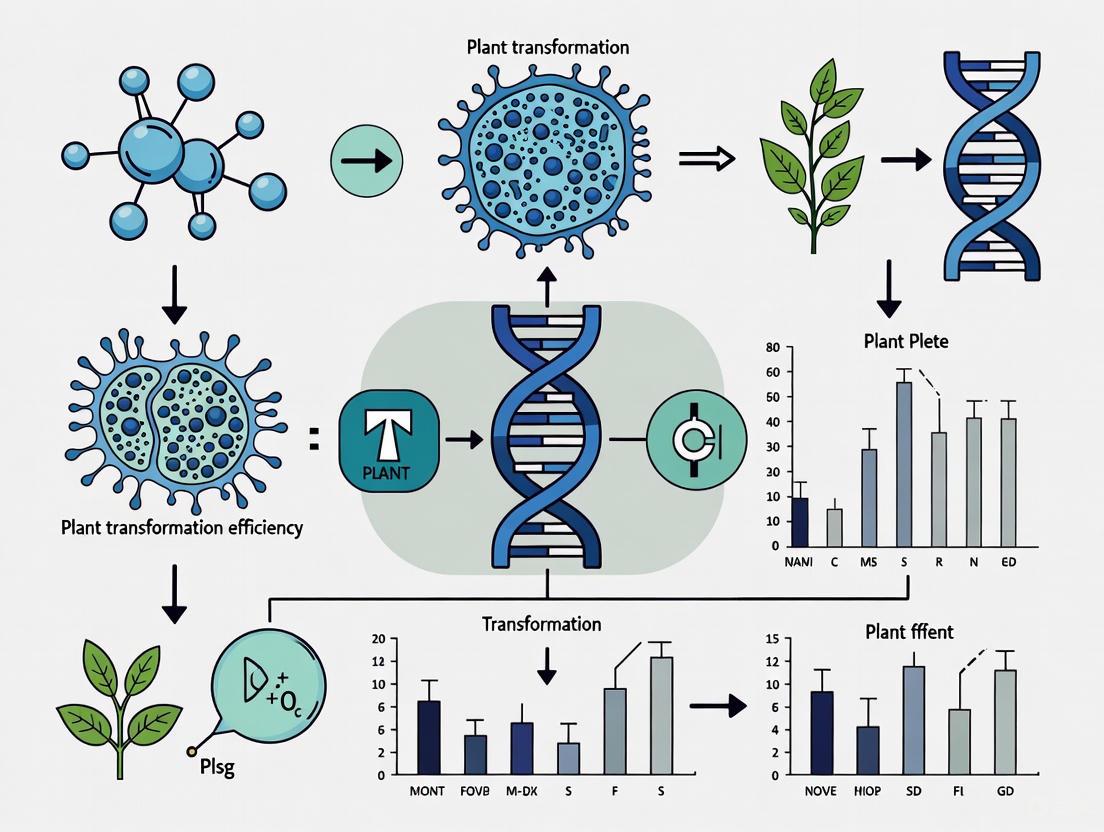
This article provides a comprehensive guide for researchers and scientists on optimizing plant transformation efficiency using novel CRISPR vectors.
Optimizing Plant Transformation: A Guide to Novel CRISPR Vector Systems and Efficiency Benchmarks
Abstract
This article provides a comprehensive guide for researchers and scientists on optimizing plant transformation efficiency using novel CRISPR vectors. It covers the foundational principles of current CRISPR/Cas systems and plant transformation hurdles, explores the application of all-in-one toolkits and species-specific vectors, details troubleshooting and optimization strategies for recalcitrant species, and outlines robust validation and comparative analysis methods. By synthesizing the latest methodological advances and efficiency benchmarks, this resource aims to accelerate the development of improved crops for biomedical and clinical research applications.
Understanding the Bottlenecks: Plant Transformation Challenges and the CRISPR Vector Landscape
Frequently Asked Questions (FAQs)
Q1: Why are some plant species or cultivars described as "recalcitrant" to genetic transformation? Recalcitrance is primarily due to genotype dependence and low regeneration efficiency. Some plant genotypes have a poor innate capacity to regenerate whole plants from single cells after the transformation process, which is a fundamental requirement for most stable transformation protocols. For example, in pea, low regeneration rates, particularly for roots, and genotype dependency are noted as major constraints [1]. Similarly, perennial grasses and tree species like Fraxinus mandshurica are hindered by the lack of mature tissue culture systems and low proliferation rates [2] [3].
Q2: What are the practical consequences of low regeneration efficiency in the lab? Low regeneration efficiency directly leads to:
- Extended experimental timelines, as it takes longer to recover sufficient plant material for analysis.
- Production of chimeric plants, where not all cells contain the desired edit, requiring additional generations to isolate homozygous plants [1].
- Low numbers of finally edited plants, as seen in pea, where only 0.5% of embryonic axes produced transgenic shoots [1].
Q3: Can novel CRISPR delivery methods help bypass these hurdles? Yes, recent advances are providing alternatives. Virus-induced genome editing (VIGE) using engineered RNA virus vectors can deliver CRISPR components without stable transformation, achieving high editing efficiency and allowing for the regeneration of mutant plants without T-DNA integration [4]. Another approach is PEG-mediated transfection of protoplasts (plant cells without walls) with CRISPR ribonucleoproteins (RNPs), which is a DNA-free method that avoids transgenes altogether [5].
Troubleshooting Common Transformation Challenges
The table below outlines specific problems, their root causes, and potential solutions based on recent research.
Table: Troubleshooting Guide for Plant Transformation Experiments
| Problem | Root Cause | Potential Solution |
|---|---|---|
| Low Transformation/Editing Efficiency | Inefficient delivery of CRISPR reagents; low nuclease activity in specific cell types. | Use endogenous plant promoters (e.g., pea U6 promoters) and intron-containing Cas9 to boost expression [1]. Employ compact Cas proteins (e.g., Cas12f) for delivery via viral vectors [2]. |
| Chimeric T0 Plants | Editing does not occur in all cells of the initial explant. | Use a visible, early-stage phenotypic marker (e.g., the TENDRIL-LESS gene in pea) to identify and select fully edited shoots quickly [1]. |
| Inability to Regenerate Roots | Root regeneration is recalcitrant in many species (e.g., pea). | Bypass the rooting step entirely by grafting edited shoots onto wild-type rootstock. This strategy has achieved a 90% success rate in pea [1]. |
| Genotype Dependency | The transformation protocol is optimized for a specific cultivar but fails in others. | Optimize Agrobacterium concentration and infection duration for each new genotype [3]. Explore in planta transformation methods that avoid tissue culture [2]. |
| Transgene Integration | Unwanted integration of CRISPR vector DNA into the plant genome. | Use DNA-free editing methods, such as delivery of pre-assembled CRISPR-Cas9 ribonucleoproteins (RNPs) into protoplasts [5] or using viral vectors for transient delivery [4]. |
Detailed Experimental Protocols
Protocol 1: Overcoming Rooting Recalcitrance via Grafting
This protocol is adapted from a study that successfully produced transgene-free edited pea plants [1].
- Transformation & Selection: Perform Agrobacterium-mediated transformation of embryonic axes. Cultivate explants on a selective shoot induction medium (SIM).
- Fluorescent Screening: Identify stably transformed shoots after 3-4 weeks using a fluorescent marker like DsRed. This is a faster and non-destructive alternative to PCR at this chimeric stage.
- Shoot Excision & Grafting: Excise multiple DsRed-positive shoots from the transformed axis. Graft each shoot onto a wild-type rootstock.
- Cultivation & Seed Harvest: Cultivate grafted plants in a greenhouse until they produce seeds (T1 generation).
- Selection of Transgene-Free Plants: Screen T1 seeds for the absence of the fluorescent marker and the presence of the desired gene edit to identify transgene-free, edited plants.
Protocol 2: DNA-Free Editing using Protoplast Transfection
This protocol outlines a general workflow for creating edited plants without transgene integration, as demonstrated in Brassica species [5].
- Protoplast Isolation: Isolate protoplasts from sterile leaf tissue of 3-4-week-old plants using an enzyme solution containing cellulase and macerozyme.
- Transfection: Transfect the protoplasts with purified CRISPR-Cas9 ribonucleoproteins (RNPs) or mRNA using polyethylene glycol (PEG)-mediated delivery.
- Culture & Regeneration: Culture the transfected protoplasts using a multi-stage media regime:
- MI Medium: High auxin (NAA, 2,4-D) for cell wall formation.
- MII Medium: Lower auxin-to-cytokinin ratio for active cell division.
- MIII Medium: High cytokinin-to-auxin ratio for callus growth and shoot induction.
- MIV Medium: Very high cytokinin-to-auxin ratio for shoot regeneration.
- MV Medium: Low levels of BAP and GA3 for shoot elongation.
- Plant Recovery: Regenerate whole plants from the edited shoots and acclimate them to greenhouse conditions.
Experimental Workflow: From Transformation to Edited Plant
The diagram below illustrates two parallel pathways for obtaining edited plants, comparing a standard Agrobacterium-mediated approach with a grafting bypass for rooting-recalcitrant species.
The Scientist's Toolkit: Key Research Reagent Solutions
The table below lists essential reagents and their specific functions in overcoming transformation hurdles, as cited in recent literature.
Table: Essential Reagents for Optimizing Plant Transformation
| Reagent / Tool | Function / Application |
|---|---|
| Endogenous U6 Promoters | Drives sgRNA expression; using species-specific U6 promoters (e.g., from pea) significantly increases editing efficiency [1]. |
| Intron-Optimized zCas9i | A version of Cas9 containing introns to improve its expression and performance in plants, leading to 100% editing efficiency in transgenic pea shoots [1]. |
| DsRed Fluorescent Marker | A visual, non-destructive marker for early and easy identification of transformed shoots, bypassing the need for destructive PCR on chimeric tissues [1]. |
| Compact Nucleases (Cas12f) | Genome editing nucleases that are about one-third the size of SpCas9. Their small size allows them to be packaged and delivered systemically throughout the plant via viral vectors (VIGE) [2]. |
| CRISPR-Cas9 Ribonucleoproteins (RNPs) | Pre-assembled complexes of Cas9 protein and sgRNA. When delivered into protoplasts, they enable DNA-free, transgene-free editing, as demonstrated in citrus and Brassica species [2] [5]. |
| Lipid Nanoparticles (LNPs) | A delivery vehicle used primarily in mammalian systems for in vivo delivery of CRISPR components. Research is ongoing to adapt LNPs for use in plants [6]. |
CRISPR-Cas systems are adaptive immune systems found in most bacteria and archaea, which have been repurposed as highly versatile genome engineering tools [7]. The known diversity of these systems continues to expand, with a recent evolutionary classification encompassing 2 classes, 7 types, and 46 subtypes [8].
The systems are primarily divided into two classes: Class 1 (types I, III, and IV) utilize multi-protein effector complexes, while Class 2 (types II, V, and VI) employ a single, large effector protein for crRNA processing and interference, making them particularly suitable for genetic engineering [8] [7]. More recently, a type VII system has been identified, mostly in archaea, which features a Cas14 effector nuclease and targets RNA [8].
Table 1: Classification and Characteristics of Major CRISPR-Cas Systems
| Class | Type | Example Effector | Target | Guide RNA Components | PAM Sequence (Example) | Key Features |
|---|---|---|---|---|---|---|
| Class 2 | II | Cas9 (SpCas9) | dsDNA | crRNA + tracrRNA (often fused as sgRNA) | 5'-NGG-3' [9] [7] | Well-characterized; two nuclease domains (HNH, RuvC) [7] |
| Class 2 | V | Cas12a (Cpf1) | dsDNA | crRNA | 5'-AT-rich-3' (TTTV) [7] | Single RuvC domain; creates staggered cuts [10] |
| Class 2 | V | Cas12f | dsDNA | crRNA | - | Ultra-small size (< 1000 aa), beneficial for delivery [10] |
| Class 2 | VI | Cas13a (C2c2) | ssRNA | crRNA | 3' Protospacer Flanking Site (non-G) [7] | RNA-guided RNA targeting; collateral RNase activity [7] |
| Class 1 | III | Cas10-Csm/Cmr Complex | ssRNA | crRNA | - | Involves cOA signaling for collateral RNase activity [8] |
| Class 2 | VII | Cas14 | RNA | crRNA | - | β-CASP effector nuclease; found in archaea [8] |
| OMEGA | - | TnpB/ISCas9 | dsDNA | ωRNA | 5'-TTGAT-3' (for ISDra2) [10] | Ancestor of Cas12; very small; requires ωRNA [11] [10] |
The core mechanism of Class 2 DNA-targeting systems like Cas9 and Cas12 involves a guide RNA (gRNA or crRNA) that directs the Cas nuclease to a specific genomic target site. Cleavage occurs only if the target is adjacent to a short Protospacer Adjacent Motif (PAM), which varies by Cas protein [9]. The resulting double-strand break (DSB) is then repaired by the cell's own machinery, primarily via the error-prone Non-Homologous End Joining (NHEJ) pathway, leading to insertions or deletions (indels) that often disrupt gene function [9] [7].
CRISPR Experiment Troubleshooting Pathway
Frequently Asked Questions (FAQs) and Troubleshooting Guides
Low Editing Efficiency
Q: What can I do if my CRISPR system shows low genome editing efficiency in plant cells?
Low efficiency can stem from multiple factors. Below is a structured approach to diagnose and solve this problem.
Table 2: Troubleshooting Low Editing Efficiency
| Problem Cause | Diagnostic Checks | Recommended Solutions |
|---|---|---|
| Poor gRNA Design | Check for target sequence uniqueness and secondary structure. | Design and test 3-4 different gRNAs per target. Use validated online design tools [12] [13]. |
| Suboptimal Cas9 Expression | Verify promoter activity in your plant species. | Use strong, species-specific endogenous promoters (e.g., LarPE004 in larch) [14]. Ensure codon optimization for plants [15]. |
| Inefficient Delivery | Assess transformation/transfection efficiency. | Optimize delivery method (e.g., Agrobacterium strain, PEG-mediated protoplast transformation, RNP delivery) [11] [14]. For hairy roots, ensure proper infection protocol [11]. |
| Low Cell Viability | Check survival rates post-transformation. | Titrate Cas9/gRNA concentrations to find a balance between efficiency and toxicity [15]. Use Cas9 protein with a nuclear localization signal [15]. |
Experimental Protocol: Rapid Evaluation via Hairy Root Transformation A rapid, non-sterile hairy root transformation system can be used to quickly evaluate gRNA efficiency before stable transformation [11].
- Germination: Germinate soybean seeds for 5-7 days.
- Infection: Make a slant cut on the hypocotyl and infect with Agrobacterium rhizogenes (e.g., strain K599) harboring your CRISPR vector and a visual marker like Ruby.
- Co-cultivation: Plant infected seedlings in moist vermiculite and cultivate for two weeks.
- Analysis: Visually identify transgenic roots (red if using Ruby) and extract genomic DNA for sequencing to assess editing efficiency [11]. This method provides somatic editing efficiency data within two weeks and is applicable to various dicot species like peanut, mung bean, and adzuki bean [11].
Off-Target Effects
Q: How can I minimize off-target activity where Cas9 cuts at unintended genomic sites?
Off-target effects are a major concern. The following strategies can significantly enhance specificity.
- Optimize gRNA Design: Select gRNAs with highly unique sequences, particularly in the 8-12 nucleotide "seed" region adjacent to the PAM. Use bioinformatic tools to scan for potential off-target sites with even partial homology [15] [12].
- Use High-Fidelity Cas9 Variants: Wild-type SpCas9 can be replaced with engineered variants that exhibit greater fidelity. These include eSpCas9(1.1), SpCas9-HF1, and HypaCas9, which reduce off-target editing by weakening non-specific interactions with DNA [9] [13].
- Employ Cas9 Nickase (Cas9n): Use a "nickase" mutant of Cas9 (D10A) that only cuts one DNA strand. By using a pair of nickases targeting opposite strands with two adjacent gRNAs, a double-strand break is only created at the intended site, dramatically increasing specificity [9] [12].
- Titrate Component Amounts: Use the lowest effective concentration of Cas9 and gRNA. High concentrations increase the likelihood of off-target cleavage [12].
- Utilize RNP Delivery: Delivery of pre-assembled, purified Cas9 protein-gRNA ribonucleoprotein (RNP) complexes reduces the time the nuclease is active in the cell, which can limit off-target effects compared to plasmid DNA delivery.
System Selection and PAM Limitations
Q: The NGG PAM requirement for SpCas9 is limiting my target choices. What are my options?
The PAM requirement is a key constraint. Fortunately, the expanding CRISPR toolbox offers several solutions.
- PAM-Flexible Cas9 Variants: Engineered SpCas9 variants recognize alternative PAM sequences:
- xCas9: Recognizes NG, GAA, and GAT PAMs [9].
- SpCas9-NG: Recognizes NG PAMs [9].
- SpRY: Nearly PAM-less, recognizing NRN (where R is A/G) and, to a lesser extent, NYN (where Y is C/T) [14] [9]. The SpRY system has been successfully used for efficient editing of various PAM sites in plants like larch [14].
- Alternative Cas Effectors: Use other Cas nucleases with different PAM requirements.
- Explore OMEGA Systems: The TnpB system, an ancestor of Cas12, functions as a compact RNA-guided endonuclease. Its guide RNA (ωRNA) directs DNA cleavage, and it has been engineered for genome editing in plants, though efficiency can vary and requires optimization [11] [10]. For example, protein engineering of ISAam1 TnpB yielded variants (N3Y and T296R) with 4-5 fold enhanced editing efficiency in soybean hairy roots [11].
The Scientist's Toolkit: Essential Research Reagents
Table 3: Key Reagents for CRISPR Plant Research
| Reagent / Tool Category | Specific Examples | Function & Application Notes |
|---|---|---|
| Cas Effectors | SpCas9, SaCas9, Cas12a (Cpf1), Cas12f, TnpB (ISCas9) [8] [11] [10] | The core nuclease. Choice depends on PAM requirement, size (for delivery), and specificity. |
| Promoters for Plant Expression | CaMV 35S, ZmUbi1, Endogenous promoters (e.g., LarPE004) [11] [14] | Drive expression of Cas and gRNA. Species-specific endogenous promoters can significantly boost efficiency [14]. |
| Delivery Vectors & Strains | Agrobacterium tumefaciens, A. rhizogenes (e.g., K599) [11] | For stable transformation or rapid hairy root assays. Strain selection impacts efficiency [11]. |
| Visual/Marker Systems | Ruby reporter, Bar gene [11] | For rapid, non-destructive identification of transgenic tissues (Ruby) or for antibiotic selection. |
| gRNA Expression Scaffolds | U6/U3 snRNA Promoters [13] | For Pol III-driven expression of gRNAs. Multiplex vectors allow expression of several gRNAs from one plasmid [9]. |
| Validation Tools | T7 Endonuclease I (T7EI) assay, Next-Generation Sequencing (NGS) [11] [15] [12] | To detect and quantify induced mutations. NGS is the gold standard for assessing efficiency and specificity. |
| High-Fidelity Variants | eSpCas9(1.1), SpCas9-HF1, HypaCas9 [9] | Engineered Cas9 proteins with reduced off-target activity. |
| Repair Template | ssODN, dsDNA donor with homology arms [13] [7] | For precise edits via Homology-Directed Repair (HDR). |
CRISPR Workflow for Plants
Troubleshooting Guides
Issue 1: Low Genome Editing Efficiency
Problem: Despite successful transformation, the frequency of targeted mutations in the plant genome is unacceptably low.
Diagnosis and Solutions:
- Check the Promoter Driving Cas9 Expression:
- Problem: The chosen promoter is not optimal for your plant species or tissue, leading to insufficient Cas9 protein production.
- Solution: Use a strong, ubiquitous promoter like the enhanced Cauliflower Mosaic Virus (CaMV) 35S promoter for dicots, or species-specific promoters like maize ubiquitin for monocots. The double enhancer version (2xCaMV 35S) can further boost expression [16].
- Verify the gRNA Expression System:
- Problem: The gRNA is not being transcribed efficiently.
- Solution: Express gRNAs using RNA Polymerase III promoters, such as the Arabidopsis U6-26 (AtU6-26) or rice U3 (OsU3) promoters, which are highly effective for producing small RNAs in plants [16]. For multiplexing, using polycistronic tRNA-gRNA or Csy4-gRNA systems can enhance editing efficiency [17].
- Assess the Selectable Marker:
- Problem: The selection pressure is too weak, allowing non-edited cells to survive and overgrow.
- Solution: Ensure the selection marker (e.g., Hygro, Bar, Neo/Kana) is driven by a strong promoter like the enhanced CaMV 35S and use the appropriate concentration of selection agent [16]. Incorporating antibiotic selection or fluorescence-activated cell (FAC) sorting can enrich for successfully transfected cells [18].
Issue 2: Failure in Plant Regeneration or Slow Growth of Putative Edited Lines
Problem: Transformed plants fail to regenerate or show severely stunted growth, potentially due to the toxicity of CRISPR components or the edited mutation itself.
Diagnosis and Solutions:
- Investigate Cas9 and gRNA Toxicity:
- Problem: Continuous, high-level expression of Cas9 and gRNA can cause off-target effects or cellular toxicity.
- Solution: Use a transient expression system or consider DNA-free editing using recombinant Cas9 protein and in vitro transcribed gRNA [17]. For integrated T-DNA, the use of self-deactivating vectors could be explored.
- Evaluate the Impact of the Mutation:
- Problem: The intended gene knockout may be essential or deleterious to cell growth and development.
- Solution: Switch from a marker-free to a marker-based integration strategy. The presence of a selectable marker (e.g., an auxotrophic marker) provides stronger selection pressure, which can help isolate slow-growing transformants that would otherwise be outcompeted by non-edited cells in a marker-free system [19].
- Confirm T-DNA Integrity:
- Problem: Nucleolytic degradation from the T-DNA left border can disrupt key vector components.
- Solution: Clone your gene of interest near the more stable right border (RB) T-DNA repeat to minimize the impact of 3' deletions [16].
Issue 3: Difficulty in Vector Assembly or Cloning
Problem: Challenges in constructing the CRISPR vector, such as low yield of correct clones or toxic DNA sequences.
Diagnosis and Solutions:
- Address Low Cloning Efficiency:
- Problem: Inefficient ligation or phosphorylation during the assembly of gRNA oligonucleotides into the vector backbone.
- Solution:
- Ensure ss oligonucleotides are designed with the correct 5' overhangs (e.g.,
GTTTTfor the top strand) for your specific cloning system [18]. - Avoid repeated freeze-thaw cycles of annealed oligonucleotides; store aliquots at -20°C [18].
- Use high-fidelity DNA polymerases for PCR and accurately quantify DNA concentrations for ligation [20].
- Ensure ss oligonucleotides are designed with the correct 5' overhangs (e.g.,
- Manage Toxic DNA Sequences:
- Problem: The DNA fragment of interest is toxic to E. coli cells during plasmid propagation, resulting in few or no transformants.
- Solution:
Frequently Asked Questions (FAQs)
Q1: What are the key components of a plant-specific CRISPR/Cas vector? A basic plant CRISPR vector typically includes: a codon-optimized Cas9 gene (e.g., ZmCas9 for maize) driven by a strong promoter; a guide RNA (gRNA) expressed under a U6 or U3 Pol III promoter; a selectable marker gene (e.g., for hygromycin or glufosinate resistance) for selecting transformed plant cells; and T-DNA border repeats (LB and RB) for integration into the plant genome via Agrobacterium [17] [16].
Q2: How do I choose the right Cas protein for my experiment? The choice depends on the Protospacer Adjacent Motif (PAM) sequence required and the size constraints of your vector. Different Cas proteins have different PAM requirements and sizes, which can influence targetability and delivery. The table below summarizes common options [17]:
| Cas Endonuclease | Bacterial Source | Size | PAM Recognition Site |
|---|---|---|---|
| SpCas9 | Streptococcus pyogenes | 4104 bp | 3' NGG |
| SaCas9 | Staphylococcus aureus | 3156 bp | 3' NNGRRT |
| Cas12a (Cpf1) | Lachnospiraceae bacterium | 3684 bp | 5' TTTV |
| Cas12j (Casɸ) | Phage | 2142 bp | 5' TTA |
Q3: What can I do if there is no suitable PAM site near my target? You can use engineered Cas9 variants with broader PAM compatibilities. For example, SpCas9-NG recognizes NG PAMs, and SpRY is nearly PAM-less, greatly expanding the targeting range [17].
Q4: How can I edit multiple genes simultaneously? Multiplex genome editing can be achieved by expressing multiple gRNAs from a single vector. This is often done using polycistronic tRNA-gRNA systems or Csy4-gRNA arrays, which allow the processing of several gRNAs from a single transcript [17].
Q5: What is a ternary vector system and how does it help? Ternary vector systems are an advanced Agrobacterium-mediated transformation method. Unlike traditional binary vectors, they incorporate accessory virulence genes and immune suppressors that can overcome the intrinsic transformation barriers of recalcitrant crops like maize and soybean, leading to a dramatic increase (1.5- to 21.5-fold) in stable transformation efficiency [21].
Experimental Protocols
Protocol 1: Assembling a Single gRNA CRISPR Vector for Dicot Plants
This protocol outlines the key steps for cloning a target-specific gRNA into a plant binary vector, such as the one described by VectorBuilder [16].
- Design gRNA Oligonucleotides: Design a pair of oligonucleotides (typically 20-24 nt) that are complementary to your target genomic DNA sequence. Add the appropriate 5' overhangs required for your specific vector's cloning site (e.g.,
GTTTTfor the top strand) [18]. - Anneal Oligonucleotides: Mix the oligonucleotides in an annealing buffer, heat to 95°C, and slowly cool to room temperature to form a double-stranded DNA fragment. If the ambient temperature is above 25°C, perform this step in a 25°C incubator for optimal efficiency [18].
- Ligation: Digest the destination binary vector with the appropriate restriction enzyme(s). Ligate the annealed gRNA fragment into the prepared vector backbone using T4 DNA Ligase.
- Transformation and Verification: Transform the ligation reaction into competent E. coli cells. Select positive clones on kanamycin-containing plates. Isolate plasmid DNA and verify the correct insertion of the gRNA sequence by Sanger sequencing. For problematic sequencing, add DMSO to a final concentration of 5% or increase the amount of template DNA [18].
Protocol 2: Testing Genomic Cleavage Efficiency
Before proceeding to stable plant transformation, you can test the efficiency of your designed gRNA.
- Transient Transformation: Co-deliver your assembled CRISPR vector (containing Cas9 and gRNA) and a donor DNA template (if applicable) into plant protoplasts via PEG-mediated transformation or into plant tissues via Agrobacterium infiltration.
- Genomic DNA Extraction: After 48-72 hours, extract genomic DNA from the transformed cells or tissues.
- PCR Amplification: Design PCR primers flanking the target site and amplify the genomic region.
- Cleavage Detection: Use a Genomic Cleavage Detection Kit or run the PCR products on an agarose gel. A successful edit will show smaller DNA bands corresponding to cleaved fragments. If bands are too faint, double the amount of lysate in the PCR; if a smear appears, dilute the lysate 2- to 4-fold and repeat PCR [18].
Research Reagent Solutions
The following table lists key reagents and materials used in plant CRISPR vector experiments.
| Research Reagent | Function in the Experiment |
|---|---|
| Agrobacterium tumefaciens | A bacterium used to deliver T-DNA containing CRISPR components into the plant genome [16]. |
| Binary Vector System | A two-plasmid system where one vector (binary vector) contains the T-DNA, and the other (vir helper) provides virulence proteins for T-DNA transfer [16]. |
| Codon-Optimized Cas9 | A version of the Cas9 gene whose sequence has been optimized for expression in plants (e.g., ZmCas9 for maize) to improve protein yield [16]. |
| Pol III Promoter (e.g., AtU6-26) | Drives high-level, precise expression of guide RNAs (gRNAs) in plant cells [16]. |
| Strong Pol II Promoter (e.g., 2xCaMV 35S) | Drives high-level, constitutive expression of the Cas9 nuclease in plant cells [16]. |
| Selectable Marker (e.g., Hygro, Bar) | Allows for the selection of plant cells that have successfully integrated the T-DNA by conferring resistance to an antibiotic or herbicide [16]. |
Workflow and System Diagrams
Plant CRISPR Vector Workflow
CRISPR Binary Vector System
For researchers in plant genetic engineering, establishing a robust proof-of-concept is a critical first step in any CRISPR/Cas9 workflow. The Phytoene Desaturase (PDS) gene serves as an exceptional visual marker for this purpose across diverse plant species, including banana, citrus, chili pepper, and larch [22] [23] [24]. As a key enzyme in the carotenoid biosynthesis pathway, successful knockout of PDS disrupts chlorophyll protection, leading to easily observable albino or bleached phenotypes [22] [23]. This visible confirmation allows researchers to quickly validate their entire gene editing pipeline—from vector design and delivery to plant regeneration—before proceeding to target genes of agronomic importance.
Table 1: Key Characteristics of Phytoene Desaturase (PDS) as a Visual Marker
| Characteristic | Biological Function | Utility in Proof-of-Concept |
|---|---|---|
| Gene Function | Catalyzes the desaturation of phytoene to ζ-carotene in carotenoid biosynthesis [22] | Knockout disrupts photosynthetic pigments, creating visible markers |
| Phenotypic Expression | Dwarfism and albinism in edited plants [22] | Easy visual identification of successful editing events without complex equipment |
| Conservation | Highly conserved across plant species with similar catalytic properties [22] | Established protocols can be adapted across species with minimal optimization |
| Pathway Interaction | Interacts with metabolites including abscisic acid and strigolactones [23] | Provides insights into multiple physiological processes beyond visual tracking |
Experimental Design and Protocol Development
Vector Construction and sgRNA Design
Effective PDS targeting requires careful vector design and sgRNA selection. Research across species demonstrates that targeting multiple exons significantly increases editing efficiency.
Multiplex sgRNA Approach: In East African highland bananas, researchers designed two sgRNAs from the first 121 bp conserved region of the Nakitembe PDS gene, cloning them individually into sgRNA expression plasmids pYPQ131C and pYPQ132C before multiplexing into pYPQ142 via Golden Gate cloning [23]. The final construct pMDC32Cas9NktPDS was generated by recombining the cassette with a Cas9 entry vector pYPQ167 and the binary vector pMDC32 [23].
Endogenous Promoter Utilization: In larch, researchers identified and utilized the endogenous LarPE004 promoter, which drove a single transcription unit CRISPR-Cas9 (STU-Cas9) system that significantly outperformed conventional CaMV 35S- and ZmUbi1-driven systems [14]. This highlights the importance of promoter selection in transformation efficiency.
Target Site Selection: Comparative analysis with Musa acuminata DH Pahang reference genome identified the gene model Ma08_t16510.2 with 14 exons, with the first six exons selected to maximize the likelihood of producing non-functional PDS transcripts [23].
Figure 1: PDS Proof-of-Concept Experimental Workflow
Transformation and Delivery Methods
Delivery method optimization is species-dependent and crucial for success. The following table summarizes efficiency data across different approaches:
Table 2: Transformation Efficiency Across Delivery Methods and Plant Species
| Plant Species | Delivery Method | Key Efficiency Parameters | Reference |
|---|---|---|---|
| East African Highland Banana | Agrobacterium-mediated transformation of embryogenic cell suspensions | 100% albinism in Nakitembe; 94.6% in NAROBan5; 47 and 130 gene-edited events regenerated [23] | [23] |
| Citrus | Agrobacterium-mediated transient expression with 3-day kanamycin selection | 17-fold increase in transgene-free editing efficiency (0.291% vs 0.017% mutant shoot recovery) [24] | [24] |
| Chilli Pepper | Biolistic delivery with two sgRNAs targeting exons 14 and 15 of CaPDS | 62.5% of transformed plants showed successful editing with albino and mosaic phenotypes [25] | [25] |
| Larch | Protoplast transient transformation | 90% active cells; 40% transient transformation efficiency [14] | [14] |
| Fraximus mandshurica | Agrobacterium-mediated transformation of growth points | 18% of induced clustered buds were gene-edited [3] | [3] |
Troubleshooting Common Experimental Challenges
Low Editing Efficiency
Problem: Researchers observe minimal to no albino sectors in regenerated plants, indicating unsuccessful PDS editing.
Solutions:
- Optimize sgRNA Design: In bananas, alignment of PDS sequences from target cultivars with reference genomes identified a 121 bp conserved region for sgRNA design, which proved highly effective [23]. Utilize bioinformatics tools to identify conserved regions across exons.
- Enhance Delivery Efficiency: For citrus, treating both Agrobacterium cells and explants with a transient 3-day kanamycin selection period increased transgene-free editing efficiency 17-fold (from 0.017% to 0.291%) by suppressing non-infected cell regeneration [24].
- Promoter Optimization: In larch, the endogenous LarPE004 promoter driving a single transcription unit CRISPR-Cas9 (STU-Cas9) system significantly outperformed conventional CaMV 35S and ZmUbi1 promoters [14].
- Chemical Additives: Incorporate acetosyringone during Agrobacterium co-cultivation to enhance T-DNA transfer efficiency, particularly in recalcitrant species.
Somatic Variation and Mosaicism
Problem: Regenerated plants show variegated or mosaic patterns rather than uniform albinism, indicating incomplete or chimeric editing.
Solutions:
- Early Selection Pressure: Implement antibiotic selection (e.g., 80 mg/L kanamycin in chili pepper) during initial regeneration stages to favor edited cells [25].
- Multiple sgRNAs: Employ 2-3 sgRNAs targeting different exons, as demonstrated in bananas where this approach resulted in up to 100% albinism rates [23].
- Early Transformation Targets: Target meristematic tissues or embryogenic cell suspensions to reduce chimerism, as successfully demonstrated in banana ECS lines NKT-732 and M30-885 [23].
Plant Regeneration Difficulties
Problem: Edited tissues fail to regenerate into whole plants, particularly with strong albino phenotypes that impair photosynthesis.
Solutions:
- Culture Conditions: For completely albino banana events, researchers maintained plants in darkness to minimize photo-oxidation and oxidative damage, subculturing monthly to maintain viability [23].
- Hormonal Optimization: Develop cultivar-specific cytokinin-auxin ratios in regeneration media; significant differences were observed between Nakitembe and NAROBan5 bananas despite sharing the same genome group [23].
- Alternative Explant Sources: For perennial species with limited embryo availability, investigate vegetative propagated organs such as rhizomes or utilize in planta transformation methods that bypass tissue culture [26].
Figure 2: Low Efficiency Troubleshooting Guide
Frequently Asked Questions (FAQs)
Q1: How many sgRNAs should I design for PDS knockout, and which exons should I target?
A: Evidence suggests multiplexing 2-3 sgRNAs significantly increases efficiency. In bananas, two sgRNAs designed from the first 121 bp conserved region of PDS achieved up to 100% editing efficiency [23]. In chili peppers, targeting exons 14 and 15 with two distinct gRNAs resulted in 62.5% editing success [25]. Prioritize early exons to maximize likelihood of frameshift mutations, but include later exons in multiplex strategies to ensure complete gene disruption.
Q2: What is the typical timeline from transformation to visible phenotype?
A: Timelines vary by species and transformation method. In banana embryogenic cell suspensions, edited events were regenerated within 3-5 months post-transformation, with albino phenotypes visible upon shoot regeneration [23]. For rapid validation in larch protoplast systems, initial editing can be detected within days [14]. Factor in species-specific regeneration periods when planning experiments.
Q3: How do we handle completely albino plants that cannot perform photosynthesis?
A: Completely albino edited plants can be maintained in culture through specialized methods. Researchers working with bananas maintained albino lines through frequent subculturing (every month) and kept them in darkness to minimize photo-oxidation [23]. For long-term preservation, regenerate heterozygous edited lines first, then segregate for homozygous albino mutants in subsequent generations.
Q4: Can PDS editing efficiency predict success with our target genes?
A: While PDS establishes proof-of-concept for the entire editing pipeline, efficiency may vary for different target genes due to chromosomal accessibility, chromatin state, and sgRNA specificity. However, studies consistently show that optimization parameters validated with PDS (delivery methods, promoter selection, regeneration protocols) generally translate to improved efficiency with target genes of interest [23] [24].
Q5: What are the key differences in protocol between diploid and polyploid species?
A: Polyploid species often require multiplex sgRNA strategies to edit all gene copies. In triploid bananas, high efficiency was achieved despite the third allele challenge [23]. For complex genomes, increase sgRNA diversity and implement more stringent selection to identify complete knockouts. Ploidy level also influences explant choice and regeneration capacity.
The Scientist's Toolkit: Essential Research Reagents
Table 3: Key Research Reagents for PDS Gene Editing Experiments
| Reagent/Vector | Specification/Function | Application Notes |
|---|---|---|
| Cas9 Vector Systems | pMDC32 binary vector; STU-Cas9 (single transcription unit) | LarPE004::STU-Cas9 system outperformed TTU-Cas9 in larch [14] |
| sgRNA Cloning Vectors | pYPQ131C, pYPQ132C for individual sgRNAs; pYPQ142 for multiplexing | Used in Golden Gate cloning for banana PDS editing [23] |
| Selection Markers | Hygromycin (hptII), Kanamycin (nptII) | 80 mg/L kanamycin effective for chili pepper; 3-day transient selection enhanced citrus editing [24] [25] |
| Agrobacterium Strains | AGL1, EHA105 | Strain selection affects transformation efficiency; AGL1 used successfully in banana [23] |
| Endogenous Promoters | LarPE004 (larch), other species-specific promoters | Endogenous promoters can significantly outperform conventional ones [14] |
| Culture Media Supplements | Acetosyringone, specific cytokinin-auxin combinations | Critical for enhancing T-DNA transfer and regulating plant regeneration |
The PDS gene serves as an indispensable visual marker for establishing robust CRISPR/Cas9 workflows in plant systems. Through careful optimization of sgRNA design, delivery methods, and regeneration protocols, researchers can achieve high editing efficiencies across diverse species. The troubleshooting strategies and FAQs presented here provide a foundation for overcoming common challenges in plant gene editing. Successful PDS knockout not only validates experimental parameters but also builds essential institutional capacity for advancing to more complex editing targets, ultimately accelerating crop improvement programs. As transformation protocols continue to improve—particularly through approaches like in planta methods that bypass tissue culture [26]—the PDS system remains the gold standard for proof-of-concept in plant genome editing workflows.
Advanced Delivery and Toolkit Deployment: From All-in-One Vectors to Species-Specific Protocols
Harnessing All-in-One CRISPR Toolboxes for Multiplexed Genome Editing and Activation
Troubleshooting Guides and FAQs
Frequently Asked Questions
Q1: What is an "All-in-One" CRISPR toolbox, and what are its main advantages? An "All-in-One" CRISPR toolbox is a comprehensive collection of molecular reagents and vectors that enable a wide range of genome manipulations within a single, unified system. A leading example is a suite of 61 versatile vectors that support diverse techniques, including genome editing with Cas9 and Cas12a, cytosine and adenine base editing (CBE and ABE), and gene activation (CRISPR-Act3.0) in both monocot and dicot plants [27] [28]. The main advantages are their flexibility and user-friendliness, which significantly lower the technical barriers for conducting large-scale, multiplexed functional genomics screens in plants [27].
Q2: I am observing low editing efficiency in my plant system. What could be the cause? Low editing efficiency is a common challenge. Key factors to investigate include:
- gRNA Efficacy: Editing efficiency varies significantly across different guide RNAs (gRNAs), even for identical target sequences in homologous genes [29] [11]. It is crucial to pre-screen multiple gRNAs for your target.
- Delivery Method: The choice of transformation method (e.g., Agrobacterium tumefaciens, Agrobacterium rhizogenes, or biolistic delivery) can greatly impact efficiency, especially for recalcitrant species [30].
- Nuclease Activity: Some novel nucleases, like the ISAam1 TnpB, may have inherently low efficiency in plants and can be improved through protein engineering [29] [11].
Q3: My goal is to perform high-throughput screening of gRNA libraries. What is the best rapid evaluation system? For large-scale gRNA screening, a rapid somatic evaluation system is highly recommended over stable transformation. A recently developed method uses Agrobacterium rhizogenes-mediated hairy root transformation, which does not require sterile conditions. Transgenic roots can be visually identified within two weeks using the Ruby reporter gene, allowing for quick assessment of editing efficiency before committing to lengthy stable transformation efforts [29] [11]. This system has been validated in several dicot species, including soybean, peanut, and mung bean [29].
Q4: How can I improve the precision of CRISPR edits to minimize errors? For applications requiring high fidelity, such as correcting single-base mutations, consider using prime editing systems. Recent advances have engineered novel Cas9 proteins for prime editors that dramatically lower the error rate. Furthermore, using nickase versions of Cas9, which create single-strand breaks instead of double-strand breaks, can also enhance precision and reduce off-target effects [31] [32].
Q5: Can I use this toolbox for applications other than gene knockout? Absolutely. Modern all-in-one toolboxes are multifaceted. Beyond generating knockouts, you can use them for:
- Gene Activation: Using a deactivated Cas9 (dCas9) fused to transcriptional activator domains (e.g., CRISPR-Act3.0) to turn on endogenous genes [31] [27].
- Base Editing: Using cytosine or adenine base editors (CBEs, ABEs) to directly convert one base pair to another without causing double-strand breaks [27] [28].
- Multiplexed Regulation: Simultaneously activating and/or repressing multiple genes by expressing several gRNAs at once [31] [32].
Troubleshooting Common Experimental Issues
| Problem | Potential Cause | Suggested Solution |
|---|---|---|
| No editing detected in transformed tissue | Inefficient gRNA, low nuclease expression, poor delivery | Pre-screen gRNAs in a rapid hairy root system [29] [11]; verify promoter activity for your plant species; optimize transformation protocol [30]. |
| Chimeric edits (only some cells are edited) | Late editing during tissue development | This is common in hairy root assays without selection. For stable lines, ensure proper regeneration from single cells and screen subsequent generations [29] [11]. |
| High off-target activity | Use of fully active Cas9 nuclease | Switch to high-fidelity Cas9 variants or use paired nickase systems to create overlapping breaks [31] [32]. |
| Low transformation efficiency in recalcitrant species | Limitations of Agrobacterium-mediated delivery | Use biolistic delivery (gene gun). Recent innovations like the Flow Guiding Barrel (FGB) can increase stable transformation frequency in maize by over 10-fold and editing efficiency in wheat meristems by 2-fold [30]. |
| Inefficient gene activation | Single gRNA is insufficient for strong activation | Use a multiplexed strategy by co-expressing multiple gRNAs targeting the same gene's promoter for synergistic activation [31] [27]. |
Key Experimental Protocols
Protocol 1: Rapid Evaluation of Somatic Editing Efficiency Using Hairy Root Transformation
This protocol is adapted from a simple and efficient system for evaluating genome editing efficiency in plants [29] [11].
Key Materials:
- Vector: All-in-one CRISPR vector (e.g., from the 61-vector toolbox) assembled with your target gRNA and a visual reporter like the Ruby gene [29] [28].
- Agrobacterium Strain: A. rhizogenes K599 (showed high efficiency in soybean and other legumes) [29] [11].
- Plant Material: Seeds of your target species (e.g., soybean germinated for 5-7 days).
Methodology:
- Germination: Germinate seeds in moist vermiculite for 5-7 days.
- Inoculation: Make a slant cut on the hypocotyl of the seedling. Scrape the cut end onto solid LB medium containing the A. rhizogenes strain harboring your CRISPR-Ruby vector.
- Cultivation: Plant the infected seedlings in moist vermiculite and cultivate under normal growth conditions.
- Identification: After approximately two weeks, visually identify transgenic hairy roots by the red coloration produced by the Ruby reporter.
- Analysis: Harvest the red (transgenic) roots and extract genomic DNA. Analyze editing efficiency at the target locus via next-generation sequencing (NGS) or other molecular assays.
This workflow provides a visual and rapid method to assess editing efficiency before stable transformation.
Protocol 2: High-Throughput gRNA Library Screening for Herbicide Resistance
This protocol demonstrates the application of an all-in-one base editing toolbox for functional screens, as shown in rice [27] [28].
Key Materials:
- Toolbox: All-in-one base editing vectors (CBE or ABE) with a PAM-less SpRY Cas9 variant [27].
- gRNA Library: A pooled library of sgRNAs (e.g., 24 CBE and 36 ABE sgRNAs) designed to cover a target region of a gene like OsALS1, which is associated with herbicide resistance [27].
- Plant Material: Rice cells or embryos amenable to transformation.
Methodology:
- Library Delivery: Introduce the pooled sgRNA library along with the all-in-one base editor into rice cells via stable transformation.
- Selection: Apply the herbicide (e.g., bispyribac-sodium) to select for resistant cells or plants.
- Identification: Sequence the target locus in resistant individuals to identify the successful base substitutions (e.g., Y561C or H541Y in OsALS1) that confer resistance.
- gRNA Deconvolution: Profile the sgRNAs present in the resistant population to identify the most effective guides. This validates the system's capability for direct evolution and trait engineering in plants [27].
The performance of different CRISPR systems and delivery methods can be quantitatively compared to inform experimental design. The tables below summarize key metrics from recent studies.
Table 1: Performance Metrics of All-in-One CRISPR Toolbox Applications
| Application | Tool / System | Target Gene / Organism | Key Performance Metric | Result / Efficiency | Citation |
|---|---|---|---|---|---|
| Base Editing | CBE/ABE with SpRY | OsALS1 (Rice) | Herbicide-resistant plants recovered | Up to ~11% editing efficiency; Identified Y561C & H541Y mutations [27] | |
| Gene Activation | CRISPR-Act3.0 | AtFT (Arabidopsis) | Early flowering plants with AtFT activation | ~98% of selected plants showed strong activation; >50-fold AtFT upregulation with gR18 [27] | |
| Somatic Editing | CRISPR/Cas9 | GmWRKY28-T2 (Soybean hairy root) | Average editing efficiency | 13.1% (up to 45.1%) somatic editing [29] [11] | |
| Novel Nuclease Engineering | ISAam1 TnpB variants | (Soybean hairy root) | Enhancement in editing efficiency | ISAam1(N3Y): 5.1-fold increase\nISAam1(T296R): 4.4-fold increase [29] [11] |
Table 2: Comparison of Plant Transformation and Delivery Methods
| Delivery Method | Technology | Application / Organism | Improvement / Efficiency | Key Advantage | Citation |
|---|---|---|---|---|---|
| Biolistic Delivery | Flow Guiding Barrel (FGB) | Transient GFP-DNA (Onion) | 22-fold increase in fluorescent cells [30] | Delivery of RNPs and species-independent transformation [30] | |
| Biolistic Delivery | Flow Guiding Barrel (FGB) | Cas9-RNP editing (Onion) | 4.5-fold increase in editing efficiency [30] | Enables DNA-free editing [30] | |
| Biolistic Delivery | Flow Guiding Barrel (FGB) | Stable transformation (Maize B104) | >10-fold increase in frequency [30] | Handles 100 embryos per bombardment [30] | |
| Hairy Root Transformation | A. rhizogenes K599 | Somatic editing (Soybean) | 80% of plants had transformed roots [29] [11] | Rapid (2-week), non-sterile assay [29] [11] |
The Scientist's Toolkit: Key Research Reagent Solutions
The following table details essential materials and reagents for implementing the described CRISPR workflows.
Table 3: Essential Research Reagents for Multiplexed CRISPR Plant Research
| Reagent / Solution | Function / Description | Example / Specific Use |
|---|---|---|
| All-in-One CRISPR Vectors | Pre-assembled vectors that integrate the nuclease, gRNA scaffold, and often a plant selection marker into a single T-DNA for easy transformation. | A collection of 61 vectors for Cas9, Cas12a, base editing, and gene activation [27] [28]. |
| Ruby Reporter Gene | A visual marker that produces a red betalain pigment, allowing for non-destructive, instrument-free identification of transgenic tissues. | Visual selection of transgenic hairy roots without antibiotics in rapid evaluation systems [29] [11]. |
| PAM-less SpRY Cas9 | An engineered variant of Cas9 with a relaxed Protospacer Adjacent Motif (PAM) requirement, greatly expanding the range of targetable genomic sites. | Enabling full base coverage of a target region in library screens (e.g., for OsALS1) [27]. |
| CRISPR-Act3.0 System | A robust gene activation system using a deactivated Cas9 (dCas9) fused to a potent transcriptional activator complex. | Strong, multiplexed upregulation of endogenous genes like FLOWERING LOCUS T (AtFT) [27]. |
| Flow Guiding Barrel (FGB) | A 3D-printed device that optimizes gas and particle flow in biolistic gene guns, significantly improving delivery efficiency and consistency. | Enhancing stable transformation in maize and editing in wheat meristems, especially for RNP delivery [30]. |
| Engineered TnpB Nucleases | Compact, RNA-guided nucleases (e.g., ISAam1) derived from transposons, offering an alternative to Cas systems. Protein engineering can enhance their efficiency. | ISAam1(N3Y) and ISAam1(T296R) variants showed >4-fold higher editing in plants [29] [11]. |
This technical support center is designed to serve researchers, scientists, and drug development professionals working to optimize plant transformation efficiency, particularly within the context of novel CRISPR vector research. Agrobacterium-mediated transformation remains a cornerstone technique for plant genetic engineering, yet its efficiency is highly dependent on specific experimental parameters and biological systems. The following troubleshooting guides, frequently asked questions, and detailed protocols synthesize current research to address common challenges encountered with embryogenic cell suspensions and hairy root systems, providing a foundation for advancing your research on CRISPR-based genetic improvements.
Hairy Root Transformation: FAQs & Troubleshooting
Q1: What are the primary advantages of using Agrobacterium rhizogenes-mediated hairy root transformation for gene function analysis?
A. rhizogenes-mediated hairy root transformation offers several key advantages, especially for species recalcitrant to A. tumefaciens-mediated transformation or for research focused on root biology and secondary metabolism [33] [34]. It is generally more rapid, as transgenic hairy roots grow quickly without a complex culture process to regenerate plantlets [33]. This system also typically has a higher transformation frequency and provides a simple, efficient method for producing metabolites and studying gene function without the need for full plant regeneration [33] [34]. Furthermore, it allows for the creation of composite plants with transgenic roots on non-transgenic shoots, facilitating the study of root-specific processes.
Q2: Which A. rhizogenes strains are most effective for hairy root induction in recalcitrant species?
Research across multiple plant species indicates that strain effectiveness is host-dependent. Common strains reported for successful transformation include:
- ARqua1: Used for efficient transformation of Crocus sativus (saffron), achieving a transformation efficiency of 78.51% [35].
- MSU440: Successfully used for transformation in litchi and rose [33] [34].
- AR1193: Effectively used in cotton and rose transformation studies [36] [34].
- ATCC 15834: A widely used standard strain for many plant species.
Screening multiple strains is recommended to identify the most effective one for your specific plant species.
Q3: What are the critical factors affecting transformation efficiency in hairy root induction?
Transformation efficiency is highly dependent on several optimized parameters [35] [33]:
- Explant type and genotype: Stem segments often show higher efficiency than leaf discs in some species [33].
- Bacterial density (OD600): Typically optimal between 0.5-0.8 [33].
- Acetosyringone concentration: Crucial for virulence induction; commonly used at 100-200 µM [35] [33].
- Co-cultivation time: Generally 2-3 days in the dark [35] [33].
- Co-cultivation temperature: Often optimal at 22-25°C [35].
Q4: How can I confirm successful transformation in hairy roots?
Multiple confirmation methods should be employed:
- Visual marker expression: Using reporter genes like GFP (Green Fluorescent Protein) or RFP (Red Fluorescent Protein) visualized under fluorescence microscopy [35] [33] [36].
- Molecular analysis: PCR to detect transgene integration [35] [36].
- Histochemical assays: GUS (β-glucuronidase) reporter assay [35].
- Southern blot analysis: To confirm stable integration and copy number [36].
Q5: Why am I observing low transformation efficiency in my hairy root experiments?
Low transformation efficiency can result from several factors:
- Suboptimal bacterial strain for your plant species
- Incorrect bacterial density during infection
- Insufficient virulence induction (lack of or incorrect acetosyringone concentration)
- Improper explant type or physiological state
- Inadequate co-cultivation conditions (time, temperature, medium)
- Excessive antibiotic concentration for selection post-transformation
- Plant genotype recalcitrance
Troubleshooting Guide for Low Transformation Efficiency
Table: Troubleshooting Common Problems in Hairy Root Transformation
| Problem | Potential Causes | Solutions |
|---|---|---|
| No hairy root formation | Non-virulent Agrobacterium strain; Improper explant; No virulence induction | Use fresh, virulent strain; Include acetosyringone (100-200 µM); Try different explant types [35] [33] |
| Low transformation efficiency | Suboptimal bacterial density; Short co-cultivation time; Wrong plant genotype | Optimize OD600 (0.5-0.8); Extend co-cultivation to 2-3 days; Screen responsive genotypes [33] |
| Excessive bacterial overgrowth | Inadequate washing; Insufficient antibiotics | Wash thoroughly with sterile water; Use appropriate antibiotics (cefotaxime, timentin) in media [33] [36] |
| No transgene expression | Incorrect construct; Silencing; Poor transformation | Verify construct design; Use younger, actively growing explants; Include positive control [37] |
| Hairy roots not regenerating | Incorrect hormone regime; Genotype limitation; Medium composition | Optimize auxin/cytokinin ratios; Use embryogenesis-promoting media; Test genotype responsiveness [36] |
General Transformation Troubleshooting
Q6: What should I do if I obtain no transformations or very few transformants?
This common issue can arise from multiple sources in your transformation system [37] [38]:
- Competent cell issues: Cells may not be viable or have low transformation efficiency. Test competence with a control plasmid and ensure proper storage at -70°C without freeze-thaw cycles [37].
- DNA quality or quantity: Use high-quality, phenol-free DNA. For ligation reactions, avoid using excessive amounts (>5 µL per 50 µL competent cells) [37] [38].
- Toxic insert: If the cloned DNA is toxic to cells, use tightly regulated inducible promoters, low-copy number plasmids, or grow at lower temperature (25-30°C) [37] [38].
- Selection issues: Verify antibiotic activity and concentration corresponds to your vector's resistance marker. Pre-warm selection plates to room temperature before plating [37].
Q7: Why am I obtaining transformants with incorrect or truncated DNA inserts?
This problem typically occurs due to issues with DNA stability or cloning methods [37]:
- Unstable DNA sequences: For sequences with direct repeats, tandem repeats, or inverted repeats, use specialized strains like Stbl2 or Stbl4 [37].
- Restriction enzyme issues: Verify no additional restriction sites are present in your insert. Ensure complete digestion by cleaning DNA before digestion [38].
- PCR-induced mutations: Use high-fidelity polymerases to reduce mutation risk during amplification [37].
- Improper ligation: For blunt-end ligations, use specialized master mixes and ensure adequate 5' phosphate groups are present [38].
Q8: How can I prevent satellite colonies or colonies without vectors?
- Antibiotic degradation: Limit incubation time to <16 hours to prevent antibiotic breakdown around overgrown colonies [37].
- Proper plating density: Avoid plating too many cells, which can lead to antibiotic degradation. Pick well-isolated colonies [37].
- Verify antibiotic resistance: Ensure your host strain isn't naturally resistant to your selection antibiotic. Include a negative control [37].
- Check for integrated vectors: Use recA- strains to prevent plasmid integration into the host chromosome [37].
Protocols for Hairy Root Transformation
Comprehensive Protocol for Hairy Root Induction
Table: Optimized Parameters for Hairy Root Transformation in Various Plant Species
| Parameter | Crocus sativus [35] | Litchi chinensis [33] | Cotton [36] | Rose [34] |
|---|---|---|---|---|
| Explant Type | Corm basal plate | Stem segments | Cotyledon | Stem segments |
| Agrobacterium Strain | ARqua1 | MSU440 | AR1193 | MSU440, Ar Qual |
| OD600 | 0.5 | 0.7 | Not specified | 0.8-1.0 |
| Acetosyringone (µM) | 200 | 100 | Not specified | Not specified |
| Infection Time | 30 min | 10 min | Not specified | Varies (dip/immersion) |
| Co-cultivation | 2 days, dark | 3 days, dark | Not specified | Varies, dark |
| Transformation Efficiency | 78.51% | 9.33% | 53% (GFP+) | Varies by genotype |
| Selection | Cefotaxime (250 mg/L) | Timentin (300 mg/L) | Appropriate antibiotics | Timentin (500 mg/L) |
Materials and Reagents
- Plant materials (appropriate explants)
- Agrobacterium rhizogenes strain (e.g., MSU440, ARqua1, AR1193)
- Binary vector with gene of interest and selection/reporter markers
- Acetosyringone (100-200 mM stock in DMSO or ethanol)
- Antibiotics for bacterial and plant selection (spectinomycin, kanamycin, cefotaxime, timentin)
- MS (Murashige and Skoog) medium, full and half strength
- Plant growth regulators (IAA, IBA, NAA as needed)
Step-by-Step Procedure
Explant Preparation:
- Surface sterilize seeds or plant tissues appropriate for your species.
- For Crocus sativus, corms were sterilized with 2% HgCl₂ for 20 min, 1% Bavistin for 30 min, 1% Gentamycin for 30 min, 0.4% NaOCl for 10 min, and 70% ethanol for 30 sec [35].
- For litchi, seeds were surface-sterilized with 75% ethanol for 1 min and 1% sodium hypochlorite for 30 min [33].
Bacterial Preparation:
Inoculation and Co-cultivation:
- Inoculate explants by immersion in bacterial suspension for species-optimal time (10-30 min).
- Blot dry on sterile filter paper.
- Transfer to co-cultivation medium (often MS-based with acetosyringone).
- Incubate in dark at 22-25°C for 2-3 days.
Selection and Hairy Root Induction:
- After co-cultivation, transfer explants to selection medium containing antibiotics to eliminate Agrobacterium (cefotaxime 250 mg/L or timentin 300-500 mg/L).
- Include appropriate antibiotics for plant selection if your vector contains a plant selection marker.
- Maintain cultures in growth chamber with appropriate light/temperature conditions.
Confirmation of Transformation:
- Monitor for hairy root emergence 2-5 weeks after infection.
- Screen for reporter gene expression (GFP, RFP, GUS).
- Confirm by molecular analysis (PCR, Southern blot).
Workflow for Hairy Root Transformation and Regeneration
Diagram 1: Hairy root transformation and regeneration workflow.
The Scientist's Toolkit: Essential Research Reagents
Table: Key Reagents for Agrobacterium-Mediated Transformation
| Reagent/Category | Specific Examples | Function & Application |
|---|---|---|
| Agrobacterium Strains | A. rhizogenes: MSU440, ARqua1, AR1193; A. tumefaciens: EHA105, LBA4404, GV3101 | DNA transfer to plant cells; different strains have varying host ranges and transformation efficiencies [35] [33] [36] |
| Virulence Inducers | Acetosyringone, α-Hydroxyacetosyringone | Phenolic compounds that activate Agrobacterium vir genes; essential for transformation of many species, especially monocots [35] |
| Selection Antibiotics | Kanamycin, Hygromycin, Spectinomycin | Select for transformed plant tissues; concentration must be optimized for each species [35] [33] |
| Bacterial Control | Cefotaxime, Timentin, Carbenicillin | Eliminate Agrobacterium after co-cultivation without harming plant tissues [33] [36] |
| Plant Growth Regulators | Auxins (IAA, IBA, NAA, 2,4-D), Cytokinins (BAP, Kinetin) | Promote hairy root formation, callus induction, and plant regeneration; specific combinations vary by species [35] [36] |
| Reporter Genes | GFP, RFP, GUS, eYGFPuv | Visual markers for rapid screening of transformation success; enable non-destructive monitoring [35] [33] [36] |
| Culture Media | MS (Murashige and Skoog), B5 (Gamborg's), YEP (for bacteria) | Nutrient support for explants and bacteria; may require modification for specific species [35] [33] [36] |
Integration with CRISPR Vector Systems
The optimization of Agrobacterium-mediated transformation protocols is particularly crucial for advancing CRISPR-based research in plants. Recent developments in recombinant CRISPR/Cas9 vector systems have demonstrated the importance of efficient delivery methods for achieving high editing efficiencies [39]. The pCAMBIA-based binary vector systems, commonly used in Agrobacterium-mediated transformation, have been successfully engineered to accommodate CRISPR components, including codon-optimized Cas9 variants and modular sgRNA expression cassettes [39].
When applying the hairy root transformation system to CRISPR research, several considerations emerge:
- Rapid validation: Hairy roots provide a quick system to test CRISPR construct efficiency before embarking on whole-plant transformation [33].
- Gene function analysis: CRISPR-mediated gene knockout in hairy roots can accelerate functional genomics studies, particularly for root-specific traits [33].
- Regeneration challenges: While hairy root systems bypass some regeneration hurdles, converting CRISPR-edited hairy roots into whole plants remains a challenge in some species, though successful examples exist in cotton and other crops [36].
The troubleshooting approaches outlined in this document for conventional transformation are equally applicable to CRISPR vector systems, with additional attention to potential challenges specific to genome editing, such as the toxicity of CRISPR components to bacterial or plant cells and the need for careful molecular analysis to confirm editing events.
Diagram 2: CRISPR vector integration with Agrobacterium transformation workflow.
Troubleshooting Guides
Low Editing Efficiency
| Problem | Possible Cause | Recommended Solution |
|---|---|---|
| Low Editing Efficiency | Inefficient delivery of large Cas proteins [40] | Use compact nucleases (TnpB ~400 aa, Cas12f ~529 aa) for superior viral delivery [40] [41]. |
| Suboptimal gRNA stability or design [15] | Engineer circular gRNAs (cgRNAs) to enhance RNA stability and increase editing efficiency by 1.2–19.2-fold [41]. | |
| Low expression or ineffective nuclear localization [15] | Use codon-optimized sequences and ensure vectors include strong, cell-type-specific promoters and nuclear localization signals (NLS) [15]. | |
| Editor Not Functioning | Restrictive PAM/TAM requirements [42] | Exploit the unique TAM requirements of TnpB (e.g., 5'-TTGAT-3' for Dra2TnpB) to access new genomic sites [40]. |
| Low deaminase activity in base editors [42] | Utilize high-efficiency base editor variants (e.g., BE4max, ABE8e) and verify the editing window is appropriate for your target [42]. |
Off-Target & Unintended Editing
| Problem | Possible Cause | Recommended Solution |
|---|---|---|
| Off-Target Effects | Off-target DNA cleavage by Cas nuclease [42] [15] | Use high-fidelity Cas variants; design highly specific gRNAs using prediction tools; optimize delivery concentration to minimize toxicity [15]. |
| Undesired Point Mutations (Base Editors) | Promiscuous deaminase activity on DNA or RNA [42] | Employ engineered deaminases with higher fidelity (e.g., SECURE-base editors) to minimize genome-wide and transcriptome-wide off-target effects [42]. |
| Bystander Mutations | Wide activity window of base editors [42] | Select base editors with narrowed editing windows; carefully design gRNAs to position the target base optimally within a narrow window [42] [41]. |
Frequently Asked Questions (FAQs)
Q1: Why should I consider using compact nucleases like Cas12f or TnpB over the more established Cas9?
The primary advantage is their small size. TnpB, at around 400 amino acids, and Cas12f, at about 529 amino acids, are significantly smaller than Cas9 (1000-1400 aa). This compact nature makes them much easier to package into viral vectors with limited cargo capacity (e.g., AAV), enabling more efficient delivery into cells for both in vivo and in vitro applications [40] [41]. Furthermore, TnpB recognizes a transposon-associated motif (TAM) instead of a PAM, expanding the range of genomic sites that can be targeted beyond those available to SpCas9 and its common variants [40].
Q2: The editing efficiency of my compact nuclease is still low. Are there ways to enhance it?
Yes, recent advances focus on engineering the guide RNA. A key innovation is the use of engineered circular guide RNAs (cgRNAs). Unlike traditional linear gRNAs, cgRNAs are more stable because their covalently closed loop structure protects them from exonuclease degradation. This increased stability has been shown to boost the gene activation efficiency of Cas12f by up to 19.2-fold and improve adenine base editing efficiency by 1.2 to 2.5-fold [41].
Q3: What are the major challenges associated with DNA base editors (CBEs and ABEs), and how can they be mitigated?
While base editors can efficiently induce point mutations without causing double-strand breaks, they face several challenges:
- Off-Target Effects: The deaminase components can cause unwanted editing at off-target DNA sites and also promiscuously deaminate RNA [42].
- Mitigation: Use high-fidelity base editors developed through protein engineering to minimize these effects [42].
- Bystander Mutations: Within the active editing window, multiple bases of the same type can be edited, not just the intended one [42].
- Mitigation: Select editors with narrower editing windows and carefully position the target base [42].
- PAM Limitation: The targeting scope is limited by the PAM requirement of the associated Cas nuclease [42].
- Mitigation: Use engineered Cas variants or orthologs with relaxed PAM requirements to expand the number of targetable sites [42].
Q4: My plant transformation efficiency is a bottleneck. How can novel CRISPR vectors help?
Improving plant transformation involves optimizing multiple steps. Novel CRISPR vectors can address this by:
- Using Compact Editors: Smaller nucleases like TnpB are easier to deliver via viral vectors, which can enable transgene-free editing and bypass complex tissue culture [40].
- Incorporating Morphogenic Regulators: Vectors can include plant transcription factors (e.g., GRF-GIF chimeras) that dramatically enhance regeneration efficiency, making transformation less genotype-dependent [43].
- Employing Advanced Regeneration Protocols: Implementing optimized, multi-stage protoplast regeneration protocols can achieve high regeneration frequencies (e.g., up to 64%), which is crucial for applying CRISPR systems in a wider range of crops [44].
Experimental Protocols
Protocol: TnpB-Mediated Genome Editing in Plants
This protocol is adapted from the use of pK-TnpB1 and pK-TnpB2 vectors for plant genome editing via Agrobacterium-mediated transformation [40].
Key Reagents:
- Vector: pK-TnpB1 or pK-TnpB2 (containing Dra2TnpB and hygromycin resistance).
- Enzymes: BsaI restriction enzyme.
- Oligos: Designed 20-nt guide sequence with added overhangs.
Step-by-Step Methodology:
- Guide RNA Design: Identify a TAM site (e.g., 5'-TTGAT-3' for Dra2TnpB) in your target gene. Select a 20-nucleotide sequence immediately downstream of the TAM for targeting [40].
- Oligo Preparation:
- Design Oligo 1: Add 'tcaa' to the 5' end of your 20-nt forward guide sequence.
- Design Oligo 2: Add 'ggcc' to the 5' end of the reverse complement guide sequence.
- Perform phosphorylation and annealing of the oligos [40].
- Vector Preparation: Digest either the pK-TnpB1 or pK-TnpB2 plasmid with BsaI. Purify the linearized vector using gel electrophoresis [40].
- Ligation & Cloning: Ligate the annealed oligos into the digested vector. Transform the ligation product into competent E. coli cells [40].
- Colony Screening: Screen bacterial colonies using PCR with primer 92F (5'-cattacgcaattggacgacaac-3') and your custom Oligo 2. A successful clone will produce a 354-bp PCR product [40].
- Sequence Verification: Purify the plasmid from positive colonies and confirm the correct insertion of the guide sequence via Sanger sequencing using primer 92F or M13R [40].
- Plant Transformation: The confirmed plasmid is ready for transformation into your plant of choice using Agrobacterium-mediated transformation, biolistics, or PEG-mediated transfection of protoplasts [40].
Protocol: Enhancing Cas12f Efficiency with Circular gRNAs
This protocol outlines the strategy for implementing circular guide RNAs (cgRNAs) to boost the performance of the compact Cas12f system [41].
Key Reagents:
- Cas12f Expression System: Plasmid encoding Cas12f (e.g., Un1Cas12f1-ge4.0).
- cgRNA Expression System: Tornado expression system for producing circular RNAs [41].
Step-by-Step Methodology:
- cgRNA Construction: Design the cgRNA expression cassette using the Tornado system. The cgRNA should be flanked by ribozymes that facilitate self-splicing and circularization [41].
- Linker and Spacer Optimization:
- Incorporate 5-nucleotide (AC5) or 10-nucleotide (AC10) adenine- and cytosine-rich flexible linkers between the 5' ribozyme and the gRNA scaffold.
- Use a 23-nucleotide spacer length for optimal targeting efficiency [41].
- Delivery: Co-transfect plasmids encoding the Cas12f protein and the cgRNA into your target cells.
- Efficiency Validation: Assess gene editing or activation efficiency using methods like FACS analysis for reporter genes or RT-PCR for endogenous gene expression. cgRNAs have demonstrated a significant increase in activation efficiency and durability compared to linear gRNAs [41].
The Scientist's Toolkit: Research Reagent Solutions
| Reagent / Tool | Function / Application | Key Feature |
|---|---|---|
| Dra2TnpB System (pK-TnpB vectors) [40] | Targeted genome editing in plants. | Extremely compact nuclease (~400 aa); uses TAM (5'-TTGAT-3') for expanded targeting [40]. |
| Cas12f System (Un1Cas12f1) [41] | Gene editing, activation, and base editing where size is constrained. | Miniature nuclease (529 aa); ideal for viral delivery; efficiency enhanced with cgRNAs [41]. |
| Circular gRNA (cgRNA) [41] | Boosting CRISPR system efficiency by increasing gRNA stability. | Covalently closed structure resists degradation; enhances Cas12f activation and base editing efficiency [41]. |
| Morphogenic Regulators (e.g., GRF-GIF) [43] | Improving plant transformation and regeneration efficiency. | Chimeric transcription factors that enhance shoot regeneration, reducing genotype-dependency [43]. |
| High-Fidelity Base Editors (e.g., SECURE-BEs) [42] | Precision point mutation without double-strand breaks. | Engineered deaminases to minimize unwanted off-target DNA and RNA edits [42]. |
| Optimized Protoplast Regeneration Protocol [44] | DNA-free editing and transformation of recalcitrant species. | A multi-stage media protocol achieving high regeneration frequency (up to 64%) for species like Brassica carinata [44]. |
Diagrams
Compact Nuclease Comparison
Base Editing Workflow & Challenges
Plant Transformation Optimization
Frequently Asked Questions
Q1: What are the common challenges when applying CRISPR-Cas9 to vegetatively propagated crops like banana? A primary challenge is achieving high editing efficiency across different cultivars. Research on East African Highland Bananas (EAHBs) showed that using embryogenic cell suspensions (ECS) and Agrobacterium-mediated transformation with a multiplexed sgRNA construct successfully edited the phytoene desaturase (PDS) gene. This resulted in up to 100% albinism in some cultivars, confirming effective disruption of the target gene [45]. The use of two sgRNAs targeting the first exons of the gene was critical for this high efficiency.
Q2: How can I troubleshoot low editing efficiency in my plant transformation experiments? Low editing efficiency can stem from several factors. To address this, first verify your guide RNA (gRNA) design, ensuring it targets a unique genomic sequence and is of optimal length. Second, optimize your delivery method; different cell types may require specific strategies like electroporation, lipofection, or viral vectors. Third, confirm that the promoters driving the expression of Cas9 and gRNA are suitable for your plant species. Finally, using high-fidelity Cas9 variants can enhance specificity and reduce off-target effects, thereby improving editing outcomes [15].
Q3: What is the advantage of using a DNA-free editing approach? DNA-free editing, often achieved by delivering pre-assembled Ribonucleoprotein (RNP) complexes of Cas9 protein and gRNA directly into plant protoplasts, is highly advantageous for regulatory and product development purposes. This method can produce transgene-free edited plants, which may simplify the licensing and market approval processes as they are often considered non-GMO in a case-by-case analysis. This makes DNA-free editing the most desirable scenario for bringing edited plants to the market [46].
Troubleshooting Guides
Problem: Off-Target Effects
- Cause: The Cas9 enzyme cuts DNA at unintended sites with sequences similar to the target guide RNA.
- Solution:
- Design Specific gRNAs: Utilize online bioinformatics tools to predict and minimize potential off-target sites during gRNA selection.
- Use High-Fidelity Cas9 Variants: Employ engineered Cas9 proteins designed to reduce off-target cleavage while maintaining on-target activity.
- Optimize Delivery Concentrations: Using lower, effective concentrations of CRISPR components can reduce the likelihood of off-target effects [15].
Problem: Low Transformation or Editing Efficiency
- Cause: Inefficient delivery of CRISPR components into the plant genome or low activity of the editing machinery.
- Solution:
- Check Construct Design: Ensure your CRISPR vector is correctly assembled and that the Cas9 and gRNA are under the control of strong, species-appropriate promoters.
- Verify Tissue Viability: Use healthy and competent plant cells or tissues. For Agrobacterium-mediated transformation, ensure the bacterial strain and cell density are optimal.
- Optimize Transformation Protocol: The regeneration and selection protocols post-transformation are critical. Sub-culturing on selective media must be carefully timed to allow for the regeneration of edited events [45] [47].
Problem: Mosaicism in Regenerated Plants
- Cause: A situation where edited and unedited cells coexist in the same plant, often because editing occurred after the initial cell division.
- Solution:
- Early Component Delivery: Deliver the CRISPR-Cas components at the earliest possible developmental stage, such as into single cells or protoplasts.
- Use Inducible Systems: Employ inducible Cas9 systems to control the timing of the editing event.
- Perform Single-Cell Cloning: Isolate and regenerate plants from single cells to ensure that the final plant is derived from a uniformly edited cell line [15].
Experimental Protocols & Data
Detailed Methodology: CRISPR/Cas9-Mediated Genome Editing in Banana
This protocol is adapted from a study on East African Highland Bananas (EAHBs) [45].
sgRNA Design and Vector Construction:
- Identify target gene (e.g., PDS) from the cultivar's genome sequence.
- Design two sgRNAs targeting the first conserved exons.
- Clone individual sgRNAs into intermediate plasmids (e.g., pYPQ131C, pYPQ132C).
- Multiplex sgRNAs into a final assembly vector (e.g., pYPQ142) via Golden Gate cloning.
- Recombine the sgRNA cassette with a Cas9 entry vector (e.g., pYPQ167) and a binary vector (e.g., pMDC32) to create the final construct, pMDC32Cas9NktPDS.
Plant Transformation:
- Transform the final plasmid into Agrobacterium tumefaciens strain AGL1.
- Use embryogenic cell suspensions (ECS) from target banana cultivars for transformation.
- Co-cultivate ECS with the Agrobacterium strain carrying the CRISPR construct.
- Regenerate plants via somatic embryogenesis on selective media containing appropriate antibiotics.
Confirmation of Editing:
- Screen regenerated plantlets for phenotypic changes (e.g., albinism for PDS knockout).
- Perform genotypic analysis using PCR amplification of the target region and sequencing to confirm frameshift mutations.
Essential Research Reagent Solutions
| Item | Function / Explanation | Example from Literature |
|---|---|---|
| Binary Vector | A plasmid used to transfer genes into plant cells via Agrobacterium. It contains T-DNA borders and plant-selectable markers. | pMDC32 vector was used to assemble the final construct for banana transformation [45]. |
| Cas9 Nuclease | The enzyme that creates a double-strand break in the DNA at the location specified by the gRNA. | The Cas9 from Streptococcus pyogenes (SpCas9) is the most widely used [17] [46]. |
| sgRNA Expression Plasmid | A plasmid designed for the in vivo transcription of the single-guide RNA (sgRNA). | Plasmids pYPQ131C and pYPQ132C were used for initial sgRNA cloning [45]. |
| Embryogenic Cell Suspensions (ECS) | A friable, fast-growing plant cell culture used as a target for transformation and regeneration. | ECS lines NKT-732 and M30-885 were successfully used for editing EAHBs [45]. |
| Agrobacterium Strain | A bacterial species capable of transferring T-DNA from its plasmid into the plant genome. | Agrobacterium tumefaciens strain AGL1 was used for banana transformation [45]. |
Quantitative Editing Outcomes in Banana Cultivars
The table below summarizes the results of CRISPR/Cas9 editing of the PDS gene in two banana cultivars [45].
| Cultivar | Total Regenerated Events | Albinism Rate | Observed Phenotypes | Key Genotypic Result |
|---|---|---|---|---|
| Nakitembe (NKT) | 47 | 100% | Complete albinism | All edited events had frameshift mutations |
| NAROBan5 (M30) | 130 | 94.6% | Albinism, albino-variegated, variegated | All edited events had frameshift mutations |
Workflow Visualization
Species-Specific CRISPR Workflow from Gene Identification to Analysis
CRISPR Troubleshooting Guide for Common Experimental Problems
Strategies for Enhanced Efficiency: Overcoming Recalcitrance and Fine-Tuning Editing Systems
The efficiency of plant transformation and genome editing is highly dependent on the performance of the editing tools themselves. Significant variability in editing activity has been observed across different genome editing systems and target sites, making the development of efficient evaluation systems crucial for plant genetic breeding [29]. This technical support center addresses these challenges through the lens of protein engineering, using the recent optimization of the compact ISAam1 TnpB nuclease as a case study. The development of enhanced TnpB variants demonstrates how rational protein engineering can directly address the critical bottleneck of editing efficiency in plant systems, thereby accelerating the optimization of novel CRISPR vectors [29] [2].
Experimental Protocol: Hairy Root-Based Evaluation System
The methodology below provides a rapid, in planta system for evaluating nuclease performance without requiring sterile conditions or complex tissue culture.
Workflow for Somatic Genome Editing Evaluation
Key Protocol Specifications
- Plant Material: Soybean seeds germinated for 5-7 days; also validated in peanut, adzuki bean, mung bean, and black soybean [29]
- Transformation Method: Slant-cut hypocotyl infection with Agrobacterium rhizogenes strain K599 [29]
- Visual Selection: Ruby reporter gene enables identification of transgenic roots without specialized equipment [29]
- Transformation Efficiency: Approximately 80% of infected plants produce transformed roots, with ~10% of roots per plant being transgenic [29]
- Timeline: Transgenic roots identifiable within two weeks post-infection [29]
Research Reagent Solutions
Table 1: Essential Research Reagents and Materials
| Reagent/Material | Function/Purpose | Specifications/Alternatives |
|---|---|---|
| Agrobacterium rhizogenes K599 | Hairy root induction; delivery of editing constructs | Most effective for soybean; alternative strains: Ar1193, Arqual, C58C1 [29] |
| Ruby Reporter Vector | Visual identification of transgenic roots | Expresses Ruby gene via 35S promoter; enables non-invasive tracking [29] |
| ISAam1 TnpB Nuclease | Compact genome editing tool | Small size advantageous for delivery; engineering template [29] [2] |
| Nuclease Variants (ISAam1-N3Y, ISAam1-T296R) | Engineered high-performance editors | Protein-engineered versions with enhanced activity [29] |
| Vermiculite Growth Medium | Plant cultivation | Simple substrate; no sterile conditions required [29] |
| Next-Generation Sequencing Platform | Editing efficiency quantification | Enables precise measurement of somatic editing rates [29] |
Performance Results of Engineered TnpB Variants
Quantitative Efficiency Enhancement
Table 2: Engineered ISAam1 TnpB Variant Performance
| Nuclease Variant | Editing Efficiency Fold-Change | Key Amino Acid Substitution | Application Advantage |
|---|---|---|---|
| ISAam1 (Wild-Type) | Baseline (1x) | N/A | Compact nuclease template for engineering [29] |
| ISAam1-N3Y | 5.1-fold increase | Asparagine to Tyrosine at position 3 | Significant efficiency boost for difficult targets [29] |
| ISAam1-T296R | 4.4-fold increase | Threonine to Arginine at position 296 | High-performance alternative with different residue substitution [29] |
Validation Across Multiple Targets
Table 3: Editing Efficiency Across Genomic Loci
| Target Gene | Editing Efficiency Range | Notes/Observations |
|---|---|---|
| GmWRKY28-T1 | Not detectable | Identical target sequence to T2 but no editing detected [29] |
| GmWRKY28-T2 | Up to 45.1% (avg. 13.1%) | Highlights importance of target site screening [29] |
| GmCHR6 | Efficient editing confirmed | One of 5/7 targets showing high somatic editing efficiency [29] |
| GmPDS1 | Efficient editing confirmed | One of 5/7 targets showing high somatic editing efficiency [29] |
| GmPDS2 | Efficient editing confirmed | One of 5/7 targets showing high somatic editing efficiency [29] |
| GmSCL1 | Efficient editing confirmed | One of 5/7 targets showing high somatic editing efficiency [29] |
Troubleshooting Guide: Nuclease Engineering and Evaluation
Frequently Asked Questions
Q1: Why do different sgRNAs targeting the same gene show variable editing efficiency in the hairy root system? A: Editing efficiency is highly influenced by intrinsic properties of each sgRNA sequence, including local chromatin accessibility, DNA methylation status, and sequence-specific factors. Always design 3-4 sgRNAs per gene to mitigate performance variability [48].
Q2: The transformation efficiency of my hairy root system is lower than expected. What could be the issue? A: Key factors affecting transformation efficiency include:
- Agrobacterium strain selection (K599 shows highest efficiency in soybean)
- Infection method (slant-cut method combined with bacterial application to cut surface)
- Plant health and developmental stage (5-7 day old seedlings optimal)
- Bacterial culture density and viability [29]
Q3: How can I determine if my protein engineering efforts successfully improved nuclease performance? A: The most reliable approach includes:
- Quantitative NGS measurement of editing frequencies at multiple target sites
- Comparison against wild-type nuclease controls in the same experimental batch
- Assessment across different genomic contexts to ensure generalizability
- Evaluation of chimeric editing patterns in individual hairy roots [29]
Q4: Why are my editing results chimeric in the hairy root system? A: Chimeric editing is expected in transgenic roots developed without antibiotic selection and regeneration. Each root represents a complex assembly of numerous transgenic cells, making this system particularly suited for evaluating editing efficiency rather than obtaining uniformly edited plants [29].
Q5: What are the key considerations when moving from engineered nuclease validation to stable plant transformation? A: Prioritize target sites demonstrating >20% somatic editing efficiency in the hairy root assay. Screen multiple independent transformation events as editing patterns can vary. The hairy root system identifies the most effective tools before investing in lengthy stable transformation workflows [29] [2].
Advanced Technical Issues
Q6: How can I apply this system to plant species beyond soybean? A: The hairy root transformation approach has been successfully applied to numerous species across multiple plant families. Testing has confirmed effectiveness in peanut (43.3% transformation efficiency), black soybean (43.3%), mung bean (28.3%), and adzuki bean (17.7%). Optimal Agrobacterium strains may vary by species [29].
Q7: What protein engineering strategies beyond single amino acid substitutions can enhance nuclease performance? A: While the ISAam1 case study focused on point mutations, comprehensive engineering approaches include:
- Directed evolution to explore diverse mutation combinations
- Domain swapping from related nuclease families
- Ancestral protein reconstruction to improve stability
- Fusion with additional functional domains [49]
The protein engineering case study of ISAam1 TnpB variants, validated through an efficient hairy root transformation system, demonstrates a robust framework for optimizing plant genome editing tools. The development of ISAam1(N3Y) and ISAam1(T296R) variants with 4.4-5.1-fold enhanced editing efficiency provides a blueprint for similar enhancement of emerging editing platforms. This integrated approach—combining molecular engineering with rapid phenotypic screening—significantly accelerates the development of high-performance editing tools for plant transformation, ultimately enabling more efficient crop improvement and functional genomics research.
Optimizing Agrobacterium Strains and Infection Methods for Higher Transformation Rates
Frequently Asked Questions (FAQs)
FAQ 1: What are the key factors to consider when choosing an Agrobacterium strain for optimizing transformation efficiency?
The choice of Agrobacterium strain is a critical first step. Different strains possess varying levels of virulence and are suited to different plant species. For instance, the hypervirulent AGL1 strain has been demonstrated to achieve infection rates of almost 100% in photosynthetic Arabidopsis suspension cells and was also the most effective strain for the RAPID (Regenerative Activity–dependent in Planta Injection Delivery) method in sweet potato, yielding a 28% transformation efficiency. In comparison, the GV3101 and EHA105 strains showed 19% efficiency in the same system, while the LBA4404 strain produced no positive transformants [50] [51]. Furthermore, for complex challenges, ternary vector systems that incorporate accessory virulence genes and immune suppressors can overcome biological barriers in recalcitrant crops, achieving 1.5- to 21.5-fold increases in stable transformation efficiency [52].
FAQ 2: How can I troubleshoot a transformation experiment that yields few or no transformed colonies?
The issue of few or no transformants can stem from several causes related to the Agrobacterium, the plant material, or the co-cultivation conditions. Key troubleshooting steps include [37] [53]:
- Verify Agrobacterium Viability and Preparation: Use a positive control (e.g., a known plasmid) to confirm the competence and viability of your Agrobacterium cells. Ensure the culture is in the log phase of growth (OD600 typically between 0.3 and 0.8) before co-cultivation [50] [37].
- Optimize Co-cultivation Conditions: The co-cultivation medium and environment significantly impact efficiency. The addition of acetosyringone (a virulence inducer) at 100-200 µM and surfactants like Silwet L-77 (0.01-0.02%) or Pluronic F68 is often crucial for enhancing T-DNA delivery [50] [51] [54]. Co-cultivation on a solidified medium can also dramatically increase infection rates compared to liquid media [50].
- Check for Toxicity: If the DNA construct or expressed protein is toxic to the plant cells, consider using a tightly regulated inducible promoter or a low-copy number vector to mitigate this issue during the initial transformation phase [37].
FAQ 3: What are the advantages of using in planta transformation methods over traditional tissue culture-based methods?
In planta transformation strategies, such as the floral dip or the RAPID method, offer several significant advantages [51] [55]:
- Technical Simplicity and Cost-Effectiveness: They bypass or minimize complex and lengthy tissue culture procedures, which require sterile conditions and specialized media. This makes them more accessible and affordable for many laboratories.
- Genotype Independence: These methods are often less dependent on a plant's innate ability to regenerate from a callus, making them applicable to a wider range of species and genotypes, including many recalcitrant crops.
- Reduced Somaclonal Variation: By avoiding the callus phase, in planta methods minimize the risk of somaclonal variations—unintended genetic changes that can occur during in vitro culture.
- High Efficiency: Protocols like RAPID have demonstrated higher transformation efficiency and shorter processing times compared to some traditional strategies [51].
Troubleshooting Guide
Table 1: Common Transformation Problems and Solutions
| Problem | Potential Causes | Recommended Solutions |
|---|---|---|
| Few or no transformants [37] [53] | Suboptimal Agrobacterium strain or health; Incorrect co-cultivation conditions; Toxic DNA construct. | Select a hypervirulent strain (e.g., AGL1); Use log-phase bacteria (OD600 0.3-0.8); Add 200 µM acetosyringone and surfactants (e.g., 0.05% Pluronic F68) [50] [51]. |
| Low transformation efficiency | Inadequate T-DNA delivery; Suboptimal plant material; Lack of virulence induction. | Optimize co-cultivation on solidified medium [50]; Use vegetative tissues with high regenerative capacity (e.g., stems for RAPID) [51]; Include acetosyringone and Silwet L-77 in infection solution [51] [54]. |
| Transformants with incorrect inserts [37] | Unstable DNA sequences; Recombination events. | Use Agrobacterium strains with reduced recombination frequency; Design constructs to avoid direct repeats; Pick and screen a sufficient number of colonies. |
| Persistent Agrobacterium overgrowth | Ineffective antibiotic wash post-co-cultivation. | Wash plant tissue thoroughly with antibiotics like ticarcillin (e.g., 250 µg/mL) or cefotaxime to eliminate residual bacteria [50]. |
Table 2: Optimized Agrobacterium Strains and Additives for Different Systems
| Component | Optimal Use Case / Species | Recommended Concentration / Type | Reported Effect |
|---|---|---|---|
| Agrobacterium Strain | Arabidopsis suspension cells, Sweet potato (RAPID) | AGL1 | Near 100% infection; 28% transformation efficiency [50] [51] |
| General use, Sunflower (transient) | GV3101 | Effective for transient transformation [54] | |
| Chemical Additives | Virulence inducer | 100 - 200 µM | Critical for activating Agrobacterium virulence genes [50] [51] |
| Surfactant (Infiltration) | 0.02% Silwet L-77 | Achieved >90% transient transformation efficiency in sunflower [54] | |
| Surfactant (Suspension culture) | 0.05% (w/v) Pluronic F68 | Used in high-efficiency Arabidopsis suspension cell transformation [50] |
The Scientist's Toolkit: Key Research Reagent Solutions
Table 3: Essential Reagents for Optimizing Agrobacterium-Mediated Transformation
| Reagent / Material | Function | Application Example / Note |
|---|---|---|
| Hypervirent A. tumefaciens AGL1 | Provides enhanced T-DNA transfer capability due to heightened virulence. | Ideal for challenging systems like suspension cells and in planta transformation [50] [51]. |
| Acetosyringone | A phenolic compound that induces the expression of Agrobacterium virulence (vir) genes. | Essential for efficient transformation, especially in non-model plants; typically used at 100-200 µM [50] [51]. |
| Silwet L-77 | A surfactant that reduces surface tension, improving Agrobacterium infiltration into plant tissues. | Critical for in planta methods like RAPID and vacuum infiltration; use at 0.01-0.02% [51] [54]. |
| Pluronic F68 | A non-ionic surfactant that protects cell membranes in suspension cultures. | Added to culture medium at 0.05% (w/v) to enhance transformation in plant suspension cells [50]. |
| Ternary Vector System | A supplemental plasmid carrying extra virulence (vir) genes or immune suppressors. | Used to boost T-DNA delivery in recalcitrant crops, working alongside the standard binary vector [52]. |
Experimental Workflow for Transformation Optimization
The following diagram illustrates a logical workflow for optimizing an Agrobacterium-mediated transformation protocol, integrating key steps and parameters discussed in this guide.
Optimization Workflow for Plant Transformation
FAQs on Delivery Method Selection and Troubleshooting
Q1: What are the primary challenges in delivering CRISPR components to plants, and how do the main delivery methods compare?
The primary challenges include overcoming physical barriers like the plant cell wall, achieving efficient editing without complex tissue culture, and avoiding the integration of foreign DNA (transgenes) into the plant genome. The choice of delivery method significantly impacts efficiency, species range, and the final regulatory status of the edited plant. The table below compares the core characteristics of each approach.
Table 1: Comparison of Major CRISPR Delivery Methods in Plants
| Delivery Method | Key Feature | Typical Editing Efficiency | Key Challenges | Best for |
|---|---|---|---|---|
| Viral Vectors (e.g., TRV, CLCrV) | Uses engineered plant viruses to systemically deliver editing reagents [56] [57]. | Varies; CLCrV in cotton showed ~60% editing with a ubiquitin promoter [57]. | Limited cargo capacity, potential immune response, species-specificity [56]. | Rapid, transgene-free editing in a wide range of tissues; functional gene screening [57]. |
| Ribonucleoproteins (RNPs) | Pre-assembled Cas protein and gRNA complex; transient activity, DNA-free [58]. | Up to 17.3% in carrot protoplasts, regenerated into transgene-free plants [59]. | Difficult delivery into plant cells; low regeneration efficiency from protoplasts, especially in woody species [58]. | Generating transgene-free edited plants in species with efficient protoplast regeneration [59] [58]. |
| In Planta (e.g., Hairy Root) | Uses Agrobacterium rhizogenes to generate transgenic roots on non-transgenic shoots; no sterile culture needed [11]. | Somatic editing efficiency can be high, e.g., up to 45.1% in soybean hairy roots [11]. | Editing is often chimeric and confined to the root system; not all species are amenable [11]. | Rapid assessment of editing efficiency and functional gene analysis in roots; bypassing tissue culture [11]. |
Q2: My viral vector system is not producing heritable edits. What could be wrong?
A lack of heritable edits suggests the editing machinery is not reaching the germline cells. Consider these troubleshooting steps:
- Check Viral Tropism: Many viruses are excluded from the meristem and germ cells. Select viruses known to invade these tissues. Tobacco Rattle Virus (TRV) has been successfully engineered to deliver the compact TnpB editor, achieving germline editing in Arabidopsis [56].
- Optimize Cargo Design: Cargo size is critical. If using Cas9, its size may exceed the viral capacity. Consider switching to a more compact nuclease like Cas12i or TnpB, which are small enough for viral vectors and have achieved heritable, transgene-free edits [59] [56].
- Vector Architecture: Ensure the viral vector is engineered correctly. For example, incorporating specific elements like tRNA in the TRV vector has been shown to promote systemic movement and the transmission of edits to the next generation [56].
Q3: I am working with a woody plant species and struggling with RNP delivery and regeneration. What are my options?
Woody plants are notoriously recalcitrant. Beyond standard protoplast transfection, consider these strategies:
- Alternative Delivery Methods: Explore novel delivery systems for RNPs. While not yet widespread in woody plants, promising research avenues include nanoparticles, cell-penetrating peptides (CPPs), and lipofection to facilitate RNP entry into cells [58].
- Use of Morphogenic Regulators: To boost regeneration, co-express morphogenic genes like Wuschel2 (Wus2) and Baby Boom (ZmBBM2). This approach enhanced plant regeneration to 21.88% in Platycodon grandiflorus and could be adapted for woody species [59].
- Switch to a Hairy Root System: If your research question can be addressed in root tissue, the hairy root transformation system is a highly efficient and rapid alternative that completely bypasses the need for plant regeneration [11].
Q4: How can I improve the editing efficiency of my CRISPR system in a specific crop?
Promoter choice is a critical, often overlooked factor. The promoter driving Cas expression must be highly active in your target species and cell type.
- Screen Endogenous Promoters: Don't rely solely on standard promoters like CaMV 35S. Research in larch cloned 41 candidate endogenous promoters and identified one (LarPE004) that, when used in a single transcription unit (STU-Cas9) system, significantly outperformed common promoters like 35S and ZmUbi1 [14].
- Test Different Promoters: A study in cotton found that a ubiquitin promoter (ProUbi) driving Cas9 resulted in higher editing efficiency (~60%) compared to a 35S promoter when using a viral vector system [57].
Experimental Protocols for Key Delivery Methods
This protocol is designed for simple, non-sterile evaluation of CRISPR efficiency in dicot plants like soybean.
- Vector Construction: Clone your CRISPR-Cas9 system (with your target gRNA) into a binary vector containing a visual marker like the Ruby gene, which produces a betalain pigment (red color).
- Plant Material: Germinate seeds for 5-7 days.
- Agrobacterium Preparation: Transform the vector into Agrobacterium rhizogenes strain K599.
- Infection: Make a slant cut on the hypocotyl of the seedling and infect the wound with the A. rhizogenes culture.
- Cultivation: Plant the infected seedlings in moist vermiculite and grow for two weeks.
- Identification and Analysis: Visually identify transformed roots by their red color (Ruby expression). Harvest these roots and extract genomic DNA for analysis (e.g., PCR/sequencing) to assess editing efficiency.
This protocol uses the Tobacco Rattle Virus (TRV) to deliver the compact ISYmu1 TnpB nuclease.
- Vector Construction:
- Engineer the TRV2 RNA genome to carry an expression cassette for the TnpB nuclease and its omega RNA (ωRNA) guide.
- Design the cassette as a single transcript under a plant promoter (e.g., AtUBQ10), with an HDV ribozyme sequence at the 3' end to ensure proper processing.
- Plant Infiltration:
- Co-infiltrate Agrobacterium tumefaciens containing the engineered TRV2 plasmid and a helper TRV1 plasmid into the leaves of young Arabidopsis plants using the "agroflood" method.
- Plant Growth and Selection:
- Grow infiltrated plants and allow the virus to spread systemically.
- To enhance editing efficiency, grow plants at a slightly elevated temperature (e.g., 28°C), as heat stress was shown to increase TnpB editing efficiency.
- Seed Harvest and Screening:
- Harvest seeds (T1) from the agroflooded plants.
- Germinate T1 seeds and screen for heritable edits by sequencing, as a portion of these seeds will contain the desired mutation without any transgenes.
Research Reagent Solutions
Table 2: Essential Reagents for Novel CRISPR Delivery Systems
| Reagent / Tool | Function | Example & Note |
|---|---|---|
| Compact Nucleases (TnpB, Cas12i) | Enables packaging of entire editing system into size-limited viral vectors. | ISYmu1 TnpB: ~400 amino acids; used in TRV for heritable editing in Arabidopsis [56]. Cas12i2Max: ~1000 aa; achieved 68.6% editing in stable rice lines [59]. |
| Endogenous Promoters | Drives high, tissue-specific expression of CRISPR components, boosting efficiency. | LarPE004: A larch-derived promoter that created a highly efficient STU-Cas9 system for conifers [14]. |
| Visual Transformation Markers | Allows rapid, instrument-free identification of transformed tissues. | Ruby reporter gene: Produces a red pigment, enabling visual selection of transgenic hairy roots without antibiotics [11]. |
| Morphogenic Regulators | Enhances the regeneration of whole plants from edited single cells or tissues. | Wus2 and ZmBBM2: Their co-expression significantly improved regeneration efficiency in difficult-to-transform plants [59]. |
| Engineered Viral Vectors | Serves as a self-replicating vehicle for systemic delivery of editing reagents. | Tobacco Rattle Virus (TRV): Successfully delivered TnpB for germline editing [56]. Cotton Leaf Crumple Virus (CLCrV): Used for efficient editing in cotton [57]. |
Workflow and Pathway Diagrams
The following diagram illustrates the key decision points and pathways for selecting and implementing a CRISPR delivery method in plants, based on the research objectives and constraints.
The diagram below details the step-by-step experimental workflow for implementing a viral vector-mediated gene editing system, from vector design to the generation of edited plants.
Multiplex CRISPR editing represents a transformative advancement in genome engineering, enabling researchers to simultaneously modify multiple genetic loci. This capability is crucial for addressing complex biological questions, from overcoming genetic redundancy in plants to engineering sophisticated metabolic pathways in microbes. The efficiency of these systems hinges on the effective co-expression of multiple guide RNAs (gRNAs), primarily achieved through two dominant technological approaches: tRNA and ribozyme-based gRNA processing systems. This technical support center article provides a detailed comparison of these systems, complete with troubleshooting guides, frequently asked questions, and essential resources to help you select and optimize the right strategy for your experimental needs.
Technical Deep Dive: System Architectures and Mechanisms
tRNA-gRNA Array System
The tRNA-gRNA array system leverages the cell's endogenous tRNA processing machinery. In this design, multiple gRNA units are interspersed with tRNA sequences and transcribed as a single long RNA transcript from a single promoter (often a Pol II promoter). The cellular enzymes, ribonuclease P (RNase P) and ribonuclease Z (RNase Z), then recognize and cleave at the 5' and 3' ends of each tRNA sequence, respectively, thereby precisely liberating the individual, mature gRNAs [60] [61].
Ribozyme-gRNA System
The ribozyme-based system utilizes self-cleaving catalytic RNA motifs, such as hammerhead (HH) and hepatitis delta virus (HDV) ribozymes. In this configuration, each gRNA is flanked by a hammerhead ribozyme at its 5' end and an HDV ribozyme at its 3' end. The entire unit—ribozyme-gRNA-ribozyme—is transcribed, and the ribozymes then catalyze an autocatalytic, sequence-specific cleavage reaction, releasing the functional gRNA without reliance on host cellular enzymes [62].
Performance Comparison: Quantitative Data Analysis
The choice between tRNA and ribozyme systems can significantly impact editing efficiency, and performance is highly dependent on the organism and experimental context. The table below summarizes key comparative data.
Table 1: Direct Performance Comparison of tRNA and Ribozyme Systems
| Organism / Context | tRNA System Efficiency | Ribozyme System Efficiency | Experimental Notes | Source |
|---|---|---|---|---|
| Methylotrophic Yeast (P. pastoris) | Single-gene KO: 95.8% (HgH structure) | Not directly comparable (Different ribozyme structure tested) | The HgH (HH-sgRNA-HDV) structure was superior to a tgH (tRNA-sgRNA-HDV) structure. Dual-gene KO efficiency was 60-100%. | [62] |
| Cereal Crops (Rice) | High editing efficiency | High editing efficiency | Both systems performed well in rice. | [63] |
| Cereal Crops (Wheat & Barley) | Outperformed ribozyme system | Lower editing efficiency in stable transformants | The tRNA system achieved higher editing rates in stable transformed plants. Strong SpCas9 expression with a CmYLCV promoter driving a tRNA array was optimal. | [63] |
| Citrus (Carrizo citrange) | Robust multiplex editing achieved | Not specified | High editing efficiency was achieved using a tRNA-sgRNA array driven by Pol III or strong Pol II (e.g., UBQ10, ES8Z) promoters. | [61] |
Troubleshooting Guide: FAQs and Solutions
Q1: My multiplex editing efficiency is low across all targets. What should I check first?
- Verify Promoter Strength and Specificity: The promoter driving your gRNA array is critical. In plants, Pol III promoters (e.g., U6, U3) are standard, but strong, constitutive Pol II promoters (e.g., CmYLCV, UBQ10, ES8Z) can be highly effective for tRNA arrays [63] [61]. Ensure the promoter is functional in your target species and cell type.
- Optimize Cas9 Expression: Editing efficiency requires high Cas9 nuclease concentration. Use strong, cell-type-specific promoters (e.g., RPS5a) and consider intron-enhanced zCas9i variants to boost expression in plants [61].
- Check Delivery and Transformation: Include a transfection control (e.g., a fluorescent reporter) to confirm successful delivery of CRISPR components into your cells [64]. Low efficiency might be a delivery problem, not a gRNA design problem.
Q2: How can I determine if the issue is with gRNA processing or the gRNA targets themselves?
- Employ a Positive Control: Use a validated, highly efficient gRNA (e.g., targeting a known "safe-harbor" locus like ROSA26 in mice or TRAC in humans) within your multiplex system [64]. If this control gRNA cuts efficiently, your processing system is likely working, and the problem may lie with the other gRNA target sites or their genomic accessibility.
- Validate Individual gRNA Efficiency: Before assembling a complex array, test each gRNA individually in a single-editing context to identify and replace ineffective guides.
Q3: I observe uneven editing efficiencies between different gRNAs in my array. Is this normal?
- Yes, this is a common challenge. The position of a gRNA within the array and its specific sequence can influence its processing efficiency and final abundance.
- Solution: If uniform efficiency is critical, consider cloning each gRNA in its own expression cassette. For array-based systems, you can try re-ordering the gRNAs within the array, placing the most critical gRNAs in positions known to have higher processing efficiency (often near the start).
Q4: Are there species-specific preferences for tRNA or ribozyme systems?
- Yes, as highlighted in the data. The tRNA system appears to be more robust in certain cereals like wheat and barley [63]. The optimal system must be determined empirically for your organism.
- Recommendation: Review literature in your target organism. If no data exists, design a pilot experiment to test both systems side-by-side on a few easily scorable targets.
Research Reagent Solutions
Table 2: Essential Toolkit for Multiplex CRISPR Vector Construction
| Reagent / Component | Function | Examples & Notes |
|---|---|---|
| Cas9 Expression Promoters | Drives high-level nuclease expression. | UBQ10, RPS5a (for meristematic expression), 35S (CaMV). Intron-enhanced zCas9i can improve efficiency [61]. |
| gRNA Array Promoters | Drives transcription of the polycistronic gRNA array. | Pol III (U6, U3): Standard. Pol II (CmYLCV, UBQ10, ES8Z): Effective for tRNA arrays, allows tissue-specificity [63] [61]. |
| tRNA Flanking Sequences | Enables processing by cellular enzymes. | Arabidopsis tRNAGly (GCC anticodon) is commonly used [61]. |
| Ribozyme Flanking Sequences | Enables self-cleavage of gRNAs. | Hammerhead (HH) at 5' end and Hepatitis Delta Virus (HDV) at 3' end (HgH structure) [62]. |
| Validated Control gRNAs | Positive control for editing efficiency. | Target conserved, safe-harbor genes like ROSA26 (mouse) or TRAC/RELA (human) [64]. |
| Cloning Systems | For modular assembly of complex vectors. | Golden Gate Assembly (e.g., MoClo toolkit) is widely used for its efficiency and flexibility [61]. |
Both tRNA and ribozyme-based gRNA processing systems offer powerful pathways to multiplexed genome editing. The tRNA-gRNA array system is often a robust, first-choice option, particularly in plant systems, due to its reliance on ubiquitous cellular enzymes. The ribozyme-based system offers a precise, enzyme-independent alternative that can achieve high efficiency, as demonstrated in yeast. Your ultimate success will depend on carefully considering the biological context—including your target organism, the choice of promoters, and the use of appropriate controls—to empirically determine the optimal strategy for your specific research goals in plant transformation and beyond.
Assessing Success: Robust Methods for Evaluating and Comparing Editing Efficiency
Troubleshooting Guide: Common Issues in Hairy Root Transformation with RUBY
Q1: My explants are not producing any hairy roots after co-cultivation with Agrobacterium rhizogenes. What could be wrong?
This is often related to bacterial viability, explant type, or co-cultivation conditions.
- Solution: Ensure bacterial cultures are in log phase growth (OD₆₀₀ typically 0.3-0.6) and viable [65]. Use young, healthy explants - young branches of Lotus corniculatus showed higher transformation frequency than seedlings [66]. Verify appropriate co-cultivation duration (typically 2-5 days) and medium conditions. For mungbean, adding 100 µM acetosyringone to the co-cultivation medium significantly improved transformation efficiency [67].
Q2: Hairy roots are forming, but they show no red coloration from the RUBY reporter. How can I troubleshoot this?
This suggests transformation may have occurred but RUBY expression is insufficient.
- Solution: First, confirm the RUBY construct is intact in your Agrobacterium strain through colony PCR [68]. Check that betalain production conditions are met - ensure explants receive adequate light exposure, as betalain production often requires light [66]. Extend the observation period, as betalain accumulation may take 7-14 days to become visibly apparent [69]. For mungbean, in-vitro transformation showed higher RUBY expression rates than ex-vitro methods [67].
Q3: I'm getting excessive bacterial overgrowth after co-cultivation, which is killing my explants. How can I control this?
Bacterial overgrowth is common but manageable with proper sterilization techniques.
- Solution: After co-cultivation, thoroughly wash explants with sterile water containing antibiotics (e.g., cefotaxime or timentin) [65]. Optimize the concentration and duration of antibiotic treatment - for Coleus forskohlii, using 400 mg/L cefotaxime effectively controlled overgrowth without harming explants [68]. Ensure your selection agent concentration is properly optimized for your plant species.
Q4: The transformation efficiency varies greatly between experiments with the same protocol. How can I improve consistency?
Inconsistency often stems from variations in bacterial culture conditions or explant health.
- Solution: Standardize bacterial growth conditions - always use freshly streaked plates from glycerol stocks and monitor OD₆₀₀ carefully [67] [65]. Use explants of consistent age and developmental stage - for soybean, 7-day-old cotyledons showed optimal consistency [65]. Maintain uniform environmental conditions (temperature, humidity, light) throughout the process. Document all parameters meticulously to identify variation sources.
Q5: How can I distinguish true transgenic hairy roots from non-transgenic roots in composite plants?
The RUBY reporter provides visual identification, but confirmation is needed.
- Solution: RUBY-expressing roots show vivid red pigmentation due to betalain production, while non-transgenic roots remain normal colored [66] [69]. For molecular confirmation, use PCR with primers specific to the RUBY gene (e.g., targeting the CYP76AD1 component) or the vector backbone (e.g., 35S promoter) [66]. In Lotus corniculatus, PCR amplification of a 535-bp fragment with 35S-F and RUBY2 primers confirmed transgenic roots [66].
Frequently Asked Questions (FAQs)
Q1: What is the advantage of using RUBY over other reporter genes like GFP or GUS?
RUBY provides visual identification without requiring specialized equipment, substrates, or destructive sampling.
- Unlike GFP which needs fluorescence microscopy [65], or GUS which requires destructive staining [66] [65], RUBY allows direct, non-invasive visual screening of transformants based on betalain pigmentation [68] [69]. This simplifies and accelerates the screening process while maintaining plant material viability for further experiments [66].
Q2: Can the same hairy root transformation protocol be applied across different plant species?
While the core principles are similar, optimization is needed for each species.
- The same Agrobacterium rhizogenes strain K599 and RUBY visual reporter system has been successfully applied to six medicinal plant species across four botanical families [69]. However, optimal parameters including explant type, bacterial density, acetosyringone concentration, and co-cultivation duration vary by species and should be empirically determined [67] [68] [65].
Q3: How long does the complete process take from explant inoculation to transgenic root identification?
The timeline varies by species but is significantly faster than stable transformation.
- For rose, the optimized protocol takes approximately 30 days from explant inoculation to hairy root establishment [70]. Alfalfa hairy roots can be genotyped within 2-3 weeks after infection [71]. RUBY expression typically becomes visible within 7-14 days post-transformation, enabling early screening [69].
Q4: Does betalain production from RUBY affect normal plant physiology or root function?
Studies indicate RUBY-expressing roots maintain normal function, including symbiotic interactions.
- In Lotus corniculatus, composite plants with RUBY-expressing transgenic roots formed normal nitrogen-fixing nodules when inoculated with Mesorhizobium loti [66]. This suggests betalain accumulation doesn't interfere with essential root functions, making RUBY suitable for studying root-microbe interactions.
Q5: Can the hairy root system with RUBY be combined with CRISPR/Cas9 genome editing?
Yes, RUBY is an excellent visual marker for CRISPR/Cas9 experiments in hairy roots.
- In alfalfa, researchers established an improved CRISPR/Cas9 multiplex system coupled with the RH1 or RUBY visual reporter for efficient multiplex editing in hairy roots [71]. RUBY enables rapid identification of transgenic hairy roots expressing CRISPR components, streamlining the editing efficiency evaluation process.
Table 1: Optimized Parameters for Hairy Root Transformation with RUBY Across Different Plant Species
| Plant Species | Optimal Explant | A. rhizogenes Strain | Optimal OD₆₀₀ | Acetosyringone Concentration | Transformation Efficiency | Citation |
|---|---|---|---|---|---|---|
| Rose (Rosa hybrida) | Stem and leaf explants | K599 | Not specified | Not specified | Up to 74.1% | [70] |
| Mungbean (Vigna radiata) | 5-day-old cotyledonary nodal explants | A4 | 0.5 | 100 µM | 6.13% (PCR-confirmed) | [67] |
| Lotus corniculatus | Young branches | K599 | Not specified | Not specified | Higher than seedling explants | [66] |
| Coleus forskohlii | Nodal explants | A4 | 0.6 | 100 µM | 58.75% | [68] |
| Soybean (Glycine max) | 7-day-old cotyledons | R1000 | 0.3 | 150 µM | Not specified | [65] |
Table 2: Comparison of Reporter Genes for Hairy Root Transformation
| Reporter Gene | Detection Method | Equipment Needed | Destructive Sampling? | Advantages | Disadvantages | |
|---|---|---|---|---|---|---|
| RUBY | Visual inspection (red pigmentation) | None | No | Non-invasive, real-time monitoring, no substrates needed | Potential metabolic burden | |
| GFP | Fluorescence microscopy | UV/microscope | No | Well-established, various variants available | Autofluorescence issues, requires equipment | [65] |
| GUS | Histochemical staining | None | Yes | Highly sensitive, precise localization | Destructive, requires substrates | [66] [65] |
| Herbicide Resistance | Application of selective agent | None | No | Direct selection pressure | May not kill escapes quickly, phytotoxicity concerns | [65] |
Experimental Workflow and Pathway Diagrams
Diagram 1: Hairy Root Transformation Workflow with RUBY Visual Reporter
Diagram 2: RUBY Reporter Gene Betalain Biosynthesis Pathway
Research Reagent Solutions
Table 3: Essential Reagents for Hairy Root Transformation with RUBY
| Reagent/Component | Function/Purpose | Examples/Specifications | Optimization Tips |
|---|---|---|---|
| RUBY Vector | Visual reporter system | 35S:RUBY (Addgene #160908) [67] [68] | Confirm intact vector in Agrobacterium by colony PCR |
| A. rhizogenes Strains | T-DNA delivery | K599 [70] [69], A4 [67] [68], R1000 [65], ATCC 15834 [68] | Test multiple strains for your plant species; K599 shows broad host range |
| Acetosyringone | Vir gene inducer | 100-150 µM in co-cultivation medium [67] [65] | Fresh preparation recommended; filter sterilize |
| Selection Antibiotics | Control bacterial growth | Cefotaxime (200-400 mg/L), Timentin | Concentration optimization needed for each plant species |
| Co-cultivation Media | Support T-DNA transfer | ¼ B5 [65], full-strength MS [67], ½ MS [66] | Solid vs. liquid medium affects transformation efficiency |
| Explant Types | Transformation targets | Cotyledonary nodes [67], young branches [66], leaf discs [68] | Age and physiological state critically affect competence |
Frequently Asked Questions (FAQs)
Q1: What are the key metrics for evaluating CRISPR-Cas9 editing efficiency in plants? The primary quantitative metrics are the somatic mutation rate (percentage of independent transformation events showing any editing at the target locus), the biallelic/homozygous mutation frequency (percentage of events with all alleles modified), and the degree of chimerism (presence of multiple, genetically distinct cell lineages within a single transformant). A highly efficient system maximizes the first two metrics while minimizing chimerism. [1] [72] [73]
Q2: Why is chimerism a problem in plant genome editing, and how can it be reduced? Chimerism occurs when editing happens after the initial cell division in tissue culture, resulting in a plant composed of both edited and unedited cells. This prevents the stable inheritance of the edited trait through seeds or vegetative propagation. Strategies to reduce chimerism include using tissue-specific or embryonic promoters (e.g., callus-specific promoters) to drive Cas9 expression early in the regeneration process and employing single-cell-originated regeneration systems like somatic embryogenesis. [72] [73]
Q3: How can I obtain transgene-free edited plants in the first generation (T0), especially for perennial species? Several strategies can facilitate the recovery of transgene-free T0 plants:
- Transient Expression Systems: Using plant virus-based vectors to deliver CRISPR components without genomic integration. [4]
- Co-editing and Positive Selection: Employing a co-editing strategy where a user-defined gene is edited alongside a selectable marker gene (e.g., ALS). Edited, transgene-free plants can be selected using the corresponding selection agent (e.g., herbicide). [74]
- Negative Selection Markers: Incorporating genes like FCY-UPP, which confer sensitivity to a compound like 5-Fluorocytosine (5-FC). Only transgene-free plants survive on medium containing 5-FC. [74]
Q4: What non-biological factors can influence mutation efficiency? Environmental factors during tissue culture significantly impact efficiency. Heat stress treatments during callus induction have been shown to increase mutation efficiency. For example, in citrus, five cycles of 24 hours at 37°C followed by 24 hours at 26°C increased mutation rates, with 50% of mutants showing a 100% mutation rate in the analyzed tissue. [75]
Troubleshooting Common Experimental Issues
Problem: Low Mutation Efficiency
| Potential Cause | Solution | Supporting Evidence |
|---|---|---|
| Weak or ubiquitous Cas9 expression | Replace constitutive promoters (e.g., 35S) with tissue-specific promoters active in regenerative tissues (e.g., callus-specific promoter pYCE1, embryonic promoters). | In cassava, using the pYCE1 callus-specific promoter increased the overall mutation rate from 62.07% to 95.24% and the homozygous rate from 37.93% to 52.38% compared to the 35S promoter. [72] |
| Inefficient delivery or expression of CRISPR components | Use engineered Cas9 variants (e.g., zCas9i with introns) and species-specific U6 promoters to enhance expression. Optimize delivery via sonication and vacuum infiltration during Agrobacterium co-cultivation. [1] | In pea, using a zCas9i and endogenous pea U6 promoters achieved 100% editing efficiency in transgenic shoots. [1] |
| Suboptimal tissue culture conditions | Apply controlled heat stress during the callus induction phase. | In citrus, a heat stress regimen of five cycles of 37°C/26°C increased mutation efficiency and enabled 50% of the analyzed mutant lines to show a 100% mutation rate. [75] |
Problem: High Rates of Chimerism
| Potential Cause | Solution | Supporting Evidence |
|---|---|---|
| Editing occurs late in multi-cellular structures | Utilize a single-cell-originated somatic embryogenesis system for regeneration. This ensures the plant regenerates from a single, potentially edited cell. | In Liriodendron, transformation based on single-cell-originated somatic embryogenesis resulted in a mutation rate of nearly 100% with 82.48% of regenerated plantlets showing a uniform albino phenotype, indicating non-chimeric, homozygous editing. [73] |
| Prolonged Cas9 activity | Employ transient expression systems (e.g., virus-based delivery, RNP delivery) that limit the window of editing activity, reducing the chance of sequential editing events in different cell lineages. [4] | Protocols for DNA-free editing using RNA virus vectors (TSWV) achieve high editing efficiency and eliminate stable transgene integration, thereby avoiding chimerism caused by continuous Cas9 action. [4] |
Problem: Failure to Recover Transgene-Free Edited Plants
| Potential Cause | Solution | Supporting Evidence |
|---|---|---|
| Lack of efficient selection for transgene-free events | Implement a co-editing and negative selection system. Co-edit a target gene with the ALS gene for herbicide selection, and include an FCY-UPP cassette for negative selection on 5-FC to eliminate transgenic plants. | A strategy in citrus and poplar used CBE to edit ALS for chlorsulfuron resistance. The FCY-UPP system was then used to select against transgenic plants on 5-FC, allowing for the recovery of transgene-free edited plants. [74] |
| Stable integration of T-DNA | Use viral vectors or ribonucleoprotein (RNP) complexes for delivery. These methods avoid DNA integration entirely. | A protocol using an engineered Tomato spotted wilt virus (TSWV) vector for delivery achieves high editing efficiency without DNA integration, simplifying the recovery of transgene-free plants. [4] |
The following table summarizes key efficiency metrics achieved using various optimization strategies across different plant species.
Table 1: Comparative Efficiency Metrics from Recent Plant Genome Editing Studies
| Plant Species | Optimization Strategy | Somatic Mutation Rate | Biallelic/Homozygous Mutation Frequency | Key Outcome / Chimerism Reduction | Source |
|---|---|---|---|---|---|
| Cassava | Callus-specific promoter (pYCE1) for Cas9 | 95.24% | 52.38% (homozygous) | Significant increase in homozygous mutations compared to 35S promoter (37.93%). | [72] |
| Pea | zCas9i + endogenous U6 promoters, grafting | 100% | Majority in T1 (homozygous/biallelic) | All transgenic shoots edited; grafting bypassed rooting issues. | [1] |
| Liriodendron (tulip tree) | Single-cell-originated somatic embryogenesis | ~100% | 82.48% (plants with uniform phenotype) | High frequency of non-chimeric, homozygous mutants obtained. | [73] |
| Citrus | Heat stress treatment (five cycles) | Increased by 11.6% (vs. control) | 50% of mutants had a 100% mutation rate | Heat stress during callus induction boosted efficiency. | [75] |
| Citrus & Poplar | CBE co-editing of ALS + FCY-UPP counter-selection | Low efficiency for biallelic | N/A (Method for obtaining transgene-free plants) | Successfully produced transgene-free edited plants in perennial species. | [74] |
Essential Experimental Protocols
Protocol 1: High-Efficiency Agrobacterium-Mediated Transformation and Editing in Pea
This protocol details a robust method for generating transgene-free edited pea plants, overcoming low regeneration and chimerism. [1]
- Vector Design: Construct a T-DNA binary vector containing:
- A gene of interest (e.g., zCas9i with introns under the AtRPS5A promoter).
- sgRNAs under endogenous U6 promoters.
- A visual marker (DsRed) and a selectable marker (NptII).
- Explant Preparation and Transformation:
- Isolate embryonic axes from mature seeds soaked overnight.
- Subject explants to sonication in the presence of Agrobacterium tumefaciens strain EHA105.
- Perform co-cultivation.
- Selection and Regeneration:
- Culture explants on shoot induction medium (SIM).
- Identify transformed shoots after 3-4 weeks using DsRed fluorescence.
- Grafting (to bypass rooting):
- Excise DsRed-positive shoots and graft them onto wild-type rootstock.
- Cultivate in the greenhouse until seed set (~90% success rate).
- Selection of Transgene-Free Plants:
- Harvest T1 seeds. Transgenic seeds are visibly red.
- Screen T1 progeny for the absence of the DsRed marker and presence of the desired edit to identify transgene-free, edited lines.
Protocol 2: DNA-Free Genome Editing Using a Viral Vector (TSWV)
This protocol outlines steps for creating edited plants without stable transgene integration. [4]
- Viral Vector Construction: Engineer the Tomato spotted wilt virus (TSWV) genome to carry sequences for CRISPR-Cas components.
- Vector Recovery: Recover the infectious viral vector through agroinoculation of Nicotiana benthamiana leaves.
- Inoculation: Mechanically inoculate the target plant host with the sap from infected N. benthamiana leaves.
- Analysis and Regeneration:
- Analyze somatic mutagenesis frequency in newly grown tissue.
- Regenerate mutant plants in vivo via tissue culture from the edited somatic tissue.
Workflow Visualization
The following diagram illustrates the high-efficiency, low-chimerism transformation workflow for pea, integrating key steps from the protocol.
High-Efficiency Pea Transformation Workflow
The Scientist's Toolkit: Research Reagent Solutions
Table 2: Key Reagents for Optimizing Plant Genome Editing
| Reagent / Tool | Function / Rationale | Example Use |
|---|---|---|
| Tissue-Specific Promoters (e.g., pYCE1, embryonic promoters) | Drives Cas9 expression specifically in regenerative tissues, promoting early editing and reducing chimerism. | pYCE1 from cassava used to drive Cas9 in callus, significantly increasing homozygous mutation rates. [72] |
| Optimized Cas9 Variants (e.g., zCas9i with introns) | Enhanced expression and nuclear localization in plants, leading to higher editing efficiency. | Used in pea to achieve 100% editing efficiency in transgenic shoots. [1] |
| Endogenous U6 Promoters | Ensures high and correct expression of sgRNAs in the target plant species. | Pea U6 promoters were crucial for the high efficiency of the pea editing system. [1] |
| Visual Selection Markers (e.g., DsRed) | Enables rapid, non-destructive screening of transformed tissues without antibiotic selection. | DsRed used to identify transgenic pea shoots and seeds, streamlining the workflow. [1] |
| Cytosine Base Editor (CBE) | Enables precise C-to-T base changes without double-strand breaks, useful for creating gain-of-function mutations (e.g., herbicide resistance). | Used in citrus and poplar to edit the ALS gene, allowing for selection of edited events with chlorsulfuron. [74] |
| Negative Selection System (e.g., FCY-UPP) | Produces a cytotoxic compound from a substrate (5-FC), selectively killing transgenic cells that contain the T-DNA. | Employed to select transgene-free citrus and poplar plants after editing on a medium containing 5-FC. [74] |
Nuclease Comparison Tables
Table 1: Core Characteristics and Performance Metrics
| Feature | Cas9 | Cas12f | TnpB (ISDra2) |
|---|---|---|---|
| Origin | Type II CRISPR-Cas system [10] | Type V CRISPR-Cas system (Cas12f) [10] | Transposon-associated; ancestor of Cas12 [10] [76] |
| Protein Size | ~1000-1400 amino acids [76] | Smallest known RNA-directed nuclease [10] | ~400 amino acids [76] |
| Guide RNA | Single guide RNA (sgRNA) [77] | crRNA [10] | ωRNA (reRNA) [10] [76] |
| PAM/TAM Sequence | NGG (for SpCas9) [78] | T-rich PAM [76] | TTGAT (for ISDra2TnpB) [76] |
| Cleavage Type | Blunt ends [77] | Staggered ends [76] | Staggered ends (15-21 bp from TAM) [76] |
| Reported Editing Efficiency in Plants | Varies with optimization (e.g., up to 37.7% in Eustoma) [77] | Information missing from search results | Up to 33.58% in rice protoplasts [76] |
| Key Advantage | Well-established, high specificity [77] | Small size [10] | Hypercompact size, unique targetability [76] |
Table 2: Suitability for Plant Transformation
| Consideration | Cas9 | Cas12 | TnpB |
|---|---|---|---|
| Delivery Efficiency | Limited by large cargo size [76] | Potentially better than Cas9 due to smaller size [10] | Excellent due to hypercompact size [76] |
| Target Range | Defined by NGG PAM [78] | Defined by T-rich PAM [76] | Defined by TTGAT TAM; targets regions inaccessible to Cas9/Cas12a [76] |
| Multiplexing Potential | Yes [77] | Yes [76] | Yes (demonstrated with PTG system) [76] |
| Tool Versatility | Gene knockout, base editing, transcriptional regulation [77] | Gene knockout [10] | Gene knockout, transcriptional activation (dTnpB-Act) [76] |
Troubleshooting Guides & FAQs
Frequently Asked Questions
Q1: My CRISPR system shows low editing efficiency in my plant protoplasts. What are the key parameters to optimize?
- A: Low efficiency can often be addressed by optimizing the guide RNA and nuclease promoters. Using endogenous, species-specific promoters (e.g., EgU6-2 for sgRNA and EgUBQ10 for Cas9 in Eustoma) can significantly boost expression and increase editing efficiency by over 30% [77]. Additionally, for Cas9, designing sgRNAs with a higher GC content (e.g., 65%) has been shown to proportionally increase editing efficiency [78]. Finally, the choice of transformant cells matters, as efficiency can vary between cultivars [78].
Q2: I need to edit a genomic region that lacks a canonical NGG PAM site for SpCas9. What are my options?
- A: The TnpB system is an excellent alternative. The ISDra2TnpB nuclease requires a TTGAT TAM sequence, which provides a unique targetability to regions not accessible by Cas9 or Cas12a [76]. A genome-wide analysis in rice showed that this TAM has a coverage of 0.35% [76].
Q3: Delivery is a major bottleneck for my plant transformation workflow. Is there a smaller nuclease I can use?
- A: Yes, both Cas12f and TnpB are much smaller than Cas9. TnpB from Deinococcus radiodurans (ISDra2) is particularly promising as a hypercompact genome editor at only ~400 amino acids, which facilitates easier delivery into cells, especially via viral vectors [10] [76].
Q4: Can TnpB be used for applications other than gene knockout?
- A: Yes. A catalytically deactivated TnpB (dTnpB) has been developed. By fusing a transcription activator domain (like TV) to dTnpB, researchers have created a miniature system that can activate gene expression, demonstrating a 7- to 9-fold increase in transcript levels for target genes in plants [76].
Troubleshooting Common Experimental Issues
| Problem | Possible Causes | Potential Solutions |
|---|---|---|
| No mutations detected in transformed cells. | Inefficient guide RNA or nuclease expression. | Clone endogenous U6 and UBQ promoters to drive sgRNA and Cas9 expression [77]. Validate promoter activity before use. |
| Low editing efficiency across multiple targets. | Suboptimal guide RNA design. | For Cas9, design sgRNAs with GC content around 65% [78]. For TnpB, express the ωRNA (reRNA) using a Pol-II promoter (like ZmUbi) flanked by ribozymes (HH/HDV), which boosted efficiency to 33.58% in rice [76]. |
| Successful editing in protoplasts but not in regenerated plants. | Low transformation efficiency or somatic cell variation. | For TnpB, use the optimized TnpB2 vector system in your binary vector for stable transformation [76]. Ensure your regeneration protocol is robust. |
| Unexpectedly high levels of off-target effects. | Guide RNA may have similarity to multiple genomic loci. | Leverage the high TAM specificity of TnpB; it showed less than 1% indels with a non-canonical TCGAT TAM, confirming high specificity [76]. Always use bioinformatic tools to check for off-targets. |
Experimental Protocols
Protocol 1: Assessing Nuclease Editing Efficiency in Plant Protoplasts
This protocol is adapted from methods used to evaluate both CRISPR-Cas9 and TnpB systems in Eustoma and rice [77] [76].
Protoplast Isolation:
- Use young, tender leaves or suspension cells.
- Digest plant tissue in an enzyme solution containing 1.5% Cellulase R-10 and 1.0% Macerozyme R-10 dissolved in a solution with 0.9 M mannitol for osmotic balance.
- Perform enzymolysis in the dark for approximately 16 hours [77].
Protoplast Transformation:
Mutation Analysis:
- Restriction Enzyme (RE) Digestion Assay: Extract genomic DNA 48-72 hours post-transformation. Amplify the target locus by PCR and digest the product with a restriction enzyme whose site overlaps the expected cleavage site. Clone the PCR products and screen colonies. The presence of undigested bands indicates successful mutation [76].
- Targeted Deep Amplicon Sequencing: For a more accurate and quantitative measure of indel efficiency, perform PCR on the target region and subject the products to high-throughput sequencing. This allows for the calculation of precise mutation frequencies [76].
Protocol 2: Optimizing the TnpB System Using Different Vector Configurations
This detailed methodology is based on the optimization of TnpB in rice [76].
Vector Construction - Four Configurations:
- TnpB1 (Base): Codon-optimized ISDra2 TnpB driven by the OsUbi10 promoter; ωRNA (reRNA+guide) expressed by the OsU3 (Pol-III) promoter.
- TnpB2 (Optimized): Replace the OsU3 promoter with a Pol-II promoter (ZmUbi). Flank the ωRNA sequence with HH and HDV ribozymes to ensure precise processing.
- TnpB3: Add a tRNA sequence upstream of the ωRNA expression cassette to enhance transcription.
- TnpB4: Drive ωRNA expression with a composite promoter (CaMV35S-CmYLCV-U6).
Evaluation:
- Transfert all four vector versions into rice protoplasts targeting the same genomic loci (e.g., OsHMBPP).
- Analyze editing efficiency via targeted deep amplicon sequencing.
- Expected Outcome: The TnpB2 configuration, utilizing the Pol-II promoter and ribozymes, is expected to yield the highest average editing efficiency (e.g., 33.58% at the OsHMBPP locus), demonstrating a significant improvement over the base vector [76].
Visualizations
Diagram 1: Experimental Workflow for Plant Nuclease Evaluation
Diagram 2: Nuclease Size and Genomic Locus Targeting Comparison
The Scientist's Toolkit: Research Reagent Solutions
Essential Materials for Plant Genome Editing Experiments
| Reagent / Material | Function in the Experiment |
|---|---|
| Cellulase R-10 & Macerozyme R-10 | Enzyme mixture for digesting plant cell walls to isolate protoplasts [77]. |
| Mannitol (0.9 M) | Osmolyte used in the enzyme solution to maintain protoplast stability and prevent bursting [77]. |
| Polyethylene Glycol (PEG) | Agent used to mediate the transfer of plasmid DNA into plant protoplasts [77]. |
| Endogenous U6 Promoter (e.g., EgU6-2) | Plant-specific RNA Polymerase III promoter for high-efficiency expression of guide RNAs (sgRNA, ωRNA) [77]. |
| Endogenous UBQ Promoter (e.g., EgUBQ10) | Strong, constitutive RNA Polymerase II promoter for high-level expression of nuclease proteins (e.g., Cas9, TnpB) [77]. |
| Pol-II Promoter with Ribozymes (HH/HDV) | System (e.g., in TnpB2 vector) to express guide RNAs from a Pol-II promoter, with ribozymes ensuring precise processing for enhanced activity [76]. |
| TnpB (ISDra2) Vector | Hypercompact genome editing system derived from Deinococcus radiodurans, requiring TTGAT TAM sequence [76]. |
| Hygromycin B | Antibiotic used as a selective agent for transformed plant cells carrying the resistance gene [78]. |
Frequently Asked Questions (FAQs)
FAQ 1: What are the primary causes of CRISPR/Cas9 off-target effects? Off-target effects in CRISPR/Cas9 systems occur when the Cas9 nuclease cleaves DNA at unintended locations in the genome. The main contributors are [79]:
- sgRNA-DNA Mismatches: Partial complementarity between the sgRNA and off-target DNA sites, especially if the mismatches are in the PAM-distal region rather than the crucial 8-12 base "seed region" near the PAM site [79] [9].
- Non-Canonical PAM Recognition: While the commonly used SpCas9 requires an 'NGG' PAM sequence, it can sometimes tolerate non-canonical PAM variants like 'NAG' or 'NGA', creating numerous potential off-target sites [79].
- DNA/RNA Bulges: Imperfect complementarity involving extra nucleotide insertions (bulges) can still lead to Cas9 cleavage [79].
- Genetic Variation: Single nucleotide polymorphisms (SNPs) in a population can create novel off-target sites or reduce editing efficiency at the intended target [79].
FAQ 2: How can I design a highly specific sgRNA to minimize off-target risk? A multi-pronged strategy is recommended for designing specific sgRNAs [79] [15] [9]:
- Leverage Computational Tools: Use in silico prediction tools (e.g., Cas-OFFinder, CCTop, CHOPCHOP, or the newer deep learning tool CCLMoff) during the design phase to scan the reference genome for potential off-target sites with sequence homology [79] [80].
- Prioritize Unique Target Sequences: Select a target sequence with minimal homology to other genomic regions, ensuring it is unique within the genome [9].
- Consider High-Fidelity Cas9 Variants: Employ engineered Cas9 variants like eSpCas9, SpCas9-HF1, or HypaCas9, which are designed to reduce off-target activity by weakening non-specific interactions with DNA [79] [9].
FAQ 3: What experimental methods are available for detecting off-target effects? Various genome-wide, next-generation sequencing (NGS) based methods have been developed, falling into three main categories [79] [80]:
Table 1: Genome-Wide Methods for Detecting CRISPR/Cas9 Off-Target Effects
| Method Category | Examples | Key Principle | Considerations |
|---|---|---|---|
| Detection of Cas9-induced DSBs | Digenome-seq, CIRCLE-seq, BLESS | Identifies DNA double-strand breaks (DSBs) in vitro (Digenome-seq, CIRCLE-seq) or in fixed cells (BLESS) [79]. | Digenome-seq is highly sensitive and does not require a control. BLESS allows for real-time detection in cells [79]. |
| Detection of Repair Products | GUIDE-seq, IDLV | Captures the products of DSB repair by integrating a tag into the break site, which is then sequenced [80]. | These are in vivo methods that can provide a direct view of repair outcomes in a cellular context [80]. |
| Detection of Cas9 Binding | Extru-seq, SITE-seq | Identifies genomic locations where Cas9 binds, even if cleavage does not occur [80]. | Can reveal potential off-target binding sites that other methods might miss [80]. |
FAQ 4: My editing efficiency is low, even though my sgRNA is specific. What could be the issue? Low editing efficiency can stem from several factors beyond off-target effects [15] [18] [81]:
- Inefficient Delivery: Confirm your method for delivering CRISPR components (e.g., electroporation, lipofection, Agrobacterium) is effective for your specific cell type. Optimization of delivery conditions is often necessary [15].
- Inadequate Expression: Verify that the promoters driving Cas9 and gRNA expression are functional in your host organism. Using species-specific promoters (e.g., endogenous U6 promoters for gRNA expression) can significantly enhance efficiency [81] [1].
- Target Accessibility: The target genomic region might be in a tightly packed, transcriptionally inactive chromatin state, making it difficult for Cas9 to access and cleave the DNA [80].
FAQ 5: How can I confirm that my edited plants are transgene-free? Producing transgene-free edited plants is crucial for agricultural applications. Effective strategies include [1] [4]:
- Transient Delivery Systems: Using DNA-free delivery methods, such as pre-assembled Cas9-gRNA ribonucleoproteins (RNPs) or engineered plant virus vectors (e.g., Tomato spotted wilt virus (TSWV)), to avoid stable integration of plasmid DNA into the genome [4].
- Genetic Segregation: Crossing transgenic, edited plants with wild-type plants and screening the progeny for individuals that carry the desired edit but lack the transgene. Using visual markers (e.g., DsRed) in the T-DNA can greatly facilitate this screening process [1].
Troubleshooting Guides
Problem 1: Suspected Off-Target Effects
Observation: Unpredicted phenotypic outcomes or sequencing results indicating mutations at sites other than the intended target.
Step-by-Step Resolution Protocol:
- In Silico Prediction & Design Re-assessment:
- Action: Re-run your sgRNA sequence through an updated, comprehensive off-target prediction tool. The CCLMoff tool, which uses a deep learning framework and a pretrained RNA language model, is designed for strong generalization across diverse datasets and can capture complex patterns like bulge mutations [80].
- Rationale: To generate a refined list of potential off-target loci for experimental validation.
Experimental Validation of Predicted Sites:
- Action: Perform targeted deep sequencing on the top candidate off-target sites identified in Step 1, as well as on known genomic "hotspots" for off-target activity [79].
- Rationale: To empirically confirm whether mutations have occurred at these specific loci.
Genome-Wide Off-Target Screening:
- Action: If resources allow, employ a genome-wide detection method such as Digenome-seq or GUIDE-seq on your edited samples [79] [80].
- Protocol (Digenome-seq principle): a. Isolate genomic DNA from edited and control cells/tissues. b. Perform in vitro digestion of the DNA using purified Cas9/sgRNA complexes (ribonucleoproteins, or sgRNPs). c. Subject the digested DNA to whole-genome sequencing. d. Map the sequencing reads to the reference genome and identify cleavage sites by detecting clusters of reads with identical 5' ends, then compare these sites to the genomic sequence to identify off-target events [79].
- Rationale: To obtain an unbiased, genome-wide profile of off-target effects without prior assumptions.
Mitigation and Re-experimentation:
- Action: If off-target effects are confirmed, redesign your sgRNA using stricter parameters, switch to a high-fidelity Cas9 variant (e.g., SpCas9-HF1, eSpCas9), or use a paired nickase (Cas9n) strategy to improve specificity [79] [15] [9].
- Rationale: These strategies require higher fidelity binding to generate a DSB, thereby reducing off-target cleavage.
Problem 2: Low On-Target Editing Efficiency in Plants
Observation: Successful transformation but low frequency of observed mutations at the target locus.
Step-by-Step Resolution Protocol:
- Verify Delivery and Transformation:
- Action: Confirm successful delivery of CRISPR components. If using Agrobacterium, use a visual marker (e.g., DsRed) to efficiently identify transformed tissues. Ensure the use of a robust transformation protocol suitable for your plant cultivar [1].
- Rationale: Low efficiency may be due to failed delivery rather than the CRISPR system itself.
Optimize CRISPR Component Expression:
- Action: Use a codon-optimized Cas9 for your plant species and ensure expression is driven by strong, plant-appropriate promoters (e.g., AtRPS5A for Cas9). For sgRNA expression, the use of endogenous Pol III U6 promoters is highly recommended [81] [1].
- Rationale: Enhances the expression and stability of CRISPR machinery within plant cells.
Check Cas9 and gRNA Activity:
- Action: Use a T7 Endonuclease I (T7EI) assay or a Guide-seq like method on pooled, transformed tissue to confirm that the system is active and can induce cuts, even if at low frequency [15].
- Rationale: Distinguishes between a non-functional system and a system with low editing rates.
Employ Novel Delivery Vectors:
- Action: Consider switching to advanced delivery systems, such as engineered plant virus vectors (e.g., TSWV), for the transient delivery of CRISPR-Cas components. This method can achieve high editing efficiency without stable transformation [4].
- Protocol (Principle of TSWV-delivered CRISPR): a. Construct an engineered TSWV vector carrying the CRISPR-Cas components. b. Recover the viral vector through agroinoculation of Nicotiana benthamiana. c. Mechanically inoculate the target plant hosts with the sap from the infected N. benthamiana leaves. d. Analyze somatic mutagenesis and regenerate mutant plants from edited tissues [4].
Problem 3: High Cell Toxicity or Poor Regeneration
Observation: Low survival rates of transformed cells or tissues, or failure to regenerate whole plants.
Step-by-Step Resolution Protocol:
- Titrate CRISPR Components:
- Action: Reduce the concentration of delivered Cas9 and gRNA. Start with lower doses and titrate upwards to find a balance between editing efficiency and cell viability [15].
- Rationale: High levels of Cas9 expression and continuous DSB formation can be cytotoxic.
Use Transient Expression Systems:
- Action: Utilize the virus-based or RNP delivery methods mentioned above to achieve short-term expression of CRISPR components, avoiding the persistent presence of nucleases that can cause toxicity [4].
- Rationale: Limits the window for potential toxicity and helps produce transgene-free plants.
Bypass Regeneration Bottlenecks:
- Action: For difficult-to-root species like pea, employ a grafting strategy. Graft edited, non-rooted shoots onto wild-type rootstock to allow them to develop and set seed [1].
- Rationale: This strategy overcomes a major technical barrier in plant regeneration and accelerates the production of progeny.
The Scientist's Toolkit: Research Reagent Solutions
Table 2: Essential Reagents and Tools for CRISPR Off-Target Assessment
| Reagent / Tool | Function / Description | Application Context |
|---|---|---|
| High-Fidelity Cas9 Variants (e.g., SpCas9-HF1, eSpCas9(1.1)) [79] [9] | Engineered versions of Cas9 with mutations that reduce off-target binding and cleavage by enhancing specificity. | Critical for reducing off-target effects in both basic research and therapeutic development. |
| CCLMoff Software [80] | A deep learning-based computational framework for predicting off-target sites, incorporating a pre-trained RNA language model for improved generalization. | For in silico sgRNA design and pre-experimental off-target risk assessment. |
| Digenome-seq Kit [79] | A kit-based approach for performing Digenome-seq, an in vitro, genome-wide method for identifying Cas9 cleavage sites. | For highly sensitive, unbiased genome-wide off-target profiling. Requires WGS capabilities. |
| GUIDE-seq Reagents [80] | Includes the oligonucleotide tag used for integration into DSB sites during repair, enabling genome-wide mapping of off-target sites in living cells. | For in vivo, genome-wide mapping of off-target effects in cell cultures. |
| Endogenous U6 Promoters [1] | Species-specific U6 snRNA promoters used to drive sgRNA expression, often leading to higher and more consistent expression than heterologous promoters. | Essential for optimizing CRISPR efficiency in plant systems, especially in crops or model legumes like pea. |
| Cas9 Nickase (Cas9n) [79] [9] | A mutant Cas9 (D10A) that cuts only one DNA strand. Using two adjacent nickases creates a DSB, dramatically increasing specificity. | A strategic tool to minimize off-target effects, as it requires two closely spaced binding events for a single break. |
Experimental Workflows and Logical Relationships
The following diagram illustrates the typical workflow for designing a CRISPR experiment with comprehensive off-target assessment, integrating both computational and experimental methods.
Diagram 1: Integrated workflow for CRISPR off-target assessment.
The diagram below outlines the core mechanism of CRISPR-Cas9 and the primary sources of off-target effects, which is fundamental for understanding the troubleshooting strategies.
Diagram 2: CRISPR-Cas9 mechanism and off-target causes.
Conclusion
Optimizing plant transformation is a multi-faceted endeavor that hinges on the synergistic development of novel CRISPR vectors, refined delivery methods, and robust validation protocols. The integration of all-in-one toolkits, compact nucleases, and protein-engineered variants has significantly boosted editing efficiency across diverse species. Efficient evaluation systems, such as hairy root assays with visual reporters, are crucial for rapid screening and optimization. Future directions point toward the continued engineering of more precise and efficient nucleases, the expansion of in planta delivery methods to bypass tissue culture limitations, and the development of transgene-free editing systems to simplify regulatory pathways. These advances will not only accelerate crop improvement for sustainable agriculture but also provide a reliable platform for producing plant-based pharmaceuticals and nutraceuticals, bridging the gap between plant biotechnology and biomedical applications.
References
- 1. Efficient and heritable gene editing through CRISPR‐Cas9 ... [https://pmc.ncbi.nlm.nih.gov/articles/PMC12310812/]
- 2. Editorial: Engineering future crops through genome editing [https://www.frontiersin.org/journals/plant-science/articles/10.3389/fpls.2025.1720325/full]
- 3. Establishment of a CRISPR/Cas9 gene editing system ... [https://pmc.ncbi.nlm.nih.gov/articles/PMC12379479/]
- 4. Protocol for transformation-free genome editing in plants ... [https://www.sciencedirect.com/science/article/pii/S2666166724006026]
- 5. Development of a highly efficient protoplast regeneration ... [https://pmc.ncbi.nlm.nih.gov/articles/PMC12491312/]
- 6. CRISPR Clinical Trials: A 2025 Update [https://innovativegenomics.org/news/crispr-clinical-trials-2025/]
- 7. CRISPR-Cas systems: Overview, innovations and applications ... [https://pmc.ncbi.nlm.nih.gov/articles/PMC7508700/]
- 8. An updated evolutionary classification of CRISPR–Cas ... [https://www.nature.com/articles/s41564-025-02180-8]
- 9. CRISPR Guide [https://www.addgene.org/guides/crispr/]
- 10. Application of the transposon-associated TnpB system ... [https://www.frontiersin.org/journals/microbiology/articles/10.3389/fmicb.2025.1604032/full]
- 11. A simple and efficient system for evaluating plant genome ... [https://pmc.ncbi.nlm.nih.gov/articles/PMC12433972/]
- 12. CRISPR-Cas9 Troubleshooting | Blog [https://go.zageno.com/blog/crispr-cas9-troubleshooting]
- 13. Tips, Tricks, and Potential Pitfalls of CRISPR Genome ... [https://pmc.ncbi.nlm.nih.gov/articles/PMC9190257/]
- 14. Development and activity evaluation of a highly efficient ... [https://www.sciencedirect.com/science/article/pii/S2468014125001190]
- 15. Troubleshooting Guide for Common CRISPR-Cas9 Editing ... [https://synapse.patsnap.com/article/troubleshooting-guide-for-common-crispr-cas9-editing-problems]
- 16. Guide for Dicot Plant CRISPR Vector (Single gRNA) [https://en.vectorbuilder.com/resources/vector-system/pDPBV_1gRNA_Cas9.html]
- 17. Compendium of Plant-Specific CRISPR Vectors and Their ... [https://pmc.ncbi.nlm.nih.gov/articles/PMC8540340/]
- 18. CRISPR-Based Genome Editing Support—Troubleshooting [https://www.thermofisher.com/us/en/home/technical-resources/technical-reference-library/genome-editing-support-center/crispr-based-genome-editing-support/crispr-based-genome-editing-support-troubleshooting.html]
- 19. A DNA assembly toolkit to unlock the CRISPR/Cas9 ... [https://www.nature.com/articles/s42003-023-05202-5]
- 20. Troubleshooting Guide for Cloning [https://www.neb.com/en-us/tools-and-resources/troubleshooting-guides/troubleshooting-guide-for-cloning?srsltid=AfmBOoqLBejH5IFU39NKiVMpwtlxowPuUu1WcPSBW95yjs1bUtqKg3rB]
- 21. Ternary vector systems as a new arsenal for plant ... [https://pubmed.ncbi.nlm.nih.gov/40571168/]
- 22. Phytoene Desaturase (PDS) Gene-Derived Markers ... [https://www.mdpi.com/2311-7524/10/3/294]
- 23. Efficient CRISPR/Cas9-mediated genome editing of phytoene ... [https://pmc.ncbi.nlm.nih.gov/articles/PMC12479461/]
- 24. Substantial enhancement of Agrobacterium-mediated ... [https://pubmed.ncbi.nlm.nih.gov/41019308/]
- 25. CRISPR/Cas9 based genome editing of Phytoene ... [https://www.sciencedirect.com/science/article/pii/S1687157X24000830]
- 26. In planta transformation methods to accelerate the ... [https://pmc.ncbi.nlm.nih.gov/articles/PMC12310747/]
- 27. A magic pocket: An all-in-one CRISPR toolbox for plants [https://pmc.ncbi.nlm.nih.gov/articles/PMC12123404/]
- 28. Experts Develop All-in-one CRISPR Toolbox for Large ... [https://www.isaaa.org/kc/cropbiotechupdate/ged/article/default.asp?ID=21296]
- 29. A simple and efficient system for evaluating plant genome ... [https://www.frontiersin.org/journals/plant-science/articles/10.3389/fpls.2025.1620874/full]
- 30. Enhancing biolistic plant transformation and genome ... [https://www.nature.com/articles/s41467-025-60761-x]
- 31. A CRISPR/Cas9 Toolbox for Multiplexed Plant Genome ... [https://pmc.ncbi.nlm.nih.gov/articles/PMC4587453/]
- 32. Applications of multiplexed CRISPR–Cas for genome ... [https://www.nature.com/articles/s12276-025-01500-6]
- 33. Agrobacterium rhizogenes-mediated hairy root transformation ... [https://plantmethods.biomedcentral.com/articles/10.1186/s13007-021-00802-w]
- 34. Agrobacterium rhizogenes-Mediated Hairy Root ... [https://www.mdpi.com/2311-7524/11/1/49]
- 35. Establishment of Agrobacterium rhizogenes-mediated ... [https://pmc.ncbi.nlm.nih.gov/articles/PMC7813919/]
- 36. A Stable Agrobacterium rhizogenes-Mediated ... [https://www.frontiersin.org/journals/plant-science/articles/10.3389/fpls.2020.604255/full]
- 37. Bacterial Transformation Troubleshooting Guide [https://www.thermofisher.com/us/en/home/life-science/cloning/cloning-learning-center/invitrogen-school-of-molecular-biology/molecular-cloning/transformation/bacterial-transformation-troubleshooting-guide.html]
- 38. Troubleshooting Transformation Reactions [https://www.neb.com/en-us/tools-and-resources/troubleshooting-guides/troubleshooting-transformation-reactions?srsltid=AfmBOopCW283HYRZ6YfgLdHRJ4USXBzjwzNaguCbDhNsnlLAnJVIAGv5]
- 39. A novel recombinant CRISPR/Cas9 vector system for ... [https://pubmed.ncbi.nlm.nih.gov/41062879/]
- 40. Harnessing TnpB for Genome Editing: A Compact and ... [https://blog.addgene.org/harnessing-tnpb-for-genome-editing-a-compact-and-versatile-tool-for-your-research]
- 41. Engineered circular guide RNAs enhance miniature ... [https://www.nature.com/articles/s41467-025-58367-4]
- 42. Current Status and Challenges of DNA Base Editing Tools [https://pmc.ncbi.nlm.nih.gov/articles/PMC7474268/]
- 43. Plant Transformation & Gene Editing [https://www.ugent.be/bw/biotechnology/en/research-units/mobi/research/edit-1]
- 44. Development of a highly efficient protoplast regeneration ... [https://www.frontiersin.org/journals/plant-science/articles/10.3389/fpls.2025.1604283/full]
- 45. Efficient CRISPR/Cas9-mediated genome editing of ... [https://www.frontiersin.org/journals/plant-science/articles/10.3389/fpls.2025.1677409/full]
- 46. CRISPR technology towards genome editing of the ... [https://pmc.ncbi.nlm.nih.gov/articles/PMC10801916/]
- 47. Troubleshooting Transformation Reactions [https://www.neb.com/en-us/tools-and-resources/troubleshooting-guides/troubleshooting-transformation-reactions?srsltid=AfmBOopl87UbdUI9k3n9gG5U6YUBd5Z91cvm4w8KCjMj-ucCYi0-aQjV]
- 48. CRISPR Screen Analysis: Expert Troubleshooting Q&A [https://www.ubigene.us/application/crispr-screening-data-analytics-faq.html]
- 49. Charting the development and engineering of CRISPR ... [https://www.sciencedirect.com/science/article/abs/pii/S2451945625001643]
- 50. Efficient Agrobacterium‐Mediated Transformation of Green ... [https://pmc.ncbi.nlm.nih.gov/articles/PMC12550646/]
- 51. A simple and efficient in planta transformation method ... [https://pmc.ncbi.nlm.nih.gov/articles/PMC11009361/]
- 52. Empowering Agrobacterium: Ternary vector systems as a ... [https://www.sciencedirect.com/science/article/pii/S073497502500117X]
- 53. Troubleshooting Transformation Reactions [https://www.neb.com/en-us/tools-and-resources/troubleshooting-guides/troubleshooting-transformation-reactions?srsltid=AfmBOoqQd-rMqxHHafpy1ZILk4rEGvcDa-P5GJkWhzvg7kFUzcmIOvmN]
- 54. Establishment of Agrobacterium-Mediated Transient ... [https://www.mdpi.com/2223-7747/14/15/2412]
- 55. A comprehensive review of in planta stable transformation ... [https://plantmethods.biomedcentral.com/articles/10.1186/s13007-024-01200-8]
- 56. Viral delivery of an RNA-guided genome editor for ... [https://www.nature.com/articles/s41477-025-01989-9]
- 57. Efficient CRISPR/Cas-based gene editing in cotton ... [https://www.sciencedirect.com/science/article/abs/pii/S0168165625002470]
- 58. CRISPR RNP-Mediated Transgene-Free Genome Editing ... [https://pubmed.ncbi.nlm.nih.gov/40923633/]
- 59. CARBON Newsletter (27 May 2025) - Your Latest ... [https://crisprmedicinenews.com/news/carbon-newsletter-27-may-2025-your-latest-news-about-crispr-in-agrobio/]
- 60. harnessing multiplex editing for polygenic trait engineering ... [https://pmc.ncbi.nlm.nih.gov/articles/PMC12527382/]
- 61. An efficient multiplex approach to CRISPR/Cas9 gene editing ... [https://plantmethods.biomedcentral.com/articles/10.1186/s13007-024-01274-4]
- 62. CRISPR-Cas9-based one-step multiplexed genome ... [https://www.sciencedirect.com/science/article/pii/S2405805X25000055]
- 63. a comparative analysis of tRNA and ribozyme multiplexed ... [https://pubmed.ncbi.nlm.nih.gov/39703558/]
- 64. Ensure Proper Controls in Your CRISPR Experiments [https://www.synthego.com/blog/controls-crispr-experiments/]
- 65. Optimization of in vitro and ex vitro Agrobacterium ... [https://www.frontiersin.org/journals/plant-science/articles/10.3389/fpls.2023.1207762/full]
- 66. Optimization of Hairy Root Transformation and Application ... [https://www.mdpi.com/2073-4395/14/6/1335]
- 67. A robust in-vitro and ex-vitro Agrobacterium rhizogenes ... [https://pmc.ncbi.nlm.nih.gov/articles/PMC12121287/]
- 68. Optimization of Agrobacterium-mediated gene ... [https://link.springer.com/article/10.1007/s44372-025-00116-4]
- 69. A simple widely applicable hairy root transformation ... [https://www.sciencedirect.com/science/article/pii/S2211383525001789]
- 70. An efficient hairy root transformation system for protein ... [https://www.sciencedirect.com/science/article/pii/S2468014125001669]
- 71. Convenient, high-efficiency multiplex genome editing in ... [https://pmc.ncbi.nlm.nih.gov/articles/PMC11889276/]
- 72. Improving gene editing of CRISPR/Cas9 using the callus ... [https://www.frontiersin.org/journals/plant-science/articles/10.3389/fpls.2025.1600438/full]
- 73. Highly Efficient Homozygous CRISPR/Cas9 Gene Editing ... [https://www.mdpi.com/2223-7747/14/3/472?type=check_update&version=1]
- 74. Transgene-free genome editing in citrus and poplar trees ... [https://pmc.ncbi.nlm.nih.gov/articles/PMC12546424/]
- 75. Heat stress increases mutation efficiency mediated by ... [https://www.sciencedirect.com/science/article/pii/S2468014124002450]
- 76. A miniature alternative to Cas and 9 : Transposon‐associated... Cas 12 [https://pmc.ncbi.nlm.nih.gov/articles/PMC11536444/]
- 77. Optimization of CRISPR-Cas9 system in Eustoma ... [https://pmc.ncbi.nlm.nih.gov/articles/PMC10864798/]
- 78. Efficiency Optimization of CRISPR/Cas9-Mediated ... [https://www.frontiersin.org/journals/plant-science/articles/10.3389/fpls.2019.00612/full]
- 79. Methods for detecting off-target effects of CRISPR/Cas9 [https://www.sciencedirect.com/science/article/abs/pii/S0734975025002368]
- 80. A versatile CRISPR/Cas9 system off-target prediction tool ... [https://www.nature.com/articles/s42003-025-08275-6]
- 81. Strategies and Methods for Improving the Efficiency of ... [https://pmc.ncbi.nlm.nih.gov/articles/PMC10097296/]