Optimizing CRISPR-Cas9 Editing Efficiency in Plants: A Comprehensive Guide for Researchers
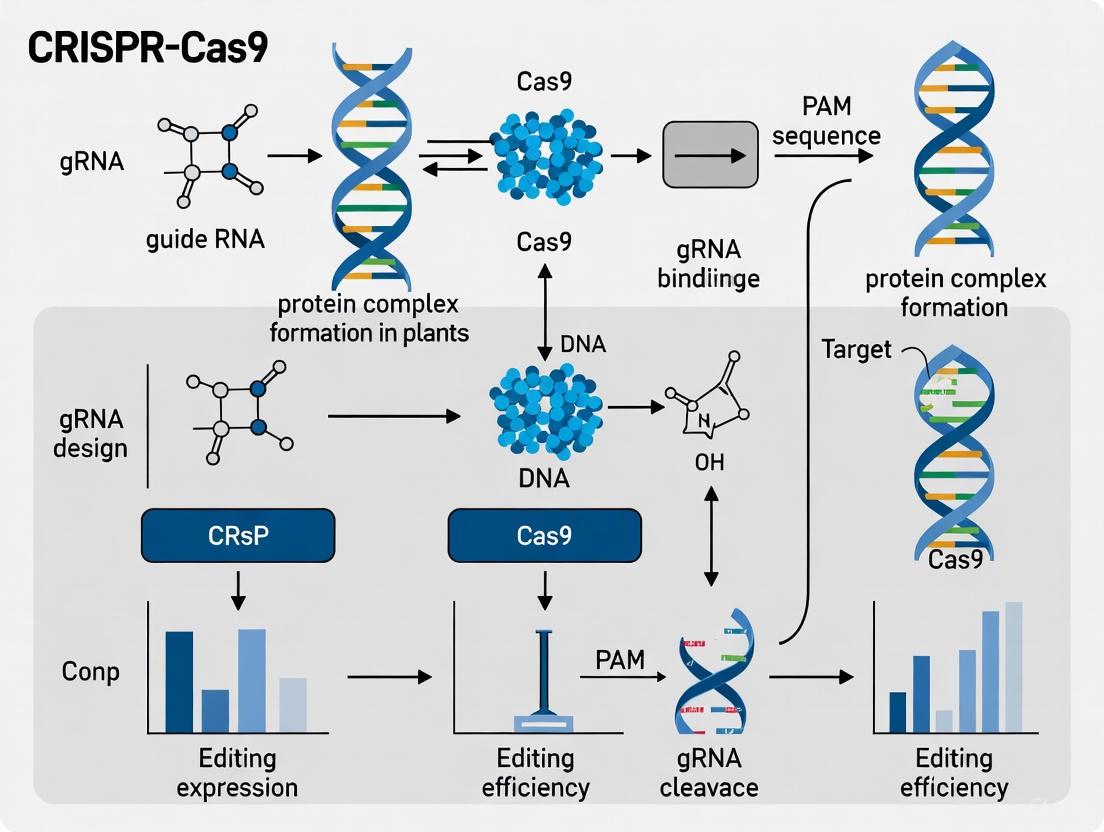
This article provides a systematic guide for researchers and scientists aiming to enhance the efficiency and precision of CRISPR-Cas9 genome editing in plants.
Optimizing CRISPR-Cas9 Editing Efficiency in Plants: A Comprehensive Guide for Researchers
Abstract
This article provides a systematic guide for researchers and scientists aiming to enhance the efficiency and precision of CRISPR-Cas9 genome editing in plants. It explores the foundational principles governing editing success, delves into advanced methodological optimizations—from Cas protein engineering to reagent delivery—and offers practical troubleshooting strategies for common experimental hurdles. A dedicated section on validation and comparative analysis equips readers to critically assess editing outcomes and select the most suitable tools for their specific plant systems. By synthesizing the latest research and techniques, this resource aims to empower the development of improved crop varieties and advance plant biotechnology.
Understanding the Core Principles and Key Factors Governing CRISPR Efficiency in Plants
Troubleshooting Guide: Common CRISPR-Cas9 Issues in Plant Research
FAQ 1: Why is my CRISPR editing efficiency low in plant cells?
Problem: Low frequency of indels or successful edits in regenerated plant lines.
Potential Causes and Solutions:
Inefficient Guide RNA Design: The sgRNA sequence is critical for effective binding and cleavage.
- Solution: Utilize design tools (e.g., CHOPCHOP, Synthego design tool) to select gRNAs with high predicted on-target efficiency. Ensure the target sequence is unique to avoid off-target effects and has a GC content between 40-80% for stability [1].
- Solution: For plant genomes, verify the absence of similar sequences, especially in polyploid species where multiple gene copies exist [2].
Suboptimal Delivery Method: The method used to deliver CRISPR reagents into plant cells greatly impacts efficiency.
- Solution: Consider using RNP (Ribonucleoprotein) complexes pre-assembled from Cas9 protein and synthetic sgRNA. This allows for rapid delivery and nuclease activity, reducing the chances of off-target effects and DNA vector integration. In tomato protoplasts, RNP delivery led to detectable DSBs within 6 hours [3].
- Solution: For stable transformation, Agrobacterium-mediated delivery is common, but it can lead to variable results. Explore transient transformation methods or the use of plant developmental regulators to induce de novo meristems for recovering non-transgenic edited plants [2].
High Fidelity of Endogenous Repair: Plant cells often preferentially repair DSBs precisely, limiting the accumulation of desired indels.
- Solution: A recent study in tomato protoplasts found that precise repair can account for up to 70% of all repair events, explaining the gap between high cleavage rates and lower observed indel rates [3]. Kinetic modeling suggests that the timing of reagent delivery and the window for error-prone repair (NHEJ) are critical. Optimizing the transformation and regeneration protocol to capitalize on the peak periods of error-prone repair is essential.
FAQ 2: How can I reduce off-target effects in my plant experiments?
Problem: Unintended edits at genomic sites with sequences similar to the target.
Potential Causes and Solutions:
gRNA Specificity: The designed gRNA may have near-complementary matches to other genomic regions.
Choice of Cas Nuclease: The standard SpCas9 (Streptococcus pyogenes) can tolerate some mismatches between the gRNA and DNA.
- Solution: Use high-fidelity Cas9 variants such as eSpCas9(1.1), SpCas9-HF1, or HypaCas9, which are engineered to reduce off-target cleavage while maintaining on-target activity [4].
- Solution: Use Cas9 nickase (Cas9n). Employing two gRNAs that target opposite strands to create a double-strand break from two adjacent single-strand nicks significantly improves specificity, as it is unlikely that two off-target nicks will occur in close proximity [4].
FAQ 3: What is the best way to deliver CRISPR reagents for DNA-free editing in plants?
Problem: Integration of foreign DNA (e.g., plasmid backbone) into the plant genome, which can lead to regulatory concerns.
Potential Causes and Solutions:
- Reliance on DNA Vector Delivery: Standard methods using plasmids delivered via Agrobacterium or bombardment can result in random integration.
- Solution: Protoplast Transformation with RNPs. Isolate plant protoplasts and transfert them directly with pre-assembled Cas9 protein and sgRNA complexes. This is a DNA-free method and allows for high editing efficiency, as demonstrated in larch and tomato [3] [5]. The challenge remains the efficient regeneration of whole plants from protoplasts for many species.
- Solution: Particle Bombardment of RNPs or IVT RNA. Coat gold or tungsten microparticles with CRISPR reagents (RNPs or in vitro transcribed RNA) and bombard them into plant cells. This method avoids the use of Agrobacterium and can be used for a wider range of plant species [2].
Quantitative Data on CRISPR-Cas9 Repair Dynamics in Plants
The following table summarizes key findings from a 2024 study that used single-molecule sequencing (UMI-DSBseq) to quantify DSB induction and repair dynamics at three endogenous loci in tomato protoplasts. This data provides a benchmark for expected efficiencies in plant systems [3].
Table 1: Kinetics of CRISPR/Cas9-Induced DSB Repair in Tomato Protoplasts (RNP Delivery)
| Target Gene | Maximum Cleavage Efficiency | Final Indel Frequency (at 72h) | Peak DSB Detection | Key Finding on Repair |
|---|---|---|---|---|
| PhyB2 | 88% | 41% | 36-48 hours | Highest cleavage and indel efficiency among targets. |
| CRTISO | 64% | 15% | 24 hours | Demonstrates that high cleavage does not guarantee high indels. |
| Psy1 | ~80% | ~20% | 24-36 hours | ~12% of molecules remained unrepaired DSBs at 72h. |
| General Observation | Up to 88% of molecules can be cleaved | Indels ranged from 15-41% | DSBs detected as early as 6h | Precise repair accounted for up to 70% of all repair events, limiting indel accumulation. |
Experimental Protocol: DNA-Free Genome Editing in Plant Protoplasts using RNP Complexes
This protocol is adapted from recent studies in tomato and larch for evaluating CRISPR efficiency in a DNA-free context [3] [5].
Objective: To achieve targeted mutagenesis in plant cells without using DNA vectors.
Materials (Research Reagent Solutions):
- Cas9 Protein: Purified Streptococcus pyogenes Cas9 nuclease.
- Synthetic sgRNA: Chemically synthesized single-guide RNA, designed for your target gene. Synthetic sgRNA offers advantages including high purity, consistency, and no need for cloning [1].
- Plant Material: Leaves from sterile seedlings of your target species (e.g., tomato, larch).
- Protoplast Isolation Solution: Enzyme solution containing cellulase and macerozyme to digest cell walls.
- PEG Solution: Polyethylene glycol solution to facilitate transfection.
- W5 and MMg Solutions: Washing and resuspension buffers for protoplasts.
Methodology:
Protoplast Isolation:
- Harvest young leaves and slice them into thin strips.
- Incubate the leaf strips in the enzyme solution in the dark for several hours (e.g., 6-16h) with gentle shaking.
- Purify the released protoplasts by filtering through a mesh and centrifuging through a sucrose or mannitol gradient. Resuspend the protoplast pellet in W5 solution and let rest on ice.
- Critical Parameter: Optimization of enzyme concentration and incubation time is crucial for obtaining a high yield of viable protoplasts (>90% viability) [5].
RNP Complex Assembly:
- In a tube, pre-complex the Cas9 protein and synthetic sgRNA at a molar ratio of 1:2 to 1:4 (e.g., 10 µg Cas9 with 3-5 µg sgRNA).
- Incubate at 25°C for 15-30 minutes to form the active RNP complex.
Protoplast Transfection:
- Count the protoplasts and resuspend them in MMg solution.
- Aliquot protoplasts (e.g., 2 x 10^5 per sample) into a tube.
- Add the assembled RNP complex directly to the protoplasts.
- Add an equal volume of PEG solution to the mixture and mix gently. Incubate at room temperature for 10-30 minutes to allow transfection.
- Critical Parameter: The concentration and incubation time of PEG must be optimized to balance high transformation efficiency with low cytotoxicity [5].
Incubation and DNA Extraction:
- Slowly stop the transfection reaction by adding W5 solution.
- Wash the protoplasts and resuspend in a culture medium.
- Incubate the transfected protoplasts in the dark for 48-72 hours to allow for DNA repair and mutation fixation.
- Harvest the protoplasts by centrifugation and extract genomic DNA using a standard CTAB or commercial kit.
Analysis of Editing Efficiency:
- Amplify the target genomic region by PCR and subject the amplicons to next-generation sequencing (e.g., Illumina). Tools like UMI-DSBseq can be applied to simultaneously quantify intact molecules, DSB intermediates, and indel products [3].
- Calculate the indel frequency using bioinformatics tools designed for CRISPR analysis (e.g., CRISPResso2).
CRISPR-Cas9 Mechanism and Repair Pathway Visualization
The following diagram illustrates the complete mechanism from sgRNA binding through double-strand break induction and the subsequent cellular repair pathways that determine the editing outcome.
CRISPR-Cas9 Mechanism and Repair Pathways
Essential Research Reagent Solutions
Table 2: Key Reagents for CRISPR-Cas9 Experiments in Plants
| Reagent / Tool | Function / Description | Application Notes for Plant Research |
|---|---|---|
| Cas9 Nuclease | RNA-guided endonuclease that creates DSBs. | SpCas9 is most common. High-fidelity variants (e.g., SpCas9-HF1) reduce off-targets. PAM-flexible variants (e.g., SpRY) expand targetable sites [4]. |
| Guide RNA (sgRNA) | Synthetic RNA that directs Cas9 to the target DNA sequence. | Chemically synthesized sgRNA is highly pure and enables DNA-free editing. Design is critical for efficiency and specificity [1]. |
| Endogenous Promoters | Drives expression of Cas9/sgRNA within plant cells. | Using strong, species-specific promoters (e.g., LarPE004 in larch) can significantly boost editing efficiency over constitutive viral promoters like 35S [5]. |
| RNP Complexes | Pre-assembled complexes of Cas9 protein and sgRNA. | Ideal for DNA-free editing via protoplast transformation. Leads to rapid activity and degradation, reducing off-target effects [3] [2]. |
| Protoplast System | Plant cells with cell walls removed. | A versatile platform for rapid testing of CRISPR efficiency and regenerating edited plants in some species [2] [5]. |
Troubleshooting Guide & FAQs
Q1: My CRISPR-Cas9 experiment in Arabidopsis thaliana shows very low mutation efficiency. I suspect the PAM requirement is a limiting factor. What are my options?
A: Low efficiency due to restrictive PAM requirements is a common issue. The canonical SpCas9 PAM (5'-NGG-3') may not be available at your desired target site. Consider these solutions:
- Alternative Cas Proteins: Use Cas variants with relaxed PAM requirements.
- PAM Engineering: Utilize engineered SpCas9 variants (e.g., SpCas9-NG, xCas9) that recognize broader PAM sequences.
Table: Comparison of Common Cas Proteins and Their PAM Requirements
| Cas Protein | Canonical PAM Sequence | Key Characteristics | Typical Editing Efficiency in Plants* |
|---|---|---|---|
| SpCas9 | 5'-NGG-3' | Most widely used, high activity | 5-40% (varies by species and tissue) |
| SpCas9-NG | 5'-NG-3' | Relaxed PAM, broader targeting | 1-20% (can be lower than SpCas9) |
| xCas9 | 5'-NG, GAA, GAT-3' | Broad PAM recognition | 2-15% (context-dependent) |
| Cas12a (Cpf1) | 5'-TTTV-3' | T-rich PAM, creates sticky ends | 3-30% (often highly efficient in some dicots) |
*Efficiencies are highly variable and depend on gRNA design, delivery method, and plant species. Data is a summary from multiple sources.
Experimental Protocol: Testing Alternative Cas Proteins for Broader PAM Compatibility
- Target Selection: Identify your target genomic region. Use in silico tools to scan for potential PAM sites for SpCas9 and your chosen alternative (e.g., SpCas9-NG).
- gRNA Design: Design 2-3 gRNAs for each Cas protein, ensuring high on-target scores and checking for potential off-targets.
- Vector Construction: Clone each gRNA expression cassette into plant transformation vectors harboring the respective Cas gene (e.g., pCambia-based vectors with a plant-specific promoter like AtU6 for gRNA and 35S for Cas).
- Plant Transformation: Transform your plant material (e.g., Arabidopsis via floral dip, rice via Agrobacterium). Generate at least 20 independent T0 lines per construct.
- Genotyping & Analysis: Extract genomic DNA from T0 seedlings or T1 lines. Amplify the target region by PCR and subject the amplicons to next-generation sequencing (NGS) or a T7 Endonuclease I (T7EI) assay to quantify indel mutation frequencies.
Q2: I am observing unexpected phenotypic effects in my edited plants. How can I determine if this is due to gRNA off-target activity?
A: Unintended phenotypic effects are a major concern. To troubleshoot gRNA specificity:
- In Silico Prediction: Use tools like Cas-OFFinder to identify potential off-target sites in the genome that have up to 3-5 mismatches to your gRNA sequence.
- High-Fidelity Cas Variants: Switch to high-fidelity Cas9 proteins like SpCas9-HF1 or eSpCas9(1.1), which are engineered to reduce off-target binding.
- Empirical Validation: Use methods like CIRCLE-seq or Digenome-seq on your plant's genomic DNA to experimentally identify off-target cleavage sites.
Table: Strategies to Enhance gRNA Specificity and Reduce Off-Target Effects
| Strategy | Mechanism | Pros | Cons |
|---|---|---|---|
| Truncated gRNAs (tru-gRNAs) | Uses a shorter guide sequence (17-18 nt) to reduce tolerance for mismatches. | Simple to implement, can significantly reduce off-targets. | May also reduce on-target efficiency. |
| High-Fidelity Cas9 (e.g., SpCas9-HF1) | Engineered with point mutations to weaken non-specific binding to the DNA backbone. | Highly effective reduction in off-targets with minimal impact on on-target activity. | Requires cloning of a new Cas variant. |
| Ribo ribonucleoprotein (RNP) Delivery | Direct delivery of pre-assembled Cas9-gRNA complexes. Complex degrades quickly, reducing time for off-target cleavage. | Low off-target rates, no vector integration. | Delivery can be challenging in some plant systems. |
| Dual gRNA Nicking | Uses two gRNAs targeting adjacent sites on opposite strands with a Cas9 nickase (Cas9n). A DSB is only formed when two nicks occur in close proximity. | Dramatically increases specificity. | Requires two highly efficient gRNAs in close proximity. |
Experimental Protocol: Off-Target Assessment Using Digenome-seq In Vitro
- Genomic DNA Extraction: Isolate high-molecular-weight genomic DNA from your target plant tissue.
- In Vitro Cleavage: Incubate 1 µg of genomic DNA with the Cas9-gRNA RNP complex (pre-assembled from purified Cas9 protein and synthetically produced gRNA) in a suitable reaction buffer for 4-6 hours.
- DNA Purification: Purify the DNA to remove proteins.
- Whole-Genome Sequencing: Subject the cleaved (test) and untreated (control) DNA to whole-genome sequencing at high coverage (e.g., 30x).
- Bioinformatic Analysis: Map the sequencing reads to the reference genome. Identify sites with a significant increase in read breaks in the test sample compared to the control. These sites represent potential off-target cleavages. Validate top candidate sites by amplicon sequencing in your edited plant lines.
Q3: I am trying to knock in a gene donor template via HDR, but I only get error-prone NHEJ indels. How can I bias the repair toward HDR in plant cells?
A: Favoring the low-efficiency HDR pathway over the dominant NHEJ pathway is a significant challenge in plants. A multi-pronged approach is necessary:
- Synchronize DSB with Cell Cycle: HDR is active in the S/G2 phases. Use cell cycle inhibitors or synchronize your transformation protocol to enrich for cells in these phases.
- Inhibit NHEJ Key Proteins: Use small molecule inhibitors (e.g., KU-0060648 against DNA-PKcs) to transiently suppress the NHEJ pathway during the critical repair window.
- Optimize Donor Template: Use single-stranded oligodeoxynucleotides (ssODNs) as donors instead of double-stranded DNA. Ensure sufficient homology arms (e.g., 35-50 nt for ssODNs).
Table: Manipulating Cellular Repair Pathways to Enhance HDR
| Approach | Method | Rationale | Example in Plants |
|---|---|---|---|
| Cell Cycle Synchronization | Treatment with aphidicolin (DNA synthesis inhibitor) before transformation. | Enriches cells in S-phase, where HDR is preferred. | Shown to improve HDR efficiency in rice protoplasts. |
| NHEJ Inhibition | Transient expression of dominant-negative mutants of NHEJ factors (e.g., Ku70) or use of small-molecule inhibitors. | Reduces competition from the error-prone NHEJ pathway. | Co-expression of a dominant-negative Ku70 variant increased HDR frequency in Arabidopsis. |
| HDR Enhancement | Overexpression of key HDR proteins (e.g., CtIP, RAD54). | Boosts the capacity of the HDR repair machinery. | Overexpression of AtRAD54 in Arabidopsis was shown to enhance gene targeting. |
Experimental Protocol: Enhancing HDR for Gene Knock-In in Rice Protoplasts
- Protoplast Isolation: Isolate protoplasts from rice callus or etiolated seedlings.
- Synchronization (Optional): Treat protoplasts with 20 µg/mL aphidicolin for 24 hours to arrest cells at the G1/S boundary. Wash out the inhibitor before transfection.
- RNP & Donor Assembly: Pre-assemble RNP complexes with your chosen Cas protein and gRNA. Prepare your ssODN donor template with homologous arms.
- Co-Delivery: Co-transfect the RNP complexes and the ssODN donor into the synchronized protoplasts using PEG-mediated transformation.
- NHEJ Inhibition (Optional): Add a NHEJ inhibitor (e.g., 10 µM NU7026) to the culture medium immediately after transfection and incubate for 24-48 hours.
- Analysis: After 48-72 hours, extract genomic DNA and use a combination of PCR and NGS to detect and quantify precise HDR events versus NHEJ indels.
Visualizations
CRISPR Workflow with Critical Factors
Cellular Repair Pathways After a DSB
The Scientist's Toolkit
Table: Essential Research Reagents for Optimizing CRISPR-Cas9 in Plants
| Research Reagent | Function & Application |
|---|---|
| SpCas9 & Variant Plasmids | Source of the Cas9 nuclease. High-fidelity variants (e.g., SpCas9-HF1) reduce off-targets, while PAM-relaxed variants (e.g., SpCas9-NG) expand targetable sites. |
| gRNA Cloning Vectors | Vectors (e.g., pU6-gRNA) for easy insertion and expression of the guide RNA sequence under a U6 or U3 pol III promoter. |
| Plant Transformation Vectors | Binary T-DNA vectors (e.g., pCAMBIA series) for Agrobacterium-mediated transformation, containing plant selection markers (e.g., Hygromycin resistance). |
| Purified Cas9 Protein | For Ribonucleoprotein (RNP) complex assembly and direct delivery, reducing off-target effects and avoiding vector integration. |
| Single-Stranded Oligodeoxynucleotides (ssODNs) | Synthetic donor DNA templates for HDR-mediated precise editing, typically with 35-50 nt homology arms. |
| NHEJ Inhibitors (e.g., NU7026) | Small molecule inhibitors of key NHEJ proteins (e.g., DNA-PKcs). Used transiently to favor the HDR repair pathway. |
| T7 Endonuclease I (T7EI) | Enzyme for detecting indel mutations via a mismatch cleavage assay. A quick and cost-effective genotyping method. |
| Next-Generation Sequencing (NGS) Kits | For deep amplicon sequencing to accurately quantify editing efficiency and profile the spectrum of mutations at the target site. |
Frequently Asked Questions (FAQs) on Plant CRISPR Challenges
Q1: My CRISPR editing efficiency in plants is low. What are the main plant-specific bottlenecks?
The primary plant-specific bottlenecks for CRISPR editing efficiency are related to transformation, editing efficiency, and the complexity of plant genomes [6]. Key challenges include:
- Transformation Efficiency: The process of delivering CRISPR components into plant cells, often via Agrobacterium-mediated transformation, can be inefficient and is highly genotype-dependent [6].
- Plant Cell Walls: The rigid plant cell wall presents a significant physical barrier to the delivery of CRISPR reagents [7].
- Editing Efficiency in Somatic Cells: Even after successful transformation, achieving high editing efficiency in somatic plant cells can be variable, and the resulting tissues are often chimeric [8].
- Polygenic/Polypoid Genomes: Many important crops have complex polyploid genomes (with multiple copies of each chromosome), meaning you need to edit multiple, often redundant, gene copies simultaneously to observe a phenotypic effect [9] [10].
Q2: How can I quickly test gRNA efficiency before stable transformation?
A rapid and simple method is to use a hairy root transformation system mediated by Agrobacterium rhizogenes [8]. This system allows for the visual identification of transgenic roots within two weeks and does not require sterile conditions for some plant species [8]. The protocol involves:
- Making a slant cut on the hypocotyl of young seedlings.
- Infecting the wound with Agrobacterium rhizogenes harboring your CRISPR construct and a visual marker like the Ruby reporter gene [8].
- Cultivating the plants in moist vermiculite for approximately two weeks before sampling the transgenic roots for molecular analysis to assess editing efficiency [8].
Q3: Why do different sgRNAs targeting the same gene show variable performance?
In the CRISPR/Cas9 system, gene editing efficiency is highly influenced by the intrinsic properties of each sgRNA sequence [11]. As a result, different sgRNAs targeting the same gene can exhibit substantial variability in editing efficiency, with some showing little to no activity. To ensure reliable results, it is recommended to design and test at least 3–4 sgRNAs per gene [11].
Q4: How can I efficiently edit multiple genes or gene copies simultaneously?
Multiplex CRISPR editing is the recommended approach for this challenge. It allows for the simultaneous targeting of multiple genes, regulatory elements, or chromosomal regions, making it highly effective for addressing genetic redundancy in polyploid crops or engineering polygenic traits [10]. This can be achieved by expressing multiple gRNAs from a single construct [12] [10].
Troubleshooting Guides & Experimental Protocols
Guide 1: Rapid Evaluation of Somatic Editing Efficiency via Hairy Root Transformation
This protocol, adapted from a 2025 study, provides a fast alternative to stable transformation for testing CRISPR systems and target sites [8].
- Key Applications: Rapid validation of gRNA efficiency; Initial testing of novel CRISPR nucleases (e.g., TnpB); Optimization of protein-engineered editors [8].
Essential Materials:
- Young seedlings (e.g., soybean germinated for 5-7 days).
- Agrobacterium rhizogenes strain (e.g., K599).
- CRISPR binary vector with a visual selection marker (e.g., 35S:Ruby).
- Moist vermiculite.
Methodology:
- Prepare Plant Material: Grow seedlings for 5-7 days.
- Infect: Make a slant cut on the hypocotyl and inoculate with A. rhizogenes.
- Cultivate: Plant the infected seedlings in moist vermiculite. No sterile conditions are needed.
- Identify Transformants: After ~2 weeks, visually identify transgenic roots using the Ruby reporter (appearing red) [8].
- Analyze Editing: Isolate genomic DNA from the hairy roots and use next-generation sequencing (NGS) or other molecular assays to quantify editing efficiency at the target loci [8].
Expected Outcomes:
The following workflow diagram illustrates the key steps of the hairy root transformation protocol:
Guide 2: Multiplex Editing for Polygenic Traits
This guide outlines strategies for engineering complex traits controlled by multiple genes or in polyploid genomes.
- Key Applications: Gene family functional dissection; Addressing genetic redundancy; De novo domestication; Stacking multiple traits [10].
Experimental Workflow:
- Target Identification: Identify all homologous genes or family members controlling the trait.
- gRNA Design: Design specific gRNAs for each target or conserved gRNAs that can target multiple homologous sequences.
- Vector Assembly: Use modular cloning systems (e.g., Golden Gate assembly) to construct a single binary vector expressing Cas9 and multiple gRNAs [12] [10].
- Plant Transformation & Regeneration: Perform stable transformation and regenerate whole plants.
- Genotyping: Use long-read sequencing technologies to fully characterize complex editing outcomes, including structural rearrangements that standard genotyping might miss [10].
Considerations:
- Analysis: Standard genotyping may miss complex edits. Leverage long-read sequencing for accurate analysis of multiplex edited lines [10].
- Delivery: The delivery of multiplex constructs can be challenging. "All-in-one" CRISPR toolboxes that pre-assemble systems for multiplexing are available to streamline the process [7].
The logical flow for a multiplex editing experiment is outlined below:
The table below summarizes key quantitative data from recent studies on plant genome editing, providing benchmarks for experimental planning.
Table 1: Key Quantitative Data from Plant CRISPR Studies
| Plant Species | Target Gene | Editing System | Efficiency / Outcome | Key Finding / Method | Citation |
|---|---|---|---|---|---|
| Soybean | GmPDS1, GmPDS2 | CRISPR/Cas9 | Up to 45.1% somatic editing in hairy roots | Hairy root system with Ruby visual marker | [8] |
| East African Highland Banana | Phytoene desaturase (PDS) | CRISPR/Cas9 | 100% & 94.6% albinism in two cultivars | First report in EAHBs; high efficiency in triploid | [12] |
| Various (Rice, Arabidopsis) | OsALS1, AtFT | All-in-one CRISPR Toolbox (Base editing, Activation) | Up to ~11% base editing efficiency; >50-fold gene activation | Validated platform for large-scale screens | [7] |
| ISAam1 TnpB in Soybean | Endogenous loci | ISAam1 TnpB nuclease | 5.1-fold & 4.4-fold increase with engineered variants (N3Y, T296R) | Protein engineering enhanced editing efficiency | [8] |
The Scientist's Toolkit: Key Research Reagent Solutions
This table lists essential reagents and tools for conducting plant CRISPR experiments.
Table 2: Essential Research Reagents for Plant CRISPR Experiments
| Reagent / Tool | Function / Application | Specific Examples / Notes |
|---|---|---|
| Visual Reporter Markers | Rapid, non-destructive identification of transgenic tissues without antibiotics. | Ruby reporter [8]; GFP, YFP. |
| Hairy Root Transformation System | Rapid somatic testing of CRISPR efficiency; avoids lengthy stable transformation. | Uses Agrobacterium rhizogenes (e.g., strain K599) [8]. |
| All-in-One CRISPR Toolkits | Pre-assembled, modular vectors for diverse editing applications across plant species. | Vectors for Cas9/Cas12a, base editing, gene activation in monocots/dicots [7]. |
| Modular Cloning Systems | Efficient assembly of complex constructs, especially for multiplexing several gRNAs. | Golden Gate assembly [12]. |
| Ribonucleoprotein (RNP) Complexes | Direct delivery of pre-assembled Cas9-gRNA complexes; can reduce off-target effects and generate transgene-free plants. | Promising for species with low transformation efficiency [6]. |
Troubleshooting Guides and FAQs
FAQ: General Nuclease Selection
Q: For a beginner starting with plant genome editing, which nuclease is recommended: SpCas9 or Cas12a? A: For beginners, SpCas9 is often recommended due to the vast amount of existing protocols, validated guide RNA designs, and commercial reagents. However, if your target site is rich in thymine (T) and you require multiplexed editing, Cas12a is the superior choice.
Q: What are the primary advantages of Cas12a over Cas9 for plant research? A: Cas12a offers several key advantages:
- Simpler crRNA: It requires a shorter, single crRNA without a tracrRNA, simplifying synthesis.
- T-Rich PAM: Its TTTV PAM allows targeting of AT-rich genomic regions inaccessible to SpCas9.
- Staggered Cuts: It creates staggered ends, which can be beneficial for certain DNA repair outcomes.
- Multiplexing: Its native RNase activity allows processing of a single transcript for multiple crRNAs.
Q: My plant transformation efficiency is low. Could my choice of nuclease be a factor? A: Yes. The large size of SpCas9 (~4.2 kb) can be a limiting factor for delivery via certain vectors (e.g., some viral vectors). Smaller nucleases like SaCas9 (~3.3 kb) or Cas12f (~0.4-0.7 kb) are better suited for size-constrained delivery systems, potentially improving transformation rates.
Troubleshooting Guide: Low Editing Efficiency
Issue: No mutations detected in transformed plant lines.
- Cause 1: Inefficient gRNA/crRNA design.
- Solution: Verify that your gRNA has high on-target activity scores using multiple prediction tools (e.g., Chop-Chop, CRISPR-P). Avoid sequences with high homology to off-target sites. For Cas12a, ensure the direct repeat sequence is correct.
- Cause 2: Low nuclease expression.
- Solution: Use a plant-specific promoter with strong expression in your target tissue (e.g., Ubiquitin for monocots, 35S for dicots). Confirm expression via RT-PCR or a fluorescent marker.
- Cause 3: Inaccessible chromatin state at the target locus.
- Solution: Consult epigenomic data (e.g., DNAse I hypersensitivity sites, histone modification marks) for your plant species to select an open chromatin region. Re-design gRNAs to target these regions.
Issue: High off-target activity observed.
- Cause 1: gRNA/crRNA has high sequence similarity to other genomic loci.
- Solution: Perform a thorough genome-wide off-target prediction. Re-design the gRNA to have at least 3 mismatches to any other site in the genome. Consider using high-fidelity variants like SpCas9-HF1 or eSpCas9(1.1).
- Cause 2: Nuclease is expressed at very high levels for a prolonged period.
- Solution: Use a self-limiting system such as a riboswitch or a transient expression system (e.g., CRISPR-Cas9 ribonucleoprotein (RNP) complex delivery via biolistics or protoplast transfection).
Issue: Successful editing but poor regeneration of edited plants.
- Cause: Somatic cell toxicity from persistent nuclease activity.
- Solution: Employ a transient expression system. Delivery of pre-assembled RNP complexes is highly effective as the nuclease degrades naturally, minimizing prolonged activity. Alternatively, use regeneration-promoting growth hormones in your tissue culture media.
Quantitative Nuclease Comparison
The following table summarizes the key characteristics of major CRISPR nucleases relevant to plant genome editing.
Table 1: Comparison of CRISPR Nucleases for Plant Research
| Feature | Cas9 (SpCas9) | Cas12a (LbCas12a, AsCas12a) | Cas12f (Cas14, Un1Cas12f1) | Cas9-NG |
|---|---|---|---|---|
| Size (aa) | ~1,368 | ~1,300 | ~400-700 | ~1,368 |
| PAM Sequence | 5'-NGG-3' | 5'-TTTV-3' | 5'-TTN-3' (varies) | 5'-NG-3' |
| Cleavage Type | Blunt ends | Staggered ends (5' overhang) | Blunt ends | Blunt ends |
| Guide RNA | crRNA + tracrRNA (or sgRNA) | Single crRNA | Single crRNA | crRNA + tracrRNA (or sgRNA) |
| Multiplexing | Requires multiple sgRNAs | Native processing of array | Limited data | Requires multiple sgRNAs |
| Key Advantage | Extensive validation, high efficiency | T-rich PAM, simpler RNA | Ultra-small for delivery | Relaxed PAM (NG) |
| Key Disadvantage | Large size, G-rich PAM | Lower efficiency in some plants | Lower cleavage efficiency | Can reduce on-target efficiency |
Experimental Protocols
Protocol 1: Agrobacterium-mediated Transformation of Arabidopsis with CRISPR-SpCas9
Objective: To stably integrate a CRISPR-SpCas9 T-DNA construct into the Arabidopsis genome for heritable gene editing.
Materials:
- Agrobacterium tumefaciens strain GV3101
- Arabidopsis thaliana (ecotype Col-0) plants
- CRISPR-SpCas9 binary vector (e.g., pHEE401E)
- Infiltration Media (IM): 1/2x Murashige and Skoog (MS) salts, 5% (w/v) sucrose, 0.044 μM benzylaminopurine, 200 μl/L Silwet L-77
Method:
- Plant Growth: Grow Arabidopsis plants under long-day conditions (16-h light/8-h dark) until the primary inflorescence is ~5-10 cm tall. Clip the primary bolt to encourage secondary bolt growth.
- Agrobacterium Preparation: Transform the CRISPR binary vector into Agrobacterium. Grow a 50-ml culture in YEP medium with appropriate antibiotics to an OD600 of ~1.5. Pellet cells and resuspend in IM to a final OD600 of 0.8.
- Floral Dip: Subvert the above-ground parts of the Arabidopsis plants into the Agrobacterium suspension for 30 seconds, ensuring all floral tissues are submerged. Gently agitate.
- Post-Dip Care: Lay the dipped plants on their side and cover with a transparent dome or plastic wrap to maintain high humidity for 16-24 hours.
- Seed Harvest: Grow plants until seeds are mature and dry. Harvest seeds (T1 generation).
Protocol 2: Delivery of CRISPR-Cas12a as Ribonucleoprotein (RNP) Complexes into Plant Protoplasts
Objective: To achieve transient, high-efficiency gene editing with minimal off-target effects using pre-assembled Cas12a RNP complexes.
Materials:
- Plant protoplasts isolated from desired species (e.g., Nicotiana benthamiana)
- Purified LbCas12a protein
- Chemically synthesized crRNA
- PEG-Calcium solution (40% PEG 4000, 0.2 M mannitol, 0.1 M CaCl2)
- W5 solution (154 mM NaCl, 125 mM CaCl2, 5 mM KCl, 2 mM MES, pH 5.7)
Method:
- RNP Complex Assembly: For a 20μl reaction, mix 5 μg (~3 pmol) of LbCas12a protein with a 5x molar excess of crRNA (15 pmol) in nuclease-free buffer. Incubate at 25°C for 15 minutes to form the RNP complex.
- Protoplast Preparation: Isolate protoplasts and resuspend in W5 solution at a density of 1-2 x 10^6 protoplasts/ml. Keep on ice for 30 minutes.
- Transfection: Aliquot 100μl of protoplast suspension (10^5 cells) into a round-bottom tube. Add the pre-assembled 20μl RNP complex. Gently add 120μl of PEG-Calcium solution and mix carefully by inverting the tube.
- Incubation: Incubate the transfection mixture at room temperature for 15-20 minutes.
- Washing and Culture: Dilute the mixture with 1 ml of protoplast culture medium. Centrifuge gently (100 x g, 2 min) to pellet the protoplasts. Remove the supernatant and resuspend the protoplasts in fresh culture medium. Culture in the dark at 25°C for 48-72 hours before harvesting DNA for analysis.
Signaling Pathways and Workflows
CRISPR RNP Delivery Workflow
Title: RNP Delivery into Protoplasts
CRISPR Experiment Lifecycle
Title: CRISPR Plant Experiment Steps
DNA Repair Pathway Decision
Title: DNA Repair After CRISPR Cut
The Scientist's Toolkit: Research Reagent Solutions
Table 2: Essential Reagents for CRISPR Plant Research
| Reagent | Function | Example/Note |
|---|---|---|
| CRISPR Nuclease | The enzyme that cuts the DNA. | SpCas9, LbCas12a. Choose based on PAM requirement and size. |
| Binary Vector | A T-DNA plasmid for Agrobacterium-mediated transformation. | pBIN19, pCAMBIA series. Contains plant selection marker (e.g., Kanamycin resistance). |
| Plant Codon-Optimized Cas | A version of the Cas gene optimized for expression in plants. | Critical for high translation efficiency. |
| gRNA Expression Scaffold | The part of the sgRNA that binds to the Cas protein. | Often driven by a U6 or U3 pol III promoter. |
| Plant Selection Agent | A chemical to select for transformed tissue. | Kanamycin, Hygromycin B, Glufosinate ammonium (Basta). |
| Protoplast Isolation Enzymes | A mix of cellulases and pectinases to digest plant cell walls. | e.g., Cellulase R10, Macerozyme R10. |
| PEG Solution | A polymer used to induce membrane fusion for transfection. | Used for protoplast transfection of DNA or RNP complexes. |
| Donor DNA Template | A repair template for HDR-mediated knock-in. | Can be single-stranded oligodeoxynucleotide (ssODN) or double-stranded DNA. |
Advanced Strategies for Optimizing Reagents and Delivery Methods
FAQs and Troubleshooting Guide
Q1: What are the key trade-offs when using PAM-flexible Cas9 variants, and how do I select the right one for my plant experiment?
A: PAM flexibility often comes at the cost of reduced on-target activity. When selecting a variant, consider your specific need for precise positioning versus the required editing efficiency [13].
The table below summarizes the performance characteristics of several engineered Cas9 variants based on comparative studies:
Table 1: Performance Comparison of PAM-Flexible Cas9 Variants
| Cas9 Variant | PAM Preference | Relative On-Target Efficiency (vs. WT Cas9) | Key Characteristics | Best Suited For |
|---|---|---|---|---|
| WT SpCas9 | NGG [13] | Baseline (100%) | Standard editing efficiency, broad use [14] | Standard editing where NGG PAMs are available |
| Cas9-NG | NG [13] | ~64% of WT at NGG sites [13] | Outperforms xCas9 at NG PAMs regardless of modality [13] | Applications requiring relaxed NG PAM recognition |
| xCas9 | NG [13] | ~43% of WT at NGG sites [13] | Lower activity than Cas9-NG and WT Cas9 [13] | Less recommended compared to newer variants |
| SpRY | NRN > NYN (near-PAMless) [15] | Broad editing but with slower cleavage rates than WT [15] | Unprecedented genomic accessibility, can be less accurate [15] | Projects requiring maximal target site flexibility |
| SpRYc (Chimeric) | NRN and NYN (highly flexible) [15] | Robust editing at diverse PAMs, including NYN [15] | Combines SpRY's PID with Sc++'s N-terminus; lower off-targets than SpRY [15] | Therapeutic applications and editing requiring precise positioning |
Q2: I am experiencing low mutation efficiency in my wheat transformation. What experimental parameters can I optimize?
A: Low mutation efficiency, especially in complex polyploid plants like wheat, is a common challenge. You can optimize several aspects of your protocol:
- Gene Delivery Parameters (for Biolistics): A study in hexaploid wheat found that using 0.6 μm gold particles for bombardment increased stable transformation frequencies across all delivery pressures compared to other sizes [16].
- Post-Transformation Temperature Treatment: Subjecting transformed wheat embryos to a heat treatment of 34°C for 24 hours resulted in the highest mutation efficiency with minimal reduction in transformation frequency. This is likely because the Cas9 enzyme from S. pyogenes is more active at higher temperatures [16].
- Component Optimization: Ensure you are using promoters that drive high expression of Cas9 and sgRNAs in your plant species. Furthermore, always test sgRNA efficiency in vivo before stable transformation to maximize success [16].
Q3: How can I reduce off-target effects in my CRISPR experiments?
A: Several strategies can help minimize off-target activity:
- Choose High-Fidelity Variants: Consider using enzymes that are intrinsically more accurate. For example, the chimeric SpRYc variant was shown to have nearly a four-fold lower off-target activity than SpRY in human cells [15].
- Use a Nickase System: The double nickase ("double nick") system uses a pair of guide RNAs with a Cas9 nickase (Cas9n, D10A mutant) to create two single-strand breaks on opposite strands. This strategy significantly reduces off-target effects because off-target sites are unlikely to be cut by both guides simultaneously [17].
- Optimize Delivery Conditions: Avoid using excessively high concentrations of Cas9 and sgRNA, as this can increase the likelihood of off-target cleavage [17]. Delivering pre-assembled ribonucleoprotein (RNP) complexes can also shorten the exposure time of the genome to the editing machinery, potentially reducing off-target effects [16].
Experimental Protocols
Protocol 1: Bacterial Screen for Assessing PAM Specificity
This protocol adapts the PAM-SCANR method to characterize the PAM preference of a novel Cas9 variant [15].
- Clone your Cas9 variant: Subclone your gene of interest for the nuclease-deficient (dCas9) version into an appropriate bacterial expression vector.
- Prepare the PAM library: Transform the PAM-SCANR plasmid, which contains a randomized PAM library, into your bacterial strain.
- Co-transform with targeting components: Co-transform the bacteria with a plasmid containing a single guide RNA (sgRNA) targeting a fixed protospacer on the PAM-SCANR plasmid and the dCas9 plasmid.
- Select and sequence: Isolate successful cells using fluorescence-activated cell sorting (FACS) based on GFP expression, which is conditional on PAM binding and successful complex formation. Amplify and sequence the PAM region from the sorted population to determine the enriched PAM sequences [15].
Diagram: Workflow for PAM Characterization
Protocol 2: Assessing Mutation Efficiency via a Phenotypic Assay in Wheat Using the PDS Gene
This protocol uses the knockout of the Phytoene Desaturase (PDS) gene, which results in a visible albino phenotype, to quickly assess mutation efficiency [16].
- Construct Design: Clone your sgRNA expression cassette targeting the wheat PDS gene into a CRISPR-Cas9 vector. A strong, constitutive promoter like the rice Actin1 promoter is often effective [16].
- Plant Transformation: Transform the construct into wheat immature embryos (IEs) using your preferred method, such as particle bombardment.
- Temperature Treatment: After bombardment, subject the transformed embryos to a heat treatment of 34°C for 24 hours to enhance Cas9 activity [16].
- Regeneration and Selection: Regard the embryos on selective medium and regenerate whole plants under standard growth conditions.
- Efficiency Scoring: Score the mutation efficiency by tracking the number of independent transformation events that show an albino phenotype. In hexaploid wheat, this requires biallelic mutations in all three homoeologs (A, B, and D genomes), providing a stringent test of your system's efficiency [16].
The Scientist's Toolkit: Essential Research Reagents
Table 2: Key Reagents for Cas Protein Engineering and Testing
| Reagent / Material | Function / Application | Examples / Notes |
|---|---|---|
| Cas9 Expression Vectors | Provides the platform for expressing wild-type or engineered Cas9 variants. | lentiCRISPRv2 backbone [13]; plasmids for nickase (PX335) and WT nuclease (PX330) [17]. |
| sgRNA Cloning Backbones | Allows for the insertion of custom guide RNA sequences. | Vectors with human U6 promoter (e.g., PX330); add 'CACC' overhang to forward oligo, no PAM sequence needed [17]. |
| PAM Library Plasmids | For high-throughput characterization of a Cas protein's PAM preference. | PAM-SCANR [15] or HT-PAMDA [15] systems. |
| Homology-Directed Repair (HDR) Donor Templates | For introducing precise point mutations or inserting DNA fragments. | ssODN: For small changes (<50 bp), use 50-80 bp homology arms. Plasmid Donor: For large insertions, use ~800 bp homology arms [17]. |
| Model Plant Genes for Efficiency Testing | Provides a rapid, phenotypically visible readout for editing efficiency. | Phytoene Desaturase (PDS): Knockout causes albino phenotype [16]. |
Diagram: Logical Relationship of CRISPR Component Engineering
Frequently Asked Questions (FAQs) and Troubleshooting
Q1: What are the most critical factors to consider when designing a gRNA for plant research?
The primary factors are on-target efficiency and off-target risk [18]. Key design parameters include:
- PAM Sequence: The Cas nuclease you use defines the PAM sequence requirement. For the commonly used SpCas9, this is 5'-NGG-3' located directly after the target sequence in the genome [19] [1].
- GC Content: Aim for a GC content between 40% and 60% for optimal stability and efficiency [20] [18] [1].
- gRNA Length: A typical gRNA for SpCas9 is 17-23 nucleotides. Truncated gRNAs can sometimes improve specificity [20] [1].
- Off-Target Potential: Select a gRNA sequence that is unique within the genome to minimize binding to similar, incorrect sites [20] [18].
Q2: How can I quickly and reliably predict the efficiency of my designed gRNAs?
Leverage established computational tools that use algorithms trained on large experimental datasets. The table below summarizes the most prominent tools and their scoring methods.
Table 1: Computational Tools for gRNA On-Target Efficiency Prediction
| Tool Name | Key Scoring Method(s) | Application & Notes |
|---|---|---|
| CRISPick [18] | Rule Set 2, Rule Set 3, CFD | Uses updated models (Rule Set 3) that consider the tracrRNA sequence for improved predictions. |
| CHOPCHOP [18] | Rule Set, CRISPRscan | A versatile tool that supports various CRISPR-Cas systems beyond Cas9. |
| CRISPOR [18] | Rule Set 2, CRISPRscan, Lindel | Provides detailed off-target analysis and predicts frameshift likelihood using the Lindel algorithm. |
| GenScript sgRNA Design Tool [18] | Rule Set 3, CFD | Offers an overall score balancing on-target and off-target metrics, with support for SpCas9 and Cas12a. |
Q3: My CRISPR edits are inefficient. What are the main experimental reasons, and how can I troubleshoot this?
Low editing efficiency can stem from several factors. The following workflow diagram outlines a logical troubleshooting path, from gRNA design verification to delivery optimization.
- gRNA Design: Verify that your gRNA has a high predicted on-target score using the tools in Table 1. Avoid very low or very high GC content [18] [1].
- gRNA Quality and Delivery: The method of gRNA production impacts efficiency. Synthetic sgRNA is often preferred over in vitro transcribed (IVT) or plasmid-expressed gRNA due to higher purity, lower immunogenicity, and reduced off-target effects [21] [1]. Ensure your delivery method (e.g., protoplast transformation, Agrobacterium-mediated) is optimized for your plant species [12] [22].
- Target Site Accessibility: Chromatin structure can make some genomic regions inaccessible [19]. It is highly advisable to design and test multiple gRNAs targeting different exons of your gene of interest [23] [1].
- Cas9 Activity: Always include a positive control gRNA (e.g., targeting a well-characterized gene like Phytoene Desaturase (PDS), which produces an easily observable albino phenotype in plants) to confirm your overall system is functional [12].
Q4: What specific strategies can I use to minimize off-target effects in my plant experiments?
Reducing off-target activity is crucial for precise editing. The table below summarizes effective strategies, ranging from gRNA selection to the use of advanced systems.
Table 2: Strategies for Minimizing Off-Target Effects
| Strategy | Method | Key Principle |
|---|---|---|
| gRNA Engineering | Careful sequence selection; Truncated gRNAs; Chemical modifications (e.g., 2'-O-methyl-3'-phosphonoacetate) [20] [21]. | Select unique target sequences with minimal genomic homology. Chemical modifications can enhance stability and specificity. |
| High-Fidelity Cas Variants | Use eSpCas9, SpCas9-HF1 [20] [21]. | Engineered proteins with reduced non-specific DNA binding, requiring more perfect matches for cleavage. |
| Cas9 Nickase | Use Cas9n (D10A mutant) with a pair of offset gRNAs [20]. | Cuts only a single DNA strand. Two nearby nicks are required for a double-strand break, dramatically increasing specificity. |
| Alternative Cas Enzymes | Use SaCas9 or Cas12a (Cpf1) [20] [24]. | These nucleases have longer, rarer PAM sequences (e.g., SaCas9: 5'-NNGRRT-3'), reducing the number of potential off-target sites in the genome. |
| Prime Editing | Use a Cas9 nickase fused to a reverse transcriptase and a prime editing guide RNA (PegRNA) [20]. | Enables precise edits without creating double-strand breaks, thereby eliminating a major cause of off-target indels. |
| Ribonucleoprotein (RNP) Delivery | Deliver pre-assembled complexes of Cas9 protein and gRNA [25]. | The transient activity of RNPs reduces the time window for off-target cleavage to occur, compared to persistent plasmid-based expression. |
Experimental Protocol: Rapid gRNA Validation in Plants Using Protoplast Transformation
This protocol, adapted from Higa et al. (2024), allows for rapid in vivo testing of gRNA activity in days, bypassing the lengthy process of stable plant transformation [22].
1. Principle: Isolate protoplasts (plant cells without cell walls) from target species and transfert them with CRISPR-Cas9 constructs or Ribonucleoproteins (RNPs) to assess editing efficiency at the target locus before embarking on a full stable transformation experiment.
2. Reagents and Materials: Table 3: Research Reagent Solutions for Protoplast Assays
| Reagent / Material | Function | Example / Note |
|---|---|---|
| Plant Material | Source of protoplasts. | Etiolated seedlings of species like maize, Arabidopsis, or tobacco [22]. |
| Enzyme Solution | Digests cell wall to release protoplasts. | Contains cellulases and pectinases. Osmolarity must be adjusted with mannitol. |
| PEG Solution | Facilitates DNA/RNP uptake into protoplasts. | Polyethylene Glycol (PEG) is a common transfection agent [22]. |
| CRISPR Components | Active editing machinery. | Plasmid DNA encoding Cas9 and gRNA, or pre-assembled Cas9-gRNA RNP complexes. |
| WI Solution | Washing and incubation solution to maintain protoplast viability. |
3. Step-by-Step Methodology:
- Protoplast Isolation: Harvest tender leaf tissue from etiolated seedlings. Slice leaves thinly and incubate in an enzyme solution for several hours in the dark with gentle shaking.
- Purification: Filter the digested mixture through a mesh to remove debris. Pellet the protoplasts by gentle centrifugation and wash with WI solution.
- Transfection: Incubate protoplasts with your CRISPR-Cas9 construct (typically 10 µg plasmid DNA) or RNP complexes in the presence of PEG to induce uptake [22].
- Incubation and Analysis: Incubate transfected protoplasts for up to 7 days, allowing time for genome editing to occur. Harvest cells and extract genomic DNA.
- Efficiency Assessment: Use targeted next-generation sequencing (NGS) or a restriction enzyme-based assay (e.g., GeneArt Genomic Cleavage Detection Kit) to quantify indel mutation frequencies at the target site [22] [23].
4. Troubleshooting:
- Low Protoplast Yield/Viability: Optimize enzyme concentration and digestion time. Use etiolated tissue and ensure solutions have correct osmolarity [22].
- Low Transfection Efficiency: Titrate the amount of DNA/RNP and optimize PEG concentration and incubation time.
- Low Detected Editing: Ensure protoplasts are viable for a sufficient period post-transfection (e.g., 3-7 days) for the editing to be completed and detectable [22]. Test multiple gRNAs as their efficiency can vary significantly.
Troubleshooting Guides & FAQs
Agrobacterium-Mediated Transformation (T-DNA Delivery)
Q1: My Agrobacterium transformation efficiency is very low in my plant species. What could be the cause? A: Low efficiency can stem from several factors. The primary issue is often plant genotype and tissue vitality. Ensure you are using an optimal explant (e.g., young, healthy leaf discs or embryogenic callus) and that your virulence (vir) gene induction conditions are correct (e.g., correct pH, temperature, and presence of acetosyringone). Bacterial overgrowth can also be detrimental; control co-cultivation time (typically 2-3 days) and use appropriate antibiotics.
Q2: I suspect T-DNA is not being transferred efficiently. How can I troubleshoot this? A: First, confirm the functionality of your binary vector and Agrobacterium strain using a transient GUS or GFP assay. If expression is weak, optimize the co-cultivation medium (sucrose level, pH, and acetosyringone concentration). Genomic DNA extraction and PCR on the transformed tissue can confirm T-DNA integration, but the absence of editing may be due to poor Cas9/gRNA expression post-integration.
Q3: How can I reduce somaclonal variation and chimerism in my regenerated plants? A: Somaclonal variation increases with prolonged time in culture. To minimize this, use the shortest possible selection and regeneration protocol. To reduce chimerism, include a stringent selection regime and perform multiple rounds of regeneration (sub-culturing) to ensure all cells carry the edit. Always analyze subsequent generations (T1, T2) to identify stable, non-chimeric lines.
Biolistic (Gene Gun) Transformation
Q4: I am experiencing high cell death after particle bombardment. What should I adjust? A: High cell death is often due to physical damage from the bombardment parameters.
- Pressure/Helium: Reduce the rupture disk pressure.
- Distance: Increase the distance between the stopping screen and the target tissue.
- Particle Preparation: Ensure gold particles are clean and not aggregated. Avoid over-coating with DNA, as the excess spermidine and calcium can be toxic.
- Tissue State: Use physiologically robust target tissues like compact embryogenic calli.
Q5: My transformation yields many escapes (non-transformed plants that survive selection). How do I fix this? A: Escapes are common in biolistics due to transient expression and non-integrated DNA.
- Selection: Optimize the concentration and timing of the selection agent (e.g., hygromycin, kanamycin). A delayed application of selection (e.g., 5-7 days post-bombardment) can allow transformed cells to recover and proliferate before being challenged.
- Vector Design: Use a vector with a strong, constitutive promoter driving the selectable marker gene.
Q6: I get complex transgene integration patterns. How can I achieve simpler integration? A: Biolistics is prone to generating multi-copy and complex rearrangements. While difficult to prevent entirely, using linear DNA fragments instead of whole plasmids and minimizing the amount of DNA used per shot can reduce complexity.
DNA-Free RNP Transfection
Q7: The delivery of RNPs into plant cells is inefficient. What are my options? A: RNP delivery is the major challenge. The two primary methods are:
- PEG-Mediated Transfection: Effective for protoplasts. The key is using fresh, highly viable protoplasts and optimizing PEG concentration and incubation time.
- Biolistics with RNPs: Coat gold particles with pre-assembled RNPs instead of DNA. This requires optimizing the coating protocol (e.g., avoiding high salts that cause aggregation) and bombardment parameters to deliver the particles directly into the cell nucleus while maintaining protein function.
Q8: I get successful mutagenesis but no stable regenerated plants from protoplasts. A: Regeneration from protoplasts is highly genotype-dependent and challenging. Focus on plant species with established protoplast regeneration protocols (e.g., lettuce, tobacco, some rice varieties). Ensure your culture media and environmental conditions (light, temperature) are optimal for cell wall reformation and subsequent callus formation and organogenesis.
Q9: How do I confirm that my edits are DNA-free and not due to plasmid integration? A: Sequence the edit site in the regenerated plant. The absence of the plasmid sequence can be confirmed by PCR using primers specific to the plasmid backbone (e.g., the bacterial origin of replication or antibiotic resistance gene). Molecular analysis of the T1 progeny is the ultimate test; the segregation of the edited allele in a Mendelian ratio without the presence of the transgene confirms a DNA-free edit.
Table 1: Key Characteristics of CRISPR-Cas9 Delivery Methods
| Feature | Agrobacterium | Biolistics | DNA-Free RNP |
|---|---|---|---|
| Typical Editing Efficiency | 1-10% (stable) | 0.1-5% (stable) | 0.1-40% (transient, protoplast-dependent) |
| Transgene Integration | Yes, defined T-DNA borders | Yes, often complex & multi-copy | No |
| Off-Target Effects | Moderate (prolonged expression) | Moderate (prolonged expression) | Low (short-lived activity) |
| Regulated as GMO? | Yes | Yes | Often No (in many countries) |
| Technical Complexity | Medium | High | High (Protoplast: Very High) |
| Throughput | High | Medium | Low (Protoplast: Low) |
| Best for | Stable transformation, large DNA inserts | Species recalcitrant to Agrobacterium | Non-GMO products, rapid mutagenesis |
Table 2: Common Reagents and Their Functions in Delivery Protocols
| Reagent / Material | Function in Protocol |
|---|---|
| Acetosyringone | A phenolic compound that induces the Agrobacterium Vir genes, enabling T-DNA transfer. |
| Gold / Tungsten Microparticles | Micro-projectiles used in biolistics to physically carry DNA or RNPs into cells. |
| Spermidine (in Biolistics) | A polyamine used in the precipitation of DNA onto gold particles, preventing aggregation. |
| Calcium Chloride (in Biolistics) | Works with spermidine to co-precipitate DNA onto the surface of gold particles. |
| Polyethylene Glycol (PEG) | A chemical that facilitates the fusion of cell membranes, used for transfection of RNPs into protoplasts. |
| Cellulase & Pectolyase Enzymes | Used to digest plant cell walls to create protoplasts for RNP or DNA transfection. |
| Antibiotics (e.g., Timentin) | Used in plant culture media to eliminate residual Agrobacterium after co-cultivation. |
Experimental Protocols
Protocol 1: Agrobacterium-Mediated Transformation of Leaf Discs
- Vector Design: Clone your gRNA(s) into a binary vector containing Cas9 and a plant selectable marker.
- Agrobacterium Preparation: Transform the binary vector into a disarmed Agrobacterium tumefaciens strain (e.g., EHA105, GV3101). Grow a fresh culture in liquid medium with appropriate antibiotics to an OD₆₀₀ of ~0.5-0.8.
- Induction: Pellet bacteria and resuspend in liquid plant co-cultivation medium supplemented with 100-200 µM acetosyringone. Induce for 1-2 hours.
- Plant Material: Surface sterilize leaves and cut into small discs (5x5 mm).
- Co-cultivation: Immerse leaf discs in the induced Agrobacterium suspension for 5-30 minutes. Blot dry and place on solid co-cultivation medium in the dark for 2-3 days.
- Selection & Regeneration: Transfer explants to selection medium containing antibiotics to kill Agrobacterium (e.g., Timentin) and to select for transformed plant cells (e.g., Kanamycin). Sub-culture every 2 weeks until shoots regenerate.
- Rooting & Acclimatization: Excise shoots and transfer to rooting medium. Once rooted, transfer plants to soil.
Protocol 2: RNP Transfection into Protoplasts using PEG
- Protoplast Isolation: Digest 1g of young leaf tissue in an enzyme solution (e.g., 1.5% Cellulase, 0.4% Macerozyme) for 4-16 hours in the dark with gentle shaking.
- Purification: Filter the digest through a nylon mesh (40-100 µm) to remove debris. Pellet protoplasts by centrifugation in a W5 solution. Purify by flotation on a sucrose or Percoll gradient.
- RNP Complex Formation: Assemble the RNP complex by incubating purified Cas9 protein (e.g., 10 µg) with synthesized gRNA (e.g., 5 µg) at room temperature for 10-15 minutes.
- PEG Transfection: Mix ~100,000 protoplasts with the RNP complex. Add an equal volume of 40% PEG solution (PEG 4000, 0.2M mannitol, 0.1M CaCl₂). Incubate for 10-30 minutes.
- Washing & Culture: Dilute the PEG mixture stepwise with W5 solution. Pellet the protoplasts and resuspend in culture medium.
- Analysis: Culture protoplasts for 48-72 hours, then extract DNA to assay editing efficiency (e.g., by T7E1 assay or sequencing).
Methodology and Workflow Diagrams
CRISPR Delivery Method Selection
Intracellular CRISPR Delivery Paths
Nuclear Localization Signal (NLS) and Codon Optimization as Determinants of Enhanced Efficiency
Frequently Asked Questions (FAQs)
1. What is a Nuclear Localization Signal (NLS) and why is it critical for CRISPR-Cas9 efficiency? A Nuclear Localization Signal (NLS) is a short amino acid sequence that 'tags' a protein for import into the cell nucleus by nuclear transport. It is typically composed of one or more short sequences of positively charged lysines or arginines exposed on the protein surface [26]. For CRISPR-Cas9, attaching an NLS to the Cas9 protein is essential because it ensures efficient delivery of the genome-editing machinery into the nucleus, where its DNA target is located. Inadequate nuclear import due to a suboptimal NLS is a common cause of low editing efficiency [27] [28].
2. How does codon optimization enhance protein expression in heterologous systems? Codon optimization is a gene design strategy that uses synonymous codon changes to improve the production of a recombinant protein without altering the amino acid sequence [29]. Specific species have a biased preference for certain codons, and this "codon usage bias" is positively correlated with the abundance of corresponding tRNAs in the cell [30]. By optimizing the codon sequence of a gene (e.g., Cas9) to match the preferred codon usage of the host organism (e.g., a plant species), the rate and accuracy of translation are significantly improved, leading to higher levels of functional protein and, consequently, higher genome-editing efficiency [30] [29].
3. What are the common types of NLS used in CRISPR-Cas9 systems? The two primary classes of NLSs are Classical (cNLS) and Non-classical (ncNLS) [26] [31].
- Classical NLS (cNLS): These are further divided into:
- Non-classical NLS (ncNLS): This category includes diverse signals, such as the proline-tyrosine (PY)-NLS, which is recognized by specific import receptors like importin-β2 (transportin) [26].
Table 1: Common Nuclear Localization Signals (NLSs)
| NLS Type | Key Characteristics | Example Sequence | Primary Import Receptor |
|---|---|---|---|
| Monopartite (Classical) | Single cluster of 4-8 basic residues; Consensus K(K/R)X(K/R) [31] |
SV40 Large T-antigen: PKKKRKV [26] |
Importin α/β [26] |
| Bipartite (Classical) | Two basic clusters separated by a 10-12 aa linker; Consensus R/K(X)₁₀₋₁₂KRXK [31] |
Nucleoplasmin: KRPAATKKAGQAKKKK [26] |
Importin α/β [26] |
| PY-NLS (Non-classical) | N-terminal hydrophobic/basic motif and C-terminal R/K/H(X)₂₋₅PY motif [26] |
hnRNP A1: FGNYNNQSSNFGPMKGGNFGGRSSGPY [31] |
Importin-β2 (Transportin) [26] |
4. My CRISPR-Cas9 editing efficiency is low. What are the primary troubleshooting steps? Low editing efficiency can stem from multiple factors. A systematic troubleshooting approach should focus on:
- sgRNA Design: Ensure your single-guide RNA (sgRNA) is highly specific and has high on-target activity. Use bioinformatics tools (e.g., CRISPR Design Tool, Benchling) to minimize off-target effects [27] [32].
- Delivery Efficiency: Optimize your method for delivering CRISPR components (Cas9 and sgRNA) into plant cells. Test different transfection or transformation protocols [27].
- Cas9 and NLS Performance: Verify that the Cas9 protein is being robustly expressed and efficiently imported into the nucleus. Using a stably expressing, codon-optimized Cas9 with a strong NLS can dramatically improve results [27] [28].
- Component Validation: Always include positive and negative controls in your experiments to benchmark system performance and identify background activity [28].
Troubleshooting Guides
Issue 1: Low Knockout Efficiency
Potential Causes and Solutions:
- Cause: Suboptimal sgRNA Design
- Cause: Inefficient Nuclear Import of Cas9
- Solution: Fuse a validated, strong NLS to your Cas9 protein. The SV40 NLS is widely used, but testing alternative NLSs (e.g., bipartite or c-Myc NLS) may yield better results, as some studies show significantly higher efficiency with c-Myc NLS compared to SV40 [26] [27]. Ensure the NLS is positioned at an accessible location on the protein (often at the N- or C-terminus).
- Cause: Low Expression of Cas9 Protein
Issue 2: High Off-Target Effects
Potential Causes and Solutions:
- Cause: sgRNA with High Sequence Similarity to Multiple Genomic Loci
- Solution: Perform a comprehensive BLAST search against the host genome to ensure the sgRNA sequence is unique, especially critical in polyploid crops like wheat with high sequence redundancy [32].
- Cause: High and Prolonged Cas9 Nuclease Activity
- Solution: Consider using high-fidelity Cas9 variants (e.g., eSpCas9, SpCas9-HF1) engineered to reduce off-target cleavage while maintaining on-target activity [28].
Issue 3: Cell Toxicity or Low Survival Rates
Potential Causes and Solutions:
- Cause: Overexpression of CRISPR-Cas9 Components
- Solution: Titrate the concentration of delivered Cas9 and sgRNA. Start with lower doses and gradually increase to find a balance between editing efficiency and cell viability [28]. Using a ribonucleoprotein (RNP) complex (pre-assembled Cas9 protein and sgRNA) instead of plasmid DNA can reduce toxicity and off-target effects.
Experimental Protocols
Protocol 1: Validating NLS Functionality
Objective: To confirm that a chosen NLS is capable of directing a protein of interest to the nucleus.
Materials:
- Plasmid encoding a fluorescent protein (e.g., GFP)
- DNA fragment encoding your NLS of interest
- Molecular cloning reagents
- Plant protoplast transformation system or microscope
Method:
- Construct Fusion: Clone the DNA sequence encoding the NLS in-frame with the gene for Green Fluorescent Protein (GFP). A common approach is to fuse the NLS to either the N- or C-terminus of GFP.
- Deliver Construct: Introduce the constructed plasmid into your target plant cells, for example, using polyethylene glycol (PEG)-mediated transformation of protoplasts.
- Visualize Localization: After an appropriate incubation period (e.g., 24-48 hours), observe the cells under a confocal microscope.
- Interpret Results:
- Positive Result: Fluorescence is predominantly observed within the nucleus.
- Negative Result: Fluorescence is diffused throughout the entire cell (cytoplasm and nucleus), indicating the NLS is non-functional or inaccessible.
Protocol 2: Implementing Codon Optimization for Cas9
Objective: To increase the expression level of the Cas9 protein in a target plant host.
Materials:
- Amino acid sequence of the source Cas9 protein (e.g., from S. pyogenes)
- Codon optimization software or service (e.g., using deep learning models [30] or commercial services from Genewiz/ThermoFisher [30])
- Gene synthesis service
Method:
- Select Host Reference Set: Identify a set of highly expressed genes from your target plant species to define the host's codon usage bias [29].
- Optimize the Sequence: Input the Cas9 amino acid sequence into a codon optimization algorithm. These tools generate a DNA sequence that encodes the same protein but uses codons that are most frequently used by the host [30]. Advanced methods using deep learning (e.g., BiLSTM-CRF models) can capture complex distribution characteristics of DNA for even more effective optimization [30].
- Synthesize Gene: Commission the synthesis of the full-length, optimized Cas9 gene from a commercial provider.
- Clone and Test: Clone the synthesized gene into your plant expression vector alongside the appropriate NLS and test its performance against the non-optimized version by measuring editing efficiency and protein levels (e.g., via Western blot).
Table 2: Key Parameters for Codon Optimization
| Parameter | Description | Impact on Expression |
|---|---|---|
| Codon Adaptation Index (CAI) | Measures the similarity of codon usage between a gene and the host's highly expressed genes. A CAI >0.8 is ideal [30]. | High CAI correlates with high translational efficiency [29]. |
| GC Content | The percentage of Guanine and Cytosine nucleotides in the sequence. | Extreme GC content (high or low) can affect mRNA stability and should be adjusted to the host's genomic average [30]. |
| Codon Frequency | The usage frequency of each synonymous codon for an amino acid. | Replacing rare codons with host-preferred codons prevents ribosomal stalling and errors [29]. |
| mRNA Secondary Structure | The folding of the mRNA molecule, particularly around the ribosome binding site. | Optimization should avoid stable secondary structures that can inhibit translation initiation [30]. |
The Scientist's Toolkit: Research Reagent Solutions
Table 3: Essential Reagents for Enhancing CRISPR-Cas9 Efficiency
| Item | Function | Application Notes |
|---|---|---|
| NLS Peptide Tags | Directs fusion proteins to the nucleus. | Use classical (monopartite/bipartite) or non-classical PY-NLS tags. Testing multiple types is recommended [26] [31]. |
| Codon-Optimized Cas9 | Maximizes Cas9 protein expression in the host. | Ensure optimization is specific to your plant species (e.g., maize, rice, wheat) for best results [30] [29]. |
| Stably Expressing Cas9 Cell Lines | Provides consistent, reproducible Cas9 expression. | Reduces variability from transient transfection and improves knockout efficiency [27]. |
| High-Fidelity Cas9 Variants | Reduces off-target editing effects. | Crucial for applications requiring high specificity, such as potential therapeutic development [28]. |
| Bioinformatics Tools (e.g., WheatCRISPR, Benchling) | Designs specific sgRNAs and predicts potential off-target sites. | Essential for complex genomes to select unique target sites [32]. |
| Lipid-Based Transfection Reagents / Electroporation Systems | Efficiently delivers CRISPR components into cells. | Optimization of delivery method is key for hard-to-transfect cell types [27]. |
Core Concepts: Understanding Editing Efficiency
Q1: What is "editing efficiency" in the context of CRISPR/Cas9 experiments? Editing efficiency typically refers to the percentage of cells or transgenic events in which the CRISPR/Cas9 system has successfully induced mutations at the intended target site(s) in the genome. It is a crucial parameter determining the success of genome editing experiments, especially in recalcitrant species like legumes where transformation and editing efficiencies are naturally low [33].
Q2: Why is achieving high editing efficiency particularly challenging in recalcitrant plants like legumes? Recalcitrant plants, including many legumes, pose several challenges for CRISPR/Cas9 genome editing:
- Low Transformation Efficiency: Difficulties in delivering CRISPR components into plant cells due to inefficient Agrobacterium-mediated transformation or other delivery methods [33].
- Tissue Culture Limitations: Poor regeneration capacity of transformed cells into whole plants [33].
- Complex Genomes: Presence of polyploidy, high repetitive DNA content, or inefficient DNA repair mechanisms can reduce editing efficiency [34].
Strategy and Optimization FAQs
Q3: What are the primary strategies for improving CRISPR/Cas9 editing efficiency in plants? Multiple strategies can be employed to enhance editing efficiency, focusing on optimizing the CRISPR system itself and the delivery methods:
- gRNA Optimization: Designing gRNAs with appropriate GC content (e.g., ~65% has shown high efficiency in grape [35]) and minimizing potential off-target effects.
- Cas9 Variants: Using high-fidelity Cas9 versions or engineered Cas9 variants with expanded PAM recognition to target more genomic sites [34].
- Expression Cassette Optimization: Employing strong, appropriate promoters (e.g., ubiquitin promoters for constitutive expression, tissue-specific promoters) to drive Cas9 and gRNA expression [36] [34].
- Delivery Method Improvement: Optimizing transformation protocols specific to the plant species, including Agrobacterium strains, culture media, and temperature conditions [33] [35].
Q4: Can you provide a specific example of a synergistically optimized system that dramatically improved efficiency? The development of the hyPopCBE-V4 system for poplar demonstrates how synergistic optimization can significantly boost efficiency. This cytosine base editing system incorporated three key modifications:
- MS2-UGI system to enhance uracil glycosylase inhibition.
- Rad51 DNA-binding domain fusion to increase single-stranded DNA binding.
- Modified nuclear localization signal (BPSV40NLS) for improved nuclear import. The result was a dramatic increase in the proportion of plants with clean C-to-T edits from 20.93% (V1) to 40.48% (V4), and the efficiency of clean homozygous editing rose from 4.65% to 21.43% [36].
Table 1: Key Parameters for Optimizing CRISPR/Cas9 Editing Efficiency
| Parameter | Optimization Strategy | Observed Impact | Reference |
|---|---|---|---|
| gRNA GC Content | Aim for ~65% GC content | Proportional increase in editing efficiency up to this point [35] | |
| Cas9 Expression | Use of strong, appropriate promoters | Higher expression levels correlated with increased efficiency [35] | |
| Multiplexing | Simultaneous targeting of multiple genes/loci | Enables knockout of redundant genes and complex trait engineering [34] | |
| Cas9 Variants | Engineered Cas9 with expanded PAM recognition | Increases the number of targetable sites in the genome [34] | |
| Delivery Method | Optimized Agrobacterium strains and culture conditions | Improved transformation efficiency, crucial for recalcitrant species [33] [35] |
Troubleshooting Common Experimental Issues
Q5: What should I do if my initial editing efficiency is very low or zero?
- Verify gRNA Design: Check that your gRNA sequence is unique to the target and does not have potential off-target sites. Ensure the target site is adjacent to a valid PAM sequence (NGG for SpCas9) [17].
- Check Component Expression: Confirm that both Cas9 and gRNA are being expressed in your plant tissues. Use RT-PCR or other methods to verify.
- Optimize Delivery: For recalcitrant species, test different Agrobacterium strains, cell culture densities, and co-cultivation conditions. The choice of explant material (e.g., suspension cells vs. callus) can significantly impact results [35].
- Consider Vector System: Explore different CRISPR vector backbones with various promoter combinations (e.g., Ubi promoter for Cas9, U3/U6 promoters for gRNA) tailored for your plant species [36] [37].
Q6: How can I accurately measure editing efficiency in my experiment?
- Next-Generation Sequencing (NGS): The most accurate method for quantifying Indel frequencies and characterizing mutation types.
- Restriction Enzyme (RE) Assay: If the edit disrupts a restriction site, PCR amplification followed by RE digestion can provide an efficiency estimate [35].
- T7 Endonuclease I (T7EI) Assay: Detects mismatches in heteroduplex DNA formed by wild-type and mutant sequences, allowing for efficiency quantification [35].
Table 2: Troubleshooting Guide for Low Editing Efficiency
| Problem | Potential Causes | Solutions |
|---|---|---|
| No mutations detected | gRNA does not function, Cas9 not expressed, delivery failed. | Redesign gRNA; verify Cas9/gRNA expression with PCR; optimize delivery protocol [17] [35]. |
| Low mutation rate | Suboptimal gRNA, low Cas9 expression, inefficient delivery. | Optimize gRNA GC content; use stronger promoters; improve transformation conditions [34] [35]. |
| Only heterozygous mutations | Low editing activity or somatic editing not fixed. | Regenerate more lines; use promoters active in germline/meristem cells [38]. |
| High off-target effects | gRNA sequence is not specific. | Use computational tools to design specific gRNAs; employ high-fidelity Cas9 variants [25] [34]. |
Experimental Protocols for Efficiency Optimization
Protocol 1: A Stepwise Workflow for Optimizing CRISPR/Cas9 in Recalcitrant Crops
Protocol 2: gRNA GC Content Optimization (Based on Grape Study [35])
Objective: To determine the optimal GC content for gRNAs in your target species. Materials:
- Plant transformation system (e.g., embryogenic calli, suspension cells)
- CRISPR/Cas9 vectors
- DNA extraction kit
- PCR reagents
- T7 Endonuclease I or restriction enzymes for efficiency analysis
Procedure:
- Design 3-4 gRNAs targeting the same exon of a marker gene (e.g., PDS) with varying GC contents (e.g., 40%, 50%, 60%, 65%).
- Clone each gRNA into your CRISPR/Cas9 vector system.
- Transform your plant material with each construct using your standard protocol.
- After 2-3 weeks of selection, harvest transgenic cell masses and extract genomic DNA.
- PCR-amplify the target region from each sample.
- Analyze the PCR products using T7EI assay or restriction enzyme digestion to quantify editing efficiency.
- Calculate efficiency as the percentage of cleaved products relative to total PCR product.
- Correlate efficiency values with GC content to determine the optimal range for your system.
Expected Outcome: Editing efficiency typically increases with GC content up to an optimal point (approximately 65% in grape [35]), after which it may plateau or decrease.
Advanced Techniques and Reagent Solutions
Q7: What advanced CRISPR systems can I use beyond standard Cas9 for improved efficiency?
- Base Editors (BEs): Enable precise nucleotide conversions (C→T or A→G) without creating double-strand breaks, offering higher efficiency and precision for certain applications [36] [38].
- Prime Editors (PEs): Can install all possible transition mutations, small insertions, and small deletions without donor templates, though efficiency in plants needs further optimization [34].
- Cas12a (Cpf1) Systems: Alternative to Cas9 with different PAM requirements, potentially useful for targeting AT-rich regions common in plant genomes [24] [34].
Q8: How can I achieve multiplex editing to target multiple genes simultaneously? To knock out multiple genes or redundant gene family members:
- Multiple gRNA Expression: Express several gRNAs from a single vector using polymerase II or III promoters, or tRNA processing systems [34].
- Single gRNA Targeting Conserved Regions: Design a single gRNA to target a homologous region shared by multiple gene family members [36].
Table 3: Research Reagent Solutions for CRISPR/Cas9 Plant Research
| Reagent / Solution | Function / Purpose | Examples & Notes |
|---|---|---|
| Cas9 Expression Vector | Expresses the Cas9 nuclease in plant cells. | Choose species-appropriate codon optimization and strong promoters (e.g., ZmUbi for monocots, AtUbi for dicots) [37]. |
| gRNA Cloning Vector | Allows for efficient cloning and expression of gRNA. | Vectors with plant-specific U6 or U3 promoters are commonly used [17] [37]. |
| All-in-One Vectors | Combine Cas9 and gRNA(s) in a single T-DNA for transformation. | Simplifies the transformation process, especially for multiplexing [37]. |
| Base Editing Systems | Enable precise single-base changes without DSBs. | Systems like A3A/Y130F-BE3, hyPopCBE-V4, or Target-AID [36] [38]. |
| Plant Codon-Optimized Cas9 | Enhances Cas9 expression and performance in plants. | Critical for achieving high editing efficiency [37]. |
Data Analysis and Validation
Q9: How do I confirm that my high-efficiency editing is specific and not causing off-target effects?
- Computational Prediction: Use bioinformatics tools to identify potential off-target sites in the genome with sequence similarity to your gRNA.
- Targeted Sequencing: Perform deep sequencing of the top predicted off-target sites in your edited plants.
- Whole-Genome Sequencing: For comprehensive analysis, though more costly, this can detect large deletions or rearrangements in addition to small Indels [38].
The relationship between key optimization parameters and the final editing outcome can be visualized as follows:
Diagnosing and Overcoming Common Obstacles in Plant Genome Editing
FAQs: Troubleshooting Low Editing Efficiency
Q1: What are the most critical factors in gRNA design to ensure high editing efficiency?
The design of your single guide RNA (sgRNA) is the most fundamental factor influencing editing success. Key parameters to optimize include:
- GC Content: Aim for a GC content between 40% and 80% for optimal sgRNA stability and activity. sgRNAs with GC content in this range are more stable, which improves their functionality within the cell [1].
- Target Sequence Length: For the commonly used SpCas9 nuclease, the target sequence should typically be 17-23 nucleotides long. This length provides a balance between specificity and effectiveness [1].
- Minimizing Off-Target Effects: The sgRNA sequence must be highly specific to your target site. Using bioinformatic tools to predict and minimize off-target binding is crucial. Furthermore, employing high-fidelity Cas9 variants can significantly reduce unintended cleavage at off-target sites [28].
Q2: How does the choice of delivery method impact editing efficiency?
The method used to deliver the CRISPR-Cas9 components into plant cells is a major determinant of efficiency and determines whether the edited plant will be transgenic or transgene-free [39]. The table below summarizes the pros and cons of common delivery methods in plants:
Table: Comparison of CRISPR-Cas9 Delivery Methods in Plants
| Delivery Method | Key Advantage | Key Disadvantage | Best For |
|---|---|---|---|
| Agrobacterium-mediated | High efficiency in many species; widely used | May result in transgenic plants due to T-DNA integration | Stable transformation of a wide range of dicot and some monocot plants [39]. |
| Biolistic (Particle Bombardment) | Not host-specific; can deliver DNA, RNA, or RNP | Can cause significant cell damage; complex integration patterns | Species recalcitrant to Agrobacterium infection; a versatile physical delivery method [39]. |
| PEG-mediated (Protoplast) | High efficiency; can produce transgene-free edits | Protoplast regeneration is difficult and not possible for many species | Rapid testing of editing efficiency in protoplasts; generating transgene-free plants if regeneration is feasible [39]. |
| Floral Dip | Simple; avoids tissue culture; can produce transgene-free seeds | Efficiency can be low and species-dependent (best in Arabidopsis) | Arabidopsis thaliana and some close relatives; a simple in planta transformation method [39]. |
Q3: My editing efficiency is low despite a well-designed gRNA. What other factors should I check?
If your gRNA design is optimal, consider these experimental variables:
- Promoter Selection: The promoter driving Cas9 expression must be functional in your target plant species and tissue. Strong, constitutive promoters are often used to ensure high nuclease expression. For sgRNA expression, the U6 polymerase III promoter is commonly used [40].
- Expression Format: The format of your CRISPR components matters. Using a pre-assembled Cas9 ribonucleoprotein (RNP) complex—where purified Cas9 protein is complexed with the sgRNA in vitro before delivery—can drastically increase editing efficiency and speed, while reducing off-target effects and cell toxicity [41].
- Cell Health and Transfection: Optimize the ratio of cells to CRISPR components during transfection. High concentrations of plasmids or RNPs can cause cell toxicity, leading to low survival rates and poor editing. Titrate concentrations to find a balance between efficiency and cell viability [28].
Experimental Protocols for Enhanced Efficiency
Protocol 1: Rapid Evaluation of sgRNA Efficiency using an Inducible Cas9 System
This protocol, adapted from a study in human pluripotent stem cells (hPSCs) and highly applicable to plant systems, uses a doxycycline-inducible Cas9 (iCas9) system to achieve stable INDEL (insertion/deletion) efficiencies of 82–93% for single-gene knockouts [41].
Detailed Methodology:
- Cell Line Preparation: Use a cell line or tissue stably expressing the iCas9 construct. For plants, this could be a stable transgenic line.
- sgRNA Delivery: Design and synthesize your sgRNA. Chemically synthesized and modified sgRNAs (with 2’-O-methyl-3'-thiophosphonoacetate modifications at both ends) are recommended for enhanced stability within cells [41].
- Nucleofection: Dissociate cells and electroporate the sgRNA using an optimized nucleofection program and buffer system. The study used program CA137 on a Lonza 4D-Nucleofector [41].
- Optimized Parameters:
- Induction: Add doxycycline to the culture medium to induce Cas9 expression post-nucleofection.
- Efficiency Analysis: Harvest cells 3-7 days after nucleofection. Extract genomic DNA and use T7 endonuclease I (T7EI) assay or Sanger sequencing followed by analysis with tools like ICE (Inference of CRISPR Edits) to quantify INDEL frequencies [41].
Protocol 2: Generating Transgene-Free Edited Plants via PEG-mediated Protoplast Transfection
This method is ideal for producing edited plants without integrated transgenes.
Detailed Methodology:
- Protoplast Isolation: Isolate protoplasts from your target plant species by digesting leaf mesophyll or other tissues with a mixture of cellulases and pectinases.
- RNP Complex Formation: In vitro, pre-assemble purified Cas9 protein with your target sgRNA to form the RNP complex. This avoids the need for DNA vectors.
- PEG-mediated Transfection: Incubate the protoplasts with the RNP complex in a solution containing polyethylene glycol (PEG). PEG facilitates the fusion of the RNP complex with the plant cell membrane, delivering it directly into the cell.
- Regeneration: After transfection, wash the protoplasts and culture them in an appropriate medium to regenerate cell walls and eventually, whole plants. This step remains a major bottleneck but is crucial for obtaining transgene-free edited plants [39].
Optimization Data Tables
Table 1: Key Parameters for High-Efficiency sgRNA Design [1]
| Parameter | Optimal Range/Feature | Rationale |
|---|---|---|
| GC Content | 40% - 80% | Ensures sgRNA stability; too low or too high GC can impair function. |
| Length | 17 - 23 nucleotides (for SpCas9) | Balances specificity and binding strength. |
| PAM Sequence | 5'-NGG-3' (for SpCas9) | Essential for Cas9 recognition; must be present immediately after target site. |
| Off-Target Check | Few or no predicted off-target sites with ≤3 mismatches | Minimizes unintended edits across the genome. |
Table 2: Troubleshooting Guide for Common CRISPR-Cas9 Problems [28]
| Problem | Potential Causes | Recommended Solutions |
|---|---|---|
| Low Editing Efficiency | Poor gRNA design, inefficient delivery, weak promoter, low Cas9/sgRNA expression. | Redesign gRNA using prediction tools; optimize delivery method (try RNP); use a stronger, species-appropriate promoter. |
| High Off-Target Effects | gRNA is not specific enough; prolonged Cas9 expression. | Use high-fidelity Cas9 variants; perform thorough in silico off-target prediction; deliver as RNP for shorter activity window. |
| Cell Toxicity/Death | High concentrations of CRISPR components; cytotoxic delivery methods. | Titrate down the amount of plasmid/RNP; optimize transfection/nucleofection conditions; use a delivery method with higher biocompatibility. |
| Mosaicism | Editing occurs after DNA replication in a subset of cells. | Deliver components at the single-cell stage (e.g., zygotes); use inducible systems for synchronized editing. |
Workflow and Pathway Diagrams
CRISPR Efficiency Optimization Workflow
The Scientist's Toolkit: Essential Research Reagents
Table 3: Key Reagents for Optimizing CRISPR-Cas9 Experiments in Plants
| Reagent / Tool | Function / Description | Example Use |
|---|---|---|
| High-Fidelity Cas9 | Engineered Cas9 variant with reduced off-target cleavage. | Replacing wild-type SpCas9 to minimize unintended mutations while maintaining high on-target activity [28]. |
| Chemically Modified sgRNA | Synthetic sgRNA with ribonucleotide modifications (e.g., 2’-O-methyl) at ends. | Increases sgRNA stability against nucleases, leading to higher editing efficiency compared to standard IVT-sgRNA [41]. |
| Cas9 Ribonucleoprotein (RNP) | Pre-assembled complex of Cas9 protein and sgRNA. | Direct delivery into protoplasts or cells via PEG or nucleofection for rapid, transient editing with high efficiency and reduced off-target effects [41]. |
| Inducible Cas9 System | Cas9 expression is controlled by an inducer (e.g., doxycycline). | Allows temporal control over editing, reducing cell toxicity and enabling synchronization of the editing event [41]. |
| Bioinformatic Design Tools | Software for designing and scoring sgRNAs (e.g., Benchling, WheatCRISPR). | Predicts on-target efficiency and potential off-target sites specific to a genome (e.g., wheat) before experimental testing [1] [32]. |
Frequently Asked Questions (FAQs) on Challenging Genomic Contexts
Q1: Why is it difficult to edit genes located in heterochromatic regions?
Heterochromatin is a tightly packed form of DNA that is less accessible to biomolecules. The CRISPR-Cas9 complex struggles to navigate and bind to target sites within these condensed regions. Single-molecule studies have revealed that in heterochromatin, Cas9 becomes encumbered, spending excessive time on non-specific local searches, which drastically reduces its editing efficiency. In some cases, TALEN has been shown to outperform Cas9 in these regions by up to fivefold [42].
Q2: What challenges does high ploidy present for CRISPR editing?
High ploidy means an organism has multiple sets of chromosomes (e.g., tetraploidy, hexaploidy). Consequently, a researcher must edit all copies (alleles) of a target gene to observe a phenotypic change. Editing multiple identical sites simultaneously is statistically less likely and more labor-intensive, as it requires screening a larger population of cells or organisms to identify those with edits in all alleles [43].
Q3: How can I edit a gene that is essential for cell survival?
Knocking out an essential gene completely will lead to cell death, making it impossible to study. Alternative strategies must be employed:
- Heterozygous Knockouts: Editing only one allele (in a diploid organism) can allow the cell to survive while enabling the study of haploinsufficiency or creating a genetic model for a disorder [43].
- Knockdown Techniques: Instead of permanently disrupting the gene, use technologies like CRISPR interference (CRISPRi) or RNA interference (RNAi) to temporarily reduce the gene's expression without altering the DNA sequence itself [43].
Q4: How does the cellular repair pathway influence the outcome of my CRISPR experiment?
After CRISPR creates a double-strand break (DSB), the cell repairs it primarily through two competing pathways, which directly determines the editing result.
- Non-Homologous End Joining (NHEJ): An error-prone repair process that often results in small insertions or deletions (indels). This is useful for creating gene knockouts [44] [45].
- Homology-Directed Repair (HDR): A precise repair mechanism that uses a template to repair the break. This is used for precise gene insertion or correction but occurs at a much lower frequency than NHEJ, especially in plants [44] [45].
Troubleshooting Guides
Problem 1: Low Editing Efficiency in Heterochromatic Regions
Potential Cause: The target DNA is buried in tightly packed chromatin, preventing the Cas9-sgRNA complex from accessing it [42].
Solutions:
- Use TALENs: Consider using TALEN-based editors for specific heterochromatic targets, as they have been shown to be more efficient in these contexts [42].
- Choose sgRNA Wisely: If using CRISPR, select sgRNAs that target regions with more open chromatin (euchromatin) if possible. Bioinformatics tools can help predict chromatin accessibility.
- Engineer Chromatin State: Co-express viral suppressors of RNA silencing (VSRs), like the p19 protein, to inhibit the host's RNA-silencing machinery. This can increase the stability and abundance of CRISPR components, thereby improving editing efficiency [46].
Problem 2: Incomplete Editing in Polyploid Organisms
Potential Cause: The cell contains multiple copies of the target gene, and the editing machinery has not successfully cleaved all alleles.
Solutions:
- Design Multiple sgRNAs: Design several sgRNAs targeting different sequences within the same gene to increase the probability of hitting all copies [11].
- Implement Robust Selection: Use a strong selection pressure (e.g., antibiotics) to enrich for cells that have undergone the desired editing event. This may require a longer selection period to ensure only cells with a sufficient number of edited alleles survive [11].
- Screen Extensively: Plan to screen a larger number of regenerated plants or cell lines to identify the rare individuals where all gene copies have been modified [43].
Problem 3: Cell Lethality When Targeting Essential Genes
Potential Cause: Complete knockout of the essential gene is lethal to the cell [43].
Solutions:
- Employ CRISPRi/RNAi: Use a knockdown approach instead of a knockout. CRISPRi can silence gene expression without cutting the DNA, allowing for the study of essential gene function without causing cell death [43].
- Create Conditional Knockouts: Use inducible or tissue-specific promoters to control the expression of the Cas9 enzyme. This allows you to trigger the gene editing at a specific time or in a specific tissue, bypassing the lethality that would occur during early development [43].
- Aim for Heterozygous State: As noted in the FAQs, target only one allele to create a heterozygous mutant [43].
The table below summarizes key factors and their quantitative impact on editing efficiency as reported in the literature.
Table 1: Factors Affecting CRISPR Editing Efficiency in Challenging Contexts
| Factor | Challenge | Impact on Efficiency | Potential Solution & Efficiency Gain |
|---|---|---|---|
| Chromatin State [42] | Heterochromatin inaccessibility | Up to 5x lower efficiency for Cas9 vs. TALEN | Use TALEN (5x higher efficiency in heterochromatin) |
| Gene Copy Number (Ploidy) [43] | Multiple alleles needing editing | Decreases with each additional copy (e.g., diploid 2 copies, tetraploid 4 copies) | Design 3-4 sgRNAs per gene; extensive screening |
| Essential Genes [43] | Cell lethality upon knockout | 100% lethality for homozygous knockouts | Create heterozygous clones or use knockdown (CRISPRi) |
| Cellular Repair Pathway [45] | NHEJ dominates over HDR | HDR efficiency is typically much lower than NHEJ | Synchronize cells to S/G2 phase; optimize donor template design |
| Host RNA Silencing (Plants) [46] | Degradation of CRISPR components | Significantly reduced mutagenesis frequency | Use RNA silencing mutants (e.g., dcl2/3/4: 73% freq. vs. 46% in WT) or viral suppressor p19 |
Experimental Protocols
Protocol 1: Improving Efficiency by Suppressing RNA Silencing in Plants
This protocol leverages the plant's RNA-silencing machinery to increase the stability and accumulation of CRISPR-Cas9 components [46].
Methodology:
- Vector Construction: Clone your Cas9 and sgRNA expression cassettes into a binary vector. Additionally, clone a cassette for expressing a Viral Suppressor of RNA silencing (VSR), such as the p19 protein from the Tomato bushy stunt virus, or an AGO1-RNAi construct, into the same or a compatible vector.
- Plant Transformation: Transform the construct(s) into your plant of interest using Agrobacterium-mediated transformation or other suitable methods.
- Selection and Screening:
- Select for transformed T1 plants.
- Visually identify plants exhibiting mild to severe developmental phenotypes (e.g., leaf curling, stunting). These phenotypic effects are correlated with strong suppression of RNA silencing and higher editing efficiency [46].
- Genotype these plants to screen for mutations at your target gene locus. Plants with stronger p19-induced phenotypes are likely to have higher mutagenesis frequencies.
- Obtaining Transgene-Free Plants: In the T2 generation, screen for plants that have the desired gene edit but have lost the transgene (including the p19 expression cassette). This is identifiable by the reversion to a normal phenotype in the progeny [46].
Protocol 2: Ribonucleoprotein (RNP) Delivery for Transgene-Free Editing
This method involves delivering pre-assembled Cas9 protein and sgRNA complexes directly into plant protoplasts, bypassing the need for DNA integration and often resulting in higher editing efficiency and transgene-free mutants [47].
Methodology:
- RNP Complex Assembly: In vitro, assemble purified Cas9 protein with in vitro-transcribed sgRNA targeting your gene of interest to form functional ribonucleoprotein (RNP) complexes.
- Protoplast Isolation: Isolate protoplasts from the target plant species by enzymatically digesting the cell wall.
- PEG-Mediated Delivery: Incubate the protoplasts with the assembled RNP complexes in the presence of Polyethylene Glycol (PEG), which facilitates the uptake of the complexes into the cells.
- Regeneration and Screening: Culture the treated protoplasts and regenerate them into whole plants. Screen the regenerated plants for the desired mutations. Since no foreign DNA is integrated, a significant portion of the edited plants will be transgene-free [47].
Signaling Pathways and Workflows
Diagram: Strategy to Boost CRISPR Efficiency by Countering RNA Silencing
Diagram: Challenges in Heterochromatin and High Ploidy Editing
The Scientist's Toolkit: Research Reagent Solutions
Table 2: Essential Reagents for Overcoming Editing Challenges
| Reagent / Tool | Function | Application in Challenging Contexts |
|---|---|---|
| TALEN Systems [42] | Protein-based DNA binding and cleavage module. | Preferred over Cas9 for editing targets within heterochromatic regions due to superior search mechanics. |
| CRISPRi (dCas9-KRAB) [43] | Catalytically "dead" Cas9 fused to a repressor domain for gene knockdown. | Silences expression of essential genes without causing DNA breaks or cell lethality. |
| Viral Suppressor p19 [46] | Binds and sequesters small RNAs. | Co-expressed with CRISPR components to inhibit the plant's RNA-silencing pathway, boosting sgRNA and Cas9 stability and editing efficiency. |
| Ribonucleoproteins (RNPs) [47] | Pre-assembled complexes of Cas9 protein and sgRNA. | Delivered via PEG-mediated transfection into protoplasts to achieve high-efficiency, transgene-free editing, useful for all contexts. |
| AGO1-RNAi Construct [46] | RNA interference cassette targeting AGO1. | Knocks down a key component of the RNA-induced silencing complex (RISC) to improve CRISPR component persistence in plant cells. |
Within plant biotechnology, CRISPR-Cas9 genome editing has revolutionized functional genomics and crop breeding. However, its potential is often bottlenecked by two significant post-editing challenges: genotype-dependent regeneration and the formation of chimeric plants. These hurdles are particularly pronounced in elite crop varieties and recalcitrant species, where efficient transformation and regeneration protocols remain limited. This technical support center provides targeted guidance to help researchers overcome these specific obstacles, thereby improving the overall efficiency of CRISPR-Cas9 editing in plants [44] [48].
Frequently Asked Questions (FAQs) and Troubleshooting
FAQ 1: Why do some of my transformed plants not regenerate, and how can I address this?
- Issue: A significant challenge in plant genome editing is genotype dependency, where some plant varieties, especially elite crops, respond poorly to tissue culture and regeneration protocols necessary after CRISPR editing. This can halt projects before they even begin [44].
- Troubleshooting:
- Alternative Delivery Methods: Explore non-tissue culture-based delivery systems. Hairy root transformation mediated by Agrobacterium rhizogenes can be used for rapid evaluation of editing efficiency in roots and is applicable to a wide range of dicot species [49].
- Virus-Induced Genome Editing (VIGE): Investigate the use of viral vectors to deliver CRISPR components into plants. This approach can sometimes bypass the need for conventional tissue culture [44].
- Optimize Transformation: Systematically optimize the tissue culture conditions, including the combination and concentration of plant growth regulators, for your specific recalcitrant genotype.
FAQ 2: A high percentage of my primary (T0) plants are chimeric. How can I reduce chimerism and obtain stable, non-chimeric edits?
- Issue: Chimerism occurs when the CRISPR editing event happens after the initial cell division, resulting in a plant composed of both edited and unedited cells. This is a common problem that complicates analysis and requires additional generations to stabilize [49].
- Troubleshooting:
- Early and Efficient Editing: Ensure the CRISPR machinery is expressed as early as possible in the regeneration process. Using promoters that drive expression in the initial explant or meristematic tissues can help.
- Meristem Transformation: Focus on transformation protocols that target single apical meristematic cells, which can give rise to a whole, non-chimeric plant.
- Ribonucleoprotein (RNP) Delivery: Delivering pre-assembled Cas9 protein and guide RNA complexes (RNPs) can lead to rapid and transient nuclease activity, potentially causing edits in the first cell division and reducing chimerism [50].
- Generational Advancement: Plan to advance chimeric T0 plants to the T1 generation. Through sexual reproduction, you can segregate out and identify progeny that carry the stable, homozygous edit.
FAQ 3: My editing efficiency is low. What strategies can I use to improve it?
- Issue: Even when regeneration is successful, the efficiency of the desired edits at the target site can be low.
- Troubleshooting:
- Test Multiple Guides: Always test two or three different guide RNAs for your target. Their efficiency can vary significantly based on the genomic context [50].
- Use Modified Guides: Chemically synthesized guide RNAs with specific modifications (e.g., 2'-O-methyl at terminal residues) show improved stability and higher editing efficiency while potentially reducing immune responses in cells [50].
- Optimize Delivery: Consider using RNP complexes instead of plasmid DNA. This method has been shown to increase editing efficiency and reduce off-target effects [50].
- Synergistic System Optimization: As demonstrated in base editing, a multi-pronged optimization of the entire system (e.g., incorporating the MS2-UGI system, fusing DNA-binding domains like Rad51, and modifying nuclear localization signals) can synergistically enhance editing efficiency and precision [36].
FAQ 4: How can I quickly check if my CRISPR system is working before investing in stable transformation?
- Issue: Stable plant transformation is time-consuming. A rapid validation system can save months of work.
- Troubleshooting:
- Rapid Hairy Root Assay: Implement a simple, non-sterile hairy root transformation system. By using an Agrobacterium rhizogenes strain (e.g., K599) carrying a vector with both your CRISPR construct and a visual marker like the Ruby gene, you can generate transgenic "composite plants" with edited hairy roots in as little as two weeks. These roots can be analyzed for preliminary editing efficiency [49].
- Protoplast Transfection: Isolate protoplasts and perform transient transfection with your CRISPR constructs. You can extract DNA after 24-48 hours to assay for initial editing, though this may not fully reflect efficiency in whole plants [49].
Quantitative Data and Experimental Protocols
Efficiency of Optimized Editing Systems
The following table summarizes quantitative improvements achieved through the optimization of a cytosine base editor (CBE) in poplar, a woody plant often considered recalcitrant. This demonstrates the tangible gains possible from systematic optimization [36].
Table 1: Enhancement of Editing Efficiency via Synergistic Optimization of a Cytosine Base Editor (hyPopCBE) in Poplar [36]
| Editor Version | Key Modifications | Plants with Clean C-to-T Edits | Efficiency of Clean Homozygous C-to-T Editing | Editing Precision |
|---|---|---|---|---|
| hyPopCBE-V1 | Original A3A/Y130F-BE3 system | 20.93% | 4.65% | Standard editing window, higher byproducts |
| hyPopCBE-V4 | MS2-UGI system + Rad51 DNA-binding domain + modified NLS | 40.48% | 21.43% | Narrower editing window, reduced byproducts |
Protocol: Rapid Evaluation of Somatic Genome Editing via Hairy Root Transformation
This protocol provides a simple and efficient method to evaluate CRISPR editing efficiency in somatic plant tissue, bypassing the need for stable transformation during initial testing [49].
- Vector Construction: Clone your sgRNA and Cas9 (or other nuclease) expression cassette into a binary vector containing a visual marker, such as the Ruby gene.
- Agrobacterium Preparation: Transform the vector into an efficient Agrobacterium rhizogenes strain (e.g., K599). Grow a fresh culture and resuspend the bacteria in a liquid medium like 1/4 MS.
- Plant Inoculation:
- Germinate soybean (or other compatible species like peanut, mung bean) seeds for 5-7 days.
- Make a slant cut on the hypocotyl of the seedling.
- Inoculate the cut surface by gently scraping it against the Agrobacterium culture grown on a solid medium (LBS method).
- Planting and Growth:
- Plant the inoculated seedlings directly into moist vermiculite.
- Grow the plants under standard conditions for two weeks.
- Sample Collection and Analysis:
- Visually identify transgenic hairy roots by the red coloration from the Ruby marker.
- Excise the red roots and extract genomic DNA.
- Amplify the target region by PCR and analyze editing efficiency via next-generation sequencing (NGS) or other methods.
Table 2: Transformation Efficiency of the Hairy Root System Across Different Plant Species [49]
| Plant Species | Transformation Efficiency | Key Application |
|---|---|---|
| Soybean (Glycine max) | ~80% | Rapid somatic editing efficiency testing |
| Black Soybean | 43.3% | Protocol validation in related species |
| Mung Bean (Vigna radiata) | 28.3% | Protocol validation in related species |
| Peanut (Arachis hypogaea) | 43.3% | Protocol validation in related species |
Visual Workflows and Pathways
Workflow for Overcoming Regeneration Hurdles
The following diagram illustrates a logical workflow for diagnosing and addressing common plant regeneration hurdles in CRISPR/Cas9 experiments.
Strategy for Synergistic Editor Optimization
This diagram outlines the multi-component optimization strategy used to significantly enhance the efficiency and precision of a base editing system in poplar, providing a model for system improvement [36].
The Scientist's Toolkit: Essential Research Reagents
Table 3: Key Reagent Solutions for CRISPR Plant Research
| Reagent / Tool | Function / Explanation | Reference / Example |
|---|---|---|
| Chemically Modified sgRNAs | Increases guide RNA stability and editing efficiency; reduces cellular toxicity and immune response compared to in vitro transcribed (IVT) guides. | Alt-R CRISPR-Cas9 guide RNAs [50] |
| Ribonucleoproteins (RNPs) | Pre-complexed Cas9 protein and sgRNA; enables DNA-free editing, reduces off-target effects, and can lower chimerism via transient activity. | Cas9 or Cas12a RNP complexes [50] |
| Agrobacterium rhizogenes Strains | Used for hairy root transformation to create composite plants for rapid in planta testing of editing efficiency without full stable transformation. | Strain K599 [49] |
| Visual Marker Genes | Reporter genes that allow visual identification of transgenic tissues without specialized equipment, streamlining screening. | Ruby gene [49] |
| Optimized Base Editors | Advanced editors like hyPopCBE-V4 for precise nucleotide substitution without double-strand breaks, demonstrating the value of system optimization. | Cytosine Base Editor with MS2-UGI and Rad51 [36] |
Strategies for Efficient Multiplexed Editing and Large DNA Fragment Deletions
Troubleshooting Guide
| Problem Area | Specific Issue | Possible Cause | Recommended Solution |
|---|---|---|---|
| Editing Efficiency | Low gene editing efficiency [51] [52] | - Low transfection efficiency- Suboptimal gRNA design- Low-expression or ineffective Cas9 variant | - Enrich transfected cells via antibiotic selection or FACS [52].- Use high-activity, specificity-enhanced Cas9 variants (e.g., eSpCas9, SpCas9-HF1) [4].- Optimize gRNA design with high-efficiency on-target scores [51]. |
| Multiplexed Editing | Inefficient multi-gene knockout [51] | - Recombination between identical promoters in vector- Inefficient delivery of multiple gRNAs | - Use heterogeneous promoters (e.g., human U6 and mouse U6) to drive different gRNAs [53].- Utilize specialized cloning methods (e.g., Golden Gate assembly) for modular gRNA assembly [53]. |
| Large Deletions | Failure to generate large genomic deletions [53] [54] | - Low simultaneous cleavage efficiency at two target sites- Large distance between target sites | - Design two highly efficient sgRNAs targeting flanking regions of the segment to delete [54].- Validate high individual activity for each sgRNA before paired use [54]. |
| Specificity & Toxicity | High off-target activity [53] [54] [4] | - Fully active Cas9 (Cas9 nuclease) has imperfect specificity | - Use Cas9 nickase (Cas9n) pairs targeting opposite DNA strands to generate DSBs, improving specificity [53] [4].- Employ high-fidelity Cas9 variants (e.g., eSpCas9(1.1), SpCas9-HF1) [4]. |
| General CRISPR | Cytotoxicity from multiple DSBs [53] | - Accumulated cellular stress from concurrent DNA damage | - Strategy can be leveraged to kill specific cells (e.g., cancer cells) [53]. For other applications, consider using high-specificity systems to minimize unnecessary DSBs. |
| Cloning & Delivery | Difficulty cloning multiple gRNAs [52] | - Incorrectly designed oligonucleotides- Degraded ds oligonucleotides | - Verify oligo sequences include required 5' or 3' cloning sequences (e.g., GTTTT for top strand, CGGTG for bottom strand) [52].- Aliquot and properly store ds oligonucleotide stocks to prevent degradation [52]. |
Frequently Asked Questions (FAQs)
General CRISPR Concepts
Q1: What makes CRISPR-Cas9 particularly suitable for multiplexed genome editing compared to older technologies like ZFNs and TALENs?
The key advantage lies in the simplicity of retargeting the nuclease. With ZFNs and TALENs, changing the target site requires the complex protein engineering of a new DNA-binding domain array. In contrast, the CRISPR-Cas9 system is redirected to a new genomic locus by simply swapping the ~20-nucleotide guide RNA (gRNA) sequence, which is far more straightforward and scalable for simultaneously targeting multiple sites [53] [4].
Q2: What is a essential DNA sequence requirement for Cas9 to bind and cut a target site?
Cas9 requires a short Protospacer Adjacent Motif (PAM) sequence immediately adjacent to the target DNA sequence specified by the gRNA. For the most commonly used Cas9 from Streptococcus pyogenes (SpCas9), the PAM sequence is 5'-NGG-3', where "N" is any nucleotide [54] [4].
Strategies for Improving Efficiency and Specificity
Q3: How can I improve the specificity of CRISPR editing to reduce off-target effects?
- Use High-Fidelity Cas9 Variants: Engineered versions like eSpCas9(1.1) and SpCas9-HF1 are designed to reduce off-target cleavage while maintaining strong on-target activity [4].
- Employ the Dual Nickase Strategy: Use two Cas9 nickase (Cas9n) molecules, each programmed with a different gRNA to make single-strand nicks on opposite DNA strands. A DSB is only formed when both nickases bind in close proximity, which significantly increases specificity [53] [4].
- Optimize gRNA Design: Carefully design gRNAs to be unique within the genome and avoid sequences with high similarity to other genomic regions [52] [4].
Q4: What are some key strategies for successfully expressing multiple gRNAs in a single vector for multiplexed editing?
- Promoter Diversity: Employ different RNA polymerase III promoters (e.g., human U6, mouse U6) to drive the expression of individual gRNAs, which prevents homologous recombination between identical sequences in the vector [53].
- Efficient Assembly Cloning: Use robust cloning methods like Golden Gate assembly with type IIS restriction enzymes, which allows for the seamless and directional assembly of multiple gRNA expression cassettes into a single vector [53]. One study successfully assembled a vector expressing up to seven gRNAs using this method [53].
Applications and Technical Considerations
Q5: Can CRISPR be used for purposes other than creating gene knockouts?
Yes, the CRISPR system is highly versatile. By using a catalytically "dead" Cas9 (dCas9), which binds DNA but does not cut it, and fusing it to various effector domains, you can achieve multiple outcomes. These include activating (CRISPRa) or repressing (CRISPRi) gene expression, modifying epigenetics, and visualizing specific genomic loci in living cells [4] [55].
Q6: What is the primary cellular repair mechanism for generating gene knockouts with CRISPR-Cas9?
Knockouts are primarily generated through the error-prone Non-Homologous End Joining (NHEJ) repair pathway. After Cas9 creates a Double-Strand Break (DSB), NHEJ repairs the break but often introduces small insertions or deletions (indels). If these indels occur within the coding sequence of a gene, they can cause a frameshift mutation, leading to a premature stop codon and a non-functional protein [53] [4].
Experimental Protocols
Protocol 1: Generating Large Genomic Deletions Using a Dual-gRNA Approach
This protocol is adapted from studies that restored the dystrophin reading frame by deleting a large mutational hotspot (exons 45-55) and can be applied to delete any large genomic fragment [53] [54].
1. Design and Selection of gRNAs:
- Identify two target sites within the genome that flank the region you wish to delete. The distance between them can be very large (e.g., over 300 kb) [54].
- Each gRNA must be adjacent to a suitable PAM sequence (5'-NGG-3' for SpCas9) [54] [4].
- Select gRNAs with high predicted and empirically validated on-target activity. Tools for gRNA design are widely available online [4].
- Control: Always include a non-targeting gRNA or target a safe genomic locus as a negative control.
2. Vector Construction for Multiplexed Expression:
- Clone both selected gRNA sequences into a single plasmid vector using a multiplexing strategy.
- Method: Use Golden Gate assembly to efficiently clone multiple gRNAs [53].
- Promoter Strategy: To prevent recombination, express the two gRNAs using different promoters, such as human U6 and mouse U6 [53].
3. Delivery and Transfection:
- Co-deliver the multiplex gRNA vector and a Cas9 expression vector (if not already on the same plasmid) into your target cells using a standard transfection method suitable for your cell type.
4. Enrichment of Edited Cells (Optional but Recommended):
- 48-72 hours post-transfection, enrich for successfully transfected cells using a method such as:
5. Validation of Deletion:
- Genomic DNA PCR: Perform PCR with primers that bind outside of the deleted region. A successful large deletion will result in a smaller PCR product compared to the wild-type allele [54].
- Functional Assay: Depending on the target, conduct a functional assay (e.g., RT-PCR, Western blot, or phenotypic test) to confirm the loss of gene function or the intended functional outcome [54].
Protocol 2: Multiplexed Gene Knockout Using a High-Throughput Compatible Lentiviral Library
This protocol is based on the design of the CRISPR-based double-knockout (CDKO) library for genome-wide screening of synthetic lethal gene interactions [53].
1. Library Design:
- Define the set of gene pairs you wish to target simultaneously.
- Design two specific gRNAs for each target gene.
2. Vector Construction:
- Use a lentiviral vector backbone designed for co-expressing two gRNAs.
- To avoid promoter homology issues, drive the expression of the two gRNAs using the human U6 and mouse U6 promoters, respectively [53].
- The vector should also contain the Cas9 nuclease and a selectable marker (e.g., puromycin resistance).
3. Library Production and Transduction:
- Generate high-titer lentiviral particles from the plasmid library.
- Transduce the target cell population at a low Multiplicity of Infection (MOI) to ensure most cells receive only one viral particle and thus one pair of gRNAs.
4. Selection and Screening:
- Apply antibiotic selection (e.g., puromycin) to enrich for successfully transduced cells.
- Subject the pooled cell population to a selective pressure (e.g., a drug treatment) or screen for a specific phenotype.
5. Analysis via Next-Generation Sequencing (NGS):
- Harvest genomic DNA from the population before and after selection.
- Amplify the gRNA regions by PCR and subject them to NGS.
- Identify gRNA pairs that become enriched or depleted after selection, as these represent synthetic lethal or beneficial genetic interactions [53].
The Scientist's Toolkit: Research Reagent Solutions
| Item | Function & Application | Key Considerations |
|---|---|---|
| High-Fidelity Cas9 Variants (eSpCas9(1.1), SpCas9-HF1) [4] | Reduces off-target editing effects while maintaining on-target activity for more reliable experiments. | Choose based on balance between high fidelity and maintained on-target efficiency. |
| Cas9 Nickase (Cas9n) [53] [4] | Creates single-strand breaks (nicks). Used in pairs for dual-target strategies to dramatically improve specificity. | Requires two nearby, opposite-strand targets. Design gRNA pairs carefully. |
| PAM-Flexible Cas9 Variants (xCas9, SpCas9-NG, SpRY) [4] | Recognizes non-canonical PAM sequences (e.g., NG, NGN), greatly expanding the targetable genome space. | Editing efficiency can vary; may require validation for your specific target. |
| Golden Gate Assembly Kit [53] | Enables seamless, one-pot cloning of multiple gRNA expression cassettes into a single vector. | Essential for efficient and reliable construction of multiplex gRNA vectors. |
| Lentiviral gRNA Library [53] | Allows for stable delivery of gRNAs for genome-wide pooled screens, including double-knockout screens. | Requires careful titration (low MOI) and robust NGS analysis for deconvolution. |
| Genomic Cleavage Detection Kit [52] | Detects nuclease-induced indels at the target locus (e.g., via T7E1 assay or other methods). | Useful for initial, rapid validation of gRNA activity before proceeding to more complex assays. |
Experimental Workflows and Mechanisms
Workflow for Large Fragment Deletion
Mechanism of Multiplexed Editing
Validating Editing Outcomes and Comparing Tool Efficacy Across Plant Systems
Core Concepts & Key Methods for Genotyping CRISPR Edits
What are the primary methods to confirm a successful CRISPR/Cas9 edit in my plants? The choice of method depends on your specific goal (e.g., confirming a knockout versus a precise knock-in). The most common techniques include PCR amplification followed by gel electrophoresis, TIDE decomposition analysis, restriction fragment length polymorphism (RFLP) analysis, and next-generation sequencing (NGS). Each method varies in cost, throughput, and the granularity of information it provides [56].
How do I choose the right validation method for my experiment? Your choice should be guided by the nature of your edit and your experimental requirements. The table below summarizes the appropriate methods for different scenarios.
Table: Guide to Selecting a Genotyping Method
| Your Goal | Recommended Method(s) | Key Advantage | Limitations |
|---|---|---|---|
| Quick assessment of editing efficiency in a bulk population | TIDE (Tracking of Indels by Decomposition) [56] | Rapid, quantitative; uses standard Sanger sequencing | Does not provide single-clone resolution |
| Validating a large knockout (e.g., with dual gRNAs) | PCR & Gel Electrophoresis [56] | Simple, visual confirmation via gel shift for large deletions | Does not reveal exact sequence change |
| Detecting a specific small insertion or deletion (indel) | RFLP (if edit alters a restriction site) or TIDER [56] | Sensitive to single-base-pair changes | RFLP requires specific sequence context |
| Comprehensive analysis of edits and off-target effects | Next-Generation Sequencing (NGS) [57] [56] | Captures all mutations in a single, high-throughput assay | Higher cost and complex data analysis |
| Precise quantification of knock-in events | TIDER (Tracking of insertions, deletions, and recombination events) or qPCR/ddPCR [57] [56] | Quantifies HDR frequency in a mixed population | TIDER requires extra cloning steps |
Troubleshooting Common Genotyping Problems
I am not seeing any evidence of editing in my plants. What could be wrong? First, verify that your CRISPR constructs were successfully delivered and expressed. Ensure you are using appropriate positive and negative controls for your genotyping assay [58]. If delivery is confirmed, the issue may lie with the guide RNA (gRNA) design. Consider selecting an alternative gRNA with higher predicted on-target efficiency using design tools like CHOPCHOP or CRISPOR [57] [56].
My TIDE analysis shows low editing efficiency. What can I do? Low editing efficiency in a bulk population suggests that only a small fraction of your cells were successfully edited. You can enrich for transfected cells using flow sorting or drug selection if your reagents allow. If delivery is not the issue, the most common solution is to switch to a more effective gRNA [56].
How can I detect and minimize off-target effects? Off-target effects, where Cas9 cuts DNA at unintended sites, are a key concern [25]. You can identify potential off-target locations using in silico prediction tools like CRISPRitz or CRISPOR and then sequence those high-probability sites [56]. For a more comprehensive view, NGS allows you to survey the entire genome for off-target changes [56]. To proactively reduce risk, use high-fidelity versions of Cas9, such as SpCas9-HF1 or eSpCas9(1.1), which are engineered for reduced off-target activity [56].
My genotyping results are inconsistent. How can I improve reliability? Inconsistent results are often due to problematic primer design or suboptimal PCR conditions. When designing your PCR assay, ensure there is at least 200 base pairs of sequence flanking the edit site on either side [56]. Always include the necessary controls: homozygous mutant, heterozygous, wild-type, and a no-template control (water) to monitor for contamination [58].
Experimental Workflows & Protocols
Workflow for Validating CRISPR Genome Edits
The following diagram outlines a standard workflow for genotyping, from initial screening to detailed analysis.
Protocol: TIDE Analysis for Bulk Population Screening
This protocol provides a quick quantitative assessment of editing efficiency before moving to clonal analysis [56].
- PCR Amplification: Amplify the target region from both unedited (wild-type) and CRISPR-treated bulk plant DNA.
- Sanger Sequencing: Submit the PCR products for Sanger sequencing.
- Data Analysis: Upload the sequencing trace files (from both wild-type and edited samples) along with your gRNA target sequence to the online TIDE web tool.
- Interpretation: The TIDE algorithm will decompose the complex sequencing trace from the edited population and provide a graph and summary table detailing the spectrum and frequency of insertions and deletions (indels) introduced.
Table: Key Reagents for Genotyping CRISPR Edits in Plants
| Research Reagent | Function / Explanation |
|---|---|
| Guide RNA (gRNA) | Directs the Cas9 nuclease to the specific genomic target site. Design is critical for success and minimizing off-target effects [57] [24]. |
| Cas9 Nuclease | The enzyme that creates a double-strand break in the DNA. Options include wild-type or high-fidelity versions to reduce off-target activity [56]. |
| Control Genomic DNA | Essential for assay validation. Includes wild-type, heterozygous, and homozygous mutant DNA to ensure your genotyping assay can correctly identify all possible genotypes [58]. |
| PCR Reagents | Used to amplify the target genomic locus from your plant samples for downstream analysis like gel electrophoresis, TIDE, or sequencing [56]. |
| Restriction Enzymes | Used in RFLP analysis to detect edits that create or destroy a specific restriction enzyme recognition site [56]. |
| Next-Generation Sequencing (NGS) | A powerful service/reagent for comprehensive analysis of editing outcomes and genome-wide off-target screening [57] [56]. |
Advanced Applications in Plant Research
How can these genotyping methods be applied to improve crops? CRISPR/Cas9 genotyping is pivotal for developing new crop varieties. It enables the creation of loss-of-function mutations in multiple members of a gene family, genes in a biosynthetic pathway, or multiple sites within a single gene [59]. In rice, for example, this system has achieved mutation rates averaging 85.4%, with many edits in biallelic and homozygous states, which is ideal for stabilizing traits in subsequent generations [59]. Genotyping is the essential step that allows researchers to identify these successfully edited plants for further breeding and characterization.
What are off-target effects and why do they matter in plant genome editing?
Off-target effects occur when the CRISPR-Cas system acts on untargeted genomic sites, creating unintended cleavages that can lead to unexpected mutations and potentially compromise experimental results or plant phenotypes [60]. In plant research, these effects are particularly concerning because unintended edits can confound functional genomics studies, hinder the development of commercial crop varieties, and raise regulatory concerns for genetically modified plants [61] [62].
The CRISPR-Cas9 system can tolerate mismatches between the guide RNA (gRNA) and genomic DNA, typically up to 3-5 base pairs, depending on their position and distribution [60] [62]. This tolerance means that sequences with significant homology to your target site, especially in the PAM-proximal "seed" region, are at risk for off-target editing [61]. In plant biotechnology, where precise edits are crucial for trait development, managing off-target effects becomes essential for creating plants with only the intended modifications.
Computational Prediction Methods
How can I computationally predict potential off-target sites for my gRNA?
Answer: Computational prediction serves as the first critical step in assessing off-target potential. Multiple in silico tools are available that identify genomic sites with sequence similarity to your target gRNA.
Key Tools and Their Applications:
- Cas-OFFinder: Widely used due to its high tolerance of sgRNA length, PAM types, and the number of mismatches or bulges [60] [61]. It performs an exhaustive search for off-target sites based on user-defined parameters.
- CCTop (Consensus Constrained TOPology prediction): A user-friendly tool that predicts off-targets based on the distances of mismatches to the PAM sequence [60].
- FlashFry: A high-throughput tool capable of rapidly characterizing hundreds of thousands of CRISPR target sequences while providing information about GC content and on/off-target scores [60].
- CCLMoff: A newer deep learning framework that incorporates a pretrained RNA language model, offering improved generalization across diverse datasets [63].
Best Practices for Prediction:
- Mismatch Tolerance: Set search parameters to identify sites with up to 5 mismatches and 2 bulges, as Cas9 can potentially cleave these sites [61].
- PAM Flexibility: Include non-canonical PAM sequences (e.g., NAG for SpCas9) in your search, as cutting can occur at these sites, albeit with lower efficiency [61].
- Genome Version: Ensure you are using the most appropriate reference genome for your plant species and variety, as sequence variations can create or eliminate potential off-target sites [64].
What constitutes a well-designed gRNA to minimize off-target risk?
Answer: gRNA design is the most impactful factor in minimizing off-target effects. A well-designed gRNA has maximal on-target efficiency with minimal homology to other genomic sites.
- Design Criteria for Specific gRNAs:
- Uniqueness: Select gRNAs that are unique in the genome, with no perfect matches elsewhere, and where the closest related sequences differ by at least 3 mismatches [61].
- Seed Region Specificity: Ensure no potential off-target sites have perfect matches within the PAM-proximal seed region (10 bases 5' of the PAM) [61].
- GC Content: Guides with moderate to high GC content (40-80%) tend to be more stable and specific [62].
- Length Consideration: Standard 20-nucleotide guides offer a balance between specificity and efficiency. Truncated guides (17-18 nt) can increase specificity but may reduce on-target efficiency [62].
Table 1: gRNA Design Checklist to Minimize Off-Target Effects
| Design Factor | Recommendation | Rationale |
|---|---|---|
| Genomic Uniqueness | ≥3 mismatches to any other site | Reduces chance of cross-hybridization |
| Seed Region | No perfect matches in PAM-proximal 10 bp | Seed region mismatches are most disruptive to binding |
| GC Content | 40-60% | Balanced stability; avoids overly stable AT-rich or GC-rich guides |
| Off-target Prediction | Use multiple algorithms (e.g., Cas-OFFinder, CCTop) | Cross-validates predictions and catches more potential sites |
Empirical Validation Methods
What biochemical methods can detect off-target cleavage in a cell-free system?
Answer: Biochemical methods use purified genomic DNA and Cas9-gRNA complexes to identify potential cleavage sites without cellular constraints, providing a highly sensitive but potentially over-inclusive assessment.
- CLEAVE-Seq: An enhanced method derived from SITE-Seq that improves sensitivity through additional enzymatic processing steps. It involves digesting purified plant genomic DNA with Cas9/gRNA ribonucleoprotein (RNP) complexes, followed by sequencing to identify cleavage signatures [61]. Key modifications include phosphatase treatment to reduce background and exonuclease treatment to enrich for cleaved fragments.
- CIRCLE-Seq: A highly sensitive method that circularizes sheared genomic DNA, incubates it with Cas9/gRNA RNP, and then linearizes and sequences the cleaved fragments. This method eliminates background and does not require a reference genome for initial identification [60].
- Digenome-seq: Digests purified genomic DNA with Cas9/gRNA RNP followed by whole genome sequencing (WGS) to identify cleavage sites through coverage discontinuities [60].
Diagram: Biochemical off-target detection workflow. These methods identify cleavage sites in purified DNA without cellular context.
What cell-based methods can validate off-target editing in plant cells?
Answer: Cell-based methods detect off-target effects in a cellular context, accounting for factors like chromatin accessibility, nuclear organization, and DNA repair mechanisms.
- GUIDE-seq (Genome-wide, Unbiased Identification of DSBs Enabled by Sequencing): Relies on the integration of double-stranded oligodeoxynucleotides (dsODNs) into DSBs created by Cas9. These integrated tags then serve as primers for sequencing, allowing genome-wide identification of cleavage sites [60] [65]. This method is highly sensitive and has a low false positive rate but can be limited by transfection efficiency in some plant systems.
- Discover-seq: Utilizes the DNA repair protein MRE11 as bait to perform ChIP-seq, identifying sites of ongoing DNA repair [60]. This method is highly sensitive and precise in cells, leveraging the natural repair process to mark Cas9 cleavage sites.
- Whole Genome Sequencing (WGS): The most comprehensive approach that sequences the entire genome before and after editing to identify all mutations, both intended and unintended [60] [62]. While definitive, WGS is expensive and requires sophisticated analysis to distinguish true off-target edits from background genetic variation, which can be substantial in plants [61].
Table 2: Comparison of Key Off-Target Detection Methods
| Method | Principle | Sensitivity | Advantages | Limitations | Best for Plant Research |
|---|---|---|---|---|---|
| CLEAVE-Seq | Biochemical cleavage + NGS | Very High | Works with any genome; sensitive | May overpredict sites; no cellular context | Initial, comprehensive screening [61] |
| GUIDE-seq | dsODN integration into DSBs | High | Genome-wide; cellular context | Requires efficient delivery; optimization in plants | Validated systems with good transformation [60] |
| WGS | Sequence entire genome | Ultimate | Truly unbiased; comprehensive | Expensive; background variation | Final validation in regenerated plants [61] |
| Candidate Sequencing | PCR amplicon sequencing of predicted sites | Medium-High | Cost-effective; scalable | Limited to predicted sites | Routine validation of top predicted sites [62] |
Mitigation Strategies for Plant Research
How can I reduce off-target effects in my plant experiments?
Answer: Multiple strategies can be employed to minimize off-target editing, ranging from nuclease selection to delivery method optimization.
- High-Fidelity Cas Variants: Use engineered Cas9 variants with reduced off-target activity while maintaining robust on-target cleavage. These include HypaCas9, eSpCas9(1.1), SpCas9-HF1, and evoCas9, which contain mutations that increase specificity by reducing tolerance for gRNA-DNA mismatches [62] [65].
- Alternative Cas Enzymes: Consider Cas12a (Cpf1) systems, which have different PAM requirements (TTTV) and may offer improved specificity in some genomic contexts [66]. Recent optimized variants like ttLbCas12a Ultra V2 show high editing efficiency with minimal detected off-target mutations in plants [66].
- Ribonucleoprotein (RNP) Delivery: Deliver preassembled Cas9 protein and gRNA complexes rather than DNA vectors. RNP delivery leads to rapid editing and rapid degradation of editing components, shortening the window for off-target activity [61] [62].
- Dual Nickase Strategy: Use two adjacent gRNAs with Cas9 nickase (nCas9), which creates single-strand breaks instead of DSBs. A DSB is only formed when two nicks occur in close proximity, dramatically increasing specificity [65].
- Chemical Modifications of gRNA: Incorporate specific chemical modifications (e.g., 2'-O-methyl analogs) at certain positions in the gRNA to increase stability and specificity by altering the thermodynamic properties of gRNA-DNA heteroduplex formation [67] [62].
Diagram: Multipronged strategy to minimize CRISPR off-target effects in plants.
Research Reagent Solutions
Table 3: Essential Reagents for Off-Target Assessment in Plant CRISPR Research
| Reagent/Tool Category | Specific Examples | Function in Off-Target Assessment | Considerations for Plant Research |
|---|---|---|---|
| In Silico Prediction Tools | Cas-OFFinder, CCTop, FlashFry | Nominate potential off-target sites for validation | Ensure compatibility with your plant species' genome assembly |
| Specific Nucleases | SpCas9-HF1, eSpCas9, evoCas9, Cas12a variants | Reduce off-target cleavage while maintaining on-target activity | Consider plant codon-optimization and intron-containing versions [5] |
| Detection Kits & Protocols | GUIDE-seq, CLEAVE-seq, CIRCLE-seq | Empirically identify genome-wide cleavage sites | Adapt delivery methods (e.g., protoplast transformation) for plant systems [5] |
| Endogenous Promoters | Species-specific constitutive promoters | Drive more controlled expression of editing components | e.g., LarPE004 in larch showed improved editing efficiency over 35S [5] |
| Sequencing Panels | Custom amplicon panels for candidate sites | Validate editing frequency at predicted off-target loci | Design to accommodate natural sequence variation in plant populations |
Troubleshooting Common Experimental Issues
I'm detecting high off-target activity despite bioinformatic prediction. What could be wrong?
Answer: High off-target activity can stem from multiple factors in your experimental system:
- gRNA Issues: Your gRNA may have high homology to multiple genomic sites despite passing basic computational filters. Re-evaluate your gRNA design using multiple prediction algorithms and check for sites with mismatches in the PAM-distal region but perfect matches in the seed region [61].
- Nuclease Expression: High, prolonged expression of Cas9 from strong constitutive promoters (e.g., 35S) can increase off-target effects. Switch to a weaker or inducible promoter system, or use RNP delivery to limit activity duration [62].
- Cellular Context: Chromatin accessibility and epigenetic features strongly influence Cas9 cleavage. A site that appears unique computationally may be highly accessible and therefore vulnerable [60] [67]. Empirical validation in your specific plant system is crucial.
How do I distinguish true off-target edits from natural genetic variation in plants?
Answer: This is particularly challenging in plants with high genetic diversity or when working with non-reference genotypes.
- Proper Controls: Always include non-edited control plants from the same genetic background that have undergone the same tissue culture and regeneration process [61].
- Background Mutation Rate: Sequence control plants to establish the baseline mutation rate in your system. In maize studies, inherent genetic variation far exceeded potential changes from CRISPR-Cas9 editing [61].
- Variant Calling: Use specialized variant callers designed for CRISPR-edited populations that can distinguish true editing events from background variation.
- Segregation Analysis: In T1 or subsequent generations, true off-target edits linked to the target locus will segregate in Mendelian ratios, while background variations will not.
What are the most critical steps for off-target assessment in therapeutic plant product development?
Answer: For regulatory approval and commercial deployment, a comprehensive approach is necessary:
- Begin with rigorous computational prediction using multiple algorithms to select the most specific gRNAs [60] [61].
- Employ at least one biochemical method (e.g., CLEAVE-seq or CIRCLE-seq) on purified plant genomic DNA to identify potential cleavage sites without cellular constraints [61].
- Validate top candidate sites in regenerated plant lines using targeted sequencing (e.g., Molecular Inversion Probes) [61].
- For final candidates, perform whole genome sequencing on multiple independent edited lines and controls to identify any unexpected structural variations or distant off-target events [62].
- Analyze the genomic context of any verified off-target sites - edits in intergenic regions may be less concerning than those in coding sequences or regulatory regions [67].
For researchers in plant science, selecting the appropriate CRISPR nuclease is a critical first step that dictates the feasibility and success of a genome editing project. This technical support center provides a direct, experimental data-driven comparison between two primary CRISPR systems—Cas9 and Cas12a—focusing on their performance in plant systems. Framed within the broader thesis of improving editing efficiency in plant research, this guide synthesizes recent comparative studies to help you troubleshoot common issues and design more effective experiments. The following sections provide quantitative efficiency data, detailed protocols for nuclease comparison, and targeted FAQs to address the specific challenges you might encounter in your work.
Quantitative Efficiency Comparison: Cas9 vs. Cas12a
The table below summarizes key performance metrics for Cas9 and Cas12a nucleases from recent direct comparison studies in plants and fungi, which serve as valuable models for plant research.
Table 1: Performance Metrics of Cas9 and Cas12a Nucleases
| Nuclease | PAM Sequence | Reported Editing Efficiency | Key Advantages | Organism/Context |
|---|---|---|---|---|
| SpCas9 | NGG [68] | 31.7% (single-gene editing) [69] | High efficiency with multi-gRNA systems; robust activity [69] | Aspergillus niger [69] |
| SaCas9 | NNGRRT [68] | Higher comparative efficiency in inducing mutations [68] | Smaller size for viral delivery; expanded targeting range [68] | Plant systems [68] |
| Cas12a (LbCpf1) | TTTV (T-rich) [68] [69] | 86.5% (single-gRNA editing) [69] | Superior efficiency with single gRNA; staggered cuts [69] | Aspergillus niger [69] |
| High-Fidelity Cas9 Variants | NGG [68] | Reduced off-target mutations [68] | Enhanced specificity; reduced off-target effects [68] | Plant systems [68] |
Experimental Protocols for Nuclease Comparison
Direct Head-to-Head Comparison of Nuclease Efficiency
To objectively compare the efficiency of different nucleases, a standardized experimental approach is crucial.
- Core Principle: Test different nucleases (e.g., SpCas9, SaCas9, FnCas12a, LbCas12a) against the exact same genomic target using identical regulatory elements and vector backbones to eliminate variables from expression levels and transformation efficiency [68].
- Step-by-Step Workflow:
- Vector Construction: Assemble expression constructs for each nuclease using a standardized system like Golden Gate assembly. Place the nuclease and its associated guide RNA(s) under the control of the same promoter and terminator sequences [68].
- Target Selection: Choose a single target locus of interest. For a fair comparison, ensure the target is flanked by a valid PAM sequence for every nuclease being tested. If this is not possible, target the same genomic locus with guide RNAs specific to each nuclease's PAM requirement [68].
- Transient Assay: Instead of generating stable transgenic lines, deliver the constructs transiently into plant cells (e.g., via protoplast transfection or agroinfiltration). This avoids confounding effects from the genomic location of the transgene insertion [68].
- Efficiency Quantification: After a set period, extract genomic DNA from the treated tissue. Amplify the target region by PCR and quantify the mutation frequency using next-generation sequencing (NGS) or the T7 Endonuclease I (T7EI) assay. NGS provides a more accurate and quantitative measurement [50].
Diagram 1: Workflow for directly comparing nuclease editing efficiency.
Protocol for Assessing and Improving Specificity
Off-target effects are a major concern in CRISPR experiments, particularly for species that are clonally propagated or take years to reach sexual maturity [68].
- Core Principle: Utilize high-fidelity Cas variants and careful bioinformatic design to minimize off-target activity [68] [28].
- Step-by-Step Workflow:
- gRNA Design: Use specialized software to design guide RNAs that are highly specific to your target. These tools rank gRNAs based on predicted efficacy and identify potential off-target sites across the genome by allowing for a limited number of mismatches [70].
- Select High-Fidelity Nucleases: Employ engineered Cas9 variants (e.g., eCas9, xCas9) that have been demonstrated in plant studies to reduce off-target mutations while maintaining on-target efficiency [68].
- Ribonucleoprotein (RNP) Delivery: Instead of delivering CRISPR components via plasmid DNA, consider using pre-assembled Cas protein-gRNA complexes (RNPs). This method has been shown to decrease off-target effects due to the shorter activity window of the nuclease inside the cell [50].
- Off-Target Analysis: After confirming on-target edits, use whole-genome sequencing or targeted sequencing of potential off-target sites (identified in step 1) to screen for unintended mutations [28].
Troubleshooting Guide: FAQs for Plant Researchers
Table 2: Essential Research Reagent Solutions and Their Functions
| Reagent / Tool | Function | Considerations for Plant Research |
|---|---|---|
| High-Fidelity Cas Variants (e.g., eCas9, xCas9) [68] | Engineered nucleases with reduced off-target effects. | Maintains on-target efficiency while improving specificity, crucial for functional genomics [68]. |
| Chemically Modified gRNAs [50] | Synthetic guide RNAs with modifications (e.g., 2'-O-methyl) to enhance stability. | Increases editing efficiency and reduces immune response in cell cultures; useful for protoplast systems [50]. |
| Ribonucleoprotein (RNP) Complexes [50] | Pre-complexed Cas protein and gRNA. | Enables "DNA-free" editing; reduces off-target effects and avoids transgene integration [50]. Ideal for protoplast regeneration, as demonstrated in carrot [71]. |
| Dominant-Negative Ku80 (KUDN) [72] | A mutant protein that inhibits the non-homologous end-joining (NHEJ) repair pathway. | Shifts DNA repair towards Homologous Recombination (HR), significantly boosting gene targeting efficiency, as shown in tomatoes [72]. |
| tRNA-based gRNA Polycistronic Cassette [69] | A system for expressing multiple gRNAs from a single transcript. | Allows highly efficient multiplexed editing and large genomic deletions (up to 102 kb shown in fungi) [69]. |
FAQ 1: I am getting low editing efficiency in my stable plant lines. What can I do?
- Verify gRNA Concentration and Design: "The first step in CRISPR troubleshooting is often verifying the concentration of your guide RNAs" [50]. Ensure your gRNA is targeting a unique genomic site and is not prone to forming secondary structures. Always test 2-3 different gRNAs for your target to identify the most effective one [50].
- Optimize Delivery Method and Format: Consider switching to Ribonucleoprotein (RNP) delivery, especially in protoplast systems. This approach has been shown to achieve high editing efficiency and can produce transgene-free plants, as successfully demonstrated in carrots [71]. Furthermore, for precise gene insertion, incorporating a dominant-negative Ku80 (KUDN) can increase Gene Targeting (GT) efficiency by up to 9.84-fold by favoring the Homologous Recombination (HR) repair pathway [72].
- Check Promoter Suitability: Ensure that the promoter driving your Cas nuclease (e.g., Ubi, 35S) is highly active in your specific plant species and tissue [28].
FAQ 2: How can I minimize off-target mutations in my clonally propagated crops?
- Use High-Fidelity Cas Variants: "‘High-fidelity’ variants of Cas9 can reduce off-target mutations in plants" [68]. Start your experiments with these engineered nucleases for greater precision.
- Employ RNP Delivery: "Using RNPs can lead to high editing efficiency and reduce off-target effects" due to the shorter intracellular lifetime of the nuclease compared to plasmid-based expression [50].
- Conduct Careful gRNA Selection: "Utilize available online tools that offer algorithms to predict potential off-target sites" during the gRNA design phase [28]. Select guides with the fewest potential off-target matches in the genome.
FAQ 3: When should I choose Cas12a over Cas9 for my project?
- For Targeting AT-Rich Genomic Regions: "Cas12a may be better suited for your needs... when targeting regions with limited design space" due to its requirement for a T-rich PAM (TTTV), as opposed to the G-rich PAM (NGG) of SpCas9 [50] [69]. This expands the targetable genome.
- For Simpler Multiplexing with a Single Transcript: Cas12a can process its own crRNA array from a single transcript, which can be a more straightforward strategy for multiplexed editing than the Cas9 system, which often requires additional RNA processing elements [69].
- When a Smaller Nuclease is Needed: The compact size of some Cas12a orthologs can be beneficial for viral vector delivery, a technique with growing applications in plant biotechnology [71].
FAQ 4: How can I achieve large genomic deletions in plants?
- Use a Multi-gRNA Strategy: "By employing two gRNAs for targeting, both [Cas9 and Cas12a] systems achieved up to 100% editing efficiency" for single gene editing, and this approach can be extended to delete the genomic fragment between two gRNA target sites [69].
- Leverage Efficient gRNA Expression Systems: Implement a tRNA-based gRNA polycistronic system to express multiple gRNAs simultaneously. This has been used successfully in fungi to delete genomic fragments exceeding 100 kb with high efficiency [69]. The same principle is applicable to plant systems.
Diagram 2: Logical troubleshooting flow for low editing efficiency.
Ensuring Heritability and Segregation of Edits in Transgene-Free Progeny
Troubleshooting Guide
Common Challenges and Solutions
| Challenge | Possible Causes | Recommended Solutions | Expected Outcome |
|---|---|---|---|
| Low Efficiency in Obtaining Transgene-Free Progeny | Inefficient segregation of CRISPR transgenes; linked T-DNA insertions. | Employ graft-mobile editing: Use rootstocks expressing tRNA-like sequence (TLS)-fused Cas9/gRNA to edit wild-type scions [73]. | Heritable, transgene-free edits in one generation without tissue culture [73]. |
| Persistence of Foreign DNA | Stable integration of DNA vector; incomplete segregation. | Use Ribonucleoprotein (RNP) complexes: Deliver preassembled Cas9 protein and gRNA directly into protoplasts [74]. | No foreign DNA integration; reduced off-target effects and mosaicism [74]. |
| Lengthy Process for Transgene Elimination | Requirement for multiple generations of selfing or backcrossing. | Implement viral delivery systems: Engineer the tobacco rattle virus to carry a miniature CRISPR system (e.g., ISYmu1) [75]. | Virus is not transmitted to seeds; progeny are transgene-free [75]. |
| Difficulty in Regenerating Plants from Edited Cells | Challenges with protoplast regeneration for many species. | Optimize traditional segregation: Cross T0 plants and screen T1 progeny; use recombinase systems to excise transgenes [74]. | Isolation of transgene-free lines, though laborious and time-consuming [74]. |
Frequently Asked Questions (FAQs)
Q1: What defines a plant as "transgene-free" in the context of CRISPR editing? A plant is considered transgene-free when it possesses the desired genetic edit but contains no residual foreign DNA, such as the CRISPR/Cas9 construct (e.g., Cas9 gene, gRNA cassette, or selection markers) used to create the edit. This is crucial for regulatory approval and public acceptance [74].
Q2: Why is obtaining transgene-free progeny a major goal in plant genome editing? Generating transgene-free edited plants helps to circumvent the stringent regulations applied to genetically modified organisms (GMOs) and addresses consumer concerns about foreign DNA in food crops. It also allows for the stabilization of the edited genome, as the editing machinery is no longer present to cause further, potentially off-target, mutations [74] [73].
Q3: What are the primary strategies for producing transgene-free edited plants? The main strategies are:
- Genetic Segregation: Selfing or backcrossing initial transgenic (T0) plants and screening subsequent generations for individuals that have inherited the edit but not the transgenes [74].
- DNA-Free Editing: Delivering the editing machinery without using recombinant DNA. This includes using Ribonucleoprotein (RNP) complexes (preassembled Cas9 protein and gRNA) or RNA transcripts into protoplasts or cells [74].
- Transient Transformation: Using methods like viral vectors or graft-mobile editing, where the CRISPR components are active temporarily and not integrated into the genome, to create edits that are then passed on transgene-free [73] [75].
Q4: How does the graft-mobile editing system work? In this system, researchers graft a non-transgenic wild-type shoot (scion) onto a transgenic rootstock that expresses Cas9 and gRNA transcripts fused to tRNA-like sequences (TLS). These mobile transcripts are transported from the rootstock to the scion, where they cause heritable edits in the scion's germline cells. Seeds collected from the wild-type scion can produce transgene-free edited progeny in a single generation [73].
Q5: What is the key advantage of using RNP complexes? RNP complexes are rapidly degraded by cellular processes after editing, which minimizes the window for off-target activity and completely avoids the integration of foreign DNA into the host plant's genome. This makes it a highly safe and precise DNA-free editing method [74].
Detailed Experimental Protocols
Protocol 1: Graft-Mobile Editing for Heritable, Transgene-Free Mutants
This protocol is adapted from the groundbreaking work published by Nature Biotechnology [73].
Principle: Fusing CRISPR/Cas9 transcripts to tRNA-like sequences (TLS) licenses their long-distance movement from a transgenic rootstock to a grafted wild-type scion, enabling heritable editing without the need to integrate foreign DNA into the scion's genome.
Key Reagents:
- TLS Motifs: TLS1 (tRNAMet sequence) or TLS2 (tRNAMet-ΔDT sequence) are fused to the 3' end of both Cas9 and gRNA transcripts [73].
- Inducible Promoter: An estradiol-inducible promoter can be used to control Cas9 expression for temporal regulation [73].
- gRNA Expression: gRNAs are typically expressed under constitutive Pol-III promoters (e.g., U6-26, U6-29) [73].
Methodology:
- Vector Construction: Engineer constructs for the inducible expression of
Cas9-TLSand constitutive expression ofgRNA-TLS. - Generate Donor Rootstocks: Transform plants to create stable lines expressing the
Cas9-TLSandgRNA-TLSconstructs. - Grafting: Graft wild-type (non-transgenic) scions onto the transgenic rootstocks.
- Induction and Growth: Induce Cas9 expression (if using an inducible system) and grow grafted plants under standard conditions.
- Screening:
- Somatic Editing: Harvest scion leaves and use PCR-based assays to detect edits at the target locus.
- Heritable Editing: Collect seeds (T1) from the wild-type scions and screen for the desired edit and the absence of transgenes via PCR.
Diagram: Graft-Mobile Editing Workflow
Protocol 2: DNA-Free Editing Using RNP Delivery to Protoplasts
This protocol is based on methods described in scientific literature for DNA-free genome editing [74].
Principle: Preassembled complexes of purified Cas9 protein and in vitro-transcribed guide RNA (gRNA) are delivered directly into plant protoplasts. These RNP complexes function immediately and are then rapidly degraded, leaving no foreign DNA footprint.
Key Reagents:
- Purified Cas9 Protein: Commercially available or purified in-house.
- In Vitro-Transcribed gRNA: Designed and synthesized to target the gene of interest.
- Protoplast Isolation Enzymes: Cellulases and pectinases for digesting cell walls.
Methodology:
- RNP Complex Assembly: Mix purified Cas9 protein with a molar excess of gRNA and incubate to form preassembled RNP complexes.
- Protoplast Isolation: Isolate protoplasts from the target plant species by enzymatic digestion of cell walls.
- Transfection: Incubate protoplasts with the RNP complexes in the presence of a transfection agent like polyethylene glycol (PEG).
- Edit Detection: Assay transfected protoplasts for mutation rates using methods like the T7 endonuclease I (T7E1) assay or targeted deep sequencing.
- Plant Regeneration: Culture the transfected protoplasts under conditions that promote cell wall regeneration and subsequent plant regeneration—a step that remains challenging for many crop species.
Diagram: RNP Delivery to Protoplasts
Research Reagent Solutions
| Reagent / Tool | Function in Experiment | Key Consideration for Transgene-Free Editing |
|---|---|---|
| tRNA-like sequences (TLS) [73] | Licenses long-distance movement of RNA molecules over graft junctions. | Essential for graft-mobile editing; enables transport of Cas9 and gRNA transcripts. |
| Ribonucleoprotein (RNP) Complexes [74] | Preassembled complexes of Cas9 protein and gRNA for direct delivery. | The definitive DNA-free method; avoids vector design and eliminates DNA integration. |
| Tobacco Rattle Virus (TRV) [75] | Engineered viral vector for delivering CRISPR machinery. | Capable of carrying miniature CRISPR systems; virus is not seed-transmitted. |
| Miniature CRISPR Systems (e.g., ISYmu1) [75] | Compact DNA-cutting enzymes. | Small enough to be packaged into viral vectors, expanding delivery options. |
| Inducible Promoters (e.g., Estradiol) [73] | Provides temporal control over Cas9 expression. | Can help limit off-target effects and control the timing of editing activity. |
| Protoplast Isolation Enzymes [74] | Digests plant cell wall to create cells amenable to RNP delivery. | Critical first step for RNP-based editing; regeneration efficiency is species-dependent. |
Troubleshooting Guide: Phenotypic Analysis in Plant CRISPR Experiments
This guide addresses common challenges in confirming that CRISPR-Cas9-induced genetic edits lead to the expected observable traits (phenotypes) in plants, a critical step for validating editing efficiency and success.
FAQ: Addressing Key Experimental Challenges
1. We achieved high editing efficiency confirmed by sequencing, but no expected phenotypic change is observed. What could be wrong?
This common issue can arise from several factors:
- Genetic Redundancy: The targeted gene may belong to a family with functionally overlapping members. Knocking out one gene may not cause a phenotype due to compensation by homologous genes [76]. Solution: Consider multiplexed editing to simultaneously target multiple genes within the same family [71].
- In-frame Mutations: Not all CRISPR-induced mutations disrupt gene function. Small, in-frame insertions or deletions (indels) might preserve protein function. Solution: Sequence the target site to confirm frameshift mutations or large deletions. Use techniques like T7 Endonuclease I assay or amplicon deep sequencing for precise mutation characterization.
- Insufficient Penetrance: The edit might not be present in all cells (chimerism), especially in early transformation events. Solution: Advance generations to obtain homozygous lines. Using a visible reporter gene like PsPDS or PsHEMA can help visually identify and select fully edited, non-chimeric tissues and plantlets [77] [78].
2. Our edited plants show unexpected or variable phenotypes. How should we proceed?
Unexpected phenotypes can reveal off-target effects or previously unknown gene functions.
- Confirm On-target Editing: First, verify that the observed phenotype is tightly linked to the intended on-target edit through genotyping and segregation analysis [77].
- Check for Off-target Effects: Use whole-genome sequencing if feasible, or target sequencing of predicted off-target sites based on sgRNA similarity. One study in pea sequenced 20 potential off-target loci and found no mutations, suggesting high specificity is achievable [77].
- Investigate Pleiotropy: The gene might have multiple, context-dependent functions. Solution: Conduct detailed phenotypic analysis across different tissues and developmental stages to fully characterize the trait.
3. What are the best visual reporter genes for rapid phenotypic confirmation in plants?
Visual reporter genes that produce a clear, scorable phenotype are invaluable for early confirmation of editing success. The table below summarizes well-established candidates.
Table: Visual Reporter Genes for Phenotypic Confirmation in Plants
| Gene | Function | Expected Phenotype in Knockout Mutants | Example Species |
|---|---|---|---|
| Phytoene Desaturase (PDS) | Carotenoid biosynthesis | Albino (white) or variegated leaves due to chlorophyll photo-bleaching [12] [78] | Banana, Poplar, Tomato [12] [71] [78] |
| HEMA1 | Chlorophyll biosynthesis | Yellowish or pale green leaves [78] | Poplar [78] |
| TENDRIL-LESS (TL) | Leaf and tendril development | Conversion of tendrils into leaflets [77] | Pea [77] |
4. How can we improve editing efficiency to increase the likelihood of observing a phenotype?
Editing efficiency can be optimized by focusing on vector design and delivery.
- Optimize sgRNA Design: A study in poplar found that a 20-nucleotide (nt) sgRNA length resulted in the highest editing efficiency compared to 18-nt or 22-nt guides [78].
- Use Multiple sgRNAs: Employing multiple sgRNAs (multiplexing) against the same target gene significantly enhances the probability of generating biallelic knockout mutations. Research in poplar showed that triple sgRNA constructs improved editing outcomes for allelic and homologous genes [78].
- Promoter Choice: Use strong, species-appropriate promoters (e.g., endogenous U6 promoters for sgRNA expression) to drive high levels of CRISPR component expression [77].
Experimental Protocols for Reliable Phenotypic Confirmation
Protocol 1: Using Albino Phenotypes for Rapid Editing Validation (e.g., PDS Gene)
This protocol is adapted from successful studies in banana and poplar [12] [78].
- Design: Design sgRNAs targeting conserved exons of the PDS gene.
- Transformation: Perform Agrobacterium-mediated transformation or protoplast transfection with your CRISPR-Cas9 construct.
- Regeneration and Selection: Regenerate plants on selective media. Visually screen for the emergence of albino or variegated plantlets among the green ones. In banana, albinism rates reached 94.6% to 100% in edited lines [12].
- Biochemical Validation (Optional): Quantify carotenoid content in albino versus wild-type tissues using High-Performance Liquid Chromatography (HPLC). Successful PDS knockout should show a significant reduction or complete absence of carotenoids [12].
- Genotypic Confirmation: Perform PCR and sequencing of the target locus from albino tissues to confirm the presence of frameshift mutations.
Protocol 2: A Robust Workflow for Phenotypic Confirmation in Difficult-to-Transform Plants (e.g., Pea)
This protocol uses a fluorescent marker and grafting to bypass rooting difficulties [77].
- Vector Construction: Use a binary vector (e.g., PsF2) containing intron-optimized zCas9i, sgRNAs under endogenous U6 promoters, and a DsRed fluorescent marker.
- Transformation: Transform embryonic axes via sonication-assisted Agrobacterium delivery.
- Screening and Grafting: After 3-4 weeks, screen regenerating shoots for DsRed fluorescence. Excise fluorescent shoots and graft them onto wild-type rootstock. This step overcomes rooting recalcitrance.
- Phenotypic Scoring: Observe grafted plants for the target phenotype (e.g., tendril-less for TL gene). The study in pea reported 100% of fluorescent shoots showed the expected tl phenotype [77].
- Seed Harvest and Transgene Segregation: Harvest seeds (T1) from successful grafts. Screen for non-fluorescent seeds that have lost the CRISPR transgene but retain the edited phenotype and genotype, yielding transgene-free edited plants.
The following workflow diagram illustrates the key steps for this successful protocol:
Research Reagent Solutions for Phenotypic Confirmation
Table: Essential Reagents for CRISPR Phenotypic Analysis in Plants
| Reagent / Tool | Function | Specific Example & Application |
|---|---|---|
| Visual Reporter Genes | Provides a rapid, visible marker for successful genome editing. | PDS: Used for rapid validation in banana [12], poplar [78], and many other species. |
| Fluorescent Selection Markers | Enables non-destructive tracking of transformed tissues and edits. | DsRed: Used in pea to identify transformed shoots and seeds, bypassing the need for antibiotic selection [77]. |
| Optimized Cas9 Variants | Increases editing efficiency. | zCas9i (intron-optimized Cas9): Achieved 100% editing efficiency in transgenic pea plants [77]. |
| Endogenous Promoters | Drives high, tissue-specific expression of CRISPR components. | Endogenous U6 promoters: Used to express sgRNAs in pea, enhancing efficiency [77]. |
| Alternative Delivery Systems | Overcomes transformation bottlenecks in recalcitrant species. | Tobacco Rattle Virus (TRV): Engineered to deliver a miniature CRISPR system in Arabidopsis, creating heritable edits without foreign DNA [79]. |
| Grafting Protocol | Allows recovery of edited plants where root regeneration is difficult. | Used successfully in pea to produce T0 edited plants and seeds without a rooting step [77]. |
Conclusion
Optimizing CRISPR-Cas9 efficiency in plants is a multi-faceted endeavor that hinges on the intelligent selection and refinement of its core components—the nuclease, guide RNA, and delivery method. The convergence of high-fidelity Cas variants, sophisticated gRNA design tools, and efficient DNA-free delivery systems like RNPs is paving the way for more predictable and precise genome editing. As the toolkit expands with novel editors like Cas12a and Cas12i, researchers are empowered to tackle previously recalcitrant species and complex genetic traits. These advancements are not merely technical; they directly accelerate the development of improved crop varieties with enhanced yield, nutritional quality, and stress resilience. Future progress will likely focus on achieving even greater precision through base and prime editing in plants, refining tissue-specific delivery, and navigating the global regulatory landscape, ultimately solidifying CRISPR's role as an indispensable force in agricultural innovation and food security.
References
- 1. The Complete Guide to Understanding CRISPR sgRNA [https://www.synthego.com/guide/how-to-use-crispr/sgrna/]
- 2. Advances in Delivery Mechanisms of CRISPR Gene- ... [https://www.frontiersin.org/journals/genome-editing/articles/10.3389/fgeed.2022.830178/full]
- 3. Uncovering the dynamics of precise repair at CRISPR ... [https://www.nature.com/articles/s41467-024-49410-x]
- 4. CRISPR Guide [https://www.addgene.org/guides/crispr/]
- 5. Development and activity evaluation of a highly efficient ... [https://www.sciencedirect.com/science/article/pii/S2468014125001190]
- 6. Review Article CRISPR/Cas genome editing in soybean [https://www.sciencedirect.com/science/article/pii/S2090123224003679]
- 7. A magic pocket: An all-in-one CRISPR toolbox for plants [https://pmc.ncbi.nlm.nih.gov/articles/PMC12123404/]
- 8. A simple and efficient system for evaluating plant genome ... [https://pmc.ncbi.nlm.nih.gov/articles/PMC12433972/]
- 9. Gene editing in plants: progress and challenges - PMC [https://pmc.ncbi.nlm.nih.gov/articles/PMC8291443/]
- 10. harnessing multiplex editing for polygenic trait engineering ... [https://plantcenter.uga.edu/turbo-charging-crop-improvement-harnessing-multiplex-editing-for-polygenic-trait-engineering-and-beyond/]
- 11. CRISPR Screen Analysis: Expert Troubleshooting Q&A [https://www.ubigene.us/application/crispr-screening-data-analytics-faq.html]
- 12. Efficient CRISPR/Cas9-mediated genome editing of ... [https://www.frontiersin.org/journals/plant-science/articles/10.3389/fpls.2025.1677409/full]
- 13. High-Throughput Screens of PAM-Flexible Cas9 Variants ... [https://pmc.ncbi.nlm.nih.gov/articles/PMC7558435/]
- 14. A Complete Guide to CRISPR Cas9 [https://www.pharma-iq.com/pre-clinical-discovery-and-development/articles/guide-to-crispr]
- 15. PAM-flexible genome editing with an engineered chimeric ... [https://www.nature.com/articles/s41467-023-41829-y]
- 16. Improvement of Gene Delivery and Mutation Efficiency in ... [https://pmc.ncbi.nlm.nih.gov/articles/PMC9318839/]
- 17. CRISPR/Cas9 FAQs Answered! [https://blog.addgene.org/crispr-cas9-faqs-answered]
- 18. A Guide to Efficient CRISPR gRNA Design: Principles and ... [https://www.genscript.com/a-guide-to-efficient-crispr-grna-design-principles-and-design-tools.html]
- 19. CRISPR–Cas9 gRNA efficiency prediction: an overview of ... [https://pmc.ncbi.nlm.nih.gov/articles/PMC9023298/]
- 20. Recent Advancements in Reducing the Off-Target Effect of ... [https://pmc.ncbi.nlm.nih.gov/articles/PMC10802171/]
- 21. Engineering guide RNA to reduce the off-target effects of ... [https://www.sciencedirect.com/science/article/abs/pii/S1673852719301766]
- 22. Rapid assessment of CRISPR gRNAs with optimized ... [https://pubmed.ncbi.nlm.nih.gov/40938388/]
- 23. CRISPR/Cas9 System Questions & Answers [https://www.thermofisher.com/us/en/home/life-science/cloning/synthetic-biology/synthetic-biology-webinars/crispr-cas9-system-qa.html]
- 24. Questions and Answers about CRISPR [https://www.broadinstitute.org/what-broad/areas-focus/project-spotlight/questions-and-answers-about-crispr]
- 25. Frequently Asked Questions About CRISPR [https://innovativegenomics.org/resources/frequently-asked-questions/]
- 26. sequence - Wikipedia Nuclear localization [https://en.wikipedia.org/wiki/Nuclear_localization_sequence]
- 27. Troubleshooting Low Knockout Efficiency in CRISPR ... [https://www.biosynsis.com/blog/troubleshooting-low-knockout-efficiency-in-crispr-experiments/]
- 28. Troubleshooting Guide for Common CRISPR-Cas9 Editing ... [https://synapse.patsnap.com/article/troubleshooting-guide-for-common-crispr-cas9-editing-problems]
- 29. Strategies of codon optimization for high-level ... [https://www.sciencedirect.com/science/article/abs/pii/S2452014417300614]
- 30. Codon optimization with deep learning to enhance protein ... [https://www.nature.com/articles/s41598-020-74091-z]
- 31. Types of nuclear and mechanisms of protein... localization signals [https://biosignaling.biomedcentral.com/articles/10.1186/s12964-021-00741-y]
- 32. Comprehensive approaches to design efficient gRNA for ... [https://pmc.ncbi.nlm.nih.gov/articles/PMC12259558/]
- 33. Frontiers | Challenges Facing CRISPR/Cas9-Based Genome Editing in Plants [https://www.frontiersin.org/journals/plant-science/articles/10.3389/fpls.2022.902413/full]
- 34. Strategies and Methods for Improving the Efficiency of ... [https://www.mdpi.com/2223-7747/12/7/1478]
- 35. Frontiers | Efficiency Optimization of CRISPR/Cas9-Mediated Targeted Mutagenesis in Grape [https://www.frontiersin.org/journals/plant-science/articles/10.3389/fpls.2019.00612/full]
- 36. Synergistic optimization enhancing the precision and ... [https://pmc.ncbi.nlm.nih.gov/articles/PMC12152125/]
- 37. Genome Editing in Plants with CRISPR/Cas9 [https://www.sigmaaldrich.com/US/en/technical-documents/protocol/genomics/advanced-gene-editing/genome-editing-in-plants-with-crispr-cas9]
- 38. Precision genome editing in plants: state-of-the-art in CRISPR/Cas9-based genome engineering | BMC Plant Biology | Full Text [https://bmcplantbiol.biomedcentral.com/articles/10.1186/s12870-020-02385-5]
- 39. The present and potential future methods for delivering ... [https://www.sciencedirect.com/science/article/pii/S1687157X23005747]
- 40. Challenges and Opportunities in the Application of CRISPR ... [https://pmc.ncbi.nlm.nih.gov/articles/PMC12503735/]
- 41. Optimization of gene knockout approaches and sgRNA ... [https://www.nature.com/articles/s41598-025-24184-4]
- 42. TALEN outperforms Cas9 in editing heterochromatin target ... [https://www.nature.com/articles/s41467-020-20672-5]
- 43. Why Are Some Genes Difficult to CRISPR Edit? [https://www.synthego.com/blog/genes-difficult-crispr-edit/]
- 44. Facing Challenges / CRISPR -Based Genome Cas in 9 ... Editing Plants [https://pmc.ncbi.nlm.nih.gov/articles/PMC9169250/]
- 45. Factors affecting the cleavage efficiency of the CRISPR- ... [https://pmc.ncbi.nlm.nih.gov/articles/PMC10911232/]
- 46. Manipulating plant RNA-silencing pathways to improve the gene... [https://genomebiology.biomedcentral.com/articles/10.1186/s13059-018-1529-7]
- 47. The present and potential future methods for delivering... [https://jgeb.springeropen.com/articles/10.1186/s43141-020-00036-8]
- 48. CRISPR/Cas-mediated plant genome editing [https://www.sciencedirect.com/science/article/pii/S1360138523001644]
- 49. A simple and efficient system for evaluating plant genome ... [https://www.frontiersin.org/journals/plant-science/articles/10.3389/fpls.2025.1620874/full]
- 50. 5 tips when starting a CRISPR-Cas9 experiment | IDT [https://www.idtdna.com/page/support-and-education/decoded-plus/quick-tips-when-starting-a-crispr-experiment/]
- 51. Strategies and Methods for Improving the Efficiency of ... [https://pmc.ncbi.nlm.nih.gov/articles/PMC10097296/]
- 52. CRISPR-Based Genome Editing Support—Troubleshooting [https://www.thermofisher.com/us/en/home/technical-resources/technical-reference-library/genome-editing-support-center/crispr-based-genome-editing-support/crispr-based-genome-editing-support-troubleshooting.html]
- 53. Applications of multiplexed CRISPR–Cas for genome ... [https://www.nature.com/articles/s12276-025-01500-6]
- 54. Multiplex CRISPR/Cas9-Based Genome Editing for ... [https://pmc.ncbi.nlm.nih.gov/articles/PMC4335351/]
- 55. Visualizing the Nucleome Using the CRISPR–Cas9 System [https://pmc.ncbi.nlm.nih.gov/articles/PMC9940691/]
- 56. CRISPR 101: Validating Your Genome Edit [https://blog.addgene.org/crispr-101-validating-your-genome-edit]
- 57. CRISPR/Cas9-gene editing approaches in plant breeding [https://pmc.ncbi.nlm.nih.gov/articles/PMC10512805/]
- 58. Genotyping Troubleshooting Guide [https://www.jax.org/jax-mice-and-services/customer-support/technical-support/genotyping/troubleshooting]
- 59. A Robust CRISPR/Cas9 System for Convenient, High- ... [https://www.sciencedirect.com/science/article/pii/S167420521500204X]
- 60. Off-target effects in CRISPR/Cas9 gene editing - PMC [https://pmc.ncbi.nlm.nih.gov/articles/PMC10034092/]
- 61. CRISPR-Cas9 Editing in Maize: Systematic Evaluation of ... [https://www.nature.com/articles/s41598-019-43141-6]
- 62. CRISPR Off-Target Editing: Prediction, Analysis, and More [https://www.synthego.com/blog/crispr-off-target-editing/]
- 63. A versatile CRISPR/Cas9 system off-target prediction tool ... [https://pubmed.ncbi.nlm.nih.gov/40481308/]
- 64. CRISPR nuclease off-target activity and mitigation strategies [https://www.frontiersin.org/journals/genome-editing/articles/10.3389/fgeed.2022.1050507/full]
- 65. CRISPR 101: Off-Target Effects [https://blog.addgene.org/crispr-101-off-target-effects]
- 66. Optimization of CRISPR/Cas12 tools for plant genome editing [https://pmc.ncbi.nlm.nih.gov/articles/PMC12418774/]
- 67. Off-target effects in CRISPR-Cas genome editing for ... [https://pmc.ncbi.nlm.nih.gov/articles/PMC12329535/]
- 68. An expanded toolkit for precision genome engineering - PMC [https://pmc.ncbi.nlm.nih.gov/articles/PMC6392405/]
- 69. CRISPR-Cas9/Cas12a systems for efficient genome ... [https://www.frontiersin.org/journals/bioengineering-and-biotechnology/articles/10.3389/fbioe.2024.1452496/full]
- 70. Troubleshooting CRISPR [https://hms.harvard.edu/news/troubleshooting-crispr]
- 71. CARBON Newsletter (27 May 2025) - Your Latest ... [https://crisprmedicinenews.com/news/carbon-newsletter-27-may-2025-your-latest-news-about-crispr-in-agrobio/]
- 72. Novel CRISPR-Cas strategy increases gene editing ... [https://www.eurekalert.org/news-releases/1099780]
- 73. Heritable transgene-free genome editing in plants by ... [https://www.nature.com/articles/s41587-022-01585-8]
- 74. Strategic transgene-free approaches of CRISPR-based ... [https://pmc.ncbi.nlm.nih.gov/articles/PMC9958309/]
- 75. Tiny CRISPR tool opens door to faster, simpler plant ... [https://newsroom.ucla.edu/stories/tiny-crispr-tool-faster-simpler-plant-genome-editing]
- 76. CRISPR activation: identifying and using novel genes for ... [https://pmc.ncbi.nlm.nih.gov/articles/PMC12450905/]
- 77. Efficient and heritable gene editing through CRISPR‐Cas9 ... [https://pmc.ncbi.nlm.nih.gov/articles/PMC12310812/]
- 78. Increased genome editing efficiency in poplar by ... [https://www.sciencedirect.com/science/article/pii/S0926669025002109]
- 79. Tiny CRISPR Tool Opens the Door to Faster, Simpler Plant ... [https://innovativegenomics.org/news/tiny-crispr-tool-plant-genome-editing/]