Optimizing Agrobacterium OD600 for Efficient VIGS: A Comprehensive Guide for Researchers
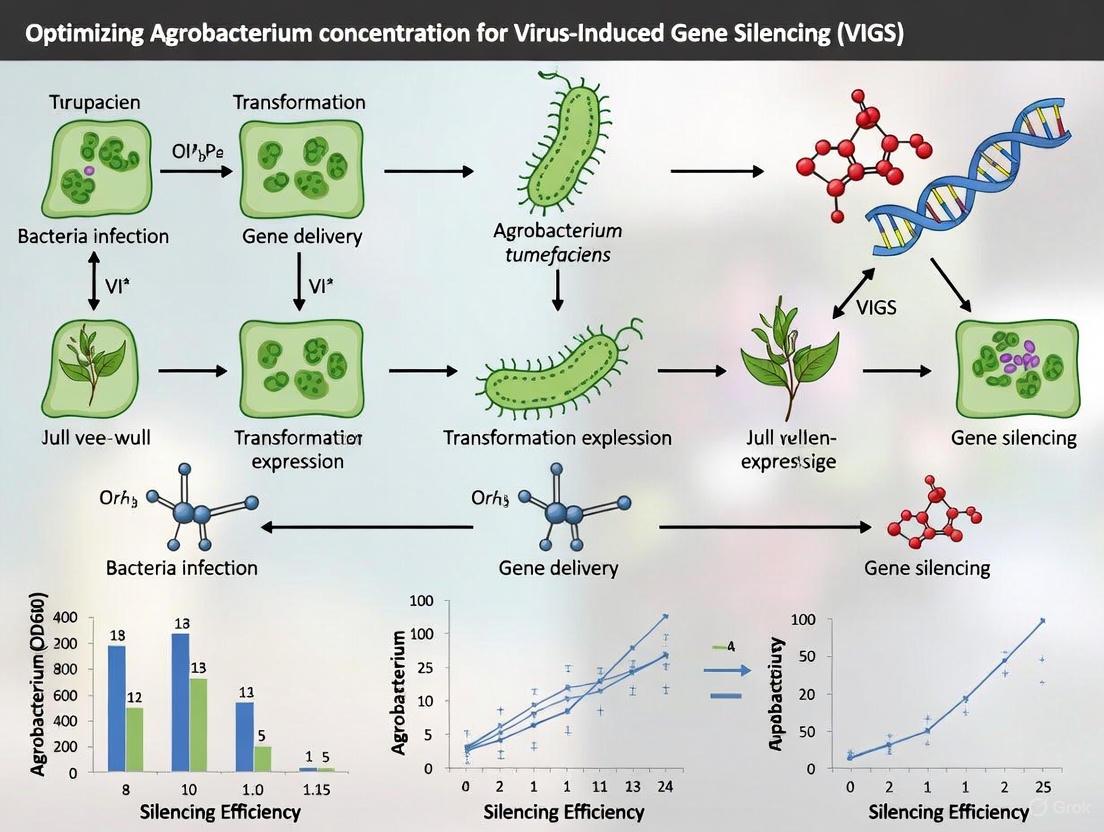
This article provides a systematic guide for researchers and scientists on optimizing the optical density at 600 nm (OD600) of Agrobacterium cultures for Virus-Induced Gene Silencing (VIGS).
Optimizing Agrobacterium OD600 for Efficient VIGS: A Comprehensive Guide for Researchers
Abstract
This article provides a systematic guide for researchers and scientists on optimizing the optical density at 600 nm (OD600) of Agrobacterium cultures for Virus-Induced Gene Silencing (VIGS). It covers the foundational principles of OD600 measurement and its impact on transformation efficiency, details methodological protocols for various plant species including recalcitrant crops, addresses common troubleshooting and optimization challenges, and outlines validation techniques to confirm successful gene silencing. By synthesizing recent advancements and practical applications, this resource aims to enhance the reproducibility and success of VIGS experiments in functional genomics and molecular breeding.
Understanding OD600: The Foundation of Effective Agrobacterium Preparation for VIGS
Defining OD600 and Its Critical Role in Quantifying Bacterial Density
FAQ: Understanding OD600
What does OD600 measure? OD600 stands for Optical Density at 600 nm. It is a spectroscopic method used to estimate the concentration of bacterial or microbial cells in a liquid culture. The measurement quantifies the scattering of light at a 600 nm wavelength by cells in suspension. It's important to note that this measurement is based on light scattering by the cells, not the absorption of light by a molecule in solution [1] [2] [3].
Why is the wavelength of 600 nm used? A 600 nm wavelength is commonly used for two main reasons. First, this wavelength does little to damage or hinder bacterial growth, unlike higher-energy UV light. Second, it offers a good trade-off where the majority of the "light loss" is caused by light scattering from the cells, rather than interference from pigmentation or culture medium absorption [3] [4].
Does OD600 differentiate between live and dead cells? No. A significant limitation of OD600 is that it cannot distinguish between viable bacteria, dead bacteria, and other non-cellular particles in the sample. The measurement detects all particles that scatter light. If a sample contains a high proportion of dead cells or debris, the OD600 reading will overestimate the concentration of live, viable cells [4].
Can I directly compare OD600 readings from different instruments? No, direct comparisons are not reliable. OD600 measurements are relative and depend on the specific configuration of the spectrophotometer or microplate reader (such as the distance between the cuvette and detector or the optics of the monochromator). Therefore, the same sample can yield different OD600 values on different instruments. For accurate cross-instrument comparison, a calibration protocol using a standardized reference material is necessary [1] [3] [5].
Optimizing OD600 for Agrobacterium-Mediated Transformation
In Agrobacterium-mediated transformation, achieving the correct bacterial cell density is critical for maximizing infection efficiency without causing tissue damage. The optical density (OD600) is the standard parameter used to quantify this density. The following table summarizes optimized OD600 parameters from various plant transformation studies.
Table: Optimized Agrobacterium OD600 Parameters in Plant Transformation Studies
| Plant Species | Explant Type | Optimal OD600 | Key Supporting Factors | Reported Outcome |
|---|---|---|---|---|
| Hevea brasiliensis (Rubber tree) [6] | Cotyledonary somatic embryos | 0.45 | Sonication (50 sec), cocultivation at 22°C for 84h in darkness | Best transformation efficiency observed |
| Soybean [7] | Half-seed cotyledonary explants | 0.6 (OD650) | Suspension medium with DTT; 5-day cocultivation | Over 96% infection efficiency |
| Dierama erectum [8] | Embryonic shoot apical meristems (ESAMs) | 1.6 | Sonication-assisted transformation (SAAT); 50 mg/L acetosyringone | 40% transformation efficiency with SAAT |
The workflow below illustrates a general protocol for optimizing Agrobacterium concentration for plant transformation, integrating common steps from these studies.
Troubleshooting Common OD600 and Transformation Issues
Problem: Few or no transformants are obtained. This is a common issue with several potential causes related to the bacterial culture and its handling [9].
- Possible Cause: Suboptimal transformation efficiency.
- Solution: Ensure competent cells are stored at -70°C and avoid freeze-thaw cycles. Thaw cells on ice and do not vortex. Follow the specific transformation protocol (heat shock or electroporation) precisely. Use high-quality DNA free of phenol, ethanol, or detergents [9].
- Possible Cause: Suboptimal quality or quantity of transforming DNA.
- Solution: For ligated DNA, using excessive amounts can reduce efficiency. For chemical transformation, use 1–10 ng of DNA per 50–100 μL of competent cells. If ligation mixture is used directly, ensure it does not exceed 5 μL for a 50 μL cell aliquot [9].
- Possible Cause: Incorrect antibiotic or concentration in selection plates.
- Solution: Verify that the antibiotic in the plate corresponds to the resistance marker on your vector. Ensure the antibiotic concentration is correct, as degraded or incorrect concentrations will allow non-transformants to grow [9].
Problem: The relationship between OD600 and cell count is not linear. This is an expected phenomenon and a key consideration for accurate quantification [2] [5].
- Explanation: The linear relationship between OD600 and cell count is lost at high cell densities because multiple scattering events occur. This means that light scattered by one cell is re-scattered by others before reaching the detector [2].
- Solution: For accurate estimations, ensure measurements are within the instrument's linear range (typically up to OD600 ~1.0). For values above this, serially dilute the sample with fresh medium until the reading is back in the linear range, then multiply by the dilution factor [1] [2].
Problem: High variability between replicate OD600 measurements. Inconsistent readings can be caused by physical properties of the culture [2].
- Possible Cause: Cell aggregation or clustering.
- Solution: Ensure culture vessels are shaken adequately to keep cells in suspension and break up aggregates. Using a microplate reader with a well-scanning option that takes measurements from multiple points in the well can average out the effect of transient aggregates and produce smoother, more reliable growth curves [2].
Problem: Bacterial overgrowth or tissue damage during cocultivation. This indicates an imbalance in the Agrobacterium-explant interaction.
- Possible Cause: Agrobacterium concentration (OD600) is too high.
- Solution: Titrate the OD600 to find the optimal balance for your specific explant. As shown in the optimization table, lower OD600 values (e.g., 0.45) can be optimal for some tissues [6]. Using an OD600 that is too high can lead to overgrowth and reduce transformation efficiency.
- Possible Cause: Inadequate control of Agrobacterium after cocultivation.
- Solution: After cocultivation, transfer explants to a medium containing antibiotics like timentin (e.g., 500 mg/L) to eliminate the Agrobacterium without harming the plant tissue [6].
The Scientist's Toolkit: Essential Reagents and Materials
Table: Key Reagents for Agrobacterium Transformation and OD600 Measurement
| Item | Function / Description |
|---|---|
| Spectrophotometer / Microplate Reader | Instrument for measuring absorbance (OD600) of liquid samples. Microplate readers allow higher throughput and parallel experimentation [1] [2]. |
| Acetosyringone | A phenolic compound that induces the vir genes in Agrobacterium, enhancing its ability to transfer T-DNA into the plant genome. Often added to the cocultivation medium [6] [8]. |
| LUDOX or Silica Microspheres | Standardized colloidal suspensions used to calibrate OD600 readings across different instruments, improving data comparability and allowing estimation of cell count [5]. |
| Antibiotics (Selection Markers) | Used in culture media to select for successfully transformed plant tissues (e.g., kanamycin) or to eliminate Agrobacterium after cocultivation (e.g., timentin, carbenicillin) [6] [9]. |
| GUS Staining Kit (X-Gluc, etc.) | Contains the substrate (5-bromo-4-chloro-3-indolyl-β-D-glucuronic acid) for the β-glucuronidase (GUS) reporter enzyme. Used to visually confirm transient or stable transformation events through a blue color formation [6] [7]. |
Best Practices for Accurate OD600 Measurement
To ensure the reliability of your OD600 data, follow these technical considerations:
- Avoid Condensation: When measuring samples incubated at a higher temperature than the instrument, condensation can form on cuvette or plate lids, scattering light and artificially inflating OD readings. Allow samples to equilibrate to the reader's temperature or use lids designed to prevent condensation [2].
- Ensure Proper Shaking: In microplate readers, shaking is critical to keep cells uniformly suspended and ensure adequate aeration. Higher shaking frequencies (e.g., 900 rpm) can improve growth rates for E. coli, but the optimal setting depends on the microbe, well volume, and plate geometry [2].
- Understand the Limitations: Remember that OD600 is an indirect measure that is influenced by cell size, shape, and morphology. Changes in these properties during growth or under different conditions will affect the OD600 reading independently of the actual cell count [1] [4].
- Calibrate for Cell Count: For experiments requiring an accurate estimate of cell concentration (cells/mL), calibrate the OD600 reading against a direct counting method. A serial dilution of silica microspheres has been shown to be a highly precise and robust calibration method, outperforming traditional CFU assays for this purpose [5].
FAQs: Understanding OD600 Fundamentals
Q1: Why is 600 nm the standard wavelength for measuring bacterial density?
A1: The wavelength of 600 nm is chosen as it provides an optimal trade-off between signal strength and specificity for bacterial cultures [4]. At this wavelength, which falls within the red-orange visible light region, the majority of light "loss" in a bacterial suspension is caused by light scattering from the cells rather than absorption by pigments [4]. This makes the measurement a more direct indicator of cell density.
Q2: Does OD600 measure the concentration of live bacteria?
A2: No. A standard OD600 measurement does not differentiate between viable bacteria, dead bacteria, and other non-cellular particles in the suspension [4]. It is an estimate of total biomass. If your experiment requires knowing the number of live cells, you must correlate OD600 with viable count measurements, such as colony-forming units (CFU), or use alternative methods like direct cell counting [4].
Q3: My OD600 readings differ between spectrophotometers. Is this normal?
A3: Yes, this is a common and expected occurrence. Different spectrophotometers have varying optical configurations, which can affect how much scattered light is detected [10]. Therefore, the OD600 value for the same bacterial culture can differ from one instrument to another [1] [10]. It is crucial to establish calibration curves for your specific instrument and cell type.
Q4: What are the main limitations of using OD600?
A4: The key limitations include [4]:
- Cell Morphology Dependence: The measurement is sensitive to the size and shape of the bacterial cells. Any changes in cell morphology will affect the OD600 value independently of the actual cell count.
- No Viability Data: It cannot distinguish between live and dead cells.
- Interference: Pigments or other light-absorbing compounds produced by the bacteria can interfere with the reading.
- Arbitrary Units: It provides a unitless value that must be converted to cell concentration via a calibration curve.
Q5: What is the linear range for OD600 measurements, and why is it important?
A5: Cuvette-based spectrophotometers typically have an upper OD limit of around 1.5 for a 10 mm pathlength [10]. Beyond this range, the relationship between cell density and OD600 is no longer linear. For accurate quantitative work, it is essential to ensure your measurements fall within the linear range of your instrument by diluting concentrated cultures [10].
Troubleshooting Guides for OD600 in VIGS Experiments
Problem: Inconsistent VIGS Efficiency Despite Similar OD600 Readings
Potential Causes and Solutions:
Cause 1: Varying Proportions of Live vs. Dead Agrobacterium.
- Solution: The OD600 measurement does not reflect cell viability [4]. Ensure your Agrobacterium culture is in the correct growth phase (typically mid-log phase) and standardize the growth conditions (temperature, medium, incubation time) precisely. For critical applications, consider using a viability stain or plating for CFUs to complement OD600 readings.
Cause 2: Changes in Agrobacterium Cell Size.
- Solution: The OD600 value is strongly dependent on cell size and morphology [4]. Even with the same OD600, a culture with larger cells will have a different actual cell count than one with smaller cells. Maintain consistent culture and induction conditions to minimize morphological changes.
Cause 3: Instrument-to-Instrument Variation.
- Solution: Do not compare OD600 values taken from different spectrophotometers directly [10]. If you must use multiple instruments, establish a conversion factor for each one relative to a master instrument or a standard material (e.g., formazin turbidity standard) [10]. Always report the instrument model used.
Problem: High Background or Noisy OD600 Readings
Potential Causes and Solutions:
Cause 1: Dirty Cuvettes.
- Solution: Always use clean, high-quality cuvettes. Fingerprints, scratches, or residue on the cuvette surface can scatter light and cause inaccurate readings [10].
Cause 2: Bubbles in the Sample.
- Solution: When pipetting your sample into a cuvette or onto a microvolume pedestal, avoid introducing bubbles, as they significantly scatter light [10]. Gently tap the cuvette to dislodge any bubbles before measurement.
Cause 3: Settling of Cells During Measurement.
- Solution: Ensure the bacterial culture is well-mixed immediately before taking an aliquot for measurement [10]. If cells are allowed to settle, the reading will not be representative of the true culture density.
Quantitative Data and Calibration
Table 1: Example of Instrument-Specific OD600 Variation
This table demonstrates how the same set of turbidity standards can yield different OD600 values on two different spectrophotometers, highlighting the need for instrument-specific calibration [10].
| Sample | Agilent 8453 (Mean OD600) | DS-11+ (Mean OD600) |
|---|---|---|
| Stock | 1.1588 | 0.8376 |
| Stock 1:2 | 0.5696 | 0.4245 |
| Stock 1:4 | 0.2794 | 0.2173 |
| Stock 1:8 | 0.1372 | 0.1125 |
Table 2: Best Practices for OD600 Measurement Modes
Follow these protocols to ensure reliable and reproducible OD600 measurements [10].
| Step | Cuvette Mode (Recommended) | Microvolume Mode |
|---|---|---|
| Preparation | Ensure culture is well-mixed. | Clean both measurement surfaces before blanking. |
| Linearity | Confirm OD is within the linear range (< ~1.5). Dilute if necessary. | Confirm OD is within the instrument's specified linear range for microvolume. |
| Consumables | Use high-quality, clean cuvettes with a 10 mm pathlength. | Use fresh pipette tips for each sample. |
| Measurement | Insert cuvette in the proper orientation. | Deliver a full 1 µL sample without bubbles. |
| Post-Reading | Clean cuvette according to manufacturer's protocol. | Wipe surfaces immediately after measurement with a dry lab wipe. |
Experimental Protocol: Correlating OD600 with Viable Cell Count for Agrobacterium
Objective: To establish a reliable calibration curve that converts OD600 readings for your Agrobacterium strain into viable cell concentration (CFU/mL) under standardized growth conditions.
Materials:
- Agrobacterium tumefaciens culture (e.g., strain GV3101)
- Appropriate liquid medium (e.g., LB with appropriate antibiotics)
- Spectrophotometer with cuvette or microvolume mode
- Sterile cuvettes and dilution tubes
- Solid agar plates of the same medium
- Sterile saline or dilution buffer
Methodology:
- Culture Growth: Inoculate Agrobacterium into liquid medium and incubate with shaking. Begin sampling when the culture appears turbid.
- OD600 Measurement: Take a 1 mL sample of the culture. Measure its OD600. If the OD600 is above 0.8, dilute the culture with fresh medium to a reading within the linear range (e.g., 0.1-0.8) and record the dilution factor [1] [10].
- Serial Dilution: Perform a series of 10-fold serial dilutions (e.g., 10⁻⁵ to 10⁻⁸) of the original culture sample in sterile saline.
- Plating: Spread a fixed volume (e.g., 100 µL) of each dilution onto solid agar plates. Perform replicates for statistical accuracy.
- Incubation and Counting: Incubate plates at the appropriate temperature until colonies appear. Count the number of colonies on plates that have between 30 and 300 colonies.
- Calculate CFU/mL: Calculate the CFU/mL using the colony count, dilution factor, and volume plated.
- Repeat and Plot: Repeat steps 1-6 at different time points during the growth of the culture to capture a wide range of OD600 values. Plot the measured OD600 values against the corresponding CFU/mL values to create a standard curve.
The Scientist's Toolkit: Research Reagent Solutions
| Item | Function in VIGS/OD600 Context |
|---|---|
| Spectrophotometer | Measures the optical density (OD600) of a bacterial suspension to estimate cell density [4] [1]. |
| Tobacco Rattle Virus (TRV) Vectors | A widely used viral vector system (pTRV1, pTRV2) for inducing gene silencing in plants [11] [12]. |
| Agrobacterium tumefaciens | A soil bacterium used as a vehicle to deliver the TRV VIGS vector into plant cells [11] [12]. |
| Induction Medium | A medium often containing acetosyringone used to activate the virulence genes of Agrobacterium, enhancing its ability to transfer T-DNA to the plant [13]. |
| Visual Marker Genes (PDS, CLA1) | Genes whose silencing produces an obvious phenotype (e.g., photobleaching), used to visually assess the efficiency and spread of VIGS [11] [12]. |
Workflow and Pathway Visualizations
Diagram 1: VIGS Experimental Workflow with OD600 Critical Control Point.
Diagram 2: The Principle of Light Scattering in OD600 Measurement.
Correlating OD600 with Bacterial Growth Phases and Infection Competence
Core Concepts: Bacterial Growth Phases and OD600
What is OD600 and how does it correlate with bacterial growth?
OD600, the Optical Density measured at 600 nm, is a spectrophotometric method used to estimate the density of bacterial cells in a liquid culture by measuring light scattering [14] [15]. The resulting measurements are used to plot a bacterial growth curve, which is typically divided into four distinct phases [16]:
- Lag Phase: Cells are metabolically active and adapting to their new environment but not yet dividing. The OD600 remains relatively constant during this phase [16].
- Log (Exponential) Phase: Cells divide at a constant rate, leading to an exponential increase in biomass. The OD600 increases rapidly in a logarithmic fashion. This phase is ideal for many experimental procedures, as metabolic activity is uniform and cells are most susceptible to techniques like transformation [17] [16].
- Stationary Phase: Growth levels off as the rate of cell division equals the rate of cell death, resulting in a plateau in OD600. This occurs due to nutrient depletion and accumulation of toxic waste products [18] [16].
- Death Phase: The number of dying cells exceeds the number of new cells, leading to a decline in the viable population and a eventual decrease in OD600 [18] [16].
Why is the growth phase critical for infection competence in techniques like VIGS?
For methods such as Virus-Induced Gene Silencing (VIGS), which relies on Agrobacterium tumefaciens for gene delivery, the bacterial growth phase is a key determinant of success. Cells in the mid- to late-log phase are generally considered to have the highest transformation competence [17]. During this active growth period, bacterial cells are more receptive to taking up foreign genetic material, which directly impacts the efficiency of infecting plant tissues. Using cultures at an incorrect OD can lead to poor T-DNA transfer and, consequently, low gene silencing efficiency.
Troubleshooting Guides & FAQs
Frequently Asked Questions
Q1: My OD600 reading is above 1.0. Is this accurate? No. OD readings greater than 1.0 are typically beyond the dynamic range of most spectrophotometers, where the relationship between cell density and OD is no longer linear [16]. For an accurate measurement, you should dilute your sample with fresh, sterile medium until the OD600 falls within the linear range of 0.1 to 0.8 [15] [16]. Remember to multiply your final reading by the dilution factor.
Q2: Can I use the same OD600-to-cells/mL conversion factor for all bacterial species? No. The conversion factor is not universal. It depends on the bacterial species, strain, and even growth conditions due to differences in cell size and shape [15] [16]. The standard factor for E. coli is often cited as 8 × 10⁸ cells/mL per OD600 unit [15], but this is an estimate. For critical work, especially with Agrobacterium, you should create a standard curve for your specific strain and instrument.
Q3: Why do I get inconsistent transformation results even when I use the same target OD600? The OD600 measurement does not distinguish between live and dead cells, nor does it account for the physiological state of the culture [19]. If the culture is already transitioning into the stationary phase, the proportion of competent cells may be low even if the OD reading appears correct [18]. Always ensure you are harvesting cells from the exponential phase and track the growth via a curve, not just a single timepoint [17] [16].
Q4: My bacterial culture forms clumps or biofilms. How does this affect OD600? The formation of aggregates or biofilms severely affects the accuracy and precision of OD600 measurements [16]. Light scattering from clumps does not correlate linearly with cell number. To mitigate this, you may need to sonicate or vortex the culture to break apart the clumps before measuring [16].
Troubleshooting Common Problems
| Problem | Potential Cause | Solution |
|---|---|---|
| Low VIGS efficiency | Agrobacterium culture harvested at wrong growth phase (too young or too old) [17]. | Standardize inoculation from a fresh seed culture and harvest at mid-log phase (e.g., OD600 0.4-0.6 for some strains) [20]. |
| High variability between replicates | Inconsistent culture conditions; inaccurate OD600 measurements due to clumping [16]. | Use well-aerated, constant-temperature cultures; vortex samples thoroughly before reading OD; create a standard curve for your strain [16]. |
| OD600 readings are unstable | Cells are settling in the cuvette during measurement [16]. | Mix the culture sample thoroughly immediately before transferring to the cuvette and take the measurement right away [16]. |
| No growth after transformation | Culture entered death phase; toxic waste accumulation [18]. | Start new cultures from a single colony or a frozen stock; avoid using overgrown cultures for experiments. |
Optimizing Agrobacterium OD600 for VIGS Research
Protocol: Standardized Preparation ofAgrobacteriumfor VIGS Infiltration
This protocol ensures Agrobacterium cultures are in the optimal physiological state for high-efficiency infection.
- Starter Culture: Inoculate a single colony of Agrobacterium (e.g., strain GV3101) containing the VIGS vector into liquid medium with appropriate antibiotics. Grow overnight at 28°C with shaking.
- Main Culture: Dilute the overnight starter culture into fresh medium to a starting OD600 of ~0.05-0.1. This ensures the culture is in the rapid growth phase and avoids carry-over of stationary-phase cells [16].
- Growth Monitoring: Incubate with shaking and monitor OD600 every 1-2 hours. Plot the growth to confirm the culture is in the exponential phase.
- Harvesting: Harvest cells when the OD600 reaches the target range of 0.4 to 1.0, which is commonly used for VIGS [20] [21]. The optimal value within this range may depend on the specific plant species and infiltration method.
- Preparation for Infiltration: Pellet the bacteria by centrifugation and resuspend in the induction buffer (e.g., containing acetosyringone) to the final OD600 required for infiltration. Incubate for several hours to induce virulence genes.
Optimized OD600 Parameters for VIGS in Different Plant Species
Research across different plants has identified optimal Agrobacterium densities for VIGS. The table below summarizes key findings.
| Plant Species | Optimal Infiltration OD600 | Infiltration Method | Key Factor for Efficiency | Source |
|---|---|---|---|---|
| Miscanthus | 0.4 | Vacuum infiltration of sprouts | Agrobacterium concentration | [20] |
| Styrax japonicus | 0.5 - 1.0 | Vacuum / Friction-osmosis | AS concentration & Inoculation method | [21] |
| Soybean | 0.4 - 0.8 | Cotyledon node immersion | Agrobacterium strain & explant type | [22] |
| Lycoris | Not Specified | Leaf tip needle injection | Overcoming waxy leaf surface | [11] |
Experimental Protocols & Workflows
Detailed Method: Calibrating OD600 Measurements to Cell Density
For experiments requiring high precision, correlating OD600 to actual cell count (CFU/mL) is essential [16].
- Prepare Dilutions: Grow a suspension culture of your bacteria and prepare a series of dilutions to cover an OD600 range from approximately 0.1 to 0.8.
- Measure OD600: For each dilution, measure the OD600, ensuring the spectrophotometer has been blanked with fresh medium.
- Determine Viable Count (CFU/mL): For each corresponding OD600 sample, perform serial dilutions (e.g., 10⁻⁵ to 10⁻⁷) and plate 1 mL onto solid agar plates. Incubate until colonies appear.
- Count and Calculate: Count the number of colonies on a plate with a statistically sound number (30-300). Calculate the CFU/mL in the original sample:
(number of colonies) × (dilution factor). - Create Standard Curve: Plot the measured OD600 values against the calculated CFU/mL. The slope of the linear portion of this curve gives the conversion factor (cells/mL per OD600 unit) for your specific organism and instrument [16].
Workflow: From Bacterial Culture to Plant VIGS
The following diagram illustrates the logical workflow for correlating bacterial growth with successful plant infection in VIGS experiments.
The Scientist's Toolkit: Research Reagent Solutions
Essential materials and reagents for experiments involving OD600 and VIGS.
| Item | Function/Benefit | Application Note |
|---|---|---|
| Spectrophotometer | Measures culture turbidity at 600 nm (OD600). | Ensure it is blanked with fresh medium. The linear range is typically OD600 0.1-0.8 [14] [16]. |
| TRV VIGS Vectors (pTRV1, pTRV2) | RNA virus-based system for inducing gene silencing in plants. | pTRV2 carries the fragment of the target plant gene. Widely used in solanaceous plants and beyond [11] [22]. |
| Agrobacterium tumefaciens GV3101 | Disarmed strain for delivering T-DNA containing the VIGS construct into plant cells. | A common choice for VIGS studies; resuspended in induction medium before infiltration [22]. |
| Acetosyringone | Phenolic compound that induces the Agrobacterium Vir genes, enhancing T-DNA transfer. | Often added to the bacterial suspension and/or plant co-cultivation medium at 100-200 μM [21]. |
| LB or TY Medium | Rich nutrient media for growing bacterial cultures. | Supports rapid growth of Agrobacterium to the desired OD600 for experimentation [17] [18]. |
Fundamental Principles of Agrobacterium-Mediated VIGS Delivery
Virus-Induced Gene Silencing (VIGS) is a powerful reverse genetics tool that leverages the plant's innate antiviral RNA interference machinery to transiently knock down target gene expression. Agrobacterium-mediated delivery is the most widely used method for introducing VIGS vectors into plants, enabling rapid functional gene analysis without stable transformation. This technical support center addresses the critical experimental parameters researchers must optimize for successful gene silencing, with particular emphasis on Agrobacterium concentration (OD600) optimization—a central factor influencing silencing efficiency across diverse plant species.
Core Principles and Workflow
The VIGS Mechanism
VIGS operates through post-transcriptional gene silencing (PTGS), where recombinant viral vectors carrying host target gene fragments trigger sequence-specific mRNA degradation. When Agrobacterium delivers the VIGS vector into plant cells, the virus replicates and spreads systemically, producing double-stranded RNA (dsRNA) replication intermediates. Plant Dicer-like enzymes process these into 21-24 nucleotide small interfering RNAs (siRNAs) that guide the RNA-induced silencing complex (RISC) to degrade complementary endogenous mRNA sequences, resulting in targeted gene knockdown and observable phenotypic changes [23].
Experimental Workflow
The standard Agrobacterium-mediated VIGS procedure follows a systematic sequence from vector preparation to phenotype analysis, with OD600 optimization critical at the inoculation stage.
Key Research Reagent Solutions
Table: Essential Reagents for Agrobacterium-Mediated VIGS Experiments
| Reagent/Material | Function/Purpose | Examples/Specifications |
|---|---|---|
| VIGS Vectors | Delivery of target gene fragments to trigger silencing | TRV-based systems (pTRV1, pTRV2), Geminivirus vectors (CaLCuV) [24] [23] |
| Agrobacterium Strains | Mediate plant genetic transformation | GV3101, GV1301, EHA105 [25] [26] [27] |
| Antibiotics | Selective maintenance of plasmids in bacterial cultures | Kanamycin (50 μg/mL), Rifampicin (25-50 μg/mL) [28] [27] |
| Induction Compounds | Activate Agrobacterium virulence genes | Acetosyringone (150-200 μM) in infiltration buffer [26] [27] |
| Infiltration Buffer | Medium for Agrobacterium resuspension | 10 mM MgCl₂, 10 mM MES (pH 5.6-5.7) [26] [27] |
| Visual Marker Genes | Monitor silencing efficiency and system validation | PDS (photo-bleaching), CLA1 (albino phenotype), GFP (fluorescence) [11] [24] [26] |
Critical Parameters and Optimization Data
Agrobacterium Concentration (OD600) Guidelines
Table: Optimized OD600 Values Across Plant Systems
| Plant Species | Optimal OD600 Range | Infiltration Method | Silencing Efficiency | Citation |
|---|---|---|---|---|
| Nicotiana benthamiana | 0.8-1.0 | Root wounding-immersion | 95-100% | [26] |
| Tomato (S. lycopersicum) | 1.5 | Leaf infiltration | High | [26] |
| Sunflower (H. annuus) | 1.0-1.2 | Seed vacuum infiltration | 62-91% (genotype-dependent) | [27] |
| Lycoris chinensis | 0.8-1.0 | Leaf tip needle injection | High (visual phenotypes) | [11] |
| Kiwifruit (A. deliciosa) | Not specified | Leaf explant cocultivation | >71% (GFP-positive) | [25] |
| Camellia drupifera | 0.9-1.0 | Pericarp cutting immersion | ~94% | [28] |
Comprehensive Parameter Optimization
Table: Multifactorial Optimization for VIGS Efficiency
| Parameter | Optimal Conditions | Effect on Silencing | Experimental Evidence |
|---|---|---|---|
| Plant Developmental Stage | Seedlings with 3-4 true leaves (3 weeks old) | Enhanced viral spread and silencing uniformity | [26] [27] |
| Co-cultivation Period | 3 days (darkness, 25°C) | Improved T-DNA transfer efficiency | [25] |
| Temperature Regime | 20-22°C post-inoculation | Enhanced siRNA accumulation and silencing persistence | [26] [23] |
| Photoperiod | 16-h light/8-h dark | Optimal plant physiology for viral movement | [27] |
| Agroinfiltration Method | Species-dependent (see Section 5) | Directly affects initial infection efficiency | [11] [28] [26] |
Infiltration Methodology Selection Guide
Troubleshooting FAQs
Q1: What are the consequences of using incorrect Agrobacterium concentrations?
- OD600 Too High (>1.5): Causes leaf necrosis and phytotoxicity in Nicotiana benthamiana [26], overwhelming plant defenses and potentially causing non-specific effects.
- OD600 Too Low (<0.5): Results in insufficient T-DNA delivery, poor viral establishment, and low silencing efficiency due to inadequate infection levels.
- Optimization Strategy: Perform OD600 gradient tests (0.5, 0.8, 1.0, 1.2, 1.5) using visual marker genes (PDS, CLA1) to identify the optimal range for your specific plant system.
Q2: Why does my experiment show inconsistent silencing patterns between plants?
- Genotypic Variation: Different plant genotypes within a species exhibit varying susceptibility to TRV infection and silencing spread. Sunflower genotypes showed 62-91% variation in infection rates [27].
- Environmental Fluctuations: Temperature shifts significantly impact silencing efficiency. Maintain consistent post-inoculation temperatures (20-22°C) for reproducible results [26] [23].
- Solution: Standardize plant growth conditions and include multiple biological replicates. For heterogeneous silencing, consider that TRV presence isn't always limited to tissues showing visual phenotypes [27].
Q3: How can I improve VIGS efficiency in recalcitrant plant species?
- Infiltration Method Adaptation: For plants with waxy leaf surfaces (e.g., Lycoris), use leaf tip needle injection instead of conventional infiltration [11]. For woody tissues (e.g., Camellia), employ pericarp cutting immersion [28].
- Developmental Stage Optimization: Target specific developmental windows; Camellia capsules showed optimal silencing at early and mid developmental stages [28].
- Vector Enhancement: Consider adding viral suppressors of RNA silencing (VSRs) like P19 to enhance VIGS efficiency in challenging species [23].
Q4: How long does VIGS persist, and when should I observe phenotypes?
- Timeframe: Initial phenotypes typically appear 2-3 weeks post-inoculation for marker genes (PDS, CLA1) [11] [24]. Silencing can persist for extended periods—TRV-based VIGS may last 2 months or more in some systems [26].
- Monitoring: For non-visual target genes, assess silencing efficiency at the molecular level (qRT-PCR) 2-3 weeks post-inoculation, as phenotypic manifestations may be subtle or delayed.
Q5: What controls are essential for validating VIGS experiments?
- Positive Controls: Always include plants inoculated with TRV vectors containing visual marker genes (PDS, CLA1) to confirm system functionality [11] [24].
- Negative Controls: Include empty vector controls (TRV2-empty) to distinguish non-specific effects from target gene silencing [27].
- Molecular Validation: Confirm reduced target gene expression using qRT-PCR and detect viral presence via RT-PCR in both silenced and non-silenced tissues [11] [27].
Advanced Technical Considerations
Genotype-Specific Optimization
Substantial genotype-dependent variation in VIGS efficiency necessitates system validation for each new genotype. In sunflowers, infection rates varied from 62% to 91% across different genotypes, with silencing phenotype spread also showing significant variation [27]. When establishing VIGS in new genetic backgrounds, conduct pilot studies using visual marker genes to determine the optimal parameters before targeting genes of interest.
Viral Vector Selection
The choice of viral vector significantly impacts host range, silencing efficiency, and duration:
- TRV Vectors: Broad host range, efficient systemic movement, ability to target meristematic tissues, mild infection symptoms [23].
- Geminivirus Vectors (e.g., CaLCuV): Useful for miRNA expression and studies requiring nuclear processes [24].
- Species-Specific Optimization: Some species may respond better to alternative vectors like BBWV2, CMV, or satellite virus-based systems [23].
This technical support resource provides the foundational principles and practical guidance for implementing robust Agrobacterium-mediated VIGS systems. By systematically optimizing critical parameters—particularly Agrobacterium concentration (OD600)—within the context of species-specific requirements, researchers can achieve reliable, reproducible gene silencing for functional genomics applications.
Protocol Deep Dive: Establishing and Applying OD600-Optimized VIGS Systems
Frequently Asked Questions (FAQs)
Q1: Why is optimizing OD₆₀₀ critical in Agrobacterium-mediated transformation? Optimizing the optical density at 600 nm (OD₆₀₀) of the Agrobacterium culture is a critical step because it directly influences the balance between transformation efficiency and plant cell survival. An OD₆₀₀ that is too low results in insufficient T-DNA delivery and poor transformation rates. Conversely, an OD₆₀₀ that is too high leads to bacterial overgrowth, which can cause excessive plant tissue damage (hypersensitivity response), necrosis, and ultimately, cell death [29] [12]. The ideal OD₆₀₀ is species-specific, influenced by factors like the plant's physiology, the tissue being transformed, and the infiltration method.
Q2: How do I accurately measure and interpret OD₆₀₀ values? OD₆₀₀ measurements quantify light scattering by bacterial cells, not true absorbance [2]. For accurate results:
- Instrument Calibration: Use a blank medium for calibration.
- Linear Range: Remember that the linear relationship between OD₆₀₀ and cell concentration is typically lost at values above 1.0 due to multiple scattering events [2].
- Culture Conditions: Ensure homogeneous suspensions by using adequate shaking during culture and before measurement. For high-throughput work, microplate readers are efficient, but parameters like shaking frequency and well volume must be optimized [2] [30].
- Standard Curves: For precise cell counts, generate a standard curve that correlates OD₆₀₀ with colony-forming units (CFU) per mL for your specific setup and bacterial strain [31].
Q3: What other factors, besides OD₆₀₀, significantly impact transformation efficiency? OD₆₀₀ is just one component of a successful transformation protocol. Other vital factors include:
- Surfactant Type and Concentration: Surfactants like Silwet L-77 are crucial for aiding bacterial entry into plant tissues. Its effectiveness is species-dependent; for example, it was superior to Triton X-100 in sunflower transformation [29].
- Plant Material Age and Health: The developmental stage of the plant tissue is critical. For instance, in sunflower, 7–9-day-old seedlings were optimal for injection, while younger seedlings were less suitable [29].
- Post-Inoculation Conditions: A period of dark cultivation after inoculation is often necessary to promote the expression of the introduced genes without light stress. However, the duration must be optimized to prevent "starvation" and tissue damage [29].
- Temperature: Growing temperatures can affect both bacterial virulence and plant cell recovery. Studies in petunia found that 20°C day/18°C night temperatures induced stronger gene silencing than higher temperatures [12].
Troubleshooting Guides
Problem: Low Transformation Efficiency
| Possible Cause | Diagnostic Steps | Solution |
|---|---|---|
| Sub-optimal OD₆₀₀ | Check culture density with a calibrated spectrophotometer. | Titrate the OD₆₀₀. For sunflower, an OD₆₀₀ of 0.8 was optimal across three different methods [29]. |
| Ineffective Surfactant | Review literature for your plant species. Test different surfactants. | Switch to a proven surfactant like Silwet L-77 (e.g., at 0.02%) and optimize its concentration [29] [32]. |
| Unhealthy Plant Material | Inspect donor plants for disease or stress. Ensure consistent growth conditions. | Use younger, healthier tissues. For wheat transformation, strict control over donor plant health and the use of specific central spikelets were key to high efficiency [32]. |
Problem: Excessive Tissue Damage or Necrosis
| Possible Cause | Diagnostic Steps | Solution |
|---|---|---|
| Bacterial Overgrowth (OD₆₀₀ too high) | Observe for browning and water-soaked lesions post-inoculation. | Reduce the OD₆₀₀ of the inoculation culture. In sunflower, an OD₆₀₀ of 1.2 caused significant cotyledon necrosis, while 0.8 was effective with less damage [29]. |
| Prolonged Co-culture | Monitor tissue daily and note when necrosis begins. | Shorten the co-cultivation period with Agrobacterium. In sunflower, reducing dark cultivation from 5 days to 3 days prevented necrosis [29]. |
| Toxic Vector Backbone | In VIGS, compare empty vector controls with vectors containing an insert. | Use a control vector with a non-plant DNA insert (e.g., a GFP fragment) to minimize severe viral symptoms in control plants [12]. |
Species-Specific Optimization Data
The table below summarizes optimized OD₆₀₀ parameters and key experimental conditions from case studies.
Table 1: Species-Specific OD₆₀₀ and Protocol Parameters for Agrobacterium-Mediated Transformation
| Plant Species | Transformation Method | Optimal OD₆₀₀ | Key Additives | Optimal Plant Material/Stage | Primary Citation |
|---|---|---|---|---|---|
| Sunflower (Helianthus annuus) | Infiltration, Injection, Ultrasonic-Vacuum | 0.8 | 0.02% Silwet L-77, 100 µM Acetosyringone | 3-day-old (hydroponic) or 7-9-day-old (soil) seedlings | [29] |
| Lycoris (Lycoris chinensis) | Leaf Tip Needle Injection | 1.0 - 1.2 (common VIGS range) | Not Specified | Young leaves emerging from bulb in early spring | [11] |
| Tree Peony (Paeonia suffruticosa) | Leaf Syringe Infiltration & Seedling Vacuum Infiltration | Information not specified in results | Tobacco Rattle Virus (TRV) vector | Triennial seedlings | [11] |
| Petunia (Petunia × hybrida) | Agroinfiltration / Apical Meristem Inoculation | 2.0 (common for VIGS) | Tobacco Rattle Virus (TRV) vector | 3-4 weeks after sowing | [12] |
| Wheat (Triticum aestivum) | Immature Embryo Inoculation | 0.5 - 0.7 | 0.05% Silwet L-77, 100 µM Acetosyringone | Immature embryos (1-1.5 mm) ~14 days post anthesis | [32] |
Experimental Protocols for Key Studies
This protocol achieved over 90% transformation efficiency.
Agrobacterium Preparation:
- Use Agrobacterium strain GV3101 carrying the gene of interest on a binary vector (e.g., pBI121).
- Grow the bacterial culture to an OD₆₀₀ of 0.8 in an appropriate medium with antibiotics.
- Resuspend the bacterial pellet in an induction medium (e.g., with acetosyringone) to the same OD₆₀₀.
Additive:
- Add the surfactant Silwet L-77 at a concentration of 0.02% to the bacterial suspension.
Plant Material:
- Use sunflower seedlings grown in soil for 7 to 9 days, as newly unfolded cotyledons are optimal.
Transformation:
- Using a syringe (without a needle), gently inject the bacterial suspension into the cotyledons of the seedlings.
Post-Inoculation:
- Culture the inoculated seedlings in the dark for 3 days at room temperature to promote gene expression.
- After this period, return the plants to standard growth conditions.
This protocol is optimized for monocotyledonous leaves with a waxy surface.
Agrobacterium and Vector:
- Use a Tobacco Rattle Virus (TRV)-based VIGS vector. Common reporter genes are CLA1 or PDS.
Plant Material:
- Select young leaves of Lycoris chinensis that emerge from the bulb in early spring.
Transformation:
- Use a leaf tip needle injection method. This method requires only 1–2 mL of bacterial solution and takes 15–20 seconds to infiltrate an entire leaf, proving more efficient than traditional infiltration for waxy leaves.
Analysis:
- Silencing phenotypes (e.g., leaf yellowing) can be observed approximately two weeks post-injection.
Workflow Visualization
The following diagram illustrates the decision-making process for selecting and optimizing a transformation method based on plant species characteristics.
The Scientist's Toolkit: Research Reagent Solutions
Table 2: Essential Reagents for Agrobacterium-Mediated Transformation
| Reagent / Material | Function / Role in Transformation | Example Usage & Optimization Notes |
|---|---|---|
| Silwet L-77 | A surfactant that reduces surface tension, allowing the Agrobacterium suspension to spread and infiltrate plant tissues effectively. | Critical for sunflower transformation at 0.02% [29] and wheat transformation at 0.05% [32]. Superior to Triton X-100 in some species [29]. |
| Acetosyringone | A phenolic compound that activates the Agrobacterium Vir genes, enhancing the efficiency of T-DNA transfer into the plant genome. | Typically used at 100–200 µM in the inoculation medium. Used in both sunflower [29] and wheat [32] protocols. |
| Tobacco Rattle Virus (TRV) Vectors | A widely used viral vector for Virus-Induced Gene Silencing (VIGS) to down-regulate endogenous plant genes for functional studies. | Employed in VIGS systems for Lycoris [11], tree peony [11], and petunia [12]. |
| Agrobacterium Strain GV3101 | A disarmed, helper-plasmid free Agrobacterium tumefaciens strain commonly used for transient transformation and VIGS in a variety of plants. | The standard strain used in the optimized sunflower transient transformation system [29]. |
| Agrobacterium Strain AGL1 | A hypervirulent Agrobacterium strain often used for transforming difficult-to-transform plant species, especially in monocots. | Used in the high-efficiency hexaploid wheat transformation protocol [32]. |
Agrobacterium-mediated transformation is a cornerstone of plant biotechnology and functional genomics. For researchers, the critical initial choice between Agrobacterium tumefaciens and Agrobacterium rhizogenes can determine the success of experiments ranging from stable plant transformation to virus-induced gene silencing (VIGS). The selection hinges on the experimental goals: A. tumefaciens is typically used for generating stable, transgenic plants, while A. rhizogenes is ideal for producing "hairy root" cultures for studies of root biology, secondary metabolism, or as a rapid system for functional gene validation. This guide provides a detailed, application-focused comparison and troubleshooting resource to inform this fundamental choice, framed within the context of optimizing conditions such as Agrobacterium concentration (OD600) for VIGS and other transformative research.
FAQs: Core Concepts and Strain Selection
What is the fundamental difference betweenA. tumefaciensandA. rhizogenes?
Both are soil-borne bacteria capable of genetically transforming plants by transferring a segment of DNA (T-DNA) into the host genome. The key difference lies in the outcome:
- A. tumefaciens: Causes crown gall disease. Its T-DNA carries genes that disrupt plant hormone balance, leading to tumor formation [33] [34].
- A. rhizogenes: Causes hairy root disease. Its T-DNA induces the prolific growth of neoplastic (transgenic) roots at the infection site [35] [36].
In biotechnology, disarmed strains of A. tumefaciens (with tumor-inducing genes removed) are used to create stable transgenic plants. A. rhizogenes is used to generate composite plants (wild-type shoot with transgenic roots) for studying root biology and secondary metabolite production [35].
How do I choose the right strain for my application?
Your choice should be dictated by your experimental objectives, as outlined in the table below.
Table 1: Strain Selection Guide for Common Research Applications
| Application / Goal | Recommended Strain | Rationale and Key Considerations |
|---|---|---|
| Stable Transgenic Plant Generation | A. tumefaciens | The standard method for introducing traits into the entire plant genome for long-term studies and breeding. A well-established system for many species [37]. |
| Functional Gene Analysis in Roots | A. rhizogenes | Provides a rapid system to study gene function in roots without going through the lengthy process of whole-plant regeneration. Ideal for root-microbe interactions or root-specific metabolism [35] [36]. |
| Virus-Induced Gene Silencing (VIGS) | A. tumefaciens (most common) | Routinely used as a delivery vehicle for TRV (Tobacco Rattle Virus)-based VIGS constructs into aerial plant parts to transiently silence target genes [38] [39] [27]. |
| Secondary Metabolite Production | A. rhizogenes | Hairy root cultures are often excellent producers of plant-derived secondary metabolites (e.g., proanthocyanidins, pharmaceuticals) and can be sustained in bioreactors [35]. |
| Overcoming Recalcitrant Regeneration | A. rhizogenes | For plant species that are difficult to regenerate from tissue culture, the hairy root system offers a viable alternative for functional genomics studies [35]. |
What are the critical factors for optimizing Agrobacterium concentration (OD600)?
The optical density at 600 nm (OD600) is a critical parameter that directly impacts transformation efficiency and plant cell viability. Inappropriate OD600 can lead to either insufficient T-DNA delivery or bacterial overgrowth that kills the plant tissue.
Table 2: Optimized OD600 Parameters from Recent Studies
| Plant Species | Strain | Application | Optimal OD600 | Key Finding |
|---|---|---|---|---|
| Passion Fruit | A. rhizogenes K599 | Hairy Root Transformation | 0.6 | Systematically optimized as a key parameter for achieving high transformation efficiency [35]. |
| Tomato | A. tumefaciens GV3101 | VIGS / Virus Inoculation | 1.0 | An OD600 of 1.0 resulted in significantly higher VIGS efficiency (56.7%) and virus inoculation rate (68.3%) compared to 0.5 or 1.5 [38]. |
| Alfalfa | A. tumefaciens | Transient Transformation | 0.6 | This concentration contributed to achieving a high percentage (76.2%) of GUS-positive explants [37]. |
| Sunflower | A. tumefaciens GV3101 | VIGS | 1.5 (initial culture) | Used as the starting density for culture preparation before dilution in infiltration buffer [27]. |
Troubleshooting Tip: The optimal OD600 can vary with plant genotype, bacterial strain, and explant type. The values in Table 2 serve as a robust starting point, but empirical testing of a small range (e.g., 0.4 to 1.2) is highly recommended for new experimental systems.
Troubleshooting Common Experimental Issues
Problem: Low Transformation or VIGS Efficiency
Potential Causes and Solutions:
- Suboptimal Bacterial Concentration: Refer to Table 2 and conduct a pilot OD600 optimization experiment.
- Inadequate Induction of Virulence Genes: Add acetosyringone (a phenolic signal molecule) to the co-cultivation medium. Concentrations of 100–200 µM are commonly used and have been shown to significantly improve transformation efficiency [35] [37] [40].
- Improper Co-cultivation Conditions: Ensure the correct duration and temperature. For passion fruit hairy roots, a 2-day dark co-cultivation was optimal [35], while for tomato VIGS, a shorter period was sufficient [38].
Problem: Bacterial Overgrowth After Co-cultivation
Potential Causes and Solutions:
- OD600 Too High: Reduce the bacterial density used for infection.
- Insufficient Washing After Co-cultivation: Gently but thoroughly wash explants with sterile water or antibiotic-containing media to remove excess Agrobacterium.
- Ineffective Antibiotics in Media: Confirm the appropriate antibiotic and its concentration for the Agrobacterium strain used (e.g., rifampicin, gentamicin, carbenicillin).
Problem: Failure to Generate Transgenic Hairy Roots
Potential Causes and Solutions:
- Ineffective Strain: Strain virulence varies. In passion fruit, strain K599 was significantly more effective than MSU440 or C58C1 [35]. For Medicago truncatula, ARQUA1 is reported to work well [36].
- Incorrect Explant or Wounding Method: Use young seedlings and a precise wounding method. For Medicago, cutting the root tip and lightly touching it to a bacterial colony is effective, whereas aggressive scraping can harm the tissue [36].
- Lack of Proper Selection/Screening: Use a binary vector with a visual marker like GFP or RUBY for easy identification of transgenic roots. The RUBY system produces a betalain pigment (red color), allowing for instrument-free selection [35].
Essential Protocols at a Glance
Protocol 1: VIGS in Tomato UsingA. tumefaciens(INABS Method)
This protocol uses the "Injection of No-Apical-Bud Stem Section" (INABS) for high efficiency [38].
Workflow: VIGS in Tomato via INABS
Key Steps:
- Agrobacterium Preparation: A. tumefaciens GV3101 harboring pTRV1 and pTRV2 (with insert) is grown to an OD600 of 1.0 and re-suspended in induction buffer (e.g., with acetosyringone) [38].
- Plant Material: Use a young tomato plant with a "no-apical-bud" stem section containing an axillary bud.
- Injection: Slowly inject the bacterial suspension into the stem using a plastic syringe and needle until the stem is filled.
- Co-cultivation & Growth: Co-cultivate for 6 hours before moving plants to standard growth conditions.
- Analysis: Silencing symptoms (e.g., photobleaching from PDS silencing) can appear in new growth from the axillary bud within 8 days post-infection (dpi).
Protocol 2: Hairy Root Transformation in Passion Fruit UsingA. rhizogenes
This established protocol is effective for passion fruit and can be adapted for other species [35].
Workflow: Hairy Root Transformation
Key Steps:
- Strain and Culture: Use the highly efficient strain K599, grown to an OD600 of 0.6 [35].
- Infection: Perform vacuum infiltration on 4-week-old seedling explants for 30 minutes.
- Co-cultivation: Co-cultivate on medium containing 100 µM acetosyringone in the dark for 2 days.
- Selection and Screening: Transfer explants to antibiotic-containing media to suppress bacterial growth. Identify transgenic roots using a visual marker. The RUBY system is particularly advantageous as it produces a visible red pigment without specialized equipment [35].
The Scientist's Toolkit: Key Research Reagents
Table 3: Essential Reagents for Agrobacterium-Mediated Transformation
| Reagent / Material | Function / Application | Example Usage |
|---|---|---|
| Acetosyringone | A phenolic compound that induces the vir (virulence) genes on the Agrobacterium Ti or Ri plasmid, enhancing T-DNA transfer. | Added at 100-200 µM to co-cultivation media [35] [37]. |
| Visual Markers (eGFP, RUBY) | Enable rapid, non-destructive screening of transformed tissues. eGFP requires fluorescence imaging, while RUBY produces a visible red pigment. | Used to identify transgenic hairy roots in passion fruit [35]. |
| TRV VIGS Vectors (pTRV1, pTRV2) | A bipartite viral vector system for Virus-Induced Gene Silencing. pTRV2 carries the target gene fragment for silencing. | Used for high-efficiency silencing in tomato and sunflower [38] [27]. |
| Binary Vector pCAMBIA1304 | A common plant transformation vector containing both GUS and GFP reporter genes, allowing for dual-mode confirmation of transformation. | Used for optimizing transient expression in alfalfa [37]. |
| Selection Antibiotics (e.g., Kanamycin, Hygromycin) | Select against non-transformed plant tissues and maintain the binary vector in Agrobacterium. | Hygromycin was found superior to kanamycin for selecting transformed alfalfa cells [37]. |
FAQs: Optimizing Agrobacterium Concentration (OD600) for VIGS
Q1: What is the critical role of Agrobacterium concentration (OD600) in VIGS efficiency? The OD600, which measures the density of the Agrobacterium culture, is a critical determinant for successful gene silencing. An optimal OD600 ensures a sufficient number of bacterial cells to deliver the viral vector into plant tissues without triggering a strong phytotoxic response that can compromise plant health and silencing efficiency. Research across various plant species has consistently identified an OD600 range of 0.5 to 1.5 as effective, with the ideal value often being species- and method-specific [38] [27] [41].
Q2: How do I determine the optimal OD600 for a new plant species or inoculation method? It is recommended to perform an initial optimization experiment testing a range of OD600 values, typically 0.5, 1.0, and 1.5. The table below summarizes optimal OD600 values and silencing efficiencies achieved in recent studies for different inoculation techniques.
Table 1: Optimized OD600 Parameters and Silencing Efficiencies Across Plant Species
| Plant Species | Inoculation Technique | Optimal OD600 | Silencing Efficiency | Key Findings | Citation |
|---|---|---|---|---|---|
| Tomato | INABS* | 1.0 | 56.7% (VIGS), 68.3% (Virus Inoculation) | Highest efficiency achieved at 8 days post-inoculation (dpi). | [38] [41] |
| Sunflower | Seed Vacuum Infiltration | 1.0 | Up to 91% (infection rate) | Efficiency varied with genotype; protocol requires no in vitro steps. | [27] |
| Soybean | Cotyledon Node Immersion | 0.8-1.0 | 65% - 95% | Used bisected half-seed explants; achieved systemic silencing. | [22] |
| Cotton | Seed Soak Agroinoculation (SSA-VIGS) | 1.5 | ~90% (transcript decrease) | Effective for silencing genes in young seedlings and roots. | [42] |
| Nepeta spp. (Catmint) | Cotyledon Infiltration | 1.0 | 84.4% | A rapid procedure yielding silencing effects in just 3 weeks. | [43] |
*INABS: Injection of No-Apical-Bud Stem Section.
Q3: Why does my experiment show high background or plant death, and how can OD600 be adjusted to mitigate this? Plant death or excessive stress symptoms (necrosis) often indicate that the Agrobacterium concentration is too high (OD600 > 1.5 in many species), leading to a hypersensitive defense response. To mitigate this, reduce the OD600 to the lower end of the optimal range (e.g., 0.5-0.8). Conversely, if no silencing is observed and the plants appear healthy, the bacterial titer may be too low; in this case, increase the OD600 within the recommended range [38] [41]. Using young, healthy plant material and ensuring the Agrobacterium is in the log phase of growth are also crucial for consistency.
Q4: Besides OD600, what other factors synergistically affect VIGS efficiency? Multiple factors interact with Agrobacterium concentration to determine final silencing success. Key parameters include:
- Co-cultivation Time: A period of 2-3 days is common, but optimization is needed. For sunflower seed vacuum infiltration, a 6-hour co-cultivation was optimal [27].
- Plant Genotype: Susceptibility to Agrobacterium and VIGS can vary dramatically between cultivars, as seen in soybean and sunflower [44] [27].
- Use of Adjuvants: Adding acetosyringone (200 µM) to the inoculation medium enhances Agrobacterium's ability to transfer T-DNA by activating virulence genes [22] [28].
Troubleshooting Guides for Inoculation Techniques
Vacuum Infiltration
Table 2: Vacuum Infiltration Troubleshooting
| Problem | Potential Cause | Solution |
|---|---|---|
| Low infection rate | Incomplete infiltration of plant tissues. | • Ensure plant materials are fully submerged.• Apply a stable vacuum of -0.06 to -0.09 MPa for 2-5 minutes, then release slowly. [44] [27] |
| Tissue damage (necrosis) | Excessive vacuum pressure or prolonged infiltration. | • Reduce the vacuum pressure and duration.• Use younger, more tender tissues if possible. |
| No silencing phenotype | Incorrect plant developmental stage. | • For seeds, use pre-germinated seeds or very young sprouts. For established plants, use young leaves. |
Cotyledon Node Immersion
Table 3: Cotyledon Node Immersion Troubleshooting
| Problem | Potential Cause | Solution |
|---|---|---|
| Low transformation efficiency | Thick cuticle or dense trichomes blocking Agrobacterium. | • Bisect seeds or cotyledons to create fresh, exposed tissue for immersion. [22] |
| Insufficient immersion time. | • Increase immersion time to 20-30 minutes for effective Agrobacterium attachment and gene transfer. [22] | |
| Silencing not systemic | Viral movement is restricted. | • Ensure the TRV1 vector is correctly mixed with TRV2 for robust viral spread. |
Seed Soaking
Table 4: Seed Soaking Agroinoculation (SSA-VIGS) Troubleshooting
| Problem | Potential Cause | Solution |
|---|
- Problem: Uneven or weak silencing among seedlings.
- Cause: Inconsistent seed coating or permeability.
- Solution: Use "naked" seeds (with seed coat removed) and soak for an extended period (e.g., 90 minutes) to ensure uniform infection. [42]
- Problem: Seed germination is inhibited.
- Cause: Agrobacterium overgrowth or phytotoxicity.
- Solution: Optimize OD600 (often ~1.5) and avoid overlong soaking times. A recovery step on sterile medium post-inoculation may be necessary for some species. [42] [27]
The Scientist's Toolkit: Research Reagent Solutions
Table 5: Essential Reagents for VIGS Inoculation Protocols
| Reagent / Material | Function / Application | Example Usage |
|---|---|---|
| TRV Vectors (pTRV1, pTRV2) | The bipartite viral vector system for delivering gene fragments to induce silencing. | pTRV1 contains replication proteins; pTRV2 carries the coat protein and a cloning site for the target gene insert. Used in all cited studies. [38] [22] [43] |
| Agrobacterium tumefaciens GV3101 | A disarmed strain widely used for efficient delivery of TRV vectors into plant cells. | The preferred strain for transformation in soybean, sunflower, and Nepeta studies. [22] [27] [43] |
| Acetosyringone | A phenolic compound that induces the Agrobacterium Vir genes, enhancing T-DNA transfer. | Added to the Agrobacterium inoculation medium at 100-200 µM. [22] [28] |
| Murashige and Skoog (MS) Medium | A basal salt mixture providing essential nutrients for plant tissue culture and post-inoculation recovery. | Used in recovery media for explants after Agrobacterium co-cultivation. [44] [27] |
| Antibiotics (Kanamycin, Rifampicin) | Selective agents to maintain plasmid integrity in Agrobacterium and prevent bacterial contamination. | Added to growth media for Agrobacterium culture and plant co-cultivation. [22] [27] [28] |
| Silencing Reporter Genes (PDS, ChlH) | Visual markers for rapid assessment of VIGS efficiency. Silencing causes photobleaching (PDS) or chlorosis (ChlH). | GmPDS in soybean, HaPDS in sunflower, and ChlH in Nepeta serve as positive controls. [22] [27] [43] |
Experimental Workflow and Pathway Diagrams
The following diagram illustrates the core decision-making pathway for selecting and optimizing an inoculation method, based on the target plant species and tissue.
The diagram below outlines the sequence of key steps in a generalized Agrobacterium-mediated VIGS protocol, from vector preparation to phenotypic analysis.
Troubleshooting Guides & FAQs
Q1: My Agrobacterium-mediated VIGS experiment is yielding low transformation efficiency. Which of the three synergistic factors should I prioritize optimizing first?
A1: Begin by optimizing the bacterial density (OD600). It is the most common source of variability.
- Problem: Low OD600 (<0.3) results in insufficient T-DNA transfer, while high OD600 (>1.5) causes plant stress and reduces transformation.
- Solution: Perform a bacterial density gradient experiment. Resuspend your Agrobacterium culture to final OD600 values of 0.2, 0.5, 0.8, 1.0, and 1.5 in your infiltration medium. Co-cultivate for a standard 48 hours with 200 µM acetosyringone.
- Expected Outcome: You should observe a "sweet spot" (typically between OD600 0.5-1.0) where silencing symptoms are most pronounced without excessive tissue damage.
Q2: I am observing excessive browning or necrosis (hypersensitive response) in my plant tissues after co-cultivation. What is the likely cause and how can I mitigate it?
A2: This is typically a sign of plant stress due to an overly aggressive Agrobacterium infection.
- Problem: High bacterial density (OD600 >1.2) combined with long co-cultivation times (>72 hours) is the primary cause.
- Solution:
- Reduce OD600: Dilute your Agrobacterium culture to an OD600 of 0.3-0.6.
- Shorten Co-cultivation: Limit the co-cultivation period to 24-48 hours.
- Optimize Washing: After co-cultivation, wash the plant tissues thoroughly with sterile water or a mild antibiotic solution (e.g., cefotaxime) to remove excess bacteria.
Q3: My negative controls (e.g., empty vector) are showing unexpected silencing phenotypes. How can I troubleshoot this?
A3: This indicates non-specific or background silencing, often linked to suboptimal acetosyringone levels or contamination.
- Problem: Acetosyringone concentration may be too low, leading to erratic T-DNA integration, or the Agrobacterium strain may be hypervirulent.
- Solution:
- Verify Acetosyringone: Ensure a final concentration of 150-200 µM in the co-cultivation medium. Prepare a fresh stock solution in DMSO and confirm it is fully dissolved and filter-sterilized.
- Check Bacterial Strain: Use a validated, non-saturating amount of bacteria. Re-streak your Agrobacterium from a glycerol stock to ensure genetic purity.
- Include More Controls: Always include a mock-infiltrated control (infiltration medium only) to distinguish Agrobacterium-induced stress from true gene silencing.
Q4: I get inconsistent VIGS results between experimental repeats, even when using the same protocol. What steps can I take to improve reproducibility?
A4: Inconsistency often stems from unstandardized bacterial culture conditions and inaccurate OD600 measurements.
- Problem: Variations in the growth phase of the Agrobacterium culture (log vs. stationary phase) can drastically alter virulence.
- Solution:
- Standardize Growth: Always start cultures from a single, freshly transformed colony. Grow bacteria to the same growth phase (typically mid-log phase, OD600 ~0.6-0.8) before harvesting for infiltration.
- Calibrate Spectrophotometer: Regularly calibrate your instrument. Vortex the bacterial suspension thoroughly before measuring OD600.
- Control Co-cultivation Environment: Maintain consistent temperature (typically 22-25°C), humidity, and light/dark cycles during the co-cultivation period.
Data Presentation
Table 1: Optimal Ranges for Synergistic Factors in VIGS Optimization
| Factor | Low/Suboptimal Range | Optimal Range | High/Detrimental Range | Primary Effect |
|---|---|---|---|---|
| Acetosyringone (µM) | 0 - 100 µM | 150 - 200 µM | >250 µM | Induces vir genes; essential for T-pilus formation. |
| Co-cultivation Time (Hours) | <24 hours | 48 - 72 hours | >84 hours | Duration for T-DNA transfer and integration. |
| Bacterial Density (OD600) | <0.3 | 0.5 - 1.0 | >1.5 | Determines the number of T-DNA donor cells. |
Table 2: Troubleshooting Matrix for Common VIGS Problems
| Observed Problem | Likely Cause(s) | Recommended Action |
|---|---|---|
| No Silencing Phenotype | Low OD600, Short Co-cultivation, No/Low Acetosyringone | Increase OD600 to 0.8; Extend co-cultivation to 72h; Confirm 200µM Acetosyringone. |
| Excessive Tissue Necrosis | High OD600, Long Co-cultivation | Reduce OD600 to 0.4-0.6; Shorten co-cultivation to 24-48h. |
| High Background/Non-specific Silencing | Unoptimized Acetosyringone, Old Bacterial Culture | Titrate Acetosyringone (100-200µM); Use fresh log-phase culture. |
| Inconsistent Results Between Repeats | Variable Bacterial Growth Phase, Inaccurate OD600 | Standardize culture growth protocol; Calibrate spectrophotometer. |
Experimental Protocols
Protocol: Optimizing Bacterial Density (OD600) for VIGS
- Agrobacterium Culture: Inoculate a single colony of your Agrobacterium tumefaciens strain (e.g., GV3101) containing the VIGS vector into 5 mL of LB medium with appropriate antibiotics. Grow overnight at 28°C with shaking (220 rpm).
- Main Culture: Sub-culture the overnight culture into fresh LB with antibiotics to a starting OD600 of 0.1. Grow until the OD600 reaches ~0.8 (mid-log phase).
- Harvesting: Pellet the bacteria by centrifugation at 5000 x g for 10 minutes at room temperature.
- Resuspension: Gently resuspend the pellet in infiltration medium (e.g., 10 mM MgCl2, 10 mM MES, pH 5.6) containing 200 µM acetosyringone.
- Dilution Series: Prepare a series of dilutions in the same infiltration medium to achieve final OD600 values of 0.2, 0.4, 0.6, 0.8, 1.0, and 1.2.
- Infiltration & Co-cultivation: Infiltrate your plant specimens (e.g., Nicotiana benthamiana leaves) with each dilution. Maintain plants under standard growth conditions for 48-72 hours.
- Analysis: Monitor plants for the development of silencing symptoms and any signs of stress or necrosis over the following 2-4 weeks.
Protocol: Standardizing Co-cultivation Conditions
- Preparation: Infiltrate plant tissues with an Agrobacterium suspension of OD600 0.8 in infiltration medium with 200 µM acetosyringone.
- Time-Course Setup: Divide the infiltrated plants into separate groups.
- Co-cultivation: For each group, allow co-cultivation for 24, 48, 72, and 96 hours.
- Termination: After each time point, thoroughly wash the infiltrated areas with sterile distilled water or a solution of antibiotics (e.g., 500 mg/L cefotaxime) to stop the Agrobacterium interaction.
- Post-Treatment: Continue to grow all plants under identical conditions.
- Evaluation: Compare the efficiency and specificity of the VIGS response across the different time points to determine the optimal co-cultivation window.
Mandatory Visualization
Title: VIGS Factor Interplay Pathway
Title: VIGS Experimental Workflow
The Scientist's Toolkit
Table 3: Key Research Reagent Solutions for VIGS Optimization
| Reagent / Material | Function / Purpose in VIGS |
|---|---|
| Acetosyringone | A phenolic compound that activates the Agrobacterium VirA/VirG two-component system, inducing the expression of virulence (vir) genes essential for T-DNA transfer. |
| Infiltration Medium (e.g., 10 mM MgCl₂, 10 mM MES, pH 5.6) | A low-salt, slightly acidic buffer used to resuspend Agrobacterium for infiltration. It minimizes plant cell damage and supports the activity of the Vir system. |
| Agrobacterium tumefaciens Strain (e.g., GV3101) | A disarmed vector for delivering the T-DNA containing the VIGS construct into the plant cell nucleus. |
| VIGS Vector (e.g., pTRV1, pTRV2) | The binary vector system where pTRV1 encodes replication and movement proteins, and pTRV2 carries the T-DNA with the target gene fragment for silencing. |
| Antibiotics (e.g., Kanamycin, Rifampicin, Cefotaxime) | Select for the VIGS vector in bacteria (Kan) and the bacterial strain (Rif), and eliminate Agrobacterium after co-cultivation to prevent overgrowth (Cef). |
| Silencing Locus A (SLA) / SLA-like IR (intron-containing) Fragment | A plant gene fragment cloned into the VIGS vector that promotes efficient systemic silencing movement. |
Troubleshooting VIGS Efficiency: Overcoming Common OD600 and Technical Pitfalls
Addressing Genotype-Dependency in VIGS Susceptibility and Efficiency
A technical guide for ensuring consistent gene silencing across diverse plant genotypes
Virus-Induced Gene Silencing (VIGS) is a powerful reverse genetics tool, but its application across different plant genotypes presents significant challenges. This technical support center addresses the critical issue of genotype-dependent variability in VIGS efficiency, providing troubleshooting guides and FAQs to help researchers optimize their experiments within the context of Agrobacterium-mediated VIGS protocols.
Understanding Genotype-Dependency in VIGS
Genotype-dependent susceptibility to VIGS refers to the natural variation in how different plant varieties or cultivars respond to viral vector infection and subsequent gene silencing. This variability can significantly impact experimental outcomes and reproducibility.
Key Factors Contributing to Genotype-Dependency:
- Natural variation in viral susceptibility and movement
- Differences in RNAi machinery efficiency across genotypes
- Variation in plant architecture and tissue accessibility
- Genetic background influencing silencing spread and persistence
Genotype-Dependent VIGS Efficiency Across Species
Table: Documented Genotype-Dependent VIGS Responses in Various Plant Species
| Plant Species | Genotypes Tested | Silencing Efficiency Range | Key Observations | Citation |
|---|---|---|---|---|
| Sunflower (Helianthus annuus) | 6 commercial cultivars | 62-91% infection rate | 'Smart SM-64B': 91% infection but limited silencing spread; other genotypes showed better phenotype distribution | [27] |
| Soybean (Glycine max) | Tianlong 1 | 65-95% | Optimized protocol achieved up to 95% efficiency in specific cultivars | [22] |
| Cotton (Gossypium hirsutum) | Fibermax 832, Phytogen varieties, Deltapine 90 | ~100% | Consistent albino phenotype across all commercial varieties tested | [45] |
| Atriplex canescens | N/A | ~16.4% | Overall efficiency relatively low despite optimization efforts | [46] |
Frequently Asked Questions (FAQs)
Q1: How significant is genotype dependency in VIGS experiments? Genotype dependency can be substantial, with infection rates varying by nearly 30% between sunflower cultivars (62-91%) [27]. Some genotypes may show excellent infection rates but poor silencing spread, while others demonstrate the opposite pattern.
Q2: What are the primary factors influencing genotype-dependent VIGS efficiency? Multiple factors contribute, including:
- Natural variation in viral susceptibility and movement [27]
- Differences in RNAi machinery components across genotypes [23]
- Physical barriers like thick cuticles or dense trichomes [22]
- Variation in plant development rates and architecture [27]
Q3: How can I quickly assess a new genotype's susceptibility to VIGS? Implement a standardized pilot test using a visual marker gene like PDS (phytoene desaturase) or CLA1 [45] [46]. Monitor both infection rates (through viral presence detection) and silencing efficiency (through visible phenotypes and molecular validation).
Q4: Can I modify VIGS protocols to overcome genotype limitations? Yes, extensive optimization can improve efficiency in recalcitrant genotypes. Key modifiable parameters include:
- Agrobacterium strain and optical density [47]
- Infiltration methods and conditions [46] [27]
- Plant growth stage and environmental conditions [23] [47]
Q5: How do I validate true genotype-dependent effects versus technical artifacts? Always include a positive control genotype with known VIGS susceptibility in parallel experiments. Confirm viral presence through RT-PCR in both susceptible and recalcitrant genotypes, and use multiple detection methods to distinguish between failed infection and impaired silencing [27].
Troubleshooting Guides
Problem: Variable Silencing Efficiency Across Genotypes
Symptoms:
- Consistent silencing in some genotypes but not others
- Uneven silencing patterns within the same plant
- Incomplete penetration of silencing phenotype
Solutions:
- Optimize Infiltration Method Based on Tissue Characteristics
- For genotypes with thick cuticles or dense trichomes: Use vacuum infiltration instead of simple soaking [22] [46]
- For sensitive genotypes: Reduce vacuum pressure and duration (e.g., 0.5 kPa for 10 minutes in Atriplex) [46]
- Alternative delivery: Try "Agro-soaking" method successful in sweetpotato and tomato [13]
Adjust Agrobacterium Parameters
Modify Environmental Conditions
Problem: Inconsistent Systemic Silencing Spread
Symptoms:
- Localized silencing at infection sites without systemic spread
- Patchy silencing patterns in new growth
- Silencing persistence varies between genotypes
Solutions:
- Target Younger Tissues
Optimize Viral Vector Selection
Extend Co-cultivation Period
Problem: Genotype-Specific Phytotoxicity or Defense Responses
Symptoms:
- Excessive necrosis or chlorosis at infiltration sites
- Stunted growth post-infiltration
- Rapid recovery of gene expression after initial silencing
Solutions:
- Adjust Bacterial Density and Virulence
- Employ Suppressor-Enhanced Systems
Experimental Workflow for Genotype Optimization
The following workflow provides a systematic approach to addressing genotype dependency in VIGS experiments:
Research Reagent Solutions
Table: Essential Reagents for Addressing Genotype Dependency in VIGS
| Reagent/Component | Function | Optimization Tips for Genotype Dependency | Example Usage |
|---|---|---|---|
| TRV Vectors (pTRV1, pTRV2) | Bipartite viral vector system | Test multiple vector backbones; TRV shows broad host range | Successful in cotton, soybean, sunflower, Atriplex [45] [22] [46] |
| Agrobacterium Strains | Vector delivery | Compare strains (GV3101, C58C1); GV3101 works well for multiple species | GV3101 used in cotton, sunflower, Atriplex [45] [46] [27] |
| Visual Marker Genes (PDS, CLA1) | Silencing efficiency assessment | Universal markers allow cross-genotype comparison | PDS used in soybean, Atriplex, tea; CLA1 in cotton [45] [22] [46] |
| Infiltration Buffer Components | Enhance Agrobacterium virulence | Standardize 200 μM acetosyringone, 10 mM MgCl₂, 10 mM MES | Critical for efficient T-DNA transfer across genotypes [45] [46] |
| Silwet L-77 (0.03%) | Surfactant | Improves tissue penetration in waxy or hairy genotypes | Essential for vacuum infiltration methods [46] |
Pro Tips for Managing Genotype Dependency
Always Include a Positive Control Genotype: When working with new genotypes, include a known susceptible variety as a benchmark for comparison [27].
Test Multiple Infiltration Methods: No single method works for all genotypes. Parallel testing of vacuum infiltration, needleless syringe, and soaking methods can identify the optimal approach [22] [46].
Molecular Validation is Crucial: Always confirm viral presence and silencing efficiency through RT-PCR or qPCR, as phenotypes can be misleading [45] [27].
Document Everything: Maintain detailed records of environmental conditions, plant growth stages, and exact protocol parameters, as subtle differences can significantly impact genotype responses.
Consider Seasonal Effects: Some genotypes may show different VIGS efficiency under varying seasonal growth conditions—replicate experiments across multiple seasons for robust protocols.
Genotype dependency remains a significant challenge in VIGS research, but systematic optimization using the strategies outlined in this technical support center can help overcome these limitations. By understanding the factors contributing to variable responses and implementing targeted troubleshooting approaches, researchers can develop robust VIGS protocols for their specific genotypes of interest.
The key to success lies in methodical optimization, appropriate controls, and comprehensive validation—ensuring that VIGS remains a valuable functional genomics tool across diverse plant species and genotypes.
Troubleshooting Guide: Addressing Common OD600 Measurement and Transformation Issues
This guide helps you identify and correct common measurement errors that impact Agrobacterium-mediated transformation efficiency.
Few or No Transformants
| Possible Cause | Recommendations for Correction |
|---|---|
| Suboptimal Transformation Efficiency [9] | - Avoid freeze-thaw cycles of competent cells; re-freezing lowers efficiency.- Thaw cells on ice and avoid vortexing.- For chemical transformation, ensure experimental DNA is free of phenol, ethanol, proteins, and detergents.- Consider electroporation for better efficiency with low DNA amounts. |
| Suboptimal Quality/Quantity of DNA [9] | - When using ligated DNA, do not use more than 5 µL of ligation mixture for 50 µL of competent cells in heat shock. For electroporation, purify DNA from the ligation reaction first.- Use appropriate amounts of DNA: 1–10 ng per 50–100 µL of chemically competent cells. |
| Incorrect Antibiotic Selection [9] | - Verify that the antibiotic in the plates corresponds to the vector’s resistance marker.- Use the correct antibiotic concentration. For pepper transformation, kanamycin at 75 mg L⁻¹ was identified as optimal [44]. |
| Toxic Cloned DNA/Protein [9] | - Use a strain with a tightly regulated inducible promoter for minimal basal expression.- Consider a low-copy-number plasmid as a cloning vehicle.- Grow cells at a lower temperature (30°C or room temperature) to mitigate toxicity. |
Inefficient VIGS or Low Transformation Rates
| Possible Cause | Recommendations for Correction |
|---|---|
| Suboptimal Agrobacterium Concentration (OD600) [38] | - Optimize the OD600 of the Agrobacterium culture. Studies have shown that an OD600 of 1.0 can yield significantly higher VIGS efficiency (56.7%) and virus inoculation rates (68.3%) compared to lower or higher concentrations [38]. |
| Suboptimal Inoculation Method [26] [38] | - Consider efficient inoculation methods like the root wounding-immersion method (for VIGS) or injection of no-apical-bud stem sections (INABS). The root method involves cutting 1/3 of the root and immersing in an Agrobacterium solution (OD600 ~0.8) for 30 minutes [26]. |
| Poor Regeneration and Elongation [44] | - Supplement media with an ethylene inhibitor like silver nitrate (AgNO₃) and gibberellin (GA₃) to facilitate adventitious shoot regeneration and elongation. |
Instrument Calibration and Measurement Errors
| Possible Cause | Recommendations for Correction |
|---|---|
| Span Calibration Error [49] | - This error produces a slope that differs from the actual measurement and is unequal across calibration points. Mitigate it through regular instrument calibration by technical personnel [49]. |
| Linearity Calibration Error [49] | - This causes the equipment’s response to be non-linear. Consult the manufacturer for adjustment procedures or contact a professional calibration service [49]. |
| Environmental Factors [49] | - Calibrate instruments in ambient conditions that resemble the operating environment, controlling for humidity, temperature, and pressure, as fluctuations can cause errors. |
| Equipment Drift [49] | - Consistent use can cause components like current shunts and voltage references to shift. Address this with regular calibration at recommended intervals or after critical projects [49]. |
Frequently Asked Questions (FAQs)
Q1: What is the optimal OD600 for Agrobacterium-mediated VIGS in tomato plants? A: Research indicates that an OD600 of 1.0 is optimal. Using the INABS method, this concentration resulted in a VIGS efficiency of 56.7% and a virus inoculation success rate of 68.3% at 8 days post-inoculation (dpi). Higher or lower OD600 values (0.5 or 1.5) yielded lower efficiencies [38].
Q2: How can I visually confirm transformation events efficiently? A: The RUBY reporter gene is highly effective. Unlike fluorescent proteins like GFP, whose signals can be challenging to observe in regenerated shoots, RUBY produces a visible pigment. It can be seen in transformed callus tissue, young shoots, leaves, roots, flowers, and fruits, making it a suitable visual marker for pepper and other plant transformations [44].
Q3: What are some key strategies to minimize general laboratory errors? A: Key strategies include [50]:
- Staff Training: Ensure technicians are well-trained in standard operating procedures.
- Automation: Use automated equipment like liquid handlers to reduce manual transcription and handling errors.
- Proficiency Testing: Participate in external assessment schemes to validate your lab's testing competence.
- Source Identification: Proactively review lab processes, technology, and staff support to identify specific error sources.
Q4: Our lab is getting low DNA yield from transformed cells. What could be the cause? A: Possible causes and solutions include [9]:
- Wrong Media: To increase plasmid yields, grow pUC-based plasmids in TB medium instead of LB medium, which can yield 4–7 times more DNA.
- Improper Growth Conditions: If growing at 30°C instead of 37°C, extend the incubation time. Ensure good aeration in the culture.
- Old Colony: Use a colony no older than one month to start the culture.
Research Reagent Solutions
The following reagents and methods are critical for optimizing Agrobacterium-mediated transformation and correcting associated measurement errors.
| Reagent/Method | Function/Application in VIGS Research |
|---|---|
| Silver Nitrate (AgNO₃) [44] | An ethylene inhibitor supplemented in the callus-inducing medium (CIM) to facilitate adventitious shoot regeneration in pepper transformation. |
| Gibberellic Acid (GA₃) [44] | A plant hormone included in the shoot-inducing medium (SIM) to promote the elongation of adventitious shoots. |
| RUBY Reporter Gene [44] | A visual, non-fluorescent reporter that allows for direct observation of transformation success in callus, shoots, leaves, roots, and fruits without specialized equipment. |
| Root Wounding-Immersion [26] | A highly efficient VIGS inoculation method where roots are cut and immersed in an Agrobacterium solution (OD600 ~0.8), suitable for silencing in tomato, pepper, and eggplant. |
| SlGIF1 Overexpression [44] | Overexpression of this tomato gene (a growth-regulating factor interacting factor) has been shown to further improve transformation efficiency in pepper, indicating its use for promoting genome editing. |
Experimental Workflow and Error Relationships
The following diagrams outline the optimized experimental workflow and the relationships between different error types.
Agrobacterium-Mediated VIGS Workflow
Measurement Error Relationships
Frequently Asked Questions (FAQs)
Q1: My Agrobacterium cultures often reach the desired OD600 too quickly and seem less virulent. What critical factor am I likely missing?
A1: The temperature of your cultivation is likely the issue. The T-DNA transfer machinery of Agrobacterium tumefaciens is highly sensitive to temperature [51].
- Problem: Culturing Agrobacteria at standard laboratory temperatures (e.g., 28°C or higher) can damage the Vir gene system, drastically reducing its ability to transfer T-DNA, even if the OD600 reading indicates healthy growth [51].
- Solution: For optimal virulence induction, the co-cultivation of Agrobacteria and plant materials should be performed at lower temperatures. Research indicates optimal T-DNA transfer occurs at around 19-24°C [51] [52].
Q2: For VIGS experiments, what is the optimal OD600 for the Agrobacterium inoculum, and how does shaking frequency during co-cultivation affect efficiency?
A2: The OD600 and shaking conditions are crucial for balancing bacterial growth and plant cell health.
- Optimal OD600: For infecting soybean cotyledon nodes in a TRV-VIGS system, an Agrobacterium suspension with an OD600 of 0.8 is used [22]. Another protocol for transforming Arabidopsis suspension cells resuspends bacteria to an OD600 of 0.8 for co-cultivation on solid medium [52].
- Shaking Frequency: The method of co-cultivation depends on your experimental setup.
Q3: I observe low transformation efficiency in my plant suspension cultures. How can aeration during co-cultivation be improved?
A3: Ensuring sufficient oxygen transfer is key for the health of both plant cells and Agrobacteria during co-cultivation.
- Working Volume: In liquid cultures, do not use a large volume in a flask. For example, a 3 mL culture volume in a six-well plate is effective for maintaining aeration on a shaker [52].
- Solid Medium Co-cultivation: This method can often provide better aeration than liquid culture. By plating the Agrobacterium-plant cell mixture on solid medium and spreading it out, you prevent oxygen limitation that can occur in dense liquid cultures [52].
- Additive Use: The surfactant Pluronic F68 can be added to the culture medium at 0.05% (w/v). This reagent helps protect cells from shear stress and foam damage, which can improve viability and transformation efficiency in aerated cultures [52].
Troubleshooting Guides
Problem: Low Transformation or Silencing Efficiency
| Symptom | Possible Cause | Solution |
|---|---|---|
| No transformation/silencing across experiments | Agrobacterium virulence not induced | • Add 200 µM acetosyringone to the induction and co-cultivation media [52].• Ensure culture temperature during co-cultivation is ~24°C [52] [51]. |
| Bacterial overgrowth killing plant tissue | Agrobacterium concentration too high or inadequate washing | • Use the recommended OD600 (e.g., 0.8 for some systems) and avoid higher densities [22] [52].• After co-cultivation, wash plant tissues with culture medium containing 250 µg/mL ticarcillin or other antibiotics to kill Agrobacteria [52]. |
| Weak or inconsistent silencing phenotype | Agroinfiltration method inefficient | • For tough leaves (e.g., soybean), use direct immersion of explants for 20-30 minutes instead of leaf injection or misting [22]. |
| Plant cells dying during co-cultivation | Poor aeration and gas exchange | • For suspension cells, use baffled flasks and optimize shaking speed (e.g., 160 rpm) [52].• For explants, use solid co-cultivation media to maximize oxygen availability [52]. |
Problem: Inconsistent Agrobacterium Growth
| Symptom | Possible Cause | Solution |
|---|---|---|
| Culture reaching OD600 too fast/slow | Incorrect growth phase for inoculation | Always start main cultures from a fresh preculture at a low OD600 (e.g., 0.2) and harvest bacteria at the mid- to late-log phase (OD600 ~0.3-0.5) [52]. |
| Inaccurate OD600 measurements | Instrument error or improper sample handling | • Ensure the spectrophotometer is calibrated.Homogenize the culture gently before sampling.If OD600 > 1.0, dilute the sample with fresh medium for an accurate reading [54]. |
Table 1: Optimized Culture Parameters for Agrobacterium in Plant Transformation
| Parameter | Optimal Range | Application Context | Key Rationale |
|---|---|---|---|
| Temperature | 19°C - 24°C | Co-cultivation with plant tissue [51] [52] | Maximizes function of the T-DNA transfer machinery; temperatures >28°C abolish transfer [51]. |
| OD600 (Harvest) | 0.3 - 0.5 | For preparing Agrobacterium for infection [52] | Ensures bacteria are in the late-log phase, which is associated with high virulence. |
| OD600 (Resuspension) | ~0.8 | For inoculating plant materials (e.g., VIGS, suspension cells) [22] [52] | Provides an optimal cell density for efficient infection without causing phytotoxicity. |
| Shaking Frequency | 160 - 200 rpm | For liquid culture of Agrobacterium and liquid co-cultivation [52] | Ensures good aeration and mixing, which is critical for cell growth and uniform infection. |
| Acetosyringone | 200 µM | Added to induction and co-cultivation media [52] | A phenolic compound that potently induces the vir genes, activating the T-DNA transfer system. |
Essential Experimental Protocols
Protocol 1: Preparing Agrobacterium for VIGS Inoculation
This protocol is adapted from established methods for TRV-VIGS in soybean [22].
- Inoculation: Start a preculture by inoculating Agrobacterium (e.g., strain GV3101 containing pTRV1 or pTRV2 vectors) from a glycerol stock into YEB or LB medium with appropriate antibiotics.
- Incubation: Grow the preculture for 20-24 hours at 28°C with shaking at 200-220 rpm.
- Main Culture: Dilute the preculture into induction medium (e.g., AB-MES medium) containing antibiotics and 200 µM acetosyringone to an initial OD600 of 0.2 [52].
- Induction: Incubate the main culture for 16-20 hours at 28°C with shaking until it reaches an OD600 of 0.3-0.5.
- Harvest: Pellet the bacterial cells by centrifugation (e.g., 6800 × g for 10 min).
- Resuspension: Resuspend the pellet in an inoculation medium (e.g., ABM-MS medium) to a final OD600 of 0.8.
- Infection: Use this suspension immediately for plant transformation, e.g., by immersing explants for 20-30 minutes [22].
Protocol 2: Co-cultivation for High-Efficiency Transformation of Suspension Cells
This protocol achieves near-100% transformation efficiency in Arabidopsis suspension cells [52].
- Prepare Plant Material: Use suspension cells in the mid-exponential growth phase.
- Prepare Agrobacterium: Prepare a suspension of the hypervirulent strain AGL1 at OD600 = 0.8 in ABM-MS medium.
- Mix and Plate: Mix the washed plant cells and Agrobacterium suspension with 200 µM acetosyringone. For solid co-cultivation, plate the mixture onto solid Paul's medium or ABM-MS agar.
- Co-cultivate: Incubate the plates at 24°C under continuous light for 2 days.
- Wash and Select: Carefully wash the cells with medium containing ticarcillin (250 µg/mL) to remove Agrobacteria, then transfer to selection or regeneration media.
The Scientist's Toolkit: Research Reagent Solutions
Table 2: Essential Reagents for Agrobacterium-mediated VIGS
| Item | Function | Example & Notes |
|---|---|---|
| Hypervirulent A. tumefaciens Strain | Engineered for superior T-DNA delivery to a wide range of plants. | AGL1 [52]: Used for high-efficiency transformation of suspension cells. GV3101 [22]: Commonly used for VIGS in soybeans and other plants. |
| TRV-based VIGS Vectors | Bipartite viral vector system (TRV1, TRV2) for inducing systemic gene silencing. | pTRV1 and pTRV2 [22]: The most widely adopted VIGS system; pTRV2 carries the target gene fragment. |
| Acetosyringone | A phenolic compound that activates the VirG protein, inducing the expression of vir genes. | Use at 200 µM in bacterial induction and co-cultivation media [52] [22]. Critical for transforming many plant species. |
| Pluronic F68 | A non-ionic, surfactant polymer that protects cells from hydrodynamic shear stress. | Add at 0.05% (w/v) to culture media to improve cell viability and transformation efficiency in shaken cultures [52]. |
| Ticarcillin | A carboxypenicillin antibiotic used to eliminate Agrobacterium after co-cultivation. | Effective at 250 µg/mL for suppressing Agrobacterium overgrowth without harming plant tissues [52]. |
Experimental Workflow and Parameter Interplay
The diagram below illustrates the critical parameters and their interactions in an optimized Agrobacterium-VIGS workflow.
Troubleshooting Guide: Frequent Challenges in Plant Transformation
Problem 1: No or very few transgenic plants are regenerated after Agrobacterium-mediated transformation.
| Possible Cause | Recommended Solution |
|---|---|
| Genotype Recalcitrance | Screen multiple genotypes for transformability. Use criteria like virus-induced gene silencing (VIGS) efficiency as an indicator for Agrobacterium susceptibility and high regeneration capacity [44]. |
| Suboptimal Explant Type | Test different explants. Hypocotyls are often superior to cotyledons in some species like broccoli [55]. In pepper, both cotyledon and hypocotyl segments can be used [44]. |
| Inefficient Plant Regeneration | Optimize the hormone balance in culture media. A two-stage regeneration process with a high cytokinin-to-auxin ratio initially, followed by a significantly reduced cytokinin level later, can be effective. Supplement media with ethylene inhibitors (e.g., silver nitrate) and gibberellin (GA3) to promote shoot elongation [44]. |
| Weak Selection Pressure | Determine the optimal antibiotic concentration for selecting transformed shoots. For example, 75 mg/L kanamycin was effective for pepper genotype PC69, while 5 mg/L hygromycin B was optimal for broccoli [44] [55]. |
| Strong Plant Immune Response | Transiently weaken the plant's immune response during transformation. Silencing key immunity-related genes (e.g., those involved in salicylic acid biosynthesis or ethylene signaling) can increase transformation efficiency [56]. |
| Low Agrobacterium Infection Efficiency | Apply vacuum treatment during inoculation and avoid a pre-culture step to enhance infection in cotyledon explants [44]. |
Problem 2: Transformed cells fail to regenerate or show poor regeneration.
| Possible Cause | Recommended Solution |
|---|---|
| Transcriptional Rigidity | Overexpress morphogenic regulators like growth-regulating factor (GRF) interacting factors (GIFs). For example, expressing tomato SlGIF1 improved transformation efficiency in pepper [44] [57]. |
| Suboptimal Hormone Balance | Fine-tune the type and concentration of auxins and cytokinins in the callus-inducing and shoot-inducing media. The ratio is critical for directing organogenesis [44]. |
| Cellular Stress | Mitiate stress by using antioxidants and optimizing culture conditions. Adding activated charcoal to the shoot-inducing medium can absorb toxic metabolites [44]. |
Problem 3: The transformation protocol is not genotype-independent.
| Possible Cause | Recommended Solution |
|---|---|
| Reliance on Immature Embryos | Develop protocols using more accessible explants like mature seeds, seedlings, or coleoptiles, which can be less genotype-dependent [58]. |
| Lack of Universal Regeneration System | Employ in planta transformation methods (e.g., floral dip, vacuum infiltration of seedlings) that bypass tissue culture altogether, making the process less genotype-reliant [58] [59]. |
Frequently Asked Questions (FAQs)
Q1: What are the most critical factors for successfully transforming a recalcitrant plant species? The most critical factors are: 1) Genotype Selection: Identifying a transformable genotype within a species is paramount [44]. 2) Explant Choice: Using the right explant (e.g., hypocotyls over cotyledons) can drastically improve outcomes [55]. 3) Hormonal Regulation: A finely tuned balance of auxins and cytokinins throughout the regeneration process is essential [44]. 4) Mitigation of Stress: Reducing the plant's immune response and cellular stress during transformation is a key emerging strategy [56].
Q2: How can I quickly assess a new plant genotype's potential for transformation? You can use a rapid, transient assay as a proxy. The efficiency of virus-induced gene silencing (VIGS) has been successfully used as a selection criterion to predict a genotype's susceptibility to Agrobacterium infection [44].
Q3: Are there alternatives to stable transformation for functional gene analysis in recalcitrant species? Yes, several transient methods are highly valuable:
- VIGS: Allows for rapid gene knockdown and is particularly useful for species challenging to transform stably [28].
- Agroinfiltration: Infiltrating leaves or other tissues with Agrobacterium to transiently express genes is a fast way to test gene function or produce proteins [59].
- Protoplast Transfection: Isolated protoplasts can be transfected for transient gene expression studies, though this is not ideal for whole-plant regeneration [59].
Q4: What is the role of morphogenic regulators in improving transformation? Morphogenic regulators, such as GRF-GIF chimeras, can dramatically boost transformation and regeneration efficiency across a wide range of species by promoting cellular reprogramming and shoot organogenesis. Their use is a major advancement in transforming previously recalcitrant genotypes [44] [57].
Experimental Protocols for Key Studies
This protocol achieved an effective transformation efficiency of approximately 5% in a recalcitrant pepper genotype.
- Plant Material: Use 12-day-old seedlings of the transformable genotype PC69.
- Explant Preparation: Prepare explants from cotyledon and hypocotyl segments.
- Agrobacterium Inoculation:
- Resuspend Agrobacterium tumefaciens to an OD600 of 0.6.
- Inoculate explants directly without a pre-culture step.
- Apply a vacuum treatment at -0.06 MPa for enhanced infiltration.
- Co-culture: Co-culture the explants with Agrobacterium for two days.
- Callus Induction: Transfer explants to Callus-Inducing Medium (CIM) containing:
- Murashige & Skoog (MS) salts
- 2 mg/L zeatin riboside (ZR)
- 0.1 mg/L indole-3-acetic acid (IAA)
- 4 mg/L Silver Nitrate (AgNO₃)
- 360 mg/L timentin
- 75 mg/L kanamycin
- Shoot Induction: Upon the appearance of green bud primordia, transfer to Shoot-Inducing Medium (SIM) with:
- A reduced ZR concentration (0.5 mg/L)
- 0.17 mg/L Gibberellic Acid (GA₃)
- 100 mg/L activated carbon
- Root Induction: Elongated shoots are excised and cultured on Root-Inducing Medium (RIM) containing 2 mg/L Indole-3-butyric acid (IBA).
This optimized protocol achieved high silencing efficiency in firmly lignified camellia capsules.
- Vector Construction: Clone a 200-300 bp fragment of the target gene into the Tobacco Rattle Virus (TRV2)-based vector.
- Agrobacterium Preparation:
- Transform the recombinant TRV2 and the helper TRV1 plasmids into Agrobacterium.
- Grow cultures in YEB medium with appropriate antibiotics until OD600 reaches 0.9-1.0.
- Centrifuge and resuspend the bacterial pellet in an induction buffer (10 mM MgCl₂, 10 mM MES, 150 µM acetosyringone) to a final OD600 of 1.5.
- Inoculation:
- Mix the TRV1 and TRV2-agro cultures in a 1:1 ratio.
- For recalcitrant capsule tissue, the most efficient method was pericarp cutting immersion. The explants are immersed in the agrobacterial suspension for 15-30 minutes.
- Incubation: Keep the inoculated tissues in the dark for 48 hours, then transfer to a growth chamber with a 16/8 h light/dark cycle.
- Phenotype Observation: The optimal silencing effect for different genes was observed at specific developmental stages (early to mid-stage).
Key Experimental Workflows
Plant Transformation Workflow
VIGS Mechanism and Workflow
Research Reagent Solutions
| Reagent / Material | Function in Transformation |
|---|---|
| Zeatin Riboside (ZR) | A cytokinin used to promote cell division and shoot initiation in callus-inducing medium [44]. |
| Silver Nitrate (AgNO₃) | An ethylene inhibitor used in culture media to prevent ethylene-induced senescence and improve shoot regeneration [44]. |
| Gibberellic Acid (GA₃) | A plant hormone supplemented in shoot-inducing medium to promote the elongation of adventitious shoots [44]. |
| GRF-GIF Chimeras | Morphogenic transcription factors that enhance plant regeneration capacity and can be co-expressed to boost transformation efficiency in recalcitrant species [44] [57]. |
| Timentin | An antibiotic used in plant culture media to suppress the growth of Agrobacterium after co-culture, without harming plant tissues [44]. |
| Activated Charcoal | Added to shoot-inducing medium to adsorb toxic metabolites and phenolic compounds released by plant tissues, reducing browning and improving regeneration [44]. |
| Acetosyringone | A phenolic compound secreted by wounded plant cells that induces the Agrobacterium Vir genes, crucial for T-DNA transfer; often added to co-culture media [28]. |
Confirming Success: Methods for Validating Silencing and Comparing System Efficacy
Troubleshooting Guide: Agrobacterium-mediated VIGS
Few or No Silencing Phenotypes
| Possible Cause | Recommendations & Solutions | Expected Outcome |
|---|---|---|
| Suboptimal Agrobacterium Concentration (OD600) | Use an OD600 of 0.6 for inoculation, as optimized for VIGS in pepper [44]. Calibrate your spectrophotometer with a standard curve to ensure accuracy [60]. | Consistent and efficient gene silencing across explants. |
| Incorrect Agrobacterium Strain or Cell Viability | Use strains like K599 or GV3101 [61] [44]. Ensure competent cells are stored at -70°C, thawed on ice, and not subjected to freeze-thaw cycles [9]. | High transformation efficiency and successful T-DNA delivery. |
| Inefficient Infiltration | Apply a brief vacuum treatment at -0.06 MPa during inoculation to enhance Agrobacterium entry into plant tissues [44]. | Uniform infiltration and increased transformation events. |
| Poor Plant Material Health | Use 12-day-old seedlings for explants. Avoid pre-culture to maintain high susceptibility to transformation [44]. | Explants in an optimal physiological state for transformation. |
Weak or Inconsistent Silencing
| Possible Cause | Recommendations & Solutions | Expected Outcome |
|---|---|---|
| Suboptimal Post-Inoculation Conditions | Co-culture explants with Agrobacterium for two days in the dark. Use culture media supplemented with appropriate plant hormones [44]. | Robust Agrobacterium growth and stable transformation. |
| Unreliable Visual Marker | Use the RUBY reporter system for direct, visible assessment of transformation success without specialized equipment [44]. | Clear, visible (red) confirmation of transformed sectors. |
| Inadequate Selection Pressure | For stable transformation, use 75 mg/L kanamycin for pepper selection. Ensure antibiotic is fresh and at the correct concentration [44] [9]. | Effective suppression of non-transformed growth. |
Frequently Asked Questions (FAQs)
Q1: Why is the OD600 value so critical in Agrobacterium-mediated VIGS, and what is the optimal range?
The OD600 measures the optical density of the bacterial culture, which correlates with cell density [60]. An optimal OD600 ensures a sufficient number of bacteria to deliver the silencing construct without causing plant tissue stress or overgrowth. For VIGS in pepper, an OD600 of 0.6 has been effectively used [44]. It is crucial to measure OD600 during the mid-log phase of bacterial growth, as cells are most viable and competent for gene transfer [60].
Q2: My Agrobacterium culture is at the correct OD600, but I still get no silencing. What should I check?
First, verify the viability and genotype of your Agrobacterium strain. Second, ensure that the silencing construct is intact and has the correct sequence. Third, review your infiltration protocol; applying a brief vacuum treatment can significantly enhance efficiency [44]. Finally, confirm that your plant growth conditions are optimal, as stress can reduce transformation susceptibility.
Q3: What is the advantage of using a visual marker like RUBY over GFP for phenotypic validation?
The RUBY reporter system allows for direct, visible assessment of transformation without the need for fluorescent microscopes or specific light sources. It produces a red pigment (betalain) that can be seen in callus, shoots, leaves, roots, and fruits, providing a non-invasive and highly accessible method for visual confirmation [44]. In contrast, GFP signals can be challenging to observe in certain tissues, such as regenerated shoots [44].
Q4: How can I distinguish between a true silencing phenotype and tissue damage caused by Agrobacterium?
A true phenotype should be specific and reproducible across multiple independent transformants. Including negative controls (e.g., plants infiltrated with an empty vector) is essential. The use of the RUBY marker can help pinpoint successfully transformed sectors; observed phenotypes in these sectors are more likely to be genuine [44]. Tissue damage (hyper-sensitive response) often appears as localized necrosis shortly after infiltration, while silencing phenotypes develop later and are typically non-necrotic.
Experimental Protocol: Validating VIGS Efficiency with a PDS Marker
Detailed Methodology
Agrobacterium Culture Preparation
- Inoculate a single colony of Agrobacterium (e.g., strain GV3101) containing the PDS-VIGS construct into liquid LB medium with appropriate antibiotics.
- Incubate at 28°C with shaking (200 rpm) for approximately 24-48 hours until the culture reaches the mid-log phase (OD600 ≈ 0.6) [44].
- Tip: For accurate OD600 measurement, ensure the culture sample is mixed well to maintain a uniform cell suspension [60].
Plant Inoculation
- Harvest the bacterial cells by centrifugation and resuspend them in an induction medium (e.g., with acetosyringone) to the final inoculation OD600 of 0.6 [44].
- Use young, healthy plants (e.g., 12-day-old pepper seedlings). For leaf infiltration, use a needleless syringe. For batch processing of explants like cotyledons, employ a vacuum infiltration system at -0.06 MPa for a few minutes [44].
- After infiltration, co-culture the plants/explants in the dark for 2-3 days to allow T-DNA transfer and integration.
Phenotypic Validation and Analysis
- Following the VIGS procedure, monitor plants for the development of the photobleaching phenotype associated with PDS silencing, which typically appears 2-4 weeks post-inoculation.
- Document the progression and penetration of the phenotype visually.
- For molecular confirmation, collect leaf tissue samples from both silenced (photobleached) and control (green) areas. Perform RNA extraction and quantitative RT-PCR (qRT-PCR) to quantify the knockdown efficiency of the PDS gene transcript.
Workflow Visualization
The Scientist's Toolkit: Research Reagent Solutions
| Item | Function in Experiment | Technical Notes |
|---|---|---|
| Agrobacterium Strain K599 / GV3101 | Delivery vector for the VIGS construct into plant cells. | K599 is specified for hairy root transformation [61]; GV3101 is commonly used for leaf infiltration. |
| VIGS Construct (e.g., TRV-PDS) | Carries the gene fragment for targeted gene silencing. | The vector system (e.g., Tobacco Rattle Virus) is crucial for efficient silencing spread. |
| Spectrophotometer | Measures OD600 to standardize Agrobacterium concentration. | Calibrate with a standard curve for accurate cell density estimates [60]. |
| Vacuum Infiltration Apparatus | Creates negative pressure to force Agrobacterium into plant intercellular spaces. | Significantly enhances transformation efficiency in batch explant processing [44]. |
| RUBY Reporter Vector | Visual marker for confirming successful transformation events. | Provides a visible, non-fluorescent readout (red pigmentation) in transformed tissues [44]. |
| Co-culture Medium | Supports Agrobacterium-plant interaction during T-DNA transfer. | Often supplemented with acetosyringone to induce virulence genes. |
| Selection Antibiotics | Selects for transformed plant tissues or maintains the VIGS vector in bacteria. | e.g., Kanamycin at 75 mg/L for pepper selection [44]. Verify stability and concentration. |
Virus-Induced Gene Silencing (VIGS) has emerged as a powerful reverse genetics tool for studying gene function in plants, particularly in species recalcitrant to stable transformation like pepper (Capsicum annuum L.) [23]. This technology utilizes recombinant viral vectors to trigger post-transcriptional gene silencing (PTGS) of endogenous plant genes, leading to systemic suppression of target gene expression [62]. Within the context of optimizing Agrobacterium concentration (OD600) for VIGS research, reverse transcription quantitative PCR (RT-qPCR) serves as the gold standard for quantitatively assessing transcript knockdown efficiency [63]. Accurate molecular validation is crucial for correlating phenotypic observations with specific gene silencing events, ensuring reliable interpretation of gene function studies. This technical support center addresses the specific challenges researchers face when implementing qPCR and RT-PCR methodologies to validate VIGS experiments, with particular emphasis on protocols optimized for Agrobacterium-mediated delivery systems.
Experimental Protocols for VIGS Validation
Sample Collection and RNA Extraction Protocol
Proper sample collection and processing are critical for obtaining accurate gene expression data. The following protocol is adapted from established plant VIGS studies:
- Tissue Collection: Harvest tissue from silenced and control areas of plants. For time-course experiments, collect samples at multiple time points (e.g., 0, 1, 3, 6, 12, 24, 48, 72, and 96 hours post-infiltration) [64]. Flash-freeze samples immediately in liquid nitrogen and store at -80°C until RNA extraction.
- RNA Extraction: Use commercial RNA extraction kits with modifications for plant tissues high in polysaccharides and phenolics. Include DNase I treatment to remove genomic DNA contamination [65].
- Quality Control: Assess RNA purity using spectrophotometry (A260/280 ratio ~1.9-2.1). Verify RNA integrity by agarose gel electrophoresis or using automated electrophoresis systems [64] [65].
cDNA Synthesis and qPCR Setup
- Reverse Transcription: Use 500 ng to 1 μg of total RNA for cDNA synthesis with oligo(dT) and/or random hexamer primers. Include controls without reverse transcriptase (-RT controls) to detect genomic DNA contamination [65].
- Primer Design: Design primers with the following characteristics:
- Amplicon length: 80-150 bp
- Tm: 58-62°C (with <1°C difference between forward and reverse primers)
- Avoid hairpins, dimers, and secondary structures
- Span exon-exon junctions where possible [65]
- qPCR Reaction: Use SYBR Green or probe-based chemistry with the following typical reaction conditions:
- 10-50 ng cDNA per reaction
- 200-400 nM primer concentration
- Suitable master mix for your detection chemistry
- Cycling Parameters:
Troubleshooting Guides & FAQs
Common qPCR Issues and Solutions
Table 1: Troubleshooting Common RT-qPCR Problems in VIGS Experiments
| Problem | Potential Causes | Solutions |
|---|---|---|
| Inconsistent Cq values across replicates | Pipetting errors, poor template quality, inhibitor contamination | Use smallest volume pipettes required, low-retention tips; check RNA quality; dilute template to reduce inhibitors [65] |
| No amplification or very late Cq | Degraded RNA, poor primer design, reaction inhibitors | Check RNA integrity; validate primer specificity; include positive control; DNase treat RNA [65] |
| Unexpected amplification in negative controls | Contamination, primer-dimer formation | Use barrier tips; clean workspace; include no-template controls; optimize primer design [65] |
| Non-specific amplification | Poor primer specificity, low annealing temperature | Perform melt curve analysis; optimize annealing temperature; redesign primers if necessary [65] |
| High variability between technical replicates | Evaporation, poor plate sealing, inadequate mixing | Ensure proper plate sealing; avoid using edge wells; mix reactions thoroughly [65] |
Frequently Asked Questions
Q1: How many reference genes should I use for normalizing VIGS qPCR data? A minimum of two validated reference genes is recommended for reliable normalization in VIGS experiments. Studies in peanut hairy roots demonstrated that using multiple stable reference genes (e.g., TBP2 and RPL8C) provides more accurate normalization than single reference genes [64].
Q2: What is the optimal Agrobacterium OD600 for VIGS infiltration? Research in pepper transformation identified OD600 of 0.6 as optimal for Agrobacterium-mediated transformation when using vacuum treatment without pre-culture [44]. However, optimal density may vary by plant species and Agrobacterium strain.
Q3: How long after VIGS infiltration should I wait to harvest tissue for qPCR analysis? Silencing kinetics vary by target gene and plant species. For time-course experiments in peanut hairy roots, researchers analyzed samples from 0 to 96 hours post-elicitation [64]. Pilot experiments should determine optimal timing for your specific system.
Q4: Can I use traditional reference genes like GAPDH and Actin for VIGS studies? Conventional reference genes like GAPDH often show low expression stability in stress-stimulated hairy roots and VIGS experiments [64]. Systematic validation of reference genes under your specific experimental conditions is essential.
Reference Gene Selection and Validation
Validated Reference Genes for Plant VIGS Studies
Table 2: Reference Genes Validated for qPCR in Agrobacterium-Transformed Tissues
| Gene Symbol | Gene Name | Reported Stability | Experimental Conditions |
|---|---|---|---|
| TBP2 | TATA box binding protein 2 | High stability | Methyl jasmonate and sodium acetate-treated hairy roots [64] |
| RPL8C | Ribosomal protein L8C | High stability | Elicited peanut hairy root cultures [64] |
| UBI3 | Ubiquitin | Moderate stability | TRV-mediated VIGS in tomato and Nicotiana benthamiana [63] |
| EF-1α | Elongation factor-1 alpha | Moderate stability | VIGS analysis in multiple plant species [63] |
| GAPDH | Glyceraldehyde-3-phosphate dehydrogenase | Low stability | Not recommended without validation [64] |
| ACTIN | Actin | Variable stability | Requires experimental validation [64] |
Reference Gene Validation Protocol
Following the MIQE (Minimum Information for Publication of Quantitative Real-Time PCR Experiments) guidelines is essential for reliable gene expression analysis [64]. The validation procedure includes:
- Select candidate reference genes (typically 10-12) from literature and genomic resources [64].
- Design primers and verify amplification efficiency (90-110%) and specificity (single peak in melt curve) [65].
- Analyze expression stability using algorithms like geNorm and NormFinder [64].
- Rank genes based on stability measures (M value from geNorm or stability value from NormFinder).
- Select the most stable reference genes for your experimental conditions.
The Scientist's Toolkit: Essential Research Reagents
Table 3: Key Reagent Solutions for VIGS-qPCR Workflows
| Reagent/Kit | Function | Application Notes |
|---|---|---|
| RNAsin Ribonuclease Inhibitor | Prevents RNA degradation during extraction | Critical for maintaining RNA integrity in plant tissues high in RNases [65] |
| GoTaq Endure qPCR Master Mix | Inhibitor-resistant PCR amplification | Suitable for complex plant samples; works with crude lysates [65] |
| DNase I | Removal of genomic DNA contamination | Essential for accurate cDNA synthesis; prevents false positives [65] |
| SYBR Green dye | Detection of double-stranded DNA | Cost-effective for high-throughput screening; requires melt curve analysis [65] |
| TaqMan MGB probes | Sequence-specific detection | Higher specificity than SYBR Green; useful for homologous gene families [66] |
| XpressAmp Direct Amplification Reagents | Direct amplification from crude lysates | Reduces processing time; suitable for high-throughput applications [65] |
Workflow and Pathway Visualizations
VIGS-qPCR Experimental Workflow
Molecular Mechanisms of VIGS and qPCR Detection
Accurate quantification of transcript knockdown in VIGS experiments requires careful optimization of both the silencing approach and the molecular validation methodology. The integration of proper Agrobacterium OD600 optimization with rigorously validated qPCR protocols ensures reliable gene function characterization. By addressing common technical challenges through systematic troubleshooting and implementing appropriate controls and reference genes, researchers can significantly enhance the reliability and reproducibility of their VIGS studies. As VIGS technology continues to evolve, particularly with emerging applications in epigenetic studies and crop improvement [62], robust molecular validation methods will remain indispensable for advancing functional genomics in plants.
Frequently Asked Questions
FAQ 1: Is the visible silencing phenotype always a reliable indicator of TRV presence in all plant tissues? No, the visible silencing phenotype is not always a reliable indicator. Research in sunflowers has demonstrated that the presence of Tobacco Rattle Virus (TRV), detected via RT-PCR, is not necessarily limited to tissues with observable silencing events. The virus can be present in green tissues without photo-bleaching symptoms and can spread systemically to upper leaves (up to node 9 in studied sunflowers), even when the phenotype is not manifest in those areas [27].
FAQ 2: What factors influence the spread and visibility of the VIGS phenotype? The spread and visibility of the silencing phenotype are influenced by several key factors:
- Plant Genotype: Different plant genotypes show varying susceptibility to TRV infection and differing efficiencies in the spread of the silencing phenotype. For instance, in sunflowers, one genotype showed a 91% infection rate but the lowest phenotype spread compared to others [27].
- Tissue Age: Time-lapse observations have shown that young tissues exhibit more active spreading of the photo-bleached spots compared to mature tissues [27].
- Agrobacterium Concentration (OD600): The optical density of the Agrobacterium culture used for inoculation is a critical factor. Optimizing the OD600 can significantly increase the rate of successful silencing in plants [67].
FAQ 3: Why might there be a discrepancy between TRV detection and the observable silencing phenotype? The silencing mechanism (degradation of specific mRNA) and viral replication/spread are related but distinct processes. The virus can move systemically through the plant, but the robust silencing phenotype may only become apparent in tissues where the gene-silencing machinery is most active or where the threshold of target mRNA depletion is reached. This can lead to situations where the virus is present (detectable by RT-PCR) but no clear phenotype is visible [27].
Troubleshooting Guide
Problem: Weak or No Silencing Phenotype Despite TRV Confirmation You have confirmed the presence of TRV in your plants via PCR, but the expected photo-bleaching or other silencing phenotype is weak, patchy, or absent.
| Possible Cause | Recommended Solution |
|---|---|
| Suboptimal Infiltration Protocol | The delivery method may be inefficient. For sunflowers, a seed vacuum infiltration technique followed by 6 hours of co-cultivation proved most effective. Ensure your method is optimized for your plant species [27]. |
| Low Agrobacterium Concentration | The OD600 of the Agrobacterium culture is too low. Increase the OD600. For example, in taro, increasing the OD600 from 0.6 to 1.0 more than doubled the silencing plant rate from 12.23% to 27.77% [67]. |
| Genotype-Dependent Response | The plant species or cultivar may be recalcitrant. Test multiple genotypes if possible, as susceptibility to TRV infection and phenotype spread can vary significantly [27]. |
Problem: Silencing Phenotype is Not Spreading Systemically The phenotype is confined to the infiltration site or lower leaves and does not spread to new growth.
| Possible Cause | Recommended Solution |
|---|---|
| Inefficient Viral Movement | The TRV vector may not be moving effectively. Ensure you are using a robust TRV vector system (e.g., pYL192 for TRV1 and pYL156 for TRV2) and that your plant growth conditions (temperature, humidity, photoperiod) are optimal for viral spread [27]. |
| Sampling at Wrong Time/Place | The phenotype spreads more actively in young tissues. Focus your observation on newly emerging leaves and conduct time-lapse monitoring to track the dynamic nature of silencing events [27]. |
Problem: Inconsistent Results Between Experimental Replicates You get strong silencing in one experiment but weak or no silencing in a repeat.
| Possible Cause | Recommended Solution |
|---|---|
| Inconsistent Agrobacterium Culture Preparation | Bacterial growth stage and density are critical. Always culture Agrobacterium under standardized conditions and measure the OD600 accurately just before infiltration. Use cultures in the exponential (log) growth phase for best results [60]. |
| Variable Plant Material | Use plants of uniform age and health. For vacuum infiltration of seeds, ensure consistent procedures such as peeling the seed coat to improve reproducibility [27]. |
Key Experimental Data and Protocols
Table 1: Optimized OD600 for VIGS in Different Plant Species
| Plant Species | Infiltration Method | Optimal OD600 | Silencing Efficiency | Key Findings |
|---|---|---|---|---|
| Taro (Colocasia esculenta) [67] | Leaf Injection | 1.0 | 27.77% | Significantly higher silencing rate compared to OD600 = 0.6 (12.23%). |
| Sunflower (Helianthus annuus) [27] | Seed Vacuum | Not Specified | Up to 91% (varies by genotype) | Protocol enabled extensive viral spread (up to node 9). |
Table 2: Correlation of TRV Presence and Silencing Phenotype in Sunflower [27]
| Tissue Type | TRV Detected (via RT-PCR) | Silencing Phenotype Observed | Interpretation |
|---|---|---|---|
| Green leaf tissue adjacent to bleached spots | Yes | No | TRV presence is not limited to tissues with a visible phenotype. |
| Upper leaves (distant from inoculation site) | Yes (up to node 9) | Variable | Systemic viral movement can occur without a correlated phenotype in all regions. |
| Tissues with strong photo-bleaching | Yes | Yes | Co-location of virus and robust phenotype manifestation. |
Detailed Protocol: Seed Vacuum Infiltration for Sunflower VIGS [27]
- Vector Construction: Clone a target gene fragment (e.g., 193 bp for HaPDS) into the TRV2 vector (e.g., pYL156).
- Agrobacterium Preparation: Transform the recombinant TRV2 and the helper TRV1 (pYL192) plasmids into Agrobacterium tumefaciens strain GV3101. Culture the bacteria and resuspend in infiltration medium (e.g., 10 mM MgCl₂, 10 mM MES, 200 μM acetosyringone).
- Plant Material Preparation: Peel the coats of sunflower seeds. No surface sterilization or in vitro recovery is needed.
- Vacuum Infiltration: Mix the TRV1 and TRV2 Agrobacterium cultures in a 1:1 ratio. Submerge the seeds in the bacterial suspension and apply a vacuum for a specified duration.
- Co-cultivation: After infiltration, co-cultivate the seeds for 6 hours.
- Plant Growth: Sow the treated seeds directly in soil and grow under controlled greenhouse conditions.
The Scientist's Toolkit: Research Reagent Solutions
Table 3: Essential Reagents for TRV-VIGS Experiments
| Reagent | Function in TRV-VIGS | Example(s) |
|---|---|---|
| TRV Vectors | Binary plasmids containing viral genomes; TRV2 carries the insert for target gene silencing. | pYL192 (TRV1), pYL156 (TRV2) [27]. |
| Agrobacterium Strain | A bacterial vehicle to deliver the T-DNA containing the TRV vectors into plant cells. | GV3101 [27]. |
| Marker Gene | A visual reporter gene (e.g., PDS) used to optimize the VIGS protocol and easily observe silencing efficiency. | Phytoene Desaturase (PDS); silencing causes photo-bleaching [27] [68]. |
| Infiltration Buffer | A solution to suspend Agrobacterium and induce virulence during inoculation. | 10 mM MgCl₂, 10 mM MES, 200 μM acetosyringone [27]. |
Visualizing TRV Mobility and Phenotype Spread
This diagram illustrates the relationship between experimental factors, viral movement, and the observed outcomes, which is central to troubleshooting.
TRV Mobility and Phenotype Relationship
This workflow outlines the core protocol for analyzing TRV mobility and correlating it with the silencing phenotype.
TRV-Phenotype Correlation Workflow
Comparative Analysis of VIGS Efficiency Across Different Protocols and Plant Systems
VIGS Troubleshooting Guide: FAQs and Solutions
How do I optimize Agrobacterium concentration (OD600) for VIGS infiltration?
The optimal optical density (OD600) of Agrobacterium culture for VIGS infiltration is protocol and plant-specific. Using the correct concentration is critical for achieving high transformation efficiency without causing excessive tissue damage [69].
Recommended Optimization Strategy:
- General Starting Point: For many species, an OD600 of 0.7 is effective. In strawberry hairy root transformation, an OD600 of 0.7 for 10 minutes of co-cultivation achieved up to 71.43% transformation efficiency [69].
- Empirical Testing: If efficiency is low, test a dilution series (e.g., OD600 of 0.3, 0.5, 0.7, 1.0) to find the ideal concentration for your plant system [23].
- Symptom Monitoring: High OD600 can cause tissue necrosis (browning/death), while low OD600 may result in no silencing. Adjust concentration based on plant response [11] [23].
What can I do if my VIGS experiment results in low silencing efficiency?
Low silencing efficiency can stem from multiple factors. The table below summarizes common causes and solutions.
Table 1: Troubleshooting Low VIGS Silencing Efficiency
| Problem Cause | Symptoms | Solution |
|---|---|---|
| Suboptimal Infiltration Method | Silencing only at injection sites; no systemic spread [11]. | Adopt more efficient delivery methods like leaf tip needle injection for waxy leaves [11]. |
| Incorrect Plant Developmental Stage | Weak or no phenotypic changes [23]. | Use younger, actively growing tissues. For Lycoris, use young leaves emerging from bulbs in early spring [11]. |
| Non-optimized Environmental Conditions | Variable silencing between experiments [23]. | Control growth conditions: maintain optimal temperature, humidity, and photoperiod post-infiltration [23]. |
| Inefficient Vector or Insert Design | Low mRNA knockdown despite successful infection [23] [62]. | Use validated vectors (e.g., TRV); design inserts >300 bp; for difficult genes, use viral suppressors of RNA silencing (VSRs) like P19 [23]. |
How can I prevent tissue damage during agroinfiltration?
Tissue damage often results from the physical infiltration process or bacterial overgrowth.
Solutions:
- Refine Infiltration Technique: The leaf tip needle injection method uses only 1-2 mL of bacterial solution in 15-20 seconds, minimizing wounds compared to conventional methods requiring 5 mL and 1-2 minutes [11].
- Optimize Co-cultivation Time: Excess co-cultivation can cause bacterial overgrowth. A 4-day co-cultivation period is optimal for some systems like strawberry [69].
- Adjust Bacterial Concentration: Lower the OD600 if you observe significant necrosis after infiltration [69].
Which plant genotypes and species are most suitable for VIGS?
VIGS efficiency varies significantly across species and genotypes within a species.
Suitable Systems:
- Model Plants: Nicotiana benthamiana and Arabidopsis thaliana are highly efficient due to small genomes and rapid life cycles [23] [62].
- Crops and Ornamentals: VIGS is successfully applied in tomato, pepper, barley, cotton, lily, and Lycoris [11] [23].
- Genotype Consideration: Stable transformation of pepper remains difficult and genotype-dependent [23]. If working with a new genotype, be prepared to optimize parameters.
What are the best indicator genes to validate my VIGS system?
Indicator genes provide a visual confirmation of successful silencing.
Table 2: Common Visual Indicator Genes for VIGS Validation
| Gene | Function | Silencing Phenotype | Considerations |
|---|---|---|---|
| CLA1 (Cloroplastos Alterados 1) | Chloroplast development [11]. | Strong albino or yellowing (loss of green) [11]. | In Lycoris chinensis, LcCLA1 showed a larger and deeper chlorosis range and higher silencing efficiency than LcPDS [11]. |
| PDS (Phytoene Desaturase) | Carotenoid biosynthesis [11] [23]. | Albino or photobleaching phenotype [11] [23]. | Phenotype can vary (e.g., red coloration in blueberries). Silencing efficiency may be lower than CLA1 in some species [11]. |
Essential Research Reagent Solutions
A successful VIGS experiment relies on key reagents and materials. The table below lists essential components for a standard TRV-based VIGS protocol.
Table 3: Key Research Reagents for VIGS Experiments
| Reagent/Material | Function in VIGS Protocol | Examples & Notes |
|---|---|---|
| Viral Vectors | Delivers host target gene sequence into plant cells to trigger silencing [23] [62]. | TRV (Tobacco Rattle Virus): Most widely used; broad host range (e.g., Solanaceae, Lycoris) [11] [23]. BBWV2, CMV, CLCrV: Alternative vectors for specific hosts [23]. |
| Agrobacterium Strains | Mediates the transfer of T-DNA from the viral vector plasmid into the plant genome [69]. | GV3101, AGL1: Common for leaf infiltration. MSU440, C58C1: Effective for hairy root transformation [69]. |
| Visual Indicator Genes | Provides visual confirmation of successful systemic silencing [11]. | CLA1, PDS: Cloned into the TRV2 vector to monitor silencing efficiency before using genes of interest [11]. |
| Viral Suppressors of RNAi (VSRs) | Enhances silencing efficiency by inhibiting the plant's RNAi defense mechanism [23]. | P19 protein (from Tomato bushy stunt virus): Co-infiltrated to boost silencing levels, especially for difficult-to-silence genes [23]. |
VIGS Experimental Workflow and Mechanism
The following diagrams outline the core VIGS workflow and its underlying molecular mechanism.
VIGS Experimental Workflow
Molecular Mechanism of VIGS
Conclusion
Optimizing Agrobacterium OD600 is a critical, yet non-isolated, factor for successful VIGS. This synthesis demonstrates that effective gene silencing hinges on a holistic protocol integrating species-specific bacterial density, efficient delivery methods, and careful culture handling. The reviewed advances, particularly in non-model and recalcitrant species, significantly expand the toolset for functional genomics. Future directions should focus on standardizing calibration methods, developing more universal vectors to minimize genotype dependency, and further integrating VIGS with CRISPR/Cas screenings. For biomedical research, these optimized plant VIGS protocols provide a robust platform for rapidly validating the function of genes involved in the biosynthesis of valuable secondary metabolites, directly accelerating the discovery of new drug leads and therapeutic compounds.
References
- 1. A Key Technique in the Microbiology Laboratory [https://www.blue-raybio.com/en/blog/OD600-Measurement-A-Key-Technique-in-the-Microbiology-Laboratory]
- 2. How to optimise OD600 measurements [https://www.bmglabtech.com/en/howto-notes/how-to-optimise-od600-measurements/]
- 3. OD600 [https://en.wikipedia.org/wiki/OD600]
- 4. Understanding OD600: Principle and Considerations [https://sbtinstruments.com/od600-principles-and-considerations]
- 5. Robust estimation of bacterial cell count from optical density [https://www.nature.com/articles/s42003-020-01127-5]
- 6. Optimization of the Transformation Protocol for Increased ... [https://pmc.ncbi.nlm.nih.gov/articles/PMC9024888/]
- 7. Optimization of Agrobacterium-Mediated Transformation in ... [https://www.frontiersin.org/journals/plant-science/articles/10.3389/fpls.2017.00246/full]
- 8. Optimization of transient GUS expression of Agrobacterium ... [https://www.sciencedirect.com/science/article/pii/S0254629916338807]
- 9. Bacterial Transformation Troubleshooting Guide [https://www.thermofisher.com/us/en/home/life-science/cloning/cloning-learning-center/invitrogen-school-of-molecular-biology/molecular-cloning/transformation/bacterial-transformation-troubleshooting-guide.html]
- 10. OD600 Measurements | Technical Note 168 [https://www.denovix.com/tn-168-od600-measurements/]
- 11. Establishing a Virus-Induced Gene Silencing System ... [https://pmc.ncbi.nlm.nih.gov/articles/PMC10346259/]
- 12. An Optimized Protocol to Increase Virus-Induced Gene ... [https://pmc.ncbi.nlm.nih.gov/articles/PMC3893464/]
- 13. A highly efficient Agrobacterium-mediated infectious system ... [https://phytopatholres.biomedcentral.com/articles/10.1186/s42483-024-00244-x]
- 14. Measure microbial growth using the „OD600“ [https://www.bmglabtech.com/en/blog/measure-microbial-growth-using-the-od600/]
- 15. OD600 Calculator - E. coli Culture Density [https://punnettsquare.org/od600-calculator/]
- 16. An Easy Guide for Researchers Using Bacterial Cultures [https://bitesizebio.com/41100/is-your-bacterial-culture-still-growing/]
- 17. Automated Cell Treatment for Competence and ... [https://pmc.ncbi.nlm.nih.gov/articles/PMC6163857/]
- 18. Reconsidering Dogmas about the Growth of Bacterial ... [https://pmc.ncbi.nlm.nih.gov/articles/PMC10217356/]
- 19. Dynamic light scattering: A fast and reliable method to ... [https://www.sciencedirect.com/science/article/abs/pii/S016770121730091X]
- 20. An efficient virus-induced gene silencing (VIGS) system for ... [https://experts.illinois.edu/en/publications/an-efficient-virus-induced-gene-silencing-vigs-system-for-gene-fu]
- 21. an efficient virus induced gene silencing (VIGS) system [https://www.sciencedirect.com/science/article/pii/S2468014123000833]
- 22. Efficient Virus-Induced Gene Silencing (VIGS) Method for ... [https://pmc.ncbi.nlm.nih.gov/articles/PMC12115190/]
- 23. Virus-Induced Gene Silencing (VIGS) in Functional Genomics [https://www.mdpi.com/2311-7524/11/11/1297]
- 24. Virus-Based MicroRNA Expression for Gene Functional ... [https://pmc.ncbi.nlm.nih.gov/articles/PMC2879806/]
- 25. An Improved Agrobacterium-Mediated Transformation ... [https://pmc.ncbi.nlm.nih.gov/articles/PMC12349596/]
- 26. Establishment and application of a root wounding ... [https://www.frontiersin.org/journals/plant-science/articles/10.3389/fpls.2024.1336726/full]
- 27. Advancing virus-induced gene silencing in sunflower [https://plantmethods.biomedcentral.com/articles/10.1186/s13007-024-01241-z]
- 28. Development of a robust and efficient virus-induced gene ... [https://plantmethods.biomedcentral.com/articles/10.1186/s13007-024-01320-1]
- 29. Establishment of Agrobacterium-Mediated Transient ... [https://pmc.ncbi.nlm.nih.gov/articles/PMC12349338/]
- 30. Precise, High-throughput Analysis of Bacterial Growth - PMC [https://pmc.ncbi.nlm.nih.gov/articles/PMC5752254/]
- 31. OD600 Measurements: Tips for Implementation [https://www.eppendorf.com/us-en/lab-academy/life-science/microbiology/od600-measurements-tips-for-implementation/]
- 32. An efficient and reproducible Agrobacterium-mediated ... [https://plantmethods.biomedcentral.com/articles/10.1186/s13007-019-0503-z]
- 33. Agrobacterium tumefaciens: a Transformative Agent for ... [https://pmc.ncbi.nlm.nih.gov/articles/PMC10127608/]
- 34. Plant responses to Agrobacterium tumefaciens and crown ... [https://www.frontiersin.org/journals/plant-science/articles/10.3389/fpls.2014.00155/full]
- 35. Establishment of an Efficient Agrobacterium rhizogenes ... [https://pmc.ncbi.nlm.nih.gov/articles/PMC12349569/]
- 36. Agrobacterium rhizogenes transformation [https://www.uvm.edu/~jmharris/Tasmania/rhizogenes_transformation.htm]
- 37. Improved Protocol for Efficient Agrobacterium-Mediated ... [https://pmc.ncbi.nlm.nih.gov/articles/PMC11547841/]
- 38. A rapid, simple, and highly efficient method for VIGS and in ... [https://pmc.ncbi.nlm.nih.gov/articles/PMC8605592/]
- 39. VIGS-Mediated Forward Genetics Screening for ... [https://pmc.ncbi.nlm.nih.gov/articles/PMC3856292/]
- 40. Differentiations in Gene Content and Expression Response ... [https://www.frontiersin.org/journals/microbiology/articles/10.3389/fmicb.2019.01554/full]
- 41. A rapid, simple, and highly efficient method for VIGS and in ... [https://bmcplantbiol.biomedcentral.com/articles/10.1186/s12870-021-03331-9]
- 42. A novel VIGS method by agroinoculation of cotton seeds ... [https://pubmed.ncbi.nlm.nih.gov/29868984/]
- 43. Integrating cotyledon-based virus-induced gene silencing ... [https://www.frontiersin.org/journals/plant-science/articles/10.3389/fpls.2024.1514614/full]
- 44. Establishment of an efficient Agrobacterium‐mediated ... [https://pmc.ncbi.nlm.nih.gov/articles/PMC12576473/]
- 45. Agrobacterium-Mediated Virus-Induced Gene Silencing ... [https://pmc.ncbi.nlm.nih.gov/articles/PMC3217629/]
- 46. based virus-induced gene Silencing in Atriplex canescens [https://plantmethods.biomedcentral.com/articles/10.1186/s13007-025-01427-z]
- 47. Enhancing virus-induced gene silencing efficiency in tea ... [https://www.sciencedirect.com/science/article/abs/pii/S0304423824007398]
- 48. Agrobacterium-mediated transformation for virus-induced ... [https://pubmed.ncbi.nlm.nih.gov/40730887/]
- 49. Possible Instrument Calibration Errors - Ways to Minimize [https://www.biotechserv.com/possible-instrument-calibration-errors-ways-to-minimize/]
- 50. How to Reduce Medical Lab Errors [https://biomolecularsystems.com/how-can-errors-be-minimised-in-a-medical-lab/]
- 51. Temperature affects the T-DNA transfer machinery of ... [https://pmc.ncbi.nlm.nih.gov/articles/PMC177831/]
- 52. Efficient Agrobacterium‐Mediated Transformation of Green ... [https://pmc.ncbi.nlm.nih.gov/articles/PMC12550646/]
- 53. An Improved Method for Agrobacterium-Mediated Genetic ... [https://www.mdpi.com/2223-7747/14/4/620]
- 54. Cell Density measurement by OD600 Method [https://www.sigmaaldrich.com/US/en/technical-documents/protocol/analytical-chemistry/photometry-and-reflectometry/cell-density-measurement-by-od600-method?srsltid=AfmBOop-ixvFTNyk1KpyfSB5-bb3mygkROXdnArUOfhMOEluup685nUW]
- 55. A highly efficient genetic transformation system for broccoli ... [https://www.frontiersin.org/journals/plant-science/articles/10.3389/fpls.2023.1091588/full]
- 56. Opinion Unlocking in vitro transformation of recalcitrant plants [https://www.sciencedirect.com/science/article/abs/pii/S1360138525001943]
- 57. New strategies to advance plant transformation [https://www.sciencedirect.com/science/article/pii/S0958166924001770]
- 58. In planta transformation methods to accelerate the ... [https://pmc.ncbi.nlm.nih.gov/articles/PMC12310747/]
- 59. Efficient Agrobacterium-Mediated Methods for Transient ... [https://www.mdpi.com/1422-0067/26/9/4425]
- 60. 4 Facts and Tips to Know for Bacterial Culture Growth [https://byonoy.com/journal/od600-4facts-4tips-bacterial-culture-growth/]
- 61. Agrobacterium-mediated root organogenesis and open ... [https://www.sciencedirect.com/science/article/pii/S0926669025016589]
- 62. Virus-Induced Gene Silencing (VIGS): A Powerful Tool for ... [https://pmc.ncbi.nlm.nih.gov/articles/PMC10057534/]
- 63. Methods for effective real-time RT-PCR analysis of virus- ... [https://pubmed.ncbi.nlm.nih.gov/16959330/]
- 64. Selection of reference genes for qPCR in hairy root cultures of ... [https://pmc.ncbi.nlm.nih.gov/articles/PMC3199266/]
- 65. 5 Questions to Ask When Your RT-qPCR Isn't Working [https://www.promegaconnections.com/5-questions-to-ask-when-your-rt-qpcr-isnt-working/]
- 66. A new QRT-PCR assay designed for the differentiation ... [https://www.sciencedirect.com/science/article/abs/pii/S0308814615013588]
- 67. Construction and application of a virus-induced gene silencing system... [https://maxapress.com/article/doi/10.48130/tp-0024-0025?viewType=HTML]
- 68. Virus-induced gene silencing as a tool for functional analyses ... [https://pmc.ncbi.nlm.nih.gov/articles/PMC1855323/]
- 69. Highly efficient Agrobacterium rhizogenes-mediated ... [https://plantmethods.biomedcentral.com/articles/10.1186/s13007-023-01078-y]