NBS-LRR Genes: The Molecular Sentinels of Plant Effector-Triggered Immunity (ETI)
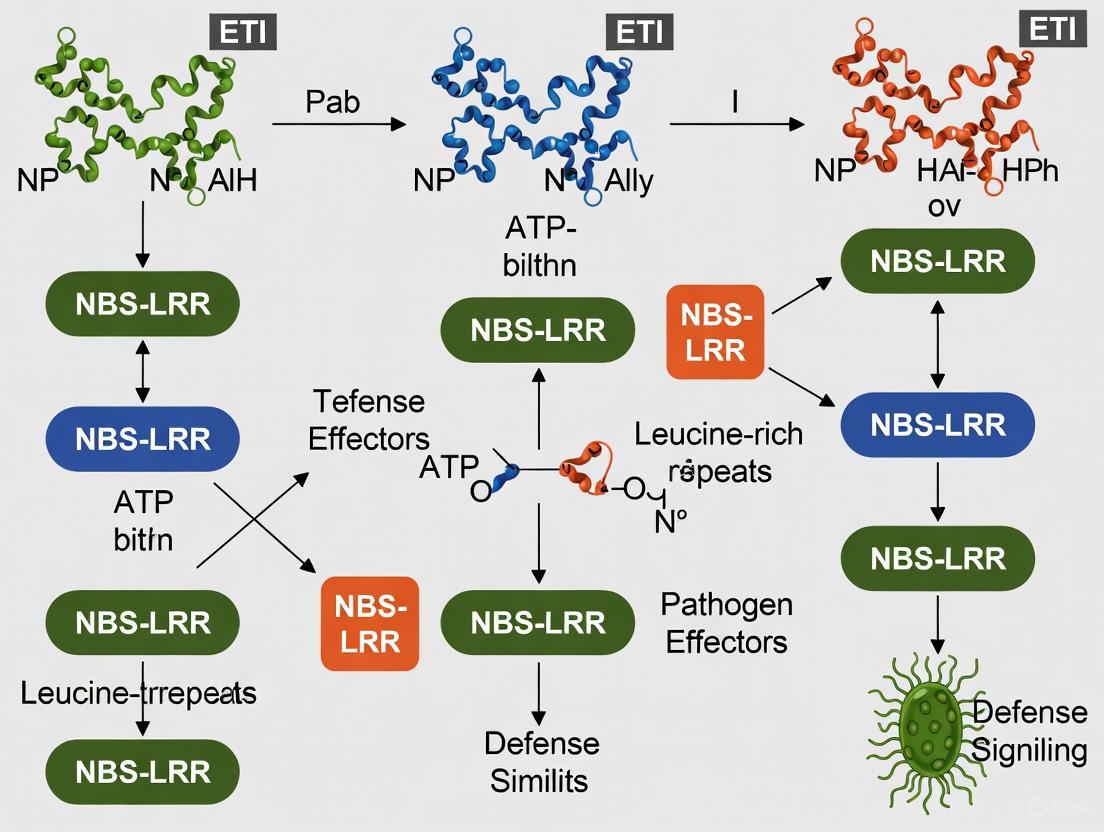
This article provides a comprehensive overview of the pivotal role Nucleotide-Binding Site Leucine-Rich Repeat (NBS-LRR) genes play in plant effector-triggered immunity (ETI).
NBS-LRR Genes: The Molecular Sentinels of Plant Effector-Triggered Immunity (ETI)
Abstract
This article provides a comprehensive overview of the pivotal role Nucleotide-Binding Site Leucine-Rich Repeat (NBS-LRR) genes play in plant effector-triggered immunity (ETI). It explores the molecular architecture and classification of NBS-LRR proteins, details methodologies for their genome-wide identification and functional analysis, addresses challenges in studying these highly variable genes, and presents comparative genomic studies that reveal evolutionary patterns. Aimed at researchers and scientists in plant pathology and genetics, this review synthesizes current knowledge to guide the application of NBS-LRR genes in developing durable disease resistance in crops, with cross-disciplinary implications for understanding innate immune receptor function.
The Molecular Architecture of NBS-LRR Genes and ETI Activation
Effector-triggered immunity (ETI) is a robust plant defense response, often culminating in a localized programmed cell death known as the hypersensitive response (HR), which effectively restricts pathogen spread [1] [2]. The vast majority of plant resistance (R) genes responsible for initiating ETI encode nucleotide-binding site leucine-rich repeat (NBS-LRR) proteins, also known as NLR proteins in animals [1] [3] [4]. These proteins function as intracellular immune receptors that directly or indirectly perceive pathogen-secreted effector proteins, leading to their activation and the initiation of defense signaling [4] [2]. Understanding the sophisticated molecular architecture of NBS-LRR proteins is fundamental to deciphering the mechanisms of plant immunity. This guide details the core structural domains of NBS-LRR proteins—the NB-ARC domain, the LRR domain, and the diverse N-terminal domains—framed within the context of their role in ETI, and provides key methodologies for their experimental investigation.
The Tripartite Domain Architecture of NBS-LRR Proteins
NBS-LRR proteins are large, multi-domain proteins, typically ranging from 860 to 1,900 amino acids, that belong to the STAND (Signal Transduction ATPase with Numerous Domains) family of ATPases [1] [3]. They are broadly classified into two major subfamilies based on their N-terminal domain architecture, which also dictates their requirement for downstream signaling components (Table 1).
- TNL (TIR-NBS-LRR): Characterized by an N-terminal Toll/interleukin-1 receptor (TIR) domain. TNL-mediated signaling typically requires the EDS1/PAD4/SAG101 protein complex [1] [3].
- CNL (CC-NBS-LRR): Characterized by an N-terminal Coiled-Coil (CC) domain. CNL-mediated signaling generally depends on NDR1 (Non-race-specific Disease Resistance 1) [1] [3].
A third, smaller subfamily, RNL (RPW8-NBS-LRR), features an N-terminal Resistance to Powdery Mildew 8 (RPW8) domain and often functions in downstream signaling cascades rather than direct effector perception [5]. In addition to these typical configurations, plant genomes also contain numerous "atypical" or "irregular" NBS-LRR genes that encode proteins lacking one or more of the canonical domains (e.g., TIR-NBS or CC-NBS proteins), which may act as adaptors or regulators in immune signaling networks [3] [5].
Table 1: Major Subfamilies of Plant NBS-LRR Proteins
| Subfamily | N-terminal Domain | Key Downstream Signaling Component | Example R Proteins | Phylogenetic Distribution |
|---|---|---|---|---|
| TNL | TIR (Toll/Interleukin-1 Receptor) | EDS1/PAD4/SAG101 complex | RPS4, RPP1A, N | Absent in cereal genomes [3] |
| CNL | CC (Coiled-Coil) | NDR1 | Rx, RPS2, RPM1 | Found in both monocots and dicots [3] |
| RNL | RPW8 | ADR1-like | ADR1, NRG1 | Limited members; involved in relaying signals [5] |
The following diagram illustrates the general domain structure and the "molecular switch" model of activation for these proteins.
The NB-ARC Domain: A Molecular Switch for Immune Activation
The NB-ARC (Nucleotide-Binding domain shared by APAF-1, R proteins, and CED-4) domain is the central engine and a conserved hallmark of NBS-LRR proteins [3]. It functions as a molecular switch, regulated by the binding and hydrolysis of nucleotides (ATP/GTP), and governs the transition between inactive and active signaling states [1] [3].
Structural Composition and Key Motifs
The NB-ARC domain can be subdivided into distinct subdomains, including the NB subdomain and the ARC (Apoptosis, R gene products, and CED-4) subdomain [6]. It contains several highly conserved motifs critical for nucleotide binding and hydrolysis:
- P-loop (Kinase 1a): Binds the phosphate moiety of the nucleotide [6] [7].
- Kinase 2: Coordinates divalent metal ions (e.g., Mg²⁺) essential for catalysis [7].
- Kinase 3a (GLPL): Involved in nucleotide binding and is part of the ARC subdomain [6] [3].
- RNBS-A, RNBS-C, RNBS-D: Additional motifs that distinguish TNL from CNL proteins [3].
The conformational change from an ADP-bound (off) state to an ATP-bound (on) state is a key event in NBS-LRR activation. This change is often triggered by effector perception and enables the protein to interact with downstream signaling partners [1] [3]. Evidence from proteins like the potato Rx CNL and the tomato I2 and Mi CNLs demonstrates that specific ATP binding and hydrolysis are essential for their function [3].
The LRR Domain: A Versatile Platform for Perception and Regulation
The C-terminal Leucine-Rich Repeat (LRR) domain is primarily responsible for effector recognition and maintaining the protein in an auto-inhibited state in the absence of pathogen attack [6] [5].
Functional Roles and Structural Characteristics
- Effector Recognition Specificity: The LRR domain is the most variable region among NBS-LRR proteins and is under diversifying selection. This variation generates a vast repertoire of potential recognition specificities, allowing the plant to detect a wide array of pathogen effectors [3]. Recognition can be direct, through physical interaction with the effector (e.g., RRS1-R with PopP2, Pi-ta with AVR-Pita), or indirect, by monitoring the integrity of host "guardee" proteins (e.g., RIN4 guarded by RPS2 and RPM1) [4] [2].
- Auto-inhibition and Regulation: In the resting state, the LRR domain interacts intramolecularly with the NB-ARC domain, stabilizing the ADP-bound, inactive conformation. Effector perception disrupts this interaction, allowing the nucleotide exchange and activation of the protein [6].
- Protein-Protein Interactions: Beyond pathogen recognition, the LRR domain facilitates interactions with other host proteins, including chaperones like HSP90 and SGT1, which are crucial for the proper folding and stability of NBS-LRR proteins [6] [1].
Table 2: Core Functional Domains of NBS-LRR Proteins
| Domain | Primary Function | Key Features & Motifs | Role in ETI Activation |
|---|---|---|---|
| N-terminal (TIR/CC/RPW8) | Initiate downstream signaling | TIR: 4 conserved motifs over ~175aa\nCC: Coiled-coil structure\nRPW8: Small, charged domain | Exposed upon activation; interacts with signaling partners like EDS1 (TIR) or NDR1 (CC) [1] [3] |
| NB-ARC | Nucleotide binding & hydrolysis; molecular switch | P-loop, Kinase 2, Kinase 3a (GLPL), RNBS motifs | Switches from ADP-bound (inactive) to ATP-bound (active) conformation [3] |
| LRR | Effector recognition & auto-inhibition | 14-24 repeats of 20-30 amino acids; highly variable; under diversifying selection | Disruption of intramolecular interactions releases auto-inhibition [6] [3] |
The N-terminal Domains: Hubs for Downstream Signaling
The N-terminal domain is the primary determinant for initiating specific downstream signaling pathways following activation.
- TIR Domain: The TIR domain is predicted to have a structure similar to the TIR domains of Toll-like receptors in animals. It is believed to function in protein-protein interactions, potentially with downstream signaling components like EDS1 [3]. For some TNLs, such as RPS4, the TIR domain alone, or with a short adjacent region (TIR+45/80), is sufficient to induce cell death, indicating its central role in signal transduction [1].
- CC Domain: The CC domain is a predicted coiled-coil structure that can also facilitate oligomerization and protein interactions. In the CNL protein Rx, the CC domain alone can functionally complement an NBS-LRR protein lacking its own CC domain, demonstrating its sufficiency for signaling in some contexts [6]. For other CNLs like NRG1, the CC domain is essential for function [1].
Experimental Toolkit for Analyzing NBS-LRR Structure and Function
Key Research Reagents and Solutions
Table 3: Essential Reagents for NBS-LRR Research
| Reagent / Material | Function in Research | Example Application |
|---|---|---|
| Nicotiana benthamiana | A model plant for transient expression assays, VIGS, and protein interaction studies. | Used for transient co-expression of R proteins and effectors to study HR cell death [6] [8]. |
| Virus-Induced Gene Silencing (VIGS) | A technique for knocking down gene expression to assess gene function. | Validating the requirement of specific NBS-LRRs for an HR, e.g., silencing NRC2/3 [8]. |
| Co-immunoprecipitation (Co-IP) | To detect physical protein-protein interactions in planta. | Demonstrating interaction between separate Rx domains (CC-NBS and LRR) [6]. |
| Hairpin RNAi Library | A high-throughput tool for systematically silencing multiple R gene candidates. | Genome-wide screen to identify NBS-LRR genes required for specific ETI responses [8]. |
| Epitope Tags (e.g., HA, FLAG) | For detecting, purifying, and visualizing recombinant proteins. | Tagging domains like CC-NBS and LRR for expression and interaction studies in complementation assays [6]. |
Detailed Protocol: Domain Complementation Assay
This protocol, based on the seminal study of the potato Rx protein, tests whether different domains of an NBS-LRR protein can function in trans to reconstitute a functional immune receptor, thereby probing intramolecular interactions [6].
- Objective: To determine if the CC-NBS and LRR domains of an NBS-LRR protein, when expressed from separate constructs, can functionally complement each other to elicit an effector-dependent HR.
- Materials:
- Expression constructs for individual protein domains (e.g.,
35S:CC-NBS-HA,35S:LRR-HA). - Effector construct (e.g.,
35S:PVX_CPfor Rx). - Agrobacterium tumefaciens strains.
- Nicotiana benthamiana plants (4-5 weeks old).
- Expression constructs for individual protein domains (e.g.,
- Methodology:
- Cloning: Clone the sequences encoding the CC-NBS and LRR domains into separate binary expression vectors, under the control of a strong constitutive promoter like the Cauliflower Mosaic Virus 35S promoter. Fuse an epitope tag (e.g., HA) to each construct for detection.
- Agroinfiltration: Transform the individual domain constructs and the effector construct into Agrobacterium. Infiltrate leaves of N. benthamiana with different combinations of bacterial suspensions:
- Group A: Agrobacterium with
CC-NBS-HA+PVX_CP - Group B: Agrobacterium with
LRR-HA+PVX_CP - Group C: Agrobacterium with
CC-NBS-HA+LRR-HA+PVX_CP - Control groups: Infiltrate each construct alone.
- Group A: Agrobacterium with
- Phenotyping: Monitor the infiltrated leaf areas over 2-5 days for the appearance of a confluent hypersensitive response (HR), characterized by rapid, localized tissue collapse and necrosis.
- Validation:
- Protein Detection: Use western blotting with anti-HA antibodies to confirm the expression of all transfected domain constructs.
- Interaction Studies: Perform co-immunoprecipitation assays on proteins from leaf tissues expressing the domain combinations to confirm physical interaction.
- Expected Outcome: A successful complementation is observed when co-expression of
CC-NBS-HA,LRR-HA, andPVX_CP(Group C) results in a clear HR, while the individual domains with the effector (Groups A & B) do not. This indicates that the domains can interact in trans to form a functional complex upon effector perception [6].
The workflow for this assay is summarized below.
The defined structure of NBS-LRR proteins—comprising the signaling N-terminal domains, the regulatory NB-ARC switch, and the perceptive LRR domain—is fundamental to their role as intracellular sentinels in plant immunity. The modular nature of these proteins allows for sophisticated regulation and a vast capacity for pathogen recognition, which researchers can dissect using well-established functional assays. A deep understanding of this structure-function relationship is paramount for advancing ETI research and developing novel strategies for engineering durable disease resistance in crops.
In the context of a broader thesis on the role of NBS (Nucleotide-Binding Site) genes in Effector-Triggered Immunity (ETI) research, this guide provides a comprehensive classification of the major NLR (Nucleotide-binding, Leucine-rich Repeat) subfamilies. Plants have evolved a sophisticated, receptor-based innate immune system where intracellular NLR receptors detect pathogen-derived effector molecules and induce immune responses [9]. The NLR family represents the largest class of resistance (R) proteins in plants, with approximately 80% of functionally characterized R genes belonging to this family [4]. Based on their N-terminal domains and phylogeny, NLRs are primarily classified into three subfamilies: CNL (Coiled-Coil domain-containing NLR), TNL (Toll/Interleukin-1 Receptor domain-containing NLR), and RNL (RPW8 domain-containing NLR) [9] [10]. These proteins function as central hubs in plant immune signaling networks, activating coordinated defense responses including Ca2+ fluxes, reactive oxygen species production, mitogen-activated protein kinase activation, and hypersensitive response [9]. This technical guide details the distinguishing characteristics, signaling mechanisms, and research methodologies for these essential immune receptors.
Classification and Structural Characteristics of NLR Subfamilies
Domain Architecture and Molecular Signatures
NLR proteins share a conserved modular architecture but differ significantly in their N-terminal domains, which defines their classification and functional specialization:
CNL Proteins: Characterized by an N-terminal Coiled-Coil (CC) domain, a central NB-ARC (Nucleotide-Binding Adaptor shared with APAF-1, R proteins, and CED-4) domain, and a C-terminal Leucine-Rich Repeat (LRR) domain [10] [11]. The NB-ARC domain contains highly conserved motifs (P-loop, kinase, RNBS, GLPL, MHD) involved in nucleotide binding and molecular switching [12].
TNL Proteins: Feature an N-terminal TIR (Toll/Interleukin-1 Receptor) domain, followed by the NB-ARC domain and LRR domain [10]. The TIR domain exhibits NADase and ADPR polymerase-like activity that produces small signaling molecules following effector recognition [9].
RNL Proteins: Contain an N-terminal RPW8 (Resistance to Powdery Mildew 8) domain, also known as CCR (CC domain related to RPW8), followed by NB-ARC and LRR domains [9] [10]. RNLs form a small, evolutionarily conserved clade comprised of two subfamilies: ADR1 (Activated Disease Resistance 1) and NRG1 (N Requirement Gene 1) [9].
Table 1: Characteristic Motifs in the NB-ARC Domain of NLR Subfamilies
| Conserved Motif | CNL Signature | TNL Signature | RNL Signature | Functional Role |
|---|---|---|---|---|
| P-loop | Conserved across subfamilies | Conserved across subfamilies | Conserved across subfamilies | ATP/GTP binding |
| RNBS-A | Subfamily-specific variations | Subfamily-specific variations | Subfamily-specific variations | Receptor specificity |
| RNBS-D | CFLDLAWxFP | CFLDLACxFP | CFLDLGxFP | Subfamily discrimination |
| MHD | MHD | MHD | QHD | Nucleotide binding state |
Genomic Distribution and Evolutionary Patterns
The distribution and abundance of NLR subfamilies vary significantly across plant species, reflecting evolutionary adaptations:
Table 2: Comparative Distribution of NLR Subfamilies Across Plant Species
| Plant Species | Total NLRs | CNL | TNL | RNL | Notable Features |
|---|---|---|---|---|---|
| Arabidopsis thaliana | 207 | ~60% | ~35% | ~5% (3 ADR1, 2 NRG1) | Balanced subfamily representation [9] |
| Salvia miltiorrhiza | 196 | 61 CNLs | 2 TNLs | 1 RNL | Marked reduction in TNL and RNL [4] |
| Akebia trifoliata | 73 | 50 CNLs | 19 TNLs | 4 RNLs | Limited NLR repertoire [10] |
| Oryza sativa (Rice) | 505 | Majority CNLs | Absent | Absent | Complete absence of TNLs and RNLs [4] |
| Pinus taeda (Gymnosperm) | 679 | Minority | ~89% | Present | TNL dominance in conifers [12] |
The RNL subfamily is particularly noteworthy for its conservation despite small size, having separated before the divergence of angiosperms [9]. Some species like rice and other monocots have completely lost TNL and RNL subfamilies, while dicots typically maintain all three classes [4]. Recent studies have identified that conifers possess among the most diverse and numerous RNLs in land plants, with four distinct groups, two of which differ from angiosperms [12].
Distinct Signaling Pathways and Immune Mechanisms
CNL and TNL Activation and Signaling Mechanisms
Sensor CNLs and TNLs recognize pathogen effectors through direct or indirect interaction, primarily via their LRR domains, leading to conformational changes that activate downstream signaling:
CNL Activation: Effector recognition induces CNL oligomerization into resistosomes that function as calcium-permeable cation channels [9]. Well-characterized examples include ZAR1 in Arabidopsis and Sr35 in wheat, which form pentameric complexes that disturb ion homeostasis and activate immunity [9].
TNL Activation: TIR domains embedded in TNLs possess enzymatic NADase and ADPR polymerase-like activity that produces small signaling molecules following effector recognition [9]. These molecules initiate physical association between EDS1 heterodimers and RNL helpers [9].
RNL Helper Functions in Immunity Signaling
RNLs function as essential helper NLRs that act downstream of sensor CNLs and TNLs, forming robust immune signaling nodes [9]. In Arabidopsis, ADR1 and NRG1 subfamilies display specialized functions:
ADR1 subfamily: Acts redundantly downstream of multiple CNLs and TNLs, required for immune signaling induced by both intracellular NLRs and cell-surface PRRs [9]. ADR1s predominantly mediate resistance including transcriptional reprogramming [9].
NRG1 subfamily: Serves as redundant signaling components specifically required for TNL-induced immunity and contributes to cell death triggering [9].
RNLs form distinct signaling modules with EDS1 family members: EDS1-PAD4 heterodimers function with ADR1s, while EDS1-SAG101 heterodimers act specifically with NRG1s during TNL-induced immunity [9]. Following activation, RNLs dissociate from EDS1 heterodimers, oligomerize, and form high-molecular weight complexes (resistosomes) at the plasma membrane [9].
RNL Signaling Pathway: Integration of TNL and Helper NLR Functions
Integrated Immune Signaling Network
The plant immune system features remarkable integration between different receptor systems. Recent studies demonstrate interdependency and mutual potentiation between cell surface PRR and intracellular NLR receptor systems [9]. The EDS1-PAD4-ADR1 module acts as a convergence point for PRR- and NLR-induced signaling pathways in Arabidopsis, explaining why activation of both receptor systems results in common immune outputs that differ mainly in timing and amplitude [9].
Activated RNLs promote cation influx at the plasma membrane, ultimately resulting in cell death independent of other plant proteins [9]. The N-terminal CCR domain of RNLs is structurally similar to cell death-inducing domains of CNLs like ZAR1 and Sr35, as well as mammalian MLKL proteins, suggesting conserved mechanisms across immune systems [9].
Experimental Protocols for NLR Research
Genome-Wide Identification and Classification of NLR Genes
Protocol Objective: Systematic identification and classification of NBS-LRR genes in plant genomes.
Methodology:
- Sequence Retrieval: Obtain genome sequence and annotation files from databases such as NCBI, Phytozome, or Plaza.
- Domain Identification: Use HMMER with Hidden Markov Models (HMM profiles PF00931 for NB-ARC domain) to identify NBS-domain-containing genes [10] [11]. Set E-value threshold to 1.0 for initial screening.
- Domain Architecture Analysis: Scan identified sequences against Pfam database (E-value 10^-4) to verify NBS domain and identify associated domains:
- TIR domain: PF01582
- RPW8 domain: PF05659
- LRR domain: PF08191
- CC domain: Use Coiled-coil prediction tools with threshold 0.5 [10]
- Classification: Categorize sequences into:
- CNL: CC + NBS + LRR
- TNL: TIR + NBS + LRR
- RNL: RPW8 + NBS + LRR
- Atypical: Missing one or more domains (N, TN, CN, NL) [4]
- Phylogenetic Analysis: Perform multiple sequence alignment using MAFFT 7.0 and construct phylogenetic tree with maximum likelihood algorithm in FastTreeMP (1000 bootstrap replicates) [11].
Applications: This protocol enabled identification of 196 NBS-LRR genes in Salvia miltiorrhiza, revealing a marked reduction in TNL and RNL subfamily members [4].
Functional Validation Through Virus-Induced Gene Silencing (VIGS)
Protocol Objective: Functional characterization of candidate NLR genes in plant immunity.
Methodology:
- Candidate Gene Selection: Identify target NLR genes through expression profiling under pathogen challenge.
- Vector Construction: Clone 200-300 bp gene-specific fragment into TRV-based VIGS vectors (pTRV1 and pTRV2).
- Plant Material Preparation: Use tissue culture seedlings grown in MS medium with appropriate phytohormones under controlled conditions (22-24°C, 16h-light/8h-dark cycle) [13].
- Agroinfiltration: Transform recombinant vectors into Agrobacterium tumefaciens strain GV3101. Infiltrate suspensions (OD600 = 1.0) into expanded leaves using needleless syringe.
- Pathogen Challenge: Inoculate silenced plants with target pathogen (e.g., Alternaria alternata for apple Alternaria leaf spot disease) 2-3 weeks post-VIGS.
- Phenotypic Assessment: Monitor disease symptoms, record disease severity scores, and calculate disease severity index.
- Molecular Validation: Confirm gene silencing via qRT-PCR and assess pathogen biomass through quantitative assays.
Applications: This approach demonstrated that silencing of GaNBS (OG2) in resistant cotton increased susceptibility to cotton leaf curl disease, validating its role in virus resistance [11].
Table 3: Key Research Reagents for NLR Studies
| Reagent/Resource | Specifications | Application | Example Use |
|---|---|---|---|
| HMMER Suite | HMM profiles: PF00931 (NB-ARC), PF01582 (TIR), PF05659 (RPW8), PF08191 (LRR) | NLR identification and classification | Genome-wide NLR identification in Akebia trifoliata [10] |
| TRV-VIGS Vectors | pTRV1, pTRV2 with gene-specific inserts (200-300 bp) | Functional validation through gene silencing | Silencing of GaNBS in cotton to validate CLCuD resistance function [11] |
| EDS1 Antibodies | Specific to EDS1, PAD4, and SAG101 proteins | Protein-protein interaction studies | Validation of EDS1-PAD4-ADR1 and EDS1-SAG101-NRG1 complexes [9] |
| RNA-seq Platforms | Illumina NovaSeq 6000, Q30 > 80% | Expression profiling under biotic stress | Identification of DEGs in banana blood disease resistance [14] |
| Phylogenetic Tools | MAFFT 7.0, FastTreeMP, OrthoFinder v2.5.1 | Evolutionary and orthogroup analysis | Classification of 12,820 NBS genes across 34 species [11] |
The classification of NLR proteins into CNL, TNL, and RNL subfamilies reflects functional specialization within plant immune signaling networks. Sensor CNLs and TNLs recognize pathogen effectors through diverse mechanisms, while helper RNLs form conserved signaling modules that integrate immune outputs from both surface and intracellular receptors. The distinct yet interconnected signaling pathways of these subfamilies create a robust system that enables plants to withstand rapidly evolving pathogens. Future research elucidating the precise molecular mechanisms of NLR activation and regulation will provide crucial insights for engineering durable disease resistance in crops, addressing growing challenges in global food security.
Effector-Triggered Immunity (ETI) is a sophisticated defense mechanism in plants that provides potent and durable resistance against pathogen attack. This inducible immune response is activated when specialized plant resistance (R) proteins, predominantly from the nucleotide-binding site leucine-rich repeat (NBS-LRR or NLR) family, detect specific pathogen-encoded effector proteins inside host cells [15] [16]. ETI represents a critical evolutionary adaptation in the ongoing molecular arms race between plants and their pathogens, where plants have developed surveillance systems to recognize effector proteins that pathogens deploy to suppress basal immunity [17] [18]. The activation of ETI typically culminates in a hypersensitive response (HR), characterized by programmed cell death at the infection site, which effectively restricts pathogen spread [16] [18]. Within the broader context of NBS gene research, understanding the ETI signaling cascade remains fundamental to deciphering plant immunity mechanisms and developing novel crop protection strategies.
Core Mechanism: NBS-LRR Proteins in ETI
Domain Architecture and Molecular Function
NBS-LRR proteins constitute the largest and most prominent class of plant R proteins, accounting for approximately 80% of characterized resistance genes [4]. These intracellular immune receptors function as sophisticated molecular switches that detect pathogen effectors and initiate robust defense signaling. The canonical structure of NBS-LRR proteins comprises three functional domains:
- N-terminal domain: This variable domain typically consists of either a Toll/Interleukin-1 receptor (TIR) region or a coiled-coil (CC) region, which influences downstream signaling pathways and determines genetic requirements for immune activation [18]. A less common third type contains a Resistance to powdery mildew 8 (RPW8) domain [5].
- Central nucleotide-binding site (NBS): Also referred to as NB-ARC (nucleotide-binding adaptor shared by APAF-1, R proteins, and CED-4), this domain contains conserved motifs (Walker A/P-loop and Walker B) that control ATP binding and hydrolysis, serving as a molecular switch for activation [16] [18].
- C-terminal leucine-rich repeats (LRR): This domain is primarily involved in effector recognition through protein-protein interactions and exhibits significant diversity, enabling the detection of rapidly evolving pathogen effectors [16].
The molecular mechanism of NLR activation follows an elegant switching model. In the resting state, the NLR exists in an autoinhibited conformation with ADP bound to the NBS domain, maintained through intramolecular interactions between the LRR and N-terminal domains [18]. Effector perception triggers conformational changes that promote ADP-to-ATP exchange, transitioning the receptor to an active state that initiates downstream signaling [18]. Purified NLR proteins demonstrate the ability to bind both ATP and ADP, suggesting they may continually cycle between active and inactive states, with effector perception stabilizing the active conformation [18].
Table 1: Classification of NBS-LRR Proteins in Plant Immunity
| Classification | N-terminal Domain | Signaling Requirements | Representative Examples | Species Distribution |
|---|---|---|---|---|
| TNL | TIR (Toll-Interleukin-1 Receptor) | EDS1, PAD4 | RPP1, RPS4 | Dicots only |
| CNL | CC (Coiled-Coil) | NDR1 | RPS2, RPS5 | Monocots and Dicots |
| RNL | RPW8 (Resistance to Powdery Mildew 8) | ADR1 | NRG1, ADR1 | Limited across species |
Genomic Diversity and Evolution
The NBS-LRR gene family exhibits remarkable expansion and diversification across plant species, reflecting their crucial role in adaptive immunity. Genomic analyses reveal significant variation in NLR composition among different plants:
- Arabidopsis thaliana: Contains over 150 NLR genes with a mix of TNL and CNL types [18]
- Oryza sativa (rice): Possesses 505 NBS-LRR proteins, exclusively CNLs due to complete absence of TNLs in monocots [4]
- Solanum tuberosum (potato): Has 447 NBS-LRR genes [4]
- Nicotiana benthamiana: Contains 156 NBS-LRR homologs with diverse domain architectures [5]
- Salvia miltiorrhiza: Features 196 NBS-LRR genes, with notable reduction in TNL and RNL subfamilies [4]
This diversity results from continuous evolutionary arms races with pathogens, driving gene duplication, neofunctionalization, and adaptive selection—particularly in the LRR domains responsible for effector recognition [16]. The variation in NLR repertoires among species reflects their distinct pathogen evolutionary histories and ecological contexts.
Effector Recognition Strategies
Plants have evolved sophisticated mechanisms to detect pathogen effectors through their NLR proteins, primarily operating through two conceptual frameworks: direct and indirect recognition.
Direct Recognition
In direct recognition scenarios, NLR proteins physically interact with pathogen effector proteins through their LRR domains. This molecular interaction follows a gene-for-gene relationship where specific NLR alleles recognize corresponding effector alleles [2]. A well-characterized example is the Arabidopsis RPP1 protein, which directly binds the ATR1 effector from the oomycete pathogen Hyaloperonospora arabidopsidis [18]. Structural studies have demonstrated that specific surface residues on ATR1 mediate association with the RPP1 LRR domain, and mutational changes in these interfaces can evade recognition, driving co-evolutionary dynamics [18].
Indirect Recognition
Indirect recognition involves NLR proteins monitoring the integrity of host cellular components that are targeted by pathogen effectors. This "guard" hypothesis proposes that NLRs guard key host proteins (guardees) and detect effector-induced modifications [18]. Notable examples include:
- RPS5: Guards the host kinase PBS1 and detects its cleavage by the AvrPphB cysteine protease effector from Pseudomonas syringae [18]
- RPM1: Monitors the phosphorylation status of the guardee RIN4 and activates immunity when RIN4 is phosphorylated by AvrRpm1 or AvrB effectors [18]
- RPS2: Activates upon detection of RIN4 cleavage by the AvrRpt2 effector [8]
This guard system provides strategic advantages by allowing plants to detect the virulence activities of effectors rather than the effectors themselves, potentially enabling recognition of multiple effectors that target the same host protein [18].
Diagram 1: Direct and Indirect Effector Recognition Pathways
Signaling Cascade and Immune Outputs
Early Signaling Events
Following effector recognition, activated NLR proteins initiate a complex signaling network that orchestrates immune responses. The earliest detectable events include:
- Calcium influx: Rapid increases in cytosolic Ca²⁺ levels serve as critical second messengers [15] [18]
- Reactive oxygen species (ROS) burst: NADPH oxidases generate apoplastic ROS, which function as signaling molecules and antimicrobial compounds [15] [18]
- Mitogen-activated protein kinase (MAPK) cascades: Phosphorylation networks amplify immune signals and regulate transcriptional reprogramming [16]
These early signaling events occur within minutes to hours post-recognition and create a hostile environment for pathogen growth while amplifying defense signals [18].
Transcriptional Reprogramming
ETI activation triggers extensive transcriptional reprogramming involving thousands of genes. Time-course transcriptome analyses during Pseudomonas syringae ETI reveal prevalent double-peak patterns in upregulated genes, reflecting responses from two distinct cell populations [19]:
- Autonomous Cell Population (ACP): Cells that directly perceive the effector and initiate early transcriptional responses (peaking before 9 hours post-inoculation)
- Non-Autonomous Cell Population (NACP): Neighboring cells that respond to secondary signals from ACP cells, showing later transcriptional peaks [19]
This "echoing" transcriptome pattern demonstrates sophisticated spatiotemporal coordination of immune responses across tissue compartments. WRKY transcription factors play central roles in regulating this conserved transcriptional program, forming a resilient network that can be activated through different entry points depending on the pathogen challenge [19].
Hypersensitive Response and Systemic Immunity
The hypersensitive response represents a hallmark of ETI, characterized by programmed cell death at infection sites that restricts pathogen access to water and nutrients [16] [18]. While HR frequently accompanies effective ETI, genetic studies reveal that cell death and resistance can be uncoupled in certain contexts (e.g., mutations in DND1 or AtMC1), indicating that HR is a consequence rather than an absolute requirement for resistance [18].
Successful ETI activation also primes systemic defenses, including:
- Systemic Acquired Resistance (SAR): A long-lasting, broad-spectrum resistance in distal tissues mediated by salicylic acid accumulation and PR protein expression [15]
- Amplification of PTI: Enhanced sensitivity to pattern-triggered immunity stimuli through synergistic interactions [15] [20]
Table 2: Key Immune Outputs in ETI and Their Functional Significance
| Immune Output | Kinetics | Key Components | Functional Role |
|---|---|---|---|
| Ion Fluxes | Minutes | Ca²⁺, K⁺, H⁺ | Second messengers; membrane potential changes |
| ROS Burst | 15-60 minutes | RBOHD, RBOHF | Antimicrobial activity; signaling cross-linking |
| MAPK Activation | 15-120 minutes | MPK3, MPK6 | Signal amplification; phosphorylation relay |
| Transcriptional Reprogramming | 1-24 hours | WRKY, TGA factors | Defense gene expression; metabolic shifts |
| Hypersensitive Response | 6-48 hours | MC1, VPEs, Proteases | Pathogen containment; signal propagation |
| Phytohormone Signaling | Hours-days | Salicylic Acid, Jasmonic Acid | Defense regulation; systemic immunity |
Experimental Approaches for ETI Research
Genome-Wide Identification of NBS-LRR Genes
Comprehensive cataloging of NLR repertoires provides foundational resources for ETI research. Standardized protocols for genome-wide identification include:
- Hidden Markov Model (HMM) Searches: Using Pfam NBS domain models (PF00931/NB-ARC) with stringent E-value cutoffs (e.g., <10⁻²⁰) to identify candidate NBS-containing proteins [4] [5] [8]
- Domain Architecture Validation: Confirming identified candidates through SMART, CDD, and Pfam databases to verify complete domain structures [5]
- Phylogenetic Analysis: Classifying NLRs into subfamilies (TNL, CNL, RNL) using maximum likelihood methods and bootstrap testing [4] [5]
- Motif and Gene Structure Analysis: Identifying conserved motifs using MEME suite and examining exon-intron structures with TBtools [5]
This approach successfully identified 196 NBS-LRR genes in Salvia miltiorrhiza [4], 156 in Nicotiana benthamiana [5], and 345 R gene candidates in a comprehensive N. benthamiana study [8].
Functional Characterization through Reverse Genetics
Systematic functional analysis of NLR genes employs reverse genetics approaches:
Diagram 2: Workflow for Functional NLR Gene Identification
The hairpin library-based approach provides a powerful method for systematic functional analysis [8]:
- Library Construction: Designing RNAi constructs targeting 300+ NLR candidates in N. benthamiana
- Transient Silencing: Co-expressing hairpin constructs with candidate effectors using agroinfiltration
- HR Suppression Screening: Identifying NLR genes whose silencing abolishes effector-triged HR
- Validation: Confirming specificity through multiple effectors and independent assays
This methodology successfully validated known NLR genes including Prf, NRC2a/b, and NRC3 required for Pto/AvrPto-triggered HR, and NRG1 essential for TMV recognition [8].
Transcriptomic Analysis of ETI Responses
Advanced transcriptomic approaches provide insights into ETI dynamics:
- Time-Course Designs: Sampling at multiple time points (e.g., 3-24 hours post-inoculation) to capture response dynamics [19]
- Multi-Compartment Modeling: Decomposing complex expression patterns (e.g., double-peaks) into distinct cellular responses [19]
- Network Analysis: Identifying regulatory modules and key transcription factors (e.g., WRKY networks) coordinating immune responses [19]
These approaches revealed that PTI and ETI activate qualitatively similar transcriptional programs, with ETI generating stronger and more sustained responses [19] [20].
Table 3: Essential Research Reagents for ETI Studies
| Reagent Category | Specific Examples | Research Application | Technical Function |
|---|---|---|---|
| Model Pathogens | Pseudomonas syringae pv tomato DC3000 (AvrRpt2, AvrRpm1) | ETI elicitation | Delivery of specific effectors for immune activation |
| NLR Identification Tools | HMMER suite, Pfam NBS domain (PF00931) | Genome-wide NLR discovery | Bioinformatics identification of NBS-LRR genes |
| Silencing Systems | Hairpin RNAi libraries, VIGS vectors | Functional characterization | Transient knockdown of candidate NLR genes |
| Expression Systems | Agroinfiltration constructs, N. benthamiana transient expression | Functional assays | High-throughput effector/NLR co-expression |
| Reporting Systems | HR cell death markers, ion flux indicators, ROS probes | Phenotypic analysis | Quantification of immune outputs and responses |
| Transcriptomic Tools | RNAseq, Multi-compartment modeling software | Signaling pathway analysis | Systems-level understanding of immune networks |
Emerging Concepts and Future Perspectives
PTI-ETI Integration
Recent research has fundamentally shifted the paradigm of plant immunity from distinct PTI and ETI branches to an integrated system. Studies demonstrate that PTI and ETI synergistically enhance immune outputs [15] [20]. Key observations supporting this integration include:
- Shared Signaling Components: Overlapping early signaling events (calcium influx, ROS burst, MAPK activation) [15]
- Transcriptional Convergence: Substantial overlap in genes upregulated during PTI and ETI, particularly in later response phases [19] [20]
- Mutual Potentiation: PTI components enhance ETI responses and vice versa, creating amplified defense signals [15] [20]
This synergistic relationship suggests therapeutic strategies that simultaneously engage multiple immune recognition pathways for enhanced disease resistance.
Non-Canonical ETI Mechanisms
Beyond classical gene-for-gene interactions, several non-canonical ETI mechanisms expand the plant immune repertoire:
- NLR Networks: Immune receptor pairs and networks that function cooperatively rather than individually [2]
- Sensor/Helper NLR Systems: Combinations where sensor NLRs detect effectors and helper NLRs amplify signals [2]
- Integrated Decoys: Domain integrations where NLRs incorporate decoy domains that mimic effector targets [16]
- Non-NLR Mediated ETI: Resistance proteins outside the NLR family, including tandem kinase proteins [2]
These mechanisms illustrate the remarkable flexibility and evolutionary innovation in plant immune systems, providing diverse surveillance strategies against rapidly evolving pathogens.
Translational Applications and Future Directions
Understanding ETI signaling cascades enables multiple translational applications:
- R Gene Stacking: Pyramiding multiple NLR genes with different specificities to enhance resistance durability [8]
- Effector-Guided Breeding: Using pathogen effectors as probes to identify corresponding NLR genes in breeding programs [8]
- Engineered NLRs: Modifying recognition specificities through domain swapping or directed evolution to recognize high-risk effectors [16]
- Synergistic Immunity: Designing combinations that maximize PTI-ETI synergy for robust resistance [15] [20]
Future research directions include elucidating structural mechanisms of NLR activation, understanding spatial coordination of immune responses across tissues, and developing predictive models of plant-pathogen co-evolution to guide durable resistance breeding.
Effector-triggered immunity (ETI) represents a sophisticated layer of the plant immune system, wherein intracellular resistance (R) proteins detect pathogen effector proteins, culminating in a robust defensive response. The prevailing model for ETI initiation has evolved significantly beyond simple direct receptor-ligand interactions. This whitepaper examines the guard and decoy models as sophisticated surveillance mechanisms for effector detection. Framed within the context of nucleotide-binding site leucine-rich repeat (NBS-LRR or NLR) gene function, we detail the molecular mechanisms, experimental methodologies, and regulatory components underpinning these models. The discussion is supported by quantitative genomic analyses, detailed experimental protocols, and visualizations of signaling pathways, providing researchers with a comprehensive resource for investigating ETI in crop protection and pharmaceutical development.
Plant immunity relies on a two-tiered innate immune system. The first layer, pathogen-associated molecular pattern-triggered immunity (PTI), is activated by cell surface-localized receptors recognizing conserved microbial signatures [4]. Successful pathogens deliver effector proteins into host cells to suppress PTI, prompting plants to evolve a second layer, effector-triggered immunity (ETI) [4] [21]. ETI is often mediated by intracellular R proteins, predominantly from the NBS-LRR (NLR) family, which constitute approximately 80% of characterized R genes [4]. These proteins recognize specific pathogen effectors, leading to a strong immune response frequently accompanied by a hypersensitive response (HR) and programmed cell death (PCD) [4] [21].
The "gene-for-gene" hypothesis, formalized by Harold Flor in 1942, initially described ETI as a direct interaction between a pathogen Avirulence (Avr) gene product and a plant R gene product [22]. However, subsequent research revealed that many recognition events are indirect. This understanding led to the formulation of the guard hypothesis by Dangl and Jones in 2001, where an R protein (the guard) monitors the status of a host protein (the guardee) that is a virulence target of pathogen effectors [22]. Further expanding this concept, the decoy model proposes that some guarded host proteins are molecular mimics of true virulence targets, serving primarily to bait effector detection without possessing intrinsic anti-pathogen activity themselves [22]. These models represent a paradigm shift in understanding plant immunity, illustrating how plants surveil their own cellular integrity to detect pathogen intrusion.
Core Mechanisms: Guard and Decoy Models
The Guard Hypothesis
The guard hypothesis posits that a plant NLR protein (the guard) physically associates with another host protein (the guardee or decoy) that is the actual target of a pathogen effector. The guard monitors the guardee's integrity, and its modification by an effector triggers immune activation [22]. Two primary mechanistic variations exist:
- Model A (Release): The guard constitutively binds and is inhibited by the guardee. When an effector modifies the guardee, the guard is released and becomes activated to initiate defense signaling.
- Model B (Induced Association): An effector binds to or modifies the guardee, causing a conformational change that increases its affinity for the guard protein. This induced association activates the guard [22].
The Decoy and Integrated Decoy Models
The decoy model is an extension of the guard hypothesis. In this model, the effector target is a decoy that mimics a genuine virulence target but lacks its primary function in susceptibility. The sole purpose of the decoy is to attract effectors, leading to NLR activation upon perturbation [22]. A further refinement is the integrated decoy model, where the decoy domain is integrated into the structure of the NLR protein itself, often within its functional domains [22]. This integration creates a self-contained surveillance unit.
The diagram below illustrates the operational logic of these surveillance mechanisms.
Quantitative Landscape of NBS-LRR Genes in Plant Immunity
NBS-LRR genes form the backbone of ETI, and their genomic composition varies significantly across plant species. The table below summarizes a genome-wide analysis of NBS-LRR genes in the medicinal plant Salvia miltiorrhiza and compares it with other species, highlighting the variable expansion and contraction of NLR subfamilies [4].
Table 1: Genomic Distribution of NBS-LRR Genes Across Plant Species
| Species | Total NBS Genes Identified | Typical NLRs (with complete N & LRR domains) | CNL Subfamily | TNL Subfamily | RNL Subfamily | Key Findings |
|---|---|---|---|---|---|---|
| Salvia miltiorrhiza (Danshen) | 196 | 62 | 61 | 2* | 1 | Marked reduction/degeneration of TNL and RNL subfamilies [4]. |
| Arabidopsis thaliana | 207 | 101 | Data Not Specified | Data Not Specified | Data Not Specified | Model organism for NLR studies [4]. |
| Oryza sativa (Rice) | 505 | 275 | Data Not Specified | 0 | 0 | Complete loss of TNL subfamily; common in monocots [4]. |
| Solanum tuberosum (Potato) | 447 | 118 | Data Not Specified | Data Not Specified | Data Not Specified | High number of NLRs correlates with disease resistance research [4]. |
| Pinus taeda (Loblolly Pine) | Data Not Specified | 311 | Data Not Specified | ~89.3% | Data Not Specified | Significant expansion of the TNL subfamily in gymnosperms [4]. |
Note: The two TIR-domain containing proteins in S. miltiorrhiza were not classified as typical TNLs in the final phylogenetic count, which reported 61 CNLs and 1 RNL among the 62 typical NLRs [4].
This quantitative analysis reveals the dynamic evolution of the NLR repertoire. The near-complete absence of TNLs in Salvia species and monocots like rice, contrasted with their expansion in gymnosperms, underscores the diverse evolutionary paths taken by different plant lineages to manage effector surveillance.
Experimental Protocols for Investigating Guard/Decoy Systems
Elucidating the components and interactions within guard/decoy systems requires a multi-faceted experimental approach. Below are detailed protocols for key methodologies.
Genome-Wide Identification and Phylogenetic Analysis of NLR Genes
Objective: To identify all NBS-LRR genes in a plant genome and classify them into subfamilies. Protocol:
- Data Retrieval: Obtain the complete genome sequence and protein annotation file for the target species.
- HMM Search: Use Hidden Markov Model profiles for the NBS domain (e.g., PF00931 from Pfam) to search the proteome using tools like HMMER. This identifies candidate NBS-containing proteins [4].
- Domain Validation: Subject candidate sequences to further domain analysis (e.g., using InterProScan or NCBI's CD-Search) to confirm the presence and completeness of N-terminal (TIR, CC, RPW8) and C-terminal (LRR) domains [4].
- Phylogenetic Tree Construction:
- Perform a multiple sequence alignment of the identified NLR proteins with reference NLRs from model plants (e.g., A. thaliana, O. sativa) using tools like MAFFT or Clustal Omega.
- Construct a phylogenetic tree using maximum likelihood or Bayesian methods with software such as IQ-TREE or MrBayes.
- Classify proteins into CNL, TNL, and RNL clades based on their clustering with reference proteins [4].
- Synteny and Evolution Analysis: Investigate genomic clusters and evolutionary dynamics (expansion/contraction) of NLR subfamilies using MCScanX or similar software.
Transcriptomic Profiling of ETI Responses
Objective: To identify differentially expressed genes (DEGs) and NLRs associated with resistance during pathogen infection. Protocol (as applied in Banana Blood Disease resistance study [14]):
- Plant Material and Inoculation:
- Select resistant and susceptible cultivars (e.g., resistant 'Khai Pra Ta Bong' and susceptible 'Hin' banana).
- Inoculate plant roots with a bacterial pathogen suspension (e.g., Ralstonia syzygii subsp. celebesensis at 10^8 CFU/mL) using a wounding method. Mock-inoculate controls with sterile water [14].
- Sample Collection and RNA Extraction:
- Collect root tissues at multiple time points post-inoculation (e.g., 12 h, 24 h, 7 days).
- Extract total RNA using a commercial kit (e.g., RNeasy Plant Kit, QIAGEN). Assess RNA purity and integrity via NanoDrop and agarose gel electrophoresis [14].
- RNA Sequencing and Bioinformatic Analysis:
- Prepare RNA libraries and sequence on a platform such as Illumina NovaSeq 6000.
- Pre-process raw reads (quality control, adapter trimming) with FastQC and MultiQC.
- Map reads to a reference genome and quantify transcript abundance using alignment-free tools like Salmon.
- Identify DEGs using statistical software packages such as DESeq2 in R, applying thresholds (e.g., log2 fold change >1, adjusted p-value ≤ 0.05) [14].
- Validation: Validate expression patterns of key NLR and defense-related genes using quantitative real-time RT-PCR (qRT-PCR).
Celldetective AI Software for Dynamic Cell Interaction Analysis
Objective: To quantitatively analyze dynamic cell-cell interactions and death events in immune assays, which can be correlated with ETI responses like HR. Protocol:
- Software Setup: Install the open-source Python package Celldetective from PyPi or GitHub. The software is designed to run on a standard laboratory computer with a GPU [23].
- Data Import and Project Setup:
- Organize multichannel time-lapse microscopy image stacks (in TIF format) in a folder structure mimicking a multiwell plate.
- Input experiment metadata (channel names, spatiotemporal calibration) via the graphical user interface (GUI) [23].
- Cell Segmentation and Tracking:
- Use integrated deep learning models (e.g., StarDist, Cellpose) within the GUI to segment effector and target cells. Train or fine-tune models on user data if needed.
- Apply the Bayesian tracker bTrack to link cell objects across frames, generating single-cell tracks and time-series data [23].
- Event Detection and Analysis:
- Utilize automated single-cell event detection modules to identify and quantify interactions and cytotoxic events.
- Perform survival analysis and plot synchronized time series across cell populations to statistically compare dynamics under different conditions [23].
The Scientist's Toolkit: Key Research Reagents and Solutions
Table 2: Essential Research Tools for Investigating Guard/Decoy Mechanisms
| Category | Item / Reagent | Function / Application in ETI Research |
|---|---|---|
| Bioinformatic Tools | HMMER (e.g., NBS HMM profile) | Identifies NBS-LRR genes in genome assemblies [4]. |
| InterProScan / NCBI CD-Search | Validates domain architecture of candidate NLR proteins [4]. | |
| DESeq2 | Statistical R package for identifying differentially expressed genes from RNA-seq data [14]. | |
| Molecular Biology Kits | RNeasy Plant Kit (QIAGEN) | High-quality total RNA extraction from plant tissues for transcriptomic studies [14]. |
| Cell Analysis Software | Celldetective | AI-powered, no-code software for segmentation, tracking, and analysis of dynamic cell interactions in microscopy data [23]. |
| Experimental Assays | RICM / Fluorescence Microscopy | Live-cell imaging to monitor immune cell behavior (e.g., adhesion, spreading, death) in response to effector perception [23]. |
| qRT-PCR | Validates expression levels of key NLR and defense-related genes identified via RNA-seq [14]. |
Integrated Signaling in ETI: From Recognition to Defense
The activation of NLRs via guard or decoy mechanisms initiates a complex signaling cascade. This pathway integrates components from both PTI and ETI, amplifying the immune response. A generalized model for NLR-mediated signaling is depicted below.
This pathway illustrates how effector perception triggers a coordinated defense program. Key outcomes include the activation of mitogen-activated protein kinase (MAPK) cascades, a reactive oxygen species (ROS) burst, calcium influx, and phytohormone signaling, which collectively orchestrate the expression of pathogenesis-related (PR) genes and can lead to the hypersensitive response to restrict pathogen growth [21].
The guard and decoy models elucidate a sophisticated "surveillance" strategy in plant immunity, where the focus shifts from direct pathogen recognition to monitoring the integrity of key host proteins. NBS-LRR genes are the central executors of this strategy, and their diversity and evolution reflect a continuous arms race with pathogens. Modern research, powered by genomic, transcriptomic, and advanced cell imaging tools, continues to uncover the complexity of these systems. Understanding these mechanisms provides fundamental insights into host-microbe interactions and opens avenues for engineering durable disease resistance in crops, which is critical for global food security and sustainable agriculture. The experimental frameworks and resources detailed in this whitepaper provide a roadmap for researchers in both academic and industrial settings to further explore and exploit these critical defense pathways.
Genome-Wide Identification and Functional Characterization of NBS-LRR Genes
Bioinformatics Pipelines for Genome-Wide NBS-LRR Discovery and Annotation
Plant immunity relies on a sophisticated two-layered system, with Effector-Triggered Immunity (ETI) constituting the second, more specific layer of defense [4]. This immune response is activated when plant intracellular Nucleotide-Binding Site Leucine-Rich Repeat (NBS-LRR or NLR) proteins detect pathogen effector molecules, often leading to a hypersensitive response (HR) and programmed cell death to restrict pathogen spread [24] [4]. The NBS-LRR gene family represents the largest class of plant resistance (R) genes, with hundreds of members distributed across most plant genomes [25] [26]. These proteins function as molecular switches that monitor cellular components for pathogen manipulation, transitioning from inactive to active states upon pathogen recognition to initiate defense signaling cascades [24] [26].
Bioinformatics pipelines for genome-wide NBS-LRR identification have become essential tools for cataloging and characterizing this diverse gene family. The challenging nature of NBS-LRR genes—often clustered, highly diversified, and sometimes unannotated in standard genome annotations—requires specialized computational approaches [27]. This technical guide outlines core bioinformatics methodologies for comprehensive NBS-LRR discovery and annotation, framed within the context of their crucial role in plant immunity research.
Biological Background: NBS-LRR Protein Structure and Function
Domain Architecture and Classification
NBS-LRR proteins typically contain three core domains with distinct functional roles in pathogen perception and immune activation:
- N-terminal Domain: Provides signaling specificity and falls into three main types: Coiled-Coil (CC), Toll/Interleukin-1 Receptor (TIR), or Resistance to Powdery Mildew 8 (RPW8) [5] [26]. This domain is responsible for initiating downstream signaling after pathogen detection.
- Nucleotide-Binding Site (NBS or NB-ARC) Domain: A highly conserved central domain that binds and hydrolyzes ATP, serving as a molecular switch for activation [4] [26]. This domain contains characteristic motifs including P-loop, RNBS-A, RNBS-B, RNBS-C, GLPL, and MHD [27].
- Leucine-Rich Repeat (LRR) Domain: A C-terminal domain involved in pathogen recognition specificity through direct or indirect effector binding [24]. This domain is highly variable and evolves rapidly under diversifying selection [26].
Based on these domain combinations, NBS-LRR proteins are classified into several structural types, with CNL (CC-NBS-LRR), TNL (TIR-NBS-LRR), and RNL (RPW8-NBS-LRR) representing the major complete architectures, while various truncated forms (e.g., TN, CN, NL, N) also exist and may function as adaptors or regulators [5].
Diagram 1: Major NBS-LRR protein types and their primary functions in plant immunity.
Mechanisms of Pathogen Recognition
NBS-LRR proteins employ diverse strategies for pathogen detection, which can be broadly categorized into direct and indirect mechanisms:
Direct Recognition: Involves physical binding between the NBS-LRR protein (typically through the LRR domain) and pathogen effector proteins. Examples include the rice Pi-ta protein binding to the fungal effector AVR-Pita [24], and the flax L proteins interacting with fungal AvrL567 effectors [24].
Indirect Recognition (Guard Hypothesis): NBS-LRR proteins monitor the status of host proteins that are targeted by pathogen effectors. When effectors modify these host "guardees," the conformational change activates the guarding NBS-LRR protein. Well-characterized examples include the Arabidopsis RPM1 and RPS2 proteins monitoring the RIN4 protein [24], and RPS5 detecting cleavage of PBS1 by AvrPphB [24].
Upon effector recognition, NBS-LRR proteins undergo conformational changes that promote nucleotide exchange (ADP to ATP) in the NBS domain, leading to activation of downstream signaling through the N-terminal domains [24] [26]. This signaling often involves hormone pathways, particularly jasmonic acid (JA) and salicylic acid (SA) mediated defense networks [28] [29].
Core Bioinformatics Pipelines for NBS-LRR Identification
Primary Identification Using Domain-Based Searches
The foundation of NBS-LRR identification pipelines involves searching genome sequences for the conserved NBS (NB-ARC) domain, which serves as the hallmark of this gene family [27]. Most pipelines employ a combination of tools and approaches:
Hidden Markov Model (HMM) Searches
- Core Method: Use HMMER software with the NB-ARC domain profile (Pfam: PF00931) to scan proteome or genome sequences [25] [4] [5].
- Typical Parameters: E-value threshold of < 1×10⁻⁵ to 1×10⁻²⁰, depending on desired stringency [25] [5] [30].
- Validation: Confirm identified candidates by reverse HMM scanning against the Pfam database with stricter thresholds (E-value < 0.0001) [30].
BLAST-Based Searches
- Complementary Approach: tBLASTn or BLASTp searches using known NBS domain sequences as queries against target genomes [27] [30].
- Advantage: Can identify more divergent sequences that might be missed by HMM approaches.
Integrated Pipeline Tools
- NLGenomeSweeper: A specialized tool that identifies NLR genes based on complete NB-ARC domains, including those missing from standard annotations [27]. It uses a two-pass system with initial candidate identification followed by refinement using species-specific HMM profiles.
- NLR-Annotator: Identifies NBS-LRR genes by scanning for related motifs in large nucleotide sequences, effective for finding unannotated genes [27].
Table 1: Bioinformatics Tools for NBS-LRR Identification
| Tool/Method | Primary Approach | Key Features | Performance Considerations |
|---|---|---|---|
| HMMER [25] [4] | Hidden Markov Models | Uses Pfam NB-ARC domain (PF00931) | High sensitivity with proper E-value thresholds |
| NLGenomeSweeper [27] | BLAST + HMM refinement | Identifies unannotated genes; focuses on complete NB-ARC domains | 96% sensitivity in Arabidopsis validation |
| NLR-Annotator [27] | Motif-based scanning | Identifies unannotated genes from genome sequences | Lower performance for RNL-type genes |
| Custom BLAST [30] | Sequence similarity | Flexible for divergent sequences | Requires careful curation of results |
Domain Annotation and Classification Pipeline
After initial identification, comprehensive domain annotation is essential for proper NBS-LRR classification:
N-terminal Domain Identification
- CC Domain Detection: Use motif-based tools like NLR-Annotator or coiled-coil prediction programs [25].
- TIR Domain Detection: Scan for TIR-specific motifs using Pfam profiles or custom HMMs [26].
- RPW8 Domain Detection: Identify using Pfam profile and sequence similarity [25].
LRR Domain Detection
- Methods: Use LRR-specific profiles (e.g., Pfam LRR profiles) through HMMER or InterProScan [27].
- Challenge: LRR domains show high sequence divergence, requiring sensitive detection methods.
Comprehensive Domain Annotation
- InterProScan: Provides integrated domain annotation using multiple databases [27].
- Conserved Domain Database (CDD): NCBI tool for verifying domain composition [5] [30].
- SMART: Additional domain verification and architecture analysis [5].
The typical workflow for NBS-LRR identification and classification follows a systematic process from initial sequence searching through final annotation:
Diagram 2: Bioinformatics workflow for comprehensive NBS-LRR identification and classification.
Additional Characterization and Analysis
Motif Analysis
- Tool: MEME Suite for identifying conserved motifs beyond core domains [25] [5].
- Application: Discover additional conserved patterns within NBS-LRR subfamilies.
Gene Structure Analysis
- Method: Examine exon-intron structure using genome annotation files [5].
- Observation: NBS-LRR genes typically have few introns, often 0-2 [5].
Phylogenetic Analysis
- Approach: Multiple sequence alignment of NBS domains followed by Maximum Likelihood tree construction [25] [5].
- Tools: MAFFT for alignment, trimAl for alignment refinement, IQ-TREE for phylogeny [25].
Genomic Distribution Analysis
- Method: Map NBS-LRR genes to chromosomes and identify clusters (genes within 250kb) versus singletons [30].
- Tools: Custom scripts or MCScanX for synteny and duplication analysis [25].
Experimental Validation and Functional Characterization
Expression Analysis
NBS-LRR genes are typically expressed at low levels without pathogen challenge [30], making expression analysis crucial for understanding their functional roles:
Transcriptome Sequencing
- Approach: RNA-seq of pathogen-infected versus control tissues [28] [29].
- Analysis: Differential expression using tools like DESeq2 [25].
- Considerations: Include multiple time points post-inoculation to capture dynamic responses.
Tissue-Specific Expression
- Method: Analyze expression across different organs (roots, leaves, buds) to identify tissue-specific NBS-LRR genes [25].
Promoter Analysis
- Approach: Identify cis-regulatory elements in 1500bp upstream regions [5].
- Tools: PlantCARE database for plant-specific regulatory elements [5].
- Common Elements: Hormone-responsive elements (SA, JA, ABA), stress-responsive elements [28] [4].
Functional Validation Experiments
Transient Overexpression
- Protocol: Agroinfiltration of NBS-LRR constructs in Nicotiana benthamiana leaves [28].
- Readouts: Hypersensitive response (HR) cell death, defense marker gene expression [28].
- Example: NtRPP13 overexpression triggered HR and enhanced resistance to Ralstonia solanacearum [28].
Stable Transformation
- Approach: Generate transgenic plants overexpressing candidate NBS-LRR genes [28] [29].
- Pathogen Assays: Challenge with specific pathogens and quantify resistance [28].
- Molecular Analysis: Measure phytohormone levels (JA, SA) and defense gene expression [28] [29].
Gene Silencing/Knockout
- Methods: CRISPR-Cas9 knockout, RNAi silencing, or short tandem target mimic (STTM) for miRNAs targeting NBS-LRR genes [29].
- Application: Validate necessity of NBS-LRR genes for resistance.
Table 2: Key Experimental Approaches for NBS-LRR Functional Characterization
| Method | Application | Key Measurements | Example from Literature |
|---|---|---|---|
| Transient Overexpression [28] | Initial functional screening | HR cell death, marker gene expression | NtRPP13 in N. benthamiana [28] |
| Stable Transformation [28] | In planta resistance validation | Pathogen biomass, disease symptoms, hormone levels | NtRPP13 in tobacco vs. Ralstonia [28] |
| Gene Silencing [29] | Necessity testing | Enhanced susceptibility, pathogen growth | gma-miR1510 knockdown in soybean [29] |
| RNA-seq of Transgenics [28] [29] | Signaling pathway analysis | Differential expression, pathway enrichment | JA/SA pathway genes in GmTNL16 lines [29] |
Table 3: Essential Research Reagents and Resources for NBS-LRR Studies
| Resource Type | Specific Examples | Function/Application | Key Features |
|---|---|---|---|
| Bioinformatics Tools | HMMER, NLGenomeSweeper, NLR-Annotator | Gene identification and annotation | Specialized for NLR gene discovery |
| Domain Databases | Pfam (PF00931), CDD, InterPro | Domain verification and classification | Curated domain profiles |
| Genome Browsers | JBrowse, IGV | Visualization of gene clusters and contexts | Manual curation support |
| Plant Materials | Nicotiana benthamiana, transgenic lines | Functional validation assays | Susceptible to diverse pathogens |
| Pathogen Strains | Ralstonia solanacearum, Phytophthora sojae | Disease resistance assays | Well-characterized effectors |
| Expression Vectors | Gateway-compatible, overexpression constructs | Transient and stable transformation | Constitutive or inducible promoters |
Case Studies and Applications
Pipeline Application in Various Species
Bioinformatics pipelines for NBS-LRR identification have been successfully applied across diverse plant species, revealing important evolutionary patterns:
Medicinal Plants (Salvia miltiorrhiza)
- Finding: 196 NBS-LRR genes identified, with only 62 containing complete domains [4].
- Notable Feature: Marked reduction in TNL and RNL subfamily members compared to other dicots [4].
- Methodology: HMM search followed by phylogenetic analysis with model species [4].
Basal Angiosperms (Euryale ferox)
- Finding: 131 NBS-LRR genes with different distribution (73 TNL, 40 CNL, 18 RNL) than later-diverging angiosperms [30].
- Evolutionary Insight: Revealed ancestral NBS-LRR lineage composition in early angiosperms [30].
- Expansion Mechanism: Segmental duplications as major drivers for CNL and TNL, but not RNL genes [30].
Perilla citriodora
- Finding: 535 NBS-LRR genes identified, representing 1.63% of all annotated genes [25].
- Genomic Distribution: Clustered on chromosomes 2, 4, and 10, with a unique RPW8-type gene on chromosome 7 [25].
Integration with Resistance Breeding
NBS-LRR identification pipelines directly support crop improvement through:
Marker Development
- Application: Develop molecular markers linked to NBS-LRR clusters for marker-assisted selection [25].
- Benefit: Accelerates introgression of resistance genes into elite cultivars.
Candidate Gene Identification
- Approach: Combine NBS-LRR identification with QTL mapping to pinpoint functional resistance genes [29].
- Example: GmTNL16 in soybean as a candidate for Phytophthora root rot resistance [29].
Bioinformatics pipelines for NBS-LRR discovery have become indispensable tools for plant immunity research, enabling comprehensive cataloging of this important gene family across diverse plant species. The integration of multiple computational approaches—HMM searches, BLAST, motif identification, and phylogenetic analysis—provides robust identification and classification of NBS-LRR genes. When combined with experimental validation through transient expression, stable transformation, and pathogen assays, these pipelines facilitate the discovery of functional resistance genes with potential applications in crop improvement.
Future developments in NBS-LRR bioinformatics will likely focus on improved detection of divergent family members, better integration with pan-genome analyses, and enhanced prediction of effector recognition specificities. As long-read sequencing technologies continue to improve the assembly of complex genomic regions, bioinformatics pipelines will play an increasingly important role in unraveling the complete NBS-LRR repertoire across the plant kingdom.
Plant immunity relies on a sophisticated layered system wherein the nucleotide-binding site-leucine-rich repeat (NBS-LRR) proteins play a pivotal role as intracellular immune receptors that activate effector-triggered immunity (ETI). These proteins are encoded by one of the largest and most important gene families involved in disease resistance in plants [16]. The ETI system constitutes a second layer of plant defense that is activated when pathogen effectors, often virulence factors, are directly or indirectly recognized by specific NBS-LRR receptors [24]. This recognition triggers a robust defense response characterized by a hypersensitive response (HR) and systemic acquired resistance (SAR), effectively limiting pathogen spread [31].
NBS-LRR proteins typically consist of three fundamental domains: an amino-terminal variable domain (TIR or CC), a central nucleotide-binding site (NBS), and a carboxy-terminal leucine-rich repeat (LRR) domain [16]. The NBS domain functions as a molecular switch by binding and hydrolyzing ATP, while the LRR domain is primarily involved in protein-protein interactions and pathogen recognition [16] [32]. These proteins can be categorized into two major classes based on their N-terminal domains: the TIR-NBS-LRR (TNL) class containing a Toll/interleukin-1 receptor homology region, and the CC-NBS-LRR (CNL) class characterized by a coiled-coil domain [32] [31].
Transcriptomics and expression profiling have emerged as powerful tools for elucidating the complex networks and regulatory mechanisms governing NBS-LRR gene expression and their subsequent defense activation pathways. This technical guide explores the methodologies and insights gained from transcriptomic approaches in linking NBS-LRR genes to plant defense responses within the broader context of ETI research.
Genomic Organization and Diversity of NBS-LRR Genes
Genomic Distribution and Evolutionary Dynamics
NBS-LRR genes represent one of the most numerous gene families in plant genomes, exhibiting substantial diversity across species as illustrated in Table 1. Comparative genomic analyses reveal that plant genomes encode hundreds of NBS-LRR genes, with significant variation in the number and distribution of TNL and CNL subclasses [32]. This diversity results from continuous co-evolutionary arms races between plants and their pathogens, driving rapid diversification of resistance specificities [32].
Table 1: NBS-LRR Gene Distribution Across Plant Species
| Plant Species | Total NBS-LRR Genes | TNL Genes | CNL Genes | Pseudogenes | References |
|---|---|---|---|---|---|
| Arabidopsis thaliana | 149-159 | 94-98 | 50-55 | 10 | [32] |
| Oryza sativa spp. japonica | 553 | - | - | 150 | [32] |
| Oryza sativa spp. indica | 653 | - | - | 184 | [32] |
| Vitis vinifera | 459 | 97 | 203 | - | [32] |
| Solanum tuberosum | 435-438 | 65-77 | 361-370 | 179 | [32] |
| Zea mays | 109* | - | - | - | [31] |
| Nicotiana benthamiana | 345 | - | - | - | [8] |
Note: The number for Zea mays represents NBS-encoding genes identified in a specific study [31]
Chromosomal distribution of NBS-LRR genes is typically irregular, with genes often organized as isolated entities or clustered in tandem arrays that facilitate rapid evolution of new resistance specificities [32]. For instance, in potato, chromosomes 4 and 11 contain approximately 15% of mapped NBS-LRR genes, while chromosome 3 contains only 1% [32]. This uneven distribution reflects localized regions of accelerated evolution driven by pathogen pressure.
Expression Regulation Mechanisms
NBS-LRR gene expression is under sophisticated regulatory control at multiple levels:
- Transcriptional regulation: Promoter elements responsive to pathogen infection and specific transcription factors fine-tune expression patterns.
- Post-transcriptional regulation: Alternative splicing generates multiple transcript variants from single genes, expanding regulatory potential [32].
- Post-translational regulation: The ubiquitin/proteasome system controls protein turnover, maintaining optimal receptor levels [32].
- Epigenetic regulation: miRNAs and secondary siRNAs contribute to transcriptional and post-transcriptional silencing mechanisms [32].
This multi-layered regulation ensures precise control of NBS-LRR expression, balancing effective defense activation with the metabolic costs of resistance and avoiding autoimmunity.
Transcriptomic Approaches for Profiling NBS-LRR Gene Expression
Experimental Design Considerations
Effective transcriptomic studies of NBS-LRR genes require careful experimental design to capture dynamic expression patterns during defense responses. Key considerations include:
Temporal resolution: Defense signaling occurs in rapid, coordinated waves. Time-course experiments with appropriate sampling intervals are essential. For example, in MrRPV1-transgenic grapevine, significant transcriptional changes were detected as early as 12 hours post-inoculation (hpi), with the number of differentially expressed genes (DEGs) increasing to 1,322 by 36 hpi [33].
Spatial considerations: NBS-LRR expression may be tissue-specific or localized to infection sites. Laser capture microdissection can enhance resolution of spatial expression patterns.
Pathogen inoculation methods: Standardized inoculation protocols ensure reproducible results. Common approaches include:
- Spray inoculation with spore suspensions (e.g., B. maydis on maize) [31]
- Infiltration with bacterial suspensions
- Controlled infection with fungal/oomycete pathogens
Control conditions: Proper controls (mock-inoculated plants) are essential for distinguishing defense-specific responses from general stress responses.
RNA Sequencing Methodologies
Next-generation sequencing technologies have revolutionized transcriptome analysis. Key methodological approaches include:
mRNA-Seq: Standard RNA sequencing of polyA-enriched mRNA provides comprehensive gene expression data. This approach was used to identify 11,359 DEGs in sweet potato under drought stress [34] and to profile responses to Corynespora cassiicola in rubber tree [35].
RenSeq (Resistance Gene Enrichment Sequencing): This targeted approach enriches for NBS-LRR genes before sequencing, enabling more comprehensive coverage of this gene family [16]. RenSeq was used to define the full tomato NBS-LRR resistance gene repertoire [16].
Single-cell RNA-Seq: Emerging technology allowing resolution of expression patterns at the cellular level, particularly valuable for understanding heterogeneity in defense responses.
3.3 Bioinformatic Analysis Pipeline
Processing and analyzing transcriptomic data requires a structured bioinformatic workflow:
- Quality control: Assess sequence quality using FastQC, trim adapters with Trimmomatic
- Alignment: Map reads to reference genome using HISAT2, STAR, or Bowtie2
- Quantification: Generate count matrices with featureCounts or HTSeq
- Differential expression: Identify statistically significant DEGs using DESeq2 or edgeR
- Functional annotation: Classify DEGs using Gene Ontology (GO) and KEGG pathway databases
- Co-expression analysis: Construct gene networks using WGCNA (Weighted Gene Coexpression Network Analysis) [33]
- Motif enrichment: Identify regulatory elements in promoters of co-regulated genes
Figure 1: Transcriptomic Analysis Workflow for NBS-LRR Gene Expression Profiling
Case Studies: Transcriptomics in Decoding NBS-LRR Mediated Immunity
MrRPV1-Transgenic Grapevine and Downy Mildew Resistance
A comprehensive transcriptomic study elucidated defense mechanisms mediated by MrRPV1, a TNL-type resistance gene from Muscadinia rotundifolia that confers resistance to downy mildew (Plasmopara viticola) in grapevine [33]. Comparative transcriptome analysis of resistant transgenic Shiraz expressing MrRPV1 and susceptible wild-type plants revealed striking differences in transcriptional responses.
Table 2: Key Transcriptional Changes in MrRPV1-Transgenic Grapevine After P. viticola Inoculation
| Time Post-Inoculation | Number of DEGs in Transgenic Line | Number of DEGs in Wild-Type | Key Activated Pathways |
|---|---|---|---|
| 12 hpi | 9 | 0 | Ca²⁺ signaling, ROS production |
| 18 hpi | 85 (shared genes) | 0 | Early defense signaling |
| 24 hpi | 449 | 45 | Phytohormone signaling, transcription factors |
| 36 hpi | 1,322 | 216 | Secondary metabolism, SAR markers |
The study demonstrated that MrRPV1-mediated recognition triggered earlier and more extensive transcriptional reprogramming compared to the susceptible line. Functional analysis revealed coordinated activation of:
- Ca²⁺ release and ROS production as earliest responses
- Multiple phytohormone signaling pathways (SA, JA, ET)
- Secondary metabolism, particularly stilbene synthase (VvSTS) genes
- WRKY and MYB transcription factors that strongly co-expressed with VvSTS genes [33]
Co-expression network analysis identified hub genes in MrRPV1-mediated defense, providing insights into the regulatory architecture of resistance.
ZmNBS25-Mediated Resistance in Maize, Rice, and Arabidopsis
Functional analysis of the maize NBS-LRR gene ZmNBS25 demonstrated its role in broad-spectrum disease resistance [31]. Transcriptomic and functional characterization revealed:
- ZmNBS25 expression is induced by pathogen inoculation and salicylic acid treatment in maize
- Transient overexpression of ZmNBS25 induced hypersensitive response in tobacco
- ZmNBS25 overexpression in Arabidopsis and rice resulted in elevated SA levels
- Enhanced resistance to Pseudomonas syringae pv. tomato DC3000 in Arabidopsis and sheath blight disease in rice
- Minimal changes in agronomic traits (grain size, 1000-grain weight) in transgenic rice [31]
This case study highlights the potential of NBS-LRR genes for cross-species resistance breeding while maintaining important agronomic traits.
NBS-LRR Regulation in Response to Biotic and Abiotic Stresses
Transcriptomic studies have revealed complex crosstalk between biotic and abiotic stress signaling involving NBS-LRR genes. For instance:
- Transcriptome analysis of drought-tolerant and drought-sensitive wheat genotypes showed significant differences in induction of stress-responsive genes, including those encoding NBS-LRR proteins [34]
- In wild barley, transcriptome analysis of the epidermal cell layer under drought stress revealed unique crosstalk between plant hormone pathways, cell signaling, and membrane transport [34]
- Comparative transcriptome analysis of rubber tree clones with contrasting resistance to Corynespora cassiicola showed upregulation of genes encoding disease resistance proteins and LRR proteins in the resistant clone, while these genes were suppressed in the susceptible clone [35]
These studies demonstrate that NBS-LRR genes are integrated into broader stress response networks, enabling plants to coordinate responses to multiple environmental challenges.
NBS-LRR Triggered Signaling Networks
Transcriptomic analyses have been instrumental in mapping the complex signaling networks activated following NBS-LRR recognition. The MrRPV1 study [33] and other transcriptomic profiles have consistently identified several key pathways:
Calcium and ROS Signaling: One of the earliest detectable responses involves Ca²⁺ flux and reactive oxygen species (ROS) production, creating signaling amplification and directly inhibiting pathogen growth [33].
Phytohormone Networks: SA, JA, and ET signaling pathways show coordinated activation, with distinct temporal patterns:
- SA pathway genes (PR1, NPR1) typically induced early and strongly
- JA and ET pathways often activated subsequently
- Complex crosstalk between hormone pathways fine-tunes defense responses
Transcription Factor Regulation: WRKY, MYB, NAC, and AP2/ERF families emerge as central regulators of NBS-LRR-mediated defense [33]. Co-expression analyses reveal strong connectivity between specific transcription factors and defense output genes.
Secondary Metabolism: Phenylpropanoid pathway genes, particularly those involved in flavonoid and stilbenoid biosynthesis, show consistent induction [33]. These compounds contribute directly to antimicrobial activity and serve as signaling molecules.
Figure 2: NBS-LRR Activated Defense Signaling Network
Experimental Protocols for Functional Characterization
Virus-Induced Gene Silencing (VIGS) for NBS-LRR Validation
VIGS provides a powerful approach for functional characterization of NBS-LRR genes. A novel hairpin library-based approach identified NBS-LRR genes required for effector-triggered hypersensitive response in Nicotiana benthamiana [8]:
Library Construction:
- Identify R gene candidates through genome-wide analysis using Hidden Markov Models
- Design hairpin RNAi constructs targeting 345 NBS-LRR candidates
- Clone constructs into appropriate binary vectors
Validation Protocol:
- Infiltrate N. benthamiana leaves with hairpin constructs using Agrobacterium tumefaciens
- After 3-5 days, challenge with effectors of interest
- Monitor for suppression of hypersensitive response
- Identify required NBS-LRR genes through systematic screening
This approach successfully validated known R genes including Prf, NRC2a/b, and NRC3 required for Pto/avrPto-mediated HR, and NRG1 required for TMV recognition [8].
Heterologous Expression and Transformation
Functional analysis often involves heterologous expression in model systems:
Protocol for Transgenic Plant Development:
- Clone full-length NBS-LRR coding sequence without termination codon into binary vector (e.g., pCAMBIA1301) under 35S promoter [31]
- Transform Agrobacterium with construct
- Transform target species using tissue-specific methods
- Select transformants using appropriate antibiotics/herbicides
- Verify transgene integration and expression via PCR and RT-qPCR
- Challenge T1 or T2 plants with pathogens to assess resistance
Transient Expression Assay:
- Infiltrate leaves of N. benthamiana with Agrobacterium carrying NBS-LRR construct
- Monitor for spontaneous HR indicating autoactivation
- Co-express with candidate effectors to test for specific recognition
- Quantify cell death using electrolyte leakage or Evans blue staining
Research Reagent Solutions
Table 3: Essential Research Reagents for NBS-LRR Transcriptomics Studies
| Reagent/Tool | Function | Example Application | References |
|---|---|---|---|
| RenSeq | NBS-LRR gene enrichment | Comprehensive profiling of resistance gene repertoire | [16] |
| Hairpin RNAi Library | High-throughput gene silencing | Systematic functional screening of NBS-LRR families | [8] |
| 35S::NBS-LRR vectors | Heterologous expression | Functional validation in model plants | [31] |
| SA, JA, ET | Defense hormone treatments | Dissecting signaling pathways | [34] [31] |
| WRKY, MYB reporters | Transcription factor activity | Monitoring defense signaling activation | [33] |
| STS promoter constructs | Secondary metabolism tracking | Phenylpropanoid pathway analysis | [33] |
| Ca²⁺ and ROS sensors | Early signaling detection | Live imaging of initial immune responses | [33] |
Transcriptomics and expression profiling have dramatically advanced our understanding of NBS-LRR genes in plant immunity, revealing complex regulatory networks and dynamic response patterns. The integration of large-scale transcriptomic data with functional genomics has enabled:
- Identification of core defense pathways activated by specific NBS-LRR genes
- Discovery of key transcriptional regulators and their target genes
- Understanding of crosstalk between different defense signaling pathways
- Development of strategies for engineering durable disease resistance
Future research directions will likely focus on single-cell transcriptomics to resolve spatial heterogeneity in NBS-LRR expression, integration of multi-omics data to build comprehensive regulatory networks, and application of machine learning to predict resistance gene function from sequence and expression data. These advances will further illuminate the intricate connections between NBS-LRR genes and defense responses, accelerating the development of crop varieties with enhanced and durable disease resistance.
Functional Validation through Transgenic Overexpression and Gene Silencing
Functional validation of candidate genes is a critical step in modern plant science, confirming the role of specific genetic sequences in conferring observable traits, particularly disease resistance. Within the context of effector-triggered immunity (ETI) research, functional validation provides direct evidence for the involvement of nucleotide-binding site-leucine rich repeat (NBS-LRR) genes in plant defense mechanisms. The NBS-LRR gene family represents the largest class of plant resistance (R) proteins, capable of recognizing pathogen-secreted effectors to initiate robust immune responses often accompanied by hypersensitive response and programmed cell death [4]. As the primary mediators of ETI, NBS-LRR genes constitute approximately 80% of functionally characterized R genes in plants, making them fundamental targets for disease resistance breeding programs [4].
The strategic importance of NBS-LRR genes extends across plant species, from model organisms to economically vital crops and medicinal plants. Recent genome-wide studies have identified striking variation in NBS-LRR composition across species, with some exhibiting marked expansion or reduction of specific subfamilies [4] [10]. For instance, systematic analysis of the medicinal plant Salvia miltiorrhiza revealed 196 NBS-LRR genes, but only 62 possessed complete N-terminal and LRR domains, with a notable reduction in TNL and RNL subfamily members compared to other species [4]. Similarly, Akebia trifoliata was found to contain only 73 NBS genes, comprising 50 CNL, 19 TNL, and 4 RNL subfamily members [10]. These findings highlight the species-specific nature of NBS-LRR gene evolution and the necessity for individualized functional validation approaches.
This technical guide provides researchers with comprehensive methodologies for functional validation through transgenic overexpression and gene silencing, specifically framed within NBS gene research and ETI mechanisms. We present detailed experimental protocols, data analysis frameworks, and practical tools to advance the characterization of disease resistance genes in plant systems.
The Central Role of NBS-LRR Genes in Effector-Triggered Immunity
Molecular Architecture of NBS-LRR Genes
NBS-LRR proteins contain a conserved nucleotide-binding site (NBS) domain and a C-terminal leucine-rich repeat (LRR) domain, forming the core structure of this major plant immune receptor family [4]. The NBS domain functions by binding and hydrolyzing ATP to activate downstream immune signaling, while the LRR domain is responsible for recognizing diverse effectors released by pathogens [4]. Based on their N-terminal domains, NBS-LRR proteins are classified into three primary subfamilies:
- TNL: Contains a Toll/interleukin-1 receptor (TIR) domain
- CNL: Characterized by a coiled-coil (CC) domain
- RNL: Features a resistance to powdery mildew 8 (RPW8) domain [4] [10]
The RNL clade is further divided into two lineages: the Nicotiana benthamiana N-required gene 1 (NRG1) and Arabidopsis activated disease resistance gene 1 (ADR1) lineages [10]. While TNL and CNL proteins primarily function in pathogen recognition, RNL proteins play auxiliary roles in downstream defense signal transduction [10].
Recent studies have revealed that NBS-LRR genes are often organized in clusters with variable copy numbers, even at the cultivar level within a species [36]. This arrangement serves as a source of variation and a plant's reservoir for producing new functional R alleles through frameshift recombination and DNA repair processes [36].
NBS-LRR Genes in ETI Signaling Mechanisms
Effector-triggered immunity is activated when plant NBS-LRR proteins directly or indirectly recognize pathogen effector proteins, initiating a series of defense responses that inhibit the plant infection process [10]. The classic "gene-for-gene" model involves specific recognition of a single pathogen effector (Avr gene) by its cognate plant immune receptor (R gene) [2]. However, recent research has identified variations that deviate from this model, including immune receptor pairs and networks [2].
Notably, synergistic interactions between pattern-triggered immunity (PTI) and ETI have been discovered, demonstrating that these systems function as interconnected networks rather than independent pathways [4]. For example, in Arabidopsis thaliana, the LRR receptor protein RLP23 associates with the lipase-like proteins EDS1 and PAD4, as well as the ADR1 protein, forming a supramolecular complex that serves as a convergence point for defense signaling cascades [4].
Table: Documented NBS-LRR Genes and Their Functions in Plant Immunity
| Gene Name | Plant Species | Pathogen | Function in ETI | Validation Method |
|---|---|---|---|---|
| RPS2 | Arabidopsis thaliana | Pseudomonas syringae | Recognizes effector AvrRpt2 [4] | Cloning and characterization |
| RPM1 | Arabidopsis thaliana | Pseudomonas syringae | Confers resistance to P. syringae [4] | Mutant analysis |
| Pita | Oryza sativa | Magnaporthe oryzae | Directly recognizes effector AVR-Pita via LRR domain [4] | Direct protein interaction |
| R1 | Solanum tuberosum | Phytophthora infestans | First characterized late blight R gene [36] | Introgression mapping |
| YrM8664-3 | Triticum aestivum | Puccinia striiformis | Confers stripe rust resistance [37] | VIGS and transformation |
Gene Silencing Methodologies
Virus-Induced Gene Silencing (VIGS)
Virus-induced gene silencing represents a powerful reverse genetics tool for rapid functional analysis of candidate genes. VIGS operates through RNA interference mechanisms, where a modified viral vector carrying a fragment of the target gene triggers sequence-specific mRNA degradation [38] [37].
Protocol: VIGS Implementation for NBS Gene Validation
Vector Development
- The pCF93 VIGS vector, derived from cucumber fruit mottle mosaic virus, utilizes the cauliflower mosaic virus 35S promoter to drive viral transcript expression in inoculated plants [38].
- Clone 200-300bp gene-specific fragments of target NBS genes into the VIGS vector using appropriate restriction sites or recombination cloning.
- Select fragments with minimal off-target potential through rigorous genome-wide similarity analysis.
Plant Inoculation
- For cucurbit species, inoculate cotyledonary stages using syringe infiltration or vacuum infiltration methods [38].
- For wheat and other cereals, apply viral vectors to early seedling stages through leaf abrasion or stem injection [37].
- Maintain appropriate control plants expressing empty vector or non-target sequences.
Phenotypic Validation
- Assess silencing efficiency through reverse transcription quantitative PCR (RT-qPCR) 2-3 weeks post-inoculation [38].
- Evaluate disease resistance phenotypes through pathogen challenge assays using standardized inoculation methods [37].
- Document morphological changes, lesion development, and pathogen proliferation compared to controls.
A recent study in watermelon demonstrated the efficacy of VIGS for high-throughput functional screening, where researchers simultaneously characterized 38 candidate genes related to male sterility, identifying 8 that produced male-sterile flowers when silenced [38]. The small cultivar size enabled efficient screening in limited greenhouse space, highlighting the method's practicality for rapid gene validation [38].
Histological and Biochemical Analysis
Following VIGS implementation, comprehensive phenotypic characterization strengthens functional claims:
Histological Examination
- Compare tissue sections from silenced and control plants using microscopic analysis.
- In wheat stripe rust resistance studies, examine fungal development stages, hypersensitive response occurrence, and reactive oxygen species production through diaminobenzidine staining [37].
- Analyze cellular structures using transmission electron microscopy for subcellular localization.
Biochemical Assays
- Measure defense enzyme activities including superoxide dismutase, peroxidase, and phenylalanine ammonia-lyase [37].
- Quantify defense-related phytohormones such as salicylic acid, jasmonic acid, and abscisic acid.
- Assess secondary metabolite production linked to defense responses.
In functional studies of wheat stripe rust resistance genes, researchers combined VIGS with detailed histological analysis, revealing that silencing of candidate genes TaFBN and Ta_Pes_BRCT significantly altered the wheat-Puccinia striiformis interaction, leading to increased susceptibility [37].
Diagram 1: Virus-Induced Gene Silencing Workflow. This diagram illustrates the key steps in VIGS-based functional validation, from vector delivery to phenotypic assessment.
Transgenic Overexpression Approaches
Stable Transformation Methodologies
Transgenic overexpression provides complementary evidence to silencing approaches by demonstrating that enhanced gene expression correlates with improved disease resistance. Stable transformation involves the integration of transgene constructs into the plant genome, enabling hereditary trait transmission.
Protocol: Agrobacterium-Mediated Transformation for NBS Genes
Vector Construction
- Utilize binary vectors with strong constitutive promoters (e.g., cauliflower mosaic virus 35S) or tissue-specific promoters.
- Include full-length coding sequences of target NBS genes with optimized 5' and 3' untranslated regions.
- Incorporate selectable marker genes (e.g., antibiotic or herbicide resistance) for efficient transformant selection.
- Consider stacking multiple NBS genes or combining with regulatory elements to enhance resistance spectra.
Plant Transformation
- For monocot species, employ embryogenic calli as transformation targets using Agrobacterium tumefaciens strains EHA105 or LBA4404.
- For dicot species, use leaf disc, cotyledon, or hypocotyl explants based on species-specific optimization.
- Include empty vector controls and multiple independent transformation events to account for position effects.
Molecular Characterization
- Confirm transgene integration through PCR, Southern blot analysis, and copy number determination.
- Assess expression levels via RT-qPCR, RNA-seq, or Western blotting.
- Evaluate stable inheritance over multiple generations.
In wheat, Agrobacterium-mediated transformation successfully validated the function of TaFBN, a candidate stripe rust resistance gene containing a plastid lipid-associated protein/fibrillin domain [37]. Transgenic lines overexpressing TaFBN exhibited enhanced resistance to Puccinia striiformis, confirming its role in defense responses [37].
Transcriptome Analysis for Gene Validation
RNA sequencing provides comprehensive insights into gene expression dynamics during pathogen challenge, supporting functional validation efforts:
Experimental Design for NBS Gene Expression Studies
- Collect tissue samples at multiple time points post-inoculation (e.g., 0, 12, 24, 48, 72, 96 hours) to capture early and late defense responses [14] [37].
- Include appropriate controls (mock-inoculated plants) and biological replicates (minimum n=3).
- Compare resistant and susceptible genotypes to identify expression patterns correlated with resistance.
Bioinformatic Analysis Pipeline
- Process raw sequencing data through quality control, adapter trimming, and read alignment to reference genomes.
- Perform differential expression analysis using tools like DESeq2 with thresholds of log₂ fold change >1 and adjusted p-value ≤0.05 [14].
- Conduct functional enrichment analysis (Gene Ontology, KEGG pathways) to identify biological processes associated with defense responses.
- Co-expression network analysis can reveal regulatory relationships between NBS genes and signaling components.
A transcriptome study of banana blood disease resistance identified significant upregulation of defense-associated genes as early as 12 hours post-inoculation with Ralstonia syzygii subsp. celebesensis, with key molecular processes including xyloglucan endotransglucosylase hydrolases, receptor-like kinases, and glycine-rich proteins enriched at 24 hours post-inoculation [14]. These findings highlighted the activation of effector-triggered immunity in resistant cultivars and provided candidate genes for further functional validation.
Table: Transcriptome Analysis Parameters for NBS Gene Validation
| Analysis Stage | Key Parameters | Tools/Methods | Interpretation Guidelines |
|---|---|---|---|
| Library Preparation | mRNA enrichment, strand specificity, >30M reads/sample | PolyA selection, ribosomal RNA depletion | Ensure high-quality RNA (RIN >8.0) |
| Read Processing | Quality trimming, adapter removal, Q30 >80% | FastQC, MultiQC, Trimmomatic | Remove technical artifacts |
| Read Alignment | Spliced alignment, high mapping rate | HISAT2, STAR, Salmon | Alignment rate >80% recommended |
| Differential Expression | Log₂FC >1, adj. p-value ≤0.05 | DESeq2, edgeR, limma | Multiple testing correction essential |
| Functional Enrichment | GO terms, KEGG pathways | clusterProfiler, TopGO | Focus on immune-related terms |
Integrated Validation Framework
Complementary Experimental Strategies
Robust functional validation requires converging evidence from multiple experimental approaches. Neither silencing nor overexpression alone provides complete functional characterization, as both methods have inherent limitations including off-target effects, position effects, and pleiotropic consequences.
Multi-Tiered Validation Framework
- Initiate with high-throughput silencing approaches (e.g., VIGS) for rapid screening of candidate NBS genes [38].
- Progress to stable transformation for both overexpression and knockout/knockdown studies.
- Implement detailed phenotypic characterization under controlled and field conditions.
- Conduct molecular interaction studies (yeast two-hybrid, co-immunoprecipitation) to establish protein networks.
Phenotypic Assessment Metrics
- Disease scoring using standardized scales (0-5 or 0-9) for symptom severity [39] [37].
- Pathogen biomass quantification through culture-based methods or qPCR.
- Histochemical staining for reactive oxygen species, callose deposition, and cell death.
- Agronomic trait evaluation to identify potential fitness costs.
In switchgrass resistance to Bipolaris leaf spot, researchers employed multiple phenotyping approaches including detached leaf assays, leaf disk assays, and field evaluations across locations to comprehensively assess resistance [39]. This multi-faceted approach identified consistent resistant populations ('SW788', 'SW806', 'SW802', etc.) that performed well across different assessment methods [39].
Data Integration and Interpretation
Effective integration of functional data requires systematic approaches to reconcile evidence from diverse experiments:
Evidence Weighting Framework
- Prioritize results from complementary silencing and overexpression experiments.
- Value consistent phenotypes across multiple independent transformation events.
- Consider species-to-species transferability of gene function when using heterologous systems.
- Account for potential functional redundancy within NBS gene families.
Conflicting Result Resolution
- Investigate technical artifacts including off-target silencing, transgene cosuppression, and insertion site effects.
- Evaluate biological context including growth conditions, pathogen isolates, and genetic background.
- Consider temporal aspects of gene function through inducible systems.
Recent advances in genome editing technologies, particularly CRISPR-Cas9, now enable more precise functional validation through targeted mutagenesis of endogenous NBS genes. These approaches can overcome limitations associated with traditional transgenesis while providing definitive evidence for gene function.
Diagram 2: Integrated Functional Validation Strategy. This diagram illustrates the complementary approaches for confirming NBS gene function in disease resistance, with convergence of evidence strengthening functional claims.
The Scientist's Toolkit: Research Reagent Solutions
Table: Essential Research Reagents for NBS Gene Functional Validation
| Reagent Category | Specific Examples | Function in Validation | Technical Considerations |
|---|---|---|---|
| VIGS Vectors | pCF93 (cucumber fruit mottle mosaic virus-based) [38] | High-throughput gene silencing in cucurbits | 35S promoter-driven; accommodates 200-300bp inserts |
| Binary Vectors | pCAMBIA series, pGreen/pSoup | Agrobacterium-mediated plant transformation | Compatible with various selection markers |
| NBS Domain Primers | P-loop, Kinase-2, GLPL-targeting [36] | Amplification of NBS domains for profiling | Degenerate primers cover sequence diversity |
| Pathogen Assay Systems | Puccinia striiformis CYR33 [37], Bipolaris oryzae [39] | Standardized pathogen challenge | Use prevalent races for relevant resistance |
| Expression Vectors | 35S-driven overexpression constructs | Constitutive transgene expression | May require intron inclusion for monocots |
| RNAi Vectors | pHellsgate, pANDA | Stable gene silencing | Hairpin constructs with intron spacers |
| Sequencing Platforms | Illumina NovaSeq 6000 [14] | Transcriptome analysis | >6GB output, Q30>80% recommended |
Functional validation through transgenic overexpression and gene silencing represents a critical methodology suite for advancing our understanding of NBS-LRR genes in effector-triggered immunity. The integrated application of VIGS, stable transformation, and transcriptomic approaches provides robust evidence for gene function, enabling researchers to move beyond correlative associations to causative relationships.
The expanding toolkit for plant functional genomics, including advanced genome editing technologies and multiplexed phenotyping platforms, continues to enhance our capacity to dissect the complex roles of NBS genes in plant immunity. These methodological advances support the development of disease-resistant crop varieties through marker-assisted selection and precision breeding, contributing to sustainable agricultural production and global food security.
As research progresses, functional validation approaches must evolve to address the challenges of gene redundancy, pleiotropy, and species-specific resistance mechanisms. The standardized methodologies and integrated frameworks presented in this technical guide provide a foundation for rigorous characterization of NBS-LRR genes across diverse plant species and pathosystems.
Effector-triggered immunity (ETI) is a robust plant defense mechanism often accompanied by a hypersensitive response (HR) and is primarily mediated by nucleotide-binding site-leucine-rich repeat (NBS-LRR) proteins, which function as intracellular immune receptors. Within the broader context of NBS-LRR gene research, this case study examines the engineering of resistance against bacterial wilt in tobacco through the overexpression of a specific CC-NBS-LRR (CNL) gene, NtRPP13. The study provides a technical guide detailing the molecular characterization, functional validation, and mechanistic insights into how NtRPP13 confers enhanced disease resistance, serving as a model for ETI research and crop improvement strategies [40].
Molecular Characterization of NtRPP13
Gene Structure and Domain Architecture
- Gene Identification: NtRPP13 was identified as a novel NBS-LRR resistance gene in tobacco. Notably, its expression was found to be suppressed in the roots of a susceptible tobacco cultivar upon infection with Ralstonia solanacearum [40].
- Protein Domains: The NtRPP13 protein possesses a canonical coiled-coil (CC) domain at its N-terminus, followed by a central nucleotide-binding site (NBS) and a C-terminal leucine-rich repeat (LRR) domain. This structure classifies it within the CNL family of plant resistance (R) proteins [40].
- Subcellular Localization: Experimental analysis using subcellular localization techniques confirmed that the NtRPP13 protein localizes to the plasma membrane, which is consistent with its proposed role in pathogen recognition and signal initiation at the cell periphery [40].
Promoter Analysis and Expression Regulation
The promoter region of NtRPP13 contains several cis-acting elements responsive to phytohormones and abiotic stressors [40]. Consequently, its expression is modulated by:
- Phytohormones: Abscisic acid (ABA), auxin, and gibberellic acid.
- Abiotic Stresses: Drought and cold conditions.
This complex regulation suggests that NtRPP13 functions at the nexus of multiple signaling pathways, enabling the plant to integrate various environmental and developmental cues to mount an appropriate defense response [40].
Experimental Protocols for Functional Analysis
Stable Overexpression in Transgenic Tobacco
Objective: To generate transgenic tobacco plants stably overexpressing NtRPP13 and evaluate their resistance to R. solanacearum.
- Vector Construction: The full-length coding sequence (CDS) of NtRPP13 was cloned into a binary vector under the control of a constitutive promoter, such as the Cauliflower Mosaic Virus (CaMV) 35S promoter.
- Plant Transformation: The constructed vector was introduced into Agrobacterium tumefaciens (e.g., strain GV3101). Tobacco leaf discs were then transformed using the Agrobacterium-mediated transformation method [40].
- Regeneration and Selection: Transformed tissues were regenerated on selection media containing antibiotics (e.g., kanamycin) to select for positive transformants. Surviving plantlets were grown to maturity.
- Molecular Confirmation: Putative transgenic lines were screened via PCR and quantitative real-time PCR (qRT-PCR) to confirm the integration and elevated expression levels of the NtRPP13 transgene.
Transient Overexpression for Hypersensitive Response Assay
Objective: To rapidly assess the cell-death-inducing potential of NtRPP13.
- Plant Material: Nicotiana benthamiana plants grown for 4-6 weeks were used.
- Agroinfiltration: Agrobacterium strains harboring the NtRPP13 overexpression vector or an empty vector control were infiltrated into the leaves of N. benthamiana.
- Phenotypic Observation: Infiltrated leaf areas were monitored over 2 to 5 days for the development of HR-like symptoms, including tissue collapse and necrosis, indicating the activation of a potent defense response [40].
Pathogen Resistance Bioassay
Objective: To quantitatively evaluate the enhanced resistance in NtRPP13-overexpressing transgenic lines.
- Pathogen Inoculation: Wild-type (WT) and transgenic tobacco plants were inoculated with R. solanacearum (e.g., via soil drenching or root dipping). The bacterial suspension was typically standardized to an optical density (OD₆₀₀) of 0.1 (~10⁸ CFU/mL).
- Disease Assessment: Disease severity was scored over time using a standardized disease index. Plant samples were also collected to quantify bacterial proliferation in stem tissues.
- Physiological and Molecular Sampling: Leaf and root tissues from inoculated and mock-inoculated plants were harvested for subsequent phytohormone quantification and gene expression analysis.
Gene Expression and Phytohormone Analysis
Objective: To decipher the defense signaling pathways activated by NtRPP13.
- RNA Extraction and qRT-PCR: Total RNA was extracted from plant tissues. qRT-PCR was performed using gene-specific primers for key marker genes associated with:
- The hypersensitive response (HR)
- Salicylic acid (SA) signaling pathway
- Jasmonic acid (JA) signaling pathway
- Ethylene (ET) signaling pathway [40]
- Phytohormone Measurement: The levels of JA and SA in plant tissues were quantified using high-performance liquid chromatography-mass spectrometry (HPLC-MS).
Key Findings and Data Analysis
Enhanced Resistance in Transgenic Lines
Stable overexpression of NtRPP13 in transgenic tobacco plants conferred significantly enhanced resistance to R. solanacearum compared to wild-type controls. Different transgenic lines exhibited varying degrees of resistance, correlating with the expression level of the NtRPP13 transgene [40].
Table 1: Phenotypic and Molecular Data from NtRPP13 Overexpression Studies
| Parameter | Observation in Transgenic Plants | Comparison to Wild-Type |
|---|---|---|
| NtRPP13 Expression | Constitutively high | Suppressed upon infection [40] |
| HR Induction | Triggered upon transient expression [40] | Not triggered |
| Bacterial Wilt Resistance | Significantly enhanced [40] | Susceptible |
| Bacterial Load | Significantly lower [40] | High |
| SA and JA Levels | Significantly elevated post-inoculation [40] | Lower |
| Defense Gene Expression | Marked upregulation of HR, SA, JA, and ET marker genes [40] | Moderate upregulation |
Activation of Defense Signaling Pathways
Following inoculation with R. solanacearum, NtRPP13-overexpressing plants exhibited a robust upregulation of defense-related genes and a significant accumulation of key defense phytohormones.
Table 2: Defense Pathways and Marker Genes Activated by NtRPP13
| Defense Pathway | Key Marker Genes Upregulated | Phytohormone Level Change |
|---|---|---|
| Hypersensitive Response (HR) | HIN1, HSR203J | - |
| Salicylic Acid (SA) Signaling | PR-1, PR-2 | SA levels significantly elevated [40] |
| Jasmonic Acid (JA) Signaling | PDF1.2, LOX | JA levels significantly elevated [40] |
| Ethylene (ET) Signaling | ERF1, GST | - |
The concerted activation of these pathways indicates that NtRPP13 contributes to tobacco defense by mediating crosstalk between multiple hormone signaling pathways, thereby orchestrating a broad-spectrum immune response [40].
Signaling Pathway and Experimental Workflow
The following diagram synthesizes the experimental workflow and the proposed signaling pathway activated by NtRPP13 overexpression, leading to enhanced bacterial wilt resistance.
Figure 1: NtRPP13 Overexpression Workflow and Signaling Cascade.
The Scientist's Toolkit: Key Research Reagents
Table 3: Essential Research Reagents and Materials for NtRPP13-like Gene Functional Analysis
| Reagent/Material | Function/Application | Specific Example from Study |
|---|---|---|
| Binary Vector System | Cloning and constitutive expression of the target gene in plants | pCAMBIA vector with 35S promoter [40] |
| Agrobacterium tumefaciens | Mediating stable plant transformation or transient expression | Strain GV3101 for tobacco transformation [40] |
| Nicotiana benthamiana | Model plant for transient expression assays (e.g., HR) | Agroinfiltration for HR cell death assay [40] |
| Ralstonia solanacearum | Bacterial wilt pathogen for resistance bioassays | Standardized bacterial suspension for inoculation [40] |
| qRT-PCR Reagents | Quantifying gene expression of pathogen and defense genes | SYBR Green for defense marker gene analysis [40] |
| HPLC-MS System | Precise quantification of phytohormone levels (SA, JA) | Measuring JA and SA accumulation post-inoculation [40] |
This case study demonstrates that the overexpression of NtRPP13, a CNL-type R gene, is a viable strategy for engineering enhanced resistance against bacterial wilt in tobacco. The findings underscore the protein's role in activating a strong HR and modulating a complex defense network involving SA, JA, and ET signaling pathways. This work solidifies the importance of NBS-LRR genes in ETI research and provides a framework for their application in developing disease-resistant crops. The protocols, datasets, and reagents detailed herein offer a valuable resource for researchers aiming to characterize similar resistance genes in other plant species.
Navigating the Complexities of NBS-LRR Gene Families
Challenges of Gene Clustering, Sequence Diversity, and Paralog Expansion
This technical guide examines the core computational and biological challenges in modern plant immunity research, focusing on the role of nucleotide-binding site leucine-rich repeat (NBS-LRR) genes in effector-triggered immunity (ETI). As the largest class of plant resistance (R) proteins, NBS-LRR genes face significant obstacles in accurate clustering, present substantial sequence diversity that complicates comparative genomics, and undergo paralog expansion with functional specialization that impacts disease resistance mechanisms. This whitepaper synthesizes current methodologies, quantitative findings, and experimental protocols to provide researchers with a comprehensive framework for advancing ETI research, with particular emphasis on medicinal plants like Salvia miltiorrhiza where these genes remain undercharacterized despite their crucial role in pathogen defense.
Plant immunity relies on a sophisticated two-layered system wherein the intracellular NBS-LRR receptors mediate effector-triggered immunity (ETI), providing specific recognition of pathogen virulence factors [41]. These proteins contain a conserved nucleotide-binding site (NBS) domain that hydrolyzes ATP to activate immune signaling and a C-terminal leucine-rich repeat (LRR) domain responsible for effector recognition [4]. Approximately 80% of functionally characterized plant resistance genes belong to the NBS-LRR family, making them crucial components of the plant immune system [4] [14]. Recent research has revealed that ETI and pattern-triggered immunity (PTI) act synergistically rather than as independent pathways, with NBS-LRR proteins serving as convergence points for defense signaling cascades [4] [41].
The study of NBS-LRR genes presents three fundamental challenges that form the focus of this technical guide: (1) accurate gene clustering despite methodological artifacts, (2) interpretation of extensive sequence diversity across plant taxa, and (3) functional analysis of paralog expansion through gene duplication events. Understanding these challenges is essential for leveraging NBS-LRR genes in crop improvement and disease resistance breeding.
Challenges in Gene Clustering: Methodological Considerations and Artifacts
Computational Obstacles in Gene Clustering
Gene clustering based on expression data faces significant methodological challenges that can lead to spurious biological interpretations. Cluster analysis for grouping genes based on expression attributes often lacks natural clustering structure prior to ad hoc gene filtering, creating a circularity in analysis where genes are filtered to depopulate certain areas of the attribute space, after which clusters are sought and frequently found in the "cleaned" data [42]. This means that investigations of cluster number and strength essentially study the stringency and nature of the filter as much as any biological gene clusters.
The method of centroids commonly used for projecting clustering results across datasets demonstrates particular vulnerability to data preprocessing decisions. Studies show that mean centering genes—transforming expression so mean expression equals 0—before applying centroid methods can lead to highly undesirable consequences where classification accuracy becomes dependent on subtype prevalence in the test set [43]. This effect disappears when expression data are not mean centered, suggesting that technical corrections for platform or batch effects can be confused with patient population effects, complicating cross-dataset comparisons.
Experimental Considerations for Robust Clustering
For reliable gene clustering in NBS-LRR research, specific experimental protocols must be followed:
- Sequence Identification: Use Hidden Markov Model (HMM) profiles from InterPro to search genome assemblies for NBS domains, followed by domain architecture verification [4]
- Phylogenetic Validation: Construct phylogenetic trees with NBS-LRR proteins from multiple species to verify clustering according to established subfamilies (CNL, TNL, RNL)
- Expression Filtering: Apply consistent expression thresholds across comparisons (e.g., log2 fold change >1, adjusted p-value ≤0.05) using tools like DESeq2 [14]
- Cross-Platform Calibration: Include appropriate controls like PhiX spike-in (5-10%) for low-diversity libraries in Illumina sequencing to ensure accurate base calling [44]
Table 1: Quantitative Overview of NBS-LRR Genes Across Plant Species
| Species | Total NBS-LRR Genes | Typical NLRs | CNL Subfamily | TNL Subfamily | RNL Subfamily |
|---|---|---|---|---|---|
| Salvia miltiorrhiza [4] | 196 | 62 | 61 | 0 | 1 |
| Arabidopsis thaliana [4] | 207 | 101 | 54 | 44 | 3 |
| Oryza sativa (rice) [4] | 505 | 275 | 275 | 0 | 0 |
| Solanum tuberosum (potato) [4] | 447 | 118 | 67 | 48 | 3 |
| Pinus taeda [4] | - | 311 | 12 | 278 | 21 |
Figure 1: Gene Clustering Workflow and Challenges
Sequence Diversity: Patterns and Implications for Disease Resistance
Spectrum of Sequence Specificity in Plant Genomes
Systematic comparisons of genomic datasets reveal a wide spectrum of sequence specificity, from highly conserved sequences to those specific to individual species [45]. Quantitative analysis shows that eukaryotes exhibit greater genetic diversity than prokaryotes, which may be related to differences in modes of genetic inheritance [45]. This diversity manifests in NBS-LRR genes as differential expansion and contraction of subfamilies across plant taxa, with important implications for disease resistance capabilities.
The overall sequence discovery rate (OSDR) varies significantly between taxonomic groups, with proteomes showing the highest rate (OSDR = 88.1%), highlighting their diversity and undersampling, while plants show lower discovery rates (OSDR = 48.3%) reflecting their closer evolutionary relationships [45]. These differences in sequence discovery directly impact the identification and characterization of NBS-LRR genes across species, particularly in non-model medicinal plants where genomic resources are limited.
Evolutionary Patterns in NBS-LRR Distribution
Comparative analysis of NBS-LRR genes across plant lineages reveals distinct evolutionary patterns with significant functional implications. Gymnosperms like Pinus taeda show significant expansion of the TNL subfamily (comprising 89.3% of typical NBS-LRRs), while monocotyledonous species such as Oryza sativa, Triticum aestivum, and Zea mays have completely lost TNL and RNL subfamilies [4]. In Salvia miltiorrhiza, researchers identified a notable degeneration of TNL and RNL subfamilies, with only 2 TIR-domain containing proteins and 1 RPW8-domain protein out of 196 NBS-containing genes [4].
This uneven distribution of NBS-LRR subfamilies correlates with taxonomic relationships and may reflect species-specific adaptation to pathogen pressures. The concentration of sequence diversity within specific taxonomic groups creates evolutionary landmarks that can be exploited for understanding plant immunity mechanisms and identifying novel resistance genes for crop improvement.
Table 2: Sequence Diversity Metrics Across Evolutionary Lineages
| Dataset | Number of Species | Number of Sequences | Overall Sequence Discovery Rate (OSDR) | Distinct Sequences |
|---|---|---|---|---|
| Fully Sequenced Genomes - Bacteria [45] | 161 | 477,069 | 19.5% | 92,763 |
| Fully Sequenced Genomes - Eukarya [45] | 19 | 221,950 | 39.0% | 86,665 |
| Partial Genomes - All Eukaryotes [45] | 193 | 546,451 | 53.7% | 293,423 |
| Partial Genomes - Protists [45] | 17 | 43,550 | 88.1% | 38,365 |
| Partial Genomes - Plants [45] | 76 | 221,896 | 48.3% | 107,114 |
Experimental Protocol: Transcriptome Analysis for Defense Gene Identification
Objective: Identify NBS-LRR genes associated with disease resistance through transcriptome sequencing.
Materials and Methods:
- Plant Material and Inoculation: Use tissue-cultured plantlets (e.g., banana cultivar 'Khai Pra Ta Bong') grown in controlled environments until 20 days old. Inoculate with pathogen (e.g., Ralstonia syzygii subsp. celebesensis at 10^8 CFU/mL) by wounding roots with sterile cutter and applying 10mL inoculum per plant [14]
- RNA Extraction: Collect root tissues at multiple time points post-inoculation (e.g., 12h, 1 day, 7 days). Extract RNA using RNeasy Plant Kit with grinding in liquid nitrogen, RLT buffer addition, and purification through QIA shredder columns [14]
- Library Preparation and Sequencing: Assess RNA quality using NanoDrop and agarose gel electrophoresis. Prepare libraries and sequence using Illumina NovaSeq 6000 system with paired-end method targeting >6GB output and Q30 >80% [14]
- Bioinformatic Analysis:
- Quality control with MultiQC and FastQC
- Reference-based alignment (e.g., to Musa acuminata DH Pahang v4.3)
- Transcript quantification with Salmon (alignment-free algorithm)
- Differential expression with DESeq2 (threshold: log2FC >1, adj. p-value ≤0.05)
- Gene ontology enrichment using BLASTP hits to NCBI RefSeq plant database [14]
Paralog Expansion: Functional Specialization and Genetic Redundancy
Mechanisms of Paralog Functional Specialization
Gene duplication and subsequent paralog specialization represent fundamental evolutionary processes that expand genetic repertoire and enable functional innovation. The phosphoribosyl pyrophosphate synthetase (PRPS) complex exemplifies how gene duplication transforms single enzymes into biochemical complexes with novel regulatory features [46]. Eukaryotes typically possess multiple PRPS-encoding genes, with gains or losses of paralogs associated with major branching events in the eukaryotic tree. Mammals possess three Class I PRPS isozymes (PRPS1, PRPS2, PRPS3) that form heteromeric complexes with two additional homologs (PRPSAP1, PRPSAP2), demonstrating how duplication enables functional specialization [46].
In NBS-LRR genes, similar expansion patterns occur through both small-scale and whole-genome duplication events. Phylogenetic analyses reveal that paralogs often cluster with characterized resistance proteins, suggesting conserved functions. For instance, in Salvia miltiorrhiza, SmNBS55 and SmNBS56 cluster with Arabidopsis thaliana RPM1 protein, which confers resistance to Pseudomonas syringae, while SmNBS83 clusters with tomato Tm-2 protein that provides resistance to tobacco mosaic virus [4].
Paralog Dependency and Robustness
The protective redundancy of paralogous genes depends on their functional independence, but a significant fraction of paralogous proteins form functionally dependent pairs through mechanisms like heteromerization [47]. CRISPR-Cas9 screens in >450 human cell lines reveal that heteromeric paralogs occupy regions of greater deleteriousness upon loss-of-function, likely due to stricter dosage balance requirements and physical dependency [47].
This dependency has direct implications for NBS-LRR function, as paralogs that assemble into heteromeric complexes may be less protective against deleterious mutations despite gene duplication. Studies show that paralogs forming heteromers experience decreased protein abundance when their interacting partners are deleted, essentially creating a dominant negative effect that compromises the backup redundancy typically expected from gene duplication [47].
Figure 2: Paralog Expansion and Functional Specialization Pathways
Experimental Protocol: Analyzing Paralog Dependency Networks
Objective: Determine functional relationships between paralogous genes and identify dependency networks.
Materials and Methods:
- CRISPR-Cas9 Screening: Conduct genome-wide loss-of-function (LOF) screens using guide RNA (gRNA) libraries in relevant cell lines. Calculate CRISPR scores (CS) as estimates of relative gRNA depletion during screening [47]
- Protein-Protein Interaction Mapping:
- Use co-immunoprecipitation followed by mass spectrometry to identify physical interactions
- Validate interactions through yeast two-hybrid assays
- Quantify interaction strength through binding affinity measurements [47]
- Expression Analysis: Determine mRNA expression levels across 374 cell lines and protein expression from 49 cell lines to establish correlation patterns between paralogs [47]
- Dependency Scoring: Classify paralog pairs into independent versus dependent categories based on:
- Protein abundance changes upon sister copy deletion
- Interaction partner retention/loss upon paralog deletion
- Fitness effects in single versus double knockdowns [47]
Table 3: Characteristics of Paralog Types Based on Functional Relationships
| Parameter | Independent Paralogs | Dependent Paralogs | Singletons |
|---|---|---|---|
| CRISPR Score (CS) | Higher (less deleterious) | Lower (more deleterious) | Lowest (most deleterious) |
| Protein Abundance upon Partner Deletion | Unchanged or increased | Decreased | Not applicable |
| Interaction Partners upon Deletion | Retained or expanded | Lost or significantly reduced | Not applicable |
| Disease Association Probability | Lower | Higher | Highest |
| Suggested Mechanism | Mutual exclusion from binding partners | Heteromerization and complex formation | No backup |
Integrated Signaling Networks in Effector-Triggered Immunity
NBS-LRR Proteins in Plant Immune Signaling
NBS-LRR proteins function as intracellular immune receptors that detect pathogen effector proteins and initiate robust defense responses, often accompanied by a hypersensitive response (HR) and programmed cell death [4] [41]. These proteins operate within integrated immune signaling networks that connect cell-surface receptors with intracellular signaling cascades. Receptor-like proteins (RLPs), which lack intracellular kinase domains, form complexes with receptor-like kinases (RLKs) and NBS-LRR proteins to create comprehensive immune signaling systems [41].
The modular architecture of these networks provides flexibility in pathogen recognition while maintaining conserved signaling outputs. LRR-containing membrane proteins, including RLPs and RLKs, coordinate plant development, hormone signaling, and defense responses by sensing extracellular cues and intercellular signals [41]. The convergent evolution of immune receptor complexes across plant lineages underscores their importance in adapting to diverse pathogen pressures.
Research Reagent Solutions for ETI Studies
Table 4: Essential Research Reagents for NBS-LRR and ETI Research
| Reagent/Category | Specific Examples | Function/Application |
|---|---|---|
| Sequencing Platforms | Illumina NovaSeq 6000, MiSeq | RNA-seq, whole genome sequencing, variant identification [14] [44] |
| Library Preparation Kits | RNeasy Plant Kit | High-quality RNA extraction for transcriptome studies [14] |
| Bioinformatics Tools | DESeq2, Salmon, MultiQC, FastQC | Differential expression analysis, quality control, transcript quantification [14] |
| Cloning Systems | Yeast two-hybrid, Gateway | Protein-protein interaction studies, vector construction [47] |
| Genome Editing | CRISPR-Cas9 with gRNA libraries | Loss-of-function screens, functional validation [47] |
| Interaction Assays | Co-immunoprecipitation, Mass spectrometry | Protein complex identification, interaction networks [47] |
| Reference Databases | NCBI RefSeq, Banana Genome Hub | Sequence annotation, comparative genomics [14] |
Figure 3: Integrated Immune Signaling Network in Plant ETI
The challenges of gene clustering, sequence diversity, and paralog expansion in NBS-LRR research represent both obstacles and opportunities for advancing our understanding of effector-triggered immunity. Methodological refinements in clustering algorithms, expanded genomic sampling across diverse plant taxa, and functional characterization of paralog specialization will be essential for translating basic research into practical applications for crop improvement.
The remarkable diversity of NBS-LRR genes, with their taxon-specific expansions and contractions, provides a natural laboratory for studying plant-pathogen coevolution. Coupling traditional genetic approaches with emerging technologies in genome editing, single-cell sequencing, and protein interactome mapping will enable researchers to dissect the complex networks governing plant immunity. Furthermore, integrating knowledge from model organisms with insights from non-model medicinal plants like Salvia miltiorrhiza will provide a more comprehensive understanding of NBS-LRR function and evolution.
As research advances, the application of this knowledge to disease resistance breeding through marker-assisted selection, genome editing, and synthetic biology approaches holds promise for developing durable resistance in crop plants. By addressing the fundamental challenges outlined in this technical guide, researchers can accelerate progress toward sustainable agricultural production and enhanced food security.
Addressing High Sequence Divergence and Atypical NBS-LRR Genes
Nucleotide-binding site-leucine-rich repeat (NBS-LRR) genes constitute the largest and most critical class of plant disease resistance (R) genes, encoding intracellular receptors that perceive pathogen effectors and activate effector-triggered immunity (ETI). However, their high sequence divergence and the prevalence of atypical forms—those lacking canonical domains—present significant challenges for systematic identification and functional characterization. Within the broader context of understanding NBS gene roles in ETI research, addressing these challenges is paramount for unlocking their potential in crop improvement and sustainable agriculture. This technical guide provides comprehensive strategies for identifying, classifying, and analyzing these complex genes, equipping researchers with robust methodologies to advance plant immunity studies.
Genome-wide studies across diverse plant species reveal remarkable variation in the number, type, and structure of NBS-LRR genes. The table below summarizes key characteristics identified in recent research.
Table 1: Comparative Analysis of NBS-LRR Genes Across Plant Species
| Species | Total NBS Genes | CNL | TNL | RNL | Atypical | Clustered (%) | Reference |
|---|---|---|---|---|---|---|---|
| Arabidopsis thaliana | 207 | ~70% | ~30% | 3 | Not specified | Not specified | [4] |
| Salvia miltiorrhiza | 196 | 61 | 0 | 1 | 134 (68%) | Not specified | [4] |
| Manihot esculenta (Cassava) | 327 | 128 | 34 | Not specified | 99 (30%) | 63% | [48] |
| Dioscorea rotundata (Yam) | 167 | 166 | 0 | 1 | 98 (59%) | 74% | [49] |
| Nicotiana benthamiana | 156 | 25 | 5 | 4 (RPW8) | 123 (79%) | Not specified | [5] |
| Capsicum annuum (Pepper) | 252 | 248 (nTNL) | 4 | 1 (RN) | 200 (79%) | 54% | [50] |
| Saccharum spp. (Sugarcane) | ~400-600 | Predominant | 0 | Present | Not specified | Not specified | [51] |
| Dendrobium officinale | 74 | 10 | 0 | Not specified | 64 (86%) | Not specified | [52] |
The data highlights several key evolutionary patterns. First, atypical NBS-LRR genes—those lacking complete N-terminal or LRR domains—are ubiquitous, often representing the majority of family members, as seen in Nicotiana benthamiana (79%) and Capsicum annuum (79%) [5] [50]. Second, a striking lineage-specific loss of TNL genes is evident in monocots like Dioscorea rotundata and Dendrobium officinale, and some eudicots like Salvia miltiorrhiza [4] [49] [52]. Finally, a significant proportion of these genes are organized in tandem duplicated clusters, facilitating rapid evolution and generation of novel resistance specificities [48] [49] [50].
Experimental Protocols for Gene Identification and Analysis
Accurate identification of NBS-LRR genes is complicated by their sequence divergence and atypical domain architectures. The following integrated protocol ensures comprehensive characterization.
Hidden Markov Model (HMM)-Based Identification Pipeline
This primary workflow leverages the conserved NB-ARC domain (Pfam: PF00931) for initial screening [48] [5].
Initial HMM Search:
- Use
HMMER(e.g.,hmmsearch) to query the target plant proteome with the NB-ARC HMM profile. - Apply a stringent E-value cutoff (e.g., < 1 × 10⁻²⁰) to minimize false positives [48].
- Extract all candidate protein sequences meeting this threshold.
- Use
Domain Verification and Classification:
- Submit candidate sequences to Pfam, SMART, and/or NCBI CDD for detailed domain analysis [48] [5] [50].
- Identify the following key domains:
- N-terminal: TIR (PF01582), CC (predicted by COILS/Paircoil2), RPW8 (PF05659).
- Central: NB-ARC (PF00931).
- C-terminal: LRR (PF00560, PF07723, PF12799).
- Classify genes as follows:
Construction of a Species-Specific HMM (Optional but Recommended):
- Align the high-confidence NBS domains identified in Step 2.
- Build a custom HMM using
hmmbuildfrom the HMMER suite. - Re-search the proteome with this refined model (E-value < 0.01) to capture more divergent homologs that may have been missed by the general model [48].
Complementary Methods for Detecting Pseudogenes and Divergent Members
- BLAST-Based Searches: Use a database of known NBS-LRR proteins (e.g., from UniProt or NCBI) as a query against the target genome to identify highly divergent or partial sequences that might be missed by HMMs [48].
- Manual Curation: Critically examine gene models, especially for atypical genes, to verify the presence of key NBS motifs (P-loop, RNBS-A, Kinase-2, RNBS-B, RNBS-C, GLPL) and correct for potential annotation errors [48] [50].
Visualization of NBS-LRR Gene Identification and ETI Workflow
The following diagram integrates the bioinformatic identification pipeline with the functional context of ETI, illustrating how typical and atypical genes are classified and their potential roles in immunity.
Successful research on NBS-LRR genes relies on a suite of specific databases, software tools, and experimental materials. The table below details key resources.
Table 2: Essential Reagents and Resources for NBS-LRR Gene Research
| Category | Resource Name | Primary Function | Key Application Notes |
|---|---|---|---|
| Bioinformatics Databases | Pfam, SMART, NCBI CDD | Protein domain annotation and verification | Critical for distinguishing typical vs. atypical genes based on TIR, CC, LRR, NB-ARC, and RPW8 domains [48] [5]. |
| Phytozome, EnsemblPlants | Source of annotated plant genomes and proteomes | Provides high-quality data for comparative genomics and HMM searches [48] [51]. | |
| Software & Algorithms | HMMER Suite | Profile HMM-based sequence search | Core tool for initial identification using the NB-ARC (PF00931) domain [48] [5]. |
| MEME Suite | Discovery of conserved protein motifs | Identifies conserved NBS motifs (P-loop, RNBS, etc.) beyond core domains [48] [5]. | |
| MEGA, IQ-TREE | Phylogenetic tree reconstruction | Reveals evolutionary relationships and classifies genes into CNL/TNL/RNL clades [48] [51] [52]. | |
| MCScanX | Genome-wide collinearity analysis | Identifies tandemly duplicated NBS-LRR gene clusters [51]. | |
| Experimental Materials | Salicylic Acid (SA) | Defense hormone treatment | Used to experimentally induce ETI and study NBS-LRR gene expression, as in Dendrobium officinale [52]. |
| Ralstonia, Xanthomonas, etc. | Pathogen strains for inoculation | Essential for functional validation of R genes via pathogen challenge assays [14] [50]. | |
| Model Plants (N. benthamiana) | Transient expression system | Ideal for functional characterization of candidate NBS-LRR genes via agroinfiltration [5]. |
The path to deciphering the roles of NBS-LRR genes in ETI is fraught with the challenges of their inherent diversity and complex genomics. By adopting the integrated strategies outlined in this guide—leveraging robust bioinformatic pipelines, understanding evolutionary patterns, and utilizing appropriate experimental tools—researchers can effectively navigate these challenges. This systematic approach is fundamental for cloning new R genes, engineering durable disease resistance, and ultimately achieving sustainable crop protection.
Interpreting Variants of Uncertain Significance (VUS) in Functional Studies
Variants of Uncertain Significance (VUS) represent a critical challenge in genomic medicine, particularly in the interpretation of Nucleotide-Binding Site Leucine-Rich Repeat (NBS-LRR) genes central to effector-triggered immunity (ETI) in plants. This technical guide provides a comprehensive framework for the functional characterization of VUS within plant immune genes, integrating current methodological approaches with specific applications in ETI research. We detail experimental protocols for functional validation, address the integration of functional data with clinical and agricultural classification systems, and explore the emerging role of multiplexed assays in reducing interpretive ambiguity. By establishing standardized pipelines for VUS interpretation specifically within NBS-LRR genes, this resource aims to accelerate variant classification and facilitate the translation of genetic findings into improved disease resistance strategies in crops.
The advent of high-throughput sequencing technologies has revolutionized the identification of genetic variants in plant genomes, particularly in key immune receptors such as NBS-LRR genes. These genes constitute the largest class of plant resistance (R) proteins and function as critical intracellular sensors that initiate effector-triggered immunity (ETI) upon pathogen recognition [4]. However, the rapid expansion of genomic data has far outpaced our functional understanding, resulting in a growing accumulation of Variants of Uncertain Significance (VUS) – genetic alterations whose impact on protein function and disease association remains unknown.
In plant immunity research, VUS pose a substantial barrier to translating genetic discoveries into practical applications for crop improvement. The NBS-LRR gene family encodes proteins characterized by a conserved nucleotide-binding site (NBS) domain and C-terminal leucine-rich repeats (LRRs) that facilitate pathogen recognition [4]. These proteins can be classified into distinct subfamilies based on their N-terminal domains: coiled-coil (CC), toll/interleukin-1 receptor (TIR), and resistance to powdery mildew 8 (RPW8), designated as CNL, TNL, and RNL, respectively [4]. Systematic studies in medicinal plants like Salvia miltiorrhiza have identified 196 NBS-LRR genes, with only 62 possessing complete N-terminal and LRR domains, highlighting the prevalence of potentially incomplete or atypical members that complicate variant interpretation [4].
The functional characterization of VUS within NBS-LRR genes is particularly crucial for understanding disease resistance mechanisms and developing resilient crop varieties. Recent evidence suggests that specific SmNBS-LRR genes in Salvia miltiorrhiza cluster phylogenetically with well-characterized resistance proteins from model plants, such as Arabidopsis RPH8A and RPM1, indicating conserved functions in pathogen recognition and immune signaling [4]. This phylogenetic conservation provides a valuable framework for inferring the potential impact of VUS across plant species, enabling researchers to prioritize variants for functional analysis based on evolutionary relationships.
Methodological Framework for VUS Interpretation
Functional Assays for Variant Characterization
Functional assays provide a robust approach for characterizing VUS by directly testing the molecular consequences of genetic variants. Well-validated functional assays can serve as primary evidence for variant classification, even in the absence of complementary genetic data [53]. The transcriptional activation (TA) assay exemplifies this approach for testing BRCA1 variants, where the functional capacity of mutant proteins is quantified relative to wild-type controls [53]. This assay design principle can be adapted for NBS-LRR genes by measuring their capacity to activate downstream immune signaling components.
Table 1: Functional Assay Platforms for VUS Characterization
| Assay Type | Key Features | Applications in NBS-LRR Research | Throughput |
|---|---|---|---|
| Transcriptional Activation | Measures capability to induce expression of reporter genes | Testing signaling competence of NBS-LRR variants | Medium |
| Yeast Complementation | Tests functional conservation in model organisms | Assessing BRCT domain variants in homologous systems | Medium-High |
| Multiplexed Assays of Variant Effect (MAVEs) | Parallel testing of nearly all possible variants in a target sequence | Comprehensive functional mapping of NBS-LRR domains | High |
| Plant Transient Expression | Direct testing in plant systems using agroinfiltration | Evaluating cell death induction and immune signaling | Low-Medium |
| Protein-Protein Interaction | Quantifies binding to known signaling partners | Assessing interaction domains in NBS-LRR proteins | Medium |
For NBS-LRR genes, functional assays typically focus on measuring specific immune activation readouts, including hypersensitive response (HR), reactive oxygen species (ROS) burst, transcriptional reprogramming, and autoimmunity phenotypes. The VarCall Bayesian hierarchical model has demonstrated exceptional performance in classifying BRCA1 variants based on functional data, achieving 1.0 sensitivity and 1.0 specificity in cross-validation exercises [53]. This computational framework can be adapted for NBS-LRR variants to estimate the probability of pathogenicity given functional assay results, significantly enhancing classification accuracy.
Computational Approaches and Integrative Analysis
Computational tools play an indispensable role in VUS interpretation by providing initial pathogenicity predictions that guide functional testing priorities. However, survey data indicates that 91% of genetics professionals cite insufficient quality metrics or confidence in data accuracy as significant barriers to functional data utilization [54]. To address these concerns, computational predictions should be integrated with empirical data through structured frameworks.
The integration of phylogenetic analysis with structural modeling proves particularly valuable for NBS-LRR genes. Comparative analysis across plant species reveals substantial variation in NBS-LRR subfamily composition, with marked reduction in TNL and RNL subfamily members in Salvia species compared to other angiosperms [4]. This evolutionary context helps prioritize VUS located in structurally conserved regions critical for function, such as the nucleotide-binding P-loop or residues involved in pathogen recognition.
Table 2: Computational Tools for VUS Prioritization in NBS-LRR Genes
| Tool Category | Representative Tools | Application in ETI Research | Limitations |
|---|---|---|---|
| Variant Effect Prediction | SIFT, PolyPhen-2, CADD | Predicting impact of missense variants on protein function | Limited training on plant-specific genes |
| Evolutionary Conservation | PhyloP, GERP++ | Identifying evolutionarily constrained residues | Plant-specific multiple sequence alignments required |
| Structural Modeling | AlphaFold2, Rosetta | Mapping variants to protein structures | Experimental validation needed for confident interpretation |
| Domain-Specific Analysis | Custom models for NBS, TIR, LRR domains | Assessing variants in functional domains | Limited to characterized domains |
| Co-expression Network | Weighted Gene Co-expression Network Analysis (WGCNA) | Linking NBS-LRR expression with defense responses | Context-dependent expression patterns |
Experimental Protocols for Key Functional Assays
Transcriptional Activation Assay for NBS-LRR Function
The transcriptional activation assay measures the capacity of NBS-LRR proteins to initiate downstream signaling, providing a quantitative readout of immune function. This protocol adapts established TA methodologies for application to plant NBS-LRR genes.
Materials and Reagents:
- Gateway-compatible entry clones containing NBS-LRR coding sequences
- Destination vectors with DNA-binding and activation domains for yeast two-hybrid
- Yeast strains (e.g., Y2H Gold)
- Selective media lacking specific amino acids
- Reporter substrates (X-α-Gal for colorimetric detection)
- Spectrophotometer for quantitative measurements
Procedure:
- Introduce VUS into NBS-LRR coding sequences using site-directed mutagenesis, verifying all constructs by Sanger sequencing.
- Co-transform yeast strains with DNA-binding domain (DBD) and activation domain (AD) fusion constructs.
- Plate transformations on selective media and incubate at 30°C for 3-5 days.
- Assess reporter gene activation through colorimetric assays or growth selection.
- Quantify β-galactosidase activity using liquid cultures and spectrophotometric measurements.
- Normalize measurements to wild-type controls and established loss-of-function variants.
- Perform statistical analysis with at least three biological replicates per variant.
Data Interpretation: Transcriptional activity values should be compared against validated reference variants. The VarCall model can be applied to estimate posterior probabilities of pathogenicity, classifying variants as functional (fClass 1), partially functional (fClass 2-3), or non-functional (fClass 4-5) based on established thresholds [53].
Plant Transient Expression System for Cell Death Assay
Transient expression in Nicotiana benthamiana provides a robust system for assessing the cell death induction capacity of NBS-LRR variants, a hallmark of immune activation.
Materials and Reagents:
- Agrobacterium tumefaciens strain GV3101
- NBS-LRR constructs in binary expression vectors (e.g., pEAQ-HT)
- Induction buffer (10 mM MES, 10 mM MgCl₂, 150 μM acetosyringone)
- Needleless syringes for infiltration
- Imaging system for documentation
- Electrolyte leakage measurement equipment
Procedure:
- Transform Agrobacterium with NBS-LRR constructs and select on appropriate antibiotics.
- Inoculate 5 mL cultures and incubate overnight at 28°C with shaking.
- Subculture to larger volumes and grow to OD₆₀₀ = 0.6-0.8.
- Pellet cells and resuspend in induction buffer to OD₆₀₀ = 0.4.
- Incubate bacterial suspensions for 2-4 hours at room temperature.
- Infiltrate suspensions into N. benthamiana leaves using needleless syringes.
- Monitor plants daily for hypersensitive response symptoms over 5-7 days.
- Quantify cell death through electrolyte leakage measurements or Evans Blue staining.
Troubleshooting:
- Include known autoactive and loss-of-function controls in every experiment
- Optimize bacterial density to avoid non-specific cell death
- Control for environmental conditions that influence cell death
- Use multiple leaves from different plants for biological replicates
Figure 1: Experimental workflow for functional characterization of NBS-LRR variants. VUS are tested through multiple experimental approaches to generate functional classification evidence that supports pathogenicity assessment.
Integration with Effector-Triggered Immunity Research
NBS-LRR Genes in Plant Immune Signaling
NBS-LRR proteins function as central components in effector-triggered immunity, capable of recognizing pathogen-secreted effectors to activate robust immune responses [4]. These proteins typically contain three functional domains: an N-terminal signaling domain (CC, TIR, or RPW8), a central NBS domain involved in nucleotide binding and activation, and C-terminal LRRs responsible for pathogen recognition and autoinhibition [4]. The functional characterization of VUS within these domains provides critical insights into immune signaling mechanisms and informs disease resistance breeding strategies.
Transcriptome analyses of disease-resistant cultivars have revealed the importance of specific NBS-LRR expression patterns in successful immune responses. In banana blood disease resistance, RNA sequencing of resistant cultivars identified significant upregulation of key defense genes as early as 12 hours post-inoculation, with enrichment of receptor-like kinases and other ETI components at 24 hours [14]. These expression dynamics highlight the importance of proper NBS-LRR function and regulation in establishing effective immunity.
Structural-Functional Relationships in NBS-LRR Proteins
Systematic functional analysis of protein domains reveals variable tolerance to missense variants across different structural regions. In BRCA1 BRCT domains, disordered and α-helical regions demonstrate high tolerance to variation, while linker regions between β-sheets and α-helices exhibit extreme sensitivity to amino acid changes [53]. This structural-functional mapping approach can be extended to NBS-LRR proteins, where specific domains may show similar patterns of variant tolerance.
Figure 2: NBS-LRR protein domains and their roles in effector-triggered immunity signaling. VUS can impact different functional aspects depending on their location within these domains.
The Scientist's Toolkit: Research Reagent Solutions
Table 3: Essential Research Reagents for NBS-LRR Functional Studies
| Reagent/Category | Specific Examples | Function/Application | Technical Notes |
|---|---|---|---|
| Expression Vectors | Gateway-compatible destination vectors, pEAQ-HT, pCAMBIA | Protein expression in plant and heterologous systems | Include epitope tags for detection and purification |
| Mutagenesis Systems | Q5 Site-Directed Mutagenesis Kit, CRISPR-Cas9 | Introducing specific variants into coding sequences | Verify all constructs by Sanger sequencing |
| Agrobacterium Strains | GV3101, EHA105 | Transient expression in Nicotiana benthamiana | Optimize OD for infiltration to minimize stress responses |
| Yeast Two-Hybrid | Y2H Gold, Y187 strains, pGBKT7, pGADT7 | Protein-protein interaction studies | Include multiple selective markers for stringency |
| Antibodies | Anti-GFP, Anti-Myc, Anti-FLAG | Protein detection and quantification | Validate cross-reactivity for plant proteins |
| Sequencing Services | Illumina NovaSeq, Oxford Nanopore | Variant verification and transcriptome analysis | Ensure adequate coverage for confident variant calling |
| Reference Materials | Positive control constructs with known pathogenic/benign variants | Assay validation and normalization | Include both loss-of-function and autoactive variants |
Data Integration and Classification Guidelines
Evidence Integration for Variant Classification
The integration of functional data into variant classification frameworks requires systematic assessment of evidence strength and quality. The Clinical Genome Resource Sequence Variant Interpretation Working Group (ClinGen SVI) has established guidelines for translating functional data into PS3/BS3 evidence for variant classification [54]. When applied to NBS-LRR genes, these guidelines enable standardized interpretation across research platforms.
Survey data indicates that 77% of genetics professionals utilize functional data for variant interpretation in clinical settings, with 94% advocating for better access to primary functional data and standardized interpretation methods [54]. These findings highlight the critical need for transparent reporting and data sharing in plant genomics to facilitate VUS resolution.
Table 4: Evidence Strength Classification for Functional Data
| Evidence Level | Experimental Criteria | Application to NBS-LRR VUS |
|---|---|---|
| Strong (PS3/BS3) | Well-validated assay with established sensitivity/specificity; multiple independent replicates; appropriate controls | Functional complementation in established immune signaling assays |
| Supporting | Partial functional data from validated assay; limited replicates; moderate quality metrics | Partial loss-of-function in signaling assays without complete ablation |
| Non-Contributory | Insufficient evidence; conflicting results; poor assay validation; inadequate controls | Inconsistent results across multiple experimental conditions |
| Conflicting | Reproducible evidence both supporting and against pathogenicity | Variants showing context-dependent functionality |
Addressing Functional Conflicts and Technical Challenges
Handling conflicting functional evidence represents a significant challenge in VUS interpretation. Survey respondents indicated that managing conflicting functional data is a common challenge that lacks systematic approaches across institutions [54]. Establishing standardized protocols for resolving such conflicts is particularly important for NBS-LRR genes, which may exhibit context-dependent functionality influenced by genetic background, environmental conditions, or specific pathogen interactions.
Technical considerations for reliable functional data generation include:
- Implementing appropriate positive and negative controls in every experiment
- Ensuring adequate statistical power through sufficient replication
- Maintaining consistent experimental conditions across variant testing
- Blindering experimenters to variant identity during data collection
- Validating key findings through multiple complementary assays
These practices minimize technical artifacts and enhance the reproducibility of functional studies, ultimately improving the reliability of variant classifications.
The functional characterization of Variants of Uncertain Significance in NBS-LRR genes represents a critical frontier in plant immunity research. As genomic sequencing becomes increasingly accessible, the bottleneck in variant interpretation will continue to intensify, necessitating robust, scalable functional approaches. Methodologies such as multiplexed assays of variant effect (MAVEs) offer promising solutions by enabling comprehensive functional mapping of entire protein domains, potentially reducing the interpretive burden for future variants [54].
The integration of functional data with evolutionary, structural, and phenotypic information will enable more accurate variant classification, directly supporting crop improvement programs through precise identification of disease-resistance alleles. Future efforts should focus on developing plant-specific functional standards, expanding public databases of functionally characterized variants, and creating computational tools that specifically address the unique properties of NBS-LRR genes. Through collaborative standardization and method development, the plant research community can transform VUS from interpretive challenges into actionable genetic insights for enhanced crop resilience.
The plant immune system relies heavily on nucleotide-binding leucine-rich repeat (NLR) genes, which encode intracellular receptors responsible for effector-triggered immunity (ETI). Among these, Toll/Interleukin-1 receptor-NLR (TNL) genes represent a major subclass prevalent in dicots but conspicuously absent in monocots. This whitepaper synthesizes current research to explain the genomic and evolutionary mechanisms behind TNL loss in monocots. Evidence points to a history of gene loss coupled with co-evolutionary deletion of downstream signaling components. Understanding this species-specific subfamily reduction provides crucial insights into the evolutionary dynamics of plant immune systems and offers a framework for investigating NLR gene function across angiosperms.
Plant immunity consists of a multi-layered defense system. The first layer, pattern-triggered immunity (PTI), is activated by cell surface-localized receptors recognizing conserved pathogen signatures [4]. However, successful pathogens deliver effector proteins into plant cells to suppress PTI. In response, plants have evolved a second layer of defense, effector-triggered immunity (ETI), mediated predominantly by intracellular NLR proteins [4] [55].
NLR genes encode proteins characterized by a conserved nucleotide-binding site (NBS) domain and a C-terminal leucine-rich repeat (LRR) domain [4]. Based on their N-terminal domains, NLR genes are classified into:
- TNLs: Contain a Toll/Interleukin-1 Receptor (TIR) domain
- CNLs: Contain a Coiled-Coil (CC) domain
- RNLs: Contain a Resistance to Powdery Mildew 8 (RPW8) domain [56] [4]
TNLs and CNLs function primarily as pathogen sensors, while RNLs act as signaling helpers [11]. The TIR domain in TNLs is crucial for initiating downstream signaling cascades that often culminate in a hypersensitive response (HR) and programmed cell death to restrict pathogen spread [57].
The Genomic Distribution of TNL Genes Across Angiosperms
Comparative genomic analyses reveal striking variation in NLR gene composition across angiosperms. The establishment of an Angiosperm NLR Atlas (ANNA) with data from over 300 angiosperm genomes has facilitated large-scale comparative studies [58]. These investigations reveal that NLR copy numbers differ by up to 66-fold among closely related species due to rapid gene loss and gain events.
Distribution Patterns in Major Plant Groups
Table 1: NLR Subfamily Distribution Across Plant Species
| Plant Species | Classification | TNL Presence | CNL Presence | RNL Presence | Key Observations |
|---|---|---|---|---|---|
| Arabidopsis thaliana | Dicot (Brassicaceae) | Yes | Yes | Yes | Typical NLR complement |
| Oryza sativa (rice) | Monocot (Poaceae) | No | Yes | Limited | Complete TNL loss |
| Zea mays (maize) | Monocot (Poaceae) | No | Yes | Limited | Complete TNL loss |
| Triticum aestivum (wheat) | Monocot (Poaceae) | No | Yes | Limited | Complete TNL loss |
| Salvia miltiorrhiza | Dicot (Lamiaceae) | No | Yes | Limited | Independent TNL loss in dicot |
| Pinus taeda | Gymnosperm | Yes (89.3%) | Limited | Limited | TNL dominance |
| Prunus persica (peach) | Dicot (Rosaceae) | Yes | Yes | Yes | 195 TNL genes identified |
Monocots, including economically important cereals like rice, maize, and wheat, have completely lost TNL genes from their genomes [4] [58]. This pattern extends to some dicot lineages, such as Salvia miltiorrhiza (a medicinal plant in the Lamiaceae family), which also shows absence of TNL family members alongside reduction in RNL subfamily members [4]. In contrast, gymnosperms like Pinus taeda exhibit significant TNL expansion, with this subclass comprising 89.3% of typical NLR genes [4].
Mechanisms Underlying TNL Loss in Monocots
Genomic Evidence for Gene Replacement
Recent synteny-informed classification of angiosperm NLR genes provides compelling evidence for the evolutionary trajectory of TNL loss in monocots. This approach categorizes NLR genes into five classes (CNLA, CNLB, CNL_C, TNL, and RNL) through microsynteny network analysis [56].
Critical evidence reveals a clear synteny correspondence between specific non-TNL genes in monocots and the extinct TNL subclass, suggesting that the genomic loci once occupied by TNL genes in monocots have been replaced by other NLR types [56]. This replacement pattern indicates that the loss was not random but followed by compensatory expansion of other NLR subclasses.
Co-Evolution with Signaling Components
The convergent absence of TNL genes in monocots is associated with co-evolutionary patterns in downstream signaling components. Research indicates that TNL loss is correlated with the absence or modification of essential signal transduction proteins in the ETI pathway [58].
Specifically, TNL proteins typically signal through the ENHANCED DISEASE SUSCEPTIBILITY 1 (EDS1) family proteins, which form modules with PHYTOALEXIN DEFICIENT 4 (PAD4) and SENESCENCE-ASSOCIATED GENE 101 (SAG101). Monocots have experienced significant evolutionary changes in this signaling network, potentially rendering TNL genes non-functional or redundant [56] [58]. This co-evolutionary pattern suggests that immune pathway deficiencies may drive TNL loss, rather than TNL loss preceding pathway modification.
Ecological Drivers of NLR Reduction
Analysis of NLR gene content across angiosperms has revealed that NLR contraction is associated with adaptations to specific ecological niches, particularly aquatic, parasitic, and carnivorous lifestyles [58]. The convergent NLR reduction in aquatic plants resembles the pattern observed in monocots and mirrors the lack of NLR expansion during the long-term evolution of green algae before the colonization of land.
This suggests that ecological specialization may drive genome streamlining, including reduction in NLR gene repertoire. For monocots, their rapid diversification and adaptation to various environments may have selected for a more streamlined immune receptor set, with CNLs providing sufficient pathogen recognition capacity without the need for maintaining TNL genes.
Experimental Approaches for Studying NLR Gene Evolution and Function
Genome-Wide Identification and Classification
Protocol: Identification of NLR Genes from Genome Sequences
- Sequence Retrieval: Obtain complete genome assembly and annotation files for the target species.
- HMM Profile Search: Use Hidden Markov Model (HMM) profiles of conserved domains (e.g., NBS domain PF00931 from Pfam database) to identify candidate genes.
- Domain Architecture Analysis: Verify identified candidates using domain analysis tools.
- Classification: Categorize genes into TNL, CNL, and RNL subfamilies based on N-terminal domain presence (TIR, CC, or RPW8).
- Phylogenetic Analysis: Construct phylogenetic trees using classified protein sequences.
Microsynteny Analysis for Evolutionary Studies
Protocol: Synteny-Informed NLR Classification
- Genomic Context Extraction: Extract genomic regions surrounding identified NLR genes (±50-100 kb).
- Synteny Network Construction: Identify conserved gene blocks across species using microsynteny information.
- Orthologous Relationship Determination: Establish orthologous relationships between NLR genes based on conserved syntenic blocks rather than sequence similarity alone.
- Evolutionary Trajectory Mapping: Track gene loss/gain events by comparing syntenic blocks across species with different NLR compositions [56].
This approach was pivotal in revealing that the genomic regions corresponding to TNL genes in dicots are occupied by CNL genes in monocots, providing evidence for replacement rather than simple deletion [56].
Diagram 1: Evolutionary path of TNL loss in monocots
Functional Validation in Heterologous Systems
Protocol: Functional Analysis of NLR Genes in E. coli
- Vector Construction: Clone NLR genes into prokaryotic expression vectors (e.g., pET23b) with inducible promoters (e.g., lac UV5 for IPTG induction) [61].
- Transformation: Introduce constructs into appropriate E. coli strains (e.g., BL21(DE3) which is deficient in Lon and OmpT proteases).
- Induction and Viability Assessment:
- Induce expression with 40 μM IPTG
- Monitor bacterial growth and viability
- Compare with empty vector controls [61]
- Domain Mapping: Identify functional domains by testing truncated versions of the NLR protein (e.g., residues 760-851 of the L3 protein were found essential for lethality in E. coli) [61].
- Genetic Screening: Use genome re-sequencing of resistant mutants to identify bacterial genes mediating NLR toxicity (e.g., nupG and yedZ in E. coli) [61].
This protocol leverages the conserved nature of NLR function across biological systems, allowing rapid initial characterization before validation in plant systems.
The Scientist's Toolkit: Key Research Reagents
Table 2: Essential Research Reagents for NLR Gene Studies
| Reagent/Resource | Function/Application | Example Sources/Tools |
|---|---|---|
| ANNA Database | Angiosperm NLR Atlas with >300 angiosperm genomes | https://biobigdata.nju.edu.cn/ANNA/ [58] |
| PlaD Database | Curated transcriptomics data for plant defense | http://systbio.cau.edu.cn/plad/ [60] |
| HMMER Suite | Hidden Markov Model search for domain identification | http://hmmer.org/ [59] |
| pET Vector Systems | Prokaryotic expression for functional screening | Commercial suppliers [61] |
| OrthoFinder | Orthogroup inference across multiple species | https://github.com/davidemms/OrthoFinder [11] |
| Plant eFP Browsers | Tissue-specific expression visualization | http://bar.utoronto.ca/ [62] |
Discussion and Future Perspectives
The absence of TNL genes in monocots exemplifies how plant immune systems can undergo significant evolutionary remodeling while maintaining functionality. The replacement of TNLs with expanded CNL repertoires in monocots demonstrates evolutionary flexibility in pathogen recognition strategies.
Future research should focus on:
- Comprehensive Signaling Analysis: Detailed characterization of the alternative signaling pathways that compensate for TNL absence in monocots.
- Engineering Resistance: Exploring whether introducing TNL genes into monocots with compatible signaling components could expand disease resistance spectra.
- Ecological Correlations: Further investigating how specific pathogen pressures correlate with NLR repertoire differences.
The continuing expansion of genomic resources and functional tools will enable deeper understanding of how NLR gene evolution shapes plant immunity across the angiosperm phylogeny.
Evolutionary Insights and Cross-Species Conservation of ETI
Plant immunity relies on a sophisticated innate immune system that recognizes pathogen-derived molecules to activate defense responses. A critical component of this system is effector-triggered immunity (ETI), a robust, specific defense response activated when plant intracellular resistance (R) proteins directly or indirectly recognize pathogen effector proteins [63]. The largest class of these R proteins contains a nucleotide-binding site (NBS) and leucine-rich repeat (LRR) domains, forming the NBS-LRR gene family [64] [50]. These genes encode intracellular immune receptors that function as sophisticated surveillance machines, detecting specific pathogen effectors and initiating complex signaling cascades that often culminate in the hypersensitive response (HR), a form of programmed cell death that restricts pathogen spread [63].
The genomic repertoire of NBS-LRR genes exhibits remarkable variation across plant lineages, reflecting an ongoing evolutionary arms race between plants and their pathogens [64]. This review synthesizes current comparative genomics research on NBS-LRR gene diversity, distribution, and evolution across major plant lineages, framed within the context of their fundamental role in ETI. Understanding the patterns and processes shaping this complex gene family provides crucial insights into plant-pathogen coevolution and informs strategies for developing durable disease resistance in crop species.
NBS-LRR Gene Family: Structure, Function, and Classification
Domain Architecture and Activation Mechanisms
NBS-LRR proteins are modular intracellular receptors characterized by a conserved tripartite domain structure [50]:
- N-terminal domain: Typically contains either a Toll/Interleukin-1 receptor (TIR) domain or a coiled-coil (CC) domain, which functions in downstream signaling transduction.
- Central nucleotide-binding (NBS) domain: Contains several conserved motifs (P-loop, RNBS-A, kinase-2, RNBS-B, RNBS-C, and GLPL) essential for ATP/GTP binding and hydrolysis, acting as a molecular switch for activation [50].
- C-terminal leucine-rich repeat (LRR) domain: Provides pathogen recognition specificity through protein-protein interactions and exhibits significant variability that determines effector binding specificity [63] [50].
In the absence of pathogens, NBS-LRR proteins remain in an auto-inhibited state with ADP bound to the NBS domain. Upon effector recognition, conformational changes promote ADP-to-ATP exchange, triggering activation and signaling initiation [63]. The "guard hypothesis" proposes that many NBS-LRR proteins monitor host cellular components ("guardees") that are targeted by pathogen effectors, thereby indirectly perceiving pathogen attack through changes in the guarded host proteins [50].
Classification System
Based on N-terminal domain architecture, NBS-LRR genes are classified into several major subfamilies:
- TNL (TIR-NBS-LRR): Characterized by an N-terminal TIR domain involved in signal transduction.
- CNL (CC-NBS-LRR): Feature an N-terminal coiled-coil domain.
- RNL (RPW8-NBS-LRR): Contain an N-terminal RPW8 domain and typically function downstream in signaling transduction rather than direct pathogen detection [65] [66].
Additional classifications account for truncated forms lacking complete domains (e.g., TN, CN, NL, N), reflecting the dynamic evolutionary processes generating diversity within this gene family [50] [66].
Table 1: NBS-LRR Gene Subfamily Classification Based on Protein Domain Architecture
| Subfamily | N-terminal Domain | Central Domain | C-terminal Domain | Primary Function |
|---|---|---|---|---|
| TNL | TIR | NBS | LRR | Pathogen sensor signaling via TIR domain |
| CNL | Coiled-coil (CC) | NBS | LRR | Pathogen sensor signaling via CC domain |
| RNL | RPW8 | NBS | LRR | Signal transduction downstream of TNL/CNL |
| TN | TIR | NBS | - | Truncated forms, diverse functions |
| CN | CC | NBS | - | Truncated forms, diverse functions |
| NL | - | NBS | LRR | Truncated forms, diverse functions |
| N | - | NBS | - | Truncated forms, diverse functions |
Comparative Genomic Analysis of NBS-LRR Repertoires
Lineage-Specific Variation in Gene Family Size
Comparative genomic analyses across diverse plant lineages reveal striking variation in NBS-LRR gene numbers, reflecting independent evolutionary trajectories and pathogen pressures.
Table 2: NBS-LRR Gene Repertoire Size Variation Across Plant Lineages
| Plant Species | Family/Clade | Total NBS-LRR Genes | CNL | TNL | RNL | Reference |
|---|---|---|---|---|---|---|
| Arabidopsis thaliana (Col-0) | Brassicaceae | 149 | 51 | 83 | 15* | [67] |
| Capsicum annuum (pepper) | Solanaceae | 252 | 248 | 4 | - | [50] |
| Perilla citriodora 'Jeju17' | Lamiaceae | 535 | 104 | - | 1 | [66] |
| Dioscorea rotundata (yam) | Dioscoreaceae | 167 | 166 | 0 | 1 | [65] |
| Dendrobium officinale | Orchidaceae | 74 | 10 | 0 | - | [52] |
| Fragaria vesca (strawberry) | Rosaceae | 2188 (across 12 species) | Varies | Varies | Varies | [68] |
Note: RNL count for Arabidopsis estimated from related studies; dash indicates data not specified
Several notable patterns emerge from these comparative data. First, TNL genes are completely absent in monocot lineages (e.g., yam, orchids), consistent with reports that TNL genes are missing from all monocot genomes, potentially due to NRG1/SAG101 pathway deficiency [65] [52]. Second, the RNL subfamily is consistently small across all surveyed species, typically represented by only one or a few genes, reflecting their conserved role as signaling components rather than diverse recognition receptors [65] [66]. Third, extraordinary expansion has occurred in certain lineages such as Rosaceae, with 2188 NBS-LRR genes identified across 12 species, while other lineages maintain more modest repertoires [68].
Evolutionary Patterns and Genomic Distribution
NBS-LRR genes are distributed unevenly across plant genomes, frequently organized in clusters resulting from tandem duplications and genomic rearrangements [50]. In pepper, 54% of NBS-LRR genes (136 genes) form 47 physical clusters, with chromosome 3 containing the highest number of clusters (10 clusters) [50]. Similarly, in Dioscorea rotundata, 124 of 167 NBS-LRR genes (74%) are located in 25 multigene clusters, with tandem duplication serving as the major mechanism for cluster formation [65].
Different plant lineages exhibit distinct evolutionary patterns of NBS-LRR genes [68]:
- "First expansion and then contraction": Observed in Rubus occidentalis, Potentilla micrantha, Fragaria iinumae, and Gillenia trifoliata.
- "Continuous expansion": Characteristic of Rosa chinensis.
- "Expansion followed by contraction, then further expansion": Exhibited by F. vesca.
- "Early sharp expanding to abrupt shrinking": Shared by three Prunus species and three Maleae species.
These patterns reflect the dynamic birth-and-death evolution of this gene family, where new genes are created through duplication and existing genes are lost through pseudogenization or deletion, driven by ongoing coevolutionary arms races with pathogens [68].
Figure 1: Evolutionary Dynamics of NBS-LRR Genes. Pathogen pressure drives gene duplication events, leading to tandem clusters and functional diversity. This results in birth-and-death evolution, generating lineage-specific repertoires adapted to local pathogen communities.
Expression Regulation and Signaling Networks in ETI
Transcriptional and Post-Transcriptional Control
The expression of NBS-LRR genes is tightly regulated at multiple levels to balance effective defense with the significant fitness costs of autoimmunity [64]. Key regulatory mechanisms include:
Transcriptional control: Some R genes are induced specifically upon pathogen challenge. For example, rice Xa27 is only expressed when challenged by Xanthomonas oryzae carrying the matching avrXa27 effector gene [63].
miRNA-mediated regulation: Diverse miRNA families (e.g., miR482, miR472) target NBS-LRR genes, primarily targeting highly duplicated family members. These miRNAs typically target conserved motifs within NBS-LRR transcripts, such as the P-loop region, and can trigger the production of secondary siRNAs (phasiRNAs) that amplify the regulatory cascade [64].
Protein stability control: Chaperone complexes (HSP90-SGT1-RAR1) maintain R protein stability and proper folding, while F-box proteins (e.g., CPR1/CPR30) target specific R proteins for degradation via the ubiquitin-proteasome system [63].
ETI Signaling Pathways
Upon activation, NBS-LRR proteins initiate robust defense signaling cascades. Key components include:
R protein activation: Effector recognition induces conformational changes, promoting ADP/ATP exchange in the NBS domain and oligomerization [63].
Downstream signaling: TNL proteins generally require EDS1 (ENHANCED DISEASE SUSCEPTIBILITY1) for resistance signaling, while many CNL proteins depend on NDR1 (NON-RACE-SPECIFIC DISEASE RESISTANCE1) [63].
Output responses: Include rapid oxidative burst, programmed cell death (hypersensitive response), salicylic acid accumulation, pathogenesis-related (PR) gene expression, and transcriptional reprogramming [63].
Figure 2: NBS-LRR-Mediated ETI Signaling Pathways. Effector recognition activates NBS-LRR receptors, triggering nucleotide exchange and oligomerization. Downstream signaling diverges into TNL and CNL pathways, culminating in defense responses including hypersensitive cell death and transcriptional reprogramming.
Methodologies for NBS-LRR Gene Identification and Analysis
Genomic Identification Pipeline
Standardized bioinformatic workflows have been established for comprehensive identification of NBS-LRR genes from plant genomes [68] [66]:
Sequence Retrieval: Obtain whole genome sequences and annotation files from genomic databases (e.g., Genome Database for Rosaceae, Phytozome).
Initial Candidate Identification:
- BLAST Search: Perform BLASTp or tBLASTn searches using known NBS-LRR sequences as queries (e-value threshold typically 1.0 or 10^-5).
- HMMER Search: Conduct Hidden Markov Model searches using the NB-ARC domain profile (PF00931) from Pfam database.
Redundancy Removal: Merge candidate sequences from both approaches and remove redundant hits.
Domain Validation: Confirm domain architecture using:
- Pfam database (http://pfam.xfam.org/)
- NCBI Conserved Domain Database (CDD)
- SMART database (Simple Modular Architecture Research Tool)
Classification: Categorize validated NBS-LRR genes into subfamilies based on N-terminal domains (CC, TIR, RPW8) and domain combinations.
Evolutionary and Expression Analysis
Phylogenetic Analysis: Multiple sequence alignment of NBS domains followed by maximum likelihood tree construction using tools such as IQ-TREE with model selection by ModelFinder and bootstrap support assessment [66].
Genomic Distribution Mapping: Determine chromosomal locations and identify gene clusters (typically defined as ≥2 NBS-LRR genes within 200 kb).
Synteny and Duplication Analysis: Use MCScanX or similar tools to identify segmental and tandem duplication events.
Expression Profiling: Analyze RNA-seq data to assess tissue-specific expression and responses to pathogen infection or defense hormone treatments (e.g., salicylic acid).
Table 3: Experimental Approaches for NBS-LRR Gene Functional Characterization
| Method Category | Specific Techniques | Key Applications | Example Findings |
|---|---|---|---|
| Genomic Analysis | Whole-genome sequencing, HMMER, BLAST, phylogenetic reconstruction | Gene family identification, evolutionary history, classification | 535 NBS-LRR genes identified in Perilla citriodora [66] |
| Expression Analysis | RNA-seq, qRT-PCR, microarrays | Expression profiling, response to pathogens/hormones, tissue specificity | Six D. officinale NBS-LRR genes upregulated by SA treatment [52] |
| Functional Validation | Virus-induced gene silencing (VIGS), transgenic complementation, CRISPR/Cas9 | Gene function determination, resistance specificity | GbCNL130 confers Verticillium wilt resistance in cotton [68] |
| Protein Biochemistry | Co-immunoprecipitation, yeast two-hybrid, in vitro binding assays | Effector recognition mechanisms, signaling complexes | RRS1-R directly interacts with PopP2 effector [63] |
Table 4: Key Research Reagents and Resources for NBS-LRR Gene Studies
| Resource Category | Specific Tools/Databases | Primary Function | Application Example |
|---|---|---|---|
| Genomic Databases | Genome Database for Rosaceae (https://www.rosaceae.org/), Phytozome | Access to genome sequences and annotations | Retrieval of Fragaria vesca genome for comparative analysis [68] |
| Domain Databases | Pfam (http://pfam.xfam.org/), NCBI-CDD, SMART | Protein domain identification and verification | Confirmation of NB-ARC domain (PF00931) in candidate genes [68] [66] |
| Sequence Analysis Tools | HMMER, MEME Suite, BLAST | Motif discovery, sequence similarity searches | Identification of conserved NBS motifs (P-loop, kinase-2, GLPL) [65] |
| Phylogenetic Software | IQ-TREE, MAFFT, trimAl | Multiple sequence alignment and phylogenetic reconstruction | Evolutionary analysis of CNL genes across orchids [52] |
| Synteny Analysis | MCScanX, RIdeogram | Genomic distribution and duplication event identification | Detection of tandem duplication clusters in pepper genome [50] |
| Expression Analysis | DESeq2, HISAT2, featureCounts | RNA-seq data processing and differential expression | Identification of SA-responsive NBS-LRR genes in D. officinale [52] |
Comparative genomics has revealed the dynamic and lineage-specific evolution of NBS-LRR genes across the plant kingdom, highlighting the extraordinary diversity of mechanisms plants have evolved to detect pathogens and activate ETI. The variation in gene family size, organization, and composition reflects continuous adaptation to pathogen pressures, with tandem duplication and birth-and-death evolution generating the raw material for novel resistance specificities. The absence of entire subfamilies (particularly TNL genes in monocots) and lineage-specific expansions underscore how evolutionary history and ecological pressures have shaped distinct immune repertoires.
Future research directions should focus on integrating structural biology with evolutionary genomics to understand how sequence diversity translates into recognition specificity, elucidating the signaling networks downstream of different NBS-LRR subfamilies, and leveraging natural variation to engineer broad-spectrum resistance in crop species. As genomic technologies advance, pangenome-scale comparisons will further illuminate the full extent of NBS-LRR diversity within species and its implications for plant health and productivity in changing environments.
Conservation and Divergence of ETI Responses in Related Crop Species
Effector-Triggered Immunity (ETI) is a robust plant immune response activated when specific pathogen effectors are recognized by plant resistance (R) proteins. The nucleotide-binding site leucine-rich repeat (NBS-LRR) gene family constitutes the largest and most critical class of these R genes, with approximately 80% of cloned R genes belonging to this family [4] [69]. These intracellular immune receptors detect pathogen-secreted effector proteins, triggering defense signaling cascades that often include a hypersensitive response and programmed cell death to limit pathogen spread [4] [2]. Recent research has revealed that ETI responses are not uniform across plant species but exhibit both conserved features and divergent adaptations shaped by evolutionary pressures. Understanding these patterns of conservation and divergence provides crucial insights for developing durable disease resistance strategies in crop species.
Evolutionary Dynamics of NBS-LRR Gene Family Architecture
Genomic Distribution and Variation Across Species
The NBS-LRR gene family demonstrates remarkable variation in size and composition across plant species, reflecting diverse evolutionary paths and adaptation to specific pathogen pressures. Table 1 summarizes the comprehensive genome-wide identification of NBS-LRR genes across multiple crop species.
Table 1: NBS-LRR Gene Family Composition Across Plant Species
| Species | Total NBS Genes | CNL | TNL | RNL | Reference |
|---|---|---|---|---|---|
| Arabidopsis thaliana | 207 | 101 | 101 | 5 | [4] [70] |
| Oryza sativa (rice) | 505 | 275 | 0 | 0 | [4] [70] |
| Solanum tuberosum (potato) | 447 | 118 | 118 | 0 | [4] [70] |
| Salvia miltiorrhiza | 196 | 61 | 0 | 1 | [4] [70] |
| Musa acuminata (banana) | 97 | Information missing | Information missing | Information missing | [71] |
| Dendrobium officinale | 74 | 10 | 0 | 0 | [52] |
| Zea mays (maize) | 151 | Information missing | Information missing | Information missing | [71] |
| Eucalyptus grandis | 272 | Information missing | Information missing | Information missing | [71] |
Patterns of Subfamily Expansion and Contraction
A striking pattern emerges in the distribution of NBS-LRR subfamilies. Monocot species, including cereals like rice and maize, and some monocot medicinal plants like Dendrobium officinale, demonstrate a complete absence of TNL genes [52]. This loss is potentially driven by NRG1/SAG101 pathway deficiency in monocots [52]. Similarly, in Salvia miltiorrhiza, a dicot medicinal plant, researchers observed a dramatic reduction in both TNL and RNL subfamilies, with only 2 TIR-domain containing proteins and 1 RPW8-domain containing protein identified among 196 NBS-containing genes [4] [70].
In contrast, Solanaceae family members maintain all three subfamilies, with CNL genes dominating (583 of 819 total NBS-LRR genes across nine species), followed by TNL (182) and RNL (54) genes [72]. Whole genome duplication (WGD) events have played a significant role in the expansion of NBS-LRR genes in Solanaceae crops, with genes predominantly localized to chromosomal termini [72].
Molecular Mechanisms of ETI: Conserved Frameworks and Divergent Implementations
Core ETI Signaling Components
The fundamental ETI framework is conserved across plant species, initiating when NBS-LRR proteins directly or indirectly recognize pathogen effectors. This recognition triggers conformational changes that activate downstream signaling cascades. Key conserved mechanisms include:
- Nucleotide Binding Domain Function: The NBS domain binds and hydrolyzes ATP/GTP, serving as a molecular switch for immune activation [4] [71]. This domain is highly conserved across plant species.
- Effector Recognition: The LRR domain is responsible for pathogen recognition, with its polymorphic nature enabling detection of diverse effectors [4] [72].
- Hypersensitive Response: ETI activation typically induces programmed cell death at infection sites, limiting pathogen spread [4].
Recent studies have revealed non-canonical ETI mechanisms that diverge from the standard model. These include immune receptor pairs and networks, integrated domains within NLR proteins, and non-NLR resistance proteins such as tandem kinases [2].
Temperature Sensitivity as a Divergent Adaptation
Temperature-dependent resistance represents a significant divergence in ETI implementation across species. In wheat, different stem rust resistance genes exhibit opposite temperature sensitivities:
- Sr6-mediated resistance is enhanced at lower temperatures (below 20°C) and ineffective above 24-27°C [73].
- Sr13 and Sr21-mediated resistance are enhanced at higher temperatures [73].
Cloning of Sr6 revealed it encodes an NLR protein with an integrated zinc finger BED domain, and temperature sensitivity was transferred to wheat plants transformed with the Sr6 gene, confirming this characteristic is inherent to the gene itself [73]. RNA sequencing analysis demonstrated that these temperature-dependent resistance mechanisms employ divergent molecular pathways, with different sets of genes upregulated in Sr6-mediated low-temperature effective responses compared to Sr13 and Sr21-mediated high-temperature effective responses [73].
Table 2: Temperature-Sensitive Resistance Genes in Wheat
| Resistance Gene | Pathogen | Effective Temperature | Protein Type | Key Features |
|---|---|---|---|---|
| Sr6 | Puccinia graminis (stem rust) | Low (<20°C) | NLR with integrated BED domain | First cloned temperature-sensitive Sr gene; induces different defense pathways at low temps |
| Sr13 | Puccinia graminis (stem rust) | High | NLR | Activates distinct transcriptional program at elevated temperatures |
| Sr21 | Puccinia graminis (stem rust) | High | NLR | Differentially expressed genes differ from Sr6 pathway |
Methodologies for Comparative ETI Research
Genome-Wide Identification of NBS-LRR Genes
Standardized pipelines have been developed for comprehensive identification and characterization of NBS-LRR genes across species:
NBS-LRR Identification Workflow
The initial step involves retrieving high-quality genome assemblies and annotation files from databases such as Banana Genome Hub, Sol Genomics Network, or National Genomics Data Center [72] [71]. Hidden Markov Model (HMM) profiles, particularly for the NB-ARC domain (PF00931), are used to identify candidate NBS-LRR genes [52] [71]. Additional domain analysis (TIR, CC, RPW8, LRR) enables classification into subfamilies, followed by phylogenetic reconstruction to elucidate evolutionary relationships.
Functional Characterization Approaches
Several experimental approaches enable functional characterization of ETI components:
Mutagenesis and Resistance Gene Enrichment and Sequencing (MutRenSeq): This approach, successfully used to clone Sr6, involves generating ethyl methanesulfonate (EMS) mutants, sequencing resistant and susceptible lines, and identifying candidate genes through comparative analysis [73].
Transcriptome Analysis Under Pathogen Challenge: RNA sequencing of resistant and susceptible cultivars at multiple time points post-inoculation identifies differentially expressed NBS-LRR genes. For example, in banana blood disease resistance, transcriptome analysis revealed key defense genes upregulated as early as 12 hours post-inoculation [14].
Functional Validation through Gene Silencing: Spray-Induced Gene Silencing (SIGS) using pathogen-targeted dsRNAs demonstrates gene function. In banana, silencing of MaNBS89 via RNA interference increased susceptibility to Fusarium wilt, confirming its role in resistance [71].
Table 3: Key Research Reagent Solutions for ETI Studies
| Reagent/Resource | Function | Application Example | Reference |
|---|---|---|---|
| HMM Profiles (PF00931) | Identification of NBS domains | Genome-wide NBS-LRR identification | [52] [71] |
| MutRenSeq Pipeline | Cloning of resistance genes | Sr6 isolation in wheat | [73] |
| Spray-Induced Gene Silencing (SIGS) | Functional validation | MaNBS89 role in banana Fusarium resistance | [71] |
| Reference Genomes (Banana Hub, Sol Genomics Network) | Genomic context and synteny | Comparative genomics across Solanaceae | [72] [71] |
| Salicylic Acid Treatment | ETI pathway induction | NBS-LRR expression in Dendrobium officinale | [52] |
Case Studies in Comparative ETI Responses
Salicylic Acid Signaling Across Species
Salicylic acid (SA) plays a conserved role in ETI signaling across diverse species, but its effects on specific NBS-LRR genes demonstrate species-specific patterns:
In Dendrobium officinale, SA treatment significantly upregulated six NBS-LRR genes, with Dof020138 showing particular importance through its connections to multiple defense pathways, including MAPK signaling, plant hormone signal transduction, and biosynthetic pathways [52].
In banana, transcriptome analysis of Ralstonia syzygii subsp. celebesensis infection revealed upregulation of receptor-like kinases and glycine-rich proteins, highlighting the activation of ETI in resistant cultivars [14].
Fusarium Wilt Resistance Mechanisms
Comparative analysis of Fusarium wilt resistance reveals both conserved and divergent strategies:
In banana, genome-wide identification revealed 97 NBS-LRR genes in Musa acuminata, with MaNBS89 emerging as a key resistance gene against Fusarium oxysporum f. sp. cubense based on transcriptomic analysis and RNAi validation [71].
In cucumber, Fom1 provides Fusarium resistance through a different NBS-LRR mechanism, demonstrating how similar pathogen pressures can select for different molecular solutions across species [71].
Implications for Disease Resistance Breeding
Understanding conservation and divergence in ETI responses enables more strategic approaches to disease resistance breeding:
- Broad-Spectrum Resistance: Conserved signaling components like RNL genes offer targets for engineering broad-spectrum resistance [4].
- Pyramiding Strategies: Knowledge of temperature-sensitive resistance genes allows strategic pyramiding for stability across environments [73].
- Marker Development: Identification of key NBS-LRR genes facilitates molecular marker development for marker-assisted selection [72].
- Transgenic Approaches: Conserved domains and signaling mechanisms enable potential transfer of resistance across species boundaries.
The patterns of NBS-LRR gene evolution—including gene duplication, neofunctionalization, and subfamily-specific expansion or contraction—provide natural laboratories for understanding how plants maintain effective immune systems despite rapid pathogen evolution. Future research directions should include comprehensive comparative analyses across wider phylogenetic ranges, structural characterization of NLR-effector interactions, and engineering of synthetic NLRs with expanded recognition specificities.
Plant immunity relies on a sophisticated innate system where nucleotide-binding site (NBS) genes play a pivotal role in effector-triggered immunity (ETI). As the largest class of plant resistance (R) genes, NBS-leucine-rich repeat (NBS-LRR) proteins function as intracellular immune receptors that detect pathogen effector molecules, activating strong defense responses often accompanied by hypersensitive response and programmed cell death [4] [24]. The evolutionary dynamics of these genes—including positive selection, gene birth-and-death, and lineage-specific loss—directly shape a plant's capacity to withstand rapidly evolving pathogens [74] [11].
These evolutionary processes create remarkable diversity in NBS gene repertoires across plant species. Recent studies across multiple plant families have revealed that NBS-LRR genes undergo dynamic evolutionary patterns including "consistent expansion," "expansion and contraction," and "shrinking" patterns, driven by species-specific selective pressures [74] [75]. This technical guide examines the molecular mechanisms underpinning these evolutionary patterns within the context of ETI research, providing researchers with methodological frameworks and analytical approaches for investigating NBS gene evolution.
Molecular Architecture and Functional Classification of NBS Genes
Structural Organization and Domain Architecture
NBS-LRR proteins exhibit a characteristic modular structure consisting of three core domains: a variable N-terminal domain, a central nucleotide-binding site (NBS) domain, and a C-terminal leucine-rich repeat (LRR) domain [24]. The N-terminal domain typically belongs to one of three major classes: Toll/interleukin-1 receptor (TIR), coiled-coil (CC), or resistance to powdery mildew 8 (RPW8), defining the three principal subclasses of NBS-LRR proteins: TNL, CNL, and RNL [4] [75].
The NBS domain contains several conserved motifs (P-loop, RNBS-A, RNBS-B, RNBS-C, GLPL, and MHD) that facilitate nucleotide binding and hydrolysis [11]. The LRR domain forms a solenoid structure that mediates protein-protein interactions and pathogen recognition through its hypervariable residues [24]. Structural analyses reveal that the LRR domain's β-sheet lining creates a surface for direct binding to pathogen effectors or host target proteins [24].
Classification and Functional Specialization
Based on domain architecture, NBS genes are classified into multiple structural types:
Table: Classification of NBS Gene Types Based on Domain Architecture
| Gene Type | N-terminal | Central Domain | C-terminal | Functional Role |
|---|---|---|---|---|
| TNL | TIR | NBS | LRR | Effector recognition, ETI activation |
| CNL | CC | NBS | LRR | Effector recognition, ETI activation |
| RNL | RPW8 | NBS | LRR | Signal transduction, helper function |
| TN | TIR | NBS | - | Atypical, variable functions |
| CN | CC | NBS | - | Atypical, variable functions |
| NL | - | NBS | LRR | Atypical, variable functions |
| N | - | NBS | - | Atypical, variable functions |
Functional specialization exists among these subclasses. TNL and CNL proteins primarily serve as pathogen recognition receptors that initiate ETI, while RNL proteins typically function downstream in signal transduction, amplifying defense responses [75]. For example, in Arabidopsis thaliana, the TNL gene RPS4 confers specific resistance to bacterial pathogens, while the CNL gene RPS2 recognizes Pseudomonas syringae effectors [24].
Evolutionary Patterns and Genomic Dynamics
Gene Birth-and-Death and Lineage-Specific Evolution
The NBS gene family evolves through a birth-and-death process where genes undergo duplication followed by divergent evolution or pseudogenization [74] [11]. This process creates remarkable variation in NBS gene numbers across species, reflecting their distinct evolutionary trajectories and pathogen pressures.
Comparative genomic analyses reveal distinct evolutionary patterns across plant families:
Table: Evolutionary Patterns of NBS Genes Across Plant Families
| Plant Family | Species | NBS Gene Count | Dominant Subclass | Evolutionary Pattern |
|---|---|---|---|---|
| Solanaceae | Potato (S. tuberosum) | 447 | CNL | Consistent expansion |
| Solanaceae | Tomato (S. lycopersicum) | 255 | CNL | Expansion and contraction |
| Solanaceae | Pepper (C. annuum) | 306 | CNL | Shrinking |
| Rosaceae | Rosa chinensis | 64 | CNL | Continuous expansion |
| Rosaceae | Fragaria vesca | 44 | CNL | Expansion, contraction, re-expansion |
| Orchidaceae | Dendrobium officinale | 22 | CNL | Significant degeneration |
| Brassicaceae | Arabidopsis thaliana | 207 | TNL/CNL | Expansion and contraction |
In Solanaceae, the common ancestor possessed approximately 150 CNL, 22 TNL, and 4 RNL genes, with subsequent lineage-specific duplications and losses creating the observed diversity in modern species [74]. Similarly, analysis of 12 Rosaceae species identified 102 ancestral NBS genes (7 RNLs, 26 TNLs, and 69 CNLs) that underwent independent duplication and loss events [75].
Lineage-Specific Gene Loss
Lineage-specific loss of entire NBS subclasses represents a significant evolutionary pattern. Monocot species, including cereals and orchids, have completely lost TNL genes, potentially due to NRG1/SAG101 pathway deficiency [52]. In the medicinal plant Salvia miltiorrhiza, researchers observed a dramatic reduction in TNL and RNL subfamilies, with only 2 TNL and 1 RNL members identified among 196 NBS genes [4].
This lineage-specific loss extends to other taxa as well. Comparative analysis across five Salvia species (S. miltiorrhiza, S. bowleyana, S. divinorum, S. hispanica, and S. splendens) revealed an absence of TNL subfamily members in all species, with RNL members limited to one or two copies—far fewer than in other angiosperms like Arabidopsis thaliana or Vitis vinifera [4].
Figure 1: Lineage-Specific Evolution of NBS-LRR Gene Subfamilies. Different plant lineages show distinct patterns of NBS gene evolution, including complete loss of TNL genes in monocots, severe reduction of TNL and RNL genes in Salvia species, and TNL expansion in gymnosperms [4] [52].
Positive Selection and Diversifying Evolution
Positive selection acts predominantly on specific residues within the LRR domain, enhancing recognition of evolving pathogen effectors [76]. Analysis of nonsynonymous (Ka) to synonymous (Ks) substitution rates (Ka/Ks) reveals that TNL genes generally exhibit higher evolutionary rates than CNL genes, suggesting stronger diversifying selection pressure [76].
In Fragaria species, TNL genes show significantly higher Ka and Ka/Ks values compared to non-TNL genes, indicating more rapid evolution driven by positive selection [76]. This pattern aligns with the "arms race" model of plant-pathogen coevolution, where host receptors must continually adapt to recognize changing pathogen effectors.
Research in cotton (Gossypium hirsutum) has identified positive selection in specific NBS genes associated with resistance to cotton leaf curl disease (CLCuD). Genetic variation analysis between susceptible (Coker 312) and tolerant (Mac7) accessions revealed 6,583 unique variants in Mac7 compared to 5,173 in Coker 312, with many variants located in LRR domains [11].
Genomic Drivers of NBS Gene Evolution
Tandem Duplications and Gene Clustering
Tandem duplications represent the primary mechanism for NBS gene expansion, creating clusters of related genes that undergo neofunctionalization [74] [76]. Across plant genomes, NBS genes typically cluster as tandem arrays on chromosomes, with few existing as singletons [74].
In strawberry (Fragaria spp.), analyses reveal shared hotspot regions for NBS gene duplication across chromosomes, indicating that lineage-specific duplications occurred before species divergence [76]. These clustered arrangements facilitate sequence exchange through unequal crossing over and gene conversion, generating novel recognition specificities.
Whole Genome Duplication and Fractionation
Whole genome duplication (WGD) events provide raw genetic material for NBS gene expansion, followed by fractionalization that shapes the final gene repertoire [11]. Comparative analyses in Rosaceae species indicate that NBS genes from different subfamilies exhibit distinct retention patterns after WGD, with CNL genes generally showing higher retention rates than TNL genes [75].
Following WGD, NBS genes often undergo subfunctionalization or neofunctionalization, where duplicated copies partition ancestral functions or acquire new roles. This process contributes to the functional diversification of NBS genes within plant genomes.
Sequence Exchange and Recombination
Frequent sequence exchanges between paralogous NBS genes through intergenic recombination, gene conversion, and domain shuffling create novel gene variants [76]. Analyses using GENECONV have detected significant sequence exchange events in multi-gene NBS families, particularly in LRR regions involved in pathogen recognition [76].
This combinatorial evolution allows plants to generate recognition diversity from a limited set of genetic building blocks, enhancing their capacity to respond to diverse pathogens without necessitating complete gene duplication.
Research Methodologies and Experimental Protocols
Genome-Wide Identification and Annotation
Protocol 1: Identification of NBS-LRR Genes
Data Acquisition: Obtain whole genome sequences and annotation files from relevant databases (Phytozome, NCBI, PLAZA, or species-specific databases) [74] [75].
Sequence Search:
Domain Verification:
Classification: Categorize genes into TNL, CNL, RNL, and atypical groups based on domain architecture [4].
Protocol 2: Evolutionary Analysis
Phylogenetic Reconstruction:
Selection Pressure Analysis:
Orthogroup Delineation:
- Perform all-vs-all BLAST of NBS genes across species.
- Cluster genes into orthogroups using OrthoFinder or MCL algorithm [11].
Figure 2: Experimental Workflow for NBS Gene Evolutionary Analysis. The pipeline illustrates the integrated bioinformatics and experimental approaches for identifying NBS genes and analyzing their evolutionary patterns [74] [75] [11].
Expression and Functional Validation
Protocol 3: Expression Analysis
Transcriptome Profiling:
- Collect RNA-seq data from tissues under biotic/abiotic stresses and different developmental stages [11].
- Process RNA-seq data through alignment (Salmon, HISAT2) and differential expression analysis (DESeq2, edgeR) [14].
- Identify differentially expressed NBS genes using thresholds (log2FC > 1, adjusted p-value < 0.05) [14].
Co-expression Network Analysis:
- Perform weighted gene co-expression network analysis (WGCNA) to identify NBS genes clustered with defense-related pathways [52].
- Validate network interactions using reciprocal BLAST and domain analysis.
Protocol 4: Functional Validation
Virus-Induced Gene Silencing (VIGS):
- Design gene-specific fragments (300-500 bp) for target NBS genes.
- Clone fragments into TRV-based VIGS vectors.
- Infect plants via Agrobacterium-mediated infiltration.
- Assess silencing efficiency via qRT-PCR and evaluate disease susceptibility phenotypes [11].
Protein Interaction Studies:
- Conduct yeast-two-hybrid screening to identify interacting partners.
- Validate interactions using co-immunoprecipitation and bimolecular fluorescence complementation.
- Perform protein-ligand docking studies to investigate interactions with pathogen effectors [11].
Table: Essential Research Reagents and Resources for NBS Gene Studies
| Category | Specific Tool/Resource | Application | Key Features |
|---|---|---|---|
| Database Resources | Pfam (PF00931) | NBS domain identification | Curated HMM profiles for NB-ARC domain |
| PLAZA Genomics Platform | Comparative genomics | Integrated data for multiple plant species | |
| ANNA: Angiosperm NLR Atlas | NLR gene reference | >90,000 NLR genes from 304 angiosperms | |
| Phytozome | Genome data access | Annotated plant genomes and gene families | |
| Bioinformatics Tools | OrthoFinder | Orthogroup delineation | Accurate orthogroup inference across species |
| MEME Suite | Motif discovery | Identification of conserved protein motifs | |
| MEGA | Evolutionary analysis | Ka/Ks calculation, phylogenetic reconstruction | |
| GENECONV | Recombination detection | Identification of sequence exchange events | |
| Experimental Reagents | TRV-based VIGS vectors | Functional validation | Efficient gene silencing in diverse plants |
| Salicylic acid | Defense induction | Phytohormone for ETI pathway activation | |
| Gateway-compatible vectors | Protein interaction studies | High-throughput cloning for interactome studies | |
| Analysis Platforms | DESeq2 | Differential expression | RNA-seq statistical analysis |
| PAML | Selection pressure analysis | Codon-based models of evolution | |
| CottonFGD/IPT | Expression databases | Species-specific transcriptomic resources |
The evolutionary patterns of NBS genes—positive selection, gene birth-and-death, and lineage-specific loss—collectively shape the plant immune repertoire. These dynamic processes create diverse NBS gene architectures across plant lineages, reflecting their distinct evolutionary histories and pathogen pressures [4] [74] [75]. Understanding these patterns provides crucial insights for crop improvement strategies, particularly for enhancing disease resistance in agricultural systems.
Future research directions should include pan-genomic analyses of NBS gene diversity across wild and cultivated accessions, structural characterization of NBS-protein effector complexes, and engineering of novel recognition specificities through synthetic biology approaches [41] [11]. The integration of evolutionary principles with molecular plant pathology will accelerate the development of durable disease resistance in crop plants, reducing reliance on chemical pesticides and enhancing global food security.
For researchers in this field, the methodological frameworks and experimental protocols outlined in this technical guide provide a foundation for investigating NBS gene evolution and its functional consequences in plant-pathogen interactions.
The Contribution of Wild Relatives to the Disease Resistance Gene Pool in Modern Crops
The domestication of modern crops, a process spanning millennia, has selectively favored traits aligned with human agronomic needs, inadvertently resulting in a significant reduction in genetic diversity. This phenomenon, known as the domestication bottleneck, has left contemporary cultivars genetically impoverished, particularly in their capacity to adapt to and resist evolving biotic stresses [77]. Within this context, crop wild relatives (CWRs)—the wild progenitors and closely related species of domesticated crops—serve as an indispensable reservoir of genetic diversity. These species have evolved and survived in natural environments for thousands of years, developing robust resistance mechanisms to a wide spectrum of diseases and pests [77]. This review focuses on the critical role of CWRs in replenishing the disease resistance gene pool of modern crops, with a specific emphasis on the function of Nucleotide-Binding Site Leucine-Rich Repeat (NBS-LRR) genes as the central executors of effector-triggered immunity (ETI). We will explore the genetic basis of this resistance, detail advanced methodologies for its characterization and introgression, and provide a strategic framework for leveraging these wild genetic resources to enhance crop resilience.
The Untapped Genetic Bounty of Crop Wild Relatives
Genetic Erosion in Domesticated Crops and Diversity in CWRs
The process of domestication often involves strong selection on a limited number of progenitor individuals, leading to a heterogeneous reduction in genetic variation. Genomic analyses reveal striking evidence of this erosion: for instance, more than half of the genetic variation has been lost in cultivated soybean (Glycine max) compared to its wild ancestor, and genetic diversity has been significantly reduced in cultivated rice [77]. This loss is further exacerbated by selective sweeps, where selection for a domestication trait reduces diversity at the target locus and closely linked genomic regions. In contrast, CWRs maintain substantially higher levels of genetic diversity at both the population and individual levels, preserving alleles and gene complexes that have been lost during domestication and subsequent breeding [77].
Classification and Conservation of CWRs
Two primary systems exist for classifying CWRs based on their potential for genetic exchange with cultivated crops. The Gene Pool (GP) concept classifies species into three tiers: primary (GP-1), secondary (GP-2), and tertiary (GP-3) gene pools, based on the relative ease of gene transfer via crossing [77]. An alternative system, the Taxon Group (TG) concept, relies on taxonomic hierarchy, ranking wild species from TG1 (same species) to TG4 (different genus) [77]. Despite their proven value, CWRs face severe threats from habitat destruction, climate change, and other anthropogenic pressures. Alarmingly, over 70% of CWR species are in urgent need of collection and conservation, and over 95% are insufficiently represented in gene banks with respect to their full native ecological and geographic variation [77]. Global initiatives, such as the Crop Wild Relatives Project led by the Crop Trust, have made significant strides in collecting, conserving, and pre-breeding CWRs for 29 priority crops, but substantial gaps remain [78].
Table 1: Examples of Crop Wild Relatives and Their Contributions to Disease Resistance
| Crop | Crop Wild Relative | Key Disease Resistances Contributed | Specific Gene/Example (if known) |
|---|---|---|---|
| Wheat | Wild emmer (Triticum dicoccoides), Aegilops spp. | Leaf rust, stem rust, powdery mildew, heat stress | Wild emmer provides heat stress resistance genes [79] [80] |
| Potato | >150 wild Solanum species | Late blight, bacterial wilt, heat, drought | Wild relative used to develop variety with near-total late blight resistance [79] |
| Soybean | Wild soybean (Glycine soja) | Cyst nematodes | Contains more effective nematode-resistant genes [79] |
| Tomato | Solanum pennellii, S. pimpinellifolium | Quantitative resistance to necrotrophic fungi (e.g., Sclerotinia sclerotiorum) | NAC29 transcription factor implicated in QDR [81] [82] |
| Banana | Wild Musa spp. (e.g., 'Khai Pra Ta Bong') | Banana Blood Disease (BBD) | NBS-LRR and Receptor-like Kinase genes identified [14] |
| Brassica | Wild cabbage (Brassica oleracea) | Black rot, Turnip mosaic virus, Fusarium wilt | Wild relatives used for black rot resistance in cauliflower [79] |
NBS-LRR Genes: The Molecular Guardians of Effector-Triggered Immunity
Structural and Functional Classification of NBS-LRR Genes
The NBS-LRR gene family constitutes the largest and most well-studied class of plant resistance (R) proteins, responsible for initiating ETI. These intracellular immune receptors are characterized by a conserved nucleotide-binding site (NBS) domain, which binds and hydrolyzes nucleotides (ATP/GTP) to power immune activation, and a C-terminal leucine-rich repeat (LRR) domain, which is primarily responsible for direct or indirect recognition of pathogen effector proteins [4]. Based on their N-terminal domains, typical NBS-LRR proteins are classified into three major subfamilies:
- TNLs: Contain a Toll/Interleukin-1 Receptor (TIR) domain.
- CNLs: Contain a Coiled-Coil (CC) domain.
- RNLs: Contain a Resistance to Powdery Mildew 8 (RPW8) domain [4].
RNLs, such as the Arabidopsis proteins NRG1 and ADR1, often do not directly recognize effectors but instead act as helper NLRs, transducing signals from sensor NLRs (both TNLs and CNLs) to execute immune responses [4]. Proteins lacking a complete N-terminal or LRR domain are classified as atypical NBS-LRRs. The distribution of these subfamilies varies significantly across plant lineages. For example, monocots like rice and wheat have completely lost the TNL subfamily, while gymnosperms like loblolly pine (Pinus taeda) have experienced a significant expansion of TNLs [4].
Canonical and Non-Canonical Mechanisms of ETI Activation
The classic "gene-for-gene" model of ETI posits that a single plant NLR protein directly or indirectly recognizes a specific pathogen effector (Avr protein), leading to a robust immune response often accompanied by a hypersensitive response (HR) and programmed cell death (PCD) at the infection site [2]. This model has been validated in numerous pathosystems, such as the rice CNL protein Pita, which directly binds the effector AVR-Pita from the rice blast fungus [4].
Recent research has revealed substantial complexity beyond this simple model, including:
- Receptor Pairs and Networks: Some NLRs function in pairs, with one acting as a sensor and the other as a helper. Others form complex networks for integrated immune signaling [2].
- Non-NLR Immune Receptors: Some ETI responses are mediated by non-NLR proteins, such as the wheat Sr60 and Sr23 genes, which encode tandem kinase proteins [80].
- Synergy with PTI: Previously viewed as independent layers, PTI and ETI are now known to act synergistically, with PTI enhancing ETI responses and vice versa [4] [41].
The following diagram illustrates the core signaling pathway in NBS-LRR-mediated ETI, highlighting the key components and their interactions.
Diagram 1: NBS-LRR Mediated Effector-Triggered Immunity (ETI) Pathway. This diagram illustrates how intracellular sensor NLRs recognize pathogen effectors, often with the assistance of helper NLRs, to activate defense responses. The pathway shows synergy with cell-surface receptor-mediated PTI, leading to a hypersensitive response and systemic immunity.
Methodological Framework for Harnessing CWR Resistance
High-Resolution Phenotyping for Dissecting Complex Resistance
A critical first step in utilizing CWRs is the accurate identification and characterization of resistance phenotypes. Quantitative disease resistance (QDR), which confers partial but often more durable resistance against a broad spectrum of pathogens, is particularly prevalent in wild species and challenging to phenotype. Traditional end-point severity measurements are insufficient to dissect the underlying mechanisms. Advanced, continuous phenotyping approaches are now enabling researchers to deconstruct QDR into its functional components, such as infection frequency, lag-phase duration, and lesion growth rate [82].
A study on wild tomatoes (Solanum pennellii and S. lycopersicoides) employed a low-cost, high-resolution phenotyping system to reveal that QDR is maintained through different defense mechanisms deployed at various stages of infection, and that the efficacy of this "QDR toolbox" is highly dependent on the host's genetic background [82]. This detailed phenotyping was crucial for later transcriptomic analyses that identified key regulatory genes.
Genomic and Transcriptomic Tools for Gene Discovery
The surge in advanced biotechnologies has dramatically accelerated the discovery and cloning of resistance genes from CWRs.
- Genome-Wide Association Studies (GWAS): Link genetic variation in CWR populations to resistance traits.
- RNA-Sequencing (RNA-seq): Reveals differentially expressed genes (DEGs) and regulatory networks activated during pathogen challenge. A study on banana blood disease resistance in the wild cultivar 'Khai Pra Ta Bong' used RNA-seq to identify key upregulated genes, including those for NBS-LRR proteins, receptor-like kinases (RLKs), and glycine-rich proteins, as early as 12 hours post-inoculation [14].
- Weighted Gene Co-expression Network Analysis (WGCNA): Identifies clusters of highly correlated genes (modules) that are associated with specific traits, such as resistance. This method was instrumental in a tomato wild relative study, which revealed that QDR regulation involves the rewiring of a conserved, ancestral suite of genes under purifying selection [81].
Table 2: Key Experimental Protocols for Investigating Resistance in CWRs
| Method/Technique | Primary Application | Key Steps & Critical Reagents | Representative Example |
|---|---|---|---|
| High-Resolution Phenotyping | Quantifying QDR components (lesion growth, lag phase) | 1. Pathogen inoculation (e.g., Sclerotinia sclerotiorum).2. Automated imaging with low-cost setup (<€1000).3. Image analysis for lesion dynamics over time. | Profiling QDR in wild tomatoes S. pennellii and S. lycopersicoides [82]. |
| RNA-Seq & Transcriptomics | Identifying DEGs and regulatory networks in resistant CWRs | 1. Sample collection at multiple time points post-inoculation.2. RNA extraction (e.g., RNeasy Plant Kit).3. Library prep & sequencing (Illumina NovaSeq).4. Bioinformatic analysis (Salmon/DESeq2). | Identifying ETI-associated genes in wild banana 'Khai Pra Ta Bong' against blood disease [14]. |
| WGCNA & Network Analysis | Uncovering coregulated gene modules and key regulators | 1. Construct co-expression network from transcriptome data.2. Identify modules correlated with resistance.3. Find hub genes (e.g., transcription factors). | Identifying NAC29 as a key TF in QDR of S. pennellii [81]. |
| Gene Cloning & Validation | Isolating and confirming function of specific R genes | 1. Map-based cloning or sequence capture.2. CRISPR-Cas9 knockout or transgenic complementation.3. Disease assay in model plant (e.g., N. benthamiana). | Cloning of stem rust resistance gene Sr60 (a tandem kinase) from wheat wild relative [80]. |
The experimental workflow for discovering and validating an NBS-LRR gene from a crop wild relative, from initial phenotyping to functional characterization, can be summarized as follows.
Diagram 2: Gene Discovery and Validation Workflow. This diagram outlines a multi-faceted approach to identifying and validating resistance genes from crop wild relatives, integrating genetic mapping, transcriptomics, and functional genomics.
The Scientist's Toolkit: Essential Research Reagents and Solutions
Table 3: Key Research Reagent Solutions for CWR Resistance Studies
| Reagent / Material | Function / Application | Specific Examples / Notes |
|---|---|---|
| RNeasy Plant Kit (QIAGEN) | High-quality total RNA extraction from plant tissues. | Used for RNA-seq sample prep from root tissues of wild banana [14]. |
| CPG Medium | Cultivation of bacterial pathogens like Ralstonia syzigii. | Used to culture the causative agent of banana blood disease for inoculation [14]. |
| Salmon (v1.9.0) | Alignment-free, rapid quantification of transcript abundances from RNA-seq data. | Used with M. acuminata reference genome for transcript quantification [14]. |
| DESeq2 R Package | Differential expression analysis of RNA-seq count data. | Identifies DEGs with statistical confidence (adjusted p-value ≤ 0.05) [14]. |
| Low-Cost Phenotyping System | Automated, continuous monitoring of disease progression. | Custom-built system (<€1000) for tracking lesion growth on wild tomato leaves [82]. |
| Tissue Culture Equipment | Multiplication and maintenance of sterile plantlets for experiments. | Used to propagate wild banana accessions ('Khai Pra Ta Bong') prior to pathogen assays [14]. |
Introgression and Pre-Breeding: Translating Wild Genetics into Cultivated Crops
The process of transferring beneficial alleles from CWRs into elite breeding lines, known as pre-breeding, is crucial yet challenging. Direct crosses between crops and their wild relatives often face barriers such as hybrid infertility and linkage drag, where undesirable wild traits are co-inherited with the desired gene. Several strategies have been developed to overcome these hurdles:
- Chromosome Engineering: Techniques like the development of wheat-rye 1RS·1BL translocation lines have successfully introduced segments of wild chromosomes carrying disease resistance genes into cultivated wheat [80].
- Advanced Backcrossing: Repeated backcrossing to the cultivated parent, combined with stringent selection for the resistance trait, helps to reduce the size of the introgressed wild segment and eliminate deleterious alleles.
- Marker-Assisted Selection (MAS): Using DNA markers tightly linked to the resistance gene enables breeders to precisely track the gene's presence in subsequent generations without relying on phenotypic assays, significantly speeding up the breeding process [80].
The Crop Wild Relatives Project has been instrumental in supporting large-scale pre-breeding efforts, generating and distributing pre-bred lines for 19 crops. These lines, which contain specific wild segments in an otherwise cultivated genetic background, are deposited in genebanks and made available to breeders worldwide, effectively bridging the gap between gene discovery and variety development [78].
Crop wild relatives represent a cornerstone for the future of sustainable agriculture, offering a vast and largely untapped genetic repository to bolster the immunity of modern crops. The systematic characterization of NBS-LRR genes and other components of the immune system within CWRs is paramount for understanding and exploiting ETI. While significant progress has been made, particularly in cloning disease resistance genes for biotic stress, the full potential of CWRs for enhancing tolerance to abiotic stresses and yield stability remains largely unexplored.
Future efforts must focus on several key areas:
- Enhanced Conservation: Prioritizing and accelerating the in situ and ex situ conservation of CWRs is critical to prevent the irreversible loss of valuable genetic diversity [77] [78].
- Integrated Omics Approaches: Combining pan-genomics, transcriptomics, proteomics, and phenomics will enable a systems-level understanding of resistance mechanisms and facilitate the discovery of non-canonical immune receptors [80].
- Breaking the Trade-Offs: Research should aim to decipher and potentially uncouple the genetic links between resistance and yield penalties, a common challenge when introgressing wild alleles.
- Embracing New Breeding Technologies: The use of CRISPR-Cas for gene editing and de novo domestication—directly engineering desirable traits into wild species—holds immense promise for rapidly creating new, resilient crops [80].
The integration of CWRs into modern breeding programs is not merely an option but a necessity to ensure global food security in the face of climate change and evolving pathogen threats. By harnessing the ancient genetic wisdom preserved in these wild species, we can equip our crops with the durable resistance needed for a productive and sustainable future.
Conclusion
NBS-LRR genes are the cornerstone of the plant adaptive immune system, providing a sophisticated and evolving defense network against pathogens. Research has illuminated their complex molecular structures, diverse recognition mechanisms, and dynamic evolution shaped by continuous pathogen pressure. The conservation of ETI responses across species, as well as the successful enhancement of resistance through gene overexpression, validates their critical function and potential for crop improvement. Future research must focus on unraveling the detailed signaling networks downstream of NBS-LRR activation, improving the functional prediction of genetic variants, and harnessing the vast diversity of NBS-LRR alleles from wild germplasm. The integration of genomic technologies with traditional pathology promises to unlock new strategies for engineering durable, broad-spectrum disease resistance, securing global food production in the face of evolving plant pathogens.
References
- 1. NB-LRR proteins: Pairs, pieces, perception, partners and ... [https://pmc.ncbi.nlm.nih.gov/articles/PMC2910844/]
- 2. Non-canonical mechanisms of effector-triggered immunity [https://www.sciencedirect.com/science/article/pii/S1369526625001268]
- 3. Plant NBS-LRR proteins: adaptable guards - PubMed Central [https://pmc.ncbi.nlm.nih.gov/articles/PMC1557992/]
- 4. Genome-Wide Characterization and Expression Pattern ... [https://pmc.ncbi.nlm.nih.gov/articles/PMC12469828/]
- 5. Genome-wide identification and characterization of NBS ... [https://www.nature.com/articles/s41598-025-03507-5]
- 6. Interaction between domains of a plant NBS–LRR protein in ... [https://pmc.ncbi.nlm.nih.gov/articles/PMC126192/]
- 7. Genome-Wide Identification and Analysis of CC-NBS-LRR ... [https://pmc.ncbi.nlm.nih.gov/articles/PMC8074028/]
- 8. A novel hairpin library-based approach to identify NBS–LRR ... [https://plantmethods.biomedcentral.com/articles/10.1186/s13007-017-0181-7]
- 9. RNL helper NLRs and their importance in plant innate immunity [https://pmc.ncbi.nlm.nih.gov/articles/PMC10118176/]
- 10. Identification and Characterization of NBS Resistance ... [https://pmc.ncbi.nlm.nih.gov/articles/PMC8585750/]
- 11. Comparative analysis, diversification, and functional ... [https://www.nature.com/articles/s41598-024-62876-5]
- 12. The large repertoire of conifer NLR resistance genes ... [https://www.nature.com/articles/s41598-019-47950-7]
- 13. The microRNA miR482 regulates NBS-LRR genes in ... [https://www.sciencedirect.com/science/article/abs/pii/S0168945224001055]
- 14. Transcriptome analysis reveals key defense genes associated ... [https://bmcgenomics.biomedcentral.com/articles/10.1186/s12864-025-12056-0]
- 15. PTI‐ETI synergistic signal mechanisms in plant immunity - PMC [https://pmc.ncbi.nlm.nih.gov/articles/PMC11258992/]
- 16. Role of NBS -LRR Proteins in Plant Defense | SpringerLink [https://link.springer.com/chapter/10.1007/978-981-10-7371-7_5]
- 17. - Effector Triggered Immunity [https://pubmed.ncbi.nlm.nih.gov/36750319/]
- 18. Effector Triggered Immunity: NLR Immune Perception and ... [https://bioone.org/journals/the-arabidopsis-book/volume-2015/issue-13/tab.0183/Effector-Triggered-Immunity--NLR-Immune-Perception-and-Downstream-Defense/10.1199/tab.0183.full]
- 19. Decomposition of dynamic transcriptomic responses during ... [https://pmc.ncbi.nlm.nih.gov/articles/PMC11369737/]
- 20. PTI and ETI are one | Nature Plants [https://www.nature.com/articles/s41477-021-01057-y]
- 21. Effector-Triggered Immunity - an overview | ScienceDirect Topics [https://www.sciencedirect.com/topics/agricultural-and-biological-sciences/effector-triggered-immunity]
- 22. Guards and decoys: RIPoptosome and inflammasome pathway regulators of bacterial effector-triggered immunity | PLOS Pathogens [https://journals.plos.org/plospathogens/article?id=10.1371/journal.ppat.1012884]
- 23. Celldetective: an AI-enhanced image analysis tool for ... [https://elifesciences.org/reviewed-preprints/105302]
- 24. Plant NBS-LRR proteins in pathogen sensing and host defense [https://pmc.ncbi.nlm.nih.gov/articles/PMC1973153/]
- 25. Genome-Wide In Silico Analysis of Leucine-Rich Repeat R ... [https://pmc.ncbi.nlm.nih.gov/articles/PMC11855831/]
- 26. Plant NBS-LRR proteins: adaptable guards - Genome Biology [https://genomebiology.biomedcentral.com/articles/10.1186/gb-2006-7-4-212]
- 27. NLGenomeSweeper: A Tool for Genome-Wide NBS-LRR ... [https://pmc.ncbi.nlm.nih.gov/articles/PMC7141099/]
- 28. Overexpression of a novel CC-NBS-LRR gene NtRPP13 ... [https://pubmed.ncbi.nlm.nih.gov/41269335/]
- 29. A novel TIR-NBS-LRR gene regulates immune response to ... [https://www.sciencedirect.com/science/article/pii/S2214514122000733]
- 30. Genome-Wide Analysis of NBS-LRR Genes From an Early ... [https://www.frontiersin.org/journals/genetics/articles/10.3389/fgene.2022.880071/full]
- 31. The Maize NBS-LRR Gene ZmNBS25 Enhances Disease ... [https://www.frontiersin.org/journals/plant-science/articles/10.3389/fpls.2018.01033/full]
- 32. Plant Nucleotide Binding Site–Leucine-Rich Repeat ( NBS - LRR ) Genes ... [https://pmc.ncbi.nlm.nih.gov/articles/PMC3645687/]
- 33. Transcriptional profiling reveals multiple defense in downy... responses [https://www.nature.com/articles/s41438-021-00597-w?error=cookies_not_supported&code=1e816088-d6c2-42e1-990e-a077ccffe953]
- 34. Advances in Transcriptomics in the Response to Stress in Plants [https://pmc.ncbi.nlm.nih.gov/articles/PMC7490119/]
- 35. Transcriptome profiling reveals genetic basis of disease ... [https://www.sciencedirect.com/science/article/pii/S221466281930009X]
- 36. A compendium of genome-wide sequence reads from NBS ... [https://www.nature.com/articles/s41598-020-67848-z]
- 37. Functional Verification of Two Genes Related to Stripe Rust ... [https://www.frontiersin.org/journals/plant-science/articles/10.3389/fpls.2021.754823/full]
- 38. Virus-induced gene silencing for in planta validation of ... [https://pubmed.ncbi.nlm.nih.gov/35944218/]
- 39. Genome-Wide Associations with Resistance to Bipolaris ... [https://pmc.ncbi.nlm.nih.gov/articles/PMC9144872/]
- 40. of a novel CC-NBS-LRR gene Overexpression confers... NtRPP 13 [https://link.springer.com/article/10.1007/s00299-025-03667-8]
- 41. Emerging Roles of Receptor‐Like Proteins in Plant Immunity [https://pmc.ncbi.nlm.nih.gov/articles/PMC12602163/]
- 42. Problems in gene clustering based on gene expression data [https://www.sciencedirect.com/science/article/pii/S0047259X04000211]
- 43. Challenges in projecting clustering results across gene ... [https://pubmed.ncbi.nlm.nih.gov/18000217/]
- 44. What is nucleotide diversity and why is it important? [https://knowledge.illumina.com/instrumentation/general/instrumentation-general-reference_material-list/000001543]
- 45. The global landscape of sequence diversity - PMC [https://pmc.ncbi.nlm.nih.gov/articles/PMC2258180/]
- 46. The role of gene duplication and paralog specialisation in ... [https://www.nature.com/articles/s41467-025-61216-z]
- 47. Paralog dependency indirectly affects the robustness of ... [https://pmc.ncbi.nlm.nih.gov/articles/PMC6757259/]
- 48. Identification and distribution of the NBS-LRR gene family in ... [https://pmc.ncbi.nlm.nih.gov/articles/PMC4422547/]
- 49. Genome-Wide Identification and Evolutionary Analysis of ... [https://www.frontiersin.org/journals/genetics/articles/10.3389/fgene.2020.00484/full]
- 50. Phylogenetic, Structural, and Evolutionary Insights into ... [https://www.mdpi.com/1422-0067/26/5/1828]
- 51. Genome-wide analysis of NBS-LRR genes revealed ... [https://www.frontiersin.org/journals/plant-science/articles/10.3389/fpls.2023.1091567/full]
- 52. Evolution patterns of NBS genes in the genus Dendrobium ... [https://bmcplantbiol.biomedcentral.com/articles/10.1186/s12870-022-03904-2]
- 53. Functional assays provide a robust tool for the clinical ... [https://www.nature.com/articles/npjgenmed20161]
- 54. Insights on improving accessibility and usability of ... [https://www.sciencedirect.com/science/article/pii/S0002929725001508]
- 55. The plant immune system: From discovery to deployment [https://www.sciencedirect.com/science/article/pii/S0092867424003611]
- 56. Deciphering Plant NLR Genomic Evolution: Synteny-Informed... [https://pubmed.ncbi.nlm.nih.gov/39835721/]
- 57. in peach: insights into the post-LRR domain | BMC Genomics TNL genes [https://bmcgenomics.biomedcentral.com/articles/10.1186/s12864-016-2635-0]
- 58. An angiosperm NLR Atlas reveals that NLR gene reduction ... [https://www.sciencedirect.com/science/article/pii/S1674205221003142]
- 59. Identification, characterization, and validation of NBS ... [https://www.frontiersin.org/journals/genetics/articles/10.3389/fgene.2023.1187597/full]
- 60. PlaD: A Transcriptomics Database for Plant Defense ... [https://pmc.ncbi.nlm.nih.gov/articles/PMC6205082/]
- 61. Functional analysis of plant NB-LRR gene L3 by using E. coli [https://www.sciencedirect.com/science/article/abs/pii/S0006291X16314188]
- 62. ePlant: Visualizing and Exploring Multiple Levels of Data for ... [https://pmc.ncbi.nlm.nih.gov/articles/PMC5590499/]
- 63. Go in for the kill: How plants deploy effector-triggered ... [https://pmc.ncbi.nlm.nih.gov/articles/PMC4189877/]
- 64. The Diversification of Plant NBS-LRR Defense Genes Directs ... [https://pmc.ncbi.nlm.nih.gov/articles/PMC5026261/]
- 65. Genome-Wide Identification and Evolutionary Analysis of NBS ... [https://pmc.ncbi.nlm.nih.gov/articles/PMC7224235/]
- 66. Genome-Wide In Silico Analysis of Leucine-Rich Repeat R ... [https://www.mdpi.com/2073-4425/16/2/200]
- 67. Genome-Wide Analysis of NBS-LRR–Encoding Genes in ... [https://pmc.ncbi.nlm.nih.gov/articles/PMC152331/]
- 68. Genome-wide analysis of NBS-LRR genes in Rosaceae ... [https://pmc.ncbi.nlm.nih.gov/articles/PMC9685399/]
- 69. Unveiling the underlying complexities in breeding for ... [https://www.frontiersin.org/journals/plant-science/articles/10.3389/fpls.2025.1559751/full]
- 70. Genome-Wide Characterization and Expression Pattern ... [https://www.mdpi.com/1422-0067/26/18/9063]
- 71. NBS-LRR genes of Musa acuminata is involved in disease ... [https://www.sciencedirect.com/science/article/abs/pii/S0304423824005181]
- 72. Genome-Wide Analysis of the NBS-LRR Gene Family and ... [https://www.mdpi.com/2311-7524/10/12/1293]
- 73. Divergent molecular pathways govern temperature ... [https://www.nature.com/articles/s41467-025-60030-x]
- 74. Distinct Patterns of Gene Gain and Loss [https://pmc.ncbi.nlm.nih.gov/articles/PMC5427506/]
- 75. Genome-wide analysis of NBS-LRR genes in Rosaceae ... [https://www.frontiersin.org/journals/genetics/articles/10.3389/fgene.2022.1052191/full]
- 76. Lineage-specific duplications of NBS-LRR genes occurring ... [https://pmc.ncbi.nlm.nih.gov/articles/PMC5806312/]
- 77. Back into the wild—Apply untapped genetic diversity of ... [https://pmc.ncbi.nlm.nih.gov/articles/PMC5192947/]
- 78. Crop Wild Relatives [https://www.croptrust.org/what-we-do/projects/crop-wild-relatives/]
- 79. 5 crop wild relatives you should know - ThinkLandscape [https://thinklandscape.globallandscapesforum.org/97436/5-crop-wild-relatives-you-should-know/]
- 80. progress and perspectives in wheat genetic improvement [https://www.sciencedirect.com/science/article/abs/pii/S1673852725001602]
- 81. A species-specific tale of quantitative disease resistance ... [https://pmc.ncbi.nlm.nih.gov/articles/PMC12619060/]
- 82. High-Resolution Disease Phenotyping Reveals Distinct ... [https://www.sciencedirect.com/science/article/pii/S264365152400236X]