Navigating Protocol Variation in Quantitative Plant Experiments: A Guide to Robust and Reproducible Research
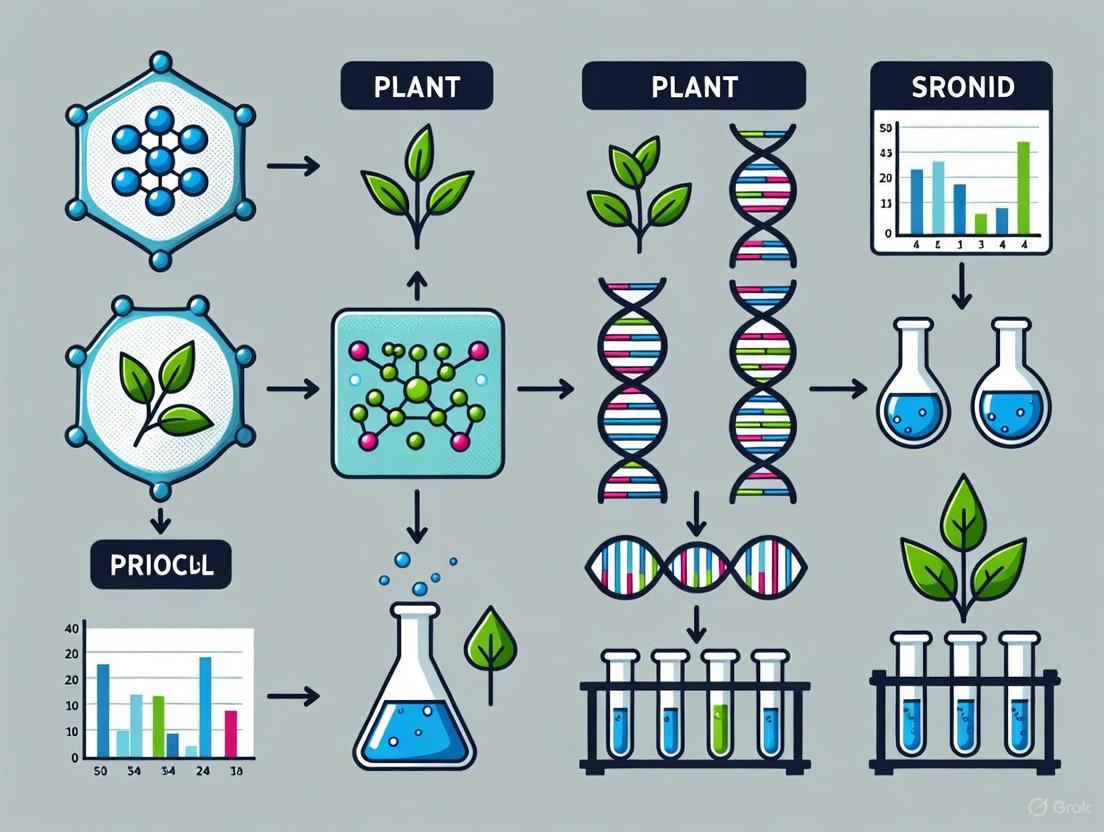
This article addresses the critical challenge of protocol variation in quantitative plant experiments, a key factor affecting the reproducibility and robustness of research findings in plant biology and related fields.
Navigating Protocol Variation in Quantitative Plant Experiments: A Guide to Robust and Reproducible Research
Abstract
This article addresses the critical challenge of protocol variation in quantitative plant experiments, a key factor affecting the reproducibility and robustness of research findings in plant biology and related fields. It explores the foundational principles of quantitative plant biology, from historical precedents to modern computational modeling. The content provides methodological guidance for high-throughput phenotyping and standardized procedures, offers troubleshooting strategies for common experimental variations, and discusses validation frameworks for comparing outcomes across studies. Aimed at researchers, scientists, and development professionals, this comprehensive resource synthesizes current best practices to enhance experimental reliability and facilitate knowledge transfer from basic plant research to applied biomedical contexts.
The Foundations of Quantitative Plant Biology: From Mendel to Modern Modeling
Frequently Asked Questions (FAQs)
Q1: What are the common reasons for not observing Mendel's expected 3:1 ratio in F2 offspring? Deviations from the expected 3:1 ratio can occur due to insufficient sample size, as Mendel himself used thousands of plants to establish this average [1]. Other factors include reduced viability or germination failure of certain genotypes, or the presence of non-Mendelian inheritance patterns like epistasis, which Mendel himself inferred in later bean experiments [2]. Ensuring pure-breeding parental lines (homozygous) and controlling cross-pollination are critical.
Q2: How can environmental variation be minimized in quantitative plant experiments? Environmental variation can be minimized by using controlled growth conditions, standardized protocols for growth substrate and watering, and employing experimental designs that account for spatial inhomogeneities [3]. This includes using randomized complete block designs (RCBD) or augmented designs, and monitoring microclimatic conditions with sensor networks to account for fluctuations [3] [4].
Q3: What strategies can be used to evaluate a large number of genotypes with limited seeds? Augmented experimental designs are highly efficient for this purpose. These designs involve replicating a limited number of check or control genotypes throughout the experiment, while a large number of new test genotypes are included only once. This allows for control of environmental variability across the field while maximizing the number of genotypes that can be evaluated with limited seed [4].
Q4: How is Mendel's work relevant to modern crop improvement? Mendel's principles form the basis for understanding the inheritance of quantitative traits. Modern techniques like QTL mapping and genome editing (e.g., CRISPR/Cas9) rely on the fundamental concepts of segregation and independent assortment to identify and engineer genes controlling complex traits such as yield and plant architecture [2] [5]. This allows for the precise manipulation of allelic variation to enhance crop performance [6].
Troubleshooting Guides
Issue: Unexpected Phenotypic Ratios in Progeny
| Possible Cause | Diagnostic Steps | Solution |
|---|---|---|
| Insufficient sample size | Calculate if the deviation from the expected ratio is statistically significant using a chi-square test. | Increase the number of plants in the crossing experiment to reduce sampling error [1]. |
| Impure parental lines (not true-breeding) | Self-cross parental plants for another generation; if traits are not uniform, the line is not homozygous. | Generate new, genetically pure parental lines through repeated self-fertilization and selection [1] [7]. |
| Accidental cross-pollination | Review physical isolation procedures during cultivation and crossing. | In plants like peas, ensure flowers are properly emasculated and bagged to prevent unwanted pollen transfer [7]. |
| Biological interactions (e.g., epistasis) | Perform test crosses to isolate the trait of interest. | Consult literature for known gene interactions; treat the interacting gene complex as a single locus in analysis [2]. |
Issue: High Phenotypic Variability Obscuring Genotypic Effects
| Possible Cause | Diagnostic Steps | Solution |
|---|---|---|
| Environmental micro-variation | Monitor and record environmental parameters (light, temperature, humidity) across the growth area. | Use a randomized block or augmented row-column experimental design to account for spatial trends [3] [4]. |
| Variation in seed quality or size | Measure seed size/weight and test germination rates before planting. | Use seeds from the same propagation batch; consider seed size as a covariate in data analysis [3]. |
| Unaccounted genotype-by-environment interaction (GEI) | Grow the same genotypes in multiple, distinct environments (e.g., different chambers or fields). | Characterize the stability of genotypes across environments; select for stable genotypes if the goal is broad adaptation [4]. |
Quantitative Data from Mendel's Experiments
| Characteristic | Dominant Phenotype (Count) | Recessive Phenotype (Count) | Ratio (Dominant:Recessive) |
|---|---|---|---|
| Seed Color | Yellow (6,022) | Green (2,001) | 3.01:1 |
| Seed Shape | Round (5,474) | Wrinkled (1,850) | 2.96:1 |
| Pod Color | Green (428) | Yellow (152) | 2.82:1 |
| Pod Shape | Inflated (882) | Constricted (299) | 2.95:1 |
| Flower Color | Violet (705) | White (224) | 3.15:1 |
| Flower Position | Axial (651) | Terminal (207) | 3.14:1 |
| Plant Height | Tall (787) | Dwarf (277) | 2.84:1 |
Table 2: Expected Genotypic and Phenotypic Ratios in Mendelian Crosses
| Cross Type | Parental Genotypes | F1 Genotype | F2 Genotypic Ratio | F2 Phenotypic Ratio |
|---|---|---|---|---|
| Monohybrid | AA x aa | Aa | 1 AA : 2 Aa : 1 aa | 3 Dominant : 1 Recessive [1] |
| Dihybrid | AABB x aabb | AaBb | 1 AABB : 2 AABb : 1 AAbb :2 AaBB : 4 AaBb : 2 Aabb :1 aaBB : 2 aaBb : 1 aabb | 9 AB : 3 Abb : 3 aaB : 1 aabb [1] |
Experimental Protocols
- Plant Material: Use true-breeding (homozygous) parental lines with contrasting traits.
- Selection: Identify young flower buds on the female parent plant where the petals are still closed.
- Emasculation: Gently open the petal sheath and carefully remove all anthers using fine forceps. This prevents self-pollination.
- Bagging: Cover the emasculated flower with a small bag to prevent contamination from foreign pollen.
- Pollination: After 24-48 hours, transfer pollen from the mature anthers of the male parent flower to the stigma of the emasculated female flower.
- Re-bagging: Label the cross and re-bag the flower to protect the developing pod.
- Seed Collection: Allow the pod to mature fully on the plant before harvesting the F1 seeds.
Protocol 2: Generating an F2 Population and Scoring Traits
- Plant F1 Seeds: Sow the F1 seeds obtained from the initial cross. All plants in this generation should display the dominant phenotype and are heterozygous (Aa) [7].
- Self-pollination: Allow the F1 plants to self-fertilize naturally or through controlled methods to produce the F2 generation.
- Plant F2 Population: Sow a sufficiently large population of F2 seeds (e.g., >200 plants) to ensure accurate ratio estimation [1].
- Data Collection: As the plants develop, carefully score each individual for the trait(s) of interest (e.g., seed shape, flower color). Classify them into clear, discrete categories.
- Statistical Analysis: Compare the observed counts of each phenotype to the expected Mendelian ratio using a statistical test like chi-square (χ²).
Visualized Workflows and Relationships
Mendel's Monohybrid Cross Workflow
From Genotype to Phenotype
The Scientist's Toolkit: Research Reagent Solutions
Table 3: Essential Materials for Mendelian Genetics Experiments
| Item | Function in Experiment |
|---|---|
| True-breeding Plant Lines | Serve as homozygous parental generations (P0) with consistent, predictable inheritance of traits [1] [7]. |
| Growth Chambers/Greenhouses | Provide controlled environmental conditions to minimize unwanted environmental variance (GxE) [3]. |
| Fine Forceps & Dissecting Scopes | Essential tools for precise emasculation and cross-pollination of plant flowers [7]. |
| Pollen Transfer Brushes | Used for applying pollen from the male parent to the stigma of the female parent during controlled crosses [1]. |
| Isolation Bags | Prevent accidental cross-pollination by wind or insects, ensuring the purity of the generated crosses [7]. |
| Molecular Markers | Modern tool for genotyping plants, allowing direct confirmation of homozygosity/heterozygosity without phenotyping [8] [6]. |
In quantitative plant experiments, protocol variation refers to any non-compliance or divergence from the approved study design and procedures. This variation can be unintentional or planned and is defined as "any change, divergence, or departure from the study design or procedures defined in the protocol" [9]. Understanding, managing, and minimizing these variations is crucial because they can significantly affect the completeness, accuracy, and reliability of study data [9] [10]. For plant researchers, controlling technical variance is paramount, as the biological variance in protein expression can only be accurately accessed if the technical variance of the quantification method is low in comparison [11] [12]. This guide provides troubleshooting and FAQs to help you identify, manage, and reduce protocol variation in your work.
FAQs: Common Questions on Protocol Variation
What is the difference between a protocol deviation and a protocol violation?
A protocol deviation is a broad term for any non-compliance with the approved protocol. Deviations may or may not affect a participant's eligibility or the data's integrity [10].
A significant or serious protocol deviation is a specific subset that increases the potential risk to participants or affects the integrity of the study data. The significance can increase with numerous deviations of the same nature [10]. The term "violation" is often used interchangeably with "significant deviation."
Why is protocol harmonization important in multi-laboratory plant studies?
Protocol harmonization—aligning experimental procedures across different laboratories—is critical for ensuring the replicability of results. A major multi-lab study found that harmonizing protocols across laboratories substantially reduced between-lab variability compared to each lab using its own local protocol [13]. This reduction in technical variance is essential for detecting true biological signals in collaborative plant science research.
How can I distinguish between biological and technical replicates to avoid pseudo-replication?
This is a common source of error in statistical analysis [14].
- Biological replicates are independent samples from different biological sources (e.g., different plants grown separately). They capture biological variation.
- Technical replicates are repeated measurements of the same sample (e.g., loading the same plant extract multiple times on a gel). They assess the measurement precision of your protocol.
Troubleshooting Tip: Using technical replicates as if they were biological replicates is called pseudo-replication and artificially inflates your sample size, leading to spurious statistical significance [14]. Always base your primary statistical tests on biological replicates.
What are the reporting requirements for a protocol deviation?
Requirements vary, but generally, the site investigator or designee must report deviations promptly. For example, one guideline requires reporting within ten working days of the site becoming aware of the issue [10]. The specific workflow for reporting and reviewing a deviation can be mapped as follows:
Troubleshooting Guide: Identifying and Resolving Common Issues
Problem: High Technical Variance Obscuring Biological Results
- Symptoms: Inconsistent quantitative results (e.g., from mass spectrometry or phenotyping), inability to replicate findings, high variability between experimental replicates.
- Possible Cause & Solution:
- Cause: Samples are being combined too late in the experimental workflow, leading to differential losses and handling errors.
- Solution: Implement a metabolic labelling technique (e.g., ¹⁵N labelling) that allows labelled and unlabelled plant tissues to be combined immediately at harvest. One study demonstrated that this early combination minimizes technical variance more effectively than methods where samples are processed separately and combined later [11] [12]. The core principle of this method is to introduce an internal standard at the very beginning of the workflow:
Problem: Low Reproducibility Between Labs
- Symptoms: The same experiment, when run in different laboratories or by different researchers, produces conflicting results.
- Possible Cause & Solution:
- Cause: Subtle differences in lab-specific protocols (e.g., watering regimes, light intensity, handling) introduce uncontrolled variation [13] [3].
- Solution: Harmonize the protocol across all participating labs. The multi-lab study on preclinical research showed that moving from local protocols to a fully harmonized protocol drastically reduced between-lab variability [13]. Furthermore, ensure detailed, step-by-step protocols are documented and shared.
Problem: Unaccounted Environmental Variation in High-Throughput Phenotyping
- Symptoms: Unexplained growth variability among plant replicates in a controlled environment, trends related to plant position in the growth chamber.
- Possible Cause & Solution:
- Cause: Microclimatic fluctuations (light, temperature, humidity) within growth chambers and greenhouses, even in controlled settings [3].
- Solution: Use a wireless sensor network (WSN) to continuously monitor environmental conditions at the level of individual plants. Incorporate this data into your experimental design with sufficient randomization and replication to account for spatial inhomogeneities [3].
Quantitative Data on Protocol Deviations and Variance
Understanding the scale and impact of protocol deviations is easier with benchmarking data. The following table summarizes findings from a large analysis of clinical trials, which illustrates the pervasive nature of protocol deviations [15].
Table 1: Benchmarking Protocol Deviation Incidence
| Protocol Phase | Mean Number of Deviations per Protocol | Percentage of Patients Affected |
|---|---|---|
| Phase II | 75 | ~33% |
| Phase III | 119 | ~33% |
| Disease Area | ||
| Oncology | Highest relative number | >40% |
Furthermore, a systematic study dissecting the sources of technical variance in quantitative proteomics provides a blueprint for evaluating your own workflows. The key finding was that the lowest technical variance was achieved when samples were combined at the tissue stage [12]. The variance components from a multi-lab animal study further highlight the impact of harmonization, as shown in the table below.
Table 2: Impact of Protocol Harmonization on Between-Lab Variance [13]
| Experimental Protocol | Variance Due to Between-Lab Differences | Variance Due to Drug-Treatment-by-Lab Interaction |
|---|---|---|
| Local Protocol (Non-Harmonized) | 33.19% | 25.23% |
| Harmonized Protocol (Standardized) | 18.67% | 7.57% |
The Scientist's Toolkit: Key Research Reagent Solutions
Selecting the right reagents and tools is fundamental to controlling protocol variation.
Table 3: Essential Research Reagents and Materials for Managing Protocol Variation
| Reagent / Material | Function in Managing Variation | Application Example |
|---|---|---|
| ¹⁵N Isotope Labeled Salts | Enables metabolic labelling for creating an internal standard. Allows samples to be combined at the start of the workflow, minimizing technical variance from sample processing. | Quantitative plant proteomics using ¹⁵N-enriched potassium nitrate as the sole nitrogen source in growth media [11] [12]. |
| Standardized Growth Media | Provides a uniform and controlled nutritional environment, reducing variability in plant growth and development between experiments and labs. | Using precisely defined media, such as Gamborg B5 or Murashige and Skoog, for plant callus cultures [12]. |
| Wireless Sensor Networks (WSN) | Monitors microclimatic conditions (light, temperature, humidity) in real-time, allowing researchers to account for environmental inhomogeneities in their experimental design and data analysis. | High-throughput phenotyping systems in greenhouses or phytochambers [3]. |
| Automated Image Analysis Software | Provides objective, high-throughput quantification of phenotypic traits from images, reducing observer bias and increasing reproducibility. | Software like IAP or PhenoPhyte for analyzing plant growth in HT phenotyping systems [3]. |
FAQs and Troubleshooting Guides
This section addresses common challenges researchers face when selecting and implementing computational models in quantitative plant experiments.
FAQ 1: How do I choose between a mechanistic model and a pattern/statistical model for my plant biology study?
Your choice should be guided by your research goal, the availability of prior knowledge on the system's mechanisms, and the amount of data you have.
- Solution: Use the following decision table to guide your experimental design.
| Criterion | Mechanistic Model | Pattern Model (e.g., Machine Learning) |
|---|---|---|
| Primary Goal | To understand underlying causal mechanisms and generate hypotheses [16]. | To predict outcomes based on patterns in data, without needing causal insight [16]. |
| Data Requirements | Can be calibrated and validated with relatively small datasets [16]. | Requires large amounts of data to train and validate [16]. |
| Handling Complexity | Difficult to accurately incorporate information from multiple space and time scales [16]. | Can tackle problems with multiple space and time scales effectively [16]. |
| Predictive Capability | Once validated, can predict system behavior under new, untested conditions (deductive capability) [16]. | Predictions are limited to patterns within the scope of the supplied data; cannot extrapolate to entirely new conditions (inductive capability) [16]. |
| Ideal Application | Modeling specific physiological processes like nutrient uptake or hormone signaling [16]. | High-throughput phenotyping analysis, image-based classification of plant health, and genomic selection [16] [17]. |
FAQ 2: My high-throughput phenotyping experiment is producing noisy data with high variability. How can I ensure my model is reliable?
Variation in automated plant cultivation and imaging systems can be introduced by environmental inhomogeneities [17].
- Troubleshooting Steps:
- Optimize Growth Protocols: Standardize and precisely document growth substrate, soil coverage, and watering regimes to minimize non-biological variation [17].
- Experimental Design: Use experimental designs that account for environmental gradients within growth chambers (e.g., randomized complete block designs) [17]. The use of an F-protected Least Significant Difference (LSD) test, where mean comparison tests are only conducted after a significant F-test in the ANOVA, is a more conservative and valid approach to identify true treatment effects [18].
- Validation: Correlate the variation observed in the high-throughput system with field data to ensure the results are biologically relevant [17].
FAQ 3: When comparing multiple treatment means, what is the most appropriate statistical method to avoid false positives?
Using pairwise comparison procedures indiscriminately to locate any chance difference greatly increases the probability of a Type I error (falsely declaring a significant difference) [18].
- Solution: Select a mean comparison procedure based on your experimental design.
- Pre-planned Comparisons (Contrasts): If your treatment structure suggests specific, meaningful comparisons (e.g., Treatment A vs. Control, Group X vs. Group Y), use planned t-tests or F-tests (contrasts). This approach does not require a significant overall F-test and provides more sensitive tests [18].
- Multiple Comparison Procedures: If you are exploring a large number of qualitative treatments (e.g., many different cultivars) with no pre-specified hypotheses, use a multiple comparison test like Tukey's Honestly Significant Difference (HSD), which is more conservative. The F-protected LSD is also appropriate here but should be used primarily to compare adjacent means in an ordered array [18].
- Trend Analysis: For quantitative treatments like fertilizer rates, trend analysis or regression techniques are more appropriate than multiple comparisons for examining functional relationships [18].
Experimental Protocols for Key Modeling Approaches
Protocol 1: Developing a Mechanistic Model (e.g., for Nutrient Uptake)
Objective: To create a mathematical model that represents the causal relationship between soil nutrient concentration and plant uptake based on known physio-chemical principles.
Methodology:
- Hypothesis Formulation: Define the causal mechanisms to be tested. For example, "Nutrient uptake is driven by a combination of diffusion and active transport across the root membrane."
- Model Construction: Translate the biological hypotheses into a system of mathematical equations (e.g., differential equations) that represent the rates of change for key variables [16].
- Parameter Calibration: Use a subset of experimental data to estimate the model's parameters (e.g., transport rates, binding constants).
- Model Validation: Test the model's predictions against a separate, independent dataset not used in calibration. The model is validated if its predictions are consistent with experimental observations [16].
Protocol 2: Implementing a Pattern Recognition Model (e.g., for Disease Prediction from Leaf Images)
Objective: To train a machine learning model to accurately classify plant health status from leaf images without specifying the underlying biological mechanisms.
Methodology:
- Data Acquisition & Curation: Collect a large, labeled dataset of leaf images (e.g., healthy, nutrient-deficient, diseased). Ensure consistent imaging protocols to minimize technical noise [17].
- Feature Extraction: Identify and quantify relevant features from the images. This can be manual (e.g., color histograms, texture) or automated (e.g., using deep learning convolutional layers).
- Model Training: Select a machine learning algorithm (e.g., Random Forest, Support Vector Machine, Neural Network) and "train" it on a portion of your data to learn the patterns that map image features to health status [16].
- Model Testing: Evaluate the trained model's performance on a held-out test set of data that it has never seen before, reporting metrics like accuracy, precision, and recall.
The Scientist's Toolkit: Research Reagent Solutions
| Essential Material / Resource | Function in Computational Modeling |
|---|---|
| R with Bioconductor [19] | An open-source software environment for the statistical analysis and comprehension of high-throughput genomic data. Essential for processing omics data for both mechanistic and pattern models. |
| High-Throughput Phenotyping System [17] | Automated plant cultivation and imaging systems that generate the large-scale, quantitative data on plant growth and performance required for training robust pattern recognition models. |
| Gene Ontology (GO) Resource [19] | A knowledgebase used to inform mechanistic models by providing structured, computable information on the functions of genes, such as those identified as important in a machine learning analysis. |
| The Arabidopsis Information Resource (TAIR) [19] | A curated database of genetic and molecular biology data for the model plant Arabidopsis thaliana. Serves as a key source of information for building and parameterizing mechanistic models. |
| Experimental Design & Data Analysis for Biologists [19] | Reference texts that provide the foundational statistical principles for designing valid experiments and analyzing the resulting data, which is critical for generating high-quality data for any model. |
A Synergistic Workflow: Integrating Both Paradigms
The most powerful approach often combines the strengths of both modeling paradigms. A common synergistic workflow is outlined below.
FAQs: Core Concepts and Definitions
What is the difference between 'repeatability,' 'replicability,' and 'reproducibility'? In agricultural and plant research, these terms describe different levels of research confirmation. The definitions below are synthesized from common usage in the field, which can sometimes differ from other scientific disciplines [20].
- Repeatability: The ability of a single research group to obtain consistent results when an experiment or analysis is repeated under the same conditions, using the same methods and equipment. This is often assessed within a single study [20].
- Replicability: The ability of the same research team to obtain consistent results across multiple studies directed at the same question, often conducted in different environments (e.g., multiple seasons or locations). This involves collecting new data using the same methods [20].
- Reproducibility: The ability of an independent research team to obtain consistent results using its own methods and data. This can involve a new field experiment with different conditions or using different models to confirm prior findings. It is the strongest form of external validation [20].
Why is there a "reproducibility crisis" in science, and how does it affect plant research? The term "replication crisis" originated in psychology in the early 2010s and has since been recognized in fields like biology, medicine, and economics [21]. It refers to widespread difficulties in independently replicating or reproducing published scientific findings. In plant science, this is driven by several factors:
- Pressure to Publish: "Publish or perish" culture can lead to cutting corners and reduced internal confirmation before publication [20].
- Questionable Research Practices: This includes flexible data analysis ("p-hacking"), formulating hypotheses after results are known ("HARKing"), and selective publication of only positive results ("publication bias") [20].
- Inadequate Experimental Design: Low statistical power, insufficient replication, and incomplete documentation of protocols and environmental conditions [3] [20].
- Complexity of Systems: Plant research involves complex interactions between genetics, environment, and management, making it inherently variable and difficult to reproduce perfectly [3].
How can I determine if my experimental results are robust and reproducible? Robustness is increased by integrating key principles into your experimental design from the start [22].
- Replication: Repeating treatments on multiple experimental units (e.g., plots) to increase the accuracy of your results and measure consistency [22].
- Randomization: Randomly assigning treatments to experimental units to avoid unintentional bias. For example, randomizing which hybrid is planted in which field ensures that soil effects are left to chance [22].
- Design Control: Using techniques like "blocking" to group experimental units into homogenous sets (blocks). This helps account for underlying heterogeneity (e.g., a fertility gradient across a field) and reduces unwanted error variation [22].
Troubleshooting Guide: Common Experimental Pitfalls and Solutions
Problem: Inconsistent Results Between Field Trials
Symptoms: A treatment shows a significant effect in one growing season or location but fails to do so in another.
Potential Causes and Solutions:
Cause 1: Unaccounted Environmental Variation Plant phenotype (Pt) is a function of initial field conditions (Ft=0), genetics (G), environment (Et), and management (Mt) [20]. Natural variation in Et (weather, soil micro-variability) is often the largest source of inconsistency.
- Solution:
- Monitor Microclimate: Use wireless sensor networks to continuously track temperature, humidity, light intensity, and soil conditions within your experiment area [3].
- Characterize Soils: Document soil properties (texture, pH, organic matter) at the beginning of the experiment (Ft=0) [20].
- Report Fully: Use standardized vocabularies like the ICASA standards to thoroughly document Et and Mt in your methods section [20].
- Solution:
Cause 2: Inadequate Replication and Randomization
- Solution:
- Increase Replication: More replicates increase precision and allow for a better measure of repeatability. Ensure your replication is sufficient to detect the effect size you expect [22].
- Randomize Rigorously: Use a randomized complete block design (RCBD) or similar to control for spatial variation. Blocking treatments within homogenous areas of the field accounts for soil heterogeneity [22].
- Solution:
Problem: Inability to Reproduce a Published Study
Symptoms: You cannot achieve results comparable to a previously published study, even when following the described methods.
Potential Causes and Solutions:
Cause 1: Incomplete Methodological Documentation Published methods often lack critical details on plant cultivation, measurement protocols, or data analysis [3] [21].
- Solution:
- Contact the Authors: Request detailed protocols directly.
- Use Protocol Repositories: For your own work, publish detailed protocols on platforms like
protocols.io, which can be assigned a DOI for permanent, citable access [20]. - Share Code and Data: Ensure computational reproducibility by publishing analysis scripts and raw data where possible.
- Solution:
Cause 2: Uncontrolled Parental and Seed History The phenotype is influenced by the genotype (G), environment (E), and the phenotype (vitality) of its parents (GxExP). Seed size, quality, and the environmental conditions of the parental generation can add variability [3].
- Solution:
- Use Simultaneously Propagated Seed: For a given experiment series, use seed material that was produced in the same parental generation under uniform conditions [3].
- Measure and Account for Seed Size: Record seed size and consider it as a covariate in your statistical analysis to adjust for its effect on early growth [3].
- Solution:
Quantitative Data on Reproducibility
The table below summarizes quantitative findings related to reproducibility and replication efforts in scientific research.
| Metric | Field / Context | Value | Source / Context |
|---|---|---|---|
| Replication Rate | Psychology | 58% of registered reports are replication studies [21] | |
| Publication Rate of Replications | Psychology | Only ~3% of published papers are replications [21] | |
| Publication Rate of Replications | Education | Less than 1% of published papers are replications [21] | |
| Publication Rate of Replications | Marketing | 1.2% of published papers are replications [21] |
Experimental Protocols for Enhancing Reproducibility
Protocol 1: Standardized Documentation for Field Experiments
Adopting a standardized framework is crucial for ensuring that your experiments can be understood, replicated, and reproduced by others. The following workflow outlines the key information to document at each stage of a plant science experiment [3] [20].
Detailed Procedures:
Document Initial Field Conditions (Ft=0) [20]:
- Soil Analysis: Test for pH, texture, organic matter, and key nutrient levels at the start of the experiment.
- Site History: Record previous crops, amendments, and any treatments applied to the area.
Standardize Plant Genetics (G) and History [3]:
- Use seeds from a single, well-documented propagation cycle.
- Record seed size and quality metrics. If possible, use seeds that have been quality-tested (e.g., for germination rate).
Precisely Define Management Practices (Mt) [20]:
- Document all activities: sowing date and depth, fertilization (product, rate, date), irrigation (volumes, timing, method), and pest control.
- Adhere to the ICASA data standards for a consistent vocabulary when reporting these practices.
Monitor Environment (Et) Continuously [3] [20]:
- Deploy sensors for light intensity, air temperature, humidity, and soil moisture.
- Note that environmental gradients exist even in controlled growth chambers; sensor networks help quantify this variation.
Implement Robust Phenotyping (Pt) Protocols [3] [20]:
- Use automated, high-throughput phenotyping systems where available to reduce human error and increase throughput.
- Provide detailed measurement protocols. For yield, this includes the harvested plot area, handling of border rows, threshing methods, and moisture content determination.
Protocol 2: Utilizing Registered Reports for Replication Studies
A Registered Report is a publication format where the study plan is peer-reviewed and accepted before data is collected. This format is ideal for replication studies, as it removes the bias against publishing null or non-significant results [21].
Workflow:
Phase 1: Protocol Development
- Develop a detailed study plan including introduction, hypotheses, methods, and analysis plan.
- Submit the plan to a journal offering Registered Reports.
Phase 1: Peer Review
- Reviewers assess the importance of the research question and the rigor of the proposed methodology.
- If the plan is approved, the journal commits to publishing the final paper regardless of the outcome.
Phase 2: Data Collection & Analysis
- Conduct the experiment and analyze the data exactly as described in the approved plan.
- Any deviations from the pre-registered plan must be reported and justified.
Phase 2: Manuscript Completion
- Write the full manuscript, including results and discussion.
- The final manuscript is reviewed again to ensure it adheres to the pre-registered plan.
The Disease Triangle: A Framework for Diagnosing Plant Problems
A fundamental concept in plant pathology is the "Disease Triangle," which states that for an infectious disease to occur, three factors must be present simultaneously: a susceptible host, a virulent pathogen, and a favorable environment. You can use this model to diagnose issues and break the triangle to protect your plants [23].
Strategies for Intervention:
- Break the "Susceptible Host" Side: Choose disease-resistant plant varieties when available [23].
- Break the "Virulent Pathogen" Side: Practice good sanitation by removing diseased plant material and disinfecting tools to reduce pathogen levels [23].
- Break the "Favorable Environment" Side: Modify the environment to make it less hospitable to the pathogen. This can include improving air circulation via plant spacing, avoiding overhead watering, and ensuring proper soil drainage [23].
The Scientist's Toolkit: Essential Research Reagent Solutions
The following table details key materials and reagents used in modern quantitative plant experiments, particularly those focused on phenotyping and genetic analysis.
| Item Name | Function / Application | Key Considerations |
|---|---|---|
| High-Throughput Phenotyping Systems (e.g., LemnaTec Scanalyzer) [3] | Automated, non-invasive monitoring of plant growth and performance over time. Captures morphological and physiological data from large populations. | Systems can be "sensor-to-plant" or "plant-to-sensor." Critical to standardize growth protocols to maximize data reproducibility. |
| CRISPR/Cas9 Genome Editing Tools [5] | Used to create precise mutations in plant genomes, allowing researchers to engineer quantitative trait variation (e.g., in promoters to fine-tune gene expression). | Enables the generation of novel genetic diversity for crop improvement in a targeted manner, beyond relying on natural variation. |
| Wireless Sensor Networks (WSN) [3] | Continuous, spatially dense monitoring of environmental conditions (light, temperature, humidity, soil moisture) within experiments. | Essential for quantifying microclimatic fluctuations that contribute to phenotypic variation and are a major source of non-reproducibility. |
| ICASA/AgMIP Data Standards [20] | A standardized vocabulary and data architecture for documenting field experiments, including management practices, environmental data, and measurements. | Promotes data interoperability and ensures that experiments are described with sufficient detail for reproduction. |
| Automated Image Analysis Software (e.g., IAP, Rosette Tracker) [3] | Software pipelines that extract quantitative phenotypic traits (e.g., leaf area, plant height) from images captured by phenotyping systems. | Replaces subjective, manual scoring. The choice of software and its settings must be documented for analysis reproducibility. |
Foundational Concepts: Defining the Triad of Research Reliability
This section defines the core concepts of robustness, replicability, and reproducibility, which are fundamental to ensuring the reliability of scientific research in experimental biology. Precise terminology is critical, as these terms are often used inconsistently across disciplines [24].
What is the difference between replicability and reproducibility?
The terms "replicability" and "reproducibility" are frequently conflated, but making a distinction is crucial for diagnosing where issues in an experiment may lie [24]. The definitions below synthesize usage from computational, biological, and agricultural sciences to provide a clear framework.
- Replicability refers to the ability of a researcher to obtain consistent results when repeating a study using the original data, code, and computational methods [24]. It focuses on verifying the computational analysis of the same dataset. In some fields, this is termed "repeatability" or "computational reproducibility" [20].
- Reproducibility refers to the ability of an independent research team to obtain consistent results by conducting a new, independent study directed at the same scientific question [24] [20]. This involves collecting new data, often under different but related conditions (e.g., a new season, a new location, or with a slightly different model organism). A reproducible finding holds true beyond the narrow context of the original experiment.
What is robustness, and how does it differ from reproducibility?
Robustness is a related but distinct concept that describes how broadly a scientific conclusion holds true.
- Narrow Robustness: A result is narrowly robust if it can be confirmed by precisely replicating the original experiment. The effect is only observed when the experimental conditions are duplicated exactly [25].
- Broad Robustness: A result is broadly robust if it can be confirmed by performing different experiments that test the same underlying hypothesis under a range of different circumstances, with varying covariates and sources of noise [25]. Findings with broad robustness have greater explanatory power and are more likely to be fundamental.
Why are these concepts especially critical in quantitative plant experiments?
Research in plant science is particularly vulnerable to challenges in reproducibility and replicability due to the complex interaction of genotype (G), environment (E), and management (M), which collectively determine a plant's phenotype (P~t~). This can be expressed as: P~t~ = f(F~t=0~, G, E~t~, M~t~) + ε~t~ [20]
Where F~t=0~ represents initial field conditions and ε~t~ represents random error. The inherent variability in E~t~ (environment) across seasons and locations, combined with often incomplete reporting of M~t~ (management practices) and F~t=0~, makes independent confirmation of results a significant challenge [20].
Troubleshooting Guide: Ensuring Reliability in Your Experiments
Pre-Experiment Checklist
What are the most common sources of irreproducibility in plant biology?
| Category | Specific Issue | Preventive Action |
|---|---|---|
| Experimental Design | Inadequate sample size or replication [20] | Perform a priori power analysis; consult a statistician. |
| Unaccounted for environmental gradients [3] | Use randomized block designs; map and measure environmental inhomogeneities. | |
| Protocol Documentation | Vague or incomplete methods [20] | Use detailed, standardized protocols (e.g., on protocols.io); specify all reagents and equipment. |
| Uncontrolled parental plant and seed history [3] | Standardize seed propagation; record and account for seed size and quality. | |
| Data & Analysis | Flexibility in data analysis ("p-hacking") [20] | Pre-register analysis plans; blind researchers to treatment groups during data collection and initial analysis. |
| Selective reporting of results [24] | Report all experimental outcomes, including non-significant results. |
Frequently Asked Questions (FAQ)
Q: My lab cannot replicate a published study's findings. Where should I start troubleshooting? A: Begin by systematically checking for protocol variation. First, contact the corresponding author to request the original protocol, and ask specific questions about details often omitted from publications, such as the exact brand of growth substrate, the specific watering regime, and the precise settings for environmental chambers [3]. Second, scrutinize your own seed source and quality, as the physiological status of the parental plants can significantly affect offspring phenotype [3].
Q: We followed the protocol exactly, but our results are still inconsistent. What could be wrong? A: "Hidden variables" in your experimental environment are a likely culprit. Even in controlled growth chambers, microclimatic fluctuations occur. Implement a wireless sensor network (WSN) to continuously monitor light intensity, spectrum, temperature, humidity, and CO~2~ levels at the level of individual plants or plots [3]. This data can reveal environmental inhomogeneities that introduce variability and can be used as covariates in your statistical analysis to increase detection power.
Q: How can I design my experiment to maximize its broader robustness from the start? A: To ensure your findings are broadly robust, deliberately introduce controlled variation at the experimental design stage. This could include:
- Using multiple, genetically distinct lines of your model plant or crop.
- Repeating the experiment across more than one growing season or in multiple controlled-environment chambers with slightly different settings.
- Testing your hypothesis under a range of relevant abiotic stresses (e.g., mild drought, nutrient limitation) rather than only in optimal conditions [25]. A finding that holds across this variation is more likely to be fundamental.
Q: What is the minimum level of methodological detail required for my paper to be reproducible? A: A reproducible methods section must allow an independent researcher to recreate your study system precisely. For plant research, this requires detailed reporting on:
- Plant Material: Genus, species, cultivar/accession name, seed source, and propagation history [3].
- Growth Conditions: A full description of the growth environment, including media/substrate, pot size, temperature, photoperiod, light intensity and quality, watering regime, and fertilization schedule [3] [20].
- Experimental Setup: A detailed layout, including randomization and replication schemes.
- Data Collection: Precise descriptions of how and when each phenotypic trait was measured, including instrument make and model, software, and version.
Standardized Experimental Protocols for Reproducible Research
This section provides a detailed methodology, adapted from a multi-laboratory ring trial, for conducting reproducible plant-microbiome experiments [26] [27]. The use of such standardized protocols is critical for minimizing inter-laboratory variation.
Protocol: Reproducible Plant-Microbiome Interactions in EcoFAB 2.0
Background: This protocol uses a fabricated ecosystem (EcoFAB 2.0) and a defined synthetic microbial community (SynCom) to create a highly controlled and reproducible system for studying plant-microbiome interactions [26] [27].
Key Research Reagent Solutions
| Item | Function in the Experiment | Specific Example / Notes |
|---|---|---|
| EcoFAB 2.0 Device | A sterile, transparent growth chamber that allows for root imaging and controlled nutrient delivery [26] [27]. | Provides a standardized habitat. |
| Synthetic Community (SynCom) | A defined mixture of bacterial strains that reduces the complexity of natural microbiomes for mechanistic studies [26]. | Example: A 17-member SynCom for the grass Brachypodium distachyon available from a public biobank (DSMZ). |
| Model Plant | A well-characterized plant species with established genetic tools. | Brachypodium distachyon (model grass) or Arabidopsis thaliana. |
| Growth Chamber | Provides controlled environmental conditions (light, temperature, humidity). | Data loggers are essential to continuously monitor and record actual conditions [3]. |
Step-by-Step Workflow:
- Device Assembly & Plant Preparation: Assemble the sterile EcoFAB 2.0 devices. Dehusk and surface-sterilize Brachypodium distachyon seeds, then stratify them at 4°C for 3 days [26] [27].
- Germination: Germinate the sterilized seeds on agar plates for 3 days [26].
- Transfer to EcoFAB: Aseptically transfer the seedlings to the EcoFAB 2.0 device containing a defined growth medium. Allow plants to grow for an additional 4 days [26] [27].
- Sterility Check & Inoculation: Test the sterility of the system by incubating spent medium on LB agar plates. Inoculate the plants with the prepared SynCom (e.g., 1 x 10^5^ bacterial cells per plant). Maintain a set of axenic (non-inoculated) control plants [26].
- Growth & Maintenance: Grow plants under controlled conditions, refilling water as needed. Conduct root imaging at predetermined timepoints [26] [27].
- Harvest & Sampling: At the end of the experiment (e.g., 22 days after inoculation), harvest plant shoots and roots for biomass measurement. Collect root and media samples for downstream analyses such as 16S rRNA amplicon sequencing and metabolomics via LC-MS/MS [26].
Visual Guide to Experimental Workflow
Troubleshooting Common Issues:
- Problem: Microbial Contamination.
- Solution: Strictly adhere to surface sterilization protocols. Always include axenic controls and test for sterility by plating spent medium on nutrient-rich agar at multiple time points [26].
- Problem: High variability in plant growth phenotypes between replicates.
- Solution: Standardize seed size and quality, as these are major sources of variation. Control for the life cycle history of the parental generation. Use environmental sensor data to account for microclimatic fluctuations [3].
- Problem: Inconsistent microbiome assembly, especially in the absence of a dominant bacterial strain.
- Solution: As demonstrated in the ring trial, the final community structure can be highly variable without a strong dominant colonizer. Including a positive control community with a known dominant strain (e.g., SynCom17 with Paraburkholderia sp.) can help benchmark system performance [26].
Quantitative Data & Benchmarking
Table: Representative Data from a Multi-Laboratory Reproducibility Study [26]
This table summarizes key results from a ring trial conducted across five independent laboratories (A-E) using the standardized protocol above. It demonstrates the level of consistency that can be achieved for various data types.
| Data Type / Metric | Axenic Control (Mean ± SD) | SynCom16 Inoculated (Mean ± SD) | SynCom17 Inoculated (Mean ± SD) | Consistency Across Labs? |
|---|---|---|---|---|
| Shoot Fresh Weight (mg) | 25.5 ± 4.2 | 22.1 ± 3.8 | 18.3 ± 3.5 | Yes (Significant decrease with SynCom17) |
| Root Biomass (mg) | 12.8 ± 2.5 | 11.5 ± 2.1 | 9.1 ± 1.9 | Yes (Significant decrease with SynCom17) |
| Dominant Root Colonizer | N/A | Rhodococcus sp. (68% ± 33%) | Paraburkholderia sp. (98% ± 0.03%) | Yes (Highly consistent for SynCom17) |
| Sterility Test Failure Rate | <1% of all control tests | - | - | Yes (High sterility achieved) |
Implementing Standardized Protocols for High-Throughput Plant Phenotyping
Optimizing Experimental Design for High-Throughput Phenotyping Systems
Frequently Asked Questions (FAQs) and Troubleshooting Guides
Section 1: Experimental Design and Statistical Analysis
FAQ 1.1: What are the fundamental principles of experimental design I must follow in a high-throughput phenotyping (HTPP) experiment?
The fundamental principles of replication, randomization, and blocking are non-negotiable for generating reliable and reproducible data [17] [28].
- Replication: A replicate is a copy of a treatment applied to a different experimental unit. It helps estimate the inherent variability in your experiment, allowing you to determine if observed differences between treatments are genuine. The number of replicates needed depends on the expected variance and the size of the effect you wish to detect [28].
- Randomization: This is the process of randomly allocating treatments to experimental units (e.g., pots, field plots). It minimizes bias by ensuring that every treatment has an equal chance of being assigned to any unit. This accounts for unanticipated environmental gradients, such as subtle differences in light or temperature in a growth chamber [28].
- Blocking: This technique controls for known or anticipated variability. You group experimental units into blocks that are internally homogeneous. For example, in a greenhouse, a bench might be one block, and the treatments are randomized within it. This accounts for local variation, reducing the residual error and increasing the precision of your treatment comparisons [28].
FAQ 1.2: My phenotyping system produces massive amounts of image data. How do I ensure my data remains usable and valuable long-term?
Proper data management is critical to avoid "drowning" in the data generated by automated systems [29]. Adherence to the FAIR principles—Findable, Accessible, Interoperable, and Reusable—is recommended [30].
- Troubleshooting Guide:
- Problem: Data is stored in an ad-hoc manner on personal hard drives without consistent annotation.
- Solution: Implement a robust data management plan from the start. Use dedicated platforms (e.g., GnpIS, PIPPA) that support the MIAPPE (Minimal Information About a Plant Phenotyping Experiment) standard for describing your experiments [29] [30]. This ensures that all necessary metadata about the genotype, environment, and experimental design is captured, enabling data sharing and meta-analyses.
FAQ 1.3: After my ANOVA shows a significant treatment effect, how should I compare individual treatment means?
Using a protected Fisher's Least Significant Difference (LSD) test is a common approach. This means you only proceed with pairwise mean comparisons if the initial ANOVA F-test is significant [18].
- Troubleshooting Guide:
- Problem: Indiscriminately comparing all possible pairs of means without a significant F-test dramatically increases the probability of a Type I error (falsely declaring a significant difference).
- Solution: Use the F-protected LSD. The formula for the LSD is:
LSD = t * √(2 * Error Mean Square / r)where 't' is the critical t-value for your chosen significance level, 'Error Mean Square' comes from your ANOVA table, and 'r' is the number of replications [18]. For more complex treatment structures, consider using planned contrasts or a more conservative test like Tukey's HSD [18].
The table below summarizes key statistical tests for mean comparisons.
Table 1: Statistical Methods for Comparing Treatment Means in Phenotyping Experiments
| Method | Best Use Case | Key Consideration |
|---|---|---|
| F-protected LSD [18] | Planned comparisons of adjacent means or comparisons against a control after a significant ANOVA F-test. | Less conservative; using it for unplanned, multiple comparisons increases Type I error risk. |
| Tukey's HSD [18] | Unplanned, all-pairwise comparisons of several means. | More conservative than LSD, better controlling the family-wise error rate across all comparisons. |
| Planned Contrasts [18] | Testing specific, pre-defined hypotheses (e.g., "urea vs. nitrate sources"). | Does not require a significant overall F-test and provides more sensitive tests for specific questions. |
| Trend Analysis [18] | Analyzing the response to quantitative treatment levels (e.g., fertilizer rates, time series). | Fits a functional relationship (linear, quadratic) to describe the response curve. |
Section 2: Technical and Practical Challenges
FAQ 2.1: How reliable are the proxy traits (like "digital biomass" from images) that my HTPP system provides?
Proxy traits are useful for high-throughput screening but require rigorous calibration against ground-truth data [31].
- Troubleshooting Guide:
- Problem: Assuming a simple linear relationship between projected leaf area (from top-view images) and total plant biomass.
- Solution: Establish calibration curves by destructively harvesting a representative subset of plants throughout the experiment and across the full range of observed sizes. Research shows that the relationship between projected leaf area and total leaf area can be curvilinear, and neglecting this can lead to significant errors, even if the R² of a linear model appears high [31]. Furthermore, check if different genotypes or treatments require separate calibration curves.
FAQ 2.2: My plant size estimates from top-view images seem to fluctuate drastically throughout the day. Why?
This is a common issue caused by diurnal changes in plant physiology, specifically leaf movements like paraheliotropism [31].
- Troubleshooting Guide:
- Problem: Plant size estimates from top-view RGB images can deviate by more than 20% over a single day due to changes in leaf angle [31].
- Solution: Standardize the timing of your image acquisitions. Always capture images at the same time of day, preferably when leaf angles are most stable and consistent, to ensure data comparability across time points and treatments.
FAQ 2.3: What are the key factors to consider before investing in or using an HTPP system?
Acquiring and operating an HTPP system requires significant investment and expertise [31].
- Troubleshooting Guide:
- Problem: Underestimating the total cost of ownership and operational complexity.
- Solution: Carefully consider the following before proceeding:
- Financial and Time Investment: Account for costs beyond the initial hardware, including maintenance, software, data storage, and the specialized personnel required for operation and data analysis [31].
- Research Need: The system must be tailored to your specific research questions. A platform designed for a compromise between multiple research groups may not satisfy any single one effectively [31].
- Growth Conditions: Automated systems can impose constraints on plant handling and pot size, which may influence plant growth and the phenotype being measured [31].
The following diagram outlines the key decision points and workflow for optimizing an HTPP experiment.
Section 3: Data Management and Integration
FAQ 3.1: What is MIAPPE and why is it important for my research?
MIAPPE (Minimal Information About a Plant Phenotyping Experiment) is an emerging community standard for describing plant phenotyping experiments [29].
- Troubleshooting Guide:
- Problem: Inability to compare or integrate your phenotypic data with datasets from other research groups or public repositories.
- Solution: Adopt the MIAPPE standard to structure your metadata. This ensures that all critical information about the biological source, experimental design, and environmental conditions is captured in a consistent way, which is fundamental for data interoperability, sharing, and re-use [29] [30].
FAQ 3.2: How can I handle the integration of phenotypic data with other data types, like genomic information?
This requires a structured, ontology-driven approach to data annotation [29] [30].
- Troubleshooting Guide:
- Problem: Phenotypic data exists in isolated spreadsheets with inconsistent naming, making integration with genomic databases for genome-wide association studies (GWAS) difficult.
- Solution: Use controlled vocabularies and ontologies (e.g., Crop Ontology) to annotate your data uniquely and unambiguously. Data repositories like GnpIS are built on such models, enabling the integration and interoperability of phenotyping datasets with genotyping data, which is essential for bridging the genotype-to-phenotype gap [29] [30].
Table 2: Key Resources for High-Throughput Plant Phenotyping Experiments
| Resource Category | Specific Tool / Standard | Function and Explanation |
|---|---|---|
| Data Standards | MIAPPE [29] [30] | Provides a checklist of minimal metadata required to properly describe a phenotyping experiment, ensuring data is interpretable and reusable. |
| Ontologies | Crop Ontology [30] | Provides standardized, controlled terms for describing phenotypic traits and experimental conditions, enabling data integration across studies. |
| Data Repositories | GnpIS [29] [30] | An integrative information system for storing, sharing, and publishing plant phenotypic and genomic data in a FAIR manner. |
| Phenotyping Platforms | PlantCV [29], IAP [29] | Open-source image analysis software tools that allow users to extract phenotypic traits from image data. |
| Sensor Technologies | RGB Imaging [31] [32] | Used for measuring morphological traits like projected leaf area, plant architecture, and color. |
| Thermal Infrared Imaging [29] [32] | Measures canopy temperature as a proxy for stomatal conductance and plant water status. | |
| Chlorophyll Fluorescence Imaging [32] | Assesses the photosynthetic performance and efficiency of photosystem II. | |
| Hyperspectral Imaging [32] | Captects spectral reflectance across many wavelengths, providing information on plant biochemical composition. | |
| Statistical Methods | Protected LSD Test [18] | A statistical method for comparing treatment means after a significant result is found in the ANOVA. |
| Random Forests / LASSO [32] | Machine learning techniques used for classifying treatments (e.g., drought-stressed vs. control) and predicting complex harvest-related traits from high-dimensional phenotypic data. |
Troubleshooting Guide: Resolving Environmental Swings
Step 1: Validate Your Sensor Readings
- Action: Compare your primary sensor data with a certified, third-party handheld sensor.
- Purpose: Confirms the accuracy of your installed sensors and helps identify if a micro-climate around the sensor is causing erratic readings [33].
Step 2: Identify Patterns in Historical Data
- Action: Analyze historical data logs to correlate environmental swings with specific events.
- Common Patterns:
- Coupled decreases in humidity and temperature during intense HVAC cooling cycles.
- Swings occurring only during day-cycles due to higher heat and humidity loads from lighting.
- Increasing variation as a plant growth cycle progresses and the biological load increases [33].
Step 3: Audit Controlled Device Activity
- Action: Review activity logs for all devices controlling the environmental parameter in question.
- Devices to Investigate:
- For Temperature Swings: HVAC cooling and heating stages.
- For Humidity Swings: Dehumidifiers, humidifiers, and HVAC systems (as cooling also removes moisture) [33].
Step 4: Review and Optimize Control Logic
- Action: Examine the rule logic and setpoints for your control systems.
- Solution: Look for overlapping activation of opposing devices (e.g., a humidifier and dehumidifier running simultaneously). To resolve this, increase the deadband—the margin between the on/off setpoints—to prevent devices from working against each other and creating oscillations [33].
Step 5: Isolate Impactful Devices
- Action: Systematically remove or stage devices from the control sequence to determine their individual impact.
- Examples:
- Prevent secondary HVAC cooling stages from activating to see if rapid cooling causes swings.
- Stage dehumidifiers to run a few at a time instead of all at once to prevent over-dehumidification and overshooting the target range [33].
Frequently Asked Questions (FAQs)
Q1: My temperature and humidity readings are erratic. What is the first thing I should check? The first and most critical step is to validate your sensor readings with a certified reference sensor. This confirms whether the swings are real or a result of sensor drift or miscalibration [33] [34].
Q2: How can I prevent my humidifier and dehumidifier from fighting each other? This is typically caused by control logic that is too tight. Review your sequence of operations and implement a larger deadband between their activation setpoints. This creates a buffer zone that prevents both devices from being active in the same humidity range [33].
Q3: Why is it crucial to report detailed environmental conditions in my research? Careful measurement and reporting of environmental variables like light, temperature, and humidity are fundamental to the replicability and interpretability of plant science experiments. Inconsistent reporting hinders cross-disciplinary progress and can invalidate comparative analyses [35].
Q4: What are the most common causes of failure in an environmental chamber? Common failures include worn-out door seals, compromised insulation, failing sensors, and miscalibrated control systems. A structured maintenance plan is essential to prevent unreliable test results and unplanned downtime [36].
Q5: How often should I calibrate the humidity sensors in my growth chambers? While a common baseline is annual calibration, the ideal frequency depends on a risk assessment. Consider the sensor's historical stability, the criticality of your measurements, the operating environment's harshness, and any specific regulatory requirements (e.g., GMP, ISO) [34].
Maintenance and Calibration Schedules
Table 1: Quarterly Maintenance Tasks for Environmental Chambers
| Task | Purpose | Procedure |
|---|---|---|
| Compressor & Condenser Check | Maintains cooling efficiency and prevents overheating. | Measure refrigeration system pressures; clean condenser coils of dust and debris [36]. |
| Humidity System Inspection | Prevents blockages, corrosion, and microbial growth. | Check water filters; clear out drains and water trays [36]. |
| Electrical Systems Test | Ensures safe and reliable operation. | Test switches and verify amp draws on electrical components [36]. |
| Seal and Gasket Cleaning | Maintains chamber integrity and prevents leaks. | Clean door seals, gaskets, hinges, and air registers [36]. |
Table 2: Annual Maintenance and Calibration Tasks
| Task | Purpose | Standard/Procedure |
|---|---|---|
| Sensor Calibration | Ensures measurement accuracy and data integrity. | Calibrate all temperature and humidity sensors against NIST-traceable standards [36] [34]. |
| Performance Verification | Confirms the chamber meets its specified uniformity and ramp-rate specifications. | Assess performance across multiple setpoints and check ramp-rate capabilities [36]. |
| Mechanical Wear Assessment | Identifies and addresses wear before it causes failure. | Inspect lubrication points on bearings and other mechanical systems [36]. |
| Control System Update | Ensures operational stability and access to latest features. | Review and install firmware/software updates for digital control systems [36]. |
The Scientist's Toolkit: Essential Research Reagents & Materials
Table 3: Key Reagents and Materials for Environmental Management
| Item | Function | Application Notes |
|---|---|---|
| High-Accuracy Reference Hygrometer | Provides a traceable standard for calibrating in-situ humidity sensors. | Essential for validating primary sensor readings; should be calibrated to ISO/IEC 17025 standards [34]. |
| Chilled Mirror Dew Point Sensor | A highly accurate method for measuring absolute humidity (dew point). | Often used as a primary reference in professional calibration setups due to its fundamental measurement principle [34]. |
| IoT Environmental Sensors | Enable real-time, remote monitoring of conditions like temperature, humidity, and light. | Facilitates proactive management and data logging; integrates with control systems for automated responses [37]. |
| Saturated Salt Solutions | Create known, stable relative humidity levels in a sealed container. | Useful for basic verification of sensor function, though with higher uncertainty than professional calibration methods [34]. |
Experimental Protocol: Systematic Isolation of Environmental Drivers
Objective: To identify which controlled devices are the primary drivers of observed environmental variation.
Methodology:
- Baseline Establishment: With all control systems active, log environmental data (e.g., temperature, RH) for a full 24-hour cycle to establish the swing pattern [33].
- Device Isolation: One at a time, remove individual devices from the control sequence. For example:
- Disable stage 2 of HVAC cooling.
- Set dehumidifiers to run in a staggered sequence rather than simultaneously [33].
- Data Collection: For each isolated configuration, log environmental data for another full cycle, ensuring plant load and other conditions are comparable.
- Comparative Analysis: Overlay the data logs to visualize how the removal of each device alters the amplitude and frequency of the environmental swings. The device whose isolation most smoothes the oscillations is a primary driver.
Workflow Diagram: Troubleshooting Environmental Variation
Troubleshooting Common Experimental Protocols
FAQ: Seed Selection and Sourcing
Q: What strategies can I employ during seed selection to minimize experimental variability in my plant trials?
A: Minimizing variability begins with a strategic approach to seed selection. Key strategies include:
- Genetic Diversity: Do not rely on a single hybrid or variety. Planting a range of genotypes with diverse characteristics, such as different silking or pollination dates, spreads risk and ensures that a single stressor does not compromise your entire experiment [38].
- Data-Driven Selection: Base selections on replicated, unbiased performance data from university or third-party trials rather than marketing claims. Yield potential between hybrids of the same maturity can vary by 50–70 bushels per acre [39].
- Trait-Specific Selection: Match genetic traits to your specific experimental conditions. For drought-prone environments, select drought-tolerant hybrids, which have been shown to out-yield conventional hybrids by an average of 6 bushels per acre under water stress [39].
- Early Sourcing: Secure your seed early to ensure access to the most consistent and high-quality genetic material, as the best-performing varieties often become limited [40].
Q: How do I choose the right seed treatment for my controlled environment study?
A: The choice of seed treatment should be dictated by your experimental objectives and known biotic pressures.
- Robust Protection: Avoid bare-bones treatment packages. For studies involving early planting or in soils with known pathogen loads, a robust seed treatment with multiple modes of action is crucial to ward off subterranean insects and pathogens [38].
- Targeted Application: Upgrade from standard treatments when investigating specific diseases. For example, if your experimental system involves sudden death syndrome (SDS) in soybeans, a seed treatment with documented efficacy against SDS should be selected [38] [39].
- Control Considerations: Remember that treatments are an experimental variable. Ensure your design includes appropriate untreated controls to isolate the effect of the treatment from the intrinsic performance of the seed.
FAQ: Growth Substrate Formulation and Optimization
Q: What is a systematic, data-driven method for optimizing soilless substrate compositions?
A: Moving beyond empirical, trial-and-error methods is key to reproducibility. A practical framework is the Design–Build–Test–Learn (DBTL) cycle [41]:
- Design: Generate a wide range of substrate formulations by randomly varying the volume ratios of components (e.g., peat, vermiculite, perlite) within defined constraints.
- Build: Prepare the substrates and characterize their physical (e.g., porosity, water-holding capacity) and chemical properties.
- Test: Cultivate your model plant (e.g., garden lettuce, Arabidopsis) in the substrates under controlled conditions and collect phenotypic data.
- Learn: Use regression and machine learning models (e.g., random forest) to identify which substrate properties are key predictors of plant performance. This model then informs the next, refined Design phase for further optimization. This approach has been shown to significantly increase biomass and chlorophyll content in lettuce [41].
Q: Which non-destructive phenotyping techniques are most useful for monitoring plant responses to different substrates?
A: Imaging-based technologies are ideal for longitudinal studies as they allow repeated measurements on the same plant.
- Hyperspectral Imaging (HSI): This technique captures detailed spectral data across hundreds of wavelengths. Machine learning analysis can identify specific vegetative indices (e.g., NDVI705, mNDVI705, mSR705) that are highly responsive to changes in substrate formulation and serve as proxies for plant health and biomass [41].
- RGB Imaging: Standard color imaging can be used with automated phenotyping platforms to track growth dynamics, leaf area, and color changes non-destructively over time [41] [17].
Q: During substrate optimization, how should I handle watering and fertilization to isolate the substrate effect?
A: To accurately test the intrinsic properties of your substrates, the protocol must control for other variables.
- Fertilization: To isolate the nutrient contribution of the substrate components themselves, you may choose to irrigate with tap water only, applying no additional fertilizer during the trial period [41].
- Watering: The watering regime should be standardized. A common approach is to water daily to maintain substrate moisture near field capacity, using water with a known and consistent electrical conductivity (EC) and pH [41]. This ensures differences in plant growth are due to the substrate's water-holding and nutrient-providing capacity, not variation in water availability.
Experimental Protocols & Data Presentation
Protocol 1: Data-Driven Optimization of Soilless Substrates
This protocol outlines a reproducible method for formulating and testing growth substrates, adapted from a study on garden lettuce (Lactuca sativa L.) [41].
1. Experimental Design and Substrate Formulation
- Objective: To identify the optimal volume-based mixture of peat, vermiculite, and perlite for maximizing lettuce biomass.
- Formulation Space: Generate 100-200 substrate formulations using a randomized design where the volume percentage of each component is allowed to vary (e.g., 0-100% for each, within the constraint that the sum is 100%).
- Preparation: Calculate the mass of each component required to fill your standard pot volume. Mix components thoroughly to ensure homogeneity.
2. Growth Conditions and Plant Material
- Plant Model: Garden lettuce (e.g., Romaine-type 'Speedy Crisp No.1').
- Environment: Controlled climate chamber with set photoperiod (e.g., 16h light/8h dark), light intensity (~220 µmol·m⁻²·s⁻¹), temperature (e.g., 25/20°C day/night), and relative humidity (e.g., 85%).
- Cultivation: Sow seeds in plug trays and transplant seedlings at the two true-leaf stage into the experimental pots.
3. Data Collection and Analysis
- Destructive Measurements: After a set growth period (e.g., 4 weeks), harvest plants to measure shoot fresh weight, shoot dry weight, root dry weight, and chlorophyll content.
- Non-Destructive Phenotyping: Use hyperspectral (HSI) and RGB imaging weekly to track growth.
- Statistical Learning: Employ linear regression to identify relationships between component volume and physical properties (e.g., peat content reduces porosity). Use random forest or other machine learning models to identify key spectral indices predictive of biomass.
The workflow for this cyclic optimization process is detailed in the diagram below.
Protocol 2: Standardized Cultivation for High-Throughput Phenotyping
This protocol provides guidelines for establishing consistent plant growth conditions essential for generating reliable quantitative data in automated systems [17].
1. Pre-Experimental Setup
- Growth Substrate: Select a standardized, well-defined substrate (e.g., a specific soil-sand mixture or a commercial soilless mix). Ensure uniform filling of pots and consistent soil coverage.
- Experimental Design: Account for environmental inhomogeneities within growth chambers (e.g., light gradients, temperature fluctuations) by using randomized block designs and regularly rotating plant positions.
2. Cultivation and Monitoring
- Watering Regime: Implement a standardized, weight-based watering protocol to maintain consistent soil moisture levels across all plants and avoid drought or waterlogging stress.
- Validation: Confirm that the growth and physiological status of plants grown under these controlled conditions correspond to those observed in natural environments. Metabolite profiling can be used to verify that the plants' physiological status is not adversely affected by handling or movement within the system [17].
Table 1: Impact of Sequential Substrate Optimization on Lettuce Growth
Data generated from two rounds of a randomized substrate experiment, showing significant improvement in key growth metrics after data-driven optimization [41].
| Growth Metric | Initial Trial Performance | Optimized Trial Performance | Percent Increase | P-value |
|---|---|---|---|---|
| Shoot Biomass | Baseline | +57.5% | 57.5% | ( 9.2 \times 10^{-8} ) |
| Root Biomass | Baseline | +89.8% | 89.8% | ( 8.24 \times 10^{-10} ) |
| Chlorophyll Content | Baseline | +43.3% | 43.3% | ( < 2.0 \times 10^{-16} ) |
Table 2: Research Reagent Solutions for Substrate and Phenotyping Experiments
Essential materials and their functions for establishing reproducible cultivation and phenotyping assays [41] [17] [39].
| Reagent/Material | Specification/Function in Experiment |
|---|---|
| Peat Moss | Primary organic component of many substrates; influences water-holding capacity, porosity, and provides some nutrients. |
| Perlite & Vermiculite | Inorganic components used to adjust physical properties: aeration, drainage (perlite) and water retention (vermiculite). |
| Hyperspectral Imaging (HSI) System | Non-destructive tool for capturing detailed spectral data; used to calculate vegetation indices (e.g., NDVI705) as proxies for biomass and plant health. |
| Controlled Environment Chamber | Provides standardized, reproducible conditions for light, temperature, and humidity, critical for eliminating environmental noise. |
| Model Plant Seeds (Arabidopsis thaliana, Lactuca sativa L.) | Fast-growing species with short life cycles, ideal for high-throughput phenotypic screening of substrates or treatments. |
Diagnostic Guide: Systemic Workflow for Problem-Solving
The following diagnostic tree provides a logical pathway for investigating sub-optimal plant growth in standardized experiments, integrating principles from plant pathology and agronomy [42] [43].
High-Throughput Plant Phenotyping (HTPP) has emerged as a vital technological bridge, connecting plant genomics with agricultural performance by enabling the quantitative assessment of complex traits. As defined in recent research, plant phenotyping refers to "the determination of quantitative or qualitative values for morphological, physiological, biochemical, and performance-related properties, which act as observable proxies between gene(s) expression and environment" [44]. With the rapid growth of global population and increasing challenges in sustainable agriculture, image-based phenotyping has become indispensable for advancing crop breeding and precision agriculture [45].
These automated pipelines address the critical "phenotyping gap" that has historically limited plant research - the inability to precisely measure plant traits at scale despite major advances in genotyping technologies [3]. Modern phenotyping systems transform images into quantifiable data through integrated workflows encompassing image acquisition, preprocessing, analysis, and trait extraction. This technical support guide addresses common challenges researchers encounter when implementing these complex pipelines within controlled environments and field settings, with particular emphasis on standardizing protocols to minimize experimental variation.
Frequently Asked Questions (FAQs): Core Concepts
Q1: What are the fundamental differences between sensor-to-plant and plant-to-sensor phenotyping systems? Sensor-to-plant systems utilize mobile imaging sensors that move to capture data from stationary plants, ideal for larger specimens or fixed installations. Conversely, plant-to-sensor systems transport plants to stationary imaging stations, enabling highly standardized imaging conditions. Examples include the Phenopsis system for Arabidopsis (sensor-to-plant) versus conveyor-based systems like the LemnaTec Scanalyzer or PlantScreen systems (plant-to-sensor) [3]. The choice depends on experimental needs: sensor-to-plant suits larger plants or field applications, while plant-to-sensor offers better standardization for high-throughput controlled environment studies.
Q2: Which imaging sensors are most appropriate for different phenotyping applications? Selection depends on the traits of interest and experimental context:
- RGB (Visible Light) Cameras: Provide excellent spatial and temporal resolution at low cost for morphological assessment and vegetation indices [46].
- Hyperspectral/Multispectral Cameras: Capture data across numerous discrete spectral bands for assessing physiological traits like pigment content and water status [46].
- Thermal Cameras: Measure canopy temperature as a proxy for stomatal conductance and water stress [3].
- Depth/3D Cameras (ToF, Stereo Vision): Enable 3D reconstruction for structural trait extraction [44].
- Fluorescence Imaging: Captures photosynthetic efficiency and plant health parameters [3].
Q3: What are the key considerations for experimental design in HTPP? Reproducible HTPP experiments require careful design to minimize environmental variance:
- Parental History & Seed Quality: The phenotype results from genotype × environment × parental phenotype (G×E×P). Use simultaneously propagated seed material and account for seed size variation [3].
- Environmental Monitoring: Deploy wireless sensor networks to track microclimatic fluctuations (light, CO₂, humidity, temperature) within growth facilities [3].
- Randomization & Replication: Implement sufficient randomization and replication to account for chamber position effects and other environmental inhomogeneities [3].
- Standardized Protocols: Establish consistent procedures for growth substrate, watering regimes, and soil coverage to maximize reproducibility [3].
Q4: How do I choose between 2D and 3D phenotyping approaches? Traditional 2D imaging projects the 3D plant structure onto a 2D plane, losing depth information but being computationally efficient. 3D phenotyping methods better capture complex plant architecture but require more sophisticated acquisition and processing [44]. Select 3D approaches when measuring plant height, canopy volume, leaf orientation, or complex branching patterns. For high-throughput screening of simple traits like projected leaf area, 2D imaging may suffice.
Troubleshooting Guides
Image Acquisition Issues
Problem: Incomplete 3D Plant Reconstruction Symptoms: Missing plant organs, distorted structures, or incomplete canopy coverage in reconstructed models. Solutions:
- Multi-view acquisition: Capture images from multiple viewpoints (typically ≥6 angles) around the plant and register point clouds [44].
- Advanced registration: Implement a two-phase alignment workflow: initial coarse alignment using marker-based Self-Registration (SR) followed by fine alignment with Iterative Closest Point (ICP) algorithm [44].
- Hybrid approach: For binocular stereo cameras, bypass integrated depth estimation and apply Structure from Motion (SfM) and Multi-View Stereo (MVS) to high-resolution RGB images to avoid distortion [44].
Problem: Inconsistent Image Quality Across Samples Symptoms: Varying illumination, focus issues, or positional inconsistencies compromising data comparability. Solutions:
- Standardized imaging chambers: Use controlled lighting environments with consistent intensity and spectrum.
- Reference standards: Include color calibration cards and spatial markers in each imaging session.
- Automated focusing: Implement automated focus routines rather than manual adjustments.
- Positioning systems: Utilize precise robotic positioning for both plants and sensors to maintain consistent distances and angles [3] [46].
Problem: Outdoor Imaging Challenges Symptoms: Effects of changing natural light, wind-induced plant movement, and weather conditions. Solutions:
- Multimodal fusion: Combine RGB with active sensing technologies like LiDAR that are less affected by ambient light [46].
- Weather protection: Employ protective housings with integrated lighting for consistent conditions.
- Temporal imaging: Capture images at consistent times of day to control for diurnal variation.
- Wind barriers: Use transparent windbreaks to minimize plant movement during capture.
Image Analysis Challenges
Problem: Accurate Organ Segmentation in Dense Canopies Symptoms: Failure to separate touching leaves or stems, leading to inaccurate trait measurements. Solutions:
- Multi-modal imaging: Combine RGB with depth information or fluorescence to improve separation [46].
- Deep learning approaches: Train instance segmentation models (e.g., Mask R-CNN) on annotated plant datasets rather than relying on traditional computer vision [47].
- Multi-view analysis: Leverage information from multiple viewpoints to resolve occlusions [44].
- Promptable models: Employ emerging foundation models that can be guided with textual prompts for specific segmentation tasks [45].
Problem: Handling Large Image Datasets Symptoms: Computational bottlenecks in processing, storage limitations, and management complexities. Solutions:
- Efficient preprocessing: Implement batch processing and parallel computing strategies.
- Data management plan: Establish protocols for immediate storage, computational resources, and long-term archiving early in the experimental design [47].
- Lossless compression: Use appropriate file formats (e.g., TIFF) without destructive compression during export from proprietary microscope formats [47].
- Cloud computing: Utilize scalable computational resources for intensive processing tasks.
Data Interpretation Problems
Problem: Translating Controlled Environment Results to Field Performance Symptoms: Strong trait performance in controlled conditions not correlating with field results. Solutions:
- Environmental elicitation: Design growth conditions that elicit plant performance characteristics corresponding to natural conditions [3].
- Multi-environment phenotyping: Implement complementary field and controlled environment studies.
- Trait validation: Select traits with known field relevance and validate correlations across environments.
- Digital twins: Use digital representations of field conditions in controlled environments to bridge this gap [45].
Technical Specifications and Comparison Tables
Table 1: Comparison of 3D Imaging Technologies for Plant Phenotyping
| Technology | Resolution | Key Advantages | Limitations | Best Applications |
|---|---|---|---|---|
| Binocular Stereo Vision | Medium to High | Lower cost, color information, portable | Affected by lighting, occlusion issues, requires high computation for matching | Canopy structure, growth monitoring, robotic guidance |
| Time-of-Flight (ToF) | Low to Medium | Fast capture, works in various lighting, compact | Lower resolution misses fine details, interference issues | Plant height, bulk volume, presence detection |
| LiDAR | Very High | High precision, large area coverage, works outdoors | High cost, complex data processing, limited by beam diameter | Field-scale phenotyping, architectural traits, biomass estimation |
| Structure from Motion (SfM) | High | High detail from low-cost equipment, flexible setup | Computationally intensive, requires multiple images, sensitive to movement | Detailed organ-level reconstruction, root imaging, research applications |
Table 2: Quantitative Performance of 3D Reconstruction Workflow for Two Ilex Species [44]
| Phenotypic Trait | Species | R² Value (vs. Manual) | RMSE | Measurement Method |
|---|---|---|---|---|
| Plant Height | Ilex verticillata | 0.97 | 0.84 cm | Automated from 3D model |
| Plant Height | Ilex salicina | 0.92 | 1.12 cm | Automated from 3D model |
| Crown Width | Ilex verticillata | 0.95 | 1.26 cm | Automated from 3D model |
| Crown Width | Ilex salicina | 0.93 | 1.41 cm | Automated from 3D model |
| Leaf Length | Ilex verticillata | 0.89 | 0.31 cm | Automated from 3D model |
| Leaf Width | Ilex verticillata | 0.72 | 0.28 cm | Automated from 3D model |
Experimental Protocols
High-Fidelity 3D Plant Reconstruction Protocol
This protocol outlines an integrated two-phase workflow for accurate 3D reconstruction of plants using stereo imaging and multi-view point cloud alignment, validated on Ilex species with R² values exceeding 0.92 for major structural traits [44].
Materials and Equipment:
- Binocular stereo camera (e.g., ZED 2 or ZED mini)
- Robotic positioning system with U-shaped rotating arm and lifting mechanism
- Calibration markers/spheres
- Workstation with SfM and MVS software capability
- Custom software for point cloud registration
Procedure:
- System Setup and Calibration
- Mount the stereo camera on the robotic positioning system
- Ensure vertical movement range covers entire plant height
- Place calibration markers in the scene for subsequent registration
- Verify lighting consistency across the imaging volume
Multi-view Image Acquisition
- Position plant specimen at the center of the imaging system
- Capture images from six viewpoints around the plant (0°, 60°, 120°, 180°, 240°, 300°)
- At each viewpoint, acquire images at multiple heights to cover entire plant structure
- For each position, capture both high-resolution RGB images and depth information
Single-View Point Cloud Generation
- Bypass the integrated depth estimation module of the stereo camera
- Apply Structure from Motion (SfM) to the captured high-resolution images
- Implement Multi-View Stereo (MVS) techniques to generate high-fidelity single-view point clouds
- This approach avoids distortion and drift common in direct depth estimation
Multi-View Point Cloud Registration
- Perform rapid coarse alignment using marker-based Self-Registration (SR) method
- Execute fine alignment with Iterative Closest Point (ICP) algorithm
- Merge point clouds from all six viewpoints into a complete plant model
- Apply noise reduction and hole-filling algorithms to improve model quality
Phenotypic Trait Extraction
- Calculate plant height from highest point to base
- Determine crown width through bounding box analysis
- Extract leaf dimensions via surface mesh analysis
- Export quantitative data for statistical analysis
Troubleshooting Notes:
- If point clouds show distortion, verify feature matching parameters in SfM
- For registration failures, increase marker size or quantity for better coarse alignment
- If fine details are missing, increase image resolution or add more viewpoints
Deep Learning Segmentation Protocol
Materials and Equipment:
- High-quality annotated plant image dataset
- Workstation with GPU acceleration
- Deep learning framework (e.g., TensorFlow, PyTorch)
- Image preprocessing pipeline
Procedure:
- Data Preparation
- Collect and annotate plant images with organ-level labels
- Apply data augmentation (rotation, scaling, brightness adjustment)
- Split dataset into training, validation, and test sets (typical ratio: 70/15/15)
Model Selection and Training
- Select appropriate architecture (e.g., U-Net, Mask R-CNN for instance segmentation)
- Initialize with pre-trained weights when available
- Train with appropriate loss function (e.g., Dice loss for segmentation)
- Monitor validation performance to avoid overfitting
Implementation and Inference
- Deploy trained model to new image data
- Apply appropriate preprocessing matching training conditions
- Execute inference and post-process results
- Extract quantitative traits from segmentation masks
Workflow Diagrams
Image-Based Phenotyping Workflow
3D Reconstruction Troubleshooting
The Scientist's Toolkit: Essential Research Reagents and Materials
Table 3: Key Research Reagent Solutions for Image-Based Phenotyping
| Item | Function | Application Notes | Example Products/Protocols |
|---|---|---|---|
| Standardized Growth Substrates | Provides consistent growing medium to minimize environmental variation | Critical for reproducible root imaging; affects water retention and nutrient availability | Specific soil mixtures, agar formulations, hydroponic solutions |
| Calibration Markers/Spheres | Enables accurate spatial registration and color calibration | Essential for multi-view 3D reconstruction; ensures measurement accuracy | Custom printed markers, color calibration cards, spatial reference objects |
| Wireless Sensor Networks (WSN) | Monitors microclimatic conditions within growth facilities | Tracks temperature, humidity, light intensity, and CO₂ gradients | Custom sensor arrays, commercial environmental monitoring systems |
| Image Analysis Software | Processes raw images into quantitative data | Ranges from traditional computer vision to deep learning approaches | IAP, PlantCV, PhenoPhyte, Root System Analyzer, custom deep learning pipelines |
| Robotic Positioning Systems | Automates plant or sensor movement for standardized imaging | Enables high-throughput data collection with minimal human intervention | LemnaTec Scanalyzer, PlantScreen, custom conveyor or gantry systems |
| Multi-modal Imaging Chambers | Provides controlled lighting and background for consistent image capture | Standardizes imaging conditions across time and between experiments | Custom built imaging cabins with integrated lighting and backdrop systems |
| Data Management Platforms | Handles storage, processing, and analysis of large image datasets | Critical for maintaining data integrity and enabling collaboration | Custom database solutions, cloud storage platforms, high-performance computing resources |
FAIR Principles Troubleshooting FAQs
Q1: My data is in a public repository but colleagues still can't find or reuse it effectively. What is the core "Findability" issue?
A: The most common cause is inadequate metadata. For data to be truly findable, it must be described with rich, standardized metadata and assigned a persistent identifier. Ensure you are using a domain-specific metadata standard (like MIAPPE for plant phenotyping) and that your dataset has a Globally Unique and Persistent Identifier (PID), such as a DOI or accession number, registered in a searchable resource [48].
Q2: I am getting errors about "protocol variation" affecting data integration. Which FAIR principle does this relate to and how can I resolve it?
A: This is an Interoperability challenge. Data from different experiments or platforms must be able to work together. To resolve this:
- Use Standardized Vocabularies: Annotate your data using community-accepted ontologies (e.g., the Crop Ontology) [30].
- Adopt Common Standards: Follow structured reporting standards like MIAPPE (Minimum Information About a Plant Phenotyping Experiment) to ensure all necessary contextual information is captured consistently [30].
- Utilize APIs: Implement standardized data exchange interfaces, such as the Breeding API (BrAPI), which is specifically designed for plant phenotyping data and helps overcome protocol variation [30].
Q3: How can I ensure my data remains usable in the long term, beyond my immediate project?
A: This is the goal of the Reusability principle. To achieve this, your data must be well-described with its context and licensing.
- Provide Clear Provenance: Document the origin and processing history of your data (the "who, what, when, and how").
- Assign an Explicit License: Apply a clear usage license (e.g., Creative Commons) to define how others can legally reuse your data [48].
- Meet Community Standards: Ensure your data and its annotations adhere to the field's best practices and data quality standards.
Essential Research Reagent Solutions
The following table details key resources for managing plant phenotypic data according to FAIR and MIAPPE standards.
| Resource Name | Function / Application |
|---|---|
| Crop Ontology | Provides standardized, controlled vocabularies for describing plant traits, diseases, and breeding data, which is essential for data interoperability [30]. |
| MIAPPE Checklist | A formal specification defining the minimum information required to fully describe a plant phenotyping experiment, ensuring consistency and reusability [30]. |
| Breeding API (BrAPI) | A standardized RESTful API that enables efficient and interoperable data exchange between phenotypic databases, field hardware, and breeding applications [30]. |
| GnpIS | A data repository and information system for plant phenomics that provides a practical implementation framework for storing and querying data using FAIR principles [30]. |
| Persistent Identifier (PID) | A long-lasting reference to a digital object (e.g., a dataset), such as a DOI (Digital Object Identifier), which is critical for data findability and citability [48] [30]. |
FAIR Data Implementation Workflow
The diagram below outlines the key steps for making plant phenotyping data FAIR-compliant.
MIAPPE-Compliant Experimental Protocol for Quantitative Plant Phenotyping
Objective: To ensure the collection of high-quality, reproducible, and interoperable phenotypic data from a multi-environment plant trial, minimizing protocol variation.
1. Experimental Design and Setup
- Design Type: Use a randomized complete block design (RCBD) with a sufficient number of replicates to account for environmental heterogeneity.
- Environmental Documentation: Record all relevant environmental factors. For field trials, this includes GPS coordinates, soil type and properties, historical weather data, and in-season climatic conditions. For controlled environments, document growth chamber/room settings (light intensity, photoperiod, temperature, humidity).
- Biological Material: Use the MIAPPE standard to describe the plant material. Essential descriptors include:
- Species and Genus: Standardized taxonomic name.
- Infraspecific Name: Cultivar, landrace, or accession name.
- Organism Source: Seed lot ID or germplasm repository identifier.
- Biosource Accession ID: A unique identifier from an international database (e.g., FAO WIEWS, EURISCO, or GRIN-Global).
2. Data Collection (Phenotyping)
- Trait Selection and Definition: Select traits relevant to the research question. For each trait, define it using a controlled term from the Crop Ontology (e.g.,
CO_321:0000555for "plant height") [30]. - Measurement Protocol Standardization: For each trait, document the exact measurement protocol to ensure consistency across different operators and locations. This includes:
- The specific instrument or tool used.
- The unit of measurement (e.g., cm, g, mmol/m²/s).
- The precise developmental stage of the plant when measured (using a standard scale like BBCH).
- The number of plants/organs measured per replicate.
3. Data Curation and Publication
- Data Validation: Perform quality checks on the raw data to identify and correct obvious errors or outliers.
- Data Transformation: If necessary, document any data processing or transformation steps applied (e.g., normalization, calculation of derived traits).
- Metadata Compilation: Compile all experimental metadata according to the MIAPPE checklist. This creates a comprehensive "data passport."
- Data Submission: Submit the validated data and its complete metadata to a FAIR-compliant repository like GnpIS [30]. The repository will ensure the data is accessible and provide a persistent identifier for citation.
FAIRification Process Diagram
This diagram visualizes the pathway from raw data to FAIR-compliant, reusable knowledge.
Troubleshooting Protocol Variations: Case Studies and Solutions
Frequently Asked Questions (FAQs)
1. What is the primary purpose of a split-root assay? A split-root assay is used to distinguish between local and systemic plant responses to various environmental factors. By dividing a single plant's root system into two or more separate compartments that can be differentially treated, researchers can study how a local stimulus in one root section triggers signals that affect the whole plant, without direct exposure of the entire root system to the treatment. This is crucial for research on nutrient foraging, symbiosis with microbes, and responses to abiotic stresses like drought [49] [50] [51].
2. My Arabidopsis plants are struggling to recover after root splitting. What can I do? Your issue likely relates to the de-rooting technique and the plant's developmental stage. Research shows that a partial de-rooting (PDR) method, where the cut is made approximately half a centimeter below the shoot-to-root junction, is significantly less stressful for Arabidopsis seedlings than total de-rooting (TDR). PDR results in a shorter recovery time, a higher survival rate, and a final rosette area much closer to that of uncut plants. Ensure the procedure is performed on younger plants, as delaying past 10 days after sowing can sharply decrease final leaf area and extend recovery time [49].
3. Why can't I replicate published split-root results in my lab? Replicability and robustness in split-root assays can be hindered by extensive variation in experimental protocols. Key variables that differ across studies and can affect outcomes include: the concentration of nutrients (e.g., nitrate), light intensity, photoperiod, sucrose concentration in the media, and the duration of growth and recovery periods. To enhance robustness, meticulously document and compare all aspects of your protocol against the original study, and consider running a small pilot test to identify critical deviations [50].
4. How can I apply a water-soluble treatment to a plant under drought stress without rehydrating it? A split-root system offers a solution. Grow the plant in a setup where both halves of the root system are water-deprived. Apply the required water-soluble compound to only one half of the root system. Once the compound has been absorbed, you can sever that specific root section from the main plant. This method minimizes the rehydration effect while allowing the compound to be taken up, thereby maintaining the drought stress conditions [49].
5. Which split-root method is best for studying tree species like loblolly pine? For loblolly pine and similar species, a hydroponics-based protocol is effective. One month after seed germination, the primary root tip is severed. The seedlings are then grown in hydroponic conditions for about two months to encourage sufficient elongation of lateral roots. These lateral roots can then be divided into separate compartments for inoculation with ectomycorrhizal fungi or other treatments. This method successfully establishes a split-root system suitable for studying systemic responses in trees [52].
Troubleshooting Guide
Symptom 1: Poor Plant Survival After Root Splitting
This is a common issue, particularly when working with small, model plants like Arabidopsis thaliana.
| Possible Cause | Recommended Solution |
|---|---|
| Excessive root removal | Adopt a partial de-rooting (PDR) technique instead of total de-rooting (TDR). Leaving a portion of the main root attached significantly reduces stress [49]. |
| Incorrect developmental stage | Perform the splitting procedure at the optimal time. For Arabidopsis, avoid de-rooting past 10 days after sowing, especially at the four-leaf stage, as it becomes difficult to maintain hypocotyl contact with the growth medium [49]. |
| Physical damage during handling | Use fine forceps and sharp, sterile tools. Ensure the hypocotyl remains in firm contact with the growth medium after the procedure to facilitate water and nutrient uptake [49]. |
Symptom 2: Inconsistent Systemic Signaling Phenomena
When expected phenotypes, like preferential nitrate foraging, are not consistently observed, protocol variations are often the culprit. The table below summarizes key protocol differences from seminal papers that could explain inconsistencies.
Table: Variations in Split-Root Protocols for Nitrate Foraging in Arabidopsis
| Publication | HN Concentration | LN Concentration | Days Before Cutting | Recovery Period | Sucrose in Media |
|---|---|---|---|---|---|
| Ruffel et al. (2011) | 5 mM KNO₃ | 5 mM KCl | 8-10 days | 8 days | 0.3% [50] |
| Remans et al. (2006) | 10 mM KNO₃ | 0.05 mM KNO₃ | 9 days | None | None [50] |
| Poitout et al. (2018) | 1 mM KNO₃ | 1 mM KCl | 10 days | 8 days | 0.3% [50] |
| Tabata et al. (2014) | 10 mM KNO₃ | 10 mM KCl | 7 days | 4 days | 0.5% [50] |
Solutions:
- Systematic Calibration: Do not assume all protocol parameters are interchangeable. If replicating a study, adhere as closely as possible to the original concentrations and timelines.
- Control Experiments: Always include control plants with homogeneous nutrient conditions (both sides high nitrate, HNHN; both sides low nitrate, LNLN) to validate that your assay can detect the systemic response (HNln > HNHN and LNhn < LNLN) [50].
- Document Rigorously: Report all methodological details in your own work, including seemingly minor ones like light intensity and nutrient sources, to aid future replicability [50].
Symptom 3: Contamination or Failed Symbiosis in Legume-Rhizobia Studies
When using split-root systems to study symbiotic interactions, cross-contamination or a lack of colonization can occur.
| Possible Cause | Recommended Solution |
|---|---|
| Cross-contamination between compartments | Use physical partitions that are impermeable to water and microbes. Validate the success of the separation by ensuring no fungal colonization occurs on the non-inoculated side of the root system [52]. |
| Root system imbalance | Ensure the split sections are of roughly equal size and developmental stage at the start of the differential treatment to avoid confounding effects due to root vigor [53] [51]. |
| Improper inoculant preparation | Use fresh, viable cultures of rhizobia or mycorrhizal fungi. For loblolly pine, protocols using Paxillus ammoniavirescens or Hebeloma cylindrosporum have been successfully validated [52]. |
The Scientist's Toolkit: Essential Research Reagents & Materials
Table: Key Materials for Split-Root Assays Across Different Plant Species
| Item | Function/Application | Example Plant Species |
|---|---|---|
| Agar Plates (0.8-1.5%) | Solid support for germinating seeds and initial root growth; allows for precise cutting. | Arabidopsis thaliana, Medicago truncatula [50] [53] |
| Hydroponic Systems | Promotes rapid lateral root elongation in species where a thick primary root is severed. | Loblolly Pine (Pinus taeda) [52] |
| Clone Collars (Foam Rubber) | Supports the plant at the base of the shoot, holding it in place while roots access liquid media in beakers. | Loblolly Pine (Pinus taeda) [52] |
| Vessels with Physical Partitions | Creates physically isolated root environments to apply differential treatments. Pots, PVC tubing, or divided agar plates can be used. | Soybean, Vetch, Ricinus communis [49] [53] [51] |
| MMN or YMG Agar Media | For culturing and maintaining ectomycorrhizal (ECM) fungal inoculants. | Used with Loblolly Pine and its ECM partners [52] |
| Sterilized SafeT-Sorb/Vermiculite | A soil-free, porous potting substrate that allows for easy root extraction and minimizes contamination. | Loblolly Pine (Pinus taeda) [52] |
Experimental Workflow and Systemic Signaling
The following diagram illustrates the general workflow for establishing a split-root system and the conceptual basis for studying systemic signals.
Diagram 1: Split-root assay workflow and signaling concept.
Key Methodological Protocols
Partial vs. Total De-rooting in Arabidopsis
- Objective: To establish a split-root system in young plants with minimal stress.
- Protocol:
- Partial De-rooting (PDR): For young Arabidopsis seedlings (e.g., 7-10 days after sowing), make a clean cut approximately 0.5 cm below the shoot-to-root junction, leaving part of the main root attached.
- Total De-rooting (TDR): Cut the root directly at the shoot-to-root junction.
- Key Findings: PDR plants show a significantly shorter recovery time, higher survival rates, and a final rosette area closer to uncut plants compared to TDR. Proteomic analysis confirms that PDR is a less stressful procedure [49].
Hydroponic Split-Root for Loblolly Pine
- Objective: Rapidly generate a split-root system in a tree species for studying ectomycorrhizal symbiosis.
- Protocol:
- Surface-sterilize seeds and germinate on agar for 3 weeks.
- Sever the primary root tip one month after germination.
- Transfer seedlings to a hydroponic system for two months to promote lateral root elongation.
- Divide the elongated lateral roots into two separated compartments (e.g., 250 ml beakers with sterile clone collars).
- Inoculate with ECM fungi like Paxillus ammoniavirescens in one or both compartments.
- Validation: Root dry biomass should be equal between separated non-inoculated roots. No ECM colonization should be detected on the non-inoculated side when only one side is treated, confirming the success of the physical separation [52].
Improved Split-Root for Medicago truncatula
- Objective: Create a simple, efficient, and reproducible split-root system for the model legume M. truncatula to study autoregulation of nodulation (AON).
- Protocol: This method improves on existing techniques by focusing on consistency and minimizing variables that affect nodulation (e.g., ethylene, light exposure on roots). It allows for the generation of a large number of replicates and has been used to demonstrate systemic suppression of nodulation in wild-type plants and its absence in AON-defective mutants [53].
Troubleshooting Guide: Resolving Common Experimental Variation Issues
Q1: Why do my GWAS results lack resolution for identifying causal variants?
Problem: Genome-Wide Association Studies often fail to pinpoint individual causal variants, instead identifying broad genomic regions with multiple linked variants.
Solution:
- Root Cause: GWAS suffers from limited resolution due to linkage disequilibrium, where variants are inherited together, making it difficult to distinguish causal from correlated variants [54].
- Resolution Steps:
- Increase sample size to improve statistical power for detecting rare variants
- Incorporate functional genomics data like chromatin accessibility or transcription factor binding maps to prioritize variants in functional regions [55]
- Use advanced mapping techniques like the MOA-seq approach that identified ~210,000 functional variants linked to cis-element occupancy in maize [55]
- Apply machine learning models that generalize across genomic contexts rather than analyzing each variant independently [54]
Prevention: Design studies with diverse panels (like the 25-maize hybrid pan-genome) to capture more variation and combine multiple functional assays [55].
Q2: How can I accurately predict variant effects in non-coding regulatory regions?
Problem: Most causal variants for important agronomic traits lie in regulatory regions, but predicting their effects is challenging.
Solution:
- Root Cause: Traditional methods struggle with regulatory variants because their effects depend on genomic context, tissue type, and environmental conditions [54].
- Resolution Steps:
- Utilize cistrome mapping to identify transcription factor binding sites genome-wide
- Apply MOA-seq technology that identified 327,029 TF-occupied loci in maize with higher resolution than ATAC-seq [55]
- Analyze haplotype-specific effects in F1 hybrids to isolate cis-regulatory variation from trans-effects [55]
- Validate with bQTL mapping - binding Quantitative Trait Loci that explain majority of heritable trait variation [55]
Prevention: Build comprehensive catalogs of regulatory elements for your species of interest, like the maize leaf pan-cistrome covering 2% of the hybrid genome [55].
Q3: What strategies work best for optimizing tissue culture media composition?
Problem: Traditional tissue culture media optimization is time-consuming and often relies on suboptimal formulations developed for different species.
Solution:
- Root Cause: Media formulations are frequently adapted from a few initial species rather than optimized for specific needs [56].
- Resolution Steps:
- Implement machine learning approaches to efficiently optimize macronutrients, micronutrients, amino acids, and vitamins [56]
- Follow structured workflow from experimental design to model training and validation
- Systematically test components rather than relying on ad-hoc modifications
- Use ML-driven precision to account for species-specific requirements [56]
Prevention: Adopt ML-mediated optimization as standard practice for developing species-specific media formulations [56].
Frequently Asked Questions: Protocol Parameter Optimization
Q4: What is the most critical parameter for successful genomic selection?
Critical Parameter: Regular updates of training populations with recent phenotypic and genotypic data [57].
Supporting Evidence: Simulation studies show prediction accuracy declines over generations, particularly for complex traits with many QTL. Bayesian methods perform better for traits controlled by fewer genes in early cycles, while BLUP is more robust for polygenic traits [57].
Implementation:
- Refresh 15-20% of training population each cycle
- Include top-performing candidates while maintaining diversity
- Balance genetic gain with preservation of genetic variance
Q5: Which parameters most significantly affect root architecture quantification?
Critical Parameters: Standardized imaging conditions and analysis pipelines [58].
Supporting Evidence: Root-VIS software enables comparison across genotypes by providing:
- Customized data analysis for root system architecture features
- Visual reconstruction capabilities from averaged data
- Integration with EZ-Rhizo or RSML data files [58]
Implementation:
- Use standardized tools like Root-VIS for cross-study comparisons
- Employ computational methods to reconstruct representative prototypes
- Apply consistent algorithms for filling missing information and calculating means [58]
Q6: How do I prioritize which genetic variants to target for precision breeding?
Critical Parameters: Functional annotation through cistrome mapping and bQTL effects [55].
Supporting Evidence: In maize, genetic variation at transcription factor binding sites explains ~72% of phenotypic heritability across 143 traits. MOA-seq identified 48,505 allele-specific MPs with significant deviation from expected 1:1 ratios in F1 hybrids [55].
Prioritization Framework:
- Identify bQTL - variants linked to haplotype-specific variation in TF binding
- Validate with AMPs - allele-specific MOA polymorphisms showing consistent bias
- Check conservation - 90% of AMP sites show same allelic bias in inbred parents and F1 hybrids [55]
Data Tables: Critical Parameter Specifications
Table 1: Quantitative Parameters for Genomic Selection Optimization
| Parameter | Optimal Range | Impact on Results | Evidence Source |
|---|---|---|---|
| Training population size | hundreds to thousands | Larger populations → greater genetic gains with clear objectives | [57] |
| Marker density | Low-density with imputation | Cost-effective alternative to high-density with comparable results | [57] |
| Breeding cycle duration | Rapid-cycling | Significantly increases genetic gains by shortening cycles | [57] |
| Genetic relationship | Targeted population optimization | Improves accuracy by optimizing genetic relationships | [57] |
| Training set update frequency | Regular updates | Critical regardless of genetic architecture to maintain accuracy | [57] |
Table 2: Variant Effect Prediction Method Comparison
| Method | Resolution | Advantages | Limitations | |
|---|---|---|---|---|
| GWAS/QTL mapping | Low (>100 kb) | Simple implementation, direct phenotype relationship | Confounded by LD, site-specific, cannot extrapolate | [54] |
| Sequence-based AI models | High (base-pair) | Generalizes across genomic contexts, unified model | Accuracy depends on training data, requires validation | [54] |
| MOA-seq/bQTL mapping | High (<100 bp) | Identifies functional cis-variation at scale, explains majority of heritability | Technically demanding, requires specialized analysis | [55] |
| Traditional conservation-based | Moderate | Useful for identifying impactful variants | Limited by related genomes, alignment difficulties | [54] |
Experimental Protocols for Parameter Validation
Protocol 1: MOA-seq for Identifying Functional cis-Variants
Purpose: Quantify haplotype-specific transcription factor binding sites at high resolution [55].
Materials:
- Nuclei from F1 hybrids and parental lines
- MNase enzyme for chromatin digestion
- High-throughput sequencing platform
- Dual-reference genome concatenations
Methodology:
- Sample Preparation: Isolate nuclei from target tissue (e.g., maize leaves)
- MNase Digestion: Treat with MNase to generate small chromatin fragments
- Library Construction: Prepare sequencing libraries from protected regions
- Dual-Reference Alignment: Map reads to concatenated hybrid genomes to avoid reference bias
- Footprint Calling: Identify TF footprints as regions significantly covered by MOA-seq reads
- AMP Identification: Detect allele-specific MPs with significant deviation from 1:1 expected ratio using binomial test (FDR 1%)
Critical Parameters:
- Biological replication (Pearson correlation >0.95 between replicates)
- FDR threshold of 5% for MOA peaks
- Validation with independent methods (e.g., ChIP-seq) [55]
Protocol 2: Machine Learning-Mediated Media Optimization
Purpose: Develop species-specific tissue culture media formulations efficiently [56].
Materials:
- Basal media components (macronutrients, micronutrients, amino acids, vitamins)
- Tissue culture facilities
- ML computational resources
Methodology:
- Experimental Design: Create systematic variation in media components
- Data Collection: Measure growth rates, organogenesis efficiency, and plantlet yield
- Model Training: Train ML algorithms on component-response relationships
- Validation: Test model predictions with experimental validation
- Optimization: Iteratively refine composition based on ML guidance
Critical Parameters:
- Comprehensive component testing
- Quantitative response metrics
- Validation of ML predictions [56]
Research Reagent Solutions
Table 3: Essential Research Reagents for Protocol Optimization
| Reagent/Resource | Function | Application Examples | |
|---|---|---|---|
| Root-VIS Software | Root system architecture analysis and visualization | Quantifying genotype-environment interactions in Arabidopsis root systems | [58] |
| MOA-seq Reagents | Genome-wide mapping of TF binding sites | Identifying functional cis-variants in maize leaf cistrome | [55] |
| Machine Learning Platforms | Media optimization and variant effect prediction | Developing species-specific tissue culture formulations | [56] |
| Pan-genome Resources | Comprehensive genetic variation catalogs | 25-maize hybrid panel for identifying AMPs | [55] |
| Bioconductor Tools | High-throughput genomic data analysis | R-based analysis of transcriptomic and epigenomic data | [19] |
Workflow Visualization
Diagram 1: Variant Effect Prediction Workflow
Diagram 2: Critical Parameter Optimization Pathway
Troubleshooting Guide: Common Experimental Challenges
Encountering unexpected results in your seed quality experiments? This guide helps diagnose and resolve common issues related to parental history and biological variation.
| Problem | Potential Causes | Recommended Solutions | Underlying Principles |
|---|---|---|---|
| Low Seed Germination | Reduced genetic diversity in parental population [59]. Old or improperly stored seeds [60]. | Test seed viability using tetrazolium or X-ray tests [61]. Source seeds from genetically diverse parental lines [59]. | Parental populations with lower genetic diversity produce seeds with significantly lower germination and emergence rates [59]. |
| High Phenotypic Variance | Uncontrolled environmental noise [62]. Undocumented variation in parental life-history traits (e.g., flowering time) [63]. | Increase replication and randomize experimental design. Record and covary parental traits like flowering time in statistical models [63]. | Life-history characteristics of parents, such as flowering time, can affect seed size/number trade-offs and offspring quality [63]. Stochastic noise pervades biology across scales [62]. |
| Unexpected Seed Size/Number Trade-offs | Genetic linkage or pleiotropy constraining independent trait selection [63]. Resource allocation conflicts influenced by parental life history [64]. | Conduct QTL analysis to determine if traits are controlled by overlapping genetic loci [63]. Ensure parental plants are grown with non-limiting resources to minimize allocation trade-offs [63]. | Seed size and number can be affected by a large number of mostly non-overlapping QTL, suggesting they can evolve independently, but trade-offs are context-dependent [63]. |
| Inconsistent Protocol Results | Unaccounted-for variation in parental growth conditions. Failure to use dechlorinated water for microbial treatments [65]. | Standardize parental growth environments. For bio-inoculants, use dechlorinated water to maintain beneficial microbe viability [65]. | Chlorine in tap water can kill beneficial microbes, reducing treatment effectiveness. Parental environment can create maternal effects on seed quality [65]. |
Frequently Asked Questions (FAQs) for Researchers
Q1: How does the genetic diversity of my parental plant population directly impact my experimental offspring?
Reduced genetic diversity in the parental population significantly decreases key seed quality parameters. Research on Lolium multiflorum has demonstrated that seeds derived from parents with lower diversity exhibit signantly lower rates of germination and seedling emergence from the soil compared to seeds from high-diversity populations [59]. This initial fitness reduction can affect subsequent generations by constraining the size and genetic diversity of the resulting experimental population, a critical factor in maintaining robust study systems.
Q2: What is the genetic basis of the trade-off between seed size and seed number, and how fixed is it?
The traditional trade-off is not as genetically constrained as once assumed. Using Arabidopsis MAGIC (Multiparent Advanced Generation Inter-Cross) lines, studies have found that seed size and seed number are largely affected by non-overlapping quantitative trait loci (QTLs) [63]. This indicates that these two traits can, in fact, evolve independently. While a significant phenotypic trade-off can be observed, its expression is highly dependent on life-history characteristics and often explains little of the overall variance. The allele that increases seed size at most identified QTLs was found to originate from the same natural accession, suggesting a history of directional selection and highlighting that seed size can be a valid target for genetic selection without a severe penalty on number [63].
Q3: How should I account for parental life-history traits in my experimental design?
Parental life-history traits, such as flowering time and plant architecture, should be treated as key covariates. For example, later-flowering plants are often larger and possess more resources to invest in reproduction, which can reduce the observable expression of trade-offs like that between seed size and number [63]. It is crucial to record these traits (e.g., flowering time, height, branch number) during the parental generation and include them as factors in your statistical models. This practice helps isolate the genetic effects of interest from confounding environmental and developmental influences.
Q4: What are the most critical parameters for a standardized seed quality assessment?
A robust seed quality assessment should integrate multiple measurements. The most comprehensive indicator is Pure Live Seed (PLS), which combines germination and purity data [61]. The table below outlines the core components of a standard assessment.
| Parameter | Description | Method & Importance |
|---|---|---|
| Germination Percentage | The percentage of seeds that germinate under optimum conditions. | Measured via germination tests; indicates viability and potential plant establishment [61]. |
| Seed Purity | The percentage, by weight, of the desired pure seeds in a sample. | Involves separating pure seeds from debris, other seeds, and inert matter [61]. |
| Pure Live Seed (PLS) | The combined percentage of germinable seed by weight. | Calculated as (Germination % × Purity %) / 100; critical for calculating accurate seeding rates [61]. |
| Seed Viability | The amount of live seed in a sample. | Estimated via tetrazolium staining (TZ test) or X-radiography; provides a rapid viability check [61]. |
Experimental Protocols for Robust Seed Analysis
Protocol 1: Quantifying Seed Size and Number Trade-offs
Objective: To accurately measure the relationship between seed size and seed number while accounting for parental life-history variation.
Materials:
- Recombinant inbred lines (e.g., MAGIC lines) or diverse genetic accessions.
- Controlled environment growth chambers.
- Digital camera mounted on a dissecting microscope.
- Image analysis software (e.g., ImageJ).
- Ultra-microbalance (e.g., Mettler UMT2).
Methodology:
- Parental Cultivation: Grow parental lines with sufficient replication (e.g., 3+ replicates per line) under controlled, non-limiting resource conditions to minimize environmentally induced trade-offs [63].
- Phenotypic Data Collection: Record life-history traits for each plant, including:
- Flowering time: Number of days from germination to first flower.
- Plant architecture: Inflorescence height and total number of branches at senescence [63].
- Seed Trait Measurement:
- At senescence, collect multiple fruits (e.g., the 6th to 10th fruit on the main stem).
- Seed Number: Dissect fruits and count all filled (non-aborted) seeds manually or from high-resolution images [63].
- Seed Size: Capture digital images of seeds and use software to measure the projected area (mm²). Alternatively, weigh batches of seeds on a microbalance to determine average seed weight (µg) [63].
- Statistical Analysis:
- Calculate broad-sense heritability (H²) for each trait.
- Use multiple linear regression to model seed size/number against the recorded life-history traits to determine their explanatory power [63].
- Perform QTL mapping to identify genetic loci controlling the variation in each trait.
Protocol 2: Assessing the Impact of Parental Genetic Diversity on Offspring Quality
Objective: To determine how the genetic diversity of a parental population influences the germination success and early fitness of the offspring generation.
Materials:
- Seeds from experimentally created populations with varying levels of genetic diversity (e.g., created by mixing accessions).
- Growth medium (soil or agar).
- Controlled environment growth space.
- Data logging system.
Methodology:
- Parental Population Establishment: Create experimental parental populations that vary independently in size and genetic diversity [59].
- Seed Harvest: Harvest seeds from these populations under standardized conditions.
- Germination and Emergence Assay:
- Sow a fixed number of seeds from each parental treatment.
- Monitor daily and record:
- Germination rate: The percentage of seeds that radicle emergence.
- Seedling emergence rate: The percentage of seeds that successfully emerge from the soil medium [59].
- Data Analysis:
- Compare germination and emergence rates across parental diversity treatments using analysis of variance (ANOVA).
- Track subsequent fitness components (e.g., flower production per planted seed) to assess long-term impacts [59].
Diagram 1: Factors influencing seed traits.
The Scientist's Toolkit: Research Reagent Solutions
| Item | Function & Application in Seed Research |
|---|---|
| MAGIC (Multiparent Advanced Generation Inter-Cross) Lines | A population derived from multiple parental accessions, providing high genetic diversity and recombination resolution for powerful QTL mapping of complex traits like seed size and number [63]. |
| Dechlorinated Water | Essential for preparing solutions involving beneficial microbes (e.g., soil inoculants). Chlorine in tap water can kill these microorganisms, compromising experiments on soil health and seed vigor [65]. |
| Image Analysis Software (e.g., ImageJ) | Used to quantify seed area (for size) and count seed number from digital images of dissected fruits, providing high-throughput, accurate phenotypic data [63]. |
| Tetrazolium (TZ) Test Solution | A biochemical stain used for rapid assessment of seed viability. It stains living tissues red, allowing differentiation between live and dead seeds without a full germination test [61]. |
| Ultra Microbalance | Critical for obtaining precise measurements of average seed weight, a key metric for seed size, by weighing batches of seeds at a microgram scale [63]. |
Core Concepts: Understanding Variability and Replication
In quantitative plant experiments, distinguishing between different types of variation and replication is fundamental to generating reliable, publishable data.
What is the difference between technical and biological replicates?
| Replicate Type | Definition | Purpose | Example in Plant Research |
|---|---|---|---|
| Biological Replicate [66] | Measurements from biologically distinct samples | Captures random biological variation; indicates if a result is generalizable [66]. | Independently grown and treated plants (e.g., different plants, different pots, different growth chambers). |
| Technical Replicate [66] | Repeated measurements of the same sample | Assesses the variability of the protocol or measurement technique itself [66]. | Loading the same extracted protein sample into multiple wells on an ELISA plate or running the same RNA sample on a qPCR chip in triplicate. |
What is the difference between variability and uncertainty?
| Concept | Definition | Can it be reduced? |
|---|---|---|
| Variability [67] | Inherent heterogeneity or diversity in data. A quantitative description of the range or spread of a set of values. | No, but it can be better characterized through more data collection [67]. |
| Uncertainty [67] | A lack of data or an incomplete understanding of the context of the assessment. | Yes, with more or better data [67]. |
Diagram 1: Sources of technical and biological variation in plant experiments.
Troubleshooting Common Technical Variation Issues
Issue 1: Inconsistent Instrument Readings
- Problem: My spectrophotometer gives different absorbance values for the same sample when measured on different days.
- Symptoms: High variability in technical replicates, inconsistent standard curve values, inability to reproduce previous results.
- Root Cause: Instrument drift, improper calibration, or environmental factors (e.g., temperature fluctuations) affecting performance.
- Solution:
- Perform a calibration check using known standards before each use.
- Implement a daily maintenance and calibration log to track instrument performance.
- Allow the instrument to warm up for the manufacturer-recommended time before use.
- Measure a quality control (QC) sample with each run to monitor inter-assay variability.
Issue 2: High Variability in Quantitative PCR (qPCR) Data
- Problem: High technical variation between replicate wells in a qPCR run, leading to unreliable Ct values.
- Symptoms: Large standard deviations or standard errors among technical replicates for the same cDNA sample.
- Root Cause: Pipetting errors, poor mixing of reagents, or bubbles in the reaction mix.
- Solution:
- Use a master mix for all reactions to ensure reagent consistency.
- Calibrate pipettes regularly and use proper pipetting technique.
- Centrifuge the plate briefly before running to eliminate bubbles and ensure all contents are at the bottom of the well.
- Validate pipetting accuracy and precision by performing gravimetric analysis.
Issue 3: Environmental Fluctuations in Growth Chambers
- Problem: Plant phenotypes (e.g., height, leaf size) are inconsistent between batches grown in the same growth chamber.
- Symptoms: Significant within-group variation that obscures treatment effects; poor statistical power.
- Root Cause: Gradients in light intensity, temperature, or humidity within the chamber; door-opening cycles; or incorrect sensor calibration.
- Solution:
- Map the chamber environment by placing data loggers in multiple locations to identify gradients.
- Rotate plant trays regularly according to a predefined schedule to randomize positional effects.
- Minimize door openings during critical light cycles.
- Schedule regular validation and calibration of all chamber sensors (light, temperature, humidity).
Frequently Asked Questions (FAQs)
Q1: How do I determine the correct number of biological replicates for my plant experiment?
The number of biological replicates required depends on the expected effect size and the inherent variability of your system. For initial experiments, a minimum of 5-8 independent biological replicates per treatment group is often recommended to achieve reasonable statistical power. A power analysis, using a pilot study to estimate variability, is the gold standard for determining the optimal sample size [68].
Q2: My data is highly variable. Should I increase technical or biological replicates?
Always prioritize biological replication. While technical replicates help you measure and reduce protocol-based noise, only biological replicates allow you to generalize your findings to the broader population [66] [14]. Increasing biological replicates directly addresses the core question of whether an experimental effect is reproducible across different individuals. Using technical replicates as if they were biological replicates is a serious statistical flaw known as pseudo-replication [14].
Q3: How should I present data variability in my figures: Standard Deviation (SD) or Standard Error (SE)?
Use Standard Deviation (SD) to describe the variability within your sample dataset. It shows the spread of your actual data points around the mean. Use Standard Error (SE) when you are making an inference about the population mean from your sample mean, typically in the context of confidence intervals [14]. For bar graphs that represent experimental data, the SD is often the more appropriate choice as it allows the reader to see the true variability in your measurements. Always state clearly in the figure legend whether error bars represent SD or SE [14].
Q4: What is the best way to randomize my plants to account for environmental variation?
A rigorous randomization strategy is crucial. Do not group all control plants together and all treated plants together on a single bench or chamber. Instead, assign each plant or pot a unique number and use a random number generator to assign them to positions across all available growth spaces. This ensures that subtle environmental gradients (light, temperature) affect all treatment groups equally. The diagram below illustrates a systematic randomization workflow.
Diagram 2: Workflow for randomizing plant positions to mitigate environmental variation.
The Scientist's Toolkit: Research Reagent Solutions
| Reagent / Material | Function in Addressing Technical Variation |
|---|---|
| Enzymatic Assay Kits (e.g., Antioxidants) | Standardized protocols and pre-mixed reagents reduce lot-to-lot variability and operator-induced error in common biochemical assays. |
| Certified Reference Materials (CRMs) | Provides a known quantity of an analyte (e.g., a plant hormone) for calibrating equipment and validating the accuracy of an entire analytical method. |
| DNA/RNA Quality Assessment Kits (e.g., Bioanalyzer) | Quantifies and qualifies nucleic acid integrity using standardized metrics (e.g., RIN), ensuring that input material quality does not confound downstream results. |
| Stable Isotope-Labeled Internal Standards | Added to samples before extraction in 'omics studies; they correct for losses during sample preparation and matrix effects in mass spectrometry. |
| Precision Calibration Standards (e.g., for pH meters, spectrophotometers) | Essential for daily instrument calibration to ensure that measurements are accurate and comparable across different time points and users. |
Frequently Asked Questions (FAQs)
FAQ 1: Why is protocol optimization critical in quantitative plant experiments? Detailed and standardized protocols are an essential prerequisite for conducting reproducible experiments. Optimization ensures that the phenotypic data you capture is reliable and accurately reflects genetic variation rather than environmental noise. This is especially crucial in high-throughput systems, where demands on experimental design and plant cultivation are much higher than in small-scale setups [3].
FAQ 2: How can I make my controlled environment experiments more relevant to field conditions? A key strategy is to design cultivation conditions that elicit plant performance characteristics corresponding to those under natural conditions. Furthermore, validating your results is critical. For instance, one study established that the variation of maize vegetative growth observed in a high-throughput phenotyping system matched well with the variation observed in the field, strengthening the relevance of the controlled protocol [3].
FAQ 3: What is the most common source of error in qPCR experiments, and how can it be avoided? A major source of error is the omission of proper optimization steps. Computational primer design often ignores sequence similarities between homologous genes, which can lead to non-specific amplification. A robust protocol involves stepwise optimization of primer sequences, annealing temperatures, and primer concentrations to achieve an amplification efficiency of 100% ± 5% and an R² ≥ 0.9999. This rigorous optimization is a prerequisite for reliable data analysis using methods like the 2−ΔΔCt method [69].
FAQ 4: How do I handle complex, multi-step protocols to ensure robustness? You should investigate the robustness of your outcomes to intentional, controlled variations in your protocol. For example, in split-root assays, different protocols can robustly observe the main phenomenon of preferential foraging. Documenting which aspects of a protocol are flexible and which are essential in your methods section greatly enhances the replicability and utility of your research for other labs [70].
FAQ 5: What is a systematic approach to troubleshooting faulty equipment or unexpected results? Effective troubleshooting is a skill built on simple principles. Key tips include:
- Avoid Haste: Take time to assess the situation before acting.
- Document Everything: Write down initial conditions and every change you make.
- Verify Assumptions: Doubt everything you are told and double-check even basic elements.
- Work Systematically: Start from one end of a system and work to the other, rather than jumping to the middle.
- Change One Thing at a Time: This is crucial for knowing which action resolved the issue [71].
Troubleshooting Guides
Issue 1: High Variability in High-Throughput Phenotyping Data
Problem: Measured phenotypic traits show high variation between biological replicates, making it difficult to distinguish genuine genetic effects.
Solutions:
- Control Parental Environment: Divergent environmental conditions affecting the parental lines can be reduced by using seed material that was propagated simultaneously for an experiment series [3].
- Account for Seed Size: The effect of seed size on growth can be accounted for by measuring seed size and using this value as a covariate to adjust results statistically [3].
- Monitor Microenvironments: Use wireless sensor networks to monitor microclimatic fluctuations (light, temperature, humidity) within your growth area. This data can be used in statistical models to account for environmental inhomogeneities [3].
- Optimize Growth Substrate and Watering: Systematically test and optimize the growth substrate, soil coverage, and watering regime for your specific plant species and high-throughput system [3].
Issue 2: Poor Efficiency or Specificity in qPCR
Problem: The qPCR reaction has low efficiency, non-specific amplification, or high variability between technical replicates.
Solutions:
- Design Primers Based on SNPs: For a gene of interest, identify all homologous sequences in the plant genome. Conduct a multiple sequence alignment and design primers that are sequence-specific by leveraging single-nucleotide polymorphisms (SNPs) to differentiate between homologs [69].
- Follow a Stepwise Optimization Protocol:
- Optimize Primer Sequences: Confirm specificity.
- Optimize Annealing Temperature: Use a temperature gradient.
- Optimize Primer Concentration: Test different concentrations.
- Validate cDNA Concentration Range: Perform a serial dilution of cDNA to create a standard curve [69].
- Define Success Criteria: The optimization is complete when the standard curve achieves an R² ≥ 0.9999 and a PCR efficiency (E) of 100 ± 5% [69]. The table below outlines the key validation criteria.
Table 1: Quantitative Validation Criteria for Optimized qPCR
| Parameter | Optimal Value | Measurement Purpose |
|---|---|---|
| Amplification Efficiency (E) | 100% ± 5% | Indicates the rate of PCR product doubling per cycle. |
| Correlation Coefficient (R²) | ≥ 0.9999 | Measures the linearity of the standard curve. |
| Slope (from standard curve) | -3.1 to -3.3 | Another representation of ideal (100%) efficiency. |
Issue 3: Low Signal or High Background in Chromatin Immunoprecipitation (ChIP)
Problem: The ChIP experiment yields a low amount of precipitated DNA or a high background signal from non-specific regions.
Solutions:
- Optimize Crosslinking: Too little crosslinking fails to preserve chromatin structure, while too much crosslinking hampers the immunoprecipitation. Use a time-course experiment to find the optimal crosslinking duration. A good indicator is that DNA can only be efficiently isolated from nuclei after a decrosslinking step [72].
- Validate Antibody Suitability: An antibody that works for Western blotting may not be suitable for ChIP. Use antibodies with a published track record for ChIP. Test the ChIP efficiency of your antibody across a range of chromatin input concentrations, as some antibodies are sensitive to inhibitors in the chromatin sample [72].
- Use Quantitative PCR (QPCR): Analyze your precipitates using QPCR instead of conventional PCR. Conventional PCR is non-linear and does not allow for careful quantification, which is crucial for a correct interpretation of ChIP data [72].
- Select Appropriate Endogenous Controls: Include controls for both active and repressed chromatin regions in your analysis to provide a biologically relevant baseline for your specific ChIP signal [72].
Issue 4: Lack of Robustness in Complex Physiological Assays
Problem: A protocol, such as a split-root assay, works in one lab but cannot be replicated in another, or yields inconsistent results over time.
Solutions:
- Identify and Document Critical Protocol Variables: For a split-root assay, key variables include nitrogen concentrations, media components (like sucrose), light intensity, photoperiod, and the duration of treatment. Document the tolerable ranges for each variable that still produce the core biological phenomenon [70].
- Test for Outcome Robustness: Systematically test which variations in your protocol (e.g., slight changes in nutrient concentration or light levels) still lead to statistically similar outcomes. Outcomes that are robust to moderate protocol changes are more likely to represent a significant biological phenomenon [70].
- Provide Extreme Detail in Methods: When publishing, provide exhaustive details on every step of the protocol. Clarify which aspects were optimized and are critical, and which are more flexible, to prevent other researchers from making incorrect assumptions [70].
Experimental Workflows and Signaling Pathways
Diagram 1: Workflow for Generalized Protocol Optimization
This diagram outlines a systematic, cyclical workflow for developing and optimizing an experimental protocol.
Diagram 2: Experimental Design for Split-Root Assays
This diagram illustrates the logical setup and key comparisons in a split-root assay used to study systemic nutrient foraging.
The Scientist's Toolkit: Key Research Reagent Solutions
Table 2: Essential Reagents and Materials for Optimized Plant Experiments
| Reagent/Material | Function in Experiment | Optimization Consideration |
|---|---|---|
| Sequence-Specific Primers | Accurate quantification of gene expression via qPCR. | Must be designed based on SNPs to differentiate between highly similar homologous gene sequences in the genome [69]. |
| Validated Antibodies (for ChIP) | Immunoprecipitation of specific histone modifications or DNA-binding proteins. | Suitability for ChIP must be tested; performance can differ between batches. Monoclonal offers high specificity, polyclonal may offer higher signal [72]. |
| Formaldehyde | Crosslinking chromatin to preserve its structure for ChIP. | The crosslinking time must be optimized; too little or too much will compromise the experiment [72]. |
| Growth Substrate | Medium for plant growth in controlled environments. | Requires HT-compatible optimization regarding composition, water-holding capacity, and nutrient content to minimize variability [3]. |
| Wireless Sensor Networks (WSN) | Monitoring microclimatic conditions (light, temperature, humidity, CO₂). | Data is used to account for environmental inhomogeneities in the experimental design and statistical analysis [3]. |
Validation Frameworks and Comparative Analysis Across Methodologies
Troubleshooting Guides and FAQs
Frequently Asked Questions
Q1: My image-based measurements show a consistent offset from manual methods. How can I identify the source of this bias? Bias, or systematic error, can arise from multiple sources. For image-based plant phenotyping, common causes include calibration errors in the imaging sensor, suboptimal segmentation algorithms that misidentify plant boundaries, or perspective distortion in 2D images. To diagnose, first use a validated phantom or objects with known dimensions to test your imaging system's calibration. If the bias persists, review your image processing pipeline, particularly the segmentation and feature extraction steps. Incorporating a spatial attention mechanism in your analysis model can also help the algorithm focus on the correct plant regions, reducing measurement errors [73].
Q2: The correlation between my automated and manual measurements is strong, but the values are not identical. Is this acceptable? A strong correlation indicates that the methods rank subjects similarly, which is a key aspect of reliability. However, for the results to be interchangeable, you also need good agreement. Investigate the agreement using a Bland-Altman plot to see if the differences between methods are consistent across the measurement range. In plant phenotyping, a high Pearson correlation coefficient (e.g., >0.9) between predicted and actual traits is often reported as a key validation metric, even if absolute values are not identical [73]. The acceptability depends on your predefined performance goals and the biological significance of the observed differences.
Q3: My validation results are good for one plant variety but poor for another. What should I do? This indicates an issue with the robustness or generalizability of your image-analysis model. Varieties may differ in color, morphology, or growth patterns, which can challenge algorithms trained on a limited set of features. Ensure your training dataset encompasses the full genetic diversity you intend to study. Techniques like weak supervision and transfer learning can help models generalize better across different varieties without needing massive new labeled datasets for each one [45]. Furthermore, validate that manual measurement protocols are applied consistently across all varieties, as protocol variation can be misinterpreted as a model failure.
Q4: How can I determine the sample size needed for a robust validation study? While there is no single answer, statistical guidelines provide a framework. For a method comparison study (e.g., assessing bias against manual measurements), a minimum of 40 sample pairs is often recommended, with samples evenly distributed across the expected measurement range [74]. For developing a new model, studies have used hundreds of varieties with multiple biological replicates to ensure statistical power [73]. The required sample size increases with the desired precision and the natural variability of the trait being measured.
Common Experimental Issues and Solutions
| Problem | Possible Causes | Recommended Solutions |
|---|---|---|
| High random error (poor precision) | Variable imaging conditions (lighting, angle), plant movement, inconsistent manual measurement technique. | Standardize imaging protocols using controlled environments [73]. Implement test-retest studies to quantify within-subject standard deviation (wSD) and calculate the coefficient of variation (CV) to assess repeatability [75]. |
| Non-linear relationship between methods | Saturation effects in sensors, incorrect model assumptions, specific traits not being linearly related. | Test for linearity by regressing image-based values on manual values across the biological range. If non-linear, consider data transformations or non-linear regression models to establish a valid calibration curve [75]. |
| Poor model generalization | Model trained on a dataset with limited genetic or environmental diversity; overfitting. | Use datasets with high genetic diversity [73]. Employ techniques like transfer learning and data augmentation. Explore generating synthetic yet realistic plant data to expand training variety [76]. |
| Inconsistent manual ground truth | Multiple raters, subjective judgment in manual measurements, lack of a standardized protocol. | Establish a detailed, written protocol for manual measurements. Conduct a rater reliability study (e.g., using Intraclass Correlation Coefficient) to quantify and minimize human error [75]. |
Experimental Protocols for Key Validation Experiments
Protocol 1: Conducting a Method Comparison (Bias) Study
This protocol is designed to evaluate the systematic error (bias) between your image-based measurements and the manual reference method.
1. Hypothesis and Goal: To test the hypothesis that the mean difference between image-based and manual measurements is less than a pre-defined, biologically relevant acceptance criterion.
2. Sample Preparation:
- Select plant samples that span the entire expected range of the trait (e.g., from small to large leaf area, from young to mature plants).
- A minimum of 40 samples is recommended for adequate statistical power [74].
- Ensure samples are independent (e.g., different plants, not multiple measurements from the same plant unless that is the source of variation being studied).
3. Data Collection:
- Perform both image-based and manual measurements on each sample.
- The manual measurements should be performed by an experienced rater, blinded to the results of the image-based analysis if possible, to prevent conscious or unconscious bias.
- The order of measurement should be randomized to avoid systematic time effects.
4. Data Analysis:
- Bland-Altman Plot: Plot the difference between the two methods (Image-based - Manual) against the average of the two methods for each sample. This visualizes the bias (mean difference) and the limits of agreement (mean difference ± 1.96 standard deviations of the differences). It also helps identify any proportional bias (where the difference changes with the magnitude of the measurement).
- Regression Analysis: Perform a Deming or Passing-Bablock regression, which accounts for error in both methods, to model the relationship and identify constant or proportional bias [74].
- Statistical Test: If the acceptance criterion is a specific bias value (e.g., bias must be < 5%), a one-sample t-test can be used on the differences to see if the mean bias is statistically significantly different from zero or your criterion.
Protocol 2: Assessing Repeatability (Precision) of Image-Based Measurements
This protocol assesses the random error of your image-based method under unchanged conditions.
1. Hypothesis and Goal: To determine the within-subject standard deviation (wSD) and coefficient of variation (CV) of repeated image-based measurements.
2. Experimental Design:
- Test-Retest: Image the same set of plants (e.g., n=10-15) twice within a short time interval where no biological change is expected (e.g., within one hour). The plants should be moved and repositioned between scans to mimic realistic operational variability [75].
- Replicate Analysis: If the image analysis involves user input (semi-automated), have the same user analyze the same set of images multiple times on different days, or have multiple users analyze the same images.
3. Data Analysis:
- Calculate the within-subject standard deviation (wSD). A lower wSD indicates better precision.
- Calculate the coefficient of variation (CV%) as (wSD / overall mean) * 100. This allows for comparison between traits with different units or scales.
- The repeatability coefficient is often calculated as 2.77 * wSD, representing the value below which the absolute difference between two repeated measurements is expected to lie with 95% probability.
The table below outlines core metrics to report in your validation study.
| Metric | Definition | Interpretation in Plant Phenotyping | Ideal Target / Example |
|---|---|---|---|
| Bias | The average difference between the new method and the reference standard. | Estimates systematic error. | As low as possible; should be less than a pre-set biological significance threshold. |
| Pearson's (r) | Measures the strength of a linear relationship between two methods. | High correlation (e.g., >0.90) indicates the methods rank subjects similarly [73]. | > 0.90 is often considered strong. |
| SSIM | Structural Similarity Index Measure. Assesses the perceived quality and visual fidelity of generated images. | Used when predicting plant growth images; measures how well the predicted image structure matches the real one [73]. | Closer to 1.0 is better (e.g., 0.899) [73]. |
| FID | Fréchet Inception Distance. Measures the similarity between two datasets of images. | Lower values indicate the generated/predicted plant images are more like the real images [73]. | Lower is better (e.g., 20.27) [73]. |
| wSD / CV | Within-subject Standard Deviation / Coefficient of Variation. Measures random error (precision). | Quantifies the "noise" of your image-based method under stable conditions [75]. | Depends on trait variability; aim for CV < 5-10% for well-controlled traits. |
Experimental Workflow Visualization
Quantitative Validation Workflow for Plant Phenotyping
The Scientist's Toolkit: Essential Research Reagents & Materials
This table details key materials and tools used in advanced image-based plant phenotyping and validation experiments.
| Item | Function / Rationale | Example in Context |
|---|---|---|
| High-Throughput Phenotyping Platform (e.g., RAP) | An integrated system (greenhouse, conveyor belts, imaging cabins) for automated, consistent, and high-volume image acquisition of plants, minimizing environmental variability [73]. | Used to capture 20 side-view images each for 696 maize varieties over 12 time points, ensuring standardized data for model training and validation [73]. |
| Controlled Growth Environments (Greenhouses, Growth Chambers) | To standardize environmental factors (temperature, humidity, light cycles, nutrient supply), thereby reducing non-genetic sources of variation that could confound the correlation between image-based and manual measurements. | Maize plants were grown in pots with standardized soil and fertilizer mixtures, and covered with plastic films initially to create uniform early growth conditions [73]. |
| Diverse Genetic Population (e.g., CUBIC population) | A genetically diverse set of plant varieties is crucial for developing and validating robust models that can generalize across different genotypes, rather than just working for a single inbred line [73]. | A CUBIC population of 696 maize varieties derived from 24 inbred lines was used to train a growth prediction model, ensuring it works across diverse genetics [73]. |
| Spatial Attention Mechanisms (in AI Models) | A deep learning component that helps the model focus on the most relevant parts of an image (e.g., a specific leaf or stem) for making a measurement, improving accuracy and reducing noise [73]. | Incorporated into an improved Pix2PixHD network to enhance the visual fidelity and accuracy of predicted maize growth images by focusing on key organs [73]. |
| Generative Adversarial Networks (GANs) | A class of AI models capable of generating high-resolution, realistic images. In phenotyping, they can be used for tasks like visualizing future growth stages or creating synthetic data to augment training sets [73] [76]. | Used to predict high-resolution (1024x1024) side-view images of maize plants at later developmental stages based on earlier images [73]. |
| Statistical Analysis Software (e.g., R, Python with scikit-learn) | Essential for performing the statistical analyses required for validation, including linear regression, Bland-Altman analysis, calculation of correlation coefficients, and reliability analysis (ICC) [74] [77]. | Used to calculate Pearson correlation coefficients, create Bland-Altman plots for bias assessment, and perform exploratory factor analysis on questionnaire data during pilot studies [73] [77]. |
Statistical Approaches for Comparing Outcomes Across Protocol Variations
FAQs: Addressing Common Challenges in Experimental Analysis
1. What is the fundamental purpose of using statistical comparisons in plant experiments with protocol variations? Statistical comparisons move beyond determining if treatments have an effect to identify how treatment responses differ from one another. After an Analysis of Variance (ANOVA) indicates a significant effect, mean comparison procedures are used to make specific comparisons between treatment means, thereby quantifying the impact of your protocol variations [18].
2. When should I use the Fisher's Least Significant Difference (LSD) test versus Tukey's Honestly Significant Difference (HSD) test? The choice depends on the nature of your comparisons and the need to control for Type I errors.
- LSD Test: Best used for making a limited number of pre-planned comparisons, such as comparing specific treatments to a control. It is less conservative and is recommended for use only after a significant F-test in the ANOVA (a "protected" LSD) [18].
- HSD Test: More appropriate for making all possible pairwise comparisons between treatment means. It is more conservative and controls the experiment-wise error rate, reducing the risk of false positives when many treatments are compared [18].
3. My experiment involves quantitative treatments, like different fertilizer rates. Which analysis is most appropriate? For quantitative variables like application rates, trend analysis is more powerful and informative than comparing individual means. This approach uses regression techniques or orthogonal polynomials to describe the functional relationship between the independent and dependent variables, allowing you to model the response curve and predict outcomes for levels not explicitly tested [18].
4. How can I ensure my on-farm or large-scale strip trial results are statistically valid? Large-scale trials exhibit high spatial variability that traditional small-plot analyses cannot handle. A robust approach involves dividing the trial area into pseudo-environments (PEs) and using a linear mixed model (LMM) that incorporates treatment-by-PE interactions. This accounts for spatial non-stationarity of treatment effects and allows for both local and global assessment of your protocol variations [78].
5. When validating a new high-throughput phenotyping method against a gold standard, why is Pearson's correlation (r) insufficient?
Pearson's r only measures the strength of a linear relationship, not the agreement between methods. A high r can be misleading. A rigorous method comparison must separately test for bias (using a two-sample t-test to see if the average difference from the gold standard is zero) and variance (using an F-test to compare the ratio of variances between the two methods) to determine the new method's accuracy and precision [79].
Troubleshooting Guides
Issue 1: Inability to Distinguish Between Treatment Means After ANOVA
Problem: Your analysis of variance (ANOVA) shows a significant treatment effect, but you are unsure which specific treatments differ from each other.
| Solution | Description | Best Use Case |
|---|---|---|
| Multiple Comparison Procedures | Pairwise tests to compare all treatment means against each other. | Comparing levels of qualitative factors (e.g., cultivars, herbicides) with no prior hypotheses. |
| Planned Contrasts or F-tests | Pre-defined comparisons based on the treatment structure. | Comparing specific groups (e.g., urea vs. nitrate sources of fertilizer). |
| Trend Analysis | Modeling the response to quantitative treatments as a functional relationship. | Analyzing the effect of increasing levels of a treatment (e.g., fertilizer rates). |
Recommended Actions:
- Define Your Goal: Decide if you need all pairwise comparisons (use HSD) or a few specific, pre-planned ones (use protected LSD) [18].
- Check Assumptions: Ensure your data meets the assumptions of the chosen test (e.g., normality, homogeneity of variances).
- Execute and Interpret: Perform the test and use the results to group your treatments. Treatments not significantly different from one another are often denoted with the same letter in a summary table.
Issue 2: High Variability Obscuring Treatment Effects in Field Trials
Problem: Uncontrolled spatial variation within your field plots is creating so much "noise" that it masks the "signal" of your treatment effects.
Recommended Actions:
- Improve Experimental Design:
- Replication: Include a minimum of 4-6 replications of each treatment. More replications help average out the impact of variability and allow detection of smaller true differences [80].
- Randomization: Always randomize treatment assignments within each block to avoid confounding treatment effects with spatial gradients (e.g., in soil fertility) [80].
- Employ Advanced Spatial Analysis: For large-scale trials, do not rely on methods that assume spatial independence.
Issue 3: Validating a New Protocol Against an Established Method
Problem: You are developing a new, faster, or cheaper measurement protocol and need to convincingly demonstrate it is as good as or better than the established "gold standard" method.
Recommended Actions:
- Experimental Design: Collect data using both methods on the same experimental subjects. Crucially, take repeated measurements of the same subject with at least one of the methods to estimate measurement variance [79].
- Statistical Analysis:
- Test for Bias: Calculate the average difference between the two methods across all subjects. Use a two-sample t-test to determine if this bias is significantly different from zero [79].
- Test for Difference in Variance: Calculate the ratio of the variances for the two methods. Use a two-tailed F-test to determine if this ratio is significantly different from one. A lower variance indicates a more precise method [79].
- Avoid Common Pitfalls: Do not rely solely on Pearson's correlation coefficient (
r) or Limits of Agreement (LOA) without these variance tests, as they can lead to incorrect conclusions about method quality [79].
The Scientist's Toolkit: Key Reagent and Material Solutions
| Item | Function in Experiment |
|---|---|
| Compost & Soil Mixes | Used in plant growth experiments to create different treatment media for testing the effect of soil amendments on germination and plant health [81]. |
| Seeds (e.g., Radish, Lettuce) | Fast-growing plant subjects ideal for rapid-cycle growth experiments. Melon seeds are specifically sensitive indicators of fungal presence in compost quality tests [81]. |
| Protein Extraction Buffers (e.g., RIPA) | Chemical solutions designed to lyse cells and solubilize proteins from plant tissue for subsequent quantitative analysis, such as western blotting [82]. |
| Primary & Fluorescent Secondary Antibodies | Key reagents in quantitative fluorescent western blotting (QFWB) that allow for specific detection and highly sensitive, linear quantification of target proteins [82]. |
| LI-COR Odyssey Imager | A digital imaging system that detects fluorescent signals in QFWB, enabling truly quantitative analysis of protein expression with a wide linear dynamic range [82]. |
| High-Throughput Phenotyping Sensors (e.g., Lidar) | Advanced tools like lidar scanners enable rapid, non-destructive measurement of plant architectural traits (e.g., canopy height, structure) at high spatial resolution [79]. |
Essential Experimental Protocols
Protocol 1: Conducting a Basic Plant Growth Comparison Experiment
Purpose: To determine the effect of a soil amendment (e.g., compost) on plant germination and growth [81].
Methodology:
- Treatment Design: Define your treatment ratios (e.g., 100% soil, 75%/25% soil/compost, 50%/50%, 25%/75%, 100% compost).
- Replication and Randomization: Prepare at least 3 flats (replicates) for each treatment, with 6 plants per flat. Randomize the position of all flats in the growth area to minimize location-based effects [81].
- Planting and Cultivation: Plant seeds in the pre-mixed treatment media. Water them equally and place them in a well-lit location with a constant light source.
- Data Collection: Record daily germination counts. At the end of the experiment, measure indicators of plant growth, such as plant height, number of leaves, or dry weight (after drying in a 105°C oven for 24 hours) [81].
- Analysis: Calculate mean germination rates and plant growth measurements for each treatment. Use ANOVA followed by a mean comparison test (e.g., LSD or HSD) to determine if significant differences exist between the treatment groups [81].
Protocol 2: Quantitative Fluorescent Western Blotting (QFWB)
Purpose: To precisely quantify the relative abundance of a specific protein in complex plant biological samples [82].
Methodology:
- Sample Preparation: Homogenize plant tissue in an appropriate extraction buffer (e.g., RIPA). Centrifuge to isolate solubilized proteins and determine protein concentration using a precise assay (e.g., BCA) [82].
- Electrophoresis: Load an equal mass of protein (e.g., 15 µg) from each sample onto a polyacrylamide gel (e.g., 4-12% Bis-Tris gradient gel). Separate proteins by molecular weight using electrophoresis [82].
- Protein Transfer: Transfer the separated proteins from the gel to a stable membrane, such as PVDF or nitrocellulose.
- Immunodetection: Incubate the membrane with a primary antibody specific to your protein of interest. Then, incubate with a fluorescently-labeled secondary antibody. The fluorescence provides a linear signal proportional to protein amount [82].
- Visualization and Quantification: Image the membrane using a digital fluorescence scanner (e.g., LI-COR Odyssey). Quantify the band intensities using the provided software, normalizing the target protein signal to a loading control (e.g., total protein stain or a housekeeping protein) [82].
Workflow and Relationship Visualizations
Diagram 1: Statistical Method Selection Workflow
Diagram 2: Method Validation Statistical Framework
Frequently Asked Questions
Q1: My computational model performs well on training data but fails to generalize to new experimental conditions. What could be wrong? This is a classic sign of overfitting. Your model may be too complex and has learned the noise in your training data rather than the underlying biological signal. To address this:
- Simplify the model: Reduce the number of parameters or use regularization techniques (L1/L2) to penalize complexity.
- Increase data diversity: Ensure your training data encompasses a wider range of experimental conditions, genotypes, and environmental stresses.
- Implement cross-validation: Use k-fold cross-validation to assess model performance more reliably and tune hyperparameters appropriately.
Q2: How do I handle high protocol-induced variation in my quantitative plant data that is skewing validation results? Protocol variation is a major source of noise. You can mitigate its impact by:
- Standardization: Develop and adhere to a Standard Operating Procedure (SOP) for all experimental protocols, from plant cultivation to metabolite extraction [83].
- Blocking designs: Structure your experiments to group and measure the effect of known nuisance variables (e.g., different growth chambers, daily time of measurement).
- Include covariates: Explicitly model the known sources of protocol variation (e.g., technician, batch) as covariates in your statistical model during the validation phase.
Q3: What are the key metrics for quantitatively comparing my model's predictions against experimental observations? Use a combination of metrics to evaluate different aspects of model performance:
- R-squared (R²): Measures the proportion of variance in the experimental data explained by the model.
- Root Mean Square Error (RMSE): Indicates the absolute average magnitude of prediction errors, in the units of the original data.
- Mean Absolute Error (MAE): Similar to RMSE but less sensitive to large outliers.
Q4: During validation, my model shows systematic bias (consistent over- or under-prediction). How can I correct this? Systematic bias suggests the model is missing a key biological mechanism or relationship.
- Residual analysis: Plot the residuals (predicted - observed) against predicted values. Patterns in this plot can guide model refinement.
- Model expansion: Revisit the model's underlying assumptions and consider adding new variables or mechanisms that could account for the bias.
- Data reconciliation: Verify the accuracy and calibration of the experimental instruments used to collect the validation data.
Troubleshooting Guides
Problem: Poor Model Performance on Independent Validation Dataset
| Step | Action | Expected Outcome |
|---|---|---|
| 1 | Data Audit | Check for data quality issues, outliers, or missing values in the validation set. A clean, representative dataset. |
| 2 | Feature Re-examination | Reassess if the features used for training are relevant and measurable under the new experimental conditions. A confirmed set of biologically relevant predictors. |
| 3 | Retrain with Combined Data | If the validation and training data are compatible, retrain the model on a combined dataset (after Step 1 & 2). A model exposed to a broader data landscape. |
| 4 | Ensemble Modeling | Combine predictions from multiple models to improve robustness and predictive performance. Reduced variance and improved generalization. |
Problem: Inconsistent Model Outputs Due to Environmental Variation in Plant Growth Experiments
| Step | Action | Expected Outcome |
|---|---|---|
| 1 | Environmental Monitoring | Log all environmental factors (light intensity, humidity, temperature) throughout the experiment. A detailed record of co-variates. |
| 2 | Control Group Validation | Ensure control plants across all batches and conditions show expected, consistent phenotypes. Confirmation that core biology is stable. |
| 3 | Model Adjustment | Incorporate the logged environmental data as input features into the model. A model that accounts for and responds to environmental fluctuations. |
| 4 | Sensitivity Analysis | Perform a sensitivity analysis to determine which environmental factors most strongly influence the model's predictions. Identification of the most critical variables to control. |
Experimental Protocols for Key Validation Experiments
Protocol 1: Split-Sample Validation for a Predictive Growth Model
Objective: To objectively evaluate the predictive accuracy of a model for plant biomass based on early-stage phenotypic traits.
Methodology:
- Data Collection: Grow a diverse panel of 200 plants under controlled conditions. For each plant, measure early-stage traits (leaf area, chlorophyll content, plant height) at 14 days, and the final dry biomass at 42 days.
- Data Splitting: Randomly split the complete dataset into two parts: a training set (70% of plants, 140 plants) and a validation set (30% of plants, 60 plants).
- Model Training: Use the training set to develop a multivariate regression model predicting final biomass from the early-stage traits.
- Model Validation: Apply the trained model to the validation set. Use the early-stage traits of the validation plants to predict their biomass. Do not use the actual biomass values from the validation set during this step.
- Performance Calculation: Compare the predicted biomass values against the actual, measured biomass values from the validation set using metrics like R² and RMSE.
Protocol 2: Cross-Validation to Assess Model Robustness to Protocol Variation
Objective: To gauge how stable a model's performance is when trained on data subsets that may contain protocol-induced noise.
Methodology:
- Dataset Preparation: Use a dataset where known protocol variations exist (e.g., data collected by multiple technicians, across different growth chambers).
- K-Fold Splitting: Divide the entire dataset into k equally sized folds (commonly k=5 or k=10).
- Iterative Training/Validation: For each unique fold:
- Designate the fold as the validation set.
- Use the remaining k-1 folds as the training set.
- Train the model on the training set.
- Validate it on the single validation fold.
- Aggregate Performance: Calculate the desired performance metric (e.g., RMSE) for each of the k validations. The final model performance is reported as the average and standard deviation of these k values. A low standard deviation indicates robustness to the variation present in the data splits.
The Scientist's Toolkit: Research Reagent Solutions
| Reagent / Material | Function in Protocol |
|---|---|
| Hyperspectral Imaging System | Non-destructively captures a wide spectrum of phenotypic data (e.g., leaf water content, nitrogen levels, chlorophyll fluorescence) for model input and validation. |
| Liquid Chromatography-Mass Spectrometry (LC-MS) | Provides high-resolution quantification of metabolites, hormones, and other small molecules, enabling the validation of biochemical pathway models. |
| Stable Isotope Labeling (e.g., ¹⁵N, ¹³C) | Allows for the tracing of nutrient and carbon flow through plant systems, which is critical for validating dynamic metabolic models. |
| RNA-Seq Reagents | Facilitates whole-transcriptome analysis to validate gene regulatory network models and identify key genes underpinning predicted traits. |
| Environmental Sensor Network | Continuously monitors and logs micro-climatic conditions (PAR, temp, RH, soil moisture), providing essential covariates to account for protocol and environmental variation. |
Table 1: Performance Metrics of Three Predictive Models for Flowering Time
This table compares different models against a validation dataset of 50 independent plant observations.
| Model Type | R-squared (R²) | Root Mean Square Error (RMSE - days) | Mean Absolute Error (MAE - days) |
|---|---|---|---|
| Linear Regression | 0.72 | 2.1 | 1.7 |
| Random Forest | 0.85 | 1.4 | 1.1 |
| Support Vector Machine | 0.81 | 1.6 | 1.3 |
Table 2: Impact of Data Standardization on Model Validation Accuracy
This table shows how implementing a Standard Operating Procedure (SOP) improves the consistency of model performance across different experimental batches [83].
| Experimental Condition | Pre-SOP Validation R² | Post-SOP Validation R² | % Improvement |
|---|---|---|---|
| Batch 1 (Chamber A) | 0.68 | 0.75 | 10.3% |
| Batch 2 (Chamber B) | 0.61 | 0.73 | 19.7% |
| Batch 3 (Field Trial) | 0.55 | 0.69 | 25.5% |
Model Validation Workflow & Pathway Diagrams
Experimental Validation Workflow
Protocol Variation in Data Flow
Troubleshooting Guide: Resolving Common Cross-Platform Inconsistencies
This guide employs a divide-and-conquer approach to systematically identify the root cause of cross-platform inconsistencies [84]. Begin with the highest-level symptoms and work downward to isolate the specific component causing the variation.
Diagram: A divide-and-conquer approach to troubleshooting cross-platform phenotyping inconsistencies.
Symptom: Inconsistent Morphological Measurements Across Platforms
Problem Description: The same plant material shows significantly different size or architecture measurements when phenotyped on different platforms [85].
| Troubleshooting Step | Verification Method | Expected Outcome |
|---|---|---|
| Check diurnal timing | Measure same plants at multiple times daily | <20% deviation in leaf area estimates over day [85] |
| Validate calibration curves | Use destructive harvests to create platform-specific curves | r² > 0.92 between projected and total leaf area [85] |
| Verify sensor alignment | Use standardized reference objects in imaging area | Consistent pixel-to-cm ratio across platforms |
| Confirm imaging geometry | Document camera angle and distance for all systems | Identical top-view or side-view perspectives |
Symptom: Variable Physiological Readings (Thermal/Fluorescence)
Problem Description: Stress response measurements show platform-specific biases despite identical treatment conditions [86].
| Troubleshooting Step | Verification Method | Expected Outcome |
|---|---|---|
| Standardize environmental control | Log light, temperature, humidity during each run | <5% variation in pre-measurement conditions |
| Use reference materials | Include materials with known properties in each run | Consistent values for reference samples |
| Confirm sensor synchronization | Verify simultaneous data capture for multi-sensor platforms | <1 second delay between correlated measurements |
| Validate pre-conditioning protocol | Document plant acclimation time before measurement | Minimum 30 minutes stabilization in measurement chamber |
Frequently Asked Questions (FAQs)
Q1: How can we ensure data compatibility between sensor-to-plant and plant-to-sensor phenotyping systems?
The key is implementing cross-platform interoperability through several strategic approaches [87]:
- Adopt Open APIs: Utilize standardized application programming interfaces (APIs) like those provided by Apple HealthKit and Google Fit to facilitate data integration from multiple sources [87].
- Develop Universal Protocols: Create and implement standard operating procedures (SOPs) that define consistent imaging geometries, calibration routines, and environmental monitoring across all platforms [87] [3].
- Leverage Cross-Platform Frameworks: Use development toolkits like React Native or Flutter to maintain consistent functionality and user experience across different operating systems and hardware configurations [87].
Q2: What is the minimum replication needed for reliable cross-platform phenotyping studies?
Replication requirements depend on your specific experimental variation and effect sizes [88]:
- For low variation traits (e.g., 25% CV) with large fold changes (>10x), 3 biological replicates may be sufficient [88].
- For high variation traits (e.g., 75% CV) with small fold changes (1.5x), up to 38 biological replicates may be necessary [88].
- Always include both biological and technical replicates: Biological replicates address population variability, while technical replicates address process variability [88].
Q3: How do we address the significant battery life challenges in mobile/wireless phenotyping devices?
Battery drainage is a major technical challenge, particularly for continuous sensing applications [87]. Implement these strategies:
- Adaptive Sampling: Dynamically adjust sensor data collection frequency based on user activity to reduce unnecessary power consumption [87].
- Sensor Duty Cycling: Alternate between low-power and high-power sensors, activating power-intensive sensors only when necessary [87].
- Hardware Selection: Choose devices with energy-efficient chipsets and Bluetooth Low Energy (BLE) technology [87].
- Strategic Sensor Use: Prioritize sensors based on study aims—short-term studies may focus on IMU sensors, while long-term studies might use intermittent heart rate variability sampling [87].
Standardized Experimental Protocols for Cross-Platform Validation
Protocol 1: Inter-Platform Calibration and Validation
Purpose: To establish consistent measurements across different phenotyping platforms [3].
Materials: Reference plants of known size and morphology, standardized growth containers, calibration targets, destructive harvest equipment.
| Step | Procedure | Quality Control |
|---|---|---|
| 1. | Grow uniform reference plants under controlled conditions | Document seed source, propagation history, and parental environment [3] |
| 2. | Image same plants on all platforms within 2-hour window | Minimize diurnal variation in leaf angle [85] |
| 3. | Perform destructive measurements for ground truth | Use standardized harvest protocols for leaf area, biomass |
| 4. | Develop platform-specific calibration curves | Account for non-linear relationships between projected and total leaf area [85] |
| 5. | Validate with independent plant set | Verify calibration accuracy across growth stages |
Protocol 2: Environmental Monitoring and Control
Purpose: To quantify and minimize microenvironment-induced variation [3].
Materials: Wireless sensor networks (WSN), data loggers, calibrated environmental sensors.
| Parameter | Monitoring Frequency | Acceptable Range |
|---|---|---|
| Light Intensity | Continuous during photoperiod | <10% deviation from setpoint |
| Temperature | Every 5 minutes | <2°C variation across platform |
| Relative Humidity | Every 15 minutes | <15% variation across platform |
| CO₂ Concentration | Hourly | <50 ppm deviation during daytime |
Essential Research Reagent Solutions
| Research Tool | Function | Application Notes |
|---|---|---|
| LemnaTec Scanalyzer | Automated 3D plant imaging | Provides non-invasive quantification of salinity tolerance traits in rice [86] |
| PHENOPSIS System | Soil water stress phenotyping | Automated platform for Arabidopsis responses to water stress [86] |
| GROWSCREEN FLUORO | Chlorophyll fluorescence monitoring | Enables detection of abiotic stress tolerance in Arabidopsis [86] |
| HyperART | Non-destructive leaf trait quantification | Measures leaf chlorophyll content and disease severity in multiple crops [86] |
| PhenoBox | Disease and stress detection | Identifies head smut and corn smut diseases, salt stress response [86] |
| RhizoTubes | Root phenotyping under stress | Enables study of root traits in Medicago, pea, rapeseed under controlled conditions [86] |
System Architecture for Consistent Cross-Platform Phenotyping
Diagram: System architecture for consistent cross-platform phenotyping, showing key interoperability components.
Frequently Asked Questions (FAQs)
FAQ 1: Why do we see different genome editing efficiency values when using different quantification methods? Different techniques have varying sensitivities and accuracies. For example, in plant genome editing, methods like T7E1 assays or Sanger sequencing with certain base callers can underestimate low-frequency edits compared to more sensitive techniques like amplicon sequencing (AmpSeq) or droplet digital PCR (ddPCR). Benchmarking studies show that PCR-CE/IDAA and ddPCR methods demonstrate high accuracy when validated against AmpSeq [89].
FAQ 2: How can we achieve reproducible results in complex plant experiments, such as those involving microbiomes, across different laboratories? Key strategies include using standardized fabricated ecosystems (e.g., EcoFAB devices), distributing critical reagents like synthetic microbial communities (SynComs) from a central source, and providing detailed, video-annotated protocols for all participating laboratories. A multi-laboratory study demonstrated that this approach leads to consistent plant phenotypes, root exudate composition, and final bacterial community structure, despite minor variations in local growth chamber conditions [26] [27].
FAQ 3: What are the most common causes for observing few or no transformants in a cloning experiment? Common causes and their solutions are summarized in the table below [90].
| Problem | Cause | Solution |
|---|---|---|
| Few or no transformants | Cells are not viable. | Transform an uncut plasmid to calculate transformation efficiency. Use commercially available high-efficiency competent cells if needed. |
| Incorrect antibiotic or antibiotic concentration. | Confirm the correct antibiotic and its concentration. | |
| DNA fragment of interest is toxic to the cells. | Incubate plates at a lower temperature (25–30°C) or use a strain with tighter transcriptional control. | |
| Inefficient ligation. | Ensure at least one DNA fragment has a 5´ phosphate; vary vector-to-insert molar ratios; use fresh ligation buffer. | |
| Construct is too large. | Use competent cell strains designed for large constructs (e.g., ≥10 kb) and consider using electroporation. |
FAQ 4: What should I check first if my ELISA results show a weak or no signal? First, confirm that all reagents were at room temperature at the start of the assay. Then, systematically check for incorrect storage of components, use of expired reagents, incorrect preparation of dilutions, or pipetting errors. Also, ensure the correct capture antibody was used and that the plate was read at the correct wavelength [91].
Troubleshooting Guides
Troubleshooting Genome Editing Quantification
Problem: Inconsistent quantification of CRISPR-Cas9 editing efficiency in plant samples.
Solution:
- Reference Method: Always benchmark your method against a highly accurate one, such as targeted amplicon sequencing (AmpSeq), which is often used as a reference [89].
- Method Selection: Understand the performance characteristics of different methods. The table below summarizes a benchmarking study of various techniques [89].
| Method | Accuracy (vs. AmpSeq) | Key Advantages | Key Drawbacks |
|---|---|---|---|
| AmpSeq | (Reference) | High sensitivity and accuracy | Cost, data complexity |
| ddPCR | Accurate | Absolute quantification, high sensitivity | Assay design required, limited to known sequences |
| PCR-CE/IDAA | Accurate | High throughput, good sensitivity | Limited to smaller indels |
| Sanger (various algorithms) | Variable | Low cost, widely available | Lower sensitivity for low-frequency edits; depends on base caller |
| T7E1 / RFLP | Lower | Inexpensive, simple | Low sensitivity, indirect detection |
- Best Practices:
- For low-frequency edits or high sensitivity requirements, use ddPCR or AmpSeq.
- For cost-effective, high-throughput screening of known edits, PCR-CE/IDAA is a strong candidate.
- Be cautious when comparing results from studies that used different quantification methods, as the reported efficiencies may not be directly comparable.
Troubleshooting Multi-Laboratory Reproducibility
Problem: Inability to replicate plant-microbiome study outcomes across different labs.
Solution: A successful framework for a reproducible multi-lab experiment includes the following steps, also visualized in the workflow below [26] [27].
Standardized Plant-Microbiome Workflow
- Standardize All Components: Use identical fabricated ecosystems (EcoFAB 2.0), plant seeds, and synthetic microbial communities (SynComs) sourced from a central repository [26].
- Detailed Protocol: Provide a comprehensive, step-by-step protocol accessible via platforms like protocols.io, including annotated videos to demonstrate critical steps [26].
- Centralized Analysis: To reduce analytical variation, have all samples (e.g., for 16S rRNA amplicon sequencing and metabolomics) processed and analyzed by a single, central laboratory [26] [27].
- Data Logging: Monitor and record environmental conditions (e.g., temperature, light intensity) in each laboratory's growth chambers to account for phenotypic variability [26].
Troubleshooting Common Cloning Workflow Failures
Problem: High background or colonies containing the wrong construct during cloning.
Solution:
- Run Controls: Always include controls during transformation to pinpoint the failed step [90]:
- Control 1: Uncut vector to check cell viability and transformation efficiency.
- Control 2: Cut vector to assess background from undigested plasmid.
- Control 3: Vector-only ligation to confirm successful dephosphorylation.
- Address Specific Issues: The table below outlines common problems and solutions [90].
| Problem | Possible Cause | Solution |
|---|---|---|
| High background | Inefficient dephosphorylation | Heat inactivate or remove restriction enzymes before dephosphorylation. |
| Restriction enzyme(s) didn’t cleave completely | Check for methylation sensitivity; use recommended buffer; clean up DNA. | |
| Antibiotic level is too low | Confirm the correct antibiotic concentration on plates. | |
| Colonies contain wrong construct | Internal recognition site present | Analyze insert sequence for internal restriction sites. |
| Mutations are present | Use a high-fidelity polymerase for PCR amplification. | |
| DNA fragment is toxic | Incubate at a lower temperature or use a tightly controlled expression strain. |
The Scientist's Toolkit: Research Reagent Solutions
Essential materials and reagents for setting up standardized, reproducible experiments, particularly in plant genomics and microbiome research.
| Item | Function |
|---|---|
| EcoFAB 2.0 Device | A sterile, fabricated ecosystem habitat that enables highly reproducible plant growth for microbiome studies [26]. |
| Synthetic Microbial Community (SynCom) | A defined mixture of bacterial isolates that limits complexity while retaining functional diversity, allowing for mechanistic studies of microbiome assembly [26]. |
| High-Efficiency Competent E. coli Cells | Essential for cloning large constructs (>10 kb) or difficult fragments. Strains like NEB 10-beta are also deficient in restriction systems (McrA, McrBC, Mrr) that degrade methylated plant DNA [90]. |
| High-Fidelity DNA Polymerase (e.g., Q5) | Reduces mutation rates during PCR amplification, ensuring the correct sequence is cloned [90]. |
| Droplet Digital PCR (ddPCR) | Provides absolute quantification of genome editing events without the need for a standard curve, offering high accuracy and sensitivity for benchmarking [89]. |
| Monarch Kits (e.g., PCR & DNA Cleanup) | Used to purify DNA from contaminants like salts, EDTA, or PEG, which can inhibit enzymatic reactions like ligation or transformation [90]. |
Conclusion
Addressing protocol variation in quantitative plant experiments requires a multifaceted approach that integrates robust experimental design, comprehensive documentation, and systematic validation. The foundational principles established by pioneers like Mendel and Hofmeister remain relevant, but must be augmented with modern computational modeling and high-throughput technologies. Successfully navigating protocol variations enhances not only the reproducibility of plant science research but also strengthens the translational potential of findings to biomedical and clinical contexts, particularly in areas like plant-derived pharmaceuticals and nutraceuticals. Future directions should focus on developing more adaptive experimental frameworks that maintain robustness across reasonable protocol variations, creating shared repositories of protocol metadata, and establishing community-wide standards for reporting and validation. By embracing these approaches, researchers can accelerate discovery while ensuring the reliability of scientific knowledge in quantitative plant biology.
References
- 1. Gregor Mendel and the Principles of Inheritance [http://www.nature.com/scitable/topicpage/gregor-mendel-and-the-principles-of-inheritance-593]
- 2. Gregor Mendel's legacy in quantitative genetics - PMC [https://pmc.ncbi.nlm.nih.gov/articles/PMC9295954/]
- 3. Optimizing experimental procedures for quantitative ... [https://www.frontiersin.org/journals/plant-science/articles/10.3389/fpls.2014.00770/full]
- 4. I.4 Screening Experimental Designs for Quantitative Trait ... [https://pmc.ncbi.nlm.nih.gov/articles/PMC3365830/]
- 5. Resource Engineering Quantitative Trait Variation for Crop ... [https://www.sciencedirect.com/science/article/pii/S0092867417309881]
- 6. Molecular breakthroughs in modern plant breeding ... [https://www.sciencedirect.com/science/article/pii/S2468014124000311]
- 7. Mendel's Experiments and Heredity | Biology I for Non-Majors [https://courses.lumenlearning.com/hccs-waymakerbiology1/chapter/reading-mendels-experiments-and-heredity-2/]
- 8. Genetic Diversity, Conservation, and Utilization of Plant ... [https://pmc.ncbi.nlm.nih.gov/articles/PMC9859222/]
- 9. Protocol Deviations Explained: Understanding the FDA's ... [https://www.wcgclinical.com/insights/protocol-deviations-explained-understanding-the-fdas-draft-guidance/]
- 10. Protocol Deviation User Guide [https://www.ctsu.org/master/simplepage.aspx?ckey=ProtocolDeviations-Guide]
- 11. Pipeline to assess the greatest source of technical variance ... [https://pubmed.ncbi.nlm.nih.gov/23079070/]
- 12. Pipeline to assess the greatest source of technical variance ... [https://www.sciencedirect.com/science/article/abs/pii/S1874391912006641]
- 13. Impact of protocol harmonization across laboratory sites - PMC [https://pmc.ncbi.nlm.nih.gov/articles/PMC9728859/]
- 14. A Brief Guide to Statistical Analysis and Presentation for ... [https://pmc.ncbi.nlm.nih.gov/articles/PMC9343907/]
- 15. Benchmarking Protocol Deviations and Their Variation by ... [https://link.springer.com/article/10.1007/s43441-022-00401-4]
- 16. Mechanistic models versus machine learning, a fight ... - PMC [https://pmc.ncbi.nlm.nih.gov/articles/PMC6012710/]
- 17. Optimizing Experimental Procedures for Quantitative ... [https://pubmed.ncbi.nlm.nih.gov/25653655/]
- 18. Chapter 10: Mean Comparisons – Quantitative Methods for ... [https://iastate.pressbooks.pub/quantitativeplantbreeding/chapter/mean-comparisons/]
- 19. LibGuides: Plant Biology: Quantitative & Qualitative Analysis [https://guides.ou.edu/plants/analysis]
- 20. From field to analysis: strengthening reproducibility and ... [https://www.nature.com/articles/s44264-025-00067-z]
- 21. A Psychologist Explains Replication (and Why It's Not the ... [https://www.socialsciencespace.com/2025/08/a-psychologist-explains-replication-and-why-its-not-the-same-as-reproducibility/]
- 22. Chapter 1: Basic Principles – Quantitative Methods for ... [https://iastate.pressbooks.pub/quantitativeplantbreeding/chapter/basic-principles/]
- 23. The Usual Suspects: A Gardener's Guide to Plant Problems [https://ccmgatx.org/resources/articles/article-repository/2025/october/the-usual-suspects-a-gardener-s-guide-to-plant-problems/]
- 24. Understanding Reproducibility and Replicability - NCBI - NIH [https://www.ncbi.nlm.nih.gov/books/NBK547546/]
- 25. Reproducibility and robustness | Scientist Sees Squirrel [https://scientistseessquirrel.wordpress.com/2017/04/17/reproducibility-and-robustness/]
- 26. Breaking the reproducibility barrier with standardized ... [https://pmc.ncbi.nlm.nih.gov/articles/PMC12416739/]
- 27. Breaking the reproducibility barrier with standardized ... [https://journals.plos.org/plosbiology/article?id=10.1371/journal.pbio.3003358]
- 28. Experimental Design for Plant Improvement [https://link.springer.com/chapter/10.1007/978-3-030-90673-3_13]
- 29. Unlocking the potential of plant phenotyping data through ... [https://pmc.ncbi.nlm.nih.gov/articles/PMC7477990/]
- 30. Applying FAIR Principles to Plant Phenotypic Data ... [https://www.sciencedirect.com/science/article/pii/S2643651524000025]
- 31. Pitfalls and potential of high-throughput plant phenotyping ... [https://pmc.ncbi.nlm.nih.gov/articles/PMC10481964/]
- 32. Prediction of harvest-related traits in barley using high- ... [https://www.frontiersin.org/journals/plant-science/articles/10.3389/fpls.2025.1686506/full]
- 33. Swings in Environmental Sensor Data [https://knowledgebase.growlink.com/knowledge/troubleshooting-guide-swings-in-environmental-sensor-data]
- 34. Humidity Calibration Explained – Methods, Standards and ... [https://www.tek.com/en/blog/humidity-calibration-explained]
- 35. Importance of measuring and reporting environmental ... [https://pubmed.ncbi.nlm.nih.gov/40977480/]
- 36. How to Maintain and Repair Environmental Chambers with ... [https://www.theenvironmentalblog.org/2025/11/environmental-chamber-maintenance-repair-guide/]
- 37. Best Practices for Plant Management: Proven Strategies ... [https://www.techneeds.com/2025/01/31/best-practices-for-plant-management-proven-strategies-for-success/]
- 38. 6 tips for seed selection - Crops [https://www.farmprogress.com/crops/6-strategies-for-optimal-seed-selection-as-harvest-approaches]
- 39. A Comprehensive Guide to Seed Selection for Farmers [https://agtech.folio3.com/blogs/seed-selection-101-guide/]
- 40. Navigating 2025 Seed Selection: What's New [https://sylvite.ca/about-us/insights/navigating-2025-seed-selection/]
- 41. Data-Driven Optimization of Substrate Composition for ... [https://www.mdpi.com/2311-7524/11/10/1153]
- 42. Diagnose plant problems by asking the right questions [https://extension.oregonstate.edu/news/diagnose-plant-problems-asking-right-questions]
- 43. Troubleshooting Plant Problems | Virginia Cooperative ... [https://ext.vt.edu/lawn-garden/tree-shrub-problems.html]
- 44. Accurate plant 3D reconstruction and phenotypic traits ... [https://www.frontiersin.org/journals/plant-science/articles/10.3389/fpls.2025.1642388/full]
- 45. From sensors to insights: Technological trends in image- ... [https://www.sciencedirect.com/science/article/pii/S2772375525004885]
- 46. Plant phenomics: an overview of image acquisition ... [https://pmc.ncbi.nlm.nih.gov/articles/PMC5737281/]
- 47. Creating and troubleshooting microscopy analysis workflows [https://pmc.ncbi.nlm.nih.gov/articles/PMC10942474/]
- 48. A Guide to the FAIR Principles [https://www.openscience.eu/article/infrastructure/guide-fair-principles]
- 49. Split-root systems: detailed methodology, alternative applications, and implications at leaf proteome level | Plant Methods | Full Text [https://plantmethods.biomedcentral.com/articles/10.1186/s13007-020-00706-1]
- 50. Ensuring robustness in scientific research, split-root assays as ... [https://pmc.ncbi.nlm.nih.gov/articles/PMC12451248/]
- 51. Split-root assays for studying legume-rhizobia symbioses, rhizodeposition, and belowground nitrogen transfer in legumes - PubMed [https://pubmed.ncbi.nlm.nih.gov/33954584/]
- 52. Development of split-root assays for loblolly pine (Pinus taeda ... [https://pmc.ncbi.nlm.nih.gov/articles/PMC9939713/]
- 53. Simple and efficient methods to generate split roots and grafted plants useful for long-distance signaling studies in Medicago truncatula and other small plants - PMC [https://pmc.ncbi.nlm.nih.gov/articles/PMC3493353/]
- 54. In silico prediction of variant effects: promises and limitations ... [https://pmc.ncbi.nlm.nih.gov/articles/PMC12304032/]
- 55. Genetic variation at transcription factor binding sites largely ... [https://www.nature.com/articles/s41588-025-02246-7]
- 56. A comprehensive guide to machine learning-mediated ... [https://www.sciencedirect.com/science/article/pii/S1878818125003238]
- 57. Optimizing the selection of quantitative traits in plant ... [https://www.frontiersin.org/journals/plant-science/articles/10.3389/fpls.2025.1495662/full]
- 58. Root-VIS [https://www.quantitative-plant.org/software/root-vis]
- 59. Reduced genetic diversity in the parental population ... [https://bioone.org/journals/The-Journal-of-the-Torrey-Botanical-Society/volume-139/issue-4/TORREY-D-12-00039.1/Reduced-genetic-diversity-in-the-parental-population-decreases-offspring-quality/10.3159/TORREY-D-12-00039.1.short]
- 60. Garden Troubleshooting Guide [https://sandiegoseedcompany.com/garden-troubleshooting-guide/]
- 61. Seed Testing | College of Agricultural Sciences [https://agsci.oregonstate.edu/mes/sustainable-wildflower-seed-production/seed-testing]
- 62. What is quantitative plant biology? - PMC - PubMed Central [https://pmc.ncbi.nlm.nih.gov/articles/PMC10095877/]
- 63. The Genetic Basis of Natural Variation in Seed Size and ... [https://pmc.ncbi.nlm.nih.gov/articles/PMC4256784/]
- 64. Life History Variation as a Model for Understanding Trade ... [https://www.sciencedirect.com/science/article/pii/S0960982220300038]
- 65. Elm Dirt FAQ & Troubleshooting Guide [https://www.elmdirt.com/pages/faq-troubleshooting-guide?srsltid=AfmBOoqtCd_eXxTXvfGoVaM4SKp1GtULz75s66a46OlKqLTha9U5UGnx]
- 66. Types of Replicates: Technical vs. Biological [https://www.licorbio.com/blog/technical-and-biological-replicates]
- 67. Uncertainty and Variability | US EPA [https://www.epa.gov/expobox/uncertainty-and-variability]
- 68. 3.4 - Steps in Designing a Study | STAT 555 [https://online.stat.psu.edu/stat555/node/43/]
- 69. An optimized protocol for stepwise optimization of real-time ... [https://www.nature.com/articles/s41438-021-00616-w]
- 70. Ensuring robustness in scientific research, split-root assays as ... [https://resolve.cambridge.org/core/journals/quantitative-plant-biology/article/ensuring-robustness-in-scientific-research-splitroot-assays-as-an-example-case/047641FE2573A6FE0B4A22A7FF06A925]
- 71. Tips for Troubleshooting Pilot Plant and Laboratory ... [https://www.linkedin.com/pulse/tips-troubleshooting-pilot-plant-laboratory-equipment-richard-palluzi]
- 72. Chromatin immunoprecipitation: optimization, quantitative ... [https://plantmethods.biomedcentral.com/articles/10.1186/1746-4811-3-11]
- 73. GAN-based image prediction of maize growth across varieties ... [https://plantmethods.biomedcentral.com/articles/10.1186/s13007-025-01430-4]
- 74. Validating a new quantitative assay [https://www.pathologyoutlines.com/topic/managementlabvalidatingnewassay.html]
- 75. Variability and Standardization of Quantitative Imaging [https://pmc.ncbi.nlm.nih.gov/articles/PMC7413678/]
- 76. AI-Generated 3D leaf models advance precision plant ... [https://www.eurekalert.org/news-releases/1102920]
- 77. A statistical approach to quantitative data validation focused ... [https://pmc.ncbi.nlm.nih.gov/articles/PMC3795879/]
- 78. Statistical analysis of comparative experiments based on ... [https://www.sciencedirect.com/science/article/abs/pii/S0378429023001387]
- 79. To have value, comparisons of high-throughput ... [https://www.frontiersin.org/journals/plant-science/articles/10.3389/fpls.2023.1325221/full]
- 80. Designing Research and Demonstration Tests for Farmers ... [https://fieldreport.caes.uga.edu/publications/B1177/designing-research-and-demonstration-tests-for-farmers-fields/]
- 81. Plant Growth Experiments - Cornell Waste Management Institute [https://compost.css.cornell.edu/plantgrowth.html]
- 82. A Guide to Modern Quantitative Fluorescent Western ... [https://pmc.ncbi.nlm.nih.gov/articles/PMC4354265/]
- 83. Harness the Power of the Text Annotation [https://www.bpminstitute.org/resources/articles/harness-power-text-annotation/?srsltid=AfmBOoqXtCng8XzjmoFc-ZgkVZKU5FFLY6pFMGnaCwRFbpqXg9VJX8p_]
- 84. How to create a Troubleshooting Guide for your business [https://document360.com/blog/troubleshooting-guide/]
- 85. Pitfalls and potential of high-throughput plant phenotyping ... [https://www.frontiersin.org/journals/plant-science/articles/10.3389/fpls.2023.1233794/full]
- 86. A Comprehensive Review of High Throughput ... [https://pmc.ncbi.nlm.nih.gov/articles/PMC9590503/]
- 87. Challenges and standardisation strategies for sensor-based ... [https://pmc.ncbi.nlm.nih.gov/articles/PMC12365157/]
- 88. Experimental Variability and Replicates in siRNA ... [https://www.thermofisher.com/us/en/home/references/ambion-tech-support/rnai-sirna/tech-notes/experimental-variability-and-replicates-in-sirna-experiments.html]
- 89. Comprehensive benchmarking of genome editing ... [http://www.sciencedirect.com/science/article/pii/S258900422500611X]
- 90. Troubleshooting Guide for Cloning [https://www.neb.com/en-us/tools-and-resources/troubleshooting-guides/troubleshooting-guide-for-cloning?srsltid=AfmBOoo3Yd2ffly4ocQvzHrqia8aapW9HBfFEC7PdF0MuayXszC39Onf]
- 91. ELISA Troubleshooting Guide [https://www.thermofisher.com/us/en/home/life-science/protein-biology/protein-biology-learning-center/protein-biology-resource-library/pierce-protein-methods/overview-elisa/elisa-troubleshooting-guide.html]