Navigating Data Ownership and Sharing in AI-Driven Drug Development: Challenges and Strategic Solutions
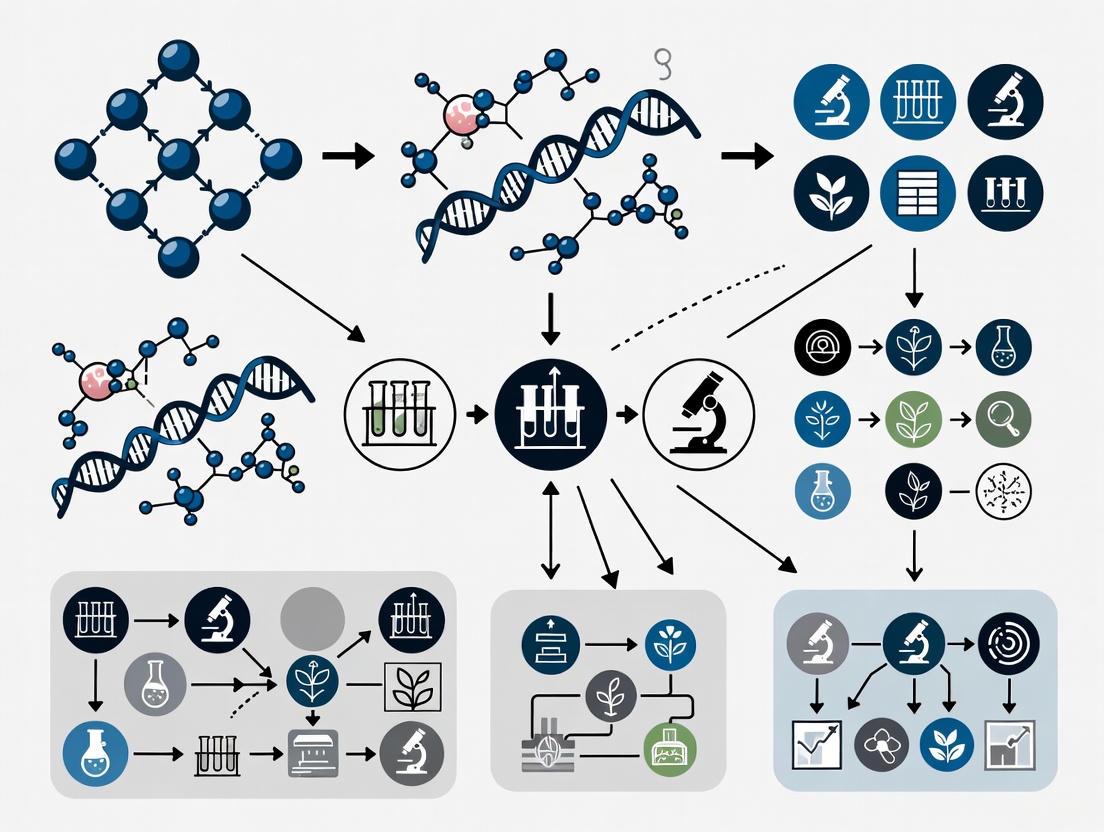
This article addresses the critical challenges of data sharing and ownership that researchers and drug development professionals face when integrating artificial intelligence into pharmaceutical R&D.
Navigating Data Ownership and Sharing in AI-Driven Drug Development: Challenges and Strategic Solutions
Abstract
This article addresses the critical challenges of data sharing and ownership that researchers and drug development professionals face when integrating artificial intelligence into pharmaceutical R&D. It explores the foundational need for high-quality, diverse datasets to train robust AI models, examines methodologies for secure data application, provides strategies for troubleshooting legal and infrastructural barriers, and outlines frameworks for validating AI tools within the current regulatory landscape. Aimed at fostering innovation, the content synthesizes evolving regulatory guidance, practical compliance strategies, and collaborative models to advance AI-driven drug discovery while safeguarding data rights.
The Indispensable Role of Data in AI-Driven Drug Discovery
Technical Support Center
Troubleshooting Guides
Guide 1: Resolving Common Data Quality Issues in Agricultural AI Models
Problem: Model predictions are inaccurate or unreliable.
- Step 1: Check data completeness using the Ag Image Repository's cut-out analysis for missing plant growth stages [1].
- Step 2: Verify data consistency by ensuring all images follow standardized formats and annotations from the FAIR/CARE standards required by USDA DSFAS grants [2].
- Step 3: Validate data accuracy against ground-truth field measurements for at least 5% of your dataset.
- Step 4: Implement continuous monitoring using data quality metrics from established frameworks [3].
Problem: AI model performs well in testing but fails in real-field conditions.
- Step 1: Test model against the PSA's Benchbot validation protocol using semi-field environment images [1].
- Step 2: Verify temporal relevance - ensure training data includes seasonal variations from multiple growing cycles.
- Step 3: Check for synthetic data feedback loops by balancing AI-generated data with real-world field samples [3].
Guide 2: Addressing Data Access and Sharing Challenges
Problem: Cannot access sufficient agricultural data for model training.
- Step 1: Access the public Ag Image Repository containing 1.5 million plant images via USDA SCINet [1].
- Step 2: Form Coordinated Innovation Networks (CIN) as outlined in DSFAS guidelines to pool resources with other institutions [2].
- Step 3: Implement synthetic data generation following Sony AI's FHIBE responsible augmentation protocols [4].
Problem: Data sharing conflicts due to ownership concerns.
- Step 1: Develop data governance policies using frameworks that address intellectual property rights [5].
- Step 2: Implement consent mechanisms similar to FHIBE's approach where subjects retain control and can withdraw consent [4].
- Step 3: Establish clear data usage agreements using NIFA's Data Management Plan templates [2].
Frequently Asked Questions
Data Quality FAQs
Q: What are the minimum data quality standards for agricultural AI research? A: Your data must meet these quantitative standards, derived from established AI data quality frameworks and agricultural research requirements [3] [2]:
Table: Minimum Data Quality Standards for Agricultural AI
| Component | Minimum Standard | Measurement Method |
|---|---|---|
| Accuracy | >95% label correctness | Cross-verification by domain experts |
| Completeness | <5% missing growth stages | Gap analysis across temporal sequences |
| Consistency | 100% standardized annotations | Adherence to AgIR metadata protocols [1] |
| Timeliness | <2 years since collection | Date stamps and seasonal relevance checks |
| Relevance | Direct alignment with research objectives | Logic model alignment as per DSFAS requirements [2] |
Q: How can we quickly identify biased data in agricultural datasets? A: Follow this experimental protocol adapted from bias detection methodologies [6]:
- Segment your data by key variables: plant species, growth environment, geographic location
- Benchmark against FHIBE's fairness evaluation framework for demographic attributes [4]
- Test model performance across all segments using consistent metrics
- Analyze performance disparities greater than 10% as potential bias indicators
Data Access FAQs
Q: What are the approved methods for collaborative data sharing in agricultural research? A: Utilize these NIFA-supported approaches [2]:
- Coordinated Innovation Networks (CIN): Multi-institution networks with demonstrable synergy and continuity plans
- FASE Grants: Enhanced funding opportunities for partnerships with minority-serving institutions
- AgIR Public Repository: Open-source access with proper attribution to original collectors [1]
Q: How can we ensure ethical data collection while maintaining research utility? A: Implement this workflow based on successful ethical AI implementations [4]:
The Scientist's Toolkit
Research Reagent Solutions for Agricultural AI
Table: Essential Tools for Agricultural AI Research
| Tool/Platform | Function | Application Context |
|---|---|---|
| Ag Image Repository (AgIR) | Provides 1.5M high-quality plant images with standardized annotations [1] | Computer vision model training for species identification |
| PSA Benchbots | Automated imaging robots for consistent plant data collection [1] | High-throughput phenotyping and growth monitoring |
| FHIBE Fairness Benchmark | Consent-based, globally diverse dataset for bias evaluation [4] | Testing agricultural AI models for equitable performance |
| USDA SCINet | High-performance computing cluster for agricultural data analysis [2] | Large-scale model training and simulation |
| FAIR/CARE Data Standards | Framework for Findable, Accessible, Interoperable, Reusable data management [2] | Data governance and sharing protocol implementation |
Experimental Protocol: Data Quality Validation for Plant Phenotyping
Objective: Ensure training data quality for AI-driven plant health assessment.
Materials:
- AgIR-standardized image sets [1]
- PSA Benchbot calibration tools [1]
- Data quality metrics from established AI frameworks [3]
Methodology:
- Image Acquisition: Collect images using calibrated Benchbots across multiple growth stages
- Annotation Quality Control: Implement triple-blind verification for all data labels
- Temporal Consistency Check: Verify complete growth sequences without temporal gaps
- Environmental Variable Documentation: Record all relevant growing conditions
- Bias Assessment: Apply FHIBE fairness evaluation to demographic attributes [4]
Validation Criteria:
- ≥98% annotation accuracy from expert verification
- <2% missing data across all growth stages
- Consistent performance across all plant varieties and conditions
Data Governance Framework Implementation
Q: What essential components must our data governance framework include? A: Your framework must address these critical elements derived from successful implementations [3] [5]:
Implementation Steps:
- Establish Data Governance Team with cross-functional expertise [3]
- Develop Quality Metrics aligned with DSFAS sustainability requirements [2]
- Implement Regular Audits following agricultural research best practices
- Create Incident Response Protocols for data quality issues or bias detection
- Document All Processes using NIFA's Data Management Plan guidelines [2]
Frequently Asked Questions
What is data scarcity in AI research? Data scarcity refers to the growing shortage of high-quality, diverse data needed to train sophisticated AI models. As models become larger and more powerful, the limitations of current data sources create a significant bottleneck. This is especially acute for large language models that require vast amounts of text data, and in fields like agriculture and healthcare where obtaining specialized, labeled data is particularly challenging [7] [8].
Why is data ownership ambiguous in agricultural AI? Data ownership becomes ambiguous because agricultural data often involves multiple stakeholders—farmers, researchers, technology providers, and AI developers—each with potential claims. The legal landscape is complex, with variations in intellectual property laws, trade secret statutes, and jurisdictional differences in data protection regulations. This creates uncertainty about who owns data, especially when it undergoes AI processing to create new "derived data" [9] [10].
How does biased data affect agricultural AI models? Biased data leads to AI models that perform poorly when faced with real-world agricultural variability. For example, a model trained only on images of plants from one region may not recognize the same species grown under different conditions. This lack of generalizability can result in inaccurate recommendations for pest control, yield prediction, or resource allocation, ultimately reducing farmer trust and adoption [7] [1].
What are the main data types in agricultural AI research?
| Data Type | Description | Examples | Key Challenges |
|---|---|---|---|
| Field Imagery | High-quality photographs of plants at different growth stages | Ag Image Repository's 1.5M plant photos [1] | Annotation labor, background removal, variable conditions |
| Environmental Data | Satellite and sensor data on growing conditions | NASA GLAM soil moisture, precipitation data [11] | Integration across sources, temporal alignment |
| Derived Data | New data created through AI processing | Augmented data, inferred data, modeled data [9] | Ownership ambiguity, value attribution |
| Operational Data | Farming practice and input records | Treatment details, application rates, yield results [10] | Privacy concerns, commercial sensitivity |
Troubleshooting Guides
Issue: Insufficient Training Data for Crop Disease Detection
Problem: Your AI model for identifying northern corn leaf blight performs poorly on field data despite good validation scores, likely due to insufficient and non-diverse training examples.
Diagnosis Steps:
- Assess Data Diversity: Check if your training set includes images of the disease across different corn varieties, growth stages, weather conditions, and geographical regions [1].
- Evaluate Data Quantity: Determine if you have at least 1,000+ annotated examples per significant disease severity level [7].
- Check Data Balance: Verify that positive and negative examples are balanced across all conditions.
Resolution Methods:
- Leverage Public Repositories: Access the Ag Image Repository (AgIR) which contains 1.5 million high-quality plant images through USDA SCINet [1].
- Implement Data Augmentation: Use synthetic data generation techniques to create variations of existing images by modifying lighting, orientation, and background conditions [7].
- Apply Transfer Learning: Start with models pre-trained on general image datasets like ImageNet, then fine-tune on your specific agricultural task [8].
Prevention Tips:
- Establish continuous data collection partnerships with multiple farms across different regions [11].
- Implement automated data annotation pipelines to reduce labeling bottlenecks [1].
- Develop a data diversity checklist for all new training datasets.
Issue: Data Sharing Resistance from Farming Partners
Problem: Farmers are hesitant to share operational data needed to improve your AI models due to ownership concerns and unclear benefits.
Diagnosis Steps:
- Identify Specific Concerns: Determine whether resistance stems from privacy fears, commercial sensitivity, or lack of perceived value [11].
- Review Data Governance: Assess if your current data use agreements clearly address ownership, control, and benefit-sharing [10].
- Evaluate Transparency: Check how clearly you communicate data usage, retention policies, and potential risks [12].
Resolution Methods:
- Implement the CHDO Framework: Adopt the Collaborative Healthcare Data Ownership framework principles, emphasizing shared ownership, defined access controls, and transparent governance [10].
- Develop Clear Benefit Sharing: Create concrete value propositions showing how data sharing directly benefits farmers through improved recommendations [11].
- Establish Data Trusts: Consider data trust models where neutral third parties manage data access and usage rights [10].
Prevention Tips:
- Co-design data sharing agreements with farmer representatives [11].
- Provide multiple participation tiers with varying levels of data contribution and access.
- Implement federated learning approaches that analyze data locally without centralizing sensitive information [8].
Experimental Protocols
Protocol 1: Building a Robust Plant Image Dataset for AI Training
Purpose: Create a diverse, well-annotated image dataset capable of training generalizable computer vision models for agricultural applications.
Materials:
- Benchbot Imaging System: Robotic hardware for standardized plant image capture [1]
- High-Resolution Camera: Capable of capturing detailed images suitable for scientific research [1]
- Annotation Software: Tools for labeling images with plant species, growth stage, and health status [1]
- Data Repository Platform: Secure storage with version control and access management
Methodology:
- Site Selection: Establish imaging locations across multiple geographical regions to capture environmental variability [1].
- Temporal Sampling: Conduct weekly imaging passes throughout the complete plant growth cycle [1].
- Condition Variation: Ensure representation across different soil types, weather conditions, and management practices.
- Quality Control: Implement automated checks for image focus, lighting consistency, and proper labeling.
- Background Removal: Use developed software tools to create "cut-outs" - plants separated from their background [1].
Validation:
- Cross-verify annotations with multiple domain experts
- Test model performance on held-out data from completely new locations
- Measure accuracy degradation across different growing conditions
Protocol 2: Establishing Data Ownership and Sharing Frameworks
Purpose: Develop legally sound and ethically defensible data sharing agreements that respect stakeholder rights while enabling AI research.
Materials:
- Stakeholder Identification Matrix: Template for mapping all parties with data interests
- Data Classification Schema: System for categorizing data by sensitivity and value
- Legal Framework Analysis: Review of relevant GDPR, CCPA, and intellectual property regulations [9]
- Blockchain Technology: For implementing transparent data access logging (optional) [10]
Methodology:
- Stakeholder Analysis: Identify all entities with claims to data ownership (farmers, researchers, technology providers) [10].
- Rights Mapping: Document the specific rights each stakeholder has regarding data access, control, and commercialization [9].
- Framework Selection: Choose appropriate governance model (privatization, communization, data trusts) based on project needs [10].
- Agreement Drafting: Create clear contracts defining derived data ownership, usage rights, and benefit distribution [9].
- Implementation: Deploy technical controls enforcing the agreed data access and usage policies.
Validation:
- Conduct stakeholder satisfaction surveys
- Audit compliance with agreed data usage terms
- Monitor for data disputes and resolution effectiveness
Research Reagent Solutions
Essential Tools for Agricultural AI Research
| Item | Function | Application Notes |
|---|---|---|
| Ag Image Repository (AgIR) | Open-source plant image collection | 1.5M high-quality images; accessible via USDA SCINet [1] |
| Benchbot Imaging Systems | Automated plant photography | Standardizes image capture across locations and conditions [1] |
| Computer Vision Cut-out Tools | Background removal from plant images | Creates clean training data by isolating plants from complex backgrounds [1] |
| Synthetic Data Generators | Creates artificial training data | Mimics real-world scenarios; helps address data scarcity [7] |
| Federated Learning Platforms | Enables collaborative model training | Allows analysis without centralizing sensitive farm data [8] |
| Data Annotation Software | Streamlines image labeling | Reduces labor-intensive manual annotation [1] |
| NASA GLAM System | Global cropland monitoring | Provides satellite-based agricultural data [11] |
Data Scarcity Impact and Solutions
Quantitative Analysis of Data Challenges
| Aspect | Current Challenge | Potential Impact | Timeline |
|---|---|---|---|
| Training Data Volume | LLMs exhausting publicly available text data [7] | Reduced AI accuracy and performance [7] | Immediate concern [8] |
| Agricultural Image Data | Lack of public, well-labeled image sets [1] | Limited model generalizability across farms [1] | Being addressed via repositories like AgIR [1] |
| Data Labeling Bottleneck | Manual annotation is time-consuming and expensive [7] | Slows AI development and increases costs [7] | Ongoing challenge |
| Privacy Restrictions | GDPR, CCPA limit data sharing [9] [8] | Hampers AI development in healthcare and finance [8] | Increasing concern |
AI Data Solutions Overview
Agricultural AI Data Pipeline
Technical Support Center
This technical support center provides troubleshooting guides and FAQs to help researchers and scientists navigate the regulatory expectations for data quality in AI models, with a specific focus on challenges related to farm data.
Frequently Asked Questions (FAQs)
Q1: What is the core regulatory principle linking data to AI model credibility? Both the FDA and EMA emphasize that the credibility of an AI model's output is fundamentally determined by the quality and relevance of the data used to train and validate it. Regulators assess the model's performance within its specific Context of Use (COU), and this assessment is grounded in the characteristics of the underlying data [13] [14]. A model is considered credible for a regulatory decision only when there is justified trust in its output for a given COU, which is built upon rigorous data management practices [14].
Q2: Our model uses sensitive farm production data. What are the key data documentation requirements? Regulators require transparent documentation of your data's lifecycle to assess potential biases and limitations. Your documentation should cover:
- Provenance: The origin and collection methods of the data, including the specific agricultural environments and conditions [15] [16].
- Processing: A detailed description of all data cleaning, annotation, and pre-processing steps [17] [18].
- Characteristics: A summary of the datasets used, including sources, data points, and the time period of collection [19]. You must also document the representativeness of the data across different farm types, animal breeds, or crop varieties to address algorithmic bias [17] [18].
- Ownership and Rights: Information on data ownership, licensing agreements, and whether data includes copyrighted or patented information, which is crucial for shared agricultural data [20] [19].
Q3: How can we manage data ownership and sharing challenges in multi-farm research projects? Complex data ownership in agricultural consortia can inhibit AI development if not managed properly. Recommended strategies include:
- Structured Governance Frameworks: Implement clear data governance agreements that define control, access, and usage rights among all partners [20].
- Federated Learning: Consider technical solutions like federated learning, which allows model training across decentralized datasets (e.g., on multiple farms) without transferring or centrally storing the raw data. This preserves data privacy and ownership while enabling collaborative model refinement [16].
- Data Marketplaces: Explore regulated data marketplaces where farms can license their data under clear governance agreements, providing AI developers with access to diverse datasets while respecting ownership rights [20].
Q4: We face limited and heterogeneous farm data. What validation strategies are acceptable to regulators? For AI models in agriculture, where large, uniform datasets can be rare, a robust validation strategy is critical. The FDA's risk-based framework suggests that the required level of validation evidence depends on the model's risk and context of use [13] [14]. You can strengthen your validation with:
- Multi-Farm Validation: Validate model performance across data from independent farms not involved in training to demonstrate generalizability [15].
- Transfer Learning and Simulation: Use techniques like transfer learning, or validate models against simulated or synthetic data that accurately represents real-world agricultural conditions [16].
- Continuous Performance Monitoring: Implement plans for ongoing monitoring post-deployment to detect performance drift caused by changes in farming practices, animal genetics, or environmental conditions [17] [18].
Troubleshooting Guides
Problem: Regulatory feedback indicates potential algorithmic bias in our model. Algorithmic bias often stems from unrepresentative training data.
- Step 1: Conduct a Data Gap Analysis. Audit your training datasets for representation across critical variables in your COU (e.g., different farm sizes, geographic regions, animal demographics, or soil types) [15] [18].
- Step 2: Perform Subgroup Analysis. Re-validate your model's performance specifically on under-represented subgroups to quantify performance disparities [18].
- Step 3: Mitigate and Document. Actively source additional data to fill gaps or apply algorithmic techniques to mitigate identified bias. Document all actions taken, the analysis results, and any remaining model limitations in your submission [17] [18].
Problem: Our AI model's performance has declined since deployment (Model Drift). Performance drift in agriculture can be caused by evolving practices, environmental changes, or new animal diseases.
- Step 1: Establish a Performance Baseline. Define key performance indicators (KPIs) and their acceptable ranges during initial validation [17].
- Step 2: Implement a Monitoring System. Create automated dashboards to track KPIs against the baseline using real-world data streams [16] [18].
- Step 3: Create a Pre-Approved Update Plan. Develop a Predetermined Change Control Plan (PCCP). For the FDA, a PCCP allows you to pre-specify the protocol for retraining the model with new data and the validation steps needed, enabling smoother regulatory approval for updates [18].
Experimental Protocols for Data and Model Credibility
Protocol 1: Data Quality and Representativeness Assessment
- Objective: To ensure training and testing datasets are representative of the target agricultural population and context of use.
- Methodology:
- Define Population Covariates: Identify key variables (e.g., breed, age, farm management system, soil composition, climate zone).
- Stratified Sampling: Collect data using a stratified sampling strategy to ensure all relevant subgroups are represented.
- Data Auditing: Statistically compare the distribution of covariates in your dataset against the known distribution in the target population.
- Gap Documentation: Document any under-represented groups and the potential impact on model performance.
Protocol 2: Model Validation for Generalizability
- Objective: To demonstrate that the AI model performs robustly on data from novel farms or environments not seen during training.
- Methodology:
- Data Partitioning: Split the available data from multiple sources (farms) into three sets: Training, Tuning (validation), and a hold-out Test Set.
- External Validation: The hold-out Test Set should comprise data from entire farms or geographic locations that are completely excluded from the Training and Tuning sets.
- Performance Comparison: Calculate performance metrics (e.g., accuracy, precision, recall) on the Training/Tuning sets and the external Test Set. A minimal drop in performance on the external set indicates good generalizability.
Data Presentation: Regulatory Submission Metrics
Table 1: Quantitative Data Requirements for AI Model Submissions. This table summarizes key data metrics to include in regulatory submissions to the FDA and EMA.
| Data Category | Specific Metric | FDA Guidance Reference | EMA Consideration |
|---|---|---|---|
| Dataset Composition | Number of data points, sources (e.g., # of farms), time period of collection | [13] [14] | Transparency in data sourcing and ownership [17] |
| Data Provenance | Description of data cleaning, processing, and annotation methods | [13] | Documentation of data lineage and processing steps [17] |
| Representativeness | Coverage of key subgroups (e.g., by breed, crop, region, season); analysis of demographic or clinical covariates | Expectation for bias mitigation [18] | Analysis of data across relevant population strata [17] |
| Performance Metrics | Model performance stratified by key subgroups (e.g., sensitivity/specificity by farm type) | Risk-based credibility assessment [14] | Evidence of consistent performance across populations [17] |
Visualization of Workflows
The following diagram illustrates the logical relationship between data governance, model development, and regulatory credibility, as outlined by FDA and EMA guidelines.
Regulatory Credibility Workflow
The Scientist's Toolkit: Research Reagent Solutions
Table 2: Essential Tools for AI Research with Agricultural Data. This table details key materials and their functions for developing credible AI models.
| Tool / Material | Function in Research |
|---|---|
| Data Governance Platform | Provides the framework for managing data ownership, access controls, and usage policies across multiple farm stakeholders, ensuring compliance and ethical data handling [20]. |
| Federated Learning Framework | Enables model training on decentralized farm datasets without moving raw data, addressing privacy and ownership concerns while allowing for collaborative AI development [16]. |
| Automated Data Labeling Tools | Uses AI (e.g., NLP, computer vision) to accelerate the annotation of unstructured agricultural data, such as clinical notes or images, while maintaining human oversight for accuracy [17]. |
| Bias Detection & Mitigation Software | Provides statistical tools and algorithms to identify potential biases in training datasets and to evaluate model performance fairness across different subgroups [18]. |
| Predetermined Change Control Plan (PCCP) | A regulatory "playbook" that outlines planned future model modifications and the associated validation protocols, facilitating agile and compliant model updates post-deployment [18]. |
The Economic Stakes - The Multi-Billion Dollar Cost of Inefficient Data Use
Technical Support Center
Troubleshooting Guides
Issue: No Assay Window in TR-FRET-based Experiments Problem: The instrument shows no difference in signal between experimental and control groups. Solution:
- Primary Cause: Incorrect instrument setup [21].
- Actionable Steps:
- Consult the instrument setup guides for your specific microplate reader to verify configuration [21].
- Confirm that the correct emission filters are installed. Using the wrong filters is a common reason for assay failure [21].
- Test your reader's TR-FRET setup using control reagents before running your actual experiment [21].
Issue: Inconsistent EC50/IC50 Values Between Labs Problem: Replicating a compound's potency measurement yields different results across laboratories. Solution:
- Primary Cause: Variability in prepared stock solutions, typically at 1 mM concentration [21].
- Actionable Steps:
- Meticulously document the preparation process of all stock solutions, including the solvent used and storage conditions.
- For cell-based assays, consider if the compound's cellular permeability or the activation state of the target kinase could be influencing the results [21].
Issue: Complete Lack of Assay Window in Z'-LYTE Assays Problem: The development reaction shows no difference in the emission ratio between phosphorylated and non-phosphorylated controls. Solution:
- Diagnostic Test:
- For the 100% Phosphopeptide Control: Do not add any development reagent. This should yield the lowest possible ratio [21].
- For the Substrate (0% Phosphopeptide): Use a 10-fold higher concentration of development reagent than standard to ensure complete cleavage. This should yield the highest possible ratio [21].
- Interpretation: A successful test should show a significant (e.g., 10-fold) difference in ratios. If not, the issue likely lies with the development reagent dilution or the instrument setup [21].
Frequently Asked Questions (FAQs)
Q1: Why should I use ratiometric data analysis for my TR-FRET assay? A1: Using the acceptor/donor emission ratio is a best practice. The donor signal acts as an internal reference, accounting for small pipetting variances and lot-to-lot reagent variability, which leads to more robust and reliable data [21].
Q2: My emission ratios look very small. Is this normal? A2: Yes. Because the donor signal is typically much higher than the acceptor signal, the calculated ratio is often less than 1.0. The statistical significance of your data is not affected by the small numerical value [21].
Q3: How do I assess the quality of my assay beyond the size of the assay window? A3: The Z'-factor is a key metric. It considers both the assay window (the difference between the maximum and minimum signals) and the variability (standard deviation) of your data. An assay with a Z'-factor > 0.5 is considered excellent for screening purposes [21].
Q4: Our agricultural AI research involves sharing plant image data. What are the key considerations for our Data Management and Sharing (DMS) Plan? A4: A robust DMS Plan is crucial. For data derived from human research, the plan must specify how external access will be controlled and describe any limitations imposed by informed consent or privacy regulations [22]. Even for plant data, establishing clear plans for data annotation, repository selection (e.g., controlled vs. open access), and metadata standards is essential for enabling collaboration and ensuring your data can be used to train reliable AI models [23] [22].
Q5: What is the difference between "Controlled Access" and "Open Access" for data sharing? A5: Controlled Access involves requirements for accessing data, such as approval by a research review committee or use of secure research environments. Open Access means the data is available to the public without such restrictions. Controlled access is often the standard for sharing sensitive or human-derived research data [22].
Experimental Protocols & Methodologies
Detailed Protocol: Agricultural Image Data Acquisition and Curation for AI
Objective: To collect high-quality, annotated plant images for training robust computer vision models in agricultural AI research [23].
Methodology:
- Hardware Setup:
- Image Acquisition:
- Program the system to conduct multiple passes over the plants each week, creating a longitudinal time series that captures growth and development stages [23].
- The system should capture a wide genetic variety of each plant species under different environmental conditions (e.g., water stress, varying temperatures) to ensure dataset diversity [23].
- Data Annotation and Processing:
- Use specialized software to automate the creation of "cut-outs" (plants removed from their background) and to apply color corrections [23].
- Annotate images with detailed descriptions, including species, growth stage, genetic variety, and environmental conditions. This labeled data is critical for supervised machine learning [23].
- Data Sharing:
- Deposit the curated images and associated metadata into a dedicated repository, such as the Agricultural Research Service's Ag Image Repository (AgIR) on a high-performance computing cluster like SCINet, to make them freely available to the research community [23].
Detailed Protocol: TR-FRET Assay for Compound Screening
Objective: To determine the half-maximal inhibitory concentration (IC50) of a compound using Time-Resolved Förster Resonance Energy Transfer (TR-FRET).
Methodology:
- Plate Reader Setup: Verify the instrument is configured for TR-FRET with the correct excitation and emission filters as specified by the assay and instrument manufacturer [21].
- Reagent Preparation: Prepare all reagents according to the kit protocol. For compound testing, create a serial dilution in DMSO, ensuring final DMSO concentrations are consistent across all wells (typically ≤1%) [21].
- Assay Assembly:
- Dispense the kinase, test compound, and substrate/ATP mixture into the assay plate.
- Include controls for 100% phosphorylation (no inhibitor) and 0% phosphorylation (no ATP or substrate only) [21].
- Incubate the plate to allow the kinase reaction to proceed.
- TR-FRET Detection:
- Add the detection reagents (e.g., Terbium-labeled antibody and a FRET-compatible acceptor).
- Read the plate on a compatible microplate reader that measures the time-delayed fluorescence at both the donor and acceptor emission wavelengths.
- Data Analysis:
- Calculate the emission ratio (Acceptor Emission / Donor Emission) for each well.
- Plot the emission ratio against the logarithm of the compound concentration.
- Fit a sigmoidal dose-response curve to the data to calculate the IC50 value.
- Calculate the Z'-factor using control data to validate assay robustness [21].
The following tables consolidate key quantitative information on economic impact and experimental metrics.
Table 1: Economic Impact of Generative AI and Data Utilization
| Sector / Area | Potential Economic Value | Key Driver / Use Case |
|---|---|---|
| Generative AI (Overall Global Impact) | $2.6 - $4.4 trillion annually [24] | Enhanced productivity across customer operations, marketing & sales, software engineering, and R&D [24]. |
| Generative AI (Banking Industry) | $200 - $340 billion annually [24] | Automation of routine tasks and improved customer service operations [24]. |
| Generative AI (Retail & CPG) | $400 - $660 billion annually [24] | Personalized marketing, supply chain optimization, and content creation [24]. |
| Data Factor (China's Provincial Economy) | Positive, nonlinear impact with increasing returns [25] | Digital transformation of traditional production factors (capital, labor), boosting total factor productivity [25]. |
Table 2: Key Experimental Metrics for Assay Validation
| Metric | Definition & Calculation | Interpretation / Benchmark for Success | ||
|---|---|---|---|---|
| Z'-Factor | ( Z' = 1 - \frac{(3\sigma{max} + 3\sigma{min})}{ | \mu{max} - \mu{min} | } ) Where ( \sigma ) is standard deviation and ( \mu ) is mean signal. | Z' > 0.5: Excellent assay suitable for screening [21]. |
| Assay Window | (Signal at top of curve) / (Signal at bottom of curve) Alternatively: (Response Ratio at top) - (Response Ratio at bottom). | A larger window is better, but must be evaluated alongside variability (see Z'-Factor) [21]. | ||
| Emission Ratio | Acceptor Signal (e.g., 520 nm or 665 nm) / Donor Signal (e.g., 495 nm or 615 nm). | Normalizes for pipetting and reagent variability; values are typically < 1.0 [21]. |
The Scientist's Toolkit: Research Reagent Solutions
Table 3: Essential Research Reagents and Materials
| Item / Solution | Function / Application |
|---|---|
| TR-FRET Detection Kit | Provides labeled antibodies or tracers for Time-Resolved FRET assays, enabling the detection of biomolecular interactions [21]. |
| LanthaScreen Eu/Tb Assay Reagents | Utilize lanthanide chelates (e.g., Europium or Terbium) as donors in TR-FRET assays for studying kinase activity and inhibition [21]. |
| Z'-LYTE Assay Kit | A fluorescence-based, coupled-enzyme assay for measuring kinase activity and inhibitor IC50 values using a ratio-metric readout [21]. |
| Agricultural Image Repository (AgIR) | An open-source repository of over 1.5 million high-quality, annotated plant images for training AI models in agriculture [23]. |
| Benchbot Imaging System | An automated, robotic system for capturing high-resolution, standardized images of plants throughout their growth cycle [23]. |
| Research Electronic Data Capture (REDCap) | A secure, HIPAA-compliant web application for building and managing online surveys and research databases, supporting data capture for clinical studies [26]. |
Building and Applying Secure AI Data Ecosystems in Pharma R&D
Troubleshooting Guides
Pipeline Failure: Data Ingestion Issues
Q: My pipeline is failing during the data ingestion phase. What are the first steps I should take?
A: Begin by isolating the problem area. Check the connectivity and status of your data sources [27]. For API failures, use tools like Postman or cURL to verify endpoint accessibility and expected responses [28]. Examine logs for error messages, stack traces, and exceptions that can provide immediate clues about the failure [28] [27]. Also, investigate common culprits such as expired API keys, recent code or schema changes, network connectivity issues, or permission changes [28].
Q: How can I troubleshoot inconsistent data quality after ingestion, such as missing plant images or incorrect labels?
A: Implement rigorous data quality verification. Check for missing or incomplete data by ensuring all expected data points are present [27]. Validate that any initial transformations are functioning as expected and not introducing errors [27]. For agricultural image data, this is crucial as subtle differences in a plant's appearance due to genetics or environment can profoundly impact model performance [23]. Cross-check processed data with raw inputs to ensure accuracy and consistency [27].
Pipeline Failure: Data Processing & Transformation
Q: My data processing stage is slow or failing due to resource constraints. How can I diagnose this?
A: Monitor system metrics for CPU, memory, disk I/O, and network utilization, as high resource usage may indicate bottlenecks [27]. If using custom code, use unit tests to isolate and identify logic errors [28] [27]. For large-scale agricultural image processing, ensure your infrastructure, such as GPU clusters, is properly configured to handle the computational load and that cluster management is efficient [29].
Q: How do I handle failures that occur in a multi-layer data architecture (e.g., Medallion Architecture)?
A: A critical best practice is to save data at each stage (e.g., Bronze, Silver, Gold). This allows you to easily isolate the failure point, determine if the issue originated in raw ingestion, cleaning, or final aggregation, and enables targeted debugging and reprocessing of only the affected layer [28]. This is especially valuable when dealing with large agricultural image datasets where re-ingesting from source can be time-consuming [23].
General Pipeline Management
Q: What is a systematic process for troubleshooting a broken pipeline?
A: Follow a logical journey [27]:
- Isolate the Problem: Determine where the failure occurs (ingestion, processing, storage, output) and when it started [27].
- Inspect Logs and Metrics: Check error logs and system metrics for clues [28] [27].
- Verify Data Quality: Ensure data integrity and correct transformations at each stage [27].
- Test Incrementally: Break the pipeline into smaller sections and test each one independently [27].
- Conduct Root Cause Analysis: Once fixed, document the findings to improve future resilience [27].
Q: How can I proactively prevent pipeline failures?
A: Leverage monitoring and alerting tools to get notified of job failures or resource issues early [28] [27]. Maintain comprehensive documentation of past issues and their resolutions, as this can be a lifesaver when rare problems resurface [28]. For agricultural data, this includes documenting data collection conditions (e.g., growth stage, weather) that are critical for model training [23].
Frequently Asked Questions (FAQs)
Q: What are the core components of an AI data pipeline? A: A typical AI data pipeline consists of several key stages [29] [27]:
- Ingestion Streams: Collecting data from multiple internal and external sources.
- Database Environment: A system where ingested data is filtered, cleaned, processed, and compressed.
- GPU Cluster: Computational resources for accelerated model training.
- Distribution Catalog: A centralized repository for trained models.
- Content Archive & Model Logs: Storage for the full history of data, models, and decisions for transparency and continuous improvement.
Q: Our agricultural research data is fragmented across many systems. How can an AI pipeline help? A: AI pipelines are specifically designed to tackle fragmented and siloed data [29]. They do this by filtering, formatting, cleaning, and organizing all data as soon as it's ingested, creating a uniform data stream ready for AI training. This is essential for creating reliable models that can account for the variability found in farm fields [23].
Q: What are the common challenges when implementing an AI data pipeline? A: Organizations often face several obstacles [29]:
- Fragmented, Siloed Data: Disorganized data spread across multiple formats and systems.
- System Migration: Reluctance to replace existing systems that cause performance bottlenecks.
- Ensuring Data Integrity & Compliance: Maintaining data security, governance, and transparency.
- Implementation Costs: The upfront investment required for new infrastructure.
Q: Why is saving data at every stage of the pipeline so important? A: Saving intermediate data outputs (e.g., in Bronze, Silver, and Gold layers) provides several critical benefits [28]: easier isolation of failure points, targeted debugging, full data lineage and auditability, and the ability to reprocess only the affected layer, saving significant time and resources.
Q: How can we ensure our AI pipeline remains scalable? A: Building a scalable pipeline requires careful infrastructure consideration [29]. Key elements include implementing scalable AI storage (like flash-based storage) to handle large volumes of data, ensuring sufficient and efficient compute power (like GPU clusters with good management), and automating processes to enable continuous operation and iterative model refinement with minimal human input.
Data Presentation
Table: AI Data Pipeline Development Stages & Specifications
| Pipeline Stage | Core Function | Key Technologies & Actions | Common Failure Points |
|---|---|---|---|
| Data Ingestion | Collect raw data from diverse sources [29]. | APIs, databases, file shares, online datasets [29]. Connect to data sources, validate format/schema [27]. | Expired API keys, schema changes, network issues, source unavailability [28] [27]. |
| Data Processing | Transform raw data into AI-ready format [30] [29]. | Data cleaning, reduction, embedding, transformation [30] [29]. Review transformation logic [27]. | Resource constraints (CPU/memory), logic errors in code, data quality issues [28] [27]. |
| Model Training | Use processed data to train AI/ML models [29]. | GPU clusters for computational acceleration, distributed training [29]. | Insufficient computational power, inadequate data quality/volume for training. |
| Inferencing & Deployment | Serve trained models for predictions [29]. | Distribution catalog for model deployment, inferencing [29]. | Model versioning issues, deployment configuration errors, performance latency. |
| Monitoring & Feedback | Maintain and improve model performance [29]. | Logging prompts/responses, continuous fine-tuning and re-training [29]. | Lack of monitoring/alerting, failure to log data, feedback loops not closed [28]. |
Table: Research Reagent Solutions for Agricultural AI Pipelines
| Reagent / Tool | Core Function | Application in Agricultural AI Context |
|---|---|---|
| Ag Image Repository (AgIR) | Open-source repository of high-quality, labeled plant images for training AI models [23]. | Provides the foundational dataset for developing computer vision models for plant identification, weed detection, and growth stage monitoring [23]. |
| Benchbots | Robotic hardware systems for automated, standardized collection of plant images in semi-field conditions [23]. | Automates the tedious and labor-intensive process of field data collection, ensuring consistent, high-quality image data for reliable model training [23]. |
| Annotation Software | Tools to label images with detailed metadata (e.g., species, growth stage, health status) [23]. | Creates the structured, annotated datasets required to supervise the training of machine learning algorithms for precision agriculture tasks [23]. |
| Centralized Logging System | Platform to aggregate logs from various pipeline services for easier analysis [27]. | Crucial for troubleshooting complex pipelines distributed across multiple systems, allowing for quick isolation of failures in data ingestion or processing [27]. |
| Unit & Integration Test Suites | Automated tests for custom data transformation code and pipeline component interactions [28] [27]. | Catches logic errors and integration issues early, preventing data quality problems from propagating downstream and corrupting the AI model's knowledge base [28] [27]. |
Experimental Protocols & Workflows
Detailed Methodology: Building an Agricultural Image Repository
The following workflow is derived from the process used to create the AgIR repository, which aims to accelerate AI solutions in agriculture by providing a large, public, high-quality image dataset [23].
- Hardware Setup (Benchbots): Deploy wheel-mounted robotic camera systems in a semi-field environment. These bots are programmed to move along an overhead track, capturing highly detailed photos of hundreds of plants in pots arranged in rows. Imaging runs are performed multiple times per week to create a time series as plants grow and develop [23].
- Image Acquisition & Standardization: Program the Benchbots' cameras to capture images meeting exacting scientific standards. This includes consistent lighting, resolution, and angle to ensure all collected images are usable for research and model training [23].
- Data Annotation & "Cut-out" Creation: Use developed software to automate the process of cutting plants out from their image backgrounds and attaching detailed descriptions (metadata) to each image. This includes species, variety, growth stage, and environmental conditions. This step transforms raw images into annotated data suitable for supervised learning [23].
- Data Curation & Repository Population: Compile the annotated images and their associated metadata into a structured, searchable repository (the AgIR). The repository is first made available on high-performance computing clusters (like SCINet) before being released worldwide to agricultural researchers [23].
- Baseline Model Training: Use the curated repository to train and establish baseline machine learning models for tasks like species identification and phenotyping. These proven baselines provide an on-ramp for other researchers to build, test, and improve tools without starting from scratch [23].
Workflow Visualization: Agricultural AI Data Pipeline
Workflow Visualization: Troubleshooting a Data Pipeline
Implementing Federated Learning for Privacy-Preserving Model Training
Federated Learning (FL) represents a fundamental shift in machine learning, enabling multiple entities to collaboratively train AI models without centralizing their data [31] [32]. For agricultural AI research, this approach directly addresses critical challenges of farm data sharing and ownership [33]. Instead of moving sensitive farm data to a central server, FL brings the model to the data—allowing research institutions to develop improved crop models, yield predictors, and diagnostic tools while respecting data sovereignty and complying with evolving data rights regulations in agriculture [33] [34].
Core Federated Learning Workflow
The Federated Averaging (FedAvg) algorithm forms the foundation of most FL systems [31] [35]. The following diagram illustrates this iterative process:
Federated Learning Process Flow
The process consists of four key phases [31] [34]:
- Initialization & Distribution: A central server initializes a global model and distributes it to participating clients (e.g., different farms or research institutions)
- Local Training: Each client trains the received model on their local agricultural data (e.g., sensor readings, yield records, soil samples)
- Update Transmission: Clients send only model updates (gradients or weights), not raw data, back to the server
- Secure Aggregation: The server aggregates these updates to create an improved global model
This cycle repeats for multiple rounds until the model converges [31].
Troubleshooting Common Implementation Issues
System Configuration & Communication Problems
| Issue | Symptoms | Solution | Agricultural Context |
|---|---|---|---|
| Client-Server Connection Failures | Clients cannot connect; training hangs at initialization [36] | Ensure FL server port (default 8002) is open for TCP traffic; clients should initiate connections [36] | Rural agricultural settings may have intermittent connectivity; implement retry logic with exponential backoff |
| Client Dropout During Training | Server shows "waiting for minimum clients" for extended periods [36] | Configure heart_beat_timeout on server; use asynchronous aggregation to proceed with available clients [36] |
Farm nodes may disconnect due to poor internet; use flexible client minimums and checkpointing |
| Long Admin Command Delays | Admin commands to clients timeout or respond slowly [36] | Increase default 10-second timeout using set_timeout command; avoid issuing commands during heavy model transfer [36] |
Bandwidth limitations in remote research stations; schedule maintenance during low-activity periods |
| GPU Memory Exhaustion | Client crashes during local training; out-of-memory errors [36] | Reduce batch sizes for memory-constrained devices; use CUDA_VISIBLE_DEVICES to control GPU usage [36] |
Agricultural models with high-resolution imagery may require memory optimization for edge devices |
Model Performance & Convergence Issues
| Issue | Root Cause | Solution | Implementation Example |
|---|---|---|---|
| Slow or No Convergence | Non-IID agricultural data; client drift [31] [35] | Implement FedProx with proximal term (μ=0.5); increase local epochs; use adaptive learning rates [31] [37] | local_loss = standard_loss + (0.5/2) * ||w - w_global||^2 |
| Unstable Global Model | Heterogeneous data quality; malicious updates [37] [35] | Deploy anomaly detection; use statistical outlier rejection; implement reputation systems [37] [38] | Validate updates against baseline distribution before aggregation |
| Communication Bottlenecks | Large model updates; limited rural bandwidth [31] [35] | Apply gradient quantization (float32→int8); use sparsification (top 1% gradients) [31] [35] | 4x reduction in payload size; prioritize most significant updates |
| Overfitting to Specific Farms | Data heterogeneity; geographic bias [35] [34] | Implement personalized FL; cluster clients by region or crop type; use transfer learning [35] [34] | Create region-specific model variants with shared base layers |
Advanced Agricultural Data Protection
While FL inherently protects raw data, additional privacy techniques are essential for sensitive farm information. The following diagram shows a comprehensive privacy-preserving architecture:
Privacy-Preserving Federated Learning Architecture
Threat Modeling for Agricultural AI
Different threat models require different protection strategies [38]:
- Honest-but-Curious Adversaries: Eavesdrop on communications but don't actively disrupt (defended via encryption) [38]
- Active/Malicious Adversaries: May modify updates or inject backdoors (requires robust aggregation and anomaly detection) [38]
- Data Reconstruction Attacks: Attempt to infer farm data from model updates (mitigated through differential privacy and secure aggregation) [35] [32]
Experimental Protocols for Agricultural Research
Implementing Federated Averaging with TensorFlow Federated
Data Heterogeneity Management Protocol
Agricultural data is naturally non-IID across different farms [35]. Implement this protocol to ensure robust convergence:
Client Selection Strategy:
- Select farms with diverse geographic representation each round
- Weight updates by dataset size and quality metrics
- Implement stratified sampling by crop type or growing conditions
Personalized FL for Regional Adaptation:
Research Reagent Solutions: FL Frameworks Comparison
| Framework | Primary Use Case | Agricultural Research Suitability | Key Features |
|---|---|---|---|
| TensorFlow Federated (TFF) [31] [34] | Research prototyping | Excellent for algorithm development | Tight TensorFlow integration; strong research community |
| Flower [34] [39] | Production deployment | Ideal for multi-institution trials | Framework agnostic; scales to 10,000+ clients [39] |
| NVIDIA Clara [36] | Medical/imaging applications | Suitable for agricultural image analysis | Multi-GPU support; robust client management |
| PySyft [38] [34] | Privacy-focused research | Excellent for sensitive farm data | Differential privacy; secure multi-party computation |
| FATE [38] [34] | Enterprise cross-silo FL | Suitable for large agribusiness collaborations | Homomorphic encryption; industrial-grade security |
Frequently Asked Questions (FAQs)
Q: How can we ensure model fairness when farms have very different data quantities? A: Implement weighted aggregation based on dataset size and quality metrics. Use FedAvg with careful weighting to prevent large farms from dominating the global model [31] [35]. Consider fairness-aware aggregation algorithms that actively monitor and correct for bias.
Q: What happens when a farm loses internet connectivity during training? A: FL systems are designed for resilience. Clients that disconnect will be removed after a configurable timeout (default ~10 minutes) [36]. The server proceeds with available clients, and reconnecting clients receive the current global model to continue participation [36].
Q: Can participants verify that their data isn't being reconstructed from updates? A: Yes, through secure aggregation protocols that mathematically guarantee the server only sees aggregated updates, not individual contributions [31] [35]. Additionally, farms can apply local differential privacy to add noise before sending updates [35] [32].
Q: How do we handle different crop varieties or growing conditions across farms? A: Implement personalized FL approaches where a base global model is adapted locally to specific conditions [35]. Alternatively, cluster farms by similar characteristics and train separate models for each cluster while still benefiting from federated learning privacy.
Q: What metrics should we monitor to ensure FL system health? A: Key metrics include: round completion time, client participation rate, model convergence across client types, privacy budget consumption (if using differential privacy), and detection of anomalous updates [37] [36].
Federated learning provides a technically robust framework for collaborative agricultural AI research while fully respecting farm data ownership [33] [32]. By implementing the troubleshooting guides, experimental protocols, and privacy architectures detailed in this technical support center, research institutions can advance agricultural AI without compromising the privacy and sovereignty of individual farm data. The frameworks and methodologies continue to mature rapidly, making federated learning an increasingly viable approach for privacy-preserving agricultural innovation [38] [34].
Data Augmentation Techniques to Overcome Scarcity in Biomedical Datasets
FAQs on Data Augmentation Fundamentals
1. What is data augmentation and why is it critical for biomedical AI research?
Data augmentation is a set of strategies that artificially expand training datasets by creating modified versions of existing data [40]. In biomedical research, where collecting new data is often prohibitively expensive, time-consuming, and constrained by privacy regulations, it is a crucial technique for combating overfitting and improving model generalizability [41] [42] [43]. It directly addresses the common "data scarcity" problem, enabling the development of more reliable and robust AI models even with limited initial datasets [44].
2. What is the difference between data augmentation and synthetic data generation?
While the terms are sometimes used interchangeably, a key distinction exists:
- Data Augmentation typically involves applying minor alterations to original data, such as geometric transformations or adding noise [40].
- Synthetic Data Generation often uses advanced models like Generative Adversarial Networks (GANs) to create entirely new, artificial data points from scratch [43] [40]. For most applications, augmented data derived from original images is preferred due to its closer resemblance to real-world data, whereas synthetic data can be used when the resemblance to original data is less critical or to generate entirely new data distributions [40].
3. When should I consider using data augmentation in my project?
You should almost always consider data augmentation. It is particularly beneficial when [45] [44]:
- Your dataset is small or medium-sized.
- You are working with imbalanced classes; you can augment the underrepresented classes to create a more balanced dataset.
- Your model shows signs of overfitting—performing well on training data but poorly on validation or test data. The only scenario where you might skip it is if your dataset is already exceptionally large and diverse, covering all expected variations [45].
4. How do data ownership concerns impact data augmentation in biomedical research?
Data ownership dictates who has the rights to control, access, and use data [20]. Overly restrictive data policies or fragmented data silos can inhibit AI development by limiting the datasets available for training and augmentation [20]. Adhering to governance frameworks like the FAIR principles (Findable, Accessible, Interoperable, Reusable) can enhance data sharing while maintaining privacy and ownership rights [46]. Furthermore, techniques like federated learning allow AI models to be trained on decentralized data across multiple institutions without directly sharing the raw data, thus respecting data ownership [20].
Troubleshooting Guides
Problem 1: My Model is Overfitting to the Training Data
Potential Causes and Solutions:
- Cause: The training dataset is too small or lacks diversity, causing the model to memorize noise and specific examples rather than learning generalizable patterns.
- Solution: Implement a robust online data augmentation pipeline.
- Action: Apply a combination of transformations on-the-fly during training (online augmentation) so the model never sees the exact same example twice [45]. A good starting point includes affine transformations (e.g., random rotation, flipping, scaling, shearing) and pixel-level transformations (e.g., adjusting brightness/contrast, adding blur or noise) [45] [43].
- Advanced Strategy: For image data, also include random erasing methods (e.g., Cutout, Random Erasing). These force the model to learn to identify objects from multiple parts rather than relying on a single most distinct feature [45].
Problem 2: Choosing the Wrong Augmentation Techniques for My Data Type
Potential Causes and Solutions:
- Cause: Applying transformations that generate unrealistic or clinically implausible data, which can confuse the model and degrade performance.
- Solution: Select augmentations based on domain knowledge of your data and task.
- Action: Consult the table below for technique recommendations based on biomedical data type. For instance, vertically flipping a fundus image of a retina might be acceptable, but vertically flipping a CT scan where organ positioning matters is not [45] [42].
- Action: Use automated tools like RandAugment or Albumentations to experiment with different combinations of transformations and select the one that maximizes performance on your validation set [45].
Table 1: Quantitative Performance of Augmentation Techniques Across Medical Image Types [42]
| Imaging Modality | Top-Performing Augmentation Techniques | Reported Impact on Performance (e.g., Accuracy) |
|---|---|---|
| Brain MRI | Rotation, Noise Addition, Sharpening, Translation | Accuracy up to 94.06% for tumor classification [42] |
| Lung CT | Affine Transformations (Scaling, Rotation), Elastic Deformation | Significant increase in segmentation accuracy [42] [43] |
| Breast Mammography | Affine and Pixel-level Transformations, Generative Models (GANs) | Highest performance gains for classification and detection tasks [43] |
| Eye Fundus | Geometric Transformations, Color Space Adjustments | Improved performance in disease classification and segmentation [42] |
Problem 3: Handling Severe Class Imbalance
Potential Causes and Solutions:
- Cause: One or more classes have significantly fewer examples than others, biasing the model toward the majority class.
- Solution: Use targeted augmentation to rebalance the dataset.
- Action: Focus your augmentation efforts only on the underrepresented classes. Instead of applying transformations uniformly to all images, apply them more heavily to the smaller classes until all classes have a similar number of examples [45].
- Advanced Strategy: For complex cases, use Generative Adversarial Networks (GANs) to synthesize high-quality, artificial examples of the rare class, which can be more diverse and realistic than simple transformations [42] [43].
Experimental Protocols & Methodologies
Protocol 1: Benchmarking Augmentation Techniques for Image Classification
This protocol provides a standardized way to evaluate which augmentation strategy works best for a specific image-based task.
1. Objective: To quantitatively compare the effectiveness of different data augmentation techniques in improving the performance of a deep learning model for biomedical image classification.
2. Materials (The Scientist's Toolkit):
Table 2: Essential Research Reagents and Computational Tools
| Item / Tool | Function / Description |
|---|---|
| Curated Biomedical Dataset | A labeled dataset (e.g., brain MRIs, lung CTs) split into training, validation, and test sets. |
| Deep Learning Framework | Software like PyTorch or TensorFlow for building and training models. |
| Data Augmentation Library | Libraries such as Albumentations, TorchIO (for medical images), or TensorFlow's ImageDataGenerator to apply transformations [45] [44]. |
| Base CNN Model | A standard convolutional neural network architecture (e.g., ResNet, DenseNet) used as the baseline classifier. |
| Computational Resources | GPUs with sufficient memory for training deep learning models. |
3. Methodology:
- Baseline Establishment: Train your chosen CNN model on the original, non-augmented training set. Evaluate its performance on the fixed validation set to establish a baseline accuracy.
- Augmentation Strategy Definition: Define several augmentation pipelines to test. For example:
- Pipeline A (Geometric): Random rotation (±15°), horizontal flip, random zoom.
- Pipeline B (Photometric): Random adjustments to brightness, contrast, and saturation.
- Pipeline C (Advanced): A combination of geometric transformations and a noise-adding operation.
- Pipeline D (Synthetic): Use a pre-trained GAN to generate synthetic images for the training set.
- Model Training & Evaluation: For each augmentation pipeline, train a new instance of the CNN model from scratch on the augmented data. Use online augmentation, meaning images are transformed randomly each epoch [45]. Record the final performance of each model on the same validation set.
- Analysis: Compare the validation performance of all models (baseline and augmented). The augmentation strategy that yields the highest performance gain is the most effective for your specific dataset and task.
4. Workflow Visualization:
Protocol 2: Data Augmentation for Biomedical Text (Factoid Question Answering)
This protocol is based on a study that systematically evaluated seven augmentation methods for biomedical question-answering tasks [47].
1. Objective: To improve the performance of a transformer-based model on a biomedical factoid question-answering task using text data augmentation.
2. Methodology Summary:
The experiment involved using data from the BIOASQ challenge. The following augmentation methods were tested [47]:
- Back-translation: Translating text to another language and then back to the original.
- Information Retrieval: Using retrieved passages from a large corpus as additional context.
- WORD2VEC-based Substitution: Replacing words with their semantic synonyms using WORD2VEC embeddings.
- Masked Language Modeling: Using a model like BERT to predict and replace masked words in a sentence.
- Question Generation: Automatically generating new question-answer pairs.
- Context Extension: Extending the given passage with additional relevant context.
- Using an Artificial MRC Dataset: Incorporating a separately created machine reading comprehension dataset.
3. Key Finding:
The study concluded that one of the simplest methods, WORD2VEC-based word substitution, performed the best and is highly recommended for such NLP tasks in the biomedical domain [47]. This shows that complex methods are not always the most effective.
Advanced Techniques and Governance
Logical Framework for Selecting an Augmentation Strategy
The following diagram outlines a decision-making process for choosing the most appropriate data augmentation technique based on your project's constraints and data characteristics.
Connecting to Data Governance: The CHDO Framework
In the context of a thesis addressing data sharing and ownership (like farm data), it is crucial to recognize that technical solutions like augmentation exist within a governance framework. The Collaborative Healthcare Data Ownership (CHDO) framework proposed for integrative healthcare offers a valuable model [10]. It emphasizes:
- Shared Ownership: Recognizing the rights of multiple stakeholders (data subjects, providers, researchers).
- Defined Access and Control: Clear policies on who can access data and for what purposes, including augmentation for AI research.
- Transparent Governance: Ensuring all data usage, including the creation of augmented or synthetic datasets, is conducted ethically and transparently [10]. Applying a similar framework to farm data can help overcome barriers to data sharing, enabling the use of augmentation techniques to build better AI models for agricultural science while respecting data ownership.
Troubleshooting Guides and FAQs
FAQ: Our AI model for target identification is underperforming. What could be the issue?
- A: This is often a data quality issue. Ensure your training data is comprehensive, accurate, and relevant to the biological context [48]. Incomplete or outdated datasets can significantly hamper model performance. Verify the data's lineage and implement rigorous bias detection techniques to prevent skewed results [20] [5].
FAQ: How can we accelerate patient recruitment for our AI-optimized clinical trial?
- A: Leverage AI-powered tools to analyze Electronic Health Records (EHRs) and genetic databases to identify eligible patients based on specific molecular and clinical characteristics [49] [50]. Ensure your data governance framework includes protocols for handling this sensitive personal data in compliance with regulations like HIPAA and GDPR [20] [5].
FAQ: We are concerned about data drift affecting our predictive toxicology model. How can we monitor this?
- A: Implement automated statistical monitoring for data drift. Key methods include:
- KL Divergence Test: Measures how one probability distribution diverges from a second reference distribution.
- Population Stability Index (PSI): Monitors changes in the distribution of a variable over time. Regular computation of these metrics will alert you to model degradation, allowing for timely retraining [48].
FAQ: What are the key data governance challenges when repurposing an existing drug for a new indication with AI?
- A: The primary challenges involve data integration and ownership. You must merge diverse datasets (clinical, molecular) which may reside in silos with different ownership rights [20]. A robust governance framework is needed to ensure you have the legal rights to use this data for a new purpose, that it is ethically sourced, and that the resulting intellectual property is clearly defined [5] [51].
Quantitative Data on AI in Drug Development
Table 1: Comparative Performance of AI-Discovered vs. Traditionally Discovered Drugs
| Metric | AI-Discovered Drugs | Traditionally Discovered Drugs |
|---|---|---|
| Phase 1 Clinical Trial Success Rate | 80% - 90% | 40% - 65% [50] |
| Average Time for Candidate Identification | Can be as low as 18 months for specific cases (e.g., idiopathic pulmonary fibrosis) [49] | Often exceeds 4-5 years [50] |
| Cost of Development | Significant reduction by accelerating steps and reducing late-stage failures [49] [50] | Averages over $2 billion [50] |
Table 2: Key AI Applications and Their Data Requirements Across the Drug Development Pipeline
| Development Phase | AI Application | Essential Data Types | Common Data Challenges |
|---|---|---|---|
| Discovery | Target Identification, Virtual Screening, Molecular Modeling [49] [52] | Genomic, proteomic, protein structures (e.g., AlphaFold database), chemical libraries [49] [50] | Data quality, fragmentation across silos, high cost of access [20] [49] |
| Preclinical | Predictive Toxicology, Drug Repurposing [49] [50] | Preclinical study data, drug-target interaction databases, high-throughput screening data [49] | Data bias, small dataset sizes for rare events, "black box" interpretability [49] [50] |
| Clinical Trials | Patient Stratification, Trial Design Optimization, Outcome Prediction [49] [50] | Electronic Health Records (EHRs), medical imaging, omics data, real-world evidence [49] | Privacy concerns (GDPR, CCPA), data anonymization, interoperability between systems [5] [48] |
Experimental Protocols
Protocol 1: AI-Driven Target Identification and Validation
Objective: To identify and validate novel disease-associated protein targets using AI.
Methodology:
- Data Curation: Assemble a diverse and high-quality dataset from public and proprietary sources. This includes genomic data (e.g., from RNA-seq samples), proteomic data, and known protein-protein interactions [49] [50].
- Model Training: Employ machine learning models, such as Deep Learning (DL) and reinforcement learning, to analyze the curated data. The model is trained to recognize patterns and relationships between genetic variations, protein functions, and disease phenotypes [49] [52].
- Target Prediction: The trained model processes the data to uncover and prioritize potential drug targets (proteins or genes) based on their predicted causal role in the disease and "druggability" [50].
- Validation via Molecular Modeling: Validate predicted targets by analyzing their 3D structure, often using AI systems like AlphaFold to predict protein folding. This helps confirm that the target has a suitable binding site for a potential drug molecule [49] [50].
Protocol 2: AI for Clinical Trial Patient Stratification
Objective: To use AI to identify a subpopulation of patients most likely to respond to a treatment.
Methodology:
- Data Aggregation: Integrate multimodal data from Electronic Health Records (EHRs), genetic databases (genomics), and medical imaging [49] [50].
- Feature Engineering: Use Natural Language Processing (NLP) to extract structured information from unstructured clinical notes. Identify key biomarkers and clinical features from the aggregated data.
- Predictive Modeling: Apply clustering algorithms and supervised machine learning models to the processed data. These models identify complex patterns that link patient characteristics to historical treatment outcomes.
- Cohort Definition: The model defines a specific patient cohort based on the identified predictive features (e.g., specific genetic mutations combined with a clinical history). This cohort is then recruited for the clinical trial [49].
Workflow Diagrams
AI-Driven Target Identification Workflow
AI-Powered Patient Stratification Process
The Scientist's Toolkit: Key Research Reagent Solutions
Table 3: Essential AI Platforms and Data Tools for Drug Discovery
| Tool / Resource | Type | Primary Function | Relevance to Experiment |
|---|---|---|---|
| AlphaFold Database [49] [50] | Data Resource / AI Model | Provides highly accurate predicted protein structures. | Validates drug targets by understanding 3D structure and binding sites. |
| AI-Powered Virtual Screening Platforms (e.g., Atomwise) [49] | AI Software Platform | Uses convolutional neural networks (CNNs) to predict molecular interactions for millions of compounds. | Accelerates hit identification in target-based screens. |
| Generative Adversarial Networks (GANs) [49] | AI Algorithm | Generates novel molecular structures with desired properties. | Designs new chemical entities for synthesis and testing in lead optimization. |
| Electronic Health Record (EHR) Systems [49] | Data Resource | Contains real-world patient clinical data. | Sources data for patient stratification models in clinical trial design. |
| Bias Detection Frameworks (e.g., Fairlearn) [48] | AI Governance Tool | Uses statistical metrics to identify bias in training datasets. | Ensures fairness and representativeness in models used for patient selection. |
Solving Data Sharing, Ownership, and Compliance Hurdles
Navigating Intellectual Property for AI-Generated Drug Candidates
Troubleshooting Guides
Guide 1: Resolving Inventorship Determination Errors
Problem: Uncertainty in identifying the correct human inventor for AI-generated drug candidates, leading to patent rejection risks.
Diagnosis and Solution:
| Step | Action | Documentation Required | Regulatory Reference |
|---|---|---|---|
| 1 | Map the AI-human interaction points in the drug discovery workflow. | Process flowchart showing decision points | USPTO 2024 Inventorship Guidance [53] |
| 2 | Identify where human researchers provided "significant contribution" to conception. | Research logs, model training records, meeting notes | USPTO "Significant Contribution" Standard [54] [53] |
| 3 | Verify all listed inventors are natural persons. | Inventor declaration forms | Thaler v. Vidal Precedent [55] [53] |
| 4 | Conduct pre-filing inventorship audit. | Audit checklist, contribution assessment matrix | FDA AI Documentation Standards [56] [57] |
Prevention: Implement continuous documentation practices throughout AI drug discovery process. Maintain laboratory notebooks specifically recording human decisions in model training, output interpretation, and candidate selection [53].
Guide 2: Addressing Patent Eligibility Challenges
Problem: AI-generated drug candidates facing novelty, non-obviousness, or enablement rejections.
Diagnosis and Solution:
| Challenge | Diagnostic Indicators | Solution Approach | Success Metrics |
|---|---|---|---|
| Novelty Issues | AI replicates prior art from training data | Use proprietary datasets; conduct comprehensive prior art search | Novel compound structure with no similar published compounds [53] |
| Non-obviousness | AI output appears obvious in hindsight | Document unpredictable results; use SHAP explanations | Demonstration of unexpected therapeutic properties [53] |
| Enablement Failures | Insufficient synthesis detail | Provide detailed manufacturing protocols; file CIP applications | Patent enables skilled artisan to reproduce invention [53] |
| Written Description | Poor understanding of AI decision pathway | Implement explainable AI (XAI); document structural features | Clear correlation between structure and function [53] [58] |
Experimental Protocol for Non-obviousness Demonstration:
- Objective: Establish unpredictable nature of AI-generated compound
- Materials: AI platform, target protein structure, training dataset
- Method:
- Train model on structure-activity relationships
- Generate candidate compounds
- Compare predictions to established medicinal chemistry knowledge
- Identify divergences from expected structure-activity patterns
- Documentation: Record all unexpected molecular properties and therapeutic advantages [53]
Guide 3: Managing Data Ownership and Confidentiality
Problem: Uncertain ownership of training data and AI outputs in collaborative environments.
Diagnosis and Solution:
| Data Type | Ownership Challenges | Resolution Strategy | Contractual Provisions |
|---|---|---|---|
| Training Data | Rights unclear in multi-source datasets | Implement clear data licensing agreements | Define permitted uses, restrictions, confidentiality terms [54] |
| AI Outputs | Disputes over generated compounds | Establish IP ownership upfront in collaborations | Specify ownership of new compounds, platform improvements [54] [59] |
| Model Insights | Platform learning from proprietary data | Use technical protection measures | Federated learning, differential privacy protocols [54] |
| Regulatory Data | Access needs for FDA submissions | Secure perpetual rights for regulatory purposes | Rights to access, use, and reference data for regulatory filings [54] |
Frequently Asked Questions
Q1: Can an AI system be listed as an inventor on a drug patent?
No. Current legal precedent in the U.S., EU, and UK explicitly requires that inventors must be natural persons. The 2022 Thaler v. Vidal decision cemented this principle, rejecting patent applications listing AI systems as sole inventors. However, AI-assisted inventions remain patentable when humans provide "significant contribution" to the conception or reduction to practice [55] [53].
Q2: What constitutes "significant human contribution" for AI-generated drug candidates?
According to USPTO guidance, significant human contribution includes:
- Curating and preparing specialized training datasets relevant to specific therapeutic targets
- Designing and training the AI model with domain expertise
- Interpreting and selecting viable drug candidates from AI-generated options
- Validating results through experimental testing or computational simulations
- Refining AI outputs through iterative medicinal chemistry expertise [53]
Q3: How should we protect AI drug discovery platforms: patents or trade secrets?
Most organizations use a hybrid strategy:
| Protection Type | Advantages | Disadvantages | Best For |
|---|---|---|---|
| Patents | Strong exclusionary rights; 20-year term | Public disclosure; inventorship challenges | Specific compounds, novel manufacturing methods [59] [53] |
| Trade Secrets | No expiration; no disclosure | Vulnerable to reverse engineering; misappropriation | AI algorithms, training methodologies, proprietary data [59] [53] |
Q4: What documentation do regulators require for AI-developed drugs?
The FDA's 2025 draft guidance emphasizes comprehensive documentation throughout the AI lifecycle:
- Data Provenance: Complete records of training data sources, characteristics, and preprocessing
- Model Transparency: Architecture details, validation results, and performance metrics
- Human Oversight: Documentation of researcher decisions at key workflow stages
- Validation Evidence: Experimental data correlating AI predictions with biological activity
- Change Management: Version control for models and algorithms [56] [57]
Q5: How can we avoid bias in AI-generated drug candidates?
- Diverse Training Data: Ensure representation across genetic ancestries, genders, and ages
- Bias Detection: Implement statistical tests for dataset representation
- Validation: Cross-validate predictions across diverse population datasets
- Documentation: Record data sources, limitations, and mitigation strategies for regulatory review [53]
The Scientist's Toolkit: Research Reagent Solutions
Essential Materials for AI Drug Discovery IP Management
| Research Reagent | Function | Application in IP Strategy |
|---|---|---|
| SHAP (SHapley Additive exPlanations) | Explains AI model output by quantifying feature importance | Provides evidence for non-obviousness by documenting decision pathways [53] |
| Electronic Laboratory Notebook (ELN) | Digitally records research processes and decisions | Creates timestamped evidence of human contribution for inventorship [53] |
| Federated Learning Framework | Enables model training across decentralized data sources | Maintains data confidentiality while expanding training datasets [54] |
| Blockchain-Based Provenance Tracking | Creates immutable records of data and model lineage | Establishes clear ownership chain for training data and AI outputs [53] |
| Model Version Control System | Tracks iterations of AI models and training data | Supports enablement requirement by documenting reproducible workflows [58] |
Workflow Visualization
AI Drug Discovery IP Pathway
Inventorship Assessment Logic
Strategies for Ensuring Data Privacy and Security in Collaborative Research
Frequently Asked Questions (FAQs)
1. What are the biggest data privacy challenges in collaborative agricultural AI research? Collaborative research faces a "patchwork" of compliance obligations from new state privacy laws, making a one-size-fits-all approach ineffective [60]. Key challenges include ensuring lawful data sharing between institutions, managing sensitive data like geolocation and crop yields, and obtaining proper consent from farmers and other data subjects [61].
2. Our project involves images from the Ag Image Repository. What are our privacy obligations? While the Ag Image Repository provides a valuable dataset, your obligations depend on the nature of the collaborative project [23]. If you are combining these images with other data that can identify a specific farm or individual (e.g., location data, farmer records), you must comply with relevant privacy laws. Always adhere to the repository's terms of use and implement data security best practices [61].
3. What is a Data Protection Impact Assessment (DPIA) and when is it needed? A DPIA is a systematic process to identify and mitigate privacy risks before starting a new project or deploying a new technology, such as a novel AI model [61]. You should conduct a DPIA at the start of any collaborative research involving personal or sensitive data [60].
4. How can we securely transfer large agricultural datasets to research partners? For domestic transfers, use secure methods like encrypted file transfer protocols and cloud services with robust security controls. For international transfers, especially to or from countries deemed "foreign adversaries," you must be aware of new U.S. regulations that may restrict bulk data transfers [62]. Always formalize data handling procedures in a Data Processing Agreement (DPA) [61].
5. What should we do if a data breach occurs? Immediately follow your incident response plan. This should include containing the breach, assessing the risk, notifying your institution's legal and compliance teams, and, if required by law, notifying affected individuals and regulatory authorities. The specific notification timelines and requirements vary by state law [61].
Troubleshooting Guides
Problem: Difficulty managing consent for data sharing across a research consortium.
Solution: Implement a centralized and transparent consent management platform.
- Step 1: Map all planned data uses and partners at the project's inception.
- Step 2: Draft a clear, layered consent form that explains the data's journey in simple terms.
- Step 3: Use a consent manager to record preferences, track changes, and honor data subject rights, such as the right to withdraw consent [60].
- Step 4: Ensure all partners sign Data Processing Agreements (DPAs) that bind them to the consortium's data use policies [61].
Problem: Uncertainty about complying with multiple U.S. state privacy laws.
Solution: Adopt a risk-based, principles-first approach to compliance.
- Step 1: Conduct a regulatory scan to identify which state laws apply to your research based on the participants' locations and your funding sources. In 2025, eight new state laws are coming into effect, making this essential [60].
- Step 2: Build your program on core principles like Data Minimization (only collect data you need) and Purpose Limitation (only use data for the stated research purpose) [61]. This creates a strong foundation that can adapt to various legal nuances.
- Step 3: Prioritize compliance with the strictest applicable laws (e.g., California's CCPA) as a baseline, then adjust for specific state-level exceptions [60].
Problem: Assessing the privacy risks of a new AI model for crop phenotyping.
Solution: Integrate an AI-Specific Risk Assessment into your workflow.
- Step 1: Document the Model: Detail the AI's purpose, data sources (e.g., Ag Image Repository [23]), and the personal/sensitive data it processes.
- Step 2: Evaluate for Bias & Fairness: Actively test the model for algorithmic bias that could lead to unfair outcomes for certain farming practices or regions [60].
- Step 3: Review Transparency: Ensure you can provide explanations for AI-driven profiling results, as required by emerging laws like Minnesota's [60].
- Step 4: Implement Governance: Establish a cross-functional team (researchers, legal, IT) to review and approve the assessment before deployment [60].
Experimental Protocols
Protocol 1: De-identifying Agricultural Datasets for Sharing
Objective: To remove personally identifiable information from a dataset containing farm records and imagery before sharing with research partners, minimizing privacy risk.
Materials:
- Raw agricultural dataset (e.g., from the Ag Image Repository [23])
- Data anonymization software or scripting environment (e.g., Python, R)
- Secure data storage infrastructure
Methodology:
- Data Mapping: Identify all direct identifiers (e.g., farmer name, address, farm registration number) and quasi-identifiers (e.g., precise GPS coordinates, rare crop types) that could be used to re-identify an individual.
- Apply Techniques:
- Removal: Delete all direct identifiers.
- Generalization: Reduce the precision of quasi-identifiers. For example, convert precise GPS coordinates to a county or regional level.
- Perturbation: Add statistical noise to numerical data like yield or input costs.
- Assess Re-identification Risk: Use statistical methods to evaluate the likelihood that an individual in the dataset could be re-identified. If the risk is too high, return to Step 2.
- Document the Process: Keep a detailed record of all de-identification steps taken to ensure the process is reproducible and verifiable.
Protocol 2: Conducting a Data Protection Impact Assessment (DPIA)
Objective: To systematically identify and mitigate data privacy risks before initiating a collaborative research project.
Materials:
- DPIA template
- Project plan and data flow diagrams
Methodology:
- Describe the Processing: Document the project's nature, scope, and purpose. Outline the data flow from collection to sharing and deletion.
- Consult Stakeholders: Seek input from researchers, data subjects (e.g., farmers), and privacy experts.
- Identify Risks: Assess necessity, proportionality, and risks to data subjects (e.g., unauthorized access, function creep).
- Propose Mitigations: Develop measures to address each risk, such as encryption, data minimization, and access controls.
- Sign-off and Integrate: Have the DPIA approved by a project lead or privacy officer. Ensure findings are integrated into the project plan.
- Review: Re-evaluate the DPIA periodically, especially if the project scope changes.
Data Presentation
Table 1: Core Principles of Data Privacy for Research Projects
| Principle | Definition | Application in Collaborative Research |
|---|---|---|
| Lawfulness, Fairness & Transparency [61] | Data collection and processing must have a legal basis, be fair to the data subject, and be transparently communicated. | Clearly explain to farmers how their data will be used and shared in a privacy notice. Obtain explicit consent where required. |
| Purpose Limitation [61] | Data should be collected for specified, explicit, and legitimate purposes and not further processed in a manner that is incompatible with those purposes. | Only use shared farm data for the research objectives outlined in the project proposal and consent forms. |
| Data Minimization [61] | The amount and nature of data collected should be limited to what is necessary for the intended purpose. | Collect only the data fields essential for the AI model (e.g., crop type, image, yield). Avoid collecting "just in case" data [60]. |
| Accuracy & Storage Limitation [61] | Personal data must be kept accurate and up-to-date, and stored only for as long as necessary to fulfill the purpose. | Implement processes to correct inaccurate data and establish a data retention schedule to delete old project data. |
| Integrity & Confidentiality [61] | Data must be processed in a manner that ensures appropriate security, including protection against unauthorized processing, loss, or damage. | Use encryption, access controls, and secure transfer protocols when sharing data with research partners. |
Table 2: Key U.S. Privacy Laws Relevant to Agricultural Research
| Law / Regulation | Scope | Key Requirements & Relevance to Research |
|---|---|---|
| State Consumer Privacy Laws (e.g., CCPA/CPRA, VCDPA, CPA) [61] [60] | Varies by state; generally applies to businesses collecting personal data of residents. | Grant consumers (farmers) rights to access, delete, and opt-out of the sale/sharing of their personal data. Researchers must honor verifiable requests. |
| Children's Online Privacy Protection Act (COPPA) [61] | Websites and online services directed at children under 13. | Relevant if research involves data from or about farm operations run by families with children. |
| Gramm-Leach-Bliley Act (GLBA) [61] | Financial institutions. | Potentially relevant if research involves detailed financial data from farm operations. |
| Health Insurance Portability and Accountability Act (HIPAA) [61] | Healthcare providers, plans, and clearinghouses. | Generally not applicable unless research involves specific health data of farm workers. |
Research Reagent Solutions: The Privacy & Security Toolkit
| Tool / Solution | Function in Research | Key Features for Collaboration |
|---|---|---|
| Data Anonymization Tool (e.g., ARX, Amnesia) | Removes or alters personal identifiers in datasets to enable safer sharing. | Supports various anonymization techniques (k-anonymity, l-diversity); provides re-identification risk analysis. |
| Encryption Software (e.g., PGP, VeraCrypt) | Secures data at rest (on servers) and in transit (during transfer). | Uses strong algorithms (AES-256); allows for secure key exchange between partners. |
| Consent & Preference Management Platform [60] | Manages and records user consents and privacy preferences across the data lifecycle. | Centralizes consent records; helps automate responses to data subject requests. |
| Data Mapping & Risk Manager Software [60] | Automates the creation of a data inventory and visualizes data flows across the organization and partners. | Provides visibility into what data is collected, where it is stored, and how it is shared. |
| Vendor Risk Management Module [60] | Assesses and monitors the security and privacy posture of third-party vendors and research partners. | Goes beyond one-time questionnaires; enables continuous monitoring of partner compliance. |
Visualization: Data Privacy Workflow for Collaborative Research
Troubleshooting Guides
Guide 1: Troubleshooting Poor Data Quality and Mapping
- Problem: Data from different farm sources cannot be consistently combined or understood by AI models. Column headers, units, and formats are inconsistent.
- Symptoms: AI model performance is poor or inconsistent; significant manual time is spent cleaning data; errors occur when merging datasets from different partners.
- Diagnosis and Solution:
| Symptom | Likely Cause | Solution |
|---|---|---|
| The same data type (e.g., "Crop Yield") is labeled differently across sources (e.g., "yieldkg", "totalyield"). | Lack of common data elements (CDEs) or a standard data dictionary. [63] | Action: Generate and adopt Common Data Elements (CDEs). Use an AI-assisted, human-in-the-loop (HITL) approach to create canonical definitions for all key data fields. [63] |
| Numeric values for the same measurement (e.g., "Area") are in different units (hectares vs. acres). | Lack of unit standardization and validation rules. [64] [65] | Action: Implement a data transformation layer in your ingestion pipeline that converts all values to a standard unit based on defined rules. [64] |
| The same categorical value (e.g., "Soil Type") is represented differently ("Sandy Loam", "sandy_loam", "Sandy"). | Domain value inconsistency and lack of controlled vocabularies. [65] | Action: Create a data dictionary with a list of permissible values for each categorical field. Use lookup tables to map variations to the standard value during data processing. [64] [65] |
| Data is missing for a high percentage of records in a critical field. | Incomplete data collection or extraction processes. [66] | Action: Profile data sources to assess completeness. Work with data providers to improve collection. For missing data, document the reason and use appropriate imputation techniques if suitable for your AI model. [66] |
Experimental Protocol: AI-Assisted CDE Generation for Farm Data
- Objective: To automate the creation of standardized Common Data Elements from heterogeneous agricultural data dictionaries and source systems. [63]
- Materials: Access to multiple farm dataset schemas, a Large Language Model (LLM) API (e.g., GPT-4), and a database for storing generated CDEs (e.g., ElasticSearch).
- Methodology:
- Input Data Collection: Ingest available data schemas, column headers, and sparse data dictionaries from partner farms and public repositories. [63]
- LLM Processing: Send metadata and context as a structured API request to the LLM to iteratively populate metadata fields for each potential CDE (e.g., alternative titles, description, permissible values, units). [63]
- Human-in-the-Loop (HITL) Review: Subject matter experts (e.g., agronomists, data scientists) assess the quality and accuracy of the LLM-generated CDEs. In one study, this approach resulted in 94.0% of metadata fields not requiring manual revision. [63]
- Deduplication and Storage: Use a tool like ElasticSearch to regulate CDE generation, avoid duplicates, and add variations as aliases to existing CDEs. [63]
- Mapping and Scoring: Map original dataset column headers to the new CDEs and calculate an interoperability score based on compliance with permissible values and data types to assess dataset compatibility. [63]
Guide 2: Troubleshooting System and Syntactic Interoperability Failures
- Problem: Inability to technically connect systems and exchange data streams between farms, labs, and research institutions.
- Symptoms: Connection timeouts, authentication errors, API call failures, or data is received in an unreadable format.
- Diagnosis and Solution:
| Symptom | Likely Cause | Solution |
|---|---|---|
| API requests to a data provider are failing with authentication errors. | Invalid or expired API keys; incorrect authentication protocol. | Action: Verify API keys and credentials. Ensure the correct authentication standard (e.g., OAuth 2.0) is implemented as per the provider's documentation. |
| Data is received, but the system cannot parse or read it. | Lack of syntactic interoperability; data format is not agreed upon (e.g., XML vs. JSON vs. CSV). [67] | Action: Adopt industry-standard data formats like JSON and leverage open standards and APIs. Ensure all systems agree on the data exchange protocol. [67] |
| Data is parsed successfully, but the meaning of fields is ambiguous (e.g., is "yield" per plant or per hectare?). | Lack of semantic interoperability; no common vocabulary. [67] | Action: Implement ontologies and common data models (e.g., based on the CDEs from Guide 1). Use a centralized data dictionary that all partners adhere to. [67] |
| Data exchange works technically, but business processes for sharing are misaligned. | Lack of organizational interoperability; unclear data sharing agreements, governance, and policies. [67] | Action: Develop clear data sharing agreements and governance policies that define roles, responsibilities, and business processes between organizations. [67] |
Experimental Protocol: Implementing a Standardized Data Interoperability Pipeline
- Objective: To establish a robust technical pipeline for exchanging agricultural data using modern interoperability standards. [67]
- Materials: Data sources (sensors, farm databases), a data integration tool (e.g., API platform, ETL tool), a central data warehouse or lake, and a target AI/ML platform.
- Methodology:
- Assess and Define: Identify all data sources and consumers. Define the required data exchange frequency (e.g., real-time, daily batch). [66]
- Adopt Standards: Choose open, industry-standard data formats (e.g., JSON) and APIs for communication. For agriculture, investigate emerging standards like AgGateway's ADAPT. [67]
- Develop and Secure APIs: Build or configure APIs for data exchange. Implement strong security measures, including encryption and access controls. [67]
- Transform and Standardize: Within the data pipeline, apply transformation rules to convert incoming data to the predefined standard format (CDEs, standard units). [64]
- Validate and Monitor: Implement data quality checks and validation rules. Use data observability tools to monitor pipeline health and data quality in real-time. [67]
Frequently Asked Questions (FAQs)
1. What is the difference between data standardization and data interoperability?
- Data Standardization is the process of converting data from different sources into a common, consistent format, including rules for structure, values, and units. [64] It is a prerequisite for interoperability.
- Data Interoperability is the ability of different systems and organizations to exchange and use this standardized data in a coordinated manner, without manual intervention. [67] Standardization makes data consistent; interoperability makes it seamlessly usable across boundaries.
2. Our data is messy and inconsistent. Where is the most effective place to start fixing it?
Focus on the front-end during data entry and collection, not just on cleaning historical data on the back-end. [68] Providing farmers and technicians with user-friendly tools that enforce standardized formats and controlled vocabularies at the point of entry prevents messiness from being introduced in the first place. This is far more efficient than trying to clean heterogeneous data later. [68]
3. What is a "Common Data Element (CDE)" and why is it critical for AI research in agriculture?
A CDE is a standardized, precisely defined question (or data field) with a set of permissible answers. [63] In agriculture, a CDE for "Soil pH" would define the measurement method, units, and permissible range. CDEs are critical for AI because they ensure that data from different farms means the same thing, allowing AI models to be trained on larger, combined datasets without being confused by semantic differences, which significantly improves model accuracy and generalizability. [63]
4. We have legacy systems that don't support modern APIs. How can we include this data?
Legacy systems are a common challenge. [67] Strategies include:
- Custom Connectors: Develop lightweight scripts or applications that can extract data from the legacy system's database or export files.
- Middleware: Use data integration tools that offer pre-built connectors for a variety of legacy formats.
- Batch Processing: Instead of real-time APIs, establish a process for regularly exporting data (e.g., nightly CSV dumps) from the legacy system and loading it into your modern pipeline. [66]
5. How can we measure our progress in achieving data interoperability?
You can track quantitative metrics such as:
- CDE Mapping Rate: The percentage of your dataset column headers that can be correctly mapped to your standard CDEs. One study reported an initial success rate of 32.4% via elastic search, which then improved significantly with curation. [63]
- Interoperability Score: A composite score based on criteria like data field completeness, validity of values, and compliance with data types. One framework averaged a score of 53.8 out of 100 for test cases, providing a baseline for improvement. [63]
- Data Quality Metrics: Measure completeness, accuracy, and consistency across your integrated datasets over time.
The Scientist's Toolkit: Research Reagent Solutions
The following table details key technical and methodological "reagents" essential for conducting data standardization and interoperability experiments in an agricultural AI context.
| Research Reagent | Function & Purpose |
|---|---|
| Common Data Elements (CDEs) | The foundational building blocks. These are the standardized, harmonized definitions for all key data fields (e.g., CropYield, PlantingDate), which enable consistent data aggregation and AI model training. [63] |
| Large Language Model (LLM) | Used to accelerate the generation of CDEs from existing, heterogeneous data dictionaries and schemas by populating metadata fields, thereby automating the most labor-intensive part of the harmonization process. [63] [69] |
| Human-in-the-Loop (HITL) | A quality control protocol where subject matter experts (e.g., agronomists) review and validate AI-generated CDEs, ensuring accuracy and biological relevance before they are added to the standard library. [63] |
| ElasticSearch | A search and analytics engine used in the CDE generation workflow to avoid creating duplicate CDEs by checking new candidates against the existing library and adding them as aliases instead. [63] |
| API Management Platform | Facilitates the design, deployment, and management of APIs, enabling secure, scalable, and real-time data exchange between different farm systems, labs, and research databases. [67] |
| Data Observability Platform | Provides real-time monitoring and visibility into data pipelines, helping to quickly identify and resolve interoperability issues, data drifts, and quality problems before they impact AI models. [67] |
| FHIR-like Standard | A conceptual model from healthcare, demonstrating the use of a universal language (like FHIR-GPT[cite:5]) for data exchange. In agriculture, analogous standards (e.g., ADAPT) provide a common framework for structuring data, ensuring semantic interoperability. |
Troubleshooting Guides
Guide 1: Troubleshooting Data Governance Framework Implementation
Problem: Resistance to new data governance policies from research teams.
- Potential Cause 1: Perception of governance as a compliance burden rather than a value-added asset.
- Solution: Develop and communicate clear use cases demonstrating how robust data governance accelerates research timelines and improves data quality for AI models [70].
- Potential Cause 2: New tools interfering with established scientific workflows.
- Solution: Involve end-users (researchers, scientists) in the policy development process to create practical workflows and implement continuous feedback loops for policy adjustment [70].
- Potential Cause 3: Lack of clear roles and accountability in shared data environments.
- Solution: Formally assign data stewardship roles and establish a cross-functional data governance committee with clear incentives and regular communication to align goals [70].
Problem: Failure of AI models to perform reliably in production.
- Potential Cause 1: Underlying data quality issues and lack of AI-ready data.
- Potential Cause 2: Inadequate data context and metadata.
Guide 2: Troubleshooting Contractual and Liability Risks
Problem: Navigating liability for AI-driven decisions or recommendations.
- Potential Cause 1: Unclear liability frameworks for AI outputs in contractual agreements.
- Solution: Monitor and leverage emerging state-level liability laws that provide affirmative defenses. For example, Utah's HB 452 provides a legal defense if specific AI governance measures are maintained [73].
- Potential Cause 2: Use of AI in regulated processes without compliance safeguards.
- Solution: Incorporate "compliance by design" from the outset, embedding data privacy and regulatory requirements (like the EU AI Act) directly into the AI system's development lifecycle [72].
Problem: Data ownership and control disputes with AgTech providers.
- Potential Cause 1: Restrictive contracts that limit data portability and farmer independence.
- Solution: Negotiate contracts that explicitly specify data control, portability, sharing permissions, and usage restrictions. Avoid vague terms and ensure farmers retain rights to their data [74].
- Potential Cause 2: Lack of a universal legal framework defining agricultural data ownership.
- Solution: Utilize voluntary industry assessments, like the Ag Data Transparency Evaluator, to understand data usage terms before signing agreements with technology providers [74].
Frequently Asked Questions (FAQs)
Q1: What are the most critical elements of a data governance strategy for AI research in agriculture? A robust data governance strategy should include [70]:
- Clearly defined policies and standards for data usage, quality, and security throughout its lifecycle.
- Formalized roles and responsibilities, including a Chief Data Officer (CDO), data stewards, and data owners.
- Implemented tools for data lineage, cataloging, and metadata management to ensure transparency and traceability.
- Ongoing monitoring metrics and processes to evaluate effectiveness and enable continuous improvement.
Q2: What are the common reasons AI projects in pharma and agriculture fail, and how can they be mitigated? An estimated 85% of AI models fail, primarily due to [72]:
- Data Quality and Readiness (43%): Mitigate by ensuring data is accurate, reliable, and structured for AI processing.
- Lack of Technical Maturity (43%): Mitigate by building a robust data ecosystem and automating data pipelines.
- Shortage of Skills and Data Literacy (35%): Mitigate by investing in data and AI literacy training programs to upskill the workforce.
Q3: How can researchers collaborate using farm data while preserving privacy? A privacy-preserving framework can enable secure collaboration by combining techniques like [75]:
- Dimensionality Reduction (e.g., PCA): Compresses data to a lower dimension, obfuscating the original feature space.
- Differential Privacy (e.g., Laplace noise addition): Adds calibrated noise to datasets to prevent the identification of individual records.
- Federated Learning: Allows for training machine learning models across multiple decentralized devices or servers holding local data samples without exchanging them.
Q4: What are the key legal risks associated with using AI in a regulated research environment? Key legal risks include [76] [73]:
- Liability for AI Outputs: Legal responsibility for decisions made or influenced by AI systems.
- Regulatory Non-Compliance: Using AI in contexts (e.g., healthcare, clinical trials) that violate specific sector regulations.
- "AI Washing": Making misleading disclosures about AI capabilities, which can lead to regulatory investigations and shareholder lawsuits.
- Algorithmic Collusion: Use of AI for pricing decisions that may raise antitrust and competition concerns.
Table 1: Data Governance Maturity and Impact
| Metric | Current State / Figure | Source / Context |
|---|---|---|
| Industry Digital Maturity Score | 3.5 out of 5 (notable increase from 2.6 in 2019) | Bio/Pharma Industry Survey [71] |
| Estimated AI Project Failure Rate | 85% | Gartner Estimate [72] |
| Primary Cause of AI Failure (Data Quality) | 43% | Global CDO Insights Survey [72] |
| Primary Cause of AI Failure (Technical Maturity) | 43% | Global CDO Insights Survey [72] |
| Time Spent on Data Preparation for AI | 80% | Industry Estimate [71] |
| Projected Annual Value of AI for Pharma by 2025 | $350 - $410 Billion | Scilife Estimate [72] |
Table 2: Key Data Governance Tools and Frameworks
| Tool Category | Function | Example Tools |
|---|---|---|
| Data Catalog | Organizes and classifies datasets to make data searchable. | Alation, Informatica Data Catalog, Amundsen (Open Source) [70] |
| Data Lineage | Tracks data origin and transformations for auditability. | MANTA, Octopai, OpenLineage (Open Source) [70] |
| Data Quality | Cleans, validates, and standardizes data for quality. | Talend, Ataccama ONE, Great Expectations (Open Source) [70] |
| Metadata Management | Tracks data context, origin, and structure for traceability. | Dataedo, Adaptive Metadata Manager, OpenMetadata (Open Source) [70] |
| Industry Framework | Establishes standards for data management and governance. | DAMA-DMBOK, ISO/IEC 38505 [70] |
Experimental Protocols
Protocol 1: Implementing a Privacy-Preserving Data Sharing Framework for Collaborative Research
Objective: To enable the training of machine learning models on aggregated agricultural data while protecting individual farmer privacy against inference attacks [75].
Methodology:
- Data Preparation: Collect and pre-process raw farm data (e.g., soil conditions, crop yields, weather patterns) from multiple sources.
- Dimensionality Reduction: Apply a technique like Principal Component Analysis (PCA) to compress the data from a high-dimensional space to a lower-dimensional space. This obfuscates the original feature space.
- Noise Injection: Introduce Laplacian noise to the transformed data to achieve Differential Privacy. This provides a mathematical guarantee of privacy by making it difficult to determine if any individual's data was used in the dataset.
- Clustering for Collaboration: Use clustering algorithms (e.g., K-Means) on the privacy-protected data to identify farmers with similar characteristics. This facilitates the formation of collaborative networks without exposing raw data.
- Model Training:
- Option A (Centralized): Train ML models directly on the aggregated, privacy-protected data.
- Option B (Federated): Use the framework to identify collaborators and then train personalized models via Federated Learning, where data remains on local servers and only model updates are shared.
Validation: The framework's performance is validated on real-world datasets (e.g., Wisconsin Farmer's Market and Crop Recommendation dataset). Utility is measured by comparing the accuracy of models trained on the privacy-protected data against models trained on the original, centralized raw data [75].
Protocol 2: Establishing a Data Governance Framework for AI-Ready Data
Objective: To create a foundational data governance framework that ensures data is of sufficient quality, structure, and context for reliable AI application in research and development [70] [72].
Methodology:
- Current State Assessment: Conduct an audit to define current data governance strengths and weaknesses.
- Stakeholder Identification: Identify data owners, users, and key stakeholders (e.g., Chief Data Officer, research scientists, data stewards) to be involved in development.
- Define Goals and Critical Data Assets: Align data governance objectives with organizational R&D goals. Identify and classify critical data assets.
- Develop Policies and Standards: Create policies for data usage, quality, privacy, and security throughout the data lifecycle.
- Assign Roles and Structure:
- Assign a Chief Data Officer (CDO) for overall leadership.
- Establish a data governance committee that reports to the CDO.
- Appoint data stewards to enforce policies and data owners for specific datasets.
- Tool Implementation: Select and implement tools for data cataloging, lineage, quality, and metadata management.
- Upskill Workforce: Invest in data and AI literacy training programs for researchers and staff.
- Monitor and Improve: Establish KPIs to evaluate the strategy's performance and create a feedback loop for continuous improvement.
Diagrams
Data Governance and AI Risk Mitigation Logic
Privacy-Preserving Collaborative Research Workflow
The Scientist's Toolkit: Research Reagent Solutions
Table 3: Essential Tools for Data Governance and Privacy-Preserving Research
| Tool / Solution | Function in Research |
|---|---|
| Data Lineage Tools (e.g., MANTA, OpenLineage) | Provides audit trails for regulatory compliance by tracking the origin and lifecycle of data used in AI models [70]. |
| Differential Privacy Algorithms | A mathematical technique for publicly sharing information about a dataset by describing patterns of groups within the dataset while withholding information about individuals [75]. |
| Federated Learning Platforms | A machine learning technique that trains an algorithm across multiple decentralized edge devices or servers holding local data samples, without exchanging them [75]. |
| Data Catalogs (e.g., Alation, Amundsen) | Creates a searchable inventory of all research datasets, enabling scientists to find, understand, and trust data for AI experiments [70]. |
| Ag Data Transparency Evaluator | A voluntary assessment tool that helps researchers and farmers understand how agricultural data will be used, collected, and controlled by technology providers [74]. |
| Regulatory Sandboxes (e.g., Texas HB 149) | A framework that allows researchers and companies to test innovative AI technologies in a controlled environment with temporary regulatory relief [73]. |
Validating AI Models and Comparing Regulatory Frameworks
The U.S. Food and Drug Administration (FDA) has introduced a pioneering risk-based credibility assessment framework for artificial intelligence (AI) models used in drug and biological product development [14]. This guidance provides recommendations on the use of AI intended to support regulatory decisions about a drug or biological product's safety, effectiveness, or quality [14] [13].
A key aspect to the appropriate application of AI modeling in drug development and regulatory evaluation is ensuring model credibility—defined as trust in the performance of an AI model for a particular context of use (COU) [14]. The framework applies to nonclinical, clinical, postmarketing, and manufacturing phases of the drug development lifecycle, focusing on AI models that impact patient safety, drug quality, or the reliability of results from studies [77].
Table: Key Statistics on FDA's Experience with AI in Drug Development
| Metric | Data | Time Period | Significance |
|---|---|---|---|
| AI in Regulatory Submissions | "Exponentially increased" | Since 2016 | Growing adoption in pharmaceutical development [14] |
| Submissions with AI Components | "More than 500" | Since 2016 | Substantial FDA review experience [14] |
| AI-Enabled Device Authorizations | ~695 (Illustrative) | 2024 | Accelerating integration into healthcare [78] |
The 7-Step Credibility Assessment Framework
The FDA's framework consists of a structured seven-step process that sponsors should follow to establish and assess AI model credibility [79] [77].
FDA AI Credibility Assessment Workflow
Step 1: Define the Question of Interest
The first step involves defining the specific regulatory question the AI model will address, considering the regulatory context, intended outcome, and supporting evidence [79] [77].
Examples:
- Clinical Development: "Which participants are low-risk and do not need inpatient monitoring?" for Drug A associated with life-threatening adverse reactions [79]
- Manufacturing: "Do vials of Drug B meet fill volume specifications?" for a critical quality attribute [79]
Step 2: Define the Context of Use (COU)
This step requires defining the AI model's COU, including its role, scope, and how its outputs will address the regulatory question [79] [77]. The model's inputs, outputs, and integration with other data sources should be clearly defined.
Data Quality Considerations: Define criteria for completeness, accuracy, consistency, and representativeness of data, with clear guidelines for ongoing data validation [79].
Step 3: Assess AI Model Risk
Model risk is determined by two factors [79] [77]:
- Model Influence: Importance of the model's output in decision-making
- Decision Consequence: Impact of incorrect decisions
Table: AI Model Risk Classification Matrix
| Decision Consequence | Low Model Influence | Medium Model Influence | High Model Influence |
|---|---|---|---|
| Low Impact | Low Risk | Low Risk | Medium Risk |
| Medium Impact | Low Risk | Medium Risk | High Risk |
| High Impact | Medium Risk | High Risk | High Risk |
Examples:
- High Risk: AI model solely determining participant monitoring in clinical development where incorrect stratification could lead to life-threatening adverse events [79]
- Medium Risk: AI model complementing existing quality control in manufacturing where decision consequence is high but model influence is reduced [79]
Step 4: Develop a Credibility Assessment Plan
Once model risk and COU are defined, develop a credibility assessment plan to establish the AI model's reliability [79] [77]. The plan should include:
- Criteria for evaluating model accuracy, reliability, and robustness
- Methods for mitigating biases
- Risk-specific strategies tailored to the model's impact
- Plan for FDA engagement and feedback
Step 5: Execute the Plan
Implement the planned activities including testing, validation, and error mitigations to establish AI model credibility [79] [77]. Throughout this phase, sponsors should:
- Consult with FDA to address challenges and refine assessment activities
- Document all execution details, results, deviations, and performance metrics
- Follow detailed QA procedures to maintain consistency and minimize errors
Step 6: Document the Results
Compile findings into a credibility assessment report highlighting any deviations and providing evidence of the AI model's suitability for its COU [79] [77]. This report is essential for demonstrating compliance and may be:
- Submitted as part of a regulatory submission
- Included in a meeting package
- Held for inspection and provided upon request
Step 7: Determine Model Adequacy for COU
Evaluate whether the AI model meets predefined credibility standards for its COU [79] [77]. If credibility is inadequate, options include:
- Incorporating additional evidence to strengthen credibility
- Increasing assessment rigor with more development data
- Creating controls to mitigate risk
- Updating the modeling approach
- Model rejection or revision if credibility remains inadequate
Troubleshooting Guides: Common Implementation Challenges
Problem: Defining Appropriate Context of Use (COU)
Symptoms: Unclear model boundaries, difficulty determining required evidence, inconsistent performance expectations.
Solution:
- Clearly document the specific regulatory question and how the model will address it
- Define the model's role, scope, inputs, outputs, and integration points
- Specify whether clinical judgment will override model outputs
- Establish data quality criteria for completeness, accuracy, and representativeness [79]
Problem: Assessing Model Risk Appropriately
Symptoms: Over- or under-estimating model impact, inadequate validation activities, regulatory pushback.
Solution: Use the risk matrix approach evaluating both model influence and decision consequence [79] [77].
AI Model Risk Assessment Decision Tree
Problem: Ensuring Data Quality and Generalizability
Symptoms: Model performs well on training data but poorly in production, biased outputs, degraded performance over time.
Solution:
- Implement data quality assurance metrics and continuous oversight
- Use generalizability metrics like cross-validation, external validation, and sensitivity analysis [79]
- Consider Bayesian models for uncertainty estimation and built-in quality control mechanisms [79]
- Establish robust data validation processes, especially when using real-world evidence (RWE) [79]
Problem: Managing AI Model Lifecycle
Symptoms: Model drift, performance degradation, adaptation without human intervention.
Solution:
- Adopt a risk-based lifecycle maintenance plan with model performance metrics
- Establish monitoring frequency and retesting triggers [77]
- Implement predetermined change control plans (PCCPs) for planned model updates [78]
- Incorporate quality systems that include lifecycle maintenance plans [77]
Frequently Asked Questions (FAQs)
Q: What types of AI applications in drug development fall under this guidance? A: The guidance applies to AI used to produce information regarding safety, effectiveness, or quality of drugs and biological products, including predicting patient outcomes, analyzing large datasets, processing real-world data, and supporting manufacturing decisions [14]. It excludes drug discovery and operational efficiency applications that don't impact patient safety or product quality [77].
Q: How does the FDA's approach to AI for drugs differ from AI for medical devices? A: While both follow risk-based principles, the drug guidance focuses on a 7-step credibility framework for models supporting regulatory decisions [79] [77], while the device guidance covers marketing submissions, lifecycle management, and specific recommendations for AI-enabled device software functions [78].
Q: What should be included in a Credibility Assessment Plan? A: The plan should describe the AI model (inputs, outputs, architecture, features), model development data (training/tuning datasets), model training methodology (performance metrics, regularization techniques), and model evaluation strategy (data collection, agreement metrics, limitations) [77].
Q: When should sponsors engage with FDA about AI models? A: Early engagement is recommended, particularly for high-risk models [79] [77]. Sponsels may request formal meetings through various programs including Center for Clinical Trial Innovation (C3TI), Complex Innovative Trial Design Meeting Program, Drug Development Tools, Innovative Science and Technology Approaches for New Drugs (ISTAND), and Model-Informed Drug Development (MIDD) Program [77].
Q: How can sponsors address inadequate model credibility? A: Options include reducing the AI model's influence by adding other evidence, increasing development data or assessment rigor, creating risk mitigation controls, updating the modeling approach, or ultimately rejecting the model if credibility remains inadequate [79] [77].
Research Reagent Solutions: Essential Components for AI Credibility Assessment
Table: Key Research Components for AI Credibility Assessment
| Component | Function | Application Examples |
|---|---|---|
| Bayesian Models | Uncertainty estimation, model validation, built-in QC/QA mechanisms | Working with smaller datasets or uncertain data; adaptive trials [79] |
| Real-World Data (RWD) Sources | Provides diverse, real-world datasets for training and validation | Electronic health records, insurance claims, observational studies [79] |
| External Control Arms (ECAs) | Enables model validation against external benchmarks | Small patient populations, rare diseases, situations where traditional trials are limited [79] |
| Cross-Validation Techniques | Assesses model generalizability and performance stability | Internal validation during model development [79] |
| Bias Detection Tools | Identifies and mitigates algorithmic bias | Subgroup performance analysis, fairness testing [78] |
| Performance Monitoring Dashboards | Tracks model performance in production | Post-market surveillance, drift detection, real-world performance tracking [78] |
Frequently Asked Questions (FAQs)
1. What is the core difference between the FDA's and EMA's approach to AI lifecycle management? The FDA has pioneered a Total Product Life Cycle (TPLC) approach with a specific focus on Predetermined Change Control Plans (PCCP), which allow manufacturers to pre-specify the scope of future AI modifications during the initial premarket submission [80] [81]. The European Medicines Agency (EMA), while also emphasizing lifecycle oversight, integrates its approach within the broader, risk-based framework of the EU's Artificial Intelligence Act (AI Act) and provides reflection papers to guide the use of AI across the medicinal product lifecycle [80] [82].
2. How does the PMDA support innovation for adaptive AI technologies? Japan's Pharmaceuticals and Medical Devices Agency (PMDA) has developed an Adaptive AI Regulatory Framework designed to balance algorithmic accountability with regulatory flexibility [80]. This approach aims to accommodate the iterative and learning nature of AI systems while ensuring their safety and efficacy.
3. We are planning to use an AI model to analyze clinical trial data. What should we prepare for our regulatory submission? You should establish and document the credibility of your AI model for its specific Context of Use (COU). Regulatory agencies, including the FDA, recommend a risk-based credibility assessment framework. This typically involves defining your question of interest, detailing the COU, assessing the model's risk, developing and executing a credibility assessment plan, and thoroughly documenting the results [13] [83]. Early engagement with the relevant agency is highly encouraged.
4. What are the key regulatory trends for AI in 2025? A significant trend is the move toward international harmonization, exemplified by the joint endorsement of Good Machine Learning Practice (GMLP) principles by the FDA and other international regulators [80]. Furthermore, agencies are advancing technical infrastructure, such as the EMA's introduction of an AI-enabled knowledge mining tool, and providing more detailed guidance on lifecycle management, like the FDA's final guidance on PCCP in December 2024 [80] [82] [81].
Troubleshooting Guides
Problem: Difficulty managing iterative AI model updates within a rigid regulatory framework.
- Potential Cause: Traditional regulatory pathways are not designed for the continuous learning and adaptation characteristic of AI/ML technologies.
- Solution:
- For the FDA: Develop and submit a Predetermined Change Control Plan (PCCP) as part of your marketing submission. This plan should delineate the types of anticipated modifications (the "Software as a Medical Device Pre-Specifications") and the associated methodology ("Algorithm Change Protocol") used to control the risks of those changes [80] [81].
- For the EMA: Consider the AI's application within the risk-based classification of the EU AI Act and leverage the EMA's reflection paper on AI in the medicinal product lifecycle for guidance on managing changes and ensuring transparency [82].
- For the PMDA: Engage with the PMDA's Adaptive AI Regulatory Framework to understand the specific requirements for demonstrating safety and effectiveness for adaptive AI systems in Japan [80].
Problem: Concerns from regulators about potential bias in your AI model's outputs.
- Potential Cause: A lack of demographic diversity and representativeness in the training and testing datasets, which can lead to biased and inequitable performance across patient subgroups [80].
- Solution:
- Implement the Good Machine Learning Practice (GMLP) principles, which emphasize data quality and addressing demographic biases [80].
- As part of your credibility assessment, provide comprehensive documentation on your data sources, including data demographics, and demonstrate robust model performance across all relevant subpopulations [13] [83].
- Be prepared to share clinical validation data, including from prospective studies if available, to substantiate the model's performance claims [80].
Problem: Navigating divergent regulatory standards and submission formats for a global AI product rollout.
- Potential Cause: The U.S. (FDA), EU (EMA), and Japan (PMDA) have differing technical requirements, approval pathways, and timelines for the adoption of common standards like eCTD v4.0 [84].
- Solution:
- Implement a unified Regulatory Information Management System (RIMS) that can manage regional validation rules and submission formats [84].
- Centralize your regulatory intelligence to stay current with agency-specific updates (e.g., FDA's grouped supplements, EMA's work-sharing, PMDA's simultaneous filing pathways) and plan your global regulatory strategy accordingly [84].
- Utilize structured, component-based content authoring to enable content reuse and streamline the assembly of region-specific dossiers [84].
Comparative Regulatory Data
Table 1: Overview of Regulatory Agencies and Frameworks for AI/Data-Driven Products
| Item | U.S. (FDA) | European Union (EMA) | Japan (PMDA) |
|---|---|---|---|
| Regulatory Agency | Food and Drug Administration [80] | European Medicines Agency [80] | Pharmaceuticals and Medical Devices Agency [80] |
| Core Regulation | Federal Food, Drug, and Cosmetic Act (FD&C Act) [80] | Medical Device Regulation (MDR); Artificial Intelligence Act [80] | Pharmaceutical and Medical Device Act (PMD Act) [80] |
| Key AI Guidance | AI/ML SaMD Action Plan; PCCP Guidance [80] [81] | Reflection paper on AI in the medicinal product lifecycle [82] | Adaptive AI Regulatory Framework [80] |
| Approval Pathways | 510(k), De Novo, PMA [80] | Conformité Européenne (CE) marking under risk classes (I, IIa, IIb, III) [80] | Review for marketing approval under PMD Act [80] |
Table 2: Key Guidance Documents and Principles for AI (2021-2025)
| Agency | Year | Document / Initiative | Key Focus |
|---|---|---|---|
| FDA | 2021 | Good Machine Learning Practice (GMLP) Principles [80] | 10 foundational principles for safe, effective, and robust AI/ML development. |
| FDA | 2024 (Final) | Guidance on Predetermined Change Control Plans (PCCP) [80] [81] | Standardized recommendations for managing AI/ML software changes throughout the lifecycle. |
| FDA | 2025 (Draft) | Considerations for AI in Drug & Biological Products [13] [83] | Risk-based credibility assessment framework for AI models supporting regulatory decisions. |
| EMA | 2024 | Reflection Paper on AI in the Medicinal Product Lifecycle [82] | Considerations for the safe and effective use of AI by medicine developers. |
| EMA & HMA | 2024 | Guiding Principles for Large Language Models (LLMs) [82] | Principles for the safe, responsible, and effective use of LLMs by regulatory staff. |
Experimental Protocol: Assessing AI Model Credibility for Regulatory Submissions
This protocol outlines a methodology, aligned with recent FDA draft guidance, for establishing the credibility of an AI model used to support regulatory decision-making [13] [83].
1. Define the Question of Interest
- Clearly articulate the specific scientific or regulatory question the AI model is intended to address (e.g., "What is the probability of a specific adverse event for a patient given their clinical parameters?").
2. Define the Context of Use (COU)
- Specify the role and scope of the AI model, including all operating conditions and boundaries. Detail the input data, the AI task, and the interpretation of the output.
3. Assess the AI Model Risk
- Evaluate the model's risk based on the impact of a potential erroneous output on regulatory decisions concerning patient safety, product efficacy, or product quality. The credibility evidence required should be commensurate with this risk.
4. Develop a Credibility Assessment Plan
- Create a comprehensive plan that includes:
- Data Management: Provenance, curation, and relevance of training and testing data.
- Model Training & Validation: Detailed methodology for model development, including data splitting, model selection, and internal validation.
- Model Evaluation: Rigorous external validation using an independent dataset, assessing performance metrics (e.g., accuracy, sensitivity, specificity) and robustness across relevant subpopulations.
- Explainability & Transparency: Documentation of efforts to interpret the model's outputs and ensure transparency.
5. Execute the Plan and Document Results
- Implement the credibility assessment plan. Meticulously document all procedures, data, code, and results. Any deviations from the pre-defined plan must be justified and recorded.
6. Determine Model Adequacy
- Review all accumulated evidence to make a final determination on whether the AI model is adequate for its intended COU.
Regulatory Workflow Visualization
The Scientist's Toolkit: Key Research Reagent Solutions
Table 3: Essential Components for an AI Regulatory Submission
| Item | Function | Relevant Agency |
|---|---|---|
| Predetermined Change Control Plan (PCCP) | A pre-approved plan that outlines the types of anticipated modifications to an AI model and the protocols for implementing them safely. | FDA [80] [81] |
| Credibility Assessment Framework | A risk-based structured process to plan, gather, and document evidence establishing trust in an AI model's output for a specific context. | FDA, EMA (implicitly) [13] [83] |
| Good Machine Learning Practice (GMLP) | A set of guiding principles (e.g., data quality, model robustness, transparency) to ensure the development of safe and effective AI/ML technologies. | FDA (Internationally harmonized) [80] |
| Structured Content Authoring System | A component-based content management system that allows for "author once, reuse everywhere," streamlining the assembly of global dossiers. | All (for operational efficiency) [84] |
| Regulatory Intelligence Platform | A tool for real-time monitoring of regulatory updates, guidance, and policies across multiple health authorities to inform strategy. | All [84] |
Technical Support Center: Troubleshooting Guides and FAQs
This support center provides solutions for common issues encountered when benchmarking AI performance in scientific and clinical research, with a special focus on challenges related to agricultural and biomedical data.
Frequently Asked Questions (FAQs)
Q1: What are the key performance benchmarks for clinical AI models in 2025? Clinical AI models are evaluated against both benchmark datasets and human expert performance. Key metrics and recent performance data are summarized in the table below.
Table 1: Key Clinical AI Performance Benchmarks (2024-2025)
| Benchmark / Task | Model / Context | Performance Metric | Result | Context & Notes |
|---|---|---|---|---|
| MedQA (USMLE-style questions) | OpenAI o1 [85] | Accuracy | 96.0% [85] | New state-of-the-art; a 5.8 percentage point gain over 2023. [85] |
| Complex Clinical Case Diagnosis | GPT-4 [85] | Diagnostic Accuracy | Outperformed doctors (with and without AI assistance) [85] | AI alone surpassed human doctors; collaboration may yield best results. [85] |
| Cancer Detection & Mortality Risk | Various AI Models [85] | Detection & Prediction Accuracy | Surpassed doctors [85] | AI demonstrates high capability in specific diagnostic tasks. [85] |
| Clinical Knowledge (Aggregate Trend) | Leading LLMs [85] | MedQA Performance Improvement | 28.4 percentage point gain since late 2022 [85] | Rapid pace of improvement; MedQA may be nearing saturation. [85] |
Q2: Our AI model performs well on internal validation data but fails in real-world trials. What could be the cause? This is a classic sign of a data mismatch issue. The problem often lies in the training data lacking the diversity and complexity of real-world environments. For instance, in agriculture, a model trained on images of a single pea plant variety may fail on other varieties due to differences in appearance caused by genetics or environmental factors like drought or heat [23]. Similarly, in clinical settings, models trained on biased datasets can lead to "systematic blind spots" and unpredictable performance for underrepresented patient groups [86].
Q3: How can we ensure the trustworthiness and security of our AI systems during evaluation? A Trust, Risk, and Security Management (TRiSM) framework is essential. This goes beyond testing for functional accuracy to include [86]:
- Explainability: Validate that the system can provide a logical reason for its decisions, using tools like SHAP or LIME. Unexplained accuracy is a risk in high-stakes environments [86].
- Security (Red Teaming): Actively try to break your system using adversarial prompts designed to jailbreak guardrails or leak private training data [86].
- Governance: Test your audit trails, role-based access controls, and model versioning to ensure they meet internal policies and standards like the EU AI Act [86].
Q4: What are the best practices for handling data privacy when using real patient or farm data for training? Proactive privacy testing is critical. Map your system's data flows and build tests that attempt to infer hidden user attributes or extract retained personal data from the model [86]. Consider using synthetic data, which shows "significant promise in medicine" for enhancing privacy-preserving clinical risk prediction and discovering new drug compounds [85]. In agriculture, open-source image repositories like AgIR provide large, high-quality datasets that can reduce dependency on sensitive proprietary data [23].
Troubleshooting Guides
Issue: High Predictive Accuracy Does Not Translate to Clinical or Field Impact
Diagnosis: The benchmarking protocol may be over-reliant on a single metric (like accuracy) and fail to assess real-world usability, workflow integration, and potential model degradation over time.
Methodology for Resolution: Implement a Multi-Dimensional Impact Assessment Protocol
Adopt an experimental protocol that moves beyond static benchmarks to a dynamic, holistic evaluation.
Table 2: Experimental Protocol for Assessing Real-World Impact
| Phase | Objective | Key Activities | Metrics to Track |
|---|---|---|---|
| 1. Static Validation | Assess baseline predictive performance on held-out data. | - Train/Test Split- Cross-Validation- Benchmark against standards (e.g., MedQA) | Accuracy, F1-Score, AUC-ROC |
| 2. Dynamic Simulation | Evaluate performance in a simulated real-world environment. | - Use agentic AI systems (e.g., "AI workers") to test multi-step planning and tool use [87].- Test on data with real-world variability (e.g., the AgIR repository for agricultural images) [23]. | Task success rate, Hallucination rate, Efficiency (steps to resolution) |
| 3. Human-AI Collaboration | Gauge the optimal interaction between AI and human experts. | - Design studies where AI outputs are reviewed by clinicians or agronomists.- Implement Human-in-the-Loop (HITL) checkpoints for critical decisions [86]. | - Time to final decision- Expert agreement rate with AI- User satisfaction (CSAT) |
| 4. Prospective Pilot | Measure impact in a limited live environment. | - Deploy for a specific intent (e.g., triaging support tickets, analyzing specific medical images).- Instrument the system to capture all interactions and outcomes. | - First-contact resolution rate [87]- User adoption rate- Reduction in handling time [87] |
The following workflow diagram illustrates the sequential and iterative nature of this assessment protocol:
Issue: Model Performance Degrades Over Time (Model Drift)
Diagnosis: The data the model encounters in production changes from the data it was trained on, or new edge cases appear that were not represented in the original dataset.
Methodology for Resolution: Establish a Continuous Monitoring and Retraining Pipeline
- Implement Monitoring: Define key metrics (e.g., data distribution, prediction confidence, accuracy on a golden dataset) and track them continuously.
- Create a Feedback Loop: Build systems for end-users (e.g., clinicians, farmers, support agents) to easily flag incorrect AI outputs. In customer support, this means validating that "human intervention is possible, accessible, and clearly designed" [86].
- Automate Retraining: Use flagged data and new, curated data to periodically retrain the model. Leverage open-source data repositories like AgIR to continuously introduce new varieties and conditions into your training set [23].
The Scientist's Toolkit: Research Reagent Solutions
The following table details key resources and their functions for developing and benchmarking robust AI systems.
Table 3: Essential Research Reagents & Resources for AI Experimentation
| Item | Function / Description | Relevance to Benchmarking |
|---|---|---|
| Ag Image Repository (AgIR) [23] | A growing collection of 1.5 million high-quality, annotated plant images and data [23]. | Provides a public, high-quality dataset for training and validating agricultural AI models, overcoming a major barrier to advancing machine learning in agriculture [23]. |
| Synthetic Data [85] | AI-generated data that mimics the statistical properties of real-world data. | Enhances privacy preservation for clinical risk prediction and facilitates the discovery of new drug compounds, useful for data augmentation and testing [85]. |
| Agentic AI Systems / "AI Workers" [87] | AI that can plan, call tools, coordinate steps, and own outcomes end-to-end [87]. | Used in dynamic simulation to test complex, multi-step reasoning and action in a controlled environment, moving beyond simple Q&A benchmarks [87]. |
| Explainability Tools (e.g., SHAP, LIME) [86] | Provide post-hoc interpretations of model predictions. | Critical for validating the "why" behind a model's decision, ensuring transparency, and debugging unexpected outputs [86]. |
| Trust, Risk, and Security Management (TRiSM) Framework [86] | A framework for baking risk management into every layer of an AI system. | The "north star" for testing, covering explainability, security, governance, and ethical edge cases to ensure trustworthy deployment [86]. |
The logical relationship between these components in a robust AI validation system is shown below:
The Role of Explainable AI (XAI) in Building Trust for Regulatory Submission
The integration of Artificial Intelligence (AI) into high-stakes research domains, from drug discovery to agriculture, has created a critical trust deficit with regulatory bodies. The "black-box" nature of complex AI models obscures decision-making processes, raising concerns about fairness, accountability, and ethical risks [88]. Explainable AI (XAI) addresses this gap by making AI models transparent and interpretable, thereby building the trust necessary for successful regulatory submission [88] [89]. This technical support center provides actionable guidance for researchers leveraging AI, with methodologies framed by a core challenge from another data-rich field: establishing trustworthy data sharing and ownership frameworks in precision agriculture [90].
The Scientist's Toolkit: Essential XAI Reagents and Solutions
The following table details key techniques and tools essential for implementing Explainable AI in your research workflow.
Table 1: Key XAI Techniques and Their Applications in Research
| Technique | Category | Primary Function | Example Use Case in Research |
|---|---|---|---|
| SHAP (SHapley Additive exPlanations) [88] [89] [91] | Post-Hoc, Model-Agnostic | Assigns a contribution value to each feature in a prediction based on game theory. | Identifying which molecular descriptors most influenced a predicted drug response [91] [92]. |
| LIME (Local Interpretable Model-agnostic Explanations) [88] [89] | Post-Hoc, Model-Agnostic | Creates local, interpretable models to approximate black-box predictions for specific instances. | Explaining why a specific candidate molecule was flagged as toxic in an ADMET (Absorption, Distribution, Metabolism, Excretion, and Toxicity) assay [88] [89]. |
| Decision Trees [88] [89] | Intrinsically Interpretable | Represents decisions in a hierarchical, rule-based structure that is transparent by design. | Developing clear, auditable rules for patient stratification in clinical trial design [88]. |
| Linear/Logistic Regression [88] [89] | Intrinsically Interpretable | Establishes a direct, weighted relationship between input variables and the output. | Risk scoring for resource planning or predicting simple biological activity [89]. |
| Counterfactual Explanations [89] | Post-Hoc, Model-Agnostic | Shows how small, minimal changes to inputs would alter the model's decision. | Illustrating what structural changes to a lead compound would be needed for it to be predicted as non-toxic [89]. |
Frequently Asked Questions (FAQs) and Troubleshooting Guides
FAQ 1: Our deep learning model has high predictive accuracy, but regulators are asking for the "why" behind its decisions. How can we provide explanations without sacrificing performance?
Answer: You can employ post-hoc explainability techniques that act as a layer on top of your high-performance model. Techniques like SHAP and LIME are model-agnostic, meaning they can be applied to any complex model, including deep neural networks [88] [89].
- Recommended Protocol: Implement a SHAP analysis workflow.
- Model Training: Train and validate your high-accuracy deep learning model as usual.
- Explanation Generator: Choose a suitable SHAP explainer (e.g.,
KernelExplainerfor model-agnostic use,DeepExplainerfor neural networks). - Calculation: Calculate SHAP values for a representative sample of your test dataset, including both correct and incorrect predictions.
- Visualization & Interpretation: Use SHAP summary plots to visualize global feature importance and dependence plots to understand the effect of a single feature on the model output [88] [91].
- Troubleshooting:
- Problem: SHAP computation is too slow for large datasets.
- Solution: Use model-specific SHAP explainers (e.g.,
TreeExplainerfor tree-based models) which are faster, or compute SHAP values on a stratified sample of your data rather than the entire set. - Problem: The explanations for similar instances appear inconsistent.
- Solution: This may uncover model instability. Use this insight to debug your model—inconsistent explanations can be a sign of overfitting or poorly engineered features. This debugging capability is a key business benefit of XAI [88].
FAQ 2: We are using AI for molecular screening. How can we demonstrate to regulators that our model is not relying on spurious correlations or biased data?
Answer: This is a core strength of XAI. By using explanation techniques, you can audit your model's decision logic to ensure it aligns with domain knowledge and scientific rationale [89] [92].
- Recommended Protocol: Conduct a model audit using global and local explanations.
- Global Audit: Use SHAP summary plots or permutation feature importance to identify the top features driving your model's predictions globally. Ask domain experts (e.g., medicinal chemists) to validate that these features are biologically plausible.
- Local Audit: For specific, critical predictions (e.g., a shortlisted candidate drug), use LIME or SHAP force plots to generate a localized explanation.
- Bias Detection: Intentionally test your model on edge cases or data from underrepresented subgroups. Analyze the explanations to see if the model uses different, potentially irrational, reasoning for these groups, which can indicate bias [88] [89].
- Troubleshooting:
- Problem: The model's top feature is technically correct but is a proxy for a protected attribute.
- Solution: This is a classic "red flag" for bias. You must mitigate this by re-engineering the feature, removing the proxy, or using fairness-aware machine learning techniques before regulatory submission.
- Problem: Domain experts disagree with the model's reasoning for a key prediction.
- Solution: Do not ignore this discrepancy. It may reveal a novel insight or, more likely, a flaw in the training data or model. This feedback loop is essential for building robust and trustworthy AI [89].
FAQ 3: What are the specific regulatory requirements for XAI in drug development or agricultural research?
Answer: While specific, binding regulations for AI are still evolving, a strong trend toward mandatory transparency is clear. Regulatory bodies like the FDA and EMA are issuing guidance that emphasizes the need for transparency and robustness in AI/ML-enabled medical devices and drug development processes [89] [93]. Furthermore, state-level legislation in the U.S. is increasingly mandating disclosures and safeguards for AI used in sensitive contexts like healthcare and critical infrastructure [73].
- Recommended Protocol: Proactive XAI Compliance Strategy.
- Documentation: Meticulously document the XAI techniques used throughout the AI lifecycle, including the choice of methods, their parameters, and the rationale for their selection.
- Validation: Validate that your explanations are accurate and faithful to the model's inner workings. Don't just use XAI as a "fig leaf"; ensure it truly represents the model's behavior.
- Impact Assessment: Conduct and document an AI impact assessment that includes how explainability will be used to ensure safety, effectiveness, and equity, aligning with the six core pillars of healthcare quality (safety, effectiveness, patient-centeredness, timeliness, efficiency, and equity) [89].
- Troubleshooting:
- Problem: The regulatory landscape seems fragmented and unclear.
- Solution: Adopt a "principles-based" rather than a "rules-based" approach. Prioritize principles like transparency, accountability, and fairness. Implementing robust XAI practices demonstrates a good-faith effort to meet these principles, putting you in a strong position regardless of specific regulatory changes [94] [73].
Visualizing XAI Workflows for Regulatory Audits
Clear visualization of your AI and XAI workflow is critical for regulatory reviews. The following diagrams map the logical relationships in a trustworthy AI research pipeline.
Diagram 1: XAI-Integrated Research Workflow for Regulatory Trust
Diagram 2: The Precision Agriculture Paradigm: A Model for Data Governance in AI Research
The challenges of data ownership and sharing in precision agriculture provide a powerful analogy for building trust in AI research [90]. The following diagram contrasts two governance approaches, emphasizing how farmer-centric (or in our case, researcher-centric) control enables more trustworthy and transparent AI.
Quantitative Landscape of XAI
The adoption and impact of XAI can be measured quantitatively. The following tables summarize key market data and the tangible benefits XAI brings to research and development.
Table 2: XAI Market Growth and Adoption Drivers (2024-2029 Projections)
| Metric | 2024 Value | 2025 Projected Value | 2029 Projected Value | CAGR | Primary Drivers |
|---|---|---|---|---|---|
| Global XAI Market Size [95] | $8.1 Billion | $9.77 Billion | $20.74 Billion | 20.6% | Regulatory requirements (GDPR, AI Acts), need for bias detection, and user trust [88] [95]. |
| Corporate AI Priority [95] | - | 83% of companies consider AI a top priority | - | - | Business efficiency, competitive advantage, and innovation pressure. |
| Clinical Trust Impact [95] | - | Explaining AI models can increase clinician trust by up to 30% | - | - | Need for verifiable diagnostics and treatment recommendations [89]. |
Table 3: Documented Benefits of XAI Implementation in Research
| Benefit Area | Description | Impact on Regulatory Submission |
|---|---|---|
| Transparency & Trust [88] [89] | Helps users understand AI-driven decisions, reducing skepticism. | Builds confidence with regulatory reviewers by demystifying the AI's logic. |
| Bias Detection & Fairness [88] [89] | Identifies and mitigates biases in training data and model predictions. | Demonstrates a commitment to equitable and ethical AI, a key regulatory concern. |
| Improved Model Debugging [88] [95] | Allows developers to identify flaws, errors, and irrational reasoning in the AI. | Leads to more robust and reliable models, strengthening the submission's technical dossier. |
| Regulatory Compliance [88] [73] | Supports legal requirements in regulated industries like healthcare and finance. | Provides direct evidence of adherence to emerging transparency guidelines. |
Conclusion
The successful integration of AI into drug development is fundamentally a data challenge, requiring a careful balance between innovation and robust governance. The key takeaways underscore that high-quality, well-annotated, and accessible datasets are the bedrock of reliable AI models. Navigating the complex web of intellectual property, data privacy, and evolving regulatory expectations from the FDA, EMA, and other international bodies is not just a legal necessity but a strategic imperative. Future progress hinges on the pharmaceutical industry's ability to foster collaborative, yet secure, data-sharing ecosystems and to adopt standardized validation frameworks. By proactively addressing these data ownership and sharing challenges, the field can unlock AI's full potential to drastically reduce development timelines and costs, ultimately accelerating the delivery of novel therapeutics to patients.
References
- 1. Researchers Share Images to Accelerate AI Use in Agriculture [https://cals.ncsu.edu/news/researchers-share-images-to-accelerate-ai-use-in-agriculture/]
- 2. Data Science for Food and Agricultural Systems FAQ [https://www.nifa.usda.gov/grants/programs/data-science-food-agricultural-systems-dsfas/frequently-asked-questions]
- 3. Data Quality in AI: Challenges, Importance & Best Practices [https://research.aimultiple.com/data-quality-ai/]
- 4. Groundbreaking Fairness Evaluation Dataset From ... [https://ai.sony/articles/Groundbreaking-Fairness-Evaluation-Dataset-From-Sony%20AI%20/]
- 5. AI Technologies and the Data Governance Framework [https://www.dataversity.net/articles/ai-technologies-and-the-data-governance-framework-navigating-legal-implications/]
- 6. Bias in AI: Examples and 6 Ways to Fix it [https://research.aimultiple.com/ai-bias/]
- 7. Data Scarcity: When Will AI Hit a Wall? [https://pieces.app/blog/data-scarcity-when-will-ai-hit-a-wall]
- 8. AI Explained: Data Scarcity and How It Impacts Innovation [https://www.pymnts.com/artificial-intelligence-2/2024/ai-explained-data-scarcity-and-how-it-impacts-innovation/]
- 9. Navigating Data Ownership in the AI Age, Part 1 [https://www.bradley.com/insights/publications/2023/10/navigating-data-ownership-in-the-ai-age-part-1-types-of-big-data-and-aiderived-data]
- 10. Data Ownership in the AI-Powered Integrative Health Care ... [https://pmc.ncbi.nlm.nih.gov/articles/PMC11615554/]
- 11. The Future of Agriculture Includes Satellites and AI: 5 Lessons ... [https://climate.umd.edu/the-future-of-agriculture-includes-satellites-and-ai-5-lessons-learned-from-the-2025-lead-maryland-workshop/]
- 12. The Ownership Illusion: Why Client Data in the Age of AI ... [https://theformtool.com/the-ownership-illusion-why-client-data-in-the-age-of-ai-demands-new-rules/]
- 13. Considerations for the Use of Artificial Intelligence [https://www.fda.gov/regulatory-information/search-fda-guidance-documents/considerations-use-artificial-intelligence-support-regulatory-decision-making-drug-and-biological]
- 14. FDA Proposes Framework to Advance Credibility of AI ... [https://www.fda.gov/news-events/press-announcements/fda-proposes-framework-advance-credibility-ai-models-used-drug-and-biological-product-submissions]
- 15. The values, challenges, and strategies of AI in empowering ... [https://www.frontiersin.org/journals/sustainable-food-systems/articles/10.3389/fsufs.2025.1716572/full]
- 16. The future of big data and artificial intelligence on dairy farms [https://www.sciencedirect.com/science/article/pii/S2666910225001917]
- 17. Latest EMA, FDA and ICH Guidelines Regarding Use of AI ... [https://www.vitrana.com/latest-ema-fda-and-ich-guidelines-regarding-use-of-ai-in-pharmacovigilance/]
- 18. FDA AI Regulation 2025: Guide for Med Device Innovators ... [https://www.productcreationstudio.com/blog/navigating-fdas-ai-revolution-what-medical-device-innovators-need-to-know-in-2025]
- 19. The Year Ahead 2025: Tech Talk — AI Regulations + Data ... [https://www.jacksonlewis.com/insights/year-ahead-2025-tech-talk-ai-regulations-data-privacy]
- 20. Data Ownership in the Age of AI [https://labs.sogeti.com/data-ownership-in-the-age-of-ai-the-impact-of-data-governance/]
- 21. Drug Discovery Assays Support—Troubleshooting [https://www.thermofisher.com/us/en/home/technical-resources/technical-reference-library/drug-discovery-development-support-center/drug-discovery-assays-support/drug-discovery-assays-support-troubleshooting.html]
- 22. JHM IRB Guidance: FAQs on Data Sharing [https://www.hopkinsmedicine.org/institutional-review-board/guidelines-policies/guidelines/jhm-irb-guidance-on-data-sharing-faqs]
- 23. Researchers Share Images to Accelerate AI Use in Agriculture [https://research.ncsu.edu/researchers-share-images-to-accelerate-ai-use-in-agriculture/]
- 24. Economic potential of generative AI [https://www.mckinsey.com/capabilities/tech-and-ai/our-insights/the-economic-potential-of-generative-ai-the-next-productivity-frontier]
- 25. Impact of data factor and data integration on economic ... [https://www.sciencedirect.com/science/article/pii/S0308596125001016]
- 26. Ethical Issues in Patient Data Ownership - PMC [https://pmc.ncbi.nlm.nih.gov/articles/PMC8178732/]
- 27. Effective Troubleshooting Strategies for Big Data Pipelines [https://www.womeninbigdata.org/effective-troubleshooting-strategies-for-big-data-pipelines/]
- 28. Beyond the Build: The Art of Troubleshooting Data Pipelines [https://medium.com/@swastiksc1996/beyond-the-build-the-art-of-troubleshooting-data-pipelines-d5338f72b03f]
- 29. AI Data Pipeline Architecture: How AI Models are Built and ... [https://www.vastdata.com/blog/ai-data-pipeline-architecture]
- 30. AI Data Pipelines and Knowledge Systems [https://www.futurelearn.com/courses/ai-data-pipelines-and-knowledge-systems]
- 31. Implementing Federated Learning: A Privacy-Preserving AI ... [https://blog.4geeks.io/implementing-federated-learning-a-privacy-preserving-ai-approach/]
- 32. Federated Learning: A Privacy-Preserving Approach to ... [https://www.netguru.com/blog/federated-learning]
- 33. Agriculture technology providers' perspectives of data ... [https://www.sciencedirect.com/science/article/pii/S2666188825001558]
- 34. A Comprehensive Guide to Federated Learning [https://www.couchbase.com/blog/federated-learning/]
- 35. Federated Learning: A Survey on Privacy-Preserving ... [https://arxiv.org/html/2504.17703v3]
- 36. Federated learning FAQ [https://docs.nvidia.com/clara/clara-train-sdk/federated-learning/fl_faq.html]
- 37. Federated Learning in 2025: What You Need to Know [https://dev.to/lofcz/federated-learning-in-2025-what-you-need-to-know-3k2j]
- 38. Implementation Challenges in Privacy-Preserving Federated ... [https://rtau.blog.gov.uk/2024/08/21/implementation-challenges-in-privacy-preserving-federated-learning/]
- 39. Federated Learning: Training AI While Preserving Privacy [https://www.futureskillguides.com/federated-learning-guide-2025/]
- 40. The Essential Guide to Data Augmentation in Deep Learning [https://www.v7labs.com/blog/data-augmentation-guide]
- 41. A review and systematic guide to counteracting medical ... [https://www.sciencedirect.com/science/article/pii/S266699002500045X]
- 42. Medical image data augmentation: techniques ... [https://pmc.ncbi.nlm.nih.gov/articles/PMC10027281/]
- 43. Data augmentation for medical imaging: A systematic ... [https://www.sciencedirect.com/science/article/abs/pii/S001048252201099X]
- 44. The Ultimate Guide to Data Augmentation [https://graphite-note.com/the-ultimate-guide-to-data-augmentation/]
- 45. The Full Guide to Data Augmentation in Computer Vision [https://encord.com/blog/data-augmentation-guide/]
- 46. Open data ownership and sharing: Challenges and ... [https://www.sciencedirect.com/science/article/pii/S2666154324001947]
- 47. Data Augmentation for Biomedical Factoid Question ... [https://aclanthology.org/2022.bionlp-1.6/]
- 48. AI Data Governance - Key Aspects and Best Practices [https://nexla.com/ai-readiness/ai-data-governance/]
- 49. Transformative Role of Artificial Intelligence in Drug ... [https://pmc.ncbi.nlm.nih.gov/articles/PMC12406033/]
- 50. Harnessing Artificial Intelligence in Drug Discovery and ... [https://www.accc-cancer.org/acccbuzz/blog-post-template/accc-buzz/2024/12/20/harnessing-artificial-intelligence-in-drug-discovery-and-development]
- 51. AI Governance vs Data Governance: Key Differences [https://fairnow.ai/ai-governance-vs-data-governance/]
- 52. Enhancing preclinical drug discovery with artificial ... [https://www.sciencedirect.com/science/article/pii/S1359644621005043]
- 53. AI Meets Drug Discovery – But Who Gets the Patent? [https://www.drugpatentwatch.com/blog/ai-meets-drug-discovery-but-who-gets-the-patent/]
- 54. Key IP Licensing Considerations for AI Drug Discovery ... [https://www.jdsupra.com/legalnews/key-ip-licensing-considerations-for-ai-8011054/]
- 55. Generative AI Can Design Drugs. But Can It Own Them? [https://www.drugpatentwatch.com/blog/generative-ai-can-design-drugs-but-can-it-own-them/?srsltid=AfmBOoq8-0VhtY06ldyXZpUloaww8JZ_qFFFH6iAI4xj_q_9TstwoD_7]
- 56. Regulating the Use of AI in Drug Development: Legal Challenges and Compliance Strategies - Food and Drug Law Institute (FDLI) [https://www.fdli.org/2025/07/regulating-the-use-of-ai-in-drug-development-legal-challenges-and-compliance-strategies/]
- 57. Artificial Intelligence for Drug Development [https://www.fda.gov/about-fda/center-drug-evaluation-and-research-cder/artificial-intelligence-drug-development]
- 58. How to Develop AI Solutions for Drug Discovery in the U.S ... [https://geekyants.com/blog/how-to-develop-ai-solutions-for-drug-discovery-in-the-us-market-a-detailed-guide]
- 59. IP Considerations of Generative AI in Drugs Development ... [https://www.murgitroyd.com/us/insights/patents/applications-of-generative-ai-in-drugs-development-and-materials-discovery-ip-considerations]
- 60. The Data Privacy Professionals' Guide to Thriving in 2025 [https://trustarc.com/resource/data-privacy-professionals-guide-thriving-2025/]
- 61. Data Privacy: A Comprehensive Guide [https://onspring.com/data-privacy-a-comprehensive-guide/]
- 62. Privacy + Data Security Predictions for 2025 [https://www.mofo.com/resources/insights/250107-privacy-data-security-predictions]
- 63. A new AI-assisted data standard accelerates interoperability in ... [https://pmc.ncbi.nlm.nih.gov/articles/PMC11527042/]
- 64. Data Standardization: The Ultimate Guide to Why It Matters ... [https://improvado.io/blog/data-standardization-guide]
- 65. Data Standardization Guide: Types, Benefits, and Process [https://dataladder.com/data-standardization-guide-types-benefits-and-process/]
- 66. Solving Your Interoperability Issues: How to Integrate Data ... [https://www.datavant.com/electronic-health-records/solving-your-interoperability-issues-how-to-integrate-data-and-not-break-the-bank]
- 67. Data Interoperability: Principles, Challenges, Best Practices [https://www.acceldata.io/blog/data-interoperability-key-principles-challenges-and-best-practices]
- 68. From Chaos to Clarity: Solving Interoperability Challenges at ... [https://inflecthealth.medium.com/from-chaos-to-clarity-solving-interoperability-challenges-at-the-front-end-bf7e1276ddf1]
- 69. Novel AI Model May Enhance Health Data Interoperability [https://news.feinberg.northwestern.edu/2024/08/07/novel-ai-model-may-enhance-health-data-interoperability/]
- 70. Data Governance Best Practices in 2025: A Guide for ... [https://www.appsilon.com/post/data-governance-life-sciences]
- 71. PDA 2025: Data Governance and AI's Impact on Drug ... [https://www.biopharminternational.com/view/pda-2025-data-governance-and-ai-s-impact-on-drug-manufacturing]
- 72. Why Data Governance Is Key To Pharma's AI Future [https://www.forbes.com/councils/forbestechcouncil/2025/03/05/beyond-the-algorithm-why-data-governance-is-key-to-pharmas-ai-future/]
- 73. The State of State AI: Legislative Approaches to AI in 2025 [https://fpf.org/blog/the-state-of-state-ai-legislative-approaches-to-ai-in-2025/]
- 74. The Legal Landscape of Data Privacy in AI-Driven Precision ... [https://wjlta.com/2025/02/25/the-legal-landscape-of-data-privacy-in-ai-driven-precision-agriculture/]
- 75. A Privacy-Preserving Framework for Data Sharing and ... [https://arxiv.org/html/2506.20872v1]
- 76. AI, Machine Learning & Big Data Laws 2025 | USA [https://www.globallegalinsights.com/practice-areas/ai-machine-learning-and-big-data-laws-and-regulations/usa/]
- 77. A Model's Credibility Is in the Details: FDA Draft Guidance ... [https://www.troutman.com/insights/a-models-credibility-is-in-the-details-fda-draft-guidance-on-the-use-of-ai-models-in-drug-and-biological-product-development/]
- 78. What's new in the FDA's 2025 AI/ML draft guidance? [https://blogs.atlas-compliance.ai/whats-new-in-the-fdas-2025-ai-ml-draft-guidance/]
- 79. Deciphering FDA's 7-Step Framework For AI-Driven ... [https://www.bioprocessonline.com/doc/deciphering-fda-s-step-framework-for-ai-driven-decision-making-0001]
- 80. A decade of review in global regulation and research of ... [https://pmc.ncbi.nlm.nih.gov/articles/PMC12310608/]
- 81. Artificial Intelligence in Software as a Medical Device [https://www.fda.gov/medical-devices/software-medical-device-samd/artificial-intelligence-software-medical-device]
- 82. Artificial intelligence | European Medicines Agency (EMA) [https://www.ema.europa.eu/en/about-us/how-we-work/data-regulation-big-data-other-sources/artificial-intelligence]
- 83. FDA Publishes Its First Draft Guidance On Use of Artificial ... [https://www.goodwinlaw.com/en/insights/publications/2025/01/alerts-lifesciences-aiml-fda-publishes-its-first-draft-guidance]
- 84. AI for global compliance: FDA, EMA, PMDA [https://www.freyrsolutions.com/blog/ai-for-global-compliance-fda-ema-pmda]
- 85. Science and Medicine | The 2025 AI Index Report | Stanford HAI [https://hai.stanford.edu/ai-index/2025-ai-index-report/science-and-medicine]
- 86. 10 Essential Practices for Testing AI Systems in 2025 [https://www.testmo.com/blog/10-essential-practices-for-testing-ai-systems-in-2025/]
- 87. AI Trends in Customer Support 2025 [https://everworker.ai/blog/ai-trends-in-customer-support-2025]
- 88. The Rise of Explainable AI (XAI): A Critical Trend for 2025 ... [https://blog.algoanalytics.com/2025/05/05/the-rise-of-explainable-ai-xai-a-critical-trend-for-2025-and-beyond/]
- 89. The crucial role of explainable artificial intelligence (XAI) in ... [https://pmc.ncbi.nlm.nih.gov/articles/PMC12535480/]
- 90. Data Ownership in Precision Agriculture Ecosystems [https://prism.sustainability-directory.com/scenario/data-ownership-in-precision-agriculture-ecosystems/]
- 91. Explainable Artificial Intelligence in the Field of Drug Research [https://pmc.ncbi.nlm.nih.gov/articles/PMC12129466/]
- 92. Explainable Artificial Intelligence: A Perspective on Drug ... [https://www.mdpi.com/1999-4923/17/9/1119]
- 93. Leading AI-Driven Drug Discovery Platforms [https://www.sciencedirect.com/science/article/abs/pii/S0031699725075118]
- 94. How to regulate artificial intelligence - Harvard Gazette [https://news.harvard.edu/gazette/story/2025/09/how-to-regulate-artificial-intelligence-ai/]
- 95. Mastering Explainable AI in 2025: A Beginner's Guide to ... [https://superagi.com/mastering-explainable-ai-in-2025-a-beginners-guide-to-transparent-and-interpretable-models/]