Multimodal Sensors in High-Throughput Phenotyping: A New Paradigm for Biomedical and Clinical Research
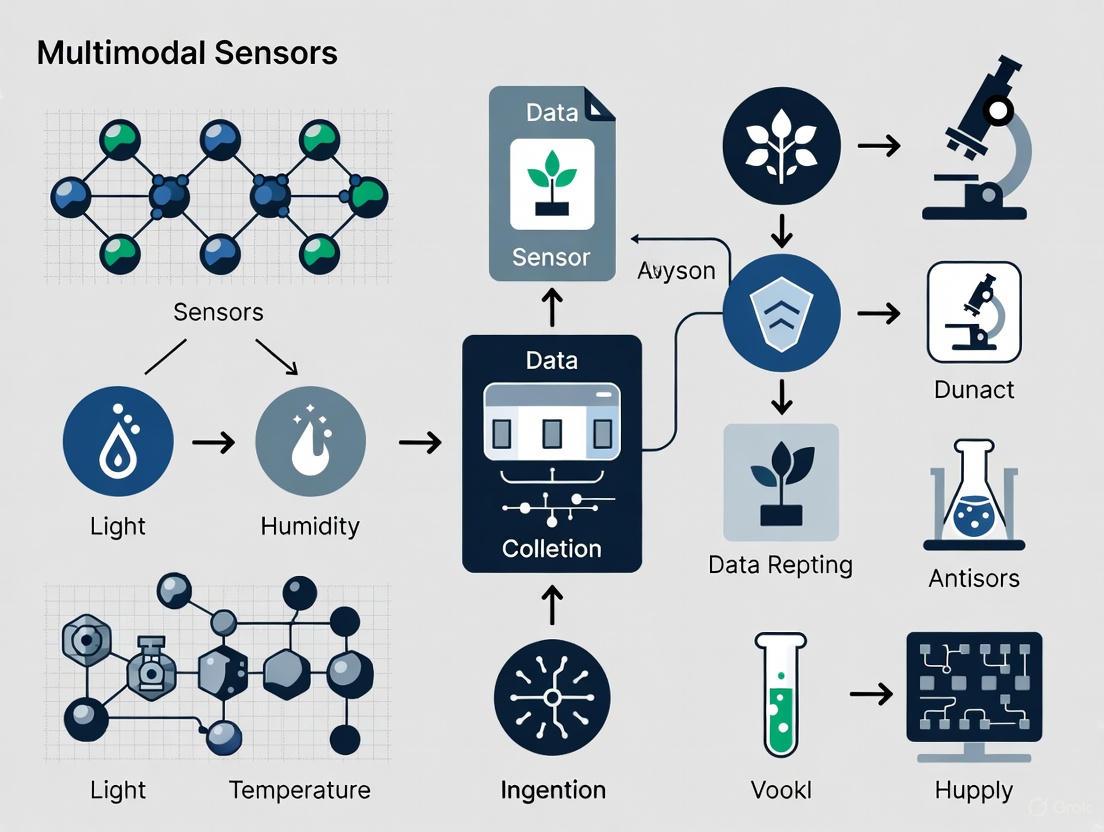
This article explores the transformative role of multimodal sensor technologies in advancing high-throughput phenotyping for biomedical research and drug development.
Multimodal Sensors in High-Throughput Phenotyping: A New Paradigm for Biomedical and Clinical Research
Abstract
This article explores the transformative role of multimodal sensor technologies in advancing high-throughput phenotyping for biomedical research and drug development. It covers the foundational principles of using simultaneous data streams—from wearables, smartphones, and digital platforms—to create comprehensive digital phenotypes. The scope extends to methodological applications in clinical trials, troubleshooting for complex data integration, and comparative validation against traditional measures. Aimed at researchers and scientists, this review synthesizes how these technologies enhance the precision, scalability, and personalization of health monitoring and therapeutic intervention assessment.
The Core Principles and Data Streams of Multimodal Digital Phenotyping
Digital phenotyping is an emerging field that represents a fundamental shift in how researchers and clinicians quantify human health and plant biology. It is formally defined as the moment-by-moment quantification of the individual-level human phenotype using data from personal digital devices such as smartphones and wearables [1] [2]. This approach leverages the ubiquitous nature of digital technology to collect intensive, longitudinal data in naturalistic environments, creating a comprehensive digital footprint of behavior and physiology [3].
The core premise of digital phenotyping lies in its ability to provide unprecedented insights into health-related behaviors and physiological states through continuous monitoring and real-time data analytics. In human applications, this involves collecting active data that requires user engagement (such as completing ecological momentary assessment surveys) and passive data gathered without user participation (such as GPS location, accelerometer readings, and voice analysis) [2]. Similarly, in plant science, high-throughput phenotyping utilizes multimodal sensors to quantitatively measure plant traits across large populations, addressing critical challenges in genetics and breeding programs [4] [5].
The integration of multimodal sensors significantly enhances digital phenotyping by providing complementary data streams that capture different aspects of the phenotype. This multimodal approach allows researchers to develop more comprehensive models of behavior and physiological states, ultimately improving the accuracy and predictive power of digital phenotyping across diverse applications from psychiatry to crop science [6].
Multimodal Sensing Architectures in Digital Phenotyping
Core Sensor Modalities and Data Types
Multimodal sensing architectures form the technological foundation of advanced digital phenotyping systems, integrating diverse sensors to capture complementary aspects of phenotypic expression. The synergy between different sensing modalities enables a more comprehensive understanding of complex traits and behaviors than any single data source could provide independently.
Table 1: Core Sensor Modalities in Digital Phenotyping
| Sensor Modality | Data Types Collected | Applications | Key Measured Parameters |
|---|---|---|---|
| Location Sensing | GPS, Bluetooth proximity, Wi-Fi positioning | Mobility patterns, social behavior, environmental context | Location variance, travel distance, social proximity [3] [7] |
| Movement Sensors | Accelerometer, gyroscope, magnetometer | Physical activity, sleep patterns, behavioral states | Step count, gait, activity intensity, sleep-wake cycles [7] [2] |
| Physiological Monitors | Heart rate sensors, photoplethysmography, electrodermal activity | Stress response, arousal states, cardiovascular health | Heart rate variability, pulse rate, galvanic skin response [1] [2] |
| Image Sensors | RGB, thermal, hyperspectral, depth imaging | Plant morphology, disease detection, human facial expression | Canopy structure, temperature variation, spectral signatures [8] [9] [5] |
| Audio Sensors | Microphone, speech analysis | Social engagement, mood states, cognitive function | Speech patterns, tone, frequency, conversation duration [2] |
| Environmental Sensors | Temperature, humidity, light, air quality | Contextual analysis, environmental triggers | Ambient conditions, environmental exposures [9] [10] |
Sensor Integration Architectures
Effective multimodal digital phenotyping requires sophisticated architectures for sensor integration and data fusion. Two predominant architectural paradigms have emerged: centralized mobile platforms that leverage smartphones and wearables for human phenotyping, and dedicated sensor arrays for plant phenotyping applications.
In human digital phenotyping, smartphones serve as the primary hub for data collection, coordinating inputs from built-in sensors (GPS, accelerometer, microphone) and external wearables (heart rate monitors, smartwatches) [7] [1]. The Beiwe platform exemplifies this approach, simultaneously collecting GPS data, accelerometer readings, and self-reported ecological momentary assessment (EMA) surveys through a smartphone application [7]. This architecture enables both active and passive data collection in natural environments, capturing moment-by-minute behavioral and physiological data.
For plant phenotyping, specialized ground vehicles and aerial platforms integrate multiple imaging sensors for high-throughput field assessment. The GPhenoVision system represents an advanced implementation, incorporating RGB-D, thermal, and hyperspectral cameras mounted on a high-clearance tractor [9]. This multi-sensor approach enables comprehensive canopy characterization, capturing morphological, physiological, and pathological traits simultaneously. Similarly, research by Bai et al. demonstrated the integration of ultrasonic sensors, thermal infrared radiometers, NDVI sensors, spectrometers, and RGB cameras on a single field platform for simultaneous phenotyping of soybean and wheat [10].
Table 2: Comparative Analysis of Digital Phenotyping Platforms
| Platform | Sensor Complement | Data Fusion Approach | Primary Application Domain |
|---|---|---|---|
| Beiwe Platform | Smartphone sensors (GPS, accelerometer), EMA surveys | Temporal synchronization of active and passive data streams | Human epidemiological cohorts, mental health monitoring [7] |
| GPhenoVision | RGB-D camera, thermal imager, hyperspectral camera, RTK-GPS | Geo-referenced multimodal image registration | Field-based high-throughput plant phenotyping [9] |
| Multi-Sensor Field System | Ultrasonic sensors, thermal IR, NDVI, spectrometers, RGB cameras | Synchronized data collection with environmental monitoring | Soybean and wheat breeding programs [10] |
| M2F-Net | RGB imaging, agrometeorological sensors | Deep learning-based multimodal fusion | Identification of fertilizer overuse in crops [6] |
| Phenotyping Robot | RGB-D camera, multi-spectral sensors, environmental sensors | Real-time sensor data registration and fusion | Crop ground phenotyping in dry and paddy fields [8] |
Experimental Protocols and Methodologies
Protocol Design for Human Digital Phenotyping
Implementing robust digital phenotyping studies requires meticulous protocol design to ensure data quality, participant compliance, and scientific validity. The Nurses' Health Study II provides a exemplary framework for smartphone-based digital phenotyping implementation [7]. This protocol employed an 8-day intensive measurement burst using the Beiwe smartphone application, incorporating:
- Baseline Assessment: Comprehensive initial survey covering demographic characteristics, lifestyle factors, and dispositional traits using validated instruments such as the Life Orientation Test-Revised for optimism [7].
- Ecological Momentary Assessment (EMA): Twice-daily surveys (early afternoon and evening) administered through smartphone notifications, assessing current psychological states using modified versions of standardized instruments like the Positive and Negative Affect Schedule-Expanded Form (PANAS-X) [7].
- Passive Sensing: Continuous collection of minute-level accelerometer data (at 10 Hz every 30 seconds for 10 consecutive seconds) and GPS data (every 15 minutes for 90 consecutive seconds) to capture movement patterns and location variance [7].
- Technical Support Infrastructure: Dedicated research assistants providing telephone and email support throughout the study period to address technical issues and maintain participant engagement [7].
- Data Quality Monitoring: Real-time tracking of survey completion rates and passive data completeness to identify compliance issues promptly [7].
This protocol demonstrated modest but acceptable compliance rates in an older cohort (57-75 years), with average daily EMA response rates of 55.6% for early afternoon surveys and 54.7% for evening surveys, and passive data completeness of 62.0% for accelerometer data and 57.7% for GPS data [7]. The findings highlight the importance of balancing data collection intensity with participant burden, particularly in studies extending beyond brief assessment periods.
Field-Based High-Throughput Plant Phenotyping Protocols
Field-based high-throughput plant phenotyping requires specialized protocols to handle environmental variability, large sample sizes, and complex sensor integration. The GPhenoVision system protocol exemplifies a comprehensive approach to multimodal plant phenotyping [9]:
- Platform Configuration: A high-clearance tractor equipped with an adjustable sensor frame (height range: 1.2-2.4 meters) and environmental enclosure to minimize ambient interference from factors such as direct sunlight and wind [9].
- Multimodal Sensor Synchronization: Coordinated data collection from RGB-D (6 FPS), thermal (6 FPS), and hyperspectral (100 FPS) cameras, all triggered by GPS position to ensure precise geo-referencing of all measurements [9].
- Environmental Monitoring: Concurrent measurement of ambient conditions (air temperature, relative humidity, pressure) using auxiliary sensors to contextualize phenotypic measurements [9].
- Data Processing Pipeline: Automated extraction of canopy-level phenotypes including height, width, projected leaf area, volume from RGB-D data, and temperature metrics from thermal images [9].
- Validation Procedures: Correlation of sensor-derived measurements with manual ground truthing and handheld instrument readings to ensure measurement accuracy (r² > 0.90 between gimbal data and handheld instruments) [8].
This protocol enabled the quantification of growth rates for morphological traits and demonstrated strong correlations with fiber yield (r = 0.54-0.74) and good broad-sense heritability (H² = 0.27-0.72), validating its utility for genetic analysis and breeding programs [9].
Diagram 1: Experimental workflows for human and plant digital phenotyping protocols
Data Analytics and Computational Approaches
Machine Learning and Deep Learning Frameworks
The volume, velocity, and variety of data generated by multimodal digital phenotyping necessitate advanced computational approaches for meaningful analysis. Machine learning and deep learning frameworks have emerged as essential tools for extracting patterns and predictive signals from these complex datasets [4].
In human digital phenotyping, machine learning algorithms process high-dimensional data from multiple sensors to identify behavioral markers associated with health outcomes. For example, in mental health applications, ML models can detect subtle patterns in mobility, sociability, and communication that precede clinical relapse events [3] [2]. One pilot study with individuals with schizophrenia demonstrated that relapse events could be predicted by anomalies in passive data streams, with a 71% higher rate of anomalies detected two weeks prior to relapse compared to baseline periods [3].
For plant phenotyping, convolutional neural networks (CNNs) have revolutionized the analysis of multimodal imaging data. The M2F-Net framework exemplifies advanced deep learning applications, implementing three multimodal fusion strategies to combine agrometeorological data with plant images for identifying fertilizer overuse [6]. This approach achieved 91% classification accuracy, significantly outperforming unimodal models trained solely on image or sensor data [6]. The superior performance demonstrates the critical advantage of multimodal data fusion for complex phenotypic classification tasks.
Multimodal Data Fusion Strategies
Effective integration of heterogeneous data streams represents both a challenge and opportunity in digital phenotyping. Three primary fusion strategies have emerged across applications:
- Early Fusion: Combining raw data from multiple sensors before feature extraction, requiring precise temporal alignment but preserving potentially informative interactions between data modalities [6].
- Intermediate Fusion: Extracting features from each modality separately then combining them in shared hidden layers of neural networks, balancing modality-specific processing with integrated representation learning [6].
- Late Fusion: Processing each data stream through separate models and combining predictions at the decision level, allowing for heterogeneous processing pipelines while leveraging complementary information [6].
The choice of fusion strategy depends on data characteristics and research objectives. Intermediate fusion has shown particular promise in applications requiring complex pattern recognition across heterogeneous data types, as demonstrated by the M2F-Net framework for fertilizer overuse identification [6].
Technical Challenges and Standardization Strategies
Despite its considerable promise, digital phenotyping faces significant technical challenges that must be addressed to realize its full potential. Key limitations include:
- Battery Life Constraints: Continuous sensor data collection consumes substantial power, with smartphones experiencing rapid battery drainage (5.5-6 hours at 1Hz sampling) [1]. Location services alone can consume 13-38% of battery capacity, depending on signal strength [1].
- Data Heterogeneity: Inconsistencies across devices, operating systems, and sensor specifications create interoperability challenges and limit data standardization [1].
- Analytical Complexity: The "volume, variety, and velocity" of digital phenotyping data outpace traditional statistical methods, requiring specialized machine learning approaches [3].
- Participant Compliance: User fatigue, particularly with frequent EMA surveys, can reduce data completeness over time [7].
Standardization strategies are emerging to address these challenges:
- Adaptive Sampling: Dynamically adjusting sensor sampling frequencies based on activity levels to optimize power consumption [1].
- Cross-Platform Frameworks: Developing open-source APIs and software development kits (SDKs) to enhance interoperability across devices and operating systems [1].
- Advanced Analytical Methods: Applying anomaly detection algorithms and time-varying effect models specifically designed for intensive longitudinal data [3].
- Participant-Centered Design: Optimizing survey frequency and passive data collection protocols to balance data richness with participant burden [7].
Implementing robust digital phenotyping research requires access to specialized tools, platforms, and analytical resources. The following table summarizes key components of the digital phenotyping research toolkit:
Table 3: Essential Research Reagents and Resources for Digital Phenotyping
| Resource Category | Specific Tools/Platforms | Function/Purpose | Example Applications |
|---|---|---|---|
| Data Collection Platforms | Beiwe, Apple ResearchKit, AWARE Framework | Smartphone-based active and passive data collection | Large-scale epidemiological cohorts, mental health monitoring [7] |
| Multimodal Sensing Systems | GPhenoVision, Phenotyping Robots, Custom Sensor Arrays | High-throughput field-based phenotyping | Crop genetic improvement, breeding programs [8] [9] [10] |
| Sensor Technologies | RGB-D Cameras (Microsoft Kinect), Thermal Imagers (FLIR), Hyperspectral Cameras | Capture morphological, thermal, and spectral plant traits | Canopy structure analysis, stress detection, yield prediction [9] [5] |
| Positioning Systems | Real-Time Kinematic GPS (Raven Cruizer II) | Precise geo-referencing of field measurements | Spatial phenotyping, plot-level trait mapping [9] |
| Data Analysis Frameworks | M2F-Net, CNN Architectures (DenseNet-121), Random Forests | Multimodal data fusion, feature extraction, classification | Fertilizer overuse identification, disease detection [4] [6] |
| Validation Instruments | Life Orientation Test-Revised (LOT-R), PANAS-X, Handheld Spectrometers | Ground truth measurement for algorithm validation | Psychological assessment, sensor data calibration [7] [10] |
Digital phenotyping represents a paradigm shift in how researchers quantify complex phenotypes across human and plant domains. By leveraging multimodal sensor data, this approach enables the moment-by-moment assessment of behavior and physiological states in naturalistic environments, providing unprecedented resolution for understanding phenotype-environment interactions. The integration of diverse data streams—from smartphone sensors and wearable devices in human applications to multimodal imaging systems in plant science—creates rich phenotypic fingerprints that offer new insights for healthcare and agricultural innovation.
Despite significant challenges related to data heterogeneity, analytical complexity, and participant engagement, ongoing advancements in sensor technology, machine learning, and standardization protocols are rapidly addressing these limitations. As digital phenotyping methodologies mature, they hold tremendous promise for enabling personalized interventions in healthcare and accelerating genetic gain in crop improvement, ultimately contributing to enhanced human health and global food security.
High-throughput phenotyping research is undergoing a transformative shift with the integration of multimodal sensor data. The convergence of behavioral, physiological, psychological, and social data modalities creates a comprehensive digital fingerprint of human health and functioning, enabling unprecedented precision in research and clinical applications [11]. This multimodal approach leverages continuous, real-time data collection from personal digital devices such as smartphones and wearables to capture the moment-by-moment quantification of individual-level human phenotype [12]. By moving beyond single-domain assessments, researchers can now decode complex patterns and interactions across domains, offering particular promise for mental health care, chronic disease management, and pharmaceutical development where early intervention can dramatically improve outcomes [12] [11].
The technical foundation of this revolution rests on sophisticated sensor technologies embedded in consumer and specialized medical devices. These include accelerometers, GPS sensors, heart rate monitors, microphone and speech analysis capabilities, and sophisticated algorithms for analyzing social and phone usage patterns [12] [13]. When strategically combined within integrated systems often called "smart packages" - typically comprising a smartphone paired with wearable devices like Actiwatches, smart bands, or smartwatches - these sensors provide complementary data streams that capture the dynamic interplay between different aspects of human functioning [13]. This whitepaper provides a technical examination of the four core data modalities, their measurement methodologies, and their integrated application in advancing high-throughput phenotyping research.
Core Data Modalities and Their Technical Specifications
Behavioral Phenotyping
Behavioral phenotyping involves the passive monitoring and quantification of an individual's daily activities, movements, and device interactions [11]. This modality provides objective markers of functional capacity, daily routine structure, and behavioral activation levels that are particularly valuable in mental health and neurological disorders research.
Key Measurable Features:
- Physical Activity: Step count, movement intensity, exercise patterns
- Sleep Patterns: Sleep duration, sleep-wake cycles, rest-activity rhythms
- Device Usage: Screen time, app usage patterns, typing dynamics
- Mobility: Location tracking, travel patterns, circadian movement
Physiological Phenotyping
Physiological phenotyping captures data from an individual's autonomic and central nervous system functions, providing objective biomarkers of health status and disease progression [11]. This modality offers crucial insights into bodily responses to stressors, medications, and environmental factors.
Key Measurable Features:
- Cardiovascular Function: Heart rate, heart rate variability, blood pressure
- Electrodermal Activity: Skin conductance, galvanic skin response
- Metabolic Indicators: Blood glucose, skin temperature, respiratory rate
- Neurophysiological Signals: EEG, EMG (via specialized wearables)
Psychological Phenotyping
Psychological phenotyping focuses on capturing data related to emotional states, cognitive functions, and subjective experiences [11]. This modality bridges the gap between objective behavioral measures and internal psychological experiences, enabling research into mood disorders, cognitive decline, and treatment response.
Key Measurable Features:
- Emotional State: Voice sentiment analysis, facial expression recognition
- Cognitive Function: Reaction time, processing speed, working memory tasks
- Subjective Experience: Ecological momentary assessments, self-reported mood
- Clinical Symptoms: Depression and anxiety indicators from language patterns
Social Phenotyping
Social phenotyping quantifies an individual's social engagement patterns and communication behaviors [11]. This modality provides crucial context for understanding how social connectedness and interaction patterns influence health outcomes across psychiatric and neurological conditions.
Key Measurable Features:
- Social Engagement: Call logs, text message frequency, social media activity
- Communication Patterns: Conversation dynamics, vocal features during social interaction
- Social Rhythm: Regularity of social contact, size of social network
- Language Analysis: Vocabulary complexity, sentiment in written communication
Table 1: Technical Specifications of Core Digital Phenotyping Modalities
| Data Modality | Primary Sensors | Sample Metrics | Collection Methods | Data Output Types |
|---|---|---|---|---|
| Behavioral | Accelerometer, GPS, Gyroscope, Light Sensor | Step count, sleep duration, travel distance, phone usage time | Passive sensing via smartphones and wearables | Time-series activity data, location coordinates, usage logs |
| Physiological | PPG sensor, EDA sensor, Thermometer, ECG | Heart rate, HRV, skin conductance, skin temperature, blood pressure | Smartwatches, chest straps, specialized patches | Waveform data, summary statistics, event markers |
| Psychological | Microphone, Touchscreen, Camera, EMA apps | Voice sentiment, self-reported mood, reaction time, facial expressivity | Active tasks, voice samples, ecological momentary assessment | Audio features, self-report scores, performance metrics |
| Social | Bluetooth, Microphone, Communication apps | Call frequency, social media use, conversation duration, message volume | Communication logs, speech analysis during calls | Interaction logs, language features, social network maps |
Quantitative Feature Importance Across Devices
The relative importance and measurement reliability of phenotyping features varies significantly across different wearable devices, reflecting their distinct hardware capabilities and design purposes. Systematic analysis reveals device-specific patterns in feature effectiveness for predicting mental health conditions like depression and anxiety.
Table 2: Feature Importance and Coverage Across Wearable Device Types
| Feature | Actiwatch | Smart Bands | Smartwatches |
|---|---|---|---|
| Accelerometer | High importance, Wide coverage | Moderate importance, Wide coverage | Wide coverage, Lower importance |
| Heart Rate | Not available | High importance, Wide coverage | High importance, Wide coverage |
| Sleep Metrics | Lower coverage, Moderate importance | High importance, Wide coverage | High importance, Wide coverage |
| Step Count | Not available | High importance, Wide coverage | Wide coverage, Lower importance |
| Phone Usage | Not available | High importance, Moderate coverage | Moderate coverage, Variable importance |
| GPS | Not available | High importance when used | Variable importance, Technical limitations |
| Electrodermal Activity | Not available | High importance when used | Limited availability, Emerging use |
| Skin Temperature | Not available | High importance when used | Limited availability, Emerging use |
Research indicates that a core feature package comprising accelerometer, steps, heart rate, and sleep consistently contributes to mood disorder prediction across devices [13]. However, device-specific analyses reveal important nuances: Actiwatch studies primarily emphasize accelerometer and activity metrics but underutilize sleep features; smart bands effectively leverage HR, steps, sleep, and phone usage; while smartwatches most reliably utilize sleep and HR data [13]. Features like electrodermal activity, skin temperature, and GPS show high predictive importance when used but have lower adoption rates, suggesting opportunities for broader implementation in future devices [13].
Experimental Protocols for Multimodal Data Collection
Protocol 1: Multimodal Clinical Interaction Study
The MePheSTO study protocol exemplifies rigorous multimodal phenotyping in clinical psychiatric populations, specifically targeting major depressive episodes and schizophrenia [14].
Study Design:
- Participants: 450 participants (150 per site), ideally split between MDE (75) and schizophrenia (75) patients
- Duration: Main study phase with 12-month follow-up period
- Setting: Multicenter prospective observational study across clinical sites
- Data Collection Points: Minimum of four clinical interactions per participant recorded multimodally
Methodological Details:
- Recording Modalities: Video, audio, and physiological sensors during patient-clinician interactions
- Follow-up Phase: Videoconference-based recordings and ecological momentary assessments over 12 months
- Digital Phenotyping Targets:
- Alogia and thought poverty: Quantified via speech amount, average pause length, lack of articulation, average response length
- Anhedonia and affective flattening: Detected by facial and body movement reduction, vocal monotony
- Social withdrawal: Measured through reduced verbal engagement, increased physical distance
- Avolition: Identified via reduced gesture frequency, slower movement initiation
This protocol aims to acquire a multimodal dataset of patient-clinician interactions, annotated and clinically labelled for scientifically sound validation of digital phenotypes for psychiatric disorders [14]. The target sample size of 450 participants represents a significant increase beyond existing corpora, addressing the critical need for larger datasets in digital phenotyping research.
Protocol 2: Multimodal Opioid Use Disorder Monitoring
This protocol demonstrates implementation of multimodal digital phenotyping in substance use disorder populations, specifically patients receiving buprenorphine for opioid use disorder [15].
Study Parameters:
- Participants: 65 patients receiving buprenorphine for OUD
- Duration: 12-week monitoring period
- Data Sources: Ecological momentary assessment (EMA), sensor data, and social media data
- Collection Devices: Smartphone, smartwatch, and social media platforms
Engagement Metrics and Outcomes:
- Phone Carry Criteria: ≥8 hours per day (participants met criteria on 94% of study days)
- Watch Wear Criteria: ≥18 hours per day (participants met criteria on 74% of days)
- Sleep Monitoring: Watch worn during sleep (77% of days)
- EMA Response Rates: Mean rate of 70%, declining from 83% (week 1) to 56% (week 12)
- Social Media Consent: 88% consent rate among account holders
This study demonstrates generally high engagement with multiple digital phenotyping data sources in a clinical OUD population, though with more limited engagement for social media data [15]. The findings provide important feasibility data for implementing multimodal phenotyping in challenging clinical populations.
Technical Implementation and Workflow Integration
The integration of multimodal sensor data requires sophisticated technical infrastructure and standardized workflows to ensure data reliability, interoperability, and scalability. The following diagram illustrates the core workflow for multimodal data acquisition, processing, and analysis in high-throughput phenotyping research:
Diagram 1: Multimodal Phenotyping Workflow
Technical Infrastructure Requirements
Implementing robust multimodal phenotyping requires addressing several technical challenges:
Battery Life and Power Management:
- Challenge: Continuous sensor operation causes significant battery drain, with smartphones lasting approximately 5.5-6 hours during continuous sensing at 1Hz refresh rate [12]
- Solutions: Adaptive sampling (dynamically adjusting sensor frequency based on activity), sensor duty cycling (alternating between low-power and high-power sensors), and low-power wearable devices with energy-efficient chipsets [12]
Device Compatibility and Data Integration:
- Challenge: Heterogeneity of devices and operating systems creates inconsistencies in data collection [12]
- Solutions: Native app development for optimized performance, cross-platform frameworks (React Native, Flutter), standardized APIs (Apple HealthKit, Google Fit), and open-source frameworks for data integration [12]
Data Processing and Storage:
- Challenge: Multimodal phenotyping generates massive datasets requiring specialized management
- Solutions: Cloud-based storage solutions, dedicated data management platforms, and automated data validation pipelines [16]
The Scientist's Toolkit: Essential Research Reagents and Solutions
Table 3: Essential Research Reagents and Technical Solutions for Digital Phenotyping
| Tool Category | Specific Solutions | Technical Function | Research Application |
|---|---|---|---|
| Wearable Devices | Actiwatch, Fitbit Charge 5, Polar H10 chest strap, Empatica E4 | Capture physiological (HR, HRV, EDA) and behavioral (movement, sleep) data | Continuous monitoring in naturalistic settings; long-term longitudinal studies |
| Mobile Sensing Platforms | Beiwe, AWARE Framework, StudentLife | Passive smartphone data collection (GPS, usage, communication) | Real-world behavior tracking; ecological momentary assessment delivery |
| Data Integration APIs | Apple HealthKit, Google Fit, Open mHealth | Standardized data aggregation from multiple sources | Cross-platform data interoperability; centralized data storage |
| Multimodal Analysis Tools | BioSignalML, OpenFace, Praat | Specialized analysis of physiological signals, facial expression, vocal features | Feature extraction from raw sensor data; behavioral coding |
| Clinical Assessment Integration | PHQ-9, GAD-7, PANSS digitized versions | Digital administration of validated clinical scales | Ground truth establishment; model validation against clinical standards |
The strategic integration of behavioral, physiological, psychological, and social data modalities represents a paradigm shift in high-throughput phenotyping research. By leveraging complementary data streams from multimodal sensors, researchers can develop more comprehensive digital phenotypes that capture the complex, dynamic interplay between different aspects of human functioning. This approach shows particular promise for mental health research, where it enables detection of subtle changes that were previously difficult to detect, prediction of symptom exacerbation, and support for personalized interventions [12] [11].
Technical implementation requires careful attention to device selection, power management, data integration, and analytical methodologies. The core feature package of accelerometer, steps, heart rate, and sleep provides a foundation for mood disorder prediction, while device-specific optimization enhances data quality [13]. Future advancements will depend on improved standardization, battery efficiency, interoperability solutions, and ethical frameworks that balance technological innovation with privacy protection [12]. As these technical challenges are addressed, multimodal digital phenotyping is poised to become an increasingly powerful tool for transforming research and clinical practice across psychiatric, neurological, and chronic disease domains.
High-throughput phenotyping (HTP) research represents a transformative approach in biomedical and agricultural sciences, enabling the large-scale, precise measurement of physiological and behavioral traits. Central to this paradigm is the strategic integration of multimodal sensor data collected through both active and passive methodologies. The emergence of digital phenotyping—defined as the "moment-by-moment quantification of the individual-level human phenotype in situ using data from personal digital devices" [17]—has created new opportunities for understanding disease trajectories and health-related behaviors. However, this approach introduces a fundamental tension: the scientific need for comprehensive data collection must be carefully balanced against the practical burden placed on study participants [18]. This technical guide examines the core principles, methodologies, and practical implementations of active versus passive data collection frameworks within multimodal sensor-based research, providing researchers with evidence-based strategies for optimizing this critical balance.
Modern phenotyping research utilizes a diverse ecosystem of sensing technologies, including smartphones, wearables, ground-based robotic systems, and unmanned aerial vehicles (UAVs) [4] [19] [20]. These platforms generate massive datasets that, when effectively integrated and analyzed, can reveal previously unattainable insights into complex biological phenomena. The transition from traditional, low-throughput phenotyping to automated HTP has been accelerated by concurrent advances in sensor technology, data analytics, and robotic platforms [19]. Within this technological landscape, understanding the relative strengths, limitations, and appropriate applications of active versus passive data collection is paramount for designing methodologically rigorous and practically feasible research studies.
Defining Active and Passive Data Collection
Core Concepts and Distinctions
In multimodal sensing research, data collection strategies fall into two primary categories based on the level of participant involvement required:
Active Data Collection: This approach requires deliberate participant engagement to generate data points. In clinical and research settings, this typically involves Ecological Momentary Assessment (EMA), where participants complete subjective measures related to their symptoms, behaviors, or experiences in real-time within their natural environments [18]. Active data collection provides rich, contextualized information but introduces challenges related to participant compliance and burden.
Passive Data Collection: This methodology operates without requiring explicit participant involvement, continuously gathering objective data through embedded sensors in devices such as smartphones, wearables, or environmental monitors [18]. Examples include GPS tracking, accelerometer data, communication logs, and device usage patterns [21] [22]. While passive sensing generates substantial datasets with minimal participant effort, it may lack contextual depth and faces challenges regarding data consistency and privacy [18].
Comparative Analysis: Advantages and Limitations
Table 1: Comparative Analysis of Active and Passive Data Collection Methods
| Characteristic | Active Data Collection | Passive Data Collection |
|---|---|---|
| Participant Burden | High (requires direct engagement) | Low (minimal participant awareness) |
| Data Volume | Lower (limited by compliance) | Higher (continuous sampling) |
| Contextual Depth | Rich subjective context | Limited without complementary active data |
| Compliance Issues | Significant challenge [18] | Minimal for data collection itself |
| Data Consistency | Variable (dependent on prompt response) | Platform-dependent variability [21] |
| Primary Strengths | Subjective experience, ground truth | Objective behavioral metrics, longitudinal patterns |
| Typical Technologies | EMA surveys, self-report instruments | Smartphone sensors, wearables, environmental sensors |
Multimodal Sensing in High-Throughput Phenotyping
The Multimodal Sensor Ecosystem
High-throughput phenotyping leverages diverse sensing technologies deployed across multiple platforms to capture comprehensive phenotypic profiles:
Ground-Based Imaging Systems: These include tractor-mounted, gantry, or robotic systems equipped with RGB cameras, multispectral/hyperspectral sensors, LiDAR, and time-of-flight cameras for detailed plant characterization [23] [19] [20]. For instance, the PlantScreen Robotic XYZ System has been successfully deployed for analyzing drought tolerance traits in rice [4].
Aerial Phenotyping Platforms: Unmanned Aircraft Systems (UASs) equipped with various sensors enable scalable field phenotyping, with SfM-MVS (Structure from Motion and Multi-View Stereo) and LiDAR technologies dramatically improving the efficiency of canopy height estimation and biomass assessment [19].
Personal Digital Devices: Smartphones and wearables contain multiple sensors (accelerometers, gyroscopes, GPS, microphones) that enable digital phenotyping of health behaviors in free-living environments [21] [17] [22]. These devices facilitate the collection of real-world data (RWD) that complements traditional clinical assessments.
Sensor Integration and Data Fusion
The effective utilization of cross-modal patterns depends on sophisticated image registration and data fusion techniques. A novel multimodal 3D image registration method that integrates depth information from a time-of-flight camera has demonstrated robust alignment across different plant types and camera compositions [23]. Similarly, research in mental health digital phenotyping has employed multimodal sensing of multiple situations of interest (e.g., sleep, physical activity, mobility) to develop comprehensive behavioral markers [17].
Table 2: Research Reagent Solutions for Multimodal Phenotyping
| Technology Category | Specific Solutions | Primary Functions | Example Applications |
|---|---|---|---|
| Imaging Sensors | RGB cameras, Multispectral/hyperspectral cameras, Thermal cameras | Capture spectral signatures, canopy temperature, morphological traits | Canopy coverage estimation, stress detection [19] |
| 3D Reconstruction Systems | LiDAR, Time-of-flight cameras, SfM-MVS | Create 3D models of plant architecture | Canopy height estimation, biomass prediction [19] |
| Inertial Measurement Units | Accelerometers, Gyroscopes | Quantify movement patterns, physical activity | Human activity recognition, gait analysis [21] |
| Location Tracking | GPS, Wi-Fi positioning systems | Monitor mobility patterns, location variance | Depression symptom association [22] |
| Environmental Sensors | Field Server, IoT environmental sensors | Monitor ambient conditions (temperature, humidity, light) | G×E (genotype and environment) interaction studies [19] |
| Software Platforms | EasyPCC, LemnaTec systems | Automated image analysis, data processing | High-throughput canopy coverage analysis [19] |
Quantitative Assessment of Data Collection Methodologies
Performance Metrics in Passive Sensing
Recent large-scale studies have revealed significant variations in passive data quality across different sensing platforms. A comprehensive analysis of smartphone sensor data from 3,000 participants found considerable variation in sensor data quality within and across Android and iOS devices [21]. Specifically, iOS devices showed significantly lower levels of anomalous point density (APD) compared to Android across all sensors (p < 1 × 10^−4), and iOS devices demonstrated a considerably lower missing data ratio (MDR) for the accelerometer compared to GPS data (p < 1 × 10^−4) [21]. Notably, the quality features derived from raw sensor data across devices alone could predict the device type (Android vs. iOS) with up to 0.98 accuracy (95% CI [0.977, 0.982]) [21], highlighting the substantial platform-specific biases that can confound phenotypic inferences.
Compliance Metrics in Active Data Collection
Research on active data collection methodologies has identified significant challenges in participant compliance. A scoping review of 77 mobile sensing studies found that participant compliance in active data collection remains a major barrier, with considerable variability in completion rates for ecological momentary assessments [18]. Similarly, a multimodal digital phenotyping study in patients with major depressive episodes found that high dropout rates for longer study periods remain a challenge, limiting the generalizability of findings despite the potential of these methodologies [22].
Experimental Protocols for Integrated Data Collection
Protocol 1: Multimodal Digital Phenotyping for Mental Health
The Mobile Monitoring of Mood (MoMo-Mood) study implemented a comprehensive protocol for assessing mood disorders using integrated active and passive data collection [22]:
Participant Cohorts: Recruitment of 188 participants across 3 subcohorts of patients with major depressive episodes (major depressive disorder, bipolar disorder, or concurrent borderline personality disorder) and a healthy control group.
Phase 1 (Initial 2 weeks): Collection of multimodal data including:
- Active Data: Five sets of daily questions completed by participants
- Passive Data: Bed sensors, actigraphy, and smartphone sensors (GPS, communication logs, device usage)
Phase 2 (Extended phase, up to 1 year)
- Passive Monitoring: Continuous smartphone data collection
- Active Assessments: Biweekly Patient Health Questionnaire-9 (PHQ-9) assessments
Analytical Framework
- Statistical Analysis: Survival analysis for adherence, statistical tests for group differences
- Feature Extraction: Location variance, normalized entropy of location, temporal communication patterns
- Model Development: Linear mixed models to associate behavioral features with depression severity
This protocol demonstrated that the duration of incoming calls (β = -0.08, 95% CI -0.12 to -0.04; P < 0.001) and the standard deviation of activity magnitude (β = -2.05, 95% CI -4.18 to -0.20; P = 0.02) were negatively associated with depression severity, while the duration of outgoing calls showed a positive association (β = 0.05, 95% CI 0.00-0.09; P = 0.02) [22].
Protocol 2: High-Throughput Field Phenotyping Using Robotic Systems
A recently developed phenotyping robot exemplifies the integration of multiple imaging sensors for agricultural field phenotyping [8]:
Platform Design: Gantry-style chassis with adjustable wheel track (1400-1600 mm) to adapt to different row spacing arrangements, functioning effectively in both dry field and paddy field environments.
Sensor Gimbal System: Six-degree-of-freedom sensor gimbal with high payload capacity enabling precise height (1016-2096 mm) and angle adjustments.
Data Acquisition and Fusion
- Sensor Registration: Implementation of Zhang's calibration and feature point extraction algorithm
- Homography Matrix Calculation: For high-throughput data collection at fixed positions and heights
- Performance Validation: Root Mean Square Error (RMSE) of the registration algorithm not exceeding 3 pixels, with gimbal data strongly correlating with handheld instrument data (r² > 0.90)
This system enables the collection of multimodal image data (RGB, hyperspectral, thermal) that can be coregistered and fused for comprehensive plant trait analysis [8].
Workflow Visualization: Integrated Active-Passive Sensing
Integrated Active-Passive Data Collection Workflow
Optimization Strategies for Balancing User Burden and Data Quality
Mitigating Active Data Collection Burden
Intelligent Prompting Systems: Machine learning techniques can reduce participant burden in active data collection by optimizing prompt timing, auto-filling responses, and minimizing prompt frequency based on individual patterns and contextual factors [18].
Simplified Interfaces: User-friendly interfaces, particularly for smartwatch prompts and mobile applications, can significantly improve compliance rates by reducing interaction complexity and time requirements [18].
Adaptive Assessment Protocols: Implementing algorithms that dynamically adjust questioning frequency and complexity based on participant engagement levels and symptom severity can maintain data quality while minimizing burden [18].
Enhancing Passive Data Quality and Consistency
Platform-Specific Optimization: Given the significant differences in data quality between mobile platforms (Android vs. iOS), researchers should implement platform-specific sampling strategies and quality adjustment methods to ensure consistent data collection across heterogeneous devices [21].
Battery Life Management: Techniques such as optimization of recording times, strategic sensor scheduling, and adaptive sampling rates can preserve device battery life while maintaining data integrity [18].
Motivational Engagement: Implementing appropriate motivational techniques, including feedback mechanisms and engagement prompts, can encourage proper device use and maintenance, thereby increasing data consistency [18].
The integration of active and passive data collection methodologies within multimodal sensor frameworks represents a powerful approach for high-throughput phenotyping across diverse research domains. The strategic balance between these approaches—leveraging the contextual richness of active assessments and the continuous objective monitoring of passive sensing—enables researchers to develop comprehensive digital behavioral signatures that may be linked to health outcomes in real-world settings [21] [17]. As the field advances, key challenges remain in standardizing data quality across platforms, maintaining participant engagement in long-term studies, and developing analytical frameworks that can effectively integrate multimodal data streams while accounting for platform-specific variations and biases.
Future research directions should focus on the development of more adaptive hybrid frameworks that dynamically adjust the balance between active and passive data collection based on individual participant characteristics, research needs, and contextual factors. Additionally, advancing cross-platform standardization and addressing the technological and methodological rigor issues identified in current studies will be crucial for translating these promising methodologies into real clinical and agricultural applications [17] [18]. Through continued refinement of these approaches, researchers can maximize the potential of multimodal phenotyping while minimizing participant burden, ultimately driving innovation in both biomedical and agricultural sciences.
The paradigm of healthcare is undergoing a radical transformation, shifting from a primarily reactive, curative model to one that is Predictive, Preventive, Personalized, and Participatory—the core principles of P4 medicine [24] [25] [26]. This new approach conceptualizes a health care model based on multidimensional data and machine-learning algorithms to develop public health interventions and monitor population health status with a focus on wellbeing and healthy aging [24]. In this framework, the "patient" is redefined; they may be healthy at the time of assessment but potentially ill in the future, necessitating a dynamic conception of health states [25]. P4 medicine represents the application of systems biology to medical practice, aiming to treat not only symptoms but also underlying causes of disease with greater emphasis on prevention and promoting overall balance [25] [26].
High-throughput phenotyping serves as the critical technological enabler for P4 medicine, providing the comprehensive, dynamic data required to realize its core principles. Phenotyping is defined as the comprehensive assessment of complex traits, including development, growth, resistance, tolerance, physiology, architecture, yield, and ecology [4]. The emergence of multimodal sensor systems has revolutionized our ability to capture these traits at unprecedented scale and resolution. By leveraging advanced sensing technologies and artificial intelligence, modern phenotyping generates the extensive, multidimensional data clouds that form the foundation of P4 medicine [4] [9] [11]. These data clouds, comprising molecular, cellular, organ, phenotypic, imaging, and social network information, enable the characterization of an individual's "network of networks" in both normal and disease-perturbed states, providing deep insights into disease mechanisms and new approaches to diagnostics and therapeutics [26].
The P4 Framework Deconstructed: How Phenotyping Drives Each Component
Predictive Medicine: From Reaction to Anticipation
Predictive medicine focuses on the early identification of potential diseases through comprehensive analysis of large-scale individual data [24] [11]. Phenotyping enables prediction by facilitating continuous health monitoring and identification of subtle patterns that precede clinical manifestations. Digital phenotyping, which utilizes smart devices, sensors, and mobile apps to continuously collect data on behavior, psychology, and physiology, provides a powerful tool for identifying early signs and risks of diseases [11]. For example, research has demonstrated that smartphone-based digital phenotyping can detect changes in usage patterns, sleep quality, and social behavior that may signal the onset of mental health issues like depression or anxiety [11]. By dynamically monitoring these behavioral biomarkers, healthcare providers can transition from reactive treatment to proactive risk management.
The predictive capability of phenotyping extends across multiple domains, as illustrated in Table 1, which summarizes key applications, technologies, and experimental findings.
Table 1: Predictive Capabilities Enabled by Advanced Phenotyping Technologies
| Application Domain | Phenotyping Technology | Predictive Capability | Experimental Correlation/Performance |
|---|---|---|---|
| Mental Health | Smartphone-based digital phenotyping [11] | Early identification of schizophrenia onset through usage pattern analysis | Strong association with clinical outcome assessments [11] |
| Infectious Disease | AI-driven migration maps, contact tracing [24] | Forecasting regional transmission dynamics of COVID-19 | Enabled aggressive containment strategies in South Korea (mortality: 6/100k vs. USA: 231/100k) [24] |
| Crop Disease | Multimodal imaging (RGB, thermal, hyperspectral) [9] | Early detection of plant stress before visual symptoms | Strong correlations (r = 0.54-0.74) between traits and yield [9] |
| Chronic Disease | Wearable sensors, continuous physiological monitoring [11] | Prediction of cardiovascular events through activity and heart rate patterns | Enabled early intervention for high-risk individuals [11] |
Preventive Medicine: Intercepting Disease Progression
Preventive medicine emphasizes the core role of dietary changes, lifestyle modifications, and other factors in health management and disease prevention [24] [11]. The extensive and continuous data collection capabilities of digital phenotyping provide a solid foundation for disease prevention strategies. For instance, randomized controlled trials have explored the impact of exercise on diabetic patients using smartphone personal health record applications, demonstrating that digital phenotyping technologies can help improve diabetes-related indices such as HbA1c and fasting blood glucose [11]. Furthermore, dynamic monitoring of chronic conditions like obesity, diabetes, and cardiovascular diseases has shown that digital phenotyping can enhance disease-related indices through lifestyle interventions targeting exercise and diet [11].
The transition from prediction to prevention requires robust experimental protocols that can identify effective interventions. The following protocol exemplifies how phenotyping enables preventive medicine:
Protocol Title: Multimodal Sensor-Based Intervention for Metabolic Syndrome Prevention
- Participant Selection: Recruit adults with at least two risk factors for metabolic syndrome (elevated blood glucose, hypertension, dyslipidemia, or central obesity)
- Baseline Assessment:
- Collect multimodal phenotypic data: continuous glucose monitoring, physical activity tracking, sleep monitoring, dietary logging
- Perform laboratory assessments: HbA1c, lipid profile, inflammatory markers
- Conduct physical examination: BMI, waist circumference, blood pressure
- Intervention Phase (12-week randomized controlled trial):
- Experimental Group: Receive personalized feedback based on real-time phenotyping data with automated alerts for behavioral deviations
- Control Group: Receive standard lifestyle recommendations without continuous monitoring
- Data Integration:
- Fuse multimodal data streams using sensor fusion algorithms
- Apply machine learning to identify patterns associated with improvement
- Outcome Measures:
- Primary: Change in HbA1c and metabolic syndrome severity score
- Secondary: Adherence to intervention, quality of life measures
This systematic approach to prevention, enabled by comprehensive phenotyping, allows for early intervention before disease manifestations become irreversible.
Personalized Medicine: From Population Averages to Individual Specificity
Personalized medicine represents a fundamental shift from the one-size-fits-all approach to healthcare, instead focusing on individual characteristics such as genetic and epigenetic profiles, lifestyle factors, and environmental exposures [25] [11]. Phenotyping enables this personalization through deep phenotyping approaches that capture the unique biological and behavioral characteristics of each individual. Research has revealed significant heterogeneity in subphenotypic characteristics, medication adherence, and optimal drug dosages among patients with the same disease diagnosis [11]. For example, studies utilizing smartphones and specialized applications have demonstrated the potential of digital phenotyping in assessing phenotypic diversity and patient heterogeneity in conditions like dry eye disease, showing strong patient stratification capabilities [11].
The power of personalized approaches is particularly evident in oncology, where 70% of compounds developed are now precision medicines that target specific genetic and biochemical characteristics of individual tumors [25]. This personalization is made possible by sophisticated phenotyping technologies that can identify subtle variations between patients who might otherwise be grouped under the same diagnostic category. The integration of multimodal data sources creates a comprehensive health profile for each individual, enabling truly personalized treatment strategies.
Table 2: Multimodal Sensors for Personalized Health Profiling
| Sensor Modality | Measured Parameters | Personalization Application | Technical Specifications |
|---|---|---|---|
| RGB-D Camera [9] | Canopy height, width, projected leaf area, volume [9] | Plant-specific growth monitoring | Kinect v2, 6 FPS, global shutter [9] |
| Thermal Imaging [9] | Canopy temperature, stress response | Irrigation optimization based on plant water status | FLIR A655sc, 6 FPS [9] |
| Hyperspectral Imaging [9] | Spectral signatures, biochemical composition | Nutrient deficiency detection | Middleton MRC-923-001, 100 FPS [9] |
| Wearable ECG [11] | Heart rate variability, arrhythmias | Personalized stress management | Continuous monitoring, real-time alerts [11] |
| Smartphone Usage Tracking [11] | Keystroke dynamics, social engagement | Mental health assessment and intervention | Passive data collection, pattern analysis [11] |
Participatory Medicine: Engaging Patients as Active Partners
Participatory medicine completes the P4 framework by transforming patients from passive recipients of care into active participants in their health journey [24] [25] [26]. This element emphasizes that each individual is responsible for optimizing their health and engages patients, physicians, healthcare workers, and other stakeholders in a collaborative healthcare ecosystem [24] [26]. Phenotyping technologies enable participation by providing individuals with accessible data about their health status and behaviors. Patient-activated social networks, such as "quantified self" communities where individuals use digital devices to measure physical parameters like weight, pulse, respiration, sleep quality, and stress, represent powerful examples of participatory medicine in action [26].
The implementation of participatory medicine faces several societal challenges, including ethical, legal, privacy, and regulatory considerations [26]. Additionally, education and consumer feedback mechanisms must be developed to bring appropriate understanding of P4 medicine to all participants in the healthcare system [26]. A proposed solution involves creating a new healthcare professional role—the healthcare and wellness coach—who can interpret patient data clouds and present them in ways that encourage patients to use their data for health improvement [26]. Information technology infrastructure must also evolve to support participatory medicine, including trusted third-party sites with accurate information and platforms for managing personal data clouds [26].
Multimodal Sensor Technologies for High-Throughput Phenotyping
Sensor Modalities and Their Applications
The advancement of P4 medicine relies critically on sophisticated sensor technologies that enable comprehensive phenotyping across multiple dimensions. These technologies can be categorized based on their operating principles and the type of information they capture:
Imaging Sensors provide visual and spatial information about physiological structures and functions. Examples include:
- RGB Imaging: Conventional color imaging for morphological assessment [9] [5]
- Thermal Imaging: Infrared radiation detection for temperature mapping and stress response [9]
- Hyperspectral Imaging: High spectral resolution sensors for biochemical composition analysis [9]
- RGB-D Cameras: Combined color and depth sensing for three-dimensional characterization [9]
Physiological Sensors capture continuous data on bodily functions:
- Heart Rate Monitors: Track cardiovascular function and stress responses [11]
- Activity Sensors: Accelerometers and gyroscopes for movement quantification [11]
- Glucose Monitors: Continuous measurement of blood glucose levels [11]
Environmental Sensors contextualize health data by measuring external factors:
- Air Quality Sensors: Monitor pollutants and allergens [11]
- Temperature and Humidity Sensors: Track microclimate conditions [9]
- GPS: Location tracking for exposure assessment and activity patterns [11]
Behavioral Sensors capture patterns in daily activities and interactions:
- Smartphone Usage Trackers: Monitor screen time, application usage, and keystroke dynamics [11]
- Social Interaction Sensors: Analyze communication patterns and social engagement [11]
- Sleep Monitors: Track sleep duration, quality, and disturbances [11]
Sensor Fusion and Data Integration
The true power of multimodal phenotyping emerges through sensor fusion—the integration of data from multiple sources to create a comprehensive health profile. Research has demonstrated that fusion strategies significantly outperform unimodal approaches. For example, a study on fertilizer overabundance identification in Amaranthus crops achieved 91% accuracy by fusing agrometeorological data with images, substantially outperforming models using either data type alone [6].
Three primary fusion strategies have been identified for integrating multimodal phenotyping data:
Early Fusion: Raw data from multiple sensors are combined before feature extraction, requiring temporal and spatial alignment but preserving potentially informative correlations between modalities [6].
Intermediate Fusion: Features are extracted from each modality separately then combined before classification, allowing for modality-specific processing while enabling the model to learn cross-modal relationships [6].
Late Fusion: Decisions from unimodal classifiers are combined at the prediction level, offering flexibility in model architecture but potentially missing low-level interactions between modalities [6].
The following diagram illustrates the workflow for multimodal data fusion in high-throughput phenotyping:
Diagram: Multimodal phenotyping data fusion workflow for P4 medicine applications
Experimental Protocols for High-Throughput Phenotyping in P4 Medicine
Protocol for Digital Phenotyping in Mental Health
Title: Smartphone-Based Digital Phenotyping for Early Detection of Mental Health Disorders
Participant Recruitment and Consent
- Recruit participants from high-risk populations or general community
- Obtain informed consent detailing data collection scope and privacy protections
- Install dedicated research application on participants' smartphones
Data Collection Parameters
- Passive Data: GPS location, accelerometer data, call and message logs (metadata only), screen on/off events, app usage patterns
- Active Data: Weekly ecological momentary assessments (EMAs) for mood and anxiety, cognitive tasks for executive function assessment
- Temporal Pattern: Continuous passive monitoring with daily active assessments for 12-week study period
Feature Extraction
- Social Behavior: Number of calls/texts, entropy of communication patterns, circadian rhythm of social activity
- Mobility: Location variance, number of significant locations, routine regularity
- Sleep: Sleep duration, sleep onset and wake times, sleep regularity
- Cognition: Reaction time, task accuracy, performance variability
Validation Methodology
- Compare digital phenotyping features with clinical assessments (PHQ-9, GAD-7) at baseline, 4, 8, and 12 weeks
- Use machine learning models (Random Forest, SVM) to classify mental health states
- Assess predictive validity for clinical outcomes using time-to-event analysis
This protocol exemplifies how comprehensive phenotyping can capture subtle behavioral changes that precede clinical diagnosis, enabling earlier intervention and personalized treatment approaches.
Protocol for Multimodal Crop Phenotyping with Agricultural Implications for Human Health
Title: High-Throughput Field Phenotyping for Nutrient Content and Stress Resilience
Experimental Design
- Randomized complete block design with multiple genotypes and treatment conditions
- Plot size and replication determined based on phenotyping platform specifications and expected effect sizes
Sensor System Configuration
- Platform: High-clearance tractor with adjustable sensor gimbal (height range: 1016-2096 mm) [9]
- RGB-D Camera: Microsoft Kinect v2, 6 FPS, global shutter [9]
- Thermal Camera: FLIR A655sc, 6 FPS [9]
- Hyperspectral Camera: Middleton MRC-923-001, 100 FPS [9]
- Environmental Sensors: Air temperature, relative humidity, pressure (BME280 sensor) [9]
- Positioning: Real-time kinematic GPS for geo-referencing [9]
Data Collection Protocol
- Regular intervals throughout growth cycle (weekly during vegetative stage, bi-weekly during reproductive stage)
- Consistent time of day (10:00-14:00) to minimize diurnal variation effects
- Multiple positions per plot to account for spatial heterogeneity
Phenotype Extraction Pipeline
Data Integration and Analysis
- Multi-sensor data fusion using registration algorithms (RMSE < 3 pixels) [9]
- Correlation analysis between sensor-derived traits and yield/quality measures
- Genome-wide association studies using phenotyping data for gene discovery
This agricultural phenotyping protocol demonstrates principles directly transferable to human health applications, particularly in nutritional science and environmental health.
Data Analysis: Artificial Intelligence and Machine Learning Approaches
Machine Learning and Deep Learning Frameworks
The massive datasets generated by high-throughput phenotyping platforms necessitate advanced AI approaches for meaningful analysis. Machine learning provides a multidisciplinary framework that relies on probability, decision theories, visualization, and optimization to handle large amounts of data effectively [4]. These approaches allow researchers to search massive datasets to discover patterns by concurrently examining combinations of traits rather than analyzing each feature separately [4].
Deep learning has emerged as a particularly powerful subset of machine learning that incorporates benefits of both advanced computing power and massive datasets, allowing for hierarchical data learning [4]. Importantly, deep learning bypasses the need for manual feature engineering, as features are learned automatically from the data [4]. Key deep learning architectures include:
- Multilayer Perceptron (MLP): Feedforward neural networks for structured data analysis [4] [6]
- Convolutional Neural Networks (CNN): Specialized for image processing and feature extraction [4]
- Recurrent Neural Networks (RNN): Designed for sequential data and temporal patterns [4]
- Generative Adversarial Networks (GAN): Useful for data augmentation and synthetic data generation [4]
M2F-Net: A Case Study in Multimodal Fusion
The M2F-Net framework exemplifies the power of multimodal deep learning for phenotyping applications [6]. This network was specifically designed to identify overabundance of fertilizers in Amaranthus crops by fusing agrometeorological data with images [6]. The framework developed and analyzed three fusion strategies, assessing integration at various stages:
Baseline Unimodal Networks: A Multi-Layer Perceptron (MLP) was trained on agrometeorological data, while a pre-trained Convolutional Neural Network (CNN) model (DenseNet-121) was trained on image data [6].
Multimodal Fusion: The fusion network capable of learning from both image and non-image data significantly outperformed unimodal approaches, achieving 91% accuracy in identifying fertilizer overuse [6].
This case study demonstrates that incorporating multiple data modalities can substantially boost classification performance, a finding with direct relevance to human health applications where multiple data streams are increasingly available.
Table 3: AI Approaches for Phenotyping Data Analysis
| AI Method | Best Suited Applications | Advantages | Limitations |
|---|---|---|---|
| Random Forest [4] | Trait segmentation, feature importance | Handles high-dimensional data, provides feature rankings | Limited capacity for automatic feature learning |
| Support Vector Machines [4] | Classification tasks with clear margins | Effective in high-dimensional spaces, memory efficient | Doesn't directly provide probability estimates |
| Convolutional Neural Networks [4] [6] | Image-based phenotyping, pattern recognition | Automatic feature extraction, state-of-the-art performance | Computationally intensive, requires large datasets |
| Multilayer Perceptron [4] [6] | Structured data fusion, classification | Flexible architecture, handles mixed data types | Prone to overfitting without proper regularization |
| Recurrent Neural Networks [4] | Temporal data analysis, growth modeling | Captures time-dependent patterns | Computationally complex, challenging to train |
Implementation Challenges and Future Directions
Technical and Analytical Challenges
The implementation of high-throughput phenotyping in P4 medicine faces several significant technical challenges:
Data Management and Integration: The massive volumes of data generated by multimodal sensors present substantial storage and processing challenges [9]. A single phenotyping platform can generate terabytes of data in a single growing season, requiring sophisticated data management strategies [9]. Additionally, integrating heterogeneous data types (images, sensor readings, genomic data) requires advanced data fusion algorithms and standardization protocols [6].
Signal-to-Noise Issues: Big data in healthcare is characterized by significant signal-to-noise challenges [26]. Biological variability, measurement error, and environmental influences can obscure meaningful patterns, requiring advanced statistical approaches and validation frameworks to distinguish true signals from noise [26].
Algorithm Development: Creating robust, generalizable AI models requires addressing issues of overfitting, data bias, and model interpretability [4]. Many deep learning models function as "black boxes," making it difficult to understand the basis for their predictions, which poses challenges for clinical adoption [4].
Ethical and Societal Considerations
The widespread implementation of phenotyping for P4 medicine raises important ethical and societal questions:
Privacy and Data Security: Continuous monitoring generates sensitive health and behavioral data that requires robust privacy protections [11] [26]. Questions about data ownership, appropriate use, and protection from unauthorized access must be addressed through comprehensive security frameworks and clear policies [26].
Equity and Access: Digital phenotyping technologies may not be equally available and affordable to all population groups, potentially exacerbating healthcare disparities [24] [26]. Older adults, people living in isolated settings, and economically disadvantaged populations risk being excluded from the benefits of P4 medicine if technologies are not designed with inclusivity in mind [24].
Regulatory and Validation Standards: As phenotyping technologies move from research to clinical applications, establishing rigorous validation standards and regulatory pathways becomes essential [26]. Demonstrating clinical utility, analytical validity, and economic value will be necessary for widespread adoption in healthcare systems [26].
The Scientist's Toolkit: Essential Research Reagents and Technologies
Table 4: Essential Research Reagents and Technologies for High-Throughput Phenotyping
| Item | Function | Example Applications | Technical Considerations |
|---|---|---|---|
| Multimodal Sensor Arrays [9] [10] | Simultaneous capture of diverse phenotypic traits | Canopy architecture, temperature, spectral signatures | Requires synchronization and calibration across modalities |
| RTK-GPS [9] | High-precision geo-referencing of sensor data | Spatial mapping of phenotypic variation | Centimeter-level accuracy for plot-level analysis |
| Environmental Sensors [9] [10] | Contextual data on growing conditions | Air temperature, humidity, solar radiation | Necessary for normalizing phenotypic measurements |
| Data Fusion Algorithms [6] | Integration of multimodal data streams | Feature-level and decision-level fusion | Critical for leveraging complementary data sources |
| Deep Learning Frameworks [4] [6] | Automated analysis of complex phenotypic data | Image classification, temporal pattern recognition | Require substantial computational resources and expertise |
| Cloud Computing Infrastructure [26] | Storage and processing of large datasets | Management of "data clouds" for individual patients | Essential for handling petabyte-scale phenotypic data |
High-throughput phenotyping, powered by multimodal sensor technologies and artificial intelligence, serves as the fundamental enabler of the P4 medicine paradigm. By generating comprehensive, dynamic data clouds at individual and population levels, advanced phenotyping provides the necessary infrastructure for predictive risk assessment, preventive intervention, personalized treatment, and participatory healthcare. The convergence of technological advancements in sensing, computing, and analytics has created unprecedented opportunities to transform healthcare from a reactive system focused on disease to a proactive system optimized for wellness.
The full realization of P4 medicine will require addressing significant technical challenges in data management and analysis, as well as navigating complex ethical considerations around privacy, equity, and regulation. Furthermore, successful implementation will depend on developing new healthcare models, including potentially new professional roles such as health and wellness coaches who can help individuals interpret and act upon their phenotypic data [26]. As these challenges are addressed, phenotyping-driven P4 medicine promises to revolutionize healthcare by enabling earlier interventions, more targeted treatments, and greater patient engagement, ultimately leading to improved health outcomes and enhanced quality of life across populations.
The transformation of precision medicine from concept to clinical reality hinges upon our ability to decipher the complex relationship between genetic blueprint and observable traits. Phenomics, the large-scale, systematic study of an organism's complete set of phenotypes, has emerged as the critical bridge across this genotype-phenotype divide. By leveraging high-throughput technologies, multimodal sensor data, and artificial intelligence, phenomics captures the dynamic expression of traits in response to genetic makeup, environmental influences, and their interactions. This technical examination explores the infrastructural frameworks, computational methodologies, and translational applications through which phenomics is accelerating the development of personalized therapeutic strategies, ultimately enabling a more precise, predictive, and preventive paradigm in patient care.
A fundamental challenge in modern biomedical research lies in the imperfect correlation between genomic information and clinical outcomes. While genomic sequencing has become highly accessible, our ability to predict disease susceptibility, drug response, and health trajectories from DNA sequences alone remains limited. This discrepancy arises because phenotypes manifest through complex, dynamic interactions between genotypes and environmental factors, many of which are not fully captured by traditional research approaches.
Phenomics addresses this gap through systematic, large-scale phenotyping that captures the multidimensional nature of human biology and disease. The "phenome" represents the complete set of phenotypes expressed by an organism throughout its lifetime, encompassing molecular, cellular, physiological, and behavioral traits. By applying high-throughput technologies, standardized methodologies, and computational analytics, phenomics provides the essential data layer needed to correlate genomic variation with its functional manifestations across diverse biological contexts [27].
In precision medicine, this approach enables a shift from static genetic profiling to dynamic functional assessment, offering unprecedented opportunities for understanding disease mechanisms, predicting therapeutic efficacy, and preventing adverse drug reactions. This whitepaper examines the technological infrastructure, analytical frameworks, and clinical implementations through which phenomics is bridging the genotype-phenotype gap to advance personalized healthcare.
Phenomics Foundations: Core Concepts and Definitions
Conceptual Framework
Phenomics operates on the principle that comprehensive phenotypic characterization is essential for understanding biological function and dysfunction. Unlike traditional phenotyping which often focuses on single traits or disease-specific markers, phenomics employs systematic, unbiased approaches to capture phenotypic complexity at multiple biological scales:
- Molecular phenotypes: Protein expression, metabolite concentrations, epigenetic modifications
- Cellular phenotypes: Morphology, proliferation, apoptosis, organelle function
- Tissue/organ phenotypes: Structure, function, integration
- Organism-level phenotypes: Clinical signs, symptoms, behaviors
- Dynamic phenotypes: Responses to perturbations, temporal patterns
This multidimensional perspective is particularly valuable for precision medicine, where individual variations in drug response often arise from complex interactions across these biological scales rather than single genetic determinants [28].
The Phenomics Workflow
A standardized phenomics workflow typically involves several interconnected stages:
- Perturbation: Introduction of genetic, environmental, or therapeutic interventions
- Phenotype acquisition: High-throughput data collection using multimodal sensors
- Data processing: Image analysis, signal processing, and quality control
- Feature extraction: Quantification of biologically relevant parameters
- Data integration: Correlation with genomic, clinical, and environmental data
- Predictive modeling: Development of algorithms for phenotype prediction and classification
This workflow enables researchers to move beyond descriptive biology toward predictive models of health and disease [28] [27].
Technological Infrastructure for High-Throughput Phenotyping
Multimodal Sensor Platforms
Advanced sensor technologies form the foundation of modern phenomics by enabling precise, non-invasive, and scalable phenotypic measurements. The table below summarizes key sensor modalities and their applications in biomedical phenomics:
Table 1: Multimodal Sensor Technologies for High-Throughput Phenotyping
| Sensor Technology | Measured Parameters | Applications in Precision Medicine | Resolution/Throughput |
|---|---|---|---|
| High-Content Imaging | Cell morphology, organelle organization, protein localization | Drug screening, mechanism of action studies, toxicology | Subcellular, medium-throughput |
| Molecular Imaging | Metabolic activity, receptor density, pathway activation | Disease classification, treatment monitoring, therapy selection | Macroscopic to microscopic |
| Spectroscopy | Chemical composition, molecular structure | Metabolic profiling, therapeutic drug monitoring | High-throughput, limited spatial resolution |
| Wearable Sensors | Physical activity, heart rate, sleep patterns, glucose levels | Disease progression monitoring, drug adherence, early intervention | Continuous, real-world settings |
| Single-cell Sequencing | Gene expression, chromatin accessibility, protein abundance | Cellular heterogeneity, rare cell populations, developmental trajectories | Single-cell resolution, moderate throughput |
Molecular imaging exemplifies the 4 principles of human phenomics: precise measurement, accurate analysis, well-controlled intervention, and innovative invention. Its integration with multi-omics data and artificial intelligence has significantly enhanced the precision, individualization, and effectiveness of medical interventions [29].
Experimental Model Systems
Phenomics approaches are applied across diverse model systems, each offering unique advantages for precision medicine research:
Organoids: Self-organizing 3D tissue cultures that recapitulate key aspects of human organ structure and function. Organoid technologies are rapidly reshaping biomedical research, offering highly representative models of human tissues and disease and advancing the potential for personalized medicine [30]. Applications include cancer organoid platforms, neurodegenerative disease modeling, and infectious disease research.
Cell Lines: Engineered cellular models with defined genetic modifications enabling high-throughput screening. Platforms like Perturb-seq combine genetic perturbations with single-cell RNA sequencing to map genotype-phenotype landscapes at scale [28].
Animal Models: Genetically modified organisms for studying systemic physiology and complex behaviors. Recent advances focus on improving translational relevance through humanized models.
The integration of phenotypic data across these model systems, combined with human clinical data, creates a powerful framework for predicting individual therapeutic responses [28].
Computational Frameworks and AI Integration
Data Analysis Pipelines
The volume and complexity of phenomic data necessitate sophisticated computational infrastructure. A typical analysis pipeline incorporates multiple specialized components:
- Data Preprocessing: Normalization, batch effect correction, and quality control
- Feature Engineering: Dimensionality reduction, outlier detection, and informative feature selection
- Pattern Recognition: Unsupervised clustering, trajectory inference, and classification
- Multi-Omics Integration: Statistical reconciliation of heterogeneous data types
- Predictive Modeling: Machine learning algorithms for phenotype prediction
Diagram Title: AI-Driven Phenomics Analysis Pipeline
Machine Learning for Phenotype Prediction
Machine learning algorithms are increasingly essential for interpreting complex phenomic data. Several approaches have demonstrated particular utility:
Random Forest: Effective for integrating heterogeneous data types and identifying feature importance, as demonstrated in genotype-phenotype difference (GPD) models for drug toxicity prediction [31].
Deep Learning: Capable of automatically learning relevant features from raw sensor data (e.g., images, spectra), reducing reliance on manual feature engineering.
Multi-Task Learning: Simultaneously predicts multiple related phenotypes, leveraging shared information to improve predictive accuracy.
Transfer Learning: Adapts models trained on large datasets to smaller, specialized domains with limited labeled data.
In one implementation, a GPD-based machine learning framework that incorporates differences between preclinical models and humans significantly enhanced the prediction of human drug toxicity. The Random Forest model integrating GPD with chemical features demonstrated substantially improved predictive accuracy (AUPRC = 0.63 vs. baseline 0.35; AUROC = 0.75 vs. baseline 0.50), particularly for neurotoxicity and cardiovascular toxicity [31].
Experimental Protocols for High-Throughput Phenotyping
Organoid-Based Phenotypic Screening
Organoids provide physiologically relevant models for drug discovery and personalized therapy selection. The following protocol outlines a standardized approach for high-throughput organoid phenotyping:
Table 2: Protocol for High-Throughput Organoid Phenotypic Screening
| Step | Procedure | Parameters | Quality Controls |
|---|---|---|---|
| 1. Organoid Generation | Derive from patient-specific iPSCs or tissue biopsies | Size uniformity, viability >90%, morphological criteria | Pluripotency markers, genotype verification |
| 2. Compound Treatment | Dispense compounds using automated liquid handling | 5-8 concentration points, 72-144 hour exposure | DMSO controls, reference compounds |
| 3. Multimodal Imaging | Acquire brightfield and fluorescence images | 4-8 channels, 20+ fields per well, z-stacks | Reference standards, flat-field correction |
| 4. Feature Extraction | Analyze images for morphological and intensity features | 500+ features per organoid (size, shape, texture) | Background subtraction, outlier removal |
| 5. Phenotypic Profiling | Compare treatment effects to reference databases | Z-score normalized, pathway activity inference | QC thresholds, reproducibility assessment |
Integrated workflows showcased at Organoid Nexus 2025 highlight how organoid technologies are being standardized from production through to screening and data analysis, designed to improve reproducibility, scalability, and translational outcomes [30].
Genotype-Phenotype Difference (GPD) Profiling
The GPD framework addresses translational challenges in drug development by quantifying differences in genotype-phenotype relationships between model systems and humans:
Experimental Workflow:
Data Collection:
- Curate drug toxicity data from clinical trials and post-marketing surveillance
- Collect gene essentiality scores from CRISPR screens in model systems and human cells
- Compile tissue-specific expression profiles across species
- Map protein-protein interaction networks in models and humans
Feature Calculation:
- Compute differences in gene essentiality (ΔEssentiality)
- Quantify tissue expression correlation (r²) between species
- Calculate network connectivity divergence (Jaccard distance)
Model Training:
- Integrate GPD features with chemical descriptors
- Train ensemble classifiers using cross-validation
- Validate on independent datasets and chronological splits
Diagram Title: GPD Profiling for Drug Toxicity Prediction
This approach has demonstrated that GPD features significantly associate with drug failures due to severe adverse events, particularly for neurological and cardiovascular toxicity that were previously overlooked due to their chemical properties alone [31].
The Scientist's Toolkit: Essential Research Reagents and Platforms
Successful implementation of phenomics approaches requires specialized reagents, platforms, and computational tools. The following table catalogs key solutions referenced in recent literature:
Table 3: Essential Research Reagents and Platforms for Phenomics
| Category | Product/Platform | Key Features | Application in Phenomics |
|---|---|---|---|
| Organoid Culture | Phenomics Australia Organoid Production Facility | Standardized protocols, QC pipelines | Reproducible tumor organoid generation [30] |
| High-Content Screening | PhenAID Platform (Ardigen) | Integrates cell morphology data with omics layers | Identifies phenotypic patterns correlating with mechanism of action [28] |
| Genetic Perturbation | Perturb-seq | Combines CRISPR screening with single-cell RNA sequencing | Maps information-rich genotype-phenotype landscapes [28] |
| Multi-omics Integration | IntelliGenes | AI platform for non-experts | Integrates heterogeneous data sources for biomarker discovery [28] |
| Pharmacometabolomics | PrecīsMed Platform | Identifies and quantifies >230 drugs in circulation | Monitors drug adherence, guides dose-tailoring [32] |
| Pharmacogenomics | PredictScript Technology | AI/ML for drug response prediction based on expanded gene regulation paradigm | Predicts drug response phenotypes for individual patients [32] |
Applications in Precision Medicine and Drug Development
Drug Toxicity Prediction
A significant application of phenomics in precision medicine lies in improving the prediction of human drug toxicity. Conventional approaches relying primarily on chemical properties often fail to capture human-specific toxicities due to biological differences between preclinical models and humans [31]. The GPD framework addresses this limitation by explicitly incorporating interspecies differences in genotype-phenotype relationships.
In practice, this approach has demonstrated enhanced predictive accuracy for identifying drugs likely to fail in clinical trials or require post-marketing withdrawals due to safety concerns. The model shows particular strength in predicting neurotoxicity and cardiovascular toxicity, two major causes of clinical failures that were previously difficult to anticipate from chemical properties alone [31].
Personalized Therapy Selection
Phenomics enables more precise medication selection through integrated pharmacogenomic and pharmacometabolomic profiling. Companies like Phenomics Health have commercialized platforms that combine PredictScript pharmacogenomic products for medication selection with PrecīsMed pharmacometabolomic products for monitoring drug levels and adherence [32]. This dual approach helps clinicians:
- Select appropriate medications based on genetic profiles
- Monitor actual medication exposure through direct measurement
- Optimize dosing based on individual metabolism
- Identify problematic drug-drug interactions
- Verify patient adherence to prescribed regimens
This integrated phenomics approach is particularly valuable for managing complex patients with multiple chronic conditions who often take numerous medications with narrow therapeutic windows [32].
Clinical Trial Enrichment
Phenomic profiling enables more targeted patient stratification for clinical trials by identifying subpopulations most likely to respond to investigational therapies. By incorporating multidimensional phenotypic data—including molecular imaging, wearable sensor data, and metabolic profiles—researchers can define enrollment criteria that increase the probability of detecting treatment effects while reducing required sample sizes and trial durations.
Challenges and Future Directions
Despite significant advances, several technical and translational challenges remain in fully realizing the potential of phenomics for precision medicine:
Data Heterogeneity and Integration
The multimodal nature of phenomic data creates substantial integration challenges. Data sources vary in format, resolution, temporal scale, and ontological representation, complicating unified analysis. Future progress requires enhanced computational methods for data harmonization, including:
- Development of cross-modal alignment algorithms
- Standardized ontologies for phenotypic annotation
- Federated learning approaches for privacy-preserving analysis
Translational Validation
While phenomic approaches show great promise in research settings, demonstrating clinical utility requires rigorous validation. Key priorities include:
- Prospective validation of predictive models in diverse populations
- Demonstration of improved patient outcomes in clinical settings
- Cost-effectiveness analyses to justify implementation
- Regulatory frameworks for clinical adoption
Ethical and Infrastructure Considerations
As phenomics involves extensive personal data collection, several ethical and practical considerations must be addressed:
- Privacy protection for sensitive health information
- Appropriate informed consent processes for data reuse
- Equitable access to avoid exacerbating health disparities
- Computational infrastructure for data storage and processing
The integration of molecular imaging with multi-omics data and artificial intelligence exemplifies the future direction of phenomics, potentially transforming healthcare toward proactive and preventive strategies [29]. This evolving approach promises to deepen our understanding of the human phenome, lead to preclinical diagnostics and treatments, and establish quantitative frameworks for precision health management.
Phenomics represents a paradigm shift in how we approach the relationship between genotype and phenotype in precision medicine. By systematically capturing multidimensional trait data at scale and integrating this information with genomic and environmental context, phenomics provides the essential bridge across the genotype-phenotype divide. The continued refinement of high-throughput technologies, multimodal sensor platforms, and AI-driven analytics will further enhance our ability to predict individual health trajectories and therapeutic responses. As these approaches mature and overcome current limitations, phenomics promises to transform precision medicine from aspiration to practical reality, enabling truly personalized healthcare tailored to each individual's unique biological characteristics.
Implementing Multimodal Sensing: From Clinical Trials to Chronic Disease Management
High-throughput phenotyping research is undergoing a revolutionary transformation, driven by the convergence of multimodal sensor technologies from smartphones, wearable devices, and social media platforms. This technological synergy is enabling researchers to capture rich, continuous, and real-world data on human physiology, behavior, and environmental context at an unprecedented scale and resolution. Multimodal sensing refers to the integrated use of multiple sensor modalities—including physical, physiological, and behavioral sensors—to create comprehensive digital phenotypes that would be impossible to capture through traditional clinical assessments or single-data-stream approaches [33] [34]. The integration of these diverse data streams, powered by advanced artificial intelligence (AI) and machine learning (ML) algorithms, is overcoming traditional limitations in phenotyping research, such as sparse data collection, recall bias, and constrained observational environments [33] [35]. This whitepaper provides an in-depth technical examination of how these sensor technologies are being implemented, the experimental methodologies enabling their use in research, and their transformative potential for researchers and drug development professionals seeking more ecologically valid and granular biomarkers of health and disease.
Core Sensor Technologies and Their Capabilities
Wearable Sensors
Wearable sensors form the foundation of continuous, real-world data collection in modern phenotyping research. These devices incorporate micro-electromechanical systems (MEMS) that have dramatically decreased in size while increasing in capability, enabling their integration into wrist-worn devices, ear-worn hearables, smart clothing, and other form factors [36] [34].
Table 1: Key Wearable Sensor Types and Their Research Applications
| Sensor Type | Measured Parameters | Research Applications | Example Components |
|---|---|---|---|
| Inertial Measurement Units (IMUs) | Acceleration, angular rate, orientation [36] | Activity recognition, gait analysis, tremor detection [34] | BMA530 accelerometer, BMI270 IMU [36] |
| Environmental Sensors | Barometric pressure, humidity, temperature, volatile organic compounds (VOCs) [36] | Environmental exposure tracking, indoor air quality monitoring [36] | BMP585 barometric sensor, BME690 4-in-1 air quality sensor [36] |
| Optical Sensors | Heart rate, peripheral blood volume, oxygen saturation [34] | Cardiovascular monitoring, sleep staging, stress response [34] | Photoplethysmography (PPG) sensors in smartwatches [34] |
| Magnetometers | Magnetic field strength and direction [36] | Orientation detection, indoor navigation [36] | BMM350 3-axis magnetometer [36] |
| Biochemical Sensors | Glucose, lactate, electrolytes in sweat [33] | Metabolic monitoring, dehydration assessment [33] | Emerging sweat-based biosensors [33] |
The market for these technologies has expanded significantly, with consumer wearables evolving from simple fitness trackers to advanced health monitoring systems. By 2025, the wearable device market is projected to reach USD 138 billion, with ear-worn wearables (48%) and smartwatches/wristbands (37%) dominating market share [34]. This consumer adoption creates unprecedented opportunities for large-scale biomedical research.
Smartphone-Based Sensing
Smartphones function as sophisticated multimodal sensing platforms, leveraging both embedded sensors and connectivity to external devices. Their ubiquity makes them particularly valuable for large-scale participatory and crowdsensing studies [34]. Modern smartphones incorporate accelerometers, gyroscopes, GPS, microphones, cameras, and proximity sensors, which can be leveraged to capture detailed information about user behavior, environmental context, and social interactions [37] [34]. The IMPROVE dataset exemplifies this approach, utilizing smartphones in conjunction with other sensors to study the impact of mobile phone usage on learning outcomes [38]. In such research frameworks, smartphones serve dual purposes as both intervention devices (creating controlled interruptions) and data collection tools (capturing usage patterns and responses) [38].
Social Media as a Sensor Platform
Social media platforms function as behavioral sensors by capturing rich, user-generated content that reflects psychological states, social dynamics, and real-world events [39] [37]. The science of "social media sensing" involves applying natural language processing (NLP), sentiment analysis, and network analysis to extract meaningful phenotypes from noisy, unstructured social media data [39] [37]. Applications range from monitoring mental health indicators to detecting community-level events such as disease outbreaks or environmental incidents [39] [37]. The integration of physical sensor data with social media data can enhance contextual understanding—for example, combining air quality sensor readings with public sentiment analysis from social posts about pollution [39].
High-Throughput Phenotyping: A Multimodal Framework
High-throughput phenotyping represents a paradigm shift from episodic assessment to continuous, data-driven characterization of phenotypic traits. The Multimodal Automated Phenotyping (MAP) framework exemplifies this approach by integrating International Classification of Diseases (ICD) codes with narrative clinical data extracted using natural language processing (NLP) [35]. This methodology leverages the Unified Medical Language System (UMLS) to automatically identify relevant medical concepts from both structured and unstructured electronic health record (EHR) data, then applies latent mixture models to generate accurate phenotype classifications [35].
The experimental workflow for implementing multimodal phenotyping involves several critical stages:
Diagram 1: Multimodal Phenotyping Workflow
Experimental Protocols for Multimodal Phenotyping
Protocol 1: The MAP Algorithm for EHR Data
The Multimodal Automated Phenotyping (MAP) algorithm provides an unsupervised method for high-throughput phenotyping from electronic health records [35]. The methodology proceeds through two key steps:
Feature Assembly: For a target phenotype, the algorithm first identifies relevant ICD codes (either through expert definition or using existing phecode mappings from the PheWAS catalog). Simultaneously, it identifies relevant NLP concepts by mapping clinical terms to Concept Unique Identifiers (CUIs) in the Unified Medical Language System (UMLS). The narrative text from clinical notes is processed to extract mentions of these CUIs, generating NLP count features [35].
Mixture Modeling: Patient-level data on ICD counts, NLP counts, and total note counts (as a proxy for healthcare utilization) are analyzed using ensemble mixture models. Both Poisson mixture models (for count data) and normal mixture models (for log-transformed counts) are fitted using the Expectation-Maximization (EM) algorithm. The model generates a probability that each patient has the target phenotype, enabling classification without requiring manually labeled training data [35].
This approach has demonstrated superior performance compared to ICD-code-only methods, achieving higher area under the curve (AUC) and F-scores across 16 validated phenotypes, and has successfully detected known genetic associations in phenome-wide association studies (PheWAS) with greater statistical power [35].
Protocol 2: Sensor-Language Model Training
The SensorLM framework represents a cutting-edge approach for connecting wearable sensor signals to natural language descriptions, enabling richer interpretation of sensor data [40]. The experimental protocol involves:
Large-Scale Data Curation: SensorLM was pretrained on 59.7 million hours of multimodal sensor data from over 103,000 individuals across 127 countries, creating the largest-known sensor-language dataset to date [40].
Automated Captioning Pipeline: A novel hierarchical pipeline automatically generates descriptive text captions by calculating statistics, identifying trends, and describing events from the raw sensor data itself, overcoming the manual annotation bottleneck [40].
Multimodal Pre-training: The model architecture unifies contrastive learning (matching sensor data segments with corresponding text descriptions) and generative pre-training (learning to generate text captions directly from sensor data). This dual approach enables the model to both interpret and generate human-readable descriptions from high-dimensional sensor signals [40].
This framework demonstrates powerful capabilities in zero-shot activity classification, few-shot learning, and cross-modal retrieval between sensor data and natural language descriptions [40].
Research Reagent Solutions: Essential Tools for Sensor-Based Phenotyping
Table 2: Essential Research Tools for Sensor-Based Phenotyping Studies
| Tool Category | Specific Solutions | Research Function | Technical Specifications |
|---|---|---|---|
| Wearable Sensor Platforms | Bosch Sensortec BMI270 IMU [36] | Provides precise acceleration and angular rate measurement for activity recognition and movement analysis | 16-bit triaxial gyroscope and accelerometer; integrated step counter for wrist-worn devices [36] |
| Sensor-Language Models | SensorLM Framework [40] | Bridges sensor data with natural language for contextual interpretation of physiological signals | Pre-trained on 59.7M hours of multimodal sensor data; supports zero-shot classification and cross-modal retrieval [40] |
| Multimodal Data Analysis | MAP Algorithm [35] | Enables high-throughput phenotyping from EHR data by integrating ICD codes and NLP concepts | Uses UMLS concept mapping and mixture models; operates unsupervised without manual labeling [35] |
| Signal Processing Tools | R Statistical Environment [41] | Provides comprehensive suite for quantitative morphological phenotyping and statistical analysis | Includes gamlss package for parameter estimation, qvalue for false discovery rate control [41] |
| Multimodal Datasets | IMPROVE Dataset [38] | Benchmark resource for studying behavior and cognitive impact of device interactions | Includes EEG, eye tracking, video, smartwatch data from 120 participants; 2.83TB of synchronized data [38] |
Integration Pathways and Signaling Logic
The power of multimodal sensing emerges from the strategic integration of complementary data streams through well-defined computational pathways. The logical flow from raw sensor data to actionable phenotypic insights follows a structured hierarchy:
Diagram 2: Multimodal Data Integration Hierarchy
This integration framework enables researchers to move beyond siloed data analysis toward a holistic understanding of phenotype expression across multiple domains and contexts. The fusion of physical sensor data with behavioral data from smartphones and social media creates multidimensional phenotypic signatures that offer greater predictive validity and clinical utility than any single data source can provide independently [33] [39] [35].
Multimodal sensor technologies from wearables, smartphones, and social media platforms are fundamentally advancing high-throughput phenotyping research by enabling continuous, ecologically valid assessment of complex traits and behaviors. The integration of these diverse data streams through frameworks like MAP and SensorLM is creating new pathways for understanding gene-environment interactions, disease progression, and treatment response [35] [40]. For researchers and drug development professionals, these technologies offer the potential to identify novel digital biomarkers, create more personalized intervention strategies, and accelerate translational research through scalable, data-driven phenotyping approaches. As these technologies continue to evolve—driven by advances in sensor miniaturization, AI algorithms, and data integration methodologies—they promise to unlock new frontiers in precision medicine and population health research.
High-throughput data acquisition (HTDA) represents a paradigm shift in phenotypic research, enabling the large-scale, multi-dimensional characterization of biological systems. By integrating proximal sensing, mobile platforms, and fixed installations, HTDA overcomes traditional bottlenecks in phenotypic data acquisition and analysis. This technical guide explores how multimodal sensor fusion—combining diverse data streams from RGB, hyperspectral, LiDAR, thermal, and other sensors—is revolutionizing phenotyping across domains from agriculture to pharmaceutical development. We provide a comprehensive overview of sensor technologies, platform implementations, experimental methodologies, and analytical frameworks that empower researchers to extract meaningful biological insights from complex, high-dimensional datasets, ultimately accelerating innovation in breeding programs and drug discovery pipelines.
Plant phenomics has been recognized as a critical bottleneck in studying the interactions of genomics and environment on plants, limiting the progress of smart breeding and precise cultivation [42]. High-throughput plant phenotyping is particularly challenging owing to the spatio-temporal dynamics of traits, which traditional manual methods struggle to capture with sufficient throughput, accuracy, and repeatability [42]. The emergence of multimodal sensing approaches has transformed this landscape by enabling non-contact, multi-dimensional data acquisition across multiple scales and environments.
Multimodal artificial intelligence (MMAI) represents the analytical frontier in this domain, integrating diverse data modalities such as multiomics (genomics, proteomics, metabolomics), imaging, histopathology, and clinical data into unified analytical models [43]. Unlike traditional single-biomarker approaches, MMAI captures relationships across biological and clinical scales, linking molecular changes to phenotypic outcomes with enhanced predictive accuracy and interpretability [43]. This holistic approach is proving particularly valuable in precision medicine, where it helps identify optimal therapies for individual patients and manages clinical data for future research [44].
The fundamental advantage of multimodal sensing lies in its ability to capture complementary aspects of biological systems. For instance, while RGB sensors provide structural information, hyperspectral sensors reveal chemical composition, and thermal sensors capture physiological status. When combined through appropriate computational frameworks, these disparate data streams generate insights that transcend what any single modality can achieve independently. This synergistic effect is driving adoption across biological research, from agricultural breeding programs to pharmaceutical development.
Sensor Technologies for Multimodal Data Acquisition
Proximal Sensing Modalities
Proximal sensing (PS) refers to the use of sensors close to plants or biological samples, including approaches such as computed tomography (CT) and magnetic resonance imaging (MRI) [42]. These technologies enable detailed examination of structural and compositional traits that would otherwise require destructive sampling. PS encompasses both passive and active sensing approaches, with passive sensors measuring naturally occurring radiation or reflectance and active sensors emitting energy and measuring the response [42].
Table 1: Proximal Sensing Technologies for Phenotyping Research
| Sensor Type | Measurement Principle | Key Applications in Phenotyping | Resolution Capabilities | Limitations |
|---|---|---|---|---|
| RGB Cameras | Passive optical imaging in visible spectrum | Plant morphology, architecture, color analysis | Spatial: μm to cm; Temporal: ms to minutes | Limited to surface features; affected by lighting |
| Hyperspectral Imagers | Reflectance across numerous narrow bands | Biochemical composition, pigment concentration, water content | Spectral: 1-10 nm; Spatial: μm to mm | Data-intensive; requires specialized processing |
| Thermal Imagers | Infrared radiation emission | Canopy temperature, stomatal conductance, water stress | Thermal: 0.01-0.1°C; Spatial: cm to m | Affected by ambient conditions; requires reference |
| LiDAR | Laser pulse time-of-flight | 3D structure, biomass estimation, canopy volume | Spatial: mm to cm; Range: up to 300m | Limited physiological information; occlusion issues |
| Chlorophyll Fluorescence | Light absorption and re-emission | Photosynthetic efficiency, plant stress | Temporal: μs to seconds; Spatial: μm to cm | Requires dark adaptation for some measurements |
| MRI/CT | Magnetic resonance/X-ray absorption | Root architecture, internal structures, vascular systems | Spatial: μm to mm; 3D visualization | Expensive; limited mobility; sample size constraints |
Mobile and Remote Sensing Platforms
Remote sensing (RS) utilizes sensors at a distance from plants, including airborne and space-borne imaging [42]. The quality of proximal and remote sensing (PRS) data is defined by its temporal, spatial, and spectral resolutions, which determine its advantages for quantitative phenotyping [42]. Mobile platforms have emerged as particularly valuable for bridging the gap between high-resolution proximal sensing and extensive aerial surveys.
Modern vehicle-mounted mobile mapping systems integrate cutting-edge technologies such as high-precision LiDARs, high dynamic range (HDR) panoramic cameras, Global Navigation Satellite System (GNSS), and inertial navigation systems (INS) [45]. For example, the MSD-VMMS-HK dataset incorporates a 128-channel Velodyne VLS-128 LiDAR with 3 cm accuracy, a Riegl VUX-1HA single-line LiDAR with millimeter-level accuracy (3 mm), a Ladybug5+ panoramic camera, and a NovAtel SPAN CPT7 GNSS/INS system [45]. Such systems enable comprehensive urban-scale phenotyping with unprecedented precision.
Wireless data acquisition systems further enhance flexibility by eliminating expensive cable installations and enabling faster deployment in challenging environments [46]. These systems typically consist of wireless sensor nodes and gateways that create scalable, distributed monitoring networks with capabilities for time-synchronized sampling, high-speed periodic burst sampling, and low duty cycle sampling [46]. The proprietary LXRS+ protocol, for instance, delivers sampling rates up to 16,000 samples per second with lossless data transmission and extended range [46].
Fixed Installation Systems
Fixed installations provide consistent, repeatable measurement conditions for controlled phenotyping applications. These range from laboratory-based systems to permanent field installations that enable longitudinal studies under natural conditions. Gantry systems, for example, provide precise positioning of sensors over experimental plots, combining the benefits of proximal sensing with systematic coverage.
Ruggedized portable data acquisition systems like the Q.brixx and Q.series portable offer hybrid functionality, providing fixed installation reliability with temporary deployment flexibility [47]. These systems feature environmental specifications including IP54/63 protection, operating temperatures from -40°C to +85°C, and shock resistance up to 100G, making them suitable for harsh environments [47] [48]. Their modular design allows researchers to "mix and match" measurement features with application needs, with up to 16 modules in expanded systems [47].
Multimodal Sensor Integration in High-Throughput Phenotyping
Data Acquisition and Synchronization
Effective multimodal sensing requires precise synchronization of disparate data streams. The MURMR framework exemplifies this approach with a passive multimodal sensing pipeline that captures and processes raw gaze, audio, and motion data from commodity mixed reality headsets without external hardware [49]. Such frameworks demonstrate how synchronized data acquisition preserves natural interaction while enabling sophisticated analysis.
Temporal synchronization must be complemented by spatial registration, particularly when combining data from sensors with different resolutions and perspectives. The MSD-VMMS-HK dataset addresses this challenge through careful calibration of extrinsic parameters between GNSS/INS and LiDAR systems using established methods [45]. This calibration enables precise alignment of multimodal data streams, a prerequisite for meaningful data fusion.
Table 2: Representative Specifications of Integrated Mobile Mapping Systems
| System Component | Specification | Performance Metrics | Data Output |
|---|---|---|---|
| 128-channel LiDAR (Velodyne VLS-128) | 128 laser channels; 300m range | 3 cm accuracy; 2.3 million points/second | 3D point clouds with intensity values |
| Single-line LiDAR (Riegl VUX-1HA) | 360° beam deflection; 3 mm accuracy | 250 scans/second; 1.8 million measurements/second | High-precision profiles for detailed features |
| Panoramic Camera (Ladybug5+) | 6-lens spherical camera; 30 MP | 12-bit ADC; global shutter; 15 FPS | Stitched panoramic images (8192 × 4096) |
| GNSS/INS (NovAtel SPAN CPT7) | GPS, GLONASS, Galileo compatibility | Centimeter-level accuracy; 100 Hz output | Precise positioning and attitude information |
| Wireless DAQ Node | LXRS+ protocol; multiple sensor inputs | 16,000 samples/second; time-synchronized | Synchronized analog, digital, and vehicle bus data |
From Sensor Data to Phenotypic Traits
The transformation of multimodal sensor data into biologically meaningful phenotypic traits represents a critical challenge in high-throughput phenotyping. This process typically involves multiple stages, including data preprocessing, feature extraction, and trait modeling. For example, in plant phenomics, LiDAR data can be processed to extract canopy occupation volume (COV), while hyperspectral imagery enables calculation of vegetation indices related to photosynthetic efficiency [42].
Multimodal AI approaches excel at integrating these diverse data streams to uncover novel phenotypic insights. Systems like AstraZeneca's ABACO platform and TRIDENT machine learning model demonstrate how multimodal data integration identifies predictive biomarkers for targeted treatment selection, optimizes therapy response predictions, and improves patient stratification [43]. Similarly, in agricultural contexts, combining thermal, hyperspectral, and structural data enables more accurate assessment of plant health status than any single data source can provide.
Experimental Protocols for Multimodal Phenotyping
Protocol 1: Vehicle-Mounted Mobile Mapping for Large-Area Phenotyping
This protocol outlines procedures for acquiring multimodal sensor data using vehicle-mounted platforms across extensive research plots or natural environments, adapted from methodologies described in the MSD-VMMS-HK dataset [45].
Equipment Requirements:
- Vehicle platform with secure sensor mounting system
- 128-channel LiDAR sensor (e.g., Velodyne VLS-128)
- High-accuracy single-line LiDAR (e.g., Riegl VUX-1HA)
- Panoramic camera system (e.g., Ladybug5+)
- GNSS/INS system (e.g., NovAtel SPAN CPT7)
- Data acquisition computer with sufficient storage (≥2 TB recommended)
- Calibration targets and equipment
Procedure:
- Pre-deployment System Calibration
- Perform intrinsic calibration of each sensor according to manufacturer specifications
- Determine extrinsic parameters between GNSS/INS and LiDAR systems using established calibration methods
- Verify temporal synchronization across all sensors using hardware synchronization signals
- Conduct preliminary data acquisition tests to validate system integration
Field Deployment
- Plan traversal routes to ensure complete coverage of target area with sufficient overlap
- Maintain consistent vehicle speed (typically 20-40 km/h) appropriate for sensor specifications
- Monitor data acquisition in real-time to identify any system failures or data gaps
- Collect ground control points for subsequent data validation where applicable
Data Processing
- Download and backup raw data from all sensors
- Apply sensor-specific corrections (e.g., LiDAR point cloud filtering, image radiometric correction)
- Implement GNSS/INS + SLAM integration for optimized trajectory estimation, particularly in challenging environments
- Generate fused data products aligned to common coordinate reference system
Validation Methods:
- Compare mobile mapping derivatives with ground truth measurements
- Assess positional accuracy using stationary control points
- Evaluate phenotypic trait measurements against manual observations
Protocol 2: Wearable Sensor Deployment for Therapeutic Drug Monitoring
This protocol describes the implementation of wearable sensors for continuous, real-time monitoring of therapeutic drugs in biological fluids, based on technologies reviewed in [50].
Equipment Requirements:
- Wearable electrochemical biosensors specific to target analyte
- Reference electrodes and counter electrodes integrated in sensor design
- Potentiostat for electrochemical measurements
- Microcontroller unit for data processing and transmission
- Mobile device or base station for data reception and storage
- Validation equipment (e.g., HPLC for comparative analysis)
Procedure:
- Sensor Preparation and Calibration
- Functionalize working electrodes with appropriate recognition elements (enzymes, antibodies, etc.)
- Characterize sensor performance in vitro using standard solutions of target analyte
- Establish calibration curve relating electrochemical signal to analyte concentration
- Verify sensor specificity against potential interferents present in the target biofluid
Subject Deployment
- Place sensor in appropriate location for target biofluid access (skin for sweat, forearm for interstitial fluid)
- Ensure proper adhesion and contact with biological fluid source
- Initialize data acquisition with timestamped starting point
- Administer therapeutic compound according to established protocol
Continuous Monitoring
- Record electrochemical measurements at predetermined intervals (e.g., every 5-60 minutes)
- Transmit data wirelessly to base station for real-time monitoring
- Monitor signal quality and sensor performance throughout study duration
- Collect periodic validation samples (blood, saliva) for comparative analysis
Data Analysis
- Convert electrochemical signals to concentration values using calibration model
- Perform pharmacokinetic analysis on continuous concentration data
- Compare wearable sensor results with gold standard measurements
- Calculate key pharmacokinetic parameters (Cmax, Tmax, AUC, half-life)
Validation Approach:
- Correlation analysis between wearable sensor readings and blood concentrations
- Statistical comparison of pharmacokinetic parameters derived from different methods
- Assessment of inter- and intra-subject variability in sensor performance
The Scientist's Toolkit: Essential Research Reagents and Materials
Table 3: Key Research Reagents and Solutions for Multimodal Phenotyping
| Category | Specific Items | Function/Application | Technical Considerations |
|---|---|---|---|
| Sensor Systems | Velodyne VLS-128 LiDAR | 3D structural data acquisition | 128 channels; 300m range; 3cm accuracy [45] |
| Riegl VUX-1HA LiDAR | High-accuracy profile measurement | 3mm accuracy; 1.8M measurements/sec [45] | |
| Ladybug5+ Panoramic Camera | Spherical imaging | 30MP; 6-lens; global shutter [45] | |
| NovAtel SPAN CPT7 GNSS/INS | Precise positioning and attitude | Centimeter accuracy; 100Hz output [45] | |
| Data Acquisition | Q.brixx Mobile DAQ System | Portable data acquisition | Rugged aluminum enclosure; 16 module capacity [47] |
| Q.series Portable | Robust field measurements | IP54/63 protection; -40°C to +85°C operation [47] | |
| Synergy DAQ System | High-speed measurements | IP67; 100G shock withstand; vehicle bus support [48] | |
| MicroStrain Wireless Nodes | Wireless sensor networks | 16,000 samples/sec; LXRS+ protocol [46] | |
| Biosensors | Enzyme-based Electrochemical Sensors | Therapeutic drug monitoring | Tyrosinase for L-Dopa detection; 300nM detection limit [50] |
| Wearable Sweat Sensors | Non-invasive drug monitoring | Real-time detection in sweat; validation against blood levels [50] | |
| Software & Analytics | SensorConnect | DAQ configuration and visualization | Real-time data graphing and math functions [46] |
| SensorCloud | Cloud-based data management | Secure storage; programmable analytics; alert system [46] | |
| MURMR Framework | Multimodal behavior analysis | Structural and temporal modules for group dynamics [49] |
Data Integration and Multimodal AI Analysis
The true potential of multimodal sensing emerges through advanced computational approaches that integrate diverse data streams into unified analytical frameworks. Multimodal AI (MMAI) represents the cutting edge of this integration, combining diverse data modalities such as multiomics, imaging, histopathology, and clinical data into unified analytical models [43]. Unlike traditional single-biomarker approaches, MMAI captures relationships across biological and clinical scales, linking molecular changes to phenotypic outcomes with enhanced predictive accuracy [43].
Frameworks like MURMR demonstrate how multimodal sensor data can be processed through complementary analytical modules [49]. The structural analysis module constructs automated sociograms revealing group organization and roles, while the temporal analysis module performs unsupervised clustering to identify moment-to-moment behavior patterns [49]. This dual-module architecture advances research by establishing that structural and temporal dynamics require separate analytical approaches [49].
In therapeutic applications, MMAI models have proven highly effective for forecasting disease progression and therapy response. Models such as Pathomic Fusion and Stanford's MUSK demonstrated superior performance in predicting cancer progression and therapy response compared to existing single-modality approaches [43]. Similarly, AstraZeneca's ABACO platform and TRIDENT machine learning model exemplify MMAI in action by integrating multimodal data to identify predictive biomarkers for targeted treatment selection [43].
High-throughput data acquisition through proximal sensing, mobile platforms, and fixed installations represents a transformative approach in phenotypic research across multiple domains. The integration of multimodal sensors—from high-precision LiDAR and hyperspectral imagers to wearable biosensors—enables comprehensive characterization of biological systems at unprecedented scale and resolution. As multimodal AI approaches continue to evolve, they promise to further enhance our ability to extract meaningful biological insights from these complex datasets.
Future developments in this field will likely focus on strengthening the spatial and temporal consistency of data acquisition, exploring novel phenotypic traits, and facilitating multi-omics communication [42]. Additionally, addressing challenges related to data standardization, algorithmic transparency, and ethical considerations will be essential for responsible and impactful adoption across research and healthcare systems [44] [43]. As these technologies mature, they will increasingly enable predictive, equitable, and sustainable biological research with significant implications for global health and food security.
The opioid crisis remains a significant public health challenge, underscoring the urgent need for innovative approaches to understand and treat Opioid Use Disorder (OUD). While medications like buprenorphine are effective, treatment discontinuation and relapse rates remain high [15]. This case study explores the application of multimodal digital phenotyping to capture moment-to-moment information on OUD behavior, creating a digital phenotype for each patient. The integration of diverse digital data streams holds promise for developing individualized interventions and improving treatment outcomes, positioning multimodal sensors as a cornerstone of high-throughput phenotyping research in addiction science [15] [51].
The "Harnessing Digital Health Technologies to Understand Clinical Trajectories of Opioid Use Disorder" (D-TECT) study was an observational investigation designed to examine patient engagement with simultaneous collection of Ecological Momentary Assessment (EMA), passive sensing, and social media data among patients receiving buprenorphine for OUD [51]. This study is significant as it was the first to capture these three digital data sources simultaneously in this clinical population [15].
Conventional data collection methods often fail to capture the episodic nature of opioid use and the dynamic environmental and internal factors that may predict its use. Digital phenotyping, defined as the use of personal digital technologies to collect and analyze moment-to-moment data on human behavior and function, enables high-frequency data collection for a richer understanding of OUD [51]. The D-TECT study aimed to determine whether these combined digital methods could better predict relapse events and treatment discontinuation, ultimately informing personalized interventions to improve buprenorphine treatment for OUD [51].
Detailed Methodology
Participant Recruitment and Characteristics
The study enrolled 65 patients receiving buprenorphine for OUD between June 2020 and January 2021 from four addiction medicine programs within an integrated healthcare delivery system in Northern California [15] [51]. Participants had an average age of 37 years, with 47% female representation and 71% White ethnicity [15]. All participants were required to be at least 18 years old, receiving buprenorphine treatment for OUD for a minimum of two weeks prior to initial study contact, and willing to use study-provided digital devices for the 12-week study period [51].
Multimodal Data Collection Framework
The study implemented a comprehensive digital data collection protocol over a 12-week period, utilizing three primary data streams alongside traditional questionnaires and electronic health record (EHR) data.
Table: Multimodal Data Collection Methods in the D-TECT Study
| Data Stream | Collection Method | Frequency | Primary Metrics |
|---|---|---|---|
| Ecological Momentary Assessment (EMA) | Custom smartphone app delivering surveys | 3 random times daily (morning, afternoon, evening) | Sleep, stress, pain severity, craving, withdrawal, substance use risk context, mood |
| Passive Sensor Data | Smartphone (carry time) and smartwatch (wear time) | Continuous monitoring | Phone carry (≥8 hours/day), watch wear (≥18 hours/day), physiological and behavioral data (heart rate, sleep) |
| Social Media Data | Platform APIs (Facebook, Instagram, Twitter) | Continuous collection (optional consent) | Content and usage patterns from social media accounts |
| Traditional Data Sources | Questionnaires, EHR, claims data | Baseline and 12-week follow-up | Demographic, clinical, and treatment outcome data |
Experimental Protocol and Implementation
The study procedures included 1-2 baseline appointments, a follow-up appointment at 12 weeks, and weekly check-ins as needed, all conducted virtually by telephone due to COVID-19 restrictions [51]. Participants were provided with Android phones (though four used personal phones) pre-installed with a custom EMA application. The EMA surveys were delivered every day of the 12-week study period, remaining live for one hour after each prompt with a 15-minute completion window [51].
For passive sensing, participants were instructed to keep the study phone on and with them for at least 8 hours per day and to wear the study-provided smartwatch continuously (including during sleep) for the 12-week duration. Social media data collection was optional, with participants consenting to provide access to their accounts during the informed consent process [51].
The research team implemented rigorous data management practices, storing all data behind secure firewalls on encrypted servers with limited access to research staff. Data were deidentified before analysis to protect participant privacy [51].
Key Findings and Engagement Metrics
The D-TECT study demonstrated generally high patient engagement with multiple digital phenotyping data sources, though with variation across different modalities.
Table: Patient Engagement Outcomes Across Digital Data Streams
| Engagement Metric | Results | Trends Over Time |
|---|---|---|
| Phone Carry Compliance | 94% of study days meeting ≥8 hours carry criteria | Consistently high throughout study |
| Smartwatch Wear Compliance | 74% of days meeting ≥18 hours wear criteria; 77% of days worn to sleep | Consistently high throughout study |
| EMA Response Rates | Mean response rate of 70% | Declined from 83% (week 1) to 56% (week 12) |
| Social Media Consent | 88% of participants with accounts consented to data sharing | N/A |
| Social Media Data Provision | 55% (Facebook), 54% (Instagram), 57% (Twitter) of consenting participants provided data | Highly variable data volume across participants |
The study found no significant differences in engagement outcomes by age, sex, race, or ethnicity, suggesting broad acceptability of these digital phenotyping methods across demographic groups [15] [51]. The decline in EMA response rates over time highlights the challenge of maintaining adherence to active data collection methods, while passive sensing methods (phone and watch) maintained more consistent engagement throughout the study period [15].
Technical Implementation and Workflow
The multimodal data collection in the D-TECT study followed a structured workflow from device configuration through data processing. The technical architecture enabled synchronized data capture from multiple streams while maintaining participant privacy and data security.
Implementing multimodal digital phenotyping requires specific technical resources and methodological considerations. The following toolkit outlines essential components derived from the D-TECT study and related research.
Table: Essential Research Toolkit for Multimodal Digital Phenotyping Studies
| Tool Category | Specific Implementation | Function & Purpose |
|---|---|---|
| Digital Devices | Android smartphones with custom EMA app | Active data collection through prompted surveys |
| Wearable Sensors | Smartwatches with continuous monitoring capabilities | Passive collection of physiological and behavioral data |
| Data Collection Platforms | Social media platform APIs | Access to social media content and usage patterns |
| Data Integration Systems | Custom software for time-synchronized data capture | Coordination of multiple data streams with temporal alignment |
| Privacy & Security Infrastructure | Encrypted servers with secure firewall protection | Protection of sensitive participant data |
| Consent Management | Digital consent forms with comprehension assessment | Ensure participant understanding of complex data collection |
Integration with High-Throughput Phenotyping Research
Multimodal sensor data significantly advances high-throughput phenotyping research by enabling the capture of dynamic, real-world behavioral manifestations of OUD that traditional clinical assessments cannot detect. The D-TECT study exemplifies how digital technologies can generate rich, multidimensional datasets for characterizing complex human behavior [15] [52].
This approach aligns with broader trends in phenotyping research across neurology and drug discovery, where integrated platforms like Neurobooth demonstrate the value of synchronized multimodal data capture for quantitative behavioral characterization [52]. Similarly, in oncology and pharmacology, multimodal imaging platforms combine complementary data sources to create comprehensive phenotypic profiles [53] [28].
The fundamental advantage of multimodal sensor-based phenotyping lies in its ability to capture transient behavioral patterns and environmental interactions that manifest outside clinical settings. For OUD research, this means capturing real-time data on craving episodes, stress responses, social contexts, and physiological correlates of substance use – ultimately creating more accurate digital phenotypes for predicting relapse and personalizing interventions [15] [51] [28].
Visualization and Data Interpretation Framework
Effective interpretation of multimodal data requires specialized visualization approaches that accommodate diverse data types and temporal scales. The D-TECT study's combination of EMA, sensor, and social media data necessitates integrated visualization strategies to identify patterns and correlations across modalities.
The D-TECT study demonstrates the feasibility and acceptability of multimodal digital phenotyping among patients receiving buprenorphine treatment for OUD. The generally high engagement rates across diverse data streams, particularly for passive sensing methods, support the potential of these approaches to advance OUD research through high-throughput phenotyping.
Future research should focus on optimizing participant engagement strategies, particularly for maintaining EMA compliance over extended periods, and developing more sophisticated analytical frameworks for integrating diverse digital data streams. As digital phenotyping methodologies mature, they offer promising approaches for creating individualized digital phenotypes that can inform personalized interventions, ultimately improving treatment outcomes for OUD and other complex behavioral health conditions.
The integration of multimodal sensor data represents a paradigm shift in phenotyping research, enabling unprecedented granularity in capturing the dynamic interplay between behavior, physiology, and environment in real-world contexts. This approach aligns with broader trends in digital health and precision medicine, positioning multimodal phenotyping as a cornerstone of next-generation clinical research and intervention development.
The management of chronic diseases is undergoing a paradigm shift from episodic, clinic-based assessments to continuous, high-throughput phenotyping enabled by multimodal sensor technologies. This transformation is particularly evident in diabetes, cardiovascular, and mental health research, where heterogeneous disease manifestations require sophisticated digital phenotyping approaches. Multimodal sensing integrates diverse data streams—including physiological, biochemical, behavioral, and environmental metrics—to create comprehensive digital representations of disease states and trajectories. For research and drug development, this approach enables the identification of novel digital biomarkers, facilitates patient stratification, and provides objective endpoints for therapeutic interventions. The core value proposition lies in the ability to capture dynamic disease processes in real-world environments, moving beyond the snapshot limitations of traditional clinical assessments [54] [55] [56].
The convergence of wearable sensors, artificial intelligence (AI), and network physiology provides the technological foundation for this shift. Wearable devices now capture not only basic parameters like heart rate and activity but also advanced metrics including heart rate variability (HRV), glucose variability, sleep architecture, and vocal acoustics. When analyzed through machine learning pipelines, these multimodal data streams reveal complex interaction patterns between physiological systems that were previously inaccessible at scale. For pharmaceutical researchers, this enables a new generation of precision medicine approaches, from identifying patient subpopulations most likely to respond to investigational therapies to developing novel digital endpoints for clinical trials [55] [57] [58].
Technical Foundations: Sensor Modalities and Data Integration Frameworks
Multimodal sensing platforms leverage complementary technologies to capture different aspects of disease pathophysiology. The table below summarizes the primary sensor modalities relevant to chronic disease research.
Table 1: Core Sensor Modalities for High-Throughput Phenotyping in Chronic Disease Research
| Sensor Modality | Measured Parameters | Research Applications | Technical Considerations |
|---|---|---|---|
| Continuous Glucose Monitoring (CGM) | Glucose variability, time-in-range, hypoglycemia/nocturnal hypoglycemia, spike resolution time [54] [59] [60] | Diabetes subtyping, drug efficacy monitoring, glycemic variability assessment | Correlation with OGTT metrics; identifies data-driven patterns beyond HbA1c [60] |
| Electrocardiography (ECG) | Heart rate, heart rate variability (HRV), cardiac electrical activity [58] | Cardiovascular autonomic function, drug cardiovascular safety, stress response | Chest-worn patches provide clinical-grade signals; HRV reflects autonomic nervous system balance [55] [58] |
| Photoplethysmography (PPG) | Pulse wave characteristics, heart rate, oxygen saturation, vascular stiffness [55] | Cardiovascular risk stratification, vascular function, sleep quality assessment | Reflection-mode enables wrist-worn form factors; sensitive to motion artifacts [55] |
| Accelerometry | Physical activity, step count, gait patterns, sleep-wake cycles [56] [61] | Behavioral activation in mental health, mobility assessment, adherence monitoring | Raw signal processing enables detailed feature extraction; combination with heart rate enhances predictive value [56] [61] |
| Seismocardiography (SCG) | Pre-ejection period (PEP), left ventricular ejection time (LVET), cardiac contractility [58] | Drug effects on cardiovascular function, hemodynamic assessment | Requires chest placement; provides mechanophysiological data complementary to ECG [58] |
| Digital Phenotyping (Smartphone) | GPS mobility, social interaction patterns, keystroke dynamics, voice analysis [62] [57] [56] | Mental health symptom monitoring, behavioral pattern recognition, cognitive function assessment | Passive data collection minimizes participant burden; raises privacy considerations [57] [56] |
Data integration from these diverse modalities presents both challenges and opportunities. The emerging methodology involves fusing temporally-aligned sensor data to model interactions across physiological systems. For example, in Parkinson's disease research, simultaneous collection of ECG, SCG, and PPG signals has revealed levodopa-induced cardiovascular autonomic effects that would be invisible through any single modality [58]. Similarly, in diabetes research, combining CGM with physical activity and heart rate data has identified multimodal correlates of glucose spikes that improve risk stratification beyond HbA1c alone [54]. The technical workflow typically involves signal preprocessing, feature extraction, multimodal alignment, and network physiology analysis to quantify system-level interactions.
Diabetes Management: From Glucose Monitoring to Multimodal Phenotyping
Advanced Glycemic Metrics and Their Clinical Correlations
Continuous glucose monitoring has revolutionized diabetes research by capturing glycemic variability (GV) and time-in-range (TIR) metrics that complement traditional HbA1c measurements. Recent research demonstrates that specific glucose spike characteristics differ significantly across diabetes states and correlate with pathophysiological processes. The PROGRESS study (n=1,137) identified key multimodal correlations through simultaneous CGM, gut microbiome analysis, activity monitoring, and physiological assessment [54].
Table 2: Multimodal Correlates of Glucose Spike Metrics in Diabetes States (Adapted from PROGRESS Study)
| Glucose Spike Metric | T2D vs. Normoglycemic Differences | Significant Multimodal Correlations | Research Implications |
|---|---|---|---|
| Mean Glucose Level | Significant increase (ηp²=0.143, P<0.001) [54] | Positive correlation with HbA1c, BMI, resting heart rate; negative correlation with gut microbiome diversity (r=-0.301, P<0.001) [54] | Gut microbiome diversity may be modifiable factor influencing glycemic control |
| Nocturnal Hypoglycemia | Significant increase (ηp²=0.068, P=0.001) [54] | Positive correlation with BMI and resting heart rate; negative correlation with activity level [54] | Multimodal predictors may enable hypoglycemia risk prediction algorithms |
| Spike Resolution Time | Significant prolongation (ηp²=0.139, P<0.001) [54] | Positive correlation with resting heart rate; negative correlation with carbohydrate intake [54] | Counterintuitive carbohydrate correlation warrants mechanistic investigation |
| Time Above 150 mg/dl | Significant increase (ηp²=0.167, P<0.001) [54] | Positive correlation with HbA1c, BMI; negative correlation with gut microbiome diversity (r=-0.288, P<0.001) [54] | Supports TIR as clinical trial endpoint; microbiome intervention potential |
Experimental Protocol: Multimodal Diabetes Phenotyping
A representative experimental protocol for multimodal diabetes phenotyping derives from the PROGRESS study methodology [54]:
Participant Recruitment and Classification: Enroll participants across the glycemic spectrum (normoglycemic, prediabetic, T2D) with deliberate inclusion of populations underrepresented in biomedical research (UBR). Collect baseline data including demographics, medical history, and polygenic risk scores.
Multimodal Data Collection Phase (10-day active tracking):
- CGM: Continuous glucose measurements with minimum 16 hours daily wear time
- Activity Monitoring: Fitbit-derived physical activity, heart rate, and sleep data
- Dietary Logging: Digital food intake recording using standardized nutrient databases
- Biological Sampling: Self-collected stool samples for gut microbiome analysis (Shannon diversity index), saliva for polygenic risk scoring, and blood for HbA1c verification
Data Processing and Analysis:
- Glucose Spike Detection: Algorithmic identification of glucose excursions with quantification of magnitude, duration, and frequency
- Multimodal Correlation Analysis: Spearman's rank correlation controlling for age, sex, and genetic risk factors
- Machine Learning Modeling: Development of classification models (e.g., normoglycemic vs. T2D) with AUC validation
This protocol successfully demonstrated an AUC of 0.96 for distinguishing T2D from normoglycemic individuals using multimodal features, substantially outperforming HbA1c alone [54].
Cardiovascular Health: Integrated Hemodynamic Assessment
Novel Cardiovascular Biomarkers from Wearable Sensors
Multimodal sensing enables comprehensive cardiovascular assessment through simultaneous electrical, mechanical, and vascular monitoring. Research demonstrates that combined sensor approaches capture complementary aspects of cardiovascular function that singular modalities cannot. For example, a chest-worn patch integrating ECG, SCG, and PPG can quantify drug effects on cardiac contractility, autonomic function, and vascular reactivity simultaneously [58].
The emerging metric Daily Heart Rate per Step (DHRPS) exemplifies how multimodal data fusion enhances predictive power. This composite measure, calculated as average daily heart rate divided by average daily step count, outperforms either measure alone in predicting cardiovascular events. In a five-year study of 7,000 Fitbit users, individuals with high DHRPS (≥0.0147) showed significantly elevated risks for type 2 diabetes, heart failure, and myocardial infarction compared to those with low scores (≤0.0081) [61]. This metric potentially serves as a proxy for VO₂ max, traditionally requiring intensive treadmill testing.
Table 3: Multimodal Cardiovascular Biomarkers from Wearable Sensors
| Cardiovascular Domain | Sensor Modality | Measured Parameters | Research Applications |
|---|---|---|---|
| Cardiac Electrical Function | ECG [58] | Heart rate variability (RMSSD, LF/HF ratio), arrhythmia detection | Autonomic nervous system assessment, drug cardiotoxicity screening, stress response quantification |
| Cardiac Mechanical Function | SCG [58] | Pre-ejection period (PEP), left ventricular ejection time (LVET), contractility indices | Inotropic drug effects, hemodynamic monitoring, heart failure management |
| Vascular Function | PPG [55] | Pulse wave velocity, vascular stiffness, peripheral perfusion | Cardiovascular risk stratification, atherosclerosis progression, vascular drug effects |
| Integrated Cardiovascular Fitness | Accelerometer + Optical Heart Rate [61] | Daily heart rate per step (DHRPS), activity-informed heart rate metrics | Population health screening, interventional trial enrichment, fitness assessment |
Experimental Protocol: Cardiovascular Autonomic Drug Response
Research on levodopa-induced cardiovascular effects in Parkinsonian patients illustrates a comprehensive protocol for quantifying drug impacts on autonomic function [58]:
Participant Preparation and Baseline Assessment:
- 12-hour washout from dopaminergic medications, vasoactive drugs, caffeine, and neurostimulants
- OFF-state motor symptom assessment using MDS-UPDRS III
- Autonomic testing including active standing challenge to identify orthostatic hypotension (OH)
Sensor Deployment and Data Acquisition:
- Multimodal chest patch placement (ECG, SCG, PPG sensors)
- Reference BP measurements for validation
- Pre-drug (OFF) resting data collection (minimum 10-minute baseline)
Intervention and Post-Administration Monitoring:
- Oral administration of typical levodopa dosage
- Continuous monitoring for 60-minutes post-administration (ON state)
- Specific attention to hemodynamic parameters during anticipated peak plasma concentration
Signal Processing and Feature Extraction:
- ECG-derived: HRV metrics including RMSSD (root-mean-square-of-successive-differences)
- SCG-derived: PEP, LVET, and PEP/LVET ratio as contractility indices
- PPG-derived: Pulse arrival time, amplitude variability
This protocol successfully identified significant levodopa-induced decreases in cardiac contractility (increased PEP, p<0.05) and differential HRV responses in participants with versus without orthostatic hypotension [58].
Mental Health: Digital Phenotyping and Behavioral Monitoring
Passive Sensing Metrics for Mental Health Conditions
Digital phenotyping approaches for mental health leverage smartphone and wearable sensors to objectively quantify behavior, cognition, and mood in naturalistic environments. A comprehensive review of 42 studies revealed consistent patterns between passive sensing metrics and mental health conditions, with particular validation for depression and anxiety [56]. Multimodal approaches that combine behavioral, physiological, and social metrics show superior predictive validity compared to single-modality assessments.
Table 4: Digital Phenotyping Correlates in Mental Health Research
| Behavioral Domain | Sensing Modality | Extracted Features | Clinical Correlations |
|---|---|---|---|
| Physical Activity | Accelerometer [56] | Step count, movement index, activity variance | Reduced step count in depression (67% of studies); circadian rhythm disruption in bipolar disorder |
| Sleep Patterns | Accelerometer, PPG [56] | Sleep duration, sleep efficiency, nighttime awakenings | Correlates with depression severity (71% of studies); predictive of manic transitions in bipolar disorder |
| Social Interaction | GPS, Bluetooth, Call Logs [56] | Location variance, social encounter frequency, communication patterns | Social withdrawal in depression; reduced location entropy in anxiety disorders (60% of studies) |
| Autonomic Arousal | PPG, ECG [56] | Heart rate variability, resting heart rate, respiratory rate | Elevated resting HR in anxiety (78% of studies); reduced HRV in depression and PTSD |
| Vocal Acoustics | Smartphone Microphone [62] [56] | Speech rate, pitch variability, articulation clarity | Reduced prosody in depression; speech patterns in social anxiety disorder |
Experimental Protocol: Mental Health Digital Phenotyping
A standardized protocol for mental health digital phenotyping emerges from synthesis of current research methodologies [62] [57] [56]:
Participant Screening and Enrollment:
- Clinical assessment using standardized diagnostic criteria (e.g., MINI, SCID)
- Baseline symptom severity quantification (e.g., PHQ-9, GAD-7)
- Technology proficiency assessment and informed consent for passive data collection
Multimodal Data Collection:
- Wearable Sensors: Wrist-worn devices collecting continuous accelerometry, PPG-based heart rate, and sleep metrics
- Smartphone Sensors: Passive collection of GPS, communication patterns, screen usage, and ambient audio features (with privacy safeguards)
- Active Assessments: Ecological momentary assessment (EMA) prompts for mood and symptom tracking
Data Processing and Feature Engineering:
- Behavioral Features: Extraction of sleep regularity, physical activity circular statistics, social interaction metrics
- Physiological Features: HRV analysis, activity-informed heart rate normalization, sleep architecture quantification
- Contextual Features: Environmental exposure assessment, location-based clustering, routine variability
Machine Learning Model Development:
- Feature selection using recursive elimination or domain knowledge
- Model training with cross-validation (common algorithms include random forest, SVM, CNN-LSTM hybrids)
- Validation against clinical assessments with attention to specificity and sensitivity
This approach has demonstrated promising accuracy, with CNN-LSTM architectures achieving 92.16% accuracy in anxiety detection in controlled studies [56]. However, most studies face limitations including small sample sizes (median n=60.5), short monitoring durations (45% <7 days), and limited external validation [56].
The Scientist's Toolkit: Essential Research Reagents and Solutions
Implementation of multimodal sensing research requires specialized tools and methodologies. The following table summarizes key research solutions for high-throughput phenotyping studies.
Table 5: Essential Research Reagents and Solutions for Multimodal Sensing Studies
| Research Solution | Function | Representative Examples | Implementation Considerations |
|---|---|---|---|
| CGM Systems | Continuous interstitial glucose measurement | Dexcom G7, Abbott Freestyle Libre | API access for data extraction; correlation with plasma glucose validation [54] [59] |
| Multimodal Wearable Patches | Simultaneous physiological signal acquisition | Custom research patches (ECG+SCG+PPG) [58] | Sensor placement standardization; signal quality verification algorithms |
| Wrist-Worn Activity Trackers | Physical activity and sleep monitoring | Fitbit, Apple Watch, research-grade accelerometers | Inter-device reliability; raw data access capabilities [54] [61] |
| Digital Phenotyping Toolkits | Smartphone-based passive sensing | Beiwe, AWARE, StudentLife | Privacy-preserving implementation; cross-platform compatibility [57] [56] |
| Data Fusion Platforms | Multimodal temporal data integration | Custom MATLAB/Python pipelines, cloud platforms | Temporal alignment algorithms; missing data imputation strategies |
| Machine Learning Libraries | Predictive model development | scikit-learn, TensorFlow, PyTorch | Support for multimodal architectures; model interpretability features [54] [56] |
Multimodal sensing represents a transformative methodology for chronic disease research, enabling high-throughput phenotyping that captures the dynamic, multidimensional nature of diabetes, cardiovascular, and mental health conditions. The integration of complementary data streams—from CGM and ECG to digital behavior monitoring—provides unprecedented resolution for quantifying disease states and trajectories. For pharmaceutical researchers and clinical scientists, these approaches offer novel biomarkers for patient stratification, therapeutic target identification, and intervention efficacy assessment.
The field continues to face important challenges, including standardization of data collection protocols, validation of digital biomarkers against clinical outcomes, and development of ethical frameworks for continuous monitoring. However, the accelerating pace of technological innovation, coupled with emerging evidence from large-scale studies, suggests that multimodal sensing will increasingly become foundational to chronic disease research and therapeutic development. Future directions include the integration of molecular data with digital phenotypes, development of closed-loop intervention systems, and implementation of explainable AI to bridge the gap between predictive accuracy and clinical interpretability.
Integrating Multimodal Data with Electronic Health Records (EHR) for a Holistic Patient View
The integration of multimodal data with Electronic Health Records (EHRs) represents a paradigm shift in health informatics and high-throughput phenotyping research. EHRs, which serve as digital versions of patient medical charts, inherently contain longitudinal multimodal data including demographics, diagnosis codes, clinical notes, and numerical clinical features [63]. The core challenge in modern healthcare analytics lies in effectively fusing these diverse data modalities—from genomics and medical imaging to wearable device outputs—to construct a comprehensive patient profile that can drive precision medicine [64] [65]. This holistic view is particularly critical for high-throughput phenotyping, a method designed to efficiently and accurately classify millions of participants across hundreds of phenotypes for large-scale genetic and translational studies [35]. The fusion of multimodal data directly addresses a key limitation of traditional phenotyping methods that rely primarily on International Classification of Diseases (ICD) codes, which can vary in accuracy and lead to reduced power in association studies [35].
Technical Foundations of Multimodal EHR Integration
Data Modalities and Characteristics
A holistic patient view requires the integration of several key data modalities, each with unique characteristics and challenges:
Structured Clinical Data: This includes diagnosis codes (e.g., ICD-9/10), clinical features (vital signs, lab test results), and demographic information (age, gender, ethnicity). These are typically categorical or numerical variables stored in structured formats [63]. Diagnosis codes can be organized using disease taxonomies (e.g., ICD hierarchy) to leverage parent-child relationships between disease concepts [63].
Unstructured Clinical Text: Clinical notes and reports contain valuable narrative information that requires natural language processing (NLP) techniques for information extraction. NLP concepts can be mapped to standardized medical ontologies like the Unified Medical Language System (UMLS) using Concept Unique Identifiers (CUIs) [35].
Medical Images: Data from computed tomography (CT), magnetic resonance imaging (MRI), and positron emission tomography (PET) provide detailed anatomical and functional information [66]. The application of Artificial Intelligence (AI) in 3D medical imaging has led to breakthroughs in tasks such as image annotation, interpretation, and recognition of complex patterns [66].
Omics Data: Genomic, transcriptomic, and proteomic data provide molecular-level insights into disease mechanisms and therapeutic targets [65].
Wearable Device Data: Continuous physiological monitoring data from sensors provides real-time information on patient health status outside clinical settings [65].
Multimodal Fusion Architectures
Integrating these disparate data sources requires sophisticated fusion methodologies. Three primary fusion strategies have emerged, each with distinct advantages:
Early Fusion: Raw or pre-processed data from different modalities are combined before feature extraction. This approach allows for modeling complex interactions between modalities from the beginning but requires significant data alignment.
Intermediate Fusion: Features are extracted separately from each modality and then combined in a shared representation space. This balanced approach enables the model to learn both modality-specific and cross-modal interactions [6].
Late Fusion: Predictions are made independently on each modality and then combined using methods like averaging or voting. This approach is robust to missing modalities but cannot capture complex cross-modal relationships.
The M2F-Net framework, initially developed for agricultural phenotyping, demonstrates the effectiveness of intermediate fusion strategies, having achieved 91% accuracy in identifying fertilizer overabundance by fusing image and non-image data [6]. Similar architectures can be adapted for healthcare applications.
Multimodal Approaches to High-Throughput Phenotyping
The MAP Algorithm for Automated Phenotyping
The Multimodal Automated Phenotyping (MAP) algorithm represents a significant advancement in high-throughput phenotyping by integrating ICD codes and narrative data extracted using NLP [35]. This unsupervised method consists of two key steps:
Step 1: Feature Assembly
- Identify main ICD features for a target phenotype using phecode mappings from the PheWAS catalog
- Extract NLP concepts by mapping relevant clinical terms to UMLS CUIs through a three-step process:
- Map ICD-9 codes directly to CUIs
- Map ICD-9 strings to CUIs with exact string-matching
- Map phenotype strings to CUIs with exact string-matching
- Compute aggregate counts for
ICDcount,NLPcount, andNotecount(as a proxy for healthcare utilization)
Step 2: Ensemble Latent Mixture Modeling
The MAP algorithm fits an ensemble of mixture models to the assembled features. For count data (ICDcount, NLPcount, ICDNLPcount), it uses Poisson mixture models:
Xcount∣Y=y ∼ Poisson(αNotelog + λy)
For log-transformed data (ICDlog, NLPlog, ICDNLPlog), it uses normal mixture models:
Xlog∣Y=y ∼ Normal(αNotelog + μy, σy²)
where Y is the unobserved phenotype status, θ = P(Y=1) is the phenotype prevalence, and parameters are estimated using the Expectation-Maximization (EM) algorithm [35].
This approach has demonstrated superior performance compared to ICD-code-only methods, achieving higher or similar AUC and F-scores across 16 validated phenotypes [35].
The MDP Model for Diagnosis Prediction
The Multimodal Diagnosis Prediction (MDP) model addresses limitations of methods that use only medical codes by integrating diagnosis codes, clinical features, and patient demographics [63]. The architecture consists of:
Diagnosis Code Encoder:
- Uses graph embedding methods (GRAM) to learn robust representations of diagnosis codes within a disease taxonomy
- Applies Gated Recurrent Units (GRUs) to capture temporal dependencies across patient visits
Clinical Feature Encoder:
- Implements a weight adjustment mechanism that correlates clinical features with diagnosis codes based on the patient's current health condition and demographics
- Uses an attentive aggregation mechanism to handle missing data and varying time granularity in clinical feature recordings
The final representation combines information from all modalities to predict future diagnoses [63]. Experimental results on real-world EHR data demonstrate that MDP outperforms state-of-the-art methods that use only medical codes [63].
Experimental Protocols and Performance
Quantitative Performance Across Applications
Table 1: Performance of Multimodal Integration in Healthcare Applications
| Application Domain | Specific Task | Method | Performance | Data Modalities Used |
|---|---|---|---|---|
| Oncology | Predicting anti-HER2 therapy response | Multimodal fusion of radiology, pathology, and clinical data | AUC = 0.91 [65] | Medical images, histopathology, clinical variables |
| Automated Phenotyping | Phenotype classification across 16 conditions | MAP algorithm | Higher AUC and F-scores than ICD-only across all phenotypes [35] | ICD codes, NLP concepts, healthcare utilization |
| Diagnosis Prediction | Future diagnosis prediction | MDP model | Outperforms state-of-the-art methods [63] | Diagnosis codes, clinical features, demographics, disease taxonomy |
| Agricultural Health (Analogous) | Fertilizer overuse identification | M2F-Net | 91% accuracy [6] | Plant images, agrometeorological sensor data |
Detailed Experimental Methodology
Protocol for Multimodal Phenotyping Validation:
Data Preparation:
- Extract EHR data for target population, including structured diagnosis codes and unstructured clinical notes
- Apply NLP pipelines to clinical notes to extract concept counts based on UMLS CUI mappings
- Calculate healthcare utilization metrics (e.g.,
Notecount) as confounding adjustment variables
Model Training:
- For each phenotype, fit ensemble of Poisson and normal mixture models to ICD and NLP features
- Estimate parameters (θ, α, λy, μy, σy) using the EM algorithm
- Compute posterior probabilities of phenotype membership for each patient
Validation:
- Compare MAP classifications against manually curated gold standard labels
- Assess performance using AUC, F-score, precision, and recall metrics
- Deploy validated algorithm in independent cohort for PheWAS replication
Protocol for Multimodal Diagnosis Prediction:
Data Preprocessing:
- Construct visit sequences from longitudinal EHR data
- Represent diagnosis information as multi-hot binary vectors
- Organize clinical features as multivariate time series with variable lengths
Model Implementation:
- Build disease taxonomy graph and initialize base embeddings for all nodes
- Implement GRAM algorithm to learn diagnosis code embeddings that incorporate hierarchical information
- Train GRU networks with attention mechanisms to model temporal progression
Evaluation:
- Use time-based split to evaluate prediction of future diagnoses
- Compare against baseline methods using precision@k, recall@k, and F1-score
- Perform ablation studies to quantify contribution of each modality
Research Reagent Solutions
Table 2: Essential Research Materials for Multimodal EHR Integration
| Reagent/Tool | Function | Application Context |
|---|---|---|
| Unified Medical Language System (UMLS) | Provides standardized medical concept vocabulary | Mapping clinical terms to CUIs for NLP feature extraction [35] |
| PheWAS Catalog | Defines mappings between ICD codes and clinically relevant phenotype groups | Selecting ICD codes for target phenotypes in automated phenotyping [35] |
| Graph Embedding Algorithms (e.g., GRAM) | Learns representations of medical codes that incorporate hierarchical relationships | Encoding diagnosis codes in disease taxonomies for prediction tasks [63] |
| Natural Language Processing Pipelines (e.g., NILE) | Extracts clinical concepts from unstructured narrative text | Processing clinical notes for multimodal phenotyping [35] |
| 3D Medical Visualization Tools (e.g., 3D Slicer) | Renders and interprets complex medical image data | Integrating imaging modalities with clinical data [66] |
| Multiomics Analysis Platforms | Processes genomic, transcriptomic, and proteomic data | Incorporating molecular profiling into patient representations [65] |
Implementation Framework
Workflow for Multimodal EHR Integration
The following diagram illustrates the comprehensive workflow for integrating multimodal data with EHRs to achieve a holistic patient view:
Technical Implementation Considerations
Implementing multimodal EHR integration requires addressing several technical challenges:
Data Harmonization:
- Develop standardized data models to represent heterogeneous data types
- Implement temporal alignment methods for time-series clinical data
- Create common patient identifiers across data sources
Computational Infrastructure:
- Deploy scalable data storage solutions for large multimodal datasets
- Utilize distributed computing frameworks for model training
- Implement GPU acceleration for deep learning models
Privacy and Security:
- Apply de-identification techniques to protect patient privacy
- Implement federated learning approaches to enable model training without data sharing
- Ensure compliance with regulatory requirements (e.g., HIPAA)
Future Directions and Challenges
The field of multimodal EHR integration faces several important challenges and opportunities. Key challenges include data heterogeneity across institutions, missing data in clinical settings, model interpretability for clinical adoption, and computational scalability for large-scale applications [64] [65]. Future directions include the development of large-scale multimodal foundation models specifically designed for healthcare data, improved cross-institutional federated learning approaches, and enhanced model explanation interfaces to build clinician trust [64].
Emerging trends also point toward the integration of patient-generated health data from wearable devices and mobile apps, creating even more comprehensive patient profiles. The convergence of multimodal EHR data with multi-omics biomarkers will further enable precise patient stratification and personalized therapeutic interventions [65].
Integrating multimodal data with EHRs is fundamentally transforming high-throughput phenotyping research and enabling a truly holistic view of patient health. Approaches like the MAP algorithm and MDP model demonstrate that combining diverse data modalities—including structured clinical data, unstructured clinical notes, medical images, and omics data—significantly enhances the accuracy of phenotype classification and prediction tasks. As multimodal fusion techniques continue to evolve alongside advances in artificial intelligence and computing infrastructure, they promise to unlock new insights into disease mechanisms, treatment optimization, and personalized care delivery. The technical frameworks and experimental protocols outlined in this whitepaper provide researchers and drug development professionals with the foundation to implement and advance these powerful approaches in their own work.
Overcoming Data Challenges: Quality Assurance, Synchronization, and Analysis
High-throughput phenotyping (HTP) has emerged as a cornerstone of modern agricultural and biological research, enabling the rapid, non-destructive assessment of plant traits across diverse populations and environments [27]. By integrating multimodal sensor data—from RGB, thermal, and hyperspectral imagers to environmental sensors—researchers can capture complex physiological and morphological traits at unprecedented scale and resolution [9]. This multi-sensor outlook provides a more comprehensive understanding of plant responses to abiotic stresses, significantly accelerating breeding programs for climate-resilient crops [27].
However, the promise of multimodal sensing is tempered by significant technical challenges that can compromise data quality and interpretation. Three interrelated pitfalls consistently threaten the validity of HTP studies: data sparsity, where limited sample sizes or signal inconsistencies create analytical gaps; sensor dropout, where partial or complete failure of sensor systems creates data discontinuities; and participant disengagement, a conceptual analog in plant phenotyping where environmental stressors or genotypic variability cause plants to deviate from expected response patterns. This technical guide examines these pitfalls within the context of HTP research, providing structured frameworks for identification, mitigation, and resolution to enhance the reliability of multimodal data in driving genetic discovery and crop improvement.
Data Sparsity in Multimodal Phenotyping
Defining Data Sparsity and Its Origins
Data sparsity in multimodal phenotyping refers to datasets with many zero entries or highly varying sensor values among different subjects, creating analytical challenges for statistical modeling and machine learning applications [67] [68]. This sparsity manifests differently across phenotyping contexts but typically arises from three primary sources:
Limited Sample Sizes: HTP studies, particularly those investigating specialized traits or rare genotypes, often face practical constraints in participant numbers. Studies on depression and schizophrenia using passive sensing, for example, had participant sample sizes of just 28 and 5 respectively—a limitation directly analogous to plant phenotyping trials with limited germplasm accessions or rare mutant lines [68].
Temporal Gaps: The longitudinal nature of phenotyping creates inherent sparsity through irregular sampling intervals or missing observations. Study durations in phenotyping research vary significantly—from 5 days to 98 days in mobile health studies—creating uneven temporal coverage that complicates growth trajectory analysis [68].
Signal Inconsistencies: Technical limitations in sensor systems, including sync issues, hardware malfunctions, and environmental interference, introduce systematic gaps in data collection. As noted in passive sensing research, these inconsistencies produce noise that prevents user-agnostic models from generalizing effectively [68].
Quantitative Impact on Analytical Performance
The consequences of data sparsity extend throughout the analytical pipeline, directly impacting model performance and reliability. Table 1 summarizes the documented effects of sparsity on machine learning applications in sensor-based research.
Table 1: Impact of Data Sparsity on Model Performance in Multimodal Sensing
| Sparsity Type | Model Architecture | Performance Impact | Reference Study |
|---|---|---|---|
| Limited sample size (<1000 points) | Deep Learning Networks | Overfitting due to memorization; 11%+ accuracy reduction | [67] [68] |
| Limited sample size (<1000 points) | Traditional ML (XGBoost, AdaBoost) | Better resilience; 7% accuracy increase with proper framework | [68] |
| Noisy/sparse data | User-Agnostic Models | Susceptibility to population heterogeneity; reduced generalization | [68] |
| Noisy/sparse data | Personalized Models | Overfitting to individual patterns; limited transferability | [68] |
Mitigation Frameworks and Experimental Protocols
Addressing data sparsity requires systematic approaches to data collection, model selection, and analytical framework design. The Framework for Longitudinal Multimodal Sensors (FLMS) demonstrates one effective methodology, combining multiple strategies to overcome sparsity limitations [67] [68]:
Tensor-Based Aggregation and Ranking:
- Data Transformation: Convert raw, sparse sensor readings into a structured tensor format encompassing temporal, modal, and participant dimensions.
- Multi-Way Analysis: Apply tensor factorization techniques to identify latent patterns across multiple dimensions simultaneously, effectively imputing missing values through cross-dimensional relationships.
- Prediction Ranking: Implement a ranking system that prioritizes the most reliable predictions across sensor modalities, reducing dependence on any single, potentially sparse, data stream.
Sensor Fusion Protocols:
- Modality Combination Testing: Systematically evaluate different combinations of sensor data (e.g., RGB + thermal, hyperspectral + 3D) to identify optimal multimodal pairings that compensate for individual modality sparsity.
- Cross-Sensor Validation: Establish validation protocols where predictions from one sensor modality are verified against complementary modalities, creating an internal verification system for sparse data points.
Balanced Modeling Approach:
- User-Agnostic Component: Train population-level models on aggregated data to capture broad patterns while implementing regularization techniques to prevent overfitting to sparse subgroups.
- Personalized Component: Develop individual-specific models for well-represented subjects to capture fine-grained responses, with parameters tuned to accommodate varying data densities.
- Ensemble Integration: Combine predictions from both approaches through weighted averaging, with weights dynamically adjusted based on data completeness and quality metrics for each subject.
Sensor Dropout in Continuous Monitoring Systems
Understanding Sensor Dropout Dynamics
Sensor dropout refers to the partial or complete failure of individual components within a multimodal sensing system, resulting in discontinuous data streams and compromising the integrity of temporal analyses [69]. In high-throughput phenotyping platforms, where multiple imaging and environmental sensors operate simultaneously under field conditions, dropout represents a critical vulnerability with both technical and environmental origins:
Hardware Limitations: Complex imaging systems such as hyperspectral cameras and RGB-D sensors place significant demands on data acquisition infrastructure, with high frame rates (e.g., 100 FPS for hyperspectral) creating data volumes that can exceed processing capabilities, leading to buffer overflows and acquisition gaps [9].
Environmental Stressors: Field-based phenotyping systems operate under challenging conditions where temperature extremes, moisture, dust, and mechanical vibrations can disrupt sensor function. The GPhenoVision system addressed this through specialized mounting with rubber cushions to reduce vibration transfer, yet environmental threats remain persistent [9].
Synchronization Failures: Multimodal systems relying on precise temporal alignment between sensors are particularly vulnerable to sync issues, where even minor clock drifts between acquisition systems can create effectively dropped data points for time-sensitive analyses.
Sensor Dropout Simulation and Robustness Testing
Proactively evaluating system resilience to sensor dropout requires structured testing protocols that simulate failure conditions in controlled environments. The Sensor Dropout technique, adapted from deep learning applications in robotics, provides a methodological framework for assessing and improving model robustness [69]:
Experimental Protocol for Dropout Simulation:
- Baseline Establishment: Collect complete multimodal data under standard operating conditions to establish performance benchmarks for fully functional systems.
- Progressive Degradation: Systematically remove or corrupt data from individual sensor modalities during training, simulating increasing levels of dropout from 10% to 90% of sensors.
- Robustness Metric Development: Quantify performance degradation across dropout scenarios using metrics specifically designed to capture temporal discontinuity effects, such as gap-length-weighted accuracy scores.
- Failure Mode Analysis: Identify critical sensor dependencies and single points of failure within the multimodal architecture, prioritizing redundancy for the most vulnerable components.
Implementation Framework:
Technical Mitigation Strategies
Addressing sensor dropout requires both hardware and computational solutions designed to maintain data continuity despite component failures. Effective mitigation encompasses three complementary approaches:
Hardware Redundancy:
- Multi-Sensor Arrays: Deploy duplicate sensors in critical measurement pathways, particularly for essential traits like canopy temperature and photosynthetic efficiency.
- Cross-Platform Validation: Implement complementary measurement systems at different scales (e.g., ground-based mobile platforms and fixed installations) to provide verification pathways during dropout events [27].
Computational Compensation:
- Sensor Dropout Training: Intentionally incorporating dropout during model training to improve robustness, essentially teaching algorithms to maintain functionality with incomplete sensor inputs [69].
- Auxiliary Loss Functions: Adding specialized terms to machine learning loss functions that specifically penalize performance variance during sensor activation/deactivation events, reducing jerks during policy switching triggered by abrupt sensor failure [69].
Data Reconstruction:
- Cross-Modal Imputation: Leveraging correlations between sensor modalities to reconstruct missing data during dropout periods. For example, using RGB and hyperspectral data to infer likely thermal patterns during thermal camera failures.
- Temporal Interpolation: Implementing specialized gap-filling algorithms that account for physiological growth patterns and environmental conditions during missing data periods.
Participant Disengagement in Phenotyping Contexts
Conceptualizing Disengagement in Plant Systems
While traditionally associated with human subjects research, participant disengagement has a direct analog in plant phenotyping where environmental stressors or genotypic factors cause plants to deviate from expected response patterns, effectively "disengaging" from the experimental context. This manifests as:
Stress-Induced Response Attenuation: Plants under persistent abiotic stress (drought, salinity, heat) may enter physiological states that minimize observable responses, effectively reducing their "participation" in phenotype expression [27].
Genotypic Non-Responsiveness: Certain genotypes within diverse panels may exhibit limited trait expression or minimal stress responses, creating analytical gaps in association studies and QTL mapping [5].
Phenological Mismatching: When experimental timelines fail to align with critical developmental windows, plants effectively "opt out" of expressing target traits, creating disengagement through temporal misalignment.
Detection Methodologies and Engagement Metrics
Identifying participant disengagement in plant phenotyping requires establishing baseline response expectations and monitoring for deviations. Table 2 outlines key metrics and detection methodologies for quantifying engagement levels in plant systems.
Table 2: Engagement Metrics for Plant Phenotyping Systems
| Metric Category | Specific Measures | Data Sources | Threshold Indicators |
|---|---|---|---|
| Physiological Responsiveness | Stomatal conductance, Photosynthetic rate | Thermal imaging, Chlorophyll fluorescence | >20% deviation from genotype-specific baselines |
| Morphological Progression | Leaf expansion rate, Canopy development | RGB imaging, 3D scanners | Growth rates <10th percentile for population |
| Stress Response Signaling | Canopy temperature depression, Spectral indices | Thermal cameras, Hyperspectral sensors | Absence of expected stress response signatures |
| Temporal Consistency | Phenological stage alignment, Growth trajectory | Time-series imaging | Developmental pace >2SD from population mean |
Multimodal Detection Protocol:
- Baseline Establishment: Monitor control populations under optimal conditions to establish genotype-specific response baselines for key engagement metrics.
- Continuous Assessment: Implement repeated measures throughout experimental timelines using non-invasive sensors to track engagement deviations.
- Multi-Trait Correlation Analysis: Identify disengagement patterns through unexpected departures from normally correlated traits (e.g., biomass and height).
- Intervention Triggers: Establish threshold-based protocols for initiating remedial treatments when disengagement metrics indicate experimental compromise.
Re-engagement Strategies and Experimental Design Considerations
Addressing participant disengagement requires proactive experimental designs and responsive interventions to maintain data quality throughout phenotyping campaigns:
Environmental Optimization:
- Microenvironment Control: In field-based systems, implement precision irrigation and shading interventions when disengagement indicators suggest stress conditions are compromising data quality [9].
- Temporal Rescheduling: Adjust observation schedules to align with optimal physiological windows based on real-time engagement metrics rather than fixed experimental calendars.
Genotypic Filtering:
- Response-Based Selection: Prioritize genotypes demonstrating appropriate engagement levels for particular environmental conditions, effectively filtering non-responsive individuals from specific analyses.
- Stratified Analysis: Segment populations by engagement level to avoid confounding genuine treatment effects with differential responsiveness.
Adaptive Protocol Design:
- Dynamic Trait Selection: Implement flexible measurement protocols that can shift focus to alternative traits when primary targets show disengagement patterns.
- Multi-Scale Verification: Combine proximal and remote sensing approaches to cross-validate engagement metrics across measurement scales [27].
Integrated Experimental Framework for Multimodal Pitfall Mitigation
Comprehensive Workflow for Robust Multimodal Phenotyping
Addressing the interconnected challenges of data sparsity, sensor dropout, and participant disengagement requires an integrated approach throughout the experimental lifecycle. The following workflow provides a structured protocol for pitfall mitigation in high-throughput phenotyping studies:
The Scientist's Toolkit: Essential Research Reagents and Solutions
Successful implementation of multimodal phenotyping requires specialized tools and analytical frameworks specifically designed to address data quality challenges. Table 3 catalogues essential solutions for managing sparsity, dropout, and disengagement in HTP research.
Table 3: Research Reagent Solutions for Multimodal Pitfall Mitigation
| Tool Category | Specific Solution | Primary Function | Pitfall Addresssed |
|---|---|---|---|
| Sensor Hardware | Adjustable Gantry Systems (1400-1600mm track) | Adapt to different row spacing; Reduce plant damage | Participant Disengagement |
| Sensor Hardware | RGB-D + Thermal + Hyperspectral Camera Arrays | Multi-modal imaging; Cross-sensor validation | Sensor Dropout |
| Data Acquisition | RTK-GPS Positioning Systems | Precise geo-referencing; Temporal synchronization | Data Sparsity |
| Computational Framework | FLMS (Framework for Longitudinal Multimodal Sensors) | Tensor-based aggregation; Prediction ranking | Data Sparsity |
| Computational Framework | Sensor Dropout Training | Algorithm robustness; Failure resistance | Sensor Dropout |
| Analytical Models | XGBoost, AdaBoost, Elastic-Net | Traditional ML for small datasets; Overfitting resistance | Data Sparsity |
| Validation Protocol | Multi-Scale Phenotyping (Proximal + Remote) | Trait cross-verification; Engagement assessment | Participant Disengagement |
| Data Processing | GROWSCREEN-Rhizo Platform | Automated root architecture quantification | Data Sparsity |
Validation Framework and Performance Metrics
Establishing rigorous validation protocols is essential for quantifying the effectiveness of pitfall mitigation strategies in multimodal phenotyping systems. The integrated framework should be evaluated against multiple performance dimensions:
Data Quality Metrics:
- Completeness Index: Percentage of expected data points successfully captured across all sensor modalities and timepoints.
- Continuity Score: Measure of temporal gaps and discontinuities normalized by experimental duration.
- Engagement Rate: Proportion of plant populations demonstrating expected response patterns throughout the study period.
Analytical Robustness Measures:
- Sparsity Resilience: Model performance maintenance under progressively increasing data sparsity conditions.
- Dropout Tolerance: Prediction accuracy preservation during simulated sensor failure scenarios.
- Generalization Capacity: Performance consistency across genotypes, environments, and developmental stages.
Implementation Considerations:
- Computational Efficiency: Processing time requirements for mitigation algorithms, particularly important for real-time applications in field phenotyping.
- Scalability: Framework performance maintenance with increasing population sizes and sensor modalities.
- Interpretability: Transparency in how mitigation strategies influence final analytical outcomes and biological interpretations.
Multimodal sensor systems have fundamentally transformed high-throughput phenotyping by enabling comprehensive assessment of plant function across scales and environments. However, realizing the full potential of these advanced platforms requires systematic approaches to the pervasive challenges of data sparsity, sensor dropout, and participant disengagement. The integrated framework presented in this guide provides a structured pathway for identifying, mitigating, and resolving these pitfalls through coordinated technical and computational strategies. By implementing tensor-based data aggregation, sensor dropout training, engagement-sensitive experimental designs, and robust validation protocols, researchers can significantly enhance the reliability and biological relevance of multimodal phenotyping data. As phenotyping continues to evolve toward increasingly complex sensor arrays and analytical challenges, these foundational approaches will remain essential for bridging the genotype-to-phenotype gap and accelerating the development of climate-resilient crops.
In modern agricultural research, high-throughput phenotyping (HTP) has emerged as a critical discipline for bridging the genotype-to-phenotype gap, enabling the precise measurement of plant traits under various environmental stresses [27]. These advanced phenotyping platforms employ multimodal sensor arrays—including hyperspectral imaging, thermal sensors, and LiDAR—to capture massive, complex datasets on plant physiology, structure, and function [27]. However, this data deluge introduces significant quality assurance challenges that traditional automated checks or human review alone cannot adequately address. Sensor malfunctions, environmental variability, and computational artifacts can introduce errors that compromise data integrity and subsequent scientific conclusions.
The integration of Human-in-the-Loop (HITL) review within automated quality assurance pipelines represents a paradigm shift for ensuring data reliability in phenotyping research. This approach combines the scalability of automated error detection with the contextual understanding of human experts, creating a synergistic system where each component compensates for the limitations of the other [70] [71]. For researchers and drug development professionals working with complex biological systems, this hybrid methodology offers a robust framework for validating the massive datasets generated by multimodal phenotyping platforms, thereby accelerating the development of climate-resilient crops and enhancing global food security efforts [27].
The Critical Role of Human-in-the-Loop in Automated Systems
Conceptual Framework of HITL
Human-in-the-Loop (HITL) is a design philosophy that strategically integrates human expertise into automated workflows, creating a collaborative system where machines handle repetitive, scalable tasks while humans provide critical oversight for complex decision-making [71]. In the context of AI and machine learning systems, HITL implementations typically involve humans training models with labeled examples, validating outputs before deployment, and handling edge cases that algorithms struggle to process correctly [71]. The core principle remains consistent across applications: leverage automation for what it does best while maintaining human judgment where expertise, context, and ethical considerations matter most.
The HITL approach creates several distinct advantages over fully automated systems. First, it establishes trust in system outputs, as stakeholders have confidence that human experts are verifying critical decisions [71]. Second, it ensures clear accountability, with defined ownership when systems produce unexpected results [71]. Third, it enhances accuracy by enabling the detection of subtle errors that automated systems might miss [71]. These benefits are particularly valuable in scientific research contexts where data quality directly impacts experimental validity and subsequent conclusions.
Why HITL Matters in Scientific Data Pipelines
Automated data processing pipelines are incredibly powerful for handling the massive datasets generated by modern scientific instrumentation, but this power comes with inherent risks, especially when pipelines fail silently or produce subtly incorrect results [71]. In high-throughput phenotyping research, several common failure modes necessitate human oversight:
Schema drift occurs when upstream systems change their data structure without warning, causing downstream transformations to break or produce unexpected results [71]. In phenotyping platforms, this might manifest as new sensor parameters, modified data formats, or altered metadata schemas that disrupt analytical workflows.
Corrupted source data can slip through even sophisticated validation rules [71]. For example, a thermal imaging sensor might begin reporting null values under specific environmental conditions, or a hyperspectral sensor could produce artifacts due to calibration issues.
Failed transformations might execute successfully but produce logically incorrect results [71]. An image analysis algorithm might misclassify diseased tissue due to unusual lighting conditions, or a data fusion process might incorrectly align temporal sequences from different sensor modalities.
Human oversight provides a crucial safety net that ensures data quality exceptions are properly validated before they impact downstream analyses [71]. It establishes governance around sensitive transformations that could affect research conclusions or subsequent breeding decisions. Most importantly, it creates checkpoints where experienced researchers can assess situations that automated systems cannot fully understand, particularly when dealing with novel phenotypes or unexpected environmental interactions [27].
High-Throughput Phenotyping: A Primer on Technologies and Data Challenges
Multimodal Sensing Platforms in Phenotyping Research
High-throughput phenotyping (HTP) refers to the automated and rapid collection of large-scale plant trait data using advanced imaging, sensor technology, and computational tools to assess plant responses under various environmental conditions [27]. These technologies enable precise, non-destructive assessment of plant traits across diverse environments in both controlled laboratory settings and real-world field conditions [27]. The evolution of HTP has given rise to phenomics—the large-scale, high-dimensional collection, analysis, and integration of phenotypic data with other omics approaches [27].
Modern phenotyping platforms employ diverse sensing modalities, each capturing distinct aspects of plant physiology and structure:
Hyperspectral imaging sensors measure reflectance across numerous narrow spectral bands, enabling precise quantification of pigment composition, water content, and nutrient status [27]. These sensors can detect subtle stress responses before they become visible to the human eye.
Thermal imaging cameras capture canopy temperature variations, providing insights into stomatal conductance and transpiration rates—key indicators of drought stress [27].
3D scanning and LiDAR systems reconstruct plant architecture in three dimensions, enabling measurements of biomass, leaf area, and canopy structure [27].
Chlorophyll fluorescence sensors probe the photosynthetic apparatus, revealing insights into plant metabolic status and stress responses [27].
MRI and CT scanning technologies enable non-invasive visualization of root system architecture and soil-root interactions [27].
Table 1: Applications of High-Throughput Phenotyping Across Different Platforms
| Platform Type | Sensing Modalities | Primary Measured Traits | Research Applications |
|---|---|---|---|
| Controlled Environment | Hyperspectral imaging, chlorophyll fluorescence, 3D scanning | Leaf area, chlorophyll content, plant height | Early-stage breeding trials, detailed physiological analysis [27] |
| Ground-Based Mobile | Digital cameras, thermal imaging, spectrometers | Plant height, biomass, nitrogen content, canopy structure | Large-scale field studies, nutrient-use efficiency [27] |
| Aerial/UAV | Multispectral cameras, thermal sensors, LiDAR | Canopy cover, temperature, plant density | Extensive field monitoring, abiotic stress response [27] |
Data Quality Challenges in Phenotyping Research
The multidimensional data generated by HTP platforms present unique quality assurance challenges that must be addressed to ensure research validity. Sensor fusion complexities arise when integrating data from multiple instruments with different spatial and temporal resolutions [27]. Environmental variability introduces noise through changing light conditions, atmospheric effects, and weather-related artifacts [27]. Algorithmic limitations can produce systematic errors in feature extraction, particularly when machine learning models encounter conditions outside their training distributions [27].
These challenges are compounded by the massive scale of phenotyping data. A single research campaign might generate terabytes of sensor data from hundreds of plant genotypes across multiple time points [27]. Without robust QA pipelines, subtle errors can propagate through analytical workflows, potentially leading to incorrect conclusions about stress tolerance, growth patterns, or treatment effects.
Architectural Framework: Implementing HITL QA Pipelines for Phenotyping
Three-Layer HITL Validation Architecture
Engineering teams implement HITL validation through three complementary layers, each serving a specific role in maintaining data integrity within phenotyping pipelines [72]:
Automated Flagging: Data engineering teams establish custom validation rules for all incoming sensor data, identifying errors before they enter production analytical pipelines [72]. Automated flagging systems track detected issues and trace them back to root causes, enabling proactive problem resolution. Implementation approaches include LLM-based detection for identifying suspicious data patterns, specialized data flagging tools like Great Expectations, or custom validation systems trained on organization-specific error patterns [72].
Human Review: This layer focuses on edge case handling where automated systems typically struggle [72]. Human reviewers provide the contextual judgment needed to properly classify borderline samples that fall outside normal distribution patterns. Organizations implement human review through hybrid flagging systems (where automation identifies potentially problematic data for human validation) or crowdsourced validation platforms for scalable human review [72].
Expert Validation: The final checkpoint for achieving near-absolute accuracy in production systems [72]. Domain experts—in this case, plant scientists, physiologists, and pathologists—review ambiguous cases using methodologies such as majority voting, probabilistic graph modeling, or measuring inter-annotator agreement [72]. Research consistently demonstrates that expert validation outperforms both automated algorithms and non-expert assessments [72].
Implementation with Open-Source Tools
Organizations can implement comprehensive HITL validation using open-source tools that provide the necessary building blocks for robust QA pipelines. The combination of Apache Airflow for workflow orchestration and Great Expectations for data validation represents a particularly effective approach for phenotyping data pipelines [72].
Great Expectations validates data quality through four hierarchical levels: Context (all configurations and components), Sources (tracking interactions between data sources), Expectations (data tests and descriptions), and Checkpoints (validation metrics against which incoming data is tested) [72]. Once a dataset passes the checkpoint stage, it is ready for production use [72].
A typical implementation workflow follows these steps [72]:
- Apache Airflow detects the ingestion of new sensor data, triggering the validation pipeline.
- In Great Expectations, data quality rules specific to phenotyping data are defined.
- The newly set expectations are applied to the dataset.
- Validation results are exported in JSON or HTML format and passed to humans or downstream systems.
- Automated resolution systems address minor issues.
- Data quality problems requiring scientific judgment are routed to human researchers.
Table 2: HITL Implementation Methodologies for Phenotyping Data Quality
| Validation Approach | Implementation Methods | Advantages | Limitations |
|---|---|---|---|
| Automated Flagging | Statistical threshold checks, schema validation, outlier detection | Scalable to large datasets, consistent application, 24/7 operation | Limited contextual understanding, may miss novel error types [72] |
| Human Review | Hybrid flagging systems, crowdsourced platforms, internal expert review | Contextual understanding, adapts to novel patterns, handles ambiguity | Higher cost, slower throughput, potential for inconsistency [72] |
| Expert Validation | Majority voting, probabilistic graph modeling, inter-annotator agreement | Highest accuracy, domain-specific knowledge, handles complexity | Significant cost, limited scalability, requires specialized expertise [72] |
Experimental Protocols for Validating HITL QA Pipelines
Measuring HITL Effectiveness in Phenotyping Contexts
Validating the effectiveness of HITL QA pipelines requires carefully designed experiments that quantify improvements in data quality and downstream analytical outcomes. Research across domains demonstrates that HITL approaches significantly outperform fully automated or human-only systems. In healthcare applications, HITL validation achieved 99.5% precision in breast cancer detection, substantially outperforming AI-only (92%) and human-only (96%) approaches [72]. Similarly, HITL approaches helped malware analysts achieve 8x more effective Android threat detection compared to automated-only systems [72].
For phenotyping research, validation experiments should compare:
- Error Detection Rates: The percentage of known data quality issues identified by each approach (automated only, human only, HITL).
- False Positive Rates: The frequency with which each approach flags correct data as erroneous.
- Downstream Impact: The effect of each QA approach on subsequent analyses, such as genome-wide association studies or stress response evaluations.
- Temporal Efficiency: The time required to process standard datasets through each QA approach.
Experimental protocols should include controlled introductions of synthetic errors with known ground truth, enabling precise measurement of detection capabilities across error types. These might include sensor calibration drift, misalignment in multimodal data fusion, or biologically implausible values resulting from algorithmic errors.
Case Study: HITL for Abiotic Stress Phenotyping
A representative experiment might focus on drought stress phenotyping in wheat, employing multimodal sensors including thermal cameras (canopy temperature), hyperspectral sensors (water content indices), and 3D scanners (biomass estimation) [27]. The HITL QA pipeline would be evaluated against the following protocol:
- Data Collection: Acquire sensor data from 200 wheat genotypes under well-watered and drought-stressed conditions across three biological replicates [27].
- Error Introduction: Systematically introduce controlled errors including random noise, sensor drift simulation, and alignment errors in data fusion.
- QA Implementation:
- Automated flagging: Statistical outlier detection, range checks, correlation validation between sensor modalities.
- Human review: Visual inspection of flagged samples, contextual assessment of sensor data patterns.
- Expert validation: Domain expert evaluation of ambiguous cases, consensus establishment for borderline samples.
- Performance Assessment: Quantify detection rates for each error type, false positive rates, and impact on heritability estimates for drought tolerance traits.
This experimental design enables rigorous evaluation of how HITL approaches enhance data quality in complex phenotyping scenarios where multiple sensor modalities must be integrated to derive meaningful biological insights.
Research Reagent Solutions for HITL Phenotyping QA
Implementing effective HITL QA pipelines requires both technical tools and methodological frameworks. The following table summarizes key resources essential for establishing robust quality assurance in high-throughput phenotyping research:
Table 3: Essential Research Reagents and Tools for HITL Phenotyping QA
| Tool/Category | Specific Examples | Function in HITL Pipeline | Implementation Considerations |
|---|---|---|---|
| Workflow Orchestration | Apache Airflow, Nextflow | Coordinates automated and manual QA steps, manages dependencies | Requires pipeline design expertise, enables reproducible workflows [72] |
| Data Validation Frameworks | Great Expectations, Deequ | Defines and executes automated data quality checks | Setup complexity, but provides comprehensive validation capabilities [72] |
| Multimodal Sensor Platforms | Hyperspectral cameras, thermal imagers, 3D scanners | Generates primary phenotypic measurements | Sensor fusion challenges, calibration requirements [27] |
| Annotation & Review Interfaces | Label Studio, custom web interfaces | Enables human review of flagged data samples | Should be optimized for domain expert workflows, not just technical users |
| Expert Consensus Tools | Majority voting systems, probabilistic modeling | Supports expert validation processes | Must handle disagreement productively, embracing diverse perspectives [72] |
Methodological Frameworks for HITL Implementation
Beyond technical tools, successful HITL implementation requires appropriate methodological frameworks:
Validation Rule Design: Creating effective automated checks requires deep understanding of both data patterns and biological principles. Rules should focus on detecting biologically implausible values, instrument-specific failure modes, and inconsistencies between sensor modalities [72].
Human Review Workflows: Designing efficient interfaces that present the right context to human reviewers—including relevant metadata, comparison points, and decision history—significantly enhances review quality and speed [72].
Expert Disagreement Resolution: Rather than treating disagreement as noise to be eliminated, sophisticated HITL systems embrace diverse expert perspectives as a source of nuance that improves long-term data quality [72].
The integration of automated error detection with Human-in-the-Loop review represents a transformative approach to quality assurance in high-throughput phenotyping research. This hybrid methodology leverages the respective strengths of computational systems and human expertise—combining the scalability and consistency of automation with the contextual understanding and adaptability of human intelligence [70] [71]. For researchers tackling complex biological questions under changing climatic conditions, robust QA pipelines are not merely technical infrastructure but essential scientific tools that ensure the validity of conclusions about stress tolerance, growth patterns, and treatment effects [27].
As phenotyping platforms continue to evolve, incorporating increasingly diverse sensor modalities and generating ever-larger datasets, the importance of sophisticated QA approaches will only intensify [27]. The HITL framework provides a scalable pathway for maintaining data quality amidst this complexity, ensuring that technological advancements in sensing capabilities translate to genuine biological insights rather than increasingly sophisticated measurement of artifacts. For the research community working to enhance global food security through improved crop varieties, investing in these robust QA pipelines represents an essential step toward bridging the genotype-to-phenotype gap and accelerating the development of climate-resilient agriculture [27].
High-throughput phenotyping (HTP) has emerged as a critical methodology in plant sciences, capable of dissolving the phenotyping bottleneck that often constrains breeding and agricultural research [5]. The core premise involves using sensors and automation to acquire objective, precise, and reliable plant data with high spatial and temporal resolution. However, the expected outcome of any HTP approach—the transfer of a low-throughput method into a scalable, high-resolution system—depends fundamentally on the robustness of its data preprocessing pipeline [5]. Multimodal data, collected from diverse sensors such as hyperspectral cameras, multispectral sensors, LiDAR, and wearable sensors, provides a more comprehensive description of plant phenotypes than any single modality alone [73] [74]. Yet, this data is inherently heterogeneous, representing information through different structures, formats, dimensions, and scales [75]. Effectively leveraging these complementary data streams requires overcoming significant challenges in noise reduction and temporal alignment to ensure accurate integration and analysis. This technical guide examines the core preprocessing techniques necessary to unlock the full potential of multimodal sensor systems in high-throughput phenotyping research.
The Nature of Multimodal Phenotyping Data and Core Challenges
Multimodal data in plant phenotyping encompasses information captured through multiple sensing technologies, each representing different aspects of plant physiology and structure. A modality is defined as a way to describe a phenomenon through a sensor [73], and multimodal data represents the same phenomenon (e.g., plant growth, stress response) through different sensors. Not all sensors record the same aspect of the phenomenon, and the union of their information offers a more comprehensive description than one modality alone [73].
Table 1: Common Sensor Modalities in Plant Phenotyping
| Modality | Data Characteristics | Primary Applications in Phenotyping | Example Technologies |
|---|---|---|---|
| Optical Imaging | 2D/3D pixel matrices, spatial information | Morphology, disease detection, phenology | RGB, multispectral, hyperspectral cameras [74] [76] |
| LiDAR | 3D point clouds, structural information | Canopy architecture, plant biomass, height estimation | Laser scanning systems [76] |
| Spectral Sensing | High-dimensional spectral signatures | Physiology, nutrient status, chlorophyll content | Hyperspectral sensors, multispectral imagers [76] |
| Wearable Sensors | Time-series electrical signals | In-situ monitoring of elongation, temperature, hydration [74] | Strain sensors, bioelectrical electrodes [74] |
The effective utilization of these cross-modal patterns in phenotyping depends on addressing three fundamental challenges inherent to multimodal data [73] [75]:
Heterogeneity: Modalities differ fundamentally in how they represent information. Language data comprises letters and words; audio data is a time series of oscillations; color images are three-dimensional objects of pixel values across height, width, and color bands; and video data adds time as another dimension [73]. The individual data representations also relate information bits through different structures—hierarchically in language, spatially in images, and sequentially in audio and video [73].
Connectedness: Despite its heterogeneity, multimodal data remains connected because various data streams describe the same biological event or plant process. This connection can occur at different semantic levels, from simple correlations (e.g., a visual event and its corresponding sound) to complex semantic relationships (e.g., a sarcastic statement where a winking photo accompanies text) [73].
Interaction: Combining information from modalities can occur in multiple ways, including redundancy, complementarity, enhancement, and even emergence of new meaning [73]. For example, in plant phenotyping, the spectral signature from a hyperspectral sensor might complement the structural information from LiDAR to provide a more complete assessment of plant health than either modality alone [76].
These characteristics necessitate sophisticated preprocessing approaches before multimodal data can be effectively analyzed or fused. The preprocessing pipeline must transform raw, heterogeneous sensor data into clean, aligned, and integrated representations suitable for computational analysis.
Noise Reduction Techniques for Sensor Data
Noise—unwanted variations in data that obscure meaningful signals—presents a significant obstacle to accurate phenotyping. Different sensor modalities require specialized noise reduction techniques tailored to their specific data characteristics and noise profiles.
Sensor-Specific Noise Filtering
Each modality in a multimodal phenotyping system requires specialized preprocessing to address its unique noise characteristics [77]:
Image Data: For optical sensors including RGB, multispectral, and hyperspectral cameras, preprocessing typically includes resizing, normalization, and augmentation to improve model robustness [77]. Additionally, plant phenotyping applications must often address challenges related to variable lighting conditions and background reflectance [74]. Advanced processing pipelines, such as those used in UAV-based phenotyping, employ specialized software for image mosaicing, geometric correction, and de-noising [76].
LiDAR Data: LiDAR point clouds require ground point separation and noise filtering. In soybean phenotyping studies, preprocessing typically involves using algorithms like Cloth Simulation Filter (CSF) to distinguish ground points from vegetation points, followed by manual verification [76].
Wearable Sensor Data: Strain sensors used for monitoring plant elongation (e.g., for barley stems or cucumber fruits) often require encapsulation using hydrophobic materials like polydimethylsiloxane (PDMS) to eliminate the influence of moisture on resistance readings [74]. Signal processing techniques are then applied to the resulting electrical signals to extract meaningful growth measurements.
Handling Missing or Noisy Data in Multimodal Contexts
Real-world phenotyping datasets often contain incomplete or corrupted modalities, necessitating robust methods to handle such scenarios [77]. Several advanced techniques have been developed to maintain system performance despite data quality issues:
Modality Dropout: During training, models are exposed to scenarios where modality inputs are randomly zeroed out, forcing the system to learn fallback behaviors and not become over-reliant on any single data stream [78]. This approach enhances robustness for field deployments where sensor failures or environmental factors may compromise data quality.
Knowledge Transfer: Teacher-student frameworks enable knowledge transfer from high-quality modalities to compensate for unreliable ones. In this setup, a teacher model trained on complete multimodal data guides a student model that must operate with missing or noisy inputs through distillation losses [78].
Dynamic Fusion Weighting: Rather than using fixed fusion rules, advanced systems incorporate gating mechanisms that dynamically adjust modality weighting based on data quality and reliability [78]. When one modality becomes unreliable (e.g., genomic data in plant phenotyping), the system automatically increases reliance on more trustworthy sources (e.g., clinical or phenotypic measurements).
Figure 1: Comprehensive Noise Reduction Pipeline for Multimodal Plant Phenotyping Data
Temporal and Spatial Alignment Methods
Alignment identifies the connections between elements across multiple modalities [73]. In plant phenotyping, this involves synchronizing data streams collected at different temporal frequencies and spatial resolutions to enable meaningful cross-modal analysis.
Temporal Alignment Strategies
Temporal alignment addresses the challenge of synchronizing data streams with different sampling rates and collection intervals. In multimodal systems, sensors often operate at different frequencies—wearable sensors might capture micro-variations in plant growth at high frequencies, while UAV-based imagery is collected at longer intervals [74] [76]. Several techniques address these temporal alignment challenges:
Timestamp Matching: The most straightforward approach involves aligning data points based on collection timestamps, particularly effective when sensors are synchronized and data streams have similar sampling rates [77].
Dynamic Time Warping (DTW): For sequences that vary in speed but share similar patterns, DTW algorithms can find optimal alignment between two temporal sequences [79]. This method has been applied in industrial process monitoring and can be adapted for plant growth analysis where developmental stages may progress at different rates across genotypes or environments.
Sequence-to-Sequence Models: Advanced alignment approaches use encoder-decoder neural networks to map data sequences from different time scales to a common temporal window [79]. These models can be trained with DTW as a loss function to preserve the original time-series relationships while achieving alignment [79].
Spatial Alignment and Registration
Spatial alignment, or image registration, is particularly crucial when combining data from multiple imaging sensors or integrating sensor data with spatial references. In plant phenotyping, this often involves aligning UAV-based imagery with ground-based measurements or combining data from different spectral sensors.
Multimodal Image Registration: Advanced registration methods leverage 3D information from depth cameras to achieve pixel-precise alignment across camera modalities [23]. These approaches mitigate parallax effects common in plant canopy imaging through ray casting techniques and incorporate automated mechanisms to identify and filter out various types of occlusions [23].
Region of Interest (ROI) Alignment: In soybean phenotyping studies, researchers establish ROIs across different sensor modalities to extract comparable metrics [76]. This approach enables correlation of vegetation indices from multispectral data with structural information from LiDAR and spectral signatures from hyperspectral sensors.
Table 2: Temporal and Spatial Alignment Techniques for Multimodal Plant Phenotyping
| Alignment Type | Core Challenge | Solution Approaches | Application Example in Phenotyping |
|---|---|---|---|
| Temporal Alignment | Different sampling rates across sensors | Timestamp matching, Dynamic Time Warping (DTW), Sequence-to-sequence models [77] [79] | Aligning high-frequency wearable sensor data with daily UAV imagery [74] |
| Spatial Registration | Parallax and occlusion effects in plant canopies | 3D registration using depth information, ray casting, automated occlusion detection [23] | Pixel-precise fusion of thermal, multispectral, and LiDAR data for plant stress assessment [23] [76] |
| Semantic Alignment | Connecting concepts across modalities (e.g., visual symptoms with physiological measurements) | Joint embedding spaces, cross-modal attention mechanisms [77] [78] | Relating specific spectral signatures to visual disease symptoms for early pathogen detection |
Multimodal Fusion Strategies Following Preprocessing
Once multimodal data has been cleaned and aligned, fusion strategies integrate information across modalities to create a unified representation. The choice of fusion strategy significantly impacts model performance and should be guided by research objectives and data characteristics.
Fusion Architectures
Early Fusion (Feature-level Fusion): This approach combines raw or low-level features from different modalities before model input [77] [78]. While potentially powerful for learning joint representations, early fusion requires precisely synchronized and well-aligned data [77]. In plant phenotyping, this might involve combining vegetation indices from multispectral data with specific spectral bands from hypersensors early in the processing pipeline.
Intermediate Fusion: Modalities are processed separately to extract features, which are then combined at an intermediate model layer [77]. This approach balances modality-specific processing with joint learning and has proven effective in soybean LAI estimation, where fusion of hyperspectral and multispectral data significantly improved predictive ability [76]. Cross-attention mechanisms are particularly valuable in intermediate fusion, allowing modalities to "talk" to each other before final classification [78].
Late Fusion (Decision-level Fusion): Each modality is processed independently through separate models, with predictions combined at the final stage [77]. This flexible approach handles asynchronous data and missing modalities effectively [77] [78]. In grapevine phenotyping, late fusion could integrate disease assessments from visual images, physiological status from spectral sensors, and structural information from LiDAR, each processed by specialized models.
Figure 2: Multimodal Fusion Decision Framework for Plant Phenotyping Applications
Experimental Protocols and Case Studies
Protocol: UAV-Based Multimodal Phenotyping in Soybean
A comprehensive study on soybean phenotyping illustrates a complete multimodal data collection and preprocessing pipeline [76]:
Objective: Construct prediction models for Leaf Area Index (LAI) using multimodal remote sensing data.
Sensor Platform: DJI M600 six-axis spacecraft equipped with three sensor types:
- Gaiasky-mini2-VN hyperspectral sensor (400–1000 nm spectral range)
- DJI P4M multispectral sensor
- DJI L1 LiDAR sensor mounted on M300RTK aircraft
Data Collection Timeline:
- Hyperspectral data: Collected at flowering, podding, and mature stages
- Multispectral and LiDAR data: Collected at flowering and mature stages only
- Ground truth LAI: Measured using CI-110 Plant Canopy Analyzer immediately after remote sensing data collection
Preprocessing Pipeline:
- Hyperspectral Data: Image mosaicing and correction using PhotoScan and HiRegistrator; preprocessing with SpecView; ROI establishment and metric extraction using ENVI 5.3.
- Multispectral Data: Processing with DJI Terra, including image mosaicing, geometric correction, and de-noising; vegetation index extraction.
- LiDAR Data: Preprocessing with DJI Terra to generate LAS dataset; ground and vegetation point separation using Cloth Simulation Filter (CSF) with manual verification.
Model Construction: Six machine learning algorithms (ULR, MLR, RF, XGBoost, SVM, BP) were used to construct LAI prediction models. The XGBoost algorithm using fused hyperspectral and multispectral data demonstrated superior performance, highlighting the value of properly integrated multimodal data [76].
Protocol: Wearable Sensors for Plant Growth Monitoring
Wearable sensors represent an emerging approach for in-situ phenotyping with unique preprocessing requirements [74]:
Sensor Fabrication:
- Materials: Stretchable substrates (PDMS, latex) combined with conductive materials (Ti/Au metal film, graphite ink, carbon nanotubes, gallium-based liquid alloys)
- Stretchability Enhancement: Buckling techniques (prestraining PDMS) to achieve up to 35% stretchability; composite materials enabling up to 200% stretchability
- Environmental Protection: Hydrophobic encapsulation layers to eliminate moisture effects on resistance readings
Data Collection and Processing:
- Sensor Attachment: Direct mounting on plant organs (stems, fruits) for in-situ monitoring
- Signal Processing: Conversion of resistance changes to elongation measurements; high-temporal-resolution analysis revealing growth rhythms (e.g., 10-second growth periods alternating with 10-second stagnation in Cucurbita pepo)
- Calibration: Linear detection ranges established (e.g., 0% to 22% strain corresponding to 0 to 3.75 mm elongation)
The Scientist's Toolkit: Essential Research Reagents and Materials
Table 3: Essential Research Materials for Multimodal Plant Phenotyping
| Category | Item | Specification/Function | Application Example |
|---|---|---|---|
| Sensor Platforms | UAV Systems | DJI M600, M300RTK aircraft with mounting systems for sensor payloads [76] | Aerial multimodal data collection across field plots |
| Optical Sensors | Hyperspectral Imager | Gaiasky-mini2-VN (400–1000 nm spectral range, 3 nm resolution) [76] | Capturing detailed spectral signatures for physiological assessment |
| Multispectral Sensor | DJI P4M (multiple spectral bands, 5.3 cm ground resolution at 100m) [76] | Vegetation index calculation (NDVI, GNDVI, OSAVI) | |
| LiDAR Sensor | DJI L1 for 3D point cloud generation [76] | Canopy structure and plant architecture analysis | |
| Ground Truth Instruments | Plant Canopy Analyzer | CI-110 for direct LAI measurement [76] | Validation of remote sensing-based predictions |
| Wearable Sensor Materials | Stretchable Substrates | PDMS, latex for flexible sensor foundations [74] | Creating sensors that adapt to plant growth without restriction |
| Conductive Materials | Ti/Au metal films, graphite ink, carbon nanotubes, gallium-based liquid alloys [74] | Strain sensing elements that maintain conductivity during stretching | |
| Data Processing Software | Image Processing Tools | PhotoScan, HiRegistrator, SpecView, ENVI 5.3, DJI Terra [76] | Image correction, mosaicing, metric extraction, and point cloud processing |
| Machine Learning Frameworks | Support for RF, XGBoost, SVM, BP neural networks [76] | Developing predictive models from multimodal data |
Effective data preprocessing and cleaning constitute foundational steps in multimodal high-throughput phenotyping research. The techniques for noise reduction and temporal alignment discussed in this guide enable researchers to transform raw, heterogeneous sensor data into clean, integrated representations suitable for analysis. As phenotyping continues to evolve toward increasingly multimodal approaches, leveraging diverse sensor technologies from wearable strain sensors to UAV-based remote sensing systems, robust preprocessing pipelines will become ever more critical. The experimental protocols and technical approaches outlined here provide a framework for researchers to implement these methods in their own phenotyping workflows, ultimately supporting more accurate, efficient, and scalable plant breeding and agricultural research.
Leveraging AI and Machine Learning for Feature Extraction and Anomaly Detection
High-throughput phenotyping (HTP) has emerged as a pivotal technology in modern agricultural and biological research, enabling the rapid, non-destructive assessment of plant traits across diverse environments [4] [27]. The integration of multimodal sensor data—including RGB, hyperspectral, thermal, and 3D imaging—with artificial intelligence (AI) and machine learning (ML) has significantly accelerated our ability to decode complex plant phenotypes and detect anomalous responses to biotic and abiotic stresses [4] [80]. This technical guide explores how AI-driven feature extraction and anomaly detection are transforming phenomics research, providing scientists with unprecedented capabilities to bridge the genotype-to-phenotype gap and enhance crop breeding efficiency.
Multimodal Sensors in High-Throughput Phenotyping
Multimodal sensing involves the coordinated use of multiple sensor technologies to capture complementary aspects of plant physiology and structure. The synergy between different sensing modalities provides a more comprehensive phenotypic profile than any single sensor could achieve independently [27].
Core Sensor Technologies and Their Applications:
- RGB Imaging: Provides high-resolution spatial information on plant morphology, architecture, and visible symptoms of stress or disease. It is widely used for measuring traits like canopy cover, plant height, and flowering time [27] [5].
- Hyperspectral and Multispectral Imaging: Captures reflectance data across numerous spectral bands, enabling the quantification of pigment content (e.g., chlorophyll, carotenoids), water status, and nutrient deficiencies that are not visible to the naked eye [27].
- Thermal Imaging: Measures canopy temperature, which serves as a proxy for stomatal conductance and plant water status, making it invaluable for drought stress phenotyping [27].
- 3D Scanning and Point Clouds: Generated from LiDAR, structure-from-motion, or other technologies, 3D data provides detailed information on plant architecture, leaf area, biomass, and root system topology [27] [81].
- Audio Sensors: In specific contexts, audio data can be fused with visual information to improve anomaly detection, such as identifying unusual events in complex environments [82] [83].
Table 1: Key Sensor Modalities and Extracted Traits in Plant Phenotyping
| Sensor Modality | Key Measurable Traits | Primary Applications |
|---|---|---|
| RGB Imaging | Canopy cover, plant height, architecture, phenology, visual disease symptoms [27] [5] | Growth monitoring, yield component analysis, disease screening |
| Hyperspectral Imaging | Chlorophyll content, leaf water content, nutrient status, pigment composition [27] | Abiotic stress response (drought, salinity), nutrient use efficiency |
| Thermal Imaging | Canopy temperature, stomatal conductance [27] | Drought tolerance, water-use efficiency |
| 3D Point Clouds | Biomass, leaf area index (LAI), plant volume, root architecture [27] [81] | Biomass accumulation, structural modeling, root phenomics |
| Audio | Anomalous acoustic events [82] [83] | Multimodal anomaly detection in complex environments |
AI and ML Approaches for Feature Extraction
The massive datasets generated by HTP platforms necessitate automated, scalable analysis methods. Deep learning, particularly convolutional neural networks (CNNs), has become the state-of-the-art tool for extracting meaningful features from multimodal phenotypic data [4].
Convolutional Neural Networks (CNNs) for Spatial Feature Extraction
CNNs are exceptionally adept at learning hierarchical spatial features from images. In phenotyping, they are applied to tasks such as:
- Plant and Organ Segmentation: Identifying and delineating individual plants, leaves, or roots from background soil or other structures [80].
- Trait Quantification: Directly predicting phenotypic traits like biomass or canopy cover from image data [80]. For instance, a modified ResNet18 architecture has been successfully used to predict flowering, canopy cover, and biomass directly from very high-resolution satellite imagery of small plots [80].
- Disease Symptom Detection: Classifying and localizing disease spots or stress symptoms on leaves [5].
Handling Temporal Sequences with RNNs and 3D CNNs
Plant growth is a dynamic process. To model temporal patterns, Recurrent Neural Networks (RNNs), especially Long Short-Term Memory (LSTM) networks, are used to analyze time-series data from sequential images [82]. Furthermore, 3D CNNs can directly learn spatio-temporal features from video data or image sequences, capturing the evolution of plant morphology over time [82]. The SpaTemHTP pipeline exemplifies this, using temporal data to model growth curves and identify critical growth phases where genotypic differences are most pronounced [84].
Multimodal Fusion Strategies
A critical challenge is effectively fusing information from different sensors. Advanced fusion strategies include:
- Cross-Attention Fusion: This mechanism allows the model to dynamically focus on the most relevant features from different modalities. For example, it can enhance the correlation between color features from RGB and motion features from video sequences [82].
- Shared Representation Learning: Methods like RobustA learn to map different modalities (e.g., video and audio) into a shared feature space. This enables the model to maintain robustness even when one modality is corrupted or missing, as the shared space can leverage information from the remaining, intact modalities [83].
Figure 1: AI-Driven Workflow for Multimodal Feature Extraction and Fusion
Advanced Anomaly Detection in Complex Phenotyping Data
Anomaly detection in phenotyping involves identifying deviations from normal growth patterns, which may indicate disease, pest infestation, or abiotic stress. Multimodal AI has significantly advanced this capability.
Architectures for Robust Anomaly Detection
- Spatio-Temporal Anomaly Detection Networks (STADNet): This architecture uses multi-scale 3D convolutions and a spatio-temporal attention mechanism to capture features across both space and time in video sequences. It has demonstrated a 10-12% increase in AUC (Area Under the Curve) on standard datasets compared to previous models [82].
- Teacher-Student Frameworks with Cross-Modal Distillation: This approach enhances robustness against incomplete or corrupted sensor data. A teacher model is trained on complete, high-quality multimodal data (e.g., RGB and 3D point clouds). A student model then learns to replicate the teacher's performance, even when one modality is missing during inference, through a process called knowledge distillation [81]. This is critical for real-world deployment where sensor failure or noise is common.
Handling Data Corruption and Missing Modalities
Real-world data is often imperfect. The RobustA framework systematically addresses this by evaluating model performance against various audio and visual corruptions (e.g., fog, motion blur, audio noise) [83]. Resilient methods, such as those employing dynamic weighting of modalities based on estimated corruption levels, can maintain high detection accuracy even when input data is degraded [83].
Table 2: Performance of Advanced Anomaly Detection Models
| Model / Framework | Dataset | Key Metric | Performance | Advantage |
|---|---|---|---|---|
| STADNet [82] | UCSD Ped2 | AUC | 0.95 | Superior spatio-temporal feature learning |
| STADNet [82] | Avenue | AUC | 0.93 | Robustness in complex environments |
| RobustA Approach [83] | Custom RobustA | Resilience to corruption | High | Maintains performance with corrupted audio/visual data |
| Modality-Resilient Framework [81] | MVTec 3D-AD | Detection Accuracy | State-of-the-art | Functions with missing RGB or 3D modality |
Experimental Protocols and Methodologies
Implementing AI for feature extraction and anomaly detection requires a structured experimental pipeline. Below is a generalized protocol based on cited research.
Protocol for Multimodal Feature Extraction using CNNs
Objective: To train a CNN model for extracting key phenotypic traits (e.g., canopy cover, biomass) from very high-resolution satellite or UAV imagery [80].
Data Acquisition and Preprocessing:
- Image Collection: Acquire multispectral or RGB images from satellites (e.g., WorldView) or UAVs at multiple time points throughout the growing season. Ensure ground resolution is fine enough to resolve individual plots (e.g., <1m/pixel) [80].
- Annotation: Manually annotate a subset of images with ground-truth phenotypic data (e.g., measured biomass, canopy cover). For plot-level prediction, labels are assigned to the entire plot area [80].
- Data Cleansing: Implement an outlier detection and removal step to handle system-generated noise and erroneous observations, as done in the SpaTemHTP pipeline [84].
- Data Augmentation: Apply transformations (rotation, flipping, color jitter) to increase dataset size and improve model generalization.
Model Training:
- Architecture Selection: Use a pre-trained CNN (e.g., ResNet18, ResNet50) as a feature extractor or for fine-tuning. Adapt the final fully connected layer to predict the target trait[s] [80].
- Training Strategy: Two common approaches are:
- Loss Function: Use Mean Squared Error (MSE) for regression tasks or Cross-Entropy for classification.
Validation:
- Perform cross-validation to assess model accuracy.
- Compare model predictions against held-out ground-truth data using metrics like R² (coefficient of determination) and Root Mean Square Error (RMSE).
Protocol for Multimodal Anomaly Detection
Objective: To develop a model that detects anomalous events (e.g., disease outbreak, stress) using fused video and audio data [82] [83].
Data Preparation:
- Feature Extraction: Use pre-trained models to extract features from video frames (e.g., using a 3D CNN) and audio segments (e.g., using an audio CNN). This results in feature embeddings
E_VandE_Afor visual and audio modalities, respectively [83]. - Weak Supervision: Use video-level binary labels (normal vs. anomaly) for training, which is less labor-intensive than frame-level annotations [83].
- Feature Extraction: Use pre-trained models to extract features from video frames (e.g., using a 3D CNN) and audio segments (e.g., using an audio CNN). This results in feature embeddings
Model Architecture and Training:
- Fusion Backbone: Instead of simple concatenation, employ a network that learns a shared representation space. The model should be trained to project
E_VandE_Ainto this common space [83]. - Dynamic Inference: Implement a mechanism (e.g., a gating network) that can estimate the reliability of each modality at inference time and dynamically adjust their contribution to the final anomaly score. This is crucial for handling corrupted or missing data [83] [81].
- Objective Function: Train the model using a multi-instance learning (MIL) ranking loss, which encourages the maximum anomaly score in a bag of segments from an anomalous video to be higher than the maximum score in a bag from a normal video [83].
- Fusion Backbone: Instead of simple concatenation, employ a network that learns a shared representation space. The model should be trained to project
Robustness Evaluation:
- Systematically corrupt test data (e.g., adding fog to video, noise to audio) using a benchmark like RobustA to evaluate the model's resilience [83].
- Compare performance drop against baseline models that lack robust design features.
The Scientist's Toolkit: Essential Research Reagents and Platforms
The following table details key technologies and computational tools that form the foundation of modern, AI-driven phenotyping research.
Table 3: Essential Research Reagents and Platforms for AI-Driven Phenotyping
| Tool / Platform | Type | Primary Function |
|---|---|---|
| LemnaTec Scanalyzer Systems [4] | Automated Phenotyping Platform | High-throughput, automated imaging of plants in controlled environments (greenhouses, growth chambers). |
| Field Scanalyzer [84] | Gantry-Based Field Platform | Large-scale, high-resolution phenotyping of field plots using a sensor-laden gantry. |
| Unmanned Aerial Vehicle (UAV) [85] | Aerial Phenotyping Platform | Rapid, scalable data collection over large field trials using RGB, multispectral, and thermal sensors. |
| SpaTemHTP Pipeline [84] | Data Analysis Software (R) | Automated pipeline for processing temporal HTP data, including outlier detection, missing value imputation, and spatial adjustment. |
| ResNet / U-Net [80] | Deep Learning Architecture | Convolutional Neural Networks for image-based trait prediction and segmentation tasks. |
| RobustA Benchmark [83] | Evaluation Dataset & Framework | A curated dataset with corrupted modalities to test the robustness of multimodal anomaly detection models. |
| Teacher-Student Framework [81] | ML Training Methodology | A knowledge distillation technique to build models robust to missing or corrupted sensor modalities. |
The fusion of multimodal sensor data with sophisticated AI and ML algorithms is fundamentally transforming high-throughput phenotyping. Techniques such as CNNs for spatial feature extraction, RNNs for temporal modeling, and cross-attention mechanisms for multimodal fusion are enabling researchers to extract deeper biological insights with greater efficiency and scale. Furthermore, the development of robust anomaly detection frameworks ensures that these advanced capabilities can be reliably deployed in the complex and often noisy conditions of real-world agricultural settings. As these technologies continue to mature, they will play an increasingly critical role in accelerating crop breeding, enhancing our understanding of plant biology, and ultimately addressing the global challenges of food security and climate change.
Ensuring Data Privacy, Security, and Regulatory Compliance (GDPR, HIPAA)
High-throughput phenotyping research, powered by multimodal sensors, is revolutionizing fields from agriculture to drug development. These technologies generate vast amounts of detailed phenotypic data, creating significant data privacy and security challenges. The integration of imaging sensors, spectral analysis, and artificial intelligence enables unprecedented scale in data collection but also introduces complex regulatory obligations under frameworks like the General Data Protection Regulation (GDPR) and the Health Insurance Portability and Accountability Act (HIPAA). Researchers handling human subject data or data linked to identifiable individuals must implement robust compliance frameworks that address data minimization, purpose limitation, and security safeguards while maintaining research efficacy. This technical guide provides methodologies for aligning cutting-edge phenotyping research with stringent data protection requirements, ensuring both innovation and regulatory compliance.
Core Regulatory Frameworks: GDPR and HIPAA Foundations
GDPR Principles and Applicability to Research Data
The GDPR establishes stringent requirements for processing personal data of EU residents, applying extraterritorially to any organization worldwide that handles such data [86] [87]. For phenotyping researchers, "personal data" broadly encompasses any information relating to an identified or identifiable natural person, which can include genetic data, biometric data, and research data linked to individual subjects [86].
Table 1: GDPR Foundations for Research Data Processing
| GDPR Component | Requirement | Research Application |
|---|---|---|
| Lawful Basis for Processing | Must establish valid legal basis (consent, contractual necessity, legitimate interests, etc.) | Research typically relies on explicit consent or public interest tasks [86] [87] |
| Data Minimization | Collect only data strictly necessary for specified purposes | Limit sensor data collection to essential phenotyping parameters [87] [88] |
| Purpose Limitation | Use data only for specified, explicit, legitimate purposes | Clearly define research objectives in protocols and privacy notices [87] |
| Storage Limitation | Retain data only as long as necessary | Establish data retention schedules aligned with research lifecycle [87] [88] |
| Integrity & Confidentiality | Implement appropriate security safeguards | Encrypt phenotyping data in transit and at rest; control access [86] [87] |
| Accountability | Demonstrate compliance through documentation | Maintain Records of Processing Activities (ROPA) for all data flows [86] [87] |
GDPR compliance requires establishing at least one of six lawful bases before processing personal data [86]. For scientific research, explicit consent typically serves as the primary lawful basis, requiring specific, informed, and unambiguous agreement from data subjects [87]. Alternatives include public interest tasks and legitimate interests, though the latter requires careful balancing against individual rights [86].
HIPAA Requirements for Protected Health Information
HIPAA establishes national standards for protecting sensitive patient health information, applying specifically to "covered entities" (healthcare providers, health plans, healthcare clearinghouses) and their "business associates" [89] [90]. Research institutions engaged in drug development or clinical research often qualify as covered entities or business associates.
Table 2: HIPAA Security Rule Safeguards for Research Data
| Safeguard Category | Requirement | Technical Implementation |
|---|---|---|
| Administrative Safeguards | Security management process, workforce training, contingency planning | Regular risk assessments, HIPAA training programs, incident response plans [90] |
| Physical Safeguards | Facility access controls, workstation security, device controls | Secure research facilities, locked workstations, mobile device encryption [90] |
| Technical Safeguards | Access controls, audit controls, integrity controls, transmission security | Multi-factor authentication, centralized logging, encryption (TLS 1.2+, AES-256), data integrity checks [90] |
HIPAA's Privacy Rule establishes permitted uses and disclosures of Protected Health Information (PHI), while the Security Rule specifically addresses electronic PHI (ePHI) safeguards [90]. The Breach Notification Rule mandates reporting procedures for data breaches affecting 500 or more individuals [89]. Research institutions must conduct thorough risk analyses to identify where PHI is created, received, maintained, or transmitted across their phenotyping workflows [90].
Compliance Protocols for Multimodal Sensor Research
Data Mapping and Classification Framework
Implementing a comprehensive data mapping protocol is the foundational step for compliance. Researchers must document all personal data flows from collection through processing, storage, and disposal.
Experimental Protocol: Data Inventory and Classification
Catalog Data Sources: Identify all sensor technologies generating research data, including:
Document Data Elements: For each data source, record:
- Data categories collected (images, spectral signatures, genetic data)
- Storage formats and locations (on-premise servers, cloud storage)
- Retention periods aligned with research objectives
- Third parties with data access (collaborators, cloud providers)
Classify Data Sensitivity: Categorize data based on regulatory implications:
- Anonymous research data (no compliance obligations)
- Personal data (subject to GDPR)
- Protected Health Information (subject to HIPAA)
- Special category data (genetic, biometric data requiring heightened GDPR protection) [86]
Lawful Basis Establishment and Consent Management
For processing personal data in research, establishing a valid lawful basis under GDPR is mandatory. The most appropriate basis for academic and clinical research is typically explicit consent, with specific requirements for validity.
Experimental Protocol: Consent Implementation
Design Consent Workflow:
- Present layered consent information: short notice with key points, detailed privacy policy
- Implement granular consent options for different processing activities
- Avoid pre-ticked boxes; use active opt-in mechanisms [87]
- For children's data, implement age verification and seek parental authorization [87]
Document Consent:
- Maintain auditable consent records capturing:
- Consent text version
- Date and time of consent
- Method of collection (electronic, paper)
- Withdrawal mechanism information [87]
- Maintain auditable consent records capturing:
Integrate with Data Workflows:
- Technically enforce consent preferences in data processing pipelines
- Implement middleware that respects consent restrictions for sensor data usage
- Automate data deletion upon consent withdrawal where feasible
Security by Design Implementation
Implementing technical and organizational safeguards ensures data protection throughout the research lifecycle. These measures must be proportionate to data sensitivity and potential risks.
Experimental Protocol: Security Implementation
Data Encryption Protocol:
Access Control Framework:
Data Minimization Techniques:
- Apply pseudonymization to replace direct identifiers with non-attributable codes [86]
- Implement synthetic data generation for algorithm development where possible
- Use on-device processing to minimize raw data transfer from sensor networks
Data Subject Rights Implementation
Technical Architecture for Rights Fulfillment
GDPR grants data subjects eight fundamental rights requiring operationalization within research systems. HIPAA provides parallel rights regarding access to and amendment of PHI.
Table 3: Data Subject Rights Implementation Framework
| Right | GDPR Article | Technical Implementation | Research Exceptions |
|---|---|---|---|
| Right to Access | Article 15 | Automated data inventory search; secure data portability interfaces | May limit where request adversely affects research integrity |
| Right to Rectification | Article 16 | Version control systems; data amendment workflows with audit trails | Does not apply to corrections of research interpretations |
| Right to Erasure | Article 17 | Automated data deletion pipelines; cryptographic shredding | Exemption for scientific research when erasure renders impossible or seriously impairs research goals |
| Right to Restriction | Article 18 | Data processing flags; temporary suspension mechanisms | Limited application to controlled research environments |
| Data Portability | Article 20 | Standardized export formats (JSON, CSV); secure transfer mechanisms | Applies only to data provided by subject and processed by automated means |
| Right to Object | Article 21 | Preference management systems; processing override controls | May be limited where compelling legitimate interests override |
Experimental Protocol: Rights Request Handling
Request Verification:
- Implement secure identity verification for data subject requests
- Balance verification requirements with frictionless science
Request Processing:
- Automate request routing to appropriate research data stewards
- Implement 30-day response timelines with extension notifications where complex [86]
Technical Fulfillment:
- Develop APIs for data subject access and portability requests
- Implement cryptographic proof of erasure for deletion requests
- Maintain processing restrictions through metadata tagging systems
The Researcher's Compliance Toolkit
Table 4: Essential Research Reagent Solutions for Compliance Implementation
| Tool Category | Specific Solutions | Research Application | Regulatory Alignment |
|---|---|---|---|
| Data Mapping Tools | Data inventory software, data flow diagramming tools | Document sensor data flows from collection to analysis | GDPR Article 30 ROPA requirements [88] |
| Consent Management Platforms | Electronic consent systems, preference management portals | Manage participant consent across longitudinal studies | GDPR valid consent requirements [87] |
| Security Safeguards | Encryption tools, access control systems, multi-factor authentication | Protect sensitive phenotyping data and research datasets | HIPAA Security Rule technical safeguards [90] |
| Data Subject Request Portals | Automated request systems, identity verification tools | Efficiently handle researcher and participant data requests | GDPR Articles 15-22 rights fulfillment [86] |
| Vendor Management Solutions | Business Associate Agreement templates, vendor risk assessment tools | Manage third-party tools used in sensor data processing | HIPAA Business Associate requirements [89] [90] |
| Documentation Frameworks | Policy templates, record-keeping systems, audit logs | Demonstrate compliance through comprehensive documentation | GDPR accountability principle [87] [88] |
High-throughput phenotyping research generates unprecedented insights through multimodal sensor integration, but this capability brings substantial data protection responsibilities. By implementing the structured protocols outlined in this guide—data mapping, security by design, rights preservation, and documentation—researchers can create compliant frameworks that support scientific progress while respecting individual privacy rights. The future of ethical phenotyping research lies in technical architectures that embed regulatory requirements from initial sensor design through final data analysis, ensuring that data-driven discoveries align with evolving global privacy standards.
Measuring Success: Validation, Comparative Efficacy, and Clinical Benefits
High-throughput phenotyping, driven by multimodal sensors such as Unmanned Aerial Vehicles (UAVs), Unmanned Ground Vehicles (UGVs), and cable-suspended systems, is revolutionizing crop and genetic research [85]. These platforms integrate optical and radar sensors to non-invasively estimate critical plant traits, including Leaf Area Index (LAI), biomass, canopy cover, and abiotic stress responses [85]. However, the sheer volume and complexity of data generated create a pressing need for robust validation frameworks. Establishing trust in this data requires rigorous assessment of its quality and its relationship to tangible, real-world outcomes. This guide details the core validation metrics—engagement rates, data completeness, and correlation with clinical outcomes—essential for ensuring that high-throughput phenotyping data is not only abundant but also accurate, reliable, and actionable for driving scientific discovery.
Foundational Metrics for Data Quality and User Interaction
Before sensor data can be correlated with complex outcomes, its intrinsic quality and the effectiveness of the researcher's interaction with the analytical systems must be established.
Data Completeness
Data completeness is a foundational dimension of data quality, defined as the extent to which a dataset contains all required and expected information without gaps or missing values [92] [93]. It is not about having every possible field filled, but about having the right information available to answer the specific analytical question at hand [92]. Incomplete data can stem from inadequate collection processes, data entry errors, system limitations, or challenges in data integration [92] [93]. The following table summarizes the key metrics and techniques for ensuring data completeness.
Table 1: Metrics and Techniques for Data Completeness Assessment
| Metric/Technique | Description | Application Example |
|---|---|---|
| Record Completeness [93] | Measures the percentage of records in a dataset where all required fields contain data. | Assessing the proportion of plant samples with a full set of measured traits (e.g., height, nitrogen content, health score). |
| Field Completeness [92] [93] | Evaluates the percentage of a specific data field that contains valid data across all records. | Determining if 95% of all canopy images have the required metadata for geolocation and timestamp. |
| Data Coverage [93] | Considers whether all necessary data is present for the required entities or attributes across the entire study. | Ensuring phenotyping data is collected for all treatment groups and control plants across all experimental replicates. |
| Data Profiling [92] [93] | The process of analyzing raw data to identify patterns, distributions, and the frequency of missing values. | Automatically scanning sensor data outputs to flag files with anomalous data sizes or missing value placeholders. |
| Data Validation [93] | The process of verifying that data meets pre-defined requirements and standards for format, range, and consistency. | Implementing automated checks to ensure sensor readings fall within physically possible ranges (e.g., soil moisture between 0-100%). |
Engagement Rates
In the context of digital health tools and clinical research platforms, "engagement rate" measures how actively and meaningfully users (e.g., researchers, clinicians, or patients) interact with a system or application [94] [95]. High engagement is often correlated with better adherence to protocols and more reliable data collection [94]. While the core concept originates from social media, its principles are adapted for scientific tools. The table below outlines key engagement metrics and their formulas.
Table 2: Engagement Rate Formulas and Their Applications
| Metric | Formula | Interpretation in a Research Context |
|---|---|---|
| Engagement Rate by Reach (ERR) [95] | (Total Engagements / Reach) * 100 |
Measures the percentage of a target audience (e.g., research team members) who interacted with a specific data dashboard or tool alert. |
| Daily Active Users (DAU) / Monthly Active Users (MAU) Ratio [94] | (DAU / MAU) * 100 |
Known as "stickiness," this indicates how habit-forming an analytical platform is. A higher ratio (e.g., >20%) suggests the tool provides ongoing daily value [94]. |
| Session Duration [94] | Average time a user spends per session from login to logout. | Longer sessions may reflect deep engagement with complex data analysis, while very short sessions could indicate task failure or usability issues. |
| Feature Usage [94] | Frequency of interactions with specific software features (e.g., a specific visualization or analysis tool). | Identifies the most valuable functionalities within a phenotyping software platform and highlights under-utilized features. |
Correlation with Clinical and Research Outcomes
The ultimate validation of any data collection method is its ability to predict or correlate with meaningful real-world outcomes.
Clinical Impact Metrics
For research with direct human health applications, such as clinical trials utilizing digital health technologies (DHTs), success is measured by objective improvements in patient health. These are often referred to as Patient Outcomes and can include quantifiable improvements like lowered blood pressure, improved HbA1c levels, or reduced hospital readmissions [94]. Tracking these metrics through self-reported data, device integrations, or clinician reports is key to demonstrating clinical efficacy and unlocking reimbursement models [94].
Statistical Validation of Digital Measures
In both clinical and plant phenotyping research, the reliability of a novel digital measure (e.g., a sensor-derived vegetation index) must be statistically validated before it can be trusted. Reliability is formally defined as the proportion of variance in a measure attributable to true variance in the underlying concept being measured, as opposed to measurement error [96]. The following dot script illustrates the framework for assessing the reliability of a sensor-derived measure.
Diagram 1: Reliability Assessment Framework
Key types of reliability assessed in validation studies include:
- Intra-rater Reliability: The reproducibility of measurements produced by the same sensor or equipment when applied to the same subject under identical conditions on different occasions [96].
- Inter-rater Reliability: The reproducibility of measurements produced by different pieces of the same kind of equipment when assessed on the same subject under identical conditions [96]. This is critical for multi-sensor platforms.
- Test-Retest Reliability: A form of intra-rater reliability assessing the stability of a measure over time [96].
Statistical metrics for evaluating reliability include the Intra-class Correlation Coefficient (ICC), which quantifies the agreement between repeated measurements, and analysis of variance components to separate true subject variance from error variance [96] [97].
Experimental Protocols for Validation Studies
To empirically establish the validity and reliability of phenotyping data, controlled experiments are required.
Protocol for Reliability Assessment
This protocol is designed to evaluate the intra- and inter-rater reliability of a sensor-derived measure.
- Study Design: A repeated-measures design where multiple measurements are taken from each experimental subject (e.g., a plant or a plot) [96].
- Subject Selection: Include subjects that represent the full range of the trait of interest (e.g., from healthy to severely stressed plants) to ensure variability is captured [96].
- Data Collection:
- Intra-rater Reliability: Using a single sensor unit, collect multiple measurements from each subject under identical conditions. These measurements should be taken over a short period where the subject's status is stable but should also span different times of day or days of the week to account for natural diurnal or day-to-day variability [96].
- Inter-rater Reliability: Using multiple sensor units of the same model, collect measurements from the same set of subjects under identical conditions [96].
- Data Analysis:
Protocol for Assessing Correlation with Outcomes
This protocol validates that a sensor-based measure accurately reflects a gold-standard outcome.
- Gold-Standard Measurement: Identify and perform the gold-standard measurement for the outcome of interest (e.g., destructive harvest for biomass, lab analysis for nitrogen content, or clinical assessment for a disease score) [85].
- Sensor Data Collection: Concurrently, collect data using the high-throughput phenotyping platform's multimodal sensors.
- Data Processing: Derive the digital measure (e.g., a specific vegetation index from multispectral imagery) from the raw sensor data.
- Statistical Analysis:
- Perform a correlation analysis (e.g., Pearson's r) between the sensor-derived measure and the gold-standard measurement. A strong correlation (r > 0.9) provides evidence of validity [8].
- Develop a quantitative inversion or evaluation model, such as a regression model, to predict the gold-standard outcome from the sensor data [85].
Diagram 2: Experimental Validation Workflow
The Scientist's Toolkit: Essential Research Reagents and Materials
The following table lists key components used in advanced high-throughput phenotyping research, as identified in the search results.
Table 3: Key Research Reagent Solutions for High-Throughput Phenotyping
| Item | Function | Example in Context |
|---|---|---|
| Gantry-Style Phenotyping Robot [8] | A mobile ground platform with an adjustable wheel-track for reduced crop damage and adaptability to different row spacings in both dry and paddy fields. | Used as a stable, high-payload chassis for carrying sensor gimbals through field conditions [8]. |
| High-Payload Sensor Gimbal [8] | A multi-degree-of-freedom mechanism that enables precise height and angle adjustments for sensors, ensuring consistent data capture. | Developed with a 6-DOF gimbal to adjust sensor height from 1016–2096 mm for optimal canopy coverage [8]. |
| Data Registration & Fusion Algorithm [8] | A computational method to align and integrate data from multiple imaging sensors into a coherent dataset. | Enhanced method using Zhang's calibration and feature point extraction to calculate a homography matrix for sensor fusion [8]. |
| Unmanned Aerial Vehicle (UAV) [85] | Aerial platform for remote sensing, providing high-throughput, large-scale coverage of field trials. | Used to estimate plant traits like LAI, canopy cover, and biomass over large areas [85]. |
| Visual Interactive Analytic Tool (VIADS) [97] | A software tool for filtering, summarizing, and visualizing large datasets coded with hierarchical terminologies to assist in hypothesis generation. | Used in clinical research contexts to help researchers explore data and generate validated hypotheses [97]. |
This technical guide provides a comprehensive analysis of detection accuracy in multimodal versus single-modality artificial intelligence (AI) systems, contextualized within high-throughput phenotyping (HTPP) research. By integrating quantitative data, detailed experimental protocols, and visual workflows, this whitepaper demonstrates that multimodal AI significantly enhances detection accuracy and robustness by processing and fusing complementary data streams. The findings and methodologies presented serve as a foundational resource for researchers and scientists dedicated to advancing precision agriculture, functional gene discovery, and strain development.
In scientific research, particularly in high-throughput phenotyping, the accuracy of detecting and interpreting complex traits is paramount. Traditional single-modality AI systems, which process one type of data (e.g., text, image, or audio), face significant limitations in comprehending real-world scenarios that are inherently multivariate [98]. Multimodal AI addresses these limitations by integrating multiple data types or sensory inputs, enabling a more holistic and nuanced analysis [99]. This whitepaper conducts a rigorous comparative analysis of these two approaches, framing the discussion within the context of how multimodal sensor systems are revolutionizing HTPP. By leveraging complementary data sources—such as RGB, hyperspectral, thermal, and fluorescence imaging—multimodal approaches provide a more comprehensive understanding of morphological, physiological, and biochemical traits, leading to superior detection accuracy and more reliable scientific insights [8] [100].
Conceptual Foundations: Multimodal vs. Single-Modality AI
Defining the Approaches
Single-Modality AI: These systems are designed to process and analyze a single type of data or sensory input. While they can achieve high levels of accuracy within their specific domain, they lack the ability to synthesize information across different data types [98] [99]. For instance, a single-modality AI excelling at speech recognition cannot process visual cues or textual information simultaneously, limiting its application in complex, real-world environments [99].
Multimodal AI: This approach refers to systems that can process and integrate information from multiple types of data or modalities, such as text, images, audio, video, and other sensory inputs [98] [99]. The primary advantage lies in its ability to understand and analyze information more holistically. By combining different data types, multimodal AI can generate insights that are richer and more nuanced than those produced by single-modality systems [99]. For example, in a healthcare setting, a multimodal AI could analyze medical images, patient records, and laboratory results simultaneously to provide a more comprehensive diagnosis [99].
Core Technical Advantages of Multimodal Integration
The superiority of multimodal systems in detection accuracy stems from several key technical advantages:
- Enhanced Contextual Understanding: Multimodal AI systems are adept at understanding context by browsing through related keywords and concepts across different data types. Upon integration with models like Natural Language Processing (NLP), they can leverage visual and linguistic data to grasp context more deeply [98].
- Robustness through Data Fusion: They employ various modalities to enhance tasks like picture captioning or sentiment analysis. By merging disparate data streams, such as speech and facial features, multimodal AI can achieve a more robust and accurate grasp of complex phenomena [98].
- Cross-Modal Validation: The ability to process multiple data inputs allows the system to validate findings from one modality with information from another, reducing errors and mitigating the risk of misinterpretation inherent in single-source data [98].
Evidence in High-Throughput Phenotyping Research
High-throughput phenotyping is a field where the comparative advantages of multimodal approaches are distinctly visible. Several research initiatives demonstrate how multi-sensing technologies lead to more accurate and comprehensive detection of plant traits and stress responses.
Table 1: Multimodal Sensing Applications in High-Throughput Phenotyping
| Research Focus | Modalities Used | Key Findings and Advantages | Source |
|---|---|---|---|
| General Crop Phenotyping | RGB imaging, adjustable sensor gimbal (height/angle) | A gantry-style robot with multi-imaging sensor fusion demonstrated high reliability (r² > 0.90 correlation with handheld instruments) and adaptability to different row spacing and field conditions. | [8] |
| Drought Stress in Watermelon | RGB, Shortwave Infrared (SWIR) Hyperspectral, Multispectral Fluorescence, Thermal Imaging | The integrated system enabled comprehensive phenotypic response capture: - RGB: Detailed morphological analysis (canopy area, height). - SWIR: Non-invasive biochemical assessment (flavonoids, phenolics). - Fluorescence: Photosynthetic performance (chlorophyll levels). - Thermal: Canopy temperature variations linked to soil water content. | [100] |
| Microbial Strain Screening | AI-driven image analysis (morphology, proliferation), metabolic profiling | The Digital Colony Picker (DCP) platform performed multi-modal phenotyping at single-cell resolution. This allowed for the identification of a mutant strain with 19.7% increased lactate production and 77.0% enhanced growth under stress, a feat difficult for single-modality systems. | [101] |
The data from these studies consistently shows that no single sensor can fully characterize complex plant or microbial phenotypes. For instance, while RGB imaging excels at morphological tracking, it cannot detect underlying biochemical changes, which are effectively captured by hyperspectral imaging [100]. Similarly, the integration of AI-powered image analysis with metabolic profiling in microbial screening enables the selection of superior strains based on a composite of desirable traits, dramatically accelerating the design-build-test-learn cycle [101].
Quantitative Comparison of Detection Accuracy
The theoretical benefits of multimodal AI translate into measurable improvements in accuracy and performance across various domains. The following table synthesizes key comparative metrics.
Table 2: Quantitative Comparison of Accuracy and Performance
| Application Domain | Single-Modality Approach & Limitation | Multimodal Approach & Performance Gain | Source |
|---|---|---|---|
| Emotion Recognition | Relies on a single data type (e.g., text alone), resulting in reduced accuracy. | Analyzes video, text, and audio together (facial expressions, tone, words) to provide more accurate and empathetic responses. | [98] |
| Health Diagnosis | Limited to one data type (e.g., X-rays), risking less accurate outcomes. | Combines medical images, patient records, and genetic data for precise diagnoses and personalized treatments. | [98] |
| Autonomous Vehicles | Relies on a single data type (e.g., camera), performing less accurately in complex conditions. | Fuses data from cameras, LIDAR, radar, and GPS to enhance safety and navigation, enabling better obstacle detection. | [98] |
| Phenotyping Data Registration | N/A | A multimodal registration and fusion algorithm achieved a highly accurate RMSE of less than 3 pixels, ensuring precise data alignment. | [8] |
| Microbial Strain Selection | Traditional colony-based assays lack capacity for phenotypic screening and miss subtle, rare phenotypes. | AI-powered multi-modal phenotyping identified a mutant with 19.7% higher lactate production and 77.0% enhanced growth under stress. | [101] |
The evidence indicates that the performance gap is most pronounced in complex, real-world scenarios where conditions are variable and information is inherently cross-domain. The ability to fuse and contextualize data from multiple sensors makes multimodal systems not only more accurate but also more reliable and resilient to the failure or limitation of any single data stream.
Experimental Protocols for Multimodal Phenotyping
To achieve the high accuracy levels documented in the previous section, rigorous experimental protocols are essential. Below is a detailed methodology for a multimodal phenotyping experiment, as exemplified by research on drought-stressed plants [100] and automated phenotyping robots [8].
Protocol: Multimodal Imaging for Drought Stress Assessment
Objective: To comprehensively characterize morphological, physiological, and biochemical traits in drought-stressed watermelon plants for early and accurate stress detection.
Materials & Reagents:
- Plant material: Watermelon (Citrullus lanatus) plants in controlled drought and well-watered conditions.
- Multimodal imaging system equipped with:
- RGB Camera: For color and morphological analysis.
- SWIR Hyperspectral Imager: For non-invasive biochemical assessment.
- Multispectral Fluorescence Imager (LCTF-based): For photosynthetic pigment measurement.
- Thermal Camera: For canopy temperature and transpiration analysis.
- Controlled growth environment (e.g., growth chamber with precise irrigation control).
- Data processing workstation with machine learning/deep learning software (e.g., Python with scikit-learn, TensorFlow/PyTorch).
Procedure:
- Plant Preparation and Experimental Design: Establish a randomized block design with a minimum of 10 replicates per treatment (drought-stressed and control). Subject plants to drought stress by withholding water, while control plants are maintained at optimal soil moisture levels.
- Synchronized Data Acquisition: Perform imaging sessions at the same time each day to minimize diurnal variation.
- RGB Imaging: Capture high-resolution images for morphological analysis, including plant height, canopy area, and color-based traits. Use these images to accurately distinguish growth stages.
- SWIR Hyperspectral Imaging: Capture spectral data across the shortwave infrared range. Use this data to detect drought-responsive compounds (e.g., flavonoids, phenolics) and classify stress severity through spectral profiling.
- Multispectral Fluorescence Imaging: Activate the liquid crystal tunable filter (LCTF) to measure fluorescence signals specific to Chlorophyll a (Chl-a), Chlorophyll b (Chl-b), and total chlorophyll (t-Chl). This provides critical insights into photosynthetic performance.
- Thermal Imaging: Capture canopy temperature variations. Derive thermal indices from these images for the indirect estimation of soil volumetric water content (SVWC).
- Data Pre-processing and Co-registration:
- Calibrate all images using standard references (e.g., white balance for RGB, known reflectance panels for hyperspectral).
- Implement a registration algorithm (e.g., utilizing Zhang's calibration and feature point extraction) to spatially align the images from all modalities. Calculate a homography matrix to ensure data points from different sensors correspond to the same physical location on the plant. The target accuracy for registration should be an RMSE not exceeding 3 pixels [8].
- Feature Extraction and Data Fusion:
- Extract features from each modality: morphological features from RGB, spectral indices from hyperspectral, chlorophyll concentrations from fluorescence, and temperature metrics from thermal.
- Fuse the extracted features into a unified dataset for each plant. This can involve early fusion (combining raw inputs) or late fusion (merging processed outputs) [98].
- Model Training and Analysis:
- Employ advanced machine learning (ML) and deep learning (DL) models to analyze the fused, high-dimensional data.
- Train models to perform tasks such as classification of stress severity levels or prediction of biochemical traits. The integration of complementary data types enhances the predictive accuracy for early detection of drought stress and overall plant health assessment [100].
Workflow Visualization: Multimodal HTPP Data Pipeline
The following diagram illustrates the logical flow and integration of data in a typical multimodal high-throughput phenotyping experiment.
Multimodal HTPP Data Pipeline
The Scientist's Toolkit: Essential Research Reagent Solutions
Implementing the protocols above requires a suite of essential materials and reagents. The following table details key components for a multimodal phenotyping research program.
Table 3: Essential Research Reagents and Materials for Multimodal HTPP
| Item Name | Function / Purpose | Specific Application Example |
|---|---|---|
| Microfluidic Chip (DCP Platform) | Houses thousands of picoliter-scale microchambers for high-throughput, single-cell isolation and cultivation. Enables contact-free export of target clones. | Compartmentalizing individual microbial cells for growth and metabolic phenotyping without agar or physical contact [101]. |
| SWIR Hyperspectral Imager | Captiates spectral data beyond the visible range for non-invasive biochemical assessment of plant tissues. | Detecting drought-responsive compounds like flavonoids and phenolics, and classifying abiotic stress severity in plants [100]. |
| Multispectral Fluorescence Imager (LCTF-based) | Measures fluorescence at specific wavelengths to quantify photosynthetic pigments and assess photosynthetic performance. | Quantifying Chlorophyll a, Chlorophyll b, and total chlorophyll levels in plants under stress [100]. |
| Thermal Imaging Camera | Measures canopy temperature variations, which serve as a proxy for plant transpiration rates and water status. | Deriving thermal indices for indirect estimation of soil volumetric water content and early drought stress detection [100]. |
| AI-Powered Image Analysis Software | Dynamically monitors and screens single-cell or single-plant morphology, proliferation, and metabolic activities from image data. | Identifying and selecting microbial clones based on multi-modal phenotypic signatures in the DCP platform [101]. |
| Registration & Fusion Algorithm | Spatially aligns data from different imaging sensors and fuses the features into a unified dataset for analysis. | Using Zhang's calibration and feature point extraction to calculate a homography matrix, achieving sub-3-pixel RMSE accuracy [8]. |
The comparative analysis presented in this whitepaper unequivocally demonstrates that multimodal AI approaches significantly outperform single-modality systems in detection accuracy, robustness, and informational depth. Within high-throughput phenotyping research, the integration of diverse sensing technologies—such as RGB, hyperspectral, fluorescence, and thermal imaging—provides a holistic view of complex phenotypic traits that is unattainable by any single sensor. The detailed experimental protocols and essential toolkit provided herein offer a clear roadmap for researchers to implement these advanced methodologies. As the field progresses, the adoption of multimodal systems will be instrumental in driving discoveries in precision agriculture, synthetic biology, and drug development, enabling scientists to decode complex biological systems with unprecedented precision and insight.
High-throughput phenotyping is crucial for advancing research in agriculture, biology, and drug development. The core challenge lies in balancing two competing objectives: the throughput (the number of samples or area measured per unit time) and the precision (the accuracy and resolution of measurements) of data collection. Remote and proximal sensing technologies offer distinct approaches to this challenge, each with characteristic trade-offs. Remote sensing acquires information from a distance, typically from UAVs, aircraft, or satellites, enabling broad coverage and high throughput [102]. Proximal sensing involves measurements taken close to the subject, often with handheld or ground-based sensors, providing high-resolution data but typically with lower spatial coverage and slower data acquisition [103].
The integration of these approaches through multimodal sensor systems represents a frontier in phenotyping research. By combining multiple sensing modalities—such as optical, electrochemical, and laser scanning—these systems harness complementary data streams to build more comprehensive predictive models [104] [105]. This technical guide examines the operational parameters, comparative performance, and implementation protocols for remote and proximal sensing, providing researchers with a framework for selecting and integrating these technologies.
Fundamental Principles and Sensor Technologies
Core Sensing Principles
- Remote Sensing: Defined as acquiring information without physical contact, typically from airborne or space-based platforms. It utilizes either passive systems (relying on external energy sources like sunlight) or active systems (providing their own illumination, such as radar or LiDAR) [102]. Remote sensing observations are governed by four types of resolution: spatial (pixel size), spectral (number and width of wavelength bands), temporal (revisitation frequency), and radiometric (sensitivity to slight differences in energy) [102].
- Proximal Sensing: Involves direct, close-range measurement of target properties. This approach typically offers higher spectral accuracy and more controlled measurement conditions than remote methods [103]. Proximal sensors can be handheld, mounted on ground vehicles, or integrated into experimental setups for continuous monitoring of chemical, biological, or physical parameters [104].
- Quantitative Remote Sensing: A specialized branch focused on retrieving quantitative land surface parameters (e.g., biomass, chlorophyll content) from remotely sensed data through model-based inversion. This process uses physical or empirically physical models to infer unknown parameters of interest from the electromagnetic signals received by sensors [106].
Technology Classifications and Data Types
Table 1: Classification of Sensing Platforms and Technologies
| Platform Category | Spatial Coverage | Spatial Resolution | Primary Data Types | Common Applications |
|---|---|---|---|---|
| Satellite (Remote) | Continental to global | 1m - 1km [102] | Multispectral, hyperspectral, SAR | Land use mapping, climate monitoring, large-scale vegetation assessment [107] |
| Aircraft (Remote) | Regional | 0.5 - 10m | Hyperspectral, LiDAR, thermal | Regional forest inventory, precision agriculture, disaster assessment |
| UAV/Drone (Remote) | Field-scale | 1 - 10cm [103] | RGB, multispectral, thermal, LiDAR | High-resolution crop monitoring, site-specific reconnaissance [107] |
| Ground Vehicle (Proximal) | Plot-scale | Sub-millimeter to cm | Visible, NIR, fluorescence | Precision farming, plot-level phenotyping, soil analysis |
| Handheld (Proximal) | Single plant/leaf | Sub-millimeter [103] | Spectral reflectance, electrochemical | Controlled experiment phenotyping, nutrient status assessment [103] |
Quantitative Comparison: Performance Metrics and Trade-offs
Performance Metrics for Agricultural Phenotyping
A comprehensive study comparing UAV-derived and proximal NDVI (Normalized Difference Vegetation Index) sensing for predicting winter wheat agronomic traits provides critical quantitative insights into the trade-offs between these approaches [103]. The research was conducted on Haplic Chernozem soils using UAV multispectral imagery and a handheld Plant-O-Meter (POM) sensor to collect data across 400 micro-plots and six phenological stages.
Table 2: Performance Comparison of UAV vs. Proximal NDVI Sensing for Wheat Trait Prediction
| Performance Metric | UAV-Based Sensing | Proximal (POM) Sensing | Implications for Phenotyping |
|---|---|---|---|
| Mean NDVI Value | 0.71 [103] | 0.60 [103] | UAV values less affected by background soil interference |
| Coefficient of Variation | 29.2% [103] | 33.0% [103] | UAV data exhibits greater stability and consistency |
| Correlation with POM | R² = 0.92 [103] | Reference | High agreement but systematic differences between platforms |
| Grain Yield Prediction (R²) | Up to 0.95 [103] | Up to 0.94 [103] | Comparable maximum performance for key agronomic trait |
| Plant Height Prediction (R²) | Up to 0.84 [103] | Up to 0.83 [103] | Similar predictive power for structural traits |
| Temporal Consistency (Avg. R²) | 0.74 [103] | 0.64 [103] | UAV maintains more stable predictions across growth stages |
| Spatial Sampling | High integration, reduced background noise [103] | Sensitive to operator handling, limited resolution [103] | UAV better suited for operational field phenotyping |
Operational Considerations for Research Applications
Table 3: Operational Trade-offs Between Remote and Proximal Sensing
| Operational Factor | UAV/Remote Sensing | Proximal Sensing | Research Implications |
|---|---|---|---|
| Area Coverage Rate | High (hectares/hour) [103] | Low (plots/hour) [103] | Remote preferred for large-scale screening |
| Data Richness | High spatial data integration [103] | Limited spatial resolution [103] | Remote better for spatial heterogeneity analysis |
| Deployment Scalability | Excellent for large areas [103] | Practical for small-scale settings [103] | Cost-benefit favors remote for large studies |
| Environmental Limitations | Affected by weather, wind [102] | Less weather-dependent | Proximal more reliable for continuous monitoring |
| Operator Dependency | Automated flight patterns, minimal [103] | Sensitivity to operator handling [103] | Remote reduces human error variability |
| Infrastructure Requirements | Significant (platform, software, training) | Moderate (sensor cost, field labor) | Higher initial investment for remote systems |
Experimental Protocols for Comparative Studies
Methodology for Agricultural Phenotyping Comparison
The experimental design from the wheat phenotyping study provides a robust protocol for comparing remote and proximal sensing platforms [103]:
- Field Design: Implement a split-plot design with nutrient treatments (NPK) as the primary factor and plant cultivars as the secondary factor. The study utilized 400 plots (12 × 3m) with 20 NPK treatment combinations × 5 varieties × 4 replications, creating a wide gradient of nutrient supply from unfertilized to high-input conditions (up to 150 kg N, P₂O₅, K₂O ha⁻¹) [103].
- Sensor Specifications:
- UAV Platform: Equip with multispectral sensor capturing relevant vegetation indices (e.g., NDVI).
- Proximal Sensor: Utilize a validated handheld device such as the Plant-O-Meter (POM) with built-in multispectral sources emitting at key wavelengths (465nm blue, 535nm green, 630nm red, 740nm red edge) [103].
- Temporal Sampling: Collect data across multiple phenological stages to capture temporal dynamics (e.g., six growth stages in wheat from tillering to grain filling) [103].
- Validation Metrics: Measure key agronomic traits for ground truth validation including grain yield (Mg ha⁻¹), plant height (cm), and spike-related traits [103].
- Data Processing: For UAV data, implement photogrammetric processing to generate orthomosaics and extract plot-level mean vegetation indices. For proximal data, ensure consistent operator training and multiple measurements per plot to reduce sampling error [103].
Protocol for Multimodal Sensor Integration in Bioreactors
For precision health and drug development applications, a protocol for developing multiplexed sensing systems with multimodal readout electronics provides guidance:
- Sensor Fabrication: Develop thread-based electrochemical sensors for parameters like pH and dissolved O₂ using conductive threads coated with sensing materials (e.g., polyaniline for pH sensing, Prussian Blue for O₂ sensing) [104].
- Readout Architecture: Design a switch network with shared operational amplifiers for voltage and current measurements to minimize size, weight, area, and power requirements while supporting multiple electrochemical readout techniques (voltammetry, impedance spectroscopy) [104].
- System Validation: Perform characterization using Fourier-transform-infrared spectroscopy (FTIR) and scanning electron microscopy (SEM) at each fabrication stage. Conduct ex-vivo studies in cell culture environments to validate sensor performance under realistic conditions [104].
- Data Integration: Implement algorithms to correlate heterogeneous data streams (e.g., extracellular acidification rates from pH measurements, O₂ consumption rates from O₂ measurements) to build predictive models of biological activity [104].
Workflow Visualization: Multimodal Sensing Integration
The following diagram illustrates the integrated workflow for multimodal sensor systems in high-throughput phenotyping:
Diagram 1: Multimodal sensing integration workflow for high-throughput phenotyping.
The Scientist's Toolkit: Essential Research Reagents and Materials
Table 4: Essential Research Reagents and Materials for Sensing Applications
| Category | Specific Items | Technical Function | Application Context |
|---|---|---|---|
| Sensing Platforms | UAV with multispectral sensor [103] | Captures spectral reflectance across multiple wavelengths | Remote sensing of vegetation health, biomass estimation |
| Plant-O-Meter (POM) or similar handheld sensor [103] | Active optical sensing with built-in light sources | Proximal measurement of NDVI and related indices | |
| Thread-based electrochemical sensors [104] | Flexible substrates for potentiometric/amperometric detection | pH and dissolved O₂ monitoring in bioreactors | |
| Sensor Materials | Conductive carbon ink [104] | Electrode material for sensor fabrication | Base conductive layer for electrochemical sensors |
| Polyaniline (PANI) [104] | Electrodeposited pH-sensitive polymer | pH sensing through protonation-dependent conductivity | |
| Prussian Blue [104] | Redox mediator for oxygen detection | Catalyzes reduction of oxygen in amperometric sensors | |
| Validation Reagents | NPK fertilizer treatments [103] | Creates nutrient gradients for sensor validation | Testing sensor response across treatment conditions |
| Cell cultures/organoids [104] | Biological systems for sensor validation | High-throughput screening in bioreactor environments | |
| Data Processing Tools | AI/ML algorithms [105] | Build predictive models from multimodal data | Correlating sensor data with phenotypic traits |
| Photogrammetric software | Processes UAV imagery into orthomosaics | Extracting plot-level vegetation indices |
The trade-offs between remote and proximal sensing present researchers with complementary rather than competing approaches. UAV-derived remote sensing demonstrates advantages in data richness, spatial integration, and operational efficiency for large-scale phenotyping, while proximal sensing offers affordability, controlled measurement conditions, and practical deployment in small-scale settings [103]. The strategic integration of both approaches through multimodal sensor systems represents the most promising path forward for high-throughput phenotyping.
For research applications, selection criteria should prioritize remote sensing when the research question requires broad spatial coverage, minimal human operator variability, and high temporal consistency. Proximal sensing remains valuable for detailed mechanistic studies, validation of remote sensing data, and applications requiring high spectral accuracy or electrochemical measurements [103] [104]. Future advancements in sensor miniaturization, AI-driven data fusion, and multimodal platform development will further enhance our ability to resolve the fundamental trade-off between throughput and precision in phenotyping research [105].
High-throughput phenotyping (HTP) represents a paradigm shift in clinical research, enabling the comprehensive assessment of complex patient traits through automated, non-destructive methods. Defined as the detailed evaluation of complex traits including development, growth, resistance, tolerance, physiology, architecture, and yield, phenotyping has traditionally been a bottleneck in breeding programs and medical research due to its labor-intensive nature [4]. The adoption of multimodal sensor platforms with advanced artificial intelligence has overcome significant limitations associated with contemporary state-of-the-art stress phenotyping, offering great potential for non-destructive and effective patient monitoring [4].
The integration of automated, semi-autonomous, or autonomous platforms furnished with multiple sensors allows for temporal and spatial data collection, resulting in massive datasets requiring sophisticated analysis [4]. This technological evolution aligns with the broader goals of precision medicine, which aims to tailor prevention, treatment, and health monitoring strategies to an individual's unique genetic, molecular, physiologic, behavioral, and exposure profiles [108]. The wealth of information provided by electronic health records (EHRs) and advanced sensor technologies has created unprecedented opportunities for developing clinically relevant sets of observable characteristics that define diseases or phenotypes, though significant challenges remain in data heterogeneity, sparsity, and complexity [109].
Multimodal Sensor Technologies for Clinical Phenotyping
Sensor Platforms and Imaging Techniques
Multimodal sensor platforms have revolutionized clinical phenotyping by enabling comprehensive data acquisition across multiple spectral domains and physiological parameters. These platforms range from ground-based imaging systems to aerial phenotyping platforms and remote sensing technologies, each offering unique advantages for specific clinical applications [4]. The "PHENOPSIS" automated platform, for instance, has been adapted for phenotyping plant responses to soil water stress, demonstrating principles applicable to human physiological monitoring [4]. Similarly, the "GROWSCREEN FLUORO" system phenotypes growth and chlorophyll fluorescence parameters that allow detection of tolerance to different abiotic stresses [4].
More advanced systems like the "LemnaTec 3D Scanalyzer system" enable non-invasive screening of various tolerance traits, while "HyperART" provides non-destructive quantification of critical traits including disease severity on leaves [4]. These platforms illustrate the potential of integrated sensor systems for capturing multidimensional patient data. The "PhenoBox" platform further demonstrates the capability for automated detection of specific conditions and stress responses, highlighting how modular sensor arrays can be configured for particular clinical applications [4].
Data Acquisition and Processing Pipelines
The implementation of effective HTP platforms requires sophisticated data acquisition and processing pipelines capable of handling heterogeneous data types and volumes. These systems typically incorporate single or multiple sensors that record temporal and spatial data, generating massive datasets that present significant challenges for storage, processing, and analysis [4]. Successful implementation requires harmony between sensors, imaging techniques, and analytical tools, leading to the development of compact, integrated imaging platforms for HTP studies [4].
Data processing pipelines for clinical phenotyping must address several technical challenges, including asynchronous data acquisition across time, irregular sampling intervals, and sparse, heterogeneous data [109]. These properties challenge the application of standard temporal analysis methods to clinical data, necessitating specialized computational approaches. Modern pipelines incorporate preprocessing steps for data normalization, temporal alignment, and quality control, followed by feature extraction and dimension reduction techniques to identify clinically relevant patterns while managing computational complexity [109].
Early Diagnosis Through Temporal Pattern Recognition
Sequential Pattern Mining in EHR Data
Temporal sequence analysis of electronic health records enables earlier disease diagnosis by identifying subtle patterns in disease progression that precede clinical manifestation. The underutilized temporal information buried in EHRs provides critical insights into disease progression and treatment outcomes [109]. Sequential Pattern Mining (SPM) algorithms offer viable technical solutions for analyzing discrete clinical data such as diagnoses, medications, and procedures, transforming raw EHR observations into clinically actionable insights [109].
The transitive Sequential Pattern Mining (tSPM) algorithm provides a modified sequencing procedure specifically designed to address challenges caused by recording processes in EHRs [109]. This approach, coupled with the Minimize Sparsity and Maximize Relevance (MSMR) algorithm for high-throughput feature engineering, significantly improves upon frequency-based a priori properties in traditional SPM methods [109]. By discovering relevant subsequences from large sets of event sequences with time constraints, these algorithms can identify patterns that may be difficult to detect through manual review of raw EHR data [109].
High-Throughput Feature Engineering
The MSMR algorithm represents a breakthrough in high-throughput feature engineering for clinical phenotyping, enabling efficient processing of complex temporal sequences extracted from patient records [109]. This approach facilitates seamless discovery of sequential record combinations that reflect actual lived experiences of patients with particular diseases, offering more accurate phenotypic characterization compared to individual components [109]. The algorithm operates through a two-step process: phenotype-agnostic representation mining followed by semi-supervised phenotype-specific dimensionality reduction [109].
Table 1: Representation Mining Approaches for Temporal EHR Data
| Representation Type | Description | Clinical Utility |
|---|---|---|
| Aggregated Vector Representation (AVR) | Conventional approach using marginal counts of medical records | Baseline for comparison, limited temporal utilization |
| Standard Sequential Patterns | Traditional SPM with immediate sequences | Identifies direct temporal relationships between events |
| Transitive Sequential Patterns (tSPM) | Sequences of unlimited lengths accounting for recording irregularity | Captures complex disease pathways and progression patterns |
| Hybrid Representations | Combinations of multiple representation types | Comprehensive phenotypic characterization |
Experimental Protocols for Temporal Phenotyping
Implementing effective temporal phenotyping requires standardized experimental protocols ensuring consistent and reproducible results across different clinical settings. The following protocol outlines key steps for developing computational phenotyping algorithms with temporal sequences:
Data Extraction and Preprocessing: Extract diagnosis and medication records from EHR systems, using standardized coding systems (ICD-9-CM, ICD-10-CM for diagnoses; RxNorm for medications). Handle missing data, outliers, and inconsistent formatting through established data cleaning procedures [109].
Temporal Sequence Construction: Transform longitudinal patient records into temporal sequences using either standard SPM schema (mining immediate sequences) or transitive SPM schema (accommodating sequences of unlimited lengths to account for clinical record irregularity) [109].
Feature Representation Mining: Apply representation mining algorithms to extract five classes of representations from EHR diagnosis and medication records: aggregated vector representation, standard sequential patterns, transitive sequential patterns, and two hybrid classes combining these approaches [109].
Model Training and Validation: Partition data into training and validation sets, ensuring temporal separation to prevent data leakage. Train phenotyping algorithms using appropriate machine learning techniques and validate performance using metrics including sensitivity, specificity, precision, and area under the receiver operating characteristic curve [109].
Clinical Validation and Implementation: Conduct prospective validation in clinical settings, comparing algorithm performance against expert-curated gold standards. Implement continuous monitoring systems to track performance drift and facilitate model recalibration as needed [109].
Figure 1: Temporal Pattern Recognition Workflow for Early Diagnosis
Personalized Intervention Through Precision Phenotyping
AI-Driven Intervention Personalization
Artificial intelligence, particularly machine learning and deep learning algorithms, plays a transformative role in personalizing interventions based on comprehensive phenotypic profiling. AI excels at navigating the complexity of genomic and clinical data, elucidating intricate relationships between genetic factors and drug responses [110]. This capability significantly enhances the identification of genetic markers and contributes to developing comprehensive models that guide treatment decisions, minimize adverse reactions, and optimize drug dosages in clinical settings [110].
The synergy between AI and pharmacogenomics enables more effective, patient-centric approaches to drug therapy, marking a substantial advancement in personalized medicine [110]. By analyzing multidimensional data from diverse sources including genomic sequences, proteomic profiles, and clinical observations, AI algorithms can identify subtle patterns that predict individual responses to specific interventions. This facilitates the transition from one-size-fits-all treatments to precisely tailored therapies matching an individual's unique genetic, molecular, and physiological characteristics [108].
Classification of Precision Interventions
Precision interventions can be categorized based on their specificity and breadth of physiological effects, creating a framework for understanding their appropriate clinical applications. This classification distinguishes between interventions that only benefit single individuals or subgroups versus those with more ubiquitous effects, as well as between interventions affecting specific phenotypes versus those with broad whole-body impacts [108].
Table 2: Classification of Precision Interventions by Specificity and Breadth
| Intervention Type | Patient-Specific Target | Breadth of Physiological Effects | Clinical Examples |
|---|---|---|---|
| One-Size-Fits-All | No | Variable (Circumscribed to Broad) | Acetaminophen, Vitamins |
| Stratified Medicines | Limited (e.g., sex, age) | Variable | Dosing adjustments by renal function |
| Precision Medicines | Yes (genetic, molecular markers) | Variable | ASOs for specific mutations |
| Ultra-Precise Interventions | Highly specific to individual | Circumscribed to Pleiotropic | Patient-specific neoantigen targeting T-cells |
Emerging "ultra-precise" or "individualized medicines" represent the most targeted approach, where each patient receives a unique intervention tailored to their specific molecular profile [108]. Examples include antisense oligonucleotides (ASOs) designed to block parts of genes harboring unique mutations [108] and patient-specific neoantigen targeting cytotoxic T-cells that kill only neoantigen-bearing cells [108]. These interventions demonstrate the potential for highly specific targeting while acknowledging that even precisely targeted interventions may have broad pleiotropic effects of clinical significance through impacts on broader molecular and physiological networks [108].
Experimental Protocols for Intervention Personalization
Developing personalized interventions requires sophisticated experimental approaches that account for individual variability in treatment response. The following protocol outlines key methodological considerations:
Deep Phenotyping Protocol: Conduct comprehensive molecular profiling including genomic sequencing, proteomic analysis, and metabolomic assessment. Combine with detailed clinical phenotyping using structured and unstructured data from EHRs, patient-reported outcomes, and sensor-based monitoring data [108].
Response Prediction Modeling: Implement machine learning and deep learning algorithms to analyze multidimensional phenotyping data and predict intervention responses. Utilize techniques including multilayer perceptron (MLP), generative adversarial networks (GAN), convolutional neural networks (CNN), and recurrent neural networks (RNN) to model complex relationships between patient characteristics and treatment outcomes [4] [110].
Single Case Experimental Designs (SCEDs): Employ N-of-1 clinical trials and related methodologies to evaluate intervention effects at the individual level. These designs encompass rigorous experimental approaches for testing interventions in single patients, generating evidence for personalized treatment decisions while accounting for individual-specific factors [108].
Dose Optimization Protocols: Implement adaptive dosing algorithms that continuously adjust intervention parameters based on real-time monitoring of response biomarkers and clinical outcomes. Incorporate pharmacokinetic and pharmacodynamic modeling to personalize dosing regimens [110].
Longitudinal Outcome Monitoring: Establish systems for continuous monitoring of intervention effectiveness and safety, using electronic health records, wearable sensors, and patient-reported outcomes. Apply temporal pattern mining techniques to detect early signals of treatment response or adverse events [109].
Figure 2: Personalized Intervention Development Pipeline
Improved Health Outcomes Through Comprehensive Monitoring
Multidimensional Outcome Assessment
Comprehensive health outcome monitoring requires integrated assessment across multiple dimensions, capturing both traditional clinical endpoints and patient-centered outcomes. The complex genetic and epigenetic determinants of diseases necessitate sophisticated approaches to evaluating intervention effects across different physiological systems and timeframes [108]. Rather than focusing exclusively on singular primary endpoints, modern outcome assessment embraces whole-body perspectives to understand how interventions affect overall health trajectories [108].
The distinction between primary effects associated with an intervention's mechanism of action and secondary effects resulting from downstream consequences highlights the importance of broad outcome monitoring [108]. As demonstrated by GLP-1 receptor agonists initially developed for Type 2 Diabetes Mellitus but later found to have broad effects on obesity, cardiovascular disease, obstructive sleep apnea, renal function, and neuropsychiatric conditions, comprehensive outcome assessment can reveal unexpected therapeutic benefits influencing overall health outcomes [108].
Geroprotectors and Broad-Spectrum Interventions
Geroprotectors represent an emerging class of interventions with potentially broad effects on multiple age-related diseases, illustrating the potential for comprehensive health outcome improvement through targeted biological pathways [108]. These interventions pose unique challenges for efficacy demonstration in appropriately designed clinical trials that do not focus exclusively on single endpoints or diseases [108]. Their development requires innovative assessment strategies capturing effects across multiple physiological systems and timeframes.
Similar principles apply to other interventions with broad pleiotropic effects, including various vitamins in deficiency states and combination approaches such as implantable drug delivery systems controlling release of multiple medications [108]. These interventions highlight the importance of moving beyond narrow focus on primary endpoints toward comprehensive health outcome assessment that reflects complex human physiology and the interconnected nature of biological systems.
Research Reagent Solutions
Implementing effective high-throughput phenotyping research requires carefully selected reagents and materials ensuring reliable, reproducible results. The following toolkit outlines essential resources for establishing robust phenotyping pipelines:
Table 3: Essential Research Reagents and Materials for High-Throughput Phenotyping
| Category | Specific Examples | Function/Application |
|---|---|---|
| Genomic Analysis Kits | DNA sequencing libraries, targeted PCR panels, whole genome amplification kits | Genetic variant identification, molecular marker discovery |
| Proteomic Reagents | Protein extraction buffers, mass spectrometry standards, antibody conjugates | Protein expression profiling, post-translational modification analysis |
| Metabolomic Standards | Reference metabolite libraries, isotope-labeled internal standards, extraction solvents | Metabolic pathway analysis, biomarker identification |
| Cell Culture Materials | Specialized media formulations, extracellular matrix coatings, differentiation inducers | In vitro disease modeling, drug screening assays |
| Imaging Contrast Agents | Fluorescent dyes, molecular probes, radioactive tracers | Biological process visualization, physiological parameter quantification |
| Data Processing Tools | Bioinformatics pipelines, statistical analysis packages, machine learning frameworks | Data normalization, pattern recognition, predictive modeling |
Analytical Frameworks and Computational Tools
Advanced analytical frameworks are essential for extracting meaningful insights from complex phenotyping data. Machine learning approaches handle large datasets effectively, allowing researchers to identify patterns by concurrently examining trait combinations rather than analyzing each feature separately [4]. The capability of identifying feature hierarchies and inferring generalized trends from given data represents a major attribute responsible for the success of ML tools in phenotyping applications [4].
Deep learning has emerged as a particularly powerful ML approach that incorporates benefits of both advanced computing power and massive datasets while enabling hierarchical data learning [4]. Importantly, DL bypasses the need for manual feature design, as features are learned automatically from data [4]. Key DL models including multilayer perceptron (MLP), generative adversarial networks (GAN), convolutional neural network (CNN), and recurrent neural network (RNN) have demonstrated state-of-the-art performance for critical computer vision tasks such as image classification, object recognition, and image segmentation [4].
The integration of multimodal sensors with advanced computational analytics has transformed high-throughput phenotyping from a theoretical possibility to a practical approach with demonstrated clinical benefits. By enabling earlier diagnosis through temporal pattern recognition, facilitating personalized interventions through precision phenotyping, and comprehensively monitoring health outcomes across multiple dimensions, these technologies address fundamental challenges in modern healthcare. The continued refinement of sensor technologies, analytical algorithms, and experimental frameworks promises to further enhance the precision and effectiveness of clinical phenotyping, ultimately contributing to more personalized, predictive, and preventive healthcare paradigms.
High-throughput phenotyping (HTP) has emerged as a transformative approach in agricultural and biomedical research, enabling the rapid, non-destructive assessment of phenotypic traits across large populations [27]. While traditional phenotyping methods remain labor-intensive and limited in scale, HTP technologies leverage advanced sensor arrays and computational analytics to capture multidimensional phenotypic data with unprecedented resolution [111]. The integration of multiple sensing modalities—including RGB, hyperspectral, thermal, and LiDAR imaging—has been particularly revolutionary, providing complementary insights into plant morphology, physiology, and biochemistry that no single sensor can capture alone [111] [112].
However, the implementation of multimodal sensor platforms presents significant economic and logistical challenges for large-scale studies. Research institutions and breeding programs must carefully evaluate the cost-benefit ratio of these technologies and develop strategies for scalable deployment [27]. This technical assessment examines the economic impact of multimodal phenotyping systems, providing a structured analysis of cost-effectiveness and scalability considerations to guide research investment and platform development decisions.
Economic Analysis of Multimodal Phenotyping Platforms
Cost Components and Investment Requirements
Implementing multimodal phenotyping systems requires substantial capital investment and operational expenditures. The total cost of ownership encompasses several key components:
- Hardware Acquisition: Multi-sensor arrays represent a significant portion of initial investment, with costs varying substantially by sensor type and capability. RGB cameras provide the most economical option for basic morphological assessment, while specialized sensors such as hyperspectral imagers (covering visible to short-wave infrared ranges), thermal cameras, and LiDAR systems command premium prices but deliver unique phenotypic data streams [111] [112].
- Computational Infrastructure: The high-dimensional data generated by multimodal systems necessitates robust computing resources for storage, processing, and analysis. Research institutions typically require high-performance computing clusters with substantial GPU capacity to implement deep learning algorithms for feature extraction and data fusion [111] [113].
- Platform Integration: Engineering costs for sensor synchronization, calibration, and platform development contribute significantly to total implementation expenses. Robotic phenotyping platforms with integrated multi-sensor arrays require sophisticated engineering to ensure precise data alignment and operational reliability [112].
- Personnel Expertise: Operating multimodal systems requires cross-disciplinary teams with expertise in sensor technology, data science, and domain-specific knowledge, representing a recurring operational cost [27].
Quantitative Cost-Benefit Assessment
Recent studies have demonstrated that strategic implementation of multimodal phenotyping can deliver substantial returns on investment through increased throughput, precision, and predictive accuracy. The following table summarizes key economic and performance metrics from recent implementations:
Table 1: Economic and Performance Metrics of Multimodal Phenotyping Platforms
| Platform Type | Implementation Cost Range | Key Performance Metrics | Operational Efficiency Gains | Reference |
|---|---|---|---|---|
| Robotic Phenotyping Platform (RGB-D + Multispectral + Thermal + LiDAR) | Moderate (compared to conventional UGV-LiDAR systems) | Canopy width extraction (R² = 0.9864, RMSE = 0.0185 m); Temperature measurement (R² = 0.8056); Variety differentiation (Adjusted Rand Index = 0.94) | Cost-effective, efficient, scalable with enhanced data consistency | [112] |
| Fully Automated Multimodal HTPP System (RGB, SWIR-HSI, MSFI, Thermal) | High (research-grade system) | DeepLabV3+ segmentation accuracy: 99.65% pixel accuracy, 98.34% mean IoU; Early drought stress detection; High-throughput biochemical profiling | Automated, high-resolution monitoring supporting large-scale phenotypic evaluation | [111] |
| 3' mRNA-Seq for Molecular Phenotyping | <$25/sample | Effective at 8 million reads/sample; Captures gene expression for 15 Holstein calves; Identifies differentially expressed genes | Cost-effective proxy for difficult-to-measure organism-level phenotypes | [114] |
The economic value of multimodal approaches extends beyond direct efficiency gains. In agricultural breeding programs, the ability to identify stress-resilient genotypes earlier in the selection pipeline can accelerate genetic gain and reduce field trial costs [111] [27]. In biomedical contexts, platforms like Neurobooth demonstrate how standardized, multimodal behavioral phenotyping can generate rich datasets for therapeutic development across neurological populations [52].
Scalability Considerations for Large-Scale Studies
Technical and Operational Scalability
Successfully scaling multimodal phenotyping from proof-of-concept studies to large-scale research applications requires addressing several critical challenges:
- Data Management and Processing: Multimodal phenotyping generates massive, heterogeneous datasets that challenge conventional research computing infrastructure. For example, a single robotic phenotyping platform integrating RGB-D, multispectral, thermal, and LiDAR sensors can produce terabytes of multi-dimensional data daily [112] [115]. Effective scaling requires implementing automated data pipelines with specialized architectures for multimodal data fusion, storage, and distributed processing [112] [113].
- Sensor Synchronization and Calibration: Maintaining data quality across numerous sensors and platforms at scale presents significant engineering challenges. Precise temporal synchronization of data streams is essential for cross-modal analysis, particularly for dynamic phenotypic measurements [112] [115]. Automated calibration protocols and quality control pipelines are necessary to ensure data consistency across multiple platforms and measurement cycles [111].
- Workflow Integration: Integrating multimodal phenotyping into established research workflows requires careful planning to minimize disruption while maximizing scientific return. In clinical settings, platforms like Neurobooth have demonstrated successful integration into existing clinical workflows, enabling data collection from 470 participants across 782 sessions over two years [52].
Economic Scalability and Cost Optimization
Achieving economic scalability requires strategic investment decisions and optimization approaches:
- Modular Implementation: A phased approach to platform deployment allows institutions to distribute costs while building toward comprehensive multimodal capabilities. Starting with core sensors (e.g., RGB, basic spectral imaging) and progressively adding specialized modalities (e.g., hyperspectral, fluorescence) enables gradual budget allocation and staff training [111] [27].
- Cost-Effective Sensor Selection: Strategic sensor selection balancing performance requirements with budget constraints is essential for scalable deployment. Recent robotic phenotyping platforms demonstrate that carefully configured multi-sensor arrays can deliver high-accuracy phenotypic measurements while maintaining cost-effectiveness compared to conventional UGV-LiDAR systems [112].
- Computational Efficiency Techniques: Implementing model optimization methods such as knowledge distillation, quantization, and pruning can significantly reduce computational requirements for multimodal data processing without substantially compromising accuracy [113].
Table 2: Scalability Challenges and Mitigation Strategies in Multimodal Phenotyping
| Scalability Dimension | Key Challenges | Mitigation Strategies | Economic Impact |
|---|---|---|---|
| Technical Infrastructure | Data heterogeneity and volume; Synchronization complexity; Computational demands | Automated data pipelines; Modular platform design; Cloud-based processing | Reduces storage/computing costs by 15-30%; Limits engineering overhead |
| Operational Workflow | Integration with existing research processes; Personnel training requirements; Quality control at scale | Phased implementation; Cross-training programs; Automated QA protocols | Minimizes workflow disruption; Improves ROI through efficient resource utilization |
| Economic Sustainability | High capital investment; Ongoing maintenance costs; Technology obsolescence | Strategic sensor selection; Modular hardware upgrades; Shared resource models | Improves cost-effectiveness; Extends platform lifespan; Enables resource pooling |
Experimental Protocols for Cost-Effective Multimodal Phenotyping
Protocol 1: Robotic Multimodal Phenotyping Platform
Objective: To implement a cost-effective, scalable robotic platform for high-throughput phenotyping of morphological and physiological traits in agricultural settings [112].
Materials and Reagents:
- RGB-D Camera: Captures high-resolution color images and depth information for 3D reconstruction of plant structure.
- Multispectral Camera: Measures reflectance at specific wavelengths to assess vegetation indices and photosynthetic activity.
- Thermal Camera: Monitors canopy temperature as an indicator of stomatal conductance and water stress.
- LiDAR Sensor: Provides precise 3D mapping of canopy architecture and biomass distribution.
- Robotic Mobile Platform: Enables autonomous navigation through field or greenhouse environments.
- Calibration Targets: Standardized reference materials for cross-sensor calibration and radiometric correction.
- Data Processing Unit: High-performance computing system for real-time data fusion and analysis.
Methodology:
- Platform Configuration: Integrate sensors onto robotic platform with precise geometric calibration to ensure spatial alignment of data streams.
- Synchronization Setup: Implement hardware or software triggers to synchronize data acquisition across all sensors during operation.
- Field Operation: Program robotic platform to autonomously traverse research plots while collecting synchronized multimodal data at predetermined intervals.
- Data Processing: Apply deep learning-based segmentation algorithms (e.g., DeepLabV3+) to extract plant regions from background, then compute phenotypic traits from fused sensor data.
- Validation: Correlate sensor-derived phenotypic measurements with manual ground truth measurements to establish accuracy metrics.
Protocol 2: Automated Multimodal Drought Stress Phenotyping
Objective: To establish a fully automated system for comprehensive assessment of drought stress responses using integrated RGB, hyperspectral, fluorescence, and thermal imaging [111].
Materials and Reagents:
- RGB Imaging System: Industrial-grade cameras configured for top-view and side-view image capture to quantify morphological attributes.
- SWIR Hyperspectral Imaging (HSI) System: Spectrometer with spectral range of 400-1700 nm for biochemical profiling of drought-responsive metabolites.
- Multispectral Fluorescence Imaging (MSFI) Module: UV-excited liquid crystal tunable filter (LCTF) system to measure chlorophyll fluorescence parameters.
- Thermal Imaging Camera: High-resolution infrared sensor for canopy temperature measurement and stomatal conductance estimation.
- Automated Environmental Control System: Precisely regulates soil moisture levels to impose controlled drought stress treatments.
- Data Integration Software: Custom platform for synchronized system control and real-time data acquisition from all sensor modalities.
Methodology:
- System Calibration: Perform radiometric and geometric calibration of all imaging sensors using standardized calibration targets.
- Experimental Setup: Establish controlled drought stress treatments with well-watered controls in randomized complete block design.
- Automated Data Acquisition: Program synchronized imaging sessions across all modalities at regular intervals throughout drought stress progression.
- Multimodal Data Analysis: Implement machine learning and deep learning algorithms for trait extraction, data fusion, and drought severity classification.
- Biochemical Validation: Conduct destructive sampling for correlation of sensor-derived traits with conventional biochemical measurements (e.g., chlorophyll content, antioxidant levels).
Visualization of Multimodal Phenotyping Workflows
Data Acquisition and Processing Pipeline
Multimodal Phenotyping Data Pipeline
Cost-Scaling Analysis Framework
Cost Optimization Framework
The Scientist's Toolkit: Essential Research Reagent Solutions
Table 3: Essential Research Reagents and Materials for Multimodal Phenotyping
| Reagent/Material | Function | Application Context | Cost-Effectiveness Considerations |
|---|---|---|---|
| Calibration Targets | Standardized color, spectral, and thermal references for sensor calibration | Essential for cross-sensor data alignment and quantitative comparison across studies | Reusable targets provide long-term value; critical for data quality assurance |
| 3' mRNA-Seq Library Prep Kits (e.g., Takara SMART-Seq v4 3' DE) | Cost-effective gene expression phenotyping for molecular trait analysis | Molecular phenotyping in large-scale genetic studies; requires as few as 8 million reads/sample | <$25/sample; enables large-scale molecular phenotyping at reduced sequencing costs |
| Deep Learning Models (e.g., DeepLabV3+) | Automated segmentation and feature extraction from multimodal image data | Processing of RGB, hyperspectral, and thermal imagery for high-throughput trait quantification | Open-source availability reduces costs; requires GPU infrastructure for optimal performance |
| Sensor Fusion Software Platforms | Integration and synchronization of multi-source phenotypic data | Robotic phenotyping platforms; multimodal data analysis pipelines | Custom development costs vs. commercial solutions; open-source options available |
| Reference Biochemical Assays | Validation of sensor-derived physiological and biochemical traits | Correlation of spectral indices with ground truth measurements (e.g., chlorophyll, antioxidants) | Necessary for model validation but adds per-sample costs; strategic sampling reduces expenses |
Multimodal sensor platforms represent a significant technological advancement for high-throughput phenotyping, but their economic impact must be carefully evaluated within the context of research objectives and operational constraints. The cost-effectiveness of these systems is demonstrated through their ability to capture complementary phenotypic data streams that would require multiple separate experiments using conventional approaches. Furthermore, the scalability of multimodal phenotyping can be optimized through modular implementation strategies, computational efficiency measures, and shared resource models.
As sensor technologies continue to advance while costs decrease, multimodal phenotyping approaches will become increasingly accessible to research programs across agricultural, biomedical, and ecological domains. Strategic investment in these technologies, coupled with appropriate infrastructure development and personnel training, will enable research institutions to maximize scientific return while managing economic constraints. The continued development of standardized protocols, open-source analytical tools, and shared resource models will further enhance the accessibility and impact of multimodal phenotyping across the research community.
Conclusion
Multimodal sensor-based high-throughput phenotyping represents a fundamental shift in biomedical research, moving from episodic assessments to continuous, real-world monitoring. By integrating diverse data streams, researchers can construct dynamic digital phenotypes that offer unprecedented insights into disease progression and treatment efficacy. Future directions hinge on overcoming integration and data management challenges through advanced AI and robust pipelines. The ultimate implication is the maturation of a more predictive, preventive, and personalized medicine paradigm, enabling earlier interventions, tailored therapies, and more efficient drug development pipelines that directly address patient heterogeneity and complex disease trajectories.
References
- 1. Challenges and standardisation strategies for sensor- ... [https://www.nature.com/articles/s43856-025-01013-3]
- 2. Digital Phenotyping: Data-Driven Psychiatry to Redefine ... [https://pmc.ncbi.nlm.nih.gov/articles/PMC10585447/]
- 3. Opportunities and needs in digital phenotyping - PMC [https://pmc.ncbi.nlm.nih.gov/articles/PMC6006437/]
- 4. A Comprehensive Review of High Throughput ... [https://pmc.ncbi.nlm.nih.gov/articles/PMC9590503/]
- 5. High-throughput phenotyping in grapevine breeding ... [https://oeno-one.eu/article/view/8458]
- 6. M2F-Net: A Deep Learning-Based Multimodal ... [https://www.mdpi.com/2077-0472/13/6/1238]
- 7. Measuring Psychological Well-Being and Behaviors Using ... [https://mhealth.jmir.org/2025/1/e71375]
- 8. Design and implementation of a high-throughput field ... [https://www.sciencedirect.com/science/article/pii/S2643651525000202]
- 9. GPhenoVision: A Ground Mobile System with Multi-modal ... [https://www.nature.com/articles/s41598-018-19142-2]
- 10. A multi-sensor system for high throughput field phenotyping in ... [https://whussain2.github.io/publications/2016-10-14-A-multi-sensor-system-for-high-throughput-field-phenotyping-in-soybean-and-wheat-breeding]
- 11. The comprehensive clinical benefits of digital phenotyping [https://www.nature.com/articles/s41746-025-01602-5]
- 12. Challenges and standardisation strategies for sensor-based ... [https://pmc.ncbi.nlm.nih.gov/articles/PMC12365157/]
- 13. Key Features of Digital Phenotyping for Monitoring Mental ... [https://pmc.ncbi.nlm.nih.gov/articles/PMC12588392/]
- 14. Multimodal phenotyping of psychiatric disorders from social ... [https://www.sciencedirect.com/science/article/abs/pii/S2468171722000047]
- 15. Patient Engagement in a Multimodal Digital Phenotyping ... [https://pubmed.ncbi.nlm.nih.gov/37310787/]
- 16. High-Throughput Phenotyping in Crop Innovation - Doriane [https://www.doriane.com/blog/high-throughput-phenotyping-in-crop-innovation]
- 17. Digital Phenotyping of Mental Health using multimodal ... [https://pubmed.ncbi.nlm.nih.gov/36586498/]
- 18. Current challenges and opportunities in active and passive ... [https://pmc.ncbi.nlm.nih.gov/articles/PMC12274063/]
- 19. High-throughput field crop phenotyping: current status and ... [https://pmc.ncbi.nlm.nih.gov/articles/PMC8987842/]
- 20. A Review of High-Throughput Field Phenotyping Systems [https://www.sciencedirect.com/science/article/pii/S2643651524000979]
- 21. Comparative Assessment of Multimodal Sensor Data ... [https://pmc.ncbi.nlm.nih.gov/articles/PMC11478693/]
- 22. Multimodal Digital Phenotyping Study in Patients With Major ... [https://mental.jmir.org/2025/1/e63622/]
- 23. 3D multimodal image registration for plant phenotyping [https://www.sciencedirect.com/science/article/pii/S0168169925006441]
- 24. Application of P4 (Predictive, Preventive, Personalized, ... [https://pmc.ncbi.nlm.nih.gov/articles/PMC8902745/]
- 25. Personalised, preventive, predictive, participatory: the 4Ps ... [https://www.polytechnique-insights.com/en/columns/health-and-biotech/personalized-preventive-predictive-participatory-the-4ps-of-tomorrows-medicine/]
- 26. Participatory medicine: a driving force for revolutionizing ... [https://genomemedicine.biomedcentral.com/articles/10.1186/gm514]
- 27. Advanced High-Throughput Phenotyping Techniques for ... [https://www.mdpi.com/2673-7655/5/2/8]
- 28. The Future of Drug Discovery: Integrating Phenotypic Data ... [https://ardigen.com/the-future-of-drug-discovery-integrating-phenotypic-data-with-omics-and-ai/]
- 29. Opportunities and Challenges of Molecular Imaging [https://pubmed.ncbi.nlm.nih.gov/40341093/]
- 30. Organoid Nexus 2025: Advancing Australia's Precision ... [https://phenomicsaustralia.org.au/organoid-nexus-2025-advancing-australias-precision-medicine-future/]
- 31. Drug toxicity prediction based on genotype-phenotype ... [https://pmc.ncbi.nlm.nih.gov/articles/PMC12597050/]
- 32. Phenomics Health Advances Precision Medicine with ... [https://www.phenomicshealth.com/news/phenomics-health-advances-precision-medicine-with-products-that-integrate-medication-selection-adherence-dose-tailoring-and-monitoring/]
- 33. Wearable Smart Sensors Integration with AI and Machine ... [https://www.sciencedirect.com/science/article/pii/S2590137025001384]
- 34. Recent Advances in Wearable Sensing Technologies - PMC [https://pmc.ncbi.nlm.nih.gov/articles/PMC8541055/]
- 35. High-throughput multimodal automated phenotyping (MAP) ... [https://pmc.ncbi.nlm.nih.gov/articles/PMC6798574/]
- 36. Wearables [https://www.bosch-sensortec.com/applications-solutions/wearables/]
- 37. What Can We Extract with Social Media Sensing? [https://link.springer.com/article/10.1007/s42979-024-02712-9]
- 38. A multimodal dataset for understanding the impact of ... [https://www.nature.com/articles/s41597-025-05681-7]
- 39. Sensors Technology and Social Media Data Mining [https://www.mdpi.com/journal/sensors/special_issues/022830TQ98]
- 40. SensorLM: Learning the language of wearable sensors [https://research.google/blog/sensorlm-learning-the-language-of-wearable-sensors/]
- 41. Systematic data analysis pipeline for quantitative ... [https://www.sciencedirect.com/science/article/pii/S2001037024002460]
- 42. Proximal and remote sensing in plant phenomics [https://pmc.ncbi.nlm.nih.gov/articles/PMC9700174/]
- 43. The AI Revolution: How Multimodal Intelligence Will ... [https://www.sophiagenetics.com/resource/the-ai-revolution-how-multimodal-intelligence-will-reshape-the-oncology-ecosystem/]
- 44. Unlocking the potential: multimodal AI in biotechnology ... [https://www.nature.com/articles/s41746-025-01992-6]
- 45. Multimodal sensor dataset from vehicle-mounted mobile ... [https://www.nature.com/articles/s41597-025-05471-1]
- 46. Wireless DAQ Systems [https://www.hbkworld.com/en/products/instruments/wireless-daq-systems]
- 47. Portable and Mobile Data Acquisition Systems [https://www.gantner-instruments.com/blog/portable-and-mobile-data-acquisition-systems/]
- 48. Applications | High Speed Data Acquisition [https://hi-techniques.com/applications/]
- 49. MURMR: A Multimodal Sensing Framework for Automated ... [https://arxiv.org/html/2507.11797v2]
- 50. Exploring Wearable Sensors for Therapeutic Drug Monitoring ... [https://pmc.ncbi.nlm.nih.gov/articles/PMC10377150/]
- 51. Patient Engagement in a Multimodal Digital Phenotyping Study of Opioid Use Disorder - PMC [https://www.ncbi.nlm.nih.gov/pmc/articles/PMC10337375/]
- 52. Multimodal Digital Phenotyping of Behavior in a Neurology ... [https://pmc.ncbi.nlm.nih.gov/articles/PMC11838688/]
- 53. Development of an embedded multimodality imaging ... [https://www.nature.com/articles/s41598-020-59561-8]
- 54. Multimodal AI correlates of glucose spikes in people with ... [https://www.nature.com/articles/s41591-025-03849-7]
- 55. State-of-the-art wearable sensors for cardiovascular health [https://www.nature.com/articles/s44325-025-00090-6]
- 56. Passive Sensing for Mental Health Monitoring Using ... [https://www.jmir.org/2025/1/e77066]
- 57. The evolving field of digital mental health: current evidence ... [https://pmc.ncbi.nlm.nih.gov/articles/PMC12079407/]
- 58. Wearable multimodal sensing for quantifying the ... [https://www.frontiersin.org/journals/network-physiology/articles/10.3389/fnetp.2025.1543838/full]
- 59. Future horizons in diabetes: integrating AI and personalized ... [https://pmc.ncbi.nlm.nih.gov/articles/PMC11983400/]
- 60. Feasibility of digital phenotyping based on continuous ... [https://www.sciencedirect.com/science/article/pii/S0378512224002834]
- 61. These two simple numbers can predict your heart disease ... [https://www.sciencefocus.com/the-human-body/two-numbers-predict-heart-disease]
- 62. Artificial intelligence for mental health: A narrative review of ... [https://pmc.ncbi.nlm.nih.gov/articles/PMC12623648/]
- 63. Integrating Multimodal Electronic Health Records for ... [https://pmc.ncbi.nlm.nih.gov/articles/PMC8861745/]
- 64. Harnessing the potential of multimodal EHR data [https://www.sciencedirect.com/science/article/abs/pii/S1566253525003562]
- 65. Multimodal Integration in Health Care: Development With ... [https://www.jmir.org/2025/1/e76557]
- 66. designing a multimodal medical visualization tool for helping ... [https://pmc.ncbi.nlm.nih.gov/articles/PMC12146198/]
- 67. JMIR AI - Framework for Ranking Machine Learning Predictions of Limited, Multimodal, and Longitudinal Behavioral Passive Sensing Data: Combining User-Agnostic and Personalized Modeling [https://ai.jmir.org/2024/1/e47805]
- 68. Framework for Ranking Machine Learning Predictions of Limited, Multimodal, and Longitudinal Behavioral Passive Sensing Data: Combining User-Agnostic and Personalized Modeling - PMC [https://pmc.ncbi.nlm.nih.gov/articles/PMC11148522/]
- 69. [1705.10422] Learning End-to-end Multimodal Sensor Policies for Autonomous Navigation [https://arxiv.org/abs/1705.10422]
- 70. How to Keep Human In The Loop (HITL) During Gen AI ... [https://testrigor.com/blog/how-to-keep-human-in-the-loop-hitl-during-gen-ai-testing/]
- 71. Human in the Loop + AI in Data Engineering [https://www.matillion.com/blog/human-in-the-loop-ai-data-engineering]
- 72. HITL data validation for enterprise AI pipelines [https://xenoss.io/blog/human-in-the-loop-data-quality-validation]
- 73. Alignment Helps Make the Most of Multimodal Data [https://arxiv.org/html/2405.08454v3]
- 74. Wearable Sensor: An Emerging Data Collection Tool for Plant ... [https://pmc.ncbi.nlm.nih.gov/articles/PMC10318905/]
- 75. What is Multimodal Data? Types, Examples, Applications & ... [https://www.tiledb.com/multimodal-data]
- 76. Toward Multi-Stage Phenotyping of Soybean with ... [https://www.mdpi.com/2072-4292/15/1/7]
- 77. Multimodal Data Fusion: Key Techniques, Challenges & ... [https://www.sapien.io/blog/mastering-multimodal-data-fusion]
- 78. Multimodal Machine Learning: Practical Fusion Methods [https://labelyourdata.com/articles/machine-learning/multimodal-machine-learning]
- 79. An Approach to Data Modeling via Temporal and Spatial ... [https://www.mdpi.com/2227-9717/12/1/62]
- 80. High-Throughput Plot-Level Quantitative Phenotyping ... [https://www.mdpi.com/2072-4292/16/2/282]
- 81. Modality-Resilient Multimodal Industrial Anomaly Detection ... [https://pmc.ncbi.nlm.nih.gov/articles/PMC12610587/]
- 82. Multimodal anomaly detection in complex environments ... [https://www.nature.com/articles/s41598-025-01146-4]
- 83. RobustA: Robust Anomaly Detection in Multimodal Data [https://arxiv.org/html/2511.07276v1]
- 84. SpaTemHTP: A Data Analysis Pipeline for Efficient ... [https://www.frontiersin.org/journals/plant-science/articles/10.3389/fpls.2020.552509/full]
- 85. Advances in High-throughput Plant Phenotyping by Multi- ... [https://www.frontiersin.org/research-topics/6589/advances-in-high-throughput-plant-phenotyping-by-multi-platform-remote-sensing-technologies/magazine]
- 86. Complete GDPR Compliance Guide (2025 Update) [https://secureprivacy.ai/blog/complete-gdpr-compliance-guide-2025]
- 87. GDPR compliance guide: 7 steps to implement GDPR ... [https://watchdogsecurity.io/resources/complete-gdpr-compliance-guide-7-steps-2025/]
- 88. GDPR Compliance Checklist & Requirements for 2025 [https://www.bitsight.com/learn/compliance/gdpr-compliance-checklist]
- 89. HIPAA Compliance Checklist - Free Download [https://www.hipaajournal.com/hipaa-compliance-checklist/]
- 90. How to Be HIPAA Compliant | The Complete 2025 Checklist [https://www.hipaavault.com/resources/how-to-be-hipaa-compliant-in-2025/]
- 91. Application of deep learning for high-throughput ... [https://link.springer.com/article/10.1007/s10462-024-11079-5]
- 92. What Is Data Completeness? Definition, Examples, And KPIs [https://www.montecarlodata.com/blog-what-is-data-completeness/]
- 93. Ensuring Data Completeness: Key Steps for Reliable ... [https://www.acceldata.io/blog/data-completeness]
- 94. Key Metrics for Health Apps: A Complete Guide | Darly.Solutions [https://www.darly.solutions/blog/key-metrics-for-health-apps-success-a-guide-to-kpis-and-outcomes]
- 95. Engagement rate benchmarks and formulas: 2025 update [https://blog.hootsuite.com/calculate-engagement-rate/]
- 96. Clinical Validation of Novel Digital Measures: Statistical ... [https://pmc.ncbi.nlm.nih.gov/articles/PMC10425717/]
- 97. Development, validation, and usage of metrics to evaluate the ... [https://bmcmedresmethodol.biomedcentral.com/articles/10.1186/s12874-025-02460-1]
- 98. Why Multimodal AI is Better than Single-Modal AI Models? [https://marutitech.com/multimodal-ai-vs-single-modal-ai/]
- 99. How does multimodal AI differ from single-modality AI? [https://milvus.io/ai-quick-reference/how-does-multimodal-ai-differ-from-singlemodality-ai]
- 100. Development of multi-sensing technologies for high ... [https://pubmed.ncbi.nlm.nih.gov/41046739/]
- 101. AI-powered high-throughput digital colony picker platform ... [https://www.nature.com/articles/s41467-025-63929-7]
- 102. Remote Sensing | NASA Earthdata [https://www.earthdata.nasa.gov/learn/earth-observation-data-basics/remote-sensing]
- 103. Comparative Assessment of Remote and Proximal NDVI ... [https://www.mdpi.com/2504-446X/9/9/641]
- 104. A multiplexed sensing system with multimodal readout ... [https://www.sciencedirect.com/science/article/abs/pii/S0013468624010387]
- 105. Multimodal Sensor Systems for Precision Health Enabled ... [https://www.nsf.gov/funding/opportunities/sense-multimodal-sensor-systems-precision-health-enabled-data/505791/nsf20-556/solicitation]
- 106. Quantitative remote sensing [https://en.wikipedia.org/wiki/Quantitative_remote_sensing]
- 107. What is Remote Sensing, and How Is It Used in Forestry? [https://www.americanforestmanagement.com/news/what-is-remote-sensing-and-how-is-it-used-in-forestry]
- 108. From precision interventions to precision health [https://www.nature.com/articles/s41467-025-60395-z]
- 109. High-throughput phenotyping with temporal sequences [https://pmc.ncbi.nlm.nih.gov/articles/PMC7973443/]
- 110. AI's role in revolutionizing personalized medicine by ... [https://www.sciencedirect.com/science/article/pii/S2949866X2400087X]
- 111. Development of Multi-sensing Technologies for High ... [https://www.sciencedirect.com/science/article/abs/pii/S0981942825011052]
- 112. Design and application of a multi-source sensor data ... [https://www.maxapress.com/article/id/68a529acfa6c5840a9a9da80]
- 113. Understanding Multimodal AI Systems and the Value They ... [https://itrexgroup.com/blog/understanding-multimodal-ai-systems-and-the-value-they-bring/]
- 114. Optimizing Cost-Effective gene expression phenotyping ... [https://pubmed.ncbi.nlm.nih.gov/40240916/]
- 115. 8 Challenges in Multimodal Training Data Creation [https://dzone.com/articles/multimodal-training-data-challenges]