Moon vs. Mars: A Comparative Analysis of Bioregenerative Life Support System Requirements for Sustained Human Presence
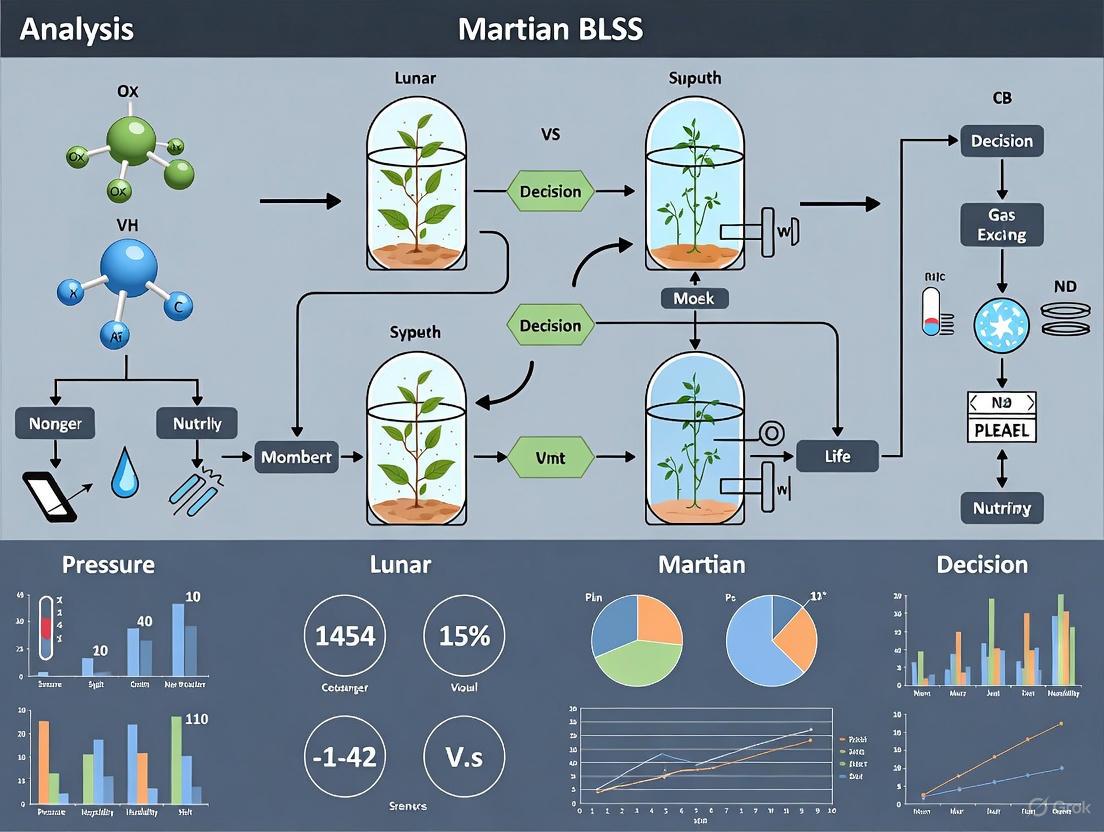
This article provides a comparative analysis of the distinct requirements for Bioregenerative Life Support Systems (BLSS) on the Moon and Mars.
Moon vs. Mars: A Comparative Analysis of Bioregenerative Life Support System Requirements for Sustained Human Presence
Abstract
This article provides a comparative analysis of the distinct requirements for Bioregenerative Life Support Systems (BLSS) on the Moon and Mars. Targeting researchers, scientists, and professionals in aerospace and bioengineering, it explores the foundational principles of closed-loop ecosystems for long-duration missions. The analysis covers the methodological approaches for utilizing in-situ resources, such as the agronomic enhancement of local regolith, and addresses critical troubleshooting and optimization challenges, including radiation protection and microbial management. By validating strategies through terrestrial analogs and simulant studies, and comparing the planetary environments, this review synthesizes key technological and biological hurdles. It concludes with strategic recommendations to guide future research and development, emphasizing the need for sustainable, autonomous life support for the future of deep space exploration.
Defining Extraterrestrial Ecosystems: BLSS Fundamentals and Planetary Environment Analysis
Core Principles of a Bioregenerative Life Support System (BLSS)
A Bioregenerative Life Support System (BLSS) is an artificial ecosystem designed to sustain human life in space by using biological processes to regenerate vital resources. In a BLSS, plants, microorganisms, and other biological agents work together to produce food, revitalize the atmosphere by producing oxygen and removing carbon dioxide, recycle water, and process waste [1] [2]. This approach is considered indispensable for long-duration human missions to the Moon or Mars, where resupply from Earth is economically unfeasible and logistically challenging [3] [4] [5]. The core principle is to create a closed-loop system where the outputs of one process become the inputs for another, mimicking the recycling processes of Earth's biosphere [1].
The development of BLSS represents a shift from purely physicochemical life support systems (PCLSS), like those used on the International Space Station, which rely on mechanical and chemical processes and require regular resupply of consumables [2]. In contrast, a well-functioning BLSS aims for greater self-sufficiency, which is crucial for the establishment of permanent extraterrestrial outposts [5]. The following diagram illustrates the fundamental material flows and interactions between the key compartments of a BLSS.
Core Functional Principles of a BLSS
The operation of a BLSS is governed by several interdependent principles that ensure its functionality and sustainability.
- Trophic Chain Integration: A BLSS integrates three main functional compartments: producers (plants, microalgae), consumers (crew), and decomposers (microbes). These compartments are connected through the flows of energy and matter, forming a web where the waste products of one compartment become the resources for another [1].
- In-Situ Resource Utilization (ISRU): A key principle for lunar or Martian BLSS is the use of local resources to reduce dependence on Earth. This primarily involves using native regolith (soil) as a substrate for plant growth and recycling all organic waste produced by the crew, such as inedible plant parts and human excreta [3] [4] [6].
- Closure of Mass Cycles: The system aims to achieve a high degree of closure for the cycles of essential elements like carbon, oxygen, nitrogen, and water. For instance, carbon dioxide exhaled by the crew is consumed by plants during photosynthesis, which in release oxygen for the crew to breathe [2]. Water is recovered from urine, humidity, and waste processing and is purified for reuse [1].
- System Reliability and Control: Given that biological systems can be vulnerable to diseases and environmental fluctuations, a BLSS requires robust control systems and redundant design to ensure stable long-term operation. Reliability engineering and continuous monitoring are essential [7].
Comparative Analysis: Lunar and Martian BLSS Requirements
While the core principles of BLSS are universal, their implementation must be tailored to the specific environmental and resource conditions of the Moon and Mars. The regolith at each location has distinct properties that present unique challenges and opportunities for space agriculture. The table below summarizes the key physicochemical differences between Lunar and Martian regolith simulants that directly impact BLSS design.
Table 1: Comparative Properties of Lunar and Martian Regolith Simulants
| Property | Lunar Simulant (LHS-1) | Martian Simulant (MMS-1) | Agronomic Implication |
|---|---|---|---|
| Native Nutrients | Lacks vital nutrients like N, P, and organic carbon [3]. | Contains some Ca, Mg, K, but lacks N and P [3] [6]. | Martian simulant has a slightly better starting point, but both require nutrient amendment. |
| pH Level | Highly alkaline [3] [6]. | Alkaline, but generally lower than Lunar simulant [3] [6]. | High pH in both locks up essential micronutrients, making them less available to plants. |
| Physical Structure | Poor physical structure, lacks aggregation [3]. | Coarse-textured (91% sand) [3]. | Both have poor water and nutrient retention capabilities without organic amendment. |
| Response to Organic Amendment | Manure addition improves water retention significantly in the "dry" region [3]. | Manure improves nutrient availability and hydraulic properties [3] [6]. | Both benefit, but the optimal mixture ratio for plant growth is consistently found to be 70:30 (simulant:manure) [3] [6]. |
The divergent properties of the regolith lead to different priorities for a BLSS on each celestial body. For a Lunar BLSS, the primary challenges are the high alkalinity and the near-total lack of water and atmosphere. The regolith is exceptionally barren. Therefore, a Lunar BLSS would rely more heavily on imported resources (like water and initial nutrients) and tightly closed-loop recycling. The low magnetic field of the Moon was recently investigated and found to be less stressful than expected to earthworm-based soil processing, which is a positive finding for incorporating these organisms into a Lunar BLSS [8].
For a Martian BLSS, the environment presents a different set of challenges. While Martian regolith is more nutrient-rich than Lunar material, it is known to contain perchlorate salts, which are toxic to humans and must be removed or broken down before the regolith can be used for farming [3]. The presence of some atmosphere and known water ice are potential advantages, but the higher radiation environment requires adequate shielding.
Table 2: Agronomic Performance of Simulant/Manure Mixtures (30-day lettuce growth)
| Growth Substrate | Above-ground Biomass | Below-ground Biomass | Nutrient Uptake & Translocation | Microbial Biomass & Activity |
|---|---|---|---|---|
| 100% LHS-1 (Lunar) | Low | Low | Very Low | Very Low |
| 100% MMS-1 (Martian) | Low | Low | Low | Low |
| 70:30 LHS-1:Manure | High | High | High | High (enhanced enzymatic activities) |
| 70:30 MMS-1:Manure | Higher | Higher | Higher | Higher (enhanced enzymatic activities) |
| Key Finding | MMS-1-based substrates generally outperform LHS-1-based ones at equivalent mixture ratios, attributed to lower pH and higher native nutrient bioavailability [3] [6]. |
Key Experimental Protocols in BLSS Research
Supporting the comparative analysis above are rigorous experimental protocols developed to test and validate BLSS components on Earth. Key methodologies are summarized below.
Protocol for Regolith Amelioration and Plant Growth
This protocol assesses the fertility of Lunar and Martian regolith simulants and methods for their enhancement, a cornerstone of ISRU-based space farming [3] [6].
- Simulant Preparation: Acquire commercially available simulants, such as LHS-1 (Lunar Highlands Simulant) and MMS-1 (Mojave Mars Simulant).
- Organic Amendment: Prepare a monogastric manure (e.g., horse/swine) as an analog for composted crew waste and inedible plant biomass.
- Mixture Formulation: Create mixtures of simulant and manure at varying ratios (e.g., 100:0, 90:10, 70:30, 50:50 w/w) and homogenize thoroughly.
- Plant Growth Trial: Sow plant seeds (e.g., lettuce, Lactuca sativa L. 'Grand Rapids') in the mixtures. Cultivate in controlled environment chambers without fertilization.
- Data Collection:
- Plant Metrics: After 30 days, measure plant physiology, above- and below-ground biomass, and nutrient content in leaves.
- Substrate Analysis: Analyze the simulant-manure mixtures for microbial biomass (using chloroform fumigation-extraction), key enzymatic activities (e.g., dehydrogenase and alkaline phosphomonoesterase), and nutrient bioavailability.
The workflow for this core methodology is detailed in the following diagram.
Protocol for Long-Term BLSS Reliability Estimation
For long-duration missions, system reliability is paramount. The following protocol, derived from the 370-day Lunar Palace 1 experiment, uses failure data and Monte Carlo simulation to estimate BLSS lifespan [7].
- Long-Term Experimentation: Operate a ground-based BLSS prototype (e.g., Lunar Palace 1) with a human crew for an extended period (e.g., 370 days) under normal maintenance conditions.
- Failure Data Logging: Accurately record the number and time of failure events for every unit within the BLSS (e.g., water treatment, atmosphere management, LED lighting).
- Probability Distribution Fitting: For each unit, formulate a failure number probability distribution function based on the collected time-series data.
- System Modeling & Simulation: Model the overall BLSS failure probability by combining the unit-level functions according to the system's series-parallel structure. Use Monte Carlo simulations to generate numerous pseudo-random failure scenarios.
- Lifetime Estimation: Calculate the mean lifetime and confidence intervals for the overall BLSS from the simulation results. This approach estimated a mean lifetime of about 52.4 years for the Lunar Palace 1 system [7].
Protocol for In-Situ Biological Experiments
This protocol validates biological processes in the actual space environment, as demonstrated by China's Chang'e 4 mission [9].
- Payload Design: Develop a sealed, temperature-controlled micro-ecosystem (Biological Experiment Payload) with internal cameras, a water reservoir, and a light guide tube to utilize natural sunlight.
- Biological Sample Selection: Load the payload with a community of organisms, such as cotton, potato, and Arabidopsis seeds, fly eggs, and yeast.
- On-Site Activation: Land the payload on the lunar surface and activate it by releasing water to initiate biological activity.
- Remote Monitoring & Data Collection: Monitor the experiment remotely, capturing images to record seed germination and organism growth. Compare the results with simultaneous ground control experiments.
The Scientist's Toolkit: Essential Research Reagents and Materials
Table 3: Key Materials and Reagents for BLSS Regolith Research
| Item | Function in BLSS Research |
|---|---|
| Lunar Regolith Simulant (LHS-1) | A terrestrial mineral mixture mimicking the chemical and physical properties of Lunar highlands soil; serves as the baseline mineral substrate for plant growth experiments [3] [6]. |
| Martian Regolith Simulant (MMS-1) | A terrestrial mineral mixture designed to approximate the coarse texture and mineralogy of Martian regolith; used to test agricultural potential on Mars [3] [4]. |
| Monogastric Manure | An analog for composted crew solid waste and inedible plant biomass; used as an organic amendment to introduce nutrients, organic carbon, and microorganisms to sterile regolith simulants [3] [6]. |
| Dehydrogenase Assay Kit | A biochemical assay used to measure overall microbial metabolic activity in the simulant-organic matter mixtures, serving as an indicator of soil health [6]. |
| Alkaline Phosphomonoesterase Assay Kit | A kit to measure the activity of the enzyme that mineralizes organic phosphorus into a bioavailable form (phosphate); crucial for understanding nutrient cycling in the system [6]. |
| Chloroform & Extraction Solutions | Reagents used in the chloroform fumigation-extraction method to quantify microbial biomass carbon and nitrogen in the growth substrate [6]. |
The establishment of a sustained human presence beyond Earth hinges on the development of Bioregenerative Life Support Systems (BLSS), which are closed artificial ecosystems that recycle oxygen, water, and nutrients using biological and engineering processes [10]. The design and implementation of these systems are profoundly influenced by the planetary environment. This guide provides a comparative analysis of the lunar and Martian environments, focusing on the core physical parameters of gravity, atmosphere, and radiation. Understanding these differences is critical for optimizing BLSS technology, ensuring crew safety, and enabling long-term human exploration.
Environmental Parameter Comparison
The Moon and Mars present fundamentally different challenges for human habitation. The table below summarizes the key quantitative differences between the two environments.
Table 1: Comparative Analysis of Lunar and Martian Environmental Parameters
| Parameter | The Moon | Mars |
|---|---|---|
| Surface Gravity | 1.62 m/s² (0.17 g) [11] | 3.71 m/s² (0.38 g) [11] |
| Atmospheric Surface Pressure | ~3 x 10⁻¹⁵ bar (Effectively a vacuum) [12] | 6.35 mbar (0.6% of Earth's pressure) [13] |
| Atmospheric Composition | Helium (He), Neon (Ne), Argon (Ar), trace Hydrogen (H) and Sodium (Na) [12] | Carbon Dioxide (CO₂): 95.32%, Nitrogen (N₂): 2.7%, Argon (Ar): 1.6%, Oxygen (O₂): 0.13% [13] |
| Radiation Environment | No atmosphere or magnetic field for shielding. | Thin atmosphere provides minimal shielding; no global magnetic field [11]. |
| Average Annual Radiation Dose Equivalent | Not fully quantified in results, but exposed to full galactic cosmic rays and solar particles. | 240-300 mSv/year (40-50 times the average on Earth) [11] |
| Average Temperature | Not specified in search results. | -80° Fahrenheit (-60° Celsius) [13] |
| Presence of In-Situ Resources | Regolith contains resources for potential extraction. | Abundant water-ice in polar regions, hydrated mineral deposits, and atmospheric CO₂ [13] [14]. |
Experimental Data from Ground-Based BLSS Research
Ground-based simulations are essential for validating BLSS performance before extraterrestrial deployment. The "Lunar Palace 365" mission, a 370-day high-closure integrated experiment, provides key experimental data on system stability and resource recycling rates [10].
Table 2: Experimental Performance Data from the Lunar Palace 365 Mission
| Performance Metric | Result | Experimental Methodology |
|---|---|---|
| Mission Duration | 370 days | An 8-person crew, divided into two groups, conducted a three-phase habitation mission in the "Lunar Palace 1" ground-based facility, which includes plant cabins and a comprehensive cabin [10]. |
| O₂ Recycling Rate | 100% | The system relied on plant photosynthesis within the cabin to regenerate oxygen consumed by the crew. Gas concentrations (O₂ and CO₂) were continuously monitored to maintain balance through human intervention and system regulation [10]. |
| Water Recycling Rate | 100% (for human use) | A water recycling system purified wastewater from the crew. The purified water was tested and confirmed to meet standards for potable use and irrigation [10]. |
| Overall System Closure Degree | 98.2% | This represents the percentage of materials crucial for human survival that were recycled and regenerated within the system, minimizing the need for external resupply [10]. |
| Food Production | Plant-based food needs fully met | The crew's nutritional requirements for plant-based food were entirely satisfied by the 35 plant species cultivated within the BLSS plant cabins [10]. |
| System Stability | Demonstrated strong robustness | The BLSS maintained environmental stability despite crew shift changes and operational disturbances. Stability was achieved through active regulation methods, such as adjusting soybean photoperiod and solid waste reactor activity [10]. |
Methodology for Comparative Environmental Analysis
The strategic approach to comparing lunar and Martian environments for BLSS design involves a systematic analysis of how each parameter influences system requirements. The following diagram illustrates the logical workflow for this comparative analysis.
Research Reagent Solutions for BLSS Experimentation
Advancing BLSS technology requires specialized materials and biological agents. The following table details key research reagents and their functions in BLSS-related experiments.
Table 3: Essential Research Reagents and Materials for BLSS Development
| Research Reagent / Material | Function in BLSS Research |
|---|---|
| Cultivated Plant Species | A diverse set of plants (e.g., 35 species used in Lunar Palace 365) is essential for food production, oxygen regeneration via photosynthesis, and CO₂ consumption [10]. |
| Solid Waste Bioconversion Reactors | These systems process crew waste into soil-like substrates (SLS), which can be used as fertilizer to support plant growth, closing the nutrient loop [10]. |
| Gas Concentration Monitoring Systems | Sensors for continuous measurement of O₂ and CO₂ are critical for maintaining atmospheric homeostasis within the closed environment and guiding regulatory interventions [10]. |
| Water Purification Systems | Multi-stage systems that purify humidity condensate and wastewater to potable and irrigation standards, enabling 100% water recycling for crew use [10]. |
| Hydrated Mineral Deposits | Martian-specific resource. Target for in-situ resource utilization (ISRU); a source of water and potentially minerals for BLSS operations [14]. |
| MOXIE-like Instrument | Mars Oxygen In-Situ Resource Utilization Experiment. Technology demonstrated on NASA's Perseverance rover to convert Martian CO₂ into oxygen for propellant and breathing air [13]. |
The Role of BLSS in NASA's Moon to Mars Exploration Strategy
The establishment of a sustained human presence beyond Earth represents one of the most ambitious goals in the history of space exploration. NASA's Moon to Mars exploration strategy envisions crewed missions to the lunar surface through the Artemis program, with the long-term objective of preparing for human missions to Mars [15] [16]. A fundamental challenge for these extended-duration missions lies in developing life support systems that can maintain crew health and functionality while minimizing reliance on resupply from Earth. Bioregenerative Life Support Systems (BLSS) have emerged as a critical technological pathway to address this challenge by using biological processes to regenerate resources, thereby supporting crewed missions through in-situ resource utilization (ISRU) and recycling of waste materials [4] [17].
This comparative analysis examines the distinct requirements for BLSS implementation on the Moon and Mars, focusing on the agronomic potential of native regoliths and their modification through organic amendments. The objective assessment presented herein contrasts the physicochemical properties of lunar and Martian simulants, their responsiveness to soil-forming processes, and the implications for sustainable food production within a closed-loop life support architecture.
Comparative Analysis of Lunar and Martian Regolith Properties
The in-situ resource utilization (ISRU) approach aims to reduce terrestrial input into BLSS by using native regoliths and recycled organic waste as primary resources [4]. Lunar and Martian regoliths differ significantly from terrestrial soils, as they lack organic matter and associated biological activity, and possess distinct mineralogical and physicochemical properties that affect their suitability as plant growth media [3] [4]. Research is predominantly conducted using regolith simulants—terrestrial materials that approximate the properties of extra-terrestrial regoliths, since actual Lunar and Martian materials are exceedingly rare on Earth [4].
Table 1: Physicochemical Properties of Lunar and Martian Regolith Simulants
| Property | Lunar Highlands Simulant (LHS-1) | Martian Simulant (MMS-1) | Significance for Plant Growth |
|---|---|---|---|
| Texture | Information missing | 91% sand, 6.5% silt, 2.5% clay [3] | Affects water retention, root penetration, and aeration. |
| pH (in water) | "Very high" alkalinity [3] | 8.86 [3] | Influences nutrient availability and potential for elemental toxicity. |
| Inherent Nutrients | Lacks vital nutrients [3] | Contains Ca (1034 mg/kg), Mg (106 mg/kg), K (248 mg/kg) [3] | Determines baseline fertility and required amendment levels. |
| Primary Minerals | Information missing | Plagioclases (e.g., anorthite), amorphous material, zeolite, hematite, smectites [3] | Affects nutrient release and substrate physical behavior. |
| Water Retention | Benefits more from organic amendment than MMS-1 [3] | Lower volume of readily available water in mixtures [18] | Critical for irrigation management and plant water uptake. |
The data reveal that while both regolith types are challenging for plant growth, the Martian simulant MMS-1 possesses a more favorable inherent nutrient profile. However, its coarse texture and high pH necessitate modification to function as an effective plant growth medium.
Experimental Protocols for Regolith Enhancement
A primary research focus involves developing protocols to transform inert regolith into productive soil-like substrates. A prominent methodology involves amending regolith simulants with organic matter to correct nutrient deficiencies and improve physical structure.
Amendment with Organic Matter
A series of experiments demonstrated that adding a commercial horse/swine monogastric manure (as an analogue for crew excreta and crop residues) to regolith simulants significantly enhances their agricultural potential [3] [18]. The standard experimental protocol is as follows:
- Preparation of Mixtures: Lunar (LHS-1) and Martian (MMS-1) simulants are mixed with the monogastric manure at varying rates on a weight-to-weight (w/w) basis: 100:0 (pure simulant), 90:10, 70:30, and 50:50 [3] [18].
- Experimental Culture: Lettuce (Lactuca sativa L. cultivar 'Grand Rapids') is grown in the mixtures for 30 days in an open gas exchange climate chamber without additional fertilization [18].
- Data Collection: Researchers measure plant growth parameters (biomass, architecture, physiology, nutrient uptake), substrate microbial biomass (C and N), enzymatic activity (e.g., dehydrogenase, alkaline phosphomonoesterase), and nutrient bioavailability in the growth media post-harvest [3] [18].
The following diagram illustrates this experimental workflow for assessing regolith-manure mixtures:
Analysis of Hydrated Mineral Deposits
For Mars, a complementary ISRU strategy involves prospecting for and utilizing naturally occurring hydrated minerals (such as sulfates and phyllosilicates) detected from orbit [14]. The experimental protocol for this approach includes:
- Orbital Detection: Using spectral data from orbiters like Mars Express to identify and map deposits rich in hydrated minerals [14].
- Resource Estimation: Modeling the potential water volume retrievable from these deposits through laboratory experiments and geochemical modeling [14].
- Agronomic Testing: Evaluating the potential of processed hydrated minerals not only as a water source but also as a fertilizer for plant production, given their content of essential elements like sulfur [14].
Results: Performance Comparison of Enhanced Regoliths
The experimental amendments yielded significant improvements in the agronomic potential of both regolith types, though with distinct outcomes and optimal formulations.
Plant Growth and Nutrient Availability
Table 2: Agronomic Performance of Simulant-Manure Mixtures
| Performance Metric | Lunar LHS-1 Response | Martian MMS-1 Response | Inferences for BLSS |
|---|---|---|---|
| Nutrient Bioavailability | Linear increase in N, P, K, Ca, Mg, S, Fe, Mn, Cu, Zn with manure rate [3] | Linear increase in macro/micronutrients with manure rate; higher baseline than LHS-1 [3] | Martian regolith may require less amendment for initial fertility. |
| Overall Agronomic Performance | Lower performance than MMS-1; limited by high pH and lower nutrient availability [3] [18] | Better performance than LHS-1; more favorable pH and higher nutrient availability [3] [18] | MMS-1-based substrates can ensure better agronomic performances. |
| Manure Amendment Effect | Pure simulant could sustain plant growth; manure significantly improved biomass [18] | Pure simulant could sustain plant growth; manure significantly improved biomass [18] | Amendment is beneficial but not strictly mandatory for initial growth. |
| Optimal Mixture Ratio | 70:30 (simulant:manure) [3] | 70:30 (simulant:manure) [3] | A 70:30 balance provides a sustainable, productive substrate. |
The 70:30 mixture ratio was consistently identified as the optimal balance across both regolith types, providing sufficient nutrient availability and improved hydraulic properties without the excessive salinity, sodicity, or heavy metal release associated with higher (50:50) organic matter application [3].
Microbial and Biochemical Activity
The addition of organic manure stimulated essential biological activity within the substrates, a key step in creating a true "soil." Increasing manure rates led to a significant growth in microbial biomass (both carbon and nitrogen) and enhanced enzymatic activities such as dehydrogenase and alkaline phosphomonoesterase [18]. This, in turn, fostered greater nutrient bioavailability, creating a more dynamic and fertile rhizosphere environment for plant roots [18].
Integrated Systems: Bridging BLSS with ECLSS
For a BLSS to be practical, it must be effectively integrated with the broader Environmental Control and Life Support System (ECLSS) of a habitat or spacecraft [17]. The ECLSS traditionally manages air, water, and waste via physicochemical (P/C) systems. Integrating a biological subsystem like a BLSS presents unique challenges and opportunities.
- System Synergy: A hybrid BLSS-ECLSS can reduce the load on P/C systems. Plants can revitalize air by consuming CO2 and producing O2, purify water through transpiration, and produce food, while P/C systems can handle peak loads and toxic contaminants [17].
- Monitoring and Control: Biological systems cannot be turned on and off like mechanical ones. Therefore, advanced monitoring and predictive modeling of plant and microbial states are fundamental for integration [17].
- Logistics and Sustainability: The Equivalent System Mass (ESM) metric is used to compare the cost-effectiveness of BLSS against shipped food. With advancements like LED lighting, the return on investment for BLSS food production is becoming more favorable for long-duration missions, making it a vital technology for Mars missions [17].
The following diagram illustrates the functional integration and resource flows between BLSS and ECLSS:
The Scientist's Toolkit: Key Research Reagents and Materials
Research into BLSS relies on specific simulants and reagents to approximate extra-terrestrial conditions. The following table details essential materials used in the featured experiments.
Table 3: Essential Research Materials for BLSS Agronomy Studies
| Material or Reagent | Function in BLSS Research | Example Use Case |
|---|---|---|
| Lunar Regolith Simulant (LHS-1) | Represents the mineralogy, chemistry, and physical properties of Lunar Highlands regolith for plant growth experiments [3]. | Base substrate for testing manure amendment efficacy [3] [18]. |
| Martian Regolith Simulant (MMS-1) | Represents the properties of Martian regolith; MMS-1 is a Mojave Mars Simulant with known mineralogy [3]. | Comparison with LHS-1 to evaluate differential plant responses [3] [18]. |
| Monogastric Manure | Serves as an organic amendment analogue for crew solid waste (feces) and composted inedible plant biomass [3] [18]. | Mixed with simulants at 10-50% w/w to introduce nutrients and improve soil structure [3]. |
| Hydrated Mineral Samples | (e.g., Sulfates, Phyllosilicates). Used to study in-situ water extraction and potential use as soil amendments [14]. | Prospecting and lab experiments to assess water yield and fertilizer value for Mars ISRU [14]. |
The successful implementation of a Moon to Mars exploration strategy is inextricably linked to the development of robust and efficient Bioregenerative Life Support Systems. Comparative analysis reveals that while both Lunar and Martian regoliths present significant agronomic challenges, they can be effectively enhanced through ISRU-driven strategies, particularly amendment with organic wastes. The identified optimal mixture ratio of 70:30 (simulant:manure) provides a sustainable recipe for creating productive substrates. The superior baseline fertility and more manageable pH of Martian regolith suggest it may be more readily convertible into an effective plant growth medium than its Lunar counterpart. Future research must focus on the seamless integration of these agricultural subsystems with traditional physicochemical ECLSS, closing the loop on resource cycles to enable the long-term human exploration of the Moon and, ultimately, Mars.
Planetary Protection and Ethical Considerations in Extraterrestrial BLSS
Bioregenerative Life-Support Systems (BLSS) represent fundamental enabling technologies for sustained human presence beyond Earth orbit, particularly for future missions to the Moon and Mars. As space agencies including NASA, ESA, JAXA, and CSA, along with private entities like SpaceX, target establishing a sustainable lunar presence by 2028 and Mars missions in the 2030s, the development of robust BLSS becomes increasingly critical [19]. These systems are designed to regenerate air, water, and food through biological processes while recycling waste, thereby reducing reliance on Earth-based resupply missions that become impractical due to launch costs, travel times, and failure risks over interplanetary distances [19].
The integration of BLSS with In Situ Resource Utilization (ISRU) – using native resources like lunar and Martian regolith – presents a promising pathway toward mission self-sufficiency [19]. However, this approach introduces complex planetary protection and ethical considerations that extend beyond traditional scientific preservation. Current COSPAR planetary protection policies primarily focus on preventing biological contamination that could compromise scientific investigations, but there is growing recognition that ethical frameworks must expand to address the protection of potential extraterrestrial biospheres and environments themselves, not merely their scientific value [20] [21]. This comparative analysis examines the distinct planetary protection and ethical considerations for BLSS implementation on the Moon versus Mars, addressing their different environmental challenges, technological requirements, and ethical frameworks.
Comparative Environmental Challenges for Lunar and Martian BLSS
The implementation of BLSS on the Moon and Mars presents distinct environmental challenges that significantly impact system design and planetary protection protocols. Mars possesses a thin atmosphere composed primarily of carbon dioxide, seasonal variations, evidence of past water activity, and potentially preserved subsurface water ice [22]. The Martian regolith contains essential plant nutrients including calcium, magnesium, and potassium, though it lacks organic matter and related macronutrients like nitrogen, available phosphorus, and sulfur [6]. Crucially, Mars has known habitable environments in its subsurface and possibly specific surface niches, creating a higher risk category for planetary protection due to the potential existence of extraterrestrial life [21].
In contrast, the Moon presents a more extreme environment with no atmosphere, higher radiation exposure, extreme temperature variations, and significantly lower gravity [6]. Lunar regolith (as simulated by LHS-1) demonstrates poorer agronomic performance compared to Martian simulants, with studies showing reduced plant growth, chlorophyll content, nutrient availability, and enzymatic activity even when amended with organic matter [6]. The Moon is generally considered a lower planetary protection priority, though permanent shadowed regions at the poles may harbor water ice and potentially preserve scientific information about the early solar system.
Table 1: Environmental Comparison Between Lunar and Martian BLSS Implementation Sites
| Parameter | Moon | Mars |
|---|---|---|
| Atmosphere | None (vacuum) | Thin CO₂ atmosphere (95.3%) |
| Radiation Exposure | Very high | Moderate (partially shielded by atmosphere) |
| Temperature Extremes | -173°C to 127°C | -125°C to 20°C (summer at equator) |
| Gravity | 0.16g | 0.38g |
| Water Availability | Possibly in shadowed polar regions | Subsurface water ice, possibly liquid brines |
| Regolith Composition | LHS-1 simulant: poorer nutrient availability | MMS-1 simulant: better nutrient profile |
| Planetary Protection Category | Lower priority (except polar regions) | High priority (potential habitable environments) |
Experimental Approaches to BLSS Research with Planetary Protection
Simulant-Based Agricultural Studies
Ground-based research utilizing lunar and Martian regolith simulants provides crucial data for BLSS development while adhering to planetary protection principles by conducting experiments in controlled terrestrial laboratories. Recent investigations have focused on determining the capacity of these simulants to support plant growth both with and without organic amendments. Methodology typically involves mixing MMS-1 (Mars) or LHS-1 (Lunar) simulants with organic matter analogs such as monogastric manure, which serves as a proxy for crew waste and crop residues [6].
Standardized experimental protocols include mixing simulants with organic amendments at varying ratios (typically 100:0, 90:10, 70:30, and 50:50 w/w), then planting lettuce (Lactuca sativa) or other candidate space crops in these substrates under controlled environmental conditions [6]. Measurements include plant growth parameters (biomass accumulation, root architecture, chlorophyll content), physiological indicators, nutrient uptake, and substrate characteristics (microbial biomass, enzymatic activities, nutrient bioavailability). These studies typically employ no additional fertilization to accurately assess the intrinsic nutrient provisioning capacity of the simulant-organic matter systems [6].
Table 2: Experimental Results from Lunar vs. Martian Simulant Studies with Organic Amendments
| Experimental Parameter | Lunar Simulant (LHS-1) | Martian Simulant (MMS-1) |
|---|---|---|
| Plant Growth in Pure Simulant | Limited growth without amendments | Moderate growth without amendments |
| Optimal Amendment Ratio | 70:30 (simulant:manure) | 70:30 (simulant:manure) |
| Response to Organic Amendment | Dose-dependent improvement | Dose-dependent improvement |
| Microbial Biomass Response | Significant increase with amendment | Significant increase with amendment |
| Enzymatic Activity | Enhanced dehydrogenase and phosphatase | Enhanced dehydrogenase and phosphatase |
| Nutrient Bioavailability | Lower than MMS-1 across treatments | Higher than LHS-1 across treatments |
| Water Holding Capacity | Improved with organic amendment | Improved with organic amendment |
| Plant Physiology | Reduced performance compared to MMS-1 | Better performance compared to LHS-1 |
BLSS System Architecture and Contamination Control
The fundamental architecture of BLSS for both lunar and Martian applications involves integrating multiple biological and physicochemical components to create a sustainable closed-loop system. The system begins with resource inputs including crew waste, inedible biomass, and local resources (water, regolith), which undergo processing through microbial communities and higher plants to regenerate air, water, and food for crew consumption [19]. Planetary protection considerations are integrated throughout this architecture, particularly in the handling of local resources and management of biological components.
BLSS Architecture and Protection: This diagram illustrates the closed-loop nature of Bioregenerative Life-Support Systems and the integration of planetary protection measures across all system components.
Ethical Frameworks for Extraterrestrial BLSS Implementation
Evolution from Science Protection to Environmental Ethics
Planetary protection policies have historically focused primarily on protecting the scientific integrity of life detection experiments and celestial body exploration. The current COSPAR guidelines specify that life-detecting missions must not have a probability greater than 1-in-10,000 of contaminating potential extraterrestrial habitats with terrestrial microbes [21]. However, this framework is increasingly recognized as insufficient for addressing the broader ethical implications of human exploration and settlement [20].
There is growing consensus among scientific and ethical communities that we must expand planetary protection considerations beyond mere "science protection" to include stewardship principles that protect planetary environments for their own intrinsic value [20] [21]. This expanded framework raises complex ethical questions: What obligations do we have toward potential extraterrestrial life? Should we extend protection to non-living aspects of planetary bodies? How do we balance human exploration and settlement with preservation of extraterrestrial environments?
Differential Ethical Considerations for Moon and Mars
The different environmental characteristics and scientific priorities for the Moon and Mars lead to distinct ethical considerations for BLSS implementation:
Mars presents more stringent ethical challenges due to its potential to host past or present life. BLSS implementation must consider: (1) The higher potential for forward contamination of potentially habitable environments; (2) The ethical implications of introducing terrestrial microbes that could outcompete or alter potential Martian organisms; (3) The need for stricter containment between BLSS components and the native environment; (4) The possibility that human settlement might irreversibly alter potential indigenous biospheres [20] [21].
Lunar environments raise different ethical considerations: (1) Protection of scientifically valuable pristine areas, particularly permanently shadowed polar regions; (2) Preservation of the lunar surface as a record of early solar system history; (3) Management of limited resources in an environment with no natural regeneration capacity; (4) Stewardship considerations even in the apparent absence of life [23].
Ethical Decision Framework: This diagram outlines the differential ethical considerations for BLSS implementation on Mars versus the Moon, driven primarily by the potential presence of extraterrestrial life.
Research Reagents and Materials for BLSS Planetary Protection Studies
Table 3: Essential Research Materials for BLSS and Planetary Protection Investigations
| Research Material | Function in BLSS Research | Planetary Protection Application |
|---|---|---|
| Lunar Regolith Simulant (LHS-1) | Analog for lunar soil properties and plant growth medium | Testing resource utilization without contaminating actual lunar samples |
| Martian Regolith Simulant (MMS-1) | Analog for Martian soil chemistry and physical properties | Assessing forward contamination risks in terrestrial simulations |
| Monogastric Manure | Analog for crew waste and organic matter recycling | Studying closed-loop nutrient cycling without biological hazards |
| Microbial Biomass Assays | Quantification of nutrient cycling capacity in BLSS | Monitoring Earth-origin microbial expansion in analog systems |
| Dehydrogenase Activity Kits | Measurement of microbial metabolic activity in regolith | Assessing viability of terrestrial microbes in extraterrestrial simulants |
| Lettuce (Lactuca sativa) Cultivars | Model plant for BLSS food production research | Testing plant-microbe interactions in planetary protection contexts |
The development of Bioregenerative Life-Support Systems for lunar and Martian missions presents distinct technical challenges and ethical considerations that require differentiated planetary protection approaches. While Mars demands stricter protocols due to its higher potential for hosting extant life, the Moon requires careful management of its pristine environments and limited resources. Experimental research using regolith simulants demonstrates that both lunar and Martian materials can support plant growth when appropriately amended with organic matter, with Martian simulants generally showing better performance across multiple agricultural parameters [6].
The ethical framework for BLSS implementation is evolving from solely protecting scientific investigation to encompassing broader environmental stewardship principles that acknowledge the intrinsic value of extraterrestrial environments [20] [21]. Future research must continue to address the complex interplay between life support system requirements, in situ resource utilization, and planetary protection protocols through integrated experimental and ethical analysis. As emphasized by the COSPAR Workshop on Ethical Considerations, these discussions must include not only scientists but also diverse stakeholders to establish consensus on our ethical obligations as we expand human presence into the solar system [20].
Building with Local Resources: Methodologies for In-Situ Resource Utilization (ISRU) and System Implementation
Analyzing the Agronomic Potential of Lunar and Martian Regolith
The pursuit of sustained human presence on the Moon and Mars necessitates the development of Bioregenerative Life Support Systems (BLSS), where higher plants play a crucial role in regenerating air, purifying water, recycling waste, and providing food [24]. A central challenge for space farming is the in-situ resource utilization (ISRU) of local materials—specifically, lunar and Martian regolith—as plant growth substrates [4]. Unlike terrestrial soil, which is a vibrant product of biogeochemical processes and organic activity, regolith is predominantly sterile, unweathered mineral material lacking organic matter and associated nutrients [25] [3]. This review provides a comparative analysis of the agronomic potential of lunar and Martian regolith, synthesizing experimental data on plant growth performance, strategies for regolith amelioration, and the implications for designing sustainable BLSS for future extraterrestrial settlements.
Fundamental Properties of Lunar and Martian Regolith
A comparative understanding of the inherent physicochemical properties of lunar and Martian regolith is fundamental to assessing their agronomic potential.
Table 1: Physical and Chemical Properties of Lunar and Martian Regolith Simulants
| Property | Lunar Regolith (Highlands Simulant LHS-1) | Martian Regolith (Simulant MMS-1) | Terrestrial Soil |
|---|---|---|---|
| Origin | Formed by meteorite impacts, fracturing surface material [25] | Formed by impacts, volcanic activity, and wind erosion [26] | Formed by chemical, biological, and physical weathering [25] |
| Texture | Fine dust and sharp, abrasive rock fragments [25] | Coarse-textured (91% sand, 6.5% silt, 2.5% clay) [3] | Variable, often softened by water and wind erosion [25] |
| Organic Matter | None [3] | None [3] | Present, from decaying organic matter [25] |
| pH | Highly alkaline [3] | Alkaline (pH 8.86) [3] | Variable (often near neutral) |
| Key Challenges | Nutrient deficiency, poor water retention, sharp particles [4] | Nutrient deficiency, presence of toxic perchlorates [27] [26] | Not applicable |
| Notable Nutrients | Lacks nitrogen and phosphorus [3] | Contains potassium, calcium, magnesium, and iron [3] | Balanced nutrient availability |
Table 2: Elemental Composition of Lunar and Martian Regolith
| Element | Lunar Regolith | Martian Regolith |
|---|---|---|
| Oxygen (O) | 42% | 50% |
| Silicon (Si) | 21% | 22% |
| Iron (Fe) | 13% | 14% |
| Calcium (Ca) | 8% | 4% |
| Aluminum (Al) | 7% | 4% |
| Magnesium (Mg) | 5% | 4% |
| Other | 4% | 2% |
| Data compiled from general comparisons in the search results [26]. |
The following diagram illustrates the logical pathway from the inherent properties of regolith to the required mitigation strategies for successful plant cultivation.
Comparative Analysis of Plant Growth Performance
Experimental studies using regolith simulants have revealed significant differences in plant growth responses between the two media.
Direct Plant Growth Comparisons
Side-by-side experiments indicate that lunar regolith simulants may offer a more favorable growth medium than their Martian counterparts. In a study presenting findings at the 2024 American Geophysical Union, researchers found that lunar crops grew better than Martian ones, contrary to initial expectations that Martian regolith's nitrogen content would make it more hospitable. Martian regolith was found to be dense and clay-like, restricting oxygen availability to plant roots [27]. Specifically, corn grown in Martian regolith with a wastewater-derived fertilizer had only a 33.3% survival rate, compared to a 58.8% survival rate with pure nitrogen fertilizer [27].
Biochemical Profile of Plants Grown in Regolith
The growth substrate significantly influences the phytochemical composition of plants. A comparative analysis of Brassica rapa var. cymosa (broccoli rabe) revealed that plants cultivated in a lunar maria regolith simulant showed a enhanced phytochemical profile compared to those grown in hydroponic systems or lunar highland simulants [28]. The lunar maria sample exhibited significantly higher levels of beneficial compounds, including:
- Neochlorogenic acid
- Ferulic acid
- p-Coumaric acid
- Total phenolic content
- Chlorophyll a
Furthermore, the antioxidant capacity, assessed via FRAP, ABTS, and DPPH assays, was higher in both lunar-grown plant groups than in hydroponically grown ones [28]. This suggests that the mild stress imposed by the lunar regolith may trigger a beneficial antioxidant response in plants.
Plant Physiological Responses
Plant physiology is notably impacted by the regolith medium. Research on fava beans (Vicia faba L.) demonstrated that net photosynthesis was lower in plants grown in pure Martian regolith simulant (MMS-1) compared to those in terrestrial soil [24]. This indicates that the poor chemical and physical properties of the regolith directly impair fundamental plant processes. Similarly, both pure regolith-based substrates reduced overall biomass accumulation in fava beans [24].
Amelioration Strategies for Regolith-Based Farming
Pure regolith is largely unsuitable for sustained plant growth, making amelioration strategies a critical research focus.
Organic Amendment and Soil Formation
The primary strategy for inducing fertility in regolith is amending it with organic matter. This mimics the early processes of soil formation on Earth.
Table 3: Impact of Organic Amendment (70:30 Regolith:Manure) on Regolith Properties
| Property | Pure Lunar Regolith (LHS-1) | Amended Lunar Regolith | Pure Martian Regolith (MMS-1) | Amended Martian Regolith |
|---|---|---|---|---|
| Organic Carbon | None | Added | None | Added |
| Nitrogen (N) | None | Added | None | Added |
| Structure & Aggregation | Poor | Improved | Poor | Improved |
| Water Retention | Very Low | Enhanced | Very Low | Enhanced |
| Nutrient Availability | Very Low | High | Low | High |
| pH | Highly Alkaline | Remains High | Alkaline (8.86) | Remains High |
| Best Mixture Ratio | 70:30 [3] | 70:30 [3] |
The addition of organic compost at a 70:30 ratio (regolith:manure) has been identified as a particularly effective formulation, creating a substrate more comparable to Earth soils in terms of nutrient availability and water retention [3]. In fava bean studies, amending Martian regolith simulant with 30% green compost increased seed production by 61.9% compared to growth in pure regolith [24]. This amendment strategy is a key component of creating a sustainable BLSS, as it utilizes organic waste (e.g., inedible plant parts, crew excreta) produced onboard to create a fertile substrate, thereby closing the resource loop [3].
Advanced Cultivation and Fertilization Technologies
Beyond soil-based approaches, researchers are developing advanced cultivation systems to optimize resource use in space. These include:
- Hydroponics: Growing plants directly in nutrient-rich water [27] [29].
- Aeroponics: Growing plants with roots suspended in the air and misted with nutrients [27] [29].
- Porous Tube Nutrient Delivery System (PTNDS): Uses suction and porous ceramic tubes to deliver water and nutrients [29].
- Plasma Activation of Water (PAW): An emerging technology that uses plasma to treat water, potentially creating fertilizer-like compounds for plant nutrition [29].
Furthermore, the potential of biocementation via Microbially Induced Calcium Carbonate Precipitation (MICP) is being explored for Martian construction, which could also have implications for modifying regolith structure in agricultural contexts [30].
Experimental Protocols and Research Methodologies
Robust experimental protocols are essential for advancing the field of space agronomy.
Standardized Plant Growth Assay
A common methodology involves cultivating model crops in regolith simulants under controlled greenhouse or growth chamber conditions. The standard workflow is as follows:
This protocol was used in fava bean experiments, where plants were grown on six substrates, including pure MMS-1 Mars regolith simulant (R100) and MMS-1 amended with 30% green compost (R70C30). Parameters such as net photosynthesis, biomass accumulation, and seed production were measured [24].
Downstream Biological Effect Assessment
To comprehensively assess the safety and quality of space-grown food, researchers employ in vivo models. In the Brassica rapa study, the downstream biological effects were evaluated using the model organism Drosophila melanogaster (fruit fly) [28]. The experimental steps included:
- Dietary Supplementation: Flies were fed a medium supplemented with various concentrations of the plant samples.
- Genotoxicity Assessment: DNA damage in larval brain neuroblasts was quantified using a comet assay.
- Health and Performance Metrics: Adult fly longevity, reproductive output (prolificacy), and locomotor activity (climbing ability) were evaluated.
This comprehensive assessment revealed that, despite early genotoxic stress in larvae, adult flies developed normally and even exhibited enhanced climbing ability when fed the lunar maria sample, underscoring the complex interplay between plant biochemistry and organismal health [28].
The Scientist's Toolkit: Key Research Reagents and Materials
Table 4: Essential Research Materials for Regolith Agronomy Studies
| Reagent/Material | Function in Research | Example Sources/Notes |
|---|---|---|
| Lunar Regolith Simulants | Terrestrial analogs for lunar soil used in plant growth and engineering experiments. | LHS-1 (Lunar Highlands): From Exolith Lab [3]. LMS (Lunar Maria): Simulates mare regions [28] [26]. |
| Martian Regolith Simulants | Terrestrial analogs for Martian soil. | MMS-1 (Mojave Mars Simulant): From Martian Garden/Exolith Lab [24] [3]. MGS-1: Represents global Martian soil [26]. |
| Organic Amendments | To add nutrients, improve structure, and water retention of regolith. | Green compost, monogastric manure (analog for crew waste), biochar [24] [3]. |
| Model Plant Species | Candidate crops for BLSS with short cycles and high nutritional value. | Lettuce, fava bean (Vicia faba), potato, soybean, Brassica rapa, microgreens [24] [29] [3]. |
| In Vivo Model Organisms | To assess nutritional quality and safety of space-grown food. | Drosophila melanogaster (fruit fly) for genotoxicity (comet assay) and health metrics [28]. |
The comparative analysis of lunar and Martian regolith reveals a complex agronomic landscape. Martian regolith (MMS-1), while containing some essential nutrients, presents significant challenges due to its dense structure, alkalinity, and the potential presence of toxic perchlorates [27] [26]. In contrast, lunar regolith simulants, particularly from the maria regions, have demonstrated a surprising capacity to enhance the phytochemical content of plants [28]. However, both regolith types are fundamentally incapable of supporting sustained plant growth without significant amelioration.
The key to viable space agriculture lies in the integration of multiple strategies. The primary avenue is the amendment of regolith with organic matter (at an optimal 70:30 ratio) to create a functional soil-like substrate, thereby closing the resource loop within a BLSS [3]. This must be complemented with advanced cultivation technologies like hydroponics and aeroponics to maximize water and nutrient efficiency in environments where gravity, pressure, and radiation differ from those on Earth [29]. Future research must focus on closing the knowledge gaps in crop scheduling, automation, and the long-term dynamics of regolith-based substrate fertility through successive plantings [29]. The path toward sustainable food production on the Moon and Mars is challenging, but a systematic and integrated approach to enhancing the agronomic potential of local regolith provides a clear and promising direction.
The establishment of sustained human presence on the Moon and Mars depends on the ability to produce food through Bioregenerative Life Support Systems (BLSS) that utilize local resources [1]. A core challenge is enhancing nutrient-poor, sterile lunar and Martian regolith—the unconsolidated surface material—into productive plant growth substrates [31] [4]. This guide compares two primary enhancement strategies: the amendment with organic matter and inoculation with plant growth-promoting bacteria (PGPB). We objectively evaluate their performance, supported by experimental data, to inform research and development for future long-duration missions.
Regolith Properties and Agricultural Challenges
Lunar and Martian regoliths are fundamentally different from terrestrial soils. They lack organic matter, a vital microbiome, and possess poor physical structure, limiting water and nutrient retention [4] [32]. Chemically, they are often alkaline and may contain potentially toxic elements, presenting a harsh environment for plant growth [31] [32]. The following table summarizes their general characteristics relevant to agriculture.
Table 1: Characteristics of Lunar and Martian Regolith as Plant Growth Media
| Property | Lunar Regolith | Martian Regolith | Impact on Plant Growth |
|---|---|---|---|
| Organic Matter | Absent | Absent | No natural nutrient cycling or soil structure [4]. |
| Microbiome | Sterile | Sterile | No beneficial microbial interactions [4]. |
| Physical Structure | Fine, dusty, poor aggregation | Sandy, poor aggregation | Low water-holding capacity, poor aeration [32]. |
| Typical pH | Alkaline | Alkaline (8.0-9.0) | Reduced availability of essential nutrients like iron and phosphorus [33] [32]. |
| Key Challenges | Nutrient deficiency, high density | Nutrient deficiency, potential toxic elements (e.g., perchlorates) | Limited plant growth and development without intervention [31]. |
Enhancement Strategy 1: Organic Amendment
Protocol and Application
The amendment of regolith simulants with composted organic waste is a primary strategy to replicate the organic component of terrestrial soils [4]. Standardized protocols involve:
- Compost Production: Organic wastes (e.g., inedible plant biomass, food scraps, and human waste) are composted to create a stable, humified organic matter [10].
- Mixing: The compost is homogenously mixed with regolith simulant at a defined ratio. Studies often test different ratios (e.g., 10-30% compost by volume) to optimize physical and chemical properties without causing excessive salinity or waterlogging [4] [32].
- Curing: The amended substrate is often allowed to cure for a period to stabilize before planting.
Performance and Experimental Data
Organic amendment fundamentally improves the regolith's physical and chemical environment. A 2025 study using lettuce as a model crop demonstrated its transformative effect.
Table 2: Effect of Green Compost Amendment on Lettuce Growth in Regolith Simulants
| Growth Substrate | Treatment | Fresh Biomass (g plant⁻¹) | Key Improvements in Substrate Properties |
|---|---|---|---|
| Lunar Simulant (LHS-1) | No amendment | ~0.1 | Baseline; very poor growth [32]. |
| 20% Green Compost | ~1.3 | Dramatic biomass increase; improved water retention and nutrient availability [32]. | |
| Martian Simulant (MMS-1) | No amendment | Data not specified | Baseline; poor growth [32]. |
| 20% Green Compost | Data not specified | Significant biomass increase; improved physical structure and nutrient bioavailability [32]. |
The compost directly addresses critical limitations by introducing organic colloids that enhance cation exchange capacity, forming stable aggregates to improve porosity, and slowly releasing mineral nutrients [4].
Enhancement Strategy 2: Microbial Inoculation
Protocol and Application
Inoculation with specific PGPB consortia targets the enhancement of regolith's biological fertility. A typical protocol involves:
- Strain Selection: A consortium of bacteria with complementary plant growth-promoting traits is selected. Example strains include:
- Azotobacter chroococcum 76A: For nitrogen fixation and phytohormone production.
- Priestia megaterium (formerly Bacillus megaterium): For phosphate solubilization.
- Methylobacterium populi VP2: For phytohormone synthesis.
- Kosakonia pseudosacchari TL13: A robust endophyte with multiple growth-promoting functions [32].
- Culture and Preparation: Strains are cultured separately and then combined into a consortium. For application, they can be lyophilized (freeze-dried) to minimize payload for space missions [32].
- Inoculation: The bacterial consortium is applied to the regolith substrate, either by mixing directly into the growth medium or via seed coating and root dipping at transplanting.
Performance and Experimental Data
Microbial inoculation enhances plant growth by improving nutrient solubilization and uptake. The 2025 lettuce study provided a direct comparison of inoculation effects with and without compost.
Table 3: Effect of PGPB Inoculation on Lettuce in Amended and Non-Amended Regolith Simulants
| Treatment | Impact on Lettuce Biomass | Impact on Nutrient Bioavailability | Mechanistic Insights |
|---|---|---|---|
| PGPB in Non-Amended Simulants | Moderate improvement | Increased bioavailability of key nutrients (e.g., N, P) | Increased abundance of functional genes for nitrogen fixation and phosphorus solubilization in the rhizosphere [32]. |
| PGPB in Compost-Amended Simulants | ~35% increase in leaf biomass compared to amended-only control | +26% average increase in mineral nutrient content of leaves | PGPB enhanced nutrient uptake efficiency even in improved soil conditions; a significant shift in the microbial community structure was observed [32]. |
The data indicates that microbes are highly effective, especially when combined with organic amendments, creating a more complex and supportive rhizosphere ecosystem.
Integrated Workflow for Regolith Enhancement
The following diagram illustrates a generalized experimental workflow for testing and applying these enhancement strategies, from substrate preparation to final analysis.
Direct Comparison of Strategy Performance
The following table provides a consolidated, side-by-side comparison of the two enhancement strategies based on current experimental findings.
Table 4: Comparative Analysis of Regolith Enhancement Strategies
| Criterion | Organic Amendment | Microbial Inoculation |
|---|---|---|
| Primary Mechanism | Improves physical structure (porosity, water holding) and provides slow-release nutrients [4]. | Solubilizes bound nutrients, fixes atmospheric N₂, produces phytohormones [32]. |
| Impact on Biomass | High. Transforms regolith from inert to productive medium (e.g., 0.1g to 1.3g/plant in lunar simulant) [32]. | Moderate to High. Can boost biomass by 35% even in amended substrates [32]. |
| On-Site Feasibility | Medium. Requires significant biomass production for compost and dedicated processing facilities [10]. | High. Microbial strains can be transported lyophilized and cultured on-site with minimal mass/volume [32]. |
| Speed of Effect | Slower, requires time for nutrient mineralization. | Faster, direct action on nutrient availability and plant physiology. |
| Key Limitation | Resource-intensive to produce; can alter salinity and density if not managed [4]. | Efficacy depends on survival and activity in harsh, nutrient-poor initial conditions [32]. |
| Synergistic Effect | Creates a favorable environment for inoculated microbes to thrive and function. | Enhances nutrient cycling and plant uptake in amended substrates, providing superior results [32]. |
The Scientist's Toolkit: Essential Research Reagents
Table 5: Key Research Reagents for Regolith Enhancement Studies
| Reagent / Material | Function in Research | Example from Literature |
|---|---|---|
| Regolith Simulants | High-fidelity terrestrial analogs for lunar/Martian regolith used in place of unavailable real samples [31] [4]. | MMS-1 (Mojave Mars Simulant), LHS-1 (Lunar Highlands Simulant) [32]. |
| DNA Extraction Kits | Critical for analyzing microbial community structure and abundance in enhanced regolith; efficiency varies [33]. | FastDNA SPIN Kit for Soil outperformed DNeasy PowerSoil Pro Kit in extracting DNA from MGS-1 simulant [33]. |
| Plant Growth-Promoting Bacteria (PGPB) | Selected microbial consortia used as bio-inoculants to improve plant nutrition and stress resistance [32]. | Consortium of A. chroococcum, P. megaterium, M. populi, and K. pseudosacchari [32]. |
| Organic Amendments | Source of organic matter and nutrients to improve the physico-chemical properties of regolith [4] [32]. | Green compost derived from plant residues [32]. |
| qPCR Reagents & Sequencers | For quantifying and sequencing 16S rRNA genes to profile and track microbial communities [33] [32]. | Used to confirm PGPB establishment and shifts in microbial diversity post-inoculation [32]. |
Both organic amendment and microbial inoculation are viable, complementary strategies for enhancing regolith. Organic amendment is a foundational treatment that addresses the core deficiencies of regolith as a physical substrate. In contrast, microbial inoculation acts as a precision tool that significantly boosts nutrient bioavailability and plant performance, especially within an organically amended substrate. The experimental data strongly supports an integrated approach, combining both strategies to create a robust, fertile, and sustainable plant growth medium for future bioregenerative life support systems on the Moon and Mars. Future research should focus on optimizing these interactions under simulated space conditions, including reduced gravity and increased radiation.
The establishment of a Bioregenerative Life Support System (BLSS) is a critical step toward achieving a sustained human presence on the Moon. Such systems rely on biological processes to regenerate air, water, and food, reducing the need for costly resupply missions from Earth. A pivotal, yet often underexplored, factor in the success of a BLSS is the architectural concept in which it is housed. This guide provides a comparative analysis of two primary architectural approaches: surface habitats and subsurface lunar lava tube bases. The evaluation is framed within the context of lunar and Martian BLSS requirements research, focusing on the environmental, structural, and technological challenges that directly impact system design and operation.
Comparative Analysis of Habitat Environments
The choice between a surface and subsurface habitat imposes fundamentally different environmental conditions on a BLSS. The table below summarizes the key parameters that would influence system design and operation.
Table 1: Environmental and Structural Comparison of Habitat Locations
| Parameter | Surface Habitat | Lunar Lava Tube Habitat |
|---|---|---|
| Radiation Shielding | Requires artificial shielding (e.g., regolith layers), increasing mass and complexity. [34] | Natural shielding from thick rock roof (tens of meters thick), providing effective protection. [34] [35] |
| Micrometeorite Protection | Requires engineered protection systems. [34] | Inherently protected by cave structure. [34] [36] |
| Thermal Environment | Extreme fluctuations (>300°C between day and night). [35] | Stable temperature (-20°C to 30°C at ~20m depth). [35] |
| Structural Stability | Must withstand potential seismic activity; structure is fully engineered. [37] | Naturally stable due to lower gravity; requires geomechanical assessment for specific site. [38] [34] |
| Site Preparation | Leveling of regolith and foundation work. [39] | Requires interior terrain leveling, rubble clearing, and stabilization of cracks. [36] |
| Communication | Direct line-of-sight with Earth and orbital assets. [39] | Cave roof attenuates signals, requiring relays or antennas to be deployed to the surface. [36] |
| Psychological Environment | Exposure to natural light and surface views. [36] | Permanent darkness, requiring artificial lighting; potential for confined space stress. [36] |
Experimental Protocols for Habitat and BLSS Assessment
Research into the viability of both surface and subsurface habitats relies on a combination of remote sensing, in-situ data analysis, and analog testing on Earth.
Protocol for Lava Tube Detection and Stability Analysis
Objective: To identify and assess the structural stability of lunar lava tubes for potential habitation.
- Remote Sensing with Orbital Radar: Data from orbital ground-penetrating radar (GPR) is used to map subsurface structures. The radar signal exhibits distinct features, such as phase inversion and near-zero electromagnetic loss, when it passes over a void space, indicating a potential lava tube. [35] This method has been validated by China's Chang'E-3 and Chang'E-4 missions, which detected subsurface cavities. [35]
- Gravity Sensors for Detection: An alternative or complementary method involves using high-resolution gravity sensors. The void within a lava tube creates a localized gravity anomaly. Researchers created a 3D model of Ape Cave in Washington State and demonstrated that real-world gravity measurements matched their simulations, confirming the method's potential for detecting lava tubes up to 26 meters deep on the Moon. [40]
- Finite Element Limit Analysis (FELA) for Stability: To evaluate if a lava tube's roof can support itself, researchers use FELA. This numerical method analyzes tens of thousands of randomly generated, non-ideal lava tube cross-sections to calculate the "limit gravitational load" the structure can bear before collapse. This provides a probabilistic assessment of stability, crucial for determining the safety of a potential habitat site. [38]
Protocol for Testing BLSS Components in Extraterrestrial Conditions
Objective: To evaluate the performance of biological and material components under simulated lunar environments.
- Testing Bioplastics for Closed-Loop Habitats: Researchers at Harvard SEAS conducted experiments to grow green algae (Dunaliella tertiolecta) inside 3D-printed chambers made from polylactic acid bioplastic. The chamber was placed under a Mars-like atmospheric pressure of 600 Pascals and a CO₂-rich environment. The bioplastic chamber successfully blocked UV radiation while transmitting enough light for photosynthesis, and it created a pressure gradient that stabilized liquid water inside—a key proof-of-concept for a self-sustaining, material-producing BLSS component. [41]
- In-Situ Resource Utilization (ISRU) Excavation Testing: NASA's Lunar Surface Innovation Initiative is developing technologies like the ISRU Pilot Excavator (IPEx). The protocol involves testing the robot's ability to autonomously excavate and transport large quantities (10 metric tons) of lunar regolith simulant over a representative distance (100 meters) and duration (11 days). This validates the machinery needed for site preparation and resource gathering for a surface-based BLSS. [39]
Research Workflow and Decision Logic
The process of selecting and preparing a habitat for BLSS installation involves a logical sequence of technological and research steps. The diagram below outlines this core workflow.
Diagram 1: Workflow for BLSS Habitat Site Selection and Preparation
The Scientist's Toolkit: Key Research Reagents and Materials
Research and development for lunar BLSS and habitats rely on a suite of specialized technologies and materials.
Table 2: Essential Research Materials and Technologies
| Tool / Material | Function in Research & Implementation |
|---|---|
| Ground-Penetrating Radar (GPR) | A key instrument on orbiters and rovers (e.g., China's Chang'E missions) for probing the shallow subsurface of the Moon to identify voids and layering without excavation. [35] |
| Lunar Regolith Simulant | A terrestrial material engineered to match the chemical and mechanical properties of lunar soil. It is essential for testing excavation and construction technologies, as well as for plant growth experiments for BLSS. [39] |
| Bioplastics (e.g., Polylactic Acid) | A polymer derived from biological sources like algae. It is investigated as a material for creating transparent growth chambers and habitats, with the potential for a closed-loop manufacturing system in space. [41] |
| Finite Element Limit Analysis (FELA) Software | A numerical modeling tool used to perform probabilistic stability analysis of geological structures like lava tubes under lunar gravity conditions, informing safe site selection. [38] |
| Electrodynamic Dust Shield (EDS) | An active technology that uses electric fields to remove dust from surfaces like camera lenses, solar panels, and space suits. This is critical for maintaining system performance in the dusty lunar environment. [39] |
| Vertical Solar Array Technology (VSAT) | A power generation system with a tall, retractable mast designed to capture near-continuous sunlight at the lunar poles, providing energy for surface habitats during the long lunar night. [39] |
Bioregenerative Life Support Systems (BLSS) are closed artificial ecosystems that use biological processes to recycle oxygen, water, and nutrients while producing food for human crews during long-duration space missions [1] [10]. As mission planners target the Moon and Mars, a comparative analysis of planetary requirements is essential. The Moon presents challenges including a low-magnetic field (approximately 5 nT) and readily available regolith [42], while Mars offers carbon dioxide-rich atmospheric resources but presents greater distance from Earth and distinct soil chemistry [43] [14]. Biological components—plants, algae, and microbes—form the cornerstone of these systems, each playing specific roles in resource regeneration and food production [1]. This guide provides a comparative performance analysis of these biological components, supported by experimental data from ground-based analog missions and studies.
Comparative Performance Analysis of BLSS Organisms
Table 1: Performance Metrics of Primary Producers in BLSS
| Organism Type | Key Functions | Mission Scenario | Performance Metrics | Notable Species/Systems |
|---|---|---|---|---|
| Higher Plants | Food production, O₂ regeneration, CO₂ removal, water purification [1] | Long-term Lunar/Martian Outposts [1] | 13.5 m² planting area met O₂ demand of one person [10]; 100% O₂ recycling achieved [10] | Staple crops (wheat, potato); Soybean for N₂ fixation; "Lunar Palace" facility [10] |
| Microalgae & Cyanobacteria | Nutritional supplementation, O₂ production, water recycling, biofuel potential [43] | Transit Missions, ISRU Reactors [43] | 24x more efficient than traditional agriculture for compound production [43]; Air revitalization for 0.5 people achieved [10] | Spirulina; Leptolyngbya JSC-1 for bioweathering [43]; MELiSSA loop [1] |
| Microbial Communities | Waste degradation, soil health, nutrient cycling, pathogen suppression [42] [44] | All Scenarios, particularly with regolith [42] | Enhanced substrate cultivability (pH, nutrients, humus) under low-magnetic field [42]; Stable community under larch forest [44] | Earthworm gut microbiota; Proteobacteria, Actinobacteriota in rhizosphere [44] |
Table 2: BLSS Organism Suitability for Lunar vs. Martian Environments
| Factor | Lunar Environment | Martian Environment | Impact on Biological Components |
|---|---|---|---|
| Gravity | ~0.16 g | ~0.38 g | Impacts fluid behavior, plant growth, gas exchange; Martian g may be more favorable [1]. |
| Soil/Regolith | Harsh simulant, requires amendment [42] | Hydrated mineral deposits (sulfates), potentially more resources [14] | Mars offers in-situ water and minerals for fertilizers; both require processing [43] [14]. |
| Magnetic Field | Very low (~5 nT) [42] | Very low | Lunar low-magnetic field is safe for earthworms; stronger fields cause oxidative stress [42]. |
| ISRU Potential | Limited to regolith minerals [42] | CO₂ atmosphere, H₂O ice, hydrated minerals [43] [14] | Mars enables cyanobacterial ISRU reactors for O₂, food, fuel from local resources [43]. |
| Mission Logistics | Proximity allows potential resupply | High autonomy required due to distance | Martian BLSS requires greater closure and resilience; Lunar bases can serve as testbeds [1]. |
Detailed Experimental Protocols and Methodologies
Protocol: Earthworm-Mediated Soil Improvement under Magnetic Stress
Objective: To evaluate the impact of simulated lunar and Earth magnetic fields on the efficacy of earthworms in improving lunar soil simulant for plant cultivation [42].
Materials:
- Earthworms (Eisenia fetida or similar species)
- Lunar Soil Simulant (e.g., JSC-1A)
- Organic Solid Waste from crew BLSS experiments (e.g., inedible plant biomass) [42]
- Low-Magnetic Field Simulator (capable of maintaining ~5 nT)
- Earth-Magnetic Field Control (25–65 μT)
- High-Magnetic Field Chamber (e.g., 7,000 μT)
Methodology:
- Substrate Preparation: Create a mixed substrate of lunar soil simulant and organic solid waste [42].
- Experimental Groups: Establish three treatment groups with identical substrates and earthworm densities:
- Incubation: Maintain earthworms in the substrates under respective magnetic conditions for a defined period (e.g., 60 days), ensuring consistent temperature and moisture.
- Sample Collection and Analysis:
- Earthworm Physiology: Assess oxidative stress by measuring Malondialdehyde (MDA) levels. Analyze neurotransmitter function via Ca²⁺/Mg²⁺-ATPase activity and acetylcholine levels [42].
- Substrate Quality: Post-trial, measure pH, available Nitrogen (N), Phosphorus (P), Potassium (K), humus content, and seed germination rate (e.g., wheat seedling rate) [42].
- Microbial Community: Sequence 16S rRNA and ITS genes from earthworm gut and substrate samples. Construct molecular ecological networks to analyze interactions and cooperations [42].
Protocol: Microbial Community Analysis via High-Throughput Sequencing
Objective: To characterize the diversity, composition, and temporal succession of microbial communities in BLSS-related contexts (e.g., rhizosphere soil, biofilms on infrastructure) [44] [45].
Materials:
- Soil/Biofilm Samples (e.g., from plant rhizosphere, artificial reef materials) [44] [45]
- DNA Extraction Kit (e.g., E.Z.N.A. Soil DNA Kit, Fast DNA SPIN Kit) [44] [45]
- PCR Primers (e.g., 338F/806R for 16S rRNA V3-V4 region; ITS1F/ITS2R for fungal ITS region) [44]
- Illumina MiSeq or HiSeq Platform for high-throughput sequencing [44] [45]
Methodology:
- Sample Collection: Aseptically collect rhizosphere soil or biofilm samples. For temporal studies, collect replicates at multiple time points [44] [45].
- DNA Extraction: Extract total genomic DNA from samples, checking concentration and purity with spectrophotometry and gel electrophoresis [44].
- PCR Amplification: Amplify target gene regions (16S rRNA for bacteria, ITS for fungi) using region-specific primers [44].
- Library Preparation and Sequencing: Purify PCR products, construct sequencing libraries, and perform paired-end sequencing on the Illumina platform [44].
- Bioinformatic Analysis:
- Quality Filtering: Process raw reads to remove low-quality sequences and chimeras [44].
- OTU Clustering: Cluster sequences into Operational Taxonomic Units (OTUs) at 97% similarity using UPARSE or USEARCH algorithms [44].
- Taxonomic Assignment: Classify OTUs against reference databases (e.g., SILVA for bacteria, UNITE for fungi) [44].
- Diversity and Statistical Analysis: Calculate alpha-diversity (Shannon index, OTU richness) and beta-diversity (NMDS) to compare communities [44] [45].
Signaling Pathways and Experimental Workflows
Diagram 1: Earthworm BLSS Experiment Workflow
Diagram 2: Cyanobacteria ISRU for Mars
The Scientist's Toolkit: Key Research Reagent Solutions
Table 3: Essential Research Reagents and Materials for BLSS Experiments
| Reagent/Material | Function/Application | Example Use Case |
|---|---|---|
| Lunar/Martian Regolith Simulant | Analog soil for plant growth and ISRU experiments [42] [43] | Testing plant cultivation protocols [42]; Cyanobacterial bioweathering [43] |
| DNA Extraction Kit (e.g., E.Z.N.A. Soil DNA Kit) | Isolation of high-quality genomic DNA from soil/biofilm samples [44] | Microbial community analysis of rhizosphere or earthworm gut [42] [44] |
| 16S rRNA & ITS Primers | Amplification of bacterial (16S) and fungal (ITS) marker genes for sequencing [44] | Assessing diversity and structure of microbial communities in BLSS components [42] [44] |
| Magnetic Field Simulation Chamber | Generating defined magnetic environments (e.g., 5 nT for lunar simulation) [42] | Studying effect of space low-magnetic fields on organism performance [42] |
| Siderophilic Cyanobacteria Strains (e.g., JSC-12) | Bio-mining of essential elements from regolith via organic acid production [43] | In-situ Resource Utilization (ISRU) for nutrient acquisition in Martian BLSS [43] |
| Zarrouk's Medium | Optimized growth medium for cyanobacteria like Spirulina [43] | Cultivating nutritional cyanobacteria in Stage 2 photosynthetic reactors [43] |
Overcoming Extreme Challenges: Troubleshooting BLSS in Hostile Environments
The establishment of a sustained human presence on the Moon and Mars necessitates the development of Bioregenerative Life Support Systems (BLSS), in which plants serve as the core functional unit for providing oxygen, water, and food [46]. The use of in situ resources, particularly lunar and Martian regolith, as plant growth substrates is a promising strategy to reduce the immense cost and logistical challenges of transporting materials from Earth [31] [47]. However, regolith is fundamentally different from terrestrial agricultural soil; it is mineralogically complex, lacks organic matter, and presents significant challenges for plant cultivation, including issues with nutrient availability, extreme pH, and the presence of potential toxicants [48] [49]. This guide provides a comparative analysis of the primary challenges associated with using lunar and Martian regolith for plant growth and synthesizes current research on mitigation strategies, providing a resource for scientists and BLSS researchers.
Comparative Analysis of Lunar and Martian Regolith Challenges
The regoliths on the Moon and Mars have distinct origins and properties, leading to different challenges for plant growth. Lunar regolith is formed through space weathering—continuous impact processes and radiation exposure in a vacuum over billions of years [31]. Martian regolith, conversely, results from impact, eolian, and ancient aqueous processes on a basaltic crust [31]. The following table summarizes the key challenges.
Table 1: Comparative Challenges of Lunar and Martian Regolith for Plant Growth
| Challenge Parameter | Lunar Regolith | Martian Regolith |
|---|---|---|
| General Substrate Nature | Fine-grained, unconsolidated, organics-free, and organism-free [49]. | Loose surface deposits of dust and broken rock; may contain carbonate and acidic sulfate materials [31]. |
| Primary Physical Challenge | High compaction and fine particle size, leading to low porosity and poor root access to oxygen/water [49]. | Data not fully available, but likely includes physical compaction similar to lunar regolith. |
| pH & Salinity | Alkaline pH (evidenced in simulant studies with pH up to 10.42) and significant salinization [49]. | Data not fully available, but the presence of acidic sulfates suggests a more variable pH profile [31]. |
| Toxicity & Stress Factors | Presence of nanophase metallic iron and agglutinates; plant transcriptomes show stress from ions, metals, and Reactive Oxygen Species (ROS) [48]. | The specific elemental toxicity profile is less defined, but the presence of heavy metals is a potential concern. |
| Nutrient Availability | Contains plant nutrient elements (Si, Fe, P, Ca) but in mineral forms that may not be readily bioavailable [49]. | Potentially similar nutrient content to lunar regolith, but availability is unknown. |
Experimental Mitigation Strategies and Protocols
Research into mitigating regolith challenges has explored biological and technological solutions. Key experiments and their detailed methodologies are outlined below.
Earthworm Integration for Lunar Regolith Improvement
A 2025 study investigated the use of earthworms (Eisenia fetida) to ameliorate a lunar soil simulant mixed with organic solid waste, a byproduct of BLSS [49].
- Experimental Objective: To determine if earthworms can mitigate compaction and salinization in lunar regolith simulant, thereby improving its suitability for crop cultivation.
- Materials and Reagents:
- Lunar Soil Simulant: A terrestrially sourced proxy for real lunar regolith.
- Organic Solid Waste: Incompletely fermented plant residues and human feces, simulating BLSS waste.
- Earthworms: Eisenia fetida, a species shown to survive in lunar soil simulant.
- Test Plant: Wheat (Triticum aestivum), chosen for its relevance as a food crop.
- Protocol:
- Setup: Five experimental groups were established:
- V: Positive control using vermiculite with nutrient solution.
- LS: Negative control using pure lunar soil simulant.
- LS+15ew, LS+30ew, LS+45ew: Treatment groups with lunar soil simulant, solid waste, and 15, 30, or 45 earthworms, respectively.
- Process: Earthworms were introduced to digest, transfer (as vermicompost), and mix the solid waste with the lunar soil simulant.
- Growth Conditions: Wheat was cultivated in the substrates for a full life cycle (65 days). No nutrient solution was added to the treatment groups, testing the system's self-sufficiency.
- Analysis: Post-harvest, the substrate was analyzed for physical/chemical properties (bulk density, hydraulic conductivity, pH, electrical conductivity, salinity). Plant growth parameters and the substrate's microbial community were also assessed.
- Setup: Five experimental groups were established:
The following diagram illustrates the experimental workflow and the proposed mechanism of earthworm-mediated improvement.
Earthworm-Mediated Regolith Improvement Workflow
Direct Plant Cultivation in Apollo Lunar Regolith
A seminal 2022 study conducted the first-ever experiment growing plants in authentic Apollo lunar regolith, providing critical baseline data on plant-regolith interactions [48] [50].
- Experimental Objective: To assess the ability of the model plant Arabidopsis thaliana to germinate and grow in genuine lunar regolith and to understand the associated physiological stress responses.
- Materials and Reagents:
- Lunar Regolith: 1-gram samples from Apollo missions 11, 12, and 17, each representing different regolith maturities and compositions [48].
- Control Substrate: JSC-1A, a widely used lunar regolith simulant made from volcanic ash [48].
- Test Plant: Arabidopsis thaliana (Columbia-0 ecotype), a well-established model organism with a fully sequenced genome.
- Growth System: Modified 48-well plates with a subsurface irrigation system, placed in ventilated terrarium boxes.
- Protocol:
- Planting: Seeds were sown directly onto the surface of the hydrated regolith/simulant.
- Growth Conditions: Plants were grown in a controlled laboratory environment for 20 days, with a daily addition of nutrient solution.
- Phenotypic Monitoring: Germination, growth rate, and morphology (e.g., leaf expansion, pigmentation, root stunting) were tracked and photographed.
- Molecular Analysis: After 20 days, the aerial portions of the plants were harvested. RNA was extracted and sequenced to analyze the transcriptome and identify differentially expressed genes (DEGs) indicative of stress.
The workflow and primary findings of this stress response study are summarized below.
Lunar Regolith Plant Stress Response Analysis
Synthesis of Mitigation Efficacy
The following table quantitatively compares the outcomes of the two primary mitigation strategies discussed, demonstrating their relative effectiveness in improving key regolith parameters.
Table 2: Quantitative Efficacy of Mitigation Strategies
| Mitigation Strategy | Impact on Compaction | Impact on pH & Salinity | Impact on Plant Growth | Key Experimental Findings |
|---|---|---|---|---|
| Earthworm Integration [49] | Strong Improvement: Bulk density reduced by 22.4%; hydraulic conductivity increased by 14%. | Strong Improvement: High earthworm abundance neutralized pH and reduced salinity/electrical conductivity. | High Efficacy: Wheat achieved approx. 80% of growth parameters (e.g., production) compared to vermiculite control. | Earthworms catalyze a complementary interaction: regolith buffered waste salinity, while waste organics mitigated regolith compaction. |
| Direct Planting (Apollo Samples) [48] | Not mitigated. | Not mitigated. | Low Efficacy: All plants showed stress. Apollo 11 plants fared worst, with 465 DEGs; Apollo 17 best with 113 DEGs. | Confirmed regolith is not benign. Provides a gene-expression blueprint for targeted genetic or agronomic interventions to overcome stress. |
Research Reagent Solutions for Regolith Studies
For researchers designing experiments in this field, the following table details essential materials and their functions.
Table 3: Essential Research Reagents and Materials for Regolith Plant Studies
| Reagent / Material | Function in Research | Example Use Case |
|---|---|---|
| Lunar/Martian Regolith Simulant | A terrestrially sourced geological proxy used in place of priceless authentic regolith for preliminary studies and protocol development [31] [48]. | JSC-1A volcanic ash simulant was used as a control substrate in the Apollo regolith growth experiment [48]. |
| Arabidopsis thaliana Seeds | A model plant organism with a fully sequenced genome, allowing for detailed molecular analysis of stress responses via transcriptomics [48] [50]. | Used to identify specific genetic pathways activated by growth in lunar regolith, revealing stress from ions, metals, and ROS [48]. |
| Organic Solid Waste Simulant | A mixture simulating the incomplete fermentation of plant residues and human feces from a BLSS, used to test nutrient cycling and soil amendment strategies [49]. | Ameliorated lunar regolith simulant compaction and provided nutrients for wheat growth in the earthworm integration study [49]. |
| Earthworms (Eisenia fetida) | "Soil engineers" that digest waste, form vermicompost, improve soil aggregate structure, and enhance microbial communities [49]. | Introduced to a lunar simulant-solid waste mixture to synergistically mitigate compaction and salinization [49]. |
| RNA Sequencing Kits | Tools for extracting and sequencing plant RNA to analyze differential gene expression and identify metabolic strategies for stress adaptation [48]. | Used to compare the transcriptomes of plants grown in Apollo regolith versus those grown in JSC-1A simulant control [48]. |
The comparative analysis confirms that while lunar and Martian regolith present significant, non-benign challenges for plant growth, they are not insurmountable. The choice of mitigation strategy involves a trade-off between complexity and efficacy. Direct planting provides a foundational understanding of plant stress but yields poor growth, while the integration of biological components like earthworms represents a more advanced, bioregenerative approach with markedly superior results [48] [49]. Future research should focus on translating these ground-based simulant studies to experiments in relevant environments, including space-based experiments to clarify the impact of factors like microgravity and radiation on these plant-regolith-microbe systems [46]. Furthermore, the development of standardized simulants and experimental protocols, as called for by the research community, will be crucial for validating and comparing data across studies, ultimately accelerating progress toward sustainable agriculture on the Moon and Mars [31].
Dust Mitigation Strategies for Hardware and Plant Health
Within the context of developing Bioregenerative Life Support Systems (BLSS) for lunar and Martian habitats, dust mitigation transitions from a terrestrial maintenance concern to a critical mission assurance requirement. Lunar and Martian regolith presents a unique challenge, possessing grains that are fine, abrasive, and potentially chemically reactive [30]. Without effective mitigation, this dust can jeopardize system functionality in two primary ways: it can cause mechanical wear and failure of hardware components (e.g., seals, moving parts, and sensors) and induce physiological stress in plant systems, thereby threatening food production and air revitalization. This guide provides a comparative analysis of dust control strategies, evaluating their potential efficacy and applicability for extraterrestrial environments based on experimental data derived from terrestrial analogs.
Comparative Analysis of Dust Mitigation Technologies
The following table summarizes the core dust mitigation strategies, their mechanisms, and performance data from terrestrial experimental studies, which serve as a critical reference for planetary application.
Table 1: Comparative Analysis of Dust Mitigation Technologies
| Mitigation Technology | Mechanism of Action | Key Experimental Findings | Reported Efficacy | Potential BLSS Application |
|---|---|---|---|---|
| Cyclonic Pneumatic Mist Curtain [51] | Creates a vortex air curtain with water droplets to envelop dust sources, promoting droplet-dust collision and settlement. | Testing in a coal mine heading face; respirable dust concentration and overall dust concentration were measured with and without the device. | 91.07% reduction in respirable dust; 93.34% overall dust reduction [51]. | High-fidelity candidate for airlock ingress/egress, mining operations, and internal habitat dust isolation. |
| High-Pressure Water Spray [51] | Uses high-pressure nozzles to atomize water into fine droplets that capture dust particles through impaction. | Studies examined spray pressure and effective spray distance on dust reduction efficiency [51]. | ~90% dust reduction at spray pressures ≥5 MPa [51]. | Suitable for localized, high-generation dust sources; water usage must be optimized. |
| Source Segregation & Ventilation Controls [52] | Isolates dust-generating processes and uses directed airflow to contain and remove dust. | Assessed via the Advanced REACH Tool (ART); effectiveness depends on specific workplace controls and information [52]. | Most accurate for assessment in scenarios with specific workplace data and high dust concentrations (≥1.5 mg/m³) [52]. | Foundational strategy for BLSS module layout design and ventilation system engineering. |
| Vacuuming with HEPA Filtration [53] | Physically removes settled dust via suction, with high-efficiency particulate air (HEPA) filters preventing recirculation. | Comparative study using UV-fluorescing powder to track dust dispersal and removal efficacy [53]. | Vacuuming identified as the most efficient method for removing dust with minimal recirculation [53]. | Essential for interior surface cleaning of habitats and sensitive hardware areas. |
| Secondary Protective Enclosures [53] | Provides a physical barrier (e.g., boxes, folders) to prevent dust deposition on sensitive surfaces. | Experimental simulation of handling scenarios demonstrated barrier effectiveness [53]. | Validated as highly useful in limiting dust deposition and transfer onto enclosed items [53]. | Critical for storing sensitive electronic components, scientific instruments, and seeds. |
Experimental Protocols and Methodologies
Understanding the experimental basis for the efficacy data in Table 1 is crucial for adapting these technologies to a BLSS context.
Protocol for Testing Cyclonic Pneumatic Mist Curtains
This methodology, developed to evaluate a novel dust control device, is highly relevant for testing sealed-system dust suppression [51].
- Device Design: The developed device consisted of an annular air duct, high-pressure airflow ejectors, and CC-L model nozzles (0.79 mm orifice diameter) [51].
- Numerical Simulation: Computational Fluid Dynamics (CFD) software was used to model the internal airflow velocity field, exit velocity, and mist droplet particle field. The incompressible k-ε turbulence model and a particle tracking model based on the Kelvin-Helmholtz (K–H) model simulated the gas-liquid two-phase flow. Key equations governed droplet breakup and atomization rates (e.g., Eqs. 1-3 in source material) [51].
- Experimental Measurement: A model device was tested under determined optimal conditions: water pump pressure at 8 MPa, fan supply wind speed at 12 m/s, and nozzle angle at 75 degrees. Spray coverage, droplet size, and dust concentration (both respirable and total dust) were measured with and without the device active to calculate dust reduction efficiency [51].
Protocol for Evaluating Cleaning Efficacy in Archives
This protocol, while designed for cultural heritage, provides a robust method for testing dust removal and redistribution on surfaces, directly applicable to BLSS habitat cleanliness [53].
- Dust Simulant: A UV-fluorescing powder was used to mimic dust, allowing for visual tracking that is difficult with actual dust [53].
- Test Procedure: The simulant was applied to test surfaces. Various cleaning techniques, including vacuuming, microfiber cloths, and lamb's wool dusters, were then employed under controlled conditions.
- Qualitative Evaluation: The dispersal and removal of the UV-fluorescent powder were visually evaluated and recorded using photography and videography. This allowed for a direct comparison of how much dust was removed versus redistributed into the air or across the surface by each method [53].
The Scientist's Toolkit: Key Research Reagent Solutions
The following table details essential materials and their functions as derived from the experimental protocols of the cited studies. This serves as a reference for replicating experiments or developing new ones.
Table 2: Key Research Reagents and Materials for Dust Mitigation Studies
| Item | Function in Research Context | Example from Literature |
|---|---|---|
| CFD Simulation Software | To model and visualize complex airflow patterns, droplet trajectories, and dust particle behavior before physical prototyping. | Used to simulate the vortex pneumatic mist curtain's internal airflow and droplet fields [51]. |
| UV-Fluorescing Powder | To act as a safe and highly visible simulant for dust, enabling qualitative and potentially quantitative analysis of dust dispersal, transfer, and removal efficacy. | Employed to evaluate the effectiveness of different archive cleaning techniques [53]. |
| High-Pressure Nozzle | To atomize liquid suppressants into a fine mist, creating a large surface area for capturing respirable dust particles. | CC-L model nozzle with 0.79 mm diameter, operating at 8 MPa pressure [51]. |
| HEPA Filter Vacuum | To physically remove settled dust particles from surfaces without recirculating them into the ambient air, crucial for measuring true removal efficiency. | Identified as part of the most effective method for removing dust without redistribution [53]. |
| Annular Air Duct | A structural component designed to create a uniform, cyclonic airflow pattern for generating a cohesive air or mist curtain. | A core component of the cyclonic pneumatic mist curtain device [51]. |
| Dust Concentration Monitor | To quantitatively measure the concentration of respirable and total dust in the air before, during, and after the application of a mitigation strategy. | Implied in the measurement of dust reduction efficiency (91.07% for respirable dust) [51]. |
Decision Framework for BLSS Dust Mitigation Strategy Selection
The following diagram illustrates a logical workflow for selecting appropriate dust mitigation strategies in a BLSS, based on the source and nature of the dust threat.
Bioregenerative Life Support Systems (BLSS) are closed artificial ecosystems that use biological processes to recycle air, water, and waste while producing food for crewed missions, which is critical for long-duration lunar and Martian exploration [4] [10]. A core principle for developing efficient BLSS is In-Situ Resource Utilization (ISRU), which aims to reduce terrestrial input by using native regoliths (soils) and recycled organic waste as primary resources [4] [14] [3]. The combination of BLSS and ISRU may enable sustainable food production on the Moon and Mars by creating a closed-loop system where oxygen, water, and major food sources are continuously recycled [10]. The integration of these systems represents a fundamental shift from physical-chemical life support to a more sustainable, biologically-based regeneration model, which is essential for the long-term goal of establishing human outposts on other celestial bodies [5].
Comparative Analysis of Lunar and Martian Regolith
Native Properties and Agronomic Challenges
Lunar and Martian regoliths are fundamentally different from terrestrial soils. They are exclusively inorganic, lack organic matter and associated macro and micronutrients, and possess suboptimal physical structures for plant growth [4] [3]. Research is conducted using regolith simulants that replicate the physicochemical properties of extra-terrestrial regoliths, as actual Martian regolith is unavailable and Lunar samples are highly limited [4]. Key simulants include LHS-1 (Lunar Highlands Simulant) and MMS-1 (Mojave Mars Simulant). When used without amendment, these simulants present significant challenges for agricultural use, including high pH, limited nutrient bioavailability, and poor water retention characteristics [3] [6].
Table 1: Baseline Properties of Key Regolith Simulants
| Property | LHS-1 (Lunar) | MMS-1 (Martian) | Agronomic Implication |
|---|---|---|---|
| Texture | Information Missing | 91% sand, 6.5% silt, 2.5% clay [3] | Poor water and nutrient retention; low cohesion. |
| pH (in water) | "Very high" [3] | 8.86 [3] | Limited availability of essential micronutrients (e.g., Fe, P). |
| Primary Minerals | Information Missing | Plagioclases (e.g., anorthite), amorphous material, zeolite, hematite [3] | Determines inherent nutrient content and release potential. |
| Available Ca | Information Missing | 1034 mg kg⁻¹ [3] | Martian simulant may have a higher inherent base cation content. |
| Available K | Information Missing | 248 mg kg⁻¹ [3] | MMS-1 shows moderate potassium availability. |
| Available Mg | Information Missing | 106 mg kg⁻¹ [3] | MMS-1 shows moderate magnesium availability. |
| Organic Matter | 0% [3] | 0% [3] | No native nitrogen or organic carbon; no soil microbiome. |
Enhancement Strategies and Performance
Organic amendment is a primary strategy for enhancing the fertility of regolith simulants. Studies demonstrate that adding a monogastric manure (an analog for crew excreta and crop residues) can significantly improve the agronomic performance of both LHS-1 and MMS-1 simulants [3] [6]. Experiments testing mixture ratios (simulant:manure) of 100:0, 90:10, 70:30, and 50:50 (w/w) have identified a 70:30 ratio as particularly effective, offering a optimal balance of nutrient availability, water retention, and sustainable use of organic resources [3] [6]. This amendment strategy transforms nutrient-poor, alkaline crushed rocks into life-sustaining substrates with enhanced physical, hydraulic, and chemical properties [4].
Table 2: Performance of Amended Regolith Simulants (70:30 Mixture)
| Performance Metric | LHS-1 + Manure | MMS-1 + Manure | Notes |
|---|---|---|---|
| Plant Growth (Lettuce) | Improved but lower than MMS-1 [6] | Superior growth and optically measured chlorophyll content [6] | MMS-1's better performance is linked to lower pH and higher native nutrient availability. |
| Nutrient Availability | Increased | Increased more effectively than in LHS-1 [6] | Manure stimulates microbial biomass and enzymes (e.g., dehydrogenase), fostering nutrient bioavailability [6]. |
| Water Retention | General improvement; benefit in "dry" region of water retention [3] | General improvement [3] | Makes water held between -100 and -600 cm of matric potential more available for plants. |
| Microbial Biomass | Stimulated by manure addition [6] | Stimulated by manure addition [6] | Creates a more dynamic, soil-like environment crucial for nutrient cycling. |
| Overall Ranking | Less favorable | More favorable [3] [6] | MMS-1-based substrates ensure better agronomic performances, a difference mitigated at higher manure rates. |
Experimental Protocols for BLSS Research
Protocol 1: Amending Regolith Simulants with Organic Waste
Objective: To create fertile plant growth substrates from inert Lunar and Martian regolith simulants by integrating organic waste analogs and to evaluate their agronomic potential [3] [6].
- Material Preparation: Acquire regolith simulants (e.g., LHS-1 for Lunar, MMS-1 for Martian). Prepare an organic amendment, such as a commercially available monogastric manure (e.g., horse/swine), serving as an analog for composted crew excreta and inedible plant biomass [3].
- Mixing Substrates: Create mixtures of simulant and manure at varying ratios by weight: 100:0 (control), 90:10, 70:30, and 50:50. Mix each ratio thoroughly to ensure homogeneity [3].
- Physicochemical Analysis: Characterize each mixture by analyzing its chemical properties (pH, electrical conductivity, macro/micronutrient content, sodium content) and physical properties (bulk density, pore space, water retention curves, hydraulic conductivity) [3].
- Plant Growth Trial: Plant a test crop (e.g., lettuce, Lactuca sativa L. 'Grand Rapids') in the substrates. Grow in a controlled environment (e.g., open gas exchange climate chamber) without additional fertilization for a set period (e.g., 30 days) [6].
- Post-Harvest Analysis: Measure plant growth parameters (above/below-ground biomass, leaf area, chlorophyll content, nutrient uptake). Analyze the substrates post-harvest for microbial biomass C and N, and key enzymatic activities (e.g., dehydrogenase, alkaline phosphomonoesterase) [6].
Protocol 2: Integrated Mission in a Ground-Based BLSS Facility
Objective: To validate the long-term operational stability and resource closure of a BLSS under conditions simulating a crewed lunar base, including crew shift changes [10].
- Facility and Crew Selection: Utilize a ground-based integrated BLSS facility (e.g., Lunar Palace 1). Select volunteer crew members and organize them into groups for a long-duration, multi-phase mission (e.g., 370-day "Lunar Palace 365" mission) [10].
- System Monitoring and Regulation: Continuously monitor key atmospheric components (O₂ and CO₂ concentrations) and water quality. Implement active management strategies to maintain system stability, such as adjusting plant photoperiods or solid waste reactor activity to regulate gas balance [10].
- Crop Production: Cultivate a variety of plants (e.g., 35 selected species) within the BLSS's plant cabins to meet the crew's food requirements. Monitor plant health and production efficiency [10].
- Waste Recycling: Process human waste (urine and solid waste) through the system's recovery systems. Track the recovery proportions and reintegrate reclaimed water and nutrients into the system [10].
- Closure Degree Calculation: Quantify the overall system closure degree by evaluating the percentage of materials crucial for human survival that are recycled and regenerated within the BLSS, aiming for a high closure rate (e.g., >97%) [10].
Diagram 1: Creating Fertile Substrate from Regolith
System-Level Resource Cycling Efficiencies
Achieving high closure of material loops is the defining challenge for BLSS. Recent long-duration analog missions have demonstrated remarkable progress. The Lunar Palace 365 mission, a 370-day ground test, achieved 100% recycling of O₂ and water for human use, with plant production fully meeting the crew's plant-based food needs [10]. The system reached an overall material closure degree of 98.2%, with urine and solid waste recovery rates of 99.7% and 67%, respectively [10]. These results underscore the potential of BLSS to support long-term human presence with minimal external inputs. The MELiSSA loop, developed by the European Space Agency, focuses on nutrient recovery from waste streams, particularly from human urine, which is essential for providing plants with available nitrogen and phosphorus while managing sodium and chloride levels [54].
Diagram 2: Simplified BLSS Resource Loop
The Scientist's Toolkit: Key Research Reagents and Materials
Table 3: Essential Materials for BLSS Agronomic Research
| Reagent/Material | Function in Research | Example Use Case |
|---|---|---|
| Regolith Simulants (LHS-1, MMS-1) | Geologically accurate terrestrial analogs for Lunar and Martian surface materials; the base mineral component for plant growth substrates [4] [3]. | Served as the unamended control and the base mineral material for creating manure mixtures in plant growth experiments [6]. |
| Monogastric Manure | An organic amendment analog for composted crew excreta and crop residues; provides organic matter, nutrients, and inoculates a microbiome [3] [6]. | Amended to LHS-1 and MMS-1 simulants at 10-50% by weight to create fertile substrates, significantly improving lettuce growth [3]. |
| Lettuce (Lactuca sativa) | A model salad crop for BLSS research due to its fast growth cycle, high harvest index, and relevance for crew consumption [6] [55]. | Used as the test species to evaluate the agronomic performance of different simulant/manure mixtures over a 30-day growth period [6]. |
| Microbial Biomass & Enzyme Assays | Metrics to quantify the development of biological activity in amended regolith, which is crucial for nutrient cycling and creating a true "soil" [6]. | Used to measure the functional response of the microbial community (e.g., dehydrogenase activity) to organic amendment in simulants [6]. |
| Insect Species (e.g., Tenebrio molitor) | Multifunctional organisms proposed for BLSS to recycle nutrients, produce animal protein, and process organic waste [10] [55]. | Yellow mealworms were studied as a source of animal protein for crew members in the earlier Lunar Palace 105 mission [10]. |
The comparative analysis of resource management for lunar and Martian BLSS reveals that while significant progress has been made, strategic challenges and knowledge gaps remain. Current research demonstrates that amending local regolith with organic waste is a viable pathway to creating fertile plant growth media, with a 70:30 simulant-to-manure ratio identified as a promising starting point for sustainable space farming [3] [6]. Furthermore, integrated system tests have proven that a high degree of material closure (>98%) is achievable in ground-based analogs [10]. However, a significant research bias exists toward plant studies, with the integration of animal components (particularly insects) remaining critically underexamined despite their potential for protein production and waste recycling [55]. Future research must address these gaps, validate BLSS performance under true space conditions (e.g., partial gravity, space radiation), and develop robust engineering controls to manage system stability during long-term operations and inevitable disturbances [5] [55].
Human ambitions to establish a sustained presence on the Moon and Mars through programs like NASA's Artemis mission have brought into sharp focus the significant biological challenges posed by the space environment. Two factors stand out as particularly consequential for biological systems: partial gravity and deep-space radiation. While the International Space Station (ISS) has provided invaluable data on microgravity effects, the environments of the Moon (0.16 G) and Mars (0.38 G) represent intermediate gravitational fields whose biological impacts remain largely unknown [56] [57]. Similarly, beyond Earth's protective magnetosphere, astronauts encounter complex radiation fields unlike any terrestrial environment, comprised of galactic cosmic rays (GCRs) and solar particle events (SPEs) that pose substantial health risks [58] [59].
This comparative analysis examines the current understanding of how these dual stressors affect biological systems from the molecular to the organismal level, focusing on implications for Bio-Regenerative Life Support Systems (BLSS) required for long-duration lunar and Martian missions. The establishment of functional BLSS is paramount for mission success, as these systems must regenerate air, water, and food while recycling waste in a largely closed loop [60]. Understanding the combined effects of partial gravity and space radiation on plant growth, microbial communities, and mammalian physiology—including human reproduction—is essential for designing BLSS that can maintain ecosystem stability and crew health during extended operations in deep space.
Gravity Spectrum: From Microgravity to Partial Gravity Effects
Fundamental Mechanisms of Gravity Sensing in Biological Systems
Gravity has been a constant force throughout Earth's evolutionary history, shaping biological systems across multiple organizational levels. The mechanisms by which cells perceive and respond to gravitational changes involve sophisticated mechanotransduction pathways. A key mediator is the Yes-associated protein (YAP), a transcriptional coactivator that responds to mechanical cues including gravity. Research has demonstrated that animal cells in microgravity show decreased F-actin polymerization and YAP expression, leading to altered cellular morphometry [56]. YAP participates in a negative feedback loop with F-actin and ARHGAP18, optimizing F-actin turnover and maximizing actomyosin contractility, which collectively regulates three-dimensional cellular structure and orientation [56].
The cytoskeleton serves as a primary gravity-sensing structure within cells, with microgravity exposure causing rapid disruptive changes to actin networks, microtubules, and intermediate filaments. These structural alterations trigger significant transcriptional changes, though the effects appear cell-type specific. For instance, while human capillary endothelial cells show reduced motility and disrupted microtubule distribution in microgravity, primary human macrophages exhibited no quantitative cytoskeletal changes after 11 days in low Earth orbit [57]. This cytoskeletal reorganization has profound implications for critical biological processes including embryogenesis, where the cytoskeleton directs early morula growth through gastrulation stages [57].
Table 1: Cellular Responses to Altered Gravity Environments
| Biological System | Microgravity Response | Knowledge Gaps for Partial Gravity |
|---|---|---|
| Cytoskeleton | Disruption of actin fibers, microtubule disorganization [57] | Threshold gravity levels for normal architecture |
| Mechanotransduction Pathways | Decreased F-actin and YAP expression [56] | YAP activation dynamics in partial gravity |
| Genetic Regulation | Altered expression of 89+ genes (NF-κB, CREB, STAT pathways) [56] | Dose-response relationship with gravity levels |
| Cell Cycle Control | Inhibition of Rel/NF-κB, CREB, REL, and SRF pathways [56] | Cell proliferation rates in lunar/Martian gravity |
| Oxidative Metabolism | Increased reactive oxygen species [56] | Antioxidant defense capacity in partial gravity |
Tissue and Organ System Adaptations
At the tissue level, gravity-mediated adaptations are particularly evident in mechanically sensitive systems such as bone and muscle. Osteocytes—the primary mechanosensory cells in bone—maintain homeostasis by balancing bone resorption and formation in response to loading. Under reduced gravity, osteocytes activate mechanotransduction pathways involving ion channels, connexins, integrins, and cytoskeletal molecules. The protein p130Cas, an osteoclast mechano-sensing molecule, translocates to the nucleus with decreased loading and negatively regulates NF-κB activity to suppress bone resorption [56]. Similarly, muscle tissue exhibits rapid wasting in microgravity environments, with studies showing alterations in TRPC channels in muscle myoblasts experiencing gravity unloading [56].
The impact of partial gravity (such as the 0.16 G on the Moon and 0.38 G on Mars) on these systems remains poorly characterized. Current data primarily derive from either microgravity studies or hypergravity experiments, with few investigations exploring the intermediate gravitational fields most relevant for lunar and Martian exploration. This represents a critical knowledge gap for BLSS design, as the functionality of these systems depends on understanding how crops, microbes, and humans will respond to the specific gravity environments they will encounter.
Gravity-Induced Biological Signaling Pathway: This diagram illustrates the mechanotransduction pathways through which changes in gravity influence biological function, from initial cytoskeletal alterations to functional adaptations relevant to BLSS performance.
Deep-Space Radiation: Composition and Biological Impacts
The Complex Nature of Space Radiation
The space radiation environment beyond Earth's magnetosphere presents a complex challenge for biological systems. Unlike terrestrial radiation sources, space radiation consists of multiple components with distinct biological effects:
Galactic Cosmic Rays (GCR): These originate from outside our solar system and consist primarily of protons (87%), helium ions (12%), and heavier nuclei (1%) known as HZE ions (high atomic number Z and energy E) [58]. GCR particles possess extremely high energies (up to 10²⁰ eV) and high linear energy transfer (LET), enabling them to penetrate deeply into biological tissues and cause complex DNA damage [58] [61].
Solar Particle Events (SPEs): These occur when the Sun emits large quantities of energetic protons during solar flares and coronal mass ejections. SPE intensities vary with the 11-year solar cycle, though the largest measured events have occurred during off-peak periods [58].
Intravehicular Radiation: When primary space radiation particles interact with spacecraft shielding and interior materials, they generate secondary radiation including beta particles, X-rays, gamma rays, neutrons, protons, alpha particles, and heavy-charged particles [58]. This secondary radiation can contribute significantly to the total biological dose.
The radiation environment on the lunar and Martian surfaces differs substantially due to variations in atmospheric protection and residual magnetic fields. While the Moon has no atmosphere and only localized magnetic anomalies, Mars possesses a thin atmosphere (approximately 20 g/cm² of shielding) that provides some protection against space radiation [61].
Table 2: Space Radiation Components and Biological Risks
| Radiation Type | Composition | Penetration Power | Primary Biological Risks |
|---|---|---|---|
| GCR (Galactic Cosmic Rays) | 87% protons, 12% helium, 1% HZE ions [58] | Extremely high (can traverse entire spacecraft) | Cancer, CNS effects, degenerative tissue damage, cataracts [58] [59] |
| SPE (Solar Particle Events) | Primarily protons with varying energies [58] | Moderate to high (dependent on energy spectrum) | Acute radiation sickness, potential mortality in unprotected astronauts [58] |
| Secondary Neutrons | Neutrons produced by nuclear reactions [62] | High (difficult to shield) | Similar to high-LET radiation, contributes to cancer risk [62] |
| Trapped Belt Radiation | Electrons and protons in Earth's radiation belts [61] | Low to moderate (electrons) to high (protons) | Increased cancer risk, particularly during traversal |
Molecular and Cellular Responses to Space Radiation
Space radiation, particularly high-LET GCR components, causes complex DNA damage including double-strand breaks, single-strand breaks, and oxidized bases. The cellular response to this damage involves activation of the DNA Damage Response (DDR) pathway, initiated by the protein kinase ATM (ataxia telangiectasia mutated) [62]. ATM triggers chromatin remodeling and a cascade of protein phosphorylation that coordinates DNA repair, cell cycle checkpoints, and potentially apoptosis when damage is irreparable.
A significant consequence of space radiation exposure is the induction of Oxidative Stress and Damage (OsaD). Radiation interaction with cellular water generates reactive oxygen species (ROS), while early activation of nitric oxide synthases produces reactive nitrogen species (RNS) [62]. These reactive molecules damage lipids, proteins, and nucleic acids, with 8-Oxo-7,8-dihydro-2'-deoxyguanosine (8-oxodGuo) serving as a key biomarker of oxidative DNA damage [62].
The combination of microgravity and radiation appears to produce synergistic biological effects. Studies using ground-based simulators that combine simulated microgravity with radiation exposure have identified unique response patterns not observed with either stressor alone [62] [57]. This interaction is particularly relevant for lunar and Martian missions, where biological systems will simultaneously experience both partial gravity and complex radiation fields.
Comparative Analysis: Lunar vs. Martian Biological Challenges
The biological challenges of deep space exploration vary significantly between lunar and Martian environments due to differences in gravity, radiation exposure, mission duration, and environmental conditions. Understanding these distinctions is crucial for designing appropriate BLSS and mitigation strategies for each destination.
Table 3: Lunar vs. Martian Environmental Challenges for Biological Systems
| Parameter | Lunar Environment | Martian Environment |
|---|---|---|
| Gravity Level | 0.16 G [57] | 0.38 G [57] |
| Radiation Protection | No atmosphere, no global magnetic field [61] | Thin atmosphere (~20 g/cm²), no global magnetic field [61] |
| Surface Radiation Dose | ~0.3 mSv/day (solar max) to ~0.9 mSv/day (solar min) [62] | ~0.2 mSv/day (solar max) to ~0.5 mSv/day (solar min) [62] |
| Mission Profile | Short transit (3 days), possible periodic return | Long transit (6-9 months), extended stay with limited return options |
| BLSS Challenges | Limited local resources, complete reliance on closed-loop systems | Potential for in-situ resource utilization (water, atmospheric CO₂) |
| Reproduction Research Priority | Higher (proximity allows for potential emergency return) | Lower (limited options for intervention due to communication delays and distance) |
Implications for BLSS Design and Function
The differences between lunar and Martian environments necessitate distinct approaches to BLSS engineering and biological component selection:
Plant Growth Systems: Martian gravity (0.38 G) may provide sufficient gravitational cues for normal plant growth and development, while lunar gravity (0.16 G) might require artificial enhancement or specialized plant varieties with reduced gravity dependence. Research is needed to determine the threshold gravity levels for normal plant tropisms, vascular function, and reproductive development [56].
Microbial Communities: BLSS functionality depends on robust microbial communities for waste processing, atmospheric regeneration, and nutrient cycling. The effects of partial gravity on microbial ecology, mutation rates, and functional stability remain poorly characterized for both lunar and Martian gravity levels [60].
Human Physiology: The difference between 0.16 G and 0.38 G may significantly impact the rate of bone loss, muscle atrophy, and cardiovascular deconditioning. Exercise countermeasures and nutritional approaches may need optimization for each gravity environment [56] [57].
Radiation Protection: Martian BLSS may incorporate local regolith as shielding material, while lunar facilities might require dedicated radiation shelters due to the higher radiation flux. The combination of shielding strategies and biological radioprotectors (such as melanin-rich fungi) represents a promising multi-layered defense system [58] [63].
Experimental Approaches and Research Methodologies
Ground-Based Simulation Platforms
Investigating the combined effects of partial gravity and space radiation requires sophisticated experimental platforms that can simulate space environmental factors:
Microgravity Simulators: Devices such as random positioning machines (RPMs), clinostats, and magnetic levitation systems simulate microgravity by continuously reorienting samples to distribute the gravity vector [57]. These platforms allow researchers to study cellular responses to altered gravity in ground-based laboratories.
Partial Gravity Simulation: The European Space Agency's Large Diameter Centrifuge (LDC) can generate partial gravity conditions (from 0.1 G to 2 G) by rotating samples at precisely controlled speeds, enabling direct comparison of biological responses across gravity levels [57].
Radiation Facilities: NASA's Space Radiation Laboratory (NSRL) at Brookhaven National Laboratory provides ion beams that simulate components of GCR and SPE radiation [62] [59]. Recent advancements at NSRL include the development of simulated GCR beams using rapid switching technology for various ion species and energies [62].
Combined Effects Systems: Innovative platforms that expose biological samples to radiation simultaneously with simulated microgravity have been developed to study the interactive effects of these space environmental factors [62].
The Scientist's Toolkit: Essential Research Reagents and Platforms
Table 4: Key Research Tools for Space Biology Investigations
| Tool/Reagent | Function | Application Example |
|---|---|---|
| Random Positioning Machine (RPM) | Simulates microgravity by continuous reorientation [57] | Studying cytoskeletal changes in endothelial cells [57] |
| Neutral Buoyancy Tanks | Simulates weightlessness for hardware testing and procedural development | BLSS component testing in simulated microgravity |
| NASA Space Radiation Laboratory (NSRL) Beams | Simulates space radiation using ion beams [62] [59] | Evaluating DNA damage repair efficiency in different gravity conditions |
| Organ-on-Chip/Tissue Chips | Microfluidic devices that emulate human organ functions [64] | Testing radiation countermeasures on human physiological systems |
| 8-oxodGuo Antibodies | Detect oxidative DNA damage [62] | Quantifying radiation-induced oxidative stress in biological samples |
| YAP/TAZ Activity Reporters | Monitor mechanotransduction pathway activation [56] | Assessing gravity sensing mechanisms in partial gravity |
| Humanized Mouse Models | Contain human cells or tissues for radioliological studies [59] | Evaluating human-specific radiation responses and countermeasures |
Space Biology Research Workflow: This experimental methodology diagram outlines the approach for investigating biological responses to partial gravity and space radiation, from hypothesis generation through data integration.
Knowledge Gaps and Future Research Priorities
Despite significant progress in understanding space biology, critical knowledge gaps remain that must be addressed to enable safe, sustainable human presence on the Moon and Mars:
Reproductive Biology: The ability of mammals to establish and maintain healthy pregnancies in partial gravity environments remains almost entirely uncharacterized. Early experiments with rodent models in microgravity showed that fertilization could occur but no successful pregnancies were generated [57]. A small study of mouse embryos aboard the Space Shuttle Columbia demonstrated failed development and embryo death [57]. Ground-based simulations using clinostats have shown decreased blastocyst formation rates following in vitro fertilization [57]. These findings highlight the potential vulnerability of mammalian reproduction to space environmental factors, representing a critical research priority for long-term settlement plans.
Plant Life Cycle Completion: While many plants have been grown on the ISS, complete life cycle studies (from seed to viable seed) in partial gravity are limited. Understanding gravitational thresholds for normal plant reproduction, seed viability, and multigenerational stability is essential for BLSS sustainability [56] [60].
Microbiome Stability: The combined effects of partial gravity and space radiation on complex microbial communities remain poorly understood. Since BLSS functionality depends on balanced microbial ecosystems for waste processing, atmospheric regulation, and nutrient cycling, understanding how space environmental factors affect microbial population dynamics, mutation rates, and functional stability is crucial [60].
Radiation Countermeasure Efficacy: The effectiveness of biological radioprotectors, nutritional interventions, and pharmaceutical countermeasures in partial gravity environments requires systematic evaluation. The potential interactive effects between radiation responses and gravitational loading suggest that countermeasures optimized for Earth may require modification for lunar and Martian applications [58] [59].
Tissue Regeneration and Wound Healing: The combined impacts of partial gravity and space radiation on tissue repair processes represent another significant knowledge gap. Studies have indicated that spaceflight can impair immune function and delay wound healing [58], but how partial gravity environments specific to the Moon and Mars affect these processes remains unknown.
The comparative analysis of lunar and Martian biological challenges reveals distinct research requirements for BLSS development and human health maintenance. While both destinations present challenges from partial gravity and deep-space radiation, the substantial differences in gravity levels, radiation exposure, mission architecture, and resource availability necessitate destination-specific approaches.
Addressing the identified knowledge gaps requires an integrated research strategy combining ground-based simulations, orbital experiments, and eventually lunar surface research. The establishment of research facilities on the lunar surface through the Artemis program will provide unprecedented opportunities to study biological responses to partial gravity in the actual space environment, generating critical data relevant to both lunar and Martian exploration.
The successful development of robust BLSS for deep space exploration depends on advancing our understanding of fundamental biological processes in space environments. By systematically investigating the effects of partial gravity and deep-space radiation across biological scales—from molecular mechanisms to ecosystem dynamics—we can enable the sustainable human presence in deep space necessary for long-term lunar habitation and future human missions to Mars.
Validating Strategies for Different Worlds: Terrestrial Analogs, Simulant Research, and Planetary Comparisons
Bioregenerative Life Support Systems (BLSS) are critical enabling technologies for long-duration human space exploration beyond Earth orbit. These artificial ecosystems use biological processes to recycle waste, regenerate oxygen, produce food, and purify water, creating a closed-loop environment that reduces dependence on Earth-based resupply. As space agencies plan for sustained lunar operations and future Martian missions, understanding the capabilities and limitations of terrestrial BLSS prototypes becomes essential. This comparative analysis examines three major BLSS programs—NASA's BIO-PLEX, China's Lunar Palace, and ESA's MELiSSA—evaluating their design philosophies, technological approaches, and experimental findings to inform future life support system development for extraterrestrial habitats.
Table 1: Program Characteristics and Historical Context
| Program Feature | NASA BIO-PLEX | Lunar Palace (China) | ESA MELiSSA |
|---|---|---|---|
| Operational Timeline | 1990s-2005 (Canceled) [65] | 2014-Present (Active) [10] | 1989-Present (Active) [66] |
| Lead Organization | NASA | Beihang University [10] | European Space Agency [66] |
| Core Approach | Integrated physico-chemical & biological systems, crewed testing [65] | Multi-biome closed ecosystem with higher plants, animals, microorganisms, and humans [7] | Compartmentalized artificial ecosystem with five interconnected loops [66] |
| Current Status | Discontinued after 2004 Exploration Systems Architecture Study [65] | Successful 370-day mission completed; ongoing research [10] [7] | Ongoing research with pilot plant at Universitat Autònoma de Barcelona [66] |
| International Collaboration | Limited international partnership | Primarily domestic development | Consortium of 15 international partners [66] |
Table 2: Technical Performance Metrics from Key Missions
| Performance Metric | NASA BIO-PLEX | Lunar Palace 365 Mission | ESA MELiSSA |
|---|---|---|---|
| Mission Duration | Planned but not achieved [65] | 370 days [10] [7] | Continuous operation of pilot plant [66] |
| Oxygen Recycling Rate | N/A (Program canceled) | 100% [10] | Target of 100% in models [66] |
| Water Recycling Rate | N/A (Program canceled) | 100% [10] | Target of 100% in models [66] |
| Food Self-Sufficiency | N/A (Program canceled) | Plant-based food fully met [10] | Target of 100% in conceptual models [66] |
| System Closure Degree | N/A (Program canceled) | 98.2% [10] | High closure in stoichiometric models [66] |
| Waste Recovery | N/A (Program canceled) | Urine: 99.7%; Solid: 67% [10] | Comprehensive recycling in conceptual design [66] |
Detailed System Architectures and Methodologies
NASA BIO-PLEX: The Canceled Pioneer
The Bioregenerative Planetary Life Support Systems Test Complex (BIO-PLEX) was developed in the 1990s as an integrated test facility at NASA's Johnson Space Center. The program emerged from earlier Controlled Ecological Life Support Systems (CELSS) research, representing the most ambitious U.S. effort to create a ground-based BLSS prototype [65]. BIO-PLEX was designed to demonstrate long-duration life support for a crew of four through a combination of biological and physico-chemical systems.
The facility incorporated higher plant growth chambers for air revitalization and food production, waste processing systems for resource recovery, and advanced monitoring and control systems. The architectural concept followed an integrated systems approach where biological and engineering components functioned synergistically. Following the 2004 Exploration Systems Architecture Study (ESAS), NASA discontinued the BIO-PLEX program and physically demolished the facility, shifting focus toward resupply-dependent physical/chemical-based Environmental Control and Life Support Systems (ECLSS) for the International Space Station [65].
Lunar Palace: China's Record-Setting Closed Ecosystem
The Lunar Palace program, developed by Beihang University in Beijing, represents the most advanced BLSS platform currently in operation. The system has achieved the longest continuous operation of any closed ecosystem with human inhabitants, demonstrating remarkable stability and closure rates [10] [7].
Figure 1: Lunar Palace 1 System Architecture
Experimental Protocol: Lunar Palace 365 Mission The groundbreaking 370-day mission conducted in the Lunar Palace 1 facility followed a rigorous experimental protocol:
Crew Composition and Rotation: Eight volunteers divided into two groups conducted a three-phase mission. Group I started with a 60-day habitation, followed by Group II for a record-breaking 200 days, with Group I returning for the final 110-day period [10].
Biological Components: The system incorporated 35 plant species including food crops, vegetables, and fruits; yellow mealworms for animal protein; and microorganisms for waste processing [10] [7].
Atmosphere Management: CO₂ and O₂ concentrations were continuously monitored and balanced. The system maintained CO₂ between 246 and 4131 ppm, with an average of 1484 ppm, while O₂ averaged 20.94% [10].
Water Recycling: A multi-stage water treatment system processed hygiene water, condensate, and urine to potable standards, achieving 100% water recycling [10].
Waste Processing: Solid waste including inedible plant biomass, food residues, and human feces was fermented and converted to fertilizer, achieving 67% recovery [10].
The mission demonstrated exceptional system robustness, quickly recovering from disturbances through operational adjustments such as modifying soybean photoperiod and solid waste reactor activity [10].
MELiSSA: ESA's Compartmentalized Ecosystem
The Micro-Ecological Life Support System Alternative (MELiSSA) project employs a fundamentally different architecture based on specialized compartments inspired by aquatic ecosystems. Developed by ESA with international academic and industrial partners, MELiSSA aims to create a highly controlled and predictable BLSS [66].
Figure 2: MELiSSA Loop Compartmentalized Architecture
Methodology: Stoichiometric Modeling Approach MELiSSA research employs detailed stoichiometric models to describe mass flows through the system compartments:
Element Tracking: The model tracks the flow of carbon (C), hydrogen (H), oxygen (O), and nitrogen (N) through all five compartments and auxiliary systems [66].
Chemical Equations: A compact set of chemical equations with fixed coefficients simulates the flow of all relevant compounds for a crew of six [66].
Closure Optimization: By balancing compartment dimensions, the model achieves high closure at steady state, with 12 out of 14 compounds exhibiting zero loss, and only minor losses of oxygen and CO₂ between iterations [66].
This modeling approach enables predictive control of the system and helps understand mass flow dynamics, contributing to long-term reliability. The MELiSSA pilot plant at Universitat Autònoma de Barcelona demonstrates parts of this metabolic loop, though full human testing has not been approached [65] [66].
Extraterrestrial Testing and Analog Environments
Table 3: Extraterrestrial and Analog Testing
| Test Environment | Program | Key Experiments | Findings |
|---|---|---|---|
| Lunar Surface | China (Chang'e 4) [9] | Biological Experiment Payload (BEP) with cotton, potato, Arabidopsis, rape seeds, fly eggs, yeast | First plant germination on Moon (cotton); plants can grow in 1/6 gravity with intense radiation; cotton showed faster germination but altered morphology |
| Ground Analog (ICE) | Multiple [67] | Research in Antarctic stations, remote outposts | Provides high psychological fidelity; reveals disruptions in circadian rhythms, decreases in positive emotions; limited by variable crew sizes and selection criteria |
| Ground Analog (ICC) | NASA HERA, SIRIUS/NEK [67] | Controlled isolation studies in simulated habitats | Enables testing of crew performance, team dynamics over extended periods; allows evaluation of mission systems and interfaces in realistic settings |
The Chang'e 4 biological experiment marked a significant milestone in BLSS development—the first biological growth experiment on the lunar surface. The Biological Experiment Payload (BEP) operated for 8 days, 22 hours, and 45 minutes during the first lunar day after landing in January 2019 [9]. The experiment revealed that cotton seeds germinated within 22 hours of watering, compared to 53 hours in ground controls, suggesting accelerated germination under lunar conditions. The cotton seedlings exhibited distinct morphological changes, developing curved stems with fat-flowing nodes near the substrate and curled leaves that did not unfold normally [9].
Reliability Analysis and System Lifetime Projections
The extended operation of Lunar Palace 1 has enabled the first comprehensive reliability analysis of a BLSS based on actual operational data rather than theoretical projections.
Methodology: Reliability Assessment Protocol
- Failure Data Collection: Researchers accurately recorded the number and timing of each unit failure during the 370-day closed human experiment [7].
Probability Distribution Modeling: Failure number probability distribution functions were formulated for each unit and the overall system based on time-series data [7].
Monte Carlo Simulation: Using the failure probability distributions, researchers generated numerous pseudo-random numbers to estimate system reliability and lifetime through maximum likelihood estimation [7].
Sensitivity Analysis: The impact of individual unit failures on overall system reliability was determined, identifying critical components [7].
Key Findings from Lunar Palace Reliability Study The analysis revealed that five units had the greatest impact on overall system reliability: Water Treatment Unit (WTU), Mineral Element Supply Unit (MESU), LED Light Source Unit (LLSU), Atmosphere Management Unit (AMU), and Temperature and Humidity Control Unit (THCU) [7]. The study projected a mean BLSS lifetime of 19,112.37 days (approximately 52.4 years) with a 95% confidence interval of [17,367.11, 20,672.68] days (approximately [47.58, 56.64] years) under normal operation and maintenance conditions [7].
Research Reagents and Essential BLSS Components
Table 4: Key Research Reagents and BLSS Components
| Component/Reagent | Function | Application in BLSS Research |
|---|---|---|
| Higher Plant Species | Food production, O₂ generation, CO₂ absorption, water purification | 35 species in Lunar Palace; selected for productivity, nutritional value, and system compatibility [10] |
| Microalgae (Limnospira indica) | Oxygen production, CO₂ removal, potential food source | Used in MELiSSA C4a compartment; biomass composition varies with light irradiation [66] |
| Yellow Mealworms (Tenebrio molitor) | Animal protein production, waste bioconversion | Convert inedible plant biomass to animal protein in Lunar Palace [10] [7] |
| Nitrifying Bacteria | Convert ammonia to nitrates for plant nutrition | Essential component in MELiSSA C3 compartment [66] |
| LED Light Systems | Provide specific light wavelengths for optimized plant growth | Critical for plant cabin illumination; identified as reliability-sensitive component [7] |
| Water Treatment Bioreactors | Recycle wastewater to potable standards | Multiple stages in Lunar Palace achieved 100% water recovery [10] |
The comparative analysis of BIO-PLEX, Lunar Palace, and MELiSSA reveals distinct architectural philosophies and development trajectories that collectively advance BLSS capabilities. The discontinuation of BIO-PLEX demonstrates the strategic risk of program cancellation, as NASA's abandoned research was subsequently adopted and advanced by international partners [65]. China's Lunar Palace program has demonstrated the highest level of system closure and operational duration, providing invaluable data on long-term reliability and crew rotation protocols [10] [7]. ESA's MELiSSA project offers the most rigorous mathematical modeling approach and compartmentalized architecture, potentially enabling greater control and predictability [66].
For future lunar and Martian missions, successful BLSS implementation will require hybrid approaches incorporating lessons from all three programs: the integrated testing rigor of BIO-PLEX, the operational longevity and reliability data from Lunar Palace, and the sophisticated modeling and control strategies of MELiSSA. The ongoing development of these systems remains critical for establishing sustainable human presence beyond Earth orbit and ultimately enabling the endurance-class missions necessary for interplanetary exploration.
Comparative Analysis of Plant Growth in Lunar vs. Martian Regolith Simulants
The establishment of a sustainable human presence on the Moon and Mars necessitates the development of advanced Bioregenerative Life Support Systems (BLSS), where regolith-based agriculture (RBA) serves as a critical component for food production [31]. Unlike the hydroponic systems used aboard the International Space Station, RBA leverages in situ resources—the native unconsolidated surface materials covering planetary bodies—to create plant growth substrates, thereby reducing reliance on Earth-based resupply missions [4] [31]. However, lunar and Martian regoliths present distinct physicochemical challenges for plant cultivation. This comparative analysis synthesizes current research on plant growth in these extra-terrestrial regolith simulants, examining their inherent properties, plant physiological responses, and effective mitigation strategies to inform the development of future BLSS for both lunar and Martian missions.
Fundamental Differences Between Lunar and Martian Regolith
The regoliths of the Moon and Mars are products of vastly different formation environments, leading to significant disparities in their composition and properties relevant to plant growth.
Martian regolith results from geological processes including impacts, wind, and past aqueous activity on a basaltic crust. It contains a broader range of minerals, including potentially useful carbonates and sulfate materials that could help regulate nutrient fluid pH [31]. A key challenge identified in Martian regolith is the frequent presence of perchlorates, compounds known to inhibit plant growth even with nutritional supplementation [68].
Lunar regolith, in contrast, is formed primarily through space weathering—continuous impacts and radiation exposure in a reducing, vacuum environment over billions of years. This process creates unique features like agglutinates (aggregates containing mineral fragments, nanophase metallic Fe, trapped gases, and glass), which comprise 30-52% of the Apollo samples studied [48]. The lunar regolith is characterized by the ubiquitous presence of nanophase metallic iron and a general lack of Fe³⁺-bearing phases common in terrestrial materials and Martian regolith [48].
Table 1: Key Characteristics of Lunar and Martian Regolith Simulants
| Property | Lunar Regolith | Martian Regolith |
|---|---|---|
| Formation Process | Space weathering (impacts, radiation in vacuum) [31] | Impact, eolian, and aqueous processes on basaltic crust [31] |
| Key Mineralogical Features | Agglutinates, nanophase metallic Fe [48] | Carbonates, acidic sulfate materials [31] |
| Primary Challenges | Lack of organic matter and nitrogen; high Fe²⁺ content [69] [48] | Presence of perchlorates; alkalinity [68] |
| Nutrient Content | Contains Ca, Mg, K but no N, available P, S [6] | Variable; often higher P and Fe than lunar simulants [68] |
Comparative Analysis of Plant Growth Performance
Plant Physiological Responses and Stress Indicators
Research consistently demonstrates that plants grown in both lunar and Martian regolith simulants exhibit physiological stress markers, though the specific responses and severity vary.
Studies using actual Apollo lunar regolith revealed that while Arabidopsis thaliana could germinate and grow, development was challenging. Plants showed severe stress morphologies, including stunted roots, deeply pigmented leaves, and slower canopy expansion compared to those grown in terrestrial control materials like JSC-1A [48]. Transcriptome analysis revealed that these plants differentially expressed genes associated with ionic stresses, similar to reactions to salt, metal, and reactive oxygen species [48]. The stress response was most pronounced in the mature Apollo 11 regolith, followed by Apollo 12 and Apollo 17 samples, indicating that regolith maturity and specific site mineralogy significantly impact plant viability [48].
In Martian regolith simulants, plants often demonstrate relatively better performance. For instance, lettuce (Lactuca sativa L. 'Grand Rapids') showed superior growth, physiology, and nutrient uptake in Mars MMS-1 simulant compared to Lunar LHS-1 simulant, despite a lower volume of readily available water [6]. This was attributed to a more favorable combination of physicochemical properties and nutrient bioavailability in the Martian simulant.
Biomass Production and Agronomic Performance
Quantitative assessments of plant biomass provide a clear metric for comparing the agronomic potential of different regolith substrates.
Table 2: Comparative Plant Growth Metrics in Lunar vs. Martian Regolith Simulants
| Growth Metric | Lunar Regolith Simulant | Martian Regolith Simulant | Experimental Context |
|---|---|---|---|
| Lettuce Biomass (Above-ground) | Lower [6] | Higher [6] | Pure simulant, no fertilization [6] |
| Root-to-Shoot Ratio | Higher (suggesting greater investment in nutrient foraging) [6] | Lower [6] | Pure simulant, no fertilization [6] |
| Response to 30% Organic Amendment | Significant improvement [6] | Significant improvement [6] | Amendment with monogastric manure [6] |
| Photosystem II (PSII) Efficiency | Variable by species; R. sativus showed superior electron transport under nutrient enrichment [70] | Information not available in search results | Antarctic volcanic regolith as lunar analog [70] |
The data indicates that while both regolith types are poor plant substrates in their pure form, Martian simulant generally supports better plant growth. However, the addition of organic amendments dramatically improves plant performance in both regolith types, with a 70:30 (simulant:manure) mixture often identified as the optimal balance for resource utilization and plant growth [6].
Experimental Protocols for Regolith-Based Plant Studies
Standardized Substrate Preparation and Amendment
A critical first step involves the selection and preparation of regolith simulants. Commercially available simulants like MMS-1 (Mars) and LHS-1 (Lunar) are commonly used, with particle sizes often sieved to <1 mm to ensure consistency [48] [6]. The preparation protocol typically involves:
- Homogenization: Dry simulants are thoroughly mixed to ensure uniformity.
- Amendment with Organic Matter: Organic supplements are added at varying ratios (e.g., 90:10, 70:30, 50:50 simulant-to-amendment by weight). Common amendments include composted green waste [6] or monogastric manure as an analogue for crew excreta and crop residues [6].
- Biofertilizer Addition: In some protocols, biofertilizers like the cyanobacterium Arthrospira platensis (spirulina) are incorporated at specific concentrations (e.g., 0.6% by weight) to mitigate nutrient deficiencies and alkalinity [68].
Plant Cultivation and Environmental Control
Studies typically employ controlled environment chambers to maintain standardized conditions. A standard protocol includes:
- Planting: Seeds (e.g., Arabidopsis thaliana, Lactuca sativa, Vicia faba) are sown directly onto the surface of the hydrated regolith substrate [48] [69].
- Irrigation: Subsurface irrigation systems are often used to provide water without disturbing the regolith surface. Nutrient solutions (e.g., Hoagland solution) may be applied in nutrient-enriched treatments, while double-distilled water is used in nutrient-deficient controls [70].
- Environmental Parameters: Conditions are maintained at specific CO₂ levels (ambient or elevated up to 1000 ppm), temperature, and photoperiod suitable for the chosen plant species [68].
Physiological and Biochemical Analysis
Post-harvest, plants and substrates are analyzed using a suite of techniques:
- Plant Biomass and Morphology: Fresh and dry weight of shoots and roots are measured. Root architecture is analyzed [6].
- Chlorophyll Fluorescence: Parameters such as Fv/Fm (maximum quantum efficiency of PSII) and PIABS (performance index) are measured using portable fluorometers to assess photosynthetic efficiency and plant stress [70].
- Gene Expression Analysis: RNA sequencing (RNA-seq) and transcriptome analysis identify differentially expressed genes (DEGs) to understand molecular-level stress responses [48].
- Substrate Nutrient Analysis: Techniques like X-ray absorption near-edge structure (XANES) and extended X-ray absorption fine structure (EXAFS) are used to speciate iron and other elements, tracking the formation of organo-mineral complexes [69].
Experimental workflow for regolith-based plant studies
Optimization Strategies for BLSS Integration
Organic Amendment and Soil Formation
The addition of organic matter is the most effective strategy for converting inert regolith into a biologically active soil. Composted organic wastes (e.g., crew waste, inedible plant biomass) fundamentally improve the physical, hydraulic, and chemical properties of regolith [4]. Research shows that compost amendment to Martian regolith simulant (MMS-1) can lead to a 12-fold increase in total organic carbon and the formation of stable mineral-associated organic matter (MAOM), which helps retain nutrients [69]. This process mimics terrestrial soil formation, fostering microbial biomass and enzymatic activity that, in turn, enhance nutrient bioavailability for plants [6].
Microbial and Biofertilizer Interventions
The use of beneficial microorganisms presents a promising avenue for enhancing regolith fertility. For example, the cyanobacterium Arthrospira platensis (spirulina) has been shown to significantly boost the growth of radish microgreens in both lunar and Martian regolith simulants under elevated CO₂ conditions [68]. Spirulina acts as a biofertilizer by mitigating nutrient deficiencies, improving water-holding capacity, and potentially counteracting alkalinity and heavy-metal contamination [68]. Other research explores microbial inoculants to provide biologically fixed nitrogen and aid in the acquisition of other essential nutrients [6].
Crop Selection and Physiological Screening
Choosing appropriate plant species is vital for successful RBA. Crop screening experiments in Antarctic volcanic regolith (a lunar analog) identified species-specific variations in PSII photochemistry. Raphanus sativus (radish) showed high PSII efficiency and electron transport under nutrient enrichment, while Capsicum annuum (pepper) exhibited strong nutrient dependency and high energy dissipation under deficiency [70]. Non-invasive tools like chlorophyll fluorescence imaging and OJIP transient analysis provide rapid assessment of crop performance and stress levels, enabling the selection of robust cultivars for space agriculture [70].
Logic model of plant stress and optimization strategies
The Scientist's Toolkit: Key Research Reagents and Materials
Table 3: Essential Research Materials for Regolith-Based Agriculture Studies
| Reagent/Material | Function in Research | Example Use Case |
|---|---|---|
| MMS-1 Simulant | Martian regolith analog for plant growth experiments [6] | Testing lettuce growth and nutrient uptake with organic amendments [6] |
| LHS-1 Simulant | Lunar highland regolith analog for plant growth experiments [6] | Comparative studies with Martian simulant for plant performance [6] |
| JSC-1A Simulant | Lunar regolith simulant (basalt-based) used as a terrestrial control material [48] | Ground control in experiments using actual Apollo lunar regolith [48] |
| Monogastric Manure | Organic amendment simulating crew excreta and crop residues [6] | Enhancing microbial biomass and nutrient bioavailability in simulants [6] |
| Arthrospira platensis (Spirulina) | Cyanobacteria used as a biofertilizer to improve regolith fertility [68] | Mitigating nutrient deficits and supporting radish microgreen growth in regolith simulants [68] |
| Hoagland Solution | Standard nutrient solution for plant growth in nutrient-enriched treatments [70] | Providing essential macro and micronutrients in controlled cultivation experiments [70] |
This comparative analysis reveals that while both lunar and Martian regolith present significant barriers to plant growth due to their lack of organic matter, nitrogen, and potentially hostile chemistries, Martian regolith simulants generally demonstrate a greater inherent potential for agricultural use. This is attributed to their more favorable mineralogy and nutrient content. However, the application of optimization strategies—particularly organic amendment, microbial inoculation, and careful crop selection—can dramatically enhance plant growth in both substrates, transforming sterile regolith into productive soil-like substrates.
The path forward for integrating RBA into BLSS for both lunar and Martian environments requires a multidisciplinary approach. Future research must focus on standardizing simulant properties and experimental protocols [31], closing the current knowledge gaps in plant-microbe interactions under partial gravity, and scaling successful ground-based demonstrations, like the "Lunar Palace 365" mission which achieved 98.2% material closure [10], to operational extra-terrestrial habitats. The insights gained from this comparative research will not only enable sustainable food production beyond Earth but may also inform regenerative agricultural practices for degraded soils on our own planet.
Evaluating Technology Readiness Levels (TRL) for Key BLSS Subsystems
Technology Readiness Levels (TRL) provide a systematic metric for assessing the maturity of a particular technology, offering a common understanding of technology status and facilitating risk management decisions [71]. Originally developed by NASA in the 1970s, the TRL scale ranges from 1 (basic principles observed) to 9 (actual system proven in successful mission operations) [72] [71]. For Bioregenerative Life Support Systems (BLSS) essential for long-duration space missions and planetary colonization, TRL assessment becomes crucial in evaluating the viability of subsystems required for sustainable food production, water recycling, and waste management [4] [73].
The comparative analysis of lunar and Martian BLSS requirements presents unique challenges due to differing regolith properties, gravitational conditions, and resource availability. BLSS conceived for Moon or Mars habitats aim to provide food sources for crewed missions through in situ resource utilization (ISRU), which seeks to reduce terrestrial input by using native regoliths and recycled organic waste as primary resources [4]. This approach combines BLSS and ISRU to enable sustainable food production beyond Earth, though significant technical hurdles remain regarding nutrient availability, environmental control, and system integration under partial gravity conditions.
TRL Assessment Framework and Methodology
Standard TRL Definitions and Applications
The TRL framework establishes a standardized scale with nine distinct levels of technological maturity. TRL 1 begins with basic principles observed and reported, where scientific research starts translating into applied research and development [74]. TRL 2 occurs when technology concepts and applications are formulated based on these basic principles, though these applications remain largely speculative [75]. At TRL 3, active research and development begins with analytical and experimental proof-of-concept demonstration [76].
TRL 4 represents the stage where components and/or breadboards are validated in laboratory environments, establishing that basic technological components work together in a relatively low-fidelity setting compared to the eventual system [74]. TRL 5 advances to component and/or breadboard validation in relevant environments, where basic technological components are integrated with reasonably realistic supporting elements for testing in simulated conditions [72]. TRL 6 involves system/subsystem model or prototype demonstration in a relevant environment, representing a major step up in demonstrated technology readiness [76].
TRL 7 requires system prototype demonstration in an operational environment, where a prototype near or at the planned operational system is tested in actual operational conditions [75]. TRL 8 signifies that the actual system is completed and qualified through test and demonstration, proving it works in its final form under expected conditions [74]. Finally, TRL 9 represents the highest maturity level, where the actual system has been proven through successful mission operations [72].
TRL Assessment Methodology for BLSS Subsystems
The methodology for evaluating TRLs of BLSS subsystems involves a structured approach to technology maturity assessment. This begins with comprehensive documentation of research, testing, and validation activities at each TRL stage, including technical reports detailing experimental results and analytical predictions for critical subsystems [74]. Regular milestone reviews with stakeholders and experts are conducted to assess progress, identify challenges, and make informed decisions about advancing to the next TRL [75].
Continuous risk management is essential throughout the technology development process, involving identification, assessment, and mitigation of risks associated with each BLSS subsystem [75]. For technologies between TRL 3 and TRL 5, the process includes developing breadboard models, conducting extensive laboratory testing, and progressing to simulated environment testing that mimics operational conditions as closely as possible [75]. For advanced technologies (TRL 5 to TRL 7), the methodology requires developing full-scale prototypes, conducting relevant environment testing, and eventually demonstrating the prototype in actual operational environments [75].
The transition to the highest TRLs (7 to 9) involves system refinement based on operational testing data, rigorous qualification testing to ensure all operational requirements are met, and eventual deployment with continuous performance monitoring in mission operations [75]. This systematic approach ensures that BLSS technologies are thoroughly validated before deployment in critical space missions where failure is not an option.
Comparative TRL Analysis of BLSS Subsystems
Plant Growth Subsystems
Plant growth subsystems represent a critical component of BLSS, responsible for food production, oxygen generation, and carbon dioxide consumption [4]. Recent research has demonstrated promising results using lunar and Martian regolith simulants amended with organic matter. Experiments with lettuce (Lactuca sativa L. cultivar 'Grand Rapids') grown in Mars MMS-1 or Lunar LHS-1 simulants mixed with monogastric manure at varying ratios (100:0, 90:10, 70:30, 50:50, w/w) showed that pure Mars and Lunar simulants could sustain plant growth even without fertilization, but amendment with manure significantly improved above- and below-ground plant biomass [6]. The optimal growth response was achieved with the 70:30 simulant/manure mixture, balancing nutrient availability and hydraulic conductivity [6].
Table 1: TRL Assessment of Plant Growth Subsystems for BLSS
| Technology Approach | Current Capabilities | Key Limitations | TRL |
|---|---|---|---|
| Plant growth in lunar regolith simulants | Lactuca sativa growth demonstrated in LHS-1 simulant with organic amendments [6] | Nutrient deficiencies, high pH, limited nutrient bioavailability [4] [6] | 4 |
| Plant growth in Martian regolith simulants | Better agronomic performance with MMS-1 simulant, improved nutrient availability [6] | Alkalinity, salinity, potentially toxic elements [4] [6] | 4 |
| Hydroponic/aeroponic systems | Successful lettuce production on ISS using nutrient delivery systems [6] | High reliance on terrestrial inputs, limited closure of resource loops [4] | 7 |
| Organic waste amendment systems | 30-50% organic matter addition improves microbial biomass, enzymatic activity [6] | Optimization of amendment ratios, stabilization processes [6] | 4 |
The maximum lettuce leaf production across combinations of simulants and amendment rates occurred in treatments resulting in a finer root system, highlighting the importance of root architecture in resource acquisition from poor growth media [6]. The amendment with monogastric manure stimulated microbial biomass growth and enzymatic activities such as dehydrogenase and alkaline phosphomonoesterase, which in turn enhanced nutrient bioavailability [6]. This research indicates that the plant growth subsystems utilizing regolith-based media have reached TRL 4, with component validation in laboratory environments, but require further testing in relevant environments to advance to higher TRLs.
Waste Recycling and Nutrient Management Subsystems
Waste recycling subsystems are essential for closing resource loops in BLSS, converting crew waste and inedible plant biomass into nutrients for plant growth. Research has demonstrated the potential of using organic wastes to enhance the fertility and physicochemical properties of alkaline and nutrient-poor lunar or Martian regolith simulants [6]. The amendment of simulants with composted organic wastes can turn nutrient-poor and alkaline crushed rocks into efficient life-sustaining substrates equipped with enhanced physical, hydraulic, and chemical properties [4].
Table 2: TRL Assessment of Waste Recycling and Nutrient Management Subsystems
| Technology Approach | Current Capabilities | Key Limitations | TRL |
|---|---|---|---|
| Organic waste amendment of regolith | Conversion of crew waste to stable organic matter for simulant enhancement [6] | Optimization of amendment rates, stabilization processes [6] | 4 |
| Insect-based waste processing | Nutrient recycling potential demonstrated by Acheta domesticus, Tenebrio molitor [73] | Limited research on performance under space conditions [73] | 3 |
| Microbial bioremediation systems | Microbial biomass activity enhances nutrient bioavailability in simulant-manure mixtures [6] | Community dynamics under space conditions not well understood [4] | 3 |
The integration of insects into BLSS represents a promising but understudied approach. A review of 280 BLSS-focused studies identified significant underrepresentation of insects and invertebrates, despite their multifunctional potential for nutrient recycling, protein production, and ecological resilience [73]. Only 13 studies experimentally included insects, and these are rarely explored in interactions with other species in the system [73]. Insects such as Acheta domesticus, Tenebrio molitor and Bombyx mori show promise but remain underexamined under space-relevant conditions [73]. This indicates that insect-based waste processing subsystems currently stand at TRL 3, with experimental proof of concept but limited integration and testing.
Water and Atmosphere Revitalization Subsystems
Water and atmosphere revitalization subsystems work in concert with plant growth components to maintain life support conditions. Plants in BLSS contribute to oxygen production, carbon dioxide consumption, and water recycling through transpiration processes [4]. The integration of these functions with regolith-based plant growth systems remains at an early stage of development, though separate technologies for environmental control have been demonstrated in space settings.
Table 3: TRL Assessment of Water and Atmosphere Revitalization Subsystems
| Technology Approach | Current Capabilities | Key Limitations | TRL |
|---|---|---|---|
| Plant-based air revitalization | O2 production and CO2 consumption demonstrated in controlled environments [4] | Integration with regolith-based systems, performance under partial gravity [4] | 4 |
| Water recycling from transpiration | Water purification and recycling systems operational on ISS | Closure of water loops with regolith-based plant growth systems [4] | 6 |
| Atmosphere control with regolith interactions | Basic understanding of gas exchange in porous regolith-organic media [6] | Dynamics in sealed environments, long-term stability [4] | 3 |
The combination of BLSS and ISRU may allow sustainable food production on the Moon and Mars, but this task poses several challenges, including the effects of partial gravity, the limited availability of oxygen and water, and the self-sustaining management of resources [4]. While individual components for atmosphere and water management have reached higher TRLs through implementation on the International Space Station, their integration with regolith-based plant growth systems remains at lower maturity levels, typically TRL 3-4.
Experimental Protocols for BLSS Technology Validation
Protocol for Plant Growth in Regolith Simulants
Objective: To evaluate the agronomic performance of lunar and Martian regolith simulants as plant growth media with organic amendments.
Materials:
- Lunar (LHS-1) and Martian (MMS-1) regolith simulants
- Monogastric manure (horse/swine) as analogue for crew excreta and crop residues
- Lettuce (Lactuca sativa L. cultivar 'Grand Rapids') seeds
- Climate chamber with controlled environmental conditions
- Equipment for measuring plant physiology, nutrient uptake, microbial biomass, and enzymatic activities
Methodology:
- Substrate Preparation: Prepare mixtures of simulants and manure at varying ratios (100:0, 90:10, 70:30, 50:50, w/w) [6].
- Plant Growth Conditions: Sow lettuce seeds in substrates and grow for 30 days in an open gas exchange climate chamber with no fertilization [6].
- Data Collection:
- Measure plant growth parameters (above and below-ground biomass, leaf area, root architecture) [6].
- Analyze plant physiology (photosynthetic activity, chlorophyll content) [6].
- Determine nutrient uptake and translocation into edible biomass [6].
- Assess microbial biomass C and N, enzymatic activities (dehydrogenase, alkaline phosphomonoesterase), and nutrient bioavailability in substrates after plant growth [6].
Validation Metrics: Plant biomass production, nutrient content in edible parts, microbial activity levels, and nutrient use efficiency.
Protocol for Insect Integration in BLSS
Objective: To assess the potential of insect species for waste processing and nutrient recycling in BLSS.
Materials:
- Candidate insect species (Acheta domesticus, Tenebrio molitor, Bombyx mori)
- Waste streams (inedible plant biomass, simulated crew waste)
- Controlled environment chambers
- Equipment for measuring insect growth, reproduction, and waste processing efficiency
Methodology:
- Species Selection: Identify candidate insect species based on multifunctional potential for nutrient recycling, protein production, and ecological resilience [73].
- Performance Assessment: Evaluate insect physiology and waste processing efficiency under space-relevant conditions (altered gravity, radiation) [73].
- Integration Testing: Study species interactions with plants and microorganisms in closed-loop systems [73].
- Nutritional Analysis: Assess the nutritional value of insects as food source for crew members [73].
Validation Metrics: Waste processing rates, nutritional quality of insects, system resilience, and closure of nutrient loops.
Research Reagents and Materials for BLSS Experiments
Table 4: Essential Research Reagents and Materials for BLSS Technology Development
| Item | Function/Application | Examples/Specifications |
|---|---|---|
| Lunar Regolith Simulants | Analogues for lunar surface materials for plant growth studies | LHS-1 (Lunar Highlands Simulant-1) [6] |
| Martian Regolith Simulants | Analogues for Martian surface materials for plant growth studies | MMS-1 (Mars Mojave Simulant-1) [6] |
| Organic Amendments | Enhance fertility and physicochemical properties of simulants | Monogastric manure (horse/swine) as analogue for crew excreta [6] |
| Test Plant Species | Evaluate plant growth performance in BLSS | Lettuce (Lactuca sativa L. cultivar 'Grand Rapids') [6] |
| Candidate Insect Species | Waste processing and nutrient recycling | Acheta domesticus, Tenebrio molitor, Bombyx mori [73] |
| Microbial Inoculants | Enhance nutrient bioavailability and organic matter breakdown | Microbial biomass for stimulating enzymatic activities [6] |
| Analytical Tools | Assess nutrient content, microbial activity, plant physiology | Equipment for measuring dehydrogenase, alkaline phosphomonoesterase activities [6] |
Technology Development Pathways and Future Research Needs
The development of BLSS technologies from current TRLs to operational readiness (TRL 9) requires systematic progression through the technology readiness levels. For plant growth subsystems, the pathway involves advancing from current laboratory-scale validation (TRL 4) to testing in increasingly relevant environments. This includes demonstration in simulated lunar/Martian environmental chambers (TRL 5-6), followed by testing in orbital or partial-gravity environments (TRL 7), and eventual deployment on lunar or Martian surfaces (TRL 8-9).
The research priorities for advancing BLSS technologies include closing the knowledge gaps on insect physiology and species interactions under space-like stressors such as microgravity and radiation [73]. Additionally, understanding the dynamics of microbial communities in regolith-organic matter mixtures and their long-term stability is essential for creating robust, resilient bioregenerative systems [6]. The optimization of resource use, particularly water and nutrients, in regolith-based growth media represents another critical research direction.
The progression from technology demonstration to operational implementation will require addressing the scaling factors from small-scale experiments to full-life support systems capable of sustaining human crews. This includes integrating multiple subsystems (plant growth, waste processing, atmosphere revitalization) into a coordinated BLSS with monitoring and control systems capable of maintaining system stability despite perturbations.
BLSS Technology Development Pathway
The comparative analysis of Technology Readiness Levels for key BLSS subsystems reveals a technology landscape with most core technologies currently at TRL 3-4, demonstrating proof-of-concept and laboratory validation but requiring significant development before operational deployment. Plant growth subsystems using regolith simulants with organic amendments have shown promising results in laboratory settings, while waste recycling subsystems incorporating insects represent a promising but underdeveloped approach. The integration of these subsystems into a coordinated BLSS remains a central challenge for future research.
The development pathway for lunar and Martian BLSS technologies must address the unique environmental challenges of each destination, including differences in regolith properties, gravity, and resource availability. Systematic progression through technology readiness levels will require focused research on critical areas including species interactions in closed systems, nutrient cycling dynamics, and system stability under partial gravity conditions. The successful development of these technologies will be essential for enabling sustainable human presence beyond Earth through bioregenerative life support systems that efficiently utilize in situ resources.
Bioregenerative Life Support Systems (BLSS) are advanced artificial ecosystems critical for sustaining long-duration human presence in space by regenerating essential resources—food, water, and oxygen—through biological processes. As space agencies plan for sustained lunar and Martian exploration, achieving logistical biosustainability through BLSS has become a pivotal strategic capability. This analysis provides a comparative assessment of international BLSS development efforts, highlighting significant disparities in strategic approaches, technological maturity, and program continuity that have created critical capability gaps, particularly for the United States. The evaluation is framed within the context of evolving lunar and Martian mission requirements, where closed-loop resource cycling transitions from a technical advantage to an absolute mission necessity.
International BLSS Program Status & Strategic Positioning
The global landscape of BLSS development reveals markedly different trajectories among spacefaring nations, with strategic decisions over the past two decades creating distinct competitive advantages and dependencies.
Table 1: International BLSS Program Comparison [5] [1]
| Agency/Country | Program Status | Key Facilities/Projects | Human Testing Scale & Duration | Technology Readiness Level (TRL) |
|---|---|---|---|---|
| CNSA (China) | Active & Expanding | Lunar Palace 1, Lunar Palace 365 | Up to 4 crew for 365 days [5] | High (Integrated system demonstration) |
| NASA (USA) | Limited (Past programs discontinued) | BIO-Plex (discontinued), CELSS (discontinued) | Historical tests only (e.g., 91-day LMLSTP) [1] | Low-Medium (Component level) |
| ESA (Europe) | Research-Focused | MELiSSA, MPP, PaCMan | No integrated human testing [1] | Medium (Subsystem level) |
| JAXA (Japan) | Research-Focused | CEEF (Closed Ecology Experiment Facilities) | Limited human testing data [1] | Medium (Facility capability) |
| Roscosmos (Russia) | Historical Leadership | BIOS-1, 2, 3, 3M | Extensive historical testing [1] | Historical expertise (limited current activity) |
The most striking divergence emerges from contrasting strategic pathways taken by leading space programs. NASA's earlier initiatives like the Controlled Ecological Life Support Systems (CELSS) program and subsequent Bioregenerative Planetary Life Support Systems Test Complex (BIO-PLEX) established foundational knowledge but were discontinued following the 2004 Exploration Systems Architecture Study (ESAS), physically demolishing these capabilities [5]. Meanwhile, China's CNSA systematically incorporated and advanced this discontinued research, achieving operational leadership through facilities like the Beijing Lunar Palace, which has demonstrated year-long closed-system operations supporting crews of four analog taikonauts [5]. This strategic transfer of knowledge and capability represents a critical shift in the global landscape of bioastronautics.
Comparative Analysis of BLSS Technological Capabilities
Technological maturity varies substantially across core BLSS subsystems, with different nations demonstrating strengths in specific biological and engineering domains.
Table 2: BLSS Subsystem Capability Comparison [5] [42] [1]
| BLSS Subsystem | CNSA Advances | NASA/ESA Focus Areas | Critical Gaps |
|---|---|---|---|
| Plant Cultivation | Staple crop production in integrated systems [1] | "Salad machine" concepts, leafy greens [1] | Staple crop reliability, space environmental effects |
| Waste Recycling | Earthworm-based soil improvement [42], water recycling [1] | Physical/chemical systems (ECLSS) [5] | Integrated biological recycling efficiency |
| Gas Exchange | Microalgae regulation (Spirulina platensis) [77] | Limited biological gas recycling | Dynamic control under perturbation |
| Soil Formation | Lunar regolith simulant improvement [42] [4] | ISRU excavation focus [39] | In-situ resource utilization for agriculture |
| System Control | Modeling and simulation capabilities [77] | - | Autonomous operation, fault recovery |
The European Space Agency's MELiSSA (Micro-Ecological Life Support System Alternative) program represents a distinctive approach, focusing on a compartmentalized, microbial-based loop with sophisticated modeling and control strategies [1]. While scientifically rigorous, this program has not progressed to integrated human testing, placing its overall system TRL below Chinese capabilities. NASA's current efforts through the Lunar Surface Innovation Initiative (LSII) prioritize in-situ resource utilization (ISRU) for resource extraction but lack the integrated bioregenerative focus of previous programs [39].
Experimental Protocols & Methodologies in BLSS Research
Earthworm-Mediated Soil Formation Protocol
Recent investigations into biological soil improvement have yielded promising methodologies for enhancing extraterrestrial agriculture:
- Objective: Evaluate earthworm performance in improving lunar soil simulant cultivability under different magnetic field conditions [42]
- Simulant Preparation: Lunar regolith simulant mixed with organic solid waste from "Lunar Palace 365" mission [42]
- Experimental Conditions: Three magnetic environments (lunar low-magnetic: 5 nT; Earth-magnetic: 25–65 μT; high-magnetic: 7,000 μT) [42]
- Performance Metrics:
- Substrate physicochemical properties (pH, available nutrients, humus content)
- Earthworm physiological stress (MDA, Ca2+/Mg2+-ATPase, acetylcholine)
- Microbial community analysis (gut fungal Shannon index, molecular ecological networks)
- Plant growth success (wheat seedling rate) [42]
- Key Finding: Lunar low-magnetic environment enhances earthworm-mediated soil improvement without increasing oxidative stress [42]
Microalgae-Based Gas Stabilization Protocol
Gas exchange reliability remains a fundamental challenge in BLSS operation, addressed through controlled biological approaches:
- System Configuration: Closed Integrative System (CIS) with lettuce, silkworms, and microalgae (Spirulina platensis) [77]
- Control Methodology:
- Develop precise kinetic model using system dynamics and artificial neural networks
- Implement Linear-Quadratic Gaussian (LQG) servo controller
- Regulate light intensity and aeration rate to stimulate/inhibit microalgae growth
- Real-time measurement of O2 and CO2 concentrations [77]
- Performance Validation: Real-time simulation testing of controller response to concentration deviations [77]
- Key Finding: Microalgae-based closed-loop control can effectively maintain gas concentrations at nominal levels after system perturbations [77]
Regolith Simulant Agricultural Testing Protocol
The utilization of local planetary materials represents a critical capability for sustainable exploration:
- Simulant Selection: Commercially available Lunar and Martian regolith simulants from Planetary Simulant Database [4]
- Amendment Strategy: Combination with composted organic wastes to enhance physical, hydraulic, and chemical properties [4]
- Assessment Parameters:
- Petrographic/mineralogical composition and bulk chemistry
- Nutrient availability and retention capacity
- Physical structure and water holding capacity
- Plant growth metrics and biomass yield [4]
- Experimental Challenges: Reproduction of partial gravity effects, limited oxygen/water availability, toxic element management [4]
Table 3: Key Research Reagents & Experimental Resources for BLSS Development [42] [1] [4]
| Resource Category | Specific Examples | Research Application & Function |
|---|---|---|
| Biological Components | Earthworms (e.g., for soil improvement) [42] | Enhance soil structure, nutrient cycling, and waste processing |
| Microalgae (Spirulina platensis, Chlorella vulgaris) [77] | Gas regulation, oxygen production, nutritional supplementation | |
| Higher plants (lettuce, wheat, potato, tomato) [1] | Food production, carbon dioxide absorption, oxygen generation | |
| Growth Substrates | Lunar regolith simulants [4] | Mimic lunar soil properties for agricultural feasibility studies |
| Martian regolith simulants [4] | Simulate Martian soil characteristics for BLSS applications | |
| Organic waste amendments [4] | Enhance simulant fertility through nutrient addition | |
| Experimental Facilities | Integrated closed system testbeds (Lunar Palace) [5] | Whole-system performance validation with human crews |
| Modular compartment facilities (MELiSSA) [1] | Subsystem development and control strategy testing | |
| Planetary simulant databases [4] | Standardize material properties for cross-study comparison |
Lunar vs. Martian BLSS Requirements: A Comparative Analysis
Mission destination significantly influences BLSS architectural decisions and capability requirements, with distinct challenges emerging for each environment.
Lunar BLSS Considerations:
- Mission Duration: Early systems for shorter rotations (weeks/months) evolving toward permanent habitation [39]
- Resource Availability: Potential ISRU water extraction from permanently shadowed regions [39]
- Environmental Challenges: Extreme temperature cycles, abrasive dust, 2-week light/dark cycles affecting power availability [39]
- System Architecture: Initial supplementation of physical/chemical systems evolving toward hybrid approaches [5]
Martian BLSS Considerations:
- Mission Duration: Multi-year missions requiring near-complete closure and reliability [1]
- Resource Availability: Atmospheric CO₂ utilization, potential water extraction from regolith or ice [1]
- Environmental Challenges: Reduced gravity (0.38g) effects on plant growth, radiation protection requirements [1]
- System Architecture: Necessity for fully integrated bioregenerative systems with minimal resupply capability [1]
The comparative assessment of international BLSS development reveals a transformed global landscape where strategic continuity has emerged as a decisive factor in capability advancement. The transfer of discontinued NASA programs to Chinese BLSS initiatives represents a significant shift in bioastronautics leadership with profound implications for future deep space exploration. Addressing identified gaps—particularly in staple crop production, waste recycling efficiency, and system control reliability—requires recommitment to integrated testing facilities and international cooperation frameworks. As lunar and Martian mission architectures mature, closing these bioregenerative capability gaps will prove essential for sustaining human presence beyond low-Earth orbit and establishing leadership in the emerging domain of 21st-century space exploration.
Conclusion
The establishment of a sustained human presence on the Moon and Mars is fundamentally dependent on the successful development of Bioregenerative Life Support Systems. This comparative analysis reveals that while the core principles of BLSS are universal, their implementation must be meticulously tailored to the distinct environments of each destination. The Moon offers a proving ground for technologies dealing with extreme temperature swings, high-energy particle radiation, and the use of local regolith, albeit with the advantage of proximity to Earth. Mars presents the greater challenge of long-term autonomy, requiring more robust and closed-loop systems, but with the potential benefit of a more resource-rich environment, including atmospheric CO2 and possible water ice. Key takeaways indicate that regolith enhancement through organic waste recycling and microbial processes is a critical, cross-cutting requirement. Future efforts must prioritize integrated testing in ground-based analogs, invest in closing strategic capability gaps to maintain international competitiveness, and deepen the biological research on long-term effects of partial gravity and radiation. The path forward requires a concerted, global effort to turn these life-support concepts into a living reality for the next generation of explorers.
References
- 1. Plant and microbial science and technology as ... [https://www.nature.com/articles/s41526-023-00317-9]
- 2. Comparing Life Support Solutions: PCLSS vs BLSS vs ... [https://thespringinstitute.com/comparing-life-support-solutions-pclss-vs-blss-vs-celss/]
- 3. How to make the Lunar and Martian soils suitable for food ... [https://www.sciencedirect.com/science/article/abs/pii/S030147972202028X]
- 4. The Potential for Lunar and Martian Regolith Simulants to ... [https://www.frontiersin.org/journals/astronomy-and-space-sciences/articles/10.3389/fspas.2021.747821/full]
- 5. Critical investments in bioregenerative life support systems ... [https://www.nature.com/articles/s41526-025-00518-4]
- 6. Can Lunar and Martian Soils Support Food Plant Production ... [https://pmc.ncbi.nlm.nih.gov/articles/PMC9740528/]
- 7. Reliability and lifetime estimation of bioregenerative life ... [https://www.sciencedirect.com/science/article/abs/pii/S0094576522006294]
- 8. Positive effects and mechanisms of simulated lunar low ... [https://arxiv.org/abs/2507.03044]
- 9. The first biological experiment on lunar surface for ... [https://www.sciencedirect.com/science/article/abs/pii/S0094576523005301]
- 10. A case for supporting human long-term survival on the moon [https://www.sciencedirect.com/science/article/abs/pii/S0094576524007343]
- 11. Radiation [https://marspedia.org/Radiation]
- 12. The Moon's Atmosphere [https://science.nasa.gov/moon/lunar-atmosphere/]
- 13. Mars' atmosphere: Facts about the composition and climate [https://www.space.com/16903-mars-atmosphere-climate-weather.html]
- 14. Prospecting in-situ resources for future crewed missions to ... [https://www.sciencedirect.com/science/article/pii/S0094576524003710]
- 15. Artemis II [https://www.nasa.gov/mission/artemis-ii/]
- 16. Artemis program [https://en.wikipedia.org/wiki/Artemis_program]
- 17. Importance and challenges of integrating BLSS into ECLSS [https://www.sciencedirect.com/science/article/abs/pii/S0094576524002157]
- 18. Can Lunar and Martian Soils Support Food Plant ... [https://pubmed.ncbi.nlm.nih.gov/36501382/]
- 19. Bioregenerative Life-Support Systems for Crewed Missions ... [https://www.frontiersin.org/research-topics/16705/bioregenerative-life-support-systems-for-crewed-missions-to-the-moon-and-mars/magazine]
- 20. Ethical Considerations for Planetary Protection in Space ... [https://pmc.ncbi.nlm.nih.gov/articles/PMC3698687/]
- 21. Putting the Ethics into Planetary Protection | News [https://astrobiology.nasa.gov/news/putting-the-ethics-into-planetary-protection/]
- 22. An integrated view of the chemistry and mineralogy of martian soils [https://www.nature.com/articles/nature03637?error=cookies_not_supported&code=99326959-e486-488b-8923-e0c2e54ca223]
- 23. Lunar science missions must be protected to enable future ... [https://www.analysysmason.com/research/content/articles/lunar-science-technology-nsi141/]
- 24. Fava bean plant performance and fertility dynamics in Mars ... [https://www.frontiersin.org/journals/plant-science/articles/10.3389/fpls.2025.1676285/full]
- 25. Earth Soil vs. Lunar Regolith: What's the Difference? [https://science.nasa.gov/biological-physical/earth-soil-vs-lunar-regolith-whats-the-difference/]
- 26. Simulating Extraterrestrial Soils: Lunar and Martian ... [https://eaglepubs.erau.edu/cellandmoleclab/chapter/lunar-and-martian-regolith-simulants/]
- 27. Food grows better on the moon than on Mars, scientists find [https://www.space.com/the-universe/mars/food-grows-better-on-the-moon-than-on-mars-scientists-find]
- 28. Comparative analysis of brassica rapa var. cymosa grown ... [https://www.sciencedirect.com/science/article/pii/S2214552425001361?via%3Dihub]
- 29. Large-Scale Crop Production for the Moon and Mars [https://www.frontiersin.org/journals/astronomy-and-space-sciences/articles/10.3389/fspas.2021.733944/full]
- 30. Exploiting Biocementation for Martian Construction [https://www.sciencedirect.com/science/article/pii/S0273117725012086]
- 31. Overview and recommendations for research on plants and ... [https://www.nature.com/articles/s44264-024-00013-5]
- 32. From earth to space: how bacterial consortia and green ... [https://link.springer.com/article/10.1007/s00374-025-01923-3]
- 33. A Comparison of Different Protocols for the Extraction ... [https://pmc.ncbi.nlm.nih.gov/articles/PMC11051824/]
- 34. Lava Tubes on the Moon and Mars are Really ... [https://www.universetoday.com/articles/lava-tubes-on-the-moon-and-mars-are-really-really-big-big-enough-to-fit-an-entire-planetary-base]
- 35. probing subsurface cavities with global penetrating radar [https://www.nature.com/articles/s44453-025-00013-w]
- 36. Research on the impact of extraterrestrial lava tube ... [https://www.sciencedirect.com/science/article/pii/S2950616624000020]
- 37. A comprehensive review of lunar lava tube base ... [https://www.sciencedirect.com/science/article/pii/S2095268624000752]
- 38. Structural stability of lunar lava tubes with consideration ... [https://www.sciencedirect.com/science/article/abs/pii/S0019103523005079]
- 39. NASA's Lunar Surface Innovation Initiative [https://www.nasa.gov/space-technology-mission-directorate/lunar-surface-innovation-initiative/]
- 40. 11/13/2025: Lunar lava tube sanctuary detection by gravity ... [https://news.agu.org/lunar-lava-tube-sanctuary-detection-by-gravity-sensors/]
- 41. Extraterrestrial Habitats: Bioplastics for Life Beyond Earth [https://seas.harvard.edu/news/2025/07/extraterrestrial-habitats-bioplastics-life-beyond-earth]
- 42. Positive effects and mechanisms of simulated lunar low- ... [https://www.sciencedirect.com/science/article/abs/pii/S0094576525006575]
- 43. Cyanobacteria and Algal-Based Biological Life Support ... [https://pmc.ncbi.nlm.nih.gov/articles/PMC10057978/]
- 44. Comparative analysis of microbial community structure in ... [https://bmcgenomdata.biomedcentral.com/articles/10.1186/s12863-023-01154-1]
- 45. Comparative Analysis of the Ecological Succession of ... [https://pmc.ncbi.nlm.nih.gov/articles/PMC7825563/]
- 46. Review of research into bioregenerative life support system ... [https://www.sciencedirect.com/science/article/abs/pii/S2214552421000663]
- 47. Use of lunar regolith as a substrate for plant growth [https://www.sciencedirect.com/science/article/pii/0273117794903336]
- 48. Plants grown in Apollo lunar regolith present stress ... [https://www.nature.com/articles/s42003-022-03334-8]
- 49. Improving Lunar Soil Simulant for Plant Cultivation: Earthworm ... [https://pmc.ncbi.nlm.nih.gov/articles/PMC11990861/]
- 50. Scientists Grow Plants in Lunar Soil [https://www.nasa.gov/humans-in-space/scientists-grow-plants-in-lunar-soil/]
- 51. Experimental and numerical evaluation of the dust ... [https://www.nature.com/articles/s41598-024-64140-2]
- 52. Comparative Study of Exposure Assessment of Dust in ... [https://www.sciencedirect.com/science/article/pii/S2093791123000926]
- 53. The effectiveness of dust mitigation and cleaning strategies ... [https://www.sciencedirect.com/science/article/pii/S1296207416302072]
- 54. Recycling nutrients from organic waste for growing higher ... [https://www.sciencedirect.com/science/article/pii/S2214552423000639]
- 55. Insects in bioregenerative life support systems - PubMed Central [https://pmc.ncbi.nlm.nih.gov/articles/PMC12457449/]
- 56. Gravity's effect on biology - PMC [https://pmc.ncbi.nlm.nih.gov/articles/PMC10351380/]
- 57. A biological and ethical assessment of whether humans ... [https://www.nature.com/articles/s41526-025-00535-3]
- 58. Evaluation of deep space exploration risks and mitigations ... [https://pmc.ncbi.nlm.nih.gov/articles/PMC11440958/]
- 59. Space Radiation [https://www.nasa.gov/directorates/esdmd/hhp/space-radiation/]
- 60. Biotech Is the Key to Living in Space, Group of Researchers Say [https://news.northeastern.edu/2025/09/08/carnegie-corporation-new-york-report-biotechnology-in-space/]
- 61. Characteristic of the radiation field in low earth orbit and in ... [https://www.sciencedirect.com/science/article/abs/pii/S0939388908000792]
- 62. Genomic Changes Driven by Radiation-Induced DNA ... [https://pmc.ncbi.nlm.nih.gov/articles/PMC8508777/]
- 63. New Research Suggests Life Could Survive Beneath The ... [https://astrobiology.com/2025/07/new-research-suggests-life-could-survive-beneath-the-surface-of-mars-and-other-planets-using-high-energy-particles-from-space.html]
- 64. Space Biotech as a Strategic Advantage in 2025 and Beyond [https://spaceinsider.tech/2025/08/12/space-biotech-as-a-strategic-advantage-why-early-movers-stand-to-win-billions/]
- 65. Critical investments in bioregenerative life support systems for ... [https://pmc.ncbi.nlm.nih.gov/articles/PMC12357894/]
- 66. Stoichiometric model of a fully closed bioregenerative life ... [https://www.frontiersin.org/journals/astronomy-and-space-sciences/articles/10.3389/fspas.2023.1198689/full]
- 67. Increasing fidelity in lunar and martian analogs for ... [https://www.frontiersin.org/journals/space-technologies/articles/10.3389/frspt.2025.1505823/full]
- 68. Spirulina supported plant growth in regolith simulants and ... [https://www.frontiersin.org/journals/space-technologies/articles/10.3389/frspt.2025.1651978/full]
- 69. Evolution of soil organic matter pools during Martian ... [https://www.sciencedirect.com/science/article/pii/S0013935125016135]
- 70. A Functional Simulant for Lunar Agriculture [https://www.sciencedirect.com/science/article/abs/pii/S0094576525006290]
- 71. Technology readiness level [https://en.wikipedia.org/wiki/Technology_readiness_level]
- 72. Technology Readiness Levels [https://www.nasa.gov/directorates/somd/space-communications-navigation-program/technology-readiness-levels/]
- 73. Insects in bioregenerative life support systems [https://pubmed.ncbi.nlm.nih.gov/41000110/]
- 74. Technology Readiness Levels (TRLs) - AiDA - Mitre [https://aida.mitre.org/trl/]
- 75. Understanding Technology Readiness Levels (TRLs) for ... [https://anywaves.com/resources/blog/technology-readiness-levels-trl-space-antennas/]
- 76. Critical Minerals and Materials Technology Readiness Levels [https://netl.doe.gov/resource-sustainability/critical-minerals-and-materials/program-overview/definitions]
- 77. Construction of closed integrative system for gases robust ... [https://www.sciencedirect.com/science/article/abs/pii/S092585741200119X]