Molecular Arms Race: The Role of NBS Genes in Plant-Pathogen Co-Evolution
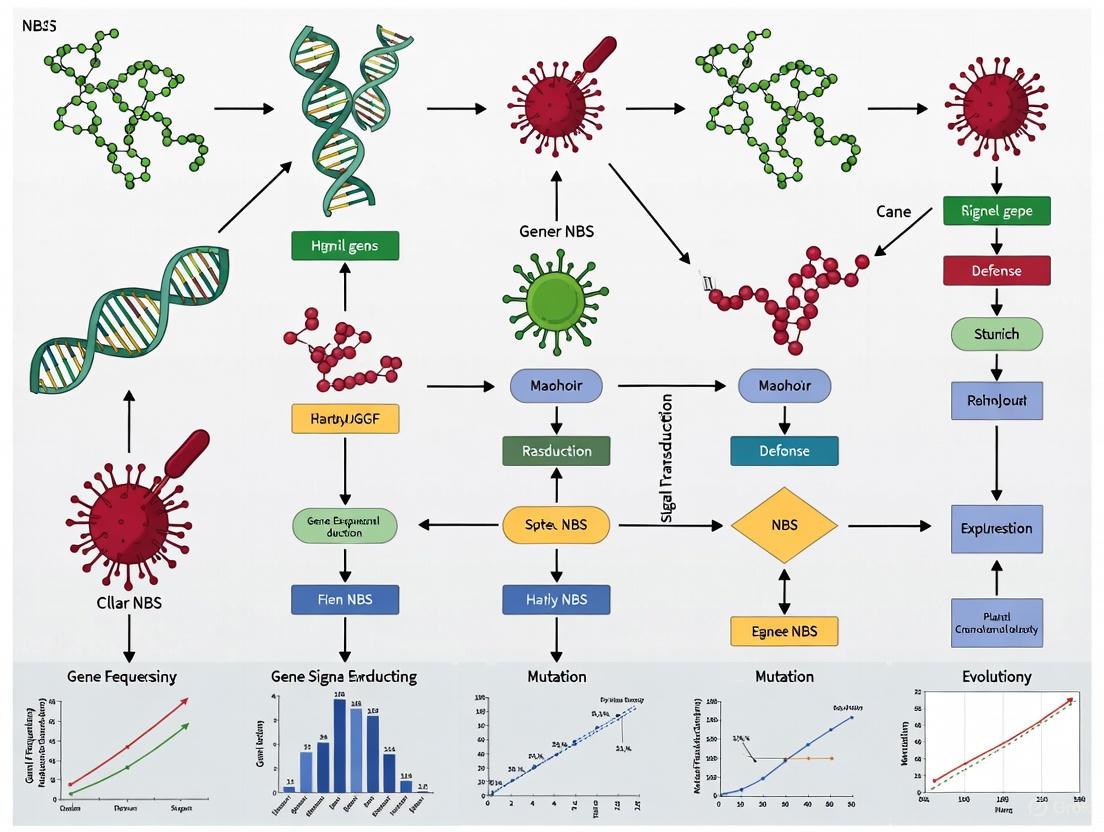
This article synthesizes current research on Nucleotide-Binding Site-Leucine Rich Repeat (NBS-LRR) genes, the largest family of plant disease resistance (R) genes, and their central role in the evolutionary arms race...
Molecular Arms Race: The Role of NBS Genes in Plant-Pathogen Co-Evolution
Abstract
This article synthesizes current research on Nucleotide-Binding Site-Leucine Rich Repeat (NBS-LRR) genes, the largest family of plant disease resistance (R) genes, and their central role in the evolutionary arms race with pathogens. We explore the foundational biology of NBS genes, including their domain architecture, classification into TNL, CNL, and RNL subfamilies, and their genomic organization in clusters. The review details the molecular mechanisms of pathogen recognition, covering both direct effector binding and indirect 'guard' models, and examines the evolutionary forces—gene duplication, birth-and-death evolution, positive selection, and gene conversion—that generate diversity. Methodological advances for identifying and characterizing NBS genes across plant genomes are discussed, alongside the significant fitness costs and regulatory challenges associated with maintaining this vast gene family, including miRNA-mediated control. The article further validates these concepts through contemporary case studies of emerging diseases and functional analyses, highlighting implications for breeding durable resistance in crops. This resource is tailored for researchers, scientists, and drug development professionals seeking a comprehensive understanding of plant immune receptor evolution and its applications.
The Plant's Arsenal: Understanding NBS-LRR Gene Structure and Evolutionary Dynamics
Plant immunity relies on a sophisticated, two-layered innate immune system. The first layer involves cell-surface pattern recognition receptors (PRRs) that detect pathogen-associated molecular patterns (PAMPs), triggering PAMP-triggered immunity (PTI). Successful pathogens deliver effector proteins into plant cells to suppress PTI, leading to the deployment of the second layer of defense—effector-triggered immunity (ETI)—mediated by intracellular nucleotide-binding site leucine-rich repeat (NBS-LRR or NLR) proteins [1] [2]. The evolutionary arms race between plants and their pathogens has shaped the NLR gene family into one of the most diverse and dynamic components of the plant genome, with different NLR subfamilies evolving distinct strategies for pathogen recognition and immune activation [3]. This molecular diversification, driven by various evolutionary mechanisms including gene duplication, domain shuffling, and positive selection, forms the cornerstone of plant-pathogen co-evolution research [4] [3]. Understanding the domain architecture, classification, and signaling mechanisms of TNL, CNL, and RNL proteins provides crucial insights into how plants maintain immunological diversity to counter rapidly evolving pathogens.
NLR Domain Architecture and Classification
NLR proteins constitute a major family of plant disease resistance (R) genes, accounting for approximately 80% of cloned R genes across plant species [5] [6]. These proteins are characterized by a conserved tripartite domain structure that facilitates their role as intracellular immune receptors and signaling hubs.
Core Domain Structure
All functional NLR proteins contain three essential domains that work in concert to mediate immune signaling:
Central Nucleotide-Binding (NB-ARC) Domain: This domain functions as a molecular switch that cycles between ADP (inactive) and ATP (active) bound states, controlling the activation status of the protein [3]. The NB-ARC domain contains several highly conserved motifs, including the P-loop, kinase 2, RNBS-A, RNBS-B, GLPL, RNBS-C, and MHD motifs, which are crucial for nucleotide binding and hydrolysis [6]. This domain is evolutionarily related to mammalian APAF-1 and CED-4, sharing the STAND (signal transduction ATPases with numerous domains) ATPase structure [3].
C-Terminal Leucine-Rich Repeat (LRR) Domain: This domain typically consists of multiple tandem repeats of 20-30 amino acids that form a solenoid structure with a solvent-exposed surface [3]. The LRR domain is primarily responsible for pathogen effector recognition, either through direct binding or by monitoring the status of host proteins targeted by effectors [1]. The hypervariable nature of LRR residues enables recognition of diverse pathogen effectors, contributing to the extensive polymorphism observed in NLR genes [3].
Variable N-Terminal Domain: The N-terminal domain defines the major NLR subfamilies and determines downstream signaling specificity. Three main types of N-terminal domains have been characterized: TIR (Toll/Interleukin-1 Receptor), CC (coiled-coil), and CCR (RPW8-like CC) domains [1] [7].
NLR Subfamily Classification
Based on their N-terminal domains, NLR proteins are classified into three principal subfamilies with distinct structural features and signaling properties [1] [7]:
Table 1: Major NLR Subfamilies and Their Characteristics
| Subfamily | N-Terminal Domain | Effector Recognition Role | Representative Examples | Conservation |
|---|---|---|---|---|
| TNL | TIR (Toll/Interleukin-1 Receptor) | Sensor NLR | RPS4, RRS1, RPP1, ROQ1 | Dicots only |
| CNL | CC (Coiled-Coil) | Sensor NLR | ZAR1, RGA4, RGA5, RPM1 | All angiosperms |
| RNL | CCR (RPW8-like CC) | Helper NLR | NRG1, ADR1 | All angiosperms |
The following diagram illustrates the conserved domain architecture and classification of plant NLR proteins:
NLR Domain Architecture and Classification
In addition to these three main classes, numerous truncated NLR variants exist across plant species, including NL (NBS-LRR without specific N-terminal domain), CN (CC-NBS), TN (TIR-NBS), and N (NBS-only) proteins, which may retain regulatory or signaling functions despite their degenerate structures [8] [5] [9].
Detailed Characterization of NLR Subfamilies
TNL (TIR-NBS-LRR) Proteins
TNL proteins are characterized by an N-terminal TIR domain that shares homology with Toll and interleukin-1 receptors from animals. This domain possesses enzymatic activity critical for downstream signaling. Recent structural and biochemical studies have revealed that the TIR domain functions as a NADase enzyme that cleaves NAD+ and generates signaling molecules, including cyclic ADP-ribose isomers, which act as second messengers to activate downstream immune components [7].
Key functional characteristics of TNLs:
- TNLs typically require helper NLRs from the RNL class (specifically NRG1 members) to activate full immune responses [7]
- Some TNLs function in paired configurations, such as the Arabidopsis RPS4/RRS1 pair, where one partner (RRS1) contains an integrated WRKY domain that serves as a decoy for pathogen effectors [1]
- Structural studies of TNLs like RPP1 and ROQ1 have revealed C-terminal jelly roll/Ig-like domains (C-JID) post-LRR regions that participate in effector recognition [1]
- TNLs are absent in monocots, suggesting a major evolutionary divergence in immune signaling between monocots and dicots [3] [5]
CNL (CC-NBS-LRR) Proteins
CNL proteins feature an N-terminal coiled-coil domain that mediates homotypic interactions and plays a crucial role in immune signaling execution. The CC domain of some CNLs has been shown to form homodimers and exhibit pore-forming activity in plasma membranes, leading to calcium influx and cell death [2].
Notable functional mechanisms of CNLs:
- CNLs like ZAR1 and Sr35 form oligomeric complexes known as "resistosomes" that function as calcium-permeable cation channels upon activation [7]
- Some CNLs (e.g., RGA5, Pik-1) function in paired systems with integrated domains (such as HMA domains) that directly bind pathogen effectors [1]
- CNLs can indirectly recognize effectors by monitoring the status of host "guardee" proteins, as exemplified by RPS2 and RPM1 monitoring Arabidopsis RIN4 phosphorylation and cleavage [1]
- CNLs generally signal through ADR1-family RNLs and may also require NRC-class helper NLRs in solanaceous species [1] [7]
RNL (RPW8-NBS-LRR) Proteins
RNLs represent a small but evolutionarily conserved clade of helper NLRs that function downstream of sensor NLRs (both TNLs and CNLs) to transduce immune signals. Based on phylogenetic analysis, RNLs are divided into two major subclades: the NRG1 (N REQUIREMENT GENE 1) and ADR1 (ACTIVATED DISEASE RESISTANCE 1) families, which separated before the divergence of angiosperms [7].
Distinctive features of RNL subclades:
- NRG1 subfamily: Required for TNL-mediated immunity; associates with EDS1-SAG101 heterodimers; predominantly mediates cell death execution [7]
- ADR1 subfamily: Functions in basal resistance and signaling downstream of both CNLs and TNLs; associates with EDS1-PAD4 heterodimers; primarily involved in transcriptional reprogramming and amplification of defense signals [7]
RNLs localize to the plasma membrane through interactions between positively charged residues in their CCR domains and phosphatidylinositol-4-phosphate lipids [7]. Upon activation, RNLs form high-molecular-weight complexes that promote calcium influx, similar to CNL resistosomes, ultimately leading to cell death and restriction of pathogen spread [7].
Genomic Organization and Evolutionary Dynamics
The NLR gene family exhibits remarkable diversity in copy number and genomic organization across plant species, reflecting ongoing evolutionary arms races with pathogens. Comparative genomic analyses reveal several key patterns in NLR evolution:
Table 2: Evolutionary Patterns and Genomic Features of NLR Genes
| Evolutionary Aspect | Patterns and Mechanisms | Examples and Evidence |
|---|---|---|
| Gene Copy Number Variation | Varies from dozens to thousands; not correlated with genome size | 27 in asparagus to >2000 in wheat [9]; 73 in Akebia trifoliata [6] |
| Duplication Mechanisms | Tandem, dispersed, and whole-genome duplications | Tandem duplicates common in N-type genes; dispersed in CNL/CN [4] |
| Selection Pressures | Type-specific evolutionary constraints | Strong purifying selection on WGD genes; positive selection on tandem duplicates [4] |
| Presence-Absence Variation | Distinguishes core and adaptive NLRs | Conserved "core" (ZmNBS31) vs. variable subgroups (ZmNBS1-10) in maize [4] |
| Subfamily Distribution | Lineage-specific expansions and losses | TNLs absent in monocots; RNLs conserved but small in number [3] [5] [9] |
The evolution of NLR genes is shaped by diverse duplication mechanisms that generate genetic novelty. Whole-genome duplicates typically evolve under strong purifying selection, maintaining conserved immune functions, while tandem and proximal duplicates often experience relaxed constraints or positive selection that drives functional diversification [4]. This evolutionary dynamic creates a "core-adaptive" structure in the NLR repertoire, with conserved genes providing essential immune functions and rapidly evolving genes offering species-specific adaptations to local pathogen pressures [4].
Experimental Methodologies for NLR Research
Genome-Wide Identification and Classification
Comprehensive identification of NLR genes requires a multi-step bioinformatic workflow:
1. Sequence Identification:
- Hidden Markov Model (HMM) searches using the NB-ARC domain (PF00931) as query [6] [9]
- BLASTp analyses against reference NLR datasets with stringent E-value cutoffs (e.g., 1e-10) [9]
- Consolidation of candidates from both approaches with redundancy removal
2. Domain Architecture Analysis:
- Validation using InterProScan and NCBI's Batch CD-Search [9]
- Identification of TIR (PF01582), RPW8 (PF05659), LRR (PF08191), and CC domains (using tools like Coiledcoil with threshold 0.5) [6]
- Classification based on complete domain composition into CNL, TNL, RNL, and truncated variants
3. Phylogenetic and Evolutionary Analysis:
- Multiple sequence alignment using Clustal Omega or MAFFT [9]
- Phylogenetic reconstruction with Maximum Likelihood methods (e.g., MEGA software) [5] [9]
- Bootstrap analysis (typically 1000 replicates) to assess node support [9]
- Orthogroup analysis using OrthoFinder to identify conserved gene pairs across species [9]
The following diagram illustrates the experimental workflow for NLR gene identification and characterization:
NLR Gene Identification Workflow
Functional Characterization Approaches
Expression Analysis:
- RNA-seq transcript profiling under pathogen infection and hormone treatments [5] [6]
- Identification of differentially expressed NLR genes using standardized pipelines (e.g., HISAT2, StringTie, DESeq2) [5]
- Weighted Gene Co-expression Network Analysis (WGCNA) to connect NLRs with immune pathways [5]
Functional Validation:
- Heterologous expression in Nicotiana benthamiana for cell death assays [1]
- CRISPR-Cas9 mediated gene knockout to establish immune function [7]
- Electrophysiological measurements of ion fluxes for resistosome characterization [7]
Signaling Mechanisms and Immune Activation
NLR proteins operate within complex immune signaling networks that integrate signals from both PTI and ETI systems. The signaling mechanisms differ substantially between NLR subfamilies but converge on common immune outputs.
Activation and Signaling Pathways
TNL Signaling Module: TNL activation leads to TIR domain-mediated NADase activity, producing small nucleotide-based second messengers. These molecules promote the association of EDS1-SAG101 heterodimers with NRG1 helper NLRs, leading to NRG1 resistosome formation at the plasma membrane and calcium influx [7].
CNL Signaling Module: CNL activation occurs through direct effector binding, integrated decoy domains, or guardee protein modification. Activated CNLs oligomerize to form calcium-permeable channel complexes in the plasma membrane, directly causing ion flux that triggers downstream immune responses [7]. Some CNLs signal through ADR1-family RNLs and EDS1-PAD4 heterodimers [7].
RNL Helper Functions: RNLs serve as signaling hubs that integrate immune signals from multiple sensor NLRs. The EDS1-PAD4-ADR1 module acts as a convergence point for both PRR and NLR-induced signaling, explaining mutual potentiation of PTI and ETI [7].
The following diagram illustrates the integrated signaling network of plant NLR-mediated immunity:
Integrated NLR Signaling Network
Regulatory Mechanisms
Plants employ multiple regulatory layers to control NLR activity and prevent autoimmunity:
Transcriptional Regulation:
- miRNA targeting of NLR transcripts, particularly by miR482/2118 family that targets the P-loop region [3]
- TasiRNA production from 22-nt miRNA targeting to amplify regulatory signals [3]
- Promoter cis-elements responsive to defense hormones (SA, JA, ET) and pathogen challenge [5] [9]
Post-translational Regulation:
- Intramolecular interactions maintaining autoinhibition in the absence of effectors [1]
- Chaperone-assisted folding and nucleocytoplasmic partitioning [2]
- Degradation mechanisms to eliminate activated NLRs [2]
The Scientist's Toolkit: Essential Research Reagents
Table 3: Key Research Reagents and Resources for NLR Studies
| Reagent/Resource | Application | Examples and Specifications |
|---|---|---|
| HMM Profile PF00931 | NB-ARC domain identification | Pfam database; E-value ≤ 1e-5 for domain validation [6] [9] |
| Reference NLR Sequences | BLAST queries and classification | Arabidopsis thaliana, Oryza sativa, species-specific reference sets [9] |
| MEME Suite | Conserved motif discovery | 10 motifs, width 6-50 amino acids, default parameters [6] [9] |
| PlantCARE Database | cis-element prediction | 2000 bp upstream sequences analyzed for defense-related elements [9] |
| Nicotiana benthamiana | Transient expression assays | Cell death complementation, protein localization, immune output measurement [1] |
| RNA-seq Libraries | Expression profiling | Pathogen-infected tissues, hormone treatments, time-course experiments [5] [6] |
| CRISPR-Cas9 Systems | Functional validation | Knockout mutants for phenotype assessment [7] |
The domain architecture and functional specialization of TNL, CNL, and RNL proteins represent key evolutionary innovations that enable plants to detect diverse pathogens and activate robust immunity. The modular structure of NLR proteins, with conserved NB-ARC domains coupled with variable N-terminal and LRR domains, provides both structural stability for signaling and molecular flexibility for pathogen recognition. Ongoing research continues to reveal surprising complexity in NLR signaling mechanisms, from resistosome formation as calcium channels to the role of helper NLRs as signaling hubs.
Future research directions include elucidating the structural basis of RNL resistosome assembly, understanding how NLR expression is fine-tuned to balance immunity and growth trade-offs, and harnessing NLR diversity for crop improvement through both conventional breeding and emerging genome engineering technologies. The rapid evolution of NLR genes ensures they will remain at the forefront of plant-pathogen co-evolution research, providing fundamental insights into the molecular arms race that shapes ecological and agricultural systems.
The genomic organization of Nucleotide-Binding Site Leucine-Rich Repeat (NBS-LRR) genes represents a fundamental aspect of plant-pathogen co-evolution, serving as a genomic blueprint for evolutionary innovation in plant immunity. These disease resistance (R) genes, which constitute the largest class of plant immune receptors, are not randomly distributed throughout plant genomes but exhibit distinctive organizational patterns that reflect evolutionary pressures from rapidly adapting pathogens [3] [10]. The predominance of cluster arrangements and uneven chromosomal distribution provides critical insights into how plants maintain a diverse defensive repertoire while balancing the significant fitness costs associated with NBS-LRR gene expression [3]. Understanding these genomic patterns is essential for elucidating the evolutionary mechanisms that shape plant immune systems and for developing strategies to engineer durable disease resistance in crop species.
Genomic Distribution Patterns of NBS-LRR Genes
Comparative genomic analyses across diverse plant taxa reveal consistent patterns in NBS-LRR gene organization, characterized by uneven chromosomal distribution and significant clustering. The table below summarizes the genomic organization of NBS-LRR genes in recently studied plant species:
Table 1: NBS-LRR Gene Distribution Across Plant Genomes
| Plant Species | Total NBS-LRR Genes | Genes in Clusters | Singleton Genes | Clusters (Number) | Largest Cluster | Reference |
|---|---|---|---|---|---|---|
| Capsicum annuum (Pepper) | 252 | 136 (54%) | 116 (46%) | 47 | 8 genes (Chr3) | [11] |
| Dioscorea rotundata (Yam) | 167 | 124 (74.3%) | 43 (25.7%) | 25 | Not specified | [10] |
| Dendrobium officinale | 74 | Not specified | Not specified | Not specified | Not specified | [5] |
| Xanthoceras sorbifolium | 180 | Not specified | Not specified | Not specified | Not specified | [12] |
| Dinnocarpus longan | 568 | Not specified | Not specified | Not specified | Not specified | [12] |
| Acer yangbiense | 252 | Not specified | Not specified | Not specified | Not specified | [12] |
Chromosomal Distribution Hotspots and Coldspots
The uneven distribution of NBS-LRR genes across chromosomes creates distinct genomic "hotspots" and "coldspots" of resistance gene density. In pepper (Capsicum annuum), chromosome 3 represents a major hotspot, harboring 38 NBS-LRR genes and containing the highest number of gene clusters (10 clusters), including the largest identified cluster of 8 genes [11]. In contrast, chromosomes 2 and 6 contain only 5 NBS-LRR genes each, with chromosome 6 containing no gene clusters whatsoever [11]. Similarly, in white Guinea yam (Dioscorea rotundata), the 167 NBS-LRR genes are unevenly distributed across chromosomes, with certain genomic regions completely devoid of these genes while others show dense concentrations [10].
This heterogeneous distribution pattern extends across plant families. In Sapindaceae species (Xanthoceras sorbifolium, Dinnocarpus longan, and Acer yangbiense), NBS-LRR genes are "unevenly distributed and usually clustered as tandem arrays on chromosomes, with few existed as singletons" [12]. Research in rice has further confirmed that NBS-LRR genes show "high aggregation and duplication due to local duplications" [5], emphasizing that this organizational principle is conserved across monocots and eudicots.
Molecular Mechanisms and Evolutionary Drivers
Tandem Duplication as the Primary Driver of Cluster Formation
Tandem duplication serves as the major evolutionary mechanism generating NBS-LRR gene clusters. In Dioscorea rotundata, tandem duplication is recognized as "the major force for the cluster arrangement of NBS-LRR genes" [10], while segmental duplication contributes to a lesser extent (detected for only 18 genes) despite the absence of whole-genome duplication in this species [10]. This pattern of localized gene duplication creates arrays of evolutionarily related NBS-LRR genes that serve as factories for generating sequence diversity through mechanisms such as gene conversion, unequal crossing over, and domain swapping.
The evolutionary benefits of this cluster organization include:
- Rapid Generation of Diversity: Clustered arrangements facilitate sequence exchange between paralogs, creating new recognition specificities through combinatorial diversity [3]
- Coordinated Regulation: Genes within clusters may share regulatory elements, enabling coordinated expression responses to pathogens [11]
- Evolutionary Flexibility: Clusters can rapidly expand or contract in response to changing pathogen pressures, allowing dynamic adaptation [12]
Fitness Costs and Regulatory Constraints
The genomic organization of NBS-LRR genes reflects a balance between maintaining diversity and minimizing autoimmunity costs. As noted in PMC5026261, "high expression of plant NBS-LRR defense genes is often lethal to plant cells, a phenotype perhaps associated with fitness costs" [3]. This potentially lethal effect of improper NBS-LRR expression necessitates precise regulatory control, which is facilitated by cluster organization. Additionally, plants have evolved diverse miRNAs that specifically target NBS-LRRs, creating a sophisticated regulatory network that maintains these genes in a transcriptionally repressed state until pathogen recognition occurs [3].
The fitness costs associated with NBS-LRR genes may explain why some plant genomes maintain relatively low numbers of these genes despite their importance in disease resistance. For example, papaya, cucumber, and watermelon genomes contain "quite low copy number of NBS-LRRs" [3], suggesting that different plant lineages have evolved distinct strategies for balancing the benefits and costs of maintaining large NBS-LRR repertoires.
Experimental Approaches for Studying NBS-LRR Genomics
Genome-Wide Identification and Annotation Protocols
Table 2: Experimental Protocols for NBS-LRR Gene Identification
| Method | Key Steps | Applications in Cited Studies |
|---|---|---|
| BLAST and HMM Search | 1. Use NB-ARC domain (PF00931) as query2. Set E-value threshold (1.0 for BLAST)3. Merge candidate sequences and remove redundancy4. Confirm NBS domain presence via Pfam analysis (E-value 10⁻⁴) | Identification of 252 NBS-LRR genes in pepper [11] and 167 in yam [10] |
| Domain Architecture Analysis | 1. Use NCBI's conserved domain database2. Apply Pfam and COILS for CC, TIR, LRR identification3. Classify into CNL, TNL, RNL subclasses | Classification of yam NBS-LRRs into CNL (166), RNL (1), with no TNL genes detected [10] |
| Cluster Identification | 1. Map chromosomal locations from GFF files2. Apply cluster criterion: neighboring NBS-LRR genes within 250kb3. Validate physical clustering via sequence analysis | Identification of 47 gene clusters containing 136 genes in pepper genome [11] |
| Phylogenetic Analysis | 1. Select conserved NBS domain sequences2. Construct ML phylogenetic trees3. Determine evolutionary relationships and duplication events | Revealed 15 ancestral lineages shared between yam and Arabidopsis [10] |
The Scientist's Toolkit: Essential Research Reagents
Table 3: Key Research Reagents for NBS-LRR Genomic Studies
| Reagent/Resource | Function/Application | Examples from Literature |
|---|---|---|
| PacBio HiFi Sequencing | Generate long-read assemblies for complex NBS-LRR regions | Used to assemble 11.09Gb of wild emmer wheat DNA for YrTD121 cloning [13] |
| BLAST/InterPro Databases | Identify conserved domains and classify NBS-LRR subfamilies | NB-ARC domain (PF00931) as standard query across studies [12] [10] |
| KASP Markers | High-throughput genotyping for genetic mapping | Developed 6 KASP markers to map YrTD121 locus in wheat [13] |
| CRISPR/Cas9 Systems | Functional validation through targeted gene knockout | Confirmed TdNLR1/TdNLR2 requirement for stripe rust resistance [13] |
| RNA-seq/BSR-seq | Transcript profiling and bulked segregant analysis | Identified 1,677 DEGs in SA-treated Dendrobium; mapped YrTD121 via BSR-seq [5] [13] |
Research Workflow and Signaling Pathways
Experimental Workflow for NBS-LRR Gene Identification and Characterization
Experimental Workflow for NBS-LRR Genomics
NBS-LRR Gene Activation and Immune Signaling Pathway
NBS-LRR Immune Activation Pathway
Evolutionary Patterns and Lineage-Specific Adaptations
Diversification of NBS-LRR Gene Repertoires
Different plant lineages exhibit distinct evolutionary patterns in their NBS-LRR gene repertoires, reflecting adaptations to specific ecological niches and pathogen pressures. In Sapindaceae species, comparative genomics revealed "dynamic and distinct evolutionary patterns due to independent gene duplication/loss events" [12]. Specifically, Xanthoceras sorbifolium exhibited a "first expansion and then contraction" pattern, while Acer yangbiense and Dinnocarpus longan showed a "first expansion followed by contraction and further expansion" pattern, with D. longan experiencing stronger recent expansion [12].
Monocot-dicot comparisons reveal profound differences in NBS-LRR evolution. Notably, "TNL genes are typically highly conserved and their variation may be limited to presence/absence polymorphisms" [3], and "no TNL-type genes were identified in six orchids, which proved that the TIR domain degeneration is a common phenomenon in monocots" [5]. This lineage-specific loss of entire NBS-LRR subclasses highlights how different evolutionary trajectories can shape the genomic organization of immune genes.
NLR Pair协同作用: Emerging Paradigm in Disease Resistance
Recent research has revealed an important organizational principle in NBS-LRR genomics: the existence of functionally linked NLR pairs that work cooperatively to confer disease resistance. In wild emmer wheat, a striking example was identified where "TdNLR1 and TdNLR2 are two NLR genes that form a head-to-head gene pair at the Yr84/YrTD121 locus and function together to confer stripe rust resistance" [13]. These NLR pairs typically exhibit a "head-to-head" genomic arrangement and may involve division of labor between "sensor" and "helper" NLR components, creating sophisticated immune recognition complexes that enhance the plant's capacity to detect diverse pathogen effectors.
The genomic organization of NBS-LRR genes into clusters and singletons represents a sophisticated evolutionary solution to the challenge of maintaining diverse pathogen recognition capabilities while managing genomic and metabolic costs. The uneven distribution of these genes across chromosomes creates specialized genomic neighborhoods that facilitate rapid evolution of new recognition specificities through localized sequence exchange and duplication events. Understanding these organizational principles provides crucial insights for crop improvement strategies, enabling researchers to identify valuable resistance gene combinations in wild relatives and engineer more durable disease resistance in cultivated varieties. As genomic technologies advance, the ability to precisely manipulate NBS-LRR gene clusters while maintaining their evolutionary potential will be essential for developing sustainable crop protection strategies in the face of evolving pathogen threats.
Plant immunity relies on a sophisticated innate immune system to counteract a constant barrage of evolving pathogens. Central to this system are nucleotide-binding site leucine-rich repeat (NBS-LRR) genes, which encode proteins that function as intracellular immune receptors responsible for detecting pathogen effectors and initiating defense responses [3] [14]. The NBS gene family exhibits extraordinary genetic diversity and copy number variation (CNV) across plant species, representing a powerful model for studying plant-pathogen co-evolution. These genes demonstrate perhaps the most dramatic variation in gene family size among eukaryotes, ranging from mere dozens to over a thousand copies per genome [15] [16]. This variation in gene number and diversity directly reflects the ongoing evolutionary arms race between plants and their pathogens, where rapid gene family expansion and contraction enable host genomes to maintain pace with rapidly evolving pathogenic threats. Understanding the patterns and mechanisms driving NBS gene diversity provides crucial insights into evolutionary genetics and offers potential strategies for engineering durable disease resistance in crop species.
Quantitative Landscape of NBS Gene Copy Number Variation
Extreme Variation Across Plant Lineages
Genome-wide analyses across diverse plant taxa have revealed striking disparities in NBS-encoding gene numbers, with variations spanning more than an order of magnitude even among closely related species. This remarkable copy number variation represents one of the most dynamic features of plant genomes and reflects differential evolutionary pressures across lineages.
Table 1: NBS Gene Copy Number Variation Across Plant Families
| Plant Family | Species | Number of NBS Genes | Percentage of Genome | Reference |
|---|---|---|---|---|
| Rosaceae | Apple (Malus domestica) | 1,303 | 2.05% | [15] |
| Rosaceae | Pear (Pyrus bretschneideri) | 617 | 1.44% | [15] |
| Rosaceae | Peach (Prunus persica) | 437 | 1.52% | [15] |
| Rosaceae | Mei (Prunus mume) | 475 | 1.51% | [15] |
| Rosaceae | Strawberry (Fragaria vesca) | 346 | 1.05% | [15] |
| Sapindaceae | Longan (Dimocarpus longan) | 568 | - | [17] |
| Sapindaceae | Acer yangbiense | 252 | - | [17] |
| Sapindaceae | Xanthoceras sorbifolium | 180 | - | [17] |
| Euphorbiaceae | Vernicia montana | 149 | - | [18] |
| Euphorbiaceae | Vernicia fordii | 90 | - | [18] |
| Cucurbitaceae | Cucumber (Cucumis sativus) | 59-71 | 0.22-0.27% | [15] |
| Cucurbitaceae | Melon (Cucumis melo) | 80 | ~0.19% | [15] |
| Cucurbitaceae | Watermelon (Citrullus lanatus) | 45 | ~0.19% | [15] |
| Solanaceae | Nicotiana benthamiana | 156 | 0.25% | [19] |
The data reveals extreme expansion in Rosaceae species, particularly in apple, which possesses the highest number of NBS genes (1,303) reported among diploid plants, constituting over 2% of its annotated genes [15]. In contrast, Cucurbitaceae species maintain remarkably low numbers of NBS genes, with fewer than 100 copies across cucumber, melon, and watermelon genomes [15]. This suggests fundamentally different evolutionary strategies for pathogen resistance between these plant families.
Structural Diversity and Classification of NBS Genes
NBS-encoding genes are classified based on their N-terminal domain architecture and the presence of C-terminal LRR domains, with different structural types potentially fulfilling distinct functional roles in plant immunity:
Table 2: Structural Classification of NBS Genes in Selected Species
| Species | Total NBS | TNL | CNL | RNL | Truncated Forms | Reference |
|---|---|---|---|---|---|---|
| Nicotiana benthamiana | 156 | 5 | 25 | 4* | 122 | [19] |
| Vernicia montana | 149 | 12 | 98 | - | 39 | [18] |
| Vernicia fordii | 90 | 0 | 49 | - | 41 | [18] |
| Pyrus bretschneideri (Asian pear) | 338 | ~21 | ~90 | - | ~227 | [20] |
| Pyrus communis (European pear) | 412 | ~45 | ~38 | - | ~329 | [20] |
Note: RNL count for Nicotiana benthamiana includes proteins with RPW8 domain across subfamilies
The distribution of structural classes reveals important evolutionary patterns. Coiled-coil (CC) NBS-LRR genes typically dominate most plant genomes, while Toll-interleukin-1 receptor (TIR) NBS-LRR genes show more restricted distributions and are absent entirely in some lineages, including monocots and certain eudicots like Vernicia fordii [3] [18]. Truncated forms lacking complete domain structures represent a substantial portion of NBS genes in many species, potentially serving as regulators or decoys in immune signaling networks [19].
Molecular Mechanisms Driving NBS Gene Diversification
Gene Duplication and Birth-and-Death Evolution
The dramatic variation in NBS gene copy numbers primarily results from differential rates of gene duplication and loss across plant lineages. Several molecular mechanisms contribute to this dynamic evolution:
Tandem Duplications: NBS genes are frequently organized as tandem arrays on chromosomes, where unequal crossing over generates copy number variation [17]. This arrangement facilitates rapid expansion and contraction of specific gene lineages in response to pathogen pressure.
Whole Genome Duplication (WGD): Polyploidization events provide raw genetic material for NBS gene family expansion, with subsequent diploidization and fractionation leading to differential gene loss among lineages [16].
Birth-and-Death Evolution: This evolutionary model describes how new NBS genes are created by duplication, diverge in sequence and function, and may eventually be pseudogenized or eliminated from the genome [20]. This process generates the remarkable diversity of NBS genes observed in plant genomes.
Comparative genomic analyses reveal distinct evolutionary patterns among plant families. Rosaceae species exhibit extreme expansion through repeated duplication events [15], while Cucurbitaceae species show frequent gene loss resulting in minimal NBS gene complements [15]. Sapindaceae species demonstrate lineage-specific patterns, with X. sorbifolium showing "first expansion and then contraction" and D. longan exhibiting "first expansion followed by contraction and further expansion" [17].
Selective Pressures and Diversifying Evolution
NBS genes experience strong selective pressures that shape their evolutionary trajectories:
Positive Selection: Acts predominantly on solvent-exposed residues of the LRR domain, enhancing recognition specificity for evolving pathogen effectors [15] [20]. This diversifying selection drives rapid amino acid substitutions that alter binding interfaces.
Balancing Selection: Maintains multiple haplotypes in populations through frequency-dependent selection or heterozygote advantage, preserving ancient polymorphisms [20].
Fitness Costs: High expression of NBS genes can be lethal to plant cells, and maintaining large NBS repertoires incurs metabolic costs [3]. These costs potentially constrain unlimited expansion of NBS gene families.
Analysis of orthologous NBS gene pairs between Asian and European pears revealed approximately 15.79% displayed Ka/Ks ratios >1, indicating strong positive selection following species divergence [20]. This rapid evolution enables recognition of changing pathogen populations.
Figure 1: NBS Gene Co-evolutionary Cycle with Pathogens. This diagram illustrates the continuous arms race between plant immune gene evolution and pathogen adaptation, driving the birth-and-death evolutionary pattern characteristic of NBS genes.
Regulatory Systems and miRNA-Mediated Control
miRNA Regulation of NBS Gene Expression
Plants have evolved sophisticated regulatory mechanisms to control the expression of NBS genes, minimizing fitness costs while maintaining defense readiness:
miRNA Targeting: Diverse miRNA families (e.g., miR482/2118) target conserved motifs within NBS-LRR transcripts, primarily the P-loop region, enabling coordinated downregulation of multiple NBS genes [3].
PhasiRNA Production: Some 22-nt miRNAs trigger the production of phased secondary siRNAs (phasiRNAs) from NBS-LRR transcripts, amplifying the regulatory effect and potentially enabling trans-regulatory networks [3].
Evolutionary Dynamics: New miRNAs periodically emerge from duplicated NBS-LRR sequences, typically targeting highly duplicated NBS-LRR families while heterogeneous NBS-LRRs are rarely targeted [3].
This regulatory system may provide an evolutionary benefit by allowing plants to maintain extensive NBS repertoires while minimizing the fitness costs of their expression [3] [16]. The observation that miRNAs typically target highly duplicated NBS-LRRs suggests this regulation helps balance the benefits of diversity against the costs of maintaining large resistance gene families.
Transcriptional and Post-transcriptional Regulation
Beyond miRNA control, NBS genes are regulated at multiple levels:
Cis-regulatory Evolution: Promoter variations, including indels in transcription factor binding sites (e.g., W-box elements), can alter expression patterns between resistant and susceptible genotypes [18].
Expression Plasticity: NBS genes show specific induction patterns in response to pathogen challenge, with distinct regulation in resistant versus susceptible accessions [20].
Alternative Splicing: Some NBS genes produce multiple transcript variants potentially encoding proteins with modified functions [19].
The complex regulatory landscape of NBS genes enables precise control of their expression in different tissues, developmental stages, and in response to pathogen challenge, balancing effective defense with autoimmunity risks.
Experimental Approaches for NBS Gene Analysis
Genome-Wide Identification and Characterization
Standardized methodologies have been established for comprehensive identification and analysis of NBS-encoding genes:
Table 3: Experimental Protocols for NBS Gene Identification and Validation
| Method | Purpose | Key Steps | Applications |
|---|---|---|---|
| HMMER Search | Identify NBS domain-containing genes | HMM search with NB-ARC domain (PF00931); E-value < 1.0; Pfam confirmation | Genome-wide annotation of NBS genes [18] [17] [19] |
| Phylogenetic Analysis | Classify NBS genes into evolutionary groups | Multiple sequence alignment (ClustalW); Maximum likelihood tree construction; Bootstrap validation | Determine evolutionary relationships and orthology [20] [19] |
| Motif Analysis | Identify conserved structural domains | MEME suite analysis; motif count 10; width 6-50 amino acids | Characterize domain architecture and structural classes [19] |
| Synonymous/Non-synonymous Substitution Analysis | Measure selection pressure | Calculate Ka/Ks ratios for orthologous gene pairs; Ka/Ks >1 indicates positive selection | Identify rapidly evolving genes under diversifying selection [20] |
| Virus-Induced Gene Silencing (VIGS) | Functional validation of disease resistance | TRV-based vector delivery; target gene knockdown; pathogen challenge | Confirm role of specific NBS genes in resistance [18] [16] |
The Scientist's Toolkit: Essential Research Reagents
Table 4: Key Research Reagent Solutions for NBS Gene Studies
| Reagent/Resource | Function | Application Examples |
|---|---|---|
| HMMER Software | Hidden Markov Model-based sequence search | Identification of NBS-encoding genes using NB-ARC domain (PF00931) [18] [19] |
| Pfam Database | Protein family classification | Verification of NBS and other conserved domains [16] [19] |
| TRV VIGS Vectors | Virus-induced gene silencing | Functional validation of NBS genes in Nicotiana benthamiana and other plants [18] [16] |
| PlantCARE Database | Cis-element prediction | Identification of regulatory elements in NBS gene promoters [19] |
| OrthoFinder | Orthogroup inference | Evolutionary analysis and classification of NBS genes across species [16] |
Figure 2: Experimental Workflow for NBS Gene Characterization. This pipeline illustrates the standard methodology from computational identification to functional validation of NBS-encoding genes.
The extreme copy number variation of NBS genes, ranging from dozens to over a thousand per genome, represents a remarkable example of rapid evolution in response to biological conflict. This diversity directly mirrors the ongoing co-evolutionary arms race between plants and their pathogens, where gene family expansion, contraction, and sequence diversification provide the raw material for evolving new recognition specificities. The integrated analysis of genomic, evolutionary, and functional data has revealed fundamental principles governing NBS gene diversity, including the predominant role of tandem duplications, the strength of positive selection, and the importance of regulatory constraints.
Future research directions will likely focus on engineering optimized NBS gene repertoires for crop improvement, potentially through gene stacking or genome editing approaches [21]. Understanding how natural selection has shaped these genes across diverse plant lineages provides a blueprint for designing synthetic resistance genes with enhanced recognition spectra and durability. The continuing discovery of novel NBS genes and their functions will further illuminate the molecular dialogue between plants and pathogens, offering innovative strategies for managing agricultural diseases in an era of climate change and food security challenges.
The evolutionary dynamics of Nucleotide-Binding Site Leucine-Rich Repeat (NBS-LRR) genes, the largest family of plant disease resistance (R) genes, are fundamental to understanding plant-pathogen co-evolution. These genes encode proteins that detect pathogen effectors and initiate robust immune responses [22]. Their genomic evolution is characterized by two distinct patterns—Type I and Type II—governed by a birth-and-death model that enables rapid adaptation to evolving pathogen populations [23]. This framework is not merely descriptive; it provides predictive power for identifying durable resistance genes and informs breeding strategies for crop improvement. Within the context of plant-pathogen co-evolution, dissecting these evolutionary patterns is crucial for deciphering how plants maintain a diverse defensive arsenal against relentless pathogen pressure.
The Molecular Architecture of NBS-LRR Genes
Domain Structure and Function
NBS-LRR proteins are large, modular proteins typically ranging from 860 to 1,900 amino acids [22]. They consist of three core domains, each with specialized functions:
N-terminal Domain: Functions as a signaling hub and exists primarily in two forms: the Toll/Interleukin-1 Receptor (TIR) domain or the Coiled-Coil (CC) domain. These domains are involved in protein-protein interactions and initiating downstream defense signaling cascades [22] [24]. TIR-NBS-LRR (TNL) and CC-NBS-LRR (CNL) proteins represent two major, functionally distinct subfamilies that often employ different signaling pathways [22].
Central NBS Domain: Serves as a molecular switch regulated by nucleotide (ATP/ADP) binding and hydrolysis. This domain belongs to the STAND (signal transduction ATPases with numerous domains) family of P-loop ATPases and controls the protein's activation state [3] [22]. Conformational changes in this domain are crucial for transitioning from an inactive to an active state upon pathogen perception.
C-terminal LRR Domain: Comprises highly variable leucine-rich repeats that form a series of β-sheets with solvent-exposed residues. This domain is primarily responsible for direct or indirect recognition of pathogen effectors [22]. The remarkable variability in this domain provides the structural basis for specific recognition of diverse pathogen molecules.
Genomic Organization and Distribution
NBS-LRR genes are rarely distributed randomly in plant genomes. Instead, they are frequently organized in genomic clusters resulting from both segmental and tandem duplications [22] [24]. These clusters can range from two tandem paralogs to large complexes spanning several megabases [23]. This arrangement facilitates the generation of variation through unequal crossing-over, gene conversion, and sequence exchange between paralogs [22] [23]. The number of NBS-LRR genes varies substantially across plant species, from fewer than 100 to over 1,000 copies, generally correlating with total gene number in the genome though with notable exceptions [3].
Table 1: Classification and Characteristics of Plant NBS-LRR Genes
| Feature | Type I Genes | Type II Genes |
|---|---|---|
| Evolutionary Rate | Rapid evolution | Slow evolution |
| Sequence Exchange | Frequent gene conversions and sequence exchange between paralogs | Rare gene conversion events |
| Orthology Relationships | Difficult to establish due to chimeric sequences | Clear orthologous relationships across genotypes |
| Paralog Copy Number | Often numerous paralogs within a genome | Fewer paralogs |
| Selection Pressure | Diversifying selection, especially on LRR solvent-exposed residues | Purifying selection on NBS domain; diversifying selection on LRR |
| Functional Implications | Rapid generation of novel specificities | Conservation of recognition specificities |
The Birth-and-Death Model of Evolution
The birth-and-death model provides a comprehensive framework for understanding the long-term evolution of NBS-LRR genes. This model proposes that new resistance genes are created through repeated cycles of gene duplication, followed by the divergence or loss of duplicated copies [25]. The high degree of sequence diversity observed in contemporary NBS-LRR genes results from the combined actions of duplication, mutation, recombination, and selection [23].
Mechanisms Generating Diversity
Several genetic mechanisms operate within the birth-and-death framework to generate diversity in NBS-LRR genes:
Gene Duplication: Both tandem and segmental duplications continuously expand NBS-LRR gene families, providing raw genetic material for evolution [24] [26]. For example, in Akebia trifoliata, tandem and dispersed duplications have been identified as the main forces responsible for NBS gene expansion [26].
Unequal Crossing-Over: Within genomic clusters, unequal crossing-over during meiosis generates variation in gene copy number and creates novel chimeric genes [22] [23]. This process can rapidly expand or contract cluster sizes, contributing to the "birth" and "death" phases of evolution.
Gene Conversion: Non-reciprocal sequence exchange between paralogs creates mosaic genes with novel specificities [25]. This process is particularly prominent in Type I genes, where it accelerates their evolutionary rate and obscures orthology relationships [23] [25].
Diversifying Selection: Positive selection acts preferentially on solvent-exposed residues of the LRR domain, favoring amino acid substitutions that alter recognition specificities [22] [25]. This diversifying selection maintains variation at the population level, enabling response to diverse pathogens.
Functional Trajectories of Duplicated Genes
Under the birth-and-death model, duplicated NBS-LRR genes can follow several evolutionary trajectories:
Nonfunctionalization: Most duplicated copies accumulate degenerative mutations and become pseudogenes, eventually being lost from the genome [27].
Neofunctionalization: Rarely, duplicates acquire mutations that confer novel recognition specificities, creating genes with new resistance functions [27].
Subfunctionalization: Partially degraded duplicates partition ancestral functions, requiring both copies to perform the original gene's complete function [27].
The balance between these trajectories, influenced by mechanistic duplication processes and population genetic forces, determines the evolutionary dynamics of NBS-LRR genes and shapes the plant's resistance repertoire.
Type I vs. Type II Evolutionary Patterns
The classification of NBS-LRR genes into Type I and Type II categories reflects their distinct evolutionary behaviors within the birth-and-death framework, with significant implications for their stability and functional maintenance.
Type I Genes: Rapidly Evolving Sentinels
Type I genes exemplify the dynamic aspect of the birth-and-death model. They are characterized by:
Frequent sequence exchange between paralogs through gene conversion and recombination events, resulting in chimeric genes with complex evolutionary histories [23] [25].
Accelerated evolutionary rates that facilitate rapid generation of novel sequence variants, potentially enabling swift adaptation to changing pathogen populations [23].
Chimeric gene structures that obscure orthology relationships across different genotypes or related species, complicating evolutionary analysis [25].
Predominance in large, complex clusters where high gene density promotes frequent sequence exchange between adjacent paralogs [23].
The evolutionary pattern of Type I genes represents a strategy for maximizing diversity generation, creating a broad repertoire of recognition specificities that can counter rapidly evolving pathogens.
Type II Genes: Conserved Guardians
In contrast, Type II genes exhibit evolutionary stability:
Slow evolution with rare gene conversion events between divergent clades, preserving ancestral sequence features [23] [25].
Clear orthology relationships that are maintained across different accessions and even related species, facilitating evolutionary tracing and comparative genomics [25].
Conservation of functional specificities over evolutionary time, suggesting maintenance of important recognition capabilities [23].
Type II genes may represent an evolutionary solution for preserving effective recognition specificities that target conserved pathogen effectors, providing stable resistance against persistent pathogen threats.
Genomic Evidence for Distinct Evolutionary Patterns
Comparative sequence analyses across multiple plant species provide empirical support for the Type I/Type II classification:
In coffee trees (Coffea spp.), analysis of the SH3 resistance locus revealed that the CNL R-gene family follows the birth-and-death model, with duplication/deletion events, gene conversion between paralogs, and positive selection acting on solvent-exposed residues [25]. Both Type I and Type II evolutionary patterns were observed within this single cluster.
In lettuce, a major cluster of NBS-LRR genes contains members with both evolutionary patterns coexisting, demonstrating that heterogeneous evolutionary rates can occur even within individual genomic clusters [23].
Table 2: Evolutionary Forces Acting on Type I and Type II Genes
| Evolutionary Force | Impact on Type I Genes | Impact on Type II Genes |
|---|---|---|
| Gene Duplication | Frequent, leading to large copy numbers | Less frequent, maintaining smaller copy numbers |
| Gene Conversion | Extensive between paralogs | Limited, primarily within orthologous groups |
| Positive Selection | Strong on LRR solvent-exposed residues | Moderate on LRR solvent-exposed residues |
| Purifying Selection | Weak on NBS domain | Strong on NBS domain |
| Unequal Crossing-Over | Frequent, expanding/contracting clusters | Rare, maintaining cluster stability |
Research Methodologies for Studying NBS-LRR Evolution
Genomic Analysis Protocols
Comparative Genomic Sequence Analysis provides powerful insights into NBS-LRR gene evolution through these methodological steps:
Sequence Acquisition and Annotation: Identify and annotate NBS-LRR genes in target genomic regions using a combination of BLAST searches and hidden Markov models (HMM) with NB-ARC domain (PF00931) as query [26]. Validate domain architecture using Pfam and CDD databases.
Orthology Determination: Establish orthology relationships across genotypes or species using synteny analysis and phylogenetic reconstruction. Type II genes will show clear orthology, while Type I genes may require more sophisticated analysis to resolve complex relationships [25].
Detection of Sequence Exchange: Identify gene conversion events using specialized algorithms such as GENECONV or through visual inspection of phylogenetic incongruencies across genomic regions [25].
Selection Analysis: Calculate non-synonymous (dN) to synonymous (dS) substitution rates (ω = dN/dS) using codon-based likelihood models. Identify sites under positive selection (ω > 1) with Bayes Empirical Bayes analysis, with particular attention to solvent-exposed residues in the LRR domain [25].
Haplotype Analysis: Compare haplotypes across accessions to detect signatures of balancing selection, such as trans-species polymorphisms, and to identify shared ancestral polymorphisms versus newly derived mutations [28].
Evolutionary Inference Methods
Phylotranscriptomic and Network Analysis integrates phylogenetic and transcriptomic data to reconstruct evolutionary history:
Phylostratigraphy Mapping: Determine the evolutionary age of genes by tracing their deepest phylogenetic origins, distinguishing conserved ancient genes from recently evolved lineage-specific genes [29].
Gene Family Evolution Modeling: Implement birth-death models to estimate duplication and loss rates, incorporating age-dependent loss rates to account for different retention mechanisms (nonfunctionalization, neofunctionalization, subfunctionalization) [27].
Gene Co-expression Network Construction: Use weighted gene co-expression network analysis (WGCNA) to identify groups of co-expressed NBS-LRR genes and correlate expression modules with phenotypic traits [29].
Gene Regulatory Network Inference: Reconstruct regulatory relationships between transcription factors and NBS-LRR genes, identifying conserved regulatory circuits versus species-specific network rewiring [29].
Research Methodology Flow: Connecting Analytical Approaches to Evolutionary Patterns
Table 3: Essential Research Reagents and Resources for Studying NBS-LRR Gene Evolution
| Reagent/Resource | Function/Application | Key Features |
|---|---|---|
| NB-ARC HMM Profile (PF00931) | Identification of NBS domains in genomic sequences | Curated hidden Markov model for sensitive detection of NBS domains across plant taxa |
| Pfam and CDD Databases | Domain architecture annotation | Comprehensive repositories for identifying TIR, CC, RPW8, and LRR domains |
| Phylogenetic Software (e.g., RAxML, MrBayes) | Reconstruction of evolutionary relationships | Maximum likelihood and Bayesian methods for inferring gene trees and orthology relationships |
| Selection Analysis Tools (e.g., PAML, HyPhy) | Detection of positive and diversifying selection | Codon-substitution models for calculating dN/dS ratios and identifying sites under selection |
| Gene Conversion Detection Programs (e.g., GENECONV) | Identification of sequence exchange events | Statistical methods for detecting non-reciprocal recombination between paralogs |
| Synteny Visualization Tools (e.g., MCScanX) | Comparative genomic analysis | Algorithms for detecting conserved gene order and collinearity across related species |
| Weighted Gene Co-expression Network Analysis (WGCNA) | Construction of co-expression networks | R package for identifying modules of co-expressed genes and correlating with phenotypes |
Regulatory Networks and Co-evolutionary Dynamics
miRNA-Mediated Regulation of NBS-LRR Genes
Plants implement sophisticated regulatory mechanisms to control NBS-LRR gene expression, balancing effective defense with fitness costs:
Diverse miRNA families target NBS-LRR genes in eudicots and gymnosperms, typically targeting highly duplicated NBS-LRRs while heterogeneous NBS-LRR families are rarely targeted [3].
Co-evolution between miRNAs and NBS-LRRs where duplicated NBS-LRRs from different gene families periodically give birth to new miRNAs, with most newly emerged miRNAs targeting the same conserved protein motifs [3].
Nucleotide diversity in the wobble position of codons in miRNA target sites drives diversification of miRNAs, creating a dynamic regulatory network that evolves in response to NBS-LRR diversification [3].
This miRNA-NBS-LRR regulatory system represents an evolutionary trade-off that potentially allows plants to maintain a diverse NBS-LRR repertoire while minimizing fitness costs associated with their high expression.
Pathogen-Driven Co-evolution
The evolutionary patterns of NBS-LRR genes must be understood within the context of plant-pathogen co-evolution:
Pathogen effector evolution creates selective pressure that drives NBS-LRR diversification, with pathogens evolving effectors that escape recognition or suppress plant immunity [23].
Hybridization and introgression can rapidly create novel resistance specificities, as demonstrated in the wheat blast fungus (Pyricularia oryzae), where hybridization between divergent lineages facilitated host jumps through repartitioning of standing variation [28].
Multi-protein resistance complexes involving interactions between NBS-LRR proteins, guardee proteins, and pathogen effectors create complex evolutionary dynamics where changes in any component can alter recognition specificities [23].
These co-evolutionary dynamics create a perpetual arms race between plants and their pathogens, with Type I and Type II genes representing different evolutionary strategies for maintaining effective defenses against rapidly evolving versus stable pathogen populations.
The classification of NBS-LRR genes into Type I and Type II evolutionary patterns within the broader birth-and-death model provides a powerful framework for understanding plant-pathogen co-evolution. Type I genes, with their rapid evolution and frequent sequence exchange, represent a dynamic defense strategy that generates diversity quickly. In contrast, Type II genes, with their slow evolution and conserved orthology, represent a stable defense strategy that preserves effective recognition specificities. Both patterns are essential components of a robust plant immune system that must contend with diverse pathogen evolutionary strategies.
The implications of these evolutionary patterns extend beyond basic science to applied crop improvement. Understanding whether a valuable resistance gene follows Type I or Type II evolution informs predictions about its durability and potential for breakdown. Type II genes may offer more stable resistance against pathogens with conserved effectors, while Type I genes may provide rapidly evolving recognition that counters highly variable pathogens. As research advances, integrating these evolutionary principles with molecular breeding approaches will enhance our ability to develop crops with durable, broad-spectrum resistance, ultimately contributing to global food security in the face of evolving pathogen threats.
The evolutionary dynamics of Nucleotide-Binding Site Leucine-Rich Repeat (NBS-LRR) genes represent a cornerstone in understanding plant-pathogen co-evolution. As the largest family of plant resistance (R) genes, NBS-LRR genes encode proteins that directly or indirectly recognize pathogen-secreted effectors, initiating sophisticated defense responses including hypersensitive responses and activation of complex signaling pathways [6]. The phylogenetic history of these genes, marked by lineage-specific expansions and losses, reveals the molecular arms race between plants and their pathogens. This co-evolutionary battle is particularly critical for perennial plants, which face continuous pathogen pressure due to their long life cycles, making the adaptive evolution of their R gene arsenal essential for survival [6]. Within the broader thesis of plant-pathogen co-evolution, examining the evolutionary trajectories of NBS gene families across diverse plant lineages provides fundamental insights into the mechanisms driving plant immunity diversification and adaptation.
Genome-wide analyses across multiple plant species reveal striking variation in NBS-LRR gene numbers, organization, and subfamily distribution, providing crucial insights into lineage-specific evolutionary paths.
Table 1: Comparative Genomic Analysis of NBS-LRR Genes Across Plant Species
| Plant Species | Total NBS Genes | CNL/ nTNL Genes | TNL Genes | RNL Genes | Clustered Genes (%) | Primary Expansion Mechanism | Reference |
|---|---|---|---|---|---|---|---|
| Akebia trifoliata | 73 | 50 (CNL) | 19 | 4 | 56.2% (41 genes) | Tandem & dispersed duplications | [6] |
| Nicotiana tabacum | 603 | 224 (CC-NBS & CC-NBS-LRR) | 9 (TIR-NBS) & 64 (TIR-NBS-LRR) | Not Specified | Information Not Specified | Whole-genome duplication | [30] |
| Capsicum annuum (Pepper) | 252 | 248 (nTNL) | 4 | 1 (RN) | 54.0% (136 genes) | Tandem duplications & genomic rearrangements | [11] |
| Lycium ruthenicum | 154 (NBS genes) | Information Not Specified | Information Not Specified | Information Not Specified | Information Not Specified | Proximal, dispersed, and tandem duplications | [31] |
| Nicotiana sylvestris | 344 | 82 (CC-NBS) & 48 (CC-NBS-LRR) | 5 (TIR-NBS) & 37 (TIR-NBS-LRR) | Not Specified | Information Not Specified | Information Not Specified | [30] |
| Nicotiana tomentosiformis | 279 | 65 (CC-NBS) & 47 (CC-NBS-LRR) | 7 (TIR-NBS) & 33 (TIR-NBS-LRR) | Not Specified | Information Not Specified | Information Not Specified | [30] |
The data reveals several key evolutionary trends. First, the number of NBS genes is not strictly correlated with genome size but is likely influenced by evolutionary history and pathogen pressure [6]. Second, the CNL/nTNL subfamily often dominates over the TNL subfamily in many species, with extreme cases like pepper showing a ratio of 248 nTNLs to only 4 TNLs [11]. Furthermore, significant losses of TNL genes have been observed in monocots [11]. Finally, a substantial proportion (over 50% in some species) of NBS-LRR genes are organized in clusters across the genome, predominantly in terminal chromosomal regions, suggesting these clusters are hotspots for rapid evolution and adaptation [6] [11].
Mechanisms Driving Lineage-Specific Evolution
Gene Duplication and Clustering
The expansion and diversification of NBS-LRR genes are primarily driven by various gene duplication events. Tandem duplications occur when multiple copies of a gene arise in close proximity on the same chromosome, often leading to the formation of gene clusters. These clusters are significant because genes within them frequently exhibit high sequence similarity and can evolve new specificities through recombination and diversifying selection [11]. Dispersed duplications, which involve the movement of genetic material to different genomic locations, also contribute significantly to NBS gene family expansion, as evidenced in A. trifoliata where they account for 29 of the 73 identified genes [6]. In polyploid species like N. tabacum, whole-genome duplication (WGD) plays a major role, providing a massive influx of genetic raw material for subsequent functional divergence [30].
Selection Pressure and Adaptive Evolution
The evolutionary arms race with pathogens imposes strong selective pressures that shape NBS-LRR genes. This often results in positive selection acting on specific solvent-exposed residues within the LRR domain, which is directly involved in pathogen recognition [11]. This diversifying selection increases allelic variation, allowing the plant to recognize a wider array of rapidly evolving pathogen effectors. Conversely, the NBS domain, which is critical for downstream signal transduction, is typically under purifying selection to maintain its conserved function in initiating defense signaling [11]. The interplay of these forces creates a molecular signature where the LRR domain is highly variable, while the NBS domain remains relatively conserved.
Experimental Protocols for Phylogenetic and Evolutionary Analysis
Genome-Wide Identification and Classification of NBS-LRR Genes
Principle: This foundational protocol involves the comprehensive mining of genomic data to identify all potential NBS-LRR genes using conserved domain structures.
Step-by-Step Methodology:
- Data Retrieval: Obtain the complete genome sequence assembly and its corresponding annotation file (typically in GFF3 format) for the target plant species [6].
- Initial HMMER Search: Perform a Hidden Markov Model (HMM) search against the annotated protein sequences using HMMER software (e.g., v3.1b2). Use the Pfam profile for the NB-ARC domain (PF00931) as the query with a defined E-value cutoff (e.g., 1.0) [30].
- Domain Verification and Classification: Subject all candidate sequences to domain analysis using the Pfam database and the NCBI Conserved Domain Database (CDD) to confirm the presence of the NBS domain and identify associated domains (TIR: PF01582; LRR: various Pfam models; RPW8: PF05659) [6] [30]. Identify Coiled-coil (CC) domains using tools like COILS with a threshold of 0.5, as they are not always reliably detected by Pfam [6].
- Final Classification: Classify confirmed NBS genes into subfamilies (e.g., CNL, TNL, RNL, NL, N) based on their N-terminal and C-terminal domain composition [30] [11].
Phylogenetic Reconstruction and Evolutionary Analysis
Principle: This protocol aims to reconstruct evolutionary relationships among NBS-LRR genes and quantify the selection pressures acting upon them.
Step-by-Step Methodology:
- Sequence Alignment: Perform multiple sequence alignment of the NBS domain sequences (or full-length protein sequences) using tools like MUSCLE v3.8.31 with default parameters [30].
- Phylogenetic Tree Construction: Construct a phylogenetic tree using software such as MEGA11. Employ the Neighbor-Joining (NJ) method and perform bootstrap analysis (e.g., 1000 replicates) to assess branch support [30].
- Detection of Gene Duplication: Use MCScanX to analyze the genome for segmental and tandem duplication events. This involves self-BLASTP of the proteome to identify paralogous relationships and collinearity [30].
- Calculation of Selection Pressure: For pairs of duplicated genes, calculate non-synonymous (Ka) and synonymous (Ks) substitution rates. This involves aligning coding sequences with ParaAT and calculating rates using KaKs_Calculator 2.0 under a model like Nei-Gojobori (NG). A Ka/Ks ratio >1 indicates positive selection, <1 indicates purifying selection, and ≈1 indicates neutral evolution [30].
Structural and Motif Analysis
Principle: This protocol characterizes the conserved protein motifs within NBS-LRR genes, which are crucial for understanding their functional conservation and divergence.
Step-by-Step Methodology:
- Motif Prediction: Analyze the protein sequences of the NBS domains using the MEME Suite. Set parameters to identify a specific number of motifs (e.g., 6-10) with widths ranging from 6 to 50 amino acids [6].
- Motif Validation: The identified motifs should correspond to known, functionally critical motifs of the NBS domain, such as P-loop, RNBS-A, Kinase-2, RNBS-B, RNBS-C, and GLPL [11].
- Gene Structure Visualization: Use the genomic GFF3 annotation file to extract exon-intron structure information for the NBS genes. Visualization can be accomplished with tools like TBtools or MapDraw to illustrate the relationship between gene structure and phylogenetic clustering [6] [11].
The Scientist's Toolkit: Research Reagent Solutions
Table 2: Essential Research Reagents, Tools, and Databases for NBS-LRR Evolutionary Studies
| Item Name | Type/Format | Primary Function in Research |
|---|---|---|
| Pfam & CDD Databases | Online Database | Provides curated HMM profiles (e.g., PF00931 for NB-ARC) and domain annotations for verifying NBS domains and classifying genes into subfamilies [6] [30]. |
| HMMER Software | Command-Line Tool | Executes sensitive homology searches using HMM profiles to identify all potential NBS-containing genes in a genome sequence [30]. |
| MEME Suite | Web Server / Tool | Discovers conserved, ungapped protein motifs (e.g., P-loop, Kinase-2) within the NBS domains, informing functional and evolutionary analysis [6]. |
| MCScanX | Software Tool | Identifies and visualizes gene duplication modes (tandem, segmental, whole-genome) and syntenic blocks across genomes, key to understanding expansion mechanisms [30]. |
| KaKs_Calculator | Software Tool | Computes Ka (non-synonymous) and Ks (synonymous) substitution rates for pairs of genes to quantify the type and strength of natural selection [30]. |
| Reference Genome & Annotation | Data Files (FASTA, GFF3) | Serves as the foundational dataset for all genome-wide analyses, including gene prediction, chromosomal location mapping, and structural characterization [6]. |
The phylogenetic history of NBS-LRR genes is a complex tapestry woven by lineage-specific expansions and losses, driven predominantly by diverse duplication mechanisms and relentless pathogen-induced selective pressures. The quantitative and comparative genomic data presented here underscore the dynamic nature of this gene family, revealing how tandem duplications, dispersed duplications, and whole-genome events have collectively shaped the resistance gene repertoire in different plant lineages. The consistent observation of NBS genes organized in clusters, particularly at chromosome ends, highlights genomic regions of intense evolutionary innovation. These lineage-specific patterns are not mere historical artifacts; they are active, adaptive processes central to the ongoing co-evolutionary arms race between plants and pathogens. Understanding these patterns and the mechanisms behind them provides a powerful framework for predicting plant disease resistance and guides the development of future crop varieties with enhanced, durable resistance through both conventional breeding and biotechnological approaches.
From Genomes to Resistance: Identifying NBS Genes and Engineering Defense
Genome-Wide Identification Pipelines Using HMM and Pfam Scanning
The evolutionary arms race between plants and their pathogens is a powerful driving force shaping the genetic diversity of both parties. Central to a plant's defense arsenal are nucleotide-binding site and leucine-rich repeat (NBS-LRR) genes, which constitute the largest family of plant disease resistance (R) genes [32] [33]. These genes encode intracellular immune receptors that recognize specific pathogen effectors, triggering robust defense responses [34] [35]. Understanding the genomic architecture and evolutionary dynamics of these genes is crucial for deciphering the molecular basis of plant immunity.
The advent of whole-genome sequencing has revolutionized our ability to study these genes on an unprecedented scale. Genome-wide identification pipelines have emerged as essential bioinformatic tools for cataloging and characterizing R genes across plant species. These pipelines predominantly leverage Hidden Markov Models (HMM) and Pfam domain scanning to systematically identify resistance gene analogs (RGAs) based on their conserved structural features [36]. This technical guide provides an in-depth examination of these genomic identification methodologies, framed within the broader context of understanding how NBS genes mediate plant-pathogen co-evolution in natural and agricultural ecosystems.
Core Bioinformatics Principles
Hidden Markov Models (HMM) in Domain Detection
Hidden Markov Models represent a powerful statistical approach for capturing conserved patterns in biological sequences. In the context of resistance gene identification, HMMs are trained on multiple sequence alignments of known protein domains to create probabilistic profiles that can detect distant homologs in genomic data.
The HMMER software suite implements these algorithms with high computational efficiency, making it suitable for genome-wide scans [32] [33]. Typical implementation involves:
Key parameters include the E-value threshold (typically < 1e-5) and domain coverage requirements (>50%), which balance sensitivity and specificity [37]. For NBS-LRR identification, the NB-ARC domain (PF00931) serves as the primary search target, often supplemented with cassava-specific or other taxon-specific HMMs to improve detection accuracy [33].
Pfam Domain Scanning and Integration
The Pfam database provides expertly curated multiple sequence alignments and HMM profiles for thousands of protein domains, making it an essential resource for RGA annotation. Pfam scanning typically employs tools like pfam_scan or InterProScan (which incorporates Pfam among other databases) to identify conserved domains in protein sequences [36].
Comparative analyses have revealed that pfamscan often outperforms InterProScan for specific domains like NB-ARC, while InterProScan provides broader domain coverage [36]. This performance advantage, coupled with adjustable P-value parameters, makes pfamscan particularly valuable for resistance gene identification where domain architecture determines classification.
Integrated Pipeline Architecture
Comprehensive RGA identification requires integrating multiple domain detection tools into a cohesive workflow. The RGAugury pipeline exemplifies this integrated approach, combining HMMER, Pfam scanning, and auxiliary prediction tools to identify and classify RGAs into four major families: NBS-encoding, TM-CC, RLK, and RLP [36].
Table 1: Core Domains and Detection Methods in RGA Identification
| Domain/Motif | Biological Function | Detection Tool | Typical E-value |
|---|---|---|---|
| NB-ARC (NBS) | Nucleotide binding, molecular switch | HMMER/pfam_scan | < 1e-5 |
| LRR | Protein-protein interactions, pathogen recognition | InterProScan | < 0.01 |
| TIR | Signaling domain in TNL proteins | Pfam (PF01582) | < 1e-5 |
| CC | Protein oligomerization | nCoils | P-score < 0.03 |
| TM | Membrane anchoring | Phobius/TMHMM | - |
| STTK | Kinase activity in RLKs | Pfam (PF00069) | < 1e-5 |
| LysM | Chitin binding in PRRs | Pfam (PF01476) | < 1e-5 |
A critical optimization in these pipelines is initial filtering using BLASTP against a custom RGA database (RGAdb), which removes approximately 76.4% of non-RGA proteins before resource-intensive domain detection [36]. This pre-filtering significantly reduces computational burden while maintaining high sensitivity.
Experimental Protocols and Workflows
Genome-Wide NBS-LRR Identification Protocol
The following step-by-step protocol has been successfully applied to identify NBS-LRR genes across multiple plant species, including cassava, tung tree, and sugarcane [32] [33] [35]:
Data Acquisition: Obtain complete proteome and genome annotation files (GFF3 format) from Phytozome, Ensembl Plants, or species-specific databases.
Initial HMM Search: Perform domain search using HMMER with the NB-ARC (PF00931) profile:
Candidate Selection: Extract sequences with E-values < 0.01 and manually verify the presence of intact NBS domains.
Species-Specific HMM Refinement (Optional): For improved sensitivity, construct a custom HMM from high-quality candidates (E-value < 1×10^(-20)) using
hmmbuildand repeat the search.Ancillary Domain Detection: Identify associated domains using:
- TIR domain: HMMER with PF01582
- LRR domains: InterProScan with PF00560, PF07723, PF07725, PF12799
- Coiled-coil domains: nCoils with P-score cutoff of 0.03
Classification: Categorize candidates based on domain architecture:
- CNL: CC-NBS-LRR
- TNL: TIR-NBS-LRR
- NL: NBS-LRR (no TIR or CC)
- RNL: RPW8-NBS-LRR
Partial Gene Identification: Use BLAST against known NBS-LRR databases to identify potential pseudogenes or divergent family members.
Manual Curation: Verify domain organization and remove false positives (e.g., kinases with partial NBS similarity).
Workflow Visualization
The following diagram illustrates the complete NBS-LRR identification pipeline, integrating HMM and Pfam scanning approaches within the broader evolutionary context:
Validation and Evolutionary Analysis
Following identification, comprehensive validation and evolutionary analysis place the identified genes within the co-evolutionary context:
Phylogenetic Reconstruction: Extract NB-ARC domains and construct maximum-likelihood trees using MEGA or IQ-TREE with appropriate substitution models (e.g., GTR+F+I+G4) [35].
Chromosomal Mapping: Determine genomic distributions and identify clustered arrangements using MapInspect or similar tools.
Selection Pressure Analysis: Calculate non-synonymous to synonymous substitution ratios (Ka/Ks) to identify positive selection signatures [35].
Expression Profiling: Analyze RNA-seq data to identify differentially expressed NBS-LRRs under pathogen challenge.
Table 2: Key Research Reagent Solutions for RGA Identification
| Resource Category | Specific Tools/Databases | Function in Analysis | Access Point |
|---|---|---|---|
| Domain Databases | Pfam, SMART, CDD | Conserved domain identification and verification | https://pfam.xfam.org/http://smart.embl-heidelberg.de/ |
| HMM Software | HMMER 3.0 | Hidden Markov Model searches | http://hmmer.org/ |
| Integrated Pipelines | RGAugury | Automated RGA prediction and classification | https://bitbucket.org/yaanlpc/rgaugury |
| Genomic Databases | Phytozome, Ensembl Plants | Reference genome and proteome data | https://phytozome-next.jgi.doe.gov/http://plants.ensembl.org |
| Motif Analysis | MEME Suite | Conserved motif identification | http://meme-suite.org/ |
| Promoter Analysis | PlantCARE | cis-acting regulatory element prediction | http://bioinformatics.psb.ugent.be/webtools/plantcare/html/ |
| Sequence Alignment | ClustalW, MAFFT | Multiple sequence alignment | http://www.clustal.org/https://mafft.cbrc.jp/ |
| Phylogenetic Analysis | MEGA, IQ-TREE | Evolutionary relationship inference | https://www.megasoftware.net/http://www.iqtree.org/ |
Case Studies in Evolutionary Context
Comparative Genomics Reveals Evolutionary Patterns
Application of these pipelines across multiple plant species has revealed remarkable evolutionary patterns in NBS-LRR genes. In tung trees, researchers identified 239 NBS-LRR genes across two species—90 in Fusarium wilt-susceptible Vernicia fordii and 149 in resistant Vernicia montana [32]. This disparity highlights how differential selection pressures shape R gene repertoires. Notably, V. fordii appears to have lost TIR-domain containing NBS-LRRs, while V. montana retained them, suggesting distinct evolutionary trajectories in these closely related species.
In sugarcane, genome-wide analysis demonstrated that whole genome duplication, gene expansion, and allele loss significantly influenced NBS-LRR gene numbers [35]. Transcriptome studies further revealed that modern sugarcane cultivars express more NBS-LRR genes inherited from wild relative Saccharum spontaneum than from Saccharum officinarum, indicating asymmetric contributions to disease resistance during domestication.
Pathogen Counter-Evolution and Host Adaptation
The evolutionary arms race extends to pathogen populations, which rapidly evolve to overcome plant resistance. Studies of the wheat blast fungus (Pyricularia oryzae) revealed that host jumps can occur through hybridization events that create multi-hybrid swarms with repartitioned standing variation [28]. Genomic analyses showed that very few new mutations were required for host adaptation—instead, recombination of existing virulence alleles facilitated instantaneous adaptation to new hosts.
This demonstrates the critical importance of understanding both host resistance genes and pathogen effector evolution. Genome-wide identification pipelines applied to both parties in the interaction can reveal how specific molecular interactions drive co-evolutionary dynamics in natural and agricultural ecosystems.
Genome-wide identification pipelines using HMM and Pfam scanning have become indispensable tools for cataloging plant resistance genes and understanding their evolutionary dynamics. These bioinformatic approaches have revealed the remarkable diversity and rapid evolution of NBS-LRR genes across plant species, providing insights into the molecular arms race between plants and their pathogens.
Future methodological developments will likely focus on improving detection sensitivity for divergent resistance genes, integrating pan-genome analyses to capture intra-species variation, and developing multi-omics approaches that connect genomic variation with transcriptional and metabolic responses to pathogen challenge. As these methods continue to mature, they will increasingly illuminate the complex co-evolutionary processes that shape plant-pathogen interactions in natural and agricultural ecosystems.
The integration of robust bioinformatic pipelines with experimental validation provides a powerful framework for identifying candidate resistance genes that can be deployed in crop improvement programs. By understanding the evolutionary forces that maintain diversity in resistance gene families, researchers can develop more durable disease resistance strategies that anticipate and counter pathogen evolution.
Leveraging Transcriptomics for Expression Profiling Under Biotic Stress
In the enduring evolutionary conflict between plants and pathogens, Nucleotide-Binding Site-Leucine Rich Repeat (NBS-LRR) genes constitute the primary class of intracellular immune receptors that enable plants to recognize pathogen effectors and activate robust defense responses [2] [38]. The study of plant-pathogen co-evolution is fundamentally linked to understanding the diversification, expression, and regulation of these resistance (R) genes. Transcriptomic technologies have revolutionized our ability to profile the expression dynamics of NBS-LRR genes and associated defense networks under biotic stress, providing unprecedented insights into plant immunity mechanisms. This technical guide outlines contemporary methodologies and analytical frameworks for leveraging transcriptomics in biotic stress research, with emphasis on profiling the crucial NBS gene family and its role in evolutionary adaptation.
Core Transcriptomic Technologies and Workflows
RNA Sequencing Methodologies
Current expression profiling under biotic stress primarily utilizes high-throughput RNA sequencing (RNA-seq), which provides comprehensive, quantitative measurements of transcript abundance. The standard workflow encompasses several critical stages:
- Library Preparation: Following total RNA extraction, mRNA is enriched using poly-T oligo-attached magnetic beads, fragmented, and converted to cDNA through reverse transcription with random primers [39]. Platform-specific adapters are ligated, and fragments are size-selected (typically 400-500 bp) before PCR amplification [40] [39].
- Sequencing Platforms: Most studies employ Illumina platforms (NovaSeq 6000, HiSeq X Ten) for short-read sequencing (150 bp paired-end) [41] [40]. For complex genomes or alternatively spliced genes, long-read sequencing (Oxford Nanopore GridION X5) can be incorporated for hybrid assembly to improve transcriptome reconstruction [41].
- Quality Control: Raw sequence data undergoes rigorous QC using tools like FastQC and fastp, including removal of low-quality bases (Q<20), adapter sequences, and short reads (<15-50 bp) [42] [39]. High-quality clean reads typically exhibit Q30 scores >85-95% [42] [39].
Table 1: Key RNA-Seq Platforms for Biotic Stress Studies
| Platform | Read Type | Typical Output | Key Applications in Biotic Stress |
|---|---|---|---|
| Illumina NovaSeq 6000 | Short-read, paired-end | 6+ Gb per sample, Q30>80% [40] | Differential expression of NBS-LRR genes; multi-stress time courses |
| Oxford Nanopore GridION | Long-read | 20x genome depth [41] | Hybrid genome assembly; full-length transcript isoforms |
| Combined Illumina/Nanopore | Hybrid | Varies by combination | Complete transcriptome characterization; novel gene discovery |
Bioinformatics Processing Pipeline
The computational analysis of RNA-seq data involves multiple stages to transform raw sequences into biologically meaningful information:
- Read Alignment: High-quality reads are aligned to a reference genome using splice-aware aligners such as HISAT2 (common parameters: --dta --phred33 --max-intronlen 5000) [42] [39]. For non-model organisms without reference genomes, de novo transcriptome assembly can be performed using tools like MaSuRCA [41].
- Quantification: Aligned reads are assigned to genomic features using featureCounts or Salmon to generate raw count matrices [42] [40].
- Differential Expression: The R package DESeq2 is most frequently employed to identify statistically significant differentially expressed genes (DEGs) using a negative binomial distribution model [42] [40]. Standard thresholds include |log2(fold change)| ≥ 1 and Benjamini-Hochberg adjusted p-value < 0.05.
Advanced Analytical Frameworks for Biotic Stress Transcriptomics
Meta-Analysis of Heterogeneous Datasets
Transcriptomic meta-analysis integrates data from multiple independent studies to distinguish consistent biological responses from study-specific noise, thereby increasing statistical power and reliability of identified genes [42]. Key steps include:
- Cross-Study Normalization: Implementation of Random Forest-based normalization or the ComBat function (SVA package in R) to remove batch effects while preserving biological variation [42] [43]. These methods use empirical Bayes approaches to adjust for technical variability across different experimental conditions and platforms.
- Identification of Conserved DEGs: Application of stringent intersection criteria (e.g., requiring DEG detection in ≥80% of studies per stress category) to identify robust multi-stress responsive genes [42]. A recent wheat study identified 3,237 multiple abiotic resistance genes through this approach [42].
Weighted Gene Co-Expression Network Analysis (WGCNA)
WGCNA constructs systems-level gene networks to identify modules of co-expressed genes and their correlation with external traits [42] [44]. This approach is particularly valuable for:
- Identifying hub genes with central positions in co-expression modules that may represent key regulatory points in defense networks.
- Linking expression patterns of NBS-LRR genes to specific biotic stress responses and defense pathways.
- A study on Verticillium wilt resistance in cotton used WGCNA to link the candidate gene GhAMT2 to critical defense pathways, including lignin biosynthesis and salicylic acid signaling [44].
Machine Learning for Gene Prioritization
Machine learning (ML) algorithms can predict key stress-responsive genes from high-dimensional transcriptomic data [43]. Commonly implemented models include:
- Support Vector Machine (SVM) and Random Forest (RF) with recursive feature elimination to rank gene importance.
- Partial Least Squares Discriminant Analysis (PLSDA) using Variable Importance in Projection (VIP) scores to identify top candidate genes.
- A maize study utilizing seven ML models identified 235 unique candidate stress-responsive genes, with three (bZIP transcription factor 68, glycine-rich cell wall structural protein 2, and aldehyde dehydrogenase 11) consistently predicted as top candidates [43].
Table 2: Experimental Protocols for Transcriptome Analysis Under Biotic Stress
| Protocol Stage | Key Methods | Technical Parameters | Outcome Measures | ||
|---|---|---|---|---|---|
| Experimental Design | Time-course; resistant/susceptible cultivars; pathogen inoculation | Multiple biological replicates (≥3); mock-inoculated controls [40] | Statistical power; resolution of defense kinetics | ||
| Pathogen Inoculation | Root wounding + pathogen suspension (e.g., 10^8 CFU/mL) [40]; foliar sprays | Standardized disease severity indices; inclusion of susceptible controls | Consistent disease pressure; phenotypic validation | ||
| RNA Extraction | Trizol or commercial kits (e.g., RNeasy Plant Kit) [40] [39] | Quality thresholds: A260/A280 ~1.8-2.0; RIN >8.0 | High-quality, intact RNA suitable for library prep | ||
| Library Preparation & Sequencing | Illumina TruSeq; NovaSeq 6000 system [40] [39] | 150 bp paired-end; 6+ Gb data per sample; Q30 >80% [40] | Sufficient sequencing depth for transcript quantification | ||
| Bioinformatics Analysis | HISAT2 alignment; DESeq2 for DEG detection [42] [40] | log2FC | ≥1; adj. p-value <0.05 [42] [40] | Statistically robust gene expression profiles |
Case Studies: Transcriptomics of NBS-LRR Genes in Plant-Pathogen Interactions
Genome-Wide Identification and Expression of NBS-LRR Genes
Transcriptomic approaches have enabled comprehensive cataloging of NBS-LRR genes across diverse species and their expression dynamics under biotic stress:
- In cowpea, whole-genome sequencing identified 2,188 R-genes (29 classes), with kinases and transmembrane proteins being prominent [41]. Integration of transcriptomic data revealed specific NBS-LRR families responsive to various pathogens.
- A study in the medicinal plant Salvia miltiorrhiza identified 196 NBS-LRR genes, with 62 containing complete N-terminal and LRR domains [38]. Transcriptome analysis revealed close association between specific SmNBS-LRRs and secondary metabolism, suggesting interconnected defense and specialized metabolic pathways.
- Research across 34 plant species identified 12,820 NBS-domain-containing genes classified into 168 structural classes, with several species-specific architectural patterns [16]. Expression profiling demonstrated upregulation of specific orthogroups (OG2, OG6, OG15) in tolerant cotton accessions under cotton leaf curl disease pressure [16].
Evolutionary Insights from NBS-LRR Transcriptional Regulation
Transcriptomics has revealed crucial evolutionary aspects of NBS-LRR genes:
- Diversification and Selection: Dispersed and tandem duplication events under purifying selection have primarily contributed to NBS-LRR expansion across plant genomes [41] [3]. For example, chromosome 'Vu03' in cowpea anchors the maximum number of protein kinases [41].
- miRNA-mediated Regulation: Multiple miRNA families (e.g., miR482/2118) target conserved motifs within NBS-LRR transcripts, creating a sophisticated regulatory layer that may enable plants to maintain extensive NBS-LRR repertoires without fitness costs [3] [16]. This regulation typically targets highly duplicated NBS-LRRs, while heterogeneous NBS-LRRs are rarely targeted by miRNAs [3].
- Lineage-Specific Adaptations: Comparative analyses reveal significant variation in NBS-LRR subfamily composition across species. While gymnosperms like Pinus taeda show expansion of TNL subfamilies (89.3% of typical NBS-LRRs), monocots completely lack TNL and RNL subfamilies, and Salvia species show marked reduction in these subfamilies [38].
The Scientist's Toolkit: Essential Research Reagents and Materials
Table 3: Key Research Reagent Solutions for Transcriptomics of Biotic Stress
| Reagent/Category | Specific Examples | Function/Application | Representative Use Cases |
|---|---|---|---|
| RNA Extraction Kits | RNeasy Plant Kit (QIAGEN); Trizol Reagent | High-quality RNA isolation from plant tissues; removal of contaminants | RNA extraction from roots, leaves of stressed plants [40] [39] |
| Library Prep Kits | NEXTFLEX Rapid DNA-seq; Illumina TruSeq | Construction of sequencing libraries; adapter ligation, PCR amplification | Library preparation for Illumina sequencing [41] [39] |
| Reference Genomes | IWGSC RefSeq v2.1 (wheat); M. acuminata DH Pahang v4.3 (banana) | Read alignment; transcript quantification | HISAT2 alignment for differential expression [42] [40] |
| Bioinformatics Tools | HISAT2, DESeq2, WGCNA, OrthoFinder | Read alignment, DEG analysis, network analysis, evolutionary studies | Differential expression analysis; co-expression networks [42] [16] |
| Validation Reagents | qPCR reagents; VIGS vectors | Experimental validation of transcriptomic findings | Confirm DEG expression; functional characterization [16] [44] |
Transcriptomic technologies provide powerful capabilities for profiling expression dynamics of NBS-LRR genes and associated defense networks under biotic stress. The integration of advanced analytical frameworks—including meta-analysis, co-expression networks, and machine learning—with traditional molecular biology approaches enables comprehensive dissection of plant immune responses. These methodologies have revealed fundamental insights into the evolutionary dynamics of plant-pathogen interactions, particularly how NBS-LRR gene diversification and complex regulatory mechanisms contribute to evolving defense strategies. As transcriptomic technologies continue to advance, they will undoubtedly uncover deeper layers of complexity in plant immune systems, facilitating the development of crops with enhanced, durable resistance to evolving pathogens.
The nucleotide-binding site (NBS) gene family represents the largest class of plant disease resistance (R) genes, encoding proteins crucial for effector-triggered immunity (ETI) in plants. These genes play a pivotal role in the ongoing co-evolutionary arms race between plants and their pathogens, serving as critical determinants of disease resistance in agricultural systems. This case study provides a comparative analysis of NBS gene families in two economically significant species: Akebia trifoliata (a multiuse perennial plant) and Dendrobium officinale (a valuable Traditional Chinese Medicine orchid). By examining the structural characteristics, evolutionary patterns, and functional responses of NBS genes in these distinct species, we aim to elucidate key aspects of plant-pathogen co-evolution and provide researchers with comprehensive methodological frameworks for similar investigations.
Structural Diversity and Genomic Distribution of NBS Genes
Classification and Domain Architecture
NBS genes are characterized by a conserved nucleotide-binding site (NB-ARC) domain and frequently contain C-terminal leucine-rich repeats (LRRs). Based on their N-terminal domains, they are classified into three principal subfamilies: TIR-NBS-LRR (TNL), CC-NBS-LRR (CNL), and RPW8-NBS-LRR (RNL). The CNL and RNL subfamilies are collectively referred to as non-TNL (nTNL) [6] [45].
Table 1: NBS Gene Family Composition in Akebia trifoliata and Dendrobium Species
| Species | Total NBS | CNL | TNL | RNL | Other NBS-types | NBS-LRR (%) |
|---|---|---|---|---|---|---|
| Akebia trifoliata | 73 | 50 | 19 | 4 | - | ~100% [6] |
| Dendrobium officinale | 74 | 10 | 0 | - | 64 | ~30% [5] [46] |
| Dendrobium nobile | 169 | 18 | 0 | - | 151 | ~19% [5] [46] |
| Dendrobium chrysotoxum | 118 | 14 | 0 | - | 104 | ~20% [5] [46] |
The comparative analysis reveals striking differences in NBS gene family architecture between these species. Akebia trifoliata maintains a complete but compact NBS repertoire with all three major subfamilies represented [6]. In contrast, Dendrobium species exhibit significant degeneration of classical NBS-LRR structures, with most genes lacking complete LRR domains [5] [46]. Notably, no TNL-type genes were identified in any of the studied orchids, consistent with the absence of TNL genes in monocots generally, potentially driven by NRG1/SAG101 pathway deficiency [5] [46].
Genomic Distribution and Gene Clustering
Table 2: Genomic Distribution Patterns of NBS Genes
| Characteristic | Akebia trifoliata | Dendrobium officinale |
|---|---|---|
| Chromosomal Distribution | Unevenly distributed across 14 chromosomes, mostly at chromosome ends [6] | Distributed across 19 pseudochromosomes [5] |
| Gene Clustering | 41 genes (56%) located in clusters; 23 genes (32%) as singletons [6] | Specific clustering patterns not detailed; evidence of type changing and NB-ARC domain degeneration [5] |
| Main Expansion Mechanism | Tandem duplications (33 genes) and dispersed duplications (29 genes) [6] | Local duplications and domain degeneration [5] |
The distribution patterns highlight the role of duplication events in shaping NBS gene family evolution. In A. trifoliata, both tandem and dispersed duplications have significantly contributed to NBS gene expansion, with clustered arrangements potentially facilitating rapid evolution of pathogen recognition specificities [6].
Evolutionary Dynamics and Phylogenetic Analysis
Evolutionary Patterns in Dendrobium Species
Comprehensive analysis of 655 NBS genes across six orchid species and Arabidopsis thaliana revealed that NBS gene degeneration represents a common evolutionary phenomenon in the genus Dendrobium [5] [46]. Two prominent characteristics were observed:
- Type Changing: Frequent transitions between different NBS gene types throughout evolution.
- NB-ARC Domain Degeneration: Significant degeneration of the core NB-ARC domain in many genes [5] [46].
Phylogenetic analysis of CNL-type protein sequences demonstrated that orchid NBS-LRR genes have significantly degenerated on specific phylogenetic branches, indicating lineage-specific evolutionary pressures [5]. This pattern reflects the continuous adaptation of immune receptors in response to changing pathogen populations.
Selective Pressures and Gene Duplication
In A. trifoliata, the evolutionary analysis revealed that NBS genes have undergone substantial diversification through both tandem and dispersed duplication events [6]. Gene duplication represents a fundamental evolutionary mechanism for generating novel recognition specificities in plant immune systems, allowing for adaptation to rapidly evolving pathogen effectors.
Figure 1: Workflow for Comprehensive NBS Gene Family Analysis. The diagram outlines the key steps in identifying, classifying, and functionally characterizing NBS genes in plant genomes.
Experimental Protocols for NBS Gene Analysis
Genome-Wide Identification and Classification
Protocol 1: Identification of NBS Genes
- Data Acquisition: Obtain complete genome sequence and annotation files from relevant databases (NCBI, Phytozome, Plaza) [6] [16].
- HMMER Search: Perform HMMER search (v3.1) against the proteome using NB-ARC (PF00931) Hidden Markov Model with e-value cutoff < 1.0 [6] [47].
- BLAST Analysis: Conduct BLASTP analysis using NB-ARC domain as query with expectation value ≤ 1e-2 [6] [47].
- Domain Verification: Verify all candidates using Pfam database (e-value 10^-4) to confirm NBS domain presence [6].
- Redundancy Removal: Merge results from HMMER and BLAST searches, removing redundant entries.
Protocol 2: Classification of NBS Genes
- Domain Identification:
- Subfamily Classification: Classify genes into CNL, TNL, RNL, and other subclasses based on domain composition [6] [48].
- Gene Structure Analysis: Analyze exon-intron structures using GFF3 annotation files [6].
Expression Analysis Under Stress Conditions
Protocol 3: Transcriptional Response to Pathogen Challenge
- Treatment Design: Apply hormonal elicitors (e.g., salicylic acid) or pathogen inoculations to plant tissues [5].
- RNA Sequencing: Extract total RNA and prepare sequencing libraries at multiple time points post-treatment.
- Differential Expression: Identify differentially expressed genes (DEGs) using appropriate thresholds (e.g., fold-change > 2, adjusted p-value < 0.05) [5].
- Co-expression Analysis: Perform Weighted Gene Co-expression Network Analysis (WGCNA) to identify modules associated with treatment responses [5].
- qRT-PCR Validation: Validate key candidate genes using quantitative RT-PCR with reference genes [6].
Functional Characterization and Stress Responses
Expression Profiles in Akebia trifoliata
Transcriptome analysis across three fruit tissues at four developmental stages revealed that NBS genes in A. trifoliata are generally expressed at low levels, with a subset showing relatively high expression during later development in rind tissues [6]. This pattern suggests temporal and spatial regulation of NBS gene expression, potentially corresponding to developmental changes in pathogen susceptibility.
Salicylic Acid-Induced Responses in Dendrobium officinale
Transcriptome analysis of D. officinale following salicylic acid (SA) treatment identified 1,677 differentially expressed genes (DEGs), including six NBS-LRR genes that were significantly up-regulated:
Notably, only Dof020138 showed extensive connectivity to multiple defense pathways through WGCNA analysis, including:
- Pathogen identification pathways
- MAPK signaling pathways
- Plant hormone signal transduction pathways
- Biosynthetic and energy metabolism pathways [5] [46]
This suggests that Dof020138 may represent a key regulatory node in the D. officinale immune response, potentially serving as a valuable candidate for disease resistance breeding programs.
Figure 2: NBS-LRR Gene-Mediated Defense Signaling in Dendrobium officinale. The diagram illustrates the key signaling pathways activated by NBS-LRR genes following salicylic acid treatment.
The Scientist's Toolkit: Essential Research Reagents
Table 3: Key Research Reagents for NBS Gene Family Analysis
| Reagent/Resource | Function/Application | Example Sources/References |
|---|---|---|
| HMMER Software | Identification of NB-ARC domains using Hidden Markov Models | [6] [47] |
| Pfam Database | Verification of protein domains (NB-ARC, TIR, LRR, RPW8) | [5] [6] |
| COILS/nCoils | Prediction of coiled-coil (CC) domains | [6] [48] |
| MEME Suite | Discovery of conserved protein motifs | [6] [48] |
| OrthoFinder | Identification of orthogroups and evolutionary analysis | [16] |
| MCScanX/TBtools | Analysis of gene duplication events and synteny | [6] [47] |
| RNA-seq Data | Transcriptional profiling under stress conditions | [5] [6] |
| Salicylic Acid | Hormonal elicitor for defense response induction | [5] [46] |
Discussion: Implications for Plant-Pathogen Co-evolution
The comparative analysis of NBS gene families in Akebia trifoliata and Dendrobium species reveals distinct evolutionary strategies in plant immune system adaptation. A. trifoliata maintains a balanced repertoire of all three NBS subfamilies, with expansion driven primarily through duplication events [6]. In contrast, Dendrobium species exhibit significant degeneration of canonical NBS-LRR structures, particularly through the loss of TNL genes and frequent domain degeneration [5] [46].
These differences may reflect distinct evolutionary pressures shaped by life history traits, ecological niches, and pathogen communities. The compact but complete NBS repertoire in A. trifoliata suggests maintenance of diverse recognition capabilities, while the degenerative patterns in Dendrobium may represent specialization to specific pathogen pressures or alternative defense strategies.
The identification of SA-responsive NBS-LRR genes in D. officinale, particularly Dof020138 with its connections to multiple defense pathways, highlights the potential for targeted genetic improvement of disease resistance [5] [46]. Similarly, the characterization of NBS genes in A. trifoliata provides valuable resources for developing resistant cultivars of this emerging crop species [6].
This case study demonstrates the value of comparative NBS gene family analysis for understanding plant-pathogen co-evolution and identifies promising candidates for future functional studies and breeding applications. The methodological frameworks presented here provide researchers with comprehensive tools for similar investigations in other plant species.
Association of NBS Genes with the ETI System and Hormone Signaling Pathways
Nucleotide-binding site-leucine-rich repeat (NBS-LRR) genes constitute the largest and most critical class of plant disease resistance (R) genes, with approximately 80% of cloned R genes belonging to this family [38]. These genes encode intracellular immune receptors that are fundamental components of the plant immune system, specifically responsible for initiating effector-triggered immunity (ETI) upon detection of pathogen-derived effector proteins [38] [49]. The NBS-LRR proteins are characterized by a conserved nucleotide-binding site (NBS) domain that facilitates ATP/GTP binding and hydrolysis, and a C-terminal leucine-rich repeat (LRR) domain responsible for pathogen effector recognition [5] [49]. Based on their N-terminal domains, NBS-LRR proteins are classified into three major subfamilies: TIR-NBS-LRR (TNL) containing Toll/Interleukin-1 receptor domains, CC-NBS-LRR (CNL) with coiled-coil domains, and RPW8-NBS-LRR (RNL) with resistance to powdery mildew 8 domains [38] [19].
The distribution of NBS-LRR gene types varies significantly across plant species, reflecting evolutionary adaptations to different pathogen pressures. In monocot species, including economically important cereals, TNL-type genes are generally absent, while CNL-type genes dominate the NBS-LRR repertoire [5] [38]. For instance, comprehensive genomic analyses in orchid species (Dendrobium) revealed a complete absence of TNL-type genes, with CNL-type genes representing the predominant NBS-LRR class [5]. Similar patterns of subfamily distribution have been observed in other monocots, including rice and various grass species [38]. This phylogenetic distribution reflects the evolutionary history of NBS genes and their adaptation to specific pathogen environments, a crucial aspect of plant-pathogen co-evolution.
Table 1: Classification and Distribution of NBS-LRR Genes Across Plant Species
| Plant Species | Total NBS Genes | CNL-Type | TNL-Type | RNL-Type | Other/Partial Domains | Reference |
|---|---|---|---|---|---|---|
| Arabidopsis thaliana | 210 | 40 | Not specified | Not specified | 170 | [5] |
| Dendrobium officinale | 74 | 10 | 0 | Not specified | 64 | [5] |
| Salvia miltiorrhiza | 196 | 61 | 2 | 1 | 132 | [38] |
| Nicotiana benthamiana | 156 | 25 | 5 | 4 (in N/CN/NL types) | 122 | [19] |
| Nicotiana tabacum | 603 | 74 | 64 | Not specified | 465 | [30] |
Molecular Architecture and Functional Domains of NBS-LRR Proteins
Structural Organization and Activation Mechanism
NBS-LRR proteins function as sophisticated molecular switches within the plant cell, transitioning between inactive and active states upon pathogen perception. In their inactive state, NBS-LRR proteins adopt an auto-inhibited conformation with ADP bound to the NBS domain [19]. Upon effector recognition, the LRR domain undergoes conformational changes that promote nucleotide exchange (ADP to ATP), leading to activation of the NBS domain and exposure of the N-terminal signaling domain [19]. This activation mechanism enables NBS-LRR proteins to act as molecular switches that trigger downstream immune signaling.
The functional specialization of different NBS-LRR domains has been elucidated through structural and biochemical studies. The NBS domain primarily mediates nucleotide binding and hydrolysis, functioning as a molecular switch for immune activation [30]. The LRR domain, with its variable residues, provides specificity for pathogen recognition through direct or indirect interaction with pathogen effectors [30] [50]. The N-terminal domain (TIR, CC, or RPW8) determines downstream signaling partner interactions and the specific immune pathways activated [19]. For CNL-type proteins, the CC domain often facilitates homodimerization or heterodimerization with helper NLRs, while TIR domains typically possess enzymatic activity that generates immune signaling molecules [19].
Diagram 1: NBS-LRR protein domain architecture and functions. The modular structure enables specific pathogen recognition and immune signaling activation.
Genomic Distribution and Evolution
NBS-LRR genes exhibit distinctive genomic distribution patterns characterized by clustering and local duplication events. Studies across multiple plant species have revealed that NBS-LRR genes are frequently organized in complex clusters within plant genomes, which facilitates the generation of diversity through recombination and unequal crossing-over [50]. In Solanum americanum, approximately 71% of NLR genes reside in clusters, while the remaining 29% exist as singletons [50]. This clustered arrangement promotes the rapid evolution of new recognition specificities that can counter rapidly evolving pathogen effectors, representing a key mechanism in the ongoing arms race between plants and their pathogens.
The evolution of NBS-LRR genes is marked by frequent domain loss and functional diversification. Comparative genomic analyses in Dendrobium species revealed two prominent evolutionary patterns: type changing and NB-ARC domain degeneration [5]. Many NBS genes lose their LRR domains through evolutionary processes, resulting in truncated forms that may function as adaptors or regulators for typical NBS-LRR proteins [19]. These evolutionary dynamics contribute to the extensive diversity of NBS genes observed across plant lineages and reflect adaptive responses to pathogen pressure.
Experimental Approaches for NBS Gene Identification and Characterization
Genome-Wide Identification and Annotation
The identification of NBS-LRR genes at a genome-wide scale employs a combination of computational and experimental approaches. The standard methodology begins with Hidden Markov Model (HMM) searches using the NB-ARC domain (PF00931) from the PFAM database as a query to identify candidate NBS-LRR homologs [19] [30]. Following initial identification, domain architecture validation is performed using multiple databases including SMART, Conserved Domain Database (CDD), and PFAM to confirm the presence and completeness of NBS-associated domains [19]. Manual curation is often necessary for accurate annotation, particularly for complex NLR gene clusters where automated pipelines frequently produce incorrect gene models [50].
Table 2: Experimental Protocols for NBS Gene Identification and Functional Characterization
| Method Category | Specific Technique | Key Steps | Application in NBS Research | Reference |
|---|---|---|---|---|
| Genome Identification | HMMER Search | 1. Use PF00931 (NB-ARC) HMM profile2. E-value cutoff < 1e-203. Domain validation with CDD/Pfam | Comprehensive identification of NBS gene family members | [19] [30] |
| Effector Screening | Effectoromics | 1. Clone pathogen RXLR effectors2. Transient expression in plants3. Monitor HR cell death | High-throughput identification of NLR-effector interactions | [50] |
| Expression Analysis | RNA-seq & WGCNA | 1. Transcriptome sequencing2. Differential expression analysis3. Co-expression network construction | Identify NBS genes involved in specific immune responses | [5] [51] |
| Functional Validation | Transient Overexpression | 1. Clone NBS gene in expression vector2. Agroinfiltration in leaves3. Assess HR and marker gene expression | Confirm immune function of candidate NBS genes | [52] |
Functional Characterization Through Effectoromics
Effectoromics approaches enable high-throughput identification of NLR-effector interactions by systematically screening plant accessions with pathogen effectors. This methodology involves cloning pathogen effector genes (such as RXLR effectors from Phytophthora infestans) and transiently expressing them in diverse plant genotypes to identify recognition specificities [50]. Accessions that display hypersensitive response (HR) upon effector expression are selected for further genetic analysis to identify the corresponding NBS-LRR genes. This approach was successfully applied in Solanum americanum, leading to the identification of three novel NLR genes (Rpi-amr4, R02860, and R04373) that recognize specific P. infestans effectors [50].
Diagram 2: Effectoromics workflow for NBS-LRR gene identification. This high-throughput approach connects pathogen effectors to their cognate immune receptors.
NBS Genes in Effector-Triggered Immunity and Hormonal Crosstalk
Integration of NBS Genes into ETI Signaling Networks
NBS-LRR proteins function as critical sensors in the effector-triggered immunity (ETI) system, providing specific recognition of pathogen effectors and activating robust defense responses. Upon effector perception, NBS-LRR proteins initiate complex signaling cascades that typically include activation of mitogen-activated protein kinase (MAPK) pathways, production of reactive oxygen species (ROS), and induction of hypersensitive response (HR) - a form of programmed cell death that restricts pathogen spread [19] [49]. Recent research has demonstrated that PTI and ETI systems act synergistically rather than independently, with NBS-LRR proteins amplifying and sustaining immune responses initiated at the cell surface [38].
The signaling mechanisms downstream of NBS-LRR activation vary depending on the NBS-LRR type. CNL-type proteins often require helper NLRs from the NRC (NLR-required for cell death) family for full immune activation [50]. In Solanum americanum, approximately 50% of NLRs lie within the NRC superclade, with specific helper NLRs (NRC1, NRC2, NRC3, NRC4a, and NRC6) supporting the function of sensor NLRs [50]. TNL-type proteins, conversely, frequently signal through EDS1 (Enhanced Disease Susceptibility 1) and PAD4 (Phytoalexin Deficient 4) complexes, which promote salicylic acid accumulation and defense gene expression [53]. These distinct signaling pathways represent evolutionary innovations that enable different NBS-LRR types to activate tailored immune responses.
Hormonal Regulation of NBS Gene Expression and Function
NBS-LRR genes are intricately connected to plant hormone signaling pathways, creating a complex regulatory network that fine-tunes immune responses. Transcriptome analyses have revealed that NBS-LRR genes frequently contain cis-regulatory elements associated with multiple hormone signaling pathways in their promoter regions [38] [52]. In tobacco, the CNL-type gene NtRPP13 contains regulatory elements responsive to abscisic acid, auxin, and gibberellic acid, and its expression is modulated by these hormones as well as abiotic stressors including drought and cold [52]. This connectivity enables NBS-LRR genes to integrate diverse environmental and developmental signals into immune response decisions.
Salicylic acid (SA) represents a particularly important hormonal regulator of NBS-LRR gene expression and function. Transcriptome analysis of SA-treated Dendrobium officinale plants identified 1,677 differentially expressed genes, including six NBS-LRR genes that were significantly up-regulated [5]. Among these, Dof020138 was identified as a key hub gene connected to multiple immune pathways, including pathogen recognition, MAPK signaling, plant hormone signal transduction, and energy metabolism pathways [5]. Similarly, in soybean, SA treatment induces expression of specific WRKY transcription factors that regulate downstream defense genes, creating a positive feedback loop that amplifies immune responses [51].
Diagram 3: NBS-LRR-mediated ETI and hormone signaling crosstalk. Solid arrows indicate established signaling pathways, while dashed arrows represent regulatory feedback mechanisms.
NBS Gene-Mediated Regulation of Hormone Crosstalk
The relationship between NBS-LRR genes and hormone signaling is bidirectional, with NBS-LRR proteins both regulating and being regulated by hormonal pathways. Functional studies of specific NBS-LRR genes have demonstrated their capacity to modulate multiple hormone pathways simultaneously. For example, overexpression of the tobacco CNL gene NtRPP13 results in enhanced resistance to Ralstonia solanacearum accompanied by significant up-regulation of defense-related marker genes associated with HR, salicylic acid, jasmonic acid, and ethylene signaling pathways [52]. Transgenic plants overexpressing NtRPP13 exhibited elevated levels of JA and SA following pathogen inoculation, indicating that this NBS-LRR gene coordinates defense responses through integrated modulation of hormone signaling [52].
The crosstalk between different hormone pathways enables plants to fine-tune immune responses based on the nature of the invading pathogen. SA-mediated responses are typically most effective against biotrophic pathogens, while JA/ET-mediated responses provide better protection against necrotrophs [53]. NBS-LRR genes function as key decision points in this defense prioritization, with some NBS-LRR proteins directly influencing the balance between SA and JA signaling. This regulatory capacity ensures appropriate resource allocation to defense while minimizing unnecessary fitness costs, representing an evolutionary optimization in plant-pathogen interactions.
The Scientist's Toolkit: Essential Research Reagents and Methodologies
Table 3: Key Research Reagents and Experimental Resources for NBS Gene Studies
| Reagent/Resource | Category | Specific Examples | Application and Function |
|---|---|---|---|
| HMM Profiles | Bioinformatics | PF00931 (NB-ARC), PF01582 (TIR), PF00560 (LRR) | Identification of NBS gene family members and domain annotation |
| Genome Databases | Genomic Resources | Sol Genomics Network, Phytozome, NCBI | Source of genome sequences and annotations for diverse plant species |
| Effector Libraries | Functional Screening | 315 P. infestans RXLR effectors [50] | High-throughput identification of NLR-recognized effectors |
| Expression Vectors | Molecular Biology | Gateway-compatible vectors, pEAQ-HT-DEST1 | Transient and stable expression of NBS genes and effectors |
| RNA-seq Datasets | Transcriptomics | NCBI SRA accessions: SRP310543, SRP141439 [30] | Expression profiling of NBS genes under various conditions |
| Antibodies | Protein Analysis | Anti-GFP, Anti-FLAG, Custom NLR antibodies | Protein localization, interaction studies, and complex purification |
NBS genes represent central components of the plant immune system that have evolved complex associations with ETI systems and hormone signaling pathways. Their modular domain architecture enables specific pathogen recognition while connecting to conserved signaling networks that amplify defense responses. The integration of NBS genes into hormonal crosstalk allows plants to coordinate immune outputs with developmental programs and environmental conditions, optimizing resource allocation and fitness. Ongoing co-evolutionary arms races with pathogens drive continuous diversification of NBS gene repertoires through mechanisms including gene duplication, domain loss, and recombination within genomic clusters.
Future research in NBS gene biology will likely focus on several emerging areas: (1) understanding the structural basis of effector recognition and activation mechanisms using cryo-EM and X-ray crystallography; (2) elucidating the complete signaling networks downstream of different NBS-LRR types, including helper NLR dependencies; (3) harnessing natural and engineered NBS gene diversity for crop improvement through marker-assisted breeding and gene editing approaches. The developing capability to rapidly identify NBS-effector pairs using effectoromics platforms, combined with advancing genomic technologies, promises to accelerate the discovery and deployment of disease resistance genes in agricultural systems, enhancing global food security in the face of evolving pathogen threats.
Harnessing NBS Diversity for Marker-Assisted Breeding and Crop Improvement
Nucleotide-binding site-leucine-rich repeat (NBS-LRR) genes represent the largest class of plant disease resistance (R) genes and play a critical role in pathogen recognition and defense activation. This technical guide explores the genomic organization, functional diversity, and evolutionary dynamics of NBS-LRR genes, providing a comprehensive framework for their utilization in marker-assisted breeding. Advances in genomics, including high-throughput sequencing and bioinformatics, have enabled researchers to identify, characterize, and deploy these genes with unprecedented precision. By integrating functional markers derived from NBS-LRR genes into breeding programs, crop improvement efforts can achieve enhanced disease resistance, contributing to global food security.
Plant-pathogen interactions are characterized by a continuous evolutionary arms race, often described by the "zigzag model," where plants and pathogens exert selective pressure on one another [54] [55]. In this co-evolutionary context, NBS-LRR genes encode intracellular immune receptors that recognize pathogen effectors and initiate effector-triggered immunity (ETI), a robust defense response often accompanied by hypersensitive cell death [56] [57]. The NBS-LRR gene family has undergone significant expansion in flowering plants, with some species harboring hundreds of members, reflecting their central role in adaptive immunity [16]. For example, soybean possesses 319 putative NBS-LRR genes, while wheat contains over 2,000 [54] [16]. This diversity, driven by mechanisms such as tandem duplication and whole-genome duplication, provides a rich genetic reservoir for breeding programs aiming to enhance disease resistance [16]. Understanding the evolutionary forces shaping NBS-LRR diversity is fundamental to harnessing their potential for crop improvement.
Genomic Organization and Diversity of NBS-LRR Genes
Classification and Domain Architecture
NBS-LRR genes are classified based on their N-terminal domains into major subclasses: TIR-NBS-LRR (TNL) with a Toll/Interleukin-1 Receptor domain, CC-NBS-LRR (CNL) with a coiled-coil domain, and RNL with an RPW8 domain [16]. A comprehensive analysis across 34 plant species identified 12,820 NBS-domain-containing genes, which were classified into 168 distinct domain architecture classes [16]. This diversity includes not only classical structures (e.g., NBS, NBS-LRR, TIR-NBS-LRR) but also species-specific patterns (e.g., TIR-NBS-TIR-Cupin_1, TIR-NBS-Prenyltransf), highlighting the functional innovation within this gene family [16].
Genomic Distribution and Correlation with Disease Resistance
NBS-LRR genes are non-randomly distributed in plant genomes, frequently forming clusters in specific chromosomal regions. In soybean, over half of the 314 chromosomally-located NBS-LRR genes are clustered on six chromosomes (3, 6, 13, 15, 16, and 18) [54] [55]. These clusters often arise from recent duplication events and show significant correlation with disease resistance quantitative trait loci (QTL). Table 1 summarizes the correlation between NBS-LRR genes and disease resistance QTL in soybean.
Table 1: Correlation Between NBS-LRR Genes and Disease Resistance QTL in Soybean
| Chromosome | Number of NBS-LRR Genes | Number of Disease Resistance QTL | Number of QTL within 2-Mb Flanking Region of NBS-LRR Genes |
|---|---|---|---|
| 3 | 36 | 7 | 7 |
| 6 | 23 | 8 | 7 |
| 16 | 40 | 19 | 19 |
| 18 | 32 | 34 | 12 |
| Total | 314 | 175 | 110 (63%) |
Linear regression analysis revealed a significant correlation (R² = 0.520, P < 0.001) between the number of NBS-LRR genes and the number of disease resistance QTL within their 2-Mb flanking regions [54] [55]. This co-localization provides a genetic foundation for leveraging NBS-LRR markers in breeding for disease resistance.
Experimental Protocols for NBS-LRR Gene Discovery and Validation
Genome-Wide Identification and Evolutionary Analysis
Protocol for Identification and Classification:
- Data Collection: Obtain the latest genome assemblies from databases such as NCBI, Phytozome, or Plaza [16].
- HMMER Search: Use the
PfamScan.plHMM search script with the Pfam-A.hmm model (default e-value: 1.1e-50) to identify genes containing the NB-ARC (NBS) domain (PF00931) [16]. - Domain Architecture Analysis: Annotate additional domains (e.g., TIR, CC, LRR) using protein family databases (Pfam, Panther, KOG, KEGG). Classify genes into specific classes based on their complete domain architecture [54] [16].
- Orthogroup and Phylogenetic Analysis:
- Duplication Analysis: Identify tandem and segmental duplications by analyzing genomic positions and using tools like MCScanX.
Expression Profiling and Functional Validation
Protocol for Transcriptomic Analysis:
- RNA-seq Data Collection: Retrieve RNA-seq data from databases such as the IPF database, CottonFGD, or NCBI BioProjects. Data should encompass tissue-specific expression and responses to biotic and abiotic stresses [16].
- Data Processing: Process raw RNA-seq data through standard transcriptomic pipelines (e.g., HISAT2 for alignment, StringTie for assembly). Calculate expression values (e.g., FPKM) [16].
- Differential Expression: Identify differentially expressed NBS-LRR genes between conditions (e.g., resistant vs. susceptible lines, infected vs. mock-treated) using tools like DESeq2 or edgeR.
Protocol for Functional Validation via VIGS:
- Gene Selection: Select a target NBS-LRR gene (e.g., GaNBS from OG2 in cotton) [16].
- Vector Construction: Clone a 200-300 bp fragment of the target gene into a VIGS vector (e.g., pTRV2) [16].
- Plant Inoculation: Agro-infiltrate the VIGS constructs into cotyledons or true leaves of resistant plants.
- Phenotypic Assessment: Challenge the silenced plants with the pathogen (e.g., cotton leaf curl virus) and monitor for breakdown of resistance and increased viral titer compared to control plants [16].
Diagram: Experimental Workflow for NBS-LRR Gene Characterization
Marker-Assisted Breeding Utilizing NBS-LRR Genes
From Random DNA Markers to Functional Markers
Traditional marker-assisted selection (MAS) often relied on random DNA markers (RDMs) such as RFLPs, SSRs, and AFLPs, which are linked to traits but can be separated by recombination [58] [59]. In contrast, functional markers (FMs) are derived from sequence polymorphisms within genes that are causally responsible for phenotypic variation [58] [59]. FMs, also known as "perfect markers," are completely linked to the trait allele and are not subject to recombination loss, providing superior accuracy for MAS [59]. Many NBS-LRR genes underlie disease resistance QTL, making them ideal sources for FM development [54] [55].
Developing Functional Markers from NBS-LRR Genes
The process for developing FMs from NBS-LRR genes involves:
- Gene Identification and Validation: Identify an NBS-LRR gene associated with resistance through QTL mapping, GWAS, or transcriptomic analysis. Validate its function via VIGS or mutagenesis [59] [16].
- Allele Sequencing: Sequence the candidate gene from resistant and susceptible genotypes to identify causative polymorphisms (SNPs, InDels) responsible for the resistant phenotype [59].
- Marker Design: Develop a genotyping assay (e.g., CAPS, KASP, SCAR) that discriminates between the functional alleles [60] [59].
Table 2: Types of Markers Used in Plant Breeding
| Marker Type | Basis | Advantages | Limitations | Use in NBS-LRR Breeding |
|---|---|---|---|---|
| Random DNA Markers (RDMs) | Random genomic polymorphisms (SSR, RFLP) | Highly polymorphic, genome-wide coverage | Linkage with trait may be broken by recombination | Initial QTL mapping, diversity studies |
| Functional Markers (FMs) | Sequence polymorphisms within causative genes (e.g., NBS-LRR) | 100% linkage with trait allele, high predictive accuracy | Requires prior knowledge of gene function | Precision selection for specific disease resistance |
| Genic Molecular Markers (GMMs) | Polymorphisms within genes of unknown function | Located within genic regions | May not be causative, risk of false selection | Limited utility unless validated |
Application in Breeding Programs
Functional markers derived from NBS-LRR genes can be deployed in various breeding strategies:
- Marker-Assisted Backcrossing (MABC): Introgression of a specific NBS-LRR allele from a donor into an elite cultivar while selecting against the donor background to minimize linkage drag [60] [58].
- Gene Pyramiding: Stacking multiple NBS-LRR genes conferring resistance to the same or different pathogens into a single genotype to provide durable, broad-spectrum resistance [60].
- Early Generation Selection: Screening seedlings for the presence of desirable NBS-LRR alleles, saving time and resources required for phenotypic screening of adult plants [60].
The Scientist's Toolkit: Key Research Reagent Solutions
Table 3: Essential Research Reagents for NBS-LRR Gene Studies
| Reagent / Tool | Function | Application Example |
|---|---|---|
| Pfam HMM Models | Profile hidden Markov models for protein domain identification | Identifying NB-ARC (PF00931) and LRR domains in candidate genes [16] |
| OrthoFinder Software | Orthogroup inference and comparative genomics | Determining evolutionary relationships among NBS genes across species [16] |
| VIGS Vectors (e.g., pTRV1/pTRV2) | Virus-Induced Gene Silencing system for rapid gene function validation | Silencing GaNBS in cotton to confirm role in virus resistance [16] |
| CRISPR/Cas9 Systems | Precise genome editing for functional validation | Knockout of NBS-LRR alleles to confirm function or edit S-genes [56] |
| RNA-seq Databases (e.g., IPF Database) | Repository of transcriptome data for expression analysis | Profiling NBS-LRR expression in response to biotic stress [16] |
| KASP Assay Reagents | Competitive allele-specific PCR for high-throughput genotyping | Screening breeding populations for functional NBS-LRR alleles [59] |
Signaling Pathways and Molecular Interactions
NBS-LRR proteins are central components of effector-triggered immunity (ETI). The recognition of specific pathogen effectors (Avr proteins) by NBS-LRR receptors triggers a complex signaling cascade.
Diagram: NBS-LRR Mediated Immunity Signaling Pathway
Future Perspectives and Challenges
The future of harnessing NBS diversity lies in integrating genomic technologies with breeding practices. Key areas for advancement include:
- Pan-NLRome Sequencing: Comprehensive sequencing of the entire NLR repertoire across diverse germplasm to characterize structural variation and identify new resistance alleles [16].
- Machine Learning-Assisted Prediction: Using computational models to predict NBS-LRR pathogen recognition specificities based on sequence and structural features [16].
- Broad-Spectrum Resistance Engineering: Combining NBS-LRR editing with susceptibility (S) gene disruption (e.g., MLO, eIF4E) to create durable, broad-spectrum resistance [56].
- Overcoming Challenges: Limitations such as the extensive functional redundancy among NBS-LRR genes, pleiotropic effects, and the complexity of the plant immune network remain significant hurdles [54] [16].
NBS-LRR genes are pivotal components of the plant immune system, and their diversity provides a rich resource for crop improvement. By leveraging genomic tools and functional marker technologies, breeders can precisely incorporate these genes into elite cultivars. This approach accelerates the development of disease-resistant varieties, enhances agricultural sustainability, and contributes to global food security. The integration of NBS-LRR genetics into marker-assisted breeding represents a powerful strategy to harness plant innate immunity for crop improvement.
Balancing Defense and Fitness: Costs, Regulation, and Pathogen Evasion
The High Fitness Cost of NBS-LRR Gene Expression and Maintenance
In the perpetual arms race between plants and their pathogens, the Nucleotide-Binding Site Leucine-Rich Repeat (NBS-LRR) genes encode a critical arsenal of intracellular immune receptors that enable plants to recognize pathogen effectors and activate robust defense responses [38] [61]. However, this powerful defense system comes with significant fitness costs—metabolic, developmental, and autoimmunity risks—that shape the evolutionary trajectory of plant genomes. These costs create a fundamental trade-off: plants must maintain a diverse NBS-LRR repertoire to counter evolving pathogens while minimizing the detrimental effects of expressing and preserving these genes [62] [63]. Understanding these costs is essential for unraveling the complex dynamics of plant-pathogen co-evolution and has profound implications for developing future crop varieties with durable disease resistance.
The Molecular Basis of Fitness Costs
Metabolic and Autoimmunity Costs
The fitness costs of NBS-LRR genes manifest primarily through two interconnected mechanisms: energy allocation and autoimmunity risks. NBS-LRR proteins are typically large, multi-domain proteins requiring substantial metabolic resources for synthesis and maintenance [62]. More critically, their improper regulation can lead to autoimmunity, where immune responses are activated in the absence of pathogens, causing hypersensitive response (HR) and programmed cell death (PCD) that reduce growth and yield [38] [61].
A classic illustration of this trade-off comes from studies of the Arabidopsis RPM1 gene, which confers resistance to Pseudomonas syringae. Research has shown that maintaining this resistance gene imposes a significant fitness cost, reducing seed production in the absence of pathogen pressure [38]. Similarly, in rice, the PigmR locus provides broad-spectrum resistance to blast fungus but must be tightly regulated by a suppressor subunit (PigmS) to prevent yield penalties, demonstrating the inherent costs of uncompensated NBS-LRR expression [63].
Genomic and Evolutionary Costs
The maintenance of NBS-LRR genes extends beyond cellular metabolism to impact genome architecture and evolutionary dynamics. These genes are often organized in tandemly duplicated clusters that can exhibit genomic instability [62] [10]. This clustering, while facilitating the generation of novel recognition specificities, creates regions prone to unequal crossing-over and gene conversion, potentially leading to deleterious genomic rearrangements [62].
Table 1: Genomic Architecture and Evolutionary Costs of NBS-LRR Genes Across Plant Species
| Plant Species | Total NBS-LRR Genes | TNL | CNL | RNL | Key Evolutionary Feature |
|---|---|---|---|---|---|
| Arabidopsis thaliana | 207 [38] | Present | Present | Present | Balanced subfamily representation |
| Oryza sativa (rice) | 505 [38] | Absent | Expanded | Limited | Complete loss of TNL subfamily |
| Solanum melongena (eggplant) | 269 [64] | 36 | 231 | 2 | Tandem duplication-driven expansion |
| Salvia miltiorrhiza | 196 [38] | 2 | 75 | 1 | Marked reduction in TNL and RNL |
| Dioscorea rotundata (yam) | 167 [10] | Absent | 166 | 1 | Absence of TNL, cluster arrangement |
The variable distribution of NBS-LRR subfamilies across species reflects different evolutionary strategies to manage fitness costs. Notably, monocots like rice and yam have completely lost the TNL subfamily, while eudicots like Salvia miltiorrhiza show marked reductions in TNL and RNL members [38] [10]. This pattern suggests distinct evolutionary trajectories in different plant lineages to mitigate the costs of maintaining all NBS-LRR subfamilies.
Experimental Evidence and Expression Trade-Offs
The Expression Level Paradox
The conventional view holds that NBS-LRR expression must be tightly repressed to avoid fitness costs, but recent evidence challenges this assumption. Surprisingly, functional NLRs consistently show higher steady-state expression in uninfected plants across both monocot and dicot species [63]. In Arabidopsis, known functional NLRs are significantly enriched in the top 15% of expressed NLR transcripts, with the most highly expressed NLR (ZAR1) exceeding median genome expression levels [63].
This creates a paradox: while high expression may be necessary for effective pathogen recognition, it potentially increases autoimmunity risks. The solution appears to lie in expression thresholding, where sufficient protein levels are required for resistance function without triggering autoimmunity. For instance, in barley, the Mla7 NLR requires multiple gene copies for resistance function, with single-copy transgenes failing to confer resistance and four copies needed to recapitulate full native resistance [63].
Table 2: Expression-Level Findings for Characterized NLR Genes Across Species
| NLR Gene | Species | Pathogen Specificity | Expression Level in Uninfected Tissue | Functional Significance |
|---|---|---|---|---|
| Mla7/Mla8 | Barley | Blumeria hordei, Puccinia striiformis | High [63] | Requires multicopy for function |
| ZAR1 | Arabidopsis thaliana | Multiple bacterial pathogens | Highest expressed NLR in Col-0 [63] | Above median genomic expression |
| Sr46, SrTA1662, Sr45 | Aegilops tauschii | Puccinia graminis f. sp. tritici | High across accessions [63] | Effective stem rust resistance |
| Rpi-amr1 | Solanum americanum | Phytophthora infestans | Highly expressed isoform is functional [63] | Specific isoform expression critical |
| Mi-1 | Tomato | Aphids, whiteflies, nematodes | High in leaves and roots [63] | Tissue-specific expression patterns |
Experimental Protocols for Assessing Fitness Costs
Transgene Complementation with Copy Number Variation
Purpose: To determine the relationship between NLR gene copy number, expression level, and resistance function [63]. Methodology:
- Develop single-copy transgenic lines expressing the NLR gene under its native promoter
- Cross T1 families to develop F2 populations segregating for zero to four gene copies
- Challenge segregating populations with pathogen isolates carrying recognized effectors
- Quantify resistance phenotypes and correlate with copy number
- Measure expression levels across different copy number genotypes Key Application: This approach demonstrated that higher-order copies of barley Mla7 were required for resistance to Blumeria hordei isolate CC148 (AVRa7), with two or more copies needed for any resistance and four copies for full resistance recapitulation [63].
Genome-Wide Expression Analysis of NLR Repertoires
Purpose: To identify functional NLR candidates based on expression signatures [63]. Methodology:
- Extract RNA from uninfected plant tissues relevant to pathogen interaction
- Perform RNA sequencing and de novo transcriptome assembly
- Identify all NLR transcripts through domain-based annotation
- Quantify expression levels and rank NLRs by expression percentile
- Validate through transformation and phenotyping of high-expression candidates Key Application: This pipeline identified 31 new resistance NLRs (19 against stem rust, 12 against leaf rust) from a transgenic array of 995 grass NLRs in wheat, confirming that functional NLRs are enriched among highly expressed candidates [63].
Evolutionary Adaptations to Mitigate Costs
Genomic and Regulatory Mechanisms
Plants have evolved sophisticated strategies to balance the benefits and costs of NBS-LRR maintenance. Tandem gene duplication serves as a primary mechanism for NBS-LRR expansion while allowing for functional diversification. In eggplant, approximately 46% of SmNBS genes are arranged in tandem duplications, predominantly on chromosomes 10, 11, and 12 [64]. This clustering creates reservoirs of genetic diversity while potentially localizing regulatory control.
Transcriptional and post-transcriptional regulation provides another critical layer of cost control. MicroRNAs (miRNAs) have been identified that target conserved nucleotide sequences encoding NBS domains, including the P-loop motif, providing broad regulatory potential across NLR repertoires [16]. This miRNA-mediated suppression may enable plants to maintain large NLR repertoires without constantly expending resources on translation or risking autoimmunity [16].
Subfunctionalization and Helper Systems
The evolution of helper NLRs represents a sophisticated adaptation to reduce costs. In Solanaceae species, the NRC (NLR required for cell death) family functions as common helpers for multiple sensor NLRs [63]. This system reduces the need for each sensor NLR to maintain complete signaling machinery, potentially decreasing the metabolic burden. Helper NLRs like NRG1 and ADR1 in Arabidopsis and NRC genes in Solanaceae show tissue-specific expression patterns, allowing optimized resource allocation [63].
The following diagram illustrates the relationship between NBS-LRR expression levels and the resulting fitness outcomes, highlighting the narrow optimal expression window:
Table 3: Key Research Reagent Solutions for NBS-LRR Fitness Cost Studies
| Research Tool | Specific Example/Application | Function in Research | Key Insight |
|---|---|---|---|
| Virus-Induced Gene Silencing (VIGS) | Silencing of GaNBS (OG2) in resistant cotton [16] | Functional validation of NBS gene candidates | Demonstrated role in virus tolerance; method for testing gene function |
| High-Throughput Transformation | Wheat transgenic array of 995 grass NLRs [63] | Large-scale functional screening of NLR candidates | Enabled identification of 31 new rust resistance genes |
| HMMER Software with Custom HMM | Domain-based identification in eggplant [64] | Genome-wide identification of NBS domain-containing genes | Identified 269 SmNBS genes with varied domain architectures |
| OrthoFinder for Evolutionary Analysis | Classification of 12,820 NBS genes into 168 domain architecture classes [16] | Orthogroup analysis across 34 plant species | Revealed core and species-specific orthogroups with expansion patterns |
| RNA-seq Expression Profiling | Tissue-specific expression in Dioscorea rotundata [10] | Expression pattern analysis across tissues | Revealed low basal expression with higher levels in tuber and leaf tissues |
| Purifying Hyperselection Analysis | Federated training to reduce false positives in genomic NBS [65] | Precision improvement for genome-based screening | Identified variants inconsistent with purifying selection in population data |
The high fitness costs associated with NBS-LRR gene expression and maintenance represent a fundamental constraint that has shaped the evolution of plant immune systems. These costs have driven remarkable evolutionary innovations, including subfunctionalization, regulatory networks, and genomic reorganization. The emerging understanding that functional NLRs often require substantial expression levels—contrary to long-held assumptions—suggests that plants have evolved precise regulatory mechanisms to balance defense readiness against fitness costs rather than simply minimizing expression [63].
Future research directions should focus on elucidating the specific molecular mechanisms that enable plants to maintain high expression of potentially dangerous immune receptors without incurring autoimmunity costs. The discovery of miRNA-mediated regulation of NLR transcripts provides one promising avenue [16], while the characterization of helper NLR systems offers another [63]. Furthermore, understanding how different plant lineages have arrived at distinct solutions to these constraints—such as the complete loss of TNLs in monocots versus their retention in eudicots—will provide fundamental insights into evolutionary trade-offs [38] [10].
For crop improvement, these findings suggest that engineering disease resistance should focus not only on introducing effective NBS-LRR genes but also on optimizing their regulatory contexts and genomic environments to minimize fitness costs while maximizing durability. The successful identification of resistance genes through expression-based prioritization [63] demonstrates the practical application of understanding these evolutionary constraints, opening new avenues for developing disease-resistant crops without compromising yield.
MicroRNAs (miRNAs) are a class of endogenous, short (approximately 20-24 nucleotide), non-coding RNA molecules that serve as crucial regulators of gene expression in eukaryotic cells [66] [67]. They function by binding to complementary sequences on target messenger RNAs (mRNAs), leading to transcriptional or post-transcriptional silencing through mRNA cleavage or translational inhibition [68] [67]. In plants, miRNAs have emerged as pivotal players in the intricate arms race between hosts and pathogens, fine-tuning immune responses and mediating transcriptional reprogramming upon pathogen perception [68] [69]. This regulatory layer is particularly critical for managing the expression of extensive families of disease resistance (R) genes, notably the nucleotide-binding site leucine-rich repeat (NBS-LRR) genes, which are central to effector-triggered immunity (ETI) [3] [68]. The evolutionary relationship between miRNAs and their NBS-LRR targets represents a fascinating co-evolutionary model, where the diversification of NBS-LRR genes is tightly coupled with the emergence of new miRNA families to balance the metabolic costs and defensive benefits of immunity [3]. This review delves into the mechanisms of miRNA-mediated regulation, its role in plant-pathogen interactions, and the experimental approaches driving this frontier of molecular plant pathology.
miRNA Biogenesis and Functional Mechanisms
The miRNA Biogenesis Pathway
The production of mature, functional miRNAs is a multi-step process that begins in the nucleus and concludes in the cytoplasm [66] [68] [67]. Table 1 summarizes the key proteins involved in this pathway and their functions.
Table 1: Core Proteins in Plant miRNA Biogenesis and Function
| Protein/Complex | Function in miRNA Pathway |
|---|---|
| RNA Polymerase II (Pol II) | Transcribes miRNA genes into primary miRNAs (pri-miRNAs) [68] [69]. |
| Dicer-like 1 (DCL1) | RNase III enzyme; processes pri-miRNA into precursor miRNA (pre-miRNA) and then into miRNA/miRNA* duplex [66] [69]. |
| Hyponastic Leaves 1 (HYL1) | dsRNA-binding protein; assists DCL1 in precise processing of pri-miRNAs [66] [69]. |
| SERRATE (SE) | Zinc finger protein; involved in the processing of pri-miRNAs [66]. |
| HUA ENHANCER 1 (HEN1) | Adds a methyl group to the 3' end of the miRNA/miRNA* duplex, stabilizing it [66] [69]. |
| HASTY (HST) | Exportin-5 homolog; facilitates the export of the miRNA duplex from the nucleus to the cytoplasm [66]. |
| Argonaute (AGO) | Core component of RISC; binds the mature miRNA to guide silencing of complementary target mRNAs [66] [68]. |
The process can be broken down into several key stages:
- Transcription and Processing: MIR genes, often located in intergenic regions, are transcribed by Pol II into primary miRNAs (pri-miRNAs). These pri-miRNAs contain a 5' cap and a polyadenylated tail and fold into stem-loop structures [66] [68] [67]. In the nucleus, the microprocessor complex (DCL1, HYL1, and SE) localizes to dicing bodies and cleaves the pri-miRNA to release a shorter stem-loop structure called the precursor miRNA (pre-miRNA). DCL1 then performs a second cleavage to produce a short-lived double-stranded RNA duplex, the miRNA/miRNA* complex [66] [69].
- Methylation and Export: The miRNA/miRNA* duplex is methylated by HEN1 at the 3' end, which protects it from degradation [66] [69]. The duplex is then exported to the cytoplasm via HASTY [66].
- RISC Assembly and Target Silencing: In the cytoplasm, the duplex is unwound. The mature miRNA guide strand is loaded into the RNA-induced silencing complex (RISC), whose core component is an Argonaute (AGO) protein [66] [68] [67]. The miRNA guides the RISC to complementary target mRNAs. In plants, complementarity is often high, leading to endonucleolytic cleavage ("slicing") and degradation of the target mRNA [66] [67].
Figure 1: The Plant miRNA Biogenesis and Function Pathway. The diagram illustrates the sequential steps from MIR gene transcription to mRNA silencing, highlighting the key cellular compartments and molecular complexes involved.
Modes of miRNA-Mediated Gene Regulation
miRNAs employ several distinct mechanisms to repress gene expression:
- mRNA Cleavage: When complementarity between the miRNA and its target mRNA is perfect or nearly perfect, the AGO protein within the RISC cleaves the target mRNA, leading to its rapid degradation [66] [67]. This is the predominant mode of action in plants.
- Translational Repression: In some cases, even with imperfect complementarity, miRNA-RISC binding can inhibit the translation of the target mRNA into protein without causing significant mRNA decay [68] [67].
- Amplification via PhasiRNAs: A specialized and highly effective mechanism involves 22-nucleotide miRNAs. These "22-nt miRNAs" often arise from precursors with asymmetric bulges and can trigger the production of phased secondary small interfering RNAs (phasiRNAs) [3] [70] [68]. After the initial miRNA-guided cleavage, the cleaved transcript is converted into double-stranded RNA by RNA-DEPENDENT RNA POLYMERASE 6 (RDR6). This dsRNA is then diced by DICER-LIKE 4 (DCL4) into a phased array of 21-nt secondary siRNAs, which are loaded into their own RISC complexes to silence complementary mRNAs in trans [70]. This system significantly amplifies the initial silencing signal.
miRNA Regulation of NBS-LRR Genes: A Core Component of Plant Immunity
The miRNA-NBS-LRR Regulatory Module
A quintessential example of miRNA-mediated regulation in plant immunity is the control of NBS-LRR defense genes. NBS-LRR proteins are intracellular immune receptors that detect specific pathogen effectors, triggering a robust defense response often accompanied by programmed cell death (the hypersensitive response) [3] [70]. However, constitutive high-level expression of NBS-LRRs is metabolically costly and can be auto-lethal to plant cells [3]. miRNAs serve as crucial negative regulators to keep these potent defense genes in check under non-infected conditions.
Multiple conserved miRNA families, including miR482, miR2118, miR1507, miR2109, and miR9863, target NBS-LRR genes across diverse plant species, from gymnosperms to angiosperms [3] [68] [71]. These miRNAs typically bind to conserved sequences encoding motifs within the NBS domain, such as the P-loop, allowing a single miRNA family to regulate a broad set of NBS-LRRs [3] [72] [71]. For instance, in Gossypium raimondii (cotton), approximately 12% of NBS-LRR genes are predicted targets of the miR482 family [71].
A Dynamic Defense Strategy: Pathogen-Induced miRNA Regulation
The miRNA-NBS-LRR relationship is not static but a dynamic switch activated upon pathogen attack. A common observation across plant-pathogen interactions is the down-regulation of specific miRNAs upon infection, which subsequently leads to the de-repression (up-regulation) of their NBS-LRR target genes [68] [72] [71].
- In Tomato: During infection by Phytophthora infestans, the level of miR482b decreases. Overexpression of miR482b increases susceptibility, while silencing it using Short Tandem Target Mimic (STTM) technology enhances resistance by allowing accumulation of NBS-LRR transcripts [72].
- In Cotton: Infection with the fungal pathogen Verticillium dahliae leads to the down-regulation of ghr-miR482b, c, and d, concomitant with the up-regulation of their NBS-LRR targets [71].
- In Apple: Infection with Alternaria alternata f. sp. mali (ALT1) alters the expression of miR482, which in turn regulates NBS-LRR genes via phasiRNAs to influence susceptibility [70].
This mechanism allows plants to rapidly mobilize their defense arsenal precisely when needed, while minimizing the fitness costs associated with constitutive R-gene expression during periods of non-infection [3] [69].
Figure 2: Dynamic Regulation of NBS-LRR Genes by miRNAs during Pathogen Infection. The model shows how pathogen perception leads to miRNA down-regulation, thereby releasing the repression on NBS-LRR genes to activate effective immunity.
Experimental Protocols for Investigating miRNA Function
Studying miRNA-mediated regulation requires a combination of bioinformatic, molecular, and transgenic approaches. The following workflow outlines key methodologies.
Key Experimental Workflow
Identification and Profiling:
- Small RNA Sequencing (sRNA-seq): This is the foundational step for discovering and quantifying miRNAs in different samples (e.g., infected vs. mock-treated) [70] [69]. It identifies differentially expressed miRNAs and can reveal isoforms or new miRNAs.
- Degradome Sequencing (Parallel Analysis of RNA Ends - PARE): This technique captures the 5' ends of uncapped mRNAs, providing genome-wide evidence of miRNA-guided cleavage events. It directly identifies the specific transcripts being cleaved by miRNAs [70] [72].
Functional Validation:
- Transgenic Approaches:
- Overexpression: Constructs where the precursor miRNA (pre-miRNA) is placed under a strong constitutive promoter (e.g., CaMV 35S) are used to generate transgenic plants with elevated miRNA levels [72]. The expected phenotype is enhanced susceptibility if the miRNA negatively regulates defense.
- Silencing (STTM): Short Tandem Target Mimic (STTM) technology is used to create "sponges" that sequester the mature miRNA, effectively blocking its function [69] [72]. STTM lines are used to validate loss-of-function phenotypes (e.g., enhanced resistance).
- Target Validation:
- 5' RACE (Rapid Amplification of cDNA Ends): A classical method to validate the precise cleavage site of a miRNA on its target mRNA. The cleaved fragment is ligated to an adapter, amplified by PCR, and sequenced [69].
- Dual-Luciferase Reporter Assay: A vector expressing the target gene sequence containing the miRNA binding site is fused to a reporter gene (e.g., Firefly luciferase) and co-expressed with the miRNA in a plant or heterologous system (e.g., Nicotiana benthamiana). A reduction in luminescence indicates miRNA-mediated repression [72].
- Transgenic Approaches:
Phenotypic Characterization:
- Pathogen Assays: Transgenic and wild-type plants are inoculated with the pathogen. Resistance is assessed by measuring lesion diameters, pathogen biomass (e.g., via qPCR), and disease symptom severity [72].
- Expression Analysis: Quantitative RT-PCR (qRT-PCR) or Northern blotting is used to confirm the expression levels of the miRNA and its target genes in the transgenic plants, establishing a negative correlation [72] [71].
Table 2: Key Research Reagent Solutions for miRNA Studies
| Reagent / Tool | Function and Application |
|---|---|
| STTM (Short Tandem Target Mimic) | A powerful molecular tool to block specific miRNA activity in vivo, creating loss-of-function phenotypes [69] [72]. |
| sRNA-seq & Degradome Libraries | High-throughput sequencing kits for comprehensive profiling of miRNA expression and identification of cleaved targets [70] [69]. |
| Stem-Loop RT-qPCR Assays | Specialized, highly sensitive protocol for accurate quantification of mature miRNA levels [69]. |
| AGO Immunoprecipitation (AGO-IP) | Antibodies against AGO proteins to pull down miRNA-RISC complexes and identify associated miRNAs and targets [68]. |
| Gateway-Compatible Vectors | For efficient cloning of pre-miRNA or STTM constructs under constitutive or inducible promoters for plant transformation [72]. |
miRNA-mediated regulation represents a sophisticated and evolutionarily conserved layer of transcriptional and post-transcriptional control that is fundamental to plant immunity. The dynamic interplay between miRNAs and NBS-LRR genes exemplifies a finely tuned system that provides robust defense while optimizing resource allocation, a key aspect of the co-evolutionary arms race between plants and their pathogens [3] [68]. The ongoing discovery of immune-responsive miRNAs and their complex regulatory networks, including cross-kingdom RNAi and interactions with long non-coding RNAs, continues to enrich our understanding of plant disease resistance [66] [68]. Mastering the tools to manipulate these miRNAs, such as STTM and overexpression constructs, holds immense promise for breeding next-generation crops with durable and balanced resistance to pathogens, a critical goal for ensuring global food security [69] [72].
This technical guide examines the molecular arms race between plant nucleotide-binding site leucine-rich repeat (NBS-LRR) immune receptors and pathogen effector proteins, focusing on the evolutionary mechanisms driving effector modification and host jump speciation. We synthesize current research demonstrating how effector diversification through genomic plasticity, positive selection, and functional specialization enables pathogens to circumvent NBS-LRR-mediated immunity, facilitating colonization of new host species. The review integrates structural, genomic, and evolutionary perspectives to elucidate the molecular basis of host-pathogen coevolution, providing a framework for developing durable resistance strategies in crop species. Experimental methodologies for characterizing these interactions and key research reagents are systematically detailed to support ongoing investigations in plant immunity.
Plant immunity relies heavily on NBS-LRR proteins, which constitute a major class of intracellular immune receptors that detect pathogen effector molecules and activate effector-triggered immunity (ETI) [14] [73]. These receptors recognize specialized pathogen effectors, often virulence factors that pathogens employ to suppress basal host defenses [14]. The evolutionary struggle between plant immune recognition and pathogen evasion has created a dynamic coevolutionary landscape characterized by recurrent adaptation and counter-adaptation. This molecular arms race drives continuous diversification of both plant NBS-LRR receptors and pathogen effectors, resulting in complex evolutionary patterns including effector modification, host range expansion, and occasional host jump speciation events where pathogens transition to new plant species [73] [74].
The foundational framework for understanding these interactions is Flor's gene-for-gene hypothesis, which proposed that for each resistance (R) gene in the host, there is a corresponding avirulence (Avr) gene in the pathogen [2]. Molecular studies have since revealed that most R genes encode NBS-LRR proteins, while Avr genes typically encode effector proteins that pathogens deploy to manipulate host cellular processes [14] [73]. The evolutionary implications of this recognition system are profound: NBS-LRR genes represent one of the most polymorphic and rapidly evolving gene families in plant genomes, while pathogen effector genes similarly exhibit exceptional diversity and evolutionary innovation [73] [3].
Table 1: Core Concepts in Plant-Pathogen Coevolution
| Concept | Molecular Basis | Evolutionary Outcome |
|---|---|---|
| Gene-for-Gene Recognition | NBS-LRR proteins detect pathogen effectors directly or indirectly [14] | Diversifying selection on both receptor and effector genes [73] [3] |
| Effector Modification | Amino acid substitutions in effector epitopes [74] | Evasion of NBS-LRR recognition while maintaining virulence function [73] |
| Integrated Domain Acquisition | NLR proteins incorporating novel domains through genetic recombination [74] | Expanded pathogen recognition capabilities through integrated decoys [74] |
| Host Jump Speciation | Effector adaptations to overcome nonhost resistance mechanisms [73] | Emergence of new pathogen lineages with altered host specificity [73] |
Molecular Mechanisms of NBS-LRR Mediated Immunity
NBS-LRR Protein Architecture and Activation
NBS-LRR proteins belong to the STAND (signal-transduction ATPases with numerous domains) P-loop ATPases of the AAA+ superfamily, characterized by a conserved tripartite domain architecture [3]. The central nucleotide-binding site (NBS or NB-ARC) domain functions as a molecular switch that alternates between ADP-bound (inactive) and ATP-bound (active) states, controlling downstream signaling [14] [3]. The C-terminal leucine-rich repeat (LRR) domain mediates protein-protein interactions and determines recognition specificity through its solvent-exposed residues [14] [3]. The N-terminal domain displays two major structural classes: Toll/interleukin-1 receptor (TIR) domains or coiled-coil (CC) domains, which serve as signaling hubs that associate with cellular targets or downstream signaling components [3].
NBS-LRR activation occurs through conformational changes triggered by pathogen detection. In the current model, association with either a modified host protein or a pathogen protein induces structural rearrangements in the amino-terminal and LRR domains, promoting ADP-to-ATP exchange by the NBS domain [14]. This nucleotide-dependent switch activates downstream signaling through mechanisms that remain incompletely characterized but ultimately lead to pathogen resistance responses, often including hypersensitive cell death [14] [73]. Recent structural studies have revealed that some activated NBS-LRR proteins assemble into oligomeric complexes called "resistosomes" that form calcium-permeable channels in the plasma membrane, directly linking recognition to defense signaling [2].
Direct vs. Indirect Pathogen Recognition Strategies
Plants have evolved two primary strategies for NBS-LRR-mediated pathogen detection:
Direct recognition involves physical binding between NBS-LRR proteins and pathogen effectors. The first validated example came from the rice Pi-ta protein, which directly interacts with the Magnaporthe grisea effector AVR-Pita via its LRR domain [14]. Similarly, the flax L proteins (L5, L6, L7) bind directly to specific variants of the flax rust AvrL567 effector in yeast two-hybrid assays, recapitulating in vivo recognition specificities [14]. Direct recognition typically involves binding interfaces on the LRR domain, which evolves under positive selection to maintain interaction with rapidly evolving effector surfaces [14] [3].
Indirect recognition follows the "guard hypothesis," where NBS-LRR proteins monitor the status of host proteins that are targeted by pathogen effectors. The Arabidopsis RPM1 protein detects Pseudomonas syringae effectors AvrRpm1 and AvrB through their manipulation of the host protein RIN4 [14]. Similarly, RPS5 detects the protease AvrPphB through its cleavage of the host kinase PBS1, while the tomato Prf protein detects AvrPto and AvrPtoB through their interaction with the Pto kinase [14]. Indirect recognition allows plants to surveil a limited set of host "decoy" proteins that are frequent targets of virulence effectors, providing broader recognition capacity with fewer NBS-LRR genes [14].
Figure 1: Plant Immune Signaling Pathways. PAMP-triggered immunity (PTI) provides basal defense, which pathogen effectors suppress. Effector modification of host "guardee" proteins activates NBS-LRR receptors, triggering ETI and hypersensitive response.
Genomic Architecture and Evolutionary Dynamics of NBS-LRR Genes
Genomic Organization and Diversification Mechanisms
NBS-LRR genes typically display non-random genomic distributions, frequently organizing into clusters across specific chromosomal regions [18]. Comparative genomic analyses reveal significant variation in NBS-LRR gene number across plant species, ranging from under 100 to over 1,000 copies, generally correlating with total gene content but with notable exceptions [3]. Pan-genomic studies in maize illustrate extensive presence-absence variation (PAV), distinguishing conserved "core" NBS-LRR subgroups from highly variable "adaptive" subgroups [4]. This core-adaptive model suggests a subset of NBS-LRRs maintains essential functions across genotypes, while others undergo rapid diversification in response to localized pathogen pressures.
NBS-LRR evolution follows distinct trajectories shaped by duplication mechanisms. Whole-genome duplication (WGD) events typically generate copies under strong purifying selection (low Ka/Ks ratios), preserving ancestral functions [4]. In contrast, tandem and proximal duplications often show signatures of relaxed constraint or positive selection (higher Ka/Ks), facilitating functional innovation [4] [3]. This duplication mode dichotomy creates an evolutionary portfolio balancing conserved immune components with rapidly adapting recognition specificities. Structural variants associated with NBS-LRR clusters significantly impact gene expression and function, contributing to resistance phenotypic variation [4].
Table 2: Evolutionary Patterns of NBS-LRR Genes in Plant Genomes
| Evolutionary Feature | Type I NBS-LRR Genes | Type II NBS-LRR Genes |
|---|---|---|
| Paralog Number | Multiple paralogs per genome [3] | Fewer paralogs [3] |
| Evolutionary Rate | Rapid evolution with frequent gene conversions [3] | Slow evolution with rare gene conversions [3] |
| Sequence Variation | High sequence diversity [3] | Highly conserved with presence/absence polymorphisms [3] |
| Genomic Organization | Large clusters [3] | Smaller clusters or singleton genes [3] |
| Duplication Preference | Tandem and proximal duplications [4] | Whole-genome duplications [4] |
Regulatory Constraints on NBS-LRR Evolution
The evolution of NBS-LRR genes is constrained not only by functional requirements but also by regulatory mechanisms that mitigate the fitness costs associated with their expression and activity. High constitutive expression of NBS-LRR genes can be lethal to plant cells, necessitating precise transcriptional control [3]. Diverse miRNA families have evolved to target NBS-LRRs in both eudicots and gymnosperms, serving as negative transcriptional regulators [3]. These miRNAs typically target highly duplicated NBS-LRRs, while heterogeneous NBS-LRR families are rarely targeted, suggesting regulatory specialization matching evolutionary dynamics [3].
Several miRNA families (e.g., miR482/2118) target conserved encoded motifs within NBS-LRR genes, particularly the P-loop region, allowing a single miRNA to regulate multiple NBS-LRR lineages [3]. This miRNA-NBS-LRR regulatory system represents an evolutionary innovation dating back to gymnosperms, approximately 100 million years after the origin of NBS-LRR genes in early land plants [3]. The tight association between NBS-LRR diversity and miRNA regulation illustrates how plants balance the benefits of pathogen detection against the autoimmunity risks of a hyperactive immune system.
Pathogen Counter-Evolution: Effector Modification and Diversification
Filamentous plant pathogens exhibit remarkable effector diversity driven by distinctive genomic architectures. Genome-scale analyses reveal that effector genes frequently reside in plastic, repeat-rich genomic compartments characterized by atypical GC content, reduced gene density, and elevated rearrangements [73] [75]. In the oomycete Phytophthora infestans, effector genes concentrate in gene-sparse regions interspersed with gene-dense areas, while the ascomycete Leptosphaeria maculans displays isochore-like regions enriched in effectors [73]. This "two-speed genome" organization enables rapid effector diversification while preserving core cellular functions [73].
Effector families can achieve remarkable expansiveness, with the RXLR and CRN effectors in Phytophthora species comprising hundreds of genes [73]. Although fungal effectors generally lack the defining sequence motifs seen in oomycetes, they still form diverse families, including LysM effectors that protect against chitin-triggered immunity, candidate secreted effector proteins (CSEPs) in powdery mildew fungi, and clusters of putative cytoplasmic effectors [73]. The localization of effectors in genetically volatile genomic regions facilitates their rapid evolution through various mechanisms, including gene duplication, terminal reassortment, non-homologous recombination, and horizontal gene transfer [73] [75].
Molecular Mechanisms of Effector Adaptation
Effector adaptation occurs through several biochemical strategies that enable pathogens to evade recognition while maintaining virulence functions:
Binding affinity modulation: Effectors accumulate amino acid substitutions at binding interfaces with NBS-LRR proteins or host guardees, reducing recognition affinity without compromising virulence targets. The AVR-Pik effectors from Magnaporthe oryzae display only five amino acid replacements across alleles, all mapping to the HMA-binding interface [74]. These minimal changes suffice to alter binding affinities with rice Pik-1 HMA domains, with ancient variants (AVR-PikD) recognized by most Pik-1 proteins while recent variants (AVR-PikC, AVR-PikF) evade recognition [74].
Functional redundancy and compensation: Pathogens maintain duplicate effectors with overlapping functions, allowing compensatory expression when individual effectors are recognized. The Pseudomonas syringae effectors AvrRpm1 and AvrB both activate RPM1-mediated immunity through their manipulation of RIN4 but retain virulence function when expressed individually [14].
Effector repertoire restructuring: Pathogen populations undergo selective sweeps that remodel effector repertoires, discarding recognized effectors and expanding unrecognized variants. Comparative genomics of Colletotrichum species reveals both syntenic effector conservation and non-syntenic effectors likely acquired through genomic rearrangements during speciation to colonize different niches [75].
Figure 2: Effector Modification Enables Immune Evasion. Effector version 1 maintains high-affinity binding to NBS-LRR receptors, triggering immunity. Through selective pressure, effector version 2 evolves modified interfaces that reduce binding affinity, enabling immune evasion while maintaining virulence functions.
Host Jump Speciation through Effector Adaptation
Overcoming Nonhost Resistance
Nonhost resistance (NHR) describes the immunity exhibited by an entire plant species to all genetic variants of a non-adapted pathogen species [73]. The current effector-driven model proposes that NHR operates through different mechanisms depending on the evolutionary relationship between the nonhost and the pathogen's natural host. In distantly related species, NHR primarily involves pattern-triggered immunity (PTI) activation that cannot be efficiently suppressed by the pathogen's effector repertoire [73]. In more closely related species, NHR frequently results from effector recognition leading to ETI, often through "stacks" of R genes that collectively recognize multiple effectors [73].
Host jumps occur when pathogens evolve the ability to overcome nonhost resistance barriers. Genomic analyses of filamentous pathogens reveal that effector genes are frequently associated with lineage-specific (LS) genomic regions enriched for transposable elements and other repetitive sequences [73]. These plastic genomic compartments serve as evolutionary testbeds for effector innovation, generating genetic variation that can enable colonization of new hosts. The pepper plant Capsicum annum exhibits NHR to Phytophthora infestans (which specializes on potato and tomato), with screens identifying numerous P. infestans RXLR effectors that trigger HR in various pepper lines [73]. This suggests that P. infestans could potentially evolve pepper compatibility through modification of these recognized effectors.
Integrated Domains and Novel Recognition Capabilities
An emerging paradigm in NBS-LRR evolution involves the acquisition of integrated domains (IDs) that expand pathogen recognition capabilities. These integrated domains often mimic host targets of pathogen effectors, serving as baits within NLR surveillance complexes [74]. The rice Pik-1 receptor contains an integrated heavy metal-associated (HMA) domain that directly binds the Magnaporthe oryzae effector AVR-Pik [74]. Similarly, the RGA5/Pia-2 receptor uses an integrated HMA to detect AVR-Pia and AVR1-CO39 effectors from the same pathogen [74].
Phylogenetic analyses reveal that HMA domain integration into Pik-1 occurred before Oryzinae speciation over 15 million years ago and has been under diversifying selection since [74]. Ancestral sequence reconstruction demonstrates that different Pik-1 allelic variants independently evolved from weakly binding ancestral states to high-affinity AVR-Pik binding through distinct biochemical paths—a striking example of convergent evolution [74]. This evolutionary trajectory suggests that for most of its history, the Pik-1 HMA domain did not sense AVR-Pik, and that this recognition specificity emerged recently through adaptive evolution.
Experimental Methodologies for Studying NBS-LRR-Effector Coevolution
Genomic and Transcriptomic Approaches
NBS-LRR Gene Identification and Characterization
- Hidden Markov Model (HMM) Searches: Pfam domain NB-ARC (PF00931) used as query with E-value cutoff < 1×10⁻²⁰ to identify NBS-LRR candidates from plant genomes [19] [18]
- Domain Architecture Validation: Candidate sequences validated through SMART tool, Conserved Domain Database, and Pfam domain analyses to confirm complete NBS domain presence [19]
- Phylogenetic Classification: Multiple sequence alignment using ClustalW followed by maximum likelihood phylogenetic analysis in MEGA7 with 1000 bootstrap replicates [19]
- Motif Analysis: MEME suite employed to identify conserved motifs with width lengths 6-50 amino acids, motif count set to 10 [19]
Effector Repertoire Characterization
- Transcriptome Library Construction: Directional cDNA plasmid libraries from infected tissues sequenced via Sanger or Illumina platforms [75]
- In Planta Expression Profiling: Infected tissue collection during specific infection phases (e.g., necrotrophic phase at 68 hours post-inoculation) [75]
- Comparative Genomics: Effector gene synteny analysis across related pathogen species to identify conserved and lineage-specific effectors [75]
Functional Validation Techniques
Protein-Protein Interaction Assays
- Yeast Two-Hybrid Systems: Used to detect direct NBS-LRR/effector interactions (e.g., Pi-ta/AVR-Pita, L/AvrL567) [14]
- Split-Ubiquitin Systems: Membrane-based system for detecting interactions with integral membrane proteins [14]
- Co-immunoprecipitation: Validation of in planta interactions under native conditions [14]
Functional Genetic Analyses
- Virus-Induced Gene Silencing (VIGS): Transient knockdown of candidate NBS-LRR genes to assess resistance requirement [18]
- Heterologous Expression: Effector expression in host plants to test recognition and cell death induction [73]
- Ancestral Sequence Reconstruction: Statistical inference of ancestral sequences followed by synthesis and functional characterization [74]
Table 3: Key Experimental Protocols in NBS-LRR-Effector Research
| Method | Application | Key Technical Considerations |
|---|---|---|
| HMMER Search | Genome-wide NBS-LRR identification [19] | E-value threshold < 1×10⁻²⁰; manual validation of domain architecture required |
| Yeast Two-Hybrid | Direct protein interaction testing [14] | May not recapitulate plant conditions; false negatives/positives possible |
| VIGS | Functional characterization of NBS-LRR genes [18] | Requires careful controls for off-target silencing; efficiency varies by species |
| Ancestral Sequence Reconstruction | Evolutionary trajectory analysis [74] | Enables experimental testing of evolutionary hypotheses; requires robust phylogeny |
| RXLR Effector Screening | Identification of recognized effectors in nonhosts [73] | High-throughput but may miss context-dependent recognition |
Table 4: Research Reagent Solutions for Investigating NBS-LRR-Effector Interactions
| Reagent/Resource | Function/Application | Examples/Specifications |
|---|---|---|
| HMM Profile PF00931 | Identification of NBS domains in genomic sequences [19] | Pfam database; E-value cutoff < 1×10⁻²⁰ for initial screening |
| cDNA Plasmid Libraries | Transcriptome analysis of infected tissues [75] | Directional libraries from specific infection time points |
| Yeast Two-Hybrid Systems | Detection of protein-protein interactions [14] | Both conventional and split-ubiquitin variants available |
| VIGS Vectors | Transient gene silencing in plants [18] | Tobacco rattle virus (TRV)-based systems most common |
| Effector Expression Clones | Functional characterization of effector genes [73] | Gateway-compatible vectors for rapid cloning |
| NBS-LRR Allelic Series | Structure-function studies [74] | Natural variants or site-directed mutants for key residues |
| Polyclonal Antibodies | Protein detection and localization [14] | Specific to NBS-LRR proteins or effector proteins |
Figure 3: Experimental Workflow for NBS-LRR-Effector Research. Integrated approaches combining genomic, functional, and evolutionary methods provide comprehensive insights into plant-pathogen coevolution.
The coevolutionary arms race between plant NBS-LRR immune receptors and pathogen effectors represents a dynamic molecular battlefield characterized by recurrent innovation and counter-adaptation. Effector modification through sequence diversification, functional specialization, and genomic repositioning enables pathogens to evade recognition while maintaining virulence capabilities. Host jumps and speciation events occur when pathogens accumulate sufficient effector adaptations to overcome the nonhost resistance barriers of new plant species. The recent discovery of integrated domains in NBS-LRR proteins reveals how plants co-opt effector targets as integrated decoys, expanding recognition capabilities through genetic innovation.
Future research directions should leverage emerging technologies to address fundamental questions in NBS-LRR-effector coevolution. Single-cell transcriptomics of infected tissues will reveal spatial and temporal dynamics of immune activation [2]. Pan-genome analyses across wild and cultivated species will identify structural variants underlying resistance variation [4]. Ancestral sequence reconstruction coupled with biochemical characterization will illuminate historical trajectories of recognition specificity [74]. Ultimately, understanding the molecular principles governing pathogen counter-evolution will inform strategies for engineering durable resistance in crop species, enhancing agricultural sustainability in the face of evolving pathogen threats.
Managing Autoimmunity and Balancing Effective vs. Deleterious Immune Responses
The immune system is tasked with the critical mission of identifying and eliminating foreign pathogens while maintaining tolerance to the host's own tissues. Autoimmune disease represents a fundamental breakdown of this system, occurring when immune cells mistakenly attack the host tissues they are supposed to protect [76]. More than 50 million Americans are currently living with an autoimmune disease, which represents one of the top 10 causes of death in women under 65 and contributes substantially to health care costs, with estimates exceeding $100 billion annually in the United States alone [76]. The traditional paradigm of autoimmunity focused largely on signals that lead to aberrant activation of self-reactive cells. However, a significant paradigm shift has occurred, recognizing that autoimmune disease may primarily result from defects in the mechanisms that naturally control and suppress these cells [76]. This understanding has led to new therapeutic approaches aimed at reestablishing the critical balance between effector and regulatory immune functions, moving beyond broad immunosuppression toward targeted modulation of specific immune pathways.
In plant biology, fascinating parallels to mammalian autoimmunity exist in the form of nucleotide-binding site leucine-rich repeat (NBS-LRR) defense genes. In plants, high expression of NBS-LRR defense genes is often lethal to plant cells, suggesting significant fitness costs associated with their activity [3]. Plants have therefore evolved sophisticated regulatory mechanisms, including diverse microRNAs (miRNAs) that target NBS-LRRs, to control the transcript levels of these defense genes [3]. This review will explore the mechanisms of autoimmune pathogenesis and treatment in humans, while drawing important parallels from plant NBS-LRR gene regulation to illustrate fundamental principles of balancing protective immunity against self-directed damage.
Immunological Mechanisms and Pathways
Fundamental Immune Signaling Pathways
The adaptive immune response, particularly T cell-mediated immunity, plays a central role in the pathogenesis of autoimmune diseases. Activation of T cells requires two distinct signals: the first signal is antigen recognition through the T cell receptor (TCR), and the second signal is a costimulatory signal provided by antigen-presenting cells (APCs) [76]. Both signals are required to achieve full T cell activation. When T cells receive the first signal without the second, they become suboptimally stimulated and enter a state of unresponsiveness or anergy [76]. In the context of autoimmunity, self-reactive T cells may receive both signals in the presence of inflammation, leading to their full activation and subsequent attack on tissues expressing their cognate antigens.
Figure 1: T Cell Activation Signaling Pathway Required for Autoimmune Responses
Regulatory T cells (Tregs) represent a crucial counterbalance to autoimmune responses. These specialized CD4+ T cells express high levels of the interleukin-2 (IL-2) receptor α chain CD25 and the transcription factor Foxp3, and they play an indispensable role in suppressing pathogenic immune responses directed at self-antigens [76]. Both mice and humans with nonfunctional Tregs develop florid autoimmunity, demonstrating the critical importance of this regulatory population. Foxp3-deficient mice develop autoimmune gastritis, thyroiditis, diabetes, dermatitis, and inflammatory bowel disease, typically dying around 3-4 weeks of age [76]. Similarly, humans with Foxp3 mutations develop autoimmune enteropathies, endocrinopathies, and failure to thrive, usually dying in childhood without bone marrow transplantation [76]. These observations have led to an emerging paradigm where the outcome of all immune responses, including those directed at self-antigens, is determined by the ratio of functional effector T cells to Tregs.
Parallels with Plant NBS-LRR Defense Systems
Plants have evolved sophisticated immune recognition systems that share conceptual parallels with mammalian immune systems. Plant NBS-LRR proteins belong to the STAND (signal-transduction ATPases with numerous domains) P-loop ATPases of the AAA+ superfamily and function as major immune receptors for effector-triggered immunity [3] [16]. These proteins typically contain three fundamental components: an N-terminal coiled-coil (CC) or Toll/Interleukin-1 receptor (TIR) domain, a central nucleotide-binding domain that functions as a molecular switch controlling ATP/ADP-bound states, and a C-terminal leucine-rich repeat (LRR) domain that is believed to interact with specific ligands [3].
The NBS-LRR genes in plants display substantial diversity and evolutionary adaptation. A recent study identified 12,820 NBS-domain-containing genes across 34 plant species, classifying them into 168 classes with several novel domain architecture patterns [16]. This diversity encompasses both classical structures (NBS, NBS-LRR, TIR-NBS, TIR-NBS-LRR) and species-specific structural patterns, reflecting extensive evolutionary adaptation to diverse pathogens [16]. The NLR family has greatly expanded in many plants, resulting in one of the largest and most variable plant protein families, in contrast to vertebrate NLR repertoires which typically consist of only around 20 members [16].
Table 1: NBS-LRR Gene Diversity Across Plant Species
| Plant Category | Representative Species | NBS-LRR Count | Key Characteristics | Regulatory Mechanisms |
|---|---|---|---|---|
| Bryophytes | Physcomitrella patens | ~25 NLRs | Small NLR repertoires | ancestral regulatory systems |
| Lycophytes | Selaginella moellendorffii | ~2 NLRs | Minimal NLR expansion | basic miRNA regulation |
| Angiosperms | Various (304 genomes) | >90,000 NLRs total | Extensive diversification | sophisticated miRNA networks |
| Crop Plants | Wheat | 2,012 NBS genes | Large repertoires | miR482/2118 family targeting |
Plants implement sophisticated control mechanisms to manage NBS-LRR gene expression, as high expression of these defense genes is often lethal to plant cells [3]. Diverse miRNAs target NBS-LRRs in eudicots and gymnosperms, typically targeting highly duplicated NBS-LRRs while families of heterogeneous NBS-LRRs are rarely targeted by miRNAs [3]. This miRNA-NBS-LRR regulatory system represents an evolutionary adaptation to balance the benefits of pathogen detection against the fitness costs of maintaining these defense mechanisms. At least eight families of miRNAs have been described that target NBS-LRRs, with most targeting conserved regions that allow one miRNA to regulate multiple lineages of NBS-LRR genes [3].
Current and Emerging Therapeutic Strategies
Established Treatment Modalities
Traditional therapies for autoimmune disease have relied heavily on immunosuppressive medications that globally dampen immune responses. These include drugs such as cyclophosphamide, methotrexate, azathioprine, cyclosporine, tacrolimus, and mycophenolate mofetil [77]. While these agents remain the "gold standard" of care for many autoimmune conditions and can be highly effective, they present significant limitations. Long-term treatments with high doses are often needed to maintain disease control, leaving patients susceptible to life-threatening opportunistic infections and long-term malignancy risks [76]. Additionally, the benefits of many traditional immunosuppressants are counterbalanced by substantial toxicity and serious side effect profiles.
Costimulatory blockade represents a more targeted approach to autoimmune therapy. This strategy focuses on inhibiting the second signal required for T cell activation, attempting to render self-reactive T cells anergic and attenuate the overall autoimmune response [76]. The most successful implementation of this approach to date is CTLA-4-immunoglobulin (abatacept), a chimeric protein that combines the extracellular domain of CTLA-4 with human IgG1. This soluble receptor fusion protein binds to costimulatory ligands B7-1 and B7-2 on antigen-presenting cells, preventing them from interacting with CD28 on T cells [76]. Abatacept has demonstrated efficacy in rheumatoid arthritis, psoriatic arthritis, and type 1 diabetes, though its utility varies across conditions. In recent-onset type 1 diabetes, abatacept treatment slowed the reduction in pancreatic β cell function, though beneficial effects were primarily observed within the first 6 months of therapy [76]. A significant limitation of costimulatory blockade is its reduced effectiveness against previously activated T cells or long-lived memory T cells, explaining why it works better in preventing disease than in treating active disease in preclinical models [76].
Novel and Emerging Therapeutic Approaches
Cellular Therapies
Regulatory T cell (Treg) therapy represents a promising approach that aims to augment the body's natural regulatory mechanisms. The concept involves isolating Tregs, expanding them ex vivo to high numbers, and adoptively transferring them back into patients with autoimmune disease to suppress ongoing autoimmune responses [76]. The ideal population for adoptive transfer consists of highly pure antigen-specific Tregs that are stable and potent suppressors capable of specifically regulating autoimmunity in affected organs without causing global immunosuppression. However, implementation has faced significant challenges, including difficulties in isolating highly pure Treg populations and ensuring their stability and functionality after transfer [76].
Chimeric antigen receptor (CAR)-T cell therapy, while originally developed for oncology applications, is now being explored for autoimmune diseases. CAR-T cells are engineered cellular products that combine B cell antibody-based antigen recognition with T cell cytotoxicity [77]. To create CAR-T cells, T cells from a patient's peripheral blood are separated, CAR genes are inserted into the T cell genome, and the manufactured CAR-T cells are expanded and infused back into the patient [77]. This approach offers the potential for highly specific targeting of autoimmune cell populations.
Autologous hematopoietic stem cell transplantation (aHSCT) represents a more aggressive cellular approach for severe autoimmune diseases. The rationale relies on ablating self-reactive immune cells using chemotherapy or total body irradiation followed by generation of a new self-tolerant immune system from autologous hematopoietic stem cells [77]. This procedure has the potential to reset the immune system by establishing a new immune repertoire with restored immune checkpoints. The use of aHSCT has improved survival for patients with severe systemic sclerosis and multiple sclerosis, though it carries significant risks including treatment-related mortality and the possibility of disease relapse [77].
Targeted Molecular Therapies
RNA interference (RNAi) has emerged as a promising therapeutic strategy for autoimmune conditions. RNAi utilizes small interfering RNAs (siRNAs) or short hairpin RNAs (shRNAs) to induce mRNA degradation or silencing of specific target genes [77]. This approach enables precise targeting of key mediators in autoimmune pathways. For instance, experimental approaches have included TNF-α gene silencing using polymerized siRNA/thiolated glycol chitosan nanoparticles for rheumatoid arthritis, Notch1 targeting siRNA delivery nanoparticles for rheumatoid arthritis, and gene silencing of IRF5 and BLYSS to modulate experimental lupus nephritis [77].
Bispecific antibodies (BsMAbs) represent another innovative approach in the autoimmune therapeutic landscape. Compared with conventional monoclonal antibodies, BsMAbs combine the specificities of two therapeutic antibodies and can target different antigens or epitopes simultaneously [77]. These molecules can interfere with several surface receptors or ligands associated with inflammatory processes, and can also promote the formation of protein complexes on cells or trigger contacts between cells. The development of BsMAbs has been accelerated by advanced antibody engineering techniques, though clinical experience in autoimmune diseases remains limited compared to oncology applications [77].
Nanobodies, derived from heavy-chain antibodies that occur naturally in camelids and sharks, offer unique advantages over conventional antibodies due to their small size, high stability, and solubility [77]. These single-domain antibodies can access epitopes that might be inaccessible to conventional antibodies. From a therapeutic perspective, nanobodies can be combined to create multi-specific or multi-valent nanobodies with enhanced therapeutic potential. For example, ozoralizumab, an anti-TNF multivalent NANOBODY compound, has shown efficacy in patients with rheumatoid arthritis and an inadequate response to methotrexate [77].
Table 2: Emerging Therapeutic Strategies for Autoimmune Diseases
| Therapeutic Approach | Mechanism of Action | Development Stage | Key Advantages | Major Limitations |
|---|---|---|---|---|
| Costimulation Blockade | Inhibits second signal for T cell activation | Approved (abatacept) | Targeted mechanism | Limited efficacy in established disease |
| Regulatory T Cell Therapy | Adoptive transfer of expanded Tregs | Phase I/II trials | Natural regulatory mechanism | Stability and purity challenges |
| CAR-T Cell Therapy | Engineered T cells targeting autoimmune cells | Early clinical trials | High specificity potential | Cytokine release syndrome risk |
| RNA Interference | Gene silencing of key mediators | Preclinical/early clinical | High specificity | Delivery challenges |
| Bispecific Antibodies | Simultaneous targeting of multiple pathways | Early development | Broader pathway targeting | Immunogenicity concerns |
| Therapeutic Vaccination | Endogenous immune response against cytokines | Early development | Potential for long-term effects | Limited clinical data |
Experimental Models and Research Methodologies
Research Reagent Solutions for Autoimmunity Research
Table 3: Essential Research Reagents for Autoimmunity Investigations
| Research Reagent | Function/Application | Specific Examples |
|---|---|---|
| CTLA-4-Ig Fusion Protein | Costimulation blockade; binds B7-1/B7-2 on APCs | Abatacept (clinical), experimental variants |
| Anti-CD3/Anti-CD28 Antibodies | T cell activation and expansion; signal 1 and 2 simulation | Commercial monoclonal antibodies |
| Foxp3 Reporter Systems | Identification and isolation of Treg populations | GFP-Foxp3 knock-in mice, Foxp3-RFP reporters |
| Cytokine Kinoids | Therapeutic vaccination against proinflammatory cytokines | TNF kinoid, IFN-α kinoid |
| siRNA/shRNA Constructs | Gene silencing of specific autoimmune mediators | TNF-α siRNA, IRF5 siRNA, BLYSS shRNA |
| CAR Constructs | Engineering T cells for specific antigen recognition | CD19-CAR, BCMA-CAR for autoimmune applications |
Experimental Protocols for Key Investigations
Treg Isolation and Expansion Protocol
The isolation and expansion of regulatory T cells for therapeutic applications requires a meticulous multi-step process. First, peripheral blood mononuclear cells (PBMCs) are isolated from patient blood samples using density gradient centrifugation. CD4+CD25+ Tregs are then purified using magnetic bead-based separation or fluorescence-activated cell sorting (FACS) with specific antibody conjugates. Following isolation, Tregs are activated using anti-CD3/CD28 antibodies in the presence of high-dose interleukin-2 (IL-2) to promote expansion while maintaining Foxp3 expression and suppressor function. The expanding Treg population is carefully monitored for purity and stability throughout the culture period, typically 10-14 days. Finally, expanded Tregs are harvested, washed, and resuspended in appropriate infusion media for adoptive transfer, with quality control assessments including Foxp3 expression analysis, suppression assays, and viability testing [76].
Plant NBS-LRR Gene Identification and Expression Analysis
The study of NBS-LRR genes in plants follows well-established bioinformatic and experimental pipelines. For genome-wide identification, researchers employ PfamScan with hidden Markov models (HMM) using the NB-ARC domain model (PF00931) with a default e-value cutoff of 1.1e-50 to identify NBS-encoding genes [16]. Domain architecture analysis is then performed to classify genes into specific subgroups based on their additional domains. Evolutionary analysis utilizes OrthoFinder with DIAMOND for sequence similarity searches and MCL for gene clustering, followed by multiple sequence alignment with MAFFT and phylogenetic tree construction using FastTreeMP with 1000 bootstrap replicates [16]. For expression profiling, RNA-seq data is processed through standardized transcriptomic pipelines, with expression values calculated as FPKM (Fragments Per Kilobase of transcript per Million mapped reads) and categorized into tissue-specific, abiotic stress-specific, and biotic stress-specific expression patterns [16].
Figure 2: Experimental Protocol for Therapeutic Treg Development
Discussion and Future Perspectives
The field of autoimmune therapy is undergoing a significant transformation, moving from broad immunosuppression toward increasingly targeted approaches that aim to restore immunological balance rather than generally suppressing immune function. The ideal therapy for autoimmunity would achieve four main goals: specifically target pathogenic cells while leaving the remainder of the immune system intact; reestablish immune tolerance that is stable over time; have low toxicity and few side effects; and be cost-effective compared to alternative approaches [76]. While no current therapy fully achieves all these goals, the emerging strategies discussed represent significant progress toward this ideal.
The parallel regulation of NBS-LRR genes in plants offers intriguing insights into conserved biological principles for maintaining immune homeostasis. In both systems, the organisms must balance effective defense against potential self-damage, and both have evolved sophisticated regulatory mechanisms to maintain this balance. Plants employ diverse miRNAs to control NBS-LRR gene expression, typically targeting highly duplicated NBS-LRRs, with duplicated NBS-LRRs from different gene families periodically giving birth to new miRNAs [3]. This co-evolutionary model of plant NBS-LRRs and miRNAs illustrates how organisms can balance the benefits and costs of defense genes [3]. Similarly, human therapies are increasingly focusing on enhancing natural regulatory mechanisms rather than simply suppressing effector responses.
Future directions in autoimmune therapy will likely include more sophisticated combination approaches, potentially using low doses of multiple targeted therapies to achieve efficacy while minimizing toxicity [77]. The development of biomarkers to predict treatment response and guide personalized therapy selection represents another critical frontier. Additionally, strategies to achieve durable remission or potentially even cure autoimmune diseases through immune resetting approaches like CAR-T cells or hematopoietic stem cell transplantation are being actively explored, though these currently remain reserved for the most severe refractory cases [77].
As our understanding of the intricate balance between effector and regulatory immune mechanisms deepens, and as we draw insights from diverse biological systems including plant immunity, the development of increasingly sophisticated and targeted therapies for autoimmune diseases will continue to advance, offering hope for more effective and safer treatments for the millions affected by these conditions worldwide.
Optimizing Resistance Durability through Stacking and Pyramiding Strategies
Plant immunity against pathogens often hinges on a sophisticated surveillance system mediated by nucleotide-binding site-leucine-rich repeat (NBS-LRR) genes, the largest family of plant resistance (R) genes. These genes encode proteins that function as intracellular immune receptors, playing a pivotal role in effector-triggered immunity (ETI) by detecting pathogen effector molecules [14]. The evolutionary dynamics between plants and their pathogens represent a continuous "arms race," where pathogens evolve effectors to suppress plant immunity, and plants in turn evolve new recognition capabilities primarily through the diversification of their NBS-LRR gene repertoire [14] [78] [23]. This co-evolutionary struggle drives remarkable genetic innovation and diversification in NBS-LRR genes, making them central targets for strategic breeding approaches aimed at achieving durable disease resistance.
NBS-LRR proteins are modular in structure, typically containing a central nucleotide-binding site (NBS) domain responsible for ATP/GTP binding and hydrolysis, a C-terminal leucine-rich repeat (LRR) domain involved in pathogen recognition, and variable N-terminal domains that classify them into distinct subfamilies [14] [6]. The two major subfamilies are TIR-NBS-LRR (TNL), containing a Toll/interleukin-1 receptor domain, and CC-NBS-LRR (CNL), characterized by a coiled-coil domain. A third, smaller subclass known as RPW8-NBS-LRR (RNL) also exists [6] [5]. This structural diversity underpins the functional specialization of NBS-LRR proteins in pathogen recognition and immune signaling.
NBS Gene Diversity and Evolution: Genomic Foundations for Pyramiding
Genomic Distribution and Evolutionary Dynamics
The distribution and evolution of NBS genes across plant genomes provide critical insights for designing effective gene pyramiding strategies. Comparative genomic analyses reveal that NBS genes are often unevenly distributed across chromosomes, frequently clustered in specific genomic regions, and exhibit significant variation in copy number among species [6] [78] [79].
Table 1: NBS-LRR Gene Distribution Across Selected Plant Species
| Plant Species | Total NBS Genes | CNL | TNL | RNL | Genome Size | Reference |
|---|---|---|---|---|---|---|
| Arabidopsis thaliana | 210 | 40 | Not specified | Not specified | ~135 Mb | [5] |
| Akebia trifoliata | 73 | 50 | 19 | 4 | Not specified | [6] |
| Sorghum bicolor | 346 | 228 (with LRR) | Not specified | Not specified | ~700 Mb | [78] |
| Dendrobium officinale | 74 | 10 | 0 | Not specified | 1.23 Gb | [5] |
| Brassica napus | 464 | Not specified | Not specified | Not specified | ~1 Gb | [79] |
Several evolutionary processes drive the diversification of NBS genes, including tandem duplications, segmental duplications, and whole-genome duplications [78] [79]. These duplication events are followed by diversifying selection, particularly in the LRR domains responsible for pathogen recognition, leading to novel specificities [78]. Research in sorghum has demonstrated that NBS-encoding genes are significantly enriched in regions of the genome under both purifying selection (removing deleterious mutations) and balancing selection (maintaining multiple alleles), indicating contrasting evolutionary pressures that shape this gene family [78]. Furthermore, comparative analysis of Brassica species revealed that allopolyploidization events can trigger rapid diversification of NBS genes, with the subgenomes of newly formed polyploids exhibiting different evolutionary trajectories [79].
Recognition Mechanisms: Direct and Indirect Activation
NBS-LRR proteins employ distinct mechanistic strategies for pathogen detection, which has implications for designing pyramids with complementary recognition modes:
- Direct Recognition: Some NBS-LRR proteins physically bind pathogen effector molecules. Examples include the rice R protein Pi-ta which interacts with the fungal effector AVR-Pita from Magnaporthe oryzae, and the flax L proteins (L5, L6, L7) that bind directly to specific variants of the flax rust AvrL567 effector [14].
- Indirect Recognition (Guard Model): Many NBS-LRR proteins detect pathogen effectors indirectly by monitoring the status of host proteins that are modified by pathogen effectors. The Arabidopsis R proteins RPM1 and RPS2 detect pathogen-induced modifications of the host protein RIN4, while RPS5 detects cleavage of the host kinase PBS1 by the bacterial effector AvrPphB [14].
The coexistence of both direct and indirect recognition mechanisms within plant genomes demonstrates the evolutionary flexibility of the NBS-LRR family and provides opportunities for stacking complementary recognition strategies in breeding programs.
Figure 1: NBS-LRR Proteins in Plant Immune Signaling Pathways. NBS-LRR proteins mediate effector-triggered immunity (ETI) through both direct and indirect pathogen recognition mechanisms.
Pyramiding Strategies: Methodologies and Implementation
Molecular Breeding Technologies
Gene pyramiding employs various molecular breeding approaches to accumulate multiple R genes in elite cultivars, creating genetic barriers that pathogens must simultaneously overcome to cause disease [80] [81]. These methodologies have evolved from traditional breeding to sophisticated genomic-assisted strategies:
Marker-Assisted Selection (MAS) and Backcross Breeding MAS utilizes DNA markers tightly linked to target R genes to guide the selection process, enabling breeders to track and stack multiple resistance genes without relying solely on phenotypic evaluations [80] [81]. Marker-assisted backcross breeding (MABB) further refines this approach by systematically introgressing R genes from donor parents while recovering the recurrent parent genome, minimizing linkage drag [80]. The availability of high-density molecular maps and genome sequences for major crops has significantly enhanced the precision and efficiency of these methods.
Gene Pyramiding through Transgenic Approaches Recent advances in genetic engineering offer alternative pathways for gene pyramiding. CRISPR-Cas9 technology enables precise genome editing to modify existing R genes or introduce novel resistance specificities [80] [81]. Cisgenic and intragenic approaches, which involve transferring genes from crossable species without foreign DNA, address regulatory and public concerns associated with transgenic crops while expanding the available R gene pool [80].
Experimental Workflow for Gene Pyramiding
A systematic, multi-phase workflow is essential for successful development of varieties with pyramided resistance genes:
Figure 2: Experimental Workflow for Developing Pyramided Varieties. The process involves sequential phases from gene discovery to durability testing.
Phase 1: Gene Discovery involves comprehensive genome-wide identification of NBS-LRR genes using conserved domain searches (e.g., NB-ARC domain PF00931) and hidden Markov model profiles [6] [5] [16]. High-quality genome sequences and re-sequencing data from diverse germplasm enable allele mining to identify novel resistance specificities.
Phase 2: Validation includes functional characterization of candidate R genes through bioassays, expression profiling, and reverse genetics approaches such as virus-induced gene silencing (VIGS) [5] [16]. For example, silencing of GaNBS (OG2) in resistant cotton demonstrated its role in virus resistance [16].
Phase 3: Pyramid Construction employs MAS, MABB, or genetic transformation to stack multiple validated R genes into elite genetic backgrounds. Careful consideration is given to avoiding antagonistic interactions between stacked genes and ensuring stable expression of all components.
Phase 4: Durability Testing involves multi-location field trials under diverse pathogen pressures and long-term monitoring of resistance stability. High-throughput phenotyping platforms and pathogen surveillance systems are critical for assessing durability [80] [82].
Quantitative Assessment of Pyramiding Outcomes
Durability and Efficacy Metrics
Table 2: Comparative Efficacy of Single-Gene vs. Pyramided Resistance Strategies
| Strategy | Typical Durability | Pathogen Overcoming Risk | Deployment Examples | Key Advantages | Limitations |
|---|---|---|---|---|---|
| Single R Gene | 1-7 years [82] | High | Pik in rice [82] | Simple introgression, complete resistance | Rapid breakdown, genetic vulnerability |
| Pyramided R Genes | 10+ years | Significantly reduced | Piz, Pita, Pib in rice [80] | Multiple recognition specificities, broader resistance | Complex breeding, potential fitness costs |
| R Gene + QTL | 15+ years | Very low | pi21 + R genes in rice [82] | Race-nonspecific, quantitative, more durable | Partial resistance, challenging selection |
| Multiline Mixtures | 10+ years | Reduced | Blast-resistant rice varieties [82] | Population-level diversity, epidemiological buffering | Seed production challenges, management complexity |
Empirical data from rice blast resistance breeding demonstrates the superior durability of pyramided approaches. The breakdown of single R gene-mediated resistance typically occurs within 1-7 years after variety release, as documented in Japan for varieties carrying the Pik gene [82]. In contrast, varieties incorporating quantitative resistance genes such as pi21 have maintained effectiveness for much longer periods, with some remaining effective for over 15 years [82].
Genomic and Phenomic Data Integration
Advanced breeding programs increasingly integrate multi-omics data to optimize pyramiding strategies. Genomic analyses reveal that effective NBS-LRR pyramids often combine genes from different phylogenetic clades and with different recognition mechanisms, maximizing the spectrum of recognized pathogen effectors [78] [16]. Transcriptomic studies further show that successful pyramids maintain appropriate expression levels of all stacked genes across different tissues and developmental stages [5] [79].
High-throughput phenotyping platforms enable precise quantification of disease progression and resistance stability in pyramided lines. Automated image analysis for lesion quantification, hyperspectral imaging for pre-symptomatic detection, and molecular diagnostics for pathogen monitoring provide comprehensive datasets for evaluating pyramid performance under diverse environmental conditions [80].
The Scientist's Toolkit: Essential Research Reagents and Methodologies
Table 3: Essential Research Reagents and Platforms for NBS Gene Pyramiding
| Research Tool Category | Specific Examples | Primary Applications | Technical Considerations |
|---|---|---|---|
| Genome Sequencing Platforms | Illumina, PacBio, Oxford Nanopore | NBS gene identification, allele mining, marker discovery | Long-read technologies improve assembly of repetitive NBS clusters |
| Genotyping Systems | SNP arrays, KASP markers, SSR markers | MAS, MABB, haplotype analysis | High-density markers needed for NBS-rich regions |
| Pathogen Inoculum | Characterized pathogen races, effector proteins | Phenotypic screening, specificity analysis | Maintain diverse isolate collections for comprehensive testing |
| Expression Profiling Tools | RNA-seq, qRT-PCR, Microarrays | Expression validation, regulatory network mapping | Tissue-specific and time-course analyses critical |
| Functional Validation Systems | VIGS, CRISPR-Cas9, transgenic complementation | Gene function confirmation, mechanistic studies | Multiple validation methods recommended |
| Bioinformatics Resources | Pfam, MEME, OrthoFinder, ANNA database | Domain analysis, motif discovery, orthogroup classification | Curated databases essential for accurate annotation |
Emerging Frontiers and Future Directions
Integration of Novel Technologies
The future of resistance gene pyramiding lies in the integration of emerging technologies that enhance precision, efficiency, and durability. CRISPR-Cas9 systems now enable not only gene knockout but also precise base editing and gene replacement, allowing for directed evolution of NBS-LRR genes in planta [80] [81]. Synthetic biology approaches facilitate the construction of synthetic NBS-LRR genes with novel recognition specificities, potentially bypassing natural pathogen adaptation mechanisms [80].
Omics technologies—including genomics, transcriptomics, proteomics, and metabolomics—provide comprehensive insights into the molecular interactions between pyramided R genes and their cognate effectors [80] [81]. Integrated multi-omics datasets enable systems biology approaches to model and predict the behavior of R gene pyramids under different genetic backgrounds and environmental conditions.
Nanotechnology shows promise for developing targeted delivery systems for resistance inducers and for creating novel diagnostic tools for pathogen monitoring [80]. Additionally, machine learning and artificial intelligence algorithms are increasingly employed to predict disease outbreaks, model gene interactions, and optimize breeding strategies based on large datasets [80] [81].
Evolutionary-Informed Pyramid Design
Future pyramiding strategies will increasingly incorporate evolutionary principles to enhance durability. This includes designing pyramids that impose conflicting selection pressures on pathogens, making adaptive compromises necessary for virulence evolution [23]. Evolutionary analyses of NBS gene clusters across plant species reveal heterogeneous rates of evolution, with some clades experiencing "fast" evolution while others remain relatively conserved [23]. Strategic combination of fast- and slow-evolving NBS genes in pyramids may create more sustainable resistance landscapes.
Monitoring pathogen population dynamics and effector diversity provides critical data for predicting which R gene combinations are most likely to remain durable. High-throughput effectoromics approaches, which screen pathogen effectors against host R genes, enable preemptive pyramid design based on prevailing and emerging pathogen threats [14] [80].
Optimizing resistance durability through gene stacking and pyramiding represents a cornerstone of sustainable crop protection. The remarkable diversity and evolutionary plasticity of NBS genes provide both the challenge and opportunity for designing effective pyramiding strategies. By leveraging advanced molecular breeding technologies, comprehensive genomic resources, and evolutionary insights, researchers can develop multilayered resistance barriers that significantly extend the functional lifespan of crop resistance. The integration of race-specific NBS-LRR genes with race-nonspecific quantitative resistance, coupled with emerging technologies in genome editing and pathogen surveillance, promises a new era of durable disease resistance management capable of meeting the challenges of rapidly evolving plant pathogens in a changing climate.
Evidence and Efficacy: Validating NBS Gene Function in Disease Resistance
Functional Validation through Virus-Induced Gene Silencing (VIGS)
Virus-Induced Gene Silencing (VIGS) has emerged as a powerful reverse genetics tool for rapidly characterizing gene function in plants, particularly within the context of plant-pathogen co-evolution. This technology leverages the plant's innate antiviral RNA silencing machinery to achieve targeted downregulation of endogenous genes. VIGS enables direct functional testing of candidate genes without the need for stable transformation, making it especially valuable for studying plant nucleotide-binding site-leucine-rich repeat (NBS-LRR) genes that mediate effector-triggered immunity (ETI) [83] [84]. The application of VIGS has proven instrumental in deciphering the molecular dialog between plant resistance (R) genes and pathogen effectors, providing critical insights into the evolutionary arms race that shapes plant immune systems.
The technical advantage of VIGS lies in its ability to transiently silence genes of interest through recombinant viral vectors that carry host-derived sequence fragments. When introduced into plants, these vectors trigger a sequence-specific RNA degradation mechanism known as post-transcriptional gene silencing (PTGS) [83]. This process involves Dicer-like (DCL) enzymes processing double-stranded RNA replication intermediates into 21-24 nucleotide small interfering RNAs (siRNAs) that guide the RNA-induced silencing complex (RISC) to cleave complementary mRNA targets [83]. For NBS-LRR research, this technology enables direct functional validation of candidate resistance genes identified through genomic analyses, allowing researchers to directly test hypotheses about gene function in plant-pathogen interactions.
Technical Foundation of VIGS
Molecular Mechanisms of VIGS
The efficacy of VIGS relies fundamentally on the plant's natural antiviral defense system. When a recombinant viral vector containing a fragment of a plant gene infiltrates the host, the replication process generates double-stranded RNA intermediates. These dsRNA structures are recognized and cleaved by the host's Dicer-like enzymes (DCL2, DCL3, DCL4) into small interfering RNAs (siRNAs) of 21-24 nucleotides in length [83]. These siRNAs are then incorporated into the RNA-induced silencing complex (RISC), where they serve as guides for identifying complementary mRNA sequences for degradation. The Argonaute (AGO) protein, a core component of RISC, executes the endonucleolytic cleavage of target transcripts [85]. This sequence-specific degradation leads to reduced accumulation of the corresponding endogenous mRNA, resulting in a loss-of-function phenotype that can be linked to gene function.
The systemic nature of VIGS arises from the cell-to-cell and long-distance movement of silencing signals. The 21-nucleotide siRNAs facilitate short-range cell-to-cell movement through plasmodesmata, while the 24-nucleotide variants contribute to systemic spread via the phloem, enabling silencing throughout the plant [83]. This systemic silencing allows researchers to observe phenotypic consequences in newly developed tissues after the initial viral inoculation, providing a robust platform for functional gene characterization.
Viral Vector Systems for VIGS
Multiple viral vector systems have been developed for VIGS applications, each with distinct advantages and host range specificities. The selection of an appropriate vector is critical for successful gene silencing in different plant species.
Table 1: Major Viral Vector Systems Used in VIGS
| Vector Type | Viral Backbone | Host Range | Key Features | Common Applications |
|---|---|---|---|---|
| RNA Virus-Based | Tobacco Rattle Virus (TRV) | Broad (especially Solanaceae) | Mild symptoms, efficient silencing, meristem penetration [83] | NBS-LRR validation in tomato, pepper, tobacco |
| RNA Virus-Based | Barley Stripe Mosaic Virus (BSMV) | Monocots (wheat, barley) | Effective in cereal species [86] | Cereal disease resistance gene validation |
| RNA Virus-Based | Cucumber Mosaic Virus (CMV) | Broad | Induces strong silencing signals | Functional genomics across diverse species |
| DNA Virus-Based | Cotton Leaf Crumple Virus (CLCrV) | Dicots (cotton, Arabidopsis) | Gemini virus-based, DNA genome [83] | Cotton NBS-LRR gene validation [16] |
| DNA Virus-Based | African Cassava Mosaic Virus (ACMV) | Dicots | Gemini virus-based | Legume and cassava gene function |
| Modified Virus | Turnip Crinkle Virus (TCV) CPB | Arabidopsis | Attenuated suppressor, visual marker [85] | Arabidopsis immunity genes |
The TRV-based system remains one of the most widely used VIGS vectors, particularly for Solanaceous plants like tomato, tobacco, and pepper. Its bipartite genome (TRV1 and TRV2) allows for flexible engineering, with the target gene fragment typically inserted into the TRV2 vector [83]. The CPB variant of Turnip crinkle virus represents a specialized vector optimized for Arabidopsis thaliana, incorporating mutations that attenuate the viral silencing suppressor activity while enabling visual tracking of silencing through a co-silenced phytocene desaturase (PDS) marker [85]. For monocot species, BSMV has been successfully deployed to validate genes involved in abiotic and biotic stress responses [86].
VIGS Application in NBS-LRR Gene Validation
NBS-LRR Genes in Plant Immunity
NBS-LRR genes constitute one of the largest and most variable gene families in plant genomes, encoding intracellular immune receptors that recognize specific pathogen effectors and activate effector-triggered immunity (ETI) [16] [3]. These proteins typically contain a central nucleotide-binding site (NBS) domain that functions as a molecular switch regulated by nucleotide exchange (ADP/ATP), and a C-terminal leucine-rich repeat (LRR) domain involved in effector recognition [3] [25]. Based on their N-terminal domains, NBS-LRRs are classified into TIR-NBS-LRR (TNL), CC-NBS-LRR (CNL), and RPW8-NBS-LRR (RNL) subfamilies [16] [46].
The evolution of NBS-LRR genes is characterized by extraordinary diversification driven by continuous adaptation to evolving pathogen populations. These genes frequently reside in complex clusters and expand primarily through tandem duplication events, creating reservoirs of genetic variation from which new pathogen specificities can emerge [87] [25]. Recent genomic studies have identified thousands of NBS-domain-containing genes across land plants, with significant diversity in domain architecture and species-specific structural patterns [16] [46]. This rapid evolution and extensive diversification make functional validation tools like VIGS essential for determining the specific roles of individual NBS-LRR genes in pathogen recognition and defense activation.
Experimental Design for NBS-LRR Validation
The functional validation of NBS-LRR genes using VIGS requires careful experimental design spanning from target sequence selection to phenotypic analysis. Below is a standardized workflow for such experiments:
Case Studies: VIGS in NBS-LRR Functional Analysis
Validation of Cotton NBS Gene in Viral Defense
A recent study demonstrated the application of VIGS to validate the role of a specific NBS gene (GaNBS from orthogroup OG2) in resistance to cotton leaf curl disease (CLCuD). Researchers identified 12,820 NBS-domain-containing genes across 34 plant species and performed expression profiling to identify candidates upregulated in response to viral infection [16]. The GaNBS gene was selected based on its distinct expression patterns in tolerant (Mac7) and susceptible (Coker 312) cotton accessions, with the tolerant line exhibiting 6583 unique genetic variants in NBS genes compared to 5173 in the susceptible line [16].
For functional validation, a VIGS construct targeting GaNBS was delivered using a recombinant viral vector. Silencing of GaNBS in resistant cotton plants resulted in significantly increased viral titers and enhanced disease susceptibility, confirming its critical role in antiviral defense [16]. Protein-ligand interaction analyses further revealed strong binding of the GaNBS protein to ADP/ATP and direct interaction with core proteins of the cotton leaf curl disease virus, providing mechanistic insight into its mode of action [16].
Identification of Fusarium Wilt Resistance Gene in Tung Tree
In a comprehensive analysis of NBS-LRR genes in Vernicia species, researchers identified 239 NBS-LRR genes across the genomes of Fusarium wilt-susceptible V. fordii (90 genes) and resistant V. montana (149 genes) [18]. Expression analysis identified the orthologous pair Vf11G0978-Vm019719 as showing distinct expression patterns, with Vm019719 significantly upregulated in the resistant V. montana following pathogen challenge [18].
VIGS-mediated silencing of Vm019719 in resistant V. montana plants compromised their resistance to Fusarium wilt, confirming its essential role in defense signaling [18]. Further investigation revealed that the susceptible phenotype in V. fordii was attributed to a deletion in the promoter region of the Vf11G0978 allele that eliminated a WRKY transcription factor binding site, preventing pathogen-responsive activation [18]. This study exemplifies how VIGS can uncover not only gene function but also evolutionary mechanisms underlying resistance specificity.
The Scientist's Toolkit: Essential Research Reagents
Successful implementation of VIGS for NBS-LRR gene validation requires carefully selected reagents and optimization of experimental conditions. The following table summarizes key components and their applications:
Table 2: Essential Research Reagents for VIGS-Based NBS-LRR Validation
| Reagent Category | Specific Examples | Function & Application | Technical Considerations |
|---|---|---|---|
| Viral Vectors | TRV (TRV1, TRV2), BSMV (α,β,γ), CLCrV, TCV-CPB | Delivery of target gene fragments into plant cells | Selection depends on host compatibility; TRV for Solanaceae, BSMV for cereals [86] [83] |
| Agrobacterial Strains | GV3101, LBA4404, AGL1 | Delivery of DNA viral vectors via agroinfiltration | Strain selection affects transformation efficiency and symptom severity |
| Target Gene Fragments | 100-500 bp gene-specific sequences | Trigger sequence-specific silencing | Avoid conserved domains; target variable regions; include predicted siRNA sequences [85] |
| Positive Control Constructs | PDS, GFP, GUS | Visual monitoring of silencing efficiency | PDS silencing causes photobleaching; validates system functionality [85] |
| Negative Control Constructs | Empty vector, non-target sequence | Distinguish virus effects from silencing effects | Essential for proper experimental interpretation |
| Enzymes for Molecular Cloning | Restriction enzymes, DNA ligases, polymerases | Vector construction and modification | High-fidelity enzymes critical for accurate insert generation |
| Detection Reagents | SYBR Green, TaqMan probes, siRNA detection kits | Quantify silencing efficiency and viral load | qRT-PCR essential for validating target gene downregulation [86] |
| Plant Growth Media | MS media, antibiotic selection media | Maintain plant health and select transformed tissues | Optimization needed for different species |
Advanced VIGS Methodologies and Applications
Simultaneous Silencing of Multiple Genes
Recent advancements in VIGS technology have enabled the simultaneous silencing of two or more genes, facilitating the study of genetic interactions and redundant functions within the NBS-LRR family. A novel TCV-derived vector (CPB1B) was developed that incorporates multiple target gene fragments, allowing researchers to investigate synthetic phenotypes and genetic epistasis [85]. This approach is particularly valuable for dissecting complex immune signaling networks where multiple NBS-LRR genes may function in coordinated defense responses.
The CPB1B vector was engineered to include a 46-nucleotide fragment of Arabidopsis PHYTOENE DESATURASE (PDS) that induces visible photobleaching as a visual marker for silencing efficiency, alongside fragments of target genes such as DICER-LIKE 4 (DCL4) and ARGONAUTE 2 (AGO2) [85]. This design enables preliminary assessment of silencing penetrance before molecular validation, streamlining the experimental workflow. Optimization studies determined that insertion fragments of approximately 100 nucleotides generate the most effective silencing while maintaining viral stability [85].
Integration with Multi-Omics Approaches
The power of VIGS in functional validation is greatly enhanced when integrated with comprehensive genomic, transcriptomic, and proteomic analyses. As demonstrated in the cotton and tung tree case studies, combining genome-wide identification of NBS-LRR genes with expression profiling under pathogen challenge provides a robust framework for selecting candidate genes for functional validation [16] [18]. Orthogroup analysis further enables researchers to classify NBS-LRR genes into evolutionary lineages and identify conserved versus lineage-specific immune receptors [16].
Advanced applications include the correlation of VIGS phenotypic data with protein-protein interaction networks to map defense signaling pathways. In pepper, PPI network analysis of NLR genes differentially expressed during Phytophthora capsici infection identified key hub genes that potentially coordinate immune responses [87]. Such integrated approaches provide systems-level understanding of how individual NBS-LRR genes function within broader immune networks.
Technical Optimization and Troubleshooting
Critical Factors Affecting Silencing Efficiency
The efficiency of VIGS-mediated gene silencing is influenced by multiple factors that require careful optimization for different plant species and experimental conditions:
Insert Design: Fragment size and orientation significantly impact silencing efficiency. Optimal inserts typically range from 100-500 nucleotides, with antisense orientation often yielding stronger silencing than sense orientation [85]. Bioinformatics tools for siRNA prediction can help identify regions likely to generate effective silencing triggers.
Plant Developmental Stage: Younger plants generally exhibit more efficient silencing than older plants. The optimal inoculation stage varies by species but typically corresponds to the 2-4 leaf stage for herbaceous plants [83].
Environmental Conditions: Temperature, humidity, and light intensity profoundly influence both viral spread and silencing efficiency. Cool temperatures (18-22°C) often enhance silencing persistence by moderating viral replication rates [85].
Agroinoculum Concentration: Optical density measurements (OD600) between 0.5-2.0 are commonly used, with species-specific optimization required to balance silencing efficiency against phytotoxicity [83].
Viral Suppressor Proteins: Co-expression of viral suppressors of RNA silencing (VSRs) like P19 or HC-Pro can enhance silencing efficiency by protecting viral RNAs from degradation, though they may also alter plant physiology [83].
Validation and Controls
Rigorous experimental design with appropriate controls is essential for reliable interpretation of VIGS results. The following control groups should be included:
- Empty Vector Control: Plants inoculated with viral vector lacking insert to distinguish virus effects from gene-specific silencing effects.
- Positive Control: Plants inoculated with vector containing a marker gene (e.g., PDS) to verify system functionality.
- Non-Targeting Control: Plants inoculated with vector containing an unrelated gene fragment to control for off-target effects.
- Untreated Control: Non-inoculated plants to establish baseline phenotypes.
Validation of silencing efficiency through qRT-PCR is mandatory, with optimal experiments achieving at least 70% reduction in target transcript levels [86]. Additionally, monitoring the expression of closely related gene family members helps verify silencing specificity, particularly important for NBS-LRR genes that often reside in clusters of highly similar paralogs.
Virus-Induced Gene Silencing has established itself as an indispensable tool for functional validation of NBS-LRR genes in plant-pathogen co-evolution research. Its unique combination of speed, versatility, and applicability to non-model plants makes it particularly valuable for bridging the gap between genomic discoveries and biological function. The continued refinement of viral vectors, silencing protocols, and integration with multi-omics approaches will further enhance our ability to decipher the complex molecular dialog between plants and their pathogens. As plant immunity research advances, VIGS will undoubtedly remain a cornerstone methodology for validating the functional roles of rapidly evolving NBS-LRR genes and translating this knowledge into improved crop disease resistance.
Wheat blast, first identified in Brazil in 1985, has rapidly emerged as a major threat to global wheat production, with its recent spread to Asia and Africa signaling a potential pandemic [88]. This case study dissects the evolutionary history of its causative agent, the fungus Pyricularia oryzae Triticum pathotype (PoT). We present genomic evidence that wheat blast did not evolve through a simple, sequential host jump but originated via a unique multi-hybrid swarm. This process involved at least five distinct, host-specialized Pyricularia populations, facilitating the instantaneous acquisition of standing genetic variation necessary for adaptation to wheat and ryegrass hosts. The findings are contextualized within the broader framework of plant-pathogen co-evolution, highlighting the critical role of nucleotide-binding site and leucine-rich repeat (NBS-LRR) plant immune receptors as the primary targets of this rapid pathogen evolution [28].
Wheat blast, caused by the filamentous ascomycete fungus Pyricularia oryzae (syn. Magnaporthe oryzae), is a devastating disease capable of causing complete yield loss under favorable conditions. The disease was initially confined to South America but made a significant intercontinental jump to Bangladesh in 2016, dramatically increasing its threat to global food security [88]. A key feature of the disease is its ability to infect both wheat (Triticum aestivum) and ryegrasses (Lolium spp.), causing wheat blast (WB) and grey leaf spot (GLS), respectively [28].
Plants, like animals, possess a sophisticated innate immune system. The second layer of this defense, known as effector-triggered immunity (ETI), is often governed by NBS-LRR proteins [5] [35]. These intracellular receptors directly or indirectly recognize specific pathogen-secreted effector proteins, initiating a strong defensive response that can include a hypersensitive reaction to contain the infection [6] [18]. The NBS domain binds and hydrolyzes ATP/GTP, providing energy for signal transduction, while the LRR domain is primarily involved in pathogen recognition [18]. The evolutionary arms race between plant NBS-LRR receptors and pathogen effectors is a central theme in plant-pathogen co-evolution [34] [89]. This case study examines how the wheat blast pathogen circumvented this defense system not through gradual mutation, but through large-scale genomic hybridization.
Results: Genomic Reconstruction of a Multi-Hybrid Swarm
An Admixed Genome with Extraordinary Diversity
Initial phylogenetic studies of the WB pathogen (PoT) and its relative on ryegrass (PoL1) revealed a paradox: these recently emerged lineages exhibited far greater nucleotide diversity than other host-specialized populations of P. oryzae that have existed for hundreds or thousands of years [28]. This high diversity was inconsistent with a recent, clonal origin from a single progenitor population.
Genome-wide analysis of the WB reference isolate B71 provided a resolution. When single nucleotide polymorphisms (SNPs) in the B71 genome were analyzed, the chromosomes were found to be composed of contiguous blocks of sequence, each with a high probability (>95%) of having been inherited from one of five distinct donor populations [28]. This finding indicates that the WB genome is a mosaic, assembled from sequences acquired from multiple, previously diverged fungal populations. Subsequent haplotype analysis confirmed that long stretches of the B71 genome showed near-perfect identity to isolates from other host-specialized populations, with abrupt shifts indicating cross-over points between segments of different heritage [28].
A Two-Step Evolutionary Model
The genomic data support a two-step evolutionary model for the emergence of WB and GLS, occurring over a remarkably short period.
- Step 1 - Initial Hybridization (~60 years ago): The first event involved a mating between a fungal individual adapted to Eleusine and another adapted to Urochloa [28].
- Step 2 - Multi-Hybrid Swarm Formation (~50 years ago): Approximately a decade later, a single progeny from the initial cross underwent a series of additional matings with a small number of individuals from three other host-specialized populations. These included populations closely related to pathogens of Oryza (rice, PoO), Setaria (foxtail millet, PoS), and Panicum [28]. This created a multi-hybrid swarm, where genetic material from at least five divergent sources was recombined.
This model explains the high genetic diversity observed in PoT/PoL1. Crucially, analysis showed that very few new mutations have arisen since the founding of the population. Instead, nearly all the nucleotide diversity was repartitioned from pre-existing standing variation introduced through these hybridization events [28]. Adaptation to the new wheat and Lolium hosts was therefore instantaneous, driven entirely by the selection of optimal allele combinations from the admixed gene pool.
Table 1: Key Genomic Findings in the Wheat Blast Isolate B71
| Genomic Feature | Finding in PoT/PoL1 | Interpretation |
|---|---|---|
| Nucleotide Diversity | Far greater than in older, host-specialized populations [28] | Inconsistent with a recent, clonal origin from a single population. |
| Genome-Wide SNP Painting | Chromosomes comprise blocks from five distinct donor populations [28] | The genome is a mosaic, indicating a hybrid origin. |
| Haplotype Divergence | Abrupt, reciprocal shifts along chromosomes [28] | Signals traversal over cross-overs between segments with different heritages. |
| Mutation Accumulation | Very few mutations private to individual isolates [28] | Adaptation was driven by standing variation, not new mutations. |
| Host Range | Found on 11 different grass species [28] | Suggests a broader host range, possibly due to admixed genetics. |
Experimental Protocols: Methodologies for Reconstructing Pathogen Evolution
The reconstruction of the wheat blast evolutionary history relied on a combination of population genomics, phylogenetics, and molecular biology techniques.
Genome Sequencing and Population Genomics
- Genome Sequencing & Assembly: The WB reference isolate B71 was sequenced using a combination of short-read (Illumina) and long-read (PacBio) technologies to produce a high-quality, chromosome-level genome assembly [28].
- Population Sampling: A diverse collection of 96 Pyricularia isolates from multiple grass hosts (excluding PoT/PoL1) was sequenced. These were assigned to 16 discrete populations using discriminant analysis of principal components (DAPC) to define potential donor populations [28].
- SNP Painting and Ancestry Inference: Variant sites in the B71 genome were analyzed using a probabilistic model to assign each genomic segment to the most likely donor population among the 16 candidates. This created a visual representation (painting) of the mosaic genome [28].
- Sliding-Window Haplotype Analysis: The genome was scanned in consecutive windows (~29 kb). For each window, the number of SNPs per variant site (haplotype divergence) was calculated between B71 and a representative isolate from each candidate donor population. Windows showing perfect identity (zero divergence) indicated recently inherited segments [28].
Phylogenetic and Molecular Evolution Analysis
- Marker Gene Analysis: Specific phylogenetic marker genes (e.g., CH7BAC7, MPG1) were amplified and sequenced from a broad range of isolates. Phylogenetic trees built from these sequences showed that PoT/PoL1 isolates carried multiple alleles, each nearly identical to alleles from different host-specialized populations, indicating introgression and recombination [28].
- Avirulence Gene Interrogation: The sequences of known avirulence genes, such as PWT3 and PWT4, were analyzed across populations. This helped test models suggesting that the initial host jump to wheat was enabled by the widespread cultivation of wheat cultivars lacking the corresponding Rwt3 resistance gene [88].
Table 2: Key Experimental Techniques and Their Applications in the Wheat Blast Case Study
| Technique | Specific Application | Outcome |
|---|---|---|
| Whole Genome Sequencing | Generate reference genomes for PoT isolate B71 and other Pyricularia lineages [28]. | Provided the foundational data for all comparative genomic analyses. |
| Population SNP Genotyping | Determine genetic structure and identify distinct donor populations [28]. | Enabled the ancestry inference and genome painting. |
| Sliding-Window Haplotype Analysis | Compare haplotype divergence across the genome between B71 and other isolates [28]. | Identified genomic blocks of identity and crossover points, proving recent inheritance. |
| Phylogenetics | Build gene trees for specific loci and reconcile them with the species tree [28]. | Revealed incongruences indicative of gene flow and recombination between lineages. |
| Cross-pathogenicity Assays | Inoculate isolates from various grass hosts onto wheat and related grasses [88]. | Assessed host range and provided evidence for host jumps. |
The Co-evolutionary Context: NBS-LRR Genes and the Arms Race
The emergence of wheat blast through hybridization is a powerful escalation in the ongoing co-evolutionary arms race between plants and their pathogens. This process directly subverts the plant's NBS-LRR-based defense strategy.
Plants rely on a limited repertoire of NBS-LRR genes to recognize a vast and evolving array of pathogen effectors. The "birth-and-death" evolution model of NBS-LRR genes, where new resistance specificities are created through gene duplication and diversification, is a key plant adaptation in this race [90]. Genomic studies in rice have shown that NBS-LRR genes are often clustered and can be much more abundant in cultivated varieties than in their wild ancestors, indicating strong selection for disease resistance during domestication and breeding [90].
Pathogens, in turn, evolve to escape recognition. The wheat blast system demonstrates a radical pathogen strategy: rather than slowly accumulating point mutations in effector genes to avoid plant recognition (a process exemplified by the AVR-Pik effector in the rice blast system [89]), the wheat blast pathogen underwent a "genomic leap" by acquiring a completely new set of effectors and virulence factors through hybridization. This effectively allowed it to present the plant immune system with multiple novel challenges simultaneously. The finding that very few new mutations were required post-hybridization underscores the power of this mechanism for rapid host adaptation [28].
Visualization of the Multi-Hybrid Swarm Model
The following diagram illustrates the two-step, multi-hybrid swarm model that led to the emergence of the wheat blast pathogen.
Diagram 1: Two-step hybridization model of wheat blast emergence.
Research into complex evolutionary phenomena like the wheat blast emergence relies on a suite of advanced reagents and computational tools.
Table 3: Key Research Reagents and Solutions for Studying Pathogen Evolution
| Research Reagent / Tool | Function / Application | Example Use in Wheat Blast Research |
|---|---|---|
| Long-Read Sequencing (PacBio/Nanopore) | Generates highly contiguous genome assemblies, resolving repetitive regions [28]. | Producing the chromosome-level reference genome for isolate B71. |
| Phylogenetic Analysis Software (e.g., IQ-TREE) | Infers evolutionary relationships from DNA or protein sequence data [35]. | Reconstructing gene trees to identify introgressed alleles and incongruent phylogenies. |
| Population Genetics Software (e.g., DAPC) | Identifies and assigns individuals to genetically distinct populations [28]. | Defining the 16 candidate donor populations from the 96 Pyricularia isolates. |
| Hidden Markov Model (HMM) Profiles | Identifies protein domains and classifies gene families based on conserved motifs [6] [18]. | Identifying and classifying NBS-LRR genes in plant genomes for co-evolutionary studies. |
| Virus-Induced Gene Silencing (VIGS) | Rapidly knocks down gene expression in plants to test gene function [18]. | Functionally characterizing the role of specific NBS-LRR genes in resistance. |
| MEME Suite | Discovers conserved motifs in nucleotide or protein sequences [6]. | Analyzing the conserved motif structure of NBS-LRR proteins. |
The emergence of the wheat blast pathogen via a multi-hybrid swarm represents a paradigm shift in our understanding of how new plant diseases can originate. This case study demonstrates that large-scale genomic restructuring through hybridization can serve as a rapid mechanism for pathogens to generate diversity, overcome host resistance, and colonize new niches, effectively short-circuiting the gradualist model of co-evolution.
For plant breeders and pathologists, this underscores a significant challenge. Relying on single, major NBS-LRR resistance genes may be an insufficient strategy against pathogens capable of such genomic leaps. Future efforts must focus on pyramiding multiple R genes, engineering more durable resistance, and developing predictive models that can assess the hybridization potential of pathogen populations in the field. Monitoring pathogen populations for signs of genetic exchange between lineages will be crucial for pre-empting the emergence of the next hybrid-driven disease. Understanding the role of NBS-LRR genes and the co-evolutionary dynamics they govern is not merely an academic exercise but a critical component of securing global food production against evolving threats.
The leucine-rich repeat (LRR) domains of plant disease resistance proteins, particularly those belonging to the nucleotide-binding site leucine-rich repeat (NBS-LRR) family, serve as critical interfaces in plant-pathogen molecular co-evolution. Analysis of the non-synonymous to synonymous substitution rate ratio (dN/dS) provides powerful quantitative evidence of positive selection acting on these domains. This technical guide examines the patterns, methods, and functional implications of positive selection on LRR domains, framing these findings within the broader context of NBS gene evolution in plant-pathogen arms races. We present comprehensive methodologies for dN/dS analysis, detailed experimental protocols, and key reagent solutions to equip researchers with practical tools for investigating this fundamental evolutionary process.
Plant NBS-LRR genes encode intracellular immune receptors that recognize pathogen effector proteins and initiate effector-triggered immunity (ETI) [61]. The LRR domain, characterized by a conserved pattern of hydrophobic leucine residues forming a solenoid structure with a large solvent-exposed surface, plays crucial roles in pathogen recognition and receptor regulation [91]. The evolutionary arms race between plants and their pathogens drives continuous adaptation in these recognition interfaces, creating signatures of positive selection detectable through comparative genomic analyses.
The dN/dS ratio (ω) serves as a key molecular evolutionary measure where ω > 1 indicates positive selection, ω = 1 suggests neutral evolution, and ω < 1 reflects purifying selection [92]. Early studies of plant NBS-LRR genes revealed that solvent-exposed residues in LRR domains are hypervariable and subject to positive natural selection, consistent with host-pathogen coevolution [92]. This technical guide provides researchers with comprehensive frameworks for analyzing these evolutionary patterns through dN/dS ratio estimation and functional validation.
Molecular and Structural Basis for Positive Selection in LRR Domains
LRR Domain Architecture and Functional Versatility
The LRR domain forms a slender, arc-shaped structure with a high surface-to-volume ratio ideal for protein-protein interactions [91]. Each LRR typically consists of a β-strand followed by more variable sequences, with the β-strands aligning to create a continuous β-sheet along the arc's concave surface. This structural arrangement positions highly variable residues in solvent-exposed positions, creating a versatile binding surface for diverse molecular interactions.
In NBS-LRR proteins, the LRR domain carries out multiple roles beyond direct pathogen recognition, including maintaining receptor auto-inhibition, determining recognition specificity, and mediating interactions with host proteins [91]. This functional diversity creates complex selective pressures on different structural elements within the LRR domain.
Structural Determinants of Positive Selection
Positive selection in LRR domains is predominantly localized to specific structural regions:
- Solvent-exposed residues in the concave β-sheet face that potentially interact directly with pathogen effectors [92]
- Hypervariable motifs in the β-strand/β-turn regions that determine interaction specificity
- Flanking regions surrounding conserved leucine residues that maintain structural integrity while allowing sequence diversification
Table 1: Structural Elements Under Positive Selection in LRR Domains
| Structural Element | Selection Pressure | Functional Role | Typical dN/dS Values |
|---|---|---|---|
| Solvent-exposed β-sheet residues | Strong positive selection | Pathogen effector binding | 1.5-4.0 |
| Hydrophobic core residues | Strong purifying selection | Structural stability | 0.1-0.3 |
| Flanking variable regions | Moderate positive selection | Specificity determination | 1.0-2.0 |
| C-terminal LRR motifs | Diversifying selection | Co-receptor interaction | 0.8-2.5 |
Methodological Framework for dN/dS Analysis
Sequence Selection and Grouping Strategies
Accurate dN/dS analysis requires careful sequence selection and grouping:
- Retrieve complete amino acid sequences of NBS-LRR genes from genomic databases
- Construct phylogenetic trees using neighbor-joining or maximum likelihood methods
- Partition sequences into phylogenetically clustered groups to reduce divergence too great for meaningful comparison [92]
- Exclude orphan sequences that cannot be assigned to clear phylogenetic groups
For Arabidopsis NBS-LRR genes, this approach identified 22 sequence groups from 103 of 163 total sequences, with average group sizes of 4.6 sequences [92]. This grouping strategy enables robust detection of positive selection while accounting for evolutionary relationships.
Multiple Sequence Alignment and Quality Control
Perform multiple sequence alignment using specialized tools:
Following alignment, verify domain architecture using:
- Pfam database (PF00931 for NBS domain, PF01582, PF00560 for LRR domains) [30]
- NCBI Conserved Domain Database for coiled-coil and TIR domains
- SMART tool for additional domain validation
dN/dS Calculation Methods and Tools
The maximum likelihood (ML) method implemented in codeml (PAML package) represents the gold standard for dN/dS analysis:
Alternative approaches include:
- Branch-site tests for detecting positive selection affecting a few sites along particular lineages
- Clade models for testing divergent selection pressures between gene clades
- Random sites models for identifying individual codons under diversifying selection
Table 2: Key Software Tools for dN/dS Analysis
| Tool Name | Primary Function | Advantages | Citation |
|---|---|---|---|
| KaKs_Calculator 2.0 | dN/dS calculation | Multiple evolutionary models | [30] |
| MEGA11 | Phylogenetic analysis | User-friendly interface | [30] [19] |
| PAML (codeml) | ML-based dN/dS | Sophisticated evolutionary models | [92] |
| HyPhy | Selection analysis | Web-based interface | - |
Structural Mapping of Positively Selected Sites
After identifying positively selected sites, map them to protein structural features:
- Secondary structure prediction to identify β-strands, α-helices, and loops
- Solvent accessibility prediction to distinguish buried and exposed residues
- Three-dimensional modeling using tools like AlphaFold2 [93]
- Conserved motif analysis using MEME for identifying shared patterns [19]
This integrated approach revealed that in Arabidopsis NBS-LRR genes, positively selected positions were disproportionately located in the LRR domain (P < 0.001), particularly in a nine-amino acid β-strand submotif likely to be solvent exposed [92].
Experimental Validation of Functional Consequences
Site-Directed Mutagenesis and Functional Assays
To validate the functional significance of positively selected sites:
- Design mutations targeting identified positively selected residues
- Create chimeric receptors to test domain-specific effects [94]
- Express variants in heterologous systems (e.g., Nicotiana benthamiana) [94]
- Assay immune activation through:
Pathogen Recognition Specificity Assays
Test how mutations affect recognition specificity:
- Inoculation with diverse pathogen isolates expressing different effector variants
- Transient expression of effector libraries to define recognition spectra
- Binding assays (yeast two-hybrid, co-immunoprecipitation) to measure direct interactions
For example, studies of the rice NBS-LRR gene Pi-ta demonstrated that natural variation in the LRR domain affects direct interaction with the fungal effector Avr-Pita, with resistant alleles showing strong binding and susceptible alleles lacking binding capacity [91].
Research Reagent Solutions Toolkit
Table 3: Essential Research Reagents for LRR Selection Studies
| Reagent/Category | Specific Examples | Function/Application | Source |
|---|---|---|---|
| Domain Detection Tools | HMMER v3.1b2 with PF00931 | Identify NBS domains in genomic sequences | [30] [19] |
| Phylogenetic Analysis | MEGA11, Clustal W | Multiple sequence alignment and tree building | [30] [19] |
| Selection Analysis | KaKs_Calculator 2.0, PAML | Calculate dN/dS ratios | [30] [92] |
| Structural Prediction | AlphaFold2, MEME | Predict protein structure and motifs | [93] [19] |
| Heterologous Expression | Nicotiana benthamiana | Functional testing of receptors | [94] [95] |
| Immune Response Assays | ROS detection, MAPK phosphorylation | Measure immune activation | [95] |
Computational Workflow and Experimental Design
The following diagram illustrates the integrated computational and experimental workflow for analyzing positive selection in LRR domains:
Interpretation and Integration with Broader Research Context
Evolutionary Patterns in Plant Immunity
Positive selection on LRR domains occurs within the broader context of plant immune system evolution. Recent studies reveal that plant immune receptors exhibit distinctive evolutionary patterns:
- Lineage-specific expansion of NBS-LRR genes in response to pathogen pressure [96]
- Frequent gene duplication and loss creating species-specific receptor repertoires
- Structural conservation of signaling domains coupled with hypervariability in recognition domains
- Convergent evolution of similar recognition specificities in phylogenetically distinct receptors
Technical Considerations and Limitations
Researchers should consider several important limitations when interpreting dN/dS analyses:
- Episodic selection may be missed by averaging across lineages
- Complex demographic histories can mimic selection signatures
- Gene conversion between paralogs can obscure phylogenetic relationships [91]
- Functional constraints from pleiotropic functions may constrain diversification
- Annotation errors in repetitive plant genomes affect identification accuracy [93]
Analysis of dN/dS ratios in LRR domains provides crucial insights into the molecular evolutionary dynamics of plant-pathogen interactions. The methods and frameworks outlined in this technical guide enable researchers to identify specific residues under positive selection and validate their functional significance in pathogen recognition.
Future research directions include:
- Integration with structural biology using AlphaFold2 and cryo-EM [93]
- Population-level selection analyses across wild and cultivated accessions
- Machine learning approaches for predicting recognition specificities from sequence features [61]
- Engineering novel recognition specificities based on evolutionary principles [95]
The continued investigation of positive selection on LRR domains will enhance our understanding of plant-pathogen coevolution and provide novel strategies for engineering durable disease resistance in crop species.
Plant immunity relies on a sophisticated innate immune system where Nucleotide-Binding Site (NBS) domain genes play a pivotal role as intracellular immune receptors. These genes represent one of the largest and most critical resistance (R) gene families, involved primarily in effector-triggered immunity (ETI), which enables plants to detect specific pathogen effectors and initiate robust defense responses [16] [2]. The NBS-encoding genes, particularly those containing leucine-rich repeat (LRR) domains (NBS-LRR or NLR genes), exhibit remarkable structural diversity and evolutionary dynamics across land plants. This article examines the comparative genomics of the NBS gene repertoire from early land plants like mosses to advanced crops, framing their evolution within the context of plant-pathogen co-evolution. Understanding the genomic architecture, evolutionary patterns, and functional mechanisms of NBS genes provides crucial insights for developing disease-resistant crops and advancing plant immunity research.
Evolutionary Dynamics of NBS Genes Across Land Plants
Phylogenetic Distribution and Diversification
The NBS gene family demonstrates extraordinary evolutionary dynamism across the plant kingdom. A recent landmark study analyzing 34 plant species identified 12,820 NBS-domain-containing genes, classifying them into 168 distinct classes based on domain architecture patterns [16]. This comprehensive analysis revealed several classical structural patterns (NBS, NBS-LRR, TIR-NBS, TIR-NBS-LRR) alongside species-specific configurations (TIR-NBS-TIR-Cupin1-Cupin1, TIR-NBS-Prenyltransf, Sugar_tr-NBS), highlighting the extensive diversification of this gene family throughout plant evolution.
The evolutionary history of NBS genes shows significant expansion events correlated with major plant lineages. While bryophytes like Physcomitrella patens possess relatively small NLR repertoires (approximately 25 NLRs), and lycophytes like Selaginella moellendorffii have even fewer (around 2 NLRs), flowering plants have undergone substantial gene family expansion [16]. This pattern suggests that the dramatic proliferation of NBS genes occurred primarily after the divergence of vascular plants, with angiosperms exhibiting the most complex and diverse NBS repertoires.
Table 1: NBS Gene Distribution Across Representative Plant Species
| Plant Species | Family/Group | Total NBS Genes | CNL Genes | TNL Genes | RNL Genes | Reference |
|---|---|---|---|---|---|---|
| Arabidopsis thaliana | Brassicaceae | 210-267 | 40 | 182 | 4 | [5] [11] |
| Dioscorea rotundata (yam) | Dioscoreaceae | 167 | 166 | 0 | 1 | [10] |
| Solanum lycopersicum (tomato) | Solanaceae | 255-267 | 214 | 44 | 9 | [97] [98] |
| Solanum tuberosum (potato) | Solanaceae | 443-447 | 373 | 65 | 9 | [97] [98] |
| Capsicum annuum (pepper) | Solanaceae | 252-306 | 248 | 4 | 2 | [97] [11] |
| Dendrobium officinale | Orchidaceae | 74 | 10 | 0 | N/A | [5] |
| Dendrobium nobile | Orchidaceae | 169 | 18 | 0 | N/A | [5] |
| Dendrobium chrysotoxum | Orchidaceae | 118 | 14 | 0 | N/A | [5] |
Lineage-Specific Evolutionary Patterns
Different plant families exhibit distinct evolutionary trajectories in their NBS gene repertoires. In Solanaceae species, comparative genomic analyses reveal three primary evolutionary patterns: "consistent expansion" in potato, "first expansion and then contraction" in tomato, and a "shrinking" pattern in pepper [97]. These patterns reflect species-specific adaptations to pathogen pressures and genomic constraints.
Monocotyledonous plants, including economically important crops like rice, maize, and yam, demonstrate a notable absence of TNL genes, with their NBS repertoires dominated by CNL-type genes [5] [10]. This TNL deficiency in monocots contrasts sharply with dicot species, which generally maintain both TNL and CNL lineages. Research suggests this discrepancy may be linked to the absence of the NRG1/SAG101 signaling pathway components in monocots [5].
Genomic Organization and Cluster Formation
NBS genes exhibit non-random genomic distribution patterns, frequently organizing into physical clusters through tandem duplication events. Across numerous plant species, a significant proportion of NBS genes reside in such clusters. For instance, in pepper, 54% of NBS-LRR genes form 47 distinct clusters across the genome [11]. Similarly, in Dioscorea rotundata, 124 out of 167 NBS-LRR genes are arranged in 25 multigene clusters [10]. This clustering architecture facilitates the rapid evolution of novel resistance specificities through mechanisms like gene conversion, unequal crossing over, and domain swapping.
Table 2: NBS Gene Clustering Patterns in Various Plant Species
| Plant Species | Total NBS Genes | Clustered Genes | Percentage Clustered | Number of Clusters | Reference |
|---|---|---|---|---|---|
| Capsicum annuum (pepper) | 252 | 136 | 54% | 47 | [11] |
| Dioscorea rotundata (yam) | 167 | 124 | 74.3% | 25 | [10] |
| Solanum lycopersicum (tomato) | 267 | 191 | 71.5% | 57 | [98] |
| Nine Solanaceae species | 819 | 583 | 71.2% | 193 | [99] |
Molecular Mechanisms and Functional Diversity
Domain Architecture and Structural Variations
NBS genes encode proteins characterized by modular domain architectures. The central NB-ARC domain (nucleotide-binding adaptor shared by APAF-1, R proteins, and CED-4) is highly conserved and functions as a molecular switch regulated by ATP/ADP binding and hydrolysis [3]. Flanking this central domain are variable N-terminal and C-terminal regions that confer functional specificity. Based on N-terminal domain composition, NBS-LRR genes are classified into three major subfamilies:
- TNLs: Contain Toll/Interleukin-1 Receptor (TIR) domains involved in signal transduction
- CNLs: Feature Coiled-Coil (CC) domains that facilitate protein-protein interactions
- RNLs: Possess Resistance to Powdery Mildew 8 (RPW8) domains that function in signal transduction [16] [10]
The C-terminal LRR domain exhibits the highest sequence diversity and is primarily responsible for pathogen recognition specificity. Additional integrated domains (IDs) within NBS proteins further expand their functional capabilities, enabling recognition of diverse pathogen effectors [10].
Regulatory Mechanisms and Expression Patterns
Plants have evolved sophisticated regulatory mechanisms to control NBS gene expression, balancing effective defense with the fitness costs associated with immune activation. MicroRNAs (miRNAs) play a particularly important role in this regulatory network, with several conserved miRNA families (e.g., miR482/2118) targeting NBS-LRR genes in diverse plant species [3]. These miRNAs typically recognize and cleave transcripts encoding conserved motifs within NBS domains, such as the P-loop region, establishing a homeostatic control mechanism that prevents excessive NBS gene expression.
Expression profiling of NBS genes across tissues and stress conditions reveals complex regulation patterns. In Dioscorea rotundata, transcriptome analysis demonstrated relatively low expression of most NBS-LRR genes under normal conditions, with tubers and leaves showing higher expression levels compared to stems and flowers [10]. Similarly, studies in cotton identified specific orthogroups (OG2, OG6, OG15) that were upregulated in different tissues under various biotic and abiotic stresses [16]. Salicylic acid treatment in Dendrobium officinale induced significant upregulation of six NBS-LRR genes, highlighting their responsiveness to defense signaling hormones [5].
Experimental Approaches for NBS Gene Analysis
Genome-Wide Identification and Classification
Standardized pipelines for genome-wide identification and characterization of NBS genes have been established through numerous comparative studies. The following workflow represents a consensus methodology derived from multiple publications [16] [97] [98]:
NBS Gene Identification Workflow
The initial step involves comprehensive sequence similarity searches using both BLAST and Hidden Markov Model (HMM)-based approaches against the Pfam NB-ARC domain (PF00931) as a reference [97] [98]. Candidate genes are subsequently validated using domain databases (Pfam, SMART) and motif analysis tools (MEME Suite) to confirm domain composition and identify conserved motifs. Classification into subfamilies employs computational tools like COILS for detecting coiled-coil domains and phylogenetic analysis for evolutionary relationships [97] [98]. OrthoFinder is widely used for orthogroup inference across multiple species, enabling comparative evolutionary analyses [16].
Functional Validation Techniques
Functional characterization of NBS genes employs both computational and experimental approaches. Protein-ligand and protein-protein interaction analyses provide insights into potential binding partners and functional mechanisms. For instance, molecular docking studies have demonstrated strong interactions between putative NBS proteins and ADP/ATP molecules, as well as with core proteins of viral pathogens like cotton leaf curl disease virus [16].
Experimental validation typically employs reverse genetics approaches, with virus-induced gene silencing (VIGS) being particularly effective for functional analysis in non-model plants. Silencing of the GaNBS gene (OG2) in resistant cotton demonstrated its critical role in limiting viral titers, confirming its function in disease resistance [16]. Additional functional assays include expression analysis under pathogen infection or hormone treatment, genetic transformation for overexpression or knockout studies, and protein interaction assays such as yeast two-hybrid or co-immunoprecipitation.
Table 3: Essential Research Reagents and Resources for NBS Gene Studies
| Category | Specific Tool/Resource | Function/Application | Example Implementation |
|---|---|---|---|
| Bioinformatics Tools | HMMER v.3 | Domain identification and sequence analysis | Identifying NB-ARC domains in genome assemblies [98] |
| Pfam Database | Protein family classification | Validating NBS domain architecture [97] | |
| OrthoFinder v2.5+ | Orthogroup inference and comparative genomics | Determining evolutionary relationships among NBS genes [16] | |
| MEME Suite | Motif discovery and analysis | Identifying conserved motifs in NBS protein sequences [98] | |
| Genomic Resources | Phytozome Database | Genome data repository | Accessing annotated plant genomes [97] |
| Sol Genomics Network | Solanaceae-specific genomic data | Retrieving tomato, potato, and pepper genomes [99] | |
| CottonFGD | Cotton functional genomics database | Expression analysis of NBS genes in cotton [16] | |
| Experimental Methods | Virus-Induced Gene Silencing (VIGS) | Functional characterization | Validating NBS gene function in resistant cotton [16] |
| RNA-seq Analysis | Expression profiling | Assessing NBS gene expression under stress conditions [16] [5] | |
| Salicylic Acid Treatment | Defense pathway induction | Studying NBS gene responsiveness to hormone signaling [5] |
The comparative genomics of NBS genes across land plants reveals a dynamic evolutionary landscape shaped by continuous plant-pathogen co-evolution. From the limited repertoires in bryophytes to the expansive, diversified families in angiosperms, NBS genes have undergone lineage-specific expansions, contractions, and functional specializations. The intricate balance between generating diversity for pathogen recognition and maintaining regulatory control to minimize fitness costs underscores the evolutionary innovation in plant immune systems.
Future research directions include pan-genomic analyses to capture the full diversity of NBS genes within species, structural characterization of NBS-protein complexes, and engineering synthetic NBS genes with expanded recognition capabilities. The integration of genomic data with functional studies across diverse plant species will continue to illuminate the molecular arms race between plants and pathogens, providing valuable insights for crop improvement and sustainable agriculture. As genomic technologies advance, our understanding of NBS gene evolution and function will deepen, enabling more precise manipulation of plant immunity for enhanced disease resistance.
Genetic Variation in Tolerant vs. Susceptible Crop Cultivars
Plant diseases pose a significant threat to global food security, driving extensive research into the genetic mechanisms underlying disease resistance and tolerance. This technical guide examines the genetic variation between disease-tolerant and susceptible crop cultivars, focusing on the pivotal role of Nucleotide-Binding Site (NBS) domain genes in plant immunity. Within the broader context of plant-pathogen co-evolution, NBS genes represent a major line of defense, encoding intracellular immune receptors that recognize pathogen effectors and initiate robust immune responses [3] [2]. Recent studies have revealed that plants maintain extensive NBS gene repertoires—ranging from under 100 to over 1,000 genes across different species—through various evolutionary mechanisms including whole-genome and tandem duplications [3] [16]. The diversification of these genes directly influences a plant's capacity to recognize evolving pathogens, creating an evolutionary arms race that shapes both plant immunity and pathogen virulence strategies.
Understanding the distinction between disease tolerance and resistance is crucial for plant breeders. Resistance traits are associated with reduced pathogen burden, while tolerant varieties maintain high pathogen loads without significant yield loss [100]. This distinction creates contrasting epidemiological consequences and selection incentives for growers. Resistance, by lowering field-level infection pressure, generates positive externalities that benefit entire growing communities, whereas tolerance may create negative externalities by maintaining high pathogen reservoirs [100]. This guide provides a comprehensive technical framework for analyzing genetic variation in NBS genes between tolerant and susceptible cultivars, enabling researchers to develop durable disease control strategies for major crop diseases.
Molecular Basis of NBS-Mediated Immunity
NBS Gene Architecture and Classification
NBS domain genes belong to a superfamily of resistance (R) genes that play fundamental roles in plant pathogen perception. These genes typically encode proteins characterized by a central nucleotide-binding adaptor shared by APAF-1, R proteins, and CED-4 (NB-ARC) domain and C-terminal leucine-rich repeats (LRR) [16]. Based on N-terminal domain organization, NBS genes are primarily classified into two major groups: TIR-NBS-LRR (TNL) proteins containing Toll/Interleukin-1 Receptor domains and CC-NBS-LRR (CNL) proteins featuring coiled-coil domains [16]. A third subclass with N-terminal Resistance to Powdery Mildew 8 (RPW8) domains has also been identified [16].
A comprehensive comparative analysis across 34 plant species identified 12,820 NBS-domain-containing genes classified into 168 distinct architectural classes [16]. This analysis revealed several classical structural patterns (NBS, NBS-LRR, TIR-NBS, TIR-NBS-LRR) alongside species-specific configurations (TIR-NBS-TIR-Cupin1-Cupin1, TIR-NBS-Prenyltransf, Sugar_tr-NBS) [16]. The substantial diversification of NBS genes across land plants reflects continuous evolutionary adaptation to diverse pathogen pressures. In flowering plants, particularly large NBS repertoires have been identified, with the ANNA (Angiosperm NLR Atlas) database containing over 90,000 NLR genes from 304 angiosperm genomes [16]. This expansion contrasts with the relatively small NLR repertoires in bryophytes like Physcomitrella patens (approximately 25 NLRs) and lycophytes like Selaginella moellendorffii (only 2 NLRs), indicating that substantial gene expansion occurred primarily in flowering plants [16].
Signaling Mechanisms in Plant Immunity
Plant immunity operates through a multi-layered surveillance system. Cell surface-localized pattern recognition receptors (PRRs) detect pathogen-associated molecular patterns (PAMPs), triggering pattern-triggered immunity (PTI) [2]. Intracellular NBS-LRR receptors recognize specific pathogen effectors, initiating effector-triggered immunity (ETI), which often manifests as a hypersensitive response (HR) involving localized cell death at infection sites [3] [2]. The relationship between PTI and ETI is complex, with recent evidence indicating that PRR signaling potentiates ETI, suggesting temporal and regulatory coordination between these systems [2].
Calcium signaling serves as a crucial secondary messenger in both PTI and ETI. Research has identified cyclic nucleotide-gated channels (CNGCs) as key regulators of calcium influx during immune activation [2]. Upon pathogen perception, NBS-LRR proteins undergo conformational changes that enable them to form oligomeric complexes called resistosomes [2]. For CC-NBS-LRR proteins, this resistosome functions as a calcium-permeable channel activated directly by ligand binding, triggering downstream immune signaling [2]. Recent studies have revealed that TIR-NBS-LRR proteins exhibit enzymatic activity, functioning as NADases that produce novel nucleotide-based signaling molecules, further expanding the mechanisms of NBS-mediated immunity [2].
The following diagram illustrates the core NBS-mediated immunity signaling pathway:
Figure 1: NBS-Mediated Immunity Signaling Pathway. This diagram illustrates how pathogen effectors are recognized by NBS-LRR receptors, triggering effector-triggered immunity (ETI) with calcium signaling and hypersensitive response (HR).
Comparative Genetic Analysis of Tolerant and Susceptible Cultivars
NBS Gene Repertoire and Diversification
Comparative genomic analyses reveal substantial differences in NBS gene content, organization, and diversity between tolerant and susceptible crop cultivars. A recent study investigating cotton leaf curl disease (CLCuD) compared tolerant (Gossypium hirsutum Mac7) and susceptible (Coker 312) cotton accessions, identifying significant genetic variation in their NBS genes [16]. The analysis discovered 6,583 unique variants in Mac7 and 5,173 unique variants in Coker 312, indicating substantial polymorphism in NBS genes between the two accessions [16]. These genetic variations likely contribute to their contrasting disease response phenotypes.
Orthogroup (OG) analysis clusters evolutionarily related genes across species, providing insights into functional conservation and diversification. Research has identified 603 orthogroups containing NBS genes, with some core orthogroups (OG0, OG1, OG2) being widely distributed across species, while others (OG80, OG82) are species-specific [16]. Expression profiling demonstrated that certain orthogroups (OG2, OG6, OG15) show upregulated expression in various tissues under biotic and abiotic stresses in both susceptible and CLCuD-tolerant plants [16]. Functional validation through virus-induced gene silencing (VIGS) of GaNBS (OG2) in resistant cotton confirmed its crucial role in reducing viral titers, providing direct evidence for the functional importance of specific NBS orthogroups in disease tolerance [16].
Regulation of NBS Genes and Growth-Defense Trade-Offs
Plants face significant fitness costs associated with maintaining and expressing large NBS-LRR gene families. High expression of NBS-LRR defense genes can be lethal to plant cells, potentially explaining why plants implement multiple mechanisms to control their transcript levels [3]. This creates a fundamental growth-defense trade-off, where plants must balance resource allocation between growth and defense responses [101]. This trade-off occurs because both processes are resource-intensive and share the same pool of resources, leading plants to temporarily reduce growth when activating defense responses against pests or diseases [101].
MicroRNAs (miRNAs) serve as crucial negative regulators of NBS-LRR genes, fine-tuning their expression to mitigate fitness costs. Research has identified at least eight families of miRNAs that target NBS-LRRs, typically binding to conserved protein motifs like the P-loop [3]. These miRNAs often target highly duplicated NBS-LRRs, while heterogeneous NBS-LRR families are rarely targeted in Poaceae and Brassicaceae genomes [3]. The interaction between miRNAs and NBS-LRRs exhibits co-evolutionary dynamics, with nucleotide diversity in the wobble position of codons in the target site driving miRNA diversification [3]. This regulatory mechanism may enable plant species to maintain extensive NLR repertoires without exhausting functional NLR loci, potentially offsetting the fitness costs associated with NLR maintenance [16].
Hormonal signaling pathways integrate environmental cues to balance growth and defense responses. Salicylic acid (SA) primarily mediates defense against biotrophic pathogens, while jasmonic acid (JA) and ethylene (ET) typically respond to necrotrophs and herbivores [101]. These defense hormones often antagonize growth-promoting hormones like auxin, cytokinin, brassinosteroids (BR), and gibberellins (GA) [101]. The master regulatory protein NPR1 exemplifies this integration, functioning as a transcriptional co-activator for SA-mediated defense while directly interacting with the gibberellin receptor GID1 to balance growth and defense signaling [101].
Research Methodologies and Experimental Approaches
Genomic and Transcriptomic Analysis Protocols
Comprehensive identification and classification of NBS genes requires standardized bioinformatic protocols. The following methodology, adapted from recent research, outlines the key steps for comparative NBS gene analysis [16]:
Data Collection and Genome Assembly: Select plant species representing diverse phylogenetic positions and ploidy levels. Download latest genome assemblies from publicly available databases (NCBI, Phytozome, Plaza).
NBS Gene Identification: Screen for NBS (NB-ARC) domain-containing genes using PfamScan.pl HMM search script with default e-value (1.1e-50) and background Pfam-A_hmm model. Filter all genes containing NB-ARC domains for further analysis.
Domain Architecture Classification: Identify additional associated decoy domains through domain architecture analysis of NBS genes. Classify genes with similar domain architectures into the same classes using established classification systems. Conduct comprehensive comparison of classes across plant species.
Evolutionary Analysis: Perform orthogroup analysis using OrthoFinder v2.5.1 package tools. Use DIAMOND tool for fast sequence similarity searches among NBS sequences. Cluster genes using MCL clustering algorithm. Conduct ortholog identification and orthogrouping with DendroBLAST.
Genetic Variation Analysis: Identify single nucleotide polymorphisms (SNPs), insertions, and deletions (InDels) between tolerant and susceptible genotypes. Annotate variants based on their genomic locations (coding vs. non-coding regions) and predict functional impact.
The following workflow diagram illustrates the complete experimental pipeline for NBS gene analysis:
Figure 2: Experimental Workflow for NBS Gene Analysis. This diagram outlines the key steps from sample collection to functional validation in comparative NBS gene studies.
Functional Validation Techniques
Functional validation is essential for establishing causal relationships between genetic variation and disease response phenotypes. Several established methods provide complementary approaches for validating NBS gene function:
Virus-Induced Gene Silencing (VIGS): This powerful technique allows transient silencing of candidate NBS genes in resistant plants to assess their contribution to disease tolerance. Protocols typically involve amplifying 200-300 bp gene-specific fragments, cloning into appropriate VIGS vectors (e.g., TRV-based vectors), transforming into Agrobacterium tumefaciens, and infiltrating into test plants. Following pathogen challenge, researchers quantify disease symptoms and pathogen titers to determine the functional importance of silenced genes [16].
Protein-Protein Interaction Studies: Yeast two-hybrid (Y2H) and co-immunoprecipitation (Co-IP) assays determine physical interactions between NBS proteins and pathogen effectors. These techniques help validate direct binding relationships predicted from genetic studies and elucidate signaling networks [16].
Protein-Ligand Interaction Analysis: Molecular docking simulations and experimental binding assays assess interactions between NBS proteins and signaling molecules (e.g., ADP/ATP) or pathogen components. Research has demonstrated strong interactions between putative NBS proteins and core proteins of the cotton leaf curl disease virus, providing mechanistic insights into recognition specificity [16].
Heterologous Expression Systems: Expressing candidate NBS genes in susceptible plant backgrounds and evaluating enhanced disease resistance provides functional evidence for their protective capacity.
Quantitative Data Analysis in Comparative NBS Studies
Genetic Variation and Expression Profiles
Statistical analysis of genetic variation and expression patterns provides critical insights into NBS gene functionality. The following table summarizes quantitative findings from comparative studies of tolerant and susceptible cultivars:
Table 1: Genetic Variation in NBS Genes Between Tolerant and Susceptible Cotton Cultivars
| Cultivar | Disease Response | Number of Unique Variants in NBS Genes | Notable Orthogroups | Key Findings |
|---|---|---|---|---|
| Mac7 (G. hirsutum) | Tolerant to CLCuD | 6,583 variants | OG2, OG6, OG15 | Upregulation in response to biotic stress; silencing of GaNBS (OG2) increases viral titer [16] |
| Coker 312 (G. hirsutum) | Susceptible to CLCuD | 5,173 variants | Not specified | Lower genetic diversity in key NBS orthogroups compared to tolerant cultivar [16] |
Analysis of expression patterns across different tissues and stress conditions reveals the dynamic regulation of NBS genes. Research has identified distinct expression profiles for specific orthogroups under biotic (fungal, bacterial, viral pathogens) and abiotic (drought, heat, salt) stresses [16]. The following table summarizes expression characteristics of NBS orthogroups with demonstrated roles in disease response:
Table 2: Expression Characteristics of Key NBS Orthogroups in Disease Response
| Orthogroup | Expression Pattern | Response to Biotic Stress | Response to Abiotic Stress | Functional Validation |
|---|---|---|---|---|
| OG2 | Upregulated in multiple tissues | Increased expression following pathogen challenge | Responsive to drought and heat | VIGS confirmation: essential for virus tolerance [16] |
| OG6 | Tissue-specific expression | Enhanced expression in infected tissues | Moderate response to salinity | Protein interaction with pathogen effectors [16] |
| OG15 | Constitutive and induced expression | Strong activation by fungal pathogens | Limited response to abiotic stress | Association with resistance QTLs [16] |
Epidemiological and Economic Impacts
The distinction between resistance and tolerance has significant implications for disease management at population scales. Epidemiological modeling coupled with game theory reveals how individual grower decisions impact community-wide disease outcomes [100]. The following table compares the epidemiological characteristics and economic incentives associated with resistant versus tolerant varieties:
Table 3: Epidemiological and Economic Comparison of Resistant vs. Tolerant Varieties
| Parameter | Resistant Varieties | Tolerant Varieties |
|---|---|---|
| Pathogen burden | Reduced susceptibility and/or infectivity [100] | High pathogen loads maintained [100] |
| Population-scale effect | Lowers infection pressure for all fields [100] | Only benefits users of tolerant varieties [100] |
| Economic incentive | Positive externality encourages "free-riding" [100] | Negative externality incentivizes universal adoption [100] |
| Equilibrium deployment | Nearly always exists in mixed equilibrium [100] | Can achieve complete adoption or bistability [100] |
| Yield impact | Protects yield by reducing disease incidence [100] | Maintains yield despite high infection [100] |
Research Reagent Solutions
The following table provides essential research reagents and their applications for investigating genetic variation in NBS genes:
Table 4: Essential Research Reagents for NBS Gene Studies
| Reagent/Category | Specific Examples | Application and Function |
|---|---|---|
| Bioinformatics Tools | PfamScan.pl HMM script, OrthoFinder v2.5.1, DIAMOND, MCL algorithm | NBS gene identification, orthogroup analysis, and evolutionary studies [16] |
| Genomic Resources | NCBI Genome Database, Phytozome, Plaza Genome Database | Source of genome assemblies and annotations for comparative analysis [16] |
| VIGS Vectors | TRV (Tobacco Rattle Virus)-based vectors | Functional validation through transient gene silencing in plants [16] |
| Expression Databases | IPF Database, CottonFGD, Cottongen | RNA-seq data for expression profiling across tissues and stress conditions [16] |
| Protein Interaction Assays | Yeast Two-Hybrid (Y2H) systems, Co-Immunoprecipitation (Co-IP) reagents | Validation of physical interactions between NBS proteins and pathogen effectors [16] |
The comprehensive analysis of genetic variation between tolerant and susceptible crop cultivars reveals the sophisticated evolutionary adaptations that shape plant immune systems. NBS genes stand at the forefront of plant-pathogen co-evolution, exhibiting remarkable diversification through various genetic mechanisms that expand the plant's capacity to recognize evolving pathogens. The distinction between resistance and tolerance extends beyond molecular mechanisms to influence epidemiological dynamics and economic decision-making in agricultural systems.
Future research directions should focus on elucidating the specific NBS genes conferring tolerance to major crop diseases, developing high-throughput screening methods for identifying functional NBS variants, and engineering optimal NBS gene combinations for durable disease control. The integration of genomic, transcriptomic, and functional data will accelerate the development of crop varieties with enhanced disease resistance while minimizing fitness costs. As we deepen our understanding of NBS gene networks and their regulation, we move closer to sustainable crop protection strategies that maintain yield stability in the face of evolving pathogen threats.
Conclusion
The co-evolutionary struggle between plant NBS genes and pathogen effectors is a dynamic and continuous molecular arms race. The NBS-LRR gene family's immense diversity, driven by complex evolutionary mechanisms like birth-and-death evolution, gene conversion, and positive selection, provides the raw material for plant immunity. However, this defense comes at a cost, necessitating sophisticated regulatory networks, including miRNA-mediated control, to maintain equilibrium. Recent methodological advances in genomics and functional studies have illuminated the pathways through which NBS genes operate and how pathogens, in turn, evolve to overcome them—sometimes through dramatic events like hybridization. For biomedical and clinical research, the principles of plant innate immunity, particularly the structural and functional similarities between plant NBS-LRR and mammalian NOD-like receptor (NLR) proteins, offer valuable comparative insights. Future directions will focus on translating this wealth of genomic knowledge into engineered, durable resistance in crops and further exploring the parallel signaling mechanisms in mammalian innate immunity.
References
- 1. Molecular insights into the biochemical functions and ... [https://pmc.ncbi.nlm.nih.gov/articles/PMC9104254/]
- 2. From molecule to cell: the expanding frontiers of plant ... [https://www.sciencedirect.com/science/article/abs/pii/S1673852724000341]
- 3. The Diversification of Plant NBS-LRR Defense Genes Directs ... [https://pmc.ncbi.nlm.nih.gov/articles/PMC5026261/]
- 4. Evolutionary Conservation and Pre-Activated Immunity of ... [https://www.frontiersin.org/journals/plant-science/articles/10.3389/fpls.2025.1656786/full]
- 5. Evolution patterns of NBS genes in the genus Dendrobium ... [https://bmcplantbiol.biomedcentral.com/articles/10.1186/s12870-022-03904-2]
- 6. Identification and Characterization of NBS Resistance ... [https://pmc.ncbi.nlm.nih.gov/articles/PMC8585750/]
- 7. RNL helper NLRs and their importance in plant innate immunity [https://pmc.ncbi.nlm.nih.gov/articles/PMC10118176/]
- 8. Diversity, abundance, and domain architecture of plant ... [https://www.sciencedirect.com/science/article/pii/S2405844024105063]
- 9. Comparative analysis of the NLR gene family in the genomes ... [https://pmc.ncbi.nlm.nih.gov/articles/PMC12507765/]
- 10. Genome-Wide Identification and Evolutionary Analysis of ... [https://www.frontiersin.org/journals/genetics/articles/10.3389/fgene.2020.00484/full]
- 11. Phylogenetic, Structural, and Evolutionary Insights into ... [https://www.mdpi.com/1422-0067/26/5/1828]
- 12. Distinct Evolutionary Patterns of NBS-Encoding Genes in ... [https://pmc.ncbi.nlm.nih.gov/articles/PMC7365912/]
- 13. 小麦抗病基因的“贤内助”TdNLR1/TdNLR2 NLR pair协同 ... [https://xms.sicau.edu.cn/info/1025/4003.htm]
- 14. Plant NBS-LRR proteins in pathogen sensing and host defense [https://pmc.ncbi.nlm.nih.gov/articles/PMC1973153/]
- 15. Extreme expansion of NBS-encoding genes in Rosaceae [https://pmc.ncbi.nlm.nih.gov/articles/PMC4417205/]
- 16. Comparative analysis, diversification, and functional ... [https://www.nature.com/articles/s41598-024-62876-5]
- 17. Distinct Evolutionary Patterns of NBS-Encoding Genes in ... [https://www.frontiersin.org/journals/genetics/articles/10.3389/fgene.2020.00737/full]
- 18. Functional characterization of NBS-LRR genes reveals an ... [https://bmcbiol.biomedcentral.com/articles/10.1186/s12915-024-01836-x]
- 19. Genome-wide identification and characterization of NBS ... [https://www.nature.com/articles/s41598-025-03507-5]
- 20. Contrasting genetic variation and positive selection followed ... [https://bmcgenomics.biomedcentral.com/articles/10.1186/s12864-020-07226-1]
- 21. Genetic engineering, including genome editing, for ... [https://www.sciencedirect.com/science/article/pii/S2590346224006163]
- 22. Plant NBS-LRR proteins: adaptable guards - Genome Biology [https://genomebiology.biomedcentral.com/articles/10.1186/gb-2006-7-4-212]
- 23. The evolution of resistance genes in multi-protein plant ... [https://www.sciencedirect.com/science/article/abs/pii/S0959437X07001657]
- 24. Multilevel evolution shapes the function of NB-LRR ... [https://www.frontiersin.org/journals/plant-science/articles/10.3389/fpls.2022.1007288/full]
- 25. Organization and molecular evolution of a disease-resistance ... [https://bmcgenomics.biomedcentral.com/articles/10.1186/1471-2164-12-240]
- 26. Identification and Characterization of NBS Resistance ... [https://www.frontiersin.org/journals/plant-science/articles/10.3389/fpls.2021.758559/full]
- 27. A generalized birth and death process for modeling the ... [https://pmc.ncbi.nlm.nih.gov/articles/PMC4672517/]
- 28. Recent co-evolution of two pandemic plant diseases in a ... [https://www.nature.com/articles/s41559-023-02237-z]
- 29. Co-option of transcription factors drives evolution of ... [https://pmc.ncbi.nlm.nih.gov/articles/PMC12527349/]
- 30. Genome-Wide Identification of NBS-LRR Family in Three ... [https://pmc.ncbi.nlm.nih.gov/articles/PMC12192410/]
- 31. The chromosome-scale genome of black wolfberry (Lycium ... [https://www.sciencedirect.com/science/article/pii/S2468265925000010]
- 32. Functional characterization of NBS-LRR genes reveals an ... [https://pmc.ncbi.nlm.nih.gov/articles/PMC10898138/]
- 33. Identification and distribution of the NBS-LRR gene family in ... [https://bmcgenomics.biomedcentral.com/articles/10.1186/s12864-015-1554-9]
- 34. Co-evolution of plants and their pathogens in natural habitats [https://pmc.ncbi.nlm.nih.gov/articles/PMC2689373/]
- 35. Genome-wide analysis of NBS-LRR genes revealed ... [https://www.frontiersin.org/journals/plant-science/articles/10.3389/fpls.2023.1091567/full]
- 36. RGAugury: a pipeline for genome - wide prediction of resistance gene... [https://bmcgenomics.biomedcentral.com/articles/10.1186/s12864-016-3197-x]
- 37. Genome-wide identification, evolution, and expression and ... [https://pmc.ncbi.nlm.nih.gov/articles/PMC12211140/]
- 38. Genome-Wide Characterization and Expression Pattern ... [https://pmc.ncbi.nlm.nih.gov/articles/PMC12469828/]
- 39. Transcriptome profiling of mRNA and lncRNA involved in ... [https://www.nature.com/articles/s41597-025-05816-w]
- 40. Transcriptome analysis reveals key defense genes associated ... [https://bmcgenomics.biomedcentral.com/articles/10.1186/s12864-025-12056-0]
- 41. Whole genome sequencing reveals transcriptional and ... [https://www.nature.com/articles/s41598-025-18334-x]
- 42. Transcriptomic Meta‐Analysis Reveals Hub Genes Integrating ... [https://pmc.ncbi.nlm.nih.gov/articles/PMC12415591/]
- 43. Predictive prioritization of genes significantly associated ... [https://www.frontiersin.org/journals/plant-science/articles/10.3389/fpls.2025.1611784/full]
- 44. Integrative GWAS and transcriptomics reveal GhAMT2 as a ... [https://www.frontiersin.org/journals/plant-science/articles/10.3389/fpls.2025.1563466/full]
- 45. Phylogenetic, Structural, and Evolutionary Insights into ... [https://pmc.ncbi.nlm.nih.gov/articles/PMC11899730/]
- 46. Evolution patterns of NBS genes in the genus Dendrobium ... [https://pmc.ncbi.nlm.nih.gov/articles/PMC9661794/]
- 47. Evolutionary analysis of TIR- and non-TIR-NBS-LRR ... [https://www.frontiersin.org/journals/plant-science/articles/10.3389/fpls.2024.1452251/full]
- 48. Phylogenetic Analyses and Transcriptional Survey Reveal ... [https://www.mdpi.com/2073-4395/13/4/970]
- 49. Plant Defense Proteins: Recent Discoveries and Applications [https://pmc.ncbi.nlm.nih.gov/articles/PMC12252001/]
- 50. Solanum americanum genome-assisted discovery of ... [https://www.nature.com/articles/s41588-023-01486-9]
- 51. Transcriptome analysis reveals key pathways and regulatory ... [https://bmcplantbiol.biomedcentral.com/articles/10.1186/s12870-025-07335-7]
- 52. Overexpression of a novel CC-NBS-LRR gene NtRPP13 ... [https://pubmed.ncbi.nlm.nih.gov/41269335/]
- 53. Divergent response associates with the differential ... [https://www.frontiersin.org/journals/plant-science/articles/10.3389/fpls.2025.1547593/full]
- 54. Genome-wide mapping of NBS-LRR genes and their ... - PMC [https://pmc.ncbi.nlm.nih.gov/articles/PMC3493331/]
- 55. Genome-wide mapping of NBS-LRR genes and their ... [https://bmcplantbiol.biomedcentral.com/articles/10.1186/1471-2229-12-139]
- 56. Turning Susceptibility into Strength: A New Era of Durable ... [https://pmc.ncbi.nlm.nih.gov/articles/PMC12526431/]
- 57. Genomics in plant pathogen identification and control [https://www.frontiersin.org/journals/plant-science/articles/10.3389/fpls.2025.1661432/full]
- 58. Beyond the genome: the role of functional markers in ... [https://pmc.ncbi.nlm.nih.gov/articles/PMC12361171/]
- 59. Functional Markers for Precision Plant Breeding - PMC [https://pmc.ncbi.nlm.nih.gov/articles/PMC7370099/]
- 60. Marker-assisted selection: an approach for precision plant ... [https://pmc.ncbi.nlm.nih.gov/articles/PMC2610170/]
- 61. Computational Strategies for Elucidating Plant Disease ... [https://www.sciencedirect.com/science/article/abs/pii/S0885576525003790]
- 62. Multilevel evolution shapes the function of NB-LRR encoding ... [https://pmc.ncbi.nlm.nih.gov/articles/PMC9647133/]
- 63. Discovery of functional NLRs using expression level, high- ... [https://www.nature.com/articles/s41477-025-02110-w]
- 64. Genome-Wide Analysis Revealed NBS-LRR Gene ... [https://www.mdpi.com/2073-4395/13/10/2583]
- 65. BeginNGS Publications | RCIGM [https://radygenomics.org/begin-ngs-newborn-sequencing/publications/]
- 66. Trans-Kingdom RNA Dialogues: miRNA and milRNA ... [https://pmc.ncbi.nlm.nih.gov/articles/PMC12030539/]
- 67. Plant microRNAs regulate the defense response against ... [https://www.frontiersin.org/journals/microbiology/articles/10.3389/fmicb.2024.1434798/full]
- 68. miRNA Mediated Regulation and Interaction between ... [https://www.mdpi.com/1422-0067/22/6/2913]
- 69. MicroRNA-mediated host defense mechanisms against ... [https://bmcplantbiol.biomedcentral.com/articles/10.1186/s12870-022-03723-5]
- 70. The microRNA miR482 regulates NBS-LRR genes in ... [https://www.sciencedirect.com/science/article/abs/pii/S0168945224001055]
- 71. miR482 Regulation of NBS-LRR Defense Genes during ... [https://journals.plos.org/plosone/article?id=10.1371/journal.pone.0084390]
- 72. Function identification of miR482b, a negative regulator ... [https://www.nature.com/articles/s41438-018-0017-2]
- 73. The role of effectors in nonhost resistance to filamentous ... [https://www.frontiersin.org/journals/plant-science/articles/10.3389/fpls.2014.00582/full]
- 74. Two NLR immune receptors acquired high-affinity binding ... [https://elifesciences.org/articles/66961]
- 75. Transcriptome analysis reveals a complex interplay ... [https://www.nature.com/articles/srep42338]
- 76. Treating Human Autoimmunity: Current Practice and Future ... [https://pmc.ncbi.nlm.nih.gov/articles/PMC4061980/]
- 77. Novel therapeutic strategies for autoimmune and ... [https://www.sciencedirect.com/science/article/abs/pii/S1359644623001289]
- 78. The plasticity of NBS resistance genes in sorghum is driven by ... [https://bmcplantbiol.biomedcentral.com/articles/10.1186/s12870-014-0253-z]
- 79. NBS-Encoding Genes in Brassica napus Evolved Rapidly ... [https://www.frontiersin.org/journals/plant-science/articles/10.3389/fpls.2019.00026/full]
- 80. Molecular breeding approaches for sustainable rice blast ... [https://www.frontiersin.org/journals/plant-science/articles/10.3389/fpls.2025.1551018/full]
- 81. Molecular breeding approaches for sustainable rice blast ... [https://pmc.ncbi.nlm.nih.gov/articles/PMC12501799/]
- 82. Strategies for Breeding Durable Resistance to Rice Blast ... [https://cbgg.hapres.com/htmls/CBGG_1072_Detail.html]
- 83. Virus-Induced Gene Silencing (VIGS) in Functional Genomics [https://www.mdpi.com/2311-7524/11/11/1297]
- 84. VIGS – genomics goes functional [https://www.sciencedirect.com/science/article/abs/pii/S1360138509002295]
- 85. Simultaneous silencing of two different Arabidopsis genes ... [https://plantmethods.biomedcentral.com/articles/10.1186/s13007-020-00701-6]
- 86. Virus-induced gene silencing of Arabidopsis thaliana gene ... [https://pmc.ncbi.nlm.nih.gov/articles/PMC3598424/]
- 87. Genome-Wide Identification and Functional Evolution of NLR ... [https://pmc.ncbi.nlm.nih.gov/articles/PMC12562843/]
- 88. Wheat blast: from its origins in South America to its emergence ... [https://pmc.ncbi.nlm.nih.gov/articles/PMC6637873/]
- 89. Evolution of Disease — Keeping Up with the Plant Killers [https://kamounlab.medium.com/evolution-of-disease-keeping-up-with-the-plant-killers-8467ecb2ec42]
- 90. Evolutionary dynamics and impacts of chromosome ... [https://www.nature.com/articles/s41598-020-57729-w]
- 91. The leucine-rich repeat domain in plant innate immunity [https://pmc.ncbi.nlm.nih.gov/articles/PMC2762402/]
- 92. Patterns of Positive Selection in the Complete NBS-LRR Gene ... [https://pmc.ncbi.nlm.nih.gov/articles/PMC186657/]
- 93. Rethinking de novo genes in plants: mechanisms ... [https://www.frontiersin.org/journals/plant-science/articles/10.3389/fpls.2025.1724832/full]
- 94. Evolutionary gain and loss of a plant pattern-recognition ... [https://elifesciences.org/articles/81050]
- 95. Unlocking expanded flagellin perception through rational ... [https://www.nature.com/articles/s41477-025-02049-y]
- 96. Evolutionary trajectory of pattern recognition receptors in ... [https://www.nature.com/articles/s41467-023-44408-3]
- 97. Distinct Patterns of Gene Gain and Loss [https://pmc.ncbi.nlm.nih.gov/articles/PMC5427506/]
- 98. Genome-Wide Comparative Analyses Reveal the Dynamic ... [https://www.frontiersin.org/journals/plant-science/articles/10.3389/fpls.2016.01205/full]
- 99. Genome-Wide Analysis of the NBS-LRR Gene Family and ... [https://www.mdpi.com/2311-7524/10/12/1293]
- 100. How the epidemiology of disease-resistant and ... [https://pmc.ncbi.nlm.nih.gov/articles/PMC9579772/]
- 101. The complex relationship between disease resistance and ... [https://pmc.ncbi.nlm.nih.gov/articles/PMC11331782/]