How Flexible Electronics Enable Next-Generation Plant Wearables for Precision Agriculture and Biomedical Research
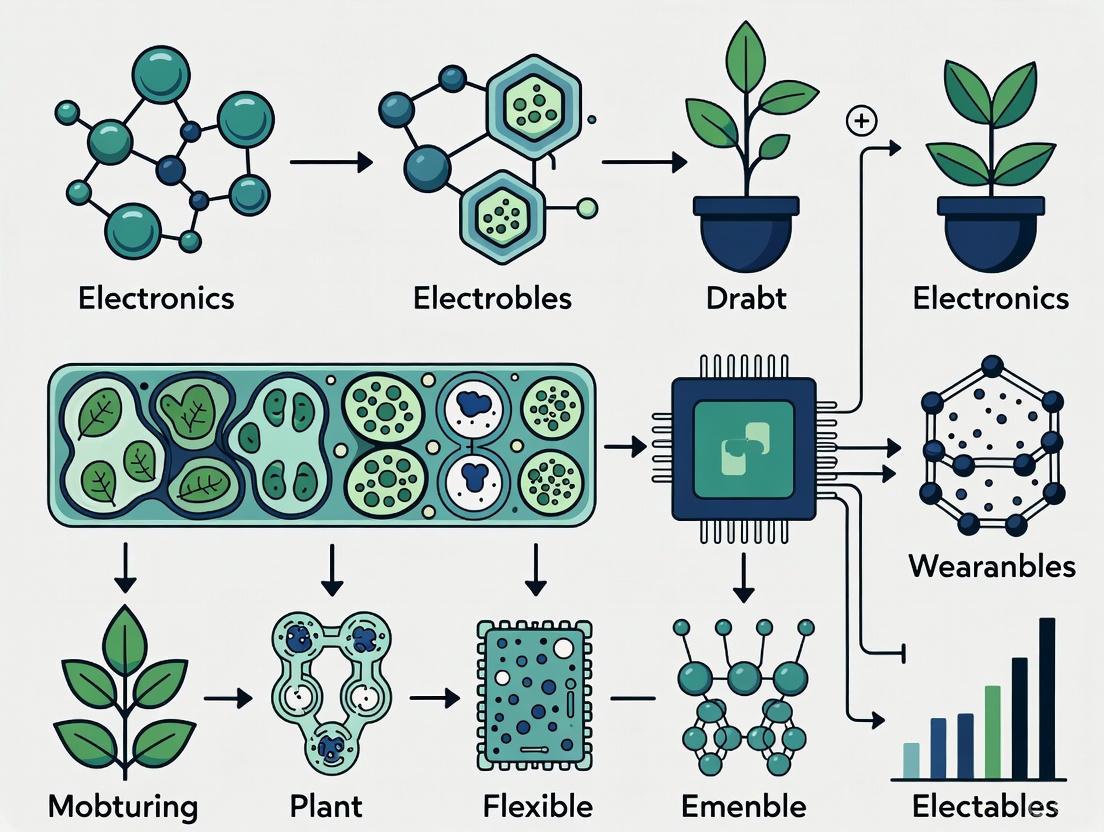
This article explores the convergence of flexible electronics and plant science, detailing how these technologies enable real-time, non-invasive monitoring of plant physiology.
How Flexible Electronics Enable Next-Generation Plant Wearables for Precision Agriculture and Biomedical Research
Abstract
This article explores the convergence of flexible electronics and plant science, detailing how these technologies enable real-time, non-invasive monitoring of plant physiology. Aimed at researchers and scientists, it covers the foundational principles of flexible hybrid electronics (FHE), their application in creating physical, chemical, and electrophysiological plant sensors, and the integration of these systems with IoT and AI for smart farming. The content further addresses critical challenges in durability, power autonomy, and data management, while validating the technology's potential through comparative analysis with traditional methods and discussing its future implications for sustainable agriculture and biomedical innovation.
The Science of Flexibility: Core Materials and Principles Enabling Plant Wearables
Flexible Hybrid Electronics (FHE) represent a transformative manufacturing approach that combines the performance of traditional rigid electronic components with the versatility of flexible printed interconnects on stretchable substrates [1] [2]. This hybrid methodology enables the creation of electronic devices that can bend, stretch, and conform to complex surfaces, making them particularly suitable for applications requiring compatibility with biological structures, including both human and plant systems [1] [3].
The core value proposition of FHE lies in their ability to bridge the technological gap between conventional printed electronics and fully rigid printed circuit boards (PCBs) [1]. Unlike traditional electronics that remain rigid and brittle, FHE devices can adapt to dynamic surfaces and irregular shapes while maintaining robust electronic functionality. This characteristic is paramount for developing next-generation wearable devices that must withstand mechanical stress and deformation during use without compromising circuit integrity [2] [3].
Core Components of FHE Systems
Flexible Substrates
The foundation of any FHE device is its substrate, which provides the mechanical base for electronic components and interconnects. These substrates differ fundamentally from traditional rigid PCB materials through their inherent flexibility and stretchability [1]. The table below summarizes the most common substrate materials used in FHE applications:
Table 1: Common Flexible Substrate Materials for FHE
| Material | Key Properties | Typical Applications | Considerations |
|---|---|---|---|
| Polyethylene Terephthalate (PET) | Cost-effective, durable, flexible, good chemical resistance [1] | Consumer electronics, disposable sensors [1] | Moderate temperature tolerance |
| Thermoplastic Polyurethane (TPU) | Excellent stretchability, transparency, abrasion resistance [1] | Wearables, stretchable sensors, e-textiles [1] | Can be sensitive to certain solvents |
| Polyimide (PI) | High thermal stability (>260°C Tg), excellent mechanical properties [4] | Automotive, aerospace, applications requiring soldering [4] | Higher cost than PET or TPU |
| Novel/Biocompatible Polymers | Biocompatibility, biodegradability, custom elastic properties [3] [5] | Implantable devices, eco-friendly disposables, plant wearables [3] | Often in development stages [5] |
Material selection is driven by application-specific requirements including flexibility, stretchability, thermal stability, chemical resistance, and biocompatibility [4]. For plant wearables, substrates must often withstand environmental factors like moisture, UV exposure, and temperature fluctuations while avoiding phytotoxic materials.
Conductive Inks and Interconnects
Conductive inks form the circulatory system of FHE devices, creating the electrical pathways that connect components. These specialized inks are typically composed of conductive materials (such as silver, copper, or carbon) suspended in a polymeric binder and solvent system [1] [6].
The printing process transforms these inks into functional interconnects. Key printing technologies include:
- Direct Ink Writing: An additive manufacturing technique that precisely deposits ink only where needed, minimizing material waste [1]
- Inkjet Printing: Enables high-resolution, digital patterning of conductive traces without physical masks [1]
- Aerosol Jet Printing: Allows non-contact printing of complex geometries on uneven surfaces [1]
Recent material innovations focus on enhancing both electrical performance and environmental sustainability. Researchers at Case Western Reserve University have developed a new type of fluorine-free electronic polymer, addressing concerns about persistent "forever chemicals" traditionally used in ferroelectric polymers [5]. These advanced materials maintain tunable electronic properties that can be switched on and off while offering improved environmental profiles [5].
Component Integration
The "hybrid" nature of FHE emerges from the integration of conventional rigid electronic components with flexible substrates. This integration typically involves several critical processes:
- Component Mounting: Precise placement of thinned silicon dies, integrated circuits (ICs), sensors, resistors, and capacitors onto the flexible substrate [1] [2]
- Electrical Bonding: Establishing reliable electrical connections between component terminals and printed interconnects using conductive adhesives, solders, or other bonding techniques [2]
- Encapsulation: Applying protective coatings (e.g., epoxy resins, silicone, or polyimide) to shield components and interconnects from environmental stressors like moisture, mechanical abrasion, and chemical exposure [1]
Successful component integration requires careful consideration of the mechanical stress distribution across the device, particularly at the interface between rigid components and flexible substrates. Strategic component placement away from high-strain regions ensures reliability during repeated bending or stretching cycles [2].
FHE Fabrication Workflow
The fabrication of Flexible Hybrid Electronics follows a systematic, multi-stage process that integrates both printing technologies and traditional component assembly methods. The diagram below illustrates this workflow from design to final testing:
Diagram 1: FHE Fabrication Workflow
Detailed Fabrication Methodology
Substrate Preparation
The fabrication process begins with substrate selection based on the application's mechanical, thermal, and environmental requirements (see Table 1). The substrate is cleaned to remove contaminants that might affect adhesion, and may undergo surface treatments (such as plasma or chemical activation) to enhance the wettability and bonding of subsequent layers [1] [2].
Conductive Ink Printing and Curing
Using techniques like direct ink writing (DIW) or aerosol jet printing, conductive inks are deposited onto the substrate according to the designed circuit pattern [1]. The printed traces then undergo a curing process to evaporate solvents and establish the conductive network. Curing methods vary based on the ink formulation and substrate limitations:
- Thermal Curing: Most common approach, but temperature must remain below the substrate's glass transition temperature (Tg) [4]
- Photonic Curing: Uses short, intense light pulses to sinter inks without damaging heat-sensitive substrates
- UV Curing: Employed for specially formulated UV-curable conductive inks
After curing, the electrical continuity and resistance of the printed interconnects are verified before component attachment [1].
Component Attachment and Encapsulation
Rigid components are placed onto the flexible substrate using precision pick-and-place equipment. The mechanical attachment and electrical connection are typically established simultaneously using:
- Anisotropic Conductive Adhesives: Polymer matrices filled with conductive particles that establish electrical connectivity in the Z-direction while maintaining insulation in the X-Y plane [2]
- Solder Paste: Traditional solder alloys adapted for flexible substrates with limited thermal budgets [2]
Following component attachment, protective encapsulants are applied to critical areas to provide mechanical stability and environmental protection. Encapsulation materials must be selected for compatibility with both the substrate and the components, while maintaining sufficient flexibility to not compromise the device's bendability [1] [2].
The Researcher's Toolkit for FHE Development
Table 2: Essential Materials and Reagents for FHE Research and Development
| Category | Specific Examples | Research Function | Key Considerations |
|---|---|---|---|
| Flexible Substrates | PET, TPU, Polyimide films [1] | Provides mechanical support for electronic circuits | Flexibility, thermal stability, surface energy |
| Conductive Inks | Silver nanoparticle, Carbon/ graphene, Stretchable silver [1] [6] | Forms electrical interconnects and electrodes | Conductivity, adhesion, bending endurance, curing requirements |
| Dielectric Inks | UV-curable polymers, Polyurethane-based coatings [6] | Electrical insulation between conductor layers | Curing mechanism, flexibility, compatibility with other materials |
| Component Attachment Materials | Anisotropic conductive films, Epoxy-based conductive adhesives [2] | Electrical and mechanical connection of components | Processing temperature, connection resistance, flexibility |
| Encapsulants | Silicone gels, Epoxy resins, Polyimide coatings [1] | Environmental protection and mechanical stabilization | Moisture resistance, flexibility, application method |
Comparative Analysis of Electronic Platforms
Understanding the positioning of FHE within the broader electronics landscape requires comparison with alternative platforms. The table below provides a technical comparison of FHE against other common electronic implementations:
Table 3: FHE Comparison with Other Electronic Platforms
| Parameter | Flexible Hybrid Electronics (FHE) | Printed Electronics (PE) | Flexible PCBs (FPCBs) | Rigid PCBs |
|---|---|---|---|---|
| Substrate Type | Flexible/stretchable polymer [1] | Flexible polymer or paper [1] | Typically polyimide [1] | FR-4 glass epoxy, ceramics [4] |
| Interconnect Technology | Printed conductive ink [1] | Printed conductive ink [1] | Etched copper foil [1] | Etched copper laminate [4] |
| Active Components | Rigid silicon ICs thinned and mounted [1] | Fully printed (limited capability) [1] | Rigid components mounted [1] | Rigid components mounted [4] |
| Key Advantages | High performance with flexibility, conformability [1] [2] | Fully flexible, low-cost mass production potential [1] | Utilizes existing PCB manufacturing infrastructure [1] | Excellent component density, proven reliability [4] |
| Primary Limitations | Mechanical stress at component interfaces [2] | Limited component functionality, immaturity for complex circuits [1] | Limited stretchability, subtractive manufacturing waste [1] | Rigid, non-conformable, heavy [4] |
Application to Plant Wearables Research
The unique properties of FHE make them particularly suitable for plant wearables research, which requires monitoring biological systems without impeding their growth or natural functions. Specific applications include:
- Conformable Plant Sensors: FHE devices can wrap around stems or conform to leaf surfaces to monitor microclimate conditions, sap flow, or growth metrics without damaging plant tissues [3]
- Biocompatible Monitoring Systems: Using environmentally-friendly substrates and encapsulation materials, FHE sensors can degrade safely in agricultural environments after their useful life [5]
- Distributed Sensor Networks: Lightweight, flexible FHE nodes can be distributed throughout crop canopies to create detailed spatial maps of environmental conditions [3] [7]
The development of specialized fluorine-free electronic polymers addresses critical environmental concerns for agricultural applications, preventing the accumulation of persistent chemicals in farming ecosystems [5]. Furthermore, the additive manufacturing processes used in FHE fabrication generate less waste than traditional subtractive PCB methods, aligning with sustainability goals in agricultural research [2].
Future Outlook and Research Directions
The FHE market is projected to grow significantly, with estimates suggesting it will reach $1.8 billion USD by 2034 [1]. This growth is driven by increasing adoption across multiple sectors, including healthcare, automotive, consumer electronics, and agricultural technology [1] [7].
Key research challenges that must be addressed to advance FHE applications in plant wearables include:
- Reliability Under Cyclic Stress: Developing more robust interfaces between rigid components and flexible substrates to withstand repeated mechanical stress [2] [3]
- Environmental Stability: Creating encapsulation schemes that protect electronic components from moisture, soil chemicals, and UV radiation while maintaining flexibility [2]
- Power Management: Integrating energy harvesting and storage solutions compatible with flexible form factors [3] [7]
- Scalable Manufacturing: Transitioning from laboratory-scale prototyping to high-volume production while maintaining performance and reliability [2]
Continued advancements in materials science, particularly in the development of environmentally benign conductive inks and biodegradable substrates, will further enhance the applicability of FHE technology to plant science and agricultural research [5].
Flexible electronics represent a paradigm shift from traditional rigid circuitry, enabling the development of devices that can bend, stretch, and conform to irregular surfaces. This technological evolution is catalyzing advancements across numerous fields, with plant wearables emerging as a particularly promising application. The global flexible electronics market, valued at $38.08 billion in 2025 and projected to reach $83.86 billion by 2034, reflects the significant commercial and research interest in this domain [8]. For plant research, these technologies enable non-invasive, real-time monitoring of physiological and environmental parameters, moving beyond destructive sampling methods that provide only single-timepoint data. Wearable plant sensors stand out for their non-invasive nature, high sensitivity, high integration, and ability to provide continuous, real-time monitoring [9]. This technical guide examines the key material classes underpinning these innovations, with a focus on their properties, fabrication methodologies, and specific applications in plant health monitoring.
Carbon-Based Nanomaterials
Material Properties and Characteristics
Carbon-based nanomaterials, particularly single-wall carbon nanotubes (SWCNTs), have emerged as a foundational material class for flexible electronics due to their exceptional electrical and mechanical properties. SWCNTs can be conceptualized as seamless cylinders formed by rolling a graphene sheet, with their structural parameters defined by chiral indices (n, m) that determine their diameter and electronic properties [10]. This structure-property relationship yields remarkable characteristics: metallic SWCNTs can achieve current carrying capability of 10⁹ A/cm² (surpassing aluminum and copper), while semiconducting SWCNTs exhibit field-effect mobilities up to 10⁴ cm²V⁻¹s⁻¹ (exceeding silicon) [10]. For flexible applications, SWCNT networks are particularly valuable because their curvy and entangled structure can accommodate substantial strains, making them ideal for conformable electronics [10].
Synthesis and Fabrication Protocols
Protocol 2.2.1: Preparation of Semiconductor-Enriched SWCNT (sSWCNT) Networks for Thin-Film Transistors (TFTs)
- Objective: To fabricate high-performance, flexible TFTs using solution-processed, semiconductor-enriched SWCNT networks.
- Materials:
- High-purity semiconducting SWCNT solution (commercially available separated solutions)
- Suitable surfactants (e.g., sodium dodecyl sulfate) or organic solvents for dispersion
- Flexible substrate (e.g., PET, polyimide)
- Source and drain electrode materials (e.g., gold, silver nanowires)
- Gate dielectric material (e.g., aluminum oxide, polymer electrolytes)
- Procedure:
- SWCNT Dispersion: Prepare a stable, aqueous or organic dispersion of sSWCNTs using surfactant assistance or direct dissolution. Ensure homogeneity through controlled sonication followed by centrifugation to remove large bundles.
- Surface Functionalization: Treat the flexible substrate with appropriate surface chemistry (e.g., APTES or other silanes) to enhance SWCNT adhesion and network formation.
- Network Deposition: Deposit the sSWCNT dispersion onto the substrate using one of the following methods:
- Vacuum Filtration: Filter the dispersion through a membrane, then transfer the resulting thin film to the target substrate.
- Rod Coating: Use a Meyer rod to draw the solution across the substrate for uniform coating.
- Drop Casting: Apply droplets of the dispersion and allow controlled evaporation.
- Inkjet Printing: Utilize printed electronics techniques for patterned deposition.
- Density Control: Fine-tune the network density by controlling deposition time, solution concentration, or post-deposition rinsing. Target densities can exceed 65 tubes/µm² for high on-current [10].
- Electrode Patterning: Pattern source and drain electrodes on top of the SWCNT network using lithography, evaporation through shadow masks, or printing techniques.
- Dielectric/Gate Integration: Deposit the gate dielectric layer and gate electrode to complete the TFT structure.
- Performance Metrics: Expected TFT performance includes p-type conduction with on/off current ratio (Ion/Ioff) ~10⁴, on-current (Ion/W) of ~15 μA/μm, and transconductance (gm/W) of ~4 μS/μm at 5 V for channel lengths of 4 μm [10].
Applications in Plant Wearables
In plant wearables, SWCNT-based TFTs and circuits serve as the backbone for signal processing in multimodal sensor systems. Their high flexibility allows them to conform to leaf surfaces without damaging delicate plant tissues, while their stability enables long-term monitoring in variable environmental conditions. Furthermore, SWCNT networks function as highly sensitive electrodes in chemical sensors capable of detecting plant volatiles and ions, providing crucial data on plant stress responses [9] [10].
Conductive Polymers
Material Properties and Characteristics
Conductive polymers (CPs) represent a unique class of materials that combine the electronic properties of semiconductors with the mechanical flexibility and processability of plastics. Key members of this family include polyaniline (PANI), polypyrrole (PPy), polythiophene (PTh), and poly(3,4-ethylenedioxythiophene):poly(styrene sulfonate) (PEDOT:PSS) [11]. These materials are characterized by their conjugated backbone structure, which enables charge transport through delocalized π-electrons, especially when doped. PANI is notable for its tunable conductivity and environmental stability, while PPy offers good conductivity and processability, and PTh derivatives provide high electrical conductivity and versatility in organic electronics [11]. Recent research has focused on developing conductive polymeric hydrogels (CPHs) that exhibit exceptional tensile strength, inherent flexibility, and biocompatibility, making them ideal for skin-like sensing applications [11].
Synthesis and Fabrication Protocols
Protocol 3.2.1: In Situ Polymerization of Polypyrrole on Flexible Substrates
- Objective: To create conformal, electrically conductive coatings on flexible substrates for sensor applications.
- Materials:
- Pyrrole monomer
- Oxidizing agent (e.g., ferric chloride, ammonium persulfate)
- Dopant (e.g., para-toluene sulfonate)
- Flexible substrate (textile, plastic film)
- Reaction vessel with temperature control
- Procedure:
- Substrate Preparation: Clean the flexible substrate thoroughly to ensure uniform polymer adhesion. For hydrophobic substrates, plasma treatment may be applied to increase surface energy.
- Solution Preparation: Prepare an aqueous solution containing the oxidizing agent and dopant in a molar ratio optimized for target conductivity (typically 2:1 to 4:1 oxidant to monomer).
- Immersion: Immerse the flexible substrate into the reaction solution.
- Initiation: Slowly add the pyrrole monomer to the solution while maintaining constant agitation to ensure uniform exposure.
- Polymerization: Allow the reaction to proceed for 5-60 minutes at temperatures between 0-5°C to control reaction kinetics and film quality.
- Termination and Washing: Remove the substrate and terminate the reaction by immersing in deionized water. Wash thoroughly to remove unreacted monomers and oxidant.
- Drying: Dry the coated substrate at room temperature or elevated temperatures (below the substrate's glass transition temperature).
- Characterization: The resulting conductivity typically ranges from 10⁻³ to 10² S/cm depending on doping levels and film morphology [11].
Applications in Plant Wearables
Conductive polymers are particularly valuable in plant wearables due to their mechanical compatibility with plant tissues. PANI-based sensors can detect pH changes in the phyllosphere, while PPy films functionalized with specific receptors can monitor volatile organic compounds (VOCs) emitted during herbivory or pathogen attack [9]. CP-based stretchable electrodes can interface with plant surfaces to monitor electrophysiological signals like action potentials and variation potentials that propagate in response to environmental stimuli [9] [11].
Eco-Friendly Ferroelectrics and Sustainable Composites
Material Properties and Characteristics
The growing concern about electronic waste has accelerated research into environmentally sustainable electronic materials. A groundbreaking development in this area is the creation of fluorine-free ferroelectric polymers that avoid the use of poly(vinylidene fluoride) (PVDF), a "forever chemical" that persists in the environment [5]. These new materials exhibit spontaneous polarization that can be reversed by an electric field without requiring crystallization to lock in polarity, representing a fundamentally new mechanism for generating electrical properties in polymers [5]. Parallel developments include sustainable conductive composites using biodegradable matrices like ethyl cellulose (EC) combined with silver microflakes, creating conductive pastes that balance electrical performance with environmental sustainability [12]. Another approach utilizes sodium carboxymethyl cellulose (NaCMC) plasticized with glycerol as a biodegradable elastic substrate, paired with silver nanowire (AgNW) inks using the same eco-friendly binders [13].
Synthesis and Fabrication Protocols
Protocol 4.2.1: Fabrication of Biodegradable Strain Sensors Using NaCMC/AgNW Composites
- Objective: To develop disintegrable, flexible, and stretchable strain sensors for transient electronics applications.
- Materials:
- Sodium carboxymethyl cellulose (NaCMC)
- Glycerol
- Silver nanowires (AgNWs)
- Deionized water
- Screen printing or direct ink writing equipment
- Procedure:
- Substrate Preparation:
- Prepare an aqueous solution of NaCMC (concentration 5-10 wt%).
- Add glycerol as a plasticizer at 20-40 wt% relative to NaCMC to impart stretchability.
- Cast the solution and allow it to dry into a flexible, elastic film.
- Ink Formulation:
- Prepare a sustainable ink by dispersing AgNWs in a solution of NaCMC and glycerol in water.
- Vary the AgNW content from 30 to 80 wt% to optimize conductivity and sensitivity.
- Printing Process:
- Print the conductive ink onto the NaCMC substrate using screen printing or direct-write methods.
- Cure at room temperature or mild heating (≤60°C).
- Characterization:
- Electrical Conductivity: Measure the DC conductivity, with optimal compositions reaching ~6.5 S/m at 80 wt% AgNWs.
- Piezoresistive Sensitivity: The gauge factor (relative resistance change vs. strain) typically peaks at intermediate AgNW content (50 wt%).
- Durability Test: Perform cyclic bending tests (e.g., 1000 cycles) to assess resistance stability.
- Biodegradation: Assess disintegration in water at room temperature, which typically occurs within 1 hour [13].
- Substrate Preparation:
Table 1: Performance Characteristics of Sustainable Electronic Materials
| Material System | Optimal Composition | Key Electrical Property | Mechanical Property | Environmental Profile |
|---|---|---|---|---|
| Ethyl Cellulose/Silver Microflakes [12] | 60 wt% Ag, 10 wt% EC | Sheet Resistance: 58 mΩ/sq | 20% resistance increase after 1000 bends | Biodegradable matrix, silver recyclable |
| NaCMC/AgNW Composite [13] | 80 wt% AgNWs | Conductivity: 6.5 S/m | Highly stretchable | Disintegrates in water in 1 hour |
| Fluorine-Free Ferroelectric Polymer [5] | Proprietary polymer | Tunable polarization | Soft, pliable, elastic | No forever chemicals, safer production |
Applications in Plant Wearables
Eco-friendly ferroelectric polymers and sustainable composites are ideally suited for plant wearables designed for temporary monitoring applications. These materials can be used in disposable field sensors that degrade after a growing season, eliminating electronic waste in agricultural environments. Their flexibility enables conformable sensors for monitoring fruit growth, leaf movement, or stem elongation through strain sensing [13]. The tunable polarization in ferroelectric polymers makes them suitable for infrared detectors that can monitor canopy temperature variations as an indicator of water stress, while their acoustic compatibility with biological tissues enables potential applications in monitoring sap flow or insect activity [5].
The Scientist's Toolkit: Essential Research Reagents and Materials
Table 2: Key Research Reagent Solutions for Flexible Electronics in Plant Wearables
| Reagent/Material | Function | Specific Application in Plant Wearables |
|---|---|---|
| Semiconductor-Enriched SWCNTs [10] | Channel material in TFTs | Enables signal amplification and processing in leaf-attached sensors |
| PEDOT:PSS [11] | Conductive polymer electrode | Forms conformal contact with plant surfaces for electrophysiology |
| Silver Nanowires (AgNWs) [13] | Conductive filler in inks | Creates stretchable interconnects that withstand plant growth |
| Sodium Carboxymethyl Cellulose (NaCMC) [13] | Biodegradable substrate | Provides eco-friendly platform for transient plant sensors |
| Ethyl Cellulose [12] | Biodegradable polymer matrix | Forms sustainable conductive composites for printable sensors |
| Fluorine-Free Ferroelectric Polymer [5] | Tunable dielectric | Enables switchable sensors for IR detection on plant surfaces |
| Glycerol [13] | Plasticizer | Imparts stretchability to biodegradable polymer substrates |
Integration and Experimental Workflows in Plant Wearables Research
The development of functional plant wearables requires the seamless integration of the material classes discussed above into cohesive sensing systems. The workflow typically begins with material selection and synthesis, followed by device fabrication, integration onto plant organs, data acquisition, and finally, data interpretation for plant health assessment.
The following diagram illustrates the complete experimental workflow for developing and deploying flexible electronic plant wearables, from material synthesis to data analysis:
Diagram 1: Experimental Workflow for Plant Wearable Development
The advancement of plant wearables research is intrinsically linked to innovations in flexible electronic materials. Carbon-based nanomaterials provide the performance needed for sophisticated sensing, conductive polymers offer mechanical compatibility with biological tissues, and emerging eco-friendly ferroelectrics and composites address the critical need for sustainable electronics. As these material classes continue to mature, we anticipate increased integration of multifunctional sensing systems capable of simultaneously monitoring physical, chemical, and electrophysiological parameters in plants [9]. Future research directions will likely focus on enhancing material biodegradability while maintaining performance, developing energy-autonomous systems through integrated energy harvesting, and creating fully printable manufacturing processes that enable low-cost, large-scale deployment of plant wearables in precision agriculture and ecological research [13] [14] [2]. The convergence of these material innovations positions flexible electronics as a transformative technology for understanding and optimizing plant health in an increasingly challenging global environment.
Flexible electronics are revolutionizing the field of plant health monitoring by enabling the development of advanced wearable and implantable sensors that provide continuous, real-time data on plant physiological status. These technologies represent a paradigm shift from traditional diagnostic methods, offering non-invasive or minimally invasive means to monitor plant signaling and stress responses with high spatial and temporal resolution [9] [15]. The core innovation lies in the integration of flexible materials, conductive elements, and sensing mechanisms that can conform to plant surfaces or be implanted within plant tissues without significantly impairing normal physiological functions [5] [2].
The emergence of flexible hybrid electronics (FHE) has been particularly transformative, combining the performance of traditional rigid components with the adaptability of flexible, printed substrates [2]. This technological synergy has enabled the creation of sensing systems that can withstand the mechanical stresses of plant growth and environmental exposure while maintaining high sensitivity and stability. When combined with Internet of Things (IoT) technologies and machine learning algorithms, these flexible sensing systems form the foundation for next-generation precision agriculture and smart farming applications [15] [16].
Physical Sensing Mechanisms
Physical sensors monitor structural and environmental parameters including strain, temperature, humidity, and light intensity. These parameters provide crucial information about plant growth patterns, water status, and microclimate conditions that influence physiological processes [9] [15].
Flexible physical sensors typically employ compliant substrates that can adhere conformally to plant surfaces such as leaves and stems. For strain sensing, microstructured conductive materials embedded in elastomeric matrices exhibit resistance changes when subjected to mechanical deformation from plant growth or movement [15]. Temperature monitoring utilizes the predictable change in electrical resistance of certain materials with temperature, while humidity sensing often relies on hydrophilic polymers that alter their electrical properties based on moisture absorption [9].
The design strategies for these sensors prioritize minimal interference with natural plant processes. Materials must be selected for their biocompatibility, mechanical matching with plant tissues, and environmental stability to ensure long-term monitoring capability without inducing plant stress or damage [15].
Table: Physical Sensing Mechanisms in Plant Wearables
| Sensing Parameter | Transduction Mechanism | Typical Materials | Applications in Plant Health |
|---|---|---|---|
| Strain/Movement | Piezoresistive effect | Graphene, conductive polymers, metal nanowires | Monitoring plant growth rates, mechanical stress responses, thigmotropism |
| Temperature | Resistive or capacitive change | Platinum, nickel, graphene oxide | Detection of transpiration anomalies, frost damage, heat stress |
| Humidity | Capacitive or resistive change | Polyimide, cellulose-based polymers, graphene oxide | Irrigation management, drought stress early warning, microclimate assessment |
| Light Intensity | Photovoltaic or photoconductive effect | Organic photodetectors, perovskite materials | Photosynthesis efficiency monitoring, light stress assessment, growth optimization |
Chemical Sensing Mechanisms
Chemical sensors represent a sophisticated category of plant wearables designed to detect and quantify molecular biomarkers indicative of plant physiological status. These sensors primarily target small molecules including volatile organic compounds (VOCs), reactive oxygen species (ROS), ions, pigments, and phytohormones that participate in critical processes of plant growth, development, and stress response [17].
Electrochemical Sensing Principles
Wearable electrochemical sensors operate predominantly on voltammetric, potentiometric, or amperometric transduction principles [17] [16]. Voltammetric techniques apply potential waveforms and measure resulting current, enabling detection of electroactive species like phenolic compounds, ROS, and certain phytohormones. Potentiometric sensors measure potential differences at zero current conditions, suitable for monitoring ion activities (K+, Ca2+, NO3-) and pH changes. Amperometric sensors maintain a constant potential while monitoring current changes, offering high sensitivity for continuous monitoring of metabolites like glucose and H2O2 [17].
The design of these sensors incorporates flexible substrates such as polyimide or polyethylene terephthalate films printed with conductive ink traces (often carbon or silver-based) that form working, reference, and counter electrodes [18] [2]. Advanced configurations utilize microneedle-type sensors that penetrate the plant cuticle minimally to access apoplastic fluids or vascular tissues directly [17].
Key Chemical Targets and Their Significance
Volatile Organic Compounds (VOCs): Plants emit specific VOC profiles when under biotic (pathogen attack) or abiotic (drought, salinity) stress. Flexible chemiresistive sensors with conductive polymer nanocomposites can detect these VOC fingerprints at room temperature, providing early disease diagnosis before visible symptoms appear [17].
Reactive Oxygen Species (ROS): Hydrogen peroxide (H2O2) and other ROS serve as key signaling molecules in plant stress responses. Wearable ROS sensors typically employ enzyme-based (e.g., horseradish peroxidase) or nanomaterial-based (e.g., Prussian blue, metallophthalocyanines) recognition elements coupled with amperometric detection [17] [16].
Phytohormones: Salicylic acid, abscisic acid, and auxins regulate plant defense mechanisms and growth responses. Detection strategies often involve molecularly imprinted polymers (MIPs) or aptamer-based receptors integrated with electrochemical transducers, enabling real-time tracking of hormonal fluctuations during stress events [17] [16].
Ions and Nutrients: Nitrate, potassium, calcium, and other ions are crucial for plant metabolism and osmotic regulation. Ion-selective membranes incorporating specific ionophores coated over flexible electrodes enable continuous monitoring of these analytes in sap or on plant surfaces [17].
Table: Chemical Sensing Targets and Their Agricultural Significance
| Analyte Category | Specific Examples | Physiological Significance | Detection Methods |
|---|---|---|---|
| Volatile Organic Compounds | Green leaf volatiles, terpenoids, aromatic compounds | Early indicators of pathogen attack, herbivory, drought stress | Chemiresistive sensors, electrochemical sensors, photoionization detectors |
| Reactive Oxygen Species | Hydrogen peroxide (H2O2), superoxide anion | Oxidative stress signaling, defense activation, programmed cell death | Amperometric biosensors, colorimetric assays, fluorescent probes |
| Phytohormones | Salicylic acid, abscisic acid, jasmonic acid | Defense signaling, stomatal regulation, growth-defense tradeoffs | Molecularly imprinted polymers, aptamer-based sensors, immunoassays |
| Ions and Nutrients | Nitrate, potassium, calcium, phosphate | Nutrient status, osmotic balance, signaling cascades | Ion-selective electrodes, all-solid-state sensors, conductometric sensors |
Electrophysiological Sensing Mechanisms
Electrophysiological sensors capture the electrical signals that plants generate and propagate in response to various stimuli and stressors. These electrical signals—including action potentials (APs), variation potentials (VPs), and system potentials (SPs)—serve as rapid long-distance communication pathways that coordinate physiological activities and defense responses [19] [20].
Plant Electrical Signaling Fundamentals
Plant electrical signals are categorized into three main types based on their characteristics and triggering mechanisms. Action Potentials are self-propagating impulse-like signals with relatively stable duration and shape, typically triggered by non-damaging stimuli [20]. Variation Potentials are slower, complex waveforms induced by severe stressors like wounding or extreme temperatures, exhibiting variable shape and propagation patterns [20]. System Potentials represent hyperpolarization signals that respond to moderate stress intensities and may function in systemic acclimation [20].
The molecular mechanisms underlying these signals involve coordinated ion fluxes across plasma membranes. Depolarization phases initiate with Ca2+ influx through specific channels, leading to subsequent anion efflux and temporary H+-ATPase inactivation. Repolarization occurs through K+ efflux and restoration of H+-ATPase activity [20]. These electrical events regulate critical processes including photosynthesis, respiration, gene expression, and phytohormone signaling, ultimately influencing plant stress tolerance [19] [20].
Flexible Sensor Designs for Electrophysiology
Traditional rigid electrodes face limitations in plant electrophysiology due to poor tissue conformability and signal attenuation by the insulating plant cuticle [19]. Flexible electrophysiology sensors overcome these challenges through several innovative designs:
Implantable Microneedle Arrays: Fabricated using micromachining technology, these arrays feature conductive microneedles (often gold or platinum-coated) that penetrate the plant cuticle with minimal damage, enabling high-fidelity recording of intracellular electrical activity [19]. The microneedles are typically arranged in arrays on flexible substrates that accommodate plant movement while maintaining stable electrode-tissue interface.
Soft Conductive Hydrogels: These compliant materials can form continuous interfaces with irregular plant surfaces, enabling long-term stable monitoring without tissue damage [19]. Their ionic conductivity and mechanical similarity to plant tissues make them ideal for chronic electrophysiology studies.
Printed Flexible Electrodes: Conductive inks (e.g., carbon nanotubes, silver nanowires) printed on elastomeric substrates create stretchable electrodes that maintain conductivity during plant growth movements [15] [2].
Integration with Flexible Electronics and Supporting Technologies
The effective implementation of plant wearable sensors relies on their integration with flexible electronics platforms and supporting technologies that enable data processing, power management, and wireless communication.
Flexible Hybrid Electronics Platform
Flexible hybrid electronics (FHE) represent the foundational technology that enables plant wearables by combining printed conductive traces on flexible substrates with mounted rigid components such as integrated circuits, sensors, and power sources [2]. This approach leverages the strengths of both worlds: the conformability and lightweight nature of printed electronics with the high performance of silicon-based electronics.
The FHE manufacturing process typically begins with a flexible substrate such as polyimide, polyethylene terephthalate, or eco-friendly alternatives like biodegradable polymers [5] [2]. Conductive inks (often containing silver, carbon, or copper) are printed onto these substrates using techniques such as screen printing, inkjet printing, or gravure printing to create circuit traces, electrodes, and antennas. Rigid components are then mounted and bonded to these printed structures using conductive adhesives or soldering techniques specifically adapted for flexible materials [2].
Key design considerations for plant wearable FHEs include:
- Mechanical Durability: Circuits must withstand repeated bending, stretching, and environmental exposure without failure.
- Power Management: Energy-efficient operation is critical, often incorporating energy harvesting from solar, thermal, or triboelectric sources [15].
- Signal Integrity: Maintaining signal quality despite the flexible nature of the circuits requires careful impedance matching and noise reduction strategies.
- Environmental Compatibility: Materials must resist degradation from moisture, UV exposure, and temperature fluctuations common in agricultural settings [15].
Experimental Protocol: Implantable Microneedle Electrophysiology Sensor
Objective: To fabricate and validate an implantable microneedle sensor for monitoring plant electrophysiological responses to environmental stresses [19].
Materials and Equipment:
- Polymethyl methacrylate (PMMA) sheets
- Magnetron sputtering system (for Cr/Au deposition)
- Electroplating setup for platinum black coating
- Phosphate buffer solution (PBS)
- H2PtCl6·6H2O and Pb(CH3CO2)2·3H2O for electroplating
- Tomato seedlings (or other model plants)
- Signal amplification and data acquisition system
- Transparent soft gel for sensor-plant interfacing
Fabrication Procedure:
- Microneedle Array Design: Create microneedle block designs using CAD software (e.g., SolidWorks) with individual needle dimensions optimized for target plant tissues (typical thickness: 1mm).
- Micromachining: Fabricate microneedle arrays from PMMA sheets using precision micromachining technology to create needle structures.
- Conductive Layer Deposition: Deposit sequential layers of chromium (adhesion layer) and gold (conductive layer) onto the microneedle arrays using magnetron sputtering.
- Surface Modification: Electroplate platinum black onto the microneedle surfaces to reduce impedance and enhance signal quality. This is achieved by cycling the electrode potential in a solution containing H2PtCl6 and Pb(CH3CO2)2.
- Integration: Connect individual microneedle blocks using transparent soft gel to create a flexible, conformable interface while maintaining electrical connectivity.
Plant Experimentation:
- Sensor Implantation: Gently implant the microneedle array into the stem or petiole of the target plant, ensuring stable contact without causing significant tissue damage.
- Signal Acquisition: Connect the sensor to a portable data acquisition system with appropriate amplification and filtering (typical settings: gain 1000x, bandpass filter 0.1-100Hz).
- Stress Application: Apply controlled stressors including:
- Mechanical stress: Gentle crushing of a single leaf
- Drought stress: Withholding water
- Salt stress: Application of NaCl solution to roots
- Data Recording: Continuously record electrical signals before, during, and after stress application for time-series analysis.
Data Analysis:
- Signal Processing: Apply digital filters to remove noise and artifacts from raw signals.
- Feature Extraction: Extract time-domain and frequency-domain features from the electrical signals.
- Machine Learning Classification: Implement machine learning algorithms (e.g., Random Forest, Support Vector Machines) to classify plant stress states based on electrophysiological patterns.
Data Analysis and Machine Learning Integration
The complex, multidimensional data generated by plant wearable sensors necessitates advanced analysis techniques, particularly machine learning algorithms, to extract meaningful physiological insights and enable predictive capabilities.
Signal Processing and Feature Extraction
Plant electrical signals and chemical sensor data typically require substantial preprocessing before pattern analysis. For electrophysiological signals, this includes filtering to remove environmental noise, normalization to account for sensor-to-sensor variations, and segmentation to isolate relevant signal epochs corresponding to specific stimuli or conditions [19] [21].
Feature extraction transforms raw sensor data into discriminative representations suitable for machine learning. Common approaches include:
- Time-domain features: Amplitude, duration, rise time, and rate of change of electrical signals or chemical concentrations.
- Frequency-domain features: Power spectral density, dominant frequencies, and harmonic components obtained through Fourier or wavelet transforms.
- Time-frequency features: Short-time Fourier transform or continuous wavelet transform coefficients that capture non-stationary signal characteristics.
- Multimodal features: Cross-correlation between electrical, chemical, and physical sensor readings to capture interacting physiological processes [19] [21].
Machine Learning for Stress Classification and Prediction
Supervised machine learning algorithms have demonstrated remarkable performance in classifying plant stress states based on sensor data. The process typically involves:
- Data Labeling: Associating sensor recordings with experimentally determined stress conditions (healthy, drought-stressed, salt-stressed, pathogen-infected).
- Model Training: Using labeled data to train classifiers such as Random Forests, Support Vector Machines, or Neural Networks.
- Validation: Assessing model performance on held-out test data using metrics including accuracy, precision, recall, and F1-score.
- Deployment: Implementing trained models for real-time stress monitoring and early warning systems [19] [21].
Notably, recent studies have achieved stress classification accuracies exceeding 99% using ensemble methods and deep learning approaches applied to plant electrophysiological data [19]. Automated machine learning (AutoML) approaches have further demonstrated superior performance compared to manually tuned models, particularly for complex multimodal sensor data [21].
Table: Research Reagent Solutions for Plant Wearable Sensor Development
| Material/Reagent | Function/Application | Key Characteristics | Example Use Cases |
|---|---|---|---|
| Conductive Inks (Ag, CNT, graphene) | Creating flexible electrodes, circuit traces | High conductivity, mechanical flexibility, printability | Screen-printed electrodes, flexible interconnects, antenna patterns |
| Polymethyl methacrylate (PMMA) | Substrate for microneedle arrays | Optical clarity, mechanical rigidity, micromachining compatibility | Implantable electrophysiology sensors [19] |
| Platinum black | Electrode surface coating | High surface area, low impedance, enhanced signal quality | Electrophysiology sensors, electrochemical biosensors [19] |
| Molecularly Imprinted Polymers (MIPs) | Synthetic recognition elements | Selective binding sites for target molecules, stability | Phytohormone sensing, metabolite detection [17] [16] |
| Soft conductive hydrogels | Plant-sensor interface material | Biocompatibility, conformability, ionic conductivity | Non-invasive electrophysiology electrodes, chemical sensor interfaces |
| Eco-friendly ferroelectric polymers | Flexible electronic components | Ferroelectric properties without fluorine content, biodegradability | Sustainable sensors, energy harvesters [5] |
Flexible electronics have fundamentally transformed plant health monitoring by enabling the development of sophisticated wearable and implantable sensors that interface seamlessly with plant tissues. The integration of physical, chemical, and electrophysiological sensing mechanisms provides a comprehensive view of plant physiological status, enabling early detection of stresses and diseases before visible symptoms appear. The continuing advancement of flexible hybrid electronics, coupled with machine learning analytics and IoT connectivity, promises to revolutionize precision agriculture through data-driven management decisions. Future developments will likely focus on enhancing sensor durability, energy autonomy, and environmental sustainability while expanding the range of detectable physiological parameters. As these technologies mature and become more accessible, they will play an increasingly vital role in addressing global challenges in food security and sustainable agriculture.
The emergence of flexible electronics has catalyzed a paradigm shift in plant science research, enabling the development of "plant wearables"—sensors that can be directly attached to crops for real-time, high-resolution monitoring of physiological and environmental parameters. This technological advancement is driving innovation in sustainable materials that prioritize biocompatibility, controlled degradability, and non-toxic composition. The integration of these materials is crucial for ensuring that electronic devices do not harm plants, contaminate the soil, or contribute to the growing problem of electronic waste (e-waste), which currently exceeds 50 million tonnes annually [22] [23]. The transition toward biodegradable electronic materials represents a fundamental rethinking of electronic systems, moving from a traditional focus on durability to a model that aligns with environmental sustainability and circular economy principles [23].
This technical guide explores the core material innovations underpinning sustainable flexible electronics for plant wearables. It provides a comprehensive analysis of material classes, their properties, fabrication methodologies, and specific applications in agricultural monitoring, framed within the broader thesis that advanced materials are the key enabler for next-generation plant sensing technologies.
Material Classes and Properties for Sustainable Electronics
Biodegradable Substrates and Matrices
The substrate forms the foundational layer of flexible electronics, determining its mechanical compatibility with plant tissues and its environmental fate after operational life.
- Natural Polymers: Materials such as ethyl cellulose (EC), silk fibroin, and chitosan are derived from biological sources and offer inherent biodegradability and excellent biocompatibility [12] [23]. Ethyl cellulose-based composites, for instance, have been successfully used as a biodegradable matrix for conductive pastes, showing significant degradation within 2-month assays [12]. Silk fibroin is particularly notable for its tunable degradation rates, which can be programmed from minutes to years by controlling the protein's crystalline structure [23].
- Synthetic Biodegradable Polymers: This category includes poly(lactic acid) (PLA), poly(butylene adipate-co-terephthalate) (PBAT), and polyvinyl alcohol (PVA). These polymers offer advantages in reproducibility, processability, and tunable mechanical and degradation properties [24] [23]. PBAT, often used as a matrix for conductive fibers, provides flexibility and is compostable, while PVA is known for its water-solubility, making it ideal for temporary devices [24] [23].
Table 1: Properties of Key Biodegradable Polymer Matrices
| Material | Type | Key Properties | Degradation Mechanism | Typical Applications in Electronics |
|---|---|---|---|---|
| Ethyl Cellulose (EC) [12] | Natural Polymer | Biodegradable matrix, enables low-temperature curing | Biodegradation (microbial) | Substrate for screen-printed conductive pastes |
| Silk Fibroin [23] | Natural Polymer | Tunable degradation, excellent biocompatibility, strong mechanical properties | Proteolytic enzymatic degradation | Substrate and encapsulation for transient electronics |
| Chitosan [23] | Natural Polymer | Antimicrobial, biocompatible, film-forming | Enzymatic degradation | Skin-mounted sensors, wound monitoring |
| PLA [23] | Synthetic Polymer | Good mechanical strength, biocompatible, compostable | Hydrolysis of ester bonds | Flexible sensor substrates, transistor dielectrics |
| PBAT [24] | Synthetic Polymer | Flexible, ductile, compostable | Hydrolysis and enzymatic degradation | Matrix for conductive composite fibers |
| PVA [23] | Synthetic Polymer | Water-soluble, good film-forming | Dissolution and biodegradation | Temporary circuits, sacrificial layers |
Conductive Components
Creating conductive pathways with sustainable materials is a central challenge. Research has focused on both degradable metals and organic conductors.
- Degradable Metals: Metals such as magnesium (Mg), zinc (Zn), tungsten (W), and molybdenum (Mo) are essential for creating high-performance conductive traces and electrodes that corrode in physiological or environmental conditions [24] [23]. For example, composites using silver microflakes can be formulated with biodegradable polymers like ethyl cellulose to create conductive pastes with sheet resistance as low as 46 mΩ/sq, while maintaining a capacity for silver recycling [12]. Tungsten microparticles dispersed in a PBAT matrix have been used to produce fibers with a conductivity of ~2,500 S/m, suitable for wearable textile electronics [24].
- Organic Conductors: For applications requiring complete biodegradation, organic conductors such as conductive polymers (e.g., polyaniline, PEDOT:PSS) and carbon-based materials (e.g., graphene, carbon nanotubes) are being investigated [22] [23]. While challenges related to charge transport dynamics and complete biodegradability remain, they represent a promising path toward fully bio-benign electronics [22].
Table 2: Characteristics of Conductive Fillers for Biodegradable Composites
| Material | Form | Conductivity Performance | Degradation Profile | Advantages |
|---|---|---|---|---|
| Silver (Ag) [12] | Microflakes | 46-58 mΩ/sq (sheet resistance) | Recyclable; slows biodegradation of matrix | High conductivity, suitable for screen printing |
| Tungsten (W) [24] | Microparticles | ~2,500 S/m in PBAT fiber | Dissolution via corrosion and oxidation | Favorable biocompatibility, cost-effective |
| Magnesium (Mg) [23] | Thin Films/ Foils | High conductivity comparable to copper | Fast dissolution in aqueous environments | High electrochemical activity, biocompatible |
| Molybdenum (Mo) [23] | Thin Films | High electrical conductivity | Slower dissolution than Mg, tunable | Suitable for fine patterns and longer-term devices |
| Conductive Polymers [23] | Inks, Films | Lower than metals, tunable | Potentially fully biodegradable | Mechanical flexibility, potential for full biodegradation |
Experimental Protocols for Fabrication and Validation
Protocol 1: Fabrication of Biodegradable Conductive Fibers via Dry-Jet Wet-Spinning
This protocol outlines the synthesis of flexible, conductive fibers using the dry-jet wet-spinning technique, ideal for creating textile-based plant wearables [24].
- Objective: To produce long, continuous, and flexible conductive fibers with high conductivity and biodegradability for integration into fabric-based sensors.
- Materials:
- Polymer Matrix: Poly(butylene adipate-co-terephthalate) (PBAT).
- Solvent: Dimethylformamide (DMF).
- Conductive Filler: Tungsten (W) microparticles (average diameter ~1.54 μm).
- Encapsulation Material: PBTPA (poly butanedithiol triallyl triazine trione pentenoic anhydride) resin.
- Methodology:
- Ink Preparation: Dissolve PBAT pellets in DMF. Subsequently, add tungsten microparticles to the solution and mix thoroughly to achieve a homogeneous dispersion. The optimal conductivity is achieved at approximately 79.5 wt% of W [24].
- Fiber Spinning: Load the W-PBAT ink into a syringe pump and extrude it through a nozzle into a coagulation bath of deionized water. The flow of the ink jet is controlled mechanically. The mutual diffusion between DMF (in the ink) and water (in the bath) causes the polymer to precipitate, forming a solid fiber.
- Fiber Drawing and Drying: The nascent fiber is continuously drawn from the coagulation bath and collected on a roller, yielding continuous fibers of lengths exceeding 10 meters. The fiber diameter is approximately 60% of the nozzle size due to solvent diffusion and volume shrinkage [24].
- Encapsulation: Dip the spun fiber into uncured PBTPA resin, withdraw it at a controlled speed to ensure a uniform coating, and immediately cure the layer by exposure to 365 nm wavelength UV light for 2 minutes. This PBTPA coating enhances moisture resistance and mechanical durability [24].
- Validation:
- Electrical Characterization: Measure the conductivity of the fiber using a four-point probe method. The reported optimal conductivity is ~2,500 S/m [24].
- Mechanical Testing: Perform uniaxial tensile tests to determine fracture strain, modulus, and tensile strength. The PBTPA-coated W-PBAT fiber can withstand strains of up to ~38% [24].
- Degradation Assessment: Conduct enzymatic degradation tests (e.g., in protease solutions) and soil biodegradation tests to monitor mass loss and structural breakdown over time [24].
Protocol 2: Screen-Printing of Ethyl Cellulose-Silver Microflake Conductive Paste
This protocol details the formulation and printing of a conductive paste for creating direct-write conductive patterns on flexible paper substrates, highly relevant for disposable plant sensors [12].
- Objective: To develop and pattern a low-curing-temperature, biodegradable conductive paste for flexible electronics applications.
- Materials:
- Biodegradable Matrix: Ethyl Cellulose (EC).
- Conductive Filler: Silver (Ag) microflakes.
- Solvent: Terpineol or other suitable organic solvent.
- Substrate: Flexible paper.
- Methodology:
- Paste Formulation: Combine 10 wt% ethyl cellulose and 60 wt% silver microflakes in a solvent to form a viscous, screen-printable paste. For lower resistance, silver content can be increased to 70 wt%, though this may reduce printability [12].
- Screen Printing: Deposit the paste onto a paper substrate using a screen-printing mesh with the desired pattern.
- Curing: Heat the printed pattern at a low temperature of 120°C to evaporate the solvent and sinter the silver flakes, forming a continuous conductive network. This low-temperature process is compatible with paper substrates.
- Validation:
- Electrical Performance: Measure sheet resistance using a four-point probe. Optimal composition achieves 58 mΩ/sq at <3 μm thickness [12].
- Adhesion Test: Perform tape tests (e.g., ASTM D3359) to evaluate adhesion strength to the paper substrate.
- Bending Durability: Subject the printed pattern to repeated bending cycles (e.g., 1000 cycles). The cited study reported a 20% increase in resistance after 1000 cycles [12].
- Aging and Biodegradation: Monitor sheet resistance over time (e.g., 12 months). The cited paste showed an 11% decrease in resistance over 12 months, indicating stable performance. Biodegradation can be assessed via soil burial tests [12].
The Scientist's Toolkit: Essential Research Reagents and Materials
Table 3: Key Research Reagent Solutions for Sustainable Flexible Electronics
| Item Name | Function/Application | Technical Notes |
|---|---|---|
| Ethyl Cellulose (EC) [12] | Biodegradable polymer matrix for conductive inks/pastes | Enables low-temperature curing (~120°C); compatible with paper substrates. |
| Silver Microflakes (Ag) [12] | Conductive filler for high-performance printed traces | Provides high conductivity; content can be tuned (60-70 wt%) for balance of performance and printability. |
| Tungsten (W) Microparticles [24] | Conductive filler for composite fibers | Used with PBAT matrix; enables conductivity ~2,500 S/m; cost-effective and biocompatible. |
| PBAT Polymer [24] | Flexible, biodegradable matrix for composite materials | Provides mechanical flexibility and compostability; used in fiber spinning. |
| Silk Fibroin Solution [23] | Tunable biodegradable substrate/encapsulation | Degradation rate programmable from minutes to years; excellent biocompatibility. |
| PLA Pellet/Resin [23] | 3D printing/fabrication of rigid biodegradable structures | Good mechanical strength; suitable for substrates and packaging of transient devices. |
| PBTPA Resin [24] | UV-curable encapsulation coating | Enhances moisture resistance and mechanical durability of fibrous electrodes. |
Application in Plant Wearables and Environmental Integration
The primary driver for sustainable material innovation in flexible electronics is their application in sensitive environments, particularly in agriculture for plant health monitoring.
- Monitoring Plant Physiology: Flexible sensors made with biocompatible materials can be attached directly to leaves or stems to monitor water content, temperature, humidity, and strain without causing damage or provoking a significant biological rejection response [9] [25]. This allows for high time and spatial resolution monitoring of crop phenotypes, which is essential for understanding growth mechanisms and stress responses [25].
- Chemical and Biochemical Sensing: Wearable and implantable electrochemical biosensors can monitor agrochemicals, phytohormones, and stress biomarkers [9] [16]. The use of biocompatible materials is critical for implantable configurations to avoid tissue damage and ensure accurate readings.
- End-of-Life Management: A key advantage of using biodegradable materials is the elimination of secondary pollution. After their operational lifetime, sensors can be designed to degrade safely in the soil, preventing the accumulation of electronic waste in agricultural fields and aligning with the principles of a circular economy [22] [23]. This is a significant improvement over traditional rigid sensors, which can damage plant organs and pose a waste disposal challenge [25].
The convergence of material science and electronics is forging a path toward truly sustainable diagnostic tools for agriculture. Innovations in biocompatible polymers like ethyl cellulose and silk, combined with degradable conductors such as silver, tungsten, and magnesium, are resolving the fundamental conflict between high electronic performance and environmental responsibility. The experimental protocols for fiber spinning and screen printing provide scalable pathways for fabricating these next-generation devices. As these technologies mature, the vision of a sensor that can seamlessly integrate with a plant, provide continuous, real-time health data, and then safely return to the earth is rapidly becoming a reality. This drive for sustainability in material innovation is not merely an technical enhancement but a necessary evolution, enabling flexible electronics to fulfill their potential in enabling advanced plant wearables research without perpetuating the cycle of electronic waste.
From Lab to Field: Designing and Deploying Wearable Sensors on Plants
The evolution from rigid to flexible and stretchable electronics represents a paradigm shift in sensor technology, enabling applications that seamlessly integrate with biological surfaces, including human skin and plant tissues [26]. For the emerging field of plant wearables, this flexibility is paramount, allowing for the creation of sensors that can conform to curved and delicate plant surfaces like leaves and stems without impeding growth or causing damage [27]. Two manufacturing techniques stand out for their potential to produce such electronics at scale: roll-to-roll (R2R) printing and additive manufacturing (AM). R2R printing is a high-throughput process ideal for the large-scale production of flexible components on substrates like plastics and flexible films [28]. Additive manufacturing, or 3D printing, enables the creation of precise, customized geometries layer-by-layer from digital models, eliminating the need for specialized facilities and offering unparalleled design freedom [29]. This whitepaper provides an in-depth technical analysis of these two core fabrication techniques, frames them within the context of plant wearables research, and offers detailed experimental protocols for their implementation.
Roll-to-Roll (R2R) Printing for Sensor Fabrication
Core Principles and Process Flow
Roll-to-roll printing is a continuous manufacturing process where electronic components and circuits are printed onto a flexible substrate wound from an unwind roll to a rewind roll [28] [30]. This method is highly efficient for large-scale production, enabling the fabrication of devices such as sensors, displays, and radio-frequency identification (RFID) tags on materials like polyethylene terephthalate (PET), polyethylene naphthalate (PEN), and polyimide (PI) [30] [26]. The process typically involves several stages integrated into a single production line: substrate cleaning and pretreatment, sequential printing of conductive and functional layers, curing or sintering, and final cutting or encapsulation.
The global market for R2R printing in flexible electronics is projected to grow significantly, with a forecasted compound annual growth rate (CAGR) of 14.5% from 2025 to 2032 [30]. This growth is driven by its scalability, cost-effectiveness for mass production, and its ability to produce lightweight, durable devices ideal for integration into unconventional spaces.
Key R2R Printing Techniques
Several printing techniques are compatible with the R2R platform, each with distinct advantages for sensor fabrication.
- Screen Printing: This is a contact printing technique where a squeegee forces functional ink through a patterned screen onto the substrate [26]. It is suitable for using a variety of functional inks, including conductive, luminescent, and heat-sensitive materials [26]. It offers high deposition rates and is well-suited for creating relatively thick patterns.
- Gravure Printing: An intaglio process where the printing areas are engraved below the surface of a printing cylinder. The engraved cells are filled with ink, and the doctor blade removes excess ink before the pattern is transferred to the substrate under pressure [31]. It is capable of high-resolution and high-speed printing.
- Flexography: A relief printing method using a flexible relief plate. The raised areas of the plate are inked and then pressed directly onto the substrate [31]. It is known for its ability to print on a variety of substrates and its high printing speeds.
- Inkjet Printing: A non-contact, digital printing method where droplets of ink are ejected from a printhead onto the substrate [31]. It is maskless, which reduces turnaround time for prototyping, and allows for easy design changes. It is suitable for lower-viscosity inks.
Table 1: Comparison of Key R2R-Compatible Printing Techniques for Sensor Fabrication
| Technique | Principle | Resolution | Advantages | Limitations | Common Inks/Materials |
|---|---|---|---|---|---|
| Screen Printing [31] [26] | Planographic; ink forced through a screen mask. | Medium | High throughput, thick layer deposition, versatile ink viscosity. | Lower resolution, high ink consumption, slower setup. | Conductive pastes (Ag, Cu), carbon, polymers. |
| Gravure Printing [31] | Intaglio; ink transferred from engraved cells. | High | High speed, excellent resolution, consistent print quality. | High cylinder cost, sensitive to substrate surface. | AgNWs, conductive polymers, metal nanoparticle inks. |
| Flexography [31] | Relief; ink transferred from raised plate. | Medium-High | Fast, good for large areas, prints on various substrates. | Potential for halo effect, plate wear over time. | Conductive inks, dielectric inks. |
| Inkjet Printing [31] | Non-contact; digital ejection of ink droplets. | High | Maskless, customizable, efficient ink use, rapid prototyping. | Clogging of nozzles, lower viscosity inks required. | Metal nanoparticle inks, carbon nanotubes, graphene. |
Experimental Protocol: Fabricating a Plant Moisture Sensor via R2R Screen Printing
This protocol outlines the steps for creating a flexible resistive moisture sensor for plant leaves.
1. Materials and Equipment:
- Substrate: Flexible PET film (on a roll, 100 µm thick).
- Ink: Carbon/Silver conductive polymer paste.
- Equipment: R2R production line with unwind/rewind units, screen printing station, inline thermal curing oven, and pattern registration system.
- Screen: Stainless steel mesh screen with the interdigitated electrode (IDE) pattern for the sensor.
2. Methodology: * Step 1: Substrate Loading and Cleaning. Mount the roll of PET film onto the unwind unit. Thread the substrate through the line, passing it through a plasma treatment unit to increase surface energy and improve ink adhesion. * Step 2: Screen Printing. Align the screen with the substrate. The carbon/silver paste is forced through the screen mesh onto the PET film, forming the IDE pattern. Adjust squeegee pressure and speed for a uniform print. * Step 3: Drying and Curing. The printed substrate passes through a multi-zone thermal oven. A typical profile might be: 80°C for 2 minutes to dry solvents, followed by 120°C for 5 minutes to cure the polymer and achieve stable electrical conductivity. * Step 4: Rewinding. The cured, printed sensor array is automatically rewound onto the take-up roll. * Step 5: Post-Processing. The roll of sensors is later die-cut into individual units. For the moisture-sensitive layer, a hygroscopic polymer (e.g., polyvinyl alcohol) can be drop-casted or printed onto the IDE area in a subsequent batch process.
3. Key Parameters for Optimization: * Ink Viscosity: Must be optimized for the screen mesh size (e.g., 200-500 cP for a 200 mesh screen). * Curing Profile: Time and temperature are critical for final conductivity and film flexibility. * Registration: Precision in aligning subsequent prints is crucial for multi-layer devices.
Additive Manufacturing (3D Printing) for Sensor Fabrication
Core Principles and Process Flow
Additive manufacturing (AM), or 3D printing, builds physical objects layer-by-layer from digital models, using computer-aided design (CAD) software [29]. For electronics, this provides unmatched opportunities for prototyping and creating customized geometries and functionalities without the need for specialized facilities like cleanrooms [29]. This democratizes the development of wearable sensor platforms, accelerating innovation and broadening access to advanced technologies [29]. AM is particularly valuable for creating complex, three-dimensional sensor structures that would be impossible with traditional 2D printing methods.
Key Additive Manufacturing Techniques
Several AM techniques have been adapted for printing functional electronic components.
- Direct Ink Writing (DIW) / Extrusion Printing: This method uses a syringe-like printhead to extrude a continuous filament of viscous ink ("rheological ink") to build a structure layer-by-layer [31]. It is highly versatile and can handle a wide range of materials, including conductive pastes, polymers, and composites.
- Inkjet Printing (IJP): As a non-contact AM method, inkjet printing ejects non-viscous droplets from a printhead to create patterns on a substrate [31]. It is excellent for high-resolution patterning and can be used with various functional inks.
- Aerosol Jet Printing (AJP): This technique atomizes a functional ink to create a dense aerosol mist, which is then focused by a sheath gas and deposited onto the substrate [31]. It can print on 3D surfaces and handle a wider range of ink viscosities (up to 1000 cP) compared to inkjet printing.
- Multi-Material 3D Printing: Advanced AM systems can integrate multiple printheads to fabricate objects comprising both structural (e.g., flexible polymers) and functional (e.g., conductive, semiconductive) materials in a single process, enabling fully integrated devices [31].
Table 2: Comparison of Additive Manufacturing Techniques for Sensor Fabrication
| Technique | Principle | Resolution | Advantages | Limitations | Common Inks/Materials |
|---|---|---|---|---|---|
| Direct Ink Writing (DIW) [31] | Extrusion of viscous ink through a nozzle. | 50 - 500 µm | Multi-material capability, 3D structures, wide range of materials. | Lower resolution, potential for nozzle clogging. | Conductive pastes, hydrogel-based inks, composites. |
| Inkjet Printing (IJP) [31] | Digital ejection of ink droplets. | 20 - 50 µm | High resolution, non-contact, efficient material use. | Low-viscosity inks required (5-20 cP), nozzle clogging. | Metal nanoparticle inks, dielectric inks. |
| Aerosol Jet Printing (AJP) [31] | Deposition of atomized ink focused by gas. | ~10 µm | Prints on 3D surfaces, higher viscosity inks (up to 1000 cP). | Complex setup, ink formulation challenges. | AgNWs, CNTs, conductive polymers. |
Experimental Protocol: 3D Printing a pH Sensor for Soil Application
This protocol details the fabrication of a potentiometric pH sensor with a 3D-printed body and electrodes for soil analysis.
1. Materials and Equipment:
- Filaments/Inks: Non-conductive polylactic acid (PLA) or flexible thermoplastic polyurethane (TPU) for the sensor body. Graphene/PLA conductive filament for the working and counter electrodes. Ag/AgCl paste for the reference electrode.
- Equipment: Multi-material fused deposition modeling (FDM) 3D printer or a hybrid system with DIW capability.
- Chemicals: PVC-based hydrogen ion-selective membrane cocktail (ionophore, plasticizer, PVC, additive).
2. Methodology: * Step 1: CAD Design. Design the sensor body in CAD software, incorporating channels for electrodes and a well for the membrane. * Step 2: Printing Sensor Body and Electrodes. * Option A (FDM): Use the non-conductive PLA/TPU to print the body. Pause the print at the layer where electrodes are inserted, place pre-fabricated conductive elements, and resume printing. * Option B (DIW/Hybrid): Use a multi-head system to sequentially print the insulating body with a polymer ink and then the conductive electrodes with graphene-based ink. * Step 3: Reference Electrode Fabrication. Fill the reference electrode channel with Ag/AgCl paste and allow it to cure. * Step 4: Membrane Deposition. Drop-cast the hydrogen ion-selective membrane cocktail into the designated well on the working electrode. Allow it to dry and cure for 24 hours to form a stable gel layer. * Step 5: Calibration. Calibrate the sensor in standard buffer solutions (e.g., pH 4, 7, 10) before deployment.
3. Key Parameters for Optimization: * Nozzle Temperature and Speed: Critical for achieving good layer adhesion and print fidelity for both structural and conductive filaments. * Layer Height: Affects surface finish and sensor accuracy; a typical layer height is 100-200 µm. * Membrane Composition: The ratio of ionophore to PVC/polymer determines sensor sensitivity and selectivity.
The Scientist's Toolkit: Essential Materials for Flexible Sensor Fabrication
The performance of flexible sensors is intrinsically linked to the materials used in their construction.
Table 3: Research Reagent Solutions for Flexible Electronics in Plant Wearables
| Material Category | Example Materials | Function in Sensor Fabrication |
|---|---|---|
| Conductive Materials [32] | Silver Nanoparticles (AgNPs), Silver Nanowires (AgNWs), Carbon Nanotubes (CNTs), Graphene, PEDOT:PSS | Form the conductive traces, electrodes, and interconnects within the sensor. PEDOT:PSS is a key intrinsically stretchable conductive polymer. |
| Flexible Substrates [26] | Polyethylene Terephthalate (PET), Polyimide (PI), Polyethylene Naphthalate (PEN), Polydimethylsiloxane (PDMS) | Serve as the base material on which the sensor is fabricated. Provide mechanical support, flexibility, and often insulation. |
| Sensing Materials | Hygroscopic Polymers (e.g., PVA), Ion-Selective Membranes, Metal Oxides (e.g., ZnO), Conductive Elastomers | The active component that interacts with the analyte (e.g., water, H+ ions, VOCs), transducing a chemical or physical signal into an electrical one. |
| Dielectric/Encapsulation | PDMS, SU-8, Parylene, Polyurethane | Electrically insulate different conductive layers and protect the sensitive components from the environment (soil, moisture, mechanical abrasion). |
Integration with Plant Wearables Research
The fabrication techniques detailed above are the enablers of the nascent but rapidly growing field of plant wearables. These sensors allow for non-destructive, real-time monitoring of plant physiology and the immediate microenvironment [27]. The global wearable plant sensor market, projected to be valued at $153 million in 2025, is a testament to this technology's potential [33].
Key applications enabled by R2R and AM include:
- Vital Sign Monitoring: Flexible sensors can be attached to leaves to monitor transpiration rates (via moisture sensors), leaf thickness (as a proxy for water content), and sap flow [27].
- Nutrient and Pathogen Detection: Electrochemical sensors fabricated via printing or AM can detect nutrient levels (e.g., nitrogen, potassium) in plant sap or on leaf surfaces. Sensors for volatile organic compounds (VOCs) can provide early warning of pest attacks or fungal infections [27].
- Microclimate Mapping: Networks of lightweight, flexible temperature, humidity, and light sensors can be deployed across a field or greenhouse to create high-resolution microclimate maps, informing precision irrigation and climate control [33].
The choice between R2R and AM depends on the research and development stage. R2R printing is the superior solution for producing large volumes of low-cost, disposable sensors for widespread field deployment [30]. In contrast, additive manufacturing is ideal for rapid prototyping, creating custom-shaped sensors for specific plant species or experimental setups, and fabricating complex, multi-functional devices that integrate sensors, fluidics, and structural elements [29].
Workflow Visualization and Future Directions
The following diagram illustrates the integrated workflow for developing plant wearables using R2R and AM, highlighting the role of AI in optimization.
Diagram: Integrated Workflow for Plant Wearable Development. This diagram outlines the synergistic use of Additive Manufacturing for prototyping and R2R for mass production, with AI closing the loop from data analysis to design optimization.
The Role of AI and Future Outlook
The integration of Artificial Intelligence (AI) is set to revolutionize the fabrication and utilization of flexible sensors [31]. AI algorithms can automate the optimization of the vast parameter space involved in printing (e.g., speed, temperature, ink composition), moving beyond traditional trial-and-error methods [31]. Furthermore, AI-driven analysis of the complex, multi-parameter data streams from deployed plant wearables can uncover hidden correlations, predict stress events, and provide actionable insights for crop management [27].
Future developments will focus on enhancing sustainability through the creation of fully biodegradable and self-healing conductive materials to reduce electronic waste [32]. Concurrently, efforts will continue to improve the robustness and long-term stability of sensors to withstand harsh agricultural environments, ensuring reliable performance throughout a growing season [27]. The convergence of R2R, AM, and AI promises a future of highly optimized, accessible, and intelligent sensor systems that will be central to achieving global food security through precision agriculture.
The advent of flexible electronics has catalyzed a paradigm shift in plant science and precision agriculture, enabling the development of a new class of plant wearable sensors. These devices overcome the critical limitations of traditional rigid sensors, which often cause biological rejection, organ damage, and data distortion when attached to soft, deformable plant tissues for extended periods [34] [25]. Flexible sensors, characterized by their excellent flexibility, ductility, and biocompatibility, can be seamlessly integrated with crops without additional rigid mechanical structures, allowing for non-destructive, long-term, and real-time monitoring of plant physiological status [34] [35]. This technological progression has unlocked the potential for continuous, high-resolution data acquisition directly from plant surfaces, providing unprecedented insights into plant health, growth dynamics, and stress responses. By intimately coupling with the plant's organs, these sensors enable the detection of a wide spectrum of signals—physical, chemical, and electrophysiological—which serve as quantitative biomarkers for assessing plant vitality and forecasting yield [36]. This guide establishes a functional taxonomy for these sensors, focusing on four critical monitoring domains: strain, volatile organic compounds (VOCs), ions, and action potentials, thereby providing a technical framework for their application in advanced agricultural research.
Sensor Taxonomy and Operating Principles
The following taxonomy classifies plant wearable sensors based on their primary sensing function, detailing the fundamental principles, material requirements, and output metrics for each category.
Table 1: Functional Taxonomy of Flexible Plant Wearable Sensors
| Sensor Function | Sensing Principle | Primary Measurands | Typical Materials | Key Output Metrics |
|---|---|---|---|---|
| Strain / Growth | Piezoresistivity, Capacitance | Stem elongation, fruit expansion, leaf movement [37] | Graphite/CNT ink [37], buckled gold films on PDMS [35] | Resistance change, gauge factor, strain range (e.g., up to 150% [37]) |
| Volatile Organic Compounds (VOCs) | Chemiresistance | Plant stress biomarkers (e.g., methanol, terpenoids, hexenal) [38] [39] | Graphene sensors, silver nanowires, chemical ligands [39] | Resistance change, sensitivity to specific VOCs (e.g., 13 VOCs [39]) |
| Ions & Biochemicals | Electrochemistry, Potentiometry | Nutrient levels (N, P, K), pH, pesticide residues [36] | Conductive polymers (e.g., PEDOT:PSS), ion-selective membranes [36] | Voltage (mV), current (nA), charge transfer |
| Action Potentials & Electrophysiology | Electrode-based Potentiometry | Plant electrophysiological signals [36] | Conductive polymer electrodes (e.g., PEDOT:PSS), metal microelectrodes [40] | Local Field Potential (LFP), single-unit activity |
Strain Sensors for Growth and Deformation Monitoring
Strain sensors quantitatively track plant growth by measuring dimensional changes in stems, fruits, and leaves. The core principle involves converting mechanical deformation into a quantifiable electrical signal, most commonly a change in electrical resistance.
Piezoresistive Sensing: This is the most prevalent mechanism. A conductive material (e.g., graphite flakes, carbon nanotubes) is embedded in or printed onto a flexible elastomeric substrate like PDMS or rubber. As the plant organ elongates or expands, it strains the sensor, causing the conductive network within the material to deform. This deformation increases the distance between conductive particles, leading to a measurable increase in electrical resistance [37]. For instance, a sensor made from a CNT and graphite composite ink has demonstrated a gauge factor of 48 at 50% strain and can withstand strains of up to 150% [37].
Capacitive Sensing: This method utilizes a flexible capacitor whose capacitance is a function of the overlap area and distance between electrodes. Strain induced by plant growth alters these geometric parameters, resulting in a detectable shift in capacitance [35].
A critical advancement in this domain is the use of pre-strained substrates to create buckled metallic film sensors. A thin gold film is deposited on a pre-stretched PDMS substrate. Upon release, the metal film forms wavy, buckling structures. This design allows the sensor to be stretched by flattening the wrinkles, enabling it to accommodate significant strain while maintaining electrical conductivity and high sensitivity to micrometer-level elongations [35]. These sensors are fully encapsulated in hydrophobic PDMS to protect against environmental moisture that could interfere with resistance readings [35].
VOC Sensors for Early Stress and Pathogen Detection
Plants emit specific blends of Volatile Organic Compounds (VOCs) in response to biotic (e.g., pathogen infection, insect herbivory) and abiotic (e.g., drought, salinity) stresses [38]. Wearable VOC sensors function as electronic noses that detect these chemical biomarkers directly from the leaf surface. The dominant sensing mechanism is chemiresistance.
These sensors are typically fabricated from a network of highly conductive nanomaterials, such as graphene or silver nanowires, which are functionalized with chemical ligands designed to interact with target VOCs [39]. When a specific VOC molecule binds to the ligand, it causes a physical or chemical alteration at the nanomaterial's surface (e.g., charge transfer, doping, or swelling of a polymer coating), which in turn changes the electrical resistance of the sensing film [38] [39]. This change in resistance is correlated with the concentration of the target VOC.
For example, a wearable patch based on this technology can be customized with an array of different ligands to detect multiple VOCs simultaneously, with demonstrated capability to distinguish 13 different plant VOCs with high accuracy [39]. This allows researchers to create a VOC profile indicative of specific stresses, such as the emission of hexenal in tomatoes infected with late blight [38] [39].
Ion and Biochemical Sensors for Nutrient and Soil Analysis
Ion sensors provide critical information about the plant's internal nutrient status and exposure to environmental chemicals. These are primarily electrochemical sensors, which operate by generating an electrical signal proportional to the concentration of a target analyte.
- Potentiometric Sensors: These measure the accumulation of an electrical potential at an electrode surface, which is separated from the plant tissue or sap by an ion-selective membrane. The voltage produced follows the Nernst equation and is log-linearly related to the specific ion activity (e.g., K+, NO3-) [36].
- Amperometric Sensors: These apply a constant potential and measure the resulting current generated from the oxidation or reduction of an electroactive species (e.g., certain pesticides or antioxidant compounds) [36].
These sensors leverage advanced materials like the conductive polymer PEDOT:PSS, which offers excellent biocompatibility and efficient ion-to-electron transduction, enhancing signal stability and sensitivity [40] [36]. The primary challenge lies in the precise design of the recognition element (e.g., ionophores, enzymes) to ensure high selectivity for the target analyte in the complex chemical matrix of plant sap or surface moisture.
Action Potential and Electrophysiology Sensors
Plants generate and propagate electrical signals, or action potentials, in response to various stimuli, including wounding, temperature shock, and insect attacks. Monitoring these signals provides a direct window into the plant's rapid internal communication and stress response systems [36].
Flexible electrophysiology sensors function similarly to neural electrodes used in biomedical applications. They are essentially micro-electrodes that are placed in intimate contact with the plant tissue to record the small voltage fluctuations associated with electrophysiological activity. The key to adapting this technology for plants is flexibility and miniaturization. High-channel-count, flexible microelectrode arrays, such as those made from polyimide with PtNR (Platinum Nanorod) or PEDOT:PSS contacts, can conform to delicate plant organs without causing damage [40]. These low-impedance contacts are capable of recording both low-frequency Local Field Potentials (LFPs) and high-frequency action potentials (single-unit activity), providing a comprehensive view of the plant's electrophysiological state [40].
Experimental Protocols for Key Measurements
Protocol for Real-Time Growth Monitoring Using a Piezoresistive Strain Sensor
This protocol details the procedure for fabricating, calibrating, and deploying a direct-write piezoresistive sensor to monitor stem elongation in a living plant.
Sensor Fabrication:
- Ink Preparation: Prepare a conductive composite ink by thoroughly mixing graphite flakes and multi-walled carbon nanotubes (CNTs) in a 1:2 mass ratio within a chitosan solution. The CNTs act as bridging elements between graphite flakes, enabling high stretchability [37].
- Direct Writing: Using a precision writing brush or a pneumatic dispensing system, directly write the conductive ink onto the surface of a young plant stem in a serpentine pattern. Alternatively, the ink can be written onto a thin, pre-stretched Buna-N rubber substrate for later attachment [37].
- Curing: Allow the written sensor to air-dry at room temperature for a minimum of 15 minutes to form a stable, conductive film adhered to the stem [37].
Calibration:
- Detach the sensor from the plant (if on a substrate) and mount it on a calibrated tensile stage.
- Connect the sensor to a digital multimeter or a source-meter unit.
- Apply known strains (e.g., 0% to 50% in 5% increments) and record the corresponding resistance (R) at each step. The initial resistance is R0.
- Calculate the gauge factor (GF) from the slope of the (ΔR/R0) vs. strain (ε) plot, where GF = (ΔR/R0)/ε [37].
Deployment and Data Acquisition:
- Gently attach the calibrated sensor to the stem of the target plant, ensuring full contact without constricting growth.
- Connect the sensor to a data acquisition system (e.g., an analog-to-digital converter and microprocessor) programmed to record resistance at set intervals (e.g., every minute) [37].
- The system can be equipped with wireless communication modules (e.g., Bluetooth Low Energy) to transmit data to a remote server or cloud platform for continuous monitoring [35].
Protocol for Profiling Leaf VOCs with a Wearable Chemiresistive Patch
This protocol describes the use of a ligand-functionalized graphene sensor array to detect and profile stress-induced VOCs from a plant leaf.
Sensor Preparation and Functionalization:
- Obtain a flexible sensor patch comprising an array of graphene-based sensing elements with integrated silver nanowire electrodes [39].
- The patch is pre-functionalized with various chemical ligands, each selected for its affinity to a specific class of plant VOC (e.g., ligands for alcohols, terpenes, esters) [39].
Baseline Establishment:
- Prior to applying a stressor, gently attach the patch to a healthy, mature leaf using a biocompatible adhesive, ensuring good contact.
- Connect the patch to a portable potentiostat or custom readout circuit.
- Record the baseline resistance (R_baseline) for each sensor in the array for a period of 1-2 hours under stable environmental conditions.
Stress Induction and VOC Monitoring:
- Introduce a controlled stressor. For physical damage, gently crush a small section of the leaf distal to the patch. For pathogen infection, inoculate the plant with a specific pathogen (e.g., P. infestans for tomato late blight) [39].
- Continuously monitor and log the resistance of all sensor channels. The system should have a data logging capability, with future versions aimed at wireless transmission [39].
- The monitoring period may vary: physical damage can induce VOC changes detectable within 1-3 hours, while pathogen infections may take 3-4 days to produce a significant signal [39].
Data Analysis:
- For each sensor channel, calculate the relative resistance change: ΔR/Rbaseline = (R - Rbaseline) / R_baseline.
- Plot the temporal response of all channels to create a unique VOC fingerprint for the applied stress.
- Use pattern recognition algorithms to classify the stress type based on the collected VOC profile.
The Scientist's Toolkit: Essential Research Reagents and Materials
Successful implementation of plant wearable sensors relies on a suite of specialized materials and reagents. The table below catalogs key components for developing and deploying these sensing systems.
Table 2: Key Research Reagents and Materials for Plant Wearable Sensors
| Item Name | Function/Application | Technical Specification & Rationale |
|---|---|---|
| Polyimide (PI) | Flexible substrate for sensors and interconnects [40] [35] | High thermal stability, low dielectric constant, excellent mechanical strength. Used for capacitive humidity sensors and as a structural layer [35]. |
| Polydimethylsiloxane (PDMS) | Elastomeric substrate and encapsulation [35] | Biocompatible, stretchable, hydrophobic. Protects electronics from plant transpiration and provides mechanical flexibility [35]. |
| PEDOT:PSS | Conductive polymer for electrodes and ion-to-electron transduction [40] [36] | Intrinsically stretchable, high mixed ionic-electronic conductivity, biocompatible. Ideal for electrophysiology and electrochemical sensors [40] [36]. |
| CNT/Graphite Composite Ink | Piezoresistive sensing material for strain gauges [37] | Combines high conductivity of graphite with bridging network of CNTs. Enables high gauge factors and stretchability >150% when direct-written [37]. |
| Chemical Ligands (VOC Receptors) | Functionalization of chemiresistive sensors for selectivity [39] | Molecules designed to selectively bind target VOCs (e.g., methanol, terpenoids). Allows for customizable sensor arrays to profile plant stress [38] [39]. |
| Platinum Nanorod (PtNR) Contacts | Low-impedance microelectrodes for electrophysiology [40] | High surface area nanostructure reduces electrochemical impedance, improving signal-to-noise ratio for recording action potentials and LFPs [40]. |
The functional taxonomy of strain, VOC, ion, and action potential sensors, enabled by flexible electronics, provides a comprehensive toolkit for decoding plant health and behavior. The integration of these diverse sensing modalities on soft, compliant substrates allows for a holistic and non-invasive approach to plant monitoring, moving beyond traditional destructive and low-temporal-resolution methods. As the field progresses, the convergence of these technologies with advancements in wireless power, data communication, and large-scale agricultural sensor networks will be crucial [34]. Future research must focus on enhancing sensor selectivity and longevity, developing fully biodegradable substrates to minimize electronic waste, and creating robust data fusion models to translate complex, multi-modal sensor data into actionable insights for farmers and researchers. This will ultimately pave the way for smarter, more sustainable agricultural systems capable of meeting the global challenges of food security.
The emergence of flexible electronics has ushered in a new era for plant science, enabling the development of wearable plant sensors that provide continuous, real-time monitoring of physiological and environmental parameters. These devices stand out for their non-invasive nature, high sensitivity, and high integration, facilitating data-driven and intelligent plant research and crop management [9]. The core enabling technologies for these autonomous systems are advanced flexible energy harvesting and storage solutions. These power systems must conform to delicate plant surfaces, withstand dynamic environmental conditions, and operate reliably to support long-term monitoring of physical, chemical, and electrophysiological signals [41] [9].
Without the recent progress in materials science and engineering that has yielded flexible, stretchable, and lightweight energy solutions, the practical deployment of such plant wearables would be severely constrained [42]. This technical guide explores the current innovations in flexible energy harvesting and storage, framing them within the specific requirements of plant wearable research. It provides a detailed analysis of operational principles, performance metrics, and experimental methodologies, serving as a foundational resource for researchers and scientists aiming to develop self-sustaining monitoring systems for plant health.
Innovations in Flexible Energy Harvesting for Autonomous Operation
Energy harvesting technology is characterized by its long operational lifespan, compact size, environmental sustainability, and self-sufficient operation, making it ideal for powering remote sensors [43]. For plant wearables, the relevant ambient energy sources include light, thermal gradients, and mechanical energy from wind or plant movement.
Evaporation-Induced Generators (EIGs)
A significant innovation in flexible energy harvesting is the development of high-performance, flexible Evaporation-Induced Generators (EIGs). Traditional EIGs were limited by rigid structures and the need for a constant water supply. A breakthrough design from researchers employs an asymmetric electrode configuration, combining a hydrophilic top electrode with a hydrophobic bottom electrode and a functional hydrogel layer engineered with a triple hydrogen bond network [44]. This architecture creates a coupled "mass-charge-heat" transfer system, establishing simultaneous gradients of water, ions, and temperature. This multi-gradient strategy enhances ion movement—and thus power generation—without compromising the device's flexibility [44].
Performance Data: During testing, this flexible EIG achieved a peak power density of 0.79 mW/cm², surpassing many traditional configurations. Crucially, the device maintained performance without obvious degradation during simulated mechanical stress, such as bending, demonstrating the durability required for wearable applications on plants [44].
Solar Energy Harvesting
Flexible solar cells represent a sustainable and efficient way to power wearable technology by converting ambient light into electrical energy [42]. Their integration into wearable systems is particularly advantageous for plants, which are naturally exposed to sunlight.
Types of Flexible Solar Cells:
- Organic Solar Cells (OSCs): Known for their lightweight, semi-transparent, and flexible nature, making them suitable for integration into plant wearables [42].
- Dye-Sensitized Solar Cells (DSSCs): Offer potential for flexibility and are often used in textile-based solar cells [42].
- Perovskite Solar Cells: Noted for high efficiency and flexibility, positioning them as a cornerstone for next-generation wearable electronics [42].
A key consideration for plant applications is that electricity generation from solar cells is intermittent. Therefore, system design must incorporate energy storage to ensure continuous operation during periods of low light [42].
Other Harvesting Modalities
Other energy harvesting technologies with potential for plant wearables include:
- Biofuel Cells (BFCs): These devices convert biochemical energy into electrical energy through reactions involving enzymes or microorganisms. They could potentially utilize plant exudates or sap as a fuel source for low-power generation [42].
- Triboelectric Nanogenerators (TENGs): These harvest mechanical energy from the environment, such as wind-induced leaf movement, and convert it into electrical energy [42].
- Magnetoelastic Generators (MEGs): These convert mechanical energy into electricity through the interaction of magnetic and elastic materials, suitable for applications where renewable, maintenance-free energy is needed [42].
Table 1: Comparison of Flexible Energy Harvesting Technologies for Plant Wearables
| Technology | Energy Source | Key Advantage | Power Output / Performance | Suitability for Plant Wearables |
|---|---|---|---|---|
| Evaporation-Induced Generator (EIG) | Water Evaporation | Operates independently of sunlight; flexible | 0.79 mW/cm² (peak) [44] | High; can leverage natural transpiration |
| Solar Cells | Ambient Light | High energy density during daylight | Varies by type (OSC, Perovskite, DSSC) [42] | High; direct exposure to light |
| Triboelectric Nanogenerator (TENG) | Mechanical Motion (e.g., wind) | Can operate in diverse conditions; simple structure | Not specified in results | Moderate; depends on environmental wind |
| Biofuel Cells (BFC) | Biochemical Reactions | Can use biological fluids as fuel | Low-power generation [42] | Investigational; potential to use plant sap/exudates |
Advances in Flexible Energy Storage Devices
For a self-powered system to function continuously, the harvested energy must be stored efficiently. Wearable energy storage devices have evolved from bulky, rigid batteries to flexible, stretchable, and lightweight solutions [42].
Flexible Supercapacitors
Supercapacitors are highlighted for their high power density and long cycle life, making them ideal for applications requiring rapid charging and discharging. Pioneering work on stretchable supercapacitors has demonstrated the feasibility of energy storage systems that can conform to dynamic contours without compromising electrochemical performance [42]. This is a critical property for devices attached to growing plants.
Flexible Batteries
Advances in battery technology are equally critical for wearable systems.
- Flexible Lithium-ion Batteries (LIBs): These are a mature technology being adapted for flexible applications, offering high energy density [42].
- Zinc-ion Batteries: Presented as an emerging alternative, potentially offering advantages in safety and material sustainability [42].
The strategic integration of these energy storage devices with energy harvesting units is fundamental to creating robust, uninterrupted monitoring systems for plant health [42].
Table 2: Comparison of Flexible Energy Storage Technologies
| Technology | Energy Density | Power Density | Key Feature | Integration Potential |
|---|---|---|---|---|
| Flexible Supercapacitors | Moderate | High | Long cycle life; fast charge/discharge [42] | High; can be shaped to fit wearable platforms |
| Flexible Lithium-ion Batteries | High | Moderate | Mature technology; high energy density [42] | High; ongoing development for flexibility |
| Zinc-ion Batteries | Promising | Promising | Potential for improved safety and sustainability [42] | High; emerging as a flexible option |
Experimental Protocols for Fabrication and Testing
To ensure the reliability and performance of flexible power systems in plant wearables, standardized fabrication and testing protocols are essential.
Protocol: Fabrication of a Flexible Poly(Ionic Liquid) Ionogel
This protocol details the synthesis of a highly elastic, stable, and conductive ionogel, a material that can be used in sensors or as a component in energy devices. It is based on a study that developed such ionogels for real-time signal monitoring [45].
1. Materials Preparation:
- Ionic Liquid Monomers: 1-Vinyl-3-butylimidazolium hexafluorophosphate ([VBIm][PF6]) and 1-butyl-3-methylimidazolium hexafluorophosphate ([BMIm][PF6]).
- Cross-linker: N,N′-methylenebisacrylamide (MBA).
- Photoinitiator: 2-hydroxy-4′-(2-hydroxyethoxy)-2-methylpropiophenone (Irgacure-2959).
- Equipment: UV light source, sample vials, magnetic stirrer, and pre-designed molds.
2. Synthesis Procedure:
- Step 1: Precursor Preparation. Mix the ionic liquid monomers [VBIm][PF6] and [BMIm][PF6] in a predetermined mass ratio (e.g., PIL-2 from the study) in a small vial. Heat the mixture under vigorous stirring until a homogeneous, transparent precursor liquid is formed.
- Step 2: Add Cross-linker and Photoinitiator. Introduce the cross-linking agent (MBA) and the photoinitiator (Irgacure-2959) into the precursor solution. Stir until fully dissolved, resulting in a clear solution.
- Step 3: UV Curing. Transfer the solution promptly into pre-designed molds. Irradiate the molds under ultraviolet light for a duration of 6 minutes to facilitate polymerization, yielding the final ionic liquid gel [45].
3. Material Characterization:
- Structural Analysis: Use Fourier Transform Infrared (FTIR) spectroscopy in the range of 4,000–500 cm⁻¹ to confirm chemical structure.
- Morphological Analysis: Examine the gel's microstructure using Scanning Electron Microscopy (SEM).
- Thermal Properties: Perform Thermogravimetric Analysis (TGA) and Differential Scanning Calorimetry (DSC) to assess thermal stability.
- Mechanical Testing: Conduct uniaxial tensile testing to determine fracture stress and elongation at break. The optimized PIL-2 sample achieved a fracture stress of ~390 kPa with 320% elongation [45].
Protocol: Testing a Flexible EIG for Wearables
This protocol outlines the performance evaluation of a flexible evaporation-induced generator, as described in recent research [44].
1. Device Configuration:
- The device under test is an asymmetric EIG with a hydrophilic CF@PEDOT top electrode, a hydrophobic CP bottom electrode, and a functional MPP hydrogel layer with a triple hydrogen bond network.
2. Power Performance Measurement:
- Setup: Connect the EIG to a precision source meter or potentiostat under controlled environmental conditions (specific temperature and humidity).
- Procedure: Apply a load and measure the voltage and current output across a range of resistances. Calculate the power density using the device's active area.
- Output: The peak power density is recorded (e.g., 0.79 mW/cm²) [44].
3. Flexibility and Durability Testing:
- Simulated Bending Test: Mount the device on a motorized stage that simulates repetitive bending motions, such as finger bending patterns.
- Stability Test: Expose the device to fluctuating humidity levels to simulate breathing patterns.
- Evaluation Criterion: Monitor for any noticeable reduction in power output performance over multiple deformation cycles. The tested device showed no obvious performance degradation temporarily under these conditions [44].
The Scientist's Toolkit: Essential Research Reagents and Materials
The development of flexible power systems for plant wearables relies on a specialized set of materials. The table below details key reagents and their functions based on the cited research.
Table 3: Research Reagent Solutions for Flexible Energy Devices
| Material / Reagent | Function / Role | Example from Research |
|---|---|---|
| Ionic Liquids (e.g., [VBIm][PF6], [BMIm][PF6]) | Serve as the conductive medium in ionogels; provide exceptional thermal stability and negligible vapor pressure [45]. | Used as the base for UV-cured ionogels in flexible strain sensors [45]. |
| Hydrogel Functional Layer (e.g., MPP hydrogel) | Enables evaporation-induced power generation; a triple hydrogen bond network enhances stability and ion movement [44]. | Core component in the flexible EIG, creating a mass-charge-heat transfer system [44]. |
| Conductive Polymers (e.g., PEDOT) | Provides flexible conductivity for electrodes; can be coated onto various substrates to create stretchable conductive paths [44] [41]. | Used as a coating (CF@PEDOT) for the top electrode in the flexible EIG [44]. |
| Nanocrystalline Magnetic Cores | Used in magnetic field energy harvesters; high efficiency material for converting magnetic energy from the environment into electrical energy [43]. | Achieved a record power density of 100.2 mW/cm³ in a toroidal cut-core energy harvester [43]. |
| Photoinitiator (e.g., Irgacure-2959) | Initiates polymerization when exposed to UV light, enabling the fabrication of polymer-based gels and composites [45]. | Critical for the one-step UV curing process in the synthesis of PIL ionogels [45]. |
| Cross-linker (e.g., N,N′-methylenebisacrylamide - MBA) | Creates covalent bonds between polymer chains, defining the mechanical properties and elasticity of the final gel network [45]. | Used to form the dense multi-cross-linked network in PIL ionogels [45]. |
System Integration and Workflow for Plant Wearable Research
The ultimate goal of these innovations is to create fully integrated, self-powered systems for plant health monitoring. The workflow below illustrates how energy harvesting, storage, and sensing modules interact within a plant wearable system.
Plant Wearable Power System Workflow
The convergence of flexible energy harvesting and storage technologies is fundamentally enabling the field of plant wearable research. Devices such as flexible EIGs and solar cells, coupled with robust storage solutions like stretchable supercapacitors and batteries, provide the pathway toward autonomous, self-powered systems for continuous plant health monitoring [44] [42]. These systems can monitor a wide array of signals, from physical parameters like strain and temperature to chemical markers such as volatile organic compounds and ions, all critical for understanding plant physiology and responses to environmental stress [9].
Future development will focus on overcoming remaining challenges, including enhancing the long-term durability of these flexible systems under real-world environmental conditions, improving signal stability, and further integrating multiple functional modules into a single, robust platform [41]. The ongoing advancement of these flexible power systems promises to unlock deeper insights into plant biology and support the growth of more precise, intelligent, and sustainable agricultural practices.
The development of standalone systems for plant wearables represents a convergence of flexible electronics, low-power circuitry, and robust communication protocols. These integrated systems enable real-time, non-destructive monitoring of phytometric parameters and microclimate conditions, addressing critical needs in precision agriculture and plant science research [27]. Unlike traditional monitoring methods that often involve destructive sampling, wearable plant sensors provide continuous data on plant physiology, including growth deformation, nutrient levels, and volatile organic compound (VOC) emissions [27].
The core of these systems lies in their ability to merge sensing mechanisms with data processing and transmission while maintaining minimal impact on plant growth. This technical guide examines the component integration strategies, material considerations, and architectural designs necessary for creating effective standalone monitoring systems for plant research applications. By leveraging advancements in flexible electronics, these systems can now achieve unprecedented levels of integration, functionality, and deployment flexibility.
Core Components of Standalone Systems
Flexible Sensing Mechanisms
Flexible sensors serve as the critical interface between plants and electronic systems, converting biological and environmental signals into quantifiable electrical data. These sensors operate on distinct sensing mechanisms, each with unique advantages for plant monitoring applications [46].
- Flexible Resistive Sensors: Known for pliability, straightforward fabrication, and cost-effectiveness, these sensors are adept at capturing subtle deformations like leaf movement or stem growth, though they may exhibit considerable signal drift [46].
- Flexible Capacitive Sensors: Offer simple design with minimal signal drift but are more prone to interference from temperature and humidity fluctuations, making them suitable for controlled environment monitoring [46].
- Flexible Piezoelectric Sensors: Generate electrical charges in response to mechanical stress, ideal for monitoring physical movements, vibrations, or growth rates in plants without external power sources [46].
- Flexible Triboelectric Sensors: Convert mechanical energy into electricity through contact electrification, potentially enabling self-powered sensing for applications like wind effect monitoring or growth tracking [46].
Signal Processing Circuits
The design of signal processing circuits for plant wearables must balance performance with power efficiency and mechanical compatibility. These circuits typically include amplification, filtering, and analog-to-digital conversion stages specifically optimized for the low-frequency, small-amplitude signals characteristic of plant physiological processes.
Key considerations include:
- Low-Power Operation: Circuit architectures must minimize power consumption to enable long-term monitoring, often incorporating sleep modes and event-driven triggering.
- Noise Reduction: Implementing appropriate filtering techniques to eliminate environmental interference while preserving biological signal integrity.
- Impedance Matching: Ensuring compatibility between sensor electrodes and amplifier inputs to maximize signal transfer and minimize artifacts.
- Mechanical Compatibility: Circuit layouts must accommodate flexible substrates and maintain functionality under mechanical deformation.
Wireless Communication Modules
Wireless communication enables real-time data transmission from plant wearables to central monitoring systems. Selection of appropriate communication protocols depends on transmission range, data rate, power requirements, and deployment environment [27].
- Bluetooth Low Energy (BLE): Ideal for short-range communication (typically up to 100 meters) with moderate data rates and very low power consumption, suitable for farm-scale deployments with gateway devices [47].
- LoRaWAN: Provides long-range communication (several kilometers) with very low power consumption but limited data rates, appropriate for widespread agricultural deployments with minimal infrastructure.
- Zigbee: Forms mesh networks for medium-range communication with low power consumption, enabling distributed sensor networks across larger areas.
- Cellular IoT (NB-IoT, LTE-M): Offers widespread coverage through existing cellular networks with moderate power requirements, suitable for remote monitoring applications.
Table: Comparison of Wireless Communication Protocols for Plant Wearables
| Protocol | Range | Data Rate | Power Consumption | Ideal Use Cases |
|---|---|---|---|---|
| BLE | Short (up to 100m) | Moderate | Very Low | Experimental plots, greenhouse monitoring |
| LoRaWAN | Long (km range) | Low | Very Low | Large-scale agricultural fields |
| Zigbee | Medium (10-100m) | Moderate | Low | Distributed sensor networks |
| Cellular IoT | Very Long | Moderate-High | Moderate | Remote, isolated deployments |
Materials and Fabrication for Flexible Electronics
Substrate Materials
Flexible substrates provide the mechanical foundation for wearable plant sensors, requiring compatibility with plant surfaces and environmental conditions [47] [46].
- Polyimide (PI): Excellent thermal stability, mechanical strength, and chemical resistance, with typical thickness around 69μm, making it suitable for laser processing and durable applications [47].
- Polydimethylsiloxane (PDMS): Known for its flexibility, biocompatibility, and optical transparency, applied in thin layers (20-25μm) as both substrate and adhesive interface [47].
- Polyurethane (PU): Offers superior stretchability and comfort for applications requiring significant deformation compliance [46].
- Eco-friendly/Biodegradable Polymers: Emerging materials designed to minimize environmental impact and potential plant toxicity, addressing sustainability concerns in agricultural applications [27].
Conductive Materials and Electrode Fabrication
Conductive elements form the core functional components of flexible sensors and circuits, with material selection critically influencing performance and durability.
- Metallic Layers (Gold, Silver, Copper): Sputtered gold (30nm thickness) with chromium adhesion layers (5nm) provides excellent conductivity and environmental stability, though cost may be prohibitive for large-scale deployments [47].
- Carbon-Based Materials: Include graphene, carbon nanotubes, and conductive carbon pastes, offering good flexibility and moderate conductivity with potentially lower material costs [46].
- Conductive Polymers: PEDOT:PSS and other conductive polymer formulations provide mechanical compatibility with flexible substrates and tunable electrical properties [46].
- Composite Materials: Combinations of different conductive materials can optimize both mechanical and electrical properties, addressing trade-offs between conductivity and flexibility [46].
Electrode Design Geometries
Electrode geometry significantly influences both mechanical resilience and electrical performance under deformation. Comparative studies have identified distinct advantages of different design approaches [47].
- Open-Mesh Designs: Incorporate serpentine traces with large open spaces to maximize stretchability and surface conformity, ideal for applications requiring extensive deformation, though with increased resistance and reduced functional coverage due to longer current paths [47].
- Closed-Mesh Designs: Form a denser network of conductive traces that balance flexibility and electrical stability, supporting reliable performance during moderate strain with superior signal-to-noise ratios in EMG tests (up to 14.83 dB) [47].
- Island-Bridge Architectures: Utilize rigid electrode islands connected by soft, stretchable bridges to localize mechanical deformation away from sensitive regions, demonstrating minimal resistance variation (±1.61%) during bending tests [47].
Table: Performance Comparison of Flexible Electrode Geometries
| Design | Resistance Variation | SNR Performance | Mechanical Advantages | Limitations |
|---|---|---|---|---|
| Open-Mesh | Higher variation under strain | Moderate | Maximum stretchability, excellent conformity | Lower electrical stability, sparse coverage |
| Closed-Mesh | Moderate variation | Highest (up to 14.83 dB) | Balanced performance, uniform strain distribution | Limited extreme stretchability |
| Island-Bridge | Lowest variation (±1.61%) | Good for stable applications | Decouples mechanical/electrical strain | Complex fabrication, strain concentration at bridges |
Integration Methodologies and Experimental Protocols
Fabrication Workflow for Flexible Electrodes
The following diagram illustrates the standardized fabrication process for developing flexible electrodes for wearable applications:
System Integration Architecture
The complete integration of sensors, circuits, and communication modules follows this architectural framework:
Experimental Validation Protocols
Mechanical Reliability Testing
Standardized testing methodologies ensure objective evaluation of flexible electrode performance under deformation conditions [47]:
- Cyclic Bending Tests: Electrodes subjected to repeated bending cycles (typically 1,000-10,000 cycles) around mandrels of varying diameters to simulate long-term mechanical stress. Resistance is monitored continuously to detect performance degradation.
- Uniaxial Stretching Tests: Electrodes mounted on tensile testing systems and subjected to controlled strain (1-30%) while measuring resistance variation. This quantifies electromechanical stability under deformation.
- Twisting and Folding Tests: More extreme deformation tests to evaluate performance under non-uniform stress conditions, particularly relevant for applications on growing plant structures.
Bioelectrical Signal Acquisition
Real-time physiological monitoring protocols validate sensor performance in operational conditions [47]:
- Signal-to-Noise Ratio (SNR) Assessment: Quantitative comparison of desired signal amplitude to background noise levels, with superior flexible electrodes achieving up to 14.83 dB SNR in electromyography applications.
- Motion Artifact Characterization: Evaluation of signal corruption caused by relative movement between sensor and plant surface, a critical factor in field deployment.
- Long-Term Stability Monitoring: Continuous data acquisition over extended periods (days to weeks) to assess signal drift, baseline stability, and overall reliability.
The Researcher's Toolkit: Essential Materials and Reagents
Table: Key Research Reagents and Materials for Flexible Plant Wearable Development
| Material/Reagent | Function/Purpose | Specification Notes | Application Context |
|---|---|---|---|
| Polyimide (PI) Film | Flexible substrate providing mechanical support | 69μm thickness (e.g., 3M Tape 5413), high thermal stability | Primary structural material for electrodes and circuits |
| PDMS (Polydimethylsiloxane) | Reversible adhesive and flexible encapsulation | 10:1 base to curing agent ratio, spin-coated at 500/5000 rpm | Temporary bonding during fabrication; biocompatible interface |
| Gold Target | Conductive layer material | 30nm sputtered layer with 0.3 Å/s deposition rate | Low-resistance, corrosion-resistant conductive pathways |
| Chromium Target | Adhesion promotion layer | 5nm sputtered layer with 0.1 Å/s deposition rate | Enhances gold adhesion to PI substrate |
| Laser Cutting System | Electrode patterning and geometry definition | Optimized power/speed parameters for clean PI ablation | Creation of mesh, serpentine, and island-bridge designs |
| Argon Gas | Sputtering process enabler | High purity for plasma generation and deposition | Facilitates metal layer deposition in vacuum environment |
Implementation Challenges and Future Directions
Current Technical Barriers
Several significant challenges impede widespread adoption of standalone systems for plant wearables [27]:
- Long-Term Stability: Maintaining sensor performance and adhesion through plant growth cycles and environmental exposure remains difficult, with issues such as coating material degradation and internal stress changes affecting reliability.
- Power Management: Providing continuous power for extended field deployments without frequent maintenance interventions presents substantial engineering challenges, particularly for resource-constrained agricultural settings.
- Environmental Resilience: Withstanding harsh agricultural conditions including UV exposure, temperature extremes, precipitation, and physical damage requires robust encapsulation and material selection.
- Data Management: Processing, transmitting, and storing the substantial data streams generated by continuous monitoring networks demands efficient algorithms and communication strategies.
Emerging Solutions and Research Frontiers
Promising developments address current limitations and expand application possibilities [27] [46]:
- Advanced Energy Harvesting: Integration of solar, thermal, and biomechanical energy harvesting technologies to enable self-powered or significantly extended operation.
- Biodegradable Electronics: Development of transient electronics using environmentally benign materials that minimize ecological impact and potential plant toxicity.
- Multi-Modal Sensing Platforms: Combination of diverse sensing modalities (chemical, physical, biological) on unified flexible platforms for comprehensive plant phenotyping.
- Edge Computing and AI Integration: Implementation of on-sensor data processing and machine learning algorithms to reduce communication burdens and enable real-time decision making.
- Scalable Manufacturing Approaches: Adoption of roll-to-roll processing, screen printing, and other high-throughput fabrication techniques to reduce costs and enable large-scale deployment.
The continued advancement of standalone integrated systems for plant wearables holds significant potential to transform agricultural research and practice. By addressing current technical challenges through innovative materials, designs, and integration strategies, these systems will enable unprecedented understanding of plant biology and more sustainable agricultural management approaches.
Real-World Applications in Smart Farming and Controlled-Environment Agriculture
Flexible electronics are revolutionizing plant science by serving as the foundational technology for wearable plant sensors. These devices represent a significant departure from traditional rigid sensors, offering mechanical compliance, functional sensitivity, and energy-efficient operation that enables non-invasive, real-time monitoring of plant physiological and environmental parameters [48]. The core advantage of flexible electronics lies in their ability to conform intimately to delicate plant surfaces—leaves, stems, and fruits—without causing mechanical damage or significantly altering the microclimate conditions around measurement points [48] [34]. This biocompatible integration allows researchers to capture data with higher temporal and spatial resolution than previously possible with conventional monitoring methods like optical imaging or remote sensing [34].
The development of plant wearables is driven by converging needs across precision agriculture and basic plant science. With the global population expected to reach nearly 8.5 billion by mid-2025 and climate variability threatening traditional agriculture, controlled environment agriculture (CEA) has emerged as a transformative solution [49]. Within this context, flexible electronics provide the critical sensing infrastructure needed to optimize plant growth environments, combat biotic and abiotic stresses, and ultimately enhance crop productivity [15]. The global wearable plant sensor market reflects this growing importance, projected to reach $153 million in 2025 with a compound annual growth rate of 5.2% from 2025 to 2033 [33]. For researchers and scientists, these technologies open new avenues for understanding plant-environment interactions at multiple scales, from individual biochemical processes to whole-plant physiological responses.
Materials and Fabrication Technologies for Plant Wearables
Advanced Material Systems
The performance of flexible plant sensors fundamentally depends on their constituent materials, which must balance electrical functionality with mechanical compatibility to biological tissues.
Table 1: Key Material Systems for Flexible Plant Sensors
| Material Category | Representative Materials | Key Properties | Primary Applications |
|---|---|---|---|
| Conductive Polymers | Polypyrrole (PPy), Polyaniline (PANI), PEDOT:PSS | Excellent conductivity, flexibility, environmental stability | Sensing interfaces, electrodes |
| Carbon-Based Materials | Graphene, Carbon nanotubes (CNTs), Laser-induced graphene (LIG) | Large surface area, good biocompatibility, excellent conductivity | Heavy metal detection, strain sensing |
| Biocompatible Substrates | Nanocellulose, Silk fibroin, Flexible polymers | Tunable mechanical properties, biodegradability, conformability | Sensor substrates, encapsulation |
| Metallic Nanomaterials | Gold nanoparticles, Silver nanowires | High conductivity, plasmonic effects | SERS substrates, conductive traces |
Conductive polymer composites have broad application prospects due to their excellent conductivity, flexibility, and environmental stability. These systems typically combine metal nanomaterials (e.g., gold nanoparticles, silver nanowires) with conductive polymers like polypyrrole (PPy), polyaniline (PANI), or poly-3,4-ethylenedioxythiophene (PEDOT:PSS) to construct sensing interfaces with high sensitivity and stability [48]. Carbon-based materials, particularly graphene and carbon nanotubes, offer large surface area, good biocompatibility, and excellent conductivity, making them ideal for applications ranging from heavy metal detection to strain sensing [50]. Laser-induced graphene (LIG) fabricated by CO2 laser scanning on flexible polyimide films has enabled innovative sensor designs for electrochemical detection [50].
Biocompatible substrates represent perhaps the most critical material category for ensuring minimal plant impact. Nanocellulose has emerged as a particularly promising candidate due to its tunable mechanical properties, high aspect ratio, and eco-friendly fabrication pathways [48]. Derived from nanofibrils, nanocrystals, or bacterial cellulose, cellulose-based functional materials (CFMs) exhibit excellent mechanical integrity, environmental biodegradability, and compatibility with living plant tissues [48]. These materials can be processed into films, hydrogels, or aerogels, enabling intimate contact with plant organs while maintaining sensor performance throughout growth cycles.
Fabrication Processes
Advanced fabrication techniques enable the transformation of these material systems into functional sensing devices suitable for plant integration.
Diagram 1: Fabrication methods for flexible plant sensors.
Inkjet printing represents a precision processing technology based on digital and non-contact manufacturing that can achieve on-demand deposition and high-resolution patterning of materials [48]. This approach enables cost-effective fabrication of intricate electrode patterns and functional layers on flexible substrates. Laser processing techniques, particularly CO2 laser scanning, can directly convert polyimide films into porous laser-induced graphene (LIG) structures with excellent electrical properties for sensing applications [50]. Self-assembly approaches inspired by natural processes enable the creation of sophisticated structures like chiral semiconductors, where molecules such as triazatruxene (TAT) form ordered right-handed or left-handed spiral columns that impart unique electronic and optical properties [51]. Mold casting remains a valuable technique for creating hydrogel-based sensors that can encapsulate functional materials while maintaining mechanical compatibility with plant tissues.
Monitoring Applications and Functional Analysis
Physical Parameter Sensing
Flexible sensors enable real-time monitoring of physical plant parameters, including growth, temperature, humidity, and mechanical stress.
Strain sensors based on flexible materials can detect subtle plant movements and growth patterns through changes in electrical resistance or capacitance. These sensors typically employ conductive materials like graphene or carbon nanotubes embedded in elastomeric matrices that deform with plant tissues [34]. For example, nanocellulose-based strain sensors can monitor growth stress in stems or leaves with minimal impact on natural development processes [48]. Temperature monitoring utilizes the thermoresistive effect in conductive polymers or composites to track surface temperature variations that indicate transpiration rates, water stress, or pathogen response [9]. Humidity sensors often rely on hydroscopic materials like polyelectrolytes or porous nanostructures whose electrical properties change with water vapor absorption, enabling monitoring of microclimate conditions at the plant-air interface [48].
Table 2: Physical Parameter Monitoring Capabilities
| Parameter | Sensing Mechanism | Typical Materials | Detection Range | Applications |
|---|---|---|---|---|
| Strain/Growth | Piezoresistive | Graphene, CNTs, Metal nanowires | Up to 50% strain | Growth monitoring, mechanical stress |
| Temperature | Thermoresistive | PEDOT:PSS, PANI, Graphene | -10°C to 50°C | Transpiration, stress response |
| Humidity | Capacitive/Resistive | Polyimide, Cellulose nanofibers | 20-95% RH | Microclimate monitoring, disease prediction |
| Light | Photoconductive | Perovskites, Organic semiconductors | 400-700 nm PAR | Photosynthesis optimization |
Chemical Parameter Sensing
Chemical sensing represents a rapidly advancing frontier in plant wearables, enabling direct monitoring of plant physiological status through biochemical markers.
Volatile organic compound (VOC) sensors capture plant emissions that signal stress responses, pathogen attacks, or growth status. These sensors often employ functionalized conductive polymers or carbon nanomaterials whose electrical properties change upon VOC adsorption [9]. For example, sensors capable of detecting ethylene gas can provide early warning of fruit ripening or plant stress [15]. Ion-selective sensors monitor nutrient uptake and assimilation by measuring ionic concentrations in plant tissues or surface moisture. Recent advances include flexible pH sensors using biodegradable materials for agricultural hybrid monitoring systems [48]. Pesticide detection leverages flexible surface-enhanced Raman scattering (SERS) substrates incorporating noble metal nanoparticles like silver nanoplates or gold nanoworms to amplify spectroscopic signals for precise identification of chemical residues [50].
Heavy metal detection addresses growing concerns about environmental contamination in agricultural systems. Flexible electrochemical sensors based on laser-induced graphene modified with bismuth nanoparticles (BiNP@LIG) have demonstrated excellent sensitivity and good reproducibility for detecting lead (Pb²⁺) and cadmium (Cd²⁺) ions at parts-per-billion levels [50]. These sensors utilize the large surface area and excellent conductivity of graphene composites to achieve detection limits comparable to laboratory techniques while offering field-deployable operation.
Electrophysiological Monitoring
Plant electrophysiological sensing represents a cutting-edge application of flexible electronics, enabling researchers to monitor action potentials and variation potentials that coordinate plant responses to environmental stimuli [9]. Conventional rigid electrodes face significant challenges in maintaining stable contact with plant surfaces due to morphological changes during growth and natural movements. Flexible electrophysiological sensors overcome these limitations through conformal contact and adaptive structures that move with plant tissues.
These sensors typically employ ultra-soft conductive materials like PEDOT:PSS hydrogels or silver nanowire-embedded elastomers that can form low-impedance interfaces with plant surfaces without damaging delicate epidermal layers [9]. Recent advances include multiplexed electrode arrays that can spatially map electrical signal propagation across plant surfaces with high temporal resolution, providing insights into systemic signaling mechanisms in response to localized stimuli like herbivory, mechanical injury, or environmental changes.
Integration with Controlled Environment Agriculture Systems
Controlled environment agriculture (CEA) encompasses technologies that regulate environmental conditions including light, temperature, humidity, CO₂ concentrations, and nutrient delivery within enclosed or semi-enclosed systems [49]. These facilities include greenhouses, vertical farms, plant factories, and growth chambers—each presenting unique opportunities for integration with flexible plant wearables.
Lighting Systems Integration
Modern CEA lighting has evolved significantly, with LED systems in 2025 slashing energy use by up to 50% compared to traditional greenhouse lighting methods [49]. The integration of flexible sensors with these advanced lighting systems creates closed-loop control environments where plant physiological status directly modulates light parameters.
Table 3: Advanced CEA Lighting Systems with Sensor Integration (2025)
| Brand/Model | Lighting Type | Wattage | Energy Efficiency (µmol/J) | Spectrum Control | Smart Control |
|---|---|---|---|---|---|
| HelioGrow Pro Max V5 | Full-Spectrum LED | 320W | 3.4 | Yes | Yes (AI, App) |
| FloraTech VersaBlue LT | Red/Blue Targeted LED | 200W | 3.1 | Yes | Yes (Mobile/Web) |
| SunMimic OLED Panel S3 | OLED Panel | 110W | 2.5 | Yes | No |
| AgroLight HPS EcoPlus | HPS | 600W | 1.7 | No | No |
| GrowAI SmartLED Ultra | Programmable LED Array | 480W | 3.5 | Yes | Yes (IoT/ML) |
Breakthrough lighting technologies now offer customizable spectral recipes programmable for specific crops or even plant growth stages, with efficient energy conversion (up to 3.5 µmol/J) critical for sustainability and lower operational costs [49]. The symbiotic relationship between plant wearables and advanced lighting creates unprecedented research opportunities. For example, flexible sensors monitoring chlorophyll fluorescence or photosynthetic efficiency can provide real-time feedback to dynamically adjust light spectrum and intensity, potentially increasing photosynthetic efficiency while reducing energy consumption.
Climate and Irrigation Control
Flexible plant wearables enhance climate and irrigation control in CEA systems by providing direct measurements of plant status rather than proxy environmental data. Traditional CEA systems rely on environmental sensors placed near plants but not directly measuring plant physiological status. Wearable sensors bridge this gap by continuously monitoring parameters like leaf surface temperature, stomatal conductance, and stem diameter variations that directly indicate plant water status and stress levels [52].
In modern greenhouse applications, flexible microclimate sensors attached to plant surfaces can detect subtle humidity and temperature gradients at the leaf-air interface that precede pathogen development, enabling preemptive climate adjustments [52]. Similarly, wearable sap flow sensors provide direct measurements of transpiration rates that can optimize irrigation scheduling compared to traditional soil moisture-based approaches. These capabilities are particularly valuable in vertical farming systems where precise resource management directly impacts operational viability.
Experimental Protocols and Methodologies
Sensor Fabrication and Calibration
Protocol 1: Fabrication of Laser-Induced Graphene (LIG) Flexible Electrodes
This protocol describes the synthesis of LIG-based flexible electrodes for electrochemical sensing applications, adapted from methodologies reported in the literature [50].
Materials Required:
- Polyimide (PI) film (thickness: 0.1-0.2 mm)
- CO₂ laser engraving system (wavelength: 10.6 μm, power: 5-20 W)
- Bismuth nitrate pentahydrate (Bi(NO₃)₃·5H₂O)
- Ethylene glycol
- Airbrush spray coating system
- Electrochemical workstation (with standard three-electrode configuration)
Procedure:
- LIG Patterning: Mount polyimide film on the laser engraving platform. Program the laser path to create the desired electrode pattern. Optimize laser parameters (power: 5-8 W, speed: 10-20 cm/s, resolution: 1000 DPI) to convert the polyimide surface to porous graphene while maintaining mechanical integrity of the substrate.
- Bismuth Nanoparticle Modification: Prepare bismuth precursor ink by dissolving 0.5 g Bi(NO₃)₃·5H₂O in 10 mL ethylene glycol with continuous stirring at 60°C for 30 minutes. Uniformly spray the precursor solution onto the LIG pattern using an airbrush system with nitrogen as carrier gas (pressure: 15-20 psi, distance: 10-15 cm).
- Thermal Reduction: Transfer the modified LIG electrode to a tube furnace and anneal at 200°C for 2 hours under argon atmosphere to reduce bismuth ions to metallic nanoparticles (BiNP@LIG).
- Characterization: Confirm LIG formation by Raman spectroscopy (characteristic D band ~1350 cm⁻¹, G band ~1580 cm⁻¹). Verify bismuth nanoparticle distribution and morphology by scanning electron microscopy.
- Electrochemical Calibration: Perform differential pulse anodic stripping voltammetry (DPASV) in standard solutions containing Cd²⁺ and Pb²⁺ ions. Optimize deposition potential (-1.2 V to -1.4 V vs. Ag/AgCl) and deposition time (60-300 s) for maximum sensitivity. Establish calibration curves across relevant concentration ranges (1-100 μg/L).
Protocol 2: Plant Integration and Biocompatibility Assessment
This protocol outlines procedures for attaching flexible sensors to plant surfaces and evaluating their biological impact, critical for ensuring research validity.
Materials Required:
- Flexible sensor devices
- Biocompatible adhesive (silicone-based or hydrogel formulations)
- Control plants (without sensors)
- Chlorophyll fluorescence imaging system
- Photosynthesis measurement system
- Histology supplies (fixation, embedding, sectioning, staining)
Procedure:
- Surface Preparation: Gently clean the target plant surface (leaf, stem) with deionized water to remove dust and debris. Allow to air dry naturally.
- Sensor Attachment: Apply minimal biocompatible adhesive to the sensor base. Carefully position the sensor on the plant surface, applying gentle pressure for 30-60 seconds to ensure conformal contact without damaging underlying tissues.
- Biocompatibility Monitoring:
- Monitor photosynthesis rates in instrumented vs. control plants daily for one week using an infrared gas analyzer.
- Quantify chlorophyll fluorescence parameters (Fv/Fm, ΦPSII) to detect physiological stress.
- Document physical appearance changes (chlorosis, necrosis, wilting) at attachment sites.
- For destructive sampling, prepare histological sections of sensor attachment sites and unstained control tissues for comparison of cellular damage.
- Data Validation: Correlate sensor readings with established physiological measurements (e.g., validate sap flow sensors against gravimetric transpiration measurements, confirm nutrient sensors with tissue analysis).
Diagram 2: Data processing workflow for plant wearable systems.
Data Processing and Machine Learning Integration
The integration of machine learning (ML) with flexible sensor data enables advanced analytics and predictive capabilities for plant health monitoring.
Protocol 3: Multimodal Sensor Data Fusion and Analysis
This protocol outlines approaches for integrating and interpreting data from multiple flexible sensors to extract meaningful physiological insights.
Materials Required:
- Multimodal sensor dataset (time-synchronized)
- Python/R programming environment with relevant ML libraries (scikit-learn, TensorFlow/PyTorch, Pandas)
- High-performance computing resources (for large datasets)
- Domain knowledge of plant physiology
Procedure:
- Data Preprocessing:
- Synchronize temporal data from all sensors using timestamps.
- Handle missing values through appropriate imputation methods (linear interpolation, forward-fill).
- Normalize datasets to account for different measurement units and scales.
- Feature Engineering:
- Extract time-domain features (mean, variance, trends, peaks) from raw sensor signals.
- Compute frequency-domain features through Fast Fourier Transform for periodic signals.
- Generate cross-sensor correlation features to capture interacting phenomena.
- Model Development:
- Implement supervised learning (Random Forest, XGBoost, Neural Networks) for classification tasks (stress identification, disease detection).
- Apply unsupervised learning (clustering, anomaly detection) to identify novel patterns or early stress indicators.
- Utilize reinforcement learning for dynamic control optimization in CEA environments.
- Model Validation:
- Employ k-fold cross-validation to assess model performance robustness.
- Establish baseline comparisons against traditional monitoring approaches.
- Conduct field trials to validate predictive models under real-world conditions.
The Scientist's Toolkit: Research Reagent Solutions
Table 4: Essential Research Reagents and Materials for Plant Wearable Development
| Category | Specific Materials | Function/Application | Key Characteristics |
|---|---|---|---|
| Conductive Materials | PEDOT:PSS, PANI, PPy | Conductive traces, sensing elements | High conductivity, stability, solution processability |
| Carbon Nanomaterials | Graphene oxide, CNTs, LIG | Electrodes, sensing composites | High surface area, tunable functionality, mechanical strength |
| Flexible Substrates | Polyimide, PDMS, Nanocellulose | Sensor structural support | Flexibility, biocompatibility, environmental stability |
| Functionalization Agents | (3-Aminopropyl)triethoxysilane, Thiols | Surface modification for specificity | Molecular recognition, enhanced selectivity |
| Nanoparticles | Gold nanospheres, Silver nanowires | SERS substrates, conductive networks | Plasmonic effects, high conductivity, solution processability |
| Biocompatible Adhesives | Silicone medical adhesive, Hydrogels | Plant-sensor interface | Secure attachment, minimal tissue damage |
| Encapsulation Materials | Ecoflex, SU-8, Parylene | Environmental protection | Moisture resistance, mechanical protection |
Future Perspectives and Research Directions
The field of flexible electronics for plant wearables continues to evolve rapidly, with several emerging trends shaping future research directions. The development of fully biodegradable sensors represents a priority area, with researchers exploring transient electronics based on natural materials like silk, cellulose, and bioresorbable metals that minimize environmental impact [48] [53]. Advances in energy harvesting technologies promise to overcome power limitations through plant-based biofuel cells, triboelectric nanogenerators that harness wind or rain energy, and enhanced photovoltaic integration [15].
The convergence of flexible sensors with molecular biology presents exciting opportunities for deeper physiological insights. Next-generation devices may incorporate microfluidic channels for in-situ sap analysis or integrated biosensors for specific metabolite detection [9]. Wireless communication technologies continue to advance, with emerging low-power wide-area networks (LPWAN) enabling seamless data transmission across large agricultural areas while minimizing energy requirements [33].
From a commercial perspective, the wearable plant sensor market shows strong growth potential, projected to reach $153 million in 2025 with an estimated 15 million units shipped globally in 2023 [33]. This growth is concentrated in North America and Europe but expanding rapidly in Asia-Pacific regions, driven by increasing agricultural intensification and technological adoption. Research investments are increasingly focused on overcoming key challenges related to sensor durability under field conditions, cost-effectiveness for widespread deployment, and standardized data platforms for interoperability [48].
For researchers and scientists, these developments underscore the transformative potential of flexible electronics as enabling technologies for plant wearables. By providing unprecedented access to plant physiological data with minimal interference, these tools open new frontiers in understanding plant biology while addressing pressing agricultural challenges through precision management approaches.
Overcoming Technical Hurdles: Durability, Power, and Data Integrity
Flexible electronics are revolutionizing plant wearables research by enabling conformal, non-invasive sensors that can monitor a plant's physiological and environmental conditions in real time. However, the mechanical failure of these devices under repeated bending and strain presents a significant challenge to obtaining reliable, long-term data. For researchers and drug development professionals, understanding and mitigating these failures is paramount to developing robust tools for precision agriculture and phytopharmacology. This technical guide details the core strategies and experimental methodologies for enhancing the mechanical resilience of flexible electronics, directly supporting the advancement of durable plant wearable systems.
Core Mechanical Challenges in Flexible Plant Wearables
When deployed on plants, flexible electronics are subject to continuous mechanical stress. These arise not only from environmental factors like wind and rain but also from the plant's own growth and organ movements. These strains can cause delamination of layers, cracking of conductive traces, and irreversible deformation of the device substrate, leading to signal drift or complete device failure [2]. For sensing platforms like flexible Surface Acoustic Wave (SAW) sensors, these strain-induced signal changes are particularly problematic as they can be indistinguishable from the real sensing signals for parameters like humidity or chemical presence, thereby compromising data accuracy [54].
Engineering Strategies for Enhanced Mechanical Resilience
Strategy 1: Off-Axis Angle Optimization for Strain Insensitivity
A primary strategy to eliminate bending strain interference involves optimizing the off-axis angle ((\alpha)) between the direction of bending deformation and the direction of acoustic wave propagation on a curved surface.
- Theoretical Foundation: The frequency shift ((\Delta f)) in a flexible acoustic wave device under strain is a combination of the change in acoustic wave velocity ((\Delta v/v)) and the change in wavelength due to deformation of interdigital transducers ((\Delta \lambda/\lambda)), as expressed by: (\Delta f = (\Delta v/v - \Delta \lambda/\lambda ) \cdot f0) [54]. The off-axis angle directly influences the strain component along the wave propagation direction, (\varepsilonx = \varepsilon \cos \alpha).
- Implementation: Using a layered structure, such as a piezoelectric film (e.g., Aluminum Nitride) on a flexible glass substrate, a specific off-axis angle can be identified where the strain sensitivity approaches zero. Theoretical modeling and experimental verification have shown that for an AlN/glass SAW device with a 24 μm wavelength, an off-axis angle of ~70° results in a zero-sensitivity to bending strain, effectively making the device bending-insensitive [54].
Table 1: Key Parameters for Strain-Insensitive SAW Device Design
| Parameter | Symbol | Target Value / Consideration | Impact on Performance |
|---|---|---|---|
| Off-Axis Angle | (\alpha) | ~70° (device-specific) | Minimizes strain-induced frequency shift |
| Piezoelectric Film Thickness | (h) | 1.2 μm (example) | Affects wave propagation and strain sensitivity |
| Wavelength | (\lambda) | 24 μm (example) | Determines operating frequency and size |
| Substrate Material | - | Flexible Glass | Provides flexibility and stable base |
Strategy 2: The Overbend Strategy for Enhanced Elastic Bendability
The overbend strategy is a post-fabrication mechanical treatment that can double, or more, the elastic bendability of inorganic flexible electronics, such as multilayer stacks and interconnects.
- Mechanism: The strategy involves deliberately bending the fabricated structure beyond its initial designed elastic limit in a controlled first bending cycle. This induces plasticity in the metal layers. Upon reverse unloading, the evolution of the elastoplastic constitutive relationship of the material results in a new residual stress state. This process effectively extends the elastic strain range at the critical section, allowing the structure to withstand a larger curvature in subsequent bending cycles without further plastic deformation [55].
- Performance Gain: For a material with an ideal elastoplastic or kinematic hardening constitutive relationship, this strategy can enhance the designed elastic bendability to twice its original value. For materials with mixed hardening or isotropic hardening relationships, the enhancement can be more than twofold. This is a cost-effective and widely applicable method to improve the fatigue life and long-term stability of flexible electronics [55].
Table 2: Overbend Strategy Outcomes for Different Material Models
| Material Constitutive Relationship | First Bending ((\kappa_{overbend})) | Achievable Enhanced Elastic Bendability ((\kappa_{enhanced\ elastic})) |
|---|---|---|
| Ideal Elastoplastic / Kinematic Hardening | (\kappa{overbend} = 2\kappa{designed\ elastic}) | (2\kappa_{designed\ elastic}) |
| Mixed Hardening / Isotropic Hardening | (\kappa{overbend} \geq 2\kappa{designed\ elastic}) | (> 2\kappa_{designed\ elastic}) |
Complementary Design and Material Innovations
- Advanced Structural Designs: Serpentine and mesh-pattern designs are highly effective for distributing mechanical strain, maintaining stable electrical conductivity during repetitive stretching and bending. These designs are crucial for devices on highly mobile plant organs [56].
- Material Selection: The use of advanced materials such as graphene, carbon nanotubes, and MXenes is critical. These materials offer exceptional electrical conductivity paired with mechanical robustness and flexibility, making them ideal for conformal and durable plant wearables [56] [57].
- Multilayer Architectures: Employing multi-layered structures can enable multimodal sensing while improving mechanical robustness. Careful design is required to manage strain distribution across different material layers to prevent delamination [2] [56].
Experimental Protocols for Validation
Protocol for Validating Off-Axis Strain Insensitivity
Objective: To experimentally determine the off-axis angle that minimizes bending strain interference for a flexible SAW sensor.
- Device Fabrication: Fabricate SAW devices on a flexible substrate (e.g., flexible glass with a thin-film AlN piezoelectric layer) using standard photolithography and etching processes. Define the IDTs with a specific wavelength (e.g., λ = 24 μm).
- Test Setup: Mount the fabricated device on a motorized bending stage capable of precise curvature control and rotation. The setup must allow for varying the off-axis angle (α) between the bending direction and the SAW propagation direction. Connect the device to a vector network analyzer (VNA) to monitor S-parameters and resonant frequency (f₀).
- Data Acquisition:
- For a fixed off-axis angle (α), apply a series of known bending strains (ε).
- At each strain, record the resonant frequency shift (Δf) from the VNA.
- Repeat this frequency-strain measurement for a range of off-axis angles (e.g., from 0° to 90° in 10° increments).
- Analysis:
- For each angle α, plot Δf versus ε.
- Calculate the strain sensitivity (S = Δf / Δε) for each angle from the slope of the plot.
- Identify the specific off-axis angle (α₀) where the strain sensitivity is minimized or reaches zero.
Protocol for Implementing the Overbend Strategy
Objective: To enhance the elastic bendability of a multilayer flexible stack via a controlled overbend procedure.
- Sample Preparation: Prepare or obtain multilayer stack samples (e.g., a structure with upper/layer metal layers of 70 μm copper and a polymer interlayer of 260 μm glass resin).
- Mechanical Characterization:
- Use a micro-tensile tester or a customized bending jig equipped with a force-displacement sensor.
- Conduct an initial bending test to determine the structure's designed elastic bendability (κe), identified as the curvature at which the outermost metal layer first yields (stress reaches yield stress σs).
- Overbend Execution:
- Clamp the sample in the bending apparatus.
- Apply a first bending load to a predetermined overbend curvature (κoverbend). The optimal value is κoverbend = 2κ_e for ideal elastoplastic materials.
- Hold the curvature briefly, then fully release the load (reverse unloading).
- Validation of Enhancement:
- Apply a second bending load to the sample.
- Monitor for the onset of new plasticity (e.g., using strain gauges or Digital Image Correlation). The maximum curvature achieved in this second bending without inducing new plasticity is the enhanced elastic bendability (κ_enhanced elastic).
- Verify that κenhanced elastic is approximately twice the initial κe.
The Scientist's Toolkit: Research Reagent Solutions
Table 3: Essential Materials for Resilient Flexible Electronics
| Material / Reagent | Function / Application | Key Consideration for Plant Wearables |
|---|---|---|
| Flexible Glass Substrate | Provides a smooth, dimensionally stable, and flexible base for device fabrication. | High chemical inertness and stability in humid environments. |
| Aluminum Nitride (AlN) Thin Film | Serves as the piezoelectric layer in SAW devices for sensing and signal processing. | Offers excellent acoustic properties and environmental stability. |
| Polyimide (PI) | Used as an insulating and structural layer in multilayer stacks. | High thermal stability and mechanical strength; ensures device integrity. |
| Graphene, MXenes | Conductive inks for printed traces; active sensing materials. | High conductivity, flexibility, and sensitivity for multifunctional sensing. |
| Conductive Polymer (e.g., PEDOT:PSS) | Formulation of stretchable, conductive traces and electrodes. | Biocompatibility and ability to withstand dynamic strain on plant surfaces. |
The convergence of strategic mechanical design, advanced materials, and validated experimental protocols is key to overcoming mechanical failure in flexible electronics. The implementation of off-axis angle optimization and the overbend strategy provides a direct pathway to creating strain-resilient devices capable of reliable, long-term operation on plants. For the field of plant wearables, mastering these strategies ensures the acquisition of high-fidelity data, which is foundational for accelerating research in plant phenotyping, stress response, and the efficacy of agrochemicals, ultimately bridging the gap between laboratory research and field application.
The emergence of flexible electronics has catalyzed a revolution in plant health monitoring, enabling the development of conformable, non-invasive wearable sensors that provide continuous, real-time data on physiological and environmental parameters [9] [58]. These devices, positioned directly on stems, leaves, and fruits, represent a key frontier in data-driven precision agriculture and intelligent crop management [9]. However, their operational sustainability is fundamentally constrained by a critical challenge: the power requirement. Traditional power sources, such as compact lithium-ion batteries, are insufficient for long-term, in-field deployment due to their limited lifespan, rigid form factors, and the logistical impracticality of frequent recharging or replacement across vast agricultural settings [59]. Consequently, achieving self-sustainable operation through advanced energy harvesting and management has become a paramount research objective for enabling the next generation of plant wearable technologies.
This whitepaper examines the current state of energy harvesting technologies and strategies tailored for flexible plant wearables. We synthesize the latest advances in materials science and engineering design that are paving the way for energy-autonomous systems, which are essential for scalable and practical implementation in precision agriculture [2] [59]. By providing a detailed analysis of working mechanisms, experimental protocols, and performance metrics, this guide aims to equip researchers and scientists with the foundational knowledge to overcome the persistent power challenge in plant wearable research.
Energy Harvesting Mechanisms for Agricultural Environments
Energy harvesting involves capturing ambient energy from the immediate environment and converting it into usable electrical power. For plant wearables, the relevant energy sources are those abundantly available in agricultural settings. The table below summarizes the primary energy harvesting modalities, their working principles, and their applicability to the plant ecosystem.
Table 1: Primary Energy Harvesting Mechanisms for Plant Wearables
| Mechanism | Working Principle | Common Materials | Typical Power Density | Suitability for Plant Wearables |
|---|---|---|---|---|
| Photovoltaic | Converts light energy into electricity via the photovoltaic effect. | Organic photovoltaics (OPVs), Perovskites, amorphous Silicon [59] | 10-100 mW/cm² (under full sun) | High for sun-exposed surfaces; limited for under-canopy or stem-mounted sensors. |
| Piezoelectric | Generates electric charge in response to applied mechanical stress. | Poly(vinylidene fluoride) (PVDF), ZnO nanowires, PZT [37] | 0.1 - 10 µW/cm² | Moderate; harnesses energy from wind-induced leaf/stem movement. |
| Triboelectric | Produces charge through contact-separation or sliding friction between two dissimilar materials. | PDMS, FEP, PET [37] | > 10 mW/cm² | High; leverages continuous leaf flutter, fruit sway, and raindrop impact. |
| Thermoelectric | Generates voltage from a temperature gradient across the device. | Bismuth Telluride (Bi₂Te₃), PEDOT:PSS-based polymers [59] | 10-60 µW/cm² (for ΔT=5-10°C) | Low to Moderate; small temperature differences between plant and air limit output. |
| Radio Frequency (RF) | Captures and rectifies ambient electromagnetic waves from transmitters. | Rectennas (antenna + rectifier circuit) | ~0.1 µW/cm² | Low; highly variable and weak signal strength in rural farm environments. |
The most promising mechanisms for plant wearables are those that harness the kinetic energy inherent in the plant's own movement. For instance, triboelectric nanogenerators (TENGs) can be designed as lightweight, flexible patches that adhere to leaves. As the leaf flutters in the wind, it causes cyclic contact and separation between internal tribo-layers, generating an alternating current [37]. This principle was demonstrated in a sensor developed by Nassar et al., which leveraged the coupling effect of triboelectrification and electrostatic induction for power generation while simultaneously monitoring plant growth [58].
Experimental Protocols for Energy Harvester Evaluation
To validate the performance and integration feasibility of energy harvesters, standardized experimental protocols are essential. The following section outlines detailed methodologies for characterizing and deploying two of the most promising harvester types: Triboelectric Nanogenerators (TENGs) and Flexible Photovoltaics.
Protocol 1: Characterization of a Leaf-Mounted Triboelectric Nanogenerator (TENG)
Objective: To fabricate a flexible TENG and quantitatively evaluate its electrical output when subjected to simulated wind-induced leaf movement.
Materials & Reagents:
- Substrate: 100 µm thick Polydimethylsiloxane (PDMS) sheet.
- Tribo-layers: PDMS (as the negative layer) and a 50 µm thin film of Polyimide (PI) (as the positive layer).
- Electrodes: A commercially available conductive ink based on silver nanoparticles (e.g., Sigma-Aldrich 736465) for screen-printing interdigitated electrodes.
- Equipment: Linear motor with programmable frequency and amplitude, electromagnet shaker, low-noise voltage preamplifier (e.g., Stanford Research Systems SR560), oscilloscope (e.g., Tektronix TBS2000), source meter (e.g., Keithley 2450), and a custom-built wind tunnel.
Experimental Workflow:
Device Fabrication:
- Step 1 (Substrate Preparation): Spin-coat a liquid PDMS mixture onto a silicon wafer at 500 rpm for 60 seconds. Cure at 80°C for 2 hours to form a flexible, 100 µm thick substrate.
- Step 2 (Electrode Patterning): Use a screen-printing mask with an interdigitated electrode pattern to deposit the silver nanoparticle ink onto the PDMS substrate. Sinter the printed electrodes at 120°C for 30 minutes to ensure conductivity and adhesion.
- Step 3 (Tribo-layer Lamination): Laminate the thin Polyimide film onto the PDMS substrate, carefully aligning it to cover the active electrode area. Ensure a small overlap zone is created for electrical contact.
Bench-Top Characterization:
- Step 4 (Mechanical Actuation): Mount the fabricated TENG device on the platform of a linear motor. Program the motor to induce periodic contact-separation motion between the PDMS and PI layers, simulating leaf vibration. Systematically vary the frequency (0.5-10 Hz) and contact force.
- Step 5 (Electrical Measurement): Connect the TENG's electrodes to the voltage preamplifier and oscilloscope. Measure the open-circuit voltage (Voc) and short-circuit current (Isc). Use the source meter to measure the power output by applying different load resistances (e.g., 1 kΩ to 1 GΩ) and calculating the power using P = V²/R.
In-Situ Validation:
- Step 6 (Field Testing): Adhere the TENG device to the surface of a plant leaf (e.g., tomato or tobacco) using a biocompatible adhesive (e.g., Ecoflex). Place the plant in the wind tunnel and expose it to controlled wind speeds (1-5 m/s).
- Step 7 (Data Collection): Record the generated voltage and current pulses in real-time using the oscilloscope. Correlate the output signal amplitude and frequency with the wind speed and observed leaf flutter frequency.
Diagram: Triboelectric Energy Harvesting Workflow
Protocol 2: Integration of Flexible Photovoltaic Cells with a Plant Sensor
Objective: To power a flexible microclimate sensor (e.g., humidity, temperature) using an integrated, flexible organic photovoltaic (OPV) cell under realistic light conditions.
Materials & Reagents:
- Photovoltaic Cell: A commercially available or lab-fabricated flexible OPV cell (e.g., based on P3HT:PCBM active layer).
- Energy Storage: A small, flexible solid-state supercapacitor (e.g., 1 mF, 3V).
- Sensor Module: A custom-fabricated flexible sensor for humidity/temperature [60], with a known operating voltage and current draw.
- Power Management Unit (PMU): A custom-designed flexible printed circuit containing a low-dropout regulator (LDO) and a charging circuit.
- Equipment: Solar simulator (AM 1.5G spectrum), source meter, data acquisition system (DAQ), environmental chamber.
Experimental Workflow:
Subsystem Characterization:
- Step 1 (PV Cell Profiling): Characterize the current-voltage (I-V) curve of the OPV cell under the solar simulator at 1 Sun (100 mW/cm²) intensity using the source meter. Determine its maximum power point (Vmp, Imp).
- Step 2 (Sensor Power Audit): Measure the average and peak current consumption of the sensor module during active sensing and wireless transmission cycles using the source meter.
System Integration:
- Step 3 (Circuit Assembly): Connect the OPV cell to the PMU's input. The output of the PMU should be connected to both the supercapacitor (for energy storage) and the sensor module. Ensure all interconnects are made with flexible conductive adhesives to maintain overall device flexibility.
- Step 4 (Encapsulation): Encapsulate the entire system (OPV, PMU, sensor) in a transparent, waterproof barrier film (e.g., using alternating layers of PDMS and Al₂O₃ deposited by atomic layer deposition) to protect against environmental degradation [5].
Operational Testing:
- Step 5 (Cyclic Operation Test): Place the integrated device in the environmental chamber. Program the sensor to take a measurement every 10 minutes and transmit data via Bluetooth Low Energy (BLE). Expose the device to controlled light-dark cycles (e.g., 12 hours of 0.5 Sun illumination, 12 hours of darkness).
- Step 6 (Data Logging): Use the DAQ to continuously monitor the voltage across the supercapacitor and the power delivered to the sensor. The goal is to verify that the energy harvested during the light period is sufficient to power the sensing and communication cycles through the dark period.
The Scientist's Toolkit: Essential Materials for Self-Sustainable Plant Wearables
The development of self-powered systems relies on a specific set of materials and reagents that provide the necessary electronic, mechanical, and biochemical functionalities.
Table 2: Research Reagent Solutions for Self-Sustainable Plant Wearables
| Category | Item | Function & Rationale | Example Use Case |
|---|---|---|---|
| Substrates | Polydimethylsiloxane (PDMS) | A biocompatible, flexible, and transparent polymer used as the base material for sensors and energy harvesters. | Flexible substrate for TENGs and strain sensors [37] [58]. |
| Electrodes | Poly(3,4-ethylenedioxythiophene) Polystyrene Sulfonate (PEDOT:PSS) | A conductive polymer offering intrinsic stretchability and transparency, ideal for flexible interconnects. | Electrodes in flexible supercapacitors and electrochemical sensors [37] [59]. |
| Energy Materials | Poly(vinylidene fluoride) (PVDF) | A ferroelectric polymer with a strong piezoelectric response, converting mechanical stress to electricity. | The active layer in piezoelectric energy harvesters [37]. |
| Energy Materials | Silver Nanoparticle Ink | A highly conductive ink that can be printed onto flexible substrates to create custom electrode patterns. | Screen-printed electrodes for OPVs and circuit interconnects [2]. |
| Encapsulation | Ecoflex | A very soft, stretchable silicone rubber that provides robust protection from moisture and mechanical damage. | Encapsulating and adhering sensors to plant surfaces [37] [58]. |
| Biorecognition | Aptamer-functionalized Graphene | Aptamers provide high-specificity binding to target analytes (e.g., hormones), while graphene provides excellent conductivity for transduction. | Creating highly selective biosensors for plant stress biomarkers [16] [61]. |
System Integration and Power Management Architectures
Harvesting energy is only one part of the solution; efficient management and storage are equally critical for continuous operation. The power management unit (PMU) is the brain of a self-sustainable system, responsible for maximizing energy extraction from the harvester, conditioning the power, and managing its delivery to the sensor, processor, and wireless transmitter.
A sophisticated PMU for a plant wearable must incorporate several key features:
- Maximum Power Point Tracking (MPPT): This is crucial for photovoltaic harvesters, as the optimal power extraction point varies with light intensity. An MPPT circuit dynamically adjusts the electrical load to keep the harvester operating at its peak efficiency.
- Active Rectification: For TENGs that produce alternating current (AC), active rectifiers using low-leakage transistors are far more efficient than traditional diode bridges at converting AC to DC, minimizing energy loss.
- Dynamic Energy Allocation: The PMU should intelligently power-manage the system based on available energy. For example, when stored energy is low, it could reduce the sensor's sampling frequency or temporarily disable the wireless transmitter, resuming full operation only when the energy buffer is sufficiently recharged.
Diagram: Power Management and System Integration
The pathway to self-sustainable operation for plant wearables is being paved by significant innovations in flexible energy harvesting and management. The convergence of novel materials like eco-friendly ferroelectric polymers [5], advanced fabrication techniques such as roll-to-roll printing [2], and intelligent power electronics is creating a viable foundation for a new class of energy-autonomous agricultural sensors.
Future progress hinges on several key research frontiers. First, the development of multimodal energy harvesters that can simultaneously capture kinetic (wind, rain), solar, and even thermal energy will provide a more consistent and reliable power stream. Second, the creation of ultra-low-power flexible electronics is paramount. This includes the design of sensors with lower current draw and the adoption of advanced wireless communication protocols like LoRa that prioritize long-range transmission with minimal energy. Finally, the pursuit of biodegradable or eco-friendly components will be critical for ensuring the environmental sustainability of deploying these devices at scale [5]. By addressing the power challenge through these integrated pathways, researchers can fully unlock the potential of plant wearable sensors, ushering in a new era of precision agriculture that is both data-rich and operationally sustainable.
The integration of flexible, wearable sensors is revolutionizing fields from personalized healthcare to precision agriculture. These devices generate a continuous, high-volume stream of multimodal data—text, audio, image, video, and various sensor-derived signals [62]. While this data deluge holds immense potential for groundbreaking research, it presents a critical bottleneck: data overload. The challenge lies no longer in data collection but in intelligently processing, interpreting, and fusing these disparate data streams into actionable knowledge. This whitepaper provides a technical guide for researchers on leveraging advanced AI and Machine Learning (ML) techniques, particularly multimodal learning, to manage this complexity. The methodologies discussed are framed within the emerging context of plant wearables research, enabled by advances in flexible hybrid electronics (FHE) that allow for non-invasive, continuous plant monitoring [5] [2].
Technical Foundations: From Sensor Data to Multimodal AI
The Architecture of Flexible Electronics for Sensing
Flexible Hybrid Electronics (FHE) form the physical backbone of modern wearable sensors. They combine printed interconnects and components on flexible substrates with rigid active components, offering a conformable form factor and high performance [2]. This is particularly crucial for plant wearables, which require minimal invasiveness and the ability to adapt to delicate, irregular plant surfaces. A key enabler is the development of novel materials, such as fluorine-free ferroelectric polymers, which provide tunable electronic properties and environmental safety—a vital consideration for long-term in-situ plant monitoring [5].
The Data Overload Challenge
The transition from sporadic to continuous monitoring creates a data management crisis. A single wearable device can generate thousands of data points daily; scaling this to a research setting with hundreds of sensors quickly leads to an overwhelming volume of unstructured, raw data [63]. The core challenges include:
- Volume and Velocity: The constant stream of data from multiple sensor modalities can overwhelm conventional data analysis pipelines.
- Variety and Veracity: Data from different sensors (e.g., optical, chemical, electrophysiological) exist in different formats and units. Furthermore, data quality can be affected by sensor placement, environmental noise, and movement artifacts [64] [63].
- Lack of Standardization: Data from different manufacturers or research setups often use proprietary algorithms and formats, creating interoperability barriers and hindering reproducible science [63].
Primer on Multimodal AI and Machine Learning
Multimodal AI refers to systems designed to process and correlate information from different data types (modalities). Unlike unimodal models, they learn the relationships between modalities, leading to a richer, more context-aware understanding, much like human intelligence [65]. For plant research, this could mean fusing data from a flexible electrochemical sensor (measuring ion concentration) with data from a flexible optical sensor (measuring chlorophyll reflectance) to gain a holistic view of plant health.
Core Technologies Enabling Multimodal AI:
- Machine Learning & Deep Learning: Foundation for developing sophisticated algorithms that can learn from complex, multimodal datasets [62].
- Natural Language Processing (NLP): Allows AI to understand and generate human-readable text, enabling intuitive querying of sensor data and generating descriptive reports [62] [66].
- Computer Vision: For analyzing visual data from cameras or imaging sensors integrated into or used alongside wearable platforms [62].
- Sensor Fusion Techniques: The mathematical and computational core of multimodal AI, which integrates data from multiple sensors to form a unified, more reliable understanding of the environment or system state [62].
AI Architectures for Multimodal Sensor Analytics
Managing sensor data overload requires specialized AI architectures that can effectively process and fuse multiple data streams.
End-to-End Model: SensorLM
A pioneering architecture is SensorLM, a sensor-language foundation model pre-trained on 59.7 million hours of multimodal sensor data [66]. It demonstrates how to bridge the gap between raw sensor signals and human-understandable insights.
- Core Function: SensorLM connects high-dimensional wearable sensor signals to natural language, learning to both interpret and generate nuanced, human-readable descriptions from sensor data [66].
- Training Methodology: It uses a novel hierarchical pipeline to automatically generate descriptive text captions from sensor data, overcoming the bottleneck of manual annotation. The model unifies contrastive learning (to match sensor data segments with correct text descriptions) and generative pre-training (to produce text captions directly from sensor data) [66].
- Relevance to Plant Research: This approach can be adapted to automatically caption plant sensor data. For example, a specific pattern in sap flow and stem micro-movement could be described as "signs of mid-day water stress," making data interpretation faster for researchers.
The following diagram illustrates the two-stage training process of the SensorLM model.
Data Fusion Strategies
Choosing how to combine modalities is a critical architectural decision. The table below summarizes the primary fusion strategies.
Table 1: Multimodal AI Fusion Techniques for Sensor Data
| Fusion Strategy | Technical Description | Advantages | Disadvantages | Example Use-Case |
|---|---|---|---|---|
| Early Fusion | Raw or low-level features from different sensors are combined before being input to a model [65]. | Model can learn complex, fine-grained interactions between modalities from the start. | Highly susceptible to sensor noise; requires modalities to be temporally aligned. | Combining raw optical and thermal sensor streams for early disease detection. |
| Late Fusion | Each sensor modality is processed by a separate model, and the final decisions/outputs are combined [65]. | Robust to missing data and asynchronous streams; easier to implement. | Cannot model low-level cross-modal interactions; performance depends on unimodal models. | Fusing separate classifications for "nutrient status" (from chemical sensor) and "growth rate" (from strain sensor) for a final health assessment. |
| Hybrid Fusion | Balances early and late fusion, often using intermediate representations or cross-modal attention mechanisms [65]. | Offers a balance of robustness and the ability to learn cross-modal relationships. | Architecturally more complex and computationally intensive to train. | Using cross-modal attention to let a chemical sensor's data guide the analysis of a visual sensor's data at an intermediate processing stage. |
The Multimodal AI Toolchain for Researchers
Implementing these architectures requires a structured process from data to deployment, as outlined in the workflow below.
Experimental Framework & Research Toolkit
This section provides a practical guide for designing experiments that leverage multimodal AI for plant sensor analytics.
Key Experimental Protocols
Protocol 1: Implementing a Hierarchical Captioning Pipeline (Inspired by SensorLM)
- Objective: To automatically generate natural language descriptions from raw, multimodal plant sensor data.
- Data Collection: Deploy a network of FHE-based sensors (e.g., sap flow, chlorophyll fluorescence, stem diameter, micro-climate) on subject plants, collecting synchronized, time-series data.
- Automated Annotation: Develop a rule-based and statistical pipeline that:
- Calculates Statistics: Generates basic descriptors (e.g., mean, variance, trend) for each sensor channel over a time window.
- Identifies Trends: Flags significant events (e.g., "rapid drop in sap flow at 14:00").
- Generates Captions: Combines these elements into a coherent sentence (e.g., "A sharp decrease in sap flow was observed during peak sunlight hours, coupled with a slight stem contraction").
- Model Training: Use the generated (sensor data, caption) pairs to train a model based on the SensorLM architecture, employing both contrastive and generative learning objectives [66].
Protocol 2: Evaluating Fusion Strategies for a Specific Phenotyping Task
- Objective: To determine the optimal fusion strategy for predicting a specific trait, e.g., drought stress susceptibility.
- Dataset: Create a benchmark dataset containing labeled data from at least three modalities (e.g., thermal imaging, hyperspectral imaging, and flexible strain gauges).
- Model Design & Training:
- Early Fusion Model: Concatenate raw feature vectors from all modalities at the input layer of a neural network.
- Late Fusion Model: Train separate classifiers for each modality and combine their prediction probabilities (e.g., by averaging or using a meta-classifier).
- Hybrid Model: Implement a transformer-based architecture with cross-modal attention layers.
- Evaluation: Compare models based on prediction accuracy, robustness to simulated sensor dropout, and computational cost. This provides empirical evidence for selecting a fusion strategy for the specific task.
The Scientist's Toolkit: Research Reagents & Materials
Table 2: Essential Research Materials for Flexible Plant Wearables and Multimodal Analytics
| Item / Solution | Technical Function in Research |
|---|---|
| Fluorine-Free Ferroelectric Polymers [5] | Serves as the core material for flexible, eco-friendly sensors. Provides "spontaneous polarization" that can be switched with an electric field, enabling sensing capabilities without harming the plant or environment. |
| Flexible Hybrid Electronics (FHE) [2] | The platform for creating conformable, lightweight, and high-performance sensor patches. Combines flexible printed circuits with rigid components (e.g., microcontrollers, ICs). |
| Conductive Inks [2] | Used in an additive manufacturing (printing) process to create conductive traces on flexible substrates, forming the circuitry of the wearable sensor. |
| SensorLM or Similar Foundation Model [66] | A pre-trained AI model that can be fine-tuned on proprietary plant sensor data. Functions as a core software reagent for translating raw sensor data into actionable insights and descriptions. |
| Multi-Modal Sensing Software Platform [67] | A hardware-agnostic software platform (e.g., like Algorized's) that provides AI-driven sensor fusion algorithms. Used to integrate data from disparate sensors (e.g., radar, camera, chemical) for tasks like vital signs (e.g., transpiration rate) monitoring. |
Implementation Guide and Future Outlook
Successfully implementing these systems requires careful attention to scalability and ethics. Deploying models in resource-constrained settings like greenhouses or fields may necessitate edge computing to process data locally, reducing latency and bandwidth use [68]. Furthermore, the principle of data minimization should be applied; instead of storing all raw data, systems should be designed to extract and retain only meaningful features and insights [63].
The future of this field is bright. Scaling laws suggest that model performance will continue to improve with more data and larger model sizes [66]. We anticipate a rise in specialized foundation models for agriculture and a stronger convergence of on-device AI with regulatory-grade analytics, transforming multimodal sensor analytics from a research challenge into a cornerstone of sustainable, data-driven plant science.
Ensuring Scalability and Reliability from Prototype to Mass Production
Flexible electronics are revolutionizing plant health monitoring by enabling a new class of wearable sensors that can conform to leaves and stems without impeding growth or natural processes [9]. These devices provide continuous, real-time data on plant physiology, ranging from physical parameters like strain and temperature to chemical signals such as volatile organic compounds and pigment levels [9]. However, the transition from a single laboratory prototype to reliable, large-scale production presents significant challenges that must be systematically addressed to ensure data integrity and deployment success.
For researchers pursuing plant wearables, the scalability pathway demands careful consideration of material selection, manufacturing processes, and validation methodologies. This guide examines the core principles and practical strategies for navigating this transition while maintaining the reliability required for scientific research and commercial application.
Quantitative Benchmarking of Flexible Electronics
Table 1: Performance Requirements for Plant Wearables in Extreme Environments
| Performance Parameter | Moderate Environment | Extreme Environment | Measurement Standard |
|---|---|---|---|
| Cyclic Bending Endurance | >1,000 repetitions | >10,000 repetitions | TC183SC4 |
| Operating Temperature Range | -20°C to 70°C | -55°C to 150°C | JEDEC JESD22-A101D.01 |
| Humidity Resistance | 85% RH at 30°C | 93% RH at 30°C | JEDEC JESD22-A101D.01 |
| Dielectric Constant (εr) | 3.5-4.5 | Stable across temperature/humidity ranges | At 10³ Hz frequency |
| Water Vapor Transmission Rate | Standard barrier | Ultra-low permeability | ASTM E96 |
Table 2: Scalability Potential of Manufacturing Approaches
| Manufacturing Approach | Maximum Production Speed | Minimum Feature Size | Material Utilization Efficiency | Scalability Readiness |
|---|---|---|---|---|
| Roll-to-Roll (R2R) Printing | Continuous high-throughput | Micron-scale with inkjet | High (additive process) | High for large-area devices |
| Subtractive Manufacturing | Batch processing | Highest resolution | Moderate (waste generated) | Mature for complex circuits |
| Additive/3D Printing | Low to moderate | 10-100 microns | Highest (minimal waste) | Medium for specialized architectures |
| Conformal Manufacturing | Dependent on base process | Varies with technique | High for 3D surfaces | Low to medium for specialized applications |
Manufacturing Pathways and Process Control
Roll-to-Roll (R2R) Manufacturing for Scalability
Roll-to-roll manufacturing represents the most promising approach for high-volume production of flexible plant wearables. This continuous process enables the fabrication of electronic devices on flexible substrates such as TPU polyurethane films, PET, or other plastics through sequential stages [69]:
- Substrate Handling: Feeding flexible substrates through rollers with precise alignment and tension control
- Layer Deposition: Printing conductive, dielectric, or active material layers using precision techniques
- Drying/Curing: Employing thermal or UV curing to solidify printed layers
- Lamination and Assembly: Integrating additional components (microchips, sensors, adhesives)
- Inspection and Testing: Ensuring quality standards throughout production
Critical control parameters for R2R include maintaining consistent web tension to prevent registration drift, achieving micron-level alignment for multiple functional layers, implementing tightly controlled curing profiles for optimal material performance, and embedding in-line inspection to minimize waste [69].
Hybrid Integration Strategies
Flexible hybrid electronics (FHE) offer a pragmatic approach by combining printed interconnects on flexible substrates with mounted rigid components such as ICs, sensors, and microcontrollers [2]. This strategy leverages the strengths of both technologies: the adaptability and lightweight nature of printed electronics with the high performance and computational capability of conventional electronics.
For plant wearables, this might involve printing conductive traces and electrodes on flexible substrates while mounting specialized sensing chips and communication modules as rigid components. This approach is particularly valuable for complex sensing applications requiring sophisticated data processing that cannot yet be achieved with fully printed electronics [2].
Experimental Validation Protocols
Reliability Testing Under Simulated Environmental Conditions
Protocol 1: Accelerated Life Testing for Plant Wearables
- Thermal Cycling: Expose devices to temperature cycles between -40°C and 85°C (1000 cycles) to simulate seasonal variations
- Humidity Exposure: Maintain devices at 93% relative humidity and 30°C for 500 hours to test moisture resistance
- Mechanical Flex Testing: Subject devices to repeated bending cycles (1-10,000 cycles) at various radii relevant to plant structures
- Electrical Performance Monitoring: Continuously track resistance, capacitance, and signal integrity throughout testing
- Material Compatibility Assessment: Examine interfacial delamination, crack propagation, and chemical degradation post-testing
Protocol 2: Performance Validation for Plant Sensing Applications
- Sensor Calibration: Establish baseline responses against known standards for each sensed parameter (VOCs, ions, pigments, etc.)
- Cross-Sensitivity Testing: Evaluate interference from non-target analytes commonly present in plant environments
- Long-Term Drift Assessment: Monitor signal stability over extended periods (30-90 days) under controlled conditions
- Field Validation: Compare wearable sensor readings with established laboratory measurements from the same plants
- Data Transmission Reliability: Verify wireless communication integrity in various deployment scenarios
Figure 1: Reliability Validation Workflow for Plant Wearable Electronics
The Researcher's Toolkit: Essential Materials and Methods
Table 3: Research Reagent Solutions for Flexible Plant Wearables
| Material Category | Specific Examples | Function in Device | Key Considerations |
|---|---|---|---|
| Base Substrates | Polyimide (Kapton), PET, polyester | Structural foundation providing mechanical support | Thermal stability, dielectric constant, moisture absorption |
| Conductive Materials | PEDOT, PANI, silver nanowires, graphene | Creating electrodes, interconnects, and sensing elements | Conductivity, stability, adhesion to substrates |
| Specialized Inks | Conductive silver/carbon inks, dielectric inks | Printed functionality through R2R or other processes | Curing requirements, compatibility with substrates |
| Adhesives & Encapsulants | Silicon acrylic adhesives, bio-functional coatings | Component attachment and environmental protection | Biocompatibility, flexibility, degradation resistance |
| Sensing Materials | Ion-selective membranes, pigment-sensitive layers | Target analyte detection and signal transduction | Selectivity, sensitivity, long-term stability |
| Rigid Components | ICs, microcontrollers, sensors | Data processing, power management, specialized sensing | Size, power requirements, interface with flexible parts |
Emerging Material Innovations
Recent developments in material science are addressing key challenges in plant wearable technology:
- Fluorine-Free Ferroelectric Polymers: New electronic plastics avoid environmentally persistent "forever chemicals" while maintaining tunable electronic properties suitable for wearable applications [5]
- Liquid Metal Interconnects: Gallium-based liquid metals provide dynamic electrical pathways with self-healing properties, ensuring resilience under mechanical stress [70]
- Stretchable Composite Conductors: Laser-induced carbonization with cryogenic transfer printing enables highly conductive architectures on ultra-thin hydrogels, achieving up to 220% elongation while maintaining functionality [71]
Implementation Framework for Scaling
Design for Manufacturingbility Principles
Successful transition from prototype to mass production requires implementing design for manufacturability (DFM) principles early in the development process:
- Material Selection Alignment: Choose materials compatible with high-volume manufacturing processes while meeting performance requirements
- Process-Aware Design: Develop device layouts that accommodate the limitations and capabilities of target manufacturing methods
- Testability Integration: Incorporate design features that facilitate in-process testing and final validation
- Assembly Optimization: Simplify device architecture to minimize manual assembly steps and maximize automation potential
- Supply Chain Considerations: Select materials and components with established, reliable supply chains for production
Engaging with manufacturing partners early in the development process – typically at Manufacturing Readiness Level (MRL) 5 – significantly enhances the probability of successful scaling [2].
Quality Assurance and Process Control
Maintaining reliability during scale-up requires rigorous quality assurance measures:
- Statistical Process Control: Implement SPC methodologies to monitor key process parameters and maintain production within specified control limits
- Automated Optical Inspection: Integrate AOI systems to detect defects in real-time and minimize scrap
- Electrical Testing Protocols: Develop comprehensive testing procedures to verify device functionality at multiple production stages
- Traceability Systems: Establish lot tracking and traceability to enable rapid problem identification and resolution
- Accelerated Life Testing: Continue reliability validation on production samples to identify potential failure modes
Figure 2: Scalable Manufacturing Workflow with Quality Control
The successful transition of flexible plant wearables from laboratory prototypes to mass-produced devices requires a systematic approach that balances performance requirements with manufacturing realities. By implementing robust validation protocols, selecting appropriate materials and manufacturing methods, and establishing rigorous quality control systems, researchers can ensure that their innovations maintain reliability while achieving the scalability necessary for meaningful scientific impact and commercial application.
The future of plant wearable research will be increasingly dependent on these scaling methodologies as the field progresses from single-device demonstrations to large-scale deployments that can generate statistically significant data across diverse plant species and environmental conditions.
Navigating Regulatory Landscapes and Environmental Impact
The emergence of flexible hybrid electronics (FHE) has catalyzed a revolution in plant wearables research, enabling unprecedented capabilities for real-time monitoring of plant physiology and environmental conditions. These devices offer the mechanical flexibility, conformability, and biocompatibility necessary for seamless integration with plant surfaces and tissues [2] [72]. However, the rapid advancement of this promising technology occurs alongside an increasingly complex global regulatory landscape, particularly concerning the use of persistent hazardous substances and the demand for sustainable electronics. Regulations targeting per- and polyfluoroalkyl substances (PFAS) and other hazardous materials are tightening significantly worldwide, creating critical compliance challenges that researchers must navigate to ensure their innovations can transition from laboratory prototypes to commercially viable and environmentally responsible products [73] [74].
This technical guide provides researchers with a comprehensive framework for developing compliant and sustainable plant wearable technologies. It synthesizes current regulatory requirements with material science advancements and detailed experimental protocols, specifically framed within the broader thesis that flexible electronics are the foundational enabler for plant wearables research. By addressing these regulatory and environmental considerations proactively, scientists can accelerate the adoption of their technologies in real-world agricultural applications while contributing to more sustainable electronic ecosystems.
Global Regulatory Frameworks for Electronics
PFAS Regulations: A Global Shift
PFAS, often called "forever chemicals" due to their environmental persistence, have come under intense regulatory scrutiny globally. These substances have been valued in electronics for their thermal stability, chemical resistance, and dielectric properties, appearing in wire insulation, circuit board coatings, and semiconductor processing agents [73]. However, concerns over their potential links to cancer, liver damage, and immune dysfunction have driven sweeping regulatory changes [73].
Table 1: Major Global PFAS Regulations Affecting Electronics Manufacturing
| Region | Regulation | Key Requirements | Timeline |
|---|---|---|---|
| United States | EPA TSCA Section 8(a)(7) | Reporting of PFAS usage dating back to 2011, including chemical identity, production volumes, and functional applications [73]. | Effective 2025 |
| United States | Toxics Release Inventory (TRI) | PFAS classified as "chemicals of special concern"; required reporting without exemption for low concentration [73]. | 2025 reporting year adds 9 substances |
| European Union | REACH | Broad restriction proposal aiming to eliminate all non-essential PFAS uses, including electronics [73]. | Under consideration |
| Canada | CEPA | PFAS reporting required for 2023 activities with 2025 deadline; future restrictions anticipated [73]. | January 29, 2025 deadline |
| U.S. States (e.g., CA, MN) | Various product bans | Prohibit intentionally added PFAS in specific product categories, including textiles relevant to wearables [73]. | Rolling implementation |
For researchers developing plant wearables, these regulations necessitate careful material selection and comprehensive documentation. The U.S. Environmental Protection Agency (EPA) now lists over 1,400 PFAS substances under the Toxic Substances Control Act (TSCA), with growing attention to structurally similar compounds exceeding 10,000 [73]. This expanding regulatory net requires researchers to maintain meticulous records of all materials used in their devices.
Broeder Chemical Management Frameworks
Beyond PFAS-specific regulations, broader chemical management frameworks continue to evolve:
- EU RoHS Directive: Recent proposed amendments address additional hazardous substances in electronic equipment [74].
- China RoHS: Standard amendments have added four phthalates to regulated substances [74].
- California Proposition 65: Recent revisions impact warning requirements for chemicals known to cause cancer or reproductive toxicity [74].
These regulatory trends collectively signal a global movement toward greater material transparency, restricted substance elimination, and extended producer responsibility across the electronics sector.
Material Innovations for Sustainable Plant Wearables
PFAS-Free Flexible Electronics
Advances in material science are providing compliant alternatives to regulated substances. Researchers at Case Western Reserve University have developed an environmentally safer ferroelectric polymer made without fluorine [5]. This material maintains the tunable electronic properties and flexibility required for wearable applications while avoiding persistent environmental contaminants [5]. The material demonstrates a fundamentally different mechanism for generating electric properties—it doesn't require crystallization to lock in polarity, offering new possibilities for flexible electronics design [5].
Similarly, research on fiber-based electronic devices (FEDs) explores alternatives to conventional materials. These systems integrate conductive materials like carbon nanotubes (CNTs), graphene, MXene, and metallic nanofillers with soft polymer matrices to achieve the necessary electrical and mechanical properties for sensing applications [41].
Material Selection Framework for Compliance
When selecting materials for plant wearable applications, researchers should prioritize:
- Inherently compliant materials: Substances not listed on regulatory restricted substance lists (RSLs)
- Bio-sourced materials: The PlantRing system, for instance, utilizes carbonized silk georgette as its strain-sensing material, offering an exceptional detection limit (0.03%–0.17% strain), high stretchability (tensile strain up to 100%), and remarkable durability for season-long use [75]
- Biodegradable substrates: Materials that break down more readily in environmental conditions
- Low-toxicity alternatives: Materials with established safety profiles for environmental and human health
Table 2: Sustainable Material Alternatives for Plant Wearable Components
| Component | Traditional Material | Compliant Alternative | Key Properties |
|---|---|---|---|
| Strain-sensing material | Synthetic polymers with fluorinated compounds | Carbonized silk georgette [75] | Detection limit: 0.03%-0.17% strain, tensile strain up to 100%, season-long durability |
| Ferroelectric polymer | Poly(vinylidene fluoride) (PVDF) | Fluorine-free ferroelectric polymer [5] | Tunable electronic properties, flexibility, non-persistent in environment |
| Conductive elements | Metal coatings with hazardous etchants | CNTs, graphene, MXene [41] | High conductivity, mechanical flexibility, minimal environmental impact |
| Flexible substrates | Conventional petrochemical polymers | Biopolymers, biodegradable composites | Mechanical flexibility, conformability, reduced end-of-life impact |
Experimental Protocols for Compliant Device Development
Material Compliance Verification Protocol
Objective: Systematically verify that materials used in plant wearable devices comply with global regulatory requirements.
Materials and Equipment:
- Full Material Declarations (FMDs) from suppliers
- Updated Safety Data Sheets (SDS)
- Compliance management software (e.g., Source Intelligence, Assent Compliance)
- Analytical instruments for verification testing (GC-MS, ICP-MS)
Procedure:
- Supplier Engagement: Initiate compliance conversations using standardized questionnaires asking specifically about PFAS content, compliance with TSCA Section 8(a)(7), and tracking of updated regulatory lists [73]
- Documentation Collection: Obtain and review Full Material Declarations at the part number level
- Risk Assessment: Identify all PFAS uses in production and finished goods, prioritizing alternatives where feasible
- Verification Testing: Conduct analytical testing to verify PFAS levels in raw materials and final products
- Documentation Management: Maintain internal records of PFAS usage, exposure, and disposal aligned with TSCA and TRI reporting formats [73]
Data Interpretation: Establish a compliance matrix mapping each material against regional regulatory requirements. Maintain this as a living document updated with regulatory changes.
PlantRing Deployment and Data Collection Protocol
Objective: Deploy flexible plant wearables to monitor growth and water status while ensuring environmental compatibility.
Materials and Equipment:
- PlantRing sensors with carbonized silk georgette sensing elements [75]
- Data acquisition system compatible with high-throughput phenotyping
- Environmental protection enclosures for harsh conditions
- Species-specific attachment mechanisms
Procedure:
- Sensor Calibration: Calibrate PlantRing sensors against known circumference standards across the expected measurement range (0.03%-100% strain) [75]
- Field Deployment: Adapt attachment mechanism to target plant species and organ (stem, fruit, etc.)
- Data Collection: Monitor organ circumference dynamics with high temporal resolution to capture growth and hydraulic patterns
- Environmental Resilience Verification: Confirm sensor performance under realistic field conditions, including temperature variations, precipitation, and UV exposure
- Data Integration: Incorporate circumference data with environmental sensors and irrigation control systems for closed-loop applications
Data Interpretation: Analyze circumference dynamics to extract biological insights. In tomato and watermelon studies, PlantRing revealed genotype-specific excess sap flow patterns associated with fruit cracking, demonstrating how these sensors can uncover novel hydraulic mechanisms [75].
Compliance Integration in Research Methodology
Cross-Functional Compliance Planning
Successful navigation of regulatory landscapes requires integrated planning from research inception. Establish a cross-functional PFAS compliance team including procurement, engineering, regulatory affairs, and quality control departments [73]. This team should:
- Develop design specifications that engineer out PFAS where possible
- Set strong rules for supplier management by adding PFAS compliance to vendor contracts and scorecards
- Invest in testing and analysis to verify PFAS levels in raw materials and final products
- Plan for long-term transition assuming future regulations will be even tighter
Documentation and Reporting Systems
Implement robust documentation systems aligned with regulatory reporting requirements:
- TSCA Section 8(a)(7) Reporting: Prepare to report PFAS usage including chemical identity, production volumes, functional applications, worker exposure data, and disposal methods [73]
- TRI Reporting: Document all listed PFAS chemicals without relying on low-concentration exemptions [73]
- Global Compliance: Track requirements across multiple jurisdictions including EU REACH, Canada CEPA, and U.S. state-level regulations [73]
Table 3: Research Reagent Solutions for Compliant Plant Wearables
| Item | Function | Compliance Considerations |
|---|---|---|
| Carbonized silk georgette | Strain-sensing material for monitoring plant organ circumference dynamics [75] | Bio-sourced alternative to synthetic materials; requires verification of processing chemicals |
| Fluorine-free ferroelectric polymers | Flexible electronic components with tunable polarization [5] | Avoids PFAS regulations; patent-pending status may affect accessibility |
| CNT, graphene, MXene inks | Conductive elements for flexible circuits and sensors [41] | Generally compliant but require verification of dispersants and processing aids |
| Biocompatible encapsulation materials | Protection of electronic components from environmental exposure [72] | Must balance protection with biodegradability considerations; avoid persistent polymers |
| Compliance management software (e.g., Source Intelligence, Assent Compliance) | Tracking regulatory lists, managing supplier declarations, generating compliance reports [73] | Essential for maintaining current regulatory awareness across multiple jurisdictions |
Flexible electronics have unlocked transformative potential in plant wearables research, enabling high-resolution monitoring of growth, water relations, and physiological responses. By proactively addressing regulatory requirements and environmental impacts, researchers can ensure these technologies deliver on their promise without introducing new environmental burdens. The frameworks, protocols, and material alternatives presented in this guide provide a pathway for developing compliant, sustainable plant wearable systems that meet both scientific and regulatory standards.
As regulatory landscapes continue to evolve, the integration of compliance considerations into the fundamental research process will become increasingly critical. By embracing this integrated approach, the plant science community can lead in developing electronic technologies that advance scientific understanding while modeling responsible environmental stewardship.
Benchmarking Performance: How Plant Wearables Compare to Traditional Methods
The emergence of plant wearables represents a transformative intersection of flexible electronics and botanical science, enabling real-time, non-destructive monitoring of plant physiology and environmental conditions. These advanced sensing technologies provide unprecedented insights into plant health, growth dynamics, and stress responses, facilitating data-driven agriculture and precise resource management. At the core of developing reliable plant wearables lies the rigorous assessment of three fundamental performance metrics: sensitivity, selectivity, and stability. These parameters collectively determine the efficacy, reliability, and practical utility of flexible electronic sensors in agricultural environments, where conditions are often unpredictable and demanding.
Sensitivity quantifies a sensor's ability to detect minute changes in the target parameter, whether it be mechanical strain from growth, specific biochemical compounds, or environmental fluctuations. Selectivity ensures that the sensor responds exclusively to the target stimulus while ignoring confounding factors. Stability defines the sensor's capacity to maintain consistent performance over extended periods despite environmental challenges such as temperature variations, humidity, mechanical stress, and biological interactions. For plant wearables to transition from laboratory demonstrations to field-deployable solutions, optimizing these three metrics is paramount [76].
This technical guide provides a comprehensive framework for assessing sensitivity, selectivity, and stability in flexible electronics for plant applications. By establishing standardized evaluation methodologies and performance benchmarks, we aim to accelerate the development of robust plant wearables that can withstand the rigors of agricultural implementation while delivering precise, actionable data for researchers and growers alike.
Sensitivity in Flexible Plant Sensors
Sensitivity represents the fundamental capability of a sensor to transform a physical, chemical, or biological stimulus into a quantifiable electrical signal with high resolution and precision. In plant wearables, sensitivity requirements vary significantly depending on the target parameter, whether monitoring subtle stem diameter variations, detecting specific biochemical markers, or measuring environmental conditions.
Quantifying Sensitivity Across Sensing Modalities
The sensitivity of flexible plant sensors is quantified differently depending on their operational principle and target application. For mechanical sensors, the gauge factor (GF) serves as the primary sensitivity metric, defined as the relative change in electrical signal (e.g., resistance) per unit of mechanical strain. Electrochemical sensors utilize sensitivity values expressed as current output per unit concentration (e.g., μA/μM), while optical sensors may employ wavelength shift per unit change in the target parameter [46] [76].
Table 1: Sensitivity Metrics Across Plant Wearable Sensor Types
| Sensor Type | Sensitivity Metric | Typical Range | Application Example |
|---|---|---|---|
| Resistive Strain | Gauge Factor (GF) | 29.7-173.0 [76] | Stem diameter variation |
| Piezoelectric | Voltage output per pressure unit | 0.1-1.2 V/kPa [46] | Fruit growth monitoring |
| Electrochemical | Current per concentration | 0.15-3.4 μA/μM [77] | Soil nutrient detection |
| Capacitive | Capacitance change per parameter unit | 0.05-1.2 %/RH [46] | Microclimate humidity |
| Optical | Wavelength shift per strain unit | 1.2-5.8 pm/με [76] | Leaf expansion monitoring |
Recent advancements in nanomaterials have dramatically enhanced the sensitivity of plant wearables. For instance, carbonized silk georgette (CSG)-based strain sensors demonstrate exceptional sensitivity with an average gauge factor of 29.7 within 40% strain and 173.0 for strains of 60%-100%, achieving an ultralow detection limit of 0.01% strain [76]. This high sensitivity enables detection of minute plant movements and physiological changes previously undetectable with conventional sensors.
Experimental Protocols for Sensitivity Assessment
Protocol 1: Strain Sensor Sensitivity Characterization
- Calibration Setup: Mount the flexible strain sensor on a motorized translation stage capable of precise displacement control (e.g., 1μm resolution).
- Signal Acquisition: Connect sensor electrodes to a sourcemeter or precision multimeter with data logging capabilities.
- Applied Strain: Program the translation stage to apply incremental tensile strains from 0% to 100% in 5% increments, maintaining each strain level for 30 seconds.
- Data Collection: Record the electrical response (resistance, capacitance, or voltage) at 10 Hz sampling frequency throughout the testing sequence.
- Calculation: Compute the gauge factor using the formula: GF = (ΔR/R₀)/ε, where ΔR is resistance change, R₀ is initial resistance, and ε is applied strain.
- Detection Limit Determination: Apply progressively smaller strain increments until the signal-to-noise ratio drops below 3:1, establishing the minimum detectable strain [76].
Protocol 2: Electrochemical Sensor Sensitivity Calibration
- Solution Preparation: Prepare standard solutions of the target analyte (e.g., glucose, nitrate, pesticides) across the expected physiological concentration range.
- Sensor Immersion: Immerse the functionalized flexible electrode in a controlled electrochemical cell containing the standard solutions.
- Voltammetric Measurements: Perform cyclic voltammetry or amperometric i-t curve measurements with appropriate potential settings.
- Calibration Curve: Plot the measured current response against analyte concentration and perform linear regression.
- Sensitivity Calculation: Determine sensitivity from the slope of the calibration curve, expressed in μA/mM or nA/μM depending on concentration range [77].
Selectivity in Complex Plant Environments
Selectivity refers to a sensor's ability to distinguish the target analyte or stimulus from interfering species present in the complex plant environment. This metric is particularly crucial for biochemical sensing in plants, where multiple compounds with similar chemical properties coexist and may generate confounding signals.
Enhancing Selectivity Through Material Design and Signal Processing
Advanced material strategies have been developed to improve selectivity in flexible plant sensors. These include molecularly imprinted polymers (MIPs) that create template-specific binding sites, enzyme-functionalized electrodes that leverage biological recognition mechanisms, and two-dimensional materials like MXene with inherent molecular sieve properties [46] [57]. For the PlantRing system, the physical design inherently provides selectivity for circumferential strain measurements while minimizing interference from axial strain or torsion through its specific attachment mechanism [76].
Machine learning algorithms have emerged as powerful tools for enhancing effective selectivity through advanced signal processing. By training classification models on multidimensional sensor data, interfering signals can be computationally identified and filtered, significantly improving the effective selectivity of plant wearables [57].
Table 2: Selectivity Enhancement Strategies for Plant Wearables
| Interference Source | Enhancement Strategy | Mechanism | Effectiveness Metric |
|---|---|---|---|
| Similar Biochemicals | Molecularly Imprinted Polymers | Shape-selective binding | Selectivity coefficient: 0.05-0.15 |
| Environmental Humidity | Multimodal sensing with ML | Humidity compensation algorithm | 85-96% interference rejection [57] |
| Temperature Variations | Integrated temperature sensor | Polynomial regression compensation | >90% accuracy recovery [76] |
| Mechanical Noise | Structural design optimization | Direction-specific strain isolation | 90% motion artifact reduction |
Experimental Protocols for Selectivity Evaluation
Protocol 1: Interference Testing for Biochemical Sensors
- Interferent Selection: Identify potential interfering compounds present in the plant environment (e.g., ascorbic acid, uric acid, similar metabolites).
- Solution Preparation: Prepare solutions containing the target analyte at fixed concentration and increasing concentrations of interferents.
- Response Measurement: Measure sensor response for each solution composition using the standard measurement protocol.
- Selectivity Coefficient Calculation: Compute the selectivity coefficient using the formula: k = (ΔIsignal/ΔIinterferent) × (Cinterferent/Canalyte), where ΔI is signal change and C is concentration.
- Cross-reactivity Mapping: Generate a cross-reactivity matrix showing sensor response to various structurally similar compounds [77] [46].
Protocol 2: Environmental Interference Assessment
- Environmental Chamber Setup: Place the sensor in an environmental chamber capable of controlling temperature (±0.5°C) and relative humidity (±3%).
- Multiparameter Testing: While maintaining constant target stimulus, systematically vary temperature (e.g., 10-40°C) and humidity (e.g., 20-90% RH).
- Data Collection: Record sensor output alongside reference measurements of environmental parameters.
- Interference Quantification: Calculate the percentage change in sensor output attributable to environmental variations versus target stimulus changes.
- Compensation Validation: Apply compensation algorithms (e.g., polynomial regression for temperature) and verify reduction in interference [76].
Stability and Reliability Assessment
Stability encompasses a sensor's ability to maintain consistent performance characteristics over extended operational periods under realistic environmental conditions. For plant wearables, stability assessment must address multiple degradation pathways, including mechanical fatigue, environmental exposure, and biofouling.
Stability Metrics and Accelerated Testing Methodologies
Long-term stability is evaluated through several key metrics: signal drift (percentage change from baseline over time), cycling endurance (number of operation cycles before failure), and environmental resilience (performance maintenance under specific stress conditions). The PlantRing system demonstrated remarkable stability with season-long operation capability and maintained performance over 10,000 stretching cycles at 100% strain, establishing a benchmark for agricultural wearables [76].
Fiber-based electronic devices (FEDs) face particular stability challenges, including mechanical fatigue under repeated deformation cycles and interfacial delamination of functional materials from fiber substrates. These issues are exacerbated in plant environments where sensors experience continuous growth-induced strain, temperature fluctuations, and moisture exposure [41].
Table 3: Stability Benchmarks for Flexible Plant Sensors
| Stress Factor | Test Method | Performance Criteria | Advanced Materials Solution |
|---|---|---|---|
| Mechanical Cycling | 10,000 stretch/release cycles at operational strain | <5% signal drift | Carbonized silk georgette in elastomer matrix [76] |
| Temperature Extremes | Operation from -10°C to 60°C | <10% sensitivity variation | Polyimide substrates with CTE matching [41] |
| High Humidity | 95% RH for 30 days | <8% baseline drift | Ecoflex encapsulation [77] |
| UV Exposure | 1000 hours UV aging test | <15% performance degradation | UV-resistant polymers with nanoparticles |
Experimental Protocols for Stability Testing
Protocol 1: Mechanical Endurance Evaluation
- Cyclic Testing Apparatus: Mount the sensor on a motorized strain rig capable of programmable cyclic stretching.
- Test Parameters: Set operational parameters to match expected field conditions (e.g., 0-20% strain for stem sensors, 0.1-2 Hz frequency).
- Continuous Monitoring: Record sensor response continuously throughout the test duration at regular intervals (e.g., every 100 cycles).
- Failure Criteria: Define failure thresholds (e.g., 10% resistance drift, complete loss of function).
- Post-test Analysis: Examine sensor materials for cracks, delamination, or other physical degradation using microscopy [41] [76].
Protocol 2: Environmental Stability Assessment
- Multistress Chamber: Place sensors in an environmental chamber capable of simultaneous temperature, humidity, and UV cycling.
- Accelerated Aging: Program cycles representing accelerated field conditions (e.g., 12-hour cycles of high temperature/UV followed by high humidity/cooling).
- Periodic Characterization: Remove sensors at predetermined intervals (e.g., 24, 48, 96, 200 hours) for full performance characterization.
- Drift Quantification: Calculate signal drift, sensitivity change, and baseline shift relative to initial measurements.
- Lifetime Projection: Use Arrhenius models or similar methodologies to extrapolate long-term stability from accelerated testing data [41].
Integrated Experimental Framework for Plant Wearable Validation
A comprehensive validation framework for plant wearables requires integrated testing that simultaneously assesses sensitivity, selectivity, and stability under realistic conditions. This section presents protocols for field validation and data interpretation specific to plant applications.
In Planta Validation Protocol
- Plant Selection: Choose representative plant species with varying morphologies (e.g., herbaceous stems, woody stems, fruits).
- Sensor Deployment: Install sensors following standardized mounting procedures appropriate for each plant organ.
- Reference Measurements: Employ complementary measurement techniques (e.g., laser displacement sensors for growth, porometers for stomatal conductance) for validation.
- Environmental Monitoring: Record concurrent environmental data (temperature, humidity, soil water potential, photosynthetic active radiation).
- Data Correlation: Analyze relationships between sensor readings, reference measurements, and environmental conditions.
- Biological Impact Assessment: Evaluate potential sensor effects on plant growth, development, and physiology through comparative studies [76].
Data Integration and Analysis Workflow
The complex, multidimensional data generated by plant wearables requires sophisticated analysis frameworks to extract meaningful physiological insights. The following workflow diagram illustrates the integrated process from raw sensor data to plant phenotype information:
Figure 1: Workflow for transforming raw sensor data into plant phenotypic information.
The Scientist's Toolkit: Essential Research Reagents and Materials
Successful development and validation of flexible electronics for plant wearables requires specific materials and characterization tools. The following table details essential components for constructing and testing plant wearables, based on cited research:
Table 4: Essential Research Reagents and Materials for Plant Wearable Development
| Category | Specific Material/Reagent | Function/Purpose | Example Application |
|---|---|---|---|
| Substrate Materials | Polyimide (PI) | Flexible substrate with thermal stability | Sensor backbone for leaf surface mounting [77] |
| Polydimethylsiloxane (PDMS) | Elastomeric encapsulation | Protective coating for humidity resistance [77] | |
| Ecoflex | Stretchable polymer matrix | Strain sensor encapsulation [77] | |
| Conductive Materials | Carbonized Silk Georgette (CSG) | Highly sensitive strain sensing element | PlantRing stem diameter monitoring [76] |
| Silver Nanowires (AgNWs) | Transparent conductive electrodes | Leaf-mounted microclimate sensors [78] | |
| Graphene/MXene | High-conductivity 2D materials | Electrochemical sensing platforms [46] | |
| Functionalization | Molecularly Imprinted Polymers (MIPs) | Selective molecular recognition | Pesticide residue detection [46] |
| Enzyme Solutions (Glucose Oxidase, etc.) | Biological recognition element | Metabolic monitoring in sap [79] | |
| Characterization Equipment | Precision Source/Meter Units | I-V characterization | Sensitivity and stability assessment |
| Motorized Microstages | Precision displacement | Strain sensor calibration | |
| Environmental Chambers | Controlled stress testing | Stability validation |
The systematic assessment of sensitivity, selectivity, and stability forms the cornerstone of developing reliable, high-performance plant wearables. As flexible electronics continue to evolve, standardized metrics and validation protocols will enable meaningful comparison across different technologies and accelerate the translation of laboratory innovations to practical agricultural applications. The experimental frameworks and performance benchmarks outlined in this guide provide researchers with comprehensive methodologies for rigorous sensor evaluation.
Future advancements in plant wearables will likely focus on enhancing these core metrics through novel materials, sophisticated signal processing, and bioinspired designs. Multimodal sensing platforms that simultaneously monitor multiple parameters will require even more sophisticated selectivity strategies, while extended deployment in precision agriculture will demand unprecedented stability under diverse environmental conditions. By maintaining rigorous focus on these fundamental performance metrics, the research community can develop increasingly sophisticated plant wearables that transform our understanding of plant biology and enable unprecedented precision in agricultural management.
Flexible electronics are revolutionizing data acquisition across multiple technological domains by enabling the development of devices that are soft, stretchable, and conformable. These technologies serve as a foundational platform for a new generation of sensing systems, from wearable devices that adhere to biological surfaces to advanced robotics and drones that interact physically with their environment. The core value of flexible electronics lies in their ability to bridge the physical and digital worlds, providing intimate, continuous, and distributed monitoring capabilities that were previously impossible with rigid systems. This transformation is particularly evident in the emerging field of plant wearables, where flexible sensors enable non-destructive, real-time monitoring of physiological and environmental parameters directly on plant surfaces.
This whitepaper provides a technical comparison of how flexible electronics underpin four key technology domains: wearables, drones, robots, and remote sensing systems. We examine their respective sensing modalities, operational mechanisms, and application landscapes, with a specific focus on the enabling role of flexible and fiber-based electronic platforms.
The Flexible Electronics Foundation
Flexible electronics form the fundamental building blocks for modern sensing systems across all domains discussed in this analysis. These technologies overcome the limitations of conventional rigid electronics through unique material properties and fabrication approaches.
Core Material Systems and Fabrication Techniques
Fiber-based electronic devices (FEDs) represent a prominent category of flexible electronics, exhibiting high flexibility, low weight, and excellent integrability into various systems [41]. These devices are typically fabricated using conductive materials such as carbon nanotubes (CNTs), graphene, MXene, metallic nanofillers, and conductive polymers integrated with soft polymer matrices [41]. Key fabrication techniques include:
- Additive processes like printed electronics and roll-to-roll processing, which use significantly less material and fewer harsh chemicals compared to traditional PCB processes [2] [57]
- Coating and deposition methods including dip-coating, spray-coating, electrochemical deposition, and metal deposition [41]
- Advanced manufacturing techniques such as laser processing, nanoimprinting, and high-precision printing that drive flexible devices toward ultra-thin, highly integrated, and multifunctional designs [57]
Critical Performance Characteristics and Challenges
Despite significant advances, the transition toward practical deployment remains hindered by several challenges common to most flexible electronic systems:
- Mechanical fatigue under repeated deformation cycles, which can induce microcracks leading to electrical failure [41]
- Interfacial delamination of functional materials coated on flexible substrates, particularly under strain or in physiological environments [41]
- Signal instability caused by variations in coating thickness, surface roughness, or material distribution across flexible surfaces [41]
- Balancing performance trade-offs between sensitivity, spatial resolution, detection range, and operational durability [80]
Recent research has focused on developing environmentally safer materials, such as fluorine-free ferroelectric polymers for wearable electronics and sensors, addressing concerns about "forever chemicals" in electronic applications [5].
Domain-Specific Technology Analysis
Wearable Sensing Systems
Wearable sensors represent one of the most direct applications of flexible electronics, where mechanical compliance and biocompatibility are essential requirements.
Table 1: Key Specifications of Wearable Sensing Technologies
| Technology Type | Sensing Modality | Key Materials | Target Parameters | Form Factor |
|---|---|---|---|---|
| Fiber-Based Electronic Devices (FEDs) | Physical, chemical, electrophysiological sensing | CNTs, graphene, MXene, conductive polymers [41] | Strain, pressure, temperature, biochemical markers [41] | Textile-integrated fibers, smart sutures [41] |
| Triaxial Tactile Sensors | 3D force vector measurement | Flexible composites with metal particles, graphene nanosheets [80] | Normal force, shear force, slip detection [80] | Electronic skin (e-skin), epidermal patches [80] |
| Flexible Hybrid Electronics (FHE) | Combined rigid and flexible sensing | Flexible substrates with mounted ICs, sensors, controllers [2] | Physiological signals, environmental parameters [2] | Conformable form factors, smart labels [2] |
| Electrochemical Sensors | Biochemical sensing | Conductive polymers, 2D materials [57] | Analyte concentrations, pH levels, biomarkers [41] [57] | Implantable fibers, wearable patches [41] |
Wearable systems excel in providing continuous, real-time monitoring of physiological signals and body movements while preserving user comfort and mobility [41]. Compared to conventional patch-type devices, textile-integrated fibers provide higher conformity and reduced motion artifacts, making them advantageous for long-term use [41]. For plant wearables, these characteristics translate to sensors that can conform to leaf surfaces or plant stems without inhibiting growth or natural movements.
Robotic Sensing Systems
Robotic systems utilize flexible electronics to enhance sensory feedback and actuation in soft or articulated components [41]. The primary application in robotics is for triaxial tactile sensing, which enables robots to perform delicate manipulation tasks through real-time decoupling of normal and shear forces [80].
Table 2: Performance Metrics for Robotic Tactile Sensors
| Performance Parameter | Advanced Capability | Significance for Robotics |
|---|---|---|
| Spatial Resolution | 15 μm (exceeding human fingertip) [80] | Precise detection and differentiation of tactile stimuli |
| Mechanical Robustness | Signal stability exceeding 50,000 cycles [80] | Reliability under prolonged cyclic loading |
| Force Sensitivity | 3.5 kPa⁻¹ in low-pressure range (0-50 Pa) [80] | Detection of subtle contact forces during manipulation |
| Shear Force Detection | 0.134 N⁻¹ for tangential force (0-0.5 N) [80] | Slip detection and grip force adjustment |
Robotic systems equipped with flexible sensory capabilities can perform precise object manipulation, environmental mapping, and real-time slip detection based on monitoring tangential-to-normal force ratios [80]. This enables autonomous adjustment of grip force to maintain object stability during high-speed operations [80]. For plant applications, similar technologies could enable robotic harvesters to handle delicate fruits without damage or provide precise mechanical manipulation in experimental settings.
Drone-Based Sensing Systems
Drone technologies have evolved from basic aerial platforms to sophisticated sensing systems incorporating multiple flexible and specialized sensors. Key emerging technologies in 2025 include:
- Swarm Intelligence: Allows multiple drones to coordinate autonomously as a unified fleet, increasing coverage efficiency and reducing downtime [81]
- Edge Artificial Intelligence: Processes data locally on the drone, enabling immediate operational decisions without cloud dependency [81]
- Multi-Spectral and Hyperspectral Imaging: Captures light across multiple wavelengths, providing insights into chemical composition and material conditions [81]
- All-Weather Autonomy: Advanced materials and control systems enable operations in challenging weather conditions [81]
- Interactive and Bidirectional Drones: Capable of performing physical tasks through robotic attachments and manipulators [81]
For plant research, drone-based systems equipped with hyperspectral sensors can monitor crop health at field scale, detecting stress, nutrient deficiencies, and diseases before they become visible to the naked eye [81]. The integration of edge AI allows for real-time analysis and immediate response to detected issues.
Remote Sensing Technologies
Remote sensing encompasses technologies that acquire information about objects or phenomena from a distance, typically classified into satellite-based, airborne-based, and ground-based systems [82]. The global remote sensing data analysis market is estimated to be valued at USD 21.64 billion in 2025, expected to reach USD 47.24 billion by 2032, exhibiting a CAGR of 11.8% [83].
Table 3: Remote Sensing Platform Comparison
| Platform Type | Spatial Resolution | Coverage Area | Primary Applications | Flexible Electronics Integration |
|---|---|---|---|---|
| Satellite-Based | Moderate to high (e.g., WorldView-3) [82] | Global | Agriculture, deforestation, urban planning [83] | Limited direct integration, primarily in satellite sensor design |
| Airborne-Based (Drones/UAS) | Very high (cm-level) [82] | Local to regional | Precision agriculture, construction monitoring, emergency response [82] [81] | Integration in drone-mounted sensors and payload systems |
| Ground-Based | Extremely high (mm-level) | Very local | Structural health monitoring, detailed inspection [82] | Direct integration in conformable sensors for surface attachment |
Remote sensing systems are increasingly leveraging AI and machine learning for automated image classification, anomaly detection, and predictive modeling [83]. The passive sensing segment dominates the market with an estimated 61.2% share in 2025 due to its cost-effectiveness and broad application spectrum [83]. For plant research, remote sensing provides scalability from individual plants to entire ecosystems, complementing the micro-scale data obtained from plant wearables.
Integrated Experimental Protocols
Development of a Multi-Modal Plant Sensing System
This protocol describes the implementation of a comprehensive plant monitoring system integrating wearable sensors for micro-level data with drone and remote sensing for macro-level context.
Phase 1: Flexible Sensor Fabrication
- Material Preparation: Prepare conductive ink comprising carbon nanotubes (CNTs) or graphene dispersed in a biocompatible polymer matrix such as polydimethylsiloxane (PDMS) or styrene-ethylene-butylene-styrene (SEBS) [41]
- Fabrication Process: Utilize printed electronics techniques such as roll-to-roll processing or screen printing to deposit conductive patterns on flexible substrates [2] [57]
- Sensor Functionalization: For biochemical sensing, immobilize specific enzymes or ion-selective membranes on electrode surfaces to enable detection of target analytes [41] [57]
- Encapsulation: Apply thin protective layers of parylene or silicone elastomer to ensure environmental stability while maintaining flexibility [41]
Phase 2: Multi-Scale Deployment
- Plant Wearable Integration: Directly attach flexible sensors to plant surfaces (leaves, stems) using biocompatible adhesives that don't impede growth [41]
- Drone System Configuration: Equip drones with hyperspectral or multispectral sensors capable of capturing data across multiple wavelengths [81]
- Synchronization: Implement time-synchronization protocols across all sensing platforms to enable correlated data analysis
Phase 3: Data Processing and Analysis
- Signal Processing: Apply filtering algorithms to remove noise from flexible sensor data, addressing challenges such as motion artifacts [41]
- Machine Learning Integration: Employ convolutional neural networks (CNN) for image analysis from drone data and recurrent neural networks (RNN) or long short-term memory (LSTM) models for time-series data from wearable sensors [41] [57]
- Data Fusion: Develop integrated models that correlate micro-level physiological data from wearables with macro-level spatial data from drones
Triaxial Force Sensing for Robotic Plant Handling
This protocol focuses on implementing triaxial tactile sensors on robotic systems for delicate plant handling operations, utilizing principles from advanced robotic tactile sensing.
Phase 1: Sensor Implementation
- Sensor Selection: Choose triaxial tactile sensors based on piezoresistive, capacitive, or piezoelectric principles according to force range requirements [80]
- Robotic Integration: Mount sensors on robotic gripper fingertips using flexible adhesives that minimize mechanical impedance
- Calibration Procedure: Apply known normal and shear forces to establish baseline responses and minimize inter-axis crosstalk [80]
Phase 2: Force Decoupling and Control
- Signal Acquisition: Collect multidimensional electrical signals from sensor arrays at sufficient sampling rates (typically ≥100Hz)
- Machine Learning Implementation: Train neural network models (CNN, DNN, or VGG networks) to decouple combined signals into individual force vectors [80]
- Control System Integration: Implement real-time slip detection algorithms based on tangential-to-normal force ratios to automatically adjust grip force [80]
The Scientist's Toolkit: Research Reagent Solutions
Table 4: Essential Materials for Flexible Electronics in Sensing Applications
| Material/Component | Function | Example Applications | Key Characteristics |
|---|---|---|---|
| Conductive Polymers (PEDOT:PSS, PANI) | Create flexible conductive traces and sensing elements | Wearable electrodes, strain sensors [41] [57] | High conductivity, tunable mechanical properties |
| 2D Materials (Graphene, MXene) | Enhance sensitivity and electrical properties | High-performance strain sensors, capacitive sensing [41] [57] | High surface area, excellent electrical conductivity |
| CNT (Carbon Nanotube) Inks | Form conductive networks in composite materials | Piezoresistive sensors, flexible conductors [41] | High aspect ratio, mechanical strength |
| PDMS (Polydimethylsiloxane) | Flexible encapsulation and substrate material | Sensor encapsulation, stretchable substrates [41] [80] | Biocompatibility, high elasticity, transparency |
| Eco-friendly Ferroelectric Polymers | Fluorine-free alternative for electronic applications | Wearable sensors, energy harvesting [5] | Environmentally safer, tunable electronic properties |
| Silver Nanoparticles | Conductive filler for printable inks | Flexible hybrid electronics, conductive traces [2] [41] | High conductivity, sintering at low temperatures |
| Triboelectric Materials | Energy harvesting and self-powered sensing | Tactile sensors, biomechanical energy harvesting [57] | Contact electrification, zero power consumption |
Flexible electronics serve as the fundamental enabler that connects wearable devices, drones, robots, and remote sensing systems into a cohesive technological ecosystem. Each domain leverages the unique properties of flexible electronics to address specific sensing and interaction challenges:
- Wearable systems benefit from conformability and continuous monitoring capabilities
- Robotic systems achieve sophisticated tactile perception and delicate manipulation
- Drone technologies evolve toward greater autonomy and interactive capabilities
- Remote sensing provides contextualization at scale
For plant research specifically, the integration of these technologies enables a comprehensive understanding of plant physiology from cellular to ecosystem levels. Plant wearables provide detailed, continuous physiological data, while drone and remote sensing systems offer spatial context and scaling relationships. Robotic systems with advanced tactile capabilities enable precise manipulation and experimentation.
The convergence of these technologies with advanced machine learning algorithms creates unprecedented opportunities for predictive modeling and understanding of complex biological systems. As flexible electronics continue to advance, we anticipate even tighter integration between these domains, leading to more sophisticated, autonomous, and comprehensive sensing systems for scientific research and industrial applications.
The emergence of flexible hybrid electronics (FHE) has created unprecedented opportunities for biological monitoring by enabling the development of conformable, non-invasive sensing devices. These technologies are particularly transformative for plant science, where traditional monitoring methods often involve destructive sampling or provide only sporadic data points. Flexible electronics form the technological foundation for plant wearables by enabling sensors that can wrap around stems, conform to leaf surfaces, and move with growth without impairing plant development or function. This capability to maintain intimate, long-term contact with plant organs is essential for collecting high-fidelity physiological data that can be validated against established plant models.
The validation of sensor data against known physiological models serves a critical function: it bridges the gap between raw sensor readings and biological meaning. This process ensures that electrical signals from strain gauges, chemical sensors, and electrophysiological electrodes accurately represent underlying plant processes such as water transport, sap flow dynamics, circadian rhythms, and stress responses. Without this rigorous validation, sensor data remains merely numerical values rather than biologically significant information that can advance scientific understanding or improve agricultural decision-making.
This technical guide examines case studies demonstrating how sensor data from flexible plant wearables can be rigorously validated against established physiological models, with particular focus on water relations, growth dynamics, and stress responses. The protocols and methodologies presented herein provide researchers with frameworks for ensuring data quality and biological relevance in their own investigations.
Technical Foundations of Plant Wearable Sensors
Material Considerations for Flexible Plant Sensors
Flexible hybrid electronics represent a technological middle ground between conventional rigid printed circuit boards and fully printed electronics, combining flexible substrates with performance components to create devices that maintain electronic functionality while conforming to biological surfaces. For plant wearables, this hybrid approach enables the integration of sophisticated sensing capabilities with the mechanical compliance needed for plant integration [2].
The material composition of these sensors is crucial for both performance and environmental compatibility. Recent advancements have focused on developing eco-friendly electronic polymers that eliminate persistent environmental contaminants. For instance, researchers have developed fluorine-free ferroelectric polymers that avoid the "forever chemicals" found in conventional materials like poly(vinylidene fluoride) (PVDF) while maintaining tunable electronic properties and flexibility suitable for wearable plant applications [5]. These materials exhibit spontaneous polarization that can be reversed by applying an electric field, functioning as flexible on-off switches that can be integrated into plant sensing systems.
From a structural perspective, flexible plant sensors typically incorporate:
- Flexible substrates that serve as the base material, often composed of biodegradable polymers or silk-based materials
- Conductive traces created through additive printing processes using conductive inks
- Sensing elements tailored to specific measurement parameters (strain, chemicals, electrical potentials)
- Rigid components including microcontrollers, sensors, and power sources mounted at strategic locations to minimize stress during flexion
- Protective coatings that shield electronic components from environmental exposure while maintaining flexibility
The manufacturing process for these devices presents distinct challenges, particularly regarding component attachment on flexible surfaces and strain management during repeated bending cycles. Designers must carefully consider how and where the product will bend to avoid mechanical failure at connection points between rigid and flexible components [2].
Sensor Classification by Measurement Modality
Plant wearable sensors can be categorized according to their measurement focus and operating principles, with each class requiring distinct validation approaches against physiological models.
Table 1: Classification of Plant Wearable Sensors
| Sensor Category | Measured Parameters | Validation Models | Technical Challenges |
|---|---|---|---|
| Physical Sensors | Strain, temperature, humidity, light intensity | Growth models, energy balance equations, evapotranspiration formulas | Discrimination between growth-induced strain and hydraulic swelling |
| Chemical Sensors | Volatile organic compounds, reactive oxygen species, ions, pigments | Photosynthetic models, stress response pathways, nutrient uptake kinetics | Selectivity in complex chemical environments, sensor drift |
| Electrophysiological Sensors | Action potentials, variation potentials | Electrical signaling models, systemic acquired acclimation pathways | Signal-to-noise ratio, electrode-plant interface stability |
Each sensor category generates data that corresponds to different aspects of plant physiology, requiring specialized validation frameworks to ensure biological accuracy. The following sections explore case studies demonstrating rigorous validation methodologies for each sensor type [9].
Case Study: Validating Stem Diameter Dynamics with Plant Water Relations Models
The PlantRing System: A High-Throughput Sensing Platform
The PlantRing system represents a significant advancement in flexible sensor technology for plant monitoring. This innovative device employs bio-sourced carbonized silk georgette as the strain-sensing material, providing an exceptional combination of detection sensitivity (0.03%–0.17% strain), high stretchability (tensile strain up to 100%), and remarkable durability capable of season-long use [75]. This technical performance profile makes it particularly suitable for measuring subtle stem diameter variations that reflect plant water status.
The system operates by continuously monitoring organ circumference dynamics, which reflect the balance between xylem water inflow and transpirational water loss. These microvariations in stem diameter directly correlate with water potential gradients that drive water movement through the soil-plant-atmosphere continuum. The PlantRing's nano-flexible design allows it to maintain conformal contact with plant surfaces across a wide range of species while withstanding harsh environmental conditions that would compromise conventional sensors.
Validation Methodology and Experimental Protocol
Validating stem diameter measurements against established water relations models requires a systematic approach comparing sensor data with independent measurements of plant water status. The following experimental protocol provides a framework for this validation:
Table 2: Validation Protocol for Stem Diameter Sensors
| Experimental Phase | Key Activities | Reference Measurements | Validation Metrics |
|---|---|---|---|
| Sensor Calibration | Laboratory testing with mechanical actuators, temperature cycling | Calibrated micrometers, environmental chamber controls | Linearity, hysteresis, temperature coefficient |
| Hydraulic Manipulation | Controlled drought cycles, root pressure manipulation, stem girdling | Pressure chamber measurements, leaf porometry, soil moisture sensors | Temporal correlation, amplitude correspondence |
| Field Validation | Multi-season deployment across species and environments | Diurnal porometer readings, pressure chamber measurements, yield data | Prediction accuracy of water status, stomatal conductance |
The validation workflow begins with establishing a theoretical foundation based on the Lockhart equation and water potential gradient principles, which mathematically describe the relationship between turgor pressure, cell wall properties, and dimensional changes in plant tissues. Researchers then subject plants to controlled hydraulic manipulations while simultaneously collecting sensor data and reference measurements [75].
The critical validation step involves demonstrating that sensor outputs accurately predict independently measured physiological parameters. For example, researchers applying the PlantRing system demonstrated that specific patterns in stem diameter dynamics could accurately predict stomatal conductance and leaf water potential in tomato and watermelon plants. This predictive capability was validated through statistical correlation with porometer and pressure chamber measurements across multiple cultivars and watering regimes.
Signaling Pathway: From Sensor Data to Hydraulic Insights
The following diagram illustrates the conceptual pathway connecting raw sensor data to validated physiological insights through intermediate processing and validation steps:
This validation pathway enables researchers to move from raw circumference measurements to biologically meaningful parameters such as turgor pressure and hydraulic conductance. The critical validation step occurs when derived parameters show statistical agreement with direct measurements obtained through established, albeit more invasive, methods.
Research Reagents and Essential Materials
Successful implementation of stem diameter validation studies requires specific materials and instrumentation calibrated to measure plant water relations parameters.
Table 3: Research Reagent Solutions for Plant Water Relations Studies
| Item | Function | Technical Specifications | Validation Role |
|---|---|---|---|
| Carbonized Silk Georgette Sensors | Strain sensing for stem diameter | Detection limit: 0.03%-0.17% strain, Stretchability: up to 100% | Primary data collection for circumference dynamics |
| Pressure Chamber Instrument | Measurement of leaf water potential | Operating pressure: 0-100 bars, Sample port diameter: adaptable to species | Ground truth validation of plant water status |
| Leaf Porometer | Stomatal conductance measurement | Measurement range: 0-2000 mmol m⁻² s⁻¹, Resolution: 1 mmol m⁻² s⁻¹ | Correlation with stem diameter patterns |
| Soil Moisture Sensors | Volumetric water content monitoring | Measurement range: 0-100% VWC, Accuracy: ±3% VWC | Environmental context for hydraulic status |
| Data Logging System | Continuous sensor data acquisition | Sampling rate: 1 Hz minimum, Weatherproof enclosure, Multi-channel capability | Temporal alignment of sensor and reference data |
The integration of these tools enables researchers to establish rigorous correlations between sensor outputs and validated physiological parameters, creating a foundation for reliable plant water status monitoring [75].
Case Study: Validating Chemical Sensor Data with Photosynthetic and Stress Response Models
Chemical Sensing Modalities in Plant Wearables
Chemical sensors represent a more complex category of plant wearables that detect specific molecules involved in plant physiological processes. These include sensors for volatile organic compounds (emitted during stress responses), reactive oxygen species (indicating oxidative stress), pigment concentrations (related to photosynthetic efficiency), and ion presence (reflecting nutrient status and membrane integrity) [9]. Unlike physical sensors that measure mechanical properties, chemical sensors must operate in the chemically complex environment of plant surfaces while maintaining specificity against interfering compounds.
The validation of chemical sensor data presents distinct challenges due to the dynamic nature of plant chemical profiles and the difficulty of obtaining real-time reference measurements. Successful validation typically requires a combination of destructive sampling at strategic timepoints, correlation with established indicators, and laboratory confirmation under controlled conditions.
Validation Framework for Photosynthetic Pigment Sensors
The following experimental protocol provides a structured approach for validating chemical sensor data against photosynthetic models:
Sensor Calibration Phase: Establish baseline sensor responses to known concentrations of target compounds (e.g., chlorophyll a/b, anthocyanins, carotenoids) using spectrophotometric reference measurements.
Controlled Environment Testing: Deploy sensors on plants subjected to precisely controlled light regimes, CO₂ concentrations, and nutrient conditions while periodically collecting leaf samples for HPLC pigment analysis.
Stress Induction Experiments: Apply controlled abiotic stresses (high light, nutrient deficiency, drought) to elicit predictable changes in pigment composition, comparing sensor outputs with destructive samples.
Field Correlation Studies: Validate sensor performance under realistic conditions by comparing continuous sensor data with periodic spectrophotometric measurements across multiple growth stages.
This validation framework enables researchers to confirm that chemical sensor outputs accurately reflect the dynamics of photosynthetic pigments and stress indicators. For example, a sensor claiming to detect chlorophyll degradation must demonstrate temporal correlation with independently measured chlorophyll content while responding appropriately to known degradative triggers such as high light or nutrient starvation.
Signaling Pathway: From Chemical Detection to Physiological Status
The pathway from chemical detection to validated physiological status involves multiple transformation steps that must each be verified:
This validation pathway highlights the multiple transformation steps between the original chemical signal and the final physiological interpretation. Each step introduces potential sources of error that must be accounted for through appropriate calibration and reference measurements.
Advanced Applications: Multi-Sensor Integration and Model-Informed Experimentation
From Validation to Discovery: Sensor-Driven Biological Insights
Rigorous validation of sensor data against established models not only confirms measurement accuracy but can also enable novel biological discoveries. The PlantRing system, for example, was deployed to investigate the physiological mechanism underlying fruit cracking in tomato and watermelon—a significant agricultural problem. Through continuous monitoring of stem and fruit diameter dynamics, researchers discovered a previously unrecognized hydraulic mechanism characterized by genotype-specific excess sap flow into fruiting branches during specific developmental stages [75].
This discovery emerged from observing consistent discrepancies between sensor data and predictions from existing cracking models, leading to the formulation and testing of an alternative hypothesis. The validated sensor data provided evidence for a novel hydraulic phenomenon that explained varietal differences in cracking susceptibility, demonstrating how properly validated sensor systems can advance fundamental plant physiology knowledge.
High-Throughput Phenotyping and Drought Resistance Screening
Another significant application of validated sensor systems is in high-throughput phenotyping for crop improvement programs. The PlantRing system has enabled large-scale quantification of stomatal sensitivity to soil drought—a long-standing goal in plant biology with important implications for breeding drought-tolerant crops [75]. This application depends critically on the validated relationship between stem diameter dynamics and stomatal behavior.
In one implementation, researchers deployed the sensor system across a diverse panel of soybean genotypes, subjecting them to controlled drought cycles while continuously monitoring stem diameter dynamics. The validated sensor data enabled quantification of subtle genotypic differences in the hydraulic threshold for stomatal closure—a key drought tolerance trait that was previously difficult to measure at scale. This approach facilitated the identification of promising breeding lines with optimized water conservation strategies.
Furthermore, combining this sensor system with mutant analysis led to the discovery of a potential novel function for the circadian clock gene GmLNK2 in stomatal regulation. The temporal patterns revealed through continuous monitoring suggested previously unrecognized connections between circadian timing and hydraulic signaling that are now being investigated through molecular approaches.
The case studies presented in this technical guide demonstrate that rigorous validation of flexible sensor data against established physiological models is not merely a quality control step but a transformative process that bridges technological measurements with biological meaning. The integration of flexible electronics with plant science has generated various plant-wearable sensors, but their full potential is only realized when data validation confirms their biological relevance [9].
Future advancements in this field will likely focus on several key areas:
- Multi-modal sensor integration combining physical, chemical, and electrical measurements to provide comprehensive physiological profiling
- Improved materials science developing more environmentally friendly substrates and conductors with enhanced durability and biocompatibility
- Miniaturization and energy optimization enabling longer deployment with minimal impact on plant function
- Advanced data fusion techniques incorporating machine learning to extract subtle physiological patterns from complex sensor datasets
As these technological developments progress, the importance of rigorous validation against physiological models will only increase. The scientific community must continue to develop standardized validation protocols that enable cross-comparison of sensor systems and build confidence in their biological applications. Through continued collaboration between materials scientists, engineers, and plant biologists, flexible plant wearables will increasingly transform our ability to monitor, understand, and optimize plant health and productivity.
The integration of flexible electronics into plant wearables represents a paradigm shift in precision agriculture, enabling real-time, non-invasive monitoring of plant physiology. This whitepaper analyzes the economic and operational viability of these systems, framing the discussion within the broader thesis that flexible electronics are the key enabler for practical plant wearables research. We present a detailed cost-benefit analysis, juxtaposing the higher initial costs of flexible sensor systems against their long-term operational advantages in crop yield optimization, resource efficiency, and data fidelity. The analysis is supported by structured quantitative data, detailed experimental methodologies, and technical diagrams to provide researchers and agricultural professionals with a comprehensive framework for evaluation and deployment.
Flexible electronics serve as the foundational technology that makes plant wearables feasible. Traditional rigid sensors are mechanically incompatible with soft, deformable plant tissues, often causing biological rejection and damage to organs during long-term monitoring [25] [34]. In contrast, devices fabricated from flexible materials exhibit excellent mechanical biocompatibility, allowing them to conform to irregular plant surfaces like stems, leaves, and fruits without impeding growth or causing harm [84]. This core characteristic unlocks the potential for continuous, high-resolution data acquisition on plant health status.
The enabling nature of flexible electronics extends beyond mere physical compatibility. Advanced functional materials, including graphene, MXenes, and liquid metal composites, are integral to flexible sensors, providing enhanced electrical conductivity and mechanical properties such as stretchability and self-healing capabilities [50] [85]. Furthermore, the advent of sustainable and biodegradable substrates—such as polylactic acid (PLA) and cellulose derivatives—addresses end-of-life environmental concerns, paving the way for eco-conscious monitoring solutions that align with sustainable agricultural goals [84]. These material innovations are critical for developing the high-sensitivity, durable, and environmentally benign sensors required for modern plant science and precision agriculture.
Cost-Benefit Analysis of Flexible Plant Wearables
A thorough cost-benefit analysis is essential to understand the economic drivers and barriers to adopting flexible plant wearable technology. The analysis must account for the complete lifecycle of the system, from initial fabrication to deployment and final decommissioning.
Cost Drivers and Considerations
The initial costs of flexible plant wearable systems are influenced by several key factors, summarized in the table below.
Table 1: Key Cost Drivers for Flexible Plant Wearable Systems
| Cost Component | Description | Impact on Total Cost |
|---|---|---|
| Advanced Materials | Use of engineered nanomaterials (graphene, MXenes), conductive polymers, and biodegradable substrates [50] [84]. | High |
| Fabrication Processes | Additive manufacturing techniques (e.g., inkjet printing, 3D printing) and precision patterning (e.g., photolithography) [84]. | High |
| System Integration | Incorporation of rigid components (ICs, sensors), energy harvesters, and wireless communication modules onto flexible substrates [2] [15]. | Medium-High |
| Power Systems | Development and integration of energy harvesting solutions (solar, bioenergy) for standalone operation [15]. | Medium |
| Calibration & Deployment | Labor and resources required for sensor calibration and installation across large agricultural areas. | Variable |
A significant operational challenge lies in manufacturing scalability. While proof-of-concept devices are often produced in lab settings, scaling to mass production presents hurdles in maintaining precision in component placement and ensuring mechanical bonding that survives repeated bending [2]. Furthermore, devices intended for use in food production or contact with plants may require regulatory compliance (e.g., FDA, CE, UL), adding to the cost and development timeline [2].
Tangible and Intangible Benefits
The benefits of flexible plant wearables translate into direct financial returns and strategic agricultural advantages.
Table 2: Benefit Analysis of Flexible Plant Wearable Systems
| Benefit Category | Specific Impact | Economic Outcome |
|---|---|---|
| Resource Use Efficiency | Real-time monitoring of plant water status enables precision irrigation, reducing water waste [75] [15]. | Reduced water and energy costs. |
| Crop Yield & Quality | Early stress detection (drought, disease, nutrient deficiency) allows for timely intervention, preserving yield and improving quality [75] [84]. | Increased revenue and premium product pricing. |
| Reduced Crop Loss | Early detection of biotic and abiotic stresses can prevent widespread crop loss, which accounts for over $220 billion annually globally [84]. | Direct loss avoidance. |
| Labor Optimization | Automated, continuous monitoring reduces the need for manual crop scouting and data collection. | Lower labor costs. |
| Data-Driven Decisions | High-resolution, real-time data integrates with AI/ML models to optimize the entire growth environment [15]. | Improved long-term planning and resource allocation. |
A powerful example of operational benefit is the use of a sensor system like PlantRing for feedback irrigation. This approach has demonstrated the potential for simultaneous water conservation and crop quality improvement, representing a paradigm shift from experience-based irrigation to automated, plant-physiology-based control [75].
Comparative Analysis: Flexible vs. Traditional Monitoring
To fully appreciate the viability of flexible sensors, a comparison with established technologies is useful.
Table 3: Economic and Operational Comparison of Agricultural Monitoring Methods
| Monitoring Method | Initial Cost | Operational Cost | Data Resolution & Value | Risk of Plant Damage |
|---|---|---|---|---|
| Flexible Wearable Sensors | High | Medium | High (Real-time, continuous, direct physiological data) [25] [15] | Low (Biocompatible, non-invasive) [34] |
| Rigid Contact Sensors | Medium | Medium-High | Medium (Real-time, but can be inaccurate due to plant damage) [34] | High (Can cause tissue damage, triggering self-healing) [25] |
| Remote Sensing (Drones/Satellites) | High (Vehicle & sensor cost) | Low-Medium (Per flight/survey) | Low-Medium (Susceptible to environmental interference, not real-time) [25] [34] | None |
| Optical Imaging | Medium-High | Low-Medium | Low-Medium (Affected by light, background; poor 3D data) [25] | None |
The value proposition of flexible wearables becomes clear when data resolution and plant safety are prioritized. While the initial investment is higher, the quality and biological relevance of the data generated for decision-making are superior.
Experimental Protocols and Methodologies
To ground the cost-benefit analysis in practical research, this section outlines a detailed experimental protocol for deploying and validating a flexible wearable sensor system, as exemplified by the PlantRing system for monitoring stem diameter and plant water relations [75].
Protocol: Deployment of a High-Throughput Strain Sensor for Plant Water Status
Objective: To continuously monitor plant growth and water-related microvariations in stem circumference for early stress detection and irrigation feedback.
Materials & Reagents:
- Sensing Element: Bio-sourced carbonized silk georgette as the strain-sensing material [75].
- Flexible Substrate: A flexible, durable polymer film (e.g., Polyimide, or a biodegradable alternative like Polylactic Acid (PLA)) to form the sensor body [75] [84].
- Interconnect Materials: Stretchable conductive traces (e.g., serpentine-shaped copper or silver ink) to connect the sensor to the data acquisition unit [85].
- Data Acquisition Unit: A microcontroller unit (MCU) with analog-to-digital conversion capabilities and wireless connectivity (e.g., Bluetooth Low Energy or LoRaWAN).
- Power Source: A coin-cell battery or an integrated energy harvester (e.g., a small solar cell) [15].
- Calibration Fixtures: Precision jigs to apply known strains to the sensor for calibration.
Methodology:
- Sensor Fabrication: The carbonized silk georgette is patterned and integrated onto the flexible substrate. Stretchable interconnects are printed or bonded to the sensing material, leading to a connector for the MCU.
- System Calibration: The assembled sensor is mounted on a calibration fixture. Known strains are applied, and the corresponding electrical responses (e.g., resistance change) are recorded to generate a strain-resistance calibration curve.
- Field Deployment: The sensor is gently wrapped around the plant stem (or fruit) and secured in place without constricting the plant. The MCU and power source are housed in a small, weatherproof enclosure attached nearby.
- Data Collection: The MCU is programmed to periodically record the sensor's signal, storing it locally or transmitting it wirelessly to a central gateway or cloud platform.
- Data Analysis: The received data is converted to physical units (e.g., micrometer change in circumference) using the calibration curve. Time-series analysis reveals diurnal patterns of stem swelling and shrinkage, which are directly correlated with plant water status and growth.
Validation: Data from the wearable sensor is validated against established methods, such as manual measurements of stem diameter with digital calipers or measurements from a point dendrometer, to confirm accuracy and reliability.
Workflow Visualization
The following diagram illustrates the logical workflow and system architecture for a typical flexible sensor-based plant monitoring experiment.
The Scientist's Toolkit: Key Research Reagent Solutions
The development and deployment of effective flexible plant wearables rely on a suite of specialized materials and components. The following table details essential items and their functions within this research field.
Table 4: Essential Research Reagents and Materials for Flexible Plant Wearables
| Reagent/Material | Function/Application | Key Characteristics |
|---|---|---|
| Graphene & MXenes | Conductive sensing element for physical (strain, temperature) and chemical sensors [50]. | High electrical conductivity, mechanical strength, flexibility. |
| Polylactic Acid (PLA) | Biodegradable flexible substrate for sustainable sensor platforms [84]. | Biocompatibility, biodegradability, good mechanical properties. |
| Polydimethylsiloxane (PDMS) | Encapsulation and flexible substrate material for protection from the environment [84]. | High flexibility, transparency, biocompatibility. |
| Laser-Induced Graphene (LIG) | Method for directly patterning conductive graphene traces on polyimide for electrochemical sensors [50]. | Rapid fabrication, high surface area, cost-effective. |
| Silver Nanoparticle Ink | Printed conductive traces for interconnects and electrodes in flexible circuits [2]. | High conductivity, suitability for inkjet and screen printing. |
| Noble Metal Nanoparticles (Au, Ag) | Functional layer for Surface-Enhanced Raman Scattering (SERS) sensors to detect pesticides/pathogens [50]. | Enhances Raman signal for ultra-sensitive detection. |
| Ionic Liquid Gels | Matrix for flexible strain and pressure sensors, mimicking plant tissue softness [50]. | High stretchability, transparency, ionic conductivity. |
The economic and operational analysis conclusively demonstrates that flexible electronics are not merely an incremental improvement but a foundational enabler for viable plant wearables. While the initial investment in materials, fabrication, and system integration is significant, the long-term benefits—premium-quality data for precision decision-making, optimized resource use, reduced crop loss, and enhanced sustainability—present a compelling value proposition. The trajectory of the technology, driven by innovations in biodegradable materials [84], scalable manufacturing [2], and integration with AI-driven data analytics [15], points towards increasingly favorable economics. For researchers and agricultural professionals, strategic investment in this technology is pivotal to advancing plant science and securing a sustainable, data-driven future for agriculture.
The emergence of flexible electronics has catalyzed a transformative shift in plant research, enabling the development of sophisticated plant wearables for precision agriculture and fundamental botanical studies. These devices represent a convergence of advanced materials science and plant biology, allowing for continuous, non-invasive monitoring of plant physiology in real-time. By moving beyond traditional rigid sensors, flexible electronics provide intimate, conformable interfaces with plant organs, facilitating the collection of high-fidelity data on plant health, growth, and environmental responses. This paradigm shift is crucial for addressing global challenges in food security, sustainable water management, and climate-resilient agriculture by providing data-driven insights into plant biological processes [9] [75].
The integration of these technologies represents a broader trend toward data-driven plant science, where quantitative measurements replace observational assessments. Current research focuses on overcoming historical trade-offs between sensor sensitivity and measurement range, adapting sensing modalities to diverse plant species and organs, and bridging the gap between raw sensor data and actionable biological understanding. The future roadmap for this field requires coordinated advances in multifunctional materials, scalable manufacturing processes, robust data integration frameworks, and standardized validation protocols to fully realize the potential of plant wearable technologies [9] [75].
Material Innovations for Next-Generation Plant Wearables
Advanced Functional Materials and Their Properties
Material innovation serves as the foundation for advancing plant wearable technologies. Recent developments have produced specialized materials with tailored properties to address the unique challenges of plant monitoring, including mechanical flexibility, environmental stability, and biocompatibility. These materials enable sensing mechanisms that can translate subtle physiological changes in plants into quantifiable electrical signals while withstanding the variable conditions of agricultural environments [9] [5].
Table 1: Advanced Material Classes for Plant Wearable Sensors
| Material Class | Key Compositions | Functional Properties | Primary Applications in Plant Wearables |
|---|---|---|---|
| Carbon-Based Nanocomposites | Carbonized silk georgette, graphene, carbon nanotubes | High stretchability (up to 100% strain), low detection limit (0.03%-0.17% strain), excellent durability | Strain sensing for growth monitoring and water status detection [75] |
| Eco-Friendly Ferroelectric Polymers | Fluorine-free polymer systems | Tunable electronic properties, flexibility, environmental biodegradability | Mechanical and thermal sensing, energy harvesting for self-powered systems [5] |
| Functional Inks | Conductive silver, copper, and carbon inks | Printed circuitry, flexibility, moderate conductivity | Electrical connectivity, electrode fabrication, antennae for data transmission [2] |
| Hybrid Composite Substrates | Polyimide, PET, elastomeric polymers | Mechanical flexibility, environmental protection, conformability | Flexible substrates for sensor integration, encapsulation layers [2] |
The development of bio-sourced materials such as carbonized silk georgette represents a significant advancement, offering exceptional mechanical properties tailored for plant monitoring applications. This material achieves an optimal balance between detection sensitivity (capable of measuring minute strains as low as 0.03%) and extensive stretchability (up to 100% tensile strain), enabling season-long monitoring of plant organ circumference dynamics without material failure or performance degradation. These characteristics are particularly valuable for tracking diurnal patterns in stem diameter and fruit expansion that correlate with hydraulic status and growth patterns [75].
Concurrently, innovations in environmentally conscious electronic materials are addressing sustainability concerns associated with conventional electronics. Recent research has demonstrated fluorine-free ferroelectric polymers that eliminate persistent "forever chemicals" without sacrificing electronic functionality. Unlike traditional ferroelectric materials that require crystallization to lock in polarity, these novel polymers exhibit fundamentally new mechanisms for generating electrical properties, making them particularly suitable for wearable applications where flexibility and environmental safety are paramount [5].
Material Synthesis and Fabrication Approaches
The fabrication of advanced materials for plant wearables employs specialized processing techniques to achieve desired functional properties. Carbonization of natural silk fabrics under controlled atmospheric conditions produces highly conductive yet flexible sensing elements that retain their mechanical integrity through repeated deformation cycles. Similarly, synthesis of fluorine-free ferroelectric polymers involves precise molecular engineering to create chain structures that exhibit spontaneous polarization without rigid crystalline domains [75] [5].
For functional inks and composites, additive manufacturing approaches enable precise deposition of conductive patterns on flexible substrates. These printing techniques offer advantages in material efficiency compared to traditional subtractive manufacturing methods, reducing waste of precious materials and harsh chemicals. The additive nature of these processes also facilitates complex geometric patterning that can optimize strain distribution and enhance sensor conformity to irregular plant surface topologies [2].
System-Level Integration Frameworks
Flexible Hybrid Electronics (FHE) Integration Strategies
System-level integration of plant wearables employs flexible hybrid electronics (FHE) approaches that combine printed electronic components with conventional rigid active elements. This hybrid strategy leverages the strengths of both technologies: the conformability and customizability of printed electronics with the computational power and performance of silicon-based microcontrollers and sensors. The FHE architecture typically begins with a flexible polymer substrate onto which conductive traces are printed using functional inks, followed by precise placement and bonding of rigid components such as integrated circuits, sensors, microcontrollers, and power sources [2].
The integration process must address several critical challenges to ensure reliability in field conditions. Mechanical strain management requires careful layout design to position rigid components in neutral strain planes where bending is minimized, thus preventing failure at interconnection points. Environmental protection demands encapsulation strategies that shield electronic components from moisture, UV radiation, and biological contaminants while maintaining mechanical flexibility. Additionally, power management represents a significant consideration, with current systems often relying on coin cell batteries or energy harvesting systems that must operate for extended periods without maintenance [2].
Table 2: System-Level Integration Components and Their Functions
| System Component | Current Implementations | Integration Challenges | Emerging Solutions |
|---|---|---|---|
| Flexible Substrate | Polyimide, PET, elastomeric polymers | Thermal stability, moisture absorption, mechanical durability | Thin-glass polymer composites, bio-based flexible films [2] |
| Conductive Interconnects | Printed silver, copper, carbon inks | Fatigue resistance, adhesion to substrate, environmental degradation | Composite inks with enhanced flexibility, novel sintering methods [2] |
| Active Components | Microcontrollers, sensors, communication modules | Size minimization, power efficiency, mechanical rigidity | Chip-on-flex technology, stretchable interconnects, thinning of silicon [2] |
| Power Systems | Coin cell batteries, solar cells, energy harvesters | Limited lifetime, size constraints, environmental compatibility | Biodegradable batteries, ambient energy harvesting, wireless power [2] [5] |
| Encapsulation | Thin-film barriers, conformal coatings | Water vapor transmission, mechanical compliance, UV stability | Multilayer barriers, atomic layer deposition, bio-based coatings [2] |
Manufacturing Considerations and Scalability Pathways
The transition from laboratory prototypes to commercially viable plant wearables requires addressing manufacturing scalability challenges. Roll-to-roll processing enables high-volume production of flexible electronics by continuously printing and assembling devices on flexible webs, significantly reducing per-unit costs. However, this approach demands meticulous attention to web handling, registration control, and process stability to maintain consistent device performance across production batches [2].
Design for manufacturability principles must be integrated early in the development process to avoid scalability bottlenecks. This includes standardizing component sizes and placements to facilitate automated assembly, selecting materials with established supply chains, and designing test structures that enable in-line quality verification. For specialized agricultural applications, modular design approaches that allow customization for different plant species and monitoring objectives while maintaining core manufacturing processes offer a promising path to economic viability despite fragmented application markets [2].
Experimental Protocols for Plant Wearable Development and Validation
Sensor Fabrication and Performance Characterization
The development of high-performance plant wearables requires systematic experimental protocols for sensor fabrication and validation. For strain sensors based on carbonized silk georgette, the fabrication process begins with pretreatment of the silk fabric to remove contaminants, followed by controlled pyrolysis in an inert atmosphere at temperatures between 800-1200°C to convert the biological polymer into electrically conductive carbon structures while maintaining mechanical flexibility. The resulting material is then patterned into appropriate sensing geometries and integrated with electrode structures using conductive adhesives or direct printing [75].
Performance characterization should include:
- Sensitivity quantification through controlled strain application while measuring resistance changes, typically expressed as gauge factor (ΔR/R₀)/ε
- Detection limit determination by applying progressively smaller strain increments until signal-to-noise ratio falls below 3:1
- Cyclic durability testing involving repeated stretching to maximum expected strain levels for thousands of cycles while monitoring performance degradation
- Environmental testing exposing sensors to temperature variations, humidity cycles, and UV exposure to simulate field conditions
- Biocompatibility assessment evaluating any phytotoxic effects on plant tissues through visual inspection and cellular analysis [75]
Plant Physiological Monitoring Protocols
Implementation of plant wearables for physiological monitoring requires standardized protocols to ensure data quality and biological relevance. For monitoring stem diameter variations related to water status, the PlantRing system employs the following procedure:
- Select representative plants from the population and identify measurement locations on stems or fruits
- Gently install sensors ensuring sufficient contact without constricting natural growth
- Acquire baseline measurements for at least 24 hours under well-watered conditions
- Implement experimental treatments (e.g., water withholding, salinity stress)
- Continuously record circumference measurements at 1-15 minute intervals depending on monitoring objectives
- Correlate sensor data with complementary measurements including leaf water potential, stomatal conductance, and sap flow
- Apply calibration curves specific to plant species and organ type to convert electrical signals to physical dimensions [75]
For chemical sensing applications, validation protocols must include:
- Laboratory calibration against standard solutions with known analyte concentrations
- Cross-validation with established analytical techniques (e.g., HPLC, mass spectrometry)
- Specificity testing against potentially interfering compounds present in the plant phyllosphere
- In-field performance assessment comparing sensor readings with destructive sampling and traditional analysis [9]
Research Reagent Solutions for Plant Wearable Development
Table 3: Essential Research Reagents and Materials for Plant Wearable Development
| Reagent/Material | Supplier Considerations | Functional Role | Application Notes |
|---|---|---|---|
| Carbonized Silk Georgette | Specialty textile suppliers with controlled pyrolysis capability | Strain sensing element | Provides exceptional detection limit (0.03-0.17% strain) and durability for growth monitoring [75] |
| Fluorine-Free Ferroelectric Polymer | Case Western Reserve University (patent pending), future commercial suppliers | Flexible electronic substrate | Environmentally safer alternative to PVDF with tunable electronic properties [5] |
| Conductive Inks (Ag, Cu, C) | Electronic materials suppliers (DuPont, Henkel, Coppertronic) | Printed interconnects and electrodes | Selection based on conductivity, adhesion to flexible substrates, and environmental stability [2] |
| Flexible Substrate Films | Polyimide (DuPont Kapton), PET, elastomeric polymers | Mechanical support for electronics | Choice depends on operating temperature, moisture resistance, and mechanical compliance requirements [2] |
| Biocompatible Encapsulants | Medical-grade silicones, UV-curable polymers | Environmental protection | Must balance barrier properties with mechanical flexibility and plant compatibility [2] |
| Calibration Solutions | Analytical standard suppliers | Sensor calibration | Required for chemical sensors targeting specific analytes (VOCs, ions, pigments) [9] |
Future Research Directions and Integration Challenges
The future roadmap for plant wearable technologies reveals several critical research vectors requiring multidisciplinary collaboration. Multifunctional sensing systems that simultaneously monitor physical, chemical, and electrophysiological parameters represent a key frontier, necessitating development of integrated sensor arrays with minimal crosstalk and power requirements. These systems must advance beyond current single-parameter monitoring to capture the complex interactions between different plant physiological processes, potentially employing machine learning approaches to decode relationship patterns between seemingly unrelated parameters [9] [75].
Energy autonomy remains a significant constraint for long-term monitoring applications. Future research should explore ambient energy harvesting strategies leveraging plant-generated energy sources, including metabolic, biomechanical, and photosynthetic byproducts. Biophotovoltaic systems that generate electricity from plant rhizodeposits, piezoelectric generators harvesting energy from wind-induced plant movement, and biofuel cells utilizing plant sap as electrolyte represent promising avenues for creating self-sustaining monitoring systems that eliminate battery replacement requirements [5].
The translation of laboratory demonstrations to agricultural practice faces significant scale-up challenges that must be addressed through coordinated efforts across the materials development ecosystem. The concept of Material Maturation Levels (MMLs) provides a framework for de-risking new materials as technology platforms that evolve to address requirements across multiple systems rather than being developed for specific applications. This approach recognizes that successful material innovation requires continuous two-way information flow between fundamental discovery and application implementation, breaking down traditional linear development models [86].
Data integration and interpretation frameworks represent another critical challenge as plant wearable systems generate increasingly complex multivariate datasets. Future systems will require embedded intelligence for real-time data processing and anomaly detection, reducing the bandwidth requirements for data transmission while providing immediate feedback for precision agriculture applications. The development of species-specific and genotype-specific interpretation algorithms will be essential for translating raw sensor data into actionable management decisions, potentially leveraging advances in plant computational models that simulate physiological responses to environmental conditions [75] [86].
In conclusion, the future roadmap for material innovations and system-level integration in plant wearables points toward autonomous, multifunctional, and scalable monitoring systems that seamlessly integrate with plant biological processes while providing actionable insights for agricultural management and fundamental plant science. Realizing this vision requires coordinated advances across multiple disciplines, with flexible electronics serving as the enabling foundation for this transformative technology.
Conclusion
Flexible electronics are fundamentally transforming plant science by providing an unprecedented, real-time window into plant health and physiology. The integration of sophisticated physical, chemical, and electrophysiological sensors into wearable, conformable formats enables a shift from reactive to proactive crop management and deepens our understanding of plant biology. While significant challenges in power autonomy, long-term durability, and data management persist, ongoing innovations in eco-friendly materials, self-sustaining power systems, and AI-driven analytics are paving the way for robust and scalable solutions. For researchers in biomedicine and drug development, the technologies underpinning plant wearables—particularly advanced biosensors and sustainable, flexible platforms—offer a compelling blueprint for next-generation human health monitors and diagnostic tools. The continued convergence of material science, agriculture, and biotechnology promises to yield not only higher crop productivity but also novel, bio-inspired applications that extend far beyond the field.
References
- 1. What are Flexible Hybrid Electronics? [https://www.voltera.io/blog/flexible-hybrid-electronics?srsltid=AfmBOopnBTu1Tnbewh4JN9MeYFgP-ebhsBnG6fKOuKnVcVbmiIxKrACf]
- 2. Flexible Hybrid Electronics – Opportunities and Challenges ... [https://www.tapecon.com/blog/flexible-hybrid-electronics-opportunities-and-challenges-for-2023-and-beyond]
- 3. Towards robust flexible electronics: Fabrication ... [https://www.sciencedirect.com/science/article/pii/S0924424725008593]
- 4. PCB Substrates Part 2: A Performance-Driven Approach to ... [https://resources.pcb.cadence.com/blog/er-part-2-pcb-substrates-a-performance-driven-approach-to-reliability-in-2025]
- 5. Scientists Develop New Type of Flexible, Eco-Friendly ... [https://www.bnl.gov/newsroom/news.php?a=222551]
- 6. Creative Materials to Showcase Innovative Functional Inks ... [https://www.creativematerials.com/creative-materials-to-showcase-innovative-functional-inks-for-medical-devices-at-compamed-2025/]
- 7. The Global Market for Printed and Flexible Electronics 2025 ... [https://www.futuremarketsinc.com/the-global-market-for-printed-and-flexible-electronics-2025-2035/]
- 8. Flexible Electronics Market Size to Hit USD 83.86 Bn by 2034 [https://www.precedenceresearch.com/flexible-electronics-market]
- 9. Review Wearable plant sensing devices for health monitoring [https://www.sciencedirect.com/science/article/pii/S2950235725000101]
- 10. Carbon Nanotube Flexible and Stretchable Electronics - PMC [https://pmc.ncbi.nlm.nih.gov/articles/PMC4531887/]
- 11. Advances in Conductive Polymer-Based Flexible ... [https://www.mdpi.com/2504-477X/9/1/42]
- 12. silver microflakes composite [https://www.sciencedirect.com/science/article/pii/S0264127525014029]
- 13. Eco-friendly, flexible and stretchable printed electronics ... [https://pubs.rsc.org/en/content/articlelanding/2025/ta/d5ta06546a]
- 14. Auburn vision for flexible electronics future aligns with ... [https://eng.auburn.edu/news/2025/01/epri-vision-alligns-with-ces-focus]
- 15. Wearable Standalone Sensing Systems for Smart Agriculture [https://pmc.ncbi.nlm.nih.gov/articles/PMC12021045/]
- 16. Recent advances in wearable and implantable ... [https://www.sciencedirect.com/science/article/pii/S0165993625002043]
- 17. Wearable electrochemical sensors for plant small-molecule ... [https://www.sciencedirect.com/science/article/pii/S1360138523003722]
- 18. Wearable electrochemical flexible biosensors: With the ... [https://www.sciencedirect.com/science/article/pii/S2214180421000088]
- 19. Machine learning-assisted implantable plant ... [https://www.sciencedirect.com/science/article/abs/pii/S0956566324010698]
- 20. Analysis of Electrome as a Tool for Plant Monitoring [https://pmc.ncbi.nlm.nih.gov/articles/PMC12115064/]
- 21. When Plants Respond: Electrophysiology and Machine ... [https://arxiv.org/abs/2506.23872]
- 22. Biodegradable electronic materials for promoting ... [https://link.springer.com/article/10.1007/s43939-025-00381-w]
- 23. Biodegradable Electronics: Pioneering the Future of ... [https://www.linkedin.com/pulse/biodegradable-electronics-pioneering-future-andre-peqze]
- 24. Fully biodegradable and mass-producible conductive fiber ... [https://www.nature.com/articles/s41528-025-00448-x]
- 25. Flexible wearable sensors for crop monitoring: a review [https://www.frontiersin.org/journals/plant-science/articles/10.3389/fpls.2024.1406074/full]
- 26. advanced fabrication techniques for body-conformable ... [https://www.nature.com/articles/s41528-024-00370-8]
- 27. Wearable Plant Sensors Market Share Analysis | 2025-2030 [https://www.nextmsc.com/report/wearable-plant-sensors-market-3202]
- 28. Roll-to-roll printed and flexible electronics for wearable ... [https://cris.vtt.fi/en/publications/roll-to-roll-printed-and-flexible-electronics-for-wearable-health/]
- 29. Additive Manufacturing for Wearable Sensors [https://www.allpcb.com/allelectrohub/additive-manufacturing-for-wearable-sensors]
- 30. Roll to Roll Printing for Flexible Electronics Market Analysis ... [https://www.linkedin.com/pulse/roll-printing-flexible-electronics-market-analysis-report-bqmmc]
- 31. Bridging Additive Manufacturing and Electronics Printing in ... [https://www.mdpi.com/2079-4991/15/11/843]
- 32. Stretchable Conductive Materials Market 2025 [https://www.usdanalytics.com/industry-reports/stretchable-conductive-materials-market]
- 33. Wearable Plant Sensors Analysis 2025 and Forecasts 2033 [https://www.archivemarketresearch.com/reports/wearable-plant-sensors-817344]
- 34. Flexible wearable sensors for crop monitoring: a review [https://pmc.ncbi.nlm.nih.gov/articles/PMC11167128/]
- 35. Compliant plant wearables for localized microclimate and ... [https://www.nature.com/articles/s41528-018-0039-8]
- 36. Wearable plant sensors devices for precision agriculture ... [https://www.keaipublishing.com/en/journals/wearable-electronics/news/wearable-plant-sensors-devices-for-precision-agriculture-and-environmental-monitoring/]
- 37. Flexible Mechanical Sensors for Plant Growth Monitoring [https://pmc.ncbi.nlm.nih.gov/articles/PMC11679369/]
- 38. Advancing Wearable VOC Sensors: A Roadmap for ... [https://pmc.ncbi.nlm.nih.gov/articles/PMC12400122/]
- 39. A Wearable Plant Sensor: NCSU Engineers Design Patch to ... [https://wolfsens.engr.ncsu.edu/2021/07/08/a-wearable-plant-sensor-ncsu-engineers-design-patch-to-monitor-for-diseases-other-stress-factors/]
- 40. Flexible, scalable, high channel count stereo-electrode for ... [https://www.nature.com/articles/s41467-023-43727-9]
- 41. Advances and perspectives in fiber-based electronic ... [https://www.nature.com/articles/s41528-025-00465-w]
- 42. Advances in wearable energy storage and harvesting ... [https://link.springer.com/article/10.1007/s44258-024-00048-w]
- 43. Advancements and Future Prospects of Energy Harvesting ... [https://www.mdpi.com/2072-666X/16/8/964]
- 44. Harvesting Flexible Power For A Wearable Future [https://highways.today/2025/11/24/flexible-power-wearables/]
- 45. Flexible wearable biosensors from poly (ionic liquid) for ... [https://www.frontiersin.org/journals/bioengineering-and-biotechnology/articles/10.3389/fbioe.2025.1610197/full]
- 46. Trends in Flexible Sensing Technology in Smart Wearable Mechanisms–Materials–Applications - PMC [https://pmc.ncbi.nlm.nih.gov/articles/PMC11858378/]
- 47. Frontiers | A comparative study of flexible electrode design on the performance of flexible wearable electronics [https://www.frontiersin.org/journals/nanotechnology/articles/10.3389/fnano.2025.1632279/full]
- 48. Application and perspectives of plant flexible sensors in ... [https://www.sciencedirect.com/science/article/abs/pii/S016816992501097X]
- 49. Controlled Environment Agriculture Lighting: Top 2025 ... [https://farmonaut.com/precision-farming/controlled-environment-agriculture-lighting-top-2025-examples]
- 50. Flexible sensors for precision agriculture: A mini review [https://www.sciencedirect.com/science/article/abs/pii/S0165993624004291]
- 51. Spinning, twisted light could power next-generation electronics [https://www.sciencedaily.com/releases/2025/03/250313151808.htm]
- 52. Technology Advancing Controlled Environment Agriculture [https://thesiliconreview.com/2025/11/technology-advancing-controlled-environment-agriculture]
- 53. Green Electronics Manufacturing Market Outlook 2025 to 2035 [https://www.futuremarketinsights.com/reports/green-electronics-manufacturing-market]
- 54. Strategy to minimize bending strain interference for flexible ... [https://www.nature.com/articles/s41528-022-00217-0]
- 55. An overbend strategy to manyfold enhance the designed ... [https://pmc.ncbi.nlm.nih.gov/articles/PMC12396310/]
- 56. Flexible wearable electronics for enhanced human ... [https://www.sciencedirect.com/science/article/abs/pii/S2211285525001806]
- 57. Recent advancements in wearable sensors: integration with ... [https://pubs.rsc.org/en/content/articlehtml/2025/ra/d5ra00167f]
- 58. Wearable sensor supports in‐situ and continuous monitoring ... [https://pmc.ncbi.nlm.nih.gov/articles/PMC11123445/]
- 59. Advances in Wearable Biosensors for Healthcare [https://www.mdpi.com/2079-6374/14/11/560]
- 60. Flexible humidity sensors for diverse applications [https://www.nature.com/articles/s41378-025-01086-z]
- 61. Advances in Medical Wearable Biosensors: Design ... [https://pmc.ncbi.nlm.nih.gov/articles/PMC8746599/]
- 62. Multimodal AI 2025 Technologies Behind It, Key ... [https://medium.com/@kanerika/multimodal-ai-2025-technologies-behind-it-key-challenges-real-benefits-fd41611a5881]
- 63. Data Overload in Wearables: A Healthcare Provider's ... [https://logicloom.in/data-overload-in-wearables-a-healthcare-providers-dilemma-2/]
- 64. Wearable Medical Devices 2025: Stats & Trends [https://citrusbug.com/blog/wearable-medical-devices-stats-and-trends/]
- 65. Unlocking the Future: How Multimodal Learning is ... [https://www.udacity.com/blog/2025/04/unlocking-the-future-how-multimodal-learning-is-revolutionizing-ai-to-see-hear-and-read.html]
- 66. SensorLM: Learning the language of wearable sensors [https://research.google/blog/sensorlm-learning-the-language-of-wearable-sensors/]
- 67. Algorized Unveils AI-Powered Multi-Modal Sensing ... [https://www.algorized.com/news/algorized-unveils-ai-powered-multi-modal-sensing-platform-at-ces-2025]
- 68. Health Wearable Technology Trends in 2025 - MOKOSmart [https://www.mokosmart.com/health-wearable-technology-trends/]
- 69. Driving innovation in healthcare through R2R printed ... [https://convertingquarterly.com/driving-innovation-in-healthcare-throughr2r-printed-flexible-electronics/]
- 70. Flexible Electronics: Shaping the Future of Design [https://www.jaycon.com/flexible-electronics-how-new-materials-are-shaping-the-future-of-design/]
- 71. Flexible circuits engineered for complex and extreme ... [https://www.oaepublish.com/articles/ss.2025.69]
- 72. Wearable Sensors for Plants: Status and Prospects [https://www.mdpi.com/2079-6374/15/1/53]
- 73. PFAS Requirements 2025: Electronics Compliance Guide [https://blog.matric.com/pfas-requirements-for-electronics-manufacturers]
- 74. Decoding Global Electronics Regulations: Your 2025 Guide [https://www.complianceandrisks.com/guides/decoding-global-electronics-regulations-your-essential-2025-guide/]
- 75. PlantRing: A high-throughput wearable sensor system for ... [https://www.sciencedirect.com/science/article/pii/S2590346225000847]
- 76. PlantRing: A high-throughput wearable sensor system for ... [https://pmc.ncbi.nlm.nih.gov/articles/PMC12143137/]
- 77. Recent Progress in Flexible Wearable Sensors for Real- ... [https://www.mdpi.com/2072-666X/16/10/1124]
- 78. Flexible Electronics in Healthcare Market Size 2025 to 2034 [https://www.precedenceresearch.com/flexible-electronics-in-healthcare-market]
- 79. Startup's biosensor makes drug development and ... [https://news.mit.edu/2025/startup-biosensor-makes-drug-development-and-manufacturing-cheaper-0615]
- 80. Triaxial tactile sensing for next-gen robotics and wearable ... [https://sciexplor.com/articles/smd.2025.0012]
- 81. 5 Emerging Drone Technologies to Watch in 2025 [https://www.flytbase.com/blog/emerging-drone-technologies-2025]
- 82. Challenges Facing the Use of Remote Sensing ... [https://www.mdpi.com/2075-5309/14/9/2861]
- 83. Remote Sensing Data Analysis Market Forecast, 2025-2032 [https://www.coherentmarketinsights.com/industry-reports/remote-sensing-data-analysis-market]
- 84. Sustainable Wearable Sensors for Plant Monitoring and ... [https://pmc.ncbi.nlm.nih.gov/articles/PMC12291035/]
- 85. Interconnection Technologies for Flexible Electronics [https://www.mdpi.com/2072-666X/14/6/1131]
- 86. Revolutionizing Materials Science and Technology to ... [https://www.nae.edu/341005/Revolutionizing-Materials-Science-and-Technology-to-Secure-Our-Future]