High-Throughput Identification of Plant NLR Genes: From Genomic Discovery to Disease-Resistant Crops
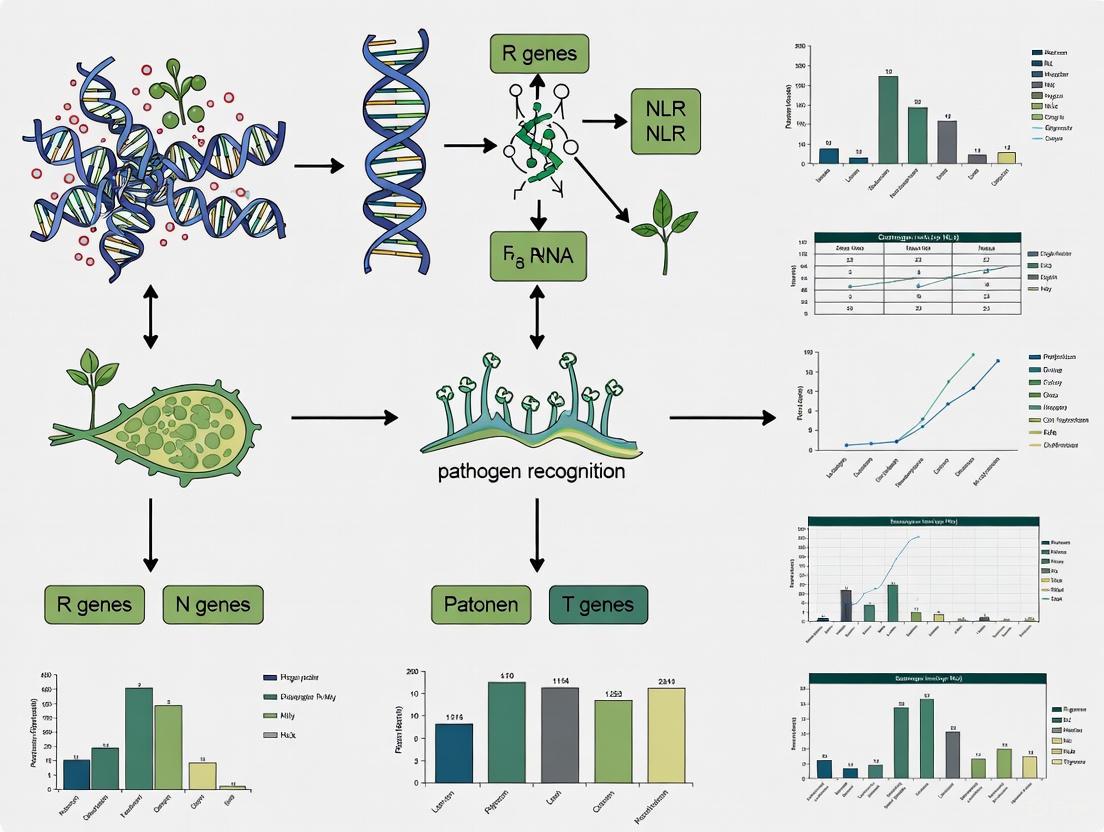
This article provides a comprehensive overview of cutting-edge strategies for the high-throughput identification of plant nucleotide-binding leucine-rich repeat (NLR) genes, the cornerstone of effector-triggered immunity.
High-Throughput Identification of Plant NLR Genes: From Genomic Discovery to Disease-Resistant Crops
Abstract
This article provides a comprehensive overview of cutting-edge strategies for the high-throughput identification of plant nucleotide-binding leucine-rich repeat (NLR) genes, the cornerstone of effector-triggered immunity. We explore the foundational principles of NLR diversity and evolution, detail robust methodological pipelines that leverage genomic and transcriptomic data for large-scale NLR discovery, address key challenges in annotation and functional validation, and present systematic approaches for phenotyping and comparative analysis. Aimed at researchers and scientists in plant pathology and biotechnology, this review synthesizes recent advances to empower the rapid cloning and deployment of NLRs, accelerating the development of disease-resistant crops for enhanced global food security.
The Plant NLR Repertoire: Unveiling Diversity, Evolution, and Genomic Architecture
NLRs as Central Executors of Effector-Triggered Immunity (ETI)
Effector-Triggered Immunity (ETI) represents a robust defense mechanism in plants, activated upon specific recognition of pathogen effector proteins by intracellular immune receptors known as Nucleotide-binding Leucine-rich Repeat receptors (NLRs) [1]. These receptors function as central executors of the plant immune system, initiating complex signaling cascades that culminate in the restriction of pathogen growth [2] [3]. NLRs exhibit a conserved tripartite domain architecture, typically consisting of a central nucleotide-binding adaptor shared by APAF-1, R proteins, and CED-4 (NB-ARC) domain, a C-terminal leucine-rich repeat (LRR) domain, and variable N-terminal domains that define their signaling capabilities [2] [4]. The N-terminal domains primarily include coiled-coil (CC), Toll/interleukin-1 receptor (TIR), or Resistance to Powdery Mildew 8 (RPW8) domains, classifying NLRs into CNLs, TNLs, and RNLs, respectively [4] [5]. Following pathogen perception, NLRs undergo significant conformational changes, transitioning from inactive ADP-bound states to active ATP-bound states, which enables the formation of oligomeric complexes known as resistosomes that initiate downstream immune signaling [2] [6].
Foundational Concepts: NLR Structure, Function, and Evolution
NLR Architecture and Activation Mechanisms
Plant NLRs function as molecular switches within the plant immune system, maintaining autoinhibition in their monomeric, ADP-bound state through intramolecular interactions, particularly between the LRR and NB-ARC domains [2] [5]. Upon pathogen perception, nucleotide exchange (ADP to ATP) triggers substantial conformational changes that release autoinhibition, enabling NLR oligomerization into higher-order complexes [6]. Recent structural studies have revealed that activated CNLs, such as ZAR1, assemble into wheel-like pentameric resistosomes that function as calcium-permeable cation channels at the plasma membrane, initiating downstream immune signaling [4] [6]. Similarly, TNL resistosomes, including RPP1 and RPS4, form tetrameric structures with active NADase enzymes that generate signaling molecules, which are subsequently perceived by Enhanced Disease Susceptibility 1 (EDS1) complexes [6]. These helper NLRs, including RNLs and NRC family CNLs, then amplify immune signals and execute programmed cell death through hypersensitive response (HR) [2] [4].
Diverse Mechanisms of Effector Recognition
NLRs employ sophisticated molecular strategies to detect pathogen effectors, broadly categorized into direct and indirect recognition mechanisms:
- Direct recognition involves physical interaction between NLRs and pathogen effectors, exemplified by the Arabidopsis RPP1 receptor that directly binds the Hpa effector ATR1, and the barley MLA receptors that interact with AVRA effectors from powdery mildew [4] [5].
- Indirect recognition operates through guard and decoy systems, where NLRs monitor the integrity of host proteins that are targeted by pathogen effectors. In the guard model, NLRs such as Arabidopsis RPS2 and RPM1 surveil the host protein RIN4, activating immunity upon detecting effector-mediated modifications [4] [5]. The decoy model involves integrated domains (IDs) within atypical NLRs that mimic authentic effector targets but lack functional roles beyond immunity recognition, as demonstrated by the ZAR1-RKS1 complex that detects uridylylation of the decoy kinase PBL2 by the Xanthomonas effector AvrAC [4].
Genomic Diversity and Evolutionary Dynamics
NLR genes represent one of the most dynamic and rapidly evolving gene families in plant genomes, exhibiting remarkable diversity across species [2] [7]. Comparative genomic analyses reveal significant variation in NLR repertoire size, ranging from approximately 50 genes in watermelon to over 1,000 in apple and hexaploid wheat [2]. This diversity arises from continuous evolutionary arms races with pathogens, driving mechanisms including tandem gene duplication, domain shuffling, and intra-allelic recombination [2]. Recent studies in Asparagus species demonstrate how domestication can influence NLR repertoires, with cultivated garden asparagus (A. officinalis) exhibiting substantial NLR gene contraction (27 NLRs) compared to wild relatives A. setaceus (63 NLRs) and A. kiusianus (47 NLRs), potentially contributing to increased disease susceptibility in domesticated lines [7].
Table 1: Classification of Plant NLR Immune Receptors
| NLR Class | N-terminal Domain | Signaling Requirements | Representative Examples | Key Functions |
|---|---|---|---|---|
| CNL | Coiled-coil (CC) | NDR1 | ZAR1, RPS2, RPM1 | Forms calcium-permeable channels; executes cell death |
| TNL | Toll/Interleukin-1 Receptor (TIR) | EDS1-PAD4/SAG101 | RPP1, RPS4 | Generates signaling molecules via NADase activity |
| RNL | RPW8 | EDS1-PAD4/SAG101 | ADR1, NRG1 | Helper NLRs; signal amplification |
| NLR-ID | Various with integrated domains | Varies with partner NLRs | RGA5, Pik | Direct effector binding via integrated decoys |
High-Throughput NLR Identification: Methodological Frameworks
Expression-Based NLR Discovery Pipeline
Recent advances in NLR genomics have revealed that functional immune receptors exhibit characteristically high expression levels in uninfected plants across both monocot and dicot species [8]. This expression signature provides a valuable biomarker for prioritizing candidate NLRs from transcriptomic datasets. A proven workflow leverages this discovery through several key stages:
- Transcriptome Sequencing: Generate RNA-seq data from uninfected leaf tissues of diverse plant accessions and wild relatives [8].
- Expression Quantification: Calculate transcripts per million (TPM) values for all annotated NLR genes and compare against expression percentiles [8].
- Candidate Prioritization: Select NLRs within the top 15% of expressed NLR transcripts, as this subset shows significant enrichment for functionally validated receptors [8].
- Validation Screening: Implement high-throughput transformation systems to test prioritized NLR candidates for disease resistance phenotypes [8].
Application of this expression-based screening approach in wheat successfully identified 31 new resistance NLRs (19 against stem rust and 12 against leaf rust) from a transgenic array of 995 NLRs derived from diverse grass species [8]. This pipeline demonstrates that NLR expression profiling provides an efficient pre-screening method to reduce the candidate pool before labor-intensive functional validation.
Optimized Workflow for Rapid NLR Gene Cloning
For species with complex genomes, such as wheat, an optimized cloning workflow significantly accelerates NLR identification [9]. This integrated protocol combines ethyl methanesulfonate (EMS) mutagenesis, speed breeding, and genomics-assisted gene cloning to identify causal NLR genes in less than six months using minimal plant growth space [9]. The methodology proceeds through several critical phases:
- EMS Mutagenesis: Treat seeds with EMS to induce random point mutations (~1 mutation per 34 kb in hexaploid wheat) [9].
- High-Density Planting: Sow M1 generation at high density (15 grains per 64 cm²) to maximize space efficiency [9].
- Phenotypic Screening: Challenge M2 seedlings with target pathogens and identify loss-of-resistance mutants based on increased pathogen sporulation [9].
- Genomic Analysis: Sequence transcriptomes of wild-type and mutant lines (MutIsoSeq) to identify genes carrying EMS-type mutations in all mutants [9].
- Functional Validation: Confirm gene identity through complementation assays, virus-induced gene silencing (VIGS), or CRISPR-Cas9 editing [9].
This optimized workflow enabled the cloning of the wheat stem rust resistance gene Sr6, which encodes a CC-BED-domain-containing NLR, in just 179 days using only three square meters of growth space [9]. The protocol demonstrates particular efficiency in hexaploid wheat due to the genetic redundancy that allows tolerance of high mutation densities while maintaining plant viability.
Diagram Title: High-Throughput NLR Identification Workflows
Application Notes: Experimental Protocols for NLR Functional Characterization
Protocol: High-Throughput NLR Validation Array
This protocol describes the establishment of a transgenic NLR array for large-scale resistance gene validation, adapted from the successful implementation in wheat that screened 995 NLRs against major pathogens [8].
Materials:
- Plant Material: Agrobacterium-competent wheat cultivars (e.g., Fielder)
- NLR Library: 995 NLR CDS clones from diverse grass species
- Vector System: Binary vectors with strong constitutive promoters
- Pathogen Strains: Puccinia graminis f. sp. tritici (Pgt) isolate H3, Puccinia triticina (Pt)
- Growth Facilities: Controlled environment chambers with containment provisions
Methodology:
- Vector Construction: Clone each NLR CDS into binary expression vectors using high-throughput Gateway or Golden Gate assembly.
- Plant Transformation: Transform wheat via Agrobacterium-mediated transformation, generating at least 10 independent T0 lines per NLR construct.
- Primary Screening: Challenge T1 seedlings with rust pathogens using standardized inoculation protocols (2-3 leaf stage).
- Phenotypic Scoring: Assess infection types (IT) 12-14 days post-inoculation using a 0-4 scale, where IT 0-2 indicates resistance.
- Secondary Validation: Re-test putative resistance NLRs in T2 generation with multiple pathogen isolates.
- Expression Verification: Quantify NLR transgene expression in resistant lines via RT-qPCR.
Troubleshooting:
- Silencing Issues: For multicopy transgenes experiencing silencing, as observed with Mla7, backcross to select single-copy insertion lines.
- Copy Number Effects: Evaluate transgene copy number via digital PCR, as higher copies (≥2) may be required for full resistance, as demonstrated with barley Mla7 and Mla3 [8].
Protocol: MutIsoSeq for NLR Gene Identification
This protocol details MutIsoSeq analysis, which combines isoform sequencing with EMS mutant transcriptome screening to rapidly identify causal NLR genes [9].
Materials:
- RNA Extraction Kit: High-quality total RNA isolation system
- Library Prep Kits: Illumina RNA-seq and PacBio Iso-seq library preparation kits
- Sequencing Platforms: Illumina NovaSeq (short-read), PacBio Sequel II (long-read)
- Bioinformatics Tools: BBDuk, HISAT2, StringTie, CLC Genomics Server
Methodology:
- RNA Preparation: Extract high-quality total RNA (RIN ≥8.0) from wild-type and 10-12 independent loss-of-resistance mutants.
- Isoform Sequencing: Generate full-length transcriptome for wild-type using PacBio Iso-seq to establish reference transcript models.
- RNA-seq Library Preparation: Prepare stranded RNA-seq libraries from mutant lines (≥20 million reads per sample).
- Variant Calling:
- Align RNA-seq reads to reference transcriptome using splice-aware aligners
- Identify EMS-induced mutations (G/C to A/T transitions) present in all mutants
- Filter variants with ≥5x coverage and ≥30% mutant allele frequency
- Candidate Validation: Confirm mutations via Sanger sequencing of genomic DNA across all available mutants.
Key Considerations:
- Mutation Validation: Screen all identified mutations in the entire mutant collection (typically 90-100 mutants) via targeted sequencing.
- EMS Signature: Expect ~95% of mutations to be G/C to A/T transitions, with the remainder as A/T to T/A transversions [9].
Table 2: Quantitative Assessment of NLR Identification Approaches
| Parameter | Expression-Based Screening | Mutagenesis & MutIsoSeq | Traditional Map-Based Cloning |
|---|---|---|---|
| Time Requirement | 12-18 months | ~6 months | 3-10 years |
| Candidate Throughput | High (100-1,000 genes) | Medium (1 gene per population) | Low (1 gene per project) |
| Space Requirements | Moderate | Low (3 m² demonstrated) | High |
| Success Rate | 3.1% (31/995 NLRs confirmed) | >90% for targeted genes | Variable |
| Key Limitations | False positives from autoactivity | Requires fertility after mutagenesis | Extremely resource-intensive |
| Optimal Application | Pan-NLR resistance discovery | Cloning of genetically defined R genes | Species with simple genomes |
Table 3: Research Reagent Solutions for NLR Studies
| Reagent/Category | Specific Examples | Function/Application | Technical Notes |
|---|---|---|---|
| Expression Vectors | pUbi:Gateway, pCMB | High-throughput NLR cloning | Strong constitutive promoters essential |
| Transformation Systems | Agrobacterium-mediated (wheat) | NLR validation in crops | High-efficiency protocols critical for throughput |
| Sequencing Technologies | PacBio Iso-seq, Illumina RNA-seq | MutIsoSeq analysis | Long-read essential for complex NLR loci |
| Mutagenesis Agents | Ethyl methanesulfonate (EMS) | Forward genetics | Optimal concentration species-dependent |
| Pathogen Assay Systems | Puccinia graminis f. sp. tritici H3 | Phenotypic screening | Standardized inoculation protocols required |
| Bioinformatics Tools | OrthoFinder, MEME, PlantCARE | Evolutionary & promoter analysis | Comparative genomics for ortholog identification |
| Gene Editing Tools | CRISPR-Cas9, VIGS | Functional validation | Essential for confirming gene identity |
Integrated Workflow: From NLR Discovery to Applied Crop Protection
The integration of NLR biology with advanced genomic technologies enables a comprehensive pipeline for crop improvement, bridging fundamental research with practical applications. This workflow initiates with NLR identification through expression-based screening or mutagenesis approaches, progresses to functional characterization of immune mechanisms, and culminates in strategic deployment for durable disease resistance [8] [1] [9]. The systematic cloning of all genetically defined disease resistance genes represents an achievable goal for plant research communities, facilitated by optimized protocols that dramatically reduce the time and resources required for NLR identification [9].
A critical application of NLR research involves engineering ETI as a priming agent for enhanced plant defense [1]. Studies in tomato demonstrate that pre-inoculation with non-virulent Pseudomonas syringae strains carrying ETI-eliciting effectors provides protection against subsequent infection by virulent strains when applied 24-48 hours prior to challenge [1]. This priming approach induces broad-spectrum resistance without significant fitness costs, offering a sustainable alternative to chemical pesticides [1]. The emerging understanding of NLR networks, including sensor-helper configurations and cooperative signaling, provides opportunities for designing optimized resistance gene stacks that minimize evolutionary pressure on pathogens [2] [1].
Diagram Title: NLR-Mediated ETI Signaling Pathway
The strategic deployment of NLR genes in crop breeding programs represents the culmination of this integrated workflow. Knowledge-guided stacking of multiple NLRs with complementary recognition specificities provides enhanced durability against rapidly evolving pathogens [8] [1]. Wild relatives of cultivated crops serve as invaluable reservoirs of novel NLR diversity, as demonstrated by the identification of functional resistance genes from diverse grass species against wheat rust pathogens [8]. The continued expansion of NLR repertoires from wild germplasm, combined with efficient gene cloning technologies, will accelerate the development of disease-resistant crops, contributing to sustainable agricultural systems and global food security [8] [7] [9].
Massive Expansion and Rapid Evolution of the NLR Gene Family
Plant immunity relies heavily on intracellular immune receptors known as Nucleotide-binding leucine-rich repeat (NLR) proteins, which serve as crucial executors of effector-triggered immunity (ETI) [10]. These proteins function as sophisticated molecular switches that detect pathogen effectors through direct or indirect recognition mechanisms, subsequently activating robust defense responses including programmed cell death through hypersensitive response [2]. The NLR gene family exhibits extraordinary diversity across plant species, with family sizes ranging from approximately 50 in watermelon (Citrullus lanatus) to over 1,000 in apple (Malus domestica) and hexaploid wheat (Triticum aestivum) [2]. This remarkable variation stems from a continuous evolutionary arms race between plants and their pathogens, driving rapid diversification and expansion of NLR genes through various evolutionary mechanisms [2]. Understanding the dynamics of NLR family expansion and evolution provides crucial insights for harnessing these genes in crop improvement programs.
Table 1: NLR Gene Family Size Variation Across Plant Species
| Plant Species | Family | NLR Count | Key Evolutionary Features | Primary Expansion Mechanism |
|---|---|---|---|---|
| Capsicum annuum (pepper) | Solanaceae | 288 | Significant clustering near telomeric regions | Tandem duplication (18.4% of NLRs) [10] |
| Triticum aestivum (wheat) | Poaceae | 3,400 loci (1,560 expressed) | Telomeric distribution, clustering | Tandem duplication, polyploidy [11] |
| Asparagus setaceus | Asparagaceae | 63 | Contraction during domestication | Not specified [12] |
| Asparagus kiusianus | Asparagaceae | 47 | Contraction during domestication | Not specified [12] |
| Asparagus officinalis | Asparagaceae | 27 | Severe contraction in cultivated species | Not specified [12] |
| Coriandrum sativum (coriander) | Apiaceae | 183 | Dynamic gene content variation | Not specified [13] |
| Apium graveolens (celery) | Apiaceae | 153 | Dynamic gene content variation | Not specified [13] |
| Daucus carota (carrot) | Apiaceae | 149 | Contraction pattern | Not specified [13] |
| Angelica sinensis | Apiaceae | 95 | Dynamic gene content variation | Not specified [13] |
| Arabidopsis thaliana | Brassicaceae | ~150 | Well-characterized reference | Diverse mechanisms [10] |
The table above illustrates the tremendous variation in NLR gene family sizes across different plant species. This variation reflects both evolutionary history and ecological adaptation, with species facing greater pathogen pressure typically maintaining larger, more diverse NLR repertoires [2]. The dramatic contraction observed in cultivated asparagus compared to its wild relatives suggests that domestication may sometimes reduce NLR diversity, potentially increasing susceptibility to diseases [12].
Genomic Distribution and Evolutionary Patterns
NLR genes exhibit non-random distribution patterns within plant genomes, with significant implications for their evolution and function. In pepper (Capsicum annuum), NLR genes demonstrate significant clustering, particularly near telomeric regions, with chromosome 09 harboring the highest density of 63 NLRs [10]. Similarly, in wheat, NLR loci distribute predominantly across all chromosomes at their telomere regions, with approximately half clustering together [14]. This genomic arrangement likely facilitates the rapid evolution of NLR genes through unequal crossing-over and recombination events.
The evolutionary dynamics of NLR genes are characterized by several key mechanisms:
Tandem duplication: This represents a primary driver of NLR family expansion, accounting for 18.4% (53/288) of NLR genes in pepper, predominantly on chromosomes 08 and 09 [10]. This mechanism enables the rapid generation of new resistance specificities through local amplification [10].
Whole genome duplication (WGD): In the Oleaceae family, genes acquired from an ancient WGD event (~35 million years ago) have been retained across Fraxinus lineages, contributing to NLR repertoire expansion [15].
Domain integration: Approximately 8% of NLR proteins across plant genomes contain integrated domains that encode proteins acting as decoys or baits for pathogen effectors, representing a sophisticated evolutionary adaptation for pathogen recognition [14].
These evolutionary mechanisms collectively enable plants to continuously adapt to rapidly evolving pathogens, maintaining a diverse arsenal of intracellular immune receptors.
Experimental Protocols for NLR Identification and Characterization
Genome-Wide NLR Identification Pipeline
Protocol 1: Comprehensive NLR Identification Using NLR-Annotator
The NLR-Annotator tool enables de novo annotation of NLR genes in plant genomic data, addressing limitations of transcript-based annotation methods [11] [14].
Step-by-Step Workflow:
Genome Fragmentation: Dissect the whole genome into 20-kb fragments with short overlaps to ensure comprehensive coverage [14].
In silico Translation: Translate each DNA fragment in all six reading frames to account for potential coding sequences in either strand [14].
Motif Screening: Screen translated sequences for NB-ARC-associated motifs using predefined motif patterns that resemble NLR protein domain substructures [11].
Fragment Merging: Merge adjacent targeted fragments that likely belong to the same NLR locus [14].
Domain Extension: Use identified NB-ARC motifs as seeds to search upstream and downstream sequences for additional NLR-associated domains (CC, TIR, or LRR domains) [14].
Locus Definition: Combine all reported NLR motifs and domains to define complete NLR loci, distinguishing between functional genes and pseudogenes [11].
This method has demonstrated both high sensitivity and specificity when applied to the Arabidopsis thaliana genome, successfully identifying previously unannotated NLR genes with expression confirmed by transcriptome and ribosome-profiling data [14].
Transcriptome-Based Functional NLR Discovery
Protocol 2: Expression-Based Functional NLR Screening
Recent research has revealed that functional NLRs often exhibit high steady-state expression levels in uninfected plants, contrary to the previously held belief that NLRs are generally transcriptionally repressed [8]. This signature enables efficient prioritization of candidate NLRs for functional validation.
Experimental Procedure:
RNA Sequencing: Extract RNA from uninfected plant tissues (leaves, roots, or other pathogen-relevant tissues) and perform RNA-seq analysis. Include multiple biological replicates for statistical robustness [8].
Transcriptome Assembly: Assemble transcriptomes de novo or align reads to a reference genome to quantify expression levels [8].
Expression Quantification: Calculate expression values (TPM or FPKM) for all NLR genes identified through genome annotation [8].
Candidate Prioritization: Prioritize NLRs in the top 15% of expressed NLR transcripts, as these are significantly enriched for functional immune receptors [8].
Functional Validation: Clone prioritized NLR candidates and test for resistance using high-throughput transformation systems. In wheat, this approach has successfully identified 31 new resistance NLRs (19 against stem rust and 12 against leaf rust) from a transgenic array of 995 NLRs [8].
This protocol leverages the observation that known functional NLRs from both monocot and dicot species consistently show higher expression levels, enabling more efficient discovery of resistance genes [8].
Evolutionary Analysis of NLR Gene Families
Protocol 3: Comparative Evolutionary Analysis of NLR Genes
Understanding the evolutionary dynamics of NLR genes provides insights into their functional diversification and species-specific adaptation patterns.
Methodological Approach:
Ortholog Identification: Identify orthologous NLR genes across related species using tools such as OrthoFinder [12].
Phylogenetic Reconstruction: Construct maximum likelihood phylogenetic trees using NB-ARC domain sequences with robust bootstrap support (e.g., 1000 replicates) [10] [13].
Synteny Analysis: Perform comparative synteny analysis using MCScanX to identify conserved genomic blocks and species-specific rearrangements [10].
Selection Pressure Analysis: Calculate non-synonymous to synonymous substitution rates (dN/dS) to identify sites under positive selection, particularly in LRR domains involved in effector recognition [10].
Duplication Dating: Estimate the timing of duplication events using synonymous substitution rates (Ks) of paralogous pairs, contextualized with known whole genome duplication events [15].
This integrated evolutionary approach has revealed distinct NLR expansion patterns between related genera, such as the extensive gene expansion driven by recent duplications in Olea (olives) compared to the predominant gene conservation in Fraxinus (ash trees) [15].
Research Reagent Solutions for NLR Studies
Table 2: Essential Research Tools and Resources for NLR Gene Analysis
| Tool/Resource | Type | Function | Application Example |
|---|---|---|---|
| NLR-Annotator | Software tool | De novo genome annotation of NLR loci | Identified 3,400 NLR loci in wheat cv. Chinese Spring [11] [14] |
| NLRSeek | Reannotation pipeline | Mining NLRs through genome reannotation | Identified 33.8%-127.5% more NLRs in yam species compared to conventional methods [16] |
| PlantCARE | Database | Prediction of cis-regulatory elements in promoter regions | Revealed enrichment of defense-related motifs in pepper NLR promoters [10] |
| STRING | Database | Protein-protein interaction prediction | Predicted key interactions among differentially expressed NLRs in pepper [10] |
| InterProScan | Software tool | Protein domain characterization | Validated NLR domain architecture and classification [12] |
| OrthoFinder | Software tool | Orthogroup inference across species | Identified 16 conserved NLR pairs between wild and cultivated asparagus [12] |
| RefPlantNLR | Curated collection | Experimentally validated NLR references | Contains almost 500 validated NLRs for comparative analysis [2] |
These research tools have substantially advanced our ability to identify, characterize, and validate NLR genes across diverse plant species, enabling more efficient discovery of disease resistance genes for crop improvement.
Signaling Networks and Functional Classification
NLR proteins can function as singleton receptors that combine pathogen detection and immune signaling, or as components of higher-order networks with functionally specialized sensors and helpers [2]. In NLR pairs and networks, multiple immune receptors work together to achieve robust immunity, where sensor NLRs mediate pathogen perception and activate downstream helper NLRs that mediate immune signaling [2]. Unlike NLR pairs that function in one-to-one sensor-helper connections, NLR networks simultaneously exhibit many-to-one and one-to-many functional sensor-helper connections, contributing to increased robustness and evolvability of the plant immune system [2].
Based on N-terminal domains, NLRs are classified into several major categories:
- CC-NLRs: Contain coiled-coil N-terminal domains
- TIR-NLRs: Feature toll/interleukin-1 receptor domains
- RPW8-NLRs: Have RPW8-like N-terminal domains
- CCG10-NLRs: Contain G10-type coiled-coil domains [2]
These different NLR classes often exhibit distinct evolutionary dynamics and expression patterns, with CC-NLRs and TIR-NLRs typically showing more rapid expansion compared to RNLs [12].
Expression Signatures and Regulatory Mechanisms
NLR genes exhibit complex expression patterns and regulatory mechanisms that are crucial for their function. Analysis of NLR promoters in pepper revealed enrichment in defense-related motifs, with 82.6% of promoters (238 genes) containing binding sites for salicylic acid (SA) and/or jasmonic acid (JA) signaling [10]. This highlights the importance of phytohormone signaling in regulating NLR-mediated immunity.
Contrary to previous assumptions that NLRs are generally transcriptionally repressed, recent evidence demonstrates that functional NLRs often show high constitutive expression in uninfected plants [8]. In Arabidopsis thaliana, the most highly expressed NLR is ZAR1, which shows expression levels above the median and mean for all genes in the accession Col-0 [8]. This pattern holds across both monocot and dicot species, with known functional NLRs consistently enriched among highly expressed NLR transcripts [8].
The regulation of NLR expression appears to be precisely balanced, as insufficient expression may compromise resistance, while excessive expression can lead to autoimmunity with detrimental effects on plant growth [8]. Some NLRs require multiple copies for full functionality, as demonstrated by the barley NLR Mla7, where higher-order copies were necessary for resistance to powdery mildew, with full resistance only achieved in lines with four copies [8].
The massive expansion and rapid evolution of the NLR gene family represent a remarkable evolutionary adaptation that enables plants to continuously combat diverse pathogens. The development of advanced annotation tools such as NLR-Annotator and NLRSeek has revolutionized our ability to comprehensively characterize NLR repertoires across plant species [11] [16] [14]. The discovery that functional NLRs exhibit high expression signatures provides a valuable filter for prioritizing candidates for functional validation [8]. These advances, combined with high-throughput transformation systems, are accelerating the discovery of new resistance genes for crop improvement. Future research should focus on elucidating the precise mechanisms governing NLR regulation, network interactions, and species-specific expansion patterns to fully harness the potential of these crucial immune receptors in sustainable agriculture.
The genomic organization of Nucleotide-binding leucine-rich repeat (NLR) genes is not random but follows distinct patterns that are crucial for understanding how plants evolve new disease resistance specificities. Three interconnected features—gene clustering, tandem duplications, and enrichment in telomeric regions—create a genomic architecture that facilitates rapid adaptation to evolving pathogens. This architecture enables plants to generate diversity through localized amplification and rearrangement of NLR genes, forming the genetic basis for effector-triggered immunity. Understanding these organizational principles provides researchers with strategic approaches for identifying, characterizing, and deploying NLR genes in crop improvement programs. This Application Note details the experimental frameworks and protocols for investigating these genomic features, with practical methodologies applicable across plant species.
Quantitative Landscape of NLR Genomic Organization
Table 1: Documented Patterns of NLR Organization Across Plant Species
| Plant Species | Total NLRs Identified | Tandem Duplication Contribution | Telomeric Enrichment | Key Chromosomal Hotspots | Citation |
|---|---|---|---|---|---|
| Capsicum annuum (Pepper) | 288 canonical NLRs | 18.4% (53/288 genes from tandem duplication) | Significant clustering near telomeres | Chr09 (63 NLRs), Chr08 | [10] |
| Arabidopsis thaliana | 167-251 per accession (Pan-NLRome: ~13,167 genes) | Primary driver of cluster expansion in specific radiations | Not explicitly stated | Chromosome 1 (B5 cluster), Chromosome 4 (RPP4/RPP5 cluster) | [17] [18] |
| Porites lobata (Coral) | 42,872 predicted genes | ~1/3 of genes from tandem duplication | Satellite DNA with telomeric motifs identified | Not specified | [19] |
| Pocillopora cf. effusa (Coral) | 32,095 predicted genes | Pervasive tandem duplications | Not specified | Not specified | [19] |
| Solanum lycopersicum (Tomato) | 264-332 high-quality NLR models | Major evolutionary dynamic | Not specified | Not specified | [20] |
The data in Table 1 reveals several consistent themes. Tandem duplication serves as a fundamental mechanism for NLR family expansion across kingdoms, observed in both plants and corals [10] [19]. This expansion is often localized, leading to the formation of complex clusters on specific chromosomes, as seen in pepper and Arabidopsis [10] [17]. The high-quality genome assemblies used in these studies were critical for detecting these tandem arrays, which are often misassembled in short-read genomes [19].
Experimental Protocols for NLRome Characterization
Protocol: Resistance Gene Enrichment Sequencing (RenSeq)
Objective: To achieve comprehensive and accurate sequencing of NLR genes, overcoming challenges posed by their repetitive nature and high sequence similarity.
Principle: This method uses targeted sequence capture with biotinylated RNA baits designed to hybridize to conserved NLR domains, followed by long-read sequencing (e.g., PacBio SMRT or Oxford Nanopore) to span highly polymorphic and repetitive regions [20] [18].
Workflow Steps:
- Bait Design: Synthesize baits based on a curated set of NLR genes from the target species and related taxa. Baits should tile across conserved domains (e.g., NB-ARC) to ensure broad capture efficiency [18].
- Genomic DNA Preparation: Extract high-molecular-weight (HMW) gDNA. Quantity and quality check using fluorometry (e.g., Qubit) and pulsed-field gel electrophoresis.
- Library Preparation and Capture:
- Fragment HMW gDNA to a target size (e.g., 10-20 kb for PacBio).
- Prepare a sequencing library compatible with the chosen long-read platform.
- Hybridize the library with the biotinylated bait pool.
- Capture bait-bound fragments using streptavidin-coated magnetic beads.
- Wash to remove non-specifically bound DNA.
- Elute the captured NLR-enriched library.
- Sequencing: Sequence the enriched library on a long-read platform (PacBio SMRT or Oxford Nanopore) to generate high-fidelity continuous reads.
- Data Analysis:
- Assembly: Perform de novo assembly of the enriched reads to reconstruct full-length NLR gene models.
- Annotation: Annotate NLRs using domain-based tools (e.g., NLR-Annotator, InterProScan) and phylogenetic analysis.
- Variant Calling: Identify presence-absence polymorphisms, copy-number variations (CNV), and single nucleotide polymorphisms (SNPs) across accessions [20] [18].
Applications: Building species-wide pan-NLRomes, improving NLR annotations in reference genomes, and discovering novel NLR alleles and architectures [18].
Protocol: Identifying Tandem Duplications and Clusters
Objective: To identify and characterize tandemly duplicated NLR genes and define genomic clusters.
Principle: Tandem duplicates are paralogous genes located on the same chromosome with no intervening non-duplicated genes, or within a defined physical distance. This protocol uses synteny analysis and genomic localization [10] [21].
Workflow Steps:
- Define the NLR Repertoire: Use HMMER (with PF00931 NB-ARC HMM profile) and BLASTp against known NLRs to identify all candidate genes in the genome [10].
- Extract Genomic Coordinates: Obtain the physical positions (chromosome, start, end) for all identified NLRs from the genome annotation file (GFF/GTF format).
- Cluster Identification:
- Classify Duplication Types:
- MCScanX classifies gene pairs into duplication modes: tandem (adjacent), proximal (close but not adjacent), segmental (duplicated genomic blocks), and dispersed.
- Tandem duplicates are specifically identified as NLR genes separated by a defined distance (e.g., ≤ 1 gene) on the same chromosome [10].
- Visualization: Generate synteny plots and chromosomal maps using visualization tools like Advanced Circos in TBtools to illustrate the location and density of NLR clusters [10].
Applications: Quantifying the contribution of tandem duplication to NLR family expansion, identifying evolutionary hotspots, and pinpointing genomic regions for breeding applications [10] [21].
Protocol: Analyzing Telomeric Enrichment
Objective: To assess the association of NLR gene clusters with telomeric regions.
Principle: Telomeres are nucleoprotein structures at chromosome ends, typically composed of short, conserved DNA repeat motifs (e.g., TTAGGG in metazoans). This protocol identifies these motifs and correlates their location with NLR clusters [19].
Workflow Steps:
- Identify Telomeric Repeat Motifs:
- Create a consensus sequence for the expected telomeric repeat (e.g., TTAGGG for many metazoans).
- Use a tool like RepeatMasker or a custom script to scan the genome assembly for all occurrences of this motif.
- Classify Telomeric Sequences:
- Terminal Telomeres: Motifs found at the very ends of assembled contigs/scaffolds. A low count suggests an incomplete, fragmented assembly.
- Interstitial Telomeric Sequences (ITSs): Motifs found internally within chromosomes, often associated with past chromosomal rearrangements [19].
- Correlate with NLR Positions:
- Overlay the physical positions of NLR clusters (from Protocol 3.2) with the positions of ITSs and terminal telomeres.
- Statistically test for enrichment (e.g., using a permutation test) to determine if NLR clusters are located significantly closer to telomeric sequences than expected by chance.
- Satellite DNA Analysis (Advanced): In some genomes (e.g., Porites corals), telomeric-like motifs can be embedded within longer, tandemly repeated satellite DNA. Tools like Tandem Repeats Finder can be used to identify these complex structures [19].
Applications: Understanding the role of chromosome ends in NLR evolution and identifying dynamically evolving NLR clusters that may be under strong selective pressure from pathogens [10].
The Scientist's Toolkit: Research Reagent Solutions
Table 2: Essential Reagents and Tools for NLR Genomic Organization Studies
| Item/Category | Specific Examples & Specifications | Function in Research |
|---|---|---|
| Bait Libraries | Custom MYbaits (Arbor Biosciences) or SureSelect (Agilent) designed from NLR databases (e.g., RefPlantNLR). | Targeted enrichment of NLR genes from genomic DNA for RenSeq [20] [18]. |
| Long-Read Sequencers | PacBio Sequel II/Revio Systems; Oxford Nanopore PromethION/GridION. | Generation of continuous long reads to span repetitive NLR clusters and resolve complex haplotypes [20] [18]. |
| Analysis Software | MCScanX (TBtools plugin); NLR-Annotator; InterProScan; OrthoFinder; RepeatMasker. | Synteny analysis, NLR identification/classification, phylogenetic analysis, and repeat identification [10] [22]. |
| Reference Databases | RefPlantNLR; PlantNLRatlas; Pfam (PF00931, NB-ARC). | Curated sets of known NLRs for bait design, sequence annotation, and functional prediction [22]. |
| High-Quality Genomes | Chromosome-level assemblies (e.g., Pepper 'Zhangshugang', A. thaliana Col-0). | Essential reference for accurate mapping of NLR clusters, telomeric regions, and synteny analysis [10] [18]. |
Concluding Remarks
The strategic investigation of NLR clustering, tandem duplication, and telomeric enrichment provides a powerful framework for understanding the evolution of plant immunity. The experimental protocols outlined here—RenSeq, duplication analysis, and telomeric association studies—provide a robust roadmap for researchers to characterize the NLRome in any species of interest. Leveraging long-read sequencing and sophisticated bioinformatic tools is paramount for success, as it overcomes the historical challenges of studying these dynamic and complex genomic regions. By applying these protocols, scientists can efficiently identify valuable NLR candidate genes, unravel their evolutionary history, and accelerate the development of crops with durable disease resistance.
Nucleotide-binding domain and Leucine-rich Repeat (NLR) proteins constitute a major class of intracellular immune receptors that enable plants to detect pathogen effectors and activate robust immune responses. These proteins function as central hubs in the plant immune system, initiating signaling cascades that culminate in the hypersensitive response (HR) and systemic acquired resistance. Plant NLRs are categorized into distinct classes based on their N-terminal domains, which dictate their signaling mechanisms and functional specializations. This application note delineates the structural and functional characteristics of the three major NLR classes—Coiled-Coil (CNL), Toll/Interleukin-1 Receptor (TNL), and RPW8 (RNL)—providing a structured framework for their high-throughput identification and functional analysis within plant genomics research.
Table 1: Core Domains and Architectural Features of Major Plant NLR Classes
| NLR Class | N-terminal Domain | Central Domain | C-terminal Domain | Representative Architectures |
|---|---|---|---|---|
| CNL | Coiled-Coil (CC) | NB-ARC | LRR | CC-NB-ARC-LRR |
| TNL | Toll/Interleukin-1 Receptor (TIR) | NB-ARC | LRR | TIR-NB-ARC-LRR |
| RNL | RPW8 | NB-ARC | LRR | RPW8-NB-ARC-LRR |
Structural Distinctions and Molecular Signatures
The classification of NLRs is fundamentally based on their N-terminal domain structures, which have evolved distinct biochemical activities for immune execution.
CNL N-terminal Domains: The coiled-coil domain typically forms a four-helix bundle that, upon activation, can oligomerize to form a funnel-shaped structure. Key motifs within the first alpha helix, such as MADA in angiosperms or the evolutionarily distinct MAEPL in nonflowering plants, are critical for cell death induction [23]. Cryo-EM structures of activated CNLs like Arabidopsis ZAR1 and wheat Sr35 reveal that the CC domains form a pentameric resistosome complex, where the N-terminal α-helices create a pore-like structure hypothesized to alter calcium ion flux across the plasma membrane [23].
TNL N-terminal Domains: The TIR domain functions as an enzyme upon activation. Structural studies of Arabidopsis RPP1 and Nicotiana benthamiana ROQ1 demonstrate that effector recognition triggers TNL tetramerization, positioning TIR domains to form a symmetric holoenzyme complex with NADase (nicotinamide adenine dinucleotide hydrolase) activity [23]. This catalytic activity produces diverse nucleotide-based second messengers, including pRib-AMP/ADP, diADPR, and ADPr-ATP, which subsequently activate downstream signaling components [23]. Additionally, some TIR domains exhibit 2′,3′-cAMP/cGMP synthetase activity through direct binding and hydrolysis of dsRNA/dsDNA [23].
RNL N-terminal Domains: The RPW8 domain represents a distinct CC subtype that also mediates oligomerization and association with plasma membrane compartments. RNLs like NRG1 and ADR1 function as helper NLRs that are activated downstream of sensor NLRs and form calcium-permeable channels to execute immune signaling [23] [24].
Diagram 1: Distinct activation pathways and signaling mechanisms of major NLR classes. CNLs form calcium-permeable pores directly, TNLs produce nucleotide-based signaling molecules, and RNLs function as helper NLRs downstream of sensor activation.
Functional Specialization and Immune Signaling
The structural differences between NLR classes underpin their specialized roles in plant immunity. CNLs and TNLs primarily function as sensor NLRs that directly or indirectly detect pathogen effectors, while RNLs largely operate as helper NLRs that amplify defense signals and execute cell death.
Sensor NLR Functions: Both CNLs and TNLs can function as singleton receptors capable of autonomous pathogen recognition and immunity activation. However, they also participate in more complex NLR networks, including paired NLRs where sensor and helper NLRs operate in a one-to-one co-dependent relationship [24]. For example, the well-characterized TNL pair RRS1/RPS4 in Arabidopsis employs an integrated WRKY domain as a decoy to detect multiple bacterial effectors [24]. Similarly, rice CNL pairs like RGA4/RGA5 and Pik-1/Pik-2 utilize integrated heavy metal-associated (HMA) domains for effector recognition [24]. These paired configurations typically exhibit head-to-head genomic orientation and share promoter regions, facilitating coordinated expression [24].
Helper NLR Systems: RNLs (NRG1, ADR1, and their paralogs) have evolved as specialized signaling components that operate downstream of sensor NLRs, particularly TNLs [24]. Upon activation by sensor NLRs, RNLs form oligomeric complexes that associate with the plasma membrane and are hypothesized to form calcium-permeable channels [23]. This helper system enables signal amplification and death execution across multiple sensor pathways, creating functional NLR networks within the plant immune system.
Table 2: Functional Specialization and Immune Execution Mechanisms
| NLR Class | Primary Role | Activation Complex | Signaling Mechanism | Downstream Output |
|---|---|---|---|---|
| CNL | Sensor/Singleton | Pentameric Resistosome | Calcium Ion Flux | HR, Transcriptional Reprogramming |
| TNL | Sensor/Paired | Tetrameric NADase Complex | Immunogenic Nucleotides | EDS1 Pathway Activation, HR |
| RNL | Helper | Oligomeric Channel | Calcium Permeability | Signal Amplification, Cell Death |
Experimental Protocols for NLR Analysis
Structural Characterization via Cryo-Electron Microscopy
Purpose: Determine high-resolution structures of NLR resistosomes and activation complexes. Workflow:
- Protein Expression: Express full-length NLR proteins in insect cell systems (e.g., Sf9 cells) using baculovirus vectors.
- Complex Formation: Activate NLRs by co-expressing with cognate effectors or using constitutively active mutants.
- Purification: Purify NLR complexes via affinity (e.g., His-tag), ion exchange, and size exclusion chromatography.
- Grid Preparation: Apply purified samples to cryo-EM grids, blot, and plunge-freeze in liquid ethane.
- Data Collection: Acquire micrographs using 300 keV cryo-electron microscope with automated data collection.
- Processing: Perform motion correction, particle picking, 2D/3D classification, and high-resolution refinement.
Key Considerations: For CNLs like ZAR1, adenosine diphosphate (ADP) maintains the inactive state, while ATP binding triggers oligomerization [23]. For TNLs like RPP1 and ROQ1, effector binding directly stimulates tetramerization and NADase activity [23].
Functional Analysis through Cell Death Assays
Purpose: Quantify NLR-mediated hypersensitive response in planta. Workflow:
- Plant Material: Prepare 4-6 week old Nicotiana benthamiana plants.
- Agroinfiltration: Infiltrate Agrobacterium strains carrying NLR constructs (0.4-0.8 OD600) into leaves.
- Experimental Groups:
- Test NLR (full-length or truncated)
- Positive control (known cell death inducer)
- Negative control (empty vector)
- Response Monitoring: Document cell death symptoms daily for 3-7 days using standardized scoring systems.
- Ion Flux Measurement: Employ calcium-sensitive dyes or aequorin-based assays to quantify calcium changes.
Validation: Overexpression of CC, RPW8, or TIR domains alone is often sufficient to activate cell death, confirming their role as executioner domains [23].
Diagram 2: Integrated workflow for high-throughput identification, classification, and functional validation of plant NLR genes. The pipeline encompasses genomic sequencing, structural prediction, experimental validation, and network analysis for comprehensive NLR characterization.
The Scientist's Toolkit: Essential Research Reagents
Table 3: Key Research Reagents for NLR Functional Studies
| Reagent/Category | Specific Examples | Application Purpose | Experimental Function |
|---|---|---|---|
| Expression Systems | Sf9 insect cells, N. benthamiana | Protein production & functional assays | High-yield NLR expression for structural studies & cell death assays |
| Cell Death Markers | Electrolyte leakage kits, Evans Blue staining | HR quantification | Objective measurement of hypersensitive cell death |
| Calcium Indicators | Aequorin, R-GECO1, Fluo-4 AM | Calcium flux detection | Real-time monitoring of ion channel activity in resistosomes |
| Structural Biology | Cryo-EM grids, Size exclusion columns | Complex characterization | High-resolution structure determination of NLR oligomers |
| Genetic Tools | CRISPR/Cas9 vectors, RNAi constructs | Gene editing & silencing | Functional validation through knockout/knockdown studies |
| Antibody Reagents | Anti-GFP, epitope-specific antibodies | Protein detection & localization | Immunoprecipitation, Western blot, subcellular localization |
The comprehensive characterization of CNL, TNL, and RNL classes reveals both conserved principles and specialized adaptations in plant NLR immunity. While all NLRs share a common molecular switch mechanism centered on the NB-ARC domain, their divergent N-terminal domains have evolved distinct biochemical activities and immune execution strategies. CNLs directly form calcium-permeable channels through CC-domain oligomerization, TNLs employ catalytic TIR domains to produce nucleotide-based second messengers, and RNLs function as helper NLRs that amplify defense signals. These structural and functional distinctions have profound implications for high-throughput NLR identification, functional analysis, and strategic deployment in crop improvement programs. The integrated experimental frameworks and analytical tools presented herein provide a roadmap for systematic investigation of NLR networks across diverse plant species, accelerating the discovery and utilization of these critical immune receptors in agricultural biotechnology.
The pan-NLRome represents the complete catalog of nucleotide-binding leucine-rich repeat receptor (NLR) genes across all individuals within a plant species, capturing both core NLRs (shared by most accessions) and dispensable NLRs (variable between accessions). This concept has emerged as a crucial framework for understanding plant immunity, recognizing that a single reference genome fails to capture the extraordinary genetic diversity of NLRs, which are major components of the plant immune system responsible for recognizing pathogen effectors and triggering defense responses [25] [26]. The true extent of NLR diversity has remained largely unknown until recent advances in sequencing technologies and bioinformatics enabled comprehensive pan-genomic studies [27] [26].
Plant immune receptors encoded by NLR genes exhibit remarkable sequence, structural, and regulatory variability as a result of constant evolutionary arms races with rapidly evolving pathogens [25]. This diversity arises from multiple uncorrelated mutational and genomic processes, creating challenges for traditional genomic approaches that rely on single reference genomes [25]. The pan-NLRome concept addresses these limitations by providing a species-wide perspective that enables researchers to systematically analyze NLR genes and alleles, their genomic organization, and their roles in disease resistance [26]. Recent studies have demonstrated that NLRs are diverse across many axes, requiring multiple metrics to fully capture their variation, and that this "diversity in diversity generation" is fundamental to maintaining a functionally adaptive immune system in plants [27].
Biological and Technical Foundations
NLR Structure and Function in Plant Immunity
NLR proteins serve as central executors of effector-triggered immunity (ETI), providing a robust defense response that often includes programmed cell death (hypersensitive response, HR) to restrict pathogen colonization [10]. These proteins feature a characteristic modular structure: an N-terminal signaling domain (typically Toll/Interleukin-1 Receptor homology (TIR), Coiled-Coil (CC), or RPW8-like domain), a central conserved nucleotide-binding domain (NBS, Nucleotide-Binding Site), and a C-terminal leucine-rich repeat (LRR) domain responsible for effector recognition [10]. This architecture enables NLRs to function as molecular switches, detecting pathogen effectors through direct or indirect recognition mechanisms and subsequently activating downstream immune signaling pathways [10].
Plants maintain a sophisticated two-layer innate immune system comprising pattern-triggered immunity (PTI) and ETI [10]. PTI is activated when cell surface pattern recognition receptors (PRRs) detect pathogen-associated molecular patterns (PAMPs), while ETI provides a stronger, more specific response triggered by NLR recognition of pathogen effectors [26]. Although historically viewed as separate systems, emerging evidence indicates significant interdependence between PTI and ETI components, enhancing the overall robustness of plant defense responses [26]. NLR genes exhibit rapid evolution and turnover, with highly variable LRR domains enabling continuous adaptation to evolving pathogen effectors, creating an ongoing "arms race" between plants and their pathogens [10].
The Genomic Architecture of NLR Diversity
NLR genes display unique genomic distribution patterns that contribute significantly to their diversity generation. They are frequently organized in genomic clusters that differ substantially between plant strains and often reside near telomeric regions where recombination rates are elevated [10]. These clustering patterns facilitate rapid generation of new resistance specificities through various mechanisms including tandem duplication, segmental duplication, and sequence exchange between paralogs [10].
The extent of NLR diversity within species is striking. Recent research integrating genome-specific full-length transcript, homology, and transposable element information annotated 3,789 NLRs across 17 diverse Arabidopsis thaliana accessions, defining 121 pangenomic NLR neighborhoods that vary dramatically in size, content, and complexity [25]. This diversity arises from multiple uncorrelated mutational and genomic processes rather than a single dominant mechanism [25]. In pepper (Capsicum annuum), systematic identification revealed 288 high-confidence canonical NLR genes with significant clustering on specific chromosomes, particularly Chr09 which harbors the highest density (63 NLRs) [10]. Evolutionary analysis demonstrated that tandem duplication serves as the primary driver of NLR family expansion in pepper, accounting for 18.4% of NLR genes (53/288), predominantly on Chr08 and Chr09 [10].
Table 1: NLR Diversity Across Plant Species
| Plant Species | Total NLRs Identified | Genomic Features | Primary Expansion Mechanism | Reference |
|---|---|---|---|---|
| Arabidopsis thaliana (17 accessions) | 3,789 | 121 pangenomic NLR neighborhoods | Multiple uncorrelated processes | [25] |
| Capsicum annuum (pepper) | 288 | Clustering near telomeres, especially Chr09 | Tandem duplication (18.4%) | [10] |
| Oryza sativa (rice) | ~500 | Lineage-specific expansions | Tandem and segmental duplication | [10] |
| Cucumis melo (melon) | Not specified | Diverse cluster architectures | Not specified | [28] |
Methodological Framework for Pan-NLRome Construction
Genome Assembly and NLR Identification
Constructing a comprehensive pan-NLRome begins with high-quality genome assemblies from multiple accessions representing the genetic diversity of a species. Recent studies have demonstrated the superiority of long-read sequencing technologies for this purpose. The rice super pan-genome study, for instance, integrated Oxford Nanopore Technology (ONT) long-read data with Illumina short-read data to generate high-quality assemblies of 251 rice genomes, achieving average contig N50 lengths of 10.9 ± 3.7 Mb and BUSCO completeness scores of 96.4% ± 1.6% [29]. For NLR-specific sequencing, Resistance gene enrichment sequencing (RenSeq) combined with SMRT Sequencing has proven highly effective in creating nearly complete species-wide pan-NLRomes, overcoming challenges posed by the polymorphic nature of NLR genes, patterns of allelic and structural variation, and clusters with extensive copy-number variation [20].
The NLR identification pipeline typically employs a multi-pronged approach combining homology-based searches, domain architecture analysis, and manual curation. As demonstrated in the pepper NLR study, this involves: (1) Retrieving known NLR protein sequences from model species (e.g., Arabidopsis from TAIR); (2) Performing BLASTp searches against the target species proteome; (3) Conducting HMMER searches with core NLR domains (PF00931) using appropriate E-value cutoffs (e.g., 1 × 10⁻⁵); (4) Validating candidates through NCBI CDD and Pfam batch searches; and (5) Checking for presence/completeness of N-terminal (TIR, CC, RPW8) and C-terminal (LRR) domains [10]. This comprehensive approach ensures high-confidence NLR annotation while minimizing false positives from truncated or pseudogenized sequences.
Pan-NLRome Construction and Analysis
The construction of a pan-NLRome involves integrating NLR complements from multiple accessions into a unified resource that captures both sequence and presence-absence variation. Advanced graph-based genomes have emerged as powerful solutions for representing this diversity, as demonstrated in the rice super pan-genome that consolidated 1.52 Gb of non-redundant DNA sequences across 251 assemblies, including 1.15 Gb sequences absent from the Nipponbare reference genome [29]. This approach enables accurate identification of NLR genes and characterization of their inter- and intraspecific diversity, overcoming limitations of single-reference analyses [29].
Functional analysis of pan-NLRomes typically incorporates multiple complementary approaches. Phylogenetic analysis using Maximum Likelihood methods with bootstrap validation reveals evolutionary relationships between NLRs [10]. Gene duplication and synteny analysis using tools like MCScanX helps identify expansion mechanisms and evolutionary history [10]. Cis-regulatory element prediction in promoter regions (typically 2 kb upstream of transcription start sites) identifies defense-related motifs using databases like PlantCARE [10]. Additionally, expression profiling through RNA-seq analysis of pathogen-infected versus control tissues identifies differentially expressed NLR genes, while protein-protein interaction networks predicted through tools like STRING provide insights into immune signaling cascades [10].
Table 2: Key Bioinformatics Tools for Pan-NLRome Analysis
| Tool Category | Specific Tools | Application in Pan-NLRome Analysis | Key Parameters | ||
|---|---|---|---|---|---|
| Genome Assembly | WTDBG, CANU | De novo assembly of sequencing reads | Contig N50, BUSCO completeness | ||
| NLR Identification | HMMER, BLASTp | Domain-based and homology-based NLR identification | E-value cutoff: 1 × 10⁻⁵ | ||
| Domain Validation | NCBI CDD, Pfam | Verification of NLR domain architecture | CDD: cd00204 (NB-ARC) | ||
| Phylogenetic Analysis | IQ-TREE, Muscle | Evolutionary relationship reconstruction | Bootstrap replicates: 1000 | ||
| Synteny Analysis | MCScanX, TBtools | Identification of duplication events | Default parameters with manual validation | ||
| Promoter Analysis | PlantCARE | Cis-regulatory element prediction | 2 kb upstream region | ||
| Expression Analysis | DESeq2, Hisat2 | Differential expression identification | log2FC | ≥ 1, FDR < 0.05 |
Experimental Protocols for Functional Validation
NLR Expression Analysis Protocol
Functional NLR discovery has been revolutionized by findings that functional immune receptors show a signature of high expression in uninfected plants across both monocot and dicot species [8]. This protocol outlines a comprehensive approach for NLR expression analysis:
Tissue Collection: Collect uninfected leaf tissue from multiple accessions, ensuring biological replicates (minimum n=3). Flash-freeze in liquid nitrogen and store at -80°C.
RNA Extraction: Use established TRIzol-based methods or commercial kits, treating samples with DNase I to remove genomic DNA contamination. Assess RNA quality using Bioanalyzer (RIN > 8.0 required).
Library Preparation and Sequencing: Prepare stranded RNA-seq libraries using Illumina-compatible kits. Sequence on Illumina platform to achieve minimum 20 million 150bp paired-end reads per sample.
Transcriptome Assembly and Analysis: Map reads to reference genomes using Hisat2. Assemble transcripts using StringTie. Calculate expression values (FPKM/TPM) for all genes.
NLR Expression Filtering: Extract expression values for annotated NLR genes. Identify highly expressed NLRs (top 15% of expressed NLR transcripts), as this subset is significantly enriched for functional receptors (χ² test, P = 0.038) [8].
Validation: Confirm expression patterns of candidate NLRs via RT-qPCR using gene-specific primers and standard SYBR Green protocols.
This expression-based prioritization strategy has proven highly effective, with known functional NLRs including ZAR1 (Arabidopsis), Mla alleles (barley), Sr genes (wheat), and Rpi-amr1 (tomato) all showing high steady-state expression levels [8].
High-Throughput Functional Screening Protocol
Large-scale functional validation of NLR candidates requires streamlined, high-throughput approaches. The following protocol adapts successful methods from wheat transformation arrays [8]:
Vector Construction: Clone candidate NLR genes (prioritized from expression analysis) into binary vectors under control of native promoters or constitutive promoters like Ubiquitin. Use Golden Gate cloning for high-throughput assembly.
Plant Transformation: For monocots: Use Agrobacterium-mediated transformation of embryonic calli. For dicots: Use leaf disk transformation. Include empty vector controls.
Transgenic Array Production: Generate minimum 10 independent T0 lines per NLR construct. Molecularly characterize copy number through Southern blotting or digital PCR.
Phenotypic Screening: Challenge T1 plants with target pathogens under controlled conditions. For each NLR construct, evaluate minimum 20 transgenic plants across two independent experiments.
Resistance Assessment: Score disease symptoms using standardized scales. For rust fungi, use infection types 0-2 indicating resistance, 3-4 indicating susceptibility. Document hypersensitive response cell death.
Secondary Validation: Confirm NLR expression in resistant transgenic lines via RT-qPCR. Perform pathogen specificity tests with multiple pathogen isolates.
This pipeline has successfully identified 31 new resistance NLRs in wheat (19 against stem rust, 12 against leaf rust) from a transgenic array of 995 NLRs, demonstrating the power of high-throughput functional screening [8].
Applications in Crop Improvement
Association Studies and Candidate Gene Identification
Pan-NLRomes provide powerful platforms for conducting NLR-focused genome-wide association studies (GWAS) that overcome limitations of single-reference analyses [28]. This approach has been successfully implemented in melon, where NLR annotation across 143 accessions revealed diverse cluster architectures and unexpected variation in NLR content, leading to unsaturated allelic diversity curves [28]. Using this diversity, researchers developed both pan-NLRome graph-based and k-mer-based GWAS approaches that accurately identified Fom-1, Fom-2, and novel non-NLR candidates for Fusarium wilt resistance [28]. These methods were further extended to identify a candidate gene for flaccid necrosis caused by zucchini yellow mosaic virus, demonstrating the versatility of pan-NLRome resources [28].
The application of pan-NLRomes extends beyond simple candidate gene identification to understanding evolutionary dynamics and enabling predictive breeding. In pepper, integration of transcriptome data from Phytophthora capsici-infected resistant and susceptible cultivars identified 44 significantly differentially expressed NLR genes, with protein-protein interaction network analysis predicting key interactions and identifying Caz01g22900 and Caz09g03820 as potential hubs [10]. This comprehensive analysis elucidated tandem-duplication-driven expansion, domain-specific functional implications, and expression dynamics of the pepper NLR family, identifying both conserved and lineage-specific candidate NLR genes including Caz03g40070, Caz09g03770, Caz10g20900, and Caz10g21150 for downstream breeding applications [10].
Molecular Breeding and Resistance Engineering
Pan-NLRome resources directly enable marker-assisted selection and transgenic approaches for crop improvement. The identification of specific NLR alleles associated with disease resistance through pan-NLRome analysis facilitates the development of perfect markers for breeding programs. Furthermore, the discovery of numerous novel NLRs with demonstrated efficacy against devastating pathogens provides a valuable repository for engineering resistant crops [8].
Recent breakthroughs in NLR function have revealed that multiple copies of certain NLRs are required for full resistance complementation, challenging the prevailing view that NLR expression must be maintained at low levels [8]. In barley, higher-order copies of Mla7 were required for resistance to Blumeria hordei, with full recapitulation of native Mla7-mediated resistance only achieved in lines with four copies [8]. This copy-number effect, also observed for stripe rust resistance, suggests that expression threshold is critical for NLR function and has important implications for engineering resistance in crops. The correlation between copy number and resistance phenotype indicates that NLR expression levels must be carefully considered in transgenic approaches [8].
Research Reagent Solutions
Table 3: Essential Research Reagents for Pan-NLRome Studies
| Reagent Category | Specific Products/Tools | Application | Key Features |
|---|---|---|---|
| Sequencing Technology | Oxford Nanopore, PacBio SMRT | Long-read sequencing | Enables complete NLR cluster resolution |
| Enrichment Methods | RenSeq (Resistance gene enrichment) | NLR-targeted sequencing | Captures polymorphic NLR regions |
| Assembly Software | WTDBG, CANU | De novo genome assembly | Handles repetitive NLR regions |
| NLR Identification | HMMER, NLR-parser | Domain-based annotation | Identifies canonical and divergent NLRs |
| Expression Analysis | DESeq2, StringTie | Differential expression | Identifies responsive NLRs |
| Transformation Systems | Agrobacterium strains | Functional validation | High-efficiency transformation |
| Pathogen Assays | Standardized isolate collections | Phenotypic screening | Race-specific resistance identification |
The pan-NLRome concept represents a transformative approach to understanding and utilizing plant immune receptor diversity. By moving beyond single reference genomes to species-wide perspectives, researchers can fully capture the extensive sequence, structural, and regulatory variability of NLR genes that underpins plant-pathogen coevolution [25] [27]. Methodological advances in long-read sequencing, pan-genome construction, and high-throughput functional validation have enabled comprehensive characterization of pan-NLRomes across multiple plant species, revealing unexpected diversity and novel resistance specificities [28] [29] [8].
The practical applications of pan-NLRome research are already emerging, with candidate gene identification, association studies, and molecular breeding efforts benefiting from these resources [10] [28]. The discovery that functional NLRs often show high expression levels in uninfected tissues provides a valuable filter for prioritizing candidates [8], while findings about copy-number effects on NLR function offer important insights for engineering durable resistance [8]. As pan-NLRome resources expand across crop species, they will increasingly enable predictive approaches to disease resistance breeding, ultimately contributing to enhanced food security through the development of crops with robust, durable disease resistance.
High-Throughput Discovery Pipelines: From Genome Mining to Functional Screens
Nucleotide-binding leucine-rich repeat (NLR) genes constitute one of the largest and most dynamic gene families in plants, encoding intracellular immune receptors that confer disease resistance through effector-triggered immunity (ETI) [30] [26]. The accurate annotation of NLR genes is a critical prerequisite for their high-throughput identification and functional characterization, yet this task presents significant computational challenges due to their low expression, high sequence diversity, complex genomic organization into clusters, and frequent misannotation in automated gene pipelines [11] [31] [16].
This application note provides a comprehensive overview of the current bioinformatic toolkit for NLR annotation, with a detailed focus on the NLR-Annotator tool. We present structured protocols, performance comparisons, and integrated workflows to guide researchers in selecting and implementing appropriate strategies for NLR identification across various plant species, supporting broader thesis research on NLR gene discovery.
The NLR Annotation Toolbox: A Comparative Analysis
Table 1: Comparison of Bioinformatic Tools for NLR Identification
| Tool Name | Methodology | Key Features | Input Requirements | Species Applicability | Reference |
|---|---|---|---|---|---|
| NLR-Annotator | Motif-based genome scanning (extends NLR-Parser) | De novo NLR identification independent of gene annotation; identifies pseudogenes | Genomic sequence (FASTA) | Universal (demonstrated in wheat, diverse taxa) | [11] |
| NLRSeek | Genome reannotation-based pipeline | Integrates de novo detection with targeted reannotation; reconciles with existing annotations | Genomic sequence & existing annotation | Strong performance for non-model species | [16] |
| NLGenomeSweeper | NBS domain identification | Approximates NLR presence via conserved NBS domains; defines genomic regions of interest | Genomic sequence (FASTA) | Melon, other plant species | [32] |
| NLR-Parser | Motif combination classification | Uses predefined doublet/triplet motifs; requires pre-defined gene models | Gene models or delimited sequences | Plants | [11] |
| HMMER-based Workflow | Hidden Markov Model search | Uses conserved NB-ARC domain (PF00931); often combined with BLAST | Protein or genomic sequence | Universal (Asparagus, pepper, etc.) | [7] [10] |
Detailed Tool Protocols and Applications
NLR-Annotator: Protocol and Implementation
NLR-Annotator was developed to address the limitations of annotation-dependent pipelines, providing a de novo method for NLR identification in genomic sequences without relying on transcript evidence or pre-existing gene models [11].
Experimental Protocol:
- Input Preparation: Assemble genomic sequences into a FASTA format file. For large genomes (e.g., wheat), consider chromosome-scale segmentation.
- Sequence Fragmentation: The pipeline dissects genomic sequences into overlapping fragments to enable precise border delineation between adjacent NLR loci.
- In Silico Translation: Each nucleotide fragment is translated in all six reading frames to search for protein-level motifs.
- Motif Scanning: Uses the underlying NLR-Parser engine to scan translations for a curated set of 15-50 amino acid motifs representing NLR domain substructures [11].
- Positional Mapping and Integration: Motif positions are mapped back to genomic coordinates. The tool integrates data from all fragments, evaluates motif combinations and positions, and predicts candidate NLR loci.
- Output Generation: Produces a list of genomic loci associated with NLRs, including those with intact open reading frames and pseudogenized sequences.
Application Context: In the hexaploid wheat cultivar Chinese Spring, NLR-Annotator identified 3,400 full-length NLR loci. When combined with transcript validation, 1,560 of these were confirmed as expressed genes with intact open reading frames, dramatically expanding the known NLR repertoire [11]. The tool has also demonstrated universal applicability across diverse plant taxa.
NLRSeek: A Reannotation-Based Approach
NLRSeek addresses the critical challenge of NLR misannotation by implementing a genome reannotation-based pipeline that systematically reconciles de novo predictions with existing annotations.
Experimental Protocol:
- De Novo NLR Detection: Performs initial identification of NLR loci at the genome level using sequence similarity and motif-based approaches.
- Targeted Reannotation: Implements focused reannotation of genomic regions harboring candidate NLRs to recover missing or misannotated genes.
- Annotation Reconciliation: Integrates de novo predictions with existing gene annotations to produce a comprehensive, non-redundant set of NLR predictions.
- Validation: Leverages available transcriptome and ribosome-profiling data to support predictions.
Performance Context: NLRSeek has demonstrated superior performance in identifying previously overlooked NLRs. Even in the well-annotated model Arabidopsis thaliana, it uncovered an unannotated NLR gene with expression and translation confirmed by orthogonal data. In yam species (Dioscorea spp.), it identified 33.8–127.5% more NLR genes than conventional methods, with 45.1% of newly annotated NLRs showing detectable expression [16].
Domain-Based Identification Workflow
A common traditional approach combines Hidden Markov Models (HMMs) and BLAST searches for comprehensive NLR identification, as successfully applied in asparagus and pepper studies [7] [10].
Experimental Protocol:
HMMER Search:
- Use HMMER v3.3.2 with the NB-ARC domain (Pfam: PF00931) as query.
- Apply an E-value cutoff of 1×10⁻⁵ to identify candidate sequences.
- Command:
hmmsearch --domtblout output.txt Pfam_NB-ARC.hmm proteome.fasta
BLASTp Analysis:
- Perform local BLASTp against reference NLR proteins from related species.
- Use stringent E-value cutoff (1×10⁻¹⁰).
- Command:
blastp -query candidates.fasta -db nlrdb -outfmt 6 -evalue 1e-10
Domain Validation:
- Validate domain architecture using InterProScan and NCBI's CDD.
- Classify sequences based on N-terminal domains (TIR, CC, RPW8) and C-terminal LRR regions.
Manual Curation:
- Visually inspect gene models for errors affecting start/stop codons, splice sites, and exon boundaries.
- Identify pseudogenes with frameshifts, nonsense codons, or internal in-frame deletions.
Application Context: This workflow identified 27, 47, and 63 NLR genes in the garden asparagus (A. officinalis) and its wild relatives (A. kiusianus and A. setaceus, respectively), revealing a marked contraction of the NLR repertoire during domestication [7].
Advanced Methodologies for NLRome Characterization
Pan-NLRomics for Capturing Intraspecific Diversity
Pan-NLRome studies aim to comprehensively capture the extensive intraspecific diversity of NLR genes within a species, which is crucial for understanding the full spectrum of disease resistance capabilities [26].
Experimental Protocol:
- Diverse Germplasm Selection: Assemble a representative collection of accessions spanning the geographic and genetic diversity of the target species.
- Genome Sequencing & Assembly: Perform high-quality genome sequencing using long-read technologies (ONT, PacBio) to resolve complex NLR clusters.
- Unified Annotation Pipeline: Apply a consistent NLR annotation tool (e.g., NLR-Annotator or NLRSeek) across all accessions.
- Pan-NLRome Construction: Compile all NLR genes from all accessions into a non-redundant catalog.
- Functional Analysis: Correlate NLR presence/absence polymorphisms and sequence variations with pathogen resistance phenotypes.
Research Context: Building a pan-NLRome for Arabidopsis thaliana involving 64 accessions revealed over 13,000 NLR gene models, requiring extensive manual curation due to persistent annotation challenges [31]. This highlights both the value and complexity of pan-NLRome studies.
Nanopore Adaptive Sampling for Targeted NLR Enrichment
Nanopore Adaptive Sampling (NAS) enriches specific genomic regions during sequencing, reducing costs while maintaining high accuracy in complex NLR clusters [32].
Experimental Protocol:
Reference Selection & ROI Definition:
- Select a reference genome with well-characterized NLRs.
- Identify Regions of Interest (ROIs) by grouping predicted NBS domains separated by <1 Mb regions.
- Add 20 kb flanking buffer zones to ensure robust coverage.
Repetitive Element Filtering:
- Annotate repetitive elements (REs) in target regions using tools like CENSOR.
- Exclude REs >200 bp and sequences <500 bp between them to optimize rejection efficiency.
Library Preparation & Sequencing:
- Extract high-molecular-weight DNA.
- Prepare library using standard ONT protocols (e.g., Ligation Sequencing Kit).
- Load target regions (without REs) in BED format and reference genome into MinKNOW.
Real-Time Enrichment:
- NAS live-basecalling and mapping enables dynamic DNA strand ejection or full sequencing based on initial ~500 bp match to target regions.
Application Context: In melon, NAS successfully enriched 15 NLR regions across subspecies, achieving fourfold enrichment regardless of phylogenetic distance from the reference cultivar, accurately reconstructing complex regions like the Vat cluster [32].
The Scientist's Toolkit: Research Reagent Solutions
Table 2: Essential Research Reagents and Resources for NLR Annotation and Validation
| Reagent/Resource | Function/Application | Example Use Case | Reference |
|---|---|---|---|
| NLR-Annotator Software | De novo identification of NLR loci in genomic sequences | Comprehensive NLR repertoire characterization in wheat | [11] |
| NLRSeek Pipeline | Genome reannotation to recover missing/misannotated NLRs | Identification of 33.8-127.5% more NLRs in yam species | [16] |
| NLGenomeSweeper | NLR region approximation via NBS domain identification | Defining target regions for adaptive sampling in melon | [32] |
| Oxford Nanopore Adaptive Sampling | Targeted enrichment of NLR genomic regions during sequencing | Cost-effective resolution of complex NLR clusters | [32] |
| PlantCARE Database | Prediction of cis-regulatory elements in promoter regions | Identification of defense-related motifs in NLR promoters | [7] [10] |
| InterProScan / NCBI CDD | Protein domain analysis and validation | Verification of NB-ARC, TIR, CC, LRR domains | [7] [10] |
| EggNOG-mapper | Functional annotation of predicted genes | Functional categorization of identified NLRs | [32] |
Integrated Workflow for High-Throughput NLR Identification
Table 3: Decision Framework for Tool Selection Based on Research Objectives
| Research Objective | Recommended Primary Tool | Complementary Approaches | Expected Output |
|---|---|---|---|
| De novo NLR identification in a new genome | NLR-Annotator | HMMER/BLAST validation | Comprehensive NLR loci catalog (genes & pseudogenes) |
| Improving existing NLR annotations | NLRSeek | Transcriptome support (RNA-seq) | Enhanced annotation with previously missed NLRs |
| Comparative genomics/evolutionary studies | HMMER-based workflow | OrthoFinder, MCScanX | Orthologous groups, evolutionary history |
| Targeted sequencing of NLR clusters | Nanopore Adaptive Sampling | NLGenomeSweeper for ROI definition | Enriched sequencing of specific NLR regions |
| Pan-NLRome construction | Unified pipeline (e.g., NLR-Annotator) across multiple genomes | Manual curation, presence-absence variation analysis | Species-wide NLR diversity catalog |
The evolving landscape of bioinformatic tools for NLR annotation, from motif-based scanners like NLR-Annotator to reannotation pipelines like NLRSeek and emerging enrichment techniques like Nanopore Adaptive Sampling, provides researchers with a powerful toolkit for high-throughput NLR identification. The integration of these tools into standardized workflows, complemented by pan-NLRome approaches, enables comprehensive characterization of this dynamically evolving gene family. As these methods continue to mature, they will dramatically accelerate the discovery and functional validation of disease resistance genes, ultimately contributing to the development of improved, disease-resistant crop varieties.
Within the framework of high-throughput identification of plant NLR genes, a paradigm-shifting discovery has emerged: functional immune receptors exhibit a signature of high steady-state expression in uninfected tissues [8]. This principle challenges the long-held assumption that NLRs are universally transcriptionally repressed to avoid autoimmunity. Observations across both monocot and dicot species reveal that known, characterized NLRs are consistently enriched among the most highly expressed NLR transcripts in healthy plants [8]. This application note details the experimental and bioinformatic protocols for exploiting this expression signature as a predictive filter to identify functional NLRs rapidly, a methodology recently validated by the discovery of 31 new resistance genes against major wheat rust pathogens [8] [33].
Key Data and Conceptual Workflow
The foundational data supporting this approach is summarized in the table below, which synthesizes evidence from multiple plant species.
Table 1: Evidence for High Expression of Functional NLRs Across Plant Species
| Plant Species | Functional NLR Example(s) | Pathogen Specificity | Expression Level Signature |
|---|---|---|---|
| Barley (Hordeum vulgare) | Mla7, Rps7 |
Blumeria hordei, Puccinia striiformis f. sp. tritici | Highly expressed NLR transcript; requires multiple genomic copies for full resistance [8]. |
| Aegilops tauschii | Sr46, SrTA1662, Sr45 |
Puccinia graminis f. sp. tritici (Stem rust) | Present in highly expressed NLR transcripts across accessions [8]. |
| Arabidopsis thaliana | ZAR1 |
Multiple bacterial pathogens | The most highly expressed NLR in ecotype Col-0 [8]. |
| Cajanus cajan | CcRpp1 |
- | Identified via traditional methods and found among highly expressed NLRs [8]. |
| Solanum americanum | Rpi-amr1 |
- | Found among highly expressed NLRs; functions within a network [8]. |
| Tomato (S. lycopersicum) | Mi-1, NRC helpers |
Aphids, nematodes, fungi | Highly expressed in leaves and/or roots of resistant cultivars; helper NLRs show tissue specificity [8]. |
The following diagram illustrates the core logical relationship underpinning the methodology: high expression is a predictor of NLR function.
Experimental Protocol: A High-Throughput Pipeline for NLR Discovery
This section provides a detailed methodology for replicating the successful pipeline used to identify 19 new stem rust and 12 new leaf rust resistance genes in wheat [8] [34].
Stage 1: Candidate Identification & Prioritization
Objective: To generate a prioritized list of NLR candidates from a diverse gene pool based on high expression signatures.
Materials:
- RNA-seq Data: Publicly available or newly generated transcriptome sequencing data from uninfected leaf tissue (or other pathogen-relevant tissues) of the donor plant species.
- Genome Assembly: A high-quality reference genome for the donor species.
- Bioinformatics Tools: NLR annotation pipelines (e.g., domain-based HMMER searches) and RNA-seq analysis software (e.g., HISAT2, DESeq2).
Procedure:
- NLR Repertoire Identification: Annotate the entire NLR repertoire from the reference genome using domain-based searches (e.g., PF00931 for NB-ARC domain) and validate domain architecture (CC, TIR, LRR) [35].
- Expression Quantification: Map RNA-seq reads from uninfected tissue to the reference genome and calculate transcript abundance (e.g., FPKM or TPM).
- Candidate Prioritization: Rank all annotated NLRs by their expression level. Select the top ~15% of highly expressed NLR transcripts for downstream validation. Justification: In A. thaliana, known functional NLRs are significantly enriched in this top fraction (χ² test, P = 0.038) [8].
Stage 2: High-Throughput Transformation & Transgenic Array Generation
Objective: To create a large-scale transgenic population for functional screening.
Materials:
- Candidate NLRs: The prioritized list of NLR genes.
- Plant Material: A susceptible and highly transformable genotype of the target crop (e.g., wheat cultivar 'Fielder').
- Cloning & Transformation System: High-throughput Golden Gate or Gateway cloning kits, and an optimized Agrobacterium-mediated transformation protocol [8] [34].
Procedure:
- Vector Construction: Clone each candidate NLR gene into a binary expression vector, preferably under its native promoter or a strong constitutive promoter.
- High-Throughput Transformation: Use an automated, optimized transformation protocol to generate independent transgenic lines for each candidate NLR gene. The goal is to create a "transgenic array" – a living library of plants, each expressing a different candidate NLR.
- Copy Number Assessment: For critical candidates, develop single-copy transgenic lines via segregation analysis to confirm that resistance is not an artifact of multi-copy insertion-induced silencing [8].
Stage 3: Large-Scale Phenotyping
Objective: To challenge the transgenic array with pathogens and identify NLRs conferring resistance.
Materials:
- Pathogen Isolates: Characterized, virulent isolates of the target pathogens (e.g., Puccinia graminis f. sp. tritici for stem rust).
- Phenotyping Facilities: Controlled environment growth chambers or greenhouses.
- Phenotyping Technology: Digital imaging systems and image analysis algorithms for quantitative disease scoring [34].
Procedure:
- Pathogen Challenge: Inoculate T1 or T2 transgenic progeny and non-transformed control plants with the target pathogen under controlled conditions.
- Disease Scoring: Monitor and score disease symptoms (e.g., rust pustule formation) at appropriate time points. Employ digital imaging and automated analysis to objectively quantify disease symptoms and reduce scorer bias [34].
- Validation: Identify lines showing significant reduction in disease symptoms compared to controls. Re-test these positive hits in subsequent generations to confirm stable resistance and race specificity.
The entire integrated workflow, from candidate selection to validated resistance, is depicted below.
The Scientist's Toolkit: Essential Research Reagents
The following table details key reagents and tools essential for implementing the described pipeline.
Table 2: Research Reagent Solutions for High-Throughput NLR Discovery
| Reagent / Tool | Function / Description | Application in the Protocol |
|---|---|---|
| High-Efficiency Transformation System | Optimized Agrobacterium-mediated protocol for rapid, high-throughput generation of transgenic plants [8]. | Stage 2: Critical for creating the large-scale transgenic array of 995 NLRs in a susceptible wheat background. |
| Transgenic Array | A living library of transgenic plants, each expressing a single candidate NLR gene from the prioritized list. | Stage 2/3: Serves as the physical platform for high-throughput phenotypic screening against pathogens. |
| Automated Phenotyping Platforms | Digital imaging systems coupled with image analysis algorithms for objective, high-throughput disease scoring [34]. | Stage 3: Enables quantitative and unbiased assessment of disease resistance across hundreds of transgenic lines. |
| NLR Annotation Pipeline (e.g., HMMER) | Bioinformatics tool that uses hidden Markov models to identify NB-ARC and other NLR-associated domains in genomic sequences [35]. | Stage 1: Used for the initial genome-wide identification and annotation of the NLR repertoire. |
| Deep Learning Prediction Tool (e.g., PRGminer) | A tool that uses deep learning to classify protein sequences as resistance genes or non-R genes, and further classifies them into subclasses (e.g., CNL, TNL) [36]. | Stage 1: Can supplement expression-based prioritization by providing an independent, sequence-based prediction of R-gene potential. |
The methodology detailed herein provides a robust, scalable pipeline that leverages high steady-state expression as a powerful filter to identify functional NLRs from the vast genetic pool of domesticated and wild plants. By integrating bioinformatic prioritization with high-throughput transformation and large-scale phenotyping, this approach dramatically accelerates the discovery of new resistance genes, reducing a process that traditionally took years into a matter of months [8] [34]. This capability is paramount for proactive crop protection, enabling rapid responses to emerging pathogen threats and enhancing global food security.
Plant intracellular immune receptors of the nucleotide-binding domain leucine-rich repeat (NLR) class serve as critical components of effector-triggered immunity, providing specific recognition of diverse pathogens [37] [6]. Traditional NLR identification methods are resource-intensive, often requiring extensive genetic mapping and functional characterization. The transgenic array approach represents a paradigm shift in resistance gene discovery, enabling systematic, large-scale screening of NLR libraries through the integration of computational prediction, high-throughput transformation, and standardized phenotyping [37] [8]. This methodology leverages the discovery that functional NLRs exhibit a characteristic signature of high expression in uninfected plants across both monocot and dicot species, providing a valuable filter for prioritizing candidates from vast genomic datasets [37] [8].
This Application Note details the implementation of a transgenic array pipeline for NLR testing, using a recent proof-of-concept study that identified 31 new resistance genes for wheat as a foundational example [37] [8]. The protocol is presented within the broader context of high-throughput NLR gene research, emphasizing scalable workflows applicable across crop species.
Key Principles and Rationale
The High-Expression Signature of Functional NLRs
Contrary to the historical presumption that NLRs require strict transcriptional repression to avoid autoimmunity, recent evidence demonstrates that known functional NLRs are significantly enriched among highly expressed NLR transcripts [37] [8]. Analysis across multiple plant species reveals that:
- In Arabidopsis thaliana, known NLRs are significantly enriched in the top 15% of expressed NLR transcripts (χ² test, P = 0.038) [37] [8].
- The most highly expressed NLR in Arabidopsis ecotype Col-0 is ZAR1, a well-characterized resistance gene [37] [8].
- In monocots, barley resistance genes Rps7/Mla7 and Rps7/Mla8 against Blumeria hordei and Puccinia striiformis f. sp. tritici are present in highly expressed transcripts [37].
- Helper NLRs, which facilitate immune signaling in receptor networks, also display high steady-state expression levels, though some exhibit tissue specificity [37].
This expression signature provides a powerful selection criterion for prioritizing NLR candidates from genomic or transcriptomic assemblies before moving to functional testing.
Transgenic Array Concept and Advantages
The transgenic array approach conceptualizes large-scale NLR testing as a unified pipeline where individual components—candidate identification, vector construction, plant transformation, and phenotyping—are optimized for throughput and parallel processing. This method offers several advantages over traditional gene-by-gene approaches:
- Systematic functional screening: Enables testing of hundreds to thousands of NLRs against single or multiple pathogens [37] [8].
- Direct in planta validation: Provides immediate evidence of resistance function in the target crop species [37].
- Pooled resource utilization: Reduces per-gene cost and time investment through standardized protocols.
- Germplasm diversification: Facilitates mining of NLRs from wild relatives and non-domesticated species without requiring extensive pre-breeding [37] [38].
Table 1: Quantitative Outcomes from a Proof-of-Concept Wheat Transgenic Array
| Parameter | Result | Significance |
|---|---|---|
| NLRs screened | 995 from diverse grass species | Demonstrates scalability of the approach [37] [8] |
| New resistance genes identified | 31 total (19 vs. stem rust, 12 vs. leaf rust) | Substantial expansion of known resistance resources [37] [8] |
| Previously cloned NLRs against Pgt | 13 | Contextualizes the significance of the 19 new genes [37] |
| Previously cloned NLRs against Pt | 7 | Contextualizes the significance of the 12 new genes [37] |
Experimental Workflow and Protocols
The following section details the standardized protocols for implementing a transgenic array for NLR testing, from candidate selection to functional validation.
The diagram below illustrates the integrated pipeline for large-scale NLR testing.
Detailed Protocol Components
Candidate NLR Identification and Prioritization
Principle: Identify NLR genes from genomic or transcriptomic data and prioritize candidates based on high expression signatures and sequence features [37] [16].
Protocol:
- Data Acquisition: Obtain high-quality genome assemblies or transcriptome data from donor species. For wild relatives with incomplete annotations, use a reannotation-based pipeline like NLRSeek to recover misannotated NLRs [16].
- NLR Prediction:
- Expression Profiling:
- Analyze RNA-Seq data from uninfected plant tissues (preferably those relevant to the target pathogen, e.g., leaf for rusts) [37].
- Calculate expression metrics (e.g., TPM, FPKM) for all genes.
- Candidate Prioritization:
- Rank NLRs by their expression levels.
- Select candidates from the top 15-20% of expressed NLR transcripts, as this range is significantly enriched for functional receptors [37] [8].
- Optional: Filter for presence of specific domains (CNL, TNL) or absence of integrated decoys if prior knowledge suggests their relevance.
High-Throughput Vector Construction
Principle: Efficiently clone hundreds of NLR candidates into standardized binary vectors for plant transformation.
Protocol:
- Gene Synthesis/Amplification:
- For NLRs from species with unavailable germplasm, use de novo gene synthesis.
- For available germplasm, amplify coding sequences (CDS) from cDNA using high-fidelity polymerase. Ensure amplification includes native stop codon but excludes introns.
- Modular Cloning:
- Employ high-throughput cloning systems such as Golden Gate Assembly to efficiently combine multiple NLR constructs.
- Clone each NLR CDS into a standardized binary vector under the control of a suitable promoter. The proof-of-concept study used both native NLR promoters and the strong, constitutive Mla6 promoter [37] [8].
- Vector Verification:
- Validate constructs using restriction digest and Sanger sequencing.
- Transform verified plasmids into Agrobacterium tumefaciens strains suitable for plant transformation (e.g., AGL1 for wheat).
High-Efficiency Plant Transformation
Principle: Generate a large population of transgenic plants, each expressing a single NLR candidate, using an optimized transformation system [37].
Protocol (Optimized for Wheat):
- Explant Preparation: Use immature embryos from a susceptible, transformation-competent wheat cultivar (e.g., 'Fielder' for wheat transformation) [37] [39].
- Agrobacterium Co-cultivation:
- Selection and Regeneration:
- Transfer co-cultivated embryos to selection media containing appropriate antibiotics (e.g., hygromycin for hptII selection).
- Subculture developing calli onto regeneration media to induce shoot and root development.
- Molecular Confirmation:
- Genotype regenerated T₀ plants using PCR to confirm the presence of the transgene.
- For copy number assessment, perform Southern blot analysis or quantitative PCR on selected lines.
Large-Scale Phenotyping for Resistance
Principle: Systematically challenge transgenic lines with target pathogens to identify NLRs conferring resistance.
Protocol (for Wheat Rust Pathogens):
- Pathogen Culture and Inoculation:
- Maintain virulent isolates of target pathogens (e.g., Puccinia graminis f. sp. tritici [Pgt] for stem rust, Puccinia triticina [Pt] for leaf rust) [37] [8].
- Propagate urediniospores on susceptible host plants.
- Inoculate T₁ or T₂ transgenic seedlings by dusting with fresh urediniospores suspended in a lightweight carrier oil.
- Disease Assessment:
- Incubate inoculated plants in dew chambers overnight (16-24 hours, 18-20°C) to promote infection, then transfer to greenhouse conditions.
- Score disease symptoms 12-14 days post-inoculation using a standardized scale (e.g., the 0-4 scale for rusts, where 0=no visible symptoms and 4=large uredinia with sporulation) [37].
- Classify plants as resistant (R) or susceptible (S) based on the presence or absence of macroscopic uredinia.
- Hit Confirmation and Validation:
- Re-test positive lines in subsequent generations to ensure stable resistance.
- For strong candidates, assess race specificity by challenging with multiple pathogen isolates [37].
- Use virus-induced gene silencing (VIGS) to knock down candidate gene expression in resistant lines and confirm loss of resistance, providing functional validation [39].
The Scientist's Toolkit: Essential Research Reagents
Table 2: Key Research Reagents for the Transgenic Array Pipeline
| Reagent / Tool | Function / Application | Examples / Specifications |
|---|---|---|
| NLR Annotation Tools | Computational identification of NLRs from sequence data. | NLRSeek [16], NLR-Annotator [22], PlantNLRatlas [22] |
| Binary Vector System | Cloning and expression of NLR candidates in plants. | Standardized T-DNA vectors with plant selection markers (e.g., hptII, bar) and strong/constitutive promoters (e.g., Mla6, Ubiqutin) [37] |
| Agrobacterium Strain | Delivery of T-DNA into plant cells. | A. tumefaciens AGL1, EHA105 (for wheat/cereal transformation) [37] [39] |
| Plant Tissue Culture Media | Support growth, selection, and regeneration of transformed tissues. | Co-cultivation, selection (with antibiotic), and regeneration media formulations specific to the target crop [37] |
| Pathogen Isolates | Challenging transgenic lines to identify functional resistance. | Characterized, virulent isolates of target pathogens (e.g., Pgt race TTKSK, Pt race #526-24) [37] [39] |
The transgenic array approach represents a transformative methodology for accelerating the discovery of functional NLR genes. By integrating the high-expression signature as a predictive filter with scalable transformation and phenotyping platforms, this pipeline efficiently converts genomic information into validated resistance resources [37] [8]. The successful identification of 31 new rust resistance genes from a pool of 995 NLRs demonstrates the power and scalability of this approach [37].
Critical Considerations for Implementation:
- Expression Signature Context: The high-expression signature is a powerful prioritization filter but is not absolute. Functional NLRs with lower, tissue-specific, or induced expression patterns may exist outside the top expression tier.
- Transformation Efficiency: The throughput of the entire pipeline is dependent on a highly efficient and robust transformation system for the target crop.
- Copy Number Effects: As demonstrated with the barley Mla7 gene, some NLRs may require multiple copies for full functionality, which can be assessed in T1 or T2 generations [37].
- Biosafety and Regulation: Ensure all work with transgenic plants and plant pathogens complies with local and institutional biosafety regulations.
This protocol provides a framework that can be adapted to various crop-pathogen systems, enabling researchers to tap into the vast diversity of NLR genes from wild relatives and underutilized germplasm for crop improvement.
This application note details a comprehensive, high-throughput pipeline that integrates high-throughput sequencing (HTS) with artificial intelligence (AI) to rapidly identify and characterize plant nucleotide-binding leucine-rich repeat (NLR) genes. The protocol leverages proprietary platforms and advanced computational tools to accelerate the discovery of disease resistance genes, enabling rapid development of disease-resistant crops. We provide step-by-step methodologies for genomic sequencing, AI-powered gene prediction, functional validation, and data analysis, complete with optimized reagent solutions and workflow visualizations for implementation by research scientists.
Plant NLR genes encode intracellular immune receptors that recognize pathogen effectors and activate effector-triggered immunity (ETI). Traditional NLR identification is resource-intensive, relying on map-based cloning and manual functional characterization. The integration of HTS and AI transforms this paradigm by enabling unprecedented throughput in gene discovery and validation. HTS provides comprehensive genomic data, while AI algorithms overcome challenges in annotating complex NLR genes, which are often misannotated due to their large sizes, complex intron-exon structures, and presence in repetitive regions [40]. This pipeline exploits the finding that functionally competent NLRs often exhibit characteristically high steady-state expression levels in uninfected plants, providing a valuable filter for prioritizing candidates from vast genomic datasets [8].
Experimental Protocols
High-Throughput Genome and Transcriptome Sequencing
Principle: Generate complete, chromosome-scale genome assemblies and transcriptome profiles to create a foundation for comprehensive NLR identification. High-quality assemblies are critical as assembly errors, gaps, and misannotations significantly impact downstream NLR prediction [40].
Materials:
- Plant tissue from leaves (for constitutive expression) and pathogen-challenged tissue
- DNA extraction kit (e.g., DNeasy Plant Pro Kit)
- RNA extraction kit (e.g., RNeasy Plant Mini Kit)
- Library preparation reagents for long-read and short-read sequencing
Procedure:
- Sample Preparation: Collect leaf tissue from healthy, uninfected plants and tissue at various time points post-pathogen inoculation. Flash-freeze in liquid nitrogen.
- Nucleic Acid Extraction:
- Extract high-molecular-weight DNA (>50 kb) for long-read sequencing using recommended protocols.
- Extract total RNA, treat with DNase I, and assess integrity (RIN > 8.0).
- Library Preparation and Sequencing:
- For genome assembly: Prepare libraries for both long-read (PacBio HiFi or Oxford Nanopore) and short-read (Illumina) platforms. Long-read sequencing provides continuity across complex NLR regions, while short-reads polish assembly accuracy.
- For transcriptomics: Prepare stranded mRNA-seq libraries for Illumina sequencing to quantify constitutive and induced NLR expression.
- Genome Assembly and Annotation:
- Assemble long-reads with Canu or Flye, then polish with short-reads using Pilon.
- Assemble transcriptomes from RNA-seq data using StringTie to provide evidence for gene annotation.
- Annotate genomes using BRAKER2 or MAKER2 pipelines, incorporating transcriptomic evidence and protein homology data [40].
Quality Control:
- Assess assembly quality using BUSCO scores (target >95% complete) [40].
- Evaluate gene annotation completeness using core eukaryotic genes (CEGMA) and core gene families (coreGFs) specific to NLRs.
Table 1: Sequencing Platform Recommendations for NLR Discovery
| Platform | Recommended Use | Advantages for NLR Studies |
|---|---|---|
| PacBio HiFi | Primary genome assembly | Resolves complex NLR clusters and large introns |
| Oxford Nanopore | Genome assembly | Extreme long reads for repetitive regions |
| Illumina NovaSeq | Genome polishing, RNA-seq | High accuracy for variant calling and expression quantification |
| DNBSEQ | Cost-effective RNA-seq | Large-scale expression profiling of NLR candidates |
AI-Powered NLR Identification and Prioritization
Principle: Utilize deep learning models to identify NLR genes from genomic sequences and prioritize candidates based on expression levels and structural features predictive of function.
Materials:
- High-quality genome assembly in FASTA format
- Gene annotation file in GFF3 format
- RNA-seq expression data (TPM values)
- Access to PRGminer web server or standalone tool [36]
- AlphaFold2-Multimer installation for structural prediction [41]
Procedure:
- Comprehensive NLR Identification:
- Expression-Based Prioritization:
- Calculate Transcripts Per Million (TPM) for all genes from RNA-seq data of uninfected leaf tissue.
- Prioritize NLR candidates falling within the top 15% of expressed NLR transcripts, as this subset is significantly enriched for functional immune receptors [8].
- Structural Prediction and Classification:
- Use AlphaFold2-Multimer to predict structures of NLR candidate proteins, particularly focusing on leucine-rich repeat (LRR) domains responsible for effector recognition [41].
- Calculate Shannon entropy scores for LRR domains; higher diversity per amino acid site may indicate direct effector-recognition capability [41].
- Singleton NLR Identification:
- Classify NLRs as singletons or network members based on phylogenetic analysis and literature mining.
- Prioritize singleton NLRs with high LRR diversity for downstream validation, as they offer simpler engineering pathways.
Quality Control:
- Validate PRGminer predictions against a curated set of known NLRs from RefPlantNLR database [22].
- Assess AlphaFold2 predictions with predicted TM-score and interface confidence scores (pDockQ) [41].
Table 2: AI Tools for NLR Identification and Analysis
| Tool | Function | Key Parameters |
|---|---|---|
| PRGminer [36] | Deep learning-based NLR identification and classification | Dipeptide composition; Accuracy: 95.72-98.75% |
| AlphaFold2-Multimer [41] | Predicts NLR-effector protein complex structures | pLDDT >70, ipTM >0.6 for reliable models |
| Area-Affinity [41] | Machine learning-based binding affinity prediction | 97 models for ensemble prediction |
| NLR-Annotator [22] | Homology-based NLR identification | Domain architecture analysis |
High-Throughput Functional Validation
Principle: Rapidly test NLR candidate function through scalable transformation and automated phenotyping, using expression level as a primary screening criterion.
Materials:
- Recipient plant line (e.g., susceptible wheat cultivar)
- Agrobacterium tumefaciens strain for transformation
- Binary vector system with native NLR promoters
- Selection agents appropriate for the transformation system
- Pathogen isolates for bioassays
Procedure:
- Vector Construction:
- Clone prioritized NLR candidates into binary vectors under control of their native promoters or constitutive promoters if testing dosage effects.
- For each candidate, prepare at least three independent vector constructs to account for positional effects.
- High-Throughput Transformation:
- Use established high-efficiency transformation protocols [8]. For wheat, utilize the transgenic array method capable of testing 995+ NLRs.
- Generate multiple independent transgenic lines for each NLR construct, noting transgene copy number.
- Controlled Pathogen Assays:
- Inoculate T0 or T1 transgenic lines with relevant pathogens under containment conditions.
- Include empty vector controls and known resistance gene positive controls.
- For multicopy lines, monitor for transgene silencing across generations [8].
- Automated Phenotyping:
- Implement high-content imaging systems to document disease symptoms.
- Use AI-based image analysis to quantify resistance phenotypes, including lesion count, size, and sporulation.
- For larger-scale screening, utilize chlorosis/necrosis quantification algorithms.
Quality Control:
- Confirm transgene insertion by PCR and expression by RT-qPCR.
- Verify race specificity by challenging resistant lines with pathogen isolates lacking corresponding effectors.
Data Analysis and Integration
NLR-Effector Interaction Prediction
Procedure:
- Structure-Based Binding Prediction:
- For validated NLRs, use AlphaFold2-Multimer to predict structures with candidate effectors from target pathogens.
- Calculate binding affinities and energies using Area-Affinity's ensemble of 97 machine learning models [41].
- Interaction Validation:
- Compare binding energy values between "true" interactions (known NLR-effector pairs) and "forced" non-functional pairs.
- Apply the NLR-Effector Interaction Classification (NEIC) ensemble model to predict novel interactions with 99% accuracy [41].
Expression-Confirmation Analysis
Procedure:
- Isoform Resolution:
- For functional NLRs, examine all transcript isoforms from RNA-seq data.
- Verify that the most highly expressed isoform corresponds to the functional protein product, as demonstrated with Rpi-amr1 [8].
- Tissue-Specific Expression:
- Analyze expression patterns across different tissues relevant to pathogen infection.
- Note that some NLRs and their helpers (e.g., NRC network members) show tissue-specific expression [8].
The Scientist's Toolkit: Research Reagent Solutions
Table 3: Essential Research Reagents for HTS-AI NLR Discovery Pipeline
| Reagent/Platform | Function | Application Notes |
|---|---|---|
| PacBio Revio System | HiFi long-read sequencing | Provides > 4 million reads per SMRT Cell; ideal for complex NLR regions |
| Echo 525 Acoustic Liquid Handler [42] | Nanoliter-scale reagent dispensing | Enables assay miniaturization for high-throughput screening |
| DNeasy Plant Pro Kit | High-molecular-weight DNA extraction | Maintains DNA integrity for long-read sequencing |
| PRGminer Webserver [36] | Deep learning-based R-gene prediction | Freely accessible at https://kaabil.net/prgminer/ |
| PlantNLRatlas Dataset [22] | Reference NLR sequences across 100 plants | Comparative analysis and primer design |
| AlphaFold2-Multimer [41] | Protein complex structure prediction | Requires high-performance computing resources |
| Confocal Microscopy Systems | High-content imaging | 3D visualization of immune responses in transgenic lines |
Workflow Visualization
The integrated HTS-AI platform detailed in this application note enables researchers to systematically identify functional NLR genes with unprecedented throughput. By combining comprehensive genomic sequencing with intelligent AI prioritization based on expression signatures and structural features, this pipeline addresses the critical bottleneck in plant resistance gene discovery. The provided protocols, reagent solutions, and workflow visualizations offer a reproducible framework for deploying this platform across crop species, accelerating the development of disease-resistant cultivars for enhanced food security.
Plant immune receptors of the nucleotide-binding domain and leucine-rich repeat (NLR) class are crucial components of effector-triggered immunity, providing specific recognition of pathogen effectors and activation of defense responses [8]. However, identifying functional NLRs has traditionally been resource-intensive, creating bottlenecks in developing disease-resistant crops [8].
This case study details a groundbreaking pipeline that leveraged a signature of high expression in uninfected plants to predict functional NLR candidates at scale. The research culminated in generating a wheat transgenic array of 995 NLRs from diverse grass species and the identification of new resistance genes against two major fungal threats: the stem rust pathogen Puccinia graminis f. sp. tritici (Pgt) and the leaf rust pathogen Puccinia triticina (Pt) [8]. This approach demonstrates a transformative strategy for rapid mining of plant immune receptors.
Background: NLR Expression Patterns as a Functional Predictor
Challenging the Paradigm of NLR Repression
The prevailing view in plant immunity suggested that NLR genes require strict transcriptional repression to avoid autoimmunity and fitness costs [8] [43]. However, key observations challenged this assumption:
- Copy-Dependent Functionality: In barley, multiple copies of the NLR Mla7 were required for full resistance to powdery mildew, with higher copy numbers correlating with enhanced resistance without auto-activity [8].
- Cross-Species Expression Analysis: Examination of six plant species (monocots and dicots) revealed that known functional NLRs consistently appeared among highly expressed NLR transcripts in uninfected plants [8].
- Statistical Enrichment: In Arabidopsis thaliana, known NLRs were significantly enriched in the top 15% of expressed NLR transcripts compared to the lower 85%, confirming they are not universally repressed [8].
Expression Signature for Candidate Prioritization
The discovery that functional NLRs frequently exhibit high steady-state expression enabled researchers to use this signature as a primary filter for candidate selection. This bioinformatic pre-screening dramatically increased the probability of identifying functional immune receptors from large gene families [8].
Experimental Pipeline and Workflow
The overall experimental strategy integrated bioinformatic prediction with high-throughput functional validation, as illustrated below:
Bioinformatic Selection of NLR Candidates
The candidate identification process employed a multi-tiered approach:
- Transcriptome Analysis: Researchers analyzed sequencing data from uninfected leaf tissues across monocot and dicot species to identify NLRs with high basal expression [8].
- Cross-Species Comparison: Known functional NLRs including barley Rps7/Mla7, Aegilops tauschii-derived Sr46, SrTA1662, Sr45, and Arabidopsis ZAR1 were found among highly expressed NLR transcripts in their respective species [8].
- Isoform Prioritization: For NLRs with multiple transcript isoforms, the most highly expressed isoform was prioritized, as demonstrated with Rpi-amr1 from Solanum americanum [8].
High-Throughput Transformation Platform
A critical innovation was the implementation of a high-efficiency wheat transformation system capable of processing hundreds of NLR constructs [8]:
- Library Scale: 995 NLRs from diverse grass species were cloned into binary vectors for transformation.
- Transformation Efficiency: The protocol leveraged established high-efficiency wheat transformation methods, enabling production of sufficient transgenic lines for statistical validation [8] [33].
- Controlled Expression: NLRs were expressed under their native promoters or constitutive promoters as appropriate to maintain natural regulation or ensure sufficient expression for functionality.
Large-Scale Phenotyping Array
Transgenic wheat lines were systematically challenged with rust pathogens:
- Pathogen Isolates: Lines were inoculated with specific isolates of Puccinia graminis f. sp. tritici (stem rust) and Puccinia triticina (leaf rust) [8].
- Infection Assessment: Disease response was evaluated using standardized infection typing systems, scoring from immunity (IT=0) to susceptibility [44].
- Secondary Validation: Candidates showing resistance were further analyzed through microscopic examination of fungal development and hypersensitive response characterization [44].
Key Research Reagents and Solutions
Table 1: Essential Research Reagents for NLR Discovery Pipeline
| Reagent/Category | Specific Examples | Function in Experimental Pipeline |
|---|---|---|
| NLR Library | 995 NLRs from diverse grass species | Source of candidate resistance genes for functional screening |
| Binary Vectors | Standard plant transformation vectors with native/constitutive promoters | Delivery of NLR transgenes into wheat genome |
| Wheat Genotypes | High-transformability wheat lines like Fielder [44] | Recipient lines for transgenic complementation tests |
| Pathogen Isolates | Puccinia graminis f. sp. tritici (Pgt), Puccinia triticina (Pt) [8] | Biotic challenges for phenotyping resistance specificity |
| Mapping Populations | F2/F3 populations, EMS mutant libraries [45] [44] | Genetic validation through segregation analysis |
| Epigenetic Tools | ChIP-seq for H3K4me3, H3K27me3; ATAC-seq [43] | Analysis of chromatin states and transcriptional poising |
Results and Quantitative Outcomes
Resistance Gene Discovery Rates
The pipeline demonstrated remarkable efficiency in identifying functional resistance genes:
Table 2: Summary of NLR Resistance Gene Discovery
| Screening Category | Number Tested | Resistance Confirmations | Success Rate |
|---|---|---|---|
| Total NLR Library | 995 NLRs | 31 functional resistance genes | 3.1% |
| Stem Rust (Pgt) Resistance | Not specified | 19 new resistance genes | ~1.9% of total |
| Leaf Rust (Pt) Resistance | Not specified | 12 new resistance genes | ~1.2% of total |
Expression-Based Enrichment Efficiency
The pre-selection strategy based on high expression significantly enriched for functional NLRs:
- In Arabidopsis thaliana, known NLRs were significantly enriched in the top 15% of expressed NLR transcripts compared with the lower 85% (χ² = 4.2979, P = 0.038) [8].
- Using a non-redundant set of the highest-expressed transcript for each NLR, the top 14% of expressed NLR transcripts were enriched for known NLRs (χ² = 4.5767, P = 0.032) [8].
Mechanistic Insights into NLR Function
The study revealed several important aspects of NLR biology that informed the pipeline design and interpretation:
Expression Thresholds for NLR Function
The research demonstrated that some NLRs require minimum expression thresholds for functionality, as observed with the barley NLR Mla7, where multiple transgene copies were necessary for full resistance complementation [8]. This copy-number dependence suggested that expression level is a critical determinant of immune receptor activity.
NLR Pair Cooperation
Complementary studies in wheat revealed that some resistance specificities require paired NLR genes, as demonstrated with the wild emmer wheat powdery mildew resistance locus MlIW39, which requires two complementary NLR genes (MlIW39-R1 and MlIW39-R2) for resistance function [45]. This finding highlights the potential need to consider genetic context beyond single genes.
Epigenetic Regulation of NLR Genes
Recent research in soybean indicates that NLRs are frequently maintained in poised chromatin states with bivalent histone modifications (both active H3K4me3 and repressive H3K27me3 marks), enabling rapid transcriptional activation while keeping basal expression controlled [43]. This epigenetic regulation may explain the expression patterns observed in functional NLRs.
Technical Protocols
NLR Candidate Identification and Selection
Objective: Identify NLR genes with high expression in uninfected tissues for functional testing.
Procedure:
- Transcriptome Assembly: Collect RNA-seq data from uninfected leaf tissues of donor species.
- NLR Annotation: Identify NLR genes using annotation tools (e.g., NLRSeek [16] or Resistify [43]).
- Expression Quantification: Calculate expression values (FPKM/TPM) for each NLR gene.
- Candidate Selection: Prioritize NLRs in the top 15-20% of expression distribution.
- Phylogenetic Analysis: Classify selected NLRs into subfamilies to ensure diversity.
Critical Parameters:
- Use tissues relevant to the pathogen interaction (e.g., leaves for foliar pathogens).
- Ensure normalization across datasets when comparing multiple species.
- Consider isoform-level expression, as functional NLRs may have specific active isoforms.
High-Throughput Wheat Transformation
Objective: Generate transgenic wheat lines expressing candidate NLR genes.
Procedure:
- Vector Construction: Clone NLR coding sequences with native promoters into binary vectors.
- Agrobacterium Preparation: Transform constructs into Agrobacterium tumefaciens strain EHA105.
- Wheat Transformation: Infect immature wheat embryos with Agrobacterium suspension.
- Selection and Regeneration: Culture embryos on selective media containing appropriate antibiotics.
- Molecular Validation: Confirm transgene integration via PCR and expression via RT-qPCR.
Critical Parameters:
- Use high-transformability wheat genotypes (e.g., Fielder).
- Include empty vector controls for phenotyping comparisons.
- Assess copy number through Southern blotting or digital PCR.
Rust Disease Phenotyping
Objective: Assess transgenic lines for resistance to stem rust and leaf rust pathogens.
Procedure:
- Pathogen Propagation: Maintain rust isolates on susceptible wheat varieties.
- Plant Cultivation: Grow transgenic and control plants under controlled conditions.
- Inoculation: Dust 7-10 day old seedlings with rust spores suspended in lightweight mineral oil.
- Incubation: Place inoculated plants in dew chambers at 18°C for 24 hours.
- Disease Scoring: Evaluate infection types (IT) 12-14 days post-inoculation using standardized scales.
Critical Parameters:
- Include resistant and susceptible control lines in each experiment.
- Use multiple pathogen isolates to assess race specificity.
- Document hypersensitive response through microscopy when possible.
Applications and Research Implications
The 995-NLR array pipeline represents a transformative approach for plant immunity research with several key applications:
Accelerated Gene Discovery
This methodology dramatically reduces the time and resources required to identify functional resistance genes compared to traditional map-based cloning. The proof-of-concept success with wheat rust resistance demonstrates its potential for other pathosystems [8].
Breeding and Biotechnology
The newly identified NLR genes provide valuable genetic resources for developing durable resistance in wheat through:
- Gene Stacking: Combining multiple NLRs with different recognition specificities to enhance durability.
- Marker Development: Creating molecular markers for marker-assisted selection of resistance genes.
- Transgenic Approaches: Direct engineering of NLR cassettes into elite cultivars.
Fundamental NLR Biology
The expression-based selection criteria and subsequent validation provide insights into NLR regulation and function, contributing to our understanding of:
- Expression thresholds for immune receptor activation
- Evolutionary adaptation of NLR genes
- Balancing immune readiness with growth fitness
Visualizing the NLR Immune Recognition System
The NLRs identified through this pipeline function within a sophisticated plant immune system, as illustrated below:
The case study of discovering wheat rust resistance genes from a 995-NLR array demonstrates the power of integrating bioinformatic predictors with high-throughput functional screening. By leveraging the signature of high expression in uninfected plants, researchers successfully identified 31 new resistance genes against devastating wheat rust pathogens, achieving a notable success rate of 3.1% from the initial library.
This pipeline addresses a critical bottleneck in plant immunity research and crop improvement, providing a scalable framework for mining the vast diversity of NLR genes from both cultivated and wild plant species. The methodology, reagents, and protocols described herein offer a valuable resource for researchers aiming to accelerate the discovery and deployment of disease resistance genes in crop species.
Navigating Technical Challenges in NLR Identification and Characterization
Overcoming Low and Tissue-Specific NLR Expression in Standard Assays
The high-throughput identification of nucleotide-binding leucine-rich repeat (NLR) genes represents a cornerstone in modern plant immunity research, offering potential solutions for breeding disease-resistant crops. However, this endeavor faces a significant bottleneck: the pervasive assumption that NLRs are universally lowly expressed in the absence of pathogens, combined with their frequent tissue-specific expression patterns. Traditional expression screening methods often overlook functional NLRs due to these characteristics, creating a critical gap in NLR discovery pipelines.
Contrary to the long-standing paradigm, recent evidence demonstrates that functional NLRs actually exhibit a high-expression signature in uninfected plants across both monocot and dicot species [37]. This signature serves as a powerful predictive tool for identifying functional immune receptors. Furthermore, studies confirm that NLR expression can be highly tissue-specific, with some NLRs showing pronounced expression in roots versus leaves, highlighting the importance of investigating appropriate tissues for pathogen resistance [37]. These findings necessitate a fundamental shift in NLR discovery methodologies toward approaches that specifically address these expression characteristics.
This protocol details an integrated framework that leverages expression signatures, advanced bioinformatics, and high-throughput functional validation to overcome historical limitations in NLR identification, enabling researchers to comprehensively catalog the functional NLR repertoire within plant genomes.
Key Discoveries: Rethinking NLR Expression Paradigms
The High-Expression Signature of Functional NLRs
Recent comparative analyses across multiple plant species have revealed that known, functional NLRs are consistently enriched among the most highly expressed NLR transcripts in uninfected tissues (Table 1) [37].
Table 1: Evidence Supporting the High-Expression Signature of Functional NLRs
| Evidence Type | Species | Key Finding | Experimental Validation |
|---|---|---|---|
| Expression Analysis | Barley | Rps7/Mla7 and Rps7/Mla8 resistance genes present in highly expressed NLR transcripts | Multicopy transgene complementation confirmed functionality [37] |
| Cross-Species Enrichment | A. thaliana | Known NLRs significantly enriched in top 15% of expressed NLR transcripts (χ² test, P=0.038) | ZAR1, the most highly expressed NLR in ecotype Col-0, is functional [37] |
| Phylogenetic Support | Cajanus cajan, Solanum americanum | CcRpp1 and Rpi-amr1 identified among highly expressed NLRs | Confirmed via traditional cloning methods [37] |
| Tissue-Specific Expression | Tomato | Mi-1 highly expressed in leaves and roots of resistant cultivars | Confers resistance to foliar and root pathogens [37] |
This high-expression signature challenges the historical view that NLRs require strict transcriptional repression to avoid autoimmunity. In barley, the NLR Mla7 requires multiple copies for full resistance function, suggesting that a specific expression threshold is necessary for immunity [37]. Native Mla7 exists as three identical copies in the barley cv. CI 16147 haploid genome, further supporting this threshold model [37].
Tissue-Specific Expression Patterns
The helper NLR NRC6 displays root-specific high expression in tomato, while showing low expression in leaves [37]. This tissue-specific regulation underscores the importance of selecting appropriate tissues for expression analysis when mining for NLRs effective against pathogens that infect specific plant organs.
Integrated Workflow for NLR Identification
The following integrated workflow combines bioinformatic prediction, expression analysis, and high-throughput validation to overcome limitations posed by low and tissue-specific NLR expression (Figure 1).
Figure 1: Integrated workflow for overcoming NLR expression limitations in identification pipelines. The process encompasses comprehensive NLR identification, candidate prioritization based on expression features, and high-throughput functional validation.
Computational Mining and Re-annotation
Standard genome annotations frequently misannotate NLRs due to their complex gene structures and sequence diversity. Implement specialized pipelines to address this challenge:
Protocol: NLRSeek Re-annotation Pipeline [16]
- Input Preparation: Gather genomic sequences and any existing annotation files (GFF format).
- De Novo NLR Locus Detection: Use NLR-specific hidden Markov models (HMMs) to scan the genome for NB-ARC domains (PF00931).
- Targeted Re-annotation: Re-annotate identified loci by integrating ab initio gene prediction and transcriptomic evidence.
- Annotation Reconciliation: Merge newly annotated NLRs with existing gene models to create a non-redundant, comprehensive NLR set.
- Validation: Check expression of newly annotated NLRs using available transcriptome or ribosome-profiling data.
This pipeline identified 33.8%–127.5% more NLR genes in yam species compared to conventional methods, with 45.1% of newly annotated NLRs showing detectable expression [16].
Expression-Based Candidate Prioritization
Leverage the high-expression signature to prioritize candidates for functional validation:
Protocol: Expression Signature Analysis [37]
- RNA-Seq Data Collection: Sequence transcriptomes from multiple uninfected tissues of healthy plants, with appropriate biological replicates.
- Transcript Quantification: Map reads to the re-annotated genome and calculate expression values (e.g., FPKM, TPM) for all NLR genes.
- Expression Ranking: Rank NLRs based on their expression levels within the NLR superfamily, not against all genes.
- Candidate Selection: Prioritize NLRs falling within the top 15% of expressed NLR transcripts for functional validation.
- Tissue Relevance Filter: Apply tissue-specific expression filters based on the target pathogen's infection strategy.
In Arabidopsis, this approach demonstrated significant enrichment of known functional NLRs in the top 15% of expressed NLR transcripts (χ² = 4.2979, P = 0.038) [37].
High-Throughput Experimental Validation
Validate prioritized candidates using high-throughput functional assays:
Protocol: Wheat Transgenic Array for NLR Validation [37]
- Vector Construction: Clone candidate NLR genes into plant transformation vectors under strong constitutive promoters.
- High-Efficiency Transformation: Use established high-efficiency wheat transformation protocols [37] to generate transgenic lines for each candidate NLR.
- Phenotypic Screening: Challenge T1 or T2 transgenic lines with relevant pathogens (e.g., Puccinia graminis f. sp. tritici for stem rust, Puccinia triticina for leaf rust).
- Resistance Confirmation: Identify lines showing significantly reduced disease symptoms compared to controls.
- Expression Verification: Confirm transgene expression in resistant lines via RT-qPCR.
This approach successfully identified 31 new resistance genes (19 against stem rust, 12 against leaf rust) from a transgenic array of 995 NLRs [37].
The Scientist's Toolkit: Essential Research Reagents
Table 2: Key Research Reagent Solutions for NLR Identification and Validation
| Reagent/Category | Specific Examples | Function/Application | Key Features |
|---|---|---|---|
| Bioinformatics Tools | NLRSeek [16], NLR-Annotator [22], PlantNLRatlas [22] | Genome-wide identification and classification of NLR genes | Targeted re-annotation; recovers misannotated NLRs; handles partial-length NLRs |
| Reference Datasets | RefPlantNLR [2], PlantNLRatlas [22] | Comparative analysis and phylogenetic classification | Curated collection of experimentally validated NLRs; pan-genomic perspective |
| Validation Systems | Wheat transgenic array [37], Nicotiana benthamiana transient expression | High-throughput functional validation of candidate NLRs | Tests multiple NLRs in parallel; uses high-efficiency transformation |
| Expression Resources | Tissue-specific RNA-Seq libraries, RT-qPCR assays | Candidate prioritization and expression verification | Identifies high-expression signatures; confirms tissue-specific expression |
Discussion: Implications for NLR Research and Breeding
The integrated framework presented here directly addresses the historical challenge of low and tissue-specific NLR expression by leveraging the high-expression signature as a predictive tool. This approach has proven successful for identifying resistance against devastating pathogens in wheat, including 19 new NLRs against stem rust and 12 against leaf rust [37].
This methodology also reveals exciting opportunities for engineering disease resistance. For instance, helper NLRs can be modified to evade pathogen suppression, as demonstrated with NRC2, where a single amino acid change restored immune signaling [46]. Furthermore, the discovery that some NLRs like Yr87/Lr85 confer resistance against multiple distinct pathogens [39] suggests that expression-optimized NLRs could provide broad-spectrum disease protection.
Future directions should focus on refining expression thresholds for different NLR classes, expanding tissue-specific expression atlases, and developing more sophisticated bioengineering approaches to optimize NLR expression without fitness costs. By embracing these advanced strategies, researchers can accelerate the discovery and deployment of NLR genes, ultimately enhancing crop disease resistance and global food security.
Plant nucleotide-binding leucine-rich repeat (NLR) genes encode intracellular immune receptors that confer disease resistance through effector-triggered immunity (ETI). However, comprehensive annotation of NLR genes remains challenging due to several biological and computational factors, including the presence of pseudogenes, fragmented partial NLRs, and extensive sequence homology among family members [40] [11]. These challenges are compounded by the fact that NLRs constitute one of the largest and most diverse gene families in plants, with significant variation in number and composition across species [13] [47]. Accurate NLR annotation is crucial for identifying functional resistance genes and understanding plant immune system evolution. This Application Note presents standardized protocols and solutions for overcoming these persistent annotation hurdles in the context of high-throughput NLR identification research.
Key Challenges in NLR Annotation
Pseudogenes and Assembly Gaps
Pseudogenes present a significant challenge in NLR annotation. Automated gene predictors often misannotate or miss NLR genes due to sequencing errors, assembly artifacts, or genuine pseudogenization [40]. Assembly gaps can result in truncated gene models, particularly when gaps overlap with gene sequences [40]. In wheat genome analysis, NLR-Annotator identified 3,400 full-length NLR loci, but only 1,560 were confirmed as expressed genes with intact open reading frames, indicating a substantial pseudogene fraction [11].
Partial NLR Genes
Partial-length NLRs, which lack one or more canonical domains, are frequently overlooked in standard annotation pipelines yet may play crucial roles in plant immunity [22]. The PlantNLRatlas dataset, encompassing 100 plant genomes, identified 64,763 partial-length NLRs compared to only 3,689 full-length NLRs, highlighting their prevalence [22]. These partial genes often arise from tandem duplications and unequal crossing over, creating fragmented NLR sequences that complicate annotation [40].
Sequence Homology and Gene Clustering
The high degree of sequence similarity among NLR family members, particularly in tandemly arrayed clusters, leads to annotation errors such as fused gene models or missed annotations [40] [47]. In Solanaceae species, NLR genes show subgroup-specific physical clustering and species-specific expansion patterns [47]. Automated gene predictors may combine exons from consecutive genes into fused models, especially in regions rich with transposable elements [40].
Table 1: Impact of Annotation Challenges Across Plant Species
| Species | NLR Count | Pseudogene Impact | Partial NLR Prevalence | Clustering Pattern |
|---|---|---|---|---|
| Triticum aestivum (wheat) | 3,400 loci | 1,840 pseudogenes | Not specified | Telomeric regions [11] |
| Arabidopsis thaliana | 159-616 | Corrected in Araport11 | Included in PlantNLRatlas | Varies by accession [25] |
| Solanaceae species | 267-755 | Manual curation required | Domain truncations common | Subgroup-specific clusters [47] |
| Asparagus species | 27-63 | Contraction observed | Classification system established | Chromosomal clustering [12] |
Experimental Protocols for Comprehensive NLR Identification
Integrated NLR Annotation Pipeline
The NLRSeek pipeline addresses annotation challenges through genome reannotation and reconciliation with existing annotations [16]. The protocol proceeds as follows:
Step 1: Initial Sequence Processing
- Extract genomic sequences and existing annotation files (GFF3 format)
- Mask repetitive elements using RepeatMasker with species-appropriate libraries
- Generate six-frame translations of genomic sequences for motif scanning
Step 2: Domain Identification and Classification
- Perform HMMER searches against Pfam database (NB-ARC domain: PF00931) with E-value cutoff 10⁻⁴ [13]
- Conduct BLASTp searches against reference NLR datasets (E-value 10⁻¹⁰) [12]
- Validate domain architecture using InterProScan and NCBI's Batch CD-Search [12]
- Classify NLRs into full-length (TNL, CNL, RNL) and partial-length categories based on domain composition [22]
Step 3: Manual Curation and Validation
- Examine RNA-sequencing data to confirm expression of annotated NLRs
- Validate gene models using full-length transcriptome data where available [25]
- Compare with proteomics data to confirm translation of predicted genes [40]
- Perform phylogenetic analysis to identify orthologous relationships [13]
Step 4: Pseudogene Identification
- Scan for premature stop codons, frameshifts, and disrupted conserved motifs
- Check for absence of expression evidence across multiple datasets
- Verify syntenic relationships with orthologous loci in related species
Motif-Based Annotation Using NLR-Annotator
For species with incomplete annotations, NLR-Annotator provides a complementary approach [11]:
Step 1: Sequence Fragmentation
- Fragment genomic sequences into 10-kb overlapping windows (5-kb overlap)
- Translate each fragment in all six reading frames
Step 2: Motif Scanning
- Scan for combinations of NLR-specific motifs using predefined models [11]
- Transfer motif positions to genomic coordinates
- Cluster adjacent motifs into putative NLR loci
Step 3: Locus Definition
- Define NLR loci based on conserved NB-ARC domain presence
- Extend loci boundaries to include complete domains
- Reconcile with existing gene annotations
Step 4: Expression Validation
- Map RNA-seq data to annotated loci using HISAT2 [22]
- Quantify expression with featureCounts [22]
- Filter loci with expression support (FPKM > 0.1) as likely functional genes
Visualization of NLR Annotation Workflow
NLR Annotation Workflow: This diagram illustrates the integrated pipeline for comprehensive NLR identification, combining computational prediction with experimental validation.
The Scientist's Toolkit: Research Reagent Solutions
Table 2: Essential Tools and Databases for NLR Annotation
| Tool/Resource | Type | Function | Application Context |
|---|---|---|---|
| NLR-Annotator [11] | Software tool | De novo NLR identification independent of gene annotations | Wheat, universal applicability across plant taxa |
| NLRSeek [16] | Reannotation pipeline | Genome reannotation for comprehensive NLR mining | Non-model species with incomplete annotations |
| PlantNLRatlas [22] | Comprehensive dataset | 68,452 full and partial NLR genes across 100 plant genomes | Comparative studies, reference dataset |
| RefPlantNLR [22] | Curated database | Experimentally verified NLR proteins from 73 plants | Validation benchmark, functional studies |
| InterProScan [12] | Domain analysis | Protein domain identification and classification | Domain architecture determination |
| OrthoFinder [12] | Phylogenetic tool | Orthologous group identification and phylogenetic analysis | Evolutionary studies, orthology inference |
| BUSCO [40] | Assessment tool | Benchmarking Universal Single-Copy Orthologs for annotation quality | Genome assembly and annotation assessment |
Discussion and Future Perspectives
Accurate NLR annotation requires integrating multiple complementary approaches to address the challenges of pseudogenes, partial NLRs, and sequence homology. The protocols presented here emphasize the importance of combining computational prediction with experimental validation through transcriptome and proteome data [40] [16]. Future directions in NLR annotation should leverage emerging technologies such as long-read sequencing to resolve complex NLR clusters, single-cell transcriptomics to validate expression at higher resolution, and deep learning approaches to improve domain prediction accuracy. As the PlantNLRatlas dataset demonstrates, systematic comparative analysis across diverse species will continue to reveal new insights into NLR evolution and function [22], ultimately facilitating the discovery of functional resistance genes for crop improvement.
The integration of specialized tools like NLR-Annotator and NLRSeek with comprehensive reference datasets represents a significant advancement in our ability to mine plant genomes for disease resistance genes. By adopting these standardized protocols, researchers can more effectively navigate the complexities of NLR annotation and accelerate the identification of valuable genetic resources for engineering disease-resistant crops.
Mitigating Fitness Costs and Autoimmunity in Transgenic NLR Expression
The deployment of nucleotide-binding leucine-rich repeat (NLR) genes through transgenic expression represents a powerful strategy for engineering disease-resistant crops. However, a significant challenge persists: the unintended fitness costs and autoimmune responses that often accompany NLR expression in heterologous systems. These detrimental effects stem from the inherent function of NLRs as potent immune receptors that, when misregulated, can trigger constitutive defense activation, leading to reduced growth, yield penalties, and spontaneous cell death [48]. Recent advances in high-throughput NLR identification have revealed that functional NLRs naturally maintain high expression levels in uninfected plants, challenging the long-held paradigm that NLRs must be transcriptionally repressed to avoid autoimmunity [8]. This Application Note synthesizes contemporary research to provide detailed protocols for mitigating these challenges, enabling the effective transfer of NLR-mediated resistance without compromising plant health.
Molecular Basis of NLR-Associated Fitness Costs
NLR proteins function as intracellular immune sensors that initiate effector-triggered immunity (ETI), often culminating in a hypersensitive response. Their potent cell death-inducing activity necessitates strict regulatory control to prevent autoactivation in the absence of pathogens.
- Energetic Trade-offs: Constitutive immune activation diverts energy and resources from growth and development to defense pathways. The presence of Arabidopsis thaliana RPM1, for example, was shown to reduce silique and seed production, while lack of PigmR suppression in rice causes decreased grain weight [8] [48].
- Transcriptional Sensitivity: NLR expression exhibits extreme sensitivity to dosage effects. In Arabidopsis, the bal variant with a duplicated SNC1 locus exhibits less than a four-fold increase in SNC1 mRNA, yet this slight elevation is sufficient to induce severe dwarfism and constitutive defense activation [48].
- Regulatory Complexity: Plants employ an elaborate interplay of mechanisms to control NLR abundance and activity, including transcriptional regulation via histone modifications and DNA methylation, post-transcriptional regulation by small RNAs, and post-translational controls [48].
Table 1: Documented Fitness Costs of NLR Activity
| NLR Gene | Plant Species | Fitness Cost | Reference |
|---|---|---|---|
| RPM1 | Arabidopsis thaliana | Reduced silique and seed production | [8] |
| PigmR | Oryza sativa | Decrease in grain weight | [8] |
| SNC1 (bal variant) | Arabidopsis thaliana | Dwarfism, constitutive immunity | [48] |
| RPW8 | Arabidopsis thaliana | Spontaneous cell death | [8] |
| LAZ5 | Arabidopsis thaliana | Spontaneous cell death | [8] |
Strategic Framework for Mitigation
Expression Level Optimization
Contrary to traditional assumptions, recent evidence demonstrates that functional NLRs are naturally highly expressed in uninfected plants across monocot and dicot species [8]. This discovery provides a new paradigm for establishing effective expression thresholds in transgenic approaches.
- Expression Signature Screening: Leverage transcriptomic data from uninfected plants to identify NLR candidates with naturally high steady-state expression levels, as these are enriched for functional immune receptors. Known functional NLRs in Arabidopsis, including ZAR1, are present among the most highly expressed NLR transcripts [8].
- Controlled Multi-Copy Integration: Implement strategies that enable precise control over transgene copy number. In barley, single insertions of Mla7 driven by its native promoter were insufficient to confer resistance, whereas lines carrying two or more copies showed race-specific resistance to Blumeria hordei without auto-activity [8].
- Promoter Selection: Utilize native NLR promoters or synthetic promoters engineered to maintain expression within physiological ranges. Tissue-specific promoters can be employed to confine expression to pathogen entry sites, further reducing potential fitness costs.
Protein Engineering and Architectural Simplification
Truncated NLR variants and engineered architectures offer reduced autoactivity while maintaining effective immune function.
- Truncated NLR Deployment: Express NLRs lacking autoactive domains. A truncated NLR gene (AsTIR19) from wild Arachis, when overexpressed in Arabidopsis, conferred enhanced resistance to Fusarium oxysporum without discernible phenotype penalties [49].
- Paired NLR Systems: Co-express sensor and helper NLR components. Recent research in wheat demonstrated that transferring paired NLR modules, even without preserving their native head-to-head orientation, can confer resistance while potentially minimizing autoimmunity risks [50].
- Integrated Domain Engineering: Leverage naturally occurring NLRs with integrated domains (NLR-IDs) that may offer more precise pathogen recognition. Computational analyses have identified numerous NLR-IDs across plant species, with integrated domains often mimicking pathogen targets [51].
Table 2: Mitigation Strategies and Their Experimental Validation
| Strategy | Mechanism | Validated NLR | Pathogen System |
|---|---|---|---|
| Multi-copy expression | Achieving expression threshold | Mla7 (Barley) | Blumeria hordei [8] |
| Truncated NLR expression | Reducing autoactive potential | AsTIR19 (Arachis) | Fusarium oxysporum [49] |
| Paired NLR transfer | Functional complementation | Yr84-CNL/Yr84-NL (Wheat) | Puccinia striiformis [50] |
| Cross-species transfer | Conservation of immune mechanism | RPS5 (Arabidopsis) | Pseudomonas syringae [52] |
High-Throughput Functional Screening
Large-scale screening approaches enable identification of optimal NLR candidates with minimal fitness costs from extensive gene pools.
- Transgenic Array Platform: Develop high-throughput transformation systems for rapid functional testing. A proof-of-concept wheat transgenic array of 995 NLRs from diverse grass species successfully identified 31 new resistance genes (19 against stem rust, 12 against leaf rust) [8].
- NAS-Based NLRome Sequencing: Implement Nanopore Adaptive Sampling (NAS) to efficiently sequence complex NLR clusters. This targeted enrichment approach facilitates resistance gene characterization across multiple genotypes without whole-genome sequencing [32].
- Automated Phenotyping: Integrate large-scale phenotyping systems to quantitatively assess both resistance efficacy and fitness parameters, enabling selection of variants with optimal trade-off profiles.
Detailed Experimental Protocols
Protocol: High-Throughput NLR Expression Screening
This protocol enables the systematic identification of functional NLRs with minimal fitness costs from large gene pools.
Materials and Reagents
- Plant transformation system (e.g., wheat, tomato, or Arabidopsis)
- NLR candidate library (e.g., 995 NLR clones from diverse grasses)
- Pathogen isolates (e.g., Puccinia graminis f. sp. tritici for stem rust)
- RNA extraction kit for transcript level quantification
- Phenotyping platform for automated disease scoring
Procedure
- Candidate Selection: Identify NLR candidates based on high expression signature in uninfected plant transcriptomes [8].
- Library Construction: Clone NLR coding sequences with native promoters and terminators into binary vectors.
- High-Efficiency Transformation: Perform high-throughput plant transformation using established protocols (e.g., wheat transformation protocol described in [8]).
- Transgenic Array Establishment: Generate a minimum of 10 independent transgenic lines per NLR construct.
- Controlled Phenotyping: Inoculate T1 generation plants with target pathogens under containment conditions.
- Dual-Parameter Scoring: Assess both disease resistance (e.g., fungal pustule count) and fitness parameters (plant height, biomass).
- Transcript Correlation: Quantify NLR expression levels in resistant lines to establish minimal effective expression thresholds.
- Stability Testing: Advance promising lines to T3 generation to evaluate resistance stability and absence of yield penalties.
Troubleshooting
- If high autoimmunity frequency occurs, switch to native promoters or truncated NLR variants.
- If resistance instability appears across generations, screen for higher copy number lines.
- If transformation efficiency is low, optimize using transformation protocols validated for your plant system.
Protocol: Truncated NLR Evaluation for Reduced Autoimmunity
This protocol details the testing of truncated NLRs for maintaining disease resistance while minimizing fitness costs.
Materials and Reagents
- Truncated NLR constructs (e.g., TN or CN variants without LRR domains)
- Fusarium oxysporum f. sp. conglutinans (FOC) cultures
- Arabidopsis Col-0 wild-type and transformation system
- RNA sequencing library preparation kit
- Phenotyping equipment for vascular wilt assessment
Procedure
- Gene Amplification: Amplify truncated NLR coding sequences (e.g., AsTIR19 from Arachis stenosperma) [49].
- Plant Transformation: Transform Arabidopsis Col-0 via floral dip method with Agrobacterium tumefaciens strain GV3101.
- Selection and Screening: Select T1 transformants using appropriate antibiotics and verify transgene presence.
- Pathogen Challenge: Inoculate T3 homozygous lines with FOC spore suspension (5 × 10⁶ spores/mL) using root-dipping method.
- Disease Assessment: Score disease symptoms daily for 21 days post-inoculation using standardized wilt indices.
- Fitness Parameter Measurement: Quantify growth parameters (rosette diameter, fresh weight, seed yield) in parallel.
- Transcriptomic Analysis: Perform RNA-seq on inoculated and mock-treated plants to identify differentially expressed genes.
- Pathway Enrichment Analysis: Conduct GO and KEGG enrichment analysis to verify activation of defense pathways without chronic stress induction.
Troubleshooting
- If truncated NLR fails to confer resistance, test full-length version as positive control.
- If unexpected fitness costs appear, evaluate different truncated NLR variants from the same family.
- If resistance is partial, combine with other truncated NLRs in stack configurations.
Diagram 1: Experimental workflow for identifying NLR candidates with minimal fitness costs, incorporating multiple mitigation strategies.
The Scientist's Toolkit: Essential Research Reagents
Table 3: Key Research Reagent Solutions for NLR Transformation Studies
| Reagent/Resource | Function | Example Application | Reference |
|---|---|---|---|
| Nanopore Adaptive Sampling (NAS) | Targeted enrichment of NLR genomic regions | Sequencing complex NLR clusters in melon cultivars | [32] |
| pPZP-BAR binary vector | Plant transformation vector | Expressing AsTIR19 in Arabidopsis | [49] |
| Agrobacterium tumefaciens GV3101 | Plant transformation delivery | Arabidopsis floral dip transformation | [49] |
| NLRscape database | NLR sequence analysis platform | In-depth annotation of NLR domains and motifs | [53] |
| NLGenomeSweeper | NLR gene prediction tool | Identifying NLRs in melon genomes | [32] |
| PlantCARE database | cis-regulatory element prediction | Analyzing promoter regions of NLR genes | [10] |
Concluding Remarks and Future Perspectives
The strategic mitigation of fitness costs in transgenic NLR expression requires a multi-faceted approach that integrates expression optimization, protein engineering, and comprehensive phenotyping. The conventional belief that NLRs must be strictly repressed to avoid autoimmunity has been successfully challenged by evidence demonstrating that functional NLRs naturally maintain high expression levels and can require multiple copies for effective resistance [8]. By employing the protocols and strategies outlined in this Application Note, researchers can harness the full potential of NLR genes for crop improvement while minimizing detrimental trade-offs. Future directions will include refining predictive algorithms for identifying optimal NLR candidates, developing more sophisticated regulation systems for precise spatial-temporal control, and establishing standardized phenotyping platforms for high-throughput assessment of fitness costs across diverse crop systems.
Diagram 2: NLR protein architectures compared for their potential to mitigate fitness costs, showing how simplified and specialized architectures can maintain function while reducing autoimmunity.
Optimizing Transformation Efficiency and Avoiding Transgene Silencing
In high-throughput identification of plant NLR (Nucleotide-binding, Leucine-rich Repeat) genes, success hinges not only on accurate bioinformatic prediction but also on the efficient translation of these candidate genes into functional validation through plant transformation. A significant bottleneck in this pipeline is the frequent occurrence of low transformation efficiency and transgene silencing, which can stall the characterization of promising NLR genes. Recent research has overturned the long-held paradigm that NLRs must be expressed at low levels to avoid autoimmunity, revealing instead that many functional NLRs are naturally highly expressed and may even require elevated expression for full activity [8]. This new understanding directly informs strategies for optimizing transformation constructs and protocols. This Application Note provides a consolidated guide of current methodologies and data-driven recommendations to enhance transformation efficiency and ensure stable transgene expression, specifically tailored for high-throughput NLR gene characterization workflows.
The Scientist's Toolkit: Research Reagent Solutions
The following table catalogues essential reagents and their specific applications for optimizing transformation and avoiding silencing in NLR gene studies.
- Table 1: Key Research Reagent Solutions for NLR Transformation
Research Reagent Function/Application in NLR Research Key Rationale / Evidence NLR Cloning Workflow [9] High-throughput forward genetics pipeline for rapid R-gene identification & cloning. Enabled cloning of wheat Sr6 gene in 179 days; combines EMS mutagenesis, speed breeding, and genomics. Wheat Transgenic Array [8] Large-scale in planta validation of NLR candidate genes. Identified 31 new rust resistance NLRs from a pool of 995; proves high-throughput transformation feasibility. Deep Learning Tool PRGminer [36] Bioinformatics tool for high-accuracy prediction & classification of R-genes from protein sequences. Achieves >95% accuracy; assists in prioritizing candidate NLRs for functional validation. Multigenic Vector Stacks [54] Pyramiding multiple R genes in a single transgenic construct. Aims to provide more durable resistance by creating a selection pressure too high for pathogens to overcome. Virus-Induced Gene Silencing (VIGS) [9] Functional validation of cloned NLR genes through transient knockdown. Confirmed identity of Sr6 gene; used to test gene function post-transformation. CRISPR/Cas9 System [9] Gene editing for knock-out validation and manipulation of S genes or promoter regions. Knock-out of cloned BED-NLR gene in wheat confirmed its identity as Sr6.
Quantitative Data on NLR Expression and Transformation
Empirical data is critical for designing effective transformation strategies. The table below summarizes key quantitative findings from recent studies that directly impact experimental design for NLR gene transformation.
- Table 2: Key Quantitative Data in NLR Research
Parameter / Observation Quantitative Data Research Context / Implication NLRs Required for Resistance 2-4 transgene copies needed for full resistance to powdery mildew and stripe rust [8]. Challenges the notion that single-copy insertions are always sufficient; suggests a potential expression threshold for NLR function. Functional NLR Signature Known functional NLRs are significantly enriched in the top 15% of highly expressed NLR transcripts in uninfected plants [8]. Provides a bioinformatic signature (high steady-state expression) for prioritizing candidate NLRs for functional testing. New NLRs Identified 31 new resistance NLRs (19 against stem rust, 12 against leaf rust) identified from a screen of 995 transgenic wheat lines [8]. Demonstrates the power and success rate of large-scale transgenic arrays for NLR discovery. Workflow Efficiency An optimized gene cloning workflow achieved identification of the Sr6 gene in 179 days [9]. Provides a benchmark for timeline planning in high-throughput NLR gene cloning and validation projects. Genome-wide NLR Count 288 high-confidence canonical NLR genes identified in the pepper genome ('Zhangshugang') [10]. Illustrates the typical scale of NLR families in a crop species, underscoring the need for high-throughput functional screening methods.
Experimental Protocols
Protocol: High-Throughput Functional Screening of NLR Candidates
This protocol is adapted from a large-scale study that successfully identified 31 new functional NLRs against wheat rust diseases [8].
Key Steps:
- Candidate Prioritization: Select NLR candidates for cloning based on their high expression levels in uninfected plant transcriptomes, a signature correlated with functionality [8].
- Vector Construction: Clone the full-length genomic sequence of each NLR candidate (including native promoter and terminator regions) into a binary transformation vector.
- High-Throughput Transformation: Utilize established high-efficiency wheat transformation protocols [8] [54] to generate a large array of transgenic lines. The study in [8] created a transgenic array of 995 NLRs.
- Large-Scale Phenotyping: Challenge primary transgenic (T0 or T1) seedlings with the target pathogen. The proof-of-concept study used the stem rust pathogen Puccinia graminis f. sp. tritici and the leaf rust pathogen Puccinia triticina [8].
- Resistance Validation: Select resistant lines and confirm the presence and expression of the transgene. Propagate lines to assess stability of resistance in subsequent generations.
Critical Considerations:
- Expression Level: Do not assume NLRs require low expression. The success of this pipeline relies on the observation that functional NLRs can be highly expressed without detrimental effects [8].
- Throughput: The goal is to test hundreds of candidates in parallel, requiring streamlined processes from transformation to phenotyping.
Protocol: An Optimized Workflow for Rapid NLR Gene Cloning and Validation
This protocol describes a fast and space-efficient cloning pipeline, which was used to clone the wheat stem rust resistance gene Sr6 in 179 days [9].
Key Steps:
- EMS Mutagenesis: Treat seeds of a resistant donor line (e.g., ~4000 M1 seeds) with ethyl methanesulfonate to generate a mutant population.
- Speed Breeding & High-Density Screening: Sow M2 grains at high density (e.g., 15 grains per 64 cm² pot). Inoculate 3-week-old M2 seedlings with the pathogen to screen for loss-of-resistance mutants.
- Mutant Confirmation and Sequencing: Transfer susceptible mutants to single pots, re-inoculate to confirm the phenotype, and harvest leaf tissue for RNA sequencing (RNA-Seq).
- Candidate Gene Identification: Use a transcriptome-based method like MutIsoSeq [9]. Compare Iso-Seq data from the wild-type parent to RNA-Seq data from multiple independent mutants to identify a transcript carrying EMS-type mutations in all mutants.
- Functional Validation:
- VIGS: Design VIGS constructs targeting the candidate gene. Silencing in the resistant background should lead to increased susceptibility, as shown for Sr6 [9].
- CRISPR-Cas9: Create knock-out mutations of the candidate gene in a resistant cultivar. The knockout lines should become susceptible, confirming gene function [9].
Critical Considerations:
- Space Efficiency: This entire workflow from mutagenesis to gene identification required only 3 square meters of plant growth space [9].
- Hexaploid Redundancy: The high tolerance of hexaploid wheat to EMS mutagenesis makes this protocol particularly effective, as redundancy often buffers mutations in non-target genes.
Visualization of Workflows and Pathways
The following diagrams illustrate the core workflows and biological relationships discussed in this note.
High-Throughput NLR Screening and Validation Workflow
Optimized Pipeline for Rapid NLR Gene Cloning
NLR Expression and Function Relationship
Data Integration and Management for Large-Scale NLR Datasets
Within the framework of high-throughput identification of plant Nucleotide-binding Leucine-rich Repeat (NLR) genes, managing the resulting large-scale datasets presents significant challenges and opportunities. NLR genes are fundamental components of the plant immune system, mediating effector-triggered immunity (ETI) upon pathogen recognition [55]. Recent advances in sequencing technologies and bioinformatics have enabled the compilation of extensive NLR repositories, such as the PlantNLRatlas which contains 68,452 full- and partial-length NLRs from 100 plant genomes [22]. The integration of pangenomic approaches further reveals extraordinary NLR diversity across Arabidopsis thaliana accessions, with 3,789 NLRs identified across 17 diverse accessions and 121 pangenomic NLR neighborhoods defined [25]. This protocol details comprehensive data management strategies essential for navigating this complexity and facilitating the discovery of novel disease resistance genes for crop improvement.
Primary NLR Data Repositories
Table 1: Core NLR Datasets and Their Properties
| Dataset Name | Number of NLRs | Species Coverage | Data Content | Access |
|---|---|---|---|---|
| PlantNLRatlas [22] | 68,452 | 100 plant species (83 eudicots, 10 monocots, 7 other plants) | Full-length and partial-length NLRs with domain annotations | Supplementary Table 2 |
| RefPlantNLR [22] | 415 | 73 plants | Experimentally validated NLR proteins | Zenodo database |
| Pangenomic NLR Neighborhoods [25] | 3,789 | 17 Arabidopsis thaliana accessions | NLRs in genomic context with full-length transcript support | Custom pangenome graphs |
Data Integration Workflow
The following diagram illustrates the comprehensive data integration pipeline for managing large-scale NLR datasets:
Diagram 1: NLR Data Integration Workflow
Protocol: Data Collection and Pre-processing
Materials:
- High-quality genome assemblies and annotation files (GFF format) for target species
- Computing infrastructure with sufficient storage and memory
- Bioinformatic tools: gffread (v0.11.7), InterProScan (v5.56-89.0), custom classification scripts
Methodology:
- Genome Retrieval: Download genomic sequences and annotation files for 100 plant species, prioritizing chromosome-level assemblies where available [22].
- Protein Sequence Extraction: Generate protein FASTA sequences using gffread with default parameters.
- Domain Annotation: Annotate protein sequences with Pfam identifiers using InterProScan with parameters
-f TSV -app Pfam. - NLR Classification: Classify NB-LRR genes as full- or partial-length using the IPS2fpGs.sh script based on domain composition.
- Phylogenetic Analysis: Extract domain sequences and construct phylogenetic trees using Clustal Omega for alignment and FastTree for tree construction with parameter
-lg.
Computational Analysis and Prediction Tools
In Silico NLR-Effector Interaction Prediction
Recent advances in machine learning and structural prediction have enabled accurate forecasting of NLR-effector interactions, streamlining the identification of functional immune receptors.
Table 2: NLR-Effector Interaction Prediction Metrics
| Method | Accuracy | Binding Affinity Range | Binding Energy Range | Applications |
|---|---|---|---|---|
| AlphaFold2-Multimer [41] | Acceptable accuracy compared to experimental structures | -8.5 to -10.6 log(K) | -11.8 to -14.4 kcal/mol⁻¹ | NLR-effector complex structure prediction |
| Ensemble Machine Learning [41] | 99% accuracy | N/A | N/A | Novel NLR-effector interaction identification |
| Area-Affinity Models [41] | Varies by model | Larger variability for "forced" complexes | Larger variability for "forced" complexes | Binding affinity and energy calculations |
Protocol: Predicting NLR-Effector Interactions
Materials:
- AlphaFold2-Multimer installation
- Area-Affinity machine learning models (97 models)
- Experimentally validated NLR-effector pairs for training
- Computing resources with GPU acceleration
Methodology:
- Structure Prediction: Use AlphaFold2-Multimer to predict structures of NLR-effector complexes.
- Quality Assessment: Evaluate predicted structures using AlphaFold confidence scores, establishing a threshold for reliable predictions.
- Binding Analysis: Calculate binding affinities and binding energies using multiple Area-Affinity machine learning models.
- Ensemble Modeling: Train an Ensemble machine learning model on the calculated binding parameters to distinguish "true" from "forced" NLR-effector interactions.
- Validation: Compare predictions with known NLR-effector pairs to verify accuracy, focusing on NLRLRR domains which directly bind effectors and govern recognition specificity.
Experimental Validation and Functional Characterization
High-Throughput Functional Screening
The following diagram outlines the experimental workflow for large-scale functional validation of NLR candidates:
Diagram 2: NLR Functional Validation Workflow
Protocol: High-Throughput NLR Validation
Materials:
- NLR candidates selected based on high expression signature
- Wheat transformation system (or appropriate host system)
- Pathogen isolates: Puccinia graminis f. sp. tritici (Pgt), Puccinia triticina (Pt)
- Microfluidic platforms for screening (optional)
Methodology:
- Candidate Selection: Prioritize NLRs showing high steady-state expression in uninfected plants, as functional NLRs are enriched among highly expressed transcripts [8].
- Transgenic Array Development: Utilize high-efficiency wheat transformation to generate transgenic plants expressing 995 NLRs from diverse grass species.
- Pathogen Inoculation: Challenge T1 transgenic plants with relevant pathogens, including Pgt and Pt for wheat transformants.
- Phenotypic Scoring: Assess resistance based on disease symptoms, with successful NLRs conferring complete resistance to multiple pathogen isolates.
- Expression Verification: Confirm NLR expression levels in resistant lines, noting that multiple transgene copies may be required for full resistance as demonstrated with Mla7 [8].
Research Reagent Solutions
Table 3: Essential Research Reagents for NLR Studies
| Reagent/Category | Function/Application | Examples/Specifications |
|---|---|---|
| Genome Assemblies | NLR identification and classification | 100 chromosome-level plant genomes from PlantNLRatlas [22] |
| Domain Annotation Tools | Protein domain identification | InterProScan with Pfam database [22] |
| Phylogenetic Software | Evolutionary relationship analysis | Clustal Omega (alignment), FastTree (tree building) [22] |
| Structure Prediction | NLR-effector complex modeling | AlphaFold2-Multimer [41] |
| Machine Learning Models | Interaction prediction | Area-Affinity (97 models), Ensemble learning [41] |
| Transformation Systems | Functional validation | High-efficiency wheat transformation [8] |
| Pathogen Isolates | Phenotypic screening | Puccinia graminis f. sp. tritici, Puccinia triticina [8] |
| Microfluidic Platforms | High-throughput screening | Droplet-based screening for secretion efficiency [56] |
Data Management Best Practices
Effective management of large-scale NLR datasets requires specialized computational strategies and storage solutions. The integration of pangenomic contexts enables nuanced analysis of NLR evolution, revealing that distinct evolutionary processes act on NLR neighborhoods defending against biotrophic pathogens [25]. This approach facilitates tracing NLR evolution in genomic context along multiple axes of diversity.
Data management frameworks should accommodate the extraordinary sequence, structural, and regulatory variability of NLRs, which arises from multiple uncorrelated mutational and genomic processes [25]. The PlantNLRatlas dataset provides a foundational resource for comparative investigations across plant taxa, complementing the experimentally confirmed NLRs in RefPlantNLR [22].
Standardized metadata collection should include information on species provenance, genomic context, domain architecture, expression profiles, and experimental validation status. Integration of these diverse data types enables comprehensive NLR characterization and prioritization for functional studies.
From Candidate to Validated Resistance Gene: Functional Assays and Efficacy Analysis
Application Note
Large-scale phenotyping represents a critical bottleneck in the high-throughput identification and functional validation of plant nucleotide-binding domain leucine-rich repeat receptors (NLRs). The conventional approach of visual disease assessment is inherently low-throughput, subjective, and unsuitable for quantifying subtle quantitative resistance, creating a mismatch with the rapid pace of modern genomics [57]. This application note details an integrated pipeline that leverages high-expression signatures of functional NLRs as a pre-screening criterion, coupled with high-throughput transformation and automated, image-based phenotyping to systematically confirm resistance against specific pathogens [8]. The principle is based on the observation that known functional NLRs consistently show a signature of high steady-state expression in uninfected plants across both monocot and dicot species, providing a valuable filter for prioritizing candidates from large gene pools for downstream functional validation [8].
Key Experimental Findings and Data
Proof-of-concept for this pipeline was demonstrated in wheat. A transgenic array of 995 NLRs from diverse grass species was generated using high-efficiency transformation. Subsequent large-scale phenotyping against major wheat pathogens identified 31 new resistant NLRs: 19 conferring resistance to the stem rust pathogen (Puccinia graminis f. sp. tritici) and 12 to the leaf rust pathogen (Puccinia triticina) [8]. This success underscores the efficacy of using expression level as a predictive tool for NLR function.
Furthermore, studies have clarified the relationship between NLR expression and function. Contrary to the historical belief that NLRs must be transcriptionally repressed, evidence now shows that multiple transgene copies and consequently higher expression of NLRs like barley Mla7 are required for full resistance complementation to powdery mildew and stripe rust, without inducing auto-activity [8]. This confirms that a specific threshold of NLR expression is necessary for an effective immune response.
Table 1: Summary of Key Experimental Outcomes from a Large-Scale NLR Phenotyping Pipeline in Wheat
| Experimental Component | Outcome/Measurement | Significance |
|---|---|---|
| Pre-screening Criterion | High steady-state NLR expression in uninfected plants | Serves as a predictive signature for functional NLR candidates across species [8] |
| Transgenic Array Scale | 995 NLRs from diverse grass species | Provides a large gene pool for in-planta validation of resistance [8] |
| New Stem Rust (Pgt) Resistance NLRs | 19 identified | Expands the repertoire of effective resistance genes against a major wheat threat [8] |
| New Leaf Rust (Pt) Resistance NLRs | 12 identified | Enhances genetic resources for controlling another significant wheat disease [8] |
| NLR Copy-Number Effect | Multiple copies of Mla7 required for resistance | Challenges old paradigms; indicates an expression threshold is needed for NLR function [8] |
Protocol
This protocol describes a comprehensive workflow for the large-scale phenotyping of NLR-mediated resistance, from initial plant preparation to automated data analysis.
Plant Material Preparation and Pathogen Inoculation
- Generation of Transgenic Plant Array: For proof-of-concept, generate a transgenic array of NLR candidates in a susceptible background. For wheat, use high-efficiency Agrobacterium-mediated transformation protocols [8].
- Control Plants: Include both positive controls (plants with known resistance genes) and negative controls (empty vector transgenic plants and susceptible wild-type plants) in every phenotyping batch.
- Plant Growth and Randomization: Grow plants under controlled environmental conditions to minimize non-experimental variance. Arrange plants in a randomized block design on phenotyping conveyor systems to control for microenvironmental effects within growth chambers or greenhouses [58].
- Pathogen Culture and Inoculation:
- Cultivate the target pathogen (e.g., Puccinia graminis f. sp. tritici for stem rust) under standard conditions to produce infectious spores.
- At the appropriate plant growth stage (e.g., two-leaf stage for wheat seedlings), inoculate plants uniformly using a calibrated spore suspension. For rust pathogens, this can be achieved with a settling tower that ensures an even distribution of spores across the leaf surface.
- After inoculation, transfer plants to high-humidity chambers for 24 hours to facilitate pathogen infection.
High-Throughput Image Acquisition
- System Setup: Utilize automated phenotyping platforms equipped with sensor-to-plant or plant-to-sensor systems. These platforms should be housed in controlled-environment growth chambers to ensure consistency [58].
- Multi-Spectral Imaging: Capture images over a time course (e.g., daily from 1 to 14 days post-inoculation) using multiple sensor types to extract a wide range of physiological traits [58] [57]:
- RGB (Red, Green, Blue) Imaging: Acquire high-resolution color images to quantify disease symptoms such as lesion size, number, and color changes, as well as chlorosis and necrosis [57].
- Thermal Imaging: Capture Long Wave Infrared (LWIR) images to detect increases in leaf canopy temperature, which serves as a proxy for reduced stomatal conductance—a common early defense response [58].
- Hyperspectral Imaging: Measure reflectance across numerous wavelength bands to identify subtle, pre-symptomatic physiological shifts associated with defense activation [59].
Image and Data Analysis
- Automated Trait Extraction: Process the acquired images using dedicated software platforms such as PlantCV, IAP, or PIPPA [58].
- From RGB images, extract traits like projected leaf area, lesion area, and lesion count.
- From thermal images, calculate the average canopy temperature.
- From hyperspectral images, compute vegetation indices such as the Normalized Difference Vegetation Index (NDVI) and others that correlate with plant health [58] [57].
- Data Management and Integration: Ensure all phenotypic data and associated metadata are annotated using standardized ontologies like the Minimal Information About a Plant Phenotyping Experiment (MIAPPE). This is crucial for data sharing, reproducibility, and integration with genomic datasets [58].
- Resistance Scoring: Use extracted quantitative traits to classify plants. Resistance can be determined by a combination of factors, including significantly smaller lesion area, slower disease progression, higher biomass retention, and characteristic spectral signatures compared to susceptible controls [57].
The following workflow diagram summarizes the key steps of the protocol from candidate selection to resistance confirmation:
The Scientist's Toolkit
The following reagents, software, and equipment are essential for executing large-scale resistance phenotyping.
Table 2: Essential Research Reagents and Tools for Large-Scale Resistance Phenotyping
| Category | Item/Reagent | Function/Application |
|---|---|---|
| Bioinformatics Tools | NLRtracker / NLR-Annotator [60] [61] | Genome-wide annotation of NLR genes from protein or nucleotide sequences. |
| MAFFT [60] [61] | Multiple sequence alignment for phylogenetic analysis of NLR candidates. | |
| Transformation Reagents | High-Efficiency Agrobilum Strains | Generation of transgenic plant arrays for functional validation of NLRs [8]. |
| Plant Tissue Culture Media | Selection and regeneration of transgenic plants. | |
| Pathogen Isolates | Characterized Pathogen Strains | Use of isolates with known avirulence/effector profiles for specific pathogen challenge [8]. |
| Phenotyping Platforms | Automated Conveyor Systems (e.g., WIWAM) [58] | High-throughput handling and presentation of plants to imaging sensors. |
| Multi-Spectral Imaging Sensors (RGB, Thermal, Hyperspectral) [58] | Non-invasive measurement of structural, physiological, and disease-related traits. | |
| Data Analysis Software | PlantCV, IAP, PIPPA [58] | Image processing and extraction of quantitative phenotypic traits. |
| MEME Suite [60] [61] | Identification of evolutionarily conserved motifs in NLR proteins. | |
| Data Management | MIAPPE Guidelines [58] | Standardized metadata collection for phenotyping experiments, enabling data integration and reuse. |
Differential Expression Analysis Under Biotic Stress
Biotic stress, induced by pathogens such as fungi, bacteria, viruses, and nematodes, triggers profound transcriptomic reprogramming in plants. A critical component of this immune response is the activation of Nucleotide-binding domain and Leucine-rich Repeat (NLR) genes, which encode intracellular immune receptors responsible for pathogen recognition and defense initiation [8]. The high-throughput identification of functional NLR genes has been revolutionized by the discovery that they exhibit a distinct signature of high steady-state expression in uninfected plants, challenging the long-held belief that NLRs are transcriptionally repressed [8]. This application note details integrated bioinformatics and experimental protocols for identifying and validating differentially expressed genes under biotic stress, with emphasis on prioritizing functional NLRs for crop improvement.
Key Experimental Workflows and Protocols
RNA-seq Data Processing and Differential Expression Analysis
Protocol: A standardized workflow for differential gene expression analysis begins with raw RNA-seq data (FASTQ files) and proceeds through quality control, read mapping, normalization, and statistical testing for gene expression changes [62] [63].
Software Setup and Data Acquisition: The RumBall pipeline, encapsulated within a Docker container for reproducibility, provides all necessary tools pre-configured for RNA-seq analysis [62].
Read Mapping and Quantification: Process raw sequencing reads using the following steps:
Data Normalization: Normalize raw count data to account for technical variability. DESeq2's median of ratios method or EdgeR's trimmed mean of M values (TMM) are recommended for between-sample comparisons and differential expression analysis, as they account for both sequencing depth and RNA composition [63]. Avoid RPKM/FPKM for between-sample comparisons [63].
Differential Expression Testing: Identify statistically significant gene expression changes using tools like DESeq2 [62] or edgeR [62] that implement statistical models based on the negative binomial distribution.
Quality Assessment: Perform sample-level quality control using Principal Component Analysis (PCA) and hierarchical clustering of log2-transformed normalized counts to identify batch effects, outliers, and major sources of variation [63].
Machine Learning-Based Gene Prioritization
Protocol: Following the identification of Differentially Expressed Genes (DEGs), machine learning (ML) models can prioritize the most informative genes associated with stress conditions [64].
Data Preparation: Merge and correct batch effects from multiple transcriptomic datasets using empirical Bayes methods (e.g., the 'ComBat' function) to create a robust dataset for model training [64].
Model Training and Feature Selection: Split the data into training (80%) and test (20%) sets. Apply multiple ML algorithms to rank genes by their importance in classifying stress conditions. Key models include:
- Support Vector Machine (SVM)
- Random Forest (RF)
- Partial Least Squares Discriminant Analysis (PLS-DA): Uses Variable Importance in Projection (VIP) scores [64].
- Gradient Boosting Machine (GBM), k-Nearest Neighbors (KNN), Naïve Bayes, and Decision Trees [64]. Recursive Feature Elimination (RFE) can be used with models like SVM and RF to refine gene selection [64].
Hub Gene Identification: Integrate ML results with Weighted Gene Co-expression Network Analysis (WGCNA) to identify highly interconnected "hub genes" within co-expression modules, which are often critical regulators of stress response [64] [65].
Functional Validation of Candidate NLR Genes
Protocol: A high-throughput functional pipeline for NLR validation leverages their characteristic high expression signature [8].
Candidate NLR Identification: From RNA-seq data, filter for genes annotated as NLRs and select those with high baseline expression levels in uninfected tissue, as this signature is enriched for functional receptors [8].
High-Throughput Transformation: Clone candidate NLRs into binary vectors and use efficient transformation systems (e.g., wheat transformation [8]) to generate a large array of transgenic lines, each expressing a different candidate NLR.
Large-Scale Phenotyping: Challenge transgenic lines with specific pathogens (e.g., Puccinia graminis f. sp. tritici for stem rust wheat) to identify NLRs conferring resistance [8]. Confirm race specificity and evaluate for any deleterious effects on plant growth or development.
The following workflow diagram summarizes the integrated protocol from data analysis to functional validation.
Application in Crop Stress Research
Key Research Findings
Integrated analysis of transcriptomic data has successfully identified core stress-responsive genes across multiple crop species.
Table 1: Key Hub Genes Identified in Maize and Rice Under Combined Stresses
| Crop Species | Identified Hub Genes | Gene Function | Stress Relevance | Citation |
|---|---|---|---|---|
| Maize | Zm00001eb176680 (bZIP transcription factor 68) | Transcription factor regulating other stress-responsive genes | Abiotic and combined stresses | [64] |
| Zm00001eb176940 (Glycine-rich cell wall protein) | Cell wall structural integrity | Abiotic and combined stresses | [64] | |
| Zm00001eb179190 (Aldehyde dehydrogenase 11) | Detoxification and oxidative stress response | Abiotic and combined stresses | [64] | |
| Zm00001eb038720 (RNA-binding protein) | Post-transcriptional regulation | Biotic and abiotic stresses | [64] | |
| Rice | RPS5 | Disease resistance protein | Blast pathogen, salinity, drought | [66] [65] |
| PKG | Protein kinase signaling | Drought, salinity | [66] [65] | |
| HSP90 & HSP70 | Molecular chaperones, protein folding | Blast, drought, salinity | [66] [65] | |
| MCM | DNA replication licensing factor | Tungro virus, blast, drought | [66] [65] |
NLR Expression Signature as a Discovery Tool
A paradigm-shifting study demonstrated that functional NLRs are not transcriptionally repressed but are often highly expressed in uninfected tissues across monocot and dicot species [8]. This expression signature serves as a powerful filter for prioritizing NLR candidates from transcriptomic data. For instance:
- In barley, functional alleles of the NLR Mla were found among the most highly expressed NLR transcripts [8].
- In wheat, a transgenic array of 995 NLRs from diverse grasses, selected based on high expression signature, led to the identification of 31 new resistance genes (19 against stem rust, 12 against leaf rust) [8].
- Some NLRs, like Mla7, require multiple genomic copies or high expression levels for full resistance function, further supporting the high-expression signature of functional NLRs [8].
The Scientist's Toolkit
Table 2: Essential Research Reagents and Computational Tools
| Category / Item | Function / Description | Application in Workflow |
|---|---|---|
| Computational Tools | ||
| RumBall Pipeline [62] | A comprehensive, containerized platform for bulk RNA-seq analysis. | Data processing, from FASTQ files to DEG analysis. |
| DESeq2 / edgeR [63] | Statistical packages for normalizing RNA-seq count data and identifying DEGs. | Differential expression testing. |
| CEMiTool / WGCNA [65] | Algorithms for constructing co-expression networks and identifying gene modules. | Hub gene discovery from DEGs. |
| Biological Materials | ||
| B73 Reference Genome (NAM 5.0) [64] | The reference genome for maize. | Read mapping and annotation for maize studies. |
| Agilent-015241 Rice Gene Expression Microarray [65] | Microarray platform for gene expression profiling. | An alternative to RNA-seq for transcriptomics in rice. |
| High-Efficiency Wheat Transformation System [8] | A method for generating transgenic wheat plants. | Functional validation of candidate NLR genes in wheat. |
The integration of advanced differential expression analysis with machine learning prioritization and the novel use of NLR expression signatures provides a powerful, high-throughput pipeline for discovering key stress-responsive genes. The protocols outlined here—from reproducible RNA-seq analysis to large-scale transgenic validation—enable the efficient identification and functional characterization of NLRs and other hub genes. This integrated approach accelerates the development of disease-resistant crops, which is vital for global food security.
Protein-Protein Interaction Networks to Decipher NLR Pathways
Within the framework of high-throughput identification of plant Nucleotide-binding Leucine-rich Repeat (NLR) genes, deciphering the protein-protein interaction (PPI) networks that govern NLR-mediated immunity is paramount. NLR proteins are intracellular immune receptors that recognize pathogen effectors and activate Effector-Triggered Immunity (ETI), a robust plant defense response often accompanied by localized programmed cell death [41] [35]. The comprehensive characterization of NLR pathways, however, is complicated by the vast size of the NLR family, their rapid evolution, and the intricate networks they form with other host proteins [8] [35]. This application note details integrated computational and experimental protocols for mapping these complex interactions, leveraging recent advances in artificial intelligence (AI), high-throughput transformation, and functional genomics. By providing a structured workflow for elucidating NLR interaction networks, we aim to accelerate the discovery and functional validation of key resistance genes for crop improvement.
Computational Prediction of NLR Interactions
In silico Prediction of NLR-Effector Complexes using AlphaFold2-Multimer
Principle: Predicting the structure of NLR-effector complexes provides mechanistic insights into effector recognition and NLR activation. AlphaFold2-Multimer can be used to model these complexes with acceptable accuracy, forming a basis for subsequent binding affinity calculations [41].
Protocol:
- Sequence Preparation: Obtain the protein sequences for the NLR of interest (typically the leucine-rich repeat - LRR - domain) and the candidate pathogen effector.
- Complex Structure Prediction: Run AlphaFold2-Multimer with the paired NLR and effector sequences. Use default parameters, but ensure the number of recycles is set sufficiently high (e.g., 12-24) for complex prediction.
- Model Validation: Analyze the predicted model using the per-residue confidence score (pLDDT). A DockQ score can be calculated if a reference structure is available for validation. Retain models with an AlphaFold confidence score above the established threshold for reliable predictions [41].
- Binding Affinity and Energy Calculation: Input the top-ranked predicted complex structure into the Area-Affinity platform, which employs an ensemble of 97 machine learning models. This generates predictions for Binding Affinity (BA, in -log(K)) and Binding Energy (BE, in kcal/mol) [41].
- Interaction Classification: Use the NLR–Effector Interaction Classification (NEIC) resource or a trained Ensemble machine learning model to classify the interaction as "true" or "forced" based on the calculated BA and BE values. "True" interactions typically show a narrow range of BA (-8.5 to -10.6) and BE (-11.8 to -14.4 kcal/mol), which is believed to represent the specific Gibbs free energy change required for NLR activation [41].
Deep Learning-Based Identification of NLR Genes
Principle: Before mapping interactions, a comprehensive catalog of NLR genes within a genome is needed. PRGminer is a deep learning tool that predicts resistance genes from protein sequences with high accuracy, outperforming traditional alignment-based methods, especially for sequences with low homology [36].
Protocol:
- Input: Prepare a FASTA file containing the protein sequences to be screened.
- Phase I - R-gene Prediction: Submit the sequences to the PRGminer webserver or run the standalone tool. The model, using dipeptide composition features, will classify each sequence as a resistance (R) gene or a non-R-gene.
- Phase II - R-gene Classification: Sequences classified as R-genes in Phase I are automatically processed to predict their specific class. PRGminer distinguishes between eight classes, including CNL, TNL, and Receptor-Like Proteins (RLPs) [36].
- Output Analysis: The tool provides a classification report with high accuracy (e.g., 95.72% on independent testing for Phase I). The resulting list of NLRs serves as a high-confidence target set for downstream PPI network analysis.
Table 1: Performance Metrics of PRGminer in R-gene Identification and Classification
| Phase | Description | k-fold Accuracy | Independent Testing Accuracy | MCC (Independent Testing) |
|---|---|---|---|---|
| Phase I | R-gene vs. Non-R-gene | 98.75% | 95.72% | 0.91 |
| Phase II | R-gene Classification | 97.55% | 97.21% | 0.92 |
The following diagram illustrates the logical workflow for the computational prediction of NLR interactions, from gene identification to complex validation.
Experimental Validation of NLR Function
High-Throughput Functional Screening of NLRs
Principle: Computational predictions require experimental validation. A high-throughput pipeline using transgenic overexpression can test dozens to hundreds of NLR candidates for function against specific pathogens [8].
Protocol:
- Candidate Selection: Select NLR candidates based on a high expression signature in uninfected plants, which is a strong indicator of functionality [8].
- Vector Construction: Clone the full-length coding sequences of the candidate NLRs into a plant expression vector suitable for high-throughput transformation.
- Transgenic Array Generation: Use high-efficiency transformation systems (e.g., in wheat) to generate a large array of transgenic lines, each expressing one candidate NLR. For example, a proof-of-concept study created 995 transgenic wheat lines [8].
- Large-Scale Phenotyping: Challenge the transgenic lines with relevant pathogens (e.g., Puccinia graminis f. sp. tritici for stem rust). Identify lines displaying resistance phenotypes such as a hypersensitive response or reduced pathogen sporulation.
- Validation: Confirm the resistance is specific to the expressed NLR and the corresponding pathogen effector/race. This pipeline successfully identified 31 new functional NLRs (19 against stem rust, 12 against leaf rust) from the 995 candidates screened [8].
An Optimized Workflow for NLR Gene Cloning and Validation
Principle: For NLRs identified through genetic mapping, an optimized forward genetics workflow can rapidly clone the causal gene and validate its function via mutagenesis and genomics [9].
Protocol:
- EMS Mutagenesis: Treat seeds of a resistant donor line with ethyl methanesulfonate (EMS) to generate a population with random point mutations.
- Mutant Screening (M2 Generation): Grow M2 families at high density to save space. Inoculate seedlings with the target pathogen and screen for loss-of-resistance mutants, which indicate a mutation in the NLR gene.
- Genomics-Assisted Cloning: From the identified susceptible mutants:
- RNA-Seq: Sequence the transcriptome of multiple independent mutants.
- Iso-Seq: Perform isoform sequencing of the wild-type parent for a high-quality reference transcriptome.
- MutIsoSeq Analysis: Compare mutant RNA-Seq data to the wild-type Iso-Seq data to identify a transcript that carries EMS-type mutations in all mutants. This transcript is the prime candidate for the NLR gene [9].
- Functional Validation:
- Allelic Sequencing: Sequence the candidate gene from additional loss-of-function mutants to find a spectrum of mutations.
- Genetic Linkage Analysis: Develop a KASP marker from the candidate gene and test for co-segregation with the resistance phenotype in a segregating population.
- Gene Editing: Use CRISPR/Cas9 to create knock-out mutants in the resistant background. Susceptibility in edited plants confirms gene function [9].
This entire workflow, from mutagenesis to gene identification, can be completed in approximately six months [9].
Table 2: Key Outcomes from High-Throughput NLR Discovery and Validation Studies
| Experiment / Platform | Scale / Input | Key Output / Discovery | Pathosystem |
|---|---|---|---|
| High-Throughput Screening [8] | 995 NLR transgenes | 31 new resistance NLRs (19 vs stem rust, 12 vs leaf rust) | Wheat / Puccinia spp. |
| Optimized Cloning Workflow [9] | ~4000 M2 families | Cloning of the temperature-sensitive Sr6 gene in 179 days | Wheat / Stem rust |
| In silico Prediction [41] | 58 validated complexes | BA/BE thresholds for "true" interactions identified | Pan-species |
The diagram below summarizes the integrated experimental workflow for cloning and validating an NLR gene.
The Scientist's Toolkit: Research Reagent Solutions
Table 3: Essential Reagents and Resources for NLR PPI Network Research
| Category / Reagent | Specific Tool / Example | Function in NLR Pathway Research |
|---|---|---|
| AI & Prediction Software | AlphaFold2-Multimer [41] | Predicts 3D structures of NLR-effector protein complexes. |
| Area-Affinity Platform [41] | Ensemble ML tool to calculate binding affinity/energy from predicted structures. | |
| PRGminer [36] | Deep learning-based tool to identify and classify R-genes from protein sequences. | |
| Experimental Resources | Wheat Transgenic Array [8] | A high-throughput platform for functional screening of hundreds of NLR genes. |
| EMS Mutagenized Population [9] | A genetic resource for forward genetics and identification of loss-of-function NLR mutants. | |
| KASP Markers [9] | Kompetitive Allele Specific PCR markers for genotyping and genetic linkage analysis. | |
| Key Biological Components | Helper NLRs (NRC family) [8] | Signalling partners required for the function of many sensor NLRs; highly expressed. |
| SOBIR1/BAK1 [67] | Co-receptor kinases that partner with cell-surface RLPs to initiate immune signalling. |
Integrated Analysis of NLR Signaling Networks
A systems-level understanding requires moving from binary interactions to network models. Differential Network Analysis (DINA) is a powerful approach to compare molecular interaction networks under different conditions, such as healthy versus infected states [68]. DINA algorithms construct condition-specific networks and derive a differential network that highlights rewired connections (e.g., lost or gained interactions). This can reveal how NLR activation reprograms the host interactome to establish immunity. Furthermore, the interplay between different receptor classes is crucial. Receptor-like Proteins (RLPs), which lack an intracellular kinase domain, interface with Receptor-like Kinases (RLKs) like BAK1 and require the adaptor SOBIR1 to activate downstream immune responses [67]. These layered defense networks often converge on common signalling outputs, such as reactive oxygen species bursts and transcriptional reprogramming, ultimately leading to ETI. The final pathway illustrates the integrated signaling network that is initiated upon pathogen recognition.
In the context of high-throughput identification of plant nucleotide-binding domain and leucine-rich repeat containing (NLR) genes, comparative genomics provides powerful methodologies for deciphering the evolution, conservation, and functional specialization of this crucial disease resistance gene family. NLR genes encode intracellular immune receptors that confer protection against diverse pathogens by recognizing pathogen effector molecules and activating robust defense responses [69] [70]. The clustered genomic arrangement of NLR genes and their remarkable sequence diversity present significant challenges for accurate annotation and functional characterization [32] [70].
Comparative genomics approaches, particularly synteny and orthology analysis, enable researchers to trace the evolutionary history of NLR genes across related species, identify conserved functional modules, and accelerate the discovery of novel resistance genes for crop improvement. These methods have revealed that NLR genes are among the most variable gene families in plants, likely due to pathogen-driven selection pressures [7]. Studies across multiple plant species have demonstrated that wild relatives often harbor more diverse NLR repertoires compared to domesticated varieties, suggesting artificial selection for yield and quality traits may have inadvertently reduced resistance gene diversity in cultivated species [7].
Experimental Design and Workflow
A comprehensive comparative genomics analysis of NLR genes requires integrated workflows that combine genome assembly, gene annotation, evolutionary analysis, and functional validation. The following sections detail standardized protocols for conducting such analyses, with particular emphasis on synteny and orthology determination.
Genome-Wide Identification of NLR Genes
Protocol 1: Comprehensive NLR Annotation Pipeline
- Step 1: Data Acquisition - Obtain high-quality genome assemblies and annotation files for target species. For the Asparagus study, genomes of A. officinalis, A. kiusianus, and A. setaceus were acquired from specialized repositories [7].
- Step 2: Initial NLR Identification - Perform dual-approach identification using:
- HMMER searches with the conserved NB-ARC domain (Pfam: PF00931) as query
- BLASTp analyses against reference NLR proteins from model species (e.g., Arabidopsis thaliana, Oryza sativa) with stringent E-value cutoff (1e-10) [7]
- Step 3: Domain Validation - Characterize protein domains using InterProScan and NCBI's Batch CD-Search. Retain sequences containing NB-ARC domain (E-value ≤ 1e-5) as bona fide NLR genes [7].
- Step 4: Classification - Categorize NLRs into subfamilies (CNL, TNL, RNL) based on N-terminal domains using Pfam and PRGdb databases [7].
Table 1: NLR Identification Tools and Applications
| Tool Name | Methodology | Primary Application | Reference |
|---|---|---|---|
| NLR-Annotator | Motif-based genome scanning | De novo NLR annotation independent of gene calling | [11] |
| NLRSeek | Genome reannotation-based pipeline | Mining missing NLRs from incomplete annotations | [16] |
| NLGenomeSweeper | NBS domain identification | Approximating NLR presence in genomic sequences | [32] |
| OrthoFinder | Sequence similarity clustering | Orthologous group identification across species | [7] [22] |
Synteny and Orthology Analysis
Protocol 2: Cross-Species Comparative Analysis
- Step 1: Orthologous Group Identification - Use OrthoFinder (v2.2.7) to cluster orthologous NLR genes across target species based on sequence similarity. Normalize BLAST bit scores based on gene length and phylogenetic distance [7].
- Step 2: Synteny Detection - Perform whole-genome alignment using "One Step MCScanX" implemented in TBtools to identify syntenic blocks containing NLR genes [7].
- Step 3: Microsynteny Analysis - For fine-scale synteny, extract genomic regions surrounding NLR genes (±100-200 kb) and visualize gene collinearity using VISTA tools or similar platforms [71].
- Step 4: Evolutionary Rate Calculation - Compute non-synonymous (Ka) and synonymous (Ks) substitution rates for orthologous NLR pairs to assess selection pressures.
The following workflow diagram illustrates the integrated protocol for comparative analysis of NLR genes across species:
Key Findings and Data Analysis
Comparative genomics analyses have yielded significant insights into NLR gene evolution and organization. A study in Asparagus species revealed striking differences in NLR gene content between wild and domesticated species, with domesticated A. officinalis exhibiting significant NLR repertoire contraction (27 NLRs) compared to wild relatives A. setaceus (63 NLRs) and A. kiusianus (47 NLRs) [7]. This contraction was associated with increased disease susceptibility in the cultivated species.
Orthologous analysis identified 16 conserved NLR gene pairs between A. setaceus and A. officinalis, representing the core NLR complement preserved during domestication [7]. Expression profiling following pathogen infection revealed that most conserved NLRs in domesticated asparagus showed unchanged or downregulated expression, suggesting potential functional impairment of disease resistance mechanisms.
Table 2: Quantitative NLR Distribution in Asparagus Species
| Species | Taxonomic Status | Total NLR Genes | CNL Subfamily | TNL Subfamily | RNL Subfamily | Conserved Orthologs |
|---|---|---|---|---|---|---|
| A. setaceus | Wild species | 63 | 42 | 18 | 3 | 16 (with A. officinalis) |
| A. kiusianus | Wild species | 47 | 31 | 13 | 3 | Not specified |
| A. officinalis | Domesticated | 27 | 18 | 7 | 2 | 16 (with A. setaceus) |
Large-scale analyses across diverse plant taxa have further elucidated NLR evolutionary patterns. The PlantNLRatlas dataset, encompassing 100 chromosome-level plant genomes, identified 68,452 NLR genes (3,689 full-length and 64,763 partial-length), with an average of 685 NLRs per genome [22]. This comprehensive resource revealed that NLR domains are highly conserved within phylogenetic groups, enabling more accurate functional predictions.
Research Reagent Solutions
Table 3: Essential Research Reagents and Tools for NLR Comparative Genomics
| Reagent/Tool | Function | Application Example | Specifications |
|---|---|---|---|
| NLR-Annotator | Motif-based NLR identification | Annotating 3,400 NLR loci in wheat genome [11] | Universal across plant taxa |
| Nanopore Adaptive Sampling | Targeted sequencing of NLR regions | NLRome enrichment in melon cultivars [32] | 4x enrichment efficiency |
| PlantNLRatlas Dataset | Reference NLR database | Comparative analysis across 100 plant species [22] | 68,452 curated NLR sequences |
| VISTA Tools | Genome alignment visualization | Synteny analysis of conserved genomic regions [71] | Handles sequences up to 10Mb |
| TBtools | Integrative genomics toolkit | One-step MCScanX synteny analysis [7] | User-friendly graphical interface |
Technical Notes and Optimization
Critical Parameter Optimization
- Sequence Quality Requirements: For accurate NLR annotation, use chromosome-level genome assemblies with high BUSCO scores (>95%) [7]. The Asparagus study utilized genomes with 97.5% assembly and 98.1% annotation completeness [7].
- Enrichment Efficiency: Nanopore adaptive sampling achieves approximately fourfold enrichment of NLR regions, though efficiency varies across genomic regions [32].
- Evolutionary Analysis: When calculating orthologous relationships, normalize BLAST bit scores based on gene length and phylogenetic distance to account for divergence time [7].
Troubleshooting Guide
- Low NLR Recovery: If standard annotation pipelines miss NLR genes, implement NLRSeek for genome reannotation, which identified 33.8%-127.5% more NLRs in yam species compared to conventional methods [16].
- Complex Region Assembly: For tandemly duplicated NLR clusters, apply Nanopore adaptive sampling with RE (repetitive elements) exclusion to improve assembly accuracy [32].
- Expression Validation: When conserved NLRs show unexpected expression patterns, validate with both transcriptome and ribosome-profiling data, as demonstrated in Arabidopsis where NLRSeek identified an unannotated but translated NLR gene [16].
The integrated application of these comparative genomics protocols provides a robust framework for elucidating NLR gene evolution, identifying conserved resistance determinants, and ultimately facilitating the development of disease-resistant crop varieties through informed gene pyramiding strategies.
Evaluating Resistance Specificity, Durability, and Potential for Gene Stacking
Application Note & Protocol
Plant nucleotide-binding leucine-rich repeat (NLR) receptors are intracellular immune proteins that confer disease resistance through effector-triggered immunity (ETI). Their ability to provide specific, durable, and broad-spectrum resistance is a major focus in crop improvement research [72] [73]. This Application Note provides a structured framework for evaluating NLR genes, emphasizing high-throughput identification pipelines, functional validation, and strategic deployment through gene stacking. We detail experimental protocols for assessing the key performance parameters of resistance specificity, durability, and compatibility in stacked configurations, enabling researchers to systematically characterize NLR candidates for agricultural application.
High-Throughput NLR Identification and Prioritization
Traditional NLR identification is resource-intensive. Recent advances leverage transcriptomic signatures and functional screening at scale.
Expression-Level Screening: Functional NLRs often display high steady-state expression in uninfected plants. A comparative analysis across monocot and dicot species shows that known functional NLRs are significantly enriched in the top 15% of highly expressed NLR transcripts [8].
- Protocol: Transcriptome-Based Candidate Prioritization
- RNA Sequencing: Extract total RNA from healthy, uninfected tissues of interest (e.g., leaf, root) from the donor plant. Prepare and sequence libraries using a standard Illumina platform.
- Transcript Assembly & Quantification: Assemble a de novo transcriptome or align reads to a reference genome. Calculate expression values (e.g., FPKM, TPM) for all genes.
- NLR Identification and Filtering: Identify NLRs from the annotated proteome using HMMER (search for PF00931, NB-ARC domain) and NLR-specific annotation pipelines (e.g., NLR-Annotator). Filter to retain a non-redundant set (highest-expressed isoform per gene).
- Candidate Selection: Rank NLRs by expression level. Prioritize candidates within the top 15% of expressed NLRs for functional validation [8].
- Protocol: Transcriptome-Based Candidate Prioritization
Large-Scale Functional Screens: High-throughput transformation enables direct testing of hundreds of NLR candidates.
- Protocol: High-Throughput Transformation Array
- Library Cloning: Clone NLR genes, including native promoters and terminators, into a binary T-DNA vector. The use of extensive, pre-validated cloning vectors is critical for overcoming NLR polymorphism challenges [74].
- Plant Transformation: Use high-efficiency transformation systems (e.g., wheat transformation as described in [8]). Generate a transgenic array with individual lines, each expressing a single NLR candidate.
- Phenotyping: Challenge T1 or T2 transgenic lines with a panel of pathogen races/strains. A proof-of-concept study in wheat tested 995 NLRs against Puccinia graminis f. sp. tritici (stem rust) and Puccinia triticina (leaf rust), identifying 31 new resistance genes [8].
- Protocol: High-Throughput Transformation Array
Table 1: Key Metrics from High-Throughput NLR Identification Studies
| Study System | Scale of NLRs Tested | Key Performance Metric | Result |
|---|---|---|---|
| Wheat Transgenic Array [8] | 995 NLRs from diverse grasses | New Resistance Genes Identified | 19 against stem rust, 12 against leaf rust |
| Rice Cultivar Tetep [74] | 219 cloned NLRs (of 455 annotated) | NLRs Conferring Resistance | 90 NLRs showed resistance to ≥1 blast strain |
| Barley Mla7 Transgene [8] | Copy number variation | Threshold for Function | Two or more transgene copies required for full resistance |
Evaluating Resistance Specificity and Spectrum
A single NLR typically confers resistance to a limited number of pathogen strains. Determining its recognition spectrum is essential for application.
- Protocol: Pathogen Spectrum Profiling
- Pathogen Panel Design: Assemble a diverse panel of pathogen isolates. For the rice blast fungus Magnaporthe oryzae, testing with 5-12 independent strains is recommended [74].
- Controlled Infection Assays: Inoculate transgenic plants expressing the candidate NLR with each isolate. Use a susceptible, non-transformed line as a control.
- Disease Scoring: Assess disease symptoms using a standardized scale (e.g., lesion type, size, sporulation) at 7-14 days post-inoculation (dpi).
- Data Analysis: An NLR is classified as "broad-spectrum" if it recognizes multiple, phylogenetically diverse isolates. As shown in Table 1, few NLRs in the Tetep study resisted more than six strains, indicating that comprehensive resistance requires multiple NLRs [74].
Diagram 1: NLR recognition specificity profiling. The candidate NLR is tested against a diverse pathogen panel to define its resistance (green) and susceptibility (red) spectrum.
Assessing Durability and Evolutionary Stability
Durability refers to resistance longevity before pathogen adaptation. Engineered NLRs can be designed for enhanced durability.
Strategies for Durable NLR Engineering:
Protease-Activated NLRs: Engineer a chimeric protein with a pathogen-originated protease cleavage site (PCS) fused to an autoactive NLR (aNLR). In the absence of the pathogen, the N-terminal tag inhibits function. Upon infection, pathogen proteases cleave the tag, releasing the active NLR and triggering immunity [75] [55].
- Protocol: Engineering Protease-Activated NLRs
- Select Autoactive NLR: Identify a constitutively active NLR (e.g., autoactive Tm-22, AtNRG1.1) via mutagenesis or from literature.
- Design Chimera: Fuse a flexible polypeptide linker and a conserved protease cleavage site (e.g., from potyviral NIa protease: xxVxxQ↓A(G/S)) to the N-terminus of the aNLR.
- Validate Cleavage In Planta: Co-express the chimera and the cognate protease via agrobacterium infiltration. Confirm cleavage and cell death via immunoblot and phenotype.
- Generate Transgenics & Challenge: Create stable transgenic plants and challenge with pathogens containing the target protease. This system can confer complete resistance to multiple viruses [75] [55].
- Protocol: Engineering Protease-Activated NLRs
Helper-Sensor NLR Networks: Many NLRs function in interdependent pairs. Identifying and stacking these pairs can enhance resistance spectrum and stability [74].
- Protocol: Identifying Functional NLR Pairs
- Bioinformatic Prediction: Scan the genome for paired NLR genes (adjacent, head-to-head orientation) using tools like MCScanX.
- Functional Complementation: Test candidate pairs by co-expressing the sensor and helper NLRs in a susceptible plant and challenging with pathogens. Over 20% of NLRs in rice genomes are predicted to be paired [74].
- Protocol: Identifying Functional NLR Pairs
Table 2: Strategies for Engineering Durable NLR-Mediated Resistance
| Strategy | Mechanism | Key Feature | Reported Outcome |
|---|---|---|---|
| Protease-Activated NLRs [75] [55] | Pathogen protease cleaves inhibitory tag, activating immunity. | Broad-spectrum; targets conserved pathogen virulence factors. | Complete resistance to multiple potyviruses in tobacco and soybean. |
| NLR Stacking/Pyramiding [74] | Multiple R genes deployed together. | Delays pathogen breakdown. | Pedigree analysis in rice showed more inherited NLRs from donor Tetep correlated with better resistance. |
| NLR Network Engineering [74] | Transfer of interacting helper and sensor NLR pairs. | Reconstitutes complete immune signaling pathways. | Provides a substrate for broader recognition in a network. |
Gene Stacking for Enhanced Resistance
Gene stacking combines multiple NLRs to create more resilient resistance profiles.
- Protocol: Designing and Validating NLR Stacks
- Candidate Selection: Combine NLRs with complementary resistance spectra, sourced from wild relatives or engineered for new specificities. Prioritize highly expressed, functional NLRs from high-throughput screens [8].
- Stack Construction: Use transgenic methods or gene editing to pyramid multiple NLRs at a single genomic locus to simplify breeding.
- Functional Validation:
- Durability Monitoring: Conduct serial passage experiments of the pathogen under controlled conditions to observe potential virulence adaptation against the stack compared to single-gene lines.
Diagram 2: Workflow for developing and validating an NLR stack. The process involves selecting complementary NLRs, constructing the stack, and rigorously testing its efficacy and plant health impact.
The Scientist's Toolkit: Research Reagent Solutions
Table 3: Essential Reagents for NLR Identification and Functional Analysis
| Reagent / Resource | Function/Description | Application Example |
|---|---|---|
| HMMER Suite | Bioinformatics tool for identifying NB-ARC domains (PF00931) in proteomes. | Genome-wide annotation of NLR gene families [10]. |
| Binary T-DNA Vectors | Cloning vectors for plant transformation, containing NLR genes with native regulatory sequences. | Large-scale cloning of 219 NLRs from rice cultivar Tetep for functional tests [74]. |
| Pathogen Isolate Panel | A curated collection of pathogen races/strains with diverse genetic backgrounds. | Profiling the resistance spectrum of 90 functional NLRs against Magnaporthe oryzae [74]. |
| Autoactive NLR (aNLR) | A constitutively active NLR mutant used as a core component in engineered systems. | Engineered as a cleavable chimera (e.g., aTm-22, aAtNRG1.1) for protease-activated immunity [55]. |
| High-Efficiency Transformation System | Optimized protocols for specific crops (e.g., wheat, rice) enabling high-throughput transgenic production. | Generation of a wheat transgenic array of 995 NLRs for large-scale phenotyping [8]. |
Conclusion
The high-throughput identification of NLR genes has been revolutionized by the convergence of advanced bioinformatics, accessible genomic resources, and efficient functional screening platforms. The foundational knowledge of NLR diversity, combined with robust methodological pipelines that exploit expression signatures and large-scale transformation, enables the systematic discovery of new resistance genes. While challenges in annotation and functional validation persist, emerging tools and comparative approaches provide effective solutions. These advances translate directly into tangible outcomes, as evidenced by the identification of new NLRs conferring resistance to devastating wheat rust pathogens. The future of NLR research lies in refining pan-genome analyses, engineering optimized NLR networks, and integrating these powerful immune receptors into sustainable agricultural systems to combat evolving pathogens, ultimately safeguarding global food production.
References
- 1. Utilizing effector-triggered immunity (ETI) as a robust ... [https://pmc.ncbi.nlm.nih.gov/articles/PMC11625693/]
- 2. NLR receptors in plant immunity: making sense of the ... [https://pmc.ncbi.nlm.nih.gov/articles/PMC10561179/]
- 3. Plant NLR-triggered immunity: from receptor activation to ... [https://www.sciencedirect.com/science/article/abs/pii/S0952791519301049]
- 4. Plant NLRs: Evolving with pathogen effectors and ... [https://pmc.ncbi.nlm.nih.gov/articles/PMC9554439/]
- 5. Effector Triggered Immunity: NLR Immune Perception and ... [https://bioone.org/journals/the-arabidopsis-book/volume-2015/issue-13/tab.0183/Effector-Triggered-Immunity--NLR-Immune-Perception-and-Downstream-Defense/10.1199/tab.0183.full]
- 6. NLRs in plant immunity: Structural insights and molecular ... [https://www.sciencedirect.com/science/article/pii/S2772899425000096]
- 7. Comparative analysis of the NLR gene family in the genomes ... [https://pmc.ncbi.nlm.nih.gov/articles/PMC12507765/]
- 8. Discovery of functional NLRs using expression level, high- ... [https://www.nature.com/articles/s41477-025-02110-w]
- 9. An optimized disease resistance gene cloning workflow for ... [https://pmc.ncbi.nlm.nih.gov/articles/PMC12119808/]
- 10. Genome-Wide Identification and Functional Evolution of NLR ... [https://pmc.ncbi.nlm.nih.gov/articles/PMC12562843/]
- 11. The NLR-Annotator Tool Enables ... [https://pmc.ncbi.nlm.nih.gov/articles/PMC7271791/]
- 12. Comparative analysis of the NLR gene family in ... [https://www.frontiersin.org/journals/plant-science/articles/10.3389/fpls.2025.1681919/full]
- 13. Comparative-genomic analysis reveals dynamic NLR gene ... [https://pmc.ncbi.nlm.nih.gov/articles/PMC10017999/]
- 14. NLR-Annotator: a tool for de novo annotation of intracellular ... [https://plantae.org/nlr-annotator-a-tool-for-de-novo-annotation-of-intracellular-immune-receptor-repertoire/]
- 15. Tracing the path from conservation to expansion ... [https://pmc.ncbi.nlm.nih.gov/articles/PMC11863892/]
- 16. NLRSeek: A reannotation–based pipeline for mining ... [https://www.sciencedirect.com/science/article/pii/S2662173825002085]
- 17. Variation Patterns of NLR Clusters in Arabidopsis thaliana ... [https://pmc.ncbi.nlm.nih.gov/articles/PMC7747988/]
- 18. A Species-Wide Inventory of NLR Genes and Alleles in ... [https://pmc.ncbi.nlm.nih.gov/articles/PMC6709784/]
- 19. Pervasive tandem duplications and convergent evolution ... [https://genomebiology.biomedcentral.com/articles/10.1186/s13059-023-02960-7]
- 20. Mapping the NLRome: Research Teams Turn to SMRT ... [https://www.pacb.com/plant-animal-biology/mapping-the-nlrome/]
- 21. An NLR paralog Pit2 generated from tandem duplication of ... [https://www.nature.com/articles/s41467-024-48943-5]
- 22. PlantNLRatlas: a comprehensive dataset of full- and partial ... [https://www.frontiersin.org/journals/plant-science/articles/10.3389/fpls.2023.1178069/full]
- 23. Taking the lead: NLR immune receptor N‐terminal domains ... [https://pmc.ncbi.nlm.nih.gov/articles/PMC10952240/]
- 24. Insight into the structure and molecular mode of action of plant ... [https://pmc.ncbi.nlm.nih.gov/articles/PMC9528088/]
- 25. Pangenomic context reveals the extent of intraspecific plant ... [https://www.sciencedirect.com/science/article/pii/S1931312825002835]
- 26. Plant NLR diversity: the known unknowns of pan-NLRomes [https://pmc.ncbi.nlm.nih.gov/articles/PMC8226294/]
- 27. Pangenomic context reveals the extent of intraspecific plant ... [https://pubmed.ncbi.nlm.nih.gov/40812179/]
- 28. Intra-specific NLR allelic diversity and genomic landscape for ... [https://sciety-labs.elifesciences.org/articles/by?article_doi=10.1101/2025.08.01.668142]
- 29. A super pan-genomic landscape of rice | Cell Research [https://www.nature.com/articles/s41422-022-00685-z]
- 30. The Ups and Downs of Plant NLR Expression During ... [https://www.frontiersin.org/journals/plant-science/articles/10.3389/fpls.2022.921148/full]
- 31. in the Family: The First Whole-Genome Survey of NLR Genes [https://pmc.ncbi.nlm.nih.gov/articles/PMC6588300/]
- 32. Nanopore adaptive sampling to identify the NLR gene family ... [https://bmcgenomics.biomedcentral.com/articles/10.1186/s12864-025-11295-5]
- 33. Discovery of functional NLRs using expression level, high- ... [https://pubmed.ncbi.nlm.nih.gov/40987916/]
- 34. Unlocking Functional NLRs via Expression and Phenotyping [https://bioengineer.org/unlocking-functional-nlrs-via-expression-and-phenotyping/]
- 35. Genome-Wide Identification and Functional Evolution of ... [https://www.mdpi.com/1467-3045/47/10/867]
- 36. PRGminer: harnessing deep learning for the prediction of ... [https://www.frontiersin.org/journals/plant-science/articles/10.3389/fpls.2025.1411525/full]
- 37. Discovery of functional NLRs using expression level, high ... [https://pmc.ncbi.nlm.nih.gov/articles/PMC12537499/]
- 38. Rapid Discovery of Functional NLRs Using the Signature ... [https://papers.ssrn.com/sol3/papers.cfm?abstract_id=4446759]
- 39. A single NLR gene confers resistance to leaf and stripe rust ... [https://www.nature.com/articles/s41467-024-54068-6]
- 40. High-throughput sequencing data and the impact of plant ... [https://pmc.ncbi.nlm.nih.gov/articles/PMC6382340/]
- 41. In silico prediction method for plant Nucleotide‐binding ... [https://pmc.ncbi.nlm.nih.gov/articles/PMC12042882/]
- 42. AI for High-Content Screening in Drug Discovery [https://lifesciences.danaher.com/us/en/library/ai-high-content-screening-drug-discovery]
- 43. Epigenetically poised chromatin states regulate PRR and NLR ... [https://pmc.ncbi.nlm.nih.gov/articles/PMC12454805/]
- 44. Genome-assisted identification of wheat leaf rust resistance ... [https://pmc.ncbi.nlm.nih.gov/articles/PMC12546576/]
- 45. Two complementary NLRs from wild emmer wheat confer ... [https://www.nature.com/articles/s41467-025-64052-3]
- 46. Resurrection of plant disease resistance proteins via helper ... [https://pmc.ncbi.nlm.nih.gov/articles/PMC10156107/]
- 47. Genome-Wide Comparative Analyses Reveal the Dynamic ... [https://pmc.ncbi.nlm.nih.gov/articles/PMC4978739/]
- 48. Molecular mechanisms that limit the costs of NLR‐mediated ... [https://pmc.ncbi.nlm.nih.gov/articles/PMC6638094/]
- 49. Ectopic expression of a truncated NLR gene from wild ... [https://www.frontiersin.org/journals/plant-science/articles/10.3389/fpls.2024.1486820/full]
- 50. The expanding world of plant NLR pairs [https://www.sciencedirect.com/science/article/abs/pii/S136013852500305X]
- 51. Comparative analysis of plant immune receptor architectures ... [https://bmcbiol.biomedcentral.com/articles/10.1186/s12915-016-0228-7]
- 52. Evolution and Conservation of Plant NLR Functions [https://www.frontiersin.org/journals/immunology/articles/10.3389/fimmu.2013.00297/full]
- 53. NLRscape: an atlas of plant NLR proteins - PubMed Central [https://pmc.ncbi.nlm.nih.gov/articles/PMC9825502/]
- 54. CRISPR-mediated genome editing of wheat for enhancing ... [https://www.frontiersin.org/journals/genome-editing/articles/10.3389/fgeed.2025.1542487/full]
- 55. Expanding disease resistance: engineered NLRS for broad ... [https://molhort.biomedcentral.com/articles/10.1186/s43897-025-00217-4]
- 56. Large scale microfluidic CRISPR screening for increased ... [https://pmc.ncbi.nlm.nih.gov/articles/PMC7614956/]
- 57. Foliar disease resistance phenomics of fungal pathogens [https://link.springer.com/article/10.1007/s00122-025-05017-4]
- 58. Unlocking the potential of plant phenotyping data through ... [https://pmc.ncbi.nlm.nih.gov/articles/PMC7477990/]
- 59. Feature Review Deep Learning for Plant Stress Phenotyping [https://www.sciencedirect.com/science/article/pii/S1360138518301572]
- 60. Phylogenomics of Plant NLR Immune Receptors to Identify ... [https://bio-protocol.org/pdf/Bio-protocol5023.pdf]
- 61. Phylogenomics of Plant NLR Immune Receptors to Identify ... [https://pmc.ncbi.nlm.nih.gov/articles/PMC11237980/]
- 62. Protocol for identifying differentially expressed genes using ... [https://pmc.ncbi.nlm.nih.gov/articles/PMC10940175/]
- 63. Differential gene expression (DGE) analysis | Training-modules [https://hbctraining.github.io/Training-modules/planning_successful_rnaseq/lessons/sample_level_QC.html]
- 64. Predictive prioritization of genes significantly associated ... [https://www.frontiersin.org/journals/plant-science/articles/10.3389/fpls.2025.1611784/full]
- 65. Identification and validation of hub genes associated with ... [https://www.nature.com/articles/s41598-025-92942-5]
- 66. Identification and validation of hub genes associated with ... [https://pubmed.ncbi.nlm.nih.gov/40069264/]
- 67. Emerging Roles of Receptor‐Like Proteins in Plant Immunity [https://pmc.ncbi.nlm.nih.gov/articles/PMC12602163/]
- 68. Non parametric differential network analysis: a tool for ... [https://bmcbioinformatics.biomedcentral.com/articles/10.1186/s12859-024-05969-2]
- 69. The NLR gene family: An official nomenclature - PMC [https://pmc.ncbi.nlm.nih.gov/articles/PMC2630772/]
- 70. Bioinformatic-Based Approaches for Disease-Resistance ... [https://www.mdpi.com/2073-4395/11/11/2259]
- 71. VISTA tools [https://genome.lbl.gov/vista/index.shtml]
- 72. Regulation and Evolution of NLR Genes - PubMed Central - NIH [https://pmc.ncbi.nlm.nih.gov/articles/PMC6032283/]
- 73. Plant NLR receptor proteins and their potential in the ... [https://www.sciencedirect.com/science/article/pii/S2452072119301443]
- 74. Large-scale identification and functional analysis of NLR ... [https://pmc.ncbi.nlm.nih.gov/articles/PMC6744916/]
- 75. Remodelling autoactive NLRs for broad-spectrum immunity ... [https://pubmed.ncbi.nlm.nih.gov/40670781/]