High-Efficiency Transformation Pipelines for Accelerated NLR Gene Validation in Disease Resistance
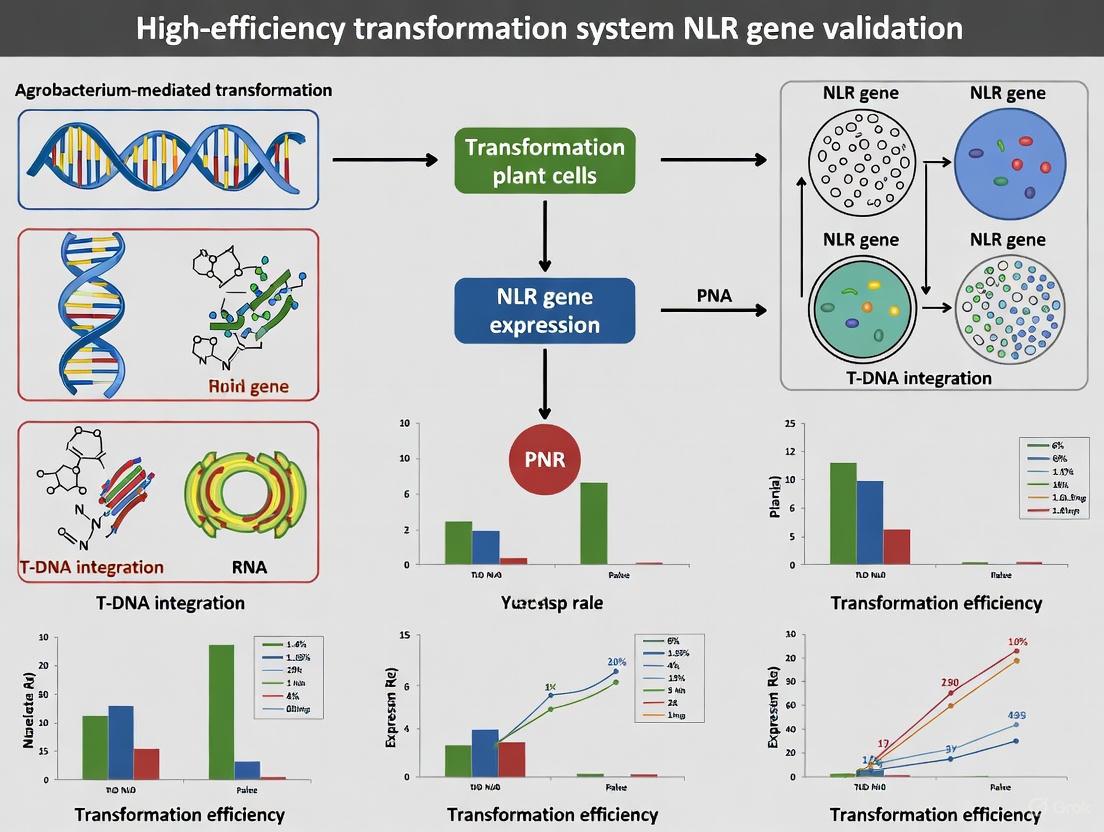
This article explores the establishment of high-efficiency transformation pipelines as a cornerstone for the rapid functional validation of Nucleotide-binding Leucine-rich Repeat (NLR) genes, which are crucial intracellular immune receptors in...
High-Efficiency Transformation Pipelines for Accelerated NLR Gene Validation in Disease Resistance
Abstract
This article explores the establishment of high-efficiency transformation pipelines as a cornerstone for the rapid functional validation of Nucleotide-binding Leucine-rich Repeat (NLR) genes, which are crucial intracellular immune receptors in plants. It covers foundational principles, such as leveraging expression signatures for candidate prioritization, and details cutting-edge methodological workflows that integrate bioinformatics, high-throughput transformation, and large-scale phenotyping. The content further addresses critical troubleshooting aspects to overcome challenges like transgene silencing and autoimmunity, and provides frameworks for rigorous validation and comparative analysis of NLR efficacy. Designed for researchers and scientists in plant biotechnology and drug development, this resource synthesizes recent advances to guide the development of disease-resistant crops through accelerated NLR discovery.
The NLR Landscape: Principles and Prioritization Strategies for Functional Gene Discovery
NLRs as Central Executors of Plant Effector-Triggered Immunity (ETI)
Plant immunity is a multi-layered system wherein intracellular nucleotide-binding leucine-rich repeat receptors (NLRs) serve as central executors of effector-triggered immunity (ETI). These sophisticated immune receptors perceive pathogen-secreted effector proteins, initiating a robust defense response that typically includes programmed cell death known as the hypersensitive response (HR) [1]. NLRs function as molecular switches within the plant cell, maintaining an inactive ADP-bound state under normal conditions while poised for rapid activation upon pathogen detection [1]. The remarkable diversity of NLR genes—among the most variable in plant genomes—reflects an ongoing evolutionary arms race between plants and their pathogens, with NLRs constantly adapting to recognize rapidly evolving pathogen effectors [1].
Recent research has revealed that far from operating in isolation, NLRs function in complex networks and signaling pairs. In these configurations, sensor NLRs specialize in pathogen recognition while helper NLRs mediate downstream immune signaling, creating sophisticated immune circuits that enhance both robustness and evolvability [1]. This understanding has transformed our view of plant immunity from simple gene-for-gene relationships to complex interactive networks. The following sections detail experimental frameworks and methodologies for functionally characterizing these crucial immune receptors, with particular emphasis on high-throughput approaches compatible with modern crop improvement programs.
Application Note: High-Throughput NLR Identification and Validation
Expression-Based Prioritization of Functional NLR Candidates
Traditional NLR discovery has been resource-intensive, but recent breakthroughs have identified high steady-state expression as a key signature of functional NLRs in uninfected plants [2] [3]. This paradigm-shifting finding enables researchers to prioritize candidates from thousands of NLR genes for functional validation.
Table 1: Expression Levels of Characterized NLR Genes Across Plant Species
| NLR Gene | Plant Species | Pathogen Specificity | Expression Level | Tissue |
|---|---|---|---|---|
| ZAR1 | A. thaliana | Multiple pathogens | Highest expressed NLR | Leaf |
| Mla7 | H. vulgare | Blumeria hordei | High expression | Leaf |
| Rpi-amr1 | S. americanum | Phytophthora infestans | High expression | Leaf |
| Mi-1 | S. lycopersicum | Aphids, nematodes | High expression | Leaf/Root |
| Sr46 | A. tauschii | Puccinia graminis | High expression | Leaf |
| NRC helpers | Solanaceae | Multiple pathogens | High expression | Tissue-specific |
Analysis of six plant species (both monocots and dicots) revealed that known functional NLRs are significantly enriched in the top 15% of expressed NLR transcripts compared to lower-expressed NLRs [2] [3]. In Arabidopsis thaliana ecotype Col-0, the most highly expressed NLR is ZAR1, and collectively, highly expressed NLRs provide resistance to diverse pathogen species [2]. This expression signature holds across diverse plant families and NLR classes, including coiled-coil (CC-NLRs) and toll/interleukin-1 receptor (TIR-NLRs) types [3].
High-Efficiency Transformation for NLR Validation
A robust pipeline combining expression-based prioritization with high-throughput functional validation enables rapid identification of new resistance genes. Recent work has demonstrated the power of this approach through the creation of a wheat transgenic array comprising 995 NLRs from diverse grass species [2] [3].
Table 2: NLR Validation Pipeline Output for Wheat Rust Resistance
| Validation Step | Scale | Success Rate | Key Findings |
|---|---|---|---|
| NLR candidate identification | 995 NLRs | 100% | Prioritized from transcriptome data |
| Wheat transformation | 995 constructs | ~70% (transformation efficiency) | High-throughput Agrobacterium-mediated |
| Stem rust screening | 995 lines | 1.9% (19 NLRs) | Identified new Pgt resistance |
| Leaf rust screening | 995 lines | 1.2% (12 NLRs) | Identified new Pt resistance |
| Cross-species transfer | Multiple | Variable | Confirmed non-host NLR function |
This pipeline successfully identified 31 new resistance genes (19 against stem rust and 12 against leaf rust) from a starting pool of nearly 1,000 NLR candidates [3]. The methodology demonstrates that cross-species NLR transfer is a viable strategy for crop improvement, with wild relatives serving as valuable reservoirs of disease resistance genes [2] [3]. The pipeline's efficiency stems from leveraging expression-based preselection, which enriches for functional NLRs before resource-intensive transformation and phenotyping.
Experimental Protocols for NLR Functional Analysis
Protocol 1: Phylogenomics-Based Identification of Conserved NLR Motifs
Background: Identifying evolutionarily conserved motifs in NLR proteins is essential for understanding their function, but sequence diversity complicates multiple sequence alignment. This protocol uses phylogenomics to identify conserved sequence patterns across diverse NLR families [4].
Equipment and Software:
- 64-bit Linux or Mac OS X operating system
- InterProScan 5.53-87.0 for protein function characterization
- NLRtracker v1.0.3 or NLR-Annotator v2.1 for NLR annotation
- MAFFT v7 for multiple sequence alignment
- RAxML v8.2.12 for phylogenetic inference
- MEME Suite v5.5.5 for motif discovery
- BLAST+ v2.12.0 for sequence similarity searches
Step-by-Step Procedure:
Data Acquisition: Download protein sequences from reference genome databases. Test datasets include proteomes from six representative species: Arabidopsis thaliana, Beta vulgaris, Solanum lycopersicum, Nicotiana benthamiana, Oryza sativa, and Hordeum vulgare [4].
NLR Annotation: Annotate NLRs from protein sequences using NLRtracker:
This generates an output file "NLR.fasta" containing identified NLR sequences [4].
Phylogenetic Analysis: Combine annotated NLRs with known functionally characterized NLR sequences. Perform multiple sequence alignment using MAFFT and construct phylogenetic trees with RAxML [4].
Subfamily Classification: Classify NLRs into subfamilies (e.g., CC-NLR, TIR-NLR) based on phylogenetic clustering and domain architecture [4].
Motif Discovery: For each NLR subfamily, use MEME Suite to identify conserved sequence motifs:
This identifies overrepresented motifs in each subfamily [4].
Functional Validation: Test identified motifs through site-directed mutagenesis in key conserved regions (e.g., P-loop, MHD motifs) and assess functionality via cell death assays or pathogen resistance tests [4].
Applications: This protocol successfully identified the MADA and EDVID motifs in CC-NLRs, which are crucial for immune signaling function. The pipeline can be adapted to identify molecular signatures conserved across specific NLR clades or plant families [4].
Protocol 2: Mutational Transcriptomics for NLR Gene Cloning
Background: This approach combines EMS mutagenesis with transcriptome sequencing to rapidly identify candidate NLR genes responsible for specific resistance phenotypes [5].
Step-by-Step Procedure:
Mutant Population Development: Treat seeds of a resistant plant line with ethyl methanesulfonate (EMS) to induce mutations. For the Yr87/Lr85 gene cloning, 3,086 seeds were treated, yielding 1,158 M2 families [5].
Phenotypic Screening: Screen M2 and M3 generations for loss of resistance using appropriate pathogen isolates. In the Yr87/Lr85 study, 16 independent mutant lines showing susceptibility to both leaf and stripe rust were identified [5].
Genetic Analysis: Cross susceptible mutants with resistant parents and analyze segregation patterns to confirm single-gene inheritance. For Yr87/Lr85, F2 progeny showed monogenic (3 resistant:1 susceptible) segregation [5].
RNA Sequencing: Extract RNA from resistant and susceptible lines at multiple time points post-inoculation (0, 24, 48 hours). Sequence transcriptomes using Illumina platforms [5].
Variant Calling: Identify EMS-induced mutations by comparing transcript sequences between resistant and susceptible lines. Candidate genes must meet these criteria:
- Expressed in both resistant donor and introgression line
- Contain EMS-derived mutations in multiple independent mutant lines
- Nonsynonymous mutations affecting conserved domains [5]
Functional Validation:
- VIGS (Virus-Induced Gene Silencing): Design gene-specific fragments for TRV-based silencing. Confirm gene knockdown (>75% reduction) via qRT-PCR and test for loss of resistance [5].
- Heterologous Expression: Clone candidate gene into binary vector under native promoter, transform into susceptible cultivar via Agrobacterium, and challenge with pathogens [5].
Applications: This protocol successfully identified Yr87/Lr85, an unusual NLR conferring resistance to both leaf and stripe rust pathogens, demonstrating its efficacy for cloning complex resistance genes [5].
Protocol 3: High-Throughput NLR Validation Pipeline
Background: This integrated protocol combines expression-based candidate prioritization with high-throughput transformation for large-scale NLR functional validation [2] [3].
Step-by-Step Procedure:
Transcriptome Mining:
- Collect RNA-seq data from uninfected tissues of diverse plant accessions
- Assemble transcriptomes de novo or map to reference genomes
- Identify NLRs using annotation tools (NLRtracker or NLR-Annotator)
- Rank NLRs by expression level and select top candidates [3]
Candidate Selection:
- Prioritize NLRs in the top 15% of expression levels
- Include NLRs with different domain architectures (CNL, TNL, NL)
- Consider tissue-specific expression patterns relevant to target pathogens [3]
Vector Construction:
- Clone NLR genes into binary vectors under native promoters
- Use Golden Gate or Gateway cloning for high-throughput assembly
- Incorporate selection markers appropriate for the target crop [3]
High-Efficiency Transformation:
Large-Scale Phenotyping:
- Challenge T1 transgenic plants with target pathogens under controlled conditions
- Use standardized disease scoring systems
- Confirm resistance in subsequent generations
- Test for race specificity using diverse pathogen isolates [3]
Network Analysis:
- Test for dependency on helper NLRs using VIGS or knockout lines
- Assess potential pleiotropic effects on plant development
- Evaluate stability of resistance across generations [2]
Applications: This pipeline enabled the identification of 31 new rust resistance genes from a pool of 995 NLR candidates, demonstrating its power for rapid resistance gene discovery [3].
Table 3: Key Research Reagent Solutions for NLR Studies
| Reagent/Resource | Function/Application | Example Tools | Key Features |
|---|---|---|---|
| NLR Annotation Tools | Identify NLR genes from sequence data | NLRtracker, NLR-Annotator | Specialized for plant NLR discovery |
| Phylogenetic Software | Classify NLRs into subfamilies | RAxML, MAFFT | Handles large datasets |
| Motif Discovery Suites | Identify conserved sequence patterns | MEME Suite | Finds overrepresented motifs |
| Transformation Systems | Plant genetic transformation | Agrobacterium strains | High-efficiency protocols |
| VIGS Vectors | Transient gene silencing | TRV-based systems | Rapid functional validation |
| Binary Vectors | Stable transformation | pGreen, pCAMBIA | Modular cloning systems |
| Pathogen Isolates | Phenotypic assessment | Characterized races | Differential virulence |
Workflow Visualization: NLR Identification and Validation
NLR Discovery and Functional Validation Pipeline
NLR Network Signaling and Activation Mechanism
The experimental frameworks outlined herein provide comprehensive roadmaps for elucidating NLR function in plant immunity. Key advances in expression-based candidate prioritization, high-efficiency transformation, and large-scale phenotyping have dramatically accelerated the pace of NLR discovery [2] [3]. The revelation that functional NLRs typically display high constitutive expression overturns previous assumptions about their regulation and provides a powerful filter for candidate selection [3].
The integration of computational phylogenomics with functional validation creates a virtuous cycle of discovery, where conserved motifs identified through bioinformatics can be experimentally tested for their roles in immune signaling [4]. Meanwhile, mutational approaches continue to yield insights into unusual NLR capabilities, such as the dual-specificity Yr87/Lr85 gene conferring resistance to both leaf and stripe rust [5].
These methodologies collectively support the translation of basic NLR research into practical crop improvement strategies. As pathogen pressures intensify due to climate change and global agriculture intensification, the rapid identification and deployment of NLR genes through these advanced protocols will be crucial for developing durable disease resistance in staple crops, ultimately contributing to global food security.
Application Notes
The long-standing dogma in plant immunity suggested that nucleotide-binding domain leucine-rich repeat (NLR) genes require tight transcriptional repression in uninfected plants to avoid autoimmunity and fitness costs. However, recent research has systematically challenged this view, demonstrating that functional NLRs actually exhibit a signature of high steady-state expression in uninfected tissues across both monocot and dicot species [3]. This paradigm shift enables researchers to use expression level as a primary filter for prioritizing NLR candidates from the vast genomic reservoir, dramatically accelerating the discovery of functional resistance genes. The conceptual advance lies in recognizing that high constitutive expression does not necessarily induce autoimmunity but may instead be essential for achieving the threshold required for effective pathogen recognition and defense activation [3].
Key Supporting Evidence from Multiple Plant Systems
Evidence for this new paradigm comes from diverse plant systems. In barley, multicopy insertions of the Mla7 NLR were required for full resistance to powdery mildew, with higher copy numbers correlating with enhanced resistance without auto-activity [3]. Cross-species analysis of Arabidopsis thaliana revealed that known functional NLRs are significantly enriched in the top 15% of expressed NLR transcripts, with the most highly expressed NLR being ZAR1 [3]. Similarly, in tomato, the Mi-1 gene conferring resistance to aphids and nematodes shows high expression in both leaves and roots of resistant cultivars [3]. These consistent patterns across divergent species provide compelling evidence for high expression as a hallmark of functional NLRs.
Quantitative Validation and Discovery Rates
Large-scale validation of this approach demonstrates its efficacy for high-throughput gene discovery. In a proof-of-concept study utilizing high-efficiency wheat transformation, researchers generated a transgenic array of 995 NLRs from diverse grass species, selected based on high expression signatures [3]. This pipeline identified 31 new resistance genes – 19 effective against stem rust (Puccinia graminis f. sp. tritici) and 12 against leaf rust (Puccinia triticina), representing a significant advancement in the genetic arsenal against these major wheat diseases [3]. The success rate of approximately 3% demonstrates the power of expression-based pre-selection compared to traditional mapping approaches.
Table 1: NLR Discovery Pipeline Efficiency Using Expression-Based Selection
| Parameter | Value | Significance |
|---|---|---|
| Total NLRs screened | 995 | From diverse grass species [3] |
| New stem rust resistance genes | 19 | Against Puccinia graminis f. sp. tritici [3] |
| New leaf rust resistance genes | 12 | Against Puccinia triticina [3] |
| Overall discovery rate | ~3% | Substantial improvement over random screening [3] |
Broader Genomic Context and Evolutionary Considerations
The expression-based discovery approach aligns with broader understanding of NLR genomics and evolution. Plant genomes harbor hundreds of NLR genes – for example, the rice cultivar Tetep contains 455 NLR genes [6] – but only a subset are functional. Comparative genomic analyses reveal that NLRs are among the most variable gene families in plants, with significant differences even between closely related cultivars [6] [7]. This diversity results from various evolutionary mechanisms, including gene conversion, duplication, and diversifying selection, particularly in the LRR domains involved in pathogen recognition [7]. The contraction of NLR repertoires during domestication, as observed in garden asparagus which possesses only 27 NLR genes compared to 63 in its wild relative A. setaceus, further underscores the importance of efficiently identifying functional NLRs from available genetic resources [8].
Table 2: NLR Gene Family Size Variation Across Plant Species
| Species | NLR Count | Biological Context |
|---|---|---|
| Asparagus setaceus (wild) | 63 | Reference wild species [8] |
| Asparagus officinalis (domesticated) | 27 | Demonstrates domestication-associated contraction [8] |
| Oryza sativa cv. Tetep | 455 | Rice cultivar with broad-spectrum blast resistance [6] |
| Triticum aestivum (bread wheat) | >2000 | Largest NLR repertoire reported [7] |
Experimental Protocols
Protocol 1: Identification of High-Expression NLR Candidates
Principle: Functional NLRs are enriched among highly expressed transcripts in uninfected tissues.
Materials:
- Plant materials of interest (multiple accessions recommended)
- RNA extraction kit (high-quality, DNAse-treated)
- RNA-seq library preparation kit
- Sequencing platform (Illumina recommended)
- Bioinformatics pipeline for transcriptome assembly
Procedure:
- Sample Collection: Collect leaf tissue from uninfected plants at consistent developmental stages. Include multiple biological replicates.
- RNA Extraction: Isolve total RNA using standard methods, ensuring RNA Integrity Number (RIN) >8.0.
- Library Preparation and Sequencing: Prepare stranded RNA-seq libraries and sequence on an Illumina platform to obtain at least 20 million paired-end 150bp reads per sample.
- Transcriptome Assembly: De novo transcriptome assembly is recommended for non-model species using Trinity or similar software.
- Expression Quantification: Calculate transcript abundance as Transcripts Per Million (TPM) using alignment-free methods like Salmon.
- NLR Identification: Extract NLR sequences from transcriptome assemblies using HMMER searches with NB-ARC domain (PF00931) as query.
- Candidate Selection: Rank NLRs by expression level and prioritize the top 15% for further validation [3].
Technical Notes: For species with existing genome annotations, NLRs can be identified from genome sequences using a combination of HMM searches and BLAST analyses with known NLR protein sequences [6] [8].
Protocol 2: High-Throughput NLR Cloning and Transformation Array
Principle: High-efficiency transformation enables functional validation of hundreds of NLR candidates.
Materials:
- NLR candidate sequences with native promoters and terminators
- Gateway or Golden Gate cloning system
- Binary vector suitable for plant transformation
- Agrobacterium tumefaciens strain (e.g., EHA105, GV3101)
- Plant transformation system (wheat: T. aestivum cv. Fielder)
Procedure:
- Gene Amplification: Amplify NLR genes including native promoters (typically ~2kb upstream) and terminators using high-fidelity DNA polymerase.
- Cloning: Use high-throughput cloning systems to transfer NLR genes into binary vectors.
- Transformation: Introduce binary vectors into Agrobacterium and transform susceptible plant lines using established protocols. For wheat, follow the high-efficiency transformation protocol [3].
- Transgenic Array Generation: Generate at least 10 independent T0 lines per NLR construct.
- Copy Number Assessment: Determine transgene copy number in T1 generations using digital PCR or Southern blotting.
Technical Notes: In the proof-of-concept study, 219 NLR genes (approximately 50% of those attempted) were successfully cloned and transformed in a large-scale screening [6]. Including native regulatory sequences is critical for proper expression.
Protocol 3: Large-Scale Phenotyping for Disease Resistance
Principle: Systematic challenge with diverse pathogen isolates identifies NLRs with broad-spectrum resistance.
Materials:
- Pathogen isolates (5-12 diverse strains recommended)
- Growth chambers with controlled environment
- Disease assessment equipment (manual or automated)
Procedure:
- Pathogen Preparation: Maintain and propagate pathogen isolates under standardized conditions.
- Plant Growth: Grow T1 or T2 transgenic lines and control plants under controlled conditions.
- Inoculation: Inoculate plants at consistent developmental stages using standardized methods (spraying, injection, etc.).
- Disease Assessment: Evaluate disease symptoms at appropriate time points post-inoculation using standardized scales.
- Resistance Confirmation: Classify lines as resistant based on significantly reduced disease symptoms compared to controls.
- Specificity Testing: Test resistant lines against multiple pathogen strains to determine recognition spectrum.
Technical Notes: In the rice Tetep study, each transformed NLR was tested against 5-12 independent strains of Magnaporthe oryzae to determine resistance spectra [6]. Multiple replicates and repeated experiments are essential for reliable phenotyping.
Visualizations
High-Throughput NLR Discovery Workflow
NLR Expression-Based Selection Rationale
The Scientist's Toolkit: Research Reagent Solutions
Table 3: Essential Research Reagents for NLR Discovery Pipeline
| Reagent/Resource | Function/Application | Specifications |
|---|---|---|
| NB-ARC Domain HMM Profile (PF00931) | NLR identification from genomic or transcriptomic data | Critical for comprehensive NLR annotation; used with HMMER software [8] |
| High-Efficiency Wheat Transformation System | Generation of transgenic arrays | Essential for monocot functional validation; cv. Fielder provides high efficiency [3] |
| Gateway or Golden Gate Cloning System | High-throughput NLR gene assembly | Enables parallel cloning of hundreds of NLR constructs with native regulatory sequences [3] |
| Diverse Pathogen Isolate Collection | Resistance spectrum assessment | 5-12 strains recommended for comprehensive phenotyping [6] |
| RNA-seq Library Preparation Kits | Transcriptome profiling for expression analysis | Stranded protocols recommended for accurate transcript quantification [3] |
Expression-level profiling represents a powerful, cross-species strategy for selecting candidate Nucleotide-binding Leucine-Rich Repeat (NLR) genes for functional validation in high-efficiency transformation systems. NLR genes constitute one of the largest gene families in plants and play a crucial role in pathogen recognition and immunity activation through effector-triggered immunity [7]. In mammals, NLRs have gained significant attention for their roles in inflammasome formation, with implications in cancer initiation, development, progression, angiogenesis, and invasion [9]. The core premise of expression-level profiling rests on identifying NLR genes that demonstrate significant expression changes in response to pathogen challenge or disease states, thereby prioritizing them for downstream functional studies.
This approach is particularly valuable given the extensive diversity of NLR repertoires across species. Plant genomes harbor hundreds of NLR genes, with numbers varying dramatically—from approximately 50-100 in cucumber and watermelon to over 500 in rice and grape, and more than 2,000 identified in bread wheat [7]. Similarly, in human cancers, comprehensive pan-cancer analyses have revealed significant genomic and epigenetic alterations in NLRs across 33 cancer types [9]. This natural variation, combined with genotype-specific expression patterns, contributes substantially to phenotypic resistance diversity in natural populations and disease progression in malignancies [10].
The integration of cross-species expression profiling with modern transformation platforms enables researchers to rapidly identify and validate NLR candidates with potential applications in crop improvement, cancer prognostication, and therapeutic development. This application note outlines detailed methodologies and protocols for implementing this strategic approach.
Key Principles of NLR Biology and Expression Profiling
NLR Gene Family Organization and Diversity
NLR genes encode intracellular immune receptors characterized by conserved nucleotide-binding (NB-ARC) and leucine-rich repeat (LRR) domains [7]. These genes are categorized into subclasses based on their N-terminal domains: TIR-type NLRs (with Toll-like/interleukin 1 domain) and non-TIR-type NLRs (often with coiled-coil domains) [7]. The distribution of these subclasses varies significantly across species; for instance, TIR-type NLRs have not been described in grass genomes, while dicots typically possess both types [7].
The genomic organization of NLR genes is characterized by irregular distribution across chromosomes, with frequent clustering in subtelomeric regions that exhibit higher recombination frequencies [7]. This arrangement facilitates rapid evolution and diversification through mechanisms such as recombination, gene conversion, and duplication events [7]. The exceptional diversity of NLR genes, particularly in their LRR domains which mediate protein-protein interactions, enables recognition of rapidly evolving pathogen effectors [7].
Expression Profiling as a Selection Criterion
Expression-level profiling serves as a robust primary filter for candidate selection because:
- NLR expression must be tightly regulated to avoid autoimmunity or retarded growth while maintaining prompt response to biotic stresses [7]
- Dysregulation or overexpression of certain NLR genes can induce an autoimmunity state that strongly affects plant growth and yield [7]
- In cancer, NLR expression patterns correlate with immune cell infiltration and patient survival outcomes [9]
- Genotype-specific expression profiles contribute significantly to phenotypic resistance diversity [10]
Table 1: Advantages of Expression-Level Profiling for NLR Candidate Selection
| Advantage | Rationale | Application Context |
|---|---|---|
| Functional Prioritization | Identifies NLRs responding to pathogenic challenges | Focuses resources on biologically relevant genes |
| Cross-Species Validation | Conserved expression patterns indicate fundamental immune functions | Facilitates translation between model systems and crops/humans |
| Pathway Elucidation | Co-expressed NLRs may function in common signaling networks | Reveals regulatory relationships and protein complexes |
| Biomarker Potential | Expression correlates with disease resistance or progression | Informs prognostic model development and therapeutic targeting |
Cross-Species Expression Profiling Methodologies
Transcriptome Sequencing and Assembly
For non-model organisms or natural populations, de novo transcriptome assembly provides a foundation for expression profiling of NLR repertoires. The following protocol outlines the key steps:
Protocol 3.1: De Novo Transcriptome Assembly for NLR Identification
- RNA Extraction and Library Preparation
- Extract high-quality total RNA from pathogen/infected and control tissues using TRIzol reagent
- Assess RNA integrity (RIN > 8.0) using Bioanalyzer or TapeStation
- Prepare stranded mRNA sequencing libraries using Illumina TruSeq or comparable kits
Sequencing and Quality Control
- Sequence libraries on Illumina platform (minimum 30 million 150bp paired-end reads per sample)
- Perform quality checks: FastQC for read quality, FastQ-Screen for contamination
- Trim adapters and low-quality bases using Trimmomatic or Cutadapt
Transcriptome Assembly and Annotation
- Perform de novo assembly using Trinity (minimum version 2.8.5) with default parameters
- Assess assembly quality: N50 > 1,300 bp, complete BUSCO scores >65% for plant transcripts [10]
- Annotate assemblies using BLASTX against UniRef90 and NLR-specific databases
- Identify NLR transcripts by searching for conserved NB-ARC domains (PF00931)
Expression Quantification
- Map reads to assembled transcriptomes using Bowtie2 and RSEM
- Generate raw count matrices for differential expression analysis
- Perform cross-sample normalization using TMM method
Differential Expression Analysis
The identification of differentially expressed NLR genes follows a standardized bioinformatic workflow:
Protocol 3.2: Differential Expression Analysis of NLR Genes
- Data Preprocessing
- Filter lowly expressed genes (counts < 10 in at least 3 samples)
- Perform variance stabilizing transformation using DESeq2
Statistical Analysis
- Implement generalized linear models accounting for experimental design
- Test for differential expression using likelihood ratio tests (plant studies) or Wald tests (cancer studies)
- Apply multiple testing correction (Benjamini-Hochberg FDR < 0.05)
NLR-Specific Considerations
- Account for sequence similarity among NLR genes during read mapping
- Implement additional stringency for multi-mapping reads
- Validate expression patterns of selected candidates using RT-qPCR
Cross-Species Comparison
- Orthogroup inference using OrthoFinder (v2.5.2) with default parameters
- Synteny analysis using JCVI or SynVisio tools
- Phylogenetic analysis of NLR clades with significant expression changes
Table 2: Key Parameters for Differential Expression Analysis of NLR Genes
| Parameter | Plant-Pathogen Studies | Cancer Biology Studies | Rationale |
|---|---|---|---|
| Fold Change Threshold | ≥2.0 | ≥1.5 | Higher stringency in plants due to potential autoimmunity from NLR overexpression |
| Statistical Significance | FDR < 0.05 | FDR < 0.01 | Balanced approach to detect true positives while controlling false discoveries |
| Minimum Expression | TPM > 1 in at least one condition | TPM > 5 in at least one condition | Ensures biological relevance of identified candidates |
| Sample Replication | n ≥ 5 biological replicates [10] | n ≥ 3 technical replicates across patient cohorts | Provides statistical power for robust detection of expression differences |
Multi-Omics Integration in Cancer Studies
For human NLR profiling in cancer contexts, integrated multi-omics approaches provide comprehensive insights:
Protocol 3.3: Pan-Cancer Multi-Omics Analysis of NLRs
- Data Acquisition
- Download transcriptomic (RNA-Seq), epigenomic (DNA methylation), genomic (CNV, SNV), and clinical data from TCGA, UCSC Xena, and TCPA portals [9]
- Process data from >10,000 individuals across 33 cancer types for robust analysis
Molecular Alteration Analysis
Survival and Clinical Correlation
- Perform Kaplan-Meier survival analysis with log-rank tests
- Categorize patients into high and low NLR expression groups based on median expression
- Analyze overall survival (OS), disease-specific survival (DSS), and progression-free survival (PFS)
Immune Correlation Analysis
- Quantify immune cell infiltration using CIBERSORT or similar tools
- Correlate NLR expression with 24 immune cell types [9]
- Assess association with cytotoxic T cells, NK cells, CD8+ T cells, and exhausted T cells
Experimental Validation Workflow
The following diagram illustrates the integrated cross-species workflow for NLR candidate selection and validation:
Candidate Prioritization Framework
Multi-Parameter Scoring System
Effective candidate selection requires integration of multiple data dimensions through a structured scoring system:
Protocol 5.1: NLR Candidate Prioritization Matrix
- Expression Significance Scoring
- Assign points based on fold-change: 1 point (1.5-2x), 2 points (2-4x), 3 points (>4x)
- Assign points based on statistical significance: 1 point (p<0.05), 2 points (FDR<0.05), 3 points (FDR<0.01)
- Award bonus points for consistent expression across multiple independent studies
Functional Evidence Scoring
- Award 3 points for known involvement in disease resistance pathways
- Award 2 points for co-expression with established immune signaling components
- Award 1 point for presence in genomic regions associated with disease QTLs
Practical Screening Considerations
- Award 2 points for single-copy NLRs (simpler transformation)
- Deduct 1 point for extremely large NLR genes (>5kb)
- Award 1 point for available antibody reagents or established detection methods
Table 3: NLR Candidate Prioritization Matrix with Scoring Guidance
| Criterion | Weight | Scoring Scale | Examples |
|---|---|---|---|
| Expression Fold-Change | 30% | 0-3 points based on magnitude | 3 points: NLRP3 in SKCM (4.2x) [9] |
| Statistical Significance | 25% | 0-3 points based on FDR | 3 points: FDR<0.01 in pan-cancer analysis [9] |
| Survival Correlation | 20% | 0-2 points (significant in >3 cancer types) | 2 points: NLRC5 correlation with LAML survival [9] |
| Multi-Omics Support | 15% | 0-2 points (CNV, methylation, protein) | 2 points: Consistent CNV and expression changes |
| Practical Considerations | 10% | 0-2 points (gene size, reagents) | 2 points: <3kb with available antibodies |
Cross-Species Conservation Analysis
The identification of conserved NLR responses strengthens candidate prioritization:
Protocol 5.2: Cross-Species Conservation Assessment
- Orthogroup Inference
- Perform protein sequence clustering across multiple species using OrthoFinder
- Identify orthogroups containing NLRs with significant expression changes
- Confirm phylogenetic relationships using maximum likelihood methods
Synteny Analysis
- Compare genomic contexts of candidate NLRs across species
- Identify conserved gene neighborhoods indicative of functional conservation
- Assess microsynteny using genomic alignment tools
Expression Conservation
- Compare expression patterns of orthologous NLRs across species
- Identify conserved induced or repressed responses to pathogens/stress
- Prioritize candidates showing consistent expression patterns
Integration with High-Efficiency Transformation Systems
Transformation Platform Optimization
Selected NLR candidates require efficient transformation systems for functional validation. Recent advancements have significantly improved transformation efficiencies:
Protocol 6.1: High-Efficiency Transformation for NLR Validation
- Vector Construction
- Clone candidate NLR coding sequences into appropriate expression vectors
- Include tissue-specific or inducible promoters to avoid constitutive expression toxicity
- Incorporate fluorescent tags (eGFP, mCherry) for transformation efficiency monitoring
Transformation Optimization
- For Bifidobacterium: Optimize electroporation parameters (15 kV/cm field strength, 500 ng/μL plasmid concentration) [11]
- For plants: Utilize Agrobacterium-mediated transformation with virulence gene enhancements
- For mammalian cells: Implement lentiviral transduction with optimized MOI
Efficiency Enhancement
- Overexpress competence genes (comEC, ssb) to improve DNA uptake [11]
- Optimize resuscitation conditions (3 hours post-transformation recovery)
- Adjust growth stage parameters (OD600 = 0.3 for bacterial systems)
Validation Screening
- Select transformants using appropriate antibiotics or fluorescence sorting
- Confirm NLR expression via RT-qPCR and Western blotting
- Assess functional consequences in pathogen challenge or disease models
Research Reagent Solutions
Table 4: Essential Research Reagents for NLR Expression Profiling and Validation
| Reagent/Category | Specific Examples | Function/Application | Considerations |
|---|---|---|---|
| Sequencing Kits | Illumina TruSeq Stranded mRNA | Library preparation for transcriptome sequencing | Maintain RNA integrity during extraction (RIN>8.0) |
| Assembly Software | Trinity (v2.8.5+) | De novo transcriptome assembly | Requires substantial computational resources (RAM>256GB) |
| NLR Identification | PF00931 (NB-ARC) HMM profile | Domain-based NLR annotation | Combine with BLAST for comprehensive identification |
| Expression Vectors | Gateway-compatible binary vectors (plants), pLX302 (mammalian) | NLR candidate overexpression | Include selection markers (antibiotic/herbicide resistance) |
| Transformation Reagents | Electroporation competent cells, Agrobacterium strains | Nucleic acid delivery | Species-specific optimization required [11] |
| Detection Antibodies | Anti-GFP, Anti-MYC, NLR-specific antibodies | Transformant validation and protein localization | Verify specificity using appropriate controls |
Data Interpretation and Application
Biological Validation and Pathway Analysis
The functional significance of prioritized NLR candidates requires assessment within broader immune signaling networks:
Translational Applications
Successfully validated NLR candidates from expression profiling pipelines enable multiple downstream applications:
Protocol 7.1: Translational Development Pathways
- Agricultural Applications
- Develop molecular markers for breeding programs using NLR expression signatures
- Engineer transgenic crops with stacked NLR genes for broad-spectrum resistance
- Optimize NLR expression levels to balance resistance and yield trade-offs
Biomedical Applications
- Incorporate NLR expression signatures into cancer prognostic models
- Develop NLR-targeted therapeutics for modulating inflammasome activity
- Utilize NLR expression patterns as biomarkers for immunotherapy response prediction
Diagnostic Tool Development
- Create expression panels for rapid disease resistance/susceptibility assessment
- Develop field-deployable assays for NLR expression monitoring
- Implement NLR expression profiling in precision agriculture and medicine frameworks
This comprehensive approach to expression-level profiling provides a robust cross-species strategy for selecting NLR candidates with the highest potential for successful validation and translational application. The integration of modern sequencing technologies, bioinformatic analyses, and high-efficiency transformation systems creates a powerful pipeline for advancing our understanding of NLR biology across plant and human systems.
Genome-Wide Identification and Evolutionary Dynamics of NLR Families
Application Notes
Nucleotide-binding leucine-rich repeat receptors (NLRs) constitute one of the largest and most variable gene families in plants, serving as crucial intracellular immune sensors that mediate effector-triggered immunity (ETI). The genome-wide identification and evolutionary analysis of NLR families provides fundamental insights into plant immunity mechanisms and enables the discovery of valuable genetic resources for disease-resistant crop breeding. Recent studies have demonstrated that NLRs are subject to rapid evolution and remarkable sequence diversification, reflecting a continuous arms race between plants and pathogens [4]. These analyses are particularly relevant in the context of high-efficiency transformation platforms, which allow functional validation of candidate NLR genes at scale, bridging the gap between genomic identification and practical application in crop improvement.
Comprehensive genome-wide surveys across diverse plant lineages reveal substantial variation in NLR repertoire sizes, influenced by factors including genome duplication events, pathogen pressure, and species-specific evolutionary trajectories [12] [7].
Table 1: NLR Gene Family Sizes Across Plant Species
| Species | Common Name | Genome Size (Mbp) | Total NLRs | TNLs | CNLs | XNLs | Reference |
|---|---|---|---|---|---|---|---|
| Arabidopsis thaliana | Thale cress | 125 | 151 | 94 | 55 | 0 | [12] |
| Capsicum annuum | Pepper | - | 288 | - | - | - | [13] |
| Nicotiana benthamiana | Tobacco | - | 156 | 5 | 25 | 126 | [14] |
| Oryza sativa | Rice | 466 | 458 | 0 | 274 | 182 | [12] |
| Asparagus setaceus | Wild asparagus | - | 63 | - | - | - | [8] |
| Asparagus officinalis | Garden asparagus | - | 27 | - | - | - | [8] |
| Vitis vinifera | Wine grape | 487 | 459 | 97 | 215 | 147 | [12] |
| Solanum tuberosum | Potato | 840 | 371 | 55 | 316 | - | [12] |
| Physcomitrella patens | Moss | 511 | 25 | 8 | 9 | 8 | [12] |
| Triticum aestivum | Bread wheat | - | >2000 | - | - | - | [7] |
The data reveals several important patterns: NLR family sizes vary dramatically without clear correlation to genome size or phylogeny [12]. For example, pepper contains 288 canonical NLR genes [13], while tobacco has 156 NBS-LRR homologs [14]. Notably, domestication effects are evident in asparagus, where the cultivated species (A. officinalis) has experienced a marked contraction of its NLR repertoire (27 genes) compared to its wild relative A. setaceus (63 genes) [8]. Cereal crops like wheat and rice possess substantially expanded NLR families, with wheat containing over 2,000 NLR-encoding genes—the largest number reported so far [7].
Genomic Distribution and Evolutionary Patterns
NLR genes display non-random distribution patterns across plant genomes, with significant clustering in specific chromosomal regions. In pepper, NLRs are significantly clustered, particularly near telomeric regions, with chromosome 09 harboring the highest density (63 NLRs) [13]. This pattern of clustering in genetically dynamic regions has been observed across multiple species, including common bean, potato, tomato, and cotton [7].
Tandem duplication has been identified as the primary driver of NLR family expansion in several species. In pepper, tandem duplication accounts for 18.4% of NLR genes (53/288), predominantly on chromosomes 08 and 09 [13]. This rapid local expansion facilitates the generation of new resistance specificities through gene conversion and unequal crossing-over, enabling plants to keep pace with evolving pathogen effectors.
Table 2: Evolutionary Mechanisms Driving NLR Diversity
| Mechanism | Functional Impact | Examples |
|---|---|---|
| Tandem Duplication | Rapid local expansion of NLR clusters; generation of new recognition specificities | Primary driver in pepper (53/288 NLRs) [13] |
| Segmental Duplication | Expansion of genomic blocks containing NLR genes | Observed in polyploid species [7] |
| Gene Conversion | Sequence exchange between paralogs; diversification of LRR domains | Contributes to effector recognition diversity [7] |
| Positive Selection | Accelerated evolution in solvent-exposed LRR residues | Adaptive evolution for pathogen recognition [13] |
| Frequent Rearrangements | Generation of novel domain architectures and chimeric genes | Source of new resistance specificities [7] |
Analysis of cis-regulatory elements in NLR promoters reveals enrichment in defense-related motifs. In pepper, 82.6% of NLR promoters (238 genes) contain binding sites for salicylic acid (SA) and/or jasmonic acid (JA) signaling pathways [13], indicating sophisticated transcriptional regulation of NLR expression in response to phytohormone signaling.
Expression Signatures and Functional Implications
Recent research has revealed that functional NLRs exhibit high steady-state expression levels in uninfected plants across both monocot and dicot species [3]. This finding challenges the previously held assumption that NLR expression must be maintained at low levels to avoid autoimmunity. In Arabidopsis thaliana, known functional NLRs are significantly enriched in the top 15% of expressed NLR transcripts compared to the lower 85% [3].
This expression signature has practical applications for candidate gene prioritization. A proof-of-concept study utilizing high-expression signatures combined with high-throughput transformation identified 31 new resistance NLRs in wheat: 19 effective against stem rust and 12 against leaf rust [3] [15]. The successful implementation of this pipeline demonstrates how expression-level criteria can streamline the discovery of functional immune receptors.
Transcriptome profiling during pathogen infection provides further insights into NLR functional dynamics. In pepper infected with Phytophthora capsici, 44 NLR genes showed significant differential expression between resistant and susceptible cultivars [13]. Protein-protein interaction network analysis predicted key interactions among these differentially expressed NLRs, with Caz01g22900 and Caz09g03820 identified as potential hub proteins [13].
Experimental Protocols
Protocol 1: Comprehensive Genome-Wide Identification of NLR Genes
Principle
This protocol details a bioinformatics pipeline for the systematic identification and annotation of NLR gene families from plant genome sequences, integrating homology-based searches and domain architecture validation [13] [4] [14].
Materials
- High-quality genome assembly and annotated proteome
- Computing resources (Linux-based system recommended)
- Reference NLR sequences from related species
Procedure
Data Acquisition
- Obtain complete proteome sequences in FASTA format from reference genome databases [4].
Homology-Based Identification
Domain Architecture Validation
- Validate candidate sequences using NCBI CDD (cd00204 for NB-ARC) and Pfam batch search [13].
- Check for presence/completeness of N-terminal (TIR, CC, RPW8) and C-terminal (LRR) domains.
- Retain only sequences containing confirmed NB-ARC domains.
Classification and Categorization
- Classify validated NLRs into subfamilies (TNL, CNL, RNL) based on N-terminal domains [14].
- Categorize based on domain architecture completeness (full-length vs. truncated forms).
Physicochemical Characterization
Protocol 2: Evolutionary Analysis of NLR Gene Families
Principle
This protocol enables the investigation of evolutionary dynamics driving NLR family expansion and diversification, including duplication mechanisms, selective pressures, and comparative genomics [13] [8] [7].
Materials
- Identified NLR gene sequences and genomic coordinates
- Genome annotation files (GFF/GTF format)
- Comparative genomics data from related species (optional)
Procedure
Chromosomal Distribution Mapping
- Extract genomic coordinates of identified NLR genes from annotation files.
- Generate chromosomal distribution maps using visualization tools (e.g., TBtools) [8].
- Note clustering patterns, particularly in telomeric or subtelomeric regions.
Gene Duplication Analysis
Selective Pressure Analysis
- Extract NB-ARC and LRR domain sequences from NLR proteins.
- Calculate non-synonymous to synonymous substitution rates (dN/dS) using codeml or similar tools.
- Identify residues under positive selection, particularly in LRR domains.
Phylogenetic Reconstruction
- Perform multiple sequence alignment of NB-ARC domains or full-length sequences using Muscle or MAFFT [13] [4].
- Construct maximum likelihood phylogenetic trees using IQ-TREE or RAxML with 1000 bootstrap replicates [13] [4].
- Classify NLRs into phylogenetic clades and correlate with domain architecture.
Comparative Genomics (if multiple species)
Protocol 3: Expression Analysis and Candidate Gene Prioritization
Principle
This protocol utilizes transcriptomic data and expression signatures to identify functionally relevant NLR candidates for downstream validation, leveraging the observation that functional NLRs often exhibit high expression in uninfected tissues [3].
Materials
- RNA-seq data from relevant tissues and stress conditions
- Reference genome and annotation files
- Computing resources for transcriptome analysis
Procedure
Transcriptome Data Processing
- Obtain RNA-seq reads from appropriate tissues and conditions (e.g., pathogen infection, different developmental stages).
- Map clean reads to the reference genome using HISAT2 or similar aligners [13].
- Calculate expression values (FPKM or TPM) for all genes.
Differential Expression Analysis
- Identify differentially expressed NLR genes using DESeq2 with thresholds (|log2FC| ≥ 1, FDR < 0.05) [13].
- Compare expression patterns between resistant and susceptible genotypes under pathogen challenge.
- Perform cluster analysis to identify co-expressed NLR groups.
Expression-Based Prioritization
- Rank NLRs by expression levels in uninfected tissues, prioritizing highly expressed candidates [3].
- Identify NLRs with induced expression during pathogen infection.
- Cross-reference with evolutionary analysis to identify rapidly evolving, highly expressed NLRs.
cis-Regulatory Element Analysis
Network Analysis
- Construct protein-protein interaction networks using STRING database or similar tools [13].
- Identify hub nodes with high connectivity as potential key regulators.
- Integrate expression data with network topology for candidate prioritization.
Protocol 4: High-Throughput Functional Validation of NLR Candidates
Principle
This protocol describes a high-efficiency transformation pipeline for large-scale functional validation of NLR candidates, enabling rapid identification of resistance genes against important pathogens [3].
Materials
- Prioritized NLR candidate genes
- High-efficiency plant transformation system (e.g., wheat transformation protocol [3])
- Pathogen isolates for phenotyping
- Molecular biology reagents for cloning and expression analysis
Procedure
Vector Construction
- Clone NLR candidate genes into appropriate expression vectors containing native or constitutive promoters.
- For critical NLRs, consider generating multi-copy lines, as some NLRs require multiple copies for full functionality [3].
High-Throughput Transformation
- Implement established high-efficiency transformation protocols for your target species [3].
- Generate independent transgenic lines for each NLR candidate.
- Confirm transgene integration and copy number through molecular analysis.
Large-Scale Phenotyping
- Challenge transgenic lines with target pathogens under controlled conditions.
- Include appropriate control lines (empty vector, susceptible genotypes).
- Document disease symptoms and score resistance responses systematically.
Functional Characterization
- For resistant lines, validate race specificity using different pathogen isolates [3].
- Assess potential fitness costs associated with NLR expression.
- Analyze cell death responses and other immune markers.
Mechanistic Studies
- Investigate NLR expression levels in resistant lines.
- Identify required helper NLRs or signaling components.
- Characterize protein subcellular localization and interaction partners.
The Scientist's Toolkit: Research Reagent Solutions
Table 3: Essential Research Reagents and Resources for NLR Studies
| Category | Specific Tool/Resource | Function/Application | Examples/References |
|---|---|---|---|
| Bioinformatics Tools | NLRtracker | NLR annotation from proteome data | [4] |
| NLR-Annotator | NLR identification from nucleotide sequences | [4] | |
| InterProScan | Protein domain characterization | [8] [4] | |
| PlantCARE | cis-element prediction in promoters | [13] [8] | |
| MEME Suite | Conserved motif discovery | [8] [4] | |
| Databases | Pfam | Protein family and domain databases | [13] [14] |
| NCBI CDD | Conserved domain identification | [13] | |
| PRGdb | Plant resistance gene database | [8] | |
| Experimental Resources | HISAT2 | RNA-seq read alignment | [13] |
| DESeq2 | Differential expression analysis | [13] | |
| STRING | Protein-protein interaction prediction | [13] | |
| High-efficiency transformation systems | Large-scale NLR validation | [3] |
The integration of genome-wide identification, evolutionary analysis, and high-throughput functional validation represents a powerful pipeline for NLR gene discovery and characterization. The protocols outlined here provide a comprehensive framework for researchers to systematically identify NLR repertoires, understand their evolutionary dynamics, and rapidly validate their functions against important pathogens.
Future directions in NLR research will likely focus on leveraging multi-omics data integration, developing more efficient genome editing approaches for NLR engineering, and exploring the synthetic biology potential of NLRs across taxonomic boundaries. The demonstrated success of expression-based prioritization combined with high-throughput transformation [3] provides a template for accelerated discovery of resistance genes that can be deployed to enhance crop resilience in the face of evolving pathogen threats.
Nucleotide-binding leucine-rich repeat (NLR) genes encode a critical class of intracellular immune receptors that enable plants to detect pathogen effectors and activate robust defense responses [16] [17]. The systematic validation of NLR gene function represents a fundamental challenge in plant pathology and resistance breeding. Traditional NLR validation pipelines have been hampered by low-throughput methodologies, extensive timelines, and technical limitations that impede rapid progress in disease resistance engineering [18].
Recent technological breakthroughs have begun to dismantle these barriers through integrated approaches combining high-throughput transformation, advanced genomics, and computational prediction tools [3] [18]. This Application Note details standardized protocols and experimental frameworks that dramatically accelerate NLR validation, enabling researchers to transition from genetic candidates to functionally characterized resistance genes in a fraction of the time previously required. These methodologies are particularly vital for addressing emerging pathogen threats and developing climate-resilient crops in the face of global food security challenges.
Quantitative Assessment of Traditional vs. Accelerated NLR Validation
The following table summarizes key performance metrics comparing conventional and advanced NLR validation workflows, highlighting dramatic improvements in efficiency and throughput:
Table 1: Performance Comparison of NLR Validation Methodologies
| Parameter | Traditional Validation | Accelerated Validation | Improvement Factor |
|---|---|---|---|
| Timeline (Gene Identification to Validation) | Multi-year (often >3 years) [18] | ~6 months [18] | >6x faster |
| Typical Family Size for Functional Screening | Dozens of genes [3] | 995+ NLRs [3] | ~10-100x larger scale |
| Mutant Population Size | Limited (hundreds) [18] | Large-scale (~1,000-2,800 M2 families) [18] | 5-10x larger |
| Plant Growth Space Requirement | Extensive [18] | Minimal (3m² for Sr6 cloning) [18] | >10x more efficient |
| Candidate Identification Rate | Single genes [18] | 31 new resistance NLRs (19 stem rust, 12 leaf rust) [3] | Massively parallel |
High-Throughput Workflow for NLR Gene Validation
Protocol: Expression-Guided NLR Discovery and Functional Screening
This integrated methodology enables rapid identification and validation of functional NLR genes from diverse plant species.
Principle: Functional NLR immune receptors frequently exhibit characteristic high expression signatures in uninfected plants across both monocot and dicot species. This expression pattern enables bioinformatic prioritization of candidates for subsequent large-scale functional screening [3].
Materials:
- RNA-seq data from uninfected plant tissues (multiple organs if possible)
- Reference genome sequences of target species
- High-efficiency transformation system (e.g., wheat transformation protocol [3])
- Pathogen isolates for phenotyping
- NLRSeek or NLR-Annotator software [19] [17]
Procedure:
- Candidate Identification:
Vector Construction:
- Clone candidate NLRs into appropriate expression vectors
- Include native promoters or constitutive promoters as experimental design requires
High-Throughput Transformation:
Large-Scale Phenotyping:
- Challenge transgenic lines with target pathogens
- Include appropriate controls (empty vector, susceptible genotypes)
- Assess resistance using standardized disease scoring systems
- Confirm race specificity when applicable [3]
Validation:
- Analyze correlation between transgene copy number and resistance phenotype [3]
- Perform complementation testing in susceptible backgrounds
- Evaluate potential fitness costs under non-infection conditions
Troubleshooting:
- Unstable resistance phenotypes may indicate transgene silencing; optimize expression cassette design [3]
- If single-copy transformants show insufficient resistance, consider higher-order copies may be required for some NLRs [3]
- For tissue-specific resistance, ensure phenotyping occurs in appropriate organs [3]
Workflow Visualization: Integrated NLR Validation Pipeline
Optimized Gene Cloning Workflow for Rapid NLR Identification
Protocol: EMS Mutagenesis-Based Gene Cloning
This optimized workflow enables rapid cloning of NLR genes in less than six months, significantly accelerating traditional multi-year approaches.
Principle: Ethyl methanesulfonate (EMS) mutagenesis combined with speed breeding and genomics-assisted cloning dramatically reduces the time and space requirements for NLR gene identification [18].
Materials:
- EMS mutagenesis solution (typically 0.1-0.5% EMS)
- Target plant seeds (preferably near-isogenic lines carrying resistance)
- Pathogen isolates for screening
- RNA extraction kits
- Sequencing platform (Illumina, PacBio Iso-Seq)
- Growth facilities with controlled environment
Procedure:
- Mutant Population Development:
Mutant Screening:
- Sow M2 families without threshing to maximize space efficiency
- Inoculate 3-week-old seedlings with target pathogen [18]
- Identify loss-of-resistance mutants (increased susceptibility)
- Transfer putative mutants to individual pots for confirmation
Genomic Identification:
Candidate Validation:
- Amplify candidate gene from all mutants via PCR
- Sanger sequence to confirm EMS-type mutations
- Develop molecular markers for co-segregation analysis
- Perform functional validation (VIGS, CRISPR/Cas9) [18]
Key Considerations:
- Hexaploid wheat tolerates approximately 6× higher mutation rates than diploids, enhancing efficiency [18]
- Typical mutation density: ~1 mutation per 34 kb in wheat [18]
- Screening 1,000-2,800 M2 families generally yields sufficient mutants (e.g., 98 mutants for Sr6) [18]
- Most loss-of-function mutations occur in the corresponding resistance genes rather than signaling components in polyploids [18]
Workflow Visualization: Rapid Gene Cloning Pipeline
Essential Research Reagent Solutions for NLR Validation
The following table details key reagents and resources required for implementing accelerated NLR validation protocols:
Table 2: Essential Research Reagents for High-Throughput NLR Validation
| Reagent/Resource | Specifications | Application | Example Implementation |
|---|---|---|---|
| NLR Annotation Tools | NLRSeek (reannotation-based) or NLR-Annotator (de novo) [19] [17] | Comprehensive NLR identification | Identified 33.8%-127.5% more NLRs in yam species vs. conventional methods [19] |
| High-Efficiency Transformation System | Species-specific optimized protocols | Transgenic array generation | 995 NLR transgenic array in wheat [3] |
| EMS Mutagenesis | 0.1-0.5% ethyl methanesulfonate | Population development | ~1 mutation/34kb in wheat; 1,000-2,800 M2 families screened [18] |
| Sequencing Platforms | Illumina (RNA-Seq), PacBio (Iso-Seq) | Mutation identification, expression analysis | MutIsoSeq analysis of 10+ mutants [18] |
| Pathogen Isolates | Characterized races with known effectors | Phenotypic screening | Race-specificity confirmation [3] |
| Expression Vectors | Native or constitutive promoters | Functional testing | Multi-copy complementation tests [3] |
Implementation Considerations for Different Research Scenarios
Species Selection and Adaptation
The optimized workflows described herein demonstrate particular efficacy in cereal crops, especially wheat, where polyploidy enhances tolerance to EMS-induced mutations [18]. However, these methodologies can be adapted to diverse plant species with appropriate modifications:
For Monocots vs. Dicots: The expression signature of functional NLRs (high steady-state levels in uninfected tissue) is conserved across both lineages, enabling cross-species candidate prioritization [3]. Transformation efficiency may vary and requires optimization.
For Species with Limited Genomic Resources: NLRSeek provides particularly strong performance gains in non-model species with incomplete annotations, identifying 33.8%-127.5% more NLR genes than conventional methods [19].
For Tissue-Specific Resistance: Include RNA-seq from relevant organs in candidate prioritization, as some NLRs (including helper NLRs) display tissue-specific expression patterns [3].
Strategic Framework for Pipeline Implementation
The integration of high-throughput transformation, expression-guided candidate prioritization, and optimized gene cloning workflows has fundamentally transformed NLR validation from a bottleneck to an efficient, scalable process. The methodologies detailed in this Application Note enable researchers to systematically characterize NLR function at unprecedented speeds, facilitating rapid development of disease-resistant crops. As these approaches continue to evolve and become more accessible, they hold tremendous potential for accelerating crop improvement and enhancing global food security in the face of emerging pathogen threats.
Building the Pipeline: High-Throughput Workflows from Gene to Phenotype
The acceleration of NLR (Nucleotide-binding Leucine-rich Repeat) gene discovery is paramount for advancing plant disease resistance breeding. This article presents a structured overview of contemporary bioinformatics pipelines and experimental protocols designed to efficiently identify, annotate, and validate NLR genes. We focus on tools tailored for both diploid and complex polyploid genomes, emphasizing methodologies that bridge genomic identification with functional validation through high-efficiency transformation systems. The protocols detailed herein are framed within a broader research context aimed at streamlining the deployment of NLR genes in crop improvement programs.
NLR genes constitute one of the largest and most dynamic gene families in plant genomes, serving as intracellular immune receptors that confer resistance to diverse pathogens [13]. However, their characteristic features—including tandem duplication, clustered genomic arrangements, and high sequence diversity—pose significant challenges for accurate genome annotation [13] [20]. Traditional automated gene annotation pipelines often produce incomplete or fragmented NLR models, necessitating the development of specialized bioinformatics tools [21] [20]. The emergence of long-read sequencing technologies has improved genome assembly quality, yet the accurate identification of NLRs still requires specialized computational approaches. This article details state-of-the-art tools and methods for NLR gene identification, from genome-wide scanning to functional validation, providing a roadmap for researchers engaged in plant immunity studies.
Bioinformatics Pipelines for NLR Identification
Selecting an appropriate tool is critical for successful NLR identification. The table below compares the capabilities of several specialized pipelines.
Table 1: Comparison of Bioinformatics Pipelines for NLR Gene Identification
| Tool Name | Primary Methodology | Target Genome Type | Key Features | Output |
|---|---|---|---|---|
| DaapNLRSeek [21] | Diploidy-assisted annotation, integrates NLR-Annotator, GeMoMa, Augustus | Complex polyploids | Uses manually curated diploid relatives for training; accurately annotates 94%+ of NLRs in polyploids | Comprehensive NLR gene models |
| NLGenomeSweeper [20] | BLAST-based NB-ARC domain identification, InterProScan | Diploids & polyploids | High specificity for complete genes; identifies RPW8-type NLRs; outputs for manual curation | BED and GFF3 files with candidate loci and domains |
| NLR-Annotator [21] | Motif-based search in nucleotide sequences | Primarily diploids | Identifies unannotated NLRs from whole genome sequence; consensus motif-based | NLR loci predictions |
Detailed Protocol: DaapNLRSeek for Polyploid Genomes
The DaapNLRSeek pipeline was developed to address the specific challenge of annotating NLR genes in complex polyploid genomes, such as sugarcane [21].
Experimental Workflow:
- Input Preparation: Gather the assembled polyploid genome sequence and annotation files.
- Training Set Curation: Manually annotate NLR genes in the genomes of diploid relatives (e.g., Sorghum bicolor and Erianthus rufipilus for sugarcane). This high-quality training set is crucial.
- NLRome Construction: Extract all predicted NLR loci from the target polyploid genome using NLR-Annotator, including 35 kb of flanking sequence on each side.
- Augustus Training: Train the ab initio gene predictor Augustus using the manually curated NLR gene models from the diploid relatives to generate species-specific parameters.
- Integrated Annotation:
- Run the GeMoMa tool using the diploid NLR models as reference.
- For NLR loci not annotated by GeMoMa, supplement the annotations using the trained Augustus.
- Output Generation: The pipeline produces a final set of annotated NLR genes for the polyploid organism.
The following diagram illustrates the logical workflow of the DaapNLRSeek pipeline:
Detailed Protocol: NLGenomeSweeper for Genome-Wide Scanning
NLGenomeSweeper offers a BLAST-centric approach to identify NLR candidates directly from genome assemblies, independent of pre-existing gene annotations [20].
Experimental Workflow:
- Initial BLAST Search:
- Use
tBLASTnto search the target genome assembly using a reference set of NB-ARC domain sequences (e.g., from Pfam PF00931). - Merge overlapping hits and combine adjacent hits on the same strand within a 1000 bp window.
- Apply a length filter, retaining hits longer than 80% of the query NB-ARC sequence.
- Use
- HMM Profile Construction:
- Translate the candidate sequences from Step 1 into peptides.
- Perform multiple sequence alignment (e.g., with MUSCLE).
- Build a custom, species-specific HMM profile using HMMER.
- Refined Candidate Identification:
- Execute a second BLAST pass against the genome using the new HMM profile.
- Domain and ORF Validation:
- Extract candidate loci with 10 kb flanking regions.
- Process these regions with InterProScan to identify functional domains (e.g., Coils, SMART, Pfam) and predict Open Reading Frames (ORFs).
- Filter out candidates that lack a Leucine-Rich Repeat (LRR) domain in the flanking sequence.
- Manual Curation: Import the final candidate loci (in BED format) and InterProScan domain annotations (in GFF3 format) into a genome browser for expert manual curation and pseudogene assessment.
Connecting Identification to Functional Validation
Prioritization via Molecular Signatures
A key challenge is prioritizing hundreds of identified NLR genes for resource-intensive functional validation. A powerful molecular signature for prioritization is high constitutive expression [3] [22]. Studies across monocots and dicots have demonstrated that known functional NLRs are significantly enriched among the most highly expressed NLR transcripts in uninfected plants [3]. For example, in Arabidopsis thaliana, known functional NLRs like ZAR1 are among the most highly expressed, and the top 15% of expressed NLR transcripts are statistically enriched for functional genes [3].
High-Throughput Validation Workflow
The integration of bioinformatics identification with high-throughput functional screening creates a powerful pipeline for NLR discovery.
Experimental Workflow:
- Identification & Prioritization: Identify the complete NLR repertoire from a target genome using a tool like DaapNLRSeek or NLGenomeSweeper.
- Expression Filtering: Use RNA-seq data from uninfected tissues to filter and prioritize candidates, focusing on those with high baseline expression levels [3].
- Cloning & Transformation: Clone the coding sequences of prioritized NLRs into a binary vector suitable for plant transformation. Utilize high-throughput transformation protocols, such as those established for wheat [3].
- Large-Scale Phenotyping: Grow a transgenic array of plants, each expressing a different NLR candidate, and subject them to large-scale pathogen inoculation assays. This scalable approach can test hundreds of NLRs simultaneously for resistance activity [3].
The following diagram visualizes this integrated discovery and validation pipeline:
The Scientist's Toolkit: Research Reagent Solutions
Table 2: Essential Research Reagents and Materials for NLR Gene Validation
| Reagent / Material | Function / Application | Example Use Case |
|---|---|---|
| High-Quality Genome Assembly (PacBio, Nanopore) | Provides the foundational sequence data for accurate identification of complex NLR clusters. | Essential for assembling the ~27.7 kb Rps11 NLR gene in soybean [23]. |
| Manually Curated Training Set | Serves as a reference for annotating homologous genes in complex genomes, especially polyploids. | Used by DaapNLRSeek (683 NLRs from E. rufipilus) to annotate sugarcane genomes [21]. |
| Binary Vectors for Plant Transformation | Used to clone NLR coding sequences for stable genetic transformation and functional assessment. | Critical for validating Rps11 function in soybean and Yr87/Lr85 in wheat [5] [23]. |
| Virus-Induced Gene Silencing (VIGS) Vectors | Provides a rapid, transient method for knocking down candidate gene expression to test function. | Used to confirm the role of Yr87/Lr85 in rust resistance in wheat [5]. |
| CRISPR-Cas9 System | Enables targeted gene knockout for loss-of-function validation of NLR candidate genes. | Used to validate the role of adjacent NLRs AT5G47260 and AT5G47280 in clubroot resistance [24]. |
Vector Design and Promoter Selection for Stable NLR Expression
Nucleotide-binding domain and Leucine-Rich Repeat receptors (NLRs) are key components of the plant immune system, providing resistance against diverse pathogens. The validation of NLR gene function through genetic transformation requires careful vector design and promoter selection to ensure stable, high-level expression sufficient for conferring disease resistance. Recent research reveals that functional NLRs often exhibit higher steady-state expression levels in uninfected plants than previously assumed, and some even require multiple copies for full resistance complementation [2]. These findings challenge traditional paradigms of tightly repressed NLR expression and necessitate optimized transformation strategies for effective NLR gene validation in high-throughput research environments.
Principles of Vector Design for NLR Expression
Core Vector Components
Plant transformation vectors require specific genetic elements to ensure successful integration and expression of NLR genes in the host genome. These components work synergistically to facilitate selection, replication, and stable transgene expression.
Table 1: Essential Components of Plant Transformation Vectors for NLR Expression
| Component | Function | Examples & Considerations |
|---|---|---|
| Selectable Marker | Enables selection of transformed cells [25] | Antibiotic resistance genes (e.g., NPTII), herbicide resistance genes; crucial for identifying successful transformation events. |
| Origin of Replication | Allows plasmid replication in host cells [26] | Defines plasmid copy number; narrow or broad-host-range origins determine applicable host systems. |
| Promoter | Regulates level and specificity of gene expression [25] | Constitutive (e.g., CaMV 35S) or inducible; strength critically affects NLR expression levels and functionality [2]. |
| Gene of Interest | The NLR gene being introduced and validated | Must be codon-optimized for plants; multiple copies may be required for full resistance [2]. |
| Terminator | Signals the end of transcription | Ensures proper mRNA processing and stability (e.g., Nos terminator). |
Promoter Selection Criteria for NLR Genes
Promoter choice critically influences NLR expression levels and functionality. Research demonstrates that known functional NLRs are significantly enriched among the most highly expressed NLR transcripts in uninfected plants, suggesting that strong constitutive promoters are often preferable for NLR validation studies [2]. This expression signature provides a valuable tool for predicting functional NLR candidates. The requirement for multiple transgene copies of barley Mla7 to achieve full resistance complementation further underscores the necessity for promoters capable of driving high-level expression [2]. When designing vectors for NLR expression, consider:
- Expression Strength: Select promoters with demonstrated high activity in the target tissue to ensure NLR accumulation reaches the threshold required for effector recognition and immune signaling.
- Constitutive vs. Inducible: Constitutive promoters (e.g., CaMV 35S, Ubiquitin) generally provide the consistent high-level expression needed for NLR validation, while inducible promoters offer controlled expression but may not achieve necessary levels rapidly during pathogen infection.
- Tissue Specificity: Choose promoters active in tissues relevant to the pathogen being studied; some NLRs and their required helper NLRs show tissue-specific expression patterns [2].
Vector Systems and Delivery Methods
Types of Transformation Vectors
Various vector systems are available for plant transformation, each with distinct advantages for NLR gene validation:
- Binary Vectors: The most common system for Agrobacterium-mediated transformation, consisting of two plasmids: a helper vir plasmid containing virulence genes and a T-DNA plasmid carrying the NLR gene of interest and selectable marker [25]. The T-DNA region, delimited by left and right borders, integrates into the plant genome.
- Shuttle Vectors: Contain two different origins of replication and selection markers allowing propagation in multiple organisms (e.g., E. coli for cloning and Agrobacterium for plant transformation) [26].
- Viral Vectors: Derived from plant viruses, useful for transient NLR expression and rapid functional screening due to high expression levels and broad host range [25].
Comparison of Delivery Methods
Table 2: Comparison of Vector Delivery Methods for Plant Transformation
| Delivery Method | Advantages | Disadvantages | Applications for NLR Validation |
|---|---|---|---|
| Agrobacterium-Mediated | High efficiency, stable expression, single or low-copy insertions [25] | Limited to certain plant species, slower process | Stable transformation for durable resistance; ideal for dicotyledonous plants |
| Biolistics | Wide species range, no biological constraints [25] | Complex integration patterns, potential for transgene silencing | Transforming species recalcitrant to Agrobacterium; often used for monocots |
| Electroporation | Applicable to protoplasts, direct DNA transfer [25] | Requires protoplast isolation and regeneration, technically challenging | Rapid transient expression assays in protoplast systems |
Experimental Protocols
Protocol 1: Agrobacterium-Mediated Transformation for NLR Gene Validation
This protocol outlines a standardized procedure for stable NLR integration using Agrobacterium tumefaciens, adapted for high-efficiency transformation systems suitable for NLR validation research [2] [25].
Materials Required
- Binary vector containing NLR gene expression cassette
- Agrobacterium tumefaciens strain (e.g., LBA4404, GV3101)
- Plant explants (e.g., leaf discs, immature embryos, cotyledons)
- Co-cultivation medium, Selection medium, Regeneration medium
- Appropriate antibiotics for bacterial and plant selection
- Acetosyringone
Procedure
- Vector Construction: Clone NLR gene into binary vector under selected promoter. Verify sequence fidelity and cassette orientation through restriction digestion and sequencing.
Agrobacterium Preparation:
- Transform binary vector into Agrobacterium via freeze-thaw or electroporation.
- Inoculate single colony in liquid medium with appropriate antibiotics and culture at 28°C for 24-48 hours with shaking (200 rpm).
- Centrifuge bacterial culture and resuspend in induction medium containing 100-200 µM acetosyringone to final OD₆₀₀ of 0.5-1.0. Incubate for 2-4 hours.
Plant Material Preparation:
- Surface-sterilize plant tissue and prepare explants (5-10 mm size).
- Pre-culture explants on appropriate medium for 24-48 hours.
Co-cultivation:
- Immerse explants in Agrobacterium suspension for 5-30 minutes with gentle agitation.
- Blot dry on sterile filter paper and transfer to co-cultivation medium supplemented with acetosyringone.
- Incubate in dark at 22-25°C for 2-3 days.
Selection and Regeneration:
- Transfer explants to selection medium containing appropriate antibiotic (e.g., kanamycin for NPTII) and bacteriostatic agent (e.g., timentin or cefotaxime).
- Subculture every 2-3 weeks to fresh selection medium.
- Transfer developing shoots to rooting medium with selection agent.
Acclimatization:
- Once rooted plantlets establish strong root systems, transfer to sterile soil mix and maintain under high humidity conditions.
- Gradually reduce humidity over 1-2 weeks before transferring to normal growth conditions.
Protocol 2: Rapid NLR Validation Through Transient Expression
For high-throughput screening of NLR candidate genes, transient expression systems provide a valuable alternative to stable transformation.
Materials Required
- Viral vectors or Agrobacterium strains optimized for transient expression
- Reporter constructs for cell death assays (e.g., GUS, luciferase)
- Young, healthy plants (3-4 weeks old for most species)
- Syringe or vacuum infiltration apparatus
Procedure
- Vector Preparation: Clone NLR candidate into transient expression vector.
- Agrobacterium Culture: Prepare as in Protocol 1, but resuspend to higher density (OD₆₀₀ = 1.0-2.0) in infiltration medium.
- Plant Infiltration:
- For syringe infiltration: Gently press syringe (without needle) against abaxial leaf surface and infiltrate bacterial suspension.
- For vacuum infiltration: Submerge entire plant or leaf in bacterial suspension and apply vacuum (0.5-1.0 bar) for 30 seconds to 2 minutes.
- Incubation and Analysis:
- Maintain infiltrated plants under appropriate conditions for 3-7 days.
- Monitor for hypersensitive response (HR) cell death and conduct molecular analyses.
- Quantify defense responses using reporter assays or pathogen growth measurements.
The Scientist's Toolkit: Research Reagent Solutions
Table 3: Essential Research Reagents for NLR Validation Studies
| Reagent/Resource | Function/Application | Examples & Specifications |
|---|---|---|
| Binary Vectors | T-DNA delivery for stable integration | pCAMBIA series, pGreen, pBIN19; optimized for plant expression |
| Agrobacterium Strains | Delivery of T-DNA to plant cells | LBA4404, EHA105, GV3101; varying virulence capabilities |
| Selection Antibiotics | Selection of transformed tissue | Kanamycin (50-100 mg/L), Hygromycin (10-50 mg/L) |
| Constitutive Promoters | Drive high-level NLR expression | CaMV 35S, Maize Ubiquitin, Rice Actin; ensure species compatibility |
| Helper NLRs | Required for signaling by some sensor NLRs | NRC family (Solanaceae), ADR1, NRG1; must be co-expressed |
| Pathogen Isolates | Challenging transformed plants | Defined isolates with known Avr genes; maintain virulence |
| Cell Death Markers | Visualize hypersensitive response | Trypan blue, Evans blue; quantify cell death areas |
Analysis and Validation of Transformed Plants
Molecular Characterization
Comprehensive analysis of transgenic plants is essential to confirm successful NLR integration and expression:
- Copy Number Determination: Use quantitative PCR or Southern blotting to determine T-DNA copy number, as some NLRs require multiple copies for full functionality [2].
- Expression Analysis: Conduct qRT-PCR to verify NLR transcript levels, ensuring they meet or exceed the threshold required for resistance. Compare to endogenous NLR expression levels when possible.
- Protein Detection: Use Western blotting with specific antibodies to confirm NLR protein accumulation.
Functional Validation
Pathogen Challenge Assays:
- Inoculate T₁ or T₂ transgenic plants with the target pathogen using appropriate methods (spray inoculation, needle injection, etc.).
- Include untransformed controls and resistant/susceptible reference lines.
- Monitor disease symptoms and score using standardized scales.
- Quantify pathogen growth through culture-based methods or qPCR.
Autoactivity Screening:
- Monitor transgenic lines for spontaneous cell death or growth penalties in absence of pathogen, which may indicate improper NLR regulation.
- Compare growth characteristics and yield parameters to wild-type plants.
Effective vector design and promoter selection are fundamental to achieving stable NLR expression for functional validation in plant immunity research. The emerging understanding that functional NLRs often require high expression levels and sometimes multiple copies necessitates careful consideration of these elements in experimental design [2]. By implementing the protocols and principles outlined in these application notes, researchers can establish robust, high-efficiency transformation systems for NLR gene validation, accelerating the discovery and deployment of novel resistance genes for crop improvement.
High-efficiency genetic transformation is a critical enabling technology for plant functional genomics and crop improvement. It provides the foundation for validating gene function, elucidating signaling pathways, and introducing valuable traits into crops. Within the specific context of nucleotide-binding domain leucine-rich repeat (NLR) gene validation research, the efficiency and reliability of transformation methods directly impact the speed and scale at which new resistance genes can be identified and characterized. Recent advances in Agrobacterium-mediated transformation and biolistic delivery have significantly improved transformation frequencies, expanded host ranges, and enabled more sophisticated genetic manipulations. This article examines current high-efficiency transformation platforms, providing detailed application notes and protocols tailored for researchers focused on NLR gene validation and crop protection.
Comparative Analysis of Transformation Platforms
The selection of an appropriate transformation method is crucial for experimental success, particularly in high-throughput NLR screening. Each platform offers distinct advantages and limitations in terms of efficiency, genotype dependence, and molecular outcomes.
Table 1: Comparison of High-Efficiency Transformation Methods
| Method | Typical Efficiency | Key Advantages | Optimal Applications | Molecular Outcome |
|---|---|---|---|---|
| Agrobacterium-mediated (Ternary System) | ~10-90% transient; Varies for stable [27] [28] | Lower transgene copy number; Defined T-DNA integration; High-throughput potential [27] [29] | NLR validation in dicots & some monocots; Stable transformation [3] | Preferentially single-copy, simple integration patterns [29] |
| Biolistic Delivery (with FGB) | 10- to 30-fold increase in stable transformation frequency; 22x higher transient expression [30] | Genotype/species independent; Delivers DNA, RNA, & proteins; Bypasses pathogen concerns [30] | Recalcitrant species; CRISPR RNP delivery; DNA-free editing [30] | Can have complex, multi-copy insertions [30] |
| In Planta Transformation | Varies by technique; genotype-independent [31] | Bypasses tissue culture; Faster; Simpler infrastructure [32] [31] | Species recalcitrant to in vitro regeneration [31] |
The choice between these systems depends heavily on the research objectives. For high-throughput NLR validation in wheat, a recent study successfully generated a transgenic array of 995 NLRs using an optimized transformation protocol, identifying 31 new resistance genes against rust pathogens [3]. When DNA-free editing is desired to minimize regulatory hurdles, biolistic delivery of CRISPR-Cas ribonucleoproteins (RNPs) is the superior choice, as Agrobacterium cannot deliver RNPs [30]. For recalcitrant perennial species, in planta methods that target meristems or utilize floral dip may offer the only viable path [31].
Advanced Agrobacterium-Mediated Transformation
Core Technological Advances
Recent innovations in Agrobacterium-mediated transformation have focused on enhancing virulence and expanding host range. Key developments include:
- Ternary Vector Systems: The use of a conventional T-DNA binary vector alongside a compatible ternary helper plasmid carrying extra copies of essential virulence genes (e.g., pKL2299) significantly boosts T-DNA delivery efficiency in maize [27].
- Hypervirulent Strains: Strains such as AGL1 [28] and AGL0 [33], which harbor the pTiBo542 plasmid, provide enhanced virulence. Complementing these with additional helper plasmids (e.g., pSOUP) can further improve T-DNA delivery [33].
- Novel Strain Discovery: Mining the diversity of wild Agrobacterium strains offers an untapped resource for finding strains with superior T-DNA delivery capabilities or a reduced tendency to induce host defense responses in specific crops [29].
This protocol is optimized for high efficiency and can be adapted for NLR gene validation in cereal crops.
Research Reagent Solutions
- Agrobacterium Strain: AGL1 [28] or similar, transformed with a ternary system.
- Binary Vector: e.g., pCBL101-RUBY, carrying NptII (kanamycin resistance) and the visual marker RUBY [27].
- Ternary Helper Plasmid: e.g., pKL2299 [27].
- Induction Medium: AB-MES medium with 200 µM acetosyringone [28].
- Co-cultivation Medium: Solidified ABM-MS medium with 200 µM acetosyringone and 0.05% Pluronic F68 [28].
- Antibiotics: For Agrobacterium selection (e.g., carbenicillin, kanamycin) and plant selection (e.g., geneticin/G418 for NptII).
Step-by-Step Workflow
- Explant Preparation: Isolate immature embryos (0.8-1.5 mm) from maize inbred line B104. The embryo axis may be removed to prevent precocious germination.
- Agrobacterium Preparation:
- Inoculate Agrobacterium from a glycerol stock into induction medium with appropriate antibiotics.
- Grow the main culture at 28°C to an OD600 of 0.3-0.5.
- Harvest bacterial cells by centrifugation and resuspend in ABM-MS medium to an OD600 of 0.8 [28].
- Inoculation & Co-cultivation:
- Immerse explants in the Agrobacterium suspension for a few minutes. The addition of a surfactant like Silwet L-77 (0.01-0.02%) can enhance infection [33].
- Transfer explants to co-cultivation medium and incubate in the dark at 24°C for 2-3 days.
- Resting and Selection: Transfer explants to a resting medium containing antibiotics (e.g., ticarcillin) to suppress Agrobacterium overgrowth. Subsequently, move explants to selection media containing the appropriate selective agent (e.g., geneticin).
- Regeneration: Induce shoot and root formation on regeneration media. The visual marker RUBY allows for early, non-destructive screening of putative transformants [27].
- Acclimatization: Transfer regenerated plantlets to soil and care for them in a greenhouse to establish mature plants.
Enhanced Biolistic Delivery Systems
The Flow Guiding Barrel (FGB) Innovation
The biolistic method (particle bombardment) has been revolutionized by addressing fundamental flow dynamics limitations. The Flow Guiding Barrel (FGB) is a 3D-printed device that replaces internal spacer rings in the Bio-Rad PDS-1000/He system [30].
Mechanism of Enhancement:
- Conventional System: Suffers from restricted particle flow and inconsistent, diffusive helium flow, leading to significant particle loss (only ~21% reach target) and uneven distribution [30].
- FGB-Equipped System: Creates uniform laminar flow, directing nearly 100% of microprojectiles to the target tissue. This results in twice the particle velocity and four times the coverage area [30].
Key Performance Metrics:
- Transient Transformation: 22-fold increase in GFP-expressing onion epidermal cells [30].
- Protein Delivery: 4-fold increase in FITC-BSA internalization [30].
- CRISPR RNP Delivery: 4.5-fold increase in F3'H gene editing efficiency in onion [30].
- Stable Transformation: Over 10-fold increase in stable transformation frequency of maize B104 immature embryos [30].
Research Reagent Solutions
- Device: Bio-Rad PDS-1000/He system equipped with the 3D-printed FGB [30].
- Microcarriers: Gold particles (e.g., 0.6 µm).
- Plasmid DNA: Purified vector of interest (e.g., pCBL101-mCherry).
- Stopping Screens: Positioned between the rupture disc and macrocarrier.
Step-by-Step Workflow
- Explant Preparation: Isolate immature embryos (as in the Agrobacterium protocol) and arrange them in the center of the target plate.
- Microcarrier Preparation:
- Coat gold particles with the purified DNA construct. Spermidine can be used as a binding agent.
- The FGB allows for a 10-fold reduction in DNA loading (2.2 ng vs. 22 ng) while still achieving superior transformation, potentially reducing transgene copy number [30].
- Bombardment Parameters:
- Install the FGB device according to manufacturer specifications.
- Set target distance and helium pressure as optimized for FGB (typically longer distances and reduced pressures).
- Perform bombardment.
- Post-Bombardment Culture: Transfer bombarded embryos to recovery medium without selection for 1-2 weeks.
- Selection and Regeneration: Transfer callus to selection media to inhibit the growth of non-transformed tissues. Subsequently, regenerate plantlets on appropriate media and acclimatize them in a greenhouse.
The Scientist's Toolkit: Essential Research Reagents
Table 2: Key Reagents for High-Efficiency Transformation
| Reagent / Tool | Function / Rationale | Example Uses |
|---|---|---|
| Ternary Vector System | Enhances T-DNA delivery via extra virulence genes on helper plasmid [27]. | Boosts stable transformation in monocots like maize [27]. |
| Hypervirulent Agrobacterium Strains (AGL1, AGL0) | Contain pTiBo542 Ti plasmid for expanded host range and higher efficiency [28] [33]. | Transforming Arabidopsis suspension cells; wheat transformation [28] [33]. |
| Visual Markers (RUBY, GFP) | Enable rapid, non-destructive screening of transformants without damaging tissue [27] [28]. | Early identification of transgenic events in maize (RUBY); high-throughput screening in suspension cells (GFP) [27] [28]. |
| Flow Guiding Barrel (FGB) | Optimizes gas/particle flow in gene gun, dramatically increasing efficiency and consistency [30]. | Biolistic transformation of maize, wheat; delivery of CRISPR RNPs [30]. |
| Surfactants (Silwet L-77, Pluronic F68) | Reduces surface tension, improving contact and infection by Agrobacterium [28] [33] [34]. | Added to inoculation medium for wheat, sunflower, and Arabidopsis transformation [28] [33] [34]. |
| Vir Gene Inducers (Acetosyringone) | Phenolic compound that activates Agrobacterium's vir genes, essential for T-DNA transfer [28] [33]. | Added to co-cultivation medium at 200-400 µM [28] [33]. |
Application in NLR Gene Validation Pipelines
The integration of high-efficiency transformation platforms is revolutionizing the discovery and validation of NLR genes. A prime example is a pipeline that combined transcriptional signature analysis with high-throughput wheat transformation to screen 995 NLR genes from diverse grasses [3]. This approach leveraged the observation that functional NLRs often show high steady-state expression in uninfected plants [3].
This workflow successfully identified 19 new NLRs conferring resistance to stem rust and 12 new NLRs against leaf rust in wheat, demonstrating the power of coupling a robust biological hypothesis with high-capacity transformation systems [3]. For NLRs that require higher expression thresholds for function, biolistic delivery can be advantageous, as it more readily facilitates higher transgene copy number, which was shown to be necessary for full resistance function of the barley Mla7 allele [3].
The continued refinement of Agrobacterium-mediated and biolistic transformation platforms is fundamental to accelerating plant biotechnology research. The development of ternary vector systems, novel Agrobacterium strains, and engineered devices like the FGB have led to significant gains in efficiency, reliability, and scope. For researchers focused on NLR validation and the development of disease-resistant crops, the strategic selection and application of these high-efficiency methods, as part of an integrated pipeline, enables the rapid functional screening of candidate genes on an unprecedented scale. These technologies are pivotal for translating genomic information into sustainable crop improvement solutions.
Large-Scale Phenotyping Arrays for Resistance Screening
Plant diseases pose a significant threat to global food security, and leveraging the plant immune system represents one of the most effective strategies for crop protection. Nucleotide-binding domain leucine-rich repeat (NLR) proteins serve as crucial intracellular immune receptors that recognize pathogen invasion and activate defense responses [2] [3]. Traditional methods for identifying functional NLR genes are resource-intensive, creating a bottleneck in resistance breeding programs. Recent breakthroughs have demonstrated that functional NLRs exhibit a signature of high expression in uninfected plants across both monocot and dicot species [2] [3]. This discovery, combined with advances in high-throughput transformation technologies, has enabled the development of large-scale phenotyping arrays that dramatically accelerate the discovery and validation of new resistance genes. This Application Note details the implementation of such a pipeline, framed within the context of high-efficiency transformation for NLR gene validation research.
Key Experimental Findings and Quantitative Data
The high-throughput NLR discovery pipeline has proven highly effective for identifying resistance genes against major pathogens. The table below summarizes key quantitative results from a large-scale screen in wheat.
Table 1: Summary of NLR Discovery Pipeline Output for Wheat Rust Resistance
| Parameter | Value | Experimental Detail |
|---|---|---|
| NLR Transgenic Array Size | 995 NLRs | Sourced from diverse grass species [2] [3] |
| New Stem Rust (Pgt) Resistance Genes | 19 | Identified from the screen [2] [3] |
| New Leaf Rust (Pt) Resistance Genes | 12 | Identified from the screen [2] [3] |
| Total New Resistance Genes Identified | 31 | Confirmed through large-scale phenotyping [2] [3] |
| Previously Cloned NLRs vs. Pgt | 13 | Context for the scale of discovery [2] [3] |
| Previously Cloned NLRs vs. Pt | 7 | Context for the scale of discovery [2] [3] |
This approach is corroborated by independent studies, such as the cloning of Yr87/Lr85, an NLR from Aegilops sharonensis and Ae. longissima that confers dual resistance to both stripe rust (Pst) and leaf rust (Pt) in wheat [5] [35]. Furthermore, the foundational principle of using expression level as a predictor of function is supported by cross-species analysis showing that known functional NLRs are significantly enriched in the top 15% of expressed NLR transcripts [2] [3].
Detailed Experimental Protocols
Pipeline for Large-Scale NLR Discovery and Validation
The following workflow outlines the integrated process for high-throughput identification and validation of functional NLRs, from candidate selection to in planta resistance confirmation.
Protocol: High-Throughput NLR Gene Identification and Validation
Principle: This protocol leverages the discovery that functional NLR immune receptors often show constitutively high expression levels in uninfected plants. By exploiting this signature, researchers can prioritize NLR candidates from transcriptomic data for downstream high-throughput transformation and phenotyping, significantly accelerating the discovery of new resistance genes [2] [3].
I. Candidate NLR Identification and Selection
Transcriptome Sequencing:
- Collect leaf tissue from uninfected plants of the donor species (e.g., wild relatives of the crop of interest).
- Perform RNA extraction and high-throughput sequencing (RNA-Seq). A depth of 1-4 million reads per sample using 3'-end sequencing methods (e.g., SMART-Seq mRNA 3'DE) can be sufficient for initial screening [36].
- Assemble transcriptomes and quantify expression levels (e.g., in FPKM or TPM).
Bioinformatic Selection:
- Identify all transcripts encoding canonical NLR proteins using domain analysis (NB-ARC domain PF00931).
- Rank NLRs based on their steady-state expression levels.
- Selection Criterion: Prioritize candidates falling within the top 15% of expressed NLR transcripts for experimental validation, as this population is significantly enriched for functional receptors [2] [3].
II. High-Throughput Transformation and Array Construction
Gene Cloning and Vector Construction:
- Clone the open reading frames (ORFs) of selected NLR candidates into a suitable plant expression binary vector. Using native promoters is recommended, but strong constitutive promoters can also be used.
- Use high-throughput cloning techniques (e.g., Golden Gate assembly) to process hundreds of genes in parallel.
Plant Transformation:
- For wheat, use the high-efficiency transformation protocol established for the cultivar 'Fielder' [2] [3] [5].
- Alternative Rapid System: For cruciferous crops like Brassica napus, a rapid hairy-root transgenic system mediated by Agrobacterium rhizogenes can be used for preliminary functional assays, reducing validation time significantly [37].
- Generate a large number of independent transgenic lines for each NLR construct. The goal is to create a living "array" of transgenic plants, each expressing one of the candidate NLRs.
III. Large-Scale Phenotyping for Resistance
Pathogen Preparation and Inoculation:
- Maintain and propagate relevant pathogen isolates (e.g., Puccinia graminis f. sp. tritici [Pgt] for stem rust, Puccinia triticina [Pt] for leaf rust) under controlled conditions.
- Grow T1 or T2 transgenic lines and corresponding control plants under controlled environment conditions.
- At the appropriate seedling stage, inoculate plants uniformly with the pathogen using a standardized method (e.g., spray or dust inoculation with urediniospores suspended in a lightweight carrier oil).
Disease Scoring and Analysis:
- Incubate inoculated plants under conditions conducive to disease development (e.g., high humidity, specific temperature).
- Score plants for disease symptoms after the appropriate incubation period. For rusts, this typically involves assessing the presence/absence of uredinia and the infection type.
- Identify positive hits: transgenic lines showing a significant reduction in disease symptoms compared to susceptible controls are considered to express a functional resistance gene.
IV. Secondary Validation (Optional but Recommended)
- Gene Silencing: Use Virus-Induced Gene Silencing (VIGS) targeting the candidate NLR in a resistant line to confirm that resistance loss occurs, providing functional evidence [5] [35].
- Expression Analysis: Confirm high expression of the transgene in resistant lines via RT-qPCR.
- Race Specificity: Test resistant lines against a panel of pathogen races to determine the spectrum of resistance.
The Biological Workflow of NLR-Mediated Immunity
The diagram below illustrates the molecular mechanism of NLR-mediated immunity that forms the basis for the resistance observed in the phenotyping array.
The Scientist's Toolkit: Key Research Reagent Solutions
Successful implementation of a large-scale phenotyping pipeline relies on specific reagents and technologies. The following table details essential components and their functions.
Table 2: Essential Research Reagents and Resources for High-Throughput NLR Screening
| Reagent/Resource | Function/Description | Application Note |
|---|---|---|
| High-Efficiency Wheat Transformation System (cv. Fielder) | Well-established protocol for generating transgenic wheat lines; the foundational platform for creating the phenotyping array. | Critical for achieving sufficient throughput; efficiency is key to testing hundreds of NLRs [2] [3] [5]. |
| Diverse NLR Library | A curated collection of NLR genes cloned from wild relatives and un-adapted germplasm. | The source of genetic diversity for discovering novel resistances. A library of 995 grass NLRs was used in the proof-of-concept [2] [3]. |
| Binary Vectors with Native/Constitutive Promoters | Plant transformation vectors for expressing candidate NLRs. | Using native promoters may help avoid pleiotropic effects and autoimmunity, ensuring accurate phenotyping [2]. |
| Defined Pathogen Isolates | Pathogen strains with characterized avirulence/virulence profiles. | Essential for reproducible and meaningful phenotyping. Allows for the determination of resistance specificity [2] [5]. |
| Phenotype MicroArrays (PMs) | High-throughput technology for simultaneous testing of a large number of cellular phenotypes. | Adapted from microbial systems; conceptual framework can be applied to standardize plant-pathogen interaction scoring [38]. |
| OmniLog Instrumentation | Automated system for continuously monitoring and recording phenotypic responses in array-based assays. | Enables kinetic, quantitative data collection and storage, ideal for large-scale screens [38]. |
| Hairy-Root Transformation System (A. rhizogenes) | Rapid transient transformation for cruciferous crops like Brassica napus. | Provides a fast (takes 1/6 the time of stable transformation) alternative for preliminary CR gene validation [37]. |
The integration of bioinformatic prioritization based on NLR expression signatures with high-throughput transformation and large-scale phenotyping arrays creates a powerful pipeline for the accelerated discovery of functional resistance genes. This approach has moved beyond proof-of-concept, successfully identifying 31 new NLRs conferring resistance to major wheat rust diseases. The protocols and reagents detailed herein provide a roadmap for researchers to implement this efficient strategy in other crops, leveraging wild genetic resources to enhance disease resistance and contribute to global food security.
A groundbreaking study has established a high-throughput pipeline for the rapid discovery and validation of nucleotide-binding domain leucine-rich repeat (NLR) immune receptors in wheat, identifying 31 new resistance genes against devastating rust pathogens [2] [3]. This research demonstrates that functional NLRs exhibit a signature of high expression in uninfected plants across both monocot and dicot species, challenging the long-held assumption that NLR expression must be tightly repressed to avoid autoimmunity [2] [3]. By exploiting this expression signature combined with high-efficiency wheat transformation, researchers generated a transgenic array of 995 NLRs from diverse grass species, creating a powerful resource for crop protection [2] [3] [39].
The pipeline addresses a critical agricultural challenge: protecting wheat from stem rust caused by Puccinia graminis f. sp. tritici (Pgt) and leaf rust caused by Puccinia triticina (Pt), both major threats to global wheat production [2]. Prior to this study, only 13 NLRs with efficacy against Pgt and 7 against Pt had been cloned, highlighting the resource-intensive nature of traditional resistance gene discovery methods [2] [3]. This case study details the experimental protocols, validation data, and implementation framework for this accelerated NLR discovery platform.
Experimental Design and Workflow
Core Conceptual Framework
The research established that functional NLRs are consistently enriched among the most highly expressed NLR transcripts in uninfected plants [2] [3]. In Arabidopsis thaliana, known NLRs are significantly enriched in the top 15% of expressed NLR transcripts compared with the lower 85% (χ² test, P = 0.038) [2] [3]. This pattern holds across diverse plant species, including monocots and dicots, providing a robust predictive signature for candidate prioritization [2].
The following workflow illustrates the integrated pipeline from candidate identification to functional validation:
Table 1: Essential Research Reagents and Resources
| Reagent/Resource | Specifications | Application in Protocol |
|---|---|---|
| NLR Donor Species | Diverse grass species including wild relatives | Source of 995 NLR genes for transformation array |
| Wheat Cultivar | Not specified in available literature | Transformation recipient for NLR validation |
| Pathogen Isolates | Puccinia graminis f. sp. tritici (Pgt, stem rust)Puccinia triticina (Pt, leaf rust) | Phenotypic screening for resistance validation |
| Transformation System | High-efficiency wheat transformation [citation:56 in source] | Generation of transgenic wheat lines |
| Expression Analysis | RNA sequencing from uninfected leaf tissue | Identification of high-expression signature |
Methodologies and Protocols
NLR Candidate Identification and Selection
Protocol 1: Transcriptome-Based Candidate Prioritization
- Sample Collection: Collect leaf tissue from uninfected plants of donor species at consistent developmental stages [2] [3]
- RNA Sequencing: Perform RNA-seq analysis using standard Illumina protocols to generate high-quality transcriptome data [2]
- Expression Quantification: Calculate transcripts per million (TPM) values for all NLR genes across biological replicates [2] [3]
- Candidate Selection: Prioritize NLRs in the top 15% of expression levels based on statistical enrichment of known functional NLRs in this fraction (χ² test, P = 0.038) [2] [3]
- Orthology Assessment: Perform comparative analysis with known functional NLRs from related species to inform selection [2]
Protocol 2: NLR Gene Amplification and Vector Construction
- Gene Amplification: Isolate full-length NLR coding sequences from donor species using PCR with high-fidelity polymerase [2]
- Vector Assembly: Clone NLR genes into binary vectors suitable for wheat transformation, maintaining native coding sequences [2] [3]
- Promoter Selection: Utilize native NLR promoters or constitutive promoters based on experimental design [2]
- Vector Verification: Confirm sequence integrity through Sanger sequencing before transformation [2]
High-Throughput Wheat Transformation
Protocol 3: Wheat Transformation and Regeneration [2] [3]
- Explant Preparation: Isolate immature embryos from wheat plants grown under controlled conditions
- Agrobacterium Co-cultivation: Transform embryos with NLR-containing vectors using established Agrobacterium-mediated methods
- Selection and Regeneration: Culture embryos on selective media containing appropriate antibiotics to generate transgenic calli
- Plant Regeneration: Transfer embryogenic calli to regeneration media to recover complete transgenic plants
- Molecular Validation: Confirm transgene integration through PCR and expression through RT-qPCR
Large-Scale Phenotyping for Rust Resistance
Protocol 4: Pathogen Inoculation and Disease Assessment [2] [3]
- Pathogen Maintenance: Maintain rust isolates (Pgt and Pt) on susceptible wheat varieties under controlled conditions
- Inoculation: Apply fresh urediniospores to 10-14 day old seedling leaves using standardized inoculation techniques
- Incubation: Place inoculated plants in dew chambers at optimal temperatures (18-22°C) for 24 hours to facilitate infection
- Disease Development: Transfer plants to growth chambers with controlled environmental conditions
- Phenotyping: Assess disease symptoms 12-14 days post-inoculation using standardized rust scoring scales (0-4 or percentage infection)
Validation Controls:
- Include susceptible wheat lines as negative controls
- Include resistant lines with known R genes as positive controls
- Monitor race specificity using pathogen isolates with characterized avirulence profiles [2]
Results and Validation Data
Functional NLR Discovery Outcomes
The large-scale validation of 995 NLR transgenes resulted in the identification of 31 new resistance genes with efficacy against major wheat rust pathogens [2] [3]. The breakdown of successful validations demonstrates the efficiency of this pipeline:
Table 2: NLR Validation Results from 995-Gene Array
| Pathogen Target | Number of New NLRs Identified | Success Rate | Prior Cloned Genes |
|---|---|---|---|
| Stem Rust (Pgt) | 19 | 1.9% | 13 [2] [3] |
| Leaf Rust (Pt) | 12 | 1.2% | 7 [2] [3] |
| Total Rust Resistance | 31 | 3.1% | 20 combined |
Expression Signature Validation
The foundational hypothesis that functional NLRs exhibit high expression in uninfected tissues was robustly supported across multiple plant systems [2] [3]:
- In barley, functional resistance genes Rps7/Mla7 and Rps7/Mla8 against Blumeria hordei and Puccinia striiformis f. sp. tritici were present in highly expressed NLR transcripts [2] [3]
- In Aegilops tauschii, the stem rust resistance genes Sr46, SrTA1662, and Sr45 were consistently highly expressed across accessions [2]
- In Arabidopsis thaliana, the most highly expressed NLR in ecotype Col-0 is ZAR1, with known functional NLRs significantly enriched in the top 15% of expressed NLR transcripts (χ² test, P = 0.038) [2] [3]
- In Solanaceous species, key NLRs including Rpi-amr1 from Solanum americanum and Mi-1 from tomato were confirmed to be highly expressed in relevant tissues [2] [3]
Case Example: Mla7 Copy Number Requirement
A detailed investigation of the barley NLR Mla7 revealed that multiple transgene copies were required for full resistance function, challenging conventional NLR expression paradigms [2] [3]. In F₂ populations segregating for 0-4 copies of Mla7:
- Lines with single copies failed to confer resistance
- Lines with two or more copies showed resistance to Blumeria hordei isolate CC148 (carrying AVRa7)
- Lines with four copies demonstrated full recapitulation of native Mla7-mediated resistance [2]
This gene dosage effect supports the hypothesis that a specific expression threshold is required for NLR function, consistent with the native presence of three identical Mla7 copies in the haploid genome of barley cv. CI 16147 [2] [3].
Technical Considerations and Optimization
Expression Signature Implementation
The relationship between NLR expression and function follows specific patterns that inform candidate selection:
Key Implementation Notes:
- Analyze expression in relevant tissues for target pathogens (e.g., roots for nematodes, leaves for foliar diseases) [2]
- Consider tissue specificity of helper NLRs required for sensor NLR function [2]
- Select the most highly expressed isoform for each NLR gene, as demonstrated for Rpi-amr1 [2] [3]
Transgene Expression Optimization
Based on the Mla7 copy number study, several factors require consideration for optimal transgene performance:
- Copy Number Effects: Higher transgene copy numbers may be necessary to achieve expression thresholds for resistance [2]
- Expression Stability: Multicopy lines may exhibit unstable resistance due to transgene silencing in subsequent generations [2]
- Promoter Selection: Native promoters may preserve appropriate expression patterns but require validation [2]
Discussion and Application
This 995-NLR transgenic array represents a transformative approach to resistance gene discovery, dramatically accelerating the identification of functional immune receptors for crop protection [2] [3] [39]. The pipeline successfully demonstrates:
Predictive Power of Expression Signature: The consistent enrichment of functional NLRs among highly expressed transcripts provides a robust prioritization filter that can reduce candidate lists by 85% while retaining functional genes [2] [3]
Scalable Validation Platform: The integration of high-throughput transformation with systematic phenotyping enables functional assessment of hundreds of NLR genes, overcoming traditional bottlenecks in resistance gene characterization [2] [3]
Resource for Crop Improvement: The identified 31 new rust resistance genes significantly expand the genetic resources available for wheat breeding programs, potentially enabling more durable resistance through gene stacking approaches [2] [3]
Cross-Species Applicability: The conservation of expression-function relationships across monocot and dicot species suggests broad applicability of this pipeline to other crop-pathogen systems [2] [3]
This platform establishes a new paradigm for NLR discovery that leverages natural expression patterns rather than artificial induction, providing a more efficient route to accessing the vast diversity of resistance genes present in wild relatives and non-domesticated plant species [2] [3] [39]. The continued expansion of this approach promises to enhance the development of disease-resistant crops, contributing to global food security.
Navigating Pitfalls: Ensuring Stable Expression and Reliable Assays
Overcoming Transgene Silencing and Unstable Resistance in Multicopy Lines
In the field of NLR gene validation research, achieving consistent, long-term expression of transgenes is a fundamental challenge. Transgene silencing, defined as the loss of expression over time, persists as a major obstacle for engineering mammalian and plant cells with transgenic cargos [40] [41]. This phenomenon is particularly problematic in the context of multicopy transgene lines, which are often necessary to achieve sufficient expression levels for functional NLR validation but are notoriously prone to genetic instability [42] [43]. This application note outlines the mechanisms behind these challenges and provides detailed, practical protocols to overcome them, enabling more reliable and efficient research outcomes.
The Core Challenge: Mechanisms of Instability and Silencing
Transgene silencing manifests as a decrease, or complete loss, of expression in a population of engineered cells over time and through successive cell divisions [41]. In the context of multicopy lines, two primary factors drive this instability:
- Homologous Recombination: Cell lines containing head-to-tail gene arrays are highly unstable. During cell mitosis, homologous recombination can occur between identical sequences in the array, leading to a reduction in gene copy number and a subsequent decrease in mRNA and protein production [43].
- Epigenetic Silencing: Cells can selectively silence integrated transgenes through epigenetic mechanisms. These include the deposition of repressive chromatin marks and DNA methylation, which are often recruited in a sequence-dependent manner. Repeated identical sequences, common in multicopy lines, are particularly susceptible to being recognized and silenced by the cell's defense systems [41].
The following diagram illustrates the strategic framework for overcoming these challenges.
Solution 1: Rational Design of Multi-Copy Constructs with Sequence Diversification
A powerful strategy to prevent homologous recombination and epigenetic silencing is to diversify the sequences of individual gene cassettes without altering their protein products [42].
Protocol: Designing and Assembling Diversified Multi-Copy Constructs
This protocol describes an in silico and experimental workflow for creating stable, multi-copy gene constructs for high-level expression.
1. Design of Degenerate Coding Sequences
- Input Parameters: Provide the amino acid sequence of your NLR protein of interest and the desired number of coding sequence variants (
n). Specify the expression host (e.g., CHO, human, mouse) [42]. - Codon Optimization: Set parameters for synonymous codon usage based on the host's codon usage table. Key parameters include
RSCU_min(e.g., 0.5) to exclude poorly used codons andRSCU_min_ATto fine-tune GC content [42]. - Sequence Diversification Algorithm: Utilize a computational tool (e.g., a Python-based script) that automates the design. The algorithm should:
- Initialize
nsequences. - Add codons sequentially, constantly evaluating and clustering sequences based on growing stretches of homology (e.g., 3, 6, 9, 12 bp).
- At each step, assign synonymous codons to break up the longest identified homologies within clusters.
- Optionally, optimize sequences to minimize mRNA secondary structure around the start codon to enhance translation initiation [42].
- Initialize
2. Experimental Assembly and Integration
- Construct Assembly: Assemble the diversified gene cassettes, along with a sentinel reporter gene, into a single contiguous scaffold using standard molecular biology techniques (e.g., Gibson Assembly, Golden Gate Shuttle). Studies have successfully assembled constructs containing up to nine gene copies [42].
- Host Cell Integration: Stably integrate the assembled multi-copy construct into a pre-validated, transcriptionally active genomic locus (a "safe harbor") in your mammalian cell line of choice. This is best achieved using site-specific integration technologies like CRISPR/Cas9 or site-specific recombinases to reduce clonal heterogeneity [42].
The workflow for this strategy is detailed below.
Solution 2: Utilizing Retroviral Vectors for Stable, Multi-Site Integration
The GPEx technology is an example of a retrovector-based method that actively inserts single transgene copies at multiple, unique sites in the host genome, avoiding the instability of head-to-tail arrays [43].
Protocol: Generating Stable Cell Lines Using Retroviral Vectors
1. Production of Replication-Defective Retroviral Vectors
- Vector Components: Use retrovectors derived from Moloney Murine Leukemia Virus (MLV). The envelope should be Vesicular Stomatitis Virus G Protein (VSV-G) for broad tropism to all mammalian cells [43].
- Vector Production: Produce retrovector particles using established packaging cell lines or transient transfection methods [43].
2. Cell Transduction and Clone Selection
- Transduction: Perform multiple rounds of transduction on your parent mammalian cell line (e.g., CHO cells) at a high multiplicity of infection (MOI > 1000 retrovector particles per cell). For a multi-subunit protein like an antibody, perform sequential transductions with vectors containing different genes (e.g., light chain, then heavy chain) [43].
- Culture and Expansion: Following transduction, culture the cells without antibiotic selection. The high insertion efficiency of the retrovector system often eliminates the need for selectable markers [43].
- Clone Screening: Isale single-cell clones from the final cell pool using limited dilution cloning. Screen 300-500 clonal lines for protein production levels and other critical quality attributes [43].
Quantitative Data and Comparative Analysis
The table below summarizes key findings from studies that implemented these strategies, demonstrating their effectiveness in improving stability and yield.
Table 1: Impact of Advanced Engineering Strategies on Transgene Stability and Expression
| Strategy | Key Feature | Reported Outcome | Genetic Stability Evidence |
|---|---|---|---|
| Sequence-Diversified Multi-Copy Constructs [42] | Diversified coding/regulatory sequences for up to 10 gene copies. | Protein expression increases with gene copy number on the scaffold. | Mitigates homologous recombination; enables stable integration of many copies. |
| Retrovector (GPEx) Integration [43] | Single-copy insertions at multiple, unique genomic sites. | Antibody titers of 2-5 g/L; specific productivities of 40-100 pg/cell/day. | No significant change in transgene copy number or mRNA levels over 60 generations. |
| Native Multi-Copy NLR Expression [3] | Reliance on native multi-copy genomic configuration for function. | Multiple transgene copies required for full resistance complementation in barley. | Higher-order copies needed for resistance; instability observed in progeny. |
The Scientist's Toolkit: Essential Research Reagents
Table 2: Key Reagents for Developing Stable Multicopy Cell Lines
| Research Reagent / Tool | Function in Application |
|---|---|
| Codon Optimization Software [42] | Automates the design of degenerate coding sequences that maximize genetic variation while maintaining the amino acid sequence and optimizing for the expression host. |
| Site-Specific Nucleases (e.g., CRISPR/Cas9) [42] | Enables targeted integration of multi-copy constructs into pre-validated, transcriptionally active genomic "safe harbor" loci to minimize position-effects and silencing. |
| Retroviral Vectors (MLV-based) [43] | Facilitates stable, multi-site integration of single transgene copies without forming unstable head-to-tail repeats, leading to highly stable cell lines. |
| SOC Medium [44] | A rich recovery medium used after bacterial transformation (a common step in plasmid construction for these workflows) to maximize the number of transformed colonies. |
For researchers validating NLR genes, where stable, high-level expression is critical, moving beyond simple multi-copy integration is essential. The synergistic application of sequence diversification and targeted, multi-site integration strategies provides a robust framework to overcome the persistent challenges of transgene silencing and genetic instability. By adopting these detailed protocols, scientists can generate reliable, high-yielding cell lines, thereby accelerating the pace of discovery and development in functional NLR research.
The pursuit of sustainable agricultural systems and food security necessitates innovative approaches to crop disease management. Introducing functional resistance genes to enhance plant immunity has proven highly effective, yet identifying and validating these genes remains resource-intensive. A significant breakthrough in this field reveals that functional immune receptors of the nucleotide-binding domain leucine-rich repeat (NLR) class exhibit a signature of high expression in uninfected plants across both monocot and dicot species. This discovery, coupled with advanced high-throughput transformation technologies, enables researchers to rapidly identify and validate new resistance genes. However, this approach requires careful balancing of expression levels to avoid fitness costs and autoimmunity, where improper regulation can trigger deleterious effects including spontaneous cell death and reduced plant vigor. This Application Note provides detailed protocols and frameworks for optimizing expression balancing in NLR gene validation research, specifically within the context of high-efficiency transformation pipelines.
Quantitative Data Analysis
Table 1: Documented Fitness Costs in Biological Resistance Systems
| System | Resistance Element | Fitness Cost Manifestation | Compensatory Mechanism |
|---|---|---|---|
| Mycobacterium tuberculosis | RpoB Ser450Leu mutation | Disruption of proteome composition, reduced bacterial fitness | RpoC Leu516Pro compensatory mutation [45] |
| Antibiotic-resistant bacteria | Various resistance mutations | Generally costly, though variable by drug class and species | Compensatory mutations that alleviate cost [46] |
| Barley NLR Mla7 | Multicopy transgene | Unstable resistance, potential transgene silencing | Higher-order copy numbers (2-4 copies) for full resistance [3] |
| Arabidopsis thaliana | RPM1 presence | Reduced silique and seed production [3] | - |
| Rice | PigmR lacking suppression | Decrease in grain weight [3] | - |
Table 2: NLR Expression and Function Relationships
| NLR Gene | Species | Expression Level in Uninfected Tissue | Pathogen Specificity | Copy Number Requirement |
|---|---|---|---|---|
| Mla7 | Barley | High expression signature | Blumeria hordei (AVRa7), Puccinia striiformis f. sp. tritici | Multiple copies (2-4) required for full resistance [3] |
| ZAR1 | Arabidopsis thaliana | Most highly expressed NLR in ecotype Col-0 | Diverse pathogens [3] | - |
| Sr46, SrTA1662, Sr45 | Aegilops tauschii | Highly expressed across accessions | Puccinia graminis f. sp. tritici [3] | - |
| Mi-1 | Tomato | Highly expressed in leaves and roots | Potato aphid, whitefly, root-knot nematode [3] | - |
| Rpi-amr1 | Solanum americanum | Highly expressed NLR signature | - | - |
Experimental Protocols
Protocol 1: High-Throughput NLR Validation Pipeline
This protocol outlines a comprehensive approach for identifying functional NLRs through expression-based screening and high-throughput transformation, adapted from Brabham et al. with demonstrated success in identifying 31 new resistance genes (19 against stem rust, 12 against leaf rust) from a transgenic array of 995 NLRs [3].
Materials:
- Diverse grass species NLR libraries
- Wheat transformation competent cells (e.g., C2987I strain-specific protocol [47])
- Surfactant-added fluorinated oil (Sphere Fluidics, C021) for droplet generation
- MitoTracker Green FM (Invitrogen, M7514) for mitochondrial staining
- CellMask Deep Red (Invitrogen, C10046) for recipient cell staining
Methodology:
Step 1: Expression-Based Candidate Identification
- Extract RNA from uninfected leaf tissue of donor species
- Perform RNA sequencing and transcriptome assembly
- Identify NLR transcripts exhibiting high steady-state expression levels
- Select candidates from the top 15% of expressed NLR transcripts, which show significant enrichment for functional receptors (χ² analysis, P = 0.038) [3]
Step 2: High-Efficiency Transformation
- Utilize high-efficiency wheat transformation protocols [3]
- For the C2987 cell line, follow manufacturer-specific transformation protocols [47]
- Generate transgenic arrays with candidate NLR genes
- Employ single-copy transgenic lines with native promoters where possible to minimize position effects
Step 3: Large-Scale Phenotyping
- Challenge T1 and T2 generations with target pathogens (e.g., Puccinia graminis f. sp. tritici, Puccinia triticina)
- Assess resistance phenotypes and correlate with transgene copy number
- Evaluate fitness costs through growth measurements, yield parameters, and developmental assessment
- Monitor for autoimmunity symptoms (spontaneous cell death, lesion formation)
Step 4: Expression-Function Correlation
- Quantify NLR transcript levels in resistant and susceptible lines
- Determine expression thresholds required for effective resistance
- Identify optimal expression windows that balance efficacy and fitness
Protocol 2: Droplet Microfluidics for High-Efficiency Mitochondrial Transfer
This protocol describes a quantitative approach for mitochondrial transfer to enhance cellular function in recipient cells, achieving significant improvements in muscle regeneration with precise mitochondrial quantification [48].
Materials:
- Droplet microfluidics device with flow-focusing structure
- Polyethylene tubing (BD Intramedic, BD 427406)
- Isolated mitochondrial suspensions from donor cells
- Recipient cells (e.g., C2C12 myoblasts for muscle injury models)
- Surfactant-added fluorinated oil (Sphere Fluidics, C021)
Methodology:
Step 1: System Setup and Optimization
- Fabricate microfluidics chip (∼8 cm length) with wave-like structures for cell alignment
- Load recipient cell suspension and isolated mitochondria suspension via separate inlets
- Generate droplets using flow-focusing structure at rates up to thousands per second
- Optimize single-cell encapsulation ratio using wave-like structures to exceed Poisson distribution limitations (achieving >33% efficiency) [48]
Step 2: Quantitative Mitochondrial Transfer
- Adjust mitochondrial concentration in suspension to control transfer quantity
- Encapsulate cells and mitochondria in droplets for constrained coculture
- Incubate for 2 hours to allow mitochondrial uptake via endocytosis
- Achieve quantitative transfer ranges (0, 8, 14, 31 mitochondria/cell demonstrated) [48]
Step 3: Cell Recovery and Functional Validation
- Rupture droplets to collect recipient cells
- Assess immediate mitochondrial function through ATP production assays
- Evaluate in vitro myogenic differentiation capability
- Test in vivo therapeutic effects in muscle injury models
Conceptual Framework Visualization
Diagram 1: NLR Expression Balancing Act. This framework illustrates the critical balance required in NLR expression, where optimal ranges confer resistance while deviations lead to either susceptibility or fitness costs.
Diagram 2: High-Throughput NLR Validation Pipeline. This workflow demonstrates the systematic approach from gene discovery to validation, leveraging expression signatures and transformation technologies.
The Scientist's Toolkit
Table 3: Essential Research Reagent Solutions
| Reagent/Technology | Manufacturer/Reference | Application in NLR Research | Functional Role |
|---|---|---|---|
| Droplet Microfluidics System | Custom fabrication [48] | Quantitative mitochondrial transfer, single-cell analysis | Enables high-throughput, quantitative manipulation of cellular components |
| MitoTracker Green FM | Invitrogen, M7514 [48] | Mitochondrial staining and tracking | Fluorescent labeling of mitochondria for visualization and quantification |
| CellMask Deep Red | Invitrogen, C10046 [48] | Recipient cell staining | Cell membrane staining for identification and monitoring |
| Surfactant-added Fluorinated Oil | Sphere Fluidics, C021 [48] | Droplet generation medium | Prevents droplet coalescence and maintains integrity |
| High-Efficiency Transformation Protocol | C2987I-specific [47] | Wheat transgenic array generation | Enables large-scale production of transgenic plants for screening |
| NLR Libraries | Diverse grass species [3] | Source of resistance gene candidates | Provides genetic diversity for novel resistance discovery |
Discussion and Implementation Guidelines
The integration of expression-based candidate selection with high-throughput transformation represents a paradigm shift in NLR discovery and validation. The evidence that functional NLRs consistently show high expression in uninfected tissues challenges the long-standing assumption that these immune receptors require strict transcriptional repression. This finding, coupled with the observation that some NLRs like Mla7 require multiple copies for full functionality, suggests reevaluation of expression threshold models in plant immunity.
Successful implementation of these protocols requires careful consideration of species-specific and NLR-specific characteristics. The demonstration that C2C12 cells with precisely 31 transferred mitochondria showed significant functional improvements highlights the importance of quantitative approaches in cellular engineering [48]. Similarly, the identification of 31 new resistance genes from a pool of 995 NLRs establishes the robust predictive power of expression-based screening [3].
Researchers should note that the same resistance mutation can impose different fitness costs and expression changes in genetically unrelated strains, as evidenced by the pervasive epistasis observed in Mycobacterium tuberculosis [45]. This underscores the necessity of testing NLR performance across diverse genetic backgrounds to ensure broad applicability.
These advanced protocols provide a framework for accelerating the development of disease-resistant crops while maintaining optimal fitness characteristics, ultimately contributing to more sustainable agricultural systems and enhanced food security.
Addressing Annotation Errors and Improving NLR Prediction with Reannotation Pipelines
Nucleotide-binding leucine-rich repeat receptors (NLRs) constitute one of the largest and most crucial multigene families in plants, serving as intracellular immune sensors that trigger defense responses against diverse pathogens. However, the accurate annotation of NLR genes in genomic sequences presents substantial challenges due to their natural diversity, rapid evolution, clustered genomic distribution, and typically low expression levels in the absence of infection. These difficulties are particularly pronounced in economically important crops with complex genomes, such as wheat, where traditional annotation methods frequently fail to identify the complete NLR repertoire. This protocol article examines how emerging reannotation pipelines address these limitations by integrating structural insights, expression signatures, and motif-based scanning to significantly improve NLR prediction accuracy, thereby accelerating the discovery of functional immune receptors for crop protection.
The NLR Annotation Challenge: Why Traditional Methods Fail
Limitations of Sequence-Based Annotation Methods
Traditional annotation methods exhibit several critical weaknesses when applied to NLR genes. Profile hidden Markov models (HMMs), commonly used for protein domain annotation, demonstrate poor performance for rapidly evolving, highly divergent families like NLRs [49] [50]. These methods are particularly prone to errors in calling domain boundaries and identifying divergent motifs near terminal regions. The LRRPredictor tool, which employs an ensemble of machine learning classifiers, frequently makes mistakes because it is trained on a specific set of LRR sequences and cannot accurately annotate sequences that diverge from its training set [50]. Furthermore, automated gene annotation tools that rely on transcriptomic data from uninfected tissues typically miss the majority of NLR genes, as these genes are primarily expressed during pathogen infection [51].
Consequences of Poor Annotation Quality
Incomplete or inaccurate NLR annotations directly impede resistance gene discovery and functional validation. In the well-annotated model plant Arabidopsis thaliana, even advanced tools continue to miss functionally important NLR genes [19]. For non-model species and economically important crops with complex genomes, the problem is substantially worse. In yam species, conventional methods miss between 33.8% to 127.5% of genuine NLR genes subsequently identified by specialized reannotation pipelines [19]. These annotation gaps create significant bottlenecks for plant immunity research and crop improvement programs seeking to harness NLR diversity for disease resistance breeding.
Advanced Reannotation Pipelines: Methodological Approaches
NLR-Annotator: A De Novo Genome Annotation Tool
NLR-Annotator addresses the limitations of traditional methods by performing motif-based annotation independent of pre-existing gene models or transcript support [51] [17]. The pipeline dissects genomic sequences into 20-kb fragments with short overlaps, which are translated in all six reading frames for systematic screening of NB-ARC-associated motifs. After merging targeted fragments, the NB-ARC motifs serve as seeds to search upstream and downstream sequences for additional NLR-associated domains, including coiled-coil domains and leucine-rich repeats [51]. This approach enables comprehensive NLR identification regardless of expression status or prior annotation quality.
Table 1: NLR-Annotator Workflow Components and Functions
| Component | Function | Output |
|---|---|---|
| Genome Fragmentation | Divides genome into 20-kb overlapping fragments | Manageable sequence segments for processing |
| Six-Frame Translation | Translates each fragment in all six reading frames | Complete protein sequence representation |
| Motif Scanning | Identifies NB-ARC-associated motifs using predefined patterns | Potential NLR-containing regions |
| Locus Definition | Combines motif positions and defines gene boundaries | Putative NLR loci with domain architecture |
| Expression Integration | Optional correlation with transcriptomic data | Evidence-supported NLR gene models |
Structure-Aware LRR Annotation with Winding Number Analysis
With the advent of reliable protein structure prediction tools like AlphaFold 2, annotation methods can now leverage geometric data to improve accuracy [49] [50]. This approach projects the 3D protein structure into a 2D representation through mathematical flattening, transforming the coiled structure into circular patterns. The winding number calculation then quantifies the regular coiling pattern characteristic of LRR domains, enabling precise identification of repeat units and domain boundaries [50]. This method corrects errors made by sequence-based tools, particularly in identifying divergent motifs near terminal regions and detecting structural anomalies within the solenoid [49].
Figure 1: Structure-aware LRR annotation workflow using geometric data from predicted protein structures.
NLRSeek: Reannotation-Based Comprehensive Identification
NLRSeek integrates de novo detection of NLR loci with targeted genome reannotation, systematically reconciling results with existing annotations to produce a comprehensive NLR set [19]. This pipeline demonstrates particular strength for non-model species with incomplete annotations, significantly expanding the identified NLR repertoire while maintaining specificity. In yam species, 45.1% of the newly annotated NLRs exhibited detectable expression, confirming they are genuine genes previously overlooked by conventional methods [19].
Quantitative Assessment of Annotation Tools
Table 2: Performance Comparison of NLR Annotation Pipelines
| Tool | Methodology | Advantages | Limitations | Validation |
|---|---|---|---|---|
| NLR-Annotator [51] [17] | Motif-based scanning independent of gene models | Identifies NLRs missed by transcript-based methods; broad taxonomic applicability | May require computational expertise; less effective for highly fragmented genomes | 1,560 expressed NLRs with intact ORFs identified in wheat |
| Structure-Aware Annotation [49] [50] | Geometric analysis of protein structures using winding number | Corrects boundary errors; detects structural anomalies | Dependent on quality of predicted structures; computationally intensive | Validated against 172 manually-annotated LRR domains |
| NLRSeek [19] | Genome reannotation integrating de novo and existing evidence | Particularly strong for non-model species; identifies tandem duplicates | Integration with existing workflows may be complex | 33.8%-127.5% more NLRs identified in yam species |
Integration with High-Throughput Functional Validation
Expression Signature Screening for Functional NLRs
Recent research has revealed that functional NLRs frequently exhibit high expression signatures in uninfected plants across both monocot and dicot species [3]. This discovery provides a valuable filter for prioritizing NLR candidates from reannotation pipelines. In Arabidopsis thaliana, known functional NLRs are significantly enriched in the top 15% of expressed NLR transcripts compared with the lower 85% (χ² test, P = 0.038) [3]. This expression signature enables researchers to focus functional validation efforts on the most promising candidates.
High-Throughput Transformation and Phenotyping
The integration of improved NLR annotation with high-throughput transformation enables rapid functional validation at scale. Recent work demonstrates the successful application of this approach, where researchers generated a transgenic array of 995 NLRs in wheat using high-efficiency transformation systems [3] [52]. This pipeline identified 31 new resistant NLRs: 19 effective against stem rust and 12 against leaf rust [3]. The systematic coupling of comprehensive annotation with functional screening dramatically accelerates the discovery of resistance genes for crop improvement.
Figure 2: Integrated pipeline from NLR reannotation to functional validation and crop improvement.
Table 3: Key Research Reagent Solutions for NLR Annotation and Validation
| Reagent/Resource | Function | Application Example |
|---|---|---|
| NLR-Annotator Software [51] [17] | De novo NLR identification in genomic sequences | Annotated 3,400 NLR loci in wheat cv. Chinese Spring |
| AlphaFold2 Predicted Structures [49] [50] | Provides protein structural data for geometric analysis | Enabled winding number calculation for LRR boundary detection |
| High-Efficiency Wheat Transformation [3] | Enables large-scale transgenic complementation | Testing 995 NLR candidates for rust resistance |
| Single-Copy Transgenic Lines [3] | Controls for copy number effects in functional validation | Demonstrated Mla7 requires multiple copies for resistance |
| Flow Cytometry Antibody Panels | Immune cell population analysis | Characterized NK cell heterogeneity in human blood [53] |
Step-by-Step Protocol: Structure-Aware LRR Annotation
Protein Structure Preprocessing
Begin by obtaining or generating the 3D protein structure, preferably from AlphaFold DB or through prediction. Extract the α-carbon positions to represent the protein backbone as a 3D space curve γ(t). Apply Gaussian filtering to this backbone curve to obtain a smoothed core curve γσ(t), which reduces noise while preserving essential structural features [50]. The Gaussian filter uses the equation:
[ gσ′[j]=\frac{-j}{\sqrt{2πσ^3}}e^{-j^2/2σ^2} ]
where σ represents the standard deviation of the Gaussian kernel, typically set to 1 for this application [49].
Parallel Transport and Orthonormal Framing
Initialize the process by randomly selecting a pair of orthonormal 3D vectors perpendicular to the tangent vector at the starting point of the core curve. Propagate this frame along the entire curve using parallel transport: for each subsequent point, project the current orthonormal frame onto the next normal plane, then apply singular value decomposition to orthogonalize the projection [49] [50]. This algorithm, known as the solution to the "Orthogonal Procrustes Problem," ensures the maintenance of an orthonormal frame along the entire backbone, providing a consistent coordinate system for the normal bundle [49].
Winding Number Calculation and Domain Identification
Compute the cumulative winding number Wφ(t) using the coordinates from the flattened curve representation:
[ w(s):=\frac{1}{2π}∫_0^s\frac{x\frac{dy}{dt}-y\frac{dx}{dt}}{x^2+y^2}dt ]
where x(t) and y(t) are the coordinates in the flattened projection [49]. Implement this calculation discretely using Gaussian derivatives and cumulative summation. Finally, perform piecewise linear regression with three segments on the resulting winding number function to identify regions of steady coiling, with the sloped segment corresponding to the LRR domain and breakpoints indicating domain boundaries [50].
Future Perspectives and Implementation Recommendations
The integration of reannotation pipelines with high-throughput functional validation represents a paradigm shift in NLR discovery. Structure-aware methods particularly benefit from the increasing availability of accurate protein structure predictions, while motif-based tools continue to improve with expanding motif databases. For implementation, we recommend a sequential approach: begin with NLR-Annotator or NLRSeek for comprehensive genome-wide identification, followed by structural validation of LRR boundaries for priority candidates, and finally filter using expression signatures before functional testing. This multi-layered strategy maximizes both sensitivity and specificity while efficiently allocating resources toward the most promising candidates for crop improvement.
In eukaryotic cells, poised chromatin (also referred to as bivalent chromatin) represents a unique epigenetic state characterized by the simultaneous presence of both active and repressive histone modifications at gene promoters [54]. This specialized chromatin configuration was first identified at promoters of lineage-specific regulatory genes in embryonic stem cells (ESCs) and is defined by the co-occurrence of H3K4me3 (trimethylation of histone H3 at lysine 4), an activation-associated mark, and H3K27me3 (trimethylation of histone H3 at lysine 27), a repression-associated mark [54] [55].
The poised state is strongly correlated with cellular pluripotency and is thought to maintain developmental regulatory genes in a transcriptionally "poised" condition—neither fully active nor permanently silenced—enabling rapid activation upon receiving appropriate differentiation signals [54] [55]. In mammalian germ cells, poised chromatin is maintained at promoters of many genes that regulate somatic development, retaining this state from fetal stages through meiosis and gametogenesis [54]. This persistence suggests poised chromatin plays fundamental roles in germ cell identity, prevention of DNA methylation at key developmental promoters, and preparation for totipotency after fertilization [54].
Recent research has revealed that analyzing the chromatin status of poised genes provides a powerful tool for predicting transcriptional potential [55]. The development of methods like the Chromatin Opening Potential Index (COPI), which quantifies transcriptional potentials based on differential chromatin accessibility at promoters, has enabled researchers to identify novel genes involved in critical biological processes, including key regulators during development and differentiation [55].
Biological Significance and Proposed Functions
Research indicates that poised chromatin serves several critical biological functions in the mammalian germ line and other cell types:
Prevention of DNA Methylation at Developmental Promoters
Poised chromatin domains show strong association with CpG islands—regions with high density of CpG dinucleotides that typically reside in promoters of housekeeping and developmental genes and lack DNA methylation [54]. There exists mutual antagonism between H3K4 methylation and DNA cytosine methylation: DNA methylation interferes with recruitment of H3K4 methyltransferase complexes, while methylated H3K4 interferes with recruitment and activity of DNA methyltransferases DNMT3A and DNMT3B [54]. In stem cells, loci that lose both H3K4me3 and H3K27me3 marks have high likelihood of gaining DNA methylation and becoming hypermethylated [54].
Maintenance of Germ Cell Identity
Germ cells maintain poised chromatin at promoters of developmental regulatory genes spanning all somatic lineages despite undergoing extensive cellular differentiation during gametogenesis [54]. This maintenance is thought to be essential for germ cell function, as they must retain the potential to contribute to a totipotent embryo at fertilization while remaining undifferentiated throughout most of development [54].
Preparation for Totipotency After Fertilization
The retention of poised chromatin in mature gametes, particularly in sperm where histones are retained at approximately 1% of total genome coverage in mouse and 4-10% in human, suggests this epigenetic state helps prepare the germ cells for their role in totipotency after fertilization [54]. These retained histones are overwhelmingly found at CpG islands near promoters of developmental regulatory genes and carry both H3K4me3 and H3K27me3 modifications [54].
Table 1: Key Characteristics of Poised Chromatin Across Cell Types
| Cell Type | Key Features | Biological Role | Persistence |
|---|---|---|---|
| Embryonic Stem Cells (ESCs) | First identified; ~4300 poised promoters | Maintain pluripotency; rapid activation upon differentiation | Resolves during differentiation |
| Mammalian Germ Cells | Maintained at somatic developmental genes | Germ cell identity; prevention of DNA methylation; totipotency preparation | Fetal stages through meiosis and gametogenesis |
| Mature Spermatozoa | Retained histones at developmental promoters | Carry epigenetic information to embryo | Post-meiotic; in mature gametes |
Computational Methods for Chromatin State Analysis
Advanced computational tools have been developed to identify and analyze chromatin states, including poised chromatin, from epigenomic datasets. These methods typically utilize statistical models to annotate noncoding regions of DNA based on combinatorial histone marks [56].
Chromatin State Annotation Tools
- ChromHMM: Employs a multivariate hidden Markov model (HMM) to model combinatorial presence or absence of each histone modification and infer chromatin states throughout the genome [56].
- Segway: Uses a dynamic Bayesian network model to analyze the genome and identify functional elements [56].
- TreeHMM and hiHMM: Advanced methods for chromatin state identification that can handle complex epigenetic patterns [56].
Tools for Comparing Chromatin States Across Conditions
Several computational tools specialize in identifying differential chromatin states under different cellular conditions:
Table 2: Computational Tools for Chromatin State Analysis
| Tool | Methodology | Application Scope | Input Data |
|---|---|---|---|
| ChromstaR | Multivariate HMM; four operation modes (full, differential, combinatorial, separate) | Genome-wide comparison of combinatorial CS changes across multiple conditions | Aligned reads from ChIP-seq |
| Chromswitch | Hierarchical clustering of peak features; two strategies (summary, binary) | CS changes in specific genomic regions across spatial, temporal, or tissue-specific conditions | Genomic coordinates with fold changes and p-values |
| ChromDet | Not specified in detail | Differential chromatin state identification | Not specified |
| EpiAlign | Alignment-based approach | Comparison of chromatin states at genome-wide level or specific regions | CS maps or histone marks |
These computational methods can be divided into two main groups: (a) methods that compare chromatin state maps at the genome-wide level, and (b) methods that compare chromatin states at specific genomic regions [56]. With few exceptions, most methods treat chromatin states as binary entities rather than quantitative variables [56].
Experimental Profiling of Chromatin States
Several experimental assays are commonly used to study chromatin states and profile histone modifications:
Chromatin Immunoprecipitation Sequencing (ChIP-seq)
The traditional assay for studying chromatin involves immunoprecipitation of chromatin using antibodies against proteins bound to it, such as histone marks, followed by sequencing [56]. This method allows genome-wide mapping of histone modifications but has limitations including requirement for large cell numbers and antibody specificity issues.
Emerging Methods
- CUT&RUN (Cleavage Under Targets and Release Using Nuclease): Considered an alternative to traditional ChIP-seq with fewer limitations [56].
- CUT&Tag (Cleavage Under Targets and Tagmentation): Another ChIP-seq alternative that provides improved resolution and requires fewer cells [56].
- Single-cell chromatin profiling: Newer methods like Signac enable comprehensive analysis of single-cell chromatin data, including peak calling, quantification, quality control, dimension reduction, clustering, and integration with single-cell gene expression datasets [57].
These profiling methods have been systematically applied by various consortia, including the Encyclopedia of DNA Elements (ENCODE), Roadmap Epigenomics, BLUEPRINT, Canadian Epigenetics, Environment and Health Research Consortium (CEEHRC), and International Human Epigenome Consortium (IHEC), to map regions of transcription, transcription factor association, chromatin structure, and histone modification across ~80% of the genome [56].
Application Notes for NLR Gene Validation Research
The study of poised chromatin states has significant implications for NLR (Nucleotide-binding Leucine-rich Repeat) gene validation research, particularly in understanding the regulation of plant immune receptors. Recent studies have revealed that functional NLR genes often exhibit high steady-state expression levels in uninfected plants across both monocot and dicot species, challenging the previous assumption that NLR expression must be maintained at low levels [3].
High-Throughput Transformation for NLR Validation
A breakthrough approach for NLR gene validation involves exploiting the high-expression signature of functional NLRs combined with high-throughput transformation [3]. This pipeline includes:
- Identification of highly expressed NLR transcripts in uninfected plant tissue
- High-efficiency transformation to generate transgenic arrays of candidate NLRs
- Large-scale phenotyping to identify new resistance genes against pathogens
Proof-of-concept research has demonstrated the effectiveness of this approach, with a transgenic array of 995 NLRs from diverse grass species leading to the identification of 31 new resistant NLRs (19 against stem rust and 12 against leaf rust) in wheat [3].
Chromatin Analysis for Predicting NLR Expression Potential
The analysis of chromatin status at NLR gene promoters can provide valuable insights into their expression potential. Methods like TC-rMNase-seq (time-course MNase-seq) can identify distinct chromatin accessibility profiles, enabling researchers to quantify transcriptional potentials using parameters like the Chromatin Opening Potential Index (COPI) [55].
For NLR genes with poised chromatin characteristics—showing both active and repressive marks—their rapid activation upon pathogen challenge may be predicted based on their chromatin accessibility profiles, allowing for more efficient prioritization of candidate genes for functional validation.
Diagram 1: NLR validation workflow. This workflow integrates chromatin state analysis with high-throughput transformation for efficient identification of functional NLR genes.
Protocols for Key Experiments
Chromatin Immunoprecipitation Sequencing (ChIP-seq) Protocol
Purpose: Genome-wide mapping of histone modifications (H3K4me3 and H3K27me3) to identify poised chromatin domains.
Materials:
- Cross-linking buffer (1% formaldehyde)
- Cell lysis buffer
- Immunoprecipitation buffer
- Antibodies: H3K4me3 and H3K27me3
- Protein A/G magnetic beads
- DNA purification kit
- Library preparation kit
Procedure:
- Cross-linking: Fix approximately 1×10^7 cells with 1% formaldehyde for 10 minutes at room temperature.
- Cell Lysis: Lyse cells and isolate nuclei. Sonicate chromatin to 200-500 bp fragments.
- Immunoprecipitation: Incubate chromatin with specific antibodies (H3K4me3 or H3K27me3) overnight at 4°C.
- Bead Capture: Add Protein A/G magnetic beads and incubate for 2 hours.
- Washing and Elution: Wash beads and elute immunoprecipitated DNA.
- Reverse Cross-linking: Incubate at 65°C overnight.
- DNA Purification: Purify DNA using commercial kits.
- Library Preparation and Sequencing: Prepare sequencing libraries and sequence on appropriate platform.
Quality Control:
- Check DNA fragment size (200-500 bp)
- Verify antibody specificity with positive controls
- Include input DNA control
High-Efficiency Transformation Protocol for NLR Validation
Purpose: High-throughput transformation of candidate NLR genes for functional validation.
Materials:
- Competent Cells: One Shot OmniMAX 2 T1 Phage-Resistant Cells (>5×10^9 transformants/μg pUC19) [58]
- S.O.C. Medium: 2% Tryptone, 0.5% Yeast Extract, 10 mM NaCl, 2.5 mM KCl, 10 mM MgCl2, 10 mM MgSO4, 20 mM glucose [58]
- LB Medium with appropriate antibiotics
- pUC19 Control DNA: 10 pg/μL in 5 mM Tris-HCl, 0.5 mM EDTA, pH 8 [58]
Procedure:
- Thaw Competent Cells: Thaw one vial of One Shot OmniMAX 2-T1R chemically competent cells on ice for each transformation [58].
- Add DNA: Add 1 to 5 μL of DNA (10 pg to 100 ng) into vial of One Shot cells and mix gently. Do not mix by pipetting up and down [58].
- Incubation on Ice: Incubate vial(s) on ice for 30 minutes [58].
- Heat Shock: Heat-shock cells for 30 seconds at 42°C without shaking [58].
- Recovery: Remove vial(s) from 42°C bath and place on ice for 2 minutes [58].
- Outgrowth: Add 250 μL of pre-warmed S.O.C. Medium to each vial. Cap vials tightly and shake horizontally at 37°C for 1 hour at 225 rpm [58].
- Plating: Dilute transformation mix 1:50 into LB Medium. Spread 25-100 μL of diluted transformation mix on pre-warmed selective plates [58].
- Incubation: Invert plates and incubate at 37°C overnight [58].
Transformation Efficiency Calculation:
Table 3: Factors Affecting Transformation Efficiency
| Factor | Effect on Efficiency | Optimization Strategy |
|---|---|---|
| Plasmid Size | Efficiency declines linearly with increasing size | Use minimal vector backbones |
| DNA Form | Supercoiled > relaxed > linear > single-stranded | Use supercoiled plasmid DNA when possible |
| Cell Genotype | Specific mutations (e.g., deoR) improve efficiency | Select appropriate strain for application |
| Culture Conditions | Early log phase (OD ~0.4) optimal | Harvest cells at optimal growth phase |
| Transformation Conditions | Heat shock time, temperature critical | Follow established protocols precisely |
Chromatin Opening Potential Index (COPI) Analysis
Purpose: Quantify transcriptional potential of genes based on chromatin accessibility.
Materials:
- MNase enzyme
- DNA purification reagents
- Sequencing library preparation kit
- Computational resources for COPI calculation
Procedure:
- Time-course MNase Digestion: Perform MNase digestion on chromatin for varying time points.
- DNA Extraction and Purification: Isolate and purify DNA after digestion.
- Sequencing Library Preparation: Prepare sequencing libraries from digested DNA.
- Sequencing: Sequence libraries using high-throughput sequencing platform.
- Bioinformatic Analysis:
- Map sequencing reads to reference genome
- Identify regions showing differential MNase sensitivity over time
- Calculate COPI scores based on accessibility trends
- Correlate COPI scores with gene expression potential
Interpretation:
- High COPI scores indicate genes with high transcriptional potential
- Genes with high COPIs are poised for activation during differentiation
- COPI can identify novel regulators involved in developmental processes
Research Reagent Solutions
Table 4: Essential Research Reagents for Chromatin Analysis and Transformation
| Reagent/Category | Specific Examples | Function/Application |
|---|---|---|
| Competent Cells | One Shot OmniMAX 2-T1R E. coli [58] | High-efficiency transformation for cloning applications |
| Transformation Media | S.O.C. Medium [58] | Outgrowth medium for cell recovery post-transformation |
| Histone Modification Antibodies | H3K4me3, H3K27me3 [54] [56] | Immunoprecipitation of specific chromatin states |
| Chromatin Profiling Kits | CUT&Tag, CUT&RUN [56] | Alternative methods to ChIP-seq for chromatin analysis |
| Computational Tools | ChromHMM, Signac [56] [57] | Chromatin state annotation and analysis |
| Library Preparation Kits | Commercial sequencing library kits | Preparation of libraries for high-throughput sequencing |
The analysis of poised chromatin states provides powerful insights into gene regulatory mechanisms, particularly for genes like NLRs that require precise regulation for proper immune function. By integrating chromatin state analysis with high-efficiency transformation approaches, researchers can more effectively identify and validate functional NLR genes with potential applications in disease resistance breeding.
The protocols and application notes outlined here provide a framework for investigating poised chromatin states and leveraging this knowledge for NLR gene validation. As single-cell chromatin analysis methods continue to advance [57], and our understanding of NLR expression signatures improves [3], these integrated approaches will become increasingly valuable for accelerating crop improvement and basic research in plant immunity.
Optimizing Tissue Culture and Regeneration for Challenging Species
The validation of nucleotide-binding domain leucine-rich repeat (NLR) genes, crucial components of the plant immune system, represents a frontier in developing disease-resistant crops. However, this research is often bottlenecked by the inability to efficiently transform and regenerate challenging plant species, including many wild relatives that harbor valuable NLR gene pools. Recent advances have revealed that functional NLRs often require high expression levels for efficacy, necessitating robust transformation systems that can handle such genetic loads [3] [2]. This application note provides detailed methodologies to overcome regeneration recalcitrance in challenging species, specifically framed within the context of high-efficiency transformation for NLR gene validation.
Foundational Challenges and Principles
Transformation recalcitrance in many species stems from multiple interconnected biological barriers. The plant immune system often perceives transformation vectors, particularly Agrobacterium tumefaciens, as pathogenic invaders, triggering defense responses that inhibit successful gene integration and regeneration [59]. Additionally, many species exhibit transcriptional and epigenetic rigidity that limits cellular dedifferentiation and reprogramming essential for regeneration [59].
Domestication has further complicated this landscape by reducing genetic diversity for regeneration capacity. Comparative genomic analyses reveal that domesticated species often experience significant contraction of their NLR gene repertoire alongside reduced expression of retained NLRs, as demonstrated in garden asparagus (Asparagus officinalis), which possesses only 27 NLR genes compared to 63 and 47 in its wild relatives A. setaceus and A. kiusianus, respectively [60] [8]. This erosion of innate immunity mechanisms during domestication underscores the importance of accessing wild relatives for NLR gene discovery while simultaneously developing transformation protocols for these challenging species.
Media Formulations and Hormonal Optimization
The composition of culture media, particularly the balance of plant growth regulators, fundamentally influences transformation and regeneration success. Systematic optimization of these components can overcome species-specific recalcitrance.
Table 1: Hormonal Combinations for Callus Induction and Regeneration in Recalcitrant Species
| Species Type | Auxin Type | Auxin Concentration (μM) | Cytokinin Type | Cytokinin Concentration (μM) | Additional Components | Primary Application |
|---|---|---|---|---|---|---|
| Cereal Species | 2,4-D | 5-20 | Zeatin | 1-5 | Adenosine monophosphate | Callus Induction |
| Dicot Species | NAA | 1-10 | BAP | 2-10 | Trichostatin A | Callus Induction |
| Recalcitrant Genotypes | 2,4-D + NAA | 10 + 5 | TDZ | 0.5-2 | GRF-GIF chimera | Regeneration |
The balance between auxins and cytokinins plays a decisive role in regeneration competence. Combinations of 2,4-dichlorophenoxyacetic acid (2,4-D) and naphthyl acetic acid (NAA) have proven effective for enhancing callus formation in recalcitrant species [59]. Recent research has identified that treatment with trichostatin A, a histone deacetylase inhibitor, can increase regeneration efficiency by modulating epigenetic barriers [59]. Furthermore, adenosine monophosphate has been shown to enhance callus regeneration competence for de novo plant organogenesis [59].
For challenging genotypes, the expression of regenerative genes such as the chimeric GROWTH-REGULATING FACTOR 4 (GRF4) and GRF-INTERACTING FACTOR 1 (GIF1) significantly improves regeneration capacity in wheat [61]. However, species-specific responses vary considerably, as the same GRF4-GIF1 chimera inhibited regeneration in barley, highlighting the necessity for protocol optimization across species [61].
Advanced Transformation Techniques
High-Throughput Transformation for NLR Validation
The integration of high-efficiency transformation with high-throughput validation systems has revolutionized NLR gene screening. A recent breakthrough demonstrated this approach by generating a transgenic array of 995 NLRs from diverse grass species to identify new resistance genes for wheat [3] [2]. This pipeline facilitated the identification of 31 new resistant NLRs: 19 effective against stem rust (Puccinia graminis f. sp. tritici) and 12 against leaf rust (Puccinia triticina) [3] [2].
The validation pipeline exploited the discovery that functional NLRs consistently show a signature of high expression in uninfected plants across both monocot and dicot species [3] [2]. This expression signature enables bioinformatic prioritization of NLR candidates before labor-intensive transformation experiments.
Tissue Culture-Independent Approaches
For species that prove completely recalcitrant to in vitro regeneration, tissue culture-independent transformation methods offer a promising alternative. These approaches avoid somaclonal variation effects and provide more streamlined processes compared to tissue culture-dependent systems [62].
Table 2: Tissue Culture-Dependent vs. Independent Transformation Approaches
| Parameter | Tissue Culture-Dependent | Tissue Culture-Independent |
|---|---|---|
| Methodology | In vitro regeneration through callus formation | In planta transformation without callus phase |
| Key Advantage | Well-established for model species | Avoids genotype-specific regeneration barriers |
| Limitation | Requires empirical optimization for each species | Lower efficiency for some species |
| NLR Validation Compatibility | Suitable for high-throughput screening | Ideal for candidate gene testing in recalcitrant species |
| Equipment Needs | Sterile hoods, culture facilities | Growth chambers, injection systems |
These tissue culture-independent systems are particularly valuable for NLR gene validation in wild species, where regeneration protocols may not exist. The simplified workflow enables more researchers to conduct transformations without specialized tissue culture expertise [62].
Visual Markers and Regeneration Reporters
The RUBY reporter system, which produces a visible red pigment through the betalain biosynthesis pathway, provides a non-destructive method for monitoring transformation success and guiding regeneration protocols [61]. This system employs three betalain biosynthetic genes—CYP76AD1, DODA, and glucosyl transferase—cloned with "2A" peptides for polycistronic expression [61].
In wheat transformation, the RUBY system has been coupled with the GRF4-GIF1 chimera to advance transformation and gene editing protocols [61]. The visual nature of the marker enables rapid assessment of transformation efficiency and precise tracking of transgenic tissue during regeneration. Furthermore, the system can be used to evaluate gene editing efficiency by knocking out the first betalain biosynthetic gene in RUBY-positive transgenic plants, resulting in a color change from red to green [61].
The Scientist's Toolkit: Research Reagent Solutions
Table 3: Essential Research Reagents for Optimizing Transformation and Regeneration
| Reagent/Category | Specific Examples | Function/Application |
|---|---|---|
| Reporter Systems | RUBY betalain pathway | Visual transformation marker without destructive assay |
| Regenerative Genes | GRF4-GIF1 chimera, TaWOX5, TaLAX1 | Enhance regeneration capacity in recalcitrant genotypes |
| Immune Modulators | Virus-mediated silencing of ICS, NPR1, EIN2 | Suppress plant defense responses during transformation |
| Hormonal Additives | Trichostatin A, Adenosine monophosphate | Epigenetic modulation and enhanced regeneration competence |
| Transformation Vectors | ICCR1:RUBY, ICCR2:RUBY | Binary vectors for Agrobacterium-mediated transformation |
| Selection Agents | Hygromycin (HptII), Glufosinate (BAR) | Selective pressure for transformed tissue |
Experimental Workflow and Protocol Integration
The following workflow diagrams illustrate the integrated processes for optimizing tissue culture and regeneration, specifically framed within NLR validation pipelines.
Diagram 1: Integrated NLR Validation Workflow
Diagram 2: Immune Response Modulation for Enhanced Transformation
Detailed Methodologies
High-Throughput NLR Validation Pipeline
This protocol outlines the integrated approach for large-scale NLR screening validated in recent research [3] [2]:
Bioinformatic NLR Prioritization: Identify NLR candidates from transcriptomic data of uninfected plants, focusing on highly expressed transcripts. Known functional NLRs are significantly enriched in the top 15% of expressed NLR transcripts [3] [2].
Vector Assembly for High-Throughput Transformation: Clone NLR candidates into binary vectors containing the GRF4-GIF1 chimera for enhanced regeneration and visual markers (RUBY) for efficiency tracking.
Wheat Transformation Array: Transform immature embryos of the wheat cultivar Fielder using Agrobacterium-mediated delivery. Scale to accommodate hundreds of NLR constructs simultaneously.
Regeneration and Selection: Culture transformed embryos on optimized media containing:
- 2,4-D (10 μM) and NAA (5 μM) for callus induction
- Zeatin (2-5 μM) for shoot regeneration
- Appropriate selection agents (hygromycin or glufosinate)
Phenotypic Screening: Challenge T1 progeny with target pathogens (e.g., Puccinia graminis f. sp. tritici for stem rust) to identify functional NLRs conferring disease resistance.
Immune Response Modulation Protocol
This methodology details the suppression of plant defense responses to enhance transformation efficiency, particularly for recalcitrant species [59]:
Virus-Induced Gene Silencing (VIGS) Construct Design: Design VIGS vectors targeting key immune signaling components:
- Isochorismate Synthase (ICS) - salicylic acid biosynthesis
- Nonexpresser of Pathogenesis-Related Genes 1 (NPR1) - defense response regulator
- Chitin Elicitor Receptor Kinase 1 (CERK1) - chitin receptor
- ETHYLENE INSENSITIVE 2 (EIN2) - ethylene signaling regulator
Pre-Treatment Application: Infiltrate Agrobacterium containing VIGS constructs 3-5 days before transformation with NLR gene of interest.
Transformation with Immune-Suppressed Tissue: Harvest tissue after visible silencing symptoms appear and proceed with standard transformation protocols.
Efficiency Assessment: Compare transformation rates between immune-modulated and control tissues using visual markers (RUBY) and molecular confirmation.
Optimizing tissue culture and regeneration for challenging species requires an integrated approach that addresses both the technical aspects of transformation and the biological barriers posed by plant immune systems and epigenetic limitations. The protocols and methodologies outlined here, specifically framed within NLR validation research, provide a roadmap for overcoming recalcitrance. The combination of regenerative gene technologies, visual marker systems, immune response modulation, and high-throughput validation pipelines represents a transformative advancement in plant biotechnology. These approaches will accelerate the discovery and deployment of valuable NLR genes from diverse plant genetic resources, ultimately contributing to the development of disease-resistant crops for sustainable agriculture.
Proof of Function: From In-Planta Validation to Cross-Species Efficacy
Within research focused on validating NLR (Nucleotide-binding, Leucine-rich Repeat) immune receptors through high-efficiency transformation, confirming a successful disease resistance phenotype is a critical final step. This protocol details robust methods for pathogen inoculation and the quantitative assessment of disease symptoms, enabling researchers to reliably distinguish between resistant and susceptible plant lines. These Application Notes provide standardized methodologies for evaluating the function of newly introduced or modified NLR genes in transgenic plants.
Pathogen Inoculation Protocols
Fungal Pathogen Inoculation:Botrytis cinereaon Arabidopsis
This protocol is adapted for use with detached leaves from transformed Arabidopsis plants, allowing for high-throughput screening of multiple genotypes [63].
Inoculum Preparation
- Cultivate Botrytis cinerea on Potato Carrot Tomato Agar (PCTA) plates for approximately two weeks in darkness at room temperature (~25°C) to promote conidia production [63].
- Harvest conidia by gently flooding the plate with a sterile aqueous solution (e.g., 0.05% Tween 20) and lightly scraping the surface.
- Filter the suspension through miracloth or a similar fine mesh to remove mycelial debris.
- Adjust the concentration of the conidial suspension to the desired level (e.g., (1 \times 10^5) spores/mL) using a hemocytometer [63].
Plant Material Preparation
- Grow plants under controlled conditions. For Arabidopsis, excise leaves 5, 6, and 7 from 4-week-old plants at the base of the petiole.
- Place the excised leaves in six-well plates containing water agar (e.g., 0.8% agar), ensuring the petiole is embedded to prevent desiccation [63].
Inoculation and Incubation
- Inoculate each leaf with a droplet (e.g., 10 µL) of the conidial suspension.
- Seal the plates to maintain high humidity and incubate under a controlled light/dark cycle (e.g., 10h/14h).
- Monitor disease progression over a time series, typically up to 96 hours post-inoculation (hpi) [63].
Rust Pathogen Inoculation:Puccinia graminisf. sp.tritici(Pgt) on Wheat
This method describes a high-throughput approach for screening transgenic wheat arrays for stem rust resistance [3].
Inoculum Preparation
- Propagate urediniospores of the relevant Pgt race on susceptible wheat seedlings.
- Collect fresh urediniospores 12-14 days after inoculation.
- For inoculation, dilute spores in a lightweight mineral oil (e.g., Soltrol) to a concentration of 2-4 mg/mL [3].
Plant Material and Inoculation
- Grow transgenic and control wheat plants to the two-leaf stage.
- Dust the plants with talc powder to ensure even spore deposition.
- Apply the spore-in-oil suspension evenly onto the leaves using an atomizer.
- Place inoculated plants in a dew chamber at 100% relative humidity and 18-20°C for 16-24 hours to facilitate infection.
- Transfer plants to a controlled environment growth room or greenhouse and monitor for symptom development [3].
Table 1: Quantitative Scales for Visual Disease Assessment
| Scale Type | Description | Application Example |
|---|---|---|
| Descriptive Scale | Qualitative categories (e.g., Mild, Moderate, Severe) [64]. | Quick, initial screening. |
| Ordinal Rating Scale | Numerical categories with defined percentage ranges of symptomatic tissue (e.g., 0-5 scale for Zucchini yellow mosaic virus) [64]. | Viral diseases with non-quantifiable symptoms [64]. |
| Horsfall-Barratt (H-B) Scale | A quantitative, unequal interval scale that groups severity percentages into 12 grades to reduce rater error [64]. | Citrus canker, potato late blight [64]. |
| Ratio Scale | Direct estimation of the percentage of symptomatic leaf area (0-100%) [64]. | Requires trained raters for accurate visual estimation. |
Quantitative Symptom Scoring Methodologies
RGB Image Analysis for Chlorosis and Necrosis
This method uses color hue classification to quantitatively distinguish between healthy, chlorotic, and necrotic tissue [63].
Image Acquisition
- Capture high-resolution RGB images of inoculated leaves at each time point under consistent lighting conditions.
Image Processing and Analysis
- Use image analysis software with a machine learning classifier, such as the "Trainable Weka Segmentation" plugin in FIJI/ImageJ [63].
- Train a random forest algorithm by manually annotating pixels into four classes: Background, Healthy (green), Chlorotic (yellow), and Necrotic (brown) [63].
- Apply the generated classifier file to batch-process all images.
- Calculate the percentage of each tissue class per leaf using the formula:
(Number of pixels in class / Total leaf pixels) * 100.
The workflow below illustrates the key steps from plant transformation to quantitative symptom analysis.
Chlorophyll Fluorescence Imaging for Physiological Assessment
This non-destructive method detects early physiological changes by measuring the maximum quantum efficiency of Photosystem II (Fv/Fm), which decreases during pathogenic infection [63].
Image Acquisition
- Dark-adapt leaves for at least 20 minutes prior to measurement to ensure all photosynthetic reaction centers are open [63].
- Use a chlorophyll fluorescence imaging system.
- Capture an image under a low-intensity measuring light to determine the minimum fluorescence (Fo).
- Apply a saturating pulse of light to capture the maximum fluorescence (Fm) [63].
Data Processing
- Calculate the variable fluorescence (Fv) image by subtracting Fo from Fm (
Fv = Fm - Fo). - Compute the Fv/Fm image using the formula:
Fv/Fm = (Fm - Fo) / Fm[63]. - Set a threshold for healthy Fv/Fm values (typically ~0.8 for non-stressed plants). Pixels below this threshold are classified as "diseased".
- Calculate the percentage of diseased leaf area as
(Diseased pixels / Total leaf pixels) * 100.
- Calculate the variable fluorescence (Fv) image by subtracting Fo from Fm (
The following diagram illustrates the relationship between NLR activation and the downstream immune responses that lead to the symptoms quantified by these methods.
The Scientist's Toolkit: Research Reagent Solutions
Table 2: Essential Materials for Pathogen Inoculation and Symptom Scoring
| Item | Function/Description | Example Application |
|---|---|---|
| Potato Carrot Tomato Agar (PCTA) | Culture medium for growth and sporulation of fungal pathogens like Botrytis cinerea [63]. | Preparing fungal inoculum [63]. |
| Water Agar Plates (0.8-1.0%) | Support medium for detached leaf assays, prevents desiccation without introducing external nutrients [63]. | Maintaining excised leaves during infection time-courses [63]. |
| Chlorophyll Fluorescence Imager | Instrument to measure Fv/Fm, providing a quantitative measure of plant photosynthetic health [63]. | Detecting early, pre-necrotic disease symptoms [63]. |
| Standard Area Diagrams (SADs) | Visual guides depicting defined disease severity percentages, used to calibrate rater estimates [64]. | Improving accuracy and consistency of visual scoring [64]. |
| Convolutional Neural Network (CNN) Models | Deep learning tools for automated, high-throughput classification of disease severity from images [64]. | Scoring severity in large plant populations (e.g., transgenic arrays) [64]. |
Data Interpretation and Analysis
- Establishing Controls: Always include genetically characterized resistant and susceptible control lines in every experiment. For example, in Arabidopsis-Botrytis assays, the
cyp79b2/b3mutant (susceptible) andlacs2-3mutant (resistant) can be used [63]. - Statistical Analysis: Perform appropriate statistical tests (e.g., ANOVA with post-hoc tests) on the quantitative data (percentages of necrotic area, Fv/Fm values) to determine significant differences between transgenic lines and controls.
- Temporal Analysis: Plot symptom progression over time to capture differences in the speed of defense activation, which is a key feature of NLR-mediated immunity [63].
Functional Knock-Out Validation Using CRISPR-Cas9 Gene Editing
Within the framework of high-efficiency transformation systems for NLR (Nucleotide-binding, Leucine-rich repeat receptor) gene validation research, the precise functional characterization of gene targets is paramount. The CRISPR-Cas9 system has emerged as a powerful tool for creating targeted gene knockouts, enabling researchers to decipher the roles of specific NLR genes in plant immunity and mammalian inflammatory responses [65]. However, the variable efficiency of different single-guide RNAs (sgRNAs) and the complexity of indel patterns necessitate rigorous validation of successful gene editing [66]. This application note provides detailed protocols and quantitative data for confirming CRISPR-Cas9-mediated functional knockouts, with a specific focus on applications relevant to NLR gene research.
Accurate validation is critical because the functional knockout of an NLR gene can lead to a loss of resistance phenotype in plants or altered inflammasome activity in mammalian systems [67] [65]. For instance, studies of the NLRP3 and NLRC4 inflammasomes in mammalian cells rely on complete knockout to delineate their specific roles in cytokine secretion [68] [67]. Similarly, in plants, knocking out specific sensor or helper NLRs, such as those in the Pias/Pia pair in rice, is essential for understanding their cooperative functions in pathogen recognition [69]. This document outlines a multi-tiered validation strategy to ensure confidence in experimental outcomes.
Selecting an appropriate validation method depends on the required sensitivity, throughput, and resource availability. The table below summarizes the key characteristics of common validation techniques.
Table 1: Comparison of CRISPR-Cas9 Knockout Validation Methods
| Method | Principle | Key Advantages | Key Limitations | Best Use Cases |
|---|---|---|---|---|
| T7 Endonuclease 1 (T7E1) Assay [66] | Detects DNA heteroduplex mismatches via cleavage. | Cost-effective; technically simple. | Low dynamic range; inaccurately reports editing >30%; subjective analysis. | Initial, low-cost screening of sgRNA activity in pooled cells. |
| Tracking of Indels by Decomposition (TIDE) [66] [70] | Deconvolutes Sanger sequencing chromatograms to quantify indel frequencies. | Rapid; quantitative; good for pools. | Can miscall alleles in clones; deviations >10% from NGS in 50% of clones. | Rapid assessment of editing efficiency in cell pools. |
| Indel Detection by Amplicon Analysis (IDAA) [66] | Uses fluorescent primer PCR and capillary electrophoresis to size indels. | Good for pools; high throughput. | Miscalls both size and frequency in some clones (75% in one study). | Medium-throughput screening of cell pools. |
| Targeted Next-Generation Sequencing (NGS) [66] | High-throughput sequencing of the targeted locus. | Gold standard; highly sensitive and accurate; reveals exact sequences. | Higher cost and more complex data analysis. | Definitive validation for both pooled cells and clonal populations. |
| Protein Expression Analysis [70] | Measures loss of target protein via Western Blot or mass spectrometry. | Confirms functional knockout at the protein level. | Does not reveal DNA sequence changes; antibody-dependent. | Essential final step to confirm loss-of-function. |
Detailed Experimental Protocols
Protocol 1: Validation of Editing Efficiency in Cell Pools using TIDE
This protocol is adapted for rapid screening of sgRNA activity in transfected cell pools, which is a common step in NLR functional studies [67].
Materials & Reagents
- Cell Pool Genomic DNA: Extracted from CRISPR-Cas9 transfected and control cells.
- PCR Reagents: High-fidelity DNA polymerase, dNTPs, nuclease-free water.
- Primers: Designed to amplify a 300-500 bp region surrounding the sgRNA target site.
- Agarose Gel Electrophoresis System
- Sanger Sequencing Service
Procedure
- Amplify Target Locus: Perform PCR on ~100 ng of genomic DNA from edited and control cell pools using target-specific primers.
- Purify PCR Product: Clean the amplified product using a commercial PCR purification kit.
- Sanger Sequencing: Submit the purified PCR product for Sanger sequencing using one of the PCR primers.
- TIDE Analysis: Upload the sequencing chromatogram files from both control and edited samples to the TIDE web tool (https://tide.nki.nl). The software will decompose the complex chromatogram from the edited pool and provide a quantitative readout of indel frequency and spectra [66].
Protocol 2: Definitive Validation by Targeted Next-Generation Sequencing (NGS)
This protocol provides the most accurate and comprehensive assessment of CRISPR editing, crucial for validating knockouts before functional phenotyping [66].
Materials & Reagents
- Cell Pool or Clonal Genomic DNA
- NGS Library Prep Kit: e.g., Illumina-based kit for amplicon sequencing.
- Indexed Primers: Containing Illumina adapter overhangs.
- SPRIsolid Phase Reversible Immobilization beads for size selection.
- Qubit Fluorometer and Bioanalyzer for quality control.
- Next-Generation Sequencer: e.g., Illumina MiSeq.
Procedure
- Amplicon Library Generation: Perform a first-round PCR with primers that add partial adapter sequences to the target region.
- Indexing PCR: In a second, limited-cycle PCR, add full Illumina adapters and unique dual indices to each sample to allow for multiplexing.
- Library Purification and Normalization: Purify the PCR product with SPRIs beads, quantify with Qubit, and assess size distribution on a Bioanalyzer. Pool libraries in equimolar amounts.
- Sequencing: Sequence the pooled library on a MiSeq or similar platform with a 2x250 bp paired-end run to ensure sufficient coverage and read length.
- Data Analysis: Process the raw sequencing data through a bioinformatics pipeline (e.g., CRISPResso2) to align reads to the reference sequence and precisely quantify the spectrum and frequency of indels. A successful knockout for a diploid cell line is typically indicated by biallelic frameshift mutations nearing 100% in a clonal population.
Protocol 3: Confirmation at the Protein Level by Western Blot
Genomic validation does not guarantee loss of protein function. This protocol confirms the knockout phenotypically.
Materials & Reagents
- RIPA Lysis Buffer supplemented with protease inhibitors.
- BCA Protein Assay Kit
- SDS-PAGE Gel, Nitrocellulose/PVDF membrane, and Western Blot transfer apparatus.
- Primary Antibody specific for the target NLR protein (e.g., anti-NLRP3, anti-NLRC4).
- Loading Control Antibody (e.g., anti-GAPDH, anti-β-Actin).
- HRP-conjugated Secondary Antibody
- Chemiluminescent Detection Reagents
Procedure
- Protein Extraction: Lyse control and knockout cells in RIPA buffer on ice. Centrifuge to clear debris.
- Quantification and Denaturation: Determine protein concentration using the BCA assay. Denature equal amounts of protein (e.g., 20-30 µg) in Laemmli buffer.
- Electrophoresis and Transfer: Separate proteins by SDS-PAGE and transfer to a nitrocellulose membrane.
- Immunoblotting: Block the membrane, then incubate with the primary antibody against the target protein overnight at 4°C. After washing, incubate with an HRP-conjugated secondary antibody.
- Detection: Develop the blot with chemiluminescent substrate and image. The absence of a band at the expected molecular weight in the knockout sample, with intact loading control, confirms successful protein ablation [70].
Experimental Workflow for NLR Knockout Validation
The following diagram illustrates the logical workflow from initial CRISPR design through multi-level validation, which is critical for NLR gene studies.
The Scientist's Toolkit: Research Reagent Solutions
The table below lists essential materials and reagents for performing CRISPR knockout and validation in the context of NLR research.
Table 2: Key Research Reagents for CRISPR-Cas9 NLR Knockout Validation
| Reagent / Solution | Function / Application | Example & Notes |
|---|---|---|
| CRISPR-Cas9 System | Creates double-strand breaks at target DNA sites. | Plasmids (e.g., pX330) encoding Cas9 and sgRNA; or Cas9 mRNA with synthetic sgRNA. |
| sgRNA Design Tool | Identifies specific and efficient sgRNA targets. | Broad Institute's "CRISPR Design Tool"; specificity must be checked for the NLR gene family. |
| High-Efficiency Transformation Method | Delivers CRISPR components into cells. | Plants: High-throughput wheat transformation [3].Mammals: Lipofection, nucleofection, or nanoparticle (e.g., CLAN) delivery [68] [67]. |
| NLR-Specific Antibodies | Detects protein loss in Western Blot. | Anti-NLRP3, anti-NLRC4; critical for confirming functional knockout in inflammasome studies [67] [71]. |
| Cytokine Detection Assay | Functional phenotyping after NLR knockout. | ELISA kits for IL-1β and IL-18 to measure inflammasome activity [67] [71]. |
| NGS Library Prep Kit | Prepares amplicons for sequencing validation. | Kits from Illumina or NEB for targeted amplicon sequencing of the edited NLR locus. |
| LRRK2-Kinase Inhibitors | Tool for studying NLR phosphorylation. | LRRK2-IN-1, CZC54252.HCl; used to study NLRC4 phosphorylation and function [67]. |
Nucleotide-binding leucine-rich repeat receptors (NLRs) constitute a major class of intracellular immune receptors that enable plants to detect pathogen effectors and activate robust defense responses. The identification and characterization of NLR repertoires in resistant and susceptible plant varieties through comparative genomics provides crucial insights for developing disease-resistant crops. This application note details protocols for NLR repertoire analysis and functional validation, contextualized within a high-efficiency transformation pipeline for accelerating NLR gene discovery and deployment.
Comparative Genomic Analysis of NLR Repertoires
Case Study: Sorghum Anthracnose Resistance
A recent comparative genomic analysis of anthracnose-resistant (BTx623) and susceptible (GJH1) sorghum cultivars revealed significant differences in their NLR repertoires, providing a framework for understanding genetic determinants of disease resistance [72].
Table 1: NLR Repertoire Comparison Between Resistant and Susceptible Sorghum Cultivars
| Feature | Resistant Cultivar (BTx623) | Susceptible Cultivar (GJH1) |
|---|---|---|
| Total NLR Genes | 302 | 239 |
| NLR Categories | CNL: 187, CN: 62, NL: 35, N: 18 | Not specified |
| Genomic Distribution | Chromosome 5 (32.45%, 98 NLRs); Clustered organization | Not specified |
| Expression During Infection | Higher number of highly expressed and inducible NLR genes | Fewer responsive NLR genes |
| Structural Variations | Reference standard | >50% of non-collinear NLRs showed notable mutations or SVs |
Key Findings from Comparative Studies
- NLR contraction in domestication: Asparagus species analysis demonstrated NLR contraction from 63 in wild A. setaceus to 27 in domesticated A. officinalis, correlating with increased disease susceptibility [8].
- Expression signature for functionality: Functional NLRs consistently show high steady-state expression levels in uninfected plants across monocot and dicot species, providing a valuable selection criterion [3].
- Broad-spectrum resistance mechanisms: The rice cultivar Tetep possesses 455 NLR genes, with 90 conferring resistance to various blast pathogen strains, demonstrating that broad-spectrum resistance requires multiple NLRs working collectively [6].
Experimental Protocols
Protocol 1: Genome-Wide NLR Identification and Annotation
Principle: Comprehensive identification of NLR genes using conserved domain architecture and phylogenetic analysis.
Reagents:
- HMMER software suite
- NB-ARC domain PF00931 HMM profile
- Genomic DNA/RNA sequences
- InterProScan or NCBI CD-Search tools
Procedure:
- Sequence Acquisition: Obtain high-quality genome assemblies for target cultivars using PacBio or Illumina sequencing [6].
- NLR Identification:
- Domain Architecture Analysis:
- Validate candidate sequences using InterProScan or NCBI Batch CD-Search.
- Classify NLRs into subfamilies (CNL, TNL, RNL) based on N-terminal domains.
- Identify integrated domains (IDs) that may expand pathogen recognition capabilities [72].
- Genomic Distribution Mapping:
- Map NLR positions to chromosomes and identify clusters (NLRs within 200kb).
- Determine paired NLR arrangements potentially functioning as sensor-helper complexes [72].
Protocol 2: High-Efficiency Transformation for NLR Validation
Principle: Rapid functional validation of NLR candidates through high-throughput transformation and phenotyping.
Reagents:
- Binary vectors with native promoters
- Agrobacterium tumefaciens strains
- Plant transformation competent cells
- Selection antibiotics appropriate for vector system
- Pathogen isolates for phenotyping
Procedure:
- Candidate Prioritization:
- Select NLR candidates based on high expression levels, presence-absence variation, and structural integrity [3].
- Prioritize NLRs from expanded clusters in resistant cultivars.
- Vector Construction:
- High-Throughput Transformation:
- Phenotyping Array:
- Challenge T1 transgenic lines with diverse pathogen isolates (5-12 strains recommended) [6].
- Include negative controls (empty vector) and resistant cultivar controls.
- Assess resistance using standardized disease scoring systems.
- Copy Number Verification:
- Determine transgene copy number in resistant lines via quantitative PCR or Southern blotting.
- Correlate copy number with resistance level and potential dosage effects [3].
The Scientist's Toolkit: Research Reagent Solutions
Table 2: Essential Reagents for NLR Repertoire Analysis and Validation
| Reagent/Category | Function/Application | Examples/Specifications |
|---|---|---|
| Domain Databases | NLR identification and classification | Pfam PF00931 (NB-ARC), PRGdb 4.0, InterProScan |
| Annotation Tools | Genome annotation and comparative analysis | OrthoFinder, MCScanX, BEDTools, TBtools |
| Expression Analysis | Transcriptional profiling and candidate prioritization | RNA-seq, qPCR reagents, expression databases |
| Transformation Systems | High-throughput plant transformation | Agrobacterium-mediated protocols, biolistics |
| Binary Vectors | NLR gene cloning and expression | Vectors with native promoters, multicopy systems |
| Pathogen Isolates | Phenotyping and resistance specificity | Diversified strains (5-12 recommended), virulence characterization |
Data Analysis and Interpretation
Expression Profile Assessment
- Baseline expression: Analyze NLR expression in uninfected tissues, as functional NLRs often show high steady-state expression [3].
- Induction patterns: Compare transcriptional changes during pathogen infection between resistant and susceptible cultivars [72].
- Isoform specificity: Identify the most highly expressed splice variants, as these often represent functional NLRs [3].
Evolutionary and Selection Analysis
- Ortholog mapping: Identify conserved NLR pairs between wild and domesticated species to pinpoint genes preserved during domestication [8].
- Diversity metrics: Calculate nucleotide diversity of NLR orthologs between cultivars, typically 7-10× higher than genomic average [6].
- Positive selection detection: Identify sites under diversifying selection, particularly in LRR domains involved in pathogen recognition [35].
Comparative genomics of NLR repertoires between resistant and susceptible varieties provides a powerful approach for identifying functional disease resistance genes. The integration of robust bioinformatic protocols with high-efficiency transformation systems enables rapid validation and deployment of NLR candidates for crop improvement. The expression signature-based prioritization and multicopy transformation strategies detailed herein significantly accelerate the discovery of NLRs with broad-spectrum resistance potential.
Plant disease resistance, governed primarily by nucleotide-binding leucine-rich repeat (NLR) intracellular immune receptors, operates along a spectrum defined by recognition range. Race-specific resistance involves highly specific recognition of particular pathogen effectors, typically providing complete protection but vulnerable to being overcome by pathogen evolution. In contrast, broad-spectrum resistance confers protection against multiple pathogen strains or species, often proving more durable but sometimes resulting in a more moderate resistance phenotype. This Application Note delineates the molecular and functional distinctions between these resistance types, providing experimental frameworks for their identification and validation within high-efficiency transformation pipelines for NLR gene validation research.
The strategic deployment of NLR genes in crop improvement relies on understanding this spectrum. Recent research reveals that far from being transcriptionally repressed, functional NLRs consistently show high steady-state expression levels in uninfected plants across both monocot and dicot species, providing a valuable signature for candidate gene prioritization [3] [2]. This discovery enables more efficient screening pipelines, particularly when combined with high-throughput transformation systems.
Molecular and Functional Distinctions
The fundamental differences between broad-spectrum and race-specific resistance stem from their molecular recognition mechanisms and subsequent durability characteristics. The table below summarizes the core distinguishing features:
Table 1: Characteristics of Broad-Spectrum vs. Race-Specific Resistance
| Feature | Broad-Spectrum Resistance | Race-Specific Resistance |
|---|---|---|
| Recognition Range | Multiple pathogen races/species | Single or few pathogen races |
| Durability | Typically longer-lasting | Often defeated by pathogen evolution |
| Genetic Basis | Often involves NLR clusters, expanded LRR domains, promoter fusions | Single NLR genes with specific effector recognition |
| Expression Signature | High constitutive expression in functional NLRs | High constitutive expression in functional NLRs |
| Molecular Mechanism | Multiple effector recognition, guardee modification detection | Direct or indirect specific effector recognition |
| Phenotypic Expression | Complete to partial resistance | Often complete resistance |
The molecular architecture of NLR proteins provides insights into their recognition capabilities. Broad-spectrum NLRs often exhibit structural innovations that expand their recognition range. For example, the soybean Rps11 gene represents a 27.7-kb NLR with an exceptionally large genomic structure derived from rounds of unequal recombination, resulting in promoter fusion and LRR domain expansion that correlates with its ability to confer resistance to numerous Phytophthora sojae isolates [23]. Similarly, the wheat Pm21 locus provides resistance to diversified powdery mildew sublineages through NLR-mediated mechanisms involving phytohormone signaling crosstalk [73].
In contrast, race-specific resistance typically involves more targeted recognition. The wheat stem rust resistance gene Sr6, encoding a CC-BED-domain-containing NLR, provides protection against specific Puccinia graminis f. sp. tritici isolates but shows temperature sensitivity and can be overcome by pathogen strains carrying corresponding effector mutations [74].
Experimental Workflow for NLR Validation
High-Throughput NLR Discovery Pipeline
A validated pipeline for rapid NLR functional characterization combines expression-based prioritization with high-throughput validation. The following workflow has successfully identified 31 new resistance genes (19 against stem rust, 12 against leaf rust) from a transgenic array of 995 NLRs from diverse grass species [3] [2]:
Table 2: High-Throughput NLR Validation Workflow
| Step | Method | Key Parameters | Output |
|---|---|---|---|
| Candidate Identification | RNA-Seq of uninfected tissue | Focus on top 15% expressed NLR transcripts | Prioritized NLR candidates |
| Vector Construction | High-throughput cloning | Multi-site Gateway system | 995 NLR expression constructs |
| Plant Transformation | High-efficiency wheat transformation | Agrobacterium-mediated | Transgenic array |
| Phenotypic Screening | Pathogen inoculation | Puccinia graminis f. sp. tritici & P. triticina | Resistance/susceptibility scoring |
| Validation | Molecular analysis | Expression confirmation, gene sequencing | Validated NLR resistance genes |
This pipeline leverages the key discovery that functional NLRs consistently show high expression in uninfected plants, enabling bioinformatic prioritization before labor-intensive transformation [3]. The entire process, from candidate identification to validated resistance genes, can be completed in a targeted timeframe, dramatically accelerating NLR characterization.
Optimized Gene Cloning Protocol for Resistance Gene Identification
For targeted cloning of specific resistance genes, an optimized workflow has been developed that reduces the gene identification timeline to less than six months while minimizing required plant growth space [74]:
Materials:
- EMS (ethyl methanesulfonate) for mutagenesis
- Target plant lines with known resistance
- Pathogen isolates for phenotypic screening
- RNA-Seq library preparation kits
- Kompetitive Allele Specific PCR (KASP) markers
Method:
- EMS Mutagenesis: Treat approximately 10,000 seeds of resistant wheat lines with 0.5-1.0% EMS solution
- Compact Planting: Sow M2 generation at high density (15 grains per 64 cm² well) to maximize screening throughput
- Pathogen Screening: Inoculate 3-week-old M2 seedlings with target pathogen (e.g., Puccinia graminis f. sp. tritici)
- Mutant Identification: Select loss-of-resistance mutants showing susceptible infection types
- RNA Sequencing: Extract RNA from mutant and wild-type tissues for transcriptome analysis
- MutIsoSeq Analysis: Compare Iso-Seq data from wild-type to RNA-Seq data of mutants to identify consistently mutated transcripts
- Validation: Confirm candidate gene identity through KASP marker development, VIGS, and/or CRISPR-Cas9 editing
This protocol successfully cloned the historically relevant stem rust resistance gene Sr6 in just 179 days using only three square meters of plant growth space, demonstrating its efficiency and scalability [74].
Case Studies in Resistance Spectrum Analysis
Broad-Spectrum Resistance: Soybean Rps11 against Phytophthora sojae
The soybean Rps11 gene represents an exceptional example of broad-spectrum resistance, providing protection against 80% of 158 tested Phytophthora sojae isolates across Indiana fields [23]. Key characteristics of this resistance include:
Molecular Features:
- Giant NLR gene spanning 27.7 kb with an unusually long 13.1 kb region from transcription start site to ATG
- Derived from rounds of unequal recombination leading to promoter fusion and LRR expansion
- Located in a genomic region harboring a cluster of large NLR genes of single origin
- Part of a dynamically evolving gene cluster showing dramatic structural diversification among soybean varieties
Functional Validation:
- Fine-mapping confined Rps11 to a 151 kb region containing four NLR genes
- Expression analysis identified R6 as the only expressed candidate in inoculated and uninoculated stems
- Stable transformation confirmed R6 (Rps11) confers the resistance phenotype
- The gene's broad recognition spectrum correlates with its complex genomic structure and evolutionary history
This case demonstrates how structural innovations in NLR genes, particularly those resulting from recombination events and domain expansion, can generate receptors with expanded recognition capabilities.
Race-Specific Resistance: Wheat Sr6 against Stem Rust
The wheat stem rust resistance gene Sr6 exemplifies race-specific resistance with well-defined characteristics [74]:
Molecular Features:
- Encodes a CC-BED-domain-containing NLR protein
- Located on chromosome 2D in wheat cultivars
- Displays temperature-sensitive resistance, highly effective at 20°C but compromised at 26°C
Functional Validation:
- EMS mutagenesis identified 97 loss-of-function mutants out of ~4,000 M2 families
- MutIsoSeq analysis revealed mutations in a single BED-NLR transcript across mutants
- VIGS silencing and CRISPR-Cas9 knockout confirmed gene identity
- Resistance is effective against specific Pgt isolates like H3 but defeated by Sr6-virulent isolates like PTKST
This case illustrates the specific nature of race-specific resistance and its vulnerability to being overcome by pathogen evolution, highlighting the importance of gene pyramiding strategies.
Wild Relative NLR Discovery: YPR1 from Common Wild Rice
The identification and characterization of YPR1 from common wild rice (Oryza rufipogon) demonstrates the value of wild germplasm for NLR discovery [75]:
Molecular Features:
- Novel CNL-type NLR gene with 4689 bp genomic sequence encoding 992 amino acids
- Contains typical RX-CC_like, NB-ARC, and LRR domains
- Shares 94.02% similarity with Os09g34160 but represents a previously unreported gene
Resistance Spectrum:
- Confers strong resistance to 8 out of 15 tested Xanthomonas oryzae pv. oryzae strains
- Shows specific resistance patterns rather than complete broad-spectrum protection
- CRISPR/Cas9 knockout increases susceptibility to most Xoo strains
- Represents an intermediate recognition spectrum between strictly race-specific and fully broad-spectrum
This case highlights how wild relatives harbor NLR genes with potentially novel recognition specificities that can be deployed to enhance crop disease resistance.
The Scientist's Toolkit: Essential Research Reagents and Platforms
Table 3: Essential Research Reagents and Platforms for NLR Validation
| Category | Specific Tools/Reagents | Application | Key Features |
|---|---|---|---|
| Transformation Systems | High-efficiency wheat transformation [3] | NLR gene validation in crop backgrounds | Enables testing of 995 NLR constructs |
| Gene Cloning Tools | MutIsoSeq analysis [74] | Candidate gene identification from EMS mutants | Combines Iso-Seq and RNA-Seq of mutants |
| Gene Editing | CRISPR/Cas9 platforms [76] [75] | Functional validation through knockout | Confirms gene necessity for resistance |
| Expression Analysis | RNA-Seq of uninfected tissue [3] | Candidate NLR prioritization | Identifies highly expressed NLRs |
| Pathogen Assays | Puccinia graminis f. sp. tritici isolates [74] | Phenotypic resistance screening | Determines resistance spectrum |
| Vector Systems | Ubi–YPR1 overexpression vector [75] | Transgenic complementation | Confirms gene sufficiency for resistance |
Understanding the continuum between broad-spectrum and race-specific resistance enables more strategic deployment of NLR genes in crop improvement programs. The experimental frameworks presented here provide validated pipelines for efficiently moving from NLR discovery to functional characterization, leveraging high-expression signatures and high-throughput transformation systems.
For researchers developing disease-resistant crops, the following strategic applications are recommended:
- Prioritize NLR candidates showing high constitutive expression in uninfected tissues
- Implement high-throughput validation pipelines to test multiple NLRs in parallel
- Pyramid multiple NLRs with complementary recognition spectra to enhance durability
- Explore wild relatives and diverse germplasm as sources of NLRs with novel specificities
- Combine NLR-mediated resistance with susceptibility gene manipulation for enhanced protection
These approaches, supported by the methodologies detailed in this Application Note, will accelerate the development of crop varieties with durable, broad-spectrum disease resistance, contributing to global food security.
Nucleotide-binding leucine-rich repeat (NLR) proteins serve as crucial intracellular immune receptors in plants, mediating effector-triggered immunity (ETI) that often results in a hypersensitive response to prevent pathogen colonization [13]. These proteins feature a characteristic modular structure typically consisting of a central nucleotide-binding domain (NBS), C-terminal leucine-rich repeats (LRRs) responsible for pathogen recognition, and variable N-terminal domains that facilitate signaling [13]. The NLR gene family exhibits remarkable polymorphism and dynamism as plants continuously evolve new recognition capabilities in response to rapidly adapting pathogens [13].
Crop wild relatives (CWRs) represent a promising and sustainable genetic resource for enhancing disease resistance in modern cultivars [77]. These wild species, which include the ancestors or progenitors of domesticated plants, have developed extensive genetic and phenotypic variability through natural selection in diverse environments without human selection pressure [77]. Unlike the narrow genomic diversity found in many modern crops, CWRs contain a plethora of genes that provide enhanced tolerance to various biotic stresses, representing a rich pool of alleles largely absent from current breeding programs [77]. This genetic diversity is particularly valuable for NLR genes, as wild relatives often harbor resistance alleles that have been lost during domestication or that recognize pathogen effectors that modern crops have not encountered.
NLR Identification and Characterization in CWRs
Genomic and Transcriptomic Approaches
DaapNLRSeek Pipeline for Polyploid Species: Accurately annotating NLR genes in complex polyploid genomes remains challenging due to the presence of multiple homologous copies and the tendency of standard annotation pipelines to misannotate these genes [21]. The DaapNLRSeek (diploidy-assisted annotation of polyploid NLRs) pipeline addresses this challenge by integrating NLR-Annotator, GeMoMa, and Augustus programs with manually curated training datasets from diploid relatives [21]. This approach has successfully annotated 3,362 to 7,138 NLR genes across various sugarcane cultivars, significantly outperforming standard automated annotation pipelines [21].
Expression-Level Signature for Functional NLR Discovery: Recent research has revealed that functional NLRs consistently exhibit high steady-state expression levels in uninfected plants across both monocot and dicot species [3] [15]. This expression signature provides a valuable filtering criterion for prioritizing NLR candidates from genomic data. In Arabidopsis, known functional NLRs are significantly enriched in the top 15% of expressed NLR transcripts, with the most highly expressed NLR (ZAR1) displaying expression levels above the median for all genes in the genome [3].
Table 1: Key Databases and Tools for NLR Identification and Analysis
| Resource Name | Type | Primary Function | Applicability to CWRs |
|---|---|---|---|
| NLR-Annotator | Software tool | Genome-wide NLR locus prediction | Foundation for DaapNLRSeek pipeline for polyploid CWRs [21] |
| PlantCARE | Database | Cis-regulatory element prediction in promoter regions | Identified SA/JA-responsive elements in 82.6% of pepper NLR promoters [13] |
| STRING | Database | Protein-protein interaction prediction | Predicted key interactions in pepper NLR network; identified hub genes [13] |
| NCBI CDD / Pfam | Database | Protein domain identification and validation | Essential for confirming NB-ARC domains during NLR annotation [13] |
| DaapNLRSeek | Computational pipeline | NLR annotation in polyploid genomes | Annotated 2,227-7,138 NLRs in various sugarcane genomes [21] |
Evolutionary Dynamics of NLR Genes
Tandem Duplication as a Primary Driver of Expansion: In pepper (Capsicum annuum), tandem duplication accounts for 18.4% (53/288) of NLR genes, with significant clustering particularly evident on chromosomes 08 and 09 [13]. Chromosome 09 alone harbors 63 NLR genes, representing the highest density in the pepper genome [13]. This pattern of localized amplification facilitates rapid generation of new resistance alleles through sequence diversification, enabling plants to keep pace with evolving pathogens.
Promoter Architecture and Regulatory Patterns: Analysis of promoter regions in pepper NLR genes has revealed enrichment of defense-related cis-regulatory elements, with 82.6% (238 genes) containing binding sites for salicylic acid (SA) and/or jasmonic acid (JA) signaling pathways [13]. This suggests complex regulatory mechanisms governing NLR expression in response to pathogen attack, with different NLRs potentially showing pathway-specific induction patterns.
High-Throughput Functional Validation of CWR-Derived NLRs
High-Efficiency Transformation Pipeline
A groundbreaking approach for functional NLR validation combines expression-level signatures with high-throughput transformation and large-scale phenotyping [3] [15]. This pipeline begins with the selection of NLR candidates showing high constitutive expression in CWR transcriptomes, followed by high-efficiency transformation into susceptible crop varieties, and culminates in systematic challenge with major pathogens [3].
Table 2: High-Throughput NLR Validation Pipeline Components
| Pipeline Stage | Key Methodological Aspects | Output/Application |
|---|---|---|
| Candidate Selection | Prioritization based on high steady-state expression in uninfected CWR tissues [3] | 995 NLRs from diverse grass species selected for wheat transformation [3] |
| Vector Construction | Golden Gate cloning system for high-throughput assembly; consideration of copy number effects | Multicopy Mla7 transgenes required for full resistance function in barley [3] |
| Transformation | High-efficiency wheat transformation protocol [3] | Transgenic array of 995 NLRs in wheat for large-scale screening [3] |
| Phenotyping | Systematic challenge with Puccinia graminis f. sp. tritici (stem rust) and Puccinia triticina (leaf rust) [3] | Identification of 31 new resistance NLRs (19 against stem rust, 12 against leaf rust) [3] |
| Functional Characterization | Pathogen specificity tests; copy number analysis; expression validation | Confirmation of race specificity in Mla7 multicopy lines [3] |
Protocol: High-Throughput NLR Validation Pipeline
Phase 1: Candidate NLR Selection from CWR Genomes
- Step 1: Generate or access transcriptome data from uninfected leaf and root tissues of target CWR species.
- Step 2: Identify NLR genes using DaapNLRSeek pipeline for polyploid species or NLR-Annotator for diploid species [21].
- Step 3: Calculate expression values (TPM/FPKM) for all NLR genes and prioritize candidates in the top 15% of expressed NLR transcripts [3].
- Step 4: Annotate domain architecture and classify NLRs into CNL, TNL, RNL, or atypical categories.
- Step 5: Analyze promoter regions (2 kb upstream of transcription start site) for defense-related cis-regulatory elements using PlantCARE [13].
Phase 2: Vector Construction and Transformation
- Step 1: Amplify coding sequences of prioritized NLR candidates from CWR genomic DNA or cDNA using high-fidelity polymerase.
- Step 2: Assemble expression constructs using Golden Gate cloning system with NLR expression driven by native promoter or strong constitutive promoter.
- Step 3: Transform constructs into high-efficiency transformation system (e.g., wheat transformation protocol described in Nature Plants 2025) [3].
- Step 4: Generate multiple independent transgenic lines for each NLR construct, confirming transgene integration and copy number.
Phase 3: Large-Scale Phenotyping and Validation
- Step 1: Challenge T1 transgenic lines with target pathogens under controlled conditions, including susceptible and resistant controls.
- Step 2: Document disease symptoms using standardized scoring systems at multiple time points post-inoculation.
- Step 3: Confirm NLR expression in resistant transgenic lines via RT-qPCR to verify correlation between expression and resistance.
- Step 4: Test race specificity by challenging resistant lines with diverse pathogen isolates.
- Step 5: Assess potential fitness costs by measuring growth parameters and yield components under pathogen-free conditions.
Table 3: Key Research Reagent Solutions for NLR Gene Validation
| Reagent/Resource | Function/Application | Examples/Specifications |
|---|---|---|
| High-Efficiency Transformation Systems | Enables large-scale production of transgenic plants for functional screening | Wheat transformation protocol achieving sufficient throughput for 995 NLR genes [3] |
| Golden Gate Cloning System | Modular assembly of multiple NLR constructs with high efficiency | Essential for building comprehensive NLR libraries from CWR sources |
| Reference Genomes | Foundation for accurate NLR identification and annotation | 'Zhangshugang' pepper genome [13]; Erianthus rufipilus genome [21] |
| NLR-Annotator Software | Genome-wide prediction of NLR loci | Identified 334 NLR loci in Sorghum bicolor BTx623 [21] |
| Pathogen Isolates | Phenotypic screening of NLR-mediated resistance | Puccinia graminis f. sp. tritici (stem rust) and Puccinia triticina (leaf rust) isolates [3] |
| Species-Specific Augustus Parameters | Improved gene prediction accuracy in complex genomes | Trained on manually annotated NLRs from Sorghum bicolor and Erianthus rufipilus [21] |
Case Studies and Applications
Successful NLR Transfer from CWRs to Crops
Wheat Stem and Leaf Rust Resistance: Implementation of the high-throughput NLR validation pipeline has led to the identification of 31 new resistance NLRs from diverse grass species - 19 effective against stem rust (Puccinia graminis f. sp. tritici) and 12 against leaf rust (Puccinia triticina) [3]. This demonstrates the power of systematic screening approaches for uncovering valuable resistance genes from CWRs.
Mla7-Mediated Resistance in Barley: Studies of the barley NLR Mla7 revealed that multiple transgene copies were required for complete resistance to barley powdery mildew (Blumeria hordei) and wheat stripe rust (Puccinia striiformis f. sp. tritici) [3]. Native Mla7 exists in three identical copies in the haploid genome of barley cv. CI 16147, suggesting that expression threshold effects are crucial for NLR function and should be considered during transfer to new crop backgrounds [3].
Pepper Resistance to Phytophthora capsici: Genome-wide identification of NLRs in pepper (Capsicum annuum) revealed 288 high-confidence canonical NLR genes, with transcriptome profiling of Phytophthora capsici-infected resistant and susceptible cultivars identifying 44 significantly differentially expressed NLR genes [13]. Protein-protein interaction network analysis predicted key interactions among these NLRs, with Caz01g22900 and Caz09g03820 emerging as potential hub genes in the resistance response [13].
Protocol: Transcriptomic Analysis of NLR Regulation
Time-Course RNA-Seq During Pathogen Infection
- Step 1: Grow resistant CWR and susceptible cultivated varieties under controlled conditions.
- Step 2: Inoculate plants with target pathogen at consistent developmental stage; include mock-treated controls.
- Step 3: Collect tissue samples at multiple time points (e.g., 0, 6, 12, 24, 48, 72 hours post-inoculation) with biological replicates.
- Step 4: Extract high-quality RNA and prepare sequencing libraries using stranded mRNA-seq protocols.
- Step 5: Sequence libraries on appropriate platform (minimum 30 million reads per sample).
- Step 6: Map reads to reference genome using HISAT2 or similar aligner; quantify gene expression.
- Step 7: Identify differentially expressed NLR genes using DESeq2 with threshold of |log2 Fold Change| ≥ 1 and FDR < 0.05 [13].
- Step 8: Construct co-expression networks to identify NLR clusters with similar expression patterns.
- Step 9: Validate key NLR expression patterns via RT-qPCR on independent biological samples.
Crop wild relatives represent an indispensable reservoir of diverse NLR alleles that can be harnessed to enhance disease resistance in modern crops. The integration of expression-based candidate prioritization with high-throughput transformation systems creates a powerful pipeline for functional NLR validation [3]. This approach has already demonstrated significant success in identifying new resistance genes against major wheat pathogens [3].
Future efforts in this field should focus on expanding genomic resources for additional CWR species, improving bioinformatic tools for NLR prediction and classification, and developing even more efficient transformation protocols for recalcitrant crop species. The combination of CWR genomics with emerging technologies like genomic editing, de novo domestication, and speed breeding will further accelerate the utilization of wild resistance genes in crop improvement programs [77]. As climate change and globalization continue to facilitate the emergence and spread of new pathogen strains [3], tapping into the evolutionary innovation preserved in crop wild relatives through systematic approaches will be crucial for developing durable disease resistance and ensuring global food security.
Conclusion
The integration of high-efficiency transformation with expression-based candidate prioritization creates a powerful, accelerated pipeline for NLR gene validation, moving the field beyond slow, traditional methods. This synthesis demonstrates that functional NLRs are not necessarily lowly expressed, a paradigm shift that streamlines discovery. The successful application of this pipeline in wheat, identifying 31 new rust resistance genes, provides a proven blueprint applicable across crop species. Future directions will focus on refining multi-gene stacking to enhance durability against evolving pathogens, leveraging epigenetic insights to fine-tune expression, and broadening the exploration of NLR diversity in wild germplasm. This approach promises to significantly bolster crop disease resistance, contributing to global food security.
References
- 1. NLR receptors in plant immunity: making sense of the ... [https://pmc.ncbi.nlm.nih.gov/articles/PMC10561179/]
- 2. Discovery of functional NLRs using expression level, high ... [https://pmc.ncbi.nlm.nih.gov/articles/PMC12537499/]
- 3. Discovery of functional NLRs using expression level, high- ... [https://www.nature.com/articles/s41477-025-02110-w]
- 4. Phylogenomics of Plant NLR Immune Receptors to Identify ... [https://en.bio-protocol.org/en/bpdetail?id=5023&type=0]
- 5. A single NLR gene confers resistance to leaf and stripe rust ... [https://www.nature.com/articles/s41467-024-54068-6]
- 6. Large-scale identification and functional analysis of NLR ... [https://pmc.ncbi.nlm.nih.gov/articles/PMC6744916/]
- 7. Regulation and Evolution of NLR Genes - PubMed Central - NIH [https://pmc.ncbi.nlm.nih.gov/articles/PMC6032283/]
- 8. Comparative analysis of the NLR gene family in the genomes ... [https://pmc.ncbi.nlm.nih.gov/articles/PMC12507765/]
- 9. Comprehensive pan-cancer analysis of NLRs family as ... [https://link.springer.com/article/10.1007/s12672-025-02982-6]
- 10. Genotype-Specific Expression and NLR Repertoire ... [https://www.frontiersin.org/journals/plant-science/articles/10.3389/fpls.2021.675760/full]
- 11. High-efficiency transformation of Bifidobacterium animalis ... [https://pubmed.ncbi.nlm.nih.gov/40246174/]
- 12. Evolution and Conservation of Plant NLR Functions - PMC [https://pmc.ncbi.nlm.nih.gov/articles/PMC3782705/]
- 13. Genome-Wide Identification and Functional Evolution of NLR ... [https://pmc.ncbi.nlm.nih.gov/articles/PMC12562843/]
- 14. Genome-wide identification and characterization of NBS ... [https://www.nature.com/articles/s41598-025-03507-5]
- 15. Discovery of functional NLRs using expression level, high- ... [https://pubmed.ncbi.nlm.nih.gov/40987916/]
- 16. Tracing the path from conservation to expansion ... [https://pmc.ncbi.nlm.nih.gov/articles/PMC11863892/]
- 17. The NLR-Annotator Tool Enables ... [https://pmc.ncbi.nlm.nih.gov/articles/PMC7271791/]
- 18. An optimized disease resistance gene cloning workflow for ... [https://pmc.ncbi.nlm.nih.gov/articles/PMC12119808/]
- 19. NLRSeek: A reannotation–based pipeline for mining ... [https://www.sciencedirect.com/science/article/pii/S2662173825002085]
- 20. NLGenomeSweeper: A Tool for Genome-Wide NBS-LRR ... [https://www.mdpi.com/2073-4425/11/3/333]
- 21. DaapNLRSeek, prediction, and evolution of resistance ... [https://pmc.ncbi.nlm.nih.gov/articles/PMC12226392/]
- 22. Rapid Discovery of Functional NLRs Using the Signature ... [https://papers.ssrn.com/sol3/papers.cfm?abstract_id=4446759]
- 23. A giant NLR gene confers broad-spectrum resistance to ... [https://www.nature.com/articles/s41467-021-26554-8]
- 24. Two adjacent NLR genes conferring quantitative resistance to ... [https://pmc.ncbi.nlm.nih.gov/articles/PMC11121752/]
- 25. Mastering Plant Tissue Culture: Transformation Vectors [https://www.numberanalytics.com/blog/mastering-plant-tissue-culture-vectors]
- 26. The art of vector engineering: towards the construction of next‐generation genetic tools - PMC [https://pmc.ncbi.nlm.nih.gov/articles/PMC6302727/]
- 27. A Rapid Agrobacterium-Mediated Transformation Method Using Maize B104 Immature Embryos [https://cshprotocols.cshlp.org/content/2025/11/pdb.prot108595]
- 28. Efficient Agrobacterium‐Mediated Transformation of Green ... [https://pmc.ncbi.nlm.nih.gov/articles/PMC12550646/]
- 29. Engineering Agrobacterium for improved plant transformation - PMC [https://pmc.ncbi.nlm.nih.gov/articles/PMC11885899/]
- 30. Enhancing biolistic plant transformation and genome editing ... [https://pmc.ncbi.nlm.nih.gov/articles/PMC12216195/]
- 31. In planta transformation methods to accelerate the ... [https://www.frontiersin.org/journals/plant-science/articles/10.3389/fpls.2025.1638144/full]
- 32. A fast and genotype-independent in planta Agrobacterium- ... [https://www.sciencedirect.com/science/article/pii/S2590346224004176]
- 33. Review of methodologies and a protocol for the Agrobacterium-mediated transformation of wheat | Plant Methods | Full Text [https://plantmethods.biomedcentral.com/articles/10.1186/1746-4811-1-5]
- 34. Establishment of Agrobacterium-Mediated Transient ... [https://www.mdpi.com/2223-7747/14/15/2412]
- 35. A single NLR gene confers resistance to leaf and stripe rust ... [https://pmc.ncbi.nlm.nih.gov/articles/PMC11568145/]
- 36. Modular inflammation network discovery from large-scale ... [https://jneuroinflammation.biomedcentral.com/articles/10.1186/s12974-025-03556-7]
- 37. Development of a rapid and efficient system for CR genes ... [https://www.sciencedirect.com/science/article/pii/S2468014124000876]
- 38. Phenotype MicroArrays for High-Throughput ... [https://pmc.ncbi.nlm.nih.gov/articles/PMC311101/]
- 39. ISMPMI Congress 2025 [https://2025congress.eventscribe.net/ajaxcalls/PresentationInfo.asp?PresentationID=1641294]
- 40. The sound of silence: Transgene silencing in mammalian ... [https://www.sciencedirect.com/science/article/pii/S2405471222004641]
- 41. The sound of silence: transgene silencing in mammalian cell ... [https://pmc.ncbi.nlm.nih.gov/articles/PMC9880859/]
- 42. Rational design and construction of multi-copy ... [https://pmc.ncbi.nlm.nih.gov/articles/PMC8754653/]
- 43. Consistent Production of Genetically Stable Mammalian ... [https://www.biopharminternational.com/view/consistent-production-genetically-stable-mammalian-cell-lines]
- 44. Bacterial Transformation Workflow [https://www.thermofisher.com/us/en/home/life-science/cloning/cloning-learning-center/invitrogen-school-of-molecular-biology/molecular-cloning/transformation/bacterial-transformation-workflow.html]
- 45. Expression Dysregulation as a Mediator of Fitness Costs in ... [https://pubmed.ncbi.nlm.nih.gov/34228548/]
- 46. The fitness costs of antibiotic resistance mutations [https://pubmed.ncbi.nlm.nih.gov/25861385/]
- 47. High Efficiency Transformation Protocol (C2987I) [https://www.protocols.io/view/High-Efficiency-Transformation-Protocol-C2987I-imst35]
- 48. High-efficiency quantitative control of mitochondrial transfer ... [https://pmc.ncbi.nlm.nih.gov/articles/PMC9385153/]
- 49. Structure-Aware Annotation of Leucine-rich Repeat Domains [https://pmc.ncbi.nlm.nih.gov/articles/PMC10634995/]
- 50. Structure-aware annotation of leucine-rich repeat domains [https://journals.plos.org/ploscompbiol/article?id=10.1371/journal.pcbi.1012526]
- 51. NLR-Annotator: A Tool for De Novo Annotation of Intracellular Immune Receptor Repertoire - PMC [https://www.ncbi.nlm.nih.gov/pmc/articles/PMC7271797/]
- 52. Unlocking Functional NLRs via Expression and Phenotyping [https://bioengineer.org/unlocking-functional-nlrs-via-expression-and-phenotyping/]
- 53. High-dimensional single-cell analysis of human natural ... [https://www.nature.com/articles/s41590-024-01883-0]
- 54. Poised chromatin in the mammalian germ line - PMC [https://pmc.ncbi.nlm.nih.gov/articles/PMC4197577/]
- 55. Analyzing Chromatin Status of Poised Genes May Provide ... [https://english.cas.cn/newsroom/research_news/life/202007/t20200728_241100.shtml]
- 56. Computational methods to explore chromatin state dynamics [https://pmc.ncbi.nlm.nih.gov/articles/PMC9677473/]
- 57. Single-cell chromatin state analysis with Signac [https://www.nature.com/articles/s41592-021-01282-5]
- 58. High Efficiency Transformation for Cloning Applications [https://www.thermofisher.com/us/en/home/references/protocols/cloning/transformation-protocol/high-efficiency-transformation-for-cloning-applications.html]
- 59. Opinion Unlocking in vitro transformation of recalcitrant plants [https://www.sciencedirect.com/science/article/abs/pii/S1360138525001943]
- 60. Comparative analysis of the NLR gene family in ... [https://www.frontiersin.org/journals/plant-science/articles/10.3389/fpls.2025.1681919/full]
- 61. RUBY aiding genetic transformation and genome editing in ... [https://link.springer.com/article/10.1007/s12298-025-01591-5]
- 62. Tissue culture-independent approaches to revolutionizing ... [https://pubmed.ncbi.nlm.nih.gov/39906168/]
- 63. Image-Based Methods to Score Fungal Pathogen Symptom ... [https://pmc.ncbi.nlm.nih.gov/articles/PMC7830641/]
- 64. Recent advances in plant disease severity assessment ... [https://www.nature.com/articles/s41598-023-29230-7]
- 65. Genetic engineering, including genome editing, for enhancing ... [https://pmc.ncbi.nlm.nih.gov/articles/PMC11897464/]
- 66. A Survey of Validation Strategies for CRISPR-Cas9 Editing [https://www.nature.com/articles/s41598-018-19441-8]
- 67. LRRK2-mediated NLRC4 phosphorylation differentially ... [https://www.frontiersin.org/journals/immunology/articles/10.3389/fimmu.2025.1675137/full]
- 68. Targeting of NLRP3 inflammasome with gene editing for ... [https://pmc.ncbi.nlm.nih.gov/articles/PMC6173702/]
- 69. A genetically linked pair of NLR immune receptors shows ... [https://pmc.ncbi.nlm.nih.gov/articles/PMC9271155/]
- 70. How to Validate a CRISPR Knockout [https://biognosys.com/how-to-validate-crispr-knockout/]
- 71. Optimized protocols for studying the NLRP3 inflammasome ... [https://www.sciencedirect.com/science/article/abs/pii/S0022175918304034]
- 72. Comparative genomic analysis reveals the difference of NLR ... [https://phytopatholres.biomedcentral.com/articles/10.1186/s42483-025-00318-4]
- 73. An NLR receptor confers broad-spectrum resistance to diversified powdery mildew sublineages in wheat and barley - PubMed [https://pubmed.ncbi.nlm.nih.gov/40163363/]
- 74. An optimized disease resistance gene cloning workflow for ... [https://www.nature.com/articles/s41467-025-60033-8]
- 75. Functional Analysis of the NLR Gene YPR1 from Common ... [https://www.mdpi.com/2073-4425/16/11/1321]
- 76. Frontiers | CRISPR-mediated genome editing of wheat for enhancing disease resistance [https://www.frontiersin.org/journals/genome-editing/articles/10.3389/fgeed.2025.1542487/full]
- 77. Insights into the Transcriptomics of Crop Wild Relatives to ... [https://www.mdpi.com/1422-0067/24/12/9813]