Harnessing Plant Growth-Promoting Rhizobacteria for Enhanced Hydroponic Root Zone Health and Crop Productivity
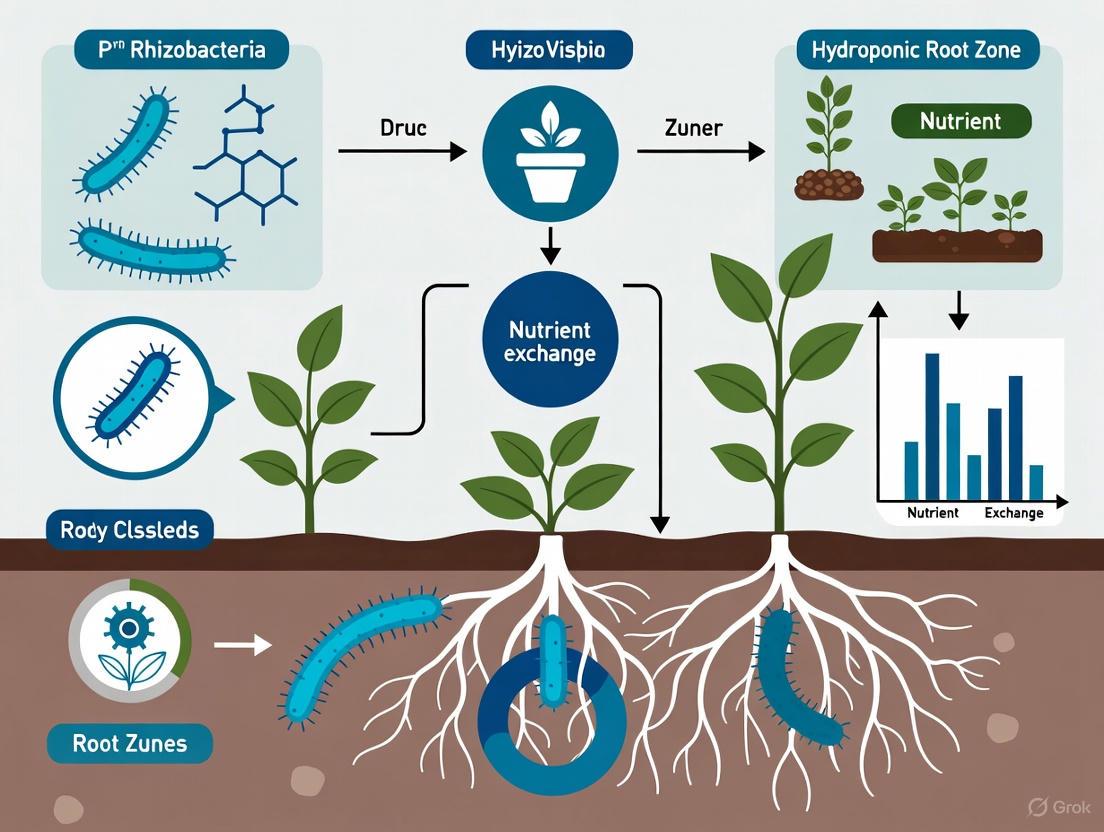
This article provides a comprehensive analysis of Plant Growth-Promoting Rhizobacteria (PGPR) applications in hydroponic systems, targeting researchers and scientists in agricultural biotechnology and drug development.
Harnessing Plant Growth-Promoting Rhizobacteria for Enhanced Hydroponic Root Zone Health and Crop Productivity
Abstract
This article provides a comprehensive analysis of Plant Growth-Promoting Rhizobacteria (PGPR) applications in hydroponic systems, targeting researchers and scientists in agricultural biotechnology and drug development. It explores the foundational science of PGPR-plant interactions in soilless environments, details practical methodologies for successful hydroponic inoculation, addresses critical troubleshooting parameters for system optimization, and presents validation data comparing PGPR efficacy against conventional fertilization. The synthesis of recent research demonstrates PGPR's significant potential to reduce mineral fertilizer dependence by up to 80% while improving crop yield, nutritional quality, and stress resilience, offering sustainable solutions for controlled-environment agriculture with implications for pharmaceutical compound production through enhanced secondary metabolite accumulation.
The Science of PGPR in Hydroponic Root Zones: Mechanisms and Ecological Adaptations
Defining PGPR and Their Transition from Soil to Soilless Agriculture
Plant Growth-Promoting Rhizobacteria (PGPR) are beneficial soil bacteria that colonize plant roots and enhance plant growth through multiple direct and indirect mechanisms. While traditionally studied and applied in soil-based agriculture, their use is rapidly expanding into soilless cultivation systems. This transition represents a significant paradigm shift in managed plant growth environments, offering opportunities to enhance sustainable food production. This technical guide examines the core definitions of PGPR, their mechanisms of action, and the experimental approaches facilitating their successful integration into hydroponic, aeroponic, and aggregate-based soilless agriculture, providing researchers with comprehensive methodological frameworks for advancing this promising field.
Plant Growth-Promoting Rhizobacteria (PGPR) are defined as free-living, root-colonizing bacteria that exert beneficial effects on plant growth and development through diverse direct and indirect mechanisms [1] [2]. The term was first coined by Kloepper and Schroth (1981) to describe soil bacteria that colonize plant roots and enhance plant growth [2]. These bacteria form a component of the complex rhizosphere microbiome, the soil zone immediately surrounding plant roots that is influenced by root exudates [3] [2]. This environment exhibits bacterial populations 100–1000 times higher than bulk soil due to the abundance of organic compounds released by roots [2].
PGPR associations with plants range in proximity and intimacy. They are broadly categorized as iPGPR (symbiotic bacteria living inside plant cells, such as Rhizobia and Frankia within specialized nodules) and ePGPR (free-living rhizobacteria that inhabit the rhizosphere without forming intimate cellular structures) [2]. Functionally, PGPR are classified as biofertilizers (enhancing nutrient availability), phytostimulators (producing phytohormones), rhizoremediators (degrading pollutants), and biopesticides (controlling diseases through antibiotics) [2]. Common PGPR genera include Azospirillum, Azotobacter, Bacillus, Pseudomonas, Enterobacter, and Paenibacillus, among others [4] [5] [6].
Core Mechanisms of PGPR Action
PGPR promote plant growth through multifaceted mechanisms operating simultaneously, categorized into direct and indirect modes of action.
Direct Mechanisms
Direct mechanisms involve providing plants with essential resources or directly stimulating physiological processes.
- Biofertilization: PGPR enhance nutrient availability through biological nitrogen fixation, converting atmospheric N₂ into plant-usable ammonia [1] [2]. They also solubilize otherwise inaccessible minerals through production of phosphate-solubilizing enzymes, organic acids, and siderophores, increasing phosphorus, potassium, zinc, and iron uptake [1] [4] [6].
- Phytohormone Production: PGPR synthesize and modulate plant hormones including auxins (e.g., indole-3-acetic acid, IAA), cytokinins, and gibberellins [7] [3] [2]. These hormones stimulate root and shoot development; IAA specifically promotes lateral root and root hair formation, expanding the root surface area for nutrient absorption [7] [3].
- Modification of Root System Architecture: Through phytohormone production and other signals, PGPR extensively modify root morphology. Typical responses include inhibited primary root growth, enhanced lateral root branching, and increased root hair development, collectively improving nutrient and water uptake efficiency [7] [3].
Indirect Mechanisms
Indirect mechanisms primarily involve plant protection against phytopathogens.
- Induced Systemic Resistance (ISR): PGPR prime plant immune defenses without causing direct harm. Upon root colonization, they trigger jasmonic acid (JA) and ethylene (ET) dependent signaling pathways, enabling faster and stronger defense activation against subsequent pathogen attacks such as Botrytis cinerea [5]. Some strains also activate salicylic acid (SA)-dependent pathways [5].
- Antibiosis and Pathogen Antagonism: PGPR produce antimicrobial compounds including antibiotics, fungal cell wall-lysing enzymes (e.g., chitinase), and siderophores [1] [4] [5]. Siderophores are iron-chelating compounds that sequester environmental iron, creating competitive advantages over pathogenic microorganisms [1] [2].
- Stress Tolerance Enhancement: PGPR help plants withstand abiotic stresses including salinity, drought, and heavy metal contamination [1] [8]. They induce metabolic reprogramming that mitigates oxidative stress damage [8].
The diagram below summarizes the primary signaling pathways and mechanisms through which PGPR influence plant growth and defense.
Figure 1: PGPR Signaling Pathways and Mechanisms. PGPR enhance plant growth directly via nutrient provision, phytohormone production, and root architecture modification, and indirectly via induced systemic resistance (ISR), antibiosis, and competition. JA/ET: Jasmonic acid/Ethylene; SA: Salicylic acid.
The Paradigm Shift: Transitioning PGPR to Soilless Agriculture
Soilless agriculture encompasses systems where plants grow without soil, using nutrient-enriched water (hydroponics, aeroponics) or solid media (coco coir, perlite, rockwool) [4]. These systems eliminate soil-borne diseases and improve resource control but are inherently devoid of beneficial rhizosphere microorganisms [4] [7]. Introducing PGPR represents a fundamental advancement to overcome this limitation.
Rationale for PGPR in Soilless Systems
- Overcoming Natural Microbiome Absence: Soilless systems lack natural microbial communities, depriving plants of beneficial plant-microbe interactions [7]. PGPR inoculation introduces selected, functional microbiota.
- Enhancing Sustainability: PGPR can reduce dependence on mineral fertilizers. Research demonstrates that PGPR inoculation enables reducing mineral fertilizers by up to 80% in hydroponic lettuce without significant yield loss [6].
- Improving Plant Health and Quality: Beyond growth promotion, PGPR enhance nutritional quality by increasing bioactive compounds (phenols, flavonoids, vitamin C) in lettuce and other crops [6].
- System Efficiency: In controlled environments like hydroponics, PGPR effects are more consistent and reproducible compared to soil systems with complex, established microbiomes [7].
Key Experimental Evidence Supporting the Transition
Table 1: Quantitative Effects of PGPR in Soilless Cultivation Systems
| Crop | Soilless System | PGPR Strains Used | Key Growth Effects | Quality & Other Effects | Source |
|---|---|---|---|---|---|
| Lettuce | Aeroponic | Consortium of 8 strains | ↑25% plant biomass; ↑leaf number & mass; ↑root lateral development | Altered leaf anatomy; Metabolic reprogramming | [7] |
| Lettuce | Floating Hydroponic | B. subtilis, B. megaterium, P. fluorescens | No yield loss with 80% MF; ↑leaf area, chlorophyll, DM | ↑Phenols, flavonoids, vitamin C; ↑mineral content | [6] |
| Tomato | Perlite-based | Enterobacter sp., Paenibacillus sp., Lelliottia sp. | ↑Vegetative biomass under combined water/nutrient stress | Alleviated oxidative stress; Metabolic changes | [8] |
| Melon | Coconut Fiber-Vermicompost | PGPR, Trichoderma, AMF | Enhanced microbial community function | ↑Nitrogen fixers, phosphate solubilizers | [9] |
| Marigold/Zinnia | Coco coir-based Plug | Enterobacter MN-17, Trichoderma spp. | ↑Seed germination; ↑root/shoot length; ↑seedling biomass | Improved substrate physico-chemical properties | [10] |
MF = Mineral Fertilizers; DM = Dry Matter; AMF = Arbuscular Mycorrhizal Fungi.
Experimental Protocols for Soilless PGPR Research
Protocol: PGPR Inoculation in Aeroponic Systems
This methodology is adapted from the research on lettuce growth under suboptimal nutrient regimes [7].
1. Bacterial Consortium Preparation:
- Select and culture PGPR strains with complementary PGP traits (e.g., IAA production, P solubilization, N fixation).
- Grow strains individually in appropriate liquid media to late log phase.
- Centrifuge, wash, and resuspend in sterile buffer to a standardized density (e.g., 10⁸ CFU/mL).
- Mix strains in equal proportions to form the synthetic consortium.
2. Plant Material and Growth Conditions:
- Surface-sterilize seeds (e.g., 10 min in 50% NaClO with 0.025% Tween 20).
- Rinse thoroughly with sterile deionized water and imbibe for 4 hours.
- Sow seeds in sterile rockwool cubes pre-moistened with sterile water.
- Grow plantlets in a controlled environment (e.g., 26°C, 14/10h light/dark, ~500 μmol m⁻² s⁻¹ PPFD).
3. System Inoculation and Cultivation:
- Transplant uniform plantlets into sterilized aeroponic systems.
- Inoculate by adding the PGPR consortium directly to the nutrient solution reservoir.
- Maintain a low-nutrient regime (e.g., 0.2% v/v Hydro A and B solutions) to stress plants and highlight PGPR effects.
- Aerate nutrient solution continuously and maintain pH (5.5–6.0) and EC.
4. Data Collection and Analysis:
- Biomass: Harvest and measure fresh/dry weight of shoots and roots.
- Root Architecture: Scan root systems and analyze architecture (total length, lateral root density).
- Leaf Anatomy: Process leaf samples for microscopy; measure palisade parenchyma thickness, airspace area.
- Physiology: Measure chlorophyll fluorescence, stomatal conductance, photosynthetic rate.
- Metabolomics: Conduct LC-MS/MS on leaf tissue to identify metabolic changes induced by PGPR.
The experimental workflow for this protocol is visualized below.
Figure 2: Experimental Workflow for Aeroponic PGPR Inoculation. This protocol outlines steps from PGPR preparation to multi-faceted data analysis in a controlled soilless environment.
Protocol: Fertilizer Reduction with PGPR in Hydroponics
This protocol evaluates PGPR as partial substitutes for mineral fertilizers in floating lettuce cultures [6].
1. Bacterial Inoculum and Nutrient Solutions:
- Use a commercial PGPR product (e.g., Bacillus subtilis, B. megaterium, Pseudomonas fluorescens) or a defined laboratory mixture.
- Prepare a standard (100%) nutrient solution for the crop (e.g., N: 220 mg/L, P: 40 mg/L, K: 312 mg/L for lettuce).
- Prepare reduced concentration solutions (80%, 60%, 40%, 20% of standard).
2. Experimental Design and Treatment Setup:
- Arrange a randomized complete block design with treatments:
- 100% MF (Mineral Fertilizer) - Control
- 100% MF + PGPR
- 80% MF
- 80% MF + PGPR ... (repeat for 60%, 40%, 20% reductions)
- Use 50-L cultivation tanks as replicates (e.g., n=4, 10 plants/tank).
3. Inoculation and System Management:
- Inoculate treatment tanks with PGPR (e.g., 1 mL/L of 10⁹ CFU/mL solution) at the time of transplanting.
- Re-inoculate at 10-day intervals to maintain population.
- Maintain pH (5.5–6.0) and EC within target ranges.
- Monitor and adjust solutions as needed.
4. End-Point Evaluations:
- Yield: Measure individual plant weight per tank.
- Growth Parameters: Count leaves, measure leaf area, plant height, SPAD chlorophyll.
- Nutritional Quality: Analyze leaf tissue for minerals, phenols, flavonoids, vitamin C, total soluble solids.
- Statistical Analysis: Perform ANOVA and mean separation tests to identify significant differences between treatments.
The Scientist's Toolkit: Key Research Reagent Solutions
Table 2: Essential Research Reagents and Materials for Soilless PGPR Studies
| Reagent/Material | Specification/Function | Example Application |
|---|---|---|
| PGPR Strains | Defined strains with known PGP traits (e.g., IAA production, N fixation, P solubilization). | Synthetic consortium construction [7]. |
| Growth Media | TSA, Ashby-mannitol agar, nutrient broth for specific strain culture and maintenance. | Culturing P. canadensis, A. chroococcum [5]. |
| Soilless Substrate | Inert or biologically active supports: rockwool, perlite, coco coir, vermicompost mixes. | Plant support and microbial habitat [7] [9] [10]. |
| Nutrient Solutions | Standardized formulations (e.g., Hoagland's, Hydro A & B); allow for precise dilution. | Creating optimal and suboptimal nutrient regimes [7] [6]. |
| Sterilization Agents | Sodium hypochlorite (NaClO), ethanol, autoclaving for surface and system sterilization. | Seed surface sterilization, system decontamination [7]. |
| Molecular Biology Kits | DNA/RNA extraction kits, reverse transcription kits, qPCR reagents for gene expression. | Quantifying defense gene expression (e.g., PR1, LOX) [5]. |
| Metabolomics Tools | LC-MS/MS, GC-MS systems and associated columns, solvents, and standards. | Profiling leaf metabolites (e.g., trehalose, myo-inositol) [7] [8]. |
| Root Scanning Software | WinRHIZO, ImageJ with specialized plugins for root architecture analysis. | Quantifying lateral root development and total root length [7]. |
The integration of PGPR into soilless agriculture marks a significant advancement toward more sustainable and efficient crop production. Evidence confirms that PGPR can successfully colonize plant roots in hydroponic, aeroponic, and aggregate systems, delivering growth promotion, stress protection, and quality enhancement benefits comparable to or even exceeding those observed in soil. The ability of PGPR to maintain yields with significantly reduced mineral fertilizer inputs is particularly promising for reducing environmental impacts and production costs.
Future research should focus on several critical areas: (1) Developing tailored PGPR consortia specifically designed for different soilless systems and major crop species; (2) Optimizing inoculation protocols (timing, frequency, delivery methods) for maximum persistence and efficacy; (3) Elucidating the complex molecular dialogues between PGPR and plants in controlled environments using multi-omics approaches; and (4) Conducting large-scale economic analyses to validate the commercial viability of PGPR applications in commercial soilless agriculture. As these developments progress, PGPR are poised to become indispensable components of precision soilless cultivation, contributing to the next generation of sustainable food production systems.
Direct and Indirect Plant Growth Promotion Mechanisms in Hydroponic Systems
Plant Growth-Promoting Rhizobacteria (PGPR) are beneficial bacteria that colonize plant roots and enhance plant growth through a diverse array of direct and indirect mechanisms [1]. In soilless cultivation systems, such as hydroponics, plants are typically grown with mineral nutrient solutions alone, lacking the beneficial microbial communities present in soil environments [6]. Introducing PGPR into hydroponic systems represents an innovative strategy to simulate these beneficial rhizospheric interactions, thereby promoting plant growth, reducing reliance on synthetic mineral fertilizers, and improving crop quality [6] [11].
The integration of PGPR is particularly relevant within the broader context of sustainable agriculture, aiming to minimize environmental footprints while maintaining high productivity [1] [12]. This whitepaper provides an in-depth technical analysis of the direct and indirect mechanisms by which PGPR function in hydroponic root zones, supported by experimental data, detailed methodologies, and visualizations tailored for research scientists and drug development professionals.
Direct Plant Growth-Promoting Mechanisms
Direct plant growth promotion occurs when PGPR facilitate resource acquisition or modulate plant hormonal levels.
Biofertilization
PGPR act as biofertilizers by enhancing the availability of essential nutrients, directly supporting plant nutrition.
- Nitrogen Fixation: Certain diazotrophic PGPR can convert atmospheric nitrogen (N₂) into ammonia, a plant-usable form [1] [12]. This is particularly valuable in nitrogen-limited conditions. For instance, studies have identified strains of Herbaspirillum huttiense and Acinetobacter calcoaceticus as potential nitrogen-fixing diazotrophs for crops like rice in hydroponic systems [11].
- Phosphate Solubilization: Phosphorus (P) in soils and nutrient solutions is often present in insoluble forms. PGPR, including strains of Bacillus megaterium and Pseudomonas fluorescens, secrete organic acids and enzymes that solubilize mineral phosphates, making them available for plant uptake [1] [6].
- Iron and Micronutrient Acquisition: Under iron-limiting conditions, PGPR produce siderophores—low-molecular-weight iron-chelating compounds [1]. These complexes are taken up by the plant, thereby improving iron nutrition. Strains of Lysinibacillus fusiformis and Microbacterium phyllosphaerae have demonstrated high siderophore production capabilities [11].
Phytostimulation
Phytostimulation involves the production or regulation of plant hormones (phytohormones) by PGPR.
- Auxin Production: Indole-3-acetic acid (IAA) is the most common auxin and plays a fundamental role in root initiation and cell division [1]. A strain of Bacillus altitudinis isolated from a forest rhizosphere was reported to produce exceptionally high levels of IAA (739.9 ± 251.5 µg/mL), significantly stimulating root development in rice [11].
- Cytokinin and Gibberellin Production: PGPR can also synthesize other growth-promoting hormones like cytokinins and gibberellins, which influence cell division, shoot development, and seed germination [1].
Table 1: Quantitative Data on Direct Growth Promotion by Selected PGPR Strains
| PGPR Strain | Isolation Source | Primary Mechanism | Quantitative Effect | Experimental System | Citation |
|---|---|---|---|---|---|
| Bacillus altitudinis R4(1)2 | Acer pseudoplatanus rhizosphere | IAA Production | 739.9 ± 251.5 µg/mL IAA | In vitro assay | [11] |
| B. subtilis, B. megaterium, P. fluorescens mix | Commercial product (Rhizofill) | Multiple (Biofertilizer) | 80% mineral fertilizer + PGPR yielded equivalent to 100% fertilizer | Hydroponic Batavia lettuce | [6] |
| Bacillus sp., Citrobacter sp. | Rice seeds | Phosphate Solubilization | High P-solubilization efficiency | In vitro assay | [1] |
| Lysinibacillus fusiformis | Uzungöl forest | Siderophore Production | Positive siderophore formation | In vitro assay | [11] |
Figure 1: Diagram of Direct PGPR Promotion Mechanisms. This figure illustrates the primary direct pathways through which PGPR enhance plant growth, including biofertilization and phytostimulation.
Indirect Plant Growth-Promoting Mechanisms
Indirect promotion occurs when PGPR reduce the inhibitory effects of plant pathogens or environmental stresses by acting as biocontrol agents.
Induced Systemic Resistance (ISR)
PGPR can prime the plant's immune system, leading to a heightened state of defense against a broad spectrum of pathogens [1] [5]. This phenomenon, known as Induced Systemic Resistance (ISR), is typically triggered by beneficial microorganisms and is regulated by jasmonic acid (JA) and ethylene (ET) signaling pathways [1]. In some cases, ISR can also involve the salicylic acid (SA) pathway [5].
- Pathogen Suppression: Research on tomato plants demonstrated that inoculation with Peribacillus frigoritolerans and Pseudomonas canadensis strains reduced the incidence of the fungal pathogen Botrytis cinerea (gray mold) [5]. These strains preferentially activated different ISR pathways; P. frigoritolerans primed the SA pathway, while P. canadensis enhanced the JA/ET pathways, showcasing the mechanistic diversity of PGPR-mediated biocontrol [5].
- Antibiosis and Lytic Enzyme Production: PGPR suppress pathogens by producing antibiotics, hydrogen cyanide (HCN), and fungal cell wall-lysing enzymes (e.g., chitinases) [1] [12]. Bacillus and Pseudomonas are key genera known for such antagonistic activities [5].
Competition and Rhizosphere Colonization
A key trait for effective PGPR is rhizosphere competence—the ability to colonize and survive in the root zone [12]. Successful colonizers outcompete pathogens for limited resources like space and nutrients, particularly iron, through siderophore production [1] [12].
Table 2: PGPR-Mediated Biocontrol and Induced Resistance Examples
| PGPR Strain / Consortium | Target Pathogen | Host Plant | Proposed Mechanism | Key Outcome | Citation |
|---|---|---|---|---|---|
| Peribacillus frigoritolerans CDFICOS02 | Botrytis cinerea | Tomato | Induced Systemic Resistance (SA pathway) | Reduced disease incidence and oxidative stress | [5] |
| Pseudomonas canadensis CDFICOS03 | Botrytis cinerea | Tomato | Induced Systemic Resistance (JA/ET pathway) | Reduced disease incidence, increased plant biomass | [5] |
| Bacillus subtilis & other isolates | Fusarium sp., Rhizoctonia solani | Maize | Antagonism / Antibiosis | Antifungal activity against phytopathogens | [1] |
| B. subtilis, B. megaterium, P. fluorescens | Not specified | Batavia lettuce | Competitive exclusion / Rhizosphere competence | Improved overall plant health and nutrient uptake | [6] |
Figure 2: Diagram of Indirect PGPR Promotion via Biocontrol. This figure outlines how PGPR indirectly promote plant growth by inducing systemic resistance, producing antibiotics, and competing with pathogens.
Experimental Protocols for PGPR Research in Hydroponics
Robust experimental methodology is crucial for investigating PGPR mechanisms. Below are detailed protocols for key assays.
Protocol: Inoculation and Growth Promotion Assay in Floating Hydroponics
This protocol, adapted from [6], evaluates the effect of PGPR on lettuce in a floating raft system.
- 1. Plant Material and Growth Conditions: Utilize Batavia type lettuce (Lactuca sativa L. var. crispa). Establish a floating hydroponic system using aerated cultivation tanks (e.g., 50-L volume). Maintain greenhouse conditions at 18-23°C day/12-16°C night, with 60-70% relative humidity.
- 2. Nutrient Solution and Experimental Design: The control treatment should be a 100% mineral fertilizer solution. Prepare treatments with reduced mineral fertilizer (e.g., 80%, 60%, 40%, 20%) with and without PGPR supplementation. Maintain solution pH at 5.5-6.0 and EC at 1.3-2.2 dS m⁻¹.
- 3. Bacterial Inoculum Preparation: Use a commercial or specific PGPR consortium (e.g., Bacillus subtilis, B. megaterium, Pseudomonas fluorescens) with a concentration of 1 × 10⁹ CFU mL⁻¹.
- 4. Inoculation Procedure: Begin bacterial inoculation at the time of transplanting 14-day-old seedlings. Add the inoculum to the nutrient solution tank at a rate of 1 mL per liter. Re-inoculate at 10-day intervals throughout the cultivation period (e.g., 42 days).
- 5. Data Collection: At harvest, measure plant growth parameters: fresh and dry weight, plant height, leaf number, leaf area (using a leaf area meter like Li-3100), and SPAD chlorophyll content. Analyze nutrient uptake, phenolic compounds, flavonoids, and vitamin C.
Protocol: In Vitro Characterization of PGPR Traits
This protocol, based on [11] [5], details the isolation and functional characterization of PGPR strains.
- 1. PGPR Isolation and Storage: Isolate bacteria from rhizosphere soil samples (e.g., from forest ecosystems). Serially dilute soil suspensions and plate on appropriate media (e.g., Tryptic Soy Agar). Purify colonies and store pure cultures at -80°C in glycerol stock.
- 2. Indole-3-Acetic Acid (IAA) Production Assay:
- Procedure: Grow isolates in Luria-Bertani (LB) broth supplemented with L-tryptophan (100 µg mL⁻¹) for 72-96 hours. Centrifuge the culture, mix the supernatant with Salkowski's reagent, and incubate in darkness for 30 minutes.
- Analysis: Development of a pink color indicates IAA production. Quantify concentration using a spectrophotometer and a standard curve of pure IAA.
- 3. Phosphate Solubilization Assay:
- Procedure: Spot-inoculate isolates on Pikovskaya's (PKV) agar plates, which contain insoluble tricalcium phosphate.
- Analysis: Incubate plates at 28±2°C for 7-10 days. Observe for the formation of a clear halo zone around the bacterial growth, indicating phosphate solubilization. Measure the solubilization index.
- 4. Siderophore Production Assay:
- Procedure: Inoculate isolates on Chrome Azurol S (CAS) agar plates.
- Analysis: Incubate for up to 7 days. A color change of the blue agar to orange or yellow around the colony indicates siderophore production.
- 5. Nitrogen Fixation Potential (Acetylene Reduction Assay):
- Procedure: Grow cultures in nitrogen-free medium in sealed vials. Replace 10% of the headspace with pure acetylene gas.
- Analysis: Incubate with shaking. Measure ethylene production in the headspace using gas chromatography at intervals (e.g., 3, 7, 13, 20 days). Ethylene production indicates nitrogenase activity.
Figure 3: PGPR Isolation and Screening Workflow. This chart outlines the key steps involved in isolating PGPR from environmental samples, screening them for beneficial traits in vitro, and evaluating their efficacy in planta.
The Scientist's Toolkit: Key Research Reagent Solutions
Table 3: Essential Reagents and Materials for PGPR Hydroponics Research
| Reagent/Material | Function/Application | Example Usage / Specification |
|---|---|---|
| PGPR Strains | Core bioinoculant for experiments | Commercial consortia (e.g., B. subtilis, B. megaterium, P. fluorescens) or newly isolated strains (e.g., Bacillus altitudinis, Herbaspirillum huttiense). |
| Nitrogen-Free Medium | To screen for diazotrophic (N-fixing) bacteria | JNFb, Burk's, or Ashby's medium for selective growth of nitrogen-fixing bacteria [11] [5]. |
| Pikovskaya's (PKV) Agar | To screen for phosphate-solubilizing bacteria | Contains insoluble tricalcium phosphate; formation of a halo indicates solubilization [11]. |
| Chrome Azurol S (CAS) Agar | To detect siderophore production | Universal assay for siderophores; color change from blue to orange/yellow is positive [11]. |
| Salkowski's Reagent | To detect and quantify Indole-3-acetic acid (IAA) | Mixed with culture supernatant; pink color development indicates IAA production [11]. |
| Hydroponic Nutrient Solution | Base plant growth medium | Standard Hoagland's solution or custom formulations (e.g., control: 220 mg L⁻¹ N, 40 mg L⁻¹ P, 312 mg L⁻¹ K) [6]. |
| Floating Culture Tanks | Hydroponic growth system | Aerated tanks (e.g., 50-L volume) for growing plants like lettuce with roots immersed in nutrient solution [6]. |
| Leaf Area Meter | To measure plant growth and health | Instrument (e.g., Li-3100) for precise quantification of leaf area, a key growth parameter [6]. |
| SPAD Chlorophyll Meter | Non-destructive assessment of leaf chlorophyll | Device (e.g., SPAD-502) to estimate chlorophyll content, related to plant nitrogen status and health [6]. |
PGPR offer a multifaceted toolkit for enhancing plant performance in hydroponic systems through direct mechanisms like biofertilization and phytostimulation, as well as indirect mechanisms involving pathogen suppression via ISR and competition. The experimental data and protocols outlined provide a rigorous foundation for advancing research in this field. Future work should focus on elucidating the molecular dialogues in the hydroponic rhizosphere, optimizing PGPR consortia for specific crop-pathogen combinations, and scaling these sustainable solutions for commercial agriculture to reduce dependency on synthetic inputs.
The integration of Plant Growth-Promoting Rhizobacteria (PGPR) into hydroponic systems represents a paradigm shift in soilless agriculture, moving beyond traditional mineral fertilization towards a more biologically driven approach. Soilless cultivation systems, while offering advantages in resource efficiency and control, inherently lack the complex microbial consortia found in natural soils that support plant health and development [4]. Introducing specific, beneficial bacteria directly into the root zone is a strategy to reintroduce these functions, creating a more robust and resilient cultivation ecosystem [13] [14].
Among the vast diversity of PGPR, three bacterial genera—Bacillus, Pseudomonas, and Azospirillum—have emerged as the most extensively studied and promising for hydroponic applications [15]. These genera form the core of current research and commercial bioinoculants due to their proven efficacy in enhancing plant growth, facilitating nutrient uptake, and providing biotic and abiotic stress protection in controlled environments [15] [6]. This technical guide synthesizes the current scientific knowledge on these key genera, providing researchers with a detailed overview of their mechanisms, experimental applications, and practical protocols for integration into hydroponic root zone research.
Mode of Action: A Comparative Analysis
The plant-beneficial effects of Bacillus, Pseudomonas, and Azospirillum are mediated through a diverse array of direct and indirect mechanisms. These modes of action can be broadly categorized into biofertilization, phytostimulation, and biocontrol.
Table 1: Core Mechanisms of Action of Key PGPR Genera in Hydroponics
| Mechanism | Bacillus | Pseudomonas | Azospirillum |
|---|---|---|---|
| Nitrogen Fixation | Limited | Limited (some strains) | Primary Mechanism (Non-symbiotic) [16] |
| Phosphate Solubilization | Strong [6] | Strong [17] | Moderate [16] |
| Siderophore Production | Yes | Strong [15] [18] | Yes |
| Phytohormone Production (e.g., IAA) | Yes [6] | Yes (Key trait) [17] | Strong (Primary mechanism) [19] [16] |
| 1-Aminocyclopropane-1-Carboxylate (ACC) Deaminase | Yes [13] | Yes [13] | Yes [13] |
| Biocontrol / Antibiosis | Strong (e.g., lipopeptides) [15] [18] | Strong (e.g., antibiotics, cyanide) [19] [15] | Limited |
| Induced Systemic Resistance (ISR) | Yes [4] [18] | Yes [4] [18] | Yes [18] |
| Root Architecture Modification | Moderate | Moderate | Very Strong (Lateral root & hair promotion) [19] [3] |
Table 2: Documented Hydroponic Crop Responses to PGPR Inoculation
| PGPR Genus | Crop | Observed Effect | Experimental Context & Citation |
|---|---|---|---|
| Bacillus | Batavia Lettuce | ↑ Yield, ↑ nutrient uptake, ↑ phenols, flavonoids, vitamin C with 20-80% reduced mineral fertilizer [6] | Floating culture; Consortium (B. subtilis, B. megaterium, P. fluorescens) |
| Pseudomonas | Tomato (Solanum lycopersicum) | ↑ Fruit yield (up to 73%), ↑ lycopene content, ↑ fruit firmness with 50% reduced NPK fertilization [17] | Greenhouse hydroponics; Individual strains (P. putida, P. fluorescens) |
| Azospirillum | Arabidopsis thaliana | Induction of lateral root branching via auxin-dependent signaling & plasmodesmata regulation [19] | In vitro bacterial-plant interaction system |
| Azospirillum | Lettuce, Tomatoes, Cereals | Improved root development, yield, and stress tolerance across various crops [16] | Commercial application data and field trials |
Experimental Protocols for Hydroponic PGPR Research
Protocol: Evaluating PGPR as a Partial Substitute for Mineral Fertilizers
This protocol is adapted from a 2024 study on Batavia lettuce in a floating hydroponic system [6].
Objective: To determine the efficacy of a PGPR consortium in maintaining yield and quality of lettuce under reduced mineral fertilization.
Materials:
- Plant Material: Batavia lettuce (Lactuca sativa L.) cv. 'Caipira' seeds.
- PGPR Inoculant: Commercial product (e.g., Rhizofill) containing Bacillus subtilis, Bacillus megaterium, and Pseudomonas fluorescens at a concentration of 1 × 10^9 CFU/mL.
- Growth System: 50-L cultivation tanks configured as a floating raft system.
- Nutrient Solution: Standard Hoagland's solution or equivalent.
Method:
- Seedling Preparation: Germinate seeds and grow seedlings for 14 days before transplanting into the hydroponic system.
- Experimental Design: Establish a completely randomized design with the following treatments:
- Control: 100% mineral fertilizer (MF).
- Treated Groups: 100% MF + PGPR, 80% MF, 80% MF + PGPR, 60% MF, 60% MF + PGPR, 40% MF, 40% MF + PGPR, 20% MF, 20% MF + PGPR.
- PGPR Inoculation: At the time of transplanting, add the PGPR inoculant to the nutrient solution tanks at a rate of 1 mL per liter (e.g., 50 mL per 50-L tank). Repeat this inoculation every 10 days throughout the 42-day cultivation period.
- System Management: Maintain pH between 5.5–6.0 and Electrical Conductivity (EC) between 1.3–2.2 dS/m.
- Data Collection: At harvest, measure:
- Growth Parameters: Plant fresh and dry weight, leaf number, leaf area, root biomass.
- Physiological Traits: SPAD chlorophyll content.
- Yield: Total marketable weight per plant.
- Quality Metrics: Concentrations of minerals, phenols, flavonoids, vitamin C, and total soluble solids.
Protocol: Investigating PGPR-Induced Root Architectural Changes
This protocol is based on a 2025 study using Arabidopsis thaliana and Azospirillum baldaniorum Sp245 [19].
Objective: To analyze the molecular and morphological changes in root system architecture induced by PGPR inoculation.
Materials:
- Biological Material:
- Azospirillum baldaniorum Sp245 strain.
- Arabidopsis thaliana seeds: Wild-type (Col-0), transgenic DR5:GUS (auxin-responsive reporter), and mutant lines (e.g., pdlp5-1 DR5:GUS).
- Growth Medium: Solid half-strength Murashige and Skoog (MS) medium.
- Equipment: Laminar flow hood, plant growth chambers, microscope.
Method:
- Bacterial Preparation: Grow A. baldaniorum in appropriate liquid medium to mid-log phase.
- Plant Inoculation:
- Surface-sterilize A. thaliana seeds and stratify at 4°C for 48 hours.
- Sow seeds on sterile plates containing half-strength MS medium.
- After germination, carefully spot-inoculate 10 µL of bacterial suspension (~10^8 CFU/mL) near the root tip of 6-day-old seedlings. Use sterile medium as a control.
- Co-Cultivation: Grow plants vertically in a controlled environment chamber (e.g., 16/8 h light/dark, 22°C).
- Phenotypic Analysis: After 6 days of co-cultivation:
- Root Morphometry: Using image analysis software (e.g., ImageJ), measure primary root length, lateral root density, and lateral root length.
- Molecular Analysis:
- GUS Staining: For DR5:GUS lines, perform histochemical GUS staining to visualize and quantify auxin response maxima.
- Gene Expression: Analyze expression of genes involved in auxin transport (e.g., PIN, AUX/LAX) and symplastic trafficking (e.g., PDLP5) via qRT-PCR.
Figure 1: Workflow for analyzing PGPR-induced root architectural changes.
Signaling Pathways and Molecular Dialog
The beneficial interactions between PGPR and plants are governed by a complex molecular dialogue, often initiated by root exudates. These exudates act as signals that attract specific bacteria and support their growth in the rhizosphere [18]. The subsequent plant responses, particularly root morphological changes, are frequently mediated by bacterial interference with plant hormone signaling, most notably auxin.
The Azospirillum-Root Auxin Signaling Pathway
A. baldaniorum Sp245 is a model for understanding how PGPR, through auxin production, systemically alters root system architecture. The bacteria-derived IAA integrates into the plant's endogenous auxin signaling network, leading to transcriptional reprogramming and stimulated lateral root development [19].
Figure 2: Azospirillum-induced root branching pathway.
The Scientist's Toolkit: Research Reagent Solutions
Table 3: Essential Research Reagents and Materials for Hydroponic PGPR Studies
| Reagent / Material | Function & Application in PGPR Research |
|---|---|
| Half-Strength MS Medium | Standardized in vitro plant growth medium for sterile co-cultivation assays and phenotypic analysis of root architecture [19]. |
| DR5:GUS Arabidopsis Line | Reporter plant line where the expression of β-glucuronidase (GUS) is driven by a synthetic auxin-responsive promoter. Essential for visualizing and quantifying spatial auxin response in root tissues upon PGPR inoculation [19]. |
| PGPR Consortia (e.g., Rhizofill) | Commercial or custom-formulated mixtures of defined PGPR strains (e.g., B. subtilis, B. megaterium, P. fluorescens). Used for applied research on biofertilization and plant growth promotion in hydroponic systems [6]. |
| SPAD Chlorophyll Meter | Portable, non-destructive device for rapid assessment of leaf chlorophyll content, serving as an indicator of plant nitrogen status and overall photosynthetic health in PGPR trials [6]. |
| GUS Staining Kit | Histochemical kit containing X-Gluc substrate for visualizing auxin response zones in root and shoot tissues of DR5:GUS reporter lines after PGPR treatment [19]. |
The body of research unequivocally demonstrates that Bacillus, Pseudomonas, and Azospirillum are cornerstone genera for advancing hydroponic productivity and sustainability. Their distinct yet complementary mechanisms of action—ranging from biofertilization and phytostimulation to biocontrol—provide a multi-faceted toolkit for enhancing crop performance. The experimental evidence confirms that these PGPR can not only maintain but often improve yield and nutritional quality under reduced mineral fertilization, a critical step towards reducing the environmental footprint of soilless agriculture [17] [6].
Future research should focus on elucidating the fine-scale molecular dialogues, including the specific root exudate signals that foster optimal colonization [18], and the development of customized, crop-specific PGPR consortia. The successful integration of these powerful microbial allies into hydroponic root zones heralds a new era of efficient, resilient, and sustainable crop production for a growing global population.
Rhizosphere Colonization Dynamics in Soilless Versus Traditional Environments
The rhizosphere, the dynamic zone of soil directly influenced by plant roots, serves as a critical interface for plant-microbe interactions. The colonization dynamics of plant growth-promoting rhizobacteria (PGPR) within this niche vary significantly between soilless and traditional soil-based environments. This technical review synthesizes current research to elucidate how factors such as microbial diversity, root architecture, water dynamics, and agricultural management practices create distinct selective pressures that shape PGPR colonization. In soilless systems, the absence of a complex soil matrix and indigenous microbial communities presents a unique environment for colonization, while traditional soils offer a more complex, but competitive, ecological niche. Understanding these dynamics is paramount for optimizing PGPR application to enhance plant growth, nutrient uptake, and stress resilience across different cultivation paradigms, contributing to more sustainable agricultural systems.
The rhizosphere is a hotspot of microbial activity, driven by the release of root exudates including organic acids, phytosiderophores, sugars, and amino acids [3]. This chemical cocktail attracts and supports a rich microbial community, the rhizo-microbiome, which is distinct in composition from the microbial community of the surrounding bulk soil [3]. Within this community, Plant Growth-Promoting Rhizobacteria (PGPR) are beneficial bacteria that colonize plant roots and enhance plant growth through direct and indirect mechanisms [3]. Direct mechanisms include the production of phytohormones (e.g., auxins, cytokinins), biological nitrogen fixation, and solubilization of minerals like phosphorus [3] [20]. Indirectly, PGPR can suppress phytopathogens through competition, antagonism, and by inducing systemic resistance in the host plant [3] [20].
The successful establishment of PGPR, a process termed root colonization, is a sine qua non for these plant-beneficial effects [3]. This process involves the competitive migration of bacteria to plant roots, their survival in the rhizosphere, and their stable growth and formation of microcolonies on the root surface [21]. The efficacy of PGPR is therefore not solely an intrinsic property of the bacterial strain but is heavily influenced by the environmental context of the root zone, which differs profoundly between traditional soil ecosystems and engineered soilless systems.
Comparative Analysis of Rhizosphere Environments
The environmental conditions and microbial habitats in the rhizosphere of traditional soil-based systems and soilless cultures create contrasting scenarios for PGPR colonization and function.
Table 1: Key Characteristics of Traditional Soil vs. Soilless Rhizosphere Environments
| Characteristic | Traditional Soil Environment | Soilless Environment |
|---|---|---|
| Physical Matrix | Complex soil structure with solid, liquid, and gaseous phases [22] | Simplified matrix (e.g., water, air, inert substrate like rockwool) [23] |
| Native Microbiome | High diversity and abundance of indigenous microbial communities [24] [25] | Typically low microbial diversity unless introduced [20] [6] |
| Water & Porosity | Meso-porosity crucial for microbial habitats; water holding capacity varies with management [22] | Roots often suspended in nutrient solution; high water availability [26] [23] |
| Management Influence | Tillage decreases bulk density and penetration resistance but can harm microbial habitats [22] | Precise control over nutrient composition, pH, and EC [23] [6] |
| Microbial Diversity | Higher alpha diversity in organic systems; community structure influenced by farming practice [24] [25] | Community structure is more uniform and directly shaped by the nutrient solution [24] |
Traditional Soil Environments
In traditional agriculture, soil structure is a key determinant of the rhizosphere habitat. Conservation practices like no-till or reduced tillage maintain higher soil penetration resistance and bulk density but support a more complex and diverse microbial habitat, positively associated with microbial biomass and diversity [22]. A long-term study found that meso-porosity was positively linked to microbial diversity, likely by providing additional niche space, and fungal diversity was strongly correlated with soil water content in macropores [22]. Furthermore, organic management increases soil water holding capacity compared to conventional management, creating a more stable environment for microbial activity [22].
The microbial community in soil is also shaped by agricultural practices. Research on peanut crops demonstrated that organic cultivation led to a more uniform bacterial community structure and generally higher microbial alpha diversity (including Chao1, Shannon, and Simpson indices) compared to conventional inorganic practices [24]. Specific bacterial phyla like Proteobacteria were significantly more abundant in organic soils, while TM6 and Firmicutes were more associated with inorganic soils [24]. Similarly, a study on maize found that the rhizosphere microbiota diversity was higher under organic farming than under conventional systems, with the presence of beneficial groups like arbuscular mycorrhizae (Glomeromycota) being almost exclusively detected in the organic system [25].
Soilless Environments
Soilless cultivation systems, such as hydroponics, lack a traditional soil matrix. Instead, plant roots are exposed to a nutrient solution, either directly (as in Deep Water Culture) or via an inert substrate [26] [23]. A primary distinction is the general absence of a native soil microbiome, meaning PGPR do not have to compete with established indigenous bacterial communities [20]. This can be an advantage for introducing specific PGPR strains, as their colonization success may be higher in the absence of competition [20].
In these controlled systems, environmental parameters are precisely managed. The nutrient solution's pH and electrical conductivity (EC) are carefully maintained within optimal ranges (e.g., pH 5.5–6.0, EC 1.3–2.2 dS/m for lettuce) to ensure nutrient availability [6]. This level of control extends to the introduction of beneficial microbes. Since soilless systems naturally lack these organisms, they must be deliberately introduced, offering a unique opportunity to tailor the rhizosphere microbiome for improved plant nutrition and health [20] [6].
Quantitative Data on PGPR Performance
Empirical studies demonstrate the tangible effects of PGPR inoculation and the contrasting outcomes in different cultivation systems. The following table summarizes key quantitative findings from recent research.
Table 2: Quantitative Effects of PGPR and Farming Practices on Plant and Microbial Parameters
| Study System | Treatment | Key Quantitative Results | Citation |
|---|---|---|---|
| Peanut (Field) | Organic vs. Conventional Cultivation | Yields in organic system decreased by 10–93% compared to conventional. Microbial alpha diversity indices generally higher in organic plots. | [24] |
| Lettuce (Hydroponic) | 80% Mineral Fertilizer (MF) + PGPR vs. 100% MF | Yield with 80% MF + PGPR was not significantly different from 100% MF control. PGPR application improved mineral content, phenols, flavonoids, and vitamin C. | [6] |
| Pepper (Pot Experiment) | Rhizosphere-Domesticated PGPR vs. Ancestral Strain | Inoculation with evolved strain 9P41 increased plant height by 11.4%, root length by 28.7%, aboveground biomass by 21.0%, and underground biomass by 29.1%. | [21] |
| Tomato (Controlled) | Soil vs. Deep Water Culture (DWC) | Plants in hydroponic systems (DWC, Drip) transpired less water and had lower product water use. Lycopene and β-carotene levels were similar or higher in DWC. | [23] |
| Maize (Field) | Organic vs. Conventional Farming | Rhizosphere microbiota diversity was significantly higher in the organic farming system for both maize populations studied. | [25] |
PGPR Efficacy in Hydroponic Systems
The potential of PGPR to reduce reliance on mineral fertilizers in soilless systems is particularly promising. In a floating culture of Batavia lettuce, researchers progressively reduced synthetic mineral fertilizers from 20% to 80%, using a commercial PGPR consortia (Bacillus subtilis, B. megaterium, Pseudomonas fluorescens) as a substitute [6]. Remarkably, the combination of 80% mineral fertilizer with PGPR produced a lettuce yield that was statistically equivalent to the 100% mineral fertilizer control [6]. Beyond yield maintenance, PGPR application significantly enhanced the nutritional quality of the lettuce, leading to higher levels of essential minerals, phenols, flavonoids, and vitamin C [6]. This demonstrates that PGPR can act as a sustainable tool for nutrient management in hydroponics, reducing fertilizer input while maintaining or even improving yield and quality.
Root Colonization and Plant Growth Promotion
The direct link between enhanced root colonization and plant growth promotion was elegantly demonstrated in a recent rhizosphere domestication study. By serially passaging the PGPR strain Bacillus velezensis SQR9 through the pepper rhizosphere for 20 cycles, researchers evolved strains with 1.5 to 2.9-fold greater root colonization capability compared to the ancestral strain [21]. Through a multi-step phenotypic screening, an evolved strain (9P41) was identified that, when inoculated into pepper plants, led to significant increases in root length (28.7%) and overall plant biomass [21]. This study highlights that directed evolution for improved root colonization is a viable strategy for developing more effective microbial inoculants.
Experimental Protocols for Key Analyses
Quantifying Localized Rhizosphere pH Dynamics
The following protocol, adapted from a 2025 methodology paper, allows for high-resolution, quantitative mapping of pH changes along the root axis [27].
Principle: A pH indicator dye (bromocresol purple) provides a visual assessment of pH changes, which is then quantified using a precision pH electrode in specific regions of interest.
Materials:
- pH indicator plates: 0.006% (w/v) bromocresol purple, 0.2 mM CaSO₄, 0.8% plant agar, pH adjusted to 6.4.
- Equipment: pH Electrode InLab Surface Pro-ISM, growth chamber, ImageJ software.
Procedure:
- Plant Growth: Grow seedlings (e.g., Arabidopsis) vertically on appropriate agar medium for 10 days under controlled conditions.
- Transfer to Indicator Plates: Gently transfer seedlings onto the surface of the prepared bromocresol purple plates. Include a control plate without seedlings.
- Incubation: Incubate plates vertically in a growth chamber for 24 hours.
- Image Analysis: Capture photographs of the plates. Generate lookup table (LUT) images using ImageJ to visualize pH variations.
- Localized pH Measurement:
- Measure the pH of the control plate (Start pH).
- Carefully remove seedlings from the assay plate.
- Use the surface pH electrode to measure the pH in the specific rhizosphere region of interest (End pH).
- Calculation: Calculate the change in rhizosphere pH (ΔpH) for the localized region using the formula: ΔpH = End pH - Start pH. A negative value indicates acidification [27].
Rhizosphere Domestication for Enhanced PGPR Colonization
This protocol describes an experimental evolution approach to breed PGPR strains with superior root colonization and plant growth-promoting abilities [21].
Principle: Repeatedly cycling a bacterial population through the host plant's rhizosphere applies selective pressure for traits beneficial for survival and colonization in that specific environment.
Materials:
- PGPR strain (e.g., Bacillus velezensis SQR9).
- Host plant seeds (e.g., pepper, Capsicum annuum).
- Sterile growth containers and vermiculite.
Procedure:
- Initial Inoculation: Transplant sterile seedlings into containers with sterile vermiculite. Inoculate the rhizosphere with the ancestral PGPR strain (e.g., 10⁵ CFU/ml).
- Growth Cycle: Cultivate plants for 1 week under controlled conditions.
- Harvest and Transfer:
- Harvest plant roots and transfer them to a centrifuge tube with a saline solution (e.g., 6 g/L NaCl) and glass beads.
- Vortex the tube to dislodge root-associated bacteria.
- Use 1 ml of this bacterial suspension to inoculate a new batch of sterile seedlings, initiating the next cycle.
- Plate serial dilutions of the remaining suspension to monitor population density.
- Repetition: Repeat the transfer process for multiple cycles (e.g., 20 cycles). Maintain several independent evolutionary lineages.
- Screening: At the end of the domestication process, randomly select evolved colonies and screen them for enhanced plant growth-promoting traits (e.g., IAA production, siderophore production, biofilm formation) and superior root colonization capacity in pot experiments compared to the ancestral strain [21].
Figure 1: Rhizosphere Domestication Workflow for PGPR Improvement.
The Scientist's Toolkit: Key Research Reagents
Table 3: Essential Reagents and Materials for Rhizosphere Colonization Studies
| Reagent / Material | Function / Application | Example Use Case |
|---|---|---|
| Bromocresol Purple | pH indicator dye for visualizing rhizosphere acidification/alkalization [27]. | Mapping spatial pH variations along the root axis in response to nutrient availability [27]. |
| InLab Surface Pro-ISM Electrode | Precision pH electrode for measuring pH in thin films and surfaces [27]. | Quantifying localized pH changes in the rhizosphere on agar plates after indicator dye visualization [27]. |
| Plant Growth-Promoting Rhizobacteria (PGPR) | Beneficial bacteria used as biofertilizers and biostimulants [3] [6]. | Inoculating plants to enhance growth, nutrient uptake, and stress tolerance in soil and soilless systems [21] [6]. |
| Hoagland Agar Medium | Standardized plant growth medium providing essential macro and micronutrients [27]. | Growing seedlings under controlled nutritional conditions for standardized experimental assays [27]. |
| Bacillus velezensis SQR9 | A well-characterized PGPR strain [21]. | Used as a model organism for studying root colonization mechanisms and for domestication experiments to improve fitness [21]. |
| GFP-chloramphenicol Plasmid | Genetic construct for labeling bacterial strains with fluorescent and antibiotic resistance markers [21]. | Chromosomal integration into PGPR for reliable strain tracking and quantification during colonization studies [21]. |
The colonization dynamics of PGPR are fundamentally shaped by their environmental context. Traditional soil systems present a complex, competitive landscape where management practices like organic farming and conservation tillage can foster a more diverse and robust microbial community conducive to PGPR function. In contrast, soilless systems offer a controlled, simplified environment where the absence of a native microbiome facilitates the targeted introduction of specific PGPR strains, allowing for precise manipulation of the rhizosphere to enhance plant performance and reduce fertilizer inputs.
The emerging toolkit for researchers—including sophisticated pH mapping, directed evolution of PGPR via rhizosphere domestication, and the integration of PGPR into hydroponic nutrient management—provides powerful means to unravel and optimize these dynamics. Future research should focus on elucidating the molecular signaling pathways underpinning plant-PGPR communication in different media, and on developing consortia of strains that work synergistically to support plant health and productivity in both traditional and soilless agriculture.
Nutrient Solubilization and Phytohormone Production in Liquid Media
Within the context of plant growth-promoting rhizobacteria (PGPR) research for hydroponic root zones, understanding the specific mechanisms of action in liquid media is paramount. Unlike soil-based systems, hydroponic environments are inherently devoid of beneficial microorganisms, depriving plants of their growth-promoting advantages [7]. The introduction of PGPR into these soilless culture systems presents an opportunity to exploit their potential benefits while avoiding the inconsistencies often observed in field applications [7] [4]. This technical guide provides an in-depth examination of the core processes of nutrient solubilization and phytohormone production by PGPR in liquid environments, with a focus on methodological protocols, quantitative outcomes, and practical applications for hydroponic cultivation systems. The precise monitoring and control offered by hydroponic systems make them ideal platforms for elucidating the intricate metabolic dialog between plants and beneficial microbes, accelerating the design of new PGPR consortia for use as microbial biostimulants [7].
Quantitative Profiling of Bacterial Performance in Liquid Media
The efficacy of PGPR in liquid media is quantified through standardized assays that measure their capacity to solubilize essential nutrients and produce growth-regulating phytohormones. The data below summarizes performance metrics across diverse bacterial species.
Table 1: Quantitative Profiling of Phosphate Solubilization by PGPR in Liquid Media
| Bacterial Strain | Source/Context | Substrate Solubilized | Quantitative Result | Reference |
|---|---|---|---|---|
| Citrobacter sp. SB04-3 | Wild sorghum rhizosphere | Various insoluble phosphates | >100 mg/L P released | [28] |
| Bacillus siamensis R27 | Cd-contaminated rhizosphere | Insoluble phosphate | 385.11 mg/L P solubilized | [29] |
| Consortium of 8 PGPR strains | Synthetic consortium for lettuce | N/A | 25% increase in plant biomass | [7] |
| Selected PGPR Strains | Reclaimed smelter waste deposit | Tricalcium phosphate | All 15 isolates showed medium to high solubilization | [30] |
| Mineral Solubilizing Strains (MS2) | Rhodes grass rhizosphere | Tricalcium phosphate in PVK broth | High available P concentration; significant pH reduction | [31] |
Table 2: Quantitative Profiling of Phytohormone Production by PGPR in Liquid Media
| Bacterial Strain | Phytohormone/Compound | Production Level | Significance/Context | Reference |
|---|---|---|---|---|
| Bacillus siamensis R27 | Indole-3-acetic acid (IAA) | 35.92 mg/L | Cd-resistant strain promoting lettuce growth | [29] |
| PGPR from smelter waste | IAA-like compounds | Up to 60 µg/mL | 14 of 15 isolates were positive for IAA production | [30] |
| PGPR from argan rhizosphere | Indole acetic acid | 25 of 52 isolates tested positive | Selected for enhancing argan seed germination | [32] |
| PGPR Consortium | IAA, Cytokinins, Gibberellins | N/A | Stimulated cell division, root development, and leaf growth | [7] |
Table 3: Comprehensive Mineral Solubilization Profiles of PGPR in Liquid Media
| Bacterial Strain | Phosphorus | Potassium | Zinc | Manganese | Reference |
|---|---|---|---|---|---|
| MSB Strains (Various) | Positive (8 strains) | Positive (37.5% of strains) | Positive (75% of strains) | Positive (75% of strains) | [31] |
| Citrobacter sp. SB04-3 | High | N/D | N/D | N/D | [28] |
| Bacillus siamensis R27 | High | N/D | N/D | N/D | [29] |
Experimental Protocols for Core PGPR Mechanisms
Protocol for Phosphate Solubilization Quantification
Principle: This method quantifies a bacterium's ability to solubilize insoluble phosphorus in liquid culture by converting it to soluble orthophosphates, which are then measured colorimetrically [28] [31].
Materials:
- Pikovskaya (PVK) Broth: Contains insoluble tricalcium phosphate as the sole P source [30] [31].
- Spectrophotometer: Agilent Technologies or equivalent for colorimetric analysis.
Procedure:
- Inoculate purified bacterial strains into sterile PVK broth.
- Incubate cultures at 30 ± 1°C for 7 days in an orbital shaker [31].
- After incubation, harvest bacterial cells by centrifugation or filtration through Whatman filter paper No. 42 [31].
- Determine the concentration of solubilized phosphorus in the filtrate using the colorimetric method (ascorbic acid method) via a spectrophotometer set to 882 nm [28] [31].
- Simultaneously, measure the pH of the spent medium to correlate P solubilization with acid production [31].
Calculation: The Phosphate Solubilization Efficiency (PSE%) can be calculated if initial screening was done on solid media, using the formula: PSE% = (Solubilization zone diameter / Colony diameter) × 100 [31].
Protocol for Indole-3-Acetic Acid (IAA) Production Quantification
Principle: This protocol quantifies IAA production by PGPR in liquid media, with or without the precursor L-tryptophan, using colorimetric detection with Salkowski's reagent [29] [32].
Materials:
- L-Tryptophan-Amended Medium: Nutrient broth supplemented with 0.1% L-tryptophan [29].
- Salkowski's Reagent: 2% 0.5M FeCl₃ in 35% perchloric acid [29].
- Spectrophotometer.
Procedure:
- Inoculate bacterial strains into liquid medium with and without L-tryptophan.
- Incubate in the dark at 30°C for 24-48 hours to prevent photo-degradation of IAA [29].
- Centrifuge the cultures at 10,000 rpm for 10 minutes to obtain a cell-free supernatant.
- Mix 1 mL of supernatant with 2 mL of Salkowski's reagent and vortex thoroughly.
- Incubate the mixture in the dark at room temperature for 30 minutes for color development (pink hue).
- Measure the absorbance of the solution at 530 nm [29].
- Determine the IAA concentration by comparing absorbance values to a standard curve of pure IAA (0-100 µg/mL).
Signaling Pathways and Metabolic Workflows in PGPR-Plant Interactions
The following diagram illustrates the interconnected signaling pathways and mechanisms through which PGPR in hydroponic root zones influence plant growth, encompassing both nutrient solubilization and phytohormone production.
PGPR Mechanisms and Plant Growth Responses - This diagram visualizes the core mechanisms of Plant Growth-Promoting Rhizobacteria (PGPR) in liquid media and their subsequent effects on plant physiology. The pathways show how nutrient solubilization and phytohormone production directly influence root architecture, nutrient uptake, biomass accumulation, and stress tolerance.
The Scientist's Toolkit: Research Reagent Solutions
Table 4: Essential Research Reagents for PGPR Mechanism Studies
| Reagent/Medium | Composition/Type | Function in PGPR Research | Application Example |
|---|---|---|---|
| Pikovskaya (PVK) Medium | Agar or broth with insoluble tricalcium phosphate | Qualitatively and quantitatively screens for phosphate-solubilizing bacteria by formation of halo zones [30] [31]. | Quantifying P solubilized in broth by Citrobacter sp. [28]. |
| Salkowski's Reagent | 2% 0.5M FeCl₃ in 35% HClO₄ | Colorimetric detection and quantification of bacterial IAA production; reacts with IAA to form pink complex [29]. | Measuring IAA production of 35.92 mg/L by Bacillus siamensis R27 [29]. |
| L-Tryptophan | Amino acid precursor | Added to growth medium as a precursor to stimulate and enhance IAA biosynthesis by bacterial strains [29]. | Standard component in IAA production assays to ensure maximum yield [29]. |
| Aleksandrov Medium | Agar or broth with insoluble potassium minerals | Screens for potassium-solubilizing bacteria; positive result indicated by halo zone [31]. | Testing K solubilization by Rhodes grass isolates [31]. |
| Bunt & Rovira Medium | Agar or broth amended with ZnO | Screens for zinc-solubilizing bacteria; positive result indicated by halo zone [31]. | Testing Zn solubilization by Rhodes grass isolates [31]. |
| N-Free Medium (JNFb) | Liquid medium without nitrogen | Used to assess and quantify biological nitrogen fixation capability of bacterial isolates [30]. | Total N analysis in cultures of isolates from smelter waste [30]. |
The precise quantification of nutrient solubilization and phytohormone production in liquid media provides the scientific foundation for advancing PGPR applications in hydroponic root zones. The structured data and standardized protocols presented in this guide offer researchers a reproducible framework for screening and characterizing potent bacterial strains. The integration of these high-performing PGPR into soilless cultivation systems represents a promising, sustainable strategy to enhance crop productivity, reduce reliance on synthetic fertilizers, and improve plant resilience within controlled-environment agriculture. Future research should focus on optimizing consortium compositions and delivery methods to maximize synergistic effects in diverse hydroponic configurations.
Microbial Community Interactions in Hydroponic Root Zones
The rhizosphere, the dynamic zone of soil directly influenced by plant roots, serves as a critical interface for complex biochemical and ecological interactions that sustain plant growth [33]. In soilless cultivation systems, this environment is fundamentally altered, necessitating the intentional introduction of beneficial microbes to recapture these essential interactions. This whitepaper synthesizes current research on the composition, molecular mechanisms, and ecological relevance of microbial communities, specifically plant growth-promoting rhizobacteria (PGPR), in hydroponic root zones. Framed within a broader thesis on advancing sustainable agriculture, this review provides a technical guide for researchers, detailing the modes of action of PGPR, summarizing experimental data into comparable tables, and providing standardized protocols for their application in controlled environments.
In traditional soil-based agriculture, the rhizosphere is a hotspot of microbial activity, regulated by chemical exchanges among plants, soil, and microorganisms [33]. Soilless culture systems (SCS), including hydroponics, eliminate soil-borne problems but inherently lack this native beneficial microbiome [6] [4]. The primary strategy in soilless agriculture has been to maintain a clean, sterile system; however, a paradigm shift is occurring with the intentional introduction of beneficial microorganisms to enhance plant resistance to biotic and abiotic stresses [4]. In hydroponics, the root zone is not a traditional soil rhizosphere but remains a bioactive environment where roots secrete chemicals, creating a specialized interface for microbial colonization and interaction [20] [34]. Understanding and managing the interactions in this engineered rhizosphere is key to unlocking the full potential of soilless agriculture for sustainable crop production.
Signaling and Molecular Mechanisms of Interaction
The interactions between plant roots and microbes in the rhizosphere are mediated by a complex array of chemical signals.
The Chemical Trio: Root Exudates, mVOCs, and rVOCs
Communication within the hydroponic root zone is governed by a trio of chemical classes:
- Root Exudates: These are mostly non-volatile organic molecules secreted by plant roots, such as flavonoids and strigolactones. They serve as selective filters, attracting compatible microbial species and initiating symbiotic relationships [33]. For instance, flavonoids secreted by legume roots are detected by rhizobia, triggering the formation of nitrogen-fixing nodules [33].
- Microbial Volatile Organic Compounds (mVOCs): These are chemically diverse volatile molecules released by soil bacteria and fungi, including alcohols, aldehydes, ketones, and terpenoids [33]. Functions of mVOCs are diverse, including the stimulation of root development, enhancement of systemic resistance, and suppression of pathogen activity [33]. A seminal study identified that 2,3-butanediol, released by Bacillus subtilis GB03 and Bacillus amyloliquefaciens IN937a, significantly enhances plant growth [33].
- Root Volatile Organic Compounds (rVOCs): Plants also emit volatiles from their roots, which support soil microorganisms in establishing ecological niches [33].
These three chemical classes create intricate feedback loops that drive ecological processes and enable plants to adapt to environmental challenges [33].
Direct and Indirect PGPR Mechanisms
PGPR influence plant growth through direct and indirect mechanisms, which are particularly valuable in the nutrient-limited context of hydroponics.
- Direct Mechanisms: These include biofertilization activities such as nitrogen fixation, solubilization of minerals like phosphorus, and production of plant hormones like auxins (e.g., IAA), cytokinins, and ACC-deaminase [4]. These processes directly provide essential nutrients and stimulate root and shoot development.
- Indirect Mechanisms: PGPR can reduce the detrimental effects of phytopathogens through induced systemic resistance (ISR) and the production of antimicrobial compounds, such as bacteriocins, chitinases, and other cell wall-degrading enzymes [4].
The diagram below illustrates the core signaling pathways and mechanisms through which PGPR interact with plants in the root zone.
Quantitative Effects of PGPR in Hydroponic Systems
The introduction of PGPR into hydroponic systems has demonstrated significant, measurable benefits across growth, yield, and quality parameters.
Impact on Growth, Yield, and Nutrient Uptake
A 2024 study on Batavia lettuce in a floating hydroponic culture demonstrated that PGPR can replace a significant portion of mineral fertilizers without compromising yield [6]. The study used a commercial PGPR product (Rhizofill) containing Bacillus subtilis, Bacillus megaterium, and Pseudomonas fluorescens [6].
Table 1: Impact of PGPR and Reduced Mineral Fertilizer on Lettuce Growth and Yield [6]
| Treatment | Plant Weight (g) | Leaf Area (cm²/plant) | Chlorophyll (SPAD) | Yield (kg/m²) | Nitrogen Uptake |
|---|---|---|---|---|---|
| 100% MF (Control) | Data not specified | Data not specified | Data not specified | Data not specified | Data not specified |
| 80% MF + PGPR | No significant difference from control | Significant improvement | Significant improvement | No significant difference from control | Significant improvement |
| 60% MF + PGPR | Remarkable improvement | Remarkable improvement | Remarkable improvement | Remarkable improvement | Remarkable improvement |
| 40% MF + PGPR | Remarkable improvement | Remarkable improvement | Remarkable improvement | Remarkable improvement | Remarkable improvement |
| 20% MF + PGPR | Remarkable improvement | Remarkable improvement | Remarkable improvement | Remarkable improvement | Remarkable improvement |
Note: The original study [6] reported remarkable improvements in these parameters with PGPR application across reduced fertilizer treatments (20%, 40%, 60%, 80%) compared to non-inoculated controls at the same fertilizer levels. The combination of 80% MF + PGPR resulted in a yield statistically equivalent to the 100% MF control.
Impact on Nutritional and Phytochemical Quality
Beyond growth metrics, PGPR application enhances the nutritional quality of produce, a key consideration for food and pharmaceutical development.
Table 2: Effect of PGPR on Nutritional Quality Parameters in Hydroponic Lettuce [6]
| Parameter | Effect of PGPR Application |
|---|---|
| Essential Minerals | Improved concentrations in plant tissue |
| Phenols | Higher levels |
| Flavonoids | Higher levels |
| Vitamin C | Higher levels |
| Total Soluble Solids | Higher levels |
Experimental Protocols for Hydroponic PGPR Research
For researchers aiming to validate or build upon these findings, standardized protocols are essential. The following section details a methodology for establishing a hydroponic co-cultivation system.
Hydroponic Co-cultivation System for Plant-Microbe Interaction Studies
This protocol, adapted from a proven method, allows for the simultaneous and systematic investigation of signaling and responses in both plant hosts and interacting microbes without artificial induction [34].
System Overview: This inexpensive and flexible system supports intact plants with roots immersed in a hydroponic medium, which is then inoculated with bacteria. It maintains natural root structure and secretion, which is crucial for activating microbial chemotaxis and virulence [34].
Materials and Setup:
- Hydroponic Tank: A sterile container (e.g., a glass jar or specialized hydroponic tank) of appropriate size for the plant species.
- Metal Mesh Support: A metal mesh screen cut to fit the top of the tank. The mesh size should be chosen to support the plant's stem while allowing roots to penetrate freely.
- Growth Medium: A standard nutrient solution appropriate for the plant species (e.g., for Arabidopsis thaliana, a half-strength Murashige and Skoog basal salt mixture can be used).
- Aeration: Provided by gentle shaking on an orbital shaker platform or via a sterile air pump system.
Procedure:
- Plant Preparation: Surface-sterilize seeds and germinate on agar plates. Transplant seedlings onto the metal mesh support placed over the hydroponic tank containing the nutrient solution. Allow plants to acclimate and grow under controlled environmental conditions (light, temperature, humidity) suitable for the plant species.
- Bacterial Inoculum Preparation: Grow the PGPR strain of interest in a suitable liquid broth to the desired growth phase (e.g., mid-log phase). Centrifuge the bacterial culture and resuspend the pellet in a fresh, sterile nutrient solution to achieve the desired inoculum concentration (e.g., OD600 = 0.5).
- Co-cultivation: Inoculate the hydroponic medium in the tank with the prepared bacterial suspension. Ensure the root system is fully immersed.
- Monitoring and Control: Maintain the system without the addition of synthetic phytohormones or virulence-inducing chemicals. Monitor and adjust the pH and electrical conductivity (EC) of the nutrient solution regularly to maintain stable conditions.
- Sampling: At designated time points, separately harvest plant tissues (roots, shoots) and the bacterial cells from the medium for downstream "omics" analyses (e.g., transcriptomics, metabolomics).
The workflow for this experimental setup is visualized below.
The Scientist's Toolkit: Key Research Reagent Solutions
Successful implementation of PGPR research in hydroponics requires specific, high-quality reagents and materials.
Table 3: Essential Research Reagents for PGPR Hydroponic Studies
| Reagent / Material | Function / Description | Example / Note |
|---|---|---|
| PGPR Strains | Core biofertilizer/biocontrol agents. | Commercial products (e.g., Rhizofill [6]) or defined strains from culture collections (e.g., Bacillus subtilis, Pseudomonas fluorescens [6] [20]). |
| Hydroponic Nutrient Solution | Provides essential macro/micronutrients. | Formulations must be precisely controlled (e.g., N, P, K, Ca, Mg, and micronutrients [6]). |
| Sterilizable Growth Tanks | Containment for hydroponic culture. | Material should be inert and easy to sterilize (e.g., glass, certain plastics). |
| Metal Mesh Supports | Physically supports plant, allows root access. | Mesh size must be appropriate for plant stem and root development [34]. |
| pH & EC Meters | Critical for monitoring and maintaining root zone chemistry. | Target pH 5.5-6.0 and EC 1.3-2.2 dS/m for many crops [6]. |
| Selective Media | For monitoring PGPR colonization and persistence. | Allows for the re-isolation and quantification of the inoculated PGPR strain from the root environment. |
The intentional introduction of PGPR into hydroponic root zones represents a frontier in sustainable soilless agriculture. By harnessing the power of microbial community interactions—mediated by root exudates, mVOCs, and rVOCs—researchers can develop systems that significantly reduce reliance on mineral fertilizers, enhance crop yield, and improve nutritional quality. The experimental data and protocols provided herein offer a foundation for further research. Future work should focus on elucidating the specific mVOCs responsible for observed growth promotions, optimizing PGPR consortia for specific crop-pathogen systems, and integrating these biological tools with smart sensor technologies for real-time management of the hydroponic rhizosphere. This approach is vital for addressing global challenges of food security and environmental sustainability.
Practical Implementation: PGPR Inoculation Strategies for Hydroponic Systems
Strain Selection Criteria for Hydroponic Compatibility and Efficacy
The integration of Plant Growth-Promoting Rhizobacteria (PGPR) into hydroponic systems represents a paradigm shift in soilless agriculture, offering a sustainable tool to enhance crop productivity while reducing chemical inputs [4]. Hydroponics, a method of growing plants without soil using mineral nutrient solutions, is gaining popularity among commercial farmers because it eliminates soil-borne problems [4]. The global hydroponic market is predicted to reach $16.6 billion by 2025, growing at a compound annual growth rate of 11.9% [4]. Despite the traditional approach of keeping these systems as clean as possible, a new trend is emerging: the intentional inclusion of beneficial microorganisms to enhance plant growth and stress resistance [4].
PGPR are rhizobacteria that colonize plant roots and enhance plant growth through direct and indirect mechanisms [4] [35]. In soilless environments, however, their application faces unique challenges compared to traditional soil systems. A critical knowledge gap exists regarding whether PGPR will adapt to a different environment from their natural habitat when used in this manner [4]. The successful implementation of PGPR in hydroponics therefore depends critically on selecting strains with specific traits that ensure compatibility and efficacy within these controlled environments. This guide establishes a scientific framework for strain selection, providing researchers with validated criteria and methodologies to advance this promising field.
Core Selection Criteria for Hydroponic Compatibility
Selecting PGPR strains for hydroponic systems requires evaluating specific traits that determine survival, colonization, and functionality in soilless environments. The following core criteria are essential for ensuring strain compatibility and efficacy.
Root Colonization Capacity
Effective root colonization is the foundational step for PGPR functionality. This trait is even more critical in hydroponic systems, where the absence of soil particles creates a fundamentally different microbial habitat. A promising approach to enhance this trait is rhizosphere domestication, which involves directed evolution of strains under actual rhizosphere conditions to select for improved colonizers [36].
Experimental Protocol for Quantification:
- Procedure: Inoculate sterile hydroponic seedlings with the candidate strain. After 7 days of cultivation, harvest plant roots and place them in centrifuge tubes containing 5 ml of 6 g L⁻¹ NaCl solution with sterilized 2-mm glass beads. Vortex at 1,500 rpm for 10 minutes to dislodge root-associated bacteria. Perform serial dilution and plate on appropriate agar media for colony counting [36].
- Data Interpretation: Compare colony-forming units (CFU) per gram of root tissue between candidate and reference strains. In recent studies, evolved strains achieved 1.5 to 2.9-fold greater root colonization than ancestral strains after domestication [36].
Plant Growth-Promoting Traits
PGPR employ diverse direct mechanisms to stimulate plant growth, with three traits being particularly relevant for hydroponic selection.
Table 1: Key Plant Growth-Promoting Traits and Assessment Methods
| Trait | Mechanism | In Vitro Assessment Method | Quantification Approach |
|---|---|---|---|
| Phosphate Solubilization | Converts insoluble phosphate to plant-available forms | National Botanical Research Institute's Phosphate (NBRIP) agar or broth medium [37] | Clear zone formation on plates; P-solubilization efficiency in broth (e.g., 37.71%-94.31% reported for effective strains) [37] |
| Auxin Production | Produces Indole-3-acetic acid (IAA) to stimulate root growth | Landy medium with 1 g L⁻¹ tryptophan [36] | Colorimetric assay with R1 reagent (FeCl₃ 312 g L⁻¹, H₂SO₄ 7.9 M) at 530 nm; HPLC confirmation [36] [37] |
| Siderophore Production | Secretes iron-chelating compounds to improve iron availability | Blue Chrome Azurol S (CAS) agar medium [37] | Color change from blue to orange/yellow; quantification in liquid culture (e.g., 23.84-35.51 psu reported) [37] |
Experimental Considerations:
- For IAA production, incubate cultures at 25°C with 100 rpm shaking for 72 hours [36]. Effective strains can produce substantial amounts, with values ranging from 69.82 to 251.70 µg/mL reported for promising isolates [37].
- For phosphate solubilization, measure the reduction in pH of the medium, as organic acid production is a primary mechanism. Effective strains like Rossellomorea aquimaris have demonstrated solubilization efficacy up to 94.31% [37].
Biocontrol and Stress Induction Potential
In hydroponic systems, where disease can spread rapidly through recirculating nutrient solutions, the ability of PGPR to suppress pathogens and induce plant resistance is particularly valuable.
Mechanisms of Action:
- Induced Systemic Resistance (ISR): PGPR prime plant defense mechanisms through jasmonic acid (JA)/ethylene or salicylic acid (SA) pathways [38]. For example, Pseudomonas canadensis and Peribacillus frigoritolerans have demonstrated ISR activation against Botrytis cinerea in tomatoes, reducing disease incidence and oxidative stress [38].
- Antimicrobial Production: Synthesis of compounds like bacteriocins, zwittermicins, fengycin, chitinase, and cell wall-degrading enzymes that directly inhibit pathogens [4].
Experimental Protocol for ISR Assessment:
- Pathogen Challenge Assay: Inoculate tomato plants with candidate PGPR strains at soil level, then infect leaves with Botrytis cinerea. Evaluate infection progression, hydrogen peroxide and malondialdehyde content, and plant biomass [38].
- Gene Expression Analysis: Measure expression of defense-related genes via qPCR to determine which hormonal pathway (JA/ethylene or SA) is activated [38].
Experimental Workflow for Strain Evaluation
A systematic, multi-phase approach ensures comprehensive evaluation of potential PGPR strains for hydroponic application.
Figure 1: Three-phase workflow for systematic PGPR strain evaluation, progressing from in vitro assays to hydroponic system validation.
Phase 1: In Vitro Screening
The initial screening phase identifies promising candidates from a bacterial library using standardized in vitro assays.
Table 2: Decision Matrix for Phase 1 Strain Selection
| Trait | Threshold for Advancement | Measurement Technique | Superior Performance Example |
|---|---|---|---|
| P-Solubilization Efficiency | >50% solubilization in NBRIP broth [37] | Clear zone diameter on solid medium; pH reduction in liquid culture | Rossellomorea aquimaris: 94.31% efficiency [37] |
| IAA Production | >70 µg/mL in tryptophan-supplemented medium [37] | Colorimetric assay; HPLC confirmation | Priestia megaterium: 251.70 µg/mL [37] |
| Siderophore Production | >20 psu in liquid culture [37] | CAS assay color change; quantitative measurement | Streptomyces cinereoruber: 35.51 psu [37] |
| Root Colonization | >1.5-fold improvement over reference [36] | Root adhesion assay with CFU counting | Evolved Bacillus velezensis: 1.5-2.9× improvement [36] |
Phase 2: Hydroponic Screening
Promising strains from Phase 1 advance to evaluation in sterile hydroponic systems to assess plant growth promotion under controlled conditions.
Experimental Protocol:
- System Setup: Use sterile 750 ml vessels containing 100 g autoclaved vermiculite and 90 ml 0.25 × MS solution [36]. Transplant two 7-day-old sterile pepper (or tomato) seedlings per vessel.
- Inoculation: Apply 1 mL of bacterial suspension standardized to 10⁵ CFU mL⁻¹ in sterile MgSO₄ to the root zone [36].
- Evaluation Parameters: Measure plant height, root length, leaf area, and biomass (both aboveground and underground) after 3-6 weeks. Compare to non-inoculated controls and plants treated with reference strains.
Success Criteria: Strains demonstrating statistically significant improvements (e.g., ≥20% increase in biomass, ≥15% improvement in root length) advance to Phase 3 [36].
Phase 3: System Validation
The final validation phase tests strain performance under non-sterile, practical hydroponic conditions.
Key Assessments:
- Competitive Persistence: Evaluate survival and colonization in the presence of native microbiota.
- Biocontrol Efficacy: Challenge systems with common hydroponic pathogens (Pythium, Fusarium) and measure disease suppression.
- Nutrient Solution Effects: Monitor pH stability, nutrient availability, and potential biofilm formation in recirculating systems.
Molecular Mechanisms and Adaptive Strategies
Understanding the molecular basis of PGPR-plant interactions informs rational strain selection and improvement strategies.
Signaling Pathways in PGPR-Plant Interactions
PGPR activate complex signaling networks in plants, leading to growth promotion and enhanced stress resistance.
Figure 2: Molecular mechanisms and signaling pathways activated by PGPR in plants, showing direct growth promotion and indirect defense activation.
Rhizosphere Domestication for Enhanced Compatibility
Traditional microbial breeding methods like random mutagenesis and genetic engineering have limitations for improving complex phenotypes like root colonization and plant growth promotion [36]. Rhizosphere domestication offers a powerful alternative approach.
Protocol for Rhizosphere Domestication:
- Process: Serial passage of bacterial strains through target plant rhizosphere for multiple cycles (e.g., 20 cycles totaling approximately 160 generations) [36].
- Method: Inoculate sterile seedling rhizosphere with initial bacterial suspension (10⁵ cells mL⁻¹). After one week, harvest root-associated bacteria and transfer to new seedling rhizosphere. Repeat for multiple cycles while maintaining independent replicate lineages [36].
- Screening: Periodically screen evolved populations for enhanced traits (IAA production, biofilm formation, siderophore production). Test superior candidates in hydroponic and pot experiments.
Outcomes: This approach successfully generated evolved strains with significantly improved plant growth promotion. For example, evolved Bacillus velezensis strain 9P41 increased pepper plant height by 11.4%, root length by 28.7%, aboveground biomass by 21.0%, and underground biomass by 29.1% compared to the ancestral strain [36].
The Scientist's Toolkit: Essential Research Reagents
Table 3: Key Research Reagents for PGPR-Hydroponic Studies
| Reagent/Culture Medium | Composition/Type | Research Application | Function in Experiments |
|---|---|---|---|
| NBRIP Medium [37] | National Botanical Research Institute's Phosphate medium | Screening phosphate-solubilizing bacteria | Contains insoluble tricalcium phosphate; clear zones indicate solubilization capability |
| Chrome Azurol S (CAS) Agar [37] | Blue dye complexed with iron | Detection of siderophore production | Color change from blue to orange indicates siderophore presence |
| Landy Medium [36] | Tryptophan-containing medium | Quantitative IAA production assay | Supports bacterial growth while providing tryptophan precursor for IAA synthesis |
| LLB Agar/Broth [36] | Luria-LBertani with modified salts | General bacterial cultivation and maintenance | Base medium for culturing Bacillus and related species; can be supplemented with antibiotics |
| GFP Plasmid System [36] | Green Fluorescent Protein marker | Bacterial tracking and colonization studies | Enables visualization and quantification of root colonization via fluorescence |
| 0.25 × MS Solution [36] | Diluted Murashige and Skoog basal salts | Hydroponic plant growth medium | Provides essential minerals for plant growth in sterile hydroponic systems |
The strategic selection of PGPR strains based on hydroponic-specific criteria is essential for advancing soilless agriculture. This guide has outlined a comprehensive framework focusing on root colonization capacity, plant growth-promoting traits, and biocontrol potential as key selection criteria. The experimental workflows and validation protocols provide researchers with standardized methodologies for strain evaluation.
Future research should prioritize several key areas:
- Molecular Mechanisms: Deeper investigation into gene expression changes in both plants and bacteria during hydroponic interactions [35].
- Strain Synergies: Exploration of consortia approaches, where complementary strains work together to enhance overall system performance.
- System-Specific Adaptations: Development of strains tailored to different hydroponic configurations (NFT, DWC, aeroponics) and crop species.
- Commercial Formulation: Optimization of delivery methods and stabilization techniques for practical hydroponic application.
By applying these rigorous selection criteria and methodological approaches, researchers can contribute significantly to the development of effective, reliable PGPR inoculants that enhance the productivity and sustainability of hydroponic agriculture.
The integration of Plant Growth-Promoting Rhizobacteria (PGPR) into hydroponic systems represents a significant advancement in sustainable agricultural biotechnology. Unlike traditional soil-based agriculture, hydroponic systems are soilless cultivation methods where plants grow in a nutrient-rich aqueous solution [14]. These systems face a unique challenge: they lack the indigenous beneficial microorganisms found in natural soil ecosystems that are crucial for plant health, nutrient cycling, and pathogen suppression [14] [1]. Introducing PGPR into these environments requires precise methodological approaches to ensure successful root colonization and functionality, which is essential for realizing their benefits, including enhanced nutrient uptake, phytohormone production, pathogen biocontrol, and improved stress tolerance [20] [1].
This technical guide provides a comprehensive overview of the current methodologies for preparing and applying PGPR in hydroponic root zones, framed within the broader context of agricultural microbiology research. It is designed to equip researchers and scientists with standardized protocols and experimental frameworks to bridge the gap between laboratory research and scalable agricultural applications, ultimately contributing to more resilient and efficient food production systems.
PGPR Preparation Methodologies
Isolation, Screening, and Characterization of PGPR Strains
The first critical step in PGPR application is the isolation and functional characterization of potential bacterial strains. A rigorous, multi-stage screening process is essential for identifying strains with the desired plant growth-promoting traits and root colonization capabilities.
Table 1: Key Plant Growth-Promoting Traits and Associated Detection Methods
| PGP Trait | Detection Method/Medium | Key Findings from Literature |
|---|---|---|
| Indole-3-Acetic Acid (IAA) Production | Colorimetric analysis using Salkowski's reagent [11] | Bacillus altitudinis strain R4(1)2 produced 739.9 ± 251.5 µg/mL of IAA [11]. |
| Siderophore Production | Chrome Azurol S (CAS) agar assay [11] | 16 out of 129 forest isolates, including Lysinibacillus fusiformis and Microbacterium phyllosphaerae, were positive [11]. |
| Phosphate Solubilization | Formation of a clear halo on Pikovskaya’s agar [39] [11] | Observed in 9 isolates, including strains of Acinetobacter calcoaceticus and Lelliottia sp. [11]. |
| Nitrogen Fixation | Growth on nitrogen-free media like Endophytic diazotrophs medium [39] [11] | 65 isolates, including Herbaspirillum huttiense and Bacillus altitudinis, identified as potential diazotrophs [11]. |
| Hydrolytic Enzyme Production | Assays for chitinase, cellulase, protease [11] | Various forest-derived isolates exhibited activity, indicating biocontrol potential [11]. |
The experimental workflow for PGPR isolation and screening can be visualized as follows:
Figure 1: A linear workflow for the isolation, screening, and development of PGPR inoculants for hydroponic systems.
Inoculum Preparation and Formulation
Once promising strains are identified and purified, the preparation of a viable and metabolically active inoculum is paramount. The process typically involves growing bacteria in an appropriate liquid nutrient broth to a specific cell density. The cells are then harvested, often during the late logarithmic or early stationary phase of growth, to ensure maximum viability and stress tolerance upon inoculation [11]. The bacterial suspension is standardized by adjusting its concentration, typically measured in Colony Forming Units per milliliter (CFU/mL), using a sterile diluent such as water, buffer, or a nutrient-free solution [6] [11].
Formulation Types: PGPR can be delivered in different formulations, each with advantages for storage and application:
- Liquid Formulations: Bacterial suspensions in water or a protective medium, ready for immediate use [40] [11].
- Solid-Based Inoculants: Bacteria mixed with a solid carrier like peat, talc, or lyophilized (freeze-dried) into a powder for longer shelf-life [40].
Application Protocols in Hydroponic Systems
Application Methods and Timing
Successful integration of PGPR into hydroponics depends on the method and timing of application, which directly influence root colonization and the efficacy of plant growth promotion.
Table 2: PGPR Application Methods, Timings, and Dosages in Hydroponic Systems
| Application Method | Protocol Details | Reported Efficacy |
|---|---|---|
| Root Inoculation / Nutrient Solution Amendment | Direct addition of bacterial suspension to the hydroponic nutrient solution. A common dosage is 1 mL of bacterial suspension per liter of nutrient solution, with a concentration of ~1 × 10⁹ CFU/mL, applied at 10-day intervals [6]. | Significant improvements in plant weight, leaf number, nutrient uptake, and yield of Batavia lettuce, even with an 80% reduction in mineral fertilizers [6]. |
| Seed Biopriming | Seeds are coated with a PGPR suspension for a specified period before sowing. This ensures early colonization of the emerging radicle [11]. | Herbaspirillum huttiense and Pseudomonas mohnii significantly improved rice germination and seedling growth in hydroponics [11]. |
| Multi-Strain Consortia (SynCom) Application | Application of a designed synthetic microbial community. Example: A consortium of Burkholderia sp. A2, Pseudomonas sp. C9, Curtobacterium pusillum E2, and Bacillus velezensis F3 [39]. | The SynCom promoted maize growth more effectively than any single strain, enhancing root length, shoot fresh weight, and root architecture [39]. |
The following diagram illustrates the decision-making process for selecting the appropriate PGPR application method in a hydroponic system:
Figure 2: A flowchart to guide the selection of a PGPR application method based on the primary research objective.
Concentration and Optimization Strategies
Determining the optimal inoculation concentration is critical, as sub-optimal levels may not yield significant benefits, while excessive levels could be wasteful or potentially phytotoxic. The referenced study on Batavia lettuce successfully used a concentration of ~1 × 10⁹ CFU/mL in the nutrient solution, applied at 10-day intervals to maintain a stable beneficial population [6]. Furthermore, research demonstrates that PGPR can be strategically used to reduce dependence on synthetic mineral fertilizers. In the lettuce study, combining PGPR with only 80% of the standard mineral fertilizer resulted in a yield statistically equivalent to the 100% fertilizer control, showcasing a direct path toward sustainable input reduction [6].
Optimization should also consider the specific bacterial strains and their functional compatibility when constructing multi-strain consortia. The principle of "functional complementarity and functional superposition" is key to designing effective SynComs, where selected strains bring diverse and synergistic plant-beneficial traits [39].
The Scientist's Toolkit: Research Reagent Solutions
Table 3: Essential Reagents and Materials for PGPR-Hydroponics Research
| Reagent/Material | Function/Application | Example from Literature |
|---|---|---|
| Pikovskaya's (PVK) Agar | Selective medium for isolating and screening phosphate-solubilizing bacteria [39]. | Used for initial isolation of PGPR from maize rhizosphere soil [39]. |
| Chrome Azurol S (CAS) Agar | Universal assay for detection of siderophore production [11]. | Used to characterize siderophore-producing isolates from forest soils [11]. |
| Nutrient Broth (NB) / Luria-Bertani (LB) Broth | General-purpose media for growing and maintaining bacterial cultures and preparing inoculum [11]. | Used for growing PGPR strains for seed biopriming and root inoculation [11]. |
| Salkowski's Reagent | Colorimetric detection of Indole-3-acetic acid (IAA) production by PGPR [11]. | Used to quantify IAA production by Bacillus altitudinis [11]. |
| Murashige and Skoog (MS) Basal Salt Mixture | Preparation of a standardized, sterile gnotobiotic plant growth medium for controlled experiments [41]. | Used in experimental evolution of Pseudomonas bijieensis in the wheat rhizosphere [41]. |
| 16S rRNA Gene Primers (e.g., 27F/1492R) | Amplification and sequencing of the 16S rRNA gene for bacterial identification [39]. | Used for taxonomic identification of isolated PGPR strains [39]. |
Floating hydroponic systems, a subset of the Deep Water Culture (DWC) technique, provide an ideal platform for studying plant-microbe interactions in a controlled root zone environment. In these systems, plant roots are suspended in a nutrient solution that is highly aerated, allowing for precise management of both mineral nutrients and introduced beneficial microorganisms [6] [42]. This controlled environment is particularly valuable for researching the effects of Plant Growth-Promoting Rhizobacteria (PGPR), as it eliminates the complexity and variability of natural soil ecosystems. The following case studies and technical protocols provide a framework for investigating PGPR in floating culture systems, with a focus on lettuce, tomato, and cannabis—three high-value crops with significant commercial importance. The findings from such controlled studies are crucial for advancing our fundamental understanding of how PGPR colonize roots, influence plant physiology, and enhance growth, thereby contributing to the development of more sustainable and efficient hydroponic cultivation practices.
Case Study: Batavia Lettuce in Floating Culture with PGPR
A seminal study provides a comprehensive experimental model for integrating PGPR into a floating hydroponic system with a step-wise reduction of mineral fertilizers [6].
Experimental Design and Methodology
- Plant Material and Growth Conditions: The experiment utilized Batavia lettuce (Lactuca sativa L. var. crispa, cv. ‘Caipira’). Plants were grown in a greenhouse during the winter season in a Mediterranean climate. The floating culture system consisted of 50-L cultivation tanks where plant roots were immersed in an aerated nutrient solution [6].
- PGPR Inoculum: A commercial PGPR product containing three bacterial strains—Bacillus subtilis, Bacillus megaterium, and Pseudomonas fluorescens (at a concentration of 1 × 10^9 CFU mL⁻¹)—was used. An application rate of 1 mL per liter of nutrient solution was applied at 10-day intervals directly to the root zone [6].
- Treatment Structure: The study featured a reduction series of synthetic mineral fertilizers (100%, 80%, 60%, 40%, and 20% of the standard concentration), with and without PGPR supplementation. The control treatment received 100% mineral fertilizer without PGPR [6].
- Nutrient Solution Management: The standard nutrient solution contained essential macro- and micronutrients. The pH was maintained between 5.5–6.0, and electrical conductivity (EC) was kept between 1.3–2.2 dS m⁻¹ throughout the cultivation period [6].
- Data Collection: At harvest, researchers measured plant weight, height, leaf number, leaf area, leaf dry matter, and chlorophyll content (SPAD). They also analyzed the nutritional quality, including levels of phenols, flavonoids, vitamin C, and total soluble solids [6].
Key Findings and Data Analysis
The application of PGPR significantly influenced plant growth, yield, and nutritional quality, even under reduced mineral fertilizer conditions.
Table 1: Impact of PGPR and Fertilizer Reduction on Lettuce Growth and Yield Parameters [6]
| Treatment | Average Plant Weight (g) | Leaf Number | Leaf Area (cm²/plant) | Chlorophyll (SPAD) | Yield (kg/m²) |
|---|---|---|---|---|---|
| 100% MF (Control) | 100% (Reference) | 100% (Reference) | 100% (Reference) | 100% (Reference) | 100% (Reference) |
| 100% MF + PGPR | Significantly Higher | Significantly Higher | Significantly Higher | Significantly Higher | Significantly Higher |
| 80% MF + PGPR | Not Significantly Different | Not Significantly Different | Not Significantly Different | Not Significantly Different | Not Significantly Different |
| 60% MF + PGPR | Reduced | Reduced | Reduced | Reduced | Reduced |
| 40% MF + PGPR | Significantly Reduced | Significantly Reduced | Significantly Reduced | Significantly Reduced | Significantly Reduced |
Table 2: Effect of PGPR on Nutritional Quality of Hydroponic Lettuce [6]
| Parameter | Effect of PGPR Inoculation |
|---|---|
| Phenols | Increased |
| Flavonoids | Increased |
| Vitamin C | Increased |
| Total Soluble Solids | Increased |
| Essential Mineral Uptake (N, P, K, etc.) | Enhanced |
The most significant finding was that the combination of 80% mineral fertilizer with PGPR produced a lettuce yield that was statistically equivalent to the control group receiving 100% fertilizer without PGPR [6]. This demonstrates PGPR's potential as a sustainable tool for reducing synthetic fertilizer use by 20% in hydroponic lettuce production without compromising yield, while simultaneously enhancing the crop's nutritional value.
Diagram 1: PGPR Mechanisms in Hydroponic Root Zones
Research Gaps: Tomato and Cannabis in Floating Culture
While the principles of PGPR application in hydroponics are broadly applicable, a significant gap exists in the published, peer-reviewed literature concerning specific, documented case studies of tomato and cannabis cultivation in floating culture systems integrated with PGPR.
Insights from Related Hydroponic Systems
Research on other hydroponic systems and soil-based cultures provides a foundation for future investigations into floating culture for these crops.
Tomato: Studies consistently show that PGPR inoculation enhances tomato growth in various hydroponic setups. Key mechanisms and benefits include:
- Nutrient Uptake: PGPR strains improve the availability and assimilation of essential nutrients like phosphorus and nitrogen [4].
- Root System Development: PGPR that produce auxins (e.g., IAA) significantly stimulate root growth and architecture, leading to a larger root surface area for nutrient and water absorption [7].
- Abiotic Stress Tolerance: PGPR can enhance tomato resilience to salinity and nutrient stress, which is highly relevant for managing nutrient solutions in closed hydroponic systems [4].
Cannabis: Although direct research on cannabis in floating culture with PGPR is limited, the cultivation of medicinal plants in hydroponics is a rapidly advancing field. The primary research focus for cannabis has been on optimizing secondary metabolite production (e.g., cannabinoids, terpenes), which are often localized in specific plant organs [42]. The choice of hydroponic system is crucial for maximizing the yield of these target organs. PGPR are known to influence secondary metabolism in medicinal plants, suggesting a promising research avenue for cannabis [42].
Experimental Protocol for PGPR Research in Floating Culture
This protocol provides a template for establishing rigorous experiments to study PGPR in floating raft systems, adaptable for crops like tomato and cannabis.
System Setup and Plant Establishment
- Hydroponic Unit Preparation: Use tanks or containers (e.g., 50-L volume) painted black or made of opaque material to prevent light penetration and inhibit algal growth. Equip each tank with an air pump and air stones to maintain high dissolved oxygen levels (>6 mg L⁻¹) in the nutrient solution [6].
- Floating Platform: Utilize polystyrene or similar buoyant sheets. Cut holes to hold net pots that support the plants.
- Nutrient Solution: Prepare a standard, complete nutrient solution appropriate for the target crop (e.g., lettuce, tomato, cannabis). The initial solution should be prepared with deionized or reverse osmosis (RO) water to ensure purity and standardize initial conditions [6] [43].
- Seedling Preparation: Germinate seeds in sterile, inert media (e.g., rockwool cubes, peat plugs). Once seedlings develop true leaves, transplant them into the net pots on the floating platform, ensuring the roots make contact with the nutrient solution below [6].
PGPR Inoculation and Treatment Design
- Bacterial Consortium Selection: Select PGPR strains based on desired functional traits (e.g., nitrogen fixation, phosphate solubilization, IAA production, pathogen antagonism). Consortia with multiple, compatible strains often show superior efficacy compared to single strains [4] [7]. Examples include strains from Bacillus, Pseudomonas, Azospirillum, and Azotobacter genera.
- Inoculum Preparation: Culture PGPR in an appropriate liquid medium (e.g., King's B, TSB). Centrifuge and re-suspend the bacterial cells in a sterile buffer (e.g., phosphate-buffered saline) to achieve a standardized concentration, typically 10^8 – 10^9 CFU mL⁻¹ [6] [44].
- Application Method: Introduce the PGPR inoculum directly into the nutrient solution of the treatment tanks at the time of transplanting. Re-inoculation at regular intervals (e.g., every 10-14 days) is recommended to maintain a stable and active population in the root zone [6] [45].
Data Collection and Analysis
Consistent monitoring and post-harvest analysis are critical for evaluating PGPR effects.
Table 3: Key Parameters for Monitoring PGPR Effects in Floating Culture
| Category | Parameter | Measurement Method / Instrument |
|---|---|---|
| Growth & Yield | Shoot & Root Biomass (Fresh & Dry Weight) | Analytical balance, drying oven |
| Leaf Area | Leaf area meter | |
| Plant Height, Leaf Number | Ruler, manual count | |
| Root Architecture (Length, Density) | Root scanner, image analysis software | |
| Physiological | Chlorophyll Content | SPAD meter |
| Photosynthetic Rate | Infrared gas analyzer (IRGA) | |
| Stomatal Conductance | Porometer | |
| Nutritional & Quality | Mineral Nutrient Content | Tissue analysis (e.g., ICP-OES) |
| Secondary Metabolites (Phenols, Flavonoids, etc.) | Spectrophotometry, HPLC | |
| Vitamin C, Total Soluble Solids | Titration, refractometer | |
| Microbial | PGPR Colonization & Persistence | Plate counting, molecular techniques (qPCR) |
| Solution Chemistry | pH, Electrical Conductivity (EC), Dissolved Oxygen | pH/EC/DO meters |
| Nutrient Ion Concentration | Solution analysis (e.g., HPLC, IC) |
Diagram 2: Experimental Workflow for PGPR Studies
The Scientist's Toolkit: Essential Research Reagents and Materials
Table 4: Key Reagents and Materials for PGPR Hydroponic Research
| Item | Function / Application | Specific Examples / Notes |
|---|---|---|
| PGPR Strains | The beneficial bacteria under investigation. | Commercial consortia (e.g., Rhizofill) or specific strains from culture collections (e.g., Bacillus subtilis, Pseudomonas fluorescens). Select based on functional traits [6] [44]. |
| Bacterial Culture Media | To cultivate and maintain PGPR strains. | Tryptic Soy Broth/Agar (TSB/TSA), King's B Medium, Luria-Bertani (LB) Medium. Used for inoculum preparation and colonization studies [44]. |
| Hydroponic Fertilizers | To provide essential plant nutrients. | Standard water-soluble mineral fertilizers (e.g., calcium nitrate, potassium phosphate). For organic studies, certified liquid organic fertilizers (e.g., Espartan) can be used [6] [43]. |
| pH & EC Adjusters | To maintain optimal root zone chemistry. | Acids (e.g., phosphoric, nitric) and bases (e.g., potassium hydroxide) for pH control. Water or concentrated nutrient solutions for EC adjustment [6]. |
| Sterilization Agents | For surface sterilization of seeds and equipment. | Sodium hypochlorite solution (e.g., 1-2%), ethanol (70%), hydrogen peroxide. Critical for maintaining aseptic conditions in microbial studies [7]. |
| Growth Substrates | For seedling germination and support. | Sterile, inert materials such as rockwool cubes, peat plugs, or oasis cubes [7]. |
| Antibiotics (for tracing) | To create selective conditions for tracking specific PGPR. | Rifampicin is commonly used to select for spontaneously resistant mutants, allowing researchers to track the applied PGPR strain within the system [44]. |
| Analytical Standards | For quantifying plant metabolites and nutrients. | Certified reference standards for compounds like IAA, phenols, flavonoids, vitamins, and specific cannabinoids (for cannabis research) for use with HPLC, GC-MS [6] [42]. |
The successful case study on Batavia lettuce demonstrates the profound potential of integrating PGPR into floating hydroponic cultures to reduce mineral fertilizer dependency while improving yield and nutritional quality. The precise experimental protocols and tools outlined provide a robust framework for researchers to explore these promising interactions in other high-value crops like tomato and cannabis. Future research should focus on identifying ideal PGPR consortia tailored for specific crops, optimizing inoculation strategies for long-term persistence, and elucidating the molecular dialogue between PGPR and plant roots in the unique environment of the floating culture system. This research direction is critical for advancing sustainable agricultural practices and enhancing food security.
Plant Growth-Promoting Rhizobacteria (PGPR) are beneficial soil bacteria that colonize plant roots and enhance plant growth through multiple direct and indirect mechanisms [1] [46]. In conventional agriculture, PGPR function as biofertilizers by increasing nutrient availability through nitrogen fixation, phosphorus solubilization, and siderophore production [47] [46]. They also act as phytostimulators through phytohormone production and as biopesticides through induced systemic resistance [35]. The integration of PGPR into hydroponic systems represents an innovative approach to reducing mineral fertilizer inputs while maintaining or even improving crop yield and quality [6] [4].
Hydroponic systems, while highly efficient in water and nutrient use, traditionally lack beneficial microorganisms present in soil ecosystems [4]. The deliberate introduction of PGPR into these controlled environments offers a promising strategy to create more complete and sustainable cultivation systems. This integration is particularly valuable for reducing dependence on synthetic fertilizers, which are associated with environmental concerns including greenhouse gas emissions, water eutrophication, and soil degradation [47] [46]. Recent research demonstrates that PGPR can effectively replace a significant portion of mineral fertilizers in hydroponic systems without compromising yield [6] [48], while simultaneously enhancing the nutritional quality of crops [6].
Mechanisms of PGPR in Nutrient Management
Direct Plant Growth Promotion Mechanisms
PGPR employ multiple direct mechanisms to enhance plant growth and nutrient availability in hydroponic systems. The table below summarizes these primary mechanisms and their impacts on plant nutrition.
Table 1: Direct Plant Growth Promotion Mechanisms of PGPR
| Mechanism | Function | Impact on Plant Nutrition | Representative Genera |
|---|---|---|---|
| Biological Nitrogen Fixation | Conversion of atmospheric N₂ to plant-available ammonia | Reduces requirement for nitrogen fertilizers | Azospirillum, Azotobacter, Rhizobium [47] [46] |
| Phosphorus Solubilization | Organic acid production lowers pH, solubilizing mineral phosphorus | Increases phosphorus availability without phosphate fertilizers | Bacillus, Pseudomonas [1] [11] |
| Siderophore Production | Iron-chelating compounds improve iron uptake | Enhances iron availability under alkaline conditions | Pseudomonas, Bacillus, Azotobacter [1] [46] |
| Phytohormone Production | Synthesis of auxins, cytokinins, gibberellins | Stimulates root development and nutrient uptake efficiency | Bacillus, Pseudomonas, Azospirillum [35] [11] |
Indirect Plant Growth Promotion Mechanisms
Indirect mechanisms involve PGPR activities that protect plants from pathogens and environmental stresses. PGPR produce antimicrobial compounds including bacteriocins, chitinases, and cell wall-degrading enzymes that suppress phytopathogens [4]. They also induce systemic resistance (ISR) in plants, priming their defense mechanisms against upcoming pathogen attacks [1] [46]. Additionally, PGPR enhance a plant's resilience to abiotic stresses such as salinity, drought, and heavy metal contamination [1] [11].
The following diagram illustrates the integrated direct and indirect mechanisms through which PGPR promote plant growth and reduce mineral fertilizer requirements:
Quantitative Evidence: PGPR Efficacy in Fertilizer Reduction
Hydroponic Lettuce Case Study
A 2024 study investigating PGPR in hydroponic floating lettuce cultivation demonstrated significant potential for reducing mineral fertilizers [6]. Researchers applied PGPR (Bacillus subtilis, Bacillus megaterium, and Pseudomonas fluorescens) as a substitute for traditional mineral fertilizers at varying reduction ratios. The study revealed that combining 80% mineral fertilizers with PGPR produced lettuce yields statistically equivalent to the 100% mineral fertilizer control [6] [48].
Table 2: Impact of PGPR on Lettuce Growth Parameters Under Reduced Mineral Fertilization [6]
| Treatment | Plant Weight (g) | Leaf Number | Leaf Area (cm²/plant) | Chlorophyll Content (SPAD) | Yield |
|---|---|---|---|---|---|
| 100% MF (Control) | 100% | 100% | 100% | 100% | 100% |
| 80% MF + PGPR | No significant difference from control | No significant difference from control | No significant difference from control | No significant difference from control | No significant difference from control |
| 60% MF + PGPR | 15-20% reduction | 10-15% reduction | 15-20% reduction | 10-15% reduction | 15-20% reduction |
| 40% MF + PGPR | 25-35% reduction | 20-25% reduction | 25-35% reduction | 20-25% reduction | 25-35% reduction |
Beyond growth parameters, PGPR application significantly enhanced the nutritional quality of lettuce. The study reported increased levels of phenols, flavonoids, vitamin C, and total soluble solids in PGPR-treated plants [6]. This biofortification effect demonstrates the added value of PGPR beyond mere fertilizer reduction.
Wheat Hydroponic System with Cyanobacteria-PGPR Consortium
Research on wheat (Triticum aestivum L.) in hydroponic systems demonstrated the efficacy of combined cyanobacteria and PGPR consortia [49]. The consortium of five isolates (cyanobacteria Calothrix sp. and Anabaena cylindrica with PGPR strains Chryseobacterium balustinum, Pseudomonas simiae, and Pseudomonas fluorescens) delivered the best performance across multiple growth parameters [49].
Table 3: Growth Enhancement in Wheat with Cyanobacteria-PGPR Consortium in Hydroponics [49]
| Treatment | Plant Height Increase | Dry Shoot Mass Increase | Key Mechanisms |
|---|---|---|---|
| Calothrix sp. + P. simiae | 36% | 65-70% | IAA production, nitrogen fixation |
| A. cylindrica + C. balustinum | 30-32% | 80% | Phosphatase activity, nutrient solubilization |
| A. cylindrica + P. fluorescens | 28-30% | 76% | IAA production, siderophore production |
The study confirmed indole acetic acid (IAA) production in treatments with cyanobacteria, PGPR strains, and their combinations using both colorimetric and chromatographic methods [49]. This demonstrates the role of phytohormones as signaling molecules in plant growth promotion.
Experimental Protocols for PGPR Integration
PGPR Inoculation in Hydroponic Floating Systems
The following protocol details the methodology successfully employed in the 2024 lettuce study [6]:
Materials Required:
- PGPR formulation containing Bacillus subtilis, Bacillus megaterium, and Pseudomonas fluorescens (1×10⁹ CFU/mL)
- Hydroponic nutrient solution tanks (50-L capacity)
- Standard nutrient solution composition (in mg L⁻¹): N (220), P (40), K (312), Ca (210), Mg (65), Fe (5.0), Mn (0.96), Cu (0.30), Zn (0.55), B (0.70), Mo (0.10)
- pH and EC meters
- 14-day-old lettuce seedlings
Procedure:
- Prepare nutrient solutions with reduced mineral fertilizer concentrations (20%, 40%, 60%, 80% of standard)
- Inoculate PGPR at a rate of 1 mL per liter of nutrient solution (50 mL per 50-L tank)
- Transplant 14-day-old lettuce seedlings into the hydroponic system
- Maintain pH between 5.5-6.0 and EC between 1.3-2.2 dS m⁻¹ throughout the cultivation period
- Re-inoculate PGPR at 10-day intervals to maintain bacterial populations
- Harvest plants at 42 days and measure growth parameters
Seed Biopriming and Root Inoculation Protocol
A 2025 study on rice growth promotion provides methodology for seed biopriming and root inoculation [11]:
Seed Biopriming Procedure:
- Isolate PGPR strains from rhizosphere soils (e.g., Herbaspirillum huttiense, Pseudomonas mohnii)
- Culture bacteria in nutrient broth for 48 hours at 28°C
- Dilute bacterial suspension to 10⁸ CFU/mL in sterile water
- Surface-sterilize rice seeds in 70% ethanol for 2 minutes, then 2% sodium hypochlorite for 3 minutes
- Rinse seeds thoroughly with sterile distilled water
- Immerse seeds in bacterial suspension for 2 hours with gentle shaking
- Sow treated seeds in germination trays or hydroponic system
Root Inoculation in Hydroponic System:
- Prepare bacterial suspension of 10⁸ CFU/mL in nutrient solution
- Apply suspension to roots of hydroponically grown seedlings
- Maintain inoculation throughout growth period with weekly reinforcements
The following workflow diagram illustrates the complete experimental procedure for PGPR isolation, characterization, and application in hydroponic systems:
Advanced Research Reagents and Methodologies
Essential Research Reagent Solutions
Table 4: Key Research Reagents for PGPR-Hydroponic Studies
| Reagent/Equipment | Function/Application | Specific Examples |
|---|---|---|
| PGPR Strains | Biofertilizer agents with multiple growth-promoting traits | Bacillus subtilis, B. megaterium, Pseudomonas fluorescens [6], Herbaspirillum huttiense [11] |
| Encapsulation Formulations | Enhance bacterial survival and shelf-life | Biodegradable oil-polymer emulsion (cellulose derivative) [50] |
| IAA Detection Reagents | Quantify auxin production capacity | Salkowski reagent, HPLC with fluorescence detection [49] |
| Siderophore Detection Media | Assess iron-chelating capability | Chrome Azurol S (CAS) assay [11] |
| Nitrogen-Free Media | Screen for diazotrophic bacteria | NFb, JNFb media for Herbaspirillum spp. [11] |
| Phosphate Solubilization Media | Evaluate mineral phosphate dissolution | Pikovskaya's medium with tricalcium phosphate [11] |
Innovative Encapsulation Technology
A groundbreaking 2025 study demonstrated a novel technique for encapsulating PGPR to enhance stability and compatibility with agrochemicals [50]. The methodology involves:
Emulsion Formulation:
- Part A: Saline solution containing PGPR (Pseudomonas simiae and Azospirillum brasilense)
- Part B: Biodegradable oil and biodegradable polymer derived from cellulose
- Agrochemical incorporation: Pesticides (e.g., fluopyram) loaded into polymer phase
This encapsulation technology significantly improved bacterial survival rates, with Azospirillum brasilense populations in emulsions 500% higher than in saline solution after four weeks of storage at room temperature [50]. The controlled release properties also provided sustained protection against pests, with 95% mortality of nematodes within 72 hours [50].
The integration of PGPR into hydroponic nutrient management strategies offers a viable pathway to significantly reduce mineral fertilizer inputs while maintaining crop productivity and enhancing nutritional quality. Research demonstrates that up to 80% of mineral fertilizers can be replaced with PGPR in hydroponic lettuce systems without yield reduction [6], while consortium approaches with cyanobacteria and PGPR in wheat systems enhance growth parameters by 36-80% [49].
Future research should focus on optimizing PGPR consortia for specific crop species, developing advanced formulation technologies for improved shelf life and efficacy [50], and elucidating the molecular mechanisms underlying plant-PGPR interactions in hydroponic environments [35]. The successful isolation and characterization of forest-derived PGPR strains with multiple plant growth-promoting traits [11] highlights the potential for discovering novel microorganisms with enhanced biofertilizer capabilities for hydroponic applications.
As hydroponic agriculture continues to expand with predicted market growth of 11.9% CAGR to reach $16.6 billion by 2025 [4], the integration of PGPR-based biofertilizers represents a critical strategy for developing more sustainable, efficient, and environmentally friendly food production systems.
Designing Effective Microbial Consortia for Synergistic Effects
The strategic integration of Plant Growth-Promoting Rhizobacteria (PGPR) into hydroponic systems represents a paradigm shift in modern agriculture, offering a sustainable approach to enhance crop productivity. While single-strain inoculants have demonstrated utility, multispecies consortia exhibit superior benefits through functional complementarity and emergent synergistic interactions [51]. The controlled environment of hydroponic systems provides an ideal platform for deploying designed microbial communities, overcoming the unpredictability often associated with soil-based applications. This technical guide examines the systematic design of microbial consortia to achieve synergistic effects specifically within hydroponic root zones, addressing both theoretical foundations and practical implementation strategies for researchers and agricultural professionals.
The fundamental premise of consortium design lies in recognizing that microbial interactions within simple communities can generate complex, stable ecosystems with enhanced functional capabilities. When properly constructed, these consortia occupy broader ecological niches, exhibit increased resilience to environmental fluctuations, and perform complementary plant-beneficial functions that surpass the capabilities of individual strains [51]. This review synthesizes current research to provide a framework for designing, validating, and implementing microbial consortia that leverage these interactions to optimize plant growth in hydroponic systems.
Theoretical Foundations: Mechanisms of Plant-Microbe Interactions
Key Plant Growth-Promoting Mechanisms
Understanding the diverse mechanisms through which PGPR enhance plant growth is essential for selecting complementary consortium members. These mechanisms operate through direct and indirect pathways, with many effective strains exhibiting multiple functional traits.
Nutrient Solubilization and Acquisition: PGPR enhance nutrient availability through phosphate solubilization, potassium release, zinc mobilization, and siderophore production that chelates iron [30] [52] [53]. In hydroponic systems where nutrients are typically abundant but not always in plant-available forms, these activities optimize nutrient utilization efficiency.
Nitrogen Fixation: Specific bacterial strains possess the capacity to convert atmospheric nitrogen into plant-usable forms through biological nitrogen fixation [30] [52]. The nifH gene serves as a key molecular marker for identifying this capability in potential consortium members [53].
Phytohormone Production: Bacterial synthesis of indole-3-acetic acid (IAA) and other phytohormones directly influences root architecture and plant development [30] [54]. Quantitative IAA production varies significantly among strains, with some isolates producing up to 60 µg/mL [30], highlighting the importance of screening for this trait.
Stress Mitigation Enzymes: Production of ACC deaminase reduces plant ethylene levels under stress conditions, while exopolysaccharides and biofilm formation enhance drought tolerance [30] [52]. These mechanisms are particularly valuable in hydroponic systems where root zones may experience osmotic stress.
Biocontrol Activity: Pathogen suppression through hydrolytic enzyme production (chitinase, protease, glucanase) and synthesis of antimicrobial compounds [53] provides natural protection against root diseases in recirculating hydroponic systems.
Synergistic Interactions in Mixed Consortia
Synergistic interactions emerge when microbial strains with complementary functional traits are combined, creating consortia with capabilities exceeding the sum of their individual components. A compelling example demonstrates that co-inoculation of Pantoea ananatis D1-28 and Bacillus aryabhattai LAD synergistically enhanced biofilm formation and production of plant growth-promoting factors, resulting in remarkable improvements in tomato plant growth [55]. This specific combination increased tomato shoot fresh and dry weights by 186.40% and 278.57%, respectively, while root fresh and dry weights increased by 327.62% and 543.68% compared to controls [55].
The synergistic mechanism underlying this dramatic growth enhancement involved strengthened rhizosphere colonization and upregulated expression of auxin biosynthesis and nitrogen transport-related genes in tomato roots [55]. This example illustrates how rationally designed consortia can create positive feedback loops where improved root colonization leads to enhanced plant physiological responses, which in turn support larger microbial populations.
Practical Design Framework for Microbial Consortia
Strain Selection and Functional Categorization
Effective consortium design begins with systematic strain selection based on functional attributes and compatibility. A proposed framework involves categorizing potential strains into functional groups with complementary attributes:
Table 1: Functional Categorization of Potential Consortium Members
| Functional Group | Primary Mechanisms | Example Genera | Contribution to Consortium |
|---|---|---|---|
| Phosphate Solubilizers | Organic/inorganic P solubilization | Pseudomonas, Bacillus | Increase P availability from insoluble sources |
| Nitrogen Fixers | Atmospheric N fixation | Rhizobium, Mesorhizobium | Provide biologically fixed N |
| Osmotolerant PGPR | ACC deaminase, exopolysaccharides | Burkholderia, Phyllobacterium | Enhance stress resistance |
| Phytohormone Producers | IAA, cytokinin production | Pseudomonas, Bacillus | Stimulate root development |
| Biocontrol Agents | Siderophores, hydrolytic enzymes | Pseudomonas, Bacillus | Suppress root pathogens |
This categorization approach was successfully implemented in constructing drought-tolerant rhizobacterial consortia, where researchers combined P-solubilizing bacteria, N-fixing bacteria, and osmotolerant PGPR to enhance wheat and faba bean growth under combined drought and low-phosphorus stress [52]. The resulting consortia significantly improved root biomass, leaf area, and shoot inorganic P content in both crops under stressful conditions [52].
Compatibility Assessment and Community Assembly
Following functional selection, potential consortium members must be evaluated for compatibility to ensure stable coexistence. Essential assessment steps include:
Antagonism Assays: Utilize spot-on-lawn assays to detect inhibitory interactions between strains [52]. In this method, one strain is spread as a lawn on agar plates while other strains are spotted onto the surface to detect zones of growth inhibition.
Metabolic Profiling: Analyze carbon source utilization patterns to identify potential resource competition [30]. Strains with complementary metabolic profiles typically exhibit reduced competition for nutrients.
Biofilm Formation Capacity: Evaluate synergistic effects on biofilm development, as enhanced biofilm formation often correlates with improved root colonization [55].
After establishing compatibility, consortium assembly follows one of two primary approaches:
Function-Based Design: Selects strains based on complementary plant-beneficial functions without requiring taxonomic diversity.
Taxonomy-Based Design: Combines strains from different taxonomic groups to increase phylogenetic diversity, potentially enhancing ecosystem stability.
Research indicates that function-based design generally yields more predictable and reproducible outcomes, as community assembly is guided by known mechanistic capabilities rather than taxonomic classification alone [51].
Validation and Optimization of Consortium Performance
In Vitro and In Planta Validation Methods
Comprehensive validation of designed consortia requires both in vitro characterization and in planta performance assessment through standardized protocols:
Table 2: Key Validation Assays for Microbial Consortia
| Assessment Category | Specific Assays | Measurement Parameters | Performance Indicators |
|---|---|---|---|
| PGP Trait Quantification | IAA production, P solubilization, ACC deaminase | IAA (µg/mL), solubilization index, ACC units | Quantitative functional capacity |
| Colonization Potential | Root attachment assays, biofilm formation | CFU/g root, biofilm biomass | Rhizosphere competence |
| Plant Growth Response | Greenhouse trials, root architecture analysis | Biomass, root parameters, nutrient uptake | Efficacy under controlled conditions |
| Molecular Analysis | Gene expression, microbiome sequencing | nifH expression, defense gene markers | Mechanistic insights |
A critical validation step involves demonstrating that consortia maintain their functional stability after preservation. Research shows that certain formulation methods, including freeze-drying with appropriate protectants, maintain viability for 13 of 15 tested isolates, though some strains may require alternative preservation approaches [30].
Optimization Through Inoculation Protocols
Consortium performance is significantly influenced by inoculation parameters, which require systematic optimization:
Inoculum Concentration: The effective dosage varies by system and crop, with research demonstrating effects across a range from 3.75 to 240 mg inoculum per plant [56]. Optimal concentrations must balance efficacy with economic feasibility.
Inoculation Timing: Early application during seedling establishment provides the greatest benefit, as this allows early establishment of symbiotic relationships [54].
Delivery Method: Hydroponic systems enable direct introduction of consortia into nutrient solutions, root zone drenching, or seed coating approaches.
Notably, studies examining rhizobia abundance found that optimal concentrations enhance plant tolerance to biotic stressors, while excessive amounts may lead to parasitic relationships [56]. This underscores the importance of dose-response evaluations during consortium development.
Advanced Methodologies for Consortium Analysis
Hydroponic Co-cultivation Systems for Interaction Studies
The study of plant-microbe interactions in hydroponic systems requires specialized experimental setups that maintain natural root structure and secretion profiles. A hydroponic co-cultivation system where plants are supported by metal mesh screens with roots immersed in nutrient solution provides an ideal platform for investigating these interactions [34]. This system offers several advantages:
- Maintains intact root systems with natural secretion profiles for authentic microbial chemotaxis
- Enables precise control of nutritional and environmental conditions
- Facilitates separate harvesting of plant tissues and microbes for omics analyses
- Allows real-time monitoring of root-microbe interactions without destructive sampling
This approach has been successfully implemented to study Arabidopsis thaliana-Agrobacterium tumefaciens interactions, demonstrating its utility for investigating initial signaling events in plant-microbe relationships [34]. The system can be adapted for diverse plant species and microbial combinations, including complex consortia.
Molecular Analysis of Plant and Microbial Responses
Advanced molecular techniques provide critical insights into the mechanisms underlying consortium effects:
Gene Expression Analysis: Quantifying expression of plant genes related to auxin biosynthesis, nitrogen transport, and defense responses reveals plant physiological responses to inoculation [55] [56].
Microbial Community profiling: High-throughput sequencing of rhizosphere samples tracks consortium establishment and effects on native microbial communities [54].
Metabolic Pathway Prediction: Tools like PICRUSt2 predict metabolic pathway richness and functional shifts in rhizosphere microorganisms following inoculation [54].
These molecular approaches demonstrated that successful consortia significantly up-regulate metabolic pathways beneficial to plant growth and optimize rhizosphere microbial community structure and function [54].
Experimental Protocols for Key Analyses
Protocol for Assessing Bacterial Compatibility
Objective: Evaluate antagonistic interactions between potential consortium members using spot-on-lawn assays.
Materials:
- Pure cultures of bacterial strains to be tested
- Appropriate agar medium (e.g., LB, TSA, or PVK)
- Sterile Petri dishes
- Incubator set to 28±2°C
Procedure:
- Prepare lawn cultures by spreading 100 µL of each bacterial suspension (OD600 ≈ 0.8) individually onto separate agar plates.
- Allow inoculum to absorb for 10-15 minutes.
- Spot 5 µL of each test strain onto the prepared lawns in predetermined patterns.
- Incubate plates at 28°C for 24-48 hours.
- Examine for zones of inhibition around spots, indicating antagonism between strains.
Interpretation: Strains exhibiting no mutual inhibition are considered compatible for consortium development [52].
Protocol for Hydroponic Co-cultivation Experiments
Objective: Establish a sterile hydroponic system for studying plant-microbe interactions under controlled conditions.
Materials:
- Sterilized seeds (surface-sterilized with ethanol and bleach)
- Hydroponic tanks with metal mesh supports
- Nutrient solution appropriate for target plant species
- Bacterial inoculum prepared in sterile distilled water (OD600 ≈ 0.8)
Procedure:
- Germinate surface-sterilized seeds on metal mesh screens positioned over hydroponic tanks.
- Maintain plants under sterile conditions until root development occurs.
- Inoculate nutrient solution with bacterial consortium at predetermined concentration.
- Maintain system with appropriate aeration (through shaking or bubbling).
- Harvest plant roots and bacteria separately at designated time points for subsequent analysis [34].
Applications: This system supports simultaneous investigation of plant gene expression, microbial gene activation, root attachment, and secretome profiles in response to inoculation.
Visualization of Consortium Design Workflow
The following diagram illustrates the systematic approach to designing and validating effective microbial consortia:
The Scientist's Toolkit: Essential Research Reagents and Materials
Table 3: Essential Research Materials for Microbial Consortium Development
| Category | Specific Reagents/Equipment | Application | Key Function |
|---|---|---|---|
| Isolation Media | Pikovskaya's agar (PVK) | Phosphate solubilizer isolation | Detection of halo zones indicating P solubilization |
| N-free medium | Nitrogen fixer isolation | Selection of diazotrophic bacteria | |
| Characterization Assays | Salkowski reagent | IAA production quantification | Colorimetric detection of auxins |
| ACC substrate | ACC deaminase activity | Measurement of stress mitigation potential | |
| Chrome Azurol S (CAS) | Siderophore detection | Identification of iron-chelating compounds | |
| Molecular Biology | 16S rRNA primers | Bacterial identification | Taxonomic classification of isolates |
| nifH gene primers | Nitrogen fixation potential | Detection of nitrogenase gene | |
| qRT-PCR reagents | Gene expression analysis | Quantification of plant and bacterial genes | |
| Hydroponic System | Metal mesh supports | Root system architecture | Maintenance of natural root structure |
| Sterile nutrient solutions | Controlled environment studies | Precise nutrient delivery |
The rational design of microbial consortia for hydroponic systems represents a convergence of microbial ecology, plant physiology, and bioprocess engineering. By systematically selecting functionally diverse and compatible strains, researchers can create consortia that exhibit emergent properties and functional stability surpassing single-strain applications. The remarkable growth enhancements observed in studies—such as the 186-544% biomass increases from synergistic PGPR combinations [55]—demonstrate the transformative potential of this approach.
Future advances in consortium design will likely incorporate machine learning algorithms to predict microbial interactions, synthetic biology to engineer complementary metabolic pathways, and multi-omics integration to decipher complex plant-microbe dialogue. As hydroponic agriculture continues to expand to meet global food demands, intentionally designed microbial consortia will play an increasingly vital role in optimizing these controlled environment production systems for sustainable intensification.
System-Specific Considerations for Recirculating versus Static Hydroponics
The integration of Plant Growth-Promoting Rhizobacteria (PGPR) into hydroponic systems represents a paradigm shift in soilless agriculture, offering a sustainable strategy to enhance plant growth and induce systemic resistance. The efficacy of PGPR is profoundly influenced by the design and operation of the hydroponic system, particularly the dynamics of the nutrient solution. Recirculating (dynamic) and Static systems present distinct environments for root zone microbiology, necessitating system-specific considerations for successful PGPR application [57] [4]. This review provides a technical analysis of these systems within the context of PGPR research, detailing experimental protocols, mechanistic pathways, and reagent solutions essential for advancing this field.
Hydroponic System Classifications and PGPR Ecology
Core System Definitions and Operational Parameters
Hydroponic systems are primarily categorized by the management of the nutrient solution. Understanding these fundamentals is critical for designing PGPR inoculation studies.
- Static Hydroponic Systems: In these systems, the nutrient solution is not actively recirculated. They can be further divided into closed systems, where the same solution is maintained and replenished for the duration of a crop cycle, and open systems, where excess solution is not recovered [57]. Static systems, particularly closed ones like Deep Water Culture (DWC), require robust water oxygenation, often supplied via air pumps, to prevent root anoxia and support aerobic PGPR [57].
- Recirculating (Dynamic) Hydroponic Systems: These systems use pumps to continuously or periodically move the nutrient solution past the plant roots before it is returned to a central reservoir for re-oxygenation and nutrient adjustment. Common examples include the Nutrient Film Technique (NFT) and Ebb and Flow systems [57] [58]. The constant flow can influence PGPR colonization and biofilm formation on root surfaces.
Table 1: Comparative Analysis of Static vs. Recirculating Hydroponic Systems
| Parameter | Static Hydroponic Systems | Recirculating Hydroponic Systems |
|---|---|---|
| Solution Movement | No active recirculation; may be periodically replaced [57] | Continuous or periodic recirculation via pumps [57] |
| Infrastructure/Cost | Lower initial cost; negates pumps for recirculation [57] | Higher initial cost; requires pumps, timers, and plumbing [58] |
| Solution Monitoring | Requires continuous monitoring of nutrient and pH levels [57] | Enables centralized monitoring and adjustment in the reservoir |
| Water/Oxygen Management | Mandatory air pumps for oxygenation to prevent root rot [57] | Oxygenation occurs via solution movement or in-reservoir aeration |
| PGPR Inoculation Strategy | Localized introduction; population dynamics are more stable | System-wide introduction via reservoir; potential for wash-out |
| Risk of Pathogen Spread | Localized to individual units or plants | Higher risk of rapid system-wide pathogen dissemination |
PGPR Dynamics in Different Hydroponic Environments
The choice of hydroponic system directly impacts the survival and functional efficacy of introduced PGPR. In recirculating systems, the flowing nutrient solution can pose a challenge to the establishment of PGPR biofilms on plant roots but also facilitates the uniform distribution of beneficial bacteria and their metabolites [4]. Conversely, static systems offer a more stable environment for PGPR colonization, though local chemical gradients (e.g., oxygen depletion) can develop and must be managed [57]. A key research focus is screening for PGPR strains that can not only promote plant growth but also successfully colonize and persist in the specific environment of a soilless system, which is markedly different from their native soil habitat [4] [11].
PGPR Mechanisms of Action in Hydroponic Root Zones
PGPR enhance plant performance through direct and indirect mechanisms, which can be quantified and optimized for hydroponic applications.
Direct Growth Promotion Mechanisms
- Phytohormone Production: PGPR such as Bacillus altitudinis can synthesize indole-3-acetic acid (IAA), a primary auxin. One study recorded a strain producing 739.9 ± 251.5 µg/mL of IAA, which directly stimulates root cell division and elongation [11].
- Nutrient Solubilization and Acquisition:
- Nitrogen Fixation: Diazotrophic PGPR (e.g., Azotobacter chroococcum, Herbaspirillum huttiense) convert atmospheric N₂ into plant-available ammonia [38] [11]. This can be quantified using the Acetylene Reduction Assay (ARA) [38].
- Phosphate Solubilization: Strains of Acinetobacter calcoaceticus and Lelliottia sp. can solubilize inorganic phosphorus, making it bioavailable [11].
- Siderophore Production: Bacteria like Lysinibacillus fusiformis produce siderophores, which are iron-chelating compounds that facilitate iron uptake by plants under limited conditions [11].
Indirect Growth Promotion: Biocontrol and Induced Systemic Resistance (ISR)
PGPR can act as biocontrol agents by priming the plant's immune system, a phenomenon known as Induced Systemic Resistance (ISR). Research on tomato plants has demonstrated that specific PGPR strains can activate distinct hormonal pathways to combat pathogens like Botrytis cinerea:
- Peribacillus frigoritolerans was shown to upregulate the salicylic acid (SA) pathway [38].
- Pseudomonas canadensis preferentially induced the jasmonic acid/ethylene (JA/ET) pathway [38]. This ISR response reduces disease incidence and oxidative stress in plants, offering a sustainable alternative to chemical fungicides [38].
Experimental Protocols for PGPR Research in Hydroponics
Protocol 1: In Vitro Screening for PGPR Traits
This protocol is essential for identifying candidate bacterial strains with plant-beneficial properties before hydroponic trials [11].
- IAA Production Assay:
- Method: Grow bacterial isolates in Luria-Bertani (LB) broth supplemented with 5 mM L-tryptophan for 96 hours. Centrifuge the culture, and mix the supernatant with Salkowski reagent (1 mL of 0.5 M FeCl₃ in 50 mL of 35% HClO₄). Incubate for 30 minutes in darkness.
- Measurement: Quantify IAA concentration by measuring absorbance at 530 nm and comparing to a standard curve of pure IAA.
- Phosphate Solubilization Assay:
- Method: Inoculate bacterial strains onto Pikovskaya's (PKV) agar plates, which contain insoluble tricalcium phosphate.
- Incubation: Incubate at 28±2°C for 7 days.
- Measurement: Observe and measure the clear halo zone around colonies, indicating phosphate solubilization. The Solubilization Efficiency (SE) is calculated as (Halozone diameter / Colony diameter) [11].
- Siderophore Production Assay:
- Method: Inoculate strains on Chrome Azurol S (CAS) agar plates.
- Incubation: Incubate at 28±2°C for 5 days.
- Measurement: Observe the change in blue agar to an orange or yellow halo around positive colonies, indicating siderophore production [11].
Protocol 2: Evaluating PGPR Efficacy in a Recirculating Hydroponic System
This protocol assesses the effect of selected PGPR on plant growth and disease resistance in a controlled hydroponic environment [38] [11].
- Hydroponic System Setup: Use a Nutrient Film Technique (NFT) or similar recirculating system. Maintain a standard nutrient solution (e.g., Hoagland's solution) with a controlled pH (5.5-6.0) and EC (1.5-2.0 dS/m).
- Bacterial Inoculum Preparation: Grow the PGPR strain in Tryptic Soy Broth (TSB) for 48 hours at 28°C. Centrifuge and resuspend the pellet in sterile phosphate buffer to a concentration of 10⁸ CFU/mL.
- Plant Inoculation: For root inoculation, dip the roots of seedlings (e.g., tomato, rice) into the bacterial suspension for 30 minutes before transplanting into the hydroponic system. Alternatively, introduce the inoculum directly into the nutrient reservoir.
- Pathogen Challenge (For ISR Studies): After 14-21 days of growth, challenge plants by spraying leaves with a spore suspension of a pathogen like Botrytis cinerea (10⁵ spores/mL).
- Data Collection:
- Growth Parameters: Measure shoot/root fresh and dry weight, root length, plant height, and leaf number at the end of the experiment.
- Disease Assessment: Calculate disease incidence and severity 7 days post-inoculation.
- Gene Expression Analysis: Use qRT-PCR to analyze the expression of defense-related genes (e.g., PR1 for SA pathway, PDF1.2 for JA/ET pathway) in leaf tissues.
- Oxidative Stress Markers: Quantify hydrogen peroxide (H₂O₂) and malondialdehyde (MDA) content as indicators of oxidative stress.
The Scientist's Toolkit: Key Research Reagent Solutions
Successful PGPR-hydroponics research relies on a suite of specific reagents and materials for microbial culture, plant growth, and molecular analysis.
Table 2: Essential Research Reagents and Materials
| Reagent/Material | Function/Application | Example Use in Protocol |
|---|---|---|
| L-Tryptophan | Precursor for IAA biosynthesis; added to culture media to screen for IAA-producing bacteria. | In Vitro IAA Production Assay [11]. |
| Chrome Azurol S (CAS) Agar | A universal medium for detecting siderophore production by microorganisms. | In Vitro Siderophore Production Assay [11]. |
| Pikovskaya's (PKV) Agar | A selective medium for detecting phosphate-solubilizing microorganisms. | In Vitro Phosphate Solubilization Assay [11]. |
| Hoagland's Nutrient Solution | A standard, complete nutrient solution for hydroponic plant cultivation. | Maintaining plants in recirculating or static hydroponic systems [59]. |
| Tryptic Soy Broth (TSB) | A general-purpose, rich medium for the cultivation of a wide variety of fastidious bacteria. | Preparation of PGPR inoculum [38]. |
| Acetylene Gas | Used in the Acetylene Reduction Assay (ARA) to quantify nitrogenase activity in diazotrophic bacteria. | In Vitro Nitrogen Fixation Assay [38]. |
The synergy between hydroponic system design and PGPR application is a cornerstone of advanced soilless agriculture. Recirculating systems offer advantages for uniform PGPR distribution and system-level monitoring but require strains resilient to flow and potential wash-out. Static systems provide a stable environment for colonization but demand careful management of root zone oxygen and local nutrient levels. Future research must focus on tailoring PGPR consortia to specific hydroponic architectures, optimizing inoculation protocols, and leveraging molecular tools to decipher plant-microbe-signaling networks in the root zone. This system-specific approach is critical for unlocking the full potential of PGPR to enhance the sustainability, productivity, and resilience of hydroponic crop production.
Optimizing PGPR Performance: Managing pH, Colonization, and System Variables
pH Management for Enhanced PGPR Viability and Nutrient Availability
The integration of Plant Growth-Promoting Rhizobacteria (PGPR) into hydroponic systems represents a frontier in sustainable agricultural science. The viability and efficacy of these beneficial microorganisms are critically dependent on root zone pH, which simultaneously governs the bioavailability of essential plant nutrients. This technical guide synthesizes current research to provide a comprehensive framework for managing the rhizosphere pH to optimize the synergistic relationship between PGPR and plant hosts in controlled environments. It details specific pH-dependent mechanisms, presents structured experimental data, and outlines protocols for pH optimization, providing researchers with the tools to advance this promising field.
In soilless agriculture, the strategic inclusion of PGPR is an emerging trend to enhance plant resistance to biotic and abiotic stress factors [4]. Unlike in soil-based systems, hydroponic root zones lack a native microbiome and the inherent buffering capacity of soil, making them highly susceptible to pH fluctuations [60]. The pH level functions as a master variable, directly influencing both the structural integrity and metabolic activity of PGPR and the chemical speciation of mineral nutrients.
Effective pH management is therefore not merely a supportive task but a core research and operational objective. It is essential for maintaining the delicate balance where PGPR can successfully colonize plant roots, express their plant growth-promoting properties, and facilitate optimal plant nutrition. This guide frames this complex interplay within the context of advanced hydroponic research, providing a scientific basis for manipulating the root zone environment to maximize system productivity and sustainability.
pH as a Dual-Regulatory Factor in the Rhizosphere
pH-Dependent Nutrient Availability
The availability of essential mineral nutrients in the rhizosphere is profoundly influenced by pH, as it affects their solubility and ionic form. The narrow band of optimal availability for most nutrients falls within a slightly acidic to neutral range, as illustrated below. Deviations from this range can lead to significant nutrient disorders, even when nutrients are present in the solution in sufficient quantities [60].
Table 1: Nutrient Availability as a Function of pH in Hydroponic Systems
| Nutrient Element | Low pH (5.0) Availability | Optimal pH (5.5-6.5) Availability | High pH (7.5) Availability | Key Risk at Non-Optimal pH |
|---|---|---|---|---|
| Nitrogen (N) | Moderate | High | Moderate | Reduced uptake at extremes |
| Phosphorus (P) | Low | Very High | Low | Precipitation with Ca at high pH [60] |
| Potassium (K) | High | High | Moderate | Antagonism with Na at high pH [60] |
| Calcium (Ca) | Moderate | High | Low | Precipitation and reduced availability |
| Magnesium (Mg) | Moderate | High | Low | Precipitation in alkaline conditions [60] |
| Iron (Fe) | High (Risk of Toxicity) | High | Very Low | Precipitation, leading to deficiency [60] |
| Manganese (Mn) | High (Risk of Toxicity) | High | Low | Toxicity at low pH, deficiency at high pH [60] |
| Zinc (Zn) | Moderate | High | Low | Deficiency in alkaline conditions |
pH Tolerance and Activity of PGPR
PGPR, while diverse, generally prefer a neutral pH for optimal growth. However, their ability to tolerate a range of pH stresses is crucial for their success as bioinoculants. Research characterizing the growth response of PGPR isolates across a broad pH spectrum (3.0–13.0) has identified strains with robust tolerance, making them prime candidates for consortium development [61]. For instance, certain isolates from tomato and rice rhizospheres exhibited substantial growth from acidic (pH ~3.5) to alkaline (pH ~12.5) conditions [61].
The pH further modulates the expression of key PGPR functional traits, which can be direct or indirect in nature [4] [3]:
- Direct Mechanisms: These include biofertilization activities such as nitrogen fixation, phosphate solubilization, and siderophore production, as well as the synthesis of phytohormones like indole-3-acetic acid (IAA). The enzymatic and metabolic pathways governing these functions are highly pH-sensitive.
- Indirect Mechanisms: These primarily involve biocontrol through the Induced Systemic Resistance (ISR) pathway. The efficacy of ISR activation by PGPR, mediated by jasmonic acid (JA) and ethylene (ET) or salicylic acid (SA) signaling, can be influenced by rhizosphere pH [38]. An alkaline pH can also disrupt beneficial microbes by breaking molecular bonds and permitting lipid hydrolysis [60].
Experimental Protocols for pH-PGPR Research
Protocol: Characterizing PGPR Growth Response to pH
This protocol is adapted from methodologies used to screen PGPR for broad-range pH tolerance [61].
Objective: To determine the optimal pH range and tolerance limits of candidate PGPR isolates.
Materials:
- Pure cultures of PGPR isolates.
- Standard culture broth (e.g., LB broth).
- Buffer systems covering a defined pH range (e.g., 3.0–13.0). See Table 2 for a standard buffer system.
- Spectrophotometer (OD₆₀₀ₙₘ).
- Centrifuge, shaking incubator.
Procedure:
- Preparation of pH Media: Prepare multiple aliquots of sterile LB broth, each adjusted to a specific target pH using the appropriate filter-sterilized buffer (see Table 2).
- Inoculum Standardization: Grow the PGPR isolate in a neutral-pH broth overnight. Centrifuge the culture, wash the pellet twice, and resuspend in sterile LB broth to a standardized optical density (e.g., OD₆₀₀ₙₘ = 1.0).
- Inoculation and Incubation: Inoculate 200 µL of the standardized cell suspension into 20 mL of each pH-adjusted broth. Incubate the cultures for 24 hours at the appropriate temperature (e.g., 37°C) with shaking at 170 rpm.
- Growth Measurement: After incubation, measure the optical density (OD₆₀₀ₙₘ) of each culture against a blank of the corresponding uninoculated pH-adjusted broth.
- Data Analysis: Plot the growth response (OD) against pH to determine the optimal range and tolerance limits for each isolate.
Table 2: Buffer System for pH Growth Assays [61]
| pH Range | Buffer Composition |
|---|---|
| 3.0 – 6.0 | Citrate buffer (Citric acid & Trisodium citrate) |
| 6.5 | Phosphate hydroxide buffer (KH₂PO₄ & NaOH) |
| 7.0 – 9.0 | Tris-HCl buffer |
| 9.5 – 11.0 | Carbonate-hydroxide buffer (NaHCO₃ & NaOH) |
| 11.5 – 12.0 | Phosphate-hydroxide buffer (Na₂HPO₄ & NaOH) |
| 12.5 – 13.0 | Chloride-hydroxide buffer (KCl & NaOH) |
Experimental Workflow: From PGPR Screening to Hydroponic Application
The following diagram visualizes a logical workflow for a research project aimed at developing a pH-optimized PGPR application for hydroponics.
Diagram 1: PGPR Screening and Application Workflow
The Scientist's Toolkit: Essential Research Reagents and Materials
Table 3: Key Research Reagent Solutions for pH and PGPR Studies
| Reagent / Material | Function / Application | Key Considerations |
|---|---|---|
| pH Buffers (Citrate, Tris, etc.) | To create stable pH environments for in-vitro assays of PGPR growth and activity. | Use the appropriate buffer for the target pH range (see Table 2). Ensure sterility. |
| CAS (Chrome Azurol S) Agar | A universal assay for detecting siderophore production by PGPR, a key direct mechanism [61]. | Siderophore production appears as an orange halo around colonies. |
| Pikovskaya's Medium | A selective medium for screening phosphate-solubilizing activity of PGPR [61]. | Positive isolates show a clear halo on the opaque medium. |
| Salkowski's Reagent | Used to quantify the production of Indole-3-Acetic Acid (IAA) by PGPR in culture [61]. | Development of a pink/red color indicates IAA presence. |
| pH Up/Down Adjusters | To maintain the nutrient solution at the target pH in hydroponic trials. Common bases include potassium hydroxide; common acids include phosphoric acid [60]. | Adjust gradually to avoid shocking plants or microbes. |
| PGPR Formulations | Commercial or lab-produced inoculants containing strains like Bacillus subtilis, Pseudomonas fluorescens, etc. [6]. | Verify viability, concentration (CFU/mL), and strain compatibility. |
Signaling Pathways in PGPR-Plant Interactions under pH Influence
The interaction between PGPR and plants is mediated by complex signaling pathways that can be influenced by rhizosphere pH. PGPR can trigger Induced Systemic Resistance (ISR) in plants, which is often dependent on Jasmonic Acid (JA) and Ethylene (ET) signaling, or the Salicylic Acid (SA) pathway, priming the plant for enhanced defense against pathogens [38]. The diagram below illustrates how different PGPR strains may preferentially activate these pathways and how pH can modulate the initial interaction.
Diagram 2: PGPR-Induced Signaling Pathways and pH Modulation
Data Presentation: Quantitative Impacts of pH and PGPR
PGPR Efficacy with Reduced Fertilizer Inputs
Recent research demonstrates that PGPR can maintain crop yields even when mineral fertilizer inputs are significantly reduced, a critical finding for sustainable agriculture. The following table summarizes data from a study on Batavia lettuce in a floating hydroponic system, where PGPR inoculation allowed for up to an 80% reduction in mineral fertilizers without significant yield loss compared to the full-fertilizer control [6].
Table 4: Impact of PGPR on Lettuce Yield under Reduced Mineral Fertilization
| Treatment | Plant Weight (g) | Leaf Area (cm²/plant) | Chlorophyll (SPAD) | Yield (kg/m²) | Notes |
|---|---|---|---|---|---|
| 100% MF (Control) | 210.5 | 1250 | 28.5 | 5.8 | Baseline yield |
| 80% MF + PGPR | 208.7 | 1245 | 29.1 | 5.7 | No significant difference from control [6] |
| 60% MF + PGPR | 195.2 | 1180 | 28.8 | 5.4 | Slight reduction |
| 40% MF + PGPR | 175.8 | 1050 | 27.5 | 4.8 | Moderate reduction |
| 20% MF + PGPR | 150.3 | 890 | 25.9 | 4.1 | Significant reduction, but viable |
MF: Mineral Fertilizers. Data adapted from [6].
Effective management of rhizosphere pH is a cornerstone for successfully integrating PGPR into advanced hydroponic systems. By understanding the dual impact of pH on both microbial viability and nutrient chemistry, researchers can design more robust and productive growing systems. The experimental protocols and data presented provide a foundation for ongoing investigation.
Future research should focus on elucidating the precise molecular mechanisms by which pH influences the transcription of PGPR plant growth-promoting genes. Furthermore, there is a significant opportunity to develop novel PGPR consortia, potentially enhanced via genetic engineering approaches [62], specifically selected for high performance across a range of pH conditions common in hydroponic practice. The ultimate goal is the creation of predictable, plant-specific bioinoculants that function reliably within integrated nutrient and pH management regimes, pushing the boundaries of efficiency in soilless agriculture.
Ensuring Effective Root Colonization in Different Hydroponic Substrates
The integration of Plant Growth-Promoting Rhizobacteria (PGPR) into hydroponic systems represents a paradigm shift in modern agriculture, offering a sustainable pathway to enhance crop productivity and reduce dependence on chemical fertilizers. Unlike soil-based systems, where a diverse microbial community naturally exists, hydroponic systems are largely devoid of beneficial microorganisms, creating a critical knowledge gap in understanding and managing PGPR colonization in these controlled environments [4]. Effective root colonization is the foundational step for PGPR to exert their beneficial effects, including improved plant nutrition, growth stimulation, and induction of systemic resistance against pathogens [5] [4]. The colonization process is profoundly influenced by the choice of hydroponic substrate, as different substrates possess distinct physical and chemical properties that directly impact microbial dynamics. This technical guide synthesizes current research to provide a comprehensive framework for quantifying, analyzing, and optimizing PGPR root colonization across major hydroponic substrates, with a focus on methodological rigor for research and industrial application.
Root Colonization Dynamics and Quantification in Hydroponics
The Colonization Process in a Soilless Environment
Root colonization in hydroponics is a sequential process involving bacterial attraction, attachment, and establishment on the root surface (rhizoplane). In the absence of soil, the substrate becomes the primary interface for microbial-plant interactions. Bacteria must first move from the nutrient solution to the root zone, a process influenced by substrate porosity and hydraulic conductivity [63]. Upon reaching the root, bacteria form weak, reversible attachments, which can progress to strong, permanent bonds, followed by biofilm formation and proliferation [63]. The physical properties of the substrate—such as water retention, aeration, and surface area—directly modulate these steps by affecting bacterial mobility, root exudate diffusion, and oxygen availability for microbial respiration [64].
Advanced Quantification Methodologies
Accurate quantification of colonization is essential for evaluating PGPR efficacy. While traditional methods rely on culturing and counting Colony Forming Units (CFU), advanced techniques offer greater precision and insight.
Theoretical Framework for Quantification: A mathematical model has been developed to dissect the contributions of bacterial attachment versus proliferation to overall colonization. The model calculates the attachment rate (A) and the net colonization rate (Kn), allowing researchers to determine the relative importance of recruitment from the nutrient solution versus growth of already-attached bacteria [63]. This framework is crucial for hydroponic systems, where the liquid phase is the primary bacterial reservoir.
Digital Image Analysis: Modern approaches leverage digital image analysis to overcome the subjectivity and labor-intensity of visual microscopic methods. Two primary methodologies are employed:
- Image Thresholding: This method classifies pixels in stained root images based on grayscale intensity to distinguish colonized areas from non-colonized root tissue. It can be implemented using open-source software like Fiji/ImageJ [65].
- Machine Learning (ML): ML algorithms, such as the Zeiss Zen Intellesis platform, use a feature-based classification of pixels. This approach considers the characteristics of neighbouring pixels, resulting in superior accuracy and a higher correlation (Pearson coefficient: 0.824) with manual quantification compared to thresholding [65]. ML is particularly effective for complex images with varying staining intensities.
The experimental workflow for a standardized colonization assay, from plant preparation to data analysis, is summarized in Diagram 1.
Diagram 1: Experimental Workflow for PGPR Root Colonization Assessment
Hydroponic Substrate Properties and Selection
The hydroponic substrate is a critical determinant of root colonization success. Its properties govern the physical and chemical environment at the root-microbe interface. Key selection criteria are outlined below.
Table 1: Characteristics of Common Hydroponic Substrates
| Substrate | Water Retention | Aeration | CEC* | pH | Reusability | Sustainability |
|---|---|---|---|---|---|---|
| Coco Coir | High | Good | High | Neutral | Reusable | Sustainable [64] [66] |
| Perlite | Low-Medium | Excellent | Low | Neutral | Reusable | Non-renewable [64] |
| Expanded Clay Pellets | Medium | Good | Low | Neutral | Highly Reusable | Energy-intensive [64] |
| Rockwool | High | Good | Low | Alkaline | Single-use | Non-biodegradable [64] |
| Jute | High | Good | Medium-High | Neutral | Biodegradable | Highly Sustainable [64] |
| *Cation Exchange Capacity | *Requires pH treatment before use |
- Water Retention and Aeration: A balance between these two properties is vital. Coco coir offers high water retention with good aeration, preventing anaerobiosis that could harm both roots and PGPR [64]. Perlite provides excellent aeration but requires more frequent irrigation. Sufficient oxygen is crucial for root and microbial respiration [64].
- Cation Exchange Capacity (CEC): Substrates with a higher CEC (e.g., coco coir, jute) can retain and slowly release nutrient ions, which may also support the stability and nutrient availability for PGPR populations [64].
- Sustainability and Reusability: The environmental impact of substrates is an increasing concern. Reusable (clay pellets, perlite) or biodegradable (jute, coco coir) substrates are preferable for reducing waste [64]. The choice of substrate should align with the overall sustainability goals of the cultivation system.
PGPR Application and Experimental Efficacy
Application Protocols
Successful integration of PGPR into hydroponics requires effective delivery methods. Research has demonstrated several viable techniques:
- Direct Inoculation into Nutrient Solution: A common method where PGPR are added directly to the recirculating nutrient solution. Studies have used concentrations of 1 × 10⁹ CFU/ml, with repeated applications at 10-day intervals to maintain population levels [6].
- Root Dipping of Seedlings (DbP): Seedling roots are immersed in a PGPR suspension for a period before transplanting into the hydroponic system [45].
- Scheduled Application to Root Zone (App14i): PGPR consortiums are applied to the root zone at set intervals, such as every 14 days, to ensure consistent colonization pressure [45].
Documented Effects on Plant Growth and Nutrition
The application of PGPR in hydroponic systems has shown significant, quantifiable benefits across multiple crop species, as detailed in Table 2.
Table 2: Efficacy of PGPR in Different Hydroponic Systems
| Plant Species | PGPR Strains Used | Hydroponic System | Key Growth & Quality Outcomes | Citation |
|---|---|---|---|---|
| Batavia Lettuce | Bacillus subtilis, B. megaterium, Pseudomonas fluorescens | Floating Culture | Yield maintained with 80% mineral fertilizer + PGPR Improved leaf area, chlorophyll (SPAD), dry matter Enhanced phenols, flavonoids, vitamin C | [6] |
| Lettuce | Bacillus subtilis, B. megaterium, Acinetobacter johnson, et al. | Soil-based Greenhouse | Increased average head weight & total yield Higher root fresh weight Improved leaf nutrient content | [45] |
| Tomato | Pseudomonas canadensis, Peribacillus frigoritolerans | Soil-based Pot Trial | Reduced Botrytis cinerea incidence Induced Systemic Resistance (ISR) Increased root and aerial biomass | [5] |
These findings underscore the potential of PGPR to act as a partial substitute for synthetic mineral fertilizers, enhance the nutritional quality of produce, and improve plant resilience to biotic stresses, even in controlled environments [6] [5].
Molecular Mechanisms of PGPR-Plant Interaction
The beneficial effects of PGPR are mediated through complex molecular dialogues with the plant host. A key mechanism is the Induced Systemic Resistance (ISR). PGPR colonization in the root zone primes the plant's immune system, enabling a faster and stronger defense response upon pathogen attack. This priming is often linked to the jasmonic acid (JA) and ethylene (ET) signaling pathways, although some PGPR strains can also activate pathways dependent on salicylic acid (SA) [5].
For instance, in tomato plants, the strain Pseudomonas canadensis CDFICOS03 was shown to upregulate genes associated with the JA/ET pathway, while Peribacillus frigoritolerans CDFICOS02 preferentially activated genes in the SA pathway [5]. This indicates that different bacterial strains employ distinct signaling mechanisms to achieve pathogen suppression. The interplay of these pathways, leading to ISR and pathogen suppression, is illustrated in Diagram 2.
Diagram 2: Signaling Pathways in PGPR-Mediated Induced Systemic Resistance
The Scientist's Toolkit: Key Reagents and Materials
Table 3: Essential Research Reagents and Materials for Colonization Studies
| Item | Function / Application | Example / Note |
|---|---|---|
| PGPR Strains | Model organisms for colonization studies. | Pseudomonas fluorescens SBW25 [63], Bacillus spp., Pseudomonas spp. [6] [5]. |
| Fluorescent Plasmid Vector | Tagging bacteria for microscopic visualization and tracking. | Plasmid E1433 pGFP (confers tetracycline resistance and GFP expression) [63]. |
| Selective Growth Media | Culturing and enumerating specific PGPR strains. | TSA for Pseudomonas & Bacillus; Ashby-mannitol agar for Azotobacter [5]. LB agar with tetracycline for transformed strains [63]. |
| Histochemical Stains | Visualizing fungal and bacterial structures on roots. | 0.1% Methylene blue in lactic acid [65]. |
| Sterilization Agents | Surface sterilization of seeds and equipment. | 2.5% Sodium hypochlorite [67] or 2% w/v Calcium hypochlorite [63]. |
| Nutrient Solution | Defining the chemical environment for plant and microbes. | Standard formulations (e.g., Murashige and Skoog at 0.5x concentration [63]). |
| Digital Imaging Software | Quantifying colonization from root images. | Fiji/ImageJ (thresholding) [65]; Zeiss Zen Intellesis (machine learning) [65]. |
Achieving effective and consistent root colonization of PGPR in hydroponic substrates is a multifaceted challenge that sits at the intersection of microbiology, materials science, and plant physiology. The path forward requires a mechanistic understanding of how bacterial dynamics—attachment and proliferation—are influenced by the physical matrix of the substrate. By employing advanced quantification methods like machine learning image analysis and theoretical models, researchers can move beyond descriptive studies to predictive and manipulative science. Furthermore, a deeper elucidation of the molecular signaling between the plant and PGPR in different substrates will unlock the potential for tailoring microbial consortia for specific crop-substrate combinations. The integration of these approaches will be pivotal in advancing the development of robust, sustainable, and highly productive hydroponic systems for future food security.
Addressing Salinity and Abiotic Stress Factors on PGPR Functionality
The escalating challenges of soil salinity and abiotic stress pose a significant threat to global agricultural productivity, with approximately 20% of cultivated land and 33% of irrigated land already affected by high salinity levels [68]. In the context of hydroponic agriculture—a sector projected to reach $16.6 billion by 2025—the absence of beneficial soil microorganisms creates a critical research frontier [4]. Plant Growth-Promoting Rhizobacteria (PGPR) represent a promising biological tool to mitigate abiotic stress in controlled environments, enhancing plant resilience while reducing dependence on chemical inputs [69] [6]. This technical guide examines the mechanisms through which PGPR confer salinity tolerance and provides detailed methodologies for integrating these beneficial microorganisms into hydroponic root zone research.
PGPR Mechanisms in Mitigating Salinity Stress
Salinity stress imposes dual challenges on plants: osmotic stress that reduces water availability, and ionic stress from sodium (Na⁺) and chloride (Cl⁻) accumulation that disrupts metabolic processes [69] [70]. PGPR employ multiple interconnected mechanisms to help plants overcome these challenges, functioning as a comprehensive biological stress-response system.
Osmotic Adjustment and Ion Homeostasis
Under saline conditions, PGPR contribute significantly to osmotic regulation through both physiological and biochemical pathways. They enhance the production of compatible solutes including proline, glycine-betaine, and sugars, which help maintain cellular turgor without disrupting enzymatic function [69] [71]. Specific strains such as Bacillus subtilis and Pseudomonas fluorescens demonstrate remarkable capability to produce exopolysaccharides (EPS) that form protective biofilms around roots, effectively reducing sodium uptake by trapping ions in their extracellular matrix [70]. Research in the Vietnamese Mekong Delta with rice crops has shown that PGPR inoculation improves selective potassium (K⁺) absorption over Na⁺, maintaining a favorable K⁺/Na⁺ ratio essential for cellular functions [72]. The synthesis and accumulation of osmoprotectants like trehalose, sucrose, and glucose are significantly amplified in PGPR-inoculated plants, creating a more favorable osmotic potential under water-deficit conditions caused by salinity [71].
Antioxidant Defense and Phytohormonal Regulation
Salinity stress induces oxidative damage through the generation of reactive oxygen species (ROS), including superoxide radicals (O₂⁻) and hydrogen peroxide (H₂O₂) [70]. PGPR enhance the plant's antioxidant system by upregulating the activity of key enzymes such as superoxide dismutase (SOD), catalase (CAT), ascorbate peroxidase (APX), and glutathione peroxidase (GPOX) [73]. This coordinated enzymatic response effectively scavenges harmful ROS, protecting cellular membranes from lipid peroxidation and maintaining photosynthetic capacity [68].
The regulation of phytohormones represents another crucial mechanism. PGPR produce 1-aminocyclopropane-1-carboxylate (ACC) deaminase, which cleaves the immediate ethylene precursor ACC, thereby reducing stress-induced ethylene accumulation that would otherwise inhibit root growth and trigger senescence [69] [73]. Additionally, PGPR modulate the balance of auxins, cytokinins, and gibberellins, promoting root architecture modifications that enhance water and nutrient acquisition under stress conditions [7]. Recent metabolomic studies on Brassica juncea have revealed that PGPR consortium application significantly alters metabolic pathways related to starch/sucrose metabolism and amino acid biosynthesis, enhancing osmotic adjustment capacity [71].
Table 1: Key PGPR Mechanisms in Salinity Stress Mitigation
| Mechanism Category | Specific Process | Key Bacterial Components/Compounds | Plant Physiological Outcome |
|---|---|---|---|
| Osmotic Adjustment | Osmolyte biosynthesis | Proline, glycine-betaine, trehalose | Maintained cellular turgor, improved water retention |
| Exopolysaccharide production | EPS matrix | Reduced Na⁺ uptake, rhizosphere hydration | |
| Ion Homeostasis | Selective ion uptake | K⁺ transporters, Na⁺ exclusion | Favorable K⁺/Na⁺ ratio, reduced ionic toxicity |
| Compartmentalization | Compatible solutes | Vacuolar Na⁺ sequestration, cytoplasmic protection | |
| Antioxidant Defense | ROS scavenging | SOD, CAT, APX, GPOX | Reduced oxidative damage, membrane integrity |
| Non-enzymatic protection | Phenols, flavonoids | Secondary antioxidant systems | |
| Phytohormonal Regulation | Ethylene modulation | ACC deaminase | Reduced stress ethylene, improved root growth |
| Growth promotion | IAA, cytokinins, gibberellins | Enhanced root architecture, biomass accumulation |
Quantitative Effects of PGPR Under Stress Conditions
Empirical studies across various crop species demonstrate the significant positive impact of PGPR inoculation on plant performance under saline and drought conditions. The measurable effects span physiological, biochemical, and yield parameters, providing compelling evidence for PGPR integration in stress mitigation strategies.
In hydroponic lettuce systems, application of a PGPR consortium containing Bacillus subtilis, Bacillus megaterium, and Pseudomonas fluorescens enabled a 20-40% reduction in mineral fertilizer while maintaining yields equivalent to full-strength nutrient solutions [6]. This finding highlights the dual benefit of PGPR in both stress mitigation and nutrient use efficiency. Metabolomic profiling of PGPR-inoculated mustard plants revealed significant increases in osmoprotectant compounds—notably a 2.3-fold increase in trehalose and 1.8-fold increase in proline—under drought conditions that typically coincide with salinity stress [71]. In aeroponic lettuce cultivation, PGPR inoculation resulted in a 25% increase in biomass due to enhanced leaf and root growth, with anatomical improvements including increased palisade parenchyma thickness and reduced airspace area, suggesting improved photosynthetic efficiency [7].
Rice plants inoculated with PGPR in the saline-affected Vietnamese Mekong Delta demonstrated improved nutrient uptake, particularly for phosphorus and silicate, along with activation of stress-responsive genes that enhanced salt exclusion mechanisms [72]. The physiological basis for these improvements lies in PGPR-mediated changes to root architecture, with inoculated plants typically exhibiting 30-50% higher root surface area through enhanced lateral root development, significantly improving water and nutrient acquisition capacity under stress conditions [7] [73].
Table 2: Quantitative Effects of PGPR Application on Crop Performance Under Abiotic Stress
| Crop System | PGPR Strains Used | Stress Condition | Key Quantitative Improvements | Reference |
|---|---|---|---|---|
| Lettuce (Hydroponic) | B. subtilis, B. megaterium, P. fluorescens | Nutrient reduction | 20-40% reduced mineral fertilizer with equivalent yield | [6] |
| Indian Mustard | Enterobacter, Pantoea, Acinetobacter consortium | Drought stress | 2.3-fold trehalose increase, 1.8-fold proline increase | [71] |
| Lettuce (Aeroponic) | Synthetic consortium (8 strains) | Low nutrient regime | 25% biomass increase, enhanced leaf anatomy | [7] |
| Rice | Indigenous Vietnamese isolates | Salinity (EC ~3-6 dS/m) | Improved P & Si uptake, stress gene activation | [72] |
| General Crops | Various Bacillus and Pseudomonas species | Salinity & drought | 30-50% root surface area increase | [7] [73] |
Experimental Protocols for Hydroponic PGPR Research
Establishing standardized, reproducible methodologies is essential for advancing PGPR research in hydroponic systems. The following protocols provide technical details for key experimental procedures relevant to salinity stress investigations.
PGPR Consortium Preparation and Inoculation
For consistent results, PGPR strains should be carefully selected based on their documented plant growth-promoting traits and compatibility with hydroponic systems. A representative protocol utilizes a consortium of three strains—Enterobacter hormaechei, Pantoea dispersa, and Acinetobacter sp.—prepared in a 1:1:1 ratio [71].
Methodology:
- Culture each bacterial strain separately in appropriate liquid medium (e.g., LB, NB) until they reach optical density OD₆₀₀ ≈ 1.0 (approximately 10⁸ CFU/mL)
- Centrifuge bacterial cultures at 4000 rpm (~3000× g) for 20 minutes using a refrigerated centrifuge
- Discard supernatant and resuspend cell pellets in sterile distilled water
- Combine bacterial suspensions in the predetermined ratio
- For seed inoculation: Surface-sterilize seeds with 0.1% HgCl₂ for 1 minute, rinse thoroughly with sterile distilled water, coat with 15% gum arabica solution, and soak in bacterial suspension for 6 hours
- For established plant inoculation: Add bacterial suspension directly to hydroponic nutrient solution at a concentration of 1 mL per liter of nutrient solution, with re-inoculation at 10-day intervals to maintain population density [6] [71]
Hydroponic System Configuration and Stress Application
Precision in system setup ensures reproducible stress imposition and reliable data collection. Aeroponic or deep water culture systems provide excellent aeration and root access for PGPR colonization studies.
Nutrient Solution Formulation (Lettuce):
- Macronutrients (mg/L): N (220), P (40), K (312), Ca (210), Mg (65)
- Micronutrients (mg/L): Fe (5.0), Mn (0.96), Cu (0.30), Zn (0.55), B (0.70), Mo (0.10)
- pH maintenance: 5.5-6.0
- EC range: 1.3-2.2 dS/m [6]
Salinity Stress Application:
- Establish control plants under optimal conditions until developmental stage of interest (typically 3-5 weeks after germination)
- Gradually introduce salinity stress by adding NaCl to nutrient solution in incremental doses (e.g., 25 mM daily increases) to avoid shock response
- Maintain target salinity levels (e.g., 50-150 mM NaCl, depending on crop sensitivity) throughout stress period
- Monitor solution EC daily and adjust as needed to maintain consistent stress level
- Implement appropriate aeration to ensure oxygen availability despite increased solution density [72] [68]
Metabolomic Profiling and Physiological Assessments
Advanced analytical techniques provide insights into molecular mechanisms of PGPR-mediated stress tolerance.
Metabolite Extraction and GC-MS Analysis:
- Harvest leaf and root tissues (150 mg), immediately flash-freeze in liquid nitrogen
- Grind tissue to fine powder under continuous cooling
- Add 700 μL of cold methanol (-20°C) and 60 μL ribitol (0.4 mg/mL stock) as internal standard
- Vortex for 10 seconds, centrifuge at 11,000× g for 15 minutes
- Transfer supernatant, evaporate under nitrogen stream
- Derivatize using standard methoxyamination and silylation protocols
- Analyze using GC-MS system with appropriate temperature gradient
- Identify compounds using NIST library, quantify relative to internal standard [71]
Physiological Assessments:
- Chlorophyll fluorescence: Use PAM fluorometry to measure Fᵥ/Fₘ (photosynthetic efficiency)
- Stomatal conductance: Employ porometer for transpiration assessment
- Ion content: Digest tissue samples, measure Na⁺, K⁺ via flame photometry or ICP-MS
- Osmolyte accumulation: Quantify proline using ninhydrin method, glycine-betaine via periodide method
- Antioxidant enzymes: Extract soluble proteins, assay SOD, CAT, APX activities spectrophotometrically [72] [71] [7]
Signaling Pathways in PGPR-Plant Interactions Under Stress
The molecular dialogue between PGPR and plants activates complex signaling networks that enhance stress tolerance. The following diagram illustrates key pathways involved in salinity stress mitigation:
Diagram 1: PGPR-Plant Signaling Pathways Under Salinity Stress
The signaling cascade begins with plant recognition of PGPR through Microbe-Associated Molecular Patterns (MAMPs) such as flagellin, exopolysaccharides, and lipopolysaccharides [73]. These MAMPs bind to plant pattern recognition receptors (e.g., FLS2) and initiate downstream signaling through calcium influx, MAPK activation, and controlled ROS production [73]. This initial recognition phase primes the plant's immune system without triggering a full defense response, establishing a mutually beneficial relationship.
Concurrently, PGPR-derived ACC deaminase reduces ethylene levels by cleaving the ethylene precursor ACC, while bacterial production of auxins (IAA), cytokinins, and gibberellins modulates plant hormonal balance [69] [7]. These hormonal changes trigger transcriptional reprogramming that enhances expression of osmolyte biosynthesis genes, antioxidant defense genes, and ion transporter genes [68]. The coordinated regulation of these pathways results in improved osmotic adjustment, reduced oxidative damage, maintained ion homeostasis, and ultimately enhanced growth under salinity stress [72] [70].
Research Reagent Solutions for PGPR-Hydroponic Studies
Table 3: Essential Research Reagents for PGPR-Hydroponic Salinity Studies
| Reagent Category | Specific Products/Strains | Research Function | Application Notes |
|---|---|---|---|
| Model PGPR Strains | Bacillus subtilis, Pseudomonas fluorescens, Bacillus megaterium | Elucidating stress tolerance mechanisms | Commercial formulations available (e.g., Rhizofill); ensure viability in hydroponic solutions [6] [20] |
| Hydroponic Nutrients | Hydro A & B solutions (N-P-K-Ca-Mg with micronutrients) | Maintain standardized plant nutrition | Adjust ratios for specific salinity protocols; use chelated micronutrients for stability [6] |
| Salinity Stress Inducers | Sodium chloride (NaCl), Calcium chloride (CaCl₂) | Simulate saline conditions in controlled doses | Gradual introduction recommended; monitor EC daily; include calcium to mitigate pure NaCl toxicity [72] [68] |
| Molecular Biology Kits | RNA extraction kits, cDNA synthesis kits, qPCR reagents | Analyze stress-responsive gene expression | Focus on genes: osmolyte biosynthesis, antioxidant enzymes, ion transporters [72] [68] |
| Metabolomics Standards | Ribitol (internal standard), Derivatization reagents | GC-MS-based metabolite profiling | Critical for quantifying osmoprotectants (proline, trehalose, sugars) [71] |
| Antioxidant Assay Kits | SOD, CAT, APX activity assays | Quantify oxidative stress response | Correlate with ROS staining (e.g., DAB, NBT) for localization [71] [73] |
| Plant Growth Regulators | IAA, ACC, cytokinins | Hormonal signaling studies | Used to verify PGPR hormone production effects [7] [73] |
The integration of PGPR into hydroponic systems represents a promising frontier for enhancing crop resilience to salinity and abiotic stresses. Through their multifaceted mechanisms—including osmotic adjustment, ion homeostasis, antioxidant defense, and phytohormonal regulation—PGPR significantly improve plant performance under challenging conditions. The experimental methodologies and technical frameworks presented in this guide provide researchers with standardized approaches to advance this critical field. Future research directions should focus on strain-specific interactions with different crop species, consortium optimization for complementary functioning, and integration with emerging technologies such as nanotechnology and precision sensing to enhance PGPR efficacy and consistency in hydroponic agriculture.
Compatibility with Fertilizer Regimes and Water Quality Parameters
Plant growth-promoting rhizobacteria (PGPR) are beneficial soil microorganisms that colonize the rhizosphere and establish symbiotic relationships with plants. The application of PGPR in hydroponic systems represents a paradigm shift in soilless cultivation, moving beyond conventional mineral fertilization towards a more integrated, biological approach [74]. In the context of a broader thesis on hydroponic root zones, this technical guide explores the intricate compatibility between PGPR inoculants, fertilizer regimes, and water quality parameters. The integration of PGPR offers a sustainable pathway to reduce dependency on synthetic fertilizers while maintaining crop productivity and quality, particularly through mechanisms that enhance nutrient use efficiency under varying abiotic conditions [75] [6].
PGPR Mechanisms of Action in Hydroponic Root Zones
PGPR enhance plant growth through direct and indirect mechanisms that are particularly effective in the controlled environment of hydroponic systems. In soilless cultivation, where beneficial microorganisms are naturally absent, the intentional introduction of PGPR creates a dynamic root zone microbiome that significantly influences plant health and productivity [6].
Direct Growth Promotion Mechanisms
Nutrient Solubilization and Fixation: PGPR strains enhance the bioavailability of essential nutrients through multiple biochemical pathways. Phosphate-solubilizing bacteria such as Pseudomonas fluorescens and Bacillus megaterium secrete organic acids (e.g., citric acid, gluconic acid) that chelate mineral ions and convert insoluble phosphates into plant-available forms [37]. Quantitative analyses demonstrate substantial variation in phosphate solubilization efficiency among strains, ranging from 37.71% in Streptomyces cinereoruber to 94.31% in Rossellomorea aquimaris over a 4-day incubation period in NBRIP broth medium [37]. Nitrogen-fixing bacteria, including Rhizobium and Azospirillum species, convert atmospheric nitrogen into ammonia through the nitrogenase enzyme complex, providing a renewable nitrogen source for plant growth [76].
Phytohormone Production: PGPR significantly influence plant development through the synthesis of various phytohormones. Indole-3-acetic acid (IAA) production is widespread among PGPR genera, with documented production rates ranging from 69.82 µg/mL in Streptomyces cinereoruber to 251.70 µg/mL in Priestia megaterium after 96 hours of incubation in tryptic soy broth supplemented with L-tryptophan [37]. High-performance liquid chromatography (HPLC) analysis confirms the production of IAA, with characteristic peaks observed at 3.689 minutes retention time, identical to synthetic IAA standards [37]. This bacterial-synthesized IAA enhances root architecture by promoting lateral root formation and root hair development, thereby increasing the root surface area for nutrient absorption [77].
Stress Tolerance Enhancement
ACC Deaminase Activity: Under abiotic stress conditions such as drought or salinity, plants accelerate ethylene production through the synthesis of 1-aminocyclopropane-1-carboxylate (ACC), which inhibits root growth and development. PGPR strains containing ACC deaminase enzyme, including Cupriavidus necator and Pseudomonas fluorescens, cleave ACC into α-ketobutyrate and ammonia, thereby reducing stress-induced ethylene levels and mitigating growth inhibition [75]. This mechanism is particularly valuable in hydroponic systems where plants may experience osmotic stress from fluctuating electrical conductivity (EC) levels in nutrient solutions.
Osmoprotectant and Siderophore Production: PGPR enhance plant stress tolerance through the synthesis of compatible solutes (proline, glycine betaine) and siderophores. Siderophores are low-molecular-weight iron chelators (400-2000 Da) that solubilize Fe³⁺ ions, making them available for plant uptake while simultaneously restricting iron availability to phytopathogens [74]. Quantitative siderophore production assays using chromazurol S (CAS) medium reveal production levels ranging from 23.84 psu in Pseudomonas plecoglossicida to 35.51 psu in Streptomyces cinereoruber [37].
Table 1: Plant Growth-Promoting Traits of Selected PGPR Strains
| PGPR Strain | P-Solubilization Efficiency (%) | IAA Production (µg/mL) | Siderophore Production (psu) | ACC Deaminase Activity |
|---|---|---|---|---|
| Pseudomonas fluorescens S3X | Not specified | Not specified | Not specified | Positive [75] |
| Cupriavidus necator 1C2 | Not specified | Not specified | Not specified | Positive [75] |
| Streptomyces cinereoruber P6-4 | 37.71 | 69.82 | 35.51 | Not specified |
| Priestia megaterium P12 | 52.84 | 251.70 | 26.37 | Not specified |
| Rossellomorea aquimaris P22-2 | 94.31 | 236.57 | 26.36 | Not specified |
| Pseudomonas plecoglossicida P24 | 64.20 | 101.94 | 23.84 | Not specified |
Compatibility with Fertilizer Regimes
The integration of PGPR into hydroponic systems necessitates careful consideration of fertilizer composition and concentration. Research demonstrates that PGPR can significantly reduce dependency on synthetic mineral fertilizers while maintaining optimal plant growth and yield parameters.
Mineral Fertilizer Reduction Strategies
Controlled environment studies with Batavia lettuce (Lactuca sativa L.) in floating hydroponic systems reveal that PGPR inoculation enables substantial reduction of mineral fertilizers without compromising yield. The application of a PGPR consortium containing Bacillus subtilis, Bacillus megaterium, and Pseudomonas fluorescens (commercially available as Rhizofill) at 1×10⁹ CFU/mL allowed for an 80% reduction in mineral fertilizer application while producing lettuce yields statistically equivalent to control treatments receiving 100% mineral fertilization [6]. This fertilizer reduction strategy also enhanced nutritional quality parameters, including increased levels of phenols, flavonoids, vitamin C, and total soluble solids [6].
Similar findings were observed in tomato (Solanum lycopersicum L.) cultivation, where PGPR strains Priestia megaterium and Rossellomorea aquimaris significantly improved phosphorus uptake efficiency under reduced fertilizer conditions [37]. The PGPR-treated plants exhibited enhanced root development, increased leaf area, and improved total plant phosphorus uptake compared to non-inoculated controls receiving rock phosphate alone [37].
Synergistic Effects with Organic Nutrient Solutions
The compatibility of PGPR with organic hydroponic nutrient solutions has been demonstrated using bio-products derived from fermented organic materials. Lettuce cultivation experiments utilizing a liquid bio-product composed of chicken manure, coffee grounds, wood shavings, brown sugar, and wood ash showed significant dose-dependent growth responses [78]. The application of 50 mL/L bio-product concentration promoted optimal root and shoot development, leaf area expansion, and total biomass accumulation, with concomitant increases in nitrogen, phosphorus, and potassium uptake [78]. These findings highlight the potential for integrating PGPR with organic nutrient solutions in hydroponic systems designed for organic certification.
Table 2: Impact of PGPR on Crop Performance Under Reduced Fertilizer Regimes
| Crop Species | PGPR Strain | Fertilizer Reduction | Growth and Yield Response |
|---|---|---|---|
| Lettuce (Lactuca sativa) | Bacillus subtilis, B. megaterium, P. fluorescens | 80% | Yield equivalent to 100% fertilizer control; enhanced phytochemical content [6] |
| Tomato (Solanum lycopersicum) | Priestia megaterium P12 | Rock phosphate as P source | Significant improvement in plant height, leaf area, root length, and total P uptake [37] |
| Maize (Zea mays L.) | Cupriavidus necator 1C2, Pseudomonas fluorescens S3X | Water deficit conditions | Mitigated drought stress effects; increased shoot biomass by up to 89% under moderate water deficit [75] |
| Alfalfa (Medicago sativa L.) | Rhizobium spp. with synthetic bacterial community | Water shortage conditions | Synergistic promotion of nitrogen fixation and biomass production without disrupting native microbiota [79] |
Water Quality Parameter Optimization
Water quality parameters significantly influence PGPR viability and functionality in hydroponic systems. Maintaining optimal physicochemical conditions is essential for maximizing plant growth promotion benefits.
pH and Electrical Conductivity Management
The interaction between PGPR and water quality parameters requires precise monitoring and adjustment to maintain both microbial viability and plant nutrient availability. In floating hydroponic lettuce systems, the optimal pH range for PGPR activity was maintained between 5.5-6.0, with electrical conductivity (EC) levels between 1.3-2.2 dS/m [6]. These parameters support both nutrient availability and microbial metabolism, creating a favorable environment for plant-PGPR interactions.
Research with maize plants under water deficit conditions demonstrates that PGPR inoculation can mitigate the negative effects of osmotic stress on soil microbial activity [75]. The application of Cupriavidus necator and Pseudomonas fluorescens maintained soil microbial activity (as measured by fluorescein diacetate hydrolysis) under moderate (60% WHC) and severe (40% WHC) water deficit conditions, highlighting the role of PGPR in sustaining microbial function under suboptimal water availability [75].
Oxygenation and Root Zone Dynamics
Oxygen availability in the root zone is a critical factor influencing both plant root respiration and PGPR metabolic activity. In nutrient film technique (NFT) systems, adequate oxygen concentration is maintained through the continuous flow of nutrient solution and specific channel designs that ensure appropriate air-to-water ratios [80]. Supplemental aeration through air stones or venturi injectors enhances dissolved oxygen levels, particularly in deep water culture (DWC) and floating raft systems [6].
The formation of stable root-associated bacterial communities is influenced by root morphology and exudation patterns. Research with hydroponically grown soybean (Glycine max) demonstrates that brown roots (SBRs) supported a more diverse bacterial community (26 species across 13 genera) compared to white roots (SWRs) (17 species across 8 genera), with γ-Proteobacteria constituting 73.9-77.6% of the rhizosphere community in both root types [80]. This suggests that root phenotypic characteristics influence PGPR colonization and persistence in hydroponic systems.
Experimental Protocols for PGPR Evaluation
Standardized methodologies are essential for evaluating PGPR efficacy and compatibility with fertilizer regimes and water quality parameters in hydroponic systems.
PGPR Isolation and Characterization Protocol
Step 1: Bacterial Isolation
- Collect rhizosphere samples from target plant species
- Serially dilute samples (1:10, 1:100, 1:1000) in sterile distilled water
- Spread aliquots onto selective media (Bennet agar, PDA, NBRIP agar)
- Incubate at 28-30°C for 48-72 hours
- Select colonies based on morphological characteristics and purification through repeated streaking [77]
Step 2: Phosphate Solubilization Assay
- Inoculate pure cultures onto NBRIP agar plates (10 g/L glucose, 5 g/L Ca₃(PO₄)₂, 5 g/L MgCl₂·6H₂O, 0.25 g/L MgSO₄·7H₂O, 0.2 g/L KCl, 0.1 g/L (NH₄)₂SO₄, 15 g/L agar)
- Incubate at 30°C for 4 days
- Measure clearance zone diameter around bacterial colonies
- Quantify phosphate solubilization efficiency in NBRIP broth by vanadate-molybdate method [37]
Step 3: IAA Production Quantification
- Grow bacterial isolates in tryptic soy broth supplemented with 5 mM L-tryptophan
- Incubate at 30°C with shaking (120 rpm) for 96 hours
- Centrifuge cultures at 10,000 × g for 10 minutes
- Mix supernatant with Salkowski reagent (2% 0.5 M FeCl₃ in 35% HClO₄)
- Incubate in darkness for 30 minutes
- Measure absorbance at 530 nm
- Quantify IAA concentration using standard curve (0-100 µg/mL) [37]
Step 4: Siderophore Production Assay
- Grow bacterial isolates in iron-limited minimal salt medium
- Spot inoculate onto blue CAS agar plates
- Incubate at 30°C for 72 hours
- Measure orange halo formation around bacterial colonies
- Quantify siderophore production in liquid culture using CAS shuttle solution [37]
Hydroponic System Inoculation and Monitoring Protocol
System Setup:
- Prepare hydroponic systems (NFT, DWC, or floating raft) with standard nutrient solution
- Adjust initial pH to 5.5-6.0 using organic acids (citric acid) or potassium hydroxide
- Adjust EC to 1.3-2.2 dS/m based on crop requirements [6]
PGPR Inoculation:
- Prepare bacterial inoculum to concentration of 1×10⁹ CFU/mL
- Apply at rate of 1 mL per liter of nutrient solution
- Implement inoculation schedule at 10-day intervals throughout growth cycle [6]
Parameter Monitoring:
- Measure pH and EC daily using calibrated meters
- Monitor dissolved oxygen levels maintaining >6 mg/L
- Record root zone temperature maintaining 18-22°C
- Assess plant growth parameters weekly (plant height, leaf number, root length)
- Quantify biomass accumulation at harvest (fresh weight, dry weight) [6]
Signaling Pathways and Molecular Interactions
The plant-PGPR interaction involves complex signaling pathways that modulate root development, nutrient acquisition, and stress response mechanisms.
Auxin-Mediated Root Development Pathway
PGPR synthesis of indole-3-acetic acid (IAA) activates key molecular components in plant root systems, leading to enhanced root architecture and improved nutrient foraging capacity. The proposed signaling pathway involves multiple components:
Figure 1: PGPR Auxin Signaling Pathway in Plant Roots. PGPR-derived IAA binds to TIR1/AFB receptors, leading to AUX/IAA protein ubiquitination and degradation. This releases ARF transcription factors that activate gene expression programs responsible for lateral root formation and root hair development [77].
Stress Tolerance Signaling Network
PGPR enhance plant stress tolerance through interconnected signaling pathways that modulate antioxidant defense systems and osmotic adjustment mechanisms:
Figure 2: PGPR-Mediated Stress Tolerance Network. PGPR containing ACC deaminase reduce stress ethylene levels by cleaving its precursor ACC. Concurrently, PGPR stimulate antioxidant enzyme activity and osmoprotectant accumulation, enhancing plant tolerance to abiotic stresses [75] [77].
Research Reagent Solutions and Methodologies
The following research reagents and methodologies are essential for investigating PGPR compatibility with fertilizer regimes and water quality parameters.
Table 3: Essential Research Reagents for PGPR-Hydroponic Studies
| Research Reagent | Composition/Type | Application in PGPR Research |
|---|---|---|
| NBRIP Medium | Glucose, Tricalcium Phosphate, MgCl₂·6H₂O, MgSO₄·7H₂O, KCl, (NH₄)₂SO₄, Agar | Screening and quantification of phosphate solubilizing bacteria [37] |
| Salkowski Reagent | 2% 0.5 M FeCl₃ in 35% HClO₄ | Colorimetric detection and quantification of indole-3-acetic acid [37] |
| CAS Assay Medium | Chromazurol S, Hexadecyltrimethylammonium bromide, Piperazine, Fe³⁺ solution | Detection and quantification of siderophore production [37] |
| FDA Hydrolysis Solution | Fluorescein diacetate in acetone | Measurement of total microbial activity in root zones [75] |
| Nutrient Solution (Hoagland-based) | KNO₃, Ca(NO₃)₂, NH₄H₂PO₄, MgSO₄, Fe-EDDHA, Micronutrients | Standard hydroponic cultivation with controlled nutrient delivery [6] |
| Organic Bio-product | Chicken manure, coffee grounds, wood shavings, brown sugar, wood ash | Organic nutrient source for evaluating PGPR compatibility with alternative fertilizers [78] |
The integration of PGPR into hydroponic production systems offers a scientifically-grounded approach to reduce dependency on synthetic mineral fertilizers while maintaining crop productivity and quality. The compatibility between specific PGPR strains, fertilizer regimes, and water quality parameters is governed by well-defined molecular mechanisms and physiological responses that enhance nutrient use efficiency and stress tolerance. Future research directions should focus on developing customized PGPR consortia for specific crop species, optimizing application protocols for commercial hydroponic systems, and elucidating the molecular dialogue between plant roots and PGPR under varying abiotic conditions. The strategic integration of PGPR represents a paradigm shift toward more sustainable, productive, and resilient hydroponic production systems.
Monitoring PGPR Population Dynamics and Activity in Recirculating Systems
Plant Growth-Promoting Rhizobacteria (PGPR) are beneficial microorganisms that colonize the plant rhizosphere and enhance plant growth through direct and indirect mechanisms [3]. In recirculating hydroponic systems, which are soilless cultivation methods where a nutrient solution is continuously reused, the introduction of PGPR represents a promising strategy to increase crop yield and quality, improve plant stress tolerance, and reduce pathogen incidence [4] [14]. Unlike traditional soil-based agriculture, recirculating systems present a controlled but unique environment for microbial establishment, characterized by the absence of a solid matrix, constant moisture, and potential for rapid pathogen spread [4] [14]. Understanding and monitoring the population dynamics and metabolic activity of introduced PGPR in these systems is therefore critical for optimizing their beneficial effects and ensuring system stability.
The dynamics of PGPR in the rhizosphere are governed by intricate inter-microbial interactions, including cooperation and competition, which are influenced by root exudates and environmental conditions [81]. In recirculating systems, these interactions are further complicated by the flowing nutrient solution, which can distribute microbes and signals throughout the system. Consequently, effective monitoring protocols must account for both spatial and temporal variations in PGPR populations and their activities to accurately assess their impact on plant growth and system health.
Monitoring Approaches for PGPR Populations and Activity
Tracking the establishment, persistence, and functional performance of PGPR in recirculating systems requires a multi-faceted approach that combines quantitative population assessment with activity measurements.
Population Density and Dynamics Assessment
Monitoring population dynamics involves quantifying PGPR densities in key system compartments over time. The table below outlines core methodologies for population assessment.
Table 1: Methodologies for Monitoring PGPR Population Dynamics
| Method | Key Procedure | Data Output | Utility in Recirculating Systems |
|---|---|---|---|
| Viable Plate Counts [82] | Serial dilution of sample (root, solution) plated on selective media; incubation at 28°C for 24-48 hours. | Colony Forming Units (CFU) per mL or gram of sample (e.g., 10^7–10^8 CFU mL⁻¹) [82]. | Tracks cultivable, viable populations; assesses inoculum survival and colonization competitiveness. |
| Molecular Quantification (qPCR) | DNA extraction from samples, amplification using strain- or species-specific primers. | Absolute or relative gene copy number, enabling precise quantification of target PGPR. | Quantifies total (viable and non-viable) populations; independent of cultivability; high specificity. |
| Microscopy & Staining | Root staining (e.g., DAPI, fluorescent tags) and examination under microscope. | Visual confirmation of root colonization, biofilm formation, and spatial distribution. | Provides spatial context to colonization, confirming root attachment and microcolony development. |
Experimental Protocol: Viable Plate Count for PGPR from Hydroponic Solution and Roots
- Sample Collection: Aseptically collect a 1 mL sample of the recirculating nutrient solution. For root samples, carefully remove a plant, excise a 1g root section, and rinse gently to remove loosely adhering solution and microbes [81].
- Sample Processing: Homogenize the root sample in 9 mL of sterile saline solution (0.85% NaCl) using a sterile mortar and pestle or vortexing with sterile beads. Prepare a serial dilution of the root homogenate or the nutrient solution sample (e.g., 10⁻¹ to 10⁻⁸) in sterile saline.
- Plating and Incubation: Spread plate 100 µL of each dilution onto the surface of a selective agar medium that supports the growth of the target PGPR (e.g., LB agar for general bacteria, or media with specific antibiotics for tagged strains). Incubate plates at the optimal temperature for the PGPR (e.g., 28°C) for 24-48 hours [82].
- Enumeration and Calculation: Count the number of colonies on plates with 30-300 colonies. Calculate the CFU per mL of nutrient solution or per gram of root fresh weight using the formula: CFU/mL (or g) = (Number of colonies × Dilution factor) / Volume plated (mL).
Metabolic and Functional Activity Monitoring
Beyond population size, the functional activity of PGPR is a critical indicator of their efficacy. The following workflow and table detail key activity markers and their measurement.
Table 2: Key Metabolic and Functional Activity Markers for PGPR Monitoring
| Target Activity | Analytical Method | Typical Findings with PGPR Inoculation | Significance |
|---|---|---|---|
| Soil Enzyme Activity (Rhizosphere) | Dehydrogenase: Colorimetric assay using TTC [82]. | Up to 6x higher CO₂ flux (soil respiration) vs. control [83]. | Indicator of total microbial metabolic activity. |
| β-Glucosidase: Colorimetric assay with pNPG [82]. | Significant increase in activity with e.g., Pseudomonas sp. [82]. | Key for carbon cycling and organic matter decomposition. | |
| Urease: Conductometric or colorimetric assay [82]. | Significant increase in activity with e.g., Pseudomonas sp. [82]. | Reflects nitrogen mineralization potential. | |
| Phytohormone Production | IAA Quantification: SERS or colorimetric Salkowski assay [83] [82]. | +214% IAA concentration in soil with Glutamicibacter sp. under salinity [82]. | Direct measure of auxin production, linked to root growth promotion. |
| Antioxidant Enzyme Activity (in plants) | Spectrophotometric assays for SOD, CAT, APX, GR [82]. | Activity increases up to 100% in plants inoculated with Glutamicibacter sp. under salt stress [82]. | Induces plant systemic resistance and abiotic stress tolerance. |
| Community Function | Community-Level Physiological Profiling (CLPP) using BIOLOG EcoPlates. | Shift in carbon source utilization patterns indicating functional changes. | Profiles the metabolic potential of the entire microbial community. |
Experimental Protocol: Spectrophotometric Assay for Indole-3-Acetic Acid (IAA)
- Principle: The Salkowski reagent reacts with IAA to produce a pink chromogen measurable at 530 nm.
- Reagents: Salkowski reagent (1 mL of 0.5 M FeCl₃ in 50 mL of 35% HClO₄), standard IAA solutions, culture supernatant of PGPR.
- Procedure:
- Grow PGPR in tryptophan-supplemented broth for 48-72 hours.
- Centrifuge the culture at 10,000 rpm for 10 minutes to obtain a cell-free supernatant.
- Mix 1 mL of supernatant with 2 mL of Salkowski reagent in a test tube.
- Incubate the mixture in the dark at room temperature for 30 minutes.
- Measure the absorbance of the developed pink color at 530 nm using a spectrophotometer.
- Quantify the IAA concentration by comparing the absorbance against a standard curve prepared with known IAA concentrations.
Advanced Omics and Molecular Tools for In-Depth Analysis
For a comprehensive understanding of PGPR behavior and interactions, advanced omics technologies are increasingly employed.
- Transcriptomics: RNA-Seq can reveal how the presence of specific PGPR alters the gene expression profile of the host plant and the microbial community in response to environmental cues in the recirculating system [81]. This helps identify key genes and pathways involved in plant-microbe interactions.
- Metabolomics: Analyzing the full suite of metabolites in the root exudates and nutrient solution using GC-MS or LC-MS can uncover the chemical dialogue between the plant and PGPR, as well as identify novel antimicrobial compounds or signals involved in microbial competition and cooperation [81].
The Scientist's Toolkit: Essential Research Reagents and Materials
Successful experimentation in monitoring PGPR requires a suite of specific reagents and tools.
Table 3: Key Research Reagent Solutions for PGPR Monitoring
| Reagent / Material | Function / Application | Example Use Case |
|---|---|---|
| Selective Culture Media (e.g., LB Agar) | Isolation and enumeration of specific PGPR strains from complex microbial communities. | Viable plate counts for Pseudomonas sp. and Glutamicibacter sp. [82]. |
| BIOLOG EcoPlates | Community-Level Physiological Profiling (CLPP) to assess the metabolic diversity of the microbial community. | Monitoring the functional stability of the hydroponic microbiome after PGPR introduction. |
| Salkowski Reagent | Colorimetric detection and quantification of bacterial production of Indole-3-Acetic Acid (IAA). | Screening bacterial isolates for auxin production capability [83] [82]. |
| Triphenyltetrazolium Chloride (TTC) | Substrate for dehydrogenase enzyme assay, indicating overall microbial metabolic activity. | Assessing the impact of PGPR inoculation on biological activity in the rhizosphere [82]. |
| p-Nitrophenyl-β-D-glucopyranoside (pNPG) | Synthetic substrate for the colorimetric assay of β-glucosidase enzyme activity. | Evaluating carbon cycling dynamics in the system following PGPR application [82]. |
| Gene-Specific Primers & Probes | Quantitative PCR (qPCR) for the specific and sensitive quantification of target PGPR populations. | Tracking the population dynamics of a non-tagged PGPR strain directly in the recirculating solution. |
| Antibodies for Phytohormones | Enzyme-Linked Immunosorbent Assay (ELISA) for highly specific quantification of plant hormones. | Accurately measuring changes in plant cytokinin or ABA levels in response to PGPR. |
Effective monitoring of PGPR in recirculating hydroponic systems is a multi-dimensional challenge that necessitates integrating traditional microbiological methods with modern molecular and biochemical techniques. By systematically tracking population dynamics alongside key metabolic activities—such as nutrient cycling enzymes, phytohormone production, and induction of plant defense responses—researchers can move beyond mere population counts to a functional understanding of PGPR efficacy. The structured frameworks for population assessment, activity monitoring, and the detailed experimental protocols provided in this guide offer a robust foundation for advancing research in this field. The ultimate goal is to translate these monitoring insights into practical management strategies that enhance the stability, productivity, and sustainability of soilless agricultural systems.
Preventing Pathogen Interference and Maintaining System Sterility
The study of Plant Growth-Promoting Rhizobacteria (PGPR) has traditionally centered on soil environments, where these beneficial microbes enhance plant growth through mechanisms including nutrient solubilization, phytohormone production, and pathogen suppression [84] [85]. The translation of PGPR applications into hydroponic systems represents a frontier in sustainable agriculture, offering the potential to enhance crop productivity without chemical inputs. However, the confined, recirculating nature of hydroponics presents a dual challenge: preventing pathogen establishment in nutrient-rich solutions while maintaining a sterile foundation for introducing beneficial PGPR inoculants [86] [87].
Hydroponic systems are intrinsically designed to circumvent soil-borne pathogens, yet the aqueous environment can facilitate the rapid dissemination of water-borne pathogens if they breach system defenses [86]. Consequently, sterility is not merely a procedural preference but a fundamental prerequisite for reliably investigating and applying PGPR in hydroponics. This guide details protocols for maintaining system sterility, preventing pathogen interference, and validating the successful establishment of introduced PGPR, providing a technical framework for researchers in this evolving field.
Fundamentals of the Hydroponic Root Zone
In soil-based systems, plants exert significant influence over their rhizosphere by releasing root exudates—a complex mixture of organic acids, sugars, and amino acids that selectively recruit beneficial microorganisms [84] [88]. This co-evolved relationship forms the basis for PGPR applications. In hydroponics, the dynamic differs; while the growing medium (e.g., rockwool) is initially sterile and chemically inert, plants continue to release exudates, shaping a distinct microbial community from the limited inoculum present in the water column or introduced during cultivation [86] [87].
Research confirms that plants maintain a discriminatory influence on their rhizosphere composition even in soil-less systems. A 2022 study demonstrated that lettuce roots in hydroponics and aquaponics selected similar bacterial communities, regardless of vastly different upstream microbial sources, underscoring the plant's active role in microbiome assembly [87]. This principle is central to PGPR research: successfully introduced beneficial strains must be compatible with the host plant to effectively colonize the root zone and outcompete potential pathogens.
Establishing and Maintaining System Sterility
Initial System Sterilization
A multi-barrier approach is essential to establish a sterile baseline before introducing plants or microbial inoculants.
Physical Cleaning and Chemical Disinfection: All non-porous surfaces (tanks, channels, tools) must be thoroughly cleaned with a laboratory-grade detergent, rinsed with purified water, and treated with a disinfectant. Common agents include 70% ethanol or a 1-3% (v/v) sodium hypochlorite solution (standard bleach). After a minimum 15-minute contact time, surfaces must be thoroughly rinsed with sterile water to remove disinfectant residues [86].
Water Sterilization: The irrigation water source is a primary pathogen entry point. Several sterilization methods are employed, each with advantages and limitations, as summarized in Table 1.
Table 1: Water Sterilization Methods for Hydroponic Systems
| Method | Mechanism | Efficacy | Key Considerations | Best Use Case |
|---|---|---|---|---|
| Ultraviolet (UV) Light | Damages microbial DNA/RNA | ~99% reduction of free-floating cells [86] | Does not remove dead cells; requires pre-filtration for turbid water. | Recirculating systems with clear nutrient solutions. |
| Heat Pasteurization | Denatures proteins | ~99% reduction [86] | Energy-intensive; can precipitate dissolved nutrients. | Small-scale research systems. |
| Chemical (e.g., Chlorination) | Oxidizes cellular components | High | Requires precise dosing and dechlorination to avoid phytotoxicity. | Large-scale operations with careful monitoring. |
| Biological Filtration | Microbial predation/competition | Selective reduction of pathogens [86] | Maintains microbial diversity; does not achieve sterility. | Pre-treatment or in systems applying mature microbiomes. |
Growing Medium and Plant Material: Rockwool, a common hydroponic substrate, should be used straight from its sterile packaging. If reuse is necessary, it must be autoclaved. Seeds require surface sterilization, typically with a sequence of 2.5% sodium hypochlorite (2-5 minutes) and 70% ethanol (2-3 minutes), followed by multiple rinses with sterile water [87] [67]. The efficacy of surface sterilization must be validated by plating the final rinse water on a nutrient agar plate (e.g., LB agar) and confirming no microbial growth after incubation [67].
Ongoing Sterility Management
Vigilant monitoring and aseptic technique are crucial throughout the experiment.
Environmental Control: The greenhouse or growth chamber environment should be kept clean, with positive air pressure and HEPA filtration recommended to minimize airborne contaminants. Access should be restricted, and personnel must use personal protective equipment (PPE) [86].
Nutrient Solution Integrity: The nutrient solution should be monitored weekly for electrical conductivity (EC), pH, and signs of microbial contamination (e.g., cloudiness, biofilm, odor). In recirculating systems, a portion of the solution should be periodically replaced, and sterilization systems (e.g., UV) must be maintained continuously [86] [87].
Table 2: Monitoring Key Parameters for System Sterility
| Parameter | Target/Frequency | Corrective Action upon Deviation |
|---|---|---|
| Microbial Load in Water | Weekly culture-based tests or qPCR | Identify source; flush and re-sterilize system. |
| Visual Clarity & Biofilm | Daily visual inspection | Clean and disinfect reservoirs and irrigation lines. |
| pH & EC | Daily monitoring | Adjust to set points; investigate causes of drift. |
| Plant Health | Daily observation | Isplant affected plants; diagnose cause. |
Defense Layering: Integrating PGPR and Plant Immunity
A sophisticated defense strategy leverages the plant's innate immune system and introduced beneficial microbes.
The Plant Immune System
Plants possess a multi-layered immune system. The first layer, PAMP-Triggered Immunity (PTI), is activated when plant pattern-recognition receptors (PRRs) detect conserved pathogen molecules (PAMPs), such as bacterial flagellin [89]. This triggers defense responses like stomatal closure and reinforcement of cell walls. Successful pathogens inject effector proteins to suppress PTI, which in turn can be recognized by plant resistance proteins, leading to a stronger, localized response termed Effector-Triggered Immunity (ETI), often involving a hypersensitive response [89].
These defense pathways are regulated by complex hormone signaling. The salicylic acid (SA) pathway is generally associated with defense against biotrophic pathogens, while the jasmonic acid (JA)/ethylene (ET) pathways defend against necrotrophs and herbivorous insects. These pathways can act synergistically or antagonistically, a critical consideration when designing defense priming strategies [89].
The following diagram illustrates the core components and interactions of this plant immune system.
PGPR-Mediated Induced Resistance
PGPR can prime the plant's immune system for a faster, stronger response to future pathogen attacks, a state known as Induced Systemic Resistance (ISR) [84]. PGPR-ISR is primarily mediated by the JA/ET signaling pathways and does not require a direct interaction between the PGPR and the pathogen, making it a powerful prophylactic strategy [84]. The following workflow outlines the process of establishing a PGPR-mediated defense in a sterile hydroponic system.
Experimental Protocols for Validation
Validating Sterility and PGPR Colonization
Protocol 1: Validation of Seed Surface Sterilization
- Treatment: Immerse seeds in 2.5% (w/v) sodium hypochlorite for 2 minutes [67].
- Rinse: Transfer seeds to 70% ethanol for 2-3 minutes [87] [67].
- Wash: Rinse seeds thoroughly 5 times with sterile distilled water [67].
- Validation: Plate the final rinse water on Luria-Bertani (LB) agar.
- Incubation: Incubate plates at 28°C for 48-72 hours.
- Result: Successful sterilization is confirmed by no microbial growth on the plates [67].
Protocol 2: Tracking Introduced PGPR with Selective Plating
- Preparation: Engineer your PGPR strain to carry a selectable marker (e.g., antibiotic resistance) or use a naturally resistant strain.
- Inoculation: Introduce the PGPR into the sterile hydroponic system at a defined concentration (e.g., 10^5-10^7 CFU/mL).
- Sampling: Aseptically collect root samples at predetermined intervals (e.g., 1, 3, 7 days post-inoculation).
- Processing: Homogenize roots in a sterile saline solution and perform a serial dilution.
- Plating: Plate dilutions onto agar media containing the appropriate antibiotic.
- Quantification: Count colony-forming units (CFU) after incubation to quantify root colonization [87].
Pathogen Challenge Assay
Protocol 3: Assessing PGPR-Mediated Biocontrol Efficacy
- Experimental Groups:
- Group 1: Plants with PGPR inoculation.
- Group 2: Control plants (no PGPR).
- Priming Period: Grow plants for 7-14 days after PGPR inoculation to establish ISR.
- Pathogen Challenge: Introduce a standardized dose of a target pathogen (e.g., Pythium ultimum zoospores) into the nutrient solution.
- Monitoring: Monitor disease symptoms (root browning, wilting, stunting) daily for 1-2 weeks.
- Data Collection:
- Disease Severity Index (DSI): Rate symptoms on a 0 (healthy) to 4 (dead) scale.
- Pathogen Biomass: Use pathogen-specific qPCR to quantify pathogen load in roots.
- Plant Biomass: Measure fresh and dry weight of shoots and roots at endpoint.
- Analysis: Compare DSI, pathogen biomass, and plant biomass between PGPR-treated and control groups. Significant reduction in disease and pathogen load, alongside improved plant growth in the treatment group, indicates successful PGPR-mediated biocontrol [84] [85].
The Scientist's Toolkit: Key Research Reagents
Table 3: Essential Reagents and Materials for Hydroponic PGPR Research
| Item | Specification / Example | Primary Function in Research |
|---|---|---|
| Surface Sterilants | Sodium Hypochlorite (2.5%), Ethanol (70%) | Surface decontamination of seeds, tools, and equipment. |
| Growth Media | LB Agar, TSA, King's B Medium | Cultivation and quantification of bacteria from system samples. |
| Selective Media | Media with antibiotics (e.g., Rifampicin) | Selective isolation and tracking of introduced PGPR strains. |
| DNA Extraction Kit | Commercial kit (e.g., MoBio PowerSoil) | Extraction of high-quality DNA from root or solution samples. |
| qPCR Reagents | SYBR Green master mix, specific primers | Quantification of pathogen or PGPR abundance via qPCR. |
| Hydroponic Fertilizer | Balanced, water-soluble mineral salts | Provision of essential nutrients to plants in the absence of soil. |
| PGPR Inoculum | Characterized strain (e.g., Pseudomonas sp.) | Beneficial microbe for plant growth promotion and pathogen suppression. |
Preventing pathogen interference in hydroponic PGPR research is an active process that extends beyond initial sterilization. It requires a integrated strategy combining rigorous engineering controls for the system environment, advanced biological insights into plant-microbe interactions, and meticulous cultural practices. By establishing a sterile baseline, selectively introducing and validating well-characterized PGPR strains, and employing robust experimental protocols to assess biocontrol efficacy, researchers can create a stable and reproducible system. This controlled environment is essential for deconvoluting the complex mechanisms of PGPR action and advancing the development of reliable, sustainable microbial inoculants for soilless agriculture.
Efficacy Assessment: Quantitative Analysis of PGPR Performance in Hydroponics
Plant Growth-Promoting Rhizobacteria (PGPR) constitute a group of beneficial soil bacteria that colonize the rhizosphere and plant roots, enhancing plant growth through direct and indirect mechanisms [3]. In the specific context of hydroponic root zones, where plants are grown in a soilless, controlled environment, understanding and quantifying the impact of PGPR is critical for optimizing production. This technical guide details the core growth metrics—biomass, yield, and root architecture—used to evaluate PGPR efficacy, providing researchers with standardized methodologies and data interpretation frameworks to advance hydroponic research.
Quantitative Effects of PGPR on Plant Growth
The application of PGPR can lead to significant, quantifiable improvements in key plant growth parameters. The following tables summarize the potential effects on biomass and yield, as well as the associated changes in root system architecture.
Table 1: PGPR Effects on Plant Biomass and Yield
| Growth Metric | Reported Enhancement | Experimental Context | Citation |
|---|---|---|---|
| Aerial Biomass | Increased biomass production in infected plants | Tomato plants inoculated with Pseudomonas canadensis and challenged with Botrytis cinerea [5] | |
| Root Fresh Weight | Significant increase compared to control | Lettuce plants treated with a consortium of PGPR including Bacillus and Azospirillum species in greenhouse soil-based culture [45] | |
| Average Head Weight | Significant increase | Lettuce cultivar 'Aveleda' treated with a multi-species PGPR consortium [45] | |
| Total Yield | Significant increase | Lettuce production with repeated PGPR application to the root zone [45] |
Table 2: PGPR Effects on Root System Architecture (RSA)
| Architectural Trait | Effect of PGPR Inoculation | Proposed Mechanism | Citation |
|---|---|---|---|
| Lateral Root Development | Increased number and/or length | Production of phytohormones (e.g., auxins) [3] | |
| Root Hair Elongation | Stimulation of elongation | Bacterial signals affecting root epidermal cells [3] | |
| Primary Root Growth | Reduced growth rate | Modification of host hormonal pathways [3] | |
| Root System Size | Quantitative tuning of branching | Synthetic biology circuits to control auxin signaling in the pericycle [90] | |
| Gravity Setpoint Angle | Potential for steeper growth | Manipulation of conserved genetic pathways (e.g., EGT2/WEEP) [90] |
Experimental Protocols for Key Evaluations
Biomass and Yield Quantification
Objective: To accurately measure the fresh and dry weight of aerial parts and root systems, as well as harvestable yield, in PGPR-inoculated plants versus controls.
- Plant Material & Inoculation: Surface-sterilize seeds and germinate under axenic conditions. For hydroponic systems, inoculate seedlings at transplanting or via introduction into the nutrient solution using a PGPR suspension calibrated to an optical density (e.g., OD₆₀₀ ≈ 0.5). A non-inoculated group serves as a control [5] [45].
- Growth Conditions: Cultivate plants in a controlled environment (greenhouse or growth chamber). For soil-based controls in related research, a density of 5.33 plants m⁻² has been used [45]. Maintain standardized light, temperature, and humidity, with nutrient solution EC and pH monitored and adjusted regularly in hydroponic systems.
- Harvest and Measurement: At the end of the experimental period:
- Fresh Weight: Gently separate shoots from roots, rinse roots to remove growing medium, and blot dry. Weigh shoots and roots immediately to determine fresh weight [45].
- Dry Weight: Place plant tissues in paper envelopes and dry in a forced-air oven at 60-70°C to constant weight (typically 48-72 hours). Weigh the dried material.
- Yield Metrics: For fruiting or leafy vegetables, record the total weight of marketable produce per plant or per treatment group [45].
Root System Architecture (RSA) Analysis
Objective: To characterize the structural changes in the root system induced by PGPR.
- Root Washing and Imaging: Carefully excavate the entire root system, preserving its integrity. Gently wash away the growing medium (e.g., hydroponic substrate or soil) with water. Capture high-resolution, 2D images of the root system against a contrasting background [3].
- Digital Phenotyping: Use specialized root image analysis software (e.g., WinRHIZO, ImageJ with SmartRoot plugin) to extract quantitative traits from the root images. Key parameters include [3] [90] [91]:
- Total Root Length
- Root Projected Area and Volume
- Number of Lateral Roots
- Average Lateral Root Length
- Root Diameter Distribution
- Growth Angle (Gravity Setpoint) of primary and lateral roots.
- Statistical Analysis: Compare the extracted RSA traits between PGPR-inoculated and control plants using multivariate statistical analysis to identify significant morphological changes.
Evaluating Induced Systemic Resistance (ISR) with Biomass Correlation
Objective: To assess the capacity of PGPR to prime plant defenses and measure the resulting protection against pathogens, correlating with biomass outcomes.
- Experimental Design: Establish four treatments: 1) Uninoculated Control, 2) PGPR-inoculated, 3) Pathogen-challenged, 4) PGPR-inoculated + Pathogen-challenged [5].
- PGPR Inoculation and Pathogen Challenge: Inoculate plant roots with the PGPR strain(s) under investigation. After a set period for root colonization (e.g., 7-14 days), challenge the leaves with a standardized spore suspension of a fungal pathogen like Botrytis cinerea [5].
- Data Collection:
- Disease Incidence: Rate the severity of disease symptoms on leaves over time.
- Biomass Measurement: Record the fresh and dry weight of shoots and roots for all treatments at the end of the trial. A smaller reduction in biomass in Treatment 4 versus Treatment 3 indicates successful biocontrol [5].
- Gene Expression Analysis: To elucidate the mechanism, analyze the expression of defense pathway genes (e.g., SA- or JA/ET-markers) via qRT-PCR, comparing PGPR-primed plants to controls [5].
Signaling Pathways in PGPR-Plant Interactions
The diagram below illustrates the primary signaling pathways through which PGPR enhance plant growth and induce systemic resistance, integrating key hormonal players and physiological outcomes.
The Scientist's Toolkit: Research Reagent Solutions
Table 3: Essential Reagents and Materials for PGPR-Hydroponics Research
| Item | Function/Application | Example Use Case |
|---|---|---|
| PGPR Strains | Root colonization and growth promotion; core experimental variable. | Strains like Pseudomonas canadensis, Peribacillus frigoritolerans [5], or defined consortia [45]. |
| Selective Growth Media | Isolation, purification, and quantification of specific PGPR strains. | Tryptic Soy Agar (TSA) for Pseudomonas and Bacillus; Ashby-mannitol agar for Azotobacter [5]. |
| Hydroponic Nutrient Solution | Provides essential macro/micronutrients in a soilless system. | Standard formulations (e.g., Hoagland's solution) with controlled pH and EC. |
| Pathogen Strains | For biocontrol assays to evaluate Induced Systemic Resistance (ISR). | Botrytis cinerea (e.g., CECT 20973) for challenging tomato plants [5]. |
| qRT-PCR Reagents | Molecular analysis of plant gene expression in response to PGPR. | Quantifying expression of defense genes (e.g., SA or JA/ET pathway markers) [5]. |
| Root Imaging & Analysis Software | Quantitative phenotyping of Root System Architecture (RSA). | Platforms like WinRHIZO or ImageJ for measuring root length, volume, and branching [3] [90]. |
| Acetylene Reduction Assay (ARA) Kit | In-vitro evaluation of bacterial nitrogen fixation potential. | Testing PGPR trait in culture vials with acetylene gas and ethylene standard [5]. |
Within the broader context of plant growth-promoting rhizobacteria (PGPR) hydroponic root zones research, the analysis of nutritional quality improvements—specifically phytochemical and mineral content—represents a critical frontier. In soilless cultivation systems, plants are typically grown with mineral nutrient solutions alone, lacking the beneficial microorganisms present in soil ecosystems [6]. The intentional introduction of PGPR into hydroponic systems has emerged as a sustainable strategy to not only reduce dependence on mineral fertilizers but also to significantly enhance the nutritional profile of crops [6] [1]. This technical guide provides an in-depth analysis of the methodologies, mechanisms, and assessment protocols for quantifying PGPR-mediated improvements in plant nutritional quality, with particular emphasis on phytochemical and mineral content enhancement relevant to pharmaceutical and nutraceutical applications.
PGPR are beneficial microorganisms that colonize plant roots and enhance plant growth through direct and indirect mechanisms [84] [46]. In the rhizosphere, these bacteria play pivotal roles in nutrient cycling, phytohormone production, and stress tolerance induction, all of which ultimately influence the plant's biochemical profile [35] [92]. The targeted application of PGPR in hydroponic systems allows for precise manipulation of root zone conditions to optimize the production of health-promoting compounds in edible crops, offering promising avenues for functional food production and pharmaceutical raw material cultivation.
PGPR Mechanisms for Enhancing Plant Nutritional Quality
The enhancement of phytochemical and mineral content in plants through PGPR application involves sophisticated mechanisms that operate at the plant-microbe interface. These mechanisms can be broadly categorized into direct and indirect pathways, with the former involving tangible alterations to plant physiology and the latter involving protective effects that allow plants to allocate more resources to secondary metabolite production.
Direct Mechanisms
Table 1: Direct PGPR Mechanisms Influencing Plant Nutritional Quality
| Mechanism | Functional Process | Impact on Nutritional Quality | Representative Genera |
|---|---|---|---|
| Nutrient Solubilization & Mobilization | Solubilization of insoluble phosphates, mineralization of organic phosphorus | Increased phosphorus uptake, enhanced synthesis of P-containing compounds | Bacillus, Pseudomonas [1] [30] |
| Nitrogen Fixation | Conversion of atmospheric N₂ to plant-available ammonia | Improved nitrogen status, enhanced amino acid and protein synthesis | Azotobacter, Azospirillum, Bacillus [84] [46] |
| Phytohormone Production | Synthesis of auxins (IAA), cytokinins, gibberellins | Modified root architecture, enhanced nutrient uptake, direct stimulation of secondary metabolite pathways | Pseudomonas, Bacillus [30] [93] [92] |
| Siderophore Production | Iron chelation and uptake | Improved iron content in plant tissues, enhanced chlorophyll synthesis | Pseudomonas, Bacillus [1] [35] |
| Zinc Solubilization | Production of organic acids that solubilize zinc | Increased zinc assimilation, enhanced antioxidant enzyme systems | Bacillus, Pseudomonas [94] |
Nutrient solubilization and mobilization represent fundamental mechanisms through which PGPR enhance mineral content in plants. Phosphate-solubilizing bacteria secrete organic acids (e.g., gluconic acid, citric acid) that chelate cations and lower pH, thereby converting insoluble phosphates into plant-available forms [1]. This process directly influences the plant's phosphorus status, which is integral to energy transfer, nucleic acid synthesis, and membrane integrity. Similarly, zinc-solubilizing bacteria (ZSB) enhance the availability of this essential micronutrient through acidification and chelation mechanisms [94]. The increased zinc uptake not only improves the nutritional value of crops but also enhances the activity of zinc-dependent enzymes involved in antioxidant defense and secondary metabolite synthesis.
Biological nitrogen fixation conducted by both symbiotic and free-living diazotrophic bacteria provides plants with increased nitrogen resources without the energy costs associated with nitrate reduction [84] [46]. This enhanced nitrogen status directly influences the synthesis of nitrogen-containing compounds including amino acids, proteins, and certain alkaloids, thereby altering the nutritional and pharmacological profile of the plant [46].
Phytohormone production by PGPR, particularly auxins like indole-3-acetic acid (IAA), profoundly influences root system architecture, leading to enhanced root surface area and greater capacity for nutrient extraction from the growth medium [30] [92]. The bacterial synthesis of IAA has been quantitatively documented across numerous studies, with concentrations ranging from trace amounts up to 60 µg/mL in pure cultures [30]. This hormonal influence extends beyond morphological changes to direct modulation of plant secondary metabolism, potentially upregulating pathways responsible for phenol, flavonoid, and vitamin synthesis [6].
Indirect Mechanisms
Table 2: Indirect PGPR Mechanisms Influencing Plant Nutritional Quality
| Mechanism | Functional Process | Impact on Nutritional Quality | Stress Context |
|---|---|---|---|
| ACC Deaminase Activity | Hydrolysis of ACC (ethylene precursor), reducing stress ethylene levels | Mitigation of stress-induced metabolic penalties, maintained resource allocation to secondary metabolism | Drought, salinity, heavy metals [30] |
| Induced Systemic Resistance | Priming of plant defense pathways | Enhanced synthesis of defense-related phytochemicals (phenolics, flavonoids) | Pathogen challenge [46] [92] |
| Antioxidant System Activation | Stimulation of plant antioxidant enzyme production | Increased antioxidant capacity, protection of photosynthetic apparatus | Abiotic stresses [46] |
| Osmolyte Production | Stimulation of proline, sugar, and compatible solute accumulation | Enhanced stress tolerance, maintained metabolic function under stress | Drought, salinity [93] |
The modulation of stress ethylene through ACC deaminase activity represents a crucial indirect mechanism for maintaining nutritional quality under adverse conditions [30]. Under stress, plants accelerate production of 1-aminocyclopropane-1-carboxylate (ACC), the immediate precursor to ethylene. PGPR expressing ACC deaminase cleave this compound, reducing stress ethylene levels and mitigating the associated growth inhibition. This preservation of growth potential allows plants to maintain resource allocation to secondary metabolic pathways under conditions that would otherwise compromise phytochemical production.
Induced systemic resistance (ISR) represents another indirect pathway through which PGPR influence phytochemical content [46] [92]. Through ISR, PGPR prime the plant's defense systems, leading to enhanced synthesis of defense-related compounds including phenolics, flavonoids, and other antimicrobial metabolites when challenged by pathogens. This priming effect not only enhances disease resistance but also elevates the baseline concentrations of health-relevant phytochemicals in plant tissues, even in the absence of active pathogen attack.
Experimental Methodologies for Nutritional Quality Assessment
The comprehensive assessment of PGPR-mediated improvements in nutritional quality requires integrated analytical approaches targeting both mineral nutrients and phytochemical compounds. The following section details standardized methodologies for quantifying these improvements in hydroponically grown plants.
Mineral Content Analysis
Sample Preparation Protocol:
- Plant Harvesting: Collect plant tissues at consistent developmental stages (e.g., at marketable maturity for leafy vegetables). Divide into root and shoot fractions if compartmental analysis is required.
- Washing Procedure: Rinse tissues with distilled water to remove surface contaminants, followed by a wash with 0.01M HCl to eliminate surface-adhered ions, and a final rinse with deionized water [6].
- Drying Process: Dry plant material in a forced-air oven at 65°C for 24-48 hours until constant weight is achieved.
- Grinding: Mill dried tissue to a fine powder using a Wiley mill or similar apparatus with stainless steel components to prevent mineral contamination.
- Digestion: Digest 0.5g of powdered material with 10mL concentrated HNO₃ at 120°C for 4 hours, followed by addition of 2mL H₂O₂ and further digestion at 120°C for 1 hour [6].
Analytical Techniques:
- Macronutrients (N, P, K, Ca, Mg): Analyze digested samples using Inductively Coupled Plasma Optical Emission Spectrometry (ICP-OES) for P, K, Ca, and Mg. Determine nitrogen content separately using the Dumas combustion method [30].
- Micronutrients (Fe, Zn, Cu, Mn): Quantify using ICP-OES or Graphite Furnace Atomic Absorption Spectrometry (GFAAS) for enhanced sensitivity at low concentrations.
- Quality Control: Include certified reference materials (e.g., NIST Standard Reference Materials) with each batch of samples to ensure analytical accuracy.
Phytochemical Profiling
Extraction Protocols:
- Phenolic Compounds: Extract 0.5g fresh weight tissue with 10mL 80% methanol containing 1% HCl by sonication for 30 minutes at 35°C. Centrifuge at 10,000 × g for 15 minutes and collect supernatant [6].
- Flavonoids: Use similar extraction conditions with 70% ethanol as solvent. Perform multiple extractions until plant material is colorless.
- Vitamin C: Extract with 3% metaphosphoric acid to stabilize ascorbic acid during extraction and analysis.
Quantification Methods:
- Total Phenolic Content: Determine using the Folin-Ciocalteu method with gallic acid as standard. Measure absorbance at 765nm and express results as mg gallic acid equivalents (GAE) per g fresh or dry weight [6].
- Total Flavonoid Content: Quantify using aluminum chloride colorimetric assay with quercetin as standard. Measure absorbance at 510nm and express as mg quercetin equivalents (QE) per g fresh or dry weight [6].
- Vitamin C: Analyze using High Performance Liquid Chromatography (HPLC) with UV detection at 254nm or via spectrophotometric methods using 2,6-dichlorophenolindophenol.
- Antioxidant Capacity: Assess using DPPH (2,2-diphenyl-1-picrylhydrazyl) radical scavenging assay or FRAP (Ferric Reducing Antioxidant Power) assay. Express results as Trolox equivalents [93].
PGPR Application in Hydroponic Systems
Hydroponic Setup Configuration:
- System Type: Floating raft systems with continuous aeration or nutrient film technique (NFT) systems are commonly employed [6].
- Nutrient Solution: Use standard Hoagland's solution with modifications as required by experimental design. Maintain pH between 5.5-6.0 and EC between 1.3-2.2 dS/m with continuous monitoring and adjustment [6].
- PGPR Inoculation: Apply PGPR strains (e.g., Bacillus subtilis, B. megaterium, Pseudomonas fluorescens) at concentration of 1 × 10⁹ CFU/mL at rate of 1mL per liter of nutrient solution [6]. Re-inoculate at 10-day intervals to maintain population density.
- Experimental Design: Include treatments with reduced mineral fertilizer (e.g., 20%, 40%, 60%, 80% reduction) alongside PGPR application to assess fertilizer substitution potential [6].
Figure 1: Experimental workflow for assessing PGPR-mediated nutritional quality improvements in hydroponic systems
Quantitative Evidence of PGPR Efficacy
Controlled studies have demonstrated significant enhancements in nutritional quality parameters across various crop species following PGPR application in hydroponic systems. The following section synthesizes key quantitative findings from recent research.
Table 3: Documented Nutritional Quality Improvements with PGPR Application
| Crop Species | PGPR Strains Used | Mineral Content Enhancements | Phytochemical Enhancements | Reference |
|---|---|---|---|---|
| Batavia Lettuce (floating system) | Bacillus subtilis, B. megaterium, Pseudomonas fluorescens | Increased N, P, K, Ca, Mg, Fe uptake | ↑ Phenols (25-40%), ↑ Flavonoids (20-35%), ↑ Vitamin C (15-30%), ↑ Total Soluble Solids | [6] |
| Robusta Coffee | Bacillus nitrificans, B. velezensis | Improved nutrient uptake (N, P, K) | ↑ Antioxidant activity, ↑ Alkaloids, ↑ Tannins, ↑ Caffeine, ↑ Flavonoids | [93] |
| Wheat (stress conditions) | Burkholderia sp., Pseudomonas caspiana, Phyllobacterium sp. | Enhanced nutrient acquisition under drought | Increased stress tolerance metabolites | [30] |
| Various Crops | Multiple PGPR strains | Improved Zn, Fe, Mn availability and uptake | Elevated phenolic and flavonoid compounds | [1] [94] |
The application of a PGPR consortium containing Bacillus subtilis, B. megaterium, and Pseudomonas fluorescens in Batavia lettuce cultivated in floating hydroponic systems demonstrated that combining 80% mineral fertilizers with PGPR achieved yields statistically equivalent to the 100% mineral fertilizer control, while simultaneously enhancing nutritional quality [6]. This combination approach resulted in 25-40% increases in phenolic compounds, 20-35% increases in flavonoids, and 15-30% increases in vitamin C content compared to non-inoculated controls [6]. These findings highlight the dual benefit of PGPR application: reducing synthetic fertilizer inputs while simultaneously enhancing the nutraceutical value of food crops.
In Robusta coffee, the application of a bacterial consortium containing Bacillus nitrificans and B. velezensis significantly enhanced both production metrics and phytochemical content [93]. The combined treatment (F3) proved most effective in increasing antioxidant activity, alkaloid content, tannins, caffeine concentration, and overall coffee production, while individual strain applications preferentially enhanced specific phytochemical classes such as flavonoids [93]. This suggests that PGPR consortia may provide more comprehensive phytochemical enhancement compared to single-strain applications.
Research Reagent Solutions
Table 4: Essential Research Reagents for PGPR Nutritional Quality Studies
| Reagent/Chemical | Specification | Application Context | Functional Role |
|---|---|---|---|
| PGPR Strains | Bacillus subtilis, B. megaterium, Pseudomonas fluorescens [6] | Hydroponic inoculation | Plant growth promotion, nutrient solubilization, phytochemical induction |
| Folin-Ciocalteu Reagent | Analytical grade | Total phenolic content assay | Oxidation-reduction indicator in phenolic compound quantification |
| DPPH (2,2-diphenyl-1-picrylhydrazyl) | ≥95% purity | Antioxidant capacity assessment | Stable free radical for scavenging assays |
| Hoagland's Nutrient Solution | Macronutrients and micronutrients | Hydroponic system foundation | Plant nutrition in soilless culture systems |
| IAA Standard (Indole-3-acetic acid) | ≥98% purity | Phytohormone quantification | Reference standard for bacterial IAA production measurement |
| Salkowski's Reagent | 0.5M FeCl₃ in 35% HClO₄ | IAA screening qualitative test | Colorimetric detection of indolic compounds |
| PVK Medium (Pikovskaya's agar) | With tricalcium phosphate | Phosphate solubilization screening | Insoluble P source for bacterial solubilization assessment |
| ACC Substrate (1-aminocyclopropane-1-carboxylate) | ≥95% purity | ACC deaminase activity assay | Ethylene precursor for bacterial stress mitigation assessment |
| N-Free Bromothymol Blue Malate Medium | Specific for nitrogen-fixing bacteria | Nitrogen fixation screening | Diagnostic medium for diazotrophic bacteria identification |
The strategic integration of PGPR into hydroponic root zones represents a transformative approach for enhancing the nutritional quality of crops, with demonstrated efficacy in increasing both mineral content and valuable phytochemical compounds. The methodologies outlined in this technical guide provide a standardized framework for researchers to quantify these improvements, with particular relevance to pharmaceutical and nutraceutical applications. The consistent observations across multiple crop species and PGPR strains suggest that root zone microbial management offers a sustainable pathway to simultaneously reduce synthetic fertilizer inputs while enhancing the health-promoting properties of food crops. Future research directions should focus on elucidating the molecular signaling pathways governing PGPR-phytochemical interactions and optimizing consortium formulations for specific crop nutritional targets.
Comparative Performance Against Conventional Fertilization Regimes
The escalating global demand for sustainable agricultural practices has catalyzed intensive research into alternatives to conventional mineral fertilizers, particularly within controlled-environment hydroponic systems [6]. This whitepaper examines the comparative efficacy of Plant Growth-Promoting Rhizobacteria (PGPR) against conventional fertilization regimes, contextualized within hydroponic root zone research. The overuse of chemical fertilizers presents well-documented challenges, including soil degradation, environmental pollution through eutrophication, and substantial nutrient inefficiency with reported utilization rates of approximately 50% for nitrogen, less than 25% for phosphorus, and around 40% for potassium [95] [96]. PGPR, defined as beneficial bacteria colonizing plant roots, offer a multifaceted mechanism for plant growth promotion through direct phytohormone production, nutrient solubilization, and induction of systemic resistance [1]. This technical analysis provides researchers and scientists with structured quantitative data, experimental protocols, and mechanistic visualizations to advance PGPR integration in hydroponic agriculture, supporting drug development professionals in sourcing consistently high-quality plant material with enhanced phytochemical profiles.
Quantitative Performance Analysis of PGPR Formulations
The comparative performance of PGPR against conventional fertilization is demonstrated through meta-analysis of replicated studies across multiple crop species. Data synthesis reveals PGPR consortia enable significant reduction of mineral fertilizer inputs while maintaining or improving yield and quality parameters.
Table 1: Yield and Growth Parameters under PGPR and Reduced Fertilization
| Crop System | Treatment | Yield/Biomass Improvement | Fertilizer Reduction | Key Growth Metrics | Citation |
|---|---|---|---|---|---|
| Batavia Lettuce (Hydroponic) | 80% MF + PGPR | No significant yield difference vs. 100% MF | 20% | Increased plant weight, leaf number, leaf area, chlorophyll content | [6] |
| Lettuce (Soil) | PPMs + 75% MF | 152% plant weight, 78% higher biomass vs. control | 25% | 364g plant weight, 43.8cm leaf length | [95] |
| Wheat (Hydroponic) | Cyanobacteria + PGPR consortium | 36% plant height, 80% dry shoot mass | Not specified | Enhanced alkaline phosphatase activity, IAA production | [49] |
| Pepper (Pot) | Evolved B. velezensis 9P41 | 21.0% aboveground biomass, 29.1% underground biomass | Not specified | 11.4% height, 28.7% root length | [21] |
Table 2: Nutritional and Quality Parameters under PGPR Biofertilization
| Crop | Treatment | Phytochemical Enhancement | Nutrient Uptake | Sensory Quality | Citation |
|---|---|---|---|---|---|
| Batavia Lettuce | PGPR with reduced MF | Higher phenols, flavonoids, vitamin C | Improved mineral concentration | Increased total soluble solids | [6] |
| Tomato (DWC Hydroponics) | Hydroponic vs. Soil | Higher β-carotene and lycopene contents | Controlled nutrient status | Similar TSS and sugar levels | [23] |
| Various Crops | PGPR Inoculation | Improved phytohormone production | Increased P solubilization, N fixation | Enhanced shelf life, reduced disease | [1] |
Experimental Protocols for PGPR Hydroponic Research
Hydroponic Floating System with Reduced Fertilization
Objective: Evaluate PGPR as partial substitutes for mineral fertilizers in recirculating hydroponic systems [6].
Materials:
- Plant Material: Batavia lettuce (Lactuca sativa L.) cv. 'Caipira'
- PGPR Formulation: Commercial product containing Bacillus subtilis, Bacillus megaterium, and Pseudomonas fluorescens (1×10^9 CFU/mL)
- System Setup: 50-L cultivation tanks, air pumps for aeration, polystyrene floating panels
- Nutrient Solution: Standard Hoagland's formulation with modifications (N: 220, P: 40, K: 312, Ca: 210, Mg: 65 mg/L) with micronutrients
Methodology:
- Seedling Preparation: Germinate seeds in sterile substrate; transplant 14-day-old seedlings to system
- Treatment Establishment: Apply fertilizer reduction gradients (20%, 40%, 60%, 80%) with/without PGPR
- PGPR Inoculation: Add 50 mL PGPR suspension per 50-L tank (1 mL/L) at 10-day intervals
- Environmental Control: Maintain pH 5.5-6.0, EC 1.3-2.2 dS/m, temperature 18-23°C day/12-16°C night
- Data Collection: At 42 days post-transplant, measure biomass, leaf area, chlorophyll (SPAD), nutrient content, and phytochemical compounds
Rhizosphere Domestication Protocol for Enhanced PGPR Strains
Objective: Develop evolved PGPR strains with improved root colonization and plant growth promotion efficacy [21].
Materials:
- Bacterial Strain: Bacillus velezensis SQR9 (GFP-tagged for tracking)
- Plant Host: Pepper (Capsicum annuum var. conoides)
- Growth Media: Landy medium for IAA production, iron-limited MKB for siderophores
- Culture Vessels: Sterile 750 mL containers with vermiculite substrate
Methodology:
- Initial Inoculation: Prepare bacterial suspension (10^5 CFU/mL) in sterile MgSO₄
- Plant Establishment: Transplant 7-day-old sterile pepper seedlings to vermiculite containers
- Evolution Cycles:
- Inoculate 1 mL bacterial suspension in rhizosphere
- Cultivate for 1 week
- Harvest root-associated bacteria by vortexing with glass beads in NaCl solution
- Transfer 1 mL bacterial suspension to new seedling rhizosphere
- Phenotypic Screening: After 20 cycles, screen evolved strains for:
- IAA Production: Colorimetric quantification with Salkowski reagent
- Biofilm Formation: Crystal violet staining assay
- Siderophore Production: CAS assay detection
- Root Colonization: GFP quantification on selective media
- Plant Assay: Evaluate top performers in hydroponic system for growth promotion
Diagram 1: PGPR Rhizosphere Domestication Workflow (82 characters)
Signaling Pathways and Mechanistic Actions of PGPR
PGPR enhance plant growth through interconnected signaling pathways and molecular mechanisms that modulate plant physiology, nutrient acquisition, and stress responses. The multifaceted action mechanisms can be categorized into direct and indirect plant growth promotion, with recent research elucidating the complex signaling networks involved in plant-PGPR crosstalk.
Diagram 2: PGPR Signaling and Mechanism Network (77 characters)
Research Reagent Solutions for PGPR Studies
Table 3: Essential Research Reagents for PGPR Hydroponic Investigations
| Reagent/Category | Specific Examples | Research Function | Application Notes |
|---|---|---|---|
| PGPR Strains | Bacillus subtilis, Pseudomonas fluorescens, Bacillus velezensis SQR9 | Plant growth promotion, root colonization studies | Select strains with documented plant benefits; ensure compatibility with hydroponic systems [6] [21] |
| Cyanobacteria Consortia | Calothrix sp., Anabaena cylindrica | Biofertilization, nitrogen fixation | Effective in combination with PGPR for wheat hydroponics [49] |
| Plant Probiotic Microorganisms | Lactobacillus spp., Rhodopseudomonas palustris, Saccharomyces cerevisiae | Microbial biostimulants, nutrient cycling | Demonstrated efficacy in lettuce with reduced fertilizer [95] |
| Microalgae | Chlorella vulgaris | Biostimulant, nutrient source | Alternative biofertilizer option for reduced-input systems [95] |
| Specialized Growth Media | Landy medium (IAA production), iron-limited MKB (siderophores) | Phenotypic characterization | Essential for quantifying plant growth-promoting traits [21] |
| Hydroponic Nutrient Solutions | Modified Hoagland's solution, commercial formulations | Plant nutrition base | Standardize across treatments; adjust for fertilizer reduction trials [6] [23] |
| Detection Reagents | CAS assay solution, Salkowski reagent (IAA) | Functional trait quantification | Standardize protocols across experiments for reproducibility [21] |
Discussion and Research Implications
The consolidated data demonstrates that PGPR-based biofertilization strategies enable significant reduction of conventional mineral fertilizers while maintaining or enhancing crop productivity and nutritional quality. The efficacy of PGPR hinges upon successful root colonization and expression of plant-beneficial traits, which can be enhanced through directed evolution approaches such as rhizosphere domestication [21]. Future research priorities should focus on optimizing strain combinations for specific crop-hydroponic system pairs, elucidating molecular signaling pathways in soill environments, and developing commercial formulations with enhanced stability in hydroponic solutions. Integration of PGPR with precision smart farming technologies presents a promising avenue for achieving consistent results in commercial-scale operations [6] [97]. For drug development professionals, the enhanced phytochemical profiles achievable through PGPR biofortification offer opportunities for sourcing plant material with standardized, elevated levels of target bioactive compounds.
The integration of Plant Growth-Promoting Rhizobacteria (PGPR) into hydroponic systems represents a paradigm shift in sustainable agricultural technology, offering a viable pathway to reduce dependence on synthetic fertilizers by 20% to 80%. This whitepaper synthesizes current research to provide a technical guide on leveraging PGPR for creating self-sustaining, chemically efficient root zones. We detail the physiological and molecular mechanisms through which PGPR enhance plant growth and stress tolerance, present quantitative data on input reduction and yield outcomes, and outline standardized experimental protocols for validating PGPR efficacy in hydroponic environments. The findings underscore the potential of rhizosphere microbiome engineering to mitigate environmental impacts while maintaining economic viability, offering a strategic tool for researchers and drug development professionals relying on consistent plant-derived materials.
Conventional hydroponic agriculture, while efficient in land and water use, remains heavily reliant on synthetic nutrient solutions. These inputs entail significant economic costs and environmental consequences, including energy-intensive production and nutrient runoff. The exploration of Plant Growth-Promoting Rhizobacteria (PGPR) as partial or full replacements for these synthetics is grounded in their natural, multi-faceted beneficial interactions with plant roots.
PGPR are soil-borne bacteria that colonize the rhizosphere—the zone surrounding plant roots—and enhance plant growth through direct and indirect mechanisms [98]. While traditionally studied in soil-based agriculture, their application in soilless hydroponic systems is a frontier of modern agronomy. In hydroponics, the root zone is a controlled environment, offering a unique opportunity to manage and optimize the plant-microbe interaction with high precision. The strategic inoculation of hydroponic systems with specific PGPR consortia can lead to a substantial reduction—ranging from 20% to 80%—in the need for synthetic nitrogen, phosphorus, and potassium fertilizers, while simultaneously bolstering plant resilience to abiotic stresses such as salinity and drought [98] [77]. This document provides a technical framework for harnessing these benefits, aligning with broader research objectives in sustainable crop production and reliable biomass sourcing.
Mechanisms of Action: How PGPR Promote Plant Growth
PGPR enhance plant growth and reduce the need for synthetic inputs through a diverse array of physiological and molecular mechanisms. Understanding these pathways is crucial for selecting and engineering effective bacterial strains.
Table 1: Core Mechanisms of Plant Growth-Promotion by PGPR
| Mechanism Category | Specific Action | Resulting Plant Benefit |
|---|---|---|
| Nutrient Solubilization & Fixation | Biological nitrogen fixation; Phosphate solubilization [98] | Increased bioavailability of essential macronutrients |
| Phytohormone Modulation | Synthesis of Indole-3-acetic acid (IAA) [77]; Production of ABA and SA [99] | Enhanced root architecture; Improved stress tolerance |
| Biocontrol Activity | Antagonism against phytopathogens [77] | Reduced incidence of root disease |
| Induced Systemic Tolerance (IST) | ACC-deaminase activity reducing stress ethylene [77]; Enhanced antioxidant enzyme activity [77] | Mitigation of abiotic stress (drought, salinity) |
The efficacy of these mechanisms is highly dependent on the successful formation of a beneficial microbial community in the root zone. Plants can actively recruit these beneficial microbes by releasing chemical signals, a process often termed "crying for help" [99]. For instance, upon stress, plants exude phytohormones like abscisic acid (ABA) and salicylic acid (SA), which serve as signals to activate specific, supportive members of the native bacterial community, such as certain lineages of Microbispora and other Actinobacteria [99]. This dynamic signaling and recruitment process is foundational to establishing a resilient and productive plant-microbe system.
Quantitative Data on Input Reduction and Efficacy
Empirical studies across various cropping systems and hydroponic environments have quantified the potential of PGPR and related bio-based solutions to replace synthetic inputs. The following tables consolidate key findings on yield performance and input reduction.
Table 2: Yield Performance of Bio-Based Nutrient Solutions vs. Synthetic Fertilizers
| Growing System | Crop | Treatment | Yield Comparison vs. Control | Key Findings | Source |
|---|---|---|---|---|---|
| Deep-Water Culture (DWC) Hydroponics | Lettuce (Lactuca sativa) | Worm Casting Tea (WCT) | Comparable yield to synthetic nutrients | WCT identified as effective replacement for synthetic fertilizer. | [100] |
| DWC Hydroponics | Lettuce (Lactuca sativa) | Manure Compost Tea (RMCT) | Lower yield than synthetic nutrients | Yields were generally lower than chemical fertilizers. | [100] |
| Aeroponic/Hydroponic Systems | Leafy Greens & Tomatoes | Various Compost Teas (CT) | Lower yield than store-bought nutrients | Plants fertilized with CT grew slightly slower than those with store-bought solutions. | [101] |
| Aeroponic/Hydroponic Systems | Leafy Greens & Tomatoes | Aquaponic Fish Water | Similar results to store-bought solutions | Produced similar results at a far lower cost. | [101] |
Table 3: Documented Reductions in Synthetic Fertilizer Use with PGPR and Organic Amendments
| Method | Context of Reduction | Reduction Range | Notes | Source |
|---|---|---|---|---|
| PGPR Inoculation | Reduction in required synthetic N/P fertilizers via enhanced nutrient use efficiency. | 20-30% | Achieved through mechanisms like nitrogen fixation and phosphate solubilization [98]. | [98] |
| Compost Teas as Supplement | Partial replacement of synthetic nutrient solution in hydroponics. | Not explicitly quantified | When used as supplements, CTs improved plant growth and health without fully replacing synthetics. | [100] |
| Compost Teas as Full Replacement | Complete replacement of synthetic nutrient solution in hydroponics. | Up to 100% | Yields were generally lower, demonstrating a trade-off between input reduction and productivity. | [100] [101] |
The data indicates that while complete replacement of synthetics is possible, it can involve yield trade-offs. Therefore, a supplemental approach, where PGPR or compost teas are integrated to reduce the concentration of synthetic fertilizers without fully eliminating them, may offer the most practical and economically viable path to achieving significant (20-80%) input reduction while maintaining high yields.
Experimental Protocols for PGPR Research in Hydroponics
To ensure reproducible and validated results in PGPR research, standardized protocols are essential. Below are detailed methodologies for key activities, from bacterial isolation to efficacy testing in controlled hydroponic environments.
PGPR Isolation and Screening
- Soil Sampling: Collect root-zone soil (rhizosphere) from healthy host plants. For example, gather soil adhering to roots within a 10-15 cm radius [99] [77].
- Strain Isolation: Serially dilute the soil sample and spread onto appropriate nutrient media (e.g., Bennet agar, PDA). Incubate at 28-30°C for 24-48 hours [77].
- Selection of Candidates: Select colonies based on morphology. A common preliminary screen is to prioritize colonies that inhibit the growth of neighboring microbes, indicating potential antagonistic (biocontrol) traits [77].
- Pure Culture Storage: Grow selected isolates in liquid media and preserve as glycerol stocks (e.g., 25% glycerol) at -80°C for long-term storage [77].
Compost Tea and Liquid Extract Preparation
This protocol is adapted for hydroponic application, focusing on producing a nutrient-rich, microbiologically active solution.
- Compost Source: Use high-quality compost or vermicompost. Sources can include vermicompost, food waste compost, or manure-based compost [100] [101].
- Brewing Recipe:
- Brewing Process: Aerate the mixture vigorously for 24 hours using an air pump. Maintain temperature stability [101].
- Filtration and Application: Before use, filter the tea through a fine mesh (e.g., nylon stocking) to remove particulates that could clog hydroponic irrigation systems [101]. The tea can be used as a full nutrient solution or as a supplement diluted in the main reservoir.
Hydroponic System Inoculation and Monitoring
- Experimental Setup: Use a controlled hydroponic system like Deep-Water Culture (DWC) or Nutrient Film Technique (NFT). A DWC system suspends plant roots in a oxygenated nutrient solution, allowing easy introduction of PGPR or teas [100].
- Treatment Design:
- Control: Synthetic nutrient solution at standard concentration.
- Treatment 1: Full replacement of synthetic solution with compost tea or PGPR culture.
- Treatment 2: Supplemental use (e.g., 20-50% replacement of synthetic solution with tea/PGPR).
- System Monitoring: Throughout the growth cycle, monitor key physicochemical parameters daily:
- pH: Maintain within crop-specific optimal range (typically 5.5-6.5).
- Electrical Conductivity (EC) / Total Dissolved Solids (TDS): Indicator of total nutrient concentration.
- Dissolved Oxygen (DO): Critical for root and microbial health.
- Data Collection:
- Plant Growth Metrics: Record weekly measurements of shoot height, leaf count, leaf area, and root length and mass.
- Yield Analysis: Measure fresh and dry weight of harvestable biomass at the end of the cycle.
- Physiological Stress Markers: For stress tolerance experiments, measure chlorophyll content, antioxidant enzyme activity (e.g., peroxidase), and lipid peroxidation (MDA content) [77].
The Scientist's Toolkit: Essential Research Reagents and Materials
Table 4: Key Reagents and Materials for PGPR and Hydroponic Research
| Item | Function/Application | Example/Notes |
|---|---|---|
| Culture Media | Isolation and cultivation of PGPR from rhizosphere samples. | Bennet Agar, Potato Dextrose Agar (PDA), Luria-Bertani (LB) Agar [77]. |
| Molecular Biology Kits | Genomic DNA extraction for sequencing and genetic analysis. | Quant-iT PicoGreen dsDNA Kit [77]. |
| Sequencing Platforms | Whole-genome sequencing for strain identification and functional gene annotation. | Illumina; Oxford Nanopore Technologies (ONT) [77]. |
| Phytohormone Standards | Quantification of bacterial IAA production or plant hormone levels. | Pure Indole-3-acetic acid (IAA) for standard curves in assays like HPLC or Salkowski colorimetric test. |
| Nutrient Solution Chemicals | Formulating hydroponic growth medium for control and treatment groups. | Hoagland's solution, or commercial blends (e.g., FloraNova) [101]. |
| Compost Feedstocks | Primary material for brewing compost teas. | Vermicompost, food waste compost, manure compost [100] [101]. |
| Brewing Additives | Enhance microbial growth and diversity during compost tea brewing. | Unsulfured molasses (carbon source), bat guano, seaweed extract [101]. |
| Hydroponic System Components | Constructing controlled growth environments. | Reservoir, air pump/air stone (for oxygenation), net pots, growing medium (rockwool, clay pebbles) [100]. |
| Water Quality Sensors | Real-time monitoring of critical hydroponic solution parameters. | pH meter, EC/TDS meter, Dissolved Oxygen (DO) meter [100]. |
| Refractometer | Measuring soluble solids (Brix) in plant tissue as an indicator of quality. | Digital or analog refractometer [101]. |
The integration of PGPR and compost-based amendments into hydroponic systems presents a scientifically-grounded strategy to achieve a 20-80% reduction in synthetic inputs. This approach aligns economic incentives with environmental stewardship by lowering production costs and minimizing the ecological footprint of controlled environment agriculture. The success of this integration hinges on a deep understanding of the complex signaling and metabolic interplay between the plant and its microbiome, as exemplified by the "cry for help" paradigm.
Future research should prioritize the isolation of novel, hydroponic-adapted PGPR strains with high phytohormone production and nutrient solubilization capabilities. Furthermore, optimizing consortia of multiple bacteria species to create synergistic effects, and developing standardized, stable formulations for commercial hydroponic use are critical next steps. Finally, integrating real-time microbiome sensors with automated nutrient dosing systems represents the frontier of smart, sustainable hydroponic agriculture, ensuring that plant-microbe systems remain in an optimal state for productivity and resilience. This technical guide provides a foundation for researchers to advance this critical field.
Plant growth-promoting rhizobacteria (PGPR) are beneficial microorganisms that colonize the rhizosphere, playing a critical role in enhancing plant growth and inducing systemic resistance against abiotic and biotic stresses [102] [81]. In soilless agricultural systems, which are increasingly adopted for high-value crop production, the controlled environment provides a unique opportunity to harness PGPR functionalities without competition from established soil microbiomes [4]. The strategic application of PGPR in hydroponic root zones represents an emerging frontier in sustainable agriculture, offering a mechanism to enhance crop resilience while reducing chemical inputs [103]. This technical guide examines the key metrics and mechanisms through which PGPR confer salt tolerance and disease resistance in controlled environment agriculture, providing researchers with standardized frameworks for evaluating PGPR efficacy in hydroponic systems.
The integration of PGPR into soilless cultivation systems requires a sophisticated understanding of plant-microbe interactions under controlled conditions. Unlike traditional soil-based agriculture, soilless systems lack the natural buffering capacity and microbial diversity of soil, making plants more vulnerable to stress conditions but also providing a clean slate for introducing beneficial microorganisms [4]. The precise monitoring and management capabilities of hydroponic systems enable researchers to directly investigate PGPR-plant interactions without confounding soil variables, offering unprecedented opportunities for mechanistic studies [103]. This whitepaper establishes standardized protocols and metrics for quantifying PGPR-induced stress resilience, with particular emphasis on salt tolerance and disease resistance pathways relevant to hydroponic cultivation.
Quantitative Metrics for Salt Stress Resilience
Salt stress triggers complex physiological responses in plants that can be quantitatively measured to assess PGPR efficacy. The table below summarizes key salt tolerance metrics influenced by PGPR application across multiple crop species.
Table 1: Quantitative Metrics of PGPR-Induced Salt Tolerance
| Metric Category | Specific Parameter | Measurement Technique | Typical PGPR Impact | Research Context |
|---|---|---|---|---|
| Photosynthetic Performance | Stomatal conductance | Portable photosynthesis system | +10.98% improvement under salinity [104] | Soybean field study |
| Photosynthetic rate | Portable photosynthesis system | +16.28% improvement under salinity [104] | Soybean field study | |
| Transpiration rate | Portable photosynthesis system | +35.59% improvement under salinity [104] | Soybean field study | |
| SPAD value (chlorophyll) | SPAD meter | Significant increase under salinity [104] | Soybean field study | |
| Ionic Homeostasis | Leaf Na+ concentration | Flame photometry/ICP-MS | Significant reduction [104] | Soybean field study |
| Leaf K+ concentration | Flame photometry/ICP-MS | +47.05% increase [104] | Soybean field study | |
| Root K+ concentration | Flame photometry/ICP-MS | +25.72% increase [104] | Soybean field study | |
| Grain K+ concentration | Flame photometry/ICP-MS | +14.48% increase [104] | Soybean field study | |
| Oxidative Stress Management | Lipid peroxidation (MDA) | Thiobarbituric acid assay | Up to 74.3% reduction [103] | Basil hydroponic study |
| Antioxidant enzymes (APX, CAT, GR, SOD) | Spectrophotometric assays | Significant enhancement [103] [104] | Basil & soybean studies | |
| Growth & Yield Parameters | Fresh weight yield | Gravimetric analysis | >90% increase compared to salt-stressed controls [103] | Basil hydroponic study |
| Grain yield | Gravimetric analysis | +32.57% increase under salinity [104] | Soybean field study |
The efficacy of PGPR in mitigating salt stress is further demonstrated through specific biochemical and molecular mechanisms. PGPR strains including Bacillus paramycoides, Bacillus amyloliquefaciens, and Bacillus pumilus have shown significant salt tolerance (up to 10% salt concentration) and multiple plant growth-promoting attributes [105]. These strains produce various compounds that contribute to salt stress alleviation, including indole acetic acid (IAA) (8.91-15.89 μg/mL), ammonia (6.2-12.3 μmol/mL), and hydrogen cyanide, while also demonstrating phosphate solubilization capabilities [105]. The production of ACC-deaminase (1-aminocyclopropane-1-carboxylate deaminase) by PGPR reduces ethylene levels in plants under stress, preventing the associated growth inhibition [106] [102].
Disease Resistance Induction Metrics
PGPR enhance plant disease resistance through induced systemic resistance (ISR), which primes the plant's defense mechanisms against future pathogen attacks. The table below outlines key disease resistance metrics influenced by PGPR application.
Table 2: Quantitative Metrics of PGPR-Induced Disease Resistance
| Resistance Mechanism | Specific Parameter | Measurement Technique | Pathogen System | PGPR Impact |
|---|---|---|---|---|
| Pathogen Inhibition | Bacterial growth suppression | Colony forming units (CFUs) | Pseudomonas syringae | Significant limitation of multiplication [107] |
| Fungal lesion containment | Lesion area measurement | Botrytis cinerea | Confined lesion area [107] | |
| Herbivore growth retardation | Larval weight measurement | Spodoptera exigua | Retarded larval growth [107] | |
| Defense Priming | ROS burst | L-012 luminescence assay | flg22 elicitor | Enhanced pattern-triggered immunity [107] |
| Defense gene expression | RT-qPCR (e.g., FRK1) | flg22 elicitor | Upregulated expression [107] | |
| Antimicrobial Activity | Siderophore production | CAS assay | Various pathogens | Iron sequestration inhibits pathogens [102] |
| Antibiotic production | Chromatography, bioassays | Fungal/bacterial pathogens | Direct pathogen inhibition [102] | |
| Lytic enzyme production | Spectrophotometric assays | Fungal pathogens | Cell wall degradation [102] |
The molecular basis of PGPR-induced disease resistance involves complex signaling pathways and detection mechanisms. Plants possess pattern recognition receptors (PRRs) that detect pathogen-associated molecular patterns (PAMPs) and damage-associated molecular patterns (DAMPs), initiating pattern-triggered immunity (PTI) [108]. Wall-associated kinases (WAKs) detect cellular damage from pathogenic enzymes, while nucleotide-binding domain and leucine-rich repeat containing receptors (NLRs) recognize pathogen effectors, leading to effector-triggered immunity (ETI) [108]. PGPR prime these systems through induced systemic resistance (ISR), which operates independently of the salicylic acid pathway but requires jasmonic acid and ethylene perception [102].
Diagram 1: Plant Immune Signaling Pathways (65 characters)
Experimental Protocols for Hydroponic PGPR Research
PGPR Isolation and Screening Protocol
The isolation of salt-tolerant PGPR strains follows a standardized protocol with specific modifications for hydroponic application:
- Sample Collection: Collect rhizosphere soil samples from saline-affected agricultural areas (approximately 18 samples from diverse locations) [105].
- Serial Dilution and Plating: Perform serial dilutions (10⁻¹ to 10⁻⁵) of soil samples in sterile saline solution (0.85% NaCl). Plate 100 μL aliquots on nutrient agar supplemented with 2-10% NaCl for initial salt tolerance screening [105].
- Salt Tolerance Assay: Select colonies based on morphological diversity and streak on nutrient agar with increasing salt concentrations (2%, 4%, 6%, 8%, 10% NaCl). Incubate at 28±2°C for 24-48 hours. Identify strains with growth at highest salt concentrations [105].
- PGPR Trait Characterization:
- IAA Production: Grow isolates in Luria-Bertani broth supplemented with 5mM L-tryptophan for 96h. Add Salkowski reagent (2mL) to culture supernatant (2mL). Measure pink color development at 530nm, compare to standard curve [105].
- Ammonia Production: Inoculate isolates in peptone water (10mL), incubate 48-72h at 28±2°C. Add Nessler's reagent (0.5mL), observe yellow to brown color development indicating ammonia production [105].
- Phosphate Solubilization: Spot inoculate on Pikovskaya's agar containing insoluble tricalcium phosphate, incubate 7-14 days at 28±2°C. Measure clearance zone around colonies [105].
- Molecular Identification: Extract genomic DNA using commercial kits. Amplify 16S rRNA gene using universal primers 27F (5'-AGAGTTTGATCMTGGCTCAG-3') and 1492R (5'-GGTTACCTTGTTACGACTT-3'). Sequence PCR products and compare with databases using BLAST [105].
Hydroponic System PGPR Application Protocol
For evaluating PGPR efficacy in soilless systems, the following protocol ensures consistent application and measurement:
- Hydroponic System Setup: Establish floating culture systems using 50-L culture pots with aerated nutrient solution. Maintain temperature at 22±1°C, light intensity at 16000 Lx/day, 45-55% humidity, and 16/8h light/dark photoperiod [103] [109].
- Plant Material and Growth Conditions: Surface sterilize seeds (basil 'Rosie' cultivar or selected crop) with 70% ethanol for 7min, followed by three sterile water washes. Sow in sterile trays for germination [103] [107]. Transfer 4-day-old healthy seedlings to hydroponic pots containing half-strength Hoagland's solution [109].
- PGPR Inoculation: Prepare PGPR inoculum by growing selected strains in nutrient broth for 48h at 28±2°C with shaking (120rpm). Centrifuge at 5000×g for 10min, resuspend pellet in sterile saline to achieve 10⁸ CFU/mL. Apply to hydroponic system at 1% (v/v) final concentration [103] [105].
- Stress Application:
- Salt Stress: After 4 days of growth in half-strength Hoagland's solution, add NaCl incrementally (50mM increments twice daily) to reach final concentration of 150mM to avoid osmotic shock [109].
- Combined Stress: For combined drought and salinity stress, apply both 15% (w/v) PEG 6000 and 150mM NaCl simultaneously [109].
- Data Collection Timeline:
- Day 0-4: Acclimation period in half-strength Hoagland's solution
- Day 4: PGPR inoculation and initial stress application
- Day 5-13: Progressive stress increase and daily monitoring
- Day 13: Harvest and comprehensive analysis
Diagram 2: PGPR Hydroponic Research Workflow (52 characters)
The Scientist's Toolkit: Research Reagent Solutions
Table 3: Essential Research Reagents for PGPR-Hydroponic Studies
| Reagent Category | Specific Product/Strain | Research Application | Key Function | Reference |
|---|---|---|---|---|
| PGPR Strains | Bacillus amyloliquefaciens | Salt tolerance induction | Multiple PGP traits: IAA production, P-solubilization [105] | [105] |
| Bacillus paramycoides | Salt tolerance induction | High salt tolerance (10%), P-solubilization [105] | [105] | |
| Bacillus pumilus | Salt tolerance induction | Salt tolerance, P-solubilization, ammonia production [105] | [105] | |
| Acidobacteria KBS 96 | Field-scale applications | Photosynthesis enhancement, ionic homeostasis [104] | [104] | |
| Culture Media | Nutrient Agar | Bacterial isolation and maintenance | General growth medium for PGPR cultivation [105] | [105] |
| Pikovskaya's Agar | Phosphate solubilization assay | Detection of mineral phosphate solubilization capability [105] | [105] | |
| Hoagland's Solution | Hydroponic growth medium | Standard nutrient solution for plant growth studies [109] | [109] | |
| Chemical Reagents | PEG 6000 | Osmotic stress simulation | Induction of drought stress in controlled conditions [109] | [109] |
| Salkowski Reagent | IAA quantification | Colorimetric detection of indole-3-acetic acid [105] | [105] | |
| Nessler's Reagent | Ammonia detection | Colorimetric detection of ammonia production [105] | [105] | |
| Thiobarbituric Acid | Lipid peroxidation assay | Quantification of malondialdehyde (MDA) as oxidative stress marker [103] | [103] | |
| Analytical Tools | LI-6400 Photosynthesis System | Gas exchange measurements | Precise measurement of photosynthetic parameters [104] | [104] |
| FluorPen FP110 | Chlorophyll fluorescence | Analysis of PSII efficiency and photosynthetic performance [104] | [104] | |
| ICP-MS | Ion content analysis | Precise quantification of Na+, K+, and other ions [104] | [104] |
Advanced Molecular Mechanisms
Omics Technologies in PGPR Research
Advanced omics technologies provide comprehensive insights into PGPR-plant interactions at molecular levels. Transcriptomic analysis reveals that PGPR inoculation significantly alters expression of genes involved in stress response, photosynthesis, and hormone signaling [106] [81]. RNA sequencing of PGPR-treated plants under salt stress shows upregulation of key antioxidant enzymes including glutathione reductase, peroxidase, ascorbate peroxidase, and monodehydroascorbate reductase [104]. Metabolomic profiling demonstrates accumulation of compatible solutes (proline, glycine betaine) and secondary metabolites (phenolics, flavonoids) in PGPR-treated plants, contributing to osmotic adjustment and oxidative stress protection [103].
Integration of multi-omics data enables construction of molecular networks underlying PGPR-induced stress resilience. Proteomic analyses identify enhanced accumulation of proteins involved in photosynthesis, carbohydrate metabolism, and defense responses [106]. Genomics approaches facilitate identification of key bacterial genes responsible for plant growth promotion and stress tolerance, enabling development of more effective PGPR consortia [106] [81]. The application of these technologies in hydroponic systems provides particularly clear insights due to reduced environmental variability compared to field conditions.
PGPR-PGPR Interactions in Hydroponic Systems
The effectiveness of PGPR in hydroponic systems depends not only on plant-microbe interactions but also on interactions between different bacterial strains. PGPR employ various communication mechanisms including quorum sensing, contact-dependent growth inhibition, and metabolite exchange [81]. In the rhizosphere, these interactions can be mutually beneficial (syntrophic relationships) or competitive, ultimately determining the overall impact on plant health [81].
In hydroponic systems, where microbial diversity is intentionally controlled, understanding these interactions becomes crucial for designing effective PGPR consortia. Studies reveal that specific PGPR combinations can have synergistic effects on plant growth promotion and stress tolerance, while incompatible combinations may lead to antagonistic effects [81]. The simplified ecosystem of hydroponic culture makes it an ideal model system for deciphering these complex microbial interactions and their impact on plant performance.
This technical guide has established standardized frameworks for evaluating PGPR-induced stress resilience in hydroponic agricultural systems. The quantitative metrics, experimental protocols, and molecular mechanisms outlined provide researchers with comprehensive tools for investigating salt tolerance and disease resistance induction. The integration of modern omics technologies with traditional physiological measurements offers a multidimensional approach to understanding PGPR-plant interactions in controlled environments.
The future of PGPR research in hydroponic systems lies in developing tailored microbial consortia that optimize plant performance under specific stress conditions. Advanced gene editing tools like CRISPR present opportunities to enhance the efficacy of PGPR strains for specialized applications [106]. As soilless agriculture continues to expand, the strategic integration of PGPR will play an increasingly important role in sustainable crop production, potentially enabling cultivation in marginal water resources and reducing environmental impacts of chemical inputs.
Secondary Metabolite Enhancement for Pharmaceutical Applications
The enhancement of plant secondary metabolites represents a critical frontier in pharmaceutical development, providing a sustainable pathway to obtaining high-value therapeutic compounds. Plant Growth-Promoting Rhizobacteria (PGPR) have emerged as powerful bio-tools to stimulate the biosynthesis of these metabolites. This whitepaper details the integration of PGPR into hydroponic root zones as a controlled, potent method for augmenting the production of pharmaceutically relevant compounds in various medicinal plants, presenting a synthesis of current research, detailed methodologies, and mechanistic insights.
Quantitative Evidence of PGPR Efficacy
Research demonstrates that PGPR inoculation significantly enhances the yield of key secondary metabolites across various plant species, offering substantial improvements over non-inoculated controls. The table below summarizes quantitative findings from peer-reviewed studies.
Table 1: Documented Enhancement of Plant Secondary Metabolites via PGPR Inoculation
| Plant Species | PGPR Strain(s) | Key Enhanced Metabolite(s) | Reported Increase | Citation |
|---|---|---|---|---|
| Cannabis sativa L. (CBD Kush) | Mucilaginibacter sp. | Total CBD, Total THC | 11.1%, 11.6% | [110] |
| Cannabis sativa L. (CBD Kush) | Pseudomonas sp. | Total Terpenes | 23% | [110] |
| Tagetes minuta (Marigold) | Pseudomonas fluorescens | Essential Oil Yield | 70% | [111] |
| Tagetes minuta (Marigold) | P. fluorescens, A. brasilense | Total Phenolic Content | ~100% (2-fold) | [111] |
| Lactuca sativa (Batavia Lettuce) | B. subtilis, B. megaterium, P. fluorescens | Phenols, Flavonoids, Vitamin C | Significant Increase | [6] |
Detailed Experimental Protocols
PGPR Preparation and Hydroponic Inoculation
This protocol is adapted from methodologies used in cannabis and lettuce research [110] [6].
Bacterial Strains and Culture:
- Obtain pure cultures of PGPR strains (e.g., Bacillus, Pseudomonas, Mucilaginibacter).
- Inoculate a single colony into a liquid growth medium such as King's B broth (containing 20.0 g L⁻¹ protease peptone, 1.5 g L⁻¹ K₂HPO₄, 10.0 g L⁻¹ glycerol, 0.25 g L⁻¹ MgSO₄·7H₂O).
- Incubate the culture in an orbital shaker (e.g., 150 rpm) at 28 ± 2 °C until the stationary growth phase is reached (typically 24-48 hours).
Inoculum Preparation:
- Centrifuge the bacterial culture (e.g., 4300 × g for 10 minutes) and wash the pellet with a sterile saline solution (0.9% NaCl) to remove residual medium.
- Re-suspend the bacterial pellet in a sterile carrier solution (e.g., fresh King's B medium, nutrient solution, or saline) and adjust the optical density, typically to 0.1 OD at 600 nm, to achieve a standardized concentration of approximately 1 × 10⁸ colony-forming units (CFU) per mL [110].
Plant Cultivation and Inoculation:
- Hydroponic System Setup: Establish a controlled hydroponic system (e.g., Deep Water Culture, Nutrient Film Technique). For floating lettuce cultures, use aerated tanks containing a standard nutrient solution [6].
- Transplanting: Transplant uniformly rooted seedlings into the hydroponic system.
- Inoculation: Introduce the prepared PGPR inoculum directly into the nutrient solution. Studies have successfully applied 10 mL of culture per plant in pot-based systems, or a dilution of 1 mL per liter in larger tank systems [110] [6].
- Re-inoculation: For long-growth cycle plants, repeated inoculation may be beneficial. One study applied PGPR every 10 days to maintain population density [6].
Metabolite Extraction and Analysis
- Sampling: Harvest plant material (leaves, flowers) at peak maturity. Immediately freeze the material in liquid nitrogen and lyophilize to preserve metabolite integrity.
- Extraction of Cannabinoids/Terpenes:
- Grind lyophilized tissue to a fine powder.
- Perform extraction using a non-polar solvent like methanol or ethanol via shaking or sonication.
- Filter and concentrate the extract under a nitrogen stream [110].
- Extraction of Phenolics/Flavonoids:
- Use a polar solvent like aqueous methanol (e.g., 80%) for extraction.
- Quantify total phenolic content using the Folin-Ciocalteu assay and total flavonoid content with aluminum chloride colorimetric assay [111].
- Analysis:
- Chromatography: Analyze cannabinoid and terpene profiles using Gas Chromatography (GC) or Liquid Chromatography (LC) coupled with Mass Spectrometry (MS). For essential oils, use GC-MS [110] [111].
- Data Quantification: Identify compounds by comparing retention times and mass spectra with authentic standards. Quantify concentrations using calibration curves.
PGPR Screening and Selection Workflow
Selecting effective PGPR strains is a critical, multi-stage process. The following diagram outlines a systematic screening strategy for identifying optimal PGPR candidates for commercial product development [112].
Molecular Mechanisms of PGPR Action
PGPR enhance secondary metabolites through direct and indirect mechanisms that alter plant physiology and gene expression. The intricate signaling and molecular crosstalk are illustrated below.
The molecular crosstalk depicted is supported by omics technologies. Transcriptomic analyses reveal that PGPR inoculation upregulates genes involved in key biosynthetic pathways, such as those for terpenoid and phenylpropanoid derivatives [81]. Concurrently, metabolomic studies show a corresponding increase in pathway intermediates and end-products, confirming the functional outcome of these transcriptional changes [113] [81].
The Scientist's Toolkit: Essential Research Reagents
The following table catalogues critical reagents and materials required for implementing PGPR-mediated enhancement research in hydroponic systems.
Table 2: Key Research Reagent Solutions for PGPR-Hydroponic Experiments
| Reagent / Material | Function / Purpose | Example Specifications / Notes |
|---|---|---|
| PGPR Strains | Direct agents for plant growth promotion and metabolite stimulation. | Commercial blends (e.g., B. subtilis, P. fluorescens) or single strains from culture collections (e.g., Mucilaginibacter sp.) [110] [6]. |
| Bacterial Culture Medium | To propagate and maintain PGPR strains before inoculation. | King's B Broth, LB (Luria-Bertani) Broth; used for preparing liquid inoculum [110]. |
| Hydroponic Nutrient Solution | Provides essential mineral nutrition to plants in the absence of soil. | Standard solutions (e.g., Hoagland's); composition can be modified to induce nutrient stress (e.g., low Phosphorus) [113] [6]. |
| Solvents for Metabolite Extraction | To extract secondary metabolites from plant tissues for analysis. | Methanol, Ethanol (for phenolics, flavonoids); non-polar solvents like hexane (for essential oils, cannabinoids) [110] [111]. |
| Analytical Standards | For accurate identification and quantification of target metabolites. | Certified reference standards for compounds like CBD, THC, specific terpenes, or phenolic acids. |
| Chromatography Systems | To separate, identify, and quantify complex mixtures of metabolites. | High-Performance Liquid Chromatography (HPLC), Gas Chromatography-Mass Spectrometry (GC-MS) [110] [111]. |
The strategic integration of selected PGPR into hydroponic root zones presents a robust, controllable, and highly effective platform for the enhanced production of pharmaceutically valuable plant secondary metabolites. This approach, grounded in a detailed understanding of molecular mechanisms and supported by standardized experimental protocols, offers a sustainable and scalable alternative to traditional agriculture and chemical elicitation. Future research leveraging multi-omics technologies will further refine strain selection and application methods, unlocking greater potential for drug discovery and development.
Conclusion
The integration of PGPR into hydroponic systems represents a paradigm shift towards more sustainable and efficient agricultural practices. Research demonstrates that specifically adapted PGPR strains can successfully colonize hydroponic root zones, significantly reducing dependence on mineral fertilizers while enhancing crop yield, nutritional quality, and secondary metabolite production. The optimal performance of these beneficial microorganisms depends on careful strain selection, proper inoculation protocols, and meticulous management of system parameters, particularly pH and nutrient balance. Future research directions should focus on developing customized PGPR consortia for specific crop varieties, optimizing delivery systems for enhanced root colonization, and exploring the potential of PGPR-induced secondary metabolite production for pharmaceutical applications. The successful implementation of PGPR technology in hydroponics offers promising avenues for developing more sustainable biofortification strategies and creating valuable plant-derived compounds for biomedical research.
References
- 1. Plant Growth-Promoting Rhizobacteria for Sustainable ... [https://pmc.ncbi.nlm.nih.gov/articles/PMC10146397/]
- 2. Plant Growth Promoting Rhizobacteria (PGPR) [https://microbiologyjournal.org/plant-growth-promoting-rhizobacteria-pgpr-prospective-and-mechanisms-a-review/]
- 3. Plant growth-promoting rhizobacteria and root system ... [https://pmc.ncbi.nlm.nih.gov/articles/PMC3775148/]
- 4. The fate of plant growth-promoting rhizobacteria in soilless ... [https://pmc.ncbi.nlm.nih.gov/articles/PMC8316511/]
- 5. Plant growth-promoting rhizobacteria enhanced induced ... [https://www.frontiersin.org/journals/plant-science/articles/10.3389/fpls.2025.1570986/full]
- 6. Utilizing the power of plant growth promoting rhizobacteria ... [https://www.nature.com/articles/s41598-024-51818-w]
- 7. Effect of Plant Growth-Promoting Rhizobacteria Synthetic ... [https://www.mdpi.com/2311-7524/11/1/64]
- 8. Impact of Plant Growth-Promoting Rhizobacteria ... [https://www.frontiersin.org/journals/plant-science/articles/10.3389/fpls.2021.670236/full]
- 9. Microbial community in a soilless cultivation system with ... [https://www.sciencedirect.com/science/article/abs/pii/S0048969725018881]
- 10. Plant growth promoting rhizobacteria incorporated soilless ... [https://www.sciencedirect.com/science/article/abs/pii/S0304423823009135]
- 11. Plant growth-promoting bacteria from Uzungöl forest ... [https://www.frontiersin.org/journals/plant-science/articles/10.3389/fpls.2025.1622951/full]
- 12. Rhizosphere competence and applications of plant growth ... [https://www.sciencedirect.com/science/article/pii/S2468227624000255]
- 13. The Use of PGPB to Promote Plant Hydroponic Growth - PMC [https://pmc.ncbi.nlm.nih.gov/articles/PMC9611108/]
- 14. The Use of PGPB to Promote Plant Hydroponic Growth [https://www.mdpi.com/2223-7747/11/20/2783]
- 15. Introducing the Power of Plant Growth Promoting ... [https://www.mdpi.com/2071-1050/15/7/5959]
- 16. Azospirillum Bacteria Species in Agricultural Applications ... [https://www.indogulfbioag.com/post/azospirillum-bacteria-species-agriculture]
- 17. Inoculation with Pseudomonas spp. in Solanum ... [https://peerj.com/articles/19796/]
- 18. A “love match” score to compare root exudate attraction ... [https://www.frontiersin.org/journals/microbiology/articles/10.3389/fmicb.2024.1473099/full]
- 19. The plant growth-promoting rhizobacteria Azospirillum ... [https://www.sciencedirect.com/science/article/abs/pii/S2452219825001454]
- 20. Plant Growth-Promoting Rhizobacteria in Soilless Cultivation [https://emeraldharvest.co/plant-growth-promoting-rhizobacteria-in-soilless-cultivation/]
- 21. Rhizosphere domestication enhances root colonization ... [https://pmc.ncbi.nlm.nih.gov/articles/PMC12361160/]
- 22. Effects of conventional, organic and conservation ... [https://www.sciencedirect.com/science/article/pii/S0016706124001563]
- 23. Controlled comparisons between soil and hydroponic ... [https://pmc.ncbi.nlm.nih.gov/articles/PMC7885021/]
- 24. Elucidating the effects of organic vs. conventional cropping ... [https://environmentalmicrobiome.biomedcentral.com/articles/10.1186/s40793-023-00517-6]
- 25. Effect of Low-Input Organic and Conventional Farming ... [https://pmc.ncbi.nlm.nih.gov/articles/PMC7953162/]
- 26. Hydroponics vs. Traditional Farming: 10 Major Differences [https://www.edengreen.com/blog-collection/hydroponics-vs-traditional-farming]
- 27. Quantitative tools for analyzing rhizosphere pH dynamics [https://pmc.ncbi.nlm.nih.gov/articles/PMC12036966/]
- 28. Phosphate-solubilizing rhizobacteria from wild sorghum ... [https://link.springer.com/article/10.1007/s43621-025-01175-z]
- 29. Cd-Resistant Plant Growth-Promoting Rhizobacteria ... [https://pmc.ncbi.nlm.nih.gov/articles/PMC11596447/]
- 30. Plant growth promotion mechanisms of bacteria isolated ... [https://www.nature.com/articles/s41598-025-21980-w]
- 31. Mineral Solubilizing Rhizobacterial Strains Mediated ... [https://pmc.ncbi.nlm.nih.gov/articles/PMC10609362/]
- 32. Plant-Growth-Promoting Rhizobacteria Improve Seeds ... [https://www.mdpi.com/2223-7747/13/15/2025]
- 33. Chemical trios in rhizosphere ecology: Emerging roles of ... [https://pmc.ncbi.nlm.nih.gov/articles/PMC12573588/]
- 34. A Hydroponic Co-cultivation System for Simultaneous and ... [https://pmc.ncbi.nlm.nih.gov/articles/PMC5612582/]
- 35. Impact of plant growth-promoting rhizobacteria (PGPR) on ... [https://www.sciencedirect.com/science/article/pii/S2667064X23002087]
- 36. Rhizosphere domestication enhances root colonization ... [https://www.frontiersin.org/journals/microbiology/articles/10.3389/fmicb.2025.1638130/full]
- 37. Performance of Plant-Growth-Promoting Rhizobacteria (PGPR ... [https://pmc.ncbi.nlm.nih.gov/articles/PMC10145201/]
- 38. Plant growth-promoting rhizobacteria enhanced induced ... [https://pmc.ncbi.nlm.nih.gov/articles/PMC12038444/]
- 39. Growth-Promoting Effects and Mechanisms of Synthetic ... [https://www.mdpi.com/2076-2607/13/11/2460]
- 40. Plant growth-promoting rhizobacteria (PGPR) improve the ... [https://www.sciencedirect.com/science/article/pii/S2405844024075844]
- 41. Experimental evolution of plant rhizobacteria reveals ... [https://pmc.ncbi.nlm.nih.gov/articles/PMC12345224/]
- 42. Hydroponic Cultivation of Medicinal Plants—Plant Organs ... [https://www.mdpi.com/2311-7524/9/3/349]
- 43. Evaluation of hydroponic systems for organic lettuce ... [https://www.frontiersin.org/journals/plant-science/articles/10.3389/fpls.2024.1401089/full]
- 44. Isolation and Characterization of Plant Growth-Promoting ... [https://pmc.ncbi.nlm.nih.gov/articles/PMC12332413/]
- 45. Effects of plant growth promoting rhizobacteria on lettuce ... [https://www.ishs.org/ishs-article/1437_31]
- 46. Role of Plant Growth Promoting Rhizobacteria in ... [https://pmc.ncbi.nlm.nih.gov/articles/PMC6273255/]
- 47. Plant growth-promoting rhizobacterial biofertilizers for crop ... [https://www.frontiersin.org/journals/plant-science/articles/10.3389/fpls.2022.1002448/full]
- 48. Plant Growth Promoting Rhizobacteria (PGPR) In ... [https://igrownews.com/plant-growth-promoting-rhizobacteria-pgpr-in-hydroponic-lettuce-cultivation/]
- 49. A consortium of cyanobacteria and plant growth promoting ... [https://www.sciencedirect.com/science/article/pii/S0254629921002520]
- 50. Researchers demonstrate new technique for boosting plant ... [https://www.sciencedaily.com/releases/2025/03/250317163532.htm]
- 51. Plant Growth-Promoting Bacteria of Soil - PubMed Central - NIH [https://pmc.ncbi.nlm.nih.gov/articles/PMC10745983/]
- 52. Drought-tolerant rhizobacterial consortia with diverse plant ... [https://pmc.ncbi.nlm.nih.gov/articles/PMC12642334/]
- 53. Characterization of rhizobia isolated from leguminous ... [https://www.sciencedirect.com/science/article/pii/S2405844021024245]
- 54. Effects of combined inoculation of arbuscular mycorrhizal ... [https://pmc.ncbi.nlm.nih.gov/articles/PMC11758927/]
- 55. Synergistic interaction in mixed pant growth promoting ... [https://www.sciencedirect.com/science/article/pii/S0304423825004327]
- 56. Effects of Soil Rhizobia Abundance on Interactions ... [https://pmc.ncbi.nlm.nih.gov/articles/PMC10970239/]
- 57. Static Hydroponic Systems, Cons and Pros [https://scienceinhydroponics.com/2009/02/static-hydroponic-systems-cons-and-pros.html]
- 58. Different Types Of Hydroponic Systems And Techniques [https://getgrowee.com/types-of-hydroponic-systems/]
- 59. Comparative Analysis of Growth Parameters in Hydroponic ... [https://plantarc.com/comparative-analysis-of-growth-parameters-in-hydroponic-and-soil-grown-systems-of-ocimum-basilicum-l-basil/]
- 60. Optimizing pH in Hydroponics [https://emeraldharvest.co/optimizing-ph-in-hydroponics/]
- 61. Characterization of pH Dependent Growth Response ... [https://microbiologyjournal.org/characterization-of-ph-dependent-growth-response-of-agriculturally-important-microbes-for-development-of-plant-growth-promoting-bacterial-consortium/]
- 62. 综述:通过基因工程优化植物促生根际细菌(PGPR)的效力 [https://www.ebiotrade.com/newsf/2025-5/20250523043035729.htm]
- 63. Framework for Quantification of the Dynamics of Root ... [https://pmc.ncbi.nlm.nih.gov/articles/PMC7545031/]
- 64. Your Guide to Choosing a Hydroponic Substrate [https://re-nuble.com/blogs/re-nuble/your-guide-to-choosing-a-hydroponic-substrate?srsltid=AfmBOoplzL9G6DCJFcHGFnBSAIbhUUlPAxt1dGMVUqesSnbhr2CDD5r9]
- 65. Quantifying root colonization by a symbiotic fungus using ... [https://www.nature.com/articles/s41598-023-39217-z]
- 66. Substrates for hydroponics: what is the best mix? [https://jiffygroup.com/blog/substrates-for-hydroponics-what-is-the-best-mix/]
- 67. A Comparative Study of Hydroponic and Soil Systems [https://www.mdpi.com/2311-7524/11/7/762]
- 68. The Contribution of PGPR in Salt Stress Tolerance in Crops [https://pmc.ncbi.nlm.nih.gov/articles/PMC10255858/]
- 69. Recent advances in PGPR-mediated resilience toward ... [https://pmc.ncbi.nlm.nih.gov/articles/PMC10565232/]
- 70. Mechanistic Insights of the Interaction of Plant Growth ... [https://www.frontiersin.org/journals/microbiology/articles/10.3389/fmicb.2020.01952/full]
- 71. Metabolomic Profiling Reveals PGPR-Driven Drought ... [https://pmc.ncbi.nlm.nih.gov/articles/PMC12195340/]
- 72. Plant-growth-promoting rhizobacteria for mitigating salinity ... [https://www.frontiersin.org/journals/plant-science/articles/10.3389/fpls.2025.1635193/full]
- 73. Employing plant growth-promoting rhizobacteria for abiotic ... [https://link.springer.com/article/10.1007/s42452-025-06468-6]
- 74. Friends and Foes: Bacteria of the Hydroponic Plant ... [https://pmc.ncbi.nlm.nih.gov/articles/PMC11548230/]
- 75. Plant growth-promoting rhizobacteria (PGPR) improve the ... [https://pmc.ncbi.nlm.nih.gov/articles/PMC7550905/]
- 76. Rhizobium-Legume Symbiosis and Nitrogen Fixation under ... [https://pmc.ncbi.nlm.nih.gov/articles/PMC98982/]
- 77. Functional characterization of a novel plant growth ... [https://www.nature.com/articles/s41598-025-14065-1]
- 78. Bio-product as a nutritional approach for sustainable ... [https://link.springer.com/article/10.1007/s42452-025-07534-9]
- 79. Soil bacteria and symbiotic rhizobia synergistically promote ... [https://www.sciencedirect.com/science/article/pii/S0929139325004214]
- 80. Rhizospheric Bacterial Distribution Influencing the ... [https://www.mdpi.com/2223-7747/14/14/2238]
- 81. Exploring the intricacies of plant growth promoting ... [https://annalsmicrobiology.biomedcentral.com/articles/10.1186/s13213-025-01793-y]
- 82. Plant Growth-Promoting Rhizobacteria Alleviate High Salinity ... [https://pmc.ncbi.nlm.nih.gov/articles/PMC9199488/]
- 83. Plant-Growth-Promoting Rhizobacteria and Arbuscular ... [https://www.mdpi.com/2311-7524/10/5/449]
- 84. Plant Growth-Promoting Rhizobacteria: Context, Mechanisms ... [https://pmc.ncbi.nlm.nih.gov/articles/PMC6206271/]
- 85. Mechanisms and applications of plant growth promoting ... [https://www.sciencedirect.com/science/article/pii/S1018364713000293]
- 86. The Hydroponic Rockwool Root Microbiome: Under Control or ... [https://pmc.ncbi.nlm.nih.gov/articles/PMC10141029/]
- 87. Plants Dictate Root Microbial Composition in Hydroponics ... [https://www.frontiersin.org/journals/microbiology/articles/10.3389/fmicb.2022.848057/full]
- 88. Interkingdom signaling in plant-rhizomicrobiome ... [https://pubmed.ncbi.nlm.nih.gov/32927204/]
- 89. Different Pathogen Defense Strategies in Arabidopsis [https://pmc.ncbi.nlm.nih.gov/articles/PMC6315839/]
- 90. Choreographing root architecture and rhizosphere ... [https://www.nature.com/articles/s41467-024-45272-5]
- 91. Review Crop root system architecture in drought response [https://www.sciencedirect.com/science/article/pii/S1673852724001000]
- 92. Plant growth-promoting rhizobacteria and root system ... [https://www.frontiersin.org/journals/plant-science/articles/10.3389/fpls.2013.00356/full]
- 93. Rhizobacteria consortium improves growth, yield, and ... [https://www.frontiersin.org/journals/microbiology/articles/10.3389/fmicb.2025.1602940/full]
- 94. Interaction between Plants and Growth-Promoting ... [https://www.mdpi.com/2674-1334/3/3/9]
- 95. The role of chemical fertilizer reduction and different microbial ... [https://pmc.ncbi.nlm.nih.gov/articles/PMC12306061/]
- 96. Environmental Impact of Chemical Fertilizers vs. Biofertilizers [https://coastbio.com/environmental-impact-of-chemical-fertilizers-vs-biofertilizers/]
- 97. Review article Hydroponics: Exploring innovative ... [https://www.sciencedirect.com/science/article/pii/S2405844024028548]
- 98. Plant growth-promoting rhizobacteria improve drought ... [https://link.springer.com/article/10.1007/s10725-025-01300-y]
- 99. Activation dynamics and assembly of root zone soil bacterial ... [https://pmc.ncbi.nlm.nih.gov/articles/PMC12584755/]
- 100. Advancing sustainable production in hydroponic systems ... [https://www.sciencedirect.com/science/article/abs/pii/S0959652625018141]
- 101. Reducing Input Costs for Urban Aeroponic and Hydroponic ... [https://projects.sare.org/sare_project/fnc12-867/]
- 102. Plant growth-promoting rhizobacteria (PGPR) - PubMed Central [https://pmc.ncbi.nlm.nih.gov/articles/PMC3571425/]
- 103. Improved salt stress resilience, growth, and quality of ... [https://www.nature.com/articles/s41598-025-19670-8]
- 104. Salt Tolerance Induced by Plant Growth-Promoting ... [https://www.mdpi.com/2073-4395/15/2/341]
- 105. Isolation and characterization of salt-tolerant bacteria with ... [https://www.sciencedirect.com/science/article/pii/S1687157X23006832]
- 106. Plant growth-promoting rhizobacteria: Salt stress ... [https://pmc.ncbi.nlm.nih.gov/articles/PMC9878403/]
- 107. Chloride salt enhances plant resistance to biotic stresses [https://www.frontiersin.org/journals/plant-science/articles/10.3389/fpls.2024.1385164/full]
- 108. Disease Resistance Mechanisms in Plants - PMC [https://pmc.ncbi.nlm.nih.gov/articles/PMC6071103/]
- 109. Nutrient uptake under combined drought and salinity stress ... [https://www.frontiersin.org/journals/plant-science/articles/10.3389/fpls.2025.1682258/full]
- 110. Plant Growth-Promoting Rhizobacteria (PGPR) with ... [https://pmc.ncbi.nlm.nih.gov/articles/PMC10197126/]
- 111. Increase of secondary metabolite content in marigold by ... [https://www.sciencedirect.com/science/article/abs/pii/S0929139313000954]
- 112. Selection of plant growth promoting rhizobacteria sharing ... [https://www.sciencedirect.com/science/article/pii/S0944501320305401]
- 113. Morphological and Metabolite Responses of Potatoes ... [https://www.mdpi.com/1422-0067/22/10/5162]