From Soil to Solutions: A Practical Guide to In-Ground Sensors for Biomedical and Environmental Research
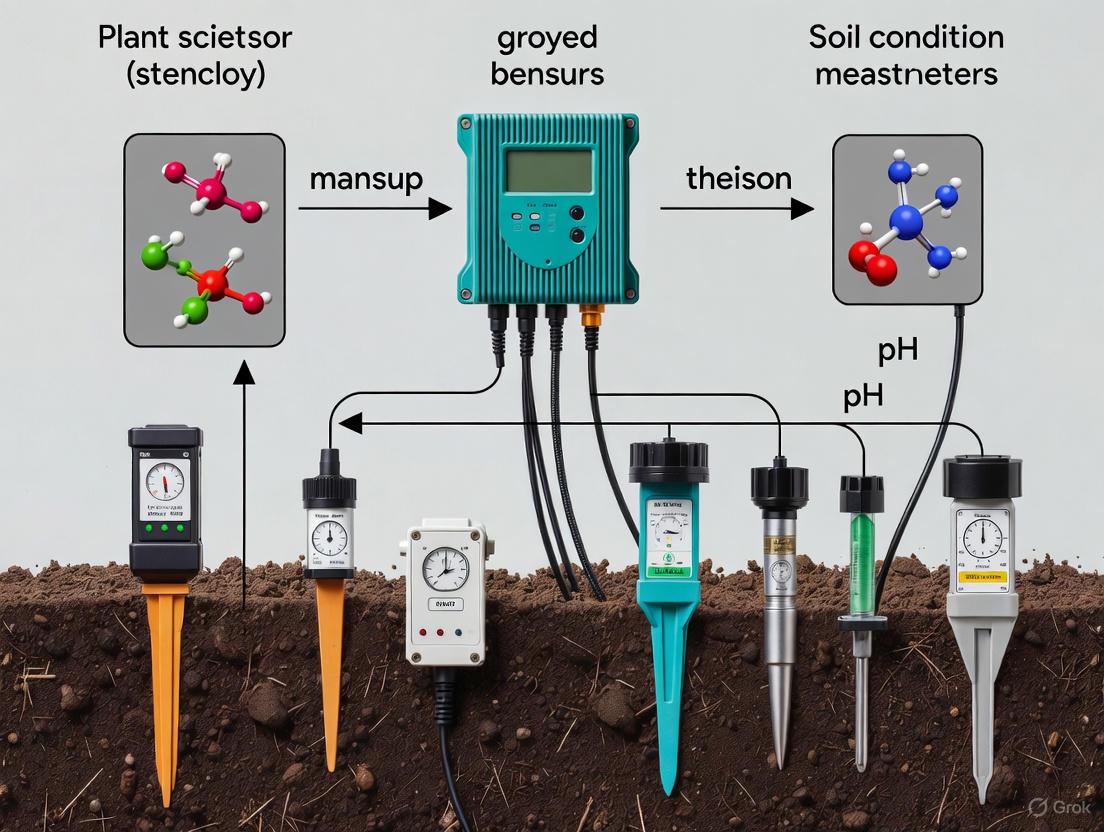
This article provides researchers, scientists, and drug development professionals with a comprehensive framework for the practical application of in-ground sensors for soil condition measurement.
From Soil to Solutions: A Practical Guide to In-Ground Sensors for Biomedical and Environmental Research
Abstract
This article provides researchers, scientists, and drug development professionals with a comprehensive framework for the practical application of in-ground sensors for soil condition measurement. It covers the foundational principles of sensor technologies, details methodological approaches for deployment in research settings, offers solutions for common troubleshooting and data optimization, and establishes protocols for the validation and comparative analysis of sensor data. The scope is designed to enhance the reliability of environmental data, which is critical for studies in areas such as drug discovery from soil microbes, environmental impact assessments, and the cultivation of medicinal plants.
Understanding Sensor Fundamentals: From Working Principles to Research Applications
In-ground soil sensors are pivotal tools for modern agricultural and environmental research, enabling precise measurement of soil conditions to optimize resource use and enhance crop yields. Understanding the core operating principles of the predominant sensor types—capacitive, resistive, and tensiometric—is fundamental to their effective application in field research. These sensors differ fundamentally in what they measure: capacitive and resistive sensors generally determine soil water content, while tensiometric sensors measure the energy status of water in the soil. This article details the operating theories, presents comparative data, and provides standardized protocols for the application of these sensors in scientific research, providing a practical toolkit for researchers and scientists.
Core Operating Principles and Comparison
Capacitive Soil Moisture Sensors
Capacitive soil moisture sensors operate by measuring the dielectric permittivity of the soil. The dielectric constant is a measure of a material's ability to store an electrical charge. Since water has a very high dielectric constant (approximately 80) compared to soil solids (2-5) and air (1), changes in soil water content cause significant variations in the overall soil dielectric permittivity [1]. These sensors function as a capacitor, using the soil as the dielectric medium. The sensor's electronic circuit, often an oscillator, generates an electromagnetic field. The sensor measures the charge-storing capacity of the soil, which is directly related to its water content, and reports this as Volumetric Water Content (VWC), the volume of water per unit volume of soil [1]. A key advantage of properly designed capacitive sensors (those operating at higher frequencies, typically above 50 MHz) is their reduced sensitivity to soil salinity, as they polarize water molecules without significantly mobilizing dissolved salt ions [1]. Capacitive methods include Frequency Domain Reflectometry (FDR) and pure capacitance sensing, which are favored for their accuracy, suitability for continuous data logging, and relatively low cost [2] [3].
Resistive Soil Moisture Sensors
Resistive sensors estimate soil moisture by measuring the electrical resistance or conductivity between two or more electrodes embedded in the soil. The underlying principle is that the presence of water and, more importantly, the ions within the water, facilitates the flow of electrical current. As soil water content increases, the electrical resistance decreases (and conductivity increases) [1]. However, this method faces a significant limitation: the measurement is highly dependent on the concentration of ions in the soil water. Changes in soil salinity, fertilizer application, or soil type can drastically alter the resistance reading independently of the actual water content, making it difficult to obtain a reliable, universal calibration for VWC [1]. While these sensors are inexpensive and react to changes in wetness, their sensitivity to extraneous factors makes them generally unsuitable for rigorous scientific research, limiting their use to applications where only a qualitative wet/dry indication is needed, such as in home gardening or science fair projects [1].
Tensiometric Soil Moisture Sensors
Tensiometers measure soil water potential, specifically the matric potential. Matric potential represents the energy with which water is held by soil particles through adhesive and cohesive forces; it is a measure of how difficult it is for plant roots to extract water from the soil [2] [1]. A tensiometer consists of a porous ceramic cup filled with water, connected to a vacuum gauge or transducer via a water-filled tube. When the ceramic cup is buried in the soil, water moves through the porous cup until the water potential inside the tube equilibrates with the soil water potential outside. As the soil dries, water is drawn out from the tube, creating a suction (negative pressure) that is measured by the gauge [2]. This measurement, reported in units of centibars, bars, or kilopascals, directly indicates the plant's "water stress" level. Unlike water content sensors, tensiometers measure the energy state of water, which is a more direct indicator of plant water availability [1]. Traditional tensiometers have a limited measurement range (typically 0 to 100 centibars), though advanced models have overcome this limitation [2].
Table 1: Comparative Analysis of Soil Moisture Sensor Technologies
| Characteristic | Capacitive (FDR/Capacitance) | Resistive | Tensiometric |
|---|---|---|---|
| Measured Parameter | Volumetric Water Content (VWC) | Electrical Resistance/Conductivity | Soil Matric Potential |
| Primary Principle | Dielectric Permittivity | Electrical Conductivity | Soil Water Suction |
| Typical Units | % VWC (m³/m³) | Ohms, Siemens | centibars, kPa |
| Key Advantage | High accuracy, low salinity sensitivity with high-frequency operation, suitable for continuous logging | Low cost, simple circuitry | Direct measurement of plant-available water |
| Key Limitation | Accuracy can be affected by soil texture, bulk density, and poor soil contact [4] | Highly sensitive to soil salinity and temperature; unreliable calibration [1] | Limited measurement range in basic models; requires maintenance (refilling) [2] |
| Research Suitability | High (with proper calibration) | Low | High |
Quantitative Performance Data
Recent studies have quantified the performance of various soil moisture sensors, providing critical data for sensor selection. The following table summarizes key performance metrics from recent research, highlighting the viability of low-cost capacitive sensors when properly calibrated.
Table 2: Quantitative Performance Metrics of Soil Moisture Sensors from Recent Studies
| Sensor Type (Model/Study) | Reported Accuracy (vs. Gravimetric Method) | Key Performance Findings | Source |
|---|---|---|---|
| Low-Cost Capacitive (SKU:CE09640) | R² > 0.95, RMSE < 0.05 m³/m³ | Performed similarly to conventional tensiometers for irrigation management in kale cultivation. | [5] |
| Low-Cost Capacitive (SKU:SEN0193) | R²: 0.85-0.87, RMSE: 4.5-4.9% | Accurate for smart farming when calibrated; sensor-to-sensor variability increases at high moisture (>30% VWC). | [6] |
| Capacitive (TEROS 10) | Lowest relative deviation | Exhibited the highest measurement consistency and reliability among four tested capacitive sensors. | [4] |
| Handheld Low-Cost Sensor (LCSM) | RMSE: 0.035 m³/m³ (mineral soils), R = 0.90 | Strong agreement with commercial sensors (HydraProbe, ThetaProbe); reliable for diverse conditions. | [7] |
| Solar-Powered Capacitive Sensor | R²: 0.967, RMSE: 0.014 m³/m³ | A robust, accurate, and cost-effective tool for real-time monitoring in greenhouse conditions. | [3] |
| Tensiometer (General) | N/A (Direct measurement) | Irrigation based on sensor data reduced water consumption by 18-22% compared to conventional methods. | [2] [6] |
Experimental Protocol: Sensor Calibration and Field Validation
This protocol outlines a standardized methodology for calibrating low-cost capacitive soil moisture sensors and validating their performance against the gravimetric standard, adapted from multiple research studies [5] [7] [6].
Experimental Workflow
Detailed Methodology
Objective: To establish a substrate-specific calibration function for a capacitive soil moisture sensor and validate its performance under field conditions against standard irrigation management methods.
Materials Required: The Scientist's Toolkit: Essential Materials for Sensor Calibration and Field Validation
| Item | Function | Example/Specification |
|---|---|---|
| Capacitive Soil Moisture Sensors | Primary device under test; measures raw output correlating to dielectric permittivity. | Low-cost models (e.g., DFRobot SEN0193, SKU:CE09640) or research-grade (e.g., METER TEROS series) [5] [6]. |
| Data Logger / Microcontroller | Records sensor output voltage or digital readings at specified intervals. | Arduino-based systems, commercial data loggers with analog/digital ports [5]. |
| Gravimetric Sampling Kit | Provides the standard reference for soil water content measurement. | Soil auger/corer, airtight sample containers, precision balance (0.01g), drying oven (105°C) [7] [6]. |
| Calibration Containers | For preparing soil samples at known, uniform moisture levels in the lab. | Sealed containers with minimal headspace to prevent evaporation [4]. |
| Field Installation Tools | For proper sensor installation in the field to ensure good soil-sensor contact. | Soil auger matching sensor diameter, slurry made from drilled-out soil [2]. |
Procedure:
Laboratory Calibration: a. Soil Preparation: Collect a bulk soil sample from the target field site. Sieve the soil (e.g., 2 mm mesh) to remove stones and debris. Air-dry the soil completely [4]. b. Sample Wetting: Prepare several soil samples by gradually adding distilled water to the air-dried soil and mixing thoroughly to achieve a range of moisture levels from dry to near-saturation (e.g., 5% to 40% gravimetric water content) [6]. Store samples in sealed containers for at least 24 hours to allow for moisture equilibrium. c. Sensor Measurement: For each prepared sample, insert the capacitive sensor and record its output reading (e.g., voltage or counts). Take multiple readings per sample and use the average. d. Gravimetric Reference: Immediately after sensor readings, collect a subsample of the soil using a coring tool. Weigh it wet, dry it in an oven at 105°C for at least 24 hours, and weigh it again. Calculate the gravimetric water content. Convert this to Volumetric Water Content (VWC) using the known bulk density of the soil [7] [6]. e. Calibration Curve: Plot the sensor's output readings against the reference VWC values. Perform regression analysis (linear or polynomial) to derive the calibration function.
Field Validation: a. Experimental Design: Establish a field plot with a randomized block design. Implement different irrigation management strategies (e.g., based on sensor readings, crop evapotranspiration (ETc), and conventional tensiometers) for comparison [5]. b. Sensor Installation: Install calibrated sensors in the field. Use an auger to drill a hole to the desired monitoring depth (e.g., within the root zone). For optimal soil contact, pour a slurry made from the drilled-out soil back into the hole before inserting the sensor [2]. Install multiple sensors per treatment to account for spatial variability. c. Data Collection: Continuously monitor sensor readings via data loggers. Periodically (e.g., weekly), collect gravimetric soil samples near the installed sensors to validate the sensor-derived VWC. d. Agronomic Data: Record plant physiological parameters (e.g., fresh weight, leaf count, yield) and calculate Water Use Productivity (WUP) to assess the impact of the irrigation strategies [5].
Data Analysis:
- Calculate performance metrics such as the Coefficient of Determination (R²), Root Mean Square Error (RMSE), and bias by comparing sensor readings with gravimetric measurements [5] [7] [6].
- Perform analysis of variance (ANOVA) to determine if there are significant differences in crop yield or WUP between the different irrigation management methods [5].
- Analyze sensor-to-sensor variability by calculating the coefficient of variation (CV) for multiple sensors of the same model [6].
Technical Diagrams
Soil Moisture Sensor Measurement Principles
Data Integration and Decision Support Workflow
For researchers deploying in-ground sensors, the accurate measurement of soil moisture, temperature, pH, and nutrient levels is fundamental to understanding soil biogeochemical processes. These parameters directly influence a wide array of scientific phenomena, from nutrient bioavailability and microbial activity to the fate and transport of environmental compounds. Modern sensing technologies now allow for high-resolution, real-time in-situ monitoring, providing datasets that are superior in temporal and spatial resolution to traditional laboratory analysis of grab samples. This document provides detailed application notes and experimental protocols for the use of these sensors within a rigorous research framework, emphasizing metrological rigor, proper installation, and advanced data interpretation.
The core parameters form a interconnected system: soil temperature regulates microbial metabolism and chemical reaction rates; soil moisture governs solute transport and gas diffusion; soil pH determines the chemical speciation and solubility of ions and nutrients; and specific nutrient levels (particularly NPK) indicate the soil's fertility status and biogeochemical cycling. When measured synchronously, these variables provide a holistic view of the soil environment, enabling researchers to develop predictive models and test complex hypotheses.
Technical Specifications of Sensing Technologies
Selecting the appropriate sensor technology is critical for data quality. The following tables summarize the performance specifications and operating principles of common sensor types for each parameter, essential for designing robust experiments.
Table 1: Soil Moisture and Temperature Sensor Specifications
| Parameter | Sensing Technology | Typical Measurement Range | Stated Accuracy | Key Advantages | Key Limitations & Influencing Factors |
|---|---|---|---|---|---|
| Volumetric Water Content (VWC) | Time Domain Reflectometry (TDR) [8] | 0-100% [9] | ±3% (typical with factory model) [10] | High accuracy; soil-specific calibration often not required [8] | Small sensing area; higher cost [8] |
| Capacitance/Frequency Domain Reflectometry (FDR) [8] | 0-100% [9] | ±1% (with soil-specific calibration) [10] | Fast response; remote access; less expensive than TDR [8] | Small sensing volume; readings affected by soil salinity, clay content, temperature, and bulk density [8] | |
| Soil Water Tension (Matric Potential) [11] | 0-220 cb (Granular Matrix) [8] | Varies by sensor type | Directly related to plant water uptake; inexpensive (Granular Matrix) [8] | Slow response time; less accurate in sandy soils; affected by temperature and salinity [8] | |
| Soil Temperature | Thermistor [10] | -50° to +70°C [10] | ±0.1°C (in typical 0-40°C range) [10] | High precision (e.g., ±0.02°C) [10] | Measurement is a point source at the sensor body; requires good soil contact [10] |
Table 2: Soil pH and Nutrient (NPK) Sensor Specifications
| Parameter | Sensing Technology | Typical Measurement Range | Stated Accuracy | Key Advantages | Key Limitations & Influencing Factors |
|---|---|---|---|---|---|
| Soil pH | Spear-Tip Electrode [12] | 0-14 pH [12] | up to ±0.002 [12] | Can penetrate semi-solid materials; lab-grade precision; fast response [12] | Requires calibration; lifespan ~2.5 years [12] |
| RS485 Multi-Parameter Sensor [13] | 3-9 pH [13] | ±0.3pH [13] | Integrated with other parameters; fully buried installation [13] | Lower accuracy; suitable for trend monitoring rather than absolute measurement | |
| NPK (Nitrogen, Phosphorus, Potassium) | RS485 Multi-Parameter Sensor [14] | 1-1999 mg/kg [13] [14] | ±2%FS to ±3% [13] [14] | Provides in-situ estimation of nutrient levels [14] | Significant measurement errors possible; requires verification with standard laboratory methods [13] |
Technology Selection Workflow
The following diagram illustrates the decision-making process for selecting the appropriate sensor technology based on research objectives and soil conditions.
Experimental Protocols for Sensor Deployment
This section provides a standardized, step-by-step protocol for the deployment of in-ground soil sensors to ensure the collection of high-quality, reliable data.
Pre-Installation Planning and Site Characterization
Objective: To define the experimental layout and characterize the site to ensure sensor data is representative and statistically sound.
- Hypothesis and Design: Clearly state the research hypothesis. Define the experimental design (e.g., transect, grid, randomized block) and the number of replicates. For multi-depth measurements, determine the target depths based on the root zone of interest or soil horizons [9].
- Site Survey: Perform a preliminary survey to identify spatial variability in soil type, topography, and vegetation. Tools like the NRCS Web Soil Survey can provide initial data on soil properties [8].
- Zoning: Divide the research area into homogeneous zones based on the survey. Sensors should be replicated within each zone to account for micro-variability [11].
Sensor Calibration and Preparation
Objective: To verify sensor functionality and perform any necessary soil-specific calibration prior to installation.
- Functional Check: Power on the sensors and check output signals (e.g., SDI-12, RS485) using a handheld reader or data logger to ensure they are operational.
- Soil-Specific Calibration (if required):
- VWC Sensors: For highest accuracy, perform a local calibration using the gravimetric method. Collect soil samples from the study site, determine their VWC in the lab, and correlate with sensor readings to derive a custom calibration equation [8].
- pH Sensors: Calibrate using standard buffer solutions (e.g., pH 4.01, 7.00, 10.01) as per the manufacturer's instructions [12].
- Tension Sensors: Granular matrix sensors (e.g., Watermark) may require soaking before initial use to ensure proper hydration [8].
Field Installation Protocol
Objective: To install sensors with minimal soil disturbance and ensure optimal soil-to-sensor contact for accurate readings.
- Materials: Auger or soil coring tool of appropriate diameter, distilled water, soil slurry (made from site-specific soil and distilled water), tape measure, GPS receiver, and data logger.
- Installation Steps: a. Pilot Hole: Create a pilot hole using an auger to the desired depth. The diameter of the hole should be slightly smaller than the sensor probes or body to ensure a tight fit [9]. b. Sensor Placement: * Horizontal Placement (for probes like CS650): For accurate temperature measurement at the sensing depth, orient the sensor horizontally in the soil profile [10]. * Vertical Placement: For multi-depth profilers or single-rod sensors, insert the sensor vertically into the sidewall of the pilot hole at the precise depth. c. Soil Contact: Backfill the gap around the sensor with a slurry of the original soil and distilled water. This is critical to eliminate air gaps and prevent preferential water flow along the sensor body, which can cause erroneous readings [9] [8]. Tamp gently to secure the sensor and ensure natural soil density. d. Cable Management: Route the sensor cable to the data logger, securing it above ground to prevent tripping hazards and damage from fauna or equipment. Burying cables is acceptable but note their location. e. Geolocation and Logging: Record the precise GPS coordinates and installation details (sensor ID, depth, date) for each sensor.
Data Logger Configuration and System Integration
Objective: To establish a robust system for data collection, power, and transmission.
- Connection: Connect sensors to the data logger using the appropriate interface (SDI-12, RS485, analog).
- Programming: Program the data logger with a unique SDI-12 address for each sensor if using that protocol [10]. Set the measurement interval (e.g., every 15 minutes) and logging interval (e.g., hourly averages).
- Power: Ensure adequate power supply, which can be mains electricity, batteries, or solar panels, depending on location and sensor power requirements [9].
Data Interpretation and Workflow
Raw sensor data must be processed, quality-checked, and interpreted within the context of soil physics and chemistry to yield meaningful scientific insights.
From Raw Data to Actionable Knowledge
The following workflow outlines the pathway from data collection to final analysis and decision-making.
Key Calculations and Thresholds
Soil Moisture Deficit for Irrigation Scheduling: A primary application of VWC data is calculating the soil water deficit to inform irrigation or water flux studies.
- Soil Water Deficit (inches) = [Soil VWC at Field Capacity (inches/foot) - Current Soil VWC (inches/foot)] × Root Zone Depth (feet) [8].
- Field Capacity (FC) can be determined in the field as the VWC measured 24-48 hours after a saturating rainfall or irrigation event [8].
- Management Allowable Depletion (MAD) is the level of soil water depletion (typically 30-50% of available water) at which plants begin to experience stress and irrigation should be triggered [8].
Interpreting Soil pH:
- Most plants prefer a pH range of 6.0 to 7.0 [16]. Deviations from this range can lock up essential nutrients, making them unavailable for plant uptake, and can also impact soil microbial communities.
Advanced Applications and Research Trends
The integration of in-situ sensor networks with advanced computational techniques represents the frontier of soil science research.
- Multi-Sensor Data Fusion and AI: Combining data from soil sensors with satellite imagery, UAV (drone) data, and weather stations creates a multi-dimensional view of the environment. Machine Learning (ML) and Deep Learning (DL) models, including LSTM (Long Short-Term Memory), CNN (Convolutional Neural Networks), and Random Forest, are being used to predict soil moisture and nutrient dynamics with high accuracy [15]. Hybrid architectures like CNN-LSTM are particularly effective for spatiotemporal forecasting.
- Explainable AI (XAI) and Federated Learning (FL): As AI models become more complex, XAI techniques are crucial for interpreting model predictions and building trust in their outputs. Federated Learning is an emerging trend that enables model training across distributed datasets (e.g., different farms or research stations) without sharing raw data, thus preserving data privacy and security while improving model generalizability [15].
- Integration with Soil Test Kits for Validation: For parameters like NPK where sensor accuracy may be limited, researchers can employ a hybrid approach. High-accuracy laboratory analysis (e.g., from services like Alluvial Soil Lab) can be used periodically to validate and re-calibrate the continuous in-situ sensor data [17]. This pairs the high temporal resolution of sensors with the high analytical precision of lab tests.
The Researcher's Toolkit: Essential Materials
Table 3: Essential Research Reagents and Materials
| Item | Function in Protocol | Critical Specifications & Notes |
|---|---|---|
| Soil Moisture Sensor (TDR) [8] | Measures volumetric water content directly by measuring travel time of an electromagnetic pulse. | High accuracy; minimal calibration needed; insensitive to salinity. |
| Soil Moisture Sensor (FDR/Capacitance) [8] | Measures water content by measuring the soil's dielectric permittivity. | Requires soil-specific calibration; cost-effective; sensitive to salinity and clay content. |
| Spear-Tip pH Probe [12] | Measures soil pH directly in semi-solid soil by penetrating the material. | Lab-grade accuracy (±0.002 pH); fast response (~1 sec); requires annual calibration. |
| Multi-Parameter Sensor (RS485) [13] [14] | Simultaneously measures multiple parameters (e.g., Temp, VWC, EC, pH, NPK). | Ideal for trend monitoring and network deployments; accuracy varies by parameter. |
| Data Logger | Powers sensors and records measurement data at programmed intervals. | Must be compatible with sensor output (SDI-12, RS485); should have remote communication capability. |
| Standard Buffer Solutions | Used for the calibration of pH sensors to ensure measurement traceability. | Typically pH 4.01, 7.00, and 10.01; essential for pre-deployment calibration [17]. |
| Soil-Specific Calibration Kit | For deriving a local calibration curve for VWC sensors to maximize accuracy. | Includes tools for gravimetric soil sampling (cores, scales, oven). |
The Role of IoT and Wireless Connectivity in Modern Research Networks
Application Notes: IoT System Configuration for Soil Condition Measurement
System Architecture and Component Selection
Modern research networks for in-ground soil condition measurement rely on integrated systems of sensors, connectivity modules, and data visualization platforms. The core architecture typically involves capacitive soil moisture sensors due to their non-destructive measurement, real-time monitoring, cost-effectiveness, and low power consumption [4]. These sensors operate as stationary, indirect, invasive, in situ proximal soil sensors that measure electromagnetic properties with direct soil contact [4].
Research indicates that sensor selection must be substrate-specific, as accuracy varies significantly across different soil compositions [4]. For container-grown plants, low-cost solar-powered IoT systems can effectively monitor substrate electrical conductivity (EC), with studies showing 2-4 EC sensors needed per 1000 pots to achieve precision equivalent to the laboratory pour-through method [18]. The TEROS 10 capacitive sensor has demonstrated the lowest relative deviation and highest measurement consistency among commercially available options [4].
Wireless connectivity enables remote monitoring and control, allowing researchers to manage field deployments from anywhere [19]. These systems typically incorporate IoT farming devices that connect various sensors to cloud platforms for advanced data analysis and storage [19], creating a comprehensive view of research operations.
Quantitative Sensor Performance Data
Table 1: Performance Characteristics of Commercial Capacitive Soil Moisture Sensors
| Sensor Model | Price Category | Relative Deviation | Measurement Consistency | Optimal Application Context |
|---|---|---|---|---|
| TEROS 10 | Premium | Lowest | Highest | Research-grade precision measurements [4] |
| SMT50 | Mid-range | Moderate | Moderate | General agricultural research [4] |
| Scanntronik | Mid-range | Moderate | Moderate | Field trial applications [4] |
| DFROBOT | Budget | Higher | Lower | Pilot studies with budget constraints [4] |
Table 2: Sensor Deployment Density Requirements for Equivalent Precision
| Measurement Method | Sensors Required per 1000 Pots | Application Context | Notable Constraints |
|---|---|---|---|
| Direct bulk EC measurements | 4 | Container crop production [18] | Precision decreases at higher EC levels [18] |
| Hilhorst method (pore water EC) | 2 | Approximating pore water EC [18] | Requires specific calibration [18] |
Data Visualization and Interpretation Framework
Effective IoT research networks require sophisticated data visualization dashboards that transform raw sensor data into actionable insights. These platforms typically provide:
- Real-time monitoring of soil parameters across multiple locations [20]
- Pattern identification through temporal trend analysis [20]
- Anomaly detection for early problem identification [20]
- Predictive insights through historical data analysis [20]
Research dashboards should incorporate multiple visualization techniques including line charts for trends over time, gauge charts for real-time status of critical parameters, and heatmaps for geographical distribution of soil conditions [20]. These visualizations must maintain high color contrast ratios (minimum 7:1 for WCAG AAA compliance) to ensure accessibility for researchers with visual impairments [21].
Experimental Protocols
Protocol: Sensor Calibration for Specific Substrates
Purpose and Scope
To establish substrate-specific calibration curves for capacitive soil moisture sensors, ensuring accurate volumetric water content (VWC) measurements in research applications. This protocol is adapted from laboratory validation procedures for commercial soil moisture sensors [4] [22].
Materials and Equipment
- Capacitive soil moisture sensors (e.g., TEROS 10, SMT50, DFROBOT)
- Target substrate samples (minimum 3 different compositions)
- Calibration containers
- Drying oven capable of maintaining 105°C
- Precision mass balance (0.01g sensitivity)
- Mixing containers
- Drying containers
Procedure
- Substrate Preparation: Prepare substrate samples with different, known moisture contents [4].
- Sensor Installation: Install each sensor repeatedly in prepared samples, ensuring consistent insertion depth and tightness [4].
- Reference Measurements: Use Oven Dry Method (ODM) as reference for calibration [22].
- Data Collection: Conduct a minimum of 380 measurements across the moisture range to establish reliable calibration curves [4].
- Model Development: Apply regression equations and Adaptive Neuro-Fuzzy Inference System (ANFIS) to develop characteristic models with accuracy up to 92% [22].
- Validation: Verify calibration parameters post-installation, as contact with soil/substrate significantly influences measurements [4].
Quality Control
- Ensure uniform and reproducible insertion depth across all measurements [4]
- Document substrate composition and texture characteristics
- Validate calibration curves across the entire moisture range
Protocol: Field Deployment and Correlation with Standard Methods
Purpose and Scope
To deploy calibrated IoT sensor systems under field conditions and establish correlation with conventional laboratory methods for substrate electrical conductivity (EC) measurement.
Materials and Equipment
- Calibrated capacitive soil moisture sensors
- Solar-powered IoT connectivity modules
- Reference electrodes for SS316L or Copper Based Probes [22]
- Data logging system
- Pour-through method equipment [18]
Procedure
- System Deployment: Deploy low-cost, solar-powered IoT system in typical production conditions [18].
- Sensor Placement: Install sensors in container-grown crops, considering irrigation method (sprinkler vs. drip) [18].
- Monitoring Period: Collect data over an extended period (e.g., 10 weeks) [18].
- Reference Measurements: Collect manual EC measurements using pour-through method at regular intervals [18].
- Data Analysis: Evaluate relationship between sensor-based and conventional EC measurements [18].
- Irrigation Method Consideration: Analyze correlation separately for sprinkler and drip irrigation systems [18].
Data Interpretation
- Establish correlation between sensor EC values and pour-through measurements [18]
- Account for irrigation method effects, as uneven substrate saturation under drip irrigation may limit correlation [18]
- Analyze variation in EC data to determine minimum sensor density required for target precision [18]
Research Workflow for Soil Sensor Deployment
The Scientist's Toolkit: Essential Research Reagents and Materials
Table 3: Essential Research Materials for IoT-Enabled Soil Condition Measurement
| Item | Specification | Research Function |
|---|---|---|
| Capacitive Soil Moisture Sensors | TEROS 10, SMT50, or DFROBOT models | Measure volumetric water content through dielectric permittivity [4] |
| SS316L Sensor Probes | Stainless Steel 316L grade | Corrosion-resistant electrodes for durable field deployment [22] |
| IoT Connectivity Modules | Wireless, solar-powered | Enable real-time data transmission and remote monitoring [18] [19] |
| Calibration Substrates | Zeobon, Kranzinger, or custom mixtures | Establish substrate-specific calibration curves [4] |
| Data Visualization Platform | Grafana, Kibana, or Tableau | Transform sensor data into interpretable dashboards [20] [23] |
IoT Architecture for Soil Research
The selection of appropriate sensors is a cornerstone of rigorous biomedical research, particularly in studies involving the monitoring of complex biological environments. This document frames these principles within the context of in-ground soil condition measurement—a field with direct analogies to biomedical in vivo monitoring—to provide a practical framework for researchers and drug development professionals. The fundamental challenge in both domains is obtaining accurate, sensitive, and stable measurements from within a dynamic, often hostile, environment. Sensor performance is not merely a function of the device itself, but is inextricably linked to its interaction with the surrounding medium, whether soil or biological tissue [24] [25].
Accuracy, sensitivity, and environmental stability form the critical triad of sensor selection. Accuracy refers to the closeness of a sensor's measurements to the true value of the parameter being measured. Sensitivity is the sensor's ability to detect small changes in the target parameter. Environmental stability denotes the sensor's performance consistency when subjected to variations in external conditions such as temperature, chemical composition, and physical stress [24] [25] [26]. The interplay of these factors dictates the reliability of the data collected, which in turn influences the validity of research conclusions and the success of subsequent development stages. The following sections provide a detailed examination of these criteria, supported by quantitative data and experimental protocols to guide the selection and deployment of sensors for demanding research applications.
Performance Analysis of Prevalent Sensing Modalities
A comprehensive understanding of available sensor technologies is essential for informed selection. The following table summarizes the performance characteristics of common sensor types used in environmental and biomedical monitoring, based on recent comparative studies.
Table 1: Performance Comparison of Common Sensor Types for Environmental and Biomedical Monitoring
| Sensor Type | Principle of Operation | Estimated Accuracy | Key Strengths | Key Limitations |
|---|---|---|---|---|
| Capacitive (FDR) | Measures dielectric permittivity of the medium to estimate volumetric water content [24] [27]. | ±2% VWC [28] [27] | Cost-effective, low power consumption, suitable for real-time monitoring [24] [27]. | Performance is influenced by soil composition, salinity, and temperature; requires substrate-specific calibration [24] [25]. |
| Time-Domain Reflectometry (TDR) | Analyzes reflected electrical signal to determine dielectric permittivity [24] [28]. | ±1% VWC [28] | High precision, robust performance in various media [28] [25]. | Higher cost and complexity compared to capacitive sensors [28] [27]. |
| Resistance/Conductivity | Measures electrical resistance between electrodes in the medium [28] [29]. | ±4% VWC [28] | Low cost, simple design [28] [29]. | Lower accuracy, particularly in saline environments; readings are highly influenced by soil temperature and ion content [28] [25]. |
| Digital Thermistor | Measures temperature via resistance changes in a semiconductor [28] [30]. | ±0.5°C [28] | High accuracy for temperature, low power, well-understood technology [28] [30]. | Typically single-parameter; requires integration with other sensors for multi-parameter analysis. |
The data indicates a clear trade-off between cost, complexity, and accuracy. For instance, while TDR sensors offer high accuracy, their cost can be prohibitive for large-scale deployments [28] [27]. A key finding from recent research is that factory-based calibrations are often insufficient for high-precision work. A study evaluating capacitive, resistive, and TDR sensors found that their factory calibrations did not meet all statistical performance criteria, underscoring the necessity for application-specific calibration in a controlled laboratory setting before field or clinical deployment [25]. Furthermore, the physical installation of the sensor, including insertion technique and the tightness of contact with the medium, has a significant and often underappreciated influence on measurement variability, making reproducible installation a critical component of the experimental protocol [24].
Experimental Protocols for Sensor Validation and Deployment
Protocol 1: Laboratory Validation and Substrate-Specific Calibration
This protocol is designed to establish the baseline accuracy of sensors and develop a custom calibration curve for the specific substrate (e.g., soil type, biomedical hydrogel) under study.
- Objective: To determine the accuracy of a sensor and generate a substrate-specific calibration equation.
- Materials and Reagents:
- Test Sensors: Units of the sensor model to be validated.
- Reference Standard: Laboratory-grade scale for gravimetric analysis [27].
- Substrate Samples: A minimum of three distinct substrates representative of the target environment (e.g., S1: Zeobon substrate, S2: Kranzinger roof substrate, S3: Sieved Kranzinger substrate to minimize voids) [24].
- Environmental Chamber: For controlling temperature and humidity.
- Data Logging System: To record sensor outputs.
- Procedure:
- Step 1: Substrate Preparation. Prepare multiple samples of each substrate type. Hydrate them to achieve a wide range of known moisture levels, from fully saturated to air-dry. For each moisture level, determine the true Volumetric Water Content (VWC) using the gravimetric method (drying at 105°C for 24 hours) as a reference [27].
- Step 2: Sensor Installation. Install the test sensors into the prepared substrates. Ensure a uniform and reproducible insertion depth and technique to minimize variability caused by installation [24]. A minimum of 380 total measurements across all substrates and moisture levels is recommended for statistical power [24].
- Step 3: Data Collection. Under controlled laboratory conditions, record the output from all test sensors simultaneously with the gravimetric reference measurement for each sample.
- Step 4: Data Analysis. Calculate performance metrics such as Root Mean Squared Error (RMSE), Index of Agreement (IA), and Mean Bias Error (MBE) to quantify sensor performance against the reference [25]. Perform linear regression analysis between sensor output and reference VWC to develop a substrate-specific calibration equation.
- Validation: Apply the derived calibration equation to a separate, validation dataset not used in model creation. A successful calibration is one where the calibrated sensor readings show a strong correlation (e.g., R² > 0.96 as demonstrated in some studies) with reference values and all performance metrics meet the pre-defined research criteria [25] [27].
Protocol 2: Field-Based Assessment of Sensor Stability and Drift
This protocol assesses long-term sensor performance and reliability under real-world operating conditions.
- Objective: To evaluate sensor stability, drift, and reliability over an extended deployment period.
- Materials and Reagents:
- Calibrated Sensors: Sensors pre-calibrated using Protocol 1.
- Data Logging and Power System: A robust system for continuous data collection, often leveraging IoT (Internet of Things) platforms for real-time monitoring [27] [11].
- Environmental Reference Monitors: Additional sensors to log concurrent environmental conditions (e.g., temperature, precipitation).
- Procedure:
- Step 1: Deployment. Deploy the calibrated sensors in the target environment (e.g., agricultural field, biomedical monitoring setup). Use a strategic layout that accounts for spatial variability, potentially in a grid pattern [11].
- Step 2: Continuous Monitoring. Collect data from the sensor network at a high frequency (e.g., hourly) over the entire study duration (e.g., a full growing season for agricultural research) [31] [27].
- Step 3: Periodic Ground-Truthing. At regular intervals, perform manual gravimetric soil sampling at the sensor locations to obtain ground-truth data for comparison with sensor readings [27].
- Step 4: Data Interrogation. Analyze the collected time-series data for signs of drift (gradual deviation from ground-truth values), sudden signal drop-outs, or inconsistencies correlated with environmental events (e.g., temperature spikes, fertilization events that alter soil salinity) [31].
- Validation: Sensor stability is confirmed by a low mean bias error (MBE) and a high Index of Agreement (IA) between sensor readings and periodic ground-truth measurements throughout the study period [25].
Visualization of Sensor Selection and Deployment Workflow
The following diagram outlines the logical workflow for selecting, validating, and deploying sensors in a research context, integrating the protocols described above.
The Scientist's Toolkit: Essential Research Reagent Solutions
The following table details key materials and equipment essential for executing the sensor validation and deployment protocols effectively.
Table 2: Essential Research Reagents and Materials for Sensor Validation
| Item | Function/Application | Critical Specifications |
|---|---|---|
| Reference Standard (Gravimetric Setup) | Provides the ground-truth measurement for calibrating all other sensors [27]. | Laboratory oven capable of maintaining 105°C, precision balance with resolution of at least 0.01g. |
| Standardized Substrate Samples | Serves as a controlled medium for laboratory validation, allowing for the isolation of sensor performance from environmental noise [24]. | Defined particle size distribution, organic matter content, and ionic composition. Examples: Zeobon, Kranzinger substrate [24]. |
| Environmental Chamber | Controls external conditions during lab validation to test sensor stability against temperature and humidity fluctuations [24]. | Temperature control range: 5°C to 40°C; Humidity control capability. |
| IoT Data Logging System | Enables real-time, continuous data collection from sensor networks in field deployments, facilitating remote monitoring and stability assessment [27] [11]. | Wireless connectivity (e.g., LoRaWAN, NB-IoT), weatherproof housing, and long battery life. |
| Calibration Solutions & Kits | Used for verifying and adjusting sensor readings against known standards, especially for chemical sensors (e.g., pH, NPK) [26]. | Solutions with certified concentrations of target analytes; manufacturer-provided calibration protocols. |
The rigorous selection of sensors based on empirical performance data is fundamental to the integrity of research involving environmental monitoring. As demonstrated, this process extends beyond a simple review of manufacturer specifications to include thorough laboratory validation and field-based stability assessments. The integration of low-cost, IoT-enabled sensors presents a significant opportunity for large-scale, high-resolution studies, but their successful application is contingent upon the rigorous calibration and validation protocols outlined herein [27]. By adhering to these application notes and protocols, researchers can ensure that the data underpinning their conclusions is accurate, sensitive, and stable, thereby enhancing the reliability and impact of their scientific contributions. Future advancements are likely to focus on the integration of artificial intelligence for dynamic calibration correction and the development of multi-modal sensors that can concurrently measure a suite of biological and environmental parameters [26] [11].
Deployment and Data Integration: A Methodological Guide for Research Settings
Strategic installation of in-ground soil moisture sensors is a critical foundation for reliable environmental and agricultural research. The accuracy of data informing irrigation scheduling, hydrological modeling, and plant physiology studies depends on scientifically-sound protocols for sensor placement, depth determination, and representative sampling design [8] [32]. This document provides detailed application notes and experimental protocols to guide researchers in deploying soil moisture sensors for generating high-quality, research-grade data, framed within a broader thesis on practical sensor applications for soil condition measurement.
Sensor Selection and Operating Principles
Research-Grade Sensor Technologies
Selecting appropriate sensor technology is the first critical step. The table below compares the primary types of research-grade soil moisture sensors.
Table 1: Comparison of Research-Grade Soil Moisture Sensor Technologies
| Technology | Measured Parameter | Key Advantages | Key Limitations | Relative Cost |
|---|---|---|---|---|
| Neutron Probe [8] | Volumetric Water Content (VWC) | High accuracy; samples large soil volume; unaffected by salinity | Radioactive licensing required; high initial cost (~$10,000); manual readings | Very High |
| Time Domain Reflectometry (TDR) [8] [33] | Volumetric Water Content (VWC) | High accuracy; minimal calibration needed; less affected by salinity | High cost per sensor; small sensing area | High |
| Frequency Domain Reflectometry (FDR)/Capacitance [8] [9] [33] | Volumetric Water Content (VWC) | Fast response; suitable for automation; remote data access | Sensitive to soil salinity, clay, temperature; requires soil-specific calibration | Medium |
| Tensiometers [8] [32] | Soil Water Potential (Matric Potential) | Direct measurement; unaffected by salinity | Limited operative range (0-90 kPa); high maintenance; slow response | Low to Medium |
| Granular Matrix Sensors [8] [32] | Soil Water Potential (Matric Potential) | Inexpensive; large measurement range (0-220 cb) | Slow response time; less accurate in sandy soils; sensitive to temperature | Low |
Key Principles for Sensor Selection
- Water Content vs. Water Potential: Distinguish between these two parameters. Volumetric Water Content (VWC) is the volume of water per volume of soil (%), indicating the amount of water present. Soil Water Potential (or matric potential), measured in centibars (cb) or kPa, indicates the energy state of water and its availability to plants [33].
- Dielectric Method Superiority: For research-grade VWC measurement, dielectric sensors (TDR, FDR, Capacitance) are recommended over resistance sensors. Resistance sensors are highly sensitive to soil salinity and ion concentration, making them unreliable for quantitative research [33].
- Sensor Datasheet Analysis: When selecting a sensor, consult manufacturer datasheets for key performance parameters including VMC range (0-100%), accuracy (0.5-3%), precision (0.1-0.5%), operating temperature range (-20 to 50 °C), and battery life (3-15 years) [9].
Strategic Placement and Installation Protocols
Site Selection and Spatial Design
Choosing representative sensor locations is crucial to capture accurate field conditions.
- Representative Locations: Install sensors in areas that represent the average soil conditions, topography, and crop growth of the study zone. Avoid anomalies such as areas with poor drainage, unusual soil depth, or excessive vigor [11] [32].
- Avoiding Interference: Keep sensors away from obstacles that could interfere with readings, such as impervious surfaces, support structures, and field edges [11].
- Sampling Design for Spatial Mapping: For research aiming to create digital soil maps, employ structured sampling designs. Conditioned Latin Hypercube Sampling (cLHS) provides the best feature space coverage, while Grid Sampling (GS) offers superior spatial coverage [34].
Installation Workflow
Proper physical installation ensures accurate sensor readings and long-term reliability.
Diagram: Soil Moisture Sensor Installation Workflow
Protocol 1: Detailed Sensor Installation Steps
- Pre-Installation: Confirm sensor functionality and calibrate if required according to manufacturer guidelines. For some sensors, pre-wetting is recommended [11].
- Access Hole Creation: Dig a pilot hole using a soil auger with a diameter matching the sensor or probe to minimize soil disturbance and preserve soil structure [9].
- Sensor Positioning: Insert the sensor horizontally or vertically as per design. Ensure it is positioned at the correct depth corresponding to the target root zone [9] [32].
- Backfilling and Soil Contact: Achieve critical soil-sensor contact by backfilling with a soil slurry (a mix of soil and water) to eliminate air gaps that cause inaccurate readings [9].
- System Verification: Confirm the sensor is operational and logging data as expected following installation.
- Maintenance Schedule: Establish a schedule for regular sensor cleaning, calibration checks, and physical inspection for damage [11].
Depth Determination and Vertical Profiling
Root Zone Depth Weighting
Effective irrigation management and plant-based research require understanding water use at different soil depths.
- Active Root Zone Placement: The primary sensor should be placed within the active root zone of the studied crop. Common installation depths range from 6 inches (0.15 m) to 60 inches (1.5 m) [9] [32].
- Multiple Depth Sensors: Install multiple sensors at different depths to profile soil moisture throughout the root zone. A common configuration uses sensors at shallow, intermediate, and deep depths (e.g., 4, 12, and 20 inches) [35].
- Depth-Weighted Averages: For a single irrigation decision metric, calculate a weighted average based on the root density and observed water usage at each depth, rather than a simple average. This prevents under-irrigation early in the season (by over-weighting deep soil moisture unavailable to young roots) and over-irrigation later in the season [35].
Diagram: Soil Moisture Sensor Depth Weighting Concept
Leachate Monitoring Sensor
An additional sensor placed at the bottom of the root zone is valuable for assessing irrigation efficiency. This sensor indicates whether water is moving beyond the root zone, which represents potential nutrient leaching and water waste [32].
Representative Sampling and Data Validation
Sampling Designs for Spatial Mapping
For research focused on creating digital soil maps (DSM), the sampling design for sensor placement directly impacts model accuracy.
Table 2: Comparison of Sampling Designs for Digital Soil Mapping [34]
| Sampling Design | S-Optimality (Spatial Coverage) | D-Optimality (Feature Space Coverage) | Best Suited For |
|---|---|---|---|
| Grid Sampling (GS) | Highest (135) | Low | Capturing general spatial trends and variability across a field. |
| Conditioned Latin Hypercube Sampling (cLHS) | Lowest (119) | Highest (18.4x10²³) | Ensuring that the full multivariate feature space of covariates is represented. |
| Grid Random Sampling (GRS) | High (134) | Medium | Combining even spatial distribution with some random variability. |
| Stratified Random Sampling (StRS) | Medium (124) | Medium | Targeting specific sub-areas or soil types within a larger field. |
- Performance Insight: Studies show that designs with good spatial coverage (GS) or good feature space coverage (cLHS) can provide similar prediction accuracies for soil properties like clay content, but may perform differently for other properties like Soil Organic Matter (SOM) [34].
Machine Learning for Moisture Prediction
Advanced data analysis can extend the value of sensor data. Machine learning (ML) models demonstrate strong capability for spatiotemporal prediction of Soil Moisture Content (SMC):
- Effective Models: Random Forest Regression (RFR), eXtreme Gradient Boosting (XGBoost), and Long Short-Term Memory (LSTM) networks can effectively predict SMC across various soil types and depths [36].
- Key Predictors: Meteorological data, particularly solar radiation and precipitation, are identified as the most influential predictors for SMC variation in these ML models [36].
The Scientist's Toolkit
Table 3: Essential Research Reagents and Materials for Sensor-Based Soil Research
| Item | Function/Application |
|---|---|
| Soil Auger Kit | For creating clean access holes for sensor installation with minimal soil disturbance [36]. |
| Data Logger | Electronic device that records sensor measurements at programmed intervals; costs range from $500-$3,500 [8]. |
| Gravimetric Sampling Kit (Oven, Scales, Containers) | Provides the primary standard for validating sensor-measured VWC; considered the most reliable method [36]. |
| LoRaWAN Gateway/Base Station | Enables long-range, low-power wireless communication from field sensors to a central server for remote data access [9] [36]. |
| Soil Slurry (Self-mixing dirt and water) | Used during backfilling to eliminate air gaps between the sensor and the soil, ensuring accurate readings [9]. |
| Calibration Standards | Materials or equations used to adjust sensor readings for specific soil textures (e.g., sand, clay, loam) to optimize accuracy [8] [9]. |
Strategic installation of soil moisture sensors is a multi-faceted process that extends beyond simply burying a probe in the ground. It requires careful selection of research-grade technology, methodical placement and depth determination based on plant physiology, and a sampling design that aligns with the research objectives. By adhering to these detailed protocols for placement, depth profiling, and spatial design, researchers can ensure their in-ground sensor networks generate the high-fidelity data necessary for robust scientific conclusions in soil condition measurement.
Integration with Data Loggers and Cloud Platforms for Continuous Monitoring
The practical application of in-ground sensors for soil condition measurement research is foundational to modern precision agriculture and environmental science. The integration of these sensors with robust data loggers and cloud platforms enables the transition from intermittent, manual data collection to continuous, real-time monitoring systems. This paradigm shift allows researchers and scientists to capture high-fidelity, time-series data on critical soil parameters, providing the dataset necessary for advanced analysis, predictive modeling, and data-driven decision-making in applications ranging from crop optimization to pharmaceutical agronomy. These Application Notes and Protocols outline the methodologies for establishing a reliable, end-to-end monitoring infrastructure for soil condition measurement research.
Sensor Selection and Quantitative Specifications
Selecting appropriate in-ground sensors is the first critical step. The choice of sensor dictates the quality and type of data acquired and influences the selection of compatible data loggers. The following table summarizes key sensor types and their specifications.
Table 1: Key In-Ground Soil Sensor Types and Specifications
| Sensor Type | Measured Parameter(s) | Measurement Principle | Key Considerations for Researchers |
|---|---|---|---|
| Soil Moisture/Tension Sensor [37] [38] | Soil Water Potential (kPa) | Granular matrix/electrical resistance | Requires specific excitation voltage & calibration; life span can be extended with proper AC excitation [38]. |
| Volumetric Water Content Sensor [37] | Soil Moisture Content (% VWC) | Capacitance/Frequency Domain Reflectometry | Provides direct water content reading; calibration may be needed for different soil types [37]. |
| Temperature Sensor [37] [39] | Soil Temperature (°C) | Thermistor or RTD | Essential for calibrating moisture readings and understanding biological activity [38] [39]. |
| Multi-Parameter Probe [37] [40] | pH, NPK, Salinity, Temperature | Ion-Selective Electrodes, Optical, Electrical | Emerging nanobiotechnology and plant wearable sensors can provide data on plant signaling molecules and soil pollutants [40]. |
Data Logger Integration: Hardware and Connectivity
The data logger acts as the central hub, responsible for power management, sensor data acquisition, and initial data processing before transmission.
Data Logger Selection and Power Management
A suitable data logger must offer sensor compatibility, ruggedness for field deployment, and efficient power management. Key features to consider include:
- Flexible I/O Architecture: The logger should support a wide range of communication protocols (e.g., SDI-12, RS-485, 4-20mA, Analog) to interface with diverse sensors [37]. For instance, the Hawk Pro IoT Data Logger offers such flexible integrations [37].
- Ruggedized Design: Equipment must be built to withstand harsh environmental conditions like extreme temperatures and humidity [37].
- Power Sourcing & Management: For remote, off-grid locations, solutions with long battery life (e.g., up to 10 years) and/or solar panel integration are critical for maintaining consistent, long-term operation [37].
Connectivity Protocols for Rural Deployment
Transmitting data from the field often relies on wireless networks. The choice of protocol involves a trade-off between power consumption, range, and data rate.
Table 2: Communication Protocols for Agricultural IoT Deployment
| Protocol | Range | Power Use | Typical Use Case in Research |
|---|---|---|---|
| LTE-M / NB-IoT [37] | High | Medium | Ideal for most rural areas with existing cellular coverage; offers a direct link to the cloud. |
| LoRaWAN [37] | Very High | Low | Suitable for vast areas; requires a private gateway but enables long-range, low-power communication. |
The following diagram illustrates the logical workflow and architecture of a data acquisition system, from sensor measurement to cloud transmission.
Cloud Platform Integration and Data Utilization
Once transmitted, data is centralized, visualized, and made available for analysis and automation in the cloud.
Cloud Dashboard and Data Accessibility
Cloud platforms provide web-based dashboards for real-time monitoring of soil conditions across multiple zones [37]. These dashboards allow researchers to:
- Visualize Data: View current and historical data for parameters like soil moisture and temperature in graphical or numerical formats [37].
- Access and Export Data: Download data in standard formats (e.g., CSV/Excel) for offline analysis or use a REST API to integrate data directly into custom analysis scripts and platforms [38].
Alerting and Automation
Cloud platforms enable the creation of trigger-based automation rules that respond to real-time data [37]. This is crucial for proactive research management.
- Alerts: Configure SMS or email alerts for specific thresholds, such as soil moisture dropping below a critical level for plant health [37].
- Automated Control: Integrate with irrigation controllers to auto-start pumps when soil moisture is low or pause irrigation based on forecasted rainfall, optimizing resource use without manual intervention [37].
Experimental Protocol: Deployment and Calibration
This protocol provides a detailed methodology for deploying a sensor network for continuous soil moisture and temperature monitoring.
Materials and Equipment (The Scientist's Toolkit)
Table 3: Essential Research Reagents and Solutions for Sensor Deployment
| Item / Solution | Function / Specification | Research Application Notes |
|---|---|---|
| Soil Moisture/Tension Sensor [38] | Measures soil water potential (kPa). | The Watermark sensor is a widely used, reliable granular matrix sensor. For accurate long-term readings, ensure the data logger provides correct pseudo-AC excitation [38]. |
| Soil Temperature Probe [38] [39] | Measures soil temperature (°C). | Critical for calibrating soil moisture readings (e.g., using the Shock (1998) calibration formula) and modeling microbial activity [38]. |
| IoT Data Logger/Gateway [37] | Powers sensors, logs, and transmits data. | Select a device with multi-protocol support (e.g., SDI-12, RS-485) and rugged, low-power design for field resilience. Example: Hawk Pro or Reporter [37] [38]. |
| Calibration Standards | For verifying sensor accuracy. | Use manufacturer-provided standards or site-specific saturated soil samples for volumetric moisture sensors. |
| Cloud Data Platform [37] [38] | Web interface for data visualization and export. | Platforms like the Crodeon Dashboard or Digital Matter's Device Manager enable remote monitoring, alert configuration, and API access for data retrieval [37] [38]. |
Step-by-Step Deployment Procedure
- Site Selection and Sensor Placement: Identify monitoring locations based on experimental design (e.g., transects, randomized blocks). Install sensors at multiple depths (e.g., 15cm and 45cm) to profile water availability through the root zone [37]. Ensure good soil-to-sensor contact.
- Data Logger Configuration: Connect sensors to the data logger (e.g., Hawk Pro, Reporter) following wiring diagrams. Use the device management software (e.g., Digital Matter's Device Manager) to:
- Name each sensor channel for clear identification.
- Set the data logging interval (e.g., every 15 minutes) and data transmission frequency [37].
- Configure input types to match the sensors (e.g., SDI-12 for Watermark sensors).
- Power and Connectivity Setup: For remote sites, connect the solar panel and battery to the data logger. Ensure the cellular (LTE-M/NB-IoT) or LoRaWAN signal strength is adequate at the deployment site [37].
- Cloud Platform Setup:
- Register the data logger with the cloud platform.
- Replicate sensor names and configurations in the cloud dashboard.
- Set up alert thresholds (e.g., soil moisture < 20%) and automated actions if needed [37].
- Calibration and Validation: Apply temperature-based calibration to soil moisture tension data as specified by the sensor manufacturer [38]. Periodically validate automated data against manual readings to ensure system accuracy.
The following workflow diagram summarizes the end-to-end process of establishing a continuous monitoring system, from physical deployment to data-driven action.
Data Analysis and Advanced Applications
The time-series data collected enables sophisticated analysis, moving beyond simple monitoring to predictive insights.
Data Analysis and Predictive Modeling
The reliable, time-stamped dataset generated by these systems is ideal for advanced computational methods. Research has demonstrated the use of machine learning and deep reinforcement learning algorithms for tasks such as:
- Soil Information Prediction: Using models like a Deep Q Network (DQN) combined with Bidirectional Long Short-Term Memory (BiLSTM) and Extreme Learning Machines (ELM) to accurately predict soil moisture and temperature, which can inform decisions before critical conditions occur [39].
- System Optimization: Implementing Deep Reinforcement Learning (DRL) to optimize task scheduling and resource allocation at the network edge, improving the overall efficiency of the monitoring infrastructure [39].
Multi-Sensor Data Fusion
A significant advantage of modular systems is the ability to combine data from various sensors to gain a holistic understanding of the soil-plant-atmosphere continuum. For example, a single data logger can correlate data from:
- Soil Moisture Sensors (Watermark)
- Dendrometers (to measure plant trunk growth)
- Environmental Sensors (air temperature, humidity) [38] This multi-sensor approach provides powerful, correlated datasets for complex research questions, such as studying the effect of irrigation strategies on plant physiology, while reducing costs by using a single cloud connection for all sensors [38].
Soil contamination poses a significant threat to environmental and public health. The practical application of in-ground sensors for soil condition measurement represents a critical advancement in our ability to understand and mitigate these risks. This case study examines the integration of modern sensing technologies with traditional analytical methods to create a comprehensive framework for soil contaminant monitoring. Recent research has highlighted the emergence of novel contaminants—including nanomaterials, microplastics, and pharmaceutical residues—that require sophisticated detection capabilities [41]. Simultaneously, advancements in sensor technology have enabled real-time monitoring of soil parameters that influence contaminant behavior, providing unprecedented insight into dynamic subsurface processes [31]. This research is situated within a broader thesis exploring how in-ground sensors can transform environmental health research through improved spatial and temporal resolution of soil data.
Soil Monitoring Technologies and Applications
Sensor Technologies for Soil Monitoring
The selection of appropriate sensor technology is fundamental to effective soil contaminant monitoring. Dielectric permittivity sensors have emerged as the predominant method for research-grade soil moisture measurement, which influences contaminant transport and bioavailability [42]. These sensors operate by measuring the charge-storing capacity of the soil, which correlates strongly with water content due to water's high dielectric constant relative to other soil components [42].
Table 1: Comparison of Soil Moisture Sensing Technologies
| Technology | Measurement Principle | Advantages | Limitations | Research Grade |
|---|---|---|---|---|
| Resistance Sensors | Measures electrical conductivity between electrodes | Low cost, simple integration, reacts to water changes | Highly sensitive to soil salinity and ion concentration; unreliable for quantitative measurement | No [42] |
| TDR (Time-Domain Reflectometry) | Measures travel time of reflected electromagnetic wave | Accurate; relatively unaffected by salinity; measures bulk soil | Higher cost; complex interpretation | Yes [42] |
| FDR/Capacitance | Measures soil dielectric permittivity at specific frequencies | Good accuracy; moderate cost; suitable for continuous monitoring | Performance varies with measurement frequency and design | Varies by specific sensor [42] |
| Thermal Conductivity | Measures heat dissipation in porous medium | Directly related to water potential | Requires good soil contact; limited to drier range | Specialized applications [42] |
Beyond moisture measurement, innovative sensor technologies are being developed to address specific contamination challenges. Researchers at the University of Colorado Boulder have developed real-time soil emission sensors that monitor temperature, moisture, and oxygen levels to estimate nitrous oxide emissions—a potent greenhouse gas—from agricultural soils [31]. These screen-printed sensors, costing approximately $10 per unit, provide a window into microbial processes that drive contaminant transformation in subsurface environments [31].
Emerging Contaminants and Detection Methods
The landscape of soil contaminants has expanded beyond traditional heavy metals and petroleum hydrocarbons to include a diverse array of emerging substances that challenge conventional monitoring approaches.
Table 2: Emerging Soil Contaminants and Detection Methods
| Contaminant Category | Examples | Potential Sources | Advanced Detection Methods |
|---|---|---|---|
| Nanomaterials | Fullerenes, metal oxides (ZnO, CeO₂) | Coatings, catalysts, electronics, composites | Transmission Electron Microscopy (TEM), Scanning Electron Microscopy with EDS, LC-HRMS [41] |
| Microplastics/Nanoplastics | Plastic particles <5mm | Biosolids, landfill leachate, stormwater runoff | FTIR spectroscopy, Raman spectroscopy, automated imaging classification [41] |
| Pharmaceuticals & Endocrine Disruptors | Hormones, antiseptics, synthetic additives | Effluent, stormwater, site infiltration | Liquid Chromatography-High Resolution Mass Spectrometry (LC-HRMS), passive samplers (POCIS) [41] |
| Novel Industrial Chemicals | Flame retardants, plasticizers, surfactant | Legacy industrial sites, recycling operations | Gas Chromatography-HRMS, non-targeted screening, machine learning pattern recognition [41] |
The detection of these emerging contaminants requires sophisticated analytical approaches. High-resolution mass spectrometry (HRMS) enables non-targeted screening, which is crucial for identifying unknown compounds and transformation products without pre-selection [41]. Additionally, passive sampling devices accumulate trace organics over time, improving the detection of low-concentration emerging compounds that might be missed through traditional grab sampling [41].
Experimental Protocols and Methodologies
Sensor Deployment and Data Collection Protocol
Objective: To establish reliable procedures for deploying in-ground sensors to monitor soil parameters influencing contaminant fate and transport.
Materials:
- Research-grade dielectric sensors (TDR or FDR type)
- Data logging system with remote communication capability
- Soil sampling tools (auger, corer)
- GPS receiver for spatial referencing
- Calibration standards
Procedure:
- Site Characterization: Conduct preliminary assessment of soil variability using historical data, remote sensing, or geophysical surveys to identify optimal sensor placement locations.
- Sensor Installation:
- Excavate access pits or use soil augers to create vertical profiles for sensor installation at targeted depths.
- Ensure intimate sensor-soil contact by backfilling with native soil without creating air gaps.
- Install sensors in triplicate at each monitoring location to account for micro-scale variability.
- Calibration Verification:
- Collect undisturbed soil cores adjacent to sensor installations for laboratory determination of soil moisture content.
- Establish site-specific calibration curves relating sensor output to measured soil properties.
- Data Acquisition:
- Program data loggers to record measurements at intervals appropriate for capturing dynamic processes (e.g., hourly for nitrous oxide emission studies) [31].
- Implement remote data transmission systems for real-time monitoring without disturbing sensor installations.
- Quality Assurance:
- Include redundant sensors at 10% of monitoring locations to verify measurement consistency.
- Document all procedures using standardized forms and digital photography.
This protocol emphasizes the importance of proper installation and site-specific calibration to ensure data quality. Research indicates that even high-quality dielectric sensors can be affected by soil-specific factors including bulk density, clay content, and salinity [42].
Soil Sampling for Contaminant Analysis
Objective: To collect representative soil samples for laboratory analysis of contaminant concentrations, ensuring statistical defensibility and compatibility with sensor data.
Materials:
- Stainless steel soil corers or sampling tools
- Chemical-resistant gloves
- Sample containers (amber glass vials for volatile organics)
- Cooler with ice packs for sample transport
- Chain-of-custody forms
Procedure:
- Experimental Design:
- Determine appropriate sample size based on statistical requirements. Generally, a minimum of 8-10 samples per population is required, though 20 or more is preferable for heterogeneous soils [43].
- Employ stratified random sampling to ensure representative coverage of different soil subgroups identified in the conceptual site model.
- Sample Collection:
- Collect soil samples from the same horizons and locations where sensors are installed.
- Use decontaminated equipment between samples to prevent cross-contamination.
- Preserve samples appropriately based on analytical parameters (e.g., refrigeration for volatile organics, freezing for microbial analysis).
- Sample Handling:
- Maintain proper chain-of-custody documentation throughout sample collection, transport, and analysis.
- Include quality control samples (field blanks, duplicates, and matrix spikes) at a rate of approximately 10% of total samples [41].
- Data Integration:
- Correlate laboratory analytical results with continuous sensor data to establish relationships between soil parameters and contaminant concentrations.
- Use geostatistical methods to interpolate between point measurements and create spatial models of contaminant distribution.
The protocol highlights the critical importance of statistically defensible sampling designs and rigorous quality assurance procedures to generate reliable data for environmental decision-making [43].
Statistical Framework for Data Analysis
Statistical Background Assessment
The interpretation of soil contaminant data requires careful statistical analysis to distinguish actual contamination from natural background conditions. Statistical methods provide quantitative results to define soil background concentrations and support defensible decisions about contaminant presence and extent [43].
Key Statistical Considerations:
- Minimum Sample Size: Most statistical tests require a minimum of 8-10 samples per population, though some regulatory agencies recommend 20 or more samples due to soil heterogeneity [43].
- Data Distribution: Environmental data often follow non-normal distributions (e.g., lognormal or gamma distributions), which must be accounted for in statistical testing [43].
- Multiple Populations: Soil data may represent multiple populations due to variations in geology, soil depth, or anthropogenic influences. These populations must be identified and analyzed separately to avoid erroneous conclusions [43].
Statistical analysis should be viewed as one component of a comprehensive site assessment that includes multiple lines of evidence, including geochemical evaluation and environmental forensics [43].
Advanced Data Analysis Techniques
The integration of continuous sensor data with discrete laboratory measurements enables sophisticated analysis of contaminant behavior in soil systems. Artificial intelligence approaches are increasingly being applied to soil monitoring data to identify patterns and predict future conditions [15].
Machine Learning Applications:
- Soil Moisture Prediction: Long Short-Term Memory (LSTM) networks, Convolutional Neural Networks (CNN), and Random Forest (RF) models can predict soil moisture dynamics across spatial and temporal scales [15].
- Contaminant Fate Modeling: Hybrid architectures like CNN-LSTM combine spatial and temporal modeling capabilities to forecast contaminant transport through soil profiles.
- Anomaly Detection: Unsupervised learning algorithms can identify unusual patterns in sensor data that may indicate contamination events or changes in soil conditions.
Emerging approaches such as eXplainable AI (XAI) improve model interpretability, while Federated Learning (FL) enables collaborative model training across distributed datasets without sharing sensitive information [15]. These techniques address key challenges in soil contaminant monitoring, including data heterogeneity and limited spatial-temporal resolution.
The Scientist's Toolkit: Essential Research Reagents and Materials
Table 3: Research Reagent Solutions for Soil Contaminant Monitoring
| Item | Function | Application Notes |
|---|---|---|
| Research-Grade Dielectric Sensors | Measure volumetric water content via soil dielectric permittivity | Select sensors operating at >50 MHz to minimize salinity effects; requires site-specific calibration [42] |
| Water Potential Sensors | Measure energy state of water in soil; predict plant availability and water movement | Essential for understanding contaminant transport mechanisms and bioavailability [42] |
| Passive Sampling Devices (POCIS, Chemcatcher) | Accumulate trace organic contaminants over time for improved detection | Effective for monitoring pharmaceutical residues and emerging contaminants at low concentrations [41] |
| LC-HRMS Systems | Enable non-targeted screening for unknown compounds and transformation products | Critical for identifying novel contaminants without pre-selection; requires specialized expertise [41] |
| FTIR/Raman Spectroscopy | Identify polymer types in microplastic samples | Often coupled with microscopy for automated counting and classification of microplastic particles [41] |
| Screen-Printed Multi-Parameter Sensors | Simultaneously monitor soil temperature, moisture, and oxygen levels | Enable real-time estimation of greenhouse gas emissions; low-cost alternative to traditional systems [31] |
Workflow Visualization
Figure 1: Soil Contaminant Monitoring Workflow
Figure 2: Statistical Data Analysis Framework
This case study demonstrates the critical role of in-ground sensors in advancing environmental health research through improved monitoring of soil contaminants. The integration of real-time sensor data with traditional laboratory analysis creates a powerful framework for understanding contaminant fate and transport in subsurface environments. As emerging contaminants continue to present new challenges, the development of innovative monitoring technologies and sophisticated data analysis approaches will be essential for protecting environmental and public health. Future directions in the field include the expanded application of artificial intelligence for data interpretation, the development of low-cost sensor networks for widespread monitoring, and the integration of explainable AI to improve model transparency and regulatory acceptance [15]. These advancements will enhance our ability to detect, assess, and remediate contaminated soils, ultimately contributing to more effective environmental protection and sustainable land management practices.
Leveraging AI and Data Analytics for Predictive Modeling and Insight Generation
The integration of artificial intelligence (AI) and data analytics with in-ground sensor technology is revolutionizing soil condition measurement research. This paradigm shift moves beyond simple data collection to enable predictive modeling and the generation of actionable insights for researchers and agricultural professionals. Modern soil sensing systems now leverage networks of wireless, in-ground sensors that collect high-frequency, real-time data on critical soil parameters including volumetric water content, soil water potential, temperature, oxygen levels, and nutrient concentrations [11] [31]. These rich, multi-dimensional datasets serve as the foundation for AI algorithms that can identify complex patterns, predict future soil conditions, and optimize agricultural management practices. The resulting intelligence supports precision agriculture through data-driven irrigation scheduling, soil health assessment, and fertilizer optimization, ultimately enhancing crop yields while promoting environmental sustainability [44] [45].
Sensor Technologies and Data Acquisition Protocols
Soil Sensor Types and Operating Principles
In-ground soil sensors employ diverse measurement principles to characterize soil conditions. The two primary categories for moisture measurement are volumetric water content (VWC) sensors, which measure the volume of water relative to soil volume, and soil water potential (SWP) sensors, which measure the tension with which water is held in soil pores [11]. Understanding this distinction is crucial as VWC indicates total water content while SWP determines plant-available water. Beyond moisture, advanced sensing systems incorporate parameters including soil temperature, oxygen levels, pH, electrical conductivity, and nutrient concentrations (Nitrogen, Phosphorus, Potassium) to provide a comprehensive view of soil health [45]. Emerging research sensors now also measure nitrous oxide emissions from soil by monitoring temperature, moisture, and oxygen levels that drive microbial activity responsible for this potent greenhouse gas [31].
Sensor Deployment and Network Configuration
Proper sensor installation is critical for obtaining accurate, representative data. The following protocol ensures reliable measurements:
- Site Selection: Identify locations representing average soil conditions and crop growth patterns. Avoid areas with unusual drainage, poor vigor, or near obstacles that could interfere with readings [11].
- Sensor Placement: Install sensors at depths corresponding to the active root zone of target plants. For larger plants or those with deeper root systems, use multiple sensors at different depths to profile the root zone [11].
- Soil Contact: Ensure firm contact between sensor probes and surrounding soil without air pockets, which cause inaccurate readings. Follow manufacturer recommendations for wetting and drying sensors before installation [11].
- Network Architecture: Implement energy-efficient wireless sensor networks (WSNs) using hybrid clustering protocols like EECH-HEED. This approach uses a dual-zone architecture where Zone 1 (near base station) employs HEED-based cluster head selection, while Zone 2 (farther nodes) uses EECH-based hierarchical multi-hop clustering, reducing total energy consumption by 33% and increasing packet delivery ratio by 15% compared to conventional protocols [46].
Table: Soil Sensor Types and Characteristics
| Sensor Type | Measured Parameter | Operating Principle | Accuracy/Precision |
|---|---|---|---|
| Volumetric Water Content (VWC) | Soil moisture content (% volume) | Dielectric permittivity | RMSE: 0.035 m³m⁻³ (generalized mineral soils) [47] |
| Soil Water Potential (SWP) | Plant-available water (matric potential) | Tensiometry or resistance | Critical for determining irrigation thresholds [11] |
| Low-Cost Handheld (LCSM) | Soil moisture (volumetric) | Dielectric measurement | RMSE: 0.031 m³m⁻³ (loam), 0.034 m³m⁻³ (sandy loam) [47] |
| Electrochemical Sensor | pH, NPK nutrients | Ion-selective electrodes | Requires calibration for different soil types [45] |
| Nitrous Oxide Proxy Sensor | Temperature, moisture, oxygen | Dielectric/electrochemical | Estimates N₂O emissions via correlated parameters [31] |
Data Processing and AI Modeling Methodologies
Data Preprocessing Workflow
Raw sensor data requires robust preprocessing before analysis. Implement this standardized workflow:
- Handling Missing Values: Apply mean substitution for missing data points to maintain dataset consistency without losing essential information [45].
- Outlier Removal: Identify and remove extreme values using the Z-score method with a threshold of ±3 standard deviations to ensure balanced distribution [45].
- Feature Engineering: Create derived indices such as the Soil Fertility Index (SFI) by aggregating and weighting nitrogen (N), phosphorus (P), and potassium (K) contributions in a 4:2:1 ratio based on their relative importance to soil fertility [45].
- Data Normalization: Apply appropriate normalization techniques to standardize parameter values across different measurement scales, improving model convergence and performance [44].
Predictive Modeling with Machine Learning
Long Short-Term Memory (LSTM) Networks have demonstrated exceptional capability for forecasting soil conditions by capturing temporal dependencies in time-series sensor data. Implementation protocols include:
- Model Architecture: Implement LSTM networks with multiple memory cells to maintain context across sequential data points, enabling identification of trends in soil moisture and temperature fluctuations [45].
- Training Configuration: Train models using historical sensor data (temperature, humidity, soil moisture) partitioned into training (typically 70-80%) and validation sets. Use backpropagation through time and regularization techniques to prevent overfitting [44].
- Performance Metrics: Evaluate model performance using Mean Absolute Error (MAE), Root Mean Square Error (RMSE), and R-squared (R²) values. Published implementations achieve MAE of 2.5%, RMSE of 3.1%, and R² of 0.92 for soil moisture prediction [44].
For comprehensive soil health classification, AgriCNN-LSTMFusion models combine convolutional neural networks (CNNs) for spatial feature extraction with LSTMs for temporal pattern recognition:
- CNN Component: Uses convolution and pooling layers to extract spatial features from soil parameters (nutrient levels, pH, electrical conductivity) and identify relationships between soil metrics [45].
- LSTM Component: Analyzes temporal correlations in soil and environmental factors over time, with memory cells maintaining context across sequential measurements [45].
- Fusion Architecture: Integrates CNN-extracted spatial features with LSTM temporal insights, achieving 98.5% accuracy in soil suitability classification ("Fit" or "Not Fit" for cultivation) [45].
Experimental Protocols for Soil Condition Research
Protocol: Sensor Calibration and Validation
Objective: Establish accurate calibration coefficients for soil moisture sensors across different soil types.
Materials:
- Soil moisture sensors (e.g., LCSM, HydraProbe, ThetaProbe)
- Soil sampling tools (cores, augers)
- Drying ovens and precision balances for gravimetric analysis
- Representative soil types (mineral, organic, loam, sandy loam)
Methodology:
- Site Selection: Conduct calibration experiments across diverse sites encompassing various soil types and land cover conditions, including mineral-rich agricultural soils and forest organic soils [47].
- Data Collection: Collect in-situ sensor measurements paired with gravimetric soil moisture samples from the same location and depth.
- Model Establishment: Perform linear regression analysis between gravimetric-based volumetric soil moisture and sensor voltage readings to determine calibration coefficients [47].
- Validation: Compare calibrated sensor readings with gravimetric measurements and commercially available sensors (e.g., HydraProbe, ThetaProbe). Target performance metrics include correlation coefficient (R) > 0.90 and RMSE < 0.035 m³m⁻³ for mineral soils [47].
Protocol: AI Model Training for Soil Prediction
Objective: Develop and validate a predictive model for soil moisture or soil health classification.
Materials:
- Historical dataset of soil sensor measurements (minimum 6 days for moisture prediction, 50,000+ samples for classification)
- Computing infrastructure with GPU acceleration
- Python with TensorFlow/Keras or PyTorch frameworks
- Data preprocessing and visualization libraries
Methodology:
- Data Preparation:
- Apply Z-score outlier removal (±3 standard deviation threshold)
- Handle missing values via mean substitution
- Create derived features (e.g., Soil Fertility Index)
- Normalize dataset and partition into training (70-80%), validation (10-15%), and test sets (10-15%) [45]
Model Configuration:
Training & Validation:
Table: Performance Metrics of AI Models for Soil Analysis
| Model Type | Application | Key Metrics | Performance | Reference |
|---|---|---|---|---|
| LSTM Neural Network | Soil moisture prediction | MAE, RMSE, R² | MAE: 2.5%, RMSE: 3.1%, R²: 0.92 | [44] |
| AgriCNN-LSTMFusion | Soil suitability classification | Accuracy | 98.5% classification accuracy | [45] |
| Low-Cost Sensor (LCSM) | Soil moisture measurement | RMSE, Correlation | RMSE: 0.035 m³m⁻³, R: 0.90 (mineral soils) | [47] |
| EECH-HEED WSN | Network energy efficiency | Energy consumption, Packet delivery | 33% energy reduction, 15% PDR improvement | [46] |
Research Reagent Solutions and Materials
Table: Essential Research Materials for AI-Enhanced Soil Sensing
| Material/Solution | Function/Application | Specifications/Protocols |
|---|---|---|
| Low-Cost Soil Moisture (LCSM) Sensor | Handheld soil moisture measurement | Calibration required for different soil types; $10 target cost [47] |
| Volumetric Water Content Sensors | In-ground soil moisture monitoring | Dielectric sensors; installation depth aligned with root zone [11] |
| Electrochemical Sensor Array | pH, NPK nutrient monitoring | Ion-selective electrodes for nitrogen, phosphorus, potassium [45] |
| Wireless Sensor Network Hardware | Field data transmission and communication | EECH-HEED protocol for energy efficiency [46] |
| Data Preprocessing Pipeline | Data cleaning and feature engineering | Z-score outlier removal, mean imputation, SFI calculation [45] |
| LSTM Neural Network Framework | Temporal pattern recognition in soil data | Python/TensorFlow implementation; sequential data processing [44] |
| AgriCNN-LSTMFusion Architecture | Spatial-temporal soil analysis | Combined CNN-LSTM model for classification [45] |
| Gravimetric Soil Analysis Kit | Ground truth validation | Soil cores, drying ovens, precision balances [47] |
Ensuring Data Integrity: Troubleshooting Common Sensor Challenges
Identifying and Correcting Causes of Erroneous Readings
Accurate measurement of soil conditions is foundational to agricultural and environmental research. The practical application of in-ground sensors, however, is often compromised by multiple sources of error, leading to erroneous readings that can invalidate experimental results and conclusions. This document provides detailed application notes and protocols for researchers to systematically identify and correct the primary causes of these errors, thereby enhancing the reliability of data collected for soil condition measurement research. The focus is on the principal challenges of sensor-soil contact, temperature-induced variability, and improper calibration, with supporting methodologies for validation and correction.
Common Causes of Erroneous Readings and Correction Strategies
Field data from soil sensors can be influenced by a variety of physical and environmental factors. The table below summarizes the most common causes, their impact on data, and immediate corrective actions.
Table 1: Common Causes, Impacts, and Corrections for Erroneous Soil Sensor Readings
| Cause of Error | Impact on Readings | Recommended Correction |
|---|---|---|
| Poor Sensor-Soil Contact [48] [49] | Air gaps cause underestimation during dry conditions and overestimation during saturation. [48] | Re-install sensor; use a rubber mallet for single-depth sensors or a pre-drilled pilot hole with a soil slurry for multi-depth probes. [48] |
| Preferential Flow Channels [48] | Water moves unevenly through cracks or root paths, causing irregular and unrepresentative readings. [48] | Reinstall the sensor in a new location; use a soil slurry during installation to fill potential channels. [48] |
| Incorrect Calibration [48] [49] | Volumetric Water Content (VWC) data lacks context for the specific soil type, making it unusable for irrigation decisions. [49] | Calibrate to Field Capacity (FC) to convert VWC to Available Water Capacity (AWC); use laboratory soil analysis for precise soil type identification. [48] [49] |
| Temperature Fluctuations [50] | Sensor output drifts with changes in soil temperature, even at a constant moisture level. [50] | Apply a temperature correction factor; select sensors with built-in temperature compensation. [50] |
| Soil Salinity [51] | High ion concentration in pore water affects the electrical signal of resistance and low-frequency dielectric sensors. [51] | Use high-frequency (>50 MHz) dielectric sensors (TDR, FDR) which are less sensitive to salinity. [51] |
Experimental Protocols for Validation and Correction
Protocol: Diagnosis of Installation-Related Errors
This protocol is designed to confirm or rule out poor sensor-soil contact or preferential flow as the source of anomalous data.
1. Objective: To determine if a sensor's installation is compromising the integrity of its readings. 2. Materials:
- Sensor unit under test
- Rubber mallet (for single-depth sensors)
- Handheld drill with a 1-inch (≈25 mm) auger bit (for multi-depth sensors)
- Materials for soil slurry (water and native soil)
3. Methodology:
- Visual-Temporal Analysis: Correlate irrigation or rainfall events with the sensor's response. A significant delay in wetting or drying compared to other sensors may indicate poor contact. [48]
- Physical Inspection: Carefully excavate the area around the sensor. Look for visible air gaps, cracks, or insect/earthworm channels leading directly to the sensor probe. [48]
- Comparative Re-installation: a. Select a new location a few feet away that is representative of the study area. [48] b. For single-depth sensors: Re-insert the sensor firmly using a rubber mallet to ensure good soil contact. [48] c. For multi-depth sensors: Drill a new pilot hole. Create a slurry by mixing native soil with water. Pour the slurry into the hole and carefully hammer the sensor into place, ensuring the slurry fills any voids around the probe. [48] [49] d. Compare data streams from the original and new installation sites. A consistent discrepancy confirms an installation error, and the new sensor should be used.
Protocol: Laboratory-based Temperature Sensitivity Assessment
This protocol quantifies the effect of temperature on a soil moisture sensor's output in a controlled environment.
1. Objective: To characterize the temperature-dependent error of a soil moisture sensor and derive a correction coefficient. 2. Materials:
- Sensor unit under test (e.g., Teros-12, 10-HS, SoilWatch-10) [50]
- Temperature-controlled chamber or water bath
- Soil sample (e.g., sandy soil), sieved and homogenized
- Data logger
3. Methodology:
- Sample Preparation: Pack the soil sample into a container at a consistent bulk density and bring it to a stable, known volumetric water content (VWC). Seal the container to prevent moisture loss. [50]
- Experimental Setup: Place the soil container and the sensor into the temperature-controlled chamber.
- Data Collection: Gradually increase the temperature from 4°C to 40°C, maintaining a stable moisture content. At each temperature increment (e.g., 2°C), allow the system to equilibrate and then record both the temperature and the sensor's reported VWC (Observed VWC, Oθ). [50]
- Data Analysis:
a. Plot the change in VWC (ΔVWC) against the change in temperature.
b. Perform a linear regression to derive a sensor-specific correction factor. Research has shown trends of -0.020 and -0.015 cm³/cm³ per temperature increment for Teros-12 and 10-HS sensors, respectively. [50]
c. The temperature-corrected VWC (TCθ) can be calculated as:
TCθ = Oθ - (ΔT * correction_factor).
Table 2: Example Temperature Correction Factors from a Study on Sandy Soil (Data from [50])
| Sensor Model | Temperature Trend (ΔVWC / °C) | RMSE (cm³/cm³) | Mean Bias Error (MBE) |
|---|---|---|---|
| Teros-12 | -0.020 | 0.015 | -0.014 |
| 10-HS | -0.015 | 0.011 | -0.011 |
| SoilWatch-10 | +0.031 (Increasing trend) | 0.031 | +0.028 |
The Scientist's Toolkit: Essential Research Reagents and Materials
The following table details key materials and their functions for establishing and maintaining a reliable in-ground sensor network.
Table 3: Essential Research Reagents and Materials for In-Ground Sensor Studies
| Item | Function / Application |
|---|---|
| Stainless Steel or Gold-Plated Probes [52] | Durable sensor probes resist corrosion in harsh soil chemistries, ensuring long-term signal stability and accuracy. |
| FR-4 PCB Substrate with Conformal Coating [52] | A standard printed circuit board material with a protective coating that shields electronics from moisture, dust, and chemical damage. |
| Soil Slurry (Native Soil + Water) [48] | A mixture used during sensor installation to eliminate air gaps and ensure optimal contact between the sensor probe and the surrounding soil. |
| Rubber Mallet [48] | Tool for installing single-depth sensors to achieve firm, consistent placement without damaging the sensor. |
| 1-inch (25 mm) Auger [48] | A drill bit for creating pilot holes for multi-depth sensor probes, ensuring minimal soil disturbance and a snug fit. |
| Kalman Filter Algorithms (e.g., CKF, UKF) [53] | Computational models deployed on data loggers (e.g., Raspberry Pi) for real-time sensor denoising, effectively removing Gaussian and salt-and-pepper noise from data streams. |
Workflow for Diagnostic and Correction Procedures
The following diagram illustrates a systematic workflow for diagnosing and correcting erroneous sensor readings.
Diagram 1: Diagnostic workflow for identifying and correcting sensor errors.
Experimental Design for Temperature Correction
The diagram below outlines the key steps in the laboratory protocol for assessing a sensor's temperature sensitivity.
Diagram 2: Experimental workflow for temperature sensitivity assessment.
For researchers and scientists deploying in-ground sensors for soil condition measurement, the journey from raw sensor data to actionable insights is fraught with potential inaccuracies. Available Water Capacity (AWC), defined as the amount of water held in the soil between field capacity (FC) and the permanent wilting point (PWP), is a critical parameter for irrigation scheduling and water resource management [8]. While soil moisture sensors provide a technological pathway to this information, their raw volumetric water content (VWC) readings are not directly equivalent to plant-available water [54]. The transformation of these raw numbers into reliable AWC hinges on a single, non-negotiable process: site-specific sensor calibration. This application note details the protocols necessary to achieve this transformation, ensuring that research data accurately reflects soil physical reality.
The challenge is that a single VWC value, such as 43%, is meaningless for management without context. In a sandy soil, this might indicate waterlogging, while in a clay soil, it could signify that plants are nearing stress [54]. This discrepancy arises because standard electromagnetic sensors measure the soil's dielectric permittivity to estimate VWC, a reading that is sensitive to variations in soil salinity, clay content, and temperature [55] [8]. Consequently, factory calibrations, often developed for standardized soils, can prove highly inaccurate under specific field conditions. Research has demonstrated that without local calibration, sensors can significantly overestimate or underestimate true soil water content, rendering subsequent AWC calculations unreliable for scientific purposes [55] [56].
Key Concepts and Definitions
- Volumetric Water Content (VWC): The volume of liquid water per unit volume of soil, expressed as a percentage (% ) or cubic meters per cubic meter (m³/m³). This is the direct output from many dielectric sensors [8].
- Field Capacity (FC): The VWC of a soil after it has been thoroughly wetted and allowed to drain freely for 24-48 hours. It represents the upper limit of plant-available water [8].
- Permanent Wilting Point (PWP): The VWC at which plants can no longer extract water from the soil, leading to permanent wilting. This represents the lower limit of plant-available water [8].
- Available Water Capacity (AWC): The amount of water held in the soil that is available to plants, calculated as the difference between the VWC at FC and the VWC at PWP (AWC = FC - PWP) [8].
- Soil Water Potential (Matric Potential): The energy required by plant roots to extract water from soil particles, measured in centibars (cb) or kilopascals (kPa). This measurement is not directly affected by soil texture and can be a more robust metric for determining plant water stress [8] [54].
Sensor Performance and the Necessity of Calibration
Studies consistently show that uncalibrated sensors, particularly electromagnetic types, can produce significant errors, especially in non-standard soil conditions.
Table 1: Impact of Soil Properties on Uncalibrated Sensor Accuracy
| Soil Condition | Impact on Sensor Accuracy | Research Findings |
|---|---|---|
| High Salinity | Overestimation of VWC [55] | Sensors may provide acceptable accuracy at bulk EC < 2.0 dS/m, but errors become unacceptable at higher salinity levels common in arid regions [55]. |
| High Clay Content | Variable (Over- or Under-estimation) [55] | Effects are inconsistent; some studies report overestimation errors that increase with clay, while others note underestimation, particularly at lower moisture levels [55]. |
| Soil Texture Variability | Inaccurate AWC estimation [54] | Factory-calibrated VWC cannot differentiate between plant-available water and water tightly bound to soil particles in clayed soils [54]. |
A pivotal 2018 study assessed five commercial sensors in sites with variable salinity and clay. It found that with factory calibrations, three sensors performed acceptably at the site with lower salinity and clay, but none performed satisfactorily at the site with higher levels of these confounding factors [55]. This underscores that sensor accuracy is not intrinsic but is co-determined by the soil environment. Furthermore, the study concluded that a sensor-based method of ranking readings to determine FC and PWP resulted in overestimation, which subsequently led to an overestimation of soil moisture depletion [55]. This cascading effect of initial inaccuracy invalidates the core data needed for precision irrigation research.
Experimental Protocols for Sensor Calibration and AWC Determination
To ensure scientific rigor, the following protocols provide a framework for calibrating in-ground sensors and deriving accurate AWC values.
Laboratory Calibration of Capacitive Sensors
This protocol is adapted from a 2025 study calibrating low-cost capacitive sensors (DFRobot SEN0193) in a loamy silt soil, achieving an R² between 0.85-0.87 and an RMSE of 4.5-4.9% after calibration [6].
Research Reagent Solutions & Essential Materials
| Item | Function/Description |
|---|---|
| Capacitive Soil Moisture Sensors (e.g., SEN0193, TEROS 12) | Measures the soil's dielectric permittivity to indirectly determine VWC. The sensor requiring calibration [6]. |
| Laboratory Oven | Used to dry soil samples at 105°C to determine gravimetric water content, the standard reference method [6]. |
| Data Logger (e.g., SDI-12, analog) | Records the electrical signal or digital output from the soil moisture sensor during the experiment [55] [6]. |
| Soil Sampling Cores (of known volume) | Allows for the collection of undisturbed soil samples for the determination of bulk density and gravimetric water content [6]. |
| Saturated Paste Setup (Funnel, Filter Paper) | Used to create soil samples at saturation for the high-end range of the calibration curve [6]. |
Procedure:
- Soil Preparation: Pass air-dried and homogenized field soil through a 2 mm sieve.
- Sample Replication: Prepare a minimum of 15 soil samples (e.g., 3 replicates x 5 moisture levels). For each sensor model being tested, a random sample of sensors from the batch should be used to account for sensor-to-sensor variability [6].
- Moisture Gradients: Incrementally add distilled water to the soil to create a range of moisture contents from air-dry (e.g., 5%) to full saturation (e.g., 40%). Mix thoroughly after each water addition and seal samples in airtight containers for at least 24 hours to equilibrate [6].
- Sensor Measurement: For each moisture level, insert the sensor into the soil in the container and record the stable sensor reading (e.g., voltage, counts, or VWC output).
- Gravimetric Measurement: Immediately after sensor reading, collect a subsample of soil from the container using a soil core of known volume. Weigh it wet, dry it in an oven at 105°C for 24 hours, and weigh it again.
- Data Calculation: Calculate the actual VWC for each sample. This is done by first determining the gravimetric water content and then multiplying it by the soil's bulk density.
Gravimetric Water Content = (Mass_wet - Mass_dry) / Mass_dryActual VWC = Gravimetric Water Content * (Bulk Density / Density_of_Water)(Assume water density = 1 g/cm³ for simplicity) [6].
- Curve Fitting: Plot the actual VWC (y-axis) against the sensor's raw reading (x-axis). Fit a calibration function (often linear or polynomial) to the data. This function is now the sensor-specific calibration equation [6].
Field Protocol for In-Situ AWC Determination
This protocol combines sensor deployment with direct field measurements to establish site-specific FC and PWP values.
Procedure:
- Sensor Installation: Install sensors at representative locations in the field at the desired depth(s), ensuring good soil-sensor contact to avoid air gaps [11] [8].
- Determining Field Capacity (FC):
- Apply a heavy irrigation or wait for a significant rainfall event to thoroughly saturate the soil profile.
- Shield the plot from further evaporation or rainfall.
- Monitor the sensor's VWC reading as the soil drains. The VWC will stabilize after 24-48 hours. This stabilized reading is the in-situ Field Capacity for that soil and sensor [8].
- Determining Permanent Wilting Point (PWP):
- Direct Laboratory Method: Collect undisturbed soil cores from the field and saturate them. Place them on a ceramic pressure plate apparatus at 15 bars (1500 kPa) of tension. The VWC remaining in the soil after equilibrium is the PWP [8].
- Indirect Model Method: The Rosetta model, which uses soil texture data (and optionally bulk density and VWC at FC), can be used to estimate PWP. A 2018 study found that the Rosetta model provided the closest estimate to laboratory-measured PWP data compared to other indirect methods [55].
- AWC Calculation: Once FC and PWP are established as VWC values, the AWC for the root zone can be calculated.
AWC (in inches of water) = [(FC - PWP) / 100] * Root Zone Depth (inches)[8].
Data Analysis and Workflow Visualization
The following diagram illustrates the integrated workflow from sensor deployment to calibrated AWC, incorporating both field and laboratory procedures.
Figure 1: Integrated Workflow for Sensor Calibration and AWC Determination.
Table 2: Summary of Calibration Methods and Outcomes
| Calibration Method | Key Procedures | Data Outputs | Accuracy & Limitations |
|---|---|---|---|
| Laboratory (Gravimetric) [6] | - Create soil moisture gradient- Correlate sensor output with oven-dry VWC | Sensor-specific calibration function (e.g., polynomial) | High accuracy (R² up to 0.96 reported). Accounts for sensor variability. Labor-intensive and destructive [6]. |
| Field (FC Drainage Curve) [8] | - Saturate soil profile- Monitor VWC stabilization post-drainage | In-situ Field Capacity (VWC%) | Provides a realistic, site-specific FC. Dependent on accurate sensor reading and proper site conditions [8]. |
| Rosetta Model [55] | - Input soil texture, bulk density, and/or VWC at FC | Estimated FC, PWP, and other hydraulic parameters | Found to be closest to laboratory-measured data. A valuable tool when direct measurement is not feasible [55]. |
For the research community, relying on uncalibrated sensor data compromises the integrity of soil-water studies. The path from a raw sensor number to a physiologically meaningful metric like Available Water Capacity is non-trivial and must be navigated with scientific diligence. The protocols outlined herein—ranging from rigorous laboratory calibration to field-based determination of key hydrological constants—provide a pathway to data reliability. By embracing a calibration-centric methodology, researchers can ensure that their findings on soil moisture dynamics, plant-water relations, and irrigation efficiency are built upon a foundation of accurate, context-aware data, ultimately advancing the field of precision agriculture and sustainable water resource management.
Maintenance Protocols for Long-Term Sensor Reliability and Accuracy
For researchers conducting in-ground soil condition measurement, the integrity of collected data is paramount. Long-term reliability and accuracy of soil sensors are not inherent properties of the devices but are achieved through disciplined, systematic maintenance protocols. These protocols encompass initial calibration, scheduled verification, physical upkeep, and data quality control. This document provides detailed application notes and protocols, framed within a thesis on the practical application of in-ground sensors, to guide researchers and scientists in establishing a robust framework for sensor management. Adherence to these procedures ensures that scientific conclusions are built upon a foundation of trustworthy, high-fidelity data, which is critical in fields ranging from agronomic research to environmental drug development [40] [57].
Understanding Sensor Types and Their Calibration Needs
Selecting an appropriate sensor is the first critical step, as different operational principles dictate specific calibration and maintenance routines. The calibration process aligns a sensor's output with known reference values, accounting for specific soil properties and environmental conditions that can influence readings [58] [59].
Table 1: Common In-Ground Soil Sensor Types and Their Characteristics
| Sensor Type | Measurement Principle | Advantages | Disadvantages & Calibration Considerations |
|---|---|---|---|
| Capacitance | Measures the soil's dielectric permittivity to determine water content. | Fast response, cost-effective [58]. | Requires frequent, soil-specific calibration; sensitive to salinity and temperature [58] [22]. |
| Time Domain Reflectometry (TDR) | Measures the travel time of an electromagnetic wave along a waveguide. | High accuracy, durable construction [58]. | Higher cost; requires complex setup and specific calibration routines [58]. |
| Resistance-based | Measures the electrical resistance between electrodes. | Inexpensive, simple to use [58]. | Highly sensitive to soil salinity and temperature; prone to corrosion, leading to drift [58] [22]. |
| Gypsum Block | A type of resistance sensor housed in a porous gypsum block. | Reliable measurements in saline soils [58]. | Slow response time; the block deteriorates, giving it a short operational life [58]. |
The soil itself is a dynamic medium, and its specific texture (e.g., sand, silt, clay), porosity, organic matter content, and salinity directly impact sensor readings. Therefore, a calibration valid for one soil type may be inaccurate for another, necessitating ground-based calibration that aligns sensors with local field reality [58]. Furthermore, environmental factors such as temperature swings and high humidity can skew sensor output, requiring calibration protocols that account for or compensate for these variables [58].
Detailed Calibration Protocol
Calibration is the cornerstone of sensor accuracy. The following protocol, which correlates sensor output with the gravimetric oven-dry method (ODM), provides a rigorous methodology for researchers.
Principle
The protocol establishes a mathematical relationship between the sensor's raw output (e.g., voltage, counts) and the Volumetric Water Content (VWC) or other measured parameters of the soil, as determined by the standard ODM. This can involve linear, polynomial, or more advanced models like the Adaptive Neuro-Fuzzy Inference System (ANFIS), which has been shown to achieve accuracy up to 92% [22].
Experimental Methodology
A. Essential Tools and Reagents
Table 2: Research Reagent Solutions and Essential Materials
| Item | Function/Application |
|---|---|
| Laboratory-grade Drying Oven | For gravimetric analysis of soil samples to determine actual water content [58]. |
| Precision Digital Scales | For weighing soil samples before and after drying with high accuracy [58]. |
| Standard Soil Samples | Used for creating calibration curves with known moisture values [59]. |
| Distilled Water | For controlled wetting of soil samples to avoid contamination from impurities [58]. |
| Data Logging System | To record sensor output during the calibration process for traceability [58]. |
| Protective Gloves & Sampling Containers | To ensure sample integrity and prevent contamination during handling [58]. |
B. Step-by-Step Procedure
- Sensor Preparation: Clean the sensor probes thoroughly to remove any dirt, debris, or corrosive buildup. For pH and EC sensors, rinse with distilled water to avoid contamination [59].
- Establish Dry Point (Baseline):
- Obtain a soil sample from the field site.
- Weigh the soil sample, then dry it in a laboratory oven at 105°C until its weight stabilizes.
- Record the sensor's output reading at this dry state. This provides the lower benchmark for the calibration curve [58].
- Establish Wet Point (Saturation):
- Gradually saturate the soil sample with distilled water to its upper moisture limit.
- Weigh the wet sample and record the sensor's output at this high saturation level [58].
- Data Mapping and Curve Fitting:
- Take multiple measurements at varying moisture levels between the dry and wet points.
- For each point, use the ODM to determine the actual VWC.
- Plot the sensor's readings against the true VWC values.
- Apply a regression model (linear, polynomial) or an ANFIS model to generate a calibration curve that best fits the data points [22].
- Field Verification:
The following workflow visualizes the structured path from sensor preparation to validated deployment:
Maintenance and Verification Protocols
Long-term accuracy requires a proactive approach to maintenance that extends beyond initial calibration.
Scheduled Recalibration
Sensor drift is inevitable over time. Establish a recalibration schedule based on manufacturer recommendations, sensor type, and environmental severity. Harsh conditions may require checks every 3-6 months, while more stable environments might allow for annual recalibration [58] [59]. Certified sensors for research may require annual recertification to maintain compliance with data quality standards [57].
Routine Physical Maintenance
- Cleaning: Regularly clean the sensor surface to remove accumulated debris, salts, or residue that can interfere with readings [11].
- Inspection: Periodically inspect sensors for physical damage, such as cracked housings, bent probes, or signs of corrosion. Replace damaged components promptly [11] [59].
- Connection Integrity: Check for poor power connections, circuit damage, or water accumulation in connectors, which are common failure points [11].
Data Integrity Verification
Implement a process for continuous data quality assessment. This includes:
- Drift Assessment: Routinely compare sensor readings with expected values based on environmental conditions (e.g., post-precipitation) to identify potential drift [59].
- Cross-Referencing: Use a network of sensors to identify outliers. A sensor consistently reporting values significantly different from its neighbors may require maintenance [58].
Troubleshooting and Quality Assurance
A robust quality assurance program is essential for identifying and rectifying issues promptly.
Table 3: Troubleshooting Common Sensor Problems
| Problem | Possible Cause | Solution |
|---|---|---|
| Inconsistent or Drifting Readings | Sensor drift due to aging, temperature effects, high salinity, or poor soil contact [58]. | Recalibrate the sensor. Ensure good soil contact during installation and account for soil-specific properties in the calibration [58] [11]. |
| Erratic or No Data Output | Electrical problems, poor power connections, or circuit damage [11]. | Check the power supply and all cable connections for integrity. |
| Physical Damage | Probes crushed, bumped, or degraded from harsh environmental exposure [11] [22]. | Inspect sensors regularly and replace damaged units. Consider probes made from durable, corrosion-resistant materials like SS316L stainless steel [22]. |
| Readings Insensitive to Irrigation/Rainfall | Air pockets around the sensor or preferential water flow paths creating a poor soil-sensor interface [11]. | Reinstall the sensor, ensuring full and firm contact between the probes and the surrounding soil. |
For research requiring the highest standards of data verifiability, pursuing formal certifications for sensors should be considered. Certifications like ISO 14067:2024 Agri Sensor Extension or the OECD AgroSensor Mark validate data accuracy, durability, and long-term field performance, which can be critical for peer-reviewed publication and regulatory compliance [57]. These certifications require rigorous calibration aligned with official reference stations and regular validation through random field audits [57].
The accurate measurement of soil conditions using in-ground sensors is fundamental to environmental and agricultural research. However, the fidelity of this data is consistently challenged by environmental interference from soil salinity, temperature fluctuations, and risks of physical damage. These factors can significantly alter sensor readings, leading to erroneous data and flawed scientific conclusions. Soil salinity, quantified via electrical conductivity (EC), directly impacts plant-available water and nutrient uptake, but its measurement is highly susceptible to confounding factors like soil moisture and temperature [60]. Simultaneously, soil temperature governs critical processes from microbial activity to seed germination, yet its measurement is complicated by diurnal and seasonal cycles, as well as novel challenges like quantifying soil heating during fires [61] [62]. Furthermore, the sensor network itself is vulnerable to physical degradation from installation stress, agricultural machinery, and environmental hazards, which can cause sensor drift or failure and introduce false positives in structural health monitoring [63]. This application note provides detailed protocols and data analysis techniques to help researchers identify, compensate for, and overcome these pervasive sources of interference, thereby enhancing the reliability of soil sensor data for critical research applications.
Understanding and Mitigating Salinity Interference
Soil salinity, primarily measured through Electrical Conductivity (EC), is a critical parameter because it affects soil health and plant growth. However, its measurement is highly susceptible to interference from soil moisture and temperature.
Fundamentals of Soil EC Measurement
Electrical conductivity in soil is the measure of its ability to carry an electrical current, which is directly influenced by the concentration of dissolved salts in the soil water. It is crucial to distinguish between the three primary methods of measuring EC, as they are used for different applications and are influenced differently by environmental factors:
- Bulk EC (σb): This is the electrical conductivity of the entire soil matrix, including soil particles, water, and air. This is the parameter directly measured by in-situ soil sensors [60].
- Pore Water EC (σw): This measures the conductivity of the water solution within the soil pores. It cannot be measured directly by common sensors and must be derived [60].
- Saturation Extract EC (ECe or σe): This is the traditional, laboratory-based standard for salinity assessment. It is measured on the water extracted from a saturated soil paste and is the value referenced in most agricultural guidelines [60].
The relationship between these three measures is foundational for accurate data interpretation. Table 1 summarizes the characteristics of these EC measurement types.
Table 1: Types of Soil Electrical Conductivity (EC) Measurements
| Measurement Type | Abbreviation | Description | Typical Use |
|---|---|---|---|
| Bulk EC | σb | Conductivity of the entire soil matrix (solids, water, air) | In-situ, continuous sensor measurement |
| Pore Water EC | σw | Conductivity of the water within soil pores | Derived from σb; estimates soil solution salinity |
| Saturation Extract EC | ECe / σe | Conductivity of water extracted from a saturated soil paste | Laboratory standard for agronomic recommendations |
Protocol: Converting Bulk EC to Saturation Extract EC
To translate in-situ sensor readings into the agronomically relevant ECe, follow this standardized calculation protocol. This method is most accurate at higher water contents (above 25% VWC) [60].
Procedure:
- Measure Bulk Parameters: Using a research-grade sensor (e.g., TEROS-12), simultaneously collect data for:
- Bulk EC (σb) in dS/m
- Volumetric Water Content (θ) in m³/m³
- Bulk Dielectric Permittivity (εb)
- Soil Temperature (T¬soil) in °C [60]
- Calculate Pore Water Permittivity: Determine the dielectric permittivity of the soil pore water (εw) using the soil temperature data [60]:
εw = 78.4 × [1 - 4.4 × 10⁻³ × (T¬soil - 25) + 3.4 × 10⁻⁵ × (T¬soil - 25)²]
- Calculate Pore Water EC: Use the Hilhorst model to convert bulk EC to pore water EC (σw) [60]: σw = (σb × εw) / (εb - εσb=0) Where εσb=0 is an offset, often taken as 4.1 for generic soils or determined empirically for specific soil types.
- Calculate Saturation Extract EC: Finally, derive the ECe using the saturation water content (θs) [60]: ECe = σw × (θ / θs) Saturation water content (θs) is calculated from soil bulk density (ρb) and particle density (ρs ≈ 2.65 Mg/m³): θs = 1 - (ρb / ρs)
Experimental Workflow for Salinity Measurement
The following diagram illustrates the complete experimental workflow for obtaining and validating agronomically relevant salinity data from in-situ sensors, incorporating steps to mitigate interference.
Diagram: Workflow for obtaining corrected Saturation Extract EC (ECe) from in-situ sensor data, showing the integration of field measurement and lab calibration.
Addressing Temperature Interference
Temperature interference manifests in two primary ways: as a confounding variable in other sensor measurements (like EC), and as a target parameter that is itself difficult to measure accurately at depth and during extreme events like fires.
Sensor Technologies and Temperature Compensation
Different sensor types offer varying advantages for soil temperature monitoring. Table 2 compares common sensor technologies, a critical selection step for any research protocol.
Table 2: Comparison of Soil Temperature Sensor Technologies
| Sensor Type | Working Principle | Key Advantages | Key Limitations |
|---|---|---|---|
| Thermocouple | Voltage generated by two dissimilar metals | Good accuracy, response time, and durability [62] | Requires calibration; sensitive to electromagnetic interference [62] |
| Resistance Temperature Detector (RTD) | Change in electrical resistance of a metal | High accuracy, stability, and reliability [62] | Relatively expensive; requires calibration [62] |
| Thermistor | Change in electrical resistance of a ceramic/polymer | Low-cost, accurate, low power consumption [62] | Requires calibration; limited temperature range [62] |
| iButton Sensor | Integrated digital temperature logger | Less soil disruptive; suitable for dense sensor networks [61] | Requires physical retrieval for data download |
| Acoustic Sensor | Change in sound velocity in soil | Novel, non-contact potential [64] | Emerging technology; model-dependent accuracy (~8.55% error) [64] |
Protocol: Measuring Soil Temperature Profiles and Heating During Fire
The following protocol details a method for deploying a robust soil temperature sensor network, based on the USDA-funded SheFire project, which is designed to capture data even during wildfire events [61].
Materials:
- iButton temperature sensors mounted on iStakes: An iStake is a wooden stake holding three iButtons at predetermined depths (e.g., 5, 10, 15 cm) [61].
- Steel bar for creating a pilot hole in hard soils.
- Data logger for recording measurements.
Procedure:
- Site Selection: Establish an array of five soil plots within the area of interest, spaced up to 40 m apart, to capture spatial variability [65].
- Sensor Installation:
- Depth Profile: Install sensors at multiple depths (e.g., 2, 5, 10, 20, 50 cm, down to 200 cm if possible) to establish a temperature gradient and understand heat transfer [65].
- Data Collection: Log soil temperature data at regular intervals (e.g., 1 Hz or 0.1 Hz). The iButton method provides data comparable to more disruptive thermocouple trenching methods [61].
- Data Integration with SheFire Model:
- Use temperature data from at least three depths to fit the open-source SheFire (Soil Heating in Fire) model.
- The model can then estimate soil temperatures at any depth and over time, which is critical for understanding root and microbial survival during fires [61].
Experimental Workflow for Temperature Monitoring
The diagram below outlines the key decision points and processes for establishing a soil temperature monitoring network, from sensor selection to data modeling.
Diagram: Workflow for soil temperature monitoring, showing pathways for both general ecological studies and specific wildfire impact assessment.
Preventing and Diagnosing Physical Damage
Physical damage to sensor networks can lead to catastrophic data loss or, more insidiously, a slow drift in sensor readings that is difficult to detect.
Protocol: Structural Health Monitoring for Sensor Networks
This protocol adapts principles from Structural Health Monitoring (SHM), specifically using Piezoelectric (PZT) transducer networks, to diagnose sensor health and detect damage within the network itself [63].
Materials:
- Network of PZT transducers (sensors/actuators).
- Data acquisition system capable of signal generation and recording.
- Reference sensors installed in locations expected to be damage-free.
Procedure:
- Baseline Establishment: For all sensor-actuator paths (g–s) in the network, acquire and store reference signals in the pristine, undamaged state. This is the "baseline" database [63].
- Damage Index (DI) Calculation: For subsequent measurements, calculate a Damage Index (DI) for each sensing path. This is a scalar value that quantifies the deviation from the baseline signal. Common DIs are based on signal correlation, root mean square (RMS) deviation, or other integral characteristics [63].
- Damage Detection and Localization:
- Direct Analysis: Significant changes in DI values on specific sensing paths can indicate damage along that path.
- Compensation Analysis: To distinguish damage from environmental drift, use DI values from reference paths (those with sensors in known good condition) to estimate and compensate for the network-wide drift. This allows for the isolation of changes caused by genuine physical damage [63].
- False Positive Mitigation: Implement algorithms like Optimal Baseline Selection (OBS) or the compensation method described above to reduce false damage indications caused by normal environmental and operational condition (EOC) variations such as temperature changes or bonding defects [63].
The Scientist's Toolkit: Key Research Reagents & Materials
This section details essential materials and computational tools for implementing the protocols described in this document.
Table 3: Essential Research Materials and Reagents for Advanced Soil Sensing
| Item Name | Function/Application | Specification Notes |
|---|---|---|
| Screen-Printed Sensor Suite | Real-time, in-situ measurement of soil moisture, temperature, and oxygen levels as proxies for nitrous oxide emissions [31]. | Low-cost target (~$10/sensor); shaped like a roll of quarters; enables dense field deployment [31]. |
| iButton & iStake Assembly | Minimally disruptive soil temperature profiling at multiple depths [61]. | Wooden iStake has thermal properties similar to soil; ideal for use with SheFire model [61]. |
| Research-Grade EC/Temp/Moisture Sensor | Simultaneous measurement of bulk EC (σb), volumetric water content (θ), and soil temperature (T) for salinity studies [60]. | Example: TEROS-12. Critical for applying the Hilhorst model and calculating ECe [60]. |
| PZT Transducer Network | Actuating and sensing elastic waves for Structural Health Monitoring (SHM) of the sensor network itself to detect physical damage [63]. | Used in a pitch-catch framework; requires a defined baseline measurement for pristine network state [63]. |
| SheFire Model | Open-source computational model to estimate soil temperature at any depth and over time, particularly during fire events [61]. | Inputs: temperature data from at least three depths. Outputs: predicted temperature profiles and biological impact assessments [61]. |
Validating Performance: Comparative Analysis and Benchmarking
The adoption of in-ground sensors for soil condition measurement represents a significant advancement in environmental and agricultural research. Ensuring the reliability and accuracy of data from these digital tools requires a rigorous validation process, where sensor-derived measurements are systematically compared against established reference methods, primarily gravimetric analysis and other laboratory techniques. This process is critical for building scientific confidence in these novel measures and for supporting robust, data-driven decisions in research and application.
Frameworks developed for clinical and preclinical digital measures provide a valuable structure for this validation. The V3 Framework (Verification, Analytical Validation, and Clinical Validation) offers a comprehensive approach to building a body of evidence for digital measures [66]. Originally designed for clinical digital biomarkers, this framework has been adapted for preclinical in vivo digital measures, making it highly relevant for environmental sensor validation. This adaptation ensures that digital tools are validated not only for their analytical performance but also for their biological and environmental relevance within a specific context of use [66]. This Application Note adapts the V3 Framework to provide detailed protocols for validating in-ground soil sensors against gravimetric and lab analyses, offering researchers a standardized pathway for generating reliable and meaningful data.
The V3 Validation Framework for Soil Sensor Data
The core of a robust validation strategy lies in the V3 Framework, which segments the evidence-building process into three distinct but interconnected stages: Verification, Analytical Validation, and Clinical Validation (or in this context, Contextual Validation). This structured approach ensures that every component of the data lifecycle, from raw signal capture to final interpreted measure, is fit-for-purpose.
Stage 1: Verification
Verification is the first step, ensuring that the digital sensor technology itself accurately captures and stores raw data in the specific environment of use [66]. For in-ground soil sensors, this involves confirming that the physical sensor and its integrated electronics perform reliably under typical field conditions (e.g., varying soil textures, temperatures, and moisture levels). The focus is on the integrity of the hardware and the raw, unprocessed data it produces.
Stage 2: Analytical Validation
Analytical Validation assesses the precision and accuracy of the algorithms that transform the sensor's raw data into a meaningful quantitative measure [66]. In the context of this paper, it is the process of determining how well the sensor's output (e.g., a voltage or digital count) correlates with the target physical quantity (e.g., volumetric water content or nitrous oxide emission potential) through a defined algorithm or calibration curve. This stage is where direct comparison to a gold-standard reference method, such as gravimetric analysis, is paramount [67].
Stage 3: Clinical/Contextual Validation
Clinical Validation, termed here as Contextual Validation for soil research, confirms that the validated digital measure accurately reflects the real-world biological, agricultural, or environmental state or process for its intended context of use [66]. For example, it is not enough for a soil moisture sensor to be analytically valid; it must also demonstrably reflect "plant-available water" or predict "nitrous oxide emission hot moments" in a way that is meaningful for agricultural management or climate modeling [31] [11]. This stage establishes the practical relevance and utility of the measure.
Table: The V3 Validation Framework Applied to In-Ground Soil Sensors
| Stage | Primary Question | Key Activities for Soil Sensors | Reference Method |
|---|---|---|---|
| 1. Verification | Does the sensor capture and store raw data correctly in the soil environment? | Sensor calibration check; data integrity checks; signal-to-noise ratio assessment in situ. | Manufacturer specifications; controlled lab tests. |
| 2. Analytical Validation | Does the sensor's output accurately measure the target soil property? | Correlation of sensor output with gravimetric water content; comparison with lab analyses for chemical properties. | Gravimetric analysis; gas chromatography; other certified lab methods. |
| 3. Contextual Validation | Does the sensor measurement reflect a meaningful biological or environmental state? | Relating sensor data to crop yield, fertilizer efficiency, or greenhouse gas emission models. | Field-level outcomes (e.g., yield data); emissions data from closed chambers. |
Detailed Experimental Protocols for Sensor Validation
The following protocols provide step-by-step methodologies for validating in-ground soil sensors, with a focus on comparing sensor data to gravimetric and laboratory analyses.
Protocol 1: Gravimetric Validation of Soil Moisture Sensors
This protocol details the procedure for validating volumetric water content (VWC) sensors using the gravimetric method, which is the established reference.
I. Research Reagent Solutions & Essential Materials
Table: Key Materials for Gravimetric Validation
| Item | Function/Description |
|---|---|
| Volumetric Water Content (VWC) Sensor (e.g., from METER Group, Spectrum Technologies) | The device under test; measures soil water content volumetrically. |
| Soil Core Sampler (e.g., standard soil auger or core sampler) | Extracts a known volume of soil for gravimetric analysis. |
| Soil Cans or Sealed Containers | Pre-weighed, airtight containers for transporting soil samples. |
| Analytical Balance (0.01 g precision or better) | Precisely weighs wet and dry soil samples. |
| Drying Oven | Maintains 105°C for drying soil samples to a constant weight. |
| Data Logger | Records continuous data from the soil moisture sensor. |
II. Methodology
- Sensor Installation and Co-location: Install the VWC sensor in the field according to best practices, ensuring good soil-to-sensor contact and placement within the root zone [11]. Immediately adjacent to the sensor, demarcate a small area for destructive sampling.
- Parallel Data Collection: a. Sensor Data Recording: Use a data logger to record the VWC reading from the sensor at the time of sampling. b. Soil Sample Collection: Using the soil core sampler, extract a soil sample of known volume from the location immediately adjacent to the sensor. Place the sample in a pre-weighed, sealed container.
- Gravimetric Analysis: a. Wet Weight Measurement: Weigh the sealed container with the fresh soil sample on the analytical balance. Subtract the weight of the container to obtain the wet weight of the soil (Wwet). b. Drying: Place the soil sample in a drying oven at 105°C for at least 24 hours, or until a constant weight is achieved. c. Dry Weight Measurement: Weigh the dried soil sample with its container. Subtract the weight of the container to obtain the dry weight of the soil (Wdry).
- Calculation of Gravimetric Water Content:
Calculate the gravimetric water content (GWC) using the formula:
GWC = (W_wet - W_dry) / W_dry - Conversion to Volumetric Water Content:
To directly compare with the sensor's VWC output, convert the GWC to VWC using the bulk density (ρbulk) of the soil:
VWC_grav = GWC * (ρ_bulk / ρ_water)where ρwater is the density of water (~1 g/cm³). The bulk density is calculated from the dry soil weight and the known volume of the core sampler.
III. Data Analysis and Validation Metrics Perform a linear regression between the sensor-reported VWC (independent variable) and the gravimetrically-derived VWC_grav (dependent variable). Key validation metrics include:
- Coefficient of Determination (R²): Indicates the proportion of variance in the reference method explained by the sensor.
- Root Mean Square Error (RMSE): The standard deviation of the prediction errors.
- Slope and Intercept: The ideal calibration would have a slope of 1 and an intercept of 0.
Protocol 2: Laboratory Validation of Low-Cost Particulate Matter and Emission Sensors
This protocol, adapted from recent sensor research, outlines a visibility-based method for calibrating low-cost sensors in a controlled laboratory setting using gravimetric samplers as a reference [67].
I. Research Reagent Solutions & Essential Materials
Table: Key Materials for Laboratory PM Sensor Validation
| Item | Function/Description |
|---|---|
| Low-Cost Particulate Matter Sensor (LCPMS) (e.g., SDS011) | The device under test; measures PM concentration via light scattering. |
| Controlled Aerosol Chamber | Generates and contains a stable, homogeneous aerosol for testing. |
| Visibility Sensor (e.g., FD70, SWS250) | Measures atmospheric light extinction, which is related to aerosol concentration. |
| Gravimetric Sampler (Reference method) | Collects aerosol on a filter for precise mass concentration measurement by weighing. |
| Aerosol Generator | Produces a consistent test aerosol (e.g., Arizona Road Dust, silica powder). |
II. Methodology
- Experimental Setup: Place the LCPMS, visibility sensor, and gravimetric sampler's inlet inside the controlled aerosol chamber to ensure they are sampling the same aerosol population [67].
- Determination of Mass Extinction Coefficient (MEC):
a. Generate a stable aerosol cloud within the chamber.
b. Measure Visibility: Record the visibility reading from the visibility sensor.
c. Measure Mass Concentration: Simultaneously, use the gravimetric sampler to collect a particulate sample over a known period and volume of air. Weigh the filter before and after sampling to determine the total mass collected and calculate the mass concentration (c).
d. Calculate MEC: The visibility range (V) is related to the mass concentration (c) and the MEC (αext) by the Koschmieder equation:
V = ln(20) / (α_ext * c). Rearrange to solve for αext:α_ext = ln(20) / (V * c)[67]. - Sensor Calibration: With the MEC established for a specific aerosol type, the visibility sensor can now be used as a transfer standard. The real-time visibility measurement (V) can be converted to a reference mass concentration (cref) using
c_ref = ln(20) / (α_ext * V). The output of the LCPMS is then calibrated against this cref.
III. Data Analysis and Validation Metrics The calibrated LCPMS data should be compared against the gravimetric reference data or the visibility-derived reference concentration. Report the R², RMSE, and Mean Absolute Error (MAE). This protocol demonstrates a scalable calibration approach that bridges the gap between low-cost sensors and high-end reference equipment [67].
Visualization of Validation Workflows and Relationships
The following diagrams, generated using Graphviz, illustrate the logical flow and relationships within the validation frameworks and protocols described.
V3 Validation Framework for Soil Sensors
Gravimetric Soil Moisture Sensor Validation
Visibility-Based Calibration for PM Sensors
The adoption of in-ground sensors for soil condition measurement is a cornerstone of modern precision agriculture and environmental monitoring. This domain is characterized by a fundamental trade-off: choosing between the high accuracy and reliability of commercial-grade systems and the spatial density and affordability of low-cost IoT sensors [68] [69]. For researchers designing experiments, understanding this trade-off is critical for aligning methodological choices with scientific objectives and budgetary constraints. This application note provides a structured, practical framework for benchmarking the performance of these sensor classes, focusing on soil moisture measurement—a key variable in agricultural research and water resource management. The protocols and data presented herein are designed to guide scientists in making evidence-based decisions for their specific field applications.
Quantitative Performance Benchmarking
The core of sensor selection lies in a clear understanding of their performance characteristics. The following tables summarize key quantitative data from recent studies, facilitating a direct comparison.
Table 1: Sensor-Specific Performance and Cost Analysis
| Sensor Model / Type | Technology | Unit Cost (Approx.) | Key Performance Metrics | Notes |
|---|---|---|---|---|
| Low-Cost Capacitive (e.g., SEN0193) [70] [69] | Capacitive | $2 - $10 | Accuracy (after calibration): MAE: 1.56%, RMSE: 0.36 [70]. Performance highly dependent on calibration and soil-specific conditions. | Requires soil-specific field calibration for reliable data. Performance improves significantly with a 16-bit external ADC (ADS1115), reducing max RMSE from 3.78% to 1.87% [68]. |
| Low-Cost Resistive (e.g., FC-28) [68] | Resistive | ~$1.50 | Accuracy: Max RMSE of 4.79% with built-in ADC; improves to 2.64% with external ADS1115 [68]. | Prone to corrosion over time, which can affect long-term readings. |
| Intermediate-Cost (e.g., VH400) [68] | Capacitive | ~$42 | Accuracy: RMSE up to 1.8% [68]. | Offers a balance between cost and performance for extended networks. |
| Commercial-Grade (e.g., 5TM) [68] | Capacitive / Frequency Domain | ~$350 | Accuracy (generic): ±0.03 m³/m³ (±3%). Accuracy (medium-specific): ±0.01–0.02 m³/m³ [71] [68]. | High reliability and minimal drift. Uses 70 MHz frequency to minimize salt and soil texture effects [68]. |
| Commercial-Grade (TEROS 12) [71] | Capacitive | N/A | Accuracy (generic): ±0.03 m³/m³. Accuracy (medium-specific): ±0.01–0.02 m³/m³ [71]. | Simultaneously measures soil moisture, temperature, and electrical conductivity (EC). |
Table 2: Strategic Cost-Benefit Analysis for Project Design
| Factor | Low-Cost IoT Sensors | Commercial-Grade Systems |
|---|---|---|
| Project Scope | Ideal for short-term, limited-budget projects where high spatial density is a priority over absolute accuracy [69]. | Suited for long-term studies, validation campaigns, and applications where high data fidelity is non-negotiable. |
| Data Accuracy | Medium accuracy. Sufficient for trend analysis (e.g., drying/wetting cycles) but not for quantifying subtle changes [69]. | High single-point accuracy and reliability, suitable for model validation and detecting fine-grained soil dynamics. |
| Labor & Expertise | High demand for qualified labor for setup, calibration, and maintenance [69]. Requires technical proficiency with microcontrollers. | Lower demand for ongoing technical labor; often supported by manufacturer calibration and software. |
| Total Cost of Ownership | Low acquisition cost allows for dense networks. Higher potential maintenance and replacement costs over time [72]. | High initial acquisition cost limits spatial density. Lower failure rates and longer life expectancy. |
Experimental Protocols for Sensor Evaluation
To generate reliable benchmarking data, standardized experimental protocols are essential. The following methodologies are adapted from recent scientific studies.
Laboratory Calibration Protocol
This protocol is designed to characterize the baseline performance of sensors in a controlled environment [70] [69].
- Soil Preparation: Collect disturbed soil samples from the target field site. Dry the soil in an oven at 105°C for 48 hours to achieve a baseline dry condition [69].
- Sample Preparation: For each calibration point, place a known mass of dry soil into a container (e.g., 600 cm³). Add a calculated mass of water to achieve a target volumetric water content (VWC). Isometrically vary the VWC from dry to saturated conditions across 10-11 samples [69]. Compact the soil to match the field bulk density.
- Sensor Measurement: Insert the sensors into the prepared soil samples. For low-cost capacitive sensors, record the output voltage from the microcontroller's Analog-to-Digital Converter (ADC). For each sensor and moisture level, take multiple consecutive readings to ensure stability [70].
- Data Analysis: Perform regression analysis (e.g., linear or polynomial) between the known VWC and the sensor's output signal (e.g., voltage, frequency) to develop a calibration model. Calculate performance metrics such as Mean Absolute Error (MAE) and Root Mean Square Error (RMSE) to quantify accuracy [70].
Field Validation and Comparison Protocol
This protocol validates laboratory calibration under real-world conditions and benchmarks low-cost sensors against a commercial reference [70] [68].
- Sensor Co-location: Install the low-cost sensor(s) and a pre-calibrated commercial reference sensor (e.g., SM150T, TEROS 12) in close proximity within the same soil horizon in the field. This controls for spatial variability in soil moisture.
- Data Logging: Connect all sensors to a data logging system (e.g., a microcontroller like Arduino or a commercial data logger) to collect simultaneous, time-series measurements of VWC over an extended period that captures multiple wetting and drying cycles.
- Performance Assessment: Compare the output of the low-cost sensor against the reference sensor. Use statistical measures like the Spearman rank correlation coefficient to evaluate the relationship, and recalculate RMSE and MAE based on the reference sensor's data [70].
- External ADC Enhancement: To evaluate performance improvement for low-cost sensors, repeat the measurements by routing the analog signal through a high-precision 16-bit external ADC (e.g., ADS1115) before the microcontroller's input [68].
The Scientist's Toolkit: Essential Research Reagents and Materials
Table 3: Key Materials for Sensor Benchmarking and Deployment
| Item | Function / Application |
|---|---|
| Low-Cost Capacitive Sensor (SEN0193) | The unit under test; a representative low-cost capacitive sensor widely used in research for soil moisture measurement [70] [69]. |
| Commercial Reference Sensor (e.g., 5TM, TEROS 12, SM150T) | Provides the benchmark "ground truth" data for validating the performance of low-cost sensors in field conditions [70] [71] [68]. |
| Microcontroller (e.g., Arduino, ESP8266) | The core controller for low-cost sensor networks; reads analog signals from sensors, processes data, and enables communication [70] [69]. |
| 16-bit External ADC (ADS1115) | A critical component for enhancing the accuracy of low-cost analog sensors. It provides higher signal resolution than a microcontroller's built-in ADC, significantly reducing measurement error [68]. |
| Data Logging Shield / Module | Provides onboard storage (e.g., SD card) or wireless communication (e.g., Wi-Fi, LoRaWAN) for transmitting sensor data from the field [70] [73]. |
| Soil-Specific Calibration Kit | Includes materials for laboratory calibration: oven, soil containers, scale, and water measurement tools, essential for deriving accurate VWC from sensor voltage [69]. |
Workflow and System Architecture
The following diagram illustrates the logical workflow and architectural components involved in a robust sensor benchmarking study, from sensor preparation to data analysis and decision-making.
The choice between low-cost IoT sensors and commercial-grade systems is not a matter of identifying a superior option, but of selecting the most appropriate tool for a specific research context. Low-cost sensors, particularly when enhanced with a high-resolution external ADC and rigorous soil-specific calibration, offer a viable path for achieving high spatial data density and are well-suited for projects with limited budgets and where monitoring relative trends is sufficient [68] [69]. Commercial-grade sensors remain the benchmark for accuracy and long-term reliability, making them essential for validation studies and applications requiring high data fidelity. By applying the structured benchmarking protocols and analyses outlined in this document, researchers can make informed, defensible decisions that optimize the scientific return on investment for their in-ground sensor research.
This document outlines the application notes and protocols for a controlled trial designed to assess water use efficiency (WUE) in a cultivation environment. The study is framed within a broader thesis researching the practical application of in-ground sensor networks for precise soil condition measurement. The primary objective is to establish a methodology for quantifying irrigation efficiency and optimizing water application using real-time sensor data, thereby contributing to sustainable resource management in controlled agriculture [11].
The core principle involves deploying a network of soil sensors to monitor key soil-variables—including moisture, temperature, and electrical conductivity (EC)—and using this data to inform and validate irrigation decisions. This approach moves beyond traditional scheduled watering to a dynamic, data-driven system that can significantly reduce water consumption while maintaining or improving plant health and yield [11] [74].
The Scientist's Toolkit: Essential Research Reagents & Materials
The following table details the key materials and equipment required to execute the cultivation trials.
Table 1: Essential Materials and Research Reagents for Water Use Efficiency Trials.
| Item Category / Name | Specification / Function | Key Performance & Selection Notes |
|---|---|---|
| Volumetric Water Content (VWC) Sensor | Measures volume of water per volume of soil (m³/m³). Critical for tracking absolute water content [11]. | Accuracy: ±1-3% is acceptable for agricultural use. Select a sensor with a volume of influence (VoI) appropriate for the root zone, typically 0.1-1.0 L [9]. |
| Soil Water Potential (SWP) Sensor | Measures soil water tension (centibars/cb or kPa). Indicates plant water stress level and water availability [11] [75]. | Key ranges: 10-30 cb (adequately wet), 30-60 cb (standard irrigation trigger), 60-100+ cb (increasingly dry) [75]. |
| Soil EC & Temperature Sensor | Measures bulk electrical conductivity (EC) as an indicator of nutrient levels and soil salinity, alongside temperature [76]. | EC is highly dependent on water content and organic matter; calibrate for specific soil type [76] [9]. |
| Data Logger & Telemetry | A central unit (e.g., ZL6 logger) to collect measurements from sensors. Wireless connectivity (e.g., LoRaWAN) enables real-time remote data access [11] [9]. | Battery life should be 3+ years; LoRa transmitters are low-power. Sampling interval is typically 10-60 minutes [76] [9]. |
| Calibration Standards | Materials for sensor calibration, including gravimetric soil samples for VWC and solutions for EC. | Ensures data accuracy. Gravimetric method involves weighing, oven-drying, and re-weighing soil samples [47] [9]. |
Experimental Design & Workflow
This study employs a randomized complete block design to account for spatial variability within the growth facility. The central hypothesis is that an adaptive irrigation strategy, triggered by real-time soil water potential data, will achieve equivalent or superior plant growth compared to a traditional scheduled regime, while using less water.
Treatment Groups
- Control Group (Scheduled Irrigation): Receives irrigation based on a fixed schedule, representing common practice.
- Treatment Group (Sensor-Driven Irrigation): Irrigation is activated automatically or manually only when the average Soil Water Potential (SWP) at the root zone exceeds a predetermined threshold (e.g., 40 kPa for many crops) [75].
Core Experimental Workflow
The following diagram illustrates the logical workflow and primary stages of the trial, from setup to data analysis.
Detailed Experimental Protocols
Protocol 1: Site Characterization & Sensor Network Installation
Objective: To characterize the initial soil conditions and install the sensor network for accurate, long-term data collection.
Materials: VWC sensors, SWP sensors, Soil EC/Temperature sensors, Data logger & gateway, Installation tools (auger, soil slurry mixer, tape measure), Soil sampling tools.
Procedure:
Pre-Installation Soil Assessment:
- Collect baseline soil samples from multiple points in the trial area for gravimetric water content and basic chemical analysis (pH, organic matter, texture) [76] [9].
- Create a soil slurry by mixing local soil with water to a thick, paste-like consistency. This is used to ensure perfect soil-to-sensor contact later [9].
Strategic Sensor Placement:
- Install sensors in representative areas that reflect average crop growth and soil conditions, avoiding atypical zones like those near walls or with poor drainage [11].
- For each treatment replicate, install a sensor cluster consisting of:
- One VWC sensor.
- One SWP sensor.
- One EC/Temperature sensor.
- Installation Depth: Place sensors within the active root zone of the studied crop. For a comprehensive view, install sensors at multiple depths (e.g., 15 cm, 30 cm, and 45 cm) to monitor water movement through the profile [11] [9].
Sensor Installation:
- Use an auger to create a pilot hole at a slight angle to the exact desired depth.
- Create a narrow installation trench from the side to insert the sensor prongs horizontally into the undisturbed soil wall, ensuring minimal disturbance.
- Backfill with the soil slurry to eliminate air gaps and ensure perfect contact between the sensor and the soil [9].
- Connect all sensors to the data logger, ensuring secure connections and protecting them from moisture with waterproof sealant if necessary [11].
Protocol 2: Sensor-Driven Irrigation Treatment & Data Collection
Objective: To implement the sensor-driven irrigation protocol and systematically collect all relevant data during the trial period.
Materials: Fully installed sensor network, Automated or manual irrigation system, Data logging software/platform.
Procedure:
System Calibration & Setup:
- Verify all sensors are reporting data correctly to the logging platform.
- For the treatment group, set the irrigation trigger threshold on the control system. A typical threshold for many crops is a Soil Water Potential of 30-40 kPa [75].
- Set the irrigation system to apply a fixed, known volume of water per event to ensure consistent application.
Execution and Monitoring:
- Initiate the trial and allow both treatment and control groups to run for a predefined growth cycle.
- Data Collection: The system will automatically collect time-series data for VWC, SWP, EC, and temperature at set intervals (e.g., every 15-30 minutes) [76].
- Data Validation: Periodically validate sensor readings against gravimetric soil samples collected from near the sensor locations [47].
Troubleshooting:
Protocol 3: Data Processing & Water Use Efficiency Calculation
Objective: To process the collected data and calculate the key performance indicator, Water Use Efficiency (WUE).
Materials: Raw sensor data, Plant biomass data, Data processing software (e.g., R, Python, Excel).
Procedure:
Data Processing:
- Export raw data from the logging platform.
- Clean the data, identifying and filtering out any obvious outliers or erroneous readings caused by sensor disturbance or irrigation events.
- Calculate total water applied for each treatment group by summing all irrigation volumes.
Calculation of Water Use Efficiency (WUE):
- At the end of the trial, harvest the above-ground biomass (or marketable yield) from each plot and record the dry weight.
- Calculate WUE using the standard formula:
WUE (kg/m³) = Total Biomass Dry Weight (kg) / Total Irrigation Water Applied (m³) - A higher WUE value indicates more biomass produced per unit of water used.
Statistical Analysis:
- Perform analysis of variance (ANOVA) or t-tests to determine if the difference in WUE and final biomass between the control and treatment groups is statistically significant (e.g., p-value < 0.05).
Data Interpretation & Analysis
Effective interpretation of sensor data is critical for validating the experimental approach and drawing meaningful conclusions.
Interpreting Soil Moisture Sensor Data
The data from soil moisture sensors, particularly Soil Water Potential, should be interpreted with established guidelines for plant health.
Table 2: Interpretation of Soil Water Potential (SWP) Readings [75].
| SWP Reading (centibars / kPa) | Interpretation | Agronomic Action |
|---|---|---|
| 0 - 10 | Saturated soil | Risk of anaerobic conditions; no irrigation needed. |
| 10 - 30 | Adequately wet | Ideal range for most plants; no irrigation needed. |
| 30 - 60 | Usual irrigation range | Plants begin to experience mild stress; initiate irrigation. |
| 60 - 100 | Irrigation range for clay soils | Soil is becoming dry; irrigation is required. |
| 100 - 200 | Dangerously dry | Soil is too dry, causing plant stress and yield loss. |
Visualizing Data for Trend Analysis
The power of continuous data logging is the ability to observe trends. Charting SWP over time reveals how quickly the soil dries, informing irrigation scheduling.
Integrating Soil EC Data
Soil EC data must be interpreted in conjunction with water content, as it is highly dependent on it. Research shows a linear correlation between EC and water content in the range optimal for plant growth (10-25% VWC for loam and sandy loam soils) [76]. This relationship can be modeled to calibrate EC readings. Furthermore, an increase in EC after adding organic matter can indicate the release of soluble ions (nutrients), making sensor EC a potential indicator for plant-available nutrients when measured at a consistent, optimal water content [76].
This case study provides a robust framework for assessing water use efficiency using in-ground sensor networks. The detailed protocols for sensor installation, data-driven irrigation management, and quantitative analysis are designed to yield publishable, repeatable research. The integration of real-time soil condition data transforms irrigation from a scheduled task into a dynamic response to plant needs, which is a cornerstone of precision agriculture and a key contribution to a thesis on practical sensor applications. Future work may involve integrating these ground-based sensors with remote sensing technologies like drones for scalable monitoring [11] [46].
Evaluating Sensor Efficacy in Detecting Emerging Contaminants and Soil Health Markers
The pervasive presence of emerging contaminants (ECs) in environmental matrices represents a significant challenge to ecosystem stability and human health. These contaminants, which include pharmaceuticals, personal care products, endocrine disruptors, and industrial chemicals, enter the environment through various pathways, where they persist, bioaccumulate, and disrupt biological systems [77]. The critical need for precise, real-time monitoring of these pollutants in soil has catalyzed the advancement of in-ground sensor technologies, which provide researchers with unprecedented temporal and spatial resolution data. This document establishes application notes and experimental protocols for evaluating sensor efficacy within the broader context of practical in-ground sensor deployment for soil condition research, addressing a vital intersection of environmental science, analytical chemistry, and sensor technology.
The complexity of ECs—including their diverse chemical structures and the absence of standardized detection methods—necessitates technological advances beyond conventional analytical approaches [77]. Modern sensor systems, particularly those incorporating artificial intelligence (AI) and quantum-based detection principles, are emerging as powerful tools for detecting trace-level contaminants and assessing key soil health markers, thereby enabling proactive environmental management and informed policy development [78] [79].
The selection of an appropriate sensor platform is paramount for the reliable detection and quantification of ECs in complex soil environments. The following section compares classical and next-generation sensing technologies, summarizing their operational principles, advantages, and limitations for specific contaminant classes.
Table 1: Comparative Analysis of Sensor Technologies for Environmental Monitoring
| Sensor Technology | Target Contaminants/Markers | Key Advantages | Inherent Limitations |
|---|---|---|---|
| Classical IoT Sensors [78] [80] | Soil moisture, temperature, salinity, basic nutrients | Cost-effective for broad parameters; established integration with farm management systems | Susceptible to cyberattacks; requires robust internet connectivity; high maintenance costs; lower sensitivity |
| AI-Integrated Sensor Systems [79] | Heavy metals (Cd, Pb, As); organic pollutants (PAHs, PAEs); microplastics | Predictive analytics for contamination forecasting; pattern recognition in complex data | Requires extensive datasets for model training; computational resource intensity |
| Quantum Sensors [78] | Trace-level pesticides, pharmaceuticals, specific ionic contaminants | Atomic-level sensitivity and accuracy; chemical inertness; high signal-to-noise ratio | High initial cost; technical complexity for deployment and data interpretation |
| Multi-Parameter Probes [80] | Simultaneous measurement of moisture, temperature, salinity, pH, NPK nutrients | Comprehensive soil health profiling; reduced need for multiple discrete devices | Requires complex calibration; potential for parameter interference |
The global soil sensor probes market, projected to reach approximately USD 1.5 billion by 2025, reflects the growing adoption of these technologies, driven by the demands of precision agriculture and the need to comply with evolving environmental regulations concerning water usage and soil protection [80].
Table 2: Sensor Performance Metrics for Key Emerging Contaminant Classes
| Contaminant Class | Example Contaminants | Recommended Sensor Technology | Key Performance Metrics | Noted Challenges |
|---|---|---|---|---|
| Heavy Metals [79] | Cadmium (Cd), Lead (Pb), Arsenic (As) | AI-Enhanced Electrochemical Sensors | Detection limits: < 0.1 ppm; Accuracy: > 95% in controlled matrices | Soil matrix interference; requires calibration for different soil types |
| Persistent Organic Pollutants [77] [79] | PAHs, Phthalate Esters (PAEs) | Quantum Sensors with affinity-based coatings | Sensitivity in parts-per-trillion (ppt) range; High chemical specificity | Biofouling; long-term signal drift in continuous monitoring |
| Microplastics (MPs) [79] | Various polymer fragments | Hyperspectral Imaging Sensors coupled with AI | Particle size detection: > 50 μm; Polymer identification accuracy | Difficulty in distinguishing from natural organic matter |
| Pharmaceuticals [77] | Antibiotics, Hormones | Quantum & Photonic Crystal Sensors | High sensitivity for specific molecular structures | Low concentrations in soil require extreme sensor sensitivity |
Detailed Experimental Protocols
Protocol A: Calibration and Deployment of Multi-Parameter Soil Sensor Probes
This protocol details the procedure for calibrating and deploying a multi-parameter probe for the simultaneous measurement of soil physicochemical properties, which serve as foundational data for contextualizing EC presence.
1. Objective: To ensure accurate in-situ measurement of core soil parameters (moisture, temperature, salinity, pH) that influence contaminant mobility and bioavailability.
2. Materials:
- Multi-parameter soil sensor probe (e.g., capable of measuring humidity, temperature, salinity, pH) [80].
- Standard calibration solutions for pH (pH 4.0, 7.0, 10.0) and electrical conductivity (EC).
- Distilled, deionized water.
- Data logger or wireless transmitter unit (e.g., LoRaWAN, NB-IoT module) [80].
- Soil auger or core sampler.
3. Pre-Deployment Calibration Procedure:
- pH Sensor Calibration: Immerse the pH sensor in each standard buffer solution (pH 4.0, 7.0, 10.0) sequentially. Allow the reading to stabilize and adjust the sensor output to match the known value of the standard. Rinse thoroughly with deionized water between solutions.
- Salinity/EC Sensor Calibration: Immerse the EC sensor in a standard conductivity solution. Record the reading and calibrate the sensor to the known value.
- Physical Inspection: Visually inspect all probe surfaces for damage or debris. Confirm that the soil-facing surfaces are clean and unobstructed.
4. Field Deployment and Data Acquisition:
- Use a soil auger to create a pilot hole with a diameter slightly smaller than the probe to ensure good soil-probe contact.
- Insert the probe vertically into the soil to the desired depth, ensuring full contact with the soil matrix. Avoid forcing the probe to prevent damage.
- Connect the probe to the data logger or wireless transmitter. Initiate data logging according to the manufacturer's instructions, setting an appropriate sampling frequency (e.g., every 15 minutes).
- Record the GPS coordinates and deployment depth for each sensor.
5. Data Validation:
- Periodically collect a soil sample from an area adjacent to the probe for standard laboratory analysis (e.g., gravimetric water content, laboratory pH/EC). Compare lab results with sensor readings to validate field accuracy and identify any calibration drift.
Protocol B: Quantum Sensor-Enabled Detection of Trace Pharmaceutical Residues
This protocol outlines a specialized method for detecting low-concentration pharmaceutical ECs using the enhanced sensitivity of quantum sensing technology.
1. Objective: To quantify trace levels of specific pharmaceutical compounds (e.g., antibiotics) in soil pore water using a quantum sensor system.
2. Materials:
- Quantum sensor unit with molecularly imprinted or functionalized surface for target pharmaceutical affinity [78].
- Pore water extraction system (e.g., rhizons, lysimeters).
- Sample vials (amber glass, chemically inert).
- Portable fume hood (for field lab use).
- Reference standards of the target pharmaceutical compounds.
3. Sensor Preparation and Activation:
- Prior to deployment, activate the quantum sensor according to the manufacturer's specifications. This may involve exposing the sensor to a specific buffer solution or applying a small electrical potential to prepare the quantum-sensitive element.
- Condition the sensor by flowing a standard solution of the target analyte (e.g., 1 ppb in buffer) until a stable baseline signal is achieved.
4. Field Sampling and Analysis:
- Extract soil pore water using the lysimeter at the same depth as the sensor deployment. Collect a sufficient volume for both sensor analysis and laboratory validation.
- Immediately transfer a aliquot of the pore water to the sample chamber of the quantum sensor unit. Avoid introducing air bubbles.
- Initiate the measurement cycle. The quantum sensor will operate by exploiting principles of entanglement and superposition to detect the interaction between the target molecule and the sensor surface, producing a quantifiable signal shift [78].
- Record the output signal, which is proportional to the concentration of the target pharmaceutical.
5. Data Processing and Quantification:
- The sensor system's software will typically convert the raw signal into a concentration value using the pre-loaded calibration curve.
- Report results alongside quality control measures, including the limit of detection (LOD) and limit of quantification (LOQ) specific to the sensor and matrix.
Protocol C: AI-Driven Predictive Mapping of Heavy Metal Contamination
This protocol leverages AI-integrated sensor data to create predictive spatial models of heavy metal contamination, such as cadmium (Cd) and lead (Pb).
1. Objective: To generate a high-resolution predictive map of heavy metal concentration across a field using a limited set of direct sensor measurements and a suite of ancillary soil property sensors.
2. Materials:
- Network of soil sensors measuring key covariates (e.g., humidity, organic matter content, pH, electrical conductivity) [79] [80].
- Portable X-Ray Fluorescence (pXRF) spectrometer or similar for direct, spot-measurement of heavy metals.
- Computer with machine learning software (e.g., Python with scikit-learn, R).
- GPS unit.
3. Data Collection for Model Training:
- Establish a systematic sampling grid across the study area.
- At each grid node, use the pXRF to obtain a direct measurement of heavy metal concentration (e.g., Cd, Pb). This is the ground-truth data.
- Simultaneously, record data from all co-located in-ground sensors (pH, EC, moisture, etc.) at the same node.
- Record the precise location of each sampling point.
4. Model Development and Prediction:
- Compile the dataset, pairing each set of sensor covariate readings with the corresponding heavy metal concentration from the pXRF.
- Train a machine learning model (e.g., Random Forest, Gradient Boosting) to predict heavy metal levels based on the sensor covariates.
- Validate the model's performance using a reserved subset of the data (e.g., 20% not used in training), calculating performance metrics like Root Mean Square Error (RMSE) and R².
- Once validated, deploy the model. Use continuous, real-time data from the network of soil sensors to generate a live, predictive contamination map across the entire field.
The Researcher's Toolkit: Essential Reagents and Materials
Table 3: Key Research Reagent Solutions and Materials for Sensor-Based EC Monitoring
| Item Name | Functional Specification | Application Context |
|---|---|---|
| Multi-Parameter Soil Probe [80] | Integrated device for measuring humidity, temperature, salinity, pH. Often includes wireless data transmission. | Foundational soil health assessment; provides contextual data for contaminant fate and transport models. |
| Quantum Sensor Unit [78] | Sensor utilizing quantum entanglement/superposition for ultra-high sensitivity and chemical inertness at atomic scales. | Targeted detection of specific, trace-level contaminants (e.g., pharmaceuticals, specific pesticides) in complex soil matrices. |
| Molecularly Imprinted Polymers (MIPs) | Synthetic polymers with cavities complementary to a target EC, used as a coating on sensors. | Enhances sensor selectivity by providing specific binding sites for the contaminant of interest, reducing false positives. |
| Pore Water Lysimeters | Passive pore water sampling device (e.g., rhizon samplers). | Extracts soil solution for analysis with quantum or other liquid-phase sensors, providing the mobile fraction of contaminants. |
| Portable XRF Analyzer [79] | Hand-held instrument for non-destructive, in-situ elemental analysis. | Provides rapid, ground-truth data for heavy metal concentrations used to train and validate AI-driven predictive models. |
| LoRaWAN/NB-IoT Modules [80] | Low-power, wide-area network communication modules for wireless data transmission. | Enables real-time, remote data acquisition from distributed sensor nodes across large agricultural or contaminated sites. |
| Standard Buffer & Calibration Solutions | Certified reference materials with known pH and electrical conductivity values. | Essential for the pre-deployment calibration of sensor probes to ensure measurement accuracy and data reliability. |
Data Interpretation and Integration Framework
Interpreting data from advanced in-ground sensors requires a holistic framework that integrates discrete contaminant measurements with broader soil health indicators. A signal from a quantum sensor indicating the presence of a pharmaceutical EC must be evaluated in the context of soil pH (which affects sorption), moisture content (which affects mobility), and microbial activity data [77] [79]. The integration of AI and machine learning is pivotal in this process, as these tools can identify complex, non-linear relationships between sensor inputs that may not be apparent through manual analysis [79]. For instance, an AI model might uncover that the bioavailability of a specific heavy metal is highest under a specific combination of soil moisture and organic matter content, a insight critical for accurate risk assessment.
Furthermore, the ultimate value of sensor data lies in its translation into actionable knowledge for environmental management. By leveraging predictive models, researchers and policymakers can shift from reactive contamination monitoring to proactive risk mitigation, identifying vulnerable areas before significant ecosystem damage occurs [77] [79]. This data-driven approach is fundamental to developing the sustainable solutions and precautionary regulations needed to manage and reduce the impact of ECs on environmental and public health [77].
Conclusion
The practical application of in-ground sensors provides a robust foundation for data-driven decision-making in research intersecting environmental science and biomedicine. By mastering the fundamentals, deploying sensors methodologically, proactively troubleshooting data integrity, and rigorously validating outputs, researchers can generate highly reliable soil data. Future directions point toward the increased integration of AI for predictive analytics, the development of ultra-sensitive biosensors for detecting specific biochemicals in soil relevant to drug discovery, and the use of these technologies to optimize the growth of plants for pharmaceutical compounds. This synergy between environmental monitoring and clinical research promises to unlock new avenues for sustainable drug development and a deeper understanding of environmental health impacts.
References
- 1. Soil moisture sensors—How they work. Why some are not ... [https://metergroup.com/measurement-insights/soil-moisture-sensors-how-they-work-why-some-are-not-research-grade/?srsltid=AfmBOopOl7kQgoTP67wmmsHTTqKyicCuV4oRBWdj8UsreNeXdc6OTTI3]
- 2. Soil Moisture Sensing Technologies and Their Applications ... [https://progressivecrop.com/2025/09/08/soil-moisture-sensing-technologies-and-their-applications-for-irrigation-management-in-grape-production/]
- 3. Designing Low-Cost Capacitive-Based Soil Moisture ... [https://pmc.ncbi.nlm.nih.gov/articles/PMC8399650/]
- 4. A Comparison of Capacitive Soil Moisture Sensors in ... [https://www.mdpi.com/1424-8220/25/5/1461]
- 5. Application of Low-Cost Soil Moisture Sensors for Irrigation ... [https://www.sciencedirect.com/science/article/pii/S2772375525008275]
- 6. Calibration of Low-Cost Capacitive Soil Moisture Sensors ... [https://www.mdpi.com/1424-8220/25/2/343]
- 7. Development of low-cost handheld soil moisture sensor for ... [https://www.frontiersin.org/journals/environmental-science/articles/10.3389/fenvs.2025.1590662/full]
- 8. Soil moisture sensors for irrigation scheduling [https://extension.umn.edu/irrigation/soil-moisture-sensors-irrigation-scheduling]
- 9. Guidance for Soil Moisture Sensor Selection: Market Analysis ... [https://extension.arizona.edu/publication/guidance-soil-moisture-sensor-selection-market-analysis-and-decision-making-strategies]
- 10. CS650: 30 cm Soil Moisture and Temperature Sensor [https://www.campbellsci.com/cs650]
- 11. Soil Moisture Sensors: A Practical Guide 2025 for ... [https://growdirector.com/soil-moisture-sensors-and-meters-a-practical-guide-for-commercial-greenhouses-in-the-2025-growing-season/]
- 12. Best pH Probe for Testing Soil in 2025 [https://atlas-scientific.com/blog/best-ph-probe-for-soil/?srsltid=AfmBOooQHR4RmYbrq92gGlp_LJdAouztW7pcwNp8OV1jmoJs6OxuHST3]
- 13. RS485 4-20mA Soil Temperature Humidity ... - ComWinTop [https://store.comwintop.com/products/rs485-4-20ma-soil-temperature-humidity-moisture-conductivity-ec-ph-sensor]
- 14. 2025 Smart Soil Moisture/NPK/pH/Temp Sensor [https://gxhyholly01.en.made-in-china.com/product/VQwrImLEuNpx/China-2025-Smart-Soil-Moisture-NPK-pH-Temp-Sensor-Portable-8-in-1-Soil-Sensor.html]
- 15. Advances in Soil Moisture Measurement Techniques and ... [https://www.sciencedirect.com/science/article/pii/S2772375525008445]
- 16. Soil Testing Guide 2025 [https://alluvialsoillab.com/blogs/soil-analysis/soil-testing-guide-2025?srsltid=AfmBOoqT7CWHxc1rRdegDGLcmmJMbFrlt7yzKPqyBjU1zW5Yx41SLDf0]
- 17. Best Soil Test Kits 2025: Complete Buyer's Guide [https://alluvialsoillab.com/blogs/soil-analysis/best-soil-test-kits-2025-complete-buyers-guide?srsltid=AfmBOopkK2AFAKjKJZm7eQrIWGK5bsNHElTh3V_OaGCVV-uUIGSx2wT6]
- 18. Development of a Wireless IoT Sensor System as an ... [https://www.sciencedirect.com/science/article/pii/S2772375525008949]
- 19. Top Smart Sensors Revolutionizing Modern Farming [https://sensorex.com/best-smart-sensors-for-farming-top-picks-for-2025/?srsltid=AfmBOoqv_hlFrNTBqY8F-GCKM0YT5A9RJf4_4t8gTzAGSBuhC_AXd_Fe]
- 20. IoT Data Visualization: Benefits, Challenges and Use Cases [https://www.xyte.ai/blog/iot-data-visualization]
- 21. Designing a High Contrast Base Map for Users ... [https://medium.com/sas-software-design/designing-a-high-contrast-base-map-for-users-with-low-vision-70178d29e101]
- 22. Calibration and comparison of various sensors for soil ... [https://www.sciencedirect.com/science/article/abs/pii/S0263224122005425]
- 23. The Best Data Visualization Tools For IoT Applications [https://www.intuz.com/guide-on-best-data-visualization-tools-for-iot-apps]
- 24. A Comparison of Capacitive Soil Moisture Sensors in ... [https://pmc.ncbi.nlm.nih.gov/articles/PMC11902863/]
- 25. Comparative Study on Sensitivity Variations in Three Soil ... [https://irjss.com/index.php/journal/article/view/17]
- 26. Soil Nutrient Monitoring Technologies for Sustainable ... [https://www.mdpi.com/2071-1050/17/18/8477]
- 27. Comparative Analysis of Soil Moisture- and Weather ... [https://www.mdpi.com/1424-8220/25/5/1568]
- 28. Temperature And Moisture Sensors In Agriculture: 2025 ... [https://farmonaut.com/precision-farming/temperature-and-moisture-sensors-in-agriculture-2025-trends]
- 29. Best Moisture Meter For Plants 2025: Top 7 Powerful Picks [https://farmonaut.com/blogs/best-moisture-meter-for-plants-2025-top-7-powerful-picks]
- 30. How Soil Temperature Sensor Works — In One Simple ... [https://www.linkedin.com/pulse/how-soil-temperature-sensor-works-one-simple-flow-otsif/]
- 31. New sensors measure emissions from soil in real time [https://www.colorado.edu/today/2025/11/20/window-underground-new-sensors-measure-emissions-soil-real-time]
- 32. Soil Moisture Sensors: Selecting, Installing, and Using ... [https://www.mcmullinarea.org/soil-moisture-sensors-selecting-installing-and-using-them-effectively-on-your-farm/]
- 33. Soil moisture sensors—How they work. Why some are not ... [https://metergroup.com/measurement-insights/soil-moisture-sensors-how-they-work-why-some-are-not-research-grade/?srsltid=AfmBOooho4nUZja-Sd2FlAdRKdCZHPJj0-o7Hp1bTO-ZftYb6ROLAZpT]
- 34. Comparison of sampling designs for calibrating digital soil ... [https://www.sciencedirect.com/science/article/abs/pii/S1002016021600553]
- 35. The Importance of Weighting Soil Moisture Sensor Depth Data ... [https://precisionagirrigation.extension.uga.edu/2025/07/the-importance-of-weighting-soil-moisture-sensor-depth-data-for-making-irrigation-decisions/]
- 36. Spatiotemporal prediction of soil moisture content at ... [https://www.frontiersin.org/journals/soil-science/articles/10.3389/fsoil.2025.1612908/full]
- 37. Agriculture Sensors: Deploy IoT Monitoring for Soil & Crops [https://www.digitalmatter.com/blog/how-to-deploy-iot-sensor-monitoring-for-agriculture-and-soil-management]
- 38. Connecting a Watermark sensor to the cloud [https://www.crodeon.com/blogs/news/watermark-sensor-cloud?srsltid=AfmBOoqYFoSLw8Bdw-iZXTA-7_dByzpgLSB_yyWXR5B1dwqusajzmk1V]
- 39. Internet-of-Things-Based Multiple-Sensor Monitoring ... [https://pmc.ncbi.nlm.nih.gov/articles/PMC10384587/]
- 40. A review on the application of advanced soil and plant ... [https://www.sciencedirect.com/science/article/pii/S0168169924007762]
- 41. Beyond PFAS: The Next Wave of Emerging Contaminants ... [https://www.novagrouppacific.com.au/articles/beyond-pfas-the-next-wave-of-emerging-contaminants-to-watch-2025-2030]
- 42. Soil moisture sensors—How they work. Why some are not ... [https://metergroup.com/measurement-insights/soil-moisture-sensors-how-they-work-why-some-are-not-research-grade/?srsltid=AfmBOoqR4W0jxdxoFOpyaqhdbhdC5tnM14ER4RDay9eLeOSfI0IxHxOT]
- 43. 11 Statistics - Soil Background and Risk Assessment - ITRC [https://sbr-1.itrcweb.org/statistics/]
- 44. A Predictive Model for Crop Irrigation Schedulling Using ... [https://jurnal.polibatam.ac.id/index.php/JAIC/article/view/10193]
- 45. leveraging soil suitability analysis using real-time sensor data [https://link.springer.com/article/10.1007/s42452-025-07119-6]
- 46. EECH HEED an adaptive hybrid clustering protocol for ... [https://www.nature.com/articles/s41598-025-19480-y]
- 47. Publication : USDA ARS [https://www.ars.usda.gov/research/publications/publication/?seqNo115=411542]
- 48. Troubleshooting Soil Moisture Sensor Data: Risks, Errors, ... [https://www.sensoterra.com/news/troubleshooting-soil-moisture-sensor-data/]
- 49. 4 Reasons Your Soil Moisture Sensors May Be Giving You ... [https://blog.semios.com/4-reasons-your-soil-moisture-sensors-may-be-giving-you-weird-readings]
- 50. Methods to correct temperature-induced changes of soil ... [https://www.sciencedirect.com/science/article/pii/S221501612400551X]
- 51. Soil moisture sensors—How they work. Why some are not ... [https://metergroup.com/measurement-insights/soil-moisture-sensors-how-they-work-why-some-are-not-research-grade/?srsltid=AfmBOorbzhtyV68piTKr8Bh3LXYThq1sO2-XOCYw5AJ-zTrgmsg8GijI]
- 52. Optimizing Sensor Integration on PCBs for Data-Driven ... [https://www.allpcb.com/blog/pcb-knowledge/precision-agriculture-optimizing-sensor-integration-on-pcbs-for-data-driven-farming.html]
- 53. Evaluation of advanced Kalman filter on real-time ... [https://www.nature.com/articles/s41598-025-05427-w]
- 54. From Numbers to Insights: Why Soil Moisture Calibration ... [https://www.sensoterra.com/news/from-numbers-to-insights-why-soil-moisture-calibration-matters/]
- 55. Performance Assessment of Five Different Soil Moisture ... [https://pmc.ncbi.nlm.nih.gov/articles/PMC6264076/]
- 56. Evaluating the accuracy of soil water sensors for irrigation ... [https://link.springer.com/article/10.1007/s13201-012-0032-7]
- 57. Certifications For Farm Environmental Sensors: 2025 Trends [https://farmonaut.com/precision-farming/certifications-for-farm-environmental-sensors-2025-trends]
- 58. Soil Moisture Sensor Calibration For Accurate Agricultural ... [https://yakeclimate.com/soil-moisture-sensor-calibration-for-accurate-agricultural-practices/]
- 59. Calibrating Soil Sensors for Long-Term Accuracy [https://www.niubol.com/Product-knowledge/Calibrating-Soil-Sensors-for-Long-Term-Accuracy.html]
- 60. Soil electrical conductivity: The complete guide to ... [https://metergroup.com/education-guides/soil-electrical-conductivity-the-complete-guide-to-measurements/?srsltid=AfmBOooFnK1-sS16wjHCt1tSVKFO6PIiAMcfdqIksWsRCjzAKSSKxfqa]
- 61. SheFire: A new tool for measuring soil temperatures [https://research.fs.usda.gov/nrs/articles/shefire-new-tool-measuring-soil-temperatures]
- 62. Comparing Different Types of Soil Temperature Sensors [https://www.rikasensor.com/comparing-different-types-of-soil-temperature-sensors.html]
- 63. A Method of Damage Detection Efficiency Enhancement ... [https://www.mdpi.com/1424-8220/23/1/369]
- 64. Soil temperature detection based on acoustic method and ... [https://www.sciencedirect.com/science/article/pii/S0016706124001770]
- 65. Soil Sensors | NSF NEON | Open Data to Understand ... [https://www.neonscience.org/data-collection/soil-sensors]
- 66. Validation framework for in vivo digital measures - PMC [https://pmc.ncbi.nlm.nih.gov/articles/PMC11751004/]
- 67. Visibility-Based Calibration of Low-Cost Particulate Matter ... [https://www.mdpi.com/1424-8220/25/22/6995]
- 68. Assessment of Low-Cost and Higher-End Soil Moisture ... [https://pmc.ncbi.nlm.nih.gov/articles/PMC11435841/]
- 69. Automated Low-Cost Soil Moisture Sensors - PubMed Central [https://pmc.ncbi.nlm.nih.gov/articles/PMC10007478/]
- 70. Designing and field calibration of low-cost microcontroller ... [https://www.nature.com/articles/s41598-024-81288-z]
- 71. TEROS 12 [https://metergroup.com/products/teros-12/?srsltid=AfmBOoq47mFT_0i614jfmgiSmKH10wGvETwOmRyTECPi7B3FgrVSfjmv]
- 72. Review of low-cost, off-grid, biodegradable in situ ... [https://www.sciencedirect.com/science/article/pii/S016816992400680X]
- 73. Testing and Evaluation of Low-Cost Sensors for Developing ... [https://pmc.ncbi.nlm.nih.gov/articles/PMC10611299/]
- 74. Top Smart Sensors Revolutionizing Modern Farming [https://sensorex.com/best-smart-sensors-for-farming-top-picks-for-2025/?srsltid=AfmBOoogOKgTM1w4U7fITGOprs1EXJ68C7LhwYR_HYDojiylNSEzhCCY]
- 75. How to Interpret Data from Your Soil Moisture Sensor [https://support.monnit.com/article/165-interpreting-soil-moisture-sensor-data]
- 76. Monitoring of soil EC for the prediction of soil regime under... nutrient [https://applbiolchem.springeropen.com/articles/10.1186/s13765-023-00849-4]
- 77. Comprehensive review of emerging contaminants [https://www.sciencedirect.com/science/article/pii/S0147651324004962]
- 78. Potential applications of quantum sensors in agriculture [https://www.sciencedirect.com/science/article/pii/S0168169925005265]
- 79. Emerging Trends in AI-Based Soil Contamination ... [https://www.mdpi.com/2077-0472/15/12/1280]
- 80. Soil Sensor Probes Future-Proof Strategies [https://www.datainsightsmarket.com/reports/soil-sensor-probes-176306]