Evaluating Deep Learning Architectures for 3D Plant Phenotyping: A Comprehensive Review from Data Acquisition to Clinical Translation
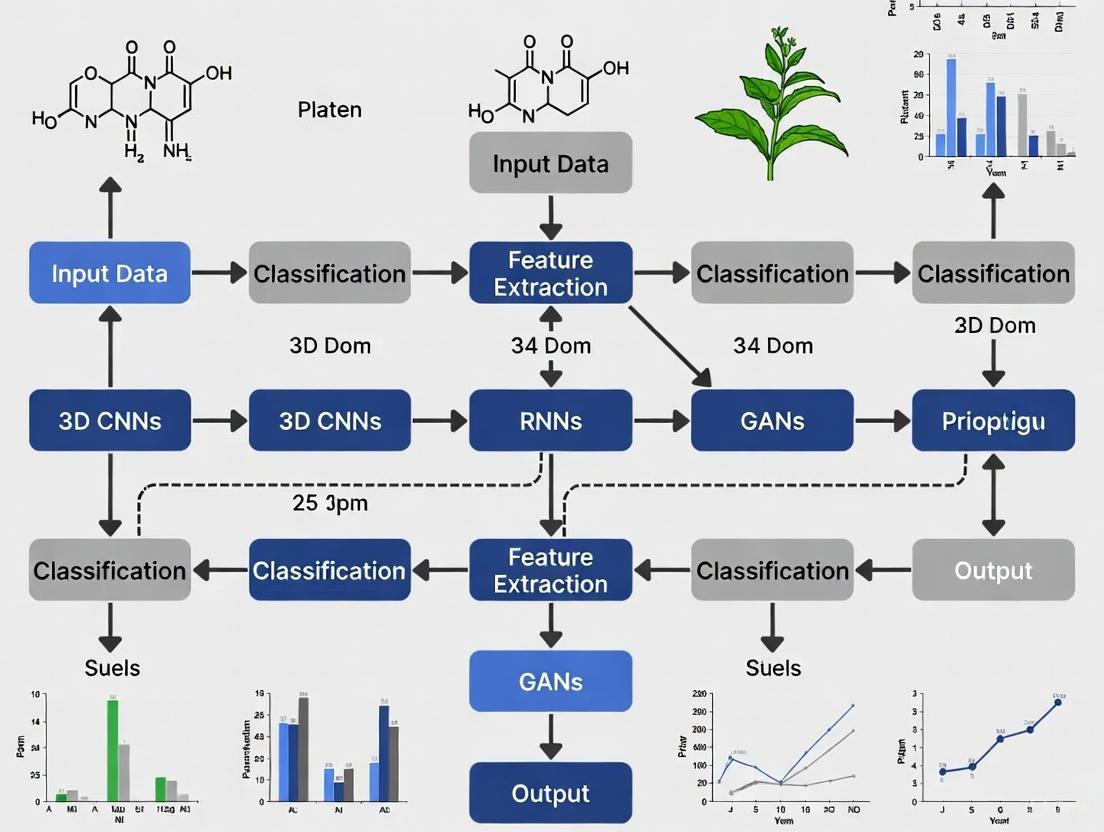
This article provides a systematic evaluation of deep learning (DL) architectures for 3D plant phenotyping, a field crucial for advancing plant science and precision agriculture.
Evaluating Deep Learning Architectures for 3D Plant Phenotyping: A Comprehensive Review from Data Acquisition to Clinical Translation
Abstract
This article provides a systematic evaluation of deep learning (DL) architectures for 3D plant phenotyping, a field crucial for advancing plant science and precision agriculture. It explores the foundational shift from 2D to 3D phenotyping, detailing the capabilities of various DL models in processing complex 3D plant data like point clouds. The review covers methodological applications for trait extraction, discusses significant challenges such as data redundancy and model interpretability, and presents optimization strategies. Furthermore, it offers a comparative analysis of model performance and validation techniques. Aimed at researchers and scientists, this synthesis serves as a guide for selecting, optimizing, and validating DL architectures to accelerate phenotyping research and its downstream applications, including in biomedical contexts such as plant-based drug development.
From 2D to 3D: Foundations of Deep Learning in Plant Phenotyping
Plant phenotyping, the quantitative assessment of plant structural and physiological characteristics, has traditionally relied on 2D imaging approaches. However, these methods project the complex three-dimensional architecture of plants onto a two-dimensional plane, resulting in significant information loss. 2D image-based analysis methods inherently suffer from occlusion, perspective distortion, and the loss of depth information, failing to accurately capture the plant's true morphological features [1]. These limitations become particularly problematic when analyzing complex plant architectures with overlapping leaves, stems, and other organs, where crucial phenotypic data remains hidden or distorted.
The emergence of 3D plant phenotyping addresses these fundamental limitations by capturing the complete spatial geometry and topological structure of plants [2] [3]. This paradigm shift enables researchers to move beyond proxy measurements to direct assessment of complex traits. In some cases, 3D sensing methods that incorporate data from multiple viewing angles provide insights that are hard or impossible to get from a 2D model alone, such as resolving occlusions and accurately characterizing plant architecture [1] [2]. This capability is revolutionizing plant research, breeding programs, and precision agriculture by providing a more comprehensive understanding of the relationship between plant structure and function.
Comparative Analysis: Quantitative Evidence of 3D Superiority
Direct experimental comparisons between 2D and 3D phenotyping methodologies consistently demonstrate the superior accuracy and information content of 3D approaches across multiple plant species and phenotypic traits.
Table 1: Performance Comparison of 2D vs. 3D Phenotyping Methods
| Phenotypic Trait | Plant Species | 2D Method Performance | 3D Method Performance | Reference |
|---|---|---|---|---|
| Leaf Parameters | Ilex species | N/A | R² = 0.72-0.89 vs. manual measurements | [1] |
| Plant Height/Crown | Ilex species | N/A | R² > 0.92 vs. manual measurements | [1] |
| Tissue Segmentation | Apple Fruit | Benchmark AJI: 0.715 | 3D Model AJI: 0.889 | [4] |
| Tissue Segmentation | Pear Fruit | Benchmark AJI: 0.631 | 3D Model AJI: 0.773 | [4] |
| New Organ Detection | Tobacco, Tomato, Sorghum | Limited by occlusion | Mean F1-score: 88.13% | [5] |
| Plant Segmentation | Tomato | N/A | Similar accuracy with 5x less training data | [6] |
The performance advantages extend beyond simple morphological measurements. For instance, in a study focused on fruit tissue microstructure, a 3D deep learning model achieved an Aggregated Jaccard Index (AJI) of 0.889 for apple and 0.773 for pear, significantly outperforming previous 2D approaches and traditional algorithms [4]. The model successfully segmented pore spaces, cell matrices, and identified vasculature with Dice Similarity Coefficients reaching 0.789 in pear, demonstrating exceptional precision at the microscopic level.
Furthermore, the data efficiency of 3D approaches presents a significant practical advantage. Research on tomato plant segmentation revealed that a 2D-to-3D reprojection method achieved similar performance to training state-of-the-art 3D segmentation algorithms like Swin3D-s with only five annotated plants compared to twenty-five plants required for the 3D approach [6]. This five-fold reduction in data requirement dramatically decreases annotation costs and accelerates research cycles.
Deep Learning Architectures for 3D Plant Phenotyping
The advancement of 3D phenotyping is inextricably linked to sophisticated deep learning architectures capable of processing complex spatial data. Unlike 2D computer vision that utilizes Convolutional Neural Networks (CNNs) applied to images, 3D phenotyping requires specialized networks designed for point clouds, voxels, and multi-view representations.
Core Architectural Approaches
Point-based Networks (e.g., PointNet++, Point Transformer v3, DGCNN) directly process unstructured 3D point clouds, making them ideal for data acquired from LiDAR or stereo cameras [6] [5]. These networks learn features from the spatial arrangement of points, enabling tasks like organ segmentation and growth tracking. For example, the 3D-NOD framework for detecting new plant organs utilizes DGCNN as its backbone to achieve an F1-score of 88.13% across multiple crop species [5].
Voxel-based Networks (e.g., MinkUNet34C, Swin3D-s) convert point clouds into a 3D grid of voxels, allowing the application of 3D convolutions [6]. While effective, these methods can be computationally intensive due to the sparsity of plant point clouds.
Projection-based Methods leverage well-developed 2D networks by projecting 3D data into 2D spaces. A developed 2D-to-3D reprojection method segments images using Mask2Former and then reprojects predictions to the point cloud, achieving accuracy comparable to state-of-the-art 3D algorithms but with higher training efficiency [6].
Table 2: Deep Learning Architectures for 3D Plant Phenotyping
| Architecture Type | Representative Models | Input Data Format | Key Applications | Advantages |
|---|---|---|---|---|
| Point-based | PointNet++, Point Transformer v3, DGCNN | Point Cloud | Organ segmentation, new organ detection | Direct processing, preserves geometry |
| Voxel-based | Swin3D-s, MinkUNet34C | Voxel Grid | Semantic segmentation, trait extraction | Structured data format, uses 3D convolutions |
| Projection-based | 2D-to-3D (Mask2Former) | Multiple 2D Images | Plant segmentation, trait extraction | Leverages pre-trained 2D models, data efficient |
| Hybrid | 3D Residual U-Net, 3D Cellpose | Voxel/Point Cloud | Tissue segmentation, microscopic analysis | High accuracy for complex structures |
Specialized Frameworks for Growth Monitoring
The 3D-NOD framework exemplifies architecture specifically designed for temporal 3D phenotyping. It incorporates novel Backward & Forward Labeling (BFL) and Humanoid Data Augmentation (HDA) strategies to boost sensitivity in detecting tiny new organs [5]. This framework enables real-time growth monitoring by accurately detecting budding events in tobacco, tomato, and sorghum with a mean Intersection over Union (IoU) of 80.68%, demonstrating remarkable precision for developmental studies.
Figure 1: Deep Learning Workflow for 3D Plant Phenotyping
Experimental Protocols and Methodologies
Implementing robust 3D phenotyping requires carefully designed experimental protocols spanning data acquisition, processing, and analysis. Below are detailed methodologies for key experiments cited in this review.
High-Fidelity Plant Reconstruction Protocol
Research by Nanjing Forestry University established an integrated, two-phase workflow for accurate 3D reconstruction of plants [1]:
Phase 1: Single-View Point Cloud Generation
- Image Acquisition: Capture high-resolution RGB images using binocular cameras (e.g., ZED 2) from multiple viewpoints. The recommended setup uses six viewpoints around the plant with camera resolution of 2208×1242.
- 3D Reconstruction: Bypass integrated depth estimation and instead apply Structure from Motion (SfM) and Multi-View Stereo (MVS) techniques to the captured images.
- Output: Production of high-fidelity, single-view point clouds that effectively avoid distortion and drift common in direct depth estimation.
Phase 2: Multi-View Point Cloud Registration
- Coarse Alignment: Rapid initial alignment using a marker-based Self-Registration (SR) method with calibration spheres.
- Fine Alignment: Apply the Iterative Closest Point (ICP) algorithm for precise registration of point clouds from multiple viewpoints.
- Result: Unified and complete 3D plant model enabling extraction of key phenotypic parameters.
This protocol was validated on Ilex species, showing strong correlation with manual measurements (R² > 0.92 for plant height and crown width) [1].
2D-to-3D Reprojection Segmentation Method
A groundbreaking approach that leverages 2D segmentation power for 3D analysis was developed as follows [6]:
- Multi-view Image Capture: Acquire images from multiple virtual cameras surrounding the plant.
- 2D Segmentation: Process each image using advanced 2D segmentation networks (e.g., Mask2Former).
- Reprojection to 3D: Reproject the 2D segmentation predictions to the 3D point cloud using camera transformation parameters.
- Majority Vote Fusion: Apply a majority vote algorithm to merge multiple predictions from different viewpoints for each point in the 3D cloud.
This method demonstrated no significant performance difference compared to state-of-the-art 3D segmentation algorithms like Swin3D-s and Point Transformer v3, while achieving significantly higher training efficiency [6]. The approach achieved similar performance with only five annotated plants compared to twenty-five plants required for training Swin3D-s, highlighting its data efficiency.
Microscopic Tissue Segmentation Protocol
For microscopic analysis of fruit tissues, researchers employed a distinct protocol [4]:
- Image Acquisition: Use X-ray micro-CT for non-destructive 3D imaging of plant samples without extensive sample preparation.
- 3D Panoptic Segmentation Framework: Implement a dual-path approach:
- Instance Segmentation: Predict intermediate gradient fields in X, Y, and Z directions using a 3D extension of Cellpose to separate individual parenchyma cells.
- Semantic Segmentation: Employ a 3D Residual U-Net to classify voxels into cell matrix, pore space, vasculature, or stone cell clusters.
- Data Augmentation: Apply synthetic data augmentation involving morphological dilation and erosion, grey-value assignment, and Gaussian noise addition to enhance model robustness.
- Performance Validation: Evaluate using Aggregated Jaccard Index (AJI) and Dice Similarity Coefficient (DSC), achieving AJIs of 0.889 for apple and 0.773 for pear.
Figure 2: 3D Plant Reconstruction Experimental Workflow
The Scientist's Toolkit: Essential Research Reagents and Materials
Successful implementation of 3D plant phenotyping requires specific hardware, software, and computational resources. The table below details key solutions used in the featured research.
Table 3: Essential Research Reagents and Solutions for 3D Plant Phenotyping
| Category | Specific Tool/Solution | Function/Application | Key Features | |
|---|---|---|---|---|
| Imaging Hardware | ZED 2 Binocular Camera | Stereo image acquisition for 3D reconstruction | 2208×1242 resolution, built-in depth sensing | [1] |
| Imaging Hardware | Terrestrial Laser Scanner (TLS) | High-precision point cloud acquisition | Millimetric accuracy, large scanning volume | [2] |
| Imaging Hardware | Microsoft Kinect | Low-cost depth sensing using structured light | RGB-D data, accessible SDK | [2] |
| Imaging Hardware | X-ray Micro-CT | Non-destructive 3D imaging of tissue microstructure | High-resolution internal structure visualization | [4] |
| Software & ML Models | Mask2Former | 2D image segmentation for projection-based methods | State-of-the-art segmentation performance | [6] |
| Software & ML Models | DGCNN (Dynamic Graph CNN) | Point cloud processing for organ detection | Edge convolution, dynamic graph updating | [5] |
| Software & ML Models | 3D Residual U-Net | Volumetric segmentation of microscopic tissues | Skip connections, high precision for bio-images | [4] |
| Algorithms | Structure from Motion (SfM) | 3D reconstruction from multiple 2D images | Feature point matching, camera pose estimation | [1] |
| Algorithms | Iterative Closest Point (ICP) | Precise point cloud registration | Fine alignment, iterative error minimization | [1] |
| Platforms | Plant Phenomics Platforms | Integrated systems for high-throughput phenotyping | Automated imaging, data management | [5] [3] |
The paradigm shift from 2D to 3D plant phenotyping represents a fundamental transformation in how researchers quantify and analyze plant architecture. The evidence consistently demonstrates that 3D approaches provide superior accuracy, enable measurement of previously inaccessible traits, and offer greater data efficiency compared to traditional 2D methods. The ability to accurately resolve occlusions, capture spatial relationships, and track temporal changes in three dimensions has opened new frontiers in plant science, from gene function analysis to precision breeding.
Future advancements in 3D phenotyping will likely focus on several key areas. First, the development of more efficient deep learning architectures that can process 3D data with reduced computational requirements will make these technologies more accessible. Second, the integration of multi-modal data (e.g., combining 3D structural information with hyperspectral and thermal data) will provide unprecedented insights into plant structure-function relationships [3]. Finally, the move toward real-time, field-based 3D phenotyping using unmanned aerial vehicles and portable systems will bridge the gap between controlled environment research and agricultural production settings [1] [3].
As these technologies continue to mature, 3D plant phenotyping is poised to become the standard approach for understanding and leveraging the relationship between plant architecture and function, ultimately accelerating crop improvement and sustainable agricultural production.
The adoption of three-dimensional data is revolutionizing plant phenotyping by enabling researchers to capture intricate structural traits of plants non-destructively and with high precision. Moving beyond the limitations of two-dimensional imaging, 3D data provides comprehensive spatial information that is crucial for analyzing complex plant architectures, tracking growth over time, and understanding genotype-to-phenotype relationships. Among the various 3D representation formats, three core data types have emerged as fundamental for deep learning applications in plant phenotyping: point clouds, voxels, and multi-view representations. Each of these data types possesses distinct characteristics, advantages, and limitations that make them suitable for different experimental setups and research objectives in plant sciences. This guide provides a comprehensive comparison of these core 3D data types, with a specific focus on their application in evaluating deep learning architectures for 3D plant phenotyping research, offering researchers evidence-based guidance for selecting appropriate methodologies for their specific needs.
Core 3D Data Types: Technical Foundations
Point Clouds
Point clouds are collections of data points in a three-dimensional coordinate system, directly representing the external surface of an object or environment. Each point in the cloud has its own set of X, Y, and Z coordinates, and may optionally include additional information such as color intensity or reflectance value. In plant phenotyping, point clouds are typically acquired through active sensing techniques like LiDAR (Light Detection and Ranging) or passive methods such as Structure from Motion (SfM) from multiple 2D images [7]. The primary advantage of point clouds lies in their ability to preserve the exact geometric information of plant structures without any discretization or conversion, making them highly suitable for capturing intricate details of leaves, stems, and other plant organs.
From a deep learning perspective, point clouds present unique challenges due to their unstructured and unordered nature. Unlike pixel arrays in images, point clouds lack a regular grid structure, making them incompatible with conventional convolutional neural networks (CNNs). Pioneering architectures like PointNet and PointNet++ address this challenge by using shared multi-layer perceptrons (MLPs) and symmetric functions to maintain permutation invariance [8]. More recent advancements include dynamic graph CNNs (DGCNN), point transformers, and stratified transformers that better capture local geometric features and long-range dependencies in plant structures [7]. These approaches have demonstrated remarkable success in organ-level segmentation tasks, enabling precise identification and measurement of individual plant components in complex canopy environments.
Voxels
Voxels (volumetric pixels) represent three-dimensional space as a regular grid of discrete cells, analogous to how pixels represent 2D images. Each voxel contains information about whether it is occupied by the object or empty, and may include additional properties about the contained region. This structured representation bridges the gap between unstructured point cloud data and the requirement of deep learning architectures for regular input formats. Voxel-based methods convert raw point clouds into a 3D grid through a process called voxelization, where the spatial resolution is determined by the size of the voxels [8].
The primary advantage of voxel representations is their compatibility with well-established 3D convolutional neural networks (3D CNNs), which can systematically extract hierarchical features from the structured grid. This enables researchers to leverage extensively studied CNN architectures and optimization techniques originally developed for 2D image analysis. However, voxel representations face significant challenges in plant phenotyping applications due to the trade-off between resolution and computational efficiency. High-resolution voxel grids necessary for capturing fine plant structures like thin leaves or stems result in exponential increases in memory requirements and computational cost, much of which is wasted on empty space in typically sparse plant point clouds [7]. Techniques like sparse convolutions and octrees have been developed to mitigate these issues, but they add implementation complexity.
Multi-View Representations
Multi-view representations bridge 2D and 3D analysis by rendering a 3D object or scene from multiple viewpoints and applying well-established 2D deep learning techniques to the resulting images. This approach typically involves projecting 3D point clouds onto 2D planes from various perspectives (often six orthogonal views or a spherical arrangement of viewpoints) to create depth images or silhouettes, which are then processed using standard 2D CNNs [9]. The features extracted from individual views are subsequently aggregated using view-pooling operations or more sophisticated fusion mechanisms to form a comprehensive 3D representation.
The significant advantage of multi-view representations lies in their ability to leverage the maturity, efficiency, and powerful feature extraction capabilities of 2D CNNs pre-trained on massive image datasets like ImageNet. This is particularly valuable in plant phenotyping, where annotated 3D datasets are scarce and computationally expensive to process. Research has demonstrated that multi-view methods "exhibit superior noise robustness and require lower resolution compared to direct 3D point-cloud processing" [10]. However, this approach faces challenges in preserving complete 3D spatial information and handling self-occlusions, where parts of the plant hide other parts from certain viewpoints, potentially leading to information loss.
Table 1: Technical Characteristics of Core 3D Data Types
| Characteristic | Point Clouds | Voxels | Multi-View Representations |
|---|---|---|---|
| Data Structure | Unstructured set of 3D points | Regular 3D grid | Multiple 2D projections |
| Information Preservation | High (raw 3D geometry) | Medium (discretized) | Variable (view-dependent) |
| Memory Efficiency | High for sparse structures | Low (memory grows cubically with resolution) | Medium (depends on number of views) |
| Compatibility with DL Architectures | Requires specialized networks (PointNet++, DGCNN, Point Transformer) | Compatible with 3D CNNs | Compatible with standard 2D CNNs (ResNet, VGG) |
| Handling Occlusions | Good (direct 3D structure) | Good (volumetric representation) | Poor (view-dependent occlusions) |
| Implementation Complexity | High (custom architectures needed) | Medium (standard 3D CNNs, but optimized versions are complex) | Low (leverages mature 2D DL frameworks) |
Comparative Performance Analysis in Plant Phenotyping
Performance Metrics Across Data Types
Evaluating the performance of 3D data types requires multiple metrics that capture different aspects of model effectiveness. In plant phenotyping applications, the most relevant metrics include accuracy (correctness of predictions), computational efficiency (inference time and memory usage), robustness to noise and occlusions, and data efficiency (performance with limited training data). Experimental comparisons across these metrics reveal distinct trade-offs that inform method selection for specific phenotyping tasks.
Recent comprehensive evaluations of deep learning models on plant point clouds provide valuable insights into these trade-offs. A 2024 study comparing nine classical point cloud segmentation models on plants collected under different scenarios revealed that the Stratified Transformer (ST) "achieved optimal performance across almost all environments and sensors, albeit at a significant computational cost" [7]. The transformer architecture for points demonstrated considerable advantages over traditional feature extractors by accommodating features over longer ranges, which is particularly beneficial for capturing extended plant structures like stems and branches. Additionally, PAConv, which constructs weight matrices in a data-driven manner, enabled better adaptation to various scales of plant organs [7].
For multi-view representations, research has demonstrated exceptional performance in classification tasks while maintaining computational efficiency. The SimpleView approach, which projects a point cloud onto just six orthogonal planes and processes these projections through ResNet, has shown particularly strong performance [9]. In domain generalization settings where models trained on synthetic data must perform well on real-world data, multi-view approaches have outperformed point-based methods, demonstrating better robustness to the geometric variations commonly encountered in plant phenotyping applications [9].
Table 2: Performance Comparison of 3D Data Types on Plant Phenotyping Tasks
| Performance Metric | Point Clouds | Voxels | Multi-View Representations |
|---|---|---|---|
| Classification Accuracy | High (Point Transformer: ~93% on ModelNet) | Medium (VoxNet: ~85% on ModelNet) | High (MVCNN: ~90% on ModelNet) |
| Segmentation Accuracy (mIoU) | High (Stratified Transformer: 78.4% on plant datasets) | Medium (VCNN: ~70% on maize datasets) | Low-Medium (projection-based: ~65%) |
| Inference Speed (frames/second) | Medium (15-25 FPS on complex models) | Low (5-15 FPS for high-resolution grids) | High (30+ FPS with 2D CNNs) |
| Memory Consumption | Low-Medium (depends on number of points) | High (especially for high-resolution grids) | Medium (depends on number and resolution of views) |
| Robustness to Noise | Medium (varies with architecture) | High (voxelization averages noise) | High (2D CNNs are naturally robust) |
| Data Efficiency | Low (requires more training data) | Medium | High (benefits from 2D pre-training) |
Domain Generalization Capabilities
Domain generalization—the ability of models trained on one dataset to perform well on data from different distributions—is particularly important in plant phenotyping due to the significant differences between controlled laboratory environments and field conditions. A critical challenge arises from the domain shift between synthetic point clouds from CAD models (which are easy to annotate) and real-world point clouds captured by sensors, with the latter often suffering from occlusion, missing points, and noise [9].
Research has revealed that point-based methods exhibit limitations in domain generalization due to their reliance on max-pooling operations that discard many point features. Studies show that "a large number of point features are discarded by point-based methods through the max-pooling operation," which represents a significant waste of information, particularly problematic for domain generalization where data is already challenging [9]. This is especially critical for plant phenotyping applications where fine structural details may be essential for distinguishing phenotypes.
In contrast, multi-view representations have demonstrated superior domain generalization capabilities. The DG-MVP framework, which uses multiple 2D projections of point clouds, has outperformed point-based methods on standard domain generalization benchmarks like PointDA-10 and Sim-to-Real [9]. The approach remains robust because certain projections maintain consistency even when point clouds have missing regions or deformations, making it particularly valuable for plant phenotyping applications where complete 3D data is difficult to acquire.
Experimental Protocols and Methodologies
Standardized Evaluation Protocols
To ensure fair comparisons across different 3D data types and deep learning architectures, researchers have established standardized evaluation protocols using benchmark datasets. For plant phenotyping applications, these protocols typically involve:
Data Preparation: Experiments should use publicly available plant datasets such as the Arabidopsis thaliana dataset from CVPPP (Computer Vision Problems in Plant Phenotyping) or maize datasets that include 3D point clouds with organ-level annotations [7]. Data should be split into training, validation, and test sets using standard ratios (typically 70:15:15) with stratified sampling to maintain class distribution.
Preprocessing: For point-based methods, input is typically normalized by centering and scaling. For voxel-based methods, point clouds are voxelized at multiple resolutions (e.g., 32³, 64³) to evaluate resolution impact. For multi-view methods, standard protocols involve rendering 6 or 12 views using orthogonal projection [9].
Data Augmentation: Standard augmentation techniques include random rotation, scaling, jittering (adding noise to point coordinates), and simulated occlusion. For domain generalization experiments, additional augmentations simulate missing points and variations in scanning density to better represent real-world conditions [9].
Evaluation Metrics: Primary metrics include overall accuracy for classification tasks, mean Intersection over Union (mIoU) for segmentation tasks, inference time (FPS), and memory consumption. For plant-specific applications, additional metrics like leaf counting accuracy and projected leaf area (PLA) estimation error are recommended [11].
Implementation Details for Comparative Studies
Hardware Configuration: Most studies utilize high-performance GPUs (NVIDIA RTX 3080/3090 or Tesla V100) with 11-32GB memory. CPU and system RAM specifications should be reported as they significantly impact voxel-based methods.
Software Framework: Standard implementations use PyTorch or TensorFlow with dedicated 3D deep learning libraries like Open3D, Pytorch3D, or TorchPoints3D.
Training Protocols: Models should be trained with consistent epochs (typically 200-300) with batch sizes adjusted according to memory constraints. Standard optimization uses Adam or SGD with momentum, with learning rate scheduling and early stopping based on validation performance.
Model Selection: For fair comparisons, studies should include representative models for each data type: PointNet++, DGCNN, and Point Transformer for point clouds; VoxNet and 3D-CNN for voxels; MVCNN and SimpleView for multi-view representations.
Diagram 1: Experimental protocol for evaluating 3D data types
The Scientist's Toolkit: Research Reagent Solutions
Successful implementation of 3D plant phenotyping requires both computational resources and specialized experimental equipment. The following table details essential "research reagent solutions" for establishing a comprehensive 3D plant phenotyping pipeline.
Table 3: Essential Research Reagents and Tools for 3D Plant Phenotyping
| Tool/Resource | Function | Application Examples | Considerations |
|---|---|---|---|
| LiDAR Sensors | Active 3D data acquisition using laser scanning | Terrestrial laser scanning for field phenotyping; portable scanners for laboratory use | Varying resolution and accuracy; eye-safety requirements for certain classes |
| Photometric Stereo Systems | 3D reconstruction from 2D images under different lighting conditions | PS-Plant system for tracking Arabidopsis thaliana growth with high temporal resolution | Requires controlled lighting conditions; excellent for fine details [12] |
| Multi-View Camera Rigs | Simultaneous image capture from multiple angles for 3D reconstruction | Structure from Motion (SfM) for plant architecture analysis | Camera synchronization critical; calibration required for accurate reconstruction [7] |
| Deep Learning Frameworks | Software infrastructure for developing 3D analysis models | PyTorch3D, TensorFlow 3D, Open3D-ML | Varying levels of 3D data type support; community support important |
| Annotation Tools | Manual or semi-automatic labeling of 3D plant data | Custom tools for organ-level segmentation; CloudCompare with plugins | Time-consuming process; inter-annotator agreement important for reliability |
| Benchmark Datasets | Standardized data for method comparison | CVPPP Plant Segmentation Dataset; RoPlant for robotics | Essential for reproducible research; domain gaps between datasets |
Integration Strategies and Future Directions
Hybrid Approaches
Rather than relying exclusively on a single data type, emerging research demonstrates the advantages of hybrid approaches that combine multiple representations to leverage their complementary strengths. Point-voxel frameworks represent a promising direction, such as PV-MM3D, which uses "point-based and voxel-based methods in parallel to aggregate features from virtual and LiDAR point clouds, respectively" [13]. This design preserves the high accuracy and flexibility of point-based methods for feature aggregation, while simultaneously leveraging the benefits of voxel-based methods in data compression and computational efficiency.
For plant phenotyping applications, where both structural precision and computational tractability are important, such hybrid frameworks offer significant potential. The integration can be implemented through various fusion strategies, including early fusion (combining raw data), intermediate fusion (merging extracted features), or late fusion (combining predictions). The Dual-Attention Region Adaptive Fusion Module (DARAFM) represents an advanced implementation that "integrates a self-attention mechanism and a cross-attention mechanism to capture intra-feature correlations and inter-feature complementarities, respectively" [13].
Multitask Learning Frameworks
Multitask learning (MTL) has emerged as a powerful paradigm for plant phenotyping, enabling simultaneous prediction of multiple plant traits from a shared representation. Research has demonstrated that MTL frameworks can predict "three traits simultaneously: (i) leaf count, (ii) projected leaf area (PLA), and (iii) genotype classification" with improved performance compared to single-task models [11]. Importantly, MTL allows leveraging more easily obtainable annotations (like PLA and genotype) to improve performance on harder-to-predict tasks like leaf counting, addressing annotation scarcity challenges in plant phenotyping.
The information sharing inherent in MTL increases generalization capability and reduces overfitting, particularly valuable when working with limited plant datasets. Implementation-wise, MTL enables a unified model instead of separate models for each task, reducing "storage space, decreasing training times and making deployment and maintenance easier" [11].
Future Research Directions
The field of 3D plant phenotyping continues to evolve rapidly, with several promising research directions emerging. Self-supervised learning approaches that learn representations from unlabeled data show particular promise for addressing the data annotation bottleneck. Lightweight models optimized for deployment on resource-constrained devices will be essential for field applications. Multimodal data fusion that integrates 3D structural data with spectral, thermal, and genetic information will enable more comprehensive phenotype characterization. Domain adaptation techniques that explicitly address the gap between controlled environment and field data will be crucial for real-world applications. Finally, interpretable deep learning approaches that provide biological insights alongside predictions will increase adoption by plant scientists.
Each of these directions presents unique opportunities for leveraging the complementary strengths of point clouds, voxels, and multi-view representations to advance plant phenotyping research and applications.
The ability to perceive and interpret the three-dimensional world is fundamental to advancing fields ranging from autonomous systems to biomedical science. For plant phenotyping research, which seeks to quantitatively understand the relationship between a plant's genotype and its observable characteristics, mastering 3D vision is particularly transformative. Traditional phenotyping methods are often labor-intensive, subjective, and limited in throughput [14]. Deep learning technologies now enable researchers to automatically extract precise morphological and structural traits from complex plant architectures, uncovering insights previously inaccessible through manual observation [14] [15]. This guide provides a comprehensive comparison of deep learning capabilities across four fundamental 3D vision tasks—classification, detection, segmentation, and generation—with specific evaluation of their performance, experimental protocols, and applications within plant phenotyping research.
Core 3D Data Representations and Their Characteristics
Before examining specific tasks, it is essential to understand the various ways 3D data can be represented in computational systems, as this choice fundamentally influences algorithm selection and performance.
Table 1: Comparison of Primary 3D Data Representations
| Representation | Description | Advantages | Disadvantages | Common Applications in Phenotyping |
|---|---|---|---|---|
| Point Clouds | Sets of 3D points (X,Y,Z coordinates) potentially with additional features (RGB, intensity) [16]. | Direct sensor output; preserves original precision; efficient storage for sparse data [17]. | Irregular structure; requires specialized networks; no explicit topology [17]. | Plant organ segmentation [14]; canopy structure analysis [14]. |
| Voxels | 3D volumetric pixels representing space on a regular grid [16]. | Regular structure compatible with 3D CNNs; explicit occupancy/geometry [17]. | Computational/memory cost increases cubically with resolution; discrete quantization artifacts [17]. | Root system architecture analysis [14]. |
| Meshes | Networks of vertices, edges, and faces (typically triangles) defining object surfaces [16]. | Efficient surface representation; well-established graphics pipeline. | Complex learning operations; topology changes are challenging. | Leaf surface modeling [14]; fruit morphology. |
| Multi-view Images | Multiple 2D renderings of a 3D object from different viewpoints [17]. | Leverages mature 2D CNNs; memory efficient. | Dependent on view selection; may lose 3D spatial relationships. | Plant shape classification [17]. |
| Neural Fields | Neural networks (e.g., NeRFs, SDFs) that continuously represent shape/appearance [18]. | High-resolution; continuous representation; memory efficient. | Computationally intensive training; slow inference. | High-fidelity plant reconstruction [18]. |
Deep Learning Architectures for 3D Vision Tasks
3D Classification
3D classification involves categorizing entire 3D objects or scenes into predefined classes, such as identifying plant species or stress types from whole-plant 3D scans.
Architectural Approaches:
- Volumetric CNNs: Apply 3D convolutional kernels to voxel grids. Early architectures like 3D ShapeNets demonstrated feasibility but face computational limitations at high resolutions [17].
- Multi-view CNNs: Render multiple 2D images of 3D objects from different viewpoints and aggregate features using view-pooling layers [17]. This approach leverages well-established 2D CNNs and has achieved state-of-the-art results on benchmark datasets.
- Point-based Networks: Directly process point clouds using architectures like PointNet++ that hierarchically extract features while respecting permutation invariance [17].
- Transformer-based Models: Apply self-attention mechanisms to point clouds or patches for global context modeling [19].
Table 2: Performance Comparison of 3D Classification Methods on Benchmark Datasets
| Method | Representation | ModelNet10 Accuracy (%) | ScanObjectNN Accuracy (%) | Computational Efficiency | Remarks |
|---|---|---|---|---|---|
| Volumetric CNN [17] | Voxel (32³) | 89.5 | 80.2 | Low | Pioneering but struggles with resolution vs. memory trade-off |
| PointNet++ [17] | Point Cloud | 90.7 | 82.3 | Medium | Robust to input perturbations; hierarchical feature learning |
| Multi-view CNN [17] | 80 Views | 92.8 | 85.1 | Medium | Leverages pre-trained 2D CNNs; view selection crucial |
| Vision Transformer [19] | Point Cloud | 91.5 | 84.7 | Low | Requires extensive data; strong global context modeling |
Experimental Protocol for Plant Classification:
- Data Acquisition: Capture 3D point clouds of various plant species using terrestrial LiDAR or photogrammetry.
- Data Preprocessing: Normalize point clouds to a consistent number of points (e.g., 1024 points via farthest point sampling) and scale to unit sphere.
- Model Training: Train PointNet++ architecture with multi-scale grouping for 100 epochs using Adam optimizer with initial learning rate of 0.001 and step decay.
- Evaluation: Use 5-fold cross-validation with stratified sampling to ensure balanced class representation across splits. Report overall accuracy and per-class F1 scores.
3D Object Detection
3D object detection involves identifying and localizing objects in 3D space, typically with oriented 3D bounding boxes. In plant phenotyping, this could mean detecting individual fruits or leaves within a canopy.
Architectural Approaches:
- Voxel-based Methods: Convert point clouds to voxel grids and apply 3D CNNs with region proposal networks (RPNs). SECOND algorithm improves efficiency with sparse convolutions [20].
- Point-based Methods: Process raw point clouds directly. PointRCNN generates 3D proposals from point clouds and refines them in a second stage [20].
- Multi-view Methods: Project 3D data to 2D and leverage 2D detection frameworks, then lift predictions back to 3D.
- Fusion-based Methods: Combine multiple data modalities (e.g., camera images with LiDAR point clouds) [20]. VirConv uses virtual sparse convolution for multimodal 3D object detection [20].
Table 3: Performance Comparison of 3D Object Detection Methods on KITTI Dataset (Car Class, Moderate Difficulty) [20]
| Method | Representation | Moderate AP (%) | Easy AP (%) | Hard AP (%) | Runtime (s) | Data Modalities |
|---|---|---|---|---|---|---|
| VirConv-S [20] | Point Cloud + Virtual Features | 87.20 | 92.48 | 82.45 | 0.09 | LiDAR + Image |
| UDeerPEP [20] | Point Cloud | 86.72 | 91.77 | 82.57 | 0.10 | LiDAR |
| PointPillars [20] | Pseudo-image | 82.58 | 88.35 | 77.10 | 0.016 | LiDAR |
| MV3D [20] | Multi-view | 74.97 | 86.62 | 68.78 | 0.36 | LiDAR + Image |
Experimental Protocol for Fruit Detection in Canopy:
- Data Collection: Acquire 3D point clouds of orchard trees using mobile LiDAR systems or depth cameras, with annotated 3D bounding boxes around fruits.
- Data Preparation: Split point clouds into overlapping blocks of 20×20×5 meters with 5-meter stride to manage density variations.
- Model Training: Implement a voxel-based detection pipeline with 0.1m voxel size, sparse 3D CNN backbone, and RPN head. Train with Adam optimizer for 50 epochs.
- Evaluation Metrics: Calculate Average Precision (AP) with 3D IoU threshold of 0.5, with separate analysis for different occlusion levels and ranges.
3D Segmentation
3D segmentation partitions 3D data into semantically meaningful regions and can be categorized into semantic segmentation (labeling each point with a class), instance segmentation (identifying distinct object instances), and part segmentation (labeling components of instances).
Architectural Approaches:
- Point-based Methods: PointNet and PointNet++ architectures process raw point clouds while respecting permutation invariance [16]. More recent methods like PointTransformer use self-attention for improved context modeling [16].
- Sparse Convolutional Methods: Process voxelized point clouds efficiently using submanodule sparse convolutions that ignore empty space, as in MinkowskiEngine [16].
- Hybrid Methods: Combine multiple representations, such as using point features within a voxel framework (e.g., PVCNN) [16].
- Projection-based Methods: Project 3D data to 2D (e.g., range views) and apply 2D CNNs, then project predictions back to 3D [16].
Table 4: Performance Comparison of 3D Segmentation Methods on Benchmark Datasets
| Method | Representation | S3DIS (mIoU %) | ScanNet (mIoU %) | Instance Segmentation (mAP) | Remarks |
|---|---|---|---|---|---|
| PointNet++ [16] | Point Cloud | 54.5 | 63.4 | 35.8 (AP₅₀) | Pioneering point-based method; limited context |
| SparseConvNet [16] | Voxels | 65.4 | 72.1 | 48.6 (AP₅₀) | High accuracy; memory intensive at high resolutions |
| PointTransformer [16] | Point Cloud | 70.4 | 76.5 | 52.7 (AP₅₀) | State-of-the-art; global context modeling |
| Mask R-CNN (3D) [21] | Voxels/Points | - | - | 55.9 (AP₅₀) | Adapts 2D instance segmentation paradigm to 3D |
Experimental Protocol for Plant Organ Segmentation:
- Data Annotation: Collect 3D point clouds of plants and manually annotate points with semantic labels (stem, leaf, fruit, background) and instance IDs for individual organs.
- Data Augmentation: Apply random rotation, scaling, jittering, and elastic deformation to improve model robustness.
- Model Training: Implement a U-Net style architecture with sparse 3D convolutions, training with combined cross-entropy and dice loss for 200 epochs.
- Evaluation: Calculate mean Intersection-over-Union (mIoU) for semantic segmentation and mean Average Precision (mAP) at IoU threshold 0.5 for instance segmentation.
3D Generation
3D generation involves creating novel 3D shapes or scenes, with applications in synthetic data generation for training models or simulating plant growth under various conditions.
Architectural Approaches:
- Autoregressive Models: Treat 3D shapes as sequences of tokens (e.g., in octrees) and predict tokens sequentially [18].
- Generative Adversarial Networks (GANs): Train generator and discriminator networks in adversarial framework to produce realistic 3D shapes [18].
- Diffusion Models: Progressively denoise random initial distributions to generate coherent 3D structures [18]. The Unifi3D framework provides a unified benchmark for various 3D representations in generation tasks [18].
- Hybrid Methods: Combine neural fields with diffusion processes (e.g., DiffRF) for high-quality generation [18].
Table 5: Performance Comparison of 3D Generation Methods on ShapeNet Dataset
| Method | Representation | MMD (×10⁻³) ↓ | COV (%) ↑ | JSD ↓ | Jaccard ↑ | Remarks |
|---|---|---|---|---|---|---|
| 3D-GAN [18] | Voxels (64³) | 5.82 | 42.5 | 0.185 | 0.675 | Pioneering but limited resolution |
| ShapeGF [18] | Point Cloud (2048 points) | 4.15 | 48.3 | 0.162 | 0.712 | Continuous flow-based generation |
| Diffusion Fields [18] | Neural SDF | 3.28 | 53.7 | 0.138 | 0.748 | High-quality surfaces; slow sampling |
| Unifi3D (SDF) [18] | SDF | 2.95 | 56.2 | 0.126 | 0.769 | Unified framework; balanced performance |
Experimental Protocol for Synthetic Plant Generation:
- Data Preparation: Preprocess 3D plant meshes to ensure watertightness and consistent topology where needed.
- Representation Conversion: Convert meshes to signed distance functions (SDFs) with 128³ resolution for balanced detail and computational efficiency.
- Model Training: Train latent diffusion model with VQ-VAE compression, using classifier-free guidance to condition on plant species or trait parameters.
- Evaluation: Use Minimum Matching Distance (MMD) to assess quality, Coverage (COV) to measure diversity, and 1-Nearest Neighbor Accuracy (1-NNA) to evaluate distribution matching.
Table 6: Essential Research Reagents and Computational Resources for 3D Plant Phenotyping
| Resource Category | Specific Tools/Solutions | Function/Purpose | Application Examples in Phenotyping |
|---|---|---|---|
| Data Acquisition Hardware | Terrestrial LiDAR (e.g., FARO Focus), Depth Cameras (e.g., Intel RealSense), RGB-D sensors (e.g., Microsoft Kinect) [14] | Capture 3D point clouds of plant structures and canopies | High-resolution scanning of root systems [14]; canopy architecture measurement [14] |
| Annotation Software | CloudCompare, MeshLab, custom web-based tools with 3D canvas | Manual and semi-automated labeling of 3D data for ground truth generation | Segmenting individual leaves [14]; marking disease regions on 3D plant models [14] |
| Deep Learning Frameworks | PyTorch3D, TensorFlow Graphics, MinkowskiEngine (sparse tensors), Open3D-ML | Specialized libraries for 3D deep learning with optimized operations | Implementing sparse convolutional networks for large-scale plant point clouds [14] |
| Benchmark Datasets | Plant phenotyping-specific datasets (e.g., RoPlant, Lemnatec), general 3D datasets (ShapeNet, ScanNet, S3DIS, KITTI) [16] | Model training, benchmarking, and comparative evaluation | Transfer learning from general objects to plant structures [14] |
| Computational Infrastructure | High-end GPUs (e.g., NVIDIA A100/V100 with 32GB+ VRAM), distributed training frameworks, high-speed storage | Handle memory-intensive 3D data and model training | Training transformer models on high-resolution 3D plant voxel grids [19] |
Workflow and Architectural Visualizations
Generalized 3D Deep Learning Pipeline for Plant Phenotyping
3D Representation Conversion and Generation Pipeline
Deep learning for 3D vision has matured significantly, offering robust solutions for classification, detection, segmentation, and generation tasks relevant to plant phenotyping research. Point-based methods generally excel for fine-grained structural analysis of plant organs, while voxel-based approaches provide strong performance for more volumetric analyses. Multi-view methods offer a practical compromise when computational resources are limited. For 3D generation, diffusion models combined with neural field representations are emerging as the most promising approach for high-fidelity synthetic plant generation.
Key challenges remain, including the need for large annotated 3D plant datasets, development of more efficient architectures to handle the complexity of plant structures, and improved generalization across growth stages and environmental conditions [14] [17]. Future research should focus on self-supervised learning to reduce annotation burden, multimodal fusion combining 3D structure with spectral and temporal information, and development of more interpretable models that can link 3D architectural traits to biological function [14]. As these technologies continue to evolve, they will increasingly enable high-throughput, precise, and automated phenotyping solutions that accelerate plant breeding and sustainable agricultural innovation.
Plant phenotyping, the comprehensive assessment of plant traits, is crucial for understanding the intricate relationships between genotypes and environmental conditions [14]. Traditional phenotyping has relied on manual measurements, which are labor-intensive, destructive, and prone to subjective bias. Two-dimensional imaging offered initial digital advancements but fundamentally fails to capture the complete complexity of plant morphology, as projecting 3D structures onto a 2D plane results in the loss of critical information such as leaf curvature, surface area, and plant volume [22] [23]. The advent of three-dimensional phenotyping technologies has revolutionized this field by enabling non-destructive, precise, and automated measurements of plant architecture [24]. This overview explores the complete 3D phenotyping pipeline, from image acquisition to trait analysis, providing a comparative evaluation of the underlying deep learning architectures and reconstruction techniques that power modern plant science.
Core Components of a 3D Phenotyping Pipeline
A complete 3D phenotyping pipeline integrates several sequential technological components, each with distinct methodological choices that influence the final output quality and applicability.
Image Acquisition Systems
The initial phase involves capturing digital representations of plants using various sensor technologies, each with distinct advantages and limitations:
Multi-view RGB Systems: Utilize multiple standard RGB cameras or a single camera moved around the plant to capture images from different viewpoints. The MVS-Pheno V2 platform, for instance, employs two Raspberry Pi cameras (8 megapixels) with a motorized turntable to automate image capture [25]. These systems benefit from low sensor costs and high image quality but may struggle with heavily occluded regions.
Active Sensing Systems: Technologies like LiDAR (Light Detection and Ranging) and depth cameras (Time-of-Flight or stereo vision) directly capture 3D spatial information. LiDAR offers high precision but at a higher cost [1], while consumer-grade depth cameras can be affected by environmental conditions like scattered sunlight in greenhouses [22].
Robotic Acquisition Platforms: Advanced systems incorporate mobility for field operation. One greenhouse implementation uses an unmanned robot platform with a 6-degrees-of-freedom (6-DoF) robotic arm equipped with a machine-vision camera (4200 × 3120 pixel resolution) to capture images from 64 different poses arranged on a virtual sphere around the target plant [22] [26].
3D Reconstruction Techniques
The captured 2D images or depth readings are processed to reconstruct 3D models of plants, primarily through these computational approaches:
Structure from Motion with Multi-View Stereo (SfM-MVS): This classical computer vision approach reconstructs 3D point clouds by identifying and matching feature points across multiple 2D images taken from different viewpoints [1]. While cost-effective, it can be computationally intensive and may produce incomplete models for plants with severe self-occlusion [23].
Neural Radiance Fields (NeRF): An emerging deep learning technique that uses a fully connected neural network to model volumetric scene features. NeRF synthesizes photorealistic images from novel viewpoints and can generate dense point clouds, demonstrating robustness even with limited and sparsely distributed input images [22] [24]. Advancements like Instant-NGP with hash-encoding have reduced training times from hours to minutes [22].
3D Gaussian Splatting (3DGS): A novel paradigm that represents scene geometry through Gaussian primitives, offering potential benefits in reconstruction efficiency and scalability [24].
Organ Segmentation and Tracking
Once 3D models are reconstructed, identifying and labeling individual plant organs is essential for detailed trait extraction:
Semantic and Instance Segmentation: Deep learning models, particularly those with Transformer-based architectures, have shown remarkable success in segmenting complex plant structures. For peanut plants, which feature multiple branches and dense foliage, such models enable the identification of individual leaves, stems, and petioles [25].
Temporal Organ Tracking: For growth analysis, methods like PhenoTrack3D employ multiple sequence alignment algorithms to track individual maize leaves over time, associating successive segmentations of the same leaf despite significant morphological changes and occlusions [27].
Trait Extraction and Analysis
The final component involves quantifying specific phenotypic parameters from the segmented 3D models:
- Plant-scale Traits: Including plant height, crown width, and overall biomass or volume.
- Organ-level Traits: Encompassing leaf length, width, area, and angle; stem diameter; internode length; and fruit volume, often calculated through geometric fitting approaches like ellipsoid approximation for fruits [22].
Table 1: Quantitative Performance of Different 3D Phenotyping Pipelines
| Crop Species | Reconstruction Method | Trait Category | R² Value | MAPE | Reference |
|---|---|---|---|---|---|
| Tomato | NeRF | Internode length | 0.973 | 0.089 | [22] |
| Tomato | NeRF | Leaf area | 0.953 | 0.090 | [22] |
| Tomato | NeRF | Fruit volume | 0.96 | 0.135 | [22] |
| Ilex species | SfM-MVS + Multi-view registration | Plant height/Crown width | >0.92 | - | [1] |
| Ilex species | SfM-MVS + Multi-view registration | Leaf parameters | 0.72-0.89 | - | [1] |
| Potted plants | SFM-NeRF | Various organ parameters | 0.89-0.98 | - | [23] |
Comparative Analysis of Reconstruction Methodologies
Classical vs. Emerging Reconstruction Approaches
Each 3D reconstruction technique offers distinct advantages and limitations for plant phenotyping applications:
Structure from Motion with Multi-View Stereo (SfM-MVS) has been widely adopted due to its relatively simple implementation and flexibility in representing plant structures. However, it typically requires numerous input images (50-100 depending on plant complexity) and suffers from challenges with data density, noise, and computational scalability, particularly for plants with severe occlusion [24] [1]. The method's performance is also dependent on feature matching, which can be problematic for plants with repetitive structures or low-texture surfaces.
Neural Radiance Fields (NeRF) represents a significant advancement through its use of deep learning to interpolate and extrapolate novel views from sparse input data. A key advantage is its ability to generate high-quality reconstructions from limited viewpoints, which aligns well with the practical constraints of greenhouse environments where full 360-degree access may be impossible [22]. The technology has demonstrated impressive quantitative performance, with R² values exceeding 0.95 for various tomato plant traits [22]. However, its computational requirements, though improving, and applicability in complex outdoor environments remain active research areas [24].
3D Gaussian Splatting (3DGS) has emerged as a promising alternative that represents geometry through Gaussian primitives, potentially offering benefits in both efficiency and scalability compared to previous approaches [24]. While comprehensive validation on diverse plant types is still ongoing, initial results suggest strong potential for high-throughput phenotyping applications.
Deep Learning Architectures for Segmentation
The segmentation of plant point clouds into individual organs has evolved from traditional unsupervised methods to sophisticated deep learning approaches:
Traditional unsupervised segmentation methods required laborious parameter tuning and exhibited relatively low accuracy, especially for plants with complex morphological structures [25]. These methods often necessitated manual intervention, reducing processing efficiency for large datasets.
Modern deep learning models have dramatically improved segmentation automation and accuracy. Voxel-based approaches using 3D sparse convolutions have demonstrated good performance in semantic and instance segmentation tasks, though their limited kernel size can constrain further model improvement [25].
Transformer-based architectures have recently shown exceptional performance across various segmentation tasks by leveraging robust attention mechanisms and global feature processing capabilities [25]. For peanut plants with dense foliage, such models have enabled effective identification and separation of individual leaves and other organs, facilitating organ-level phenotypic measurements previously challenging with traditional methods [25].
Table 2: Deep Learning Approaches for 3D Plant Point Cloud Analysis
| Model Architecture | Application Example | Advantages | Limitations |
|---|---|---|---|
| Voxel-based 3D Sparse Convolutions | Semantic/instance segmentation of peanut plants [25] | Good performance on structured data | Limited scalability with kernel size |
| Transformer-based Architectures | Leaf instance segmentation in dense peanut canopies [25] | Powerful attention mechanisms, global feature processing | Computational complexity for large point clouds |
| Multi-Layer Perceptron (MLP) Networks | NeRF-based 3D reconstruction [22] | Interpolation from sparse views, high-quality novel view synthesis | Significant training computational requirements |
Experimental Protocols and Methodologies
Protocol 1: NeRF-Based Reconstruction for Greenhouse Crops
The NeRF-based pipeline for tomato crops exemplifies a modern approach to 3D phenotyping in controlled environments [22]:
Image Acquisition: A robotic system captures images from 64 predetermined poses arranged on a virtual dome surrounding the target plant, with an average distance of 60cm between camera and plant.
Camera Pose Estimation: Structure from Motion software (COLMAP) processes the acquired images to estimate precise camera pose information (position and orientation), which is essential for NeRF training.
NeRF Training: The images and corresponding camera poses are used to train a NeRF model, which learns the volumetric scene representation using a fully connected neural network. With modern implementations like Instant-NGP, this process requires only minutes rather than hours.
Point Cloud Extraction: The trained NeRF model generates dense point clouds through depth rendering from multiple viewpoints.
Organ Segmentation: Point clouds are segmented using clustering algorithms and geometric feature analysis to identify stems, leaves, and fruits.
Trait Extraction:
- Length Parameters: Skeletonization algorithms identify connections between plant organs to measure internode lengths.
- Leaf Area: Surface reconstruction on segmented leaf point clouds enables accurate area calculation.
- Fruit Volume: Ellipsoid fitting to segmented fruit point clouds allows volume estimation through geometric calculation.
Protocol 2: Multi-View Registration for Fine-Scale Traits
A two-phase workflow developed for Ilex species addresses the challenge of obtaining complete 3D models for detailed organ-level phenotyping [1]:
High-Fidelity Single-View Reconstruction:
- Bypass the built-in depth estimation of stereo cameras
- Apply SfM and MVS algorithms to high-resolution RGB images captured by stereo cameras (ZED 2 and ZED Mini)
- Generate distortion-free point clouds for individual viewpoints
Multi-View Point Cloud Registration:
- Capture point clouds from six different viewpoints around the plant
- Perform rapid coarse alignment using a marker-based Self-Registration (SR) method with calibration spheres
- Execute fine alignment with the Iterative Closest Point (ICP) algorithm
- Merge registered point clouds into a complete 3D plant model
Phenotypic Parameter Extraction:
- Automatically compute plant height, crown width, leaf length, and leaf width from the unified model
- Validate measurements through correlation analysis with manual measurements
This approach demonstrates that multi-view fusion can achieve accuracy comparable to image-based methods while enabling the extraction of fine-scale phenotypic traits rarely addressed in prior registration-based studies [1].
Visualization of Pipeline Architectures
Generalized 3D Phenotyping Workflow
Generalized 3D Phenotyping Workflow
NeRF-Specific Implementation Architecture
NeRF-Specific Implementation Architecture
Table 3: Essential Resources for 3D Plant Phenotyping Research
| Resource Category | Specific Examples | Function/Application | Reference |
|---|---|---|---|
| Image Acquisition Systems | MVS-Pheno V2 platform (Raspberry Pi cameras, turntable) | Automated multi-view image capture for potted plants | [25] |
| Robotic platform with 6-DoF arm (UR-5e), IDS U3-36L0XC camera | Flexible image acquisition in greenhouse environments | [22] | |
| PlantEye F600 multispectral 3D scanner | Combines 3D scanning with multispectral imaging | [28] | |
| Reconstruction Software | COLMAP | Structure from Motion camera pose estimation | [22] |
| Nerfstudio | User-friendly framework for NeRF application and training | [22] | |
| Instant-NGP | Hash-encoding accelerated NeRF training | [22] | |
| Annotation Platforms | Segments.ai | Online platform for point cloud annotation | [28] |
| Datasets | Annotated 3D point cloud dataset of broad-leaf legumes | Training and validation for segmentation models | [28] |
| Potted peanut point cloud dataset (188 samples) | Model training and phenotypic accuracy assessment | [25] | |
| Segmentation Algorithms | Transformer-based architectures | Semantic and instance segmentation of complex plant structures | [25] |
| Density-based spatial clustering (DBSCAN) | Leaf instance separation in occlusion conditions | [23] |
The field of 3D plant phenotyping has evolved from basic volumetric assessments to sophisticated organ-level trait extraction capable of capturing dynamic growth processes. The comparative analysis presented in this overview demonstrates that no single pipeline architecture universally outperforms others across all applications. Rather, the optimal selection depends on specific research constraints including target crop species, required throughput, environmental conditions, and measurement precision requirements.
Future advancements in 3D phenotyping will likely focus on several key areas: (1) construction of comprehensive benchmark datasets through synthetic data generation and generative artificial intelligence to address the current scarcity of annotated plant point clouds [14]; (2) development of more accurate and efficient 3D point cloud analysis methods leveraging multitask learning, lightweight models, and self-supervised learning [14]; and (3) enhanced interpretation of deep learning models for improved extensibility and multimodal data utilization [14]. The integration of these technologies will continue to transform plant phenotyping from a descriptive practice to a predictive science, ultimately accelerating crop improvement and sustainable agricultural production.
Architectures in Action: A Deep Dive into 3D Deep Learning Models and Their Phenotyping Applications
The accurate extraction of plant phenotypic traits is crucial for modern agriculture, enabling growth monitoring, cultivar selection, and scientific management practices [29]. Traditional manual measurement methods are time-consuming, labor-intensive, and unsuitable for large-scale, high-throughput field phenotyping [29]. While 3D imaging technologies can overcome these limitations by capturing complete plant geometry, processing the resulting point cloud data presents significant computational challenges [30].
PointNet and PointNet++ represent pioneering deep learning architectures that process raw 3D point clouds directly, avoiding the information loss associated with voxel-based or projection-based methods [29]. This capability is particularly valuable for plant phenotyping applications where preserving fine-grained local geometric features of stems and leaves is essential for accurate organ segmentation [29]. This guide provides a comprehensive comparison of these architectures within the context of 3D plant phenotyping research, evaluating their performance against contemporary alternatives across multiple crop species.
Core Innovation and Technical Approach
PointNet introduced a foundational approach to direct point cloud processing using shared multi-layer perceptrons (MLPs) and symmetric aggregation functions [31]. The architecture learns spatial encodings of individual points, which are then aggregated into a global signature using a symmetric function (typically max pooling) [31]. This design enables the network to handle unordered point sets while being invariant to geometric transformations.
PointNet++ addresses PointNet's limitation in capturing local structures by introducing a hierarchical neural network that applies PointNet recursively to partitioned point sets [29]. This multi-layer feature extraction strategy enables the model to learn local features with increasing contextual scales, making it particularly suitable for complex plant structures [29].
Enhancements for Plant Phenotyping
Recent research has introduced specialized modules to enhance PointNet++ for plant-specific applications. The Local Spatial Encoding (LSE) module captures intricate local spatial relationships within plant structures, while the Density-Aware Pooling (DAP) module adaptively selects pooling strategies based on neighborhood point cloud density [29]. These improvements address challenges posed by non-uniform density and complex organ morphology in plant point clouds.
Performance Comparison in Plant Phenotyping
Quantitative Benchmarking
Table 1: Semantic Segmentation Performance Comparison Across Architectures
| Architecture | Overall Accuracy (%) | Mean IoU (%) | Crop Species | Key Limitations |
|---|---|---|---|---|
| Original PointNet | 90.13 [29] | 88.42 [29] | Tobacco [29] | Limited local feature capture [29] |
| Original PointNet++ | 92.47 [29] | 91.65 [29] | Tobacco [29] | Sensitive to point density variations [29] |
| Improved PointNet++ (with LSE & DAP) | 95.25 [29] | 93.97 [29] | Tobacco [29] | Higher computational complexity [29] |
| PVSegNet (Point-Voxel Fusion) | 96.38 [31] | 92.10 [31] | Soybean [31] | Balance of performance and computational cost [31] |
| Dual-Task Segmentation Network (DSN) | 99.16 [32] | 93.64 [32] | Caladium bicolor [32] | Complex multi-head attention design [32] |
| SCNet (Dual-Representation) | >10% improvement over SOTA [33] | Not Reported | 20 plant species [33] | Cylindrical and sequential slice processing [33] |
Table 2: Phenotypic Trait Extraction Accuracy Using PointNet++
| Phenotypic Trait | Coefficient of Determination (R²) | Root Mean Square Error (RMSE) | Segmentation Architecture |
|---|---|---|---|
| Plant Height | 0.95 [29] | 0.31 cm [29] | Improved PointNet++ [29] |
| Leaf Length | 0.86 [29] | 2.27 cm [29] | Improved PointNet++ [29] |
| Leaf Width | 0.91 [29] | 1.84 cm [29] | Improved PointNet++ [29] |
| Internode Length | 0.89 [29] | 1.12 cm [29] | Improved PointNet++ [29] |
| Pod Length | 0.918 [31] | Not Reported | PVSegNet [31] |
| Pod Width | 0.949 [31] | Not Reported | PVSegNet [31] |
Algorithm Comparison and Suitability Analysis
Table 3: Architecture Selection Guide for Plant Phenotyping Tasks
| Research Requirement | Recommended Architecture | Rationale | Experimental Evidence |
|---|---|---|---|
| High-throughput stem-leaf segmentation | Improved PointNet++ (with LSE & DAP) | Superior accuracy for complex plant structures [29] | 95.25% OA, 93.97% mIoU for tobacco [29] |
| Fine-grained organ segmentation | PVSegNet or DSN | Enhanced feature capture through point-voxel fusion or multi-head attention [31] [32] | 96.38% precision for soybean pods [31] |
| Multi-species applications | SCNet or Plant-MAE | Dual-representation learning or self-supervised adaptability [33] [34] | >10% accuracy improvement across 20 species [33] |
| Limited annotated data | Plant-MAE with self-supervised learning | Reduces dependency on exhaustive annotations [34] | State-of-the-art performance across multiple crops [34] |
| Instance-level leaf segmentation | DSN with MV-CRF | Joint optimization for instance and semantic segmentation [32] | 87.94% average precision for leaf instances [32] |
Experimental Protocols and Methodologies
Standardized Workflow for 3D Plant Phenotyping
Implementation Details for PointNet++ Evaluation
Dataset Construction: Multi-view images of tobacco plants were captured using a DJI Inspire 2 UAV equipped with a Zenmuse X5s camera (20.8 effective megapixels) flying at 5 meters height with 30°, 60°, and 90° angles [29]. The resulting 2,220 images were processed using Structure from Motion (SfM) and Multi-View Stereo (MVS) algorithms to generate high-fidelity 3D point clouds [29].
Network Training: The improved PointNet++ model was trained with a local spatial encoding module to capture spatial relationships and a density-aware pooling module to handle non-uniform point density [29]. Data augmentation techniques including cropping, jittering, scaling, and rotation were applied to enhance model robustness [34].
Performance Metrics: Segmentation accuracy was evaluated using overall accuracy (OA) and mean intersection over union (mIoU), while phenotypic extraction performance was quantified through coefficients of determination (R²) and root mean square errors (RMSE) compared to manual measurements [29].
The Scientist's Toolkit: Essential Research Reagents and Materials
Table 4: Essential Research Materials for 3D Plant Phenotyping Experiments
| Item Category | Specific Examples | Research Function | Application Context |
|---|---|---|---|
| Imaging Systems | DJI Inspire 2 UAV with Zenmuse X5s [29], ZED 2 stereo camera [1], Custom MVS platforms [31] | 3D data acquisition via multi-view image capture | Field-based (UAV) and controlled environment (stationary systems) phenotyping |
| Reconstruction Software | Structure from Motion (SfM), Multi-View Stereo (MVS) [1] | 3D point cloud generation from 2D images | Converting multi-view images to precise plant models |
| Annotation Tools | Semantic Segmentation Editor [5], Manual labeling protocols | Ground truth generation for training and evaluation | Precise labeling of stems, leaves, and other organs |
| Computational Framework | PointNet++ implementation with LSE & DAP modules [29], PVSegNet [31] | Deep learning-based organ segmentation | Segmenting plant point clouds into constituent organs |
| Validation Metrics | OA, mIoU, R², RMSE [29] | Performance quantification | Objective evaluation of segmentation and trait extraction accuracy |
| Plant Materials | Tobacco, soybean, tomato, caladium varieties [29] [31] [32] | Experimental subjects | Species-specific phenotypic analysis |
PointNet and PointNet++ have established themselves as foundational architectures for direct point cloud processing in plant phenotyping research. While the original PointNet++ demonstrates significant advantages over its predecessor in capturing local features, enhanced versions incorporating spatial encoding and density-aware modules achieve state-of-the-art performance for tobacco phenotyping, with overall accuracy of 95.25% and mIoU of 93.97% [29].
The evolving landscape of plant phenotyping architectures shows that point-based methods like PointNet++ maintain distinct advantages for preserving fine geometric details compared to voxel-based approaches [29]. However, emerging frameworks combining point and voxel representations (PVSegNet) or incorporating dual-representation learning (SCNet) demonstrate promising results for specific applications such as soybean pod segmentation or multi-species panoptic recognition [31] [33].
For researchers selecting architectures, the choice depends critically on specific research goals: improved PointNet++ variants for high-throughput stem-leaf segmentation, specialized networks like PVSegNet for fine-grained organ analysis, or self-supervised approaches like Plant-MAE when annotated data is limited [29] [31] [34]. As the field advances, reducing annotation dependency through self-supervised learning and improving model interpretability will be crucial for broadening adoption across plant science research communities.
The accurate analysis of three-dimensional (3D) plant structures is crucial for modern agricultural research, enabling scientists to non-destructively monitor growth, identify diseases, and predict yield. In this domain, Dynamic Graph Convolutional Neural Networks (DGCNN) have emerged as a powerful framework for processing 3D plant point cloud data. Unlike traditional convolutional neural networks designed for structured grid data, DGCNN excels at capturing local point-point relationships in unstructured 3D space by dynamically constructing graphs in each feature space [35]. This capability is particularly valuable for plant phenotyping applications, where accurately segmenting individual organs like leaves, stems, and panicles from complex, overlapping plant architectures remains a fundamental challenge.
DGCNN belongs to a broader family of graph-based deep learning models that have demonstrated significant potential across various plant science applications. These range from genomic prediction using graph pangenomes [36] [37] to 3D organ segmentation [38] [35]. The core strength of DGCNN lies in its ability to model the inherent geometric relationships between spatially proximate points in a 3D scan, effectively learning both local patterns and global context from plant point clouds. This article provides a comprehensive performance comparison between DGCNN and alternative approaches for 3D plant phenotyping tasks, supported by experimental data and implementation protocols.
Core Architectural Principles of DGCNN
Dynamic Graph Construction
The foundational innovation of DGCNN is its dynamic graph learning approach. While traditional graph convolutional networks operate on a fixed graph structure, DGCNN constructs a new graph in the feature space at each layer of the network. This dynamic construction allows the model to adaptively learn semantic relationships between points that may not be immediately adjacent in Euclidean space but share similar features [35]. For plant point clouds, this means the network can identify organ-level structures based on both spatial arrangement and feature similarity, enabling more accurate segmentation of complex plant architectures.
Local Feature Aggregation
DGCNN employs an edge convolution (EdgeConv) operation that generates features for each point by applying channel-wise symmetric aggregation on its nearest neighbors in the feature space [38] [35]. This operation captures local geometric structures while maintaining permutation invariance, a critical requirement for processing unordered point sets. The EdgeConv operation can be formally represented as:
[ xi' = \square{j:(i,j)\in\mathcal{E}} h\Theta(xi, x_j) ]
where (\square) represents a channel-wise symmetric aggregation function (typically max pooling), (h_\Theta) denotes a nonlinear function with learnable parameters (\Theta), and (\mathcal{E}) represents the dynamically constructed graph edges. For plant phenotyping, this enables the network to learn distinctive features for different plant organs based on their local geometric properties, such as the curvature of leaf surfaces or the cylindrical structure of stems.
Performance Comparison with Alternative Architectures
Segmentation Accuracy Across Plant Species
DGCNN has been evaluated against multiple alternative architectures across various plant species and dataset modalities. The following table summarizes the performance of DGCNN compared to other prominent models on 3D plant point cloud segmentation tasks:
Table 1: Performance comparison of DGCNN against alternative architectures on plant organ segmentation
| Model | Dataset | Plant Species | Accuracy (%) | mIoU (%) | Inference Time |
|---|---|---|---|---|---|
| DGCNN | Plant3D | Multiple species | 95.46 [35] | 90.41 [35] | Competitive [35] |
| PointNet | Plant3D | Multiple species | Lower than DGCNN [35] | Lower than DGCNN [35] | Faster than DGCNN [35] |
| PointNet++ | PLANesT-3D | Pepper, Rose, Ribes | 92.5 [38] | 91.6 [38] | Not specified |
| DGCNN | PLANesT-3D | Pepper, Rose, Ribes | 94.4 [38] | 84.9 [38] | <1 minute/plant [38] |
| PCT | Plant3D | Multiple species | Lower than DGCNN [35] | Lower than DGCNN [35] | Not specified |
| Point Transformer | Plant3D | Multiple species | Lower than DGCNN [35] | Lower than DGCNN [35] | Not specified |
| GCASSN (DGCNN-based) | Plant3D | Multiple species | 95.46 [35] | 90.41 [35] | Slightly exceeds DGCNN [35] |
The consistent performance advantage of DGCNN across multiple datasets and plant species demonstrates its effectiveness for 3D plant phenotyping tasks. The GCASSN framework, which integrates DGCNN with self-attention mechanisms, represents the current state-of-the-art, achieving a mean intersection-over-union (mIoU) of 90.41% on the Plant3D dataset [35].
New Organ Detection Performance
For the specialized task of detecting newly emerged plant organs, the 3D-NOD framework built upon DGCNN has demonstrated exceptional sensitivity. The following table presents quantitative results from comparative experiments:
Table 2: Performance of DGCNN-based 3D-NOD framework for new organ detection
| Framework | Backbone | F1-Score (%) | IoU (%) | Species Tested | Key Advantage |
|---|---|---|---|---|---|
| 3D-NOD | DGCNN | 88.13 [5] | 80.68 [5] | Tobacco, Tomato, Sorghum | Superior sensitivity for tiny buds |
| 3D-NOD | PointNet | Lower than DGCNN [5] | Lower than DGCNN [5] | Tobacco, Tomato, Sorghum | - |
| 3D-NOD | PointNet++ | Lower than DGCNN [5] | Lower than DGCNN [5] | Tobacco, Tomato, Sorghum | - |
| 3D-NOD | PAConv | Lower than DGCNN [5] | Lower than DGCNN [5] | Tobacco, Tomato, Sorghum | - |
| 3D-NOD (New Organs Only) | DGCNN | 76.65 [5] | 62.14 [5] | Tobacco, Tomato, Sorghum | Detects buds too small for human ID |
The 3D-NOD framework with DGCNN backbone achieved an impressive mean F1-score of 88.13% and Intersection over Union (IoU) of 80.68% across multiple crop species [5]. Particularly noteworthy is its sensitivity in detecting tiny new buds, with F1 and IoU for new organs specifically reaching 76.65% and 62.14%, respectively, despite many buds being too small for human identification [5].
Experimental Protocols and Implementation
Standard DGCNN Configuration for Plant Phenotyping
Implementing DGCNN for plant phenotyping requires specific configuration to optimize performance for biological structures. The following parameters represent a standard setup derived from multiple studies:
- k-Nearest Neighbors: Typically set to 20-30 for constructing the dynamic graph [38] [35]
- Feature Dimensions: EdgeConv layers with 64, 64, 128, and 256 channels progressively [35]
- Pooling Operation: Max pooling for symmetric aggregation [35]
- Dropout Rate: 0.3-0.5 to prevent overfitting [38]
- Batch Normalization: Applied after each EdgeConv operation [38]
- Optimization: Adam optimizer with initial learning rate of 0.001-0.008 [38] [35]
The training typically employs negative log-likelihood loss for segmentation tasks, with optional class weighting for imbalanced organ distributions [38]. For the cherry tree dataset with six imbalanced classes, adjusting the loss function with normalized class weights based on training distribution proved beneficial [38].
Preprocessing Pipeline with KD-SS Subsampling
High-resolution plant point clouds often exceed computational constraints of DGCNN. The KD-SS (k-d Tree Sub-Sampling) algorithm provides an effective preprocessing solution that maintains full resolution while enabling processing of large point clouds [38]. The workflow proceeds as follows:
Diagram 1: KD-SS with DGCNN workflow
The KD-SS algorithm works by:
- Initialization: Input point cloud D with fixed number of points N per sub-sample
- Center Selection: Random or geometry-based selection of center points
- Neighborhood Extraction: k-d tree based spherical neighborhood around centers
- Sub-sample Generation: Create fixed-size sub-samples preserving all original points
- Feature Retention: Maintain all point features (XYZ, RGB, intensity, normals) [38]
This approach enables processing of point clouds with millions of points on consumer-grade hardware (e.g., NVIDIA RTX 2080 Super 8GB) without significant performance degradation [38].
Integration with Advanced Frameworks
GCASSN: Enhancing DGCNN with Attention Mechanisms
The Graph Convolutional Attention Synergistic Segmentation Network (GCASSN) represents an advanced evolution of DGCNN that integrates graph convolutional networks with self-attention mechanisms [35]. The architecture consists of two main components:
- Trans-net: Normalizes input point clouds into canonical poses to handle natural plant orientation variations
- GCASM (Graph Convolutional Attention Synergistic Module): Integrates local feature extraction via graph convolutions with global contextual dependencies captured through self-attention [35]
This synergistic approach addresses the limitation of standard DGCNN in capturing long-range dependencies while preserving its strength in modeling local geometric structures. The resulting framework achieves state-of-the-art performance with 95.46% mean accuracy and 90.41% mIoU on plant segmentation tasks [35].
3D-NOD: Temporal Analysis with DGCNN
For growth monitoring applications, the 3D-NOD framework combines DGCNN with novel labeling, registration, and data augmentation strategies to enable detection of newly emerged plant organs across time-series 3D data [5]. Key components include:
- Backward & Forward Labeling (BFL): Annotation strategy for temporal point clouds
- Registration & Mix-up (RMU): Alignment and augmentation of sequential scans
- Humanoid Data Augmentation (HDA): Generates training variants to enhance learning [5]
Ablation studies demonstrated that removing any of these components causes noticeable performance declines, underscoring their combined importance in the framework's success [5].
The Researcher's Toolkit
Table 3: Essential research reagents and computational tools for DGCNN-based plant phenotyping
| Tool/Resource | Type | Function | Application Example |
|---|---|---|---|
| DGCNN Implementation | Software | Dynamic graph convolution for point clouds | Plant organ segmentation [38] [35] |
| KD-SS Algorithm | Preprocessing | Full-resolution point cloud sub-sampling | Handling large plant point clouds [38] |
| PyTorch Geometric | Framework | Deep learning on irregular structures | Implementing DGCNN [38] |
| Plant3D Dataset | Benchmark Data | Standardized evaluation | Model performance comparison [35] |
| 3D-NOD Framework | Specialized Software | New organ detection | Temporal growth analysis [5] |
| OmniPlantSeg Pipeline | Processing Tool | Modality-agnostic segmentation | Multi-species phenotyping [38] |
DGCNN has established itself as a versatile and effective backbone for 3D plant phenotyping applications, particularly excelling in segmentation tasks that require modeling of local geometric structures. Its dynamic graph construction capability provides a natural fit for the complex, branching architectures of plants. While simpler models may suffice for basic tasks, DGCNN's balanced approach to capturing both local patterns and global context makes it particularly valuable for fine-grained organ segmentation and temporal growth analysis.
The continued evolution of DGCNN-based frameworks like GCASSN and 3D-NOD demonstrates the ongoing potential of graph-based models to address challenging plant phenotyping problems. As high-throughput phenotyping platforms generate increasingly large and complex 3D datasets, DGCNN's ability to process unstructured point clouds while maintaining spatial relationships positions it as a critical tool in the plant researcher's computational toolkit. Future directions will likely focus on multi-modal integration, self-supervised learning approaches to reduce annotation burden, and specialized architectures for specific plant species and growth stages.
The accurate segmentation of plant organs from 3D point clouds is a foundational task in modern plant phenotyping, enabling non-destructive monitoring of growth and the automated calculation of traits such as leaf area and stem height [14]. While early deep learning networks tackled either semantic segmentation (classifying points into categories like 'leaf' or 'stem') or instance segmentation (distinguishing between individual organs) as separate tasks, a significant advancement came with the development of frameworks capable of performing both simultaneously [39] [40]. This dual functionality provides a more comprehensive structural understanding of plants. Among these, PlantNet and PSegNet represent two prominent deep learning architectures designed for this challenging problem. This guide provides an objective comparison of PlantNet and PSegNet, situating them within the broader landscape of 3D plant phenotyping research. By presenting quantitative performance data, detailed experimental methodologies, and key resources, we aim to equip researchers with the information necessary to select and utilize these powerful tools.
Performance Comparison: PSegNet vs. PlantNet
Direct comparisons between PSegNet and PlantNet are provided by several benchmark studies. The following tables summarize their performance on semantic and instance segmentation tasks across different plant species, based on reported results.
Table 1: Comparative Performance on Semantic Segmentation Metrics (Mean %)
| Network | Precision | Recall | F1-Score | IoU | Test Context |
|---|---|---|---|---|---|
| PSegNet | 95.23 | 93.85 | 94.52 | 89.90 | Multiple species [39] |
| PlantNet | (Reported as lower than PSegNet) | Multiple species [39] | |||
| Organ3DNet | - | - | +2.10 vs. JSNet | +3.63 vs. JSNet | Five species [41] |
| TSINet | 97.00 | 96.17 | 96.57 | 93.43 | Tomato plants [42] |
Table 2: Comparative Performance on Instance Segmentation Metrics (Mean %)
| Network | mPrec | mRec | mCov | mWCov | Test Context |
|---|---|---|---|---|---|
| PSegNet | 88.13 | 79.28 | 83.35 | 89.54 | Multiple species [39] |
| PlantNet | (Outperformed by PSegNet) | Multiple species [39] | |||
| Organ3DNet | - | - | +16.46 vs. PSegNet | +13.44 vs. PSegNet | Five species [41] |
| TSINet | 81.54 | 81.69 | 81.60 | 86.40 | Tomato plants [42] |
Table 3: Performance of a Related Two-Stage Method (PointNeXt + Quickshift++)
| Task | mOA | mIoU | mPrec | mRec | mF1 |
|---|---|---|---|---|---|
| Semantic Segmentation | 96.96 | 87.15 | - | - | - |
| Leaf Instance Segmentation | - | 81.46 | 93.32 | 85.60 | 87.94 |
Evaluation of the tables shows that PSegNet demonstrates superior performance over the earlier PlantNet model in direct comparisons for both semantic and instance segmentation [39]. However, subsequent architectures like Organ3DNet have shown significant improvements, particularly in instance segmentation where it surpasses PSegNet by a large margin in coverage metrics [41]. It is also noteworthy that newer, specialized networks like TSINet achieve very high performance on specific species like tomato [42]. A two-stage method combining PointNeXt for semantic segmentation and Quickshift++ for instance segmentation also demonstrates strong generalization ability across different crop types, achieving a mean Accuracy (mOA) of 96.96% [40].
Architectural and Methodological Breakdown
The performance differences between PSegNet, PlantNet, and other modern networks stem from their underlying architectures and the methodologies used to train them.
Core Architectures
PSegNet introduced three novel modules to boost segmentation accuracy: 1) The Double-Neighborhood Feature Extraction Block (DNFEB) captures local geometric features at multiple scales, 2) The Double-Granularity Feature Fusion Module (DGFFM) effectively combines both coarse and fine-grained features, and 3) An Attention Module (AM) helps the network focus on more relevant parts of the plant structure [39]. Its preprocessing uses Voxelized Farthest Point Sampling (VFPS), a custom down-sampling strategy designed to prepare plant data for network training [39] [43].
PlantNet, an earlier dual-function network, utilizes a dual-pathway architecture to simultaneously process semantic and instance segmentation tasks [43]. It was benchmarked against other early models like PointNet++, SGPN, and ASIS, and was itself surpassed by later networks like PSegNet [39].
Organ3DNet represents a more recent architectural shift. It employs a Sparse 3D Convolutional Network Backbone (S3DCNB) as an encoder and a Transformer Decoder with a cascade of Query Refinement Modules (QRM) and Mask Modules (MM). It begins with query points from 3D Edge-preserving Sampling (3DEPS) and refines them into masks for each organ instance [41].
TSINet features an encoder-decoder structure. Its shared encoder uses Geometry-Aware Adaptive Feature Extraction Blocks (GAFEBs), which integrate EdgeConv and PAConv operations with residual connections to capture local geometric structures. Its decoder includes a Dual Attention-Based Feature Enhancement Module (DAFEM) to enrich feature representation using spatial and channel attention mechanisms [42].
Figure 1: A high-level comparison of the PSegNet and Organ3DNet architectures, highlighting their key components and data flow.
Critical Data Preprocessing: Down-sampling Strategies
A crucial but often overlooked aspect of the experimental protocol is point cloud down-sampling, which is required to create fixed-scale inputs for deep networks. The choice of strategy can significantly impact performance [43].
- Voxelized Farthest Point Sampling (VFPS): Used by PSegNet, this method defines a 3D grid over the point cloud and selects the point closest to the centroid within each voxel [39] [43].
- 3D Edge-Preserving Sampling (3DEPS): This strategy, used by networks like Organ3DNet, is inspired by human sketching. It uses a 3D Surface Boundary Filter to divide the point cloud into edge and internal points, then artificially increases the proportion of edge points in the final sample to better preserve structural details [41] [43].
- Farthest Point Sampling (FPS): A common method that ensures globally evenly distributed points but has high computational complexity [43].
- Random Sampling (RS): A simple and fast method, but it can worsen non-uniform density [43].
A comprehensive study found that 3DEPS and Uniformly Voxelized Sampling (UVS) tend to perform well for semantic segmentation, while voxel-based strategies like VFPS are suitable for complex dual-function networks. The study also noted that 3DEPS is often the most stable performer across different networks at a common 4096-point resolution [43].
Figure 2: A workflow illustrating how different down-sampling strategies serve as a critical preprocessing step for network training and inference.
Successful experimentation in 3D plant segmentation relies on a suite of computational "reagents." The following table details key resources referenced in the studies of PSegNet, PlantNet, and related frameworks.
Table 4: Key Research Reagents and Resources for 3D Plant Segmentation
| Resource Name | Type | Key Features/Description | Relevance/Function |
|---|---|---|---|
| Pheno4D Dataset | Dataset | Spatio-temporal 3D point clouds of maize and tomato; sub-millimeter accuracy; temporally consistent organ labels [42]. | Provides high-quality, annotated data for training and evaluating segmentation models on multiple species and growth stages. |
| Organ3DNet Dataset | Dataset | An open crop dataset with 889 samples from five species; includes organ-level semantic and instance annotations [41]. | Enables training and testing on a larger variety of species, supporting research into model generalizability. |
| VFPS | Algorithm | A voxel-based point cloud down-sampling strategy [39]. | Preprocesses data for network training, helping to preserve spatial structure while reducing complexity. |
| 3DEPS | Algorithm | 3D Edge-Preserving Sampling strategy [41]. | A down-sampling method that prioritizes edge points to better preserve organ boundaries and structural details. |
| Plant Segmentation Studio (PSS) | Software Framework | An open-source framework for reproducible benchmarking of plant segmentation networks [44]. | Standardizes evaluation protocols and provides tools for fair comparison of different methods. |
| L-systems-based Model | Algorithm | A procedural model that uses recursive rules to generate virtual plant architectures [45]. | Generates synthetic training data, reducing reliance on large, manually annotated real-world datasets. |
The evolution of frameworks for simultaneous semantic and instance segmentation, from PlantNet to PSegNet and beyond, highlights rapid progress in 3D plant phenotyping. PSegNet has been demonstrated to outperform the earlier PlantNet model by integrating advanced feature extraction and fusion modules [39]. However, the field continues to advance rapidly, with newer architectures like Organ3DNet and TSINet pushing performance boundaries further, especially on complex datasets and specific crops [41] [42]. Beyond the core network architecture, the experimental protocol—particularly the choice of down-sampling strategy and the quality and diversity of training data—proves to be a critical factor influencing final segmentation accuracy [43]. Future developments will likely focus on improving model generalization across a wider range of species and growth conditions, reducing annotation demands through self-supervised learning and synthetic data [44] [14], and enhancing computational efficiency for high-throughput applications.
Accurate organ-level segmentation of 3D plant point clouds represents a crucial prerequisite for advanced phenotyping, enabling researchers to quantify morphological traits essential for breeding and precision agriculture programs [40] [46]. However, this task presents significant computational challenges due to the complex, unstructured nature of 3D point clouds, substantial structural differences between monocotyledonous and dicotyledonous plants, and the frequent occlusion of organs in dense canopies [40] [47]. While numerous deep learning architectures have been proposed for point cloud processing, no single network architecture has universally addressed all these challenges, creating an optimization landscape where multi-stage approaches offer distinct advantages.
Two-stage segmentation methods have emerged as a powerful framework for tackling these complexities by decomposing the problem into sequential sub-tasks. In the context of plant phenotyping, these approaches typically employ a first-stage deep learning model for semantic segmentation (classifying each point into organ categories like stem, leaf, flower, or fruit) followed by a second-stage clustering or grouping algorithm that differentiates individual organ instances [40] [48]. This hierarchical processing strategy leverages the strengths of both learning-based and algorithmic approaches, combining the feature learning capacity of deep neural networks with the computational efficiency and geometric awareness of classical computer vision methods.
This review comprehensively evaluates two-stage deep learning architectures for 3D plant organ segmentation, with particular focus on the integration of PointNeXt with clustering algorithms. We analyze experimental data from multiple studies to compare performance metrics across architectures, crop species, and implementation strategies, providing researchers with evidence-based guidance for selecting and optimizing segmentation pipelines for specific phenotyping applications.
Core Architectural Components of Two-Stage Segmentation
First-Stage Semantic Segmentation Networks
The initial stage of two-stage segmentation pipelines employs deep learning models to classify each point in the 3D cloud into semantic categories. Several architectures have demonstrated efficacy for plant organ segmentation:
PointNeXt has emerged as a leading architecture for plant point cloud processing, achieving mean Intersection over Union (mIoU) values of 87.15% across sugarcane, maize, and tomato datasets [40]. This model builds upon the PointNet++ foundation through improved training strategies and model scaling, utilizing a hierarchical encoder-decoder structure that captures multi-scale contextual information through iterative sampling and grouping operations. The improved PointNeXt model trained for stem and leaf segmentation achieved an average mean Overall Accuracy (mOA) of 96.96% on the test set [40].
Sparse UNet demonstrated superior performance in strawberry organ segmentation, achieving the highest mean IoU of 81.3% in comparative studies [47]. This architecture leverages sparse convolutions to efficiently process large-scale 3D data while maintaining structural details crucial for segmenting small organs like flowers and berries. The Sparse UNet outperformed other representative models including PointNet++, PointMetaBase, Point Transformer V2, Swin3D, KPConv, RandLA-Net, and PointCNN in the strawberry benchmark [47].
KAN-GLNet represents an enhanced PointNet++ architecture specifically optimized for complex plant structures, achieving 94.50% mIoU in canola silique segmentation tasks with only 5.72 million parameters [49]. This network incorporates a Kolmogorov-Arnold Network with Global-Local Feature Modulation, a Reverse Bottleneck KAN convolution, and a contrastive learning-based normalization module called ContraNorm to strengthen feature extraction while maintaining computational efficiency [49].
Second-Stage Instance Grouping Algorithms
Following semantic segmentation, instance grouping algorithms differentiate between individual organs within the same semantic class:
Quickshift++ provides rapid localization and segmentation of leaf instances by encoding the global spatial structure and local connections of plants [40]. When combined with PointNeXt, this clustering approach achieved average values for mean Precision (mPrec), mean Recall (mRec), mean F1-score (mF1), and mIoU of 93.32%, 85.60%, 87.94%, and 81.46%, respectively, outperforming four state-of-the-art methods including ASIS, JSNet, DFSP, and PSegNet [40].
Optimized DBSCAN (Density-Based Spatial Clustering of Applications with Noise) has been successfully applied for silique instance segmentation in canola, achieving a counting accuracy of 97.45% when integrated with the KAN-GLNet architecture [49]. The optimization workflow addresses the algorithm's sensitivity to parameter selection and effectively handles the dense, overlapping distribution of mature siliques.
3D Edge-Preserving Sampling (3DEPS) draws inspiration from human sketching by prioritizing edge points during sampling to preserve structural boundaries [48]. While primarily a sampling strategy, its edge-awareness makes it particularly suitable for preparing data for instance segmentation tasks, as it helps maintain boundary information critical for distinguishing adjacent organs.
Integrated Architectures
Some architectures integrate both stages within a unified framework:
Organ3DNet utilizes a Sparse 3D Convolutional Network Backbone as an encoder and a novel Transformer Decoder containing a cascade of Query Refinement Modules and Mask Modules [41]. This approach begins with query points obtained through 3DEPS and gradually refines them into masks representing different organ instances. On organ instance segmentation tasks, Organ3DNet surpassed the second-best method (PSegNet) by large margins of 16.46% on mCov and 13.44% on mWCov, respectively [41].
Table 1: Performance Comparison of Two-Stage Segmentation Methods
| Architecture | Components | Dataset | mIoU | mAcc | Instance Accuracy |
|---|---|---|---|---|---|
| PointNeXt + Quickshift++ | PointNeXt + Quickshift++ | Sugarcane, Maize, Tomato | 87.15% | 96.96% | 87.94% (mF1) |
| KAN-GLNet + DBSCAN | Enhanced PointNet++ + Optimized DBSCAN | Canola | 94.50% | 96.72% | 97.45% (Counting) |
| Organ3DNet | S3DCNB + Transformer Decoder | 5 Species | Not Reported | Not Reported | 16.46% higher mCov than PSegNet |
| Sparse UNet + Clustering | Sparse Convolutions + Clustering | Strawberry | 81.30% | Not Reported | Not Reported |
Experimental Protocols and Performance Benchmarks
Dataset Composition and Preprocessing
Robust evaluation of segmentation methods requires diverse datasets representing different plant architectures and growth stages:
The comprehensive crop dataset used for evaluating PointNeXt incorporates point clouds of 122 sugarcane plants, 49 maize plants, and 77 tomato plants, capturing structural variations between monocotyledonous and dicotyledonous species [40]. This diversity is crucial for testing generalization capability across taxonomically distinct crops.
The strawberry benchmark dataset comprises 24 point clouds from the LAST-Straw dataset and a custom Japanese cultivar collection, with organs categorized into leaves, stems, flowers, and berries [47]. This dataset exhibits extreme class imbalance, with leaves representing approximately 85% of points, stems 9%, while berries and flowers account for only 3% and 4% respectively - a distribution that challenges network training and necessitates specialized sampling strategies [47].
For canola silique segmentation, researchers built the first NeRF-derived rapeseed point cloud dataset containing 50 samples, expanded through data augmentation strategies [49]. This innovative approach to data acquisition uses Neural Radiance Fields (NeRF) technology to reconstruct high-fidelity point clouds from multi-view images, providing a cost-effective alternative to LiDAR scanning.
Point Cloud Preprocessing represents a critical step in pipeline optimization. A comprehensive study on down-sampling strategies revealed that 3DEPS generally provides the most stable performance across networks and point cloud resolutions, as it preserves edge information crucial for organ boundary detection [48]. The study cross-evaluated five sampling strategies (FPS, RS, UVS, VFPS, and 3DEPS) on five segmentation networks, concluding that while optimal strategy selection is network-dependent, 3DEPS consistently delivers competitive results across architectures [48].
Comparative Performance Analysis
Quantitative evaluation across multiple crops and architectures provides insights into the effectiveness of two-stage approaches:
Table 2: Cross-Species Generalization Performance
| Method | Sugarcane | Maize | Tomato | Strawberry | Canola |
|---|---|---|---|---|---|
| PointNeXt + Quickshift++ | 89.21% mIoU | 89.19% mIoU | 83.05% mIoU | Not Reported | Not Reported |
| KAN-GLNet + DBSCAN | Not Reported | Not Reported | Not Reported | Not Reported | 94.50% mIoU |
| Sparse UNet | Not Reported | Not Reported | Not Reported | 81.30% mIoU | Not Reported |
| Organ3DNet | Not Reported | Not Reported | Not Reported | Not Reported | Not Reported |
The PointNeXt with Quickshift++ approach demonstrates notable generalization across structurally diverse crops, maintaining high performance on both monocotyledonous (sugarcane, maize) and dicotyledonous (tomato) species [40]. This cross-architectural robustness is particularly valuable for phenotyping platforms serving breeding programs with diverse crop portfolios.
For specific applications with challenging organ distributions, specialized architectures like KAN-GLNet deliver superior performance. In canola silique segmentation, where dense, overlapping structures complicate instance separation, KAN-GLNet achieved 94.50% mIoU while maintaining computational efficiency through its lightweight design (5.72M parameters) [49].
Implementation and Optimization Guidelines
Based on experimental results across studies, several implementation guidelines emerge:
Network Selection should consider both target organ complexity and computational constraints. For high-throughput phenotyping requiring real-time analysis, lightweight models like KAN-GLNet offer favorable accuracy-parameter tradeoffs [49]. For research applications prioritizing segmentation precision on complex plant architectures, PointNeXt provides robust performance across species [40].
Sampling Strategy should align with network architecture and target organ characteristics. The comprehensive down-sampling study recommends 3DEPS for general applications but notes that voxel-based strategies may be more suitable for complex dual-function networks performing simultaneous semantic and instance segmentation [48].
Data Augmentation utilizing NeRF reconstruction represents a promising approach for expanding training datasets, particularly for rare cultivars or growth stages [49]. This approach enables the creation of high-fidelity synthetic point clouds from simple video captures, reducing dependency on expensive 3D scanning equipment.
Workflow Visualization
The Scientist's Toolkit: Essential Research Reagents
Table 3: Essential Materials and Computational Tools for Plant Organ Segmentation
| Category | Item | Specification/Function | Example Use Case |
|---|---|---|---|
| Data Acquisition | Handheld 3D Scanner (EinScan Pro 2X Plus) | Structured light scanning, XYZ point cloud generation | High-precision strawberry point cloud acquisition [47] |
| Data Acquisition | Smartphone Camera (iPhone 15 Pro Max) | 48MP main camera, 4K/60fps video recording | Multi-angle plant photography for NeRF reconstruction [49] |
| Software Framework | NeRFStudio | Framework for creating, training, and deploying NeRF models | 3D point cloud generation from multi-view images [49] |
| Software Framework | FFmpeg | Open-source video processing, keyframe extraction | Video to image sequence conversion for 3D reconstruction [49] |
| Computational Resource | Deep Learning Framework | PyTorch/TensorFlow with 3D point cloud libraries | Network implementation and training [40] [49] |
| Algorithmic Components | 3D Edge-Preserving Sampling (3DEPS) | Point cloud down-sampling that preserves structural edges | Preprocessing for improved segmentation of organ boundaries [48] |
| Algorithmic Components | Query Refinement Modules (QRM) | Transformer components for progressive mask refinement | Organ instance segmentation in Organ3DNet [41] |
Two-stage deep learning approaches that integrate semantic segmentation networks like PointNeXt with clustering algorithms represent a powerful paradigm for 3D plant organ segmentation. The experimental data compiled in this review demonstrates that these hierarchical methods consistently outperform single-stage architectures across diverse crop species and organ types. The separation of semantic understanding and instance grouping allows each component to specialize in its respective sub-task, resulting in improved accuracy, generalization capability, and computational efficiency.
Future research directions likely to shape the next generation of plant phenotyping tools include the integration of explainable AI (XAI) techniques to interpret model decisions and build trust in automated phenotypic measurements [46], the development of foundation models pre-trained on large-scale plant point cloud datasets analogous to UKBOB in medical imaging [50], and the creation of more sophisticated multi-modal learning approaches that combine 3D structure with spectral and temporal information for richer phenotypic profiling.
As the field advances, standardized benchmarking datasets and evaluation metrics will be crucial for facilitating fair comparisons between architectures. Initiatives like the plant phenotyping equivalent of MedSegBench [51] would accelerate progress by providing consistent training and testing frameworks across research groups. The continued collaboration between computer scientists and plant biologists will be essential for developing segmentation tools that address real-world challenges in crop improvement and sustainable agriculture.
The transition from traditional manual measurements to automated, high-throughput analysis represents a paradigm shift in plant phenotyping. While 3D point clouds have become a cornerstone for capturing plant morphology, they often rely on classical reconstruction methods that can be computationally intensive, prone to noise, and limited in capturing fine-grained textual information [24]. The emerging frontier in this domain leverages transformer-based architectures and multi-view learning to create view-invariant embeddings—compact, robust representations of plant structure that bypass explicit 3D reconstruction while offering superior performance for downstream phenotypic tasks [52] [53].
This guide objectively compares these novel approaches against established point cloud methods, providing researchers with experimental data and implementation protocols to inform their experimental design. By evaluating architectures based on accuracy, computational efficiency, and applicability across diverse agricultural scenarios, we aim to equip plant scientists with the knowledge to navigate this rapidly evolving landscape.
Performance Comparison of Phenotyping Approaches
The table below summarizes the quantitative performance of various approaches, highlighting their applicability to different phenotyping tasks and experimental conditions.
Table 1: Comprehensive Performance Comparison of Plant Phenotyping Approaches
| Methodology | Primary Architecture | Key Phenotypic Traits | Reported Performance Metrics | Crops Validated On |
|---|---|---|---|---|
| ViewSparsifier [52] | Transformer-based Feature Aggregation | Plant Age, Leaf Count | MAE: ~1.38-8.67 (across species); 1st place in GroMo 2025 Challenge | Okra, Radish, Mustard, Wheat |
| Plant-MAE [34] | Self-supervised Masked Autoencoder | Organ Segmentation | mIoU >80% on tomatoes & cabbages; outperforms PointNet++ & Point Transformer | Maize, Tomato, Potato, Cabbage |
| LEIA [54] | Hypernetwork-conditioned NeRF | 3D Articulation Modeling | Generates novel, unseen articulations without 3D supervision | Synthetic Objects |
| Multi-View Stereo & SfM [1] | Structure from Motion (SfM) + Multi-View Stereo (MVS) | Plant Height, Crown Width, Leaf Length, Leaf Width | R² > 0.92 (Height, Crown); R²: 0.72-0.89 (Leaf length/width) | Ilex species |
| Edge_MVSFormer [55] | Transformer-based MVS with Edge-Loss | Depth Map & Point Cloud Accuracy | Reduces edge error by 2.20 ± 0.36 mm (depth), 0.13 ± 0.02 mm (point cloud) | Succulents, Lilies, Begonias |
| Pheno-Deep Counter [56] | Multi-input Convolutional Network | Leaf Count | ±1 leaf accuracy in ~80% of cases (RGB), ~88% (Multi-modal) | Arabidopsis, Tobacco, Komatsuna |
Experimental Protocols and Methodologies
ViewSparsifier: Multi-View Feature Aggregation
The ViewSparsifier framework was designed explicitly to handle high redundancy in rotational image sequences captured around plants [52].
- View Selection Strategy: Instead of processing all available images (e.g., 120 views from 5 heights), a random subset of views (a "selection vector") is chosen for each training instance. This forces the model to learn from non-redundant information.
- Feature Extraction & Fusion: A pre-trained Vision Transformer (ViT) is used to extract features from each selected view. These features are combined with positional encodings and processed by a Transformer Encoder. The output is aggregated via mean-pooling to create a single, view-invariant embedding.
- Regression Head & Regularization: The final embedding is passed to a two-layer MLP with PReLU activation for regression (age or leaf count). Dropout rates are individually tuned for each crop-and-task combination to prevent overfitting.
- Permutation-Based Inference: At inference time, the selection vector is rotationally permuted 24 times around the plant. The model's predictions on these 24 permutations are averaged for a robust final estimate, enhancing resilience to viewpoint variation [52].
Plant-MAE: Self-Supervised 3D Point Cloud Learning
Plant-MAE addresses the high cost of annotating 3D point clouds by leveraging self-supervised learning [34].
- Pre-training Phase: The model is pre-trained on a large, unlabeled dataset of 3,463 point clouds from eight different crops. A masking strategy is employed where portions of the input point cloud are obscured, and the model is tasked with reconstructing the missing parts. This process forces the network to learn latent, meaningful features of plant structure without manual labels.
- Data Preparation: Point clouds are standardized through voxel downsampling and farthest point sampling, fixing the number of points per sample (e.g., 5,000, 2,048). Augmentations including cropping, jittering, scaling, and rotation are applied to improve model robustness.
- Fine-tuning & Evaluation: The pre-trained model is subsequently fine-tuned on smaller, labeled datasets for specific tasks like organ segmentation. Performance is evaluated using precision, recall, F1 score, and mean Intersection over Union (mIoU), demonstrating state-of-the-art results across multiple crops and data acquisition methods [34].
High-Fidelity 3D Reconstruction Workflow
This methodology focuses on generating accurate and complete 3D models of plants for fine-grained trait extraction [1].
- Phase 1: Distortion-Free Single-View Cloud Generation: High-resolution RGB images from a stereo camera are processed using SfM and MVS algorithms. This bypasses the built-in depth estimation of the camera, which can cause distortion, and instead produces a high-fidelity point cloud for a single viewpoint.
- Phase 2: Multi-View Point Cloud Registration: To create a complete model, point clouds from six different viewpoints are captured.
- Coarse Alignment: A marker-based Self-Registration (SR) method quickly aligns the different point clouds into a roughly consistent coordinate system.
- Fine Alignment: The Iterative Closest Point (ICP) algorithm is then used to refine the alignment, resulting in a unified and highly accurate 3D plant model.
- Phenotypic Trait Extraction: Key parameters, including plant height, crown width, leaf length, and leaf width, are automatically extracted from the final 3D model. The accuracy is validated via strong correlation (R²) with manual measurements [1].
Architectural Workflows and Signaling Pathways
The following diagram illustrates the conceptual shift and key methodologies for achieving view-invariance in modern plant phenotyping.
The Scientist's Toolkit: Essential Research Reagents and Materials
Table 2: Key Hardware, Software, and Datasets for Plant Phenotyping Research
| Category | Item | Specification / Example | Primary Function in Research |
|---|---|---|---|
| Imaging Hardware | Binocular Stereo Camera | ZED 2 / ZED mini [1] | Captures synchronized image pairs for 3D reconstruction and depth perception. |
| RGB-D Camera | Intel RealSense D435 [57] | Simultaneously captures color (RGB) and depth (D) information for top-view plant monitoring. | |
| Handheld Laser Scanner | Freescan X3 [55] | Generates high-accuracy 3D point clouds (0.03 mm accuracy) used as ground truth for model validation. | |
| Software & Algorithms | SfM & MVS Pipeline | COLMAP [24] [1] | Open-source pipeline for reconstructing 3D geometry from multiple 2D images. |
| Point Cloud Library | PointNet++ / Point Transformer [34] | Deep learning architectures for processing and analyzing unstructured 3D point cloud data. | |
| Vision Transformer (ViT) | Pre-trained models (e.g., DeiT) [52] | Extracts rich, contextual features from individual plant images for multi-view aggregation. | |
| Datasets | GroMo Challenge Dataset | Multi-view, multi-height images [52] | Benchmarks model performance on tasks like plant age prediction and leaf count estimation. |
| Multi-Species Seedling Dataset | RGB-D time-lapse with annotations [57] | Provides deep-learning-ready data for training and validating models on seedling development kinetics. | |
| Public MVS Datasets | DTU, BlendedMVS [55] | Used for pre-training deep learning models like Edge_MVSFormer before fine-tuning on plant data. |
Discussion and Outlook
The experimental data and methodologies presented reveal a clear trend: while high-fidelity 3D reconstruction remains a powerful tool, especially for extracting fine-grained morphological traits [1] [55], transformer-based and multi-view approaches offer a compelling alternative. Methods like ViewSparsifier and Plant-MAE achieve state-of-the-art performance by learning efficient, view-invariant embeddings directly from images or point clouds, often with greater computational efficiency and reduced reliance on costly annotated data [52] [34].
The choice of architecture ultimately depends on the research objective. For obtaining precise, millimeter-scale physical measurements of leaves and stems, a meticulous SfM-MVS-ICP pipeline is currently superior. However, for high-throughput tasks like growth stage classification, leaf counting, or health assessment across large fields, the scalability and robustness of implicit representation learning are significant advantages. Future work will likely focus on unifying these paradigms, creating hybrid models that leverage the geometric precision of 3D reconstruction with the representational power and efficiency of transformers, further accelerating the pace of discovery in plant science.
Overcoming Bottlenecks: Data Preprocessing, Model Efficiency, and Interpretability Challenges
The adoption of three-dimensional (3D) plant phenotyping represents a significant evolution in agricultural research, enabling the precise measurement of morphological traits that are crucial for linking genotype to phenotype [2]. Unlike two-dimensional images, 3D point clouds capture the complete spatial geometry of plants, allowing researchers to resolve occlusions, accurately track growth over time, and measure structural characteristics like leaf angle and stem volume [2]. However, raw point cloud data acquired from 3D sensors often contains millions of points with uneven density, noise, and outliers, posing significant challenges for analysis and interpretation [43] [58].
Within the context of deep learning-based plant phenotyping, data preprocessing becomes particularly critical. Training deep neural networks requires input point clouds to have a fixed scale and consistent number of points, creating an essential need for effective down-sampling strategies that can reduce data volume while preserving biologically relevant structures [43] [59]. Furthermore, noise corruption from environmental factors, sensor limitations, and surface reflectivity can severely degrade the performance of subsequent analysis algorithms, making denoising a fundamental prerequisite for accurate phenotyping [60] [58].
This review systematically compares current methodologies for point cloud down-sampling and denoising, with a specific focus on their application in 3D plant phenotyping research. By evaluating experimental data and providing detailed protocols, we aim to equip researchers with the knowledge needed to select appropriate processing strategies for their specific plant analysis tasks.
Down-sampling Strategies for Plant Point Clouds
Down-sampling reduces the number of points in a cloud while attempting to preserve its essential structural features. For plant phenotyping, this balance is crucial—excessive simplification may remove fine details like leaf serrations or thin stems, while insufficient reduction hampers computational efficiency [43].
Key Down-sampling Algorithms
Farthest Point Sampling (FPS) selects points to maximize global coverage by iteratively choosing the point farthest from the current set. While FPS ensures uniform spatial distribution, it has a high computational complexity of O(n²) and may under-represent dense regions important for plant analysis [43].
Random Sampling (RS) randomly selects points from the original cloud. Although computationally efficient (as low as O(n)), RS can exacerbate non-uniform density and potentially remove critical structural points in sparse regions [43].
Voxel-based Sampling partitions the 3D space into volumetric pixels (voxels) and replaces all points within each voxel with a representative point. Uniformly Voxelized Sampling (UVS) uses the gravity centroid, while Voxelized Farthest Point Sampling (VFPS) selects the original point closest to the centroid [43]. Voxel methods effectively regularize density but may over-smooth fine plant structures.
3D Edge-Preserving Sampling (3DEPS) prioritizes the retention of geometrically significant points by applying a 3D Surface Boundary Filter to distinguish between edge points and internal points, then adjusts their proportion in the final output [43]. This method is particularly valuable for preserving morphological features like leaf margins and stem boundaries.
Comparative Performance Analysis
A comprehensive comparative study evaluated these five down-sampling strategies across five popular segmentation networks (PointNet++, DGCNN, PlantNet, ASIS, and PSegNet) for crop organ segmentation [43] [59]. The findings revealed that optimal strategy selection is network-dependent, though general patterns emerged:
Table 1: Performance of Down-sampling Strategies on Segmentation Networks
| Down-sampling Strategy | Computational Complexity | Key Strengths | Optimal Network Pairings | Performance Notes |
|---|---|---|---|---|
| Farthest Point (FPS) | O(n²) | Excellent spatial coverage | General purpose | Stable but computationally expensive |
| Random (RS) | O(n) | High speed | Networks robust to density variation | May lose key features in sparse regions |
| Uniform Voxel (UVS) | Moderate | Density regularization | Semantic segmentation networks | Good balance of efficiency and accuracy |
| Voxel FPS (VFPS) | Moderate | Preserves original points | Complex dual-function networks | Better preserves structural authenticity |
| 3D Edge-Preserving (3DEPS) | High | Feature preservation | Multiple network types | Most stable across varying architectures |
The study particularly highlighted 3DEPS and UVS as consistently generating superior results on semantic segmentation networks, while voxel-based strategies (especially VFPS) demonstrated enhanced suitability for complex dual-function networks that perform both semantic and instance segmentation simultaneously [43]. At a 4096-point resolution, 3DEPS typically exhibited only marginal performance differences compared to the best strategy in most cases, suggesting it may be the most stable choice across diverse network architectures [43] [59].
Recent advancements include dynamic voxel filtering approaches that adaptively adjust sampling parameters based on local point cloud features, showing promise for better preserving edge information while maintaining high simplification rates [61]. One such algorithm achieved a 91.89% simplification rate with a processing time of just 0.01289 seconds, significantly outperforming traditional voxel downsampling, grid downsampling, and clustering-based approaches [61].
Experimental Protocol for Down-sampling Evaluation
To systematically evaluate down-sampling methods for plant phenotyping tasks, researchers can implement the following protocol:
Dataset Preparation: Acquire 3D plant point clouds using active or passive sensing technologies. Popular research datasets include those for maize, barley, wheat, and tomato [2].
Baseline Implementation: Implement the five core down-sampling algorithms (FPS, RS, UVS, VFPS, 3DEPS) using standard parameters. For voxel-based methods, initial voxel size can be set as 0.1-1% of the point cloud bounding box diagonal.
Network Training: Apply each sampled point cloud to multiple segmentation networks (PointNet++, DGCNN, PlantNet, etc.) using consistent training parameters and evaluation metrics.
Quantitative Assessment: Evaluate performance using standard segmentation metrics (mIoU, accuracy) and computational efficiency measures (processing time, memory usage).
Qualitative Analysis: Visually inspect segmented organs to assess biological plausibility and preservation of morphologically relevant structures.
The following workflow diagram illustrates the experimental pipeline for evaluating down-sampling strategies in plant phenotyping research:
Denoising Techniques for Plant Phenotyping
Point cloud denoising aims to remove unwanted noise while preserving the underlying geometric structures of plants. This is particularly challenging for plant phenotyping due to the complex structures of crops, featuring thin elements, occlusions, and intricate topological arrangements [58].
Denoising Method Taxonomy
Denoising approaches can be categorized by their fundamental principles:
1. Optimization-Based Methods
- Moving Least Squares (MLS): Fits local surfaces to points using weighted least squares, effectively smoothing but potentially blurring sharp features [60].
- Locally Optimal Projection (LOP): Projects points onto locally optimal positions without requiring normal estimation, robust to outliers but may over-smooth plant details [60].
- Sparse and Low-Rank Methods: Leverage nonlocal self-similarity priors by grouping similar patches across the point cloud, effective for feature preservation but potentially computationally intensive [58].
2. Deep Learning-Based Methods Deep learning approaches have revolutionized point cloud denoising by learning complex geometric priors directly from data rather than relying on hand-crafted assumptions [60]. These can be further divided by supervision level:
Table 2: Deep Learning-Based Denoising Approaches
| Method Type | Representative Models | Key Principles | Advantages for Plant Data |
|---|---|---|---|
| Supervised | PointCleanNet [60], Pointfilter [60] | Learns from paired noisy-clean point clouds using regression losses | High performance with sufficient training data |
| Unsupervised | ScoreDenoise [60] | Learns gradient fields via score matching without clean references | Applicable to real-world data without ground truth |
| Displacement-Based | MODNet [60], MSaD-Net [60] | Predicts per-point displacement vectors rather than final positions | Preserves local structures and fine plant features |
| Generative | P2P-Bridge [60] | Formulates denoising as conditional diffusion between distributions | Handles complex noise patterns in real scanning |
Structure-Aware Denoising for Complex Plant Structures
Plants present unique denoising challenges due to their combination of sharp features (leaf edges, thorns), smooth features (petals, fruit surfaces), and fine features (veins, hairs). Traditional methods assuming global smoothness often fail to preserve these biologically significant structures [58].
Recent structure-aware denoising approaches specifically address complex geometries by jointly learning from both internal noisy point clouds and external clean point clouds [58]. These methods typically employ:
- External prior learning from high-quality clean point clouds to capture structural patterns
- Internal prior learning from the input noisy point cloud to adapt to specific noise characteristics
- Feature-aware point updating that detects feature points and adapts neighborhood selection to preserve edges [58]
Experimental results demonstrate that such structure-aware methods achieve state-of-the-art comprehensive performance on real-world noisy point clouds with complex structures, effectively maintaining critical morphological features essential for accurate phenotyping [58].
Experimental Protocol for Denoising Evaluation
Evaluating denoising methods for plant phenotyping requires specific considerations:
Data Preparation with Ground Truth: For supervised methods, acquire paired noisy-clean point clouds. Synthetic noise (Gaussian, uniform) can be added to clean scans for controlled evaluation, but real-world validation is essential [60].
Metric Selection: Use multiple complementary metrics:
- Geometry fidelity: Signal-to-Noise Ratio (SNR) [58], Chamfer Distance
- Feature preservation: Normal estimation accuracy, edge retention measures
- Visual quality: Subjective assessment of biologically relevant structures
Biological Validation: Correlate denoising performance with downstream phenotyping task accuracy (e.g., organ segmentation quality, leaf angle measurement precision).
The following diagram illustrates a structure-aware denoising framework suitable for plant point clouds:
The Scientist's Toolkit: Essential Research Reagents and Materials
Implementing effective point cloud processing pipelines for plant phenotyping requires both software tools and hardware components. The following table details key solutions used in the featured experiments and broader field:
Table 3: Essential Research Tools for 3D Plant Phenotyping
| Tool Name | Type | Primary Function | Application Notes |
|---|---|---|---|
| CloudCompare | Software | Open-source point cloud viewer and processor | Ideal for initial inspection, simple measurements [62] |
| Autodesk ReCap | Software | Point cloud registration and cleaning | Prepares raw scans for downstream analysis [62] |
| PyTorch/TensorFlow | Software | Deep learning framework implementation | Standard for developing custom segmentation/denoising networks [43] |
| LiDAR Scanners | Hardware | High-precision 3D data acquisition | Suitable for field-based plant phenotyping [2] |
| Time-of-Flight Cameras | Hardware | Medium-cost 3D sensing | Balanced option for indoor plant phenotyping (e.g., Microsoft Kinect) [2] |
| Structured Light Systems | Hardware | High-resolution 3D scanning | Excellent for laboratory-based plant morphology studies [2] |
| PcRecord Format | Data Format | Efficient point cloud storage | Reduces storage requirements and improves access speed [63] |
The effective processing of 3D point cloud data through appropriate down-sampling and denoising strategies is foundational to successful deep learning-based plant phenotyping. Current evidence suggests that 3D Edge-Preserving Sampling (3DEPS) and voxel-based methods generally provide the most robust down-sampling performance across diverse network architectures, while structure-aware denoising approaches that combine internal and external priors offer superior preservation of biologically relevant plant features.
Future research directions should focus on developing specialized algorithms that address the unique challenges of plant morphology, including dynamic growth patterns, self-occlusion, and species-specific structural characteristics. The integration of multimodal data, advances in unsupervised denoising, and the creation of standardized benchmarking datasets will further enhance the accuracy and applicability of 3D plant phenotyping methodologies. As these technologies mature, they promise to unlock new dimensions in our understanding of plant growth, development, and response to environmental challenges.
In the specialized field of 3D plant phenotyping, deep learning architectures have become indispensable for quantifying complex plant traits. However, these data-hungry models face a fundamental constraint: the severe scarcity of large-scale, well-annotated 3D plant datasets [14]. This data bottleneck slows research cycles, increases development costs, and ultimately limits model generalization for crucial agricultural applications [64]. The problem is particularly acute for 3D phenotyping, where the increased data dimensionality poses significant challenges for feature extraction and analysis compared to traditional 2D methods [14].
Emerging paradigms are poised to overcome these limitations. Synthetic data generation, generative AI, and unsupervised learning techniques are collectively reshaping the data landscape for plant phenomics research. Synthetic data provides a compelling alternative by procedurally generating large-scale, perfectly labeled datasets, allowing researchers to bypass much of the manual overhead associated with real-world data collection [64]. Meanwhile, generative AI models can create entirely new data instances that capture the underlying distribution of real plant phenotypes [65] [66]. These approaches are particularly valuable for capturing rare edge cases, long-tail scenarios, and the extensive biological variation inherent in plant systems—scenarios poorly represented in conventionally collected datasets [64].
This guide provides an objective comparison of these data-centric approaches within the context of 3D plant phenotyping research. We evaluate their methodological foundations, present experimental data on their performance, and detail specific protocols for implementation, providing plant scientists with practical tools to overcome data scarcity constraints in their deep learning pipelines.
Technical Comparison: Synthetic Data, Generative AI, and Unsupervised Learning
While often discussed interchangeably, synthetic data generation, generative AI, and unsupervised learning represent distinct technical approaches with different operational principles and applications in plant phenotyping research. The table below compares their core characteristics, primary strengths, and limitations.
Table 1: Technical Comparison of Data Scarcity Solutions
| Approach | Core Function | Primary Strengths | Key Limitations |
|---|---|---|---|
| Synthetic Data Generation | Creates artificial data that mimics real-world statistical properties [67]. | - Privacy protection [67]- Handles class imbalance [67]- Cost-effective scalability [67] | - Reality gap in dynamic scenes [64]- High computational cost for fidelity [64] |
| Generative AI | Creates novel content (images, 3D models) based on learned data distributions [66]. | - Creates diverse, novel samples [66]- Mimics human creativity [66]- Multi-modal data generation [65] | - High computational demands [64]- Can produce unrealistic outputs [66] |
| Unsupervised Learning | Discovers patterns and structures in data without labels [14]. | - No manual labeling required [65]- Reveals hidden patterns [14]- Works with abundant unlabeled data [65] | - Results can be difficult to interpret [14]- Less control over learned features |
Generative AI is a subset of techniques used for synthetic data creation, distinguished by its ability to produce novel, realistic outputs like fully synthetic plant images or 3D models [66]. Unsupervised learning operates on a different axis, focusing on extracting insights from data without annotations. In practice, these approaches are often combined; for example, using unsupervised learning to cluster plant phenotypes, then employing generative AI to create synthetic samples for under-represented clusters [14].
Experimental Data and Performance Comparison
To quantitatively assess the effectiveness of synthetic data in model training, we present results from key studies in computer vision and plant phenotyping. The following table summarizes experimental findings comparing model performance when trained on real versus synthetic data.
Table 2: Performance Comparison of Models Trained on Real vs. Synthetic Data
| Application Domain | Model Architecture | Training Data | Performance Metric | Result | Key Finding |
|---|---|---|---|---|---|
| Object Detection (General CV) | YOLOv11 [68] | Real Data (Baseline) | mAP (mean Average Precision) | Baseline Score | Synthetic data quality strongly correlates with final model performance when using the SDQM metric [68]. |
| YOLOv11 [68] | High-Quality Synthetic Data (as per SDQM metric) | mAP | ~Equivalent to Baseline | ||
| 3D Plant Phenotyping | Deep Learning Models [14] | Limited Real Data | Accuracy | Lower Performance | Synthetic data and generative AI are identified as key solutions for benchmark dataset construction in 3D plant phenomics [14]. |
| Deep Learning Models [14] | Augmented with Synthetic Data | Accuracy | Enhanced Performance | ||
| Agricultural Computer Vision | Object Detection [64] | Real Data | Accuracy | Baseline | Synthetic data reduces data collection time and cost, especially for rare edge cases, which consume most AI development time [64]. |
The experimental data indicates that high-quality synthetic data can achieve performance comparable to models trained on real data, as demonstrated by the strong correlation between the Synthetic Dataset Quality Metric (SDQM) and model performance [68]. In plant phenotyping, where data scarcity is particularly acute, synthetic data is not just a substitute but a strategic tool for enhancing model robustness and accuracy [14] [64].
Detailed Experimental Protocols
Generating Synthetic Plant Phenotypes with Generative AI
Objective: To create realistic synthetic 3D plant data using generative adversarial networks (GANs) to augment training datasets for deep learning models in phenotyping analysis [14] [69].
Materials: A base dataset of 3D plant point clouds (even if limited), computing environment with GPU acceleration, deep learning framework (e.g., PyTorch, TensorFlow).
Methodology:
- Data Preprocessing: Organize and preprocess existing 3D point cloud data. This typically involves annotation (if available), downsampling to manage computational load, and normalization [14].
- Model Selection & Architecture: Implement a Generative Adversarial Network (GAN). The framework consists of:
- Training Loop: Train the GAN in an adversarial process:
- The generator produces synthetic samples.
- The discriminator evaluates both real and synthetic samples.
- Both networks are trained iteratively; the generator aims to fool the discriminator, while the discriminator becomes better at telling real from fake [66].
- Synthetic Data Generation: After training, use the generator to create a large volume of synthetic 3D plant point clouds.
- Quality Validation: Evaluate the quality of the synthetic data. This can be done by:
- Using a metric like Synthetic Dataset Quality Metric (SDQM) for object detection tasks, which correlates with model performance without requiring full model training [68].
- Visual inspection and comparison with real data.
- Training a phenotyping model on a dataset augmented with synthetic data and evaluating its performance on a held-out test set of real data [14].
Protocol for Applying Unsupervised Learning to 3D Point Clouds
Objective: To discover latent patterns, cluster similar plant phenotypes, or learn meaningful representations from 3D plant point cloud data without the need for manual annotations [14].
Materials: 3D plant phenotyping data (e.g., from LiDAR or multi-view images), computing environment, libraries for unsupervised learning (e.g., scikit-learn, PyTorch).
Methodology:
- Data Preparation: Organize the 3D point cloud dataset. Apply necessary preprocessing such as downsampling to a uniform number of points per cloud and normalization [14].
- Model Selection: Choose an unsupervised learning algorithm suitable for 3D data. Common approaches include:
- Autoencoders: Neural networks that compress input data into a lower-dimensional latent space and then reconstruct it. The latent representation captures key features [14].
- Clustering Algorithms: Methods like K-means or DBSCAN that group point clouds based on structural similarity without predefined labels [14].
- Self-Supervised Learning: Techniques where the model generates its own labels from the data structure (e.g., predicting the rotation applied to a point cloud) [14].
- Model Training: Train the selected model on the unlabeled 3D point cloud dataset.
- Result Analysis & Application:
- For clustering, analyze the resulting clusters for common phenotypic traits.
- For autoencoders, use the compressed latent representations as features for downstream tasks like classification or trait regression, potentially improving performance with limited labeled data.
The Scientist's Toolkit: Essential Research Reagents and Solutions
The following table details key computational tools and resources that form the essential "research reagent solutions" for implementing the discussed techniques in 3D plant phenotyping research.
Table 3: Essential Research Reagents for Data-Centric Plant Phenotyping
| Tool/Resource | Type | Primary Function in Research |
|---|---|---|
| GANs (Generative Adversarial Networks) [66] [69] | Algorithm | Framework for generating realistic synthetic image and 3D data to augment training sets. |
| Autoencoders [14] | Algorithm | Unsupervised neural network for learning efficient data encodings and representations from unlabeled data. |
| SDQM (Synthetic Dataset Quality Metric) [68] | Evaluation Metric | Quantifies the quality of a synthetic dataset for object detection tasks without requiring model training to converge. |
| 3D Gaussian Splatting (3DGS) [24] | 3D Reconstruction Technique | Creates high-quality 3D reconstructions from 2D images, providing detailed plant models for phenotyping. |
| Neural Radiance Fields (NeRF) [24] | 3D Reconstruction Technique | Generates complex, photorealistic 3D reconstructions from sparse 2D image sets. |
| LiDAR & Multispectral Sensors [64] | Hardware | Captures high-resolution 3D spatial and spectral data from plant and field environments. |
The integration of synthetic data, generative AI, and unsupervised learning is fundamentally altering the deep learning landscape for 3D plant phenotyping. These technologies offer robust solutions to the pervasive challenge of data scarcity, enabling the development of more accurate, generalizable, and resilient models. As these tools continue to mature, their synergistic application will accelerate breakthroughs in plant science, paving the way for a new era of data-driven agricultural innovation. Researchers are encouraged to adopt these data-centric approaches to unlock deeper insights from their phenotyping pipelines and overcome the historical limitations imposed by small, expensive-to-acquire datasets.
In 3D plant phenotyping research, a significant challenge is managing the vast amount of image data collected from multiple viewpoints. While multi-view imaging provides a richer representation of plant architecture compared to single-view approaches, it often introduces substantial redundancy due to significant overlap between images taken from similar angles and heights. This redundancy can obscure critical information, increase computational costs, and reduce model performance. Techniques for efficient multi-view processing and intelligent view selection have therefore become crucial for developing accurate and scalable deep learning architectures in plant phenomics. This guide objectively compares the performance of emerging techniques—ViewSparsifier, Active View Selector, and Plant-MAE—that directly address the redundancy problem in multi-view plant phenotyping, providing researchers with experimental data and methodologies for informed model selection.
Performance Comparison of Multi-View Processing Techniques
The following table summarizes the core characteristics and quantitative performance of three advanced approaches for handling multi-view data in plant phenotyping and related 3D vision tasks.
Table 1: Performance Comparison of Multi-View Reduction Techniques
| Technique | Core Approach | Reported Performance Metrics | Computational Efficiency | Best Suited Applications |
|---|---|---|---|---|
| ViewSparsifier [52] | Random view selection & permutation-based inference with Transformer fusion | - MAE for Leaf Count: Okra: 1.38, Radish: 2.07, Mustard: 7.86, Wheat: 2.90, Mean: 3.55 [52] | Reduced via view sparsification; inference cost increases with permutation averaging. | Multi-view plant phenotyping (age prediction, leaf count) with high view redundancy. |
| Active View Selector [70] | Cross-reference Image Quality Assessment (IQA) for next-best-view selection | - 14-33x faster than FisheRF/ActiveNeRF [70]- Qualitative improvements on standard benchmarks [70] | High efficiency; runtime significantly lower than 3D uncertainty-based methods. | Novel view synthesis, 3D reconstruction, active vision systems. |
| Plant-MAE [34] | Self-supervised learning on unlabeled 3D point clouds for feature learning | - Surpassed PointNet++, Point Transformer [34]- >80% across metrics (precision, recall, F1) for tomato/cabbage [34] | Reduced annotation cost; efficiency from pre-training on unlabeled data. | 3D plant organ segmentation across diverse crops and environments. |
Detailed Experimental Protocols
ViewSparsifier Protocol
The ViewSparsifier methodology was evaluated in the Growth Modelling (GroMo) Grand Challenge at ACM Multimedia 2025, which involved two primary tasks: Plant Age Prediction and Leaf Count Estimation across four crop types (okra, radish, mustard, and wheat) [52].
- Dataset: The multi-view dataset contained images of each plant captured from five height levels with 15° rotational increments, resulting in 120 total views per plant. Significant overlap and redundancy existed between consecutive views [52].
- View Selection: The core of the approach involved a randomized view selection strategy. Instead of using all 120 views, a subset of 24 views (a "selection vector") was randomly chosen for model input. To enhance robustness, this selection was randomly rotated (circularly shifted) for each training instance [52].
- Model Architecture:
- Feature Extraction: A pre-trained Vision Transformer (ViT) was used to extract features from the selected views. This ViT was either kept frozen or fine-tuned based on performance.
- Feature Fusion: The extracted features were combined with positional encodings and processed through a Transformer Encoder. The output was mean-pooled to create a compact multi-view representation.
- Regression Head: This representation was fed into a two-layer Multilayer Perceptron (MLP) with a PReLU activation function to produce the final prediction (age or leaf count). Dropout was optimized per crop-task combination to prevent overfitting [52].
- Inference Protocol: During inference, an permutation-based averaging scheme was employed. The selected view vector was rotationally permuted 24 times, the model made a prediction for each permutation, and the final output was the average of these predictions [52].
Active View Selector Protocol
This technique addresses active view selection for tasks like novel view synthesis and 3D reconstruction, where the goal is to select the most informative next view to improve a 3D model [70].
- Core Idea: It reframes the next-best-view selection problem as a 2D Image Quality Assessment (IQA) task. The selector picks the next view where the current 3D model's renderings have the lowest perceived quality [70].
- Framework: Since ground-truth images for candidate views are unavailable, a cross-reference IQA model is trained to predict the Structural Similarity Index Measure (SSIM) between a rendered image and its hypothetical ground truth within a multi-view setup. This model is trained to work with various 3D representations like Neural Radiance Fields (NeRFs) or 3D Gaussian Splatting [70].
- Selection Loop:
- The current 3D model is used to render images for a set of candidate next views.
- The cross-reference IQA model predicts the quality (SSIM) of these renderings.
- The candidate view with the lowest predicted rendering quality is selected as the next view to capture, as it promises the most information gain [70].
Plant-MAE Protocol
Plant-MAE employs a self-supervised learning approach to overcome the data annotation bottleneck in 3D plant phenotyping [34].
- Pre-training Dataset: The model was pre-trained on a large, unlabeled dataset of 3,463 point clouds from eight different crops. During this phase, a masked autoencoding strategy was used: random portions of the input point clouds were masked, and the model was tasked with reconstructing the missing parts. This process allows the model to learn robust latent features of plant structure without any manual annotations [34].
- Segmentation Task Fine-tuning: The pre-trained model was then fine-tuned for specific tasks like organ segmentation on smaller, labeled datasets of maize, tomato, and potato point clouds. Generalization was further validated on public datasets such as Pheno4D and Soybean-MVS [34].
- Data Preprocessing: Point clouds were standardized through voxel downsampling and farthest point sampling, typically fixed to 5,000, 2,048, or 10,000 points. Data augmentation techniques included cropping, jittering, scaling, and rotation to improve model robustness [34].
- Training Specifications: Pre-training ran for 500 epochs with a large batch size of 520 using the AdamW optimizer. Fine-tuning used 300 epochs with a smaller batch size of 20. Performance was evaluated using precision, recall, F1 score, and mean Intersection over Union (mIoU) [34].
Workflow Visualization
The following diagrams illustrate the core workflows of the featured techniques, highlighting their strategies for combating redundancy.
ViewSparsifier Workflow
Active View Selector Workflow
The Scientist's Toolkit: Essential Research Reagents and Materials
Successful implementation of the reviewed multi-view phenotyping techniques relies on a foundation of specific datasets, software libraries, and hardware components.
Table 2: Essential Research Materials for Multi-View Plant Phenotyping
| Item Name | Type | Function/Benefit | Example/Reference |
|---|---|---|---|
| GroMo Challenge Dataset | Dataset | Provides a standardized multi-view benchmark with 120 images/plant (5 heights, 24 angles) for age prediction and leaf count estimation [52]. | GroMo 2025 Dataset [52] |
| Pheno4D Dataset | Dataset | A public dataset containing 3D plant point cloud sequences, used for validating tasks like segmentation and growth tracking [34]. | Pheno4D Dataset [14] [34] |
| Vision Transformer (ViT) | Software/Model | A pre-trained deep learning architecture used as a powerful feature extractor from individual plant images [52]. | Hugging Face transformers library [52] |
| Point Cloud Library (PCL) | Software Library | Offers algorithms for 3D point cloud processing, including registration, downsampling, and segmentation, vital for 3D phenotyping [14]. | Point Cloud Library (PCL) |
| Multi-View Stereo (MVS) Platform | Hardware/Software | A system for reconstructing 3D plant models from multiple 2D images, providing the 3D data for techniques like Plant-MAE [52] [34]. | As described in Wu et al. and Zhang et al. [52] |
| Terrestrial Laser Scanner (TLS) | Hardware | Captures high-resolution, accurate 3D point clouds of plants in field conditions, serving as a primary data acquisition tool [34]. | Used for maize and potato data in Plant-MAE study [34] |
Building Lightweight and Efficient Models for High-Throughput Field Deployment
The adoption of 3D plant phenotyping is transforming agricultural research by enabling the non-destructive, high-throughput measurement of plant morphological and structural traits. However, translating massive 3D data into actionable insights requires deep learning architectures that are not only accurate but also computationally efficient for field deployment. This comparison guide objectively evaluates state-of-the-art lightweight deep learning models for 3D plant phenotyping, providing researchers with performance data and experimental protocols to inform model selection.
Comparative Analysis of Lightweight Architectures
The table below summarizes the performance and characteristics of recently developed lightweight models relevant to plant phenotyping and analysis.
Table 1: Performance Comparison of Lightweight Deep Learning Models
| Model Name | Primary Application | Reported Accuracy | Parameter Size | Key Innovation |
|---|---|---|---|---|
| AgarwoodNet [71] | Multi-plant biotic stress classification | 96.66% Precision (Macro-average) | 37 MB | Depth-wise separable convolution, residual connections, and inception modules. [71] |
| LiSA-MobileNetV2 [72] | Rice disease classification | 95.68% (Test Accuracy) | 74.69% fewer params than baseline | Restructured inverted residuals, Swish activation, and Squeeze-and-Excitation attention. [72] |
| AppleLeafNet [73] | Apple disease identification | 98.25% (Condition Identification), 98.60% (Disease Diagnosis) | Fewer than pre-trained models | Custom 37-layer CNN designed from scratch, uses a two-stage transfer learning framework. [73] |
| 3D U-Net for Leaf Generation [74] | Synthetic 3D leaf point cloud generation | High similarity to real data (per FID, CMMD) | Not Specified | 3D convolutional neural network that expands leaf skeletons into dense, realistic point clouds. [74] |
Experimental Protocols and Workflows
A critical factor in developing effective models is the experimental pipeline, from data acquisition to processing. The following workflow illustrates a robust, high-accuracy method for 3D plant reconstruction and trait extraction, as validated on Ilex species [1].
Figure 1: High-accuracy 3D plant reconstruction and phenotyping workflow. [1]
Detailed Methodology for 3D Plant Reconstruction
The validated workflow for accurate 3D reconstruction and trait extraction, which achieved R² values exceeding 0.92 for plant height and crown width, involves two main phases [1]:
Phase 1: High-Fidelity Single-View Reconstruction
- Image Acquisition: A stereo camera (e.g., ZED 2) mounted on a programmable, rotating U-shaped arm captures high-resolution RGB images from multiple viewpoints around the plant. A lifting mechanism allows for capture from various heights [1].
- 3D Point Cloud Generation: Instead of using the camera's integrated depth estimation, which can cause distortion, researchers apply Structure from Motion (SfM) and Multi-View Stereo (MVS) algorithms directly to the captured 2D images. This bypasses hardware limitations and produces detailed, single-view point clouds with minimal distortion and drift [1].
Phase 2: Multi-View Point Cloud Registration
- Coarse Alignment: To create a complete plant model and overcome self-occlusion, point clouds from six different viewpoints are initially aligned using a marker-based Self-Registration (SR) method. This provides a rapid, initial transformation of all point clouds into a single coordinate system [1].
- Fine Alignment: The coarsely aligned model is refined using the Iterative Closest Point (ICP) algorithm. ICP iteratively minimizes the distance between points in different clouds, resulting in a highly accurate and unified 3D model of the entire plant [1].
- Trait Extraction: Key phenotypic parameters, including plant height, crown width, leaf length, and leaf width, are automatically extracted from the finalized 3D model. The strong correlation (R² > 0.92) with manual measurements confirms the reliability of this automated workflow [1].
The Scientist's Toolkit: Essential Research Reagents and Materials
Successful deployment of high-throughput phenotyping systems relies on integrating specialized hardware and software. The following table details key components used in the featured research and commercial systems.
Table 2: Essential Materials for High-Throughput Plant Phenotyping
| Item / Solution | Function / Application | Example in Use |
|---|---|---|
| Binocular Stereo Vision Camera | Captures paired images for 3D structure reconstruction; basis for SfM/MVS processing. | ZED 2 camera used in multi-view plant reconstruction [1]. |
| Multi-View Imaging Platform | Automated system for capturing images from consistent, repeatable angles around a plant. | Custom U-shaped rotating arm with a lifting plate [1]. |
| 3D Multispectral Scanner | Merges 3D morphology with spectral data for health and physiology analysis (e.g., NDVI). | PlantEye F600 sensor in the TraitFinder system [75]. |
| Automated Phenotyping Workstation | Integrated platform for non-destructive, high-throughput trait measurement in controlled environments. | TraitFinder system for automated data acquisition [75]. |
| Precision Irrigation & Weighing System | Automates water application and measures water use efficiency for abiotic stress studies. | DroughtSpotter integration with TraitFinder [75]. |
| Phenotyping Software Suite | Visualizes 3D data, performs time-series analysis, and extracts digital plant parameters. | HortControl software for managing and analyzing phenotypic data [75]. |
The drive toward lightweight and efficient models is a cornerstone of making high-throughput 3D plant phenotyping a practical reality in field conditions. Architectures like AgarwoodNet, LiSA-MobileNetV2, and AppleLeafNet demonstrate that strategic design choices—such as depth-wise separable convolutions, advanced activation functions, attention mechanisms, and custom two-stage frameworks—can achieve a superior balance between high accuracy and minimal computational footprint. When combined with robust 3D data acquisition workflows, such as the multi-view reconstruction pipeline detailed herein, these models provide researchers with powerful, deployable tools to accelerate crop improvement and precision agriculture.
In the field of 3D plant phenotyping, deep learning models have become powerful tools for quantifying complex plant traits. However, their "black box" nature has been a significant barrier to both trust and biological discovery [46] [76]. Explainable AI (XAI) addresses this by making model decisions transparent and interpretable. This guide provides an objective comparison of prominent XAI techniques, evaluating their performance and applicability for researchers working to extract physiological insights from deep learning models in plant phenotyping.
Categorization of XAI Methods
Explainable AI techniques can be broadly classified into several categories based on their underlying mechanics and the type of explanations they generate. The following table summarizes the primary XAI methods relevant to computer vision and plant phenotyping tasks.
Table 1: Categorization of Key XAI Methods
| Category | Core Mechanism | Representative Methods | Key Characteristics |
|---|---|---|---|
| Attribution-Based | Uses gradients or feature activations to highlight input regions contributing to the prediction [77]. | Grad-CAM, FullGrad [77] | Model-specific; requires internal access; produces class-discriminative saliency maps [77]. |
| Activation-Based | Analyzes responses of internal neurons or feature maps to understand hierarchical feature representations [77]. | Guided Backpropagation [78] | Helps visualize what features are learned by different network layers; useful for model debugging [78]. |
| Perturbation-Based | Modifies or masks parts of the input and observes the impact on the model's output [77]. | RISE [77] | Model-agnostic; does not require internal model access; can be computationally expensive [77]. |
| Transformer-Based | Leverages the self-attention mechanisms inherent in transformer models to trace information flow [77]. | Self-Attention Maps [77] | Provides global interpretability; naturally emerges from the model architecture [77]. |
Comparative Performance of XAI Methods
Selecting an appropriate XAI method requires a clear understanding of its performance across standardized metrics. The following table compares several representative methods based on computational efficiency, faithfulness (how accurately the explanation reflects the model's reasoning), and localization accuracy.
Table 2: Quantitative Comparison of XAI Method Performance
| XAI Method | Category | Faithfulness | Localization Accuracy | Computational Efficiency | Key Strengths | Key Limitations |
|---|---|---|---|---|---|---|
| Grad-CAM | Attribution-Based | High [77] | Moderate to High (can be coarse) [77] | High [77] | No architectural change required; class-discriminative [77]. | Requires internal gradients; explanation depends on layer choice [77]. |
| RISE | Perturbation-Based | Very High [77] | High [77] | Low (computationally expensive) [77] | Model-agnostic; simple intuition [77]. | Slow; not suitable for real-time scenarios [77]. |
| Guided Backprop | Activation-Based | Moderate | Information Missing | High | Useful for visualizing learned features in intermediate layers [78]. | Can produce less class-discriminative explanations compared to Grad-CAM. |
| Transformer-Based | Transformer-Based | High [77] | High (IoU scores in medical imaging) [77] | Moderate | Global interpretability; integrated into model architecture [77]. | Interpreting attention maps requires care; specific to transformer models [77]. |
Note: Performance metrics are relative and can vary based on model architecture, dataset, and task. Faithfulness and localization scores are based on reported benchmarks in general computer vision and medical imaging contexts [77].
Experimental Protocols for XAI Evaluation
To ensure reliable and reproducible results when applying XAI in plant phenotyping, researchers should adhere to structured experimental protocols. The following workflow details the key steps for a robust XAI analysis.
Detailed Methodology for Key Experiments
The workflow outlined above can be instantiated with specific techniques. Below are detailed protocols for two critical experiments: a model introspection task using layer-wise visualization and a standard evaluation of explanation faithfulness.
Experiment 1: Model Introspection with Guided Backpropagation
- Objective: To understand the features learned by different layers of a deep learning classifier and inform optimal model depth for a given plant phenotyping dataset [78].
- Materials: A trained Convolutional Neural Network (CNN), a plant image dataset.
- Procedure:
- Model Selection & Training: Select a CNN architecture and train it on the target plant phenotyping dataset.
- Layer Selection: Choose specific intermediate layers within the network for analysis.
- Explanation Generation: For a given input image, use Guided Backpropagation to compute the gradient of the target class score with respect to the selected layer's activations. This highlights the pixels that positively influence the activation of neurons in that layer.
- Visualization & Analysis: Visualize the resulting feature maps. Shallow layers typically learn simple, diverse features, while deeper layers learn more complex, task-specific features.
- Depth Assessment: Analyze the diversity and complexity of features across layers to determine if the model is over-provisioned for the task.
- Outcome: Insights into model capacity, which can guide the selection of a network depth that matches dataset complexity, preventing overfitting and improving performance [78].
Experiment 2: Evaluating Faithfulness with Perturbation Tests
- Objective: To measure the "faithfulness" of an XAI method by assessing how well its saliency maps correlate with the model's predictive performance when input regions are perturbed [77].
- Materials: A trained model, an XAI method, a dataset of plant images.
- Procedure:
- Generate Saliency Map: For a test image, use the XAI method to generate a saliency map.
- Create Perturbation Mask: Use the saliency map to create a mask that identifies the most important image regions.
- Apply Perturbation: Systematically occlude the most important regions and the least important regions.
- Measure Performance Drop: Feed the perturbed images through the model and record the drop in prediction confidence for the target class.
- Calculate Correlation: A faithful explanation will show a significantly larger performance drop when important regions are occluded compared to unimportant ones.
- Outcome: A quantitative faithfulness score, allowing for objective comparison between different XAI methods [77].
The Scientist's Toolkit: Essential Research Reagents for XAI in Plant Phenotyping
Successful implementation of XAI in a plant phenotyping pipeline relies on a suite of computational and data resources.
Table 3: Key Research Reagent Solutions for XAI Experiments
| Item / Solution | Function in XAI Research | Example Tools / Platforms |
|---|---|---|
| XAI Software Toolkits | Provides pre-implemented algorithms for generating explanations. | IBM's AI Explainability 360, Google's Model Interpretability platform [79]. |
| Visualization Libraries | Enables custom plotting and visualization of saliency maps and feature activations. | Libraries like Matplotlib, Seaborn, and custom TensorFlow/PyTorch visualization utilities. |
| High-Throughput Phenotyping Platforms (HTPP) | Generates the primary image data for analysis. | RGB, multispectral, LiDAR, and infrared thermal sensors deployed on ground or aerial platforms [80]. |
| Multi-Modal Data Fusion Modules | Combines image data with other data types for richer models. | Architectures that fuse HTPP images with genomic information for improved prediction [80]. |
| Performance Benchmarking Suites | Standardizes the evaluation of different XAI methods. | Custom frameworks that implement metrics like faithfulness, localization accuracy, and efficiency [77]. |
The logical relationship between these components and the core goals of XAI in plant phenotyping is summarized in the following diagram.
The integration of XAI into 3D plant phenotyping research is transforming the use of deep learning from a purely predictive tool into a source of scientific discovery. As the field progresses, the development of standard benchmarks and domain-specific tuning will be crucial [77]. The future lies in creating hybrid XAI methods that balance interpretability with computational efficiency, ultimately providing plant scientists with trustworthy, transparent, and insightful models to accelerate crop breeding and ensure global food security [46] [80].
Benchmarks and Performance: A Critical Comparison of Deep Learning Models for 3D Plant Phenotyping
Establishing Benchmark Datasets for Fair Model Evaluation Across Species
In the rapidly evolving field of 3D plant phenotyping, benchmark datasets serve as the foundational bedrock for advancing deep learning applications. These carefully curated collections of plant data enable researchers to fairly compare the performance of different algorithms, ensure reproducible results, and accelerate scientific progress toward understanding complex genotype-phenotype relationships [14] [81]. The transition from traditional 2D image analysis to three-dimensional approaches has unlocked unprecedented capabilities for capturing intricate plant architectures, but has simultaneously intensified the need for standardized evaluation frameworks [2]. Benchmark datasets specifically designed for cross-species evaluation address a critical challenge in agricultural AI: developing models that generalize across diverse plant architectures rather than excising on a single species under constrained conditions [82]. This comparison guide examines the landscape of available 3D plant phenotyping datasets, analyzes their experimental methodologies, and provides a structured framework for their utilization in fair model evaluation across species—a necessity for building robust deep learning architectures that can truly transform plant science and breeding programs.
Comparative Analysis of 3D Plant Phenotyping Datasets
The establishment of benchmark datasets has become a priority for the plant phenotyping community, leading to several notable initiatives. These datasets vary significantly in scope, species coverage, annotation types, and acquisition methodologies, making each suitable for different evaluation scenarios.
Table 1: Comprehensive Comparison of 3D Plant Phenotyping Benchmark Datasets
| Dataset Name | Species Diversity | Sample Size | 3D Representation | Annotation Types | Acquisition Method |
|---|---|---|---|---|---|
| Crops3D [82] | 8 species (cabbage, cotton, maize, potato, rapeseed, rice, tomato, wheat) | 1,230 samples | Point clouds | Instance segmentation, plant type perception, organ segmentation | TLS, Structured Light, SfM-MVS |
| PLANesT-3D [83] | 3 species (pepper, rose, ribes) | 34 plants | Color point clouds | Semantic labels ("leaf", "stem"), organ instance labels | SfM-MVS from DSLR |
| Pheno4D [14] [83] | 2 species (tomato, maize) | 126 point clouds | Point clouds | Semantic & instance labels | Laser scanning |
| Plant Phenotyping Datasets [81] | Multiple species | Not specified | 2D/3D images | Plant/leaf segmentation, detection, tracking, classification | Various |
| Soybean-MVS [83] | 5 soybean varieties | 102 models | Color point clouds | Semantic & instance labels | Multi-view stereo (MVS) |
| ROSE-X [83] | Rose | 11 plants | Point clouds (from X-ray CT) | Semantic categories ("Leaf", "Stem", "Flower") | X-ray computed tomography |
Table 2: Technical Specifications and Evaluation Support
| Dataset Name | Color Information | Growth Stages | Supported Tasks | Complexity Assessment |
|---|---|---|---|---|
| Crops3D [82] | Yes | Multiple (cabbage/tomato tracked over time) | Instance segmentation, classification, organ segmentation | High complexity with self-occlusion |
| PLANesT-3D [83] | Yes | Single time point | Semantic segmentation, instance segmentation | Moderate to high complexity |
| Pheno4D [83] | No | Different growth stages | Semantic & instance segmentation | Moderate complexity |
| Soybean-MVS [83] | Yes | 13 growth stages | Semantic & instance segmentation | Varying complexity across growth |
| ROSE-X [83] | No | Single time point | Semantic segmentation | Moderate complexity |
The quantitative comparison reveals significant disparities in dataset scale and diversity. Crops3D stands out for its extensive species coverage and sample size, supporting three critical phenotyping tasks: instance segmentation of individual plants, plant type perception, and plant organ segmentation [82]. In contrast, PLANesT-3D, while smaller in scale, contributes valuable color information and includes species not present in other datasets [83]. The variation in acquisition methodologies—from terrestrial laser scanning (TLS) to structure-from-motion multi-view stereo (SfM-MVS)—enables researchers to test model robustness across different data quality conditions and representation formats [82] [2].
Experimental Protocols for Dataset Creation and Utilization
Data Acquisition Methodologies
The creation of benchmark datasets employs diverse 3D acquisition technologies, each with distinct advantages and limitations for cross-species evaluation:
Terrestrial Laser Scanning (TLS): Used in Crops3D for field-based data collection of maize, cotton, rice, rapeseed, wheat, and potato, TLS provides a broad field of view suitable for capturing plants in expansive agricultural settings. The FARO Focus S70 scanner employed captures up to 976,000 points per second, though excessive distance from target reduces point cloud density [82].
Structure-from-Motion Multi-View Stereo (SfM-MVS): Deployed for tomato plants in Crops3D and throughout PLANesT-3D, this image-based method reconstructs 3D structures from multiple 2D images. For tomato plants, approximately 100 photos were taken per plant, with growing plants divided into upper and lower sections to mitigate occlusion issues [82] [83].
Structured Light Scanning: Utilized for cabbage plants in Crops3D, this approach generates high-quality point clouds but is limited by narrow field of view and sensitivity to lighting conditions, making it suitable primarily for controlled environments [82].
The experimental protocol for dataset creation typically follows a standardized workflow: plant cultivation → multi-view data acquisition → 3D reconstruction → manual annotation → quality validation → public release. For temporal datasets like portions of Crops3D, this process repeats at defined intervals to track developmental trajectories [82].
Annotation Protocols and Quality Assurance
Annotation methodologies significantly impact dataset utility for cross-species evaluation:
Manual Annotation: PLANesT-3D and other datasets employ manual labeling using software tools like CloudCompare, where experts assign semantic labels ("leaf", "stem") and instance labels to each point in the cloud [82] [83].
Quality Control: Crops3D implements rigorous validation procedures to ensure annotation accuracy, particularly important for datasets targeting organ-level segmentation across multiple species [82].
Standardized Evaluation Metrics: The Plant Phenotyping Datasets resource suggests evaluation criteria including segmentation accuracy (IoU), detection precision/recall, counting accuracy, and classification metrics, enabling consistent cross-study comparisons [81].
Diagram Title: Benchmark Dataset Creation and Evaluation Workflow
Table 3: Research Reagent Solutions for 3D Plant Phenotyping Experiments
| Tool/Category | Specific Examples | Function/Role in Research |
|---|---|---|
| Data Acquisition Hardware | FARO Focus S70 (TLS), DSLR Cameras (SfM), Structured Light Scanners | Capture raw 3D data from plants in various environments |
| Reconstruction Software | CloudCompare, CasMVSNet, SfM pipelines | Process raw data into 3D point cloud representations |
| Annotation Tools | CloudCompare, Custom Annotation Interfaces | Manual labeling of semantic and instance information |
| Deep Learning Frameworks | PointNet++, RoseSegNet, SP-LSCnet, 3DGS | Implement and train models for segmentation and classification |
| Evaluation Metrics | IoU, Precision/Recall, RMSE, Custom Phenotypic Metrics | Quantify model performance across species and tasks |
| Synthetic Data Generators | PlantDreamer, L-Systems | Augment limited real-world data with realistic synthetic samples |
The research toolkit for cross-species evaluation extends beyond conventional software libraries to include specialized phenotyping-specific resources. CloudCompare emerges as a particularly vital tool, serving as both a visualization platform and annotation interface across multiple dataset creation pipelines [82] [83]. For deep learning implementation, architectures like PointNet++ and RoseSegNet provide baseline models specifically adapted for plant data characteristics [83]. Emerging tools like PlantDreamer offer synthetic data generation capabilities through diffusion-guided Gaussian splatting, potentially addressing data scarcity issues for under-represented species [84].
Performance Comparison Across Dataset and Model Combinations
Experimental evaluations across different dataset and model combinations reveal critical patterns in cross-species generalization capabilities:
Table 4: Performance Comparison Across Dataset and Model Combinations
| Dataset | Model/Approach | Task | Performance Metrics | Cross-Species Generalization |
|---|---|---|---|---|
| PLANesT-3D [83] | SP-LSCnet | Semantic Segmentation | Improved accuracy on complex plant structures | Moderate performance across pepper, rose, ribes |
| PLANesT-3D [83] | PointNet++ | Semantic Segmentation | Baseline performance | Variable across species |
| PLANesT-3D [83] | RoseSegNet | Semantic Segmentation | Effective without hyperparameter readjustment | Good generalization across species |
| Crops3D [82] | Multiple deep learning models | Instance Segmentation, Classification | Benchmark results established | Varies by crop type and complexity |
| Multi-view datasets [52] | ViewSparsifier | Leaf counting, Age prediction | 3.55 MAE (average across species) | Robust performance across okra, radish, mustard, wheat |
The performance comparisons highlight several key findings. First, models specifically designed for plant data, such as RoseSegNet and SP-LSCnet, generally outperform generic point cloud architectures without requiring extensive hyperparameter tuning across species [83]. Second, multi-view approaches like ViewSparsifier demonstrate remarkable cross-species robustness, achieving low mean absolute error across four crop types for leaf counting and age prediction tasks [52]. Third, performance degradation often correlates with increasing structural complexity and self-occlusion in mature plants, particularly evident in crops like maize and cabbage [82].
Diagram Title: Cross-Species Evaluation Framework for 3D Plant Phenotyping
The establishment of comprehensive benchmark datasets for cross-species evaluation in 3D plant phenotyping faces several emerging challenges and opportunities. Current limitations in dataset scale, particularly for rare species or specific growth stages, are being addressed through synthetic data generation approaches like PlantDreamer, which enhances real-world point clouds using diffusion-guided Gaussian splatting [84]. The integration of multimodal data—combining 3D structure with spectral information, genomic data, and environmental variables—represents another promising direction for developing more predictive models [14] [15].
Methodologically, future benchmark development must prioritize standardized evaluation protocols that account for cross-domain generalization, with the Plant Phenotyping Datasets initiative providing initial frameworks for such standardization [81]. The critical challenge of model interpretability in deep learning approaches is being addressed through Explainable AI (XAI) techniques, which help researchers understand model decisions and relate detected features to underlying plant physiology [46].
For researchers selecting benchmark datasets, the choice should be guided by specific research questions: Crops3D offers unparalleled species diversity for testing broad generalization [82]; PLANesT-3D provides high-quality color information for species with distinct visual characteristics [83]; while specialized datasets like the multi-view GroMo challenge data enable robustness testing across acquisition conditions [52]. As the field matures, the ongoing development and refinement of these benchmark resources will continue to drive progress toward more accurate, generalizable, and biologically meaningful plant phenotyping solutions that can accelerate crop improvement and sustainable agricultural practices.
In 3D plant phenotyping research, deep learning architectures are evaluated using a standardized set of performance metrics that quantify both their predictive accuracy and operational efficiency. These metrics—including Accuracy, mean Intersection over Union (mIoU), F1 Score, and Computational Efficiency—provide critical insights for researchers selecting appropriate models for specific agricultural applications [14]. As plant phenomics increasingly relies on 3D data representation to understand complex plant structures, the systematic evaluation of these metrics across different architectural paradigms has become essential for advancing plant science [14]. This comparison guide objectively analyzes leading deep learning architectures for 3D plant phenotyping tasks, presenting quantitative experimental data to inform model selection for research applications.
Experimental Protocols and Evaluation Methodologies
Standardized Evaluation Frameworks
Research in 3D plant phenotyping employs rigorous experimental protocols to ensure comparable results across studies. Standard practice involves training models on annotated 3D plant datasets—typically point clouds generated through techniques such as Structure from Motion and Multi-View Stereo (SfM-MVS), Neural Radiance Fields (NeRF), or LiDAR—and evaluating them on held-out test sets [85] [1]. Performance metrics are calculated by comparing model predictions against expert-annotated ground truth labels at the pixel level for 2D segmentation or point level for 3D segmentation tasks.
For instance, in plant organ segmentation studies, the standard protocol involves:
- Data Acquisition: Collecting multi-view images or 3D scans of plants using various sensors [85] [1]
- 3D Reconstruction: Generating 3D models using techniques like Nerfacto (a NeRF variant) or SfM-MVS [85]
- Annotation: Manually labeling plant organs (stems, leaves, etc.) in the 3D models [38]
- Training: Optimizing model parameters on a training subset
- Evaluation: Quantifying performance on a separate test set using standardized metrics [86] [85]
Benchmark Datasets
Researchers utilize various public and proprietary datasets to ensure comprehensive evaluation. Notable datasets include PLANesT-3D (containing pepper, rose, and ribes plants), sorghum LiDAR scans, wheat field plots captured via laser triangulation, and cherry tree reconstructions from SfM-MVS [38]. These datasets represent diverse plant species, growth stages, and environmental conditions, enabling robust assessment of model generalizability.
Comparative Analysis of Deep Learning Architectures
Instance Segmentation Models for Disease Assessment
Instance segmentation models combining object detection with pixel-level classification are particularly valuable for plant disease severity assessment. Comparative studies evaluate one-stage (e.g., YOLOv8) and two-stage (e.g., Mask R-CNN) architectures on custom datasets annotated by plant pathologists.
Table 1: Performance Comparison of Instance Segmentation Models on Cercospora Leaf Spot Detection in Chili Peppers
| Model | Task | mIoU | F1-Score | Accuracy | Inference Time (ms) |
|---|---|---|---|---|---|
| Mask R-CNN (R101-FPN-3x) | Pixel-level segmentation | 0.860 | 0.924 | - | 89 |
| YOLOv8s-Seg | Pixel-level segmentation | 0.808 | 0.893 | - | 27 |
| Mask R-CNN | Severity classification (Level III) | - | - | 72.3% | 89 |
| YOLOv8 | Severity classification (Level III) | - | - | 91.4% | 27 |
Source: Experimental data from [86]
The data reveals a distinct trade-off between precision and efficiency. While Mask R-CNN achieves superior segmentation quality (higher mIoU and F1-score), YOLOv8 provides significantly faster inference while maintaining competitive accuracy for severity classification tasks [86]. This efficiency advantage makes YOLOv8 more suitable for real-time agricultural applications where computational resources may be limited.
3D Point Cloud Segmentation Architectures
For 3D plant organ segmentation, various point cloud processing networks have been benchmarked on standardized datasets. Researchers typically evaluate these architectures using metrics that account for both overall correctness (Accuracy) and spatial precision (mIoU).
Table 2: Performance Comparison of 3D Point Cloud Segmentation Networks on Plant Organ Segmentation
| Model | Dataset | Accuracy | mIoU | Precision | Recall | F1-Score |
|---|---|---|---|---|---|---|
| PointSegNet (Proposed) | Maize | 97.25% | 93.73% | 97.25% | 96.21% | 96.73% |
| PointSegNet (Proposed) | Tomato | Best metrics | - | - | - | - |
| PointSegNet (Proposed) | Soybean | Best metrics | - | - | - | - |
| DGCNN with KD-SS | Cherry Trees | 97.9% | 94.3% | - | - | - |
| DGCNN with KD-SS | Wheat Field | 76.1% | 46.2% | - | - | - |
| DGCNN with KD-SS | Sorghum | 94.4% | 84.9% | - | - | - |
| DGCNN with KD-SS | PLANesT-3D | 94.9% | 84.5% | - | - | - |
Source: Experimental data from [85] [38]
The proposed PointSegNet architecture demonstrates impressive performance on maize plant segmentation, achieving 93.73% mIoU while maintaining a lightweight structure with only 1.33 million parameters [85]. The model incorporates a Global-Local Set Abstraction (GLSA) module to integrate local and global features and an Edge-Aware Feature Propagation (EAFP) module to enhance edge-awareness [85]. Meanwhile, the DGCNN model with KD-SS sub-sampling shows strong generalizability across diverse plant species and sensor modalities, though performance varies significantly depending on dataset complexity [38].
Multi-View Plant Phenotyping Models
Multi-view approaches address limitations of single-view analysis by combining information from multiple viewpoints. The ViewSparsifier architecture, designed specifically to handle redundancy in multi-view plant phenotyping, has demonstrated state-of-the-art performance on the GroMo 2025 Challenge tasks [52].
Table 3: Performance Comparison of Multi-View Models on Plant Age Prediction (Mean Absolute Error)
| Model | Okra | Radish | Mustard | Wheat | Mean |
|---|---|---|---|---|---|
| Baseline | 5.86 | 5.71 | 10.62 | 8.80 | 7.74 |
| CropIQ | 10.80 | 16.54 | 21.70 | 28.60 | 19.41 |
| PlantPixels | 13.10 | 5.60 | 3.20 | 7.30 | 7.30 |
| DeepLeaf | 4.80 | 4.60 | 7.80 | 6.15 | 5.83 |
| ViewSparsifier (Ours) | 1.38 | 2.07 | 7.86 | 2.90 | 3.55 |
Source: Experimental data from [52]
ViewSparsifier significantly outperforms competing approaches by incorporating transformer-based positional encodings and a specialized view selection strategy to handle redundant information in rotational image sequences [52]. This approach demonstrates the importance of architecture designs that explicitly address challenges specific to plant phenotyping, such as high inter-view redundancy.
Experimental Workflow for 3D Plant Phenotyping
The following diagram illustrates the standard experimental workflow for 3D plant phenotyping using deep learning, integrating multiple processes from data acquisition to parameter extraction:
The Scientist's Toolkit: Essential Research Reagent Solutions
Table 4: Key Research Tools and Technologies for 3D Plant Phenotyping
| Tool/Category | Specific Examples | Function & Application |
|---|---|---|
| 3D Reconstruction Software | COLMAP, Nerfacto, 3D Gaussian Splatting | Generates 3D models from 2D images; Nerfacto excels at handling occlusions between leaves [85] |
| Deep Learning Frameworks | PyTorch, PyTorch Geometric, Detectron2 | Provides implementations of architectures like Mask R-CNN and DGCNN for segmentation tasks [86] [38] |
| Sensor Technologies | LiDAR, RGB-D cameras (Kinect), binocular stereo vision (ZED) | Captures 3D data; choice depends on required precision and budget constraints [1] |
| Pre-processing Algorithms | KD-SS sub-sampling, spherical sub-sampling | Prepares point clouds for network input while preserving resolution [38] |
| Evaluation Metrics | mIoU, Accuracy, F1-Score, Inference Time | Quantifies model performance for comparative analysis [86] [85] |
| Annotation Tools | Custom annotation pipelines, CloudCompare | Creates ground truth data for model training and evaluation [38] |
Interpretation Guidelines for Performance Metrics
Contextualizing Metric Values
When evaluating deep learning models for 3D plant phenotyping, researchers should interpret metric values within their specific experimental context:
- mIoU Values: Scores above 90% represent excellent segmentation quality suitable for precise phenotypic measurement, while values below 70% may be insufficient for fine-grained organ analysis [85]. The mIoU metric is particularly valuable as it accounts for both false positives and false negatives in spatial segmentation tasks.
- Accuracy Measurements: While useful for overall performance assessment, accuracy can be misleading with imbalanced datasets where background points dominate [38]. Researchers should examine per-class accuracy for plant organ segmentation.
- F1-Score: This metric provides a balanced assessment of precision and recall, particularly important for disease detection where both false alarms and missed detections have consequences [86].
- Computational Efficiency: Inference time directly impacts practical deployment. Models processing faster than 30ms enable real-time applications, while those exceeding 100ms may be limited to offline analysis [86].
Trade-off Analysis in Model Selection
The experimental data reveals consistent trade-offs between accuracy and efficiency across architectures. Mask R-CNN achieves superior segmentation quality (mIoU: 0.860) but at significantly higher computational cost (89ms inference time) compared to YOLOv8 (mIoU: 0.808, 27ms inference time) [86]. Researchers must balance these factors based on application requirements—high-precision research may justify computational expense, while agricultural field applications often prioritize speed and efficiency.
The comprehensive evaluation of deep learning architectures for 3D plant phenotyping reveals that optimal model selection depends heavily on specific research objectives and operational constraints. Architectures like PointSegNet and DGCNN with KD-SS sub-sampling demonstrate impressive performance on organ segmentation tasks, while specialized approaches like ViewSparsifier address unique challenges in multi-view plant analysis. The quantitative metrics presented in this guide provide researchers with standardized benchmarks for comparing architectural performance. As the field advances, addressing challenges such as model generalizability across plant species, computational efficiency for real-time deployment, and interpretation of complex morphological features will drive further innovation in 3D plant phenotyping research [14] [87].
The precise segmentation of plant organs from 3D point cloud data is a cornerstone of modern plant phenotyping, enabling automated measurement of morphological traits essential for breeding and biological research. Deep learning architectures that process point clouds directly have emerged as powerful tools for this task. Among these, PointNet++, DGCNN, PlantNet, and PSegNet represent significant milestones in the evolution of network design. This guide provides a comparative analysis of these four architectures, evaluating their performance, underlying mechanisms, and suitability for specific plant phenotyping applications. The analysis is framed within the critical need for accurate, high-throughput organ-level segmentation to advance plant science.
Network Architectures and Core Mechanisms
The four networks represent an evolution from foundational local feature learning to sophisticated, task-specific designs.
- PointNet++ introduced a hierarchical architecture that applies PointNet recursively on partitioned point sets. It uses Farthest Point Sampling (FPS) for down-sampling and ball query or k-NN for grouping points into local regions. Feature propagation through interpolation is used for segmentation tasks [43] [88] [7].
- DGCNN (Dynamic Graph Convolutional Neural Network) constructs a graph over the point cloud where edges are dynamically computed in the feature space at each layer. Its core EdgeConv module captures local geometric features by applying convolutional operations on the edges connecting a point to its k-nearest neighbors in the feature space. This allows the network to capture complex geometric structures without relying on a fixed graph [43] [89] [7].
- PlantNet is a dual-function network specifically designed for plant phenotyping. It uses a dual-pathway architecture to perform semantic and instance segmentation simultaneously. A key component of its strategy is the 3D Edge-Preserving Sampling (3DEPS) method, which prioritizes the retention of edge points during down-sampling to better preserve organ boundaries [43].
- PSegNet also performs simultaneous semantic and instance segmentation. Its effectiveness stems from three novel modules: the Double-Neighborhood Feature Extraction Block (DNFEB), the Double-Granularity Feature Fusion Module (DGFFM), and an Attention Module (AM). It is often paired with Voxelized Farthest Point Sampling (VFPS), a down-sampling strategy that selects the point closest to the centroid in each voxel [43] [39].
The following diagram illustrates a generalized processing pipeline common to these point-based networks, highlighting key stages where architectural differences emerge.
Quantitative Performance Comparison
Experimental results from cross-evaluation studies provide a direct comparison of the networks' segmentation accuracy. The following tables summarize key performance metrics for semantic and instance segmentation tasks on plant point cloud datasets.
Table 1: Comparative performance in semantic segmentation (Mean %)
| Network | Precision (Prec) | Recall (Rec) | F1-Score | IoU |
|---|---|---|---|---|
| PointNet++ | Data Not Available | Data Not Available | Data Not Available | Data Not Available |
| DGCNN | Data Not Available | Data Not Available | Data Not Available | Data Not Available |
| PlantNet | Data Not Available | Data Not Available | Data Not Available | Data Not Available |
| PSegNet | 95.23 | 93.85 | 94.52 | 89.90 |
Table 2: Comparative performance in instance segmentation (Mean %)
| Network | mPrec | mRec | mCov | mWCov |
|---|---|---|---|---|
| PointNet++ | Data Not Available | Data Not Available | Data Not Available | Data Not Available |
| PlantNet | Data Not Available | Data Not Available | Data Not Available | Data Not Available |
| PSegNet | 88.13 | 79.28 | 83.35 | 89.54 |
Key Insights:
- PSegNet demonstrates superior performance in both semantic and instance segmentation tasks, achieving a mean F1 score of 94.52% and a mean IoU of 89.90% for semantic segmentation [39].
- In instance segmentation, PSegNet maintains high coverage metrics, with a mean weighted coverage (mWCov) of 89.54% [39].
- The performance of all networks is significantly influenced by the choice of down-sampling strategy [43].
Experimental Protocols and Evaluation Methodology
A robust comparative analysis relies on standardized evaluation protocols. The following details the common methodologies used in the cited experiments.
Dataset and Preprocessing
- Data Sources: Evaluations typically use 3D point clouds of various crop species (e.g., maize, sugarcane, tomato) acquired via LiDAR, Kinect, or multi-view stereo systems [43] [40] [2].
- Data Preparation: Point clouds are down-sampled to a fixed number of points (e.g., 4096) as required by deep learning networks. Cross-evaluation studies often apply multiple down-sampling strategies consistently across all networks to isolate the effect of the network architecture from the sampling method [43].
Down-sampling Strategies
A critical finding from comparative studies is that there is no single best down-sampling strategy for all networks. The optimal choice depends on the specific network architecture [43].
- FPS (Farthest Point Sampling): Ensures global coverage but has high computational complexity [43].
- RS (Random Sampling): Computationally efficient but can exacerbate non-uniform density [43].
- UVS (Uniformly Voxelized Sampling): Uses a 3D grid; selects the gravity centroid of points within a voxel [43].
- VFPS (Voxelized Farthest Point Sampling): Proposed with PSegNet; uses a voxel grid but selects the original point closest to the voxel centroid [43] [39].
- 3DEPS (3D Edge-Preserving Sampling): Proposed with PlantNet; uses a 3D Surface Boundary Filter to enrich the sample with edge points, crucial for preserving organ boundaries [43].
Evaluation Metrics
- Semantic Segmentation: Precision (Prec), Recall (Rec), F1-Score (harmonic mean of precision and recall), and Intersection over Union (IoU) [39] [40].
- Instance Segmentation: Mean Precision (mPrec), Mean Recall (mRec), Mean Coverage (mCov), and Mean Weighted Coverage (mWCov) [39].
The Scientist's Toolkit: Key Research Reagents and Materials
Table 3: Essential components for 3D plant point cloud segmentation research
| Item/Solution | Function & Explanation |
|---|---|
| 3D Sensor (e.g., LiDAR, Kinect Azure) | Acquires raw 3D point cloud data. LiDAR offers high precision, while cost-effective options like Kinect balance speed and accuracy [43] [2]. |
| Down-sampling Algorithm (e.g., FPS, VFPS, 3DEPS) | Preprocesses data by reducing point cloud density to a fixed scale required by networks, impacting noise and structure preservation [43]. |
| Deep Learning Framework (e.g., PyTorch, TensorFlow) | Provides the environment for implementing, training, and evaluating network architectures like PointNet++ and PSegNet [43] [30]. |
| Annotation Software | Creates ground truth labels for plant organ points, which are essential for supervised training of segmentation models [30]. |
| Benchmarking Framework (e.g., Plant Segmentation Studio - PSS) | Standardizes model evaluation, ensures reproducibility, and facilitates fair comparison across different algorithms [30]. |
Analysis of Strengths, Weaknesses, and Optimal Use Cases
Each network possesses distinct characteristics that make it suitable for different research scenarios.
Table 4: Analysis of network characteristics and ideal applications
| Network | Core Strength | Potential Limitation | Ideal Application Scenario |
|---|---|---|---|
| PointNet++ | Foundational hierarchical design; strong local feature learner. | Does not explicitly model point-to-point relationships, may ignore finer contextual connections [43] [7]. | Baseline studies, educational purposes, segmentation of plants with simple organ structures. |
| DGCNN | Dynamic graph modeling captures complex geometric features and point relationships beyond spatial proximity [43] [89]. | Performance can be sensitive to the choice of the number of neighbors (k) in graph construction. | Segmenting plants with complex, intricate geometries where local context is paramount. |
| PlantNet | Integrated semantic and instance segmentation; edge-preserving sampling improves boundary accuracy [43]. | Design specificity to plants may limit direct application to general 3D objects. | High-precision phenotyping tasks where clear separation of adjacent leaves is critical. |
| PSegNet | State-of-the-art accuracy; advanced modules (DNFEB, DGFFM, AM) for robust feature fusion and segmentation [39]. | Architecture is more complex, potentially requiring greater computational resources for training. | Projects demanding the highest possible segmentation accuracy for both semantic and instance tasks across multiple species. |
The evolution from PointNet++ to specialized networks like PlantNet and PSegNet demonstrates a clear trajectory towards higher accuracy and greater functionality in 3D plant organ segmentation. While PointNet++ established the foundational paradigm and DGCNN enhanced geometric feature learning, PlantNet and PSegNet have pushed the boundaries by integrating dual-task capabilities and sophisticated attention mechanisms.
PSegNet currently stands out for achieving the highest reported quantitative results on several plant species. However, the optimal network choice is not absolute and depends on specific research constraints, including plant complexity, required accuracy, and computational resources. A critical, often-overlooked factor is the profound influence of the down-sampling strategy, which can significantly alter a network's performance [43].
Future research will likely focus on improving model generalizability across diverse plant species and growth stages, reducing dependency on large annotated datasets through self-supervised learning [30] [89], and enhancing computational efficiency for real-time applications in field phenotyping.
The adoption of three-dimensional (3D) plant phenotyping represents a significant advancement over traditional two-dimensional (2D) methods, enabling more accurate morphological classification and resolving challenges such as plant occlusion and structural crossing [2]. Deep learning architectures are revolutionizing this field, providing the tools necessary to extract meaningful phenotypic traits from complex 3D data [14]. This case study provides a performance evaluation of contemporary deep learning frameworks applied to 3D phenotyping of three economically vital crops: sugarcane, maize, and tomato. By synthesizing experimental data and methodologies, this guide aims to offer researchers a objective comparison of these technologies' capabilities in measuring critical growth and health parameters.
The following tables consolidate key quantitative results from recent studies on 3D deep learning-based phenotyping for sugarcane, maize, and tomato plants.
Table 1: Overall Performance Metrics on Target Crops
| Crop | Deep Learning Model | Primary Task | Key Metric | Performance | Reference |
|---|---|---|---|---|---|
| Sugarcane | ADQ-YOLOv8m | Disease Detection | mAP50 | 90.00% | [90] |
| mAP50-95 | 77.40% | [90] | |||
| Spectral-Spatial Attention DNN | Early Disease Detection | Accuracy | >90% | [90] | |
| Tomato | 3D-NOD Framework | New Organ Detection | F1-Score | 88.13% (Mean) | [5] |
| IoU | 80.68% (Mean) | [5] | |||
| Maize | DGCNN (within 3D-NOD) | New Organ Detection | F1-Score (New Organs) | 76.65% | [5] |
| IoU (New Organs) | 62.14% | [5] |
Table 2: Detailed Performance of ADQ-YOLOv8m on Sugarcane Disease Detection
| Model | Precision | Recall | mAP50 | mAP50-95 | F1-Score |
|---|---|---|---|---|---|
| ADQ-YOLOv8m | 86.90% | 85.40% | 90.00% | 77.40% | 86.00% |
Experimental Protocols and Methodologies
3D Data Acquisition and Preprocessing
A critical first step in all cited studies is the robust acquisition of 3D plant data. The move from 2D images to 3D representations solves issues like depth capture and self-occlusion, but introduces complexity in data handling [2]. Active 3D imaging methods, which use a controlled source like structured light or laser, are commonly employed for their high accuracy.
- For Sugarcane Studies: The ADQ-YOLOv8m model was developed to address class imbalance and complex backgrounds in sugarcane disease imagery. Its enhancements include a Dynamic Head for improved feature representation, the ATTS dynamic label assignment strategy, and the QFocalLoss loss function to handle class imbalance effectively [90].
- For Tomato and Maize (3D-NOD Framework): This framework was designed for highly sensitive detection of new plant organs like buds. It utilizes a specialized Backward & Forward Labeling (BFL) strategy for annotating "old organ" and "new organ" points in 3D space. To enhance the model's robustness, researchers employed Humanoid Data Augmentation (HDA), creating ten variants of each mixed point cloud for training. The backbone of this framework is a DGCNN (Dynamic Graph Convolutional Neural Network), chosen for its ability to learn from point cloud data [5].
Core Deep Learning Architectures
The evaluated models leverage distinct architectural innovations tailored to their specific phenotyping tasks.
- ADQ-YOLOv8m (Sugarcane): An evolution of the YOLOv8m object detection model, optimized for agricultural contexts. It enhances feature representation and tackles class imbalance, making it suitable for scenarios with multiple disease categories and complex plant backgrounds [90].
- 3D-NOD Framework (Tomato, Maize): A spatiotemporal framework that processes time-series 3D point cloud data. Its core innovation lies in integrating novel labeling (BFL), registration, and data augmentation (HDA) strategies to boost sensitivity for detecting tiny, newly emerged organs that are often challenging to identify, even for human experts [5].
Visualization of Workflows
The following diagrams illustrate the core experimental workflows and model architectures discussed in this case study.
3D Plant Phenotyping Pipeline
3D-NOD Framework for Organ Detection
The Scientist's Toolkit
This section details essential research reagents, tools, and technologies foundational to 3D plant phenotyping research.
Table 3: Key Research Reagent Solutions for 3D Plant Phenotyping
| Category | Item/Tool | Primary Function | Key Considerations |
|---|---|---|---|
| 3D Sensing Hardware | LIDAR / Laser Scanner | High-precision point cloud acquisition using laser light. | Pros: Fast, light-independent, long-range. Cons: Poor X-Y resolution for fine structures, requires calibration, needs movement for scanning [91]. |
| Laser Light Section Scanner | Projects a laser line; measures distortion to create depth profile. | Pros: High precision, robust (no moving parts). Cons: Requires movement, defined operational range [91]. | |
| Structured Light (e.g., Microsoft Kinect) | Projects a light pattern; calculates depth from pattern distortion. | Pros: Inexpensive, insensitive to movement, provides color data. Cons: Performance can be degraded by sunlight [91]. | |
| Software & Algorithms | Dynamic Head (in YOLOv8m) | Enhances feature representation in object detection models. | Improves detection of diseased regions in complex plant images [90]. |
| ATTS & QFocalLoss | Manages dynamic label assignment and class imbalance. | Crucial for robust disease detection where some classes may be underrepresented [90]. | |
| DGCNN (Dynamic Graph CNN) | Processes 3D point cloud data directly. | Effective for learning complex spatial relationships in plant structures like buds [5]. | |
| Data Handling | Backward & Forward Labeling (BFL) | Strategy for annotating "old" vs. "new" plant organs in time-series data. | Enables supervised learning for temporal growth event detection [5]. |
| Humanoid Data Augmentation (HDA) | Generates synthetic data variants to improve model generalization. | Increases model robustness and performance, especially with limited datasets [5]. |
Discussion and Comparative Analysis
The presented data demonstrates the specialized nature of deep learning architectures in 3D plant phenotyping. The ADQ-YOLOv8m model excels in a disease detection context, showing high precision and recall in identifying pathological features on sugarcane leaves in complex environments [90]. In contrast, the 3D-NOD framework showcases its strength in a developmental biology context, achieving high sensitivity in detecting the emergence of new plant organs in tomatoes and maize, a task that requires analyzing temporal changes in 3D structure [5].
A key finding is the trade-off between model complexity and application scope. The 3D-NOD framework, while more complex due to its need for time-series data and specialized labeling, provides unparalleled insight into growth dynamics at the organ level. The ADQ-YOLOv8m model offers a more direct solution for health monitoring and precision agriculture interventions. Furthermore, the performance of the spectral-spatial deep neural network on sugarcane highlights the potential of integrating hyperspectral imaging with deep learning for early disease detection, even before symptoms are visible to the human eye [90].
Future development in this field is likely to focus on addressing existing challenges such as the need for large, annotated 3D benchmark datasets through techniques like generative AI and self-supervised learning [14]. Furthermore, the exploration of more efficient, lightweight models and multimodal data fusion will be critical for the real-world deployment of these technologies in both controlled and field environments [14].
The transition of deep learning models from controlled laboratory conditions to unpredictable field environments represents a critical bottleneck in agricultural artificial intelligence (AI). In 3D plant phenotyping research, a model's value is determined not by its performance on curated benchmark datasets, but by its robustness when deployed across diverse environmental conditions, plant growth stages, and imaging setups. The fundamental challenge lies in the phenomenon of overfitting, where a model may perform exceptionally well on its training data but fail to generalize to new, unseen data [92]. This challenge is particularly acute in plant sciences due to the vast phenotypic plasticity exhibited by plants—the ability of a single genotype to produce different phenotypes in response to environmental conditions [93].
The concept of generalization error provides a mathematical framework for understanding this challenge. While training error ((R_\textrm{emp})) measures performance on the dataset used for model development, generalization error ((R)) represents the expected error on the underlying data distribution, which is the true performance measure in real-world applications [92]. Bridging the gap between these two metrics requires sophisticated approaches to model architecture, data collection, and validation strategies specifically designed for the agricultural domain.
This guide systematically compares experimental protocols and performance metrics for assessing model generalizability across environments, providing researchers with evidence-based frameworks for developing robust 3D plant phenotyping solutions that maintain accuracy from lab to field.
Experimental Protocols for Generalizability Assessment
High-Throughput Phenotyping Platform Validation
Objective: To evaluate the transferability of phenotypic trait extraction algorithms from controlled-environment facilities to field conditions using 3D multispectral point cloud data.
Equipment and Data Acquisition: The validation protocol utilizes the PlantEye F600 multispectral 3D scanner (Phenospex B.V.), which captures detailed canopy architecture through time-of-flight laser triangulation. The system generates 3D point clouds with integrated spectral reflectance data across red, green, blue, and near-infrared spectra, plus 3D laser reflectance at 940nm [28]. Data collection occurs at the LeasyScan high-throughput phenotyping platform at ICRISAT, India, covering approximately 2,500m² with scans completed every 90 minutes [28].
Experimental Design: Researchers conduct multiple experiments with broad-leaf legume species (mungbean, common bean, cowpea, and lima bean) planted in controlled microplots. Each experimental unit consists of a PVC tray containing homogenized Vertisols with plants maintained for approximately 35 days after planting. 3D point cloud data is collected twice daily throughout the growth cycle, capturing developmental trajectories under semi-controlled conditions [28].
Data Preprocessing Pipeline: The raw data undergoes a rigorous five-step preprocessing workflow: (1) rotational alignment of dual-scanner datasets; (2) point cloud merging to increase density in overlapping regions; (3) voxelization to rearrange points uniformly in space; (4) color value smoothing using nearest-neighbor averaging; and (5) AI-based segmentation to separate plant data from background soil and trays [28].
Annotation Protocol: Plant organs are meticulously annotated using the Segments.ai platform with five distinct classes: embryonic leaves, leaves, petioles, stems, and whole plants. Partially annotated plants are excluded from training datasets to maintain annotation integrity, with each scan requiring approximately 30 minutes for complete annotation [28].
Validation Metrics: Algorithm performance is assessed using leave-one-species-out cross-validation, where models trained on three legume species are tested on the excluded fourth species. Additional field validation compares extracted morphological parameters with manual measurements to quantify accuracy degradation in transfer learning scenarios.
Multimodal Image Registration for Cross-Environment Alignment
Objective: To develop and validate a robust 3D multimodal image registration method that enables accurate pixel-precise alignment across different camera technologies and environmental conditions.
Technical Approach: The protocol employs a novel registration algorithm that integrates depth information from a time-of-flight camera to mitigate parallax effects common in plant canopy imaging. The method incorporates an automated mechanism to identify and differentiate various occlusion types, minimizing registration errors that compromise model generalizability [94].
Experimental Validation: The algorithm is tested across six distinct plant species with varying leaf geometries to assess robustness across morphological diversity. Validation experiments compare registration accuracy against traditional feature-based methods under varying light conditions, canopy densities, and camera angles [94].
Performance Assessment: Registration success is quantified using point cloud alignment error, feature correspondence accuracy, and downstream task performance (e.g., organ segmentation accuracy) when using registered versus unregistered multimodal data.
Cross-Task Transfer Learning Framework
Objective: To leverage scenario differences as prior knowledge for improved generalization across distinct prediction tasks within the same agricultural domain.
Methodological Framework: The Environmental Information Adaptive Transfer Network (EIATN) enables architecture-agnostic knowledge transfer between different prediction tasks in urban water systems, providing a template for agricultural applications. The framework leverages scenario differences—variations in environmental factors, protocols, and data distributions—as inherent prior knowledge rather than treating them as noise to be minimized [95].
Validation Protocol: Researchers evaluate EIATN across four scenario categories and 16 diverse machine learning architectures, testing bidirectional long short-term memory, convolutional networks, and recurrent architectures. The validation employs out-of-sample testing where models trained on one set of environmental conditions are tested on entirely different conditions [95].
Generalizability Metrics: Performance is assessed using mean absolute percentage error (MAPE) for regression tasks and classification accuracy for categorical predictions, with special attention to the data volume required to achieve target performance thresholds [95].
Comparative Performance Analysis
Phenotyping Method Generalizability Across Environments
Table 1: Comparison of phenotyping method efficacy across controlled-environment (CE) and field conditions
| Phenotyping Method | Concordance with Field Performance | Key Strengths | Generalizability Limitations | Recommended Use Cases |
|---|---|---|---|---|
| Coleoptile assay [96] | Strong concordance with traditional head infection assay | Rapid, high-throughput screening; reflects differences in disease severity across species | Limited representation of full plant-pathogen interactions | Initial screening of Fusarium resistance in breeding programs |
| Seedling assay [96] | Strong concordance with head infection assay | Differentiates wheat genotypes by resistance/susceptibility; high reproducibility | Developmental stage-specific responses may not translate to mature plants | Early-generation selection for FHB resistance |
| Detached leaf assay [96] | Inconsistent genotype differentiation | Some differentiation among pathogen species; technically simple | Poor prediction of whole-plant resistance mechanisms | Pathogen virulence assessment, not host resistance |
| Controlled-environment phenotyping [97] | Low correlation with field performance (r²=0.08) [97] | Defined, repeatable conditions; non-invasive high-throughput methods | Divergent light intensities, temperatures, and plant densities from field conditions | Mechanistic studies, model training, precise trait measurement |
| Multimodal 3D registration [94] | Robust across species and environments | Mitigates parallax effects; handles occlusions; species-agnostic | Computational intensity; requires specialized equipment | Cross-environment plant morphology analysis |
Quantitative Generalizability Metrics Across Domains
Table 2: Generalizability performance metrics across agricultural and healthcare AI applications
| Domain & Method | Training Performance | Out-of-Sample Performance | Performance Retention | Data Efficiency |
|---|---|---|---|---|
| Plant phenotyping (Multimodal 3D registration) [94] | Accurate alignment across 6 plant species | Maintains accuracy across leaf geometries and environments | Robust to occlusion and parallax effects | Not specified |
| Wearable energy estimation (Gradient boosting) [98] | 0.91 METs RMSE (SenseWear/Polar H7) | 1.22 METs RMSE in out-of-sample validation | 67% performance retention | Requires combined datasets from multiple studies |
| Urban water systems (Bidirectional LSTM with EIATN) [95] | 3.8% MAPE with full training data | Maintains <4% MAPE with only 32.8% data volume | 85%+ performance retention with reduced data | High (32.8% data volume needed) |
| Disease detection (Deep learning with transfer learning) [69] | High accuracy on benchmark datasets (e.g., 99% on PlantVillage) | Significant accuracy drops in field conditions | Variable (30-60% performance loss reported) | Improved with synthetic data generation |
Visualization of Experimental Workflows
High-Throughput Phenotyping Validation Pipeline
High-Throughput Phenotyping Validation Pipeline: This workflow illustrates the complete pathway from controlled-environment data collection to field deployment, highlighting the critical preprocessing and validation stages required for robust model generalizability.
Cross-Environment Model Generalization Framework
Cross-Environment Model Generalization Framework: This diagram outlines the domain adaptation approaches necessary to bridge the gap between controlled laboratory conditions and variable field environments, including feature space alignment and specialized adaptation techniques.
The Researcher's Toolkit: Essential Solutions for Generalizability Research
Table 3: Key research reagents and computational tools for generalizability experiments
| Tool/Category | Specific Examples | Function in Generalizability Research | Implementation Considerations |
|---|---|---|---|
| 3D Phenotyping Sensors | PlantEye F600 multispectral 3D scanner [28] | Captures detailed canopy architecture and spectral data across environments | Requires specialized platforms like LeasyScan; dual-scanner setup reduces occlusion |
| Annotation Platforms | Segments.ai [28] | Enables precise organ-level annotation for training data creation | Academic licenses available; ~30 minutes per scan for comprehensive annotation |
| Domain Adaptation Algorithms | Environmental Information Adaptive Transfer Network (EIATN) [95] | Leverages scenario differences as prior knowledge for cross-task generalization | Architecture-agnostic; compatible with various ML backbones |
| Deep Learning Architectures | Bidirectional LSTM, VGG, ResNet, EfficientNet, DenseNet [69] | Base models for feature extraction and pattern recognition in plant images | Bidirectional LSTM shows strong performance in sequential data tasks [95] |
| Validation Methodologies | Leave-one-species-out cross-validation [28] | Tests model generalizability across taxonomic boundaries | More rigorous than random train-test splits for biological data |
| Data Augmentation Techniques | Generative Adversarial Networks (GANs), diffusion models [69] | Generates synthetic training data to improve model robustness | Particularly valuable for rare disease symptoms or environmental conditions |
| Multimodal Registration | 3D registration with depth camera integration [94] | Aligns data from different camera technologies for cross-modal analysis | Mitigates parallax effects; handles occlusion in plant canopies |
Discussion and Future Directions
The experimental evidence compiled in this guide demonstrates that model generalizability from lab to field depends critically on three interdependent factors: data diversity across environmental scenarios, architectural choices that explicitly address domain shift, and rigorous validation protocols that simulate real-world deployment conditions.
The consistently low correlation (r²=0.08) between controlled-environment and field phenotypic data [97] underscores the fundamental challenge of environmental interaction in plant biology. This phenomenon, termed phenotypic plasticity [93], necessitates approaches that either embrace plasticity through highly adaptive models or achieve robustness via canalization that buffers against environmental variation. The most promising results come from methods that explicitly address the sources of domain shift, such as the 3D multimodal registration approach that mitigates parallax effects [94] and the EIATN framework that leverages scenario differences as prior knowledge [95].
Future research directions should focus on several key areas: (1) developing benchmark datasets that explicitly capture environmental gradients and genotype-by-environment interactions; (2) creating standardized evaluation protocols for cross-environment model performance; and (3) advancing domain adaptation techniques specifically designed for the unique challenges of agricultural AI, such as the EIATN framework that has demonstrated 40.8% reduction in carbon emissions compared to fine-tuning approaches [95].
The integration of physiological knowledge with deep learning architectures represents a particularly promising path forward. By incorporating principles of plant plasticity and canalization [93] into model design, researchers can develop systems that not only recognize patterns but also understand the biological constraints and environmental responses that govern phenotypic expression across environments.
Conclusion
The evaluation of deep learning architectures for 3D plant phenotyping reveals a rapidly evolving field moving from foundational models like PointNet++ to sophisticated, application-specific frameworks. The key takeaways underscore that no single architecture is universally superior; the choice depends on the specific phenotyping task, plant species, and operational constraints. Success hinges on effectively addressing core challenges through optimized data preprocessing, managing computational complexity, and enhancing model interpretability via XAI. Future directions point toward the construction of larger, more diverse benchmark datasets, the exploration of self-supervised and multimodal learning, and the development of more lightweight, generalizable models. For biomedical and clinical research, these advancements promise to accelerate the discovery of plant-derived compounds by enabling high-throughput, precise linkage of genotypic expression to phenotypic traits in medicinal plants, ultimately informing drug development pipelines.
References
- 1. Accurate plant 3D reconstruction and phenotypic traits ... [https://www.frontiersin.org/journals/plant-science/articles/10.3389/fpls.2025.1642388/full]
- 2. How to make sense of 3D representations for plant phenotyping [https://plantmethods.biomedcentral.com/articles/10.1186/s13007-023-01031-z]
- 3. Editorial: Leveraging phenotyping and crop modeling in ... [https://www.frontiersin.org/journals/plant-science/articles/10.3389/fpls.2025.1626622/full]
- 4. Deep Learning Reveals the 3d Secrets of Fruit Tissue ... [https://www.newswise.com/articles/deep-learning-reveals-the-3d-secrets-of-fruit-tissue-microstructure]
- 5. AI-powered 3D framework detects tiny new plant organs for ... [https://www.eurekalert.org/news-releases/1095754]
- 6. Comparing a 2D-to-3D segmentation method with state-of- ... [https://www.sciencedirect.com/science/article/pii/S1537511025000832]
- 7. Delving into the Potential of Deep Learning Algorithms for ... [https://www.mdpi.com/2072-4292/16/17/3290]
- 8. Voxel vs Point Based Approaches in 3D Deep Learning [https://www.thinkautonomous.ai/blog/voxel-vs-points/]
- 9. DG-MVP: 3D Domain Generalization via Multiple Views of ... [https://arxiv.org/html/2504.12456v1]
- 10. ViewCloud: A lightweight multi-view point cloud ... [https://www.sciencedirect.com/science/article/abs/pii/S0010448525000934]
- 11. A Multitask Deep Learning Approach in Plant Phenotyping [https://www.frontiersin.org/journals/plant-science/articles/10.3389/fpls.2020.00141/full]
- 12. A photometric stereo-based 3D imaging system using ... [https://pubmed.ncbi.nlm.nih.gov/31127811/]
- 13. PV-MM3D: Point-Voxel Parallel Dual-Stream Framework ... [https://www.sciencedirect.com/science/article/pii/S1566253525010450]
- 14. Deep learning for three-dimensional (3D) plant phenomics [https://www.sciencedirect.com/science/article/pii/S264365152500113X]
- 15. Deep learning-based text generation for plant phenotyping ... [https://www.frontiersin.org/journals/plant-science/articles/10.3389/fpls.2025.1564394/full]
- 16. Deep Learning Based 3D Segmentation: A Survey [https://arxiv.org/html/2103.05423v5]
- 17. Deep learning for 3D object recognition: A survey [https://www.sciencedirect.com/science/article/abs/pii/S0925231224012074]
- 18. Unifi3D: A Study on 3D Representations for Generation ... [https://arxiv.org/html/2509.02474v1]
- 19. Comparison of Vision Transformers and Convolutional Neural ... [https://pmc.ncbi.nlm.nih.gov/articles/PMC11393140/]
- 20. KITTI 3D Object Detection Evaluation [https://www.cvlibs.net/datasets/kitti/eval_object.php?obj_benchmark=3d]
- 21. Benchmarking of deep learning algorithms for 3D instance ... [https://pmc.ncbi.nlm.nih.gov/articles/PMC9009699/]
- 22. NeRF-based 3D reconstruction pipeline for acquisition and ... [https://www.frontiersin.org/journals/plant-science/articles/10.3389/fpls.2024.1439086/full]
- 23. Three-Dimensional Phenotyping Pipeline of Potted Plants ... [https://pmc.ncbi.nlm.nih.gov/articles/PMC11644607/]
- 24. A Survey on 3D Reconstruction Techniques in Plant ... [https://www.sciencedirect.com/science/article/pii/S2643651525001438]
- 25. A 3D phenotyping pipeline for peanut plants using point ... [https://www.sciencedirect.com/science/article/abs/pii/S0168169925010920]
- 26. NeRF-based 3D reconstruction pipeline for acquisition and ... [https://pmc.ncbi.nlm.nih.gov/articles/PMC11540658/]
- 27. PhenoTrack3D: an automatic high-throughput phenotyping ... [https://plantmethods.biomedcentral.com/articles/10.1186/s13007-022-00961-4]
- 28. Annotated 3D Point Cloud Dataset of Broad-Leaf Legumes ... [https://www.nature.com/articles/s41597-025-06049-7]
- 29. Automated measurement of field crop phenotypic traits ... [https://www.frontiersin.org/journals/plant-science/articles/10.3389/fpls.2025.1654232/full]
- 30. Towards scalable organ-level 3D plant segmentation [https://arxiv.org/html/2509.06329v1]
- 31. Automated Phenotypic Analysis of Mature Soybean Using ... [https://www.mdpi.com/2077-0472/15/2/175]
- 32. A dual-task segmentation network based on multi-head ... [https://pmc.ncbi.nlm.nih.gov/articles/PMC12321799/]
- 33. Panoptic Plant Recognition in 3D Point Clouds: A Dual- ... [https://www.mdpi.com/2072-4292/17/15/2673]
- 34. AI-driven Plant-MAE boosts 3D plant phenotyping with self- ... [https://www.eurekalert.org/news-releases/1098497]
- 35. GCASSN: a graph convolutional attention synergistic ... [https://pubmed.ncbi.nlm.nih.gov/41158680/]
- 36. Plant graph-based pangenomics: techniques, applications, ... [https://pmc.ncbi.nlm.nih.gov/articles/PMC12237840/]
- 37. A graph-based genome and pan-genome variation of the ... [https://www.nature.com/articles/s41588-023-01423-w]
- 38. OmniPlantSeg: Species Agnostic 3D Point Cloud Organ ... [https://arxiv.org/html/2509.21038v1]
- 39. PSegNet: Simultaneous Semantic and Instance ... [https://www.sciencedirect.com/science/article/pii/S2643651524001006]
- 40. Automatic 3D Plant Organ Instance Segmentation Method ... [https://www.sciencedirect.com/science/article/pii/S2643651525000718]
- 41. Organ3DNet: A deep network for segmenting organ ... [https://www.sciencedirect.com/science/article/pii/S2589721725000911]
- 42. TSINet: A Semantic and Instance Segmentation Network ... [https://www.mdpi.com/2076-3417/15/15/8406]
- 43. A comparative study on point cloud down-sampling ... [https://pmc.ncbi.nlm.nih.gov/articles/PMC10640751/]
- 44. Towards scalable organ level 3D plant segmentation [https://arxiv.org/abs/2509.06329]
- 45. Learning to Infer Parameterized Representations of Plants ... [https://arxiv.org/html/2505.22337v1]
- 46. Explainable deep learning in plant phenotyping - PMC [https://pmc.ncbi.nlm.nih.gov/articles/PMC10546035/]
- 47. Benchmark Study of Point Cloud Semantic Segmentation ... [https://www.mdpi.com/2624-7402/7/6/181]
- 48. A comparative study on point cloud down-sampling strategies ... [https://plantmethods.biomedcentral.com/articles/10.1186/s13007-023-01099-7]
- 49. KAN-GLNet: An enhanced PointNet++ model for canola ... - PMC [https://pmc.ncbi.nlm.nih.gov/articles/PMC12622843/]
- 50. UKBOB: One Billion MRI Labeled Masks for Generalizable 3D ... [https://emmanuelleb985.github.io/ukbob/]
- 51. MedSegBench: A comprehensive benchmark for medical ... [https://www.nature.com/articles/s41597-024-04159-2]
- 52. Killing Redundancy in Multi-View Plant Phenotyping [https://arxiv.org/html/2509.08550v1]
- 53. [2510.24907] Understanding Multi-View Transformers [https://arxiv.org/abs/2510.24907]
- 54. Latent View-invariant Embeddings for Implicit 3D Articulation [https://arxiv.org/html/2409.06703v1]
- 55. Edge_MVSFormer: Edge-Aware Multi-View Stereo Plant ... [https://www.mdpi.com/1424-8220/25/7/2177]
- 56. a unified and versatile deep learning architecture for leaf ... [https://pmc.ncbi.nlm.nih.gov/articles/PMC6282617/]
- 57. Deep-learning-ready RGB-depth images of seedling ... [https://plantmethods.biomedcentral.com/articles/10.1186/s13007-025-01334-3]
- 58. Structure-Aware Denoising for Real-world Noisy Point ... [https://www.sciencedirect.com/science/article/abs/pii/S0010448522000562]
- 59. A comparative study on point cloud down-sampling ... [https://pubmed.ncbi.nlm.nih.gov/37951912/]
- 60. A Survey of Deep Learning-based Point Cloud Denoising [https://arxiv.org/html/2508.17011v1]
- 61. Dynamic Downsampling Algorithm for 3D Point Cloud Map ... [https://www.mdpi.com/2076-3417/14/8/3160]
- 62. Point Cloud Software Guide 2025: Compare Best Tools [https://www.nest3d.ai/article/point-cloud-software]
- 63. Breaking barriers in 3D point cloud data processing [https://www.sciencedirect.com/science/article/abs/pii/S0957417425006050]
- 64. Why Synthetic Data Is Shaping the Future of Computer Vision [https://www.edge-ai-vision.com/2025/09/why-synthetic-data-is-shaping-the-future-of-computer-vision/]
- 65. Data differences between generative AI and traditional ML [https://docs.aws.amazon.com/prescriptive-guidance/latest/strategy-data-considerations-gen-ai/differences.html]
- 66. The Vital Difference Between Machine Learning And ... [https://bernardmarr.com/the-vital-difference-between-machine-learning-and-generative-ai/]
- 67. Synthetic 'AI' vs Generative 'AI': Which one to use ... [https://www.aryaxai.com/article/synthetic-ai-vs-generative-ai-which-one-to-use-to-strengthen-data-engineering-in-machine-learning]
- 68. SDQM: Synthetic Data Quality Metric for Object Detection ... [https://arxiv.org/abs/2510.06596]
- 69. A review of deep learning architectures for plant disease ... [https://pmc.ncbi.nlm.nih.gov/articles/PMC12614366/]
- 70. [2506.19844] Active View Selector: Fast and Accurate ... [https://arxiv.org/abs/2506.19844]
- 71. A lightweight deep learning model for multi-plant biotic ... [https://www.nature.com/articles/s41598-025-90487-1]
- 72. LiSA-MobileNetV2: an extremely lightweight deep learning ... [https://www.frontiersin.org/journals/plant-science/articles/10.3389/fpls.2025.1619365/full]
- 73. a lightweight and efficient deep learning framework for ... [https://pmc.ncbi.nlm.nih.gov/articles/PMC11631600/]
- 74. AI-Generated 3D leaf models advance precision plant ... [https://www.eurekalert.org/news-releases/1102920]
- 75. High-Throughput Automated Plant Phenotyping System [https://phenospex.com/products/plant-phenotyping/traitfinder-automated-plant-phenotyping-system/]
- 76. Explainable deep learning in plant phenotyping [https://www.frontiersin.org/journals/artificial-intelligence/articles/10.3389/frai.2023.1203546/full]
- 77. A Comprehensive Review of Explainable Artificial Intelligence ... [https://pmc.ncbi.nlm.nih.gov/articles/PMC12252469/]
- 78. Improving Deep Learning Classifiers for Plant using Phenotyping ... XAI [https://harvest.usask.ca/items/ab94130f-c2c9-4db1-94d9-26ede6ef6411]
- 79. Mastering Explainable AI in 2025: A Beginner's Guide to ... [https://superagi.com/mastering-explainable-ai-in-2025-a-beginners-guide-to-transparent-and-interpretable-models/]
- 80. Understanding plant phenotypes in crop breeding through ... [https://pmc.ncbi.nlm.nih.gov/articles/PMC12483962/]
- 81. Plant Phenotyping Datasets [https://www.plant-phenotyping.org/datasets-home]
- 82. Crops3D: a diverse 3D crop dataset for realistic perception ... [https://www.nature.com/articles/s41597-024-04290-0]
- 83. A new annotated dataset for segmentation of 3D plant point ... [https://arxiv.org/html/2407.21150v1]
- 84. PlantDreamer: Achieving Realistic 3D Plant Models with ... [https://arxiv.org/html/2505.15528v1]
- 85. Plant stem and leaf segmentation and phenotypic ... [https://www.frontiersin.org/journals/plant-science/articles/10.3389/fpls.2025.1491170/full]
- 86. Deep Learning Models for Detection and Severity ... [https://pmc.ncbi.nlm.nih.gov/articles/PMC12251717/]
- 87. Application of Deep Learning Technology in Monitoring ... [https://www.mdpi.com/2071-1050/17/17/7602]
- 88. PointeNet: A Lightweight Framework for Effective and ... [https://arxiv.org/html/2312.12743v1]
- 89. Unlocking Hidden Potential in Point Cloud Networks with ... [https://arxiv.org/html/2509.16639v1]
- 90. ADQ-YOLOv8m: a precise detection model of sugarcane ... [https://pmc.ncbi.nlm.nih.gov/articles/PMC12541420/]
- 91. An overview of 3D plant phenotyping methods [https://phenospex.com/blog/an-overview-of-3d-plant-phenotyping-methods/]
- 92. 3.6. Generalization [https://d2l.ai/chapter_linear-regression/generalization.html]
- 93. Embracing plant plasticity or robustness as a means of ... [https://www.nature.com/articles/s41467-025-55872-4]
- 94. 3D multimodal image registration for plant phenotyping [https://www.sciencedirect.com/science/article/pii/S0168169925006441]
- 95. Leveraging scenario differences for cross-task ... [https://www.sciencedirect.com/science/article/pii/S2666498425000821]
- 96. Comparative analysis of distinct phenotyping methods for ... [https://pmc.ncbi.nlm.nih.gov/articles/PMC12168331/]
- 97. Opportunities and limits of controlled-environment plant ... [https://pmc.ncbi.nlm.nih.gov/articles/PMC8741719/]
- 98. Comparison of the Validity and Generalizability of Machine ... [https://pmc.ncbi.nlm.nih.gov/articles/PMC8374660/]