Ensuring Robust Split-Root Assays: A Comprehensive Protocol for Studying Systemic Nitrogen Foraging Signaling
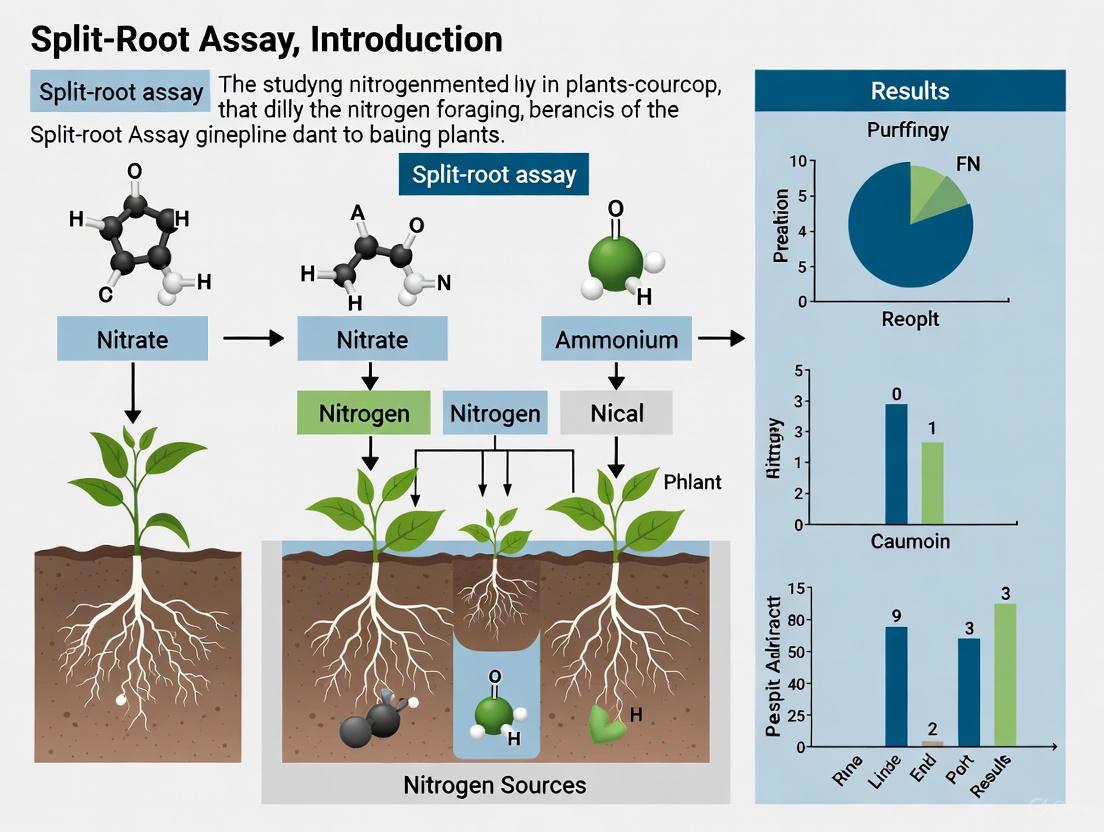
This article provides a comprehensive framework for developing robust and reproducible split-root assays to investigate systemic signaling in plant nitrogen foraging.
Ensuring Robust Split-Root Assays: A Comprehensive Protocol for Studying Systemic Nitrogen Foraging Signaling
Abstract
This article provides a comprehensive framework for developing robust and reproducible split-root assays to investigate systemic signaling in plant nitrogen foraging. It synthesizes foundational principles of local and systemic nitrogen signaling, detailing varied methodological approaches for plants like Arabidopsis and legumes. The content offers explicit troubleshooting guidance to overcome common challenges in protocol replication and provides strategies for experimental validation using molecular and proteomic tools. Designed for plant science researchers and biologists, this guide emphasizes methodological rigor to enhance the reliability of research on long-distance signaling mechanisms governing root architecture and nutrient economics.
The Science of Systemic Signaling: How Plants Forage for Nitrogen
Application Note: Systemic Signaling in Nitrogen Foraging
This application note details the molecular and physiological mechanisms underlying the active and dormant root foraging strategies plants employ to optimize nitrogen acquisition. Using the split-root assay framework, researchers can investigate how plants integrate local and systemic signals to modulate root architecture in heterogeneous soil environments. The documented protocols support the study of systemic signaling pathways, specifically those reporting whole-plant nitrogen supply and demand, which are crucial for understanding plant nutrient economics [1].
As sessile organisms, plants rely on root plasticity to forage for nutrients in fluctuating underground environments. In response to varying nitrate availability, roots adopt one of two distinct foraging strategies [1]:
- Active-Forging Strategy: Under nitrate-limited conditions, plants initiate lateral root outgrowth and extensive transcriptome reprogramming to actively explore the soil.
- Dormant Foraging Strategy: In nitrate-replete conditions, plants systemically repress lateral root outgrowth, conserving resources until needed.
These strategies are regulated by the integration of local nitrate sensing with long-distance systemic signaling, enabling the plant to function as a unified system optimizing nutrient acquisition [1].
Experimental Protocols
Core Methodology: The Split-Root Assay
The split-root assay is a foundational technique for distinguishing local responses from systemic signals in root architecture studies [2].
Protocol: Establishing a Split-Root System in Arabidopsis
Objective: To create a plant with two physically isolated root systems sharing a common shoot, enabling the application of heterogeneous nitrogen treatments.
Materials:
- Sterilized seeds of Arabidopsis thaliana (or relevant model species)
- Standard vertical growth plates (e.g., 120 x 120 mm square plates)
- Split-root apparatus: A divided container or two separate containers connected to support a common shoot area.
- Nitrogen-free plant growth medium (solid or liquid)
- Stock solutions of 1M KNO₃ and 1M KCl for treatment application
Procedure:
- Germination: Germinate surface-sterilized seeds on standard nitrogen-containing medium under sterile conditions.
- Seedling Selection: After 5-7 days, select uniformly sized seedlings.
- Root Splitting: Carefully divide the primary root system of a seedling into two approximately equal halves. This can be achieved by:
- Acclimation: Allow plants to recover and establish in the split-root setup on a uniform, low-nitrate medium for 3-5 days.
- Treatment Application: Apply the experimental nitrogen treatments to the respective root compartments. Standard conditions include [1]:
- Homogeneous N-replete (C.NO₃): 5 mM KNO₃ to both sides.
- Homogeneous N-deprived (C.KCl): 5 mM KCl to both sides.
- Heterogeneous (Sp.NO₃/Sp.KCl): 5 mM KNO₃ to one side and 5 mM KCl to the other.
- Harvest: Conduct phenotypic analyses (e.g., root imaging, biomass measurement) and molecular analyses (e.g., transcriptomics, hormone profiling) after a predetermined period, typically from 2 to 4 days after treatment [1].
Key Experiments & Analyses
Phenotypic Analysis of Root Architecture
Objective: To quantify the plasticity of lateral root growth in response to local and systemic nitrogen signals.
Procedure:
- Root Imaging: At the end of the treatment period, carefully scan or photograph the root systems from each compartment separately.
- Trait Quantification: Use image analysis software (e.g., ImageJ with plant root analysis plugins) to measure:
- Primary Root Length
- Total Lateral Root Length per Primary Root
- Lateral Root Density
- Data Interpretation: Compare lateral root growth across treatments. In a heterogeneous (Sp.NO₃/Sp.KCl) environment, expect significant lateral root proliferation in the N-rich (Sp.NO₃) compartment and suppressed growth in the N-deprived (Sp.KCl) compartment, demonstrating local stimulation and systemic repression [1].
Table 1: Representative Root Architecture Data from a Split-Root Experiment
| Nitrogen Treatment | Root Compartment | Total Lateral Root Length (cm per Primary Root) | Interpretation of Strategy |
|---|---|---|---|
| C.NO₃ (Homogeneous) | Both Sides | 1.07 ± 0.15 | Dormant Strategy |
| C.KCl (Homogeneous) | Both Sides | High proliferation | Active-Forging Strategy |
| Sp.NO₃/Sp.KCl (Heterogeneous) | N-rich side (Sp.NO₃) | 2.29 ± 0.21 | Local activation, low systemic demand |
| N-deprived side (Sp.KCl) | Suppressed growth | Systemic repression |
Molecular Analysis: Transcriptome Profiling
Objective: To identify genome-wide transcriptional reprogramming and sentinel genes responsive to systemic N signaling.
Procedure:
- Sample Collection: Harvest root tissues from different treatments and compartments at multiple time points (e.g., 2 h, 8 h, 2 d) to capture early and late responses [1].
- RNA Extraction & Sequencing: Extract high-quality total RNA and prepare libraries for RNA-Sequencing.
- Bioinformatic Analysis: Perform a three-way ANOVA to identify genes with expression patterns significantly affected by nitrogen, split-root conditions, and time. Focus on genes whose N responses are altered by the split-root setup, indicating a role in systemic signaling [1].
Table 2: Key Signaling Components in Systemic Nitrogen Economics
| Systemic Signal / Pathway | Molecular Components | Primary Function in Nitrogen Economics | Mutant Lines for Validation |
|---|---|---|---|
| N Supply (Nitrate Sensing) | NRT1.1 nitrate transceptor, CIPK8, CIPK23 kinases | Reports local nitrate availability/supply; triggers long-distance signaling | nrt1.1 mutants |
| N Demand (Cytokinin Relay) | IPT3 (cytokinin biosynthesis), Cytokinin | Root-shoot-root relay reporting whole-plant N status/demand; promotes compensatory growth in N-rich patches | ipt3 mutants, cytokinin-deficient lines |
| N Metabolite Feedback | Glu/Gln, miR167, ARF8 | Proposed negative feedback from N assimilation products; represses lateral root outgrowth | Mutants in glutamine synthesis or ARF8 |
The Scientist's Toolkit
Table 3: Research Reagent Solutions for Nitrogen Foraging Studies
| Item Name | Function/Application | Specific Example / Target |
|---|---|---|
| Split-Root Apparatus | Creates physically separated root environments to study local vs. systemic responses. | Divided plates, twin-pot systems, partitioned chambers [2] |
| Nitrate Salts | Key nitrogen source and signal molecule for treatments. | Potassium Nitrate (KNO₃) at varying concentrations (e.g., 5 mM) [1] |
| Control Salts | Osmotic and ionic control for nitrate treatments. | Potassium Chloride (KCl) [1] |
| Hormone Biosynthesis Inhibitors/Mutants | Tools to dissect the role of specific hormones in systemic signaling. | Cytokinin biosynthesis mutants (e.g., ipt3) [1] |
| Nitrate Transceptor Mutants | Used to validate the role of nitrate sensing and transport in local and systemic pathways. | nrt1.1 mutant lines [1] |
| RNA-Seq Reagents | For transcriptomic analysis of genome-wide reprogramming under different N regimes. | Kits for RNA extraction, library prep, and next-generation sequencing [1] |
Signaling Pathway & Workflow Visualizations
Nitrogen Foraging Systemic Signaling Pathway
Split-Root Experimental Workflow
In plant biology, nitrogen (N) is a critical macronutrient whose availability shapes root architecture and overall plant health. Plants have evolved sophisticated systemic signaling mechanisms to coordinate their growth with fluctuating nitrogen availability in the soil. Central to this coordination is the nitrate-cytokinin relay, a shoot-root communication system that integrates local nitrate perception with whole-plant nitrogen demand [3]. This relay is fundamental to the "N economics" of plants—the strategic balance between nitrogen acquisition costs and growth benefits.
Investigating these pathways often employs split-root assays, where a single plant's root system is divided and exposed to different nutrient conditions. This setup allows researchers to distinguish local responses from systemic signals. However, as highlighted in recent methodological research, the multi-step complexity of these assays introduces significant challenges for achieving robust, replicable results [4] [5]. This article details the core principles of the nitrate-cytokinin relay within the framework of split-root assay robustness, providing application notes and detailed protocols to enhance reliability in nitrogen foraging research.
Core Signaling Principles: The Nitrate-Cytokinin Relay
The systemic signaling underlying plant nitrogen economics can be functionally separated into two distinct pathways: N Supply signaling and N Demand signaling [3].
- N Supply Signaling: This is a long-distance systemic signal triggered directly by nitrate sensing. It reports the local availability of nitrate in the soil to the entire plant.
- N Demand Signaling (The Nitrate-Cytokinin Relay): This pathway reports the whole plant's nitrogen status and demand. It involves a shoot-root relay where:
- Root systems experiencing high nitrate availability likely synthesize cytokinin precursors.
- These precursors are transported to the shoot.
- In the shoot, they are processed into the active cytokinin form, trans-zeatin (tZ).
- tZ is then redistributed to the roots, where it promotes compensatory root growth in nitrate-rich patches [3] [6].
This relay ensures that the plant's foraging behavior matches its internal nutritional needs, a concept formalized as the Transitive Closure of the Nitrate-Cytokinin Relay [3]. In Arabidopsis thaliana, this systemic regulation involves the integration of demand signals and local nitrate presence to direct root proliferation [6]. Legumes like Lotus japonicus, however, have evolved a different cytokinin response to nitrate, where high nitrate conditions actively suppress cytokinin biosynthesis to inhibit nodule organogenesis [7]. The diagram below illustrates the core workflow of this systemic signaling.
Figure 1: Systemic N Signaling Workflow. This diagram illustrates the nitrate-cytokinin shoot-root relay, integrating local nitrate perception with whole-plant demand to direct root foraging.
Quantitative Phenotypes in Systemic N Signaling
Systemic signaling manifests in distinct, measurable root foraging strategies based on nitrogen availability.
Table 1: Quantitative Root Foraging Phenotypes in Response to Systemic N Signaling
| N Status | Foraging Strategy | Lateral Root Phenotype | Key Systemic Transcriptome Response |
|---|---|---|---|
| Nitrate-Limited | Active Foraging | Outgrowth promoted | Shared reprogramming in response to local/distal deprivation [3] |
| Nitrate-Replete | Dormant Strategy | Outgrowth repressed | Shared reprogramming in response to local/distal supply [3] |
The Scientist's Toolkit: Research Reagent Solutions
A range of specific genetic tools and reagents is essential for dissecting the nitrate-cytokinin relay.
Table 2: Key Research Reagents for Investigating the Nitrate-Cytokinin Relay
| Reagent / Material | Function / Target | Key Application in N Signaling Research |
|---|---|---|
| Split-Root Apparatus | Physically isolates root sections of one plant | Allows application of heterogeneous N treatments to study local vs. systemic signaling [4] [3] |
| Cytokinin Biosynthesis Mutants | Genes like ipt3, ipt4 in Arabidopsis or Lotus [7] | Used to establish genetic requirement for cytokinin in systemic N demand signaling and nodulation [3] [7] |
| NLP Transcription Factor Mutants | Ljnlp4 (nrsym1), Mtnlp1 [7] | Study of nitrate-resistant symbiosis; uncovers NLP role in inhibiting nodulation under high nitrate [7] |
| Cytokinin Application | External hormone supply | Rescues nodulation in biosynthesis mutants; tests sufficiency for signaling outcomes [7] |
| Sentinel Genes | Transcriptional markers identified via split-root RNA-seq [3] | Probes for systemic N status in genetic mutants or varied protocol conditions [4] [3] |
Application Notes: Protocol Robustness in Split-Root Assays
The complexity of split-root assays means that subtle variations in protocol can significantly impact outcomes related to systemic signaling. A recent review highlights that achieving robustness requires careful attention to several factors [4] [5].
Critical Protocol Variables and Recommendations
- Plant Genotype and Uniformity: Use genetically uniform material. Even within a stated genotype (e.g., Arabidopsis thaliana Col-0), substrain differences can affect results. Report seed source and generation.
- Split-Root Establishment: The method and timing of root division are critical. Variations include:
- Germination on mesh over divided compartments.
- Seedling transfer after initial growth on plates.
- Explicitly document the age of seedlings at splitting, the surgical tools used, and any rooting hormones applied.
- Nitrate Treatment Formulation: Beyond concentration, the chemical form (KNO₃ vs. Ca(NO₃)₂), pH buffering, and accompanying ion controls (e.g., KCl) must be consistent and reported.
- Sampling and Tissue Collection: Clearly define the "susceptible zone" or other sampled root segments. Variations in dissection precision can introduce noise in transcriptomic or cytokinin measurements [7].
- Environmental Controls: Light intensity, photoperiod, and humidity in growth chambers can interact with systemic signaling. Maintain strict environmental control and document all growth conditions.
The following workflow maps the split-root assay procedure, highlighting key stages where protocol fidelity is critical for robust results.
Figure 2: Split-Root Assay Workflow. The key stages of a robust split-root experiment, with critical control points highlighted to ensure protocol fidelity and result replicability.
Detailed Experimental Protocols
Protocol: Split-Root Assay for Systemic Nitrate Signaling
Application: Used to identify systemic transcriptional and developmental responses to heterogeneous nitrate supply, including the identification of sentinel genes for N demand [3].
Materials:
- Arabidopsis thaliana seeds (e.g., Col-0 wild-type and relevant mutants like abcg14 [6])
- Split-root apparatus (e.g., divided plates or pots allowing physical root separation)
- Liquid N-medium with controlled nitrate concentrations (e.g., 0.05 mM vs. 5 mM KNO₃)
- Tools: Fine forceps, sterile scalpels, growth chambers
Methodology:
- Germination: Surface-sterilize seeds and germinate on vertical agar plates containing full-strength N-medium for 5-7 days under controlled light and temperature.
- Split-Root Establishment: Select uniformly sized seedlings. Using fine forceps, carefully transfer each seedling to a split-root apparatus, positioning the root crown so that the primary root is divided, and lateral roots are evenly distributed between two isolated compartments. This is a critical step for robustness [4].
- Recovery: Fill both compartments with a standard, homogeneous N-medium. Allow plants to recover for 4 days, ensuring new root growth is established in both compartments.
- Treatment Application: Replace the medium in the compartments to apply the heterogeneous treatment. Standard combinations include:
- Homogeneous Low N: 0.05 mM NO₃⁻ in both compartments.
- Homogeneous High N: 5 mM NO₃⁻ in both compartments.
- Heterogeneous: 0.05 mM NO₃⁻ in one compartment, 5 mM NO₃⁻ in the other.
- Harvesting: After 7 days of treatment, separately harvest root tissues from each compartment for downstream analysis (e.g., RNA sequencing, cytokinin quantification [7], phenotyping of lateral root density).
Protocol: Quantifying Cytokinin Biosynthesis in Response to Nitrate
Application: Measures the impact of nitrate on cytokinin biosynthesis gene expression and hormone levels, particularly in the context of nodulation inhibition in legumes [7].
Materials:
- Lotus japonicus or Medicago truncatula wild-type and cytokinin biosynthesis mutants (e.g., ipt3, ipt4 [7])
- Rhizobia strain (e.g., Mesorhizobium loti)
- Liquid nutrient media with 0 mM or 5 mM KNO₃
- TRIzol reagent for RNA extraction
- LC-MS/MS equipment for cytokinin quantification
Methodology:
- Plant Growth and Inoculation: Grow plants in a controlled environment. For the susceptible zone analysis, inoculate roots with rhizobia at the appropriate density.
- Tissue Dissection: At specific time points (e.g., 1 and 2 days post-inoculation), dissect the root susceptible zone under a microscope. Flash-freeze tissue in liquid N₂. Precise dissection is vital for replicability [4].
- RNA Extraction and qRT-PCR: Extract total RNA. Perform cDNA synthesis and quantitative PCR using primers for cytokinin biosynthesis genes (Ipt2, Ipt3, Log1, Log4). Normalize to housekeeping genes.
- Cytokinin Quantification: Grind frozen tissue to a fine powder. Extract cytokinins and quantify using LC-MS/MS. Specifically monitor for isopentenyladenine (iP) and trans-zeatin (tZ) levels [7].
Data Analysis and Interpretation
Transcriptome Analysis: Compare gene expression profiles between homogeneous and heterogeneous split-root treatments. Genes that respond specifically to the heterogeneous treatment are strong candidates for being under systemic control [3]. Sentinel genes identified this way can be used to probe systemic N responses in mutant backgrounds.
Phenotypic Data Integration: Correlate transcriptome data with root architecture phenotypes (lateral root density, root hair growth). This integration helps identify distinct mechanisms underlying "N supply" versus "N demand" [3].
Table 3: Expected Outcomes from Key Split-Root Assay Configurations
| Assay Configuration | Expected Systemic Signal | Key Readout: Cytokinin Level | Key Readout: Root Growth |
|---|---|---|---|
| Homogeneous Low N | High N Demand | Increased in roots [3] | Active foraging: increased lateral root outgrowth [3] |
| Homogeneous High N | Low N Demand | Decreased in roots (legumes) [7] | Dormant strategy: repressed lateral root outgrowth [3] |
| Heterogeneous (High/Low N) | Local & Systemic N Supply/Demand | Differential across root halves [3] | Compensatory growth in high-N patch [3] |
Plants inhabit heterogeneous soils where nutrient availability can vary dramatically between different regions of the root zone. To optimize growth, plants must integrate local nutrient signals with whole-plant demand through sophisticated long-distance communication systems [8]. Split-root assays have emerged as a pivotal experimental technique for disentangling local nutrient effects from systemic signaling, allowing researchers to physically separate the root system into distinct compartments that can be exposed to different nutrient environments [8]. This methodology has proven particularly valuable in nitrogen foraging research, where it has helped unravel how plants prioritize root growth in nutrient-rich patches while simultaneously suppressing growth in nutrient-poor areas—a phenomenon known as preferential foraging [8]. The robustness of these experimental outcomes across variations in protocol implementation remains a critical consideration for advancing research in this field [8].
Theoretical Framework: Local vs. Systemic Responses
The conceptual foundation of split-root research rests on distinguishing three types of plant responses to heterogeneous nutrient environments:
- Local Responses: Changes in root growth, gene expression, or nutrient uptake that occur specifically in the root tissue directly exposed to a particular nutrient stimulus.
- Systemic Responses: Whole-plant physiological changes that occur in response to the overall nutrient status, typically mediated by long-distance signaling molecules.
- Systemic Signaling Integration: The process by which information about local nutrient availability is communicated throughout the plant to coordinate growth responses according to whole-plant demand [8].
The seminal work by Ruffel et al. (2011) demonstrated that in split-root systems with heterogeneous nitrate supply, the root portion in high nitrate (HN) not only grows more than its counterpart in low nitrate (LN) but also exhibits enhanced growth compared to HN roots in uniformly high nitrate conditions (HNln > HNHN) [8]. Conversely, the root portion in low nitrate shows suppressed growth compared to roots in uniformly low nitrate conditions (LNhn < LNLN) [8]. These observations provide compelling evidence for demand-driven systemic signaling that modulates local resource allocation.
Experimental Approaches: Split-Root Assay Variations
Split-root assays enable researchers to create controlled heterogeneous environments to study systemic signaling. The technique has been adapted for various plant species and research questions, with several established methodological variations [8].
Protocol Variations in Arabidopsis thaliana Nitrate Foraging Studies
Table 1: Comparison of Split-Root Protocol Variations in Arabidopsis Nitrate Research
| Paper | HN Concentration | LN Concentration | Days Before Cutting | Recovery Period | Heterogeneous Treatment | Sucrose Concentration |
|---|---|---|---|---|---|---|
| Ruffel et al. (2011) | 5 mM KNO₃ | 5 mM KCl | 8-10 days | 8 days | 5 days | 0.3 mM |
| Remans et al. (2006) | 10 mM KNO₃ | 0.05 mM KNO₃ + 9.95 mM K₂SO₄ | 9 days | None | 5 days | None |
| Poitout et al. (2018) | 1 mM KNO₃ | 1 mM KCl | 10 days | 8 days | 5 days | 0.3 mM |
| Girin et al. (2010) | 10 mM NH₄NO₃ | 0.3 mM KNO₃ | 13 days | None | 7 days | 1% |
| Tabata et al. (2014) | 10 mM KNO₃ | 10 mM KCl | 7 days | 4 days | 5 days | 0.5% |
| Mounier et al. (2014) | 10 mM KNO₃ | 0.05 mM KNO₃ + 9.95 mM K₂SO₄ | 6 days | 3 days | 6 days | Not specified |
| Ohkubo et al. (2017) | 1 mM KNO₃ | 10 mM KCl | 7 days | 4 days | 5 days | 0.5% |
Despite substantial variations in protocol parameters—including nitrogen concentrations, media components, and growth durations—all cited studies consistently observed the preferential foraging phenotype, where plants preferentially invest in root growth in the high nitrate compartment [8]. This consistency across methodological variations suggests considerable robustness in this fundamental aspect of nitrogen foraging behavior.
Critical Methodological Considerations
Several technical aspects require careful attention to ensure experimental robustness:
- Root Division Technique: Methods range from simply dividing a well-developed root system between two containers to more complex approaches involving cutting the primary root after two lateral roots have developed and using these laterals in different nutrient compartments [8].
- Nutrient Compensation: In paired treatments, appropriate ionic compensation is essential when varying nitrate concentrations. Common approaches include replacing nitrate salts with chloride or sulfate salts to maintain consistent ionic strength and potassium levels across treatments [8].
- Temporal Parameters: Protocols vary significantly in pre-treatment growth periods, recovery periods after root division, and duration of heterogeneous treatments, each of which may influence experimental outcomes [8].
Experimental Protocol: Standardized Split-Root Assay for Nitrogen Foraging
Materials and Reagent Solutions
Table 2: Essential Research Reagents and Materials for Split-Root Assays
| Item | Specification/Function | Example Formulation |
|---|---|---|
| Basal Growth Medium | Provides essential macro/micronutrients | 0.5 mM NH₄⁺-succinate, 0.1 mM KNO₃, pH 5.7 |
| High Nitrate (HN) Solution | Creates nitrate-rich environment | 5-10 mM KNO₃ in basal medium |
| Low Nitrate (LN) Solution | Creates nitrate-depleted environment | 5 mM KCl or 0.05 mM KNO₃ + 9.95 mM K₂SO₄ |
| Agar Support Medium | Solid support for root growth | 0.8-1.2% purified agar in appropriate solution |
| Sucrose Supplement | Carbon source for in vitro growth | 0.3-1.0% sucrose in medium |
| Sterilization Equipment | Maintains axenic conditions | Autoclave, filter sterilization apparatus |
Step-by-Step Procedure
Phase 1: Pre-culture Establishment (Days 0-8)
- Surface-sterilize Arabidopsis thaliana seeds and stratify at 4°C for 2-4 days.
- Sow seeds on square Petri plates containing standardized growth medium with 0.1-10 mM KNO₃ (concentration depends on specific protocol).
- Grow vertically under long-day conditions (16-hour light/8-hour dark) at 50-230 μmol m⁻² s⁻¹ light intensity and 22°C for 7-10 days until primary root reaches approximately 4-5 cm and multiple lateral roots have emerged [8].
Phase 2: Root System Division (Day 8)
- Carefully excise the primary root tip approximately 3-5 mm above the root apex using a sterile scalpel.
- Transfer seedlings to fresh medium, positioning the two most prominent lateral roots to grow in separate directions.
- Allow 3-8 days for lateral root elongation to approximately 2-3 cm, creating a symmetrical split-root system [8].
Phase 3: Heterogeneous Treatment (Day 14-16)
- Transfer each split-root system to a divided chamber or two separate plates, ensuring each lateral root portion is exposed to different nutrient conditions.
- Apply High Nitrate (HN) treatment to one compartment and Low Nitrate (LN) treatment to the other.
- Maintain plants under controlled conditions for 5-7 days to observe foraging responses [8].
Phase 4: Data Collection and Analysis
- Image entire root systems using high-resolution scanning.
- Quantify root architecture parameters (total root length, lateral root density, branching points) separately for each root portion.
- Calculate preferential foraging ratio as (HN root growth)/(LN root growth) and compare to control conditions.
- Perform statistical analyses to assess significance of local and systemic effects.
Systemic Signaling Workflow
Ensuring Robustness and Replicability
The complexity of multi-step split-root protocols introduces numerous potential sources of variation that can affect experimental outcomes. Research by Salvatore et al. (2025) highlights that while the preferential foraging phenotype appears robust across many protocol variations, specific aspects of systemic signaling responses may be more sensitive to methodological differences [8] [4]. To enhance replicability:
- Document Protocol Variations Explicitly: Beyond reporting what was done, note which parameters were optimized versus those that may be flexible [8].
- Report Negative Results: Information about which protocol variations fail to produce expected outcomes is valuable for understanding robustness boundaries [8].
- Standardize Reporting: Include complete details about growth conditions, media compositions, temporal parameters, and environmental controls in methods sections [8].
Recent research emphasizes that robustness—the capacity to generate similar outcomes under slightly different conditions—is as important as strict replicability in experimental biology [8]. Robust experimental outcomes are more likely to reflect biologically significant phenomena rather than artifacts of specific protocol implementations [8].
Split-root assays provide a powerful approach for distinguishing local nutrient supply from whole-plant demand in nitrogen foraging research. The protocol detailed here offers a standardized methodology while acknowledging the variations that exist across laboratories. By implementing these robust experimental practices and clearly documenting protocol parameters, researchers can advance our understanding of the sophisticated signaling networks that allow plants to optimize nutrient acquisition in heterogeneous environments. The continued refinement of these techniques will enhance both the reliability and translational potential of nitrogen foraging research.
The Critical Role of Split-Root Assays in Unraveling Long-Distance Communication
Split-root assays represent a foundational methodology in experimental plant biology, enabling researchers to systematically distinguish between local responses and systemic signaling within a single organism. By physically dividing a plant's root system into two or more isolated compartments, scientists can apply differential treatments to roots that share a common shoot system. This powerful approach is indispensable for investigating long-distance communication mechanisms that coordinate plant development, nutrient foraging, and stress responses across different tissues and organs. The conceptual significance of this technique extends beyond its immediate applications, as it provides a unique window into the integrative physiology of plants as complete organisms responding to heterogeneous environmental conditions [8] [9].
Within the framework of scientific rigor, it is essential to differentiate between key methodological concepts. Reproducibility refers to the ability to generate quantitatively identical results when using the same methods and conditions, typically more achievable in computational biology. In experimental biological research, replicability describes situations where experiments performed under the same conditions produce quantitatively and statistically similar results, acknowledging the inherent noise from biological sources and experimental execution. Perhaps most critically for split-root assays, robustness refers to the capacity to generate similar outcomes despite slight variations in experimental protocols, an essential characteristic for biological relevance across different laboratory settings and environmental conditions [8]. This robustness is particularly important for research on nitrogen foraging, where plants must integrate local nutrient availability with systemic demand signaling to optimize root growth and resource allocation.
Methodological Approaches and Protocol Variations
The implementation of split-root systems varies significantly depending on plant species, developmental stage, and research objectives. A comparative analysis of established methodologies reveals substantial protocol diversity while highlighting consistent biological outcomes.
Arabidopsis thaliana Protocols for Nitrogen Foraging Research
In Arabidopsis thaliana research on nitrogen foraging, a common approach involves cutting the main root after two lateral roots have developed, then using these laterals in two different nutrient compartments [8]. Despite this common framework, extensive variation exists in implementation details across different laboratories, as summarized in Table 1.
Table 1: Protocol Variations in Arabidopsis thaliana Split-Root Experiments for Nitrogen Foraging
| Study | HN Concentration | LN Concentration | Days Before Cutting | Recovery Period | Heterogeneous Treatment | Sucrose Concentration |
|---|---|---|---|---|---|---|
| Ruffel et al. (2011) | 5 mM KNO₃ | 5 mM KCl | 8-10 days | 8 days | 5 days | 0.3% |
| Remans et al. (2006) | 10 mM KNO₃ | 0.05 mM KNO₃ + 9.95 mM K₂SO₄ | 9 days | None | 5 days | None |
| Poitout et al. (2018) | 1 mM KNO₃ | 1 mM KCl | 10 days | 8 days | 5 days | 0.3% |
| Girin et al. (2010) | 10 mM NH₄NO₃ | 0.3 mM KNO₃ | 13 days | None | 7 days | 1% |
| Tabata et al. (2014) | 10 mM KNO₃ | 10 mM KCl | 7 days | 4 days | 5 days | 0.5% |
Notably, despite these substantial variations in protocol parameters, all cited studies consistently observed the fundamental phenomenon of preferential foraging—the preferential investment in root growth on the side experiencing higher nitrate levels (HNln > LNhn) [8]. This consistency across methodological differences underscores the biological robustness of this adaptive response while highlighting the importance of understanding which protocol variations significantly impact experimental outcomes.
Critical Technical Considerations: Partial vs. Total De-Rooting
The specific technique employed for root division significantly impacts plant recovery and experimental success. Research comparing partial de-rooting (cutting approximately 0.5 cm below the shoot-to-root junction) versus total de-rooting (cutting at the shoot-to-root junction) has demonstrated substantial advantages for the partial de-rooting approach [9].
Plants subjected to partial de-rooting exhibit significantly shorter recovery times, defined as the period between de-rooting and the regain of relative growth rates equivalent to uncut plants. This approach also results in higher survival rates, larger final rosette areas, and more developed root systems compared to total de-rooting [9]. The timing of de-rooting also differentially affects these approaches: delaying de-rooting past 10 days after sowing sharply decreased final leaf area in totally de-rooted plants but had less dramatic effects on partially de-rooted plants. These findings suggest that partial de-rooting imposes lower stress on plants, making it the preferred method for establishing split-root systems in small plants like Arabidopsis thaliana [9].
Species-Specific Adaptations: Loblolly Pine and Medicago truncatula
The split-root technique has been successfully adapted for diverse plant species, each requiring specific methodological adjustments. In loblolly pine (Pinus taeda L.), a protocol has been developed that promotes rapid lateral root elongation by cutting the primary root tip and growing seedlings in hydroponic medium [10]. This method successfully establishes a split-root system within eight weeks post-germination, with lateral roots then divided into separate compartments for experimental treatments. Validation experiments demonstrated that root dry biomass was not significantly different between separated non-inoculated roots, and ectomycorrhizal colonization was strictly confined to the inoculated side when only one root compartment was inoculated, confirming the technical success of the compartmentalization [10].
For the model legume Medicago truncatula, improved split-root inoculation systems have been developed that show marked improvement over existing methods in the number and quality of roots produced [11]. These refined protocols have been essential for studying systemic regulation of nodulation, particularly the autoregulation of nodulation (AON) process that balances the energetic costs of symbiosis with plant needs. The technical improvements have enabled researchers to consistently generate large numbers of experimental replicates, addressing a historical limitation in split-root research [11].
Key Signaling Pathways in Systemic Communication
Split-root assays have been instrumental in identifying and characterizing long-distance signaling pathways that coordinate plant responses to environmental heterogeneity. The visual representation below illustrates the core workflow and applications of the split-root assay methodology.
miR2111-TML: A Conserved Shoot-to-Root Signaling Module
Recent research employing split-root assays has identified miR2111 as a shoot-derived phloem-mobile microRNA that systemically regulates root architecture in response to nitrogen availability [12]. This miRNA translocates from shoots to roots as a fully processed duplex, where it targets the F-Box Kelch-repeat gene TOO MUCH LOVE (TML) for posttranscriptional regulation. Grafting experiments with miR2111-overexpressing shoots on wild-type root stocks demonstrated that shoot-derived miR2111 is sufficient to reduce lateral root initiation, while mutants with reduced miR2111 abundance show enhanced lateral root formation [12].
The miR2111-TML regulatory module represents a crucial signaling pathway that communicates shoot nitrogen status to root systems, enabling adaptive root growth responses. Under nitrogen starvation conditions, miR2111 levels increase, suppressing TML expression and thereby permitting lateral root development to enhance nutrient foraging capacity. Conversely, under sufficient nitrogen conditions, reduced miR2111 levels allow TML accumulation, which restricts lateral root formation [12]. This systemic signaling mechanism ensures that root architecture aligns with both local nutrient availability and whole-plant nitrogen status.
Nitrogen Foraging and Preferential Root Growth
Split-root assays have been particularly valuable for elucidating the systemic signaling mechanisms governing nitrogen foraging behavior in plants. In heterogeneous nitrate environments, plants consistently demonstrate preferential investment in root growth in locations with high nutrient supply (HNln > LNhn) [8]. Beyond this local response, seminal work by Ruffel et al. (2011) revealed additional systemic dimensions: the high nitrate (HNln) side invests more in root growth compared to plants where both sides experience high nitrate (HNHN), while the low nitrate (LNhn) side invests less in root growth compared to roots grown in homogeneous low nitrate (LNLN) split-root setups [8].
These findings indicate sophisticated demand and supply signaling that coordinates root growth across different parts of the root system. The robustness of these phenotypes across methodological variations suggests they represent fundamental biological processes rather than protocol-specific artifacts. This robustness is essential for ecological relevance, as natural soil conditions are inherently heterogeneous and dynamic [8].
Distinguishing Local and Systemic Effects in Plant-Microbe Interactions
Split-root assays provide critical insights into the spatial dynamics of plant-microbe interactions. In apple replant disease (ARD) research, split-root experiments have demonstrated that the plant response to ARD soil is local rather than systemic [13]. When apple seedlings were grown with root systems divided between ARD soil and sterilized ARD soil, root growth in the sterilized soil compartment was consistently superior to growth in the ARD soil, regardless of the connection through a common shoot system.
This local response pattern was further corroborated by analyses of bacterial and fungal community composition, which differed significantly between the rhizoplane and rhizosphere of the same plant's root systems growing in different soils [13]. The research also revealed that nitrate-N uptake efficiency was higher for roots in sterilized ARD soil compared to those in ARD soil, demonstrating functional differences alongside the morphological responses. These findings highlight how split-root assays can discriminate between localized root responses and shoot-mediated systemic effects in complex plant-microbe interactions.
Essential Research Reagents and Materials
Successful implementation of split-root assays requires specific laboratory materials and reagents tailored to plant species and research objectives. The following table details essential components for establishing split-root systems across different experimental contexts.
Table 2: Essential Research Reagents and Materials for Split-Root Assays
| Category | Specific Items | Application and Function | Considerations |
|---|---|---|---|
| Growth Containers | Clone collars, PVC piping elbows, split-root tubes, divided pots, net pots | Physical separation of root compartments while supporting plant growth | Container size and material affect root development and treatment isolation |
| Support Materials | Agar plates, hydroponic systems, solid growth media (e.g., SafeT-Sorb) | Root support and nutrient delivery medium | Composition affects root morphology and nutrient availability |
| Sterilization Supplies | Hydrogen peroxide (35%), ethanol (90%), autoclaved materials, sterile pipettes | Surface sterilization of seeds and equipment | Critical for preventing microbial contamination |
| Surgical Tools | Fine forceps, utility scissors, micro-spatulas, cork borers | Precise root manipulation and division | Tool sharpness and sterilization affect plant recovery |
| Nutrient Solutions | KNO₃, KCl, K₂SO₄, NH₄-succinate, sucrose | Differential treatment applications | Concentration and balance of ions critical for specific responses |
| Microbial Inoculants | Ectomycorrhizal fungi (e.g., Paxillus ammoniavirescens), rhizobial strains | Studying systemic symbiosis regulation | Purity and viability essential for consistent results |
The selection of appropriate materials significantly influences experimental outcomes. For example, in loblolly pine split-root assays, specific equipment such as Fisherbrand utility scissors, rubber foam clone collars that fit tightly into 250 ml beakers, and sterile coffee stir rods for supporting seedlings are essential for technical success [10]. Similarly, Arabidopsis split-root assays require precise agar concentrations and growth container configurations to ensure proper root development and compartmentalization [8] [9].
Visualization of Key Signaling Pathways
The diagram below illustrates the miR2111-mediated systemic signaling pathway that regulates root architecture in response to nitrogen availability, a key discovery enabled by split-root research.
Split-root assays continue to be indispensable tools for unraveling the complex long-distance communication networks that integrate plant growth and environmental responses. The methodological considerations outlined—from technical aspects of root division to protocol variations affecting experimental robustness—provide a framework for enhancing research reproducibility and biological relevance. As plant science increasingly addresses challenges of sustainable agriculture and climate resilience, understanding systemic signaling mechanisms through techniques like split-root assays will be essential for developing crops with optimized resource use efficiency. The continued refinement of these methodologies, coupled with explicit reporting of protocol details and variations, will further strengthen their utility in advancing fundamental plant biology and applied agricultural research.
Implementing Split-Root Assays: From Theory to Practice
Split-root assays are a fundamental technique in plant research, enabling scientists to study how plants integrate local and systemic signals in response to heterogeneous environments. In nitrogen foraging research, this method has been pivotal for unraveling how plants perceive local nutrient availability and translate this information into whole-plant developmental responses. The robustness of these findings, however, is highly dependent on the chosen experimental setup. This application note provides a detailed comparison of common split-root systems—agar plates, double-pots, and elbow assemblies—to guide researchers in selecting and implementing the most appropriate methodology for their specific research questions in nitrogen foraging and beyond.
Quantitative Comparison of Split-Root Systems
The choice of split-root system involves trade-offs between technical feasibility, plant recovery, and experimental flexibility. The following table summarizes the key characteristics of the primary methods used for Arabidopsis thaliana, a common model organism.
Table 1: Comparison of Split-Root System Establishment Methods for Arabidopsis thaliana
| Method | Destructive Procedure Required? | Technically Challenging? | Achievable in Young Seedlings? | Key Findings and Recommendations |
|---|---|---|---|---|
| Splitting of Newly Forming Lateral Roots [14] [9] | Yes | No | Yes | Partial de-rooting (cut ~0.5 cm below shoot-to-root junction) is strongly recommended over total de-rooting. It results in a shorter recovery time (2-4 days faster), higher survival rate, and a final rosette area much closer to uncut plants [14] [9]. |
| Cutting Longitudinally and Splitting the Main Root [14] | Yes | Yes | Yes | Requires surgeon-like skills and is generally not considered practical for Arabidopsis [14]. |
| Inverted Y-Grafting [14] | Yes | Yes | Yes | A highly skill-demanding method with low survivability rates [14]. |
| Splitting the Developed Root System [14] [9] | No | No | No | Suitable for experiments on plants in later developmental stages without a destructive cutting phase [14] [9]. |
Detailed Experimental Protocols
Agar Plate Systems
Agar plates are ideal for high-resolution, phenotyping-heavy studies of root system architecture (RSA) [8] [15].
- Setup: A plastic divider is used to create separate compartments in a single agar plate, or the center of the agar is removed to create distinct root environments [14]. The medium typically contains sucrose and a defined nitrogen source [8].
- Establishment Protocol: Seedlings are germinated and grown until they develop a primary root and two lateral roots. The main root is then cut below these two laterals, and each lateral root is carefully guided into a separate compartment of the agar plate [8] [14].
- Key Applications: Precise quantification of RSA parameters (e.g., lateral root number and length, main root elongation) in response to heterogeneous nitrate supply [8] [15]. The transparent medium allows for non-destructive imaging throughout the experiment.
- Considerations: The composition of the agar medium (e.g., sucrose and nitrogen concentrations) varies significantly between protocols, which can influence outcomes and requires careful standardization for replicability [8].
Double-Pot Systems
This classic soil-based system is versatile for studying longer-term responses and soil-specific interactions.
- Setup: Two pots are placed adjacent to each other, and the plant grows on the edge between them. Alternatively, a single pot can be vertically divided with a plastic partition [14].
- Establishment Protocol: After de-rooting (preferentially partial de-rooting), the newly developed lateral roots are trained into the two separate pots or compartments filled with soil or other growth substrates [14] [9].
- Key Applications: Legume-rhizobia symbiosis studies, drought stress experiments, and investigations where soil properties are relevant [2] [14]. It is particularly useful for applying water-soluble compounds to drought-stressed plants; the compound is applied to one half of the root system, which can be excised after absorption to minimize rehydration [14].
- Considerations: This method is less suitable for high-resolution, full-architecture phenotyping than agar systems.
Elbow and Tubing Assemblies
These systems offer flexible and adaptable designs for specific experimental needs.
- Setup: Utilizes PVC piping elbows, split-root tubes, or specialized vessels to create isolated root chambers [14].
- Establishment Protocol: Similar to the double-pot system, the split root system is established through de-rooting and training of lateral roots into the separate chambers [14] [4].
- Key Applications: Used in a variety of species including soybean and vetch. The design can be customized to control the volume and composition of the growth medium in each compartment with high precision [14].
- Considerations: The setup can be more complex and time-consuming than standard pot systems but offers superior isolation and control over root environments.
Signaling and Workflow Visualization
The diagram below illustrates the core conceptual workflow of a split-root assay and the systemic signaling involved in nitrogen foraging, which these experimental setups are designed to probe.
Diagram 1: Split-root experimental workflow and systemic signaling in nitrogen foraging.
The Scientist's Toolkit: Research Reagent Solutions
The table below lists essential materials and their functions for establishing split-root systems, based on the methodologies cited.
Table 2: Essential Research Reagents and Materials for Split-Root Assays
| Item | Function / Application | Example Protocol Variations |
|---|---|---|
| Nitrogen Sources | To create heterogeneous environments for nutrient foraging studies. | High Nitrate (HN): 1-10 mM KNO₃ [8]. Low Nitrate (LN): 0.05 mM KNO₃ or 1-10 mM KCl as a control/balancing ion [8]. |
| Growth Media Components | To provide essential nutrients and solid support for root growth. | Sucrose: Concentrations vary from none to 1% (w/v) [8]. Other N sources: 0.5 mM NH₄-succinate with 0.1 mM KNO₃ is also used [8]. |
| Agar | A solid matrix for root growth in plate-based systems. | Used in concentrations sufficient for solidification, allowing for clear visualization and phenotyping of roots [8] [14]. |
| Soil Substrate | A naturalistic medium for pot-based and tubing systems. | Used in double-pot, single-pot with partition, or tubing assemblies to simulate soil conditions [14]. |
| Plastic Dividers / Partitions | To physically separate the root compartments. | Used in agar plates or within single pots to prevent root and solution mixing between compartments [14]. |
| Net Pots | To facilitate the easy transfer of root systems between different conditions. | Allows development of split roots in a container that can be transferred with minimal plant disturbance [14]. |
Split-root assays represent a powerful methodological approach in plant sciences, enabling researchers to dissect local and systemic signaling mechanisms by physically dividing a plant's root system into separate compartments. Within the specific context of nitrogen foraging research, these assays are indispensable for unraveling how plants perceive heterogeneous nutrient availability in the soil and subsequently coordinate root growth to optimize nutrient acquisition [8]. Robustness—defined as the capacity of an experimental system to yield similar outcomes despite variations in protocol—is a critical concern in this complex research area [8]. The choice between partial and total de-rooting techniques for establishing split-root systems in Arabidopsis thaliana is a fundamental procedural decision that directly impacts experimental robustness, influencing plant survival, recovery time, and subsequent physiological responses. This protocol provides a detailed, comparative guide to these two techniques, framed within the broader thesis of enhancing methodological robustness in nitrogen foraging studies.
Comparative Analysis: Partial vs. Total De-Rooting
The initial establishment of a split-root system imposes a significant stress on the plant. The choice of de-rooting technique dictates the severity of this stress and has profound implications for experimental outcomes. The core difference lies in the amount of root tissue removed during the procedure. Partial de-rooting (PDR) involves making an incision approximately half a centimeter below the shoot-to-root junction, thereby leaving a portion of the primary root attached to the shoot [16]. In contrast, total de-rooting (TDR) involves excising the entire root system at the shoot-to-root junction, leaving only the hypocotyl and the shoot meristem in contact with the growth medium [9].
A quantitative comparison of plant performance following these two methods reveals clear advantages for the partial de-rooting technique, as summarized in Table 1.
Table 1: Quantitative Comparison of Plant Performance Following Partial vs. Total De-Rooting
| Parameter | Partial De-Rooting (PDR) | Total De-Rooting (TDR) | Significance for Research |
|---|---|---|---|
| Recovery Time | Significantly shorter [16] | Extended [16] | PDR allows for earlier transfer to SRS, accelerating experimental timelines. |
| Final Rosette Area | Much closer to that of uncut plants [16] | Substantially reduced [16] | PDR minimizes growth artifacts, leading to more physiologically relevant data. |
| Survival Rate | Much higher [16] | Lower, especially at 9-11 DAS [9] | PDR increases successful SRS establishment, improving experimental efficiency and yield. |
| Proteomic Stress Signature | Distinct and less severe metabolic alterations [16] | Distinct and more severe metabolic alterations [16] | The lower stress of PDR reduces confounding variables in subsequent physiological assays. |
| Recommended Application | Method of choice for most applications, especially in nutrient foraging studies. | Useful for specific questions where complete root removal is necessary. | PDR enhances overall protocol robustness [8]. |
The data compellingly suggest that partial de-rooting is a less stressful procedure, facilitating a more rapid establishment of the split-root system in younger plants and resulting in developmental parameters that more closely resemble those of uncut plants [16]. This enhanced recovery and survival rate directly contribute to the replicability and robustness of experiments, as PDR buffers against the high variability and plant loss that can plague more severe wounding protocols [8].
Detailed Step-by-Step Protocols
Protocol for Partial De-Rooting (PDR)
This protocol is optimized for establishing a split-root system in young Arabidopsis seedlings with minimal stress.
Research Reagent Solutions & Essential Materials
- Plant Material: Sterilized seeds of Arabidopsis thaliana (e.g., Col-0).
- Growth Medium: Standard Arabidopsis nutrient agar plates (e.g., 0.5x Murashige and Skoog (MS) medium, 0.3-1% sucrose, 0.8% agar) [8]. The specific nitrogen source and concentration can be varied based on experimental design (see Table 2).
- SRS Medium: Similar to growth medium, but potentially solidified in split Petri dishes or using partitions to create two isolated environments.
- Equipment: Laminar flow hood, sterile surgical scalpel or razor blade, fine forceps, sterile Petri dishes, growth chamber with controlled environment (22°C, long-day photoperiod ~50-125 μmol m⁻² s⁻¹ light intensity).
Procedure:
- Germination and Pre-growth: Sow surface-sterilized Arabidopsis seeds on nutrient agar plates. Stratify at 4°C for 2-4 days to synchronize germination. Transfer plates to a growth chamber and grow vertically for 7-10 days until seedlings develop a primary root and two visible lateral roots [8] [9].
- The Partial De-rooting Cut: Using a sterile scalpel under a dissection microscope, make a single, clean cut approximately 0.5 cm below the shoot-to-root junction. The goal is to remove the lower portion of the primary root while leaving the upper portion and the hypocotyl intact [16] [9].
- Recovery Phase: Transfer the cut seedlings to fresh nutrient agar plates. Maintain them under standard growth conditions for a recovery period of 3-8 days. During this time, the two lateral roots will elongate and new adventitious roots may initiate from the remaining stump [8] [9].
- Establishing the Split-Root System: Once the two lateral roots are sufficiently long (typically >1 cm), carefully transfer the seedling to the SRS setup. Gently place each of the two lateral roots into a separate compartment containing the respective treatment media (e.g., High Nitrate vs. Low Nitrate) [8] [9].
- Experimental Treatment: Seal the SRS plates and return them to the growth chamber for the duration of the heterogeneous treatment, typically 5-7 days for nitrogen foraging assays [8].
- Data Collection: Harvest the plants and analyze the root system architecture separately for each compartment. Common metrics include total root length, lateral root density, and biomass of each root half.
Protocol for Total De-Rooting (TDR)
This protocol is provided for comparative purposes and for experimental scenarios where complete root removal is required.
Procedure:
- Germination and Pre-growth: Identical to Step 1 of the PDR protocol.
- The Total De-rooting Cut: Using a sterile scalpel, excise the entire root system by cutting at the shoot-to-root junction, ensuring the hypocotyl remains undamaged and in contact with the medium [9].
- Recovery Phase: Transfer the de-rooted seedlings to fresh nutrient agar plates. The recovery period for TDR plants is typically longer than for PDR. Monitor until two new lateral roots emerge and grow to a sufficient length. Be aware that the survival rate is lower than with PDR, particularly if the procedure is performed at 9-11 days after sowing [9].
- Establishing the Split-Root System and Beyond: Follow steps 4-6 of the PDR protocol.
Application in Nitrogen Foraging Research
The split-root system is a cornerstone technique for investigating the systemic signaling underlying plant nutrient foraging behavior. A key phenotype observed in such assays is preferential foraging—the preferential investment of root growth into the compartment with higher nutrient availability [8]. The robustness of this outcome across numerous studies, despite variations in specific protocols (Table 2), underscores its biological significance [8].
Table 2: Protocol Variations in Arabidopsis Split-Root Nitrate Foraging Assays
| Protocol Parameter | Exemplar Variations from Literature | Impact on Robustness |
|---|---|---|
| HN Concentration | 1 mM KNO₃ [8] to 10 mM KNO₃ [8] | The preferential foraging phenotype is robust across this range. |
| LN Concentration | 0.05 mM KNO₃ [8] to 5 mM KCl [8] | The key is a significant differential between HN and LN sides. |
| Sucrose in Medium | 0% [8], 0.3% [8], 0.5% [8], 1% [8] | A common point of variation; PDR may buffer against sucrose-dependent effects. |
| Light Intensity | 40 [8] to 260 [8] μmol m⁻² s⁻¹ | The systemic signal integrating light and nutrient cues (e.g., HY5 [17]) may be influenced. |
| Recovery Period | None [8] to 8 days [8] | PDR's shorter recovery can minimize this variable, enhancing replicability. |
Beyond simple preferential growth, split-root assays have been instrumental in revealing more nuanced systemic signaling behaviors. For instance, seminal work has shown that in a heterogeneous nitrate environment, the root half in high nitrate (HN) invests more in growth than it would in a homogeneous high nitrate condition, while the half in low nitrate (LN) invests less than it would in homogeneous low nitrate [8]. This indicates a complex, whole-plant integration of local nutrient supply and systemic nutrient demand. The choice of a less stressful PDR protocol helps ensure that these subtle systemic phenotypes are not masked by the general stress of the de-rooting procedure itself.
Visual Guide to the Protocol and Signaling Pathways
The following diagram illustrates the key decision points and procedural steps for establishing a robust split-root system, culminating in its application for studying systemic signaling in nitrogen foraging.
Diagram: Workflow for Establishing Split-Root Systems and Key Nitrogen Foraging Phenotypes. The diagram highlights the critical choice between de-rooting methods and traces the experimental flow through to the local and systemic root growth responses characteristic of nitrogen foraging.
The Scientist's Toolkit: Essential Materials
Table 3: Key Research Reagent Solutions for Split-Root Assays
| Item | Function / Role in the Protocol | Exemplar Specifications / Notes |
|---|---|---|
| Arabidopsis Seeds | Model plant organism for the assay. | Ecotype Columbia-0 (Col-0) is commonly used. Mutants or transgenic reporters can be incorporated. |
| Nutrient Agar Plates | Solid support and nutrient source for seedling growth pre- and post-de-rooting. | 0.5x MS salts, pH 5.7-5.8. Sucrose (0.3-1%) is often added as a carbon source [8]. |
| Split-Root Containers | To physically separate the two halves of the root system for independent treatment. | Split Petri dishes, or single pots with vertical plastic partitions [9] [18]. |
| Nitrogen Sources | To create heterogeneous environments for foraging assays. | High N (HN): 5-10 mM KNO₃ or NH₄NO₃. Low N (LN): 0.05-0.3 mM KNO₃, often balanced with KCl or K₂SO₄ [8]. |
| Sterile Surgical Blades | For performing precise, clean de-rooting cuts. | Scalpel with #10 or #11 disposable blades to minimize wounding and infection. |
| Fine Forceps | For handling seedlings during transfer. | Dumont #5 style forceps are ideal for delicate manipulation. |
| Controlled Environment Chamber | To provide standardized, reproducible growth conditions. | Set to 22°C, long-day photoperiod (16h light/8h dark), and controlled light intensity (e.g., 50-125 μmol m⁻² s⁻¹) [8]. |
Scientific progress in plant nutrient foraging research hinges on the reproducibility, replicability, and robustness of experimental outcomes [8] [4]. A critical tool for unraveling the contributions of local, systemic, and long-distance signaling in plant responses to nitrogen availability is the split-root assay [8] [19] [20]. This protocol details the creation and control of heterogeneous nitrogen environments, a cornerstone for investigating systemic signaling in plant root foraging behaviors. The methods are framed within a broader thesis on enhancing the robustness of split-root protocols in nitrogen foraging research, providing a standardized yet flexible approach to generate reliable and biologically relevant data [8].
Quantifying Protocol Variations in Split-Root Research
Even when constrained to Arabidopsis thaliana grown on agar plates for nitrate foraging analysis, a significant variety exists in experimental protocols [8]. The table below summarizes key quantitative variations from published studies, all of which robustly observed preferential root foraging—the preferential investment in root growth in high-nitrate patches [8].
Table 1: Variations in Split-Root Assay Protocols for Nitrate Foraging in Arabidopsis thaliana
| Paper | HN Concentration | LN Concentration | Photoperiod & Light Intensity (mmol m⁻² s⁻¹) | Days Before Cutting | Recovery Period (Days) | Heterogeneous Treatment (Days) | Sucrose Concentration | Temperature (°C) |
|---|---|---|---|---|---|---|---|---|
| Ruffel et al. (2011) | 5 mM KNO₃ | 5 mM KCl | Long day - 50 | 8-10 days | 8 days | 5 days | 0.3 mM | 22 |
| Remans et al. (2006) | 10 mM KNO₃ | 0.05 mM KNO₃ + 9.95 mM K₂SO₄ | Long day - 230 | 9 days | None | 5 days | None | 22 |
| Poitout et al. (2018) | 1 mM KNO₃ | 1 mM KCl | Short day - 260 | 10 days | 8 days | 5 days | 0.3 mM | 22 |
| Girin et al. (2010) | 10 mM NH₄NO₃ | 0.3 mM KNO₃ | Long day - 125 | 13 days | None | 7 days | 1% | 21/18 |
| Tabata et al. (2014) | 10 mM KNO₃ | 10 mM KCl | Long day - 40 | 7 days | 4 days | 5 days | 0.5% | 22 |
| Mounier et al. (2014) | 10 mM KNO₃ | 0.05 mM KNO₃ + 9.95 mM K₂SO₄ | Long day - 230 | 6 days | 3 days | 6 days | Not Specified | 22 |
These variations highlight that robust biological phenomena, like preferential foraging, can be observed across a range of conditions. However, reporting such details is crucial for protocol replicability [8]. Specific variations, such as the inclusion and duration of a recovery period after root splitting, can be decisive for the success of future research projects [8].
Core Experimental Protocol: Split-Root Assay for Systemic Nitrate Signaling
This protocol describes a method to generate a split-root system in small plants like Medicago truncatula or Arabidopsis thaliana, adapted for creating controlled heterogeneous nitrogen environments [19].
Materials and Reagents
- Plant Material: Seeds of the desired plant species (e.g., Arabidopsis thaliana ecotype Col-0).
- Growth Media: Solidified agar plates containing a defined basal nutrient medium. A common example is a medium containing 0.5 mM NH₄-succinate and 0.1 mM KNO₃ as an initial N source, supplemented with 0.3% sucrose [8]. Adjust pH to 5.8.
- Nitrate Solutions:
- Sterilization Agents: 70% (v/v) Ethanol, commercial bleach solution with surfactant (e.g., 5% sodium hypochlorite).
- Equipment: Laminar flow hood, sterile petri plates, surgical-grade razor blades or fine scalpels, forceps, growth chambers with controlled temperature and light.
Step-by-Step Procedure
Seed Sterilization and Germination:
- Surface-sterilize seeds using vapor-phase or liquid sterilization methods (e.g., expose seeds to chlorine gas or treat with 70% ethanol followed by a bleach solution with a surfactant).
- Sow sterilized seeds onto basal nutrient agar plates.
- Stratify seeds at 4°C in the dark for 2-4 days to synchronize germination.
- Transfer plates to a growth chamber with vertical orientation to encourage root growth along the agar surface. Use conditions such as a long-day photoperiod (16h light/8h dark), 50-230 mmol m⁻² s⁻¹ light intensity, and a constant temperature of 22°C [8].
Root Splitting:
- After 7-13 days of growth (when the primary root is 2-3 cm long and two robust lateral roots have emerged), carefully excise the primary root tip just below the two emerging lateral roots using a sterile razor blade under a microscope [8] [19].
- This surgical step encourages the symmetric growth of the two lateral roots, which will form the two halves of the split-root system.
Recovery Phase:
- Transfer the seedlings to fresh basal nutrient agar plates.
- Allow the two lateral roots to recover and grow for a period of 0-8 days (see Table 1) until they are of sufficient length (typically 1-2 cm) to be transferred to the final split-root setup [8].
Application of Heterogeneous Nitrogen Treatment:
- Transfer each seedling to a split-root apparatus where the two root halves can be physically separated into two compartments.
- Carefully place one lateral root into a compartment containing solid agar or liquid medium with High Nitrate (HN) solution.
- Place the other lateral root into a compartment containing Low Nitrate (LN) solution.
- Ensure the root halves do not cross-contaminate the compartments.
Growth and Monitoring:
- Return the plants to the growth chamber for the heterogeneous treatment period, typically 5-7 days [8].
- Monitor root growth and development. The key readout is the difference in cumulative lateral root length and overall root biomass between the HN and LN sides.
Data Collection and Analysis:
- Image root systems using a high-resolution scanner.
- Quantify root architecture parameters (e.g., total root length, lateral root number, lateral root density) for each root half using automated root image analysis software (e.g, ImageJ with SmartRoot plugin or commercial alternatives).
- Calculate the Preferential Foraging Index, for example, as: (Growth in HN side - Growth in LN side) / (Total Growth).
Signaling Pathways in Nitrate Foraging
The preferential foraging response is controlled by a complex integration of local and long-distance systemic signaling pathways [21] [20]. The following diagram synthesizes the key molecular players and their interactions.
This integrated view illustrates how local nitrate perception via NRT1.1 modulates auxin signaling, while long-distance CEP demand signaling upregulates NRT2.1 in high-nitrate patches to enhance growth. Systemic cytokinin signaling, acting as a supply indicator, and internal carbon competition further modulate the final growth output, explaining the robust foraging phenotype [21].
The Scientist's Toolkit: Key Research Reagents
The following table details essential reagents and their functions for conducting split-root assays and investigating nitrate foraging responses.
Table 2: Essential Research Reagents for Split-Root Nitrate Foraging Studies
| Reagent / Material | Function / Role in Experiment | Example Usage & Notes |
|---|---|---|
| KNO₃ (Potassium Nitrate) | Primary nitrogen source for High Nitrate (HN) treatment. Provides both a nutrient and a signaling molecule. | Used at concentrations ranging from 1 mM to 10 mM in split-root protocols [8]. |
| KCl / K₂SO₄ | Osmotic and ionic control for Low Nitrate (LN) treatments. Matches potassium levels present in HN KNO₃ solutions. | Replaces KNO₃ in LN solutions to maintain ionic strength (e.g., 5 mM KCl vs. 5 mM KNO₃) [8]. |
| Sucrose | Carbon source in growth media. Supports plant growth in vitro and influences energy status and resource allocation. | Concentration varies (0-1%); typical is 0.3%-0.5% [8]. Critical for considering carbon sink competition during analysis [21]. |
| Agar | Solidifying agent for growth media. Allows for precise root positioning and physical separation of root halves. | Must be of high purity to avoid introduction of contaminants that may affect root growth or nitrate sensing. |
| NRT1.1/NRT2.1 Mutants | Loss-of-function plant lines. Used to dissect the specific roles of key nitrate transporters/sensors in the foraging response. | Mutants (e.g., nrt1.1, nrt2.1) show severely reduced or absent preferential foraging, validating pathway components [21]. |
| Cytokinin Biosynthesis/Transport Mutants | Genetic tools to disrupt systemic supply signaling. Used to probe the role of cytokinin in systemic signaling. | Lines with disrupted CK biosynthesis or transport show altered root foraging responses [21]. |
The creation of robust and well-controlled heterogeneous nitrogen environments via split-root assays is fundamental to advancing our understanding of plant nutrient foraging. By providing a detailed protocol, outlining the complex signaling pathways, and listing essential reagents, this application note serves as a comprehensive guide for researchers. Adhering to detailed reporting standards and understanding the robustness of protocols to specific variations will enhance the reproducibility and impact of future research in this field [8].
The split-root assay, a classic tool for studying systemic signaling in plant nutrition, is uniquely positioned to dissect the complex interactions between legumes and beneficial rhizobia beyond nitrogen fixation. This technique allows researchers to physically separate the root system of a single plant into distinct compartments, enabling a controlled investigation of localized and systemic responses [8]. While foundational in nitrogen foraging research, its application provides a robust methodological framework for probing how plants integrate signals during the establishment of symbiosis and subsequent responses to biotic stresses [22]. The inherent protocol variations in split-root systems—such as differences in growth media, stress application timing, and bacterial inoculation methods—necessitate a focus on robustness to ensure replicable and biologically significant findings [8] [4]. These Application Notes detail how the split-root assay can be leveraged to uncover the multi-layered dialogue between plants and rhizobia, with a focus on experimental design that ensures clear, interpretable results.
The Split-Root System: A Protocol for Nodulation Studies
The following protocol is adapted for studying rhizobia-legume symbiosis, with an emphasis on controlling variables to enhance robustness.
Detailed Experimental Methodology
Plant Material and Pre-growth:
- Species Selection: Medicago truncatula or Glycine max (soybean) are commonly used model legumes.
- Seed Sterilization & Germination: Surface-sterilize seeds using a 70% (v/v) ethanol rinse for 30 seconds, followed by a 5% (v/v) sodium hypochlorite treatment for 10 minutes. Rinse thoroughly with sterile distilled water. Germinate seeds on sterile 0.8% (w/v) water-agar plates in the dark at 24°C for 48 hours [8] [22].
Root Splitting and Acclimation:
- Procedure: Select seedlings with two emerging lateral roots of approximately 1-2 cm in length. Using a sterile scalpel, carefully excise the primary root tip to stimulate lateral root growth. Transfer the seedling to a split-plate system or a divided pot containing an appropriate sterile solid growth medium (e.g., B⁻ or Fahraeus medium) [23] [22].
- Acclimation: Position the two lateral roots into separate compartments. Seal the division between compartments with a sterile, non-phytotoxic sealant to prevent cross-contamination. Allow plants to recover and establish for 4-7 days under controlled growth conditions (e.g., 16/8 h light/dark cycle, 24°C, 60% relative humidity) before any treatment application [8].
Bacterial Inoculation and Treatments:
- Rhizobial Culture: Grow the rhizobial strain of interest (e.g., Sinorhizobium fredii HH103 or Ensifer medicae) in a suitable liquid medium (e.g., TY or YM) to mid-logarithmic phase (OD₆₀₀ ≈ 0.5-0.8). Centrifuge and resuspend the bacteria in a sterile induction buffer or minimal medium to a final OD₆₀₀ of 0.1 (approximately 10⁸ CFU/mL) [23].
- Application: Inoculate one root compartment with the rhizobial suspension. The contralateral compartment should receive an equal volume of sterile buffer as an uninoculated control. For biotic stress challenges, a pathogen or elicitor can be applied to one compartment days after successful nodulation is observed [22].
Data Collection and Analysis:
- Nodulation Phenotyping: At harvest, quantify nodule number, size, and fresh weight per root compartment.
- Gene Expression: Analyze the expression of symbiotic genes (e.g., ENOD11, NIN) and defense markers (e.g., PR1, LOX) in root and shoot tissues from both compartments using RT-qPCR.
- Physiological Metrics: Measure plant biomass, shoot length, and photosynthetic pigment content as indicators of overall plant health and systemic effects [24] [22].
Quantitative Data from Nodulation Studies
The table below summarizes key quantitative findings from relevant studies, illustrating the measurable impacts of symbiotic interactions.
Table 1: Quantitative Effects of Rhizobial Inoculation on Plant Traits under Stress Conditions
| Rhizobial Strain / Treatment | Host Plant | Stress Condition | Key Quantitative Findings | Source |
|---|---|---|---|---|
| CJND1, LN3BA | Lablab purpureus | Salinity & Drought | ↑ Root length, ↑ Root surface area, ↑ Foliar K⁺ concentration | [24] |
| Ensifer medicae | Medicago truncatula | Mercury (Hg) stress | ↑ Mercuric reductase activity in nodules, ↓ Hg toxicity | [22] |
| Sinorhizobium fredii HH103 | Glycine max | Non-ionic Osmotic Stress (400 mM mannitol) | Production of 42 different Nodulation Factors (vs. 14 in control), ↑ Indole acetic acid (IAA) production | [23] |
| Bradyrhizobium canariense L-7AH | Lupinus albus | Mercury (Hg) stress | No reduction in photosynthesis or nitrogenase activities at 102 mg Hg kg⁻¹ | [22] |
Application Note: Investigating Biotic Stress Resistance
The split-root system elegantly demonstrates Induced Systemic Resistance (ISR), where a localized rhizobial inoculation primes the entire plant for enhanced defense against pathogens.
Experimental Workflow:
- Establish Split-Root Plants: Follow the protocol in Section 2.1.
- Localized Priming: Inoculate one root compartment with a selected ISR-inducing rhizobial strain (e.g., Azospirillum brasilense).
- Systemic Challenge: After 5-7 days, challenge the leaves or the contralateral, non-inoculated root compartment with a fungal or bacterial pathogen (e.g., Fusarium oxysporum).
- Analysis: Compare disease severity (e.g., lesion size, pathogen biomass) and defense gene expression in systemically protected tissues versus controls that were not primed with rhizobia [25] [22].
Key Insights: Rhizobia-mediated ISR is often regulated by phytohormones in the jasmonic acid/ethylene pathway, independent of salicylic acid, which differentiates it from pathogen-induced Systemic Acquired Resistance [25]. This hormone-driven signaling cascade is a prime candidate for investigation using the split-root framework.
The Scientist's Toolkit: Essential Research Reagents
Table 2: Key Reagent Solutions for Split-Root Nodulation Studies
| Reagent / Material | Function / Explanation | Example Use Case |
|---|---|---|
| B⁻ Minimal Medium | A defined, nitrogen-free medium used to cultivate rhizobia and plants, essential for imposing nitrogen starvation and studying N₂ fixation. | Used in Nod Factor extraction and purification experiments [23]. |
| Genistein | A flavonoid that acts as a potent nod gene inducer in many rhizobia, triggering the production of Nodulation Factors (NFs). | Added to bacterial culture medium at 3.7 µM to activate symbiotic genes prior to inoculation [23]. |
| Mannitol | A non-ionic osmoticum used to simulate osmotic stress conditions, which can independently activate NF production in some rhizobia. | Used at 400 mM to study stress-induced symbiosis signaling in Sinorhizobium fredii HH103 [23]. |
| Nodulation Factors (NFs) | Key symbiotic signaling molecules (lipochitooligosaccharides) produced by rhizobia; their structures can be characterized by Mass Spectrometry. | Extracted from culture supernatants and analyzed to determine how stress alters their profile [23]. |
Signaling Pathways and Experimental Workflows
The following diagrams, generated with Graphviz, illustrate the core signaling pathways and a generalized experimental workflow for split-root assays in this field.
Diagram 1: Signaling in rhizobia-legume interactions. Local flavonoid exudation activates bacterial NodD protein, inducing nod gene expression and Nod Factor production, leading to nodulation. This local interaction systemically primes the plant via jasmonic acid/ethylene signaling, enhancing abiotic and biotic stress tolerance.
Diagram 2: Split-root assay workflow. The protocol involves sterilizing and germinating seeds, surgically splitting the root system, an acclimation period, asymmetric application of treatments, and final data collection.
Achieving Robustness and Replicability: A Troubleshooting Guide
Scientific progress in plant biology fundamentally relies on the reproducibility, replicability, and robustness of research outcomes. Within the specific context of split-root assays for nitrogen foraging research, robustness refers to the capacity of an experimental protocol to generate scientifically similar outcomes even when subjected to slight variations in its conditions [8]. The inherent complexity of split-root experiments, which are crucial for disentangling local and systemic signaling in plant nutrient responses, allows for extensive variation in methodology [8]. Investigating which protocol variations significantly impact outcomes and which are buffered against is therefore critical, not only for ensuring reliable scientific discovery but also for enhancing the relevance of findings to natural, variable environments [8]. This application note examines the critical protocol variables—light, sucrose, recovery time, and temperature—within the framework of establishing robust and reliable split-root assays for nitrogen foraging research.
Comparative Analysis of Critical Variables in Nitrogen Foraging Assays
The methodology for split-root assays varies significantly across laboratories, particularly in key parameters that can influence plant physiology and the observed nitrogen foraging response. The table below synthesizes the variations found in published protocols for Arabidopsis thaliana split-root assays investigating nitrate foraging [8].
Table 1: Protocol Variations in Arabidopsis Split-Root Nitrate Foraging Assays
| Publication | HN Concentration | LN Concentration | Photoperiod & Light Intensity (mmol m⁻² s⁻¹) | Sucrose Concentration | Temperature (°C) | Days Before Cutting | Recovery Period |
|---|---|---|---|---|---|---|---|
| Ruffel et al. (2011) | 5 mM KNO₃ | 5 mM KCl | Long day - 50 | 0.3 mM | 22 | 8-10 days | 8 days |
| Remans et al. (2006) | 10 mM KNO₃ | 0.05 mM KNO₃ | Long day - 230 | None | 22 | 9 days | None |
| Poitout et al. (2018) | 1 mM KNO₃ | 1 mM KCl | Short day - 260 | 0.3 mM | 22 | 10 days | 8 days |
| Girin et al. (2010) | 10 mM NH₄NO₃ | 0.3 mM KNO₃ | Long day - 125 | 1% | 21/18 | 13 days | None |
| Tabata et al. (2014) | 10 mM KNO₃ | 10 mM KCl | Long day - 40 | 0.5% | 22 | 7 days | 4 days |
| Mounier et al. (2014) | 10 mM KNO₃ | 0.05 mM KNO₃ | Long day - 230 | Not Specified | 22 | 6 days | 3 days |
| Ohkubo et al. (2017) | 1 mM KNO₃ | 10 mM KCl | Not Specified - 50 | 0.5% | 22 | 7 days | 4 days |
Despite this wide variation in parameters, all studies listed in Table 1 consistently observed the core phenotype of preferential foraging—where plants invest more root growth in the high nitrate (HN) compartment [8]. This indicates that the fundamental systemic signaling governing nitrogen foraging is robust to these specific protocol differences. However, more nuanced phenotypes, such as the differential root growth in heterogeneous versus homogeneous nitrate conditions as reported by Ruffel et al. (2011), may exhibit greater sensitivity to specific protocol variables [8].
Detailed Methodological Variations and Their Impacts
De-Rooting Technique and Recovery Time
The method used to create the split-root system and the subsequent recovery period are critical for plant survival and normal development. Research demonstrates that the de-rooting technique significantly impacts stress levels and recovery time.
- Partial vs. Total De-Rooting: A study comparing partial de-rooting (leaving a segment of the main root attached) to total de-rooting (cutting at the shoot-to-root junction) found that partial de-rooting is a less stressful procedure. Plants subjected to partial de-rooting showed a significantly shorter recovery time, a final rosette area much closer to uncut plants, and a higher survival rate compared to totally de-rooted plants [9]. The recovery time was also affected by the developmental stage at which the procedure was performed, with later cutting times leading to more pronounced negative effects on growth [9].
- Proteomic Alterations: The stress imposed by the de-rooting procedure triggers distinct metabolic alterations. Proteomic analysis of Arabidopsis leaves revealed that partially and totally de-rooted plants undergo different metabolic changes during the healing process, underscoring that the choice of technique has profound physiological consequences that must be considered when interpreting experimental results [9].
Sucrose and Light Conditions
The composition of the growth media and the light environment are key variables that influence plant metabolic status and growth.
- Sucrose Supplementation: Protocols differ on the inclusion of sucrose in growth media, with concentrations ranging from none to 1% (see Table 1). Sucrose acts as an external carbon source, which can influence the plant's energy status and potentially buffer against stress during the split-root establishment.
- Light Intensity and Photoperiod: Light conditions vary dramatically between protocols, with light intensities ranging from 40 to 260 mmol m⁻² s⁻¹ and both long and short photoperiods being used [8]. Light is a primary regulator of photosynthesis and carbon fixation, and thus variations in its intensity and duration can indirectly affect root development and nutrient foraging responses.
Signaling Pathways and Experimental Workflows
The split-root assay is designed to dissect the local and systemic signaling pathways that plants use to optimize their nitrogen foraging. The following diagram illustrates the core signaling logic and a generalized experimental workflow.
Systemic Signaling and Experimental Workflow in Split-Root Nitrogen Foraging
The Scientist's Toolkit: Key Research Reagent Solutions
Successful execution of a robust split-root assay relies on a set of key materials and reagents. The following table details essential components and their functions based on the analyzed protocols.
Table 2: Essential Research Reagents and Materials for Split-Root Assays
| Reagent/Material | Function/Application | Example from Protocols |
|---|---|---|
| Nitrogen Sources | To create homogeneous (control) and heterogeneous (treatment) nutrient conditions. | KNO₃ (HN), KCl or K₂SO₄ (LN compensation) [8] |
| Agar/Growth Media | Solid support and base nutrient medium for in vitro plant growth. | Media with defined N source (e.g., 0.5 mM NH₄⁺-succinate) [8] |
| Sucrose | Optional carbon source in media; can influence plant metabolic status and stress resilience. | Concentrations from 0 mM to 1% [8] |
| Split-Root Vessels | Physical compartments to separate root halves. Includes pots, agar plates with dividers, or specialized hydroponic setups [9]. | Hydroponic conditions for cotton [26]; agar plates with dividers for Arabidopsis [8] |
| DNA Extraction & qPCR Kits | For molecular analysis of root biomass or gene expression in different compartments. | TaqMan assay for quantifying root DNA in soil [27] |
Achieving robustness in split-root assays for nitrogen foraging research requires a nuanced understanding of how key protocol variables interact with plant physiology. While the core preferential foraging phenotype appears robust to significant variations in factors like light, sucrose, recovery time, and temperature, researchers must be aware that more subtle signaling phenotypes may be sensitive to these conditions. The consistent observation of preferential foraging across diverse protocols is encouraging and suggests this is a fundamental adaptive response in plants. To enhance replicability and robustness, it is imperative that future methods sections provide extensive detail on these critical variables, documenting not just the chosen parameters but also which aspects of the protocol were found to be essential versus those that allow for flexibility. This practice will enable the wider plant science community to build upon a more solid and reliable foundation.
Split-root assays (SRS) are indispensable for unraveling systemic and local signaling in plant nutrient foraging and abiotic stress responses [4] [14] [5]. A critical, yet often overlooked, aspect of SRS establishment is the de-rooting procedure itself. As a primary step in creating horizontally divided root systems in species like Arabidopsis thaliana, de-rooting imposes significant stress, potentially confounding subsequent physiological and molecular analyses [14]. This Application Note details the profound impact of de-rooting on plant physiology and the proteome, providing a validated, low-stress protocol to enhance the robustness and replicability of split-root research, particularly within the context of nitrogen foraging [4] [5]. We demonstrate that the choice of de-rooting technique is not merely a methodological detail but a decisive factor in experimental outcomes.
Physiological Impact of De-Rooting
The procedure of de-rooting young seedlings to induce secondary roots for SRS has a profound effect on subsequent plant development. The extent of this impact is largely determined by the type of cut performed.
- Partial vs. Total De-Rooting: A key modification to traditional methods involves the location of the cut. Partial de-rooting (PDR), where the cut is made approximately half a centimeter below the shoot-to-root junction, leaves a portion of the main root attached. In contrast, total de-rooting (TDR) involves cutting at the shoot-to-root junction, removing the entire root system [14].
- Comparative Recovery Metrics: The choice between PDR and TDR directly influences critical recovery parameters. The table below summarizes quantitative data from Arabidopsis studies, highlighting the superiority of the partial de-rooting method [14].
Table 1: Physiological Impact of Partial versus Total De-Rooting in Arabidopsis
| Parameter | Partial De-Rooting (PDR) | Total De-Rooting (TDR) |
|---|---|---|
| Final Rosette Area | Significantly larger; closer to uncut plants | 109–145 mm² (depending on age at cutting) |
| Recovery Time | Significantly shorter | 7.4–8.5 days (depending on age at cutting) |
| Survival Rate | Much higher | 59–88% (depending on age at cutting) |
| Root System Development | More developed | Less developed |
These data strongly suggest that partial de-rooting imposes lower stress on the plant, enabling the establishment of SRS in younger plants and leading to more representative growth and development after the procedure [14].
Proteomic Alterations Induced by De-Rooting
The physiological stress of de-rooting triggers a cascade of changes at the molecular level, which can be comprehensively assessed through proteomic analysis. Leaf proteome profiling reveals distinct metabolic alterations during the healing process, underscoring the differential stress responses between PDR and TDR plants [14].
- Protein-Level Responses: The de-rooting procedure disrupts proteostasis, the critical balance of protein synthesis, folding, and degradation. Plants respond by reprogramming their proteome to manage the stress [28] [14].
- Key Proteomic Signatures:
- Energy and Metabolism: A significant shift in proteins involved in carbohydrate and energy metabolism is a common response to de-rooting stress, reflecting the high energy demand for wound healing and new root initiation [14] [29].
- Protein Turnover: Pathways related to "Protein degradation" are notably activated, particularly in the stem and root. This involves the upregulation of proteases and components of the ubiquitin-proteasome system to remove damaged proteins and recycle amino acids [28] [29].
- Stress Defense: An increase in the abundance of stress-defense-related proteins, such as peroxidases and heat shock proteins (HSPs), is a hallmark of the de-rooting stress response, helping to protect cellular components from oxidative damage [14] [30] [29].
The proteomic landscape of PDR plants exhibits changes that are less severe and of shorter duration compared to TDR plants, consistent with their faster physiological recovery. This makes PDR the superior foundation for subsequent SRS experiments aimed at studying specific treatments like nitrogen foraging, as it minimizes confounding background stress signals [14].
Detailed Protocol for a Low-Stress Split-Root System
This section provides a step-by-step methodology for establishing a robust split-root system in Arabidopsis thaliana using the recommended partial de-rooting technique.
Materials and Reagents
Table 2: Research Reagent Solutions for Split-Root Assays
| Item | Function/Application |
|---|---|
| Half-Strength MS Medium | Initial germination and growth medium. |
| Vertical Split-Root Plates | Agar plates with a central divider to physically separate the two root environments. |
| Plant Growth Chambers | Controlled environment for consistent light, temperature, and humidity. |
| LC-MS/MS Instrumentation | For proteomic analysis to validate and monitor stress levels. |
| Protease Inhibitors | To preserve protein integrity during proteomic sampling. |
Step-by-Step Procedure
- Germination: Surface-sterilize Arabidopsis seeds and sow on half-strength MS medium. Stratify at 4°C for 2-4 days, then transfer to growth chambers (e.g., 22°C, long-day photoperiod) for vertical growth until the primary root is 1-2 cm long [14].
- Partial De-Rooting (PDR): Using a sterile scalpel, carefully cut the primary root approximately 0.5 cm below the shoot-to-root junction. Avoid damaging the hypocotyl [14].
- Recovery Phase: Transfer the PDR seedlings to fresh MS medium without dividers. Allow them to recover and develop new lateral roots over several days. Monitor for the regain of relative growth rates comparable to uncut plants [14].
- Split-Root Establishment: Once two robust lateral roots have formed, carefully transfer each seedling to a vertical split-root plate, placing one lateral root on each side of the central divider. Ensure the roots are in good contact with the agar medium [14].
- Experimental Treatment: After the split roots have established (typically 5-7 days), apply your differential treatments. For nitrogen foraging studies, this could involve media with different nitrogen forms (e.g., NO₃⁻ vs. NH₄⁺) or concentrations in the two compartments [4] [5].
- Sampling and Data Collection: Harvest plant tissues for physiological and molecular analyses. For proteomic studies, flash-freeze samples in liquid nitrogen and store at -80°C to preserve protein profiles [30] [29].
Integration with Nitrogen Foraging Research
The minimized-stress SRS protocol is particularly valuable for studying the complex systemic signaling underlying nitrogen foraging. Robust local and systemic signals are essential for coordinating root growth in heterogeneous nutrient environments [4] [5].
The diagram below illustrates how a well-established SRS, created via PDR, is used to dissect these signaling pathways in nitrogen research.
Figure 1: Using a Low-Stress SRS to Decipher Nitrogen Foraging Signals.
This experimental approach allows researchers to:
- Identify Systemic Signals: By analyzing the shared shoot or the opposite root compartment for phytohormones (e.g., auxin, cytokinin) or peptide signals like C-terminally encoded peptides (CEPs) that communicate nitrogen status [4].
- Quantify Local Responses: Precisely measure changes in root architecture, nutrient transporter gene expression (e.g., NRT family), and nitrogen use efficiency (NUE) in each compartment [31] [32].
- Ensure Robustness: The PDR-based protocol reduces background noise from establishment stress, ensuring that the observed phenotypic and molecular changes are primarily due to the nitrogen treatment and not the experimental procedure itself [4] [14] [5].
The establishment of a split-root system is a foundational step in plant signaling research. This Application Note provides conclusive evidence that adopting a partial de-rooting protocol minimizes physiological and proteomic stress, leading to more robust and reliable data. By integrating this low-stress SRS methodology into nitrogen foraging studies, researchers can better dissect the intricate local and systemic signaling networks that plants use to optimize nutrient acquisition, ultimately contributing to the development of crops with enhanced nitrogen use efficiency.
In the study of plant biology, particularly in the investigation of systemic signaling, nutrient foraging, and responses to heterogeneous soil environments, the split-root assay has proven to be an indispensable tool. This technique, which involves physically splitting a plant's root system into two or more isolated sections that share a common shoot, allows researchers to apply localized treatments and distinguish between local and systemic plant responses [14] [2]. Its applications are broad, encompassing the study of legume-rhizobia symbioses, autoregulation of nodulation, root nitrogen rhizodeposition, belowground nitrogen transfer, and plant responses to abiotic stresses like drought [2] [19] [18].
However, the implementation of split-root systems is not standardized. A diversity of methodologies exists, and minor variations in protocol can significantly influence experimental outcomes, potentially compromising data robustness and reproducibility. This application note addresses this critical challenge, providing a structured framework to optimize split-root protocols, specifically within nitrogen foraging research, to buffer results against the noise introduced by methodological choices. We synthesize best practices from recent studies to guide researchers in selecting and reporting methods that enhance the reliability of their findings.
Quantitative Foundations of Split-Root Method Selection
The choice of method for establishing a split-root system is a primary source of protocol variation. The table below summarizes the core techniques, their key characteristics, and their impact on plant development, which must be considered when planning robust experiments.
Table 1: Comparative Analysis of Primary Split-Root System Establishment Methods
| Method Name | Description | Key Quantitative Findings | Best Use Cases |
|---|---|---|---|
| Partial De-rooting (PDR) | The main root is cut approximately 0.5 cm below the shoot-to-root junction, leaving a portion attached, and new lateral roots are split [14]. | - Shorter recovery time (vs TDR) [14]- Higher survival rate (vs TDR) [14]- Final rosette area closer to uncut plants [14] | Ideal for small plants like Arabidopsis thaliana; when early establishment and minimal stress are priorities [14]. |
| Total De-rooting (TDR) | The root is cut at the shoot-to-root junction, and the entire new root system develops from newly forming lateral roots [14] [19]. | - Longer recovery time [14]- Lower survival rate [14]- Greater stress impact, as shown by distinct proteomic alterations [14] | Studies where the complete removal of the primary root meristem is required. |
| Split-Developed Root (SDR) | The existing root system of a more mature plant is divided into two or more parts of comparable size and placed in separate containers [18]. | - Applicable to a wide range of species, including woody plants [18]- Allows testing of heterogeneous soil gradients [18] | Research on older plants, woody species, and for applying differential treatments to already-developed root systems [18]. |
| Inverted Y-Grafting | A horticultural technique where a second root (from another plant) is grafted onto the hypocotyl, creating a plant with two genetically distinct root systems [14] [19]. | - Technically challenging [14]- Can have low survivability rates [14]- Enables study of root genotype-specific effects [19] | Dissecting systemic signals and root-shoot interactions involving different genotypes [19]. |
Core Methodologies for Robust Split-Root Assays
Optimized Partial De-rooting for Small Plants
This protocol, optimized for Arabidopsis thaliana, is designed to minimize stress and facilitate early experimental setup [14].
Materials:
- Young seedlings (4-7 days after sowing recommended).
- Sterile surgical scalpel or razor blade.
- Sterile Petri dishes with growth medium (for in vitro setup) or partitioned pots with soil.
- Fine-tipped forceps.
Procedure:
- Germination: Germinate seeds and grow plantlets under standard conditions until the primary root is established.
- Partial Excision: Using a sterile scalpel, make a clean cut approximately 0.5 cm below the shoot-to-root junction. Avoid total de-rooting at the junction.
- Transfer: Carefully transfer the partially de-rooted seedling to the split-root setup.
- Recovery & Growth: Allow the plant to recover and develop new lateral roots from the remaining root stub. This recovery period is critical and should be monitored.
- Splitting: Once the new lateral roots are sufficiently long, gently guide them into the separate compartments of your chosen system (e.g., divided agar plate, double-pot).
Robustness Considerations:
- Timing is Critical: Performing the cut at 4-7 DAS (Days After Sowing) can optimize survival and recovery time [14].
- Minimize Stress: The PDR method causes less dramatic proteomic changes and allows for a faster return to normal growth rates compared to TDR, making the system more stable before applying experimental treatments [14].
Split-Developed Root (SDR) System for Woody and Mature Plants
This method is widely applicable for species with established root systems, including woody plants [18].
Materials:
- Young plant with a developed root system.
- Containers (pots, tubes) or a single pot with a vertical partition.
- Water for gently washing root medium.
Procedure:
- Plant Preparation: Grow plants until a substantial secondary root system has developed.
- Root Washing: Carefully remove the plant from its initial pot and gently wash the root medium from the roots to expose the architecture.
- Physical Division: Manually divide the root ball into two (or more) sections of roughly equal size and biomass. For taproot species, an unequal SDR (uSDR) may be necessary [18].
- Re-potting: Place each divided root section into a separate container filled with growth substrate. Ensure the shoot remains above the substrate.
- Acclimation: Water the plant and allow it to acclimate to the new split-root condition before initiating experiments.
Robustness Considerations:
- Root Architecture: This method is less suitable for species with a strong taproot, unless modified [18].
- Handling Damage: The process of washing and dividing can cause significant root damage and disrupt root-microbe interactions. Consistency in handling across replicates is vital.
- Sectoriality: In woody plants, be aware of sectoriality—the restricted movement of resources and signals within the plant's architecture—which can affect systemic responses [18].
Experimental Workflows and Signaling Pathways
The following diagrams illustrate the core experimental workflow for establishing a robust split-root system and a conceptual model of the systemic signaling involved in nitrogen foraging and nodulation autoregulation, key processes studied with this technique.
Experimental Workflow for Split-Root Assays
Systemic Signaling in Nitrogen Foraging
The Scientist's Toolkit: Essential Research Reagent Solutions
The table below details key materials and their functions for implementing a successful and robust split-root assay.
Table 2: Essential Materials for Split-Root Research
| Item | Function/Application | Robustness Consideration |
|---|---|---|
| Divided Containers (e.g., double-pots, partitioned plates/chambers) | To physically separate root sections and prevent cross-contamination of treatments (water, nutrients, microbes) [14] [18]. | Material (plastic, clay) can affect root temperature and water evaporation. Consistency across replicates is key. |
| Growth Pouches & Agar Plates | Provide a transparent medium for easy visualization and phenotyping of root architecture and nodulation [2] [19]. | Exposure to light can affect nodulation and root growth; control conditions carefully [19]. |
| PVC Plumbing Fittings (elbows, tubes) | A cost-effective and customizable solution for creating larger split-root chambers, commonly used in legume studies [14] [19]. | Ensure fittings are clean and composed of inert materials to avoid introducing phytotoxic compounds. |
| Sterile Surgical Blades & Forceps | For performing precise root excision (de-rooting) and handling delicate seedlings with minimal tissue damage [14]. | Sterility is crucial to prevent infection. Blades should be replaced/sharpened frequently to ensure clean cuts. |
| ¹⁵N Isotope Labeling | A powerful technique for quantifying nitrogen uptake, rhizodeposition, and belowground transfer between plants in split-root systems [2] [18]. | Requires specialized equipment and safety protocols. Accurate tracking of the labeled half of the root system is essential. |
| Inert Growth Substrates (e.g., perlite, vermiculite, quartz sand) | Provide physical support for roots while allowing easy harvesting and minimizing background nutrient levels. | Pre-wash substrates to remove fines and adjust pH if necessary. The low nutrient content may require nutrient solutions. |
This application note addresses the critical challenges researchers face in establishing robust and replicable split-root assays for nitrogen foraging research in Arabidopsis thaliana. We detail specific, actionable protocols to overcome two primary pitfalls: low plant survival rates post-surgery and the inconsistent manifestation of systemic foraging phenotypes. The methodologies and solutions presented herein are designed to enhance the robustness of experimental outcomes against inevitable variations in protocol execution.
Split-root assays are a powerful tool for disentangling local and systemic signaling in plant nutrient foraging [4] [8]. However, their multi-step nature, involving root surgery and recovery, introduces significant variability. A core finding from recent investigations is that the robustness of research outcomes—their stability in the face of experimental protocol variations—is as crucial as reproducibility and replicability for reliable scientific discovery [4] [8] [5]. The complexity of split-root experiments allows for extensive variation in protocols concerning media composition, growth conditions, and surgical techniques, which can directly impact survival rates and the expression of key phenotypes like preferential root growth in high-nitrate patches [8]. This note provides a standardized framework to navigate these challenges.
Pitfall 1: Low Survival Rates and Extended Recovery After Root Surgery
A primary obstacle in split-root experiments is the stress imposed on plants during the creation of the split-root system, often leading to high mortality and extended recovery times that confound experimental results.
Root Surgical Protocol: Partial vs. Total De-Rooting
The method of root surgery is a critical determinant of plant survival and recovery speed. Research demonstrates that partial de-rooting is superior to total de-rooting for establishing split-root systems in young Arabidopsis seedlings [9].
Detailed Methodology for Partial De-Rooting:
- Plant Material: Grow Arabidopsis thaliana seedlings vertically on agar plates under standard conditions.
- Surgical Timing: Perform the procedure when the primary root is approximately 2-3 cm long, and the first two lateral roots have emerged. This typically occurs around 8-10 days after sowing (DAS) [8] [9].
- The Cut: Using a sterile scalpel, make a single cut approximately 0.5 cm below the shoot-to-root junction. This leaves a portion of the primary root attached to the shoot [9].
- Recovery: Transfer the cut plant to a fresh agar plate and allow it to recover. Two new lateral roots will develop from the remaining primary root stub.
- Splitting: Once the new lateral roots are long enough (typically after a few days), carefully transfer the plant to a split-root setup, guiding each lateral root into a separate compartment.
Comparative Analysis: A direct comparison of surgical methods reveals significant advantages for partial de-rooting, as summarized in Table 1.
Table 1: Impact of Root Surgical Method on Plant Development and Survival
| Surgical Method | Recovery Time | Final Rosette Area | Survival Rate | Key Advantage |
|---|---|---|---|---|
| Partial De-Rooting | Significantly shorter | Much closer to uncut plants | Much higher | Less stressful, allows establishment in younger plants [9] |
| Total De-Rooting | Significantly extended | Drastically reduced | Lower | - |
Proteomic Evidence of Reduced Stress
The superiority of the partial de-rooting method is corroborated by proteomic evidence. Analyses of the leaf proteome following surgery show that totally and partially de-rooted plants undergo distinct metabolic alterations during the healing process [9]. Partially de-rooted plants exhibit a stress profile that is less severe and more quickly resolved, aligning with their faster recovery and higher survival rates.
Pitfall 2: Inconsistent Systemic Foraging Phenotypes
Even with healthy plants, a major challenge is the inconsistent observation of systemic foraging phenotypes, such as the differential growth of roots in high-nitrogen (HN) versus low-nitrogen (LN) compartments.
Navigating Protocol Variations
A survey of published literature reveals extensive variation in split-root protocols for nitrate foraging, which can contribute to inconsistent results [8]. Key variable parameters are cataloged in Table 2 to aid researchers in protocol design and troubleshooting.
Table 2: Documented Variations in Split-Root Assay Protocols for Nitrate Foraging
| Parameter | Examples from Literature | Impact & Recommendation |
|---|---|---|
| HN Concentration | 1 mM KNO₃ [8], 5 mM KNO₃ [8], 10 mM KNO₃ [8] | Influences stimulus strength. Use a concentration that elicits a clear, robust response. |
| LN Concentration | 5 mM KCl [8], 0.05 mM KNO₃ [8], 1 mM KCl [8] | Must provide a clear contrast to HN. Potassium salts (e.g., KCl) are often used to balance ionic strength. |
| Sucrose in Media | None [8], 0.3 mM [8], 0.5% [8], 1% [8] | Carbon source that can affect plant metabolism and stress response. Consistency is key. |
| Light Intensity | 40 [8] to 260 [8] mmol m⁻² s⁻¹ | Affects overall plant growth and energy status. Standardize within experiments. |
| Protocol Duration | Varies in days before cutting, recovery, and treatment [8] | Must be optimized for the specific surgical method and plant genotype. |
Standardized Workflow for Robust Phenotyping
The following workflow integrates the solutions to both major pitfalls into a coherent protocol for assessing nitrogen foraging phenotypes.
The Scientist's Toolkit: Essential Research Reagents and Materials
The following table lists key reagents and materials critical for successful split-root assays.
Table 3: Key Research Reagent Solutions for Split-Root Assays
| Reagent/Material | Function in the Protocol | Example & Notes |
|---|---|---|
| Agar Growth Media | Solid support and nutrient delivery. | Use a standardized media recipe (e.g., 0.5x MS). Include a nitrogen source like 0.5 mM NH₄⁺-succinate and 0.1 mM KNO₃ during pre-growth [8]. |
| Differential Nitrogen Sources | To create high (HN) and low (LN) nitrate environments. | HN: 1-10 mM KNO₃. LN: 0.05-1 mM KNO₃ or a control salt like 5 mM KCl. Balance ionic strength with K₂SO₄ if needed [8]. |
| Sucrose | Optional carbon source in the media. | Concentrations vary (0-1%). Its use influences plant metabolism and should be consistent within a study [8]. |
| Sterile Scalpel/Blade | For performing the partial or total de-rooting surgery. | Essential for a clean, precise cut to minimize tissue damage and stress. |
| Split-Plate Apparatus | To physically separate the two root compartments. | Can be custom-made plates with dividers or commercially available split-pot systems. |
Achieving robust and reliable results in split-root-based nitrogen foraging research requires meticulous attention to surgical technique and experimental protocol. By adopting the partial de-rooting method to maximize survival and recovery, and by carefully standardizing key growth and treatment parameters as outlined, researchers can significantly mitigate the common pitfalls of low survival and inconsistent phenotypes. This approach ensures that observed biological phenomena are robust to minor, inevitable variations in protocol, thereby strengthening the foundation for scientific discovery.
Validating Your Findings: From Phenotype to Molecular Mechanism
Root system architecture (RSA) refers to the spatial configuration of roots in soil and is a critical determinant of plant efficiency in nutrient and water foraging. Within nitrogen foraging research, quantifying RSA is indispensable for unraveling the local and systemic signaling pathways that enable plants to preferentially invest root growth in nutrient-rich patches [8]. Robust phenotyping protocols are thus foundational to ensuring reproducible and reliable discoveries in plant science.
The transition from traditional two-dimensional (2D) analysis to three-dimensional (3D) quantification has marked a significant advancement in the field. While 2D methods have provided valuable insights, they inherently compress root architecture, leading to the loss of critical spatial information and traits [33]. This Application Note details how 3D phenotyping technologies and detailed protocols enable researchers to precisely capture the complex geometry of root systems, thereby providing a more accurate understanding of plant adaptation to heterogeneous nitrogen environments.
The Critical Role of 3D Phenotyping in Root Research
The complexity of RSA necessitates observation and quantification in three dimensions. Key advantages of 3D phenotyping include:
- Comprehensive Trait Capture: It allows for the accurate measurement of traits that are impossible to gauge in 2D, such as root growth angles, spatial distribution of different root types, and the true volume of soil explored by the root system [34] [33].
- Non-Destructive Temporal Studies: Many 3D platforms enable the same plant to be imaged repeatedly over time. This facilitates the study of root development dynamics and growth responses to changing nutrient conditions, such as those implemented in split-root assays [34].
- Enhanced Quantification of System-Level Architecture: 3D analysis provides a holistic view of the root system, allowing researchers to investigate how local root responses in a specific section of a split-root system (e.g., high nitrate side) influence the global root architecture [8] [35].
Several technologies have been developed to capture the 3D structure of roots, each with distinct trade-offs in cost, throughput, and resolution. The table below summarizes the primary platforms used in root phenotyping.
Table 1: Comparison of 3D Root Imaging and Phenotyping Platforms
| Platform | Principle | Key Advantages | Key Limitations | Suitability for Split-Root Assays |
|---|---|---|---|---|
| X-Ray Computed Tomography (CT) [35] | X-ray absorption to create cross-sections | Non-destructive; images roots in soil; high resolution | High equipment cost; limited throughput | Excellent for pot-grown systems, allows in-situ observation |
| Magnetic Resonance Imaging (MRI) [33] | Magnetic fields and radio waves | Non-destructive; good contrast for root tissue | Very high cost; technical complexity; low throughput | Suitable for small-scale, high-resolution studies |
| Gellan Gum-based Optical Imaging [34] | Optical imaging in transparent gel | High optical clarity; cost-effective; high resolution for seedlings | Constrained root growth; primarily for seedlings | Ideal for Arabidopsis and other small model species |
| Photogrammetry / Multi-view Imaging [33] [36] | 3D reconstruction from multiple 2D images | Lower cost; scalable; preserves root integrity | Challenges with fine roots and occlusion; requires processing | Highly versatile for excavated root crowns and mesocosms |
| Mobile AI Platform [37] | Smartphone video & AI reconstruction | Highly accessible; low-cost; user-friendly | Under development; validation ongoing | Potential for high-throughput field phenotyping |
Detailed Experimental Protocols
This section provides detailed methodologies for implementing 3D root phenotyping, with a focus on integration with split-root assay systems for nitrogen foraging research.
Protocol: 3D Phenotyping of Excavated Root Systems using Multi-view Imaging
This protocol, adapted from a high-throughput pipeline [33], is suitable for quantifying the 3D RSA of plants grown in soil or solid growth media, such as those from split-root mesocosms.
I. Plant Growth and Sample Preparation
- Growth System: Grow plants in a customized root growth system that preserves the 3D structure upon excavation. This often involves a mesh-enclosed container that allows the root system to be removed intact with the growth medium [33].
- Experimental Treatment: Apply heterogeneous nutrient treatments. For a split-root assay, divide the root system into two compartments, applying high nitrate (HN) to one side and low nitrate (LN) to the other [8].
- Root Excavation: At the desired growth stage, carefully excavate the entire root system. Gently wash away soil while preserving the architectural integrity.
II. Image Acquisition with Automated Multi-view System
- Setup: Place the excavated root system on a rotary table within an automated imaging system. The system used in the referenced study featured an imaging arm with 12 cameras arranged in a fan-shaped and vertical distribution [33].
- Imaging: Execute a fully automated image capture sequence. The system rotates the root system, capturing 432 images with a hemispherical distribution within approximately 3 minutes [33].
- Data Output: The output is a set of high-resolution 2D images from multiple viewpoints, covering the entire root system.
III. 3D Reconstruction and Trait Quantification
- Point Cloud Generation: Process the multi-view images using a Structure-from-Motion and Multi-View Stereo (SFM-MVS) pipeline. This algorithm calculates camera positions and generates a dense 3D point cloud of the root system [33].
- Background Removal: Use chromatic aberration denoising to automatically remove the point cloud of the background root support mesh [33].
- Trait Extraction: Analyze the 3D root model with a customized software pipeline to extract global and local architectural traits automatically.
- Global Traits: Root depth, width, convex hull volume, total root length.
- Local Traits: After automated segmentation via horizontal slicing and iterative erosion/dilation, measure the length, diameter, and angle of nodal and lateral roots [33].
The following workflow diagram illustrates this multi-step process:
Figure 1: 3D Root Phenotyping Workflow for Excavated Root Systems
Protocol: Simple Root Spreading and 2D/3D Analysis for Seedlings
For studies using Arabidopsis thaliana or other small seedlings in hydroponic or split-root agar systems, a simpler protocol can be employed [38].
I. Plantlet Growth and Root Spreading
- Growth: Surface-sterilize seeds and germinate them on a polypropylene mesh supported in a hydroponic magenta box containing a half-strength MS medium [38].
- Spreading: After a desired growth period (e.g., 7-14 days), gently pick the plantlet from the mesh. Submerge the root system in a water-filled agar plate and spread the roots gently using a soft round art brush to minimize overlap [38].
II. Image Capture and Analysis
- 2D Imaging: Photograph or scan the spread root system at high resolution.
- Trait Measurement: Use freely available software like ImageJ with root analysis plugins to quantify 2D traits such as primary root length, lateral root number, and lateral root density [38].
- 3D Enhancement: For basic 3D analysis, the spreading protocol can be combined with multi-view imaging and photogrammetry. Capture images of the spread root from multiple angles (e.g., using a smartphone) and use photogrammetry software to reconstruct a 3D model [36].
Quantifying Key Root System Architecture Traits
The power of 3D phenotyping lies in the rich set of quantitative traits it provides. These traits can be categorized and measured as follows.
Table 2: Key 3D Root System Architecture Traits and Their Quantification
| Trait Category | Specific Trait | Description | Biological Significance in Nitrogen Foraging |
|---|---|---|---|
| Global Architecture [33] | Total Root Length (TRL) | Sum of the lengths of all roots in the system. | Indicates overall soil exploration capacity. |
| Convex Hull Volume (CHV) | Volume of the smallest convex shape enclosing the root system. | Represents the soil volume potentially explored. | |
| Root Depth & Width | Maximum vertical and horizontal extent. | Defines the rooting zone and exploration pattern. | |
| Solidity | Ratio of root volume to convex hull volume. | Measures root density within the exploited volume. | |
| Local Root Morphology [34] [33] | Lateral Root Length & Diameter | Measures of individual lateral roots. | Key for fine-scale foraging; often stimulated in HN patches [8]. |
| Root Growth Angle | Initial emergence angle of lateral or nodal roots. | Determines root distribution in soil horizons. | |
| Number of Nodal/Lateral Roots | Count of specific root types. | Defines the branching potential of the system. | |
| Novel & Dynamic Traits [34] [37] | Exploitation Index | Ratio of exploitation volume to root length. | Efficiency of soil exploration per unit root biomass. |
| Bushiness (MaxR/MedR) | Ratio of maximum to median number of roots in horizontal slices. | Describes the root proliferation in specific soil layers. | |
| Root Smoothness | Surface texture calculated from 3D model displacement. | May be linked to root health and function [37]. |
The Scientist's Toolkit: Essential Research Reagents and Materials
Successful implementation of 3D root phenotyping requires specific materials and software tools.
Table 3: Essential Research Reagent Solutions for 3D Root Phenotyping
| Item | Function/Application | Example/Note |
|---|---|---|
| Gellan Gum [34] | Transparent growth medium for high-resolution optical imaging of seedling root systems. | Provides superior optical clarity over agar. |
| Half-MS Medium [38] | Standard nutrient medium for growing plants under controlled conditions in hydroponic or gel systems. | Can be modified with heterogeneous nitrate levels for split-root assays [8]. |
| Polypropylene Mesh [38] | Support structure for plant growth in hydroponic boxes, allowing for easy removal and spreading of roots. | Essential for the root spreading protocol. |
| RootReader3D [34] | Custom software for reconstructing 3D root models from 2D image sequences and quantifying architectural traits. | Enables analysis of static and dynamic traits. |
| DIRT/3D & Phenobreed [36] | Image-based phenotyping platforms for high-throughput 3D analysis of excavated root crowns. | Utilizes photogrammetry for trait extraction. |
| SFM-MVS Pipeline [33] [36] | A standard computational workflow (e.g., in OpenMVG/OpenMVS) for 3D model reconstruction from multi-view photos. | Core algorithm for many custom 3D phenotyping systems. |
| Mobile AI App [37] | A smartphone application using AI and inertial data to reconstruct 3D root models from a short video. | Promising tool for low-cost, field-based phenotyping. |
Application in Split-Root Assay Robustness Research
The detailed 3D phenotyping protocols are crucial for investigating the robustness of split-root assays in nitrogen foraging. As highlighted in recent research, split-root protocols exhibit extensive variation in parameters such as nitrate concentrations, growth media, and recovery periods [8]. These variations can significantly impact quantitative outcomes.
Using the 3D analysis methods described herein, researchers can systematically test how these protocol variations affect the resulting RSA. For instance, one can quantify whether the key phenotypic hallmark of preferential foraging—increased root growth in the high nitrate (HNln) compartment compared to the low nitrate (LNhn) compartment—is robust across different light intensities or sucrose concentrations in the media [8]. The ability to precisely measure local traits like lateral root length and density in each root half in 3D provides a more sensitive and reliable dataset for assessing robustness than 2D imaging alone. This approach ensures that observed biological phenomena are not artifacts of a specific protocol but are reproducible across a range of scientifically valid experimental conditions [8] [4].
The following diagram conceptualizes how 3D phenotyping integrates with split-root robustness studies:
Figure 2: Integrating 3D Phenotyping with Split-Root Robustness Research
Scientific progress in plant biology relies fundamentally on the reproducibility, replicability, and robustness of research outcomes [8]. Within the context of nitrogen foraging research, the split-root assay has emerged as a powerful experimental framework for disentangling local and systemic signaling pathways that govern root plasticity [8] [1]. This protocol outlines detailed methodologies for the molecular validation of sentinel genes and proteomic signatures within this system. The identification of these molecular players is critical for understanding the "plant nitrogen economics" by which plants optimize nutrient acquisition in heterogeneous soils, a process characterized by an "active-foraging strategy" under nitrogen limitation and a "dormant strategy" under nitrogen-replete conditions [1]. By framing these validation techniques within a discussion of protocol robustness, this application note provides a reliable roadmap for researchers aiming to generate consistent and biologically meaningful data in their studies of systemic signaling.
Sentinel Genes in Systemic Nitrogen Signaling
Sentinel genes are defined as genes whose expression patterns provide a definitive signature of a specific biological process or response. In split-root studies of nitrogen foraging, they are identified through genome-wide comparisons of transcriptomic data from roots exposed to heterogeneous versus homogeneous nitrogen treatments [1]. These genes respond to the nitrogen status of the whole plant, reflecting systemic N signaling rather than just local nutrient availability.
The table below summarizes key systemic signaling pathways and exemplary sentinel genes involved in plant nitrogen economics, based on split-root assay findings:
Table 1: Key Systemic Signaling Pathways and Sentinel Genes in Nitrogen Foraging
| Systemic Signaling Pathway | Putative Systemic Signal | Exemplary Sentinel Genes / Molecular Components | Function in Nitrogen Economics |
|---|---|---|---|
| N Demand Signaling | Cytokinin (e.g., trans-Zeatin) [1] | IPT3 (Adenosine phosphate-isopentenyltransferase) [1] | Root-to-shoot-to-root relay; reports whole-plant N demand to promote compensatory LR growth in N-rich patches [1]. |
| N Supply Signaling | Nitrate itself / Primary nitrate sensors [1] | NRT1.1 (Nitrate transporter/sensor "transceptor") [1] | Long-distance signaling triggered directly by nitrate sensing [1]. |
| N Assimilation Feedback | Glutamate/Glutamine [1] | NLP7 (Transcription factor) [1] | Potential feedback repression by N metabolites; integrates local and systemic N status [1]. |
The following diagram illustrates the logical workflow for identifying and validating these sentinel genes, from experimental setup to final confirmation:
Experimental Protocols
Robust Split-Root Assay for Nitrogen Foraging
The foundational step for all subsequent molecular validation is the careful establishment of a split-root system. The following protocol is compiled from robust methodologies detailed across multiple studies [8] [1].
Key Reagent Solutions:
- Plant Material: Sterilized seeds of Arabidopsis thaliana (e.g., Col-0 ecotype).
- Growth Media: Solid agar media. The specific composition varies, but a typical basal medium contains 0.5 mM NH4+-succinate and 0.1 mM KNO3, with 0.3% sucrose, adjusted to pH 5.7 [8]. Other protocols use 10 mM KNO3 as the sole N source [8].
- Nitrate Treatments:
- Equipment: Square Petri dishes, sterile surgical blades or scalpels, forceps, controlled environment growth chambers.
Detailed Workflow:
- Pre-growth & Germination: Sow sterilized seeds on basal agar medium. Stratify at 4°C for 2-3 days to synchronize germination. Transfer to a controlled growth chamber with appropriate light intensity (40-260 μmol m⁻² s⁻¹) and photoperiod (long or short day), at 22°C [8].
- Root System Splitting: After 6-10 days, when the primary root is ~1-2 cm long and two robust lateral roots have emerged, perform the split. Under a sterile laminar flow hood, use a sterile scalpel to carefully excise the primary root tip just below the two lateral roots.
- Recovery Phase: Transfer the seedling to a fresh agar plate, positioning the two lateral roots to grow apart. Incubate for a 3-8 day recovery period to allow for the establishment of two separated root systems from the two lateral roots [8].
- Heterogeneous Nitrogen Treatment: Transfer the split-root plant to a new assay plate where the two root halves are physically separated and can be exposed to different media. For nitrogen foraging studies, the key treatments are:
- Homogeneous High N (HNHN): Both sides receive HN medium.
- Homogeneous Low N (LNLN): Both sides receive LN medium.
- Heterogeneous N (HNln): One side receives HN, the other LN.
- Treatment Duration & Harvest: Expose plants to the experimental treatments for 5-7 days [8]. Harvest root halves separately at predetermined time points (e.g., 2 hours, 8 hours, 2 days) for phenotypic analysis and molecular sampling. Flash-freeze tissues in liquid N₂ for RNA/protein extraction.
The diagram below visualizes this multi-step experimental workflow:
Protocol for Sentinel Gene Validation via qPCR
Once candidate sentinel genes are identified from transcriptomic data, their expression patterns must be independently validated using quantitative PCR (qPCR).
Key Reagent Solutions:
- Tissue: Root samples from split-root assays, flash-frozen.
- RNA Extraction Kit: High-quality commercial kit (e.g., Spectrum Plant Total RNA Kit).
- DNase I: RNase-free DNase I.
- Reverse Transcription Kit: Kit with M-MLV or AMV reverse transcriptase and oligo(dT)/random hexamer primers.
- qPCR Master Mix: SYBR Green or TaqMan based master mix.
- Primers: Gene-specific primer pairs designed for candidate sentinel genes and reference genes (e.g., PP2A, UBQ10).
- Equipment: Nanodrop spectrophotometer, thermal cycler, real-time PCR instrument.
Detailed Workflow:
- Total RNA Extraction: Extract total RNA from ~50 mg of frozen root powder according to the manufacturer's protocol. Include the on-column DNase I digestion step to remove genomic DNA contamination.
- RNA Quality and Quantity Assessment: Measure RNA concentration using a Nanodrop. Assess RNA integrity via agarose gel electrophoresis (sharp 18S and 28S rRNA bands) or using a Bioanalyzer (RIN > 8.0).
- cDNA Synthesis: Use 1 μg of total RNA for first-strand cDNA synthesis in a 20 μL reaction volume using the reverse transcription kit.
- Quantitative PCR (qPCR):
- Dilute cDNA 1:10 to 1:20 with nuclease-free water.
- Prepare qPCR reactions in triplicate for each sample. A 10 μL reaction contains 5 μL of 2X SYBR Green Master Mix, 0.5 μL each of forward and reverse primer (10 μM), 2 μL of diluted cDNA, and 2 μL nuclease-free water.
- Run on a real-time PCR instrument with a standard two-step amplification protocol (e.g., 95°C for 10 min, followed by 40 cycles of 95°C for 15 sec and 60°C for 1 min).
- Data Analysis: Calculate cycle threshold (Ct) values. Normalize the Ct of the target gene to the Ct of the reference gene(s) (ΔCt). Compare the relative expression (ΔΔCt) between different treatment groups (e.g., HNln side vs. LNhn side, or HNln side vs. HNHN roots).
Protocol for Proteomic Signature Analysis
To bridge the gap between transcriptomic changes and functional physiology, profiling the proteomic signatures is essential.
Key Reagent Solutions:
- Protein Extraction Buffer: Tris-HCl buffer containing protease inhibitors, phosphatase inhibitors, urea/thiourea, and CHAPS.
- Reducing and Alkylating Agents: Dithiothreitol (DTT) and iodoacetamide (IAA).
- Digestion Enzyme: Trypsin (sequencing grade).
- LC-MS/MS System: Nano-flow liquid chromatography system coupled to a high-resolution tandem mass spectrometer (e.g., Q-Exactive HF-X).
- Database Search Software: MaxQuant, Proteome Discoverer.
Detailed Workflow:
- Protein Extraction: Grind frozen root tissue to a fine powder in liquid N₂. Homogenize the powder in protein extraction buffer. Centrifuge at high speed (14,000 x g) to remove debris and collect the supernatant.
- Protein Quantification: Determine protein concentration using a compatible assay (e.g., Bradford assay).
- Protein Digestion: Take 100 μg of protein per sample. Reduce with DTT, alkylate with IAA, and digest with trypsin overnight at 37°C.
- Peptide Clean-up: Desalt the digested peptides using C18 solid-phase extraction tips or columns.
- LC-MS/MS Analysis: Reconstitute peptides and separate them on a nano-LC C18 column using a gradient of acetonitrile. Analyze eluting peptides with the MS/MS instrument in data-dependent acquisition (DDA) mode.
- Data Processing and Analysis: Search the resulting MS/MS spectra against a species-specific protein database (e.g., Araport11 for Arabidopsis). Use label-free quantification (LFQ) or tandem mass tag (TMT) based methods to quantify protein abundance across samples. Statistically compare protein levels between treatment groups to identify differentially abundant proteins that constitute the proteomic signature of systemic N signaling.
The Scientist's Toolkit: Research Reagent Solutions
The following table details essential materials and reagents required for the experiments described in this application note.
Table 2: Essential Research Reagents for Molecular Validation in Split-Root Assays
| Item | Function / Application | Example Specifications / Notes |
|---|---|---|
| Arabidopsis thaliana Seeds | Model plant organism for nitrogen foraging studies. | Columbia-0 (Col-0) ecotype is standard; mutant lines (e.g., nrt1.1, ipt3) are used for functional validation [1]. |
| Nitrate Salts | Key components of growth media for creating N treatments. | Potassium Nitrate (KNO₃) for HN; Potassium Chloride (KCl) or K₂SO₄ for ionic balance in LN [8]. |
| Agar, Plant Grade | Solidifying agent for growth media in Petri dishes. | Must be high-purity to avoid introduction of contaminants. |
| SYBR Green qPCR Master Mix | Fluorescent dye for detection and quantification of PCR products in real-time. | Used for high-throughput validation of sentinel gene expression [1]. |
| Total RNA Extraction Kit | Isolation of high-quality, intact RNA for transcriptomic studies. | Critical first step for RNA-seq and qPCR; must include DNase treatment. |
| Trypsin, Sequencing Grade | Protease for specific digestion of proteins into peptides for LC-MS/MS analysis. | Enables "bottom-up" proteomics for identifying proteomic signatures. |
| CRISPR/Cas9 System | Genome editing tool for generating knockout mutants to test gene function. | Used to create mutant plants (e.g., in sentinel genes) to confirm their role in signaling pathways [39]. |
Discussion: Towards Robust and Replicable Findings
The molecular validation of sentinel genes and proteomic signatures is only as reliable as the underlying split-root protocol. Recent research highlights that while the preferential foraging phenotype (HNln > LNhn) is robust across numerous protocol variations, more subtle phenotypes—such as the systemic repression of growth in homogenous high nitrate conditions—can be highly sensitive to specific experimental parameters [8]. The extensive variation in published protocols, as summarized in Table 1, underscores the critical need for detailed methodology reporting.
To enhance the replicability and robustness of findings in nitrogen foraging research, we recommend:
- Explicit Documentation: Report all protocol parameters in meticulous detail, including light intensity, sucrose concentration, and the precise timing of all growth and treatment steps [8].
- Investigate Robustness Actively: Where feasible, researchers should consciously vary non-critical protocol parameters (e.g., recovery time, agar brand) to empirically determine which variations significantly impact key molecular and phenotypic readouts [8].
- Contextualize Molecular Data: Always interpret sentinel gene expression and proteomic signatures with reference to the precise phenotypic outcomes (e.g., lateral root length measurements) observed in the same experiment [1].
Adhering to these principles will ensure that molecular discoveries in split-root systems are not only statistically significant but also biologically robust and meaningful, thereby solidifying our understanding of the complex signaling networks that govern plant nitrogen economics.
The precise wiring of eukaryotic signaling pathways enables cells to coordinate complex responses to external and internal cues, governing critical processes from cellular growth to systemic nutrient foraging [40]. A foundational strategy for unraveling these complex circuits is genetic dissection, where researchers use well-characterized genetic mutants to perturb specific nodes within a network and observe the resulting phenotypic consequences. This approach allows for the functional assignment of genes, moving beyond correlation to establish causality within signaling pathways. In the context of plant biology, this method has been instrumental in uncovering the local and systemic signaling mechanisms that control root architecture in response to nutrient availability.
The integration of mutant studies with robust phenotypic assays is paramount. As highlighted in research on split-root assays, the complexity of multi-step biological experiments can lead to significant variation in outcomes, underscoring the need for investigations into the robustness of research findings against inevitable protocol variations [8]. This application note details how to leverage genetic mutants within the framework of a split-root assay, providing a detailed protocol and context for dissecting the signaling pathways that govern nitrogen foraging in Arabidopsis thaliana.
Genetic Toolbox: Key Reagent Solutions
A successful genetic dissection requires a well-stocked toolkit. The table below catalogues essential research reagents for these studies.
Table 1: Key Research Reagents for Dissecting Signaling Pathways with Mutants
| Reagent / Material | Function & Application in Signaling Pathway Dissection |
|---|---|
| Arabidopsis T-DNA Insertion Mutants | Used for targeted gene knockout studies to determine the function of specific signaling components (e.g., receptors, transcription factors) in the nutrient response. |
| CRISPR/Cas9 System | Allows for the generation of custom, targeted loss-of-function mutations in specific genes of interest, enabling functional validation of candidate signaling nodes [40]. |
| Chemical Inducible Systems | Provides temporal control over gene expression (e.g., using dexamethasone-inducible promoters) to precisely time the perturbation of a signaling component during the assay. |
| Split-Root Assay Equipment | Specialized plates or containers that physically separate a root system into distinct compartments, allowing for localized application of treatments (e.g., high/low nitrate) [8]. |
| Nitrate Sources (KNO₃, KCl, etc.) | Used to create heterogeneous nutrient environments in split-root systems (e.g., High Nitrate (HN) and Low Nitrate (LN) conditions) to probe local and systemic signaling [8]. |
Application Note: Dissecting Systemic N-Signaling with a Split-Root Assay
Background and Principle
The split-root assay is a powerful physiological tool that physically divides a plant's root system into two or more compartments, enabling researchers to expose different parts of the same root system to distinct environments. In nitrogen foraging research, this setup is ideal for distinguishing local nutrient effects from systemic signaling. A classic readout is preferential foraging, where the plant invests more root growth in the nutrient-rich compartment [8].
The genetic basis of this response can be probed by employing mutants. For instance, the seminal work by Ruffel et al. (2011) not only demonstrated preferential foraging but also reported a more nuanced systemic signaling phenotype: the root mass in the high nitrate (HN) side of a heterogeneous (HN/LN) setup was greater than in the HN side of a homogeneous (HN/HN) control, while the LN side invested less than a homogeneous low nitrate (LN/LN) control [8]. Introducing a mutant defective in a putative systemic signal into this assay allows researchers to test whether these specific systemic responses are disrupted, thereby implicating the mutated gene in the long-distance signaling circuit.
Experimental Workflow
The following diagram outlines the key stages of integrating mutant analysis with the split-root assay.
Workflow for Mutant Split-Root Assay
Detailed Protocol: Split-Root Assay for Nitrogen Signaling Mutants
Materials and Reagents
- Plant Materials: Wild-type (e.g., Arabidopsis thaliana Col-0) and mutant seeds. Surface sterilize seeds using standard protocols (e.g., ethanol and bleach treatment).
- Growth Media: Prepare a modified Murashige and Skoog (MS) medium with adjusted nitrogen sources.
- Pre-growth & Recovery Medium: Contains a balanced, sufficient nitrate source (e.g., 0.5-1.0 mM KNO₃ or 0.5 mM NH₄-succinate with 0.1 mM KNO₃) [8]. Sucrose (0.3%-1%) is often added.
- Treatment Media:
- Equipment: Sterile Petri dishes, split-root assay apparatus (custom plates with divided compartments or partitioned pots), forceps, surgical scalpel, growth chamber with controlled light (e.g., long day, 40-260 μmol m⁻² s⁻¹) and temperature (21-22°C) [8].
Step-by-Step Methodology
- Genotype Verification: Confirm the genotype of your mutant and wild-type plants before commencing the assay. This may involve PCR-based genotyping or other molecular verification techniques.
- Seed Sterilization and Stratification: Surface-sterilize seeds and sow them on the pre-growth medium. Incubate plates at 4°C in the dark for 2-4 days to break dormancy.
- Uniform Pre-growth: Transfer plates to a controlled growth chamber. Grow seedlings vertically for 6-10 days until the primary root is well-established and at least two lateral roots of sufficient length (typically 1-2 cm) have emerged [8].
- Root System Splitting:
- Using a sterile scalpel, carefully excise the primary root tip just below the two developing lateral roots.
- With fine forceps, gently transfer each seedling to the split-root apparatus, positioning one lateral root in each compartment. Ensure both root halves are in contact with the recovery medium.
- Recovery Period: Seal the plates and return them to the growth chamber. Allow the plants to recover and establish for 3-8 days, during which the lateral roots will continue to grow [8].
- Heterogeneous Nitrogen Treatment:
- After the recovery period, carefully replace the medium in one compartment with HN treatment medium and the other with LN treatment medium. Ensure treatments are applied consistently (e.g., always HN on the left, LN on the right) or randomized to account for side-specific effects.
- Treat the control plants homogeneously (HN/HN and LN/LN).
- Phenotypic Analysis (5-7 days post-treatment):
- Destructive Harvest: Carefully remove plants from the apparatus. Separately harvest the root systems from each compartment.
- Quantitative Measurements:
- Measure root fresh and dry biomass for each compartment.
- Analyze root system architecture parameters (total root length, number of lateral roots) using image analysis software (e.g, ImageJ with SmartRoot plugin).
- Calculate the Preferential Foraging Index and compare systemic responses between wild-type and mutant plants.
Signaling Pathway Context and Data Interpretation
Conceptual Signaling Network
The genetic data generated from mutant split-root assays contributes to building a model of the underlying signaling network. The following diagram illustrates a simplified, conceptual signaling pathway for systemic nitrogen signaling, highlighting points where mutants can cause disruptions.
Systemic N-Signaling & Mutant Disruption
Expected Results and Data Presentation
When applied to a mutant defective in systemic signaling, the expected outcome is a loss of the robust systemic phenotypes observed in the wild-type. The table below summarizes the quantitative outcomes expected for wild-type versus a hypothetical systemic signaling mutant.
Table 2: Expected Quantitative Outcomes in Wild-Type vs. Systemic Signaling Mutant
| Genotype & Condition | Root Biomass in HN Compartment | Root Biomass in LN Compartment | Interpretation |
|---|---|---|---|
| Wild-Type (HN/LN) | High (greater than HN/HN control) | Low (less than LN/LN control) | Intact local & systemic signaling; demand-driven resource allocation [8]. |
| Systemic Mutant (HN/LN) | Intermediate (similar to HN/HN) | Intermediate (similar to LN/LN) | Disrupted systemic signaling; root growth responds only to local nitrate availability. |
| Wild-Type (HN/HN) | Baseline High | (Not Applicable) | Homogeneous high nitrate control. |
| Wild-Type (LN/LN) | (Not Applicable) | Baseline Low | Homogeneous low nitrate control. |
The integration of a well-defined genetic toolbox with the physiologically robust split-root assay provides an unparalleled method for dissecting the complex signaling pathways that govern plant nutrient foraging. The detailed protocol outlined here, emphasizing the critical need to account for and document protocol variations, allows researchers to move beyond observation to mechanistic understanding. By systematically profiling mutants within this framework, scientists can pinpoint specific genetic components required for local and systemic signaling, ultimately contributing to a more predictive model of plant resource allocation with potential applications in crop improvement.
In plant biology, split-root assays provide a powerful framework for distinguishing local responses from systemic signaling within a single organism. This experimental approach is central to investigating nitrogen foraging behavior, a critical adaptive response where plants preferentially invest root growth in nitrogen-rich soil patches [8]. The robustness of research findings—their ability to hold under variations in experimental protocol—is fundamental to scientific progress in this field [4] [8]. This application note provides a comparative analysis of established systemic responses in nitrogen foraging research and outlines detailed protocols to ensure your results can be effectively benchmarked against the broader scientific consensus.
Key Concepts: Reproducibility, Replicability, and Robustness
A precise understanding of research reliability is essential for meaningful benchmarking:
- Reproducibility: The capacity to generate quantitatively identical results using the same methods, data, and conditions. In computational biology, this is theoretically achievable with complete data and code [8].
- Replicability: The ability to produce statistically similar results when repeating an experiment under the same conditions, accounting for biological and experimental noise [8].
- Robustness: The capacity to generate similar outcomes despite slight variations in experimental protocol. Robust findings are more likely to reflect significant biological phenomena relevant under natural, variable conditions [8].
For split-root assays, robustness is particularly important given the multi-step nature of the protocol and its widespread application across different laboratory settings [4] [8].
Established Systemic Responses in Nitrogen Foraging
Research using Arabidopsis thaliana split-root systems has consistently identified a core set of systemic responses to heterogeneous nitrogen supply. The table below summarizes the key benchmarking phenotypes that constitute established systemic signaling in nitrogen foraging.
Table 1: Established Systemic Responses for Benchmarking in Split-Root Nitrogen Foraging Assays
| Phenotypic Response | Description | Biological Significance | Protocols Reporting This Finding |
|---|---|---|---|
| Preferential Foraging | Preferential investment in root growth on the high nitrate (HN) side compared to the low nitrate (LN) side. | Demonstrates the plant's ability to sense and respond to spatial nutrient heterogeneity. | Ruffel et al. (2011); Remans et al. (2006); Poitout et al. (2018); Girin et al. (2010); Tabata et al. (2014); Mounier et al. (2014); Ohkubo et al. (2017) [8] |
| Systemic Signaling for Demand | The HN side in a heterogeneous setup (HNln) shows increased root growth compared to a homogeneous high nitrate (HNHN) control. | Indicates the existence of a systemic signal communicating the overall nitrogen status of the plant. | Ruffel et al. (2011) [8] |
| Systemic Signaling for Supply | The LN side in a heterogeneous setup (LNhn) shows decreased root growth compared to a homogeneous low nitrate (LNLN) control. | Suggests a systemic signal that suppresses growth in nutrient-poor areas when rich patches are available. | Ruffel et al. (2011) [8] |
The preferential foraging response (HNln > LNhn) has been observed with high robustness across numerous studies despite significant variations in growth media, nitrate concentrations, and light conditions [8]. The additional responses of HNln > HNHN and LNhn < LNLN, as reported by Ruffel et al. (2011), represent more nuanced benchmarks for comprehensive analysis of systemic demand and supply signaling [8].
Detailed Split-Root Protocol for Arabidopsis thaliana
This protocol is adapted from established methods for studying nitrogen foraging, focusing on generating robust, benchmarkable results [8].
Materials and Reagent Solutions
Table 2: Essential Research Reagents and Materials
| Item | Function / Application | Example Specification / Notes |
|---|---|---|
| Arabidopsis thaliana Seeds | Model plant for the assay. | Commonly used ecotype: Columbia-0 (Col-0). |
| Agar Plates | Solid support for initial seedling growth. | Contains basal nutrient medium. |
| KNO₃ | Nitrogen source for High Nitrate (HN) treatment. | Concentration varies by protocol (e.g., 1-10 mM) [8]. |
| KCl or K₂SO₄ | Osmotic control for Low Nitrate (LN) treatment. | Used to balance potassium levels in LN media [8]. |
| NH₄-succinate | Alternative nitrogen source in pre-growth media. | Used in some protocols at ~0.5 mM [8]. |
| Sucrose | Carbon source in growth media. | Concentration varies (e.g., 0.3 mM to 1%) [8]. |
| Split-Root Agar Plates | Specialized plates with divided compartments for applying heterogeneous treatments. | Allows physical separation of the two root halves. |
Step-by-Step Experimental Workflow
- Seed Sterilization and Germination: Surface-sterilize Arabidopsis seeds and sow them on basal nutrient agar plates. Stratify at 4°C for 2-4 days to synchronize germination.
- Pre-growth (8-10 days): Grow seedlings vertically under controlled environmental conditions (e.g., long-day photoperiod, 22°C, light intensity 50-230 μmol m⁻² s⁻¹). The specific duration and conditions should be optimized and precisely reported [8].
- Root Splitting (Day 0):
- Select seedlings that have developed a primary root and two robust, symmetrically grown lateral roots.
- Using a sterile scalpel, carefully excise the primary root tip just above the two lateral roots.
- Gently transfer the seedling to a split-root plate, placing one lateral root in each compartment. Ensure the root halves are physically separated and do not cross-contaminate the media.
- Recovery Phase (3-8 days): Grow the split-root seedlings on a uniform, complete nutrient medium to allow recovery from transfer shock and ensure both root halves establish similar initial growth. The length of this phase is a major variable in published protocols [8].
- Heterogeneous Treatment (5-7 days): Apply different nutrient solutions to each compartment. A typical nitrogen foraging treatment involves:
- High Nitrate (HN) compartment: Medium containing 1-10 mM KNO₃.
- Low Nitrate (LN) compartment: Medium with low nitrate (e.g., 0.05-0.3 mM KNO₃), balanced with osmotic controls like KCl or K₂SO₄.
- Include control plants with homogeneous conditions (HNHN and LNLN) for benchmarking systemic signals [8].
- Harvest and Phenotyping: After the treatment period, carefully harvest plants. Scan the root systems from each compartment separately. Use root image analysis software (e.g., ImageJ with SmartRoot plugins) to quantify key architectural traits.
Visualization of the Experimental Workflow and Systemic Signaling
The following diagram illustrates the key stages of the split-root protocol and the hypothesized systemic signaling pathways involved in the nitrogen foraging response.
Quantitative Benchmarking and Data Analysis
Critical Root Architecture Phenes for Quantification
For reliable benchmarking, focus on measuring stable, elementary phenotypic components ("phenes") rather than only composite metrics, as they are more robust to measurement errors and provide clearer biological insight [41]. Essential phenes include:
- Lateral Root Number: A stable measure of root branching.
- Root Diameter: A reliable anatomical trait.
- Lateral Root Length: Should be measured for individual roots.
- Root Growth Angle: Important but susceptible to error in 2D imaging systems; handle with care [41].
While aggregate metrics like Total Root Length, Total Root Volume, and Bushiness Index can be useful, they often combine multiple underlying phenes. Different phenotypic states can produce similar aggregate values, making them less ideal for precise benchmarking [41].
Comparative Analysis of Published Protocol Variations
Successful benchmarking requires understanding how variations in your protocol might affect outcomes compared to established studies. The table below synthesizes key variations from seminal papers.
Table 3: Protocol Variation Analysis for Robust Benchmarking
| Protocol Parameter | Range of Variations in Literature | Impact on Benchmarking |
|---|---|---|
| HN Concentration | 1 mM KNO₃ [Poitout et al., 2018] to 10 mM KNO₃ [Remans et al., 2006] [8] | The preferential foraging response is robust across this range. Precise concentration must be reported. |
| LN Formulation | 0.05 mM KNO₃ + 9.95 mM K₂SO₄ [Remans et al., 2006] vs. 10 mM KCl [Tabata et al., 2014] [8] | Different osmotic controls can be used successfully. |
| Pre-growth Duration | 6 days [Mounier et al., 2014] to 13 days [Girin et al., 2010] [8] | Affects developmental stage at splitting. Critical to ensure two symmetrical laterals exist. |
| Recovery Phase | None [Remans et al., 2006] to 8 days [Ruffel et al., 2011] [8] | A recovery phase may improve robustness by reducing transfer shock effects. |
| Sucrose in Media | None [Remans et al., 2006] to 1% [Girin et al., 2010] [8] | Carbon availability influences root growth. Concentration must be standardized and reported. |
| Light Intensity | 40 μmol m⁻² s⁻¹ [Tabata et al., 2014] to 260 μmol m⁻² s⁻¹ [Poitout et al., 2018] [8] | Impacts overall plant energy status and growth rate. |
Effectively benchmarking your split-root assay results against established systemic responses requires meticulous attention to protocol details and a focus on robust phenotyping. The core nitrogen foraging response (preferential growth in high nitrate) is highly robust across a wide range of experimental parameters. However, to reliably capture the more subtle aspects of systemic signaling related to plant demand and supply, strict adherence to detailed protocol description and the use of stable, elementary root phenes for quantification is essential. By adopting these practices, researchers can ensure their findings on nitrogen foraging are both replicable in their own labs and robust within the broader scientific context, thereby contributing to more reliable and efficient scientific progress.
Conclusion
Robust split-root assays are indispensable for deciphering the complex systemic signaling that underpins plant nitrogen economics. Success hinges on a deep understanding of the foundational biology, meticulous implementation of methodology, proactive troubleshooting to ensure replicability, and rigorous multi-level validation of results. The future of this field lies in standardizing these protocols to enhance cross-study comparisons and leveraging the resulting high-quality data to build predictive models of plant nutrient foraging. Such advances will not only deepen fundamental knowledge but also inform strategies for improving nitrogen use efficiency in crops, a goal with significant agricultural and environmental implications.
References
- 1. Nitrogen economics of root foraging - PubMed Central - NIH [https://pmc.ncbi.nlm.nih.gov/articles/PMC3215050/]
- 2. Split-root assays for studying legume-rhizobia symbioses, rhizodeposition, and belowground nitrogen transfer in legumes - PubMed [https://pubmed.ncbi.nlm.nih.gov/33954584/]
- 3. Nitrogen economics of root foraging - PubMed - NIH [https://pubmed.ncbi.nlm.nih.gov/22025711/]
- 4. Ensuring robustness in scientific research, split-root assays ... [https://pubmed.ncbi.nlm.nih.gov/40989016/]
- 5. Ensuring robustness in scientific research, split-root assays as ... [https://research.wur.nl/en/publications/ensuring-robustness-in-scientific-research-split-root-assays-as-a]
- 6. [PDF] Nitrogen economics of root foraging: Transitive closure ... [https://www.semanticscholar.org/paper/Nitrogen-economics-of-root-foraging%3A-Transitive-of-Ruffel-Krouk/f8b6268e0646366f5c5817b6d346776e2e265d1b]
- 7. Nitrate restricts nodule organogenesis through inhibition of ... [https://www.nature.com/articles/s41467-021-26820-9]
- 8. Ensuring robustness in scientific research, split-root assays as ... [https://pmc.ncbi.nlm.nih.gov/articles/PMC12451248/]
- 9. Split-root systems: detailed methodology, alternative ... [https://plantmethods.biomedcentral.com/articles/10.1186/s13007-020-00706-1]
- 10. Development of split-root assays for loblolly pine (Pinus taeda ... [https://pmc.ncbi.nlm.nih.gov/articles/PMC9939713/]
- 11. Simple and efficient methods to generate split roots and ... - PMC [https://pmc.ncbi.nlm.nih.gov/articles/PMC3493353/]
- 12. A micro RNA mediates shoot control of root branching [https://www.nature.com/articles/s41467-023-43738-6]
- 13. Root growth, function and rhizosphere microbiome analyses ... [https://journals.plos.org/plosone/article?id=10.1371/journal.pone.0204922]
- 14. Split-root systems: detailed methodology, alternative ... [https://pmc.ncbi.nlm.nih.gov/articles/PMC7797125/]
- 15. Analysis of the Root System Architecture of Arabidopsis ... [https://pmc.ncbi.nlm.nih.gov/articles/PMC4036566/]
- 16. Split- root systems: detailed methodology, alternative applications, and... [https://pubmed.ncbi.nlm.nih.gov/33422104/]
- 17. HY5 integrates light and electrical signaling to trigger a ... [https://www.nature.com/articles/s41467-025-63779-3]
- 18. Split-root system as a useful tool to study woody plant biology [https://link.springer.com/article/10.1007/s11104-023-06025-3]
- 19. Simple and efficient methods to generate split roots and ... [https://plantmethods.biomedcentral.com/articles/10.1186/1746-4811-8-38]
- 20. Nitrate regulation of lateral root and root hair development in ... [https://pmc.ncbi.nlm.nih.gov/articles/PMC7382377/]
- 21. Modeling of Root Nitrate Responses Suggests Preferential ... [https://www.frontiersin.org/journals/plant-science/articles/10.3389/fpls.2020.00708/full]
- 22. Evaluation of Legume–Rhizobial Symbiotic Interactions ... [https://pmc.ncbi.nlm.nih.gov/articles/PMC10302611/]
- 23. Non-Ionic Osmotic Stress Induces the Biosynthesis of ... [https://pmc.ncbi.nlm.nih.gov/articles/PMC9952627/]
- 24. Abiotic stress tolerance and root nodule-associated ... [https://www.sciencedirect.com/science/article/pii/S2667064X25003112]
- 25. Azospirillum: benefits that go far beyond biological nitrogen ... [https://pmc.ncbi.nlm.nih.gov/articles/PMC5935603/]
- 26. Establishment of a rapid split-root assay in hydroponic ... [https://www.sciencedirect.com/science/article/pii/S2215016125005588]
- 27. DNA based diagnostic for the quantification of sugarcane ... [https://www.nature.com/articles/s41598-018-34844-3]
- 28. Plant proteases: guardians of proteome integrity and ... [https://pmc.ncbi.nlm.nih.gov/articles/PMC12485363/]
- 29. Physiology and proteomic analysis reveals root, stem ... [https://www.nature.com/articles/s41598-019-53916-6]
- 30. Comparative proteomic analysis of key proteins during ... [https://www.sciencedirect.com/science/article/abs/pii/S0176161718304711]
- 31. Split nitrogen application increases maize root growth, ... [https://www.sciencedirect.com/science/article/pii/S2214514125000273]
- 32. Split application of reduced nitrogen rate improves nitrogen ... [https://pmc.ncbi.nlm.nih.gov/articles/PMC6773731/]
- 33. Quantification of the three-dimensional root system ... [https://plantmethods.biomedcentral.com/articles/10.1186/s13007-023-00988-1]
- 34. Three-Dimensional Root Phenotyping with a Novel ... [https://pmc.ncbi.nlm.nih.gov/articles/PMC3177249/]
- 35. Complementary Phenotyping of Maize Root System ... [https://www.sciencedirect.com/science/article/pii/S2643651524000566]
- 36. Photogrammetry-based 3D plant root imaging and ... [https://www.sciencedirect.com/science/article/pii/S2772375525007488]
- 37. Mobile AI Platform for 3D Root Phenotyping and Trait ... [https://training-portal.nifa.usda.gov/web/crisprojectpages/1025616-mobile-ai-platform-for-3d-root-phenotyping-and-trait-assessment.html]
- 38. A Simple Protocol for Mapping the Plant Root System ... [https://pubmed.ncbi.nlm.nih.gov/36847372/]
- 39. Publications [https://www.ceplas.eu/en/research/publications]
- 40. new approaches to dissect eukaryotic signaling circuitry [https://pmc.ncbi.nlm.nih.gov/articles/PMC4965690/]
- 41. A Comparative Analysis of Quantitative Metrics of Root ... [https://www.sciencedirect.com/science/article/pii/S2643651524000785]