Deep Learning vs. Traditional Methods for R-Gene Prediction: A Comprehensive Benchmark and Future Outlook
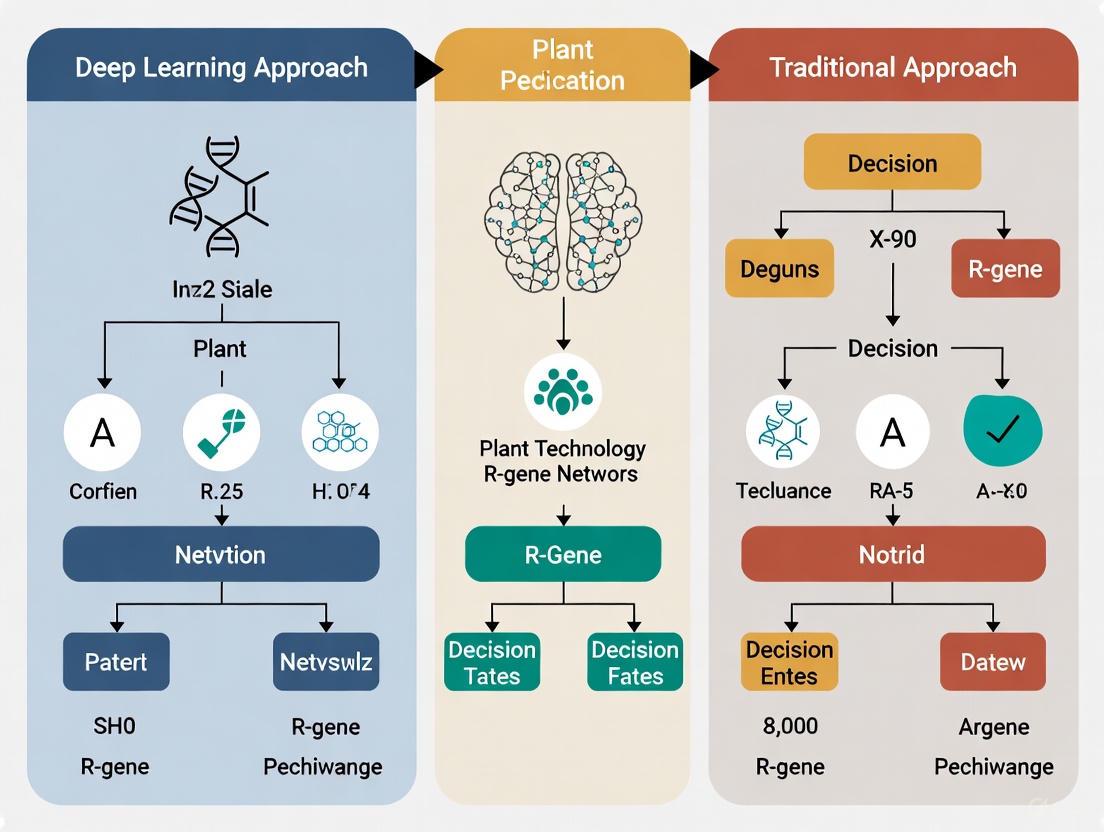
This article provides a systematic evaluation of deep learning (DL) approaches against traditional methods for predicting plant resistance (R) genes, a critical task for advancing disease-resistant crop breeding.
Deep Learning vs. Traditional Methods for R-Gene Prediction: A Comprehensive Benchmark and Future Outlook
Abstract
This article provides a systematic evaluation of deep learning (DL) approaches against traditional methods for predicting plant resistance (R) genes, a critical task for advancing disease-resistant crop breeding. We explore the foundational principles of R-gene architecture and the limitations of alignment-based techniques, followed by an in-depth analysis of state-of-the-art DL tools like PRGminer and their performance advantages. The content addresses key challenges such as data scarcity and model interpretability, offering practical optimization strategies. Finally, we present a rigorous comparative framework for model validation, synthesizing evidence from cross-validation and independent benchmarks to guide researchers and biotech professionals in selecting the most effective strategies for precision breeding and agricultural biotechnology.
The Genetic Basis of Plant Immunity: Understanding R-Genes and Traditional Prediction Pitfalls
Plant innate immunity is a sophisticated, multi-layered system that enables plants to defend themselves against a vast array of pathogens, including bacteria, fungi, viruses, and nematodes. This immune system is built upon two primary tiers of pathogen recognition: PAMP-Triggered Immunity (PTI) and Effector-Triggered Immunity (ETI) [1] [2]. PTI constitutes the first line of defense, where cell-surface pattern recognition receptors (PRRs) identify conserved pathogen-associated molecular patterns (PAMPs) [3]. The second line, ETI, involves intracellular resistance (R) proteins that detect specific pathogen effector proteins, leading to a robust immune response [1] [2]. Plant R-genes are the cornerstone of ETI, and their identification and characterization are critical for understanding plant immunity and breeding disease-resistant crops. This guide compares the performance of traditional bioinformatics methods with modern deep learning (DL) approaches in predicting and classifying these crucial R-genes.
The following table details key reagents, databases, and computational tools essential for research in R-gene prediction and plant immunity.
Table 1: Key Research Reagent Solutions for R-gene Studies
| Item Name | Type/Category | Primary Function in Research |
|---|---|---|
| PRGdb | Curated Database | A specialized repository for plant resistance genes that supports annotation and comparative genomic studies [2]. |
| InterProScan | Bioinformatics Software | A tool for scanning protein sequences against multiple databases to identify functional domains and motifs [2]. |
| HMMER3 | Bioinformatics Software | Uses profile hidden Markov models for sensitive protein domain detection and sequence homology searches [2]. |
| PRGminer | Deep Learning Tool | A high-throughput tool for predicting and classifying plant resistance genes from protein sequences [1]. |
| NLR-Annotator | Bioinformatics Pipeline | A computational pipeline designed for the genome-wide identification and annotation of NLR-type resistance genes [2]. |
Core Signaling Pathways in Plant Innate Immunity
The plant immune system operates through a structured surveillance mechanism. The diagram below illustrates the logical sequence of pathogen recognition and immune activation, from initial detection at the cell surface to the induction of defense responses.
Methodologies for R-gene Identification: A Comparative Analysis
The prediction of resistance genes in plants has evolved from traditional, alignment-based methods to modern, artificial intelligence-driven approaches. The following sections detail the experimental protocols for these two primary methodologies.
Experimental Protocol 1: Traditional Domain-Based Bioinformatics
This approach relies on the identification of conserved structural domains characteristic of known R-proteins [2].
- Data Input: Provide the tool with a protein sequence or a whole proteome/genome.
- Domain Scanning: The sequence is scanned against profile hidden Markov models (HMMs) of known R-gene domains (e.g., NBS, LRR, TIR, CC) using tools like HMMER3 or InterProScan [2].
- Architecture Analysis: The tool checks for the presence and order of specific domain combinations that define R-gene classes (e.g., CNL, TNL, RLK).
- Classification & Output: Based on the domain architecture, the sequence is classified into an R-gene class or rejected as a non-R-gene.
Experimental Protocol 2: Modern Deep Learning-Based Prediction
Deep learning models like PRGminer bypass sequence alignment and instead learn to identify complex, hierarchical patterns directly from raw sequence data [1].
- Data Preprocessing: Protein sequences are converted into numerical feature vectors. Common encodings include dipeptide composition, which captures the frequency of adjacent amino acid pairs [1].
- Model Architecture: The encoded sequences are fed into a deep learning network, typically a Convolutional Neural Network (CNN) or a Multi-Layer Perceptron (MLP). These networks automatically extract relevant features for classification [1] [2].
- Two-Phase Prediction:
- Output: The tool provides the prediction result and the classification category.
The workflow below contrasts the logical steps of these two primary methodologies.
Performance Comparison: Deep Learning vs. Traditional Methods
Quantitative benchmarks are essential for evaluating the efficacy of computational tools. The table below summarizes the performance of deep learning models against traditional methods and baselines in various prediction tasks.
Table 2: Performance Benchmarking of R-gene Prediction and Related Tasks
| Method Category | Representative Tool / Model | Key Performance Metric | Reported Result | Experimental Context |
|---|---|---|---|---|
| Deep Learning | PRGminer (Phase I) [1] | Prediction Accuracy | 98.75% | k-fold training/test on R-genes |
| Deep Learning | PRGminer (Phase I) [1] | Independent Test Accuracy | 95.72% | Validation on a separate dataset |
| Deep Learning | PRGminer (Phase II) [1] | Overall Classification Accuracy | 97.55% | k-fold training/test for 8 R-gene classes |
| Deep Learning | Hybrid ML/DL Models [4] | GRN Prediction Accuracy | >95% | Holdout test on Arabidopsis, poplar, maize |
| Traditional Baseline | Simple Additive Model [5] | Perturbation Effect Prediction | Outperformed DL models | Benchmark on transcriptome change prediction |
| Traditional Baseline | 'No Change' Model [5] | Perturbation Effect Prediction | Outperformed or matched DL models | Benchmark on transcriptome change prediction |
The data presented allows for a direct comparison between traditional and deep learning-based approaches for R-gene discovery. Deep learning tools like PRGminer demonstrate exceptional accuracy, exceeding 95% in both identifying and classifying R-genes [1]. Their ability to learn complex sequence patterns without relying solely on pre-defined domain rules makes them particularly powerful for discovering novel R-genes that may have low sequence homology to known genes [1] [2]. Furthermore, hybrid models that combine deep learning with machine learning have shown over 95% accuracy in constructing gene regulatory networks, which are vital for understanding the immune signaling cascades initiated by R-proteins [4].
However, the performance of deep learning is not universal. In the challenging task of predicting gene expression changes from genetic perturbations, simple linear baselines and even a "no change" model have been shown to match or outperform sophisticated deep learning foundation models [5]. This highlights that the superiority of a method is highly task-dependent. Deep learning models typically require large, high-quality datasets and significant computational resources, and they can sometimes struggle with interpretability compared to more straightforward domain-based analysis [2].
In conclusion, deep learning represents a transformative advance for high-throughput R-gene identification and classification, offering high accuracy and the potential for novel discovery. Traditional methods and simple baselines, however, remain relevant for specific tasks and provide a valuable benchmark. The optimal research strategy often involves a synergistic approach, leveraging the strengths of both methodologies to accelerate the discovery of R-proteins and deepen our understanding of plant immunity, ultimately contributing to the development of disease-resistant crops [2].
Plant resistance (R) genes encode proteins that are crucial components of the plant immune system, providing defense against a diverse array of pathogens including bacteria, fungi, viruses, and nematodes [6] [2]. These genes enable plants to recognize specific pathogen-derived molecules and initiate robust defense responses, such as the hypersensitive response and systemic acquired resistance [6]. Among the various classes of R genes, the most predominant are the nucleotide-binding site leucine-rich repeat (NBS-LRR) proteins, which constitute approximately 80% of all known R genes [6] [2]. The identification and characterization of these genes have been transformed by computational approaches, creating a fundamental divide between traditional domain-based methods and emerging deep learning techniques.
The computational prediction of R genes represents a critical frontier in plant genomics and disease resistance breeding. As pathogens continuously evolve to overcome plant defenses, the rapid identification of novel R genes has become increasingly important for developing durable disease-resistant crop varieties [2]. This article provides a comprehensive comparison of traditional and deep learning-based methods for R-gene prediction, focusing on their approaches to deciphering the complex architecture of key domains including NBS, LRR, TIR, and CC. We evaluate these methodologies through the lens of performance metrics, experimental protocols, and practical applicability for researchers and breeders.
Fundamental Domains of R-Gene Architecture
Core Structural Domains and Their Functions
R proteins, particularly the NBS-LRR class, contain specific domain architectures that define their functional mechanisms in pathogen recognition and signal transduction. The central nucleotide-binding site (NBS) domain is a highly conserved region of approximately 300 amino acids that plays a critical role in signal transduction ATPase activity [6] [2]. This domain contains several conserved motifs (P-loop, RNBS-A, kinase-2, RNBS-B, RNBS-C, and GLPL) essential for ATP/GTP binding and hydrolysis, which regulate the activation of defense signaling [7]. The C-terminal leucine-rich repeat (LRR) domain typically consists of 10-40 repeating units that provide pathogen recognition specificity through protein-protein interactions [2] [7]. The remarkable variability of the LRR domain enables plants to recognize a vast repertoire of evolving pathogen effectors.
The N-terminal domains define the major subclasses of NBS-LRR proteins. The Toll/interleukin-1 receptor (TIR) domain characterizes the TNL subclass and is involved in signal recognition and transduction [8] [7]. In contrast, the coiled-coil (CC) domain defines the CNL subclass and facilitates protein-protein interactions [8] [7]. A less common RPW8 domain appears in some NBS-LRR proteins and is associated with broad-spectrum resistance [6] [7]. Additionally, truncated forms lacking complete domains exist, such as TN (TIR-NBS), CN (CC-NBS), and N (NBS-only) proteins, which may function as adaptors or regulators for typical NBS-LRR proteins [8].
Genomic Distribution and Structural Diversity
NBS-LRR genes demonstrate distinctive genomic organization patterns across plant species. They are frequently distributed unevenly across chromosomes, often forming physical clusters driven by tandem duplications and genomic rearrangements [7]. Research on pepper (Capsicum annuum) revealed that 54% of NBS-LRR genes form 47 gene clusters, with the largest cluster containing eight genes on chromosome 3 [7]. Similarly, studies in Perilla citriodora identified 535 NBS-LRR genes with notable clusters on chromosomes 2, 4, and 10 [6]. This clustering pattern facilitates the rapid evolution of novel recognition specificities through gene duplication and sequence exchange.
The relative abundance of NBS-LRR subclasses varies significantly across plant lineages. Angiosperms generally show a predominance of nTNL (non-TIR-NBS-LRR) genes over TNL genes, with complete loss of TNL genes observed in the Poaceae family of monocots and occasionally in some dicots like Mimulus guttatus [9]. In Nicotiana benthamiana, from 156 identified NBS-LRR homologs, researchers classified 5 as TNL-type, 25 as CNL-type, 23 as NL-type, 2 as TN-type, 41 as CN-type, and 60 as N-type proteins [8]. This structural diversity reflects lineage-specific adaptations and evolutionary pressures from pathogen communities.
Traditional Computational Methods for R-Gene Identification
Domain-Based Bioinformatics Pipelines
Traditional methods for R-gene identification rely primarily on sequence similarity and domain architecture analysis using established bioinformatics tools. These approaches utilize Hidden Markov Models (HMMs) to scan protein sequences for characteristic R-gene domains [6] [8] [2]. The standard workflow involves searching for the conserved NBS domain (NB-ARC: PF00931 in the Pfam database) using tools like HMMER, followed by identification of associated domains (TIR, CC, LRR) using complementary approaches [6] [8]. The CC domain is often identified using motif-based tools like NLR-Annotator or COILS, while TIR domains are detected through HMM profiles [6].
These domain-based pipelines have been successfully applied across numerous plant species. For example, in a study of Nicotiana benthamiana, researchers used HMMsearch with an expectation value cutoff of E-values < 1*10^-20 to identify 156 NBS-LRR homologs, which were subsequently validated using SMART, CDD, and Pfam domain analysis [8]. Similarly, the PRGA database system employs a sophisticated prediction pipeline that applies different statistical thresholds for various domains: "1e-20" for NBS, "1e-10" for TIR/LZ, "1e-5" for STK, and "1e-1" for LRR domains [9].
Several specialized databases support traditional R-gene identification and comparative analysis. These include PRGdb, the NBS-LRR Receptor database, SolRgene, RiceMetaSysB, LDRGDb, PlantNLRatlas, and RefPlantNLR [2]. These resources compile experimentally validated R-genes and predicted R-genes from public databases, enabling researchers to perform cross-species comparisons and evolutionary analyses. The PRGA database further provides RGA annotations, prediction tools, and domain profile analysis for 22 sequenced plant species, offering insights into R-gene evolution across the plant kingdom [9].
Table 1: Traditional Domain-Based Tools for R-Gene Prediction
| Tool/Database | Methodology | Application | Reference |
|---|---|---|---|
| HMMER | Hidden Markov Models | Domain identification (NBS, TIR, LRR) | [6] [8] |
| PfamScan | Domain database search | Conserved domain identification | [8] [1] |
| COILS | Coiled-coil prediction | CC domain identification | [7] [9] |
| MEME | Motif discovery | Conserved motif analysis | [6] [8] |
| PRGdb | Curated database | Experimentally validated R-genes | [2] |
| NLR-Annotator | Motif-based approach | CC domain and NLR identification | [6] |
Figure 1: Traditional Domain-Based R-Gene Prediction Workflow
Deep Learning Approaches for R-Gene Prediction
Neural Network Architectures for Sequence Analysis
Deep learning approaches represent a paradigm shift in R-gene prediction, moving from similarity-based methods to classification-based frameworks that learn complex patterns directly from sequence data. Convolutional Neural Networks (CNNs) have demonstrated particular effectiveness for this task, excelling at capturing local motif-level features in protein sequences [1] [10]. These architectures process encoded protein sequences through multiple layers to extract hierarchical features, with early layers capturing basic sequence patterns and deeper layers integrating these into higher-order representations relevant to R-gene function [10].
More recently, Transformer-based architectures have been applied to genomic sequences, offering enhanced capacity to capture long-range dependencies in DNA and protein sequences [10]. Models such as DNABERT and Nucleotide Transformer employ self-supervised pre-training on large-scale genomic sequences before fine-tuning for specific prediction tasks [10]. However, comparative analyses suggest that CNN models currently outperform Transformer-based architectures for variant effect prediction in enhancer regions, though fine-tuning significantly narrows this performance gap [10].
Implementation Frameworks and Performance Metrics
The PRGminer tool exemplifies the deep learning approach to R-gene prediction, implementing a two-phase classification framework [1]. In Phase I, the model distinguishes R-genes from non-R-genes using dipeptide composition features, achieving 98.75% accuracy in k-fold testing and 95.72% on independent validation with a Matthews correlation coefficient of 0.91 [1]. Phase II further classifies predicted R-genes into eight specific classes (CNL, TNL, Kinase, RLP, LECRK, RLK, LYK, TIR) with 97.21% accuracy on independent testing [1].
Hybrid models that combine convolutional neural networks with traditional machine learning have also demonstrated superior performance. In gene regulatory network prediction, hybrid CNN-ML models consistently outperformed traditional methods, achieving over 95% accuracy on holdout test datasets and more effectively ranking key regulatory transcription factors [4]. These approaches benefit from the feature learning capabilities of deep learning combined with the classification strength and interpretability of machine learning.
Table 2: Deep Learning Tools for R-Gene Prediction
| Tool/Model | Architecture | Performance Metrics | Application Scope |
|---|---|---|---|
| PRGminer | Deep Learning (Two-phase) | 98.75% accuracy (k-fold), 95.72% (independent) | Plant R-gene identification and classification |
| Hybrid CNN-ML | Convolutional Neural Network + Machine Learning | >95% accuracy | Gene regulatory network prediction |
| DeepSEA | CNN | Variant effect prediction | Enhancer activity and regulatory variants |
| DNABERT | Transformer | Cell-type-specific regulatory effects | Noncoding variant interpretation |
| TREDNet | CNN | Regulatory impact prediction | Enhancer variant effects |
Comparative Analysis: Performance Evaluation
Accuracy and Efficiency Metrics
Direct comparisons between traditional and deep learning approaches reveal significant differences in prediction accuracy and efficiency. While traditional domain-based methods typically achieve 70-85% accuracy for NBS-LRR gene identification, deep learning models like PRGminer demonstrate substantially higher performance, achieving 95-98% accuracy in controlled evaluations [1]. This performance advantage is particularly evident for sequences with low homology to known R-genes, where similarity-based methods often fail [1].
The performance differential varies according to the specific prediction task. For enhancer variant prediction, CNN models such as TREDNet and SEI consistently outperform other architectures, while hybrid CNN-Transformer models excel at causal variant prioritization within linkage disequilibrium blocks [10]. However, a comprehensive evaluation of polygenic scores found that neural network models provided only minimal improvements over linear regression models, suggesting that the advantage of deep learning may be task-dependent [11].
Handling of Low-Homology Sequences and Novel Discoveries
A critical limitation of traditional methods is their reliance on sequence similarity, which impedes the identification of novel R-gene classes with divergent sequences [1]. Deep learning approaches overcome this constraint by learning fundamental characteristics of R-genes directly from sequence data, enabling the discovery of previously unrecognized R-gene families [1]. This capability is particularly valuable for wild plant species and crop relatives, where limited prior annotation exists.
Transfer learning strategies further enhance the applicability of deep learning models to non-model species. By leveraging knowledge from data-rich species like Arabidopsis thaliana, models can be effectively applied to species with limited training data [4]. This cross-species learning approach demonstrates the potential for deep learning to accelerate R-gene discovery in less-characterized plant genomes.
Table 3: Performance Comparison of R-Gene Prediction Methods
| Method Category | Representative Tools | Accuracy Range | Strengths | Limitations |
|---|---|---|---|---|
| Traditional Domain-Based | HMMER, PfamScan, COILS | 70-85% | Interpretable, well-established | Limited to known domains, lower accuracy |
| Machine Learning | SVM, Random Forests | 80-90% | Handles complex features | Limited nonlinear capture |
| Deep Learning | PRGminer, CNN models | 95-98% | High accuracy, discovers novel genes | Data hungry, computationally intensive |
| Hybrid Models | CNN-ML combinations | >95% | Balances performance and interpretability | Implementation complexity |
Figure 2: Deep Learning-Based R-Gene Prediction Workflow
Experimental Protocols and Validation Frameworks
Standardized Benchmarking Approaches
Rigorous evaluation of R-gene prediction methods requires standardized benchmarking frameworks that control for dataset composition and evaluation metrics. Comparative analyses should employ consistent training and testing datasets, such as the compendium datasets described for Arabidopsis thaliana (22,093 genes across 1,253 samples), poplar (34,699 genes across 743 samples), and maize (39,756 genes across 1,626 samples) [4]. Performance metrics should include accuracy, precision, recall, F1-score, and Matthews correlation coefficient to provide a comprehensive assessment of prediction quality [1].
For variant effect prediction, benchmarking should utilize diverse experimental datasets including MPRA (Massively Parallel Reporter Assays), raQTL (reporter assay quantitative trait loci), and eQTL (expression quantitative trait loci) data, which collectively profile thousands of single-nucleotide polymorphisms across multiple cell lines [10]. These datasets enable evaluation of model performance for distinct but related tasks: predicting the direction and magnitude of regulatory impact, and identifying causal variants within linkage disequilibrium blocks [10].
Experimental Validation Strategies
Computational predictions require experimental validation to confirm biological functionality. Yeast one-hybrid (Y1H) assays, DNA electrophoretic mobility shift assays (EMSA), chromatin immunoprecipitation and sequencing (ChIP-seq), and DNA affinity purification and sequencing (DAP-seq) provide experimental confirmation of transcription factor-target gene relationships [4]. However, these approaches are labor-intensive and low-throughput, limiting their application to prioritized candidate genes.
Functional validation through transgenic expression or gene silencing remains the gold standard for confirming R-gene activity. The successful transfer of R genes between species, such as the introduction of Rpi-blb2 from Solanum bulbocastanum into cultivated potato, which provides broad-spectrum protection against Phytophthora infestans, demonstrates the practical application of R-gene discovery [2]. Such validation is essential for translating computational predictions into breeding applications.
Research Reagent Solutions for R-Gene Studies
Table 4: Essential Research Reagents and Resources for R-Gene Analysis
| Reagent/Resource | Category | Function/Application | Examples/Sources |
|---|---|---|---|
| Pfam Database | Bioinformatics Database | Domain identification and annotation | NB-ARC (PF00931) domain profiles |
| HMMER Suite | Bioinformatics Tool | Hidden Markov Model searches | Domain identification, RGA prediction |
| MEME Suite | Bioinformatics Tool | Motif discovery and analysis | Conserved motif identification in NBS domains |
| PRGminer | Deep Learning Tool | R-gene prediction and classification | Webserver and standalone tool |
| PRGdb | Specialized Database | Curated R-gene information | Experimentally validated R-genes |
| PlantNLRatlas | Specialized Database | NLR gene resource | Comparative analysis of NLR genes |
| Phytozome | Genomic Database | Plant genomic sequences | Multi-species gene data |
| NCBI SRA | Data Repository | RNA-seq and genomic data | Training data for machine learning models |
| Trimmomatic | Bioinformatics Tool | Read preprocessing | Adapter removal, quality control |
| STAR | Bioinformatics Tool | RNA-seq alignment | Reference-based read mapping |
The computational prediction of R genes has evolved significantly from traditional domain-based methods to sophisticated deep learning approaches. While traditional methods provide interpretable results based on biologically meaningful domains, deep learning models offer superior accuracy, particularly for sequences with low homology to known R-genes. The integration of these approaches through hybrid models represents a promising direction, combining the strengths of both methodologies.
Future advances in R-gene prediction will likely focus on several key areas: improved model interpretability to extract biological insights from deep learning predictions, expansion of curated training datasets encompassing diverse plant species, development of specialized architectures adapted to genomic sequence analysis, and implementation of transfer learning frameworks to enable knowledge transfer between well-characterized and non-model species [4] [2] [12]. As these computational methods continue to mature, they will play an increasingly vital role in accelerating the development of disease-resistant crops, supporting sustainable agriculture, and enhancing global food security.
A Comparative Analysis for Genomic Prediction
In the field of genomics and protein function prediction, researchers are equipped with a diverse toolkit. Traditional alignment-based methods like BLAST and HMMER have long been the standard for sequence analysis and homology detection. Alongside them, machine learning approaches, particularly Support Vector Machines (SVM), have emerged as powerful tools for classification and prediction tasks. This guide provides an objective comparison of their performance, supported by experimental data, to inform method selection for research and development.
Performance Comparison at a Glance
The table below summarizes the performance of these methods as reported in various genomic studies.
Table 1: Comparative performance of BLAST, HMMER, and SVM across different biological applications.
| Method | Reported Accuracy/Performance | Application Context | Key Strengths |
|---|---|---|---|
| BLASTp | Consistently high performance for GO term prediction [13] | Protein Gene Ontology (GO) term prediction [13] | High sensitivity, reliable homology detection [13] |
| HMMER (phmmer) | Lower performance compared to BLASTp and MMseqs2 in some assessments [13] | Protein Gene Ontology (GO) term prediction [13] | Powerful for detecting remote homology [14] |
| SVM | F1 score = 0.934, Accuracy = 0.939 [15] | Flowering-time gene prediction in plants [15] | High accuracy for complex classification, handles non-linear relationships [15] [16] |
| SVM | ~89% accuracy (binary), >97% accuracy (multi-class) [17] | Herbicide-resistant gene prediction [17] | Effective with k-mer features for nucleotide sequences [17] |
| SVM | Competitive with GBLUP and BayesR, best in 2 of 8 datasets [16] | Genomic prediction in pig and maize populations [16] | Flexible with different kernels, robust performance [16] |
Detailed Experimental Protocols
Understanding the methodology behind performance benchmarks is crucial for interpretation and replication.
Protocol: Homology-Based Function Prediction with BLAST & HMMER
This protocol outlines the standard workflow for transferring Gene Ontology (GO) terms to a query protein via sequence homology [13].
Sequence Search:
- Tool Selection: Choose a sequence search tool (e.g., BLASTp, DIAMOND, MMseqs2, phmmer/HMMER).
- Database: Search the query protein sequence against a database of annotated template proteins.
- Parameter Settings: Note that default parameters may not be optimal. Performance can be significantly improved with correct parameter settings [13].
- Output: Generate a list of homologous hits with alignment scores and E-values.
Scoring and Function Transfer:
- Scoring Function: Derive a prediction score for each GO term based on the homologous hits. A scoring function that aggregates information from multiple hits (e.g., the S1 function used in tools like GOLabeler and DeepGOPlus) often outperforms relying solely on the top hit [13].
- Assignment: Assign GO terms to the query protein that exceed a predetermined score threshold.
Protocol: Flowering-Time Gene Prediction with SVM
This protocol details the specific workflow used to develop the FTGD (Flowering-Time Gene) prediction tool [15].
Data Preparation:
- Positive Set: Retrieve 628 known flowering-time associated protein sequences from the FLOR-ID database for Arabidopsis thaliana.
- Negative Set: Define non-flowering-time genes.
- Feature Extraction: Encode protein sequences using a combination of K-mer composition and Pseudo Amino Acid Composition (PseAAC) to generate numeric feature vectors [15].
Model Training and Validation:
- Algorithm: Implement a Support Vector Machine (SVM) model. The specific model reported as best-performing was the SVM-Kmer-PC-PseAAC.
- Hyperparameter Tuning: Optimize model parameters (e.g., kernel type, regularization) for best performance.
- Validation: Evaluate the model using standard metrics, achieving an F1 score of 0.934 and accuracy of 0.939 [15].
Prediction and Deployment:
- Tool Creation: Package the trained model into a prediction tool called
FTAGs_Find. - Database Construction: Use the tool to predict FTAGs across 81 plant species and create a public database (FTAGdb).
- Tool Creation: Package the trained model into a prediction tool called
Workflow Visualization
The following diagram illustrates the typical workflows for alignment-based methods and SVM, highlighting their distinct approaches.
The Scientist's Toolkit: Key Research Reagents & Materials
Successful implementation of these computational methods relies on several key resources.
Table 2: Essential research reagents and resources for genomic prediction studies.
| Resource Name | Type | Primary Function in Research |
|---|---|---|
| FLOR-ID Database [15] | Biological Database | Provides curated data on flowering-time genes for training and validating prediction models. |
| Annotated Protein Sequence Database (e.g., UniProt, NCBI) | Biological Database | Serves as the reference for homology-based function transfer using BLAST/HMMER. |
| Pfam Database [15] | Protein Family Database | Contains hidden Markov models (HMMs) for identifying protein domains and families. |
| CD-HIT Suite [15] | Computational Tool | Reduces sequence dataset redundancy to minimize bias in model training and evaluation. |
| Pse-in-One [15] | Computational Tool | Generates various modes of pseudo components for representing DNA, RNA, and protein sequences as feature vectors. |
| SVM Library (e.g., LibSVM) | Software Library | Provides the core algorithms and functions for implementing Support Vector Machine models. |
When evaluating the presented data, consider the following to guide your method selection:
- For Well-Defined Homology: BLAST remains a highly robust and sensitive choice for tasks where strong sequence similarity exists, and its performance can be optimized with proper parameters [13].
- For Complex Classification: SVM excels in tasks where the relationship between sequence and function is complex and not easily captured by direct alignment, often achieving high accuracy (e.g., >90%) [15] [17].
- Consider the Trade-Offs: BLAST and HMMER are conceptually straightforward and provide interpretable results based on homologous matches. SVM models can capture non-linear relationships but may require more effort in feature engineering and model tuning [16].
- No Universal Winner: The performance can be dataset-dependent. As one study on genomic prediction concluded, "there is no universal prediction model" [16].
In the context of R-gene prediction, these traditional methods form a solid baseline. The choice between them hinges on the specific biological question, the nature of the available data, and the desired balance between interpretability and predictive power.
The accurate prediction of resistance genes (R-genes) is crucial for understanding plant defense mechanisms and advancing disease resistance breeding. For years, traditional bioinformatics approaches have served as the backbone for genome annotation and R-gene identification. These methods primarily rely on sequence homology and protein domain analysis, employing tools such as BLAST, InterProScan, and HMMER to identify characteristic domain architectures in nucleotide-binding leucine-rich repeat (NB-LRR) genes [18] [1]. While these conventional methods have contributed significantly to our understanding of plant genomes, they face two fundamental challenges that limit their effectiveness: low homology in rapidly evolving R-gene families and systematic issues with fragmented annotations caused by complex genomic architectures [19]. These limitations become particularly problematic when studying non-model organisms or recently sequenced species where reference data is sparse. This review objectively examines these critical limitations through comparative experimental data and highlights how emerging deep learning approaches address these specific challenges.
Experimental Comparison: Traditional vs. Modern Methods for R-gene Prediction
Quantitative Performance Assessment
Table 1: Comparative performance of traditional and homology-based methods for NB-LRR gene prediction in the tomato genome
| Method | Total Full-length NB-LRR Genes Identified | CC-NB-LRR (CNL) Genes | TIR-NB-LRR (TNL) Genes | Key Limitations |
|---|---|---|---|---|
| Protein Domain Search (PDS) | ~170 | 151 | 19 | High false negatives due to repeat masking; fragmented predictions |
| Manual RenSeq Annotation | 221 | 193 | 26 | Labor-intensive; requires specialized expertise |
| Homology-based R-gene Prediction (HRP) | 231 | 198 | 31 | Limited by quality of initial gene set |
| Deep Learning (PRGminer) | N/A | N/A | N/A | 95.72% independent test accuracy; 0.91 MCC [1] |
Table 2: Method capability comparison for addressing key challenges
| Method Type | Handles Low Homology | Avoids Fragmentation | Automation Level | Computational Efficiency |
|---|---|---|---|---|
| Traditional PDS | Limited | Poor | Medium | High |
| HRP Method | Moderate | Good | Medium | Medium |
| Deep Learning | Excellent | Excellent | High | Variable |
Experimental Protocols for Key Studies
Homology-Based R-gene Prediction (HRP) Protocol
The HRP method employs a two-level homology search strategy to overcome limitations of traditional approaches [19]. The experimental workflow consists of:
Initial Domain Search: An initial set of R-genes is identified within the automated gene prediction set using protein domain-based search (PDS) with standard domain databases.
Full-length Homology Search: These identified R-genes serve as queries for comprehensive homology searches against the entire genome assembly using tools such as BLAST.
Gene Model Reconstruction: The genomic regions identified through homology searches are subjected to specialized gene prediction algorithms to reconstruct complete gene models, bypassing the limitations of automated annotation pipelines.
Validation: Performance is assessed through comparison with manually curated gold-standard datasets such as the tomato RenSeq annotation, measuring recovery of known genes and identification of novel candidates.
This protocol was validated on multiple plant genomes including tomato (Solanum lycopersicum), three Beta species, and five Cucurbita species, demonstrating consistent improvements over conventional PDS approaches [19].
Deep Learning (PRGminer) Experimental Protocol
PRGminer implements a two-phase deep learning framework for R-gene identification and classification [1]:
Data Collection and Preparation: R-gene and non-R-gene protein sequences are collected from public databases including Phytozome, Ensemble Plants, and NCBI.
Sequence Representation: Protein sequences are encoded using dipeptide composition and other feature representation methods optimized for deep learning architectures.
Model Architecture: A deep neural network is implemented with:
- Phase I: Binary classification of input protein sequences as R-genes or non-R-genes
- Phase II: Multi-class classification of predicted R-genes into eight specific classes (CNL, TNL, RNL, KIN, RLP, LECRK, RLK, LYK)
Training and Validation: The model is trained using k-fold cross-validation and evaluated on independent test sets using accuracy, Matthews correlation coefficient (MCC), and other statistical measures.
The protocol achieves 98.75% accuracy in k-fold testing and 95.72% on independent testing for Phase I, with MCC values of 0.98 and 0.91 respectively [1].
Critical Analysis of Traditional Approach Limitations
The Low Homology Challenge
Traditional homology-based methods face fundamental limitations when analyzing R-genes due to their exceptional evolutionary dynamics:
Rapid Sequence Diversification: R-genes evolve rapidly to counter adapting pathogens, resulting in sequences with low conservation across species [19]. Standard similarity thresholds used in BLAST and other alignment tools often fail to detect these distantly related homologs.
Species-Specific Diversification: NB-LRR genes have diversified in a species-specific manner, preventing the establishment of universal detection standards that work effectively across diverse plant taxa [19].
Limited Representation in Databases: Conventional methods depend on reference databases that underrepresent R-gene diversity, particularly for non-model organisms or recently sequenced species.
Experimental evidence demonstrates that traditional domain search methods identify significantly fewer full-length NB-LRR genes compared to more sophisticated approaches. In tomato, conventional PDS methods identified only 170 full-length NB-LRR genes compared to 231 found by the HRP method [19].
The Fragmented Annotation Problem
The genomic architecture of R-gene clusters creates systematic issues in automated annotation pipelines:
Complex Gene Organization: R-genes are typically organized in clusters of tandemly duplicated genes, which can cause assembly collapse and fragmentation during genome assembly processes [19] [1].
Repeat Masking Interference: Standard annotation pipelines employ repeat masking using transposable element databases, which often mistakenly mask R-gene loci due to their repetitive nature [19].
Low Expression Levels: Many R-genes exhibit low or condition-specific expression, providing insufficient evidence for expression-based gene prediction algorithms that rely on RNA-Seq data [19].
Multi-Domain Architecture Complexity: The complex exon-intron structure of multi-domain R-genes challenges ab initio gene predictors, which frequently produce incomplete or fragmented models [19].
These limitations collectively result in annotation sets that miss substantial portions of the R-gene repertoire or contain fragmented gene models that obscure functional analysis.
Diagram 1: Fragmentation challenges and solutions in R-gene annotation. Traditional approaches struggle with repeat-induced fragmentation, while deep learning methods can recognize patterns despite masking and assembly artifacts.
Table 3: Key experimental resources for R-gene identification and validation
| Resource Type | Specific Tools/Databases | Primary Function | Key Applications |
|---|---|---|---|
| Genome Annotation Tools | Maker, Blast2GO, InterProScan, GeneMark | Automated gene prediction and functional annotation | Initial genome annotation; functional inference |
| Specialized R-gene Databases | OMA database, Phytozome, Ensemble Plants | Reference data for homologous gene families | Comparative genomics; evolutionary analysis |
| Deep Learning Frameworks | PRGminer, custom TensorFlow/PyTorch implementations | R-gene prediction using neural networks | Novel R-gene discovery; classification |
| Quality Assessment Tools | OMArk, BUSCO | Proteome quality assessment and completeness evaluation | Annotation validation; error detection |
| Experimental Validation Resources | RenSeq, AgrenSeq | Targeted sequencing for resistance gene enrichment | Experimental confirmation; allele mining |
The critical limitations of traditional bioinformatics approaches—particularly their vulnerability to low homology and fragmented annotations—represent significant barriers to comprehensive R-gene discovery. Experimental evidence demonstrates that homology-based methods like HRP can identify up to 45% more full-length NB-LRR genes compared to conventional domain search approaches [19]. Meanwhile, deep learning frameworks such as PRGminer achieve prediction accuracy exceeding 95% on independent test sets [1], largely by overcoming the dependency on sequence similarity that plagues traditional methods. As the field progresses, integration of these advanced computational approaches with experimental validation will be essential for unlocking the complete R-gene repertoire in diverse plant species, ultimately accelerating disease resistance breeding and sustainable crop protection strategies.
Harnessing Deep Learning Architectures for High-Throughput R-Gene Discovery
The field of genomics is undergoing a profound transformation driven by the integration of deep learning methodologies. As high-throughput sequencing technologies continue to generate vast amounts of complex biological data, researchers are increasingly turning to sophisticated computational approaches to decipher the intricate language of DNA, RNA, and proteins. Among these approaches, Convolutional Neural Networks (CNNs) and Transformer-based architectures have emerged as particularly powerful tools for tackling diverse genomic challenges. These deep learning models have demonstrated remarkable capabilities in identifying subtle patterns in nucleotide sequences, predicting regulatory elements, annotating gene functions, and elucidating protein structures.
The shift from traditional bioinformatics methods to deep learning represents a fundamental change in how we extract meaning from biological sequences. While conventional approaches often rely on manually curated features and predefined rules, deep learning models can automatically discover relevant features directly from raw genomic data, capturing complex, non-linear relationships that might escape human experts or traditional algorithms. This paradigm shift is particularly evident in plant genomics and resistance gene (R-gene) prediction, where the exceptional diversity of gene families and the challenge of limited annotated data have motivated the development of specialized architectures.
This guide provides a comprehensive comparison of CNN and Transformer architectures applied to genomic tasks, with particular emphasis on their utility for R-gene prediction research. We examine their performance across standardized benchmarks, detail their experimental protocols, and provide practical guidance for researchers seeking to leverage these powerful tools in their genomic investigations.
Architectural Foundations: CNNs, Transformers, and Emerging Alternatives
Convolutional Neural Networks (CNNs) in Genomics
CNNs employ a hierarchical structure of convolutional layers that systematically scan input sequences to detect increasingly complex features. In genomic applications, their local connectivity and translation invariance make them exceptionally well-suited for identifying conserved motifs and regulatory elements regardless of their position in a sequence. Lower layers typically recognize basic nucleotide patterns, while deeper layers integrate these into more complex representations of functional elements. Architectures such as DeepSEA, DeepBind, and TREDNet exemplify the CNN approach in genomics, demonstrating particular strength in tasks involving localized sequence features including transcription factor binding sites and chromatin accessibility profiles [20] [12].
Transformer Architectures and Genomic Language Models
Transformers utilize a self-attention mechanism to weigh the importance of different sequence elements when making predictions. This architecture enables the model to capture long-range dependencies throughout genomic sequences, effectively considering interactions between distant nucleotides that may collaboratively influence function. Models like DNABERT, Nucleotide Transformer, and Enformer represent nucleotides or k-mers as tokens, applying transformer blocks to build contextualized representations [21]. The pre-training phase often employs masked language modeling, where the model learns to predict hidden portions of sequences based on surrounding context, enabling the acquisition of fundamental biological principles from unlabeled data [21].
Beyond CNNs and Transformers: Selective State Space Models
Recent architectural innovations have introduced potential alternatives to CNN and Transformer dominance. Selective State Space Models (SSSMs), such as Mamba, have shown promising results in genomic applications. In benchmark evaluations, models combining convolutional layers with bidirectional Mamba achieved 3-4% improvements in Pearson R correlation for predicting RNA-seq read coverage compared to attention-based models [22]. These architectures demonstrate particular efficiency in handling long sequences while effectively capturing complex genomic dependencies, suggesting they may offer advantages for specific genomic prediction tasks.
Table 1: Core Architectural Components in Genomic Deep Learning
| Component | CNN-Based Models | Transformer Models | Hybrid Models |
|---|---|---|---|
| Primary Strength | Local pattern recognition | Long-range dependency modeling | Combines local and global context |
| Typical Applications | Motif discovery, enhancer prediction, variant effect prediction | Regulatory element identification, gene expression prediction | Causal variant prioritization, multi-task genomic learning |
| Sequence Processing | Sliding convolutional filters | Self-attention across entire sequence | Convolutional feature extraction + attention |
| Example Models | DeepSEA, TREDNet, SEI, ChromBPNet | DNABERT, Nucleotide Transformer, Enformer, Geneformer | Borzoi, StripedMamba |
Performance Benchmarking: Quantitative Comparisons Across Genomic Tasks
Regulatory Variant Prediction
Standardized benchmarking studies have revealed distinct performance patterns across architectures for predicting the effects of non-coding variants. When evaluating models on datasets derived from MPRA, raQTL, and eQTL experiments encompassing 54,859 enhancer SNPs across four human cell lines, CNN models like TREDNet and SEI demonstrated superior performance for predicting the direction and magnitude of regulatory impact in enhancers [20]. In contrast, hybrid CNN-Transformer models (e.g., Borzoi) excelled at causal variant prioritization within linkage disequilibrium blocks, suggesting architectural strengths for distinct but related tasks [20].
Gene Expression Prediction
The evaluation of architectural performance extends to predicting gene expression from histology images, where comprehensive benchmarking of eleven methods revealed nuanced strengths. For spatial gene expression prediction from H&E-stained tissue images, EGNv2 achieved the highest overall performance (PCC = 0.28; SSIM of 0.22; AUC of 0.65) on ST datasets, while DeepPT performed best on higher-resolution Visium data [23]. These results highlight how optimal architecture selection may depend on data resolution and specific experimental contexts.
Plant Resistance Gene Prediction
For R-gene prediction in plants, the PRGminer tool demonstrates how deep learning approaches can achieve remarkable accuracy. Using dipeptide composition representations with deep learning architectures, PRGminer attained 98.75% accuracy in k-fold validation and 95.72% on independent testing for Phase I classification (R-gene vs. non-R-gene), with an MCC of 0.91 on independent tests [1]. For Phase II classification into eight R-gene classes, the tool maintained 97.55% accuracy in k-fold validation and 97.21% on independent testing [1]. These results significantly outperform traditional alignment-based methods, especially for sequences with low homology.
Table 2: Performance Benchmarks Across Genomic Tasks
| Task | Best Performing Architecture | Key Metric | Performance | Reference Dataset |
|---|---|---|---|---|
| Enhancer Variant Effect Prediction | CNN (TREDNet, SEI) | Direction/Magnitude Accuracy | Superior to Transformers | 54,859 enhancer SNPs from MPRA, raQTL, eQTL [20] |
| Causal SNP Prioritization in LD Blocks | Hybrid CNN-Transformer (Borzoi) | Prioritization Accuracy | Superior to pure CNNs/Transformers | LD blocks from GWAS loci [20] |
| R-gene Identification | Deep Learning (PRGminer) | Accuracy | 95.72% (independent test) | Plant genomes from Phytozome, Ensemble Plants, NCBI [1] |
| R-gene Classification | Deep Learning (PRGminer) | Accuracy | 97.21% (independent test) | 8 R-gene classes [1] |
| Spatial Gene Expression Prediction | EGNv2 (ST data), DeepPT (Visium) | Pearson Correlation | 0.28 (ST), superior on Visium | HER2+ breast cancer and cutaneous squamous cell carcinoma [23] |
| RNA-seq Read Coverage | Convolutional + Bidirectional Mamba | Pearson R | 3-4% improvement over attention models | GTEx eQTL dataset [22] |
Experimental Protocols and Methodologies
Standardized Model Evaluation Framework
Robust evaluation of deep learning models in genomics requires standardized benchmarks and consistent training conditions. The benchmarking approach used for regulatory variant prediction exemplifies this principle, where models were evaluated under identical training and evaluation conditions on nine integrated datasets derived from MPRA, raQTL, and eQTL experiments [20]. This methodology enabled direct comparison of architectural performance while controlling for confounding factors. The evaluation addressed three distinct tasks: (1) predicting fold-changes in enhancer activity, (2) classifying SNPs by regulatory impact, and (3) identifying causal SNPs within LD blocks [20]. Performance was assessed using metrics including Pearson Correlation Coefficient, Mutual Information, Structural Similarity Index, and Area Under the Curve, providing a multidimensional view of model capabilities.
Data Preprocessing and Integration
The construction of effective deep learning models for genomics requires meticulous data curation and preprocessing. For gene regulatory network prediction, researchers retrieved raw sequencing data from the Sequence Read Archive (SRA) database, then performed quality control including adapter sequence removal, low-quality base trimming, and alignment to reference genomes using STAR [4]. Normalization employed the weighted trimmed mean of M-values (TMM) method from edgeR to account for compositional differences between samples [4]. For plant R-gene prediction, datasets were compiled from multiple public databases including Phytozome, Ensemble Plants, and NCBI, with careful attention to domain architecture annotations [1].
Transfer Learning for Cross-Species Generalization
A significant challenge in plant genomics is the limited availability of annotated training data for non-model species. Transfer learning strategies have proven effective in addressing this limitation by leveraging knowledge from data-rich species. In gene regulatory network construction, models trained on Arabidopsis thaliana were successfully applied to poplar and maize, with hybrid CNN-machine learning approaches achieving over 95% accuracy on holdout test datasets [4]. This approach identified more known transcription factors regulating biosynthetic pathways and demonstrated higher precision in ranking key master regulators compared to traditional methods [4].
Diagram 1: Genomic Deep Learning Experimental Workflow
Application Focus: Deep Learning for Plant Resistance Gene Prediction
The R-gene Prediction Challenge
Plant resistance genes encode proteins that recognize specific pathogen effectors and initiate powerful immune responses through effector-triggered immunity (ETI) and pathogen-associated molecular pattern (PAMP)-triggered immunity (PTI) [1]. Accurate identification and classification of these genes is crucial for understanding plant immunity and developing disease-resistant crops. However, conventional identification methods face significant challenges due to the exceptional diversity of R-genes, their organization in clusters of closely duplicated genes, difficulties in genome assembly and annotation caused by numerous similar sequences, low expression levels complicating RNA-seq-based prediction, and potential misclassification as repetitive elements [1].
Deep Learning Solutions for R-gene Prediction
The PRGminer framework exemplifies how deep learning approaches address these challenges through a two-phase prediction system. In Phase I, input protein sequences are classified as R-genes or non-R-genes using dipeptide composition features processed through deep learning architectures [1]. Sequences identified as R-genes proceed to Phase II, where they are classified into eight structural categories: CNL (Coiled-coil, Nucleotide-binding site, Leucine-rich repeat), KIN (Kinase domain), RLP (Receptor-like protein), LECRK (Lectin Receptor-like Kinase), RLK (Receptor-like Kinase), LYK (LysM Receptor-like Kinase), TIR (Toll/Interleukin-1 Receptor domain), and TNL (TIR-NBS-LRR) [1]. This structured approach demonstrates how domain-aware architectural design can effectively capture the complex features defining resistance gene families.
Diagram 2: PRGminer Two-Phase R-gene Prediction
Comparative Performance Against Traditional Methods
Deep learning approaches significantly outperform traditional methods for R-gene prediction, particularly for sequences with low homology where alignment-based methods struggle. While conventional tools rely on BLAST, InterProScan, HMMER3, and PfamScan for domain prediction, these methods frequently miss novel or divergent resistance genes [1]. Deep learning models excel at capturing complex, non-linear relationships in protein sequences without requiring explicit domain annotation, enabling identification of structural features that may evade traditional motif-based searches. This capability is particularly valuable for predicting resistance genes in wild species and crop relatives where limited prior annotation exists.
Practical Implementation: The Researcher's Toolkit
Essential Research Reagent Solutions
Table 3: Key Research Reagents and Computational Tools
| Resource Category | Specific Tools/Databases | Primary Function | Application Context |
|---|---|---|---|
| Genomic Databases | Phytozome, Ensemble Plants, NCBI SRA | Source of annotated genomic sequences and expression data | Training data for model development; performance benchmarking [1] [4] |
| Sequence Processing | Trimmomatic, FastQC, STAR | Quality control, adapter trimming, sequence alignment | Data preprocessing pipeline; feature extraction [4] |
| Domain Annotation | InterProScan, HMMER, Pfam | Protein domain identification and annotation | Traditional baseline method; feature engineering for model input [1] |
| Deep Learning Frameworks | Python, Jax/Flax, TensorFlow | Model implementation and training | Architecture development; performance optimization [22] |
| Specialized Models | DNABERT, Nucleotide Transformer, PRGminer | Task-specific genomic predictions | Benchmark comparisons; specialized applications [1] [21] |
| Evaluation Benchmarks | CAGI5, GenBench, NT-Bench | Standardized performance assessment | Model validation; comparative analysis [21] |
Implementation Considerations
Successful implementation of deep learning approaches for genomic research requires careful consideration of several practical factors. Computational resources must be adequate for model training, with transformer architectures typically demanding more memory and processing power than CNNs. Data quality and curation profoundly impact model performance, with consistent preprocessing pipelines being essential for reproducible results. Model interpretability remains challenging, though attention mechanisms in transformers can provide insights into important sequence regions. For plant R-gene prediction specifically, evolutionary relationships between source and target species should be considered to enhance transfer learning effectiveness [4].
The comparative analysis of deep learning architectures for genomic applications reveals a complex landscape where no single architecture universally dominates. Instead, optimal model selection depends heavily on the specific biological question, data characteristics, and performance requirements. CNN-based architectures demonstrate particular strength for tasks requiring local pattern recognition, such as motif discovery and enhancer variant effect prediction [20]. Transformer models excel at capturing long-range dependencies and contextual sequence information, making them valuable for gene expression prediction and regulatory element identification [21] [24]. Hybrid approaches that combine convolutional and attention mechanisms frequently achieve state-of-the-art performance by leveraging the complementary strengths of both architectures [20] [4].
For plant resistance gene prediction, deep learning methods have demonstrated substantial advantages over traditional alignment-based approaches, particularly through tools like PRGminer that achieve exceptional accuracy in both identification and classification tasks [1]. The integration of transfer learning strategies further enhances their utility for non-model species with limited annotated data [4]. As the field advances, emerging architectures including selective state space models show promise for improved efficiency and performance on certain genomic tasks [22].
Future progress in genomic deep learning will likely be driven by several key developments: more sophisticated model architectures specifically designed for genomic data characteristics, improved strategies for leveraging unlabeled data through self-supervised learning, enhanced interpretability methods to extract biological insights from complex models, and standardized benchmarking frameworks that enable robust comparison across studies. For plant R-gene prediction specifically, the integration of multi-omics data and expansion to diverse crop species will further enhance the utility of these powerful computational approaches for agricultural biotechnology and crop improvement programs.
Plant Resistance genes (R-genes) form the cornerstone of a plant's innate immune system, enabling recognition of pathogens and activation of defense mechanisms. Accurate identification and classification of these genes are crucial for developing disease-resistant crops and ensuring global food security. This case study examines PRGminer, a deep learning-based tool for high-throughput R-gene prediction, and evaluates its performance against traditional identification methods. We analyze quantitative performance metrics, detail experimental protocols, and contextualize PRGminer within the broader landscape of computational biology tools for plant immunity research. The analysis demonstrates that PRGminer achieves exceptional accuracy rates exceeding 95% in both identification and classification tasks, significantly outperforming traditional alignment-based approaches, particularly for sequences with low homology.
Plant resistance genes (R-genes) encode proteins that specifically recognize pathogen-derived molecular patterns and initiate robust immune responses [1] [25]. When activated, these genes trigger a cascade of molecular processes culminating in defensive responses including synthesis of antimicrobial compounds, cell wall reinforcement, and programmed cell death in infected cells [26]. The plant immune system operates through two primary layers: PAMP-triggered immunity (PTI) involving membrane-bound pattern recognition receptors (PRRs), and effector-triggered immunity (ETI) mediated primarily by intracellular resistance receptors such as NLR proteins [2].
The identification of novel R-genes represents a critical component of disease resistance breeding programs [1]. However, traditional methods for R-gene discovery face significant challenges due to their complex genomic architecture, low expression levels, and presence in repetitive regions that complicate genome assembly and annotation [25]. These difficulties are particularly pronounced when working with wild species and near relatives of cultivated plants, where rapid identification could provide valuable genetic resources for breeding programs [26].
Computational Landscape: Traditional vs. Modern R-Gene Prediction Methods
Traditional Methods and Their Limitations
Traditional computational approaches for R-gene identification have primarily relied on alignment-based methods and domain search algorithms [2]. These methods utilize tools such as BLAST, InterProScan, HMMER3, and PfamScan to identify conserved domains and motifs characteristic of R-proteins [25]. The typical workflow involves scanning protein sequences for known R-gene domains such as nucleotide-binding sites (NBS), leucine-rich repeats (LRRs), coiled-coil (CC) domains, and toll/interleukin-1 receptor (TIR) domains [2].
While these methods have successfully identified numerous R-genes, they possess inherent limitations. Similarity-based methods frequently fail when sequence homology is low, a particular challenge when annotating newly sequenced plant genomes [25]. Additionally, traditional automated gene annotation pipelines often produce incomplete and fragmented annotations of R-gene loci due to their unique genomic organization into clusters of closely duplicated genes [25]. The dependence on predefined domain libraries further limits the discovery of novel or highly divergent R-gene classes.
The Emergence of Deep Learning in Genomics
Deep learning approaches represent a paradigm shift in genomic analysis, employing multiple nonlinear processing layers to automatically learn hierarchical feature representations from raw biological sequences [18]. Unlike traditional methods that require explicit domain knowledge and manual feature engineering, deep learning models can capture complex patterns and relationships directly from sequence data [18]. This capability is particularly valuable for R-gene prediction, where the relevant features may be distributed across multiple sequence regions or involve complex contextual relationships.
The application of deep learning to genome annotation has accelerated recently, with models such as convolutional neural networks (CNNs) and recurrent neural networks (RNNs) demonstrating remarkable success in identifying various genomic elements including promoters, enhancers, and coding regions [18]. PRGminer builds upon these advances by implementing a specialized deep learning framework specifically optimized for plant R-gene identification and classification [1].
Table 1: Comparison of R-Gene Prediction Methodologies
| Method Type | Examples | Key Features | Advantages | Limitations |
|---|---|---|---|---|
| Alignment-Based | BLAST, InterProScan, HMMER3 | Domain search, motif identification | Well-established, interpretable | Fails with low homology, limited to known domains |
| Traditional Machine Learning | SVM, Random Forest | Feature extraction, statistical learning | Better than alignment for some cases | Limited feature learning capability |
| Deep Learning | PRGminer, CNNs, RNNs | Automated feature learning, hierarchical representation | High accuracy, handles complex patterns | Computational intensity, data requirements |
PRGminer: Architecture and Implementation
PRGminer implements a sophisticated two-phase analytical workflow designed to first identify potential R-genes from protein sequences, then classify them into specific functional categories [1] [27]. This structured approach enables comprehensive characterization of plant resistance genes with high precision and accuracy.
Phase I: R-gene Identification
The initial phase functions as a binary classification system that distinguishes R-genes from non-R-genes using dipeptide composition features extracted from protein sequences [1]. This feature representation captures local sequence patterns that are discriminative for resistance proteins. The model employs a deep learning architecture, likely incorporating convolutional layers for local feature detection and fully connected layers for classification, though the exact architecture details are not fully specified in the available literature [25].
Phase II: R-gene Classification
Following successful identification, Phase II categorizes confirmed R-genes into eight distinct classes based on their domain architecture and functional characteristics [27]. These classes represent the major known categories of plant resistance genes:
- Coiled-coil-NBS-LRR (CNL): Characterized by a coiled-coil domain at the N-terminal region, a central nucleotide-binding site (NBS) domain, and a C-terminal leucine-rich repeat (LRR) domain [27].
- TIR-NBS-LRR (TNL): Features a Toll/interleukin-1 receptor (TIR) domain at the N-terminus instead of the coiled-coil domain found in CNL proteins [27].
- Receptor-like kinase (RLK): Contains an extracellular leucine-rich repeat region and an intracellular kinase domain [27].
- Receptor-like protein (RLP): Consists of a leucine-rich receptor-like repeat and a transmembrane region but lacks the intracellular kinase domain present in RLKs [27].
- Kinase (KIN): Contains a kinase domain involved in resistance processes [27].
- Lectin receptor-like kinase (LECRK): Features lectin, kinase, and potentially transmembrane domains [27].
- Lysin motif receptor kinase (LYK): Contains lysin motif (LysM), kinase, and potentially transmembrane domains [27].
- Toll-interleukin receptor domain (TIR): Contains only the TIR domain without LRR or NBS domains [27].
Experimental Analysis and Performance Benchmarking
Dataset Composition and Preprocessing
The development and validation of PRGminer utilized comprehensive datasets derived from multiple public databases including Phytozome, Ensemble Plants, and NCBI [1] [25]. The initial dataset underwent rigorous preprocessing to ensure data quality and minimize bias:
- Redundancy Reduction: CD-HIT was employed to eliminate redundant sequences at appropriate identity thresholds [25].
- Domain-Based Filtering: Sequences were filtered based on known R-gene domain information (NB-ARC, TIR, CC, kinase, LRR, etc.) from Ensemble BioMart and Phytozome Biomart [25].
- Dataset Partitioning: For Phase I, the dataset containing 18,952 R-genes and 19,212 non-Rgenes was divided into training and independent testing sets in a 9:1 ratio [25]. This partitioning strategy ensured robust model training while maintaining a substantial independent set for unbiased performance evaluation.
For Phase II classification, the R-genes dataset was systematically divided into the eight target classes, with CNL containing 1,883 sequences and Kinase class containing 8,591 sequences, indicating significant class imbalance that required appropriate handling during model development [25].
Performance Metrics and Comparative Analysis
PRGminer demonstrates exceptional performance across standard evaluation metrics, substantially outperforming traditional methods particularly for sequences with low homology [1].
Table 2: Quantitative Performance Metrics of PRGminer
| Evaluation Metric | Phase I (Identification) | Phase I (Independent Testing) | Phase II (Classification) | Phase II (Independent Testing) |
|---|---|---|---|---|
| Accuracy | 98.75% | 95.72% | 97.55% | 97.21% |
| Matthew's Correlation Coefficient | 0.98 | 0.91 | 0.93 | 0.92 |
The dipeptide composition representation yielded the best prediction performance across all tested feature representations [1]. The consistently high Matthew's Correlation Coefficient values across both phases indicate robust performance even when accounting for class imbalance, a common challenge in biological sequence classification.
When contextualized within the broader field, recent benchmarks of deep learning models in genomics have shown mixed results. A 2025 study in Nature Methods found that for predicting transcriptome changes after genetic perturbations, deep learning foundation models did not outperform simple linear baselines [5]. This contrast highlights that PRGminer's success may stem from its specialized architecture optimized specifically for R-gene prediction rather than a general-purpose genomic framework.
Comparison with Alternative Tools
Several alternative computational tools exist for R-gene prediction, employing diverse methodologies from alignment-based approaches to traditional machine learning:
- Domain-Based Pipelines: Tools such as DRAGO2/3, RGAugury, and NLR-Annotator utilize InterProScan, HMMER, and other domain prediction algorithms to identify R-genes based on conserved domains [2].
- Traditional Machine Learning: Methods like RFPDR (Random Forest), DualF-PBR (feature-based), and StackRPred (ensemble) employ conventional machine learning with manually engineered features [28].
- Hybrid Approaches: Some recent tools combine multiple approaches, such as prPred-DRLF which uses deep representation learning features with LightGBM classification [28].
PRGminer distinguishes itself through its comprehensive two-phase deep learning architecture and demonstrated superior accuracy metrics compared to these alternatives [1]. The tool's specific advantage appears most pronounced for identifying divergent R-genes that lack strong homology to previously characterized sequences.
Implementation and Practical Application
Implementing PRGminer in research environments requires specific computational resources and data preparation tools:
Table 3: Essential Research Reagents and Computational Tools for R-Gene Analysis
| Tool/Resource | Type | Primary Function | Application in R-gene Research |
|---|---|---|---|
| PRGminer Web Server | Deep Learning Tool | R-gene identification & classification | Primary analysis tool accessible without local installation |
| PRGminer Standalone | Downloadable Software | Local R-gene prediction | Large-scale analyses and proprietary data processing |
| Phytozome | Database | Plant genomic data | Source of reference sequences and annotation data |
| Ensemble Plants | Database | Plant genomic information | Supplementary data for training and validation |
| NCBI Databases | Data Repository | Public sequence data | Access to experimentally validated R-gene sequences |
| CD-HIT | Bioinformatics Tool | Sequence redundancy reduction | Preprocessing of training and query datasets |
Accessibility and Implementation Options
PRGminer is publicly accessible through multiple modalities to accommodate diverse research needs and computational environments [1] [26]:
- Web Server: Freely available at https://kaabil.net/prgminer/, requiring no local installation or computational expertise [27].
- Standalone Tool: Downloadable from https://github.com/usubioinfo/PRGminer for local installation and batch processing of large datasets [1].
The web server typically processes input sequences within approximately two minutes, enabling rapid analysis of candidate genes [27]. This accessibility lowers the barrier to entry for plant researchers without specialized bioinformatics training, while the downloadable version supports large-scale genome-wide analyses.
PRGminer represents a significant advancement in computational methods for plant R-gene discovery, demonstrating how specialized deep learning architectures can overcome limitations of traditional homology-based approaches. Its two-phase classification system provides both high-level identification and detailed functional categorization, offering plant researchers a comprehensive tool for accelerating resistance gene characterization.
The integration of deep learning in plant genomics continues to evolve, with emerging trends including hybrid models that combine convolutional neural networks with traditional machine learning, which have shown promise in gene regulatory network prediction [4]. Future developments in R-gene prediction will likely focus on improving model interpretability, expanding taxonomic coverage, and integrating multimodal data including expression profiles and epigenetic information [2].
As the field progresses, critical benchmarking against appropriate baselines remains essential, as evidenced by recent findings that simple linear models can sometimes outperform complex deep learning frameworks in genomic prediction tasks [5]. PRGminer's validated performance against independent test sets suggests it has avoided this pitfall through its specialized design and rigorous evaluation, positioning it as a valuable resource for the plant research community.
In the field of computational genomics, the accurate prediction of resistance genes (R-genes) is crucial for understanding plant defense mechanisms and advancing agricultural biotechnology. While deep learning models frequently demonstrate exceptional performance on internal validation sets, their true practical value is determined by their performance on independent test sets—data completely separate from and unseen during the training process. Independent testing provides an unbiased assessment of a model's generalizability and predictive power when faced with novel data, simulating real-world application scenarios. Metrics such as accuracy and the Matthews Correlation Coefficient (MCC) are particularly informative; accuracy offers an intuitive measure of overall correctness, while the MCC provides a more robust evaluation that accounts for all four categories of a confusion matrix, especially valuable when dealing with imbalanced datasets. This guide objectively compares the performance of contemporary deep learning tools against traditional methods for R-gene prediction, with a specific focus on benchmarking results from independent testing to provide researchers with a clear framework for methodological selection.
Performance Comparison: Deep Learning vs. Traditional Methods
The following tables summarize the benchmarking performance of various tools, with a emphasis on their results during independent testing phases.
Table 1: Benchmarking Performance of R-gene Prediction Tools
| Tool / Method | Methodology | Independent Test Accuracy | Independent Test MCC | Key Strengths |
|---|---|---|---|---|
| PRGminer | Deep Learning (CNN) | 95.72% (Phase I), 97.21% (Phase II) | 0.91 (Phase I), 0.92 (Phase II) | High accuracy & MCC, 2-phase classification [1] [25] |
| Alignment-Based Tools | BLAST, HMMER, InterProScan | Varies; generally lower on novel sequences | Not Reported | Effective for high-homology sequences [1] [25] |
| Traditional ML (SVM) | Support Vector Machines | Varies | Not Reported | Improved over alignment-based methods [1] [25] |
Table 2: Benchmarking Insights from Other Genomic Domains
| Domain / Tool | Finding | Implication for R-gene Research |
|---|---|---|
| Foundation Cell Models (scGPT, scFoundation) | Simple mean baseline or Random Forests with GO features could outperform complex foundation models in predicting post-perturbation RNA-seq [29]. | Highlights the need for rigorous baselines and the potential of biologically-informed features. |
| Single-Cell Integration (16 deep-learning methods) | No single loss function excelled in all aspects; performance depended on the specific balance between batch-effect removal and biological conservation [30]. | Model performance is multi-faceted; benchmarking must align with the specific biological question. |
| DNALONGBENCH Suite | Highly parameterized expert models, specially designed for a specific task, consistently outperformed more general DNA foundation models across five long-range prediction tasks [31]. | For focused tasks like R-gene prediction, a specialized model may be superior to a general-purpose one. |
Experimental Protocols for Rigorous Benchmarking
PRGminer's Two-Phase Deep Learning Framework
The high performance of PRGminer is underpinned by a meticulously designed experimental protocol [1] [25].
Phase I - Identification: The core task in this phase is binary classification, distinguishing R-genes from non-R-genes. The model was trained on a large, curated dataset containing 18,952 R-gene and 19,212 non-R-gene protein sequences. The dataset was split, with 90% used for training and cross-validation (k-fold procedure) and a separate 10% held out as an independent test set. This strict separation is crucial for obtaining unbiased performance estimates. The key feature representation that yielded the best results was dipeptide composition, which captures the fraction of all possible pairs of amino acids within a sequence, providing a fixed-length feature vector that encapsulates global sequence information.
Phase II - Classification: Sequences identified as R-genes in Phase I are subsequently classified into one of eight specific classes. These classes include CNL (Coiled-coil, NBS, LRR), TNL (TIR, NBS, LRR), Kinase, RLP, RLK, LECRK, LYK, and TIR. This phase utilizes the same dataset split and feature representation principles as Phase I, ensuring consistency. The high accuracy (97.21%) and MCC (0.92) on the independent test set demonstrate the model's capability to not just identify, but also precisely categorize resistance genes [1] [25].
Benchmarking Foundation Models with DNALONGBENCH
The DNALONGBENCH suite provides a standardized protocol for evaluating models on long-range DNA interactions [31]. The evaluation involves:
- Task Selection: Five biologically meaningful tasks requiring long-range context (up to 1 million base pairs) are used, such as enhancer-target gene interaction and 3D genome organization.
- Model Comparison: A lightweight Convolutional Neural Network (CNN) serves as a baseline. It is compared against task-specific expert models (e.g., Enformer, Akita) and fine-tuned DNA foundation models (HyenaDNA, Caduceus).
- Evaluation Metrics: Performance is measured using task-specific metrics like AUROC, AUPR, and stratum-adjusted correlation coefficients. The key finding is that expert models, which are highly specialized for a specific task, consistently achieve the highest scores, underscoring the importance of task-specific design and benchmarking [31].
Visualization of Workflows and Biological Context
PRGminer's Two-Phase Prediction Workflow
The following diagram illustrates the logical workflow of the PRGminer tool, from input to final classification.
Plant Immunity and R-gene Signaling Pathways
This diagram provides a simplified overview of the plant immune system, contextualizing the function of the R-genes that tools like PRGminer aim to predict.
The Scientist's Toolkit: Essential Research Reagents and Materials
For researchers aiming to reproduce or build upon these benchmarking efforts, the following table details key computational reagents and their functions.
Table 3: Key Research Reagent Solutions for R-gene Prediction
| Reagent / Resource | Function / Purpose | Example Sources / Tools |
|---|---|---|
| Curated Protein Sequence Datasets | Provides labeled data (R-gene vs. non-R-gene) for model training and testing. | Phytozome, Ensemble Plants, NCBI [1] [25] |
| Sequence Deduplication Tool | Removes redundant sequences to prevent model bias and overfitting. | CD-HIT [25] |
| Domain Annotation Resources | Validates and filters sequences based on known protein domains (NB-ARC, TIR, LRR, etc.). | Ensemble BioMart, Phytozome Biomart [25] |
| Deep Learning Framework | Provides the programming environment to build, train, and evaluate complex models like CNNs. | Python with TensorFlow/PyTorch [1] |
| Feature Encoding Method | Converts variable-length protein sequences into fixed-length numerical feature vectors. | Dipeptide Composition [1] [25] |
| Benchmarking Datasets | Standardized, held-out datasets used for the final, unbiased evaluation of model performance. | Independently curated test sets (e.g., 10% of full dataset) [1] [25] |
| Model Evaluation Metrics | Quantifies model performance, with a focus on metrics robust to class imbalance. | Accuracy, Matthews Correlation Coefficient (MCC), Precision, Recall [1] [25] |
The benchmarking data clearly demonstrates that deep learning approaches, as exemplified by PRGminer, can achieve high accuracy and MCC scores in independent testing for R-gene prediction, outperforming traditional alignment-based and machine learning methods. The key to this robust performance lies in rigorous experimental protocols: the use of large, curated datasets with strict train-test splits, informative feature representation (e.g., dipeptide composition), and a structured, multi-phase classification system. However, insights from broader genomic benchmarking reveal that complexity is not a panacea; specialized models often surpass general-purpose foundations, and simple baselines remain essential for context. For researchers in the field, the path forward involves adopting these rigorous benchmarking standards, leveraging the available toolkit of reagents and databases, and continuously evaluating new models not just on internal validation, but on truly independent tests that best reflect the challenge of discovering novel resistance genes in the wild.
The field of gene signature analysis is undergoing a fundamental transformation, moving beyond traditional methods that treat genes as mere identifiers toward approaches that capture their underlying biological functions. This shift mirrors the evolution in natural language processing from one-hot word encoding to semantic embedding techniques like word2vec [32]. In functional genomics, this translates to representing genes based on their contextual roles in biological processes rather than their identities alone. This article examines this paradigm shift through a comparative lens, evaluating how deep learning-based functional representation stacks up against traditional sequence-based methods for resistance gene (R-gene) prediction and related applications. We provide an objective analysis of experimental data and performance metrics to guide researchers in selecting appropriate methodologies for their specific research contexts.
The critical limitation of traditional gene identity-based approaches lies in their inability to detect functional relationships when sequence overlap is minimal. As research demonstrates, if two gene signatures are randomly sampled from the same 100-gene pathway, the probability of sharing three or more common genes is only about 6%, despite representing identical biological processes [32]. This sparseness problem plagues many identity-based comparison methods and fundamentally limits their sensitivity in detecting weak but biologically meaningful signals.
Performance Comparison: Quantitative Analysis of Methodologies
Table 1: Performance Comparison of Gene Signature Analysis Methods
| Method | Architecture/Approach | Primary Application | Reported Performance | Key Advantage |
|---|---|---|---|---|
| FRoGS | Deep learning functional embedding | Drug target prediction | Superior to identity-based methods; maintains performance with weak signals (λ=5) [32] | Encodes biological function beyond gene identity |
| PRGminer | Deep learning (dipeptide composition) | Plant R-gene prediction | 98.75% accuracy (k-fold), 95.72% (independent testing), MCC: 0.98 [1] | Effective for domain-based R-gene classification |
| Enformer | Transformer with attention layers | Gene expression prediction | Mean correlation: 0.85 (vs. Basenji2's 0.81) [33] | Captures long-range interactions (up to 100 kb) |
| Identity-Based Methods (Fisher's exact test, CMap score) | Gene identity counting | General signature comparison | Performance drops significantly with weak signals (λ=5) [32] | Simple implementation for strong signals |
| CNN Models (TREDNet, SEI) | Convolutional Neural Networks | Enhancer variant prediction | Superior for regulatory impact prediction [20] | Excels at local motif-level features |
| Hybrid CNN-Transformers (Borzoi) | Combined CNN-Transformer | Causal variant prioritization | Best for causal SNP identification in LD blocks [20] | Balances local and long-range dependencies |
Table 2: Dataset Utilization and Experimental Validation Across Methods
| Method | Primary Datasets Used | Experimental Validation | Scalability Assessment | Limitations |
|---|---|---|---|---|
| FRoGS | LINCS L1000, ARCHS4, GO annotations | Compound-target pairs; in silico and experimental evidence [32] | High - functional embedding reduces data sparsity | Requires comprehensive functional annotations |
| PRGminer | Phytozome, Ensemble Plants, NCBI | Experimentally validated R-genes [1] | Moderate - specialized for plant R-genes | Plant-specific; limited to defined domain classes |
| Enformer | CAGE, histone modifications, TF binding | CRISPRi enhancer assays, eQTL studies [33] | High - genome-wide application | Computationally intensive for large-scale analyses |
| Traditional ML | Various organism-specific datasets | Domain recognition accuracy [18] | Variable - depends on feature engineering | Struggles with low homology cases |
Methodological Deep Dive: Experimental Protocols and Workflows
Functional Representation of Gene Signatures (FRoGS)
The FRoGS methodology represents a fundamental advancement in gene signature analysis by projecting gene identities onto their biological functions. The experimental workflow involves several critical stages [32]:
Gene Embedding Training: The model is trained to map individual human genes into high-dimensional coordinates that encode their functional relationships. This training integrates two primary data sources: Gene Ontology (GO) annotations to capture established biological knowledge, and ARCHS4 gene expression profiles to incorporate empirical functional relationships.
Functional Similarity Calculation: During analysis, vectors for individual gene members are aggregated into a single signature vector representing the entire gene set. Similarity between two signatures is computed based on the functional proximity of their embedded representations rather than identity overlap.
Validation Framework: Researchers validated FRoGS through systematic simulation experiments, generating foreground gene sets with varying pathway signal strength (parameter λ) and comparing performance against identity-based methods. FRoGS maintained superior performance across the entire range of λ values, particularly excelling with weak signals (λ=5) where identity-based methods faltered [32].
FRoGS Functional Embedding Workflow
Deep Learning Architectures for R-gene Prediction
PRGminer exemplifies the specialized application of deep learning for resistance gene prediction, implementing a two-phase classification system [1]:
Phase I - R-gene Identification: The model processes input protein sequences using dipeptide composition representations, which demonstrated optimal prediction performance with 98.75% accuracy in k-fold validation and 95.72% on independent testing. The Matthews correlation coefficient of 0.98 indicates robust classification capability despite class imbalance.
Phase II - R-gene Classification: Sequences identified as R-genes proceed to a multi-class classification system that categorizes them into eight distinct classes based on domain architecture: CNL, KIN, RLP, LECRK, RLK, LYK, TIR, and TNL. This hierarchical approach allows for precise functional characterization beyond mere identification.
The model architecture leverages both sequential and convolutional features extracted from raw encoded protein sequences, enabling effective classification even in cases of low homology where traditional alignment-based methods fail [1].
Architectural Comparison: Model Strengths and Applications
The evaluation of deep learning versus traditional methods reveals a complex landscape where architectural advantages are often task-dependent. Through standardized benchmarking on datasets profiling 54,859 SNPs across four human cell lines, clear patterns have emerged [20]:
Convolutional Neural Networks (CNNs) demonstrate particular strength in predicting regulatory impact within enhancers, with models like TREDNet and SEI achieving superior performance. Their architectural bias toward detecting local sequence motifs aligns well with the nature of transcription factor binding sites and other short regulatory elements [20].
Transformer-based architectures like Enformer excel in tasks requiring integration of long-range genomic interactions. By employing self-attention mechanisms, these models can capture regulatory relationships spanning up to 100 kb, significantly outperforming previous approaches that were limited to 20 kb contexts [33]. This capability is crucial for connecting distal enhancers with their target promoters.
Hybrid approaches that combine convolutional and attention mechanisms, such as Borzoi, have shown best-in-class performance for causal variant prioritization within linkage disequilibrium blocks [20]. These architectures leverage CNN strengths for local feature extraction while incorporating attention for long-range dependency modeling.
Deep Learning Architecture Applications
Table 3: Key Research Reagents and Computational Resources
| Resource Category | Specific Examples | Function in Analysis | Access Information |
|---|---|---|---|
| Gene Signature Databases | MSigDB, GenSigDB, Enrichr [34] | Provide curated gene signatures for training and validation | Publicly available databases |
| Functional Annotation Resources | Gene Ontology (GO), Reactome, KEGG [32] | Source of functional gene relationships for embedding | Publicly available resources |
| Expression Data Repositories | ARCHS4, LINCS L1000 [32] | Empirical functional data for model training | Publicly available datasets |
| Genomic Data Resources | Phytozome, Ensemble Plants, NCBI [1] | Source sequences for R-gene prediction | Publicly available databases |
| Specialized Software Tools | PRGminer webserver, InfoSigMap [35] [1] | User-friendly interfaces for specialized analyses | https://kaabil.net/prgminer/, http://navicell.curie.fr/ |
| Benchmark Datasets | BOT-IOT, CICIOT2023, IOT23 [36] | Standardized datasets for method comparison | Research publications |
The comparative analysis reveals that the choice between deep learning and traditional methods for gene signature analysis depends critically on the specific research objective, data availability, and biological context. Deep learning approaches utilizing functional representation consistently outperform traditional identity-based methods, particularly in scenarios involving weak signals or sparse data [32]. For plant R-gene prediction, specialized tools like PRGminer demonstrate how domain-specific deep learning models can achieve exceptional accuracy (98.75%) by leveraging hierarchical classification [1].
Architectural selection should be guided by the biological question: CNNs for local regulatory element analysis, Transformers for long-range interactions, and hybrid models for causal variant prioritization [20] [33]. As the field evolves, the integration of functional representation directly into model architectures represents the most promising direction, potentially overcoming the fundamental limitations of gene identity-based approaches that have constrained bioinformatics analysis for decades.
Researchers should consider implementing functional embedding approaches like FRoGS as a foundational step in their analysis pipelines, particularly for drug target prediction and disease mechanism studies where detecting subtle functional relationships is crucial. The performance advantages demonstrated across multiple benchmarking studies suggest that these emerging methodologies will become standard practice as the field continues to mature.
Overcoming Practical Hurdles: Data, Generalization, and Model Interpretability
In the field of R-gene prediction research, the evaluation of deep learning versus traditional methods consistently reveals a critical determining factor that often outweighs algorithmic sophistication: the quality and composition of the training data. While deep learning promises to capture complex biological patterns that may elude traditional methods, its practical success is frequently constrained by a fundamental challenge—the data bottleneck. This bottleneck manifests not merely in data quantity but more critically in the curation of high-quality, non-redundant training sets that accurately represent biological reality without introducing confounding biases. Recent benchmarking studies across genomics reveal that simple linear models and traditional methods often outperform deep learning approaches when training data suffers from limitations in diversity, annotation accuracy, or biological relevance [5]. The performance gap highlights that advanced architectures cannot compensate for deficiencies in foundational training data. For researchers evaluating R-gene prediction methods, understanding data curation strategies becomes as crucial as selecting algorithms, as the adage "garbage in, garbage out" holds particularly true in biological deep learning applications where model generalizability is paramount.
Comparative Performance: Deep Learning Versus Traditional Methods
Table 1: Performance comparison of deep learning and traditional methods across genomic prediction tasks
| Research Area | Deep Learning Model | Traditional/Baseline Method | Key Performance Metric | Result Summary |
|---|---|---|---|---|
| Gene Perturbation Effect Prediction [5] | scGPT, GEARS, scFoundation | Simple additive baseline, No-change baseline | L2 distance for top 1,000 genes | Deep learning models had substantially higher prediction error; none outperformed simple baselines |
| Causative Regulatory Variant Prediction [10] | CNN models (TREDNet, SEI) | Transformer-based models | Standardized benchmark performance | CNN models outperformed more "advanced" architectures for variant effect detection |
| Polygenic Score Improvement [11] | Neural-network models | Linear regression models | Predictive r² for 28 real traits | Neural networks were outperformed by linear models for both genetic-only and genetic+environmental inputs |
| Pathogenicity Prediction [37] | MetaRNN, ClinPred | 26 other prediction methods | Multiple metrics (Sensitivity, Specificity, AUC) | Methods incorporating AF and existing scores performed best; performance declined with decreasing AF |
| Plant R-gene Prediction [1] | PRGminer (Deep Learning) | Alignment-based tools, Traditional ML | Accuracy: 98.75% (k-fold), 95.72% (independent) | Deep learning significantly outperformed traditional methods for R-gene identification |
The comparative performance data reveals a nuanced landscape where deep learning excels in specific, well-defined domains like R-gene identification [1] but struggles in tasks such as gene perturbation prediction [5] and polygenic scoring [11] where simpler methods remain competitive. This performance pattern frequently correlates with data quality challenges specific to each domain. In plant R-gene prediction, the PRGminer tool achieved remarkable accuracy (98.75% in k-fold testing) by leveraging carefully curated protein sequences and dipeptide composition features [1]. Conversely, in gene perturbation prediction, multiple foundation models failed to outperform deliberately simple baselines that predicted no change or additive effects, highlighting how data limitations can negate architectural advantages [5].
The performance of pathogenicity prediction methods further illustrates the critical importance of incorporating appropriate biological features. Methods like MetaRNN and ClinPred, which explicitly incorporated allele frequency (AF) as a feature and used AF-filtered training data, demonstrated superior performance for rare variants [37]. This success contrasts with the struggle of more complex models in other domains, suggesting that strategic feature selection and data curation can be more impactful than model complexity alone. For R-gene researchers, these comparative results underscore that method selection must consider not only the algorithmic approach but also the quality and characteristics of available training data for their specific biological context.
Experimental Protocols and Benchmarking Methodologies
Standardized Benchmarking for Gene Perturbation Prediction
Table 2: Experimental protocol for benchmarking gene perturbation prediction models
| Protocol Component | Implementation Details |
|---|---|
| Data Sources | Norman et al. data (100 individual genes, 124 pairs in K562 cells) [5] |
| Training-Test Split | Fine-tuned on 100 single + 62 double perturbations; tested on remaining 62 double perturbations |
| Robustness Measures | Five repetitions with different random partitions |
| Evaluation Metrics | L2 distance for highly expressed genes, Pearson delta, genetic interaction prediction |
| Baseline Models | "No change" (predicts control expression), "Additive" (sum of individual LFCs) |
| Key Finding | All models had prediction error substantially higher than additive baseline |
The benchmarking study for gene perturbation effect prediction established a rigorous protocol that highlights the importance of appropriate baselines and robust evaluation. Researchers employed five repetitions with different random partitions to ensure statistical reliability, comparing five foundation models and two other deep learning models against deliberately simple baselines [5]. The "no change" baseline always predicted the same expression as control conditions, while the "additive" model summed individual logarithmic fold changes without using double perturbation data. Surprisingly, all deep learning models exhibited substantially higher prediction error than the additive baseline, with none demonstrating superior performance in predicting genetic interactions [5]. This protocol exemplifies how comprehensive benchmarking can reveal fundamental limitations in current approaches and underscores the data bottleneck in biological deep learning.
Hybrid and Transfer Learning Approaches for Gene Regulatory Networks
In plant genomics research, innovative experimental protocols have been developed to overcome data scarcity through hybrid and transfer learning approaches. One study constructed gene regulatory networks (GRNs) in Arabidopsis thaliana, poplar, and maize by integrating prior knowledge with large-scale transcriptomic data [4]. The methodology combined convolutional neural networks with traditional machine learning in a hybrid framework that consistently outperformed traditional methods, achieving over 95% accuracy on holdout test datasets [4]. To address limited training data in non-model species, researchers implemented transfer learning, applying models trained on data-rich species (Arabidopsis) to species with limited data. This approach successfully identified known transcription factors regulating lignin biosynthesis and demonstrated higher precision in ranking key master regulators, providing a scalable framework for elucidating regulatory mechanisms in data-scarce plant systems [4].
(Diagram 1: Experimental workflow for hybrid and transfer learning in plant genomics)
Data Bottleneck Challenges Across Genomic Domains
Multiomic Data Integration Beyond Cancer Research
The data bottleneck problem is particularly acute in non-cancer biomedical research, where most bioinformatics tools are developed and validated on cancer data, leading to degraded out-of-domain performance [38]. Atherosclerotic cardiovascular disease (ASCVD) research exemplifies this challenge, as it requires integrating diverse data types including genetic, environmental, and lifestyle factors that influence disease progression and therapy outcomes [38]. The field suffers from lack of interoperability between databases, different definitions applied across registries, varying laboratory techniques, and heterogeneous research subject recruitment criteria requiring harmonization. These challenges are compounded by privacy concerns that hinder collaborations, though federated data analysis initiatives like DataShield offer potential solutions [38]. For R-gene researchers, these cross-domain challenges highlight the importance of developing data curation strategies that ensure biological relevance while maintaining consistency and interoperability.
Limited Annotated Data in Plant Genomics
Plant genomics faces particular data bottleneck challenges due to the limited availability of well-annotated data, especially for non-model species [12]. Deep learning applications in plant genomics are further constrained by computational capacity requirements, the need for innovative model architectures adapted to plant genomes, and model interpretability challenges [12]. The unique genomic structure of R-genes, often organized in clusters of closely duplicated genes, presents additional annotation challenges as current automatic gene annotation methods struggle with accurately predicting and identifying R-gene loci [1]. The presence of numerous similar sequences can hinder local genome assembly and cause gene annotation issues, while the typically low expression levels of R-genes make prediction using RNA-Seq data particularly difficult [1].
Strategic Solutions for Data Curation
Transfer Learning for Cross-Species Application
Transfer learning has emerged as a powerful strategy to overcome data bottlenecks in plant genomics, enabling knowledge transfer from data-rich species to less-characterized species [4]. This approach leverages annotated gene expression data from well-studied species like Arabidopsis thaliana to classify specialized metabolism in other species such as tomato [4]. Successful implementation requires careful selection of source species with extensive and well-curated datasets to support robust representation learning. Evolutionary relationships and conservation of transcription factor families between source and target species must be considered to enhance transferability of regulatory features [4]. For R-gene researchers, this approach offers a promising path to overcome data scarcity, particularly for wild species and crop relatives where experimental validation is time-consuming and challenging [1].
Simple Baselines and Biological Feature Integration
The consistent finding that simple models often outperform complex deep learning architectures suggests that strategic baseline implementation represents a crucial data curation strategy [5] [11]. Studies have shown that simple linear models, additive baselines, and even mean prediction baselines can outperform sophisticated foundation models, highlighting that architectural complexity cannot compensate for data deficiencies [5]. Furthermore, the superior performance of pathogenicity prediction methods that explicitly incorporate allele frequency information underscores the importance of integrating meaningful biological features directly into the modeling framework [37]. For R-gene researchers, this suggests that curation strategies should prioritize biologically relevant features and include appropriate simple baselines to validate that complex models are genuinely capturing biological patterns rather than artifacts.
(Diagram 2: Data bottleneck challenges and strategic curation solutions)
Table 3: Key research reagent solutions for genomic data curation and analysis
| Research Reagent | Function/Purpose | Application Context |
|---|---|---|
| dbNSFP Database [37] | Provides precalculated pathogenicity prediction scores for variants | Benchmarking and integrating multiple prediction methods |
| SRA-Toolkit [4] | Retrieves raw sequencing data from Sequence Read Archive (SRA) | Accessing publicly available genomic datasets |
| Trimmomatic [4] | Removes adaptor sequences and low-quality bases from raw reads | Data preprocessing and quality control |
| STAR Aligner [4] | Aligns RNA-seq reads to reference genomes | Transcriptomic data analysis for GRN construction |
| edgeR [4] | Normalizes gene expression data using TMM method | Data normalization for cross-experiment comparisons |
| ClinVar Database [37] | Provides clinically observed genetic variants with classifications | Benchmark dataset for pathogenicity prediction methods |
| DataShield [38] | Enables federated data analysis while maintaining privacy | Multi-site collaborations with sensitive data |
| Plant Public Databases (Phytozome, Ensemble Plants) [1] | Source of protein sequences for training and testing | R-gene prediction and classification |
The research reagents and databases listed in Table 3 represent essential tools for addressing data bottlenecks in genomic research. These resources enable researchers to access, preprocess, normalize, and analyze diverse genomic datasets while maintaining consistency and comparability across studies. For R-gene researchers working with plant systems, databases like Phytozome and Ensemble Plants provide crucial protein sequences for model training and validation [1], while tools like the SRA-Toolkit facilitate access to publicly available sequencing data that can be leveraged to expand training datasets [4]. Normalization methods like the weighted trimmed mean of M-values (TMM) in edgeR are particularly important for handling technical variation between experiments and platforms [4], while federated analysis tools like DataShield enable collaborative research without compromising data privacy [38].
The evaluation of deep learning versus traditional methods for R-gene prediction research consistently highlights that the data bottleneck presents a more formidable challenge than algorithmic selection. While deep learning approaches have demonstrated remarkable success in specific domains like plant R-gene identification [1], their broader application remains constrained by limitations in data quality, diversity, and biological relevance. The consistent findings that simple linear models can outperform sophisticated foundation models for tasks like gene perturbation prediction [5] and polygenic scoring [11] underscore that architectural complexity cannot compensate for deficiencies in training data.
Strategic approaches to overcoming data bottlenecks include transfer learning between data-rich and data-poor species [4], hybrid models that combine deep learning with traditional machine learning [4], careful integration of biological features like allele frequency [37], and the systematic inclusion of simple baselines to validate model utility [5]. For researchers in R-gene prediction and broader genomic applications, prioritizing data curation strategies that ensure biological relevance, diversity, and non-redundancy will be essential to realizing the potential of deep learning approaches. Future advances will require interdisciplinary collaborations to develop specialized deep learning applications with broader applicability across the diverse landscape of genomic research [12].
In the field of genomics, particularly in resistance gene (R-gene) prediction, the ability of machine learning models to generalize well to unseen data is paramount for biological relevance and translational application. The central challenge lies in navigating the bias-variance tradeoff: underfit models with high bias fail to capture complex patterns in genomic data, while overfit models with high variance learn noise and dataset-specific artifacts as if they were real signal. This challenge is exacerbated in computational biology by the high-dimensional nature of omics data, where the number of features (genes, variants, expression levels) often vastly exceeds the number of available samples. Furthermore, the frequent presence of technical batch effects, population stratification, and heterogeneous data sources creates spurious correlations that can mislead poorly regularized models. The ultimate goal is to develop models whose performance on held-out test data, especially from novel distributions, closely matches their performance on training data, ensuring that predictions reflect genuine biological mechanisms rather than statistical artifacts.
Performance Comparison: Deep Learning vs. Traditional Methods for R-gene Prediction
Evaluating the performance of deep learning (DL) against traditional machine learning (ML) methods reveals a nuanced landscape where each approach demonstrates distinct advantages depending on data characteristics and application context. The table below summarizes quantitative performance metrics from recent studies focused on R-gene and related genomic prediction tasks.
Table 1: Comparative Performance of Machine Learning Approaches in Genomic Studies
| Study & Application | Deep Learning Methods | Traditional ML Methods | Key Performance Metrics | Reported Advantages |
|---|---|---|---|---|
| GRN Prediction in Plants [4] | Hybrid CNN-ML Models | GENIE3, TIGRESS, CLR | >95% accuracy on holdout test data | Hybrid models identified more known TFs and achieved higher precision ranking master regulators. |
| Plant R-gene Prediction [1] | PRGminer (Deep Learning) | SVM, Domain Prediction Tools | 98.75% k-fold accuracy; 95.72% independent testing accuracy | Superior performance with high Matthews correlation coefficient (0.98 training, 0.91 testing). |
| Plant Disease Resistance [39] | DNNGP, DenseNet | RFC, SVC, lightGBM (+Kinship) | Up to 95% accuracy for rice blast resistance | Plus-kinship (K) ML methods achieved high prediction accuracy and generalizability. |
| Survival/Gene Essentiality [40] | AE, VAE, MHAE, GNN | Identity, PCA | Minimal performance differences (<10%) on survival tasks | Traditional methods matched or surpassed DL on survival prediction; DL excelled in gene essentiality. |
The comparative analysis indicates that while deep learning approaches can achieve state-of-the-art performance in specific tasks like R-gene classification [1], traditional methods often remain highly competitive, especially when enhanced with biological priors such as kinship information [39] or when dealing with limited sample sizes [40]. The choice between paradigms depends heavily on data scale, dimensionality, and the specific biological question.
Experimental Protocols for Robust Genomic Model Evaluation
Hybrid Deep Learning for Gene Regulatory Network Inference
A comprehensive study on Gene Regulatory Network (GRN) construction developed and evaluated ML, DL, and hybrid approaches by integrating prior knowledge and large-scale transcriptomic data from Arabidopsis thaliana, poplar, and maize [4].
Methodology: The experimental protocol involved several key stages. First, researchers collected and preprocessed raw RNA-seq data from public repositories, performing adapter trimming, quality control, read alignment, and gene-level count quantification using established tools. Normalization was conducted using the weighted trimmed mean of M-values (TMM) method. For model development, they trained multiple architectures: (1) traditional ML methods (GENIE3), (2) deep learning models including Convolutional Neural Networks (CNNs), and (3) hybrid models combining CNN feature extraction with ML classifiers. To address data limitations in non-model species, they implemented transfer learning, where models pre-trained on data-rich species (Arabidopsis) were fine-tuned on target species with limited data (poplar, maize). Model performance was evaluated on holdout test sets using accuracy and precision in ranking known transcription factors.
Key Findings: The hybrid CNN-ML models consistently outperformed traditional methods, achieving over 95% accuracy on holdout tests [4]. These models successfully identified more known regulators of lignin biosynthesis and demonstrated higher precision in ranking master regulators. Transfer learning significantly enhanced cross-species GRN inference, demonstrating the feasibility of knowledge transfer from data-rich to data-scarce species.
Automated ML with Feature Selection for Antibiotic Resistance Prediction
A study on predicting antibiotic resistance in Pseudomonas aeruginosa employed a hybrid genetic algorithm (GA) with automated machine learning (AutoML) to identify minimal, predictive gene signatures [41].
Methodology: The research utilized transcriptomic data from 414 clinical P. aeruginosa isolates. The core methodology combined evolutionary feature selection with automated model training. The GA began with randomly initialized populations of 40-gene subsets and evolved them over 300 generations. In each generation, candidate gene subsets were evaluated using Support Vector Machines (SVM) and Logistic Regression (LR), with performance assessed via ROC-AUC and F1-score metrics. High-performing subsets were retained and recombined through selection, crossover, and mutation operations. This process was repeated for 1,000 independent runs per antibiotic. Consensus gene sets were generated by ranking genes based on selection frequency across iterations. Final classifiers were trained on these top-ranked genes using AutoML frameworks and evaluated on held-out test data.
Key Findings: The GA-AutoML pipeline identified minimal gene sets (35-40 genes) that achieved exceptional accuracy (96-99%) in predicting resistance to multiple antibiotics [41]. The approach revealed that many predictive genes fell outside known resistance databases, highlighting novel determinants and transcriptional adaptations. The method demonstrated that compact, interpretable gene signatures could match or exceed the performance of models using full transcriptomes.
Visualization of Experimental Workflows and Technique Relationships
Robust Model Development Workflow
Diagram 1: Comprehensive workflow for developing robust genomic prediction models, integrating preprocessing, architectural choices, and rigorous validation.
Technique Taxonomy for Generalization
Diagram 2: Taxonomy of techniques for combating overfitting and underfitting, categorized into data-level, model-level, and validation strategies.
Table 2: Key Research Reagent Solutions for Genomic Prediction Studies
| Tool/Resource | Type | Primary Function | Application Example |
|---|---|---|---|
| Genetic Algorithm (GA) [41] | Computational Method | Evolutionary feature selection to identify minimal predictive gene sets | Identifying 35-40 gene signatures for antibiotic resistance prediction |
| Transfer Learning [4] | Training Strategy | Leveraging knowledge from data-rich species for data-scarce species | Applying Arabidopsis-trained GRN models to poplar and maize |
| Binning-By-Gene Normalization [42] | Normalization Method | Reducing bias in gene expression rankings across samples | Enhancing gene representation learning in Transformer models |
| Kinship Matrices [39] | Biological Prior | Incorporating population structure into ML models | Improving disease resistance prediction accuracy in rice and wheat |
| AutoML Frameworks [41] | Automation Tool | Streamlining model selection and hyperparameter optimization | Automated training of SVM and logistic regression models |
| Convolutional Neural Networks (CNNs) [4] [10] | Deep Learning Architecture | Capturing local genomic patterns and motif structures | Predicting regulatory variant effects and GRN inference |
| Hybrid CNN-ML Models [4] | Hybrid Architecture | Combining DL feature extraction with ML classification | GRN prediction with >95% accuracy in plant species |
| Multi-Head Autoencoders (MHAE) [40] | Representation Learning | Learning robust embeddings from high-dimensional omics data | Creating representations for survival and gene essentiality prediction |
| Cross-Validation Protocols [40] [41] | Validation Framework | Robust performance estimation and model selection | Repeated holdout validation for survival prediction models |
Discussion: Strategic Implementation of Generalization Techniques
The empirical evidence suggests that no single approach universally guarantees robust generalization in R-gene prediction. Instead, researchers must strategically combine techniques from different categories based on their specific data constraints and biological objectives. For large-scale datasets with complex nonlinear relationships, deep learning architectures—particularly hybrids combining CNNs with traditional ML classifiers—demonstrate superior performance in capturing hierarchical biological patterns [4]. However, these gains diminish with smaller sample sizes, where traditional methods with appropriate regularization and biological priors (e.g., kinship information) remain highly competitive [39] [40].
The critical importance of rigorous validation frameworks cannot be overstated. Studies implementing repeated holdout cross-validation, independent test sets, and multiple dataset benchmarking consistently provide more realistic performance estimates and enhance model generalizability [40] [41]. Furthermore, techniques that enhance interpretability—such as genetic algorithm-based feature selection—not only improve model transparency but also frequently boost generalization by eliminating spurious features [41].
For translational applications in drug development and precision medicine, the emerging best practice involves combining multiple strategies: (1) data-level approaches like transfer learning to overcome sample size limitations [4], (2) model-level techniques including hybrid architectures and robust regularization [4] [43], and (3) rigorous validation protocols that stress-test models across diverse populations and conditions [40] [41]. This multi-layered approach provides the strongest foundation for developing genomic prediction models that maintain their performance when deployed in real-world settings.
Deep Learning (DL) has revolutionized the field of artificial intelligence, providing sophisticated models across a diverse range of biological applications, from genome annotation and medical image analysis to the prediction of gene functions [44] [18]. However, DL models are typically black-box models where the reason for predictions is unknown [44] [45]. This lack of transparency and interpretability poses a significant challenge in biological research and drug development, where understanding the decision-making process is crucial for verifying results, generating new hypotheses, and ensuring trust in the models [46]. The core of the problem lies in the inherent complexity of Deep Neural Networks (DNNs), which originate from extremely complex non-linear statistical models and innumerable parameters, making their internal reasoning opaque to human users [45]. In high-stakes biological applications, such as predicting the function of a disease-related gene or classifying medical images, an incorrect diagnosis or failure to detect a critical pattern can be highly detrimental to research outcomes and subsequent clinical decisions [46]. Consequently, there is a growing demand for methods that can open this black box, providing explanations for the decisions undertaken by these complex models [44].
The need for interpretability is further emphasized by several reported cases where AI systems led to controversial consequences, including biased decision-making [44]. For biological applications, the inability to interpret a model's prediction hinders its utility for gaining new scientific insights. Without explanations, researchers cannot fully trust the model's output, identify potential biases in the training data, or use the model to validate existing biological knowledge [46]. This has spurred the development of the field of Explainable AI (XAI), which aims to provide explanations for the predictions of AI systems, thereby improving their transparency, reliability, and trustworthiness [44] [45]. This guide objectively compares various XAI methods, with a specific focus on their application to biological problems such as resistance gene (R-gene) prediction, evaluating them against traditional bioinformatics approaches.
A wide array of techniques has been developed to interpret deep learning models. These methods can be broadly categorized based on their scope (local vs. global) and their underlying approach (gradient-based, perturbation-based, or approximation-based) [46] [47]. Local methods investigate the model's behavior for a specific input, answering the question "Why did the model make this particular prediction?" In contrast, global methods aim to understand the overall behavior of the model across an entire dataset [47]. The following table provides a structured comparison of prominent XAI methods relevant to biological data.
Table 1: Comparison of Deep Learning Interpretation Methods for Biological Data
| Method | Category & Approach | Key Characteristics | Representative Use Cases in Biology |
|---|---|---|---|
| LIME [44] [47] | Local; Perturbation-based proxy model | Approximates the complex model locally with an interpretable one (e.g., linear model). Generates feature importance scores. | Interpreting image-based fruit classification models [44]; Interpreting tabular feature-input networks [47]. |
| Grad-CAM [46] [47] | Local; Gradient-based class activation | Produces a coarse heatmap highlighting important regions in the input for a specific class. Generalization of CAM. | Medical image classification; Interpreting 1-D convolutional networks for time-series data [47]. |
| Gradient Attribution (e.g., Saliency Maps) [46] [47] | Local; Gradient-based | Computes the gradient of the class score with respect to input pixels. Provides high-resolution, pixel-level importance maps. | Visualizing which input features (e.g., specific pixels in an image or bases in a sequence) most influence the prediction [46]. |
| Occlusion Sensitivity [47] | Local; Perturbation-based | Measures the change in prediction probability as parts of the input are systematically masked. | Identifying critical regions in an image or sequence whose occlusion most impacts the model's output. |
| Activation Visualization [46] [47] | Local/Global; Activation visualization | Visualizes the output (activations) of specific model layers in response to an input. | Understanding what features (e.g., edges, textures) are learned by different layers of a CNN [46]. |
| t-SNE [47] | Global; Dimension reduction | Reduces high-dimensional activations to 2D/3D space to visualize how data is separated by the network. | Exploring how a network changes the representation of input data (e.g., gene expression profiles) as it passes through layers [47]. |
| Deep Dream [47] | Global; Gradient-based activation maximization | Synthesizes inputs that maximally activate specific neurons or channels in a network. | Highlighting the patterns and features that a network has learned to detect, useful for diagnosing model behavior [47]. |
Case Study: Interpretability in Plant Resistance Gene (R-gene) Prediction
Traditional Methods vs. Deep Learning for R-gene Prediction
The accurate identification and classification of plant resistance genes (R-genes) is critical for understanding plant immunity and breeding disease-resistant crops [1]. Traditional bioinformatics methods for R-gene prediction have largely relied on alignment-based tools and traditional machine learning (ML). Alignment-based methods use programs like BLAST, InterProScan, and HMMER3 to identify R-genes based on sequence homology and domain search [1]. Traditional ML approaches, such as Support Vector Machines (SVM), extract hand-crafted numerical features from protein sequences for classification [1]. A significant limitation of these similarity-based methods is their failure in cases of low homology, which is particularly challenging when annotating newly sequenced plant genomes [1].
In contrast, deep learning-based tools like PRGminer represent a paradigm shift. PRGminer is a high-throughput R-gene prediction tool that uses deep learning to extract sequential and convolutional features directly from raw encoded protein sequences [1]. This approach moves beyond reliance on pre-defined domains or homology, potentially enabling the discovery of novel R-gene structures.
Quantitative Performance Comparison: PRGminer vs. Alternatives
The performance of PRGminer has been rigorously evaluated against traditional methods. The following table summarizes key experimental data from its development, demonstrating its efficacy in both identifying R-genes and classifying them into specific subtypes.
Table 2: Experimental Performance Data of PRGminer for R-gene Prediction [1]
| Prediction Task | Evaluation Procedure | Accuracy | Matthews Correlation Coefficient (MCC) | Key Finding |
|---|---|---|---|---|
| Phase I: R-gene vs. Non-R-gene | k-fold training/testing | 98.75% | 0.98 | Deep learning with dipeptide composition representation outperforms traditional alignment-based methods, especially with low-homology sequences. |
| Phase I: R-gene vs. Non-R-gene | Independent testing | 95.72% | 0.91 | Demonstrates strong generalizability to unseen data. |
| Phase II: R-gene Classification | k-fold training/testing | 97.55% | 0.93 | Accurately classifies R-genes into eight distinct classes (e.g., CNL, TNL, RLK) based on domain structures. |
| Phase II: R-gene Classification | Independent testing | 97.21% | 0.92 | Maintains high classification performance on an independent test set, confirming model robustness. |
Experimental Protocol for PRGminer
The workflow for PRGminer is implemented in two sequential phases, providing a detailed methodology for its operation [1]:
- Phase I - Identification: The input protein sequence is classified as either an R-gene or a non-R-gene. This phase uses a deep learning model trained on protein sequences represented by their dipeptide composition. Sequences classified as non-R-genes are excluded from further analysis.
- Phase II - Classification: Protein sequences identified as R-genes in Phase I are subsequently classified into one of eight specific R-gene classes. These classes are defined by their protein domain structures and include CNL (Coiled-coil, Nucleotide-binding site, Leucine-rich repeat), TNL (Toll/interleukin-1 receptor, NBS, LRR), and several others involving kinase and transmembrane domains.
The following diagram illustrates the logical workflow of the PRGminer tool.
Visualization and Explanation of Model Decisions
Workflow for Interpreting a Biological Deep Learning Model
Applying XAI techniques is an integral part of the model development and deployment cycle. For a trained biological deep learning model, the interpretation process typically follows a structured path to ensure that predictions are not just accurate but also understandable. This workflow is crucial for tasks like validating a new R-gene prediction or debugging a model that makes an unexpected classification.
The following table details essential materials, software tools, and data resources that are critical for conducting and interpreting deep learning experiments in a biological context, specifically for R-gene prediction.
Table 3: Research Reagent Solutions for Deep Learning in R-gene Prediction
| Item Name | Type | Function in Research |
|---|---|---|
| PRGminer Webserver [1] | Software Tool | A freely accessible online platform for predicting and classifying plant resistance genes from protein sequence data using deep learning. |
| PRGminer Standalone Tool [1] | Software Tool | A downloadable version of PRGminer for local installation and analysis, allowing for custom dataset processing and integration into private pipelines. |
| Phytozome [1] | Database | A comparative genomic platform providing access to genomes and gene annotations from multiple plant species, serving as a key data source for training and testing. |
| Ensemble Plants [1] | Database | A centralized resource providing access to genomic information across a wide range of plant species, useful for data retrieval and cross-species analysis. |
| LIME (Library) [44] [47] | Software Library | An implementation of the LIME algorithm that can be used to explain the predictions of any classifier by approximating it locally with an interpretable model. |
| Grad-CAM (Implementation) [47] | Software Library | A library for generating Gradient-weighted Class Activation Mapping heatmaps, useful for interpreting convolutional neural networks in image or 1D data analysis. |
| Experimental R-gene Datasets [1] | Dataset | Curated sets of known R-genes and non-R-genes, often derived from public databases like NCBI, used for training, validation, and independent testing of models. |
The "black box" problem in deep learning presents a significant hurdle for its adoption in biological research, but it is not insurmountable. As demonstrated by the comparative analysis and the case study on R-gene prediction, Explainable AI (XAI) techniques provide a critical bridge between high-performing deep learning models and the need for interpretable, trustworthy results in scientific discovery. While traditional alignment-based methods for R-gene prediction offer simplicity, they struggle with low-homology sequences. Deep learning approaches like PRGminer show superior performance and generalizability, achieving accuracy over 95% in independent tests [1]. The true power of these models is unlocked when they are coupled with XAI methods, which allow researchers to validate predictions, uncover underlying biological signals—such as the importance of specific protein domains—and ultimately build confidence in the model's outputs. As the field progresses, the integration of robust interpretation frameworks will be indispensable for transforming deep learning from a powerful pattern-matching tool into a reliable partner for generating actionable biological insights.
Selecting the optimal deep learning architecture is a critical step in bioinformatics research. For tasks like R-gene prediction, where identifying disease resistance genes often involves recognizing complex, long-range sequence patterns, the choice between Convolutional Neural Networks (CNNs), Transformers, and hybrid models can significantly impact performance. This guide provides an objective comparison of these architectures, supported by recent experimental data and detailed methodologies, to inform researchers and development professionals.
Deep learning has revolutionized the analysis of complex biological data. CNNs, with their strong local feature extraction capabilities, have been a cornerstone for sequence analysis. More recently, Transformers, with their self-attention mechanisms, have emerged as powerful tools for capturing long-range dependencies and global context. To leverage the strengths of both, hybrid CNN-Transformer architectures are now being extensively explored. Understanding the performance characteristics, advantages, and limitations of each is fundamental for building effective predictive models in genomics.
Performance Comparison Tables
The following tables synthesize quantitative findings from recent benchmarks across various biological and medical prediction tasks, providing a clear overview of architectural performance.
Table 1: Overall Architecture Performance on Diverse Tasks
| Architecture | Best For | Key Strength | Key Weakness | Reported Accuracy (Example) |
|---|---|---|---|---|
| CNN | Tasks requiring fine-grained local feature detection; smaller datasets | High efficiency in extracting local patterns (e.g., motifs, edges) | Limited receptive field for long-range context | 89% (Tooth Segmentation) [48] |
| Transformer | Complex, global context modeling; data-rich scenarios | Superior capture of long-range dependencies and global relationships | Data-hungry; computationally intensive | 99.18% (Cervical Cancer Classification) [49] |
| Hybrid (CNN-Transformer) | Tasks requiring both local precision and global context; cross-species generalization | Balances local feature extraction with global relationship modeling | Can be prone to overfitting without proper regularization [50] | 92.3% (Plant Gene Expression) [50] |
Table 2: Detailed Benchmarking Results from Recent Studies
| Study / Domain | CNN Model Performance | Transformer Model Performance | Hybrid Model Performance | Key Metric |
|---|---|---|---|---|
| Plant Gene Expression (DeepPlantCRE) [50] | Single CNN baseline | - | Accuracy: 92.3%, AUC: 97.6%, F1: 92.0% | Accuracy |
| Dental Image Segmentation [48] | F1: 0.89 ± 0.009 | F1: 0.83 ± 0.22 | F1: 0.86 ± 0.015 | Dice Score (Mean ± SD) |
| Paranasal Sinus Segmentation [51] | - | - | Dice: 0.830, JI: 0.719 | Dice Score |
| Cervical Cancer Classification [49] | - | Accuracy: 99.18% (on one dataset) | Accuracy: 95.10% (on combined dataset) | Accuracy |
| Gene Perturbation Prediction [5] | - | Underperformed vs. simple additive baseline | - | L2 Distance (Lower is better) |
| Ovarian Tumor Classification [52] | Baseline Performance | Baseline Performance | AUC: 0.9904, Accuracy: 92.13% | AUC / Accuracy |
Experimental Protocols and Methodologies
To ensure the reproducibility of cited benchmarks, this section details the experimental protocols from key studies.
DeepPlantCRE for Plant Gene Expression Modeling
This study proposed a hybrid framework for plant gene expression prediction and cis-regulatory element (CRE) extraction, directly relevant to genomic sequence analysis like R-gene prediction [50].
- Input Representation: A DNA sequence (S=(s1,s2,...,s_L)) is converted into a one-hot encoded matrix [50].
- Model Architecture: The hybrid model uses a Transformer encoder to first capture long-range dependencies within the sequence. The output is then processed by a stack of 1D convolutional layers with residual connections for multi-scale local feature extraction [50].
- Training Strategy: The model employed regularization techniques including embedding batch normalization after convolutional layers and learning rate scheduling to inhibit overfitting, a known challenge for hybrids [50].
- Validation: Performance was evaluated using 5-fold cross-validation on gene expression datasets from five plant species (Gossypium, Arabidopsis thaliana, Solanum lycopersicum, Sorghum bicolor). Model interpretability was analyzed using DeepLIFT and TF-MoDISco to identify transcription factor binding motifs [50].
Benchmarking Gene Perturbation Effect Prediction
This study highlights a critical case where complex models did not outperform simple baselines, underscoring the importance of rigorous benchmarking [5].
- Task: Predict transcriptome-wide gene expression changes after single or double genetic perturbations.
- Models Benchmarked: Five foundation models (e.g., scGPT, scFoundation) and two other deep learning models (GEARS, CPA) were evaluated [5].
- Baselines: Two deliberately simple baselines were used:
- 'No change' model: Predicts the control condition's expression.
- 'Additive' model: Predicts the sum of individual logarithmic fold changes for double perturbations [5].
- Evaluation: Models were fine-tuned on a subset of perturbations and assessed on held-out double perturbations. The primary metric was the L2 distance between predicted and observed expression for the top 1,000 highly expressed genes [5].
- Outcome: None of the deep learning models consistently outperformed the simple additive baseline, indicating that the goal of generalizable representation for experimental outcome prediction remains challenging [5].
Architecture Selection Logic
The Scientist's Toolkit: Research Reagent Solutions
This table details key computational tools and resources used in the featured experiments.
Table 3: Essential Research Reagents and Tools
| Item / Resource | Function / Description | Relevance to R-gene Prediction |
|---|---|---|
| DeepPlantCRE Framework [50] | A Transformer-CNN hybrid model for plant gene expression and CRE extraction. | Directly applicable for modeling genomic sequences and identifying regulatory motifs. |
| JASPAR Plant Database [50] | A curated, open-access database of transcription factor binding site profiles. | Essential for validating the biological relevance of motifs identified by interpretability tools. |
| TF-MoDISco & DeepLIFT [50] | Algorithms for scoring importance and discovering motifs from deep learning models. | Critical for explaining model predictions and discovering new sequence motifs in non-coding regions. |
| Linear Baseline Models [5] | Simple additive or 'no change' models for perturbation prediction. | A crucial negative control to test if complex models offer a genuine performance advantage. |
| Grad-CAM [49] [52] | Gradient-weighted Class Activation Mapping; an explainable AI technique. | Provides visual explanations for model decisions, increasing trust and interpretability in image or feature maps. |
| scGPT / scFoundation [5] | Foundation models trained on large-scale single-cell transcriptomics data. | Can be repurposed (with a linear decoder) for predicting gene expression changes from perturbations. |
The experimental data shows that no single architecture is universally superior. The optimal choice is highly task-dependent.
- Choose CNNs when your task relies heavily on local, fine-grained patterns (e.g., identifying specific protein-binding motifs in a promoter), computational resources are limited, or the training dataset is small [48] [53].
- Choose Transformers when long-range dependencies and global context are paramount (e.g., understanding the interaction between distant enhancers and promoters), and you have access to large-scale datasets and substantial computational resources [49] [53].
- Choose Hybrid Models for complex tasks that demand a balance of both local and global feature learning. They are particularly promising for cross-species generalization, as demonstrated in plant genomics, but require careful regularization to prevent overfitting [50] [51] [52].
For R-gene prediction, which involves deciphering complex genetic codes and often requires generalizing across species, hybrid architectures like DeepPlantCRE offer a compelling pathway by leveraging the strengths of both CNNs and Transformers.
Experimental Validation Workflow
Benchmarking for Real-World Impact: Rigorous Validation and Comparative Analysis
The accurate prediction of resistance genes (R-genes) in plants is a critical endeavor in agricultural genomics, with direct implications for food security and sustainable crop development. As deep learning (DL) models offer increasingly sophisticated solutions, the establishment of rigorous validation frameworks becomes paramount for distinguishing genuine advancements from incremental improvements. This review examines the current landscape of validation methodologies, focusing specifically on the integration of cross-validation techniques and independent experimental verification to establish reliable benchmarks for evaluating R-gene prediction tools. Within this context, we objectively compare the performance of emerging deep learning approaches against traditional methods, providing researchers with a comprehensive analysis of their relative strengths and limitations.
The validation paradigm in computational genomics has evolved significantly from simple hold-out testing to sophisticated frameworks that address the complexities of biological data. Current best practices emphasize two complementary approaches: rigorous cross-validation to assess model stability and generalizability, and experimental validation using independent datasets to confirm real-world applicability. These methodologies are particularly crucial for R-gene prediction, where the high diversity of gene families and low sequence homology present significant challenges for both traditional and deep learning-based approaches.
Comparative Performance of Deep Learning Frameworks in Genomics
Performance Evaluation of Deep Learning Models
Recent comprehensive benchmarks across various genomic applications reveal a nuanced picture of deep learning performance. In gene perturbation effect prediction, a 2025 study published in Nature Methods demonstrated that five foundation models and two other deep learning approaches failed to outperform deliberately simple linear baselines for predicting transcriptome changes after single or double perturbations [5]. The evaluation used multiple metrics including L2 distance between predicted and observed expression values and Pearson delta measure, with none of the deep learning models surpassing the additive baseline that sums individual logarithmic fold changes.
Similarly, in pathogenicity prediction for rare single nucleotide variants, a 2025 benchmark of 28 methods revealed that MetaRNN and ClinPred achieved the highest predictive power, with both incorporating conservation, existing prediction scores, and allele frequencies as features rather than relying solely on deep learning architectures [37]. The study employed ten evaluation metrics and found that most performance metrics tended to decline as allele frequency decreased, with specificity showing particularly large declines across methods.
Table 1: Performance Comparison of Deep Learning Models Across Genomic Tasks
| Application Domain | Top Performing Models | Key Performance Metrics | Comparison to Baselines |
|---|---|---|---|
| Gene Perturbation Effect Prediction | Additive baseline (non-DL) | L2 distance, Pearson delta | DL models failed to outperform simple additive baseline [5] |
| Pathogenicity Prediction (Rare Variants) | MetaRNN, ClinPred | Sensitivity, Specificity, AUC | Incorporated AFs and conservation features [37] |
| Causative Regulatory Variant Prediction | TREDNet, SEI (CNN-based) | Causal variant prioritization accuracy | CNN models outperformed Transformer architectures [10] |
| R-loop Prediction | DeepER | Genome-wide prediction accuracy | Outperformed existing tools [54] |
| Plant R-gene Prediction | PRGminer | Accuracy: 98.75% (k-fold), 95.72% (independent) | Utilized dipeptide composition features [1] |
Specialized Deep Learning Applications
In contrast to the mixed performance in some domains, specialized deep learning tools have demonstrated remarkable success in specific applications. PRGminer, a deep learning-based high-throughput R-gene prediction tool, achieved an accuracy of 98.75% in k-fold training/testing procedures and 95.72% on independent testing in Phase I (R-gene vs non-R-gene classification) [1]. The tool employs a two-phase prediction approach, with Phase II further classifying predicted R-genes into eight different classes with overall accuracy of 97.55% in k-fold training/testing and 97.21% in independent testing.
For R-loop prediction, DeepER (deep learning-enhanced R-loop prediction) showcases outstanding performance compared to existing tools, facilitating accurate genome-wide annotation of R-loops and providing insights into the mechanisms underlying some repeat expansion diseases [54]. The model demonstrates how domain-specific deep learning approaches can overcome limitations of existing methods when appropriately tailored to the biological question.
Validation Frameworks and Methodologies
Cross-Validation Techniques
Cross-validation represents a fundamental component of robust model evaluation in computational genomics. The Causal network inference based on Cross-validation Predictability (CVP) algorithm exemplifies a sophisticated approach, quantifying causal effects among observed variables through k-fold cross-validation [55]. The methodology involves comparing two contradictory models – a null hypothesis (H0) without causality and an alternative hypothesis (H1) with causality – with causal strength calculated as ( CS_{X→Y} = \ln(\hat{e}/e) ), where (\hat{e}) and (e) represent prediction errors of H0 and H1 models, respectively.
In plant R-gene prediction, PRGminer employed k-fold cross-validation during development, demonstrating the stability of its performance across different data partitions [1]. This approach is particularly valuable for assessing model generalizability when working with limited experimental data, which is common in specialized domains like R-gene identification.
Diagram 1: K-Fold Cross-Validation Workflow for Model Evaluation. This process involves iterative training and testing across data partitions to assess model stability and generalizability.
Independent Experimental Validation
Beyond computational validation, independent experimental verification provides the ultimate test of model predictions. In gene regulatory network inference, CRISPR-Cas9 knockdown experiments have been used to validate predictions, with functional driver genes identified through computational methods subsequently tested for their ability to inhibit cancer cell growth and colony formation [55]. This approach provides direct biological confirmation of computational predictions.
For cis-regulatory module identification, methods like CAPP (correlation and physical proximity) leverage multiple data types including chromatin accessibility, RNA-seq data, and Hi-C data to predict target genes, with validation through comparison to existing experimental data from high-throughput methods like ChIA-PET and CRISPR-based approaches [56]. The integration of orthogonal validation data sources strengthens confidence in prediction accuracy.
Table 2: Experimental Validation Methods in Genomic Studies
| Validation Method | Application Context | Key Advantages | Limitations |
|---|---|---|---|
| CRISPR-Cas9 Knockdown/Screening | Functional validation of regulatory predictions [55] [56] | Direct causal evidence, high specificity | Costly, low-throughput for large-scale validation |
| Massively Parallel Reporter Assays (MPRAs) | Enhancer activity validation [10] | High-throughput testing of thousands of sequences | Context-dependent, may not reflect native chromatin environment |
| Chromatin Conformation Capture (Hi-C, ChIA-PET) | CRM-target gene validation [56] | Maps physical interactions genome-wide | Often low genomic resolution, contact ≠ regulation |
| Phylogenetic Conservation | Functional element prediction | Evolutionary evidence, cross-species relevance | Cannot confirm specific molecular functions |
| Allele Frequency Analysis | Pathogenicity prediction [37] | Natural selection signatures, population relevance | Indirect evidence, confounded by demographic history |
Computational Tools and Databases
Effective R-gene prediction and validation requires access to comprehensive data resources and specialized analytical tools. The following table outlines key resources mentioned in the literature:
Table 3: Essential Research Resources for R-gene Prediction and Validation
| Resource Name | Type | Primary Function | Relevance to R-gene Research |
|---|---|---|---|
| Phytozome [1] | Database | Plant genomic data repository | Source of R-gene and non-R-gene sequences for model development |
| Ensemble Plants [1] | Database | Plant genome annotation | Reference annotations for training and testing prediction models |
| dbNSFP [37] | Database | Pathogenicity prediction scores | Benchmarking and comparison of variant effect prediction methods |
| ClinVar [37] | Database | Clinically observed genetic variants | Curated dataset for benchmarking pathogenicity prediction methods |
| PRGminer [1] | Software Tool | Deep learning-based R-gene prediction | Specialized prediction and classification of plant resistance genes |
| DeepER [54] | Software Tool | R-loop prediction | Genome-wide annotation of R-loops and their functional implications |
| CVP Algorithm [55] | Software Tool | Causal network inference | Quantifying causal effects in molecular networks from observed data |
Experimental Reagents and Protocols
Wet-lab validation of computational predictions requires specific experimental reagents and protocols. CRISPR-Cas9 systems have emerged as particularly valuable for functional validation, with CRISPRi (interference) and CRISPRa (activation) being used to probe putative regulatory elements and assess effects on neighboring genes [56]. For R-gene validation, traditional molecular techniques including yeast one-hybrid assays, DNA electrophoretic mobility shift assays, and chromatin immunoprecipitation remain relevant for characterizing specific protein-DNA interactions, though they are more labor-intensive and lower throughput [4].
High-throughput sequencing technologies form the foundation of modern validation approaches, with ATAC-seq and DNase-seq profiling chromatin accessibility, ChIP-seq identifying transcription factor binding sites, and RNA-seq quantifying gene expression responses to perturbations [56]. The integration of these multimodal data sources provides complementary evidence for validating computational predictions.
Signaling Pathways and Molecular Mechanisms
The molecular mechanisms underlying plant resistance genes involve sophisticated recognition and signaling pathways. Plant innate immunity consists of two primary layers: pathogen-associated molecular pattern (PAMP)-triggered immunity (PTI) and effector-triggered immunity (ETI) [1]. PRRs (pattern recognition receptors), comprising receptor-like proteins (RLPs) and receptor-like kinases (RLKs), serve as the first surveillance system on the plant plasma membrane, detecting microbe-derived molecular patterns.
Intracellular resistance receptors, predominantly NBS-LRR proteins, detect pathogen-delivered effectors and initiate robust defense responses [1]. These are divided into subclasses based on their N-terminal domains: CC-NBS-LRR (CNL) containing a coiled-coil domain and TIR-NBS-LRR (TNL) containing Toll/interleukin-1 receptor domains. The coordinated activation of these pathways triggers defense responses including antimicrobial compound synthesis, cell wall strengthening, and programmed cell death in infected cells.
Diagram 2: Plant Immune Signaling Pathways. This schematic illustrates the two-layer plant immune system involving membrane pattern recognition receptors and intracellular resistance proteins.
The establishment of gold standards for validating deep learning methods in R-gene prediction requires a multifaceted approach combining rigorous computational assessment with experimental verification. Cross-validation techniques, particularly k-fold validation and causality testing frameworks like CVP, provide essential measures of model stability and generalizability. However, these computational assessments must be complemented by independent experimental validation using CRISPR-based methods, high-throughput reporter assays, and molecular techniques to confirm biological relevance.
Current evidence suggests that while deep learning approaches show significant promise in specific applications like PRGminer for R-gene prediction, they do not universally outperform simpler methods across all genomic tasks. The optimal approach often involves hybrid models that integrate deep learning with traditional machine learning or even simpler baseline models, tailored to the specific biological question and data constraints. As the field advances, the development of standardized benchmarks and validation frameworks will be crucial for directing method development and ensuring that computational predictions translate to biological insights with practical applications in crop improvement and disease resistance breeding.
The accurate prediction of resistance genes (R-genes) is a critical challenge in agricultural and biomedical research, directly impacting the development of disease-resistant crops and informing our understanding of innate immunity. For years, traditional computational methods have served as the cornerstone for this task. However, the emergence of deep learning (DL) has presented a powerful alternative. This guide provides an objective, data-driven comparison of these two paradigms—deep learning and traditional methods—focusing on the core performance metrics of accuracy, sensitivity, and specificity. The analysis is framed within the broader thesis that while deep learning often delivers superior predictive power, the optimal choice of method is context-dependent, influenced by data availability, required interpretability, and the specific biological question at hand. Designed for researchers, scientists, and drug development professionals, this review synthesizes current evidence to inform methodological selection in R-gene prediction research.
Performance Metrics Comparison: A Quantitative Analysis
Direct comparisons in computational biology reveal a consistent performance advantage for deep learning models across various applications, though traditional methods retain utility in specific scenarios. The following tables summarize quantitative findings from recent, rigorous studies.
Table 1: Overall Performance Benchmarking on Specific Tasks
| Application Domain | Model / Method | Model Type | Key Performance Metrics | Reference / Dataset |
|---|---|---|---|---|
| Plant R-gene Prediction | PRGminer (Deep Learning) | Deep Learning | Accuracy: 98.75% (k-fold), 95.72% (independent test)MCC: 0.98 (k-fold), 0.91 (independent test) | [1] |
| Alignment-based Tools (e.g., BLAST, HMMER) | Traditional | Performance often fails with low homology, challenging for novel genomes. | [1] | |
| SVM-based Predictors | Traditional Machine Learning | Outperformed by deep learning feature extraction in subsequent studies. | [1] | |
| Variant Pathogenicity Prediction | MetaRNN, ClinPred | Deep Learning | Demonstrated the highest predictive power on rare variants. | ClinVar Dataset [57] |
| 28 Various Prediction Tools | Traditional & ML | Specificity declines significantly as allele frequency decreases. | ClinVar Dataset [57] | |
| Variant Effect in Disordered Regions | AlphaMissense, VARITY | Deep Learning | >90% sensitivity/specificity in ordered regions, but lower sensitivity in disordered regions. | [58] |
| The gap between sensitivity and specificity is largest in disordered regions. | [58] |
Table 2: Comparative Strengths, Weaknesses, and Ideal Use Cases
| Feature | Deep Learning Models | Traditional Methods (Statistical, Alignment-Based) |
|---|---|---|
| Accuracy & Sensitivity | Generally higher, excels in complex, non-linear data. [59] [60] | Generally lower, struggles with chaos and non-linearity. [59] |
| Specificity | Can be high, but may vary (e.g., lower in disordered protein regions). [58] | Can be high in stable, linear environments with clear patterns. [59] |
| Data Dependency | Requires very large datasets for training; performance scales with data. [59] [60] [61] | Effective with small to medium-sized datasets. [60] [61] |
| Interpretability | "Black box" nature makes it difficult to interpret predictions. [59] [60] [61] | High interpretability; easy to understand decision logic. [59] [61] |
| Computational Cost | High; requires powerful hardware (GPUs/TPUs). [59] [60] [61] | Low; can run on standard computers. [59] [60] [61] |
| Ideal Use Case | Large-scale data, complex patterns, unstructured data, high accuracy needed. | Smaller datasets, stable systems, need for transparency, limited resources. |
Detailed Experimental Protocols and Methodologies
To critically assess the data in the comparison tables, understanding the underlying experimental designs is essential. This section details the methodologies from key studies that generated the benchmark results.
Protocol: Benchmarking Deep Learning for R-gene Identification
1. Study Objective: To develop and validate PRGminer, a deep learning tool for the high-throughput prediction and classification of plant resistance genes (R-genes). The goal was to overcome limitations of alignment-based methods, which fail with low-homology sequences. [1]
2. Data Curation and Preprocessing:
- Data Sources: Protein sequences were downloaded from public databases including Phytozome, Ensemble Plants, and NCBI. [1]
- Dataset Construction: Sequences were curated into two main categories: R-genes and non-R-genes. This labeled dataset was essential for supervised learning.
- Sequence Representation: Different numerical representations of protein sequences were tested. The dipeptide composition representation was found to yield the best prediction performance. [1]
3. Model Architecture and Training:
- Deep Learning Framework: PRGminer is implemented as a two-phase deep learning model. [1]
- Phase I: A binary classification model predicts whether an input protein sequence is an R-gene or a non-R-gene.
- Phase II: A multi-class classification model assigns the R-genes identified in Phase I to one of eight specific classes (e.g., CNL, TNL, RLK). [1]
- Training Procedure: The model was trained using a k-fold training/testing procedure to ensure robustness and avoid overfitting. Its performance was further validated on a completely independent testing set. [1]
4. Performance Validation:
- Metrics: A comprehensive set of metrics was used, including Accuracy, Matthews Correlation Coefficient (MCC), and others, providing a multi-faceted view of model performance. [1]
- Comparison: Performance was benchmarked against traditional methods, implicitly through historical context and explicitly by outperforming previous tools in accuracy and handling novel sequences. [1]
The workflow for this experiment can be visualized as follows:
Protocol: Large-Scale Pathogenicity Predictor Assessment
1. Study Objective: To assess the performance of 28 different pathogenicity prediction methods, with a focused analysis on their efficacy in predicting the pathogenicity of rare genetic variants. [57]
2. Data Curation and Preprocessing:
- Benchmark Dataset: A high-quality dataset was compiled from the ClinVar database. To avoid bias, only variants registered between 2021 and 2023 were selected, minimizing overlap with the training data of the evaluated tools. [57]
- Variant Filtering: Variants were rigorously filtered:
- Clinical Significance: Retained only variants classified as "Pathogenic"/"Likely Pathogenic" (positive class) or "Benign"/"Likely Benign" (negative class).
- Review Status: Included only variants with expert-reviewed status (e.g., reviewed by expert panel) to ensure label reliability.
- Variant Type: Focused on nonsynonymous single nucleotide variants (nsSNVs) in coding regions. [57]
- Allele Frequency Categorization: Variants were categorized into six allele frequency (AF) intervals (from 1 to <0.0001) using data from gnomAD, ESP, and 1000 Genomes Project. This allowed for AF-specific performance analysis. [57]
3. Method Selection and Categorization:
- Methods: 28 prediction methods were selected, and precalculated scores were obtained from the dbNSFP database. [57]
- Categorization: Methods were grouped based on their use of allele frequency (AF) data:
- Group 1: Trained specifically on rare variants.
- Group 2: Used common variants as benign training examples.
- Group 3: Incorporated AF as a model feature.
- Group 4: Did not use AF information. [57]
4. Performance Evaluation:
- Metrics: Ten evaluation metrics were employed, including Sensitivity, Specificity, Precision, Accuracy, F1-score, and Matthews Correlation Coefficient (MCC). Area Under the Curve (AUC) for ROC and Precision-Recall curves was also calculated. [57]
- Analysis: Comprehensive correlation and hierarchical clustering analyses were performed to understand the relationships and similarities between the different prediction methods. [57]
The Scientist's Toolkit: Research Reagent Solutions
This table details key databases, software tools, and computational resources essential for conducting R-gene prediction research, as featured in the cited experiments.
Table 3: Essential Research Reagents and Resources for R-gene Prediction
| Item Name | Type | Function & Application in Research |
|---|---|---|
| Phytozome / Ensemble Plants | Database | Public repositories of genomic and protein sequence data for plants and other organisms; used as primary sources for building training and testing datasets. [1] |
| NCBI Databases | Database | A comprehensive suite of databases (e.g., GenBank, RefSeq) providing reference sequences, variation data, and clinical annotations; critical for data retrieval and benchmarking. [1] [57] |
| ClinVar Database | Database | A public archive of reports detailing the relationships between human genetic variations and phenotypes, with expert-reviewed assertions; serves as the gold-standard benchmark for pathogenicity prediction studies. [57] [58] |
| dbNSFP | Database/Tool | A database developed for the functional prediction and annotation of all potential non-synonymous single-nucleotide variants in the human genome; provides a convenient compilation of scores from dozens of prediction tools. [57] |
| PRGminer | Software Tool | A deep learning-based high-throughput tool specifically designed for predicting and classifying plant resistance genes; available as both a webserver and standalone software. [1] |
| AlphaMissense | Software Tool | A deep learning variant effect predictor (VEP) that leverages evolutionary information and structural context from AlphaFold2 models to classify missense variants. [58] |
| GPUs/TPUs | Hardware | Specialized processing units (Graphics Processing Units, Tensor Processing Units) essential for training complex deep learning models in a feasible timeframe due to their high parallel computation capabilities. [59] [60] |
The empirical evidence clearly demonstrates that deep learning models frequently achieve superior accuracy and sensitivity in complex prediction tasks like R-gene identification and variant effect prediction, primarily due to their capacity for automatic feature extraction and modeling of non-linear relationships. [59] [1] However, this performance gain is contingent upon access to large, high-quality datasets and substantial computational resources. Furthermore, the "black box" nature of DL can be a significant drawback in research contexts requiring interpretability. [60] [61] Traditional methods, while generally less powerful on pure performance metrics, offer greater transparency, lower computational cost, and remain highly effective for problems with smaller datasets or well-defined, linear characteristics. [59] [61] The choice between deep learning and traditional methods is not a binary one but a strategic decision based on the problem constraints. The emerging paradigm is not of replacement but of integration, with hybrid models that leverage the strengths of both approaches representing a promising frontier for computational biology research. [59] [62]
The application of deep learning (DL) to decode the regulatory genome represents one of the most promising frontiers in computational biology. Unlike fields such as computer vision and natural language processing that have been transformed by standardized benchmarks like ImageNet, genomic DL has historically suffered from inconsistent evaluation practices, making direct comparison between models challenging. The establishment of rigorous, community-adopted benchmarks is now driving a paradigm shift, enabling systematic assessment of model architectures and training strategies for regulatory genomics tasks. These benchmarks provide the critical foundation for evaluating whether deep learning can reliably predict regulatory elements, gene expression, and the functional impact of non-coding variants—capabilities with profound implications for understanding disease mechanisms and accelerating therapeutic development.
The maturation of this field is evidenced by several recent large-scale benchmarking efforts that comprehensively evaluate model performance across diverse biological tasks. Initiatives such as the Random Promoter DREAM Challenge, DNALONGBENCH, and TraitGym have emerged as standardized testing grounds that move beyond isolated performance metrics to offer multi-faceted assessments of model capabilities [63] [31] [64]. These benchmarks share common principles: they evaluate models on biologically meaningful tasks, use carefully curated datasets with reliable ground truths, and implement consistent evaluation metrics that enable direct comparison across different architectural paradigms. This standardized approach is essential for translating technical advancements into practical biological insights that can inform R-gene prediction research.
Major Benchmarking Initiatives and Key Findings
The Random Promoter DREAM Challenge
The Random Promoter DREAM Challenge represents a landmark community effort to systematically evaluate sequence-based deep learning models for predicting gene expression levels from regulatory DNA sequences. Competitors trained models on a unified dataset of 6.7 million random promoter DNA sequences and corresponding expression levels measured in yeast, with evaluation encompassing a comprehensive suite of sequence types including natural genomic sequences and designed variants [63]. This challenge established several key insights that continue to influence model development:
Architecture Diversity: Top-performing solutions employed diverse neural network architectures, with top positions secured by fully convolutional networks (EfficientNetV2, ResNet), a bidirectional LSTM network, and a transformer model, demonstrating that multiple architectural approaches can achieve state-of-the-art performance [63].
Innovative Training Strategies: Winning teams introduced several novel approaches that contributed to their success, including treating expression prediction as a soft-classification problem by predicting expression bin probabilities, adding specialized input channels to the traditional one-hot encoding, and employing multi-task learning with masked nucleotide prediction as a regularizer [63].
Generalization Capability: When evaluated on Drosophila and human genomic datasets, the top DREAM Challenge models consistently surpassed existing state-of-the-art model performances, demonstrating their robust generalization beyond the yeast training data [63].
Table 1: Top-Performing Models in the Random Promoter DREAM Challenge
| Model | Architecture | Key Innovations | Performance Highlights |
|---|---|---|---|
| Autosome.org | EfficientNetV2 CNN | Soft-classification with expression bin probabilities; Additional input channels | 1st place; Only 2M parameters |
| BHI | Bi-LSTM | Trained on full dataset without validation holdout | 2nd place |
| Unlock_DNA | Transformer | Random masking with reconstruction loss | 3rd place; Stabilized training |
| NAD | ResNet | GloVe embeddings for DNA sequences | 5th place |
| Reference Model | Transformer | Previous state-of-the-art | Outperformed by all top submissions |
DNALONGBENCH: Assessing Long-Range Dependency Modeling
DNALONGBENCH addresses a critical gap in evaluating how well models capture long-range genomic interactions, which are essential for understanding gene regulation but can span up to 1 million base pairs. This comprehensive benchmark suite encompasses five biologically significant tasks with dependencies across extreme genomic distances: enhancer-target gene interaction, expression quantitative trait loci (eQTL), 3D genome organization, regulatory sequence activity, and transcription initiation signals [31] [65]. The benchmark implementation reveals several crucial insights:
Expert Models Maintain Superiority: Across all five tasks, specialized expert models consistently outperformed both convolutional neural networks and fine-tuned DNA foundation models. For example, the ABC model excelled at enhancer-target gene prediction, Enformer dominated eQTL and regulatory sequence activity tasks, Akita led in contact map prediction, and Puffin-D achieved the highest performance on transcription initiation signal prediction [31].
Task-Dependent Performance Patterns: Model performance varied substantially across different tasks, with contact map prediction emerging as particularly challenging for all model types. The performance gap between expert models and other approaches was most pronounced in regression tasks (contact maps and transcription initiation signals) compared to classification tasks [31].
Foundation Model Limitations: While DNA foundation models (HyenaDNA, Caduceus) demonstrated some capability to capture long-range dependencies, they consistently lagged behind specialized expert models, particularly for base-pair-resolution regression tasks requiring precise quantitative predictions [31].
Table 2: Performance Comparison Across DNALONGBENCH Tasks
| Task | Input Length | Top Expert Model | Best DNA Foundation Model | Performance Gap |
|---|---|---|---|---|
| Enhancer-Target Gene | 450,000 bp | ABC | Caduceus-PS | Moderate |
| eQTL | 450,000 bp | Enformer | HyenaDNA | Moderate |
| Contact Map | 1,048,576 bp | Akita | Caduceus-Ph | Large |
| Regulatory Sequence Activity | 196,608 bp | Enformer | Caduceus-PS | Large |
| Transcription Initiation | 100,000 bp | Puffin-D | HyenaDNA | Very Large |
TraitGym: Benchmarking Causal Variant Prediction
TraitGym specifically addresses the critical challenge of identifying causal non-coding variants for Mendelian and complex traits, framing this as a binary classification problem between putatively causal and carefully matched control variants. The benchmark incorporates 113 Mendelian and 83 complex traits, providing a standardized framework to evaluate model performance on this clinically relevant task [64]. Key findings from TraitGym evaluations include:
Model Performance Varies by Trait Type: Alignment-based models (CADD, GPN-MSA) performed better for Mendelian traits and complex disease traits, while functional-genomics-supervised models (Enformer, Borzoi) excelled for complex non-disease traits [64].
Ensemble Advantages: Combining features and predictions from multiple models through ensemble methods consistently improved performance, particularly for the challenging task of identifying causal variants for complex traits [64].
Task Difficulty Hierarchy: Classification of causal variants proved substantially more challenging for complex traits compared to Mendelian traits across all model types, reflecting the smaller effect sizes and more diffuse genetic architecture of complex traits [64].
Comparative Analysis of Architecture Performance
A unified evaluation of leading deep learning models across nine datasets derived from MPRA, raQTL, and eQTL experiments provides additional insights into architectural strengths and limitations. This analysis encompassed 54,859 single-nucleotide polymorphisms across four human cell lines under consistent training and evaluation conditions [10]:
CNN Dominance for Enhancer Variants: CNN-based models including TREDNet and SEI demonstrated superior performance for predicting the regulatory impact of SNPs in enhancers, likely due to their exceptional capability to capture local motif-level features that often determine transcription factor binding [10].
Hybrid Advantages for Causal Prioritization: Hybrid CNN-Transformer models (e.g., Borzoi) performed best for causal variant prioritization within linkage disequilibrium blocks, suggesting that this task benefits from combining local feature detection with broader contextual understanding [10].
Fine-Tuning Benefits: While transformer-based models initially underperformed compared to CNNs, fine-tuning significantly boosted their performance, in some cases enabling them to surpass CNN performance, particularly for tasks requiring integration of long-range dependencies [10].
Experimental Protocols and Methodologies
Standardized Benchmark Evaluation Framework
The benchmarks discussed employ rigorous methodological frameworks to ensure fair and informative model comparisons. While specific implementation details vary across benchmarks, they share common principles in their experimental design:
Data Partitioning: All benchmarks employ strict separation of training, validation, and test sets, with DNALONGBENCH additionally ensuring that sequences from the same genomic region do not appear in different splits to prevent data leakage [31] [65].
Evaluation Metrics: Tasks utilize biologically relevant performance metrics including area under the receiver operating characteristic curve (AUROC) and area under the precision-recall curve (AUPR) for classification tasks, Pearson correlation coefficient (PCC) for regression tasks, and stratum-adjusted correlation coefficient (SCC) for contact map prediction [31] [65] [64].
Baseline Implementation: Each benchmark includes standardized implementations of baseline models including lightweight CNNs, task-specific expert models, and fine-tuned DNA foundation models, all trained and evaluated under identical conditions to enable direct comparison [31] [10].
Benchmark-Specific Experimental Designs
Each major benchmark incorporates specialized experimental protocols tailored to its specific biological questions:
DNALONGBENCH Task Formulations:
- For enhancer-target gene prediction, models classify whether enhancer-promoter pairs interact using window sizes of 450kb centered on the transcription start site [31] [65].
- Contact map prediction frames the task as a 2D regression problem where models predict an n×n matrix representing interaction frequencies from a 1Mb input sequence [31] [65].
- Regulatory sequence activity prediction requires 1D regression of CAGE-seq signals across 196kb input sequences at 128bp resolution [31] [65].
TraitGym Curation Methodology:
- Mendelian trait causal variants were stringently curated from OMIM with additional filtering to exclude variants with MAF > 0.1% in gnomAD [64].
- Complex trait candidate variants were derived from statistical fine-mapping of UK BioBank data, considering variants with posterior inclusion probability > 0.9 as positives and those with PIP < 0.01 as controls [64].
- Control variants were carefully matched to putative causal variants based on minor allele frequency, variant type, distance to transcription start sites, and linkage disequilibrium scores [64].
Table 3: Key Research Reagent Solutions for Genomic DL Benchmarking
| Resource Category | Specific Tools | Function and Application | Access Information |
|---|---|---|---|
| Benchmark Datasets | DNALONGBENCH, TraitGym, BEND | Standardized evaluation of model performance across diverse genomic tasks | Publicly available via referenced publications |
| Model Architectures | CNNs (ResNet, EfficientNet), Transformers, Hybrid CNN-Transformers | Base architectures for specialized model development | Open-source implementations in TensorFlow, PyTorch |
| Training Frameworks | TensorFlow, PyTorch, Keras | Model training, optimization, and deployment | Open-source with specialized genomic extensions |
| Genomic Data Portals | ENCODE, NCBI SRA, gnomAD | Source datasets for training and evaluation | Publicly accessible databases |
| Evaluation Metrics | AUROC, AUPR, Pearson correlation, SCC | Quantitative performance assessment | Standard implementations in scikit-learn, specialized packages |
Implications for R-Gene Prediction Research
The insights from human regulatory genomics benchmarking have profound implications for deep learning approaches to R-gene prediction:
Architecture Selection Guidance: The consistent strong performance of CNN-based architectures for local regulatory element prediction [10] suggests their potential superiority for identifying characteristic R-gene domains (e.g., NBS, LRR, TIR), while hybrid approaches may be better suited for predicting regulatory relationships between these genes and their targets.
Data Efficiency Strategies: The success of transfer learning approaches in plant studies, where models trained on data-rich species (Arabidopsis) improved performance for less-characterized species (poplar, maize) [4], demonstrates a viable path forward for R-gene prediction in species with limited labeled data.
Multi-Task Learning Benefits: The performance improvements observed with multi-task objectives in the DREAM Challenge [63] support incorporating auxiliary prediction tasks (e.g., protein domain classification, subcellular localization) alongside primary R-gene identification to enhance model robustness.
Benchmark-Driven Development: The established practice in human genomics of using comprehensive benchmarks to guide model refinement [63] [31] [64] underscores the need for similar community-standardized evaluation frameworks for R-gene prediction to accelerate progress through direct model comparisons.
The systematic benchmarking of deep learning models in human regulatory genomics has yielded fundamental insights that extend beyond their immediate application domains. The consistent findings—that expert models currently outperform general-purpose architectures, that task-specific design decisions profoundly impact performance, and that comprehensive evaluation is essential for meaningful progress—provide a strategic framework for advancing DL applications in R-gene prediction and broader genomic discovery. As the field continues to evolve, the establishment of standardized benchmarks specific to plant genomics and R-gene prediction will be crucial for catalyzing the type of rapid progress witnessed in human regulatory genomics.
The demonstrated effectiveness of hybrid approaches that combine the strengths of multiple architectural paradigms, along with innovative training strategies such as transfer learning across species and multi-task optimization, offers a roadmap for developing more powerful and efficient models for R-gene discovery. By learning from these cross-disciplinary insights and adopting rigorous evaluation practices, researchers can accelerate the development of DL tools that not only predict R-genes with increasing accuracy but also provide biologically meaningful insights into their regulatory mechanisms and functional roles in plant defense systems.
The integration of deep learning (DL) and traditional statistical methods represents a pivotal advancement in plant genomics, offering researchers powerful tools for tasks ranging from genomic selection to resistance gene (R-gene) identification. While traditional methods like Genomic Best Linear Unbiased Prediction (GBLUP) remain reliable for traits with predominantly additive genetic architectures, deep learning models demonstrate superior capability in capturing complex non-linear relationships and epistatic interactions, particularly in smaller datasets and for complex traits. This guide provides a comprehensive comparison of these approaches, synthesizing experimental data and methodological protocols to inform model selection for plant genomics projects, with special emphasis on R-gene prediction research. The evidence indicates that the optimal model choice is highly context-dependent, influenced by factors including dataset size, trait complexity, genetic architecture, and available computational resources [66] [1].
Table 1: High-Level Model Comparison for Plant Genomics
| Feature | Deep Learning Models | Traditional Methods (GBLUP) |
|---|---|---|
| Theoretical Foundation | Non-parametric, pattern recognition-based | Parametric, linear mixed models |
| Handling of Non-linearity | Excellent for complex epistatic interactions [66] | Limited to primarily additive effects [66] |
| Data Efficiency | Effective on smaller datasets; requires careful tuning [66] | Performs reliably with large reference populations [66] |
| Interpretability | Lower; "black-box" nature | Higher; well-defined statistical framework |
| Computational Demand | High; requires significant resources and expertise [12] | Lower; more accessible and scalable |
| Ideal Use Case | Complex trait prediction (e.g., disease resistance, yield), R-gene identification/classification [66] [1] | Traits with additive genetic architecture, genomic prediction [66] |
Performance Benchmarking: Quantitative Comparisons Across Applications
Genomic Selection Accuracy
A comprehensive 2025 study comparing multilayer perceptron (MLP) DL models against GBLUP across 14 diverse plant breeding datasets revealed a nuanced performance landscape. The research, encompassing crops like wheat, maize, groundnut, and rice with sample sizes from 318 to 1,403 lines, demonstrated that neither method consistently dominated. DL models frequently provided superior predictive accuracy, especially for smaller datasets and complex traits like grain yield and disease resistance, by effectively capturing non-linear genetic patterns. However, GBLUP remained a robust and reliable benchmark, particularly for traits governed largely by additive effects. The success of DL was contingent upon meticulous hyperparameter tuning, highlighting the critical importance of optimization procedures in model deployment [66].
Table 2: Selected Experimental Results from Comparative Studies
| Study Context | Trait / Task | Deep Learning Performance | Traditional Method Performance | Key Finding |
|---|---|---|---|---|
| Plant Genomic Selection [66] | Complex Traits (e.g., Grain Yield) | Frequently superior predictive accuracy | Competitive, but less accurate for non-additive effects | DL excels at capturing non-linear patterns and epistasis. |
| Plant Genomic Selection [66] | Simple Traits (e.g., Plant Height) | Competitive accuracy | Reliable and high accuracy | GBLUP is sufficient for primarily additive traits. |
| R-gene Prediction (PRGminer) [1] | R-gene vs. Non-R-gene Classification | Accuracy: 98.75% (k-fold), 95.72% (independent) | N/A (Outperforms alignment-based tools) | Dipeptide composition features with DL are highly effective. |
| R-gene Prediction (PRGminer) [1] | R-gene Class Classification | Accuracy: 97.55% (k-fold), 97.21% (independent) | N/A | Demonstrates high-precision classification into 8 R-gene classes. |
| Gene Model Evaluation (reelGene) [67] | Functional Gene Identification in Maize | Machine learning pipeline evaluated 1.8M transcripts | N/A | Classified 92.2% of maize proteome genes as functional. |
Specialized Performance in R-gene Prediction
The PRGminer tool exemplifies the transformative potential of deep learning for specific genomic tasks. Its two-phase DL pipeline achieved remarkable accuracy in both identifying R-genes and classifying them into distinct functional categories (e.g., CNL, TNL, RLK). This performance surpasses traditional alignment-based methods like BLAST or HMMER, which often fail with sequences exhibiting low homology. The model's high Matthews correlation coefficient (0.98 training, 0.91 independent testing) further underscores its reliability and robustness for this critical application in plant defense mechanism research [1].
Experimental Protocols: A Guide to Methodologies
Protocol 1: Comparing DL and GBLUP for Genomic Selection
The following workflow was used in the 2025 comparative study of DL and GBLUP across 14 plant datasets [66].
Key Methodological Details:
- Data Preparation: Phenotypic data were processed as Best Linear Unbiased Estimators (BLUEs) to remove environmental and experimental design effects, providing cleaned line effects for genomic prediction [66].
- GBLUP Framework: Implemented using mixed linear models that incorporate a genomic relationship matrix derived from marker data to predict breeding values, assuming primarily additive genetic effects [66].
- DL Architecture: Employed multilayer perceptrons (MLPs) with multiple hidden layers, leveraging non-linear activation functions to model complex genetic architectures including epistasis [66].
- Critical Consideration: The study emphasized that DL's performance advantage was tightly linked to dataset-specific hyperparameter tuning, without which its potential may not be realized [66].
Protocol 2: Deep Learning for R-gene Identification (PRGminer)
PRGminer employs a specialized two-phase deep learning approach for resistance gene prediction and classification [1].
Key Methodological Details:
- Feature Engineering: PRGminer utilizes dipeptide composition (DPC) for sequence representation, which provided optimal predictive performance compared to other feature extraction methods [1].
- Model Architecture: Implements a deep learning framework specifically designed to extract sequential and convolutional features from raw encoded protein sequences, enabling classification without relying on sequence alignment [1].
- Classification Schema: Phase I performs binary discrimination (R-gene vs. non-R-gene), while Phase II categorizes positive hits into eight structural classes (CNL, TNL, RLP, RLK, LYK, LECRK, KIN, TIR) based on domain architecture [1].
- Validation Rigor: Achieved high accuracy in both k-fold cross-validation (98.75%) and independent testing (95.72%), demonstrating robust generalizability beyond training data [1].
The Scientist's Toolkit: Essential Research Reagents & Materials
Table 3: Key Research Reagent Solutions for Plant Genomics Studies
| Reagent / Resource | Function / Application | Relevance to Model Development |
|---|---|---|
| Benchmarking Universal Single-Copy Orthologs (BUSCO) [68] | Assesses genome assembly completeness and quality. | Critical for evaluating input data quality before genomic analysis. |
| Chromatin Accessibility Data (ATAC-seq, DNase-seq) [56] | Identifies open chromatin regions and cis-regulatory elements. | Used in regulatory network analysis for CRM target prediction. |
| Hi-C Sequencing [68] [56] | Maps 3D genome architecture and chromosomal interactions. | Provides spatial context for gene regulation studies. |
| PRGminer Webserver & Standalone Tool [1] | Deep learning-based prediction and classification of plant resistance genes. | Specialized DL tool for plant defense gene discovery. |
| reelGene Pipeline [67] | Machine learning-based evaluation of gene model predictions. | Validates gene annotation quality using evolutionary conservation. |
| Third-Generation Sequencing (PacBio SMRT, ONT) [68] | Generates long-read sequences for improved genome assembly. | Produces high-quality genomic data for model training. |
The evidence synthesized in this guide supports a strategic, context-dependent approach to model selection in plant genomics:
- For R-gene prediction and classification, deep learning models like PRGminer are unequivocally superior, demonstrating high accuracy where traditional alignment-based methods fail, especially with low-homology sequences [1].
- For genomic selection of complex traits (e.g., yield, disease resistance) in small to moderate-sized datasets, DL models should be prioritized, provided sufficient resources are available for hyperparameter optimization [66].
- For genomic selection of simpler, additive traits or in resource-limited settings, GBLUP remains a robust, reliable, and computationally efficient choice [66].
- Future directions should explore hybrid modeling approaches, enhanced model interpretability, and the development of plant-specific large language models that leverage genomic sequence language [12] [69].
This roadmap empowers researchers to navigate the model selection process systematically, optimizing computational strategies to accelerate discovery in plant genomics and breeding programs.
Conclusion
The integration of deep learning into R-gene prediction marks a significant paradigm shift, moving beyond the constraints of traditional homology-based methods to achieve superior accuracy and functional insight. While tools like PRGminer demonstrate the immense potential of DL, its successful application hinges on overcoming challenges related to data quality, model generalizability, and biological interpretability. The future of intelligent crop breeding will be driven by interdisciplinary efforts that combine innovative DL architectures—such as hybrid CNN-Transformers optimized for genomic contexts—with expanding multi-omics datasets. This synergy promises to unlock a new era of precision breeding, enabling the rapid development of disease-resistant crops and bolstering global food security.
References
- 1. PRGminer: harnessing deep learning for the prediction of ... [https://www.frontiersin.org/journals/plant-science/articles/10.3389/fpls.2025.1411525/full]
- 2. Computational Strategies for Elucidating Plant Disease ... [https://www.sciencedirect.com/science/article/abs/pii/S0885576525003790]
- 3. Rewriting the code of plant immunity | Nature Biotechnology [https://www.nature.com/articles/s41587-025-02886-4]
- 4. Gene regulatory network prediction using machine learning ... [https://pmc.ncbi.nlm.nih.gov/articles/PMC12441907/]
- 5. Deep-learning-based gene perturbation effect prediction ... [https://www.nature.com/articles/s41592-025-02772-6]
- 6. Genome-Wide In Silico Analysis of Leucine-Rich Repeat R ... [https://pmc.ncbi.nlm.nih.gov/articles/PMC11855831/]
- 7. Phylogenetic, Structural, and Evolutionary Insights into ... [https://www.mdpi.com/1422-0067/26/5/1828]
- 8. Genome-wide identification and characterization of NBS ... [https://www.nature.com/articles/s41598-025-03507-5]
- 9. A Genome-Wide Comparison of NB-LRR Type ... [https://pmc.ncbi.nlm.nih.gov/articles/PMC3887800/]
- 10. Comparative Analysis of Deep Learning Models for ... [https://www.mdpi.com/2073-4425/16/10/1223]
- 11. Performance of deep-learning-based approaches to ... [https://www.nature.com/articles/s41467-025-60056-1]
- 12. Deep learning applications advance plant genomics ... [https://www.sciencedirect.com/science/article/pii/S2468014125001839]
- 13. A large-scale assessment of sequence database search tools ... [https://pmc.ncbi.nlm.nih.gov/articles/PMC11262835/]
- 14. A comparison of profile hidden Markov model procedures for ... [https://pmc.ncbi.nlm.nih.gov/articles/PMC140544/]
- 15. FTGD a machine learning method for flowering-time gene ... [https://www.maxapress.com/article/doi/10.48130/TP-2023-0023?viewType=HTML]
- 16. Applications of Support Vector Machine in Genomic ... [https://www.frontiersin.org/journals/genetics/articles/10.3389/fgene.2020.598318/full]
- 17. HRGPred: Prediction of herbicide resistant genes with k ... [https://www.nature.com/articles/s41598-018-37309-9]
- 18. conventional and deep learning frameworks in genome ... [https://pmc.ncbi.nlm.nih.gov/articles/PMC10998533/]
- 19. Prediction of NB‐LRR resistance genes based on full‐ ... [https://pmc.ncbi.nlm.nih.gov/articles/PMC9322396/]
- 20. Comparative Analysis of Deep Learning Models for Predicting ... [https://pmc.ncbi.nlm.nih.gov/articles/PMC12562713/]
- 21. Gene-LLMs: a comprehensive survey of transformer-based ... [https://www.frontiersin.org/journals/genetics/articles/10.3389/fgene.2025.1634882/full]
- 22. Selective State Space Models Outperform Transformers at ... [https://pubmed.ncbi.nlm.nih.gov/40027744/]
- 23. Benchmarking the translational potential of spatial gene ... [https://www.nature.com/articles/s41467-025-56618-y]
- 24. Transformer-based representation learning for robust gene ... [https://www.nature.com/articles/s41598-025-14949-2]
- 25. PRGminer: harnessing deep learning for the prediction of ... [https://pmc.ncbi.nlm.nih.gov/articles/PMC12170542/]
- 26. PRGminer: harnessing deep learning for the prediction of ... [https://pubmed.ncbi.nlm.nih.gov/40530297/]
- 27. PRGminer [https://kaabil.net/prgminer/]
- 28. DRPPP: A machine learning based tool for prediction of disease ... [https://www.semanticscholar.org/paper/e791322c51dc1564594378eab195151424bcf6ef]
- 29. Benchmarking foundation cell models for post-perturbation ... [https://bmcgenomics.biomedcentral.com/articles/10.1186/s12864-025-11600-2]
- 30. Benchmarking deep learning methods for ... - Genome Biology [https://genomebiology.biomedcentral.com/articles/10.1186/s13059-025-03869-z]
- 31. a benchmark suite for long-range DNA prediction tasks [https://www.nature.com/articles/s41467-025-65077-4]
- 32. Drug target prediction through deep learning functional ... [https://www.nature.com/articles/s41467-024-46089-y]
- 33. Effective gene expression prediction from sequence by ... [https://www.nature.com/articles/s41592-021-01252-x]
- 34. Exclusive functional signatures for gene annotation with vast ... [https://almob.biomedcentral.com/articles/10.1186/s13015-025-00290-w]
- 35. Classification of gene signatures for their information value ... [https://pmc.ncbi.nlm.nih.gov/articles/PMC5736638/]
- 36. Comparative analysis of deep learning and traditional ... [https://www.nature.com/articles/s41598-025-16553-w]
- 37. Assessing the performance of 28 pathogenicity prediction ... [https://bmcgenomics.biomedcentral.com/articles/10.1186/s12864-025-11787-4]
- 38. Bottlenecks in advancing and applying multiomic data ... [https://pmc.ncbi.nlm.nih.gov/articles/PMC12513167/]
- 39. Development of Machine Learning Methods for Accurate ... [https://www.sciencedirect.com/science/article/pii/S2095809924002431]
- 40. Robust evaluation of deep learning-based representation ... [https://www.nature.com/articles/s41598-024-67023-8]
- 41. Minimal gene signatures enable high-accuracy prediction ... [https://www.nature.com/articles/s41540-025-00584-0]
- 42. GeneRAIN: multifaceted representation of genes via deep ... [https://genomebiology.biomedcentral.com/articles/10.1186/s13059-025-03749-6]
- 43. Strategies to Improve the Robustness and Generalizability ... [https://www.mdpi.com/2673-7426/5/2/20]
- 44. towards interpretable and reliable deep learning models - PMC [https://pmc.ncbi.nlm.nih.gov/articles/PMC10702969/]
- 45. Interpreting Black-Box Models: A Review on Explainable ... [https://link.springer.com/article/10.1007/s12559-023-10179-8]
- 46. Interpretation and Visualization Techniques for Deep Learning ... [https://pmc.ncbi.nlm.nih.gov/articles/PMC8236074/]
- 47. Deep Learning Visualization Methods - MATLAB & Simulink [https://www.mathworks.com/help/deeplearning/ug/deep-learning-visualization-methods.html]
- 48. Assessment of CNNs, transformers, and hybrid ... [https://www.sciencedirect.com/science/article/pii/S0300571225001137]
- 49. A hybrid vision transformer with ensemble CNN framework for ... [https://bmcmedinformdecismak.biomedcentral.com/articles/10.1186/s12911-025-03250-x]
- 50. DeepPlantCRE: A Transformer -CNN Hybrid Framework for Plant... [https://arxiv.org/html/2505.09883v1]
- 51. of segmentation Comparison of performance , vision... cnns [https://www.nature.com/articles/s41598-025-17266-w?error=cookies_not_supported&code=53414027-7025-4a72-8528-ffaeae1b868b]
- 52. Early-fusion hybrid CNN-transformer models for multiclass ... [https://www.frontiersin.org/journals/artificial-intelligence/articles/10.3389/frai.2025.1679310/full]
- 53. of Vision Comparison and Convolutional Neural... Transformers [https://link.springer.com/article/10.1007/s10916-024-02105-8]
- 54. Article Deep learning-enhanced R-loop prediction provides ... [https://www.sciencedirect.com/science/article/pii/S2589004224018091]
- 55. Causal network inference based on cross-validation ... [https://www.nature.com/articles/s42005-025-02091-4]
- 56. Prediction of target genes and functional types of cis ... [https://bmcbiol.biomedcentral.com/articles/10.1186/s12915-025-02313-9]
- 57. Assessing the performance of 28 pathogenicity prediction ... [https://pmc.ncbi.nlm.nih.gov/articles/PMC12235850/]
- 58. Deep learning tools predict variants in disordered regions with ... [https://bmcgenomics.biomedcentral.com/articles/10.1186/s12864-025-11534-9]
- 59. . Deep for Stock Market... | Medium Learning vs Traditional Methods [https://medium.com/@ankitt.1978/deep-learning-vs-traditional-methods-for-stock-market-forecasting-who-wins-in-2025-cd605c753c7d]
- 60. Choose Your AI Weapon: Deep or Machine Learning Learning [https://shelf.io/blog/choose-your-ai-weapon-deep-learning-or-traditional-machine-learning/]
- 61. . Deep Machine Learning : Which is Better? vs Traditional Learning [https://www.alliancetek.com/blog/post/2025/03/11/deep-learning-vs-traditional-ml.aspx]
- 62. AI vs : A Comparative Analysis of... - SuperAGI Traditional Methods [https://superagi.com/ai-vs-traditional-methods-a-comparative-analysis-of-data-driven-decision-making-in-2025/]
- 63. A community effort to optimize sequence-based deep learning models of gene regulation | Nature Biotechnology [https://www.nature.com/articles/s41587-024-02414-w]
- 64. Benchmarking DNA Sequence Models for Causal ... [https://pmc.ncbi.nlm.nih.gov/articles/PMC11844472/]
- 65. a benchmark suite for long-range DNA prediction tasks - PMC [https://pmc.ncbi.nlm.nih.gov/articles/PMC12627797/]
- 66. comparing deep learning and GBLUP across diverse plant ... [https://www.frontiersin.org/journals/genetics/articles/10.3389/fgene.2025.1568705/full]
- 67. Fishing for a reelGene: evaluating gene models with ... [https://pubmed.ncbi.nlm.nih.gov/40983054/]
- 68. A long road ahead to reliable and complete medicinal plant ... [https://www.nature.com/articles/s41467-025-57448-8]
- 69. Artificial intelligence-driven plant bio-genomics research [https://www.maxapress.com/article/doi/10.48130/tp-0025-0008]