Decoding Plant Stress Signals: From Molecular Sensors to Biomedical Applications
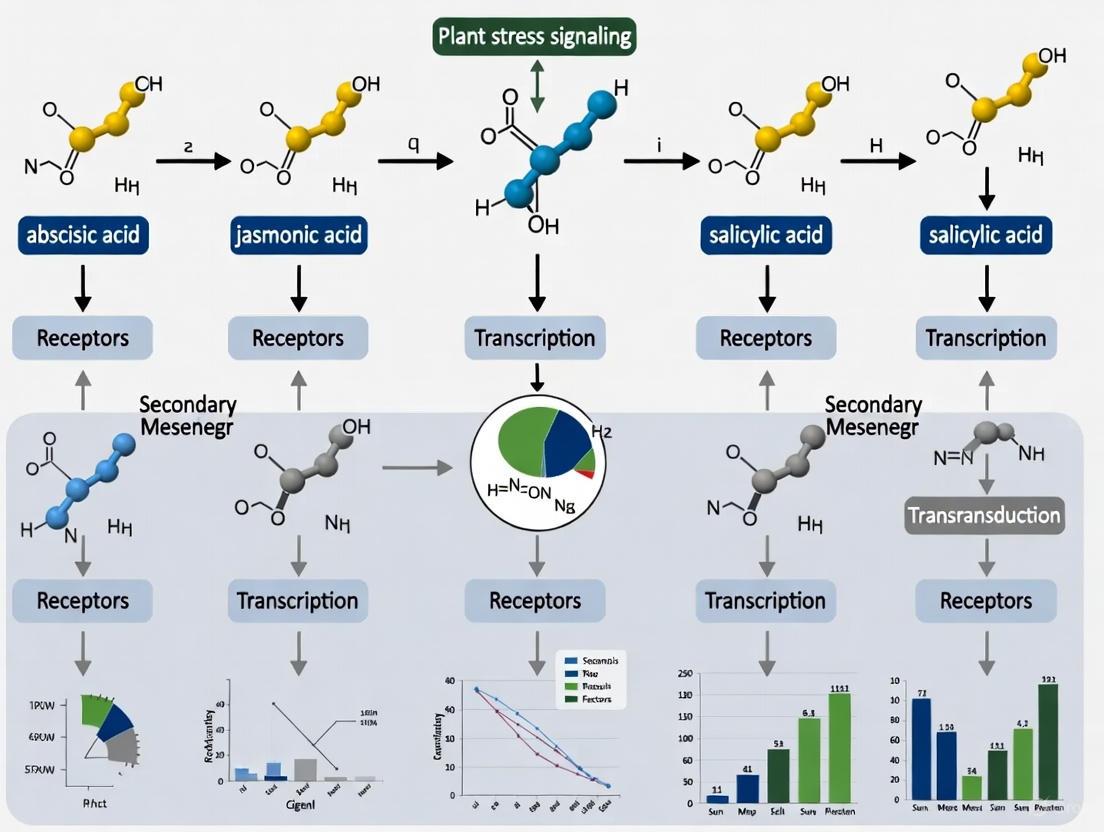
This article explores the cutting-edge field of plant stress signaling molecules and their detection technologies.
Decoding Plant Stress Signals: From Molecular Sensors to Biomedical Applications
Abstract
This article explores the cutting-edge field of plant stress signaling molecules and their detection technologies. It examines the foundational biology of key signaling molecules like reactive oxygen species (ROS), calcium ions, salicylic acid, and other hormones that form the plant's early stress response system. The content details innovative sensor methodologies, including nanosensor multiplexing, hyperspectral imaging, and molecular communication frameworks, for real-time, non-invasive stress monitoring. It further addresses critical optimization challenges and validation protocols, highlighting how insights from plant stress detection can inform novel biomedical sensor development and diagnostic approaches for human health.
The Language of Plant Stress: Identifying Key Signaling Molecules and Early Response Pathways
Plant survival in fluctuating environments depends on a sophisticated internal communication network. This signaling system, composed of various primary and secondary molecules, allows plants to perceive stress and coordinate whole-organism responses. Key players in this network include reactive oxygen species (ROS) and calcium ions (Ca²⁺) as fundamental primary signals, which interact extensively with hormonal signaling molecules such as abscisic acid (ABA), salicylic acid (SA), and jasmonic acid (JA). Understanding the interplay of these signals is paramount for developing biosensors that can monitor plant health in real-time, ultimately informing strategies to improve crop resilience and sustainable agriculture.
As sessile organisms, plants cannot escape unfavorable conditions and have therefore evolved complex signaling mechanisms to adapt and survive. Stress signaling begins with the perception of an external stimulus, which is then transduced into an intracellular response, often involving the generation of secondary messengers and the activation of stress-responsive genes [1]. This process enables plants to mitigate the effects of abiotic and biotic stresses, which can reduce average crop yields by more than 50% [1].
Signaling networks in plants are characterized by their non-linear complexity, featuring substantial overlap and cross-talk between pathways [2]. A single stressor can activate multiple receptors, and their unique combinations and downstream interactions determine the specific physiological output [2]. Within this intricate web, certain signaling molecules serve as central hubs. ROS are now recognized as a common plant response to diverse stresses, placing them at a cross-road where various signaling pathways converge [2]. Similarly, Ca²⁺ is a ubiquitous second messenger in signal transduction pathways, with its concentration undergoing characteristic changes in response to numerous stimuli [1].
In-Depth Analysis of Core Signaling Molecules
Reactive Oxygen Species (ROS)
Nature and Function
ROS are highly reactive reduced oxygen molecules, including the superoxide anion (·O₂⁻), hydrogen peroxide (H₂O₂), and the hydroxyl radical (·OH) [3]. While historically viewed merely as damaging agents, it is now clear that they function as critical cellular second messengers in response to physiological stimuli such as pathogen attack, hormone signaling, and abiotic stress [3]. H₂O₂ is particularly important for systemic signaling due to its relative stability and ability to diffuse across membranes through aquaporins [3].
Signaling Mechanism and Interaction with Other Molecules
A key signaling mechanism involves the ROS-mediated activation of Ca²⁺-permeable channels in the plasma membrane. For instance, in guard cells, ROS activate hyperpolarization-dependent Ca²⁺ channels, leading to cytosolic Ca²⁺ increases that promote stomatal closure—a vital response to drought stress [3]. This ROS-Ca²⁺ signaling cassette appears to be a broadly used mechanism across different plant cell types [3].
ROS production and signaling are intimately linked with hormone actions. ABA induces ROS production, which in turn activates downstream components of the ABA signaling pathway [4]. The interplay between SA and JA also modulates systemic ROS signaling; SA augments the ROS wave, whereas JA suppresses it during responses to local wounding or high light stress [5]. Furthermore, proteins like Respiratory Burst Oxidase Homologs (RBOHs) act as critical hubs, generating ROS that are essential for processes like stomatal closure and linking phytohormonal signals to ROS production [6].
Table 1: Key Reactive Oxygen Species in Plant Signaling
| ROS Type | Chemical Formula | Stability & Lifetime | Primary Role in Signaling |
|---|---|---|---|
| Superoxide Anion | ·O₂⁻ | Low (Half-life: 0.2 ms - 20 ms) [3] | Precursor to other ROS; can be produced by NAD(P)H oxidases |
| Hydrogen Peroxide | H₂O₂ | High (can diffuse through aquaporins) [3] | Long-distance systemic signaling; modulates protein activity |
| Hydroxyl Radical | ·OH | Very Low (Half-life: ~nanoseconds) [3] | Highly damaging; role as a localized reaction intermediate |
Calcium Ions (Ca²⁺)
Nature and Function
Calcium is an essential macronutrient and a critical second messenger in plant signal transduction. The cytosolic free Ca²⁺ concentration is tightly maintained at around 200 nM under resting conditions but exhibits precise spatiotemporal elevations ("Ca²⁺ signatures") in response to diverse stresses, including cold, drought, and salinity [1]. These signatures are decoded by an array of Ca²⁺ sensor proteins to elicit specific physiological responses.
Signaling Mechanism and Interaction with Other Molecules
The increase in cytoplasmic Ca²⁺ can originate from extracellular spaces or intracellular stores like the endoplasmic reticulum [1]. This Ca²⁺ is sensed by various Ca²⁺-binding proteins (CaBPs), which include:
- Calmodulin (CaM): A canonical sensor that binds Ca²⁺ and regulates the activity of target enzymes and transcription factors [1].
- Ca²⁺-Dependent Protein Kinases (CDPKs): Proteins that combine a Ca²⁺ sensing domain with a kinase domain, directly linking Ca²⁺ signaling to phosphorylation cascades [1].
- Calcineurin B-Like (CBL) proteins: Sensors that activate specific protein kinases (CIPKs) [1].
A prime example of Ca²⁺ interaction with other signals is its relationship with ROS. As noted, ROS can activate Ca²⁺ channels [3]. Conversely, Ca²⁺ can also influence ROS production, creating a complex feedback loop that amplifies and specifies the signal [2].
Diagram 1: Ca²⁺ and ROS Signaling Crosstalk. This interplay forms a core signaling module.
Phytohormones: ABA, SA, and JA
Abscisic Acid (ABA)
ABA is a cornerstone hormone in plant adaptation to abiotic stresses like drought, salinity, and cold [4]. It mediates critical processes such as stomatal closure, seed dormancy, and the expression of stress-responsive genes. ABA signaling involves a core module where the hormone binds to receptors (PYR/PYL), leading to the inhibition of negative regulators (PP2Cs) and the subsequent activation of kinases (SnRK2s) that phosphorylate downstream targets like transcription factors [4]. ABA induces the production of ROS and Ca²⁺ signals in guard cells, which are essential for stomatal closure [3] [4]. Recent studies also highlight a complex relationship with growth, where ABA can sometimes suppress ROS accumulation to promote growth under certain conditions [4].
Salicylic Acid (SA) and Jasmonic Acid (JA)
SA and JA are primarily associated with defense responses against pathogens and herbivores, but they also play significant roles in abiotic stress and systemic signaling. They often function in an antagonistic manner [5]. In systemic signaling, SA augments the ROS wave—a long-distance signal that coordinates acclimation across the plant—while JA suppresses it [5]. This antagonistic interaction allows the plant to prioritize its response to multiple, simultaneous stresses.
Table 2: Key Phytohormones in Stress Signaling
| Hormone | Primary Stress Context | Core Functions | Interaction with ROS/Ca²⁺ |
|---|---|---|---|
| Abscisic Acid (ABA) | Abiotic (Drought, Cold, Salinity) | Stomatal closure, stress gene expression, seed dormancy [4] | Induces ROS production; ROS activates Ca²⁺ channels in guard cells [3] [4] |
| Jasmonic Acid (JA) | Biotic (Herbivores, Necrotrophs), Abiotic | Defense gene activation, systemic signaling [5] [7] | Suppresses the systemic ROS wave; interplay with Ca²⁺ in defense signaling [5] |
| Salicylic Acid (SA) | Biotic (Pathogens), Abiotic | Systemic Acquired Resistance (SAR), pathogen defense [5] | Augments the systemic ROS wave; key role in redox signaling [5] [6] |
Diagram 2: Antagonistic Interaction of SA and JA in Systemic ROS Signaling.
Experimental Methodologies for Signaling Research
Isolating the Apoplastic Fluid for Signal Analysis
To identify mobile signaling molecules, researchers performed a meticulous analysis of the apoplastic fluid—the liquid between plant cells [8].
Protocol Summary:
- Plant Material: Use model plants like Arabidopsis thaliana or fava bean (Vicia faba).
- Treatment: Expose leaves to specific conditions (e.g., red light to stimulate photosynthesis or darkness as a control).
- Fluid Extraction: Carefully extract the apoplastic fluid from the treated leaves using techniques like vacuum infiltration and centrifugation.
- Metabolite Profiling: Analyze the chemical composition of the extracted fluid using advanced metabolomics technologies (e.g., mass spectrometry) to identify and quantify signaling metabolites [8].
Key Finding: This approach identified 448 unique chemical compounds in the apoplast, with sugars (sucrose, fructose, glucose) and maleic acid being confirmed as key messengers that promote stomatal opening under red light [8].
Characterizing Ion Channel Activity
Understanding how signals like ROS affect ion fluxes is crucial. Guard cells are a classic model system.
Protocol Summary (ROS activation of Ca²⁺ channels):
- Tissue Preparation: Peel the thin epidermis from a leaf to access guard cells.
- Electrophysiology: Use patch-clamp techniques on individual guard cell protoplasts.
- Channel Stimulation: Apply ROS (e.g., H₂O₂) to the experimental system.
- Measurement: Record the activity of hyperpolarization-dependent Ca²⁺-permeable cation (Iₒ) channels in the plasma membrane before and after ROS application [3].
- Genetic Validation: Repeat experiments using mutants (e.g., abi2-1, gca2) to confirm the involvement of specific signaling components like protein phosphatases in the ROS-Ca²⁺ pathway [3].
The Scientist's Toolkit: Essential Research Reagents
Table 3: Key Reagents for Plant Signaling Research
| Reagent / Material | Function / Application | Example Use Case |
|---|---|---|
| Apoplastic Fluid Extraction Kit | Isolates intercellular fluid for metabolite analysis [8] | Identifying novel mobile signals like sugars and maleic acid [8] |
| Mutant Lines (e.g., abi1-1, abi2-1) | Genetically disrupt specific signaling nodes [4] | Elucidating the role of PP2C phosphatases in ABA and ROS signaling [3] [4] |
| Diphenylene Iodonium (DPI) | Pharmacological inhibitor of NAD(P)H oxidases [3] | Inhibiting ROS production to study its role in root hair growth or stomatal closure [3] |
| Patch-Clamp Electrophysiology Setup | Measures ion channel activity in plant membranes [3] | Characterizing ROS activation of Ca²⁺ channels in guard cells [3] |
| ROS-Sensitive Dyes (e.g., H₂DCFDA) | Visualizes and quantifies ROS accumulation in tissues | Measuring spatial and temporal ROS bursts in response to stress or hormone treatment |
Implications for Sensor Development Research
The intricate interplay of plant signaling molecules presents a rich landscape for sensor development. The discovery that sugars and maleic acid act as internal messengers for photosynthesis and stomatal opening provides concrete molecular targets for sensors aimed at monitoring plant metabolic status [8]. Furthermore, the systemic ROS wave and the antagonistic relationship between SA and JA offer a framework for developing sensors that can report on the plant's systemic immune and stress status [5]. The well-characterized Ca²⁺ signatures and their downstream effects are ideal for engineering biosensors based on Ca²⁺-sensitive proteins like calmodulin, which could be used to monitor stress responses with high spatiotemporal resolution. Focusing on these central hubs of the signaling network, particularly ROS, Ca²⁺, and key hormones, will enable the creation of robust sensor systems that accurately reflect plant health and environmental adaptation.
Plants possess a sophisticated signaling system to respond to environmental stresses, which is paramount for their survival and acclimation. Within this system, hydrogen peroxide (H₂O₂) and salicylic acid (SA) have emerged as critical signaling molecules that orchestrate a wide range of defense responses [9]. The temporal and spatial dynamics of these molecules encode specific information about the nature and severity of the stress encountered [10] [11]. Understanding this "chemical language" is not only a fundamental pursuit in plant biology but also the cornerstone for developing advanced sensor technologies that can diagnose plant stress pre-symptomatically [12] [13]. The emerging field of plant nanobionics leverages nanomaterials, such as single-walled carbon nanotubes (SWNTs), to create optical sensors that can decode these signals in real-time, offering an unprecedented window into the internal state of plants [10] [11]. This technical guide synthesizes current research on the stress-specific signatures of H₂O₂ and SA, with a particular focus on the insights gained through nanosensor multiplexing and its implications for the development of next-generation plant health diagnostics.
Molecular Physiology of H₂O₂ and Salicylic Acid in Stress Signaling
Hydrogen Peroxide (H₂O₂) as a Central ROS Messenger
Reactive oxygen species (ROS), particularly H₂O₂, are rapidly generated in plants in response to both biotic and abiotic stresses. H₂O₂ is a key redox signaling molecule due to its relative stability and ability to diffuse across cellular membranes [10] [9]. It functions as a secondary messenger in signaling cascades that activate various stress response networks and the establishment of defense mechanisms [10]. The controlled production of H₂O₂ is part of a finely tuned system; its concentration and spatiotemporal distribution determine whether it acts as a protective signal or a damaging agent [9]. Enzymes like NADPH oxidases (RBOHs) catalyze the production of superoxide, which is then dismutated to H₂O₂ by superoxide dismutase (SOD). The level of H₂O₂ is subsequently regulated by scavenging enzymes such as catalases (CAT) and peroxidases (PX) [14] [9]. This balance enables H₂O₂ to function in processes including programmed cell death, stomatal closure, and systemic acquired resistance [14].
Salicylic Acid (SA) as a Key Phytohormone in Defense
Salicylic acid is a pivotal plant hormone that regulates numerous aspects of plant growth, development, and response to stresses [10]. Its most well-characterized role is in mediating plant defenses against biotic stressors, such as pathogen infections. Upon pathogen attack, SA is responsible for establishing systemic acquired resistance (SAR), a broad-spectrum immunity that primes the entire plant for future attacks [10]. Beyond biotic stress, research has shown that SA is also involved in plant responses to major abiotic stresses like extreme temperatures, drought, salinity, and osmotic stress [10]. SA can act as both a pro-oxidant and an antioxidant under different stress conditions, thereby regulating ROS homeostasis in plants [10]. The extensive interplay between ROS and SA signaling pathways forms a complex network that customizes the plant's ultimate physiological and metabolic response to a specific stressor [10] [14].
Quantitative Temporal Dynamics of H₂O₂ and SA across Stress Types
Multiplexed nanosensor technology has enabled the precise, real-time monitoring of H₂O₂ and SA dynamics in living plants (Brassica rapa subsp. Chinensis) subjected to distinct stress treatments. The data reveal that each stress type produces a unique temporal signature, a "fingerprint" defined by the timing, magnitude, and sequence of H₂O₂ and SA waves [10] [11] [13].
Table 1: Temporal Characteristics of H₂O₂ and SA Signaling Waves Under Different Stress Conditions
| Stress Type | H₂O₂ Response Onset | H₂O₂ Peak Time | SA Response Onset | SA Peak Time | Key Signature Characteristics |
|---|---|---|---|---|---|
| Mechanical Wounding | Within minutes [13] | ~1 hour [13] | No significant production [13] | Not Applicable | Strong, rapid H₂O₂ wave; absent SA signal [10] [13] |
| Pathogen Stress | Within minutes [13] | ~1 hour [13] | Within 2 hours [13] | Distinct time point [13] | Coupled H₂O₂ and SA waves; SA production indicates biotic threat [10] |
| Heat Stress | Within minutes [13] | ~1 hour [13] | Within 2 hours [13] | Distinct time point [13] | Coupled H₂O₂ and SA waves; timing distinct from pathogen stress [10] |
| High Light Stress | Within minutes [13] | ~1 hour [13] | Within 2 hours [13] | Distinct time point [13] | Coupled H₂O₂ and SA waves; unique temporal pattern [10] |
The data demonstrate that the H₂O₂ wave is a general early stress response, peaking within an hour and then returning to baseline, regardless of the stress type [13]. In contrast, the production of SA provides stress-specific discrimination. While heat, light, and bacterial infection all trigger SA accumulation, they do so at distinct time points, creating unique waveform patterns. The absence of an SA response to insect attack is itself a distinctive signature, suggesting the activation of alternative defense pathways, such as those involving jasmonic acid [10] [13]. These temporal signatures form the basis of a biochemical "language" that plants use to coordinate an appropriate, customized defense strategy [12].
Experimental Protocols for Real-Time Signal Monitoring
Nanosensor Synthesis and Functionalization
The core technology for real-time monitoring involves the design and synthesis of optical nanosensors based on single-walled carbon nanotubes (SWNTs) using the Corona Phase Molecular Recognition (CoPhMoRe) technique [10].
- H₂O₂ Nanosensor: The sensor is constructed from SWNTs non-covalently wrapped with a single-stranded (GT)₁₅ DNA oligomer. This specific corona phase confers selective binding affinity for H₂O₂ molecules [10].
- SA Nanosensor: Development of a selective SA sensor involved screening a library of cationic fluorene-based co-polymers (designated S1 to S4) as SWNT wrappings. Polymer S3, which incorporates a pyrazine co-monomer, was identified to yield a selective ~35% quenching of SWNT fluorescence upon binding 100 µM SA. This polymer showed minimal cross-reactivity with other plant hormones such as jasmonic acid, abscisic acid, and auxins, ensuring specificity [10].
Plant Integration and Stress Application
The protocol for in-planta sensor deployment and stress monitoring is as follows:
- Sensor Infiltration: A solution containing the nanosensors is applied to the abaxial side (underside) of a plant leaf. The sensors enter the leaf interior through the stomata and become localized in the mesophyll layer, where they reside without significant disruption to plant function [12] [13].
- Multiplexed Sensing: The H₂O₂ and SA nanosensors, along with a reference nanosensor that is invariant to the analytes, are co-infiltrated into the same leaf region. This allows for ratiometric measurement and compensation for non-specific effects [10].
- Stress Induction: Plants are subjected to controlled stress treatments:
- Mechanical Wounding: Using a sterile needle or punch [10] [11].
- Pathogen Stress: Application of a bacterial inoculum or a bacterial-derived elicitor like flg22 [10].
- Heat Stress: Exposure to elevated temperatures above the optimal growth range [10] [15].
- High Light Stress: Exposure to light intensity significantly above growth conditions [10].
- Real-Time Data Acquisition: The fluorescent signals from the nanosensors are monitored using a near-infrared (nIR) photoluminescence excitation (PLE) spectrometer or an infrared camera system. The sensors are highly photostable and fluoresce in the nIR region, away from the auto-fluorescence of plant chlorophyll, which enables high-fidelity, long-term imaging [10] [11].
Signaling Pathways and Biochemical Kinetic Models
The temporal data from multiplexed sensors has informed the development of biochemical kinetic models that describe the interplay between H₂O₂ and SA. These models suggest that the early H₂O₂ waveform encodes information specific to each stress type, which subsequently influences the downstream production of SA and other hormones [10]. The signaling cascade can be conceptualized as an integrated network.
This model posits that stress perception leads to an immediate, self-propagating ROS wave [9]. This wave acts as a primary signal that, depending on its specific temporal and kinetic properties (influenced by the stress type), can trigger the synthesis of SA. Both H₂O₂ and SA then act as signaling molecules that modulate the activity of transcription factors and other downstream effectors, leading to the transcriptional reprogramming necessary for acclimation and defense [10] [14]. The precise timing and feedback between these components generate the unique signatures observed.
The Scientist's Toolkit: Key Research Reagent Solutions
Table 2: Essential Reagents and Materials for Plant Stress Signaling Research
| Item Name | Function/Application | Key Characteristics |
|---|---|---|
| SWNT-based Optical Nanosensors | Real-time, in-planta detection of H₂O₂ and SA [10]. | Near-infrared fluorescence, high photostability, reversible binding, non-destructive. |
| Cationic Polymer Wrappings (e.g., S3) | Confer selectivity to nanosensors for specific analytes like SA [10]. | CoPhMoRe screening identified S3 polymer for selective SA quenching. |
| Infrared Camera / PLE Spectrometer | Detection of fluorescent signals from nanosensors in living plants [10] [11]. | Capable of detecting in nIR range (avoiding chlorophyll autofluorescence). |
| Pathogen Elicitors (e.g., flg22) | Standardized application of biotic stress to study immune signaling [10]. | Mimics bacterial infection, triggering defined PAMP-triggered immunity. |
| Reference Nanosensor | An internal control sensor for ratiometric measurement [10]. | Fluorescence invariant to plant analytes, accounts for sensor placement and motion. |
The deciphering of stress-specific signatures through the temporal dynamics of H₂O₂ and SA represents a significant leap forward in plant phenotyping and stress physiology. The multiplexed nanosensor approach provides a transformative tool for basic research, enabling a mechanistic understanding of how plants perceive and respond to their environment [10] [11]. The future of this field lies in expanding the sensor toolkit to include a wider array of plant hormones and signaling molecules, such as jasmonic acid, ABA, and ethylene, to capture more complex signaling networks. Furthermore, the transition of this technology from the laboratory to the field is a critical next step. The development of "sentinel plants"—equipped with these nanosensors and connected to digital networks—can provide an early warning system for farmers, allowing for pre-symptomatic intervention and precise management of crops [12] [13]. This integration of real-time biochemical data with agricultural practice holds immense promise for enhancing crop resilience, optimizing resource use, and securing global food production in the face of climate change.
Calcium ions (Ca²⁺) function as ubiquitous intracellular second messengers, playing a pivotal role in transducing a wide array of environmental stresses into adaptive biological responses within plants [16] [17]. When plants encounter abiotic stresses such as drought, salinity, extreme temperatures, or biotic stresses from pathogens and pests, they perceive these stimuli through specific sensors that trigger among the earliest signaling events: a transient elevation in cytosolic free Ca²⁺ concentration ([Ca²⁺]cʏᴛ) [17] [18]. These are not random fluctuations but highly orchestrated, stimulus-specific spatiotemporal patterns in Ca²⁺ concentration, known as "Ca²⁺ signatures" [19] [20]. These signatures are defined by their unique amplitude, duration, frequency of oscillations, and spatial localization within tissues and cells [19] [21]. The information encoded within these Ca²⁺ waves is then decoded by an intricate system of Ca²⁺-binding sensor proteins, which subsequently relay the signal to activate downstream stress-responsive genes, proteins, and physiological adaptations [19] [22]. This whitepaper delves into the mechanisms of Ca²⁺ signature generation and decoding, details experimental approaches for their investigation, and explores the application of this knowledge in developing advanced plant stress sensors, thereby providing a technical foundation for research aimed at enhancing crop resilience.
Mechanisms of Calcium Signature Generation
The resting [Ca²⁺]cʏᴛ in plant cells is maintained at a low level (∼50-200 nM) against a steep concentration gradient, with high Ca²⁺ levels in the apoplast (∼10⁻³ M) and within intracellular stores like the vacuole and endoplasmic reticulum [16] [17]. Stress-induced perturbations activate Ca²⁺-permeable channels in the plasma membrane and endomembranes, leading to a rapid influx into the cytosol and the formation of a specific Ca²⁺ signature.
Key Channels and Sensors for Abiotic Stress
- Osmotic Stress (Drought, Salt): The OSCA (Hyperosmolality-Gated Calcium-Permeable Channel) family, notably OSCA1, was identified as a primary sensor for hyperosmotic stress [17] [23]. OSCA proteins are mechanosensitive channels hypothesized to be activated by membrane tension changes caused by water loss. Mutation in OSCA1 impairs the cytosolic Ca²⁺ increase in response to osmotic stimuli [17]. Furthermore, salt stress is transduced via the well-characterized SOS (Salt Overly Sensitive) pathway, where the initial Ca²⁺ signal is sensed by the EF-hand calcium-binding proteins SOS3/CBL4 [19].
- Mechanical Stress (Touch, Wind): The MCA (Mid1-Complementing Activity) family, including MCA1 and MCA2, are plasma membrane-localized Ca²⁺-permeable mechanosensitive channels. They are involved in Ca²⁺ influx in response to touch, gravity, and root penetration through hard soil [17]. The Piezo channel, localized to the vacuole membrane, also contributes to mechanosensation by regulating vacuolar morphology and inducing [Ca²⁺]cʏᴛ oscillations [17].
- Temperature Stress: COLD1 in rice, a regulator of G-protein signaling, has been proposed as a cold stress sensor that regulates Ca²⁺ channel activity [19] [23]. For heat stress, Cyclic Nucleotide-Gated Channels (CNGCs) like OsCNGC14 and OsCNGC16 in rice, function as modulators of cytosolic calcium uptake [19].
Key Channels and Sensors for Biotic Stress
Biotic interactions trigger Ca²⁺ signatures through the recognition of Pathogen-/Microbe-Associated Molecular Patterns (PAMPs/MAMPs) by Pattern Recognition Receptors (PRRs) [20]. This PAMP-Triggered Immunity (PTI) induces a rapid Ca²⁺ influx. Specific families of Ca²⁺ channels implicated include:
- Cyclic Nucleotide-Gated Channels (CNGCs): These channels are activated by cyclic nucleotides and work in concert with Ca²⁺-binding proteins to facilitate Ca²⁺ entry [20] [18].
- Glutamate Receptor-Like (GLR) channels: Activated by extracellular amino acids, GLRs contribute to Ca²⁺ influx during immune responses and can propagate systemic Ca²⁺ signals [18].
The following diagram illustrates the core signaling pathway from stimulus perception to physiological response, highlighting the generation and decoding of the Ca²⁺ signature.
Decoding the Calcium Signature: Sensor Proteins and Effectors
The information contained within a Ca²⁺ signature is interpreted by a suite of Ca²⁺-binding sensor proteins. These sensors undergo conformational changes upon Ca²⁺ binding, enabling them to interact with and activate specific downstream target proteins [19] [16].
Calmodulins (CaMs) and Calmodulin-Like Proteins (CMLs): These proteins contain EF-hand motifs that bind Ca²⁺ but lack enzymatic activity themselves. Instead, they relay the signal by binding to and modulating the activity of diverse target proteins, including transcription factors, channels, and enzymes. For example, AtCaM3 interacts with NADPH oxidase RbohD to mediate reactive oxygen species (ROS) production during pathogen defense [16] [20]. CML41 is upregulated by bacterial elicitors and positively regulates defense against Pseudomonas syringae [16].
Calcium-Dependent Protein Kinases (CDPKs/CPKs): CDPKs are serine/threonine kinases that uniquely combine a Ca²⁺-sensing calmodulin-like domain and a kinase effector domain in a single protein [24]. This allows them to directly translate Ca²⁺ signals into phosphorylation events. They regulate numerous processes, such as stomatal movement, oxidative burst via phosphorylation of RBOHs, and stress-responsive gene expression [19] [24]. The Arabidopsis genome encodes 34 CDPKs, which are classified into four groups, highlighting their functional diversification [24].
Calcineurin B-Like Proteins (CBLs) and CBL-Interacting Protein Kinases (CIPKs): The CBL-CIPK network is a pivotal system for decoding Ca²⁺ signals, particularly in response to ionic stresses. CBLs (e.g., SOS3/CBL4) sense Ca²⁺ and physically interact with CIPKs (e.g., SOS2/CIPK24), activating the kinase. The CBL-CIPK complex then phosphorylates downstream transporter proteins, such as SOS1 (Na⁺/H⁺ antiporter), to re-establish ionic homeostasis under salt stress [19]. This module is also used for potassium (via AKT1 channel) and magnesium homeostasis [19].
Table 1: Major Families of Calcium Sensor Proteins in Plants
| Sensor Family | Key Features | Example Members | Primary Function in Stress Response |
|---|---|---|---|
| CaMs/CMLs | EF-hands; no enzymatic activity; interact with target proteins | AtCaM3, CML41, CML9 | Modulates NADPH oxidases (ROS burst); influences MAPK cascades and hormone signaling [16] [20] |
| CDPKs/CPKs | Combined kinase and Ca²⁺-binding domains; directly phosphorylate targets | AtCPK1, AtCPK21, OsCDPK13 | Phosphorylates RBOHs, ion channels, transcription factors; central node in stress signaling [19] [24] |
| CBLs/CIPKs | CBLs bind Ca²⁺ and recruit CIPKs; CIPKs are kinases | SOS3/CBL4 & SOS2/CIPK24, CBL1 & CIPK23 | Regulates ion transporters (SOS1, AKT1) to maintain ion homeostasis under salinity, drought, and nutrient deficiency [19] |
Experimental Approaches for Measuring Calcium Signatures
Investigating Ca²⁺ dynamics requires tools capable of capturing rapid, transient changes in [Ca²⁺]cʏᴛ with high spatial and temporal resolution.
Established Method: Genetically Encoded Biosensors (Aequorin)
The aequorin system is a widely used bioluminescent Ca²⁺ reporter. The protein apoaequorin is reconstituted with the cofactor coelenterazine to form active aequorin, which emits light upon binding Ca²⁺. This system allows for the non-invasive measurement of absolute [Ca²⁺]cʏᴛ in whole plants or specific tissues [17] [21].
Detailed Protocol (as cited in [21]):
- Generation of Transgenic Lines: Create transgenic plants (e.g., potato, Arabidopsis) expressing apoaequorin under a constitutive promoter like CaMV 35S.
- Sample Preparation: Excise leaf discs or use whole seedlings. Reconstitute aequorin by incubating samples in a solution containing coelenterazine (e.g., overnight incubation).
- Stimulus Application and Luminescence Recording: Place the reconstituted sample in a luminometer chamber. Inject the stress stimulus (e.g., NaCl, H₂O₂, mannitol, PAMPs) and record luminescence intensity over time.
- Data Conversion: At the end of the experiment, discharge any remaining aequorin with a high-Ca²⁺ solution to determine the total signal. Convert luminescence counts into estimated [Ca²⁺]cʏᴛ using a standard calibration curve.
Table 2: Quantified Calcium Signatures in Response to Abiotic Stressors [21]
| Stimulus | Species | Concentration | Peak [Ca²⁺]cʏᴛ (µM) | Time to Peak (sec) | Signature Kinetics |
|---|---|---|---|---|---|
| NaCl | Arabidopsis | 400 mM | ~0.65 | ~30 | Fast, sharp, monophasic peak |
| Potato | 800 mM | ~0.5 | ~60 | Slower, broader peak | |
| H₂O₂ | Arabidopsis | 100 mM | ~0.4 | ~15 | Rapid, monophasic peak |
| Potato | 100 mM | ~0.35 | ~30 & ~120 | Biphasic, double peak | |
| Mannitol | Arabidopsis | 400 mM | ~0.05 | N/A | Slow, sustained elevation |
| Potato | 400 mM | ~0.2 | ~60 | Defined, single peak |
Emerging Technology: Nanosensor Multiplexing
A cutting-edge approach involves the use of single-walled carbon nanotube (SWNT)-based optical nanosensors. These nanosensors fluoresce in the near-infrared range and can be designed for specific molecules via a corona phase molecular recognition (CoPhMoRe) strategy [10].
Detailed Workflow (for H₂O₂ and Salicylic Acid detection [10]):
- Sensor Synthesis: SWNTs are non-covalently wrapped with specific single-stranded DNA oligomers (e.g., (GT)₁₅ for H₂O₂) or cationic polymers (e.g., S3 polymer for SA) to create a corona phase that confers selectivity.
- Plant Infiltration: The nanosensors are introduced into the leaf apoplast of living plants (e.g., Pak choi) via infiltration through the stomata using a syringe.
- Multiplexed Imaging: The plant is subjected to stress (e.g., light, heat, pathogen, wounding). The near-infrared photoluminescence of the multiplexed sensors is monitored in real-time using a custom microscope setup.
- Data Analysis: Distinct temporal waves of H₂O₂ and SA are recorded, revealing stress-specific signaling kinetics. For instance, mechanical wounding triggers a sharp, early H₂O₂ wave followed by a slower SA increase, while pathogen stress induces a delayed but sustained SA wave [10].
The following diagram visualizes this integrated experimental workflow, from sensor preparation to data output.
The Scientist's Toolkit: Key Research Reagents and Materials
Table 3: Essential Research Reagents for Calcium Signaling Studies
| Reagent / Material | Function / Application | Specific Examples |
|---|---|---|
| Genetically Encoded Ca²⁺ Indicators (GECIs) | Report spatiotemporal dynamics of [Ca²⁺]cʏᴛ in living plants | Aequorin (for luminescence); Yellow Cameleon (YC3.6) (for FRET ratiometric imaging) [21] [18] |
| Synthetic Nanosensors | Real-time, multiplexed detection of specific signaling molecules (ROS, hormones) in planta | (GT)₁₅-DNA-SWNT (for H₂O₂); S3-polymer-SWNT (for Salicylic Acid) [10] |
| Chemical Stimuli / Elicitors | To experimentally induce defined Ca²⁺ signatures and stress responses | NaCl (salt stress); Mannitol/Sorbitol (osmotic stress); H₂O₂ (oxidative stress); flg22/elf18 (biotic stress/PAMP) [17] [21] |
| Genetic Resources | For functional analysis of channels and sensors (loss/gain-of-function) | T-DNA insertion mutants (e.g., osca1, cml41); Transgenic overexpression lines (e.g., 35S::CDPK) [19] [17] [24] |
Application in Sensor Development and Concluding Perspective
The fundamental knowledge of early Ca²⁺ signaling events is directly translatable to the field of sensor development. The distinct, stress-specific "Ca²⁺ signatures" and the subsequent kinetic waves of molecules like H₂O₂ and SA represent the most incipient biochemical indicators of plant stress [21] [10]. Research that decodes these signatures provides the blueprint for two classes of sensors:
- Synthetic Biosensors: The design principles of plant Ca²⁺ sensors and nanosensors can be mimicked to create robust, field-deployable diagnostic tools. The successful multiplexing of H₂O₂ and SA nanosensors demonstrates the feasibility of developing early warning systems that detect stress prior to the appearance of visual symptoms [10].
- Engineered Plant Sensors: Understanding which sensory channels (e.g., OSCA, MCA) and decoding proteins (e.g., specific CDPKs or CBL-CIPK pairs) are responsible for specific stress responses allows for their use as genetic modules. These modules can be linked to visible reporters (e.g., fluorescent proteins) in genetically engineered plants, creating "sentinel crops" that visually report their stress status with high specificity.
In conclusion, the paradigm of stimulus-specific Ca²⁺ signatures underpins plant environmental sensing. The ongoing dissection of this signaling language, powered by the experimental tools and reagents detailed herein, is critical not only for advancing fundamental plant biology but also for driving innovation in the development of next-generation sensors. These technologies hold the promise of revolutionizing crop monitoring and management, ultimately contributing to global food security in an era of escalating climate challenges.
At the molecular level, biological stress can be defined as any particular rise in the optimum growth temperature that pushes the physiological status of a cell beyond its homeostatic range, leading to a system dysregulation [15]. This dysregulated system generally exhibits higher-than-normal levels of reactive molecular species and macromolecular damage – both ubiquitous effects of most stressful conditions [15]. Under physiological conditions, oxidative free radicals generated by metabolic processes are effectively neutralized by antioxidant responses, maintaining cellular redox homeostasis [25]. However, stressful conditions disrupt this finely tuned equilibrium, leading to a cascade of molecular events that characterize the stress response [25].
This molecular definition provides a crucial framework for understanding plant stress signaling, particularly for developing advanced sensor technologies. The interplay between system dysregulation, redox imbalance, and macromolecular damage creates measurable signatures that can be detected and quantified [10] [15]. For researchers focused on sensor development, recognizing that different stress types generate distinct chemical fingerprints in plants enables the creation of diagnostic tools that can identify specific stresses before visual symptoms appear [10] [12]. This approach moves beyond traditional stress detection methods that rely on observing physical damage, instead focusing on the earliest molecular events in the stress response cascade.
Core Components of the Molecular Stress Definition
System Dysregulation: Beyond Homeostatic Range
When plants encounter stress conditions, whether abiotic (heat, light, mechanical wounding) or biotic (pathogen infection), their internal systems become dysregulated, losing the precise balance required for optimal growth and function [15]. This dysregulation manifests as disrupted metabolic activities where cells lack the energy, time, and/or complete set of resources to maintain metabolic activities at highest levels, resulting in reduced performance and fitness [15]. The plant system can no longer maintain its internal conditions within the optimal range, leading to compromised physiological function.
This system dysregulation provides the initial trigger for the plant's stress detection and response mechanisms. Research has shown that plants have evolved distinct types of molecular sensors for monitoring these changes: thermosensors responsible for monitoring temperature information during mild changes, and heat stress sensors that detect specific stress-induced alterations when temperatures exceed the optimum range [15]. This sophisticated sensing capability allows plants to initiate appropriate response pathways tailored to the specific stress encountered.
Redox Imbalance: Between Signaling and Damage
Reactive oxygen species (ROS) play a dual role in plant stress response, acting as both crucial signaling molecules and potential damaging agents [26] [25] [27]. Under normal conditions, plants maintain redox homeostasis through a delicate balance between ROS production and elimination by antioxidant systems [25]. However, under stress conditions, this balance is disrupted, leading to redox imbalance that serves as a central component of the molecular stress definition.
Table 1: Reactive Oxygen Species in Plant Stress Signaling
| ROS Type | Chemical Formula | Properties | Role in Stress Signaling |
|---|---|---|---|
| Superoxide anion | O₂•⁻ | Short-lived, poorly membrane-permeable | Early stress signal, precursor to other ROS |
| Hydrogen peroxide | H₂O₂ | Longer-lived, membrane-permeable | Key signaling molecule, systemic signaling |
| Hydroxyl radical | •OH | Highly reactive, very short half-life | Causes significant macromolecular damage |
| Singlet oxygen | ¹O₂ | Highly reactive, short-lived | Photosynthetic stress, programmed cell death |
The dual nature of ROS creates a complex signaling landscape where low concentrations function as essential messengers in cellular signaling pathways, while high concentrations lead to programmed cell death and significant damage to cell structures [26]. This "double-edged sword" characteristic makes redox balance critically important for plant survival under stress conditions [26]. Hydrogen peroxide (H₂O₂), with its relative stability and membrane permeability, has emerged as a particularly important ROS signaling molecule in plant stress responses [10] [28].
Macromolecular Damage: The Physical Manifestation of Stress
Stress-induced redox imbalance leads to direct damage to all major classes of macromolecules, representing the physical manifestation of molecular stress [15]. This damage includes:
- Protein damage: Denaturation, aggregation, and oxidative modification of proteins, impairing enzymatic function and structural integrity [15]
- Membrane damage: Alterations in membrane fluidity and integrity due to lipid peroxidation, compromising cellular compartmentalization [15]
- Nucleic acid damage: DNA and RNA damage including strand breaks, base modifications, and impaired replication/transcription [15]
This macromolecular damage is not merely a passive consequence of stress but serves as an active component detected by specific cellular sensors that trigger appropriate stress responses [15]. The extent and type of damage contribute to the specificity of the stress response, enabling plants to customize their defense mechanisms based on the particular stress encountered.
Stress Signaling Molecules in Plants: Detection and Quantification
Key Signaling Molecules and Their Dynamics
Plants employ a sophisticated language of chemical signals to coordinate their response to stress. Recent research has enabled simultaneous monitoring of multiple signaling molecules, revealing that different stresses produce distinct temporal patterns of these compounds [10].
Table 2: Quantitative Dynamics of Plant Stress Signaling Molecules Under Various Stress Conditions
| Stress Type | Signaling Molecule | Concentration Range | Temporal Characteristics | Functional Role |
|---|---|---|---|---|
| Light Stress | H₂O₂ | ~100-500 μM [10] | Rapid increase, sharp peak | Redox signaling, photoprotection |
| Salicylic Acid | ~50-200 μM [10] | Slower, sustained increase | Defense gene activation | |
| Heat Stress | H₂O₂ | ~200-800 μM [10] | Biphasic waveform | Encoding stress-specific information |
| Salicylic Acid | ~100-400 μM [10] | Delayed, prolonged response | Thermotolerance acquisition | |
| Pathogen Stress | H₂O₂ | ~50-300 μM [10] | Rapid, oscillating pattern | Antimicrobial defense, signaling |
| Salicylic Acid | ~150-600 μM [10] | Sustained, systemic increase | Systemic acquired resistance | |
| Mechanical Wounding | H₂O₂ | ~100-400 μM [10] | Immediate, localized burst | Damage signaling, repair initiation |
| Salicylic Acid | ~50-250 μM [10] | Moderate, localized increase | Defense priming, healing promotion |
The distinct temporal patterns of H₂O₂ and salicylic acid generation for each stress type create unique chemical signatures that plants use to coordinate customized response pathways [10] [12]. These signaling cascades involve extensive interplay between ROS and hormone pathways, although the precise sequence of events and underlying mechanisms remain active areas of investigation [10].
Experimental Detection Methodologies
Nanosensor-Based Detection
Advanced nanosensor technology has revolutionized the real-time monitoring of plant stress signaling molecules. The methodology involves several key steps:
Sensor Fabrication: Single-walled carbon nanotubes (SWNTs) are non-covalently functionalized with specific oligonucleotides or polymers via the corona phase molecular recognition (CoPhMoRe) technique [10]. For salicylic acid detection, cationic fluorene-based co-polymers (particularly S3 polymer) wrapped around SWNTs provide selective binding capability [10]. For H₂O₂ detection, (GT)₁₅ DNA oligomer-wrapped SWNTs create specific recognition sites [10].
Plant Integration: Nanosensors are introduced into plants by applying a sensor solution to the underside of leaves, where they enter through stomata and reside in the photosynthesizing mesophyll layer [12]. This creates "nanobionic plants" with integrated sensing capabilities without requiring genetic modification [10].
Signal Detection: When bound to target molecules, sensors exhibit changes in fluorescence emission in the near-infrared region, which is detectable using specialized photoluminescence excitation spectrometers [10]. This fluorescence signal occurs away from the chlorophyll auto-fluorescence region, enabling clear detection [10].
Multiplexing: Multiple sensors with different spectral characteristics can be deployed simultaneously to monitor several signaling molecules concurrently, providing a comprehensive view of the stress response network [10].
Electrochemical Sensing Approaches
Electrochemical methods provide complementary approaches for detecting plant signaling molecules:
Electrode Modification: Conventional electrodes (glass carbon electrode, carbon fibers, stainless steel wires) are modified with nanomaterials (carbon nanotubes, graphene, metal nanoparticles) and selective recognition elements (enzymes, molecularly imprinted polymers) to enhance sensitivity and selectivity [28].
Real-Time Monitoring: Miniaturized electrochemical sensors can be implanted in plant tissues for continuous, in-situ monitoring of signaling molecule dynamics, particularly useful for field applications [28].
Multi-Analyte Platforms: Integrated sensor arrays with pattern recognition capabilities enable discrimination between different stress types based on their distinct electrochemical signatures [28].
Experimental Workflows and Technical Approaches
Integrated Stress Sensing and Signaling Workflow
The following diagram illustrates the comprehensive experimental workflow from stress perception to signal transduction and sensing applications:
Nanosensor Development and Application Workflow
The development and implementation of plant nanosensors follows a systematic experimental pathway:
The Scientist's Toolkit: Research Reagent Solutions
Table 3: Essential Research Reagents for Plant Stress Signaling Studies
| Reagent/Material | Composition/Type | Function in Research | Application Notes |
|---|---|---|---|
| Single-Walled Carbon Nanotubes (SWNTs) | Carbon nanotubes (diameter: 0.8-1.2 nm) | Nanosensor scaffold for molecular recognition | High photo-stability, fluoresces in nIR region beyond chlorophyll autofluorescence [10] |
| (GT)₁₅ DNA Oligomers | Single-stranded DNA sequence (5'-GTGTGT...-3') | Corona phase formation for H₂O₂ recognition | Confers specific binding ability to H₂O₂ via CoPhMoRe [10] |
| S3 Copolymer | Cationic fluorene-based co-polymer with pyrazine | Selective recognition of salicylic acid | Provides 35% quenching response upon SA binding [10] |
| Pak Choi Plants | Brassica rapa subsp. Chinensis | Model plant system for stress studies | Suitable for nanosensor infiltration, shows distinct stress signatures [10] |
| Photoluminescence Excitation Spectrometer | Fluorescence detection system | Monitoring nanosensor signals in nIR region | Enables real-time, in planta detection of signaling molecules [10] |
| Electrochemical Workstation | Potentiostat/Galvanostat with electrode systems | Electrochemical detection of signaling molecules | Enables in-situ monitoring with modified electrodes [28] |
Implications for Sensor Development and Agricultural Innovation
The molecular definition of stress provides a foundational framework for developing advanced sensor technologies with significant practical applications. Research has demonstrated that multiplexed nanosensors can detect distinct temporal patterns of H₂O₂ and salicylic acid generation for specific stress types, creating unique chemical fingerprints that enable precise stress identification [10]. This approach represents a paradigm shift from reactive to proactive crop management, allowing farmers to intervene before visible damage occurs [12].
The development of "sentinel plants" equipped with these advanced sensors could revolutionize agricultural monitoring systems. These plants would serve as early warning systems, detecting stress signatures and triggering automated responses such as adjusting greenhouse conditions or initiating targeted treatments [12]. The technology's versatility across plant species without genetic modification makes it particularly valuable for diverse agricultural applications [10] [12].
Future research directions include expanding the range of detectable signaling molecules, improving sensor sensitivity and longevity, and integrating sensor systems with automated response platforms. This integration of molecular biology, nanotechnology, and agricultural science represents a promising approach to addressing the growing challenges of global food security in the face of climate change [10] [12].
Plants have evolved a sophisticated, multi-layered signaling network to coordinate effective defense responses against biotic and abiotic stresses. This in-depth technical guide examines the core interplay between reactive oxygen species (ROS), calcium (Ca²⁺) ions, and hormone signaling pathways—the central triumvirate governing plant immunity. We explore the molecular mechanisms of signal perception, decoding, and relay, highlighting how these pathways converge to initiate specific defense outcomes such as the hypersensitive response (HR), systemic acquired resistance (SAR), and stomatal closure. Recent advances in real-time sensing technologies, including multiplexed nanosensors and electrochemical probes, are discussed for their role in elucidating spatiotemporal signaling dynamics. This review is framed within the context of developing advanced biosensors, providing a foundational resource for researchers and scientists aiming to decode plant stress signaling for the development of climate-resilient crops and precision agriculture solutions.
In response to pathogen attack, plants initiate a complex immune signaling cascade characterized by the rapid and coordinated production of several key second messengers. Among these, reactive oxygen species (ROS), calcium (Ca²⁺) ions, and hormones such as salicylic acid (SA) form a core signaling network that orchestrates downstream defense responses [29] [30]. The initial perception of pathogen-associated molecular patterns (PAMPs) by pattern recognition receptors (PRRs) at the cell surface triggers a virtually immediate influx of Ca²⁺ into the cytosol and a burst of ROS, primarily in the apoplast [31] [32]. These early events are not isolated; rather, they engage in extensive crosstalk, creating a self-amplifying loop that ensures a robust and systemic defense activation [29] [33]. Calcium-dependent protein kinases (CPKs/CDPKs) act as critical signal decoders, sensing specific Ca²⁺ signatures and transducing them by phosphorylating key targets, including the NADPH oxidase RbohD, which is responsible for ROS production [34] [35]. Simultaneously, ROS waves and Ca²⁺ waves propagate from the site of infection, acting as long-distance signals to alert the entire plant [10] [30]. This intricate crosstalk ultimately modulates hormone signaling pathways, particularly that of SA, to establish long-lasting, broad-spectrum immunity [10]. Understanding the precise temporal dynamics, spatial localization, and molecular components of this crosstalk is paramount for developing novel sensor technologies to monitor plant health and engineer enhanced disease resistance.
Molecular Mechanisms of Core Signaling Pathways
Reactive Oxygen Species (ROS) Signaling
ROS, particularly hydrogen peroxide (H₂O₂), function as double-edged molecules in plant biology: at low concentrations, they act as crucial signaling agents, while at high concentrations, they cause oxidative damage [32] [30]. The respiratory burst oxidase homolog (RBOH) family of NADPH oxidases, especially RbohD and RbohF, are primary sources of apoplastic ROS production following pathogen perception [31] [32]. The regulation of RBOH activity is a key point of signaling integration.
- Production and Regulation: RbohD is phosphorylated by receptor-like cytoplasmic kinases (RLCKs) such as BIK1, directly linking its activation to PRR complexes [31]. Furthermore, Ca²⁺ binding to the N-terminal EF-hand motifs of Rboh proteins enhances their activity, creating a positive feedback loop for ROS production [31] [30].
- Sensing and Perception: The discovery of the HPCA1 receptor-like kinase as an apoplastic H₂O₂ sensor marked a breakthrough in ROS signaling [30]. HPCA1 perceives H₂O₂, leading to its autophosphorylation and the activation of downstream Ca²⁺ channels, thereby linking ROS and Ca²⁺ signaling directly [30]. Other sensors, such as redox-sensitive transcription factors and phosphatases, also contribute to decoding the ROS wave.
- Systemic Signaling: The ROS wave is a critical component of systemic signaling. A localized ROS burst can trigger a self-propagating wave of ROS production that travels through the apoplast, activating defense responses in distal tissues to prime the entire plant for subsequent attack [10] [30].
Calcium (Ca²⁺) Signaling and Decoding
Cytosolic free Ca²⁺ serves as a ubiquitous intracellular second messenger. Pathogen perception triggers defined Ca²⁺ signatures—specific oscillations in cytosolic Ca²⁺ concentration that encode information about the nature of the stress [29] [33]. The fidelity of this signal depends on the machinery for Ca²⁺ influx, efflux, and, crucially, decoding.
- Influx Channels: Multiple channel types contribute to Ca²⁺ influx, including cyclic nucleotide-gated channels (CNGCs), glutamate receptor-like (GLR), and the slow vacuolar channel TPC1 [31] [33]. Recent research also shows that immune receptor complexes, or resistosomes, can form Ca²⁺-permeable pores, directly linking effector recognition to Ca²⁺ signaling [29] [33].
- Signal Decoding by Sensors: The Ca²⁺ signal is primarily decoded by sensor proteins such as calcium-dependent protein kinases (CPKs/CDPKs) and calcineurin B-like (CBL) proteins. These sensors undergo conformational changes upon Ca²⁺ binding, enabling them to phosphorylate and regulate a plethora of downstream targets [34] [35]. The "Ca²⁺ responsiveness" of a cell is determined by the distinct sensitivity and subcellular localization of these decoders [33].
- Spatial Coordination: A recent model proposes the "PRIMER-bystander" framework for immune signaling. In this model, an infected cell receives a strong Ca²⁺ signal (e.g., from a resistosome) that primes it for a robust response (PRIMER state), while adjacent cells (bystanders) respond to propagating signals like ROS and peptides, ensuring coordinated immune activation across the tissue [33].
Hormonal Signaling Integration
Defense hormones act as master regulators that tailor the immune response. Salicylic acid (SA) is particularly crucial for defense against biotrophic pathogens and for establishing systemic acquired resistance (SAR) [10]. The crosstalk between the core second messengers and hormone pathways is extensive.
- SA Biosynthesis and Function: Pathogen recognition triggers SA accumulation. SA then induces the expression of Pathogenesis-Related (PR) genes and is required for the hypersensitive response (HR), a form of localized programmed cell death that confines the pathogen [10].
- Interplay with ROS and Ca²⁺: ROS can act both upstream and downstream of SA, forming a synergistic relationship to amplify defense signals [10] [30]. Ca²⁺ signals, decoded by CPKs, can directly or indirectly influence SA biosynthesis and signaling. Conversely, SA can modulate Ca²⁺ channel activity, demonstrating the bidirectional nature of this crosstalk [29].
Table 1: Key Components in ROS-Ca²⁺-Hormone Crosstalk
| Component | Key Proteins/ Molecules | Function in Defense Signaling | Regulatory Interplay |
|---|---|---|---|
| ROS Production | RbohD, RbohF, HPCA1 | Apoplastic ROS burst; systemic signaling; antimicrobial activity | Phosphorylated by CPKs/BIK1; activated by Ca²⁺; sensed by HPCA1 to activate Ca²⁺ channels |
| Ca²⁺ Flux | CNGCs, GLRs, TPC1, OSCA1.3 | Cytosolic Ca²⁺ signatures; signal propagation | Regulated by ROS and peptides; activates CPKs/CBLs |
| Signal Decoding | CPKs/CDPKs, CBLs/CIPKs | Phosphorylate downstream targets (e.g., RBOHs, transcription factors) | Activated by specific Ca²⁺ signatures; integrate multiple signals |
| Hormone Signaling | Salicylic Acid (SA) | Establishment of SAR; PR gene expression; HR | Production is potentiated by ROS and Ca²⁺; SA can influence Ca²⁺ signaling |
Experimental Protocols for Studying Signaling Crosstalk
Pharmacological Perturbation of Ca²⁺ and ROS
This protocol, adapted from [31], is designed to dissect the mutual dependence of Ca²⁺ and ROS signals during pattern-triggered immunity (PTI).
- Plant Material and Growth: Grow Arabidopsis thaliana wild-type (e.g., Col-0) and mutant (e.g., rbohd rbohf) plants under controlled conditions for 4-5 weeks.
- Preparation of Leaf Discs: Excise leaf discs and pre-incubate them in buffer (e.g., 1 mM MES-KOH, pH 6.0) containing different concentrations of pharmacological agents for 1-2 hours.
- Ca²⁺ Channel Blockers: Use lanthanum (La³⁺) or gadolinium (Gd³⁺) at 25-200 µM to inhibit Ca²⁺ influx.
- ROS Scavengers: Use ascorbic acid (Vitamin C) or dimethylthiourea (DMTU) at 1-10 mM to quench ROS.
- Control: Incubate leaf discs in buffer alone.
- Simultaneous Measurement of Cytosolic Ca²⁺ and Apoplastic ROS:
- Ca²⁺ Measurement: Use transgenic aequorin-expressing plants. Treat leaf discs with coelenterazine to reconstitute the aequorin complex. Elicit PTI by adding 1 µM flg22. Measure Ca²⁺-dependent bioluminescence with a luminometer.
- ROS Measurement: Use a luminol-horseradish peroxidase (HRP)-based chemiluminescence assay. Incubate leaf discs in a solution containing luminol and HRP. Elicit with flg22 and measure ROS-dependent chemiluminescence.
- Data Analysis: Quantify key parameters of the signatures, including maximum amplitude, time to peak, integrated signal over 60 minutes, and recovery rate. Compare these parameters between treated and control samples to determine the effect of perturbing one signal on the other.
Multiplexed Nanosensor Imaging in Live Plants
This protocol, based on [10], enables real-time, non-destructive monitoring of H₂O₂ and SA dynamics in response to various stresses.
- Nanosensor Fabrication:
- H₂O₂ Nanosensor: Suspend single-walled carbon nanotubes (SWNTs) with (GT)₁₅ single-stranded DNA to form a corona phase that recognizes H₂O₂.
- SA Nanosensor: Suspend SWNTs with a cationic fluorene-based co-polymer (S3) that selectively binds SA, resulting in a ~35% quenching of photoluminescence.
- Plant Nanobionic Integration: Infiltrate the nanosensor solutions into the leaf apoplast of a model plant like Brassica rapa (Pak choi) using a needleless syringe.
- Stress Application and Imaging: Subject plants to distinct stresses:
- Pathogen Stress: Infect with Pseudomonas syringae.
- Heat Stress: Expose to elevated temperatures (e.g., 38°C).
- Mechanical Wounding: Puncture leaves with a needle.
- Light Stress: Apply high-intensity light.
- Data Acquisition and Modeling: Use a near-infrared (nIR) fluorescence imaging system to track the real-time changes in nanosensor photoluminescence. Apply a biochemical kinetic model to the H₂O₂ and SA waveform data to extract stress-specific signaling signatures.
Visualization of Signaling Pathways and Workflows
Central Signaling Crosstalk in Plant Defense
The following diagram illustrates the core molecular players and their interactions in the ROS-Ca²⁺-hormone crosstalk during plant immune responses.
Diagram Title: Core ROS-Ca²⁺-SA Crosstalk in Immunity
Experimental Workflow for Signaling Analysis
This diagram outlines the key steps in the multiplexed nanosensor protocol for simultaneous H₂O₂ and SA detection.
Diagram Title: Multiplexed Nanosensor Experimental Workflow
The Scientist's Toolkit: Research Reagent Solutions
Table 2: Essential Reagents and Tools for Studying Signaling Crosstalk
| Category | Item | Function/Application | Example Use |
|---|---|---|---|
| Genetic Tools | rbohd rbohf double mutant | Genetic disruption of NADPH oxidase activity | Confirming the role of RBOH-derived ROS in Ca²⁺ signature shaping [31]. |
| Aequorin-expressing lines | Bioluminescent reporter for cytosolic Ca²⁺ | Real-time monitoring of flg22-induced Ca²⁺ signatures [31]. | |
| Pharmacological Agents | LaCl₃ / GdCl₃ | Non-specific Ca²⁺ channel blockers | Inhibiting Ca²⁺ influx to study its necessity for ROS burst [31]. |
| DMTU / Ascorbic Acid | ROS scavengers | Quenching ROS to study its effect on Ca²⁺ signaling amplitude [31]. | |
| Nanosensors | (GT)₁₅-DNA-SWNT | Optical H₂O₂ nanosensor | Real-time, in planta monitoring of H₂O₂ waves [10]. |
| S3-Polymer-SWNT | Optical Salicylic Acid nanosensor | Simultaneous monitoring of SA dynamics with H₂O₂ [10]. | |
| Assay Kits | Luminol-HRP | Chemiluminescent detection of apoplastic ROS | Quantifying ROS burst in leaf discs upon elicitation [31]. |
The crosstalk between ROS, Ca²⁺, and hormone signaling pathways represents a complex, self-reinforcing network that forms the backbone of the plant immune system. The spatiotemporal dynamics of these signals encode specific information about the type and severity of stress, which the plant decodes to mount an appropriate defense [10] [33]. Future research, powered by emerging technologies, will focus on several key fronts:
- High-Resolution Spatiotemporal Mapping: The integration of multiplexed nanosensors [10] with genetically encoded biosensors will allow for the simultaneous monitoring of a wider array of signaling molecules (e.g., NO, JA) in real-time, providing an unprecedented systems-level view of signaling networks.
- Elucidating Specific Decoder-Target Networks: While CPKs are established as key decoders, the full spectrum of their phosphorylation targets and the logic of signal specificity remain to be fully uncovered [34] [35]. Advanced proteomics and optogenetics will be critical here.
- Sensor Development for Precision Agriculture: The translation of fundamental knowledge into practical applications is a primary goal. The development of miniaturized, field-deployable electrochemical sensors [28] and robust nanosensor arrays for key signaling molecules like H₂O₂ and SA holds immense promise for the pre-symptomatic diagnosis of plant stress in agricultural settings, enabling timely interventions and enhancing crop resilience in a changing climate.
The continued dissection of this sophisticated signaling crosstalk, therefore, not only deepens our fundamental understanding of plant biology but also paves the way for transformative innovations in smart agriculture and crop protection.
From Principle to Practice: Advanced Sensor Technologies for Real-Time Stress Detection
Corona Phase Molecular Recognition (CoPhMoRe) is a powerful synthetic technique for creating molecular recognition sites on nanoparticles, mimicking the selective binding capabilities of biological systems like antibodies without requiring a biological organism for production [36]. The core principle involves screening a library of heteropolymers that, when adsorbed onto a nanoparticle surface, fold into a specific three-dimensional structure or "corona." This corona can act as a selective binding pocket for a target analyte [37]. The concept is illustrated in Figure 1. When the target analyte binds to this engineered corona, it modulates the nanoparticle's intrinsic optical properties, providing a detectable signal for sensing applications [38]. This method has been successfully applied to single-walled carbon nanotubes (SWCNT), which serve as highly sensitive optical transducers due to their photostable near-infrared (nIR) fluorescence, enabling real-time, non-destructive monitoring of molecular interactions both in vitro and in planta [10] [38].
CoPhMoRe Mechanism and Nanosensor Design
The CoPhMoRe mechanism hinges on the unique conformational constraints a polymer experiences when adsorbing to a nanoparticle surface. The design process involves several key stages, from polymer library synthesis to sensor validation, as shown in Figure 2.
The Corona Phase and Molecular Recognition
A heteropolymer with an alternating hydrophobic and hydrophilic sequence adopts a specific conformation when adsorbed onto the hydrophobic surface of a SWCNT. The hydrophobic segments anchor the polymer via π-π interactions, while the hydrophilic segments extend into the aqueous solution, forming a unique corona phase [37] [38]. This pinned configuration creates a binding interface that can be highly selective for a specific molecule. The molecular recognition event—the binding of the target analyte to the corona—alters the local dielectric environment of the SWCNT. This change modulates the SWCNT's fluorescence, either by quenching it or enhancing its intensity, thereby transducing the binding event into a quantifiable optical signal [36] [38]. This signal forms the basis for detection and measurement.
Design and Workflow for CoPhMoRe Nanosensor Development
The development of a CoPhMoRe nanosensor is a systematic, high-throughput process.
Figure 2: CoPhMoRe Nanosensor Development Workflow. This diagram outlines the key stages in creating a functional nanosensor, from target selection to real-world application.
- Target Identification: The process begins with the selection of a target analyte of biological significance, such as a plant hormone or stress signaling molecule [10] [39].
- Polymer Library Design: A library of synthetic heteropolymers or biopolymers is designed. These polymers are typically amphiphilic, containing hydrophobic moieties for SWCNT adsorption and variable hydrophilic functional groups to create diverse corona structures [10] [36]. For instance, cationic fluorene-based co-polymers have been used to target anionic plant hormones [10].
- Dispersion Formation: Each polymer from the library is used to suspend and individualize SWCNTs in an aqueous solution, forming a stable polymer-SWCNT complex [40] [38].
- High-Throughput Screening: The library of polymer-SWCNT dispersions is screened against the target analyte and a panel of similar molecules. Screening is performed using photoluminescence excitation (PLE) spectroscopy to identify "hits"—coronae that produce a significant and selective fluorescence change (e.g., quenching or turn-on) specifically for the target analyte [10] [36].
- Hit Validation: The selected "hit" nanosensor is rigorously tested for its sensitivity, selectivity, and binding affinity. Its performance is then validated in increasingly complex environments, from buffer solutions to living plant tissues [41] [10].
Application to Plant Stress Signaling Molecules
The CoPhMoRe platform has proven particularly transformative for plant science, enabling the real-time, non-destructive monitoring of plant hormones and stress signaling molecules that was previously impossible with destructive, low-temporal-resolution methods.
Detectable Molecules and Sensor Performance
Researchers have developed a suite of nanosensors for key molecules involved in plant growth and stress response. Table 1 summarizes the performance characteristics of several prominent CoPhMoRe nanosensors.
Table 1: CoPhMoRe Nanosensors for Plant Stress Signaling Molecules
| Target Analyte | Plant Function | Polymer Corona | Optical Response | Tested Plant Species | Key Application |
|---|---|---|---|---|---|
| Indole-3-acetic acid (IAA) [42] | Primary auxin; regulates development, growth, and stress response. | Specially designed polymer (undisclosed) wrapped on SWCNT. | Near-infrared fluorescence intensity change. | Arabidopsis, Nicotiana benthamiana, Choy Sum, Spinach. | Real-time monitoring of auxin fluctuations in response to light, heat, and drought. |
| Synthetic Auxins (NAA, 2,4-D) [41] [39] | Plant growth regulation and as an herbicide. | Cationic polymer library with affinity for auxin moieties. | 46% quenching for NAA; 51% turn-on for 2,4-D. | Spinach, Arabidopsis, Pak Choi, Rice. | Rapid testing of herbicide susceptibility and transport studies. |
| Salicylic Acid (SA) [10] | Defense hormone; response to pathogens and abiotic stress. | Cationic fluorene-based co-polymer (S3) with diazine monomers. | ~35% quenching upon binding. | Pak Choi, Arabidopsis. | Elucidating early stress signaling waves in combination with H₂O₂ sensor. |
| Hydrogen Peroxide (H₂O₂) [10] [43] | Key reactive oxygen species (ROS) signaling molecule in early stress response. | Single-stranded (GT)₁₅ DNA oligomer. | Fluorescence modulation. | Pak Choi, and others. | Early detection of abiotic and biotic stresses (e.g., drought, salt, pathogen). |
| Cortisol [40] | Steroid hormone; indicator of stress response (in mammals). | Cortisol-specific aptamer wrapped on SWCNT. | Concentration-dependent fluorescence change. | Validated in artificial cerebrospinal fluid. | Demonstration of biosensor potential for health monitoring. |
Multiplexed Sensing for Decoding Stress Signaling
A significant advantage of CoPhMoRe nanosensors is their ability to be multiplexed—deployed simultaneously in the same plant to monitor multiple signaling pathways in real-time. This capability has unlocked new understanding of early plant stress responses [10]. For example, researchers have multiplexed the H₂O₂ and salicylic acid (SA) nanosensors within a single leaf of Pak choi plants. By subjecting plants to different stresses (pathogen attack, heat, light, mechanical wounding), they discovered that each stress produces a distinct, temporally resolved "wave" of H₂O₂ and SA generation [10]. These unique temporal signatures, visualized in Figure 3, reveal how plants encode information about the type of stress they are experiencing very early on, enabling the formulation of biochemical kinetic models of stress signaling [10].
Figure 3: Multiplexed Sensing Reveals Stress-Specific Signaling. Simultaneous detection of multiple analytes reveals unique temporal patterns that act as a signature for different stress types.
Experimental Protocols and Methodologies
This section provides detailed methodologies for key experiments, from initial sensor synthesis to deployment in living plants.
Core Protocol: Synthesis and Screening of a CoPhMoRe Nanosensor
Objective: To create and identify a polymer-SWCNT complex with selective optical response to a target plant hormone, such as salicylic acid (SA) [10].
Materials:
- Nanomaterial: HiPCO or chirality-enriched Single-Walled Carbon Nanotubes (SWCNTs).
- Polymers: Library of heteropolymers (e.g., cationic fluorene-based co-polymers S1-S4 for SA).
- Analytes: Target plant hormones and analogs for selectivity testing (e.g., SA, JA, ABA, IAA, etc.).
- Equipment: Probe ultrasonicator, ultracentrifuge, near-infrared (nIR) fluorescence spectrometer or plate reader.
Procedure:
- Polymer-SWCNT Dispersion:
- Combine SWCNTs and a polymer from the library (e.g., at a 1:2 mass ratio) in an aqueous buffer or Milli-Q water.
- Sonicate the mixture using a probe ultrasonicator at 40% amplitude for 60 minutes in an ice bath to prevent overheating.
- Centrifuge the resulting suspension at high speed (e.g., 58,000 × g for 1 hour) to remove large aggregates and bundles.
- Collect the top 75-90% of the supernatant, which contains individually dispersed polymer-wrapped SWCNTs.
- Optionally, filter through a 100 kDa centrifugal filter to remove excess, unbound polymer [40].
High-Throughput Selectivity Screening:
- Dispense the polymer-SWCNT suspension into a multi-well plate.
- Acquire a baseline nIR fluorescence emission spectrum (typically between 900-1700 nm) for each well.
- Add a known concentration (e.g., 100 µM) of the target analyte or a control (e.g., DMSO solvent) to individual wells.
- Incubate for a set time (e.g., 15-30 minutes) and acquire the post-addition nIR fluorescence spectrum.
- Calculate the fluorescence change (% intensity modulation or wavelength shift) for each polymer-analyte pair.
Data Analysis and Hit Selection:
- A "hit" is identified when a specific polymer-SWCNT complex shows a strong and selective response to the target analyte (e.g., >30% quenching for SA with polymer S3) with minimal response to other structurally similar molecules [10].
Protocol: In Planta Sensor Implantation and Imaging
Objective: To introduce the validated nanosensor into living plant tissue and monitor analyte dynamics in real-time [41] [42] [10].
Materials:
- Plant Material: Healthy, intact plants (e.g., Pak choi, spinach, Arabidopsis).
- Nanosensor: Concentrated "hit" polymer-SWCNT suspension.
- Equipment: Needle-free syringe (e.g., 1 mL syringe with a fine-gauge needle), near-infrared fluorescence microscope or imaging system.
Procedure:
- Sensor Infiltration:
- Gently abrade the underside (abaxial side) of a leaf with fine sandpaper or use a needle to create micro-abrasions, being careful not to damage the upper epidermis.
- Place a droplet of the concentrated nanosensor suspension on the abraded area.
- Using a needle-free syringe, press the opening against the leaf surface over the droplet and apply gentle pressure. Create a vacuum by partially pulling back the plunger, forcing the nanosensor solution into the leaf mesophyll through the stomata or micro-abrasions.
- The successfully infiltrated area will appear water-soaked and dark green.
Real-Time Fluorescence Imaging:
- Mount the infiltrated plant or leaf under a nIR fluorescence microscope.
- Set the laser excitation to the appropriate wavelength for the SWCNT chirality used (e.g., 730 nm or 808 nm).
- Use a long-pass filter (e.g., cutting below 900 nm) and an InGaAs camera to collect the nIR emission.
- Acquire time-lapse images of the sensor fluorescence before and after applying a stress treatment (e.g., light shock, pathogen inoculation, mechanical wounding).
Data Processing:
- Use image processing software to analyze the fluorescence intensity or wavelength shift over time in the sensor-infiltrated region.
- Normalize the fluorescence signal to the baseline (pre-stimulus) level to quantify dynamic changes in the target analyte.
The Scientist's Toolkit: Research Reagent Solutions
Table 2 catalogs the essential materials and reagents required for developing and implementing CoPhMoRe-based plant nanosensors.
Table 2: Essential Research Reagents for CoPhMoRe Experiments
| Reagent / Material | Function / Role | Specific Examples |
|---|---|---|
| Single-Walled Carbon Nanotubes (SWCNT) | Fluorescent transducer core. Its near-infrared fluorescence is modulated by analyte binding. | HiPCO SWCNT, (6,5) chirality-enriched SWCNT [10] [40]. |
| Synthetic Heteropolymers | Form the corona phase; impart molecular recognition and selectivity. | Cationic fluorene-based co-polymers (e.g., S3 for SA) [10], Phospholipid-PEG polymers (e.g., for protein detection) [36]. |
| Biopolymer Wrappings | Disperse SWCNTs and can serve as recognition elements. | ssDNA oligomers (e.g., (GT)₁₅ for H₂O₂) [10], specific aptamers (e.g., for cortisol) [40]. |
| Target Analytes & Analogs | For sensor screening (selectivity) and validation. | Plant hormones: Indole-3-acetic acid (IAA), Salicylic Acid (SA), Jasmonic Acid (JA). Signaling molecules: H₂O₂ [10]. |
| Optical Instrumentation | For sensor readout via near-infrared fluorescence. | nIR Fluorescence Spectrometer, nIR Fluorescence Microscope, custom nIR-TIRF hybrid microscope [38]. |
Corona Phase Molecular Recognition represents a paradigm shift in nanosensor engineering, providing a versatile and powerful platform for creating synthetic recognition elements. Its application in plant science, specifically for detecting stress signaling molecules, is already yielding profound insights into the dynamic and complex signaling networks that govern plant health and resilience. The ability to perform non-destructive, real-time, and multiplexed monitoring of hormones like IAA and SA, alongside signaling molecules like H₂O₂, provides a previously inaccessible view into plant physiology [42] [10]. The future of this field points toward several exciting directions: the development of comprehensive "multiplexed sensor arrays" capable of monitoring a wide spectrum of plant metabolites simultaneously; the integration of nanosensor data with machine learning models for automated stress diagnosis and prediction [43]; and the translation of these technologies from laboratory settings into practical tools for commercial agriculture, such as in urban farms, to optimize growth conditions and preemptively safeguard crop yield against a backdrop of climate change [41] [42].
In plant stress physiology, the dynamic interplay between hydrogen peroxide (H2O2) and salicylic acid (SA) represents a crucial signaling network that enables customized stress responses to diverse environmental challenges. Reactive oxygen species (ROS) like H2O2 function as pivotal early signaling molecules in plant stress perception, with H2O2 being particularly important due to its relative stability and ability to diffuse across membranes [44] [45]. Simultaneously, salicylic acid (SA) serves as a key phytohormone regulating multifaceted defense responses, most notably against pathogens but also in various abiotic stress scenarios [46]. Historically, the precise temporal ordering and composition of this signaling cascade remained largely unknown due to technological limitations in simultaneously monitoring these molecules in living plants [10]. The advent of nanosensor multiplexing has now enabled researchers to decode these early stress signaling waves, revealing distinct temporal signatures for different stress types that form the basis for pre-symptomatic stress diagnosis and the development of climate-resilient crops [10] [47].
The relationship between H2O2 and SA is characterized by a complex feed-forward loop where each molecule can influence the production and signaling of the other, creating an intricate regulatory network that fine-tunes plant stress responses [45]. This interplay operates within a broader signaling context that involves cross-communication with other hormones including abscisic acid (ABA), jasmonic acid (JA), and ethylene (ET) [44] [46]. Understanding the dynamics of this crosstalk requires technologies capable of capturing these signaling events in real-time with high specificity, leading to the development of innovative nanosensing approaches that form the focus of this technical guide.
Technical Foundations: Nanosensor Design and Sensing Mechanisms
Corona Phase Molecular Recognition (CoPhMoRe) Platform
The multiplexed sensing platform is built upon the corona phase molecular recognition (CoPhMoRe) strategy, which utilizes single-walled carbon nanotubes (SWNTs) non-covalently functionalized with specific polymer wrappings to create highly selective molecular recognition sites [10] [47]. SWNTs provide an ideal fluorescence transduction platform due to their exceptional photostability and fluorescence in the near-infrared (nIR) region, which falls outside the chlorophyll auto-fluorescence spectrum, thereby minimizing background interference during in-plant measurements [10]. The CoPhMoRe approach involves screening various polymer wrappings to identify candidates that undergo analyte-specific fluorescence modulation (quenching or enhancement) when bound to target molecules, creating a synthetic recognition site without requiring genetic modification of the plant [10] [48].
H2O2 Nanosensor Engineering
The H2O2 nanosensor employs SWNTs wrapped with single-stranded (GT)15 DNA oligomers, which form a corona phase that confers specific binding affinity for H2O2 molecules [10] [47]. This DNA-SWNT complex demonstrates selective fluorescence modulation in the presence of H2O2 while showing minimal response to other ROS compounds or plant hormones. The (GT)15 oligonucleotide wrapping creates a three-dimensional structure around the nanotube that preferentially recognizes H2O2 through a combination of electrostatic interactions and hydrogen bonding, resulting in measurable changes in nIR fluorescence intensity that correlate with H2O2 concentration [10]. This sensor has been validated for monitoring endogenous H2O2 production in living plants across various biotic and abiotic stress conditions [10].
SA Nanosensor Development
The SA nanosensor was developed through systematic design, synthesis, and testing of cationic fluorene-based co-polymers (designated S1-S4) as SWNT wrappings [10]. From screening these four candidates against twelve key plant hormones and signaling molecules, the S3 polymer-wrapped SWNT demonstrated a selective 35% quenching response upon binding to 100 μM SA while showing only minimal responses to other plant hormones such as jasmonic acid, abscisic acid, gibberellic acid, and various auxins [10]. The S3 copolymer features a fluorene monomer copolymerized with a pyrazine (Pz) diazine co-monomer, which provides additional hydrogen bonding interactions with the SA molecule through its hydroxyl and carboxyl groups [10]. The hydrophobic backbone of the copolymer enables strong π-π interactions with the SWNT surface, generating highly stable suspensions with concentrations of 50-75 mg/L [10].
Table 1: Key Characteristics of H2O2 and SA Nanosensors
| Parameter | H2O2 Nanosensor | SA Nanosensor |
|---|---|---|
| SWNT Wrapping | (GT)15 DNA oligomer | S3 cationic fluorene-based copolymer |
| Sensing Mechanism | Corona phase molecular recognition | Corona phase molecular recognition |
| Fluorescence Response | Modulation upon H2O2 binding | 35% quenching at 100 μM SA |
| Selectivity | High for H2O2 over other ROS | High for SA over other plant hormones |
| Detection Range | Relevant to physiological concentrations | Relevant to physiological concentrations |
| Localization in Plant | Cytoplasm, chloroplast, apoplast | Cytoplasm, chloroplast, apoplast |
Reference Sensor and Multiplexing Platform
For accurate ratiometric measurements, the platform incorporates a reference sensor that provides a stable fluorescence signal unaffected by the target analytes [47]. This reference sensor typically consists of SWNTs wrapped with polymers that are inert to the plant hormones and signaling molecules of interest, serving as an internal control to account for potential nonspecific effects such as sensor concentration variations, background tissue autofluorescence, or environmental fluctuations [10] [47]. The multiplexed detection system simultaneously monitors three distinct nIR fluorescence channels corresponding to the H2O2 sensor, SA sensor, and reference sensor, enabling precise quantification of both analytes in the same tissue region in real-time [47].
Experimental Workflow and Methodological Framework
Sensor Preparation and Characterization
The experimental workflow begins with the synthesis and characterization of the nanosensors. SWNTs are dispersed with their respective wrapper molecules (GT)15 DNA for H2O2 sensing and S3 polymer for SA sensing) through probe tip sonication followed by ultracentrifugation to remove insoluble aggregates and bundle structures [10]. The quality of sensor preparation is assessed through photoluminescence excitation (PLE) spectroscopy to confirm proper suspension and fluorescence properties [10]. Sensor selectivity is validated through comprehensive screening against a panel of plant hormones and signaling molecules including jasmonic acid, methyl jasmonate, gibberellic acid, abscisic acid, cytokinins (zeatin, thidiazuron, and BAP), auxins (IAA, NAA, and 2,4-D), and H2O2 [10].
Plant Preparation and Sensor Infiltration
The validated sensing approach has been demonstrated in both model plants (Arabidopsis thaliana) and crop species (Pak choi, Brassica rapa subsp. Chinensis) [10]. For experiments, plants are typically grown under controlled environmental conditions to a specific developmental stage (e.g., 4-6 week old Pak choi plants) [10]. Sensors are introduced into plant leaves through infiltration using syringes without needles, where the nanosensor suspension is gently pressure-infiltrated through the stomata on the abaxial leaf surface [10] [47]. This method allows sensor localization in key cellular compartments including the cytoplasm, chloroplasts, and apoplast, where critical stress signaling events occur [10]. Following infiltration, plants are acclimated for a short period to allow recovery before stress application.
Stress Application Protocols
Distinct stress treatments are applied to investigate stress-specific signaling patterns:
- Mechanical Wounding: Mimicking insect herbivory through standardized leaf crushing with forceps [47]
- Pathogen Stress: Infection with bacterial pathogens such as Pseudomonas syringae [10]
- Light Stress: Exposure to high-intensity light conditions [10] [47]
- Heat Stress: Application of elevated temperature treatments [10] [47]
Each stress type is applied with precise timing while continuous monitoring of H2O2 and SA levels occurs through the multiplexed nanosensor platform.
Real-Time Monitoring and Data Acquisition
The experimental setup for real-time monitoring utilizes a standoff nIR fluorescence imaging system that excites the nanosensors with appropriate laser wavelengths and detects their emission through sensitive nIR cameras equipped with specific bandpass filters for each sensor channel [47]. This configuration allows simultaneous spatial and temporal tracking of H2O2 and SA dynamics in the same leaf region, with the reference sensor providing normalization for quantitative analysis [10] [47]. Data acquisition typically occurs at intervals of seconds to minutes depending on the experimental requirements, enabling capture of both rapid initial waves and slower secondary responses.
Research Findings: Distinct Stress-Specific Signaling Signatures
Temporal Dynamics of H2O2 and SA Waves
Multiplexed sensing revealed that different stress types trigger distinct temporal waves of H2O2 and SA production, creating unique signature patterns for each stress condition [10] [47]. The H2O2 wave consistently serves as the initial rapid response, emerging within minutes of stress application and typically peaking within the first hour [47] [48]. In contrast, the SA wave demonstrates a delayed onset and slower accumulation rate, with timing variations depending on the stress type [47]. These temporal patterns provide a coding mechanism through which plants potentially customize their physiological responses to different stress challenges.
Table 2: Temporal Characteristics of H2O2 and SA Waves Under Different Stress Conditions
| Stress Type | H2O2 Wave Onset | H2O2 Peak Time | SA Wave Onset | SA Peak Time | Feedback Relationship |
|---|---|---|---|---|---|
| Mechanical Wounding | Within minutes | ~30-45 minutes | No significant production within 4 hours | Not applicable | Not detected |
| Pathogen Infection | Within minutes | ~45-60 minutes | Within 2 hours | ~3-4 hours | Positive feedback loop |
| Light Stress | Within minutes | ~20-40 minutes | Within 2 hours | ~2-3 hours | Negative feedback loop |
| Heat Stress | Within minutes | ~30-50 minutes | Within 2 hours | ~3-4 hours | Positive feedback loop |
Stress-Specific Signaling Patterns
Each stress type generated a characteristic signaling pattern through the unique timing, intensity, and duration of H2O2 and SA waves:
Mechanical Wounding: Triggered a rapid H2O2 wave that peaked within approximately 30-45 minutes and returned to baseline within 2 hours, but did not stimulate significant SA production within the 4-hour monitoring window [47]. This pattern suggests that mechanical damage primarily activates immediate oxidative signaling without substantial SA involvement in the early response phase.
Pathogen Stress: Bacterial infection generated a coordinated response with an initial H2O2 wave followed by SA accumulation beginning approximately 2 hours post-infection [10] [47]. The timing and magnitude of these waves were distinct from abiotic stresses, with evidence of a positive feedback loop between H2O2 and SA that amplified and sustained the defense signals [47] [48].
Light Stress: High light exposure produced a rapid H2O2 wave that peaked earlier than other stresses (within ~20-40 minutes), followed by SA accumulation that began within 2 hours [47]. Interestingly, light stress induced a negative feedback loop where SA appeared to inhibit further H2O2 production and vice versa, creating a self-limiting signaling pattern [47].
Heat Stress: Generated a strong H2O2 wave followed by substantial SA accumulation, with both signals exhibiting sustained elevation through the monitoring period [47]. Similar to pathogen response, heat stress activated a positive feedback interaction between H2O2 and SA, potentially contributing to the prolonged signaling duration [47].
Biochemical Kinetic Modeling
Based on the experimental data, researchers formulated a biochemical kinetic model that effectively captures the temporal features of each stress-specific H2O2 and SA wave [10] [47]. This mathematical model suggests that the early H2O2 waveform encodes stress-specific information that influences subsequent SA production dynamics [47]. The model incorporates feedback interactions between H2O2 and SA that differ according to stress type, with positive feedback amplifying signals in heat and pathogen stress, and negative feedback dampening signals in light stress [47]. This modeling approach provides a theoretical framework for understanding how plants decode different stress stimuli through the dynamics of early signaling molecules.
The Scientist's Toolkit: Essential Research Reagents and Materials
Table 3: Key Research Reagent Solutions for Sensor Multiplexing Experiments
| Reagent/Material | Specifications | Function/Application |
|---|---|---|
| Single-walled Carbon Nanotubes (SWNTs) | High purity, ~1 nm diameter | Fluorescence transduction platform for nanosensors |
| (GT)15 DNA Oligomer | Custom synthesis, HPLC purified | Molecular recognition wrapper for H2O2 sensing |
| S3 Cationic Copolymer | Fluorene-pyrazine copolymer | Selective molecular recognition of salicylic acid |
| Reference Sensor Polymer | Inert to target analytes | Internal control for ratiometric measurements |
| nIR Fluorescence Imaging System | Appropriate laser excitation (e.g., 660 nm), nIR cameras with bandpass filters | Standoff detection of sensor fluorescence in plants |
| Arabidopsis thaliana Lines | Wild-type and transgenic (e.g., SA-overproducing) | Model plant for sensor validation |
| Crop Species | Pak choi (Brassica rapa subsp. Chinensis) | Application in agriculturally relevant species |
| Pathogen Strains | Pseudomonas syringae and other relevant species | Biological stress application |
| Environmental Chambers | Controlled light, temperature, humidity | Standardized plant growth and stress applications |
Molecular Signaling Pathways and Interplay Mechanisms
The multiplexed sensing approach has elucidated intricate signaling relationships between H2O2 and SA that vary according to stress type, revealing complex regulatory networks that enable customized stress responses.
Upstream Activation Mechanisms
Stress perception triggers ROS production in various cellular compartments including the apoplast (via NADPH oxidases and peroxidases), chloroplasts, and peroxisomes [45]. This initial oxidative burst leads to H2O2 accumulation, which functions as an early wave that encodes information about the stress type through its specific temporal characteristics (timing, intensity, and duration) [10] [47]. The H2O2 wave subsequently activates SA biosynthesis through multiple potential mechanisms, including upregulation of isochorismate synthase (ICS1 and ICS2) genes via transcription factors such as CBP60, SARD1, and WRKY8/28/48 [45]. Calcium signaling has been proposed as a potential mediator between H2O2 and SA production, with H2O2 promoting calcium influx that activates calcium-dependent protein kinases (CDPKs) and calmodulin (CaM), which in turn regulate SA biosynthetic genes [45].
Downstream Signaling Pathways
SA accumulation activates comprehensive defense signaling networks through key regulatory proteins including NPR1 (Nonexpressor of Pathogenesis-Related genes 1) and EDS1 (Enhanced Disease Susceptibility 1) [46]. This signaling cascade leads to the expression of Pathogenesis-Related (PR) genes and establishment of systemic acquired resistance (SAR), which provides broad-spectrum immunity throughout the plant [10] [46]. Simultaneously, H2O2 activates defense pathways through the oxidative signal-inducible 1 (OXI1) kinase, which triggers mitogen-activated protein kinase (MAPK) cascades (particularly MAPK3/6) that regulate various transcription factors controlling antioxidant and defense gene expression [49].
Feedback Regulation Mechanisms
The relationship between H2O2 and SA involves complex feedback regulation that varies according to stress type [47] [45]. In pathogen and heat stress, a positive feedback loop operates where SA promotes further H2O2 production (through inhibition of catalase and ascorbate peroxidase or activation of NADPH oxidases) and H2O2 stimulates additional SA synthesis, creating an amplified and sustained signaling response [47] [45]. In contrast, light stress induces a negative feedback loop where SA inhibits H2O2 production and vice versa, creating a self-limiting signaling pattern [47]. This flexible regulatory architecture enables plants to customize the intensity and duration of their defense responses according to specific stress challenges.
Integration with Other Hormonal Pathways
The H2O2-SA interplay operates within a broader hormonal context that includes antagonistic and synergistic relationships with other signaling pathways [44] [49] [46]. SA generally exhibits antagonistic relationships with jasmonic acid (JA) and ethylene (ET) signaling, enabling the plant to prioritize different defense strategies according to the stress type [46]. Meanwhile, the relationship between SA and abscisic acid (ABA) involves complex context-dependent interactions, with evidence of both synergistic and antagonistic effects depending on timing, concentration, and stress type [49]. This sophisticated hormonal crosstalk enables plants to activate customized defense programs optimized for specific stress challenges.
Applications and Future Research Directions
Pre-Symptomatic Stress Diagnosis
The multiplexed sensing platform enables pre-symptomatic stress detection by identifying characteristic H2O2 and SA signatures before visible symptoms appear, creating a valuable window for timely intervention to preserve crop yield [10] [47] [48]. This early warning capability is particularly valuable in precision agriculture, where targeted interventions during early stress stages can significantly reduce crop losses while optimizing resource use [47]. The technology can be deployed through strategically placed "sentinel plants" equipped with nanosensors that monitor field conditions and provide real-time stress alerts [47].
Development of Climate-Resilient Crops
Understanding the precise dynamics of stress signaling pathways facilitates the development of climate-resilient crops through both traditional breeding and biotechnology approaches [10] [47]. The nanosensor platform enables high-throughput screening of plant varieties for desirable stress signaling traits, such as optimal timing and magnitude of H2O2 and SA waves that correlate with enhanced stress tolerance [10]. Additionally, the detailed understanding of H2O2-SA crosstalk provides potential targets for gene editing approaches to optimize stress response networks in crops [46].
Technological Advancements and Scaling
Future research directions focus on expanding the sensor repertoire to include additional plant hormones and signaling molecules such as jasmonic acid, abscisic acid, and nitric oxide, creating more comprehensive signaling network maps [47] [48]. Simultaneously, researchers are addressing scalability challenges through the development of automated sensor injection systems and portable field-deployable monitoring platforms [47]. Integration of sensor data with machine learning algorithms will enhance pattern recognition and predictive modeling capabilities, potentially enabling real-time stress classification and management recommendations [47] [48].
The multiplexed monitoring of H2O2 and SA represents a transformative approach in plant stress physiology, providing unprecedented insights into the temporal dynamics of stress signaling networks. This technology platform not only advances fundamental scientific understanding but also enables practical applications in sustainable agriculture and crop improvement strategies geared toward addressing food security challenges in a changing climate.
Hyperspectral Imaging (HSI) has emerged as a powerful, non-destructive optical analysis technique that captures spatial and spectral information across numerous narrow, contiguous wavelength bands [50]. Unlike conventional imaging that captures only broad color bands (red, green, blue), HSI generates a detailed spectrum for each pixel in an image, creating a three-dimensional data cube (x, y, λ) [50]. This enables the precise analysis of plant physiology by detecting subtle spectral signatures indicative of physiological status [51]. When specifically calibrated to provide accurate, quantitative data on optical properties, the technique is termed Quantitative Hyperspectral Imaging (QHSI), which is essential for reliable monitoring of material characteristics and their changes over time [50].
Chlorophyll Fluorescence (ChlF) imaging complements HSI by probing the photosynthetic apparatus. Chlorophyll a fluorescence is the red to far-red light emitted by photosynthetic tissues when illuminated by photosynthetically active radiation (PAR, approximately 400–700 nm) [52]. Although it represents only a small fraction (0.5–10%) of absorbed light energy, its intensity is inversely proportional to the fraction of energy used for photosynthesis, making it a powerful probe for photosynthetic activity and regulatory processes in Photosystem II (PSII) [52]. A key phenomenon is the Kautsky effect, which describes the characteristic rapid rise and subsequent slow decline of fluorescence intensity when a dark-adapted leaf is illuminated [52].
The integration of HSI and ChlF imaging provides a robust framework for capturing non-visible physiological changes in plants, particularly in response to environmental stresses. This multimodal approach allows researchers to correlate specific spectral features with photosynthetic efficiency, creating a comprehensive picture of plant health and function.
Integrated Imaging for Plant Stress Assessment
The combination of HSI and ChlF imaging is particularly powerful for the early detection of plant stress, often before visible symptoms appear. Plants undergoing stress exhibit distinct physiological changes that alter both their spectral reflectance and chlorophyll fluorescence emission [51] [53].
Key Detectable Stress Indicators
- Solar-Induced Chlorophyll Fluorescence (SIF): HSI can detect subtle SIF signals, particularly in the far-red region (around 761 nm), which serves as a valuable indicator for remote sensing of plant physiology [53]. SIF emission is closely linked to the photosynthetic efficiency of the plant and changes under stress conditions.
- Vegetation Indices: Hyperspectral data enables the calculation of specific spectral indices, such as the Red Edge Position (REP), which shifts in response to chlorophyll content and plant health [51].
- Stress-Specific Spectral Signatures: Different stresses (nutrient deficiency, drought, disease) produce unique spectral fingerprints that can be discriminated through advanced analysis of hyperspectral data [51].
Recent advances have demonstrated that mid spectral resolution imagery (3-7 nm FWHM) can reliably track crop physiological changes induced by stresses when analyzed with appropriate retrieval techniques like the Spectral Fitting Method (SFM) [53]. This capability is enhanced through integration with unmanned aerial vehicles (UAVs) and AI-driven analytics, enabling real-time monitoring of photosynthesis, chlorophyll fluorescence, and carbon assimilation at scale [51].
Signaling Molecules and Early Stress Detection
Research into early stress signaling has revealed that plants generate distinct temporal waves of signaling molecules immediately following stress perception. Nanosensor technology has enabled the multiplexed monitoring of key signaling molecules like hydrogen peroxide (H₂O₂) and salicylic acid (SA), revealing that different stresses (light, heat, pathogen, mechanical wounding) trigger characteristic temporal patterns of these signaling molecules within hours of stress treatment [10].
The rapid generation of reactive oxygen species (ROS), particularly H₂O₂, is one of the earliest signaling events in response to both biotic and abiotic stresses [10]. H₂O₂ has a relatively long chemical lifetime among ROS and plays a crucial role in stress sensing, activation of stress response networks, and establishing defense mechanisms. These early biochemical signals precede the metabolic changes detected by conventional HSI and ChlF, offering potential for even earlier stress diagnosis.
Quantitative Data and Analytical Techniques
Performance Comparison of SIF Retrieval Methods
Table 1: Comparison of SIF Retrieval Methods from Mid Spectral Resolution Imagery (3-7 nm FWHM) [53]
| Retrieval Method | Theoretical Performance (Simulation) | Field Stress Detection Ability | Key Limitations |
|---|---|---|---|
| Spectral Fitting Method (SFM) | R² > 0.9; RMSE < 0.5 mW m⁻² nm⁻¹ sr⁻¹ | Effectively detected physiological changes (p-value < 0.05); R² = 0.51 for ΦFMS | Requires more computational resources |
| 3FLD Method | R² > 0.9; RMSE < 0.5 mW m⁻² nm⁻¹ sr⁻¹ | Limited ability (p-value > 0.05); R² ≤ 0.15 for ΦFMS | Sensitive to detector non-uniformity and band choice |
| aFLD Method | R² > 0.9; RMSE < 0.5 mW m⁻² nm⁻¹ sr⁻¹ | Limited ability (p-value > 0.05) | Poor performance under actual stress conditions |
Key Chlorophyll Fluorescence Parameters
Table 2: Essential Chlorophyll Fluorescence Parameters for Stress Detection [52]
| Parameter | Description | Interpretation | Typical Values/Changes Under Stress |
|---|---|---|---|
| Fv/Fm | Maximum quantum efficiency of PSII | Indicator of photoinhibition | Healthy plants: ~0.83; Decreases under multiple stresses |
| NPQ | Non-photochemical quenching | Heat dissipation capacity | Increases under light stress |
| ΦPSII | Effective quantum yield of PSII | Actual operating efficiency | Decreases under most stress conditions |
| ETR | Electron transport rate | Photosynthetic electron flow | Decreases when photosynthesis is impaired |
| OJIP Kinetics | Fluorescence rise curve from initial to peak | Multiple parameters on PSII function | Altered by various environmental stresses |
Hyperspectral Vegetation Indices for Physiological Monitoring
Table 3: Key Hyperspectral Indices for Plant Stress Detection [51]
| Index Category | Example Indices | Physiological Correlation | Stress Application |
|---|---|---|---|
| Chlorophyll Content | Red Edge Position (REP), TCARI/OSAVI | Chlorophyll concentration | Nutrient deficiency, senescence |
| Water Content | Water Band Index (WBI), NDWI | Leaf water thickness | Drought stress |
| Photosynthetic Efficiency | Photochemical Reflectance Index (PRI) | Light use efficiency | Multiple abiotic stresses |
| Carotenoid Pigments | CARI, CRII | Xanthophyll cycle pigments | Light stress, photoprotection |
Experimental Protocols and Methodologies
Protocol: Multiplexed Monitoring of Early Stress Signaling
Objective: To simultaneously monitor H₂O₂ and salicylic acid (SA) dynamics in living plants subjected to different stress treatments using nanosensor technology [10].
Materials:
- Single-walled carbon nanotube (SWNT)-based optical nanosensors
- (GT)₁₅ DNA oligomer-wrapped SWNT for H₂O₂ detection
- S3 cationic polymer-wrapped SWNT for SA detection
- Brassica rapa subsp. Chinensis (Pak choi) plants
- Near-infrared (nIR) fluorescence imaging system
- Stress application equipment (pathogen inoculum, heat source, mechanical wounding tool)
Procedure:
- Sensor Preparation: Prepare separate suspensions of H₂O₂ and SA nanosensors. The SA nanosensor is created using S3 cationic fluorene-based co-polymer wrapped around SWNTs, which provides selective quenching response (35%) upon binding to 100 μM SA [10].
- Plant Infiltration: Infiltrate both nanosensors into the same leaf tissue using a needless syringe, ensuring even distribution.
- Baseline Measurement: Acquire baseline nIR fluorescence signals for both sensors before stress application.
- Stress Application: Apply specific stress treatments:
- Pathogen Stress: Inoculate with bacterial pathogen
- Heat Stress: Expose to elevated temperature (35-40°C)
- Light Stress: Apply high-intensity illumination
- Mechanical Wounding: Create standardized leaf wounds
- Time-Series Imaging: Continuously monitor nIR fluorescence signals from both sensors over several hours post-stress application.
- Data Analysis: Calculate concentration changes based on fluorescence quenching responses. Generate temporal waveforms for H₂O₂ and SA for each stress type.
Expected Outcomes: Distinct temporal patterns of H₂O₂ and SA generation will be observed for each stress type, providing characteristic signaling signatures that can be used for early stress identification and discrimination.
Protocol: SIF Monitoring for Physiological Change Detection
Objective: To assess plant physiological changes under stress using sun-induced chlorophyll fluorescence (SIF) retrieved from mid-spectral resolution imagery [53].
Materials:
- Mid spectral resolution imaging spectrometer (3-7 nm FWHM)
- UAV, airborne, or field-based platform
- Dark adaptation equipment for reference measurements
- Spectralon reference panel for calibration
- Software for SFM, 3FLD, and aFLD analysis
Procedure:
- System Calibration: Perform radiometric calibration using a standard reference panel before data acquisition.
- Data Acquisition: Collect hyperspectral imagery of the target vegetation, ensuring proper illumination conditions (preferably stable solar radiation).
- SIF Retrieval: Process data using multiple methods:
- Spectral Fitting Method (SFM): Fit measured radiance with modeled atmospheric and surface components
- 3FLD/aFLD Methods: Apply Fraunhofer line depth principles based on specific absorption features
- Physiological Parameter Calculation: Derive physiological SIF yield (ΦF) from retrieved SIF values, accounting for environmental and illumination factors.
- Validation: Compare results with sub-nanometer resolution reference measurements where available.
- Stress Assessment: Analyze spatial and temporal patterns of SIF and ΦF in relation to applied stress treatments.
Critical Considerations: The SFM method has demonstrated superior performance for detecting physiological changes under actual stress conditions compared to FLD-based methods, which show sensitivity to detector non-uniformity and band selection choices [53].
Visualization of Signaling Pathways and Workflows
Plant Stress Signaling Pathway and Detection Methods
This diagram illustrates the comprehensive pathway from stress perception through physiological changes, highlighting the interconnected roles of key signaling molecules (H₂O₂, SA) and the detection methods that capture these non-visible physiological changes.
Integrated HSI-ChlF Experimental Workflow
This workflow diagram outlines the comprehensive process for designing and executing experiments that integrate hyperspectral imaging, chlorophyll fluorescence monitoring, and nanosensor technologies to capture non-visible physiological changes in plants.
The Scientist's Toolkit: Essential Research Reagents and Materials
Table 4: Essential Research Reagents and Materials for HSI-ChlF Research
| Category | Specific Items | Function/Application | Technical Notes |
|---|---|---|---|
| Imaging Systems | Hyperspectral imagers (365-1100 nm range) [50] | Captures spectral data across numerous narrow, contiguous bands | Laboratory systems (e.g., SEPIA) provide calibrated QHSI; UAV-based systems enable field monitoring |
| Mid spectral resolution sensors (3-7 nm FWHM) [53] | Solar-induced chlorophyll fluorescence monitoring | Optimal balance between spectral resolution and practical deployment | |
| Chlorophyll fluorescence imagers | Measures Kautsky effect, Fv/Fm, NPQ, ETR | PAM fluorimetry is standard; imaging systems enable spatial resolution of PSII function | |
| Spectral Analysis Tools | Spectralon reference panels [50] | Calibration target for quantitative reflectance measurements | Essential for converting raw digital numbers to spectral reflectance |
| Integration sphere | Absolute reflectance calibration | Provides reference for instrument calibration | |
| Nanosensors | (GT)₁₅ DNA oligomer-wrapped SWNT [10] | H₂O₂ detection in living plants | Corona phase molecular recognition (CoPhMoRe) provides selective binding |
| S3 cationic polymer-wrapped SWNT [10] | Salicylic acid detection | Selective 35% quenching response upon binding to 100 μM SA | |
| Data Processing | SFM analysis algorithms [53] | SIF retrieval from mid-spectral resolution data | Superior performance for physiological change detection under stress |
| AI/ML analytics platforms [51] | Pattern recognition in high-dimensional spectral data | Enables real-time monitoring and stress classification | |
| Validation Tools | Sub-nanometer resolution spectrometers [53] | Reference measurements for SIF validation | <0.2 nm FWHM provides ground truth for mid-resolution systems |
| Biochemical assays | Correlation with traditional stress markers | Validates imaging results against established methods |
The integration of hyperspectral imaging and chlorophyll fluorescence monitoring represents a transformative approach for capturing non-visible physiological changes in plants. These complementary technologies enable researchers to detect early stress responses through alterations in spectral signatures and photosynthetic efficiency, often before visible symptoms manifest. The addition of nanosensor technology for monitoring specific signaling molecules like H₂O₂ and SA provides even earlier detection capabilities and insights into stress-specific signaling pathways.
Advancements in AI-driven analytics, UAV-based deployment, and molecular phenotyping are further enhancing the resolution, scalability, and application of these techniques. As these technologies continue to evolve, they hold significant promise for revolutionizing plant stress monitoring, enabling pre-symptomatic diagnosis, and informing the development of climate-resilient crops through a deeper understanding of plant stress signaling mechanisms.
Calcium ions (Ca²⁺) function as universal second messengers in plant stress perception and response mechanisms. The genetically encoded reporter aequorin enables precise in vivo mapping of the spatiotemporal dynamics of cytosolic free Ca²⁺ concentration ([Ca²⁺]i) fluctuations in response to diverse abiotic and biotic stressors. This technical guide comprehensively details aequorin-based methodologies for monitoring stress-induced Ca²⁺ signatures, provides quantitative analysis of signal patterns under various stress conditions, and contextualizes these findings within plant stress signaling research. We further present experimental protocols for implementing aequorin-based Ca²⁺ monitoring, visualizations of signaling pathways, and essential research reagent solutions to facilitate the development of advanced plant stress sensors.
In plant systems, calcium ions (Ca²⁺) serve as pivotal secondary messengers that translate external stress stimuli into intracellular biochemical responses. When plants encounter environmental stresses, one of the earliest signaling events is a rapid increase in intracellular calcium concentrations ([Ca²⁺]i), which exhibits stress-specific spatiotemporal patterns known as "Ca²⁺ signatures" [16] [17]. These signatures encode information about the stress type, intensity, and duration, ultimately activating appropriate physiological and genetic defense mechanisms [17]. Decoding these Ca²⁺ dynamics is therefore fundamental to understanding plant stress perception and developing enhanced stress resilience strategies.
Aequorin, a photoprotein originally isolated from the jellyfish Aequorea victoria, has emerged as a premier genetically encoded reporter for in vivo Ca²⁺ monitoring in plant systems [54]. This bioluminescent system offers significant advantages over fluorescent dyes, including minimal cellular disturbance, absence of excitation illumination requirements, and reduced autofluorescence [55] [54]. The protein functions as a molecular complex comprising the apoaequorin apoprotein and the coelenterazine cofactor, which together bind Ca²⁺ ions. Upon Ca²⁺ binding, aequorin undergoes a conformational change that oxidizes coelenterazine, resulting in blue light emission at 469 nm [54]. The intensity of this luminescent signal directly correlates with [Ca²⁺]i, enabling quantitative monitoring of Ca²⁺ dynamics in real-time.
The application of recombinant aequorin technology in plants was pioneered three decades ago and has since been optimized for various plant species, including Arabidopsis and tomato [54] [17]. Transgenic plants expressing apoaequorin can be regenerated through Agrobacterium-mediated transformation, with subsequent reconstitution of functional aequorin achieved by applying coelenterazine to the tissues [54]. This system has proven particularly valuable for characterizing early Ca²⁺ signaling events in response to diverse stressors, establishing aequorin as a cornerstone technology in plant stress signaling research.
Aequorin Methodology: Experimental Protocols and Workflows
Generation of Aequorin-Expressing Plant Lines
Vector Construction and Transformation The fundamental requirement for aequorin-based Ca²⁺ monitoring is the creation of stably transformed plant lines expressing the apoaequorin gene. The experimental workflow typically begins with the insertion of the apoaequorin coding sequence into an appropriate plant transformation vector, such as pMAQ2, under the control of a constitutive promoter like 35S CaMV [54]. These constructs are then introduced into Agrobacterium tumefaciens strains (e.g., LBA4404) using standard transformation protocols like the freeze-thaw method [54].
For tomato transformation, the following detailed methodology has been successfully implemented:
- Plant Material Preparation: Sterilize tomato seeds (e.g., Micro-Tom variety) with 70% ethanol for 1 minute followed by 4.5% NaClO for 15 minutes [54].
- Germination: Rinse seeds thoroughly with distilled water and plate on ½ MS medium supplemented with 1% (w/v) agar, 0.5% (w/v) MES, and 1.5% (w/v) sucrose, pH 5.8 [54].
- Growth Conditions: Maintain plants at 25 ± 2°C with ~120 μmol m⁻² s⁻¹ light intensity under a 16/8 h light/dark photoperiod [54].
- Agrobacterium-Mediated Transformation: Follow established protocols for tomato transformation, with selection of transformants using appropriate antibiotic resistance markers [54].
Aequorin Reconstitution Protocol Before Ca²⁺ imaging, aequorin must be reconstituted in vivo by providing the coelenterazine cofactor:
- Prepare a 10 μM coelenterazine solution in distilled water [54].
- For improved tissue penetration, add 0.1% surfactant Silwet L-77 to the coelenterazine solution when working with leaves or whole plants [54].
- Spray approximately 2 mL of this solution onto 12-day-old seedlings and incubate in darkness for 12-15 hours at 25°C to allow complete reconstitution [54].
Luminescence Imaging and Stress Application
Luminescence Detection System Aequorin luminescence imaging requires sensitive detection equipment capable of capturing low-light signals:
- Utilize a cooled CCD camera system such as the ChemiPro HT (Princeton Instruments) [54].
- Conduct imaging at consistent temperature (e.g., 22°C) to minimize temperature-induced artifacts [54].
- Acquire images with appropriate exposure times based on signal intensity—typically 3-10 minutes depending on the stress treatment [54].
Stress Treatment Application To elicit Ca²⁺ signatures, apply defined stressors to aequorin-expressing plants:
- Salt Stress: Apply NaCl solutions at concentrations ranging from 100-150 mM to simulate saline conditions [54] [17].
- Oxidative Stress: Treat with H₂O₂ at appropriate concentrations (e.g., 1-10 mM) [54].
- Biotic Elicitors: Apply pathogen-associated molecular patterns (PAMPs) like elf18 (synthetic peptide mimicking bacterial elongation factor Tu) at 1 μM, or damage-associated molecular patterns (DAMPs) like Pep1 at 100 nM [54].
- Cold Stress: Employ gradual cooling methods rather than abrupt cold shocks to mimic natural conditions—one effective approach uses ice-cooled metal blocks to gradually transfer temperature to seedlings [56].
Data Analysis Workflow Process acquired luminescence data using the following pipeline:
- Convert raw luminescence images to [Ca²⁺]i values using established calibration methods [54].
- Analyze data with imaging software such as WinView/32 or ImageJ (v1.53q) [54].
- Quantify spatial and temporal patterns of Ca²⁺ signals, including amplitude, oscillation frequency, and propagation dynamics [54] [17].
- Perform statistical analysis using appropriate tests (e.g., ANOVA with post-hoc Tukey-Kramer HSD test for multiple comparisons) [54].
The following diagram illustrates the complete experimental workflow for aequorin-based calcium signaling analysis:
Figure 1: Aequorin Experimental Workflow. The complete pipeline from vector construction to calcium signature quantification.
Quantitative Analysis of Calcium Signatures Under Stress Conditions
Aequorin-based monitoring has enabled precise quantification of stress-specific Ca²⁺ signatures in various plant species. The following tables summarize key quantitative findings from recent research.
Table 1: Calcium Signature Characteristics Under Different Abiotic Stresses
| Stress Type | Stimulus Concentration | Relative Luminescence Increase | Temporal Pattern | Spatial Localization |
|---|---|---|---|---|
| Salt Stress | 150 mM NaCl | ~3.5-fold [54] | Rapid peak (1-2 min) followed by sustained elevation [17] | Strongest in roots, detectable in leaves with surfactant [54] |
| Oxidative Stress | 10 mM H₂O₂ | ~2.8-fold [54] | Biphasic: rapid initial peak with secondary oscillations [16] | Systemic throughout plant tissues [16] |
| Cold Stress | Gradual cooling (22°C to 4°C) | ~2.5-fold [56] | Slow, prolonged increase over 10-15 minutes [56] | Primarily in meristematic and root tissues [56] |
| Mechanical Stimuli | Touch/gravity | ~2.0-fold [17] | Immediate transient spike (<30 sec) [17] | Localized to stimulated tissues [17] |
Table 2: Comparison of Calcium Indicators for Plant Stress Signaling Research
| Indicator Type | Detection Method | Spatial Resolution | Temporal Resolution | Key Advantages | Major Limitations |
|---|---|---|---|---|---|
| Aequorin | Bioluminescence | Moderate (tissue level) | Moderate (seconds) | Minimal autofluorescence, non-invasive, suitable for long-term imaging [54] | Low quantum yield, consumes reporter [54] |
| GCaMP | Fluorescence | High (cellular/subcellular) | High (milliseconds) | High signal-to-noise ratio, subcellular targeting [55] | Photobleaching, potential cellular toxicity [55] |
| Cameleon (FRET) | Ratiometric fluorescence | High (cellular) | Moderate (seconds) | Ratiometric quantification, reduced photobleaching artifacts [55] | Limited dynamic range, complex calibration [55] |
| Chemical Dyes (Fura-2) | Fluorescence | Moderate | High (milliseconds) | Established methodology, wide availability | Uneven loading, compartmentalization, cellular disturbance [55] |
The quantitative data reveals that different stressors elicit distinct Ca²⁺ signatures with characteristic kinetics and amplitudes. Salt stress triggers one of the most pronounced responses with approximately 3.5-fold increase in luminescence intensity, primarily localized to root tissues where initial salt perception occurs [54] [17]. The temporal dynamics also vary significantly—mechanical stimuli evoke nearly instantaneous Ca²⁺ spikes, while cold stress induces a more gradual response that correlates with temperature decrease rates [17] [56]. These signature patterns enable plants to potentially discriminate between stress types and activate appropriate response pathways.
Calcium Signaling Pathways in Plant Stress Responses
Calcium signaling components operate through sophisticated networks that translate Ca²⁺ signatures into physiological adaptations. The following diagram illustrates key pathways in abiotic stress response:
Figure 2: Calcium Signaling Pathway in Plant Stress Response. Key components from stress perception to physiological adaptation.
The molecular machinery depicted in Figure 2 involves several specialized components:
Calcium Influx Channels Multiple channel families facilitate stress-induced Ca²⁺ entry:
- OSCA Family: Hyperosmolality-gated calcium-permeable channels that initiate Ca²⁺ increases under osmotic stress [17].
- CNGC Family: Cyclic nucleotide-gated channels (CNGC5/6) that mediate cold-induced Ca²⁺ influx and are regulated by both CPK3 and CaM2 [56].
- MCA Family: Mechanosensitive channels that respond to membrane tension changes during mechanical stimuli [17].
- Annexins: Multifunctional proteins that can form Ca²⁺-permeable channels and participate in membrane trafficking during stress responses [57].
Calcium Sensor Networks Specialized sensor proteins decode Ca²⁺ signatures:
- Calmodulins (CaMs): Ubiquitous Ca²⁺ sensors that undergo conformational changes upon Ca²⁺ binding, regulating targets like NADPH oxidases for ROS production [16].
- CBL Proteins (Calcineurin B-Like): Membrane-associated sensors that activate CIPK kinases to phosphorylate downstream targets, including ion transporters [58].
- CDPK/CPK Family (Calcium-Dependent Protein Kinases): Sensor-kinase fusion proteins that directly translate Ca²⁺ signals into phosphorylation events, such as CPK3-mediated regulation of CNGC channels during cold stress [56].
The integration of these components enables precise signal transduction from initial stress perception to appropriate physiological responses, including ion homeostasis regulation, reactive oxygen species (ROS) detoxification, and stress-responsive gene expression [16] [58].
Research Reagent Solutions for Aequorin-Based Studies
Table 3: Essential Research Reagents for Aequorin-Based Calcium Signaling Studies
| Reagent/Category | Specific Examples | Function/Application | Technical Notes |
|---|---|---|---|
| Aequorin Vectors | pMAQ2 plasmid [54] | Stable transformation of apoaequorin gene | Contains apoaequorin coding sequence under constitutive promoter |
| Chemical Cofactors | Coelenterazine native [54] | Aequorin reconstitution | 10 μM solution with 0.1% Silwet L-77 for leaf penetration [54] |
| Surfactants | Silwet L-77 [54] | Enhances tissue penetration of coelenterazine | Critical for whole-plant imaging, particularly leaf tissues [54] |
| Abiotic Stressors | NaCl, H₂O₂, cold treatments [54] [56] | Elicit defined calcium signatures | Concentration-dependent responses measurable [54] |
| Biotic Elicitors | elf18, Pep1 [54] | Mimic pathogen attack for immune signaling | elf18: 1 μM; Pep1: 100 nM concentrations effective [54] |
| Detection Systems | Cooled CCD cameras (e.g., ChemiPro HT) [54] | Luminescence capture and quantification | High sensitivity required for low-light bioluminescence |
| Analysis Software | ImageJ, WinView/32 [54] | Data processing and quantification | Custom macros for luminescence-to-Ca²⁺ conversion |
Aequorin-based Ca²⁺ monitoring represents a powerful methodology for elucidating early signaling events in plant stress responses. The quantitative signatures captured through this technology provide critical insights into how plants perceive and discriminate between different environmental challenges. The experimental protocols detailed herein enable researchers to implement this approach for mapping Ca²⁺ dynamics across various plant species and stress conditions.
Future advancements in this field will likely focus on several key areas:
- Subcellular Targeting: Engineering aequorin variants with organelle-specific localization to resolve compartment-specific Ca²⁺ dynamics [55].
- Multiplexed Imaging: Combining aequorin with other reporters to simultaneously monitor Ca²⁺ signaling alongside secondary messengers like ROS or pH changes [59].
- High-Throughput Platforms: Adapting aequorin technology for screening applications to identify genetic variants with altered Ca²⁺ signaling properties [54].
- Sensor Development: Leveraging insights from plant Ca²⁺ signaling mechanisms to inform the design of novel biosensors with enhanced sensitivity and specificity [59].
The continued refinement of aequorin-based methodologies will undoubtedly accelerate our understanding of plant stress perception and support the development of crops with enhanced resilience to environmental challenges.
In the evolving landscape of precision agriculture and plant stress monitoring, molecular communication (MC) via biogenic volatile organic compounds (BVOCs) represents a transformative interdisciplinary framework that bridges plant biology, communication engineering, and information technology [60] [61]. Plants naturally release complex blends of BVOCs when experiencing stress, serving as chemical signals that neighboring plants can detect and interpret [62] [63]. This natural phenomenon has inspired researchers to develop formal communication models where stressed plants function as transmitters, BVOCs serve as information carriers, and receiving plants or specialized sensors act as receivers [60] [64]. The primary objective of this framework is to enable real-time stress detection by modulating stress types into distinct BVOC profiles that can be quantitatively analyzed and demodulated at the receiver [60] [65]. This technical guide explores the fundamental principles, mathematical foundations, and experimental methodologies underlying BVOC-based molecular communication, with particular emphasis on applications in plant stress signaling and sensor development research.
Theoretical Framework and Mathematical Foundations
System Architecture and Component Modeling
The BVOC-based molecular communication system operates through a structured sequence of processes that can be formally characterized using communication theory [60] [61]. The complete system comprises three core components: the transmitter (stressed plant), the propagation channel (atmospheric medium), and the receiver (neighboring plant or biosensor). Each component introduces specific dynamics that influence the overall system performance.
Transmitter Modeling: Stressed plants modulate specific stress types into distinctive BVOC profiles through complex biosynthetic pathways [60]. This process can be quantitatively described using gene expression models that account for the regulatory effects of different stressors. The rate of BVOC synthesis can be expressed as:
where
GxandGydenote the expression levels of genes x and y,ηx1represents the maximum production rate,ηx2is the degradation rate,ax0is the basal activation level, andaxycaptures the regulatory influence of gene y on gene x [60].Channel Characterization: The atmospheric propagation of BVOCs is governed by diffusion dynamics influenced by distance, wind speed, temperature, and turbulence [60] [66]. These factors collectively determine the molecular concentration that ultimately reaches the receiver. Research indicates that both distance and wind speed significantly impact signal integrity, with optimal detection occurring at shorter distances and moderate wind velocities [60].
Receiver Design: Receiving plants employ a threshold-based demodulation mechanism where specific BVOCs must exceed concentration thresholds to trigger stress identification [60]. The demodulation logic follows a "single-molecule threshold activation with multi-molecule mutual exclusion" principle, ensuring that only one stress type is identified at a time [60].
Information Theoretical Considerations
The BVOC-based communication system can be analyzed through information theoretical frameworks, drawing parallels with conventional communication systems [61] [64]. The stress detection process follows a structured modulation scheme where different stress types are mapped to distinct BVOC signatures. The demodulation process at the receiver can be mathematically represented as:
where S[k] denotes the identified stress type during symbol interval k, Mabs_bi[k] represents the quantity of BVOC bi absorbed by the receiver, and θbi signifies the detection threshold for BVOC bi [60].
Table 1: Key Performance Metrics in BVOC-Based Molecular Communication
| Metric | Definition | Impact Factors | Measurement Approach |
|---|---|---|---|
| Detection Error Rate (DER) | Probability of incorrect stress identification | Distance, wind speed, BVOC release quantity, threshold settings | Quantitative analysis of demodulation accuracy [60] |
| Signal Propagation Efficiency | Rate of molecular signal attenuation with distance | Environmental conditions, molecular properties, vegetation density | Concentration measurements at varying distances [60] |
| Stress Discrimination Accuracy | System's ability to distinguish between stress types | BVOC specificity, receptor sensitivity, environmental interference | Experimental validation with controlled stress applications [60] [63] |
Quantitative Analysis of Environmental Impacts
Stress-Induced BVOC Emission Patterns
BVOC emissions exhibit distinct quantitative profiles under different stress conditions, creating recognizable signatures that can be leveraged for stress detection and classification [66] [63]. Research on sugar beet plants subjected to various stressors identified ten key volatiles, with three compounds—β-pinene, β-caryophyllene, and benzyl acetate—showing significantly higher emission quantities under combined stress conditions [63]. This pattern of enhanced emission under multiple concurrent stresses demonstrates the complex interplay between different stress response pathways.
Environmental factors significantly influence both the quantity and composition of BVOC emissions [66]. Drought conditions have been shown to reduce specific BVOC emissions, with studies in China reporting a substantial 4.56 teragram drop in total BVOC emissions due to drought impacts [66]. Conversely, elevated temperature and ozone levels can increase certain BVOC emissions by 1.88 Tg and 0.85 Tg, respectively [66]. These quantitative relationships highlight the importance of contextual environmental data when interpreting BVOC signals for stress detection.
Table 2: Environmental Stressor Impacts on BVOC Emissions
| Stressor Type | Impact on BVOC Emissions | Key Affected Compounds | Regional Variations |
|---|---|---|---|
| Drought | Significant reduction (4.56 Tg drop) | Isoprene, monoterpenes | Most pronounced in Central and Eastern China (up to 25% reduction in summer) [66] |
| Elevated Temperature | Increase (1.88 Tg) | Isoprene, specific monoterpenes | Varies by ecosystem and plant species [66] |
| Ozone Exposure | Mixed effects (net increase of 0.85 Tg) | Isoprene, monoterpenes, sesquiterpenes | Negative impact on isoprene but positive feedback on O₃ formation [66] |
| Combined Stress | Enhanced emissions beyond single stress | β-pinene, β-caryophyllene, benzyl acetate | Species-dependent response patterns [63] |
System Performance Optimization
The performance of BVOC-based molecular communication systems is influenced by several controllable parameters that can be optimized for enhanced detection accuracy [60]. Critical factors include:
Transmission Distance: Molecular concentration decreases with increasing distance between transmitter and receiver, affecting detection reliability [60]. Experimental data suggests an optimal range of 0.5-2 meters for effective signal detection without specialized equipment.
Wind Speed Effects: Moderate wind speeds facilitate BVOC dispersion and transport, while excessive turbulence causes signal degradation [60]. Wind patterns must be characterized for specific deployment environments to establish reliable communication links.
Detection Threshold Calibration: Receiver sensitivity thresholds must be carefully calibrated to balance false positive and false negative rates [60]. Adaptive threshold mechanisms that account for environmental conditions show promise for maintaining optimal performance across varying conditions.
Experimental Validation and Methodologies
Molecular Communication Testbed Implementation
Experimental validation of BVOC-based molecular communication employs specialized testbeds that replicate natural plant communication scenarios under controlled conditions [60]. These testbeds typically utilize pigment dyes as BVOC proxies to enable precise tracking and quantification of signal propagation dynamics [60]. The experimental workflow follows a structured approach that can be adapted for various research applications.
Advanced Analytical Techniques
BVOC analysis employs sophisticated analytical methodologies to characterize the complex chemical profiles emitted under stress conditions [62]. The most prominent approaches include:
Gas Chromatography-Mass Spectrometry (GC-MS): This represents the gold standard for VOC analysis, providing high sensitivity and specificity for compound identification and quantification [62] [63]. Protocols typically involve sample collection using adsorption tubes, thermal desorption, chromatographic separation, and mass spectrometric detection.
Sensor Arrays and Electronic Noses: These systems mimic biological olfactory reception using arrays of semi-selective chemical sensors coupled with pattern recognition algorithms [61]. While offering real-time monitoring capabilities, they generally provide lower specificity compared to GC-MS.
Hyperspectral Imaging and Chlorophyll Fluorescence: These non-invasive techniques enable early stress detection by measuring physiological changes in plants [60]. Chlorophyll fluorescence imaging specifically allows excitation-emission signal analysis to identify stress before visible symptoms appear [60].
Table 3: Experimental Protocols for BVOC-Based Stress Detection
| Protocol Phase | Key Procedures | Technical Parameters | Quality Controls |
|---|---|---|---|
| Sample Collection | VOC adsorption on Tenax TA/Carbograph tubes; 2-hour collection periods; Controlled flow rates [63] | Flow rate: 100-200 mL/min; Duration: 2-6 hours; Temperature: 25°C [63] | Blank samples; Replicate sampling; Storage stability assessment [62] |
| Sample Analysis | Thermal desorption; GC-MS separation; Mass spectrometric detection [62] [63] | TD: 250-300°C; GC temperature programming; MS: EI+ at 70eV [62] | Internal standards; Retention index calibration; System suitability tests [62] |
| Data Processing | Peak identification; Chromatogram deconvolution; Multivariate statistical analysis [62] | Signal-to-noise threshold: 3:1; Mass spectral matching >85% [62] | Reference standards; QC samples; Cross-validation [62] |
Research Applications and Implementation Tools
The Scientist's Toolkit: Essential Research Reagents and Materials
Implementing BVOC-based molecular communication research requires specialized materials and analytical tools. The following table details essential research reagents and their applications in experimental protocols:
Table 4: Essential Research Reagents and Materials for BVOC Studies
| Category | Specific Items | Function/Application | Technical Specifications |
|---|---|---|---|
| Adsorption Materials | Tenax TA, Carbograph, Carboxen | VOC collection and pre-concentration | High adsorption capacity; Low background; Thermal stability up to 300°C [62] |
| Calibration Standards | Deuterated internal standards; VOC mixture standards | Instrument calibration; Quantification reference | Certified reference materials; Purity >99%; Traceable to NIST [62] |
| Analytical Consumables | GC columns (DB-5ms equivalent); Liner tubes; Septa | Chromatographic separation; Sample introduction | Low-bleed columns; Inert flow paths; High-temperature stability [62] |
| Sensor Materials | Metal oxide semiconductors; Conducting polymers; Quartz crystal microbalances | Electronic nose development; Real-time monitoring | Cross-sensitive arrays; Pattern recognition algorithms [61] |
Integration with Precision Agriculture Systems
The BVOC-based molecular communication framework offers significant potential for integration with precision agriculture systems, enabling real-time crop monitoring and targeted interventions [60] [64]. Key implementation considerations include:
Sensor Network Deployment: Distributed sensor arrays can detect BVOC signals across agricultural landscapes, providing spatial and temporal mapping of stress incidence [61]. Optimal sensor placement must account for prevailing wind patterns and crop density.
Data Integration Platforms: Multi-modal data integration combining BVOC signals with environmental parameters, satellite imagery, and soil sensors enhances detection accuracy and enables predictive modeling [61].
Decision Support Systems: Automated interpretation of BVOC signatures can trigger alerts and recommend interventions through farmer-friendly interfaces, facilitating timely management responses [64].
Molecular communication via BVOCs represents a promising framework for advancing plant stress detection and sustainable agricultural practices. By leveraging natural plant signaling mechanisms and formalizing them within communication theoretical frameworks, researchers can develop sophisticated monitoring systems capable of early stress identification before visible symptoms manifest. The interdisciplinary nature of this approach—spanning plant physiology, analytical chemistry, communication engineering, and information technology—creates unique opportunities for innovation in precision agriculture. Future research directions should focus on enhancing detection specificity for different stress types, optimizing sensor networks for field deployment, and developing integrated decision support systems that translate BVOC signatures into actionable management recommendations. As climate change intensifies environmental pressures on agricultural systems, BVOC-based monitoring technologies offer a pathway toward more resilient and efficient crop production paradigms.
Overcoming Detection Hurdles: Strategies for Enhanced Accuracy and Reliability
Radiometric repeatability—the consistent measurement of radiant energy across different time periods and sensors—is a foundational requirement for reliable scientific data. In the specific context of understanding plant stress signaling molecules for sensor development, achieving this repeatability presents unique challenges. This technical guide elucidates the critical role that nighttime imaging and controlled active lighting play in overcoming these challenges. We detail how these methodologies minimize variable solar illumination and atmospheric interference, thereby providing the stable data acquisition environment necessary for detecting subtle, early plant stress signals. The paper provides a comparative analysis of imaging platforms, summarizes key quantitative data in structured tables, and offers detailed experimental protocols for employing these techniques in plant phenotyping and sensor validation research.
The development of robust plant stress sensors hinges on the accurate and repeatable detection of early physiological changes. Plants undergoing stress initiate complex signaling cascades, involving molecules like hydrogen peroxide (H₂O₂) and salicylic acid (SA), which can serve as early warning biomarkers [10] [12]. The temporal dynamics of these molecules form unique "fingerprints" for different stress types, such as heat, intense light, or pathogen attack [10]. However, detecting these subtle, pre-symptomatic signals requires extremely reliable and consistent measurement techniques.
A primary obstacle in field-based plant phenotyping is the inherent variability of solar illumination. Changes in sun angle, cloud cover, and atmospheric conditions throughout the day and across seasons introduce significant noise into optical measurements. This variability directly undermines radiometric repeatability, making it difficult to distinguish genuine physiological changes from artifacts caused by shifting environmental conditions [67]. Consequently, researchers are increasingly turning to nighttime imaging and controlled active lighting to create a standardized and stable measurement environment. This approach is paramount for isolating the faint optical signatures associated with plant stress responses and for validating the performance of novel nanosensors, such as those based on single-walled carbon nanotubes (SWNTs) [10] [12].
The Science of Radiometric Repeatability
Defining Radiometric Repeatability
Radiometric repeatability refers to the precision with which a sensor can consistently measure the intensity of electromagnetic radiation from a target under identical conditions over time. It is a key component of data quality, directly impacting the validity of longitudinal studies and the ability to detect subtle temporal trends. In plant science, high repeatability allows researchers to track gradual changes in plant health with confidence, a necessity for correlating specific chemical signaling events, like a rising H₂O₂ wave, with an applied stressor [10].
Key Disruptive Factors in Environmental Sensing
The following factors are major contributors to radiometric noise in environmental monitoring:
- Variable Solar Illumination: Diurnal and seasonal changes in sun angle and intensity cause significant fluctuations in measured radiance.
- Changing Atmospheric Conditions: Aerosols, water vapor, and other atmospheric constituents scatter and absorb light, altering the signal that reaches the sensor.
- Bidirectional Reflectance Distribution Function (BRDF): The reflectance of a surface (e.g., a plant canopy) is not uniform; it depends on the angles of illumination and viewing, leading to apparent changes based on sensor and sun geometry.
Nighttime imaging with active lighting effectively neutralizes the first two factors by removing the sun as a light source and standardizing the atmospheric path length and condition during data acquisition.
Nighttime Imaging & Controlled Lighting: Methodological Foundations
The choice of platform and sensor is critical for designing a nighttime imaging system. The table below summarizes the primary options and their relevance to plant stress studies.
Table 1: Imaging Platforms for Nighttime Plant Phenotyping
| Platform | Spatial Resolution | Key Advantages | Limitations | Relevance to Plant Stress |
|---|---|---|---|---|
| Satellite (e.g., VIIRS) | ~750 m | Global coverage, long-term data archives | Low resolution masks field-scale patterns | Useful for large-scale environmental correlation studies [68] |
| UAV (Drone) | 1-10 cm | High flexibility, on-demand deployment, carries multiple sensors | Limited flight time, payload capacity | Ideal for high-resolution monitoring of experimental plots and sensor validation [67] |
| Ground-Based Systems | <1 cm | Highest detail, stable positioning | Limited spatial coverage | Perfect for detailed plant-level studies and linking morphology to chemistry [67] |
Active Lighting Techniques for Standardization
Active lighting involves illuminating the target with a known, controlled light source. This practice is the cornerstone of achieving radiometric repeatability.
- Stabilized Light Sources: Using LEDs or lasers with constant current drivers ensures the output intensity and spectrum remain stable over time, providing a consistent illumination field independent of ambient light.
- Fixed Geometry: Maintaining a constant distance and angle between the light source, the target, and the sensor eliminates BRDF effects, ensuring that changes in reflectance are due to the target's properties, not the measurement setup.
The integration of these techniques was demonstrated in a study quantifying urban light exposure, which used a dual-perspective framework to accurately assess light levels on buildings by controlling for variables like visibility and sky view factor [69]. This same principle applies to measuring light reflected from plant leaves in a controlled manner.
Experimental Protocols for Plant Stress Monitoring
This section provides a detailed methodology for employing nighttime imaging to monitor plant stress responses, suitable for validating optical nanosensors.
Protocol: Nighttime Detection of Abiotic Stress Using Hyperspectral Imaging
Objective: To detect early signs of light stress in Brassica rapa (Pak choi) by measuring changes in leaf reflectance following exposure to high-intensity light.
Materials:
- Plant Material: Pak choi plants at a similar growth stage.
- Stress Treatment: Growth chambers or lamps capable of delivering controlled high-intensity light.
- Imaging System: UAV or ground-based platform equipped with:
- Hyperspectral Sensor (e.g., covering 500-900 nm range).
- Integrated Active Lighting System (e.g., a stabilized halogen or LED source).
- Calibration Targets (e.g., 99% Spectralon white reference and low-reflectance black panel).
- Data Analysis Software (e.g., Python with scikit-learn, ENVI).
Procedure:
- Pre-Stress Baseline Acquisition (Night): One hour after dusk, image all control and treatment plants using the hyperspectral sensor and active lighting. Capture images of the calibration panels in the same field of view.
- Stress Application: The following day, expose treatment plants to intense light stress (e.g., 1500 µmol m⁻² s⁻¹ for 2 hours), while control plants remain under normal growth conditions.
- Post-Stress Time-Series (Night): Repeat the nighttime imaging procedure immediately after stress application and at 2, 4, 8, 12, and 24 hours post-stress.
- Data Processing:
- Radiometric Calibration: Convert raw digital numbers to radiance using the calibration panel data.
- Reflectance Calculation: Generate reflectance spectra by normalizing target radiance by the radiance of the white reference.
- Vegetation Index Calculation: Extract established indices like the Normalized Difference Vegetation Index (NDVI), Photochemical Reflectance Index (PRI), and specific indices related to carotenoid or water content from the reflectance data.
- Analysis: Statistically compare the temporal evolution of spectral indices between stressed and control plants to identify significant deviations indicative of early stress.
Protocol: Correlating Nanosensor Signals with Nighttime Optical Phenotypes
Objective: To validate the chemical signal detected by embedded nanosensors with a corresponding optical signature measured via nighttime imaging.
Materials:
- Nanobionic Sensor Plants: Pak choi plants with embedded SWNT-based nanosensors for H₂O₂ and salicylic acid [10] [12].
- Imaging System: As in Protocol 4.1, but additionally equipped with a near-infrared (nIR) fluorescence imaging system to detect the nanosensors' signal.
- Pathogen Inoculum: Pseudomonas syringae or another suitable bacterial pathogen.
Procedure:
- Sensor Localization (Night): Use the nIR fluorescence imaging system to map the location and baseline fluorescence intensity of the embedded nanosensors within the plant leaf mesophyll.
- Pathogen Stress Application: Inoculate treatment plants with the pathogen; mock-inoculate control plants.
- Concurrent Monitoring (Night):
- At multiple time points post-inoculation, simultaneously record:
- The nIR fluorescence of the nanosensors (reporting local H₂O₂ and SA concentrations).
- The hyperspectral reflectance of the leaf tissue immediately surrounding the sensor locations.
- Ensure all imaging is performed under active lighting at night.
- At multiple time points post-inoculation, simultaneously record:
- Data Integration and Modeling:
- Correlate the temporal waveforms of H₂O₂ and SA obtained from the nanosensors with the temporal changes in hyperspectral vegetation indices.
- Formulate a biochemical kinetic model, as done in prior research [10], that links the early H₂O₂ waveform to the subsequent spectral changes in the plant.
The following workflow diagram illustrates this integrated experimental approach.
The Scientist's Toolkit: Essential Research Reagents and Materials
Table 2: Key Research Reagent Solutions for Plant Stress Sensing
| Item | Function & Application | Technical Notes |
|---|---|---|
| Single-Walled Carbon Nanotubes (SWNTs) | The core transducer in nanobionic sensors; fluorescence modulation indicates analyte binding. | Must be non-covalently functionalized with specific polymers (e.g., fluorene-based) or DNA for selectivity [10]. |
| Corona Phase (Polymer Wrappings e.g., S3) | Confers molecular recognition capability to SWNTs; the S3 polymer is selective for salicylic acid [10]. | Selectivity is achieved via CoPhMoRe screening; different wrappings are needed for different analytes. |
| Calibration Panels (Spectralon) | Provides a known, near-Lambertian reference surface for converting sensor radiance to absolute reflectance. | Critical for radiometric calibration and ensuring data comparability across different time points and sensors. |
| Stabilized Active Light Source | Provides consistent, solar-independent illumination for nighttime imaging to ensure radiometric repeatability. | LED arrays with constant current drivers are preferred for their stability and spectral control. |
| Hyperspectral Imaging Sensor | Captages spectral data across many narrow bands, enabling detection of subtle biochemical changes in plant tissue. | More expensive than RGB but provides vastly more information on plant physiology [67]. |
Data Presentation: Quantitative Findings and Analysis
The quantitative benefits of controlled lighting and the insights gained from nanosensor studies are summarized below.
Table 3: Quantitative Comparison of Nighttime Light Data Sources
| Data Source | Spatial Resolution | Radiometric Calibration | Key Limitation for Plant Studies | Key Advantage |
|---|---|---|---|---|
| DMSP | ~900 m | Poor, with sensor drift and top-coding | Too coarse for field or plot level studies [68] | Long historical archive (1992-2013) |
| VIIRS | ~750 m | Good, with improved radiometric quality | Still too coarse for most plant-level applications [68] | Higher resolution than DMSP, ongoing data collection |
| UAV-based Hyperspectral | 1-10 cm | Excellent, with user-controlled calibration | Limited coverage and flight time | High resolution perfect for plot-level repeatability |
Table 4: Temporal Dynamics of Stress Signaling Molecules
| Stress Type | H₂O₂ Waveform Characteristic | Salicylic Acid Response | Inference for Sensor Development |
|---|---|---|---|
| Pathogen Attack | Rapid, sharp increase [10] | Strong, correlated increase [10] | Multiplexing H₂O₂ and SA sensors creates a distinct stress fingerprint. |
| Intense Light Stress | Distinct temporal pattern [10] | Distinct temporal pattern [10] | The early H₂O2 waveform encodes stress-specific information. |
| Heat Stress | Unique signature [10] [12] | Unique signature [10] [12] | Enables pre-symptomatic diagnosis and stress-type identification. |
The following diagram synthesizes the relationship between controlled data acquisition and the resulting scientific insights, as demonstrated in the cited research.
Maximizing radiometric repeatability is not merely a technical exercise in data quality; it is a fundamental prerequisite for advancing the science of plant stress sensing. The integration of nighttime imaging and controlled active lighting provides a pathway to this repeatability by eliminating the dominant source of noise in optical plant phenotyping: variable solar illumination. As demonstrated by pioneering work with nanosensors, the resulting high-fidelity data environment is what allows researchers to decode the subtle temporal "language" of plant stress signaling molecules like H₂O₂ and salicylic acid. By adopting these methodologies, researchers can accelerate the development of diagnostic tools capable of pre-symptomatic stress identification, ultimately contributing to more resilient agricultural systems and enhanced crop management strategies.
Spatial binning represents a critical data processing technique in optical plant sensing that directly enhances the signal-to-noise ratio (SNR) and subsequent classification accuracy for detecting plant stress signaling molecules. In the context of plant stress research, this technique involves averaging pixel values within predefined grids (e.g., 3×3, 4×4, or 5×5 pixels) to create superspectral pixels with improved radiometric characteristics [70]. The fundamental principle hinges on reducing random noise through spatial averaging while potentially sacrificing some spatial resolution—a trade-off that proves beneficial for early stress detection where biochemical signatures are often subtle and distributed. For researchers investigating plant stress signaling molecules such as hydrogen peroxide (H₂O₂) and salicylic acid (SA), optimizing this balance is paramount to capturing meaningful physiological data before visible symptoms manifest [10] [71].
The imperative for spatial binning stems from the inherent challenges in plant phenotyping and stress detection. Plant stressors, whether biotic (e.g., spider mite infestation, pathogenic infection) or abiotic (e.g., drought, salinity), induce gradual biochemical and physiological alterations that must be detected against a background of natural variability [70] [72]. These subtle changes in pigment composition, cellular structure, and water content manifest as slight modifications in spectral reflectance profiles that can be obscured by system noise and environmental factors [72]. Spatial binning effectively mitigates these limitations by enhancing the genuine spectral signals associated with stress responses, thereby enabling more accurate classification of stress types and severity levels—a crucial capability for developing robust sensor systems for precision agriculture [70] [73].
Theoretical Foundations and Technical Mechanisms
The Radiometric Repeatability Framework
At the core of spatial binning efficacy lies the concept of radiometric repeatability—a quantitative measure of consistency in optical sensing data when the same object is imaged at multiple time points [70]. Calculated as the maximum-minimum range expressed as a percentage of average reflectance in a given spectral band, radiometric repeatability establishes the minimum detection level for plant stress. Research demonstrates an inverse correlation between the level of radiometric repeatability and the ability to accurately detect and diagnose biotic stress [70]. When radiometric repeatability falls below 95%, plant stress can only be reliably detected if it causes greater than a 5% change in leaf reflectance, highlighting the sensitivity requirements for early stress detection [70].
Spatial binning enhances radiometric repeatability through multiple interconnected mechanisms. The process of averaging adjacent pixels reduces the impact of outlier pixels that may result from sensor noise, minor surface irregularities, or transient environmental factors [70]. This averaging effect is particularly beneficial for detecting the subtle spectral shifts associated with early stress signaling molecules like H₂O₂, whose concentration-dependent signal transduction in plant cells requires high sensitivity detection methods [28] [10]. Additionally, by smoothening optical features across a defined spatial area, binning helps mitigate the confounding effects of leaf venation, surface curvature, and micro-scale structural variations that can obscure genuine physiological responses [70] [72].
Signal-to-Noise Ratio Enhancement Physics
The mathematical foundation for SNR improvement through spatial binning rests on statistical principles of averaging. When n pixels (comprising an n×n binning kernel) are averaged, the genuine signal components sum coherently while random noise components sum in quadrature. This relationship produces an SNR improvement approximately proportional to √n, assuming predominantly stochastic noise sources. For a 3×3 binning kernel, this translates to an approximate 3-fold SNR enhancement, while 5×5 binning yields approximately 5-fold improvement [70].
The practical manifestation of this SNR improvement emerges primarily through reduced variance in spectral signatures within homogeneous regions of plant tissue. This reduction directly facilitates more precise identification of spectral features correlated with stress signaling molecules, including the specific absorption features associated with changes in pigment composition, water content, and cellular structure that occur during stress responses [72]. The table below quantifies the typical SNR improvements achievable through various binning kernel sizes:
Table 1: Signal-to-Noise Ratio Improvement with Spatial Binning Kernel Size
| Binning Kernel Size | Theoretical SNR Improvement Factor | Practical SNR Improvement Range | Primary Applications in Plant Stress Sensing |
|---|---|---|---|
| 2×2 | ~2× | 1.7-2.2× | High-resolution leaf-level sensing |
| 3×3 | ~3× | 2.5-3.2× | Early stress detection at leaf level |
| 4×4 | ~4× | 3.4-4.1× | Canopy-level stress screening |
| 5×5 | ~5× | 4.3-5.0× | Field-scale phenotyping |
| 7×7 | ~7× | 6.0-7.1× | Regional monitoring from airborne platforms |
Experimental Evidence and Performance Metrics
Nocturnal Imaging Enhanced by Spatial Binning
Groundbreaking research examining the combined effects of temporal acquisition parameters and spatial processing has demonstrated remarkable improvements in stress classification accuracy. A comprehensive study acquiring hyperspectral data at noon and midnight from soybean (Glycine max) and coleus (Solenostemon scutellarioides) plants with and without two-spotted spider mite (Tetranychus urticae) infestation revealed that midnight imaging combined with spatial binning increased classification accuracies by 29% and 31% for soybean and coleus, respectively [70] [74]. This dramatic improvement stems from the elimination of solar-induced variations and the stabilization of lighting conditions achievable through artificial illumination at night, which significantly enhances radiometric repeatability [70].
The experimental protocol for this finding involved several critical steps that can be adapted for general plant stress sensing applications:
- Plant Preparation: Soybean and coleus plants were cultivated in controlled screen cages to prevent unintended infestations, with experimental units subjected to no infestation (control), low infestation, and high infestation levels of two-spotted spider mites [70].
- Hyperspectral Data Acquisition: Imaging occurred across seven days during a 16-day period, with data collection at both noon and midnight inside a dark room to control lighting conditions [70].
- Spatial Binning Implementation: Multiple levels of spatial binning were applied to the acquired hyperspectral imaging data, progressively increasing the averaging area from single pixels to larger kernel sizes [70].
- Classification Accuracy Assessment: Statistical classification algorithms were applied to both binned and unbinned datasets to quantify detection accuracy improvements [70].
Table 2: Classification Accuracy Improvements with Nocturnal Imaging and Spatial Binning
| Plant Species | Imaging Time | Spatial Binning Level | Classification Accuracy | Accuracy Improvement Over Baseline |
|---|---|---|---|---|
| Soybean | Noon | None | Baseline | - |
| Soybean | Noon | 5×5 | +14% | +14% |
| Soybean | Midnight | None | +18% | +18% |
| Soybean | Midnight | 5×5 | +29% | +29% |
| Coleus | Noon | None | Baseline | - |
| Coleus | Noon | 5×5 | +16% | +16% |
| Coleus | Midnight | None | +21% | +21% |
| Coleus | Midnight | 5×5 | +31% | +31% |
Resolution Impact on Species and Functional Type Classification
The relationship between spatial resolution and classification accuracy extends beyond controlled stress induction experiments to broader taxonomic discrimination. Research examining the impact of spatial resolution on classifying plant species and functional types within imaging spectrometer data demonstrated that coarser resolutions (≥20 m) frequently yield superior classification accuracy compared to finer resolutions [75]. In four of five studied ecosystems, the highest classification accuracies for both species (61-96%) and plant functional types (83-100%) were achieved at 40 m resolution rather than at finer scales [75].
This seemingly counterintuitive result emerges because moderate spatial aggregation reduces within-class spectral variance while maintaining between-class separability. The smoothing effect of coarser resolution mitigates the spectral noise introduced by small-scale structural variations, shadowing, and micro-topographic features that can confound classification algorithms at finer resolutions [75]. However, this benefit exhibits threshold behavior—excessively coarse resolution leads to problematic mixed pixels containing multiple species or functional types, thereby reducing classification accuracy [75].
Implementation Protocols for Plant Stress Research
Spatial Binning Workflow for Hyperspectral Plant Data
Implementing spatial binning effectively requires a systematic approach to data acquisition and processing. The following workflow diagram illustrates the optimized procedure for plant stress sensing applications:
Figure 1: Experimental workflow for spatial binning implementation in plant stress sensing.
The critical stages in this workflow include:
- Controlled Stress Induction: Application of defined stress treatments (biotic or abiotic) with appropriate control groups [70] [10].
- Optimized Data Acquisition: Utilization of nocturnal imaging with artificial lighting to maximize radiometric repeatability [70].
- Comprehensive Pre-processing: Application of radiometric and geometric corrections to raw data [70] [76].
- Adaptive Spatial Binning: Implementation of binning kernels sized according to target features and spatial distribution patterns [70] [75].
- Spectral Feature Extraction: Identification and isolation of informative spectral regions corresponding to stress-induced physiological changes [72] [73].
- Multivariate Classification: Application of machine learning algorithms to differentiate stress types and severity levels [70] [73].
- Biological Validation: Correlation of spectral classifications with molecular assays for stress signaling molecules [10] [71].
Technical Protocol: Hyperspectral Imaging with Spatial Binning
For researchers implementing spatial binning in plant stress studies, the following detailed protocol ensures reproducible results:
Materials and Equipment:
- Hyperspectral imaging system (VNIR or SWIR range)
- Controlled illumination system (preferably artificial lighting for nocturnal imaging)
- Computer with hyperspectral data processing software (ENVI, Python, or R)
- Plant materials with appropriate experimental treatments
- Integration sphere for radiometric calibration
Procedure:
- System Calibration: Perform radiometric calibration using standard reference panels before each imaging session. Document dark current and white reference measurements [70] [76].
Image Acquisition: Position plants to ensure optimal focus and field of view. For nocturnal imaging, utilize artificial lighting positioned at consistent angles and distances to minimize shadows and hotspots. Acquire images at multiple time points to capture temporal dynamics of stress responses [70].
Data Pre-processing:
- Apply radiometric correction to convert raw digital numbers to reflectance values
- Perform geometric correction if necessary to address lens distortion
- Mask background elements to isolate plant tissue [76]
Spatial Binning Implementation:
- Select appropriate binning kernel size based on spatial resolution requirements
- For leaf-level studies (0.1-1 mm resolution), 3×3 or 5×5 kernels generally provide optimal results
- For canopy-level studies (1-10 cm resolution), 5×5 or 7×7 kernels are typically more effective
- Apply binning using a sliding window algorithm that averages all pixels within the defined kernel [70]
Data Analysis:
Integration with Plant Stress Signaling Research
Connecting Spectral Features to Molecular Signaling
The enhanced classification accuracy achieved through spatial binning enables more precise correlation between spectral phenotypes and underlying molecular signaling events in plant stress responses. Research has demonstrated that abiotic and biotic stressors activate distinct early signaling waves involving molecules such as H₂O₂ and salicylic acid (SA) [10]. These signaling molecules induce subtle physiological alterations that manifest as specific spectral features detectable through optimized remote sensing approaches [10] [73].
Advanced nanosensor technologies have revealed that different stress types generate unique temporal patterns of H₂O₂ and SA production within hours of stress treatment [10]. The H₂O₂ waveform characteristics encode specific information about stress type, with mechanical wounding, heat stress, and pathogen infection producing distinct kinetic signatures [10]. Spatial binning enhances the detection reliability of these subtle spectral indicators by improving the SNR ratio, thereby facilitating more accurate identification of stress-specific signaling pathways.
Molecular Validation of Spectral Classifications
The integration of spatial binning with molecular sensing technologies creates a powerful framework for validating spectral classifications against ground-truth biochemical measurements. Recent advances in electrochemical sensors and NIR-II fluorescent nanosensors enable real-time, in situ detection of plant signaling molecules, providing independent validation of stress classifications derived from hyperspectral data [28] [71].
Electrochemical sensors offer particularly promising validation tools due to their high sensitivity, selectivity, and capability for in vivo monitoring of key signaling molecules including H₂O₂, nitric oxide, and various plant hormones [28]. When coupled with spatially binned hyperspectral classifications, these sensors create a closed-loop validation system that continuously refines classification accuracy while providing fundamental insights into plant stress physiology [28] [10].
The Scientist's Toolkit: Essential Research Solutions
Table 3: Research Reagent Solutions for Plant Stress Sensing and Validation
| Tool Category | Specific Solution | Function in Research | Key Applications |
|---|---|---|---|
| Hyperspectral Imaging Systems | VNIR SNAPSCAN camera (imec) | Acquires spectral data cubes with high spatial and spectral resolution | Root-soil interaction studies, leaf-level stress detection [76] |
| Spectral Analysis Tools | Spectral Angle Mapper (SAM) | Classifies pixels based on spectral similarity to reference signatures | Automated discrimination of root, soil, and root-soil interfaces [76] |
| Machine Learning Algorithms | Random Forest (RF) Classifier | Handles high-dimensional spectral data for stress classification | Species and stress type discrimination with >88% accuracy [76] [73] |
| Molecular Sensors | NIR-II Fluorescent Nanosensors | Detects H₂O₂ signaling molecules in living plants | Real-time monitoring of stress responses across species [71] |
| Electrochemical Sensors | Carbon fiber microelectrodes | In situ detection of plant signaling molecules | Real-time monitoring of H₂O₂, SA, and other signaling molecules [28] |
| Data Processing Approaches | Savitzky-Golay (SG) Smoothing | Enhances spectral features while reducing noise | Preprocessing step before spectral classification [76] |
Future Perspectives and Emerging Applications
The integration of spatial binning with advanced sensing technologies and machine learning algorithms represents a promising direction for plant stress research. Future applications will likely focus on automated real-time stress monitoring systems that combine the SNR benefits of spatial binning with the temporal resolution of continuous sensing platforms [28] [71]. These systems will enable unprecedented insights into the dynamics of stress signaling pathways, potentially revealing novel intermediates and regulatory mechanisms.
Emerging research demonstrates that machine learning models powered by high-quality spectral data can differentiate between multiple stress types with accuracies exceeding 96.67% [71]. The synergy between optimized spatial processing and advanced classification algorithms will accelerate the development of field-deployable diagnostic tools capable of presymptomatic stress detection in agricultural settings [28] [71]. These tools will provide farmers with actionable intelligence for targeted interventions, reducing crop losses and optimizing resource utilization.
Furthermore, the application of these techniques to root system analysis addresses a critical gap in plant phenotyping [76]. Hyperspectral imaging of root architecture and rhizosphere interactions, enhanced through appropriate spatial processing, will illuminate the belowground dynamics of plant stress responses and facilitate the development of more resilient crop varieties. As these technologies mature, spatial binning will remain an essential component in the data processing pipeline, ensuring that SNR limitations do not constrain our ability to decipher plant stress signaling networks.
The rapid and accurate detection of specific plant stress signaling molecules within a complex metabolic background is a pivotal challenge in plant physiology, analytical chemistry, and drug discovery from natural products. Plant metabolomes comprise thousands of compounds with vast structural diversity and dynamic concentration ranges, creating significant background interference that can obscure target analyte detection [77]. This technical guide outlines established and emerging methodologies designed to overcome these challenges, focusing on integrated approaches that enhance both the specificity of molecular recognition and the sensitivity of detection systems. The ability to precisely monitor early stress signaling molecules, such as reactive oxygen species (ROS) and specific plant hormones, is foundational to understanding plant stress adaptation and for developing diagnostic tools for climate-resilient crop breeding [10].
The core problem in screening sensors against complex plant metabolites lies in distinguishing target molecules from a multitude of chemically similar interferents. Direct screening from crude plant extracts often introduces substantial background noise, reducing accuracy and efficiency [77]. This guide provides a detailed examination of techniques that couple advanced separation science with high-sensitivity detection and bioaffinity principles. Furthermore, it explores the integration of nanomaterial-based sensors that offer novel solutions for real-time, in planta monitoring of stress signaling events. By framing these methodologies within the context of plant stress signaling, this review serves as a resource for researchers aiming to develop robust sensors for fundamental plant research or applied pharmaceutical development.
Core Challenges in Sensor Screening for Plant Metabolites
Complexity of Plant Metabolic Profiles
Plant extracts are characterized by a high degree of complexity, incorporating a substantial number of structurally diverse compounds [77]. Tobacco, for example, a model plant, possesses over 2500 characterized compounds including numerous alkaloids, solanesols, polysaccharides, polyphenols, sterols, and terpenoids [77]. This diversity creates a challenging matrix for any sensing technology, as the sensor must be designed to recognize a single molecular structure or a class of structures amidst a sea of competing chemical entities.
Concentration Dynamics and Detection Limits
Signaling molecules, particularly those involved in early stress responses, are often present at low concentrations and exhibit rapid, transient concentration waves. For instance, the initial generation of H₂O₂ and salicylic acid (SA) in response to stress occurs within hours, with concentrations that can be spatially and temporally heterogeneous [10]. Sensors must therefore possess low detection limits and a rapid response time to capture these dynamics accurately. Traditional methods like HPLC and MS provide high precision but are often incompatible with real-time, in vivo monitoring due to their destructive nature and required sample preparation [77] [78].
Specificity and Cross-Reactivity
The fundamental requirement for a useful sensor is its ability to bind or respond to a target analyte with minimal cross-reactivity to other compounds. This is particularly difficult for plant hormones and signaling molecules that share structural similarities with more abundant metabolites. For example, a sensor intended for SA must distinguish it from other phenolic compounds or hormones like jasmonic acid (JA) and abscisic acid (ABA) [10]. Without sufficient specificity, the sensor's output is unreliable, leading to false positives and inaccurate physiological conclusions.
Established Methodologies for Selective Screening
This section details a multi-technique workflow designed to systematically isolate, enrich, and identify active small molecules targeting specific proteins from complex plant extracts.
Integrated Workflow for Bioactive Compound Screening
A powerful approach for screening active ingredients from plant extracts involves coupling liquid-phase separation, surface plasmon resonance (SPR), affinity chromatography, and mass spectrometry [77]. This sequential workflow leverages the strengths of each technique to progressively reduce system complexity and identify high-affinity binders to a target protein of interest.
The following diagram illustrates the sequential steps of this integrated screening workflow:
Detailed Experimental Protocols
Protocol: Liquid Chromatography Fractionation of Plant Extracts
- Objective: To reduce the complexity of the plant extract by separating it into distinct fractions.
- Materials: Fresh or frozen plant tissue (e.g., tobacco leaves), liquid nitrogen, mortar and pestle, ultrasonic bath, methanol solution (80%), semi-preparative liquid chromatography system with a C18 column.
- Procedure:
- Extraction: Grind plant leaves to a fine powder under liquid nitrogen. Subject the powder to ultrasonic extraction with an 80% methanol solution.
- Separation: Load the extract onto a semi-preparative C18 column. Employ a gradient elution program.
- Monitoring: Monitor the eluate's UV absorption at multiple wavelengths (e.g., 210, 230, 254, 260, 270, 280, 290, and 300 nm) to track different compound classes.
- Collection: Collect eluate based on retention time to obtain multiple, simplified fractions for subsequent analysis [77].
Protocol: Surface Plasmon Resonance (SPR) Binding Assay
- Objective: To identify fractions with binding activity towards a target protein.
- Materials: SPR biosensor, sensor chip, purified target protein (e.g., Kras (G12C) with a His-tag), running buffer, LC fractions, positive control inhibitors (e.g., Kras inhibitor-3).
- Procedure:
- Immobilization: Immobilize the target protein on the SPR sensor chip.
- Screening: Inject individual LC fractions over the protein-loaded and reference sensor surfaces.
- Data Collection: Monitor the binding response in real-time. A change in the refractive index at the sensor surface indicates binding events.
- Analysis: Identify fractions that produce a significant binding response compared to the reference and control channels [77].
Protocol: Affinity Chromatography Enrichment
- Objective: To enrich small molecules with target protein binding activity from the active fractions identified by SPR.
- Materials: Ni-NTA affinity resin, His-tagged target protein, high-response fractions from SPR, binding buffer, elution buffer (0.5% formic acid).
- Procedure:
- Column Preparation: Load the His-tagged target protein onto a Ni-NTA column, leveraging the specific interaction between the polyhistidine tag and the nickel resin.
- Binding: Pass the high-response fractions through the protein-loaded column. Active small molecules will bind to the immobilized protein.
- Washing: Wash the column with buffer to remove unbound and weakly bound compounds.
- Elution: Elute the bound small molecules using a 0.5% formic acid solution, which interrupts the molecule-protein interactions [77].
Protocol: Mass Spectrometry Identification
- Objective: To characterize the structure of the enriched active ingredients.
- Materials: Eluted compounds from affinity chromatography, mass spectrometer (e.g., LC-MS/MS system).
- Procedure:
- Analysis: Inject the eluted sample into the mass spectrometer.
- Fragmentation: Perform tandem MS (MS/MS) to generate fragmentation patterns of the parent ions.
- Identification: Interpret the mass spectra and compare the data with compound libraries to determine the structural identity of the enriched molecules [77].
Quantitative Performance of Screening Techniques
The following table summarizes the key attributes of the primary techniques discussed in the integrated screening workflow, allowing for direct comparison of their roles and capabilities.
Table 1: Performance Comparison of Core Screening Techniques
| Technique | Primary Function | Key Metric | Throughput | Sensitivity | Information Output |
|---|---|---|---|---|---|
| Liquid Chromatography | Separation & Complexity Reduction | Resolution, Retention Time | Medium | N/A | Simplified fractions based on physicochemical properties |
| Surface Plasmon Resonance | Binding Affinity Screening | Binding Response (RU), KD | High | High (label-free) | Real-time binding kinetics and affinity |
| Affinity Chromatography | Target-Specific Enrichment | Enrichment Factor | Low | N/A | Purified pool of protein-binding molecules |
| Mass Spectrometry | Structural Identification | Mass/Charge (m/z), Fragmentation | Low | Very High | Molecular weight and structural identity |
Emerging Sensor Technologies for In-Planta Analysis
Beyond the in vitro screening workflow, recent advances in nanosensor technology enable real-time, non-destructive monitoring of signaling molecules within living plants.
Nanosensor Multiplexing for Stress Signaling
A cutting-edge approach involves the development of optical nanosensors based on single-walled carbon nanotubes (SWNTs) for the simultaneous monitoring of multiple stress signaling molecules. SWNTs are photo-stable and fluoresce in the near-infrared (nIR) region, avoiding interference from chlorophyll auto-fluorescence [10]. The sensing mechanism relies on Corona Phase Molecular Recognition (CoPhMoRe), where specific polymer wrappings on the SWNT confer selective binding to target analytes, modulating the nanotube's fluorescence [10].
Protocol: Development of a Salicylic Acid Nanosensor
- Objective: To create a nanosensor for real-time detection of salicylic acid in living plants.
- Materials: Single-walled carbon nanotubes, cationic fluorene-based co-polymers (e.g., S3 polymer), salicylic acid, other plant hormones for selectivity testing, photoluminescence excitation (PLE) spectrometer.
- Procedure:
- Synthesis: Suspend SWNTs with the S3 cationic polymer to form a stable corona phase.
- Selectivity Screening: Expose the polymer-wrapped SWNTs to 100 µM solutions of various plant hormones (SA, JA, ABA, GA, IAA, etc.).
- Response Measurement: Measure the fluorescence intensity using PLE before and after analyte addition.
- Validation: Identify a selective response; the S3 polymer-wrapped SWNTs, for instance, showed a 35% quenching response specifically to SA, enabling its detection [10].
Voltammetric Sensors for Bioactive Compounds
Voltammetric sensors represent another class of powerful tools, particularly when enhanced with nanomaterials. These electrochemical sensors measure the current resulting from the oxidation or reduction of an analyte under an applied potential.
Table 2: Performance of Nanomaterial-Enhanced Voltammetric Sensors
| Target Analyte | Nanomaterial Used | Technique | Reported Performance | Application Context |
|---|---|---|---|---|
| Dopamine | Graphene Oxide (GO) | Cyclic Voltammetry (CV) | High sensitivity, superior charge transfer | Neurotransmitter detection; model for redox-active plant metabolites |
| Uric Acid, Ascorbic Acid | Polymer-Nanoparticle Composites | Differential Pulse Voltammetry (DPV) | Improved sensitivity & stability in biological fluids | Detection in complex matrices |
| TNF-α (Oral Cancer Biomarker) | AgNP-decorated MXene (Ti3C2_AgNPs) | Hydrogel-based sensor | Picogram-level detection | Model for high-sensitivity detection of low-abundance biomarkers |
| Hexamethylenetetramine (HMT) | Chitosan-Magnesium Oxide (CHIT-MgO NS) | Not Specified | High selectivity | Detection of microplastic pollutants in water/food samples |
The following diagram illustrates the conceptual integration of nanomaterials to enhance sensor performance:
The Scientist's Toolkit: Key Research Reagents and Materials
Successful implementation of the described methodologies requires a suite of specialized reagents and materials. The following table details essential items for setting up these screening platforms.
Table 3: Essential Research Reagents and Materials for Sensor Screening
| Item | Function/Application | Example/Catalog Reference |
|---|---|---|
| His-Tagged Kras (G12C) Protein | Target protein for affinity-based screening and enrichment studies. | ACROBiosystems Cat# KRS-H51H3 [77] |
| Ni-NTA Affinity Resin | Purification and enrichment of His-tagged proteins and their binding partners. | Standard laboratory supplier [77] |
| Kras Inhibitor-3 | Positive control for binding assays targeting Kras (G12C). | MedChemExpress Cat# HY-122914 [77] |
| Single-Walled Carbon Nanotubes | Core scaffold for near-infrared fluorescent nanosensors. | Standard chemical supplier [10] |
| Cationic Polymer Wrappings | Confer molecular recognition for specific analytes on SWNTs (CoPhMoRe). | e.g., S3 fluorene-based co-polymer [10] |
| Gold Nanoparticles | Enhance electrocatalytic activity and conductivity in voltammetric sensors. | [78] |
| Graphene Oxide | Provides high surface area and superior charge transfer in electrochemical sensors. | [78] |
| Metal-Organic Frameworks | Offer tunable porosity and high surface area for selective analyte capture. | [78] |
The selective screening of sensors against complex plant metabolites demands a strategic combination of separation, affinity, and detection technologies. The integrated workflow of liquid chromatography, SPR, affinity chromatography, and MS provides a robust, multi-stage filter to identify bioactive compounds with high specificity. Concurrently, the emergence of nanomaterial-based sensors, including SWNT optical sensors and nanomaterial-enhanced voltammetric sensors, opens new frontiers for in vivo and real-time monitoring of plant stress signaling. These technologies collectively provide researchers with a powerful toolkit to decipher plant stress communication, accelerate the discovery of lead compounds from natural products, and ultimately contribute to the development of climate-resilient crops and novel plant-derived pharmaceuticals. Future directions point towards greater integration of these platforms with artificial intelligence for data analysis and the development of wearable sensors for continuous plant health monitoring.
The pursuit of understanding plant stress signaling is a cornerstone of efforts to enhance crop resilience and ensure global food security. Plants possess a sophisticated language of chemical signals, producing specific molecules in response to environmental stresses such as pathogen attack, heat, light, and mechanical damage [13]. Key signaling molecules include reactive oxygen species (ROS) like hydrogen peroxide (H₂O₂) and plant hormones such as salicylic acid (SA), which orchestrate the plant's defense mechanisms [10] [47]. Unlike animals, plants lack a central nervous system; instead, they rely on these dynamic mixtures of chemicals to communicate stress status throughout their tissues [12] [13].
Decoding this chemical language requires technologies capable of capturing signaling dynamics in real-time and directly within living plants (in vivo). Recent breakthroughs in sensor technologies, particularly those utilizing nanomaterials, have begun to meet this need. For example, sensors made from single-walled carbon nanotubes (SWNTs) can be embedded in plant leaves to detect H₂O₂ and SA with high specificity [10] [47]. However, the path to reliable in vivo sensing is fraught with technical challenges. Sensor stability, efficient delivery into plant tissues, and the capacity for long-term monitoring represent significant hurdles that must be overcome to translate these technologies from controlled laboratory settings to real-world agricultural applications [79] [47]. This whitepaper examines these core challenges, providing a technical guide for researchers engaged in the development of plant biosensors.
Key Technical Challenges in In Vivo Plant Sensing
The development and deployment of sensors for the in vivo monitoring of plant signaling molecules face three primary technical challenges that impact their performance and practicality.
Sensor Stability and Performance
Once introduced into the plant, the sensor must maintain its structural integrity and function reliably in the complex biochemical environment of plant tissues.
- Biocompatibility and Low Toxicity: A fundamental requirement is that sensor materials must not harm the plant. This necessitates materials that are both non-toxic and biochemically inert to avoid perturbing the very signaling pathways being measured. Promising materials like nitrogen-doped carbon quantum dots (N-CQDs) are being explored for their "exceptional biocompatibility, low toxicity, and environmentally sustainable characteristics" [80].
- Sensitivity and Selectivity: The sensor must be highly sensitive to its target molecule amid a background of numerous chemical analogues. Achieving this often involves sophisticated engineering, such as the CoPhMoRe (Corona Phase Molecular Recognition) technique. This method uses specific polymers (e.g., a cationic fluorene-based copolymer dubbed 'S3') wrapped around SWNTs to create a nanosensor that selectively quenches its fluorescence upon binding salicylic acid, showing minimal response to other plant hormones [10] [47].
- Stability Against Degradation: The plant's internal environment can be hostile to foreign materials. Sensors must be designed to resist chemical degradation or surface fouling from proteins and other biomolecules over the desired monitoring period. The photo-stability of SWNTs, which fluoresce in the near-infrared (nIR) region, is a key advantage here, as it helps maintain signal integrity against background interference like chlorophyll auto-fluorescence [10].
Sensor Delivery and Integration
Getting the sensor to the correct location inside the plant tissue is a major obstacle, as the plant cell wall presents a formidable physical barrier.
- Overcoming Biological Barriers: The primary method for delivering nanosensors is through infiltration via the stomata on the leaf underside. The sensors are dissolved in a solution that is applied to the leaf surface, allowing them to enter through these natural pores and reside in the mesophyll layer where photosynthesis occurs [12] [13]. This method is non-genetic, making it universally applicable across plant species, unlike genetic engineering approaches that are often limited to model plants like tobacco or Arabidopsis thaliana [13].
- Spatial Precision and Scalability: Current infiltration methods are manual and lack spatial precision, making it difficult to target specific cell types or subcellular compartments. Furthermore, this process is low-throughput and not readily scalable to the level required for agricultural field applications, representing a significant bottleneck for widespread adoption [47].
Long-Term Monitoring and Data Acquisition
Achieving continuous, real-time monitoring over days or weeks is essential for understanding stress response cycles but poses distinct challenges.
- Power and Autonomy: For wearable sensors that are attached to the plant surface, a key challenge is achieving energy autonomy. Research is exploring the integration of renewable energy sources such as solar, wind, or rainfall energy to create self-powered, standalone sensing systems [79].
- Signal Acquisition and Data Handling: In vivo nanosensors often provide an optical signal (fluorescence) that requires specialized equipment like infrared cameras for detection [10] [13]. Developing portable, cost-effective, and field-deployable electronic readers is an active area of innovation [81]. Furthermore, as systems move toward multiplexing—detecting multiple signals simultaneously—the volume and complexity of data increase, necessitating advanced data processing and machine learning techniques for accurate interpretation [79] [81].
- Sensor Longevity and Diffusion: A critical, unresolved question is the long-term fate of nanosensors within the plant. Studies are needed to evaluate the "life span, stability and diffusion of sensors within plant cells over longer periods of time" [47]. Uncontrolled diffusion of sensors away from the site of introduction can lead to signal dilution and loss of spatial resolution.
Table 1: Key Technical Challenges and Research Gaps in In Vivo Plant Sensing
| Challenge Category | Specific Technical Hurdle | Current Research Gap |
|---|---|---|
| Sensor Stability & Performance | Selectivity in complex plant biochemical environments | Developing polymers for CoPhMoRe that are highly specific to a wider range of hormones [10] [47] |
| Biocompatibility and non-toxicity | Long-term impact of nanomaterial accumulation in plant tissues [47] | |
| Sensor Delivery & Integration | Non-destructive delivery through plant cell walls | Scalable, automated, and precise delivery methods for high-throughput application [47] |
| Subcellular targeting | Strategies to localize sensors to specific organelles (e.g., chloroplasts, nucleus) | |
| Long-Term Monitoring | Power autonomy for wearable sensors | Integration of efficient, miniaturized energy harvesters for field use [79] |
| Sensor longevity and signal stability | Understanding and mitigating sensor degradation or inactivation over time [47] | |
| Data interpretation from multiplexed sensors | Robust machine learning models to decode complex, multi-signal stress fingerprints [79] [47] |
Experimental Protocols for Key Studies
This section details the methodologies from seminal studies that have advanced the field of in vivo plant sensing, providing a practical guide for researchers.
Protocol: Nanosensor Multiplexing for H₂O₂ and Salicylic Acid
This protocol is based on the work of Ang et al., which demonstrated the simultaneous detection of two key signaling molecules to decode stress types [10] [47].
1. Nanosensor Synthesis and Preparation:
- H₂O₂ Sensor: Use single-stranded (GT)₁₅ DNA oligomers to wrap around single-walled carbon nanotubes (SWNTs) via the CoPhMoRe method, creating a corona phase specific for H₂O₂ recognition [10].
- Salicylic Acid (SA) Sensor: Synthesize cationic fluorene-based co-polymers (e.g., polymer S3). Wrap these polymers around SWNTs to form a nanosensor that exhibits a selective quenching response of ~35% upon binding 100 µM SA, with minimal cross-reactivity to other hormones like jasmonic acid or abscisic acid [10].
- Reference Sensor: Incorporate an inert nanosensor as a internal control to account for non-specific background fluctuations [47].
2. Plant Preparation and Sensor Infiltration:
- Select a plant model such as Pak choi (Brassica rapa subsp. Chinensis).
- Apply the sensor solution (containing a mix of the H₂O₂, SA, and reference sensors) to the abaxial side (underside) of a leaf. The solution is designed to enter the leaf interior through the stomata, depositing the sensors in the mesophyll layer [10] [13].
3. Stress Application and Real-Time Imaging:
- Subject the sensor-infiltrated plants to controlled stresses: mechanical wounding (using a needle), bacterial infection, high light intensity, or heat stress [10] [47].
- Use a near-infrared (nIR) fluorescence imaging system with appropriate filters to monitor the sensor signals simultaneously over several hours. The H₂O₂ sensor (red channel) and SA sensor (blue channel) are tracked relative to the reference sensor (green channel) [47].
4. Data Analysis and Model Fitting:
- Extract fluorescence intensity data over time for each sensor and convert to relative concentration changes.
- Analyze the temporal dynamics: H₂O₂ typically peaks within an hour of stress, while SA follows later with timing patterns unique to each stress type [10] [47].
- Formulate a biochemical kinetic model based on the extracted data to capture the stress-specific "waveform" signatures of H₂O₂ and SA [10].
Protocol: Wearable Standalone Sensing Systems
This protocol outlines the development of wearable sensors for monitoring physiological and microclimate parameters, as reviewed in [79].
1. Sensor Design and Fabrication:
- Flexible Substrate Selection: Choose a flexible, biocompatible polymer (e.g., PDMS) as the substrate to conform to the irregular surfaces of plant stems or leaves.
- Sensor Functionalization: Design the sensing element (e.g., for VOCs, temperature, or humidity) using nanomaterials like graphene or metal nanowires to ensure high sensitivity and mechanical stability under strain [79].
2. System Integration:
- Circuit and Power Source: Integrate the sensor with a microcircuit for signal processing and a power source. For energy autonomy, incorporate energy harvesters such as triboelectric nanogenerators (TENGs) that can generate power from wind or plant movement [79].
- Wireless Communication Module: Embed a low-power wireless module (e.g., Bluetooth Low Energy or LoRa) to transmit sensor data to a central gateway or cloud system, enabling IoT (Internet of Things) connectivity [79].
3. Deployment and Data Processing:
- Attachment to Plant: Attach the wearable sensor patch directly to the plant body, ensuring good contact without impeding growth.
- Machine Learning Analysis: Collect the transmitted data and use machine learning algorithms to analyze multimodal data streams, identify patterns, and provide predictive insights for stress diagnosis or growth optimization [79].
Visualization of Plant Stress Signaling Pathways
Understanding the pathways that sensors aim to monitor is crucial for their targeted development. The following diagram illustrates the core signaling cascade involved in early plant stress response, which forms the basis for interpreting sensor data.
The Scientist's Toolkit: Key Research Reagents and Materials
Table 2: Essential Research Reagents and Materials for In Vivo Plant Sensor Development
| Reagent/Material | Function/Application | Key Characteristics |
|---|---|---|
| Single-Walled Carbon Nanotubes (SWNTs) | Fluorescent transducer platform for nanosensors [10] [81] | Near-infrared (nIR) fluorescence, high photostability, tunable via polymer wrapping [10] |
| DNA Oligomers (e.g., (GT)₁₅) | Polymer wrapping to create H₂O₂-specific CoPhMoRe nanosensor [10] | Forms a corona phase that confers selective binding to H₂O₂ [10] |
| Cationic Fluorene-based Co-polymers (e.g., S3) | Polymer wrapping to create SA-specific CoPhMoRe nanosensor [10] | Confers selective quenching response to salicylic acid (SA) over other hormones [10] |
| Nitrogen-Doped Carbon Quantum Dots (N-CQDs) | Fluorescent probe for detecting carbon monoxide (CO) in plant cells [80] | Biocompatible, low toxicity, fluorescence quenched by CO, used for heavy metal stress studies [80] |
| Flexible Polymer Substrates (e.g., PDMS) | Base material for wearable plant sensors [79] | Conformable to irregular plant surfaces, enables non-invasive monitoring of physiology [79] |
| Triboelectric Nanogenerators (TENGs) | Power source for standalone wearable sensors [79] | Harvests energy from environmental motion (e.g., wind, plant sway) for self-powered operation [79] |
The development of robust in vivo sensing systems for monitoring plant stress signaling is a technically demanding but critically important frontier. Overcoming the challenges of sensor stability, targeted delivery, and long-term monitoring requires an interdisciplinary approach that merges materials science, nanotechnology, plant physiology, and data analytics. Current nanosensor technologies, such as those based on CoPhMoRe, have already demonstrated the profound ability to decode the temporal "language" of plant stress through molecules like H₂O₂ and SA [10] [47]. Parallel advancements in wearable, standalone sensors promise autonomous, real-time health monitoring for crops in the field [79].
The future of this field lies in addressing the identified research gaps. Success will be measured by the development of scalable sensor delivery systems, the creation of highly stable and specific sensors for a broader range of signaling molecules, and the seamless integration of these technologies with intelligent data analysis platforms. By conquering these challenges, researchers will not only unlock deeper fundamental insights into plant biology but also pave the way for a new era of precision agriculture, where data-driven interventions can enhance crop resilience and global food security.
High-throughput phenotyping (HTP) generates massive, complex datasets that present significant bottlenecks for traditional analysis methods. This technical guide explores the integration of artificial intelligence (AI) and machine learning (ML) to overcome these challenges, with a specific focus on applications in plant stress biology. By leveraging advanced computational approaches, researchers can decode complex stress signaling pathways, identify subtle phenotypic traits, and accelerate the development of diagnostic sensors. This whitepaper provides a comprehensive overview of AI-driven analytical frameworks, detailed experimental protocols, and essential research tools that are transforming plant phenomics and stress signaling research.
The adoption of high-throughput phenotyping (HTP) technologies has revolutionized plant stress research by enabling rapid, non-destructive assessment of plant traits on a large scale [82]. However, this revolution has created a secondary challenge: the immense volume and complexity of data generated by HTP platforms often surpasses the analytical capabilities of conventional methods [83]. These platforms, equipped with multiple sensors, produce temporal and spatial data that require sophisticated processing to extract biologically meaningful information [83].
AI and ML approaches have emerged as critical solutions to these data analysis bottlenecks, providing the computational framework needed to interpret complex phenotypic datasets and link them to underlying physiological processes [82]. This integration is particularly valuable for research on plant stress signaling molecules, where subtle, dynamic patterns in chemical signatures can reveal specific stress responses long before visible symptoms appear [10]. The application of AI in HTP has evolved from simple classification tasks to complex predictive modeling that can decipher the "language" of plant stress communication through temporal wave characteristics of signaling molecules like hydrogen peroxide (H₂O₂) and salicylic acid (SA) [10].
For researchers focused on sensor development, AI-driven analysis of HTP data enables the identification of key biomarker combinations and temporal patterns that serve as reliable indicators of specific stress types. This approach facilitates the creation of more precise sensing technologies that can detect stress pre-symptomatically, providing a critical window for intervention [10] [12].
AI and ML Approaches for HTP Data Analysis
Machine Learning Foundations
Machine learning provides a multidisciplinary approach to HTP data analysis, relying on probability theory, statistics, classification, regression, decision theory, and data visualization [83]. These methods are particularly adept at identifying patterns in large datasets by examining combinations of traits simultaneously rather than analyzing each feature in isolation [83].
- Supervised Learning: Used for classification and regression tasks when labeled training data is available. Common applications include stress classification, disease severity assessment, and trait prediction [83].
- Unsupervised Learning: Employed for clustering and pattern discovery in unlabeled data, useful for identifying novel stress response patterns or grouping similar phenotypic profiles [83].
- Traditional ML Limitations: Conventional ML approaches require significant manual effort for feature engineering, a labor-intensive process that demands expertise in both computation and image analysis [83].
Deep Learning Advancements
Deep learning has emerged as a powerful subset of ML that bypasses the need for manual feature engineering by automatically learning relevant features directly from data [84] [83]. The hierarchical learning capability of DL models makes them particularly suited for the complex, multi-dimensional data generated by HTP platforms.
Table 1: Deep Learning Architectures for Plant Stress Phenotyping
| Architecture | Primary Applications | Key Advantages | Representative Use Cases |
|---|---|---|---|
| Convolutional Neural Networks (CNN) | Image classification, object recognition, disease detection | Automatic feature extraction from images, state-of-art performance on visual data | Stress classification from leaf images [84] |
| Multilayer Perceptron (MLP) | Trait prediction, regression analysis | Handles non-linear relationships between inputs and outputs | Predicting stress levels from sensor data [83] |
| Recurrent Neural Networks (RNN) | Temporal sequence analysis, growth modeling | Processes time-series data effectively | Analyzing stress progression over time [83] |
| Generative Adversarial Networks (GAN) | Data augmentation, synthetic image generation | Creates realistic training data, addresses data scarcity | Generating synthetic 3D leaf models [85] |
| 3D U-Net Architecture | Volumetric data analysis, 3D reconstruction | Preserves spatial context in 3D data | Creating lifelike leaf point clouds [85] |
Specialized AI Strategies for Plant Stress Research
Several specialized AI approaches have shown particular promise for addressing the unique challenges of plant stress phenotyping:
- Self-Supervised Learning (SSL) and Few-Shot Learning (FSL): These approaches are particularly valuable when labeled training images are scarce, often outperforming transfer learning-based models for classifying plant stress under data constraints [84].
- Multi-Task Learning (MTL): This structure reuses most of the network architecture while performing multiple tasks simultaneously, such as estimating both stress type and severity, which significantly accelerates the learning process [84].
- Multi-Modal Data Fusion: Advanced models combine different data types—for instance, genomic sequence embeddings with image embeddings and environmental sensors—into a single, powerful predictive framework [86]. This approach is particularly valuable for linking phenotypic expressions with underlying genetic determinants.
- Explainable AI (XAI): There is growing emphasis on XAI methods to interpret why models make specific predictions, which is essential for biological insight and validation in stress signaling research [86].
Experimental Protocols and Methodologies
Nanosensor Development for Stress Signaling Molecules
The development of nanosensors for detecting plant stress signaling molecules represents a cutting-edge application of HTP technologies combined with AI-driven analysis. The following protocol outlines the methodology for creating and implementing carbon nanotube-based sensors for hydrogen peroxide and salicylic acid detection, as described in recent research [10]:
Materials and Equipment:
- Single-walled carbon nanotubes (SWNTs)
- Cationic fluorene-based co-polymers (S1-S4) for sensor construction
- Photoluminescence excitation (PLE) spectrometer
- Brassica rapa subsp. Chinensis (Pak choi) plants for validation
- Pathogen cultures, heat stress equipment, mechanical wounding tools
Procedure:
- Sensor Synthesis: Prepare four cationic fluorene-based co-polymers (S1 to S4) with diazine co-monomers (pyrazine and pyrimidine) to enable electrostatic interactions with anionic plant hormones.
- Corona Phase Formation: Form stable corona phases around SWNTs by non-covalently binding single-stranded DNA oligomers, creating specific binding sites for target molecules through Corona Phase Molecular Recognition (CoPhMoRe).
- Selectivity Screening: Validate sensor specificity against 12 key plant hormones and signaling molecules, including SA, jasmonic acid, gibberellic acid, abscisic acid, cytokinins, and auxins.
- Plant Integration: Introduce nanosensors into living plants by applying them in a solution to the underside of leaves, allowing entry through stomata to reside in the photosynthesizing mesophyll layer.
- Stress Application: Subject plants to distinct stress treatments: light stress, heat stress, pathogen stress, and mechanical wounding.
- Signal Detection: Monitor fluorescent signals emitted by activated sensors using near-infrared imaging to track temporal dynamics of H₂O₂ and SA generation.
- Data Analysis: Apply biochemical kinetic modeling to decode stress-specific signatures from the temporal wave characteristics of signaling molecules.
AI Integration: Machine learning algorithms analyze the temporal patterns of H₂O₂ and SA generation, identifying unique "fingerprints" for each stress type that form the basis for predictive diagnostics [10].
Autofluorescence-Based Stress Phenotyping Protocol
Autofluorescence imaging provides a non-destructive method for characterizing biochemical and physiological properties of plants under stress. The following protocol details its application for drought stress detection [87]:
Materials and Equipment:
- High-throughput autofluorescence imaging system (e.g., LemnaTec 3D Scanalyzer)
- Multiple genotypes of Brassica rapa (e.g., Chinese Cabbage CC, oilseed R500, vegetable turnip VT)
- Controlled greenhouse environment with progressive drought capability
- Computer vision and ML software for image analysis
Procedure:
- Plant Preparation: Establish three genotypes of B. rapa with known variation in drought tolerance for comparative analysis.
- Imaging Protocol: Capture time-series autofluorescence image sequences using excitation/emission at 365/400 nm to target specific fluorophores.
- Image Pre-processing: Apply computer vision algorithms to extract plant regions from background and correct for imaging artifacts.
- Ground Truth Generation: Manually label representative images to identify stressed versus non-stressed tissue for training supervised ML models.
- Classifier Development: Train pixel-based machine learning algorithms (e.g., Random Forest, CNN) to quantify drought stress from image sequences.
- Phenotype Computation: Calculate novel stress-based image phenotypes:
- Average Percentage Stress: The proportion of stressed tissue across the entire plant
- Moving Average Percentage Stress: Temporal smoothing to track stress progression
- Genotypic Discrimination: Evaluate the classifier's ability to distinguish stress responses across different genotypes over time.
AI Integration: The trained classifier automates the detection and quantification of stressed tissue, enabling high-throughput screening of genotypic responses to drought conditions [87].
3D Plant Phenotyping with Generative AI
This protocol leverages generative AI to create synthetic 3D plant data, addressing the bottleneck of limited labeled data for trait estimation [85]:
Materials and Equipment:
- 3D plant phenotyping platform (e.g., BonnBeetClouds3D, Pheno4D datasets)
- Sugar beet, maize, and tomato plants for reference data
- 3D convolutional neural network with U-Net architecture
Procedure:
- Data Collection: Acquire 3D point clouds of real plant leaves using phenotyping scanners.
- Skeleton Extraction: Extract the petiole and main and lateral axes that define leaf shape from the point cloud data.
- Synthetic Data Generation: Train a 3D U-Net architecture to predict per-point offsets from skeletons to reconstruct complete leaf shapes.
- Model Training: Combine reconstruction and distribution-based loss functions to ensure generated leaves match geometric and statistical properties of real-world data.
- Validation: Compare synthetic datasets against real agricultural data using metrics including Fréchet Inception Distance and CLIP Maximum Mean Discrepancy.
- Trait Estimation: Fine-tune existing leaf trait estimation algorithms (polynomial fitting, PCA-based models) using synthetic data to improve accuracy.
AI Integration: The generative model produces biologically accurate synthetic leaf datasets that expand training data for trait estimation algorithms, significantly reducing dependency on manually labeled ground truth data [85].
Visualization of AI-Enhanced HTP Workflows
AI-Driven Analysis of Plant Stress Signaling Pathway
The following diagram illustrates the integrated workflow for nanosensor development, stress application, and AI-based analysis of plant stress signaling molecules:
AI-Driven Analysis of Plant Stress Signaling Pathway
High-Throughput Autofluorescence Phenotyping Workflow
This diagram outlines the complete workflow for autofluorescence-based stress phenotyping, from image acquisition to phenotype computation:
High-Throughput Autofluorescence Phenotyping Workflow
The Scientist's Toolkit: Essential Research Reagents and Materials
Table 2: Key Research Reagents and Materials for AI-Enhanced HTP
| Category | Specific Items | Function/Application | Research Context |
|---|---|---|---|
| Nanosensors | Single-walled carbon nanotubes (SWNTs), Cationic fluorene-based co-polymers (S1-S4) | Real-time detection of signaling molecules (H₂O₂, SA) | In planta monitoring of stress responses [10] |
| Imaging Systems | LemnaTec 3D Scanalyzer, Autofluorescence imaging systems, Hyperspectral cameras | Non-destructive trait measurement at multiple scales | High-throughput phenotyping platforms [87] [83] |
| ML Frameworks | TensorFlow, PyTorch, Scikit-learn | Developing custom models for stress classification | Implementation of CNN, GAN, and other architectures [84] [83] |
| Plant Materials | Brassica rapa genotypes (CC, R500, VT), Pak choi, Arabidopsis | Model organisms for stress response studies | Genotypic variation analysis [10] [87] |
| Data Collection Tools | UAVs/drones with sensors, Automated field phenotyping systems | Large-scale field data acquisition | Phenotyping under field conditions [88] [83] |
| 3D Phenotyping | BonnBeetClouds3D, Pheno4D datasets | Reference data for 3D trait analysis | Validation of generative models [85] |
The integration of AI and machine learning with high-throughput phenotyping has transformed plant stress research by overcoming critical data analysis challenges. These computational approaches enable researchers to decode complex signaling pathways, identify subtle stress signatures, and link phenotypic expressions to genetic determinants. For scientists focused on sensor development, AI-enhanced HTP provides the framework to identify reliable biomarker combinations and temporal patterns that serve as the foundation for precise diagnostic technologies. As these methodologies continue to evolve, they promise to accelerate the development of climate-resilient crops and precision agriculture systems capable of addressing global food security challenges in a changing climate.
Benchmarking Performance: Validating Sensors and Comparing Biological Signaling Mechanisms
In planta validation represents a critical step in translating fundamental plant biology research into practical applications for agriculture and sensor development. This process involves confirming the function of genes, signaling pathways, or sensor technologies within living plants, moving beyond model organisms to economically important crops. The ability to non-destructively monitor plant physiological processes in real-time has been revolutionized by recent technological advances, particularly in the realm of non-invasive measurement techniques and nanobionic sensors [89] [10].
For researchers investigating plant stress signaling molecules, in planta validation provides an essential bridge between discovering molecular mechanisms and developing functional sensors for crop improvement. This technical guide examines the methodologies, applications, and experimental protocols for validating stress signaling pathways and sensor technologies across model and crop species, with particular emphasis on the translational pathway from Arabidopsis to crops such as pak choi (Brassica rapa ssp. chinensis) and barley.
Core Technologies for In Planta Analysis
Non-Invasive Micro-Test Technology (NMT)
Non-Invasive Micro-Test Technology enables real-time measurement of ion and molecule fluxes across living plant tissues without causing damage. The technology utilizes selective microelectrodes based on various methodologies including Scanning Ion-selective Electrode Technology (SIET) and Microelectrode Ion Flux Estimation (MIFE) [89].
Technical Principles: NMT operates on the principles of the Nernst Equation and Fick's First Law of Diffusion. Ion-selective microsensors contain a liquid ion exchanger (LIX) that selectively recognizes specific ions. The sensor measures voltage differences between two points at a predefined distance (typically 5-50 μm) within the ion concentration gradient, allowing calculation of flux rates with sensitivities reaching 10⁻¹³ mol·cm⁻²·s⁻¹ for ions and 10⁻¹⁵ mol·cm⁻²·s⁻¹ for molecules [89].
Key Applications:
- Real-time monitoring of Ca²⁺, H⁺, K⁺, Na⁺, and heavy metal fluxes
- Quantifying phytohormone transport (e.g., IAA)
- Measuring reactive oxygen species (e.g., H₂O₂)
- Analysis of nutrient transport across root-soil interfaces
Nanosensor Technology
Recent advances in nanosensor technology have enabled real-time monitoring of plant signaling molecules in vivo. Single-walled carbon nanotubes (SWNTs) functionalized with specific molecular recognition elements can detect key signaling molecules like hydrogen peroxide (H₂O₂) and salicylic acid (SA) [10].
Detection Mechanism: SWNTs fluoresce in the near-infrared region, away from chlorophyll autofluorescence. When non-covalently bound to single-stranded DNA oligomers or designed polymers, they form a corona phase with specific binding affinity to target molecules. Binding events modulate fluorescence intensity, enabling quantification of analyte concentrations [10].
Multiplexing Capability: The technology allows simultaneous monitoring of multiple signaling molecules, capturing the temporal dynamics and "wave characteristics" of stress responses. This multiplexing capability reveals stress-specific signatures that can distinguish between pathogen attack, heat stress, light stress, and mechanical damage [10] [12].
Experimental Protocols
Protocol: Nanosensor Integration and Imaging in Pak Choi
This protocol details the procedure for embedding nanosensors into plant leaves and monitoring stress signaling molecules, based on methodologies successfully applied to pak choi [10].
Materials Required:
- Functionalized SWNT sensors (H₂O₂ and SA sensors)
- Pak choi plants (21-28 days old)
- Pressure-driven infusion apparatus
- Near-infrared fluorescence imaging system
- Environmental chamber for stress applications
- Bacterial pathogens (e.g., Pseudomonas syringae) for biotic stress studies
Procedure:
- Sensor Preparation: Prepare SWNT suspensions (50-75 mg/L) functionalized with (GT)₁₅ DNA for H₂O₂ detection or cationic polymer S3 for SA detection [10].
- Leaf Infiltration: Apply sensor solution to the abaxial side of leaves using pressure-driven infusion through stomata. For pak choi, use approximately 100-200 μL per leaf section.
- Sensor Localization: Allow sensors to localize in the mesophyll layer (approximately 30-60 minutes).
- Stress Application: Apply defined stresses:
- Heat stress: 38-42°C for 15-120 minutes
- Light stress: High-intensity light (1000-1500 μmol m⁻² s⁻¹)
- Pathogen stress: Infiltrate with P. syringae (OD₆₀₀ = 0.1-0.2)
- Mechanical wounding: Standardized puncture damage
- Fluorescence Monitoring: Capture time-lapse fluorescence images at 1-5 minute intervals using nIR imaging systems.
- Data Analysis: Quantify fluorescence intensity changes and calculate analyte concentrations using established calibration curves.
Protocol: Ion Flux Measurements Using NMT
This protocol describes the measurement of ion fluxes in plant roots or leaves under stress conditions using Non-Invasive Micro-Test Technology [89].
Materials Required:
- NMT system with ion-selective microelectrodes
- Plant seedlings (7-14 days old)
- Specific liquid ion exchangers for target ions
- Measurement solutions with controlled ionic composition
- Vibration isolation table
- Micro-manipulators
Procedure:
- Electrode Preparation:
- Pull glass micropipettes to tip diameters of 2-5 μm
- Silanize using dimethyltrimethylsilylamine vapor
- Backfill with appropriate electrolyte solution
- Frontfill with selective liquid ion exchanger
Sample Preparation:
- Mount plant samples in measuring chamber
- Immerse in appropriate test solution
- Allow equilibration (15-30 minutes)
Calibration:
- Measure electrode response in standard solutions
- Verify Nernstian slope (50-60 mV/decade for monovalent ions)
Flux Measurements:
- Position electrode 5-50 μm from tissue surface
- Measure at two points along concentration gradient
- Record voltage differences and calculate flux using Fick's law
- Typical measurement duration: 10-30 minutes per sample
Stress Application:
- Apply stress treatments during measurement
- Monitor dynamic flux changes
- Include appropriate controls
Quantitative Data from Model and Crop Systems
Table 1: Stress-Induced Signaling Dynamics in Arabidopsis and Pak Choi
| Parameter | Arabidopsis thaliana | Pak choi (Brassica rapa) | Measurement Technology |
|---|---|---|---|
| H₂O₂ Wave Onset | 3-5 minutes post-stress | 5-8 minutes post-stress | SWNT nanosensors [10] |
| Salicylic Acid Peak | 45-60 minutes (pathogen) | 60-90 minutes (pathogen) | SWNT nanosensors [10] |
| K⁺ Efflux (Salt Stress) | -120 to -200 pmol cm⁻² s⁻¹ | -90 to -160 pmol cm⁻² s⁻¹ | NMT [89] |
| Ca²⁺ Flux (Heat Stress) | +180 to +300 pmol cm⁻² s⁻¹ | +150 to +250 pmol cm⁻² s⁻¹ | NMT [89] |
| Spatial Resolution | 0.5-10 μm (ions), 2-25 μm (molecules) | 0.5-10 μm (ions), 2-25 μm (molecules) | NMT [89] |
| Temporal Resolution | 4-6 seconds | 4-6 seconds | NMT [89] |
Table 2: Photosynthetic and Growth Parameters in Diploid vs Autotetraploid Pak Choi
| Parameter | Diploid Pak Choi | Autotetraploid Pak Choi | Change (%) |
|---|---|---|---|
| Net Photosynthesis (Pn) | 18.7 μmol CO₂ m⁻² s⁻¹ | 24.3 μmol CO₂ m⁻² s⁻¹ | +30.0% [90] |
| Specific Leaf Weight | 4.2 mg cm⁻² | 5.8 mg cm⁻² | +38.1% [90] |
| Leaf Thickness | 0.28 mm | 0.41 mm | +46.4% [90] |
| Grana Stacks | 12.3 per chloroplast | 16.8 per chloroplast | +36.6% [90] |
| Chlorophyll Content | 32.1 mg g⁻¹ FW | 38.7 mg g⁻¹ FW | +20.6% [90] |
Signaling Pathways and Experimental Workflows
Diagram 1: Plant Stress Sensing & Signaling Pathway
Diagram 2: In Planta Validation Workflow
The Scientist's Toolkit: Research Reagent Solutions
Table 3: Essential Research Reagents for In Planta Validation
| Reagent/Material | Function | Example Application | Key Characteristics |
|---|---|---|---|
| SWNT Nanosensors | Real-time monitoring of signaling molecules | H₂O₂ and SA detection in pak choi [10] | Near-infrared fluorescence, photostable, DNA-functionalized |
| Ion-Selective Microelectrodes | Measuring ion fluxes | K⁺, Na⁺, Ca²⁺ flux under stress [89] | Liquid ion exchangers, selective carriers, 2-5 μm tip diameter |
| Cationic Polymer Wrappings | Nanosensor functionalization | SA detection via polymer S3 [10] | Fluorene-based copolymers, electrostatic interactions |
| Liquid Ion Exchangers (LIX) | Ion selectivity for microelectrodes | Specific ion flux measurements [89] | Organic carriers (e.g., Na⁺ LIX: ETH 157), high selectivity |
| Brgl1 Mutant Lines | Chloroplast development studies | Gray leaf phenotype analysis in pak choi [91] | PPR protein mutation, retrotransposon insertion in promoter |
| Autotetraploid Pak Choi Lines | Photosynthesis enhancement studies | Molecular mechanism of polyploid vigor [90] | Enhanced photosynthetic capacity, thicker leaves |
| lhy7.1 Mutant | Hypocotyl elongation studies | Light signaling and hormone cross-talk [92] | Long hypocotyl phenotype, defective photomorphogenesis |
Case Studies: From Arabidopsis to Crops
Stress Signaling Validation in Pak Choi
The translation of stress signaling knowledge from Arabidopsis to pak choi has been demonstrated through nanosensor multiplexing. Research has revealed that pak choi generates distinct temporal patterns of H₂O₂ and SA in response to different stress types, similar to the signaling mechanisms characterized in Arabidopsis but with crop-specific kinetics [10].
In pathogen stress responses, pak choi exhibits SA accumulation peaks at 60-90 minutes post-infection, slightly delayed compared to the 45-60 minute peak in Arabidopsis. This subtle difference highlights the importance of crop-specific validation even for conserved signaling pathways. The H₂O₂ wave in pak choi also demonstrates distinct amplitude and timing characteristics under heat stress, enabling discrimination between stress types based on multiplexed sensor data [10] [12].
Molecular Mechanism Validation: Chloroplast Development
Research on the Brgl1 gene in pak choi demonstrates how validation in crop species can reveal novel regulatory mechanisms. A natural gray leaf mutant (M579) was shown to contain a 4,788 bp retrotransposon TNT 1-94 insertion in the promoter region of BraA06g036440.3C, a pentatricopeptide repeat (PPR) protein gene [91].
Validation experiments included:
- Genetic analysis demonstrating single recessive gene inheritance
- Fine mapping using 1,877 F₂ recessive homozygous individuals
- Expression analysis showing reduced Brgl1 transcript levels in mutants
- Chloroplast ultrastructure analysis revealing reduced grana stacks
This comprehensive validation approach confirmed the role of Brgl1 in chloroplast development and established a molecular mechanism for the leaf color phenotype, providing insights relevant for both fundamental plant biology and crop improvement.
Photosynthesis Enhancement in Autotetraploid Pak Choi
Comparative analysis of diploid and autotetraploid pak choi has revealed molecular mechanisms underlying enhanced photosynthetic capacity in polyploids. Integrated transcriptome and proteome analysis identified differential expression of light-harvesting complex genes (BcLhcb1, BcLhcb2.1, BcLhcb4.2) regulated by novel-miR117 and Bc-miR403-5p [90].
Validation approaches included:
- Heterologous overexpression in Arabidopsis confirming gene function
- Gene silencing in pak choi demonstrating reduced photosynthetic rates
- Ultrastructural analysis showing increased thylakoid stacking in polyploids
- miRNA-target interaction validation through molecular assays
This multi-level validation strategy confirmed the regulatory network controlling photosynthetic enhancement in autotetraploid pak choi, providing both fundamental insights into polyploid vigor and practical targets for crop improvement.
In planta validation represents an essential methodology for translating discoveries from model plants to crops, particularly for understanding stress signaling pathways and developing sensor technologies. The integration of advanced techniques such as NMT and nanosensor multiplexing provides unprecedented capability to monitor plant physiological processes in real-time with high spatial and temporal resolution.
Future developments in this field will likely focus on expanding the repertoire of detectable signaling molecules, improving sensor stability and longevity in field conditions, and developing more sophisticated data analysis approaches for interpreting complex signaling networks. The successful application of these technologies to crops like pak choi demonstrates their potential for addressing fundamental questions in plant biology while enabling practical applications in crop improvement and precision agriculture.
For researchers investigating plant stress signaling, the methodologies and case studies presented here provide a framework for designing robust validation experiments that bridge the gap between model systems and crops, ultimately contributing to the development of climate-resilient agricultural systems.
This technical guide synthesizes cutting-edge research on the kinetic patterns of plant stress signaling. It delves into the temporal and spatial dynamics of key signaling molecules, such as reactive oxygen species (ROS), calcium (Ca²⁺), salicylic acid (SA), and electrical signals, which form unique, quantifiable signatures in response to different stressors. The content is framed within the overarching goal of developing advanced plant sensors, providing a foundation for researchers and scientists aiming to create diagnostic tools for pre-symptomatic stress detection and intervention. By comparing responses across species and stimuli, this whitepaper outlines the core principles and methodologies essential for decoding the complex language of plant stress.
Plants perceive diverse environmental stresses and initiate complex signaling cascades that result in systemic functional responses. A critical insight from recent studies is that these responses are not generic; they are highly specific to both the type of stress and the plant species. This specificity is encoded in the kinetic signatures of signaling molecules—unique spatiotemporal patterns in their concentration, flux, and duration. These signatures, comprising variations in amplitude, timing, and waveform, act as a precise language that coordinates tailored defense mechanisms [10] [93] [94].
Understanding this language is paramount for sensor development. The ability to detect and interpret these early, stimulus-specific kinetic patterns can transition crop management from a reactive to a proactive discipline. This whitepaper dissects the mechanisms behind these signatures, provides a comparative analysis of key studies, and offers a toolkit for researchers to further elucidate these patterns for the creation of next-generation plant biosensors.
Core Concepts of Specificity in Stress Signaling
Stimulus-Specific Signatures
Different stresses generate unique kinetic patterns in signaling molecules, creating a "fingerprint" for each type of threat.
- Temporal Wave Characteristics: Research using nanosensors for hydrogen peroxide (H₂O₂) and salicylic acid (SA) in Brassica rapa (pak choi) has demonstrated that stresses like light, heat, pathogen attack, and mechanical wounding elicit distinct temporal waves of H₂O₂ and SA generation. The precise timing, amplitude, and duration of these signals are unique to each stressor [10].
- Electrical Signal Parameters: The variation potential (VP), a systemic electrical signal, also exhibits stimulus-specificity. In wheat, burning, wounding, and gradual heating induce VPs with different amplitudes and rates of signal decrement (attenuation) as they propagate from the site of injury [93].
Species-Specific Signatures
Phylogenetically distant species, or even cultivars with differing stress tolerance, can exhibit quantitatively different signaling kinetics in response to the same stimulus.
- Calcium Signatures in Barley vs. Arabidopsis: When exposed to identical stimuli such as NaCl, H₂O₂, and the pathogen-associated molecular pattern flg22, the crop species barley and the model plant Arabidopsis thaliana show notable differences in the kinetics of their cytosolic Ca²⁺ concentration ([Ca²⁺]˅cyt) transients. These differences are observed in dose-response relationships and temporal dynamics, suggesting divergence in stress perception or signaling mechanisms between species [95].
- Proteomic Responses in Coccolithophores: Studies on marine coccolithophores reveal stark species-specific differences in molecular responses to pH stress. The coastal species Chrysotila carterae demonstrated resilience, while the ancient open-ocean species Coccolithus braarudii showed high sensitivity, leading to proteomic changes related to oxidative stress mitigation and energy metabolism [96].
Convergent and Divergent Signaling Hubs
ROS, particularly H₂O₂, and Ca²⁺ often act as convergent hubs in stress signaling, as most stresses trigger their production. However, specificity is thought to arise from the unique spatiotemporal patterns of these signals and their intricate interplay with other pathways, including hormones (SA, ABA, JA), hydraulic waves, and electrical signals [93] [94] [2]. The specific combination and kinetics of these components create a unique signature that the plant decodes to mount an appropriate response.
The following tables consolidate key quantitative findings from recent studies on stress-specific and species-specific kinetic patterns.
Table 1: Stimulus-Specific Kinetic Parameters of Signaling Molecules and Waves
| Stimulus | Plant Species | Signaling Molethalon/Wave | Key Kinetic Parameters | Reference |
|---|---|---|---|---|
| Mechanical Wounding | Wheat (Triticum aestivum) | Variation Potential (VP) | Amplitude: ~32 mV at 3 cm; Decrement: 81% amplitude loss at 9 cm | [93] |
| Burning | Wheat (Triticum aestivum) | Variation Potential (VP) | Amplitude: ~54.5 mV at 3 cm; Decrement: 54% amplitude loss at 9 cm | [93] |
| Gradual Heating | Wheat (Triticum aestivum) | Variation Potential (VP) | Amplitude: ~54.5 mV at 3 cm; Decrement: 17% amplitude loss at 9 cm | [93] |
| Bacterial Infection | Pak Choi (Brassica rapa) | H₂O₂ & Salicylic Acid (SA) | Distinct, stress-specific temporal waves of generation for each molecule | [10] |
| Heat Stress | Pak Choi (Brassica rapa) | H₂O₂ & Salicylic Acid (SA) | Unique waveform differing from light, pathogen, and wounding stresses | [10] |
| High Light Stress | Pak Choi (Brassica rapa) | H₂O₂ & Salicylic Acid (SA) | Unique waveform differing from heat, pathogen, and wounding stresses | [10] |
Table 2: Species-Specific Kinetic and Molecular Responses to Abiotic Stress
| Stress | Species / Cultivar | Parameter Measured | Species-Specific Response | Reference |
|---|---|---|---|---|
| Salt (NaCl) | Barley (Hordeum vulgare) | [Ca²⁺]˅cyt Transient | Distinct kinetic signature (amplitude, timing) compared to Arabidopsis | [95] |
| Salt (NaCl) | Arabidopsis (Arabidopsis thaliana) | [Ca²⁺]˅cyt Transient | Distinct kinetic signature (amplitude, timing) compared to barley | [95] |
| Oxidative (H₂O₂) | Barley (Hordeum vulgare) | [Ca²⁺]˅cyt Transient | Distinct kinetic signature (amplitude, timing) compared to Arabidopsis | [95] |
| pH Stress (Low pH) | Coccolithophore (Coccolithus braarudii) | Proteome & Growth | Reduced growth rate; upregulation of antioxidant/DNA repair proteins | [96] |
| pH Stress (Low pH) | Coccolithophore (Gephyrocapsa huxleyi) | Proteome & Growth | High metabolic adaptability; increased carbon fixation | [96] |
| Drought | Soybean cultivar DT2008 | Physiological Markers | Enhanced dehydration tolerance & membrane stability vs. W82 cultivar | [97] |
Experimental Protocols for Kinetic Analysis
Nanosensor Multiplexing for Real-Time Signaling Molecule Detection
This protocol, adapted from [10], details the simultaneous measurement of H₂O₂ and SA in living plants.
1. Sensor Synthesis and Preparation:
- H₂O₂ Nanosensor: Use single-stranded (GT)₁₅ DNA oligomers to form a corona phase around single-walled carbon nanotubes (SWNTs) via the CoPhMoRe (Corona Phase Molecular Recognition) technique.
- SA Nanosensor: Screen cationic fluorene-based co-polymers (e.g., S3 polymer) as SWNT wrappings. Select the polymer (S3) that yields a selective fluorescence quenching response of ~35% upon binding 100 µM SA.
- Sensor Suspension: Suspend polymer-wrapped SWNTs in aqueous solution at stable concentrations of 50-75 mg/L.
2. Plant Infiltration and Sensor Delivery:
- Apply the nanosensor solution to the abaxial side (underside) of the plant leaf, allowing infiltration through the stomata. The sensors will reside in the mesophyll cell layer.
3. Stress Application and Real-Time Imaging:
- Subject infiltrated plants (e.g., Pak choi) to controlled stresses: heat, high-intensity light, bacterial pathogen infiltration, or mechanical wounding.
- Use a near-infrared (nIR) fluorescence imaging system to monitor sensor signals. H₂O₂ and SA binding will cause quantifiable fluorescence modulation (quenching or enhancement) at distinct emission wavelengths.
- Record temporal data for the entire stress period to capture the rise and fall of each signaling molecule.
4. Data Analysis and Model Formulation:
- Plot fluorescence intensity over time to derive kinetic curves for H₂O₂ and SA for each stress.
- Analyze wave characteristics: time-to-peak, amplitude, full-width at half-maximum, and decay rate.
- Use these temporal insights to formulate biochemical kinetic models that describe the stress-specific signaling cascade.
Electrophysiological and Hydraulic Profiling of Variation Potential
This protocol, based on [93], measures long-distance electrical and hydraulic signals.
1. Plant Preparation and Electrode Placement:
- Use mature wheat plants. Insert non-polarizable electrodes (e.g., Ag/AgCl) into the leaf parenchyma at fixed distances from the site of stimulation (e.g., 3 cm, 6 cm, 9 cm).
- Ground the plant via a reference electrode placed in the soil.
2. Stimulus Application:
- Apply localized stimuli to the leaf tip: gradual heating (with a heated ring), burning (flame for 1-3 seconds), or mechanical wounding (cutting with scissors).
3. Simultaneous Measurement of VP and Hydraulic Wave:
- VP Recording: Connect electrodes to a high-impedance amplifier and data acquisition system. Record the membrane potential transient (depolarization) at each electrode following stimulus application.
- Hydraulic Wave Monitoring: Use a custom-built sensor to measure changes in leaf thickness (an indicator of hydraulic pressure changes) at the same distances as the electrodes.
4. Inhibitor Studies (for Mechanistic Insight):
- To dissect the contribution of chemical vs. hydraulic signals, pre-treat detached leaves with mechanosensitive channel inhibitors (e.g., Gadolinium Gd³⁺) or reagents that scavenge ROS.
- Repeat the stimulation and recording to observe changes in VP parameters.
5. Data Analysis:
- Measure VP amplitude and propagation velocity. Calculate the amplitude decrement over distance.
- Correlate the timing and parameters of the VP with the leaf thickness changes to establish the relationship between hydraulic and electrical signals.
Genetically Encoded Calcium Reporter Assay for Cross-Species Comparison
This protocol, derived from [95], compares Ca²⁺ signatures between species.
1. Generation of Reporter Lines:
- Stably transform the plant of interest (e.g., barley cultivar 'Golden Promise') with a gene encoding a cytosopically targeted Ca²⁺ reporter, such as APOAEQUORIN, under a constitutive promoter (e.g., ZmUBI1).
- Select and validate homozygous transgenic lines that show no growth phenotype compared to wild type.
2. Luminescence-Based Ca²⁺ Measurement:
- Excise leaf segments from transgenic plants and reconstitute the aequorin protein by incubating with its cofactor, coelenterazine.
- Place the segment in a luminometer chamber and administer stressors: e.g., NaCl (100-250 mM), mannitol (200-500 mM), H₂O₂ (5-20 mM), or flg22 (100 nM).
- Record luminescence intensity over time, which is directly proportional to [Ca²⁺]˅cyt.
3. Multi-Tissue and Developmental Analysis:
- For spatial analysis, use a photon-counting camera system to image Ca²⁺ signals in intact seedlings, allowing resolution of signals in roots, shoots, and different leaf regions.
- Compare Ca²⁺ transients in leaf segments of different developmental ages (e.g., base, middle, tip of the leaf blade).
4. Cross-Species Data Comparison:
- Process the luminescence data to plot [Ca²⁺]˅cyt over time, defining the signature for each stimulus.
- Directly compare the kinetic traces (amplitude, shape, duration) obtained from barley with published data from Arabidopsis thaliana reporter lines subjected to the same stimuli.
Signaling Pathway Visualization
The following diagrams, generated using DOT language, map the core signaling pathways and experimental workflows discussed in this guide.
Diagram 1: Stimulus-Specific Signaling Cascade and Sensor Detection
Diagram 2: Experimental Workflow for Kinetic Signature Profiling
The Scientist's Toolkit: Essential Research Reagents and Materials
The following table catalogues critical reagents and their applications for researching stress kinetic signatures.
Table 3: Research Reagent Solutions for Stress Signaling Kinetics
| Reagent / Material | Function / Application | Key Characteristics | Example Use |
|---|---|---|---|
| DNA/SWNT Nanosensors | Real-time, in planta detection of specific signaling molecules (e.g., H₂O₂, SA). | Near-infrared fluorescence; high photostability; does not require genetic modification. | Multiplexed sensing of H₂O₂ and SA waves in Pak choi [10] [12]. |
| Cationic Polymer Wrappings (e.g., S3) | Confer molecular recognition for nanosensors via CoPhMoRe. | Selective binding and fluorescence modulation for target analytes like SA. | Creating a turn-on/off nanosensor for salicylic acid [10]. |
| Genetically-Encoded Ca²⁺ Reporters (e.g., Aequorin) | Monitoring dynamic changes in cytosolic free Ca²⁺ concentration ([Ca²⁺]˅cyt). | Bioluminescent; enables non-invasive measurement of Ca²⁺ transients ("signatures"). | Comparing stress-induced Ca²⁺ signals in barley and Arabidopsis [95]. |
| Mechanosensitive Channel Inhibitors (e.g., Gd³⁺) | Probing the role of hydraulic signals and mechanoperception in signal propagation. | Blocks a class of calcium-permeable channels activated by membrane tension. | Dissecting hydraulic vs. chemical induction of Variation Potential [93]. |
| Reactive Oxygen Species (ROS) Scavengers | Chemical or genetic tools to manipulate ROS levels and establish their signaling role. | Allows dissociation of ROS's signaling function from its damaging effects. | Testing the contribution of ROS waves to systemic signaling [2]. |
| Non-polarizable Microelectrodes (Ag/AgCl) | Measuring membrane potential changes and long-distance electrical signals in plants. | High impedance; minimal junction potential; suitable for plant tissue. | Recording Variation Potential propagation in wheat [93]. |
The comparative analysis of stress signatures confirms that kinetic patterns in signaling molecules provide a high-resolution, information-rich readout of plant stress perception. The emerging paradigm is that plants employ a combinatorial code, where the identity of a stressor is determined by the unique temporal and spatial pattern of a limited set of core signaling molecules like H₂O₂, Ca²⁺, and SA [10] [2]. Furthermore, species-specific variations in these kinetics highlight the need to study a diverse range of plants, especially crops, rather than relying solely on model organisms [96] [95].
For sensor development research, these findings are transformative. The future lies in:
- Advanced Multiplexing: Developing sensor arrays that can simultaneously track a broader panel of signals (e.g., combining H₂O₂, Ca²⁺, and pH sensors) to capture more complex fingerprints.
- Field-Deployable Platforms: Transitioning from laboratory prototypes to robust, field-ready devices that can relay real-time kinetic data to farmers.
- Data Integration and Machine Learning: Employing computational models to deconvolute the complex kinetic data, identify predictive early signatures, and automatically diagnose stress types and severity before visual symptoms appear.
By leveraging the principles and methodologies outlined in this guide, researchers can accelerate the development of precision sensing technologies, ultimately leading to more resilient agricultural systems and improved global food security.
Nucleotide-binding site-leucine-rich repeat (NBS-LRR) genes constitute the largest family of plant disease resistance (R) genes, playing crucial roles in plant defense mechanisms against diverse pathogens. This technical guide provides a comprehensive framework for analyzing NBS domain genes through orthogroup classification and genetic variation assessment, with direct implications for understanding plant stress resistance profiles. We detail methodologies for identifying NBS gene families across species, classifying them into orthogroups, and linking specific genetic variations to resistant or susceptible phenotypes. The integration of these analyses with stress signaling pathways offers valuable insights for developing advanced plant stress sensors and breeding strategies for enhanced crop resilience.
Plant NBS-LRR proteins represent a major line of defense against pathogens including bacteria, fungi, viruses, nematodes, insects, and oomycetes [98]. These proteins function as sophisticated immune receptors that directly or indirectly recognize pathogen-secreted effectors, initiating defense responses such as hypersensitive reactions and activation of signaling pathways [99]. As one of the largest gene families in plants, NBS-LRR genes display remarkable structural diversity and evolutionary dynamics, with approximately 150 members in Arabidopsis thaliana, over 400 in Oryza sativa, and potentially more in larger plant genomes [98].
The NBS-LRR protein structure typically contains at least four distinct domains: a variable amino-terminal domain, the NBS domain, the LRR region, and variable carboxy-terminal domains [98]. Based on their N-terminal structures, NBS-LRR genes are classified into three major subfamilies: TIR-NBS-LRR (TNL) with Toll/interleukin-1 receptor domains, CC-NBS-LRR (CNL) with coiled-coil domains, and RPW8-NBS-LRR (RNL) with Resistance to Powdery Mildew 8 domains [99]. The CNL and TNL proteins primarily function in pathogen recognition, while RNL proteins appear to play auxiliary roles in downstream defense signal transduction [99].
Understanding the genetic variation within these genes and their organization into orthogroups provides critical insights into plant stress resistance mechanisms, enabling more targeted approaches for crop improvement and sensor development.
Orthogroup Analysis of NBS Domain Genes
Methodological Framework for Orthogroup Identification
Orthogroup analysis enables researchers to trace the evolutionary history of NBS genes across multiple species, identifying conserved lineages and species-specific expansions. The OrthoFinder algorithm represents a powerful tool for this purpose, providing phylogenetic inference of orthologs, rooted gene trees, gene duplication events, and comparative genomics statistics [100]. The standard workflow involves:
Data Collection and Preparation: Obtain protein sequences for species of interest from genomic databases (NCBI, Phytozome, Plaza). For NBS domain identification, use the PfamScan.pl HMM search script with default e-value (1.1e-50) and the Pfam-A_hmm model, considering all genes with NB-ARC domains as NBS genes [101].
Sequence Similarity Search: Perform all-vs-all sequence similarity searches using DIAMOND or BLAST. DIAMOND is recommended for large datasets due to its significantly faster processing speed while maintaining accuracy comparable to BLAST [100].
Orthogroup Inference: Cluster sequences into orthogroups using the MCL (Markov Cluster) algorithm. OrthoFinder applies this to the sequence similarity graph to identify groups of orthologous genes [100] [101].
Gene Tree Inference: Construct gene trees for each orthogroup using DendroBLAST or alternative phylogenetic tree inference methods. This step helps resolve complex orthology and paralogy relationships [100].
Species Tree Inference and Rooting: Analyze gene trees to infer the rooted species tree, then root gene trees using this species tree to ensure correct interpretation of evolutionary relationships [100].
Orthology Assignment: Perform duplication-loss-coalescence (DLC) analysis of rooted gene trees to identify orthologs and gene duplication events, mapping these to their locations in both species and gene trees [100].
Table 1: Key Software Tools for Orthogroup Analysis
| Tool Name | Primary Function | Key Features | Applicability to NBS Genes |
|---|---|---|---|
| OrthoFinder | Orthogroup inference & phylogenetic analysis | Identifies orthogroups, infers gene trees, species trees, & gene duplication events | High accuracy for large gene families like NBS-LRR [100] |
| DIAMOND | Sequence similarity search | Accelerated alternative to BLAST, suitable for large datasets | Fast processing of numerous NBS sequences [100] [101] |
| MCL | Graph-based clustering | Clusters sequences based on similarity patterns | Identifies evolutionary groups within NBS families [101] |
| MAFFT | Multiple sequence alignment | Creates accurate alignments of related sequences | Essential for phylogenetic analysis of NBS orthogroups [101] |
| FastTreeMP | Phylogenetic tree construction | Implements maximum likelihood method with bootstrapping | Infers evolutionary relationships among NBS genes [101] |
Case Study: Orthogroup Analysis in Land Plants
A comprehensive analysis of 12,820 NBS-domain-containing genes across 34 plant species revealed significant insights into the evolutionary patterns of these resistance genes. The study identified 168 distinct classes with both classical and species-specific domain architecture patterns [101]. Orthogroup analysis revealed 603 orthogroups, including both core orthogroups (common across multiple species) and unique orthogroups (highly specific to particular species) [101].
Core orthogroups (e.g., OG0, OG1, OG2) represent ancient NBS lineages conserved across multiple plant families, often maintaining similar functions in pathogen recognition. Unique orthogroups (e.g., OG80, OG82) typically arise through species-specific duplication events and may confer specialized resistance capabilities tailored to particular pathogen pressures [101]. Tandem and dispersed duplications were identified as the primary mechanisms driving NBS gene expansion, creating variation that enables plants to adapt to evolving pathogen populations [102] [101].
Diagram 1: Orthogroup Analysis Workflow for NBS Genes. This workflow illustrates the process from protein sequence collection through orthogroup classification to functional characterization, highlighting the role of duplication events in NBS gene evolution.
Genetic Variation Analysis in NBS Genes
Profiling Genetic Variation in Resistance Genes
Genetic variation in NBS genes arises through multiple mechanisms including point mutations, insertions/deletions, and domain shuffling. These variations occur predominantly in specific protein domains, with differential selective pressures across domains significantly influencing resistance specificity [98].
The LRR (leucine-rich repeat) domain typically exhibits the highest variability, with diversifying selection maintaining variation in solvent-exposed residues of the β-sheets. This region facilitates protein-protein interactions and pathogen recognition specificity [98] [99]. Analysis of LRR domains in Vernicia species revealed domain-specific losses, with V. fordii containing only LRR3 and LRR8 domains, while V. montana possessed four LRR types (LRR1, LRR3, LRR4, and LRR8) [102]. This variation in LRR domain repertoire correlates with differential disease resistance capabilities between species.
In contrast, the NBS domain generally experiences purifying selection, conserving its function in binding and hydrolyzing ATP/GTP to provide energy for downstream signaling [98] [99]. The amino-terminal domain (TIR or CC) also shows significant polymorphism, affecting pathogen recognition specificity [98].
Table 2: Types of Genetic Variations in NBS Genes and Their Functional Implications
| Variation Type | Genomic Mechanism | Domain Most Affected | Impact on Resistance Function |
|---|---|---|---|
| Point mutations | Single nucleotide changes | LRR domain (diversifying selection) | Alters pathogen recognition specificity [98] |
| Insertions/Deletions | Sequence gain/loss | LRR region (number of repeats) | Changes binding surface geometry [98] |
| Promoter variations | Regulatory sequence changes | Promoter regions (e.g., W-box elements) | Affects expression patterns & responsiveness [102] |
| Domain losses | Gene rearrangements | Specific domains (e.g., TIR in cereals) | Creates species-specific resistance profiles [98] [102] |
| Gene conversions | Non-reciprocal transfers | Various domains | Generates new sequence combinations [98] |
Case Study: Genetic Variation in Fusarium Wilt Resistance
A compelling example of genetic variation analysis comes from comparing resistant (Vernicia montana) and susceptible (Vernicia fordii) tung trees. Researchers identified 90 NBS-LRR genes in susceptible V. fordii and 149 in resistant V. montana, with distinct structural differences between them [102]. Notably, V. fordii completely lacked TIR-domain-containing NBS-LRRs, while V. montana possessed 12 TNL genes, suggesting domain loss in the susceptible species [102].
The orthologous gene pair Vf11G0978 (V. fordii) and Vm019719 (V. montana) exemplified how promoter variations affect disease resistance. Vm019719 in resistant V. montana showed upregulated expression activated by VmWRKY64, while its allelic counterpart in susceptible V. fordii displayed downregulated expression due to a deletion in the promoter's W-box element [102]. Functional validation through virus-induced gene silencing (VIGS) confirmed that Vm019719 confers resistance to Fusarium wilt in V. montana [102].
Integration of Orthogroup and Genetic Variation Data with Stress Resistance Profiles
Phylotranscriptomic Approaches for Stress Response Profiling
Phylotranscriptomic analysis combines evolutionary relationships with gene expression data to identify conserved stress-responsive genetic modules. This approach was successfully applied to identify transcription factors involved in the plant cold response, where researchers analyzed RNA-seq data from diverse plant species to identify 35 high-confidence conserved cold-responsive transcription factor orthogroups (CoCoFos) [103].
In a study of G. hirsutum accessions with varying susceptibility to cotton leaf curl disease (CLCuD), researchers identified 6,583 unique variants in tolerant Mac7 and 5,173 in susceptible Coker312 [101]. Expression profiling revealed putative upregulation of specific orthogroups (OG2, OG6, and OG15) in different tissues under various biotic and abiotic stresses, connecting genetic variation to functional resistance responses [101].
Experimental Validation of Resistance Candidates
Functional validation represents a critical step in linking genetic variation to stress resistance profiles. Several methodologies have proven effective for NBS gene characterization:
Virus-Induced Gene Silencing (VIGS): VIGS was used to validate the role of GaNBS (OG2) in virus resistance in cotton. Silencing this gene in resistant plants demonstrated its putative role in virus titer control, confirming its importance in the resistance mechanism [101]. Similarly, VIGS of Vm019719 in resistant V. montana confirmed its essential role in Fusarium wilt resistance [102].
Protein-Ligand and Protein-Protein Interaction Studies: Analysis of protein interactions revealed strong binding of putative NBS proteins with ADP/ATP and different core proteins of the cotton leaf curl disease virus [101]. This molecular-level characterization provides mechanistic insights into how specific NBS proteins directly interfere with viral components.
Expression Profiling Across Tissues and Stress Conditions: Comprehensive expression analysis of NBS genes in Akebia trifoliata revealed that most NBS genes display low expression levels, with a subset showing relatively high expression during later development in rind tissues [99]. This tissue-specific and developmentally regulated expression pattern suggests specialized roles in protecting particular organs at critical developmental stages.
Diagram 2: Integrated Framework for Validating NBS Gene Function. This diagram outlines the multi-step process from data integration through candidate identification to experimental validation, culminating in confirmed resistance genes with known functions.
The Scientist's Toolkit: Research Reagent Solutions
Table 3: Essential Research Reagents and Resources for NBS Gene Analysis
| Reagent/Resource | Specific Examples | Application in NBS Research | Technical Considerations |
|---|---|---|---|
| Genomic Databases | NCBI, Phytozome, Plaza | Source of genome assemblies & annotations | Ensure consistent versioning across analyses [101] |
| Domain Databases | Pfam, CDD, InterPro | Identification of NBS & associated domains | Use e-value cutoff of 10^-4 for domain verification [99] |
| Variant Databases | ClinVar, dbSNP, gnomAD | Pathogenicity assessment of genetic variants | Curate species-specific databases for non-model plants [104] |
| Orthology Tools | OrthoFinder, InParanoid, OMA | Orthogroup inference & evolutionary analysis | OrthoFinder shows highest accuracy on benchmark tests [100] |
| Expression Databases | IPF, CottonFGD, Cottongen | Tissue-specific & stress-induced expression patterns | Normalize FPKM values across datasets for comparability [101] |
| VIGS Vectors | TRV-based systems, pTY series | Functional validation through gene silencing | Optimize inoculation methods for different plant species [102] [101] |
| Sequencing Platforms | Illumina NovaSeq, PacBio | Genome sequencing & transcriptome analysis | Use >100x coverage for reliable variant calling [104] |
Implications for Stress Signaling Sensor Development
The detailed characterization of NBS gene orthogroups and their genetic variations provides valuable insights for developing sensors to monitor plant stress signaling. Understanding which NBS orthogroups respond to specific stress conditions enables targeted sensor design for early disease detection [71]. The non-destructive monitoring of stress-induced signaling molecules like hydrogen peroxide (H₂O₂) represents a promising approach for early stress detection [71].
Recent advances in nanotechnology-based sensors offer species-independent platforms for monitoring plant stress responses without genetic engineering. For instance, a near-infrared-II (NIR-II) fluorescent nanosensor was developed for real-time detection of stress-related H₂O₂ signaling in living plants, effectively avoiding interference from plant autofluorescence [71]. When combined with machine learning models, this approach accurately differentiated between four stress types with over 96.67% accuracy [71].
Electrochemical sensors provide another promising approach for in-situ, real-time detection of plant signaling molecules. These sensors offer advantages including easy operation, high sensitivity, and selectivity, enabling intelligent acquisition of dynamic changes in plant signaling molecules [28]. Future developments in this area will likely focus on miniaturization, non-invasive monitoring, long-term stability, and integration with automated systems for precision agriculture applications [28].
Orthogroup analysis and genetic variation assessment provide powerful complementary approaches for linking NBS domain genes to stress resistance profiles. The integration of these methodologies with functional validation techniques enables researchers to identify key genetic elements governing disease resistance in plants. These insights not only advance fundamental understanding of plant immunity but also provide practical tools for crop improvement and the development of advanced sensing technologies for precision agriculture. As genomic technologies continue to advance, the resolution of these analyses will further improve, enabling more precise manipulation of plant resistance pathways for enhanced crop resilience.
The innate immune systems of plants and animals, though long considered distinct, reveal remarkable mechanistic parallels upon closer molecular inspection. Both kingdoms utilize intracellular nucleotide-binding domain and leucine-rich repeat (NLR) receptors to detect pathogen invasion and initiate defense responses [105]. This whitepaper provides a technical analysis of the conserved principles governing NLR function across kingdoms, with emphasis on structural analogies, activation mechanisms, and signaling complexes. Understanding these parallels provides a strategic framework for developing novel plant stress sensors, as the fundamental detection and signaling logic remains conserved across biological systems. The emerging paradigm reveals that plants and animals have evolved similar molecular strategies for pathogen perception, despite their divergent evolutionary paths [106].
Structural and Functional Conservation of NLR Proteins
Domain Architecture and Classification
Plant and animal NLRs belong to the STAND (Signal Transduction ATPases with Numerous Domains) superfamily of ATPases, sharing a conserved tripartite domain architecture [107] [105]. This modular organization enables these proteins to function as molecular switches that toggle between inactive and active states in response to pathogen detection.
Table 1: Core Domain Architecture of NLR Proteins Across Kingdoms
| Domain | Plant NLRs | Animal NLRs | Function |
|---|---|---|---|
| N-terminal | CC, TIR, CCR, CCG10 domains [107] | CARD, PYD, BIR domains [105] | Signaling domain; mediates downstream immune activation |
| Central nucleotide-binding | NB-ARC domain (NF00931) [107] [108] | NACHT domain (APAF-1, NODs) [105] | Molecular switch regulated by nucleotide exchange (ADP/ATP) |
| C-terminal | Leucine-rich repeats (LRRs) [107] [109] | Leucine-rich repeats (LRRs) [105] | Pathogen sensing and autoinhibition |
Plant NLRs exhibit diverse N-terminal signaling domains that largely determine their signaling specificity: coiled-coil (CC), Toll/interleukin-1 receptor (TIR), RESISTANCE TO POWDERY MILDEW 8 (RPW8)-type (CCR), and G10-type CC (CCG10) [107]. These domains follow the phylogeny of the NB-ARC domain, indicating deep evolutionary origins. Similarly, animal NLRs contain caspase activation and recruitment domains (CARD), pyrin domains (PYD), or baculovirus inhibitor of apoptosis protein repeat (BIR) domains that determine their specific signaling partnerships [105].
Activation Mechanisms and Molecular Switching
Both plant and animal NLRs function as molecular switches that exist in an autoinhibited, ADP-bound state under resting conditions [107] [105]. Upon pathogen perception, they undergo conformational changes that facilitate exchange of ADP for ATP, transitioning to an active state. The central NB-ARC domain in plants and NACHT domain in animals mediate these conformational changes through their nucleotide-binding pockets [107] [105]. The C-terminal LRR domains not only contribute to pathogen perception but also maintain critical autoinhibitory intramolecular interactions that keep the receptor inactive prior to activation [107]. This molecular switching mechanism represents a fundamental operational parallel between plant and animal NLR systems.
Macromolecular Complex Formation: Resistosomes, Inflammasomes, and Apoptosomes
Assembly Mechanisms and Structural Similarities
Activated NLRs in both plants and animals form higher-order oligomeric complexes that serve as signaling platforms. Recent structural studies reveal that plant "resistosomes" display significant structural similarities to mammalian apoptosomes and inflammasomes [105]. These complexes typically assemble through nucleotide-dependent oligomerization, creating wheel-like structures with central hubs and protruding domains.
The apoptosome forms during the intrinsic apoptotic pathway in animals. The core component APAF-1 exists in an autoinhibited monomeric state until cytochrome c binding triggers dATP/ATP exchange and oligomerization into a heptameric platform that activates caspase-9 [105]. Similarly, plant NLRs like ZAR1 undergo ADP-to-ATP exchange and oligomerize into wheel-like resistosomes upon pathogen perception [105]. The inflammasome represents another animal parallel, where NLR proteins oligomerize after detecting pathogen-associated molecules, forming platforms that activate inflammatory caspases and cytokine maturation [105].
Diagram 1: Conserved NLR activation pathway across kingdoms. Both plant and animal systems follow a three-phase process leading to formation of oligomeric signaling complexes.
Functional Consequences of Oligomerization
The formation of these oligomeric complexes enables amplified signal transduction and initiation of defense responses. In plants, resistosome formation leads to hypersensitive response (HR) and programmed cell death at infection sites, containing pathogen spread [107] [109]. Similarly, animal inflammasomes trigger pyroptosis (a form of inflammatory cell death) and activate cytokines like IL-1β and IL-18 [105]. The conserved requirement for dATP/ATP exchange in the nucleotide-binding domain represents a fundamental biochemical parallel between these systems [105].
Pathogen Recognition Strategies
Direct and Indirect Recognition Mechanisms
Plants and animals employ sophisticated strategies for pathogen detection. Plants detect pathogen effectors through both direct and indirect recognition mechanisms [108]. Direct recognition involves physical interaction between NLRs and pathogen effectors, as demonstrated by the rice Pi-ta protein binding to Magnaporthe grisea effector AvrPita [106]. Indirect recognition operates through the "guard" or "decoy" models, where NLRs monitor host proteins that are modified by pathogen effectors [108] [106].
The integrated decoy model represents an evolutionary innovation in plants, where NLRs fuse with additional domains that mimic pathogen targets [108]. For example, the Arabidopsis RRS1-R protein carries an integrated WRKY domain that detects effectors from Ralstonia solanacearum and Pseudomonas syringae [108]. Similarly, rice RGA5 and Pik-1 proteins contain integrated heavy metal-associated (HMA) domains that bind Magnaporthe oryzae effectors [108]. These integrated domains (NLR-IDs) effectively expand the pathogen recognition repertoire and provide clues to host proteins targeted by pathogens [108].
Comparative Genomic Insights
Large-scale comparative analyses have identified numerous NLR-IDs across flowering plants, revealing both recently formed and evolutionarily conserved architectures [108]. These analyses demonstrate that integration of novel domains into NLRs is widespread in angiosperms, with some domains showing recurrent integration across lineages [108]. The integrated domains often correspond to known pathogen targets, supporting their function as molecular baits for effector proteins.
Experimental Approaches and Methodologies
Genomic Identification of NLR Proteins
The identification and characterization of NLR genes relies on conserved domain analysis and genomic pipelines. The standard approach involves:
- Domain Annotation: Scanning predicted proteomes for Pfam NB-ARC domains (PF00931) using tools like HMMER [108]
- Architecture Analysis: Identifying associated domains (CC, TIR, LRR, etc.) and classifying NLRs based on domain combinations [108]
- Phylogenetic Analysis: Reconstructing evolutionary relationships among NLR classes across species [107] [108]
This pipeline has been applied to 40+ plant species, revealing tremendous diversity in NLR number (from ~50 in watermelon to >1,000 in apple and wheat) and architecture [107] [108]. NLRs exhibit lineage-specific expansions and contractions, typically through tandem duplication and deletion events influenced by ecological context and adaptation [107].
Functional Characterization Techniques
Table 2: Key Experimental Methods for NLR Functional Analysis
| Method | Application | Technical Considerations |
|---|---|---|
| Yeast-two-hybrid | Protein-protein interactions (e.g., NLR-effector binding) [108] | May miss interactions requiring specific post-translational modifications |
| Co-immunoprecipitation | Validation of in vivo protein complexes [108] | Requires specific antibodies; careful controls needed to avoid artifacts |
| Structural biology (X-ray crystallography, Cryo-EM) | Determination of NLR and complex structures [105] | Technical challenging for large, flexible complexes; reveals activation mechanisms |
| Genome editing (CRISPR) | Generation of knockout mutants to assess function [107] | Enables functional validation in native genetic background |
| Live-cell imaging | Subcellular localization and dynamic redistribution [107] | Often requires fluorescent protein fusions that may affect function |
Nanosensor Applications for Stress Signaling
Recent advances in nanosensor technology enable real-time monitoring of plant stress signaling molecules. The methodology involves:
- Sensor Design: Utilizing single-walled carbon nanotubes (SWNT) wrapped with specific DNA oligomers or polymers to create corona phase molecular recognition (CoPhMoRe) sensors [10]
- Sensor Deployment: Infiltrating nanosensors into plant leaves through stomata, allowing localization in the mesophyll layer [10] [12]
- Multiplexed Detection: Simultaneously monitoring multiple signaling molecules (e.g., H2O2 and salicylic acid) to generate stress-specific signatures [10]
- Signal Acquisition: Measuring near-infrared fluorescence emissions that avoid chlorophyll autofluorescence interference [10]
This approach has revealed distinct temporal dynamics of H2O2 and salicylic acid generation in response to different stress types (light, heat, pathogen, mechanical wounding), creating unique chemical fingerprints for each stress [10] [12]. The technology provides unprecedented temporal resolution for early stress detection before visual symptoms appear [10].
Diagram 2: Nanosensor workflow for plant stress detection. This technology enables real-time monitoring of signaling molecules for early stress diagnosis.
Research Reagents and Tools
Table 3: Essential Research Reagents for NLR and Stress Signaling Studies
| Reagent/Tool | Specifications | Research Application |
|---|---|---|
| SWNT nanosensors | (GT)15 DNA-wrapped for H2O2; cationic polymer-wrapped for SA [10] | Real-time monitoring of stress signaling molecules in planta |
| Domain-specific antibodies | Anti-NB-ARC, anti-LRR, anti-TIR, anti-CC [108] | Protein localization, complex immunoprecipitation, and expression analysis |
| Effector proteins | Recombinant Avr proteins (e.g., AvrPita, AvrPphB) [106] | Direct interaction studies and activation assays |
| Genomic resources | NLR-annotated genomes (e.g., RefPlantNLR collection) [107] | Comparative genomics and evolutionary studies |
| Mutant collections | T-DNA insertion lines, CRISPR mutants [107] | Functional characterization through loss-of-function approaches |
| Structural biology reagents | Recombinant NLR proteins for crystallization [105] | Elucidating molecular mechanisms of activation |
Implications for Sensor Development Research
The conserved principles of NLR-mediated immunity provide valuable insights for engineering next-generation plant stress sensors. Key implications include:
- Conserved Activation Logic: The molecular switch mechanism of NLRs (nucleotide-dependent activation) suggests that similar principles could be engineered into synthetic biosensors [107] [105]
- Amplification Strategies: The oligomerization-dependent signal amplification in resistosomes and inflammasomes informs design strategies for sensors with high sensitivity [105]
- Multiplexed Detection Capability: Plants' use of multiple NLRs with different specificities parallels the need for sensor arrays that detect multiple stress signatures simultaneously [10] [12]
- Integrated Decoy Concept: The NLR-integrated domain strategy could be adapted to create sensors with engineered "bait" domains for specific stress biomarkers [108]
The demonstration that nanosensors can detect stress-specific chemical signatures (H2O2 and salicylic acid dynamics) provides a foundation for developing diagnostic systems that identify stress types before visual symptoms appear [10] [12]. This early warning capability could revolutionize agricultural management by enabling preemptive interventions.
The striking parallels between plant NLR immune receptors and animal innate immunity sensors reveal conserved evolutionary solutions to pathogen detection across kingdoms. These systems share fundamental operational principles: molecular switching through nucleotide exchange, oligomerization into macromolecular signaling complexes, and sophisticated pathogen recognition strategies. For sensor development research, these biological principles provide valuable design templates for creating sensitive, specific detection systems. The emerging ability to monitor plant stress signaling in real time using nanosensor technology represents a transformative approach that bridges fundamental immunity research with practical agricultural applications. As our understanding of these cross-kingdom parallels deepens, so too will our capacity to engineer sophisticated sensors that mimic nature's most effective detection strategies.
Functional validation of genes is a critical step in unraveling the complex signaling networks that govern plant stress responses. As researchers identify a growing number of candidate genes through omics technologies, establishing causal links between these molecular sensors and stress tolerance phenotypes becomes paramount for both basic science and applied crop development [110]. Virus-induced gene silencing (VIGS) has emerged as a powerful reverse genetics tool that enables rapid assessment of gene function by knocking down target gene expression and observing resulting phenotypic consequences [111]. This technical guide examines how VIGS serves as an indispensable methodology for validating the functional role of sensor signals in stress tolerance pathways, providing researchers with experimental frameworks for connecting genetic elements to physiological outcomes.
The application of VIGS has transformed functional genomics in plants by allowing direct interrogation of gene function without the need for stable transformation. By leveraging viral vectors to carry sequence-specific fragments of target genes, researchers can trigger the plant's innate RNA silencing machinery to degrade complementary mRNA sequences, effectively creating knockdown phenotypes that reveal gene function [111]. This approach is particularly valuable for studying stress signaling pathways because it enables functional testing under controlled stress conditions, establishing necessary causal relationships between sensor genes and tolerance mechanisms.
VIGS as a Functional Genomics Tool
Mechanism and Workflow of VIGS
Virus-induced gene silencing operates through the plant's natural RNA interference (RNAi) pathway, which typically functions as an antiviral defense mechanism. When a viral vector containing a fragment of a plant gene is introduced into plant tissues, the replication of the virus generates double-stranded RNA intermediates that are recognized by the plant's Dicer-like enzymes [111]. These enzymes process the double-stranded RNA into small interfering RNAs (siRNAs) of 21-24 nucleotides, which are then incorporated into the RNA-induced silencing complex (RISC). The activated RISC uses the siRNAs as guides to identify and cleave complementary endogenous mRNA molecules, resulting in sequence-specific degradation before translation can occur [111].
The standard VIGS experimental workflow involves multiple critical steps: (1) identification and selection of a target gene sequence, typically 200-500 base pairs in length with minimal off-target potential; (2) cloning the inverted repeat or hairpin sequence of the target gene into an appropriate viral vector; (3) introducing the recombinant vector into plant tissues through agrofiltration, biolistics, or mechanical inoculation; (4) allowing systemic spread of the viral vector and establishment of silencing throughout the plant; (5) verifying silencing efficiency through quantitative RT-PCR or Western blotting; and (6) exposing silenced plants to stress conditions to evaluate phenotypic consequences [111] [112].
Figure 1: VIGS Experimental Workflow. This diagram illustrates the key steps in virus-induced gene silencing experiments, from target identification to phenotypic analysis.
Advantages Over Other Functional Genomics Approaches
VIGS offers several distinct advantages that make it particularly suitable for validating stress tolerance genes. Unlike traditional transgenesis or T-DNA insertional mutagenesis, VIGS does not require stable transformation and can be applied to plant species that are recalcitrant to genetic transformation [111]. The technique generates loss-of-function phenotypes in a relatively short time frame (typically 3-6 weeks), allowing for rapid screening of multiple candidate genes. This temporal advantage is especially valuable for studying stress response genes, as silencing can be induced prior to stress application, mimicking knockout phenotypes without the need for lengthy breeding programs [111].
Furthermore, VIGS enables functional analysis of genes that might be lethal when constitutively silenced, as the timing and extent of silencing can be partially controlled. This feature is particularly important for studying essential components of signaling pathways that may play dual roles in development and stress responses. The ability to simultaneously silence multiple related genes or entire gene families using conserved sequences also allows researchers to investigate functional redundancy and compensatory mechanisms within stress signaling networks [111].
VIGS Experimental Design for Stress Signaling Research
Vector Selection and Target Gene Requirements
The choice of viral vector is critical for successful VIGS experiments and depends on the plant species under investigation and the specific tissues targeted for silencing. The most commonly used vectors include Tobacco Rattle Virus (TRV), Bean Pod Mottle Virus (BPMV), Barley Stripe Mosaic Virus (BSMV), and Potato Virus X (PVX), each with distinct host ranges, silencing efficiencies, and symptom severity [111]. TRV has emerged as a particularly versatile vector due to its broad host range, mild symptomology, and efficient spread to meristematic tissues.
When designing target gene inserts for cloning into viral vectors, several parameters must be considered. The insert length typically ranges from 200-500 base pairs, with longer fragments often producing more sustained silencing but potentially increasing recombination potential. The selected sequence should exhibit minimal similarity to non-target genes to avoid off-target silencing, with sequence identity of less than 70-80% over 21 base pair stretches considered generally safe [111]. For genes belonging to multigene families, targeting the 3' untranslated region (UTR) can provide greater specificity, as these regions tend to be more divergent than coding sequences.
Table 1: Commonly Used Viral Vectors for VIGS and Their Applications
| Vector | Host Range | Silencing Efficiency | Key Advantages | Limitations |
|---|---|---|---|---|
| Tobacco Rattle Virus (TRV) | Broad (Solanaceae, Arabidopsis, etc.) | High | Mild symptoms, meristem invasion | Limited use in monocots |
| Barley Stripe Mosaic Virus (BSMV) | Cereals (barley, wheat, rice) | Moderate to High | Effective in monocots | Strong viral symptoms possible |
| Bean Pod Mottle Virus (BPMV) | Legumes (soybean, bean) | High | Stable in legumes | Narrow host range |
| Potato Virus X (PVX) | Solanaceous species | Moderate | Easy to manipulate | Severe viral symptoms |
Experimental Controls and Validation Metrics
Proper experimental design for VIGS requires inclusion of multiple controls to ensure that observed phenotypes result specifically from target gene silencing rather than viral infection or other nonspecific effects. Essential controls include: (1) empty vector controls (plants infected with viral vector lacking insert), (2) non-silenced controls (mock-inoculated plants), and (3) positive silencing controls (plants silenced for a gene with known phenotype, such as PDS which causes photobleaching) [111]. For stress signaling studies, including plants silenced for previously validated stress-responsive genes provides a benchmark for expected phenotypic severity.
Validation of successful silencing should occur at multiple levels. Molecular confirmation through quantitative RT-PCR measuring transcript abundance of the target gene is essential, with silencing efficiency of 70-90% typically required for clear phenotypic interpretation [113] [112]. When antibodies are available, Western blot analysis provides protein-level confirmation of silencing. For transcription factors and other regulatory proteins, monitoring expression changes in known downstream target genes can provide functional validation of silencing efficacy [112].
Establishing Causal Links in Stress Signaling Pathways
Case Studies in Abiotic Stress Tolerance
VIGS has been successfully employed to validate the function of numerous genes involved in abiotic stress signaling pathways. In tomato, silencing of the SLB3 transcription factor gene, a member of the BES1/BZR1 family, significantly reduced drought tolerance [112]. SLB3-silenced plants exhibited earlier wilting, higher accumulation of reactive oxygen species (H₂O₂ and O₂⁻·), decreased superoxide dismutase activity, and increased proline and malondialdehyde contents under drought stress [112]. These physiological changes were accompanied by altered expression of brassinosteroid-related genes, suggesting SLB3 functions within the brassinosteroid signaling pathway to modulate drought responses.
In cotton, VIGS-mediated silencing of Gohir.A02G106100, a member of the glycoside hydrolase family 1 (GH1), enhanced sensitivity to salt stress [113]. Silenced plants showed reduced plant height and shoot fresh weight compared to controls when exposed to 200 mM NaCl treatment, indicating this gene's role in osmotic adjustment and ion homeostasis under saline conditions [113]. Promoter analysis of GH1 genes revealed multiple stress-responsive cis-elements, including ABRE and MBSI, suggesting potential regulation by abscisic acid and drought stress, respectively.
Figure 2: Stress Signaling Pathway with VIGS Validation Points. This diagram illustrates generalized stress signaling pathways and points where VIGS has been used to validate component function.
Quantitative Assessment of Stress Phenotypes
Rigorous phenotypic characterization is essential for establishing causal links between sensor genes and stress tolerance. The following parameters should be quantified in VIGS experiments focused on stress signaling:
Table 2: Key Phenotypic Metrics for Evaluating Stress Tolerance in Silenced Plants
| Parameter Category | Specific Metrics | Measurement Techniques | Significance for Signaling |
|---|---|---|---|
| Physiological | Photosynthetic rate, Stomatal conductance, Water use efficiency | Gas exchange analysis, Porometry | Indicates early stress perception and signaling |
| Biochemical | Reactive oxygen species, Antioxidant enzymes, Osmolytes | Spectrophotometry, ELISA, HPLC | Reflects oxidative signaling and osmotic adjustment |
| Molecular | Stress-responsive gene expression, Hormone levels | qRT-PCR, Hormone profiling | Confirms perturbation of signaling pathways |
| Morphological | Biomass, Root architecture, Survival rate | Digital imaging, Destructive sampling | Ultimate phenotypic evidence of tolerance mechanism |
In the case of SLB3-silenced tomatoes, researchers employed a comprehensive assessment of these parameters, revealing that the silenced plants not only showed visual wilting but also distinct molecular signatures including upregulation of SlCPD and SlDWARF genes and downregulation of TCH4-related genes, providing mechanistic insight into how this transcription factor influences drought responses through brassinosteroid signaling [112].
The Scientist's Toolkit: Research Reagent Solutions
Successful implementation of VIGS for stress signaling research requires specific reagents and materials optimized for functional genomics studies. The following table summarizes essential components:
Table 3: Essential Research Reagents for VIGS Experiments in Stress Signaling
| Reagent Category | Specific Examples | Function/Purpose | Considerations for Stress Studies |
|---|---|---|---|
| Viral Vectors | TRV, BSMV, BPMV, PVX | Delivery of silencing constructs | Choose based on host compatibility and tissue specificity |
| Agroinfiltration Media | Acetosyringone, MgCl₂, MES buffer | Enhance bacterial virulence for plant transformation | Optimize concentration for specific plant species |
| Selection Markers | Kanamycin, Rifampicin | Maintain plasmid integrity in bacterial hosts | Use appropriate antibiotics for vector selection |
| Silencing Validation Tools | qPCR primers, Custom antibodies | Confirm target gene knockdown | Design primers for non-overlapping regions with VIGS insert |
| Stress Induction Materials | PEG (drought simulation), NaCl (salinity), ABA | Impose controlled stress conditions | Standardize concentration and duration for reproducibility |
| Phenotyping Reagents | DAB (H₂O₂ detection), NBT (O₂⁻ detection), TBARS (MDA quantification) | Visualize and quantify stress markers | Include appropriate standards and controls for quantification |
Integration with Modern Genomics Approaches
Complementary Role of Machine Learning and VIGS
As functional genomics enters the era of big data, machine learning (ML) approaches have emerged as powerful tools for prioritizing candidate genes for functional validation [114]. Supervised ML models can integrate multi-omics data to predict genes likely involved in abiotic stress responses, with random forest models for predicting cold-responsive genes in rice, Arabidopsis, and cotton achieving area under the receiver operating characteristic curve (AUC-ROC) values of 0.67, 0.70, and 0.81, respectively [114]. These computational predictions provide valuable starting points for VIGS-based validation, creating a synergistic workflow where ML identifies high-probability candidates and VIGS tests their functional significance.
The integration of ML and VIGS is particularly valuable for dissecting complex signaling networks because ML can identify genes that respond to multiple stressors versus those specific to particular conditions. For example, an RF model using gene expression data from Arabidopsis accessions exposed to salt, heat, cold, and high light stress predicted the stress conditions with an accuracy of 0.99 and identified three genes potentially important for general abiotic stress responses [114]. Such computational insights direct VIGS resources toward master regulators of stress signaling rather than peripheral components.
High-Throughput VIGS and Phenotyping
Advancements in automation and phenomics have enabled more scalable implementation of VIGS for systematic functional validation of stress signaling components. Robotic inoculation systems, combined with high-throughput phenotyping platforms that monitor plant growth, water use efficiency, and photosynthetic parameters under controlled stress conditions, allow researchers to screen dozens of candidate genes in parallel [114]. This scaled approach generates comprehensive datasets that reveal not only individual gene functions but also network relationships and functional redundancies within stress signaling pathways.
The integration of VIGS with advanced phenotyping technologies is particularly powerful for studying sensor signals, as many early stress perception events trigger subtle physiological changes that precede visible symptoms. Hyperspectral imaging, thermal cameras for canopy temperature measurement, and chlorophyll fluorescence imaging can detect these early responses in silenced plants, providing insights into the timing and hierarchy of signaling events [114]. This multi-dimensional phenotyping, combined with molecular validation, strengthens causal inferences about gene function in stress signaling networks.
Virus-induced gene silencing represents an indispensable methodology for establishing causal links between sensor signals and stress tolerance in plants. By enabling targeted knockdown of candidate genes followed by multi-level phenotypic assessment under stress conditions, VIGS moves beyond correlation to demonstrate functional requirement. As stress signaling research increasingly focuses on translating molecular knowledge into crop improvement strategies, VIGS provides a rapid, versatile validation platform that bridges the gap between gene discovery and functional characterization. When integrated with computational approaches and high-throughput phenotyping, VIGS accelerates the dissection of complex signaling networks, ultimately facilitating the development of stress-resilient crops through precise manipulation of key regulatory components.
Conclusion
The integration of advanced nanosensors, imaging technologies, and computational analysis has fundamentally transformed our ability to decode the complex language of plant stress signaling. The key takeaway is that early stress responses are not generic but are encoded in precise, dynamic signatures of molecules like H2O2, Ca2+, and salicylic acid. Successfully capturing these signals relies on overcoming methodological challenges through optimized sensing conditions and robust validation. For biomedical research, the principles underlying these plant sensors—such as multiplexing for complex biomarker detection, in vivo real-time monitoring, and leveraging specific molecular recognition—offer a powerful blueprint. Future directions should focus on developing miniaturized, implantable biosensors inspired by plant biology for continuous health monitoring, exploiting conserved stress response pathways for novel drug targets, and creating diagnostic tools that interpret complex biological signatures for pre-symptomatic disease detection, thereby bridging plant science innovation with clinical research breakthroughs.
References
- 1. Chemical signaling under abiotic stress environment in plants [https://pmc.ncbi.nlm.nih.gov/articles/PMC2634487/]
- 2. Global Plant Stress Signaling: Reactive Oxygen Species at ... [https://www.frontiersin.org/journals/plant-science/articles/10.3389/fpls.2016.00187/full]
- 3. Reactive Oxygen Species Activation of Plant Ca2+ Channels ... [https://pmc.ncbi.nlm.nih.gov/articles/PMC514107/]
- 4. The interaction of ABA and ROS in plant growth and stress ... [https://pmc.ncbi.nlm.nih.gov/articles/PMC9729957/]
- 5. Jasmonic acid and salicylic acid modulate systemic ... [https://pubmed.ncbi.nlm.nih.gov/36173336/]
- 6. Interplay among hormones, antioxidants, and redox ... [https://www.sciencedirect.com/science/article/pii/S0098847224004398]
- 7. Production of secondary metabolites under challenging ... [https://www.frontiersin.org/journals/plant-science/articles/10.3389/fpls.2025.1569014/full]
- 8. Messenger signals that cue plants to 'eat' and 'breathe' ... [https://www.psu.edu/news/research/story/messenger-signals-cue-plants-eat-and-breathe-revealed-first-time]
- 9. ROS as Signaling Molecules to Initiate the Process of Plant ... [https://www.mdpi.com/1422-0067/25/21/11820]
- 10. Decoding early stress signaling waves in living plants ... [https://www.nature.com/articles/s41467-024-47082-1]
- 11. Research Area 1: Plant Nanotechnology [https://srg.mit.edu/ra1_plant/]
- 12. Plant Stress Sensors Could Revolutionize Crop Management [https://www.seedworld.com/us/2024/04/19/plant-stress-sensors-could-revolutionize-crop-management/]
- 13. Plant sensors could act as an early warning system for ... [https://globalplantcouncil.org/plant-sensors-could-act-as-an-early-warning-system-for-farmers/]
- 14. Redox-Epigenetic Crosstalk in Plant Stress Responses [https://pmc.ncbi.nlm.nih.gov/articles/PMC12345703/]
- 15. Molecular aspects of heat stress sensing in land plants - PMC [https://pmc.ncbi.nlm.nih.gov/articles/PMC11908636/]
- 16. Calcium (Ca2+) signaling in plants: A plant stress perspective [https://www.sciencedirect.com/science/article/abs/pii/S0254629924002710]
- 17. Calcium Signaling Mediated Abiotic Stress in Plants - PMC [https://pmc.ncbi.nlm.nih.gov/articles/PMC9234572/]
- 18. Calcium-Mediated Abiotic Stress Signaling in Roots [https://www.frontiersin.org/journals/plant-science/articles/10.3389/fpls.2016.01296/full]
- 19. Molecular Evolution of Calcium and Transport in Signaling ... Plant [https://pmc.ncbi.nlm.nih.gov/articles/PMC8618852/]
- 20. The captivating role of calcium in plant-microbe interaction [https://pmc.ncbi.nlm.nih.gov/articles/PMC10020633/]
- 21. Analysis of abiotic and biotic stress-induced Ca2+ ... [https://www.nature.com/articles/s41598-024-79134-3]
- 22. Calcium Signaling in Plants: Roles in Stress Tolerance and ... [https://www.mdpi.com/journal/plants/special_issues/calcium_signaling_plants]
- 23. Tackling abiotic stress in plants: recent insights and trends [https://link.springer.com/article/10.1007/s44154-025-00216-x]
- 24. The role of calcium -dependent protein kinase (CDPK) genes in plant ... [https://link.springer.com/article/10.1007/s10725-025-01295-6]
- 25. Redox regulation: mechanisms, biology and therapeutic ... [https://www.nature.com/articles/s41392-024-02095-6]
- 26. Oxidative Stress and Redox Imbalance - PubMed Central - NIH [https://pmc.ncbi.nlm.nih.gov/articles/PMC11988017/]
- 27. Redox Imbalance in Inflammation: The Interplay of ... [https://www.mdpi.com/2076-3921/14/6/656]
- 28. Electrochemical sensors for plant signaling molecules [https://www.sciencedirect.com/science/article/abs/pii/S0956566324007632]
- 29. Interplay of Calcium Sensors with ROS: Unravelling the Crosstalk in Plant Defense Response | Journal of Plant Growth Regulation [https://link.springer.com/article/10.1007/s00344-025-11848-8]
- 30. ROS interplay between plant growth and stress biology: Challenges and future perspectives - ScienceDirect [https://www.sciencedirect.com/science/article/abs/pii/S0981942823005430]
- 31. Crosstalk between Calcium and ROS Signaling during Flg22-Triggered Immune Response in Arabidopsis Leaves - PMC [https://pmc.ncbi.nlm.nih.gov/articles/PMC8747291/]
- 32. Reactive oxygen species (ROS): plant perspectives on oxidative signalling and biotic stress response | Discover Plants [https://link.springer.com/article/10.1007/s44372-025-00275-4]
- 33. Sense and sensitivity - decoding calcium signalling across ... [https://www.sciencedirect.com/science/article/pii/S1369526625000962]
- 34. CPK12 decodes effector-triggered calcium signaling and ... [https://pubmed.ncbi.nlm.nih.gov/40908644/]
- 35. Calcium-Dependent Protein Kinases in Plant Immunity [https://www.frontiersin.org/journals/plant-science/articles/10.3389/fpls.2025.1704615/full]
- 36. Protein-targeted corona phase molecular recognition - PMC [https://pmc.ncbi.nlm.nih.gov/articles/PMC4729864/]
- 37. Corona Phase Molecular Recognition (CoPhMoRe) [https://srg.mit.edu/corona-phase-molecular-recognition-cophmore/]
- 38. Experimental Tools to Study Molecular Recognition within ... [https://www.mdpi.com/1424-8220/14/9/16196]
- 39. Nanosensor Detection of Synthetic Auxins In Planta using ... [https://pubmed.ncbi.nlm.nih.gov/34375072/]
- 40. A near-infrared fluorescent aptananosensor enables ... [https://pmc.ncbi.nlm.nih.gov/articles/PMC12502572/]
- 41. Researchers design sensors to rapidly detect plant hormones [https://news.mit.edu/2021/sensors-rapidly-detect-plant-hormones-0913]
- 42. Universal nanosensor unlocks the secrets to plant growth [https://news.mit.edu/2025/universal-nanosensor-unlocks-plant-growth-secrets-0609]
- 43. Nanosensors Convert H2O2 to Machine-Learnable ... [https://www.sciencedirect.com/science/article/pii/S2773237125000784]
- 44. Cross Talk between H2O2 and Interacting Signal Molecules ... [https://pmc.ncbi.nlm.nih.gov/articles/PMC4848386/]
- 45. Salicylic acid and reactive oxygen species interplay in the ... [https://www.frontiersin.org/journals/plant-science/articles/10.3389/fpls.2015.00171/full]
- 46. Salicylic acid (SA)-mediated plant immunity against biotic ... [https://www.sciencedirect.com/science/article/pii/S2667064X24000812]
- 47. Sensor Multiplexing for Real-Time Decoding of Different ... [https://www.technologynetworks.com/applied-sciences/articles/sensor-multiplexing-for-real-time-decoding-of-different-plant-stresses-388102]
- 48. Decoding Plant Stress Responses with Nanosensor ... [https://www.azosensors.com/news.aspx?newsID=15800]
- 49. Dimethylthiourea Alleviates Drought Stress by Suppressing ... [https://www.mdpi.com/2076-3921/11/11/2283]
- 50. Quantitative Hyperspectral Reflectance Imaging - PMC [https://pmc.ncbi.nlm.nih.gov/articles/PMC3705521/]
- 51. advances in crop photosynthesis with hyperspectral imaging [https://pubmed.ncbi.nlm.nih.gov/40766744/]
- 52. Frequently asked questions about chlorophyll fluorescence ... [https://pmc.ncbi.nlm.nih.gov/articles/PMC5357263/]
- 53. Detecting plant physiological changes under stress using ... [https://www.sciencedirect.com/science/article/pii/S0034425725004894]
- 54. Aequorin-Based In Vivo Luminescence Imaging Detects ... [https://www.mdpi.com/2311-7524/10/8/857]
- 55. Genetically Encoded Calcium Indicators: A New Tool in ... [https://pmc.ncbi.nlm.nih.gov/articles/PMC6585435/]
- 56. Coordinated control of calcium signaling by CPK3 and ... [https://www.sciencedirect.com/science/article/abs/pii/S1534580725003752]
- 57. Function and evolution of plant annexins in response to ... [https://bmcplantbiol.biomedcentral.com/articles/10.1186/s12870-025-07450-5]
- 58. Plant Stress Responses and Calcium Signaling [https://www.nature.com/research-intelligence/nri-topic-summaries/plant-stress-responses-and-calcium-signaling-micro-32679]
- 59. Genetically encoded biosensors for spatiotemporal ... [https://www.sciencedirect.com/science/article/pii/S2773237125000243]
- 60. Modeling BVOC-Based Inter-Plant Signaling for ... [https://www.mdpi.com/2223-7747/14/18/2874]
- 61. Information and Communication Theoretical Foundations ... [https://arxiv.org/html/2509.08434v1]
- 62. Analytical approaches for volatile organic compounds to ... [https://www.sciencedirect.com/science/article/pii/S221466282500115X]
- 63. The effects of biotic and abiotic stress on the emission ... [https://www.plantprotection.pl/The-effects-of-biotic-and-abiotic-stress-on-the-emission-of-volatile-organic-compounds,204505,0,2.html]
- 64. New Molecular Communication Model Uses Plant BVOCs ... [https://aneknowledge.com/plant-stress-detection-bvoc-molecular-communication/]
- 65. Plant Stress Detection via Molecular ... [https://pubmed.ncbi.nlm.nih.gov/41012026/]
- 66. Quantifying the impacts of environmental stress factors on ... [https://www.sciencedirect.com/science/article/abs/pii/S0168192325001005]
- 67. Advancements in Imaging Sensors and AI for Plant Stress ... [https://pmc.ncbi.nlm.nih.gov/articles/PMC10905704/]
- 68. Leveraging the new nightlights data to measure economic ... [https://pmc.ncbi.nlm.nih.gov/articles/PMC11790135/]
- 69. A dual-perspective evaluation framework for urban light ... [https://www.sciencedirect.com/science/article/pii/S3050520825000314]
- 70. Methods to optimize optical sensing of biotic plant stress [https://pmc.ncbi.nlm.nih.gov/articles/PMC11520384/]
- 71. Machine learning-powered activatable NIR-II fluorescent ... [https://www.nature.com/articles/s41467-025-60182-w]
- 72. Proximal hyperspectral sensing of abiotic stresses in plants [https://www.sciencedirect.com/science/article/abs/pii/S0048969722077555]
- 73. Divergent abiotic spectral pathways unravel pathogen ... [https://www.nature.com/articles/s41467-021-26335-3]
- 74. Methods to optimize optical sensing of biotic plant stress [https://pubmed.ncbi.nlm.nih.gov/39468668/]
- 75. The impact of spatial resolution on the classification ... [https://www.sciencedirect.com/science/article/abs/pii/S0034425715301553]
- 76. Advancing hyperspectral imaging techniques for root systems [https://pmc.ncbi.nlm.nih.gov/articles/PMC11555864/]
- 77. Establishment of a screening method for active ingredients ... [https://www.sciencedirect.com/science/article/abs/pii/S0026265X25036458]
- 78. Voltammetric sensors modified with nanomaterials [https://link.springer.com/article/10.1007/s44373-025-00027-9]
- 79. Wearable Standalone Sensing Systems for Smart Agriculture [https://pmc.ncbi.nlm.nih.gov/articles/PMC12021045/]
- 80. Monitoring CO as a plant signaling molecule under heavy ... [https://pubs.rsc.org/en/content/articlelanding/2025/dt/d4dt03101f]
- 81. New horizons in smart plant sensors: key technologies ... [https://www.frontiersin.org/journals/plant-science/articles/10.3389/fpls.2024.1490801/full]
- 82. Integrating artificial intelligence and high-throughput ... [https://www.sciencedirect.com/science/article/pii/S2095311923003611]
- 83. A Comprehensive Review of High Throughput ... [https://pmc.ncbi.nlm.nih.gov/articles/PMC9590503/]
- 84. Deep learning for plant stress detection: A comprehensive ... [https://www.sciencedirect.com/science/article/pii/S0168169924011256]
- 85. AI-Generated 3D leaf models advance precision plant ... [https://www.eurekalert.org/news-releases/1102920]
- 86. AI Powered Phenotyping and Genomics Integration [https://ijoear.com/ai-powered-phenotyping-and-genomics-integration]
- 87. Stress phenotyping analysis leveraging autofluorescence ... [https://www.frontiersin.org/journals/plant-science/articles/10.3389/fpls.2024.1353110/full]
- 88. AI in Plant Breeding: 7 Powerful Advancements for 2025 [https://farmonaut.com/blogs/ai-in-plant-breeding-7-powerful-advancements-for-2025]
- 89. Non-Invasive Micro-Test Technology in Plant Physiology ... [https://pmc.ncbi.nlm.nih.gov/articles/PMC12252008/]
- 90. miRNA regulation contributes to increased photosynthetic ... [https://link.springer.com/article/10.1007/s10725-025-01297-4]
- 91. Insertion of a large retrotransposon TNT fragment in the ... [https://www.maxapress.com/article/id/689153aafa6c587c61bbc46e]
- 92. Integrated Transcriptome and Proteome Analysis Revealed ... [https://pmc.ncbi.nlm.nih.gov/articles/PMC10531338/]
- 93. Analysis of the Mechanisms Underlying the Specificity of the ... [https://pmc.ncbi.nlm.nih.gov/articles/PMC11511009/]
- 94. Abiotic stress signaling and responses in plants - PMC [https://pmc.ncbi.nlm.nih.gov/articles/PMC5104190/]
- 95. Comparative analysis of stress-induced calcium signals in the ... [https://bmcplantbiol.biomedcentral.com/articles/10.1186/s12870-022-03820-5]
- 96. Contrasting species-specific stress response to ... [https://www.sciencedirect.com/science/article/pii/S0025326X24011135]
- 97. Plant Stress and Biotechnology - PMC [https://pmc.ncbi.nlm.nih.gov/articles/PMC3659430/]
- 98. Plant NBS-LRR proteins: adaptable guards - PubMed Central [https://pmc.ncbi.nlm.nih.gov/articles/PMC1557992/]
- 99. Identification and Characterization of NBS Resistance ... [https://www.frontiersin.org/journals/plant-science/articles/10.3389/fpls.2021.758559/full]
- 100. OrthoFinder: phylogenetic orthology inference for comparative ... [https://genomebiology.biomedcentral.com/articles/10.1186/s13059-019-1832-y]
- 101. Comparative analysis, diversification, and functional ... [https://www.nature.com/articles/s41598-024-62876-5]
- 102. Functional characterization of NBS-LRR genes reveals an ... [https://bmcbiol.biomedcentral.com/articles/10.1186/s12915-024-01836-x]
- 103. Orthogroup and phylotranscriptomic analyses identify ... [https://www.sciencedirect.com/science/article/pii/S2590346223002122]
- 104. Population-based, first-tier genomic newborn screening in ... [https://www.nature.com/articles/s41591-024-03465-x]
- 105. Review Plant and Animal Innate Immunity Complexes [https://www.sciencedirect.com/science/article/abs/pii/S1360138519302456]
- 106. Resistance gene signaling in plants — complex similarities ... [https://www.sciencedirect.com/science/article/abs/pii/S0952791502000146]
- 107. NLR receptors in plant immunity: making sense of the ... [https://pmc.ncbi.nlm.nih.gov/articles/PMC10561179/]
- 108. Comparative analysis of plant immune receptor architectures ... [https://bmcbiol.biomedcentral.com/articles/10.1186/s12915-016-0228-7]
- 109. Disease Resistance Mechanisms in Plants - PMC [https://pmc.ncbi.nlm.nih.gov/articles/PMC6071103/]
- 110. New Insights into Plant Signaling Mechanisms in Biotic and ... [https://pmc.ncbi.nlm.nih.gov/articles/PMC12252181/]
- 111. Virus Induced Gene Approach: A Potential Silencing ... Functional [https://link.springer.com/chapter/10.1007/978-3-319-90650-8_2]
- 112. Silencing the SLB3 transcription factor gene decreases ... [https://www.sciencedirect.com/science/article/pii/S2095311920633500]
- 113. -wide analysis and Genome of the GH1 functional ... validation gene [https://pubmed.ncbi.nlm.nih.gov/41254446/]
- 114. Using supervised machine-learning approaches to ... [https://pmc.ncbi.nlm.nih.gov/articles/PMC12121380/]