Decoding Plant Immunity: A Comparative Genomic and Functional Analysis of NBS Genes in Resistant vs. Susceptible Varieties
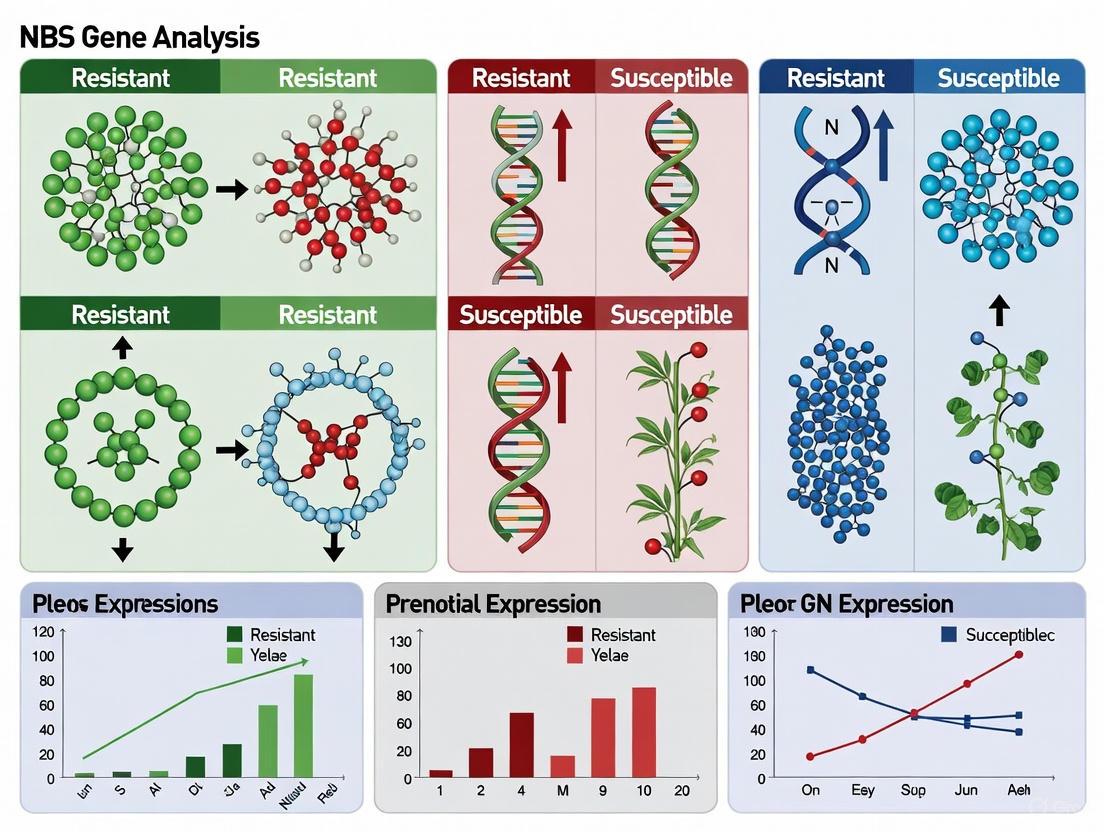
This article provides a comprehensive analysis of Nucleotide-Binding Site (NBS) genes, the largest family of plant disease resistance (R) genes, through comparative studies of resistant and susceptible plant varieties.
Decoding Plant Immunity: A Comparative Genomic and Functional Analysis of NBS Genes in Resistant vs. Susceptible Varieties
Abstract
This article provides a comprehensive analysis of Nucleotide-Binding Site (NBS) genes, the largest family of plant disease resistance (R) genes, through comparative studies of resistant and susceptible plant varieties. It explores the foundational genomic diversity and evolution of NBS genes, detailing advanced methodologies for their genome-wide identification and functional validation. The content addresses key challenges in data analysis and interpretation, and synthesizes validation strategies that confirm the role of specific NBS genes in conferring disease resistance. Aimed at researchers, scientists, and drug development professionals, this review connects fundamental plant immunity mechanisms with practical applications in crop breeding and the discovery of novel plant-derived therapeutics, highlighting the untapped potential of plant genomic diversity.
The Genomic Landscape of NBS Genes: Diversity, Architecture, and Evolutionary Arms Race
NBS-LRR Genes: The Architects of Plant Innate Immunity
Plant immunity relies on a sophisticated innate system to combat pathogen attacks. Unlike animals, plants lack an adaptive immune system and instead deploy a two-tiered innate immune response. The first layer, Pattern-Triggered Immunity (PTI), recognizes conserved microbial patterns at the cell surface. However, successful pathogens deliver effector proteins into plant cells to suppress PTI. In response, plants have evolved the second layer of defense: Effector-Triggered Immunity (ETI), primarily mediated by Nucleotide-Binding Site Leucine-Rich Repeat (NBS-LRR) proteins [1] [2].
NBS-LRR proteins function as intracellular immune receptors that detect specific pathogen effectors. This recognition triggers robust defense responses including a hypersensitive response (HR) - a rapid programmed cell death at infection sites, a burst of reactive oxygen species (ROS), accumulation of the defense hormone salicylic acid (SA), and induction of pathogenesis-related (PR) genes [1]. This immune response often leads to systemic acquired resistance (SAR), providing long-lasting, broad-spectrum protection throughout the plant [1].
The NBS-LRR gene family represents one of the largest and most diverse gene families in plants, with hundreds of members identified across sequenced plant genomes [3] [4]. Their evolution is characterized by tandem duplications and clustering in genomes, facilitating rapid diversification to counter evolving pathogens [3].
Structural Organization and Classification of NBS-LRR Proteins
NBS-LRR proteins are large modular proteins (860-1,900 amino acids) with characteristic domains [3]. The central NBS (NB-ARC) domain binds and hydrolyzes nucleotides (ATP/GTP), functioning as a molecular switch for activation [4]. The C-terminal LRR domain provides pathogen recognition specificity through protein-protein interactions [2]. Based on N-terminal domains, NBS-LRR proteins are classified into two major subfamilies:
- TNLs: Contain a Toll/Interleukin-1 Receptor (TIR) domain
- CNLs: Contain a Coiled-Coil (CC) domain [5] [3]
A third minor class, RNLs, features an RPW8 domain and plays a role in signaling [6]. The structural differences between TNLs and CNLs extend to their downstream signaling pathways, with TNLs completely absent from cereal genomes [3].
Table 1: Comparative Distribution of NBS-LRR Genes Across Plant Species
| Plant Species | Total NBS Genes | TNL Genes | CNL Genes | Other/Partial | Genome Reference |
|---|---|---|---|---|---|
| Arabidopsis thaliana | ~150 | 62 | 88 | 21 TN, 5 CN [3] | [3] |
| Oryza sativa (rice) | ~400 | 0 (absent in cereals) | ~400 | Not specified | [3] |
| Manihot esculenta (cassava) | 327 | 34 | 128 CC-NBS/LRR | 165 partial/other [4] | [4] |
| Vernicia montana (resistant tung tree) | 149 | 12 (3 TNL, 7 TN, 2 CC-TIR-NBS) | 98 | 29 NBS-only [5] | [5] |
| Vernicia fordii (susceptible tung tree) | 90 | 0 | 49 | 41 NBS-only [5] | [5] |
| Nicotiana benthamiana | 345 | Not specified | Not specified | Includes TIR-domain candidates [7] | [7] |
Diagram 1: Domain architecture and classification of plant NBS-LRR proteins, showing the major TNL and CNL subfamilies and their role in pathogen recognition and defense activation.
Molecular Mechanisms: From Pathogen Recognition to Defense Activation
NBS-LRR proteins utilize sophisticated molecular mechanisms to detect pathogens and activate defense signaling. The current models of pathogen recognition include:
Direct Recognition Model
Some NBS-LRR proteins physically bind pathogen effectors. For example:
- The rice Pi-ta protein directly interacts with the AVR-Pita effector from the blast fungus Magnaporthe grisea [2] [1].
- The flax L proteins (L5, L6, L7) directly bind specific variants of the flax rust AvrL567 effector [2].
- Arabidopsis RRS1-R directly interacts with the PopP2 effector from Ralstonia solanacearum [1].
Guard Model (Indirect Recognition)
Many NBS-LRR proteins monitor host cellular components ("guardees") that are modified by pathogen effectors:
- Arabidopsis RPM1 and RPS2 guard the RIN4 protein, which is targeted by multiple bacterial effectors (AvrRpm1, AvrB, AvrRpt2) [2].
- Arabidopsis RPS5 guards the PBS1 kinase, which is cleaved by the bacterial protease AvrPphB [2].
- Tomato Prf guards the Pto kinase, which interacts with bacterial effectors AvrPto and AvrPtoB [2].
Upon effector recognition, NBS-LRR proteins undergo conformational changes, exchanging ADP for ATP in the NBS domain. This molecular switch triggers downstream signaling, often involving EDS1 for TNLs and NDR1 for CNLs, leading to defense activation [1] [3].
Diagram 2: NBS-LRR-mediated ETI signaling pathway, showing both direct and indirect pathogen recognition models that lead to defense activation.
Comparative Genomic Analyses: Insights from Resistant vs. Susceptible Varieties
Comparative analysis of NBS-LRR genes between resistant and susceptible plant varieties reveals key genomic features associated with disease resistance:
Tung Tree Case Study: Fusarium Wilt Resistance
A comprehensive comparison between resistant (Vernicia montana) and susceptible (Vernicia fordii) tung trees identified:
- Gene number difference: Resistant V. montana possesses 149 NBS-LRR genes versus only 90 in susceptible V. fordii [5].
- Structural diversity: V. montana contains TNL genes (12 total) completely absent from V. fordii [5].
- LRR domain variation: Resistant V. montana possesses LRR1 and LRR4 domains not found in susceptible V. fordii, indicating domain loss events in the susceptible lineage [5].
- Key candidate gene: The orthologous pair Vf11G0978-Vm019719 showed contrasting expression - downregulation in susceptible V. fordii versus upregulation in resistant V. montana after Fusarium infection. Virus-induced gene silencing (VIGS) of Vm019719 compromised resistance in V. montana, confirming its essential role [5].
Cotton Case Study: Cotton Leaf Curl Disease (CLCuD)
Comparison between tolerant (Mac7) and susceptible (Coker 312) cotton accessions revealed:
- Genetic variation: Mac7 contained 6583 unique variants in NBS genes versus 5173 in Coker312 [6].
- Expression profiling: Specific orthogroups (OG2, OG6, OG15) showed upregulated expression in tolerant plants under biotic stress [6].
- Functional validation: Silencing of GaNBS (OG2) in resistant cotton increased viral titer, demonstrating its role in virus resistance [6].
Table 2: Experimental Approaches for NBS-LRR Gene Functional Characterization
| Method | Key Procedure | Application Example | Outcome Measures |
|---|---|---|---|
| Virus-Induced Gene Silencing (VIGS) | Delivery of gene-specific sequences via viral vector to knock down target gene expression [5] | Silencing of Vm019719 in resistant V. montana [5] | Disease susceptibility, pathogen biomass, defense marker expression |
| Transient Overexpression | Agrobacterium-mediated transformation for transient gene expression in leaves [8] | ZmNBS25 overexpression in tobacco [8] | Hypersensitive response (HR) cell death, defense gene activation |
| Stable Transformation | Generation of transgenic plants constitutively expressing target gene [8] | ZmNBS25 overexpression in rice and Arabidopsis [8] | Pathogen resistance, salicylic acid levels, yield parameters |
| RNAi Library Screening | High-throughput silencing of multiple R gene candidates using hairpin RNAi library [7] | Screening 345 NBS-LRR candidates in N. benthamiana [7] | Identification of R genes required for specific effector recognition |
| Expression Profiling | RNA-seq analysis of infected vs. mock-treated tissues [6] [5] | Comparative transcriptomics of resistant vs. susceptible tung trees [5] | Differential gene expression, pathway enrichment, allele-specific expression |
The Scientist's Toolkit: Key Research Reagents and Methods
Table 3: Essential Research Reagents and Resources for NBS-LRR Studies
| Reagent/Resource | Function/Application | Example Use Case |
|---|---|---|
| HMMER Software with Pfam NB-ARC HMM (PF00931) | Identification of NBS-domain containing genes in genome sequences [6] [4] [7] | Initial genome-wide identification of NBS-LRR candidates [4] |
| OrthoFinder Tool | Orthogroup analysis to identify evolutionarily conserved gene groups [6] | Comparative analysis of NBS genes across multiple species [6] |
| pCAMBIA1301 Vector | Binary vector for plant transformation and overexpression studies [8] | Transient and stable overexpression of ZmNBS25 in various plants [8] |
| TRV-based VIGS Vectors | Virus-induced gene silencing to knock down endogenous gene expression [5] | Functional validation of Vm019719 in tung tree Fusarium wilt resistance [5] |
| RNAi Hairpin Library | High-throughput silencing of multiple gene targets [7] | Systematic screening of 345 NBS-LRR genes in N. benthamiana [7] |
| Salicylic Acid (SA) | Defense hormone treatment to simulate immune response [8] | Induction of ZmNBS25 expression in maize [8] |
Evolutionary Dynamics and Breeding Applications
NBS-LRR genes exhibit remarkable evolutionary dynamics driven by plant-pathogen co-evolution:
- Birth-and-death evolution: New genes are created by duplication, while others are lost or become pseudogenes [3].
- Diversifying selection: LRR domains show elevated non-synonymous to synonymous substitution ratios, particularly in solvent-exposed β-sheet residues involved in pathogen recognition [3].
- Lineage-specific expansion: Different plant families have amplified distinct NBS-LRR subfamilies. Cereals lack TNL genes entirely, while dicots possess both TNL and CNL types [3].
- Contributions from wild relatives: In modern sugarcane cultivars, more differentially expressed NBS-LRR genes under disease stress originate from wild Saccharum spontaneum than domesticated S. officinarum, highlighting the value of wild germplasm for resistance breeding [9].
These evolutionary insights inform modern crop improvement strategies. The functional conservation of NBS-LRR genes across species enables transgenic approaches - demonstrated by ZmNBS25 from maize enhancing resistance in both rice and Arabidopsis without yield penalty [8]. Marker-assisted breeding using NBS-LRR markers from resistant varieties accelerates development of durable disease-resistant crops.
In plant immunity, nucleotide-binding site (NBS) leucine-rich repeat (LRR) receptors, commonly known as NLRs, constitute the largest and most prominent class of intracellular immune receptors responsible for pathogen detection [6] [2]. These proteins function as critical components of effector-triggered immunity (ETI), initiating robust defense responses that often include a localized programmed cell death known as the hypersensitive response (HR) to restrict pathogen spread [10] [11]. Plant NLRs are modular proteins typically characterized by three core domains: a variable N-terminal domain, a central nucleotide-binding adaptor shared by APAF-1, R proteins, and CED-4 (NB-ARC) domain, and a C-terminal leucine-rich repeat (LRR) domain [6] [12]. The central NB-ARC domain binds and hydrolyzes nucleotides (ATP/GTP), functioning as a molecular switch for activation, while the LRR domain is primarily involved in protein-ligand interactions and effector recognition specificity [10] [13] [2].
Based on their N-terminal domain structures, plant NLRs are classified into three major subfamilies: TNLs (Toll/Interleukin-1 Receptor domain), CNLs (Coiled-Coil domain), and RNLs (Resistance to Powdery Mildew 8 domain) [6] [10] [14]. This guide provides a comprehensive comparative analysis of these NBS subclasses, focusing on their domain architectures, functions, distribution across plant species, and experimental approaches for their functional characterization within the context of comparative studies on resistant and susceptible plant varieties.
Comparative Analysis of Domain Architectures and Functions
Table 1: Comparative overview of the major NBS gene subclasses
| Feature | TNL (TIR-NBS-LRR) | CNL (CC-NBS-LRR) | RNL (RPW8-NBS-LRR) |
|---|---|---|---|
| N-terminal Domain | Toll/Interleukin-1 Receptor (TIR) | Coiled-Coil (CC) | Resistance to Powdery Mildew 8 (RPW8) |
| Primary Role | Pathogen sensor (effector recognition) | Pathogen sensor (effector recognition) | Helper NLR (signal transduction) |
| Typical Activation Outcome | Hypersensitive Response (HR) / Cell Death | Hypersensitive Response (HR) / Cell Death | Downstream signaling amplification |
| Distribution in Plants | Primarily dicots, absent in most monocots [10] | All vascular plants [15] [10] | All land plants [12] [10] |
| Representative Members | RPS4, RPP1 (Arabidopsis) [11] | RPS2, RPS5, ZAR1 (Arabidopsis) [15] [2] | NRG1, ADR1 (Arabidopsis) [12] [11] |
| Key Structural Motifs | - | EDVID, MHD [15] | - |
The TNL and CNL subfamilies primarily function as sensor NLRs that directly or indirectly detect pathogen effector proteins, while RNLs act predominantly as helper NLRs that transduce immune signals downstream of sensor NLR activation [11]. The N-terminal domains are fundamental to their signaling mechanisms: TIR domains are known to possess enzymatic activity, while CC domains and RPW8 domains are involved in oligomerization and protein-protein interactions [15] [11].
Upon effector recognition, sensor NLRs undergo conformational changes that promote nucleotide exchange (ADP to ATP) within the NB-ARC domain, leading to oligomerization and formation of high-order complexes known as resistosomes [11]. These active complexes then initiate downstream signaling cascades. For TNLs, signaling often requires the lipase-like protein Enhanced Disease Susceptibility 1 (EDS1) and helper RNLs [11]. CNLs can signal independently of EDS1 but may also require helper NLRs for full immunity [15].
Table 2: Genomic distribution of NBS subclasses across representative plant species
| Plant Species | Total NLRs Identified | CNL Count (%) | TNL Count (%) | RNL Count (%) | Reference |
|---|---|---|---|---|---|
| Arabidopsis thaliana (Model dicot) | ~207 | ~60% | ~35% | ~5% | [10] |
| Oryza sativa (Rice, Monocot) | 505 | ~95% | 0% | ~5% | [10] |
| Salvia miltiorrhiza (Medicinal plant) | 196 | ~39% (75) | ~1% (2) | ~0.5% (1) | [10] |
| Akebia trifoliata (Perennial) | 73 | ~68% (50) | ~26% (19) | ~5% (4) | [12] |
| Vernicia montana (Resistant tung tree) | 149 | ~66% (98) | ~8% (12) | - | [13] |
| Vernicia fordii (Susceptible tung tree) | 90 | ~54% (49) | 0% | - | [13] |
| Asparagus setaceus (Wild relative) | 63 | Majority | Minority | Limited | [14] |
| Asparagus officinalis (Domesticated) | 27 | Majority | Minority | Limited | [14] |
The distribution of NBS subclasses varies significantly across plant lineages. Monocots, including cereal crops like rice, wheat, and maize, possess almost exclusively CNLs, with complete absence of TNLs [15] [10]. In contrast, most dicots maintain both TNL and CNL types, though their relative proportions vary substantially between species [10] [13]. RNLs are consistently the smallest subclass across all plant genomes [12] [10]. Comparative studies between resistant and susceptible varieties often reveal differences in NLR repertoire, including variations in gene numbers, presence/absence of specific NLR types, and mutations in coding or regulatory sequences [13] [14] [16].
Experimental Approaches for Functional Characterization
Genome-Wide Identification and Classification
Protocol 1: Identification and Classification of NBS-Encoding Genes
- Sequence Retrieval: Obtain complete genome sequences and annotation files from public databases (NCBI, Phytozome, Plaza) [6] [12].
- HMMER Search: Perform Hidden Markov Model (HMM) searches against the proteome using the NB-ARC domain (PF00931) as a query with an E-value cutoff of 1.0-1.1e-50 [6] [12] [14].
- Domain Architecture Analysis: Validate candidate sequences using InterProScan and NCBI's Conserved Domain Database (CDD) to identify integrated domains [10] [14].
- Classification: Categorize genes based on domain composition into classes (N, CN, TN, NL, CNL, TNL, RNL) [10] [17].
Transcriptional Profiling Under Pathogen Challenge
Protocol 2: Expression Analysis of NBS Genes in Resistant vs. Susceptible Varieties
- Experimental Design: Grow resistant and susceptible varieties under controlled conditions and inoculate with pathogen of interest (e.g., Magnaporthe oryzae for rice blast) alongside mock-treated controls [16].
- Sample Collection: Harvest tissue (e.g., leaves) at multiple time points post-inoculation (e.g., 24 and 48 hours) [16].
- RNA Sequencing: Extract total RNA, prepare libraries, and perform strand-specific RNA sequencing with biological replicates [16].
- Differential Expression: Calculate Fragments Per Kilobase of transcript per Million mapped reads (FPKM) and identify Differentially Expressed Genes (DEGs) with statistical significance (e.g., p-value < 0.05, log2 fold-change > 1 or < -1) [6] [16].
- Validation: Confirm expression patterns of key candidate NLRs using quantitative reverse transcription PCR (qRT-PCR) [13].
Functional Validation through Gene Silencing
Protocol 3: Virus-Induced Gene Silencing (VIGS) for Functional Analysis
- Target Sequence Selection: Identify a unique 150-300 bp fragment from the target NBS gene to avoid off-target silencing [13].
- Vector Construction: Clone the target fragment into a VIGS vector (e.g., TRV-based pYL280) [13].
- Plant Infiltration: Inoculate seedlings of the resistant variety (e.g., Vernicia montana) with Agrobacterium tumefaciens carrying the VIGS construct [13].
- Pathogenicity Assay: Challenge the silenced plants with the pathogen after VIGS establishment and monitor for disease symptoms compared to control plants [13].
- Phenotypic Assessment: Record disease severity, measure pathogen biomass, and document hypersensitive response to confirm the role of the targeted NBS gene in resistance [13].
NBS-Mediated Immune Signaling Pathways
The following diagram illustrates the simplified signaling pathways in plant NLR-mediated immunity, showing how sensor and helper NLRs interact to initiate defense responses.
NLR immune signaling involves multiple interconnected pathways. Sensor CNLs and TNLs detect pathogen effectors either directly through physical interaction or indirectly by monitoring host proteins modified by effectors (guard model) [2]. Following perception, activated sensor NLRs oligomerize to form resistosomes, which initiate downstream signaling [11]. TNL signaling typically requires the lipase-like protein Enhanced Disease Susceptibility 1 (EDS1) and its partners, which in turn activate helper RNLs (NRG1, ADR1 lineages) [11]. Helper RNLs amplify the immune signal, leading to transcriptional reprogramming and the hypersensitive response (HR) [12] [11]. Some CNLs can activate defense responses independently of EDS1 but may still require helper NLRs for complete immunity [15] [11].
Table 3: Key research reagents and computational tools for NBS gene analysis
| Reagent/Tool | Specific Example | Primary Function in Research |
|---|---|---|
| HMM Profile | PF00931 (NB-ARC domain) | Identifying NBS-encoding genes from genomic sequences [6] [12] |
| Domain Database | InterProScan, NCBI CDD | Annotating and validating domain architecture [12] [10] [14] |
| Genomic Database | Phytozome, NCBI Genome | Source of reference genomes and annotations [6] |
| Expression Database | CottonFGD, IPF Database | Obtaining tissue-specific and stress-induced expression data [6] |
| VIGS Vector | TRV-based pYL280 | Functional validation through gene silencing [13] |
| Ortholog Finder | OrthoFinder | Identifying conserved orthologous groups across species [6] |
| Motif Analysis | MEME Suite | Discovering conserved protein motifs [12] [14] |
| Promoter Analysis | PlantCARE | Identifying cis-regulatory elements in promoter regions [14] |
The three major NBS subclasses—TNLs, CNLs, and RNLs—exhibit distinct domain architectures, function as specialized components in plant immune signaling, and demonstrate remarkable diversity in their distribution across plant species. Comparative studies between resistant and susceptible varieties consistently highlight the importance of specific NLR repertoires, expression patterns, and genetic variations in determining disease resistance outcomes. The integrated experimental approaches outlined in this guide—combining genomic identification, transcriptional profiling, and functional validation—provide a robust framework for dissecting the role of NBS genes in plant-pathogen interactions. These methodologies empower researchers to identify key resistance genes, understand their mechanisms of action, and ultimately develop durable disease-resistant crop varieties through marker-assisted breeding and biotechnological applications.
Nucleotide-binding site (NBS) genes represent the largest class of plant disease resistance (R) genes, encoding proteins crucial for detecting pathogen effectors and initiating robust immune responses. These genes are characterized by the presence of a conserved NBS domain, frequently accompanied by C-terminal leucine-rich repeats (LRRs) and various N-terminal domains such as Toll/Interleukin-1 receptor (TIR) or coiled-coil (CC). Comparative genomic analyses across diverse plant species have revealed remarkable variation in the size, composition, and architecture of NBS gene families, reflecting evolutionary adaptations to pathogen pressures. This guide provides a systematic comparison of NBS gene repertoires across the plant kingdom, highlighting quantitative differences between resistant and susceptible varieties and detailing the experimental methodologies enabling these insights.
Quantitative Comparison of NBS Genes Across Plant Species
Table 1: NBS Gene Repertoire Size Across Various Plant Species
| Plant Species | Family/Type | Total NBS Genes | Key Subfamilies | Notable Features | Citation |
|---|---|---|---|---|---|
| 34 Species (Mosses to Monocots/Dicots) | Multiple | 12,820 (total) | 168 domain architecture classes | Discovered classical and species-specific structural patterns | [6] |
| Rice (Oryza sativa) | Poaceae | >600 | Primarily non-TIR (CNL, NL, N) | 3-4 times the complement of Arabidopsis; TIR-NBS-LRR class absent | [18] |
| Asian Pear (P. bretschneideri) | Rosaceae | 338 | NBS-LRR (36.4%), CC-NBS-LRR (26.6%) | 74% of genes contain LRR domains | [19] |
| European Pear (P. communis) | Rosaceae | 412 | NBS-LRR (25.7%), NBS (24.0%) | 55.6% of genes contain LRR domains; higher number of non-LRR genes | [19] |
| Akebia trifoliata | Lardizabalaceae | 73 | CNL (50), TNL (19), RNL (4) | One of the smallest known repertoires; 64 genes mapped to chromosomes | [12] |
| Sorghum - Resistant (BTx623) | Poaceae | 302 | CNL (187), CN (62), NL (35) | 32.5% of genes located on chromosome 5; 213 genes found in clusters | [20] |
| Sorghum - Susceptible (GJH1) | Poaceae | 239 | Information Not Specified in Source | Substantially fewer NLRs than resistant counterpart BTx623 | [20] |
The expansion of NBS gene families is primarily driven by gene duplication events, including whole-genome duplication (WGD) and small-scale duplications (SSD) such as tandem, segmental, and transposon-mediated duplications [6]. In pear, proximal duplications were a major factor leading to the difference in NBS gene numbers between Asian and European species [19]. Similarly, in Akebia trifoliata, tandem and dispersed duplications were identified as the two main forces responsible for NBS gene expansion [12].
A key evolutionary divergence is observed between monocots and dicots. While dicots possess both TIR-NBS-LRR (TNL) and CC-NBS-LRR (CNL) classes, cereal grasses lost the TNL class during their evolution, despite TIR domain-coding genes being present in their genomes [18]. Furthermore, a unique class of approximately 50 cereal genes encodes proteins similar to N-termini and NBS domains but lacks LRR domains entirely [18].
Differential NBS Profiles in Resistant vs. Susceptible Varieties
Comparative analyses of resistant and susceptible cultivars of the same species provide compelling evidence for the role of NBS gene repertoire in disease resistance.
Table 2: NBS Gene Comparison Between Resistant and Susceptible Cultivars
| Comparative Feature | Resistant Cultivar | Susceptible Cultivar | Implications for Resistance |
|---|---|---|---|
| Sorghum (to Anthracnose) | BTx623: 302 NLRs [20] | GJH1: 239 NLRs [20] | Larger NLR repertoire provides broader recognition capacity |
| Cotton (to CLCuD) | Mac7 (Tolerant): 6583 unique NBS variants [6] | Coker312 (Susceptible): 5173 unique NBS variants [6] | Higher genetic variation in NBS genes associates with tolerance |
| Expression Dynamics | BTx623: Higher number of highly expressed and pathogen-induced NLRs [20] | GJH1: Fewer responsive NLR genes during infection [20] | Resistance involves both gene presence and expression regulation |
The case of sorghum is particularly illustrative. The resistant cultivar BTx623 possesses 302 NLR genes, significantly more than the 239 identified in the susceptible GJH1 [20]. Beyond mere numbers, BTx623 exhibited a higher number of highly expressed and pathogen-induced NLR genes following infection with Colletotrichum sublineola, the causal agent of anthracnose [20]. This suggests that resistance is not only determined by the static presence of NLR genes but also by their dynamic expression regulation.
In cotton, a study investigating cotton leaf curl disease (CLCuD) tolerance identified a greater number of unique genetic variants in NBS genes of the tolerant Mac7 accession (6583 variants) compared to the susceptible Coker312 (5173 variants) [6]. This indicates that genetic diversity within the NBS repertoire is a critical factor in disease resilience.
Experimental Protocols for NBS Gene Identification and Validation
A standardized pipeline for genome-wide identification and characterization of NBS genes is crucial for comparative studies.
Genome-Wide Identification and Classification
The foundational step involves scanning plant proteomes for the conserved NBS domain.
- Data Collection: Obtain high-quality genome assemblies and annotation files from databases such as NCBI, Phytozome, or Plaza [6].
- Domain Identification: Use HMMER software with the Pfam hidden Markov model (HMM) for the NB-ARC domain (PF00931) as the query to screen the proteome. An e-value cutoff of 1.0 or 1.1e-50 is typically applied [6] [12].
- Candidate Gene Curation: Merge candidate genes from BLASTP and HMM searches, remove redundancies, and verify the presence of the NBS domain against the Pfam database [12].
- Classification: Analyze identified sequences for additional domains (TIR, CC, RPW8, LRR) using the NCBI Conserved Domain Database and tools like Coiledcoil for CC domains [12]. Genes are then classified into subfamilies (TNL, CNL, RNL, NL, N, etc.) based on their domain architecture [20].
Evolutionary and Expression Analyses
- Orthogroup Analysis: Use tools like OrthoFinder with DIAMOND for sequence similarity searches and the MCL algorithm for clustering to identify orthologous groups across species [6].
- Duplication Analysis: Determine mechanisms of gene expansion (tandem, dispersed, proximal, whole-genome duplication) by analyzing genomic clustering and synteny [12] [19].
- Expression Profiling: Utilize RNA-seq data from public databases (e.g., IPF, CottonFGD, NCBI BioProjects) to examine NBS gene expression across tissues and in response to biotic and abiotic stresses. Expression values like FPKM are extracted and visualized [6].
Functional Validation
- Virus-Induced Gene Silencing (VIGS): This technique is used to knock down the expression of a candidate NBS gene in a resistant plant. The subsequent impact on disease resistance is then assessed. For example, silencing of GaNBS (OG2) in resistant cotton demonstrated its role in reducing virus titer [6].
- Protein Interaction Studies: Protein-ligand and protein-protein interaction assays, such as yeast-two-hybrid, can validate physical interactions between NBS proteins and pathogen effectors or signaling molecules like ADP/ATP [6].
Figure 1: Experimental workflow for identifying and validating NBS genes.
NBS Protein Domain Architecture and Signaling
NBS-LRR proteins are modular, typically consisting of three core components: an N-terminal domain, a central NBS (NB-ARC) domain, and a C-terminal LRR region [6]. The N-terminal domain determines the major subclass: TIR-type NLRs (TNLs) possess a Toll/Interleukin-1 receptor domain, while CC-type NLRs (CNLs) have a coiled-coil domain [6] [18]. A third subclass, distinguished by an N-terminal RPW8 domain (RNL), functions in downstream defense signal transduction [6] [12].
The NBS domain binds nucleotides (ATP/GTP), and its phosphorylation status is crucial for transmitting defense signals [12]. The LRR region is often under diversifying selection and is primarily responsible for direct or indirect recognition of specific pathogen effectors [18]. Upon effector recognition, a conformational change activates the protein, initiating signaling cascades that lead to defense responses like the hypersensitive response.
Figure 2: Domain architecture and function of major NBS-LRR protein classes.
Table 3: Key Research Reagent Solutions for NBS Gene Analysis
| Reagent/Resource | Function in NBS Research | Example Sources/Tools |
|---|---|---|
| Genome Assemblies | Foundation for in silico identification and comparative genomics. | NCBI, Phytozome, Plaza [6] |
| HMM Profile (PF00931) | Identifying NB-ARC domains with high sensitivity and specificity. | Pfam Database [6] [12] |
| OrthoFinder Software | Clustering NBS sequences into orthologous groups across species. | OrthoFinder v2.5.1 [6] |
| RNA-seq Databases | Profiling NBS gene expression under various conditions and stresses. | IPF Database, CottonFGD, NCBI BioProjects [6] |
| VIGS Vectors | Functional validation through transient gene silencing in plants. | Tobacco Rattle Virus (TRV)-based vectors [6] |
Comparative genomic surveys have unequivocally demonstrated that the composition, size, and diversity of the NBS gene repertoire are fundamental determinants of a plant's immune potential. The quantitative differences observed between resistant and susceptible varieties—whether in the form of total gene number, unique genetic variants, or specific clusters—provide valuable biomarkers for breeding programs. The integration of robust bioinformatics pipelines for gene identification with functional validation methods like VIGS creates a powerful framework for discovering and utilizing these critical disease resistance genes. Future research, leveraging pan-genome analyses and advanced gene-editing technologies, will further refine our understanding and enable the precise engineering of durable disease resistance in crops.
Gene duplication is a fundamental process in genome evolution, serving as a primary source of genetic novelty and adaptive innovation in plants. Two predominant mechanisms—whole-genome duplication (WGD) and tandem duplication (TD)—have shaped the expansion and functional diversification of gene families across the plant kingdom. WGD events involve the duplication of entire genomes, simultaneously creating copies of all genes, while TD events involve the localized amplification of individual genes or small genomic regions. Understanding the distinct contributions of these mechanisms is particularly crucial for studying nucleotide-binding site-leucine-rich repeat (NBS-LRR) genes, the largest class of plant disease resistance (R) genes. These genes play vital roles in plant immunity by recognizing diverse pathogens and initiating defense responses. This review systematically compares how WGD and TD differentially drive the expansion of gene families, with a specific focus on their implications for NBS gene evolution in resistant and susceptible plant varieties, providing a framework for comparative analysis in plant immunity research.
Mechanisms and Evolutionary Patterns of Gene Duplication
Prevalence and Genomic Impact
Plant genomes are characterized by an exceptional abundance of duplicated genes. Comparative genomic analyses reveal that approximately 65% of annotated genes in plant genomes have a detectable duplicate copy, with percentages ranging from 45.5% in the bryophyte Physcomitrella patens to 84.4% in apple (Malus domestica) [21]. This preponderance of duplicates stems from both the high frequency of WGD events in plant evolutionary history and the continuous activity of small-scale duplication mechanisms like TD.
The contributions of WGD and TD to gene family expansion follow distinct temporal patterns. WGD events are episodic and catastrophic, creating massive genetic redundancy instantaneously, followed by rapid fractionation where most duplicated genes are lost over time [22]. In contrast, TD events occur more continuously throughout evolutionary history, providing a steady supply of genetic variants for adaptation to changing environmental conditions [22]. This difference in temporal dynamics has profound implications for how these two mechanisms contribute to evolutionary innovation.
Functional Bias in Gene Retention
A critical distinction between WGD and TD lies in the functional categories of genes they preferentially preserve. WGD-derived duplicates show significant retention bias for genes involved in core cellular processes, nucleic acid binding, transcriptional regulation, and signal transduction [23] [21] [24]. These genes often exist in complex networks where maintaining dosage balance is crucial, making them suitable for preservation via WGD.
In contrast, TD exhibits a strong preference for genes involved in environmental interactions, particularly those encoding functions in stress responses, defense mechanisms, and secondary metabolism [23] [24]. Analysis of orthologous groups between Arabidopsis thaliana and other land plants demonstrated that genes expanded via TD are significantly enriched in responses to environmental stimuli, especially biotic stress conditions [23]. This functional partitioning reflects different evolutionary strategies: WGD maintains systemic integrity, while TD rapidly diversifies defensive capabilities.
Table 1: Comparative Features of Whole-Genome and Tandem Duplication
| Feature | Whole-Genome Duplication (WGD) | Tandem Duplication (TD) |
|---|---|---|
| Genomic scale | Entire genome duplication | Localized gene amplification |
| Frequency | Episodic (every ~10-100 million years) | Continuous |
| Percentage of duplicates in plant genomes | ~65% on average | ~14% in Arabidopsis |
| Functional bias | Nucleic acid binding, transcription factors, signal transduction | Stress response, defense genes, environmental adaptation |
| Retention mechanism | Dosage balance selection | Positive selection for adaptive traits |
| Evolutionary rate | Slower, stronger purifying selection | Faster, higher non-synonymous substitution rates |
| Typical fate | Fractionation and subfunctionalization | Neofunctionalization and positive selection |
Experimental Approaches for Analyzing Duplication Mechanisms
Genomic Identification Protocols
Identifying and categorizing duplicated genes requires integrated bioinformatics approaches. The standard workflow involves sequence similarity searches, synteny analysis, and phylogenetic reconciliation:
Duplicate Gene Identification: Using BLASTP or Hidden Markov Models (HMM) with conserved domains (e.g., NB-ARC domain PF00931 for NBS genes) to identify homologous sequences [12] [14]. Typical E-value cutoffs of 1e-5 to 1e-10 are applied for domain verification.
Duplication Mechanism Classification: Tools like DupGen_finder differentiate between WGD, TD, proximal, transposed, and dispersed duplicates by integrating syntenic and phylogenomic information [22]. WGD-derived pairs are identified through systemic block analysis, while TD genes are defined as paralogs located within 100 kb with no more than one intervening gene.
Evolutionary Analysis: Calculating synonymous substitution rates (Ks) to date duplication events and Gaussian mixture models to identify peaks corresponding to WGD events [22].
The following diagram illustrates the experimental workflow for identifying and characterizing duplicated genes in plant genomes:
Expression and Functional Validation
Transcriptomic analyses provide critical functional validation for duplicated genes. Standard approaches include:
Expression Profiling: Using RNA-seq data to examine expression patterns across tissues and stress conditions. For NBS genes, analyses typically categorize expression into tissue-specific, biotic stress-responsive, and abiotic stress-responsive patterns [6] [9]. FPKM values are retrieved from specialized databases like Plant RNA-seq Databases, CottonFGD, and Cottongen.
Functional Validation: Virus-Induced Gene Silencing (VIGS) is widely employed to validate disease resistance functions of candidate NBS genes. For example, silencing of GaNBS (OG2) in resistant cotton demonstrated its role in virus resistance [6].
Genetic Variation Analysis: Identifying sequence variants between resistant and susceptible varieties through whole-genome resequencing. In sugarcane, comparison between susceptible (Coker 312) and tolerant (Mac7) accessions revealed 6,583 and 5,173 unique variants in NBS genes, respectively [6].
Comparative Analysis of Duplication in NBS Gene Evolution
Lineage-Specific Expansion and Contraction
NBS gene families exhibit remarkable dynamism across plant lineages, driven predominantly by tandem duplication. In the Asparagus genus, wild species A. setaceus possesses 63 NLR genes, while domesticated A. officinalis has only 27, indicating significant gene repertoire contraction during domestication [14]. This reduction likely contributes to increased disease susceptibility in cultivated varieties.
Conversely, in rice, cultivated varieties show expansion of NBS-LRR genes compared to their wild ancestors. The indica cultivar Kasalath contains 53 NBS-LRR genes in a specific R-gene cluster region, while its wild ancestor O. nivara has only two genes in the corresponding region [25]. This dramatic expansion suggests strong selection for disease resistance during domestication and cultivation.
Table 2: NBS Gene Family Dynamics Across Plant Species
| Plant Species | Total NBS Genes | TNL | CNL | RNL | Main Expansion Mechanism |
|---|---|---|---|---|---|
| Akebia trifoliata | 73 | 19 | 50 | 4 | Tandem duplication (33 genes) |
| Arabidopsis thaliana | ~200 | ~70 | ~130 | - | WGD and tandem duplication |
| Asparagus setaceus (wild) | 63 | - | - | - | Not specified |
| Asparagus officinalis (cultivated) | 27 | - | - | - | Not specified |
| Saccharum spontaneum (wild) | 437 | 63 | 374 | - | WGD and tandem duplication |
| Oryza sativa (Nipponbare) | ~500 | ~100 | ~400 | - | Tandem duplication |
| Solanum lycopersicum | ~300 | ~50 | ~250 | - | Tandem and WGD |
Evolutionary Dynamics and Selection Patterns
The evolution of NBS genes is characterized by birth-and-death evolution, where new genes are created by duplication and others are lost or become pseudogenes [25]. Tandemly duplicated NBS genes experience distinct selective pressures:
Positive Selection: NBS genes frequently show signatures of positive selection, particularly in LRR domains involved in pathogen recognition [9]. This diversifying selection enables recognition of rapidly evolving pathogen effectors.
Balancing Selection: Some NBS genes maintain both functional and non-functional alleles over long evolutionary periods, as observed in wild rice populations [25].
Dosage Sensitivity: WGD-derived NBS genes often exhibit slower evolutionary rates and stronger purifying selection, reflecting constraints on dosage-sensitive immune signaling components [22].
The following diagram illustrates the evolutionary dynamics of NBS genes under different duplication mechanisms:
Implications for Disease Resistance Breeding
Duplication Mechanisms and Resistance Specificity
The different duplication mechanisms contribute distinct advantages to plant immunity. WGD-derived NBS genes often form core signaling components with conserved functions across lineages, while TD-generated NBS clusters provide rapidly diversifying recognition specificities against evolving pathogens [6] [25]. This functional specialization is evident in modern sugarcane cultivars, where disease-responsive NBS genes are predominantly derived from the wild progenitor S. spontaneum rather than the cultivated S. officinarum, despite both contributing to the modern hybrid genome [9].
In rice R-gene clusters, phylogenetic analysis reveals that paired NBS-LRR genes like Pikm1-Pikm2 are conserved across cultivated and wild species, while other NBS genes show lineage-specific expansions [25]. This pattern suggests that some NBS genes maintain essential conserved functions, while others undergo rapid diversification for specific pathogen recognition.
Agricultural Applications and Future Directions
Understanding duplication mechanisms informs strategic approaches for disease resistance breeding:
Wild Relative Utilization: Wild species often harbor more diverse NBS gene repertoires than cultivated varieties [14] [25]. Targeted introgression of these regions can enhance resistance diversity.
Cluster Engineering: Synthetic biology approaches could engineer optimized NBS clusters combining favorable alleles from multiple sources [6].
Selection Markers: Genome-wide identification of duplication patterns facilitates development of markers for marker-assisted selection of resistance loci [9].
Future research should focus on integrating pan-genome analyses with functional studies to comprehensively understand how duplication mechanisms shape the reservoir of resistance genes across crop gene pools.
The Scientist's Toolkit: Essential Research Reagents
Table 3: Essential Research Reagents for Studying Gene Duplication in Plant Immunity
| Reagent/Resource | Function/Application | Example Sources/References |
|---|---|---|
| HMMER Suite | Identification of conserved domains (e.g., NB-ARC PF00931) | [12] [14] |
| DupGen_finder | Classification of duplication mechanisms (WGD, TD, etc.) | [22] |
| OrthoFinder | Orthogroup inference and comparative genomics | [6] |
| Plant RNA-seq Databases | Expression profiling of duplicated genes | IPF Database, CottonFGD [6] |
| VIGS Vectors | Functional validation of candidate NBS genes | TRV-based vectors [6] |
| PlantCARE | cis-element analysis in promoter regions | [14] |
| MEME Suite | Conserved motif analysis in duplicated genes | [12] [14] |
| Plant Duplicate Gene Database | Repository for duplicate gene information | PlantDGD [22] |
The innate immune system of plants relies heavily on nucleotide-binding site and leucine-rich repeat (NBS-LRR) genes, which constitute one of the largest and most dynamic gene families in plant genomes. These genes encode proteins that recognize pathogen effectors and initiate robust defense responses [26]. Genomic distribution studies across diverse species have revealed that NBS-LRR genes are frequently organized in complex clusters, serving as dynamic hotspots for genetic innovation and functional diversification [27] [28] [29]. This clustered arrangement facilitates rapid evolution of new resistance specificities, enabling plants to keep pace with evolving pathogen populations. Understanding the organization and evolutionary dynamics of these resistance gene clusters provides crucial insights for developing durable disease resistance in agricultural crops, particularly through comparative analysis of resistant and susceptible varieties [29].
The following diagram illustrates the primary evolutionary mechanisms that drive innovation and diversification within NBS-LRR gene clusters:
Comparative Genomic Distribution of NBS-LRR Genes Across Species
The genomic distribution of NBS-LRR genes exhibits distinct patterns across plant species, with notable variations in gene numbers, chromosomal locations, and clustering frequencies. These distribution patterns reflect species-specific evolutionary histories and adaptation to distinct pathogen pressures.
Table 1: Genomic Distribution of NBS-LRR Genes Across Plant Species
| Species | Total NBS-LRR Genes | Clustered Genes (%) | Chromosomal Hotspots | Notable Features |
|---|---|---|---|---|
| Capsicum annuum (Pepper) | 252 | 54% (136 genes in 47 clusters) | Chromosome 3 (38 genes, 10 clusters) | Dominance of nTNL subfamily (248 genes); only 4 TNL genes [27] [30] |
| Perilla citriodora 'Jeju17' | 535 | Information not specified in source | Chromosomes 2, 4, and 10 | Contains unique RPW8-type R-gene on chromosome 7 [31] [32] |
| Nicotiana tabacum (Tobacco) | 603 | Information not specified in source | Information not specified in source | Allotetraploid with contributions from parental genomes [33] |
| Citrus spp. (Australian limes) | Varies by species | >75% | Chromosomes 3, 5, and 7 | HLB-resistant species show distinct R-gene organization [29] |
| Solanum lycopersicum (Tomato) | ~320 | >65% | Chromosomes 4, 5, and 11 | 107 genes concentrated in 20 clusters; largest cluster has 14 CNL genes on chromosome 4 [26] |
The uneven distribution of NBS-LRR genes across chromosomes creates specialized genomic territories for immune function. In pepper, chromosome 3 represents a major resistance hotspot, containing 38 NBS-LRR genes organized in 10 distinct clusters [27] [30]. Similarly, in citrus species, over 75% of R-genes concentrate on just three chromosomes (3, 5, and 7), creating defined evolutionary platforms for resistance gene diversification [29]. This non-random distribution creates specialized genomic territories dedicated to immune function, where clustered arrangements facilitate rapid evolution of new resistance specificities through various molecular mechanisms.
Tomato exhibits a particularly sophisticated organization, with over 65% of its approximately 320 NB-LRR genes residing in clusters, including 107 genes concentrated in just 20 genomic regions [26]. The largest tomato cluster harbors 14 CNL genes within a compact ~110-kb region on chromosome 4, all sharing high sequence similarity with functionally characterized resistance genes from wild potato [26]. This physical proximity of related genes creates ideal conditions for sequence exchange and functional innovation, enabling plants to rapidly adapt to changing pathogen populations.
Evolutionary Mechanisms Driving Cluster Formation and Diversification
Gene Duplication and Diversification
Tandem duplications represent a primary mechanism for NBS-LRR gene family expansion and cluster formation. In pepper, 54% of NBS-LRR genes are physically clustered within the genome, forming 47 distinct gene clusters driven by tandem duplications and genomic rearrangements [27]. These duplication events create arrays of structurally related genes that subsequently diversify through accumulated mutations and selective processes. Whole-genome duplication (WGD) events also contribute significantly to NBS-LRR expansion, particularly in polyploid species like tobacco, where the allotetraploid genome contains approximately 603 NBS members—roughly the combined total of its parental species [33] [9].
The evolutionary trajectory of duplicated genes follows the birth-and-death model, where new genes are created by duplication, and some are maintained in the genome while others are eliminated or become pseudogenes [28]. This dynamic process generates substantial genetic variation upon which natural selection can act. In coffee trees, the SH3 R-gene cluster exemplifies this model, with duplication and deletion events shaping its evolutionary history [28].
Sequence Exchange and Selection
Gene conversion events between paralogous sequences represent another crucial mechanism driving NBS-LRR diversification. These non-reciprocal recombination events create chimeric genes with novel specificities, accelerating the generation of diversity beyond what point mutations alone can achieve [28]. In coffee trees, significant gene conversion has been detected between paralogs in all three analyzed genomes and even between subgenomes in allopolyploid species, highlighting its importance in resistance gene evolution [28].
Positive selection acts predominantly on specific protein domains, particularly the solvent-exposed residues of the LRR region involved in pathogen recognition [28]. This selective pressure promotes amino acid diversification at the protein-protein interface, enabling recognition of evolving pathogen effectors. Comparative analyses of NBS-LRR genes across species have revealed a progressive trend of positive selection, supporting their role in adaptive evolution [9].
Table 2: Evolutionary Mechanisms and Their Impact on NBS-LRR Genes
| Evolutionary Mechanism | Functional Impact | Evidence |
|---|---|---|
| Tandem Duplication | Gene family expansion; Cluster formation | 54% of pepper NBS-LRR genes form 47 clusters [27] |
| Whole-Genome Duplication | Expansion and diversification in polyploids | Tobacco NBS count (~603) approximates combined parental total [33] |
| Gene Conversion | Generation of novel chimeric genes; Sequence homogenization | Detected between paralogs and subgenomes in coffee SH3 locus [28] |
| Positive Selection | Diversification of pathogen recognition specificities | Acts on solvent-exposed residues of LRR domains [28] [9] |
| Birth-and-Death Evolution | Creation and loss of gene family members | Inferred in evolution of coffee SH3 locus [28] |
Functional Implications of Cluster Organization
The clustered arrangement of NBS-LRR genes has profound functional implications for plant immunity, enabling rapid adaptation to changing pathogen landscapes and facilitating the evolution of novel recognition specificities.
Enhanced Evolutionary Potential
Gene clusters function as innovation hubs where new resistance specificities emerge through various mechanisms. The physical proximity of related genes facilitates sequence exchanges through unequal crossing-over and gene conversion, generating novel combinations that can recognize previously unrecognized pathogen effectors [28] [26]. This evolutionary dynamic creates what has been described as a "reservoir of genetic variation" from which new pathogen specificities can evolve [28].
In tomato, NB-LRR loci are preferentially located in recombination hotspots, where meiotic crossovers are more frequent [26]. This strategic positioning accelerates the generation of diversity, although the relationship between recombination rate and resistance durability is complex. Most cloned tomato NB-LRR resistance genes (except Tm22 and Prf) reside in regions with high/medium recombination rates, suggesting that recombination may be favorable for resistance against highly variable pathogens but less so for pathogens with low genetic plasticity [26].
Expression Regulation and Functional Specialization
NBS-LRR clusters exhibit sophisticated expression regulation patterns that optimize defense responses while minimizing fitness costs. In sugarcane, transcriptome analyses revealed that more differentially expressed NBS-LRR genes in response to disease were derived from S. spontaneum than from S. officinarum in modern cultivars, with the proportion significantly higher than expected [9]. This finding demonstrates the differential contribution of ancestral genomes to disease resistance in polyploid species and highlights how cluster organization can facilitate subfunctionalization.
Beyond classic TNL and CNL subfamilies, specialized helper NLRs have been identified that function as signaling components rather than primary recognition receptors. In tomato, RNL genes (containing RPW8 domains) are located on chromosomes 2 and 4, while NRC1-homologs reside on chromosomes 2 and 10 [26]. These "helper" NLRs mediate immune responses by interacting with NB-LRR "sensor" proteins, creating a more robust and layered immune system [26].
The Scientist's Toolkit: Essential Research Reagents and Methodologies
Studying NBS-LRR gene distribution and cluster organization requires specialized research tools and methodologies. The following table summarizes key experimental and bioinformatic approaches used in this field.
Table 3: Essential Research Reagents and Methodologies for NBS-LRR Gene Analysis
| Research Tool / Method | Primary Function | Application Example |
|---|---|---|
| HMMER (HMM search) | Identification of NBS domains using hidden Markov models | Domain identification in Perilla and Nicotiana studies [31] [33] |
| PfamScan | Screening for NBS (NB-ARC) domains | Identification of 12,820 NBS genes across 34 species [6] |
| MCScanX | Synteny and duplicate gene classification | Analysis of NLR gene synteny and duplication in Perilla [31] |
| OrthoFinder | Orthogroup inference and comparative genomics | Evolutionary analysis of NBS genes across land plants [6] |
| MEME Suite | conserved motif analysis | Identification of NBS domain motifs in Perilla NBS-LRR genes [31] |
| FindPlantNLR | Comprehensive R-gene identification | Accessing R-genes in repetitive regions of Australian lime genomes [29] |
| RNA-Seq (HISAT2, featureCounts, DESeq2) | Differential expression analysis | Expression profiling of NLR genes in various Perilla organs [31] |
| KaKs_Calculator | Selection pressure analysis | Calculating non-synonymous/synonymous substitution rates [33] |
Experimental Workflows for NBS-LRR Gene Identification and Characterization
A standardized workflow for genome-wide identification and characterization of NBS-LRR genes has emerged, combining bioinformatic predictions with experimental validation. The following diagram illustrates this integrated approach:
This integrated methodology enables comprehensive characterization of NBS-LRR genes from initial identification to functional validation. The workflow begins with quality genome assembly and annotation, followed by domain identification using hidden Markov models (HMMER) or PfamScan [31] [33] [6]. Subsequent analyses include classification based on domain architecture, mapping genomic distribution and cluster organization, and evolutionary analyses using tools like OrthoFinder and KaKs_Calculator [31] [6]. Expression profiling through RNA-Seq and functional validation using techniques like virus-induced gene silencing (VIGS) complete the characterization pipeline [31] [6].
Implications for Crop Improvement and Disease Resistance Breeding
Understanding NBS-LRR cluster organization has profound implications for developing disease-resistant crops. Comparative analyses between resistant and susceptible varieties reveal how specific cluster configurations correlate with enhanced immunity.
Leveraging Wild Relatives and Genomic Diversity
Wild plant relatives represent invaluable sources of NBS-LRR diversity for crop improvement. In tomato, wild species contain a wealth of R-gene variability that has been drastically reduced in cultivated varieties through domestication bottlenecks [26]. Similarly, wild Australian limes exhibit distinct R-gene organization compared to susceptible citrus cultivars, providing opportunities for introgressing HLB resistance into commercial varieties [29].
The strategic "stacking" of multiple R-genes through breeding creates more durable resistance against rapidly evolving pathogens. In other species, stacking two or three NLR loci in rice provided enhanced resistance against rice blast, while stacking three Rpi genes in potato conferred robust resistance against late blight [29]. Similar approaches could be applied to Solanaceous crops and citrus varieties to manage challenging diseases like bacterial spot in pepper or HLB in citrus.
Genomic-Driven Breeding Strategies
Advanced genomic technologies enable precise identification and introgression of beneficial R-gene clusters. The discovery that S. spontaneum contributes more differentially expressed NBS-LRR genes to modern sugarcane cultivars than expected provides valuable insights for parental selection in breeding programs [9]. Similarly, the identification of specific chromosomal regions underlying Australian-specific R-genes with diversifying selection signatures in citrus facilitates marker-assisted selection for HLB resistance [29].
The comprehensive characterization of NBS-LRR gene clusters, their evolutionary dynamics, and their functional specialization provides a robust foundation for developing crops with enhanced and durable disease resistance, ultimately contributing to global food security.
From Sequences to Candidates: Computational and Functional Genomics Workflows for NBS Gene Discovery
In the field of plant genomics, the identification of nucleotide-binding site leucine-rich repeat (NBS-LRR) genes represents a critical step in understanding disease resistance mechanisms. These genes, which constitute the largest family of plant resistance (R) genes, encode proteins that recognize pathogen effectors and initiate immune responses [12]. Bioinformatics pipelines for domain-based identification have therefore become indispensable tools for researchers investigating the genetic basis of disease resistance in plants. Among the most widely employed resources are HMMER (with its associated Pfam database) and the Conserved Domain Database (CDD) with its RPS-BLAST search tool. These tools enable researchers to identify conserved protein domains within genomic sequences, facilitating the annotation of NBS-LRR genes and their classification into subfamilies such as TNL (TIR-NBS-LRR) and CNL (CC-NBS-LRR) [12] [34]. This comparative analysis examines the performance, methodologies, and optimal applications of HMMER/Pfam and CDD within the specific context of comparative NBS gene analysis in resistant and susceptible plant varieties.
HMMER and Pfam
HMMER is a software package for sequence analysis using profile hidden Markov models (HMMs). Its core functionality includes searching sequence databases for matches to HMM profiles, which are statistical models that capture the consensus of a multiple sequence alignment of a protein family or domain [35]. The Pfam database is a large collection of protein families and domains, each represented by multiple sequence alignments and HMM profiles [36]. In a typical workflow for NBS gene identification, researchers use the HMMER tool hmmsearch to query a protein sequence dataset against the Pfam HMM profile for the NB-ARC domain (PF00931) [37] [38] [39].
CDD and RPS-BLAST
The Conserved Domain Database (CDD) is a resource at NCBI that provides annotations of conserved protein domains. CDD includes domains from several external sources (such as Pfam and SMART) in addition to NCBI-curated domains [40]. The primary search tool for CDD is RPS-BLAST (Reverse Position-Specific BLAST), which uses position-specific scoring matrices (PSSMs) derived from conserved domain alignments to identify local similarities between a query sequence and domain models [40]. The database stores each conserved domain as a multiple sequence alignment (MSA), with expert-curated "footprints" designating the core conserved regions [40].
Table 1: Fundamental Characteristics of HMMER/Pfam and CDD
| Feature | HMMER/Pfam | CDD/RPS-BLAST |
|---|---|---|
| Core Methodology | Profile Hidden Markov Models (HMMs) | Position-Specific Scoring Matrices (PSSMs) |
| Primary Search Tool | hmmsearch, hmmscan |
RPS-BLAST |
| Key Domain Model for NBS | NB-ARC (PF00931) | CDD models containing NBS domains |
| Search Type | Global or local alignment capabilities | Primarily local alignment |
| Typical Output | Domain hits with E-values and scores | Domain hits with E-values, alignments |
Performance Comparison: Experimental Data and Benchmarking Studies
Retrieval Performance for Complete Domains
A critical benchmark for domain identification tools is their ability to detect "complete" domains—those where the aligned region covers most of the domain footprint. A structural-based benchmarking study compared the performance of GLOBAL (a semi-global HMM tool), HMMer (in both semi-global and local modes), and RPS-BLAST (the search engine for CDD) for identifying complete conserved domains. The standard of truth was based on VAST structural alignments with a requirement that the aligned region cover at least 80% of the domain footprint [40].
The study revealed that semi-global HMM alignment tools (GLOBAL and HMMersemi-global) demonstrated comparable performance in conserved domain retrieval and both outperformed local alignment tools (HMMerlocal and RPS-BLAST) when searching for complete domains [40]. Local alignment tools were more susceptible to being "distracted by strong but incomplete motif matches" and often failed to align domains over their entire length or define their boundaries accurately [40].
Table 2: Performance Metrics for Domain Identification Tools
| Tool | Alignment Mode | Relative Performance (Complete Domains) | Key Strength | Key Limitation |
|---|---|---|---|---|
| GLOBAL | Semi-global | High | Accurate E-values; identifies complete domains | - |
| HMMer | Semi-global | High | Superior retrieval performance | Lacks heuristic acceleration; limited accurate E-values |
| HMMer | Local | Moderate | Mature technique with heuristics | Distracted by incomplete motif matches |
| RPS-BLAST | Local | Moderate | Heuristics for screening large databases | Does not define complete domain boundaries |
E-value Accuracy and Heuristic Acceleration
The same benchmarking study highlighted that GLOBAL's main advantage over HMMer_semi-global was its unusually accurate E-values. Accurate E-values are particularly important for programs that build protein profiles through iterative searches (like PSI-BLAST) to avoid profile corruption with false positives [40]. Additionally, the authors noted that while HMMs theoretically provide a framework for semi-global alignment, their use has been limited because they "lack heuristic acceleration and accurate E-values"—limitations that GLOBAL was designed to overcome [40].
Experimental Protocols for NBS Gene Identification
Standard HMMER/Pfam Workflow for Genome-Wide NBS Analysis
The identification of NBS-LRR genes across entire plant genomes has become a standard approach in plant resistance research. The following protocol, synthesized from multiple studies [12] [37] [38], outlines the core steps:
Data Retrieval: Obtain the proteome or predicted protein sequences of the target plant species from public databases (e.g., NCBI, Phytozome, or EnsemblPlants).
HMM Search: Use the
hmmsearchcommand from the HMMER package (v3.1b2 or later) to query the protein sequences against the NB-ARC domain profile (PF00931) from the Pfam database. Standard parameters include an E-value threshold of 1.0 to ensure comprehensive identification.Domain Verification: Subject the candidate sequences to a second verification step using the NCBI Conserved Domain Database (CDD) or Pfam to confirm the presence of the NBS domain with a stringent E-value cutoff (e.g., 10⁻⁴).
Classification into Subfamilies: Classify the identified NBS genes into subfamilies (TNL, CNL, RNL) by detecting additional domains:
- TIR Domain: Use HMMER with PF01582 or CDD.
- Coiled-Coil (CC) Domain: Use prediction tools like COILS with a threshold of 0.5 or MARCOIL with 90% probability, as these domains are often not detected by Pfam alone [12] [38].
- RPW8 Domain: Use PF05659.
- LRR Domain: Use PF08191, PF00560, PF07723, PF07725, PF12779, PF13306, PF13516, PF13855, or PF14580.
Manual Curation: Remove redundant sequences and verify domain architecture through manual inspection.
CDD-Centric Workflow for Domain Annotation
For studies focusing specifically on comprehensive domain architecture, a CDD-centric approach may be employed [41]:
Batch CDD Search: Submit the protein sequence dataset to the CDD web server or use RPS-BLAST locally against the CDD database.
Domain Composition Analysis: Extract the domain composition for each sequence from the RPS-BLAST results.
Gene Classification: Classify genes based on the combination of identified domains (e.g., NBS-LRR, LRR-TM, etc.).
Validation with Expression Data: Integrate RNA-seq data to assess expression levels and support functional predictions.
The following workflow diagram illustrates the key decision points in selecting and applying these tools for NBS gene identification:
Table 3: Essential Bioinformatics Resources for NBS Gene Research
| Resource | Type | Function in NBS Gene Research | Example Application |
|---|---|---|---|
| HMMER Suite | Software Package | Detects distant protein homologues using profile HMMs | Identifying NBS domains with hmmsearch against PF00931 [12] [39] |
| Pfam Database | Domain Database | Curated collection of protein families and domains | Providing HMM profile for NB-ARC domain (PF00931) [37] [38] |
| NCBI CDD | Domain Database | Consolidated domain resource with NCBI-curated domains | Verifying NBS domain presence and analyzing domain architecture [41] [12] |
| RPS-BLAST | Search Algorithm | Identifies conserved domains in protein sequences | Rapid scanning against CDD database [40] |
| InterProScan | Meta-Tool | Integrates multiple domain databases simultaneously | Comprehensive domain annotation for resistance genes [41] |
| PRGdb | Specialized Database | Plant Resistance Gene database with curated R genes | Reference data and HMM profiles for resistance gene classes [41] |
| TMHMM | Prediction Tool | Predicts transmembrane helices | Identifying TM domains in receptor-like proteins (RLPs) [41] |
| COILS | Prediction Tool | Predicts coiled-coil domains | Detecting CC domains in CNL-type NBS genes [41] [12] |
Case Studies in Plant Resistance Research
Genome-Wide Identification in Akebia trifoliata
A comprehensive analysis of the A. trifoliata genome identified 73 NBS genes using a combined approach of BLASTP and HMMER. Researchers used the NB-ARC domain (PF00931) from Pfam as the query profile for HMMER scanning, followed by classification of the identified genes into CNL (50), TNL (19), and RNL (4) subfamilies using CDD and coiled-coil prediction tools. This study demonstrated how these tools can reveal species-specific NBS gene distributions and evolutionary patterns, with tandem and dispersed duplications identified as the main expansion mechanisms [12].
The PRGdb Database Framework
The Plant Resistance Genes database (PRGdb) represents a sophisticated application of these tools, where researchers built custom HMMs for seven classes of resistance genes (CNL, TNL, RLK, RLP, LYK, LYP, LECRK) based on multiple sequence alignments of reference genes. The team used HMMER for domain prediction and integrated CDD for domain verification, creating a specialized resource that has identified 586,652 putative resistance genes from 182 sequenced proteomes [41].
Pan-Transcriptome Analysis in Barley
In a barley pan-transcriptome study, researchers used HMMER v3.1b2 with Pfam-A domains (E-value ≤ 1e-3) to analyze 756,632 transcripts from 63 genotypes. This approach, combined with NLR-parser for predicting NBS-LRR type genes, revealed that wild barley genotypes possess a higher proportion of disease resistance genes than cultivated ones, demonstrating how these tools can illuminate evolutionary selection pressures on resistance genes during domestication [39].
Based on the experimental data and case studies examined, the following recommendations emerge for researchers conducting comparative analysis of NBS genes in plant varieties:
For Comprehensive Genome-Wide Identification: Implement a primary workflow centered on HMMER/Pfam (PF00931) due to its superior sensitivity for detecting divergent NBS domains, followed by verification using CDD.
For Complete Domain Analysis: When identifying complete NBS domains (particularly important for functional studies), prioritize semi-global HMM approaches over local alignment tools like RPS-BLAST to avoid incomplete domain matches.
For Classification and Architecture Studies: Employ a combined approach using HMMER for initial identification, supplemented by CDD for domain verification and COILS/TMHMM for specific domain types that are poorly detected by standard HMM profiles.
For Large-Scale Comparative Studies: Leverage specialized resources like PRGdb that have pre-computed custom HMM models for resistance gene classes, while validating novel findings through CDD and experimental data.
The integration of these bioinformatics tools has fundamentally advanced our capacity to identify and characterize NBS-LRR genes across plant species, providing crucial insights into the molecular basis of disease resistance. As genomic data continue to expand, these domain-based identification pipelines will remain essential for translating sequence information into biological understanding with direct applications in crop improvement and sustainable agriculture.
Leveraging Machine Learning and Specialized Tools for High-Throughput R-Gene Prediction
Plant resistance (R) genes are foundational components of the plant immune system, enabling plants to detect a vast array of pathogens and initiate robust defense responses. Among these, genes encoding nucleotide-binding site and leucine-rich repeat (NBS-LRR) proteins constitute the largest and most critical family, accounting for over 60% of cloned and characterized R genes in plant species [12] [2]. Accurate identification and classification of these genes is therefore paramount for understanding plant immunity and developing disease-resistant crop varieties. Traditional methods for R-gene identification, which rely on sequence similarity and domain analysis, often struggle with the immense diversity, low sequence homology, and complex genomic architecture of these genes [42] [6]. This comparative guide evaluates the emergence of machine learning (ML) and deep learning (DL) tools as powerful alternatives to traditional methods for high-throughput R-gene prediction, examining their performance, experimental protocols, and applicability within plant genomics research.
Comparison of R-Gene Prediction Approaches
The evolution of R-gene prediction methodologies has transitioned from reliance on sequence homology to sophisticated computational models capable of identifying patterns indiscernible to traditional methods. Table 1 provides a systematic comparison of these approaches.
Table 1: Comparative Analysis of R-Gene Prediction Methodologies
| Feature | Traditional Domain-Based Methods | Machine Learning (ML) Approaches | Deep Learning (DL) Approaches |
|---|---|---|---|
| Core Principle | Sequence homology and conserved domain identification (e.g., NB-ARC, LRR, TIR) using HMMER, BLAST, and InterProScan [12] [42]. | Feature-based classification using algorithms like SVM and Random Forest on predefined sequence features [43] [42]. | End-to-end learning from raw sequence data using neural networks like CNNs [42]. |
| Typical Workflow | Genome sequencing → Domain scanning (HMM/Pfam) → Classification based on domain architecture [12] [6]. | Feature extraction (e.g., dipeptide composition) → Model training (SVM/RF) → Prediction [42]. | Raw sequence encoding → Automated feature learning via multiple neural network layers → Prediction and classification [42]. |
| Key Advantage | Well-established, interpretable results based on known biological domains. | Can handle some level of sequence diversity beyond strict homology. | High accuracy; autonomously discovers complex, non-linear patterns in data. |
| Key Limitation | Fails with low-homology sequences; may produce fragmented annotations in complex R-gene clusters [42]. | Performance dependent on manual feature engineering; may not capture all relevant patterns. | "Black box" nature; requires large datasets for training; computational intensity [43]. |
| Reported Accuracy | Varies with sequence diversity and domain conservation. | High accuracy in feature-based models (specific metrics often not directly comparable) [42]. | PRGminer: 95.72% on independent test set [42]. |
The data reveals a clear trend: while traditional methods are foundational, ML and DL tools offer a significant leap in automating the prediction process and achieving high accuracy, even for genes with low homology to known sequences.
Detailed Methodologies for R-Gene Identification
Traditional Domain-Based Identification Protocol
The conventional pipeline for identifying NBS-LRR genes, as employed in studies of Akebia trifoliata and comparative genomics, involves a series of sequential bioinformatic steps [12] [6] [44]. This method relies on identifying conserved structural domains that define R-genes.
- Data Acquisition: Obtain the genome sequence and its corresponding annotation file (GFF3 format) for the target plant species from public databases like NCBI, Phytozome, or Ensemble Plants [12] [6].
- Initial Candidate Screening:
- Perform a BLASTP search against a database of known NBS proteins using the NB-ARC domain (Pfam: PF00931) as a query [12] [44].
- Concurrently, perform a Hidden Markov Model (HMM) search against the entire proteome using the NB-ARC HMM profile. A typical E-value threshold of 1.0 is used for both searches to cast a wide net [12].
- Data Consolidation and Redundancy Removal: Merge the candidate gene lists from the BLAST and HMM searches and remove duplicate entries [12].
- Domain Verification: Subject the non-redundant candidate sequences to a Pfam database search to confirm the presence of the NBS domain, applying a more stringent E-value cutoff (e.g., 10-4) [12].
- Classification into Subfamilies: Analyze the verified NBS sequences to identify N-terminal and C-terminal domains using tools like:
- Genomic Distribution Analysis: Map the classified genes to the genome chromosomes using the GFF3 file to identify singleton genes and clustered loci, which are common in R-gene evolution [12].
Deep Learning-Based Prediction Protocol
PRGminer exemplifies a modern DL-based workflow that bypasses explicit domain searching in favor of pattern recognition directly from sequence data [42]. Its two-phase protocol is detailed below.
Phase I: R-gene vs. Non-R-gene Prediction
- Input: Protein sequence of the candidate gene.
- Sequence Encoding: The protein sequence is numerically encoded. PRGminer found that dipeptide composition (the frequency of every possible pair of amino acids) provided the most robust representation for its model [42].
- Deep Learning Model: The encoded sequence is processed by a deep neural network. This network automatically learns hierarchical features from the dipeptide input.
- Output: A binary classification predicting whether the input protein is an R-gene or a non-R-gene. In PRGminer, this phase achieved an accuracy of 95.72% on an independent test set [42].
Phase II: R-gene Classification
- Input: Protein sequences predicted as R-genes in Phase I.
- Processing: The sequences are fed into a separate, specialized deep learning model designed for multi-class classification.
- Output: The R-gene is classified into one of eight specific classes: CNL, TNL, TIR, RNL, RLK, RLP, LYK, or LECRK, based on its learned domain structure [42].
The following diagram illustrates the logical workflow and decision process of the PRGminer tool.
Successful R-gene identification and validation, regardless of the computational method, relies on a suite of key reagents and resources. Table 2 lists critical components for a functional genomics pipeline in this field.
Table 2: Essential Research Reagents and Resources for R-Gene Analysis
| Category | Specific Tool / Resource | Function and Application in R-gene Research |
|---|---|---|
| Genomic Data Sources | NCBI, Phytozome, Ensemble Plants [42] [6] | Provide reference genome sequences, annotation files, and RNA-seq data essential for in silico identification and evolutionary studies. |
| Domain Analysis Tools | HMMER, PfamScan, InterProScan, nCoil [12] [42] | Identify and validate conserved protein domains (NBS, LRR, TIR, CC) that define R-gene families and classify them into subfamilies. |
| Machine Learning Tools | PRGminer (Deep Learning) [42] | A specialized tool for high-throughput prediction and classification of R-genes from protein sequences, overcoming limitations of homology-based methods. |
| Validation & Functional Assays | Virus-Induced Gene Silencing (VIGS) [6] | An experimental protocol used to knock down the expression of a candidate R-gene in a plant to validate its function in disease resistance. |
| Benchmarking Datasets | DNALONGBENCH [45] | A benchmark suite for evaluating long-range DNA prediction tasks, useful for assessing the performance of advanced deep learning models in genomics. |
Experimental Data and Validation in Practice
The integration of computational prediction with experimental validation is critical for confirming gene function. A 2024 study on cotton NBS genes provides a compelling example of this end-to-end pipeline [6].
- Computational Identification & Expression Profiling: Researchers identified over 12,000 NBS genes across 34 plant species. Expression profiling of specific orthogroups (OGs) in cotton revealed that OG2, OG6, and OG15 were upregulated in different tissues under biotic and abiotic stresses in plants susceptible and tolerant to cotton leaf curl disease (CLCuD) [6].
- Genetic Variation Analysis: Comparison of a susceptible (Coker 312) and a tolerant (Mac7) cotton accession revealed 6583 unique variants in the NBS genes of the tolerant Mac7 line, highlighting potential genetic bases for resistance [6].
- Functional Validation via VIGS: To confirm the role of a specific gene, GaNBS (a member of OG2), researchers used Virus-Induced Gene Silencing (VIGS) to knock down its expression in resistant cotton plants. This led to a significant increase in viral titer, demonstrating that GaNBS is essential for conferring resistance to CLCuD [6].
This workflow, from large-scale computational screening to targeted experimental validation, represents a best-practice approach in modern plant resistance gene research. The following diagram maps this integrated process.
The comparative analysis presented in this guide underscores a paradigm shift in R-gene discovery. While traditional domain-based methods provide a biologically interpretable framework, they are increasingly limited by the scale and diversity of modern genomic datasets. Machine learning, and deep learning in particular, offers a powerful, high-throughput alternative with demonstrably high accuracy, as exemplified by tools like PRGminer [42].
The most robust research strategy integrates these computational approaches. ML tools can rapidly screen genomes to generate high-confidence candidate lists, which are then validated through targeted experimental protocols like VIGS [6]. This synergistic combination accelerates the identification of functional R-genes, thereby directly contributing to the broader thesis of understanding NBS gene differences between resistant and susceptible plant varieties. This knowledge is invaluable for informing marker-assisted selection and genetic engineering strategies aimed at developing durable, disease-resistant crops.
Orthogroup and Phylogenetic Analysis to Trace Evolutionary Relationships and Core Gene Sets
Plant immunity relies heavily on a sophisticated defense system where nucleotide-binding site (NBS) leucine-rich repeat (LRR) genes play a critical role as intracellular immune receptors [6]. These genes encode proteins that recognize pathogen effector molecules and initiate effector-triggered immunity, often culminating in programmed cell death to prevent pathogen spread [46]. The NBS domain forms the core nucleotide-binding module characterized by several conserved motifs, including the P-loop, kinase-2, RNBS, GLPL, and MHDV, which are crucial for ATP/GTP binding and signal transduction [47]. Understanding the evolutionary relationships and core gene sets of these NBS genes through orthogroup and phylogenetic analysis provides crucial insights into plant adaptation mechanisms and enables the identification of durable disease resistance sources for crop improvement programs.
In the context of comparative analysis of NBS genes in resistant and susceptible plant varieties, genomic approaches have revealed dramatic expansions of NBS-LRR genes across angiosperms, with some species harboring thousands of these resistance genes [6]. For instance, a recent comprehensive study identified 12,820 NBS-domain-containing genes across 34 plant species, classifying them into 168 distinct domain architecture classes [6]. This diversification arises from complex evolutionary processes including whole-genome duplications, tandem duplications, and various selective pressures imposed by co-evolving pathogens. Orthogroup analysis enables researchers to trace the evolutionary history of these resistance genes and identify conserved core gene sets that may represent fundamental components of plant immune systems across taxa.
Experimental Design and Methodologies for Orthogroup Analysis
Identification and Annotation of NBS Encoding Genes
The initial critical step in orthogroup analysis involves comprehensive identification of NBS encoding genes across target species. The standard workflow utilizes HMMER searches against the Pfam NBS family (NB-ARC domain PF00931) with stringent E-value cutoffs (typically 10-60) to ensure high-quality candidate identification [47] [6]. Following HMMER-based identification, candidate sequences must be validated for the presence of complete NBS domains using the NCBI Conserved Domains tool, retaining only sequences with intact NBS domains at both N- and C-termini [47]. Additional domain characterization should include identification of TIR and LRR motifs using CD-search and CDART tools, with coiled-coil (CC) domains specifically detected using COILS/PCOILS (P ≥ 0.9) and PAIRCOIL2 (P ≤ 0.025) [47].
For functional annotation, integrated approaches combining InterProScan and BLAST analyses provide comprehensive functional information. InterProScan should be run with options for pathway mappings (-pa) and GO term assignment (--goterms) to enable functional classification [48]. The InterProScan analysis typically uses multiple databases including PfamA, ProDom, and SuperFamily to ensure comprehensive motif coverage. Parallel BLASTp searches against curated databases like UniProt provide complementary functional annotations, with subsequent integration of results using utility scripts such as gff3_sp_manage_functional_annotation.pl to merge functional information into structural annotation files [48].
Orthogroup Inference Using OrthoFinder
Orthogroup inference represents a fundamental methodology for identifying sets of homologous genes descended from a single gene in the last common ancestor of all species considered [49]. OrthoFinder has emerged as a superior algorithm for this purpose, solving previously undetected gene length biases in orthogroup inference and demonstrating 8-33% higher accuracy compared to other methods [49]. The key innovation in OrthoFinder involves a novel score transformation that eliminates gene length bias in BLAST scores, which traditionally disadvantaged short sequences in orthogroup assignments.
The OrthoFinder workflow begins with all-versus-all BLAST searches of protein sequences, followed by length normalization of bit scores through a binning procedure that establishes length-independent similarity measures [49]. Specifically, all-vs-all BLAST hits are divided into equal-sized bins based on the product of query and hit sequence lengths, with the top 5% of hits in each bin used to establish 'good hit' standards for that length category. A linear model in log-log space then transforms all BLAST bit scores to achieve length-independent scoring [49]. Following this normalization, OrthoFinder identifies reciprocal best hits using the normalized scores (RBNH) and constructs orthogroups through graph-based clustering, effectively distinguishing orthologs from paralogs while minimizing both false positives and false negatives.
Table 1: Key Tools for Orthogroup and Phylogenetic Analysis
| Tool/Software | Primary Function | Key Features | Performance Metrics |
|---|---|---|---|
| OrthoFinder | Orthogroup inference | Solves gene length bias, phylogenetic dating | 8-33% higher accuracy than other methods |
| OrthoMCL | Orthogroup inference | MCL clustering of BLAST scores | Suffers from gene length bias |
| NLGenomeSweeper | NLR resistance gene identification | Focus on complete functional genes | High specificity for complete NBS-LRR genes |
| InterProScan | Functional annotation | Multi-database motif search, GO term assignment | Integrates multiple signature databases |
| MAFFT | Multiple sequence alignment | High accuracy for divergent sequences | Essential for phylogenetic reconstruction |
Phylogenetic Tree Construction and Visualization
Phylogenetic analysis provides the evolutionary context for interpreting orthogroup relationships and understanding NBS gene diversification. The process typically begins with multiple sequence alignment using MAFFT or similar tools, followed by phylogenetic reconstruction using maximum likelihood methods implemented in FastTreeMP or related software with bootstrap support values (typically 1000 replicates) [6]. Phylogenetic trees represent evolutionary relationships through branching patterns, where nodes represent common ancestors, branches represent evolutionary pathways, and tips represent extant species or genes [50].
Understanding tree anatomy is crucial for correct interpretation. Rooted trees specify evolutionary direction with a single common ancestor, while unrooted trees show relationships without directional information [50]. Branch lengths in phylograms are proportional to evolutionary change, whereas cladograms simply represent branching patterns without evolutionary distance information. Polytomies (nodes with three or more branches) indicate unresolved branching order due to insufficient data [50]. Visualization tools now offer various layouts including rectangular, circular, and radial formats to accommodate different data types and analytical needs, with advanced platforms like Creately providing collaborative features for research teams [51].
NBS Gene Analysis Workflow: This diagram illustrates the comprehensive workflow for orthogroup and phylogenetic analysis of NBS genes, from initial identification through evolutionary interpretation.
Comparative Analysis of Orthogroup Inference Methods
Performance Benchmarking of Orthology Detection Tools
The accuracy of orthogroup inference directly impacts the biological validity of subsequent evolutionary analyses. OrthoFinder demonstrates superior performance by specifically addressing a critical methodological bias: the inherent gene length dependency in BLAST scores that significantly affects clustering accuracy [49]. Traditional methods like OrthoMCL show strong length-dependent performance characteristics, with short sequences suffering from low recall (many not assigned to orthogroups) and long sequences suffering from low precision (incorrectly assigned to orthogroups) [49]. This bias stems from the fundamental property of BLAST where short sequences cannot produce large bit scores regardless of their similarity, while long sequences generate numerous high-scoring hits even for distantly related sequences.
OrthoFinder's innovative normalization approach transforms BLAST bit scores to eliminate length dependency, resulting in more accurate orthogroup assignments across the entire length spectrum [49]. When benchmarked against the OrthoBench dataset of manually curated orthogroups, OrthoFinder outperformed other methods by 8-33% in accuracy metrics [49]. The normalization procedure also implicitly accounts for phylogenetic distance between species, ensuring that best hits between distantly related species achieve comparable scores to those between closely related species. This dual normalization—for both gene length and phylogenetic distance—represents a significant methodological advancement in orthogroup inference.
Table 2: Orthogroup Analysis in Plant Immunity Studies
| Study Focus | Species Analyzed | NBS Genes Identified | Key Findings |
|---|---|---|---|
| Euasterid NBS Evolution | Tomato, potato, coffee, monkey-flower | Coffee: Highest reported count | 8 conserved NBS motifs; Tandem duplication continuous over time [47] |
| Land Plant NBS Diversification | 34 species from mosses to monocots/dicots | 12,820 genes, 168 domain classes | 603 orthogroups with core and unique groups [6] |
| Wheat Leaf Rust Resistance | Near-isogenic wheat lines | 14,268 unigenes from 55,008 ESTs | Differential expression of resistance genes confirmed by RT-PCR [52] |
| Dalbergia Sissoo Dieback Resistance | Dalbergia sissoo | Multiple RGAs identified | NBS domains with P-loop, GLPL, kinase-2 motifs crucial for resistance [46] |
Orthogroup Applications in NBS Gene Evolution Studies
Orthogroup analysis has revealed fundamental insights into NBS gene evolution across plant taxa. Large-scale studies have identified 603 orthogroups containing NBS genes, with some core orthogroups (OG0, OG1, OG2) conserved across multiple species and others species-specific (OG80, OG82) [6]. These orthogroups show distinct evolutionary patterns, with tandem duplications playing a significant role in the expansion of NBS gene repertoires. Analysis of euasterid species revealed that most NBS genes arose from duplication of paralogs within a limited set of orthologous groups, with traces of at least 11 major large-scale duplication events identified and dated in euasterid genomes [47].
Expression profiling of key orthogroups under biotic stress conditions demonstrates their functional significance in plant immunity. Orthogroups OG2, OG6, and OG15 show significant upregulation in various tissues under biotic stress in cotton species with contrasting responses to cotton leaf curl disease [6]. Genetic variation analysis between susceptible (Coker 312) and tolerant (Mac7) Gossypium hirsutum accessions revealed substantial differences, with Mac7 exhibiting 6583 unique variants in NBS genes compared to 5173 in Coker 312 [6]. Functional validation through virus-induced gene silencing (VIGS) of GaNBS (OG2) in resistant cotton demonstrated its crucial role in virus titration, confirming the practical significance of orthogroup analysis for identifying key resistance genes [6].
Table 3: Essential Research Reagents and Computational Tools for Orthogroup Analysis
| Research Reagent/Tool | Specific Function | Application in NBS Gene Studies |
|---|---|---|
| HMMER Suite | Hidden Markov Model searches | Identification of NBS domains using Pfam models [47] |
| InterProScan | Multi-database motif scanning | Functional annotation of conserved NBS motifs [48] |
| OrthoFinder | Orthogroup inference with normalized scoring | Evolutionary analysis of NBS gene families [49] |
| MAFFT | Multiple sequence alignment | Alignment of conserved NBS motifs for phylogenetics [47] |
| FastTreeMP | Phylogenetic tree reconstruction | Building evolutionary trees of NBS orthogroups [6] |
| DOP-rtPCR | Degenerate oligonucleotide-primed RT-PCR | Transcriptome probing for NBS-LRR genes without genomic data [46] |
| Virus-Induced Gene Silencing (VIGS) | Functional validation of candidate genes | Testing role of NBS genes in disease resistance [6] |
Data Integration and Visualization Frameworks
Effective visualization is crucial for interpreting complex orthogroup and phylogenetic data. Phylogenetic trees can be represented in various layouts including rectangular phylograms, circular cladograms, and radial representations, each offering different advantages for highlighting specific evolutionary relationships [51]. Rectangular phylograms with branch lengths proportional to evolutionary change are particularly useful for visualizing divergence times, while circular layouts efficiently display large datasets with numerous taxa. Radial trees place the root at the center with children in concentric rings, allowing proportional space allocation based on descendant numbers [51].
Advanced visualization platforms now incorporate hyperbolic space representations and treemaps for enhanced navigation and pattern recognition in large datasets [51]. Hyperbolic space enables dynamic focusing on specific tree regions while maintaining contextual relationships, while treemaps use nested rectangles to represent hierarchical relationships through area-proportional visualization. For genomic data integration, tools like WebApollo provide collaborative environments for visualizing and annotating phylogenetic relationships alongside genomic features [48]. These visualization frameworks enable researchers to identify patterns of NBS gene evolution, including tandem duplication clusters, segmental duplications, and orthologous relationships across species boundaries.
Functional Analysis Pipeline: This diagram outlines the comprehensive functional characterization pipeline for NBS genes, from structural classification to practical application in crop improvement.
Orthogroup and phylogenetic analysis provides an essential framework for understanding the complex evolutionary history of NBS genes and their role in plant immunity. The integration of advanced tools like OrthoFinder with comprehensive functional annotation enables researchers to identify core conserved orthogroups while also discovering species-specific innovations in plant immune systems. The methodological advancements in addressing gene length bias and phylogenetic distance normalization have significantly improved the accuracy of orthogroup inference, leading to more reliable evolutionary hypotheses and biological insights.
For researchers investigating NBS genes in resistant and susceptible plant varieties, the combined approach of orthogroup analysis, expression profiling, and functional validation offers a powerful strategy for identifying key genetic elements contributing to disease resistance. The identification of core orthogroups consistently associated with resistance responses across multiple species provides valuable candidates for marker-assisted breeding and genetic engineering approaches to enhance crop resilience. As genomic resources continue to expand across plant species, orthogroup and phylogenetic analysis will remain fundamental to unraveling the evolutionary dynamics of plant immune systems and translating these insights into sustainable agricultural practices.
Integrating Transcriptomics (RNA-seq) to Pinpoint NBS Genes Responsive to Pathogen Challenge
In the enduring battle between plants and pathogens, nucleotide-binding site-leucine-rich repeat (NBS-LRR) genes constitute the foundational element of the plant immune system, encoding intracellular receptors that detect pathogen effectors and initiate effector-triggered immunity (ETI) [2]. The molecular identification of these critical resistance (R) genes has been revolutionized by transcriptomic technologies, particularly RNA sequencing (RNA-seq). This guide provides a comparative analysis of experimental approaches and data interpretation frameworks for identifying pathogen-responsive NBS genes through RNA-seq, contextualized within the broader thesis of comparative analysis of resistant and susceptible plant varieties.
Core Concepts: NBS Gene Family and Transcriptomic Profiling
NBS Gene Family Classification and Function
The NBS-LRR gene family, the largest class of plant R genes, is categorized into distinct subfamilies based on N-terminal domains: TIR-NBS-LRR (TNL), CC-NBS-LRR (CNL), and RPW8-NBS-LRR (RNL) [44]. TNL and CNL proteins primarily function as pathogen sensors, while RNL proteins often assist in downstream defense signaling [44]. These proteins operate by directly binding pathogen effector proteins or indirectly detecting effector-induced modifications in host proteins, culminating in defense activation such as the hypersensitive response [2] [53].
RNA-seq in Differential Expression Analysis
RNA-seq enables transcriptome-wide quantification of gene expression through high-throughput sequencing of cDNA libraries. When applied to pathogen-challenged plant tissues, it identifies Differentially Expressed Genes (DEGs) by comparing expression levels between treated and control conditions or between resistant and susceptible genotypes [54] [55]. Key metrics include Fragments Per Kilobase of transcript per Million mapped reads (FPKM) for expression normalization and statistical thresholds (e.g., |log2 fold change| ≥ 1 and FDR < 0.05) for determining significant differential expression [56].
Comparative Analysis of Experimental Strategies
Integrating RNA-seq to pinpoint pathogen-responsive NBS genes requires a structured experimental design. The workflow below illustrates the critical stages from experimental setup to final validation.
Genotype Selection and Experimental Design
A robust comparison begins with selecting well-characterized resistant and susceptible genotypes. For example, studies on soybean downy mildew used a highly resistant accession (Jiaohe xiaoheidou) and a highly susceptible accession (Jilin 5), providing a clear phenotypic contrast (disease index of 0 vs. 100) for transcriptomic comparison [56]. Similarly, research on Sclerotinia sclerotiorum resistance in Brassica napus employed pure lines with highly stable resistance differences across multiple years [55].
Key Consideration: The resistance phenotype must be stable and well-documented to ensure transcriptomic differences accurately reflect defense mechanisms rather than unrelated genetic variation.
Pathogen Inoculation and Time-Series Sampling
Capturing the dynamic defense response requires strategic time-point selection. Studies typically sample during early infection phases when critical defense signaling occurs. For instance:
- Soybean response to Peronospora manshurica was analyzed at 0, 6, 12, 24, 48, and 72 hours post-inoculation (hpi) [56]
- Wild soybean (Glycine soja) response to soybean cyst nematode was examined at 3, 5, and 8 days post-inoculation (dpi) [54]
Key Advantage: Time-series sampling reveals the chronology of defense gene activation, distinguishing early signaling events from later consequences.
Table 1: Comparative Sampling Strategies Across Pathosystems
| Plant Species | Pathogen | Key Sampling Time Points | Critical Defense Phase Identified |
|---|---|---|---|
| Glycine max (Soybean) | Peronospora manshurica | 6, 12, 24, 48, 72 hpi | Early activation (6-24 hpi) of MAPK and WRKY signaling [56] |
| Brassica napus (Oilseed rape) | Sclerotinia sclerotiorum | 24, 48, 96 hpi | Major transcriptome reprogramming at 96 hpi [55] |
| Glycine soja (Wild soybean) | Soybean Cyst Nematode | 3, 5, 8 dpi | Significant nematode growth inhibition by 5 dpi [54] |
| Populus davidiana × P. bollena (Poplar) | Alternaria alternata | 2, 3, 4 dpi | Peak differential expression at 4 dpi [57] |
Bioinformatics Pipelines for NBS Gene Identification
The computational identification of NBS genes from transcriptome data employs standardized pipelines:
- Quality Control: Assess read quality (Q30 values) and filter adapter sequences [57] [56]
- Read Alignment: Map clean reads to a reference genome using tools like TopHat or HISAT2 [54]
- DEG Calling: Identify significantly differentially expressed genes using DESeq2 or similar tools [57]
- NBS Gene Annotation: Extract NBS-encoding DEGs using Hidden Markov Models (HMMs) with PF00931 (NBS domain) against Pfam database [58] [53]
- Domain Architecture Analysis: Classify NBS genes into TNL, CNL, or RNL subfamilies using tools like InterProScan, SMART, and NCBI CDD [58] [44]
Specialized Resources: PRGdb 4.0 provides a curated database of known R genes and analysis tools, while DRAGO3 enables automated annotation and prediction of plant resistance genes from sequence data [41].
Comparative Data Analysis and Interpretation
Transcriptomic Scale of Defense Responses
Resistant genotypes typically exhibit more extensive transcriptomic reprogramming upon pathogen challenge. In wild soybean, a resistant genotype showed 2,290 DEGs upon soybean cyst nematode infection, compared to only 555 DEGs in a susceptible genotype [54]. Similarly, resistant Brassica napus displayed 9,001 relative DEGs compared to a susceptible line when infected with S. sclerotiorum [55].
Key Insight: The magnitude and complexity of transcriptional changes often correlate with resistance capacity, with resistant genotypes deploying a broader arsenal of defense-associated genes.
NBS Gene Expression Patterns
NBS genes frequently show distinct activation patterns in resistant versus susceptible genotypes. In grass pea, RNA-seq analysis revealed that 85% of identified NBS genes exhibited measurable expression, with specific members showing significant upregulation under salt stress conditions [53]. Furthermore, cluster analysis of NBS genes in cabbage showed that 37.1% of TNL genes display high or specific expression in roots, highlighting tissue-specific defense preparedness [58].
Table 2: NBS Gene Expression Profiles Across Species
| Plant Species | Total NBS Genes Identified | TNL:CNL Ratio | Expression Characteristics | Pathogen-Responsive Members |
|---|---|---|---|---|
| Akebia trifoliata | 73 | 19:50 (1:2.6) | Generally low expression; few highly expressed in rind tissue [44] | Not specified |
| Grass Pea (Lathyrus sativus) | 274 | 124:150 (1:1.2) | 85% show detectable expression; 9 validated with salt-responsive expression [53] | Not specified |
| Cabbage (Brassica oleracea) | 138 | 105:33 (3.2:1) | 37.1% of TNLs highly expressed in roots [58] | 14 TNLs responded to Fusarium infection [58] |
| Poplar (Populus davidiana × P. bollena) | Not specified | Not specified | JA biosynthesis genes (LOX) consistently activated [57] | PdbLOX2 validated to enhance resistance [57] |
Co-Expression Networks and Pathway Enrichment
Weighted Gene Co-expression Network Analysis (WGCNA) identifies gene modules correlated with resistance traits. In soybean, WGCNA revealed that the MAPK signaling pathway and phenylpropanoid metabolism were significantly enriched in modules associated with resistance to Peronospora manshurica [56]. Similar integrative analyses have identified hub genes in defense networks across various species.
Key Signaling Pathways: Beyond NBS genes themselves, successful defense involves:
- MAPK signaling cascades [55] [56]
- Transcription factors (WRKY, MYB, bHLH) [57] [55] [56]
- Phytohormone signaling (jasmonic acid, ethylene, salicylic acid) [54] [57] [55]
- Phenylpropanoid metabolism (lignin, flavonoid, isoflavonoid biosynthesis) [57] [56]
The relationship between core defense pathways is illustrated below, showing how pathogen recognition activates interconnected signaling networks.
Experimental Validation and Functional Characterization
Transcript Validation Methods
RNA-seq findings require confirmation through orthogonal methods:
- qRT-PCR: Validates expression patterns of selected NBS genes. In grass pea, nine NBS genes were confirmed via qPCR to show differential expression under salt stress [53]
- Digital Gene Expression: Provides additional quantification through tag-based sequencing methods [58]
Functional Validation Approaches
Determining causal relationships requires direct manipulation of candidate genes:
- Virus-Induced Gene Silencing (VIGS): Knocks down target gene expression to assess loss-of-function phenotypes. Silencing of GaNBS (OG2) in resistant cotton increased viral titer, confirming its role in resistance [6]
- Transgenic Overexpression: Tests sufficiency for resistance. Overexpression of PdbLOX2 in poplar enhanced resistance to Alternaria alternata, while its silencing increased susceptibility [57]
Table 3: Key Research Reagents and Resources for NBS Gene Studies
| Reagent/Resource | Function/Application | Example Implementation |
|---|---|---|
| RNA-seq Library Prep Kits | cDNA library construction for transcriptome sequencing | Illumina TruSeq Stranded mRNA Kit; used in poplar-Alternaria interaction study [57] |
| HMMER Suite | Hidden Markov Model-based protein domain identification | Identified NBS domains (PF00931) in cabbage and grass pea genomes [58] [53] |
| DESeq2 R Package | Differential expression analysis from RNA-seq count data | Identified DEGs in poplar and soybean time-course experiments [57] [56] |
| PRGdb 4.0 Database | Curated repository of plant resistance genes | Annotated 199 reference R genes and 586,652 putative genes from 182 proteomes [41] |
| VIGS Vectors | Virus-induced gene silencing for functional validation | TRV-based vectors used to silence GaNBS in cotton [6] |
| InterProScan | Integrated protein domain and functional site prediction | Classified NBS genes into TNL/CNL subfamilies in multiple studies [41] [44] |
Integrating RNA-seq transcriptomics provides a powerful framework for pinpointing pathogen-responsive NBS genes in resistant and susceptible plant varieties. The comparative analyses presented in this guide demonstrate that successful identification relies on: (1) careful experimental design with contrasting genotypes and time-series sampling; (2) comprehensive bioinformatic pipelines for NBS gene annotation and classification; and (3) robust functional validation through both transcriptional and transgenic approaches. The consistent finding that resistant genotypes deploy more complex transcriptional responses, including specific activation of NBS genes and associated defense pathways, provides a template for future discovery of resistance genes. As transcriptomic technologies continue advancing, particularly with single-cell applications and multi-omics integration, researchers will gain unprecedented resolution into the spatial and temporal dynamics of NBS gene regulation, accelerating the development of durable disease-resistant crops.
Cotton leaf curl disease (CLCuD), caused by begomoviruses from the Geminiviridae family and transmitted by the whitefly Bemisia tabaci, poses a significant threat to global cotton production, particularly in Central Asia [59] [60]. The disease can cause devastating yield losses of up to 80-87% in susceptible cotton varieties, making the identification of genetic resistance a critical research priority [59]. A key breakthrough in understanding plant defense mechanisms against CLCuD comes from comparative genomic analyses of nucleotide-binding site (NBS) domain genes, which constitute one of the largest superfamilies of plant resistance (R) genes involved in pathogen responses [61] [62]. These NBS-leucine rich repeat (NLR) genes function as major immune receptors for effector-triggered immunity in plants, detecting pathogen effectors and activating defense responses [61] [63]. This case study examines the identification and functional characterization of key orthogroups in NBS genes that underpin resistance to CLCuD, providing a framework for comparative analysis of disease resistance mechanisms in plants.
Orthogroup Identification and Classification Methods
Genome-Wide Identification of NBS Genes
The foundational methodology for identifying key orthogroups begins with comprehensive genome-wide screening of NBS-domain-containing genes. In the seminal study by Hussain et al. (2024), researchers analyzed 34 plant species spanning from mosses to monocots and dicots, identifying 12,820 NBS-domain-containing genes using PfamScan.pl HMM search script with a default e-value of 1.1e-50 against the Pfam-A_hmm model [61]. Genes containing the NB-ARC domain were classified as NBS genes and filtered for subsequent analysis. This extensive taxonomic coverage enabled researchers to trace the evolutionary trajectory of NBS genes across land plants, providing crucial context for understanding the emergence of disease resistance mechanisms [61].
Domain architecture analysis revealed significant diversity among NBS genes, with classification into 168 distinct classes based on their domain patterns [61]. The analysis identified both classical architectural patterns (NBS, NBS-LRR, TIR-NBS, TIR-NBS-LRR) and species-specific structural patterns (TIR-NBS-TIR-Cupin1-Cupin1, TIR-NBS-Prenyltransf, Sugar_tr-NBS), highlighting the remarkable structural innovation within this gene family [61]. This classification system, following the method established by Hussain et al. (2016), provides the structural foundation for understanding functional diversification in plant immunity genes [61].
Orthogroup Clustering and Evolutionary Analysis
The evolutionary relationships among identified NBS genes were elucidated through orthogroup clustering using OrthoFinder v2.5.1 package tools [61]. This pipeline employed the DIAMOND tool for rapid sequence similarity searches among NBS sequences and the MCL clustering algorithm for gene grouping [61]. Orthologs and orthogroups were determined using DendroBLAST, followed by multiple sequence alignment with MAFFT 7.0 [61]. A gene-based phylogenetic tree was constructed using the maximum likelihood algorithm in FastTreeMP with 1000 bootstrap replicates, providing robust evolutionary inference [61].
This comprehensive evolutionary analysis identified 603 orthogroups (OGs), comprising both core orthogroups (OG0, OG1, OG2, etc.) that represent evolutionarily conserved NBS genes across multiple species, and unique orthogroups (OG80, OG82, etc.) that exhibit species-specific patterns [61]. Tandem duplication events were observed as a major driver of NBS gene expansion, contributing to the diversification of resistance mechanisms available to different plant species [61].
Table 1: Key Orthogroups Implicated in CLCuD Resistance
| Orthogroup | Expression Pattern | Functional Role | Genetic Variation |
|---|---|---|---|
| OG2 | Upregulated in tolerant genotypes under biotic stress | Putative role in virus tittering; strong interaction with viral proteins | 6583 unique variants in tolerant Mac7 accession |
| OG6 | Responsive to biotic stresses in different tissues | Involvement in defense signaling networks | Differential variation between susceptible and tolerant accessions |
| OG15 | Induced under various stress conditions | Participation in plant immune response | Distinct genetic profiles in resistant genotypes |
| Core OGs | Conserved across multiple species | Fundamental NLR immune functions | Limited variation between accessions |
| Unique OGs | Species-specific expression | Specialized resistance adaptations | High variation between species and accessions |
Comparative Expression Profiling of Orthogroups
Transcriptomic Analysis Under Biotic Stress
Expression profiling of the identified orthogroups provided critical insights into their functional roles in CLCuD resistance. Researchers retrieved RNA-seq data from multiple databases including the IPF database, Cotton Functional Genomics Database (CottonFGD), and Cottongen database, extracting FPKM values for genes across different tissues under various biotic and abiotic stresses [61]. Additional RNA-seq data came from NCBI BioProjects (PRJNA490626, PRJNA594268, PRJNA390823, and PRJNA398803), enabling comprehensive expression analysis [61].
The expression analysis revealed that orthogroups OG2, OG6, and OG15 exhibited significant upregulation in different tissues under various biotic stresses, particularly in tolerant cotton accessions challenged with CLCuD [61]. These orthogroups showed differential expression patterns between susceptible (Coker 312) and tolerant (Mac7) Gossypium hirsutum accessions, suggesting their specialized roles in defense response modulation [61]. The expression profiling categorized data into three types: (1) tissue-specific (leaf, stem, flower, pollen, endosperm, seed), (2) abiotic stress-specific (dehydration, cold, drought, heat, dark, osmotic, salt, wounding), and (3) biotic-stress specific (various pathogen infections) [61].
Genetic Variation Analysis
Genetic variation analysis between susceptible and tolerant cotton accessions provided further evidence for the importance of specific orthogroups in CLCuD resistance. The study identified substantially more unique variants in NBS genes of the tolerant Mac7 accession (6583 variants) compared to the susceptible Coker312 (5173 variants) [61]. This differential variation pattern suggests that accumulation of genetic diversity in specific NBS genes, particularly those within key orthogroups like OG2, may contribute to enhanced disease resistance in tolerant lines [61].
Table 2: Experimental Approaches for Orthogroup Characterization
| Method Category | Specific Techniques | Application in Orthogroup Analysis |
|---|---|---|
| Genomic Approaches | PfamScan HMM search, OrthoFinder clustering, MCL algorithm | Identification and classification of NBS genes into orthogroups |
| Transcriptomic Methods | RNA-seq analysis, FPKM quantification, Differential expression testing | Expression profiling of orthogroups under stress conditions |
| Genetic Variation Analysis | Variant calling, Comparative genomics | Identification of unique variants in resistant vs. susceptible accessions |
| Functional Validation | Virus-Induced Gene Silencing (VIGS), Protein-ligand interaction studies | Experimental verification of orthogroup functions |
| Bioinformatic Tools | DIAMOND, DendroBLAST, MAFFT, FastTreeMP | Evolutionary analysis and phylogenetic reconstruction |
Functional Validation of Key Orthogroups
Protein Interaction Studies
Protein-ligand and protein-protein interaction analyses provided mechanistic insights into how orthogroup-encoded NBS proteins confer resistance to CLCuD. These studies demonstrated strong interactions between putative NBS proteins from key orthogroups (particularly OG2) and both ADP/ATP molecules as well as different core proteins of the cotton leaf curl disease virus [61]. These molecular interactions suggest that OG2 proteins may function through direct recognition of viral components, potentially initiating defense signaling cascades that limit viral replication and spread [61].
The specific interaction with ADP/ATP molecules aligns with the known function of NBS domains as molecular switches in plant immunity, where nucleotide binding and hydrolysis regulate signaling activity [61] [63]. The transition between ADP-bound (inactive) and ATP-bound (active) states controls the conformational changes that enable NLR proteins to initiate defense responses upon pathogen recognition [61].
Virus-Induced Gene Silencing (VIGS) Validation
Functional validation through virus-induced gene silencing (VIGS) provided direct evidence for the role of specific orthogroups in CLCuD resistance. Silencing of GaNBS (a member of OG2) in resistant cotton plants demonstrated its putative role in virus tittering, as silenced plants showed compromised resistance to CLCuD [61]. This functional assay confirmed that OG2 members are not merely correlated with but are functionally required for complete resistance to the virus, highlighting their central role in the defense network [61].
The VIGS approach enables transient, targeted silencing of specific genes without the need for stable transformation, allowing rapid functional assessment of candidate resistance genes [61]. In this case, the technique provided crucial evidence that OG2 members play a non-redundant role in CLCuD resistance, potentially serving as key nodes in the defense signaling network.
Research Toolkit for Orthogroup Analysis
Table 3: Essential Research Reagents and Tools for Orthogroup Analysis
| Research Tool | Specific Example | Application in Orthogroup Research |
|---|---|---|
| Genomic Databases | NCBI, Phytozome, Plaza, CottonGen | Source of genome assemblies and annotations |
| Sequence Analysis Tools | PfamScan, HMMER, OrthoFinder | Identification and clustering of NBS genes |
| Expression Databases | IPF Database, CottonFGD, Cottongen | RNA-seq data for expression profiling |
| Genotyping Platforms | CottonSNP63K array, KASP assays | Genetic mapping and marker development |
| Functional Validation Tools | VIGS vectors, EPG technique | Functional characterization of candidate genes |
| Bioinformatic Pipelines | DIAMOND, MCL, MAFFT, FastTreeMP | Evolutionary analysis and phylogenetic reconstruction |
Diversity of Resistance Mechanisms
Comparative analysis across different sources of CLCuD resistance reveals both conserved and divergent mechanisms. Studies have identified resistant accessions in both diploid (G. arboreum) and tetraploid (G. hirsutum) cotton species, with the diploid species exhibiting complete resistance while certain tetraploid accessions like Mac7 show high tolerance [61] [62] [60]. The differential response suggests possible species-specific adaptations in NBS gene function and regulation, potentially reflected in the expression patterns of key orthogroups [61] [62].
Quantitative trait loci (QTL) mapping studies in multiple crosses with different resistance sources have identified several QTL from each cross, indicating possible multiple modes of resistance [60]. This genetic heterogeneity suggests that different resistant accessions may employ distinct combinations of orthogroups to achieve CLCuD resistance, providing multiple genetic routes to combat the virus as it evolves over time [60].
Evolutionary Context of Resistance Orthogroups
The evolutionary analysis of NBS genes across land plants provides important context for understanding the emergence of CLCuD resistance mechanisms. The study by Hussain et al. revealed that substantial gene expansion has primarily occurred in flowering plants, with ancestral land plant lineages like bryophytes and lycophytes possessing relatively small NLR repertoires [61]. This expansion has created a diverse genetic toolkit from which resistance specificities can evolve, with key orthogroups like OG2, OG6, and OG15 potentially representing evolutionarily conserved cores within this diverse superfamily [61].
Recent research has uncovered that many microRNAs target the nucleotide sequences encoding conserved motifs within NLRs, including the P-loop, suggesting a transcriptional regulatory layer that may enable plants to maintain extensive NLR repertoires without exhausting functional NLR loci [61]. This regulatory mechanism might contribute to the sustained existence of large NLR repertoires and their rapid deployment in response to pathogen challenge [61].
The identification and characterization of key orthogroups, particularly OG2, OG6, and OG15, represents a significant advancement in understanding the genetic architecture of CLCuD resistance in cotton. The integrated approach combining genomic, transcriptomic, and functional validation methods has revealed these orthogroups as central components of the defense network against this devastating viral disease. The differential expression patterns, genetic variation profiles, and functional requirements of these orthogroups highlight their importance in plant immunity.
The orthogroup-based framework provides a powerful approach for comparative analysis of disease resistance mechanisms across plant species and resistance sources. This methodology enables researchers to move beyond individual gene analysis to understand the evolutionary and functional relationships among members of the extensive NBS gene family. The identification of key orthogroups opens avenues for marker-assisted breeding programs utilizing functional markers derived from these conserved genetic elements, potentially accelerating the development of durable CLCuD resistance in cotton cultivars.
Future research should focus on elucidating the precise molecular mechanisms through which these orthogroups confer resistance, including their specific roles in pathogen recognition, signal transduction, and defense execution. Additionally, exploring potential synergistic interactions between different orthogroups could reveal how plants integrate multiple defense signals to mount effective immune responses. The orthogroup framework established in this case study provides a foundation for such investigations and could be applied to understand disease resistance mechanisms in other crop-pathogen systems.
Overcoming Analytical Hurdles: From Data Complexity to Functional Interpretation
Navigating Challenges in Annotating Complex, Multi-Domain Architectures and Pseudogenes
Plant nucleotide-binding site (NBS) genes constitute one of the largest and most diverse gene families involved in pathogen recognition and disease resistance. These genes encode proteins characterized by a central NBS domain that facilitates nucleotide binding and often additional domains including leucine-rich repeats (LRRs), Toll/Interleukin-1 receptor (TIR) regions, or coiled-coil (CC) motifs that determine specific pathogen recognition capabilities [6] [3]. The genomic architecture of NBS genes presents substantial annotation challenges due to several intrinsic factors: their frequent organization in complex tandem arrays, their rapid evolutionary diversification through birth-and-death processes, the prevalence of non-functional pseudogenes, and their remarkable structural diversity with numerous domain architecture combinations [6] [64] [3].
Accurate annotation of these complex genetic elements is crucial for comparative genomic studies aiming to identify resistance genes in resistant versus susceptible plant varieties. This article examines the key challenges in NBS gene annotation and provides a framework for researchers navigating this complex landscape, with particular emphasis on methodological approaches that yield the most reliable results for comparative studies.
Structural Diversity and Domain Architecture Complexity
Extraordinary Diversity in Domain Combinations
Recent pan-genomic analyses have revealed an astonishing diversity in NBS domain architectures across plant species. A comprehensive 2024 study examining 34 plant species identified 12,820 NBS-domain-containing genes classified into 168 distinct architectural classes [6]. This diversity encompasses both classical patterns such as NBS, NBS-LRR, TIR-NBS, and TIR-NBS-LRR, alongside numerous species-specific structural patterns including TIR-NBS-TIR-Cupin1-Cupin1, TIR-NBS-Prenyltransf, and Sugar_tr-NBS [6].
Table 1: Major NBS Gene Subfamilies and Their Characteristics
| Subfamily | N-terminal Domain | C-terminal Domain | Representative Species Distribution | Key Features |
|---|---|---|---|---|
| TNL | TIR | LRR | Dicots, absent in cereals [3] | Involved in specific pathogen recognition [2] |
| CNL | Coiled-coil (CC) | LRR | All angiosperms [3] | Major class in cereal genomes [9] |
| RNL | RPW8 | LRR | Limited lineages [12] | Signaling in disease response [9] |
| NBS | None or undefined | Variable | All species [6] | Minimal architecture |
This architectural complexity presents significant annotation challenges, particularly for automated gene prediction pipelines that may struggle with non-canonical domain arrangements or incomplete gene models.
Technical Challenges in Domain Identification
Precise identification of associated domains remains technically challenging. CC domains are particularly problematic as they cannot always be reliably identified by standard Pfam searches and often require complementary prediction tools such as Coiledcoil with customized threshold values [12]. Additionally, the enormous size of NBS-LRR proteins (ranging from approximately 860 to 1,900 amino acids) creates sequencing and assembly difficulties, while their highly repetitive LRR regions are prone to misassembly [3].
Pseudogenes: Identification and Impact on Annotation
Prevalence and Evolutionary Origins of NBS Pseudogenes
Pseudogenes represent disabled copies of functional genes that have accumulated disabling mutations such as frameshifts, in-frame stop codons, or truncations [64]. Genome-wide analyses in seven angiosperm species have identified between approximately 5,000 to 75,000 pseudogenes per species, with their distribution closely correlated with gene density across chromosomes [64].
These non-functional relics arise primarily through two mechanisms: non-processed pseudogenes originate from genomic DNA duplication or unequal crossing-over, while processed pseudogenes result from reverse transcription and integration of mRNA transcripts [64]. The abundance of NBS pseudogenes varies substantially across species, with some lineages exhibiting particularly high pseudogenization rates. For instance, soybean NBS genes appear more fragmented than those in other species, likely resulting from rapid gene loss following recent whole-genome duplication events [64].
Distinguishing Functional Genes from Pseudogenes
Differentiating functional NBS genes from pseudogenes requires multiple lines of evidence:
- Sequence integrity analysis: Identifying frameshifts, premature stop codons, and major truncations
- Evolutionary rate assessment: Pseudogenes typically show Ka/Ks ratios much greater than 0.40, indicating absence of purifying selection [64]
- Expression evidence: RNA-seq data can confirm transcription of putative functional genes
- Syntenic conservation: Comparison with orthologous regions in related species
Unfortunately, standard gene annotation pipelines often misannotate pseudogenes as functional genes, complicating comparative analyses between resistant and susceptible varieties.
Comparative Genomic Analysis: Resistant vs. Susceptible Varieties
Genomic Architecture Differences
Comparative analyses between resistant and susceptible cultivars have revealed significant differences in NBS gene content and organization. In sugarcane, studies demonstrated that whole genome duplication, gene expansion, and allele loss significantly influence NBS-LRR gene numbers, with whole genome duplication likely being the primary driver of NBS-LRR gene abundance [9]. Furthermore, transcriptome data from multiple sugarcane diseases revealed that more differentially expressed NBS-LRR genes were derived from S. spontaneum than from S. officinarum in modern sugarcane cultivars, with the proportion significantly higher than expected [9].
In banana (Musa acuminata), genome-wide identification revealed 97 NBS-LRR genes, with 71 distributed across 17 clusters [65]. Transcriptomic analysis of resistant and susceptible cultivars following Fusarium oxysporum infection showed strikingly different expression patterns, with genes within cluster 17 being activated in moderately disease-resistant cultivars but repressed in susceptible cultivars [65].
Table 2: NBS Gene Characteristics in Selected Crop Species
| Species | Total NBS Genes | TNL Genes | CNL Genes | RNL Genes | Genomic Features |
|---|---|---|---|---|---|
| Arabidopsis thaliana [3] | ~150 | ~60% | ~35% | ~5% | Model dicot with balanced distribution |
| Oryza sativa [3] | ~400-445 [9] [3] | 0 | ~95%+ | ~5% | Lacks TNL subclass entirely |
| Akebia trifoliata [12] | 73 | 19 | 50 | 4 | Compact repertoire |
| Musa acuminata [65] | 97 | Not specified | Not specified | Not specified | Clustered organization |
| Saccharum spp. [9] | Highly variable | Not specified | Not specified | Not specified | Complex polyploid genome |
Methodological Framework for Comparative Studies
Robust comparative analysis between resistant and susceptible varieties requires:
- Uniform annotation pipelines across all compared genomes
- Manual curation of gene models, especially for putative resistance genes
- Orthogroup analysis to identify lineage-specific expansions
- Expression validation using RNA-seq data from multiple tissues and conditions
A 2024 study employed OrthoFinder to identify 603 orthogroups across 34 species, revealing both core (widely conserved) and unique (species-specific) orthogroups with evidence of tandem duplications [6]. This orthogroup-based approach facilitates more accurate comparative analyses by grouping evolutionarily related genes.
Experimental Protocols and Validation Methods
Standard Identification Pipeline
A robust protocol for NBS gene identification incorporates multiple complementary approaches:
- HMMER searches using the NB-ARC domain (PF00931) profile from Pfam with an e-value cutoff of 1.0 [12]
- BLASTP searches against known NBS proteins with e-value threshold of 1E-5 [66]
- Domain architecture analysis using the NCBI Conserved Domain Database and Motif-based analysis [12]
- Additional domain prediction using specialized tools (e.g., Coiledcoil for CC domains) [12]
This multi-step approach successfully identified 73 NBS genes in Akebia trifoliata (50 CNL, 19 TNL, and 4 RNL genes) [12], demonstrating the method's effectiveness across diverse species.
Functional Validation Techniques
Expression Analysis
Comprehensive expression profiling through RNA-seq under various conditions is crucial for validating putative functional NBS genes. Studies should examine:
- Tissue-specific expression patterns across different organs
- Time-course experiments following pathogen infection
- Differential expression between resistant and susceptible genotypes
In banana, transcriptomic analysis at multiple timepoints after Fusarium inoculation identified MaNBS89 as strongly induced in resistant cultivars but repressed in susceptible ones [65].
Functional Genetic Tests
Virus-Induced Gene Silencing (VIGS) has proven valuable for functional validation. Silencing of GaNBS (OG2) in resistant cotton demonstrated its putative role in virus tolerance [6]. Similarly, in banana, RNA interference assays confirmed that MaNBS89 contributes to pathogen resistance, as silencing led to more serious leaf injury compared to control plants [65].
Interaction Studies
Protein-ligand and protein-protein interaction analyses can demonstrate mechanistic roles. Some putative NBS proteins show strong interaction with ADP/ATP and different core proteins of the cotton leaf curl disease virus [6].
The Scientist's Toolkit: Essential Research Reagents and Solutions
Table 3: Key Research Reagents and Computational Tools for NBS Gene Annotation
| Tool/Reagent | Category | Function | Application Example |
|---|---|---|---|
| HMMER [12] | Computational | Profile HMM searches for domain identification | Identifying NB-ARC domains in proteomes |
| Pfam DB [12] | Database | Curated collection of protein families | Domain annotation (NB-ARC: PF00931) |
| MEME Suite [12] | Computational | Motif discovery and analysis | Identifying conserved NBS motifs |
| OrthoFinder [6] | Computational | Orthogroup inference across species | Evolutionary analysis of NBS genes |
| VIGS Vectors [6] | Biological | Virus-induced gene silencing | Functional validation of NBS genes |
| RNAi/dsRNA [65] | Biological | RNA interference | Gene silencing (e.g., MaNBS89) |
| InterProScan [9] | Computational | Integrated protein domain annotation | Genome-wide domain architecture analysis |
Visualization of NBS Gene Annotation and Validation Workflow
The following diagram illustrates a comprehensive workflow for annotating and validating NBS genes, integrating computational and experimental approaches:
Accurate annotation of complex NBS genes and their distinction from pseudogenes remains challenging yet essential for understanding the genetic basis of disease resistance in plants. The most successful approaches combine multiple computational methods with experimental validation to generate reliable gene models. As sequencing technologies advance and more plant genomes become available, standardized annotation pipelines that specifically address the peculiarities of NBS genes will enable more meaningful comparative analyses between resistant and susceptible varieties.
The field is moving toward pan-genomic analyses that capture the full diversity of NBS genes across entire species or genera, providing unprecedented insights into the evolutionary dynamics of plant immune genes. These resources, combined with improved functional characterization tools, will accelerate the identification and deployment of resistance genes in crop breeding programs, ultimately contributing to more sustainable agricultural production systems.
Resolving Tandem Duplications and Paralog Discrimination in Dense Genomic Regions
In plant genomics, tandemly duplicated genes and their resulting paralogs are fundamental drivers of evolution and adaptation, particularly within disease resistance gene families. In dense genomic regions, distinguishing between these paralogs presents significant technical challenges. This guide objectively compares the performance of modern high-resolution technologies against conventional methods for resolving tandem duplications and accurately discriminating paralogs, with a focus on nucleotide-binding site-leucine-rich repeat (NBS-LRR) genes in resistant and susceptible plant varieties. Accurate resolution of these regions is critical, as studies on tung trees and sugarcane have demonstrated that variations in NBS-LRR gene content and sequence between resistant and susceptible genotypes are often linked to disease resistance phenotypes [13] [9].
Technological Performance Comparison
The following table summarizes the core capabilities of key technologies used for resolving tandem duplications.
Table 1: Performance Comparison of Technologies for Resolving Tandem Duplications
| Technology/Method | Key Principle | Optimal Resolution | Key Advantage | Primary Limitation |
|---|---|---|---|---|
| Short-Read NGS (e.g., Illumina) [67] | High-throughput sequencing of short DNA fragments (100-300 bp). | ~Single nucleotide | Low cost per base; high accuracy for SNP calling. | Cannot resolve large repeats or structural variants; ambiguous read mapping in repetitive regions. |
| Long-Read WGS (e.g., PacBio, Oxford Nanopore) [67] [68] | Sequencing of long, single DNA molecules (several kb to Mb). | ~Kilobase to Megabase scale | Spans entire duplicated regions and breakpoints; reveals complex rearrangements. | Higher per-base error rate (though accuracy is improving); higher DNA input requirements. |
| Optical Mapping (e.g., Bionano) | Creating a genome-wide map of specific enzyme recognition sites. | ~Kilobase to Megabase scale | Validates large-scale assembly structure; detects large structural variations independently of sequence. | Does not provide base-pair sequence data; lower resolution than sequencing. |
Experimental Protocols for Paralog Discrimination
Orthology and Paralogy Assignment with OrthoFinder
A standard computational workflow for classifying gene relationships involves OrthoFinder, a widely used tool for orthogroup inference [6] [9].
- Procedure: The protein sequences of NBS-LRR genes from the species of interest are collected. These sequences are input into OrthoFinder, which uses tools like DIAMOND for fast sequence similarity searches and the MCL algorithm to cluster sequences into orthogroups based on phylogenetic relationships [6].
- Outcome: Genes clustered within the same orthogroup are inferred to have originated from a single ancestral gene. Paralogous genes within a species are identified as those within the same orthogroup, while orthologs across different species are identified as genes shared between orthogroups [6] [9].
Functional Validation via Virus-Induced Gene Silencing (VIGS)
To confirm the functional role of a candidate NBS-LRR paralog in disease resistance, VIGS is a powerful reverse-genetics approach [6] [13].
- Procedure: A ~200-500 bp fragment of the target NBS-LRR gene is cloned into a VIGS vector (e.g., based on Tobacco Rattle Virus). The recombinant vector is then introduced into plants via Agrobilterium tumefaciens-mediated infiltration. The virus spreads systemically and triggers the degradation of mRNAs homologous to the inserted fragment, effectively "silencing" the target gene [13].
- Phenotypic Assessment: Silenced plants and control plants are inoculated with the pathogen of interest. Disease symptoms and pathogen biomass are quantified. For example, the silencing of GaNBS (OG2) in resistant cotton led to increased viral titers, demonstrating its role in resistance [6]. Similarly, silencing of Vm019719 in resistant tung tree (Vernicia montana) resulted in increased susceptibility to Fusarium wilt [13].
Visualizing Experimental Workflows and Genetic Outcomes
From Duplication to Functional Divergence
The diagram below illustrates the workflow from identifying a tandem duplication to validating the function of the resulting paralogs.
Evolutionary Fates of Tandem Duplicates
Following a duplication event, paralogs can evolve along different paths, which has implications for their function in plant immunity.
The Scientist's Toolkit: Essential Research Reagents
Successful resolution of tandem duplications requires a suite of specialized reagents and computational tools.
Table 2: Key Research Reagent Solutions for Tandem Duplication Analysis
| Reagent/Tool | Category | Primary Function | Example Use Case |
|---|---|---|---|
| HMMER Suite [6] [13] | Bioinformatics Software | Identifies protein domains (e.g., NB-ARC, LRR) using hidden Markov models. | Initial genome-wide scan to identify candidate NBS-LRR genes. |
| OrthoFinder [6] [9] | Phylogenetic Clustering Tool | Infers orthogroups and gene evolutionary histories from sequence data. | Discriminating paralogs from orthologs across multiple plant genomes. |
| VIGS Vectors [6] [13] | Functional Validation Reagent | Enables transient, sequence-specific silencing of target genes in plants. | Rapidly testing the function of a specific NBS-LRR paralog in disease resistance. |
| MCScanX [9] | Genomic Synteny Tool | Identifies collinear (syntenic) and tandemly duplicated genomic regions. | Visualizing and confirming tandem duplication events within a single genome. |
| RGAugury Pipeline [69] | Automated Annotation | A computational pipeline for the genome-wide prediction of resistance gene analogs (RGAs). | Systematically cataloging NLR, RLK, and RLP genes in a newly sequenced genome. |
The resolution of tandem duplications and the accurate discrimination of paralogs have been revolutionized by long-read sequencing technologies. Moving beyond short-read NGS is no longer a luxury but a necessity for producing high-quality reference genomes, particularly for complex, resistance-gene-rich regions. When integrated with robust bioinformatic pipelines for evolutionary analysis and functional validation tools like VIGS, these methods empower researchers to definitively link specific paralogs from tandem arrays to disease resistance phenotypes. This integrated approach is pivotal for understanding plant-pathogen co-evolution and for identifying key genetic resources for future crop improvement programs.
Plants maintain a sophisticated immune system primarily mediated by nucleotide-binding site leucine-rich repeat (NBS-LRR) genes, which represent the largest class of disease resistance genes in plant genomes. However, high expression of these defense genes often proves lethal to plant cells and imposes significant fitness costs on growth and development. To balance the benefits of pathogen resistance against these physiological costs, plants have evolved a complex post-transcriptional regulatory network involving microRNAs (miRNAs) and phased small interfering RNAs (phasiRNAs). This review compares the molecular mechanisms of this regulatory system across plant species, examining how this balancing act influences disease resistance profiles in susceptible and tolerant varieties, with implications for agricultural biotechnology and crop development.
Comparative Analysis of miRNA-phasiRNA Regulatory Networks
Core miRNA Families and Their Targeting Mechanisms
The miR482/2118 superfamily represents the most extensively characterized miRNA family targeting NBS-LRR genes across diverse plant species. These miRNAs typically recognize conserved protein motifs within NBS-LRR genes, particularly the P-loop region, enabling a single miRNA to regulate multiple NBS-LRR paralogs [70] [71]. This regulatory system has been traced back to gymnosperms, indicating an ancient evolutionary origin approximately 100 million years after the emergence of NBS-LRR genes in early land plants [70].
Table 1: Key miRNA Families Regulating NBS-LRR Genes
| miRNA Family | Target Site | Conservation | Primary Functions |
|---|---|---|---|
| miR482/2118 | P-loop motif | Gymnosperms to Angiosperms | Broad-spectrum NBS-LRR regulation |
| miR1507 | NB-ARC domain | Dicots (e.g., Soybean) | Disease resistance |
| miR2109 | NB-ARC domain | Dicots | Disease resistance |
| miR5300 | NB-ARC domain | Dicots | Disease resistance |
| miR6019 | TIR domain | Dicots | TNL-specific regulation |
| miR6020 | TIR domain | Dicots | TNL-specific regulation |
Recent research has revealed that both arms of the miRNA precursor (miR482/2118-3p and miR482/2118-5p) can be functionally active, though they accumulate to different levels and may target distinct sets of genes [71]. The -5p variants, previously considered non-functional byproducts, have been shown to contribute to plant immunity through divergent targeting capabilities.
phasiRNA Amplification and Regulatory Cascades
PhasiRNAs amplify the initial miRNA targeting signal through a sophisticated biochemical cascade. When 22-nucleotide miRNAs (such as most miR482/2118 members) cleave their NBS-LRR targets, the cleavage fragments are converted into double-stranded RNA by RNA-DEPENDENT RNA POLYMERASE 6 (RDR6). This dsRNA is then processed by DICER-LIKE 4 (DCL4) to generate 21-nucleotide phasiRNAs in a precise phased pattern [72] [73]. These secondary siRNAs can function in cis (regulating their precursor gene) or in trans (targeting homologous NBS-LRR genes), creating an amplified silencing effect [73].
Table 2: phasiRNA Characteristics Across Plant Species
| Plant Species | phasiRNA Length | Primary Source Transcripts | Biological Roles |
|---|---|---|---|
| Ginkgo biloba (Gymnosperm) | 21-nt & 24-nt | NBS-LRR & Reproductive genes | Disease resistance & Development |
| Malus domestica (Apple) | 21-nt | NBS-LRR (e.g., MdTNL1) | Fungal disease resistance |
| Oryza sativa (Rice) | 21-nt & 24-nt | NBS-LRR & Anther-specific genes | Disease resistance & Meiotic progression |
| Solanum tuberosum (Potato) | 21-nt | NBS-LRR genes | Verticillium wilt resistance |
Experimental Approaches and Methodologies
High-Throughput Sequencing and Identification Protocols
Comprehensive identification of miRNA-phasiRNA regulatory networks relies on integrated multi-omics approaches. The standard methodology involves parallel sequencing of small RNA (sRNA), transcriptome, and degradome libraries, followed by sophisticated bioinformatic analysis [72].
sRNA Library Construction: Total RNA is extracted from plant tissues, followed by size selection for small RNAs (18-30 nt). Sequencing adapters are ligated, and libraries are sequenced using Illumina platforms (e.g., HiSeq2000/2500) with 50 bp single-end reads. Adapter sequences are trimmed, and low-quality reads are filtered out [72].
miRNA Identification: Processed reads are aligned to the reference genome using tools like Bowtie with up to two mismatches permitted. miRNA loci are identified based on specific criteria: 20-22 nt mature miRNA length, 5-300 nt spacing between miRNA and miRNA, and the miRNA/miRNA duplex comprising at least 75% of total reads from the locus [72].
PHAS Locus Detection: phasiRNA-producing loci are identified using algorithms that detect regions with significant phasing scores (>10) and predominant 21-nt or 24-nt siRNA populations, with abundance exceeding 30% of total siRNAs from the locus [72].
Degradome Sequencing: This technique captures the 5' ends of uncapped mRNAs, enabling experimental validation of miRNA cleavage sites through the identification of truncated mRNA fragments that align to predicted miRNA target sites [72].
Functional Validation Experiments
Virus-Induced Gene Silencing (VIGS): This approach has been successfully employed to validate the role of specific NBS genes in disease resistance. For example, silencing of GaNBS (OG2) in resistant cotton demonstrated its essential role in limiting virus titers in response to cotton leaf curl disease [6].
miRNA Overexpression and Silencing: Transgenic approaches manipulating miRNA expression levels provide direct evidence of regulatory functions. In apple, overexpression of miR482 reduced disease resistance to Alternaria leaf spot by suppressing MdTNL1 expression, while silencing miR482 enhanced resistance through increased MdTNL1 expression [73].
Cross-Kingdom RNAi Experiments: Recent evidence demonstrates that plants can export miRNAs to fungal pathogens to silence virulence genes. Cotton plants infected with Verticillium dahliae show increased production of miR166 and miR159, which are exported to fungal hyphae to silence essential fungal virulence genes [74].
Visualization of Regulatory Networks and Experimental Workflows
miRNA-phasiRNA-NBS-LRR Regulatory Circuit
Diagram 1: miRNA-phasiRNA-NBS-LRR Regulatory Circuit. This network shows how primary miRNA transcripts are processed to regulate NBS-LRR genes and initiate phasiRNA amplification.
Integrated Experimental Workflow for miRNA-phasiRNA Analysis
Diagram 2: Integrated Experimental Workflow. This flowchart outlines the comprehensive approach for identifying and validating miRNA-phasiRNA regulatory networks.
The Scientist's Toolkit: Essential Research Reagents and Solutions
Table 3: Essential Research Reagents for miRNA-phasiRNA Studies
| Reagent/Resource | Function/Purpose | Example Applications |
|---|---|---|
| Trizol Reagent | Total RNA extraction preserving small RNAs | RNA isolation for sRNA sequencing [72] |
| Illumina HiSeq Platform | High-throughput sRNA sequencing | sRNA library sequencing (50 bp single-end) [72] |
| Bowtie Alignment Software | Mapping sRNA reads to reference genome | Genome alignment with mismatch tolerance [72] |
| sRNAminer Pipeline | Comprehensive sRNA analysis | miRNA and PHAS locus identification [72] |
| EdgeR Package | Differential expression analysis | Identifying significantly dysregulated sRNAs [72] |
| psRNATarget | miRNA target prediction | In silico identification of miRNA targets [71] |
| miRBase Database | Repository of published miRNAs | miRNA sequence reference and annotation [71] |
| Gateway Cloning System | Vector construction for transgenics | miRNA overexpression/silencing constructs [73] |
| TRV-Based VIGS Vectors | Virus-induced gene silencing | Functional validation of NBS genes [6] |
Implications for Crop Improvement and Therapeutic Development
The precise manipulation of miRNA-phasiRNA regulatory networks offers promising avenues for crop improvement. Biotechnology companies are exploring both transgenic approaches and CRISPR/dCas9-based epigenome editing to fine-tune immune gene expression without compromising plant fitness [75]. For pharmaceutical applications, the discovery of exogenous RNA uptake mechanisms in plants [76] and cross-kingdom RNAi [74] opens possibilities for developing RNA-based therapeutics that can modulate human pathogen interactions or enhance the medicinal properties of plants like Ginkgo biloba, known for its valuable flavonoid and terpene trilactone compounds [72].
The comparative analysis between resistant and susceptible varieties reveals that tolerant plants often maintain more sophisticated regulatory networks for NBS-LRR genes, allowing for rapid pathogen-responsive deployment while minimizing fitness costs during non-infection periods. This understanding provides a framework for developing next-generation crop protection strategies that harness the plant's endogenous regulatory mechanisms for sustainable disease management.
Linking Genetic Variation (SNPs/Indels) to Resistance Phenotypes in Tolerant and Susceptible Lines
In the ongoing effort to develop crops with enhanced disease resistance, plant scientists are increasingly focusing on the intricate relationship between genetic variation and phenotypic expression. The comparative analysis of nucleotide-binding site-leucine-rich repeat (NBS-LRR) genes between resistant and susceptible plant varieties represents a cornerstone of this research, revealing how specific genetic signatures translate into functional resistance pathways. These resistance (R) genes constitute the largest known family of plant disease resistance genes, with their protein products serving as critical components in the plant's surveillance system against pathogens [44]. Through direct or indirect recognition of pathogen-secreted effectors, NBS-LRR proteins initiate sophisticated defense responses including hypersensitive reactions and activation of signaling pathways that ultimately inhibit infection processes [44]. The genomic landscape of these genes varies dramatically across species, with numbers ranging from dozens to over 2,000 in different plant genomes, and their composition—categorized into TIR-NBS-LRR (TNL), CC-NBS-LRR (CNL), and RPW8-NBS-LRR (RNL) subfamilies—showing remarkable diversity that contributes to resistance specificity [44].
Table 1: NBS-LRR Gene Distribution Across Plant Species
| Plant Species | Total NBS-LRR Genes | TNL Genes | CNL Genes | RNL Genes | Genomic Distribution |
|---|---|---|---|---|---|
| Akebia trifoliata | 73 | 19 | 50 | 4 | Uneven, clustered at chromosome ends |
| Soybean | 319 | 116 | 20 | 183 | Biased, clustered on specific chromosomes |
| Dioscorea rotundata | 167 | 0 | 166 | 1 | Not specified |
| Brassica napus | 641 | 461 | 180 | 0 | Not specified |
Experimental Approaches: Bridging Genotype and Phenotype
NBS Profiling for Targeted Resistance Gene Discovery
The NBS profiling method represents a sophisticated PCR-based approach that efficiently targets R genes and R-gene analogs (RGAs) while simultaneously generating polymorphic markers within these genes. This technique utilizes conserved sequences in the nucleotide-binding sites of the NBS-LRR class of disease resistance genes for PCR-based R-gene isolation and subsequent marker development [77]. In practice, genomic DNA is digested with a restriction enzyme, and an NBS-specific degenerate primer is used in a PCR reaction toward an adapter linked to the resulting DNA fragments. The protocol generates reproducible polymorphic multilocus marker profiles on sequencing gels that are highly enriched for R genes and RGAs [77]. Research demonstrates that across different primers and restriction enzymes, NBS profiles contain 50-90% fragments showing significant similarity to known R-gene and RGA sequences. This method has proven successful across multiple crop species, including potato, tomato, barley, and lettuce, without requiring protocol modifications, making it particularly valuable for mining new resistance alleles and sources within available germplasm [77].
QTL-Seq for Rapid Gene Mapping
QTL-Seq combines bulked segregant analysis (BSA) with high-throughput whole-genome resequencing to rapidly identify genomic regions associated with target traits, including disease resistance. This approach involves selecting parents with contrasting phenotypes for a trait of interest to create a segregating population (e.g., F₂, recombinant inbred lines, or backcross populations), then selecting two groups of individuals showing extreme phenotypes for the trait as two mixed pools for genotype analysis [78]. The power of QTL-Seq lies in its ability to transform phenotypic traits in parents into variations in a single-DNA region in pools of individuals with extreme phenotypes [79]. Two primary algorithmic approaches are employed for analysis: the SNP-index method, which identifies significant differences in genotypic frequencies between pools, and the Euclidean distance (ED) algorithm, which calculates differences in mutation frequencies at each locus and effectively removes background noise without requiring parental resequencing data [79]. The application of QTL-Seq has led to successful gene mapping across diverse species, including the identification of a major locus controlling anthocyanin enrichment in Brassica rapa and days-to-heading in high-latitude rice [78] [79].
Transcriptomic Profiling of Resistance Responses
RNA sequencing (RNA-seq) provides a powerful method for large-scale identification of drought-responsive genes and understanding molecular mechanisms of stress tolerance with minimal cost, high throughput, and high sensitivity [80]. This approach enables researchers to investigate transcriptomic changes between tolerant and sensitive lines under stress conditions, revealing critical defense pathways. In maize drought tolerance research, for example, transcriptome analysis of inbred lines 478 (tolerant) and H21 (sensitive) under various treatments revealed that 68% of drought-responsive genes (DRGs) in the tolerant line 478 were explicitly enriched under severe drought conditions, compared to 63% in the sensitive line H21 [80]. Gene ontology analysis further revealed that "phenylpropanoid biosynthesis" was exclusively enriched in the sensitive H21 line, while "starch and sucrose metabolism" and "plant hormone signal transduction" were enhanced in both lines, highlighting both shared and distinct molecular responses to stress [80].
Table 2: Comparison of Key Methodologies for Linking Genetic Variation to Resistance Phenotypes
| Methodology | Key Principle | Primary Applications | Advantages | Limitations |
|---|---|---|---|---|
| NBS Profiling | Targets conserved NBS domains with degenerate primers | R-gene discovery, marker development in resistance genes | High enrichment for R-genes (50-90%), applicable across species without modification | Limited to NBS-containing resistance genes |
| QTL-Seq | Combines bulked segregant analysis with whole-genome resequencing | Rapid mapping of major QTLs for complex resistance traits | Fast, cost-effective, no need for large population genotyping | May miss minor effect QTLs, requires careful pool construction |
| RNA-Seq | Genome-wide expression profiling under stress conditions | Identifying expression patterns of resistance genes, pathway analysis | Reveals functional activity of genes, captures complex regulatory networks | Does not directly prove gene function, requires validation |
Key Signaling Pathways in Plant Immunity
The plant immune system operates through sophisticated signaling pathways that translate pathogen recognition into defense responses. NBS-LRR genes play pivotal roles in these pathways, particularly in effector-triggered immunity (ETI). The signaling cascades involve multiple components that work in concert to activate defense mechanisms.
Figure 1: Plant Immunity Signaling Pathways. This diagram illustrates the zig-zag model of plant immunity, showing pathogen-associated molecular pattern (PAMP)-triggered immunity (PTI) and effector-triggered immunity (ETI) pathways that culminate in hypersensitive response (HR) and systemic acquired resistance (SAR).
The recognition of pathogen effectors by NBS-LRR proteins initiates a signaling cascade that involves nucleotide binding and phosphorylation, ultimately leading to the activation of defense responses [44]. Research in soybean has demonstrated that NBS-LRR gene expression shows significant differences between resistant and susceptible near-isogenic lines (NILs) following pathogen inoculation, supporting their crucial role in disease resistance [81]. The distribution of these genes within plant genomes is not random; they frequently cluster in specific chromosomal regions and show significant correlation with disease resistance quantitative trait loci (QTL). In soybean, for instance, 63% of disease-related QTL are positioned within the 2-Mb flanking region of an NBS-LRR gene, and linear regression analysis reveals significant correlation (R² = 0.520, P < 0.001) between the number of NBS-LRR genes and disease resistance QTL in these regions [81].
Case Studies: From Genetic Variation to Functional Resistance
NBS Gene Characterization in Akebia trifoliata
A comprehensive genome-wide analysis of Akebia trifoliata, an important multiuse perennial plant, identified 73 NBS genes with distinct subfamily distribution: 50 CNL, 19 TNL, and 4 RNL genes [44]. The research revealed that 64 mapped NBS candidates were unevenly distributed across 14 chromosomes, predominantly clustered at chromosome ends, with 41 genes located in clusters and 23 as singletons. Structural analysis showed that CNLs generally contained fewer exons than TNLs, and all eight previously reported conserved motifs were identified in the NBS domains with high conservation in both order and amino acid sequences [44]. Evolutionarily, tandem and dispersed duplications were identified as the main forces driving NBS expansion, producing 33 and 29 genes respectively. Transcriptome analysis across different fruit tissues and developmental stages revealed that NBS genes were generally expressed at low levels, with a subset showing relatively high expression during later development in rind tissues, suggesting temporal and spatial regulation of these resistance genes [44].
Drought Resistance Mechanisms in Maize Inbred Lines
Comparative transcriptome analysis of drought-tolerant (478) and drought-sensitive (H21) maize inbred lines under varying water regimes revealed distinct molecular response patterns. The drought-tolerant line 478 exhibited a higher percentage of drought-responsive genes (68%) under severe drought conditions compared to the sensitive line H21 (63%) [80]. Further investigation identified crucial differences in genes associated with the trehalose biosynthesis pathway, reactive oxygen scavenging, and transcription factors, all potentially contributing to maize drought tolerance. The research also highlighted the importance of maintaining equilibrium between induction of leaf senescence and preservation of photosynthesis under drought conditions as a key factor in tolerance mechanisms [80]. These findings illustrate how genetic variation translates into physiological adaptations through differential gene expression patterns.
Tassel Branch Number QTL Mapping in Maize
QTL-seq technology combined with advanced population mapping successfully identified and dissected major-effect QTL controlling tassel branch number (TBN) in maize, a trait indirectly linked to yield through its effects on nutrient allocation and light penetration [82]. Using an advanced backcross population (BC₄F₂) derived from inbred lines 18-599 (8-11 TBN) and 3237 (0-1 TBN), researchers detected 13 genomic regions associated with TBN on chromosomes 2 and 5. Traditional QTL mapping in BC₄F₂ populations identified three QTLs for TBN explaining phenotypic variation of 6.13-18.17% [82]. For the major QTL (qTBN2-2 and qTBN5-1), residual heterozygous lines (RHLs) were developed and verified through additional QTL mapping, showing increased phenotypic variation explained (PVE) of 21.57% and 30.75%, respectively. The subsequent development of near-isogenic lines (NILs) for these QTLs confirmed significant differences in TBN, providing a solid foundation for fine-mapping and eventual gene cloning [82].
The Scientist's Toolkit: Essential Research Reagents and Solutions
Table 3: Essential Research Reagents and Solutions for Resistance Gene Analysis
| Research Reagent/Solution | Primary Function | Application Examples | Key Considerations |
|---|---|---|---|
| DArTseq Markers | Genome-wide marker discovery and genotyping | Genetic diversity analysis, tester selection in hybrid breeding | High-throughput, cost-effective for diversity studies |
| NBS-Specific Degenerate Primers | Amplification of conserved NBS domains | NBS profiling, R-gene analog identification | Enables targeted analysis of resistance gene family |
| SNP/InDel Markers | Genotyping based on single nucleotide polymorphisms | QTL-seq, association mapping, fine-mapping | High-density coverage, precise localization |
| RNA-seq Library Prep Kits | Transcriptome analysis of gene expression | Differential expression under stress, pathway analysis | Requires high-quality RNA, appropriate replication |
| Restriction Enzymes | DNA digestion for profiling and genotyping | NBS profiling, genotyping-by-sequencing | Choice affects reproducibility and coverage |
| Near-Isogenic Lines (NILs) | Genetic analysis with minimal background variation | Validating candidate genes, functional studies | Requires extensive backcrossing and selection |
Integrated Workflow for Resistance Gene Discovery
A comprehensive approach to linking genetic variations to resistance phenotypes requires the integration of multiple methodologies in a logical sequence. The following workflow visualization represents an optimized pathway from initial genetic resource selection to validated candidate genes.
Figure 2: Integrated Workflow for Resistance Gene Discovery. This diagram outlines the key steps in identifying and validating resistance genes, highlighting how different methodological approaches converge to identify candidate genes.
The integration of multiple genomic approaches has dramatically accelerated our ability to link genetic variation to resistance phenotypes in plants. NBS profiling provides targeted analysis of the key resistance gene family, QTL-Seq enables rapid mapping of genomic regions associated with resistance traits, and transcriptomic profiling reveals functional responses to biotic and abiotic stresses. The significant correlation between NBS-LRR gene distribution and disease resistance QTLs across species underscores the fundamental role these genes play in plant immunity [81]. Furthermore, the successful application of these methods in diverse species—from Akebia trifoliata to major crops like maize, soybean, and rice—demonstrates their broad utility and transferability. As these technologies continue to evolve and integrate, they promise to enhance our understanding of plant defense mechanisms and accelerate the development of resistant crop varieties through marker-assisted selection and precision breeding. The ongoing challenge remains in translating these genetic insights into field-deployable solutions that can address the pressing issues of food security in the face of climate change and evolving pathogen pressures.
Strategies for Differentiating Between Core Signaling Domains and Species-Specific Adaptive Domains
In the arms race between plants and their pathogens, nucleotide-binding site (NBS) domain genes encode a major class of immune receptors that confer resistance to diverse pathogens including viruses, bacteria, fungi, and nematodes [6] [3]. These genes, often referred to as NLR (NBS-LRR) genes in plants, exhibit a modular architecture consisting of core signaling domains essential for immune function and species-specific adaptive domains that determine pathogen recognition specificity [44] [3]. Understanding the strategies to differentiate between these domain types is fundamental to deciphering plant immunity mechanisms and engineering disease-resistant crops. This guide provides a comparative framework for distinguishing conserved signaling elements from lineage-specific adaptations within NBS genes, with particular emphasis on applications in crop improvement and pharmaceutical development.
Domain Architecture of NBS Genes: Core Versus Adaptive Elements
Core Signaling Domains
The core signaling machinery of NBS genes is remarkably conserved across plant species and consists of three principal domains:
NBS (NB-ARC) Domain: The central nucleotide-binding adaptor shared by APAF-1, R proteins, and CED-4 serves as a molecular switch for immune activation [6] [3]. This domain contains several conserved motifs including the P-loop, Kinase-2, GLPL, and MHD motifs, which facilitate ATP/GTP binding and hydrolysis [14] [44]. The NBS domain functions as a molecular switch, with conformational changes between ADP-bound (inactive) and ATP-bound (active) states triggering downstream defense signaling [83].
LRR (Leucine-Rich Repeat) Domain: While the LRR domain itself is a conserved feature, its sequence exhibits significant diversity [3]. The structural scaffold of leucine repeats is conserved, but the solvent-exposed residues undergo diversifying selection to create variable binding surfaces for pathogen recognition [3].
N-terminal Signaling Domains: Two major types exist - TIR (Toll/Interleukin-1 Receptor) domains in TNL proteins and CC (Coiled-Coil) domains in CNL proteins [38] [44]. A third minor class, RNL proteins, feature RPW8 domains [14] [44]. These domains initiate downstream signaling cascades upon activation.
Species-Specific Adaptive Domains
The adaptive domains confer functional specialization and species-specific resistance capabilities:
Integrated Decoy Domains: Some NBS genes incorporate domains that mimic pathogen effector targets, such as protein kinases, transcription factors, or other host proteins [6]. These integrated decoys enable indirect recognition of pathogen effectors.
Novel Domain Combinations: Research has identified unusual domain architectures including TIR-NBS-TIR-Cupin1-Cupin1, TIR-NBS-Prenyltransf, and Sugar_tr-NBS patterns that likely represent recent evolutionary adaptations [6].
LRR Variation: The LRR domain demonstrates species-specific adaptation through variations in repeat number, repeat sequence, and structural configuration, creating diverse binding interfaces for different pathogen effectors [3].
Table 1: Core Signaling Domains Versus Species-Specific Adaptive Domains in NBS Genes
| Domain Type | Conservation Level | Functional Role | Identification Methods |
|---|---|---|---|
| NBS (NB-ARC) | High across land plants | Molecular switch for immune signaling; nucleotide binding/hydrolysis | HMMER with PF00931; sequence alignment of conserved motifs |
| TIR/CC/RPW8 N-terminal | Moderate (subfamily-specific) | Initiation of defense signaling pathways | Domain analysis (Pfam, CDD); structural prediction |
| LRR structural scaffold | High | Protein-protein interaction platform | Leucine repeat pattern recognition |
| LRR solvent-exposed residues | Low (diversifying selection) | Pathogen recognition specificity | Detection of positive selection; residue variability analysis |
| Integrated decoy domains | Variable (lineage-specific) | Effector mimicry; expanded recognition capabilities | Architecture analysis; homology searching |
Comparative Genomic Approaches for Domain Differentiation
Orthogroup Analysis for Core Function Identification
Orthogroup (OG) analysis enables the identification of evolutionarily conserved NBS genes across multiple species. A comprehensive study analyzing 12,820 NBS genes across 34 plant species identified 603 orthogroups, with certain OGs (e.g., OG0, OG1, OG2) representing core orthogroups present across multiple species [6]. These core OGs typically contain the essential signaling components and exhibit conserved expression patterns under stress conditions. For instance, OG2, OG6, and OG15 showed upregulated expression across various tissues under biotic and abiotic stresses in cotton, indicating their fundamental role in plant immunity [6].
In contrast, unique orthogroups (e.g., OG80, OG82) display species-specific distributions and are frequently associated with specialized adaptive domains [6]. These unique OGs often arise through recent duplication events and undergo rapid evolution, potentially enabling adaptation to lineage-specific pathogens.
Cross-Species Comparison of NBS Gene Distribution
Comparative analysis across plant families reveals distinct patterns of NBS gene expansion and contraction, reflecting different evolutionary strategies:
Table 2: NBS Gene Repertoire Variation Across Plant Species
| Plant Species | Family | Total NBS Genes | TNL | CNL | RNL | Reference |
|---|---|---|---|---|---|---|
| Akebia trifoliata | Lardizabalaceae | 73 | 19 | 50 | 4 | [44] |
| Asparagus setaceus | Asparagaceae | 63 | Not specified | Not specified | Not specified | [14] |
| Asparagus officinalis (cultivated) | Asparagaceae | 27 | Not specified | Not specified | Not specified | [14] |
| Nicotiana benthamiana | Solanaceae | 156 | 5 (TNL) + 2 (TN) | 25 (CNL) + 41 (CN) | 4 (various) | [83] |
| Cucumis sativus (cucumber) | Cucurbitaceae | 63 | Included | Included | Included | [84] |
| Ipomoea batatas (sweet potato) | Convolvulaceae | 889 | Present | Present | Present | [85] |
| Brassica oleracea | Brassicaceae | 157 | Present | Present | Not specified | [38] |
The table demonstrates remarkable variation in NBS gene numbers across species, from only 27 in cultivated asparagus to 889 in sweet potato [14] [85]. This variation reflects different evolutionary paths, with some species exhibiting contracted NBS repertoires (e.g., asparagus, with a reduction from 63 to 27 genes during domestication) while others show significant expansions [14].
Experimental Protocols for Domain Characterization
Genomic Identification and Classification Pipeline
A standardized workflow for comprehensive identification and classification of NBS domains:
Domain Identification Workflow
Step 1: HMM-Based Identification
- Use HMMER with PF00931 (NB-ARC domain) at stringent e-value cutoffs (1e-50 recommended) [6] [38]
- Perform initial screening against target proteomes
- Extract sequences containing NB-ARC domain for further analysis
Step 2: Domain Architecture Characterization
- Use multiple domain databases: Pfam, SMART, CDD for comprehensive domain annotation [86] [44]
- Identify associated domains (TIR: PF01582, RPW8: PF05659, LRR: PF08191) [44]
- Employ Coiled-coil prediction tools (e.g., COILS, Paircoil2) with P-score cutoff of 0.025 for CC domain identification [38]
- Classify genes into structural types (TNL, CNL, RNL, TN, CN, N) based on domain composition [83]
Step 3: Orthogroup and Phylogenetic Analysis
- Perform orthogroup clustering using OrthoFinder or similar tools [6]
- Construct phylogenetic trees with maximum likelihood methods (e.g., FastTreeMP, MEGA) [6] [44]
- Identify core orthogroups (conserved across species) versus lineage-specific expansions
Evolutionary Analysis for Detecting Selection Signatures
Differentiating core versus adaptive domains requires analysis of evolutionary selection pressures:
Positive Selection Detection in LRR Domains
- Calculate non-synonymous (dN) to synonymous (dS) substitution rates (ω = dN/dS)
- Use codon-based likelihood models (e.g., in PAML, HyPhy)
- Identify sites with ω > 1, indicating diversifying selection
- Focus on solvent-exposed residues in LRR β-sheets, which frequently show signatures of positive selection [3]
Birth-and-Death Evolution Analysis
- Examine gene clusters for evidence of frequent duplication and loss
- Analyze for heterogeneous evolutionary rates within clusters
- Distinguish between type I (rapidly evolving) and type II (slowly evolving) NBS genes [3]
Functional Validation Methods
Virus-Induced Gene Silencing (VIGS)
- Utilize TRV-based vectors for targeted silencing of candidate NBS genes
- Infect plants with pathogens after silencing
- Quantify disease symptoms and pathogen titers
- Example: Silencing of GaNBS (OG2) in resistant cotton demonstrated its role in reducing virus titers [6]
Protein Interaction Studies
- Perform yeast-two-hybrid screening for interaction partners
- Conduct co-immunoprecipitation assays with core signaling components
- Implement protein-ligand interaction studies to validate ADP/ATP binding to NBS domains [6]
Expression Profiling
- Analyze RNA-seq data across tissues, developmental stages, and stress conditions
- Identify constitutive versus inducible expression patterns
- Compare expression in resistant versus susceptible genotypes
- Utilize public databases (IPF, CottonFGD, NCBI BioProjects) for comprehensive expression data [6]
Table 3: Key Research Reagents and Resources for NBS Domain Analysis
| Resource Category | Specific Tools/Databases | Primary Function | Application Context |
|---|---|---|---|
| Domain Databases | Pfam, CDD, SMART, INTERPRO | Domain model identification and annotation | Core vs adaptive domain classification; functional prediction |
| HMM Profiles | PF00931 (NB-ARC), PF01582 (TIR), PF08191 (LRR) | Hidden Markov Models for domain detection | Initial identification of NBS-encoding genes |
| Genomic Resources | Phytozome, NCBI Genome, BRAD, Bolbase | Access to genome assemblies and annotations | Cross-species comparative analyses |
| Expression Databases | IPF Database, CottonFGD, NCBI BioProjects | Tissue-specific and stress-responsive expression data | Linking domain structure to gene function |
| Orthology Tools | OrthoFinder, DendroBLAST | Orthogroup inference and phylogenetic analysis | Identification of core conserved genes |
| Selection Analysis | PAML, HyPhy, MEGA | Detection of positive selection | Identifying adaptive domains under diversifying selection |
| Functional Validation | VIGS vectors, Yeast-two-hybrid systems | Gene silencing and protein interaction studies | Experimental validation of domain function |
Implications for Crop Improvement and Drug Development
The strategic differentiation between core and adaptive domains in NBS genes has significant practical applications:
Precision Breeding for Disease Resistance
- Identification of conserved core signaling components enables transfer of resistance mechanisms across species boundaries [6]
- Lineage-specific adaptive domains provide targets for engineering specialized resistance to pathovars prevalent in particular agricultural environments [14]
- Wild relatives often harbor expanded NLR repertoires with novel adaptive domains, serving as valuable resistance sources for crop improvement [14] [84]
Pharmaceutical Applications
- Understanding the molecular switch mechanism of the NBS domain informs development of small molecule regulators of plant immunity [3]
- The principles of integrated decoy domains inspire designs for synthetic immune receptors [6]
- Conservation patterns guide the identification of broad-spectrum resistance genes with applications across multiple crop species
The comparative analysis between resistant and susceptible varieties reveals that disease tolerance often correlates with specific NBS gene variants. In cotton, comparative analysis of tolerant (Mac7) and susceptible (Coker 312) accessions identified 6,583 unique variants in NBS genes of the tolerant variety, highlighting the importance of sequence variation in adaptive domains for disease resistance [6].
Distinguishing between core signaling domains and species-specific adaptive domains in NBS genes requires an integrated approach combining comparative genomics, evolutionary analysis, and functional validation. Core signaling domains (NBS, conserved LRR scaffold, TIR/CC) maintain structural and functional conservation across plant lineages, while adaptive domains (variable LRR residues, integrated decoys, novel domain combinations) exhibit lineage-specific diversification driven by host-pathogen coevolution. The strategic differentiation of these domain types enables researchers to identify durable resistance genes with broad-spectrum applicability while facilitating the development of specialized resistance against evolving pathogen populations. As genomic resources continue to expand, these strategies will become increasingly essential for targeted crop improvement and sustainable agricultural production.
Bench to Field: Validating NBS Gene Function and Cross-Species Comparative Insights
Functional validation of gene candidates is a cornerstone of modern molecular biology, providing the critical link between genomic sequence data and biological function. This is particularly true in plant immunity research, where identifying and characterizing nucleotide-binding site (NBS) leucine-rich repeat (LRR) genes—the primary class of disease resistance (R) genes—is essential for developing disease-resistant crops [6] [87]. While high-throughput sequencing has enabled the rapid identification of numerous NBS-LRR gene candidates across plant species, determining their specific functions requires robust experimental validation [88] [89].
This guide provides a comparative analysis of three pivotal techniques for gene functional validation: Virus-Induced Gene Silencing (VIGS), Heterologous Expression, and Transgenic Complementation. Framed within the context of comparative analysis of NBS genes in resistant and susceptible plant varieties, we objectively compare the performance, applications, and limitations of each technique, supported by experimental data and detailed protocols. By synthesizing the strengths and optimal use cases for each method, this resource aims to equip researchers with the knowledge to select the most appropriate validation strategy for their specific research goals in plant functional genomics and crop improvement.
Core Principles and Comparative Workflows
The following diagram illustrates the logical decision-making workflow and the fundamental operational principles of the three functional validation techniques discussed in this guide.
Virus-Induced Gene Silencing (VIGS)
Virus-Induced Gene Silencing (VIGS) is a powerful reverse genetics technique that leverages the plant's innate RNA-based antiviral defense mechanism to transiently silence target genes. When a recombinant virus carrying a fragment of a plant gene is introduced, the plant's post-transcriptional gene silencing (PTGS) machinery processes it, generating small interfering RNAs (siRNAs) that guide the sequence-specific degradation of complementary endogenous mRNA, leading to a loss-of-function phenotype [88]. The step-by-step experimental protocol is visualized below.
Key Experimental Parameters and Optimization
The efficiency of VIGS is governed by several critical factors that require optimization for different plant systems. Key parameters include the developmental stage of the plant (typically 2-4 leaf stage for optimal susceptibility), agroinoculum concentration (OD₆₀₀ typically 0.5-2.0), and environmental conditions post-infiltration (temperature of 20-25°C, high humidity, and specific photoperiods) [88].
Table 1: Common Viral Vectors for VIGS and Their Properties
| Viral Vector | Genome Type | Key Features | Example Hosts |
|---|---|---|---|
| Tobacco Rattle Virus (TRV) | RNA (Bipartite) | Broad host range, efficient systemic movement, mild symptoms [88]. | Nicotiana benthamiana, Capsicum annuum, Tomato |
| Broad Bean Wilt Virus 2 (BBWV2) | RNA | Effective in legumes and some Solanaceae [88]. | Pisum sativum, Nicotiana benthamiana |
| Cotton Leaf Crumple Virus (CLCrV) | DNA (Geminivirus) | Useful for plants recalcitrant to RNA viruses [88]. | Cotton (Gossypium hirsutum) |
Application in NBS Gene Validation: A Case Study
VIGS has been successfully deployed to validate the function of NBS genes conferring resistance to viral diseases. A seminal study focused on identifying NBS genes involved in resistance to Cotton Leaf Curl Disease (CLCuD), caused by a begomovirus. Researchers identified an NBS gene belonging to orthogroup OG2 that was associated with tolerance in the resistant cotton accession Mac7 [6].
To confirm its role, the candidate gene, GaNBS (OG2), was silenced in resistant cotton plants using a VIGS approach. The experimental readout was clear: silenced plants showed a significant increase in viral titer compared to control plants, demonstrating that GaNBS is a key mediator of defense against this virus [6]. This case highlights VIGS as a rapid and powerful tool for initial in planta functional screening of NBS gene candidates.
Heterologous Expression
Heterologous expression involves the introduction and expression of a target gene in a foreign host organism that does not naturally possess it. This platform is indispensable for characterizing biosynthetic pathways, producing complex natural products, and studying protein function outside the native cellular environment [90]. A generalized workflow for this process is detailed below.
Streptomyces as a Versatile Heterologous Host
Streptomyces bacteria are a premier chassis for heterologous expression, particularly for complex natural product gene clusters. An analysis of over 450 studies from 2004-2024 confirms their dominance in the field [90]. Their advantages include genomic compatibility with other high-GC actinobacteria, inherent metabolic capacity for synthesizing complex molecules, and advanced genetic tools for engineering.
Table 2: Key Genetic Tools for Heterologous Expression in Streptomyces
| Tool Type | Example | Function |
|---|---|---|
| Constitutive Promoters | ermEp, kasOp | Drive strong, continuous expression of target genes [90]. |
| Inducible Promoters | TipA (thiostrepton-inducible) | Allow temporal control over gene expression to avoid toxicity [90]. |
| Integration Sites | ΦC31, BT1 | Enable stable chromosomal integration of large Biosynthetic Gene Clusters (BGCs) [90]. |
| BGC Capture Methods | TAR, CATCH, LLHR | Facilitate direct cloning of large gene clusters from native genomes [90]. |
Application in Activating Cryptic Biosynthetic Pathways
A primary application of heterologous expression is the activation of "cryptic" or "silent" BGCs—those not expressed under laboratory conditions. For instance, the "Gene Surfing" bioinformatics workflow enables targeted mining of enzyme-encoding genes from complex metagenomic data [91]. This platform integrates quality control, assembly, gene prediction, and homology-based screening to identify candidate sequences from uncultured microbes.
Validation is achieved through heterologous expression in a tractable host like E. coli. In one application, this pipeline identified 1,311,316 potential lignocellulolytic enzyme sequences, of which 127 were functionally validated with an 84.25% activity rate [91]. This demonstrates the power of combining bioinformatic discovery with heterologous expression for high-throughput gene validation and enzyme discovery.
Transgenic Complementation
Transgenic complementation is a direct and conclusive method for validating gene function. It involves introducing a functional copy of a candidate gene into a mutant organism that lacks the function of that gene (often a loss-of-function mutant or a susceptible variety) and assessing whether the introduced gene restores the wild-type phenotype [89] [14]. The standard workflow is as follows.
Validating NLR Function and the Role of Expression Level
Transgenic complementation is the gold standard for confirming the identity of NBS-LRR (NLR) resistance genes. A critical finding from recent research is that the expression level of the transgene is a major determinant of success. Contrary to the historical view that NLRs are strictly repressed, functional NLRs often show high steady-state expression in uninfected plants [89].
This was demonstrated in complementation studies of the barley NLR gene Mla7. Transgenic lines with a single copy of Mla7 failed to confer resistance to powdery mildew. However, lines carrying two or more copies showed clear resistance, with full resistance recapitulated in lines with four copies [89]. This indicates that a specific expression threshold is required for NLR function and must be considered in experimental design.
Application in Comparative Genomics of NBS Genes
This technique is powerful for elucidating the evolutionary dynamics of NLR genes during plant domestication. A comparative genomic analysis of garden asparagus (Asparagus officinalis) and its wild relatives (A. setaceus and A. kiusianus) revealed a marked contraction of the NLR gene repertoire in the cultivated species [14]. The wild relative A. setaceus possessed 63 NLR genes, while domesticated A. officinalis had only 27. Orthologous analysis identified 16 conserved NLR pairs, suggesting these are the genes preserved during domestication [14].
When challenged with the pathogen Phomopsis asparagi, A. officinalis was susceptible, while A. setaceus remained asymptomatic. Crucially, most of the preserved NLRs in the cultivated asparagus showed reduced or inconsistent induction after pathogen challenge [14]. Transgenic complementation, where candidate NLRs from the wild relative are introduced into the susceptible cultivated asparagus, would be the definitive next step to confirm which of these genes can restore lost resistance, directly linking gene loss to phenotype.
Integrated Comparative Analysis
Technical Performance and Data Comparison
The following tables provide a consolidated, data-driven comparison of the three techniques across key performance metrics and application scenarios, synthesizing information from the cited studies.
Table 3: Direct Comparison of Technical Specifications and Outputs
| Parameter | VIGS | Heterologous Expression | Transgenic Complementation |
|---|---|---|---|
| Temporal Nature | Transient (weeks to months) | Transient or Stable | Stable (heritable) |
| Key Readout | Loss-of-function phenotype (e.g., increased susceptibility) [6] | Production of expected compound/protein [91] [90] | Gain-of-function phenotype (e.g., restored resistance) [89] |
| Typical Timeframe | 3-6 weeks post-infiltration | Days (microbes) to weeks (plants) | 6-12 months (plants) |
| Throughput | High: Suitable for screening multiple gene candidates [88] | Variable: Medium to High for microbes [91] | Low: Labor-intensive and slow [89] |
| Key Limitation | Variable silencing efficiency; potential off-target effects [88] | Host may lack necessary co-factors or machinery [90] | Low transformation efficiency in many crops; lengthy process [89] |
Table 4: Suitability for Different Research Objectives in NBS Gene Analysis
| Research Objective | Recommended Technique | Supporting Experimental Evidence |
|---|---|---|
| Rapid functional screening of multiple NBS candidates from transcriptomic/GWAS studies. | VIGS | Silencing of GaNBS in cotton led to increased CLCuD viral titer, validating its role [6]. |
| Characterizing biochemical function of an NLR or its downstream signaling components. | Heterologous Expression | Heterologous expression in E. coli validated the activity of 127/151 mined cellulases [91]. |
| Definitive confirmation that a specific NLR allele is responsible for a resistant phenotype. | Transgenic Complementation | Multicopy Mla7 transgene complementation in barley confirmed its role in powdery mildew resistance [89]. |
| Studying evolutionary loss of resistance by transferring genes from wild to susceptible cultivated varieties. | Transgenic Complementation | Proposed strategy to test if NLRs from wild asparagus can confer resistance to cultivated asparagus [14]. |
The Scientist's Toolkit: Essential Research Reagents
Successful implementation of these techniques relies on a core set of reagents and tools, as summarized below.
Table 5: Key Research Reagent Solutions for Functional Validation
| Reagent / Tool | Core Function | Example Use Case |
|---|---|---|
| TRV-based VIGS Vectors (TRV1, TRV2) | Bipartite RNA viral system for inducing silencing; broad host range in Solanaceae [88]. | Silencing endogenous genes in pepper (Capsicum annuum) to study fruit development and disease resistance [88]. |
| pET-28a(+) Expression Vector | E. coli expression plasmid with a strong T7/lac promoter and kanamycin resistance for high-level protein production [91]. | Heterologous expression and purification of candidate cellulase enzymes mined from metagenomes [91]. |
| ΦC31 Integrase System | Enables stable, single-copy integration of large DNA constructs into the Streptomyces chromosome [90]. | Integrating entire refactored BGCs into Streptomyces coelicolor for production of novel natural products [90]. |
| Inducible Promoters (e.g., TipA, TetR) | Allows precise temporal control over transgene expression, preventing toxicity during plant regeneration [89] [90]. | Controlling the expression of NLR genes like Mla7 in barley to study dose-dependent resistance [89]. |
VIGS, Heterologous Expression, and Transgenic Complementation are complementary pillars of functional genomics. The choice of technique is not a matter of superiority but of strategic alignment with the research question, timeline, and system constraints. VIGS offers unparalleled speed for initial, in planta knockdown screens. Heterologous Expression provides a controlled environment for biochemical and production studies. Transgenic Complementation delivers the most definitive proof of gene function in a whole-organism context.
The unifying thread in modern gene validation is the critical importance of expression level. This is evident in the requirement for strong viral spread in VIGS, the need for optimized promoters in heterologous systems, and the discovery that multiple transgene copies are often necessary for NLR function in complementation assays. As the field progresses, the integration of these classical techniques with emerging technologies—such as high-throughput transformation, CRISPR-based editing, and advanced bioinformatics workflows—will further accelerate the discovery and deployment of key resistance genes for sustainable crop improvement.
GWAS and Haplotype Analysis for Linking Candidate NBS Genes with Resistance Loci (Rps, Fhb, etc.)
Plant immunity against pathogens often hinges on a sophisticated genetic arsenal, with Nucleotide-Binding Site-Leucine-Rich Repeat (NBS-LRR) genes constituting the largest family of plant resistance (R) genes. These genes encode intracellular immune receptors that recognize pathogen-specific effector molecules, initiating robust defense responses [44] [6]. The genomic organization of NBS genes is characterized by significant diversity, with these genes often residing in complex clusters, particularly at the ends of chromosomes, which facilitates rapid evolution and new resistance specificities through recombination and gene duplication [44] [4].
The integration of Genome-Wide Association Studies (GWAS) and haplotype analysis has revolutionized the identification and deployment of these critical resistance genes. GWAS leverages historical recombination events in diverse populations to identify marker-trait associations with high resolution, while haplotype analysis—defined as a specific combination of jointly inherited DNA markers from polymorphic sites in the same chromosomal segment—helps delineate the genomic regions harboring causal genes [92]. This powerful combination enables researchers to move beyond mere association to functional validation, linking candidate NBS genes with major resistance loci such as those conferring resistance to phytophthora root rot (Rps) and fusarium head blight (Fhb).
Comparative Analysis of GWAS and Haplotype Approaches for NBS Gene Identification
Methodological Frameworks and Applications
Table 1: Comparison of GWAS and Haplotype Approaches in Disease Resistance Gene Identification
| Aspect | GWAS (Genome-Wide Association Studies) | Haplotype Analysis |
|---|---|---|
| Primary Objective | Identify marker-trait associations across the genome without prior knowledge of gene location [93] [94] | Define blocks of linked variants inherited together to pinpoint candidate genomic regions [92] |
| Key Strength | Unbiased discovery of novel loci; high mapping resolution in diverse panels [95] | Overcomes limitations of single SNPs; increases resolution of candidate regions; captures historical recombination [92] |
| Typical Population Size | Medium to large (hundreds to thousands of accessions) [95] [94] | Can be applied to populations of varying sizes |
| Data Requirements | High-density genome-wide markers (SNPs) and precise phenotyping [93] [95] | Dense marker data within specific genomic regions; often built upon GWAS hits |
| Representative Findings | 32 MTAs for GRD resistance in groundnut on chromosomes A04, B04, and B08 [93]; Ptr and Pia loci for rice blast resistance [94] | Blast resistance associated with Piz locus exclusive to Type 14 hd1 haplotype in japonica rice [95] |
| Integration with NBS Gene Discovery | Markers localized to exons of putative TIR-NBS-LRR disease resistance genes [93] | Haplotype blocks encompass NBS gene clusters; identifies specific resistance alleles [92] |
Case Studies in Major Crop Pathosystems
Groundnut Rosette Disease Resistance
A GWAS on an Africa-wide groundnut core collection identified 32 marker-trait associations (MTAs) for Groundnut Rosette Disease (GRD) resistance. Notably, two significant markers were localized within the exons of a putative TIR-NBS-LRR disease resistance gene on chromosome A04, revealing the likely involvement of major genes in GRD resistance. This study employed an Enriched Compressed Mixed Linear Model for GWAS, screening 213 genotypes with 7,523 high-quality SNPs across multiple seasons in Uganda [93].
Rice Blast Resistance
GWAS analysis of 296 commercial rice cultivars for blast resistance revealed significant associations at the Piz locus on chromosome 6, which contains multiple NBS-LRR genes (Os06g0286500, Os06g0286700, and Os06g0287500). Haplotype analysis further demonstrated that this blast resistance was exclusively specific to Type 14 hd1 among japonica rice subgroups. Another study sequencing 500 diverse rice accessions identified novel alleles of the unusual Ptr resistance gene (encoding an armadillo-repeat protein) and the Pia resistance genes (RGA4 and RGA5), which function as paired NLRs with one containing an integrated heavy-metal associated (HMA) domain for effector recognition [95] [94].
Functional Redundancy in NBS Gene Recognition
A comprehensive genome-wide survey of NBS-LRR genes in rice demonstrated remarkable functional redundancy, where 48.5% of 132 tested NBS-LRR loci contained functional rice blast R-genes. Highly resistant cultivars contained multiple NBS genes providing extraordinary redundancy in recognizing particular pathogen isolates, with some R-genes recognizing up to five or more diverse blast isolates [96].
Experimental Protocols for GWAS and Haplotype Analysis
Standardized Workflow for Resistance Gene Identification
The following diagram illustrates the integrated experimental workflow for connecting GWAS and haplotype analysis to NBS gene validation:
Detailed Methodological Components
Population Development and Phenotyping
Diversity Panel Assembly: Selection of 500 genetically diverse rice accessions, excluding those with known resistance genes to facilitate novel gene discovery [94]. For groundnut, an Africa-wide core collection of 213 genotypes was used to capture natural variation [93].
Precise Phenotyping: For rice blast resistance, nursery tests are conducted with spreader rows of susceptible varieties to ensure even disease pressure. Disease scoring typically uses a 0-5 scale or a binary resistance/susceptibility classification at 7 days post-inoculation [95] [94]. For quantitative resistance, the Area Under Disease Progress Curve (AUDPC) provides robust measurements across multiple time points [93].
Genotyping and GWAS Implementation
High-Density Genotyping: Utilization of high-throughput SNP arrays (e.g., 50K-580K SNPs in rice) [95] [94] or genotyping-by-sequencing approaches to generate genome-wide markers. Quality control filters include minor allele frequency (>0.05) and call rate (>95%) thresholds [95].
Association Models: Implementation of Mixed Linear Models (MLM) that account for population structure (Q matrix) and kinship (K matrix) to reduce false positives [95]. For binary trait data, binomial models can be employed [94].
Haplotype Analysis and NBS Gene Identification
Haplotype Block Definition: Chromosomal regions showing strong linkage disequilibrium (measured by r²) are defined as haplotype blocks. The pairwise LD between jointly inherited markers showing lack of evidence for historical recombination is used to determine blocks [92].
NBS Gene Mining: Within associated haplotype blocks, NBS-encoding genes are identified using Hidden Markov Model (HMM) searches with PF00931 (NB-ARC domain) as query, followed by domain architecture analysis (TIR, CC, LRR, RPW8) via Pfam and CDD databases [44] [6] [4].
Functional Validation Approaches
Transgenic Complementation: Cloning candidate NBS genes and transforming them into susceptible lines, followed by challenge with pathogen isolates to confirm resistance function [96].
Virus-Induced Gene Silencing (VIGS): Transient silencing of candidate NBS genes in resistant plants to demonstrate loss of resistance, as shown in cotton where silencing of GaNBS led to increased virus tittering [6].
Allelic Diversity Assessment: Sequencing candidate NBS genes across resistant and susceptible haplotypes to identify functional polymorphisms, as demonstrated with the Ptr and Pia genes in rice [94].
The Scientist's Toolkit: Essential Research Reagents and Platforms
Table 2: Key Research Reagent Solutions for GWAS and NBS Gene Analysis
| Category | Specific Tools/Platforms | Function/Application |
|---|---|---|
| Genotyping Platforms | Affymetrix Axiom SNP arrays [95] [97], Genotyping-by-Sequencing (GBS) [92] | High-density genome-wide marker generation for association mapping |
| Bioinformatics Software | TASSEL (GWAS) [95], STRUCTURE (population genetics) [95], OrthoFinder (evolutionary analysis) [6], DnaSP (diversity analysis) [98] | Data analysis pipeline from raw genotypes to association signals and evolutionary history |
| Domain Databases | Pfam (protein families) [44] [4], NCBI CDD (conserved domains) [98] [44] | Identification and classification of NBS and associated domains in candidate genes |
| Validation Tools | Gateway cloning systems [96], VIGS vectors [6], KASP markers [97] | Functional confirmation of candidate genes and development of breeding-friendly markers |
| Genome Resources | Phytozome [4], NCBI Genome Database [44], 3000 Rice Genomes Project [94] | Reference genomes and comparative genomics for candidate gene annotation |
The synergy between GWAS and haplotype analysis has dramatically accelerated the pace of NBS resistance gene discovery, moving from traditional map-based cloning to comprehensive genome-wide surveys. This integrated approach has revealed the remarkable functional redundancy in plant immune systems, where resistant cultivars may harbor dozens of functional NBS genes recognizing the same pathogen [96]. The development of haplotype-specific markers for breeding applications now enables precise selection of optimal resistance alleles without the need for extensive phenotyping [92] [97].
Future directions will likely focus on pan-genome analyses to capture the full diversity of NBS genes across species, and multiplex gene editing to pyramid multiple resistance genes while avoiding fitness costs. As genomic resources expand, the integration of GWAS with haplotype-based selection will become increasingly central to developing durable disease resistance in crop plants.
Within the sophisticated framework of plant immunity, nucleotide-binding site (NBS) proteins, particularly those belonging to the NBS-LRR (NLR) family, function as intracellular sentinels. Their role is to detect pathogen effectors and initiate robust defense responses, a process known as effector-triggered immunity (ETI) [99] [3]. A critical aspect of their function involves molecular interactions with two key partners: pathogen-derived effector proteins and the essential nucleotides ADP and ATP. This comparative guide objectively analyzes the experimental approaches and findings in this field, drawing on data from studies of resistant and susceptible plant varieties to delineate the mechanisms of these pivotal interactions.
Comparative Analysis of Key NBS Proteins and Their Interactions
Research across diverse pathosystems has identified specific NBS proteins that confer resistance by directly interacting with pathogen effectors. The table below summarizes the properties and interaction details of key NBS proteins elucidated through recent studies.
Table 1: Experimentally Validated NBS Protein Interactions with Pathogen Effectors
| NBS Protein (Host) | Pathogen & Effector | Interaction Method | Functional Consequence | Resistance Outcome |
|---|---|---|---|---|
| Ym1 (Wheat) [100] | WYMV Coat Protein (CP) | Yeast two-hybrid (Y2H), Bimolecular fluorescence complementation (BiFC) | Nucleocytoplasmic redistribution, HR activation | Blocks viral systemic movement |
| GaNBS / OG2 (Cotton) [101] [6] | Cotton leaf curl disease (CLCuD) virus core proteins | Protein-ligand & protein-protein interaction assays | Putative role in virus titering (validated by VIGS) | Tolerance to CLCuD |
| StRx1 (Potato) [100] | Potato virus X (PVX) Coat Protein (CP) | Not Specified | Disruption of intramolecular LRR/CC-NB-ARC interaction | Resistance to PVX |
These studies consistently demonstrate that the direct recognition of pathogen effectors, especially viral coat proteins, is a common and effective resistance mechanism. The functional outcome often involves a conformational change in the NBS protein, leading to the activation of defense signals such as the hypersensitive response (HR).
Methodologies for Probing NBS Protein Interactions
A multi-faceted experimental approach is required to comprehensively characterize the function and interactions of NBS proteins.
Genetic and Functional Validation
- Virus-Induced Gene Silencing (VIGS): This technique is crucial for establishing the requirement of an NBS gene for resistance. For instance, silencing of
GaNBS (OG2)in resistant cotton compromised its defense, demonstrating the gene's putative role in controlling virus titers [101] [6]. - Overexpression and Mutagenesis: Enhancing resistance through the overexpression of
Ym1or disrupting it via knockout mutations provides direct evidence of its function. Domain-swapping experiments have confirmed that the CC domain of Ym1 is essential for triggering cell death [100].
Biochemical Interaction Assays
- Yeast Two-Hybrid (Y2H) and BiFC: These are frontline methods for confirming direct protein-protein interactions in vivo. The specific interaction between wheat Ym1 and the WYMV coat protein was validated using both Y2H and BiFC [100].
- In Silico Protein-Ligand Docking: Computational approaches predict how NBS proteins interact with nucleotides. Studies on cotton NBS proteins showed strong in silico interaction with ADP/ATP, which is characteristic of the NB-ARC domain's role as a molecular switch [101] [6].
Expression Profiling and Genetic Variation
- Transcriptome Analysis (RNA-seq): Comparing gene expression in resistant vs. susceptible cultivars under infection identifies candidate NBS genes. A study in sugarcane revealed that more disease-responsive NBS-LRR genes were derived from the wild, resistant S. spontaneum than from the cultivated S. officinarum [9].
- Genetic Variation Analysis: Identifying unique sequence variants in resistant accessions, as done in cotton (6583 unique variants in tolerant 'Mac7' vs. 5173 in susceptible 'Coker 312'), helps pinpoint resistance-associated alleles [101] [6].
The NBS Protein Activation Pathway
The following diagram illustrates the established mechanism of NBS protein activation, as exemplified by the wheat Ym1 protein upon recognition of the WYMV coat protein.
The Scientist's Toolkit: Essential Research Reagents and Solutions
The following table catalogs key reagents and materials essential for conducting research on NBS protein interactions.
Table 2: Key Reagents and Solutions for NBS Protein Interaction Studies
| Reagent / Solution | Critical Function in Research | Exemplified Use in Literature |
|---|---|---|
| Y2H Systems | Detects direct binary protein-protein interactions in yeast cells. | Confirming Ym1 and WYMV CP interaction [100]. |
| BiFC Vectors | Visualizes protein interactions in living plant cells via fluorescence. | Validating subcellular localization of Ym1-CP complex [100]. |
| VIGS Vectors | Silences target genes in planta to test loss-of-function phenotypes. | Demonstrating role of GaNBS in virus tolerance [101] [6]. |
| Stable Transgenic Lines | Provides gain-of-function (overexpression) or loss-of-function (CRISPR) evidence. | Functional validation of Ym1 in wheat [100]. |
| RNA-seq Libraries | Profiles global gene expression to identify candidate NBS genes. | Finding disease-responsive NBS genes in tobacco and sugarcane [102] [9]. |
| Polyclonal/Monoclonal Antibodies | Detects and localizes specific NBS proteins via Western blot/immunoassay. | Not explicitly detailed in sources, but implied for protein analysis. |
| ATP/ADP Analogs (e.g., ATPγS) | Probes nucleotide binding and hydrolysis kinetics of the NBS domain. | In silico docking for cotton NBS proteins [101] [6]. |
The collective evidence from recent studies solidifies the paradigm that direct interaction between plant NBS proteins and pathogen effectors is a potent mechanism for initiating immunity. The molecular recognition event, often involving viral coat proteins, triggers a defined pathway: a conformational change in the NBS protein, nucleotide exchange (ADP for ATP), and the activation of defense outputs like the HR. The continued refinement of comparative methodologies—from profiling the resistome of wild relatives to validating interactions with advanced biochemical tools—is paramount for leveraging these natural resistance mechanisms. This knowledge provides a foundational toolkit for the strategic development of crops with durable, broad-spectrum disease resistance.
Plant immunity against a diverse array of pathogens relies heavily on a sophisticated surveillance system mediated by resistance (R) genes. Among these, genes encoding nucleotide-binding site (NBS) and leucine-rich repeat (LRR) domains constitute the largest and most critical family, playing a pivotal role in effector-triggered immunity (ETI) [12] [70]. These NBS-LRR genes (also known as NLRs) function as intracellular immune receptors that recognize pathogen-secreted effectors, initiating robust defense responses often accompanied by a hypersensitive reaction [10] [103]. The evolutionary dynamics of NLR genes are characterized by remarkable diversification driven by constant arms races with rapidly evolving pathogens, resulting in significant variation in gene number, architectural diversity, and evolutionary patterns across plant species [6] [70].
This guide provides a systematic comparison of NBS genes across multiple plant species, focusing on conserved evolutionary patterns and lineage-specific adaptations. We synthesize quantitative genomic data, experimental methodologies, and functional analyses to offer researchers a comprehensive framework for understanding the molecular basis of disease resistance. By examining the genetic mechanisms that underlie species-specific resistance and susceptibility, this analysis aims to support the development of novel strategies for crop improvement and disease management [6] [25].
Genomic Landscape of NBS Genes Across Plant Lineages
Quantitative Distribution of NBS Genes
Table 1: Comparative Genomic Analysis of NBS-LRR Genes Across Plant Species
| Plant Species | Total NBS Genes | CNL | TNL | RNL | Atypical | Reference |
|---|---|---|---|---|---|---|
| Gossypium hirsutum (Upland Cotton) | ~2,012 | - | - | - | - | [6] |
| Akebia trifoliata | 73 | 50 | 19 | 4 | - | [12] |
| Salvia miltiorrhiza (Danshen) | 196 | 75 | 2 | 1 | 118 | [10] |
| Fragaria vesca (Strawberry) | 144 | ~121 | ~23 | - | - | [103] |
| Malus × domestica (Apple) | 748 | ~529 | ~219 | - | - | [103] |
| Pyrus bretschneideri (Pear) | 469 | ~248 | ~221 | - | - | [103] |
| Prunus persica (Peach) | 354 | ~226 | ~128 | - | - | [103] |
| Prunus mume (Mei) | 352 | ~199 | ~153 | - | - | [103] |
| Asparagus setaceus | 63 | - | - | - | - | [14] |
| Asparagus kiusianus | 47 | - | - | - | - | [14] |
| Asparagus officinalis (Garden Asparagus) | 27 | - | - | - | - | [14] |
The genomic distribution of NBS genes reveals striking disparities across plant lineages, reflecting diverse evolutionary paths and adaptation strategies. A comprehensive analysis of 34 plant species identified 12,820 NBS-domain-containing genes, classifying them into 168 distinct classes with both conserved and novel domain architectures [6]. This expansion shows limited correlation with overall genome size but appears strongly influenced by lineage-specific pressures. For instance, woody perennial species in the Rosaceae family (apple, pear, peach, mei) possess substantially larger NBS repertoires compared to the herbaceous strawberry, suggesting distinct evolutionary dynamics between growth forms [103].
The distribution of NBS gene subfamilies (CNL, TNL, RNL) follows distinct phylogenetic patterns. Monocot species, including rice (Oryza sativa), have completely lost TNL genes, while gymnosperms like Pinus taeda exhibit dramatic TNL expansion (comprising 89.3% of typical NLRs) [10]. Comparative analysis within the Salvia genus reveals a marked reduction in both TNL and RNL subfamilies, with most species completely lacking TNL genes—a pattern distinct from other angiosperms like Arabidopsis thaliana and Vitis vinifera [10]. This differential expansion and contraction of NBS subfamilies highlights the dynamic nature of plant immune gene evolution and suggests distinct pathogen pressures across lineages.
Genomic Organization and Evolutionary Patterns
NBS genes display non-random genomic distribution patterns, predominantly organized in clusters with significant enrichment at chromosome termini [12] [25]. High-throughput sequencing of rice chromosome 11 revealed it as a hotspot for R-gene clusters, with the Asian cultivated rice O. sativa ssp. indica cultivar Kasalath containing 53 NBS-LRR genes in a single 1.74 Mb region—substantially more than its wild ancestor O. nivara (carrying only two NBS-LRR genes in the orthologous region) [25]. This expansion in cultivated rice suggests artificial selection during domestication for enhanced disease resistance.
Two primary evolutionary models explain NBS gene diversification: the birth-and-death model, where new resistance genes are created by duplication and defeated genes are lost; and the balancing model, where both functional and non-functional alleles are maintained in populations [25]. Analysis of five Rosaceae species revealed that species-specific duplications primarily drive NBS expansion, with 37-66% of NBS genes originating from recent, lineage-specific duplications [103]. TNL genes in these species exhibited significantly higher evolutionary rates (Ks values) than non-TNLs, suggesting distinct evolutionary pressures on different NBS subfamilies [103].
Experimental Methodologies for Cross-Species NBS Gene Analysis
Genome-Wide Identification and Classification
Table 2: Core Experimental Protocols for NBS Gene Identification and Validation
| Methodology | Key Steps | Applications | References |
|---|---|---|---|
| Genome-Wide Identification | 1. HMM search with NB-ARC domain (PF00931)2. BLASTp against reference NLRs3. Domain validation via InterProScan/CD-Search4. Architectural classification | Identification of complete NBS repertoires across species | [6] [12] [10] |
| Evolutionary Analysis | 1. Orthogroup clustering (OrthoFinder)2. Phylogenetic tree construction3. Ks/Ka calculation4. Gene cluster mapping | Understanding evolutionary relationships and expansion mechanisms | [6] [103] [25] |
| Expression Profiling | 1. RNA-seq under stress conditions2. FPKM value quantification3. Differential expression analysis4. qRT-PCR validation | Functional characterization and response to biotic/abiotic stresses | [6] [12] [10] |
| Functional Validation | 1. Virus-Induced Gene Silencing (VIGS)2. Protein-ligand interaction assays3. Protein-protein interaction studies4. Genetic transformation | Determining biological function and resistance mechanisms | [6] |
A standardized pipeline for NBS gene identification combines Hidden Markov Model (HMM) searches with BLAST-based homology analyses. The typical workflow begins with HMM profiling using the conserved NB-ARC domain (Pfam: PF00931) as query, followed by domain validation through InterProScan and NCBI's Conserved Domain Database [12] [14]. Additional domains (TIR, CC, RPW8, LRR) are identified using specialized tools: TIR (PF01582), RPW8 (PF05659), and LRR (PF08191) domains via Pfam, while CC domains are detected using Coiled-coil prediction tools with a threshold of 0.5 [12]. This multi-step approach ensures comprehensive identification while minimizing false positives.
Orthologous group analysis provides critical insights into evolutionary relationships. The OrthoFinder tool utilizes DIAMOND for rapid sequence similarity searches and MCL for clustering, enabling identification of core orthogroups conserved across species and lineage-specific expansions [6]. This approach revealed 603 orthogroups across 34 plant species, with certain orthogroups (OG0, OG1, OG2) representing widely conserved NBS genes, while others (OG80, OG82) displayed species-specific distributions [6]. Phylogenetic reconstruction using maximum likelihood methods (implemented in MEGA or FastTreeMP) with 1000 bootstrap replicates further elucidates evolutionary relationships between NBS subfamilies [6] [14].
Figure 1: Experimental workflow for cross-species NBS gene identification and validation. The pipeline integrates bioinformatic identification with experimental functional characterization.
Expression Analysis and Functional Validation
Expression profiling of NBS genes utilizes RNA-seq data from various tissues under diverse stress conditions. Standardized processing involves calculating FPKM (Fragments Per Kilobase of transcript per Million mapped reads) values, followed by hierarchical clustering to identify expression patterns associated with biotic stresses (bacterial, fungal, or viral pathogens) and abiotic stresses (drought, salt, temperature) [6]. In Akebia trifoliata, most NBS genes show low baseline expression with selective upregulation in specific fruit tissues during later developmental stages, suggesting specialized defensive roles in reproductive structures [12].
Functional validation employs multiple complementary approaches. Virus-Induced Gene Silencing (VIGS) demonstrated the critical role of GaNBS (OG2) in virus resistance in cotton, with silenced plants showing increased viral titers [6]. Protein-ligand interaction studies reveal strong binding of specific NBS proteins with ADP/ATP, confirming their function as molecular switches, while protein-protein interaction assays demonstrate direct binding between NBS proteins and pathogen effectors (e.g., cotton NBS proteins with cotton leaf curl disease virus core proteins) [6]. These functional assays establish mechanistic links between NBS gene variation and disease resistance phenotypes.
Signaling Pathways and Regulatory Networks
NBS-Mediated Immune Signaling
NBS-LRR proteins function as modular intracellular receptors that undergo conformational changes upon pathogen recognition. The central NBS domain binds and hydrolyzes nucleotides, serving as a molecular switch that alternates between ADP-bound (inactive) and ATP-bound (active) states [70] [10]. The C-terminal LRR domain mediates pathogen recognition through direct or indirect effector binding, while the N-terminal domain (TIR, CC, or RPW8) initiates downstream signaling cascades [70]. In CNL proteins, the CC domain often facilitates homodimerization and recruitment of signaling partners, while TIR domains possess enzymatic activity that generates signaling molecules [70].
Recent research has revealed unexpected synergy between different NBS subfamilies in immune signaling. RNL proteins (NRG1 and ADR1 lineages) function as essential signaling helpers rather than primary pathogen receptors, forming mutimeric complexes with sensor CNL and TNL proteins to amplify defense signals [12] [10]. This cooperative interaction creates robust signaling networks that enhance the spectrum and effectiveness of immune responses. For example, in Arabidopsis, the RNL protein ADR1 associates with the lipase-like proteins EDS1 and PAD4, forming a convergence point for defense signaling cascades [10].
Transcriptional and Post-Transcriptional Regulation
NBS gene expression is tightly regulated at multiple levels to balance effective defense with cellular fitness costs. Promoter analyses across species reveal abundant cis-acting elements responsive to defense signals (e.g., W-boxes) and phytohormones (salicylic acid, jasmonic acid, ethylene), enabling precise contextual regulation [10] [14]. In cultivated asparagus (A. officinalis), retained NLR genes show either unchanged or downregulated expression following fungal challenge, suggesting compromised regulatory circuits potentially resulting from domestication bottlenecks [14].
MicroRNAs serve as crucial post-transcriptional regulators of NBS genes, with at least eight miRNA families (including miR482/2118) targeting conserved NBS encoding motifs, particularly the P-loop region [70]. This regulatory system emerged in gymnosperms and expanded in angiosperms, providing a mechanism to dampen NBS expression and minimize autoimmunity. The miRNA-NBS interaction follows a co-evolutionary model where nucleotide diversity in the wobble position of codons drives miRNA diversification, creating species-specific regulatory networks [70].
Figure 2: NBS-mediated immune signaling pathway. NBS-LRR receptors recognize pathogen effectors, initiating nucleotide-dependent conformational changes that activate downstream defense responses, with miRNA providing crucial negative regulation.
The Scientist's Toolkit: Research Reagent Solutions
Table 3: Essential Research Reagents and Resources for NBS Gene Studies
| Category | Specific Resource | Application | Key Features | Reference |
|---|---|---|---|---|
| Bioinformatic Tools | OrthoFinder v2.5.1 | Orthogroup analysis | DIAMOND for sequence similarity, MCL clustering | [6] |
| MEME Suite | Motif discovery | Identifies conserved protein motifs in NBS domains | [12] [14] | |
| Pfam Database | Domain annotation | Curated HMM profiles for NBS domains | [6] [12] | |
| PlantCARE | cis-element analysis | Identifies regulatory elements in promoters | [14] | |
| Genomic Resources | Plaza Genome Database | Comparative genomics | Multi-species genome comparisons | [6] |
| Phytozome | Plant genomics | Curated plant genome sequences | [6] | |
| NCBI Genome | Data repository | Publicly available genome assemblies | [6] [12] | |
| Experimental Materials | Virus-Induced Gene Silencing (VIGS) | Functional validation | Rapid gene silencing in plants | [6] |
| CottonFGD Database | Expression data | Cotton-specific functional genomics | [6] | |
| IPF Database | RNA-seq resources | Multi-species transcriptome data | [6] |
Specialized biological materials form the foundation of effective NBS gene research. Critical resources include contrasting germplasm pairs with differential disease responses, such as tolerant (Mac7) and susceptible (Coker 312) Gossypium hirsutum accessions for cotton leaf curl disease studies [6]. Such materials enable genome-wide association studies and genetic mapping of resistance loci. The ANNA (Angiosperm NLR Atlas) database provides curated NLR genes from over 300 angiosperm genomes, offering comprehensive comparative data [6]. For species with limited genomic resources, closely related wild relatives (e.g., Asparagus setaceus and A. kiusianus for garden asparagus) provide valuable reservoirs of resistance diversity and evolutionary context [14].
Experimental validation relies on established functional assays. Virus-Induced Gene Silencing (VIGS) systems enable rapid functional characterization without stable transformation, as demonstrated in cotton NBS gene studies [6]. Protein interaction assays (yeast two-hybrid, co-immunoprecipitation) elucidate interactions between NBS proteins and pathogen effectors, while subcellular localization tools (WoLF PSORT) predict protein localization [14]. For expression analyses, RNA-seq datasets from public repositories (NCBI BioProjects) under standardized stress treatments enable cross-species comparisons of NBS gene regulation [6] [12].
Cross-species comparative analyses of NBS genes reveal both deeply conserved mechanisms and dynamic, lineage-specific innovations in plant immunity. Conserved features include the fundamental NBS domain architecture, clustering of genes in pericentromeric regions, and regulatory networks involving specific miRNA families. Lineage-specific adaptations manifest as dramatic differences in gene family sizes, variable expansion/contraction of NBS subfamilies (TNL, CNL, RNL), and species-specific duplications that tailor resistance repertoires to local pathogen pressures [6] [10] [103].
These evolutionary patterns have significant implications for crop improvement strategies. Domesticated species often exhibit reduced NLR diversity compared to wild relatives, as observed in garden asparagus, which possesses only 27 NLR genes versus 63 in its wild relative A. setaceus [14]. This genetic erosion during domestication underscores the importance of harnessing wild genetic resources for breeding programs. Future research should leverage pan-genomic approaches to capture the full diversity of NBS genes within species pools, while advanced gene editing technologies enable precise manipulation of specific NBS genes to engineer broad-spectrum resistance without yield penalties.
The continuing integration of comparative genomics, functional studies, and evolutionary analysis will further illuminate the intricate co-evolutionary dynamics between plants and their pathogens, ultimately enhancing our ability to develop durable disease resistance in agricultural systems.
The integration of multi-omics technologies has revolutionized molecular biology by providing a holistic framework for understanding complex biological systems. This review examines the technical frameworks, experimental designs, and computational strategies for synthesizing data from genomics, transcriptomics, and proteomics to construct comprehensive systems-level models. We explore how these integrated approaches are advancing the comparative analysis of nucleotide-binding site (NBS) genes in resistant and susceptible plant varieties, highlighting specific applications in plant-pathogen interactions. The article provides a detailed comparison of omics platforms, experimental protocols for multi-omics studies, and visualization of key signaling pathways. Additionally, we present a curated toolkit of essential research reagents and solutions to facilitate the implementation of multi-omics strategies in molecular research.
The term "omics" derives from the Greek word "ome" meaning "whole," representing collective characterization of biological molecules that orchestrate cellular functions [104]. Multi-omics integration combines data from genomics (study of DNA sequences), transcriptomics (RNA transcripts), proteomics (proteins), and metabolomics (metabolites) to create a holistic view of biological systems [104] [105]. This approach has become fundamental for deciphering complex genotype-phenotype relationships in diverse research areas, from plant-microbe interactions to human disease mechanisms [104] [106].
In the specific context of comparative analysis of NBS genes, multi-omics approaches enable researchers to connect genetic variations with functional responses at multiple molecular layers. NBS (nucleotide-binding site) domain genes represent one of the largest superfamilies of plant resistance (R) genes involved in pathogen recognition and defense activation [6]. These genes are crucial components of effector-triggered immunity (ETI), which provides specific resistance against adapted pathogens [104] [107]. The expansion of omics technologies now permits unprecedented investigation of how NBS gene expression, protein products, and downstream metabolic consequences differ between resistant and susceptible plant varieties, offering new avenues for developing disease-resistant crops through molecular breeding [6] [106].
The fundamental premise of multi-omics integration rests on the understanding that biological systems function through intricate interactions across molecular layers that cannot be fully understood by studying any single layer in isolation [105]. While genomics provides the blueprint, transcriptomics reveals dynamic gene expression patterns, and proteomics identifies the functional effectors that execute cellular processes [104]. Integrative analysis of these complementary data types has revealed that correlations between mRNA and protein abundance are often imperfect, highlighting the importance of post-transcriptional and post-translational regulation that can only be captured through multi-omics approaches [108].
Core Omics Technologies and Their Synergies
Technology Platforms and Their Applications
Table 1: Core Omics Technologies and Their Characteristics
| Omics Layer | Key Technologies | Measured Molecules | Applications in NBS Gene Research |
|---|---|---|---|
| Genomics | Next-generation sequencing (Illumina, PacBio, Oxford Nanopore) | DNA sequences, structural variations | Identification of NBS gene families, polymorphisms in resistant vs. susceptible varieties [104] [6] |
| Transcriptomics | RNA sequencing (RNA-seq), single-cell RNA-seq | RNA transcripts, gene expression levels | Differential expression of NBS genes in response to pathogen infection [104] [107] |
| Proteomics | Mass spectrometry (LC-MS/MS), SWATH-MS | Protein identity, abundance, post-translational modifications | Detection of NBS domain proteins and their modification states during defense responses [104] [108] |
| Metabolomics | NMR spectroscopy, UPLC-MS, GC-MS | Small molecule metabolites, metabolic pathway fluxes | Downstream metabolic changes in plant immunity [104] [106] |
Integration Synergies and Complementarity
The power of multi-omics approaches emerges from the synergies between complementary technologies. Genomics provides the foundational blueprint of an organism, identifying genes and their structural variants. In NBS gene research, comparative genomics has revealed substantial diversity in NBS-encoding genes across plant species, with several species-specific structural patterns identified [6]. For example, genomic analyses have shown that bryophytes like Physcomitrella patens possess relatively small NLR (NBS-leucine-rich repeat) repertoires (around 25 NLRs), while flowering plants have undergone substantial gene expansion, with some species containing thousands of NBS-encoding genes [6].
Transcriptomics builds upon genomic foundations by revealing when and how genes are expressed in response to developmental cues or environmental stimuli. In papaya studies comparing anthracnose-resistant and susceptible cultivars, transcriptomics identified that resistant varieties activate defense-related genes more rapidly and intensely following pathogen inoculation [107]. These differentially expressed genes were primarily enriched in plant-pathogen interaction pathways, phenylpropanoid biosynthesis, and flavonoid biosynthesis [107].
Proteomics adds another critical dimension by characterizing the functional effectors of cellular processes—proteins—including their abundances, modifications, and interactions. Advanced proteomic profiling in wheat has demonstrated that post-translational modifications (PTMs), particularly phosphorylation and acetylation, play crucial roles in regulating plant immunity proteins [108]. Interestingly, multi-omics studies in wheat have revealed that transcript levels alone are imperfect predictors of protein abundance, highlighting the importance of direct protein measurement [108].
Figure 1: Multi-Omics Integration Pipeline. The workflow illustrates how different omics layers connect to determine biological phenotypes, with each layer providing complementary information.
Experimental Design for Multi-Omics Studies
Strategic Planning and Sample Preparation
Successful multi-omics integration begins with careful experimental design that considers the specific requirements of each omics platform [105]. A fundamental principle is that multi-omics data should ideally be generated from the same set of biological samples to enable direct correlation of observations across molecular layers [105]. This approach minimizes confounding variations that can arise when different sample sets are used for different omics measurements.
Sample collection and processing requirements must be carefully considered during experimental planning, as these factors significantly impact data quality across all omics platforms [105]. For example, blood, plasma, or tissue samples are excellent bio-matrices for generating multi-omics data because they can be rapidly processed and frozen to prevent degradation of unstable molecules like RNA and metabolites [105]. In plant research on NBS-mediated immunity, sample timing relative to pathogen inoculation is particularly critical, as defense responses unfold rapidly. Studies in papaya found that the first 24 hours post-inoculation with Colletotrichum brevisporum were crucial for identifying early defense activation in resistant cultivars [107].
Reference Protocols for Multi-Omics Experiments
Table 2: Experimental Protocols for Multi-Omics Analysis of Plant Immunity
| Protocol Step | Key Considerations | Recommended Methods |
|---|---|---|
| Sample Collection | Timing relative to infection, tissue specificity, replication | Collect roots, leaves, or specific tissues at multiple time points post-inoculation; minimum 3-5 biological replicates [107] |
| Nucleic Acid Extraction | Simultaneous DNA/RNA preservation, quality control | Frozen tissue grinding, TRIzol-based extraction, DNase treatment, RNA integrity measurement (RIN >8.0) [6] [107] |
| Genome Sequencing | Coverage depth, variant calling | Illumina short-read (30x coverage) plus PacBio/Oxford Nanopore long-read for scaffolding; variant calling with GATK [6] |
| Transcriptome Sequencing | Temporal dynamics, strand-specificity | RNA-seq with strand-specific libraries, 20-30 million reads per sample, multiple time points post-infection [107] |
| Proteome Analysis | Protein extraction, fractionation, PTM enrichment | TCA/acetone precipitation, tryptic digestion, TMT labeling, LC-MS/MS with Orbitrap instruments; phosphopeptide enrichment with TiO2 [108] |
| Data Integration | Cross-platform normalization, batch effect correction | Multi-omics factor analysis, canonical correlation analysis, integration algorithms [105] [109] |
Multi-Omics Applications in Plant-Pathogen Interactions
NBS Gene Analysis in Resistant and Susceptible Varieties
Multi-omics approaches have dramatically advanced our understanding of NBS gene function in plant immunity. Comparative genomics studies have identified 12,820 NBS-domain-containing genes across 34 plant species, revealing significant diversification with both classical and species-specific structural patterns [6]. These NBS genes can be classified into 168 different classes based on domain architecture, with Toll/interleukin-1 receptor (TIR) and coiled-coil (CC) domains representing major subgroups [6].
Transcriptomic profiling of resistant and susceptible papaya cultivars following Colletotrichum brevisporum inoculation revealed that resistant cultivars not only activate more defense-related genes but do so more rapidly than susceptible varieties [107]. In the first 24 hours post-inoculation, the number of differentially expressed genes (DEGs) related to anthracnose resistance was substantially greater in the resistant cultivar G20 compared to the susceptible Y61 [107]. These DEGs were predominantly enriched in plant-pathogen interaction pathways, phenylpropanoid biosynthesis, and flavonoid biosynthesis [107].
Proteomic analyses have complemented these findings by demonstrating that resistance protein activity is extensively regulated through post-translational modifications. In wheat multi-omics studies, researchers identified 44,473 proteins, including 19,970 phosphoproteins with 69,364 phosphorylation sites and 12,427 acetylproteins with 34,974 acetylation sites [108]. These extensive PTMs represent a crucial regulatory layer in plant immunity that cannot be captured through genomic or transcriptomic approaches alone.
Signaling Pathways in Plant Immunity
Plant immunity involves a sophisticated network of signaling pathways that coordinate defense responses. Multi-omics studies have been instrumental in elucidating these networks, particularly the transition from pattern-triggered immunity (PTI) to effector-triggered immunity (ETI) [104] [107].
Figure 2: Plant Immune Signaling Pathways. The diagram illustrates key defense mechanisms including pattern-triggered immunity (PTI) and effector-triggered immunity (ETI) mediated by NBS-LRR proteins.
Pattern-triggered immunity represents the first layer of plant defense, activated when pattern recognition receptors (PRRs) detect pathogen-associated molecular patterns (PAMPs) such as viral double-stranded RNA [104]. This detection triggers a cascade of intracellular signaling events, including generation of reactive oxygen species (ROS), increased production of defense hormones like salicylic acid (SA), and activation of mitogen-activated protein kinases (MAPK3/MAPK6) [104].
Effector-triggered immunity constitutes a more specific and potent second layer of defense, activated when intracellular NBS-LRR receptors recognize specific pathogen effectors [104] [107]. This recognition typically induces a hypersensitive response (HR) characterized by localized cell death that confines the pathogen to the infection site [104]. Multi-omics studies in Brassica species have revealed that the jasmonic acid (JA) signaling pathway plays a particularly important role in regulating resistance against hemibiotrophic pathogens like Xanthomonas campestris pv. campestris [106].
Computational Integration of Multi-Omics Data
Analytical Frameworks and Challenges
The integration of multi-omics data presents significant computational challenges due to the inherent differences in data structure, scale, and noise characteristics across omics layers [105]. Biological interactions occur across different timescales—from rapid metabolic fluctuations (seconds to minutes) to slower transcriptional responses (hours)—which must be accounted for in integrative models [109]. Methods like MINIE (Multi-omIc Network Inference from timE-series data) have been developed to address these challenges by incorporating timescale separation through differential-algebraic equations (DAEs) that model slow transcriptomic dynamics with differential equations while representing fast metabolic dynamics as algebraic constraints [109].
Data heterogeneity represents another major challenge in multi-omics integration. Experimental protocols for data collection differ significantly across omics platforms, resulting in multiple data modalities with distinct statistical properties [105] [109]. For instance, transcriptomic data is increasingly available at single-cell resolution, while metabolomic measurements typically remain at bulk level [109]. Bayesian regression frameworks have shown promise for integrating these diverse data types while accounting for their different error structures and uncertainties [109].
Network Inference and Systems Modeling
Network inference approaches aim to reconstruct regulatory relationships between molecules across omics layers, moving beyond correlations to identify causal interactions [109]. In studies integrating transcriptomic and metabolomic data, these methods have revealed how metabolic changes influence gene expression through regulatory networks [109]. For example, multi-omic network analysis in Parkinson's disease studies has successfully identified high-confidence interactions previously reported in literature, while also uncovering novel links potentially relevant to disease mechanisms [109].
In plant research, gene co-expression network analysis has been particularly valuable for identifying hub genes and regulatory modules associated with disease resistance. Studies of symbiotic specificity in legumes revealed that host-specific genes account for the majority of differentially expressed genes involved in response to stimulus, highlighting the importance of species-specific regulatory networks in plant-microbe interactions [110]. These network approaches facilitate the identification of key regulatory genes that can be targeted for crop improvement strategies.
The Scientist's Toolkit: Essential Research Reagents and Solutions
Table 3: Research Reagent Solutions for Multi-Omics Experiments
| Category | Specific Reagents/Technologies | Function in Multi-Omics Research |
|---|---|---|
| Nucleic Acid Sequencing | Illumina NovaSeq, PacBio Sequel, Oxford Nanopore | Genome assembly, variant calling, transcriptome profiling [104] [6] |
| Proteomics Platforms | Q-Exactive Orbitrap MS, TimsTOF, TMT/Isobaric Tags | Protein identification, quantification, post-translational modification analysis [108] |
| Metabolomics Tools | QTOF-MS, Orbitrap ID-X, Cytiva AKTA | Metabolite profiling, pathway analysis, flux measurements [105] |
| Bioinformatics Software | OrthoFinder, DIAMOND, MCL, WGCNA | Ortholog identification, sequence alignment, co-expression network analysis [110] [6] |
| Specialized Databases | ANNA: Angiosperm NLR Atlas, Pfam, CottonFGD | Curated gene families, domain architecture, expression data [6] |
| Sample Preparation Kits | TRIzol, RNeasy, MagNA Pure, TCA/Acetone | Nucleic acid and protein extraction, quality control [108] [107] |
The integration of multi-omics data represents a paradigm shift in biological research, enabling systems-level understanding of complex phenotypes that cannot be gleaned from any single omics approach alone. In the specific context of NBS gene research, multi-omics approaches have revealed how resistant plant varieties differ from susceptible ones at genomic, transcriptomic, and proteomic levels, providing crucial insights for developing disease-resistant crops. As technologies continue to advance and computational methods become more sophisticated, multi-omics integration will undoubtedly play an increasingly central role in deciphering the complex networks underlying biological systems. The combination of high-throughput technologies, carefully designed experiments, and advanced computational integration strategies outlined in this review provides a roadmap for researchers seeking to implement these powerful approaches in their own investigations.
Conclusion
The comparative analysis of NBS genes between resistant and susceptible varieties unequivocally establishes them as central players in plant immunity, with their diversification and regulation being key to durable resistance. The integration of advanced computational tools with robust functional genomics and validation frameworks has dramatically accelerated the pace of R-gene discovery. These findings have profound implications, extending beyond crop improvement to inform biomedical research. The sophisticated chemical diversity encoded by plant genomes, much of which is regulated by resistance mechanisms, represents a vast untapped resource for drug discovery. Future research must focus on elucidating the detailed molecular mechanisms of NBS protein function, engineering broad-spectrum resistance in crops, and harnessing plant biosynthetic pathways—potentially via transient expression systems—for the sustainable production of novel plant-derived therapeutics, thereby bridging plant immunity and human health.
References
- 1. Go in for the kill: How plants deploy effector-triggered ... [https://pmc.ncbi.nlm.nih.gov/articles/PMC4189877/]
- 2. Plant NBS-LRR proteins in pathogen sensing and host defense [https://pmc.ncbi.nlm.nih.gov/articles/PMC1973153/]
- 3. Plant NBS-LRR proteins: adaptable guards - Genome Biology [https://genomebiology.biomedcentral.com/articles/10.1186/gb-2006-7-4-212]
- 4. Identification and distribution of the NBS-LRR gene family in ... [https://bmcgenomics.biomedcentral.com/articles/10.1186/s12864-015-1554-9]
- 5. Functional characterization of NBS-LRR genes reveals an ... [https://pmc.ncbi.nlm.nih.gov/articles/PMC10898138/]
- 6. Comparative analysis, diversification, and functional ... [https://www.nature.com/articles/s41598-024-62876-5]
- 7. A novel hairpin library-based approach to identify NBS–LRR ... [https://plantmethods.biomedcentral.com/articles/10.1186/s13007-017-0181-7]
- 8. The Maize NBS-LRR Gene ZmNBS25 Enhances Disease ... [https://www.frontiersin.org/journals/plant-science/articles/10.3389/fpls.2018.01033/full]
- 9. Genome-wide analysis of NBS-LRR genes revealed ... [https://www.frontiersin.org/journals/plant-science/articles/10.3389/fpls.2023.1091567/full]
- 10. Genome-Wide Characterization and Expression Pattern ... [https://pmc.ncbi.nlm.nih.gov/articles/PMC12469828/]
- 11. Structural basis of NLR activation and innate immune ... [https://pmc.ncbi.nlm.nih.gov/articles/PMC8813719/]
- 12. Identification and Characterization of NBS Resistance ... [https://pmc.ncbi.nlm.nih.gov/articles/PMC8585750/]
- 13. Functional characterization of NBS-LRR genes reveals an ... [https://bmcbiol.biomedcentral.com/articles/10.1186/s12915-024-01836-x]
- 14. Comparative analysis of the NLR gene family in ... [https://www.frontiersin.org/journals/plant-science/articles/10.3389/fpls.2025.1681919/full]
- 15. Structure/Function Approaches to Understanding CC Domain ... [https://pmc.ncbi.nlm.nih.gov/articles/PMC6290485/]
- 16. Comparative transcriptome and genome analysis between ... [https://bmcplantbiol.biomedcentral.com/articles/10.1186/s12870-025-06357-5]
- 17. Diversity, abundance, and domain architecture of plant ... [https://www.sciencedirect.com/science/article/pii/S2405844024105063]
- 18. Diversity in Nucleotide Binding Site–Leucine-Rich Repeat ... [https://pmc.ncbi.nlm.nih.gov/articles/PMC187567/]
- 19. Contrasting genetic variation and positive selection followed the... [https://bmcgenomics.biomedcentral.com/articles/10.1186/s12864-020-07226-1]
- 20. Comparative genomic analysis reveals the difference of NLR ... [https://phytopatholres.biomedcentral.com/articles/10.1186/s42483-025-00318-4]
- 21. Evolution of Gene Duplication in Plants - PMC - PubMed Central [https://pmc.ncbi.nlm.nih.gov/articles/PMC4972278/]
- 22. Gene duplication and evolution in recurring polyploidization ... [https://genomebiology.biomedcentral.com/articles/10.1186/s13059-019-1650-2]
- 23. Importance of Lineage-Specific Expansion of Plant ... [https://pmc.ncbi.nlm.nih.gov/articles/PMC2556807/]
- 24. The impact of tandem duplication on gene evolution in ... [https://www.sciencedirect.com/science/article/pii/S2095311921636985]
- 25. Evolutionary dynamics and impacts of chromosome ... [https://www.nature.com/articles/s41598-020-57729-w]
- 26. The Tomato Interspecific NB-LRR Gene ... [https://www.mdpi.com/2073-4425/12/2/184]
- 27. Phylogenetic, Structural, and Evolutionary Insights into ... [https://pmc.ncbi.nlm.nih.gov/articles/PMC11899730/]
- 28. Organization and molecular evolution of a disease-resistance ... [https://bmcgenomics.biomedcentral.com/articles/10.1186/1471-2164-12-240]
- 29. Deep R-gene discovery in HLB resistant wild Australian ... [https://www.frontiersin.org/journals/plant-science/articles/10.3389/fpls.2024.1503030/full]
- 30. Phylogenetic, Structural, and Evolutionary Insights into ... [https://www.mdpi.com/1422-0067/26/5/1828]
- 31. Genome-Wide In Silico Analysis of Leucine-Rich Repeat R ... [https://pmc.ncbi.nlm.nih.gov/articles/PMC11855831/]
- 32. Genome-Wide In Silico Analysis of Leucine-Rich Repeat R ... [https://www.mdpi.com/2073-4425/16/2/200]
- 33. Genome-Wide Identification of NBS-LRR Family in Three ... [https://pmc.ncbi.nlm.nih.gov/articles/PMC12192410/]
- 34. Genome-Wide Association Study Identifies NBS-LRR ... [https://www.frontiersin.org/journals/plant-science/articles/10.3389/fpls.2017.01398/full]
- 35. HMMerThread: Detecting Remote, Functional Conserved ... [https://pmc.ncbi.nlm.nih.gov/articles/PMC3053371/]
- 36. Using context to improve protein domain identification [https://bmcbioinformatics.biomedcentral.com/articles/10.1186/1471-2105-12-90]
- 37. Identification, characterization, and validation of NBS ... [https://pmc.ncbi.nlm.nih.gov/articles/PMC10318170/]
- 38. Genome-wide comparative analysis of NBS-encoding genes ... [https://bmcgenomics.biomedcentral.com/articles/10.1186/1471-2164-15-3]
- 39. A pan-transcriptome analysis shows that disease resistance ... [https://bmcgenomics.biomedcentral.com/articles/10.1186/s12864-018-5357-7]
- 40. The identification of complete domains within protein ... [https://pmc.ncbi.nlm.nih.gov/articles/PMC1950549/]
- 41. PRGdb 4.0: an updated database dedicated to genes involved ... [https://pmc.ncbi.nlm.nih.gov/articles/PMC8729912/]
- 42. PRGminer: harnessing deep learning for the prediction of ... [https://www.frontiersin.org/journals/plant-science/articles/10.3389/fpls.2025.1411525/full]
- 43. Machine learning: A powerful tool for gene function prediction ... [https://pmc.ncbi.nlm.nih.gov/articles/PMC7394712/]
- 44. Identification and Characterization of NBS Resistance ... [https://www.frontiersin.org/journals/plant-science/articles/10.3389/fpls.2021.758559/full]
- 45. a benchmark suite for long-range DNA prediction tasks [https://www.nature.com/articles/s41467-025-65077-4]
- 46. Identification of resistance gene analogs of the NBS-LRR ... [https://www.frontiersin.org/journals/genetics/articles/10.3389/fgene.2022.1036029/full]
- 47. Reconstructing the Evolutionary History of Nucleotide ... [https://juniperpublishers.com/ijesnr/IJESNR.MS.ID.556296.php]
- 48. Functional annotation [https://nbisweden.github.io/workshop-genome_annotation/labs/functional_annotation.html]
- 49. OrthoFinder: solving fundamental biases in whole genome ... [https://genomebiology.biomedcentral.com/articles/10.1186/s13059-015-0721-2]
- 50. Phylogenetic Trees: Your Guide to Evolutionary Visual ... [https://creately.com/guides/phylogenetic-tree/]
- 51. A reference guide for tree analysis and visualization - PMC [https://pmc.ncbi.nlm.nih.gov/articles/PMC2844399/]
- 52. Comparative Gene Expression Analysis of Susceptible and ... [https://pmc.ncbi.nlm.nih.gov/articles/PMC2920755/]
- 53. Identification, characterization, and validation of NBS ... [https://www.frontiersin.org/journals/genetics/articles/10.3389/fgene.2023.1187597/full]
- 54. Comparative RNA-Seq Analysis Uncovers a Complex ... [https://pmc.ncbi.nlm.nih.gov/articles/PMC5575055/]
- 55. Comparative transcriptomic analysis uncovers the complex ... [https://www.nature.com/articles/srep19007]
- 56. Transcriptome analysis reveals key pathways and regulatory ... [https://bmcplantbiol.biomedcentral.com/articles/10.1186/s12870-025-07335-7]
- 57. Integrated transcriptomic and transgenic analyses reveal ... [https://pmc.ncbi.nlm.nih.gov/articles/PMC9404672/]
- 58. Identification and expression profiling analysis of NBS ... [https://pmc.ncbi.nlm.nih.gov/articles/PMC6500516/]
- 59. A comprehensive review on Gossypium hirsutum ... [https://www.frontiersin.org/journals/genetics/articles/10.3389/fgene.2024.1306469/full]
- 60. Detecting Cotton Leaf Curl Virus Resistance Quantitative ... [https://www.mdpi.com/2223-7747/12/5/1153]
- 61. Comparative analysis, diversification, and functional ... [https://pmc.ncbi.nlm.nih.gov/articles/PMC11126693/]
- 62. Exploration of cotton leaf curl virus resistance genes and ... [https://pmc.ncbi.nlm.nih.gov/articles/PMC6247833/]
- 63. Ancient pangenomic origins of noncanonical NLR genes ... [https://pmc.ncbi.nlm.nih.gov/articles/PMC12513424/]
- 64. Evolutionary Origins of Pseudogenes and Their Association ... [https://pmc.ncbi.nlm.nih.gov/articles/PMC6482637/]
- 65. NBS-LRR genes of Musa acuminata is involved in disease ... [https://www.sciencedirect.com/science/article/abs/pii/S0304423824005181]
- 66. Genome-Wide Comparative Analysis Reveals Similar Types ... [https://journals.plos.org/plosone/article?id=10.1371/journal.pone.0121893]
- 67. Next-generation sequencing of duplication CNVs reveals that most... [https://pubmed.ncbi.nlm.nih.gov/25640679/]
- 68. of a Tandem encoding glutathione... duplication genomic region [https://www.nature.com/articles/s41598-022-21522-8?error=cookies_not_supported&code=22a26fe8-bea2-4244-9f5c-f70631a35b69]
- 69. Exploring Cloned Disease Resistance Gene Homologues and ... [https://pmc.ncbi.nlm.nih.gov/articles/PMC12385795/]
- 70. The Diversification of Plant NBS-LRR Defense Genes Directs ... [https://pmc.ncbi.nlm.nih.gov/articles/PMC5026261/]
- 71. New insight into the molecular mechanism of miR482/2118 ... [https://www.frontiersin.org/journals/plant-science/articles/10.3389/fpls.2022.1026762/full]
- 72. Unraveling the Multilayered Regulatory Networks of miRNAs ... [https://pmc.ncbi.nlm.nih.gov/articles/PMC12158005/]
- 73. The microRNA miR482 regulates NBS-LRR genes in ... [https://www.sciencedirect.com/science/article/abs/pii/S0168945224001055]
- 74. Plant microRNAs regulate the defense response against ... [https://www.frontiersin.org/journals/microbiology/articles/10.3389/fmicb.2024.1434798/full]
- 75. Small RNA and Epigenetic Control of Plant Immunity [https://www.mdpi.com/2673-8856/5/4/47]
- 76. Exogenous miRNAs induce post-transcriptional gene ... [https://www.nature.com/articles/s41477-021-01005-w]
- 77. Efficient targeting of plant disease resistance loci using ... [https://pubmed.ncbi.nlm.nih.gov/15057419/]
- 78. QTL-Seq and Sequence Assembly Rapidly Mapped the ... [https://www.nature.com/articles/s41598-020-58916-5]
- 79. QTL-seq analysis identified the genomic regions of plant ... [https://www.frontiersin.org/journals/genetics/articles/10.3389/fgene.2024.1305681/full]
- 80. Comparative Gene Enrichment Analysis for Drought ... [https://pmc.ncbi.nlm.nih.gov/articles/PMC9858524/]
- 81. Genome-wide mapping of NBS-LRR genes and their ... [https://bmcplantbiol.biomedcentral.com/articles/10.1186/1471-2229-12-139]
- 82. Deploying QTL-seq rapid identification and separation of the ... [https://pmc.ncbi.nlm.nih.gov/articles/PMC10686902/]
- 83. Genome-wide identification and characterization of NBS ... [https://www.nature.com/articles/s41598-025-03507-5]
- 84. Genome-wide identification and comparative analyses of ... [https://www.sciencedirect.com/science/article/pii/S0304423825004315]
- 85. Genome-wide comparative analysis of the nucleotide ... [https://www.frontiersin.org/journals/plant-science/articles/10.3389/fpls.2022.960723/full]
- 86. Conserved Domains Database (CDD) and Resources - NCBI [https://www.ncbi.nlm.nih.gov/Structure/cdd/cdd.shtml]
- 87. Research Progress on Rice-Blast-Resistance-Related Genes [https://www.mdpi.com/2223-7747/14/17/2698]
- 88. Virus-Induced Gene Silencing (VIGS) in Functional Genomics [https://www.mdpi.com/2311-7524/11/11/1297]
- 89. Discovery of functional NLRs using expression level, high- ... [https://www.nature.com/articles/s41477-025-02110-w]
- 90. Streptomyces as a versatile host platform for heterologous ... [https://pubs.rsc.org/en/content/articlehtml/2025/np/d5np00036j]
- 91. Gene Surfing: An efficient and versatile tool for targeted ... [https://pmc.ncbi.nlm.nih.gov/articles/PMC12396413/]
- 92. Features and applications of haplotypes in crop breeding [https://pmc.ncbi.nlm.nih.gov/articles/PMC8568931/]
- 93. Genome-wide association studies reveal novel loci for ... [https://pmc.ncbi.nlm.nih.gov/articles/PMC10006280/]
- 94. Genome-wide association analysis uncovers rice blast ... [https://www.nature.com/articles/s42003-024-06244-z]
- 95. GWAS analysis reveals the genetic basis of blast ... [https://www.frontiersin.org/journals/plant-science/articles/10.3389/fpls.2024.1412614/full]
- 96. A genome-wide survey reveals abundant rice blast R ... [https://pmc.ncbi.nlm.nih.gov/articles/PMC4591205/]
- 97. Quantitative trait loci identification and breeding value ... [https://www.frontiersin.org/journals/plant-science/articles/10.3389/fpls.2022.967432/full]
- 98. Isolation and characterization of NBS–LRR resistance ... [https://pmc.ncbi.nlm.nih.gov/articles/PMC4684051/]
- 99. RNA‐binding proteins orchestrating immunity in plants - PMC [https://pmc.ncbi.nlm.nih.gov/articles/PMC12425495/]
- 100. A wheat CC-NBS-LRR protein Ym1 confers WYMV ... [https://www.nature.com/articles/s41467-025-58816-0]
- 101. Comparative analysis, diversification, and functional ... [https://pubmed.ncbi.nlm.nih.gov/38789717/]
- 102. Comparative transcriptome analysis reveals resistant and ... [https://pmc.ncbi.nlm.nih.gov/articles/PMC7804271/]
- 103. Species-specific duplications driving the recent expansion of ... [https://bmcgenomics.biomedcentral.com/articles/10.1186/s12864-015-1291-0]
- 104. The Emerging Role of Omics-Based Approaches in Plant ... [https://pmc.ncbi.nlm.nih.gov/articles/PMC12299024/]
- 105. Systems Biology and Multi-Omics Integration - PubMed Central [https://pmc.ncbi.nlm.nih.gov/articles/PMC6523452/]
- 106. Advances in Multi-Omics Approaches for Molecular ... [https://www.frontiersin.org/journals/plant-science/articles/10.3389/fpls.2021.742553/full]
- 107. Comparative transcriptomics and genomic analyses reveal ... [https://www.frontiersin.org/journals/plant-science/articles/10.3389/fpls.2022.1038598/full]
- 108. Integration of multi-omics data accelerates molecular ... [https://www.nature.com/articles/s41467-025-57550-x]
- 109. Multi-omic network inference from time-series data [https://www.nature.com/articles/s41540-025-00591-1]
- 110. Comparative genomic and transcriptomic analyses provide ... [https://pmc.ncbi.nlm.nih.gov/articles/PMC11231455/]