Decarbonizing Vertical Farming: Integrating Renewable Energy for Sustainable Urban Agriculture
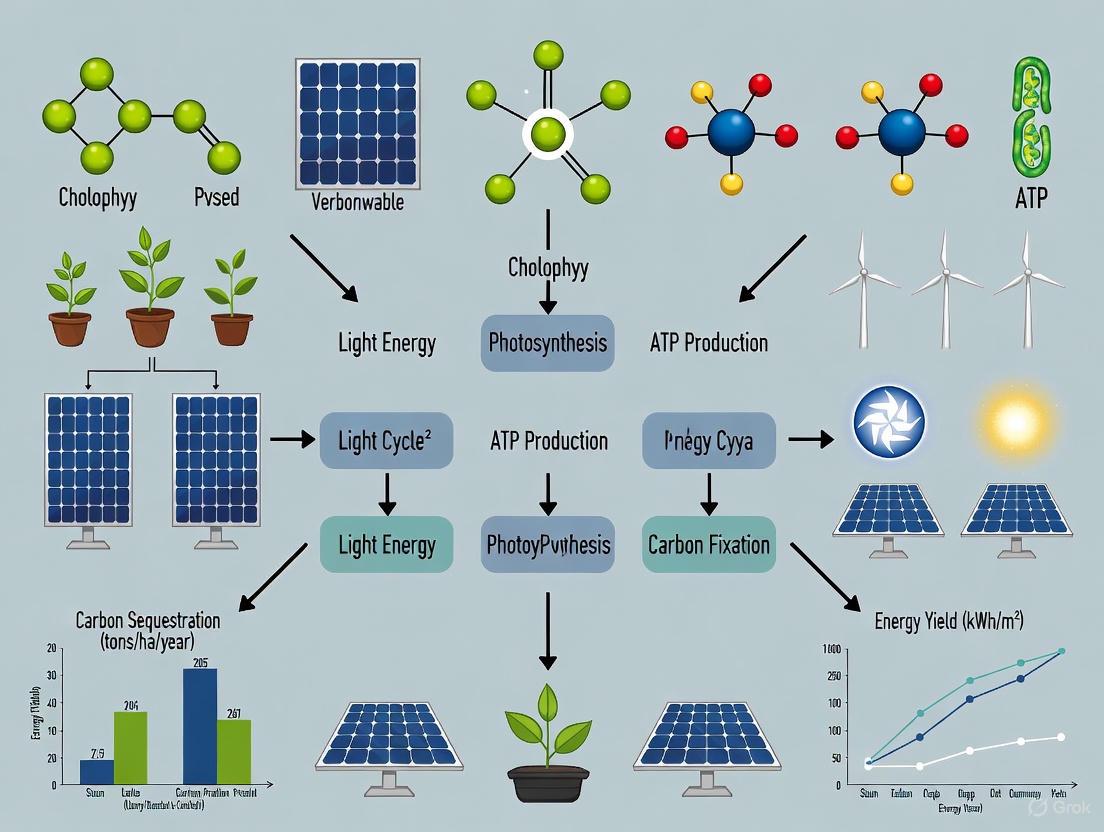
This article provides a comprehensive analysis for researchers and scientists on strategies to reduce the carbon footprint of vertical farming through renewable energy integration.
Decarbonizing Vertical Farming: Integrating Renewable Energy for Sustainable Urban Agriculture
Abstract
This article provides a comprehensive analysis for researchers and scientists on strategies to reduce the carbon footprint of vertical farming through renewable energy integration. It explores the foundational energy challenges, details methodological approaches for applying solar, wind, and geothermal power, addresses key operational and financial barriers, and validates progress through comparative lifecycle assessments and emerging industry data. The scope synthesizes current research and real-world applications to outline a viable path toward carbon-neutral, controlled-environment agriculture.
The Carbon Paradox of Vertical Farming: Unpacking the Energy Challenge
Troubleshooting High Energy Consumption
FAQ: My vertical farm's energy costs are unsustainable. What are the primary drivers and how can I reduce them? The primary energy drivers in controlled environments are almost always Lighting and HVAC (Heating, Ventilation, and Air Conditioning). These systems are intrinsically linked, as lighting generates significant heat that the HVAC system must then remove [1]. A whole-systems approach, rather than focusing on single components, is key to finding efficiency [1].
FAQ: My HVAC system is constantly running. What steps can I take to reduce its load? A constantly running HVAC system indicates a high thermal load on your facility. You can address this by:
- Reducing the Heat Load from Lighting: Switch to more efficient light sources (e.g., LEDs) and implement strategic lighting protocols. This directly reduces the amount of heat the HVAC system must remove [1].
- Improving the Building Envelope: Ensure your facility is well-insulated and airtight to prevent unwanted heat transfer with the outside environment. Basic weatherization and insulation can generate energy savings of 10–30%, while deep energy retrofits can save 60–80% [1].
- Utilizing Passive Cooling: Explore options like cool roofs, which are designed to reflect sunlight and passively reduce internal building temperatures. Advanced materials can lower indoor temperatures by up to 10°C, translating to HVAC energy savings of 20–70% [1].
- Ugrading HVAC Technology: Consider switching to high-efficiency heat pumps, which can reduce energy use for heating by 30–50% compared to conventional fossil fuel systems because they move heat rather than generate it through combustion [1].
FAQ: Are there renewable energy technologies suitable for powering a vertical farm? Yes, integrating renewable energy is a core strategy for reducing the carbon footprint of a high-energy facility. A systematic review of zero-energy buildings highlights several effective technologies [2]:
- Solar Energy Installations: Photovoltaic (PV) systems can be installed on rooftops or nearby land.
- Geothermal Heat Exchangers: These can provide highly efficient heating and cooling by leveraging the stable temperatures below ground.
- Wind Turbines: Feasible in locations with suitable wind resources. The study emphasizes that a hybrid system approach often raises the efficiency and flexibility of renewable energy facilities to meet changing demand [2].
Experimental Protocol: Measuring & Optimizing HVAC Load from Lighting
1. Objective: To quantify the thermal load imposed by different lighting systems on the HVAC system and identify optimization strategies.
2. Hypothesis: Switching from conventional lighting (e.g., fluorescent, HPS) to modern LEDs will significantly reduce the HVAC cooling load, leading to net energy savings despite any increase in dehumidification runtime.
3. Materials:
- Controlled environment growth chamber or a segregated section of a vertical farm.
- Two lighting systems for comparison (e.g., HPS vs. LED, or different LED spectrums/intensities).
- Data loggers for temperature and humidity.
- Power meters (clamp-on or inline) for the lighting and HVAC systems.
- A calibrated HVAC system with energy monitoring capability.
4. Methodology:
- Phase 1 - Baseline: Install Lighting System A (e.g., HPS). Grow a standard crop (e.g., lettuce) following a set photoperiod. Use data loggers to record the ambient temperature, relative humidity, and the HVAC's return/ supply air temperatures. Simultaneously, record the power consumption (in kWh) of both the lighting system and the HVAC system over a full 24-hour cycle for at least 3-5 days.
- Phase 2 - Intervention: Replace Lighting System A with Lighting System B (e.g., LED), ensuring the light intensity (PPFD) at the canopy level is identical to Phase 1. Maintain all other environmental setpoints (temperature, humidity, CO2) exactly as in Phase 1. Repeat the data collection for the same duration.
- Phase 3 - System Optimization: Based on the data, experiment with slightly raising the temperature setpoint during the photoperiod, as efficient LEDs produce less radiant heat and may allow for a higher thermostat setting without stressing plants. Monitor plant health and growth metrics throughout.
5. Data Analysis:
- Calculate the total daily energy consumption for lighting and HVAC in both phases.
- Determine the ratio of HVAC energy use to lighting energy use for each system.
- Compare the average ambient temperature and HVAC runtime between the two phases.
- Perform a cost-benefit analysis that includes the capital cost of new lights versus the operational savings from reduced energy use.
Energy Technology Comparison Table
The following table summarizes key technologies to address high energy demands, based on findings from recent literature [1] [2].
| Technology / Strategy | Primary Function | Key Performance Metric | Implementation Consideration |
|---|---|---|---|
| Light-Emitting Diodes (LEDs) | Provides photosynthetically active radiation (PAR) for plant growth. | High energy conversion efficiency (less waste heat per µmol of light). | Capital cost; requires spectrum and intensity tuning for specific crops. |
| High-Efficiency Heat Pumps | Provides active heating and cooling. | Can reduce energy use for heating by 30-50% vs. fossil fuels [1]. | Manages both thermal load and humidity; efficiency drops in very cold climates. |
| Building Envelope Retrofits | Passive thermal barrier (insulation, air sealing). | Deep retrofits can save 60-80% of building energy load [1]. | High upfront investment and potential disruption to ongoing operations. |
| Cool Roofs / Passive Cooling | Reflects solar radiation to reduce heat absorption. | Can lower indoor temps by up to 10°C, saving 20-70% on cooling [1]. | Low-tech and cost-effective; can be implemented on most facilities. |
| Solar Photovoltaics (PV) | On-site renewable electricity generation. | Offsets grid electricity consumption for all systems (Lighting, HVAC). | Requires space/rooftop area; dependent on local solar resource. |
| Geothermal Heat Exchangers | Uses ground temperature for pre-heating/cooling of air/fluid. | Provides a stable temperature base, reducing HVAC workload [2]. | High installation cost and site-specific feasibility. |
The Scientist's Toolkit: Research Reagent Solutions
| Item | Function in Energy Research |
|---|---|
| Data Loggers (Temp/RH/CO2) | For precise monitoring of environmental parameters to establish baseline conditions and quantify the impact of interventions. |
| Power Meters (Clamp-On/Inline) | To measure the real-time and cumulative energy consumption (kWh) of individual systems (lighting, HVAC, pumps). |
| Portable PAR Meter | To verify and calibrate light intensity at the plant canopy, ensuring experimental consistency when comparing lighting systems. |
| Thermal Imaging Camera | To visualize heat leaks in the building envelope and identify hotspots in electrical and mechanical systems. |
| Environmental Control System | The central software/hardware that automates and logs setpoints for temperature, humidity, lighting, and CO2. |
Systematic Energy Optimization Workflow
The diagram below outlines a logical pathway for diagnosing and addressing high energy demands in a controlled environment agriculture facility.
Integrated Experiment Design for Carbon Reduction
This diagram maps the experimental workflow for a study aimed at reducing the carbon footprint of a vertical farm through technology integration.
Life Cycle Assessment (LCA) is a comprehensive methodology for assessing the environmental impacts associated with all stages of a commercial product's life cycle [3]. When this assessment focuses specifically on greenhouse gas (GHG) emissions, it is referred to as a carbon footprint [4]. For vertical farming, a full carbon footprint must account for all direct and indirect emissions, which are categorized into three scopes [4]:
- Scope 1: Direct emissions from owned or controlled sources, such as fuel combustion in backup generators.
- Scope 2: Indirect emissions from the generation of purchased electricity, which is typically the most significant source for vertical farms.
- Scope 3: All other indirect emissions that occur in a company's value chain, including the production of purchased goods (e.g., growing media, nutrients, seeds, packaging) and the distribution of sold products [5].
Understanding and managing Scope 3 emissions is particularly critical, as they often represent the majority of an organization's total GHG emissions and are key to a holistic sustainability strategy [5].
Frequently Asked Questions (FAQs)
1. Why does a vertical farm need to care about Scope 3 emissions? Scope 3 emissions often constitute the largest portion of a vertical farm's total carbon footprint. For most organizations, supply chain emissions are, on average, 11.4 times higher than operational emissions, accounting for approximately 92% of the total GHG emissions [5]. Tackling Scope 3 is essential for a complete and honest carbon inventory and for identifying major reduction opportunities.
2. Our farm is powered by renewable energy. Is our carbon footprint solved? While a crucial step, using renewable energy primarily addresses Scope 2 emissions. A 2022 study highlighted that switching to renewable energy can greatly reduce the carbon footprint, but it might shift the environmental burden, for instance, to land use for energy generation [6]. A comprehensive footprint also includes Scope 1 and 3 emissions from materials, infrastructure, and logistics, which remain unaffected by your energy source.
3. What are the most carbon-intensive inputs in a vertical farming operation? The carbon intensity of inputs can vary, but typically, the infrastructure (capital goods) and ongoing consumables are significant. This includes the embodied carbon in the construction materials (Scope 3), high-energy components like LED lights and HVAC systems (Scope 2 & 3), and consumables such as fertilizers, growing substrates, and packaging [6] [5].
4. How can we collect data from our suppliers to calculate Scope 3 emissions? Data collection can follow a tiered approach, improving over time [5]:
- Primary Data: Request supplier-specific GHG information directly from your vendors.
- Secondary Data: Use industry-average emission factors (e.g., from input-output models like USEEIO) when primary data is unavailable [5]. Start with your largest suppliers and most impactful material categories, and use spend-based data as an initial estimate.
5. Is vertical farming more sustainable than conventional agriculture from an LCA perspective? The answer is complex and location-dependent. While vertical farming can significantly reduce freshwater use, pesticide use, and food miles, its sustainability is heavily influenced by the carbon intensity of its energy source [6]. One analysis found that an average vertical farm using grid electricity had a carbon footprint of 18.43 kg CO₂ per kg of crop, which can be higher than that of conventionally grown tomatoes (2.09 kg CO₂) [6]. Furthermore, when the land required for generating renewable energy is factored in, the total land footprint of a vertical farm can be similar to or even higher than that of open-field farming in most locations [6].
Troubleshooting Guides
Guide: Addressing High Energy Consumption (Scope 2)
Problem: Energy consumption is the dominant contributor to your vertical farm's carbon footprint, often ranging from 16 to 38.8 kWh per kg of crop [6].
Solutions:
- Action 1: Audit and optimize lighting systems.
- Action 2: Integrate on-site renewable energy.
- Action 3: Optimize climate control efficiency.
Guide: Managing Scope 3 Emissions from the Supply Chain
Problem: Emissions from purchased goods and services (Category 1) and capital goods (Category 2) are high and difficult to quantify.
Solutions:
- Action 1: Conduct a relevance assessment.
- Identify which of the 15 Scope 3 categories are most relevant to your operation based on size, influence, and risk. Key categories for vertical farms often include Purchased Goods & Services and Capital Goods [5].
- Action 2: Engage with suppliers.
- Assess the climate impacts of major suppliers and engage them on climate-related issues [5].
- Prefer suppliers who provide their own carbon footprint data or use low-carbon production processes.
- Action 3: Use appropriate emission factors.
- For initial calculations, use secondary data sources like EPA's USEEIO models, which provide emissions factors per dollar of spend for various product categories [5].
- As your program matures, work towards collecting primary data from suppliers for greater accuracy.
Problem: The overall Life Cycle Assessment results are unfavorable compared to traditional agriculture.
Solutions:
- Action 1: Focus on high-yield, high-value crops. The energy and resource inputs per kilogram of produce are more favorable for crops with high market value and fast growth cycles.
- Action 2: Implement circular economy principles.
- Action 3: Strategically locate farms.
Experimental Protocols & Data
Protocol: Conducting a Scope 3 Screening Assessment
Objective: To identify and initially quantify the most significant Scope 3 emission categories for a vertical farming operation.
Methodology:
- Define Organizational Boundaries: Determine which entities and operations will be included in the assessment.
- Relevance Check: Review the 15 Scope 3 categories using the criteria in the GHG Protocol Corporate Value Chain Standard (e.g., size, influence, risk) to identify relevant ones [5].
- Data Collection:
- Gather spend data for all purchased goods and services for the reporting year.
- Collect activity data for other relevant categories (e.g., waste generated, distance traveled by distributed products).
- Emission Calculation:
- Map spend data to industry sectors.
- Apply relevant emission factors (e.g., from the USEEIO database) to calculate emissions for Category 1 (Purchased Goods and Services) and Category 2 (Capital Goods) [5].
- Analysis: Rank the categories by contribution to the total Scope 3 footprint to prioritize efforts for deeper analysis and reduction strategies.
Quantitative Data for Informed Analysis
Table 1: Comparative Carbon Footprint of Agricultural Products
| Product | GHG Emissions (kg CO₂ per kg of product) | Notes |
|---|---|---|
| Vertical Farm Produce (Avg.) | 18.43 | Calculated using global avg. grid electricity (475g CO₂/kWh) [6] |
| Beef | 99.48 | [6] |
| Rice | 4.45 | [6] |
| Tomatoes (Conventional) | 2.09 | [6] |
Table 2: Vertical Farming Energy Consumption & Improvement Strategies
| Metric | Value | Potential Improvement Strategy & Saving |
|---|---|---|
| Avg. Energy Use (Census) | 38.8 kWh/kg | Baseline from 2021 Global CEA Census [6] |
| Modeled Minimum Use | 16-20 kWh/kg | Highly optimized facility in favorable location [6] |
| Energy Saving from DLI Optimization | Up to 20% | Using moderate DLI levels at long photoperiods [6] |
| Energy Saving from LED Water Cooling | Up to 23% | Using water cooling systems for LEDs [6] |
| Energy Saving from Climate Control Optimization | Up to 60% | Advanced system optimizing for both yield and energy [6] |
Workflow and Pathway Visualizations
LCA Implementation Workflow
Scope 3 Emission Categories
The Scientist's Toolkit: Research Reagent Solutions
Table 3: Essential Tools for Carbon Footprint Research in Vertical Farming
| Tool / Solution | Function in Research | Application Example |
|---|---|---|
| GHG Protocol Standards | Provides the internationally accepted accounting and reporting framework for GHG emissions [5]. | Used to define organizational boundaries and correctly categorize Scope 1, 2, and 3 emissions. |
| USEEIO Model | A database of supply chain greenhouse gas emission factors based on economic input-output models, expressed in emissions per dollar of spend [5]. | Provides initial emission factors for calculating emissions from purchased goods and services (Scope 3, Category 1). |
| LCA Software (e.g., OpenLCA, SimaPro) | Specialized software that facilitates the modeling of complex product life cycles and the calculation of environmental impacts. | Used to build a detailed model of the vertical farm system, integrating primary data from operations and secondary data from LCA databases. |
| Energy Meters & Sensors | Hardware to collect real-time, primary data on electricity consumption for different processes (lighting, HVAC, irrigation). | Critical for accurately quantifying the largest source of Scope 2 emissions and identifying optimization opportunities. |
| Supplier Engagement Questionnaires | Standardized tools to request primary GHG emissions data or environmental performance information from suppliers. | Used to improve the accuracy of Scope 3 calculations by moving from average data to supplier-specific data. |
Troubleshooting Guide: Carbon Footprint Analysis
Problem 1: High direct emissions are skewing our life cycle assessment (LCA) results.
- Question: Our vertical farm's LCA shows a disproportionately high carbon footprint from electricity consumption. What is the primary cause, and how can we mitigate it?
- Answer: This is a common finding in vertical farm LCAs. The high energy demand for artificial lighting and climate control is the dominant factor, often eclipsing the emissions from conventional farming activities like fertilization and machinery [8] [9]. A recent study found that even when powered by renewable electricity, vertically farmed lettuce could have a higher carbon footprint (0.93 kg CO₂eq/kg) than UK field-grown lettuce (0.57 kg CO₂eq/kg) [9].
- Solution:
- Transition to Renewable Energy: Integrate on-site renewable sources like rooftop solar panels [7] or purchase renewable energy from the grid. This directly addresses the source of emissions.
- Implement Energy-Efficient Technology: Upgrade to the most advanced, spectrally tuned LED lighting systems. Research indicates a potential future energy benchmark for lettuce production of 3.1–7.4 kWh/kg, a significant improvement from the current 10–18 kWh/kg [10].
- Optimize Operational Efficiency: Use advanced scheduling and control systems to minimize the energy consumption of elevators, HVAC, and other support systems [11].
Problem 2: Our assessment reveals a surprisingly large land-use footprint for a vertical farm.
- Question: We selected our inputs to minimize land use, but the LCA shows a significant indirect land-use impact. What is causing this, and what alternatives exist?
- Answer: This often-overlooked issue can be linked to materials used in the growing process. A 2025 study identified that jute fiber plugs, commonly used to support plants, contribute to a land-use footprint that can be double that of conventional field farms. The cultivation of jute in tropical regions requires vast amounts of land [8].
- Solution:
- Substitute Growth Media: Switch from jute to alternative, waste-based materials such as coconut coir. This single change can reduce the associated land-use impact by over 95% [8] [9].
- Conduct a Material Audit: Systematically review all consumables (e.g., substrates, packaging) in your LCA to identify and replace other hidden sources of land-use emissions.
Problem 3: Our benchmarked carbon footprint is higher than conventional agriculture despite water savings.
- Question: Our vertical farm uses 95% less water, but the overall carbon footprint remains higher. How do we accurately contextualize these trade-offs for a sustainability report? [12]
- Answer: This highlights the critical resource trade-off in vertical farming. While water efficiency is a major advantage, the current carbon footprint is primarily an energy problem.
- Solution:
- Contextualize by Location: Emphasize the benefit in water-scarce regions. Your system's water savings are most valuable where traditional irrigation demands are high, such as in Spain, where vertical farms used 0.9 m³/kg of lettuce compared to 7.3 m³/kg in field farms [9].
- Quantify the Yield Advantage: Frame the footprint per unit of output. Vertical farms can produce over 20 times the yield per square meter annually compared to fields [8] [9]. The land spared from agriculture could be used for carbon sequestration projects.
- Adopt a Multi-Metric Approach: Report environmental performance using both carbon and water footprints. Use the following table to benchmark your performance against published data.
Quantitative Benchmarking Data
Table 1: Comparative Environmental Impact of Lettuce Production (Cradle-to-Store)
| Impact Category | Vertical Farm (VF) | Conventional Farm (UK) | Conventional Farm (Spain) | Key Insights & Citations |
|---|---|---|---|---|
| Yield (kg/m²/year) | 97.3 | 3.3 | 3.3 | VF yield is >20x higher, offering significant land-saving potential. [8] [9] |
| Water Use (m³/kg) | 0.9 | ~2.8 (estimated) | 7.3 | VF's closed-loop systems slash water use, especially in arid regions. [9] |
| GHG Emissions (kg CO₂eq/kg) | 4.71 (Grid) / 0.93 (Renewable) | 0.57 - 0.59 | >0.59 | Energy source is critical; even with renewables, VF may have a higher footprint due to other inputs. [8] [9] |
| Energy Use (kWh/kg) | 10 - 18 (Current) / 3.1 - 7.4 (Projected) | Information Missing | Information Missing | Current energy use is high, but technological advances promise major efficiency gains. [10] |
| Land Use Impact | High (with jute) / Low (with coir) | Baseline | Baseline | Indirect land use from materials like jute can paradoxically exceed that of field farming. [8] |
Table 2: Carbon Footprint of U.S. Agriculture Sector (2022)
| Emission Source | Percentage of Sector Emissions | Key Mitigation Strategies |
|---|---|---|
| Agricultural Soil Management (N₂O) | 51% | Precision nitrogen fertilization, cover cropping. [13] [14] |
| Livestock Enteric Fermentation (CH₄) | 28% | Improved feed quality, breeding. [13] |
| Manure Management (CH₄ & N₂O) | 14% | Anaerobic digestion with methane capture for energy (AgSTAR). [13] |
Experimental Protocol: Life Cycle Assessment (LCA) for Vertical Farms
Objective: To conduct a cradle-to-gate carbon footprint analysis of a vertically farmed crop (e.g., lettuce) and compare it with conventionally produced equivalents.
Methodology:
Goal and Scope Definition:
- Functional Unit: Define the basis for comparison (e.g., 1 kilogram of harvested lettuce).
- System Boundary: Set a "cradle-to-store" boundary, including raw material extraction, manufacturing of all inputs (lights, structure, nutrients, growth plugs), farm operation, and delivery to the retail point [8] [9].
Life Cycle Inventory (LCI):
- Data Collection: Quantify all energy and material flows within the system boundary.
- Vertical Farm Data: Record total electricity consumption (kWh), specifying usage for lighting, HVAC, and other systems. Document the type and quantity of growth substrates (jute, coir), nutrients, water, and packaging materials [8] [10].
- Conventional Farm Data: Collect data on fertilizer and pesticide production/application, fuel for farm machinery, irrigation water, and soil emissions (particularly critical for peat soils) [8] [13].
Life Cycle Impact Assessment (LCIA):
- Impact Calculation: Use LCA software (e.g., OpenLCA, SimaPro) and databases (ecoinvent) to convert inventory data into environmental impacts.
- Primary Impact Category: Calculate the Global Warming Potential (GWP) in kg of CO₂ equivalent (CO₂eq) per functional unit.
Interpretation and Sensitivity Analysis:
The workflow for this LCA methodology is summarized in the following diagram:
LCA Workflow Diagram
The Scientist's Toolkit: Key Research Reagents & Materials
Table 3: Essential Materials for Vertical Farming Carbon Footprint Research
| Item | Function in Research | Technical Note |
|---|---|---|
| LCA Software (e.g., OpenLCA) | To model energy and material flows and calculate the carbon footprint. | Essential for quantifying emissions across the entire lifecycle and identifying hotspots. [8] |
| Coconut Coir | A sustainable growth medium to replace jute plugs. | Switching to coir can reduce the land-use footprint of a vertical farm by over 95%. [8] [9] |
| Spectrally-Tuned LEDs | To provide photosynthetically active radiation (PAR) with high energy efficiency. | Advanced LEDs are key to reaching the future energy benchmark of 3.1–7.4 kWh/kg. [10] |
| Direct Air Capture (DAC) Unit | For CO₂ enrichment to boost plant growth without using fossil-fuel-derived CO₂. | Integrated systems can enhance yield by up to 57.5% while maintaining a low carbon footprint (0.468 kg CO₂eq/kg). [15] |
| Photovoltaic-Thermal (PVT) Panels | To generate on-site renewable electricity and heat for farm operations. | Integration of PVT units can significantly improve the economic and environmental viability of the system. [7] [15] |
Frequently Asked Questions (FAQs)
FAQ 1: Is vertical farming inherently more energy-efficient than organic or conventional field agriculture? No, not currently. While vertical farming is highly land- and water-efficient, its energy consumption per kilogram of produce is typically higher [12] [10]. A study of German farms found that organic systems, which forgo energy-intensive synthetic fertilizers, had significantly lower energy input (7.2 GJ/ha) than conventional systems (14.0 GJ/ha) [16]. Vertical farming's energy-use efficiency is dependent on the successful integration of advanced, low-carbon technologies.
FAQ 2: Can vertical farming truly have a lower carbon footprint than conventional farming? Yes, but it is conditional on overcoming key challenges. The two most critical pathways are:
- Decarbonizing Energy Supply: The farm must be powered by low-carbon or renewable electricity [7] [9].
- Optimizing Input Materials: The system must use sustainable, low-impact materials, with coconut coir being a prime substitute for jute plugs [8]. Research shows that with innovations like integrated DAC and PVT systems, a carbon footprint of 0.468 kg CO₂eq/kg is achievable, which is competitive with some field-grown produce [15].
FAQ 3: What is the single most important data point to collect for an accurate vertical farm LCA? The specific energy consumption measured in kilowatt-hours per kilogram of edible biomass (kWh/kg). This metric, driven primarily by lighting and climate control, is the largest determinant of the carbon footprint and serves as the key benchmark for comparing system efficiency [10].
Frequently Asked Questions (FAQs)
FAQ 1: What is the fundamental contradiction between land-use efficiency and energy intensity in vertical farming? Vertical farming achieves high land-use efficiency by growing food in vertically stacked layers, using up to 99% less land than traditional agriculture [17]. However, this comes at the cost of high energy intensity, primarily due to the power required for artificial lighting and climate control systems (HVAC). This energy demand can result in a significant carbon footprint, especially when powered by non-renewable sources, offsetting the environmental benefits of land savings [8] [18].
FAQ 2: How can the carbon footprint of an energy-intensive vertical farm be reduced? Integrating renewable energy sources, such as solar photovoltaics (PV), is a primary method for decarbonizing vertical farm operations [15]. Furthermore, selecting energy-efficient equipment is crucial. This includes using high-efficacy LED grow lights and variable-speed HVAC systems. One study demonstrated that coupling a vertical farm with a photovoltaic-thermal (PVT) unit and a Direct Air Capture (DAC) system for CO₂ enrichment can maintain a low carbon footprint of 0.468 kg-CO₂eq per kg of vegetable while improving economic value [15].
FAQ 3: Are there hidden land-use impacts associated with vertical farming? Yes. While the farm itself has a small physical footprint, the land-use impact of its supply chain can be substantial. A 2025 lifecycle analysis found that vertical farms using lettuce plugs based on jute fibers had a total land-use impact twice as high as that of conventional field farms. This was attributed to the land required to cultivate the jute [8]. Replacing jute with alternative materials like coir (from coconuts) can dramatically reduce this impact [8].
FAQ 4: What are the typical Land-Use Intensity of Energy (LUIE) values for different power sources? The land-use intensity of energy sources varies by several orders of magnitude. The table below summarizes median LUIE values, which are critical for assessing the indirect land footprint of a vertical farm's energy supply [19].
Table: Land-Use Intensity of Energy (LUIE) for Electricity Generation
| Energy Technology | Land-Use Intensity (ha/TWh/y) |
|---|---|
| Nuclear | 7.1 |
| Natural Gas (Footprint) | 10 |
| Coal | 17 |
| Geothermal | 210 |
| Solar PV (Utility-Scale) | 2,800 |
| Concentrated Solar Power (CSP) | 5,400 |
| Wind | 72,000 |
| Dedicated Biomass | 58,000 |
FAQ 5: Which crops are currently most and least suitable for vertical farming? Vertical farming is most technologically and economically suitable for high-value, fast-growing crops with a low physical profile. It is currently less feasible for staple crops.
- Most Suitable: Leafy greens (lettuce, kale, arugula), herbs (basil, cilantro), and microgreens [17] [18] [20].
- Least Suitable: Tuber crops (potatoes, onions, garlic), root vegetables, and grain crops like corn and wheat [17] [18].
Troubleshooting Guides
Problem: High Carbon Footprint per Kilogram of Produce A lifecycle analysis indicates your system's emissions are higher than conventional farming.
| Potential Cause | Recommended Solution | Experimental Verification Protocol |
|---|---|---|
| Grid Dependency: High reliance on a non-renewable grid energy. | 1. Power the farm with on-site renewables (e.g., rooftop solar PV).2. Purchase renewable energy credits (RECs) from utility providers. | 1. Install a smart meter to track energy consumption and sources.2. Calculate the carbon footprint (kg-CO₂eq/kg produce) before and after the intervention using a standardized LCA methodology. |
| System Inefficiency: Use of outdated, low-efficiency lighting and HVAC. | 1. Retrofit with high-efficacy LED lights (μmol/J).2. Upgrade to variable-speed HVAC and dehumidifiers. | 1. Monitor energy consumption (kWh) with the old and new systems under identical production cycles.2. Compare the Energy Use Intensity (EUI) in kWh/kg of yield. |
| Supply Chain Impact: High embedded land-use and emissions from growth inputs. | 1. Audit supply chain for materials like jute plugs.2. Source sustainable alternatives (e.g., coir, rockwool) or recycled materials [8]. | 1. Conduct a cradle-to-gate lifecycle assessment (LCA) focusing on specific material inputs.2. Compare the land-use and emission impacts of different growth medium suppliers. |
Problem: Sub-Optimal Yield, Compromising Land and Energy Efficiency The yield per square meter is below theoretical expectations, making the system inefficient.
| Potential Cause | Recommended Solution | Experimental Verification Protocol |
|---|---|---|
| Suboptimal Growth Recipe: Light, CO₂, and nutrients are not calibrated for the specific crop and growth stage. | 1. Implement a controlled experiment to find the optimal combination of light intensity (PPFD), CO₂ concentration (PPM), and nutrient (EC) levels. | 1. Set up test groups with different PPFD, CO₂, and EC levels and a control group. Use the diagram below as a workflow.2. Measure and record fresh weight biomass of all groups after a set period. |
| Inconsistent Climate: Fluctuations in temperature and humidity cause plant stress. | 1. Use sensors and automation software to maintain a stable climate.2. Ensure proper air circulation with fans to prevent microclimates. | 1. Deploy data loggers to track temperature and humidity gradients across the farm every 5 minutes for 48 hours.2. Correlate environmental instability with observed plant stress or yield reduction in specific locations. |
| System Failure: Undetected failure in irrigation or nutrient dosing. | 1. Install flow meters and EC/pH sensors with automated alerts.2. Implement a daily manual check of all system components. | 1. Schedule a simulated failure (e.g., unplug a nutrient pump).2. Verify that the monitoring system triggers an alert within a set time frame (e.g., 15 minutes). |
The Scientist's Toolkit: Research Reagent Solutions
Table: Essential Materials for Vertical Farming Carbon Footprint Research
| Item | Function / Explanation |
|---|---|
| Direct Air Capture (DAC) Unit | Captures CO₂ directly from the atmosphere for enrichment inside the vertical farm, which can boost photosynthesis and yields by up to 57.5%, improving resource efficiency [15]. |
| Life Cycle Assessment (LCA) Software | A critical tool for quantifying the full environmental footprint (including land-use and carbon emissions) of a vertical farming system from construction to decommissioning [8]. |
| High-Efficacy LED Grow Lights | Provides the specific light spectra for photosynthesis. "Efficacy" (μmol/J) measures photosynthetic photon output per unit of energy input; higher values mean less energy is wasted as heat [21]. |
| Hydroponic Nutrient Solutions | A balanced mixture of essential minerals (e.g., N, P, K, Ca, Mg) dissolved in water. Electrical Conductivity (EC) sensors are used to monitor the solution's strength [21] [20]. |
| Soilless Growth Media | Inert materials like rockwool, peat moss, or coco coir that provide root support and moisture retention without soil-borne diseases. Choice impacts water retention and sustainability [21] [17]. |
| PV-Thermal (PVT) Hybrid Panel | A renewable energy technology that generates electricity (PV) while simultaneously capturing thermal energy from the sun, which can be used for temperature control in the farm [15]. |
Renewable Energy Solutions in Action: A Technical Blueprint for Vertical Farms
For researchers and scientists focused on reducing the carbon footprint of energy-intensive operations, from vertical farming to pharmaceutical development, on-site solar power (PV) and energy storage systems represent a critical technological pathway. These systems can provide clean, resilient, and increasingly affordable power, directly supporting sustainable research goals. This technical support center is designed to help your team navigate the practical challenges of maintaining and optimizing these systems, ensuring they deliver maximum experimental uptime and contribute reliably to your decarbonization objectives.
Troubleshooting Guides
Step-by-Step Diagnostic Procedures
Adhering to a systematic diagnostic procedure is essential for maintaining research continuity. The following workflow outlines a logical path to identify and resolve common system faults. The diagram below provides a visual guide for the systematic diagnosis of a non-functional solar power system.
Diagram 1: Solar System Troubleshooting Workflow. This chart outlines a systematic, step-by-step procedure for diagnosing a complete or partial failure of an on-site solar power system.
The table below quantifies key performance parameters for critical solar system components to aid in empirical verification during diagnostics.
Table 1: Quantitative Performance Benchmarks for Solar System Components
| Component | Test Parameter | Normal Operating Range | Indication of Fault |
|---|---|---|---|
| Solar Panel | Open-Circuit Voltage (Voc) | Within ~10% of manufacturer's rated Voc (e.g., 36-44V for a 40V panel) [22] | Significantly lower voltage in good sunlight |
| Battery (12V System) | State of Charge Voltage | 12.6V - 13.2V (Fully Charged); ~12.0V (50% Capacity) [22] | Voltage below 11V (Deeply Discharged/Damaged) [22] |
| Inverter Output | AC Output Voltage | 110-130V (for a 120V system) [22] | No voltage or reading outside this range |
| System Performance | Energy Production | Compared to baseline model (e.g., PVWatts) or historical data | Consistent underperformance >10-15% |
Common Fault Symptoms and Solutions
When troubleshooting, specific symptoms can point to underlying causes. This table catalogs common observational data and proposed remediation protocols.
Table 2: Common Solar System Faults and Remedial Actions
| Observed Symptom | Potential Root Cause | Corrective Action Protocol |
|---|---|---|
| Solar lights or system not working at night | Discharged battery, loose wiring, faulty light [22] | Check battery voltage with a multimeter; inspect and secure all wiring connections; test the light with a known good power source [22] |
| Battery not charging | Faulty charge controller, panel issues, wiring problem [22] | Verify charge controller status indicators; test panel output voltage; check for corroded or loose wiring [22] |
| Inverter shows no power output | Overload, low input voltage, internal inverter fault [22] | Check inverter display for error codes; ensure DC input voltage is within the inverter's specified range; test AC output with a voltage tester [22] |
| Low power generation | Dirty panels, partial shading, panel degradation [22] | Clean panels with water and a soft cloth; check for and eliminate new shading from vegetation or structures; test individual panel voltage [22] |
| Persistent error codes on inverter | Internal hardware or software failure | Consult inverter manual for specific code meaning. If reset doesn't work, contact a certified technician to avoid voiding warranty [22] |
Experimental Protocols for System Assessment
Protocol 1: Quantifying Rooftop Solar Potential for Research Facilities
1. Objective: To accurately estimate the technical and economic potential of deploying rooftop solar PV on a research facility to reduce grid-based carbon emissions.
2. Methodology:
- a. Site Assessment: Utilize satellite-based tools (e.g., NREL's PVWatts [23] or Google's Project Sunroof) to analyze rooftop area, tilt, and solar irradiance.
- b. Shading Analysis: Conduct on-site verification or use tools with Light Detection and Ranging (LiDAR) data to quantify shading losses throughout the year [24].
- c. Load Profiling: Correlate solar generation profiles with the facility's historical electricity load data (from utility bills or a monitoring system) to estimate self-consumption potential and grid exports [24].
- d. Economic Modeling: Input generation and load data into financial models (e.g., NREL's System Advisor Model (SAM) [23]), incorporating local utility rates, incentives, and financing options.
3. Data Interpretation: The analysis should yield key metrics such as estimated annual generation (kWh), percentage of load offset, levelized cost of energy (LCOE), and carbon emissions reduction.
Protocol 2: Resilience Testing with Solar-plus-Storage Microgrids
1. Objective: To validate the ability of a solar-plus-storage system to maintain power to critical research loads (e.g., -80°C freezers, analytical instruments) during a grid outage.
2. Methodology:
- a. Critical Load Identification: Audit and aggregate the power ratings (kW) and energy consumption (kWh) of all equipment deemed essential for research integrity [25].
- b. System Sizing: Use optimization tools like NREL's REopt Lite [23] to determine the optimal sizing of solar and battery storage to meet the critical load profile for a defined outage duration.
- c. Controlled Islanding Test: Safely simulate a grid outage by disconnecting the facility from the main grid (in coordination with the utility, if applicable) and transferring critical loads to the microgrid.
- d. Performance Monitoring: Log data on battery state of charge, solar generation, and load metering throughout the test duration to verify system stability and runtime.
3. Data Interpretation: The primary success criterion is the duration for which all critical loads are supported without interruption. This data is crucial for ensuring research resilience.
The Scientist's Toolkit: Research Reagent Solutions
This table details essential tools and software for the planning, analysis, and maintenance of on-site solar energy systems.
Table 3: Essential Tools and Digital Resources for Solar Energy Research
| Tool / Resource Name | Primary Function | Application in Research Context |
|---|---|---|
| PVWatts (NREL) [23] | Performance & cost estimation for grid-connected PV systems | Rapid, high-level feasibility study and initial energy yield prediction for a proposed site. |
| System Advisor Model (SAM) [23] | Detailed techno-economic performance modeling | Conducting detailed financial analyses, including cash flow and return on investment, for grant proposals. |
| REopt Lite (NREL) [23] | Renewable energy integration & optimization | Identifying the most cost-effective mix of solar, storage, and other generation for resilience and savings [23]. |
| Digital Multimeter [22] | Electrical measurement (Voltage, Current, Resistance) | Empirical validation of solar panel output, battery health, and circuit continuity during troubleshooting. |
| dGen Model (NREL) [23] | Distributed generation market demand simulation | Modeling the long-term adoption potential and grid impact of distributed solar at regional or national scales. |
| Battery Storage System | Stores energy for use during non-sunlight hours | Enables shift of solar energy to peak demand periods, provides backup power for sensitive experiments, and can help reduce demand charges [26]. |
Frequently Asked Questions (FAQs)
Q1: Why are my solar panels generating less power than the model predicted? This is a common observational discrepancy. Potential independent variables include: dirt accumulation on panels, partial shading from new vegetation or structures, inverter inefficiencies or faults, and atmospheric conditions (e.g., haze, temperature) that differ from the typical meteorological year used in the model. Begin diagnostics by physically inspecting and cleaning panels, and then use a multimeter to test the voltage of individual strings [22].
Q2: What does a specific error code on my inverter mean? Error codes are manufacturer and model-specific. The first step is always to consult the inverter's user manual. Common codes like "Low Input Voltage" typically point to an issue with the DC side—such as faulty connections, a tripped breaker, or a problem with the solar panels or string combiner box. Codes indicating "Overload" or "Ground Fault" require checking the connected loads and system grounding, respectively [22].
Q3: When should I troubleshoot myself, and when should I call a professional? Engage in DIY troubleshooting for basic checks: visual inspections, cleaning panels, verifying simple connections, and reading displayed error codes. Contact a certified professional when you suspect safety hazards (e.g., burning smells, exposed wires), need to work on high-voltage components, encounter persistent error codes after a reset, or if the system requires repairs that might void its warranty [22]. Certified technicians (e.g., NABCEP) are trained for complex diagnostics and repairs.
Q4: How can energy storage enhance my research facility's operations? Beyond providing backup power during outages, energy storage allows a facility to:
- Shift Load: Store excess solar energy generated during the day and use it in the evening, maximizing self-consumption and reducing peak demand charges from the utility.
- Increase Resilience: Ensure uninterrupted power to critical research equipment, preventing the loss of valuable experiments or samples [26] [25].
- Provide Grid Services: In some regions, facilities can participate in utility programs that generate revenue by allowing the grid to draw power from the battery during periods of high demand.
Q5: Our facility is in a disadvantaged community. Are there specific programs to support solar adoption? Yes. The U.S. Department of Energy's Solar Energy Innovation Network (SEIN) has funded multiple projects focused on bringing solar benefits to low-to-moderate income (LMI) communities and small businesses [25]. These projects have developed blueprints for community engagement, innovative financing, and leveraging federal incentives like the Low-Income Home Energy Assistance Program for solar installations [25]. Furthermore, research indicates that commercial rooftops in these communities represent a significant, untapped resource for generating local, affordable clean energy [27].
Quantitative Technology Performance Data
Table 1: Key Performance Indicators of Complementary Renewable Energy Technologies
| Technology | Typical Capacity/Conditions | Efficiency/Output | Emission Reductions | Cost Considerations |
|---|---|---|---|---|
| Wind Energy | Onshore: 2-15 MW/turbineOffshore: Higher capacities | Capacity factor: ~75% (Türkiye example) [28] | Zero operational emissions [29] | LCOE fallen 70% since 2010 [29] |
| Geothermal Energy | Conventional: 100-350°CSuperhot: >400°C [30] | Global generation: ~99 TWh (2024) [28] | New Zealand projects reinjecting CO₂ [28] | High upfront exploration/ drilling risk [30] |
| Biomass Gasification | Temp: 500-1000°CPressure: 0.98-2.94 atm [31] | Innovative techniques increase energy efficiency by 25% [31] | 40% reductions with cutting-edge tech [31] | 15% cost increase vs. conventional; TRL 8-9 [31] |
| Integrated Hybrid System | N/A | Digital twin models show 2-11% generation increase [30] | Hybrid systems reduce carbon footprint by up to 50% [31] | Dependent on smart controls & storage solutions [29] |
Table 2: Operational Characteristics and Environmental Parameters
| Parameter | Wind Energy | Geothermal Energy | Biomass Gasification |
|---|---|---|---|
| Land Use Impact | 30-141 acres/MW (including spacing) [29] | Minimal surface footprint per MW | Large land footprint for feedstock agriculture |
| Intermittency | Highly intermittent [32] | Provides baseload power [29] | Dispatchable, can be scheduled |
| Water Consumption | Minimal | Varies by plant type | Minimal in gasification process |
| Critical Challenges | Intermittency, recycling blades, public acceptance [33] | High resource risk, location constraints [30] | Tar production (1-100 g/Nm³), feedstock variability [31] |
| Technology Readiness | Fully commercial [33] | Conventional: MatureEGS/Superhot: Pilot stage [30] | TRL 8-9 (commercial demonstration) [31] |
Experimental Protocols & Methodologies
Protocol: Geothermal Resource De-risking Using Play Fairway Analysis (PFA)
Objective: Systematically identify prospective geothermal trends for further exploration to reduce drilling risk [30].
Materials: Regional geological maps, seismic data, well log data (if available), geothermal gradient data, permeability data, fault maps, and GIS software.
Methodology:
- Data Integration: Collect and quantitatively integrate diverse geoscience datasets into a unified GIS platform [30].
- Prospectivity Mapping: Apply statistical and machine learning analyses to identify areas with high probabilities of containing viable geothermal resources. Key parameters include heat flow, permeability, and fluid presence.
- Trend Identification: Define "prospective geothermal trends" – corridors with favorable combinations of key parameters for targeted exploration [30].
- Validation: The methodology has been validated through 11 U.S. Department of Energy-funded projects, five of which progressed to successful drilling phases [30].
Protocol: Optimizing Geothermal Operations with Machine Learning
Objective: Increase power generation and operational efficiency of existing geothermal fields without drilling new wells [30].
Materials: Decades of historical operational data (e.g., from hundreds of wells), machine learning algorithms, high-performance computing resources.
Methodology:
- Digital Twin Creation: Develop a "digital twin" system model of the geothermal field (e.g., Wairakei field in New Zealand) [30].
- Machine Learning Analysis: Apply machine learning to large operational datasets to identify patterns and optimization opportunities.
- Operational Optimization: Use model findings to optimize daily processes, schedule predictive maintenance, and detect potential operational issues [30].
- Outcome: Documented results demonstrated increases in total power generation ranging from 2% to 11% [30].
Protocol: Advanced Biomass Gasification and Tar Reduction
Objective: Produce clean syngas from biomass with minimal tar content for efficient energy generation [31].
Materials: Biomass feedstock (moisture content <35%), gasifier (downdraft/fluidized-bed), catalyst (e.g., nickel-based), syngas cleaning system.
Methodology:
- Parameter Optimization: Conduct gasification within optimal parameters: temperatures of 500–1000°C and a steam-to-biomass (S/B) ratio of 0.3–1 [31].
- Gasifier Selection: Select appropriate gasifier design based on tar tolerance: downdraft (~1 g/Nm³ tar), fluidized-bed (~10 g/Nm³ tar), or updraft (~100 g/Nm³ tar) [31].
- Syngas Cleaning: Implement efficient tar cracking methods:
System Integration & Workflow
Technical Support Center: FAQs & Troubleshooting
Wind Energy Integration
Q: How can we mitigate wind energy intermittency for a stable vertical farm power supply? A: Intermittency is a fundamental challenge [32]. Implement hybrid systems with the following components:
- Energy Storage: Deploy large-scale batteries; costs have declined 90% since 2010 with further 50-70% reductions projected by 2030 [29].
- Forecasting: Use AI-based systems for accurate wind prediction and grid management [32].
- Grid Design: Plan for $14 trillion in global grid investments needed by 2050 to accommodate renewable growth [29].
Q: What are proven solutions to reduce environmental impacts of wind farms? A: While some impacts like bird collisions are often less substantial than perceived [33], address key issues through:
- Planning: Careful siting to minimize wildlife interference and land use impacts [32].
- Technology: Invest in blade recycling R&D, as scalable solutions are still lacking [33].
- Community Engagement: Ensure transparency and community involvement to address visual impacts and local resistance [32].
Geothermal Energy Implementation
Q: How can we reduce the high upfront risk and cost of geothermal exploration? A: Mitigate financial risk through:
- Play Fairway Analysis (PFA): Systematically integrate geoscience data to identify prospective trends before drilling [30].
- Government Support: Utilize risk mitigation facilities; the Philippine government established financing facilities to derisk projects [28].
- Technology: Apply machine learning to reduce exploration costs and improve targeting accuracy [30].
Q: What operational optimizations can improve geothermal plant output? A: Enhance existing operations without new drilling:
- Machine Learning: Implement "digital twin" models of geothermal fields, demonstrating 2-11% power generation increases [30].
- Gas Reinjection: Adopt CO₂ reinjection schemes, as used in New Zealand, to reduce emissions and maintain reservoir pressure [28].
Biomass Gasification Operation
Q: How can we minimize tar production in biomass gasification systems? A: Tar content varies significantly with gasifier design and operating conditions [31]:
- Gasifier Selection: Downdraft gasifiers produce least tar (~1 g/Nm³) vs. updraft (~100 g/Nm³) [31].
- Catalytic Cracking: Implement nickel-based catalysts for 98-100% tar removal efficiency [31].
- Parameter Optimization: Maintain optimal temperature (500-1000°C) and steam-to-biomass ratio (0.3-1) [31].
Q: What are the key parameters for optimizing biomass gasification efficiency? A: Critical operational parameters include:
- Temperature: Maintain between 500-1000°C [31].
- Residence Time: Few minutes [31].
- Moisture Content: Keep below 35% [31].
- Catalysts: Novel catalysts can improve reaction rates by 35% [31].
System Integration
Q: How can these technologies be combined effectively for vertical farming? A: Create complementary systems where:
- Geothermal provides stable baseload power and direct heat for climate control [29].
- Wind contributes low-cost electricity during peak generation periods.
- Biomass offers dispatchable power and CO₂ for crop enrichment [31].
- Storage balances intermittency across all sources [29].
The Scientist's Toolkit: Research Reagent Solutions
Table 3: Essential Research Materials and Analytical Tools
| Item/Technology | Function/Application | Technical Specifications |
|---|---|---|
| Play Fairway Analysis (PFA) | Geothermal exploration de-risking | Integrates quantitative geoscience data; adapted from petroleum industry [30] |
| Machine Learning Algorithms | Geothermal operational optimization | Creates "digital twin" models; applied to decades of operational data [30] |
| Nickel-Based Catalysts | Tar cracking in biomass gasification | Achieves 98-100% tar removal efficiency; improves reaction rates by 35% [31] |
| Advanced Gasifier Designs | Biomass-to-syngas conversion | Downdraft (1 g/Nm³ tar), Fluidized-bed (10 g/Nm³ tar), Updraft (100 g/Nm³ tar) [31] |
| Lithium-Ion Battery Storage | Intermittency mitigation for wind/solar | Costs: $150-200/kWh (declined 90% since 2010) [29] |
| Binary-Cycle Geothermal Tech | Electricity from lower-temp resources | Enables wider geographical application; used in New Zealand's Tauhara plant [28] |
Urban Eco-Industrial Clusters represent an advanced framework for integrating industrial, agricultural, and urban systems to achieve significant carbon footprint reduction. This approach combines industrial symbiosis—the collective management of energy, water, and material resources among traditionally separate industries—with vertical farming and renewable energy systems to create sustainable urban infrastructures [34] [35]. By designing these integrated systems, researchers and urban planners can develop circular economies that minimize waste, reduce greenhouse gas emissions, and enhance resource efficiency in urban environments.
The fundamental principle involves creating synergistic relationships where waste outputs from one process become inputs for another, thereby closing resource loops and minimizing environmental impact. When properly implemented, these systems have demonstrated carbon emission reductions of 10.84% or more compared to conventional, non-integrated systems [34]. The integration of vertical farming further enhances sustainability by localizing food production, reducing transportation emissions, and conserving agricultural land.
Technical Support Center: FAQs and Troubleshooting
Frequently Asked Questions (FAQs)
Q1: What are the primary carbon reduction mechanisms in an urban eco-industrial cluster?
A1: The main mechanisms include:
- Byproduct exchange: Utilizing waste materials from one industrial process as raw materials for another, accounting for approximately 72% of carbon reduction potential [34]
- Energy symbiosis: Cascading energy use and waste heat recovery between systems, contributing about 28% of carbon reduction benefits [34]
- Energy-graded utilization: Implementing tiered energy quality matching, providing up to 11.4% additional carbon emission reduction [34]
- Localized production: Vertical farming reduces food transportation distances, while renewable energy integration minimizes grid dependence
Q2: Which industrial sectors show the greatest potential for symbiotic integration?
A2: Research indicates that chemical and energy sectors are most frequently engaged in industrial symbiosis, both as resource producers and utilizers [36]. Sectoral analysis of global eco-industrial parks shows that successful integration often depends on sectoral anchorage—the presence of anchor industries that produce consistent, usable waste streams that other complementary industries can utilize [36].
Q3: What are the critical energy challenges for vertical farming integration in these clusters?
A3: The primary challenges include:
- High energy consumption: Vertical farms may use 38% more electricity per kilogram of produce than traditional farms, primarily for artificial lighting and HVAC systems [18]
- Energy source dependency: Carbon footprint ranges from 200-1,200 kg CO2e/ton depending on whether renewable or grid energy is used [18]
- Infrastructure limitations: Many existing facilities require significant upgrades to support IoT, AI, and robotics for optimal efficiency [37]
Q4: What methods effectively quantify carbon reduction in symbiotic systems?
A4: Researchers employ several methodological approaches:
- Life Cycle Assessment (LCA): Evaluates comprehensive environmental impacts across the entire system lifecycle [38]
- Substance Flow Analysis (SFA): Identifies carbon footprints of industrial processes and informs management decisions [34]
- Hybrid LCA models: Combine physical input and monetary output data to calculate carbon footprint with and without symbiosis [34]
- Tripartite evolutionary game models: Analyze strategic selections and behavioral characteristics of stakeholders in carbon emission reduction activities [39]
Troubleshooting Common Experimental and Implementation Challenges
Problem: Difficulty establishing reliable symbiotic material exchanges
- Solution: Develop a comprehensive material matching database using the sectoral symbiotic profiles methodology [36]. Focus initially on utility-related residues, which represent the most common successful exchanges in existing eco-industrial parks.
Problem: Unacceptable energy intensity in vertical farming components
- Solution: Implement hybrid lighting systems combining natural and artificial light, which can reduce light energy consumption by up to 90% compared to LED-only systems [40]. Prioritize renewable energy integration, with solar PV being the most widely adopted solution across Asia (45% adoption) and North America (25% adoption) [37].
Problem: Inaccurate carbon accounting in complex symbiotic networks
- Solution: Apply the integrated optimization modelling framework (RRIEDOM), which employs a bottom-up approach integrating material flow analysis, network analysis, and optimization techniques to address diverse economic, environmental, and resource objectives [41]. This method has demonstrated 56% carbon emission reduction potential in case study applications.
Problem: Stakeholder participation barriers in symbiotic networks
- Solution: Utilize tripartite evolutionary game models to understand strategic decision-making. Research shows that regular returns and rate of return determine stakeholders' ability to undertake carbon reduction activities, while high opportunity costs reduce inertia for emission reduction initiatives [39]. Implementing formal agreements and punitive measures can help avoid "free rider" problems.
Quantitative Performance Data
Carbon Reduction Performance of Industrial Symbiosis
Table 1: Carbon Emission Reduction through Industrial Symbiosis in Case Studies
| Case Study | System Boundary | Reduction Percentage | Primary Mechanisms |
|---|---|---|---|
| Xinfa Group, China [34] | Large enterprise group | 10.84% | Byproduct exchange (72%), Energy symbiosis (28%) |
| Kalundborg Symbiosis [34] | Industrial park | Significant (exact % not specified) | Steam and heat cogeneration, byproduct exchange |
| Kawasaki Eco-town [34] | Urban-industrial system | 13.77% | Reuse of blast furnace slag, scrap steel, waste paper |
| Saline Lake Industrial Region [41] | Regional industrial system | 56% | Technology optimization, industrial symbiosis, clean electricity |
Resource Efficiency Comparison of Agricultural Methods
Table 2: Resource Efficiency Comparison of Farming Methods (2025 Projections)
| Criteria | Vertical Farming | Traditional Farming | Organic Farming |
|---|---|---|---|
| Yield per Acre (tons) | 40-120 (leafy greens) | 15-25 (grains) | 3-8 (varies by crop) |
| Water Usage (liters/kg produce) | 10-20 | 80-200 | 150-300 |
| Energy Consumption (kWh/ton) | 1,000-3,200 | 350-600 | 150-400 |
| Carbon Footprint (kg CO2e/ton) | 200-1,200 (energy dependent) | 1,000-2,000 | 150-400 |
| Land Use Efficiency | 10-20x traditional farming | Baseline | Requires 25% more land than intensive farming |
Experimental Protocols and Methodologies
Protocol for Quantifying Symbiosis-Induced Carbon Reduction
Objective: Quantify carbon emission reductions achieved through industrial symbiosis interventions.
Materials: Process flow diagrams, energy and material consumption data, emission factors, LCA software.
Procedure:
- System Boundary Definition: Clearly delineate the geographic, temporal, and operational boundaries of the analysis [34]
- Baseline Scenario Development: Create a detailed "no symbiosis" scenario assuming all processes operate in isolation with conventional resource inputs [34]
- Symbiosis Scenario Mapping: Document all existing or proposed symbiotic exchanges, including:
- Byproduct and waste exchanges
- Energy and utility sharing arrangements
- Joint infrastructure utilization
- Data Collection: Gather primary operational data including:
- Energy consumption by type and source
- Material inputs and outputs
- Transportation distances and modes
- Waste generation and treatment methods
- Carbon Accounting: Apply standardized emission factors and LCA methodologies to both scenarios using:
- Comparative Analysis: Calculate the difference in carbon emissions between baseline and symbiosis scenarios
- Sensitivity Analysis: Test key assumptions and identify parameters with greatest influence on results
Validation: Cross-verify results using multiple methods (SFA, LCA, input-output analysis) where possible [34]
Protocol for Integrated Vertical Farming-Renewable Energy System Optimization
Objective: Optimize the integration of vertical farming with renewable energy systems to minimize carbon footprint.
Materials: Energy monitoring equipment, crop growth sensors, renewable energy systems, data logging infrastructure.
Procedure:
- Energy Load Profiling: Monitor and characterize the energy consumption patterns of the vertical farm, identifying:
- Lighting load profiles and schedules
- HVAC energy requirements
- Water pumping and treatment energy needs
- Peak demand periods and baseload requirements
- Renewable Resource Assessment: Evaluate available renewable resources:
- Solar insolation levels for PV integration
- Wind patterns for potential turbine installation
- Geothermal potential where applicable
- Biomass waste streams for energy recovery
- System Modeling: Develop an integrated energy-crop production model that:
- Matches renewable generation profiles with farm energy loads
- Optimizes lighting schedules to coincide with peak renewable generation
- Incorporates energy storage requirements for continuous operation
- Control Strategy Implementation: Deploy smart control systems that:
- Dynamically adjust environmental parameters based on renewable availability
- Prioritize energy allocation to critical systems during limited generation
- Implement demand response strategies to shift non-essential loads
- Performance Monitoring: Track key performance indicators including:
- Renewable energy penetration percentage
- Grid electricity consumption reduction
- Crop yield and quality metrics
- System-level carbon footprint
Validation: Compare actual performance against modeled predictions and adjust control parameters accordingly.
System Architecture and Workflow Diagrams
Urban Eco-Industrial Cluster Architecture
Urban Eco-Industrial Cluster System Architecture
Carbon Reduction Experimental Workflow
Carbon Reduction Quantification Methodology
Research Reagent Solutions and Essential Materials
Table 3: Essential Research Tools for Urban Eco-Industrial Cluster Development
| Research Tool | Function/Application | Technical Specifications |
|---|---|---|
| LCA Software (e.g., OpenLCA, SimaPro) | Comprehensive environmental impact assessment of symbiotic systems | Should include databases for construction materials, energy systems, and agricultural inputs |
| Energy Monitoring Systems | Real-time tracking of energy flows between cluster components | IoT-enabled sensors with granularity of at least 15-minute intervals |
| Material Flow Analysis Tools | Quantification of material exchanges and waste stream utilization | Capable of handling complex multi-industry material tracking |
| Carbon Accounting Platforms | Standardized calculation of GHG emissions reductions | Compatible with GHG Protocol Corporate Standard |
| GIS and Spatial Analysis Software | Optimal siting of facilities and infrastructure planning | Integration capabilities with demographic and resource data |
| Building Energy Modeling Tools | Simulation of integrated energy systems (BEM) | Support for renewable energy integration and waste heat recovery |
| Crop Growth Simulation Software | Optimization of vertical farming parameters under varying energy inputs | Dynamic response models for light, temperature, and CO₂ |
| Stakeholder Engagement Platform | Facilitate collaboration and data sharing among cluster participants | Secure data sharing with privacy controls for proprietary information |
The integration of artificial intelligence (AI) into smart grids represents a transformative approach for optimizing energy consumption, a challenge critically relevant to energy-intensive research sectors such as vertical farming. For researchers and scientists, particularly those focused on reducing the carbon footprint of vertical farming through renewable energy, AI-driven smart grids offer solutions for real-time energy management, predictive maintenance, and enhanced grid stability. This technical support center provides targeted guidance for professionals implementing these technologies in their experimental and operational frameworks.
Frequently Asked Questions (FAQs)
1. How can AI in smart grids help manage the high energy demand of vertical farms?
AI algorithms are central to managing the substantial energy loads from sources like vertical farms by performing real-time balancing of electricity supply and demand. This is essential for integrating intermittent renewable energy sources, such as solar and wind power. AI facilitates this by enabling demand-side management, where non-critical loads (e.g., certain lighting cycles in a vertical farm) can be temporarily shifted in response to real-time price signals or grid stress, preventing overloads and increasing overall efficiency [42] [43].
2. What AI techniques are best for predicting and preventing grid equipment failures in a research facility's microgrid?
Predictive maintenance using AI involves deploying autoencoder neural networks or similar models. These systems are trained exclusively on copious amounts of data from normal grid operations, learning the "signature" of healthy functioning. They can then detect subtle anomalies in the cyber and physical data streams from equipment like smart inverters or transformers, alerting operators to potential failures before they cause disruptions or blackouts. This approach does not require pre-labeling of every possible fault type, making it highly adaptable [42] [44].
3. We are concerned about cybersecurity. How can AI protect our research facility's energy system?
AI enhances cybersecurity for cyber-physical systems like smart grids by using neural networks that perform data fusion. These systems analyze the constant stream of physical data (e.g., voltage, frequency) alongside intermittent cyber data (network traffic). This combined analysis allows the AI to detect sophisticated attacks, such as false-data-injection attacks (FDIAs), where an adversary manipulates sensor readings to hide a physical compromise. These AI solutions can run on cost-effective, single-board computers integrated into existing grid devices, providing scalable protection [44] [45].
4. Can AI accelerate the process of connecting new renewable energy sources, like a new solar array for our farm, to the grid?
Yes, a significant bottleneck for new renewable projects is the lengthy interconnection study, which can take years. AI is being used to automate and speed up the creation of these reports, which analyze how a new power plant will affect the larger grid. By rapidly processing complex system data and simulating impacts, AI can help clear the backlog of projects waiting to connect, bringing more clean energy online faster [43].
5. What is the biggest challenge in deploying AI for real-time grid control?
The primary challenge is the industry's inherent caution. Grid operators manage critical infrastructure, and there is hesitation in ceding control to AI for real-time, physical operations where a mistake could cause a blackout. Therefore, while AI is already used in forecasting and planning, its use in direct, closed-loop control is largely still in the research phase. Initial deployments will almost certainly keep human operators "in the loop" to oversee and validate AI decisions [43].
Troubleshooting Guides
Issue 1: Inaccurate Load and Renewable Generation Forecasts
Problem: AI models for predicting electricity demand and renewable generation (solar/wind) are producing high-error forecasts, leading to inefficient energy scheduling for your vertical farm.
Solution:
- Step 1: Data Audit and Validation. Check the quality and granularity of your input data. Inaccurate forecasts often stem from poor data. Ensure historical load data, weather forecasts (irradiance, temperature, wind speed), and operational schedules are clean and complete.
- Step 2: Model Retraining. The performance of machine learning models (e.g., recurrent neural networks) can degrade over time. Retrain your models with the most recent operational data to capture new patterns in energy use and weather.
- Step 3: Hybrid Modeling. If using a single model, consider a hybrid AI approach. Combine the strengths of different algorithms; for example, use a Long Short-Term Memory (LSTM) network for capturing long-term patterns in time-series data alongside a model better suited for handling sharp, weather-driven fluctuations [46] [47].
Issue 2: AI-Powered Predictive Maintenance System Generating Excessive False Alarms
Problem: The anomaly detection system for grid equipment is triggering too many false positives, leading to alert fatigue and ignored warnings.
Solution:
- Step 1: Review Training Data. The autoencoder neural network may have been trained on a dataset that was not representative of all normal operating conditions. Expand the training dataset to include a wider variety of normal operational states, including seasonal variations and different load conditions [44].
- Step 2: Adjust Detection Threshold. Tune the sensitivity threshold of the anomaly detection algorithm. A threshold that is too low will flag minor, insignificant deviations as anomalies.
- Step 3: Implement a Two-Stage Validation. Configure the system so that an AI-detected anomaly must be corroborated by a secondary check—such as a rule-based system or a physical sensor reading—before generating a high-priority alarm for an operator.
Issue 3: Inefficient Real-Time Optimization of Energy Consumption
Problem: The AI system is not effectively minimizing energy costs or carbon footprint by controlling flexible loads (e.g., HVAC, lighting) in your vertical farm.
Solution:
- Step 1: Verify Communication Links. Ensure two-way communication between the smart grid control system and the actuators in the vertical farm is reliable and low-latency. A delay in signal can render a real-time optimization command useless.
- Step 2: Refine the Optimization Objective. Re-examine the reward function of the reinforcement learning algorithm. If the goal is to reduce carbon footprint, ensure the AI is receiving accurate, real-time data on the carbon intensity of the electricity grid and is prioritizing consumption during periods of high renewable generation [42] [47].
- Step 3: Check System Models. The AI's optimization is based on internal models of the farm's thermal and lighting dynamics. If these models are inaccurate, the AI's control actions will be sub-optimal. Calibrate these underlying physics-based or data-driven models.
Experimental Protocols & Data Presentation
Protocol: Implementing an AI-Based Cyber-Physical Threat Detection System
Objective: To deploy and validate a neural network for the simultaneous detection of cyberattacks and physical faults in a research microgrid.
Methodology:
- Data Acquisition: Collect a high-fidelity dataset of normal operations. This requires streaming both physical data (voltage, current, frequency at 60 samples/second) and cyber data (network traffic logs, status messages) from your microgrid's devices (smart inverters, sensors, switches) for an extended period [44].
- Model Selection & Training: Choose an autoencoder neural network architecture. Train this model exclusively on your collected "normal" data, allowing it to learn the patterns of baseline behavior.
- Emulation Testing: Before live deployment, test the trained model in an emulation environment. Use software models of the grid and communication systems to simulate various failure and attack scenarios (e.g., false data injection, denial-of-service attacks, equipment malfunctions) and validate the AI's detection capabilities [44].
- Hardware-in-the-Loop (HIL) Testing: Integrate the AI model onto a single-board computer (e.g., a Raspberry Pi) and connect it to a real-time simulator running the same attack scenarios. HIL testing validates the speed and reliability of the detection system in a near-real-world setting [44].
- Field Deployment & Monitoring: Deploy the validated system on a live device within your operational microgrid, such as a smart inverter. Continuously monitor its alerts and compare them with ground-truth events to fine-tune performance and minimize false positives [44].
Quantitative Data on AI Techniques for Smart Grids
Table 1: Comparison of AI Techniques for Smart Grid Management
| AI Technique | Primary Application in Smart Grid | Key Strengths | Common Challenges |
|---|---|---|---|
| Machine Learning (ML) | Load forecasting, anomaly detection, demand response modeling [46] [47] | High accuracy in pattern recognition, effective for predictive tasks [47] | Requires large, high-quality datasets; model performance can degrade over time [47] |
| Deep Learning (DL) | Fault detection, short-term power forecasting, computer vision for line inspection [46] [47] | Excels with complex, high-dimensional data (e.g., images, complex time-series) [47] | High computational complexity; "black box" nature can reduce operator trust [46] |
| Reinforcement Learning (RL) | Real-time grid control, optimization of energy distribution [46] | Can learn optimal policies through interaction with the environment without explicit programming | Long and complex training process; safety concerns during live training [46] |
| Hybrid Models (AI + Optimization) | Real-time grid control and optimization, addressing scalability [46] | Combines AI's learning capability with the stability of traditional optimization methods | Increased system complexity; integration and tuning can be challenging [46] |
Table 2: Energy and Environmental Profile of Vertical vs. Conventional Farming (Lettuce Example) This data contextualizes the energy challenge that smart grids and AI can help address [8] [9].
| Criteria | Vertical Farm | Conventional Field Farm (UK) |
|---|---|---|
| Yield (kg per m²) | 97.3 | 3.3 |
| Water Use (m³ per kg lettuce) | 0.9 | Varies (Up to 7.3 in Spain) |
| GHG Emissions (kg CO₂eq per kg lettuce) | 4.71 (Standard Grid) / 0.93 (Renewable Energy) | ~0.57 - 0.59 |
| Land Use Impact | Higher (primarily from jute fiber plugs) | Lower |
| Primary Energy Driver | Electricity for lighting and HVAC | Fertilizers, fuel, soil emissions |
System Visualization
AI-Driven Smart Grid for Vertical Farm Energy Management
Title: AI-Managed Energy Flow for a Vertical Farm
The Scientist's Toolkit: Key Research Reagents & Solutions
Table 3: Essential Components for AI-Smart Grid Integration Experiments
| Item / Solution | Function in Experimental Setup |
|---|---|
| Single-Board Computers (e.g., Raspberry Pi) | A low-cost, portable hardware platform for deploying and testing AI models (e.g., autoencoders) in a real-world grid environment [44]. |
| Smart Inverters | Critical hardware that interfaces renewable sources (solar, wind) with the grid. A key device for implementing AI control and monitoring cyber-physical threats [44]. |
| Grid Digital Twin / Emulation Software | A software-based simulation environment that models the physics of the power grid and its communication network. Essential for safely training and testing AI algorithms before live deployment [44] [45]. |
| Autoencoder Neural Network | An AI model architecture ideal for unsupervised anomaly detection, as it learns normal operation patterns and flags deviations, crucial for predictive maintenance and security [44]. |
| Recurrent Neural Network (RNN/LSTM) | An AI model designed for sequential data, making it highly effective for time-series forecasting, such as predicting energy load and renewable generation [45]. |
| Secure Communication Protocol Stack | Software libraries that enable encrypted and authenticated data exchange between grid devices, forming the secure backbone for distributed AI solutions [44]. |
Overcoming Implementation Barriers: Cost, Infrastructure, and Efficiency
Navigating High Upfront Capital Investment and Achieving ROI
Frequently Asked Questions (FAQs)
FAQ 1: What are the primary drivers of the high upfront capital expenditure (CapEx) in vertical farming research?
High upfront costs are primarily driven by the need for specialized infrastructure. This includes climate-controlled growth rooms, high-efficiency LED lighting systems, soilless cultivation systems (e.g., hydroponic racks), and advanced automation for environmental control and data collection [48]. For research applications, costs are further increased by the need for high-precision sensors and integrated data capture systems to maintain strict experimental controls [48].
FAQ 2: Why is energy efficiency a critical focus for ROI in vertical farming research?
Energy consumption is the largest ongoing operational cost, primarily for lighting and climate control [49] [48]. Current systems have a specific energy consumption of around 10–18 kWh per kilogram of lettuce [10]. This high energy use directly impacts both operational costs and the carbon footprint of research operations. Improving energy efficiency is therefore essential for both economic ROI and achieving environmental sustainability goals [10] [9].
FAQ 3: How can integrating renewable energy improve the carbon footprint of a research vertical farm?
While vertical farms can be powered by renewable electricity, a recent study found that emissions can remain higher than traditional farming due to carbon-intensive activities embedded in other parts of the lifecycle, such as materials used for growth media [9] [8]. Therefore, a holistic approach that combines renewable energy with low-carbon materials and energy-efficient equipment is necessary to significantly reduce the overall carbon footprint [8].
FAQ 4: What are common financial miscalculations in vertical farming research projects?
A common mistake is over-engineering and prioritizing advanced technology without a clear ROI timeline [49]. This includes committing significant capital to complex AI or IoT systems that scale ahead of proven experimental needs, straining cash flow [49]. Another error is failing to model and test different growth scenarios and operational workflows before finalizing the facility design, leading to inefficiencies and higher costs down the line [50].
Troubleshooting Guides
Issue 1: Prohibitively High Energy Costs
Problem: Energy consumption for lighting and climate control is exceeding projections, eroding the operational budget and extending the ROI timeline.
- Step 1: Conduct an Energy Audit. Trace facility energy consumption back to the specific requirements of your research crops. Benchmark your current specific energy consumption (e.g., kWh per kg of biomass) [10].
- Step 2: Optimize Lighting Protocols.
- Step 3: Integrate Renewable Energy Sources.
Issue 2: Underperformance in Achieving Target ROI
Problem: The return on investment is not meeting financial models, jeopardizing the long-term sustainability of the research facility.
- Step 1: Re-evaluate Crop Selection. Focus research on high-value, fast-growing crops like microgreens and specialized herbs. These have faster grow cycles, stronger pricing power, and can improve margins [53] [49].
- Step 2: Optimize Operational Efficiency.
- Step 3: Adopt a Phased Expansion Strategy. Instead of high-risk, large-scale deployment, use modular systems to start small. Scale operations only as you validate protocols and secure funding, aligning capital deployment with proven experimental results [49].
Issue 3: High Indirect Carbon Footprint from Materials
Problem: Even with energy efficiency measures, the lifecycle carbon footprint of the research operation remains high due to material inputs.
- Step 1: Audit Material Inputs. Conduct a lifecycle analysis of all consumables, paying particular attention to growth media [8].
- Step 2: Substitute Carbon-Intensive Materials. Research and test alternatives to common materials. For example, replace jute fiber plugs with coconut coir or other low-impact, sustainable growth media [9] [8]. This single change can reduce the land-use impact and associated emissions of your operation by over 95% [9].
- Step 3: Implement a Closed-Loop System. Design protocols for a closed-loop recirculating system for water and fertilizer to minimize waste and environmental runoff [52].
Quantitative Data and Benchmarks
Table 1: Vertical Farming Energy Efficiency Benchmarks
| Metric | Current Status (2024-2025) | Projected Technical Benchmark | Key Driver |
|---|---|---|---|
| Specific Energy Consumption (Lettuce) | 10 - 18 kWh kg⁻¹ [10] | 3.1 - 7.4 kWh kg⁻¹ [10] | Lighting system efficiency & operational control |
| Energy Use Intensity | 850 - 1150 kWh m⁻² yr⁻¹ [10] | Not Specified | Facility design & climate control efficiency |
| Carbon Footprint (with Grid Electricity) | Up to 4.71 kg CO₂eq per kg lettuce [8] | Subject to grid decarbonization | Electricity source & material inputs |
| Carbon Footprint (with Renewable Energy) | ~0.93 kg CO₂eq per kg lettuce [9] | Can be further reduced with material substitution | Growth media & infrastructure materials |
Table 2: Cost Structure Analysis & Optimization Levers
| Cost Category | Key Components | Cost Optimization Strategies |
|---|---|---|
| Capital Expenditure (CapEx) | Building infrastructure, growing systems (racks, trays), LED lighting, climate control, automation [48]. | Use modular systems; retrofit existing buildings; start small and scale; avoid over-engineering [49] [48]. |
| Operational Expenditure (OpEx) | Electricity, skilled labor, maintenance, seeds, nutrients, growth media [53] [48]. | Use smart lighting & off-peak power; automate to reduce labor; select high-value crops; use renewable energy [53] [51]. |
Experimental Protocols for Energy and Carbon Reduction
Protocol 1: Benchmarking Energy Efficiency for a Research Crop
Objective: To determine the specific energy consumption (SEC) of a new research crop variety under controlled conditions.
- System Setup: Establish the crop in your vertical farming research system (e.g., hydroponic towers, growth chambers) under predefined environmental parameters (light, temperature, humidity, CO₂).
- Data Collection:
- Energy Meters: Install calibrated energy meters on the LED lighting circuits and the HVAC/climate control systems.
- Biomass Tracking: Record the fresh and dry weight of the harvested crop at the end of the growth cycle.
- Calculation:
- Calculate total energy consumed by lighting and climate control over the entire growth cycle.
- Specific Energy Consumption (SEC) = Total Energy Consumed (kWh) / Total Harvested Biomass (kg) [10].
- Analysis: Compare the SEC to benchmarks for similar crops (see Table 1). Use this data to identify inefficiencies and optimize growth protocols.
Protocol 2: Lifecycle Assessment (LCA) of Growth Media
Objective: To evaluate and compare the carbon footprint and land-use impact of different growth media.
- Goal and Scope: Define the objective (e.g., compare jute plugs vs. coconut coir) and the system boundaries (cradle-to-gate, including production, transport, use, and disposal).
- Inventory Analysis: Collect data on all inputs and outputs for each growth media. Key data points include:
- Impact Assessment: Calculate the potential environmental impacts (e.g., global warming potential, land use) for each media type.
- Interpretation: Use the results to select the growth media with the lowest overall environmental impact for your research, contributing to a reduced carbon footprint.
Research Workflow: Energy and Cost Optimization
The following diagram outlines a systematic approach for navigating investment and ROI challenges in vertical farming research, integrating the FAQs and troubleshooting guides.
The Scientist's Toolkit: Essential Research Reagent Solutions
| Category | Item | Function in Research |
|---|---|---|
| Growth Systems | Hydroponic/Aeroponic Systems | Soilless cultivation platforms for precise nutrient and water delivery control [53] [52]. |
| Environmental Control | High-Efficiency LED Lights | Mimic and optimize sunlight spectra to accelerate growth and enhance plant nutrition [53] [52]. |
| Environmental Control | Smart Sensors & IoT Devices | Monitor and maintain precise conditions (temp, humidity, CO₂); enable data collection for experimental repeatability [53] [50]. |
| Data & Analysis | Farm Management Software | AI-driven platforms to optimize crop growth protocols, track resource use, and model scenarios [53] [50]. |
| Growth Media | Coconut Coir | A sustainable, low-carbon footprint growth medium alternative to jute or rockwool [9] [8]. |
| Nutrient Management | Closed-Loop Fertilizer System | Recirculates nutrient solutions to maximize efficiency and prevent environmental runoff [52]. |
Addressing Intermittency and Ensuring a Consistent Power Supply
Frequently Asked Questions (FAQs)
Q1: What are the primary causes of intermittent power outages that could affect a vertical farm? Intermittent power outages can stem from issues internal to your facility or from the external power grid. Common internal causes include a failing linked main switch in your electrical panel, burnt-out connections within the consumer unit, or problems with your electric meter connections [54]. External causes can involve loose connections in the street's power cables, local works being carried out by the electricity supplier, or issues with the main fuse/supply equipment provided by the utility company [54]. For any external issues, or if you notice signs like burning smells from the supply equipment, you should contact your Distribution Network Operator (in the UK, by calling 105) [54].
Q2: Why can't a vertical farm rely solely on solar or wind power? Solar and wind are variable renewable energy (VRE) sources, meaning their output is not constant and fluctuates based on weather conditions and time of day [55]. Solar panels, for instance, produce no power at night and reduced output in bad weather, while wind turbine output depends on wind speeds [7] [55]. A vertical farm's environmental controls and lighting require a steady and reliable power supply 24/7. Relying solely on these intermittent sources without a backup or storage system would lead to power interruptions, jeopardizing crop health and yield [7] [56].
Q3: How can a vertical farm achieve 100% renewable energy without a carbon footprint? Achieving true 100% carbon-free energy requires more than just purchasing enough renewable energy to match annual electricity use. To guarantee 100% emissions reductions, power consumption must be matched with renewable generation on an hourly basis [57]. If a farm is powered only by solar energy, it may sell excess power during the day but draw carbon-intensive power from the grid at night. Using hourly carbon accounting and investing in a mix of renewables (e.g., complementing solar with wind) and large-scale energy storage are necessary to ensure that all power consumed is carbon-free [57].
Q4: What is the role of Battery Energy Storage Systems (BESS) in a vertical farm? Battery Energy Storage Systems (BESS) are central to unlocking the full potential of renewables for vertical farms [56]. They store excess energy generated during peak production periods (e.g., sunny afternoons for solar) and discharge it when renewable generation is low or energy demand is high [7] [56]. This smooths out the variability of renewables, ensures a steady power supply, helps prevent outages, and increases the overall reliability and efficiency of the farm's power system [56].
Quantitative Data on Energy Use and Potential
Table 1: Benchmarking Energy Efficiency in Vertical Farming
Data sourced from a systematic review of vertical farming research [10]
| Metric | Current Status (Literature Review) | Future Technical Benchmark (Projected) |
|---|---|---|
| Specific Energy Consumption (for lettuce) | 10 - 18 kWh kg⁻¹ | 3.1 - 7.4 kWh kg⁻¹ |
| Energy Use Intensity | 850 - 1150 kWh m⁻² year⁻¹ | Not Specified |
Compiled from industry and academic sources [7] [55]
| Energy Source | Predictability | Typical Annual Capacity Factor | Key Intermittency Challenges |
|---|---|---|---|
| Solar Power (Photovoltaic) | Highly predictable daily & seasonal patterns, but affected by local weather. | 10-30% (30% for sun-tracking systems) [55] | Zero output at night; output reduced by cloud cover, dust, and snow [55]. |
| Wind Power | Predictable in the short term (via forecasting); 80% chance output changes <10% in an hour [55]. | 25-50% (higher for offshore) [55] | Output can be zero in low-wind or high-wind (storm shutdown) conditions [55]. |
Experimental Protocols
Protocol 1: Monitoring and Calculating Site-Specific Power Generation Profiles
Objective: To empirically determine the generation profile and intermittency patterns of a renewable energy source powering a vertical farm.
Methodology:
- Sensor Installation: Deploy calibrated power meters (e.g., AC power meters for inverter output, DC current/voltage sensors for direct panel/array measurement) at the output of the renewable source (solar array, wind turbine).
- Data Acquisition: Configure a data logger (e.g., IoT-based system) to record power output (in kW) at a minimum 15-minute intervals, 24 hours per day [57].
- Contextual Data Logging: Simultaneously log relevant environmental data:
- For Solar: Pyranometer for solar irradiance (W/m²), ambient temperature.
- For Wind: Anemometer for wind speed (m/s), wind direction.
- Duration: Conduct the experiment for a full calendar year to capture seasonal variations.
- Data Analysis:
- Plot power output against time of day for different seasons.
- Correlate power dips with weather data to quantify the impact of local weather on intermittency.
- Calculate the actual capacity factor: (Actual annual energy output in kWh) / (Nameplate capacity in kW × 8760 hours) [55].
Protocol 2: Evaluating the Efficacy of a Battery Energy Storage System (BESS)
Objective: To validate the ability of a BESS to mitigate intermittency and ensure a consistent power supply to the farm's critical loads.
Methodology:
- System Integration: Connect the BESS to the renewable generation source and the main electrical panel serving the farm's HVAC and lighting systems.
- Load Definition: Define and measure the base power load (in kW) required to maintain the vertical farm's core environmental conditions.
- Test Scenario - Grid Outage Simulation:
- During a period of renewable generation (e.g., a sunny afternoon), manually disconnect the farm from the main power grid.
- Monitor and record the BESS state of charge (SOC), its discharge rate, and the voltage/frequency stability of the power supplied to the critical loads.
- Record the duration for which the BESS can support the critical loads until its SOC reaches a minimum threshold or until grid power is restored.
- Test Scenario - Renewable Intermittency Buffering:
- Monitor the system during a natural drop in renewable generation (e.g., sunset, a passing cloud).
- Document the BESS's automatic activation and discharge to supplement the dropping generation, ensuring the total power supply does not fall below the base load requirement.
Troubleshooting Workflows
The Scientist's Toolkit: Research Reagent Solutions
Table 3: Essential Materials for Energy Research in Vertical Farms
| Item | Function |
|---|---|
| Data Logger with Power Meters | The core data acquisition unit. It records electrical parameters (Voltage, Current, Power) from sensors at set intervals, creating the time-series data needed for generation and consumption profile analysis. |
| Pyranometer | A sensor that measures solar irradiance (the power of solar radiation per unit area). It is crucial for correlating solar panel output with the available solar resource, normalizing performance data, and predicting output. |
| Battery Energy Storage System (BESS) | A system of batteries, a bi-directional inverter, and a control system. Its function in research is to store electrical energy, allowing for experiments in time-shifting renewable energy, providing backup power, and stabilizing the electrical microgrid of the farm. |
| IoT-based Sensor Network | A network of interconnected sensors (e.g., for temperature, humidity, CO2, light intensity) [58]. Its function is to provide real-time, granular data on the farm's climate and energy consumption, enabling research into the relationship between environmental control and energy use. |
| Calibrated Clamp-on Power Meter | A portable, non-invasive tool for measuring current, voltage, and power. It is used for spot-checking the power consumption of individual components (e.g., a specific LED light array, a water pump) to identify key loads and optimize their efficiency. |
The global transition to a sustainable, low-carbon economy is creating a unprecedented demand for a workforce with cross-disciplinary expertise. Research indicates that green skills vacancies are projected to soar to 241 million by 2030, a dramatic increase from 67 million in 2025 [59]. However, a significant skills gap threatens this transition; while green jobs are growing at 260% over five years, green skills adoption is lagging at only 60% growth for the same period [59]. This disconnect is particularly pronounced in the renewable energy sector, where a global shortfall of 7 million skilled workers is anticipated by 2030 despite rising employment numbers [60].
Cross-disciplinary communication serves as the foundational bridge connecting isolated islands of expertise, enabling the integrated problem-solving required for complex sustainability challenges [61]. In practical terms, this means creating teams where engineers, environmental scientists, policy experts, and economists can effectively collaborate on projects like vertical farming systems that integrate renewable energy. The success of such initiatives depends not only on technical knowledge but on the capacity for professionals to exchange knowledge frameworks across traditional disciplinary boundaries [61] [62]. As sustainability challenges span environmental, social, and economic domains, developing this cross-disciplinary competency becomes imperative for researchers, scientists, and development professionals driving innovation in these fields.
Understanding the Cross-Disciplinary Skills Gap
Quantitative Dimensions of the Gap
The green skills gap represents a critical bottleneck in global sustainability efforts, with significant variation across regions and sectors. The following table summarizes key quantitative projections:
Table 1: Global Green Skills Gap Projections (2025-2030)
| Region/Area | Projected Skill Shortfalls | Key Sectors Affected |
|---|---|---|
| Global | 241 million green skills vacancies by 2030 [59] | Construction, Transport & Logistics, Manufacturing [59] |
| Renewable Energy (Global) | 7 million skilled workers by 2030 [60] | Engineering, Project Development, Grid Modernization [60] |
| United Kingdom | 200,000 additional workers needed by 2030 [60] | Renewable Energy, Green Construction [60] |
| Sub-Saharan Africa | Only 76,000 renewable jobs despite 600 million without electricity [60] | Solar PV Installation, Off-Grid Systems [60] |
This quantitative data reveals a troubling pattern where ambitious sustainability targets are being undermined by workforce preparation deficiencies. The gap is further exacerbated by what researchers term "green skills shyness" - a phenomenon where workers are unwilling or unaware of how to display their green credentials, potentially masking existing skills and causing unnecessary training expenditures [59].
Root Causes and Systemic Barriers
The cross-disciplinary skills gap stems from several interconnected systemic issues:
Educational Silos: Traditional education systems often reinforce disciplinary boundaries rather than creating opportunities for integration. While specialized depth remains valuable, the lack of structured pathways for developing integrative competencies leaves professionals unprepared for the collaborative demands of sustainability challenges [61] [62].
Communication Barriers: Different disciplines develop distinct professional jargon, methodologies, and epistemic frameworks. When engineers, scientists, and policy experts collaborate without establishing shared understanding, communication breakdowns occur, hampering effective problem-solving [61] [62].
Insufficient Training Infrastructure: The rapid evolution of green technologies outpaces the development of corresponding training programs. Companies report rising difficulty finding skilled staff, particularly in emerging fields like energy efficiency and renewable energy installation, despite doubling green jobs in some markets [60].
Conflicting Institutional Priorities: Different sectors and disciplines often operate with fundamentally different success metrics, timelines, and incentive structures, creating friction in cross-disciplinary initiatives [61].
Essential Framework for Cross-Disciplinary Expertise
Core Competencies and Skill Sets
Effective cross-disciplinary collaboration requires developing a specific set of competencies that enable professionals to work across traditional boundaries:
Table 2: Core Cross-Disciplinary Competencies
| Competency Area | Key Skills | Application in Sustainability Context |
|---|---|---|
| Cross-Disciplinary Communication | Shared language development, active listening, respect for diverse perspectives [61] | Translating technical energy storage concepts for policy makers and community stakeholders |
| Integrative Knowledge | Systems thinking, ability to understand basic principles across multiple domains | Understanding how renewable energy integration impacts agricultural yields in vertical farming |
| Collaborative Problem-Solving | Conflict resolution, negotiation, consensus building | Reconciling engineering constraints with ecological requirements in project design |
| Adaptive Learning | Intellectual humility, curiosity, continuous skill development | Updating expertise as new sustainability technologies and regulations emerge |
These competencies enable professionals to effectively engage in the negotiated exchange of epistemic frameworks necessary for tackling complex problems like reducing carbon footprint through integrated vertical farming and renewable energy systems [61] [62].
Evidence Integration Principles
Cross-disciplinary work in sustainability requires integrating different types of knowledge and evidence. Research suggests four key principles for assessing evidence in cross-disciplinary contexts:
Table 3: Cross-Disciplinary Evidence Assessment Principles
| Principle | Description | Application Example |
|---|---|---|
| Multiple Types of Evidence | Support from varied evidence types (quantitative, qualitative, expert knowledge) increases confidence in conclusions [62] | Combining yield data, farmer interviews, and environmental measurements to assess agricultural interventions |
| Consistency of Effect | Consistent findings across different studies and methods strengthen evidence [62] | Similar carbon reduction outcomes across pilot projects using different renewable energy integration approaches |
| Credible Sources | Evidence from trusted sources using appropriate methodological standards [62] | Peer-reviewed studies, validated indigenous knowledge, and reputable organizational reports |
| Applicability | Fit between evidence and the specific context and question [62] | Adapting temperate climate renewable solutions for tropical vertical farming contexts |
This framework is particularly relevant for researchers and drug development professionals expanding into sustainable operations, as it provides a structured approach to evaluating diverse forms of evidence typically encountered in cross-disciplinary sustainability initiatives.
Troubleshooting Common Cross-Disciplinary Collaboration Challenges
Frequently Encountered Collaboration Barriers
Even with the right competencies, cross-disciplinary teams often encounter specific collaboration challenges. This technical support section addresses common issues researchers face:
FAQ: Our cross-disciplinary team keeps talking past each other. How can we improve understanding?
Answer: This indicates a failure to establish a shared language. Implement these evidence-based troubleshooting steps:
- Create a joint glossary: Document and define discipline-specific terms at project initiation [61]
- Practice active listening: Paraphrase others' perspectives to confirm understanding before responding [61]
- Use visual representations: Create diagrams that map different disciplinary contributions to the shared goal [61]
- Designate integration facilitators: Appoint team members responsible for identifying and bridging communication gaps [61]
FAQ: How can we reconcile different methodological approaches across disciplines?
Answer: Methodological conflicts often stem from differing epistemological traditions. Apply this structured approach:
- Articulate methodological assumptions: Explicitly discuss what each discipline considers valid evidence [62]
- Map complementarities: Identify how different methods can address different aspects of the problem [62]
- Develop integration protocols: Create clear guidelines for how different types of evidence will be weighted and combined [62]
- Pilot integration approaches: Test methodological integration on a small scale before full implementation
The following workflow provides a systematic approach for diagnosing and resolving cross-disciplinary collaboration challenges:
Advanced Integration Challenges
FAQ: Our team struggles with integrating quantitative and qualitative evidence in sustainability assessments.
Answer: This common challenge requires explicit integration frameworks:
- Employ mixed-methods designs: Plan from the outset how different evidence types will complement each other [62]
- Use triangulation protocols: Systematically compare findings from different methods to identify convergence and divergence [62]
- Implement sequential explanation: Use one method to explain findings from another (e.g., qualitative interviews to explain statistical patterns) [62]
- Create joint visualization: Develop diagrams that simultaneously represent quantitative and qualitative insights
FAQ: How can we maintain collaboration momentum when facing technical setbacks?
Answer: Cross-disciplinary collaboration often falters under pressure. Apply these evidence-based maintenance strategies:
- Celebrate small wins: Acknowledge and reward incremental progress toward shared goals [63]
- Revisit shared purpose: Regularly reflect on the overarching sustainability mission that unites the team [61]
- Conduct after-action reviews: Analyze challenges without blame to identify systemic improvements [63]
- Rotate leadership: Share responsibility for facilitating collaboration across disciplinary representatives [61]
Successful cross-disciplinary collaboration in sustainability requires both conceptual frameworks and practical tools. The following table details essential "research reagents" for developing cross-disciplinary expertise:
Table 4: Essential Cross-Disciplinary Collaboration Resources
| Tool/Resource | Function | Application Context |
|---|---|---|
| Structured Dialogue Protocols | Facilitate communication across different disciplinary languages and assumptions [61] | Team meetings, problem formulation sessions, conflict resolution |
| Evidence Integration Matrix | Map how different types of evidence (quantitative, qualitative, expert knowledge) relate to research questions [62] | Research design, methodology planning, results interpretation |
| Cross-Disciplinary Glossary | Document and define discipline-specific terminology to create shared understanding [61] | Project initiation, report writing, new team member onboarding |
| Collaboration Health Assessment | Regularly evaluate team functioning across multiple dimensions (communication, trust, decision-making) [63] | Periodic team check-ins, intervention evaluation |
| Stakeholder Integration Framework | Systematically identify and engage relevant stakeholders across sectors and knowledge systems [62] | Project planning, impact assessment, solution implementation |
These tools function as essential "reagents" that enable the chemical reaction of cross-disciplinary collaboration, transforming separate disciplinary contributions into integrated solutions for sustainability challenges.
Implementation Roadmap: Developing Cross-Disciplinary Capacity
Building cross-disciplinary expertise requires intentional institutional strategies and personal development approaches. The following diagram outlines a strategic pathway for developing this critical capacity:
Institutional Implementation Strategies
Organizations can leverage several proven approaches to bridge the cross-disciplinary skills gap:
Dedicated Integration Roles: Create positions specifically responsible for facilitating cross-disciplinary collaboration, such as "knowledge brokers" or "integration specialists" [61]. These professionals help translate between disciplines, identify complementarities, and resolve methodological conflicts.
Structured Collaboration Platforms: Implement regular cross-departmental meetings, shared digital workspaces, and joint project management systems that systematically encourage interaction across silos [61]. These platforms should be designed to accommodate different communication styles and professional norms.
Incentive Alignment: Reform promotion and recognition systems to reward effective cross-disciplinary collaboration alongside individual disciplinary achievements [61] [59]. This might include joint publications, team-based awards, and collaborative grant opportunities.
Personal Development Pathways
Individual researchers and professionals can pursue several strategies to enhance their cross-disciplinary capabilities:
Strategic Skill Diversification: Intentionally develop complementary skills outside one's core discipline, particularly in areas with high integration potential for sustainability challenges [60]. For example, engineers might study policy implementation, while environmental scientists learn data analytics.
Boundary Spanning Activities: Participate in professional networks, conferences, and projects that explicitly bridge disciplines. Seek out "T-shaped" professional development opportunities that combine deep specialization with broad integrative capacity [61].
Reflective Practice: Regularly document and analyze cross-disciplinary collaboration experiences to identify personal growth edges and effective strategies [63]. Maintain a learning journal specifically focused on integration challenges and breakthroughs.
Bridging the cross-disciplinary skills gap represents both a critical challenge and unprecedented opportunity for accelerating progress toward sustainability goals. As the data clearly indicates, the current pace of green skills development is insufficient to meet the demands of the rapidly expanding green economy [59] [60]. Closing this gap requires intentional efforts at individual, institutional, and systemic levels to develop the integrative capacities needed to tackle complex sustainability challenges like vertical farming renewable energy integration.
The frameworks, troubleshooting guides, and implementation strategies presented here provide a roadmap for developing the cross-disciplinary expertise essential for researchers, scientists, and development professionals working at the intersection of sustainability domains. By systematically building these capacities, the scientific community can transform the current skills gap into a engine of innovation, driving the integrated solutions needed to achieve meaningful progress on carbon reduction and sustainable development goals.
In the pursuit of reducing the carbon footprint of research facilities, particularly in energy-intensive fields like vertical farming and renewable energy research, the choice between retrofitting existing structures and embarking on greenfield (new-build) projects is a critical strategic decision. Retrofitting involves modifying existing facilities with new technologies to improve efficiency and performance, while greenfield design refers to the construction of new, purpose-built facilities on previously undeveloped land. This technical support center provides a structured framework to guide researchers, scientists, and drug development professionals in evaluating these two pathways based on quantitative data, experimental protocols, and practical troubleshooting. The decision matrix balances economic, operational, and environmental factors—including embodied carbon, operational carbon, and scalability—to align with overarching sustainability goals.
Core Concepts and Quantitative Comparison
Understanding the fundamental differences between retrofit and greenfield approaches is essential for strategic planning. The table below summarizes the key characteristics, while the subsequent diagram outlines the primary decision-making workflow.
Table 1: Key Characteristics of Retrofitting vs. Greenfield Design
| Aspect | Retrofitting | Greenfield Design |
|---|---|---|
| Definition | Modifying or repurposing an existing facility or asset. [64] | New construction on undeveloped land, allowing for a ground-up approach. [65] |
| Typical Carbon Savings (vs. New Build) | Can result in 50-75% less carbon than new construction by leveraging existing structures and materials. [66] | Avoids the operational inefficiencies of older buildings but incurs a high initial embodied carbon cost from new materials and construction. |
| Upfront Cost | Generally lower capital intensity; can be 30-40% less for specific systems like carbon capture. [64] | Higher upfront cost; projects often exceed $1-3 billion per facility. [64] |
| Implementation Time | Faster deployment; can leverage existing sites and permits to sidestep lengthy review processes. [64] | Multi-year timelines due to permitting, environmental reviews, and establishing new infrastructure. [64] [65] |
| Design Flexibility | Limited by existing footprints, spatial constraints, and legacy system integration. [64] [65] | Full design freedom to optimize layout, logistics, technology, and sustainability from the outset. [64] [65] |
| Operational Efficiency | May be less efficient due to constraints of legacy infrastructure; bounded scalability. [64] | Higher potential efficiency; purpose-built facilities can achieve 70-80% system efficiency (e.g., for green hydrogen) versus 50-60% for retrofits. [64] |
| Permitting & Regulatory Hurdles | Fewer regulatory hurdles; can often utilize existing permits. [64] [65] | Extensive permitting and EPA compliance required; faces interconnection queues and complex approvals. [64] [65] |
Diagram 1: Facility Strategy Decision Flow. This chart guides the initial choice between retrofit and greenfield approaches based on key project parameters like carbon savings, timeline, and design needs.
Troubleshooting Guides and FAQs
This section addresses common challenges researchers may encounter when planning or operating low-carbon facilities.
Frequently Asked Questions (FAQs)
FAQ 1: What are the primary carbon-related advantages of retrofitting an existing research facility?
Retrofitting offers significant carbon advantages primarily by avoiding the embodied carbon emissions associated with new construction. Embodied carbon includes emissions from manufacturing new building materials, transportation, and construction itself. A deep retrofit can result in 50-75% less carbon emissions compared to constructing a new building of the same size [66]. This approach reuses the existing structure—such as concrete and steel frames—which represents sequestered carbon. For example, one project reused an existing structure, avoiding nearly 7,800 tonnes of embodied carbon emissions [66].
FAQ 2: For a new vertical farming research center focused on renewable energy, when would a greenfield site be necessary?
A greenfield site becomes necessary when the research objectives require full design freedom to achieve optimal process integration and maximum efficiency that an existing building cannot accommodate. This is critical for:
- Co-location with Renewable Power: Purpose-built facilities can be sited and designed for direct integration with solar or wind power sources to minimize grid dependency and lifecycle emissions [64].
- Advanced System Integration: Designing from scratch allows for integrated digital control systems, optimal workflow layouts, and dedicated utility streams that maximize traceability and conversion efficiency (e.g., achieving 70-80% system efficiency for a green hydrogen plant versus 50-60% for a retrofit) [64].
- Scalability and Future Expansion: Greenfield sites often offer more space for future growth and technology pilots without the spatial constraints of an urban retrofit [65].
FAQ 3: What is a common financial pitfall in planning a vertical farming retrofit, and how can it be avoided?
A common mistake is failing to model and test different growth and business scenarios during the planning phase, leading to poor operational efficiency and unexpected costs [50]. This includes underestimating energy demands for artificial lighting and HVAC.
- Solution: Before committing, use business planning tools to project ROI and conduct a detailed climate analysis to right-size the HVAC system [50]. Actively collect and analyze operational data on energy use, growth rates, and labor to identify inefficiencies and validate sustainability claims [50].
Troubleshooting Common Experimental and Operational Challenges
Table 2: Troubleshooting Guide for Facility Strategies
| Challenge | Potential Causes | Recommended Solutions & Experiments |
|---|---|---|
| High Operational Energy Use | Inefficient legacy HVAC and lighting systems; poor insulation; lack of energy monitoring. [67] | Protocol: 1) Conduct an energy audit to establish a baseline EUI (Energy Use Intensity). 2) Upgrade to LED lighting (can reduce consumption by up to 75%) and modern, smart HVAC systems. [67] 3) Install building automation and energy submetering for real-time monitoring and optimization. [67] |
| Unexpected Retrofit Costs & Delays | Hidden issues with outdated infrastructure (e.g., electrical, plumbing); integrating modern technology into old frameworks is cumbersome. [65] | Protocol: 1) Perform a comprehensive feasibility study and intrusive survey before project finalization. 2) Budget 10-20% contingency for unforeseen issues. 3) Adopt a modular "bolt-on" technology approach to minimize integration complexity and disruption. [64] |
| Difficulty Quantifying Carbon Savings | Lack of tools for measuring embodied carbon; focusing only on operational carbon without a whole-life perspective. [66] | Protocol: 1) Employ whole-life carbon accounting tools. 2) For retrofits, calculate the "avoided" embodied carbon by reusing the existing structure and materials. 3) For a comparative experiment, model the Whole-Life Carbon Footprint of both retrofit and greenfield options for the same functional unit (e.g., per square meter of lab space). |
| Achieving System Integration in a Retrofit | Legacy facilities were engineered for specific fuels and processes; spatial constraints limit equipment placement. [64] | Protocol: 1) Map existing molecular, energy, and data flows. 2) Implement an integrated optimization strategy that iteratively determines optimal operating schedules for new active devices (e.g., heat pumps) within the overall retrofitting plan. [68] This can lead to a 44-74% decline in whole-life cost and carbon. [68] |
Experimental Protocols for Carbon and Performance Analysis
Protocol: Whole-Life Carbon Footprint Analysis for Facility Decisions
Objective: To quantitatively determine whether retrofitting an existing facility or pursuing a greenfield design results in a lower whole-life carbon footprint, supporting data-driven strategic decisions.
Background: Whole-life carbon includes both embodied carbon (from materials, construction, demolition) and operational carbon (from energy use during the facility's lifetime) [68] [66]. This protocol provides a methodology for a comparative assessment.
Materials & Reagent Solutions:
- Building Information Modeling (BIM) Software: For creating digital models of both the retrofit and greenfield options.
- Life Cycle Assessment (LCA) Database: Such as ICE (Inventory of Carbon & Energy) or similar, for carbon factors of building materials.
- Energy Modeling Software: (e.g., EnergyPlus) to simulate operational energy use under different scenarios.
- Data Collection Toolkit: Utility bills, building plans, material inventories, and equipment specifications.
Methodology:
- System Boundary Definition: Set the analysis period (e.g., 30 years) and define what is included (e.g., structure, building envelope, HVAC, lighting, lab equipment energy use).
- Embodied Carbon Calculation:
- Retrofit Scenario: Calculate the carbon of new materials for the retrofit. Then, calculate the carbon that would be emitted from demolishing the existing building and constructing a new one. The carbon saving is the difference (the "avoided" carbon from reuse) [66].
- Greenfield Scenario: Calculate the embodied carbon of all new construction materials, plus transportation and construction activities.
- Operational Carbon Modeling:
- Use energy modeling software to simulate the annual energy consumption of both the retrofitted and the purpose-built greenfield facility.
- Apply local carbon intensity factors for electricity and fuels to convert energy use into operational carbon emissions.
- Whole-Life Carbon Calculation:
- Whole-Life Carbon = Total Embodied Carbon + (Annual Operational Carbon × Analysis Period)
- Sensitivity Analysis: Test the robustness of the result by varying key parameters, such as the future grid carbon intensity or the lifespan of key equipment.
Diagram 2: Carbon Analysis Experimental Workflow. This flowchart outlines the step-by-step protocol for comparing the whole-life carbon footprint of retrofit and greenfield projects.
The Scientist's Toolkit: Key Reagents & Materials for Facility Carbon Analysis
Table 3: Essential Materials for Low-Carbon Facility Research & Implementation
| Research Reagent / Material | Function / Explanation |
|---|---|
| Life Cycle Assessment (LCA) Software & Databases | Provides the foundational carbon emission factors for building materials (e.g., concrete, steel, glass) and energy sources, enabling the quantification of embodied and operational carbon. [68] |
| Building Energy Modeling (BEM) Software | Simulates the energy consumption of a building based on its design, climate, and operational schedules, which is crucial for forecasting operational carbon and testing efficiency measures. [68] |
| Ground Source Heat Pumps | A highly efficient HVAC technology that leverages the stable temperature of the ground for heating and cooling, drastically reducing operational energy use and associated carbon emissions in both retrofits and new builds. [66] |
| LED Lighting Systems | Essential for vertical farms and general illumination. They significantly reduce energy consumption (by up to 75%) versus traditional lighting and reduce cooling loads due to lower heat output. [67] |
| Building Automation System (BAS) | Integrates and automates control of building systems (HVAC, lighting, power). It optimizes energy use in real-time and provides data for continuous improvement and troubleshooting. [67] |
| Solar Photovoltaic (PV) Panels | Generate on-site renewable energy, reducing reliance on the grid and decreasing operational carbon footprints. Can be installed on rooftops of both existing and new facilities. [66] [67] |
| Advanced Insulation Materials | Improve the building envelope's thermal performance, reducing energy loss for heating and cooling. Critical for retrofits to bring older buildings up to modern efficiency standards. [67] |
Measuring Success: Quantifying Emissions Reductions and Economic Impact
Troubleshooting Common Renewable Energy Integration Issues
FAQ: Why is the carbon footprint of my vertical farm still high despite using energy-efficient LEDs?
High emissions are often due to the carbon intensity of the electrical grid powering your farm, not just the efficiency of the LEDs themselves. A 2025 life cycle analysis found that a vertical lettuce farm produced 4.71 kg of CO₂ equivalent per kg of lettuce—up to eight times more than field farms—primarily due to electricity consumption for lighting and HVAC systems [8].
- Solution: Conduct a full life cycle assessment of your energy supply chain. Consider power purchase agreements (PPAs) for off-site utility-scale solar or wind farms to ensure your efficient equipment is powered by clean energy [7] [69].
FAQ: How can I address the intermittency of solar and wind power without risking crop loss?
Crop cycles cannot tolerate power interruptions; even a few hours of outage can cause catastrophic losses [69].
- Solution: Implement a hybrid renewable system with battery energy storage to guarantee uninterrupted power. Additionally, explore geothermal heat pumps for highly efficient, consistent heating and cooling that complements intermittent solar and wind sources [7] [69].
FAQ: My vertical farm's "land use" impact appears high in LCA—how is this possible?
This surprising result often stems from indirect land use. A 2025 study revealed that vertical farms can have twice the land-use impact of conventional farms. This was traced to the jute fibers used for plant casings, which require significant land for cultivation [8].
- Solution: Switch to alternative growing substrates like coir (from coconuts), which the same study found could reduce land-use impacts to levels far below those of field farms [8].
Experimental Protocol: Measuring and Reducing Carbon Footprint
Objective: Quantify the carbon footprint of a vertical farming operation and validate the emission reduction efficacy of an integrated photovoltaic (PV) system.
Methodology
Step 1: Establish System Boundaries for Life Cycle Assessment (LCA)
- Define inventory boundaries encompassing all material and energy flows [8] [69].
- Critical components to include:
Step 2: Baseline Data Collection
- Monitor and record total energy consumption (kWh) over a full crop cycle for a control system without renewable integration.
- Track yield (kg of fresh weight per square meter per year) [40].
Step 3: Integrate Photovoltaic-Thermal (PVT) System
- Install a rooftop solar PV array sized to match the farm's energy profile [7] [15].
- Integrate a Direct Air Capture (DAC) unit powered by the PVT system to provide CO₂ enrichment, which can boost yields by up to 57.5% and utilizes captured carbon [15].
Step 4: Data Analysis and Carbon Footprint Calculation
- Calculate the carbon footprint using the formula:
Carbon Footprint (kg CO₂eq/kg produce) = (Total System Emissions [kg CO₂eq]) / (Total Crop Yield [kg]) - Total system emissions must include embodied and operational emissions [69].
Expected Outcomes
A successfully integrated system can achieve a low carbon footprint of approximately 0.468 kg-CO₂eq per kg of vegetable while increasing the system's Net Present Value by 157% compared to a conventional design [15].
The Scientist's Toolkit: Key Research Reagent Solutions
| Research Reagent / Material | Function in Experimentation |
|---|---|
| LED Lighting Systems | Provides sole-source photosynthetically active radiation (PAR). Modern red (660 nm) and blue (450 nm) LEDs have high photon efficiencies of 81% and 93%, respectively [70]. |
| Direct Air Capture (DAC) Unit | Captures CO₂ from the ambient air for enrichment in the controlled environment, enhancing photosynthesis and growth rates without relying on fossil fuel-derived CO₂ [15]. |
| Photovoltaic-Thermal (PVT) Panels | Generates electricity for the farm's operations while also capturing thermal energy that can be used for climate control, dramatically reducing grid dependence [15]. |
| Coir Substrate | A sustainable growing medium from coconuts that replaces jute plugs, significantly reducing the indirect land-use impact associated with vertical farming [8]. |
| Biochar | An organic amendment that can be applied in growth systems to improve plant health and growth; its carbon sequestration properties can also help lower the net carbon footprint [15]. |
| Nutrient Film Technique (NFT) Hydroponics | A soilless cultivation method that recirculates water and nutrients, reducing water usage by up to 90% compared to traditional agriculture [71]. |
System Integration and Emission Reduction Workflow
Diagram Explanation: This workflow illustrates the integration of renewable energy sources and carbon capture technology within a vertical farm. The Photovoltaic-Thermal (PVT) System converts sunlight into electricity and heat, powering the farm's core operations and the Direct Air Capture (DAC) Unit. Battery Storage and Geothermal HVAC ensure stability and efficiency. This integrated approach enables the Hydroponics system to produce a Food Output with a significantly reduced carbon footprint, achieving the Emission Reduction goal.
Frequently Asked Questions (FAQs)
FAQ 1: What is the primary driver of the carbon footprint in grid-powered Vertical Farms (VFs)? The high carbon footprint of grid-powered VFs is predominantly caused by significant electricity consumption for artificial lighting, heating, and cooling. One study found that this can result in emissions up to 4.71 kg CO₂eq per kg of lettuce, which is eight times higher than some conventional field farms. Even when compared to field farms with their own emissions from fuel and fertilizers, the energy demands of the VF operation are the main contributor to its greenhouse gas footprint [8].
FAQ 2: Can switching to renewable energy fully neutralize the carbon footprint of a VF operation? No, switching to renewable power significantly reduces the operational carbon footprint but does not fully neutralize it. Carbon-intensive activities embedded in other aspects of the lifecycle remain. These include the manufacturing of infrastructure (LED lights, building materials), the production of growing media (e.g., jute or coir plugs), and fertilizers. A comprehensive LCA must account for these embodied carbon emissions to avoid problem-shifting [8] [72].
FAQ 3: What are the key land-use trade-offs in VF that an LCA should consider? While VFs are celebrated for their high land-use efficiency (yield per m² of floor area), a cradle-to-grave LCA can reveal a larger total land-use footprint. This is often due to indirect land use associated with material inputs. For example, lettuce plants in VFs are often sown in plugs made from jute fibers, which are cultivated on vast farms in tropical regions. One analysis found that accounting for this factor resulted in a land-use impact for VF lettuce that was two times higher than for greens farmed in the field [8].
FAQ 4: How does the integration of Photovoltaic (PV) panels affect the overall environmental performance of a VF system? Integrating PV panels dramatically improves most environmental performance indicators. An LCA study of an indoor vertical farm (IVF) in Portugal compared a grid mix (GM) scenario with a photovoltaic (PV) scenario (covering about 70% of electricity needs). The PV-powered system demonstrated lower overall environmental impacts across most categories assessed. However, the production and installation of the PV panels themselves introduce other environmental trade-offs, such as impacts on soil quality from the extraction of raw materials, highlighting the importance of a multi-criteria LCA [72].
FAQ 5: What is a typical Energy Use Efficiency (EUE) benchmark for a commercial vertical farm growing lettuce? Performance varies based on technology and design, but for commercial VF systems growing lettuce, the Energy Use Efficiency (EUE) commonly averages 0.08 to 0.13 kg of fresh lettuce per kWh of energy consumed. This metric is crucial for benchmarking and optimizing system performance [73].
Troubleshooting Common LCA Challenges
High Carbon Footprint
- Problem: The calculated carbon footprint for your VF operation is unexpectedly high, even with energy-efficient equipment.
- Solution:
- Action 1: Conduct a detailed energy audit to identify and optimize the highest energy-consuming processes, typically lighting and HVAC systems.
- Action 2: Model the carbon footprint using different energy scenarios. Compare your current grid mix with a 100% renewable energy scenario and a scenario with integrated PV panels. This will quantify the reduction potential and inform financial decisions [72].
- Action 3: Expand your LCA system boundaries to include embodied carbon of capital goods. Investigate alternatives for high-impact materials, such as substituting jute growing plugs with coir (from coconuts), which one study suggests can reduce land-use impacts to levels below those of field farms [8].
Inconsistent LCA Results Compared to Other Studies
- Problem: Your LCA results for a similar VF system vary significantly from published literature.
- Solution:
- Action 1: Standardize your Life Cycle Inventory (LCI) system boundaries. Explicitly declare whether you are using a "cradle-to-farmgate" or "cradle-to-grave" approach and ensure all studies you compare against use the same [74].
- Action 2: Align your functional unit. For VFs, the functional unit is typically 1 kg of harvested fresh weight (FW) of a specific crop (e.g., lettuce). Ensure all data is normalized to this unit for a valid comparison [73].
- Action 3: Verify and match your key assumptions, particularly on annual yield (kg FW m⁻² year⁻¹) and the specific energy consumption (kWh m⁻² year⁻¹) of your facility, as these are the most sensitive parameters [73].
Accounting for Indirect Land Use and Soil Impacts
- Problem: Your VF system uses no soil directly, but the LCA shows significant impacts on soil quality and land use.
- Solution:
- Action 1: Apply the LANCA (Land Use Indicator Value Calculation) model within your LCA framework. This tool helps quantify impacts on soil ecosystem services resulting from land occupation and transformation in your supply chain [72].
- Action 2: Conduct a hotspot analysis of your material inputs. Key contributors to land occupation and transformation are often the cultivation and packaging processes. For example, the production of jute for seedling plugs or materials for plastic packaging has upstream land-use impacts that must be accounted for [72].
Experimental Protocols for Key LCA Measurements
Protocol: Life Cycle Inventory (LCI) Data Collection for a VF Facility
Objective: To gather comprehensive and primary data for an accurate LCA. Workflow:
- System Boundary Definition: Define the scope as "cradle-to-farmgate," including raw material extraction, manufacturing of all infrastructure (building, growing racks, LEDs, HVAC), operation (energy, water, nutrients), and disposal of waste, but excluding consumer transport and use.
- Infrastructure Inventory: Document the bill of materials (BOM) for the entire VF facility. This includes the mass and type of all construction materials (steel, aluminum, concrete, insulation), growing system components (pumps, pipes, sensors), and electronic equipment (LED drivers, control systems).
- Operational Data Collection: For a full year, record:
- Energy: Hourly electricity consumption from all sources (grid, PV), sub-metered for lighting, HVAC, and other equipment.
- Water: Total water input and losses.
- Inputs: Mass of seeds, growing substrates (e.g., coir, jute plugs), fertilizers, and pesticides.
- Outputs: Total mass of marketable yield (kg FW), crop waste, and other waste streams.
- Data Validation: Cross-check total electricity consumption with utility bills. Reconcile the mass of inputs with outputs and stocks to ensure data consistency.
Protocol: Measuring System-Level Energy Use Efficiency (EUE)
Objective: To calculate the Energy Use Efficiency (EUE) of the VF system for benchmarking. Methodology:
- Measure Total Energy Input: Use a power meter to record the total electrical energy consumed by the entire VF facility (kWh) over one complete growing cycle or, preferably, a full year.
- Measure Total Biomass Output: Harvest and weigh the total marketable fresh weight (FW) of the crop for the same period (kg).
- Calculate EUE: Use the formula:
- EUE (kg FW kWh⁻¹) = Total Marketable Yield (kg FW) / Total Energy Consumed (kWh)
- Benchmarking: Compare your calculated EUE, for example, against the typical benchmark for lettuce of 0.08–0.13 kg FW kWh⁻¹ [73].
Quantitative Data for LCA: Grid-Powered vs. Renewable-Powered VF
The following tables summarize key quantitative data from recent studies for use in your LCA modeling and comparisons.
Table 1: Key Environmental Impact Indicators for VF Systems
| Impact Category | Conventional Grid-Powered VF | Renewable-Powered / Optimized VF | Conventional Field Farming (Lettuce) | Notes & Source |
|---|---|---|---|---|
| Global Warming Potential (GWP) | ~2.9 kg CO₂eq/kg FW (avg) [73]Up to 4.71 kg CO₂eq/kg FW [8] | 0.93 kg CO₂eq/kg FW (with renewable energy) [8]0.468 kg CO₂eq/kg FW (with PVT & DAC) [15] | ~0.59 kg CO₂eq/kg FW [8] | GWP is highly dependent on the carbon intensity of the local electricity grid. |
| Energy Use Efficiency (EUE) | 0.08 - 0.13 kg FW/kWh (Lettuce) [73] | Information missing | Information missing | Primary driver of operational carbon footprint. |
| Water Use Efficiency | ~140 g FW/L H₂O [73]8x lower than water-intensive field farm [8] | Information missing | Varies widely by region | A key advantage of VF in water-scarce regions. |
| Land Use Efficiency (L-SUE) | Up to 350 kg FW m⁻² year⁻¹ [73] | Information missing | ~3.3 kg FW m⁻² year⁻¹ [8] | L-SUE = Land Surface Use Efficiency (yield per facility floor area). |
| Indirect Land Use | Can be 2x higher than field farming [8] | Can be reduced below field farming levels (e.g., by using coir instead of jute) [8] | Baseline for comparison | Driven by material inputs like growing plugs. |
Table 2: Research Reagent Solutions & Essential Materials for VF LCA
| Item | Function in VF System / LCA | Technical Notes & LCA Considerations |
|---|---|---|
| LED Lighting System | Provides photosynthetically active radiation (PPFD) for plant growth. | Key driver of energy use. LCA must include manufacturing emissions. Optimize PPFD (e.g., 200-400 μmol m⁻² s⁻¹) and photoperiod for efficiency [73]. |
| Growing Substrate (e.g., Jute, Coir) | Natural casing or plug for seedling germination and support in hydroponic systems. | A significant source of indirect land use and emissions. Coir (from coconuts) is a potential low-impact alternative to jute [8]. |
| Hydroponic Nutrient Solution | Supplies essential macro and micronutrients to plants in a soluble form. | LCA should account for the production energy and resource consumption for fertilizers. Efficiency in recycling and uptake reduces impact. |
| Direct Air Capture (DAC) Unit | Captures CO₂ from ambient air for enrichment inside the VF. | Enrichment can boost yields by up to 57.5%. Integrated PV-powered systems can maintain a low carbon footprint (0.468 kg CO₂eq/kg vegetable) [15]. |
| Photovoltaic (PV) Panels | On-site generation of renewable electricity to power the VF operation. | Critical for reducing operational emissions. LCA must include the embodied energy and land/soil impacts of panel manufacturing and installation [72]. |
Workflow and System Diagrams
The following diagram illustrates the logical workflow for conducting a comparative LCA of VF systems, integrating the key troubleshooting and experimental protocol points.
This diagram outlines the core comparative system boundaries and energy flows that must be modeled in an LCA.
Technical Support & Troubleshooting
This section provides targeted support for researchers analyzing energy data and conducting related experiments within Controlled Environment Agriculture (CEA).
Frequently Asked Questions (FAQs)
Q1: How does the Agritecture CEA Census define and track "energy priorities" for analysis? The census gathers data on several fronts to map industry energy priorities [75] [76]:
- Technology Adoption: It explores the integration of specific technologies, including artificial intelligence (AI) and renewable energy systems, to identify efficiency trends.
- Economic Viability: It investigates the financial realities of CEA operations, including energy cost structures and how they influence operational decisions and technology investments.
- Sustainability Metrics: The census tracks how growers measure Environmental, Social, and Governance (ESG) outcomes, which includes energy consumption and its associated carbon footprint [75].
Q2: A recent life-cycle assessment (LCA) study found that vertical farming has a higher emissions footprint than field farming. How can this be addressed in my research? The high emissions are primarily driven by the electricity required for artificial lighting and climate control [8]. Your research should focus on two key areas:
- Decoupling Energy from Carbon: Prioritize experiments that integrate renewable energy sources, such as photovoltaic-thermal (PVT) units, to power the facility. One study demonstrated that this integration can significantly improve the system's net present value while maintaining a low carbon footprint of 0.468 kg-CO2eq per kg of vegetable [15].
- Material Innovation: The same LCA found that land use for vertical farms was doubled by the use of jute fiber plant casings. Consider experimental designs that substitute jute with alternative, lower-impact materials like coir (from coconuts), which can dramatically reduce the land-use and associated emissions impact [8].
Q3: What are the primary experimental variables to consider when designing a study on energy efficiency in vertical farms? Key variables to control and measure include [15] [18]:
- Lighting: Intensity, spectrum, and photoperiod.
- CO2 Enrichment: Concentration levels and the method of delivery (e.g., Direct Air Capture).
- Climate Control: Temperature, humidity, and ventilation.
- Cultivation Strategies: Plant species selection and growing media (e.g., with or without biochar amendment).
- System Configuration: The use of modular designs and renewable energy integrations.
Troubleshooting Guide: Energy and Emissions Experiments
| Symptom | Potential Cause | Resolution Method |
|---|---|---|
| High carbon footprint calculation for production. | Reliance on grid electricity from non-renewable sources [8] [18]. | Integrate renewable energy sources like photovoltaic-thermal (PVT) systems into the experimental setup [15]. |
| High energy consumption from HVAC and lighting systems [8]. | Experiment with AI-driven climate optimization and more efficient LED lighting protocols. | |
| Lower-than-expected yield despite high energy input. | Suboptimal CO2 enrichment level or distribution [15]. | Regulate and monitor CO2 concentration using stable and efficient enrichment systems like a DAC rotary adsorber [15]. |
| Inefficient lighting spectrum or protocol for the crop species [18]. | Conduct experiments to identify productive cultivation strategies by regulating lighting parameters [15]. | |
| Experimental results show high environmental impact beyond energy use. | Land-use impact from materials like jute fiber-based plant casings [8]. | Replace jute with lower-impact alternative materials, such as coir, in the experimental design [8]. |
Research Methodology & Experimental Protocols
Experimental Workflow: Integrating Renewable Energy and CO2 Enrichment
The diagram below outlines a high-level experimental workflow for evaluating energy priorities and carbon footprint reduction in a vertical farming context.
Detailed Methodology for Key Experiments
Protocol 1: Life-Cycle Assessment (LCA) of CEA Systems This protocol is based on the methodology used in recent comparative studies [8].
- Goal Definition: Define the scope of the LCA, for example, to compare the environmental impacts of vertically farmed lettuce versus field-grown lettuce per kilogram of product.
- System Boundaries: Include all life-cycle stages from "cradle-to-farm-gate." This must include the production of key inputs like jute plugs, electricity for lighting and HVAC, water, fertilizers, and infrastructure.
- Inventory Analysis: Collect data on all energy and material inputs and environmental releases for each system. For vertical farms, this requires precise metering of electricity consumption.
- Impact Assessment: Evaluate the inventory data against impact categories such as:
- Global Warming Potential (kg CO2eq)
- Land Use (m²a crop eq)
- Water Consumption (m³)
- Acidification (kg SO2eq)
- Interpretation: Identify hotspots (e.g., electricity, jute plugs) and model improvement scenarios, such as switching to 100% renewable energy or substituting jute with coir.
Protocol 2: Enhancing Productivity and Economic Value via CO2 Enrichment This protocol is derived from research on modular, sustainable vertical farming systems [15].
- System Setup: Establish a vertical farming setup with controlled artificial lighting and the capability for CO2 enrichment. Incorporate a self-developed Direct Air Capture (DAC) rotary adsorber for stable and efficient CO2 enrichment.
- Experimental Groups: Create multiple test groups:
- Control Group: Grows vegetables under baseline CO2 conditions.
- Experimental Groups: Grows the same vegetables in a CO2-enriched atmosphere, with variations in lighting intensity, the application of biochar, and/or plant species.
- Data Collection: Regulate environmental variables and monitor the fresh weight yield of all groups at harvest.
- Economic & Environmental Analysis: Perform a comprehensive evaluation of the design, calculating the Net Present Value (NPV) and carbon footprint (kg-CO2eq per kg of vegetable) for systems with and without integrated PVT and DAC units.
The Scientist's Toolkit: Research Reagent Solutions
The table below details essential materials and their functions for conducting research on energy and sustainability in CEA.
| Research Item | Function / Application in CEA Research |
|---|---|
| Direct Air Capture (DAC) Rotary Adsorber | Used for stable and efficient CO2 enrichment in experimental CEA setups. This enables research into enhancing plant growth and yield while investigating carbon capture and utilization technologies [15]. |
| Photovoltaic-Thermal (PVT) Unit | Integrated into CEA systems to generate both electrical energy for lighting and thermal energy for climate control. This reagent is critical for experiments aimed at decoupling vertical farming from fossil-fuel-based grid electricity and reducing its carbon footprint [15]. |
| Biochar | Applied as a soil amendment or component of growing media in experiments to assess its potential to improve plant growth, as well as its role in carbon sequestration within CEA systems [15]. |
| Life Cycle Assessment (LCA) Software | A computational tool used to model and quantify the environmental impacts (e.g., greenhouse gas emissions, land use, water consumption) of CEA systems compared to conventional agriculture, based on inventory data [8]. |
Quantitative Data Synthesis
Comparative Analysis of Farming Methods (2025 Estimates)
The following table synthesizes key quantitative data to benchmark the performance of vertical farming against other agricultural methods [18].
| Criteria | Vertical Farming | Organic Farming | Intensive Farming |
|---|---|---|---|
| Estimated Yield (tons per acre) | 40 – 120 (for leafy greens) | 3 – 8 | 15 – 25 (for grains) |
| Water Usage (liters per kg of produce) | 10 – 20 | 150 – 300 | 80 – 200 |
| Energy Consumption (kWh per ton) | 1,000 – 3,200 | 150 – 400 | 350 – 600 |
| Carbon Footprint (kg CO2e per ton) | 200 – 1,200 (high if non-renewable) | 150 – 400 | 1,000 – 2,000 |
| Sustainability Score (1-10) | 5 – 7 (depends on energy source) | 6 – 8 | 3 – 5 |
Key Findings from Recent Empirical Studies
This table summarizes specific, quantified results from recent peer-reviewed research, providing critical data points for experimental design and validation [8] [15].
| Study Focus | Key Finding / Metric | Result | Experimental Condition |
|---|---|---|---|
| Yield Increase with CO2 Enrichment [15] | Fresh Weight Increase | Up to 57.5% | Vegetables in CO2-enriched vertical farm vs. control group. |
| Economic Impact of PVT & DAC [15] | Net Present Value (NPV) Increase | +157% | System with integrated PVT and DAC vs. conventional design. |
| Carbon Footprint with Renewables [15] | Emissions | 0.468 kg-CO2eq/kg-vegetable | Production process with optimized, renewable-integrated system. |
| Vertical vs. Field Farm Emissions [8] | Greenhouse Gas Footprint | 4.71 kg CO2eq/kg lettuce | Vertical farm powered by grid electricity. |
| Land Use of Vertical Farming [8] | Land-Use Impact | 2x higher than field farms | Attributed to land use for jute fiber production. |
Quantitative Analysis of Renewable Energy Economics
The economic advantage of renewable energy in vertical farming is demonstrated by its significantly lower Levelized Cost of Energy (LCOE) compared to conventional sources. The tables below summarize key cost and operational data.
Table 1: Levelized Cost of Energy (LCOE) Comparison for New Builds (2025 Data)
| Energy Technology | LCOE Range (USD/MWh) | Key Cost Notes |
|---|---|---|
| Solar PV (Utility-scale) | $28 - $117 [77] | Now 41% cheaper than the cheapest fossil fuel alternative [78]. |
| Onshore Wind | $23 - $139 [77] | Now 53% cheaper than the cheapest fossil fuel alternative [78]. |
| Natural Gas (Combined Cycle) | $77 - $130 [77] | Cost has reached a 10-year high for new builds [79]. |
| Coal | $68 - $166 [77] | LCOE is often doubled when accounting for external health and environmental costs [77]. |
Table 2: Vertical Farming Energy & Sustainability Profile
| Performance Criteria | Vertical Farming | Traditional Farming (Intensive) |
|---|---|---|
| Estimated Yield per Acre (tons, leafy greens) | 40–120 [18] | 15–25 [18] |
| Water Usage (liters/kg of produce) | 10–20 [18] | 80–200 [18] |
| Energy Consumption (kWh/ton) | 1,000–3,200 [18] | 350–600 [18] |
| Carbon Footprint (kg CO2e/ton) | 200–1,200 [18] | 1,000–2,000 [18] |
| Pesticide Use | Minimal or eliminated [80] | Common [18] |
Troubleshooting Guides & FAQs
FAQ: Financial Justification & Operational Costs
Q1: With high upfront costs, how do renewables provide a positive ROI for a vertical farm?
Renewables provide a rapid ROI through significant operational savings and price stability [81]. While fossil fuel prices are volatile, renewables have zero fuel cost [77]. Pairing solar with your farm locks in energy costs for decades, shielding the operation from utility price spikes [81]. Furthermore, a 2MW solar array can save ~$375,000 annually on energy bills, with a simple payback period of just 5.5 years [82].
Q2: What are the "co-benefits" beyond direct energy savings?
The co-benefits create a strong secondary business case:
- Supply Chain Resilience: On-site generation secures power, reducing the risk of "brown outs" or grid failures that could destroy a crop cycle [82].
- Brand Value & Market Access: Demonstrating environmental integrity strengthens your brand, engages environmentally conscious consumers, and helps secure contracts with major retailers who have strict ESG (Environmental, Social, and Governance) requirements [82] [81].
- Energy Independence: Self-generated power protects against volatility in traditional energy markets [81].
Troubleshooting Guide: Renewable Integration Challenges
| Problem | Possible Cause | Solution |
|---|---|---|
| High Carbon Footprint from Farm Operations | Grid electricity is primarily sourced from fossil fuels like coal and natural gas. | Transition to renewable power purchase agreements (PPAs) or invest in on-site solar generation to eliminate Scope 2 emissions [81] [37]. |
| Economic Model Shows Slow ROI for Renewables | Analysis does not account for total value of co-benefits or available financial mechanisms. | Expand the financial model to include potential brand premium, reduced risk of crop loss from grid outage, and available tax credits or green financing [82] [83] [81]. |
| Intermittent Power from On-site Solar | Lack of energy storage to provide power during nighttime or cloudy periods. | Integrate a Battery Energy Storage System (BESS). Costs have fallen 93% since 2010, making them increasingly viable for managing intermittency and reducing peak demand charges [78] [77]. |
Experimental Protocols for Researchers
Protocol 1: Quantifying Energy Cost Stability from Renewables
Objective: To model and compare the long-term energy cost volatility of a grid-dependent vertical farm versus one powered by a Solar-plus-Storage system.
- Data Collection: Gather 10 years of historical local electricity tariff data from the utility. Obtain the total system cost (capital, installation, maintenance) for a suitably sized solar PV and battery storage system.
- Financial Modeling:
- Scenario A (Grid-only): Project operational energy costs for the next 20 years using a model that incorporates historical price volatility and forecasted trends.
- Scenario B (Solar-plus-Storage): Model the costs for the same period, factoring in the initial capital outlay and minimal ongoing operational costs for the renewable system.
- Analysis: Calculate the Net Present Value (NPV) and Internal Rate of Return (IRR) for Scenario B. Perform a sensitivity analysis on key variables like grid inflation rates and financing costs to determine the break-even point and overall financial resilience [77] [81].
Protocol 2: Measuring the Impact of Renewable Sourcing on Brand Perception
Objective: To empirically assess whether a verified commitment to renewable energy improves brand value and consumer willingness to pay.
- Experimental Design: Design a controlled, double-blind consumer study. Participants are randomly assigned to one of two groups and presented with product information for vertically farmed lettuce.
- Stimuli: The Control group sees a basic product description. The Treatment group sees an identical description but with the addition of a certification label (e.g., "100% Renewable Energy Grown") and a brief explanation.
- Data Capture: Using a Likert scale, participants rate their perception of the brand on attributes like "trustworthy," "innovative," and "environmentally responsible." They are also asked to state their willingness to pay a price premium compared to a conventional product.
- Statistical Analysis: Use t-tests to compare the mean scores between the control and treatment groups. Regression analysis can identify which attributes most strongly drive willingness to pay [82].
The Scientist's Toolkit: Research Reagent Solutions
Table 3: Essential Tools for Renewable Energy Integration Research
| Research Tool / Solution | Function in Analysis |
|---|---|
| Life Cycle Assessment (LCA) Software | Models the comprehensive environmental impact, from construction to decommissioning, to validate "net-zero" or "low-carbon" claims and avoid greenwashing [82] [18]. |
| Levelized Cost of Energy (LCOE) Model | Standardized metric to compare the cost-effectiveness of different energy generation technologies over their lifetimes, providing a direct economic comparison [77] [79]. |
| Power Purchase Agreement (PPA) | A financial reagent that allows a farm to procure renewable energy without upfront capital costs, enabling immediate operational savings and carbon footprint reduction [78] [83]. |
| Battery Energy Storage System (BESS) | A technical reagent that solves the intermittency problem of solar and wind by storing excess energy, ensuring a firm, reliable power supply for the farm [78] [83]. |
| AI-Powered Energy Management System | Digital tools that optimize energy usage, predict renewable generation, and control storage systems to maximize efficiency and minimize costs [78] [83]. |
System Workflow & Logical Diagrams
Diagram 1: Logical flow from renewable energy adoption to operational and strategic co-benefits in vertical farming.
Conclusion
The integration of renewable energy is a non-negotiable prerequisite for vertical farming to fulfill its promise as a truly sustainable food production system. While significant challenges related to cost and infrastructure persist, the methodologies for solar, wind, and geothermal integration are established and their efficacy is increasingly validated by real-world data. Future progress hinges on systemic design that treats the vertical farm as an integrated node within the urban metabolism, fostering energy cascading and circular economies. For the research community, this creates a compelling agenda focused on next-generation energy storage, AI-driven optimization, and the development of standardized carbon accounting frameworks specific to controlled environment agriculture, ultimately solidifying the role of vertical farming in a resilient, low-carbon future.
References
- 1. Expanding Our Vision of Energy Efficiency [https://rmi.org/expanding-our-vision-of-energy-efficiency/]
- 2. Recent improvements to heating, ventilation, and cooling ... [https://www.sciencedirect.com/science/article/pii/S2590123024010247]
- 3. Life Cycle Assessment Lca royalty-free images [https://www.shutterstock.com/search/life-cycle-assessment-lca]
- 4. Carbon Footprint [https://www.lifecycleinitiative.org/starting-life-cycle-thinking/life-cycle-approaches/carbon-footprint/]
- 5. Scope 3 Inventory Guidance [https://www.epa.gov/climateleadership/scope-3-inventory-guidance]
- 6. Vertical Farming's Carbon Footprint and Land Impact [https://www.agritecture.com/blog/2022/5/9/a-holistic-look-at-vertical-farmings-carbon-footprint-and-land-use]
- 7. Renewable Energy in Vertical Farming: Solar, Wind & More [https://www.edengreen.com/blog-collection/renewable-energy-vertical-farming]
- 8. Study reveals the surprising footprint of vertical farms [https://www.anthropocenemagazine.org/2025/09/are-vertical-farms-really-the-answer-a-recent-study-reveals-a-surprisingly-large-footprint/]
- 9. Vertical farms release more emissions than fields, study ... [https://www.agtechnavigator.com/Article/2025/09/16/vertical-farms-release-more-emissions-than-fields-study-warns/]
- 10. Benchmarking energy efficiency in vertical farming [https://www.sciencedirect.com/science/article/pii/S2451904924007832]
- 11. Energy-efficient automated vertical farms [https://www.sciencedirect.com/science/article/pii/S0305048322000202]
- 12. Vertical Farming: 95% Less Water, Lower Energy Use By ... [https://farmonaut.com/blogs/vertical-farming-95-less-water-lower-energy-use-by-2025]
- 13. Agriculture Sector Emissions [https://www.epa.gov/ghgemissions/agriculture-sector-emissions]
- 14. Climate Change | Economic Research Service - ERS.USDA.gov [http://www.ers.usda.gov/topics/natural-resources-environment/climate-change]
- 15. Toward Sustainable Agriculture: The Design of ... [https://www.sciencedirect.com/science/article/pii/S2095809925005806]
- 16. Energy-use efficiency of organic and conventional plant ... [https://www.nature.com/articles/s41598-024-51768-3]
- 17. Vertical Farming: Everything You Need to Know [https://www.edengreen.com/blog-collection/what-is-vertical-farming]
- 18. Why Vertical Farming Is Bad? Shocking Truths for 2025 [https://farmonaut.com/blogs/why-vertical-farming-is-bad-shocking-truths-for-2025]
- 19. - Land of electricity production and tomorrow’s use ... intensity energy [https://pmc.ncbi.nlm.nih.gov/articles/PMC9258890/]
- 20. How Does Vertical Farming Work? A Complete Guide for New ... [https://agribusinessidea.com/how-does-vertical-farming-work-guide/]
- 21. Vertical Farming Equipment Guide - Yake Climate ... [https://yakeclimate.com/vertical-farming-equipment-guide/]
- 22. How to Troubleshoot a Solar System: 5 Easy Steps to Fix It? [https://www.docanpower.com/Read%20the%20latest%20blogs%20and%20customer%20feedbacks%20from%20Docan%20Power/how-to-troubleshoot-your-solar-system-5-steps-to-fix-common-issues?srsltid=AfmBOopr6zh2U0L_aNFgGxR-xelgBSNNMe5GUtIz7SUvILy0Gvwpqq-g]
- 23. Solar Rooftop Potential [https://www.energy.gov/eere/solar/solar-rooftop-potential]
- 24. Net solar generation potential from urban rooftops in Los ... [https://www.sciencedirect.com/science/article/abs/pii/S0301421520302123]
- 25. These Innovative Approaches Harness the Benefits of ... [https://www.nrel.gov/solar/market-research-analysis/program/2025/these-innovative-approaches-harness-the-benefits-of-rooftop-solar-energy-for-homes-and-small-businesses]
- 26. Solar Means Business 2024 – SEIA [https://seia.org/research-resources/solar-means-business/]
- 27. Stanford-led research shows how commercial rooftop solar ... [https://engineering.stanford.edu/news/stanford-led-research-shows-how-commercial-rooftop-solar-power-could-bring-affordable-clean]
- 28. GSR 2025 | Geothermal [https://www.ren21.net/gsr-2025/technologies/geothermal/]
- 29. Renewable Energy Pros And Cons: Complete 2025 Guide To ... [https://solartechonline.com/blog/renewable-energy-pros-and-cons/]
- 30. Resource Exploration and Characterization | Geothermal ... [https://www.nrel.gov/geothermal/resource-exploration-characterization]
- 31. Cutting-edge biomass gasification technologies for ... [https://www.sciencedirect.com/science/article/pii/S0196890424011543]
- 32. The future of wind energy in 2025: Key trends and ... [https://www.delfos.energy/blog-posts/the-future-of-wind-energy-in-2025]
- 33. System impacts of wind energy developments [https://www.sciencedirect.com/science/article/pii/S2542435124005130]
- 34. Reducing carbon emissions through industrial symbiosis [https://www.sciencedirect.com/science/article/abs/pii/S095965261400506X]
- 35. Development of urban-industrial symbiosis to support ... [https://link.springer.com/article/10.1007/s43621-025-01030-1]
- 36. Industrial symbiosis patterns in eco-industrial parks [https://www.sciencedirect.com/science/article/pii/S0959652625021572]
- 37. Renewable energy now a 'top priority' for indoor agriculture [https://agfundernews.com/renewable-energy-now-a-top-priority-for-indoor-agriculture-report]
- 38. A Case Study of Industrial Symbiosis to Reduce GHG ... [https://www.frontiersin.org/journals/materials/articles/10.3389/fmats.2020.572955/full]
- 39. Industrial Symbiosis Systems: Promoting Carbon Emission ... [https://pmc.ncbi.nlm.nih.gov/articles/PMC6479369/]
- 40. The Future of Vertical Farming: Transforming Global Food ... [https://www.edengreen.com/blog-collection/future-of-vertical-farming]
- 41. Integrated optimization modelling framework for low ... [https://www.nature.com/articles/s41467-024-48249-6]
- 42. How artificial intelligence can help achieve a clean energy ... [https://news.mit.edu/2025/how-ai-can-help-achieve-clean-energy-future-1124]
- 43. AI is changing the grid. Could it help more than it harms? [https://www.technologyreview.com/2025/09/09/1123404/ai-grid-help/]
- 44. Protecting the grid with artificial intelligence – LabNews [https://www.sandia.gov/labnews/2025/09/04/protecting-the-grid-with-artificial-intelligence/]
- 45. How Will AI Transform Smart Grids in 2025? - Tech Insights [https://eepower.com/tech-insights/how-will-ai-transform-smart-grids-in-2025/]
- 46. A comprehensive review of AI-driven approaches for smart ... [https://www.sciencedirect.com/science/article/pii/S1364032125010974]
- 47. Role of artificial intelligence in smart grid – a mini review [https://www.frontiersin.org/journals/artificial-intelligence/articles/10.3389/frai.2025.1551661/full]
- 48. The cost of Indoor Vertical Farming: A qualitative overview ... [https://urbancropsolutions.com/2025/06/03/the-cost-of-indoor-vertical-farming-a-qualitative-overview-for-commercial-and-research-use/]
- 49. Vertical Farming Playbook: Canada and US Market Report ... [https://alphabridge.co/venture-capital/vertical-farming-canada-us-2025/]
- 50. 5 Mistakes Vertical Farms Make [https://www.agritecture.com/blog/2021/7/15/8-mistakes-vertical-farms-make]
- 51. New vertical perspective on farming increases efficiency [https://group.vattenfall.com/press-and-media/newsroom/2024/new-vertical-perspective-on-farming-increases-efficiency]
- 52. Four myths about vertical farming debunked by an expert [https://ukerc.ac.uk/news/four-myths-about-vertical-farming-debunked-by-an-expert/]
- 53. Vertical Farming Startup Cost in 2025: Investment & ROI ... [https://agroreality.com/vertical-farming-startup-cost-in-2025-complete-investment-breakdown-roi-analysis/]
- 54. Intermittent Electricity Power Outage 7 Common Causes [https://www.electricalfaultsfixed.com/blog/intermittent-electricity-power-outage-7-common-causes]
- 55. Variable renewable energy [https://en.wikipedia.org/wiki/Variable_renewable_energy]
- 56. Extending and Enhancing Intermittent Renewables [https://energyrightus.org/storage/extending-and-enhancing-intermittent-renewables/]
- 57. When 100% renewable energy doesn't mean zero carbon [https://sustainability.stanford.edu/news/when-100-renewable-energy-doesnt-mean-zero-carbon]
- 58. Towards Sustainable Vertical Farming: A Systematic ... [https://www.mdpi.com/2071-1050/17/18/8142]
- 59. Global Green Skills Gap Research Report, Survey and ... [https://finance.yahoo.com/news/global-green-skills-gap-research-150800934.html]
- 60. Closing the Green Skills Gap: Empowering the Next ... [https://www.renewableinstitute.org/closing-the-green-skills-gap-empowering-the-next-generation-of-renewable-energy-professionals/]
- 61. Cross-Disciplinary Communication → Term [https://climate.sustainability-directory.com/term/cross-disciplinary-communication/]
- 62. Cross-discipline evidence principles for sustainability policy [https://pmc.ncbi.nlm.nih.gov/articles/PMC7021250/]
- 63. The complete guide to customer service troubleshooting [https://devrev.ai/blog/customer-service-troubleshooting]
- 64. Retrofit vs. Green-field: The Economics of Molecule-Scale ... [https://www.energycapitalventures.com/post/retrofit-vs-green-field-the-economics-of-molecule-scale-transformation]
- 65. Greenfield Site vs. Retrofit for Your Warehouse Expansion [https://www.apexwarehousesystems.com/greenfield-site-or-retrofit-design/]
- 66. How deep retrofitting buildings can mitigate climate change [https://www.weforum.org/stories/2024/02/deep-retrofit-buildings-carbon-emissions-climate-change/]
- 67. The Energy Retrofit Boom: Paving the Way for Sustainable ... [https://blog.bccresearch.com/the-energy-retrofit-boom-paving-the-way-for-sustainable-cities]
- 68. An integrated passive and active retrofitting approach ... [https://www.sciencedirect.com/science/article/pii/S0378778823005674]
- 69. Renewable Energy for Vertical Agriculture → Scenario [https://prism.sustainability-directory.com/scenario/renewable-energy-for-vertical-agriculture/]
- 70. Food for thought: Perspectives on the current state of Vertical ... [https://pmc.ncbi.nlm.nih.gov/articles/PMC12373847/]
- 71. Challenges and Solutions in Vertical Farming - What to do? [https://viemose-dgs.dk/challenges-and-solutions-in-vertical-farming/]
- 72. Life Cycle Assessment of Land Use Trade-Offs in Indoor ... [https://www.mdpi.com/2076-3417/15/15/8429]
- 73. Vertical farming: productivity, environmental impact, and ... [https://link.springer.com/article/10.1007/s13593-025-01055-w]
- 74. The emergence of indoor agriculture as a driver of global ... [https://www.nature.com/articles/s44264-025-00091-z]
- 75. Global Controlled Environment Agriculture Census 2025 [https://www.agritecture.com/census/2025-census]
- 76. Global CEA Census 2025: Share Your Insights Today [https://www.agritecture.com/blog/2025-global-cea-census-survey]
- 77. The Complete Guide to Renewable Energy Costs in 2025 [https://solartechonline.com/blog/cost-of-renewable-energy-guide/]
- 78. 91% of New Renewable Projects Now Cheaper Than ... [https://www.irena.org/News/pressreleases/2025/Jul/91-Percent-of-New-Renewable-Projects-Now-Cheaper-Than-Fossil-Fuels-Alternatives]
- 79. Lazard Releases 2025 Levelized Cost of Energy+ Report [https://www.lazard.com/news-announcements/lazard-releases-2025-levelized-cost-of-energyplus-report-pr/]
- 80. Vertical Farming – No Longer A Futuristic Concept [https://www.ars.usda.gov/oc/utm/vertical-farming-no-longer-a-futuristic-concept/]
- 81. Why clean renewable energy is important to business in ... [https://www.sustaincommercialsolar.com/article/why-clean-renewable-energy-is-important-to-business-in-2025]
- 82. the surprising co-benefits of implementing a net-zero strategy [https://www.ricardo.com/en/news-and-insights/industry-insights/buy-one-get-one-free-the-surprising-co-benefits-of-implementing-a-net-zero-strategy]
- 83. 2026 Renewable Energy Industry Outlook [https://www.deloitte.com/us/en/insights/industry/renewable-energy/renewable-energy-industry-outlook.html]