CRISPR-Cas9 in Plant Cells: Mechanisms, Delivery Systems, and Therapeutic Applications
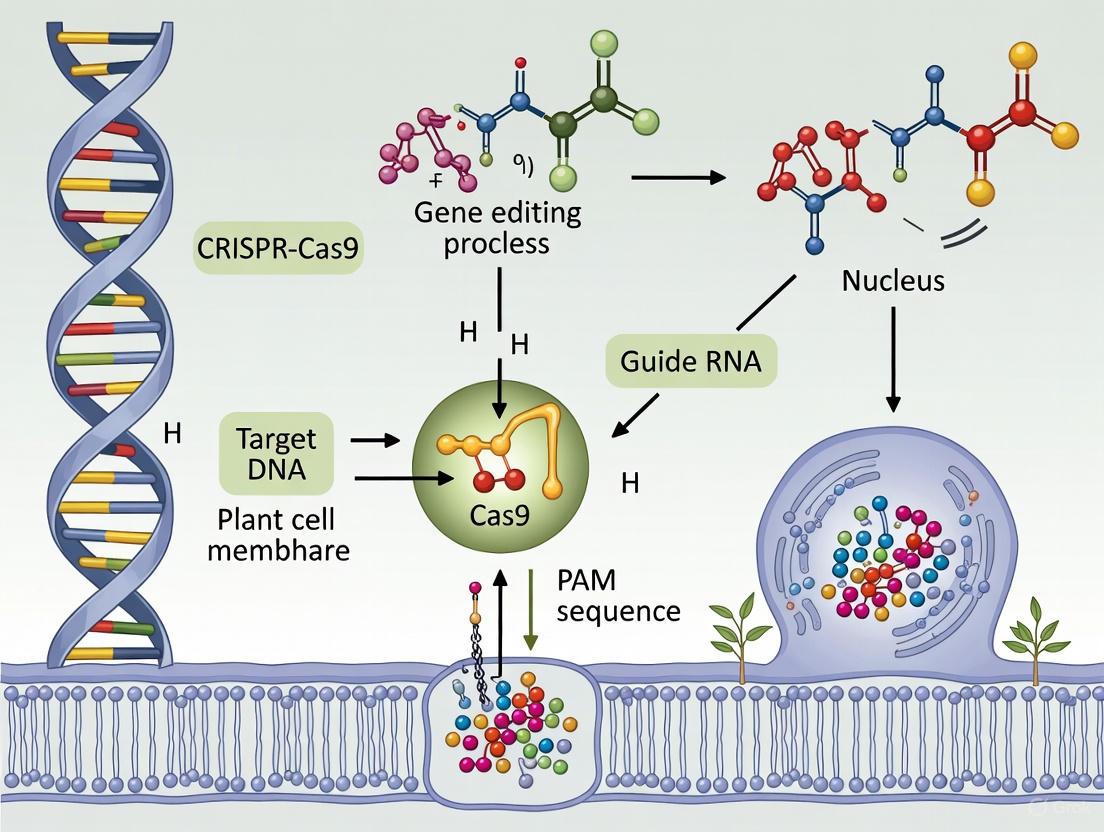
This article provides a comprehensive analysis of CRISPR-Cas9 functionality in plant systems, detailing the molecular mechanisms from DNA recognition to repair pathways.
CRISPR-Cas9 in Plant Cells: Mechanisms, Delivery Systems, and Therapeutic Applications
Abstract
This article provides a comprehensive analysis of CRISPR-Cas9 functionality in plant systems, detailing the molecular mechanisms from DNA recognition to repair pathways. It explores innovative delivery methods including Agrobacterium, viral vectors, and nanoparticle systems, with particular emphasis on applications relevant to pharmaceutical development. The content addresses critical optimization challenges such as off-target effects and editing efficiency, while comparing CRISPR-Cas9 with traditional breeding and transgenic approaches. Special focus is given to plant molecular farming for recombinant therapeutic protein production, offering drug development professionals insights into plant-based bioproduction platforms enhanced by precision genome editing.
The Molecular Machinery: How CRISPR-Cas9 Functions in Plant Cells
The CRISPR-Cas9 system, derived from an adaptive immune mechanism in bacteria and archaea, has revolutionized plant genome engineering due to its precision, efficiency, and ease of design [1] [2]. This prokaryotic system degrades exogenous genetic material from invading phages or plasmids, a function co-opted for creating targeted double-strand breaks (DSBs) in plant genomes [1]. The core engine of this technology consists of the Cas9 nuclease and a single-guide RNA (sgRNA), which jointly identify and cleave target DNA sequences contingent upon the presence of a short Protospacer Adjacent Motif (PAM) [3] [2]. This technical guide details these core components and their function within the specific context of plant cell research, providing methodologies and resources for implementing this technology to develop climate-resilient, high-yielding crops [4].
The Core Functional Units
The CRISPR-Cas9 system's functionality in plant cells hinges on three interdependent core components that govern target recognition and cleavage.
Single-Guide RNA (sgRNA)
The sgRNA is a synthetic chimeric RNA molecule that confers target specificity to the Cas9 nuclease. It is formed by fusing the CRISPR RNA (crRNA), which contains a ~20 nucleotide sequence complementary to the target DNA, with the trans-activating crRNA (tracrRNA), which provides a structural scaffold for Cas9 binding [1] [2]. This fusion into a single molecule simplified the system for broad application [1] [2]. The sgRNA directs Cas9 to a specific genomic locus through Watson-Crick base pairing between its spacer sequence and the target DNA strand [1] [3].
Cas9 Nuclease
The Cas9 protein is a RNA-guided DNA endonuclease responsible for creating a double-stranded break (DSB) in the target DNA. Upon sgRNA-mediated binding to the target site, two distinct nuclease domains within Cas9 cleave opposing DNA strands. The HNH domain cleaves the DNA strand complementary to the sgRNA (target strand), while the RuvC-like domain cleaves the non-complementary strand [2]. This action typically creates a blunt-ended DSB three nucleotides upstream of the PAM sequence [2]. For plant genome editing, the Cas9 coding sequence is often codon-optimized for expression in plants and placed under the control of strong plant promoters such as the Cauliflower Mosaic Virus (CaMV) 35S promoter or the maize Ubiquitin promoter to ensure high expression levels [1] [2].
Protospacer Adjacent Motif (PAM)
The Protospacer Adjacent Motif (PAM) is a short, specific nucleotide sequence adjacent to the target DNA site that is essential for Cas9 recognition and activation. For the most commonly used Cas9 from Streptococcus pyogenes, the PAM sequence is 5'-NGG-3', where 'N' is any nucleotide [2]. The PAM is not part of the sgRNA recognition sequence but must be present for the Cas9-sgRNA complex to initiate binding and DNA cleavage. This requirement is a critical constraint when selecting target sites for genome editing in plants [2].
Table 1: Core Components of the CRISPR-Cas9 System for Plant Genome Editing
| Component | Structure & Origin | Primary Function | Key Features in Plant Systems |
|---|---|---|---|
| sgRNA | Synthetic fusion of crRNA and tracrRNA [1] | Target sequence recognition via ~20 nt guide sequence [1] | Often expressed from Pol III promoters (e.g., AtU6, OsU3) [1] |
| Cas9 Nuclease | RNA-guided endonuclease (e.g., from S. pyogenes) [2] | Creates double-stranded DNA breaks [2] | Codon-optimized for plants; driven by constitutive promoters (e.g., 35S, Ubiquitin) [1] [2] |
| PAM | Short DNA motif (e.g., 5'-NGG-3' for SpCas9) [2] | Enables Cas9 recognition and cleavage initiation [2] | A major determinant of target site selection [2] |
Molecular Mechanism of Action in Plant Cells
The following diagram and workflow outline the sequential molecular mechanism of CRISPR-Cas9 in a plant cell, from component delivery to the resulting genetic outcomes.
Diagram 1: CRISPR-Cas9 workflow in plant cells. The process begins with the delivery and expression of CRISPR-Cas9 components, followed by target recognition, DNA cleavage, and finally cellular repair leading to gene knockout or precise editing.
Workflow Description
- Component Delivery and Complex Formation: The genes encoding Cas9 and the sgRNA are introduced into plant cells, typically via Agrobacterium-mediated transformation or particle bombardment [1] [2]. Inside the plant cell nucleus, the Cas9 protein and sgRNA are expressed and assemble into a ribonucleoprotein (RNP) complex [2].
- Target Recognition and Binding: The Cas9-sgRNA complex scans the genomic DNA. The PAM sequence (5'-NGG-3' for SpCas9) is first recognized by the Cas9 protein, which then initiates local DNA melting. If the sgRNA spacer sequence is fully complementary to the target DNA adjacent to the PAM, stable binding occurs [2].
- DNA Cleavage: Upon successful target binding, the Cas9 nuclease is activated. Its HNH and RuvC-like nuclease domains each cleave one strand of the DNA duplex, resulting in a double-strand break (DSB) typically located 3 base pairs upstream of the PAM sequence [2].
- DNA Repair and Mutagenesis: The induced DSB triggers the plant cell's innate DNA repair machinery, primarily through two pathways:
- Non-Homologous End Joining (NHEJ): This is an error-prone repair pathway that often results in small insertions or deletions (indels) at the break site. If these indels occur within a protein-coding exon and shift the reading frame, they can lead to gene knockout, making NHEJ the preferred mechanism for disrupting gene function [2].
- Homology-Directed Repair (HDR): In the presence of a donor DNA template with homology to the sequences flanking the break, the cell can perform precise HDR. This pathway can be used to introduce specific nucleotide changes, insert genes, or replace entire sequences, enabling precise genome editing [2].
Comparative Analysis of CRISPR Systems and Applications
The core CRISPR-Cas9 system has been adapted and extended into a versatile toolkit. Different Cas nucleases and editing approaches offer varying advantages for plant research applications.
Table 2: Comparison of CRISPR Systems and Editing Approaches in Plants
| System / Approach | PAM Requirement | Cleavage Mechanism | Primary Application in Plants | Key Advantage |
|---|---|---|---|---|
| CRISPR-Cas9 [2] [5] | 5'-NGG-3' | Blunt-ended DSB | Gene knockouts via NHEJ [2] | Well-established, high efficiency |
| CRISPR-Cas12a (Cpf1) [5] | 5'-TTTN-3' | Staggered DSB | Gene knockouts, multiplex editing [5] | Simpler sgRNA structure, staggered cuts |
| CRISPR-Cas9 D10A Nickase [2] | 5'-NGG-3' | Single-strand nick | HR-mediated gene targeting [2] | Reduced off-target effects |
| Base Editing [4] | NGG (for SpCas9) | Single-base conversion without DSB | Point mutations (e.g., herbicide resistance) [3] | Precise nucleotide changes, no donor template |
| CRISPR-Cas3 [6] | 5'-GAA-3' | Processive long-range deletion | Large genomic deletions [6] | Eradicates large gene sequences |
Experimental Protocol for Plant Genome Editing
This protocol outlines the key steps for creating stable gene edits in a model plant like Nicotiana benthamiana or rice using Agrobacterium-mediated transformation, a common and effective delivery method [1] [2].
Target Selection and Vector Construction
- Identify Target Gene and Sequence: Select a target gene for modification (e.g., OsPDS for albinism phenotype or OsProDH for thermotolerance) [3]. Analyze the gene's exon sequence for 5'-NGG-3' PAM sites.
- Design sgRNA: Select a 20-nucleotide spacer sequence immediately 5' to the PAM. Use computational tools to minimize potential off-target effects across the plant's genome.
- Clone sgRNA into Expression Vector: Synthesize oligonucleotides corresponding to the sgRNA spacer and clone them into a plant CRISPR-Cas9 binary vector. These vectors typically contain:
- A plant codon-optimized Cas9 gene under a constitutive promoter (e.g., CaMV 35S or maize Ubiquitin).
- The sgRNA scaffold under a Pol III promoter (e.g., AtU6 or OsU3) [1].
- Optional Donor Template Construction: For HDR, clone a donor DNA template containing the desired edit flanked by homologous arms (≥500 bp) into the binary vector.
Plant Transformation and Regeneration
- Transformation: Introduce the constructed binary vector into Agrobacterium tumefaciens strain LBA4404 or GV3101.
- Inoculation: For N. benthamiana, use agroinfiltration by syringe to deliver the Agrobacterium culture into leaves [2]. For rice or other cereals, incubate embryogenic calli with the Agrobacterium suspension [1].
- Selection and Regeneration: Transfer transformed plant tissue (calli or leaf discs) to selection media containing antibiotics to eliminate non-transformed cells. Subsequently, transfer resistant tissues to regeneration media to induce shoot and root formation [2].
Molecular Analysis of Transformed Plants
- Genomic DNA Extraction: Isolate DNA from regenerated plantlets (T0 generation).
- Mutation Detection:
- Perform PCR to amplify the genomic region surrounding the target site.
- Use restriction enzyme digestion (if the edit disrupts a site) or electrophoresis assays (e.g., T7 Endonuclease I or SURVEYOR) to detect induced mutations.
- Confirm the exact sequence of indels by Sanger sequencing of the PCR amplicons [2].
- Segregation Analysis: Grow the T1 progeny from self-pollinated T0 plants. Perform genotyping to identify lines that have segregated away the Cas9/sgRNA transgene while retaining the desired mutation, generating transgene-free edited plants [2].
The Scientist's Toolkit: Essential Reagents for Plant CRISPR Research
Table 3: Key Research Reagent Solutions for Plant CRISPR-Cas9 Experiments
| Reagent / Tool Category | Specific Examples | Function in the Workflow |
|---|---|---|
| Expression Vectors | pBUN-based vectors, human/plant codon-optimized Cas9 vectors [1] [2] | Provides backbone for expressing Cas9 and sgRNA in plant cells; often includes selectable markers |
| sgRNA Cloning Systems | Golden Gate-compatible vectors, AtU6/U3 promoter-driven sgRNA scaffolds [1] | Enables efficient and modular assembly of multiple sgRNA expression cassettes |
| Delivery Tools | Agrobacterium strains (LBA4404, GV3101), Gene gun/gold particles, PEG-mediated protoplast transformation [1] [2] | Physically introduces the CRISPR-DNA construct or RNP complex into plant cells |
| Detection & Validation Kits | T7 Endonuclease I, SURVEYOR Mutation Detection Kits, Sanger Sequencing | Confirms the presence and nature of mutations at the target locus |
| Plant Culture Media | Callus induction media (e.g., N6 for rice), Regeneration media (with cytokinins/auxins), Selection antibiotics (e.g., Hygromycin) [2] | Supports the growth and selection of transformed plant tissue and regeneration of whole plants |
The precise interplay between the sgRNA, Cas9 nuclease, and PAM sequence forms the foundation of CRISPR-Cas9 technology in plant research. The sgRNA provides programmable specificity, the Cas9 protein executes targeted DNA cleavage, and the PAM ensures precise targeting. This system leverages the plant's own DNA repair mechanisms to generate a spectrum of genetic modifications. Continued optimization of these core components—such as using novel Cas variants with divergent PAM requirements and improved delivery methods—is critical for overcoming current challenges in plant transformation. These advancements will further empower researchers to develop innovative solutions for crop improvement, ultimately contributing to global food security in the face of climate change [4] [3].
The Clustered Regularly Interspaced Short Palindromic Repeats (CRISPR) and CRISPR-associated protein 9 (Cas9) system functions as a precise, programmable genome-editing tool. Originally discovered as part of the adaptive immune system in bacteria and archaea, this mechanism allows prokaryotes to defend against viral infections by integrating fragments of foreign DNA into their own genome, which then serve as a genetic "memory" for recognizing and cleaving subsequent invading DNA [7] [8]. In modern biotechnology, the repurposed CRISPR-Cas9 system operates through a fundamental, three-stage process: identification of a target DNA sequence, cleavage of the DNA backbone, and correction of the break by the cell's native repair machinery [7]. This process enables researchers to make targeted modifications to the genome of virtually any organism, including plants, with unprecedented ease and accuracy.
In plant science, CRISPR-Cas9 has revolutionized functional genomics and crop breeding. Its application extends from basic gene function studies to the development of crops with enhanced disease resistance, abiotic stress tolerance, and improved nutritional profiles [9] [10] [11]. The system's core strength lies in its ability to induce targeted double-strand breaks (DSBs) in the plant genome, which are then repaired by the cell through one of two primary pathways: Non-Homologous End Joining (NHEJ) or Homology-Directed Repair (HDR) [9] [8]. The predictable outcomes of these repair processes—gene knockouts via NHEJ or precise edits via HDR—provide plant researchers with a powerful means to alter gene function and, consequently, plant traits. The following sections detail the components of the system, the mechanism of DNA cleavage, and the cellular repair pathways that complete the editing process.
System Components: The Molecular Architecture
The CRISPR-Cas9 editing machinery consists of two fundamental components: the Cas9 endonuclease and a guide RNA (gRNA) [11]. The Cas9 protein is an enzyme that acts as a molecular scalpel, responsible for cutting the double helix of the DNA at a specific location. For the widely used Streptococcus pyogenes Cas9, the protein contains two distinct nuclease domains: the HNH domain, which cleaves the DNA strand complementary to the gRNA, and the RuvC domain, which cleaves the non-complementary strand [9] [7]. Together, these domains generate a clean double-strand break (DSB).
The second component, the guide RNA, is a synthetic, single RNA molecule that functions as a programmable global positioning system (GPS) for the Cas9 protein. It is a chimeric fusion of two natural RNAs: the CRISPR RNA (crRNA), which contains a ~20 nucleotide sequence that is complementary to the target DNA site, and the trans-activating crRNA (tracrRNA), which serves as a scaffolding backbone that facilitates the binding of the crRNA to the Cas9 protein [9] [7] [8]. The gRNA directs Cas9 to the intended genomic locus through simple Watson-Crick base pairing.
A third critical element for target recognition is the Protospacer Adjacent Motif (PAM), a short, conserved DNA sequence immediately adjacent to the target site on the non-complementary strand. For S. pyogenes Cas9, the PAM sequence is 5'-NGG-3', where 'N' is any nucleotide [9] [7]. The PAM is not part of the gRNA-targeted sequence but is essential for the Cas9 protein to initiate DNA unwinding and cleavage. Recognition of the PAM is a primary safety mechanism that prevents the system from targeting and cutting the CRISPR arrays in its native bacterial context.
Table 1: Core Components of the CRISPR-Cas9 System
| Component | Type | Function | Key Features |
|---|---|---|---|
| Cas9 Protein | Endonuclease | Catalyzes DNA double-strand break | Contains HNH and RuvC nuclease domains [7] |
| Guide RNA (gRNA) | RNA Molecule | Targets Cas9 to specific genomic locus | Combines crRNA (targeting) and tracrRNA (scaffold) [8] |
| Protospacer Adjacent Motif (PAM) | DNA Sequence | Enables Cas9 recognition and binding | Sequence is 5'-NGG-3' for S. pyogenes Cas9 [7] |
The DNA Cleavage Process: A Step-by-Step Mechanism
The process of DNA cleavage by the CRISPR-Cas9 complex is a precise, multi-step mechanism that ensures high specificity for the target site.
- Complex Formation: The journey begins with the assembly of the ribonucleoprotein (RNP) complex. The guide RNA binds to the Cas9 protein, forming an active complex that is ready to search the genome [8].
- Target Search and PAM Recognition: The Cas9-gRNA complex scans the vast expanse of the cellular DNA. It does this by rapidly testing for the presence of the short PAM sequence (5'-NGG-3'). This step is crucial because without a valid PAM, Cas9 will not bind to the DNA, even if the adjacent sequence is perfectly complementary to the gRNA [7] [11].
- DNA Unwinding and R-Loop Formation: Once a valid PAM is identified, the Cas9 protein induces local melting of the DNA double helix, causing the two strands to separate. This allows the ~20-nucleotide spacer region of the gRNA to form an RNA-DNA heteroduplex with the complementary target strand (the protospacer). This displacement of the non-target DNA strand creates a structure known as an R-loop [9] [7].
- Target Verification and Conformational Change: Before cleavage, the system verifies the complementarity between the gRNA and the target DNA. If the match is sufficient, the Cas9 protein undergoes a conformational change that activates its nuclease domains [11].
- Double-Strand Break (DSB) Catalysis: The activated HNH domain cleaves the target DNA strand (the one hybridized to the gRNA), while the RuvC domain cleaves the opposite, non-target DNA strand [7] [8]. This coordinated action results in a blunt-ended double-strand break (DSB) typically located 3 base pairs upstream of the PAM site [9].
The cleavage process is highly efficient and specific, but its ultimate outcome is determined not by the cut itself, but by the cell's response to it. The creation of a DSB is a potent signal that triggers the cell's innate DNA repair machinery, which immediately mobilizes to fix the break.
Diagram: The DNA Cleavage Process by CRISPR-Cas9.
Cellular Repair Pathways: From DNA Break to Genomic Outcome
After the CRISPR-Cas9 system introduces a double-strand break (DSB), the fate of the edit is handed over to the cell's endogenous repair machinery. In eukaryotic plant cells, two primary competing pathways are recruited to mend the break: Non-Homologous End Joining (NHEJ) and Homology-Directed Repair (HDR). The choice between these pathways has profound implications for the final genetic outcome and is a key consideration in experimental design [9] [8] [11].
Non-Homologous End Joining (NHEJ)
NHEJ is the dominant and more efficient repair pathway in most plant cells, particularly in somatic cells. It operates throughout the cell cycle and functions by directly ligating the two broken ends of the DNA back together. A major characteristic of NHEJ is that it is an error-prone process. The repair machinery often adds or deletes a few nucleotides ("indels") at the junction site while processing the broken ends [7] [8]. In a coding sequence, these small indels frequently cause frameshift mutations, leading to a premature stop codon and the production of a truncated, non-functional protein. Consequently, the primary application of NHEJ in plant research is for gene knockout studies. For example, knocking out negative regulators of disease resistance (e.g., OsDjA2 and OsERF104 in rice) via NHEJ has successfully enhanced blast resistance [7].
Homology-Directed Repair (HDR)
HDR is a precise, template-dependent repair pathway. Unlike NHEJ, HDR requires a donor DNA template containing homologous sequences flanking the target site. The cell uses this template to accurately repair the DSB without introducing errors, allowing for specific nucleotide changes, gene insertions ("knock-ins"), or gene replacements [7] [8]. While HDR is the pathway of choice for precise genome editing, it has significant limitations in plants. Its efficiency is inherently much lower than that of NHEJ, and it is primarily active in the S and G2 phases of the cell cycle when a sister chromatid is available as a natural template [7]. To use HDR for genome editing, an exogenous donor template must be supplied alongside the CRISPR-Cas9 components, which presents a major delivery challenge. Strategies to improve HDR efficiency in plants include the use of geminivirus-based replicons and the optimization of donor template design (e.g., using single-stranded oligodeoxynucleotides - ssODNs) [7].
Table 2: Comparison of Cellular DNA Repair Pathways in CRISPR Editing
| Feature | Non-Homologous End Joining (NHEJ) | Homology-Directed Repair (HDR) |
|---|---|---|
| Mechanism | Direct end ligation | Uses homologous DNA template |
| Template Required | No | Yes |
| Efficiency in Plants | High (predominant pathway) | Low |
| Fidelity | Error-prone (often creates indels) | High-fidelity, precise |
| Primary Application | Gene knockouts [7] | Gene knock-ins, precise substitutions [8] |
| Key Regulators | KU70/KU80, DNA-PKcs, XRCC4-LIG4 | BRCA1, BRCA2, RAD51 |
| Outcome | Disrupted gene function | Controlled genetic alteration |
Diagram: Cellular Repair Pathways for CRISPR-Induced DNA Breaks.
Advanced CRISPR Editing Modalities
Beyond the traditional knockout and knock-in approaches enabled by the standard Cas9 nuclease, several advanced CRISPR systems have been developed to expand the toolbox for plant researchers. These modalities increase precision and offer new functionalities without relying on DSBs and the unpredictable NHEJ pathway.
CRISPR Activation (CRISPRa): This is a gain-of-function strategy that promotes gene expression rather than disrupting it. CRISPRa uses a catalytically "dead" Cas9 (dCas9) variant, which lacks nuclease activity but can still be guided to specific DNA sequences. The dCas9 is fused to transcriptional activators (e.g., VP64, p65AD) and recruits them to the promoter region of a target gene, leading to its targeted upregulation [9]. This is particularly valuable in plant biology for activating endogenous genes involved in beneficial traits, such as disease resistance (e.g., SlPR-1 in tomato) or somatic embryogenesis, without altering the DNA sequence itself [9].
Base Editing: Base editors are fusion proteins that combine dCas9 (or a nickase version, nCas9) with a deaminase enzyme. This system does not create DSBs. Instead, it chemically converts one DNA base into another at a specific target site—for example, a C•G to a T•A pair [7] [11]. Base editing allows for single-nucleotide changes with high efficiency and greatly reduced off-target effects compared to DSB-dependent methods, making it ideal for correcting point mutations or creating specific amino acid substitutions.
Prime Editing: This is a "search-and-replace" genome editing technology that offers even greater versatility than base editing. The prime editing system uses an engineered reverse transcriptase fused to nCas9 and a specialized prime editing guide RNA (pegRNA). The pegRNA both directs nCas9 to the target site and serves as a template for the new genetic information. Prime editing can mediate all 12 possible base-to-base conversions, as well as small insertions and deletions, without requiring a DSB or a separate donor DNA template [11].
Experimental Protocol: A Representative Workflow in Plants
The following protocol outlines a typical workflow for conducting CRISPR-Cas9 gene editing in the model plant Arabidopsis thaliana, based on established methodologies and recent innovations cited in the literature [12].
Objective
To generate and isolate stable, transgene-free Arabidopsis mutants with a targeted knockout of a gene of interest (e.g., AtTT4 [12]) using an RNA aptamer-assisted CRISPR-Cas9 system for efficient selection.
Materials and Reagents
Table 3: Key Research Reagent Solutions for Plant CRISPR Editing
| Reagent / Solution | Function / Explanation |
|---|---|
| CRISPR Vector (e.g., p3WJ-4×Bro/Cas9) | Plant transformation vector carrying Cas9, sgRNA expression cassettes, and the 3WJ-4×Bro RNA aptamer as a fluorescent reporter for selection [12]. |
| Agrobacterium tumefaciens (Strain GV3101) | A soil bacterium naturally capable of transferring DNA (T-DNA) into plant genomes; used as a vector for stable transformation [12] [13]. |
| LB (Luria-Bertani) Medium | Liquid and solid agar media for growing and maintaining Agrobacterium cultures. |
| Plant Transformation Buffer | 5% Sucrose, 0.05% Silwet L-77 in water; used to resuspend Agrobacterium for the floral dip procedure. |
| Selection Antibiotics | Hygromycin B; selects for transformed T1 seeds by suppressing the growth of non-transformed plants [12]. |
| DFHBI-1T Dye | A cell-permeable, synthetic fluorogen that binds to the 3WJ-4×Bro RNA aptamer and becomes fluorescent, enabling visual screening [12]. |
| MS (Murashige and Skoog) Medium | A standardized plant growth medium containing essential nutrients and vitamins for germinating seeds and growing seedlings under sterile conditions. |
Step-by-Step Procedure
Vector Construction and Transformation
- Design a 20-nucleotide sgRNA sequence specific to the target gene, considering minimal off-target potential.
- Clone the sgRNA sequence into the p3WJ-4×Bro/Cas9 plant binary vector [12].
- Introduce the constructed plasmid into Agrobacterium tumefaciens via heat shock or electroporation.
Plant Transformation via Floral Dip
- Grow Arabidopsis plants until the primary inflorescence is ~5-10 cm tall.
- Inoculate a culture of the transformed Agrobacterium and grow to mid-log phase.
- Pellet the bacteria and resuspend in plant transformation buffer to an OD₆₀₀ of ~0.8.
- Submerge the developing floral tissues of the Arabidopsis plants in the Agrobacterium suspension for 5-10 seconds, ensuring good coverage. Repeat after 7 days for higher transformation efficiency.
Selection of T1 Transformants
- Harvest seeds from the dipped plants (T1 generation) and surface-sterilize.
- Plate seeds on MS agar plates containing hygromycin. Stratify at 4°C for 2-4 days to synchronize germination.
- After 7-10 days of growth, screen T1 seedlings for fluorescence by applying DFHBI-1T dye and visualizing under a fluorescence microscope. Select fluorescent seedlings as positive transformants and transfer to soil [12].
Genotypic Analysis and Mutation Detection
- Extract genomic DNA from leaf tissue of putative transgenic plants.
- Use PCR to amplify the target genomic region from the selected T1 plants.
- Analyze the PCR products by Sanger sequencing or next-generation sequencing (amplicon sequencing) to detect the presence and nature of indel mutations induced by NHEJ repair.
Segregation and Isolation of Cas9-Free Mutants (T2 Generation)
- Allow self-pollination of the primary (T1) transgenic plants and collect the T2 seeds.
- Germinate T2 seeds on MS plates and screen for non-fluorescent seedlings using the DFHBI-1T dye assay. The absence of fluorescence indicates the loss of the Cas9/gRNA transgene through genetic segregation [12].
- Genotype the non-fluorescent T2 plants to identify homozygous mutants. These plants contain the desired mutation but are free of the CRISPR transgene, making them suitable for phenotypic analysis and subsequent breeding.
The CRISPR-Cas9 editing process—from the initial programmable DNA cleavage to the final outcome shaped by cellular repair mechanisms—represents a foundational technology in modern plant biology and biotechnology. The precise mechanics of the Cas9 nuclease, guided by a simple RNA molecule to induce a double-strand break, provide the initial trigger. However, it is the cell's own NHEJ and HDR pathways that ultimately determine the genetic outcome, whether it is a gene knockout, a precise modification, or even transcriptional activation. Continued refinement of delivery methods, such as viral vectors and nanoparticle systems, and the development of more precise editors like base and prime editors, are pushing the boundaries of what is possible [14] [8]. As these tools mature, they pave the way for the development of next-generation crops with enhanced resilience to climate stress, improved nutritional content, and sustainable yield increases, solidifying CRISPR-Cas9's role as an indispensable instrument in the global effort to achieve food security.
The CRISPR/Cas9 system has revolutionized genetic engineering by enabling targeted modification of genomes across diverse organisms, including plants. The core of this technology relies on the creation of a double-strand break (DSB) at a specific genomic location directed by a guide RNA (gRNA). Once a DSB is introduced, the cell activates one of two principal endogenous DNA repair pathways: Non-Homologous End Joining (NHEJ) or Homology-Directed Repair (HDR) [15]. The competition between these pathways determines the molecular outcome of the editing experiment. NHEJ is an error-prone repair mechanism that predominantly results in gene knockouts through small insertions or deletions (indels). In contrast, HDR is a precise repair pathway that can be harnessed for specific gene insertions or corrections, using an exogenous DNA template [16] [17]. In the context of plant cell research, understanding and manipulating these pathways is crucial for advancing functional genomics and crop improvement strategies, though HDR remains challenging due to its low efficiency in plant somatic cells [16].
Non-Homologous End Joining (NHEJ) for Gene Knockouts
Mechanism and Molecular Outcomes
NHEJ is the dominant and most active DSB repair pathway in most plant somatic cells, primarily because it is active throughout the entire cell cycle [16] [7]. This pathway functions by directly ligating the two broken ends of the DNA double helix. Since it does not require a homologous template for repair, the process is often imprecise. The initiation of NHEJ involves the recognition of the DSB by a complex of proteins, including Ku70 and Ku80, which protect the DNA ends from resection. Subsequently, nucleases may process the ends, often resulting in the loss or gain of a few nucleotides before the final ligation by DNA ligase IV [16]. This error-prone nature is the fundamental basis for its application in generating gene knockouts. Even small indels can disrupt the reading frame of a gene, leading to premature stop codons and the production of a non-functional truncated protein.
In plant research, NHEJ has been successfully employed to knockout susceptibility genes, thereby conferring disease resistance. For example, knocking out the OsSWEET11 and OsSWEET14 genes in rice via NHEJ has resulted in enhanced resistance to bacterial blight caused by Xanthomonas oryzae [7]. Similarly, knockout of the OsERF104 gene has improved blast resistance in rice [7].
Experimental Protocol for NHEJ-Mediated Knockout in Plants
The following protocol outlines the key steps for achieving a gene knockout in plants using CRISPR/Cas9 and the NHEJ pathway.
- Step 1: Target Selection and gRNA Design. Identify a 20-nucleotide target sequence within an early exon of the target gene to maximize the likelihood of disrupting the protein's function. The target must be immediately followed by a Protospacer Adjacent Motif (PAM). For the most commonly used Cas9 from Streptococcus pyogenes (SpCas9), the PAM sequence is 5'-NGG-3' [7] [15].
- Step 2: Construct Preparation. Clone the selected gRNA sequence into a plant CRISPR/Cas9 expression vector. This vector typically contains both the Cas9 nuclease gene and the gRNA expression cassette, often driven by the U6 polymerase III promoter [7].
- Step 3: Plant Transformation. Introduce the constructed vector into plant cells using a method appropriate for the species, such as Agrobacterium-mediated transformation or biolistic particle delivery [16] [7].
- Step 4: Regeneration and Selection. Regenerate whole plants from the transformed cells on selective media and subsequently transfer them to soil.
- Step 5: Genotyping and Validation. Extract genomic DNA from the regenerated plants (T0 generation). Use PCR to amplify the target genomic region and sequence the amplicons to detect the presence of indels. The efficiency of mutagenesis is typically calculated as the percentage of independently transformed lines that carry mutations at the target site [7].
Homology-Directed Repair (HDR) for Precise Insertions
Mechanism and Molecular Outcomes
In contrast to NHEJ, HDR is a high-fidelity repair pathway that utilizes a homologous DNA template to accurately repair the DSB. This template can be an endogenous sister chromatid or, for genome editing purposes, an exogenously supplied donor DNA molecule [16] [17]. The HDR pathway is active primarily during the late S and G2 phases of the cell cycle, making it intrinsically less frequent than NHEJ in somatic plant cells [16]. There are several sub-pathways of HDR, with the Synthesis-Dependent Strand Annealing (SDSA) model being a major mechanism for precise gene integration in plants, as it typically results in non-crossover products [16].
The ability of HDR to incorporate sequences from a donor template makes it the preferred method for precise genome modifications, including:
- Gene Correction: Fixing deleterious point mutations or small indels.
- Gene Replacement: Swapping alleles, such as introducing beneficial alleles from landraces or wild relatives into elite crop varieties without linkage drag [16].
- Gene Insertion: Targeted insertion of foreign genes, such as those conferring herbicide resistance or fluorescent protein markers, into specific genomic safe harbors [16].
A key achievement in plants has been the HDR-mediated replacement of the wild-type acetolactate synthase (ALS) gene with a modified version that confers herbicide resistance [16]. However, HDR efficiency in plants remains low, with a typical ratio of (10^5) to (10^7) illegitimate recombination (NHEJ) events for every one successful homologous recombination event [16].
Experimental Protocol for HDR-Mediated Precise Editing in Plants
Achieving precise edits via HDR requires additional considerations and reagents compared to NHEJ-mediated knockouts.
- Step 1: Donor Template Design. The donor DNA template must contain the desired edit (e.g., a SNP or a gene insert) flanked by homology arms that are identical to the sequences upstream and downstream of the target DSB. While the optimal length can vary, arms of 500-1000 bp are often used for plant systems to improve HDR efficiency [16]. The template itself can be supplied as a double-stranded plasmid, a double-stranded linear DNA fragment, or a single-stranded oligodeoxynucleotide (ssODN) for smaller edits [16] [7].
- Step 2: gRNA Design for HDR. Design a gRNA that creates a DSB as close as possible to the intended edit site to increase the likelihood of the donor template being used for repair.
- Step 3: Co-delivery of Editing Components. Co-deliver the CRISPR/Cas9 construct (from the NHEJ protocol) and the donor template into plant cells. This can be done simultaneously using Agrobacterium or biolistics.
- Step 4: Regeneration and Screening. Regenerate plants as described in the NHEJ protocol. Screening for HDR events is more laborious, as it requires not only PCR amplification of the target locus but also analytical methods capable of distinguishing the precise edit from the wild-type sequence and NHEJ-induced indels. This often involves restriction fragment length polymorphism (RFLP) analysis, allele-specific PCR, or deep sequencing.
- Step 5: Molecular Validation. Confirm the precise integration of the edit and the absence of random integration of the donor template through Southern blot analysis or long-range PCR.
Comparative Analysis of NHEJ and HDR
The table below summarizes the key characteristics of the NHEJ and HDR pathways in the context of plant genome editing.
Table 1: Comparative analysis of NHEJ and HDR pathways in CRISPR/Cas9 genome editing
| Feature | Non-Homologous End Joining (NHEJ) | Homology-Directed Repair (HDR) |
|---|---|---|
| Primary Outcome | Gene knockout via random indels | Precise gene insertion, correction, or replacement |
| Template Required | No | Yes, homologous donor template |
| Repair Efficiency | High (dominant pathway in somatic cells) | Low (limited by cell cycle and competition with NHEJ) |
| Cell Cycle Activity | Active throughout all phases | Primarily active in S/G2 phases |
| Key Applications | Disrupting gene function (e.g., creating disease resistance) | Introducing specific alleles, tagging proteins, correcting mutations |
| Typical Mutations | Small insertions and deletions (indels) | Precise single-nucleotide changes or defined insertions |
| Experimental Complexity | Relatively simple | More complex, requires design and delivery of a donor template |
The Scientist's Toolkit: Essential Reagents for CRISPR/Cas9 Experiments
Table 2: Key research reagents and their functions in CRISPR/Cas9 experiments
| Reagent | Function | Technical Notes |
|---|---|---|
| Cas9 Nuclease | Creates a double-strand break at the target genomic locus. | Can be delivered as a protein, mRNA, or encoded in a plasmid. Different orthologs (e.g., NmCas9, St1Cas9) have different PAM requirements, useful for multiplexing [18]. |
| Guide RNA (gRNA) | Directs Cas9 to the specific DNA sequence via complementarity. | A 20-nucleotide sequence is sufficient for targeting. The scaffold can be engineered with RNA aptamers (e.g., MS2, PP7) for recruiting fluorescent proteins for live imaging [18]. |
| Donor DNA Template | Serves as a homologous repair template for HDR. | Can be supplied as double-stranded (plasmid, PCR fragment) or single-stranded DNA. For plants, geminivirus-based replicons have been used to increase template availability [16] [7]. |
| dCas9 (catalytically dead Cas9) | Binds DNA without cutting it. | Used for gene regulation (as a CRISPRi/a system) and live imaging of genomic loci when fused to fluorescent proteins [19] [18]. |
| HITI Donor Template | A homology-independent strategy for gene knock-in. | The donor vector is flanked by Cas9 target sites, enabling integration via the NHEJ pathway, which is more active in post-mitotic cells [20]. |
Visualization of CRISPR/Cas9 and DNA Repair Pathways
The following diagram illustrates the core mechanism of CRISPR/Cas9 and the two key DNA repair pathways, NHEJ and HDR.
The application of CRISPR-Cas9 technology in plant systems presents distinct challenges that require specialized adaptations not typically encountered in animal or microbial systems. Plant cells feature complex genomic architectures including high ploidy levels, extensive gene redundancy, and tough cell walls that impede delivery of editing components [21] [22]. Additionally, the regenerative process through tissue culture introduces additional hurdles such as somaclonal variation and prolonged life cycles. Understanding these plant-specific constraints is essential for developing effective genome editing strategies in crops.
Unlike animal systems where CRISPR components can be delivered directly to many cell types, plant editing must overcome the rigid cell wall, which constitutes a physical barrier to delivery methods commonly used in animal cells [23]. Furthermore, the prevalence of duplicated genes and gene families in plant genomes often necessitates simultaneous editing of multiple homologous sequences to achieve meaningful phenotypic changes [21]. This review examines the specific adaptations and methodologies developed to overcome these challenges, enabling efficient precision breeding in diverse plant species.
Core Technical Adaptations for Plant Systems
Plant-Optimized Vector Systems and Delivery Methods
Successful plant genome editing requires customized delivery vectors and transformation methods that address biological constraints. Agrobacterium-mediated transformation remains the most widely used delivery method, utilizing engineered disarmed strains of Agrobacterium tumefaciens to transfer T-DNA containing CRISPR-Cas9 components into plant cells [24] [23]. This biological delivery approach must be complemented with plant-specific genetic elements, including species-specific promoters that drive expression in plant cells.
Key adaptations include the use of ubiquitin promoters for constitutive expression in monocots and 35S Cauliflower Mosaic Virus (CaMV) promoters for dicots [21] [23]. For tissue-specific or inducible editing, development of plant-optimized codon usage in Cas9 sequences has significantly improved editing efficiency [23]. The table below summarizes essential vector components and their functions in plant CRISPR systems:
Table 1: Key Components of Plant CRISPR/Cas9 Vectors
| Component | Function | Examples | Considerations |
|---|---|---|---|
| Cas9 Promoter | Drives nuclease expression | CaMV 35S (dicots), Ubiquitin (monocots) | Constitutive vs. tissue-specific |
| gRNA Promoter | Drives guide RNA expression | U6, U3 snRNA promoters | Species-specific variants required |
| Selectable Marker | Identifies transformed tissue | Kanamycin, Hygromycin resistance | Removal needed for commercial lines |
| Terminator Sequences | Ends transcription | Nos, 35S terminator | Ensures proper transcript processing |
Multiplex Editing Strategies for Polyploid Plants
A fundamental challenge in plant genome editing involves addressing gene redundancy resulting from polyploidy, which is common in major crops such as wheat, cotton, and canola. Multiplex CRISPR systems enabling simultaneous targeting of multiple gene homologs have been developed to overcome this limitation [24] [21]. These systems employ multiple guide RNAs targeting conserved regions across homologous genes, enabling comprehensive functional analysis of redundant gene families.
Advanced strategies include the use of tRNA-processing systems and ribozyme-based approaches that process multiple gRNAs from a single transcriptional unit [21]. Research demonstrates that using four simultaneous gRNAs targeting flanking regions of a selectable marker gene can achieve approximately 10% excision efficiency in transgenic tobacco lines [24]. This multiplex capability is particularly valuable for characterizing genes involved in plant cell wall biosynthesis, where functional redundancy often obscures the effects of single gene knockouts [21].
Figure 1: Workflow for Plant CRISPR/Cas9 System Development and Implementation
Experimental Protocols for Plant Genome Editing
Protocol 1: Eliminating Selectable Marker Genes from Transgenic Plants
The presence of selectable marker genes (SMGs) in transgenic plants raises biosafety concerns and complicates regulatory approval. A CRISPR/Cas9-based method for SMG excision from established transgenic lines has been developed as a practical solution [24].
Materials and Reagents:
- Transgenic tobacco lines containing DsRED (SMG) and aminoglycoside phosphotransferase (GOI)
- CRISPR vector with four gRNAs targeting SMG flanking regions
- Agrobacterium tumefaciens strain LBA4404
- Shoot regeneration medium (3% MS media + 2 mg/L Kinetin + 1 mg/L IAA)
- Sterilization reagents (70% ethanol, 10% bleach)
Methodology:
- Design gRNAs targeting both flanking regions of the SMG cassette
- Introduce the CRISPR vector into Agrobacterium tumefaciens using freeze-thaw method
- Transform leaf discs from transgenic plants using Agrobacterium-mediated transformation
- Regenerate shoots on selection medium lacking the original selection agent
- Screen regenerated shoots for loss of red fluorescence indicating SMG excision
- Confirm edits by PCR and sequencing analysis
- Analyze mutation patterns through sequencing of target sites
- Validate SMG excision through quantitative real-time PCR (qPCR)
Validation and Analysis: This protocol achieved approximately 10% SMG excision efficiency in transgenic tobacco lines [24]. PCR analysis should show smaller amplicons in successfully edited lines, while qPCR must confirm absence of SMG expression with maintained GOI expression. Morphological assessment should demonstrate normal growth, flowering, and seed production in edited plants.
Protocol 2: Optimizing gRNA Design for Plant Genomes
Effective gRNA design is critical for successful plant genome editing. Plant-specific considerations include avoiding sequences with high similarity to repetitive elements and accounting for the distinct chromatin architecture of plant genomes [21].
gRNA Design Criteria:
- Target Site Selection: Prefer 5' regions of coding sequences to maximize frameshift probability
- GC Content: Maintain 40-60% GC content for optimal binding affinity
- Nucleotide Composition: Prefer 'T' at positions 3 and 6, and 'C' at position 20
- PAM-Proximal Region: Ensure perfect complementarity in seed region (8-12 nt adjacent to PAM)
- Specificity Checking: Use plant-specific tools (CRISPR-PLANT, CRISPR-P) to minimize off-target effects
Validation Methods:
- Restriction Enzyme Assay: Disruption of recognition sites confirms editing
- CEL-I or T7E1 Assay: Detects heteroduplex formation in mutated samples
- Sanger Sequencing: Followed by trace decomposition analysis
- Next-Generation Sequencing: For comprehensive mutation profiling
Table 2: gRNA Design Parameters and Their Impact on Editing Efficiency
| Parameter | Optimal Characteristic | Effect on Efficiency | Rationale |
|---|---|---|---|
| GC Content | 40-60% | High | Stabilizes RNA-DNA heteroduplex |
| PAM-Proximal Region | No mismatches | Critical | Cas9 recognition requires perfect seed sequence |
| Consecutive T's | Avoid >3 | Prevents failure | Poly-T sequences act as transcription terminators |
| 5' G for U6 | Required for U6 | Essential | U6 promoter requires G at transcription start |
| Off-target Score | Minimize | Reduces unintended edits | Species-specific genome complexity |
The Scientist's Toolkit: Essential Research Reagents
Successful implementation of plant CRISPR/Cas9 editing requires specialized reagents adapted to plant cellular environments. The following toolkit summarizes critical components:
Table 3: Research Reagent Solutions for Plant CRISPR/Cas9 Experiments
| Reagent Category | Specific Examples | Function | Plant-Specific Adaptations |
|---|---|---|---|
| Cas9 Expression Systems | pCambia-Cas9, pGreen-Cas9 | Nuclease delivery | Plant-optimized codons, intron insertion |
| gRNA Scaffolds | Arabidopsis U6-26, Rice U3 | gRNA expression | Species-specific Pol III promoters |
| Delivery Tools | Agrobacterium LBA4404, Biolistics | Component delivery | Compatible with plant cell walls |
| Selection Markers | Hygromycin B, Kanamycin | Transformant selection | Concentration optimization by species |
| Regeneration Media | MS Medium with hormones | Plant recovery | Species-specific hormone combinations |
Analytical Methods for Validation and Characterization
Comprehensive characterization of CRISPR-edited plants requires multifaceted analytical approaches. Molecular validation begins with PCR-based amplification of target regions followed by sequencing to identify insertion-deletion mutations [24]. For multiplex editing approaches, amplicon sequencing provides detailed information on mutation patterns across different target sites.
Functional characterization includes quantitative real-time PCR (qPCR) to verify changes in gene expression in edited lines [24]. For edits targeting plant cell wall biosynthesis, specialized analytical techniques such as Fourier-Transform Infrared Spectroscopy (FTIR) and glycome profiling are employed to detect structural changes in cell wall components [21].
Phenotypic assessment must evaluate multiple generations to ensure stability of edits and exclude somaclonal variation. Morphological analysis should document normal growth patterns, flowering time, and seed production to confirm that editing does not adversely affect plant development and fertility [24].
Figure 2: Comprehensive Validation Workflow for Plant Genome Editing
Plant-specific adaptations of CRISPR/Cas9 technology have dramatically expanded capabilities for precise genome manipulation in crops. The unique challenges presented by plant cellular structure and genomic organization have driven innovation in delivery methods, vector design, and analytical approaches. Current research focuses on developing novel Cas variants with expanded PAM recognition to increase targeting range [7], improving HDR efficiency in plants through viral replicon systems [7], and creating tissue-specific editing systems that minimize somaclonal variation.
The future of plant genome editing will likely include de novo domestication of wild species through multiplex editing of key traits [22], engineering complex metabolic pathways for biofortification [3], and developing climate-resilient crops through targeted optimization of stress-response networks [7]. As regulatory frameworks evolve, the plant-specific adaptations outlined in this review will play a crucial role in translating laboratory successes into improved agricultural varieties that contribute to global food security.
Delivery Systems and Biomedical Applications in Plant Biotechnology
The application of CRISPR-Cas9 in plant biotechnology represents a pivotal advancement for crop improvement, enabling precise genomic modifications to enhance traits such as yield, nutritional value, and stress resistance [3] [22]. However, the efficacy of this technology is fundamentally constrained by the ability to deliver editing reagents into plant cells. The plant cell wall presents a formidable physical barrier, and the regeneration of whole plants from transformed cells remains a significant bottleneck for many species [25]. Consequently, the development of efficient delivery methods is as crucial as the editing technology itself.
This whitepaper provides an in-depth technical analysis of the three primary delivery platforms for CRISPR-Cas9 in plants: Agrobacterium-mediated transformation, biolistic delivery, and viral vector systems. We examine the principles, recent technological breakthroughs, and detailed experimental protocols for each method, framing this discussion within the broader thesis of how CRISPR-Cas9 functions in plant cell research. The choice of delivery method directly influences editing efficiency, the pattern of edits (chimeric vs. uniform), the potential for transgene integration, and the eventual recovery of transgene-free edited plants, thereby shaping the entire experimental trajectory and its outcomes.
Methodological Deep Dive
Agrobacterium-Mediated Transformation
Principles and Applications: Agrobacterium tumefaciens is a soil bacterium naturally capable of transferring DNA (T-DNA) from its Tumor-inducing (Ti) plasmid into the plant genome. This biological process has been harnessed to deliver CRISPR-Cas9 components into plant cells [26]. The method is prized for its tendency to produce stable transformants with low-copy-number, clean T-DNA insertions, making it suitable for both functional genomics and the creation of stable, heritably edited crop lines [27].
Recent Advances: A key innovation is the development of hypervirulent Agrobacterium strains, such as AGL1, which have significantly boosted transformation efficiency. Furthermore, optimization of co-cultivation conditions—such as the use of solidified medium plates, the addition of AB minimal salts, and surfactants like Pluronic F68—has enabled infection rates of nearly 100% in certain plant suspension cell systems [26]. Beyond traditional tissue culture, novel approaches like the Leaf-Cutting Transformation (LCT) method have been established for specific plants like Jonquil. This method simplifies the process by eliminating the need for sterile operations and relying on the innate regenerative capacity of detached leaves [28].
Table: Key Reagents for Agrobacterium-Mediated Transformation
| Reagent / Component | Function | Example / Note |
|---|---|---|
| Hypervirulent Strain | DNA Delivery | AGL1 strain for high efficiency [26] |
| Ti Plasmid Vector | Carries T-DNA with transgene | Contains CRISPR-Cas9 and gRNA expression cassettes |
| Acetosyringone | Phenolic inducer of Vir genes | Added to co-cultivation medium; typical concentration 200 µM [26] |
| Solidified Co-cultivation Medium | Supports plant cell-Agrobacterium interaction | e.g., Paul's medium or ABM-MS with plant agar [26] |
| Pluronic F68 | Surfactant | Enhances transformation efficiency (e.g., 0.05% w/v) [26] |
| Ticarcillin | Antibiotic | Eliminates Agrobacterium post co-cultivation (e.g., 250 µg/mL) [26] |
Detailed Protocol: Highly Efficient Transformation of Photosynthetic Suspension Cells [26]
- Vector Preparation: Clone the genes for Cas9 and the single-guide RNA (sgRNA) into a T-DNA binary vector. The sgRNA should be expressed under a plant-specific U6 promoter, while Cas9 is driven by a constitutive promoter like 35S.
- Agrobacterium Preparation:
- Transform the vector into electrocompetent A. tumefaciens strain AGL1.
- Inoculate a preculture from a glycerol stock in YEB medium with appropriate antibiotics (e.g., 50 µg/mL carbenicillin, 25 µg/mL kanamycin). Grow at 28°C, 160 rpm for 20-24 hours.
- Dilute the preculture into AB-MES medium (pH 5.5) containing antibiotics and 200 µM acetosyringone to an OD600 of 0.2. Incubate the main culture for 16-20 hours until OD600 reaches 0.3-0.5.
- Harvest bacterial cells by centrifugation (6800 × g, 10 min) and resuspend in ABM-MS medium to an OD600 of 0.8.
- Plant Material Preparation: Subculture green Arabidopsis suspension cells in MS1 medium 4-5 days before transformation to ensure they are in the mid-exponential growth phase (15-20% packed cell volume).
- Co-cultivation (Solid Medium Method):
- Wash the suspension cells twice with ABM-MS medium (200 × g, 5 min). Adjust the PCV to 70% with ABM-MS.
- Mix 1 mL of washed plant cells with the resuspended Agrobacterium and 200 µM acetosyringone.
- Pipette 0.5 mL of the mixture onto a Petri dish containing solid ABM-MS medium with 0.8% plant agar. Spread gently and allow liquid to dry for 10 minutes.
- Seal the plate and incubate at 24°C under continuous light for 2 days.
- Regeneration and Selection:
- Carefully collect the co-cultivated cells and wash twice with ABM-MS medium containing ticarcillin (250 µg/mL) to remove Agrobacterium.
- Transfer the cells to a regeneration medium with appropriate selective agents (e.g., antibiotics or herbicides) to select for transformed plant cells.
Biolistic Delivery (Particle Bombardment)
Principles and Applications: The biolistic method, or particle bombardment, is a physical delivery system that uses high-velocity microprojectiles (typically gold or tungsten) coated with DNA to penetrate plant cells. Its principal advantage is its species-versatility, as it is effective for a wide range of plants, including those recalcitrant to Agrobacterium infection [27]. It is the preferred method for delivering preassembled CRISPR-Cas9 ribonucleoproteins (RNPs), which minimize off-target effects and avoid DNA integration, enabling the production of transgene-free edited plants [27].
Recent Advances: A major breakthrough is the development of the Flow Guiding Barrel (FGB), a 3D-printed device that replaces internal spacer rings in the conventional Bio-Rad PDS-1000/He system. Computational fluid dynamics revealed that the original design caused turbulent, diffusive gas flow, leading to inconsistent particle distribution and low efficiency. The FGB optimizes helium and particle flow, creating a uniform laminar flow pattern. This results in a 4-fold larger target area, nearly 100% particle delivery (vs. 21% in the conventional system), and higher particle velocities. Demonstrated outcomes include a 22-fold increase in transient GFP expression, a 4.5-fold increase in CRISPR-Cas9 RNP editing efficiency in onion epidermis, and over a 10-fold improvement in stable transformation frequency in maize B104 embryos [27].
Table: Performance Metrics of Flow Guiding Barrel (FGB) vs. Conventional System [27]
| Parameter | Conventional System | FGB System | Improvement Factor |
|---|---|---|---|
| Particle Delivery to Target | 21% | ~100% | 4.8x |
| Target Area | 1.77 cm² | 7.07 cm² | 4x |
| Transient GFP Expression (Onion) | 153 cells | 3,351 cells | 22x |
| CRISPR-Cas9 RNP Editing (Onion) | Baseline | 4.5x increase | 4.5x |
| Stable Transformation (Maize B104) | Baseline | >10x increase | >10x |
| Throughput (Maize Embryos) | 30-40 per plate | 100 per plate | ~3x |
Detailed Protocol: Biolistic Delivery using the Flow Guiding Barrel (FGB) [27]
- Microcarrier Preparation:
- Weigh 60 mg of 0.6 µm gold particles.
- Add 100 µL of 0.05 M spermidine and 10 µL of DNA (1 µg/µL total) or precomplexed CRISPR-Cas9 RNP to the gold suspension. Vortex.
- Add 100 µL of 2.5 M CaCl₂ dropwise while vortexing. Continue vortexing for 2-3 minutes.
- Let the mixture settle for 1 minute, then pellet the coated gold particles by brief centrifugation. Remove the supernatant.
- Wash the pellet with 200 µL of 100% ethanol, vortex, pellet, and remove the supernatant.
- Resuspend the particles in 100 µL of 100% ethanol.
- Macrocarrier Loading: Pipette 10 µL of the resuspended microcarriers onto the center of a macrocarrier membrane and allow to dry.
- Target Tissue Preparation: Place the target tissue (e.g., onion epidermis, maize immature embryos) in the center of the target plate. For stable transformation, embryos are often arranged in the center of the plate to coincide with the FGB's larger and more uniform impact area.
- Bombardment Parameters (Optimized for FGB):
- Set the target distance to the longer distance recommended for the FGB (e.g., 12 cm).
- Use a reduced helium pressure (e.g., 650 psi) compared to the conventional system.
- Perform a single bombardment per plate.
- Post-Bombardment Culture: Immediately transfer the bombarded tissues to recovery or selection media as required for the specific plant species and experimental goal.
Viral Vector Systems
Principles and Applications: Plant viral vectors are engineered to carry and express foreign genes systemically within a plant. They are used for transient expression, making them ideal for rapid functional analysis and high-level production of recombinant proteins [29]. In CRISPR delivery, they can be employed in two primary ways: to deliver only the sgRNA to plants already expressing Cas9 (virus-induced genome editing, VIGE), or, more recently, to deliver the entire editing system using compact editors [30] [31].
Recent Advances: The primary challenge for viral delivery of CRISPR-Cas9 has been the large size of SpCas9, which exceeds the cargo capacity of most viral vectors. Two innovative strategies have overcome this limitation:
- All-in-One Bipartite Vectors: Systems like the one based on Cotton leaf crumple virus (CLCrV) have been engineered to contain all viral genomes in a single T-DNA plasmid, simplifying cloning and increasing co-delivery efficiency to single cells [30].
- Compact RNA-Guided Nucleases: The use of ultracompact TnpB systems (e.g., ISYmu1, ~400 amino acids) has enabled their delivery via Tobacco Rattle Virus (TRV). This system successfully achieved transgene-free germline editing in Arabidopsis, with edits inherited in the next generation, bypassing tissue culture entirely [31].
Detailed Protocol: TRV-Mediated Delivery of TnpB for Transgene-Free Editing [31]
- Vector Construction:
- Engineer a TRV2 vector to express the ISYmu1 TnpB and its omega RNA (ωRNA) guide from a single transcript. The construct includes an HDV ribozyme sequence at the 3' end for precise RNA processing and a tRNAIleu to promote systemic movement.
- The final construct in the TRV2 vector is: pPEBV Promoter - ISYmu1 TnpB-ωRNA - HDV ribozyme - tRNAIleu.
- Agrobacterium Preparation:
- Transform the engineered TRV2 plasmid and a separate TRV1 plasmid into Agrobacterium.
- Grow cultures to an OD600 of ~0.5 in infiltration medium (e.g., AB-MES with acetosyringone).
- Plant Infiltration:
- Mix the TRV1 and TRV2 Agrobacterium cultures in a 1:1 ratio.
- Using the agroflood method, infiltrate the mixture into the leaves of young Arabidopsis plants (e.g., 2-week-old seedlings).
- Plant Growth and Seed Harvest:
- Grow infiltrated plants under standard conditions. Editing events occur in somatic cells, and some of these events can enter the germline.
- Harvest seeds from the infiltrated plants (T0 generation).
- Screening the Next Generation:
- Sow the harvested seeds to generate the T1 generation.
- Screen T1 plants for the desired genomic edit using PCR/sequencing and for the absence of the viral vector or transgenes to confirm transgene-free status.
Comparative Analysis and Workflow Selection
The three delivery methods offer a complementary set of tools for plant biotechnologists. The table below provides a consolidated comparison to guide method selection.
Table: Comparative Analysis of CRISPR-Cas9 Delivery Methods in Plants
| Feature | Agrobacterium-Mediated | Biolistic Delivery | Viral Vectors |
|---|---|---|---|
| Primary Principle | Biological DNA transfer | Physical particle acceleration | Systemic viral infection |
| Cargo Flexibility | DNA (plasmids, T-DNA) | DNA, RNA, RNP | DNA, RNA (size constrained) |
| Typical Editing Outcome | Stable integration | Transient or stable integration | Transient expression (can lead to heritable edits) |
| Transgene-Free Plants | Possible, requires segregation | Possible, especially with RNP delivery | Inherently transgene-free (non-integrating) |
| Multiplexing Capacity | High (multiple gRNAs) | High (multiple gRNAs) | Moderate (depends on viral system) |
| Host Range | Moderate (species-specific) | Very broad | Varies with viral host specificity |
| Throughput | Moderate | High (with FGB) | Very high |
| Technical Complexity | Moderate to High | Moderate | Low to Moderate |
| Key Advantage | Clean, low-copy integration; well-established | Species-independent; RNP delivery | Rapid, high-efficiency; no tissue culture needed |
| Key Limitation | Host genotype dependence | Tissue damage; complex insertion loci | Cargo size limit; potential for silencing |
The following workflow diagram illustrates the critical decision points for selecting an appropriate delivery method based on experimental goals.
The Scientist's Toolkit: Essential Research Reagents
Successful implementation of these delivery methods relies on a suite of specialized reagents and genetic parts.
Table: Essential Research Reagent Solutions for CRISPR Delivery in Plants
| Reagent / Tool Category | Specific Example | Function in Experiment |
|---|---|---|
| Agrobacterium Strains | AGL1 [26], EHA105 [28] | Hypervirulent strains for high-efficiency T-DNA delivery. |
| Biolistic Device Components | Flow Guiding Barrel (FGB) [27] | 3D-printed accessory that optimizes gas/particle flow for superior efficiency and consistency. |
| Viral Vector Systems | Tobacco Rattle Virus (TRV) [31], Cotton Leaf Crumple Virus (CLCrV) [30] | Engineered viral backbones for systemic delivery of gRNAs or compact editors like TnpB. |
| Compact Genome Editors | TnpB (ISYmu1) [31] | Ultracompact RNA-guided nuclease that fits within the cargo limit of viral vectors for transgene-free editing. |
| Plant Cas9 Expression Plasmids | MoClo Toolkit Vectors (e.g., pICH86988) [26] | Modular cloning system for assembling Cas9 and gRNA expression cassettes compatible with binary vectors. |
| Visual Reporter Genes | GFP [26], Ruby [28] | Fluorescent and pigment-based markers for rapid, non-destructive assessment of transformation/editing efficiency. |
| Chemical Inducers/Additives | Acetosyringone [26], Pluronic F68 [26] | Phenolic compound that induces Agrobacterium vir genes; surfactant that improves transformation rates. |
The advancement of CRISPR-Cas9 applications in plant research is inextricably linked to progress in delivery technologies. While Agrobacterium-mediated transformation remains the workhorse for generating stable transgenic lines, and biolistics provides unparalleled species flexibility, the emergence of viral vectors for transgene-free germline editing represents a paradigm shift. The development of the FGB for biolistics and the use of compact TnpB nucleases in viral vectors are prime examples of how engineering and microbiology are converging to overcome longstanding barriers.
Future directions will likely focus on further refining these methods to achieve even higher efficiency and specificity. This includes engineering novel viral vectors with expanded cargo capacities and host ranges, developing nanoparticle-based delivery systems as a promising alternative [25], and creating increasingly sophisticated "all-in-one" genetic toolkits that simplify vector construction [30]. The ultimate goal is a suite of delivery options that are efficient, genotype-independent, and accessible, thereby accelerating both basic plant research and the development of next-generation crops to meet global challenges.
The application of CRISPR-Cas9 in plant biotechnology represents a paradigm shift in crop improvement, offering unprecedented precision for enhancing traits such as yield, nutritional quality, and environmental resilience [3]. However, a significant bottleneck has constrained its potential: the efficient delivery of editing machinery into plant cells, which are protected by tough cell walls [32] [33]. This technical guide details two groundbreaking approaches that overcome this fundamental barrier—miniature CRISPR systems and nanotube-mediated delivery. These novel strategies enable faster, more efficient, and transgene-free genome editing, accelerating research and development for scientists aiming to address global food security challenges.
Miniature CRISPR Systems for Viral Delivery
Traditional CRISPR-Cas9 systems are too large to be packaged into plant viruses, which are attractive natural vectors for spreading genetic material throughout a plant. Miniature CRISPR systems solve this problem by utilizing compact DNA-cutting enzymes that fit within viral capsids.
Core Technology and Mechanism
A recent UCLA and UC Berkeley-led study pioneered the use of a miniature CRISPR-like enzyme, ISYmu1, delivered via the Tobacco Rattle Virus (TRV) [34] [35]. The small size of ISYmu1 is the key innovation, allowing it to be engineered into the TRV genome. This system was successfully demonstrated in the model plant Arabidopsis thaliana.
Table 1: Key Components of the Miniature CRISPR-Viral System
| Component | Description | Function |
|---|---|---|
| ISYmu1 Enzyme | A compact, CRISPR-like DNA-cutting enzyme. | Performs targeted double-stranded breaks in the plant genome. |
| Tobacco Rattle Virus (TRV) | An engineered plant virus incapable of replicating in seeds. | Serves as a high-efficiency delivery vehicle to spread the editor systemically. |
| Agrobacterium tumefaciens | A natural soil bacterium commonly used in plant biotech. | Used as the initial vehicle to introduce the engineered TRV into plant tissue. |
The following diagram illustrates the workflow and mechanism of this delivery system:
Detailed Experimental Protocol
The protocol for establishing heritable genome edits using the TRV-ISYmu1 system in Arabidopsis thaliana is as follows [34] [35]:
- Vector Construction: Engineer the TRV genome to replace pathogenic elements with the gene encoding the ISYmu1 enzyme, creating a viral amplicon vector.
- Agrobacterium Transformation: Introduce the engineered TRV vector into Agrobacterium tumefaciens cells using standard heat-shock or electroporation methods.
- Plant Infiltration:
- Grow Arabidopsis plants until they have developed several true leaves.
- Prepare a liquid culture of the transformed Agrobacterium and resuspend it in an infiltration buffer (e.g., containing acetosyringone to facilitate T-DNA transfer).
- Using a syringe without a needle, gently infiltrate the bacterial suspension into the abaxial (underside) of the leaves.
- Plant Growth and Viral Spread: Maintain infiltrated plants under standard growth conditions for several weeks. The TRV will spread systemically throughout the plant, including into the germ cells that give rise to seeds.
- Seed Harvest and Screening:
- Harvest seeds from the infiltrated plants.
- Surface-sterilize and sow seeds on growth medium.
- Screen T1 generation seedlings for the desired phenotype (e.g., albinism as a visual marker for PDS gene knockout) or genotype via PCR-based assays to identify plants carrying the mutation.
A critical feature of this system is that plants naturally block viruses from entering seeds. Consequently, the next generation inherits only the DNA modification, not the viral vector, resulting in transgene-free edited plants [34].
Nanotube-Mediated Delivery of CRISPR Machinery
An alternative, non-biological delivery method leverages carbon nanotubes to transport genetic material directly into plant cells, bypassing the need for bacterial or viral vectors.
Core Technology and Mechanism
Researchers from UC Berkeley developed a platform using carbon nanotubes—hollow cylinders of carbon with a diameter of approximately 1 nanometer—to deliver DNA into plant cells [36] [32]. The nanotubes act as nanoneedles, slipping through the pores of the plant cell wall and cell membrane.
Table 2: Key Aspects of the Nanotube Delivery System
| Aspect | Description | Implication |
|---|---|---|
| Mechanism | Positively charged nanotubes electrostatically bind negatively charged DNA, facilitating cellular uptake. | Efficient delivery without integration into the host genome. |
| Efficiency | Demonstrated 85-95% delivery efficiency in model plants like tobacco, arugula, and cotton [32]. | Vastly superior to traditional methods like gene guns or Agrobacterium. |
| Transience | Delivered DNA is functional but degraded within days, leading to transient protein expression. | Ideal for CRISPR, as editing is permanent but the tools are transient, often avoiding GMO classification [36]. |
This system is particularly powerful for its ability to access not only the nucleus but also challenging organelles like chloroplasts, opening avenues for improving photosynthetic efficiency [32]. The process is summarized below:
Detailed Experimental Protocol
The following protocol is adapted from the Landry lab's work for delivering plasmid DNA encoding GFP or CRISPR components into mature plant leaves [36] [32]:
- Nanotube Functionalization:
- Prepare a solution of single-walled carbon nanotubes in deionized water.
- Introduce a positive charge to the nanotube surface by mixing with a solution of polyethylenimine (PEI) or similar polymer. This enhances the binding to negatively charged DNA.
- DNA-Nanotube Complex Formation:
- Incubate the functionalized nanotube solution with the plasmid DNA of interest (e.g., a Cas9/gRNA expression vector or a GFP reporter plasmid) for 30-60 minutes at room temperature. This allows for electrostatic complex formation.
- Plant Infiltration:
- Using a syringe, infiltrate the DNA-nanotube complex solution into the extracellular space of a living plant leaf (e.g., Nicotiana benthamiana, arugula).
- Analysis:
- For reporter genes like GFP, visualize protein expression using fluorescence microscopy 24-48 hours post-infiltration. Expression is transient, typically lasting 7-10 days.
- For CRISPR editing, extract genomic DNA from infiltrated tissue after 5-7 days and use high-sensitivity quantification methods (e.g., amplicon sequencing) to detect induced mutations.
Comparative Analysis and Technical Considerations
Choosing between these advanced delivery systems depends on the specific research goals. The table below provides a direct comparison to guide experimental design.
Table 3: Comparison of Novel CRISPR Delivery Methods for Plants
| Feature | Miniature CRISPR-Viral System | Nanotube-Mediated Delivery |
|---|---|---|
| Primary Advantage | Heritable, transgene-free editing in one generation; systemic spread. | Extremely high delivery efficiency; access to chloroplasts; no biological vector. |
| Editing Outcome | Stable, heritable mutations. | Transient expression, but can create stable edits if genome is modified. |
| Multiplexing Capacity | Currently limited to single edits; multiplexing under development [34]. | Inherently suitable for co-delivery of multiple genetic constructs. |
| Key Limitation | Limited cargo capacity; efficiency may vary by host plant-virus compatibility. | Edits are not systemic; requires regeneration from edited somatic cells for whole plants. |
| Ideal Use Case | Rapid trait introgression and generating stable, transgene-free edited lines. | High-throughput screening, protoplast editing, and organelle genome engineering. |
The Scientist's Toolkit: Essential Reagents
Table 4: Key Research Reagent Solutions
| Reagent / Material | Function in the Experiment |
|---|---|
| Tobacco Rattle Virus (TRV) Vector | Engineered viral backbone for delivering miniature editors systemically. |
| ISYmu1 / Miniature CRISPR Enzyme | Compact nuclease that fits within viral cargo limits. |
| Carbon Nanotubes | High-aspect-ratio nanomaterial that penetrates plant cell walls to deliver cargo. |
| Agrobacterium tumefaciens Strain | Biological workhorse for introducing DNA vectors into plant tissues. |
| High-Sensitivity Edit Quantification Kits (e.g., for AmpSeq, ddPCR) | Crucial for accurately detecting and quantifying often low-frequency editing events, especially in transient assays [37]. |
Quantifying Editing Efficiency
Accurately measuring the success of genome editing is critical, particularly for transient delivery methods that create heterogeneous cell populations. A 2025 benchmarking study highlights that methods like targeted amplicon sequencing (AmpSeq) and droplet digital PCR (ddPCR) provide the highest accuracy and sensitivity when quantifying editing efficiencies, which can range from less than 0.1% to over 30% depending on the sgRNA target [37]. Simpler methods like T7 endonuclease I (T7E1) assays are less sensitive and can underestimate low-frequency edits.
The advent of miniature CRISPR systems and nanotube-based delivery platforms marks a significant leap forward for plant genetic engineering. These approaches directly address the long-standing challenge of efficient biomolecule delivery, enabling faster, more precise, and more versatile crop genome editing. The miniature CRISPR system paves the way for rapid development of heritably edited crops, while nanotube delivery offers a powerful tool for basic research and synthetic biology applications. For researchers and drug development professionals, mastering these tools is essential for driving the next wave of innovation in plant biotechnology and sustainable agriculture.
The production of recombinant therapeutic proteins—including vaccines, antibodies, and enzymes—in plant biofactories represents a promising alternative to conventional mammalian, bacterial, or yeast-based production systems. Plants offer key advantages such as scalability, low risk of human pathogen contamination, and reduced production costs [38]. However, historically, challenges such as low expression yields, inconsistent protein quality, and the presence of plant-specific glycans that can be immunogenic in humans have limited their widespread adoption [38].
The emergence of CRISPR-Cas9 genome editing technology has revolutionized plant biotechnology, providing researchers with an unprecedented ability to make precise, targeted modifications to the plant genome. This technical guide explores how CRISPR-Cas9 is being deployed to overcome the major bottlenecks in plant-based therapeutic protein production. By enabling precise manipulation of plant genomes, CRISPR-Cas9 facilitates the creation of optimized plant lines with enhanced capabilities for producing high-value pharmaceutical proteins, thereby strengthening the viability of plants as efficient and safe biofactories.
CRISPR-Cas9 Mechanism: Precision DNA Scissors in Plant Cells
The CRISPR-Cas9 system operates as a versatile and programmable molecular scissor. Its application in plant cells involves the coordinated action of two core components: the Cas9 endonuclease, which cuts DNA, and a guide RNA (gRNA), which directs Cas9 to a specific genomic locus [9] [39]. The process can be broken down into several key steps:
- gRNA Design and Complex Formation: A ~20 nucleotide sequence within the gRNA is designed to be complementary to the target DNA site. This gRNA binds to the Cas9 protein to form a ribonucleoprotein complex [8].
- Target Site Recognition and PAM Requirement: The Cas9-gRNA complex scans the genome and binds to a target site only if it is adjacent to a short DNA sequence known as the Protospacer Adjacent Motif (PAM). For the commonly used Streptococcus pyogenes Cas9, the PAM sequence is 5'-NGG-3' [9].
- DNA Cleavage and Double-Strand Break (DSB): Upon successful binding, the Cas9 enzyme induces a double-strand break (DSB) in the DNA backbone [8].
- Cellular DNA Repair and Genetic Outcomes: The plant cell's innate DNA repair machinery responds to the DSB. The two primary repair pathways are:
- Non-Homologous End Joining (NHEJ): This pathway frequently results in small insertions or deletions (indels) at the break site, leading to gene knockouts [9] [8].
- Homology-Directed Repair (HDR): This pathway can be harnessed for precise gene insertion or replacement by providing a donor DNA template with homology to the sequences flanking the break [38].
The following diagram illustrates this core mechanism and its application in a common plant transformation method.
Figure 1: The CRISPR-Cas9 Workflow in Plant Cells. This diagram illustrates the step-by-step process from target identification to the generation of genetically edited plants, highlighting the key cellular mechanism of DNA cleavage and repair.
Technical Strategies for Optimizing Plant Biofactories with CRISPR-Cas9
CRISPR-Cas9 can be deployed through multiple sophisticated strategies to enhance the yield, quality, and stability of recombinant therapeutic proteins in plants.
Targeted Transgene Integration into Genomic Hotspots
Unlike traditional methods that lead to random transgene insertion, CRISPR-Cas9 enables the targeted integration of transgenes into specific genomic loci known to support high and stable expression. These loci are often near housekeeping genes, which are consistently active, ensuring the recombinant gene is in a transcriptionally favorable environment [38]. This strategy minimizes position effects that cause variable expression and reduces the risk of transgene silencing [38].
Glycoengineering for Human-Compatible Glycans
Many therapeutic proteins are glycoproteins, and the presence of plant-specific sugar residues (e.g., β(1,2)-xylose and α(1,3)-fucose) can compromise the efficacy and safety of the drug by triggering immune responses in patients [38]. CRISPR-Cas9 can knock out the genes responsible for adding these immunogenic plant glycans. Simultaneously, by using HDR, genes encoding human glycosylation enzymes can be inserted, effectively humanizing the glycosylation profile of plant-derived proteins [38].
Manipulation of Metabolic Pathways
Producing recombinant proteins places a metabolic burden on the plant cell, competing for resources like energy, amino acids, and nucleotides. CRISPR-Cas9 can be used to knock out genes in competing or non-essential pathways, thereby redirecting the cell's resources toward the synthesis and accumulation of the target therapeutic protein [38]. Furthermore, key rate-limiting enzymes in productive pathways can be upregulated via CRISPRa (activation) to boost precursor availability [9].
Elimination of Selectable Marker Genes
The presence of antibiotic resistance genes in commercialized transgenic plants raises biosafety and regulatory concerns [24]. CRISPR-Cas9 offers a solution by enabling the precise excision of selectable marker genes (SMGs) after stable transformation. A multiplex CRISPR strategy using four gRNAs targeting the flanking regions of an SMG cassette has been demonstrated to achieve excision with an efficiency of approximately 10% in tobacco, resulting in marker-free plants without affecting normal growth or fertility [24].
Table 1: Key CRISPR-Cas9 Strategies for Optimizing Plant Biofactories
| Strategy | CRISPR Tool | Technical Objective | Key Outcome |
|---|---|---|---|
| Targeted Transgene Integration | Cas9-HDR | Insert gene of interest (GOI) into a defined, active genomic locus | Stable, high-level expression; reduced positional effects and silencing [38] |
| Glycoengineering | Cas9-KO & HDR | Knock out plant-specific glycosyltransferase genes; insert human glycosylation enzymes | Production of therapeutic proteins with humanized, non-immunogenic glycan structures [38] |
| Metabolic Engineering | Cas9-KO/CRISPRa | Knock out genes in competing pathways; activate genes in productive pathways | Increased availability of cellular resources (e.g., nucleotides, energy) for recombinant protein synthesis [9] [38] |
| Marker Gene Excision | Multiplexed gRNAs | Induce large deletions to remove selectable marker gene (SMG) cassette | Generation of marker-free, "clean" transgenic plants with improved regulatory and public acceptance profiles [24] |
Experimental Protocols: From Design to Validation
This section provides a detailed methodology for a key application: the targeted excision of a selectable marker gene (SMG) to generate marker-free transgenic plants, based on a validated protocol [24].
Protocol: CRISPR/Cas9-Mediated Excision of Selectable Marker Genes
Objective: To precisely remove the selectable marker gene (e.g., DsRED) from an established transgenic plant line using a multiplex CRISPR/Cas9 strategy.
Materials:
- Plant Material: Transgenic Nicotiana tabacum line stably expressing the GOI and the SMG (DsRED).
- Bacterial Strain: Agrobacterium tumefaciens LBA4404.
- Vectors: A CRISPR/Cas9 binary vector (e.g., pYLCRISPR/Cas9P35S-N) capable of expressing multiple gRNAs.
- Culture Media: LB medium, Murashige and Skoog (MS) medium with appropriate vitamins and hormones.
Methodology:
gRNA Design and Vector Construction:
- Design four gRNAs targeting sequences immediately flanking the 5' and 3' ends of the SMG cassette.
- Synthesize the gRNA oligonucleotides and clone them sequentially into the CRISPR/Cas9 binary vector behind the AtU6-26 promoter using Golden Gate or BsaI restriction-ligation cloning [24].
- Transform the final recombinant vector into Agrobacterium tumefaciens strain LBA4404.
Plant Transformation:
- Use 8-week-old wild-type tobacco seedlings. Generate leaf disc explants and transform them with the Agrobacterium strain harboring the pRED-AN vector (containing DsRED and the GOI) via co-cultivation.
- Regenerate shoots on selection medium (MS + 2 mg/L Kinetin + 1 mg/L IAA) containing 100 mg/L kanamycin.
- Identify primary transgenic plants (T0) by PCR and visualization of red fluorescence [24].
SMG Excision via Re-transformation:
- Use leaf discs from the confirmed T1 transgenic plant and re-transform them with the Agrobacterium strain carrying the multiplex gRNA CRISPR vector.
- Regenerate shoots on the same selection medium. Screen approximately 100 regenerated growing points for the loss of red fluorescence, which indicates successful SMG excision [24].
Molecular Confirmation:
- Perform PCR on genomic DNA from putative edited lines using primers that bind outside the gRNA target sites. Successful excision will result in a smaller amplicon.
- Sequence the PCR products to confirm the deletion and identify the presence of small indels at the junction sites.
- Use quantitative real-time PCR (qPCR) to confirm the absence of DsRED expression, while verifying the continued expression of both the GOI and the Cas9 transgene [24].
Recovery of Stable, Marker-Free Plants:
- Allow the confirmed T0 edited plants to flower and set seed (T1 generation).
- Genotype T1 progeny to identify individuals that have segregated away the CRISPR/Cas9 transgene, resulting in homozygous, marker-free, and Cas9-free plants [24].
The following diagram outlines the logical decision-making process for selecting the appropriate CRISPR strategy based on the research goal.
Figure 2: Decision Framework for Selecting a CRISPR-Cas9 Strategy. This flowchart assists researchers in choosing the most suitable CRISPR tool based on their specific objective for optimizing plant biofactories.
The Scientist's Toolkit: Essential Research Reagents
Table 2: Key Reagents for CRISPR-Cas9 Experiments in Plants
| Reagent / Tool | Function / Description | Example(s) |
|---|---|---|
| CRISPR Vector System | A binary plasmid for expressing Cas9 and gRNAs in plant cells, compatible with Agrobacterium-mediated transformation. | pYLCRISPR/Cas9P35S-N [24] |
| gRNA Design Tool | Online bioinformatics software for designing specific gRNAs with minimal off-target potential in the plant species of interest. | Target Design (http://skl.scau.edu.cn/targetdesign/) [40] |
| Plant Transformation Vector | A T-DNA vector for stable integration of transgenes (e.g., GOI, SMG) into the plant genome. | pRI 201-AN [24] |
| Agrobacterium Strain | A disarmed strain of Agrobacterium tumefaciens used as a vehicle to deliver T-DNA into plant cells. | LBA4404, EHA105 [40] [24] |
| Selectable Marker Gene (SMG) | A gene that allows for the selection of successfully transformed cells, often conferring resistance to an antibiotic or herbicide. | Aminoglycoside phosphotransferase (kanamycin resistance), DsRED (visual fluorescence marker) [24] |
| Plant Growth Media | A sterile, nutrient-defined medium that supports the growth, regeneration, and selection of transformed plant tissues. | Murashige and Skoog (MS) Medium, Woody Plant Medium (WPM) [40] [24] |
CRISPR-Cas9 technology has fundamentally shifted the paradigm for optimizing plant biofactories. By moving beyond random integration to precision engineering, it allows researchers to tackle the historical limitations of plant-based protein production systems head-on. The strategies outlined in this guide—from humanizing protein glycosylation and streamlining cellular metabolism to generating clean, marker-free transgenic lines—collectively empower the creation of next-generation plant biofactories. As delivery methods improve and new CRISPR tools like base and prime editing are adapted for plants, the precision and efficiency of these optimizations will only increase. The ongoing integration of CRISPR-based optimization ensures that plant molecular farming remains a highly promising, scalable, and safe platform for producing the complex therapeutic proteins required by modern medicine.
The CRISPR-Cas9 system has revolutionized plant genome editing by providing an unprecedented ability to make precise, targeted modifications to plant genomes. This technology operates as a molecular scissor, where a Cas9 nuclease is guided by a synthetic single-guide RNA (sgRNA) to a specific DNA sequence, creating a double-strand break (DSB) that the plant's own cellular machinery then repairs [9] [7].
The process involves three critical steps: identification, cutting, and repair. For successful targeting, the Cas9 enzyme requires a specific protospacer adjacent motif (PAM) immediately adjacent to the target sequence. The most commonly used Cas9 from Streptococcus pyogenes recognizes a 5'-NGG-3' PAM [41] [7]. Once the sgRNA binds to its complementary DNA sequence and Cas9 recognizes the PAM, the enzyme's two nuclease domains (RuvC and HNH) cleave both DNA strands, creating a DSB [7].
Plant cells primarily repair DSBs through two pathways: non-homologous end joining (NHEJ) and homology-directed repair (HDR). NHEJ is an error-prone process that often results in small insertions or deletions (indels) that can disrupt gene function, making it ideal for gene knockouts. HDR uses a donor DNA template for precise repair, enabling specific gene insertions or corrections, though this pathway occurs at much lower frequency in plants [9] [7]. The following diagram illustrates this core mechanism:
Case Studies in Rice, Tomato, and Tobacco
Rice Case Studies
Rice serves as a model cereal crop for CRISPR applications due to its relatively small genome and well-annotated genetics. Successful genome editing in rice has targeted key agronomic traits including disease resistance, stress tolerance, and yield components [7].
Disease Resistance: Bacterial blight caused by Xanthomonas oryzae poses a significant threat to rice production. Researchers have successfully used CRISPR-Cas9 to disrupt OsSWEET11 and OsSWEET14 genes, which encode sugar transporters that the pathogen hijacks to access nutrients [7]. Knockout mutants created through NHEJ-mediated indels showed enhanced resistance without compromising plant growth or yield.
Abiotic Stress Tolerance: Salt tolerance has been improved through knockout of the OsSOS1 gene, which encodes a plasma membrane Na⁺/H⁺ antiporter. Edited lines showed improved sodium exclusion and maintained better ion homeostasis under saline conditions [41].
Copy Number Variation (CNV) Modification: Recent research has demonstrated the ability to modify CNVs using CRISPR-Cas9 and Cas3 systems. By targeting the OsGA20ox1 gene with cytosine-extended sgRNAs combined with Cas9, researchers substantially modified its CNV, revealing OsGA20ox1 copy number as a determinant of seedling vigor in rice [42]. The Cas3 nuclease, which induces large-scale deletions, effectively decreased the copy number of the OsMTD1 gene, providing new approaches for controlling agronomic traits through CNV manipulation [42].
Tomato Case Studies
Tomato represents a key model for fruit crops, with CRISPR applications focusing on fruit quality, disease resistance, and environmental resilience.
Disease Resistance: CRISPR-Cas9 has been successfully deployed to develop resistance against multiple pathogens. Knockout of PMR4 generated tomatoes with enhanced resistance to powdery mildew [41]. Similarly, targeting homologs of Tobamovirus Multiplication 1 produced mutants resistant to Tomato Brown Rugose Fruit Virus (ToBRFV) [41]. For bacterial resistance, the SlWRKY29 gene was epigenetically reprogrammed using CRISPR activation (CRISPRa) systems, enhancing somatic embryo induction and maturation with significance for improved crop trait development [9].
Fruit Quality Traits: Editing of CCD8, involved in carotenoid biosynthesis, generated mutants with resistance to the parasitic weed Phelipanche aegyptiaca [41]. The SlAGL6 gene was knocked out to generate parthenocarpic tomato plants that produce fruit without fertilization, avoiding adverse pleiotropic effects [41]. Multiplex editing targeting three SlGA3ox genes created compact plant architectures suitable for vertical farming, with slga3ox3 slga3ox4 double mutants showing the most promising space-efficient phenotype [13].
Abiotic Stress Tolerance: Precise excision of the SlHyPRP1 domain improved salt stress tolerance without undesired effects on growth and development [41].
Tobacco Case Studies
Tobacco (Nicotiana benthamiana) serves as a versatile model for plant biotechnology and functional genomics, with CRISPR applications advancing both fundamental research and trait improvement.
Viral Resistance: Multiplex CRISPR-Cas12a editing using LbCas12a and FnCas12a with six gRNAs conferred strong resistance to both DNA (BSCTV) and RNA (TMV) viruses. Edited lines showed >90% reduction in BSCTV viral loads with reduced symptoms and large viral genome deletions [43]. In another study, knockout of NtSPS1 altered terpenoid profiles, with metabolomics revealing a fourfold drop in solanesol and identification of compounds with anti-TMV activity [43].
Functional Genomics: Under both transgenic and viral delivery strategies, homozygous mutants of dcl2, dcl3, and dcl4 were generated, enabling dissection of overlapping RNA silencing pathways. Small RNA profiling revealed distinct impacts of each mutation, providing a platform for exploring DCL-mediated regulation in development and stress responses [43].
Herbicide Tolerance: CRISPR-Cas9 has been applied to develop herbicide-tolerant tobacco lines, providing sustainable weed management solutions while reducing environmental impacts [7].
Table 1: Quantitative Outcomes of CRISPR-Cas9 Editing in Rice, Tomato, and Tobacco
| Species | Target Gene | Trait Modified | Editing Efficiency | Key Quantitative Results |
|---|---|---|---|---|
| Rice | OsGA20ox1 | Seedling vigor | High (CNV modification) | Copy number variation directly determined seedling vigor [42] |
| Rice | OsSOS1 | Salt tolerance | Not specified | Improved sodium exclusion and ion homeostasis [41] |
| Tomato | PMR4 | Powdery mildew resistance | Not specified | Enhanced resistance to powdery mildew [41] |
| Tomato | SlGA3ox3/SlGA3ox4 | Plant architecture | Not specified | Compact plants suitable for vertical farming [13] |
| Tobacco | NtSPS1 | TMV resistance | Not specified | Fourfold drop in solanesol; identified anti-TMV compounds [43] |
| Tobacco | Multiple targets | BSCTV & TMV resistance | High | >90% reduction in BSCTV viral loads [43] |
Detailed Experimental Protocols
Protocol 1: Agrobacterium-Mediated Transformation in Tomato
This protocol outlines the standard procedure for CRISPR-Cas9 delivery in tomato, as utilized in multiple studies [41].
Step 1: Target Selection and gRNA Design
- Identify target genes through transcriptomic analyses, literature reviews, and multi-omics data integration
- Design 20-nt gRNA sequences with 5'-NGG PAM using tools like CHOPCHOP or CRISPR-P
- Select targets with minimal off-target potential by performing genome-wide similarity searches
- Synthesize oligonucleotides corresponding to target sequences with appropriate overhangs for cloning
Step 2: Vector Construction
- Use binary vectors such as pZNH2GTRU6 or similar plant transformation vectors
- Clone sgRNA expression cassettes under the control of U6 polymerase III promoters
- Incorporate Cas9 expression cassette driven by plant-specific promoters (e.g., CaMV 35S, ubiquitin)
- Include selectable marker genes (e.g., hygromycin phosphotransferase) for transformation selection
- Verify vector integrity through restriction digestion and Sanger sequencing
Step 3: Agrobacterium Transformation
- Introduce the binary vector into Agrobacterium tumefaciens strains (e.g., LBA4404, GV3101) via electroporation or freeze-thaw method
- Select positive colonies on appropriate antibiotics (e.g., rifampicin, spectinomycin, kanamycin)
- Verify plasmid presence in Agrobacterium through colony PCR and restriction analysis
Step 4: Plant Transformation
- Surface sterilize tomato seeds and culture on solid MS medium
- Prepare explants (cotyledons, hypocotyls, or leaf discs) from 10-14 day old seedlings
- Pre-culture explants for 2 days on shoot induction medium
- Immerse explants in Agrobacterium suspension (OD600 = 0.5-1.0) for 15-30 minutes with gentle agitation
- Co-cultivate on filter paper overlaid on shoot induction medium for 2-3 days in darkness
- Transfer to selection medium containing antibiotics to suppress Agrobacterium and select transformed tissues
- Subculture every 2 weeks until shoot regeneration occurs (typically 4-8 weeks)
Step 5: Regeneration and Screening
- Excise developed shoots and transfer to rooting medium
- Acclimate regenerated plantlets to greenhouse conditions
- Extract genomic DNA from leaf tissue for PCR screening of transgene integration
- Analyze editing efficiency through restriction fragment length polymorphism (RFLP) assays or sequencing
- Advance positively edited events to subsequent generations to obtain transgene-free edited plants
Protocol 2: Transgene-Free Editing Using Ribonucleoprotein (RNP) Complexes
This emerging protocol enables production of transgene-free edited plants, addressing regulatory concerns [44] [13].
Step 1: RNP Complex Preparation
- Synthesize or purchase purified Cas9 protein
- Transcribe sgRNAs in vitro or synthesize chemically
- Complex Cas9 protein with sgRNA at molar ratio of 1:2 to 1:4
- Incubate at 25°C for 10-15 minutes to form functional RNP complexes
Step 2: Plant Material Preparation
- Isolate protoplasts from leaf tissue of sterile plantlets using enzyme digestion
- Purify protoplasts through filtration and centrifugation
- Adjust protoplast density to 1-2 × 10^6 cells/mL in appropriate osmoticum
Step 3: RNP Delivery
- Add RNP complexes to protoplast suspension
- Employ polyethylene glycol (PEG)-mediated transfection or electroporation for delivery
- Optimize delivery conditions for specific plant species and tissue type
Step 4: Regeneration and Screening
- Culture transfected protoplasts in regeneration medium
- Monitor cell division and microcallus formation
- Transfer developing calli to shoot induction medium
- Regenerate whole plants through organogenesis or embryogenesis
- Screen regenerated plants for desired edits through PCR-based methods
- Confirm transgene-free status through Cas9-specific PCR
Table 2: Optimization Parameters for CRISPR-Cas9 Editing in Model Plants
| Parameter | Rice | Tomato | Tobacco |
|---|---|---|---|
| Preferred Delivery Method | Agrobacterium, RNP | Agrobacterium, VIGE | Agrobacterium, RNP |
| Optimal Explant | Mature embryos, callus | Cotyledons, leaf discs | Leaf discs, protoplasts |
| Selection Agents | Hygromycin, G418 | Kanamycin, Hygromycin | Kanamycin, Hygromycin |
| Regeneration Timeline | 12-16 weeks | 8-12 weeks | 6-10 weeks |
| Editing Efficiency Range | 50-90% | 30-80% | 60-95% |
| Transgene-Free Approach | RNP delivery, viral vectors | VIGE, RNP delivery | RNP delivery |
Experimental Workflows and Signaling Pathways
The complete workflow for developing CRISPR-edited plants involves multiple stages from target identification to characterization of edited lines. The following diagram illustrates this comprehensive process:
The Scientist's Toolkit: Essential Research Reagents
Table 3: Essential Research Reagents for Plant CRISPR-Cas9 Experiments
| Reagent Category | Specific Examples | Function | Application Notes |
|---|---|---|---|
| Cas9 Variants | SpCas9, FnCas12a, LbCas12a | DNA cleavage | SpCas9 most common; Cas12a preferred for multiplexing |
| Delivery Vectors | pZNH2GTRU6, pHNR, pZD202-Cas3 | CRISPR component delivery | Binary vectors for Agrobacterium; viral vectors for direct delivery |
| Promoters | CaMV 35S, Ubi, U6 | Drive expression of Cas9 and gRNAs | Constitutive promoters for Cas9; Pol III promoters for gRNAs |
| Selection Markers | HPT, NPTII, BAR | Selection of transformed tissues | Antibiotic/herbicide resistance for stable transformation |
| Agrobacterium Strains | LBA4404, GV3101, EHA105 | Plant transformation | Different strains show species-specific efficiency |
| Plant Growth Regulators | BAP, NAA, 2,4-D, TDZ | Tissue culture and regeneration | Specific combinations required for different species |
| Detection Reagents | Restriction enzymes, PCR reagents, sequencing primers | Edit verification | RFLP analysis for initial screening; sequencing for confirmation |
| Protoplast Isolation | Cellulase, Macerozyme, Pectolyase | Protoplast preparation | Enzyme combinations vary by plant species and tissue type |
The case studies presented for rice, tomato, and tobacco demonstrate the remarkable versatility and precision of CRISPR-Cas9 genome editing in plant systems. These successes across diverse species and traits highlight how this technology has transitioned from proof-of-concept to practical application in crop improvement. The continued refinement of delivery methods, particularly transgene-free approaches like RNP complexes and viral vectors, addresses both technical and regulatory challenges. As CRISPR tools evolve with innovations like base editing, prime editing, and CRISPR activation systems, the potential for precise manipulation of plant genomes will expand further, enabling development of climate-resilient, nutritious crops to support global food security.
Addressing Technical Challenges and Improving Editing Efficiency
The Clustered Regularly Interspaced Short Palindromic Repeats (CRISPR)/Cas9 system has revolutionized plant biotechnology, enabling precise genomic modifications that were previously unattainable. This powerful gene-editing tool functions as a ribonucleoprotein complex composed of a Cas9 nuclease and a single guide RNA (sgRNA), which directs the nuclease to create double-strand breaks at specific genomic locations adjacent to a protospacer-adjacent motif (PAM) [45]. In plant cells, the repair of these breaks occurs primarily through the error-prone non-homologous end joining (NHEJ) pathway, often resulting in insertions or deletions (indels) that disrupt gene function [45]. While this mechanism provides an efficient means for generating gene knockouts, a significant concern persists: off-target effects, which refer to unintended DNA cleavages at genomic sites with sequence similarity to the target site [45]. These effects pose a substantial challenge for both basic research and crop improvement, as they can introduce confounding mutations that obscure phenotypic analyses or potentially compromise plant health. The management of off-target effects is therefore paramount for developing precision-edited plants with predictable and stable traits, forming a critical component of the broader thesis on CRISPR-Cas9 applications in plant cell research.
Understanding and Predicting Off-Target Effects
Off-target effects in CRISPR/Cas9 systems primarily occur when the Cas9 nuclease acts on genomic sites that are not the intended target. These unintended editing events can be categorized as sgRNA-dependent or sgRNA-independent. The former is more common and arises from toleration of mismatches between the sgRNA and genomic DNA, with studies indicating that Cas9 can tolerate up to 3 mismatches while still catalyzing cleavage [45]. The latter involves more complex factors including chromatin accessibility and epigenetic states [45].
In silico Prediction Tools
Computational prediction serves as the first line of defense against off-target effects. These tools leverage algorithms to nominate potential off-target sites based on sequence similarity to the sgRNA, helping researchers avoid guides with high off-target potential. The table below summarizes major categories of prediction software:
Table 1: Categories of In Silico Off-Target Prediction Tools
| Tool Category | Representative Software | Key Features | Primary Output |
|---|---|---|---|
| Alignment-Based | CasOT, Cas-OFFinder, FlashFry, Crisflash | Adjustable PAM sequences, mismatch tolerance (up to 6), bulge consideration; Fast genome-wide screening [45] | List of putative off-target sites based on sequence alignment |
| Scoring-Based | MIT, CCTop, CROP-IT, CFD, DeepCRISPR | Weight mismatches based on position relative to PAM; Incorporate epigenetic and sequence features [45] | Likelihood scores for potential off-target sites |
The major limitation of these in silico tools is their inherent bias toward sgRNA-dependent off-target effects and their general inability to fully account for the complex intranuclear microenvironment of plant cells, including chromatin organization and epigenetic states [45]. Consequently, predictions from these tools typically require experimental validation.
Experimental Detection and Quantification of Off-Target Effects
Accurately detecting and quantifying off-target editing is crucial for assessing the specificity of a CRISPR experiment. Multiple methods have been developed, each with distinct advantages, limitations, and applicability to plant systems.
Methodologies for Detection
The following table compares the key experimental methods for detecting off-target effects:
Table 2: Experimental Methods for Detecting CRISPR Off-Target Effects
| Method | Principle | Key Advantages | Key Limitations | Suitability for Plants |
|---|---|---|---|---|
| Digenome-seq [45] | Cas9 digestion of purified genomic DNA followed by whole-genome sequencing (WGS) | High sensitivity; In vitro method | Expensive; Requires high sequencing depth | Moderate (requires high-quality DNA) |
| GUIDE-seq [45] | Integration of double-stranded oligodeoxynucleotides (dsODNs) into double-strand breaks | Highly sensitive; Low false positive rate | Limited by transfection efficiency in plant cells | Low to Moderate |
| CIRCLE-seq [45] | Circularization of sheared DNA, Cas9 digestion, and sequencing of linearized fragments | High sensitivity; Low background; Does not require living cells | In vitro method without cellular context | High (works with extracted DNA) |
| Whole Genome Sequencing (WGS) [45] | Sequencing the entire genome before and after editing | Comprehensive; Unbiased | Very expensive; Low clone throughput | High (definitive but costly) |
| Targeted Amplicon Sequencing (AmpSeq) [37] | Deep sequencing of PCR amplicons from predicted off-target sites | Highly sensitive and accurate; Cost-effective for multiple targets | Limited to known/predicted sites | High (considered gold standard) |
In plant research, Targeted Amplicon Sequencing (AmpSeq) is widely considered the "gold standard" for quantifying editing efficiency due to its sensitivity, accuracy, and reliability, though its use can be limited by cost and specialized facility requirements [37]. Other techniques like PCR-restriction fragment length polymorphism (RFLP) and T7 endonuclease I (T7E1) assays are more accessible but generally less sensitive and quantitative [37].
Strategic Optimization for Enhanced Specificity
Multiple strategies can be employed to minimize off-target effects in plant CRISPR experiments, ranging from careful initial design to the use of advanced enzyme systems.
sgRNA and Cas9 Protein Selection
The most fundamental strategy involves optimal sgRNA selection. Using predictive software (e.g., CRISPOR, Cas-OFFinder), researchers can select guide RNAs with minimal sequence similarity to other genomic regions, thereby reducing the risk of off-target binding [46]. Furthermore, the choice of Cas enzyme is critical. While the standard SpCas9 has some tolerance for mismatches, high-fidelity variants such as HypaCas9, eSpCas9(1.1), SpCas9HF1, and evoCas9 have been engineered to reduce off-target activity while maintaining robust on-target editing [46]. It is important to note that these high-fidelity variants primarily reduce DNA cutting at mismatched sites, not necessarily the binding of the Cas9 complex [46].
Advanced Editing Systems
For applications requiring extreme precision, such as single-base changes, base editing systems offer a compelling alternative. Cytosine Base Editors (CBEs), for instance, fuse a nickase Cas9 (nCas9) with a cytidine deaminase and uracil glycosylase inhibitor (UGI) to directly convert cytosine to thymine without creating a double-strand break [47]. Recent optimized systems like hyPopCBE-V4 for poplar demonstrate how synergistic improvements—including the integration of the MS2-UGI system, fusion of Rad51 DNA-binding domain, and enhanced nuclear localization signals—can significantly increase on-target efficiency while reducing byproducts [47]. Another effective strategy is the dual nickase approach, where two sgRNAs are used in concert with a Cas9 nickase to create adjacent single-strand breaks. This configuration significantly increases specificity because a double-strand break is only formed when both sgRNAs bind in close proximity, a rare coincidence at off-target sites [46].
A Practical Toolkit for Plant Researchers
Research Reagent Solutions
The following table outlines essential reagents and tools for conducting specific CRISPR experiments in plants:
Table 3: Essential Research Reagents for Specific CRISPR Plant Experiments
| Reagent / Tool | Function | Example Application in Plants |
|---|---|---|
| High-Fidelity Cas9 Variants (e.g., SpCas9-HF1, eSpCas9) [46] | Engineered nuclease with reduced mismatch tolerance; minimizes off-target cleavage | Stable transformation or transient expression in poplar [47] and Nicotiana benthamiana [37] |
| Cytosine Base Editor (CBE) Systems (e.g., hyPopCBE-V4) [47] | Fusion protein for C-to-T conversion without double-strand breaks; reduces indels | Precise herbicide-resistance gene (PagALS) editing in poplar [47] |
| Dual gRNA Nickase System [46] | Two sgRNAs with Cas9 nickase; requires coordinated binding for DSB | Targeting redundant gene families in polyploid crops |
| Geminiviral Replicon (GVR) Vectors [37] | Transient expression system for high-level, short-term expression of CRISPR components | Rapid testing of sgRNA efficiency in N. benthamiana leaves [37] |
| Targeted Amplicon Sequencing (AmpSeq) [37] | High-sensitivity, quantitative method for profiling edits at on- and off-target sites | Benchmarking editing efficiency and quantifying off-target mutations [37] |
Step-by-Step Validation Protocol
A robust workflow for validating CRISPR specificity in plants includes the following key steps, adapted from established protocols [48]:
- sgRNA Design and In Silico Screening: Design sgRNAs using tools like CRISPOR. Perform a genome-wide search for potential off-target sites using Cas-OFFinder or similar software, allowing for up to 3-4 mismatches and bulges.
- Prioritization of Off-Target Sites: Rank predicted off-target sites based on their similarity to the sgRNA and their genomic location (e.g., within coding regions). Select the top 10-20 sites for subsequent experimental validation.
- Controlled Plant Transformation: Deliver the CRISPR/Cas9 construct into the plant system (e.g., via Agrobacterium-mediated transformation of Nicotiana benthamiana leaves or poplar explants). Use transient expression systems where possible to limit the duration of Cas9 activity.
- DNA Extraction and Amplification: Isolate genomic DNA from edited plant tissue. Design and validate PCR primers to amplify the on-target locus and all prioritized off-target loci.
- Targeted Amplicon Sequencing: Prepare sequencing libraries from the PCR amplicons and perform deep sequencing (e.g., Illumina MiSeq). A minimum coverage of 10,000x per amplicon is recommended for detecting low-frequency edits [37].
- Data Analysis and Specificity Assessment: Use bioinformatic tools (e.g., CRISPResso2, DECODR) to quantify insertion/deletion (indel) frequencies at each sequenced locus. Successful validation is achieved when the editing frequency at the on-target site significantly exceeds (e.g., >10x) the frequency at any off-target site.
The journey toward achieving absolute specificity in plant CRISPR editing is ongoing, but the strategic integration of computational prediction, advanced molecular tools, and rigorous validation provides a clear path forward. By adopting a holistic approach that encompasses careful sgRNA design, selection of high-fidelity editing systems, and comprehensive off-target assessment using sensitive methods like amplicon sequencing, researchers can significantly minimize off-target effects. As the field progresses, the development of even more precise editors and optimized delivery methods for plants will further solidify CRISPR-Cas9's role as a cornerstone of precise plant breeding and functional genomics, enabling the creation of next-generation crops with enhanced traits and minimal unintended genetic changes.
The application of CRISPR-Cas9 technology in plant cells represents a revolutionary advancement in plant biotechnology, offering unprecedented potential for precise genetic modifications [3] [49]. However, the unique architecture of plant cells—protected by rigid polysaccharide-based cell walls—poses a fundamental delivery challenge that researchers must overcome to unlock the full potential of genome editing [3] [50]. Efficient delivery of CRISPR components (Cas nuclease and guide RNA) into plant cells remains a significant bottleneck, with current methods often failing to provide consistent results and demonstrating inefficiency for in planta transformation [3]. This technical guide examines the current state of delivery strategies, focusing specifically on mechanisms to breach the plant cell wall and facilitate tissue regeneration of edited cells, providing researchers with experimental frameworks to advance their plant genome editing workflows.
Fundamental Delivery Barriers in Plant Systems
The Plant Cell Wall as a Physical Barrier
The plant cell wall is a complex, dynamic structure composed primarily of cellulose microfibrils embedded in a matrix of hemicellulose, pectin, and structural proteins. This robust network forms a physical barrier that selectively excludes macromolecules and complexes larger than approximately 10-20 nm, effectively preventing the passive diffusion of CRISPR-Cas9 components into the cell [50]. The size limitation presents a particular challenge for CRISPR delivery, as the Cas9 protein (∼160 kDa) alone exceeds this size exclusion limit, and the ribonucleoprotein (RNP) complexes are even larger.
Additional Cellular Barriers
Beyond the cell wall, successful genome editing must overcome several additional barriers:
- Plasma membrane selectivity: The phospholipid bilayer prevents free passage of charged molecules and large complexes without specific transporters.
- Intracellular trafficking: Once internalized, CRISPR components must reach the nucleus to access the genomic DNA.
- Cellular repair mechanisms: Plant cells possess efficient DNA repair machinery that may counteract CRISPR-mediated editing attempts.
- Vacuolar sequestration: Plant cells may compartmentalize foreign molecules in vacuoles, preventing them from reaching their intended targets.
Current Delivery Strategies: Mechanisms and Methodologies
Physical Delivery Methods
Physical methods temporarily disrupt or bypass the cell wall to facilitate direct delivery of CRISPR components into plant cells.
Particle Bombardment (Biolistics) Experimental Protocol:
- Prepare gold or tungsten microparticles (0.6-1.0 μm diameter) coated with CRISPR DNA constructs.
- Utilize a gene gun to accelerate particles toward target tissues under vacuum.
- Optimize pressure parameters (650-1,550 psi) based on tissue type.
- Transfer bombarded tissues to regeneration media and select transformed cells using appropriate antibiotics.
- Regenerate whole plants from selected callus tissues.
Applications: Effective for species resistant to Agrobacterium-mediated transformation, especially monocots like wheat and maize [51].
Protoplast Transformation Experimental Protocol:
- Isolate protoplasts by enzymatically digesting cell walls (cellulase + macerozyme) from leaf mesophyll tissues.
- Transfer CRISPR components (DNA, RNA, or RNP) via polyethylene glycol (PEG)-mediated transfection or electroporation.
- Culture transfected protoplasts in embedded media to facilitate cell wall regeneration.
- Monitor microcallus formation and transfer to regeneration media.
- Regenerate whole plants through organogenesis or embryogenesis.
Applications: Ideal for high-efficiency editing verification and screening; however, regeneration efficiency varies significantly among species [51].
Biological Delivery Methods
Agrobacterium-mediated Transformation Experimental Protocol:
- Clone CRISPR-Cas9 components into appropriate binary vectors under plant-specific promoters.
- Introduce constructs into Agrobacterium tumefaciens strains (e.g., LBA4404, EHA105, GV3101).
- Inoculate explants (leaf discs, immature embryos, hypocotyls) with bacterial suspension.
- Co-cultivate for 2-3 days to allow T-DNA transfer.
- Transfer to selective media containing antibiotics to eliminate Agrobacterium and select transformed plant cells.
- Regenerate whole plants from transgenic callus.
Applications: The most widely used method for stable transformation in dicot plants; also adapted for some monocots [3] [51].
Novel Nanocarrier and Peptide-Based Delivery
Emerging delivery strategies focus on nanoscale carriers that can traverse cell wall pores or transiently modify their permeability.
Cell-Penetrating Peptides (CPPs) Experimental Protocol:
- Design or select CPPs with demonstrated plant cell penetration capability.
- Complex CPPs with CRISPR RNP complexes via covalent conjugation or electrostatic interactions.
- Incubate complexes with target tissues (protoplasts, callus, or explants).
- Monitor internalization using fluorescent tags and validate editing efficiency.
- Regenerate plants from successfully edited cells.
Applications: Shows particular promise for direct RNP delivery, potentially bypassing DNA integration and reducing off-target effects [50].
Lipid Nanoparticles (LNPs) Experimental Protocol:
- Formulate CRISPR RNA or RNP complexes with cationic or ionizable lipids.
- Optimize LNP size (<50 nm) for potential cell wall transit.
- Apply LNPs to target tissues via vacuum infiltration or direct incubation.
- Assess delivery efficiency and editing outcomes.
- Pursue regeneration of edited tissues.
Applications: While established in mammalian systems [52], plant applications are emerging, with preliminary success in model species.
Table 1: Comparison of CRISPR Delivery Methods in Plants
| Method | Efficiency | Throughput | Regeneration Capacity | Key Applications |
|---|---|---|---|---|
| Agrobacterium-mediated | Medium-High | Medium | Established protocols | Stable transformation, crop improvement |
| Particle Bombardment | Variable | Medium | Species-dependent | Species recalcitrant to Agrobacterium |
| Protoplast Transformation | High | Low | Technically challenging | High-efficiency editing, screening |
| CPP-Mediated RNP Delivery | Emerging | Medium | Under development | DNA-free editing, reduced off-target effects |
| Viral Vectors | High in infected cells | High | Limited | Transient editing, meristem targeting |
Advanced Delivery Systems: Experimental Approaches
Cell-Penetrating Peptides for RNP Delivery
Cell-penetrating peptides represent a promising alternative for delivering preassembled CRISPR-Cas9 ribonucleoproteins, combining the editing precision of RNP approaches with enhanced cellular uptake.
Detailed Methodology:
- RNP Complex Assembly:
- Purify Cas9 protein (commercial or in-house)
- Synthesize target-specific sgRNA
- Pre-incubate Cas9 and sgRNA (molar ratio 1:2) for 15 minutes at 25°C to form RNP complexes
CPP-RNP Complex Formation:
- Select CPP sequences (e.g., BP100, KR9, Tat) with demonstrated plant activity
- Combine CPP and RNP at optimized charge ratios
- Incubate 30-60 minutes for complex self-assembly
- Characterize complexes using dynamic light scattering and gel electrophoresis
Delivery and Analysis:
- Apply CPP-RNP complexes to plant tissues
- Use fluorescently tagged CPPs to monitor internalization
- Assess editing efficiency via restriction fragment length polymorphism (RFLP) or T7E1 assays 3-5 days post-delivery
- Sequence target loci to verify precise edits
This approach offers advantages including reduced off-target effects (due to transient RNP activity) and avoidance of DNA integration [50].
Novel CRISPR Systems with Enhanced Delivery Properties
Recent advances include the exploration of compact CRISPR systems with improved delivery characteristics:
LrCas9 from Probiotic Lactobacillus rhamnosus Experimental Workflow:
- Clone LrCas9 with plant-optimized codons into expression vectors
- Design gRNAs targeting sequences with 5'-NGAAA-3' PAM sites
- Transform via established methods (Agrobacterium or biolistics)
- Evaluate editing efficiency compared to standard SpCas9
Applications: This system demonstrates high editing efficiency in rice, wheat, tomato, and Larix cells, outperforming other Cas variants when targeting identical sequences [53].
Tissue Regeneration from Edited Cells
Fundamental Principles of Plant Regeneration
Successful genome editing requires not only efficient delivery but also the ability to regenerate whole plants from single edited cells, leveraging the plant property of totipotency.
Callus Induction and Plant Regeneration Protocol:
- Explant Preparation:
- Surface sterilize source tissues (seeds, leaves, immature embryos)
- Prepare explants of optimal size (typically 0.5-1.0 cm²)
Callus Induction:
- Culture explants on callus induction media (containing auxins like 2,4-D)
- Incubate for 2-4 weeks until embryogenic callus forms
- Subculture friable, embryogenic callus for transformation
Selection and Regeneration:
- After delivery of CRISPR components, transfer to selective media
- Identify transformed callus using selectable markers (antibiotic/herbicide resistance)
- Transfer resistant callus to regeneration media (containing cytokinins like BAP)
- Monitor shoot development over 2-8 weeks
Rooting and Acclimatization:
- Excise developed shoots and transfer to rooting media (containing auxins like NAA)
- Establish root systems over 2-4 weeks
- Acclimate plantlets to greenhouse conditions
Table 2: Tissue Culture Media Formulations for Model Species
| Component | Callus Induction | Shoot Regeneration | Rooting | Species Applications |
|---|---|---|---|---|
| Basal Salts | MS or N6 | MS or N6 | ½ MS | Species-specific preferences |
| Sucrose | 30 g/L | 30 g/L | 15-20 g/L | Carbon source |
| Auxin | 2,4-D (1-2 mg/L) | None or low (0.1 mg/L) | NAA (0.1-0.5 mg/L) | Varies by species |
| Cytokinin | None or low | BAP (1-3 mg/L) | None | Promotes shoot formation |
| Gelling Agent | Phytagel (2-3 g/L) | Phytagel (2-3 g/L) | Phytagel (2-3 g/L) | Agar alternatives preferred |
| Selective Agent | Species-dependent | Species-dependent | Optional | Antibiotics/herbicides |
Species-Specific Regeneration Considerations
Regeneration capacity varies dramatically across plant species, with significant implications for CRISPR editing workflows:
Model Species (Rice, Tobacco):
- High regeneration efficiency established
- Protocol duration: 3-4 months from explant to plantlet
- Efficiency: Can exceed 70% for susceptible cultivars
Recalcitrant Species (Many Woody Plants, Legumes):
- Extended timeframes (6-18 months)
- Lower efficiency (often <10%)
- Require specialized media formulations and explant sources
Novel Approaches to Enhance Regeneration:
- Morphogenic genes: Co-delivery of developmental regulators (BBM, WUS) to enhance regeneration
- Modified media formulations: Tailored hormone combinations for specific genotypes
- Genotype-independent methods: Recent advances using specific growth regulators to bypass genotype limitations
Visualization of CRISPR Delivery and Regeneration Workflows
Diagram Title: CRISPR-Cas9 Plant Editing Workflow
Diagram Title: CPP-Mediated RNP Delivery Mechanism
The Scientist's Toolkit: Essential Research Reagents
Table 3: Key Reagents for CRISPR Plant Research
| Reagent/Category | Specific Examples | Function | Considerations |
|---|---|---|---|
| Cas9 Systems | SpCas9, LrCas9, Cas12a | DNA cleavage enzyme | PAM requirements, size, efficiency [51] [53] |
| Guide RNA Design | Target-specific sgRNAs | Target recognition and Cas9 guidance | Specificity, off-target potential [54] |
| Delivery Vectors | Binary vectors (pCambia), CPPs, LNPs | Transport CRISPR components into cells | Size limitations, efficiency, toxicity [50] [51] |
| Selection Markers | Antibiotic resistance (Hygromycin, Kanamycin), Herbicide tolerance | Identify transformed cells | Species-specific efficacy, regulatory considerations |
| Tissue Culture Media | MS, N6, B5 formulations | Support growth and regeneration | Species-specific optimization required |
| Growth Regulators | Auxins (2,4-D, NAA), Cytokinins (BAP, Kinetin) | Direct cell fate and organogenesis | Concentration critical for success |
Overcoming delivery barriers and enabling efficient tissue regeneration remain critical challenges in plant CRISPR biotechnology. While current methods like Agrobacterium-mediated transformation and biolistics have established workflows, emerging approaches involving cell-penetrating peptides, novel Cas systems with relaxed PAM requirements, and advanced nanocarriers show significant promise for expanding editing capabilities across diverse plant species [50] [53].
The future of plant genome editing will likely involve synergistic approaches that combine optimized delivery mechanisms with enhanced regeneration protocols, potentially incorporating morphogenic genes to overcome species-specific limitations. As these technologies mature, researchers must also consider regulatory frameworks and public perception, particularly for editing strategies that avoid foreign DNA integration [3]. By addressing these multifaceted challenges, the plant research community can fully harness CRISPR technology to develop improved crops with enhanced resilience, productivity, and sustainability traits.
The application of CRISPR-Cas9 in plant biotechnology has revolutionized crop improvement by enabling precise genome modifications. However, the efficiency and scope of editing are often constrained by the limited targeting range of native Cas nucleases and the challenges of engineering polygenic traits. The widely used Streptococcus pyogenes Cas9 (SpCas9) requires an NGG protospacer adjacent motif (PAM) sequence adjacent to its target site, significantly restricting the editable genomic space [55]. Furthermore, many agronomically important traits are controlled by multiple genes, creating demand for strategies that can simultaneously edit several loci [56]. In response to these challenges, this technical guide examines two complementary approaches for enhancing editing efficiency in plants: engineered Cas variants with expanded PAM compatibility and multiplexed editing systems. These technologies are particularly valuable for addressing genetic redundancy in polyploid crops and for sophisticated applications such as metabolic pathway engineering and de novo domestication [56] [57]. By providing detailed methodologies and performance data, this review aims to equip researchers with practical knowledge for implementing these advanced genome editing tools in plant systems.
Novel Cas Variants with Expanded PAM Compatibility
xCas9: A Versatile Engineered Nuclease
The xCas9 variant, developed through phage-assisted continuous evolution, represents a significant breakthrough in PAM compatibility. While wild-type SpCas9 primarily recognizes NGG PAM sequences, xCas9 exhibits broadened PAM recognition to include NG, GAA, and GAT sites [55]. This expanded targeting range increases the density of potential target sites across plant genomes, enabling access to previously inaccessible genomic regions.
In rice, researchers have developed an efficient CRISPR-xCas9 system utilizing tRNA and enhanced sgRNA (esgRNA) architectures to improve mutation rates at non-canonical PAM sites. This system has demonstrated robust activity at GAA, GAT, and even GAG PAM sequences, achieving mutation efficiencies ranging from 14.3% to 26.7% in transgenic T0 plants [55]. The system successfully induced gene mutations at multiple target sites with GAD PAMs (where D is A, T, or G), substantially broadening the targeting scope of CRISPR editing in plants. Beyond standard gene knockout applications, xCas9 has been adapted for base editing through fusion with cytidine deaminase enzymes, creating xCas9-derived cytosine base editors (xCBE) that enable C-to-T conversions at NG and GA PAM sites with comparable efficiency to SpCas9-based editors at NGG sites [55].
Table 1: Performance of xCas9 with Different PAM Sites in Rice
| PAM Type | Target Gene | Mutation Efficiency (%) | Editing Type |
|---|---|---|---|
| GAA | OsROS1 | 14.3 | Gene knockout |
| GAT | OsROS1 | 26.7 | Gene knockout |
| GAG | OsROS1 | 18.2 | Gene knockout |
| NG (TTG) | OsALS | 72.7 | Gene knockout |
| NG (GCG) | OsALS | 57.1 | Gene knockout |
| GA (TGA) | OsNRT1.1B | 47.6 | C-to-T Base Editing |
Additional Engineered Cas Variants and Orthologs
Beyond xCas9, several other Cas variants with altered PAM specificities have been deployed in plants. The Cas9-NG variant recognizes simple NG PAMs, while other engineered SpCas9 variants including VQR (recognizing NGA), VRER (recognizing NGCG), EQR (recognizing NGAG), and SaKKH-Cas9 (recognizing NNNRRT) have been developed to address different PAM constraints [55]. Natural Cas orthologs from other bacterial species also offer alternative PAM specificities. For instance, Staphylococcus aureus Cas9 (SaCas9) recognizes NNGRRT PAMs and has been successfully applied in plants, while Cas12a (Cpf1) and its derivatives target AT-rich PAM sequences, further expanding the targeting range [55] [57].
Figure 1: Development pathways of novel Cas variants with expanded PAM compatibility for plant genome editing.
Multiplex Editing Strategies for Polygenic Traits
Genetic Architectures for Multiplexed gRNA Expression
Multiplex CRISPR editing enables simultaneous modification of multiple genetic loci, making it particularly valuable for addressing genetic redundancy in polyploid crops and engineering complex polygenic traits. Several strategic approaches have been developed for expressing multiple guide RNAs in plants, each with distinct advantages and applications [57].
The most straightforward approach involves constructing individual transcriptional units for each gRNA, where each guide is driven by its own Pol III promoter (such as U6 or U3 promoters) and terminated by a Pol III terminator. This method provides consistent expression of each gRNA but becomes technically challenging when assembling constructs with more than four gRNAs due to genetic instability and repetitive sequences [57].
A more sophisticated approach utilizes tRNA-gRNA arrays, where multiple gRNA units are flanked by tRNA sequences and transcribed as a single polycistronic RNA precursor. The endogenous tRNA-processing machinery (ribonucleases P and Z) then cleaves the transcript at the tRNA-gRNA junctions, releasing mature gRNAs. This system has been successfully implemented in rice and other monocots, demonstrating high processing efficiency and enabling the simultaneous expression of up to eight gRNAs from a single transcriptional unit [55] [57].
Additional multiplexing strategies include ribozyme-gRNA arrays, where self-cleaving hammerhead and hepatitis delta virus ribozymes flank each gRNA, enabling precise excision from a long Pol II-driven transcript; and Cas12a crRNA arrays, which exploit the natural crRNA processing capability of Cas12a to mature multiple guides from a single transcript without requiring additional processing enzymes [57].
Table 2: Comparison of Multiplex gRNA Expression Systems in Plants
| Expression System | Processing Mechanism | Maximum gRNAs Demonstrated | Advantages | Limitations |
|---|---|---|---|---|
| Individual Pol III Promoters | Independent transcription | 4-6 | Predictable expression, simple design | Limited scalability, genetic instability |
| tRNA-gRNA Arrays | Endogenous tRNA processing enzymes | 8+ | High processing efficiency, stable expression | tRNA sequences may affect gRNA folding |
| Ribozyme-gRNA Arrays | Self-cleaving ribozymes | 6+ | Compatible with Pol II promoters, inducible systems | Larger construct size, variable efficiency |
| Cas12a crRNA Arrays | Native Cas12a processing | 5+ | Natural processing, compact design | Limited to Cas12a systems |
Applications in Addressing Genetic Redundancy and Trait Stacking
Multiplex editing has proven particularly valuable for conferring disease resistance in dicot species, where redundant gene families often control susceptibility. A notable example comes from cucumber (Cucumis sativus L.), where multiplex knockouts of three clade V Mildew Resistance Locus O (MLO) genes (Csmlo1, Csmlo8, and Csmlo11) were necessary to achieve full resistance to powdery mildew [56]. Similarly, in Arabidopsis thaliana, triple mutants (Atmlo2 Atmlo6 Atmlo12) generated through multiplex editing exhibited complete resistance, whereas single mutants remained susceptible [56]. These examples highlight how multiplex editing can achieve phenotypic outcomes that are impossible through single-gene manipulations.
Beyond disease resistance, multiplex editing enables efficient trait stacking and de novo domestication by simultaneously targeting multiple genes controlling different agronomic traits. This approach is being used to introduce favorable traits from wild relatives into cultivated varieties and to optimize complex metabolic pathways by coordinately regulating multiple enzymatic steps [56]. The technology is particularly powerful in polyploid crops, where multiple homeologs must be mutated to observe phenotypic effects, and in perennial species with long generation times, where sequential breeding approaches are impractical.
Figure 2: Experimental workflow for implementing multiplex CRISPR editing in plants, highlighting key design considerations at each stage.
Experimental Protocols for Efficient Plant Genome Editing
Implementing xCas9 for Broad PAM Recognition
The following protocol describes the implementation of xCas9 with tRNA-esgRNA architecture for efficient gene editing at non-canonical PAM sites in rice, adaptable to other monocot species with appropriate modifications:
Vector Construction:
- xCas9 Cloning: Clone the plant-codon-optimized xCas9 sequence containing the mutations A262T, R324L, S409I, E480K, E543D, M694I, and E1219V into a binary vector under the control of a constitutive promoter such as ZmUbi or CaMV 35S.
- tRNA-esgRNA Expression Cassette: Assemble the tRNA-esgRNA array by synthesizing a construct containing tandem tRNA-gRNA units. Each unit consists of a tRNA sequence (e.g., tRNA^Gly) followed by an enhanced sgRNA (esgRNA) targeting the gene of interest. The esgRNA includes modifications to the sgRNA scaffold that improve stability and binding affinity.
- Multiplex Vector Assembly: For multiplex editing, clone 2-3 tRNA-esgRNA units targeting different genomic loci into the same binary vector, each under the control of a different Pol III promoter (OsU3, OsU6a, OsU6c) to minimize recombination.
Plant Transformation and Screening:
- Rice Transformation: Transform rice embryogenic calli (cv. Nipponbare) using Agrobacterium tumefaciens strain EHA105 following standard protocols [55].
- Selection and Regeneration: Culture transformed calli on hygromycin selection medium for 4 weeks, then transfer to regeneration medium to induce shoot formation.
- Genotype Analysis: Extract genomic DNA from T0 plants and amplify target regions by PCR. Identify mutations using restriction fragment length polymorphism (RFLP) assays or Sanger sequencing followed by decomposition analysis using tools like ICE or TIDE.
- Homozygous Line Selection:
- For gene knockouts: Screen T1 progeny to identify lines with biallelic or homozygous mutations.
- For base editing: Identify lines with homozygous C-to-T or A-to-G conversions at target sites.
Critical Considerations:
- Include multiple gRNAs with different PAM types (NG, GAA, GAT) to assess xCas9 performance across diverse sequences.
- Use appropriate controls, including wild-type SpCas9 with NGG PAM targets, to benchmark editing efficiency.
- For challenging targets, consider testing both tRNA-esgRNA and conventional sgRNA architectures to optimize efficiency.
Multiplex Editing for Trait Stacking
This protocol outlines an approach for simultaneous mutagenesis of multiple genes to stack agronomic traits in dicot species, with specific examples from cucumber and tomato:
Multiplex Vector Design:
- gRNA Selection: Identify specific targets in each gene of interest using tools such as CRISPOR, prioritizing sites with high on-target scores and minimal off-target potential.
- tRNA-gRNA Array Assembly: Synthesize a polycistronic tRNA-gRNA gene by fusing individual gRNA sequences separated by tRNA^Gly spacers. Clone this array into a binary vector under a single Pol III promoter.
- Cas9 Expression: Include a plant-codon-optimized Cas9 or Cas9 variant under a constitutive promoter in the same T-DNA or on a separate vector for co-transformation.
Transformation and Screening:
- Plant Transformation: Transform explants using Agrobacterium-mediated transformation or other suitable methods for the target species.
- Primary Screening: Regenerate T0 plants and perform initial screening by PCR amplification of each target locus followed by high-throughput mutation detection methods such as PCR-capillary electrophoresis or amplicon sequencing.
- Comprehensive Genotyping:
- For polyploid species: Ensure all homeologs are sequenced to detect mutations in each copy.
- Use amplicon sequencing to characterize complex mutation patterns and detect large deletions between tandem targets.
Advanced Applications:
- For metabolic pathway engineering: Coordinate the knockout of repressor genes with activation of biosynthetic genes using combined CRISPR knockout and activation systems.
- For de novo domestication: Simultaneously target multiple domestication genes in wild relatives to introduce desirable traits such as reduced shattering, improved architecture, and enhanced yield.
Table 3: Key Research Reagent Solutions for Advanced Plant Genome Editing
| Reagent/Resource | Function | Application Notes |
|---|---|---|
| xCas9 Plasmids | Broad PAM recognition | Available from Addgene (plasmid #108922); requires plant codon optimization and promoter replacement |
| tRNA-gRNA Cloning System | Multiplex gRNA expression | Enables assembly of 4-8 gRNA arrays; compatible with Golden Gate assembly |
| Cas12a/Cpf1 System | Alternative nuclease with simple PAM | Targets AT-rich regions; processes its own crRNA arrays for multiplexing |
| Modified Cas9 Variants | Specialized editing functions | Includes base editors (CBEs, ABEs), prime editors (PEs), and transcriptional regulators (dCas9) |
| Geminiviral Replicons | Transient expression testing | Enhances copy number for efficient editing; enables rapid gRNA validation before stable transformation |
| Droplet Digital PCR (ddPCR) | Precise editing quantification | Provides absolute quantification of editing efficiency without standard curves; high sensitivity for low-frequency edits |
Concluding Remarks and Future Directions
The continuous development of novel Cas variants with expanded PAM compatibility and sophisticated multiplex editing systems is significantly enhancing the efficiency and scope of CRISPR applications in plant biotechnology. The engineering of xCas9 and similar variants has substantially increased the targetable genomic space, while advanced multiplexing strategies enable comprehensive manipulation of complex genetic networks. These technologies are particularly valuable for addressing the challenges of polyploid crops, engineering polygenic traits, and accelerating de novo domestication programs.
Future advancements in this field will likely focus on improving the precision and predictability of editing outcomes, developing spatiotemporal control systems for conditional editing, and enhancing delivery methods for more efficient transformation across diverse crop species. The integration of machine learning and artificial intelligence into gRNA design and outcome prediction will further refine editing efficiency [8] [56]. As these tools continue to evolve, they will play an increasingly central role in developing climate-resilient, nutrient-dense, and high-yielding crops to address global food security challenges.
Within the broader thesis of understanding how CRISPR-Cas9 functions in plant cells, establishing robust quality control (QC) frameworks is fundamental. The precision of CRISPR systems hinges on accurately measuring the location, frequency, and type of edits introduced. In plant research, this is particularly challenging due to factors like polyploidy, cellular heterogeneity in regenerated plants, and the complex plant cell wall [37]. Effective QC ensures that observed phenotypic changes are genuinely due to targeted genetic modifications, thereby validating the experimental outcomes of CRISPR-Cas9 mechanisms in plants. This guide details the current methodologies and best practices for detecting and quantifying CRISPR edits, providing a critical QC component for plant cell research.
Key Detection and Quantification Methods
Multiple techniques are available for detecting CRISPR-induced mutations, each with varying levels of sensitivity, throughput, and informational depth. The choice of method depends on the experimental goal, whether it's initial screening or comprehensive characterization of edit types.
Commonly Used Methods for CRISPR Edit Detection:
| Method | Principle of Detection | Key Applications in Plant QC | Pros | Cons |
|---|---|---|---|---|
| T7 Endonuclease I (T7E1) & PCR-RFLP [37] | Detects mismatches in heteroduplex DNA formed by wild-type and edited alleles. | - Rapid, low-cost initial screening.- Validation of editing in pooled plant samples. | - Inexpensive; no specialized equipment.- Protocol is well-established. | - Low sensitivity (>1-5% indel frequency).- Semi-quantitative.- Does not identify specific mutation sequences. |
| Sanger Sequencing + Deconvolution Tools (ICE, TIDE) [37] | Sanger sequences a mixed PCR product; software decomposes the chromatogram to infer indel mixtures. | - Identifying specific indels in primary transformants.- Cost-effective alternative to NGS for small-scale studies. | - Provides sequence-level detail.- More quantitative than T7E1/RFLP.- Accessible sequencing platforms. | - Lower sensitivity for edits <5%.- Limited ability to detect complex edits in highly heterogeneous samples.- Accuracy depends on base-calling software [37]. |
| PCR-Capillary Electrophoresis (PCR-CE/IDAA) [37] | PCR-amplified target site is separated by size via capillary electrophoresis, resolving small indels. | - High-resolution sizing of indel mutations.- Accurate zygosity assessment in diploid/polyploid plants. | - High accuracy and sensitivity benchmarked against AmpSeq [37].- Faster turnaround than sequencing methods. | - Does not provide actual sequence data.- Limited ability to resolve complex or large insertions. |
| Droplet Digital PCR (ddPCR) [37] | Partitions PCR reactions into thousands of droplets for absolute quantification of alleles using sequence-specific probes. | - Absolute quantification of edit frequency.- Highly sensitive detection of low-frequency edits in chimeric plants. | - Extremely high sensitivity and precision.- Does not require standard curves.- Excellent for screening large populations. | - Requires specialized, expensive equipment.- Design of specific probes/assays is needed. |
| Targeted Amplicon Sequencing (AmpSeq) [37] | High-throughput sequencing of PCR-amplified target regions from a population of cells. | - Gold standard for comprehensive edit profiling.- Characterization of complex editing patterns and relative allele frequencies in a population. | - Highly sensitive and accurate.- Provides complete sequence information for all edits.- Detects very low-frequency edits. | - Higher cost and longer turnaround time.- Requires bioinformatics expertise for data analysis. |
Quantitative Benchmarking of Methods
Selecting the appropriate quantification technique requires an understanding of their relative performance. A systematic benchmarking study compared these methods across 20 sgRNA targets in Nicotiana benthamiana, using targeted amplicon sequencing (AmpSeq) as the gold standard due to its high sensitivity and accuracy [37].
Performance Overview:
- PCR-CE/IDAA and ddPCR were identified as the most accurate methods when benchmarked against AmpSeq, showing high correlation and reliability [37].
- Sanger sequencing followed by analysis with deconvolution algorithms (e.g., ICE, TIDE) can be effective, but its sensitivity for low-frequency edits can be adversely affected by the base-calling software used in Sanger sequencing facilities [37].
- Enzyme-based methods (T7E1 & RFLP) showed differences in quantified edit frequency compared to AmpSeq and are best used for initial, qualitative assessments rather than precise quantification [37].
Advanced Techniques and Protocols
BreakTag for Double-Strand Break (DSB) Profiling
Understanding the initial Cas9-induced DNA breaks is crucial for QC, as the nature of the break can influence the repair outcome. BreakTag is a versatile, next-generation sequencing method for profiling the genome-wide landscape of Cas9-induced DSBs, including their location and end structures at nucleotide resolution [58].
BreakTag Protocol Workflow:
Key Applications:
- Determining DSB Configuration: BreakTag revealed that approximately 35% of SpCas9 DSBs are staggered (with overhangs), not blunt, and this configuration is influenced by DNA:gRNA complementarity and the Cas9 variant used [58]. This is critical for QC as staggered breaks have been linked to more predictable, templated single-nucleotide insertions during repair [58].
- Off-Target Nomination: BreakTag serves as a sensitive, scalable tool for nominating and quantifying off-target sites, outperforming or complementing earlier methods like GUIDE-seq and DIGENOME-seq [58].
- Impact of Genetic Variation: The method can investigate how natural genetic variation (e.g., SNPs) in plant populations impacts Cas9 cutting and repair outcomes, a key consideration for applying CRISPR across diverse cultivars [58].
Transient Assays for Rapid gRNA Validation
Before stable plant transformation, transient expression assays provide a rapid, high-throughput system to validate gRNA efficiency. A common protocol involves Agrobacterium-mediated infiltration of CRISPR constructs into plant leaves [37].
Detailed Protocol for Transient Assay in N. benthamiana:
- Vector System: Utilize a dual geminiviral replicon (GVR) system based on the Bean yellow dwarf virus (BeYDV) for high-level, transient co-expression of SpCas9 (driven by the Cauliflower mosaic virus 35S promoter) and the sgRNA (driven by the Arabidopsis U6-26 promoter) [37].
- Agroinfiltration: Grow Agrobacterium tumefaciens strains harboring the Cas9 and sgRNA vectors, then co-infiltrate them into the leaves of young N. benthamiana plants.
- DNA Extraction: After 5-7 days, harvest the infiltrated leaf tissue and extract genomic DNA using a standard CTAB or commercial kit protocol.
- Analysis: Use the extracted DNA for downstream quantification of editing efficiency via one of the methods described in Section 2, such as AmpSeq or PCR-CE/IDAA. This workflow allows for the testing of hundreds of sgRNAs in a matter of weeks, saving significant time and resources before committing to stable transformation [37].
The Scientist's Toolkit: Research Reagent Solutions
Successful QC in plant CRISPR experiments relies on specific, high-quality reagents. The table below details essential materials and their functions.
Essential Reagents for CRISPR QC in Plants:
| Reagent / Tool | Function | Example Use-Case |
|---|---|---|
| CRISPOR Design Tool [37] | In silico sgRNA design and off-target prediction. | Selecting high-efficiency sgRNAs with minimal predicted off-targets for your plant genome. |
| pYLCRISPR/Cas9P35S-N Vector [40] | A plant binary vector for expressing Cas9 and sgRNA(s). | Assembling a multigene CRISPR construct for stable transformation in Fraxinus mandshurica [40]. |
| Dual Geminiviral Replicon (GVR) System [37] | Enables high-level transient expression in plant cells. | Rapidly testing SpCas9 and sgRNA activity in N. benthamiana leaves before stable transformation [37]. |
| BreakTag Adaptors (with UMI & Barcode) [58] | Labels DSB ends for NGS, enabling precise mapping and quantification. | Profiling the genome-wide off-target landscape and DSB end structures of a novel Cas9 variant in rice protoplasts. |
| T7 Endonuclease I [37] | Detects DNA mismatches in heteroduplexed PCR products. | Initial, low-cost screening of putative edited tomato regenerants for the presence of indels. |
| Droplet Digital PCR (ddPCR) Assay [37] | Absolutely quantifies specific alleles without a standard curve. | Precisely determining the zygosity of a specific nucleotide edit in a population of Arabidopsis T1 plants. |
Robust quality control, through precise detection and quantification of CRISPR edits, is non-negotiable for advancing plant research and breeding. While methods like AmpSeq remain the gold standard for comprehensive analysis, techniques like PCR-CE/IDAA and ddPCR offer excellent accuracy for specific applications like zygosity determination. The development of advanced profiling tools like BreakTag provides unprecedented insight into the initial Cas9 cleavage events, linking DSB profiles to final edit outcomes and enabling a more predictive understanding of CRISPR mechanics in plants [58]. As the field progresses, standardizing these QC protocols across laboratories will be vital for ensuring the reproducibility, reliability, and regulatory acceptance of CRISPR-edited crops. Future efforts will likely focus on increasing the accessibility and throughput of these advanced methods, further closing the loop between CRISPR design, delivery, and quality-controlled outcome in plant systems.
Evaluating CRISPR-Cas9 Against Traditional Genetic Engineering Methods
The advent of genome editing technologies has revolutionized plant molecular biology and crop breeding, enabling precise modifications to DNA sequences that were previously unattainable through conventional methods. These technologies have evolved rapidly from early recombinant DNA techniques to programmable nucleases that can target specific genomic loci with unprecedented accuracy. Clustered Regularly Interspaced Short Palindromic Repeats (CRISPR) and its associated Cas9 protein represent the latest breakthrough in this field, offering a versatile and efficient system for genome manipulation in diverse plant species [54] [59].
This review provides a comprehensive comparative analysis of three principal genome editing platforms—Zinc Finger Nucleases (ZFNs), Transcription Activator-Like Effector Nucleases (TALENs), and the CRISPR/Cas9 system—alongside conventional breeding methods. Framed within the context of plant cell research, we examine the molecular mechanisms, experimental protocols, applications, and relative advantages of each technology, with particular emphasis on how CRISPR/Cas9 functions as a transformative tool for plant genome engineering and crop improvement.
Technological Mechanisms and Components
CRISPR/Cas9 System
The CRISPR/Cas9 system originated as an adaptive immune mechanism in bacteria and archaea, protecting them from viral infections by cleaving foreign DNA [54] [60]. This system has been repurposed as a highly versatile genome editing tool comprising two fundamental components: the Cas9 nuclease, which acts as a "molecular scissor" to cut DNA, and a guide RNA (gRNA) that directs Cas9 to specific genomic locations [60].
The mechanism of CRISPR/Cas9-mediated genome editing involves three sequential steps: recognition, cleavage, and repair [54]. The designed sgRNA recognizes the target sequence in the gene of interest through complementary base pairing. The Cas9 nuclease then creates double-stranded breaks (DSBs) at a site 3 base pairs upstream of a Protospacer Adjacent Motif (PAM) sequence, which for the most commonly used Streptococcus pyogenes Cas9 is 5'-NGG-3' [54] [60]. Following cleavage, the DSB is repaired by the cell's endogenous DNA repair mechanisms, primarily Non-Homologous End Joining (NHEJ) or Homology-Directed Repair (HDR) [54].
NHEJ is an error-prone repair pathway that often results in small insertions or deletions (indels) at the cleavage site, leading to frameshift mutations and gene knockouts [54] [61]. HDR, in contrast, uses a homologous DNA template for precise repair and can be exploited for targeted gene insertions or corrections when a donor template is provided [61]. The simplicity of reprogramming CRISPR/Cas9 to target new genomic loci—by simply modifying the 20-nucleotide spacer sequence in the gRNA—underpins its revolutionary impact on plant genome engineering [60] [59].
Zinc Finger Nucleases (ZFNs)
Zinc Finger Nucleases (ZFNs) represent the first generation of programmable genome editing tools. These engineered proteins consist of a customizable DNA-binding domain, composed of multiple zinc finger motifs, fused to the non-specific FokI cleavage domain [62] [63]. Each zinc finger recognizes approximately 3 base pairs of DNA, and arrays of 3-6 fingers are assembled to target sequences 9-18 base pairs in length [62] [63].
ZFNs function as dimers, with two subunits binding to opposite DNA strands at the target site [63]. The FokI domains must dimerize to become active, creating a double-stranded break between the two binding sites [63]. This requirement for dimerization enhances targeting specificity compared to monomeric nucleases.
A significant challenge with ZFNs is context-dependent effects, where the DNA-binding affinity of individual zinc fingers can be influenced by neighboring fingers, making reliable design complex [62] [63]. While platforms like Oligomerized Pool Engineering (OPEN) and Context-Dependent Assembly (CoDA) have been developed to address this issue, ZFN engineering remains technically demanding and time-consuming compared to newer editing technologies [61] [63].
Transcription Activator-Like Effector Nucleases (TALENs)
Transcription Activator-Like Effector Nucleases (TALENs) emerged as an improvement over ZFNs, offering greater design simplicity and targeting flexibility [62] [61]. Similar to ZFNs, TALENs are fusion proteins consisting of a customizable DNA-binding domain derived from TALE proteins of Xanthomonas bacteria fused to the FokI nuclease domain [62].
The key advantage of TALENs lies in their modular DNA recognition mechanism. Each TALE repeat domain comprises 33-35 amino acids and recognizes a single DNA base pair through two hypervariable amino acids known as Repeat Variable Diresidues (RVDs) [62] [61]. The RVD code is remarkably simple: NI recognizes adenine, NG recognizes thymine, HD recognizes cytosine, and NN recognizes guanine or adenine [62]. This one-to-one correspondence between TALE repeats and DNA bases makes TALEN design more straightforward and predictable than ZFN design.
Like ZFNs, TALENs function as dimers, with pairs binding to opposite DNA strands separated by a spacer sequence [61]. The primary technical challenge with TALENs involves cloning the highly repetitive TALE arrays, which has been addressed through various assembly methods such as Golden Gate cloning [62] [61].
Comparative Analysis of Genome Editing Platforms
Table 1: Comprehensive Comparison of Genome Editing Technologies
| Feature | CRISPR/Cas9 | TALENs | ZFNs |
|---|---|---|---|
| Targeting Mechanism | RNA-guided (gRNA) | Protein-DNA (TALE repeats) | Protein-DNA (Zinc fingers) |
| Nuclease | Cas9 | FokI dimer | FokI dimer |
| Target Specificity | 20-nucleotide gRNA sequence + PAM | 12-20 RVDs per monomer | 9-18 bp per monomer |
| PAM Requirement | Yes (5'-NGG-3' for SpCas9) | No | No |
| Ease of Design | Simple (change gRNA sequence) | Moderate (cloning repetitive arrays) | Complex (context-dependent effects) |
| Development Timeline | Days | Weeks | Months |
| Cost Efficiency | High | Moderate | Low |
| Multiplexing Capacity | High (multiple gRNAs) | Low | Low |
| Mutation Efficiency | High in plants | Moderate to High | Moderate |
| Off-Target Effects | Moderate (improving with high-fidelity variants) | Low | Low |
| Typical Applications | Gene knockouts, regulation, multiplex editing | Gene knockouts, specific edits | Gene knockouts, specific edits |
Table 2: Comparison of DNA Repair Mechanisms and Outcomes
| Repair Pathway | Template Required | Mechanism | Outcome | Primary Applications |
|---|---|---|---|---|
| Non-Homologous End Joining (NHEJ) | No | Direct ligation of broken ends | Small insertions or deletions (indels) | Gene knockouts, frameshift mutations |
| Homology-Directed Repair (HDR) | Yes (donor DNA) | Repair using homologous template | Precise edits, gene insertions | Gene correction, knock-ins, trait stacking |
The comparative analysis reveals distinct advantages and limitations for each genome editing platform. CRISPR/Cas9 stands out for its exceptional simplicity, cost-effectiveness, and rapid implementation [64]. The ability to program Cas9 targeting by simply designing a new gRNA sequence—a process that can be completed in days—contrasts sharply with the complex protein engineering required for ZFNs and TALENs [64] [60]. Furthermore, CRISPR/Cas9 excels at multiplex genome editing, enabling simultaneous modification of multiple genes through the expression of several gRNAs [60]. This capability is particularly valuable for studying gene networks and engineering complex traits in plants.
TALENs offer high specificity with potentially fewer off-target effects than first-generation CRISPR systems, as the TALE DNA-binding domain has greater sequence specificity than the 20-nucleotide gRNA [61]. The lack of PAM requirement provides greater flexibility in target site selection compared to CRISPR/Cas9 [62]. However, TALEN construction remains more labor-intensive and time-consuming than CRISPR gRNA design, particularly due to the challenges in cloning highly repetitive sequences [64] [61].
ZFNs, as the pioneering technology, have proven effective for specific applications but are limited by complex design, high cost, and prolonged development timelines [64] [63]. The context-dependent DNA binding of zinc finger arrays makes reliable ZFN design challenging for nonspecialists, despite the development of platforms like OPEN and CoDA [61] [63]. While all three platforms can achieve high efficiency in plant cells, the practical accessibility of CRISPR/Cas9 has democratized genome editing, enabling widespread adoption across plant research laboratories [59].
CRISPR/Cas9 in Plant Cells: Experimental Workflows
Delivery Methods for Plant Cells
The successful application of CRISPR/Cas9 in plant cells requires efficient delivery of editing components into the plant genome. Several transformation methods have been established, each with distinct advantages and limitations:
Agrobacterium-mediated transformation: This method utilizes the natural DNA transfer capability of Agrobacterium tumefaciens to deliver T-DNA containing Cas9 and gRNA expression cassettes into the plant genome [65]. It is widely used in dicot plants and an increasing number of monocots, though it results in random integration of T-DNA and may require subsequent segregation to obtain transgene-free edited plants [65].
Biolistic transformation (gene gun): This approach uses physical force to deliver gold or tungsten particles coated with CRISPR/Cas9 DNA into plant cells [65]. It bypasses host-range limitations and is particularly valuable for monocot species that are recalcitrant to Agrobacterium transformation. However, it often results in complex integration patterns and may cause greater cell damage [65].
Protoplast transformation: In this method, plant cell walls are enzymatically removed to create protoplasts, which are then transfected with CRISPR/Cas9 components using polyethylene glycol (PEG) or electroporation [65]. Protoplast transformation offers high efficiency and direct delivery of ribonucleoprotein (RNP) complexes, but plant regeneration from protoplasts remains challenging for many species [65].
Rhizobium rhizogenes-mediated transformation: This technique is particularly useful for generating transformed roots in legume species, enabling functional gene studies in composite plants with wild-type shoots and transgenic roots [65].
Recent advances include the use of ribonucleoprotein (RNP) complexes, where purified Cas9 protein and in vitro transcribed gRNA are preassembled and delivered directly to plant cells [65]. This approach minimizes off-target effects and avoids the integration of foreign DNA, potentially simplifying regulatory approval for edited crops [65] [59].
Diagram 1: CRISPR/Cas9 Workflow in Plant Cells. This flowchart illustrates the primary transformation methods and subsequent steps for generating genome-edited plants.
Vector Design and gRNA Selection
Effective CRISPR/Cas9 editing in plants requires careful design of expression vectors and gRNAs. Plant codon-optimized versions of Cas9 are essential for high expression in plant cells [60]. gRNA expression is typically driven by RNA polymerase III promoters such as U6 or U3, which are capable of transcribing small RNAs with precise start and end points [60].
gRNA selection involves identifying 20-nucleotide sequences adjacent to PAM sites (5'-NGG-3' for SpCas9) in the target gene. Several criteria must be considered:
- Specificity: The gRNA sequence should be unique in the genome to minimize off-target effects [60].
- Efficiency: Target sites with GC content between 40-80% typically show higher editing efficiency [60].
- Position: Targeting early exonic regions increases the likelihood of generating functional knockouts [60].
Various online tools are available for gRNA design, including CRISPR-P, CCTop, and CHOPCHOP, which predict both on-target efficiency and potential off-target sites [60].
Mutation Detection and Analysis
Following CRISPR/Cas9 delivery and plant regeneration, efficient detection methods are required to identify successful editing events:
Restriction Enzyme (RE) assay: This method exploits the introduction or disruption of restriction enzyme sites by CRISPR-induced mutations [65]. Cleavage failure indicates potential indels at the target site.
T7 Endonuclease I (T7EI) or Surveyor assay: These enzymes cleave DNA heteroduplexes formed by annealing wild-type and mutant sequences, with cleavage products indicating mutation presence [65].
High-Resolution Melting (HRM) analysis: This technique detects sequence variations by analyzing DNA melting behavior, with different melt curves indicating mutations [65].
Sanger sequencing with decomposition: Direct sequencing of PCR products followed by analysis with tools like TIDE or ICE, which deconvolute sequencing chromatograms to quantify editing efficiency [65].
Next-generation sequencing (NGS): The most comprehensive approach, providing detailed information on mutation spectra, precise indel sequences, and off-target effects [65].
Applications in Plant Research and Crop Improvement
Functional Genomics
CRISPR/Cas9 has emerged as a powerful tool for functional genomics in plants, enabling systematic analysis of gene function through targeted knockouts [59] [66]. The technology's efficiency and multiplexing capability facilitate the generation of comprehensive mutant libraries for high-throughput gene function studies [60]. In model plants like Arabidopsis and rice, CRISPR/Cas9 has been used to validate gene functions across various biological processes, from development to stress responses [59] [66].
The ability to create precise nucleotide substitutions through base editing (using catalytically impaired Cas9 fused to deaminase enzymes) or prime editing further expands CRISPR applications for functional analysis [65]. These advanced editing systems enable the introduction of specific single-nucleotide polymorphisms (SNPs) to study their functional consequences without requiring donor DNA templates or DSBs [65].
Crop Trait Improvement
CRISPR/Cas9 has demonstrated remarkable potential for crop improvement, with applications spanning yield enhancement, quality improvement, and stress resistance:
Disease resistance: CRISPR editing of susceptibility (S) genes, such as the MLO genes in wheat for powdery mildew resistance, has generated disease-resistant varieties without foreign DNA integration [61].
Herbicide tolerance: Precise edits in acetolactate synthase (ALS) genes have created herbicide-tolerant rice, maize, and soybean lines [59] [66].
Quality traits: Editing of genes involved in starch composition, fatty acid profile, and nutritional content has improved quality characteristics in various crops [66].
Yield improvement: Manipulation of genes regulating grain size, number, and plant architecture has enhanced yield potential in cereal crops [66].
Abiotic stress tolerance: Editing of stress-responsive transcription factors and signaling components has improved drought, salinity, and temperature tolerance in model and crop plants [66].
Table 3: Research Reagent Solutions for Plant Genome Editing
| Reagent Type | Specific Examples | Function in Experiments | Applications |
|---|---|---|---|
| Cas9 Variants | SpCas9, FnCas9, Cas12a | DNA cleavage at target sites | Gene knockout, DNA manipulation |
| High-Fidelity Cas9 | eSpCas9, SpCas9-HF1, HypaCas9 | Reduced off-target effects | Applications requiring high specificity |
| Base Editors | CBE, ABE, CGBE | Single nucleotide changes without DSBs | Point mutations, SNP introduction |
| Delivery Vectors | Binary vectors for Agrobacterium | T-DNA transfer to plant cells | Stable transformation |
| gRNA Cloning Systems | Golden Gate assemblies, PCR-based | Multiplex gRNA expression | Multiple gene targeting |
| Selectable Markers | Antibiotic resistance (hygromycin, kanamycin), visual (GFP) | Selection of transformed cells | Efficient recovery of edited events |
| Detection Reagents | T7EI, Surveyor enzymes, HRM dyes | Mutation detection and analysis | Verification of editing efficiency |
Overcoming Biological Constraints in Tropical Crops
CRISPR/Cas9 has shown particular promise for improving tropical crops that present challenges for conventional breeding due to biological constraints such as polyploidy, heterozygosity, long juvenile periods, and vegetative propagation [65]. In crops like oil palm, rubber, banana, sugarcane, cassava, and papaya, CRISPR has been employed to modify traits of agronomic importance despite their complex genetics [65].
For example, in banana, CRISPR editing has targeted genes associated with disease susceptibility and fruit ripening [65]. In sugarcane, a highly polyploid species, CRISPR offers potential for manipulating sugar metabolism and disease resistance traits that would be extremely challenging through traditional breeding [65]. The ability to precisely edit specific alleles in polyploid genomes represents a significant advantage of CRISPR over conventional approaches.
Technical Challenges and Future Perspectives
Current Limitations
Despite its transformative potential, CRISPR/Cas9 applications in plants face several technical challenges:
Delivery efficiency: Transforming many crop species remains inefficient, and regeneration from edited cells can be genotype-dependent [65].
Off-target effects: While less concerning in plants than in medical applications due to the ability to segregate unintended mutations, off-target editing remains a consideration, particularly for regulatory approval [54] [60].
HDR efficiency: Precise editing via HDR is significantly less efficient than NHEJ-mediated mutagenesis in plants, limiting applications requiring precise gene insertions or replacements [54] [61].
Vector size limitations: The large size of Cas9 coding sequences can present challenges for certain delivery methods, particularly viral vectors with limited cargo capacity [60].
Regulatory uncertainty: The regulatory status of genome-edited plants varies globally, creating uncertainty for commercial applications [59] [67].
Emerging Innovations
Future developments in CRISPR technology are likely to focus on several key areas:
Improved editing precision: New engineered Cas variants with altered PAM specificities (e.g., SpRY, xCas9) and enhanced fidelity (e.g., eSpCas9, SpCas9-HF1) are expanding targeting range and reducing off-target effects [60].
Advanced editing systems: Base editing and prime editing technologies enable precise nucleotide changes without requiring DSBs or donor templates, offering greater control over editing outcomes [65].
Gene regulation tools: Catalytically dead Cas9 (dCas9) fused to transcriptional regulators enables precise activation or repression of target genes without permanent genomic changes [60].
Multiplexed editing: Systems expressing multiple gRNAs simultaneously continue to improve, enabling complex genome engineering and metabolic pathway manipulation [60].
Delivery innovations: Nanoparticle-mediated delivery and viral vectors offer potential for DNA-free editing and more efficient transformation of recalcitrant species [65].
Diagram 2: Genome Editing Mechanism Comparison. This diagram compares the fundamental mechanisms of different programmable nucleases and their resulting editing outcomes.
The comparative analysis of genome editing technologies reveals a clear evolutionary trajectory from protein-based targeting systems (ZFNs, TALENs) to RNA-guided nucleases (CRISPR/Cas9), with each transition marked by significant improvements in simplicity, efficiency, and accessibility. While ZFNs and TALENs established the foundation for targeted genome engineering and continue to find application in specific contexts where their particular attributes are advantageous, CRISPR/Cas9 has emerged as the most versatile and widely adopted platform for plant genome editing.
The revolutionary impact of CRISPR/Cas9 in plant research stems from its unique combination of simplicity, efficiency, and multiplexing capability. By decoupling the recognition and cleavage functions—using easily programmable gRNAs for target recognition and a constant Cas nuclease for DNA cleavage—CRISPR/Cas9 has democratized genome editing, making it accessible to plant research laboratories worldwide. This accessibility has accelerated both basic research in plant functional genomics and applied crop improvement efforts.
Looking forward, CRISPR/Cas9 is poised to continue driving innovations in plant biotechnology as the technology evolves beyond simple gene knockouts to encompass more sophisticated applications including gene regulation, base editing, and multiplexed genome engineering. These advances, coupled with ongoing improvements in delivery methods and regulatory clarity, will further solidify CRISPR/Cas9's central role in plant research and crop breeding, potentially transforming agricultural production to meet the challenges of global food security in the 21st century.
CRISPR-Cas9 technology has revolutionized plant molecular biology, providing an unprecedented tool for precise gene manipulation. Assessing the efficiency and precision of this system is paramount for researchers aiming to develop improved crop varieties with enhanced agronomic traits. This technical guide provides a comprehensive quantitative framework for evaluating CRISPR-Cas9 performance in plant systems, encompassing key metrics, experimental methodologies, and computational tools essential for rigorous assessment. Within the broader thesis of understanding how CRISPR-Cas9 functions in plant cells, this document establishes standardized parameters for benchmarking editing success across diverse plant species and transformation protocols, enabling direct comparison between experiments and accelerating the development of optimized editing protocols for recalcitrant species.
Core Concepts and Quantitative Metrics
The performance of CRISPR-Cas9 in plant systems is quantified through multiple interdependent parameters that collectively define editing success. Editing efficiency typically refers to the percentage of transformed cells or regenerated plants that contain mutations at the target locus, while precision describes the accuracy of the intended genetic alteration without unintended modifications.
The foundational mechanism involves the Cas9 endonuclease creating a double-strand break (DSB) at a precise genomic location specified by a guide RNA (gRNA). These breaks are subsequently repaired by the plant's endogenous DNA repair machinery, primarily through the error-prone non-homologous end joining (NHEJ) pathway, which often results in small insertions or deletions (indels), or less frequently, through homology-directed repair (HDR) when a repair template is provided [68]. The quantification of these outcomes forms the basis of efficiency metrics.
Precision metrics extend beyond on-target efficiency to include off-target effects—editing at unintended genomic sites with sequence similarity to the target site. Comprehensive assessment requires evaluating both on-target efficiency and off-target potential to determine the overall specificity of the editing system [69]. Additional parameters include homozygosity/biallelic mutation rates (critical in polyploid species), chimerism in regenerated plants, and HDR efficiency when precise sequence integration is required.
Key Factors Influencing Efficiency and Precision
Guide RNA Design Parameters
gRNA design represents the most critical determinant of CRISPR-Cas9 performance. Several sequence-specific features correlate strongly with editing efficiency:
GC Content: Studies in grapevine demonstrated that sgRNAs with 65% GC content yielded significantly higher editing efficiency compared to those with lower GC content [70]. The research showed a proportional relationship between GC content and mutation rates across multiple transgenic cell masses.
gRNA-DNA Binding Energy (ΔGB): The binding energy between the gRNA and target DNA sequence, which encapsulates gRNA-DNA hybridization free energy along with DNA-DNA opening and RNA unfolding free energy penalties, has been identified as a key feature for predicting on-target efficiency [71].
Secondary Structure: Excessive hairpin loops, misfolding, or overly stable conformations in the sgRNA can reduce editing efficiency and lead to off-target effects [69]. Computational tools now integrate secondary structure predictions into efficiency models.
PAM-proximal Sequences: The nucleotide composition at the 5' end of the target sequence significantly influences efficiency, with mismatches at the 5' end exhibiting a clear deleterious effect [72].
Experimental and Biological Parameters
Beyond sequence parameters, multiple experimental factors significantly impact editing outcomes:
Cas9 Expression Levels: Moderate, stable expression of Cas9 typically yields optimal editing efficiency. Strong overexpression may lead to skewed distribution of gRNA efficiency and potentially increase off-target effects [71] [70].
Plant Genotype and Cell Type: Editing efficiency varies substantially between plant varieties and transformation systems. Research demonstrated that '41B' grape suspension cells showed higher editing efficiency compared to 'Chardonnay' cells using identical CRISPR constructs [70].
Delivery Method: Agrobacterium-mediated transformation remains the most common delivery method for plants, but ribonucleoprotein (RNP) complexes offer advantages including faster onset of action, reduced off-target cleavage, and elimination of plasmid integration risks [73].
Repair Template Design (for HDR): For homology-directed repair, the strand preference (targeting vs. non-targeting), length of homology arms (typically 20-40 bp for ssODNs), and incorporation of blocking mutations to prevent re-cleavage significantly impact HDR efficiency [73].
Table 1: Key Factors Influencing CRISPR-Cas9 Efficiency in Plants
| Factor Category | Specific Parameter | Impact on Efficiency | Optimal Range |
|---|---|---|---|
| gRNA Design | GC Content | Positive correlation | 40-90%, optimal ~65% |
| Binding Energy (ΔGB) | Critical determinant | Model-dependent | |
| Secondary Structure | Negative correlation with stable structures | MFE > -7.5 kcal/mol | |
| PAM-proximal sequence | 5' end mismatches deleterious | Perfect match preferred | |
| Experimental System | Cas9 Expression Level | Moderate levels optimal | Avoid strong overexpression |
| Plant Genotype | Variable between species/varieties | Cultivar-dependent | |
| Delivery Method | RNP reduces off-targets | Agrobacterium or RNP | |
| Repair Template (HDR) | Strand preference observed | 30-40 nt homology arms |
Quantitative Assessment Methodologies
Molecular Detection Techniques
Robust quantification of editing efficiency requires sensitive detection methods capable of identifying diverse mutation types:
Next-Generation Sequencing (NGS): Targeted amplicon sequencing provides the most comprehensive assessment of editing outcomes, enabling precise quantification of indel frequencies, spectrum, and zygosity. Studies demonstrate high intra- and inter-laboratory reproducibility for targeted NGS, making it suitable for standardized efficiency quantification [74]. NGS can detect editing at frequencies as low as 0.1% in complex mixtures [74].
Restriction Enzyme (RE) Assay: For targets where editing disrupts or creates a restriction site, PCR/RE assays offer a rapid, cost-effective efficiency estimation method. This approach was effectively used in grape to compare efficiency across different sgRNA designs [70].
T7 Endonuclease I (T7EI) Assay: This mismatch cleavage assay detects heteroduplex formation in mixed populations and provides a semi-quantitative measure of editing efficiency, though with lower sensitivity than NGS-based methods.
Phenotypic Screening
For genes with known visible phenotypes, efficiency can be rapidly estimated through phenotypic scoring. In studies targeting the phytoene desaturase (PDS) gene, albinism serves as a visual marker for successful editing. Research in East African highland bananas demonstrated 100% and 94.6% albinism rates in Nakitembe and M30 cultivars respectively, with carotenoid analysis confirming complete pathway disruption in albino phenotypes [75]. This phenotypic data correlated perfectly with sequencing results showing frameshift mutations in all edited events.
Computational Prediction Tools
Advanced computational models now enable a priori efficiency prediction:
CRISPRon: A deep learning model trained on 23,902 gRNAs that integrates sequence features and thermodynamic properties, including gRNA-DNA binding energy (ΔGB), demonstrating significantly higher prediction performance compared to existing tools [71].
Graph-CRISPR: The first graph-based model integrating both sequence and secondary structure features of sgRNA, showing consistent superiority across multiple CRISPR systems (Cas9, prime editing, base editing) and strong resilience under varying experimental conditions [69].
Table 2: Efficiency Assessment Methodologies Comparison
| Method | Sensitivity | Information Obtained | Throughput | Cost |
|---|---|---|---|---|
| NGS Amplicon Sequencing | Very High (≤0.1%) | Full indel spectrum, zygosity, precise quantification | High | High |
| Restriction Enzyme Assay | Medium (~5%) | Efficiency estimation for specific edits | Medium | Low |
| T7 Endonuclease I | Medium (~5%) | Semi-quantitative efficiency | Medium | Low |
| Phenotypic Screening | Variable | Functional disruption confirmation | High | Low |
| Computational Prediction | N/A | A priori efficiency estimation | Very High | Very Low |
Experimental Protocols for Efficiency Quantification
Protocol: CRISPR-Cas9 Genome Editing in Tomato
This optimized protocol generates edited, transgene-free plants in 6-12 months and exemplifies a robust workflow for efficiency assessment [76]:
Key Materials:
- Tomato (Solanum lycopersicum cv. MoneyMaker)
- Agrobacterium tumefaciens GV3101
- CRISPR vector system (e.g., pZG23C04 commercial vector or modular system)
- Tissue culture media: CIM I, CIM II, SIM I, SIM II, RIM
Methodology:
- gRNA Design: Design two sgRNAs targeting the first exon downstream and closer to the start codon to maximize gene disruption.
- Vector Construction: Clone sgRNAs into expression plasmids and assemble final binary vector using Golden Gate cloning.
- Transformation: Transform Agrobacterium with final construct and inoculate tomato explants.
- Selection and Regeneration: Culture on selective media with appropriate antibiotics (kanamycin, timentin).
- Molecular Screening: PCR amplification of target region followed by sequencing or T7EI assay to identify edited events.
- Transgene Segregation: Regenerate plants without CRISPR machinery through segregation.
Efficiency Assessment:
- Calculate transformation efficiency (number of independent transgenic events per explant)
- Determine editing rate (percentage of transgenic events with target mutations)
- Assess allelic state (homozygous, biallelic, heterozygous, chimeric)
- For phenotyping, score visible traits; for molecular analysis, use NGS indel quantification
Protocol: Efficiency Validation in Banana Using PDS
This case study from EAHBs demonstrates comprehensive efficiency assessment [75]:
Experimental Design:
- Target: Phytoene desaturase (PDS) gene in Nakitembe and NAROBan5 cultivars
- Approach: Two sgRNAs designed from conserved regions, Agrobacterium-mediated transformation of embryogenic cell suspensions
- Analysis: Phenotypic scoring (albinism), carotenoid quantification, sequencing
Efficiency Metrics:
- Regeneration efficiency: 47 NKT and 130 M30 events regenerated
- Phenotypic efficiency: 100% (NKT) and 94.6% (M30) albinism rates
- Molecular validation: 100% of sequenced events contained frameshift mutations
- Pathway disruption: Complete carotenoid ablation in albino lines
Advanced Computational Approaches
The integration of machine learning has significantly advanced efficiency prediction capabilities. Graph-CRISPR represents a notable innovation through its graph-based representation that maps each sgRNA's 20 nucleotides to nodes in a graph, with edges representing both sequential connections and structural interactions derived from RNA secondary structure predictions [69]. This approach demonstrates that incorporating secondary structure information substantially improves prediction accuracy across diverse CRISPR systems.
Furthermore, models like CRISPRon have established that gRNA-DNA binding energy (ΔGB) serves as a major contributor in predicting on-target activity, encapsulating the gRNA-DNA hybridization free energy along with DNA opening and RNA unfolding penalties [71]. These computational tools enable researchers to pre-screen sgRNA designs and prioritize those with predicted high efficiency, optimizing resource allocation in experimental workflows.
The Scientist's Toolkit: Essential Research Reagents
Table 3: Essential Reagents for CRISPR-Cas9 Plant Research
| Reagent Category | Specific Examples | Function | Application Notes |
|---|---|---|---|
| CRISPR Vectors | pMDC32, pYPQ vectors | Delivery of Cas9 and gRNA expression cassettes | Modular systems enable multiplexing |
| Agrobacterium Strains | GV3101, AGL1 | Plant transformation | Strain selection affects efficiency |
| Selection Agents | Kanamycin, Hygromycin, Timentin | Selection of transformed tissue | Concentration optimization required |
| Plant Growth Regulators | 2,4-D, Zeatin, IAA, Kinetin | Regeneration and growth of edited plants | Species-specific formulations |
| Detection Reagents | T7EI, restriction enzymes | Mutation detection | Rapid screening before sequencing |
| Sequencing Tools | NGS platforms, Sanger sequencing | Comprehensive efficiency analysis | Targeted amplicon sequencing recommended |
The quantitative assessment of CRISPR-Cas9 efficiency and precision in plant systems requires a multifaceted approach integrating computational prediction, optimized experimental design, and robust molecular validation. Key parameters including gRNA design features, plant genotype, and delivery methods collectively determine editing success. Advanced computational models that incorporate both sequence and structural features of sgRNAs are significantly improving a priori efficiency predictions. Standardized protocols and comprehensive assessment methodologies enable accurate cross-comparison between experiments and species. As the field advances, the integration of these quantitative metrics and standardized assessment frameworks will accelerate the development of optimized CRISPR systems for diverse plant species, ultimately enhancing crop improvement efforts worldwide.
Visual Appendix
Diagram 1: CRISPR Efficiency Workflow - This workflow illustrates the comprehensive process from input parameters through experimental steps to quantitative assessment metrics for evaluating CRISPR-Cas9 efficiency in plant systems.
The application of CRISPR-Cas9 in plant biotechnology has ushered in a new era for crop improvement. However, its regulatory status varies significantly depending on the final product's nature, creating a fundamental distinction between transgenic plants (traditionally classified as GMOs) and transgene-free edited plants. A transgenic plant contains genetic material from a different species, a process often achieved through earlier genetic engineering techniques [33]. In contrast, transgene-free edited plants are created by making precise changes to the plant's own DNA without integrating any foreign genetic material, including the CRISPR-Cas9 construct itself, and these changes could theoretically occur through natural processes or conventional breeding [33] [77].
This technical guide explores this regulatory landscape, detailing the experimental protocols for creating transgene-free plants, the current regulatory frameworks in key regions, and the practical considerations for researchers navigating this evolving field. Understanding this distinction is crucial for the commercial future of gene-edited crops, as transgene-free plants often face a simpler and faster regulatory pathway, accelerating their journey from lab to field [3] [78].
Technical Mechanisms: From Editing to Regulation
The Core Principle of CRISPR-Cas9
CRISPR-Cas9 is a two-component system derived from a bacterial immune system. The Cas9 protein is an endonuclease that creates double-stranded breaks (DSBs) in DNA, while the single-guide RNA (sgRNA) directs Cas9 to a specific genomic location complementary to its 20-base-pair spacer sequence [3] [79]. The cell then repairs this DSB through one of two primary pathways:
- Non-Homologous End Joining (NHEJ): An error-prone repair process that often results in small insertions or deletions (indels), leading to gene knockouts [79].
- Homology-Directed Repair (HDR): A more precise pathway that uses a donor DNA template to introduce specific changes, such as point mutations or gene inserts [79].
The method used to deliver these components into the plant cell is what ultimately determines whether the resulting plant is classified as transgenic or transgene-free.
Pathways to a Transgene-Free Plant
The following diagram illustrates the critical decision points in the experimental workflow that lead to a transgenic versus a transgene-free plant, with a focus on the delivery method of the CRISPR-Cas9 components.
Experimental Protocols for Transgene-Free Editing
Achieving transgene-free edits requires delivery methods that avoid the permanent integration of foreign DNA, such as the Cas9 gene and sgRNA expression cassette, into the plant genome. The following table summarizes the key characteristics of the primary methods used.
Table 1: Comparison of Major Delivery Methods for Transgene-Free Genome Editing
| Delivery Method | Key Feature | Typical Editing Efficiency | Primary Strength | Primary Weakness |
|---|---|---|---|---|
| RNP Delivery via Protoplast Transformation [77] | Direct delivery of pre-assembled Cas9 protein-sgRNA complexes. | Up to 46% in lettuce [77] | Produces transgene-free plants directly; low off-target risk. | Protoplast regeneration is challenging for many plant species. |
| Biolistic RNP Delivery [77] | Gold particles coated with RNPs are shot into cells. | 2.4% to 9.7% in maize [77] | Bypasses protoplast regeneration; applicable to many tissues. | Can cause cell damage; low editing efficiency. |
| Agrobacterium T-DNA (with Segregation) [3] [80] | Delivers DNA encoding CRISPR machinery, which is later bred out. | Varies; can be very high (e.g., 100% in banana) [77] | Highly efficient for a wide range of plants; well-established. | Time-consuming, requires extra breeding generations. |
| Agrobacterium Type IV Secretion System [80] | Direct translocation of Cas9 protein (fused to VirF peptide) into plant cells. | Lower than T-DNA method [80] | Reduces chance of off-target mutations due to transient protein activity. | Currently low mutation frequency. |
Detailed Protocol: RNP Delivery via PEG-Mediated Protoplast Transformation
This protocol is a leading method for directly generating transgene-free edited plants without the need for subsequent segregation [77].
Protoplast Isolation:
- Material: Young leaves or plant tissue culture.
- Process: Tissue is treated with an enzyme solution (e.g., cellulase and pectinase) to digest the cell wall, releasing spherical protoplasts.
- Purification: The protoplast suspension is filtered and washed to remove debris and enzymes.
RNP Complex Formation:
- Reagent: Recombinant Cas9 protein and in vitro transcribed sgRNA.
- Process: The Cas9 protein and sgRNA are mixed in a molar ratio (e.g., 1:2) and incubated at 25°C for 10-15 minutes to form the ribonucleoprotein (RNP) complex.
Transfection:
- The RNP complex is added to the protoplast suspension.
- An equal volume of a 40% polyethylene glycol (PEG) solution is added slowly with gentle mixing. PEG facilitates the uptake of the RNP complexes through the protoplast membrane.
- The mixture is incubated for 10-30 minutes.
Regeneration and Screening:
- The transfection mixture is diluted and the protoplasts are cultured in a suitable regeneration medium.
- Developed calli or shoots are screened for mutations using techniques like restriction enzyme digest assays or Sanger sequencing. Plants regenerated from successfully edited cells are, by nature, transgene-free.
Detailed Protocol: Transgene-Free Editing via Agrobacterium and Segregation
This method uses a traditional DNA-based delivery but adds a breeding step to eliminate the transgenic elements [33].
Vector Design and Transformation:
- A standard T-DNA binary vector is used, containing genes for Cas9 and sgRNA(s) expressed from plant-specific promoters.
- The vector is transformed into Agrobacterium tumefaciens.
- Plant explants (e.g., leaf discs, embryos) are co-cultivated with the Agrobacterium to introduce the T-DNA.
Selection and Regeneration (T0 Generation):
- Explants are transferred to selection media (containing an antibiotic or herbicide) to select for cells where the T-DNA has integrated.
- Transgenic plants (T0) are regenerated. These plants contain the edited genome but are also transgenic as the CRISPR construct is integrated.
Segregation Breeding:
- The T0 plants are self-pollinated or crossed with wild-type plants.
- The resulting T1 progeny are genotyped. A Mendelian segregation ratio (e.g., 1:3) is expected for plants that have lost the integrated T-DNA cassette while retaining the desired genetic edit.
- Homozygous, transgene-free edited plants are selected from the T1 population for further propagation.
Global Regulatory Frameworks
The regulatory approach for gene-edited crops varies significantly by country, largely hinging on whether a plant is deemed "transgenic."
Table 2: Comparative Overview of Regulatory Approaches for Gene-Edited Crops
| Region | Regulatory Basis | Status of Transgene-Free Edited Crops | Governing Body/Policy |
|---|---|---|---|
| United States | Product-based | Largely exempt from strict GMO regulations, especially if no foreign DNA is present [78] [81]. | USDA SECURE Rule; FDA Voluntary Consultation [82]. |
| European Union | Process-based | Currently regulated under strict GMO directives, though debates for reform are ongoing [81]. | European Food Safety Authority (EFSA). |
| Japan | Product-based | Several gene-edited food products (e.g., high-GABA tomato) approved for commercial sale [81]. | Ministry of Health, Labour and Welfare. |
| India | Product-based | Exempted certain genome-edited crops from stringent GMO regulations [81]. | Department of Biotechnology. |
The US Regulatory Model
In the United States, the regulatory system is coordinated by three agencies under the "Coordinated Framework for the Regulation of Biotechnology" [82]:
- USDA (U.S. Department of Agriculture): Focuses on plant health. Its "SECURE Rule" exempts plants with edits that could have been developed through conventional breeding from permitting requirements [82] [81].
- FDA (U.S. Food and Drug Administration): Oversees food safety. It operates a voluntary Plant Biotechnology Consultation Program for developers to review safety and nutritional aspects [82].
- EPA (U.S. Environmental Protection Agency): Regulates pesticides, including those incorporated into plants (PIPs) [82].
Notably, the National Bioengineered Food Disclosure Standard mandates labeling for "bioengineered" foods, defined as those containing detectable modified genetic material that could not be achieved through conventional breeding. This means many transgene-free edited foods may not require a "bioengineered" label [83].
The Scientist's Toolkit: Essential Reagents for CRISPR Plant Research
Table 3: Key Research Reagent Solutions for CRISPR Plant Experiments
| Reagent / Material | Function in the Experiment | Key Considerations |
|---|---|---|
| Cas9 Nuclease | Creates the double-stranded break at the target genomic locus. | Can be delivered as a protein (for RNP) or as a DNA coding sequence. Species-specific codon optimization enhances expression. |
| sgRNA Scaffold | Provides the structural component that binds to Cas9. | Highly conserved; standard for most experiments. |
| Target-Specific sgRNA Spacer | Provides the 20-nucleotide sequence that guides Cas9 to the specific DNA target via base-pairing. | Must be designed to be unique in the genome to minimize off-target effects. Requires an adjacent PAM (5'-NGG-3') sequence. |
| Binary Vector (e.g., pCambia) | Plasmid used in Agrobacterium-mediated transformation to carry the T-DNA containing Cas9 and sgRNA expression cassettes. | Must contain left and right border sequences and plant-specific promoters (e.g., CaMV 35S, Ubi). |
| Plant Tissue Culture Media | Supports the growth, transformation, and regeneration of plant cells and tissues into whole plants. | Composition (hormones, nutrients) is highly species-dependent. |
| Polyethylene Glycol (PEG) | A chemical that facilitates the delivery of CRISPR components (like RNPs or DNA) into plant protoplasts by inducing membrane permeabilization. | Concentration and molecular weight are critical for efficiency and cell viability. |
| Gold / Tungsten Microparticles | Microscopic projectiles used in biolistic delivery to physically bombard and introduce CRISPR components into plant cells. | Particle size and helium pressure must be optimized for the target tissue. |
The distinction between transgene-free editing and traditional genetic modification is scientifically clear and is increasingly reflected in global regulatory policies. For researchers, the choice of delivery method is paramount, as it directly influences the regulatory status of the final product. While techniques like RNP delivery offer a direct path to transgene-free plants, challenges with regeneration remain. Meanwhile, established methods like Agrobacterium-mediated transformation, coupled with segregation, provide a viable alternative for many species.
The future of CRISPR in agriculture will be shaped by continued technological advancements that improve the efficiency and range of transgene-free editing, alongside ongoing efforts to harmonize international regulations. As public understanding of the technology improves, crops developed with these precise tools hold immense potential to contribute to a more sustainable and food-secure future.
In the application of CRISPR-Cas9 for plant cell research, rigorous biomedical validation of protein quality and therapeutic efficacy is not merely a procedural step but a fundamental requirement for generating reliable, reproducible, and translatable outcomes. The "therapeutic" efficacy in this context refers to the successful and precise achievement of the intended genetic modification, which subsequently manifests as a stable, improved phenotypic trait in the plant. The functional core of the CRISPR-Cas9 system comprises the Cas9 protein, a precise DNA endonuclease, and the guide RNA (gRNA), which directs Cas9 to a specific genomic locus [54]. The integrity and purity of these molecular reagents directly determine the efficiency of creating double-stranded breaks (DSBs) and the specificity of the editing event, thereby influencing the ultimate efficacy and safety of the technology [84] [8].
Within plant systems, this validation framework must account for unique challenges, including the delivery of reagents through rigid cell walls, the potential for somaclonal variation during tissue culture, and the complexity of plant genomes, which are often polyploid [85]. This guide provides a detailed technical roadmap for researchers and drug development professionals to establish robust standards for validating CRISPR-Cas9 components and assessing their functional efficacy in plant cells, ensuring that advancements in plant biotechnology are built upon a foundation of rigorous and reproducible science.
Core Components and Mechanistic Basis for Validation
A thorough understanding of the CRISPR-Cas9 system's mechanism is prerequisite to establishing meaningful validation checkpoints. The system, derived from an adaptive immune system in prokaryotes, functions as a programmable DNA-editing tool in eukaryotic cells, including plants [54] [86].
Molecular Components
The two essential components are the Cas9 protein and the single-guide RNA (sgRNA). The Cas9 protein is a multi-domain enzyme (typically ~1368 amino acids from Streptococcus pyogenes) containing REC (recognition) and NUC (nuclease) lobes. The NUC lobe houses the HNH and RuvC nuclease domains, which cleave the complementary and non-complementary DNA strands, respectively [54]. The sgRNA is a chimeric RNA molecule formed by fusing the CRISPR RNA (crRNA), which contains the 18-20 nucleotide target-specific sequence, and the trans-activating crRNA (tracrRNA), which serves as a scaffold for Cas9 binding [84] [54]. The interaction of these components is guided by a specific Protospacer Adjacent Motif (PAM), for SpCas9, the sequence 5'-NGG-3', which is located directly adjacent to the target DNA sequence and is essential for initiating Cas9 binding [84] [8].
Mechanism of Action
The mechanism can be distilled into three critical stages that serve as focal points for validation:
- Recognition: The sgRNA directs the Cas9 protein to the target DNA sequence via Watson-Crick base pairing. The Cas9 protein then scans the DNA for the presence of the correct PAM sequence, which triggers local DNA melting and the formation of an RNA-DNA hybrid [54] [8].
- Cleavage: Upon successful recognition and binding, the Cas9 protein is activated. The HNH domain cleaves the DNA strand complementary to the crRNA guide sequence, while the RuvC domain cleaves the non-complementary strand, resulting in a blunt-ended double-strand break (DSB) 3-4 nucleotides upstream of the PAM site [54].
- Repair: The cellular machinery repairs the DSB primarily through two pathways:
- Non-Homologous End Joining (NHEJ): An error-prone process that often results in small insertions or deletions (indels) at the cleavage site, leading to gene knockouts [54] [86].
- Homology-Directed Repair (HDR): A precise repair pathway that requires a donor DNA template to facilitate specific gene insertions or corrections. This process is less frequent in plants but is essential for precise gene knock-ins [54] [85].
The following diagram illustrates this sequence of events, highlighting the key stages where validation is critical.
Standards for Protein and Reagent Quality
The consistent production of high-quality, functional reagents is the first critical step in ensuring experimental reproducibility and efficacy.
Cas9 Protein Validation
The Cas9 nuclease must undergo rigorous quality control checks, as summarized in the table below.
Table 1: Key Analytical Standards for Cas9 Protein Quality
| Parameter | Standard Method | Acceptance Criteria | Impact on Efficacy |
|---|---|---|---|
| Purity | SDS-PAGE, Coomassie staining; Size-Exclusion Chromatography (SEC) | >95% homogeneity; single band at ~160 kDa [84] | Reduces off-target effects and non-specific toxicity. |
| Structural Integrity | Circular Dichroism (CD); Mass Spectrometry | Conformation matches reference standard; correct mass. | Ensures proper folding and nuclease domain activity. |
| Functional Activity (in vitro) | Plasmid cleavage assay; FRET-based activity assays | >90% cleavage of target plasmid in 1 hour [84] | Directly correlates with editing efficiency in cells. |
| Endotoxin Level | Limulus Amebocyte Lysate (LAL) assay | <0.1 EU/μg for plant protoplast transfection [8] | Prevents unwanted cellular stress responses. |
| Solubility & Aggregation | Dynamic Light Scattering (DLS); SEC-MALS | Monodisperse population; minimal aggregates. | Ensures efficient delivery and function within the cell. |
Guide RNA (gRNA) Quality Control
The design and synthesis of the sgRNA are equally critical. The sgRNA should be in silico designed using specialized software to minimize off-target potential by assessing homology to other genomic regions [8]. For synthesis, either in vitro transcription (IVT) or chemical synthesis with high-performance liquid chromatography (HPLC) purification is employed to ensure a high-yield product with correct sequence integrity. Analytical techniques such as denaturing urea PAGE or LC-MS are used to confirm the RNA's identity, purity, and stability [84].
The Scientist's Toolkit: Essential Reagents for Plant CRISPR Validation
A successful CRISPR experiment in plants relies on a suite of specialized reagents and systems.
Table 2: Key Research Reagent Solutions for Plant CRISPR Workflows
| Reagent / System | Function | Key Considerations |
|---|---|---|
| Codon-Optimized Cas9 | Cas9 protein expressed efficiently in plant cells. | Must be optimized for monocot or dicot expression [84]. |
| Species-Specific U6 Promoter | Drives high-level expression of the sgRNA. | U6 promoters are specific to monocots or dicots [84] [85]. |
| Plant Transformation Vectors | Delivers CRISPR expression cassette into the plant genome. | Often use binary vectors for Agrobacterium-mediated transformation [84] [85]. |
| Delivery Tools (RNPs, DNA) | The form in which CRISPR reagents are introduced. | Ribonucleoproteins (RNPs) for DNA-free editing; plasmid DNA for stable transformation [85]. |
| Selection Markers | Enables selection of successfully transformed plant cells. | e.g., Hygromycin resistance, Kanamycin resistance [84]. |
| Cell Culture Media | Supports growth and regeneration of plant cells and tissues. | Formulations are highly species-specific (e.g., for rice, tomato, tobacco). |
Quantifying Therapeutic Efficacy in Plant Systems
"Therapeutic efficacy" in plant CRISPR editing is quantified through a multi-tiered analysis of editing efficiency, precision, and phenotypic outcome.
Key Efficacy Metrics and Measurement Techniques
The following quantitative metrics are essential for a comprehensive efficacy assessment.
Table 3: Key Metrics for Assessing CRISPR Editing Efficacy in Plants
| Efficacy Metric | Measurement Technique | Protocol Details | Typical Benchmark |
|---|---|---|---|
| Editing Efficiency | T7 Endonuclease I or Surveyor Assay; Next-Generation Sequencing (NGS) | PCR-amplify target region from plant genomic DNA. Digest with mismatch-sensitive nuclease (T7E1) or sequence deeply by NGS. Calculate mutation frequency from indel spectra [84]. | High-efficiency editing: >50% mutant reads in T0 generation [3]. |
| On-Target Mutation Spectrum | NGS Amplicon Sequencing | High-depth sequencing (>10,000x coverage) of the target locus. Bioinformatic analysis (e.g., using CRISPResso2) to characterize the types and frequencies of indels [8]. | Preferential 1-10 bp deletions common via NHEJ. |
| Off-Target Editing | In silico prediction + NGS; GUIDE-seq or DISCOVER-Seq | Identify potential off-target sites computationally. Perform NGS on top candidate sites. For comprehensive analysis, use methods like DISCOVER-Seq in plant cells [87] [8]. | High-specificity editing: No detectable off-targets at predicted sites. |
| HDR Efficiency | NGS with unique molecular identifiers (UMIs); Phenotypic screening | Deep sequencing with UMIs to precisely quantify the ratio of HDR to NHEJ events, especially when a donor template is provided [85]. | Typically low: 1-10% of total editing events in plants. |
| Heritability & Stability | Segregation Analysis; Sanger Sequencing of Progeny | Genotype T1 and subsequent generations to confirm stable Mendelian inheritance of the edited allele in the absence of the transgene [85]. | Stable, heritable mutation with expected segregation ratio (e.g., 3:1). |
Experimental Workflow for Validation
A robust validation pipeline integrates these metrics into a coherent workflow, from delivery to phenotypic analysis, as outlined below.
Detailed Experimental Protocols
Protocol 1: Agrobacterium-Mediated Delivery and Primary Screening in Dicots
This is a common method for stable transformation of plants like tobacco, tomato, and Arabidopsis [85].
- Vector Construction: Clone the codon-optimized Cas9 sequence (driven by the CaMV 35S promoter) and the sgRNA (driven by a species-specific U6 promoter) into a binary T-DNA vector containing a plant selection marker, such as kanamycin resistance [84] [85].
- Transformation: Introduce the binary vector into Agrobacterium tumefaciens (e.g., strain GV3101).
- Plant Inoculation & Co-cultivation: Inoculate sterilized plant explants (e.g., leaf discs, cotyledons) with the Agrobacterium culture. Co-cultivate for 2-3 days to allow T-DNA transfer.
- Selection & Regeneration: Transfer explants to selection media containing antibiotics (e.g., kanamycin) to inhibit Agrobacterium and select for transformed plant cells, and hormones (e.g., auxins, cytokinins) to induce callus formation and subsequent shoot regeneration.
- Primary Molecular Screening:
- DNA Extraction: Isolate genomic DNA from a small segment of regenerated plantlet (T0) tissue.
- PCR Amplification: Perform PCR to amplify the genomic region surrounding the target site.
- T7 Endonuclease I Assay: Denature and reanneal the PCR products. Digest the heteroduplex DNA with T7E1 enzyme, which cleaves at mismatched base pairs formed by wild-type and mutant strands. Analyze the cleavage products via agarose gel electrophoresis. The editing efficiency can be estimated from the band intensities [84].
Protocol 2: DNA-Free Editing using Ribonucleoprotein (RNP) Delivery in Protoplasts
This method is ideal for generating transgene-free edited plants and is applicable to a wider range of species, though regeneration from protoplasts can be challenging [85].
- RNP Complex Assembly: In vitro, pre-assemble the purified Cas9 protein with the in vitro-transcribed or synthetically produced sgRNA at a molar ratio of 1:2 to 1:5 (Cas9:sgRNA). Incubate at 25°C for 10-15 minutes to form active RNP complexes.
- Protoplast Isolation: Digest plant leaf mesophyll tissue with a cocktail of cellulases and pectinases to enzymatically remove the cell walls, releasing protoplasts.
- Protoplast Transfection: Introduce the RNP complexes into the protoplasts using polyethylene glycol (PEG)-mediated transfection or electroporation.
- DNA Extraction and Analysis: After 24-48 hours of incubation, harvest the protoplasts and extract genomic DNA. Since the RNP complexes degrade rapidly and are not integrated into the genome, analysis at this stage reflects the initial editing events. Use NGS amplicon sequencing of the target locus to achieve a quantitative and detailed profile of the editing efficacy and mutation spectrum in the absence of a selective agent [85].
The successful and responsible application of CRISPR-Cas9 technology in plant research is inextricably linked to the implementation of stringent, well-defined standards for protein quality and therapeutic efficacy. By adhering to the validation frameworks, quantitative metrics, and detailed protocols outlined in this guide, researchers can significantly enhance the reliability, safety, and impact of their work. As the field evolves with new editors like base and prime editors, and novel delivery methods, the core principles of rigorous biochemical validation and functional characterization will remain the bedrock upon which credible scientific progress and successful translation to improved crop varieties are built.
Conclusion
CRISPR-Cas9 represents a paradigm shift in plant genetic engineering, offering unprecedented precision for both agricultural improvement and pharmaceutical production. The technology's ability to create targeted modifications without foreign DNA integration positions plant systems as viable platforms for therapeutic protein manufacturing. Future directions include developing more efficient delivery systems, expanding multiplex editing capabilities, and establishing regulatory frameworks for plant-made pharmaceuticals. For drug development professionals, CRISPR-enhanced plant biofactories offer a scalable, cost-effective alternative to traditional production systems, with potential to revolutionize biomanufacturing of vaccines, antibodies, and other therapeutic proteins. Continued innovation in genome editing tools will further expand applications in synthetic biology and personalized medicine.
References
- 1. Application of CRISPR/Cas9 in plant biology - PMC [https://pmc.ncbi.nlm.nih.gov/articles/PMC5443236/]
- 2. multiple ways of genome engineering by CRISPR/Cas | Plant ... [https://plantmethods.biomedcentral.com/articles/10.1186/s13007-016-0103-0]
- 3. / CRISPR in Cas biotechnology: applications and challenges... 9 plant [https://pmc.ncbi.nlm.nih.gov/articles/PMC9642946/]
- 4. Frontiers | CRISPR / Cas : a sustainable technology to enhance climate... 9 [https://www.frontiersin.org/journals/genome-editing/articles/10.3389/fgeed.2025.1533197/full]
- 5. Comparison of CRISPR/Cas9 and Cas12a for gene editing ... [https://www.sciencedirect.com/science/article/pii/S2211926424004089]
- 6. Comparison of CRISPR-Cas9, CRISPR-Cas12f1, and ... [https://pmc.ncbi.nlm.nih.gov/articles/PMC12131857/]
- 7. An insight into the journey of CRISPR-CAS9 and its ... [https://link.springer.com/article/10.1007/s44372-025-00343-9]
- 8. Challenges and Opportunities in the Application of CRISPR ... [https://pmc.ncbi.nlm.nih.gov/articles/PMC12503735/]
- 9. CRISPR activation: identifying and using novel genes for ... [https://pmc.ncbi.nlm.nih.gov/articles/PMC12450905/]
- 10. CRISPR/Cas: A precise and advanced tool for quality trait ... [https://www.sciencedirect.com/science/article/abs/pii/S2405985425000254]
- 11. Unlocking crop resilience through CRISPR Cas9 mediated ... [https://link.springer.com/article/10.1007/s44372-025-00408-9]
- 12. Development of an RNA aptamer-assisted CRISPR/Cas9 ... [https://pmc.ncbi.nlm.nih.gov/articles/PMC12614593/]
- 13. CARBON Newsletter (27 May 2025) - Your Latest ... [https://crisprmedicinenews.com/news/carbon-newsletter-27-may-2025-your-latest-news-about-crispr-in-agrobio/]
- 14. Tiny CRISPR Tool Opens the Door to Faster, Simpler Plant ... [https://innovativegenomics.org/news/tiny-crispr-tool-plant-genome-editing/]
- 15. CRISPR/Cas9 therapeutics: progress and prospects [https://www.nature.com/articles/s41392-023-01309-7]
- 16. An update on precision genome editing by homology- ... [https://pmc.ncbi.nlm.nih.gov/articles/PMC8968426/]
- 17. CRISPR-Cas9-mediated homology-directed repair for ... [https://www.sciencedirect.com/science/article/pii/S2162253124002312]
- 18. CRISPRainbow and Genome Visualization [https://blog.addgene.org/crisprainbow-and-genome-visualization]
- 19. Visualizing the Nucleome Using the CRISPR–Cas9 System [https://pmc.ncbi.nlm.nih.gov/articles/PMC9940691/]
- 20. ORANGE: A CRISPR/Cas9-based genome editing toolbox ... [https://pmc.ncbi.nlm.nih.gov/articles/PMC7176289/]
- 21. CRISPR/Cas9 Genome Editing Technology [https://www.frontiersin.org/journals/plant-science/articles/10.3389/fpls.2020.589517/full]
- 22. Principles, Applications, and Biosafety of Plant Genome ... [https://www.frontiersin.org/journals/plant-science/articles/10.3389/fpls.2020.00056/full]
- 23. Genome Editing in Plants with CRISPR/Cas9 [https://www.sigmaaldrich.com/US/en/technical-documents/protocol/genomics/advanced-gene-editing/genome-editing-in-plants-with-crispr-cas9?srsltid=AfmBOopiJF_qJ629f3wj3Bzhb_jfSHnhp8TRwJ6puXhF5aKPJvG8gvnp]
- 24. Application of a multiplex CRISPR/Cas9 strategy for ... [https://www.frontiersin.org/journals/genome-editing/articles/10.3389/fgeed.2025.1633104/full]
- 25. Nanoparticle-mediated gene delivery techniques in plant ... [https://www.frontiersin.org/journals/nanotechnology/articles/10.3389/fnano.2025.1516180/full]
- 26. Efficient Agrobacterium‐Mediated Transformation of Green ... [https://pmc.ncbi.nlm.nih.gov/articles/PMC12550646/]
- 27. Enhancing biolistic plant transformation and genome ... [https://www.nature.com/articles/s41467-025-60761-x]
- 28. Stable transformation mediated by Agrobacterium ... [https://www.frontiersin.org/journals/plant-science/articles/10.3389/fpls.2025.1594197/full]
- 29. Viral vector-based transient expression systems for plant ... [https://www.frontiersin.org/journals/education/articles/10.3389/feduc.2025.1598673/full]
- 30. An all-in-one plant virus-based vector toolkit ... [https://pmc.ncbi.nlm.nih.gov/articles/PMC12365833/]
- 31. Viral delivery of an RNA-guided genome editor for ... [https://www.nature.com/articles/s41477-025-01989-9]
- 32. DNA Takes a Ride on a Nanotube: Next Stop, Genome ... [https://innovativegenomics.org/news/dna-on-a-nanotube-next-stop-edited-crops/]
- 33. CRISPR in Agriculture [https://innovativegenomics.org/crisprpedia/crispr-in-agriculture/]
- 34. Tiny CRISPR tool opens door to faster, simpler plant ... [https://stemcell.ucla.edu/news/tiny-crispr-tool-opens-door-faster-simpler-plant-genome-editing]
- 35. UCLA and UC Berkeley Scientists Develop Tiny CRISPR ... [https://www.isaaa.org/kc/cropbiotechupdate/article/default.asp?ID=21315]
- 36. With nanotubes, genetic engineering in plants is easy-peasy [https://chemistry.berkeley.edu/news/nanotubes-genetic-engineering-plants-easy-peasy]
- 37. Comprehensive benchmarking of genome editing ... [https://pmc.ncbi.nlm.nih.gov/articles/PMC12144422/]
- 38. Perspectives on the use of the CRISPR system in plants ... [https://www.sciencedirect.com/science/article/abs/pii/S0168165625001348]
- 39. Revolution of Biotechnology with CRISPR [https://www.nature.com/articles/s12276-025-01452-x]
- 40. Establishment of a CRISPR/Cas9 gene editing system based ... [https://bmcplantbiol.biomedcentral.com/articles/10.1186/s12870-025-07094-5]
- 41. Key issues in editing elite-tomato lines by CRISPR-Cas9 ... [https://link.springer.com/article/10.1007/s10681-025-03648-8]
- 42. CRISPR/Cas9- and Cas3-mediated modification of copy ... [https://pmc.ncbi.nlm.nih.gov/articles/PMC12537685/]
- 43. CARBON Newsletter (29 April 2025) - Your Latest ... [https://crisprmedicinenews.com/news/carbon-newsletter-29-april-2025-your-latest-news-about-crispr-in-agrobio/]
- 44. New Method Makes Transgene-Free Gene Editing Even More ... [https://today.uconn.edu/2025/11/new-method-makes-transgene-free-gene-editing-even-more-promising/]
- 45. Off-target effects in CRISPR/Cas9 gene editing - PMC [https://pmc.ncbi.nlm.nih.gov/articles/PMC10034092/]
- 46. CRISPR 101: Off-Target Effects [https://blog.addgene.org/crispr-101-off-target-effects]
- 47. Synergistic optimization enhancing the precision and ... [https://www.nature.com/articles/s42003-025-08308-0]
- 48. Protocol for CRISPR-based manipulation and visualization of ... [https://pmc.ncbi.nlm.nih.gov/articles/PMC12305205/]
- 49. Application of CRISPR-Cas9 genome editing technology in ... [https://pmc.ncbi.nlm.nih.gov/articles/PMC10916045/]
- 50. Cell-Penetrating Peptides and CRISPR-Cas9: A Combined ... [https://pmc.ncbi.nlm.nih.gov/articles/PMC11511780/]
- 51. Genome Editing in Plants with CRISPR/Cas9 [https://www.sigmaaldrich.com/US/en/technical-documents/protocol/genomics/advanced-gene-editing/genome-editing-in-plants-with-crispr-cas9?srsltid=AfmBOopsUcLJMAoxzVIsmhExDa0TjiIUk3mt4ConM_P7VOkR1kbpSovq]
- 52. CRISPR Clinical Trials: A 2025 Update [https://innovativegenomics.org/news/crispr-clinical-trials-2025/]
- 53. Efficient plant genome engineering using a probiotic ... [https://www.nature.com/articles/s41467-023-41802-9]
- 54. Mechanism and Applications of CRISPR/Cas-9-Mediated ... [https://pmc.ncbi.nlm.nih.gov/articles/PMC8388126/]
- 55. Genome Engineering in Plant Using an Efficient CRISPR ... [https://pmc.ncbi.nlm.nih.gov/articles/PMC8525348/]
- 56. harnessing multiplex editing for polygenic trait engineering ... [https://pmc.ncbi.nlm.nih.gov/articles/PMC12527382/]
- 57. Multiplexed CRISPR technologies for gene editing and ... [https://www.nature.com/articles/s41467-020-15053-x]
- 58. Linking CRISPR–Cas9 double-strand break profiles to ... [https://www.nature.com/articles/s41587-024-02238-8]
- 59. CRISPR-Cas9: Tool for Qualitative and Quantitative Plant ... [https://www.frontiersin.org/journals/plant-science/articles/10.3389/fpls.2016.01740/full]
- 60. CRISPR Guide [https://www.addgene.org/guides/crispr/]
- 61. Plant genome editing with TALEN and CRISPR [https://cellandbioscience.biomedcentral.com/articles/10.1186/s13578-017-0148-4]
- 62. ZFN, TALEN and CRISPR/Cas-based methods for genome ... [https://pmc.ncbi.nlm.nih.gov/articles/PMC3694601/]
- 63. Expanding the genetic editing tool kit: ZFNs, TALENs, and ... [https://www.jci.org/articles/view/72992]
- 64. Comparing Gene Editing Platforms: CRISPR vs. Traditional ... [https://blog.crownbio.com/comparing-gene-editing-platforms-crispr-vs-traditional-methods]
- 65. Applications and Prospects of CRISPR/Cas9 Technology ... [https://pmc.ncbi.nlm.nih.gov/articles/PMC11644675/]
- 66. CRISPR/Cas: A powerful tool for gene function study and ... [https://www.sciencedirect.com/science/article/pii/S2090123220302228]
- 67. Genetic modification techniques in plant breeding [https://www.sciencedirect.com/science/article/pii/S2468014124001675]
- 68. A comprehensive review of CRISPR-Cas9 mediated ... [https://www.sciencedirect.com/science/article/abs/pii/S0254629925004405]
- 69. Graph-CRISPR: a gene editing efficiency prediction model ... [https://pmc.ncbi.nlm.nih.gov/articles/PMC12354951/]
- 70. Efficiency Optimization of CRISPR/Cas9-Mediated ... [https://www.frontiersin.org/journals/plant-science/articles/10.3389/fpls.2019.00612/full]
- 71. Enhancing CRISPR-Cas9 gRNA efficiency prediction by ... [https://www.nature.com/articles/s41467-021-23576-0]
- 72. Multiple Parameters Drive the Efficiency of CRISPR/Cas9- ... [https://www.sciencedirect.com/science/article/pii/S0022283618302936]
- 73. Optimized design parameters for CRISPR Cas9 and ... [https://www.nature.com/articles/s41598-021-98965-y]
- 74. Reproducibility of next-generation-sequencing-based ... [https://pmc.ncbi.nlm.nih.gov/articles/PMC10562171/]
- 75. Efficient CRISPR/Cas9-mediated genome editing of ... [https://www.frontiersin.org/journals/plant-science/articles/10.3389/fpls.2025.1677409/full]
- 76. CRISPR-Cas9 Protocol for Efficient Gene Knockout and ... [https://pmc.ncbi.nlm.nih.gov/articles/PMC11166535/]
- 77. The present and potential future methods for delivering... [https://jgeb.springeropen.com/articles/10.1186/s43141-020-00036-8]
- 78. Plant Breeding and CRISPR Plants Company Evaluation ... [https://finance.yahoo.com/news/plant-breeding-crispr-plants-company-081400101.html]
- 79. CRISPR Gene Therapy: Applications, Limitations, and ... [https://pmc.ncbi.nlm.nih.gov/articles/PMC7427626/]
- 80. Frontiers | CRISPR / Cas Mutagenesis by Translocation of... 9 [https://www.frontiersin.org/journals/genome-editing/articles/10.3389/fgeed.2020.00006/full]
- 81. Plant Breeding and CRISPR Plants Market [https://www.marketsandmarkets.com/Market-Reports/plant-breeding-crispr-plants-market-256910775.html]
- 82. How GMOs Are Regulated in the United States [https://www.fda.gov/food/agricultural-biotechnology/how-gmos-are-regulated-united-states]
- 83. 'GMOs' and the National Bioengineered Food Disclosure ... [https://www.eurofinsus.com/food-testing/resources/gmos-and-the-national-bioengineered-food-disclosure-standard-does-it-apply-to-you/]
- 84. Genome Editing in Plants with CRISPR/Cas9 [https://www.sigmaaldrich.com/US/en/technical-documents/protocol/genomics/advanced-gene-editing/genome-editing-in-plants-with-crispr-cas9?srsltid=AfmBOorlb1GCv6SLbIFrBh0QLgmk1gaONUpTlSZkRHfTzaJdGJ_tUxmb]
- 85. Advances in Delivery Mechanisms of CRISPR Gene- ... [https://www.frontiersin.org/journals/genome-editing/articles/10.3389/fgeed.2022.830178/full]
- 86. Pocket K No. 54: Plant Breeding Innovation: CRISPR-Cas9 [https://www.isaaa.org/resources/publications/pocketk/54/]
- 87. CMN Weekly (31 October 2025) [https://crisprmedicinenews.com/news/cmn-weekly-31-october-2025-your-weekly-crispr-medicine-news/]