CRISPR-Cas9 in Agriculture: A Revolutionary Leap Beyond Traditional Plant Breeding
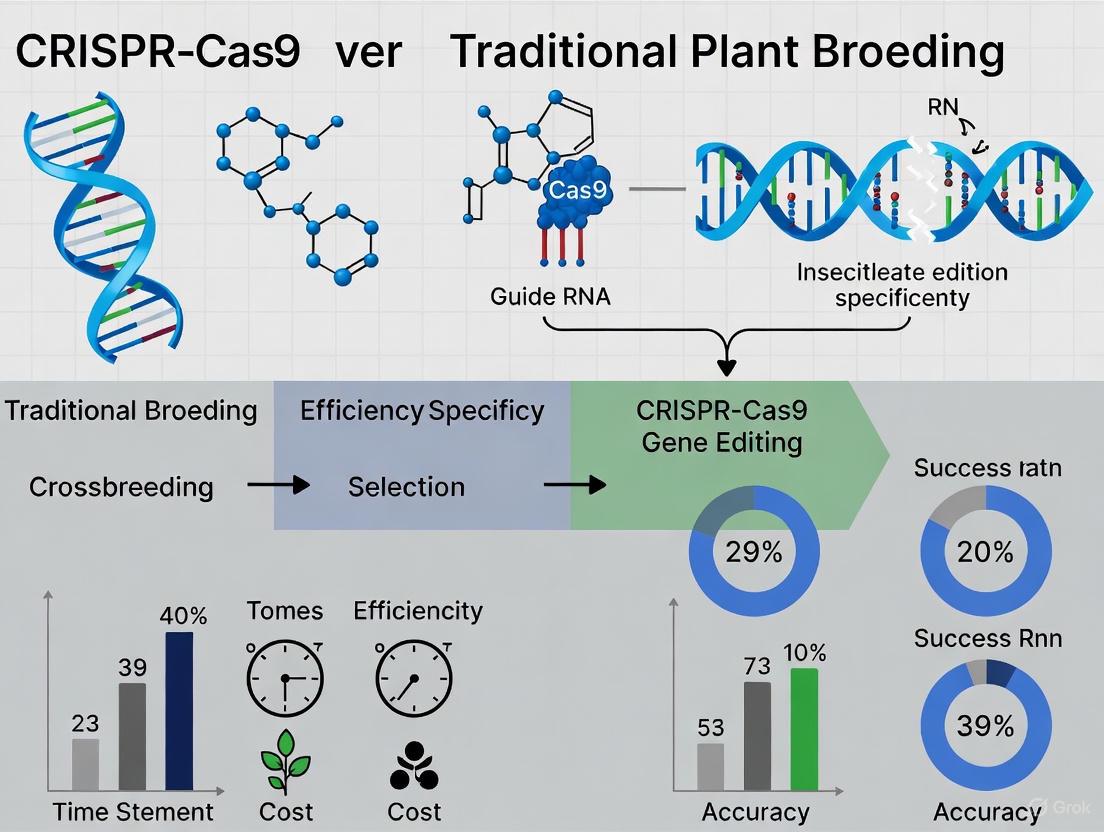
This article provides a comprehensive analysis for researchers and scientists on the transformative advantages of CRISPR-Cas9 genome editing over traditional plant breeding methods.
CRISPR-Cas9 in Agriculture: A Revolutionary Leap Beyond Traditional Plant Breeding
Abstract
This article provides a comprehensive analysis for researchers and scientists on the transformative advantages of CRISPR-Cas9 genome editing over traditional plant breeding methods. It explores the foundational principles of precision genetic manipulation, detailing specific methodological applications in crop enhancement for traits such as disease resistance, yield, and nutritional quality. The content addresses key technical challenges including delivery optimization and off-target effects, while validating CRISPR's superior efficiency, speed, and precision through comparative analysis with conventional techniques. The synthesis offers critical insights for advancing genetic research and crop development strategies.
From Selective Breeding to Precision Scissors: Understanding the CRISPR Revolution
Plant breeding has long been the cornerstone of agricultural improvement, essential for feeding a growing global population. For centuries, traditional breeding methods, relying on controlled crossing and selection, have been used to develop new crop varieties. However, these conventional approaches are inherently constrained by significant limitations in time, labor, and the randomness of genetic recombination. These bottlenecks slow the pace of innovation, making it difficult to rapidly address emerging challenges such as climate change, new pathogen strains, and global food insecurity [1]. The revolution in genome editing, particularly with the CRISPR/Cas9 system, offers a paradigm shift. This whitepaper details the specific limitations of traditional plant breeding and frames the emergence of CRISPR/Cas9 as a transformative technology that provides precision, speed, and efficiency, thereby overcoming these long-standing hurdles for the research community.
The Inherent Bottlenecks of Traditional Breeding Methodologies
Traditional breeding methods are fundamentally hampered by their reliance on random genetic events and extensive, labor-intensive processes.
The Time-Consuming Nature of Backcross Breeding
A primary method in traditional breeding, cross-pollination between genotypes, requires numerous generations to combine desirable traits from two parents into a single plant line. This process often necessitates many generations of backcrossing over long time periods (over 10 years) before a new, stable crop variety with improved traits is obtained [2]. This slow timeline is ill-suited to addressing urgent agricultural threats.
The Randomness of Conventional Mutagenesis
Conventional mutagenesis methods, including chemical and physical agents, have played a role in generating genetic diversity. Techniques like ethyl methanesulfonate (EMS) treatment or gamma-ray irradiation induce a wide range of random mutations throughout the genome [3]. While these methods have contributed to crop improvement, they generate a vast pool of undirected mutations. This randomness necessitates the screening of immense populations to identify the rare individual plants with the desired trait and no deleterious side effects, a process that is both laborious and time-consuming [3].
Table 1: Key Limitations of Traditional Breeding Methods
| Limitation | Manifestation in Traditional Breeding | Consequence for Crop Development |
|---|---|---|
| Time Intensity | Requires 6-8 years or more to breed a new variety [1]; over 10 years for cross-pollination and backcrossing [2]. | Severely delays response to emerging pests, diseases, and market demands. |
| Genetic Randomness | Linkage drag introduces unwanted genes along with desirable ones [1]; conventional mutagenesis creates uncontrolled, genome-wide mutations [3]. | Requires screening of very large populations; difficult to eliminate undesirable traits. |
| High Labor Demand | Need for large-scale field trials and manual phenotypic screening over multiple generations and locations. | Increases research costs and limits the number of breeding programs that can be pursued. |
CRISPR/Cas9: A Paradigm of Precision and Efficiency
In stark contrast to traditional methods, the CRISPR/Cas9 system enables precise, targeted modifications to the plant genome. The system functions as an adaptive immune system in bacteria, engineered for use in plant cells. Its core components are a Cas9 endonuclease that creates double-strand breaks in DNA and a single-guide RNA (sgRNA) that directs the Cas9 to a specific genomic locus [4]. The cell's natural DNA repair mechanisms, primarily Non-Homologous End Joining (NHEJ) or Homology-Directed Repair (HDR), are then harnessed to create the desired genetic change [2].
The following diagram illustrates the fundamental mechanism of the CRISPR/Cas9 system and how it introduces targeted genetic changes, contrasting with the randomness of traditional methods.
Diagram 1: The CRISPR/Cas9 Precision Editing Mechanism. This illustrates the targeted creation of double-strand breaks and subsequent DNA repair pathways, a fundamental contrast to random mutagenesis.
Quantitative Comparisons: Traditional Breeding vs. CRISPR/Cas9
The theoretical advantages of CRISPR/Cas9 are borne out in direct, quantitative comparisons with traditional methods across key metrics.
Table 2: Direct Comparison: Traditional Breeding vs. CRISPR/Cas9 Genome Editing
| Parameter | Traditional Breeding | CRISPR/Cas9 Genome Editing |
|---|---|---|
| Development Timeline | 6-8 years to over 10 years [2] [1]. | Can dramatically accelerate breeding; specific trait introgressions achieved in a single generation. |
| Genetic Precision | Low; involves mixing entire genomes, leading to linkage drag [1]. | High; enables precise modifications at the single-base pair level [5]. |
| Nature of Genetic Change | Relies on random recombination or random mutagenesis (e.g., EMS, gamma rays) [3]. | Targeted, site-specific modifications directed by sgRNA [4]. |
| Labor & Resource Intensity | High; requires large field populations and multi-generational screening. | Lower; enables focused work on specific loci in a controlled laboratory setting. |
| Regulatory & Public Perception | Well-established but public resistance to transgenic GMOs exists. | Evolving landscape; transgene-free edited plants often face simpler regulatory paths [6] [7]. |
Case Studies and Experimental Protocols
The application of CRISPR/Cas9 in real-world crop improvement projects highlights its efficacy in overcoming the limitations of traditional breeding.
Case Study 1: Engineering Disease-Resistant Cassava
Cassava is a staple food for millions in Africa, but its production is severely threatened by viral diseases. Traditional breeding for resistance is slow and complex.
- Target Trait: Immunity to Cassava Mosaic Virus.
- CRISPR Application: Researchers targeted a gene involved in plant immunity (a susceptibility gene) to create a loss-of-function mutation, thereby increasing resistance to the virus [3].
- Experimental Protocol:
- sgRNA Design: Design sgRNAs complementary to the target susceptibility gene sequence.
- Vector Construction: Clone the sgRNA sequence into a CRISPR/Cas9 expression vector.
- Plant Transformation: Introduce the vector into cassava cells using Agrobacterium-mediated transformation.
- Regeneration and Selection: Regenerate whole plants from transformed cells and select edited lines.
- Molecular Validation: Use PCR amplification of the target locus followed by sequencing to confirm the presence of indel mutations.
- Phenotypic Screening: Infect validated plants with the virus to confirm enhanced resistance [3].
- Outcome: Development of CRISPR-edited cassava plants with natural immunity to the pathogen, a crucial advancement for food security in Sub-Saharan Africa [3] [8].
Case Study 2: Developing Non-Transgenic, Genome-Edited Citrus
The citrus industry faces devastation from Huanglongbing (HLB) disease. A key innovation is creating edited plants without integrating foreign DNA, simplifying regulatory approval.
- Target Trait: Natural immunity to HLB.
- CRISPR Application: Use of a transient expression system to edit genes involved in disease susceptibility without incorporating CRISPR genes into the plant genome [6].
- Experimental Protocol (Transgene-Free Editing):
- Agrobacterium-Mediated Transient Expression: Use Agrobacterium to deliver CRISPR/Cas9 genes into plant cells. The genes are expressed temporarily but not integrated into the plant chromosome.
- Kanamycin Selection (Refined Method): A short 3-4 day kanamycin treatment helps identify cells that were successfully infected and are temporarily expressing the CRISPR genes, enriching for edited cells [6].
- Plant Regeneration: Regenerate plants from the edited cells. Since the CRISPR genes are not integrated, the resulting plants are transgene-free.
- Molecular Analysis: Use next-generation sequencing to detect and characterize the modifications, ensuring the absence of the CRISPR transgene and confirming the desired edit [3] [6].
- Outcome: This refined method was 17 times more efficient than previous versions in producing genome-edited citrus plants, demonstrating a highly efficient pathway to non-GMO, disease-resistant crops [6].
The Scientist's Toolkit: Essential Reagents for CRISPR-Based Plant Breeding
Transitioning to CRISPR-based research requires a specific set of molecular tools and reagents.
Table 3: Key Research Reagent Solutions for CRISPR/Cas9 Plant Genome Editing
| Reagent / Tool | Function | Example in Protocol |
|---|---|---|
| Cas9 Nuclease Variants | Engineered versions of the Cas9 protein (e.g., high-fidelity Cas9) that introduce double-strand breaks with reduced off-target effects [3]. | Used in RNP complex delivery for transgene-free editing [9]. |
| sgRNA Synthesis Kit | For in vitro transcription or synthesis of target-specific single-guide RNA. | Designing sgRNAs to target genes like OsSWEET13 in rice for blight resistance [3]. |
| Delivery Vector System | A plasmid construct for stable expression of Cas9 and sgRNA in plant cells (e.g., using T-DNA from Agrobacterium tumefaciens). | Agrobacterium-mediated transformation of citrus [6] and stable transformation of Elymus nutans [9]. |
| Ribonucleoprotein (RNP) Complexes | Pre-assembled complexes of purified Cas9 protein and sgRNA delivered directly into plant protoplasts, avoiding foreign DNA integration. | Used to create transgene-free edited carrot plants [9]. |
| Next-Generation Sequencing (NGS) | For high-throughput verification of editing efficiency and detection of potential off-target effects [3]. | Used to analyze edits in citrus and other crops to ensure accuracy [3] [6]. |
The limitations of traditional plant breeding—its protracted timelines, immense labor requirements, and dependence on random genetic events—are fundamental and constraining. CRISPR/Cas9 technology represents a decisive leap forward, offering researchers and scientists a tool of unparalleled precision, speed, and efficiency. By enabling targeted genetic improvements without the baggage of linkage drag and by facilitating the development of non-transgenic crops, CRISPR/Cas9 is not merely an improvement but a necessary evolution in plant breeding. Its continued adoption and refinement are paramount for empowering the global research community to meet the urgent and complex agricultural challenges of the 21st century.
The Clustered Regularly Interspaced Short Palindromic Repeats (CRISPR) and CRISPR-associated protein 9 (Cas9) system represents a transformative breakthrough in genetic engineering, offering unprecedented precision and efficiency for modifying DNA sequences in living cells [10]. Originally discovered as an adaptive immune system in prokaryotes that defends against viruses or bacteriophages, researchers have harnessed this bacterial defense mechanism to create a highly versatile genome-editing tool [10] [11]. The core innovation of CRISPR-Cas9 lies in its ability to be programmed to target virtually any genomic locus by simply redesigning a short guide RNA sequence, a feature that dramatically simplifies genetic modifications compared to previous technologies [12]. This programmability, combined with its precision, has positioned CRISPR-Cas9 as a powerful tool with vast potential for disease treatment and the creation of genetically modified organisms [11], revolutionizing fields from medicine to agricultural biotechnology.
Core Components of the CRISPR-Cas9 System
The CRISPR-Cas9 system requires two fundamental components to function: the Cas9 nuclease and a guide RNA (gRNA). These elements work in concert to identify and cleave specific DNA sequences with remarkable accuracy.
The Cas9 Nuclease: A Molecular Scissor
The Cas9 protein is a large, multi-domain DNA endonuclease that functions as the catalytic engine of the system, responsible for cleaving the target DNA to create a double-stranded break (DSB) [10]. Structurally, Cas9 consists of two primary lobes [10]:
- Recognition Lobe (REC Lobe): Comprising REC1 and REC2 domains, this lobe is primarily responsible for binding to the guide RNA.
- Nuclease Lobe (NUC Lobe): Contains the RuvC and HNH nuclease domains along with the Protospacer Adjacent Motif (PAM) interacting domain.
The most commonly used nuclease, SpCas9, is derived from Streptococcus pyogenes and recognizes a specific PAM sequence (5'-NGG-3') adjacent to the target DNA site [10] [12]. The RuvC and HNH domains are each responsible for cleaving one strand of the DNA duplex, together generating a blunt-ended double-strand break approximately 3-4 nucleotides upstream of the PAM sequence [10] [12].
The Guide RNA: A Programmable Navigator
The guide RNA (gRNA) serves as the targeting system that directs Cas9 to a specific genomic location. This RNA component consists of two distinct molecular parts that can be supplied separately or as a single molecule [10] [13]:
- crRNA (CRISPR RNA): Contains the ~20 nucleotide spacer sequence that defines the target DNA through complementary base pairing.
- tracrRNA (trans-activating crRNA): Features a long stretch of loops that serves as a binding scaffold for the Cas9 nuclease.
In practice, these two components are often combined into a single guide RNA (sgRNA) for simplified experimental implementation [10]. The sgRNA forms a complex secondary structure with distinct conserved motifs, including the nexus and two hairpins, which are essential for proper Cas9 binding and function [14]. The targeting specificity of the entire system depends on the 8-10 base pair "seed sequence" at the 3' end of the gRNA spacer, which must perfectly match the target DNA for efficient cleavage to occur [12].
Table 1: Core Components of the CRISPR-Cas9 System
| Component | Structure | Function | Key Features |
|---|---|---|---|
| Cas9 Nuclease | Multi-domain enzyme with REC and NUC lobes | Creates double-stranded breaks in target DNA | Requires PAM sequence (5'-NGG-3' for SpCas9); Contains RuvC and HNH nuclease domains |
| Guide RNA (gRNA) | crRNA + tracrRNA (can be combined as sgRNA) | Directs Cas9 to specific genomic targets | ~20 nucleotide spacer defines target specificity; Scaffold region binds Cas9 |
| crRNA | ~20 nucleotide sequence | Provides target recognition through complementarity | Determines genomic targeting; Seed sequence (8-10 bp) is critical for specificity |
| tracrRNA | RNA with hairpin structures | Serves as binding scaffold for Cas9 | Essential for Cas9 activation; Structural component |
The Mechanism of Targeted DNA Cleavage
The CRISPR-Cas9 mechanism operates through a precise sequence of molecular events that can be divided into three distinct stages: recognition, cleavage, and repair.
Target Recognition and Binding
The process begins when the Cas9-sgRNA ribonucleoprotein complex surveys the genome in search of a complementary DNA sequence adjacent to a valid PAM sequence [10]. The PAM sequence, typically 5'-NGG-3' for SpCas9, serves as an essential recognition signal that distinguishes self from non-self DNA in the native bacterial system [10] [12]. Once Cas9 identifies a potential PAM sequence, it triggers local DNA melting, allowing the seed region of the gRNA to begin annealing to the target DNA [12]. If sufficient complementarity exists between the gRNA spacer and the target DNA, complete hybridization occurs, leading to full activation of the Cas9 nuclease.
DNA Cleavage and Double-Strand Break Formation
Upon successful target binding and verification, Cas9 undergoes a conformational change that positions its nuclease domains for catalytic activity [10]. The HNH domain cleaves the DNA strand complementary to the gRNA spacer sequence, while the RuvC domain cleaves the opposite strand [10] [12]. This coordinated action results in a blunt-ended double-strand break (DSB) approximately 3 base pairs upstream of the PAM sequence [10]. The resulting DSB then triggers the cell's innate DNA repair machinery, which attempts to rectify the damage through one of two primary pathways.
DNA Repair Pathways and Genetic Outcomes
The fate of the CRISPR-induced DNA break depends on which cellular repair mechanism addresses the damage:
Non-Homologous End Joining (NHEJ): This dominant repair pathway functions throughout the cell cycle by directly ligating the broken DNA ends without requiring a template [10]. NHEJ is efficient but error-prone, often resulting in small random insertions or deletions (indels) at the cleavage site [10] [12]. When these indels occur within protein-coding exons, they frequently produce frameshift mutations or premature stop codons that effectively knockout gene function [12].
Homology-Directed Repair (HDR): This high-fidelity pathway uses a homologous DNA template—either the sister chromatid or an externally supplied donor DNA—to precisely repair the break [10]. HDR is most active during the late S and G2 phases of the cell cycle and enables precise gene insertion or specific nucleotide substitutions when an appropriate donor template is provided [10] [12].
Diagram 1: CRISPR-Cas9 Mechanism: From Target Recognition to DNA Repair. The core pathway shows how the Cas9-gRNA complex identifies target DNA via PAM recognition, creates a double-strand break, and cellular repair pathways (NHEJ or HDR) lead to different genetic outcomes.
Advantages Over Traditional Plant Breeding Methods
CRISPR-Cas9 technology represents a quantum leap beyond conventional plant breeding approaches, offering unprecedented precision, speed, and versatility in crop improvement.
Precision and Efficiency
Unlike traditional breeding methods that rely on random genetic recombination through crossing and selection, CRISPR-Cas9 enables direct, targeted modifications to specific genes without introducing foreign DNA [15]. This precision allows researchers to enhance desirable traits or disable unfavorable ones with minimal unintended effects on the rest of the genome. The technology is particularly valuable for its ability to function without stable integration of foreign DNA into the plant genome, which aligns favorably with regulatory frameworks in many countries [15].
Trait Development Speed
Traditional plant breeding is often labor-intensive and time-consuming, involving multiple cycles of crossing and selection that can take 10-15 years to develop new varieties [15]. In contrast, CRISPR-Cas9 can introduce specific genetic improvements in a single generation, dramatically accelerating the breeding cycle. This efficiency is especially beneficial for developing climate-resilient crops that can address rapidly changing environmental conditions [16] [17].
Applications in Crop Improvement
The agricultural biotechnology sector has leveraged CRISPR-Cas9 to address numerous challenges in crop production:
- Drought Tolerance: Researchers have successfully used CRISPR-Cas9 to edit the StCBP80 gene in potato, resulting in enhanced drought tolerance through improved stomatal regulation and ABA sensitivity [15].
- Disease Resistance: The technology has been applied to develop resistance against various pathogens in crops like maize, wheat, and potato [15] [18].
- Nutritional Enhancement: CRISPR-Cas9 enables biofortification of staple crops by increasing essential vitamins, minerals, and proteins [16] [18].
- Herbicide Tolerance: Development of herbicide-tolerant varieties allows for more effective weed management with reduced environmental impact [18] [19].
Table 2: CRISPR-Cas9 vs. Traditional Plant Breeding Methods
| Characteristic | CRISPR-Cas9 Technology | Traditional Breeding |
|---|---|---|
| Time Required | 1-3 years for trait development | 10-15 years for new varieties |
| Precision | Targets specific genes without affecting rest of genome | Relies on random genetic recombination |
| Genetic Changes | Defined, predictable modifications | Undefined genetic background |
| Regulatory Status | Considered non-GMO in some countries if no foreign DNA integrated | Generally unregulated |
| Trait Stacking | Multiple traits can be edited simultaneously | Requires sequential crossing over generations |
| Resource Requirements | Laboratory-intensive, technical expertise needed | Field-intensive, larger population sizes |
Advanced gRNA Designs and Experimental Optimization
Recent advances in gRNA engineering have significantly improved the efficiency and reliability of CRISPR-Cas9 genome editing, particularly for previously challenging targets.
Enhanced gRNA Designs
Standard gRNAs can suffer from misfolding or unstable secondary structures that reduce editing efficiency. To address these limitations, researchers have developed:
- GOLD-gRNA (Genome-editing Optimized Locked Design): Incorporates highly stable hairpins in constant regions to prevent misfolding, increasing editing efficiency up to 1000-fold for difficult targets [14].
- Chemically Modified gRNAs: Feature phosphorothioate bonds for terminal nucleotides and internal 2'OMe modifications to improve nuclease resistance and stability [14].
- HEAT sgRNA (Hybridization Extended A-T Inversion): Extends complementary sequences between crRNA and tracrRNA to enhance Cas9 binding [14].
These optimized gRNAs are especially valuable for editing target sites with refractory sequences, such as those containing PAM-proximal GCC motifs that normally block cleavage [14].
Experimental Design Considerations
Successful CRISPR-Cas9 experiments require careful planning and optimization:
- gRNA Design: Select target sequences with minimal off-target potential and ensure proximity to PAM sequence. Design 3-5 gRNAs per target to identify the most efficient variant [12] [13].
- Delivery Methods: Choose appropriate delivery systems based on target cells—physical methods (microinjection, electroporation), carrier-based approaches (lipid nanoparticles), or viral vectors (AAV, lentivirus) [11].
- Validation: Employ genomic cleavage detection assays and sequencing to verify editing efficiency and detect potential off-target effects [13].
The Scientist's Toolkit: Essential Research Reagents
Table 3: Essential Research Reagents for CRISPR-Cas9 Experiments
| Reagent Category | Specific Examples | Function & Application |
|---|---|---|
| Cas9 Nucleases | SpCas9, Fidelity-enhanced variants (eSpCas9, SpCas9-HF1, HypaCas9), PAM-flexible variants (xCas9, SpCas9-NG) | DNA cleavage with varying specificity profiles and PAM requirements [12] |
| gRNA Formats | Synthetic sgRNA, crRNA:tracrRNA duplex, GOLD-gRNA, Chemically modified gRNAs | Target recognition with different efficiency and stability characteristics [12] [14] |
| Delivery Systems | Electroporation, Lipid nanoparticles, AAV vectors, Lentiviral vectors, Microinjection | Introduction of CRISPR components into target cells [11] |
| Detection & Validation | T7E1 assay, TIDE analysis, NGS-based methods, Sanger sequencing | Assessment of editing efficiency and off-target profiling [13] |
| Control Reagents | Validated control gRNAs, Non-targeting gRNAs, Mock transfection controls | Experimental normalization and specificity confirmation [13] |
The core mechanism of CRISPR-Cas9—centered on the programmable gRNA and Cas9 nuclease—represents a fundamental breakthrough in genetic engineering with profound implications for agricultural biotechnology. The system's precision, efficiency, and versatility offer distinct advantages over traditional plant breeding methods, enabling targeted improvements in crops with unprecedented speed and accuracy. As gRNA designs continue to evolve and delivery methods improve, CRISPR-Cas9 is poised to play an increasingly vital role in addressing global challenges in food security, climate resilience, and sustainable agriculture. The technology's ability to make precise genetic modifications without introducing foreign DNA positions it as a transformative tool for the future of crop improvement, potentially bridging the gap between conventional breeding and genetic engineering while addressing regulatory and consumer concerns.
The advent of CRISPR-Cas9 technology represents a paradigm shift in plant biotechnology, offering unprecedented precision, efficiency, and speed in crop improvement compared to conventional breeding methods. This whitepaper delineates the key technological milestones in the journey of CRISPR-Cas9 from its origins as a bacterial immune system to its current status as a transformative tool in plant breeding. Framed within a broader thesis on its benefits over traditional breeding, this analysis provides a comprehensive technical guide for researchers and drug development professionals. Quantitative data, detailed experimental protocols, and essential research toolkits are synthesized to demonstrate how CRISPR-Cas9 surmounts the limitations of traditional approaches, enabling the rapid development of crops with enhanced yield, climate resilience, and nutritional profiles to address global food security challenges.
Plant breeding, the science of improving plant genetics to develop desirable traits, has evolved from millennia of selective cultivation to highly precise genetic intervention. Conventional breeding techniques—including selective breeding, hybridization, and mutation breeding—rely on the artificial selection of phenotypic traits over multiple generations, a process often spanning 8-15 years from conception to commercial release [20]. While these methods have historically sustained agricultural productivity, they are inherently limited by their dependence on existing genetic variation, long reproductive cycles, and extensive land resources.
The global plant breeding market, valued at approximately $8.91 billion in 2025, is projected to reach $13.86 billion by 2030, reflecting a compound annual growth rate (CAGR) of 9.2% [18]. This growth is largely propelled by biotechnological methods, with the CRISPR-enabled segment emerging as a significant driver. This whitepaper posits that CRISPR-Cas9 genome editing constitutes a fundamental advancement over traditional plant breeding by providing molecular-level precision, radically accelerated timelines, and the ability to engineer complex traits unattainable through conventional means. The following sections will dissect the technology's journey and provide the technical scaffolding for its application in modern crop development.
Historical Trajectory: From Bacterial Immunity to a Genetic Engineering Tool
The CRISPR-Cas system originated as an adaptive immune mechanism in prokaryotes, protecting bacteria and archaea from viral infections. The seminal discovery of this system revealed a mechanism where bacteria integrate short sequences of invading viral DNA into their own genomes—creating Clustered Regularly Interspaced Short Palindromic Repeats (CRISPR). These sequences, when transcribed, guide Cas (CRISPR-associated) proteins to cleave complementary foreign DNA upon re-infection [21].
The repurposing of this system for genetic engineering began in earnest following key publications in 2012 that established its programmability. The system was simplified into a two-component tool comprising a Cas9 nuclease and a guide RNA (gRNA). The gRNA, with its ~20 nucleotide targeting sequence, directs Cas9 to a specific genomic locus where the enzyme induces a double-strand break. The cell's subsequent repair of this break—via either error-prone Non-Homologous End Joining (NHEJ) or precise Homology-Directed Repair (HDR)—enables targeted gene knockout, insertion, or modification [21].
The application of this technology in plants was rapidly demonstrated in 2013 in model species like Nicotiana benthamiana and Arabidopsis thaliana, and shortly thereafter in staple crops such as rice and wheat [21]. This marked a critical milestone, proving that CRISPR-Cas9 could function effectively within the complex genomic landscapes of plants, thereby opening a new frontier in plant biotechnology.
Quantitative Superiority: CRISPR-Cas9 vs. Traditional Breeding
The quantitative advantages of CRISPR-Cas9 over traditional breeding are profound, impacting timelines, precision, and economic efficiency. The data below provides a comparative analysis.
Table 1: A Comparative Analysis of Breeding Key Parameters
| Parameter | Traditional Breeding | CRISPR-Cas9 Mediated Breeding |
|---|---|---|
| Development Timeline | 8-15 years [20] | 3-5 years [22] |
| Generations per Year | 1-2 (for most crops) [20] | 4-6 (enabled by speed breeding) [20] |
| Genetic Precision | Low; involves mixing thousands of genes via crossing | High; enables precise modification of single or few genes [21] |
| Trait Stacking Efficiency | Low; requires successive backcrossing over many generations | High; enables simultaneous editing of multiple genes/traits [23] |
| Dependence on Sexual Compatibility | Yes; limits gene pool to crossable species | No; allows direct modification of the native genome [21] |
Table 2: Market and Economic Impact Comparison
| Aspect | Traditional Breeding | CRISPR-Cas9 Breeding | Source |
|---|---|---|---|
| Projected Market Growth (CAGR) | Part of overall market at ~9.2% | Specific segment growing at ~14.77% (overall CRISPR market) [24] | |
| Time to Market for New Varieties | ~10 years (including regulatory approval) | Significantly reduced; breeding cycle "drastically reduced" [20] | |
| Cost & Resource Implications | High field trial costs over many years | More economical and time-efficient; "relatively cheaper" [21] |
Technical Guide: Implementing CRISPR-Cas9 in Plant Systems
The following section provides a detailed, generalized protocol for CRISPR-Cas9 genome editing in plants, synthesizing methodologies from successful case studies in crops like tomato and larch [25] [26] [23].
Experimental Workflow for Plant Genome Editing
The end-to-end process from target selection to the analysis of edited plants involves multiple critical steps, as visualized below.
Detailed Methodologies for Key Experimental Steps
Step 1: gRNA Design and Vector Construction
- Target Selection: Identify a 20-nucleotide target sequence adjacent to a 5'-NGG-3' Protospacer Adjacent Motif (PAM) within the gene of interest. Use online tools (e.g., http://skl.scau.edu.cn/targetdesign/) to minimize off-target effects [26].
- Oligonucleotide Synthesis: Synthesize complementary oligonucleotides corresponding to the target sequence with 5' overhangs compatible with the chosen cloning system (e.g., BsaI for Golden Gate assembly) [25].
- Plasmid Assembly: Using the Golden Gate cloning system, anneal and ligate the oligonucleotides into a BsaI-digested binary vector (e.g., pYLCRISPR/Cas9P35S-N) behind a U6 promoter [25] [26]. The vector contains the Cas9 gene driven by a constitutive promoter like CaMV 35S or a strong endogenous promoter (e.g., LarPE004 in larch) [23].
- Transformation into Agrobacterium: The final construct is transformed into an Agrobacterium tumefaciens strain such as EHA105 for subsequent plant transformation [26].
Step 2: Plant Transformation and Regeneration
- Explant Preparation: Surface sterilize seeds and excise cotyledons or other explants from sterile plantlets. For species like Fraxinus mandshurica, growing points from embryos are used [26].
- Agrobacterium Co-cultivation: Infect explants with an Agrobacterium suspension (OD₆₀₀ optimized between 0.5-0.8) in a transformation solution (e.g., containing MES, acetosyringone, sucrose, and mannitol) for a specified duration [26]. For protoplast-based systems, polyethylene glycol (PEG)-mediated transfection is used [23].
- Selection and Regeneration: Transfer co-cultivated explants to a selective regeneration medium (e.g., Woody Plant Medium for trees) containing antibiotics to eliminate Agrobacterium and a selective agent (e.g., kanamycin at 20-70 mg/L) to select for transformed plant cells. Induce shoot and root formation under controlled environmental conditions [25] [26]. The protocol for tomato yields approximately 10 Cas-positive independent lines from 100 transformed cotyledons [25].
Step 3: Molecular and Phenotypic Analysis
- Genomic DNA Extraction: Extract DNA from regenerated plantlets using a commercial kit.
- Mutation Detection: Perform PCR amplification of the target genomic region. Analyze the products via Sanger sequencing and use tools like TIDE or DECODR to quantify editing efficiency. For the FmbHLH1 gene in Fraxinus mandshurica, an editing efficiency of 18% was confirmed in induced clustered buds [26].
- Homozygous Plant Selection: Regenerate multiple generations (T0, T1) via a clustered bud system or self-pollination to segregate and identify homozygous lines devoid of the Cas9 transgene [26].
- Phenotypic Evaluation: Subject homozygous knockout lines and wild-type controls to physiological stress assays. For drought tolerance evaluation, measure indicators like reactive oxygen species (ROS) scavenging ability and osmotic adjustment under polyethylene glycol (PEG)-simulated drought conditions [26].
The Scientist's Toolkit: Essential Research Reagents and Solutions
Successful implementation of CRISPR-Cas9 in plants requires a suite of specialized reagents and materials. The following table details key components and their functions.
Table 3: Essential Research Reagent Solutions for Plant CRISPR-Cas9 Experiments
| Reagent/Material | Function | Specific Example & Notes |
|---|---|---|
| CRISPR Vector System | Delivers gRNA and Cas9 nuclease into plant cells. | pYLCRISPR/Cas9P35S-N vector [25]. Endogenous promoters (e.g., LarPE004 in larch) can enhance efficiency [23]. |
| Agrobacterium tumefaciens Strain | Mediates stable integration of T-DNA into the plant genome. | EHA105 [26]. |
| Plant Growth Media | Supports growth, regeneration, and selection of transformed tissues. | Woody Plant Medium (WPM) for trees [26]; Murashige and Skoog (MS) medium for many dicots. |
| Selection Agents | Eliminates non-transformed cells and selects for positive events. | Kanamycin (optimal concentration must be determined empirically, e.g., 20-70 mg/L) [26]. |
| Transformation Solution Additives | Enhances Agrobacterium virulence and transformation efficiency. | Acetosyringone (120 μM), MES buffer, DTT, Sucrose, Mannitol [26]. |
| DNA Extraction Kit | Isolates high-quality genomic DNA for screening. | Commercial plant genomic DNA extraction kit [26]. |
| PCR & Sequencing Reagents | Amplifies and sequences the target locus to confirm editing. | High-fidelity DNA polymerase, Sanger sequencing services [26]. |
The trajectory of CRISPR-Cas9 from a fundamental biological curiosity in bacteria to a cornerstone of plant biotechnology marks one of the most significant scientific advancements of the past decade. The quantitative data and technical protocols detailed in this whitepaper unequivocally demonstrate its superior efficacy, precision, and speed compared to traditional breeding paradigms. For researchers and drug development professionals, the adoption of CRISPR-Cas9 is no longer merely an option but a strategic imperative to address the urgent challenges of climate change, population growth, and sustainable agriculture. As regulatory frameworks evolve and the technology continues to mature with developments like base editing and prime editing, CRISPR-Cas9 is poised to unlock a new era of innovation in crop improvement and molecular farming.
CRISPR-Cas9 technology represents a paradigm shift in plant breeding, offering unprecedented precision, efficiency, and cost-effectiveness compared to conventional methods. This revolutionary gene-editing system functions as a programmable molecular scissor, enabling researchers to make targeted modifications to specific DNA sequences with exceptional accuracy [27]. While traditional breeding relies on phenotypic selection and cross-hybridization—processes that are often time-consuming and imprecise—CRISPR-Cas9 operates at the nucleotide level, allowing for direct trait manipulation without introducing foreign DNA [28] [29]. This technical guide examines the fundamental advantages of CRISPR-Cas9 through quantitative data, experimental protocols, and visual workflows, providing researchers and drug development professionals with a comprehensive resource for leveraging this transformative technology in agricultural biotechnology.
Quantitative Advantages of CRISPR-Cas9
The superiority of CRISPR-Cas9 over traditional plant breeding methods becomes evident when examining key performance metrics across multiple parameters. The following tables summarize comprehensive comparative data.
Table 1: Direct Comparison of CRISPR-Cas9 vs. Traditional Breeding Methods
| Parameter | Traditional Breeding | CRISPR-Cas9 | Reference/Example |
|---|---|---|---|
| Time Required for Trait Introduction | 7-15 years [27] | 1-3 years [27] | Rice grain yield improvement [27] |
| Typical Editing Precision | Chromosomal segments (imprecise) | Single nucleotide [27] | Site-specific mutagenesis [30] |
| Mutation Efficiency | Variable, relies on random recombination | Nearly 100% success rate achievable [30] | P3a mutagenesis method [30] |
| Editing Specificity | Non-targeted (entire genome) | High (with guide RNA targeting) | gRNA-directed Cas9 protein [27] |
| Regulatory Status | Generally exempt | Evolving, often favorable vs. GMOs [18] | U.S., Japan, and other markets [18] |
Table 2: Economic and Output Impact of CRISPR-Cas9 in Crop Development
| Metric | Impact Level | Evidence/Application |
|---|---|---|
| Yield Improvement | 25-31% increase [27] | Rice variety with edited abscisic acid genes [27] |
| Disease Resistance | 5x greater output [27] | Rice blast-resistant varieties [27] |
| Market Growth Rate | 13.00% CAGR (2025-2034) [31] | Global CRISPR-based gene editing market [31] |
| Commercial Adoption | Rapid expansion in Asia Pacific [18] | Supportive regulations in China, India, Japan [18] |
Experimental Protocols for CRISPR-Cas9 Implementation
Workflow for Plant Genome Editing
The standard CRISPR-Cas9 workflow involves sequential steps from target identification to validation. The following diagram illustrates this process:
Methodologies for Quantifying Editing Efficiency
Accurately detecting and quantifying CRISPR edits is crucial for developing robust plant genome editing applications. The following experimental methods represent the current standard approaches, particularly when analyzing heterogeneous populations from transient expression-based approaches [32].
Targeted Amplicon Sequencing (AmpSeq)
Protocol Objective: To achieve gold standard quantification of editing efficiency with high sensitivity and accuracy [32].
Materials & Reagents:
- DNA extraction kit (e.g., CTAB-based methods)
- High-fidelity DNA polymerase (e.g., Q5, SuperFi II)
- PCR purification kit
- Next-generation sequencing platform (e.g., Illumina)
Procedure:
- Extract genomic DNA from CRISPR-treated plant tissue (≥100mg)
- Design primers flanking the target site (amplicon size: 300-500bp)
- Amplify target region using high-fidelity polymerase (30-35 cycles)
- Purify PCR products and quantify using fluorometry
- Prepare sequencing library with dual-indexing approach
- Sequence on appropriate NGS platform (minimum 10,000 reads/sample)
- Analyze sequences using bioinformatics tools (e.g., CRISPResso2)
Technical Notes: AmpSeq detects editing frequencies as low as 0.1% and provides comprehensive mutation profiling, but requires specialized facilities and has higher cost per sample [32].
PCR-Capillary Electrophoresis/InDel Detection by Amplicon Analysis (PCR-CE/IDAA)
Protocol Objective: To rapidly quantify editing efficiency with high accuracy compared to AmpSeq [32].
Materials & Reagents:
- Fluorescently-labeled PCR primers (FAM, HEX, or TET)
- Standard Taq polymerase
- Capillary electrophoresis system (e.g., ABI 3500)
- Size standard (e.g., GS600 LIZ)
Procedure:
- Extract genomic DNA from CRISPR-treated tissue
- Amplify target region with fluorescent forward primer and unlabeled reverse primer (30 cycles)
- Dilute PCR products 1:20-1:50 in molecular grade water
- Mix 1μl diluted PCR product with 8.7μl Hi-Di formamide and 0.3μl size standard
- Denature at 95°C for 5 minutes, then immediately cool on ice
- Run samples on capillary electrophoresis system (injection parameters: 1.2kV for 24s)
- Analyze fragment sizes and peak areas using specialized software
Technical Notes: PCR-CE/IDAA accurately quantifies major indels when benchmarked against AmpSeq, has moderate cost, and provides rapid turnaround, but may miss complex mutation patterns [32].
Droplet Digital PCR (ddPCR)
Protocol Objective: To achieve absolute quantification of editing efficiency without standard curves [32].
Materials & Reagents:
- ddPCR supermix for probes
- Target-specific FAM and HEX-labeled probes
- Droplet generator and reader
- DG8 cartridges and gaskets
Procedure:
- Design hydrolysis probes targeting wild-type and edited sequences
- Prepare 20μl reaction mix: 10μl ddPCR supermix, 1μl each primer (900nM final), 0.5μl each probe (250nM final), 50ng genomic DNA, nuclease-free water to volume
- Generate droplets using droplet generator (approximately 20,000 droplets/sample)
- Transfer droplets to 96-well PCR plate and seal
- Amplify using touch-down PCR: 95°C for 10min; 40 cycles of 94°C for 30s, 60°C (-0.5°C/cycle) for 1min; 72°C for 2min; 98°C for 10min; 4°C hold
- Read plate on droplet reader
- Analyze data using quantification software to determine editing percentage
Technical Notes: ddPCR provides high precision for frequency quantification, has good sensitivity, but requires specialized equipment and probe design [32].
Research Reagent Solutions Toolkit
Table 3: Essential Research Reagents for CRISPR-Cas9 Plant Experiments
| Reagent Category | Specific Examples | Function & Application Notes |
|---|---|---|
| DNA Polymerases | Q5, SuperFi II [30] [32] | High-fidelity amplification for vector construction and amplicon sequencing; critical for P3a mutagenesis [30] |
| CRISPR Delivery Vectors | pIZZA-BYR-SpCas9, pBYR2eFa-U6-sgRNA [32] | Dual geminiviral replicon system for transient co-expression in N. benthamiana leaves [32] |
| Detection Enzymes | T7 Endonuclease I (T7E1) [32] | Mismatch cleavage assay for initial editing screening; moderate sensitivity but low cost [32] |
| DNA Extraction Kits | CTAB-based methods [32] | Reliable DNA isolation from plant tissues containing polysaccharides and polyphenols |
| Sequencing Platforms | Illumina systems [32] | AmpSeq for gold standard validation; enables detection of low-frequency edits (≥0.1%) [32] |
| Capillary Electrophoresis | ABI 3500 series [32] | Fragment analysis for PCR-CE/IDAA method; balances accuracy with throughput [32] |
Technological Mechanisms and Workflows
Molecular Mechanism of CRISPR-Cas9
The core CRISPR-Cas9 system functions through a targeted DNA recognition and cleavage mechanism. The following diagram details this process:
The CRISPR-Cas9 mechanism begins with the formation of a ribonucleoprotein complex between the Cas9 enzyme and a synthetic guide RNA (gRNA) [27]. This complex scans the genome for complementary DNA sequences adjacent to a Protospacer Adjacent Motif (PAM), typically 5'-NGG-3' for Streptococcus pyogenes Cas9 [27]. Upon recognition, Cas9 induces a double-strand break (DSB) 3-4 nucleotides upstream of the PAM site [27]. The cellular repair mechanisms then activate, primarily through error-prone non-homologous end joining (NHEJ), which often results in insertion/deletion mutations (indels) that disrupt gene function, or less frequently, through homology-directed repair (HDR) when a donor DNA template is provided, enabling precise gene modifications [27].
Method Selection Workflow for Editing Quantification
Selecting the appropriate quantification method requires consideration of multiple experimental factors:
CRISPR-Cas9 technology represents a transformative advancement in plant breeding, offering substantial improvements in precision, efficiency, and cost-effectiveness over conventional methods. The quantitative data presented demonstrates reductions in development timelines from decades to years, precision at the single-nucleotide level, and significant enhancements in crop yield and disease resistance [27]. The experimental protocols and reagent toolkit provide researchers with practical resources for implementation, while the visualization of workflows clarifies the molecular mechanisms and methodological decision-making processes. As the field evolves with emerging improvements like P3a mutagenesis with nearly 100% efficiency [30] and AI-enhanced guide RNA design [31], CRISPR-Cas9 is poised to become increasingly indispensable for researchers and drug development professionals addressing global food security challenges.
Precision in Practice: Methodologies and Crop Enhancement Applications
The advent of CRISPR-Cas9 genome editing has revolutionized plant biotechnology, offering a precise and efficient alternative to traditional breeding methods. While traditional breeding relies on cross-pollination and selection over multiple generations—a process that can take years and is limited by species barriers—CRISPR-Cas9 enables direct, targeted genetic modifications in a single generation while preserving the elite genetic background of existing cultivars [33]. This technological leap significantly accelerates the development of plants with improved traits, such as enhanced stress resistance, increased yield, and improved nutritional quality [34].
The practical application of CRISPR-Cas9 in plants hinges on effective delivery methods that introduce editing components into plant cells. The three primary techniques—Agrobacterium-mediated transformation, protoplast transformation, and biolistic delivery—each possess distinct characteristics, advantages, and limitations. These methods facilitate the introduction of CRISPR-Cas9 as DNA, RNA, or preassembled ribonucleoprotein (RNP) complexes [33] [34]. The choice of delivery system significantly impacts critical factors including editing efficiency, the potential for transgene integration, and the feasibility of regenerating transgene-free edited plants, all of which are crucial considerations for both research and commercial applications [35] [34].
Comparative Analysis of Delivery Methods
The following sections provide a detailed technical examination of each delivery method, focusing on their mechanisms, applications, and protocol considerations.
Agrobacterium-Mediated Transformation
Mechanism and Workflow: Agrobacterium tumefaciens is a naturally occurring soil bacterium genetically engineered to deliver a segment of DNA (T-DNA) from its tumor-inducing (Ti) plasmid into the plant genome [36] [37]. In the context of CRISPR-Cas9, the genes encoding the Cas9 nuclease and guide RNA (gRNA) are cloned into the T-DNA region of a binary vector. Upon co-cultivation of Agrobacterium with plant explants (e.g., leaf discs, embryos, or suspension cells), the T-DNA is transferred and integrated into the plant genome, leading to stable transformation [37].
Key Applications and Optimizations: This method is widely used for stable transformation and has been successfully adapted for transient expression systems. For instance, in sunflower, highly efficient (exceeding 90%) transient transformation was achieved using optimized protocols involving Agrobacterium strain GV3101 at OD₆₀₀ of 0.8 with 0.02% Silwet L-77 surfactant, using infiltration, injection, or ultrasonic-vacuum methods [38]. A highly efficient transformation of photosynthetic Arabidopsis suspension cells was also achieved using the hypervirulent AGL1 strain, co-cultivation on solidified medium, and the addition of AB minimal salts and Pluronic F68 surfactant [36].
Protoplast-Mediated Transformation
Mechanism and Workflow: This method involves the enzymatic removal of the plant cell wall to create protoplasts—naked plant cells surrounded by a plasma membrane [39]. These protoplasts are then transformed using polyethylene glycol (PEG)-mediated transfection or electroporation to introduce CRISPR-Cas9 components, which can be in the form of plasmid DNA, RNA, or RNPs [33] [40]. After transformation, the protoplasts are cultured in a sequence of media designed to regenerate a new cell wall, undergo cell division to form microcalli, and ultimately regenerate into whole plants [39].
Key Applications and Optimizations: Protoplast transformation is particularly valuable for DNA-free editing using RNPs, which eliminates the risk of transgene integration and produces genetically modified plants that may be classified as non-GMO in some regulatory frameworks [33]. A optimized protocol for grapevine (Chardonnay) achieved a protoplast yield of approximately 75 × 10⁶ per gram of leaf material with 91% viability and a transformation efficiency of 87% [39]. Similarly, PEG-mediated transformation has been successfully used to edit the phytoene desaturase (CnPDS) gene in coconut protoplasts [40]. A significant challenge, however, lies in the regeneration of whole plants from protoplasts, which remains difficult for many plant species, including grapevines [39].
Biolistic Delivery (Particle Bombardment)
Mechanism and Workflow: The biolistic method uses high-velocity microprojectiles (typically gold or tungsten particles coated with DNA, RNA, or proteins) to physically deliver genetic material into plant cells [34]. This process is performed using a gene gun device, such as the Bio-Rad PDS-1000/He system. The coated particles are accelerated by a helium pulse and penetrate the cell walls and membranes of the target plant tissues, which can include immature embryos, meristems, or other explants [34].
Key Applications and Optimizations: Biolistics is renowned for its species independence, making it the preferred method for transforming plants recalcitrant to Agrobacterium infection [34]. A significant recent advancement is the development of a flow guiding barrel (FGB) for the gene gun. Computational fluid dynamics revealed that the conventional device's design caused turbulent flow and significant particle loss. The 3D-printed FGB creates a uniform laminar flow, directing nearly 100% of the loaded particles to the target with twice the velocity and four times the coverage area [34]. This innovation has dramatically improved performance, achieving a 22-fold increase in transient GFP-DNA transfection in onion epidermis, a 4.5-fold increase in CRISPR-Cas9 RNP editing efficiency, and a 10-fold improvement in stable transformation frequency in maize B104 embryos [34]. It also doubled the efficiency of in planta CRISPR-Cas12a-mediated genome editing in wheat meristems [34].
Comparative Data and Workflow Visualization
Quantitative Method Comparison
The table below summarizes the key performance characteristics of the three delivery methods based on recent research.
Table 1: Quantitative Comparison of CRISPR-Cas9 Delivery Methods in Plants
| Delivery Method | Editing Efficiency (On-Target) | Off-Target Mutations | Unwanted Plasmid Integration | Key Advantages | Major Limitations |
|---|---|---|---|---|---|
| Agrobacterium-mediated | High (in chicory CiGAS genes) [33] | Not detected (in studied chicory off-targets) [33] | Not applicable (integration is intentional for stable lines) | Stable integration; low copy number; ability to transfer large DNA fragments [36] [37] | Genotype dependence; chimerism in T0 plants; risk of vector backbone integration [33] |
| Protoplast (RNP Delivery) | High (in chicory CiGAS-S1/S2); lower for mismatched targets [33] | Not detected (in studied chicory off-targets) [33] | 0% (DNA-free method) [33] | Non-transgenic edited plants; no foreign DNA integration; high editing efficiency [33] [39] | Difficult regeneration for many species; technical complexity of protoplast culture [39] |
| Protoplast (Plasmid Delivery) | High (in chicory CiGAS genes) [33] | Not detected (in studied chicory off-targets) [33] | ~30% [33] | Useful for transient assays; high efficiency in optimized systems [39] | High rate of unwanted plasmid integration [33] |
| Biolistic (with FGB) | 4.5-fold increase in RNP editing in onion [34] | Data not provided in sources | Can be avoided with RNP delivery | Species/tissue independent; delivers diverse cargo (DNA, RNA, RNP); improved efficiency with FGB [34] | Can cause tissue damage; potentially complex transgene insertions [34] |
Experimental Workflow and Method Selection
The following diagram illustrates the generalized workflow for creating genome-edited plants using the three delivery methods, highlighting key decision points.
Diagram 1: Workflow for Plant Genome Editing
The Scientist's Toolkit: Essential Reagents and Materials
Successful implementation of plant genome editing protocols requires specific biological and chemical reagents. The following table details key solutions used in the featured methods.
Table 2: Essential Research Reagent Solutions for CRISPR-Cas9 Delivery in Plants
| Reagent / Material | Function / Purpose | Example Usage in Protocols |
|---|---|---|
| Hypervirulent Agrobacterium Strains (AGL1, GV3101) | Mediates efficient T-DNA transfer from bacterium to plant cells. | Used for transforming Arabidopsis suspension cells and sunflower cotyledons [36] [38]. |
| Acetosyringone | A phenolic compound that induces the Agrobacterium vir genes, enhancing T-DNA transfer. | Added to the co-cultivation medium at 200 µM [36]. |
| Pluronic F68 | A non-ionic surfactant that reduces fluid shear stress and improves cell viability during transformation. | Added to the co-cultivation medium to increase transformation efficiency of suspension cells [36]. |
| Silwet L-77 | A surfactant that reduces surface tension, promoting the spreading and infiltration of Agrobacterium suspension into plant tissues. | Used at 0.02% in transient transformation of sunflower seedlings [38]. |
| Mannitol Solution (0.6 M) | An osmoticum used for pre-plasmolysis of plant tissues, improving protoplast yield and viability during isolation. | Used as a pre-treatment during grapevine protoplast isolation [39]. |
| Polyethylene Glycol (PEG) | A polymer that promotes the fusion of plasma membranes and facilitates the uptake of DNA or RNPs into protoplasts. | Used for PEG-mediated transformation of coconut and grapevine protoplasts [39] [40]. |
| Macerozyme R-10 & Cellulase R-10 | Enzyme mixtures used to digest cell wall components (pectin and cellulose) for protoplast isolation. | Core components of the enzymatic solution for digesting grapevine leaf tissue [39]. |
| Gold Microcarriers (0.6 µm) | Microscopic particles that serve as projectiles to carry DNA, RNA, or proteins into cells during biolistic transformation. | Coated with plasmid DNA, RNA, or RNPs for bombardment using a gene gun [34]. |
| Preassembled CRISPR-Cas9 RNP Complex | The complex of Cas9 protein and guide RNA; the DNA-free editing entity that minimizes off-target effects and prevents transgene integration. | Delivered via protoplast transfection or biolistics to create non-transgenic edited plants [33] [34]. |
Detailed Experimental Protocols
Protoplast Isolation and Transformation (Grapevine)
This protocol, adapted from recent research, outlines an efficient procedure for isolating and transforming protoplasts from grapevine leaves [39].
- Plant Material Preparation: Use young, fully expanded leaves from in vitro-grown grapevine (e.g., Chardonnay) plants. Sterilize leaves by submerging in 5.25% sodium hypochlorite for 1 minute, followed by 70% ethanol for 2 minutes, and rinse four times with sterile distilled water.
- Protoplast Isolation:
- Strip-cutting: Place the sterilized leaf on filter paper and gently shred it into 0.5–1.0 mm strips using a razor blade, discarding the petiole.
- Enzymatic Digestion: Transfer the strips to an enzymatic solution (e.g., containing Macerozyme R-10 and Cellulase R-10 in 0.6 M mannitol). Incubate in the dark for 16 hours with gentle shaking.
- Purification: Filter the digested mixture through a 40 µm nylon mesh to remove debris. Centrifuge the filtrate to pellet the protoplasts. Resuspend the pellet in a W5 solution (154 mM NaCl, 125 mM CaCl₂, 5 mM KCl, 2 mM MES, pH 5.7) and purify further by floating on a sucrose gradient (0.6 M sucrose). Count protoplasts using a hemocytometer; expected yield is approximately 75 × 10⁶ protoplasts per gram of fresh weight with >90% viability [39].
- PEG-Mediated Transformation:
- Collect ~2 × 10⁵ protoplasts by centrifugation and resuspend in 100 µL of MMG solution (0.6 M mannitol, 15 mM MgCl₂, 4 mM MES, pH 5.7).
- Add 10 µg of plasmid DNA or a preassembled RNP complex.
- Add an equal volume (110 µL) of 40% PEG 4000 solution (dissolved in 0.6 M mannitol and 0.1 M CaCl₂). Mix gently and incubate at room temperature for 15–30 minutes.
- Dilute the mixture stepwise with W5 solution, centrifuge to remove PEG, and resuspend the transformed protoplasts in 1 mL of culture medium.
- Culture and Regeneration: Culture the protoplasts in liquid or solid MS medium supplemented with 2 mg/L 2,4-D and 0.5 mg/L BA to facilitate microcalli formation. Transfer developed calli to regeneration media to induce shoot and root organogenesis. Note that regeneration remains a significant bottleneck in grapevine and many other species [39].
Optimized Biolistic Transformation with Flow Guiding Barrel (FGB)
This protocol leverages the FGB to significantly enhance biolistic transformation efficiency [34].
- Microcarrier Preparation:
- Weigh 60 mg of 0.6 µm gold particles into a 1.5 mL microcentrifuge tube.
- Add 1 mL of 100% ethanol, vortex thoroughly, and let sit for 15 minutes. Centrifuge briefly and discard the supernatant.
- Wash the particles three times with 1 mL of sterile distilled water.
- Resuspend the gold particles in 1 mL of sterile 50% glycerol.
- For DNA delivery, aliquot 50 µL of the gold suspension, add 5 µL of DNA (1 µg/µL), 50 µL of 2.5 M CaCl₂, and 20 µL of 0.1 M spermidine. Vortex for 10 minutes. For RNP delivery, coat the particles with the preassembled complex following a similar co-precipitation protocol.
- Centrifuge briefly, remove the supernatant, and wash with 140 µL of 100% ethanol. Finally, resuspend in 48 µL of 100% ethanol.
- Bombardment Setup and Execution:
- Sterilize the FGB device and the gene gun chamber with 70% ethanol.
- Pipette 10 µL of the coated gold suspension onto the center of a macrocarrier and let it dry.
- Place the rupture disk, macrocarrier, stopping screen, and target tissue (e.g., onion epidermis, maize immature embryos) at the optimized distances within the PDS-1000/He system according to the manufacturer's instructions and the FGB specifications.
- Perform the bombardment at the desired helium pressure (e.g., 1100 psi). The FGB allows for a longer target distance and lower pressure while maintaining high efficiency [34].
- Post-Bombardment Culture:
- For transient assays, incubate the bombarded tissues under standard growth conditions for 24–48 hours before analysis.
- For stable transformation, transfer the tissues to appropriate recovery and selection media. The FGB has been shown to enable a 10-fold increase in stable transformation frequency in maize B104 embryos and allows for a higher throughput of up to 100 embryos per bombardment plate [34].
The choice of delivery method for CRISPR-Cas9 in plants is a critical determinant of experimental and breeding outcomes. Agrobacterium-mediated transformation offers efficient stable integration but can be limited by genotype dependence and the potential for chimerism. Protoplast transformation is a powerful route for DNA-free, transgene-free editing but is often hampered by the formidable challenge of plant regeneration. Biolistic delivery provides unparalleled species independence and is uniquely suited for RNP delivery in species where protoplast regeneration is not feasible, with its efficiency being dramatically enhanced by recent engineering innovations like the FGB [33] [39] [34].
Within the broader thesis on CRISPR-Cas9's benefits over traditional breeding, these delivery methods are the essential enabling technologies. They allow for precise genetic improvements without disrupting the genetic background of elite cultivars—a key advantage over traditional crossing, which introduces thousands of unknown genes through linkage drag. As these delivery systems continue to be refined, particularly through improvements in efficiency and the facilitation of transgene-free editing, they will further accelerate the development of improved crop varieties to meet global agricultural challenges.
The stability of global food systems is increasingly threatened by abiotic stresses, including drought, salinity, and extreme temperatures, which are intensifying due to climate change [41] [42]. These stresses significantly suppress crop growth, development, and yield, posing severe risks to food security for a growing population [43] [44]. Traditional plant breeding methods, while responsible for historical improvements in crop yields, are often described as labor-intensive and time-consuming, typically requiring nine to eleven years to develop a new commercial variety [41] [44] [42]. Furthermore, conventional breeding is limited by its reliance on existing genetic variation and the complex, polygenic nature of most abiotic stress tolerance traits [45].
The advent of clustered regularly interspaced short palindromic repeats (CRISPR)-Cas9 genome editing technology has revolutionized plant biotechnology by enabling precise, efficient, and targeted genetic modifications [43] [44]. Unlike traditional genetic engineering, which often involves introducing foreign DNA, CRISPR-Cas9 can generate transgene-free plants with specific, desirable edits in a single generation. This technical guide outlines the application of CRISPR-Cas9 for enhancing drought, salinity, and thermotolerance in crops, providing detailed methodologies, key genetic targets, and experimental data, all framed within its demonstrable advantages over conventional plant breeding research.
Core Principles of CRISPR-Cas9 and Its Superiority to Traditional Breeding
The CRISPR-Cas9 Mechanism
The CRISPR-Cas9 system functions as a versatile and precise genome-editing tool derived from a bacterial adaptive immune system [43] [46]. Its core components are:
- The Cas9 endonuclease, which creates double-stranded breaks (DSBs) in DNA.
- A single-guide RNA (sgRNA), a synthetic RNA molecule that combines the functions of CRISPR RNA (crRNA) and trans-activating crRNA (tracrRNA). The sgRNA directs the Cas9 protein to a specific genomic locus complementary to its 20-nucleotide spacer sequence [46].
A critical requirement for Cas9 cleavage is the presence of a Protospacer Adjacent Motif (PAM) immediately downstream of the target sequence. For the most commonly used Cas9 from Streptococcus pyogenes, the PAM sequence is 5'-NGG-3' [46]. Upon binding, the Cas9 protein cleaves the DNA, creating a DSB. The cell then repairs this break through one of two primary pathways:
- Non-Homologous End Joining (NHEJ): An error-prone repair process that often results in small insertions or deletions (indels). These indels can disrupt the coding sequence of a gene, leading to a loss of function [43] [46].
- Homology-Directed Repair (HDR): A precise repair mechanism that uses a donor DNA template to introduce specific nucleotide changes or insertions [43].
Advantages Over Traditional and Transgenic Methods
CRISPR-Cas9 offers several distinct advantages that make it superior to traditional breeding and earlier biotechnological approaches for stress resilience research:
- Precision and Speed: CRISPR-Cas9 allows for direct modification of specific genes or regulatory sequences controlling stress responses, bypassing the need for multiple, lengthy backcrossing generations required in conventional breeding [44] [42]. For instance, domesticating wild tomato with improved traits was achieved in just 3 years with CRISPR, compared to a decade using earlier methods [47].
- Multiplexing Capability: The system can be engineered to target multiple genes simultaneously by expressing several sgRNAs. This is particularly valuable for improving complex polygenic traits like drought tolerance, where multiple genetic pathways may need coordinated adjustment [43].
- Expanded Genetic Diversity: It can create novel genetic variations and de-domesticate genes to reintroduce valuable traits lost during centuries of cultivation, moving beyond the constraints of a crop's existing gene pool [47].
- Regulatory and Acceptance Benefits: CRISPR can generate transgene-free edited plants by segregating out the Cas9 and sgRNA constructs in subsequent generations. These products are often subject to less stringent regulations compared to traditional genetically modified (GM) crops, facilitating a smoother path to commercialization [48] [46].
Table 1: Comparison of Plant Breeding and Genetic Improvement Techniques
| Feature | Conventional Breeding | Transgenic (GMO) Approach | CRISPR-Cas9 Genome Editing |
|---|---|---|---|
| Time Required | 9-11 years or more [44] | Varies, includes long regulatory processes [42] | Significantly reduced (e.g., 3 years for tomato domestication [47]) |
| Precision | Low; involves mixing entire genomes | Medium; introduces entire foreign gene(s) | High; enables precise nucleotide-level changes |
| Genetic Variation | Limited to sexually compatible species | Can introduce genes from any organism | Can create novel variation within the species' own genome |
| Multiplexing | Extremely difficult and time-consuming | Complex | Relatively straightforward with multiple sgRNAs [43] |
| Final Product | Cross-bred variety | Transgenic plant | Can be a non-transgenic, edited plant [48] |
Targeted Pathways and Key Genes for Abiotic Stress Tolerance
Understanding the molecular mechanisms of plant stress responses is crucial for identifying effective targets for genome editing. The following sections and tables summarize key genes that have been successfully engineered to enhance tolerance.
Drought Tolerance
Drought stress triggers a cascade of physiological and molecular responses in plants, including stomatal closure to reduce water loss, accumulation of protective osmolytes, and activation of stress-responsive signaling pathways [41] [49]. A central regulator of these responses is the phytohormone abscisic acid (ABA), which controls stomatal aperture and the expression of numerous drought-responsive genes [41]. The ABA-responsive element-binding proteins (AREBs)/ABRE-binding factors (ABFs), which are basic leucine zipper (bZIP) transcription factors, are major mediators of ABA signaling and promising targets for editing [41].
Table 2: Key Gene Targets for Enhanced Drought Tolerance via CRISPR-Cas9
| Gene(s) Edited | Gene Function | CRISPR Editing Strategy & Outcome | Experimental Validation & Results |
|---|---|---|---|
| AREB1/ABF2 (e.g., in Arabidopsis, soybean, rice) | ABA-dependent transcription factor; master regulator of drought response genes [41] | Overexpression via promoter editing or loss-of-function to study mechanism. AREB1 overexpression improves drought tolerance [41]. | Studies in model plants show AREB1 controls a broad range of genes downstream of ABA signaling, enhancing antioxidant signaling and osmotic stress response [41]. |
| OsERA1 | β-subunit of farnesyltransferase; negative regulator of drought response [43] | Knock-out to enhance ABA sensitivity and reduce water loss. | Mutant rice plants showed reduced stomatal conductance, increased ABA sensitivity, and superior survival under drought stress [43]. |
| Abscisic Acid Receptors (e.g., in rice) | Proteins involved in sensing ABA and initiating stress signaling [47] | Targeted mutagenesis to alter receptor function. | Mutations in a subfamily of these receptors resulted in a 25-31% increased grain yield in field tests in China [47]. |
Salinity Tolerance
Salinity stress imposes both osmotic and ionic damage on plants, leading to oxidative stress and nutrient imbalance [48] [45]. Enhancing salinity tolerance involves improving ion homeostasis (e.g., by regulating sodium transporters) and reinforcing the plant's antioxidant and osmoprotection systems.
Table 3: Key Gene Targets for Enhanced Salinity Tolerance via CRISPR-Cas9
| Gene(s) Edited | Gene Function | CRISPR Editing Strategy & Outcome | Experimental Validation & Results |
|---|---|---|---|
| OsRR22 (in rice) | B-type response regulator transcription factor involved in cytokinin signaling and metabolism [48] | Knock-out to enhance salinity tolerance. | Homozygous mutant rice lines showed significantly enhanced salinity tolerance at the seedling stage with no negative impact on agronomic traits [48]. |
| OsHAK1 (in rice) | Potassium transporter; crucial for maintaining K+/Na+ homeostasis under salt stress [48] | Knock-out to study gene function. | Mutants exhibited increased sensitivity to salt stress, confirming the gene's role in salinity tolerance [48]. |
| SNAC1, DST, SKC1 (in rice) | Various functions including transcription regulation and ion transport [48] | Knock-out or targeted mutagenesis to improve stress response. | These genes have been successfully cloned and are considered prime candidates for CRISPR editing to improve salt tolerance [48]. |
Thermotolerance
Heat stress disrupts protein folding, membrane integrity, photosynthetic efficiency, and reproductive development [46]. Key mechanisms for thermotolerance include the expression of Heat Shock Proteins (HSPs) as molecular chaperones, the activation of the antioxidant system to scavenge reactive oxygen species (ROS), and the accumulation of protective osmolytes [46].
Table 4: Key Gene Targets for Enhanced Thermotolerance via CRISPR-Cas9
| Gene(s) Edited | Gene Function | CRISPR Editing Strategy & Outcome | Experimental Validation & Results |
|---|---|---|---|
| OsMDHAR4 (in rice) | Monodehydroascorbate reductase; involved in ROS scavenging [46] | Knock-out to modulate ROS signaling. | Mutant plants exhibited greater tolerance to high temperatures by mediating H2O2-induced stomatal closure [46]. |
| Thermotolerance Genes (e.g., encoding HSPs, HSFs) | Chaperones and transcription factors that protect proteins from heat-induced damage [46] | Knock-out to identify and validate gene function. | CRISPR is widely used to understand the genetic basis of heat stress by creating knockouts of both tolerance and susceptibility genes [46]. |
| Ca2+ Signaling Genes (in rice) | Components of calcium signaling pathways that regulate stress responses [46] | Knock-out to decipher role in thermotolerance. | Research is ongoing to understand the function of cyclic nucleotide-gated ion channels in calcium signaling under heat stress [46]. |
The following diagram illustrates the core signaling pathways through which plants perceive and respond to these abiotic stresses, and highlights key intervention points for CRISPR-Cas9 editing.
Diagram Title: CRISPR Targets in Abiotic Stress Signaling
Detailed Experimental Protocol for CRISPR-Cas9 Workflow
This section provides a step-by-step methodology for conducting a CRISPR-Cas9 experiment aimed at enhancing abiotic stress tolerance, using the successful editing of the OsRR22 gene in rice for salinity tolerance as a model [48].
Target Selection and sgRNA Design
- Identify Target Gene: Based on literature and functional studies, select a target gene known to influence stress tolerance (e.g., OsRR22 for salinity tolerance in rice) [48].
- Design sgRNA: Identify a 20-nucleotide target sequence immediately upstream of a 5'-NGG-3' PAM sequence within the coding or regulatory region of the gene.
- Check Specificity: Perform a BLAST search of the target sequence (including the PAM) against the host plant's genome to ensure specificity and minimize off-target effects. The target sequence should have a difference of at least two bases compared with similar non-target sequences [48].
Vector Construction
- Assemble CRISPR Vector: Use established cloning systems, such as the pYLCRISPR/Cas9Pubi-H vector system.
- Synthesize gRNA Expression Cassette: The target-specific sequence is incorporated into primers and synthesized via overlapping PCR using a template like pYLgRNA-OsU6a/LacZ [48].
- Clone into Expression Vector: The final gRNA fragment is cloned into the BsaI site of the Cas9 plant expression vector. The resulting binary construct will typically contain:
- A Cas9 expression cassette (e.g., driven by a Ubi promoter).
- The sgRNA expression cassette (driven by a U6 promoter).
- A selectable marker cassette (e.g., Hygromycin resistance, HPT) for plant transformation [48].
Plant Transformation and Regeneration
- Transformation: Introduce the binary vector into Agrobacterium tumefaciens and use it to transform the target plant material. For rice, this is typically done using embryogenic calli induced from mature seeds [48].
- Selection and Regeneration: Culture the transformed calli on hygromycin-containing medium to select for positive events. Transfer vigorously growing, resistant calli to regeneration media to generate transgenic plants (T0 generation) [48].
Molecular Identification of Mutants
- DNA Extraction: Extract genomic DNA from the leaves of T0 transgenic plants.
- PCR Amplification: Amplify the genomic region flanking the CRISPR target site using gene-specific primers.
- Mutation Analysis: Sequence the PCR products directly or after cloning into a sequencing vector. Compare the sequences with the wild-type to identify mutations (indels). Homozygous, heterozygous, or biallelic mutations can be decoded through Sanger sequencing and degenerate sequence decoding [48].
Segregation of T-DNA
- Generate Transgene-Free Plants: Grow the T1 progeny of the T0 mutants. Identify plants that harbor the desired gene mutation but have lost the Cas9/sgRNA T-DNA through genetic segregation. This is confirmed by PCR using primers specific to the Cas9 or HPT genes, which should yield no product [48].
Phenotypic Evaluation of Mutants
- Stress Assays: Subject the T2 homozygous mutant lines and wild-type controls to controlled stress conditions.
- For Salinity Tolerance (OsRR22 example): Grow seedlings in a nutrient solution, then expose them to salt stress (e.g., NaCl). Assess tolerance by comparing survival rates, biomass, and physiological parameters between mutant and wild-type plants [48].
- For Drought Tolerance: Withhold water and measure parameters like relative water content, stomatal conductance, and survival rate.
- For Thermotolerance: Expose plants to high temperatures and assess membrane stability, photosynthetic efficiency, and yield components.
- Agronomic Trait Analysis: Under normal growth conditions, compare the mutant lines with wild-type plants for key agronomic traits such as plant height, yield, and grain quality to ensure no yield penalties are introduced [48].
The following diagram visualizes this multi-stage experimental workflow.
Diagram Title: CRISPR Workflow for Stress-Tolerant Crops
The Scientist's Toolkit: Essential Research Reagents and Materials
Successful implementation of a CRISPR-Cas9 project for abiotic stress tolerance requires a suite of specific reagents and tools. The following table details essential components and their functions.
Table 5: Key Research Reagent Solutions for CRISPR-Cas9 Experiments in Plants
| Reagent / Material | Function / Description | Example Specifics & Notes |
|---|---|---|
| Cas9 Endonuclease | The enzyme that creates double-stranded breaks in the target DNA. | Available as full-length, nickase (nCas9), or catalytically dead (dCas9) for advanced applications. Variants like SaCas9 are smaller for easier delivery [43]. |
| sgRNA Expression Vector | Plasmid carrying the sequence for the single-guide RNA under a suitable promoter (e.g., U6). | Vectors like pYLgRNA are commonly used. The sgRNA is designed with a 20-nt target-specific sequence [48]. |
| Binary Cas9-sgRNA Vector | A single plasmid system for plant transformation containing both Cas9 and sgRNA expression cassettes. | Example: pYLCRISPR/Cas9Pubi-H. Includes a plant selectable marker (e.g., Hygromycin phosphotransferase, HPT) [48]. |
| Plant Transformation System | Method for delivering genetic material into plant cells. | Agrobacterium tumefaciens strain (e.g., EHA105, GV3101) is most common for dicots and many monocots like rice [48]. |
| Tissue Culture Media | Nutrient media for inducing callus, selecting transformants, and regenerating whole plants. | MS (Murashige and Skoog) basal medium, supplemented with plant growth regulators (auxins, cytokinins) and selection agents (e.g., hygromycin) [48]. |
| Selection Agents | Chemicals that inhibit the growth of non-transformed tissues, allowing only edited cells to proliferate. | Hygromycin is widely used with the HPT resistance gene. Other options include kanamycin and glufosinate. |
| PCR and Sequencing Reagents | For genotyping and confirming genetic edits. | Kits for plant genomic DNA extraction, PCR master mixes, and Sanger sequencing are used to amplify and sequence the target locus to identify indels [48]. |
CRISPR-Cas9 genome editing represents a paradigm shift in plant biotechnology, offering an unprecedented ability to rapidly develop crops with enhanced resilience to drought, salinity, and heat stress. Its precision, speed, and versatility directly address the critical limitations of traditional plant breeding, enabling researchers to make targeted genetic improvements without the baggage of linkage drag or the lengthy timelines of backcrossing [44] [42]. The successful generation of non-transgenic, stress-tolerant lines in crops like rice, as demonstrated with the OsRR22 gene, underscores the technology's practical potential and regulatory advantages [48].
As the climate continues to change, the pressure on global agricultural systems will only intensify. The integration of CRISPR-based functional genomics with modern breeding programs is paramount for identifying the genetic determinants of complex stress tolerance traits and accelerating the development of high-yielding, climate-resilient crops [45] [42]. This powerful synergy is not merely an improvement over existing methods; it is a necessary evolution to ensure future food security.
Boosting Disease and Pest Resistance through Susceptibility Gene Editing
The pursuit of food security in the face of climate change and population growth demands revolutionary approaches to crop improvement [50]. Traditional plant breeding, while responsible for historical yield gains, faces significant limitations in addressing rapidly evolving plant pathogens and pests [51]. For decades, disease resistance breeding has primarily focused on introducing dominant resistance (R) genes, which typically follow the gene-for-gene hypothesis by recognizing specific pathogen effector molecules [51]. However, this approach creates a perpetual cycle as pathogens rapidly evolve new effectors to evade recognition, rendering R-gene-mediated resistance transient and race-specific [51].
The emergence of CRISPR-Cas9 genome editing technology has fundamentally transformed this paradigm, enabling precise manipulation of plant susceptibility (S) genes as a superior strategy for developing durable resistance [51]. Unlike R-genes, S-genes are host plant factors that facilitate pathogen infection and colonization [51]. CRISPR-Cas9 technology allows researchers to disrupt these molecular vulnerabilities without introducing foreign DNA, creating resistant plants that overcome limitations of both conventional breeding and traditional genetic modification [50] [52]. This technical guide explores the mechanistic basis, experimental methodologies, and practical applications of S-gene editing, positioning this approach within the broader context of CRISPR-Cas9's advantages over traditional plant breeding research.
S-Genes vs. R-Genes: A Paradigm Shift in Resistance Breeding
Fundamental Differences and Mechanisms
Table 1: Comparative Analysis of R-Gene and S-Gene Approaches to Disease Resistance
| Feature | R-Gene-Mediated Resistance | S-Gene-Mediated Resistance |
|---|---|---|
| Molecular Basis | Recognizes pathogen effectors via NLR receptors | Alters host factors required for pathogen compatibility |
| Durability | Often race-specific and transient | Typically broad-spectrum and durable |
| Mode of Action | Gene introduction or stacking | Gene disruption via knockout mutations |
| Pathogen Evolution | Selective pressure for effector mutation | Evolutionary dead-end for pathogen |
| Genetic Resources | Requires accessible R-gene pools | Utilizes conserved host susceptibility factors |
| Pleiotropic Effects | Minimal when properly targeted | Requires careful evaluation of gene function |
The fundamental difference between these approaches lies in their mechanistic basis. R-genes, predominantly encoding nucleotide-binding leucine-rich repeat (NLR) receptors, provide resistance by detecting specific pathogen avirulence (Avr) proteins, triggering robust defense responses including hypersensitive cell death [51]. While effective, this strategy creates strong selective pressure for pathogen strains with modified or absent corresponding effectors, leading to resistance breakdown [51].
In contrast, S-genes encode host components that pathogens exploit for successful infection [51]. These include proteins involved in plant development, metabolism, and basal immunity that pathogens hijack through effector proteins. The inactivation of S-genes creates an incompatible interaction without providing the pathogen a specific target for evolutionary adaptation [51]. The durability of this approach is exemplified by the natural mlo mutant in barley, which has maintained powdery mildew resistance for over five decades without being overcome by the pathogen [51].
Advantages of CRISPR for S-Gene Manipulation
CRISPR-Cas9 technology offers distinct advantages over traditional breeding for implementing S-gene-based resistance:
- Precision: Enables targeted disruption of specific S-genes without linkage drag or unwanted genomic changes [50]
- Speed: Achieves in a single generation what might require decades of backcrossing [50]
- Versatility: Applicable to any crop species with known S-genes, overcoming hybridization barriers [52]
- Regulatory Status: Transgene-free edited plants may face simpler regulatory pathways compared to GMOs in many countries [52]
Technical Framework: Experimental Design and Workflow
S-Gene Identification and Validation
The initial critical phase involves comprehensive identification and functional characterization of potential S-genes. Successful workflows integrate multiple complementary approaches:
Genome-Wide Association Studies (GWAS): Identify genomic regions associated with disease susceptibility across diverse germplasm [53]. Modern GWAS integrates with multi-omics data to prioritize candidate genes within associated regions.
Functional Genomics Screens: Deploy CRISPR knockout or knockdown libraries to systematically test gene functions in pathogen interactions [52]. High-throughput phenotyping platforms enable rapid assessment of disease parameters for thousands of edited lines [50].
Transcriptomic Profiling: Compare gene expression patterns between compatible and incompatible interactions to identify host genes induced during successful infections [52].
Orthology-Based Discovery: Leverage conserved S-gene functions across species, such as MLO genes for powdery mildew susceptibility, which are functionally conserved between monocots and dicots [51].
Host-Pathogen Protein Interactomics: Identify plant proteins that directly interact with pathogen effectors, as these often represent susceptibility hubs [52].
CRISPR Vector Design and Delivery
Table 2: CRISPR Delivery Methods for S-Gene Editing in Plants
| Delivery Method | Mechanism | Advantages | Limitations | Primary Applications |
|---|---|---|---|---|
| Agrobacterium-mediated | T-DNA transfer via bacterial infection | High efficiency; stable integration; broad host range | Possible vector backbone integration | Stable transformation for gene validation |
| Biolistics | DNA-coated particle bombardment | Protocol established; genotype-independent | Complex integration patterns; high cost | Cereal transformation |
| Protoplast Transfection | PEG or electroporation delivery | High efficiency; applicable to various species | Regeneration challenges; somaclonal variation | Rapid gene validation; DNA-free editing |
| Rhizobium rhizogenes | Root transformation | Rapid hairy root production | Limited to root studies | Functional validation in roots |
| Virus-Based Vectors | Viral movement of editing components | Highly efficient; no DNA integration | Limited cargo capacity; host range restrictions | High-efficiency editing without stable transformation |
Effective CRISPR editing requires careful design of guide RNAs (gRNAs) and selection of appropriate Cas enzymes. The standard workflow includes:
- Target Selection: Identify specific S-gene domains critical for function but dispensable for plant growth
- gRNA Design: Design 3-5 gRNAs with high on-target efficiency and minimal off-target potential using tools like CRISPR-P or CHOPCHOP
- Multiplexing Strategy: Implement polycistronic tRNA-gRNA or crRNA arrays for simultaneous targeting of multiple S-genes or family members
- Repair Template Design: For precise edits (HDR-mediated), include homologous arms flanking the desired modification
- Vector Assembly: Utilize Golden Gate or BioBrick cloning for modular construction of CRISPR expression cassettes
Advanced strategies employ tissue-specific promoters to control Cas9 expression or chemically inducible systems for temporal regulation of editing activity.
Plant Transformation and Regeneration
Standard transformation protocols must be optimized for specific crop species:
- Explants Selection: Use immature embryos, meristems, or other regenerative tissues
- Selection Markers: Implement visual (GFP/RFP) or antibiotic/herbicide resistance markers
- Regeneration Conditions: Optimize hormone combinations and culture conditions
- Genotype Independence: Develop protocols for recalcitrant but agronomically important cultivars
Recent advances in morphogenic regulators (BBM/WUS) have significantly expanded the range of genotype-independent transformation in monocots.
Molecular Characterization of Edited Plants
Comprehensive analysis confirms successful editing and evaluates potential unintended effects:
- PCR-Based Genotyping: Amplify target regions and sequence to characterize edits
- Restriction Enzyme Assays: Detect mutations that abolish restriction sites
- Next-Generation Sequencing: Whole genome or target capture sequencing to identify on-target edits and potential off-target effects
- Gene Expression Analysis: qRT-PCR or RNA-seq to confirm altered expression of target S-genes
- Protein Analysis: Western blot or immunostaining to verify reduced protein levels
Key Signaling Pathways in Plant Immunity and Susceptibility
Figure 1: Plant Immune Signaling and Susceptibility Pathways. Pathogen-associated molecular patterns (PAMPs) are recognized by pattern recognition receptors (PRRs) activating pattern-triggered immunity (PTI). Pathogen effectors can suppress PTI, leading to effector-triggered susceptibility (ETS). Some effectors are recognized by resistance proteins activating effector-triggered immunity (ETI). Susceptibility (S) genes are manipulated by pathogens to establish compatibility and enhance infection [52] [51].
The plant immune system operates through a layered structure, with the first layer comprising pattern-triggered immunity (PTI) initiated by cell surface-localized pattern recognition receptors (PRRs) that detect pathogen-associated molecular patterns (PAMPs) [51]. Successful pathogens secrete effector proteins that suppress PTI, leading to effector-triggered susceptibility (ETS) [51]. In response, plants have evolved intracellular immune receptors (NLRs) that recognize specific effectors, activating effector-triggered immunity (ETI) [51]. S-genes operate within this framework, with many encoding the very host components that pathogen effectors manipulate to establish susceptibility.
Experimental Protocol: Targeted Knockout of S-Genes
Case Study: MLO Gene Editing for Powdery Mildew Resistance
Background: Powdery mildew fungi require functional MLO proteins for successful host penetration and colonization. Loss-of-function mlo mutations confer durable, broad-spectrum resistance across multiple plant species [51].
Materials and Reagents:
- Plant materials: Sterile seedlings of target crop species
- CRISPR components: Cas9 expression vector, gRNA expression cassettes
- Transformation reagents: Agrobacterium strains, antibiotics, tissue culture media
- Molecular biology tools: PCR reagents, restriction enzymes, sequencing primers
- Phenotyping equipment: Growth chambers, inoculation tools, disease assessment scales
Step-by-Step Protocol:
Target Identification: Identify MLO orthologs through phylogenetic analysis with known susceptibility genes (e.g., SlMLO1 in tomato, TaMLO in wheat)
gRNA Design: Design gRNAs targeting conserved domains critical for MLO function
- Select 20bp sequences preceding 5'-NGG PAM sites
- Avoid sequences with high similarity to non-target genes
- Design 2-3 gRNAs per gene to ensure editing efficiency
Vector Construction:
- Clone gRNA expression cassettes into CRISPR binary vectors
- Transform into Agrobacterium tumefaciens GV3101
- Verify constructs by colony PCR and sequencing
Plant Transformation:
- Inoculate explants with Agrobacterium suspension (OD600 = 0.5-1.0)
- Co-cultivate for 2-3 days in darkness
- Transfer to selection media with appropriate antibiotics
- Regenerate shoots and root under controlled conditions
Molecular Characterization:
- Extract genomic DNA from putative transformants
- Amplify target regions with gene-specific primers
- Sequence PCR products to identify mutation types
- Analyze off-target effects in potential mismatch sites
Phenotypic Evaluation:
- Challenge T0 and T1 plants with powdery mildew isolates
- Quantify disease severity and fungal biomass
- Assess potential pleiotropic effects on growth and development
Expected Results: Successful editing should generate frameshift mutations in MLO genes, leading to premature stop codons and non-functional proteins. Edited plants should exhibit significantly reduced powdery mildew susceptibility compared to wild-type controls, typically with minimal impact on normal growth parameters.
The Scientist's Toolkit: Essential Research Reagents
Table 3: Key Research Reagent Solutions for S-Gene Editing Experiments
| Reagent Category | Specific Examples | Function | Considerations |
|---|---|---|---|
| CRISPR Nucleases | SpCas9, Cas12a (Cpf1), Cas12f | DNA cleavage and editing | PAM requirements, size constraints |
| gRNA Scaffolds | U3/U6 pol III promoters | gRNA expression | Species-specific promoter compatibility |
| Delivery Vectors | pCambia, pGreen, pRGE | CRISPR component delivery | T-DNA size limits, selection markers |
| Transformation Tools | Agrobacterium EHA105, GV3101 | Plant genetic transformation | Host range, virulence |
| Selection Markers | NPTII, HPT, BAR | Transformed plant selection | Species-specific efficiency |
| Visual Markers | GFP, YFP, RFP | Transformation visualization | Equipment requirements |
| Editing Detection | T7E1, TIDE, RFLP analysis | Mutation characterization | Sensitivity, throughput |
| Plant Growth Regulators | 2,4-D, BAP, NAA, TDZ | Tissue culture and regeneration | Species-specific optimization |
Additional specialized reagents include:
- Hormone Induction Systems: Dexamethasone-inducible Cas9 systems for temporal control
- Tissue-Specific Promoters: Egg cell-specific promoters for germline editing
- Fluorescent Reporters: DsRed for visual selection of edited events
- Anti-CRISPR Proteins: AcrIIA4 for fine-tuning editing efficiency
- Base Editors: ABE and CBE for precise nucleotide conversions without double-strand breaks
- Prime Editing Systems: PE2/PE3 for versatile all possible base changes
Current Applications and Success Stories
Validated S-Gene Targets Across Crop Species
Table 4: Demonstrated S-Gene Editing for Disease Resistance in Crops
| Crop Species | Target S-Gene | Pathogen/Disease | Editing Efficiency | Resistance Level | Reference |
|---|---|---|---|---|---|
| Barley | MLO | Powdery mildew | 45-90% | Durable, broad-spectrum | [51] |
| Tomato | SlMLO1 | Powdery mildew | 60-85% | Strong resistance | [51] |
| Rice | eIF4G | Rice tungro spherical virus | 30-70% | Virus resistance | [51] |
| Cucumber | eIF4E | Cucumber vein yellowing virus | 25-65% | Virus immunity | [51] |
| Grapevine | VvMLO3, VvMLO4 | Powdery mildew | 40-75% | Enhanced resistance | [51] |
| Wheat | TaMLO-A1, B1, D1 | Powdery mildew | 15-50% | Broad-spectrum | [51] |
| Arabidopsis | AtMLO2, 6, 12 | Powdery mildew | 70-95% | Complete resistance | [51] |
The most extensively validated S-gene target is the MLO (Mildew Resistance Locus O) gene family, which has been successfully edited in numerous dicot and monocot species to confer powdery mildew resistance [51]. The eukaryotic translation initiation factors (eIF4E and eIF4G) represent another major S-gene class, whose disruption provides effective resistance against multiple potyviruses and other RNA viruses [51].
Emerging S-Gene Targets
Beyond these established targets, recent research has identified additional promising S-genes:
- SWEET Sugar Transporters: Targeted by bacterial pathogens for nutrient acquisition; editing creates broad-spectrum bacterial resistance [52]
- Transcription Factors: NPR1 and other regulators of immunity; fine-tuning can enhance resistance without yield penalties
- Protein Trafficking Components: SEC family genes involved in pathogen penetration; disruption blocks fungal invasion
- Hormone Signaling Components: JAZ repressors of jasmonate signaling; editing can enhance insect resistance
Experimental Workflow for S-Gene Editing
Figure 2: Comprehensive Workflow for S-Gene Editing Experiments. The process begins with S-gene identification through bioinformatics and functional studies, followed by careful gRNA design and vector construction. Plants are transformed and regenerated, with subsequent generations undergoing thorough molecular and phenotypic characterization to confirm successful editing and evaluate resistance efficacy [52] [51].
The editing of susceptibility genes represents a paradigm shift in plant disease resistance breeding, moving from an endless arms race with evolving pathogens to creating durable genetic barriers that are evolutionarily difficult for pathogens to overcome. CRISPR-Cas9 technology provides the precision and efficiency necessary to implement this strategy across diverse crop species, overcoming limitations of traditional breeding approaches.
Future directions in this field include:
- Multiplexed S-Gene Editing: Simultaneous targeting of multiple susceptibility genes to create stacked resistance
- Tissue-Specific Editing: Using specialized promoters to disrupt S-genes only in vulnerable tissues
- Fine-Tuning Gene Expression: Employing CRISPRa and CRISPRi systems for precise modulation rather than complete knockout
- Synthetic Resistance Circuits: Engineering artificial resistance pathways unrelated to natural S-genes
- Machine Learning Approaches: Utilizing AI to predict optimal S-gene targets and minimize pleiotropic effects
As regulatory frameworks evolve and public acceptance grows, S-gene editing is poised to become a cornerstone of sustainable agriculture, reducing pesticide dependence while securing global food production against evolving biotic threats. The integration of this approach with other innovative breeding technologies promises a new era of climate-resilient, productive crop varieties.
Improving Nutritional Profiles and Consumer-Preferred Traits
The global challenge of ensuring food security for a projected population of 9.7 billion by 2050 necessitates the development of crops with enhanced nutritional quality and consumer-desired characteristics [54]. Traditional plant breeding, while successful historically, is a time-consuming process often requiring nine to eleven years to develop a new commercial crop variety, and even longer for perennial species like fruit trees [54]. This slow pace, combined with the relative imprecision of conventional techniques, limits the rapid improvement of complex traits such as nutritional density and sensory attributes. CRISPR-Cas9 genome editing technology has emerged as a revolutionary tool that transcends these limitations by enabling precise, efficient, and targeted genetic modifications [55]. This technical guide details how CRISPR-Cas9 accelerates the development of crops with improved nutritional profiles and consumer-preferred traits, offering researchers detailed methodologies, data presentation, and visualization of the underlying workflows.
Technical Advantages of CRISPR-Cas9 over Traditional Breeding
CRISPR-Cas9 represents a paradigm shift from traditional and early transgenic breeding methods. Its advantages are particularly pronounced for the precise modification of quality traits.
Comparative Analysis of Breeding Technologies
Table 1: Comparison of Plant Breeding Technologies for Trait Improvement
| Technology | Precision | Development Timeline | Key Capabilities for Nutritional/Trait Improvement | Major Limitations |
|---|---|---|---|---|
| Traditional Breeding (Sexual Crossing) | Low (whole genome mixing) | Long (9-11+ years) [54] | Introgression of traits from cross-compatible species; relies on existing genetic variation | Linkage drag; lengthy backcrossing; limited to sexually compatible species [55] |
| Mutagenesis Breeding | Very Low (random mutations) | Long (extensive screening required) | Generation of novel random genetic variation | Overwhelming number of undesirable mutations; extensive screening required [56] |
| Transgenic (GM) Approaches | Medium (defined gene insertion) | Medium-Long | Introduction of entirely new traits from any organism (e.g., Golden Rice) [57] | Random insertion of DNA; consumer acceptance issues [7] [56] |
| CRISPR-Cas9 Genome Editing | High (targeted locus/gene) | Short (reduced by years) [54] | Precise gene knockouts, regulatory fine-tuning, multiplexed trait stacking, introduction of specific alleles without foreign DNA [55] | Potential for off-target effects; regulatory uncertainty in some regions [58] |
Key Technical Superiorities for Nutritional and Consumer Trait Development
- Precise Fine-Tuning of Gene Expression: Unlike complete gene knockouts, CRISPR-Cas9 can be used to target cis-regulatory elements (promoters, enhancers) to generate a spectrum of transcriptional alleles [55]. This allows for the precise adjustment of metabolic pathway fluxes to optimize nutrient levels without causing deleterious pleiotropic effects, a level of finesse unattainable through conventional mutagenesis.
- Rapid Multiplexed Trait Stacking: The ability to simultaneously target multiple genes with a single transformation is a cornerstone of CRISPR-Cas9's power [55]. Researchers can edit several genes governing related or distinct nutritional pathways in a single generation. For example, Shen et al. successfully edited eight yield and quality-related genes in rice simultaneously, obtaining mutants with homozygous mutations in all eight targets and creating a wide array of genotypes for selection [55].
- Direct Improvement of Elite Germplasm: CRISPR-Cas9 enables the direct modification of superior, adapted crop varieties without crossing, thus preserving their elite genetic background [55]. This avoids the "linkage drag" problem in traditional breeding, where undesirable genes linked to the beneficial trait are co-introgressed over many generations of backcrossing.
Experimental Workflow for Trait Improvement
A robust CRISPR-Cas9 pipeline is essential for successful gene validation and trait improvement. The following workflow and protocol provide a detailed guide for researchers.
Genome Editing Workflow
Detailed Experimental Protocol
Phase 1: Target Identification and Guide RNA Design
In Silico Sequence Analysis:
- Objective: Confirm the structure of the target gene(s) involved in nutritional or consumer trait pathways (e.g., vitamin biosynthesis, fatty acid desaturation, starch metabolism).
- Procedure:
- Obtain genomic DNA, mRNA, and coding sequences (CDS) for the target gene from species-specific databases.
- Perform multiple sequence alignments (e.g., using MAFFT in platforms like Benchling) to map the gene structure, including all transcript variants, exon/intron boundaries, and the start codon [59].
- Annotate the genomic sequence to identify key functional domains.
Design of Single-Guide RNAs (sgRNAs):
- Objective: Select highly efficient and specific sgRNAs.
- Procedure:
- Input the target genomic sequence into multiple online design tools (e.g., CRISPR-P 2.0, CHOPCHOP, CRISPOR) [60] [59].
- Identify "common" sgRNAs present in the outputs of most tools.
- Map the selected sgRNAs onto the confirmed gene structure and prioritize based on:
- Targeting all transcript variants.
- High predicted on-target efficiency scores.
- Minimal off-target sites in the genome.
- For knockouts: target exons near the 5' end to generate frameshift mutations and premature stop codons [59].
- Design multiple sgRNAs per target as a backup.
Sequencing of Target Regions:
- Objective: Validate that the target sequence in the specific genotype(s) being transformed is identical to the reference sequence used for sgRNA design, accounting for natural variation like SNPs [59].
- Procedure:
- Design primers flanking the target site (amplicon size 500-1200 bp) using NCBI Primer Blast.
- Amplify the target region from the plant genotype using high-fidelity PCR.
- Sequence the amplicons and align with the reference to confirm sgRNA complementarity.
Phase 2: Validation and Transformation
In Vitro Ribonucleoprotein (RNP) Assay:
- Objective: Biochemically validate the cleavage efficiency of the designed sgRNAs before stable transformation.
- Procedure:
- Pre-complex the purified Cas9 protein with the in vitro-transcribed sgRNA to form the RNP complex.
- Incubate the RNP complex with the purified PCR amplicon of the target region.
- Run the digested product on an agarose gel. Successful cleavage is indicated by the appearance of two or more smaller DNA fragments, confirming sgRNA activity [59].
Preparation of Transformation Constructs:
- Objective: Assemble the expression cassette for plant transformation.
- Procedure:
- Clone the validated sgRNA sequence(s) into an appropriate plant expression vector containing the Cas9 nuclease (e.g., from Streptococcus pyogenes).
- For multiplexing, use tRNA or Csy4-based systems to express multiple sgRNAs from a single transcript [55].
- For base editing or CRISPRa, use vectors encoding deactivated Cas9 (dCas9) fused to effector domains [57].
Stable Plant Transformation:
- Objective: Introduce the CRISPR-Cas9 construct into the plant genome.
- Procedure:
- Use established transformation methods such as Agrobacterium-mediated transformation or biolistics.
- Regenerate whole plants from transformed cells or tissues on selective media.
Phase 3: Analysis and Phenotyping
Molecular Analysis of Mutants:
- Objective: Identify and characterize edited plants.
- Procedure:
- Extract genomic DNA from regenerated plants (T0).
- PCR-amplify the target region and sequence using Sanger sequencing. Deconvolute complex sequencing chromatograms using tools like TIDE or ICE to infer indel mutations.
- For a comprehensive view, use next-generation sequencing (NGS) of the target loci [60] [59].
- Screen for transgene-free edited plants by selecting progeny (T1) that have segregated away the Cas9/sgRNA transgene but retained the desired mutation.
Phenotypic Validation:
- Objective: Correlate genetic edits with improved traits.
- Procedure:
- For nutritional traits: Perform biochemical analyses (e.g., HPLC for vitamins, GC for fatty acids, ICP-MS for minerals) on edited lines compared to wild-type controls.
- For consumer-preferred traits: Conduct sensory evaluations, shelf-life studies, or measure physical attributes (e.g., color, texture, size).
Advanced Applications and Quantitative Outcomes
CRISPR Applications for Specific Quality Traits
The technology has moved beyond simple knockouts to include sophisticated regulation of gene function.
Table 2: Quantitative Outcomes of CRISPR-Cas9 in Crop Improvement
| Crop | Target Gene | Trait Improved | CRISPR Application | Quantitative Outcome |
|---|---|---|---|---|
| Soybean | GmFT2a [61] | Flowering Time / Vegetative Growth | Knockout | Developed late-flowering lines with increased vegetative size [61] |
| Camelina sativa | CsFAD2 (all three homeologs) [55] | Oil Profile / Nutritional Quality | Multiplex Knockout | Increased monounsaturated fatty acids in oil from 10% (WT) to 62% in triple mutants [55] |
| Tomato | SP5G [61] | Yield / Harvest Efficiency | Knockout | Induced rapid flowering and compact growth, leading to early yield [61] |
| Tomato | SELF-PRUNING (SP) and other genes [55] | Inflorescence Architecture / Yield | Promoter Editing | Generated novel transcriptional alleles for fine-tuning, increasing fruit number and weight without reducing sugar content [55] |
| Rice | DEP1 [61] | Yield | Knockout | Achieved dense and erect panicles and reduced plant height [61] |
| Common Bean | Pv-lectin, PvD1 [57] | Disease Resistance / Reduced Pesticide Use | CRISPRa (Activation) | 6.97-fold upregulation of defense genes (e.g., Pv-lectin) [57] |
Case Study: Nutritional Improvement of Camelina Oil
A seminal study demonstrated the power of multiplexed CRISPR-Cas9 editing for nutritional enhancement [55]. The goal was to increase the level of monounsaturated fatty acids (MUFA) in the hexaploid oilseed crop Camelina sativa by knocking out all three homeologs of the FAD2 gene, which encodes a fatty acid desaturase 2 enzyme that converts oleic acid (MUFA) to linoleic acid (PUFA). By targeting all three gene copies simultaneously, a diverse population of mutants with various combinations of knocked-out homeologs was generated. This resulted in a wide spectrum of oil profiles, allowing researchers to select lines with optimal MUFA content (up to 62%) while avoiding the growth defects observed in the homozygous triple mutants. This case highlights CRISPR-Cas9's unique capacity for genetic fine-tuning in polyploid crops.
The Scientist's Toolkit: Essential Research Reagents
Table 3: Key Research Reagent Solutions for CRISPR-Cas9 Experiments in Plants
| Reagent / Tool Category | Specific Examples | Function and Importance in the Workflow |
|---|---|---|
| sgRNA Design Software | CRISPR-P 2.0, CHOPCHOP, CRISPOR, CRISPR-Direct [60] [59] | Identifies specific sgRNA sequences with high on-target efficiency and low off-target potential; essential for initial experimental design. |
| Cas9 Variants | S. pyogenes Cas9 (SpCas9), High-Fidelity Cas9 (SpCas9-HF1) [55] | The nuclease engine that creates double-strand breaks. High-fidelity variants reduce off-target effects. |
| Specialized CRISPR Systems | deactivated Cas9 (dCas9) fused to: • Transcriptional activators (e.g., VP64, p65) for CRISPRa [57] • Cytidine/adenine deaminases for Base Editing (e.g., APOBEC1, TadA) [58] | Enables fine-tuning of gene expression (upregulation) or precise single-base changes without requiring double-strand breaks. |
| Delivery Vectors | Agrobacterium T-DNA vectors, Geminivirus-based replicons [58] | Vehicles for introducing CRISPR components into plant cells. Replicons can increase HDR efficiency for precise gene knock-ins. |
| Validation & Detection Tools | Restriction Enzyme (RE) assay, T7 Endonuclease I assay, Sanger Sequencing, Next-Generation Sequencing (NGS) [60] | Methods to confirm the presence and nature of mutations in regenerated plants. NGS is gold standard for detecting off-target effects. |
| In Vitro Validation Kits | Cas9 protein, in vitro transcription kits, RNA purification kits [59] | Reagents for performing the in vitro RNP cleavage assay to validate sgRNA activity before proceeding to plant transformation. |
The field of plant breeding has evolved from relying on random genetic variation to employing precise genome editing technologies. Traditional breeding methods, including selective breeding and mutation breeding, are time-consuming and labor-intensive processes that depend on naturally occurring or randomly induced genetic variations [62]. These methods often require nine to eleven years to develop a new crop variety, with fruit trees taking even longer [54]. Furthermore, conventional breeding is imprecise; when crossing plants to introduce a desired trait, thousands of other genes are also transferred, sometimes bringing along undesirable traits in a phenomenon known as "linkage drag" [62] [63].
Table 1: Comparison of Plant Genetic Modification Techniques
| Technique | Time Required | Precision | Control Over Genetic Changes | Ability for Multi-Trait Stacking |
|---|---|---|---|---|
| Selective Breeding | Decades to centuries | Low | Random | Slow and inefficient |
| Mutation Breeding (Mutagenesis) | Several years | Low | Random | Inefficient |
| Transgenics (GMOs) | 5-10 years | Medium | Specific insertion, but random integration | Moderate |
| CRISPR-Cas9 Multiplex Editing | 1-3 years | High | Precise, targeted changes | Highly efficient |
The limitations of earlier genome-editing technologies, such as Zinc-Finger Nucleases (ZFNs) and Transcription Activator-Like Effector Nucleases (TALENs), further highlighted the need for more advanced solutions [64]. These protein-based systems required engineered DNA-binding domains to be redesigned for each new target site, making them complex, time-consuming, and expensive to develop, especially for multiplex editing applications [65] [54].
The advent of CRISPR-Cas9 technology has revolutionized plant breeding by addressing these limitations. CRISPR-Cas9 functions as a precise DNA-cutting system guided by RNA, which can be easily reprogrammed to target different DNA sequences by simply changing the guide RNA sequence [66] [64]. This simplicity and versatility make CRISPR-Cas9 particularly suited for multiplex genome editing—the simultaneous modification of multiple genetic loci in a single experiment [64] [65]. This capability enables researchers to stack multiple desirable traits efficiently, accelerates the development of improved crop varieties, and facilitates the study of complex genetic networks [65].
Technical Foundations of CRISPR-Cas Multiplex Editing
Core System Components and Mechanisms
The CRISPR-Cas9 system consists of two fundamental components: the Cas9 nuclease enzyme, which acts as a "molecular scissor" to cut DNA, and a single-guide RNA (sgRNA) that directs Cas9 to specific DNA sequences [66]. The sgRNA is composed of a constant scaffold region that binds to Cas9 and a customizable 20-base spacer sequence that determines the DNA target through complementary base pairing [63]. The system requires a specific Protospacer Adjacent Motif (PAM) sequence adjacent to the target site for recognition, with the most common being 5'-NGG-3' for the standard Streptococcus pyogenes Cas9 [63].
Upon binding to the target DNA, Cas9 creates a double-strand break (DSB) approximately 3 base pairs upstream of the PAM sequence [63]. The cell then repairs this break through one of two natural DNA repair pathways: Non-Homologous End Joining (NHEJ) or Homology-Directed Repair (HDR) [65]. NHEJ is an error-prone process that often results in small insertions or deletions (indels) that can disrupt gene function, making it suitable for gene knockouts. HDR uses a template DNA to repair the break precisely, allowing for specific gene modifications or insertions [65].
Strategies for Multiplexed Genome Editing
True multiplexed editing requires the simultaneous expression of multiple sgRNAs within the same cell. Several sophisticated molecular strategies have been developed to achieve this:
Polycistronic tRNA-gRNA Arrays: This strategy exploits the cell's natural tRNA processing system [64]. Multiple gRNA sequences are separated by tRNA flanking sequences, which are recognized and cleaved by the endogenous tRNA processing machinery, releasing individual functional gRNAs [65]. This system has been used successfully in plants such as rice and Arabidopsis to edit up to eight target sites simultaneously [64].
Ribozyme-Based Systems: Certain self-cleaving ribozymes, such as the Csy4 ribozyme, can be flanked around each gRNA unit [64]. When expressed together, the ribozymes self-cleave to release individual functional gRNAs [65].
CRISPR-Cas12 Systems for Multiplexing: Cas12a (formerly Cpf1) offers inherent advantages for multiplexing as it can process its own CRISPR RNA (crRNA) array without requiring additional processing factors [63]. A single transcript containing multiple crRNAs can be expressed and processed by Cas12a itself into individual functional crRNAs, simplifying the construction of multiplex editing systems [65].
The following diagram illustrates the workflow for a typical multiplex genome editing experiment in plants:
Quantitative Analysis of Multiplex Editing Efficiency
Table 2: Efficiency of Multiplex Editing Approaches in Plants
| Editing Strategy | Typical Number of Targets | Editing Efficiency Range | Key Advantages | Limitations |
|---|---|---|---|---|
| tRNA-gRNA Arrays | 2-8 targets | 40-95% per target [64] | Uses endogenous cellular machinery; well-established | Efficiency may decrease with increasing target number |
| Cas12a crRNA Arrays | 2-6 targets | 50-90% per target [65] | Self-processing; requires only Cas12a and array; staggered cuts | Limited by T-rich PAM requirement |
| Ribozyme Systems | 2-4 targets | 30-80% per target [64] | Precise cleavage; orthogonal to cellular systems | More complex vector design |
| GoldenBraid Modular System | 2-10+ targets | 40-85% per target [64] | Standardized, modular cloning; scalable | Requires specialized cloning framework |
Table 3: Applications of Multiplex Editing in Crop Improvement
| Crop | Targeted Genes/Traits | Outcome | Editing Efficiency | Reference |
|---|---|---|---|---|
| Rice | 8 genes simultaneously [64] | Successful multiplex mutagenesis | Not specified | [64] |
| Tomato | Mlo gene [63] | Powdery mildew resistance | Not specified | [63] |
| Potato (Tetraploid) | Multiple alleles [64] | Efficient targeted mutagenesis in protoplasts | Not specified | [64] |
| Rice | OsERF922 [63] | Enhanced blast resistance | Not specified | [63] |
| Various Crops | Susceptibility (S) genes [63] | Broad-spectrum disease resistance | Varies by target | [63] |
Experimental Protocols for Multiplex Genome Editing
Multiplex Vector Construction Using tRNA-gRNA System
The construction of vectors for multiplex editing via the tRNA-gRNA system involves several key steps:
Materials Required:
- GoldenBraid or MoClo compatible vectors [64]: Standardized plasmid systems for modular assembly of genetic parts
- High-fidelity DNA polymerase (e.g., Q5 or Phusion): For amplification of gRNA and tRNA modules without errors
- Restriction enzymes (e.g., BsaI, BbsI): Type IIS enzymes that allow Golden Gate assembly
- T4 DNA Ligase: For joining DNA fragments
- Chemically competent E. coli cells: For plasmid transformation and propagation
Protocol:
- Design and synthesize gRNA sequences targeting your genes of interest, ensuring each is flanked by appropriate tRNA sequences (e.g., tRNA-glycine) [64] [65].
- Amplify individual gRNA-tRNA units using PCR with primers containing the necessary overhangs for Golden Gate assembly.
- Perform a Golden Gate assembly reaction by mixing the gRNA-tRNA units with the Cas9 expression vector and BsaI restriction enzyme in a single tube [64].
- Transform the assembly reaction into competent E. coli cells and select on appropriate antibiotic plates.
- Verify positive clones by colony PCR and Sanger sequencing to confirm correct assembly of the multiplex construct.
- Introduce the verified construct into your plant system using Agrobacterium-mediated transformation, protoplast transfection, or biolistic delivery [62].
Agrobacterium-Mediated Delivery to Plants
Materials Required:
- Agrobacterium tumefaciens strain (e.g., GV3101, EHA105): Engineered disarmed strain for plant transformation
- Binary vector containing your multiplex CRISPR construct
- Plant explants (e.g., leaf discs, embryogenic callus)
- Selection agents (e.g., antibiotics, herbicides) appropriate for your selectable marker
- Plant tissue culture media (co-cultivation, selection, regeneration media)
Protocol:
- Transform the multiplex construct into Agrobacterium using freeze-thaw or electroporation methods.
- Culture Agrobacterium overnight in liquid medium with appropriate antibiotics until OD600 reaches 0.5-0.8.
- Pre-condition plant explants on appropriate media for 1-2 days before transformation.
- Immerse explants in the Agrobacterium suspension for 10-30 minutes with gentle agitation.
- Co-cultivate explants with Agrobacterium for 2-3 days in the dark.
- Transfer explants to selection media containing antibiotics to kill Agrobacterium and select for transformed plant cells.
- Regenerate shoots from transformed tissue and root them on appropriate media [62].
- Molecular characterization of regenerated plants using PCR, sequencing, and functional assays to verify editing events.
The Scientist's Toolkit: Essential Research Reagents
Table 4: Essential Reagents for CRISPR Multiplex Editing in Plants
| Reagent Category | Specific Examples | Function | Considerations |
|---|---|---|---|
| Cas9 Variants | SpCas9, SpCas9-HF1 [66], xCas9 | Catalyzes DNA cleavage | HF variants reduce off-target effects; xCas9 has relaxed PAM requirements |
| Cas12 Systems | LbCas12a, AsCas12a, FnCas12a [63] | Alternative editing system with different PAM requirements | Cas12a processes its own crRNA arrays, simplifying multiplexing |
| Base Editors | ABE, CBE [67] [63] | Enables precise base changes without DSBs | Useful for specific nucleotide substitutions; reduced indel formation |
| Delivery Tools | Agrobacteria, Gold nanoparticles (gene gun), PEG (protoplast) [62] | Introduces editing machinery into plant cells | Method choice depends on plant species and transformation efficiency |
| Vector Systems | GoldenBraid [64], MoClo, Gateway | Modular assembly of genetic constructs | Standardized systems streamline multiplex construct generation |
| Selection Markers | Hygromycin, Kanamycin resistance genes, Herbicide resistance genes | Identifies successfully transformed cells/plants | Choice depends on plant species and regulatory considerations |
Advanced Applications and Future Directions
Multiplex genome editing enables sophisticated applications beyond simple gene knockouts:
Engineering Disease Resistance: Multiplex editing allows simultaneous targeting of multiple susceptibility (S) genes or engineering of pathogen-specific immune receptors [63]. For example, researchers have used multiplex editing to create tomatoes resistant to powdery mildew by knocking out the Mlo gene [63] and rice resistant to blast disease by editing the OsERF922 gene [63].
Metabolic Pathway Engineering: Multiple enzymes in biosynthetic pathways can be optimized simultaneously to enhance the production of valuable compounds or improve nutritional content [65]. This approach has been used to increase oleic acid content in soybeans [54] and gamma-aminobutyric acid (GABA) in tomatoes [54].
Gene Stacking for Complex Traits: Multiple desirable traits—such as disease resistance, drought tolerance, and improved nutritional quality—can be combined in a single breeding step through multiplex editing [65]. This approach significantly accelerates the development of improved crop varieties compared to traditional breeding methods that would require successive rounds of crossing and selection.
The following diagram illustrates the molecular mechanism of the tRNA-gRNA system for multiplexed editing:
Recent advancements in CRISPR technology continue to expand the capabilities of multiplex editing:
Prime Editing: This more recent development enables all 12 possible base-to-base conversions, as well as small insertions and deletions, without requiring double-strand breaks or donor DNA templates [63]. Prime editing offers higher precision and reduced off-target effects compared to standard CRISPR-Cas9 systems.
Base Editing: Base editors combine a catalytically impaired Cas protein with a deaminase enzyme to enable direct conversion of one base to another without cutting the DNA backbone [67] [63]. Cytosine base editors (CBEs) convert C•G to T•A base pairs, while adenine base editors (ABEs) convert A•T to G•C base pairs [67].
Enhanced Delivery Systems: Emerging delivery methods, including lipid nanoparticles, virus-like particles, and metal-organic frameworks, show promise for improving the efficiency of CRISPR component delivery, particularly in difficult-to-transform species [65].
Multiplex genome editing represents a paradigm shift in plant genetic engineering, offering unprecedented precision, efficiency, and capability for complex trait engineering. By enabling simultaneous modification of multiple genes, this technology addresses fundamental limitations of both conventional breeding and earlier biotechnological approaches. The ability to precisely stack multiple traits in a single generation, without linkage drag, significantly accelerates crop improvement programs.
As the CRISPR toolkit continues to expand with the development of base editing, prime editing, and more sophisticated delivery systems, the potential applications of multiplex editing in crop improvement will further diversify. These advancements promise to play a crucial role in addressing global challenges such as food security, climate change adaptation, and sustainable agriculture. The integration of multiplex editing into plant breeding programs represents a transformative approach to developing the next generation of improved crop varieties with enhanced productivity, nutritional quality, and resilience.
Navigating Technical Challenges and Optimizing CRISPR Systems
CRISPR-Cas9 technology represents a paradigm shift in genetic engineering, offering unprecedented precision and efficiency compared to traditional plant breeding methods. While conventional breeding relies on random genetic recombination and lengthy selection processes over multiple generations, CRISPR-Cas9 enables targeted modifications within a single generation [68] [69]. However, the full potential of this technology depends on addressing a critical challenge: off-target effects. These unintended modifications occur when the CRISPR-Cas9 system cleaves DNA at locations other than the intended target site, potentially leading to unintended consequences that raise safety concerns for therapeutic and agricultural applications [70] [71].
The fundamental mechanism of CRISPR-Cas9 involves two key components: the Cas9 endonuclease and a guide RNA (gRNA) that directs the enzyme to a specific DNA sequence. The system requires a protospacer adjacent motif (PAM) adjacent to the target site for successful recognition and cleavage [72] [11]. Off-target effects primarily arise when the gRNA partially matches sequences elsewhere in the genome or when Cas9 interacts with similar PAM sequences, leading to cleavage at unintended sites [70]. Research has demonstrated that CRISPR-Cas9 can tolerate up to six base mismatches in the DNA sequence, particularly in the distal region of the gRNA binding site, significantly increasing the risk of off-target activity [70].
This technical guide comprehensively addresses strategies for minimizing off-target effects through the implementation of high-fidelity Cas variants and optimized gRNA design, with particular emphasis on applications in plant systems where the benefits over traditional breeding are most pronounced.
Understanding Off-Target Effects: Mechanisms and Consequences
Molecular Mechanisms Driving Off-Target Activity
Off-target effects in CRISPR-Cas9 systems stem from several molecular mechanisms that compromise targeting specificity:
PAM Sequence Tolerance: While the most commonly used Streptococcus pyogenes Cas9 (SpCas9) recognizes the canonical "NGG" PAM sequence, it can also tolerate non-canonical PAM variants such as "NAG" and "NGA," albeit with reduced efficiency [70]. This flexibility expands the potential for off-target binding throughout the genome.
gRNA-DNA Mismatch Tolerance: The seed region (PAM-proximal 10-12 nucleotides) of the gRNA is crucial for specific target recognition, but mismatches in the distal region can still permit Cas9 binding and cleavage [70] [72]. The system's tolerance for these mismatches varies depending on their position and number.
DNA/RNA Bulges and Genetic Diversity: Imperfect complementarity between gRNA and target DNA can result in bulges caused by extra nucleotide insertions, yet Cas9 may still cleave at these mismatched sites [70]. Additionally, genetic variations like single nucleotide polymorphisms (SNPs) can create novel off-target sites or reduce editing efficiency at the intended target [70].
Documented Impacts of Off-Target Effects
Substantial evidence demonstrates the significant consequences of off-target activity. A landmark study in zebrafish revealed that CRISPR-Cas9 editing can introduce unintended mutations that are passed to subsequent generations, with structural variants (insertions and deletions ≥50 bp) representing 6% of editing outcomes in founder larvae [73]. The study further documented that 26% of offspring carried off-target mutations, highlighting the heritable nature of these unintended edits [73].
In clinical contexts, inaccurate repair of off-target double-strand breaks can result in chromosomal rearrangements with potential to activate oncogenes and promote tumorigenesis [70] [71]. These adverse outcomes underscore the critical importance of comprehensive off-target assessment in therapeutic development.
High-Fidelity Cas Variants: Enhanced Specificity Solutions
Engineering Superior Cas9 Variants
To address the specificity limitations of wild-type SpCas9, researchers have developed engineered high-fidelity variants with reduced off-target activity while maintaining robust on-target efficiency:
Table 1: High-Fidelity Cas9 Variants and Their Characteristics
| Variant | Key Mutations | Mechanism of Action | Specificity Improvement | Primary Applications |
|---|---|---|---|---|
| SpCas9-HF1 | N497A, R661A, Q695A, Q926A | Weakenes protein-DNA interactions without compromising on-target binding | ~85% reduction in off-target activity with minimal on-target impact [70] | Plant genome editing, therapeutic applications |
| eSpCas9 | K848A, K1003A, R1060A | Alters positive charge in DNA binding groove to reduce non-specific interactions | Enhanced specificity while maintaining high editing efficiency [70] [72] | Biomedical research, crop improvement |
| xCas9 | Multiple mutations including E1219V | Broad PAM recognition (NG, GAA, GAT) with improved specificity | Reduced off-target effects across diverse PAM sequences [70] | Applications requiring flexible PAM options |
| HypaCas9 | K848A mutations combined with other precision enhancements | Proofreading mechanism that increases discrimination against mismatches | Superior accuracy in human stem cells and animal models [71] | Therapeutic development, functional genomics |
Expanding the Cas Protein Toolkit
Beyond engineered SpCas9 variants, researchers have explored alternative Cas proteins with inherent specificity advantages:
Cas12a (Cpf1): Recognizes T-rich PAM sequences (TTTV) and produces staggered cuts with cohesive ends, potentially reducing unintended mutations [72]. Its different recognition pattern expands the targetable genome space while minimizing overlap with SpCas9 off-target sites.
SaCas9 and NmCas9: These smaller Cas9 orthologs from Staphylococcus aureus and Neisseria meningitidis recognize longer PAM sequences (NNGRRT and NNNNGATT, respectively), naturally constraining their target range and improving specificity [70].
PAM-Relaxed and PAM-Less Variants: Recent developments include engineered variants like SpRY with reduced PAM restrictions, though these may exhibit higher off-target effects and require careful validation [70].
gRNA Design Principles for Optimal Specificity
Computational Design Strategies
The design of guide RNAs represents the most critical factor in minimizing off-target effects. Advanced computational tools incorporate multiple parameters to predict and minimize potential off-target activity:
Sequence Uniqueness: gRNAs with minimal sequence similarity to other genomic regions significantly reduce off-target potential. Tools evaluate the number of mismatches required for potential off-target binding across the entire genome [71] [69].
Thermodynamic Properties: The stability of gRNA-DNA hybrids influences specificity, with less stable interactions in off-target regions reducing unintended cleavage [70]. Algorithms now incorporate these thermodynamic parameters into scoring systems.
Genomic Context Considerations: Chromatin accessibility, epigenetic marks, and DNA secondary structure affect Cas9 binding efficiency. Advanced tools integrate these factors to predict functional off-target sites [71].
Chemical Modifications and Truncated gRNAs
Beyond sequence optimization, structural modifications to gRNAs can further enhance specificity:
Truncated gRNAs (tru-gRNAs): Shortening the gRNA spacer sequence from 20 to 17-18 nucleotides increases specificity by reducing tolerance to mismatches, particularly at the 5' end [70]. While this may slightly reduce on-target efficiency in some cases, the specificity improvement is substantial.
Chemical Modifications: Incorporation of specific chemical modifications at strategic positions in the gRNA can alter thermodynamic and kinetic properties of gRNA-DNA heteroduplex formation, promoting increased dissociation rates at off-target loci [71]. These modifications include 2'-O-methyl analogs and phosphorothioate linkages.
Table 2: gRNA Design Optimization Strategies
| Strategy | Mechanism | Advantages | Limitations |
|---|---|---|---|
| Seed Region Optimization | Ensures perfect complementarity in PAM-proximal 12 nucleotides | Critical for specific recognition; minimal off-target with mismatches here [72] | Requires comprehensive genome analysis |
| Off-Target Prediction Algorithms | Computational identification of potential off-target sites using tools like COSMID, CCTop | Genome-wide screening; predictive scoring of risk sites [70] [73] | Variable accuracy between tools; experimental validation needed |
| Truncated gRNAs (17-18 nt) | Reduced complementarity length decreases mismatch tolerance | Significant reduction in off-target activity [70] | Potential decrease in on-target efficiency |
| Chemical Modifications | Alters hybridization kinetics and stability | Enhanced specificity without changing target sequence [71] | Increased cost and complexity of synthesis |
| Double Nickase Systems | Uses two gRNAs with Cas9 nickase to create staggered cuts | Requires simultaneous binding at adjacent sites for DSB | More complex experimental setup |
Experimental Protocols for Off-Target Assessment
Comprehensive Detection Methods
Rigorous experimental validation is essential for identifying and quantifying off-target effects. The following methods represent the current gold standard approaches:
Digenome-Seq Protocol:
- Principle: In vitro digestion of genomic DNA using Cas9/sgRNA complexes followed by whole-genome sequencing to identify cleavage sites [70]
- Procedure:
- Isolate genomic DNA from target cells or tissues
- Incubate with preassembled Cas9/sgRNA ribonucleoproteins (RNPs)
- Perform whole-genome sequencing on cleaved DNA
- Map cleavage sites by identifying reads with identical 5' ends
- Compare with reference genome to identify on-target and off-target sites
- Advantages: Sensitive, genome-wide detection without amplification bias
- Applications: Particularly suitable for plant genome editing validation [70]
BLESS (Direct In Situ Breaks Labeling, Enrichment and Sequencing):
- Principle: Direct labeling and capture of double-strand breaks in fixed cells [70]
- Procedure:
- Fix cells to preserve genomic context
- Label DSBs with biotinylated linkers
- Capture labeled fragments using streptavidin magnetic beads
- Sequence captured DNA fragments
- Map breaks to reference genome
- Advantages: Captures breaks in their native chromatin context; suitable for real-time detection
- Applications: Validation of CRISPR safety in therapeutic development [70]
LONG-READ SEQUENCING APPROACHES (Nano-OTS):
- Principle: Utilization of long-read sequencing technologies (Nanopore, PacBio) to detect structural variants and complex rearrangements [73]
- Procedure:
- Design large amplicons (2.6-7.7 kb) spanning target sites
- Perform PCR amplification from edited samples
- Sequence with long-read technology (PacBio Sequel)
- Analyze using specialized software (e.g., SIQ) to identify structural variants
- Advantages: Detects large structural variations (>50 bp) missed by short-read sequencing
- Applications: Comprehensive safety assessment in clinical applications and agricultural biotechnology [73]
Experimental Workflow for Off-Target Assessment
The following diagram illustrates a comprehensive workflow for off-target assessment in CRISPR experiments:
Diagram 1: Comprehensive Off-Target Assessment Workflow. This workflow integrates computational prediction with experimental validation to ensure comprehensive off-target assessment in CRISPR experiments.
The Scientist's Toolkit: Essential Research Reagents
Table 3: Key Research Reagents for Off-Target Assessment
| Reagent/Category | Specific Examples | Function/Application | Considerations |
|---|---|---|---|
| High-Fidelity Cas Variants | SpCas9-HF1, eSpCas9, HypaCas9 | Reduce off-target effects while maintaining on-target activity | Commercial plasmids available from Addgene |
| Off-Target Prediction Software | COSMID, CCTop, Cas-OFFinder | Computational identification of potential off-target sites | Web-based and standalone tools with varying algorithms |
| Detection Assay Kits | Digenome-seq, BLESS, GUIDE-seq | Experimental identification of off-target sites | Varying sensitivity, cost, and technical requirements |
| Long-Read Sequencing Platforms | Oxford Nanopore, PacBio | Detection of structural variants and complex rearrangements | Higher cost but comprehensive variant detection |
| Control gRNAs | Validated high-specificity and known off-target gRNAs | Experimental controls for assay validation | Essential for establishing baseline performance |
| Bioinformatics Pipelines | CRISPResso2, SIQ | Analysis of sequencing data from editing experiments | Require computational expertise for implementation |
Addressing off-target effects requires a multifaceted approach combining computational prediction, protein engineering, and rigorous experimental validation. The integration of high-fidelity Cas variants with optimized gRNA design represents a powerful strategy for minimizing unintended edits while harnessing the revolutionary potential of CRISPR-Cas9 technology. As the field advances, emerging technologies like long-read sequencing and improved computational prediction algorithms will further enhance our ability to achieve precise genetic modifications. For plant biotechnology specifically, these precision tools offer a clear advantage over traditional breeding methods, enabling targeted improvements without the random genetic reshuffling that characterizes conventional approaches. By implementing the comprehensive framework outlined in this guide, researchers can advance both therapeutic applications and agricultural biotechnology with enhanced safety and specificity.
Overcoming Delivery Hurdles in Rigid Plant Cells
The rigid plant cell wall, a formidable barrier absent in animal cells, represents the primary obstacle to efficient CRISPR-Cas9 delivery. This structural carbohydrate matrix severely limits the uptake of editing reagents, making plant genetic engineering notably more challenging than its animal counterpart [74] [75]. While CRISPR-Cas9 technology has revolutionized plant breeding by enabling precise genetic modifications that bypass the lengthy timeline of conventional methods, its efficacy is contingent upon overcoming this fundamental delivery challenge [44] [42].
Traditional breeding techniques, which rely on selective crossing over numerous generations, typically require nine to eleven years to develop a new commercial crop variety [44]. In contrast, CRISPR-Cas9 facilitates direct, precise modifications—such as gene knockouts, base edits, and transcriptional activation—dramatically accelerating the breeding pipeline. However, the delivery bottleneck means that many plant species, particularly those that are vegetatively propagated, polyploid, or have long generation times, remain recalcitrant to genetic improvement [74]. Addressing this delivery challenge is therefore critical for realizing the full potential of CRISPR technology in developing climate-resilient, high-yielding crops to ensure future food security [44] [42].
Delivery Methods for CRISPR-Cas9 in Plants
The efficiency of CRISPR-Cas9 genome editing in plants is profoundly influenced by the method used to deliver its components into regenerable plant cells. These methods differ significantly in their mechanism, applicability across species, and in whether they produce transgenic or transgene-free edited plants, the latter being crucial for regulatory approval in many countries [76].
Comparison of Delivery Methods
The table below summarizes the primary delivery methods, their mechanisms, advantages, and limitations.
Table 1: Comparison of CRISPR-Cas9 Delivery Methods for Plant Cells
| Delivery Method | Mechanism of Action | Key Advantages | Major Limitations |
|---|---|---|---|
| Agrobacterium-mediated [76] | Uses disarmed Agrobacterium tumefaciens to transfer T-DNA containing CRISPR cassettes into the plant genome. | Well-established protocol; effective for stable transformation. | Primarily produces transgenic plants; species-dependent efficiency. |
| Biolistics (Particle Bombardment) [76] [11] | Propels gold or tungsten microparticles coated with DNA or RNPs into cells using gas pressure. | Bypasses the need for protoplasts; applicable to a wide range of species. | Can cause significant cell damage; low RNP delivery efficiency; equipment cost. |
| PEG-mediated Protoplast Transfection [74] [76] | Uses polyethylene glycol (PEG) to permeabilize the membranes of protoplasts (wall-less cells) for DNA or RNP uptake. | Highly efficient for RNP delivery; produces transgene-free plants. | Protoplast regeneration is difficult and species-specific; not widely applicable. |
| Whisker-Supersonic (Sonication-Assisted) [75] | Utilizes silicone-carbide or potassium titanate whiskers, driven by sonication, to pierce the cell wall and deliver RNPs. | Avoids drying of RNPs; simple protocol; produces transgene-free plants. | Relatively new method; efficiency may vary with tissue type. |
| Nanoparticles [74] [11] | Employs lipid or polymer-based nanoparticles to encapsulate and deliver editing reagents. | Potential for high efficiency and biocompatibility; versatile cargo (DNA, RNA, RNP). | Still in early developmental stages for plants; optimization required. |
| Viral Vectors [11] | Engineered viruses (e.g., Geminiviruses) deliver CRISPR components systemically. | High replication rate and efficient spread in planta. | Limited cargo capacity; bio-containment concerns. |
Cargo Types for Editing
The choice of cargo is as critical as the delivery vehicle. The CRISPR-Cas9 system can be delivered in various forms, each with distinct implications for editing efficiency and the final regulatory status of the plant.
Table 2: Types of CRISPR-Cas9 Cargo for Plant Transformation
| Cargo Format | Description | Pros | Cons |
|---|---|---|---|
| DNA | Plasmid encoding Cas9 and gRNA. | Stable; easy to prepare; amplifies inside cell. | High risk of stable transgene integration; regulatory concerns. |
| RNA | In vitro transcribed mRNA for Cas9 and gRNA. | Avoids DNA integration; transient activity. | Less stable; requires delivery vehicle; cost of synthesis. |
| Ribonucleoprotein (RNP) | Pre-assembled complex of purified Cas9 protein and gRNA. | "Ready-to-edit"; immediate activity; minimal off-target effects; transgene-free. | Less stable; requires efficient protein delivery; protein purification needed. |
A key strategic consideration is the pursuit of transgene-free edited plants. As noted in the search results, methods that deliver pre-assembled RNPs are particularly desirable for industrial applications to avoid the insertion of foreign DNA into the plant genome [74] [75]. The overall success of editing is a product of probabilities: P(success) = P(delivery) × P(cutting) × P(repair) × P(regeneration) × P(identification), where delivery is a major limiting factor [74].
Detailed Experimental Protocol: Sonication-Assisted Whisker Delivery of RNPs in Rice
The following protocol, adapted from a 2023 Scientific Reports study, provides a detailed methodology for achieving transgene-free genome editing in rice using the sonication-assisted whisker method to deliver RNPs [75].
Research Reagent Solutions and Materials
Table 3: Essential Reagents and Materials for the Whisker-RNP Protocol
| Item | Specification/Function |
|---|---|
| Plant Material | Embryogenic cell suspensions of rice (Oryza sativa), approximately 250 Packed Cell Volume (PCV). |
| CRISPR Reagents | Purified S. pyogenes Cas9 protein with Nuclear Localization Signal (NLS); in vitro synthesized gRNA targeting gene of interest (e.g., OsLCYβ). |
| Whiskers | Potassium titanate whiskers, high aspect-ratio, sterile. |
| Delivery Apparatus | Sonication device (e.g., ultrasonic bath or probe). |
| Selection Plasmid | Plasmid containing hygromycin phosphotransferase (HPT) and a fluorescent protein (CpYGFP) as a co-transformation marker. |
| Culture Media | R2 medium for recovery and washing; hygromycin-containing medium for selection. |
Step-by-Step Workflow
- RNP Complex Formation: Pre-assemble the RNP complex by incubating 100 pmol of purified Cas9-NLS protein with a 1.2x molar excess of target-specific gRNA in nuclease-free buffer for 10-15 minutes at 25°C. Validate complex activity in vitro using a cleavage assay with a PCR-amplified target sequence [75].
- Preparation of Whisker Mixture: In a sterile tube, combine the pre-assembled RNPs, 5-10 µg of the selection marker plasmid, and 50 mg of potassium titanate whiskers. Suspend the mixture in an appropriate osmoticum solution.
- Sonication-Assisted Delivery: Add 250 PCV of rice embryonic cell suspensions to the whisker mixture. Subject the mixture to sonication for brief intervals (e.g., 5-10 seconds) to drive the whiskers and associated reagents into the plant cells.
- Recovery and Selection: After sonication, wash the treated calli with R2 medium to remove excess whiskers and reagents. Incubate the calli on a non-selective R2 medium for a 6-day recovery period. Subsequently, transfer the calli to a hygromycin-containing selection medium for 1-2 weeks to identify transformed cells.
- Molecular Analysis and Regeneration: Ispect selected calli for the expression of the fluorescent marker. Split the calli, using one fragment for DNA extraction and Amplicon Sequencing (Amplicon-seq) to detect and characterize mutations at the target locus. Transfer the remaining callus fragments to a regeneration medium to recover whole plants.
- Validation: Genotype the regenerated plants to confirm the presence of heritable mutations and ensure the absence of the Cas9 transgene.
This protocol yielded a genome editing efficiency of approximately 41% (9 out of 22 selected calli) when using 100 pmol of RNP, which was comparable to the efficiency of plasmid-based delivery with the same method. A notable finding was that RNP delivery tended to produce smaller, predominantly 1-bp insertion mutations, unlike plasmid delivery, which resulted in larger (>10-bp) deletions, suggesting a difference in the nature of DNA repair following transient versus continuous nuclease activity [75].
The following workflow diagram illustrates the key steps of this protocol.
Advancing Beyond Delivery: The Broader Impact of CRISPR-Cas9 in Plant Breeding
Successfully overcoming the delivery hurdle unlocks the vast potential of CRISPR-Cas9, positioning it as a transformative tool that surpasses traditional breeding and earlier biotechnological methods.
Key Advantages Over Traditional Breeding and GMOs
- Precision and Speed: Unlike conventional breeding, which shuffles thousands of genes through crossing, CRISPR-Cas9 enables direct, precise modifications of specific alleles in an elite background within a single generation. This drastically reduces the breeding time from over a decade to just a few years [44] [77].
- Multiplexing for Complex Traits: CRISPR-Cas9 allows for the simultaneous editing of multiple genes (multiplexing), enabling the engineering of complex traits such as yield, abiotic stress tolerance, and nutritional quality, which are governed by multiple genetic factors [74] [78].
- Transgene-Free Products: A significant advantage over traditional transgenic (GMO) approaches is the ability to create edited plants that carry only minor, targeted DNA changes and contain no foreign genes. This is achieved through RNP delivery or by segregating out the transgenes in subsequent generations. This distinction is crucial for public acceptance and regulatory approval in many jurisdictions [76] [77].
- Novel Breeding Modalities: CRISPR technology has evolved beyond simple gene knockouts. Systems like CRISPR activation (CRISPRa) use a deactivated Cas9 (dCas9) fused to transcriptional activators to upregulate endogenous genes without altering the DNA sequence. This offers a powerful gain-of-function approach for enhancing traits like disease resistance, as demonstrated by the upregulation of the SlPR-1 gene for improved pathogen defense in tomato [53].
Application in Developing Climate-Resilient Crops
The precision of CRISPR-Cas9 is being harnessed to develop crops resilient to climate change. Examples from the search results include:
- Thermotolerance in Rice: Knockout of the OsProDH gene led to proline accumulation and reduced reactive oxygen species, conferring enhanced thermotolerance [78].
- Disease Resistance: Editing of the MdDIPM4 gene in apple [78] and multiplex knockout of flavonoid pathway genes (GmF3H1, GmF3H2) in soybean [78] have successfully enhanced resistance to bacterial and fungal pathogens, respectively.
The rigid plant cell wall remains a significant, but not insurmountable, barrier to efficient CRISPR-Cas9 delivery. Advances in physical methods like the sonication-assisted whisker technique and the development of novel nanoparticle-based systems are steadily overcoming this hurdle. The strategic shift towards delivering DNA-free reagents like RNPs is pivotal for generating transgene-free, precisely edited plants. By directly addressing these delivery challenges, researchers can fully harness the power of CRISPR-Cas9 to accelerate the development of improved crops, thereby enhancing global food security in the face of climate change and a growing population.
The advent of Clustered Regularly Interspaced Short Palindromic Repeats (CRISPR-Cas9) has revolutionized genetic engineering, offering a level of precision and efficiency unattainable with conventional breeding methods. While traditional breeding relies on cross-hybridization and random mutagenesis, often requiring over a decade to develop new plant varieties, CRISPR-Cas9 enables direct, targeted genetic modifications in a fraction of the time [54]. However, the initial CRISPR-Cas9 technology, which operates by creating double-strand breaks (DSBs) in DNA, presents limitations such as unintended mutations and reliance on specific cellular repair mechanisms [79]. In response, two advanced editing tools have emerged: base editing and prime editing. These technologies build upon the CRISPR foundation to achieve even greater precision, enabling single-nucleotide changes and targeted insertions and deletions without inducing DSBs. This progression is particularly transformative for plant breeding, allowing for the direct introduction of beneficial traits—such as disease resistance or improved nutritional content—without the lengthy and unpredictable process of traditional methods [60] [54]. This guide provides an in-depth technical examination of these advanced tools, their mechanisms, and their experimental applications.
Core Technologies: Mechanisms and Components
Base Editing
Base editing is a precision genome-editing technology that enables the direct, irreversible conversion of one DNA base pair into another without requiring DSBs or donor DNA templates [80] [81]. This approach significantly reduces the formation of unintended insertions and deletions (indels) compared to traditional CRISPR-Cas9.
- Architecture and Mechanism: A base editor is a fusion protein comprising three key components:
- A catalytically impaired Cas protein (such as dCas9, which lacks nuclease activity, or a Cas9 nickase that nicks only one DNA strand).
- A nucleobase deaminase enzyme.
- In some cases, a DNA glycosylase inhibitor to improve editing efficiency [80].
- The Editing Process: The guide RNA directs the base editor to the target genomic locus. Upon binding, the Cas protein partially unwinds the DNA, creating a single-stranded "bubble." The deaminase enzyme acts on a specific base within this bubble—typically a window of 4-5 nucleotides—converting it to another base. For example, a cytosine base editor (CBE) converts cytosine (C) to uracil (U), which is later replicated as thymine (T), effectively achieving a C•G to T•A conversion. An adenine base editor (ABE) converts adenine (A) to inosine (I), which is read as guanine (G) by DNA polymerases, resulting in an A•T to G•C conversion [80] [82]. Subsequent cellular repair mechanisms or DNA replication then permanently incorporate the edit.
Prime Editing
Prime editing is a versatile "search-and-replace" genome-editing technology that can mediate all 12 possible base-to-base conversions, as well as targeted insertions and deletions, without inducing DSBs [79] [83] [81].
- Architecture and Mechanism: A prime editor is a fusion protein consisting of:
- The Editing Process: The system is programmed with a specialized prime editing guide RNA (pegRNA). The pegRNA not only specifies the target site but also contains a reverse transcriptase template (RTT) encoding the desired edit and a primer binding site (PBS) [81]. The process involves:
Table 1: Core Components of Base Editors and Prime Editors
| Component | Base Editor | Prime Editor |
|---|---|---|
| Core Protein | dCas9 or Nickase Cas9 fused to Deaminase | Nickase Cas9 (H840A) fused to Reverse Transcriptase |
| Guide RNA | Standard sgRNA | pegRNA (includes PBS and RTT) |
| Key Enzymes | Cytidine/ Adenine Deaminase | Engineered M-MLV Reverse Transcriptase |
| Additional Elements | Uracil Glycosylase Inhibitor (UGI) | Optional: sgRNA for nicking non-edited strand (PE3) |
Comparative Analysis: Performance and Applications
Quantitative Comparison of Editing Capabilities
The choice between base editing and prime editing depends on the specific experimental or therapeutic goal, as they differ significantly in their editing scope, efficiency, and precision.
Table 2: Performance Comparison of Base Editing vs. Prime Editing
| Feature | Base Editing | Prime Editing |
|---|---|---|
| Editing Scope | Transition mutations (C→T, G→A, A→G, T→C) | All 12 base-to-base conversions, insertions, deletions |
| Double-Strand Break | No | No |
| Donor DNA Template | Not required | Not required (encoded in pegRNA) |
| Theoretical Efficiency | Up to 50-60% (BE3) [80] | 20-50% (PE3 in HEK293T) [79] |
| Indel Formation | Low (typically 1.1% with BE3) [80] | Very Low |
| Primary Limitation | Restricted to specific base transitions; bystander edits | Lower efficiency in some cell types; large construct size |
| Ideal Use Case | Correcting point mutations (e.g., sickle cell) | Complex edits, disease modeling, multi-base corrections |
Workflow and Experimental Protocol
A generalized protocol for employing these technologies, particularly in a plant system, involves the following key steps:
- Target Selection and gRNA Design: Identify the target genomic locus. For base editing, ensure the target base is within the editor's activity window (typically positions 4-8). For prime editing, design a pegRNA with a PBS (10-15 nt) and an RTT (25-40+ nt) that encodes the desired edit [81]. Use online tools like CHOPCHOP or CRISPOR for sgRNA design and off-target prediction [60].
- Vector Construction: Clone the sequences for the base editor or prime editor protein and the corresponding gRNA/pegRNA into an appropriate expression vector suitable for your delivery system (e.g., plasmid, viral vector).
- Delivery: Introduce the constructs into the target cells. Common methods include:
- Validation and Analysis: After delivery, screen and analyze the edited cells or organisms.
- Molecular Analysis: Use restriction fragment length polymorphism (RFLP) assays, Sanger sequencing, or next-generation sequencing (NGS) to confirm the edit and check for off-target effects [60].
- Phenotypic Analysis: In plants, assess traits such as disease resistance, stress tolerance, or yield components under controlled or field conditions [54].
Essential Research Reagent Solutions
Successful experimentation with base and prime editing requires a suite of reliable reagents and tools.
Table 3: Essential Research Reagents for Precision Genome Editing
| Reagent / Solution | Function | Technical Notes |
|---|---|---|
| Cas Nickase Expression Plasmid | Expresses the nuclease-deficient Cas protein (H840A for PE; D10A for BE). | Smaller Cas orthologs (e.g., Cas12f) are being explored for improved delivery [79]. |
| pegRNA Expression Vector | Expresses the long, complex pegRNA guiding the prime editor. | Engineered pegRNAs (epegRNAs) with 3' RNA motifs improve stability and efficiency [83]. |
| Lipid Nanoparticles (LNPs) | In vivo delivery of editing components as ribonucleoproteins (RNPs) or mRNA. | LNPs show high tropism for the liver and enable re-dosing in therapies [84]. |
| MLH1dn (Mismatch Repair Inhibitor) | Co-expression to inhibit mismatch repair, thereby increasing prime editing efficiency. | Used in advanced systems like PE4 and PE5 [79]. |
| Next-Generation Sequencing Kit | High-throughput validation of on-target editing and genome-wide off-target screening. | Crucial for quantifying editing efficiency and product purity in treated populations. |
Visualization of Editing Mechanisms
The following diagrams illustrate the core mechanisms and workflows for base editing and prime editing.
Base Editing Mechanism
Prime Editing Workflow
Advanced Plant Breeding Workflow
Base editing and prime editing represent the vanguard of precision in genome editing, each offering distinct advantages for research and therapeutic development. Base editing provides a highly efficient and clean method for installing specific point mutations, while prime editing boasts unparalleled versatility in the types of edits it can introduce. Both technologies surmount fundamental limitations of traditional CRISPR-Cas9 by avoiding double-strand breaks, thereby minimizing unwanted byproducts and enhancing safety profiles [79] [80]. As these tools continue to evolve—with improvements in efficiency, delivery, and specificity—they are poised to accelerate the development of next-generation therapies for genetic diseases and empower plant breeders to meet the pressing challenges of global food security with unprecedented speed and precision [54] [84]. The ongoing refinement of these platforms promises to further blur the line between genetic possibility and clinical reality.
Regulatory Landscapes and Public Perception of Gene-Edited Crops
The emergence of CRISPR-Cas9 as a revolutionary genome editing tool has fundamentally transformed plant breeding, enabling precise genetic modifications that were previously unimaginable with conventional techniques. This precision offers a paradigm shift from traditional methods, which often rely on random genetic recombination and extensive backcrossing over many years. CRISPR-Cas9 facilitates targeted genetic modifications without necessarily introducing foreign DNA, creating crops with enhanced yields, improved nutritional profiles, and greater resilience to climate stressors [85] [7]. However, the global regulatory response to these advancements has been markedly heterogeneous, creating a complex patchwork of policies that directly impacts research direction, commercial development, and international trade. Simultaneously, public perception varies significantly across regions, influenced by historical precedents with genetically modified organisms (GMOs), cultural values, and the level of scientific communication. This whitepaper provides an in-depth analysis of the current regulatory frameworks governing gene-edited crops, contrasts the technical advantages of CRISPR-Cas9 over traditional plant breeding, and outlines essential experimental protocols and reagents for researchers navigating this dynamic field.
Global Regulatory Landscape for Gene-Edited Crops
The global governance of gene-edited crops is characterized by a fundamental dichotomy between process-based and product-based regulatory approaches, leading to significant international divergence.
Foundational Regulatory Approaches
- Process-Based Systems: These systems, historically prominent in the European Union, trigger regulatory oversight based on the use of recombinant DNA technology itself, rather than the characteristics of the final organism. This approach originated from early frameworks that distinguished conventional breeding from genetic engineering involving DNA insertion [86].
- Product-Based Systems: Exemplified by Canada's model for "plants with novel traits," this approach assesses organisms based on the properties of the final product, regardless of the method used to create them. A novel trait is defined as one that is new to the local environment and could affect the plant's safety for human health or the environment [86]. Scientific institutions increasingly advocate for this evidence-driven governance, noting that genetic engineering does not pose intrinsically greater risks than conventional breeding and that risk is associated with the function and expression of novel traits, not the mechanism of their introduction [86].
Regional Regulatory Frameworks
Table 1: Comparative Overview of Genome Editing Policies Across Key Regions
| Region/Country | Regulatory Approach | Key Features & Status | Example Products |
|---|---|---|---|
| European Union | Process-Based (Transitioning) | Classifies most gene-edited organisms as GMOs; proposals under evaluation to create a differentiated category for certain edited products with limited genetic changes [87] [86]. | N/A |
| United States | Largely Product-Based | Governed by the Coordinated Framework (CF), leveraging existing statutes (EPA, FDA, USDA) based on product characteristics; calls for regulatory modernization persist [88]. | USDA-approved drought-tolerant soybeans, oil-enriched flax [85]. |
| Japan | Flexible | Guidelines allow certain gene-edited plants and food to be sold without safety evaluations; developers must notify the government [87]. | Sicilian Rouge High GABA tomato (high gamma-aminobutyric acid) [87]. |
| India | Flexible | Exempts SDN1/SDN2 genome-edited products without foreign DNA from GMO regulations; exempt from biosafety assessments [87] [86]. | N/A |
| China | Flexible | Shortened approval times (1-2 years) for products from New Breeding Techniques (NBTs); requires food safety and environmental assessments and labeling [86]. | N/A |
| Argentina, Brazil, Paraguay | Flexible / Product-Informed | Case-by-case consultations; products without foreign DNA that could occur naturally are often classified as conventional [85] [86]. | N/A |
| Nigeria, Kenya, Malawi, Ghana | Adaptive | Developing case-by-case, risk-proportional frameworks; guidelines distinguish between conventional, intermediate, and transgenic products [87] [86]. | Research on maize lethal necrosis resistance, striga resistance in sorghum [87]. |
The regulatory logic for distinguishing gene-edited crops from traditional GMOs often hinges on the Site-Directed Nuclease (SDN) classification:
- SDN-1: Creates small, targeted deletions without a repair template, resulting in changes indistinguishable from natural mutations.
- SDN-2: Uses a synthetic DNA template to alter a few nucleotides to create a specific known allele.
- SDN-3: Inserts a larger DNA sequence, such as an entire gene, into a specific genomic location [85] [86].
Many countries with flexible approaches exempt SDN-1 and SDN-2 products from stringent GMO regulations, as they may not contain foreign DNA and could mimic conventional breeding outcomes [86].
Regulatory Workflow and Challenges
The following diagram illustrates the conceptual regulatory decision-making pathway for a gene-edited crop, highlighting key questions about the presence of foreign DNA and novel genetic combinations.
This regulatory divergence creates significant challenges, including high compliance costs, delays in commercialization, and barriers to international trade. The "pacing problem," where law and policy struggle to evolve at the rate of technological progress, is a significant hurdle, potentially stifling innovation and delaying beneficial applications [85] [86]. Furthermore, the enforcement of process-based regulations becomes technically unworkable when a CRISPR-induced mutation is indistinguishable from a natural mutation, undermining goals of traceability and safety assurance [86].
Public Perception and Social Acceptance
Public perception of gene-edited crops is complex and varies globally, shaped by a different set of factors than those that influenced GMO debates.
- Contrast with GMO Perception: CRISPR-edited crops have generally encountered less public resistance compared to first-generation GMOs. This is partly because CRISPR enables precise edits without necessarily introducing DNA from distant species, which aligns more closely with public understanding of natural genetic variation [7]. The perceived "naturalness" of the process is a key factor in social acceptance.
- Role of Transparency and Labeling: Regulatory requirements for labeling, such as those in China, aim to ensure transparency and consumer awareness [86]. However, divergent international labeling standards can confuse consumers and complicate global trade.
- The Acceptance of Traditional Breeding: In contrast, traditional breeding methods benefit from established social acceptance due to their long history of use. They are perceived as a natural extension of agricultural practice and do not typically require rigorous GMO safety reviews, resulting in fewer market barriers [89]. This highlights the critical role of perceived naturalness and familiarity in public acceptance.
CRISPR-Cas9 vs. Traditional Breeding: A Technical Comparison
Integrating CRISPR-Cas9 with modern genomic tools like Genomic Selection (GS) and Marker-Assisted Selection (MAS) creates a powerful, synergistic breeding strategy. The following diagram illustrates a modern workflow that combines these technologies.
Table 2: Technical Comparison: Traditional Breeding vs. CRISPR-Cas9
| Characteristic | Traditional Breeding | CRISPR-Cas9 Genome Editing |
|---|---|---|
| Genetic Basis | Relies on natural genetic variation and random recombination of entire genomes [89]. | Enables precise, targeted modifications at predetermined genomic loci [85] [7]. |
| Timeframe | Long breeding cycles (often 10+ years for trees); slow trait introgression [89]. | Dramatically accelerated breeding cycles (can reduce time by up to 2/3 for some gains) [85] [89]. |
| Precision & Control | Low precision; high randomness in gene recombination; difficult to improve specific traits without linkage drag [89]. | High precision; allows for specific knock-outs, knock-ins, and base edits without disrupting desirable genetic backgrounds [85] [11]. |
| Trait Scope | Limited to traits available within the crossable gene pool; difficult to break genetic barriers [89]. | Potentially broadens trait scope; can engineer novel traits and utilize genes from wider gene pools [11]. |
| Regulatory Hurdles | Generally minimal; high social acceptance and established regulatory pathways [89]. | Variable and evolving globally; can face significant hurdles in regions with process-based systems [85] [86]. |
| Development Cost | Lower technology costs but higher field trial costs over extended periods [89]. | High initial R&D investment but potentially lower long-term costs due to efficiency [16] [86]. |
Key Advantages of CRISPR-Cas9
- Precision and Efficiency: CRISPR-Cas9 operates by creating a complex with a guide RNA (gRNA) that directs the Cas9 nuclease to a specific DNA sequence. The system creates a double-strand break (DSB) at the target site, which the cell repairs via its internal mechanisms [11].
- Non-Homologous End Joining (NHEJ): An error-prone repair pathway that often results in small insertions or deletions (indels), effectively knocking out the target gene. This is useful for disrupting undesirable genes (e.g., those for browning in bananas or mycotoxin production in maize) [11] [9].
- Homology-Directed Repair (HDR): A more precise pathway that uses a DNA template to repair the break. This allows for precise nucleotide changes or the insertion of new DNA sequences, enabling knock-ins or allele replacements [11].
- Speed and Scalability: CRISPR-Cas9 can generate stable, heritable genetic changes in a single generation, bypassing the need for multiple generations of backcrossing required in traditional breeding to eliminate linkage drag [85]. Multiplexing—using multiple gRNAs simultaneously—allows for editing several genes in a single transformation event, as demonstrated in tomato libraries targeting over 15,000 guides [9].
- Expanding the Accessible Trait Space: CRISPR enables the development of traits that are difficult or impossible to achieve through traditional means, such as:
- Disease Resistance: Knocking out susceptibility genes like
ZmGAE1in maize to enhance resistance to Fusarium ear rot and reduce mycotoxins [9]. - Abiotic Stress Tolerance: Editing genes like
EnTCP4in grasses to enhance drought tolerance orVPP5in rice to improve heat tolerance [9]. - Quality and Nutritional Traits: Engineering high-GABA tomatoes [87] or altering starch composition in potatoes [9].
- Disease Resistance: Knocking out susceptibility genes like
The Scientist's Toolkit: Key Reagents and Experimental Protocols
This section details the essential reagents and provides a generalized protocol for conducting CRISPR-Cas9 experiments in plants.
Essential Research Reagent Solutions
Table 3: Key Reagents for Plant CRISPR-Cas9 Research
| Reagent / Tool | Function & Description | Examples & Considerations |
|---|---|---|
| Cas9 Variants | The effector nuclease that creates double-strand breaks in DNA. | Wild-type SpCas9 is common; smaller variants (e.g., Cas12i) are available for viral vector delivery [11] [9]. |
| Guide RNA (gRNA) | A short RNA sequence that directs Cas9 to the specific target genomic locus. | Designed to be complementary to the target; specificity is critical to minimize off-target effects [11]. |
| Delivery Vectors | Systems to introduce CRISPR components into plant cells. | Agrobacterium tumefaciens (most common), Agrobacterium rhizogenes (with morphogenic regulators), gold nanoparticles (biolistics) [11] [9]. |
| Promoters | Drive the expression of Cas9 and gRNA within the plant cell. | Constitutive (e.g., CaMV 35S for Cas9), cell-type specific, or inducible promoters are used [11]. |
| Selection Markers | Enable the selection of successfully transformed plant cells. | Antibiotic resistance (e.g., hygromycin) or visual markers (e.g., GFP) are commonly used [9]. |
| Plant Regeneration Media | Tissue culture media formulations to induce growth of whole plants from edited single cells or protoplasts. | Hormone combinations (auxins, cytokinins) are optimized for specific plant species [89] [9]. |
Generalized Experimental Workflow for CRISPR-Cas9 in Plants
A standard protocol for generating gene-edited plants involves the following key steps, with the entire workflow from design to identification of edited plants visualized in the subsequent diagram.
- Target Selection and gRNA Design: Identify the target gene sequence with high specificity. Use bioinformatics tools to design gRNAs with high on-target efficiency and minimal potential for off-target effects (i.e., editing at similar, unintended genomic sites). The target site must be adjacent to a Protospacer Adjacent Motif (PAM), which is 'NGG' for the standard SpCas9 [11].
- Vector Construction: Clone the sequence encoding the gRNA(s) and Cas9 nuclease into an appropriate plant transformation vector. This often involves using a plasmid with plant-specific promoters and a bacterial T-DNA region for Agrobacterium-mediated transfer [11].
- Plant Transformation:
- Agrobacterium-Mediated: Incubate plant explants (e.g., leaf discs, embryos) with Agrobacterium carrying the CRISPR vector. The T-DNA is integrated into the plant genome [9].
- Biolistics: Coat gold or tungsten microparticles with the CRISPR DNA plasmid or pre-assembled Ribonucleoprotein (RNP) complexes and propel them into plant cells using a gene gun [11] [9].
- Protoplast Transfection: Deliver CRISPR RNP complexes directly into isolated plant protoplasts using polyethylene glycol (PEG) or electroporation, enabling transgene-free editing [9].
- Regeneration and Selection: Transfer transformed plant tissues to selective media containing antibiotics to eliminate non-transformed cells. Subsequently, move tissues to regeneration media with specific phytohormones to stimulate the growth of shoots and roots, ultimately developing into whole plants [89] [9].
- Molecular Characterization:
- DNA Extraction: Isolate genomic DNA from regenerated plantlets.
- Edit Detection: Use PCR to amplify the target region, followed by a restriction enzyme assay (if the edit disrupts a site) or sequencing (Sanger or next-generation) to confirm and characterize the precise genetic modification. Amplicon sequencing is the gold standard for quantifying editing efficiency [9].
- Off-Target Analysis: Use in silico prediction tools and/or whole-genome sequencing of selected lines to screen for potential unintended edits [11].
The regulatory landscape for gene-edited crops is in a state of dynamic flux, with a clear trend emerging towards product-based, risk-proportionate approaches in many parts of the world, though significant divergence remains. The technical superiority of CRISPR-Cas9 over traditional breeding is undeniable in terms of precision, speed, and the ability to engineer complex traits. However, its ultimate success and integration into global agriculture are inextricably linked to the evolution of coherent, science-based regulatory policies and the cultivation of public trust through transparent communication and engagement. For researchers, the path forward involves not only mastering the advanced protocols and reagents of gene editing but also actively participating in the multidisciplinary dialogue that will shape the responsible and beneficial application of these powerful technologies to meet the pressing challenges of food security and climate change.
Evidence and Advantage: Validating CRISPR Against Traditional Methods
The field of plant breeding stands at a revolutionary crossroads, marked by the transition from traditional, time-honored methods to the unprecedented precision of modern genome editing technologies. This paradigm shift is driven by urgent global challenges, including the need to feed a projected population of 9.8 billion by 2050 amidst the escalating pressures of climate change [18]. For decades, plant breeders relied on conventional techniques that operated on the level of entire genomes, requiring numerous generations to achieve desired traits. The emergence of CRISPR-Cas9 technology has fundamentally altered this landscape, offering molecular-level precision and dramatically accelerated timelines. This whitepaper provides a systematic, head-to-head comparison of the speed, precision, and control offered by CRISPR-Cas9 relative to traditional plant breeding, presenting a technical guide for researchers and scientists engaged in crop improvement and biopharmaceutical development. The core thesis is that CRISPR-Cas9 represents not merely an incremental improvement, but a transformative leap that enables researchers to address agricultural and medicinal challenges with unprecedented efficiency and accuracy, thereby accelerating the development of improved crop varieties and plant-derived therapeutics.
Technical Mechanisms: A Fundamental Dichotomy
Conventional Breeding: Genomic-Level Manipulation
Conventional breeding encompasses a suite of techniques, including cross-breeding, selection methods (such as pedigree breeding and mass selection), and hybridization [19]. These methods rely on the sexual crossing of parent plants with desirable characteristics, followed by the selection of offspring that exhibit the best combination of traits over multiple generations. The fundamental principle is the shuffling of entire genomic segments through meiosis and recombination. While techniques like marker-assisted selection can help identify desirable genomic regions, the process remains largely a black box, with breeders having limited control over which specific genes are transferred alongside the target trait. This often results in linkage drag, where undesirable genes located near the target gene are co-inherited, requiring additional breeding cycles to remove them [5]. The process is inherently slow, as it depends on the natural life cycle of the plant and involves the laborious screening of large populations.
CRISPR-Cas9: Nucleotide-Level Precision
In stark contrast, the CRISPR-Cas9 system functions as a programmable, molecular scalpel capable of making precise cuts in the DNA double helix. The system comprises two core components: a guide RNA (gRNA) that is engineered to be complementary to a specific DNA sequence, and the Cas9 nuclease, an enzyme that induces a double-strand break (DSB) at the target site [90] [58].
The mechanism of action involves three critical steps [58]:
- Identification: The gRNA directs the Cas9 nuclease to a precise locus in the genome.
- Cleavage: Cas9 creates a DSB. The requirement for a Protospacer Adjacent Motif (PAM) sequence adjacent to the target site adds a layer of specificity.
- Repair: The cell's innate DNA repair machinery is harnessed to introduce the desired genetic change. Two primary pathways are exploited:
- Non-Homologous End Joining (NHEJ): An error-prone repair process that often results in small insertions or deletions (indels), effectively knocking out the target gene.
- Homology-Directed Repair (HDR): A precise repair pathway that can be used to introduce specific sequences or single-nucleotide changes using a donor DNA template, enabling knock-in modifications [58].
This mechanism allows for direct, targeted interventions in the genome without introducing foreign DNA, distinguishing it from earlier genetic engineering techniques [5].
Quantitative Comparison: Speed, Precision, and Control
The following tables provide a consolidated, data-driven comparison of the two approaches across critical parameters for research and development.
Table 1: Direct Comparison of Core Characteristics
| Characteristic | Conventional Breeding | CRISPR-Cas9 |
|---|---|---|
| Fundamental Mechanism | Crosses entire genomes; relies on homologous recombination [90] | Uses gRNA to direct Cas9 nuclease for targeted DNA cleavage [90] [58] |
| Level of Precision | Low (trait level); involves transferring large chromosomal segments [5] | High (nucleotide level); enables editing of specific genes or bases [5] |
| Control | Limited; results in linkage drag of undesirable genes [5] | High; targeted modifications minimize unintended changes [5] |
| Typical Breeding Cycle | 7-15 years [91] | 2-5 years [91] |
| Multiplexing Capability | Difficult and time-consuming to stack multiple traits | High; capable of simultaneously editing multiple genes using multiple gRNAs [90] [58] |
| Regulatory Status | Generally unregulated globally | Varies by region; some countries exempt transgene-free edits from GMO regulations [18] [17] |
Table 2: Comparative Analysis of Practical Research & Development Factors
| R&D Factor | Conventional Breeding | CRISPR-Cas9 |
|---|---|---|
| Infrastructure Cost | Lower (fields, greenhouses) | High (specialized labs, bioinformatics) [17] |
| Personnel Expertise | Plant biology, agronomy, quantitative genetics | Molecular biology, bioinformatics, biochemistry [17] |
| Trait Introgression | Complex, especially for quantitative traits [5] | Simplified, direct editing of causal genes or promoters [5] |
| Species Barriers | Limited to sexually compatible species | Potentially applicable across all plant species [91] |
| Public Perception | Widely accepted | Subject to consumer skepticism and GMO-associated concerns [18] |
Experimental Workflows and Protocols
Workflow: Conventional Trait Introgression
The following diagram outlines the multi-generational process of introducing a single trait (e.g., disease resistance) from a wild relative into an elite cultivar using a traditional backcrossing approach.
Protocol: Backcross Breeding for Trait Introgression
- Parental Cross: Cross the donor parent (possessing the target trait, e.g., a disease resistance gene) with the elite recurrent parent. The resulting generation is the F1 hybrid.
- Backcrossing Cycle: a. Cross the F1 hybrid (or selected progeny from subsequent generations) back to the recurrent parent. This creates the first backcross generation (BC1). b. Phenotypic Screening: Screen the BC1 population for the presence of the target trait. This may involve pathogen challenges or molecular marker assays if available. c. Selection: Select individuals that express the target trait.
- Iteration: Repeat the backcrossing and selection process for typically 6-8 generations. Each generation reduces the proportion of the donor genome by approximately half, recovering the genetic background of the elite recurrent parent.
- Final Steps: After sufficient backcrossing, self-pollinate the selected plants for one or two generations to fix the trait in a homozygous state. Conduct multi-location field trials to evaluate agronomic performance before variety release.
Key Challenges: The process is extremely time-consuming (often over a decade) and labor-intensive. A major limitation is linkage drag, where undesirable genes flanking the target gene from the donor parent are co-introduced and difficult to eliminate, potentially compromising yield or quality [5].
Workflow: CRISPR-Cas9 Mediated Gene Knockout
The diagram below illustrates the significantly streamlined workflow for using CRISPR-Cas9 to knock out a susceptibility gene (e.g., OsSWEET14 in rice for bacterial blight resistance [58]).
Protocol: CRISPR-Cas9 Mediated Gene Knockout for Disease Resistance
- Target Identification: Identify a susceptibility gene (e.g.,
OsSWEET14for bacterial blight in rice [58]) whose disruption would confer the desired resistance. - gRNA Design and Vector Construction: Design one or more gRNAs targeting early exons of the gene to maximize the chance of a disruptive frameshift mutation. Clone the gRNA expression cassette(s) and a plant-codon-optimized Cas9 nuclease into a plant transformation vector.
- Plant Transformation and Regeneration: Introduce the constructed vector into plant cells using Agrobacterium-mediated transformation or particle bombardment. Induce the transformed cells to regenerate into whole plants through tissue culture.
- Molecular Screening (T0 Generation): a. Extract genomic DNA from regenerated plants. b. Amplify the target genomic region by PCR. c. Sequence the PCR amplicons using Sanger sequencing and analyze the chromatograms for overlapping peaks, indicating indels. Use tools like TIDE or DECODR to deconvolute the sequences and quantify editing efficiency.
- Selection of Transgene-Free Plants: a. Grow seeds (T1 generation) from primary (T0) edited plants. b. Screen T1 plants for the presence of the Cas9/gRNA transgene and the desired genomic edit. Select plants that harbor the mutation but have segregated away the transgene. Alternatively, use ribonucleoprotein (RNP) complex delivery to create transgene-free edits from the start, as demonstrated in carrots [9].
- Phenotypic Validation: Challenge the edited, transgene-free plants with the pathogen (e.g., Xanthomonas oryzae) to confirm enhanced resistance compared to the wild-type control.
- Homozygous Line Selection: Self-pollinate resistant T1 plants and screen the T2 progeny to identify lines homozygous for the mutation, ensuring stable inheritance.
The Scientist's Toolkit: Essential Reagents and Materials
Table 3: Key Research Reagent Solutions for CRISPR-Cas9 Experiments in Plants
| Reagent / Material | Function and Critical Features | Example Application |
|---|---|---|
| Cas9 Nuclease | Engineered versions (e.g., high-fidelity Cas9-HF1) reduce off-target effects. Plant codon optimization is essential for high expression. | Central enzyme for inducing double-strand breaks [90]. |
| gRNA Scaffold & Expression Vector | A plasmid containing the structural part of the gRNA and a promoter (e.g., U6/U3) for its expression in plants. | Guides Cas9 to the specific DNA target sequence [58]. |
| Plant Transformation Vector | A binary T-DNA vector for Agrobacterium-mediated delivery. Contains plant selection markers (e.g., hygromycin resistance) and the Cas9/gRNA expression cassettes. | Stable integration of editing machinery into the plant genome [9]. |
| RNP Complexes | Pre-assembled complexes of purified Cas9 protein and synthetic gRNA. Enables transient editing and produces transgene-free plants. | Direct delivery into protoplasts, as shown in carrot studies [9]. |
| Delivery Mechanisms | Agrobacterium tumefaciens: Most common for stable transformation. Particle Bombardment: For species resistant to Agrobacterium. PEG-mediated Transfection: For protoplasts. | Method for introducing CRISPR components into plant cells [19]. |
| Tissue Culture Media | A series of sterile media containing specific hormones (auxins, cytokinins) to induce callus formation and shoot regeneration from transformed cells. | Critical for regenerating whole plants from single edited cells [19]. |
| Editing Detection Tools | T7 Endonuclease I Assay: Detects mismatches in heteroduplex DNA. Restriction Fragment Length Polymorphism (RFLP): If editing disrupts a site. Sanger Sequencing & NGS: For precise characterization of edits. | Validation and quantification of editing efficiency and specificity [9]. |
The head-to-head comparison unequivocally demonstrates that CRISPR-Cas9 technology offers a paradigm shift in plant breeding, characterized by radical improvements in speed, precision, and control over conventional methods. The ability to achieve in a single generation what once required a decade of laborious crossing and selection fundamentally alters the pace of crop improvement. This is not merely a technical upgrade but a foundational change that enhances our ability to conduct functional genomics and develop resilient crops.
The future of CRISPR in plant science points toward even greater sophistication. Emerging trends include:
- Advanced Editing Tools: Base editing and prime editing enable precise single-nucleotide changes without requiring double-strand breaks, further expanding the scope of achievable modifications [90] [28].
- Multiplexed Editing: The simultaneous targeting of multiple genes or pathways will allow for the engineering of complex traits like yield and nutritional quality, which are controlled by many genes [58] [9].
- Integration with AI: Artificial intelligence and predictive design are being used to model and prioritize optimal gene targets and gRNA designs, maximizing the efficiency of breeding programs [9] [28].
For the research community, embracing CRISPR-Cas9 technology is imperative to address the urgent and interconnected challenges of global food security, climate change, and sustainable agriculture. While conventional breeding will continue to play a role, the precision, speed, and control offered by CRISPR-Cas9 make it an indispensable tool in the modern scientist's arsenal for shaping the future of agriculture and plant-based research.
The escalating challenges of climate change, coupled with the need for global food security, demand transformative approaches in agricultural biotechnology. While conventional plant breeding methods have historically improved crop yields, they face significant limitations in precision, efficiency, and scope. Conventional breeding relies on sexual cross-compatibility and random genetic recombination, a process that is both time-consuming (often requiring decades for variety development) and imprecise, frequently introducing undesirable traits alongside beneficial characteristics through linkage drag [42]. CRISPR-Cas9 genome editing represents a fundamental advancement, offering researchers an unprecedented ability to make precise, targeted modifications to crop genomes without introducing foreign DNA. This technical guide examines the application of CRISPR-Cas9 in improving three critical staple crops—rice, maize, and soybean—demonstrating its superior efficacy over traditional methods through detailed case studies, quantitative data comparisons, and explicit experimental protocols.
Core Principles and Mechanism
The CRISPR-Cas9 system functions as a programmable DNA-endonuclease. Its core components are a Cas9 nuclease that creates double-strand breaks (DSBs) in DNA and a guide RNA (gRNA) that directs Cas9 to a specific genomic locus through complementary base-pairing. The cell's innate DNA repair mechanisms—either Non-Homologous End Joining (NHEJ) or Homology-Directed Repair (HDR)—are then harnessed to generate targeted genetic modifications, including gene knockouts, insertions, or precise nucleotide substitutions [92] [93].
Standard Experimental Workflow for Crop Editing
The generalized workflow for developing CRISPR-edited crops involves multiple critical stages, from initial design to the recovery of non-transgenic plants, as visualized below.
Essential Research Reagent Solutions
Table 1: Key Reagents for CRISPR-Cas9 Experiments in Crops
| Reagent / Tool Category | Specific Examples | Function & Application |
|---|---|---|
| CRISPR Nucleases | SpCas9, Cas12a (Cpf1), Cas12b, HypaCas9 (high-fidelity variant) [93] | Creates double-strand breaks at target sites; variant selection depends on PAM requirement and specificity needs. |
| Guide RNA Design Tools | CRISPR-GE, CHOPCHOP, CCTop [93] | In silico design of specific gRNA sequences and prediction of potential off-target effects. |
| Delivery Vectors | pRGEB, pDIRECT, pORE [93] | Binary plasmids for Agrobacterium-mediated transformation of CRISPR constructs. |
| Transformation Systems | Agrobacterium tumefaciens, Ribonucleoprotein (RNP) complexes [9] [93] | Methods for introducing CRISPR components into plant cells. RNP delivery can avoid transgene integration. |
| Selection Markers | Hygromycin phosphotransferase (hpt), Kanamycin resistance (nptII) [93] | Selects for successfully transformed plant tissues during regeneration. |
| Genotyping & Validation | PCR primers, Sanger Sequencing, T7 Endonuclease I assay, Amplicon Sequencing [9] | Confirms the presence and nature of CRISPR-induced mutations in regenerated plants. |
Crop-Specific Case Studies and Quantitative Outcomes
Rice (Oryza sativa) Yield Enhancement
a) Traditional Breeding Limitations: Improving rice yield via conventional methods is slow, relying on complex phenotypic selection for quantitative traits like panicle architecture and grain filling. Introducing traits from wild relatives requires extensive backcrossing over 10-15 years to eliminate unwanted linkage drag [42].
b) CRISPR-Cas9 Intervention: Researchers used CRISPR-Cas9 to mutate a subfamily of abscisic acid (ABA) receptor genes (OsPYL1-6), which are negative regulators of plant growth and stress responses [47]. This multiplexed editing approach simultaneously targeted multiple genes to enhance yield potential.
c) Experimental Protocol:
- Target Genes: OsPYL1, OsPYL2, OsPYL3, OsPYL4, OsPYL5, OsPYL6.
- gRNA Design: Designed conserved gRNA sequences to target multiple OsPYL homologs.
- Construct Assembly: CRISPR-Cas9 and multiplexed gRNAs cloned into a binary vector.
- Transformation: Agrobacterium-mediated transformation of rice calli (variety: Nipponbare).
- Regeneration & Selection: Transformed calli selected on hygromycin, regenerated into whole plants.
- Genotyping: T7EI assay and sequencing confirmed mutations in the OsPYL genes.
- Phenotyping: T1 and T2 generation plants were evaluated for agronomic traits in field trials in Shanghai and Hainan Island, China [47].
d) Quantitative Results:
- Timeframe: Achieved in approximately 3 years, significantly faster than traditional methods [47].
- Yield Increase: Edited lines showed a 25-31% increase in grain yield in field tests [47].
- Genetic Precision: Successfully modified multiple genes in a single transformation event, a feat difficult to achieve with conventional breeding without introducing deleterious genes.
Maize (Zea mays) Disease Resistance
a) Traditional Breeding Limitations: Breeding for resistance to Fusarium ear rot is challenging due to the complex polygenic nature of resistance and high environmental influence on disease expression. Phenotypic selection is often unreliable and slow [9].
b) CRISPR-Cas9 Intervention: A CRISPR-Cas9 knockout was performed on ZmGAE1, a gene identified as a negative regulator of maize resistance to Fusarium ear rot [9]. Disrupting this gene enhanced the plant's innate immune response.
c) Experimental Protocol:
- Target Gene: ZmGAE1.
- gRNA Design: gRNAs designed to target exonic regions of ZmGAE1.
- Transformation: Agrobacterium-mediated transformation of maize immature embryos.
- Mutation Screening: PCR-based screening of T0 plants to identify knockout mutants.
- Pathogen Assay: Controlled inoculation of T1 generation ears with Fusarium verticillioides.
- Toxin Analysis: Measurement of fumonisin levels (mycotoxins produced by the fungus) in harvested grains [9].
d) Quantitative Results:
- Enhanced Resistance: Edited ZmGAE1 knockout lines demonstrated significantly enhanced resistance to Fusarium ear rot.
- Reduced Toxin: A critical outcome was the reduction in fumonisin content in the grains of edited plants, improving food safety.
- No Yield Penalty: The mutation improved disease resistance without affecting key agronomic traits, a common hurdle in traditional resistance breeding where yield drag often occurs [9].
Soybean (Glycine max) Plant Architecture
a) Traditional Breeding Limitations: Optimizing soybean plant architecture (e.g., node number, internode length, branching) for higher density planting and better light interception is a complex endeavor. Traditional breeding involves slow phenotypic selection and is limited by the available genetic variation in the soybean germplasm [93].
b) CRISPR-Cas9 Intervention: Research focuses on using CRISPR-Cas9 to precisely edit key genes regulating soybean shoot architecture. Targets include genes involved in hormonal pathways (auxin, cytokinin, gibberellin) that control meristem activity, branching, and stem determinacy [93].
c) Experimental Protocol:
- Target Genes: Various genes, including those homologous to known regulators in other plants (e.g., GmGA20ox, GmBRC1).
- Vector System: Use of advanced CRISPR systems like Cas12a for editing in T-rich genomic regions.
- Delivery: Agrobacterium-mediated transformation of soybean cotyledonary nodes.
- Regeneration: Regeneration of shoots from transformed tissue under selective pressure.
- Architectural Phenotyping: Precise measurement of architectural traits in T0 and T1 plants (e.g., node number, internode length, leaf insertion angle) [93].
d) Quantitative Results:
- Trait Modulation: Successfully generated soybean lines with optimized plant architecture, including altered internode length and branching patterns, making them suitable for higher-density planting [93].
- Precision: Achieved targeted mutagenesis of specific genes to fine-tune architecture without the genetic burden of traditional crosses, enabling direct improvement of elite varieties.
Table 2: Comparative Outcomes of Traditional Breeding vs. CRISPR-Cas9 in Key Crops
| Crop & Trait | Traditional Breeding Duration & Outcome | CRISPR-Cas9 Duration & Outcome | Key CRISPR Advantage |
|---|---|---|---|
| Rice (Yield) | ~10-15 years for incremental yield gains [42] | ~3 years for 25-31% yield increase [47] | Speed, multiplex editing, no linkage drag |
| Maize (Disease Resistance) | Complex, phenotype-dependent selection over multiple generations [9] | Direct knockout of negative regulator ZmGAE1 in one generation [9] | Direct knowledge-based approach, enhanced resistance & food safety |
| Soybean (Architecture) | Limited by natural variation, slow introgression [93] | Direct editing of architecture genes in elite lines [93] | Precision, ability to "domesticate" or optimize complex traits rapidly |
Technical Challenges and Advanced Methodologies
Despite its promise, applying CRISPR in crops presents specific hurdles. Polyploid genomes (e.g., in soybean) require efficient editing of multiple homologous copies [93]. Off-target effects, though less frequent in plants, are a consideration mitigated by using high-fidelity Cas9 variants [93]. Transformation efficiency remains a bottleneck for many crop species. Advanced delivery methods, such as virus-induced genome editing (VIGE) and ribonucleoprotein (RNP) complex delivery, are being developed to improve efficiency and generate transgene-free plants [9] [93].
The field is moving beyond simple knockouts. Base editing allows for precise conversion of a single nucleotide (C→T or A→G) without causing a DSB, enabling finer control over traits like herbicide tolerance [93]. Prime editing offers even greater precision for installing all possible base substitutions and small indels [93]. Furthermore, CRISPR-Cas13 is emerging as a tool for targeting viral RNA pathogens in plants, as demonstrated in cotton against Tobacco Mosaic Virus [93]. The logical progression of these techniques is summarized below.
The case studies in rice, maize, and soybean unequivocally demonstrate that CRISPR-Cas9 technology surpasses traditional plant breeding in precision, efficiency, and the capacity to achieve genetic improvements that are either difficult or impossible through conventional means. By enabling direct, knowledge-driven manipulation of specific genes underlying critical agronomic traits, CRISPR-Cas9 accelerates the development of high-yielding, climate-resilient, and nutritious crop varieties. This powerful tool is poised to play an indispensable role in ensuring global food security in the face of a changing climate and a growing population, marking a new era in plant genetic improvement.
Non-transgenic genome editing represents a paradigm shift in plant biotechnology. Unlike traditional genetic modification that introduces foreign DNA (transgenes), non-transgenic editing uses tools like CRISPR-Cas9 to make precise changes within a plant's own genetic code without incorporating any external DNA sequences in the final product [6] [68]. This technical distinction carries profound implications for regulatory classification, consumer acceptance, and commercial development pathways.
The fundamental distinction lies in the presence or absence of recombinant DNA in the final commercial product. While traditional genetically modified organisms (GMOs) contain stable integrations of foreign genes, non-transgenic edited plants contain only targeted modifications—such as small insertions, deletions, or base substitutions—that could theoretically occur through natural mutation or conventional breeding, albeit at a vastly accelerated pace and with greater precision [94]. This article examines how this technical distinction translates into tangible regulatory and consumer acceptance advantages within the context of plant breeding research and development.
Regulatory Advantages of Non-transgenic Editing
Global Regulatory Frameworks and Approaches
The global regulatory landscape for genome-edited crops is rapidly evolving, with a clear trend toward differentiating non-transgenic edited plants from traditional GMOs. This differentiation is primarily based on the absence of foreign genetic material in the final product [68] [94].
Table: Global Regulatory Approaches to Non-Transgenic Edited Crops
| Country/Region | Regulatory Approach | Key Policy/Decision |
|---|---|---|
| United States | USDA has determined certain non-transgenic edited plants are not subject to biotechnology regulations [68]. | Case-by-case review; CRISPR-edited cacao and high-GABA tomato not regulated as GMOs. |
| Japan | Exempts SDN-1 and SDN-2 edited products without exogenous DNA from GMO regulations [94]. | Integrated Innovation Strategy (2018); multiple genome-edited crops approved for sale. |
| United Kingdom | Precision Breeding Act 2023 creates separate pathway for gene-edited plants and animals [95]. | Distinct regulatory path from human biomedical regulation. |
| European Union | Generally regulates gene-edited crops under same laws as GMOs, though ongoing policy debates [18]. | Strict GMO regulations complicate approval process; exceptions vary by member state. |
Japan's regulatory framework offers a particularly instructive case study. The Ministry of the Environment (MOE) ruled in 2019 that organisms resulting from SDN-1 (which introduces small insertions, deletions, or point mutations without template DNA) are considered non-LMO (Living Modified Organism) if proven to have no exogenous nucleic acid in the genome [94]. This scientific, product-based approach has enabled commercial approval of several genome-edited crops, including a GABA-enriched tomato and high-amylopectin corn.
Diagram 1: Regulatory Decision Pathway for Genome-Edited Crops. The presence of foreign DNA typically triggers GMO classification, while SDN-1 edits without exogenous DNA are increasingly deregulated.
Case Study: USDA Deregulation of Cacao
A compelling precedent was established when the U.S. Department of Agriculture (USDA) determined that genome-edited cacao plants developed by Penn State researchers were not subject to biotechnology regulations [68]. The researchers used CRISPR-Cas9 to edit the TcNPR3 gene, which acts as a brake on the plant's natural defense system. After editing plant cells and growing them into full plants, they crossed these edited plants with non-transgenic cacao, resulting in offspring that retained the beneficial gene edit but contained no foreign DNA. The USDA's decision created significant regulatory clarity and removed a major barrier to adoption, demonstrating the tangible advantages of the non-transgenic approach [68].
Consumer Acceptance and Market Dynamics
Consumer Perception and Labeling Considerations
Consumer acceptance represents a critical factor in the commercial success of edited crops. Research from Japan, where multiple genome-edited products have reached the market, reveals important insights into consumer attitudes. While the GABA-enriched tomato has been successfully marketed online, with consumers crediting safety information and perceiving usefulness, studies indicate that "the majority of people are not sufficiently aware of genome editing" and "some consumers express deep safety concern, advocating mandatory labeling" [94].
The labeling policies for non-transgenic edited foods reflect their intermediate position between conventional GMOs and organic products. Japan's Consumer Affairs Agency (CAA) has stated that genome-edited foods approved as non-GM are exempt from mandatory GM labeling, though voluntary "genome-edited" labeling is encouraged [94]. This approach contrasts with the strict mandatory labeling requirements for traditional GMOs in many markets, providing a commercial advantage for non-transgenic edited products.
Market Growth and Economic Impact
The plant breeding and CRISPR plants market demonstrates robust growth, reflecting increasing adoption and investment in these technologies. The global market is projected to grow from $13.56 billion in 2024 to $25.94 billion by 2029, representing a compound annual growth rate (CAGR) of 13.7% [96] [97]. This growth is partly attributable to the more favorable regulatory environment and greater consumer acceptance of non-transgenic edited crops compared to traditional GMOs.
Table: Market Data for Plant Breeding and CRISPR Plants
| Market Segment | 2024/2025 Market Size | Projected 2029/2030 Market Size | CAGR | Key Drivers |
|---|---|---|---|---|
| Total Plant Breeding & CRISPR Market | $13.56 billion (2024) [97] | $25.94 billion (2029) [97] | 13.7% [97] | Regulatory clarity, demand for improved crops |
| Plant Breeding Market (Biotechnological Methods) | $8.91 billion (2025) [18] | $13.86 billion (2030) [18] | 9.2% [18] | Technological advancement, climate-resilient crops |
| Fruits & Vegetables Application | N/A | Fastest-growing segment [18] | N/A | Demand for high-yield, disease-resistant varieties |
Technical Protocols for Creating Non-Transgenic Edited Plants
Agrobacterium-Mediated Transient Expression System
The Li research group at UConn has developed and refined an efficient method for creating transgene-free genome-edited plants using Agrobacterium-mediated transient expression [6]. This protocol achieves editing without stable integration of foreign DNA into the plant genome.
Materials and Reagents:
- Agrobacterium tumefaciens strain (e.g., EHA105, GV3101)
- Binary vector containing CRISPR-Cas9 expression cassette
- Plant explants appropriate for transformation (e.g., citrus epicotyl segments)
- Kanamycin selection medium
- Appropriate plant growth regulators for regeneration
- PCR reagents for genotyping
- Sequencing primers for detecting edits
Experimental Workflow:
- Vector Construction: Clone species-specific gRNAs targeting gene of interest into binary vector containing CRISPR-Cas9 system.
- Agrobacterium Transformation: Introduce binary vector into Agrobacterium strain using freeze-thaw method.
- Plant Transformation: Inoculate explants with Agrobacterium suspension for 15-30 minutes, co-cultivate for 2-3 days in dark.
- Transient Selection: Transfer explants to selection medium containing kanamycin for 3-4 days only. This brief treatment selectively enriches edited cells without favoring stable transgenic integration.
- Regeneration: Move explants to regeneration medium without selection to allow shoot development.
- Genotyping: PCR amplification and sequencing of target loci to identify edited events.
- Screening for Transgene-Free Plants: Molecular analysis (PCR, Southern blotting) to confirm absence of CRISPR transgenes in regenerated plants.
The key innovation in this protocol is the abbreviated kanamycin selection, which identifies cells temporarily expressing CRISPR-related genes during genome editing without promoting stable integration of foreign DNA. This method proved 17 times more efficient than their 2018 version in producing genome-edited citrus plants [6].
Diagram 2: Experimental Workflow for Transgene-Free Plant Editing. The transient selection step (highlighted) is crucial for enriching edited cells without stable transgene integration.
Crossing-Based Transgene Elimination Strategy
An alternative approach demonstrated in the cacao research involves traditional breeding to segregate the desired edit from the editing machinery [68].
Protocol:
- Initial Editing: Transform plant cells with CRISPR-Cas9 construct to create desired genetic modification.
- Plant Regeneration: Develop edited cells into whole plants (T0 generation).
- Confirmation of Editing: Molecular characterization to verify successful target gene modification.
- Crossing: Cross edited plants (T0) with non-transgenic wild-type plants.
- Progeny Screening: Genotype offspring (T1 generation) to identify individuals carrying the desired edit but lacking the CRISPR transgenes.
- Selection: Select transgene-free edited lines for further breeding and development.
This approach leverages Mendelian inheritance to separate the desired edit from the editing machinery in subsequent generations, resulting in plants that contain only the precise genetic modification without any foreign DNA [68].
The Scientist's Toolkit: Essential Research Reagents
Table: Key Reagents for Non-Transgenic Plant Editing Research
| Reagent/Category | Specific Examples | Function/Application | Technical Notes |
|---|---|---|---|
| CRISPR Systems | CRISPR-Cas9, Cas12a (Cpf1) [18] [90] | RNA-guided nucleases for targeted DNA cleavage | Cas12a generates staggered cuts, different PAM requirements |
| Delivery Vectors | Agrobacterium binary vectors [6] | Delivery of editing components to plant cells | Use minimal vectors without unnecessary marker genes |
| Selection Agents | Kanamycin [6] | Transient selection of transformed cells | Critical for Li method; use brief exposure (3-4 days) |
| Plant Growth Regulators | Auxins, Cytokinins | Stimulate cell division and shoot regeneration | Species-specific optimization required |
| Genotyping Tools | PCR primers, Sequencing reagents | Detection and characterization of edits | Include off-target prediction analysis |
| Bioinformatics Tools | Guide RNA design software, Off-target prediction algorithms | In silico design and analysis | Multiple tools available (e.g., CRISPR-P, CCTop) |
Non-transgenic editing represents a transformative advancement in plant breeding that offers distinct regulatory and consumer acceptance advantages over both traditional GMOs and conventional breeding methods. The precise nature of the genetic changes, coupled with the absence of foreign DNA in final products, has prompted many regulatory agencies to establish streamlined pathways for these crops. Evidence from early commercial applications demonstrates greater market acceptance compared to traditional GMOs, though consumer education and transparent labeling remain important considerations.
The experimental protocols outlined provide researchers with robust methodologies for developing non-transgenic edited plants, with the Agrobacterium-mediated transient expression system offering particular efficiency advantages. As the regulatory landscape continues to evolve and technological capabilities advance, non-transgenic editing is poised to play an increasingly central role in developing improved crop varieties that address pressing challenges in agricultural productivity, sustainability, and food security.
The global agricultural sector faces unprecedented challenges in ensuring food security for a projected population of 9.8 billion by 2050 amid escalating climate variability [18]. Conventional plant breeding methods, while responsible for significant historical yield gains, face inherent biological constraints including lengthy breeding cycles, limited genetic diversity in the breeding pool, and non-targeted genetic modifications [98] [99]. The emergence of CRISPR-Cas9 genome editing represents a transformative technological breakthrough that enables precise, targeted genetic modifications without introducing foreign DNA, offering substantial advantages over both conventional breeding and earlier transgenic approaches [98] [100].
This technical guide provides a comprehensive quantification of CRISPR-Cas9's impact across three critical domains: yield improvement, abiotic and biotic stress resilience, and nutritional enhancement. By synthesizing experimental data, detailing methodological protocols, and visualizing molecular mechanisms, we aim to equip researchers with both the theoretical framework and practical toolkit for implementing CRISPR-based crop improvement strategies within a structured research and development pipeline.
Quantitative Analysis of Trait Improvements
Market Context and Adoption Metrics
The global plant breeding and CRISPR plants market, valued at approximately USD 8.5-8.91 billion in 2024-2025, is projected to grow at a compound annual growth rate (CAGR) of 9.2-9.9%, reaching USD 13.86-21.1 billion by 2030-2034 [18] [19]. This growth trajectory reflects accelerating adoption of biotechnological breeding methods, with CRISPR-based approaches constituting an increasingly dominant segment. Regional analysis indicates the Asia-Pacific region as the fastest-growing market, driven by supportive regulatory frameworks and rising food demand [18] [19].
Table 1: Global Market Metrics for Plant Breeding and CRISPR Technologies
| Metric | 2024-2025 Value | Projected 2030-2034 Value | CAGR | Primary Growth Drivers |
|---|---|---|---|---|
| Market Size | USD 8.46-8.91 billion [18] [101] | USD 13.86-21.1 billion [18] [19] | 9.2-9.9% [18] [19] | Population growth, climate change, technological advancement |
| Biotechnological Segment | Dominant share [18] | Fastest growing [18] | >9.2% [18] | Precision, efficiency, regulatory acceptance |
| Asia-Pacific Market | Significant share [19] | Fastest growing region [18] | >9.2% [18] | Supportive regulations, rising food demand |
Yield Improvement Metrics
CRISPR-Cas9-mediated yield enhancement primarily targets key yield-determining genes, enabling development of high-yielding varieties with improved architectural traits. Quantitative assessments demonstrate substantial improvements over conventional breeding outcomes.
Table 2: Documented Yield Improvements via CRISPR-Cas9 Editing
| Crop | Target Gene | Trait Modification | Yield Improvement | Reference |
|---|---|---|---|---|
| Maize | ZmRAVL1 [102] | Compact plant architecture for dense planting | Increased population yield [102] | China Agricultural University [102] |
| Maize | ZmRLK7, ZmEREB102, ZmCEP1 [102] | Kernel number, 100-kernel weight | Significant yield increase [102] | Multiple patents [102] |
| Maize | LG1 [102] | Leaf angle | Improved photosynthesis and grain filling [102] | Patent data [102] |
| Waxy Corn | Waxy1 [102] | Starch quality | Higher yield hybrids commercialized [102] | US precommercial launch (2019) [102] |
The development timeline for gene-edited cultivars is significantly compressed, with US examples demonstrating progression from initial research to commercial production in approximately 5 years compared to 10-15 years for conventional breeding methods [102].
Stress Resilience Enhancement
Climate-resilient crops represent the fastest-growing trait segment in the plant breeding market [18]. CRISPR-Cas9 has successfully enhanced tolerance to multiple abiotic stresses through targeted modification of stress-responsive pathways.
Table 3: Documented Stress Resilience Improvements via CRISPR-Cas9 Editing
| Stress Type | Target Genes | Mechanism | Efficacy | Crop Examples |
|---|---|---|---|---|
| Drought | OsDREB1 [100] | Transcription factor regulation | Improved water-use efficiency [100] | Rice, Maize [100] |
| Salinity | NHX1 [100] | Ion homeostasis | Enhanced Na+ compartmentalization [100] | Tomato, Rice [100] |
| Temperature | TPS1 [100] | Osmoprotectant synthesis | Improved membrane stability [100] | Multiple crops [100] |
| Multiple Stresses | ERF (AP2/ERF superfamily) [100] | Regulatory network modulation | Broad-spectrum tolerance [100] | Various [100] |
Abiotic stresses collectively account for approximately 50% of annual yield losses in global crop production [100]. CRISPR-edited varieties demonstrate significantly reduced yield penalties under stress conditions, with particular success in enhancing resilience to combined stress factors through multiplex gene editing.
Nutritional Enhancement Metrics
Biofortification via CRISPR-Cas9 addresses critical micronutrient deficiencies through targeted enhancement of nutritional pathways.
Table 4: Documented Nutritional Improvements via CRISPR-Cas9 Editing
| Crop | Target Gene | Nutrient Enhanced | Improvement Level | Health Impact |
|---|---|---|---|---|
| Maize | ZmGFT1 [102] | Folate (5-methyltetrahydrofolate) | Significant increase [102] | Reduced neural tube defects [102] |
| Maize | Various metabolic enzymes [102] | Proteins, carbohydrates, fatty acids | Enhanced profiles [102] | Improved nutritional quality [102] |
| Tomato | Multiple targets [103] | Vitamins, antioxidants | Substantial increases [103] | Enhanced dietary benefits [103] |
| Maize | Waxy1, SHRUNKEN2, ZmBADH2a/b [102] | Specialty grains (waxy, sweet, aromatic) | Consumer-preferred qualities [102] | Market differentiation [102] |
These nutritional enhancements directly address "hidden hunger" (micronutrient deficiencies) that affects millions globally, with CRISPR offering a more rapid and targeted approach compared to conventional biofortification breeding [102].
Experimental Protocols and Methodologies
CRISPR-Cas9 Workflow for Trait Stacking
The following diagram illustrates the integrated workflow for developing climate-resilient, high-yielding crops through multiplex gene editing:
Key Protocol Details
Target Selection and gRNA Design:
- Gene Identification: Utilize OMICs databases and previous QTL studies to identify key regulators of target traits (e.g., transcription factors, signaling components) [98] [100].
- gRNA Design Criteria: Select 20-nucleotide sequences adjacent to 5'-NGG-3' PAM sites with minimal off-target potential using computational tools [100].
- Multiplexing Strategy: Employ tRNA or crRNA arrays for simultaneous editing of multiple genes to pyramid traits [102].
Delivery and Transformation:
- Vector Construction: Clone validated gRNAs into appropriate CRISPR-Cas9 binary vectors under plant-specific promoters [102].
- Transformation Methods: Apply Agrobacterium-mediated transformation (for dicots) or particle bombardment (for monocots) with optimization for specific crop species [102].
- Nanoparticle Delivery: Emerging approaches utilize nanomaterial-based delivery to enhance editing efficiency and overcome transformation barriers [104].
Selection and Validation:
- Regeneration: Transfer transformed tissues to selective media and regenerate whole plants through somatic embryogenesis [102].
- Molecular Characterization: Perform PCR amplification of target regions followed by sequencing to detect editing events and characterize mutation types (indels, substitutions) [100] [102].
- Off-Target Assessment: Use whole-genome sequencing or targeted sequencing of predicted off-target sites to confirm editing specificity [100].
Molecular Mechanisms of Stress Resilience
CRISPR-Mediated Abiotic Stress Tolerance Pathways
The diagram below illustrates key molecular pathways targeted by CRISPR-Cas9 to enhance abiotic stress tolerance:
Key Genetic Targets and Mechanisms
Transcription Factor Engineering:
- DREB Proteins: CRISPR-mediated activation of DREB genes enhances expression of multiple stress-responsive genes, improving tolerance to drought, salinity, and cold [100].
- ERF Family: Editing ERF transcription factors modulates ethylene responses, improving resilience to multiple stresses while maintaining yield potential [100].
- WRKY and NAC Families: Precise modifications to these regulatory genes fine-tune signaling networks controlling stomatal closure, antioxidant defense, and osmotic adjustment [100].
Ion Homeostasis and Osmoprotection:
- NHX Antiporters: Knockout of negative regulators or enhancement of NHX gene expression improves vacuolar Na+ sequestration under salt stress [100].
- Osmoprotectant Biosynthesis: Editing genes in proline (P5CS), glycine betaine (BADH), and trehalose (TPS) pathways enhances osmolyte accumulation without yield penalty [100].
- Aquaporins: Modulation of plasma membrane intrinsic proteins (PIPs) improves water relations and hydraulic conductivity under drought stress [100].
Oxidative Stress Management:
- Antioxidant Enzymes: CRISPR-mediated enhancement of SOD, CAT, and APX genes reduces ROS damage under multiple stresses [100].
- Detoxification Pathways: Editing genes encoding metallothioneins and phytochelatins improves heavy metal tolerance [100].
The Scientist's Toolkit: Research Reagent Solutions
Table 5: Essential Research Reagents for CRISPR-Based Plant Improvement
| Reagent Category | Specific Examples | Function | Considerations |
|---|---|---|---|
| CRISPR Nucleases | SpCas9, Cas12a, Base editors [100] | DNA cleavage or modification | PAM specificity, editing efficiency |
| gRNA Scaffolds | tRNA-gRNA arrays, crRNA-tracrRNA fusions [102] | Target recognition and Cas binding | Multiplexing capacity, stability |
| Delivery Vectors | Binary vectors (pCAMBIA), Golden Gate modules [102] | gRNA and nuclease delivery | Compatibility with transformation method |
| Transformation Systems | Agrobacterium strains, Gene gun, Nanoparticles [104] [102] | DNA insertion into plant cells | Species-specific optimization required |
| Selection Markers | Antibiotic resistance (kanamycin), Herbicide tolerance [102] | Identification of transformed tissues | Regulatory compliance for field use |
| Regeneration Media | Callus induction, Embryogenic media [102] | Recovery of whole plants | Genotype-specific formulations |
| Screening Tools | PCR primers, Restriction enzymes, Sequencing [102] | Detection of editing events | Sensitivity, specificity, throughput |
Regulatory and Commercialization Considerations
The global regulatory landscape for gene-edited crops remains heterogeneous, impacting research direction and commercialization strategy. Key developments include:
- United States: The SECURE Rule (2020) establishes a tiered exemptions system for plants with genetic modifications that could otherwise be achieved through conventional breeding [18] [102].
- European Union: Ongoing policy evolution with recent proposals to differentiate certain categories of NGTs (New Genomic Techniques) from stringent GMO regulations [99].
- Asia-Pacific: Several countries including Japan, China, India, and the Philippines have implemented science-based regulatory approaches that facilitate commercialization of gene-edited crops without foreign DNA [18] [102].
Successful commercialization requires early regulatory strategy integration, with documentation of the editing process, molecular characterization of edited loci, and demonstration of absence of foreign DNA being critical components of the regulatory dossier.
CRISPR-Cas9 technology represents a paradigm shift in plant breeding, offering unprecedented precision, efficiency, and versatility in crop improvement. Quantitative assessments demonstrate significant advantages over conventional breeding across yield enhancement (>40% patent focus), stress resilience (fastest-growing trait segment), and nutritional improvement (20% of patents) [18] [102].
Future directions will likely focus on several key areas: (1) advanced editing tools including prime editing and base editing for more precise modifications; (2) enhanced delivery systems particularly nanoparticle technologies to improve efficiency and species range [104]; (3) AI-assisted gRNA design and trait prediction to optimize editing strategies; and (4) continued regulatory harmonization to facilitate global deployment.
For researchers, successful implementation requires multidisciplinary integration of molecular biology, bioinformatics, physiology, and breeding, with careful attention to species-specific optimization, regulatory compliance, and public engagement. The quantitative evidence compiled in this technical guide demonstrates that CRISPR-Cas9 technology is positioned to make substantial contributions to global food security by addressing critical challenges in agricultural production.
Conclusion
CRISPR-Cas9 represents a paradigm shift in plant genetic improvement, offering unprecedented precision, speed, and control compared to traditional breeding. Its ability to make targeted, non-transgenic edits efficiently addresses global challenges in food security, climate resilience, and nutritional enhancement. For researchers and drug development professionals, mastering this technology opens new frontiers in genetic research and crop development. Future directions will focus on integrating CRISPR with emerging technologies like AI and machine learning to further optimize editing efficiency and specificity, ultimately accelerating the development of sustainable agricultural solutions and providing valuable models for genetic research across biological disciplines.
References
- 1. CRISPR as a Powerful Weapon for Agricultural Crops [https://www.frontiersin.org/research-topics/51670/plant-breeding-innovations---crispr-as-a-powerful-weapon-for-agricultural-crops/magazine]
- 2. Challenges Facing CRISPR/Cas9-Based Genome Editing ... [https://www.frontiersin.org/journals/plant-science/articles/10.3389/fpls.2022.902413/full]
- 3. CRISPR Variants for Gene Editing in Plants: Biosafety Risks ... [https://pmc.ncbi.nlm.nih.gov/articles/PMC10671001/]
- 4. CRISPR/Cas9 in plant biotechnology: applications and ... [https://www.biotechnologia-journal.org/CRISPR-Cas9-in-plant-biotechnology-applications-and-challenges,143748,0,2.html]
- 5. CRISPR/Cas: A precise and advanced tool for quality trait ... [https://www.sciencedirect.com/science/article/abs/pii/S2405985425000254]
- 6. New Method Makes Transgene-Free Gene Editing Even More ... [https://today.uconn.edu/2025/11/new-method-makes-transgene-free-gene-editing-even-more-promising/]
- 7. Genetic modification techniques in plant breeding [https://www.sciencedirect.com/science/article/pii/S2468014124001675]
- 8. CRISPR Agriculture News Today: 7 Powerful Advances in ... [https://farmonaut.com/news/crispr-agriculture-news-today-7-powerful-advances-in-2025]
- 9. CARBON Newsletter (27 May 2025) - Your Latest ... [https://crisprmedicinenews.com/news/carbon-newsletter-27-may-2025-your-latest-news-about-crispr-in-agrobio/]
- 10. Mechanism and Applications of CRISPR/Cas-9-Mediated ... [https://pmc.ncbi.nlm.nih.gov/articles/PMC8388126/]
- 11. Challenges and Opportunities in the Application of CRISPR ... [https://pmc.ncbi.nlm.nih.gov/articles/PMC12503735/]
- 12. CRISPR Guide [https://www.addgene.org/guides/crispr/]
- 13. CRISPR Technology Information [https://www.thermofisher.com/us/en/home/life-science/genome-editing/genome-editing-learning-center/crispr-cas9-technology-information.html]
- 14. Improved gRNA secondary structures allow editing of ... [https://www.nature.com/articles/s41467-022-28137-7]
- 15. CRISPR/Cas9 editing of CBP80 enhances drought ... [https://www.frontiersin.org/journals/plant-science/articles/10.3389/fpls.2025.1598947/full]
- 16. Plant Breeding and CRISPR Plants 2025-2033 Overview [https://www.datainsightsmarket.com/reports/plant-breeding-and-crispr-plants-1395674]
- 17. Plant Breeding and CRISPR Plants Unlocking Growth ... [https://www.archivemarketresearch.com/reports/plant-breeding-and-crispr-plants-48341]
- 18. Plant Breeding and CRISPR Plants Market [https://www.marketsandmarkets.com/Market-Reports/plant-breeding-crispr-plants-market-256910775.html]
- 19. Plant Breeding and CRISPR Plants Market Analysis Report ... [https://www.insightaceanalytic.com/report/plant-breeding-and-crispr-plants-market/3003]
- 20. Scientists turn to speed breeding to develop resilient, high ... [https://india.mongabay.com/2025/09/scientists-turn-to-speed-breeding-to-develop-resilient-high-yield-crops/]
- 21. Perspectives on the use of the CRISPR system in plants ... [https://www.sciencedirect.com/science/article/abs/pii/S0168165625001348]
- 22. Crop Domestication 2025: Transforming Agriculture's Future [https://farmonaut.com/blogs/crop-domestication-2025-transforming-agricultures-future]
- 23. Development and activity evaluation of a highly efficient ... [https://www.sciencedirect.com/science/article/pii/S2468014125001190]
- 24. CRISPR Gene Editing Market Surges USD 4.77 in 2025, [https://www.globenewswire.com/news-release/2025/07/08/3111896/0/en/CRISPR-Gene-Editing-Market-Surges-USD-4-77-in-2025-Vertex-s-Casgevy-AI-Powered-OpenCRISPR-1-and-Trisomy-21-Breakthrough-Fuels-Growth.html]
- 25. A Simple and Efficient Protocol to Transform ... [https://pubmed.ncbi.nlm.nih.gov/40380064/]
- 26. Establishment of a CRISPR/Cas9 gene editing system based ... [https://bmcplantbiol.biomedcentral.com/articles/10.1186/s12870-025-07094-5]
- 27. Genome Editing in Plants: Mechanism, Advantages, ... [https://www.cd-genomics.com/resource-genome-editing-plants-mechanism-advantages-applications-case-study.html]
- 28. Innovative opportunities for gene editing technology in crop ... [https://pmc.ncbi.nlm.nih.gov/articles/PMC12443815/]
- 29. Plant Breeding and CRISPR Plants Company Evaluation ... [https://finance.yahoo.com/news/plant-breeding-crispr-plants-company-081400101.html]
- 30. New High-Efficiency Gene Editing Method Enhances ... [https://www.genesandcancer.com/news/pr/new-high-efficiency-gene-editing-method-enhances-speed-and-reduces-costs-in-biomedical-research/]
- 31. CRISPR-Based Gene Editing Market Size 2025 to 2034 [https://www.precedenceresearch.com/crispr-based-gene-editing-market]
- 32. Comprehensive benchmarking of genome editing ... [https://pmc.ncbi.nlm.nih.gov/articles/PMC12144422/]
- 33. A comparison of three different delivery methods for ... [https://www.frontiersin.org/journals/plant-science/articles/10.3389/fpls.2023.1111110/full]
- 34. Enhancing biolistic plant transformation and genome ... [https://www.nature.com/articles/s41467-025-60761-x]
- 35. comparison with biolistic CRISPR/Cas9 transformation [https://pubmed.ncbi.nlm.nih.gov/30258061/]
- 36. Efficient Agrobacterium‐Mediated Transformation of Green ... [https://pmc.ncbi.nlm.nih.gov/articles/PMC12550646/]
- 37. A comparison of Agrobacterium-mediated transformation ... [https://www.sciencedirect.com/science/article/abs/pii/S0167701217300271]
- 38. Establishment of Agrobacterium-Mediated Transient ... [https://www.mdpi.com/2223-7747/14/15/2412]
- 39. Establishing a reliable protoplast system for grapevine [https://pmc.ncbi.nlm.nih.gov/articles/PMC12535509/]
- 40. PEG-mediated transformation and CRISPR/Cas9 gene ... [https://www.sciencedirect.com/science/article/pii/S0926669025012208]
- 41. CRISPR–Cas9-based genetic engineering for crop ... [https://pmc.ncbi.nlm.nih.gov/articles/PMC8808358/]
- 42. CRISPR/Cas9: a sustainable technology to enhance climate ... [https://pmc.ncbi.nlm.nih.gov/articles/PMC11958969/]
- 43. CRISPR/Cas9 Technique for Temperature, Drought, and ... [https://pmc.ncbi.nlm.nih.gov/articles/PMC9221872/]
- 44. Plant breeding advancements with “CRISPR-Cas” genome ... [https://pmc.ncbi.nlm.nih.gov/articles/PMC10040607/]
- 45. Engineering drought and salinity tolerance traits in crops ... [https://www.sciencedirect.com/science/article/pii/S2590346222002498]
- 46. CRISPR/Cas9 for Heat Stress Tolerance in Rice: A Review [https://link.springer.com/article/10.1007/s11105-025-01564-8]
- 47. CRISPR in Agriculture: An Era of Food Evolution [https://www.synthego.com/blog/crispr-agriculture-foods/]
- 48. Enhanced rice salinity tolerance via CRISPR/Cas9- ... [https://pmc.ncbi.nlm.nih.gov/articles/PMC7413041/]
- 49. Role of CRISPR-Cas9 in Modifying Plant Resilience to ... [https://www.iomcworld.org/articles/role-of-crisprcas9-in-modifying-plant-resilience-to-drought-conditions-1100465.html]
- 50. Engineering crops of the future: CRISPR approaches to develop climate-resilient and disease-resistant plants | Genome Biology | Full Text [https://genomebiology.biomedcentral.com/articles/10.1186/s13059-020-02204-y]
- 51. Turning Susceptibility into Strength: A New Era of Durable ... [https://pmc.ncbi.nlm.nih.gov/articles/PMC12526431/]
- 52. Recent Advances in CRISPR/Cas9 Technology for Engineering Disease Resistance in Plants [https://www.journalssystem.com/agb/Recent-Advances-in-CRISPR-Cas9-Technology-for-Engineering-Disease-Resistance-in-Plants,201389,0,2.html]
- 53. CRISPR activation: identifying and using novel genes for ... [https://www.frontiersin.org/journals/genome-editing/articles/10.3389/fgeed.2025.1596600/full]
- 54. Plant breeding advancements with “CRISPR-Cas” genome ... [https://www.frontiersin.org/journals/plant-science/articles/10.3389/fpls.2023.1133036/full]
- 55. Plant breeding at the speed of light: the power of CRISPR/Cas ... [https://bmcplantbiol.biomedcentral.com/articles/10.1186/s12870-019-1775-1]
- 56. All Plant Breeding Technologies Are Equal, but Some Are ... [https://pmc.ncbi.nlm.nih.gov/articles/PMC8283524/]
- 57. CRISPR activation: identifying and using novel genes for ... [https://pmc.ncbi.nlm.nih.gov/articles/PMC12450905/]
- 58. An insight into the journey of CRISPR-CAS9 and its ... [https://link.springer.com/article/10.1007/s44372-025-00343-9]
- 59. Guidelines for Performing CRISPR/Cas9 Genome Editing ... [https://www.mdpi.com/2223-7747/12/20/3564]
- 60. CRISPR/Cas9-gene editing approaches in plant breeding [https://pmc.ncbi.nlm.nih.gov/articles/PMC10512805/]
- 61. Pocket K No. 54: Plant Breeding Innovation: CRISPR-Cas9 [https://www.isaaa.org/resources/publications/pocketk/54/]
- 62. CRISPR in Agriculture [https://innovativegenomics.org/crisprpedia/crispr-in-agriculture/]
- 63. Precision Breeding Made Real with CRISPR - PubMed Central [https://pmc.ncbi.nlm.nih.gov/articles/PMC7747970/]
- 64. CRISPR/Cas9-Enabled Multiplex Genome Editing and Its ... [https://www.sciencedirect.com/science/article/abs/pii/S1877117317300698]
- 65. Programmable Multiplex Genome Editing: Innovations in ... [https://www.sciepublish.com/article/pii/680]
- 66. Application of CRISPR-Cas9 genome editing technology in ... [https://pmc.ncbi.nlm.nih.gov/articles/PMC10916045/]
- 67. A side-by-side comparison of variant function ... [https://pmc.ncbi.nlm.nih.gov/articles/PMC12311789/]
- 68. Gene editing, traditional crossbreeding produce disease ... [https://www.psu.edu/news/research/story/gene-editing-traditional-crossbreeding-produce-disease-resistant-cacao-plants]
- 69. Key issues in editing elite-tomato lines by CRISPR-Cas9 ... [https://link.springer.com/article/10.1007/s10681-025-03648-8]
- 70. Methods for detecting off-target effects of CRISPR/Cas9 [https://www.sciencedirect.com/science/article/abs/pii/S0734975025002368]
- 71. Off-target effects in CRISPR-Cas genome editing for ... [https://pmc.ncbi.nlm.nih.gov/articles/PMC12329535/]
- 72. A long journey towards genome editing technologies in ... [https://www.frontiersin.org/journals/genome-editing/articles/10.3389/fgeed.2025.1663352/full]
- 73. CRISPR-Cas9 induces large structural variants at on-target ... [https://www.nature.com/articles/s41467-022-28244-5]
- 74. Strategies for delivery of CRISPR/Cas-mediated genome ... [https://pmc.ncbi.nlm.nih.gov/articles/PMC10398581/]
- 75. The sonication-assisted whisker method enables CRISPR ... [https://www.nature.com/articles/s41598-023-40433-w]
- 76. The present and potential future methods for delivering ... [https://www.sciencedirect.com/science/article/pii/S1687157X23005747]
- 77. How is CRISPR different than GMO foods? - CLEAR Center [https://clear.ucdavis.edu/explainers/how-crispr-different-gmo-foods]
- 78. CRISPR/Cas9 in plant biotechnology: applications and ... [https://pmc.ncbi.nlm.nih.gov/articles/PMC9642946/]
- 79. Emerging trends in prime editing for precision genome ... [https://pmc.ncbi.nlm.nih.gov/articles/PMC12322275/]
- 80. Base editing: precision chemistry on the genome and ... [https://pmc.ncbi.nlm.nih.gov/articles/PMC6535181/]
- 81. Prime Editing as a Precision Gene Editing Tool [https://www.synthego.com/guide/crispr-methods/prime-editing/]
- 82. The Next Big Thing in CRISPR: Base Editing Prime ... [https://synapse.patsnap.com/article/the-next-big-thing-in-crispr-base-editing-prime-editing-compared]
- 83. Emerging trends in prime editing for precision genome ... [https://www.nature.com/articles/s12276-025-01463-8]
- 84. CRISPR Clinical Trials: A 2025 Update [https://innovativegenomics.org/news/crispr-clinical-trials-2025/]
- 85. Rethinking gene-edited crop regulation: advancing a Principle ... [https://pmc.ncbi.nlm.nih.gov/articles/PMC12629328/]
- 86. Regulatory challenges and global trade implications of ... [https://www.frontiersin.org/journals/bioengineering-and-biotechnology/articles/10.3389/fbioe.2025.1609110/full]
- 87. Updates on Global Regulatory Landscape for Gene-Edited ... [https://www.isaaa.org/blog/entry/default.asp?BlogDate=1/24/2024]
- 88. Viewpoint: The U.S. congress needs to dramatically and ... [https://geneticliteracyproject.org/2025/11/25/viewpoint-the-u-s-congress-needs-to-dramatically-and-quickly-overhaul-its-regulation-of-agricultural-biotechnology/]
- 89. Integrating Traditional Breeding and Modern Biotechnology ... [https://pmc.ncbi.nlm.nih.gov/articles/PMC12429573/]
- 90. Comparing Gene Editing Platforms: CRISPR vs. Traditional ... [https://blog.crownbio.com/comparing-gene-editing-platforms-crispr-vs-traditional-methods]
- 91. CRISPR and Gene-Editing Applications in Crops [https://ijoear.com/crispr-and-gene-editing-applications-in-crops]
- 92. The Future of Food? CRISPR-Edited Agriculture [https://www.fdli.org/2021/11/the-future-of-food-crispr-edited-agriculture/]
- 93. CRISPR/Cas-Mediated Optimization of Soybean Shoot ... [https://pmc.ncbi.nlm.nih.gov/articles/PMC12386838/]
- 94. Consumer choices regarding genome-edited food crops [https://www.frontiersin.org/journals/genome-editing/articles/10.3389/fgeed.2025.1672358/full]
- 95. Human gene editing law risk and clinical promise in 2025 [https://pharma-journal.com/human-gene-editing-law-risk-clinical-2025/]
- 96. Plant Breeding And CRISPR Plants Global Market Report ... [https://www.researchandmarkets.com/reports/5782803/plant-breeding-crispr-plants-global-market-report?srsltid=AfmBOopHT9uyszNnShvbllYa2Oj2j0s-yBJcuKg7I9joBSbp2wMr3sOJ]
- 97. Plant Breeding And CRISPR Plants Market 2025, Size And ... [https://www.thebusinessresearchcompany.com/report/plant-breeding-and-crispr-plants-global-market-report]
- 98. CRISPR/Cas9: a sustainable technology to enhance ... [https://www.frontiersin.org/journals/genome-editing/articles/10.3389/fgeed.2025.1533197/full]
- 99. New study confirms fundamental differences between ... [https://www.testbiotech.org/en/news/new-study-confirms-fundamental-differences-between-new-genetic-engineering-and-conventional-breeding/]
- 100. Unlocking crop resilience through CRISPR Cas9 mediated ... [https://link.springer.com/article/10.1007/s44372-025-00408-9]
- 101. Plant Breeding & CRISPR Plants Market Size & Share ... [https://www.360iresearch.com/library/intelligence/plant-breeding-crispr-plants]
- 102. Analysis of the Utilization and Prospects of CRISPR-Cas ... [https://pmc.ncbi.nlm.nih.gov/articles/PMC9657720/]
- 103. CRISPR-Cas9 mediated enhancement of abiotic stress ... [https://pubmed.ncbi.nlm.nih.gov/40459840/]
- 104. Nanoparticle-driven CRISPR-Cas9 genome editing [https://pubmed.ncbi.nlm.nih.gov/41074985/]