Controlled Environment Agriculture for Space Food Production: Research, Applications, and Biomedical Implications
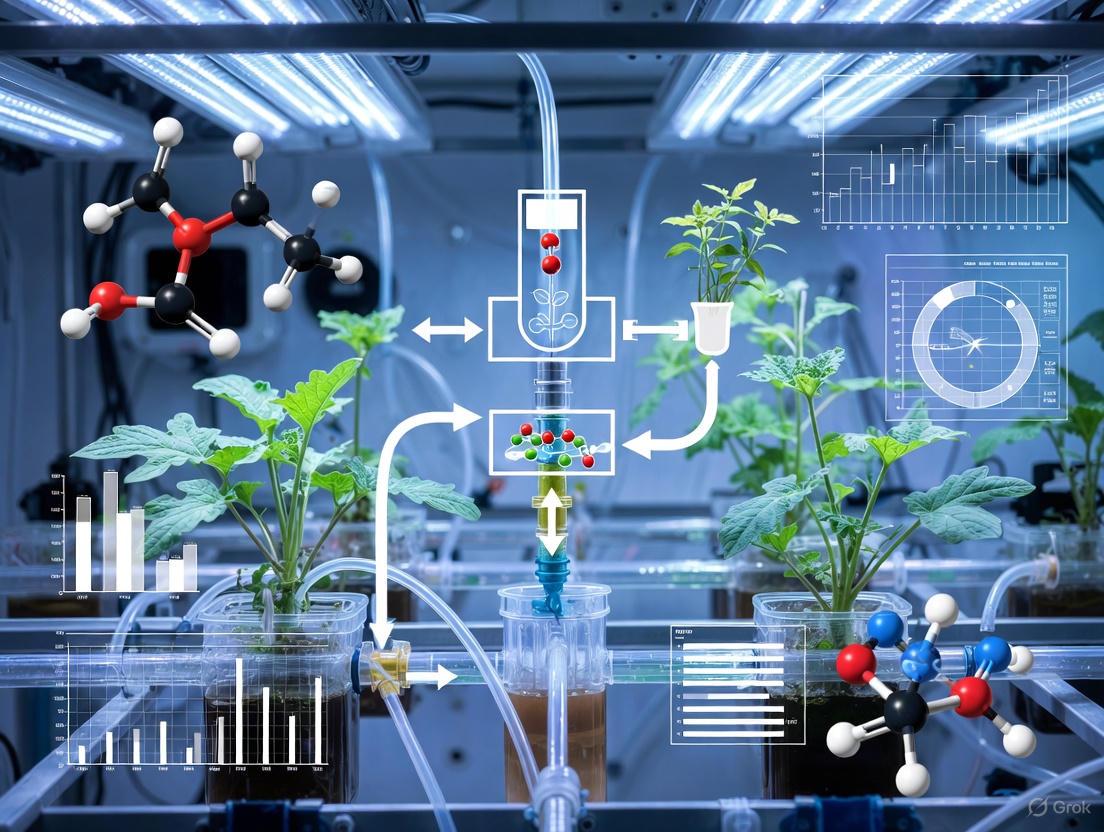
This article provides a comprehensive analysis of Controlled Environment Agriculture (CEA) technologies for sustainable food production in space missions.
Controlled Environment Agriculture for Space Food Production: Research, Applications, and Biomedical Implications
Abstract
This article provides a comprehensive analysis of Controlled Environment Agriculture (CEA) technologies for sustainable food production in space missions. Targeting researchers, scientists, and drug development professionals, it explores the scientific foundations of space crop cultivation, advanced methodological approaches, optimization strategies for extreme environments, and validation frameworks through current research initiatives. The analysis covers bioregenerative life support systems, nutrient delivery technologies, psychological benefits of fresh food, and the translation of space agriculture research to terrestrial biomedical applications including closed-loop systems and precision nutrition.
The Scientific Imperative: Why CEA is Essential for Long-Duration Space Missions
Controlled Environment Agriculture (CEA) represents a paradigm shift in food production, moving cultivation from open fields to mechanized, enclosed systems. In the context of space exploration, CEA transitions from a terrestrial alternative to a critical life-support technology. The burgeoning space agriculture market, projected to grow significantly in the coming decade, is driven by the fundamental need for sustainable food production during long-duration space missions and future extraterrestrial colonization [1] [2]. This sector is poised for substantial expansion, with market size estimates ranging from $2.5 billion to $10.59 billion by 2025, and anticipated compound annual growth rates (CAGR) of 12% to 25% through 2033 [1] [2] [3]. This growth is catalyzed by increased investment from governmental space agencies and private entities, all focused on a common goal: achieving resource independence and reducing reliance on Earth-based supplies for ambitious ventures such as lunar bases and Martian settlements [3].
The core challenge addressed by space-based CEA is the creation of robust, closed-loop bioregenerative systems. These systems must efficiently recycle water and nutrients, manage atmospheric composition, and reliably produce nutritious food in the extreme environments of space—characterized by microgravity, heightened radiation, and entirely artificial conditions [3]. This document outlines the current research landscape, provides detailed application notes and experimental protocols, and defines the essential toolkit for scientists engaged in this frontier of agricultural science.
Research Landscape and Quantitative Market Outlook
The research and development landscape for space agriculture is currently concentrated among major space agencies and their corporate partners. NASA and CASC (China Aerospace Science and Technology Corporation) are identified as the dominant players, driving innovation through substantial R&D investments [1] [3]. The primary focus of research encompasses closed-loop life support systems, hydroponics, aeroponics, and the development of radiation-resistant, high-yield crop varieties [1] [2]. The market's characteristics include high concentration, intense innovation, and end-user focus on space agencies, though commercial applications are emerging [1] [3].
The following tables summarize key quantitative data shaping the industry's trajectory and the energy considerations of CEA, a critical factor for space application.
Table 1: Space Agriculture Market Forecast and Growth Analysis (2025-2033)
| Metric | Value / Description | Source / Notes |
|---|---|---|
| 2025 Market Size Estimate | $2.5 Billion - $10.59 Billion | Varying methodologies and scope [1] [2]. |
| 2033 Market Projection | $20.93 Billion | Based on higher 2025 estimate [2]. |
| Compound Annual Growth Rate (CAGR) | 12.02% - 25% | Varies by report and forecast period [2] [3]. |
| Key Growth Catalysts | Increased space exploration; Technological advancements in CEA; Government and private investment [1]. | |
| Primary Market Restraints | High initial investment; Technological complexity; Radiation effects on plants [1] [3]. |
Table 2: Energy Intensity of Selected CEA Crops (Terrestrial Context) (Data derived from a global meta-analysis of 116 studies informing space system design) [4]
| Crop / Facility Type | Energy Intensity (Median MJ/kg) | Notes & Context |
|---|---|---|
| Open-Field Cultivation | ~1 MJ/kg | Baseline for comparison [4]. |
| Greenhouses (General) | 27 MJ/kg | Less mechanized "open" greenhouses operate at 1.5-5 MJ/kg [4]. |
| Plant Factories (Non-Cannabis) | 78 MJ/kg | Includes vertical farming with artificial lighting [4]. |
| Cucumbers | Least energy-intensive | Among studied CEA crops [4]. |
| Cannabis | 23,300 MJ/kg | The most energy-intensive crop studied; informs on extreme demands [4]. |
Core CEA Systems for Space Applications
Space-based CEA relies on the integration of several core technological systems to create a viable growth environment. These systems must function synergistically under the constraints of mass, volume, and power inherent to space missions.
Growth Substrate and Nutrient Delivery Systems
- Hydroponics and Aeroponics: These soilless cultivation methods are foundational to space CEA. Hydroponics involves suspending plant roots in a nutrient-rich aqueous solution, while aeroponics mists the roots with a nutrient fog. Both systems offer precise control over nutrient delivery and enable efficient water recycling, using an estimated 90% less water than conventional terrestrial agriculture [5]. This efficiency is critical for long-duration missions where resupply is impossible.
- Soil-Based Analogues & Biotechnology: Research into using simulated Martian and lunar regolith (soil) as a growth medium is ongoing. This is often combined with biotechnological approaches, such as employing beneficial microbes or genetically engineering plants to enhance nutrient uptake, tolerate stress, and increase yield in these suboptimal substrates [2] [3].
Environmental Control and Monitoring Systems
- Lighting: LED lighting systems are standard due to their high energy efficiency, low heat output, and ability to produce specific light spectra tailored to different plant growth stages (e.g., blue for vegetative growth, red for flowering). This allows for optimization of photosynthesis and morphogenesis [3].
- Atmospheric Control: This subsystem manages temperature, humidity, and carbon dioxide (CO₂) levels. In a closed space habitat, plants contribute to atmospheric revitalization by consuming CO₂ and producing oxygen. Precise control is necessary to maintain optimal growth conditions and support the broader life support system [5].
- Sensing and Automation: A network of advanced sensors continuously monitors environmental parameters (e.g., pH, nutrient concentration, dissolved oxygen, plant health). This data is fed into automated control systems, often enhanced by Artificial Intelligence (AI) and machine learning, to adjust conditions in real-time without constant human intervention, a key requirement for operational efficiency [1] [6].
Diagram 1: Core CEA system architecture for space, illustrating the integration of nutrient delivery, environmental control, and automated monitoring subsystems.
Detailed Experimental Protocols
The following protocols provide a standardized methodology for conducting plant growth experiments relevant to space CEA research. They are designed to be adaptable for both ground-based analog facilities (e.g., growth chambers simulating space environments) and flight experiments.
Protocol: Plant Cultivation in a Simulated Microgravity Environment
Objective: To evaluate the effects of simulated microgravity on seed germination, plant growth morphology, and nutrient composition of a model crop (e.g., Lactuca sativa, lettuce).
Materials:
- Clinostat or Random Positioning Machine (RPM): Device to simulate microgravity by continuously rotating samples.
- Growth Chamber: Standard controlled environment chamber.
- Plant Growth Modules: Sealed containers with integrated lighting and nutrient delivery (hydroponic or agar-based).
- Model Organism: Sterilized seeds of Lactuca sativa (lettuce).
- Nutrient Solution: Standard Hoagland's solution.
- Data Acquisition Tools: Calibrated sensors (for pH, EC, O₂), digital camera, scale.
Methodology:
- Experimental Setup: Prepare two identical growth modules.
- Control Group: Mounted stationary within the growth chamber.
- Microgravity Simulation Group: Mounted on the platform of the clinostat/RPM.
- Seed Sowing & Initiation: Aseptically sow seeds on the growth medium (e.g., agar plate or hydroponic substrate) in both modules. Initiate the clinostat for the simulation group.
- Environmental Parameters: Maintain both groups under identical conditions:
- Light: PPFD of 200 ± 10 μmol/m²/s, 16-h photoperiod.
- Temperature: 22 ± 1°C.
- Relative Humidity: 70 ± 5%.
- CO₂: 1000 ± 50 ppm.
- Data Collection:
- Daily: Monitor and record system parameters (temperature, pH).
- Every 3 Days: Capture high-resolution images of plants for morphometric analysis (root/shoot length, leaf area).
- Endpoint (21 Days): Harvest plants. Measure fresh and dry biomass. Analyze tissue for elemental composition (e.g., K, Ca, Mg, nitrates) and key phytochemicals (e.g., antioxidants, vitamins).
Protocol: Optimization of Light Recipes for Enhanced Nutrient Density
Objective: To determine the optimal LED light spectrum for maximizing the synthesis of target nutrients (e.g., anthocyanins, vitamin C) in a leafy green crop.
Materials:
- Multispectral LED Growth Racks: Capable of delivering specific red (R), blue (B), white (W), and far-red (FR) light ratios.
- Growth Chambers: With precise environmental control.
- Plant Material: Uniform seedlings of a selected crop (e.g., red leaf lettuce, basil).
- Analytical Equipment: HPLC system for phytochemical analysis.
Methodology:
- Treatment Design: Establish at least 4 light treatments in a randomized block design (e.g., B:R 1:2; B:R 1:4; B:R 1:2 + 10% FR; White light control).
- Plant Cultivation: Transplant uniform seedlings into the hydroponic systems under each light treatment. Maintain all other environmental factors constant.
- Monitoring: Measure photosynthetic efficiency (using a chlorophyll fluorometer) and growth rate weekly.
- Harvest and Analysis: Harvest plants at market maturity. Immediately freeze-dry a subsample for analysis.
- Analysis: Perform HPLC analysis to quantify concentrations of target compounds (e.g., anthocyanins, ascorbic acid) in each treatment group.
- Statistical Analysis: Use ANOVA to identify significant differences in growth and nutrient content between light treatments.
Diagram 2: Experimental workflow for optimizing light spectra to enhance nutrient density in crops for space CEA.
The Scientist's Toolkit: Key Research Reagent Solutions
Successful research in space CEA requires a suite of specialized reagents, tools, and software. The following table details essential items for designing and analyzing experiments.
Table 3: Essential Research Reagents and Tools for Space CEA Experiments
| Item Name / Category | Function / Application | Specific Example / Notes |
|---|---|---|
| Controlled Environment Growth Chambers | Provides a ground-based platform for simulating space environments (microgravity, radiation, atmospheric composition). | Ohio State's CEARC facility; UMN's 145 growth chambers [7] [5]. |
| Hydroponic/Aeroponic Nutrient Solutions | Deliver essential macro and micronutrients to plants in a readily available form within soilless systems. | Standard solutions (e.g., Hoagland's Solution); can be modified to induce or alleviate specific nutrient stresses. |
| NASA CEA (Chemical Equilibrium Code) | Models chemical equilibrium compositions for life support system design, including atmospheric gas balances and combustion analysis. | Critical for ECLSS design. Different from Controlled Environment Agriculture but vital for system integration [8]. |
| Spectral LED Lighting Systems | Provides tunable light spectra to influence plant growth, morphology, and nutritional content. | Systems capable of precise Red, Blue, White, and Far-red ratios for "light recipe" experiments. |
| Environmental Sensors | Monitor and record real-time data on growth conditions (T, RH, CO₂, pH, EC, light levels). | Calibrated, durable sensors for integration into automated control loops. |
| Plant Tissue Analysis Kits | Quantify nutritional and phytochemical content of harvested biomass (e.g., vitamins, antioxidants, nitrates). | Commercial kits for specific assays or protocols for HPLC/ICP-MS analysis. |
| Clinistats / Random Positioning Machines (RPM) | Simulates the effects of microgravity on plant growth and development in ground-based studies. | A key tool for pre-flight experimentation and hypothesis testing. |
Nutritional and Psychological Requirements for Astronaut Health
Nutritional and Psychological Requirements for Astronaut Health form a critical, interconnected risk mitigation strategy for the success of long-duration space missions. Deep space exploration exposes crews to unprecedented challenges, including prolonged isolation, confinement, unshielded ionizing radiation, and the inability to resupply food [9]. In this context, the food system transcends mere nutritional sustenance; it becomes a pivotal tool for supporting cognitive performance, emotional regulation, and team cohesion [9]. This document details application notes and experimental protocols, framed within Controlled Environment Agriculture (CEA) for space food production, to provide researchers with methodologies for quantifying and optimizing the diet-mental health relationship in astronaut crews.
Key Experimental Findings & Data Synthesis
Ground-breaking research, particularly from NASA's Human Exploration Research Analog (HERA), has quantitatively demonstrated the significant impact of dietary composition on astronaut health metrics. The following table synthesizes key outcomes from a study comparing a standard International Space Station (ISS) menu to an Enhanced Diet rich in fruits, vegetables, fish, and omega-3 fatty acids [10].
Table 1: Quantitative Summary of Health Outcomes: Standard ISS Diet vs. Enhanced Diet
| Health Category | Specific Metric | Standard ISS Diet | Enhanced Diet | Significance for Deep Space Missions |
|---|---|---|---|---|
| Nutritional Intake | Fruits & Vegetables (servings/day) | Lower | More | Improved micronutrient and fiber intake [10] |
| Omega-3 Fatty Acids | Lower | Higher | Supports cell membrane integrity and reduces inflammation [10] | |
| Calcium, Potassium, Fiber | Lower | Higher | Enhances bone health, fluid regulation, and digestive health [10] | |
| Physiological Health | Cholesterol Status | Unimproved | Improved | Reduces risk of cardiovascular issues [10] |
| Stress (Blood Cortisol) | Higher | Lower | Indicates better physiological adaptation to stress [10] | |
| Gut Microbiome | Reduced Diversity & Richness | More Stable & Diverse | Promotes a resilient gut-brain axis and immune function [10] | |
| Cognitive Performance | Cognitive Speed & Accuracy | Lower | Better | Essential for mission-critical tasks and problem-solving [10] |
| Vigilant Attention | Lower | Better | Maintains focus and alertness over long, monotonous missions [10] |
Detailed Experimental Protocol: HERA Nutritional Psychiatry Study
This section provides a reproducible methodology for investigating the diet-mental health relationship in a confined, controlled environment.
3.1 Objective: To determine the effects of an enhanced, spaceflight-compatible diet on nutritional status, gut microbiome, stress physiology, and cognitive performance in an astronaut analog environment.
3.2 Study Design:
- Design: Randomized, controlled trial within a 45-day HERA mission simulation [10].
- Participants: 16 individuals (healthy weight, average age 40); 4 crews of 4 people each [10].
- Groups: Two missions randomly assigned to the Enhanced Diet; two missions to the Standard ISS Diet [10]. Participants were blinded to group assignment.
3.3 Dietary Intervention:
- Standard ISS Menu: Representative of the current food system on the ISS.
- Enhanced Diet: Designed to provide approximately 2300 calories/day with increased variety and availability of fruits, vegetables, fish, tomato-based foods, and other items rich in flavonoids and omega-3 fatty acids, all while maintaining shelf-stability [10].
- Protocol: Participants were not allowed to select menu components or trade food items to ensure dietary consistency [10].
3.4 Data Collection & Measures: The following workflow outlines the comprehensive data collection and analysis procedure.
Diagram 1: Experimental Workflow for HERA Diet Study
3.4.1 Biochemical & Microbiological Sampling [10]:
- Time Points: Collected at 5 intervals (twice pre-mission, three times in-mission).
- Blood: Analyzed for vitamins, flavonoids, fatty acids, cholesterol, cortisol, and immune markers.
- Stool: Assessed for gut microbiome composition (diversity, richness) and metatranscriptomic activity.
- Urine & Saliva: Measured for flavonoid concentrations, cortisol, and viral shedding.
3.4.2 Cognitive & Behavioral Measures [10]:
- Psychomotor Vigilance Test (PVT): Administered twice pre-mission and three times per week in-mission to assess vigilant attention, cognitive speed, and accuracy.
- Food Intake Tracking: Participants recorded all consumption using the ISS Food Intake Tracker iPad App after each meal.
The Gut-Brain Axis: Mechanisms & Pathways
The efficacy of the enhanced diet is largely mediated through the gut-brain axis. The diagram below illustrates the proposed signaling pathways through which nutritional intake influences brain health and cognitive function.
Diagram 2: Gut-Brain Axis Signaling Pathways
The Scientist's Toolkit: Research Reagent Solutions
Table 2: Essential Reagents and Materials for Space Nutritional Psychiatry Research
| Reagent / Material | Function / Application | Example Analysis |
|---|---|---|
| ISS Food Intake Tracker App | Digital platform for precise, real-time recording of dietary consumption by crew members. | Tracking adherence to intervention and calculating nutrient intake [10] |
| Psychomotor Vigilance Test (PVT) | Standardized tool for assessing vigilant attention, reaction time, and cognitive performance. | Quantifying changes in cognitive speed and accuracy under different dietary conditions [10] |
| Biomarker Collection Kits | Standardized kits for the collection, stabilization, and storage of biological samples (blood, stool, urine, saliva). | Enabling analysis of hormones (cortisol), nutrients, and microbiome composition [10] |
| Metatranscriptomic Sequencing Reagents | Chemicals and kits for RNA sequencing of the entire gut microbiome community. | Assessing functional activity (gene expression) of the gut microbiome, not just its composition [10] |
| Shelf-Stable Food Components | Pre-packaged, preserved fruits, vegetables, fish, and other nutrient-dense foods with long shelf-life. | Formulating enhanced diets for long-duration missions where resupply is impossible [10] [9] |
Bioregenerative Life Support Systems (BLSS) are artificial ecosystems designed to sustain human life in space by recycling resources in a closed loop. As human space exploration aims for long-duration missions to the Moon and Mars, the limitations of current physicochemical (P/C) life support systems become apparent. These P/C systems, used on the International Space Station, require regular resupply missions from Earth for consumables, which is logistically challenging and cost-prohibitive for distant missions [11]. BLSS address this by incorporating biological components—plants and microorganisms—that regenerate air, purify water, produce food, and recycle waste, thereby dramatically reducing the need for external supplies [12]. The central principle of a BLSS is to create a techno-ecological system that mimics Earth's natural cycles, where the waste products of one group of organisms become the resources for another [12] [13]. The European Space Agency's (ESA) Micro-Ecological Life Support System Alternative (MELiSSA) is one of the most advanced BLSS concepts, engineered as a five-compartment loop to achieve this material closure [11] [14].
Application Notes: Core Subsystems and Components
The operation of a BLSS relies on the integration of several key biological compartments, each performing specific functions to maintain the closed loop.
The Higher Plant Compartment
Higher plants are primary producers in a BLSS, serving multiple critical functions beyond food production. Through photosynthesis, they consume carbon dioxide and generate oxygen for the crew. They also contribute to water purification through the uptake and transpiration of water [12]. The selection of plant species is mission-dependent. For short-duration missions, fast-growing species with high nutritional value, such as leafy greens (e.g., lettuce, kale), microgreens, and dwarf cultivars of tomato, are ideal for dietary supplementation [12]. For long-duration missions and planetary outposts, staple crops (e.g., wheat, potato, rice, soy) must be integrated to provide carbohydrates, proteins, and fats, forming the basis of the crew's diet [12]. Plants also provide non-nutritional benefits, such as psychological support against the stressors of isolation and confinement [12] [15].
Microbial Waste Processing and Nutrient Recycling
Microbial compartments are essential for breaking down human waste and recovering nutrients. In the MELiSSA loop, this is achieved through a sequence of bioreactors:
- Compartment I (C1): A thermophilic anaerobic bioreactor that ferments solid and liquid waste (feces, inedible biomass), producing volatile fatty acids, carbon dioxide, and minerals [14].
- Compartment II (C2): A photoheterotrophic compartment where certain bacteria use the products from C1, along with light, to further break down organic matter and produce biomass [14].
- Compartment III (C3): A nitrifying compartment that converts ammonium from urine and other waste streams into nitrate, a preferred nitrogen fertilizer for plants [11] [14].
Nutrient Recovery from Urine: Urine is the most significant source of recoverable nitrogen, accounting for about 85% of the total in a BLSS [11]. Efficient recovery is therefore critical. The current system on the ISS stabilizes urine with acid and an oxidizing agent to prevent scaling and ammonia volatilization before water is distilled off [11]. In a BLSS, biological processing in compartments like C3 transforms this nitrogen into a readily available plant nutrient, closing the nitrogen loop [11].
The Animal Compartment
While plants and microbes form the foundation, the integration of small animals, particularly insects, is a promising yet under-researched area. Insects like the house cricket (Acheta domesticus) and yellow mealworm (Tenebrio molitor) offer multifunctional benefits:
- Protein Production: They efficiently convert organic matter into high-quality animal protein for human consumption.
- Waste Processing: They can consume and break down residual plant and food waste.
- System Resilience: They can contribute to ecological functions such as pollination and pest control, enhancing the stability of the BLSS ecosystem [13]. Despite their potential, a review of BLSS literature found that animal integration is severely underrepresented, with only about one animal-focused paper published annually compared to 4.7 plant-related papers [13].
Table 1: Key Compartments and Their Functions in a BLSS (e.g., MELiSSA)
| Compartment | Primary Function | Key Organisms | Outputs for Other Compartments |
|---|---|---|---|
| Crew (C5) | Consumer | Humans | CO₂, urine, feces, inedible biomass |
| Thermophilic Anaerobic (C1) | Waste degradation | Anaerobic bacteria | Volatile Fatty Acids, CO₂, minerals |
| Photoheterotrophic (C2) | Waste oxidation & biomass production | Photoheterotrophic bacteria | Bacterial biomass, CO₂ |
| Nitrifying (C3) | Nitrogen recovery | Nitrifying bacteria | Nitrate fertilizer (for C4) |
| Photoautotrophic (C4a/b) | Food & O₂ production | Microalgae (C4a) & Higher Plants (C4b) | O₂, food, clean water, biomass |
Experimental Protocols
Robust, repeatable experimental protocols are vital for advancing BLSS technology from ground-based demonstrators to flight-ready systems.
Protocol for Nitrogen Recovery via Nitrification
This protocol outlines the process for converting ammonium from urine into nitrate using a nitrifying bioreactor (MELiSSA C3) [11].
- Objective: To establish and maintain a continuous-flow bioreactor for the biological oxidation of ammonium to nitrate, providing a nitrogen source for plant growth modules.
- Materials:
- Nitrifying bioreactor (packed-bed or continuous stirred-tank reactor)
- Synthetic or real pretreated urine feedstock (stabilized with acid to prevent urea hydrolysis)
- Nitrifying bacterial inoculum (e.g., Nitrosomonas europaea, Nitrobacter winogradskyi)
- Mineral medium (containing phosphates, carbonates, and micronutrients)
- Peristaltic pumps for feed and harvest
- pH and temperature probes and controllers
- Dissolved oxygen sensor
- Analytical equipment: Spectrophotometer, Ion Chromatography system, or test kits for NH₄⁺, NO₂⁻, and NO₃⁻.
- Methodology:
- Bioreactor Inoculation and Startup: Inoculate the sterile bioreactor with a concentrated culture of nitrifying bacteria. Begin with a batch culture, adding a low concentration of ammonium (e.g., 50 mg/L NH₄⁺-N) and minerals. Monitor the conversion of ammonium to nitrite and then to nitrate.
- Continuous Operation: Once nitrification is stable, switch to continuous mode. Dilute the pretreated urine stream with mineral medium and introduce it to the bioreactor at a controlled flow rate (e.g., hydraulic retention time of 1-5 days).
- Environmental Control: Maintain dissolved oxygen at >2 mg/L, pH between 7.5-8.0 (using carbonate buffer or automatic pH control), and temperature at 28-30°C.
- Monitoring and Data Collection:
- Daily: Measure influent and effluent concentrations of NH₄⁺, NO₂⁻, and NO₃⁻.
- Continuous: Monitor and log pH, temperature, and dissolved oxygen.
- Weekly: Check for bacterial contamination via microscopy or molecular methods.
- Data Analysis: Calculate the nitrification efficiency: [(NO₃⁻ produced) / (NH₄⁺ consumed)] × 100%. The target is >95% conversion of ammonium to nitrate with negligible nitrite accumulation. The effluent can then be mixed with other nutrient streams to form a hydroponic fertilizer for the plant compartment.
Protocol for Integrated Pest Management (IPM) in BLSS
Preventing and mitigating pest and pathogen outbreaks is critical for system stability [16].
- Objective: To implement a dynamic IPM plan to prevent, monitor, and control insect and phytopathology outbreaks in space-based plant growth systems.
- Materials:
- Sterilized plant growth substrates (e.g., clay-based "pillows")
- Surface-sterilized seeds
- Laminar flow hood for sterile transfer
- Biological control agents (e.g., beneficial fungi like Trichoderma, predatory mites)
- Approved chemical sanitizers (e.g., hydrogen peroxide)
- Air filtration systems (HEPA)
- Environmental sensors (humidity, temperature)
- Diagnostics: PCR kits for common plant pathogens.
- Methodology:
- Prevention (Primary Strategy):
- Quarantine & Sterilization: All plant material (seeds, cuttings) must be surface-sterilized and quarantined before introduction.
- System Sanitation: Regularly clean and sanitize growth chambers and tools.
- Environmental Control: Avoid conditions that stress plants or promote pathogens, such as high humidity and low air flow. Maintain optimal VPD (Vapor Pressure Deficit).
- System Design: Utilize closed or semi-closed plant growth modules (e.g., Advanced Plant Habitat) over open systems (e.g., Veggie) to better control the microbiome.
- Monitoring:
- Regular Scouting: Crew members should visually inspect plants daily for signs of pests or disease (e.g., spots, wilting, insects).
- Environmental Monitoring: Use sensors to ensure humidity and temperature remain within non-conducive ranges for pathogen growth.
- Diagnostic Testing: If symptoms appear, use on-board molecular diagnostics to identify the causal agent.
- Intervention:
- Physical: Remove and safely dispose of severely infected plants. Physically remove pests if present.
- Biological: Introduce approved biological control agents.
- Chemical: As a last resort, use approved sanitizers or pesticides in a targeted manner, ensuring crew safety and system compatibility.
- Prevention (Primary Strategy):
The following workflow diagram illustrates the decision-making process for this IPM protocol.
Protocol for BLSS Stoichiometric Modeling
Mathematical modeling is essential for predicting and controlling mass flows in a closed ecosystem [14].
- Objective: To develop a stoichiometric model that tracks the flow of key elements (C, H, O, N) through all compartments of a BLSS to achieve a high degree of material closure.
- Materials:
- Spreadsheet software (e.g., Excel, Google Sheets) or programming environment (e.g., Python, MATLAB)
- Empirical data on crew metabolic needs (O₂ consumption, CO₂ production, food intake, waste output)
- Stoichiometric equations for biological processes in each compartment (e.g., photosynthesis, nitrification, waste fermentation)
- Composition data for all biomass streams (plants, microbes, food).
- Methodology:
- System Definition: Define the system boundary (e.g., the entire MELiSSA loop with 5 compartments) and the elements to track (C, H, O, N).
- Input/Output Analysis: For a crew of a given size (e.g., 6), calculate the daily input and output masses for each element based on metabolic data.
- Stoichiometric Equations: Write balanced chemical equations for the key processes in each compartment. For example:
- C4 (Plant Growth): aCO₂ + bH₂O + cNO₃⁻ + minerals → Biomass (CₓHᵧO₂Nᵥ) + dO₂
- C3 (Nitrification): NH₄⁺ + 2O₂ → NO₃⁻ + H₂O + 2H⁺
- Mass Balance: Link all compartment equations. The outputs of one compartment (e.g., CO₂ and nitrate) must equal the inputs of another (e.g., plants). Iteratively adjust the scaling of each compartment (e.g., plant growth area, bioreactor volume) until the system is balanced and losses are minimized.
- Validation: Compare model predictions with data from ground-based pilot plants (e.g., the MELiSSA Pilot Plant) and refine coefficients.
Table 2: Key Mass Flow Parameters for a 6-Person Crew in a BLSS (Conceptual)
| Parameter | Estimated Daily Mass Flow (kg/day) | Notes / Source |
|---|---|---|
| Crew Inputs | ||
| Food (dry mass) | ~3.7 kg | Based on 1.83 kg wet mass per crew member [11] |
| Drinking Water | ~15.0 kg | Based on 2.5 kg per crew member [11] |
| Oxygen | ~3.5 kg | Calculated from metabolic oxygen demand |
| Crew Outputs | ||
| CO₂ | ~4.2 kg | Calculated from respiration |
| Urine (incl. flush water) | ~10.8 kg | Based on 1.80 L per crew member [11] |
| Inedible Biomass & Feces | ~1.5 kg | Estimate from waste production |
System Modeling and Integration
Achieving closure requires sophisticated system-level modeling to balance mass flows. The Equivalent System Mass (ESM) metric is used by engineers to compare different life support architectures, factoring in the mass, volume, power, cooling, and crew time requirements [16]. For missions longer than approximately three months, BLSS architectures begin to show a mass advantage over purely physicochemical systems due to reduced resupply needs [16]. Recent modeling efforts have demonstrated the feasibility of a fully closed system. A 2023 stoichiometric model of the MELiSSA loop achieved a steady state where 100% of the food and oxygen for a crew of six could be provided continuously, with 12 out of 14 tracked compounds exhibiting zero loss [14]. This highlights the potential for highly self-sufficient missions.
The following diagram illustrates the integrated material flow between the core compartments of a BLSS.
The Scientist's Toolkit: Key Research Reagents and Materials
Table 3: Essential Research Reagents and Materials for BLSS Experimentation
| Reagent / Material | Function in BLSS Research | Example Application |
|---|---|---|
| Clay-Based Growth "Pillows" | A soilless substrate for plant growth; helps distribute water, nutrients, and air to roots in microgravity. | Used in NASA's Veggie system to grow lettuce and other leafy greens on the ISS [15]. |
| LED Lighting Systems | Provides specific light spectra (red, blue, far red, white) for photosynthesis and controlling plant growth morphology. | Used in both the Veggie and Advanced Plant Habitat (APH) on the ISS to optimize plant growth [15]. |
| Synthetic Urine Formulation | A standardized, safe feedstock for developing and testing nutrient recovery (nitrification) systems. | Used in ground-based testing of the MELiSSA C3 nitrifying bioreactor to optimize performance [11]. |
| Nitrifying Bacterial Consortia | Live cultures of bacteria (e.g., Nitrosomonas, Nitrobacter) that convert toxic ammonia into plant-usable nitrate. | Inoculum for the nitrification compartment (C3) in the MELiSSA loop [11] [14]. |
| Surface Sterilization Agents | Chemicals (e.g., ethanol, dilute bleach) used to sterilize seeds and hardware, preventing the introduction of pathogens. | Critical first step in the IPM protocol to ensure a clean plant growth system [16]. |
| Chemical Fixatives (e.g., RNAlater) | Preserves the molecular state (e.g., gene expression) of biological samples at the moment of collection. | Used to fix plant samples on the ISS for later ground-based analysis of spaceflight effects on gene expression [15]. |
Space agriculture is the development of self-sustaining, biologically regenerative food production systems capable of functioning in extraterrestrial environments [17]. These systems are designed to recycle waste, grow edible crops, and maintain a stable life-support ecosystem, with the ultimate goal of closing nutrient loops to create balanced environments where every output becomes a usable input [17]. This research is critical for enabling long-duration missions beyond Earth's orbit, where resupply from Earth becomes impractical. As the NASA Biological and Physical Sciences Division emphasizes, the core objective is to "go farther and stay longer in space," requiring sustainable sources of food that provide both nutrition and psychological benefits to crew members [18].
The research is framed within the broader context of Controlled Environment Agriculture (CEA), which enhances food resilience through diversified sources, high productivity, water conservation, and protection against climate uncertainties [19]. In CEA, crops grow under precisely controlled conditions including light spectrum and intensity, temperature, and humidity, achieving yields 10 to 100 times higher than open-field agriculture while using only 4.5–16% of the water per unit mass of produce [19]. These terrestrial CEA technologies provide the foundation for developing analogous systems for space environments.
Key Cultivation Systems aboard the International Space Station
Vegetable Production System (Veggie)
The Vegetable Production System (Veggie) is a space garden residing on the International Space Station, roughly the size of a carry-on piece of luggage and typically holding six plants [15]. Its purpose is to help NASA study plant growth in microgravity while adding fresh food to the astronauts' diet and enhancing their happiness and well-being aboard the orbiting laboratory [15]. The system utilizes a bank of light emitting diodes (LEDs) that produce a spectrum of light optimized for plant growth, typically glowing magenta pink since plants reflect much green light while using more red and blue wavelengths [15].
Veggie employs unique plant "pillows" – fabric containers filled with a clay-based growth media and controlled-release fertilizer, similar to clay used on baseball fields [20] [15]. These pillows are essential for distributing water, nutrients, and air in a healthy balance around the roots in microgravity, preventing roots from either drowning in water or being engulfed by air bubbles that form in space [15]. The system features clear flexible bellows with accordion-like walls that expand to accommodate maturing plants, creating a semi-controlled environment around the growing area [20].
To date, Veggie has successfully grown a variety of plants including three types of lettuce, Chinese cabbage, mizuna mustard, red Russian kale, zinnia flowers, and most recently, Wasabi mustard greens, Red Russian Kale, and Dragoon lettuce as part of the VEG-03 MNO experiments [20] [15]. The flowers proved especially popular with astronaut Scott Kelly, who photographed a bouquet floating in the cupola against the backdrop of Earth, demonstrating the psychological benefits of plant cultivation in space [15].
Advanced Plant Habitat (APH)
The Advanced Plant Habitat (APH) represents a more advanced, fully enclosed and automated growth chamber for plant research on the space station [15]. Unlike Veggie, APH operates with minimal crew intervention through cameras and more than 180 sensors that maintain constant interactive contact with ground teams at Kennedy Space Center [15]. Its water recovery and distribution, atmosphere content, moisture levels, and temperature are all automated, providing superior environmental control compared to the Veggie system.
APH features enhanced LED lighting capabilities with red, green, and blue lights, plus white, far red, and even infrared LEDs to allow for nighttime imaging [15]. The system uses a porous clay substrate with controlled-release fertilizer to deliver water, nutrients, and oxygen to plant roots [15]. When plants are ready for research studies, crew members collect samples, preserve them by freezing or chemical fixation, and return them to Earth for analysis, enabling scientists to better understand how space affected their growth and development [15].
The habitat had its first test run in Spring 2018 using Arabidopsis thaliana (a model organism in plant research) and dwarf wheat [15]. The first formal study using APH, the Arabidopsis Gravitational Response Omics (Arabidopsis-GRO) consortium investigation, examines changes in plants at the gene, protein, and metabolite levels, with particular interest in the relationship between microgravity and plant lignin content – structural components whose function is analogous to bones in humans [15].
Biological Research in Canisters (BRIC)
The Biological Research in Canisters (BRIC) facility supports studies of organisms small enough to grow in petri dishes, such as yeast, microbes, and small plants [15]. The latest version, BRIC-LED, incorporates light-emitting diodes to support biological organisms like plants, mosses, algae, and cyanobacteria that require light for food production [15]. This system is currently undergoing hardware validation tests to ensure the LEDs don't generate excessive heat for plants and to verify other system functions [15].
Researchers like Dr. Simon Gilroy from the University of Wisconsin-Madison utilize BRIC-LED to investigate how the Arabidopsis plant's gene expression changes in space [15]. Of particular interest are patterns related to increased oxidative stress and alterations in immune system function, which may compromise plants' ability to fight off infections in space environments [15]. The system enables researchers to conduct precise experiments by manipulating protein receptors on plants to simulate pathogen attacks, then preserving the biological response state for subsequent analysis on Earth [15].
Table 1: Comparison of Primary Plant Growth Systems aboard the ISS
| System Feature | Veggie | Advanced Plant Habitat (APH) | Biological Research in Canisters (BRIC-LED) |
|---|---|---|---|
| Level of Automation | Manual crew operation | Fully enclosed and automated with >180 sensors | Hardware validation ongoing |
| Lighting System | Red, blue, green LEDs | Red, green, blue, white, far red, infrared LEDs | LED system for small organisms |
| Primary Research Focus | Crop cultivation for nutrition and psychology | Fundamental plant biology and genetics | Gene expression and immune response in microgravity |
| Crew Time Requirements | High - planting, monitoring, harvesting | Low - automated with ground control | Medium - sample collection and preservation |
| Typical Plant Specimens | Lettuce, kale, cabbage, flowers | Arabidopsis thaliana, dwarf wheat | Arabidopsis, mosses, algae, microbes |
Current Research Initiatives and Experimental Protocols
VEG-03 MNO Implementation Protocol
The VEG-03 MNO experiment represents the current state of crop cultivation aboard the International Space Station, building upon previous successes with leafy greens [20]. This investigation allows astronauts to select crops from a seed library including Wasabi mustard greens, Red Russian Kale, and Dragoon lettuce, providing both nutritional variety and psychological benefits through crew involvement in food selection [20].
Experimental Workflow:
- Seed Selection and Planting: Crew members select seeds from the available library and plant thin strips containing their chosen seeds into fabric "seed pillows" pre-filled with clay-based growing medium and controlled-release fertilizer [20].
- Chamber Activation: Planted pillows are transferred to the Veggie chamber, where the LED lighting system is activated with spectra optimized for the selected crops [20].
- Growth Monitoring: Crew members regularly monitor plant development, adding water as needed and documenting growth through systematic photographic records [20].
- Harvest and Analysis: At maturity, astronauts harvest the produce, consuming portions fresh while freezing other samples for return to Earth, where scientists analyze nutritional content and safety [20].
This protocol successfully addresses the unique challenges of fluid behavior in microgravity, where the clay-based growth media in seed pillows helps distribute water and air around roots that would otherwise be engulfed by bubbles or drown in water [15]. The investigation aims to validate various crops for inclusion in astronaut diets during long-duration space exploration missions while giving crew members more control over what they grow and eat [20].
Advanced Plant Experiment-12 (APEX-12) Methodology
The Advanced Plant Experiment-12 (APEX-12) investigates a novel hypothesis: that induction of telomerase activity in space protects plant DNA molecules from damage elicited by cellular stress evoked by the combined spaceflight stressors experienced by seedlings grown aboard the space station [18]. Telomerase is a protein complex that maintains chromosome ends, and its activation may provide crucial protection against the unique stresses of the space environment.
Experimental Protocol:
- Plant Material Preparation: Arabidopsis thaliana seeds, genetically modified to induce telomerase activity, are prepared alongside wild-type controls.
- Spaceflight Activation: Seeds are activated in the APH or Veggie systems with precisely controlled environmental conditions.
- Stress Application: Plants are subjected to controlled spaceflight stressors including radiation, microgravity, and altered atmospheric conditions.
- Sample Preservation: At critical developmental stages, plant tissues are preserved through freezing or chemical fixation for subsequent analysis.
- Earth-Based Analysis: Samples returned to Earth undergo comprehensive genomic analysis to assess DNA damage, telomerase activity, and physiological responses.
This fundamental research aims to uncover protective mechanisms that could be bred or engineered into crop varieties better suited for space environments, ultimately supporting the development of more resilient plants for long-duration missions [18].
Plant Habitat-04 (PH-04) Chile Pepper Cultivation
The Plant Habitat-04 (PH-04) experiment marked the first successful cultivation of chile peppers aboard the International Space Station, representing a significant advancement in crop diversity for space agriculture [15]. Chile peppers were selected due to their high vitamin C content, robust growth characteristics, and potential to enhance meal flavor – an important psychological factor for crew morale during extended missions.
Implementation Framework:
- Variety Selection: Dwarf chile pepper varieties were selected for their compact growth habit and suitability for confined growth chambers.
- Pollination Strategy: In the absence of natural pollinators, manual pollination techniques were implemented by crew members.
- Environmental Optimization: The Advanced Plant Habitat maintained precise temperature, humidity, and lighting conditions optimized for fruit development.
- Multi-generational Testing: Plants were monitored through complete life cycles from seed to seed, assessing viability across generations in microgravity.
The success of PH-04 demonstrates the feasibility of growing more complex fruiting crops in space, expanding beyond the leafy greens that dominated earlier research efforts [15].
Table 2: Quantitative Analysis of Crop Varieties Successfully Grown in Space
| Crop Type | Specific Varieties | Growth System | Days to Harvest | Key Nutritional Benefits | Research Focus |
|---|---|---|---|---|---|
| Leafy Greens | Dragoon lettuce, Red Russian Kale, Wasabi mustard greens | Veggie | 28-35 | Vitamins A, C, K; Dietary fiber | Food safety, nutrition, crew psychology |
| Flowers | Zinnia | Veggie | 60-70 | Psychological benefits | Morphological development, life cycle completion |
| Fruiting Crops | Chile peppers (PH-04) | APH | 90-120 | High vitamin C, flavor enhancement | Pollination, fruit development in microgravity |
| Model Organisms | Arabidopsis thaliana | APH, BRIC | Varies | Fundamental research | Genetic expression, lignin formation, telomerase function |
Technological Innovations and System Integration
Bioregenerative Life Support Systems
Bioregenerative life support systems represent the ultimate goal of space agriculture research – creating sustainable systems that produce fresh food and water, revitalize air, and recycle waste essential for deep-space exploration [18]. NASA research focuses on understanding how biological components of crop production systems can be optimally integrated into the physical architecture of self-sustaining ecosystems in space [18]. These insights are contributing to innovations in reusing and recycling resources, moving toward closed-loop systems that minimize reliance on external supplies.
Current research examines the integration of multiple biological components, including:
- Plant systems for food production, carbon dioxide absorption, and oxygen generation
- Microbial processing for waste breakdown and nutrient recycling
- Algal systems for water purification and additional biomass production
The MELiSSA (Micro-Ecological Life Support System Alternative) project by the European Space Agency exemplifies this approach, developing a closed ecosystem where microbial communities, algae, and higher plants collaborate to recycle resources and maintain life support functions [17].
Novel Biological Components for Nutrient Cycling
Research into innovative biological components for space agriculture has identified several promising candidates for closing nutrient loops in regenerative systems [17]:
Insect Integration: Species such as silkworms, hawkmoths, termites, and drugstore beetles have emerged as potential candidates for space farming due to their ability to transform inedible plant parts and waste into valuable resources [17]. Silkworms efficiently convert mulberry leaves (indigestible to humans) into nutrient-dense pupae rich in protein, while termites and beetles break down tough plant materials into nitrogen-rich waste that can feed aquatic species like loach fish, creating additional food sources [17].
Hyper-thermophilic Composting Bacteria: These heat-loving bacteria thrive at temperatures up to 100℃ and can rapidly break down human and plant waste into high-quality fertilizer while eliminating harmful pathogens [17]. Adapted from successful terrestrial applications in Japan, these composting systems could allow astronauts to convert waste into nutrients that sustain food crops, dramatically improving resource efficiency in closed environments [17].
Salt-Tolerant Algae: The marine algae Ulva has demonstrated exceptional capability in regulating sodium levels, making it ideally suited for processing recycled water and waste that typically accumulates salts problematic for many crop plants [17]. Integrating Ulva into space agriculture systems provides a natural mechanism for stabilizing nutrient cycles and protecting sensitive crops from salt stress [17].
Research Reagent Solutions and Essential Materials
Table 3: Essential Research Materials for Space Agriculture Experiments
| Reagent/Material | Composition/Properties | Research Function | Application in Specific Protocols |
|---|---|---|---|
| Clay-Based Growth Media | Low-density calcined clay with high porosity and water retention | Root support in microgravity; balanced fluid/gas distribution | VEG-03: Primary substrate in seed pillows; prevents root drowning or air engulfment |
| Controlled-Release Fertilizer | Polymer-coated nutrient granules with timed release profiles | Sustained nutrient delivery across plant growth cycle | APEX-12: Consistent nutrient supply despite crew attention variability |
| Fabric "Seed Pillows" | Polyester or polypropylene fabric containers | Structural containment for growth media in microgravity | VEG-03: Enables modular planting and root zone management |
| LED Lighting Systems | Specific wavelength ratios (Red:Blue ~95:5; Green 0-10%) | Photosynthesis optimization; morphological control | APH: Multi-spectral capability for research and imaging |
| Plant Fixation Solutions | Chemical fixatives (e.g., RNAlater, formaldehyde solutions) | Preservation of biological samples for Earth analysis | BRIC-LED: Post-experiment preservation of gene expression patterns |
| Telomerase Induction Compounds | Genetic constructs or chemical inducers | DNA protection mechanism research | APEX-12: Investigation of cellular stress protection in space environment |
| Flag-22 Peptide Solutions | 22-amino acid flagellin peptide fragments | Plant immune response triggering without live pathogens | BRIC-LED: Simulated pathogen challenge studies |
Knowledge Gaps and Future Research Directions
Despite significant advancements, space agriculture research faces several substantial challenges and knowledge gaps that guide future research priorities:
Plant Immunocompetence in Space: Evidence suggests that plants grown in space may experience compromised immune function, potentially due to alterations in gene expression related to defense mechanisms [15]. The anecdotal incident of zinnia fungal infection aboard the ISS, despite recovery through careful crew intervention, highlights the need for systematic investigation into plant-pathogen interactions in microgravity [15]. Future research must elucidate the precise mechanisms behind this apparent immune suppression and develop countermeasures to ensure crop health during long-duration missions.
Root Architecture and Nutrient Uptake Dynamics: Research has revealed that roots grown in microgravity skew sideways with changes in cellular composition, with these alterations becoming more pronounced in older roots [17]. This suggests plants may adapt their structures over time in response to space conditions, but the implications for long-term nutrient uptake efficiency and sustained crop production remain incompletely understood [17]. Detailed studies of root function, rather than just morphology, are needed to optimize growth systems for multi-generational plant cultivation.
Energy Efficiency and System Sustainability: Current CEA systems face significant challenges with high energy intensity and carbon footprints, with energy accounting for approximately 25% of operating costs in large vertical farms [19]. The carbon footprints of indoor vertical farms are 5.6–16.7 times greater than open-field agriculture [19]. Research priorities include developing more energy-efficient lighting strategies, integrating renewable energy sources, and implementing advanced control systems to optimize resource use while maintaining productivity.
Closed-Loop System Integration: While individual components of bioregenerative life support show promise, their integration into stable, resilient ecosystems remains a significant challenge [18] [17]. Future research must focus on the interfaces between biological and engineering systems, control algorithms for maintaining system stability, and strategies for managing unexpected perturbations in closed environments where resupply is impossible.
These research priorities align with NASA's broader goals for sustainable exploration, emphasizing the development of technologies and biological understanding that will enable human presence beyond Earth orbit through self-sustaining food production systems [18].
The EDEN ISS project represents a cornerstone effort in advancing controlled environment agriculture (CEA) technologies for safe food production in space. Its primary goal is the adaptation, integration, and demonstration of plant cultivation technologies and operational procedures suitable for future human space exploration missions, from the International Space Station (ISS) to planetary outposts on the Moon and Mars [21] [22]. A key innovation of the project is the Mobile Test Facility (MTF)—a container-sized greenhouse deployed in the extreme environment of Antarctica, near the German Neumayer Station III [23] [24]. This location provides a unique space-analog testbed, offering isolated, logistically constrained, and environmentally harsh conditions highly relevant for validating the reliability of life support systems intended for space. The facility successfully demonstrated the ability to provide fresh produce for a crew over a 9-month Antarctic winter, producing more than 268 kg of edible biomass in its 2018 experimental phase [23]. This paper details the applications and protocols derived from this analog mission, providing a framework for researchers developing bio-regenerative life support systems (BLSS).
Facility Design and Core Subsystems
The EDEN ISS MTF is engineered as a semi-closed system and is housed within two customized 20-foot high-cube shipping containers. Its layout is strategically partitioned into three distinct sections, each serving a critical function [23] [24]:
- Cold Porch/Airlock: A small room that serves as an entry buffer, minimizing the influx of cold external air and providing storage space. It also houses the main fresh water and waste water tanks in its subfloor.
- Service Section (SES): This compartment contains the primary support subsystems, including the control, atmosphere management, thermal control, and nutrient delivery systems. It also features a work desk and an International Standard Payload Rack (ISPR)-sized plant growth demonstrator for technology testing.
- Future Exploration Greenhouse (FEG): The main plant cultivation space, featuring multi-level growth racks operating within a tightly controlled environment. This section is dedicated to studying plant cultivation and related technologies for future planetary habitats.
The operational functionality of the greenhouse is enabled by six integrated subsystems [23]:
- Nutrient Delivery Subsystem (NDS): Adjusts the pH and electrical conductivity (EC) of the irrigation water. High-pressure pumps deliver a fine nutrient mist directly to the plant roots via an aeroponic system.
- Atmosphere Management Subsystem: Regulates temperature, humidity, and CO₂ concentration within the FEG. It also filters the air (particle, HEPA, and activated carbon) and recovers humidity condensate for water recycling.
- Thermal Control Subsystem: Removes excess heat from the MTF and provides a cool fluid for dehumidification.
- Illumination Control Subsystem: Comprises 42 fluid-cooled LED fixtures. The light spectrum for each plant tray can be custom-composed from red, blue, far-red, and white LEDs.
- Power Distribution Subsystem: Manages the electrical energy supplied from the Neumayer Station III to all MTF subsystems.
- Control and Data Handling Subsystem: A network of programmable logic controllers that automate facility functions, monitor sensor data, and transmit system telemetry to a mission control center in Bremen, Germany.
Key Research Applications and Experimental Outcomes
Biomass Production and Food Output
A primary application of the EDEN ISS analog is the quantification of biomass production in a space-relevant, multi-crop cultivation system. The facility operates on a "compromise climate" principle, where all crops are grown simultaneously under a single set of environmental parameters, a more realistic scenario for near-term space missions than individually optimized climates [23]. During the 2018 experimental phase, which spanned from February 7th to November 20th, the greenhouse maintained environmental set points of 330–600 μmol/m²/s of LED light, 21°C, approximately 65% relative humidity, and 1000 ppm CO₂, with a 17-hour photoperiod [23]. The following table summarizes the total edible biomass production achieved on the 12.5 m² cultivation area.
Table 1: Total Edible Biomass Production during the 2018 Experiment Phase (9 months)
| Crop Category | Edible Biomass (kg) | Specific Crops and Notes |
|---|---|---|
| Cucumbers | 67.0 | -- |
| Tomatoes | 50.0 | -- |
| Lettuces | 56.0 | Multiple cultivars were tested. |
| Leafy Greens | 49.0 | Includes spinach, Swiss chard, and pak choi. |
| Kohlrabi | 19.0 | -- |
| Herbs | 12.0 | Includes basil, mint, and cilantro. |
| Radish | 8.0 | -- |
| Other | 7.0 | Includes minor test crops. |
| TOTAL | 268.0 | Overall yearly productivity: 27.4 kg/m² or 0.075 kg/(m²*d) |
Microbial Monitoring and Food Safety
Understanding and managing the microbial environment within a closed cultivation system is critical for both plant health and crew safety. A comprehensive microbial monitoring study was conducted throughout the 2018 operation to track the quantity and diversity of microorganisms on plants, in the nutrient solution, and on various surfaces within the MTF [25]. The research aimed to assess contamination risks and validate the safety of the produced food.
Samples were taken from the three compartments: Future Exploration Greenhouse (FEG), Service Section (SS), and Cold Porch (CP). The results confirmed that the food produced was safe for consumption from a microbiological standpoint [25]. Key findings included:
- Plant Samples: Microbial quantities on edible plant materials ranged from 10² to 10⁴ colony forming units (CFU) per gram, which was orders of magnitude lower than comparable produce from a German grocery store. The samples contained mainly fungi and few bacteria, with no detection of pathogenic microorganisms like Escherichia or Salmonella.
- Nutrient Solution: The bioburden in the aeroponic nutrient solutions increased steadily over time but remained below critical levels (e.g., below 10²–10³ CFU per 100 mL, a threshold for commercial European plant production).
- Surface Samples: Microbial loads showed significant spatial and temporal fluctuations. The planted FEG section had a higher microbial burden than the SS and CP, though levels were never critical. Bacteria (primarily Firmicutes and Actinobacteria) vastly outnumbered fungi on surfaces.
Experimental Protocols
Protocol for Microbial Monitoring in a Closed-Culture Environment
This protocol is adapted from the methodology used in the EDEN ISS greenhouse to assess microbial burden [25].
1.0 Objective: To periodically monitor the microbial quantity and diversity on plants, in liquid nutrient systems, and on surfaces within a controlled environment agriculture facility.
2.0 Materials:
- Sterile swabs
- Sterile phosphate-buffered saline (PBS)
- Sterile 15 mL Falcon tubes
- R2A agar plates (for general heterotrophic bacteria)
- Malt extract agar plates (for fungi and yeasts)
- DNA extraction kit
- PCR reagents for 16S rRNA gene amplification
- Sequencing facilities
3.0 Sampling Procedure:
- 3.1 Surface Sampling: Moisten a sterile swab with sterile PBS. Swab a defined area (e.g., 25 cm²) of the target surface using a consistent pattern. Place the swab into a Falcon tube containing 2.5 mL of PBS. Repeat for all predefined locations (e.g., door handles, growth trays, floors, workbenches).
- 3.2 Plant Material Sampling: Aseptically collect edible plant parts. Place them in a sterile bag. For analysis, a specific weight (e.g., 1 g) of plant material is homogenized in PBS.
- 3.3 Nutrient Solution Sampling: Aseptically collect a defined volume (e.g., 100 mL) of nutrient solution from the system's tanks or delivery lines.
4.0 Microbiological Analysis:
- 4.1 Cultivation: Serially dilute the samples in PBS. Plate dilutions onto R2A and malt extract agar plates. Incubate plates at appropriate temperatures (e.g., 30°C for R2A, 25°C for malt extract) for several days. Count colony-forming units (CFU).
- 4.2 Identification: Ispure bacterial colonies from plates. Extract genomic DNA and amplify the 16S rRNA gene. Sequence the PCR products and identify isolates via phylogenetic analysis against reference databases.
5.0 Frequency: Sampling should be conducted consecutively at regular intervals (e.g., monthly) throughout the operational period to track temporal fluctuations.
Protocol for Biomass Productivity Tracking
This protocol outlines the procedure for quantifying the biomass output of a space-analog greenhouse [23].
1.0 Objective: To accurately measure the production of edible and inedible plant biomass for resource planning and system performance evaluation.
2.0 Materials:
- Analytical balance
- Dedicated logbook or database
- Sample bags and labels
3.0 Procedure:
- 3.1 Harvesting: At the point of harvest, separate the edible biomass (e.g., fruits, leaves) from the inedible biomass (e.g., roots, stems, senesced leaves).
- 3.2 Weighing: Weigh the edible biomass immediately using an analytical balance. Record the fresh weight for each crop and cultivar separately. If desired, a subsample can be dried to determine dry weight.
- 3.3 Inedible Biomass: Collect and weigh the remaining inedible plant parts from the same crop. This data is crucial for calculating total biomass and understanding mass flows in a BLSS.
- 3.4 Data Recording: Log the date, crop type, cultivar, and fresh weight (both edible and inedible) for every harvest event.
4.0 Data Analysis:
- Productivity can be calculated as total biomass per unit area per unit time (e.g., kg/m²/year) or as a daily rate (kg/(m²*d)). Tracking this data over time allows for the comparison of different cultivars and the assessment of overall system efficiency.
The Scientist's Toolkit: Key Research Reagents and Materials
Table 2: Essential Materials for Space-Analog Greenhouse Research
| Category / Item | Function / Application | Specific Example / Note |
|---|---|---|
| Growth System | ||
| Aeroponic System | Delivers nutrient mist directly to plant roots, optimizing water and nutrient use. | High-pressure pumps spray a fine mist inside sealed root chambers [23]. |
| Nutrient Management | ||
| Hydroponic Nutrient Solutions | Provides essential macro and micronutrients for plant growth. | Solutions are tailored for leafy greens vs. fruit-bearing crops [23]. |
| pH & EC Meters | Monitors and controls the acidity/alkalinity (pH) and ion concentration (EC) of the nutrient solution. | Critical for maintaining nutrient availability [23]. |
| Environmental Control | ||
| LED Lighting Systems | Provides photosynthetically active radiation (PAR) with tunable spectra. | Fluid-cooled LED fixtures with red, blue, far-red, and white channels [23]. |
| CO₂ Sensor & Injector | Maintains elevated CO₂ levels to enhance photosynthetic rates and biomass yield. | Set point of ~1000 ppm in the EDEN ISS FEG [23]. |
| Microbial Monitoring | ||
| R2A Agar | A low-nutrient culture medium used for the enumeration of heterotrophic bacteria from water and surfaces. | Standard for environmental microbiological monitoring [25]. |
| Malt Extract Agar | A culture medium optimized for the isolation and enumeration of fungi and yeasts. | Used alongside R2A for comprehensive microbial burden assessment [25]. |
| DNA Extraction Kits | For extracting genomic DNA from microbial isolates or environmental samples for molecular identification. | Essential for 16S rRNA gene sequencing and phylogenetic analysis [25]. |
| Data Collection | ||
| Programmable Logic Controllers (PLCs) | Automate control of subsystems (climate, nutrients, light) and log sensor data. | Forms the core of the control and data handling subsystem [23]. |
Advanced CEA Methodologies for Microgravity and Limited-Space Environments
Controlled Environment Agriculture (CEA) represents a transformative approach to food production, enabling precise manipulation of environmental factors to optimize plant growth independently of external climatic conditions. For space food production research, CEA is not merely an alternative but a necessity, as it provides the only viable pathway to achieve sustainable, long-duration missions beyond Earth. Soilless cultivation systems—specifically hydroponics, aeroponics, and aquaponics—form the technological core of advanced life support systems, allowing for the efficient recycling of water and nutrients within a closed loop. These systems are capable of producing higher yields with significantly reduced resource inputs compared to traditional agriculture; for instance, they can reduce water usage by 70% to over 95% [26] [5].
The application of these systems in space exploration addresses unique challenges such as microgravity, extreme resource limitations, and the imperative for near-total resource circularity. Research in Space Controlled Environment Agriculture (SpaCEA) is thus driving innovation in terrestrial CEA, fostering the development of intrinsically circular and highly resource-efficient systems [27]. This document provides detailed application notes and experimental protocols to guide researchers in the comparative analysis and implementation of these soilless cultivation systems within the context of space food production research.
Hydroponics
Hydroponics involves growing plants with their roots immersed in a nutrient-rich aqueous solution, often supported by an inert medium such as rockwool, clay pellets, or coconut coir [28] [29]. This method delivers nutrients directly to the roots, promoting faster growth rates and higher yields compared to soil-based cultivation. Its simplicity and reliability have made it a widely adopted technique in terrestrial CEA and a foundational system for space agriculture.
Aeroponics
Aeroponics represents a further abstraction from soil, suspending plant roots in an enclosed air environment where they are periodically misted with a nutrient solution [28] [29]. This method maximizes oxygen availability to the root zone, which can accelerate plant growth and increase yields. Notably, NASA-developed aeroponic systems have demonstrated water use reductions of up to 98% compared to conventional farming, with similar savings in fertilizer use [30]. Its high efficiency and small water reservoir make it exceptionally well-suited for space missions where mass and volume are critical constraints.
Aquaponics
Aquaponics creates a symbiotic ecosystem by integrating hydroponic plant cultivation with aquaculture (fish farming) [31] [32]. In this closed-loop system, fish waste is broken down by beneficial bacteria into nitrates, which serve as organic nutrients for the plants. The plants, in turn, filter and purify the water, which is recirculated back to the fish tanks. This synergy can reduce daily water loss to as little as 1% [28]. Aquaponics is particularly relevant for long-duration space missions as it provides both plant and animal protein sources while mimicking a more complex ecological cycle.
Table 1: Quantitative Comparison of Soilless Cultivation Systems for Space Research
| Performance Metric | Hydroponics | Aeroponics | Aquaponics |
|---|---|---|---|
| Water Usage Reduction (vs. Traditional) | 70-90% [26] [30] | 95-98% [31] [30] | 90-98% [31] [28] |
| Annual Yield (kg/m², leafy greens) | 40-65 [31] | 40-65 (can be 20-60% higher than hydroponics for some crops) [31] [30] | 30-55 (plant yield only) [31] |
| Growth Rate (vs. Soil) | 30-50% faster [32] | Up to 2.46% faster than hydroponics [32] | Up to 4x faster than hydroponics reported in some tests [32] |
| Nutrient Source | Synthetic nutrient solution [29] | Synthetic nutrient solution [29] | Organic fish waste (bacteria-converted) [31] [32] |
| System Complexity & Stability | Moderate; proven and reliable [29] | High; sensitive to power or pump failure [32] [29] | Very High; requires balancing fish, bacteria, and plant health [32] [30] |
| Suitability for Microgravity | Moderate (managing free-flowing water in micro-g is complex) | High (mist is easier to control than bulk liquid) [26] | Low (complexity of managing two biological systems in micro-g) |
Table 2: Operational and Economic Considerations
| Consideration | Hydroponics | Aeroponics | Aquaponics |
|---|---|---|---|
| Initial Setup Cost | Moderate [31] [32] | High [31] [29] | High [32] |
| Energy Consumption | Moderate (pumps, lighting) [31] | High (pumps, misters, lighting) [31] | Moderate to High (pumps, lighting, potential water heating) [31] [28] |
| Key Failure Points | Power loss, pump failure, waterborne pathogens [32] | Nozzle clogging, power loss, pump failure [32] [29] | Fish health, bacterial balance, system pH, power loss [32] |
| Primary Output | Plants | Plants | Plants and Fish protein [31] |
Experimental Protocols for System Evaluation
The following protocols are designed to standardize the setup, operation, and data collection for comparing the performance of hydroponic, aeroponic, and aquaponic systems in a controlled research environment, such as a space analog facility.
Protocol: System Setup and Calibration
Objective: To establish and calibrate the three soilless systems for a controlled growth trial. Materials: NFT hydroponic system, high-pressure aeroponic system, media-bed aquaponic system with fish tank, pH/EC meters, calibration solutions, nutrient solutions (for hydro/aero), fish feed (for aquaponics), beneficial bacteria starter (for aquaponics), data logging sensors. Methodology:
- System Assembly: Assemble each system according to manufacturer specifications or standardized research blueprints. Ensure all water connections are leak-free.
- Water Quality Calibration:
- Hydroponics & Aeroponics: Fill reservoirs with reverse osmosis (RO) water. Calibrate pH and Electrical Conductivity (EC) meters. Adjust the nutrient solution to a target pH of 5.5-6.0 and an EC of 1.2-2.0 mS/cm, suitable for leafy greens like lettuce [32].
- Aquaponics: Fill the system with water and initiate the cycling process to establish nitrifying bacteria. This can be done by adding an ammonia source (e.g., fish feed or pure ammonia) and monitoring the conversion to nitrites and then nitrates over 3-6 weeks. The system is ready for fish and plants when ammonia and nitrite levels read 0 ppm. Stabilize pH to a neutral range (6.5-7.0) suitable for both fish and plants [28].
- Sensor Deployment: Install and calibrate continuous monitoring sensors for pH, EC, water temperature, and dissolved oxygen in each system. Program data loggers to record measurements at 15-minute intervals.
Protocol: Plant Growth and System Performance Trial
Objective: To quantitatively compare the growth performance of a model crop and the resource efficiency of each system. Materials: Lettuce (Lactuca sativa) seeds, sterile seedling media, environmental growth chamber, measuring scales, calipers, water flow meters, energy meters. Methodology:
- Plant Establishment: Germinate lettuce seeds in sterile rockwool cubes under uniform light and temperature conditions. Upon seedling development, randomly assign and introduce seedlings of uniform size into each of the three systems.
- Environmental Control: Conduct the trial in a controlled environment chamber with set points of 22±2°C air temperature, 60-70% relative humidity, and a 16-hour photoperiod provided by full-spectrum LED lights [33].
- Data Collection:
- Growth Metrics: At weekly intervals, destructively sample three plants per system to measure fresh and dry mass, root length, and leaf area.
- Resource Use: Use inline meters to record total water consumption (accounting for top-ups and losses). Connect each system to an energy meter to track total kWh consumption for pumps, lights, and environmental control.
- Water Quality: Manually verify sensor data daily by measuring pH, EC, and dissolved oxygen.
Protocol: Microbial Community Analysis
Objective: To monitor and characterize the microbial communities in the root zone of each system, which is critical for plant health and pathogen resistance in closed environments. Materials: Sterile swabs or sampling tubes, DNA extraction kit, PCR machine, equipment for 16S rRNA sequencing or microbiome analysis. Methodology:
- Sampling: Aseptically collect root zone samples from each system at the beginning, middle, and end of the plant growth trial. For hydroponics and aquaponics, collect water and root biofilm. For aeroponics, swab the root surface and the mist inside the chamber.
- Preservation: Immediately preserve samples at -80°C for DNA analysis.
- Analysis: Perform DNA extraction and 16S rRNA gene sequencing on the samples. Use bioinformatics tools to compare microbial diversity and the relative abundance of beneficial vs. pathogenic bacteria across the different systems [27].
System Workflow and Signaling Pathways
The logical workflow for implementing a comparative study and the functional pathways of each system are visualized below.
Diagram 1: Research Workflow for Comparative Analysis
Diagram 2: Functional Pathways of Soilless Systems
The Scientist's Toolkit: Key Research Reagents and Materials
Table 3: Essential Research Reagents and Materials
| Item Name | Function/Application | Relevance to Space Research |
|---|---|---|
| pH/EC Calibration Solutions | Accurate calibration of meters for precise nutrient management. | Critical for maintaining strict ionic balance in a closed-loop system with no buffer capacity from soil. |
| Synthetic Hydroponic Nutrient Solutions | Provide essential macro and micronutrients in a readily available form. | Allows for precise, reproducible nutrient dosing; subject to optimization for specific crops and conditions. |
| Beneficial Bacterial Inoculant (e.g., Nitrifying Bacteria) | Establishes the biofilter in aquaponic systems to convert fish ammonia to plant-available nitrates. | Essential for stabilizing the aquaponic nitrogen cycle. Research focuses on robust, space-compatible consortia. |
| DNA/RNA Extraction Kit & Preservation Buffer | Enables molecular analysis of root and water microbiome. | Key for monitoring plant pathogen presence and beneficial microbial communities in a closed environment. |
| Water Quality Test Kits (Ammonia, Nitrite, Nitrate) | Manual verification of nutrient levels and cycling status, especially in aquaponics. | A reliable, low-tech backup to electronic sensors for critical life support parameters. |
| Sterile Seedling Substrate (e.g., Rockwool, Agar) | Provides a sterile, inert medium for seed germination and initial seedling support. | Prevents introduction of soil-borne pathogens and provides a standardized start for all experimental plants. |
Precision Nutrient Delivery and Management in Closed-loop Systems
Application Notes
Precision nutrient delivery and management is a foundational pillar for developing robust Bioregenerative Life Support Systems (BLSS) for long-duration crewed space missions. This approach moves beyond static nutrient solutions to dynamic, data-driven systems that optimize plant health and resource use in highly constrained environments. The core objective is to create a closed-loop system where nutrients recovered from liquid and solid organic waste are refined and delivered to sustain crop production, thereby eliminating the need for fertilizer resupply from Earth [34].
The implementation of such systems yields significant functional benefits essential for space missions. Precision feeding techniques, demonstrated in terrestrial agricultural research, have been shown to reduce nitrogen and phosphorus intake by approximately 25% and decrease their excretion by nearly 40% [35]. This directly translates to more efficient nutrient cycling within a habitat. Furthermore, providing nutrients tailored to specific crop requirements at different growth stages can enhance Nutrient Use Efficiency (NUE), a critical metric for system sustainability [36]. In space habitats, where every gram of resource must be accounted for, achieving a full nitrogen balance is paramount; sufficient nitrogen must be available for atmospheric pressure maintenance while also providing enough mineral nitrogen for optimal plant biomass production [34].
A primary technical challenge is managing solute accumulation, particularly sodium and chloride from human urine. Efficient removal strategies are necessary to prevent the spread of these elements, which can inhibit plant growth and disrupt the broader BLSS loop [34]. Success, therefore, depends on the seamless integration of several technological domains: advanced sensing for real-time nutrient solution monitoring, automated dosing systems for precise delivery, and robust nutrient recovery processes to close the loop.
Quantitative Performance Data of System Components
The tables below summarize key performance metrics for nutrient delivery system components and nutrient solution composition, providing critical data points for system design and expectation management.
Table 1: Performance Metrics of Precision Delivery System Components
| System Component | Key Performance Metric | Reported Value | Research Context |
|---|---|---|---|
| Electronic Sow Feeder (ESF) [37] | Feed Delivery Relative Error | Within ±2.94% | Intensive gestation unit, 60 stalls |
| Electronic Sow Feeder (ESF) [37] | Coefficient of Variation (CV) | < 1.84% | Intensive gestation unit, 60 stalls |
| Data Communication (PDA) [37] | Packet Loss Rate (RSSI > -70 dbm) | 0% | Wireless control in farm environment |
| Data Communication (PDA) [37] | Average Response Time | 556.05 ms | Wireless control in farm environment |
| Internet of Things Platform (IoTP) [37] | Performance Bottleneck | >1,700 concurrent threads | Data management from central controller |
Table 2: Impact of Precision Nutrient Management on System Inputs and Outputs
| Parameter | Conventional System | Precision System | Change | Reference |
|---|---|---|---|---|
| Nitrogen/Protein Intake | Baseline | Tailored Daily | Reduction >25% | [35] |
| Phosphorus Intake | Baseline | Tailored Daily | Reduction >25% | [35] |
| Nitrogen & Phosphorus Excretion | Baseline | Optimized | Reduction ~40% | [35] |
| Greenhouse Gas Emissions | Baseline | Optimized | Reduction ~6% | [35] |
| Feed/Cost | Baseline | Optimized | Reduction >8% | [35] |
| Water Usage (CEA vs. Open-Field) | Open-Field Baseline | CEA Systems | 4.5–16% of baseline | [19] |
Experimental Protocols
Protocol: Validation of a Multi-Level Hierarchical Control System for Precision Delivery
This protocol outlines the methodology for deploying and validating a control architecture suitable for managing a large array of individual nutrient dispensers in an automated plant growth system, analogous to intensive space farm modules [37].
1. Objective: To assess the accuracy, communication reliability, and data management capabilities of a hierarchical control system for precision nutrient delivery.
2. Materials:
- Growth System: A rack-based hydroponic unit with 60 individual growth chambers.
- Precision Dosing Units (PDUs): 60 units, each equipped with a delivery mechanism (e.g., motorized auger), a control circuit (MCU), a CAN transceiver module, and a WLAN transceiver module.
- Network Infrastructure: Controller Area Network (CAN) bus connecting all PDUs. Wireless Local Area Network (WLAN) access points.
- Control Hardware: Central Controller (e.g., with CPU, RAM, touchscreen running an OS with graphical interface). Personal Digital Assistant (PDA) for local wireless access.
- Data Platform: Internet of Things Platform (IoTP) for data aggregation and visualization.
3. Methodology:
- 3.1. System Assembly and Integration:
- Physically install the 60 PDUs, ensuring each is connected to the CAN bus and has power.
- Configure the Central Controller as the master node on the CAN bus.
- Establish WLAN connectivity for the PDA and ensure it can connect to individual PDUs.
- Connect the Central Controller to the IoTP via the internet.
- 3.2. Delivery Accuracy Testing:
- Program all PDUs to deliver a fixed mass of a standardized simulant (e.g., dried gel beads) according to a defined feeding schedule.
- For each PDU, collect and weigh the delivered simulant over multiple cycles (n≥10).
- Calculate the relative error (
(Actual Mass - Target Mass) / Target Mass * 100%) and the coefficient of variation (CV) for each PDU.
- 3.3. Communication Reliability Testing:
- PDA-PDU Link: Measure the Received Signal Strength Indicator (RSSI) between the PDA and various PDUs. From different locations, send commands and record the packet loss rate and average response time for each RSSI range (e.g., -80 dBm to -70 dBm, > -70 dBm).
- IoTP Load Testing: Use software to simulate an increasing number of concurrent data transactions from the Central Controller to the IoTP. Identify the point at which the response time significantly increases or errors occur, indicating the performance bottleneck.
- 3.4. Data Analysis:
- Compile the accuracy data for all 60 PDUs to determine the overall system performance.
- Correlate communication reliability metrics with signal strength.
- Document the maximum sustainable concurrent load on the IoTP.
Protocol: Evaluation of Recovered Nutrients in Hydroponic Crop Production
This protocol describes the process for assessing the suitability of nutrients recovered from organic waste streams for sustaining crop growth in hydroponic systems, a core requirement for a closed-loop BLSS [34].
1. Objective: To evaluate the growth and nutritional quality of crops cultivated in hydroponic solutions based on recovered nutrients versus a conventional fertilizer control.
2. Materials:
- Plant Material: Fast-growing leafy greens (e.g., lettuce, Lactuca sativa).
- Nutrient Solutions:
- Control: Standard, chemically defined Hoagland's solution.
- Test Solution: Solution formulated from processed and purified solid and liquid organic waste. Key analytes include mineral nitrogen, phosphorus, potassium, and sodium chloride levels.
- Growth System: Hydroponic deep-water culture (DWC) or nutrient film technique (NFT) systems.
- Environmental Control: Growth chamber with controlled light (intensity, spectrum, photoperiod), temperature, humidity, and CO₂.
- Analytical Equipment: pH and Electrical Conductivity (EC) meters, spectrophotometer/ICP for nutrient analysis, plant biomass scales, tools for assessing nutritional quality (e.g., phenolic compounds, antioxidants).
3. Methodology:
- 3.1. Nutrient Solution Preparation:
- Process liquid and solid organic waste through a candidate recovery system (e.g., nitrification, precipitation, filtration).
- Analyze the resulting nutrient broth for macronutrient and micronutrient concentrations, with particular attention to sodium and chloride.
- Formulate the test solution by supplementing the recovered nutrient broth to match the macronutrient profile of the control solution as closely as possible, while minimizing NaCl.
- 3.2. Plant Growth Trial:
- Germinate seeds under standardized conditions. Transplant uniform seedlings into the hydroponic systems.
- Randomly assign systems to either the control or test nutrient solution, with multiple replicates per treatment.
- Maintain all environmental conditions identically between treatments.
- Monitor and adjust solution pH and EC daily in all systems to ensure they remain within optimal ranges for the crop.
- 3.3. Data Collection:
- Solution Monitoring: Track nutrient concentration changes in the solution weekly.
- Plant Growth Metrics: At regular intervals, destructively harvest plants from each replicate to measure fresh and dry weight, leaf area, and root morphology.
- Nutrient Uptake Efficiency: Calculate nutrient use efficiency (NUE) for key elements like nitrogen.
- Nutritional Quality: At final harvest, analyze plant tissue for nutritional quality markers (e.g., mineral content, antioxidants, vitamins).
- 3.4. Data Analysis:
- Use statistical analysis (e.g., t-test, ANOVA) to compare plant growth metrics, NUE, and nutritional quality between the control and test groups.
- Correlate plant performance with specific nutrient levels and anti-nutrients (like NaCl) in the test solution.
System Workflow and Signaling
The following diagram illustrates the hierarchical control and data flow architecture for a closed-loop precision nutrient delivery system.
Control System Data Flow
The Researcher's Toolkit: Essential Reagents & Materials
Table 3: Key Research Reagents and Materials for Closed-Loop Nutrient Studies
| Item | Function/Application in Research |
|---|---|
| Solid & Liquid Organic Waste | Serves as the primary input stream for testing and optimizing nutrient recovery processes (e.g., from crew habitation) [34]. |
| Ion-Selective Electrodes / Photometers | Enable real-time monitoring of specific nutrient ion concentrations (e.g., NO₃⁻, NH₄⁺, K⁺) in the recirculating hydroponic solution [34]. |
| Hydroponic Growing Substrates (e.g., Coco Coir, Rockwool) | Provide inert root support for plants in nutrient solution studies; selection influences root zone oxygen and moisture [19]. |
| pH & Electrical Conductivity (EC) Modifiers | Used to maintain the nutrient solution within optimal physicochemical ranges for plant uptake and system health [38]. |
| Standardized Nutrient Solution (e.g., Hoagland's) | Acts as a chemically defined control or baseline for comparing the performance of nutrient solutions derived from recovered waste [34]. |
| Sodium & Chloride Removal Media | Critical for mitigating the accumulation of these phytotoxic elements recovered from human urine in the closed loop [34]. |
LED Lighting Optimization for Plant Growth and Nutrient Density Enhancement
In the context of controlled environment agriculture (CEA) for space food production, the optimization of light-emitting diode (LED) lighting is a critical research frontier. Space CEA (SpaCEA) systems, by necessity, must be highly resource-efficient, circular in design, and capable of producing high-yield, nutrient-dense crops with minimal energy and mass inputs [39] [40]. The spectral composition, intensity, and timing of LED illumination directly influence photosynthetic efficiency, plant morphology, and the accumulation of beneficial phytochemicals [41] [42]. This document provides detailed application notes and experimental protocols for optimizing LED lighting parameters to enhance plant growth and nutritional value, specifically tailored for a space food production research framework.
Quantitative Data on LED Spectral Effects
Research demonstrates that supplementing a broad-spectrum white LED base with specific wavelengths can significantly enhance growth and physiological properties in key crops. The following tables summarize quantitative findings from recent studies.
Table 1: Growth responses of lettuce and basil to supplemental LED spectra on a white LED base (PPFD 122 μmol·m⁻²·s⁻¹ unless stated otherwise). Adapted from [41].
| Light Treatment | Description | Lettuce Fresh Weight Increase | Basil Fresh Weight Increase | Key Morphological Effects |
|---|---|---|---|---|
| W (Control) | White LED only | Baseline | Baseline | Lowest growth parameters |
| WDR61 | White + Deep Red (61 μmol·m⁻²·s⁻¹) | -- | -- | Enhanced biomass accumulation |
| WFR30 | White + Far Red (30 μmol·m⁻²·s⁻¹) | -- | -- | Increased leaf number and canopy size |
| WDR61FR30 | White + DR & FR combination | Improved performance vs. control | Significant improvement in growth metrics | Combined benefits of DR and FR |
| WDR122FR60 | White + DR & FR, double PPFD (244 μmol·m⁻²·s⁻¹) | +76% vs. control | +79% vs. control | Highest biomass, leaf number, and area |
Table 2: Optimal LED parameters for different plant growth stages, derived from meta-analyses and species-specific studies [41] [43] [44].
| Growth Stage | Recommended PPFD (μmol·m⁻²·s⁻¹) | Recommended Spectrum (Key Wavelengths) | Key Physiological Goals |
|---|---|---|---|
| Germination / Seedling | 200 - 400 | Higher Blue Ratio (e.g., ~30% Blue) [43] | Promote compact, sturdy establishment; prevent stretch |
| Vegetative | 400 - 600 | Blue-dominant (e.g., RB 1:3) [43] [44] | Encourage leafy growth, strong stems, and photosynthesis |
| Flowering / Fruiting | 600 - 1500+ | Red-dominant, with Far-Red supplementation [41] [43] | Maximize biomass, flower initiation, and yield |
Experimental Protocols for LED Optimization
Protocol: Spectral Supplementation on a Base Spectrum
This protocol is designed to test the effects of supplementing deep red (DR, 660 nm) and far-red (FR, 730 nm) LEDs on a fixed white LED background, suitable for crops like lettuce and basil in a space CEA setting [41].
1. Research Objectives:
- To quantify the effects of supplemental DR and FR light on biomass accumulation, canopy development, and nutrient content.
- To determine the interaction between DR:FR ratios and Photosynthetic Photon Flux Density (PPFD).
2. Materials and Reagents:
- Plant Material: Seeds of a standard crop (e.g., Lactuca sativa cv. Batavia-Caipira or Ocimum basilicum cv. Emily).
- Growth Chamber: A controlled environment system with precise regulation of temperature, humidity, and CO₂.
- LED Lighting System: Modular LED arrays capable of delivering:
- A fixed white light spectrum (as a base).
- Supplemental DR (660 nm) and FR (730 nm) LEDs with independent intensity control.
- Data Acquisition Equipment: Spectroradiometer, scale, leaf area meter, equipment for chlorophyll/nitrogen analysis (e.g., SPAD meter), and tools for biochemical analysis (e.g., HPLC for phytochemicals).
3. Methodology:
- Experimental Design:
- Treatments: Establish at least five lighting treatments, for example:
- W: White light only (control, PPFD 122 μmol·m⁻²·s⁻¹).
- WDR61: White + DR supplementation.
- WFR30: White + FR supplementation.
- WDR61FR30: White + DR and FR combination.
- WDR122FR60: White + DR and FR at double the base PPFD.
- Replication: Arrange the experiment in a completely randomized design with a minimum of three replications per treatment.
- Growth Conditions: Maintain consistent environmental conditions (e.g., 25/21 °C day/night temperature, 65-70% RH, 16-hour photoperiod) [41] [45]. Use a hydroponic or standardized soil system with controlled nutrient delivery.
- Treatments: Establish at least five lighting treatments, for example:
- Data Collection: At the end of the cultivation period (e.g., 30 days), destructively harvest plants and measure:
- Growth Parameters: Leaf number, leaf area, fresh and dry weight of shoots and roots.
- Physiological Traits: Chlorophyll content, nitrogen content.
- Nutritional Quality: Antioxidant capacity, vitamin C content, phenolic compounds, and specific mineral content (e.g., K, Fe, P) [45].
- Data Analysis: Perform analysis of variance (ANOVA) to detect significant differences (p ≤ 0.05) between treatments. Use correlation analysis to relate spectral ratios (DR:B, DR:FR) to plant responses.
Protocol: Growth-Stage-Specific LED Optimization Using DoE
This protocol uses a statistical Design of Experiments (DoE) approach to calculate the most efficient LED combinations for specific growth stages, maximizing resource efficiency—a critical concern for SpaCEA [44].
1. Research Objectives:
- To model the effect of different LED light recipes on plant growth parameters at five-day intervals.
- To identify optimal LED intensity and spectrum for each distinct growth stage.
2. Materials and Reagents:
- LED System: Tunable LED arrays with channels for Hyper Red (660 nm), Deep Blue (451 nm), and Warm White (3000 K).
- Sensor Systems: Sensors for automated monitoring of plant height, leaf area index (LAI), and water usage.
3. Methodology:
- Experimental Design:
- Independent Variables: Define factors and their levels, e.g., HR:DB ratio (from 25% to 77%), LED-to-plant distance (60, 70, 80 cm), and presence/absence of Warm White LEDs.
- Experimental Plan: Use a DoE software or methodology (e.g., Response Surface Methodology) to generate a limited set of experimental runs (e.g., 20 runs) that efficiently explores the variable space.
- Growth Monitoring: Plant seeds and subject them to the different light recipes defined by the DoE. Measure responses (e.g., plant count, height, LAI, water used) at five-day intervals throughout the growth cycle.
- Data Analysis:
- Model Calculation: For each growth stage, perform analysis of variance (ANOVA) and multivariate linear regression to calculate mathematical models that describe the influence of each light factor on the measured responses.
- Optimization: Use the derived models to calculate the light recipe (combination of variables) that optimizes the desired set of responses for each specific growth stage.
Signaling Pathways and Experimental Workflows
Diagram 1: LED Plant Photobiology Pathways
Diagram 2: LED Optimization Experimental Workflow
The Scientist's Toolkit: Research Reagent Solutions
Table 3: Essential materials and equipment for LED optimization experiments in controlled environment agriculture.
| Item Category | Specific Examples / Specifications | Primary Function in Research |
|---|---|---|
| Tunable LED Systems | Modules with independent channels for Hyper Red (660 nm), Deep Blue (451 nm), Far-Red (730 nm), Warm White (3000 K), UV [44] [46] | Precise delivery of specific light recipes and spectral combinations for testing plant physiological responses. |
| Light Measurement Tools | Spectroradiometer, Quantum Sensor, Laser Power Meter [42] | Accurate quantification of PPFD (μmol·m⁻²·s⁻¹), spectral distribution (nm), and power density (W/m²) at the plant canopy level. |
| Environmental Control | Growth Chambers with climate control (Temp, RH, CO₂), hydroponic/aeroponic systems [41] [40] | Maintaining consistent, reproducible environmental conditions independent of external factors; critical for isolating light effects. |
| Plant Phenotyping Tools | Leaf Area Meter, SPAD Meter (Chlorophyll Content), Analytical Balance (Fresh/Dry Weight) [41] | Quantitative measurement of plant growth and morphological responses to different light treatments. |
| Biochemical Assay Kits | Chlorophyll/Carotenoid Extraction (Acetone-based), Antioxidant Capacity (e.g., ORAC, DPPH), Vitamin C Assay, Soluble Protein (Bradford) [45] | Analysis of nutritional quality, pigment composition, and stress response markers in plant tissues. |
| Data Analysis Software | R, Python with statistical libraries, DoE-specific software (e.g., JMP, Minitab) [44] | Statistical analysis (ANOVA), modeling of light-plant response relationships, and optimization of light recipes. |
High-Performance HVAC and Environmental Control Systems
Controlled Environment Agriculture (CEA) represents a technology-based approach to farming that enables the precise management of environmental conditions to optimize plant growth. For space food production research, CEA transitions from an agricultural enhancement to a critical life support technology. These systems are designed to provide optimal growing conditions for crops while preventing disease and pest damage in isolated, resource-constrained environments [47]. In space applications, CEA facilities must function as closed-loop systems that integrate seamlessly with other spacecraft systems, recycling water and air while minimizing energy consumption—the most constrained resource in space missions [48] [49].
High-performance Heating, Ventilation, and Air Conditioning (HVAC) systems form the cornerstone of effective space-based CEA, maintaining precise temperature, humidity, air composition, and airflow patterns necessary for consistent crop production. The thermal environment control in such systems manages the heat loads generated by artificial lighting and electronic equipment while maintaining optimal transpiration and photosynthetic rates in plants [48]. Unlike terrestrial applications, space-based HVAC systems must achieve unprecedented levels of energy efficiency and reliability while operating in microgravity or partial gravity environments, where conventional convection processes are altered.
System Requirements & Performance Parameters
Environmental Parameters for Space Crop Production
Table 1: Optimal Environmental Parameters for Space Crop Production
| Parameter | Lettuce | Tomato | Strawberry | Wheat | Unit |
|---|---|---|---|---|---|
| Temperature | 20-25 | 22-26 | 18-22 | 18-24 | °C |
| Relative Humidity | 50-70 | 45-65 | 50-70 | 50-70 | % |
| CO₂ Concentration | 1000-1500 | 800-1200 | 800-1000 | 500-1000 | ppm |
| Light Period | 16-18 | 14-16 | 12-14 | 14-20 | hours |
| PPFD | 200-300 | 400-600 | 400-600 | 500-800 | μmol/m²/s |
| VPD | 0.5-0.8 | 0.8-1.2 | 0.6-1.0 | 0.8-1.2 | kPa |
Maintaining precise environmental control is essential for space crop production, where every resource must be optimized. The vapor pressure deficit (VPD) serves as a more accurate measurement than relative humidity for reporting humidity levels because it directly affects plant transpiration rates and remains consistent across temperature variations [48]. Photosynthetic Photon Flux Density (PPFD) must be carefully calibrated to balance photosynthetic efficiency against the significant heat load generated by lighting systems, which can account for 65-80% of the total cooling load in indoor vertical farms [48].
For space applications, these parameters must be maintained within even narrower tolerances than terrestrial CEA facilities, as genetic expression and nutritional quality of crops are influenced by subtle environmental fluctuations. The complete isolation of space habitats necessitates that HVAC systems maintain these conditions without the fallback of external environmental buffers, requiring redundant systems and robust fault-tolerant designs.
HVAC Performance Requirements for Space Missions
Table 2: HVAC Performance Requirements for Space-Based CEA
| Performance Metric | Target Value | Unit | Importance for Space Missions |
|---|---|---|---|
| Energy Efficiency | COP ≥ 4.0 (heating) COP ≥ 5.0 (cooling) | kW/kW | Extends mission duration through reduced power requirements |
| Water Recovery | >90% from air | % | Reduces water resupply mass from Earth |
| CO₂ Management | >95% utilization efficiency | % | Critical for carbon cycle closure |
| System Mass | Minimal while maintaining reliability | kg | Directly impacts launch costs |
| Acoustics | <65 dB | dB | Maintains habitability in confined spaces |
| Failure Interval | >10,000 hours | hours | Reduces maintenance requirements during missions |
| Peak Heat Load | 300-500 W/m² of growing area | W/m² | Determines system sizing for high-density crops |
The coefficient of performance (COP) represents the efficiency of heat pump systems, calculated as the ratio of useful heating or cooling provided to the work input required [50]. In space applications, where energy is critically constrained, achieving high COP values directly translates to extended mission capabilities and reduced solar array sizing. The integration of heat recovery systems becomes essential, with advanced designs capturing and repurposing waste heat from lighting systems to adjacent zones requiring heating [48] [49].
Experimental Protocols for System Validation
Pre-Deployment Commissioning Protocol
Commissioning HVAC systems for space agriculture applications requires rigorous methodology to verify performance before integration into mission-critical life support systems. The commissioning process involves quality assurance procedures that identify deficiencies which could lead to equipment failure, increased energy use, or poor environmental control [51].
Protocol 1: Component-Level Verification
- Sensor Calibration: Verify calibration of all environmental sensors (temperature, relative humidity, CO₂, PAR, airflow) against NIST-traceable standards. Document measurement uncertainty for each sensor.
- Actuator Response Testing: Command each actuator (valves, dampers, variable frequency drives) through full operational range and verify response time, positioning accuracy, and failure modes.
- Control Logic Validation: Test all control sequences with simulated inputs to verify proper system response to both normal and fault conditions.
- Leak Testing: Pressurize fluid systems with inert gas to 1.5 times operational pressure and monitor for decay rates exceeding specified thresholds.
- Electrical Load Verification: Measure power consumption of all components at various operating states to validate energy models.
Protocol 2: Integrated System Performance Testing
- Thermal Load Response: Introduce simulated thermal loads equivalent to maximum lighting and plant transpiration loads. Verify the HVAC system can maintain setpoints within specified tolerances.
- Transition Testing: Cycle between day/night operational modes while monitoring system stability and recovery time following transitions.
- Redundancy Testing: Deliberately disable primary components to verify seamless transition to backup systems without violating environmental control parameters.
- Energy Consumption Profiling: Measure total system power consumption across the entire operational envelope for comparison with design specifications.
The pre-deployment commissioning establishes an equipment baseline and identifies issues that could lead to catastrophic crop failures in mission scenarios where resupply is impossible [51]. This process should be conducted by an independent verification team following standardized protocols adapted from terrestrial CEA best practices but with enhanced rigor appropriate for space systems.
In-Situ Performance Monitoring Protocol
Once deployed, continuous monitoring of HVAC performance is essential for detecting degradation before it impacts crop production. The following protocol establishes methodology for ongoing performance verification:
Protocol 3: Continuous Performance Monitoring
- Sensor Drift Detection: Implement automated cross-referencing between redundant sensors with statistical analysis to identify developing calibration drift.
- Component Efficiency Tracking: Monitor compressor power draw, heat exchange temperature differentials, and fan motor currents to detect efficiency degradation.
- Environmental Uniformity Mapping: Periodically map spatial variations in temperature, humidity, and CO² concentration throughout the growth volume to identify developing microclimates.
- Transient Response Documentation: Document system response to scheduled operational transitions (lighting changes, etc.) and compare to baseline performance.
- Resource Consumption Logging: Correlate environmental conditions maintained with energy and water consumption to identify optimizing opportunities.
Continuous commissioning occurs at regular intervals throughout the system operational lifetime, with full performance verification recommended at least annually [51]. In space applications, this process should be heavily automated with ground-based specialists reviewing trend data to anticipate maintenance needs before failures occur.
Implementation & Integration Strategies
The Researcher's Toolkit: Essential Research Reagent Solutions
Table 3: Research Reagent Solutions for Space Agriculture HVAC Research
| Reagent/Category | Function | Application Example | Space-Specific Considerations |
|---|---|---|---|
| Phase Change Materials | Thermal energy storage | Buffer thermal loads from lighting systems | Microgravity compatibility; containment integrity |
| Lithium Chloride & Silica Gel | Desiccant dehumidification | Humidity control without temperature change | Regeneration energy optimization; vacuum compatibility |
| Hygroscopic Salts | Humidity buffering | Passive humidity stabilization | Toxicity concerns in closed environments |
| Refrigerant Blends | Heat transfer medium | Customized temperature ranges | Leak consequences in sealed habitats; toxicity |
| CO₂ Sorbents | Carbon management | CO² enrichment from crew atmosphere | Integration with life support systems |
| Nanoparticle Additives | Heat transfer enhancement | Improved thermal conductivity of fluids | Stability in long-duration missions; toxicity |
| Sensor Calibration Standards | Measurement accuracy | Environmental sensor validation | Limited resupply capability; longevity |
| Spectrophotometric Kits | Water quality monitoring | Nutrient solution management | Multi-functional capabilities to minimize mass |
The selection of research reagents for space-based CEA HVAC systems requires careful consideration of secondary effects in closed environments, particularly regarding off-gassing, toxicity, and long-term stability. Materials should be selected for their ability to function in partial gravity environments and withstand the radiation environment of space [48] [50].
Advanced Heat Pump Applications
Heat pump technology represents a critical solution for efficient temperature control in space-based CEA systems. The fundamental principle involves extracting low-grade thermal energy from the environment and converting it into high-grade thermal energy through electrical work [50]. For space applications, several heat pump configurations show particular promise:
Ground-Source Heat Pump (GSHP) Analogs: While direct ground-source systems are not applicable to space habitats, the principle of using a stable thermal mass as a heat source/sink can be adapted using the spacecraft structure or dedicated thermal storage systems. These systems typically achieve COP values of 3.5-4.5 for heating and can be configured to provide simultaneous heating and cooling to different zones [50].
Air-Source Heat Pump (ASHP) Systems: Direct analogs to terrestrial ASHP systems can be implemented for space applications, particularly for thermal control during transfer missions or in habitats with sufficient radiator capacity. Advanced designs should incorporate variable-speed compressors and fans to optimize efficiency across varying load conditions [50].
Hybrid Solar-Thermal Heat Pumps: Integration with spacecraft thermal control systems enables the rejection of waste heat from the habitat to the CEA system when beneficial, or alternatively, the capture of excess heat from CEA lighting systems for use in other spacecraft systems.
Control System Architecture
Advanced control systems for space-based CEA HVAC must integrate multiple optimization objectives across different timescales:
Real-Time Control Layer: Operates on second-to-minute timescales to maintain environmental setpoints despite disturbances. This includes compressor speed control, damper positioning, and valve modulation.
Supervisory Control Layer: Operates on hour-to-day timescales to optimize system efficiency across changing conditions. This includes scheduling of equipment operation to minimize energy consumption while maintaining plant health.
Mission Planning Layer: Operates on week-to-month timescales to coordinate HVAC operation with mission power availability, crew activities, and crop production schedules.
The integration of artificial intelligence and machine learning technologies enables predictive control strategies that anticipate thermal loads based on lighting schedules and crop growth stages [48]. This approach can reduce energy consumption by 15-30% compared to conventional reactive control strategies while improving environmental stability [48] [49].
High-performance HVAC and environmental control systems represent enabling technologies for sustainable space food production. The unique constraints of space missions—including extreme energy limitations, minimal mass allocations, and absolute reliability requirements—demand advancements beyond terrestrial CEA standards. Through the application of rigorous commissioning protocols, continuous performance monitoring, and adaptive control strategies, these systems can maintain precise environmental conditions that maximize crop productivity while minimizing resource consumption.
Future research should focus on the integration of CEA HVAC systems with spacecraft thermal control systems, development of gravity-independent heat and mass transfer technologies, and creation of fault-tolerant architectures capable of maintaining crop viability despite component failures. The experimental protocols and implementation strategies outlined in this document provide a foundation for advancing these critical life support technologies toward the reliability required for long-duration space missions beyond Earth orbit.
Automated Monitoring and Robotic Farming Technologies for Space Applications
The success of long-duration space missions and off-world colonization depends on the development of robust, self-sustaining food production systems. Space Controlled Environment Agriculture (SpaCEA) requires technologies that can operate autonomously in extreme conditions with maximal resource efficiency. Automated monitoring and robotic farming have emerged as critical enabling technologies for providing crews with sustainable fresh food while contributing to life support systems through oxygen production and carbon dioxide sequestration [27]. These systems represent a step-change from terrestrial agriculture, requiring complete circularity in design and the ability to function with minimal human intervention under the unique constraints of microgravity and space environments.
The development of these technologies follows a dual-path strategy: addressing the immediate needs of space exploration while simultaneously contributing to solving sustainability challenges in terrestrial Controlled Environment Agriculture (CEA). The extreme resource constraints of space missions—where water, energy, and mass are severely limited—drive innovation in agricultural efficiency that can benefit Earth-based applications [27]. This document provides detailed application notes and experimental protocols for implementing automated monitoring and robotic farming technologies specifically for space food production research.
Automated Monitoring Systems for Space Agriculture
Core Monitoring Technologies and Their Parameters
Automated monitoring systems form the sensory backbone of any space agriculture system, enabling real-time tracking of plant health and environmental conditions without continuous human oversight. These systems are designed for high reliability, minimal power consumption, and integration with life support systems.
Table 1: Core Automated Monitoring Technologies for Space Agriculture
| Technology | Measured Parameters | Accuracy/Resolution | Space-Ready Status |
|---|---|---|---|
| Hyperspectral Imaging | Chlorophyll content, nutrient status, water stress | Spectral resolution: 5-10 nm [52] | Under development (ISS experiments) |
| Photogrammetry | Plant biomass, growth rates, morphological changes | 3D model resolution: <1 mm [53] | Adapted from terrestrial CEA |
| Environmental Sensors | Temperature, humidity, CO₂, light intensity | ±0.5°C, ±3% RH, ±50 ppm CO₂ [54] | Currently deployed on ISS |
| Nutrient Solution Monitors | pH, electrical conductivity, dissolved oxygen | ±0.1 pH, ±2% EC, ±0.1 mg/L O₂ [54] | Integrated with Veggie system on ISS |
| Root Zone Monitoring | Water content, temperature, root morphology | Soil moisture: ±3% VWC [52] | In testing for advanced systems |
These monitoring technologies generate continuous data streams that enable adaptive control algorithms to optimize growing conditions in real-time. The integration of these sensors creates a comprehensive digital model of the crop growth environment, essential for both research and operational food production in space.
Implementation Protocol: Automated Plant Health Monitoring
Objective: To establish a standardized protocol for non-destructive, automated monitoring of plant health parameters in space-based growth systems.
Materials and Equipment:
- Hyperspectral or multispectral imaging system
- Sterilizable mounting hardware for space-grade growth chambers
- Data processing unit with machine learning capabilities
- Reference colour standards for calibration
- Environmental sensors (CO₂, temperature, humidity, light)
- Root zone imaging system (where applicable)
Procedure:
- System Calibration:
- Prior to experiment initiation, calibrate all imaging systems using provided reference standards
- Verify environmental sensor accuracy against certified references
- Establish baseline background readings for all sensors
Data Acquisition Schedule:
- Capture spectral images daily during designated "night" periods to minimize light interference
- Record environmental parameters at 5-minute intervals throughout growth cycle
- Perform root zone imaging weekly for applicable growth systems (hydroponics, aeroponics)
Data Processing and Analysis:
- Process spectral data to extract vegetation indices (NDVI, PRI, etc.)
- Apply machine learning algorithms to detect early stress signatures
- Correlate environmental parameters with growth metrics
- Generate automated alerts for parameters outside predefined thresholds
Data Integration:
- Combine sensor data with growth models to predict harvest timing
- Update life support system parameters based on plant photosynthetic rates
- Feed nutrient uptake data to recycling systems for loop closure
Validation Methods:
- Compare automated health assessments with manual observations (when crew available)
- Validate spectral predictions against destructive sampling (post-harvest)
- Verify system performance across multiple crop types (leafy greens, fruits, roots)
This protocol enables continuous crop assessment without significant crew time investment and provides the data foundation for fully autonomous agricultural systems in space.
Robotic Farming Applications for Space Environments
Robotic System Capabilities and Performance Metrics
Robotic systems address the critical labor constraints of space missions by automating labor-intensive agricultural tasks. These systems must operate reliably in confined spaces with minimal maintenance and adapt to the unique conditions of microgravity or partial gravity environments.
Table 2: Robotic Farming Applications for Space Agriculture
| Application | Technology Implementation | Current Efficacy | Space Adaptation Requirements |
|---|---|---|---|
| Precision Seeding | Automated seed casters for microgreens; precision seeders for whole-head crops [55] | >95% germination rate for calibrated systems | Containment of planting media in microgravity |
| Autonomous Weeding | Laser weeding systems (e.g., Terra Robotics OMEGA) [55] | Reduces herbicide use by 90% [52] | Precision targeting in confined spaces |
| Selective Harvesting | Soft robotic grippers with computer vision [55] | 80-90% of human efficiency for leafy greens [55] | Stabilization and motion planning in microgravity |
| Crop Health Management | Autonomous drones/rovers with sensing payloads [52] | Identifies nutrient deficiencies 5-7 days before visual symptoms | Operation in confined indoor spaces |
| Post-harvest Handling | Automated storage/retrieval systems (e.g., AutoStore) [54] | Reduces handling damage by 70% [54] | Modified for space-grade storage constraints |
The implementation of robotic systems in space agriculture follows a modular architecture, allowing for incremental technology upgrades and minimizing single points of failure. This approach enables continuous food production capability throughout long-duration missions.
Implementation Protocol: Robotic Harvesting of Leafy Greens
Objective: To provide a standardized methodology for autonomous detection and harvesting of leafy green crops in space-based growth systems.
Materials and Equipment:
- Robotic manipulator with 6+ degrees of freedom
- Sterilizable soft robotic end-effector
- Computer vision system (RGB-D camera)
- Harvesting containment system
- Tool sterilization station
- Mass measurement system
Procedure:
- Crop Readiness Assessment:
- Initiate automated harvest cycle when computer vision detects >90% of plants reach target size
- Confirm harvest timing against pre-programmed growth timeline
- Verify that downstream processing systems are ready for receipt of harvested biomass
Harvesting Sequence:
- Position manipulator to home location above growth tray
- Activate computer vision to identify individual plants ready for harvest
- For each target plant:
- Calculate optimal approach path to avoid adjacent plants
- Position end-effector around plant stem base
- Apply gentle pressure with tactile feedback to secure grip
- Execute clean cutting motion with sterilized blade
- Transfer harvested plant to containment system
- Repeat until all ready plants are harvested
Post-harvest Processing:
- Transfer harvested biomass to mass measurement system
- Document harvest yield and quality metrics
- Initiate cleaning cycle for manipulator and end-effector
- Prepare growth system for next planting cycle
System Maintenance:
- Perform blade sterilization between harvest cycles
- Verify calibration of vision system using reference targets
- Check end-effector wear and replace components as needed
Validation Methods:
- Compare robotic harvest quality (damage rate) with manual harvesting
- Measure biomass recovery percentage versus theoretical maximum
- Assess system reliability through mean time between failures
- Evaluate sanitation maintenance through microbial testing
This protocol enables efficient biomass recovery while maintaining system sterility—a critical concern in closed environment space habitats.
Technology Integration and System Architecture
The integration of automated monitoring and robotic systems creates a synergistic agricultural ecosystem capable of autonomous operation. The schematic below illustrates the information flow and control relationships between these subsystems:
Figure 1: Information architecture for automated space agriculture systems, showing the integration of various robotic subsystems.
This integrated architecture enables closed-loop control of agricultural systems, with minimal need for crew intervention. The data fusion engine correlates information from multiple sensor streams to build a comprehensive picture of crop status, which then drives both robotic operations and life support system parameters.
The Researcher's Toolkit: Essential Technologies for Space Agriculture
Table 3: Research Reagent Solutions and Essential Materials
| Item | Function | Application Notes |
|---|---|---|
| Hydroponic Nutrient Solutions | Provide essential macro/micronutrients | Adjust composition for specific crops; optimize for recycling in closed systems [56] |
| Seed Sterilization Materials | Ensure pathogen-free starting material | Critical for maintaining system sterility; use space-compatible disinfectants |
| Root Zone Inoculants | Enhance nutrient uptake and plant health | Select microbial consortia for space conditions; test compatibility with water recycling [27] |
| Sensor Calibration Standards | Maintain measurement accuracy | Essential for data reliability; include spectral, chemical, and physical references |
| Tissue Sampling Kits | Collect plant material for analysis | Enable correlation of sensor data with biochemical assays; design for minimal waste |
| Surface Sterilants | Maintain robotic system cleanliness | Prevent cross-contamination between plantings; select materials compatible with space hardware |
These research materials represent the foundational consumables required for space agriculture experimentation. Their selection and use directly impact the reliability and repeatability of research outcomes.
Automated monitoring and robotic farming technologies represent critical path technologies for establishing sustainable food production systems in space. The application notes and protocols detailed herein provide researchers with standardized methodologies for implementing these systems in experimental and operational contexts. As space agencies and commercial entities plan for longer-duration missions beyond low-Earth orbit, these technologies will play an increasingly essential role in maintaining crew health and mission success through reliable fresh food production.
The continued development of these systems follows an innovation spiral where advances in space agriculture feed back to improve terrestrial CEA practices, particularly in the domain of resource efficiency and automation. This creates a virtuous cycle of technological improvement benefiting both space exploration and Earth-based agriculture.
Addressing Technical Challenges in Space-Based Agriculture Systems
In the context of controlled environment agriculture for space food production, the management of the root zone presents a unique set of challenges and opportunities. The absence of gravity fundamentally disrupts fluid behavior, gas exchange, and root architecture, necessitating the development of highly specialized cultivation systems [57] [58]. On Earth, gravity drives fluid drainage and establishes convective air flows, ensuring roots have simultaneous access to both water and oxygen. In microgravity, however, fluids tend to form bubbles and adhere to surfaces, while gases fail to convect, leading to a high risk of root zone hypoxia (oxygen deficiency) and heterogeneous water distribution [15] [57]. This document details the application notes and experimental protocols for managing these phenomena, providing researchers and scientists with the methodologies to advance plant cultivation for long-duration space missions.
Core Challenges in Microgravity Fluid Dynamics
The altered behavior of fluids and gases in microgravity directly impacts several core physiological processes essential for plant growth. The following table summarizes the primary challenges and their direct consequences for the plant root zone.
Table 1: Key Challenges in Microgravity Root Zone Management
| Challenge | Impact on Root Zone | Consequence for Plant Physiology |
|---|---|---|
| Lack of Buoyancy-Driven Convection [57] | Restricted oxygen availability to roots; buildup of ethylene and other volatiles. | Root hypoxia, suppressed respiration, and stunted growth [57]. |
| Capillary-Driven Moisture Redistribution [57] | Inadequate aeration and water oversaturation in the root matrix. | Inhibition of nutrient uptake and root function [57]. |
| Altered Gravisensing & Root Architecture [58] | Disoriented root growth without a consistent directional cue. | Reduced efficiency in exploring growth media for water and nutrients [58]. |
| Pathogen Vulnerability [15] [59] | Compromised plant immune responses and potential for increased microbial virulence. | Higher susceptibility to disease, threatening crop health and food safety [15] [59]. |
Current Technological Systems for Root Zone Management
Several advanced plant growth systems have been deployed or are in development to address these challenges. They primarily utilize powered, gravity-independent irrigation and precise environmental control.
Table 2: Operational and Developmental Plant Growth Systems on the ISS
| System Name | Status | Key Irrigation & Root Zone Features |
|---|---|---|
| Veggie [15] [60] | Operational (since 2014) | Passive irrigation using "plant pillows" filled with clay-based growth media and fertilizer [15]. |
| Advanced Plant Habitat (APH) [15] [60] | Operational (since 2017) | Fully automated, powered irrigation with a porous clay substrate and controlled-release fertilizer. Features over 180 sensors for monitoring [15]. |
| eXposed Root On-Orbit Test System (XROOTS) [60] | Operational (since 2022) | Tests aeroponic and hydroponic nutrient delivery, eliminating solid growth media to study root function in microgravity directly [60]. |
| Utah Reusable Root Module (URRM) [57] | In Development/Ground Testing | A zero-discharge system using porous ceramic tubes for water and nutrient delivery. Designed for semi-autonomous operation and a larger root growth volume [57]. |
Quantitative Performance Data from Ground Tests
Ground testing of prototype systems provides critical performance metrics. The following data from the URRM system illustrates the operational parameters and biomass output achievable with advanced, controlled irrigation.
Table 3: Ground Testing Performance Data for the URRM System [57]
| Parameter | Target/Performance Metric | Result from Ground Test |
|---|---|---|
| Soil Moisture Management | Maintain target moisture level via automated fertigation. | Successfully maintained without manual oversight; sensor data aligned with water input measurements [57]. |
| Electrical Conductivity (EC) | Stable nutrient concentration in root zone. | Remained stable in four RMs; a slight increasing trend was observed in one RM [57]. |
| System Power Requirements | Electrical consumption during operation. | Average power draw of 65 W during active irrigation cycles [57]. |
| Fresh Biomass Yield | Harvest output after 17-day growth cycle. | Ranged from 173 g to 266 g across different root modules [57]. |
| Dry Biomass Yield | Harvest output after 17-day growth cycle. | Ranged from 14 g to 21 g across different root modules [57]. |
Experimental Protocols for Key Investigations
Protocol: Assessing Plant Immune Function in Microgravity Using BRIC-LED
Objective: To characterize the effects of microgravity on plant immune response by analyzing gene expression changes following a simulated pathogen attack [15].
Materials:
- BRIC-LED hardware or equivalent closed growth canister.
- Arabidopsis thaliana seedlings (10-day old).
- Fixative solution (e.g., RNA-later or similar chemical fixative).
- "flag-22" peptide solution (a conserved 22-amino acid motif from bacterial flagellin).
- Liquid Nitrogen or -80°C freezer for sample preservation.
Methodology:
- Growth and Stimulation: Grow plant samples for 10 days within the BRIC-LED system under controlled conditions. At day 10, carefully apply the harmless flag-22 solution to trick the plants into activating their defense pathways [15].
- Sample Fixation: Precisely one hour post-elicitation, introduce a chemical fixative into the growth chamber. This halts all biological processes, preserving the plants' molecular state at the peak of their immune response [15].
- Preservation and Return: Remove the fixed plant samples and immediately flash-freeze them in liquid nitrogen (or store at -80°C) to ensure biomolecular integrity until analysis [15].
- Post-Flight Analysis: On Earth, extract RNA from the ground samples. Conduct RNA sequencing (RNA-Seq) or quantitative PCR (qPCR) analyses to identify differentially expressed genes related to stress, oxidation, and immune defense [15].
Protocol: Validating a Zero-Discharge Root Module (URRM)
Objective: To quantify water use efficiency, nutrient dynamics, and plant growth performance in a novel, gravity-independent root module system [57].
Materials:
- Utah Reusable Root Module (URRM) test unit with five independent Root Modules (RMs).
- Control and Hydraulic Distribution Unit (CHDU).
- CS650 and TEROS 12 soil moisture and EC sensors.
- Calcined clay growth media.
- Seeds of chosen crop species (e.g., lettuce, mizuna).
- Automated fertigation system with nutrient solution.
Methodology:
- System Setup: Fill each RM with the calcined clay growth media and install integrated soil moisture and EC sensors at multiple depths. Connect RMs to the CHDU [57].
- Planting and Irrigation: Sow seeds and initiate automated, sensor-informed fertigation cycles. The system should be programmed to maintain soil moisture content within a narrow target range (e.g., 30-40%) [57].
- Data Acquisition: Continuously monitor and log data from all sensors, including soil water content, EC, temperature, and system power consumption. Track water and nutrient inputs precisely [57].
- Harvest and Analysis: After a set growth period (e.g., 17 days), harvest the plant biomass from each RM. Measure fresh and dry weight for each module. Correlate yield data with the recorded resource use (water, nutrients, power) to calculate overall efficiency [57].
Signaling Pathway: Plant Gravisensing and Immune Modulation in Microgravity
The following diagram illustrates the conceptual relationship between microgravity, its impact on plant gravisensing and physiological processes, and the subsequent effects on plant defense mechanisms.
The Scientist's Toolkit: Key Research Reagent Solutions
Table 4: Essential Research Reagents and Materials for Microgravity Plant Research
| Reagent/Material | Function & Application in Research |
|---|---|
| "Plant Pillows" [15] | Pre-packaged, clay-based growth substrates containing fertilizer. Standardized units for plant growth in systems like Veggie, providing a balanced root zone environment [15]. |
| Porous Ceramic Tubes [57] | Gravity-independent water and nutrient delivery. Act as a wicking interface in systems like URRM and APH to distribute moisture evenly to roots without over-saturation [57]. |
| flag-22 Peptide [15] | Elicitor of Plant Immune Response. A controlled, non-pathogenic trigger used to study how microgravity affects plant defense signaling pathways, as used in BRIC-LED experiments [15]. |
| Arbuscular Mycorrhizal Fungi (e.g., Rhizophagus irregularis) [62] | Plant-Fungal Symbiont for Enhanced Nutrient Uptake. Investigated as a bio-stimulant to improve phosphate and water acquisition by plants in low-nutrient, microgravity conditions [62]. |
| Strigolactone Mimics (e.g., rac-GR24) [62] | Phytohormone Analog to Promote Symbiosis. Used in experiments to potentially overcome the inhibitory effect of microgravity on the establishment of beneficial plant-fungal symbioses [62]. |
Energy Efficiency Optimization and Renewable Power Integration
Controlled Environment Agriculture (CEA) is a technology-intensive approach to food production that optimizes plant growth within enclosed systems. For space missions, where resource circularity and energy autonomy are paramount, advancing CEA's energy efficiency and integrating renewable power are critical research frontiers. These systems must achieve ultra-reliable operation with minimal external inputs, pushing the boundaries of current energy management and renewable integration protocols. This document provides detailed application notes and experimental protocols to standardize research in energy efficiency and renewable power integration for CEA systems tailored to space food production.
Energy Performance Benchmarking in CEA
A foundational step in CEA energy optimization is benchmarking current performance across different system architectures. A comprehensive meta-analysis of 116 studies revealed orders-of-magnitude variation in energy intensity, heavily influenced by facility type, crop selection, and geographic location [4]. The following table summarizes key quantitative benchmarks for major CEA subsystems and crops, providing a baseline for evaluating experimental interventions.
Table 1: Energy Intensity Benchmarks for CEA Subsystems and Selected Crops
| System or Crop | Metric | Typical Range | Notes |
|---|---|---|---|
| Greenhouses (Non-Cannabis) | Energy per Harvest Weight | 1.5 - 27 MJ/kg [4] | Lower end for less-mechanized "open" greenhouses. |
| Plant Factories (PFAL) | Energy per Harvest Weight | 78 - 127 MJ/kg [4] | Median value for non-cannabis crops; highly sealed structures. |
| Open-Field Cultivation | Energy per Harvest Weight | ~1 MJ/kg [4] | Reference point for conventional agriculture. |
| Artificial Lighting (in PFAL) | Share of Total Energy Use | 60 - 80% [63] | Major energy end-use in plant factories with artificial light. |
| Lettuce (in PFAL) | Electricity Consumption | ~17 kWh/kg [63] | Benchmark for a common leafy green crop. |
| Tomatoes & Cucumbers | Energy per Harvest Weight | Loosely overlapping intensities [4] | Generally less energy-intensive than leafy greens in PFAL. |
| Cannabis | Energy per Harvest Weight | >23,000 MJ/kg [4] | An outlier due to high dehumidification and lighting needs. |
These benchmarks highlight the significant energy penalty of fully enclosed systems (PFALs) compared to greenhouses, primarily driven by artificial lighting. Crop selection is also a critical determinant, with staple crops like wheat and soybeans being largely nonviable in current CEA systems due to their high energy intensity [4]. This underscores the need for research focused on energy-efficient lighting and the development of crop varieties optimized for CEA conditions.
Integrated Energy Systems for CEA
Integrating distributed energy resources (DERs) creates a robust and resilient energy system for CEA, which is a prerequisite for off-grid space applications. Combined Heat and Power (CHP) systems are particularly promising due to their high overall efficiency and ability to supply multiple CEA energy vectors.
Combined Heat and Power (CHP) Integration
CHP systems simultaneously generate electricity and useful thermal energy from a single fuel source. Their outputs align exceptionally well with the needs of a CEA facility: electricity for grow lights, fans, and pumps; heat for space heating and root-zone heating; and carbon dioxide (CO₂) from the exhaust for crop enrichment, typically at 2-3 times ambient concentration [64]. This tri-generation capability makes CHP a highly efficient core energy technology.
Table 2: CHP Outputs and Corresponding CEA Applications
| CHP Output | Primary CEA Application(s) | Value Proposition |
|---|---|---|
| Electricity | Artificial Lighting, HVAC, Pumps, Controls | Reduces grid dependence; can be dispatchable. |
| Heat | Space Heating, Absorption Cooling, Root-zone Heating | Reduces or eliminates need for separate boilers. |
| CO₂ | Photosynthesis Enrichment | Can replace externally supplied CO₂ tanks or generators. |
An optimized dispatch strategy is crucial for managing these integrated systems. The following diagram illustrates the logic for an energy dispatch optimization model that minimizes cost while meeting CEA demands.
Protocol: Energy Dispatch Optimization for CEA with CHP
1.0 Purpose To define a methodology for optimizing the real-time dispatch of energy resources (including CHP, storage, and grid interaction) in a CEA facility to minimize operational cost and/or emissions.
2.0 Scope This protocol applies to CEA research facilities equipped with a CHP unit, thermal and/or battery energy storage systems (TESS/BESS), and a connection to the electrical grid.
3.0 Equipment & Reagents
- Combined Heat and Power (CHP) system.
- Thermal Energy Storage (TES) tank.
- Battery Energy Storage System (BESS).
- Carbon Capture and Utilization (CCU) system for CO₂ scrubbing and storage.
- Grid connection with net metering capability.
- Supervisory Control and Data Acquisition (SCADA) system for data logging and control.
- High-fidelity sensors for temperature, humidity, CO₂, light intensity, and electrical power.
4.0 Procedure
4.1 Data Acquisition and Forecasting
- Record real-time internal CEA conditions: air temperature, relative humidity, CO₂ concentration, and Photosynthetic Photon Flux Density (PPFD) from all light sources.
- Log real-time energy system data: CHP electrical/thermal output, state-of-charge (SOC) for BESS and TESS, and grid power flow.
- Obtain a 24-hour forecast for external weather conditions (ambient temperature, solar irradiance).
- Obtain a 24-hour forecast for grid electricity prices (if on a variable rate).
4.2 Model Formulation
- Define Decision Variables: CHP electrical power, BESS charge/discharge power, TESS charge/discharge rate, grid import/export power, amount of CO₂ vented or utilized.
- Formulate Constraints:
- Energy Balance: Total electricity generated + grid import + BESS discharge = electrical load + grid export + BESS charge.
- Thermal Balance: CHP heat + TESS discharge = heating load + TESS charge + heat dumping.
- CO₂ Balance: CHP exhaust CO₂ + external supply = crop enrichment demand + venting.
- Equipment Limits: All variables must remain within the operational bounds of the physical hardware.
- Define Objective Function: Minimize:
Cost = (Grid Import Price * Power Imported) - (Grid Export Price * Power Exported) + (Fuel Cost for CHP).
4.3 Optimization Execution
- Implement the model as a Mixed-Integer Linear Program (MILP) in optimization software (e.g., Python with Pyomo, MATLAB, GAMS).
- Execute the optimization routine every 15-60 minutes using the latest forecast and real-time data.
- The output is a 24-hour schedule of setpoints for all controllable assets.
4.4 Validation & Analysis
- Deploy the optimized dispatch schedule to the SCADA system for automatic control.
- Run control experiments comparing the optimized dispatch against a standard following-thermal-load (FTL) strategy for a minimum of one full crop growth cycle.
- Collect data on total energy cost, fuel consumption, grid electricity purchased/sold, and CO₂ utilization efficiency.
- Perform a statistical analysis (e.g., t-test) to confirm significant differences in performance metrics between the two strategies.
Environmental Control and Demand-Side Optimization
Reducing overall energy demand through advanced environmental control is as critical as optimizing supply. Key parameters include light, temperature, and CO₂, which are deeply interdependent.
Modeling Environmental Factor Coupling
The energy dynamics within a CEA facility are governed by the coupling of environmental factors. The following diagram maps the primary energy flows and interactions between key subsystems.
The mathematical models for these flows are complex. For example, the Photosynthetically Active Radiation (PAR) absorbed by the plant canopy in a multi-layer system can be modeled as [63]:
R_n = c_irr * I_indoor * CAC * (1 - e^(-k_s * LAI))
Where c_irr is a unit conversion coefficient, I_indoor is the light intensity at the canopy, CAC is the cultivated area capacity, k_s is the light extinction coefficient, and LAI is the leaf area index. The waste heat from lighting (Q_rad) that must be managed by the HVAC system is a direct function of the non-absorbed light [63].
Protocol: Dynamic Climate Control for Energy Flexibility
1.0 Purpose To establish a method for dynamically adjusting environmental setpoints (specifically light and temperature) to shift electrical load without compromising plant growth, enabling participation in demand response programs.
2.0 Scope This protocol is suitable for CEA research facilities with programmable LED lights and HVAC systems.
3.0 Equipment
- Programmable, dimmable LED lighting system.
- Precision HVAC system with programmable setpoints.
- Environmental sensors (Light, Temperature, Humidity, CO₂).
- Data acquisition and control platform (e.g., MicroClimates EnvOS [65]).
4.0 Procedure
4.1 Baseline DLI Establishment
- For the target crop (e.g., lettuce), establish the minimum acceptable Daily Light Integral (DLI) for satisfactory growth rate and quality. DLI (mol/m²/d) is calculated as:
DLI = (PPFD * Photoperiod * 3600) / 1,000,000. - Determine the standard fixed photoperiod and PPFD that deliver this DLI.
4.2 Dynamic Control Algorithm Development
- Program the control system with multiple operational modes:
- Standard Mode: Fixed PPFD and temperature setpoints.
- Demand Response Mode: Implements pre-defined setpoint adjustments in response to a high-energy price signal or a virtual grid command.
- Define the dynamic control strategies to be tested:
- Strategy A (Light Dimming): Reduce PPFD by up to 40% for a maximum of 2-4 hours during peak energy events. Ensure the integrated DLI over 24 hours still meets the minimum requirement by slightly extending the photoperiod before/after the event.
- Strategy B (Temperature Setback): Allow air temperature to drift slightly (e.g., +2°C during cooling season, -2°C during heating season) during the peak event.
4.3 Experimental Validation
- Subject plants to repeated Demand Response Mode events (e.g., 3 times per week for 4 weeks).
- A control group remains under Standard Mode conditions.
- Monitor and record plant growth metrics daily: leaf area, stem diameter, fresh weight, and dry weight.
- Upon harvest, conduct a full yield analysis and nutritional quality assessment (e.g., mineral content, antioxidants).
- Compare results between control and test groups using statistical analysis (e.g., ANOVA) to confirm non-inferiority of the dynamic control strategy.
The Scientist's Toolkit: Research Reagent Solutions
The following table details key materials and technologies essential for conducting advanced research in CEA energy optimization.
Table 3: Essential Research Reagents and Technologies for CEA Energy Studies
| Item | Function / Research Application | Experimental Notes |
|---|---|---|
| Programmable LED System | Provides sole-source or supplemental lighting. Enables research on light spectrum, intensity, and photoperiod effects on energy use and plant growth. | Select systems with high photon efficacy (μmol/J) and independent control of spectral channels (e.g., red, blue, far-red). |
| Combined Heat & Power (CHP) | Serves as a core technology for investigating integrated energy systems. Provides electricity, heat, and CO₂ from a single fuel source. | Essential for tri-generation studies. Monitor natural gas input, electrical/thermal output, and exhaust gas composition. |
| Thermal Energy Storage (TES) | Allows for decoupling of heat generation and use. Used to store excess CHP heat or off-peak cooling for use during peak demand periods. | Often a water-based stratified tank. Key metrics are storage capacity, charge/discharge rates, and thermal losses. |
| Battery Energy Storage (BESS) | Provides electrical energy time-shifting, backup power, and grid stabilization services. | Used in conjunction with solar PV or for grid arbitrage. Monitor round-trip efficiency and cycle life. |
| Distributed Temperature/Humidity Sensors | Maps spatial and temporal heterogeneity of the aerial growth environment. Critical for validating climate model uniformity. | Deploy in a 3D grid pattern. Data used to calibrate and validate computational fluid dynamics (CFD) models of the facility. |
| Root-Zone Heating System | A highly efficient method of delivering heat directly to the plant root zone, reducing the need for air heating. | Compare energy consumption and plant growth against conventional air-based heating systems [65]. |
| Digital Twin Platform | A virtual model of the physical CEA system used for simulation, analysis, and control optimization without disrupting live operations. | Enables testing of high-risk energy strategies safely. Platforms like MicroClimates EnvOS can serve as a foundation [65]. |
| Life Cycle Assessment (LCA) Software | Quantifies the environmental impacts, including energy use and carbon footprint, of CEA production from cradle-to-grave. | Critical for validating the sustainability claims of new technologies. Use to compare system designs [19]. |
Pathogen Control and Food Safety in Confined Space Environments
In the context of controlled environment agriculture (CEA) for space food production, managing microbial risks is paramount. The closed, recycled nature of life support systems can amplify the risks of pathogen contamination, making robust, preventive food safety protocols non-negotiable for crew health and mission success. This document outlines application notes and detailed protocols for pathogen control, framed within the rigorous preventive controls framework of the Food Safety Modernization Act (FSMA) and augmented by modern molecular detection and risk assessment methodologies [66] [67].
Regulatory and Scientific Framework
The FSMA's Preventive Controls for Human Food rule provides a foundational framework for developing a food safety plan, which is directly applicable to the controlled, closed-loop systems of space agriculture [66]. The core requirement is a written food safety plan based on hazard analysis and risk-based preventive controls. Key components include:
- Hazard Analysis: Identification of known or reasonably foreseeable biological, chemical, and physical hazards [66].
- Preventive Controls: Measures to significantly minimize or prevent identified hazards, including [66]:
- Process controls (e.g., controlled growing parameters).
- Sanitation controls for the facility and equipment.
- Allergen controls (if applicable).
- Supply-Chain Program: Controls for raw materials and inputs, a critical consideration for resupply missions [66].
- Verification and Validation Activities: Ensuring controls are effective and properly implemented, which may include environmental monitoring [66].
Multiplex Pathogen Surveillance in Water Systems
Wastewater-based epidemiology (WBE) offers a powerful model for non-invasive, community-level pathogen surveillance. This approach can be adapted to monitor the water streams within a CEA system or a spacecraft's water recovery systems to track the presence of enteric pathogens and other microbes.
Key Quantitative Data from Wastewater Surveillance Study
A study targeting 35 enteric pathogens in wastewater provides a benchmark for the diversity and concentration of microbes that may be present in aqueous environments [68].
Table 1: Pathogen Detection in Wastewater Influent (n=29 samples from a population of ~2 million) [68]
| Pathogen/Target | Detection Frequency | Notes on Concentration |
|---|---|---|
| Enterotoxigenic E. coli | 97% | Stable concentrations observed |
| Giardia | 97% | Stable concentrations observed |
| SARS-CoV-2 | Detected | Quantified during study period |
| Strongyloides stercoralis | Detected | Rare human threadworm in USA |
| Acanthamoeba spp. | Detected | Not commonly surveilled |
| Norovirus | Detected | Not commonly surveilled |
| Astrovirus | Detected | Not commonly surveilled |
Experimental Protocol: Multiplex Pathogen Detection via TaqMan Array Cards (TAC)
This protocol is adapted for processing water samples from hydroponic nutrient solutions or other water systems within a confined environment [68].
Workflow Overview:
Detailed Steps:
Sample Collection (A)
- Collect a 1L grab sample from the target water stream (e.g., nutrient reservoir runoff) in a sterile, high-density polyethylene (HDPE) bottle.
- Immediately place samples on ice and transfer to the laboratory-analog module. Store at -80°C until processing.
Sample Concentration (B)
- Thaw samples completely in a 4°C environment.
- Spike with Process Controls: Add attenuated bovine coronavirus (BCoV) and MS2 bacteriophage to the sample to monitor efficiency through the subsequent steps.
- Employ Skim Milk Flocculation (SMF):
- Add 1 mL of a 5% skimmed milk solution per 100 mL of sample.
- Adjust the pH to 3.0–4.0 using 1M HCl.
- Shake at 200 RPM for 2 hours at room temperature.
- Centrifuge at 3500 x g for 30 minutes at 4°C.
- Discard the supernatant; retain the pellet for nucleic acid extraction.
Nucleic Acid Extraction (C)
- Use a kit capable of co-purifying DNA and RNA (e.g., DNeasy PowerSoil Pro Kit, Qiagen) on the skim milk pellet.
- Include extraction blanks (nuclease-free water) with each batch to control for contamination.
TaqMan Array Card (TAC) Setup (D)
- Use a custom TAC pre-spotted with lyophilized primers and probes for up to 35 pathogen targets.
- Prepare the reaction mix by combining 38 μL of nucleic acid template with 62 μL of AgPath-ID One-Step RT-PCR Reagents.
- Load the mix into the card ports.
RT-qPCR Amplification (E)
- Run the card on a QuantStudio 7 Flex or similar real-time PCR instrument.
- Use the following cycling conditions (approximate): Reverse Transcription: 50°C for 15-30 min; PCR Initial Activation: 95°C for 10-20 min; 40-45 cycles of: Denaturation: 95°C for 15 sec, Annealing/Extension: 60°C for 1 min.
- A cycle quantification (Cq) value < 40 is typically considered a positive detection.
Data Analysis (F)
- Normalize the measured gene copy concentrations using process control recovery data and/or fecal indicators (e.g., Pepper Mild Mottle Virus, human mitochondrial DNA) to account for losses during processing.
- Report detected pathogens and their estimated concentrations.
Research Reagent Solutions
Table 2: Essential Reagents for Multiplex Pathogen Surveillance
| Item | Function/Description | Example |
|---|---|---|
| Process Controls | Virus spikes to monitor efficiency of concentration, extraction, and amplification. | Attenuated Bovine Coronavirus (BCoV), MS2 Bacteriophage [68] |
| Nucleic Acid Extraction Kit | Co-purifies DNA and RNA from complex environmental samples. | DNeasy PowerSoil Pro Kit (Qiagen) [68] |
| TaqMan Array Card (TAC) | Customizable card for simultaneous detection and quantification of multiple pathogens in a single sample. | Custom TAC with 35+ pathogen targets [68] |
| One-Step RT-PCR Master Mix | Integrated mix for reverse transcription and real-time PCR amplification on the TAC. | AgPath-ID One-Step RT-PCR Reagents [68] |
| Normalization Markers | Molecular markers used to normalize pathogen data for sample-to-sample variation. | Pepper Mild Mottle Virus (PMMoV), Human Mitochondrial DNA (mtDNA) [68] |
Risk Assessment for Pathogen Exposure
Quantitative Microbial Risk Assessment (QMRA) is a mathematical modeling approach used to estimate the probability of infection from exposure to pathogens in the environment. It is a critical tool for prioritizing risks and evaluating the effectiveness of control measures in a confined space habitat [69].
QMRA Framework and Input Parameters
The QMRA process follows a four-step methodology. A web-based tool, the "Wastewater Exposure Calculator," has been developed to perform these calculations, which can be adapted for use in space mission planning [69].
Table 3: Key Inputs and Parameters for a Multi-Pathway QMRA Model [69]
| Model Component | Description | Example Inputs/Values |
|---|---|---|
| Pathogen-Specific Data | ||
| Pathogen Concentration | Measured or estimated number of pathogens per unit volume (water/air). | Site-specific monitoring data (e.g., from TAC protocol). |
| Dose-Response Model | Mathematical model relating the number of ingested/inhaled pathogens to infection probability. | Beta-Poisson (e.g., for E. coli, Salmonella), Exponential (e.g., for Cryptosporidium, viruses) [69]. |
| Exposure Assessment | ||
| Accidental Ingestion | Volume of contaminated water accidentally swallowed during tasks. | 1-10 mL per event |
| Bioaerosol Inhalation | Volume of contaminated aerosol inhaled. | 0.01 - 0.1 m³ per hour (depending on work intensity) |
| Risk Characterization | ||
| Annual Infection Risk | The probability of a single infection per year for a worker/crew member. | Calculated by the model. Benchmark: Often compared to a <1x10⁻⁴ (1 in 10,000) acceptable risk threshold. |
| Risk Mitigation | ||
| Personal Protective Equipment | Reduction in exposure due to PPE use. | Gloves (90-99% reduction for ingestion), Respirators (90-99% reduction for inhalation) [69]. |
Experimental Protocol: Quantitative Microbial Risk Assessment (QMRA)
This protocol outlines the steps to perform a site-specific QMRA for crew exposure to pathogens in a CEA water system.
Workflow Overview:
Detailed Steps:
Hazard Identification (HA)
- Identify the pathogens of concern (e.g., norovirus, Salmonella, Cryptosporidium) relevant to the CEA environment using surveillance data from protocols like the TAC method.
Exposure Assessment (AA)
- Define Exposure Scenario: Identify tasks with potential exposure (e.g., system maintenance, crop handling).
- Determine Exposure Routes: Primary routes are expected to be accidental ingestion via hand-to-mouth transfer and bioaerosol inhalation during agitation of nutrient solutions.
- Quantify Exposure Dose: For each route and pathogen, the dose (D) is calculated as:
D = C x VwhereCis the pathogen concentration (from surveillance) andVis the volume ingested or inhaled (see Table 3).
Dose-Response (DA)
- For each pathogen, select an appropriate dose-response model from the scientific literature (e.g., beta-Poisson, exponential models).
- Calculate the probability of infection (P_inf) from a single exposure event using the formula for the chosen model. For an exponential model:
P_inf = 1 - exp(-r x D), whereris a pathogen-specific parameter.
Risk Characterization (RA)
- Single Event Risk: This is the P_inf calculated in the previous step.
- Annual Risk: Aggregate the risk from all exposure events over a year. A simplified calculation is:
P_annual = 1 - (1 - P_inf)^N, whereNis the number of exposure events per year. - Compare the calculated annual risk to an acceptable risk benchmark (e.g., 10⁻⁴) to determine if the risk is tolerable.
Risk Management (RM)
- Use the QMRA model to evaluate the impact of various risk management strategies.
- Model the effect of interventions such as increased use of PPE, improved sanitation protocols, or engineering controls (e.g., enclosures for aerosol-generating tasks) by adjusting the exposure parameters in the model.
- The "Wastewater Exposure Calculator" is an example of a tool that allows for this dynamic scenario testing [69].
Integrated Preventive Controls for Confined Space Agriculture
Integrating the above surveillance and risk assessment tools into a formal FSMA-based Food Safety Plan creates a robust system for pathogen control.
Food Safety Plan Components for CEA:
- Hazard Analysis: Use surveillance data (Section 3) and QMRA (Section 4) to scientifically justify which biological hazards (e.g., specific pathogens) require a preventive control [66].
- Preventive Controls:
- Process Controls: Define critical control parameters for the growth environment (e.g., nutrient solution temperature, pH, UV-C treatment dose) that minimize pathogen proliferation.
- Sanitation Controls: Establish and validate procedures for cleaning and sanitizing growth chambers, tools, and nutrient delivery systems. Environmental monitoring (adapted from the TAC protocol) serves as a verification activity for these controls [66].
- Supply-Chain Program: Apply to seeds, growth media, and nutrient inputs. Verify supplier controls or perform incoming inspection and testing.
- Recall Plan: Develop a plan for the traceability and recall of produce in the event of a contamination event, a critical capability in a confined mission.
Crop Selection and Genetic Optimization for Space Conditions
The success of long-duration space missions and extraterrestrial colonization hinges on the development of robust biological life support systems. Crop production in space addresses two critical needs: providing a regenerative food source to combat vitamin degradation in prepackaged meals and offering psychological benefits for crew morale in austere environments [15] [70]. Space agriculture occurs within Controlled Environment Agriculture (CEA) systems, which manage all growth factors—lighting, temperature, humidity, carbon dioxide, and nutrient delivery—in an enclosed space [71]. This document outlines application notes and protocols for selecting and genetically optimizing crops to overcome the unique challenges of space environments, including microgravity, cosmic radiation, and limited resource availability [72].
Quantitative Crop Performance in Space Environments
Selecting plant varieties for space cultivation requires a meticulous analysis of performance metrics against resource constraints such as volume, energy, and crew time. The following tables summarize key growth and psychological parameters for crops tested in space analog environments.
Table 1: Edible Crop Performance Metrics in Space Analogs
| Crop Type | Growth Cycle (Days) | Edible Biomass Yield (%) | Light Spectrum (Veggie) | Key Nutrients Produced | Cultivation System |
|---|---|---|---|---|---|
| 'Outredgeous' Lettuce | 28-33 [15] | High | Primarily Red & Blue LEDs [15] | Vitamins A, C, K | Veggie, APH [15] |
| 'Tokyo Bekana' Cabbage | ~50-60 | High | Primarily Red & Blue LEDs [15] | Vitamins C, K, Folate | Veggie [15] |
| Mizuna Mustard | ~35-40 | Moderate | Primarily Red & Blue LEDs [15] | Vitamins A, C, K, Iron | Veggie [15] |
| Red Russian Kale | ~45-55 | High | Primarily Red & Blue LEDs [15] | Vitamins A, C, K, Calcium | Veggie [15] |
| Chile Pepper ('Española Improved') | ~90-120 | Moderate | Full Spectrum + IR for imaging [15] | Vitamin C, Capsaicin | Advanced Plant Habitat [15] |
| Dwarf Wheat | ~60-70 | Moderate | Full Spectrum + IR for imaging [15] | Carbohydrates, B Vitamins | Advanced Plant Habitat [15] |
Table 2: Behavioral Health and Resource Utilization Metrics
| Parameter | Findings / Quantitative Value | Context / Source |
|---|---|---|
| Crew Time Commitment | ~6.17 hours/crewmember/month [70] | Average time spent on crop growth system tasks on ISS. |
| Task Enjoyment (Consumption) | Highest among all tasks [70] | Surveyed ISS astronauts; consumption and voluntary viewing were most enjoyable. |
| Water Usage Efficiency | Up to 95% reduction vs. traditional farming [73] | Achieved through recirculating hydroponic/aeroponic systems in CEA. |
| Psychological Benefit | "Having fresh salad really made my week!" [70] | Qualitative astronaut feedback on the sensory and psychological value of fresh produce. |
| Yield per Square Foot (CEA vs. Traditional) | 25-35 lbs/year vs. 2-4 lbs/year [73] | Projected 2025 estimates for LED vertical farming versus traditional soil-based farming. |
Experimental Protocols for Space Crop Development
Protocol: Multi-Omics Analysis of Space-Grown Plants
Objective: To comprehensively characterize plant adaptation to spaceflight conditions (microgravity, cosmic radiation) by profiling molecular changes across genomic, transcriptomic, proteomic, and metabolomic levels [74].
Background: Spaceflight induces profound changes in plant molecular networks. An integrated omics approach is essential to understand these adaptations and guide the selection and engineering of optimized crops [74].
Materials:
- Plant Material: Arabidopsis thaliana or target crop seeds/seedlings.
- Growth Hardware: Veggie, Advanced Plant Habitat (APH), or Biological Research in Canisters (BRIC-LED) [15].
- Fixatives: RNA-later or similar RNA stabilizer; Liquid Nitrogen for snap-freezing.
- Storage: -80°C freezer on ISS or MELFI (Minus Eighty-Degree Laboratory Freezer for ISS).
- Analysis Tools: Next-Generation Sequencer (e.g., MinION on ISS), ground-based mass spectrometers for proteomics/metabolomics.
Workflow Diagram: Multi-Omics Analysis of Space-Grown Plants
Methodology:
- On-Orbit Growth and Sampling: Grow plants in designated flight hardware. At predetermined time points (e.g., 10 days post-germination, flowering), collect tissue samples.
- Sample Preservation:
- Sample Return: Store preserved samples at -80°C until transfer to Earth via return vehicle.
- Ground-Based Multi-Omics Profiling:
- Genomics: Use whole-genome sequencing to identify space-induced mutations (Single Nucleotide Polymorphisms - SNPs, insertions/deletions - InDels) and epigenetic modifications [74] [75].
- Transcriptomics: Perform RNA-Seq on returned samples to analyze differential gene expression, focusing on stress responses, cell wall remodeling, and hormone signaling pathways [74].
- Proteomics: Utilize mass spectrometry to identify and quantify changes in protein abundance, particularly in defense mechanisms and metabolic pathways [74].
- Metabolomics: Employ LC-MS/GC-MS to profile shifts in primary and secondary metabolites, identifying reprogramming of energy metabolism and antioxidant production [74].
- Data Integration and Analysis: Integrate datasets using bioinformatics platforms to construct a systems-level model of plant adaptation to spaceflight. Identify key genes, proteins, and metabolites central to the stress response network.
Protocol: CRISPR-Cas9 Genome Editing for Space-Optimized Traits
Objective: To precisely modify the genomes of candidate crops to enhance traits beneficial for space cultivation, such as reduced lignin, dwarf stature, and improved nutrient absorption [15] [76] [77].
Background: CRISPR-Cas9 enables targeted gene knock-outs, knock-ins, or regulatory changes without introducing foreign DNA, aligning with strategies to develop non-transgenic crops with superior attributes for controlled environments [76] [77].
Materials:
- Vector System: CRISPR-Cas9 plasmid with plant-specific promoters (e.g., U6 for sgRNA, 35S for Cas9).
- Target Genes: Pre-identified candidate genes (e.g., for lignin biosynthesis, gibberellin signaling).
- Plant Material: Sterile explants or protoplasts of the target crop.
- Transformation Tools: Agrobacterium tumefaciens strain or gene gun.
- Culture Media: Callus induction, regeneration, and selective media.
- Analysis Reagents: PCR kits, gel electrophoresis equipment, sequencing primers.
Workflow Diagram: CRISPR-Cas9 Workflow for Crop Optimization
Methodology:
- Target Identification: Select target genes based on multi-omics data or known gene function (e.g., PvC4H or PvCCR for lignin reduction in legumes [15]).
- Vector Construction: Design and synthesize single-guide RNA (sgRNA) sequences specific to the target gene. Clone the sgRNA expression cassette into a CRISPR-Cas9 binary vector.
- Plant Transformation: Introduce the constructed vector into the crop of choice using Agrobacterium-mediated transformation or particle bombardment.
- Regeneration and Selection: Transfer transformed explants to selective media containing antibiotics to select for edited events. Induce callus formation and subsequent shoot regeneration.
- Molecular Characterization:
- DNA Extraction: Isolate genomic DNA from regenerated plantlets (T0 generation).
- Mutation Detection: Use PCR to amplify the target region, followed by restriction enzyme digest (if site is disrupted) or sequencing to confirm indel mutations.
- Phenotypic Screening: Grow confirmed edited lines in controlled environment chambers simulating space farm conditions (e.g., specific light cycles, elevated CO2). Assess for desired phenotypes, such as altered plant architecture, simplified cell walls for better digestibility and composting, or enhanced nutrient levels [15].
The Scientist's Toolkit: Key Research Reagent Solutions
The following table details essential materials and reagents for conducting space crop research, from ground-based genetic studies to on-orbit experiments.
Table 3: Essential Research Reagents and Materials for Space Crop Development
| Reagent / Material | Function / Application | Example Use-Case |
|---|---|---|
| Clay-Based "Pillow" Growth Substrate | Provides support and balanced distribution of water, nutrients, and air to roots in microgravity [15]. | Cultivation of lettuce, cabbage, and kale in the Veggie system on the ISS [15]. |
| LED Light Arrays (Red/Blue/White/Far-Red) | Provides tailored light spectra for photosynthesis and to control plant morphology, growth rate, and nutritional value [15] [73]. | Standard Veggie configuration uses blue and red LEDs; APH uses a broader spectrum including white and infrared [15]. |
| BRIC-LED (Biological Research in Canisters) | A sealed canister system with LED lighting supporting small plant studies in space; used for highly controlled gene expression experiments [15]. | Used to study Arabidopsis response to immune elicitors like flag-22 in spaceflight [15]. |
| Flag-22 Peptide Elicitor | A conserved 22-amino acid peptide from bacterial flagella used to artificially trigger plant defense responses for immunological studies [15]. | Squirted onto plants in BRIC-LED to study the effectiveness of their immune system in space [15]. |
| CRISPR-Cas9 Plasmid Systems | Molecular tools for precise genome editing to introduce beneficial traits (e.g., reduced lignin, stress tolerance) without transgenic DNA [76] [77]. | Engineering dwarf stature in wheat or tomatoes for compact growth spaces, or reducing lignin for improved nutrient absorption [15] [76]. |
| RNA Stabilization Solution (e.g., RNAlater) | Preserves the RNA transcriptome at the moment of sampling by inactivating RNases, crucial for accurate gene expression analysis [15]. | Fixing plant tissue on-orbit for subsequent transcriptomic analysis to understand space-induced gene expression changes [15] [74]. |
| Advanced Plant Habitat (APH) | A fully automated, enclosed growth chamber with extensive sensors and environmental controls for long-term plant research [15]. | Growing and studying dwarf wheat and Arabidopsis thaliana with minimal crew time required [15]. |
In the context of controlled environment agriculture (CEA) for space food production, the constraints of mass, volume, and water availability necessitate advanced water recycling protocols. The recycling of water is not merely an option but a fundamental requirement for sustainable long-duration missions, such as those to Mars, where resupply is impractical [78]. CEA systems, which include hydroponics and aeroponics, inherently support water conservation through closed-loop recirculation, dramatically reducing water consumption compared to traditional terrestrial farming [79]. The core challenge lies in treating and reusing wastewater—including greywater and humidity condensate—to a quality sufficient for plant growth and human consumption, while simultaneously minimizing the mass and volume of the treatment systems themselves. This document outlines application notes and experimental protocols to address these intertwined challenges of water recycling under mass and volume constraints.
Selecting an appropriate water recycling technology for space-based CEA requires a multi-faceted analysis of performance, resource consumption, and physical footprint. The following tables provide a comparative summary of key technologies and their risk assessment parameters.
Table 1: Comparison of Water Treatment Technologies for CEA
| Technology | Typical Contaminant Removal Efficiency | Estimated Mass/Volume Footprint | Energy Demand | Technology Readiness Level (TRL) for Spaceflight |
|---|---|---|---|---|
| Membrane Filtration (Nanofiltration) | High removal of suspended solids, pathogens, and some ions [80] | Moderate (requires pumps and membrane modules) | Moderate to High | High (7-9) |
| Advanced Oxidation Processes (AOPs) | Effective degradation of organic pollutants and steroid estrogens [80] | Low to Moderate (reactor and reagent storage) | High | Medium (4-6) |
| Biological Processes (Anammox) | Sustainable nitrogen removal with reduced energy [80] | High (requires bioreactor volume) | Low | Medium (5-7) |
| Hypochlorite Disinfection | Effective microorganism disinfection (e.g., E. coli) [80] | Low (compact reagent storage) | Low | High (8-9) |
Table 2: Key Parameters for Quantitative Microbial Risk Assessment (QMRA) in Water Recycling
| Parameter | Description | Typical Value/Scenario |
|---|---|---|
| Target Annual Risk of Infection | Maximum acceptable annual infection risk from pathogens in recycled water [81] | ( 1 \times 10^{-3} ) (WHO guideline) [81] |
| Treatment Process Failure | Scenario analysis for temporary failure of one treatment step [81] | Increased log-reduction value of pathogens |
| Daily Consumption Volume | Volume of water consumed per crew member per day [81] | 2 Liters (assumed for potable uses) |
| Engineered Storage Buffer | Inclusion of a buffer to mitigate risk during system fluctuations [81] | Can be included in scenario modeling |
Experimental Protocols for System Validation
Protocol: Quantitative Microbial Risk Assessment (QMRA) for a Water Recycling System
This protocol provides a methodology for evaluating the microbiological safety of a water recycling system intended for potable reuse in a closed-loop environment, assessing compliance with the WHO risk guideline of ( \leq 1 \times 10^{-3} ) annual risk of infection [81].
- 1. Objective: To stochastically model and quantify the annual probability of infection from reference pathogens (e.g., norovirus, Campylobacter) in a proposed water recycling scheme.
- 2. Materials:
- Pathogen concentration data for the input wastewater stream.
- Log-reduction values (LRVs) for each unit process in the treatment train.
- Dose-response models for the selected reference pathogens.
- Stochastic modeling software (e.g., Monte Carlo simulation tools).
- 3. Methodology:
- Define the Treatment Train: Specify the sequence of treatment processes (e.g., biological reactor → membrane filtration → advanced disinfection).
- Establish Pathogen Load: Determine the initial concentration (C~initial~) of pathogens in the untreated water.
- Calculate Treated Water Concentration: Apply the LRV for each treatment step to determine the final pathogen concentration (C~final~).
- Formula: C~final~ = C~initial~ × 10^(-LRV~total~), where LRV~total~ = Σ(LRV~individual~).
- Determine Dose and Risk per Event: Calculate the dose (D) as D = C~final~ × V~consumed~, where V~consumed~ is the volume ingested per day. Apply a dose-response model (e.g., exponential model: P~infection, event~ = 1 - e^(-rD), where r is a pathogen-specific parameter).
- Calculate Annual Risk: The annual risk is calculated as P~infection, annual~ = 1 - (1 - P~infection, event~)^N, where N is the number of exposure events per year.
- Conduct Scenario Analysis: Run the model under various scenarios, including:
- Single Process Failure: Model the risk if one treatment unit's performance degrades by a defined LRV.
- With/Without Buffer: Analyze the risk-mitigating effect of an engineered storage buffer [81].
- Stochastic Variation: Incorporate variability and uncertainty in LRVs and pathogen loads using Monte Carlo simulations.
- 4. Data Analysis: Compare the calculated P~infection, annual~ across all simulated scenarios against the ( 1 \times 10^{-3} ) benchmark. Identify which scenarios and which unit processes are most critical to overall system risk.
Protocol: Performance Validation of a Closed-Loop Hydroponic Subsystem
This protocol validates the water use efficiency and nutrient management capabilities of a hydroponic plant growth unit, a core component of a space-based CEA.
- 1. Objective: To quantify the water savings and nutrient use efficiency of a recirculating hydroponic system compared to a baseline irrigation method.
- 2. Materials:
- Hydroponic growth chamber (e.g., NFT, DWC).
- Nutrient solution reservoir with level sensors.
- Conductivity (EC) and pH sensors.
- High-performance liquid chromatography (HPLC) system for nutrient solution analysis.
- Plant species of interest (e.g., lettuce, Lactuca sativa).
- 3. Methodology:
- System Setup: Configure the hydroponic system with a known initial volume of nutrient solution. Calibrate all sensors.
- Plant Cultivation: Transplant seedlings into the system. Maintain environmental parameters (light, temperature, CO~2~) constant throughout the trial.
- Data Collection:
- Water Volume: Record the volume of make-up water added daily to maintain the reservoir level. The total water used is the sum of all make-up water additions.
- Water Savings Calculation: Compare total water use to a control (e.g., field-grown or drip-irrigated plants). Calculate percentage savings: ( \frac{Water{Control} - Water{Hydroponic}}{Water_{Control}} \times 100\% ). A target of up to 90% reduction is achievable [79].
- Nutrient Analysis: Sample the nutrient solution daily. Analyze for key macronutrients (N, P, K) via HPLC or ion-selective electrodes.
- Nutrient Use Efficiency (NUE): Calculate NUE based on nutrient uptake versus input. NUE can reach up to 95% in optimized CEA systems [79].
- System Mass Balance: Track all mass inputs (water, nutrients) and outputs (plant biomass, transpiration) to close the system loop and identify unknown losses.
System Workflow and Risk Assessment Visualization
The following diagrams illustrate the logical workflow for an integrated water recycling and plant growth system, and the key elements of the risk assessment process.
Integrated Water Recycling-CEA Workflow
QMRA Process and Scenario Logic
The Scientist's Toolkit: Key Research Reagent Solutions
Table 3: Essential Reagents and Materials for Water Recycling and CEA Research
| Item | Function/Application | Specific Example/Notes |
|---|---|---|
| Engineered Microorganisms (Yeast) | On-demand nutrient production in a space-fermented food system [78]. | Used in NASA's BioNutrients experiments to produce vital nutrients that lack sufficient shelf-life for long-duration missions [78]. |
| Anammox Microbial Consortia | Sustainable nitrogen removal from wastewater with reduced energy and mitigated global warming [80]. | Allows combination with conventional nitrification-denitrification processes [80]. |
| Hypochlorite Solutions | Chemical disinfection for pathogen inactivation in treated wastewater [80]. | Effective against bacteria like E. coli; requires careful control of residual levels [80]. |
| Lyophilized Microorganisms | Stable biological specimens for testing in-space biomanufacturing of food and pharmaceuticals [82]. | Key to ensuring biology doesn't degrade during transportation to space [82]. |
| Nutrient Solution Formulations | Provide essential macro- and micronutrients for plant growth in hydroponic/aeroponic systems. | Must be optimized for specific crops and stability in spaceflight conditions (e.g., NuRFB food bars for rodents) [83]. |
| Membrane Filtration Modules | Selective removal of suspended solids, pathogens, and dissolved contaminants based on molecular size [80]. | Nanofiltration (NF) is noted as a highly cost-efficient process that avoids feed cooling or heating [80]. |
Research Validation: Terrestrial Applications and Cross-Disciplinary Benefits
Comparative Analysis of Space and Terrestrial CEA Systems
Controlled Environment Agriculture (CEA) represents a critical technological frontier for ensuring long-term human survival during space exploration and addressing growing food security challenges on Earth. This analysis provides a detailed comparison of CEA system requirements, protocols, and applications across space and terrestrial domains. For space missions, CEA systems must function as bioregenerative life support systems, recycling carbon dioxide, water, and waste while producing fresh food and oxygen [15] [84]. In terrestrial applications, CEA focuses on sustainable intensification of food production, reducing land use, water consumption, and environmental impacts associated with conventional agriculture [85]. Understanding these parallel yet distinct development pathways enables researchers to leverage cross-domain innovations while recognizing unique operational constraints.
Space and terrestrial CEA systems share technological foundations but diverge significantly in implementation priorities due to their distinct operational constraints and primary objectives.
Comparative System Characteristics
Table 1: Fundamental comparison between space and terrestrial CEA systems.
| Characteristic | Space CEA Systems | Terrestrial CEA Systems |
|---|---|---|
| Primary Objective | Life support, food production, psychological benefits [15] [84] | Sustainable intensification, year-round production, resource efficiency [85] |
| Key Drivers | Mission sustainability, mass/volume reduction, crew health [15] | Food security, climate resilience, proximity to markets, environmental protection [85] |
| Gravity Conditions | Microgravity (~10⁻³ to 10⁻⁶ g) | Earth gravity (1 g) |
| Radiation Environment | High ionizing radiation (requires shielding/adapted cultivars) [84] | Ambient background radiation |
| Resource Constraints | Extreme limitation of all inputs (water, nutrients, energy, volume) [15] | Varies; often focused on water and nutrient efficiency [85] |
| System Closure | Nearly closed-loop (water, air, nutrient recycling) [84] | Partially closed; often open CO₂ exchange with atmosphere |
| Production Scale | Small-scale (focused on dietary supplementation) [15] | Small to commercial scale (focused on market supply) |
| Energy Source | Solar panels, spacecraft power | Grid electricity, supplemented with renewables |
| Automation Level | High (minimizes crew time) [15] | Moderate to high (cost-dependent) |
Technology Implementation Comparison
Table 2: Comparison of CEA technology implementation across domains.
| Technology | Space Application | Terrestrial Application | Key Differences |
|---|---|---|---|
| Hydroponics | Dominant method [86]; uses rooting "pillows" to control water/air distribution in microgravity [15] | Widely used; simpler system design due to gravity-driven drainage | Space systems require specialized media to overcome fluid behavior in microgravity [15] |
| Aeroponics | Promising for water efficiency; challenges with mist distribution in microgravity [84] | Used for high-value crops; gravity assists drainage | Terrestrial systems leverage gravity; space systems require containment |
| Lighting | LED systems optimized for specific spectra (often magenta pink: red/blue) [15] | Full-spectrum LED, often including white and green | Space systems minimize unused spectra due to power constraints |
| Nutrient Delivery | Precise recycling within closed systems; minimal waste [15] | Runoff can occur; some open-loop systems | Space systems are inherently more closed-loop |
| Substrate | Clay-based aggregates (e.g., Turface, Arcillite) in root pillows [15] | Rockwool, peat, coir, Oasis foam | Space media engineered for optimal gas/water exchange in microgravity |
| Environmental Control | Fully automated with continuous sensor monitoring (e.g., >180 sensors in APH) [15] | Automation varies from manual to fully automated | Space systems require complete redundancy and reliability |
Quantitative Performance Metrics
Table 3: Comparative performance metrics for space and terrestrial CEA systems.
| Performance Metric | Space CEA | Terrestrial CEA | Notes & Sources |
|---|---|---|---|
| Water Use Efficiency | ~95% reduction vs. conventional [84] | 90-99% reduction vs. field agriculture [85] | Both achieve massive savings; space systems may achieve higher closure |
| Yield per Area (Lettuce) | Data limited; continuous production possible | 100x conventional field yields [85] | Terrestrial vertical farming benchmarks exist; space data still emerging |
| Energy Consumption (kWh/kg) | Very high (primary constraint) [85] | High; major operational cost | Space systems prioritize energy efficiency for life support balance |
| Crop Variety Success | Leafy greens, dwarf wheat, zinnia, peppers [15] | Leafy greens, herbs, tomatoes, strawberries | Space systems currently limited to fewer cultivars |
| Crop Growth Cycle | Similar to Earth when environment controlled | Often accelerated vs. field | Space studies show minor differences when environment optimized |
| Labor Requirements | Highly automated (crew time minimal) [15] | Varies; can be labor-intensive | Space systems must minimize astronaut time |
| Technology Readiness Level | TRL 6-8 (tested in relevant environment) | TRL 9 (commercially deployed) | Space systems are advancing rapidly but not yet fully commercial |
Experimental Protocols for Space CEA
Protocol: Plant Growth Optimization in Microgravity
Application Note PGO-01: This protocol outlines procedures for evaluating plant growth and development under microgravity conditions aboard the International Space Station (ISS), specifically using the Vegetable Production System (Veggie) [15].
Materials & Equipment:
- Vegetable Production System (Veggie) or Advanced Plant Habitat (APH) [15]
- Plant pillows with clay-based growth media and controlled-release fertilizer [15]
- Rooting materials for plant specimens (e.g., Arabidopsis thaliana seeds, 'Outredgeous' red romaine lettuce)
- LED light banks with red-blue spectrum or full spectrum capability [15]
- Water delivery system with dosing controls
- Environmental sensors (CO₂, temperature, humidity, O₂)
- Sample fixation equipment (chemical fixative, RNAlater, freezing capability) [15]
Methodology:
- Plant Pillow Preparation: Hydrate clay-based growth media (e.g., Arcillite) in plant pillows with embedded fertilizer columns. Plant surface-sterilized seeds using adhesive tabs for precise positioning [15].
- System Initialization: Install plant pillows in Veggie or APH unit. Activate root zone moisture sensors and initialize LED lighting at 150-300 μmol·m⁻²·s⁻¹ PPF with 16-h photoperiod.
- Environmental Monitoring: Program APH for automated control of temperature (22-26°C), relative humidity (60-70%), and CO₂ (1000-2000 ppm). For Veggie, implement manual crew monitoring [15].
- Nutrient Management: Deliver nutrient solution based on root zone moisture tension (10-15 kPa). Maintain pH at 5.5-6.0 and EC at 1.5-2.2 dS·m⁻¹.
- Data Collection: Capture daily imagery for morphological analysis. Monitor canopy development using overhead cameras. Document phenological stages daily.
- Harvest & Preservation: At experimental endpoint, implement harvest protocols:
- Biomass partitioning: Separate roots from shoots, fresh mass measurement
- Molecular analysis: Flash freeze in liquid nitrogen or chemical fixation for transcriptomic/proteomic studies [15]
- Nutrient analysis: Process for vitamin and mineral content assessment
Troubleshooting:
- Fluid management: Ensure proper wicking in plant pillows to prevent hypoxia or desiccation [15]
- Microbial contamination: Implement sterile procedures; monitor for fungal growth [15]
- Light stress: Adjust intensity if photoinhibition symptoms appear
Protocol: Plant Immune Function Assessment in Microgravity
Application Note PIA-02: This protocol details methods for evaluating plant immune response alterations under microgravity conditions using pathogen-associated molecular pattern (PAMP) triggering and transcriptomic analysis [15].
Materials & Equipment:
- Biological Research in Canisters (BRIC)-LED hardware [15]
- Arabidopsis thaliana (Col-0) seeds
- Flagellin peptide (flg22) solution (1 μM in sterile buffer)
- Chemical fixative (e.g., RNAlater, TRIzol)
- Mini refrigeration unit for sample storage
- RNA extraction and sequencing equipment
Methodology:
- Plant Material Preparation: Germinate and grow Arabidopsis plants in BRIC-LED hardware for 10 days under controlled conditions [15].
- Immune Challenge: At day 10, administer flg22 solution to leaves using sterile delivery system. This triggers PAMP-triggered immunity without introducing live pathogens [15].
- Response Termination: At precisely 60 minutes post-elicitation, apply chemical fixative to halt all biological processes. Rapid freezing in liquid nitrogen may be substituted [15].
- Sample Return: Maintain samples at -80°C until return to Earth for analysis.
- Transcriptomic Analysis: Conduct RNA sequencing to identify differentially expressed genes related to immune function, oxidative stress, and lignin biosynthesis [15].
Experimental Workflow:
Diagram 1: Immune assessment workflow for space CEA.
Terrestrial CEA Adaptation Protocols
Protocol: Resource Use Efficiency Optimization
Application Note REO-03: This protocol provides methodologies for quantifying and optimizing resource use efficiency in terrestrial CEA systems, with emphasis on water and nutrient recycling for environmental sustainability [85].
Materials & Equipment:
- Closed hydroponic or aeroponic system with sump tank
- Water quality sensors (pH, EC, dissolved oxygen)
- Nutrient dosing system with individual element control
- Climate control system (temperature, humidity, CO₂)
- LED lighting system with dimming capability
- Gas chromatograph for CO₂ measurement
- Ion chromatograph for nutrient analysis
Methodology:
- System Characterization:
- Establish baseline water balance (evapotranspiration, runoff, condensation)
- Quantify nutrient uptake rates for target crop using element-specific monitoring
- Map energy consumption by subsystem (lighting, HVAC, pumps)
Water Recycling Optimization:
- Implement sequential filtration (particle → carbon → reverse osmosis)
- Monitor pathogen load in recirculating solution
- Measure evapotranspiration rates under varying VPD conditions
Nutrient Management:
- Maintain ion-specific concentrations in recirculating solution
- Monitor root exudate accumulation and phytotoxin development
- Implement controlled leaching protocols to manage solute accumulation
Energy Efficiency Assessment:
- Correlate yield with photosynthetic photon efficiency (g FW mol⁻¹ photons)
- Optimize HVAC setpoints for dehumidification efficiency
- Implement dynamic lighting control based on real-time energy pricing
Protocol: Technology Transfer Validation
Application Note TTV-04: This protocol outlines procedures for adapting space-developed CEA technologies for terrestrial applications, with emphasis on reliability engineering and automation systems.
Materials & Equipment:
- Target space technology (e.g., nutrient delivery system, sensor platform)
- Terrestrial CEA test facility
- Data logging equipment
- Failure mode analysis toolkit
- Cost-benefit analysis framework
Methodology:
- Technology Deconstruction:
- Identify core technological innovations versus space-adaptation elements
- Document performance specifications under space analog conditions
- Quantify reliability metrics (mean time between failures)
Terrestrial Adaptation:
- Replace space-specific components with terrestrial equivalents
- Simplify automation where manual intervention is cost-effective
- Modify form factor for standard agricultural infrastructure
Validation Testing:
- Conduct side-by-side trials with conventional systems
- Measure key performance indicators (yield, quality, resource use)
- Document maintenance requirements and service life
Economic Analysis:
- Calculate capital and operational costs
- Model return on investment under various production scenarios
- Identify optimal market segments for technology deployment
Diagram 2: Technology transfer pathway for CEA systems.
The Scientist's Toolkit: Research Reagent Solutions
Table 4: Essential research reagents and materials for space and terrestrial CEA experimentation.
| Reagent/Material | Function | Space-Specific Considerations | Terrestrial Alternatives |
|---|---|---|---|
| Arcillite/Turface | Clay-based substrate for root support in microgravity [15] | Optimized pore space for gas/water exchange; prevents root hypoxia [15] | Rockwool, peat, coir, perlite |
| Osmocote controlled-release fertilizer | Nutrient source embedded in root pillows [15] | Precisely calibrated release kinetics for mission duration | Water-soluble fertilizers with dosing systems |
| Plant Preservative Mixture (PPM) | Surface sterilant for seeds and equipment | Critical for preventing microbial contamination in closed systems | Commercial bleach, hydrogen peroxide |
| flg22 peptide | Elicitor for studying plant immune response [15] | Enables safe immune studies without pathogen introduction | Actual pathogen challenges (e.g., P. syringae) |
| RNAlater | RNA preservation for transcriptomic studies [15] | Stable at ambient temperature for sample return | Liquid nitrogen flash freezing |
| PAR sensors | Photosynthetically Active Radiation monitoring | Integrated with growth systems; calibrated for LED spectra | Commercial quantum sensors |
| Root zone oxygen sensors | Monitor dissolved oxygen in rhizosphere | Critical in microgravity where fluid dynamics differ | Less critical in terrestrial systems with natural convection |
| Ethylene scrubbers | Remove phytohormone from atmosphere | Essential in sealed spacecraft environments | Ventilation, photocatalytic oxidizers |
The comparative analysis reveals that space and terrestrial CEA systems, while technologically similar, face fundamentally different optimization challenges. Space CEA prioritizes extreme resource efficiency and system reliability within mass and volume constraints, while terrestrial CEA balances economic viability with environmental sustainability. The transfer of innovation between these domains accelerates progress in both fields: space research drives developments in closed-loop systems and automation, while terrestrial CEA provides scaling models and cost-reduction pathways. Future research should focus on expanding crop variety suitability for space environments, improving energy efficiency across both domains, and developing more sophisticated closed-loop systems that integrate plant growth with other life support functions. These parallel development pathways will continue to yield mutual benefits while addressing the distinct challenges of growing plants in space and feeding populations on Earth.
NASA's Veggie, Advanced Plant EXperiment (APEX), and Lunar Effects on Agricultural Flora (LEAF) experiments represent foundational research initiatives within the broader context of developing Controlled Environment Agriculture (CEA) for space exploration. These programs are critical for enabling long-duration missions to the Moon and Mars by addressing the dual challenges of providing sustainable food and bioregenerative life support [18]. This document details the research outcomes, application notes, and experimental protocols derived from these experiments, providing a framework for researchers and scientists engaged in space biology and CEA.
The integration of CEA principles into space systems aims to create closed-loop environments where plants contribute to oxygen production, carbon dioxide reduction, and water recycling, while also offering psychological benefits to crew members [18] [87]. The data summarized herein are instrumental for advancing the fundamental scientific knowledge required to grow crops in the extreme conditions of space, including microgravity, altered atmospheres, and space radiation.
Experimental Platforms & Systems
Vegetable Production System (Veggie)
The Veggie unit is a deployable plant growth system with a low launch mass and low power requirements, operating on approximately 90 watts [88] [89]. Its design focuses on simplicity and efficiency, utilizing the International Space Station's (ISS) cabin environment for temperature control and carbon dioxide.
Key Components:
- Lighting System: Utilizes red, blue, and green light-emitting diodes (LEDs) with configurable intensity settings to provide the optimal spectrum for photosynthesis and plant growth [89].
- Bellows Enclosure: An expandable, fluorinated polymer chamber that creates a semi-controlled environment around the plants [20] [89].
- Reservoir and Plant Pillows: The system employs fabric "plant pillows" containing a clay-based growth medium (similar to material used on baseball fields), controlled-release fertilizer, and seeds [20]. This substrate is engineered to effectively distribute water and air to the roots in microgravity.
Advanced Plant Habitat (APH) and APEX Investigations
The Advanced Plant Habitat (APH) is the successor to Veggie, delivering a more fully enclosed and environmentally controlled chamber for plant research [89]. It serves as a primary platform for the APEX series of investigations, which are designed to probe the fundamental molecular and genetic responses of plants to spaceflight stressors.
Lunar Effects on Agricultural Flora (LEAF)
LEAF is a planned experiment for the Artemis III mission, which will deploy the first plant growth system on the surface of the Moon [18]. Its objective is to study how crops respond to the unique combination of lunar regolith, partial gravity, and the intense radiation environment, providing critical data for establishing a sustained human presence on the Moon.
Research Outcomes and Data Synthesis
Experiments conducted aboard the ISS and in ground-based analogs have yielded significant insights into plant growth, development, and nutritional value in space environments. The following tables summarize key quantitative outcomes from these investigations.
Table 1: Crop Cultivation and Nutritional Outcomes from Veggie Experiments
| Experiment | Crops Cultivated | Key Growth & Yield Observations | Nutritional & Psychological Findings |
|---|---|---|---|
| VEG-03 [20] | Dragoon lettuce, Wasabi mustard greens, Red Russian Kale | Successful growth from seed pillows to harvestable crops in the Veggie chamber. | Crops were safe for astronaut consumption; provided psychological benefits through recreational gardening. |
| VEG-04A/B [87] | Leafy greens (various) | Yield and nutritional content varied significantly with light spectrum (red vs. blue) and fertilizer regimen. | Data informed optimal light and nutrient recipes for maximizing nutritional value in space-grown food. |
| Multiple Studies [87] | ‘Outredgeous’ red romaine lettuce, Chinese cabbage, mustard greens, kale, tomatoes, radishes, chile peppers | Repeated successful cultivation of a diverse range of salad crops, demonstrating the viability of the Veggie system. | Provides dietary variety and key nutrients; tending plants offers comfort and helps maintain crew morale. |
Table 2: Genetic & Physiological Discoveries from APEX and Related Investigations
| Investigation | Plant Model | Primary Research Focus | Key Molecular & Physiological Outcomes |
|---|---|---|---|
| APEX-03-1 [87] | Thale cress | Root development in microgravity. | Spaceflight triggered significant changes in the development of root cell walls, which provide the mechanical strength needed for growth. |
| APEX-04 [87] | Thale cress | Gene expression in root systems. | Identified differential expression of specific genes in roots, including two previously unknown to influence root development. |
| APEX-09 (C4 Photosynthesis) [18] | Not specified | Photosynthesis and overall plant metabolism. | Research ongoing; results could show how photosynthesis changes, informing the use of plants in life support systems. |
| APEX-12 [18] | Thale cress | DNA damage protection from space radiation. | Tests the hypothesis that induction of the telomerase protein complex protects plant DNA from spaceflight stressors. |
| Plant RNA Regulation [87] | Not specified | Gene expression in microgravity vs. 1g. | Found increased expression of genes for light response and decreased expression of genes for defense response. |
| Auxin Transport (JAXA) [87] | Pea and maize seedlings | Role of auxin hormones in controlling growth direction. | Microgravity caused species-specific changes in hormone abundance, affecting growth direction pathways. |
| Resist Tubule (JAXA) [87] | Thale cress | Mechanisms of gravity resistance. | Plants grown in microgravity exhibited reduced levels of sterols, compounds critical for growth-limiting cellular processes. |
Detailed Experimental Protocols
Standard Protocol for Veggie Crop Production
This protocol outlines the general methodology for growing crops in the Veggie system on the ISS, as utilized in experiments like VEG-03 [20].
Workflow Diagram: Veggie Crop Production Protocol
4.1.1 Materials and Reagents
- Veggie Facility: Comprising lighting system, bellows, and baseplate [88] [89].
- Plant Pillows: Fabric pouches filled with arcillite (clay-based) growth medium and controlled-release fertilizer [20].
- Seed Libraries: Containers with sanitized seeds of crops (e.g., Dragoon lettuce, Wasabi mustard, Red Russian Kale) [20].
- Water Syringe: For initial hydration and supplemental watering.
- Camera: For daily or weekly progress documentation.
4.1.2 Procedure
- System Setup: Install the Veggie facility in an EXPRESS Rack. Power on the unit and initialize the lighting system to the prescribed "Medium" or "High" intensity setting [88] [89].
- Planting: Astronauts select their desired crop from the available seed library. Seed strips are inserted into the pre-prepared and hydrated plant pillows. The pillows are then arranged in the reservoir of the Veggie unit [20].
- Growth Monitoring: Crew members monitor plant development daily. The LED light cycle is maintained according to the experiment parameters. Water is added to the reservoir via the syringe ports as needed to prevent desiccation. Regular photographs are taken to document plant health, color, and structural development [20].
- Harvest and Processing: Upon reaching maturity, plants are manually harvested. A portion is consumed fresh by the crew for nutritional and sensory evaluation. The remaining samples are immediately frozen at -80°C (or the available ISS cold stowage temperature) to preserve their biochemical state for post-flight analysis on Earth [20].
Protocol for APEX-12 Genetic Response Investigation
APEX-12 investigates plant DNA stress response, requiring more specialized handling for molecular biology.
Workflow Diagram: APEX-12 Genetic Analysis Protocol
4.2.1 Materials and Reagents
- Plant Model: Surface-sterilized seeds of Arabidopsis thaliana (Thale cress) sown on Petri dishes containing a defined growth medium (e.g., Murashige and Skoog (MS) agar) [90].
- VEGGIE or APH Facility: For providing controlled light and housing during growth [90].
- Cold Stowage Unit: ISS MELFI or equivalent ultra-cold freezer (approximately -80°C) for sample preservation.
- Ground Analysis Reagents: Kits for RNA/DNA extraction, PCR reagents for gene expression analysis (e.g., qRT-PCR), antibodies for protein detection (e.g., telomerase components), and access to sequencing facilities.
4.2.2 Procedure
- Activation and Growth: A flight engineer installs the prepared Petri dishes containing Thale cress seedlings into the VEGGIE or APH facility. Plants are grown for a defined period (e.g., 7 days) in the microgravity environment of the ISS, during which they are exposed to combined spaceflight stressors, including ionizing radiation [90].
- Sample Preservation: After the growth period, crew members retrieve the Petri dishes and transfer the plant seedlings to cold stowage. This rapid freezing is critical for preserving the molecular state of the plants at the end of the spaceflight exposure.
- Ground-Based Analysis: Frozen samples are returned to Earth for detailed genomic analysis. Scientists will extract DNA and RNA to assess genome integrity, looking for specific markers of radiation damage. A central focus is measuring telomere length and telomerase activity, as telomeres are a known marker of cellular stress and survivability [18] [90]. Comparative analysis with ground-control plants will identify spaceflight-specific genetic responses.
The Scientist's Toolkit: Key Research Reagents & Materials
Table 3: Essential Materials for Space-Based Plant Research
| Item | Function/Application | Specific Example/Description |
|---|---|---|
| Plant Pillows | Fabric growth pouch serving as the primary root zone module in Veggie. | Filled with arcillite (clay-based medium) and controlled-release fertilizer; designed for optimal water/air distribution in microgravity [20]. |
| PONDS (Passive Orbital Nutrient Delivery System) | An advanced plant growth unit that improves upon the plant pillow for more reliable fluidic management [88]. | |
| Clay-Based Growth Medium | A soilless substrate for plant support, water retention, and nutrient delivery. | Inert, porous, and capable of functioning in the absence of gravity-driven fluid dynamics [20]. |
| Thale Cress (Arabidopsis thaliana) | A model organism for plant molecular biology and genetics research. | Used in APEX investigations due to its small size, rapid life cycle, and fully sequenced genome [87] [90]. |
| LED Lighting Systems | Provides the essential energy spectrum for photosynthesis and can influence plant morphology. | Veggie uses a combination of red, blue, and green LEDs with configurable intensity settings [89]. |
| Controlled-Release Fertilizer | Supplies essential macro and micronutrients to plants over time. | Embedded within the plant pillows to sustain plant growth for the duration of the experiment [20]. |
The collective outcomes from NASA's Veggie, APEX, and upcoming Lunar LEAF experiments demonstrate significant progress in understanding and applying CEA principles for space exploration. Key successes include the repeated cultivation of safe, nutritious, and palatable fresh food on the ISS, which also provides psychological benefits to crews. At a fundamental level, these programs have uncovered how spaceflight alters gene expression, root development, and cellular metabolism in plants.
The data and protocols outlined herein provide a foundation for future research aimed at overcoming the remaining hurdles for sustainable crop production on the Moon and Mars. The continued development of automated, resilient, and genetically optimized plant systems is paramount for creating the bioregenerative life support systems essential for humanity's future as a multi-planetary species [18].
Controlled Environment Agriculture (CEA) represents a transdisciplinary research field critical for developing resilient food production systems for both Earth and space. For long-duration space missions, including those planned under NASA's Artemis program and future Mars exploration, CEA addresses the "red risk" identified by NASA, meaning no adequate food system currently exists for these missions [91]. Multi-agency collaborations are essential to overcome the complex challenges of space food production, which sits at the nexus of food, technology, and energy systems [92]. This protocol outlines the integrated research framework and experimental approaches being advanced through collaboration between NASA, USDA, DOE, and international partners to establish sustainable food production systems for space exploration while simultaneously addressing agricultural challenges on Earth.
Agency Roles and Expertise
The collaborative framework leverages distinct but complementary expertise across multiple federal agencies and international partners, creating a synergistic research ecosystem for space agriculture. The table below summarizes core competencies and resources contributed by each major agency.
Table 1: Agency Expertise and Resources in CEA Research
| Agency | Primary Expertise Areas | Key Resources & Programs |
|---|---|---|
| NASA | Life support systems, microgravity plant physiology, remote sensing, engineering, technology transfer [92] | Vegetable Production System (Veggie), Advanced Plant Habitat (APH), International Space Station research facilities, Space Crop Production Toolkit [93] [94] |
| USDA | Horticulture, crop science, plant genetics, nutrition, food safety, pathogen responses [92] | Agricultural Research Service (ARS), National Institute of Food and Agriculture (NIFA), Office of Urban Agriculture and Innovative Production (OUAIP) [92] [93] |
| DOE | Energy efficiency, renewable power, decarbonization, water reuse, optimization and control [92] | CEA Accelerator Program, Advanced Research Projects Agency–Energy (ARPA-E), National Laboratories network [92] [95] |
| International Partners | Diverse agricultural approaches, global research initiatives [94] | European Space Agency research programs, International Space Station collaborations [94] |
This collaborative framework enables comprehensive investigation of CEA challenges, from fundamental plant physiology in microgravity to energy-efficient food production systems and nutritional optimization for crew health.
Quantitative Data Synthesis
Research across the collaborative network has generated significant quantitative data on CEA performance metrics relevant to space applications. The following tables synthesize key findings from recent studies and initiatives.
Table 2: CEA Performance Metrics for Space Applications
| Parameter | Traditional Agriculture | CEA Systems | Space Mission Relevance |
|---|---|---|---|
| Water Use Efficiency | Conventional irrigation methods [95] | Up to 95% reduction possible [92] | Critical for closed-loop life support systems |
| Land Use Efficiency | Single-layer production [92] | Vertical farming enhances productivity per unit area [92] | Limited volume/area in spacecraft habitats |
| Production Cycle | Seasonal dependence [92] | Year-round harvest capability [92] | Continuous food supply regardless of location |
| Crop Growth Duration | Standard growth cycles [94] | Accelerated growth through optimization [94] | Reduced time from planting to harvest |
| Food System Variety | Limited by season/region [91] | ~200 items in current space system [91] | Prevents menu fatigue on long-duration missions |
Table 3: Food Acceptability Study Results from ISS Missions
| Parameter | Value/Range | Methodology | Implications for Space Missions |
|---|---|---|---|
| Mission Duration | 166-355 days [91] | 15 astronauts (8M/7F) on 6-12 month missions [91] | Informs food system design for Mars missions |
| Acceptability Rating Scale | 9-point hedonic scale (1=Dislike Extremely; 9=Like Extremely) [91] | One meal per week rating by astronauts [91] | Standardized metric for food preference |
| Minimum Acceptability Score | >6.0 [91] | Pre-mission sensory evaluation [91] | Quality threshold for inclusion in food system |
| Crew Specific Menu Allocation | ~20% of total food system [91] | Shelf-stable foods meeting spaceflight requirements [91] | Balance between personal preference and system constraints |
Experimental Protocols
Protocol: Food Acceptability and Menu Fatigue Assessment
Objective: To characterize food acceptability over time and quantify menu fatigue effects during long-duration space missions to inform exploration food system design [91].
Materials:
- Standardized space food system with 200+ food items
- 9-point hedonic scale data collection system
- Weekly meal survey instrumentation
- Post-mission debrief interview protocol
Methodology:
- Participant Selection: 15 astronauts (gender-balanced) on 6-12 month ISS missions [91]
- Data Collection Frequency: One meal per week throughout mission duration [91]
- Rating System: 9-point hedonic scale for each food/beverage item consumed
- Qualitative Data Collection: Open-ended responses on food context, attributes, and meal satisfaction
- Post-mission Analysis: Mixed-method approach combining quantitative trending and reflexive thematic analysis [91]
Key Metrics:
- Acceptability scores versus time
- Consumption frequency patterns
- Variety indices (unique items consumed)
- Correlation between repeat consumption and rating changes
Protocol: CEA Energy-Water Nexus Optimization
Objective: To develop integrated energy and water management strategies for CEA systems supporting space agriculture through DOE-USDA-NASA collaboration [92] [95].
Materials:
- CEA feasibility assessment tool
- Sensor arrays for microclimate monitoring
- Water recycling and purification systems
- Energy-efficient LED lighting systems
- Hydroponic/aeroponic growth systems
Methodology:
- Technology Cataloging: Compile existing and emerging CEA energy/water efficiency technologies [95]
- Facility Screening: Evaluate geographical and technical feasibility for CEA implementation
- Stakeholder Engagement: Connect food supply chain stakeholders with CEA ecosystem players
- System Optimization: Implement 4R nutrient management strategy (Right source, Right rate, Right time, Right place) [94]
- Technology Transfer: Adapt Earth-based CEA innovations for space applications
Key Metrics:
- Energy intensity per unit food production
- Water recycling efficiency rates
- Nutrient utilization efficiency
- System mass and volume optimization
Research Reagent Solutions
The following table details essential research reagents, materials, and technological solutions employed in multi-agency space agriculture research.
Table 4: Research Reagent Solutions for Space Agriculture
| Reagent/Material | Function/Application | Relevance to Space Missions |
|---|---|---|
| Hyperspectral Imaging Systems | Monitor plant health and development [93] | Non-destructive assessment of crop status in confined environments |
| Hydroponic Nutrient Solutions | Provide essential nutrients without soil [94] | Soil-independent plant growth for space applications |
| Aeroponic Growth Systems | Grow plants with roots suspended in nutrient mist [94] | Enhanced resource efficiency in mass-constrained environments |
| Controlled Release Fertilizers | Timed nutrient availability [94] | Reduced crew time requirements for plant maintenance |
| Shelf-Life Stabilization Formulations | Extend food preservation duration [91] | Multi-year shelf life requirements for exploration missions |
| Biofortification Reagents | Enhance nutritional content of crops [94] | Address specific micronutrient needs for crew health |
| Pathogen Detection Assays | Monitor plant and food safety [92] | Closed-system pathogen management |
| Water Recycling Catalysts | Purify and recycle water within CEA systems [94] | Closed-loop life support system integration |
Integration and Collaboration Framework
The multi-agency collaboration operates through structured coordination mechanisms that leverage respective agency strengths while addressing the complex challenges of space food production. The memorandum of understanding signed between USDA and NASA in 2023 formalizes this partnership, strengthening collaboration on agricultural and Earth science research, technology development, and application of science data to agricultural decision making [93]. This collaboration extends to workforce development programs inspiring youth to pursue STEM and agriculture careers, including NASA's Bridge Program and USDA's NextGen program [93].
The DOE contributes critical expertise in energy efficiency and renewable power through its CEA Accelerator program, a $2.5 million investment to develop technologies and business models for controlled environment agriculture [95]. Lawrence Berkeley National Laboratory leads this two-year accelerator in collaboration with the Resource Innovation Institute and with consultation from USDA, addressing four-season food production across diverse U.S. landscapes [95].
International partnerships further enhance research capabilities through shared resources and diverse perspectives. The European Space Agency and other international partners contribute to research conducted on the International Space Station, advancing collective knowledge in space agriculture [94]. This global collaboration network enables more rapid advancement toward sustainable food production systems for space exploration while simultaneously addressing agricultural sustainability challenges on Earth.
Closed-loop control systems, which automatically adjust therapy based on real-time physiological feedback, represent a transformative advancement in biomedical engineering [96]. These systems seamlessly integrate sensing, data interpretation, and therapeutic intervention to create responsive treatments that enhance efficacy while minimizing risks of over- or under-dosing [96]. This application note details how principles underlying these biomedical systems—particularly automated insulin delivery—create a technological foundation adaptable to the challenges of controlled environment agriculture (CEA) for space food production. It provides explicit experimental protocols to guide the transfer of these regulatory concepts from human physiology to plant ecosystem management.
Closed-Loop System Fundamentals and Clinical Evidence
Core Architecture and Function
A biomedical closed-loop system, or a Physiological Closed-Loop Controlled (PCLC) medical device, is defined as a system that "automatically adjusts or maintains a physiologic variable(s) through delivery or removal of energy or article using feedback from a physiologic measuring sensor(s)" [97]. The central function involves continuously measuring a physiological control variable (e.g., blood glucose), comparing it to a target reference variable, and using a control algorithm to command an actuator (e.g., insulin pump) to minimize the difference [97]. This creates a continuous cycle of measurement, interpretation, and adjustment [97].
Quantitative Evidence from Diabetes Management
Hybrid closed-loop systems for type 1 diabetes management demonstrate the efficacy of this approach. These systems link a continuous glucose monitor (CGM) to an insulin pump via a control algorithm, automatically adjusting basal insulin delivery while still requiring user-initiated mealtime boluses [98]. Clinical studies consistently show significant improvements in glycemic control across diverse age groups.
Table 1: Glycemic Outcomes of Commercial Hybrid Closed-Loop Systems in Pediatric Populations
| System Name | Age Group (years) | Study Duration | Comparator | Time in Range (TIR) with Closed-Loop | TIR Change vs. Control | Citation |
|---|---|---|---|---|---|---|
| Medtronic 780G AHCL | 7-80 (subgroups: 7-13, 14-21) | 4 weeks | Predictive low glucose management | 70% (Overall) | +12 percentage points | [98] |
| Tandem Control IQ | 6-13 | 16 weeks | Sensor-augmented pump | 67% | +11 percentage points | [98] |
| CamAPS FX | 6-65 (subgroups: 6-12, 13-21) | 12 weeks | Sensor-augmented pump | 65% (Overall) | +11 percentage points | [98] |
Technology Transfer: From Biomedical Systems to Space Agriculture
The core engineering principles that govern biomedical closed-loop systems are directly transferable to the challenge of maintaining a resilient plant growth environment in space. Both scenarios require robust, autonomous control of vital parameters within a strictly bounded, resource-limited environment.
Figure 1 illustrates the universal closed-loop architecture. In a biomedical context (e.g., an artificial pancreas), the sensor is a continuous glucose monitor, the controller is the insulin dosing algorithm, the actuator is the insulin pump, and the controlled variable is blood glucose. In Space CEA (SpaCEA), this translates to sensors monitoring the root zone (e.g., pH, electrical conductivity-EC) or aerial environment (e.g., CO₂, light), a control algorithm that interprets this data, and actuators such as nutrient dosing pumps or LED lights that adjust the environment to maintain plant health [27] [40]. The extreme resource constraints of space missions demand that these systems be highly resource-efficient, reliable, and circular in design—principles that are now being leveraged to improve the sustainability of terrestrial CEA [27] [40].
Experimental Protocols for Closed-Loop System Development and Validation
Protocol 1: Implementing a Nutrient Dosage Control System for Hydroponics
This protocol adapts the principle of hormone or drug delivery (e.g., insulin infusion) to the automatic management of plant nutrient solutions [96] [19].
1. System Setup and Calibration
- Materials: pH and EC sensors, data acquisition module (e.g., microcontroller), peristaltic pumps (for acid, base, nutrient stock solutions), reservoir with nutrient solution, programmable logic controller or single-board computer.
- Sensor Calibration: Calibrate pH and EC sensors using standard solutions (e.g., pH 4.01, 7.00, 10.01; EC 1413 µS/cm) prior to integration. Repeat calibration weekly.
- Actuator Testing: Define the flow rate (ml/sec) for each dosing pump by timing the delivery of a known volume of water.
2. Control Algorithm Configuration
- Define Setpoints: Establish target ranges for pH (e.g., 5.5 - 6.2) and EC (e.g., 1.8 - 2.2 mS/cm) based on the crop species.
- Implement a Proportional-Integral (PI) Controller: The algorithm should calculate the dosing rate based on both the size of the error (Proportional) and its duration (Integral) to eliminate residual error.
- Tune Controller Gains: Start with conservative gain values (Kp, Ki) to prevent overshooting and oscillatory behavior. Use the Ziegler-Nichols method or iterative tuning for stability.
3. Data Integration and Closed-Loop Operation
- Programming: Script the control loop to execute at a defined interval (e.g., every 60 seconds). The workflow should be: Read sensor values → Compare to setpoint → Calculate error → Execute control algorithm → Send command to pumps.
- Safety Interlocks: Program hard stops to prevent over-dosing (e.g., maximum pump run time per cycle) and implement sensor fault detection.
4. Validation and Monitoring
- Performance Metrics: Log data to calculate Time In Range (TIR) for pH and EC, mirroring clinical metrics. Calculate the integral of absolute error (IAE) to quantify total control deviation.
- Verification: Manually measure pH and EC with a handheld meter 3-4 times daily for one week to validate sensor and system accuracy.
Protocol 2: Validating a Closed-Loop System Under Simulated Space Mission Stressors
This stress-testing protocol is analogous to testing a biomedical device under challenging but realistic physiological conditions (e.g, exercise, meals for an artificial pancreas) [98].
1. Define and Execute Disturbance Scenarios
- Simulated Transpiration Spike: Increase air temperature and light intensity in the growth chamber for 4 hours to elevate plant transpiration, which concentrates the nutrient solution and raises EC.
- Simulated Nutrient Uptake Shift: Change the growth stage of the plants (e.g., from vegetative to fruiting) or introduce a nutrient-specific stressor, altering the ratio of nutrients absorbed.
- Simulated System Fault: Temporarily disable one sensor (e.g., pH) to test the system's fault-handling and robustness.
2. Quantitative System Analysis
- Data Collection: Record the controlled variables (pH, EC, room environment) at a high frequency (e.g., every 10 seconds) throughout the disturbance tests.
- Resilience Metrics:
- Settling Time: Time taken for the controlled variable to return and remain within the target range after a disturbance.
- Overshoot: The maximum deviation outside the target range following a disturbance.
- TIR during and after disturbance.
The Scientist's Toolkit: Key Research Reagent Solutions
The following reagents and materials are essential for developing and testing closed-loop systems in both biomedical and CEA research contexts.
Table 2: Essential Research Reagents and Materials for Closed-Loop System Development
| Item Name | Function/Application | Relevant System |
|---|---|---|
| Calibration Standards (pH & EC) | Provides known reference points for sensor calibration, ensuring measurement accuracy which is critical for reliable feedback. | CEA Nutrient Management [19] |
| Rapid-Acting Insulin Analogs | The therapeutic agent in automated insulin delivery systems; its pharmacokinetic profile is a key variable for algorithm design. | Biomedical (Artificial Pancreas) [98] |
| Hydroponic Nutrient Stock Solutions | Concentrated sources of essential plant minerals; the "therapeutic agent" dosed by the control system to maintain plant health. | CEA Nutrient Management [19] |
| Data Acquisition & Control Hardware (e.g., microcontrollers, I/O modules) | The central nervous system that reads sensors, runs the control algorithm, and commands actuators; platforms like Arduino or Raspberry Pi are common for prototyping. | Universal [99] |
| Continuous Glucose Monitor (CGM) | The primary physiological sensor in an artificial pancreas; provides real-time interstitial glucose measurements as the input to the control algorithm. | Biomedical (Artificial Pancreas) [98] |
| Programmable LED Lighting Systems | Acts as both an actuator for controlling light environment and a potential disturbance variable (affecting temperature and transpiration) in CEA experiments. | CEA Environmental Control [19] |
Visualization of a Cyber-Physical System Approach
Modern closed-loop systems, whether for medical devices or advanced agriculture, are implemented as Cyber-Physical Systems (CPS). This integrates computation, networking, and physical processes [99]. The 5C architecture provides a guideline for implementing such systems.
Figure 2 outlines the 5C CPS architecture [99], which is highly applicable to the complex task of managing a bio-regenerative life support system for space exploration. This architecture enables a holistic, data-driven approach where a "Digital Twin" of the plant growth system (Cyber level) can be used for simulation and optimization, leading to more resilient and cognitive decision-making (Cognition level) [19]. This mirrors the development of advanced, adaptive algorithms in biomedical closed-loop systems that learn from individual patient physiology [98].
Application Notes: Advancing Controlled Environment Agriculture for Mars
The success of long-duration Mars missions and the establishment of a sustained human presence on the planet are intrinsically linked to the development of robust, closed-loop Controlled Environment Agriculture (CEA) systems, often referred to as Space CEA (SpaCEA). These systems must be highly resource-efficient and intrinsically circular in design to viably support crews far from Earth [27]. The research conducted in analog environments on Earth, such as the Mars Desert Research Station (MDRS), is critical for testing technologies, studying human factors, and perfecting the operational protocols for these future space food production systems [100].
The core challenge is to transform current CEA systems, which on Earth can be energy and resource-intensive, into the hyper-efficient systems required for space. This involves a fundamental shift towards using life-cycle analysis tools to optimize every input, from natural or electrical light to nutrients and power [27]. The key research pillars for the future are:
- Life Support Integration: Closing the loop by recycling crew waste into nutrients for plant growth and utilizing plants for air and water revitalization. Research into microbial ecology, such as the MELiSSA (Micro-Ecological Life Support System Alternative) project, is key to compartmentalizing and managing these Earth-based regeneration processes for space [27].
- In-Situ Resource Utilization (ISRU): Investigating the use of local Martian resources, such as regolith, as a substrate or mineral source for plant growth, and extracting water from subsurface ice [27]. Biological approaches using microbes to extract essential elements like iron from Lunar and Martian regolith are under investigation [27].
- Automation and Robotics: Developing fully automated farming systems to manage planting, monitoring, and harvesting, thereby minimizing crew time requirements. Studies on crew time in space greenhouses are already informing these designs [27].
- Sensory and Nutritional Optimization: Ensuring that the food produced is not only nutritious but also palatable and diverse, which is critical for crew morale and psychological health on long-duration missions.
Experimental Protocols for SpaCEA
Protocol: Quantifying Plant Growth Performance in Martian Regolith Simulant
Objective: To evaluate the germination rate, biomass yield, and nutrient content of candidate crop species grown in a Martian regolith simulant under controlled environmental conditions.
Materials:
- Martian regolith simulant (e.g., Jezero Crater analog simulant)
- Control growth medium (e.g., peat-based potting mix, hydroponic solution)
- Seeds of candidate crops (e.g., lettuce (Lactuca sativa), radish (Raphanus sativus), dwarf wheat (Triticum aestivum)
- Controlled environment growth chambers
- LED lighting system
- Nutrient solution (Hoagland's solution or equivalent)
- Data logging sensors for temperature, humidity, and light intensity
- Equipment for plant analysis (e.g., scale, calipers, elemental analyzer)
Methodology:
- Experimental Design: A randomized complete block design with a minimum of n=10 replicates per treatment group (Regolith Simulant vs. Control) will be used to ensure statistical power [101].
- Setup: Fill growth containers with the respective growth medium. Plant seeds at a standardized depth.
- Environmental Control: Place all containers in identical growth chambers. Set and maintain environmental parameters: 22°C ± 2°C, 70% ± 5% relative humidity, 16-hour photoperiod, and a photosynthetic photon flux density of 300 µmol/m²/s.
- Irrigation & Nutrition: Water all groups with a standardized nutrient solution. Monitor and maintain soil moisture content daily.
- Data Collection:
- Germination Rate: Record the number of emerged seedlings daily until no further germination occurs.
- Growth Metrics: At harvest, measure plant height, leaf area, and root length.
- Biomass Yield: Gently wash roots and separate shoots from roots. Dry biomass in an oven at 70°C for 48 hours and record dry weight.
- Nutrient Analysis: Analyze dried leaf tissue for key macronutrients (N, P, K) and micronutrients.
Quantitative Analysis: Data will be analyzed using inferential statistics. An independent samples t-test will be used to compare the mean dry weight and nutrient content between the regolith and control groups. A p-value of less than 0.05 will be considered statistically significant [102]. The effect size (e.g., Cohen's d) will also be calculated to determine the magnitude of the difference between groups [103].
Protocol: Evaluating a Novel Nutrient Delivery Subsystem
Objective: To test the efficiency and reliability of a new hydroponic nutrient delivery system in a Mars-analog environment at the Mars Desert Research Station (MDRS).
Materials:
- Prototype nutrient delivery system (e.g., aeroponics, recirculating hydroponics)
- Standard nutrient film technique (NFT) system as a control
- Water quality testing kit (pH, EC, dissolved oxygen)
- Seedlings of a model crop (e.g., lettuce)
- Power system (simulating Mars-reliable power solutions [100])
Methodology:
- Site Selection: The experiment will be conducted inside the MDRS habitat or a dedicated analog greenhouse module [100].
- System Calibration: Calibrate both the prototype and control systems to deliver identical nutrient solutions with a target pH of 5.8 and EC of 1.8 mS/cm.
- Implementation: Transplant uniform seedlings into both systems. A quasi-experimental design will be employed where crews manage both systems under identical environmental conditions, though full random assignment of plants may not be feasible [101].
- Monitoring: Crew will log system parameters (power consumption, water flow rates) and plant health daily. Water samples will be taken three times per week for nutrient analysis.
- Outcome Measures: The primary outcome is total edible biomass yield at harvest. Secondary outcomes include system reliability (number of failures), water use efficiency (L/kg biomass), and power consumption (kWh/kg biomass).
Quantitative Analysis: Descriptive statistics (mean, median, standard deviation) will summarize the yield and resource use for each system [102]. A correlation analysis may be conducted to examine the relationship between power consumption and biomass yield.
The following tables summarize hypothetical data from SpaCEA experiments, illustrating the type of quantitative comparisons essential for this field.
Table 1: Crop Performance Metrics in Different Growth Substrates
| Crop Species | Growth Substrate | Germination Rate (%) | Average Dry Biomass (g) ± SD | Water Use Efficiency (g/L) |
|---|---|---|---|---|
| Lactuca sativa | Regolith Simulant | 85 | 12.5 ± 2.1 | 24.5 |
| Lactuca sativa | Hydroponic Control | 98 | 18.2 ± 1.5 | 28.7 |
| Triticum aestivum | Regolith Simulant | 65 | 45.3 ± 5.6 | 18.9 |
| Triticum aestivum | Hydroponic Control | 92 | 62.1 ± 4.8 | 22.4 |
Table 2: Resource Input Comparison for Life Support (per kg edible biomass)
| System Type | Energy Demand (kWh) | Water Input (L) | Crew Time (min) | Closure of Nutrient Loop (%) |
|---|---|---|---|---|
| Basic Hydroponics | 120 | 35 | 90 | 10 |
| Advanced Aeroponics | 95 | 22 | 45 | 40 |
| Bio-Regenerative (MELiSSA-type) | 150 | 5 | 120 | >90 |
System Workflow and Pathway Visualizations
The Scientist's Toolkit: Research Reagent Solutions
Table 3: Essential Research Reagents and Materials for SpaCEA Experiments
| Item | Function/Application in SpaCEA Research |
|---|---|
| Hoagland's Nutrient Solution | A standardized, complete nutrient solution for hydroponic plant growth, used as a baseline for nutritional studies and system comparisons. |
| Martian Regolith Simulant | A terrestrial geochemical analog of Martian soil, essential for investigating in-situ resource utilization (ISRU) and plant growth in Martian substrates [27]. |
| DNA/RNA Extraction Kits | For microbiome analysis of plant roots and growth substrates to monitor and optimize the microbial ecology of the closed system [27]. |
| LED Light Arrays | Providing specific light wavelengths (e.g., red, blue, far-red) to optimize photosynthesis and plant morphology in energy-efficient ways [27]. |
| Water Quality Sensors | Continuous monitoring of pH, electrical conductivity (EC), and dissolved oxygen in hydroponic solutions, critical for system health and data integrity. |
| Sterilization Agents (e.g., bleach, hydrogen peroxide) | For planetary protection protocols and decontamination of equipment to prevent forward contamination and control pathogens within the closed environment [104]. |
| Cryogenic Storage Vessels | For long-term preservation of microbial and plant tissue samples collected during analog missions for subsequent Earth-based analysis. |
Conclusion
Controlled Environment Agriculture represents a critical enabling technology for long-duration space missions, with research demonstrating viable pathways for sustainable food production in extreme environments. The integration of advanced horticultural techniques, energy-efficient systems, and automated monitoring addresses fundamental challenges of resource limitations and environmental control. Current initiatives from NASA, EDEN ISS, and international collaborations validate both the feasibility and necessity of space-based agriculture. The cross-disciplinary nature of CEA research offers significant translational potential for biomedical applications, including closed-loop life support systems, precision nutrition delivery, and sterile cultivation techniques. Future research should prioritize crop genetic optimization for space conditions, enhanced energy efficiency, and the development of fully integrated bioregenerative systems capable of supporting human presence beyond Earth orbit, with parallel applications advancing terrestrial controlled environment agriculture and biomedical technologies.
References
- 1. space agriculture Analysis 2025 and Forecasts 2033 [https://www.archivemarketresearch.com/reports/space-agriculture-580881]
- 2. Space Agriculture Market Size 2025 Report | CAGR & ... [https://www.linkedin.com/pulse/space-agriculture-market-size-2025-report-cagr-gor1c/]
- 3. Innovation Trends in Space Agriculture [https://www.marketreportanalytics.com/reports/space-agriculture-117141]
- 4. The emergence of indoor agriculture as a driver of global ... [https://www.nature.com/articles/s44264-025-00091-z]
- 5. An inside track to increased food production [https://twin-cities.umn.edu/news-events/inside-track-increased-food-production]
- 6. Satellite Precision Agriculture: Top 7 2025 Innovations [https://farmonaut.com/precision-farming/satellite-precision-agriculture-top-7-2025-innovations]
- 7. Controlled Environment Food Production Research Complex [https://fdc.osu.edu/controlled-environment-agriculture-research-complex]
- 8. Chemical Equilibrium with Applications [https://www.nasa.gov/glenn/research/chemical-equilibrium-with-applications/]
- 9. Nourishing the brain on deep space missions: nutritional ... [https://pmc.ncbi.nlm.nih.gov/articles/PMC10469890/]
- 10. Diet-Mental Health Relationship in Astronaut Performance [https://www.nutritional-psychology.org/the-diet-mental-health-relationship-in-astronaut-performance/]
- 11. Development of Nitrogen Recycling Strategies for ... [https://pmc.ncbi.nlm.nih.gov/articles/PMC8548772/]
- 12. Plant and microbial science and technology as ... [https://www.nature.com/articles/s41526-023-00317-9]
- 13. Insects in bioregenerative life support systems - PubMed Central [https://pmc.ncbi.nlm.nih.gov/articles/PMC12457449/]
- 14. Stoichiometric model of a fully closed bioregenerative life ... [https://www.frontiersin.org/journals/astronomy-and-space-sciences/articles/10.3389/fspas.2023.1198689/full]
- 15. Growing Plants in Space [https://www.nasa.gov/exploration-research-and-technology/growing-plants-in-space/]
- 16. Integrated Pest Management Protocols for Space-Based ... [https://www.frontiersin.org/journals/astronomy-and-space-sciences/articles/10.3389/fspas.2021.759641/full]
- 17. Farming the Ultimate Frontier: Recent Advancements in ... [https://www.c2st.org/farming-the-ultimate-frontier-recent-advancements-in-space-agriculture/]
- 18. Space Crops - NASA Science Biological & Physical ... [https://science.nasa.gov/biological-physical/space-crops/]
- 19. Finding sustainable, resilient, and scalable solutions for ... [https://www.nature.com/articles/s44383-025-00006-4]
- 20. Astronauts Plant Seed Pillows in New Space Agriculture ... [https://science.nasa.gov/directorates/smd/astronauts-plant-seed-pillows-in-new-space-agriculture-study/]
- 21. EDEN ISS | Ground Demonstration of Plant Cultivation ... [https://eden-iss.net/]
- 22. The EDEN ISS Rack-Like Plant Growth Facility [https://www.eoportal.org/ftp/satellite-missions/e/EDEN-ISS-100521/EDEN-ISS.html]
- 23. Biomass Production of the EDEN ISS Space Greenhouse ... [https://www.frontiersin.org/journals/plant-science/articles/10.3389/fpls.2020.00656/full]
- 24. EDEN ISS [https://www.dlr.de/en/irs/research-transfer/missions-and-projects/eden-iss]
- 25. Microbial Monitoring in the EDEN ISS Greenhouse, a ... [https://www.frontiersin.org/journals/microbiology/articles/10.3389/fmicb.2020.00525/full]
- 26. 10 Key Benefits of Vertical Farming In 2025 [https://agtech.folio3.com/blogs/10-powerful-benefits-of-vertical-farming/]
- 27. Space controlled environment agriculture offers pathways ... [https://www.nature.com/articles/s43016-023-00819-5]
- 28. Hydro-, Aqua-, and Aeroponics - Terrascope 2024 - MIT [https://terrascope2024.mit.edu/?page_id=313]
- 29. What's The Difference? Hydroponics, Aeroponics & ... [https://clearcomfort.com/difference-hydroponics-aeroponics-aquaponics/]
- 30. Comparing Aeroponics Hydroponics And Aquaponics In ... [https://cultivationag.com/comparing-aeroponics-hydroponics-and-aquaponics-in-modern-farming/]
- 31. Aquaponics Kits 2025: Revolutionizing Farming vs ... [https://farmonaut.com/blogs/aquaponics-kits-2025-revolutionizing-farming-vs-aeroponics]
- 32. Hydroponics vs Aeroponics vs Aquaponics - Farmingram [https://farmingram.com/hydroponics-vs-aeroponics-vs-aquaponics/]
- 33. Indoor Urban Agriculture: 7 Game-Changing Trends for 2025 [https://farmonaut.com/blogs/indoor-urban-agriculture-7-game-changing-trends-for-2025]
- 34. Recycling nutrients from organic waste for growing higher ... [https://www.sciencedirect.com/science/article/pii/S2214552423000639]
- 35. Precision pig feeding: a breakthrough toward sustainability [https://pmc.ncbi.nlm.nih.gov/articles/PMC6951959/]
- 36. Optimizing nutrient management for farm systems - PMC [https://pmc.ncbi.nlm.nih.gov/articles/PMC2610177/]
- 37. Development of a Precision Feeding System with ... [https://www.mdpi.com/2076-3417/13/21/12031]
- 38. Technology Advancing Controlled Environment Agriculture [https://thesiliconreview.com/2025/11/technology-advancing-controlled-environment-agriculture]
- 39. offers pathways to... Space controlled environment agriculture [https://pubmed.ncbi.nlm.nih.gov/37563496/]
- 40. producers take Food to controlled environment agriculture space [https://www.foodnavigator.com/Article/2023/09/29/food-producers-take-controlled-environment-agriculture-to-space/]
- 41. Optimizing LED lighting spectra for enhanced growth in ... [https://www.nature.com/articles/s41598-025-15352-7]
- 42. LED Illumination for High-Quality High-Yield Crop Growth in ... [https://pmc.ncbi.nlm.nih.gov/articles/PMC8621602/]
- 43. Plants Grow Lights: Complete Guide to LED Growing in 2025 [https://www.gorillagrowtent.com/blogs/news/plant-grow-lights?srsltid=AfmBOooJWAHBJa8mxeJCaH8r6gN5kmWNpHJB-7TtpVoMCs9s7e9t99yt]
- 44. Quantitative Calculation of the Most Efficient LED Light ... [https://www.mdpi.com/2076-3417/13/3/2004]
- 45. Investigating the effectiveness of LED lighting in ... [https://pmc.ncbi.nlm.nih.gov/articles/PMC10106908/]
- 46. Smart LED Grow Light Solutions for Maximum Yield in 2025 [https://www.secretled.com/secretled-blog/smart-led-solutions-maximum-yield-2025]
- 47. Controlled Environment Agriculture [https://caes.ucdavis.edu/research/initiative/controlled-environment-agriculture]
- 48. A critical review on efficient thermal environment controls in ... [https://www.sciencedirect.com/science/article/abs/pii/S0959652623030810]
- 49. Optimal designs for net zero energy controlled environment ... [https://www.sciencedirect.com/science/article/abs/pii/S0378778822005357]
- 50. Recent Application of Heat Pump Systems for ... [https://www.mdpi.com/2077-0472/14/12/2309]
- 51. Maximizing Yield and Efficiency: The Role of HVAC ... [https://resourceinnovation.org/blog-rii/maximizing-yield-and-efficiency-the-role-of-hvac-commissioning-in-controlled-environment-agriculture/]
- 52. How automation and farm robots are transforming agriculture [https://www.therobotreport.com/how-automation-farm-robots-are-transforming-agriculture/]
- 53. Automated monitoring innovations for efficient and safe ... [https://www.sciencedirect.com/science/article/pii/S2590123024003116]
- 54. Vertical Farming: How Automation Transforms the Future [https://www.autostoresystem.com/insights/vertical-farming-the-future-is-automated]
- 55. Exploring the Future of Agriculture: A Deep Dive into Robots [https://www.agritecture.com/blog/exploring-the-future-of-agriculture-a-deep-dive-into-robots]
- 56. Space Farming Market Is Approaching New Stage of Growth [https://www.htfmarketinsights.com/report/4357816-space-farming-market]
- 57. Design and ground testing of a Zero-Discharge plant ... [https://www.sciencedirect.com/science/article/abs/pii/S0168169925011500]
- 58. How Do Plants Grow in Microgravity? [https://global.jaxa.jp/article/special/kibo/takahashi_e.html]
- 59. Insights into the effect of microgravity on phytopathogens ... [https://www.sciencedirect.com/science/article/abs/pii/S2214552425000963]
- 60. Plant Growth Systems | Space Station Microgravity & Tech [https://www.sierraspace.com/space-technology/microgravity-environmental-systems/space-station-payloads/]
- 61. Role and Impact of Microgravity on Plant Growth, Lignin ... [https://nhsjs.com/2025/role-and-impact-of-microgravity-on-plant-growth-lignin-content-and-plant-nutrition/]
- 62. Simulated microgravity and the antagonistic influence of ... [https://www.nature.com/articles/s41526-018-0054-z]
- 63. Energy Management Model in Controlled Environment ... [https://www.mdpi.com/1996-1073/18/17/4544]
- 64. Energy dispatch optimization at Controlled Environment ... [https://www.sciencedirect.com/science/article/abs/pii/S0196890425002663]
- 65. Trend Report 3 - Indoor Ag-Con 2025 [https://indoor.ag/trend-report-3-indoor-ag-con-2025/]
- 66. FSMA Final Rule for Preventive Controls for Human Food [https://www.fda.gov/food/food-safety-modernization-act-fsma/fsma-final-rule-preventive-controls-human-food]
- 67. CERES Agricultural Biosecurity - Vice President For Research [https://www.research.colostate.edu/ceres-agricultural-biosecurity/]
- 68. Simultaneous detection and quantification of multiple ... [https://pmc.ncbi.nlm.nih.gov/articles/PMC10327253/]
- 69. Quantitative microbial risk assessment (QMRA) tool for ... [https://www.sciencedirect.com/science/article/abs/pii/S0043135424007590]
- 70. Sustaining the Merry Space farmer with pick-and-eat crop ... [https://www.nature.com/articles/s41526-025-00513-9]
- 71. Controlled Environment Agriculture (CEA) & Greenhouse ... [https://agtech.folio3.com/blogs/controlled-environment-agriculture-farming/]
- 72. How Space Farming Works [https://science.howstuffworks.com/space-farming.htm]
- 73. Vertical Farming LED: Urban Agriculture In The US 2025 [https://farmonaut.com/usa/vertical-farming-led-urban-agriculture-in-the-us-2025]
- 74. Comprehensive omics strategies for space ... | CoLab agriculture [https://colab.ws/articles/10.1016%2Fj.lssr.2025.10.007]
- 75. Space Breeding: The Next-Generation Crops [https://www.frontiersin.org/journals/plant-science/articles/10.3389/fpls.2021.771985/full]
- 76. Genetically engineered crops for sustainably enhanced food ... [https://pmc.ncbi.nlm.nih.gov/articles/PMC9680014/]
- 77. The Future of Food? CRISPR-Edited Agriculture [https://www.fdli.org/2021/11/the-future-of-food-crispr-edited-agriculture/]
- 78. NASA Continues BioNutrients Space-Fermented Food ... [https://www.nasa.gov/general/nasa-continues-bionutrients-space-fermented-food-research/]
- 79. Water Savings in Controlled Environment Agriculture [https://igrownews.com/water-savings-in-controlled-environment-agriculture/]
- 80. Wastewater reuse in agriculture: Prospects and challenges [https://www.sciencedirect.com/science/article/abs/pii/S0013935123015153]
- 81. A robust scenario analysis approach to water recycling ... [https://pubmed.ncbi.nlm.nih.gov/36796790/]
- 82. Space project assesses the viability of growing cell-based ... [https://www.foodingredientsfirst.com/news/space-project-assesses-the-viability-of-growing-cell-based-food-in-low-gravity-and-higher-radiation.html]
- 83. Nutrient Stability in NASA Spaceflight Experiment Rodent ... [https://pubmed.ncbi.nlm.nih.gov/39767035/]
- 84. Space Agriculture [https://www.meegle.com/en_us/topics/space-commercial/space-agriculture]
- 85. CEA Systems: the Means to Achieve Future Food Security ... [https://www.frontiersin.org/journals/sustainable-food-systems/articles/10.3389/fsufs.2022.891256/full]
- 86. Space Agriculture Market Growth and Industry Analysis [https://introspectivemarketresearch.com/reports/space-agriculture-market/]
- 87. Space Gardens [https://www.nasa.gov/humans-in-space/space-gardens/]
- 88. System - ISS Vegetable Lab Production National [https://issnationallab.org/facilities/vegetable-production-system/]
- 89. System - Wikipedia Vegetable Production [https://en.wikipedia.org/wiki/Vegetable_Production_System]
- 90. How does space radiation affect plants? 🌱 NASA's ... [https://www.facebook.com/spacebiology/posts/how-does-space-radiation-affect-plants-nasas-advanced-plant-experiment-12-apex-1/990002586655086/]
- 91. Food acceptability and selection by astronauts on ... [https://pmc.ncbi.nlm.nih.gov/articles/PMC12611640/]
- 92. : An opportunity to strengthen... Controlled environment agriculture [https://pmc.ncbi.nlm.nih.gov/articles/PMC12137220/]
- 93. U.S. Department of Agriculture, NASA Advance Exploration ... [https://www.usda.gov/about-usda/news/press-releases/2023/06/21/us-department-agriculture-nasa-advance-exploration-science]
- 94. Methods Writing: Space Update Agriculture 2025 [https://editverse.com/space-agriculture-methods-writing-2025-update/]
- 95. Water, Energy, and the Future of Farming [https://www.energy.gov/eere/iedo/articles/water-energy-and-future-farming]
- 96. Multifunctional Biomedical Devices with Closed-Loop ... [https://pubmed.ncbi.nlm.nih.gov/40583499/]
- 97. Closed-loop systems in medical devices [https://blog.johner-institute.com/regulatory-affairs/closed-loop-systems/]
- 98. Benefits and Challenges of Current Closed-Loop ... [https://pmc.ncbi.nlm.nih.gov/articles/PMC8119627/]
- 99. Conceptualizing data-driven closed loop production ... [https://jeas.springeropen.com/articles/10.1186/s44147-023-00222-8]
- 100. Together, Let's Make 2025 the Year of Mars Exploration! [https://www.marssociety.org/news/2024/12/23/together-lets-make-2025-the-year-of-mars-exploration/]
- 101. Quantitative Research Designs, Hierarchy of Evidence and ... [https://pmc.ncbi.nlm.nih.gov/articles/PMC12056466/]
- 102. Quantitative Data Analysis Methods & Techniques 101 [https://gradcoach.com/quantitative-data-analysis-methods/]
- 103. An Overview of the Fundamentals of Data Management ... [https://www.sciencedirect.com/science/article/pii/S0749208123000293]
- 104. The COSPAR Planetary Protection Policy For Robotic ... [https://astrobiology.com/2025/09/the-cospar-planetary-protection-policy-for-robotic-missions-to-mars-a-review-of-current-scientific-knowledge-and-future-perspectives.html]