Building End-to-End Non-Destructive Plant Phenotyping Workflows: From Foundational Concepts to Validated Applications
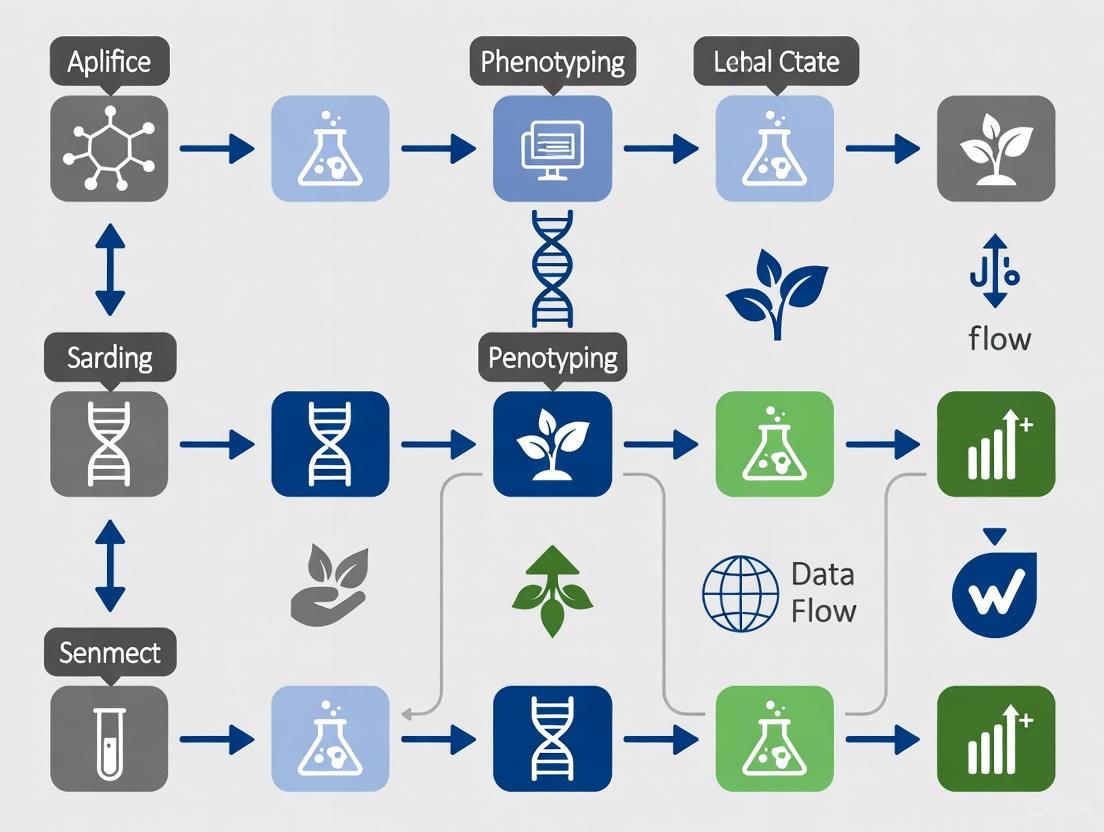
This article provides a comprehensive guide to developing and implementing end-to-end workflows for non-destructive plant phenotyping.
Building End-to-End Non-Destructive Plant Phenotyping Workflows: From Foundational Concepts to Validated Applications
Abstract
This article provides a comprehensive guide to developing and implementing end-to-end workflows for non-destructive plant phenotyping. It explores the foundational principles of optical sensing and the limitations of traditional methods, then details the integration of advanced imaging technologies like multimodal 3D imaging, hyperspectral sensors, and AI-based analysis. The content covers methodological applications across various plant species and stress scenarios, addresses key challenges in data processing and platform selection, and validates these approaches through comparative analysis with conventional techniques. Aimed at researchers and scientists, this review synthesizes current advancements to empower the development of robust, high-throughput phenotyping systems for precision agriculture and plant research.
The Principles and Evolution of Non-Destructive Plant Phenotyping
Non-destructive phenotyping represents a paradigm shift in plant science, enabling researchers to quantify plant traits without damaging or destroying the sample. This approach involves using advanced sensors and imaging technologies to capture detailed morphological, physiological, and biochemical information from plants throughout their development cycle [1]. The core principle centers on maintaining sample integrity while collecting high-dimensional phenotypic data, allowing for repeated measurements on the same plant over time. This capability is revolutionizing how researchers monitor plant growth, assess stress responses, and accelerate breeding programs by providing dynamic insights into plant development and function.
The technological foundation of non-destructive phenotyping rests on multiple sensing modalities that capture different aspects of plant biology. These include visible light imaging (RGB), hyperspectral and multispectral imaging, thermal imaging, fluorescence sensing, X-ray computed tomography (CT), magnetic resonance imaging (MRI), and 3D reconstruction techniques [1] [2] [3]. Each modality offers unique advantages for assessing specific plant traits, from overall biomass and structure to internal tissue integrity and physiological function. When integrated through sophisticated data analytics, these technologies provide a comprehensive understanding of plant phenotype that was previously unattainable through conventional destructive methods.
Core Concepts and Defining Characteristics
Non-destructive phenotyping is defined by several interconnected core concepts that distinguish it from traditional approaches. Understanding these fundamental principles is essential for effectively implementing these methodologies in plant research.
Fundamental Principles
High-Throughput Data Collection: Advanced phenotyping platforms automate the measurement process, enabling rapid assessment of large plant populations. This scalability is crucial for breeding programs and genetic studies where thousands of genotypes must be evaluated [4]. Throughput is enhanced by automated conveyor systems, robotics, and unmanned aerial vehicles that minimize human intervention while maximizing data acquisition speed.
Non-Destructive Assessments: The preservation of sample integrity allows for repeated measurements on the same plants throughout their life cycle [4]. This longitudinal monitoring captures dynamic developmental processes and transient responses to environmental stimuli, providing temporal data trajectories that are impossible to obtain through destructive sampling.
Real-Time Analysis and Decision-Making: Integrated data processing pipelines transform raw sensor data into actionable insights rapidly, often through cloud-based platforms and automated analysis workflows [4]. This immediacy enables researchers to make timely interventions and adjustments to experimental conditions based on current phenotypic status.
Operational Framework
The operational framework for non-destructive phenotyping typically follows a structured workflow: (1) sample preparation and mounting, (2) automated or semi-automated image acquisition using multiple sensors, (3) data preprocessing and storage, (4) feature extraction and trait quantification, and (5) data visualization and interpretation [5] [2]. This systematic approach ensures consistency and reproducibility across measurements and experimental sessions.
A key conceptual advancement is the end-to-end workflow that connects raw data acquisition directly to phenotypic predictions without intermediate destructive validation. For example, recent research demonstrates complete pipelines where multimodal 3D imaging of grapevine trunks combines with machine learning to automatically classify tissue health status without physical dissection [2]. Similarly, deep learning regression models can directly compute phenotypic traits from image data, bypassing traditional segmentation steps that can introduce errors [5].
Comparative Advantages Over Destructive Methods
Non-destructive phenotyping offers significant advantages across multiple research domains, fundamentally enhancing what is possible in plant science.
Table 1: Comparative Analysis of Phenotyping Approaches
| Parameter | Destructive Methods | Non-Destructive Methods |
|---|---|---|
| Sample Integrity | Samples destroyed during measurement | Samples remain intact for repeated use |
| Temporal Resolution | Single time point per sample | Multiple time points from same sample |
| Data Type | Static snapshot | Dynamic developmental trajectories |
| Throughput | Limited by manual processing | High-throughput with automation |
| Trait Coverage | Often limited to single traits | Multiple traits simultaneously |
| Early Detection | Difficult for subtle changes | Sensitive to pre-symptomatic changes |
| Labor Requirements | High manual effort | Reduced human intervention |
| Longitudinal Studies | Requires large sample sizes | Smaller populations sufficient |
Scientific Advantages
The ability to monitor the same plants throughout development enables researchers to capture growth dynamics and temporal patterns that are completely missed by destructive approaches [4]. This longitudinal dimension is particularly valuable for understanding plant responses to gradually changing environmental conditions or transient stress events. For instance, daily imaging of oak trees in drought tolerance research allowed researchers to track the dynamics of tree development and understand the evolution of each variety's resilience to climate change [4].
Non-destructive methods also enable the detection of subtle, pre-symptomatic responses to stresses before visible symptoms appear. Hyperspectral imaging can reveal biochemical changes in leaves associated with herbicide damage, nutrient deficiencies, or pathogen infections at stages when interventions are most effective [3]. This early-warning capability significantly enhances research on plant stress physiology and resistance mechanisms.
Practical and Economic Advantages
From a practical standpoint, non-destructive phenotyping reduces the sample sizes required for statistical power in experiments. Since each plant serves as its own control across time points, fewer individuals are needed to detect significant treatment effects [4]. This efficiency translates to substantial cost savings in terms of materials, growth space, and labor.
The automation inherent in advanced phenotyping systems also addresses human resource constraints. For example, the IPENS framework enables rapid extraction of grain-level point clouds for multiple targets within three minutes using single-round image interactions, dramatically accelerating what would require extensive manual effort [6]. This efficiency gain allows researchers and breeders to screen larger populations more quickly, accelerating the selection process in breeding programs.
Application Notes and Experimental Protocols
Protocol 1: Multimodal 3D Imaging for Internal Tissue Health Assessment
This protocol outlines the procedure for non-destructive assessment of internal tissue structure in woody plants using combined X-ray CT and MRI, adapted from grapevine trunk disease studies [2].
Research Reagent Solutions: Table 2: Essential Materials for Multimodal 3D Imaging
| Item | Specification | Function |
|---|---|---|
| X-ray CT System | Clinical or micro-CT scanner | Visualizes internal tissue density and structure |
| MRI Scanner | Preferable 3T or higher field strength | Assesses physiological status and water distribution |
| Plant Mounting Apparatus | Customizable, non-metallic | Secures plant during imaging while avoiding artifacts |
| Registration Software | Custom algorithm or commercial solution | Aligns multimodal 3D image datasets |
| Machine Learning Classifier | Random Forest, SVM, or Deep Learning | Automates voxel classification into tissue health categories |
Step-by-Step Procedure:
Sample Preparation: Select intact plants representing the health status range of interest. Secure plants in custom mounting apparatus ensuring stability during imaging. For grapevines, use twelve plants minimum, including both symptomatic and asymptomatic individuals based on foliar symptom history [2].
Multimodal Image Acquisition:
- Acquire X-ray CT images using standardized parameters (e.g., 120 kV tube voltage, 200 μA current, 0.5-1.0 mm slice thickness).
- Perform MRI acquisitions using multiple protocols: T1-weighted, T2-weighted, and PD-weighted sequences to capture different tissue properties.
- Maintain consistent positioning between imaging sessions to facilitate subsequent registration.
Data Registration and Preprocessing:
- Apply automatic 3D registration pipeline to align all multimodal images into a unified coordinate system [2].
- Resample images to consistent voxel dimensions (e.g., 0.5×0.5×0.5 mm³) across all modalities.
- Normalize signal intensities within and between imaging sessions to account for instrument variability.
Expert Annotation and Training:
- Following imaging, carefully section plants and photograph both sides of each cross-section (approximately 120 pictures per plant).
- Have domain experts manually annotate random cross-sections according to visual inspection, defining tissue classes including: healthy-looking tissues, black punctuations, reaction zones, dry tissues, necrosis, and white rot [2].
- Map these 2D annotations to the 3D imaging data using the registration pipeline.
Machine Learning Classification:
- Train a segmentation model using the annotated data to automatically classify voxels into three simplified tissue categories: 'intact' (functional or nonfunctional healthy tissues), 'degraded' (necrotic and altered tissues), and 'white rot' (decayed wood).
- Validate model performance using cross-validation and compute accuracy metrics (global accuracy should exceed 91% [2]).
Quantification and Analysis:
- Calculate the volumetric proportions of each tissue class within the entire plant or specific regions of interest.
- Correlate internal tissue distribution with external symptom expression and historical data.
- Generate 3D visualization maps of tissue health status for comparative analysis.
Multimodal tissue analysis workflow.
Protocol 2: End-to-End Deep Learning for Automated Trait Extraction
This protocol describes an end-to-end approach to directly compute phenotypic traits from images using deep learning regression models, bypassing intermediate segmentation steps [5].
Research Reagent Solutions: Table 3: Essential Materials for End-to-End Deep Learning Phenotyping
| Item | Specification | Function |
|---|---|---|
| Imaging System | LemnaTec-Scanalyzer3D or equivalent | Standardized image acquisition under controlled conditions |
| Computing Hardware | GPU-accelerated workstation (NVIDIA recommended) | Model training and inference |
| Deep Learning Framework | MATLAB R2024a, Python/TensorFlow, or PyTorch | Implementation of neural network architectures |
| Data Annotation Tool | kmSeg or similar semi-automated software | Efficient ground truth generation for model training |
| Validation Dataset | 1,476+ images with accurate annotations | Model training and performance assessment |
Step-by-Step Procedure:
Image Data Acquisition and Preparation:
- Acquire visible light images of plants (Arabidopsis, maize, barley, etc.) using standardized phenotyping platforms (e.g., LemnaTec-Scanalyzer3D) [5].
- Maintain consistent imaging protocols throughout experiments, including fixed camera resolutions, background illumination, and photochamber installations.
- For model training, curate a set of images (e.g., 1,476 images) with accurate annotation of foreground and background regions as ground-truth data.
Ground-Truth Trait Calculation:
- Compute target phenotypic traits from ground-truth segmented images for all images in the training set. Key traits include:
- Plant area and convex hull (growth vigor indicators)
- Plant height and width (morphological information)
- Average red, green, and blue colors (health status and nutrient content) [5]
- These calculated values serve as the target variables for end-to-end model training.
- Compute target phenotypic traits from ground-truth segmented images for all images in the training set. Key traits include:
Model Architecture Design:
- Implement a conventional CNN architecture with six hierarchical convolution layers of increasing size (8, 16, 32, 64, 128, and 256 filters) followed by two fully connected layers producing a single trait value [5].
- Configure the final output layer for regression (linear activation) rather than classification.
- Train separate models for each plant trait and imaging modality (e.g., 45 models for nine traits across five plant imaging modalities).
Model Training and Validation:
- Partition data into training, validation, and test sets (typical split: 70%/15%/15%).
- Train models using appropriate loss functions (mean squared error for regression) and optimization algorithms.
- Employ regularization techniques (dropout, weight decay) to prevent overfitting.
- Validate model performance by comparing predictions directly against ground-truth trait values rather than segmentation accuracy metrics.
Performance Evaluation and Interpretation:
- Evaluate models using correlation coefficients, R² values, and root mean square error (RMSE) between predicted and actual trait values.
- Compare end-to-end approach performance against conventional segmentation-based pipelines.
- Use activation layer visualization techniques to maintain model interpretability despite the absence of explicit segmentation.
End-to-end trait prediction workflow.
Protocol 3: Hyperspectral Imaging for Pigment Content Prediction
This protocol details the use of hyperspectral imaging combined with machine learning for non-destructive prediction of photosynthetic pigments in Ginkgo biloba, applicable to large-scale germplasm screening [7].
Research Reagent Solutions: Table 4: Essential Materials for Hyperspectral Pigment Phenotyping
| Item | Specification | Function |
|---|---|---|
| Hyperspectral Imaging System | VNIR (400-1000 nm) range recommended | Captures spectral signatures of plant tissues |
| Reference Pigment Data | acetone/ethanol extraction and spectrophotometry | Provides ground truth for model training |
| Sample Population | 3,460+ seedlings from diverse genetic backgrounds | Ensures model robustness and generalizability |
| Machine Learning Algorithms | AdaBoost, PLSR, Random Forest | Builds prediction models from spectral data |
| Feature Selection Method | Successive Projections Algorithm (SPA) | Identifies most informative wavelengths |
Step-by-Step Procedure:
Experimental Design and Sample Preparation:
- Establish a large and diverse population (e.g., 3,460 seedlings from 590 families) representing the genetic diversity of interest [7].
- Ensure samples cover various color development phases and physiological states to enhance model robustness.
- Maintain standardized growing conditions while allowing natural phenotypic variation.
Hyperspectral Image Acquisition and Pigment Quantification:
- Acquire hyperspectral images of all samples using consistent illumination and camera settings.
- Subsequently, destructively measure pigment contents (Chl a, Chl b, and Car) using traditional methods (acetone/ethanol extraction) for a representative subset.
- This creates the paired dataset of spectral signatures and reference pigment values required for supervised learning.
Data Preprocessing and Optimization:
- Test multiple preprocessing methods: raw reflectance, normalization, first derivative, and second derivative.
- Implement normalization to significantly improve model accuracy, as demonstrated in Ginkgo studies [7].
- Extract spectral data from regions of interest corresponding to tissues used for reference measurements.
Feature Selection and Model Training:
- Apply the Successive Projections Algorithm (SPA) for effective spectral dimensionality reduction while preserving predictive power [7].
- Train and compare multiple machine learning algorithms (AdaBoost, PLSR, Random Forest).
- Select the best-performing algorithm (AdaBoost achieved R² > 0.83 and RPD > 2.4 for Ginkgo pigments [7]).
Model Validation and Deployment:
- Validate model performance using cross-validation and independent test sets.
- Deploy the optimized model for large-scale prediction of pigment contents using only hyperspectral images.
- Establish a framework for efficient, accurate, and scalable pigment phenotyping for germplasm screening and precision breeding.
Integration in End-to-End Research Workflow
Non-destructive phenotyping technologies serve as the foundation for complete end-to-end research workflows in modern plant science. These integrated approaches connect raw data acquisition directly to biological insights without intermediate destructive steps, dramatically accelerating the research cycle.
The workflow begins with automated, non-destructive data collection using multiple sensor modalities, continues through data processing and trait extraction via machine learning algorithms, and concludes with biological interpretation and decision support [2] [8]. This seamless pipeline maintains sample integrity throughout, allowing the same plants to be monitored temporally and subsequently used in further experiments or breeding programs.
For inclusion in a broader thesis on end-to-end workflows, these protocols demonstrate how non-destructive phenotyping creates closed-loop systems where phenotypic assessments directly inform subsequent research directions without the delays and resource expenditures associated with sample destruction and replacement. The longitudinal data obtained through these methods provides unprecedented insights into dynamic biological processes, enabling more accurate gene-to-phenotype associations and more efficient selection in crop improvement programs [1] [9].
End-to-end phenotyping research cycle.
Plant phenotyping, the quantitative assessment of plant traits, is crucial for understanding the interplay between genetic variations and environmental influences [10]. The journey from one-dimensional (1D) spectroscopic measurements to sophisticated three-dimensional (3D) imaging represents a significant evolution in our ability to capture complex plant characteristics non-destructively. This progression has transformed plant breeding and agricultural research by enabling high-throughput, precise measurements of plant morphology, physiology, and architecture [11] [10]. This document outlines the integrated workflows, applications, and experimental protocols across the dimensional spectrum of phenotyping technologies, providing researchers with practical guidance for implementation in non-destructive plant research.
The Phenotyping Spectrum: From 1D to 3D
1D Phenotyping: Spectroscopy
Overview and Workflow 1D phenotyping primarily involves spectroscopic measurements that capture data along a single dimension—the electromagnetic spectrum. These methods generate spectral signatures that serve as proxies for various biochemical and physiological plant traits.
Table 1: Primary Technologies in 1D Phenotyping
| Technology | Measured Parameters | Primary Applications | Output Format |
|---|---|---|---|
| Spectroradiometry | Reflectance across specific wavelengths | Vegetation indices (NDVI, EVI), chlorophyll content | Spectral curves |
| Fluorescence Sensing | Fluorescence emission when excited by specific light | Photosynthetic efficiency, stress responses | Emission spectra |
| Thermal Sensing | Infrared radiation emitted | Canopy temperature, water stress detection | Temperature profiles |
Experimental Protocol: Vegetation Index Measurement Objective: Calculate NDVI (Normalized Difference Vegetation Index) to assess plant health and biomass. Materials: Spectroradiometer (or multispectral sensor), calibration panel, data logging software. Procedure:
- Calibrate the sensor using a standard reference panel before measurement
- Position sensor perpendicular to the plant canopy at specified distance (typically 1-2m)
- Capture reflectance measurements in red (600-700nm) and near-infrared (700-1100nm) bands
- Calculate NDVI using formula: (NIR - Red) / (NIR + Red)
- Repeat measurements across multiple plants and time points for statistical robustness
Applications and Limitations: 1D phenotyping excels at high-throughput screening of physiological traits but provides limited information on structural attributes [10].
2D Phenotyping: Planar Imaging
Overview and Workflow 2D phenotyping utilizes conventional imaging across various spectra to extract morphological and physiological information from planar projections.
Table 2: 2D Imaging Modalities in Plant Phenotyping
| Imaging Modality | Spectral Bands | Extractable Traits | Analysis Approaches |
|---|---|---|---|
| RGB Imaging | Red, Green, Blue | Leaf area, plant size, color analysis | Pixel classification, edge detection |
| Multispectral Imaging | Discrete bands (3-10) | Vegetation indices, nutrient status | Spectral index calculation |
| Hyperspectral Imaging | Continuous narrow bands | Biochemical composition, stress detection | Spectral analysis, machine learning |
| Thermal Imaging | Long-wave infrared | Canopy temperature, stomatal conductance | Temperature thresholding |
Experimental Protocol: RGB-Based Morphological Analysis Objective: Quantify leaf area and plant architecture from RGB images. Materials: Digital RGB camera, controlled lighting environment, calibration scale, image analysis software (e.g., ImageJ, PlantCV). Procedure:
- Set up consistent imaging environment with uniform lighting and neutral background
- Include calibration scale (e.g., color checker, ruler) in each image
- Capture images from consistent angle and distance
- Pre-process images: color correction, background removal, noise reduction
- Segment plant from background using color thresholding or machine learning
- Calculate morphological parameters: projected leaf area, compactness, aspect ratio
- Validate measurements against manual/destructive samples
While 2D methods have advanced high-throughput phenotyping, they face limitations in capturing complex morphological traits and are susceptible to perspective artifacts [10].
3D Phenotyping: Volumetric Reconstruction
Overview and Workflow 3D phenotyping captures the spatial geometry of plants, enabling precise measurement of structural attributes that are insufficiently captured in lower dimensions [10]. This approach has emerged as a powerful tool for analyzing plant architecture by addressing occlusion challenges through depth perception and multiple viewpoints [11] [10].
Table 3: Comparison of 3D Imaging Technologies for Plant Phenotyping
| Technology | Principle | Resolution | Pros | Cons | Best Suited For |
|---|---|---|---|---|---|
| LiDAR | Laser triangulation/Time of Flight | ~1cm-10cm [12] | Fast acquisition; Light independent; Long range [12] | Poor XY resolution; Blurry edges; Requires calibration [12] | Canopy-level measurements; Field applications [11] |
| Laser Line Scanning | Laser line shift detection | Up to 0.2mm [12] | High precision; Robust systems; Light independent [12] | Requires movement; Defined range only [12] | High-precision lab measurements; Architectural traits |
| Structured Light | Pattern deformation analysis | Sub-millimeter to millimeter | Insensitive to movement; Inexpensive systems; Color information [12] | Sensitive to sunlight; Limited outdoor use [12] | Indoor plant phenotyping; Root imaging |
| Multi-view Stereo | Feature matching across images | Variable (depends on camera) | Cost-effective (standard cameras); Color texture; Flexible setup [11] | Computational expensive; Requires feature-rich surfaces [11] | General purpose phenotyping; Growth monitoring |
| Time of Flight (ToF) | Light pulse roundtrip time | Millimeter to centimeter | Real-time capability; Cost-effective (e.g., Kinect) [11] | Lower resolution; Sensitive to ambient light [11] | Real-time monitoring; Robotics applications |
Experimental Protocol: 3D Plant Reconstruction Using Multi-view Stereo Objective: Generate accurate 3D model of a plant for morphological trait extraction. Materials: Digital camera (DSLR or high-quality RGB), rotation stage or multiple camera positions, calibration pattern, computer with 3D reconstruction software (e.g., Meshroom, Agisoft Metashape). Procedure:
- System Setup: Arrange camera positions around plant (minimum 12-24 positions at 15-30° intervals) or use automated rotation stage
- Calibration: Capture calibration images using checkerboard pattern to determine camera intrinsic parameters
- Image Acquisition: Capture images from all positions ensuring 60-80% overlap between consecutive images, maintaining consistent lighting
- Data Pre-processing: Resize images if needed, apply lens distortion correction using calibration parameters
- 3D Reconstruction:
- Import images into reconstruction software
- Run feature detection and matching algorithms
- Generate sparse point cloud through structure-from-motion
- Create dense point cloud using multi-view stereo
- Generate mesh model and apply texture
- Trait Extraction:
- Calculate volume: Voxel-based or convex hull methods
- Determine plant height: Maximum Z-coordinate value
- Estimate leaf area: Surface area of mesh model
- Measure branching angles: Vector analysis between segments
The Scientist's Toolkit: Research Reagent Solutions
Table 4: Essential Materials for Non-Destructive Plant Phenotyping
| Category | Item/Technology | Function/Application | Key Considerations |
|---|---|---|---|
| Imaging Hardware | RGB/Multispectral Camera | 2D morphological analysis, color assessment | Resolution, frame rate, spectral bands |
| LiDAR/Laser Scanner | 3D point cloud acquisition for structural traits | Scanning frequency, accuracy, range [12] | |
| Hyperspectral Imaging System | Biochemical composition analysis | Spectral resolution, spatial resolution, acquisition speed | |
| Thermal Camera | Canopy temperature, stress detection | Thermal sensitivity, accuracy, resolution | |
| Software & Analysis | Image Analysis Software (PlantCV, ImageJ) | 2D trait extraction, image processing | Algorithm availability, batch processing capability |
| 3D Reconstruction Software (Meshroom, Agisoft) | 3D model generation from 2D images | Processing speed, automation options, accuracy [11] | |
| Point Cloud Processing (CloudCompare, PCL) | 3D point cloud analysis and measurement | Visualization, filtering, segmentation tools | |
| Accessories & Calibration | Color/Size Reference | Image calibration, scale reference | Color accuracy, dimensional stability |
| Controlled Lighting | Consistent illumination conditions | Spectrum, intensity, uniformity | |
| Positioning System | Precise sensor or plant movement | Accuracy, repeatability, programmability |
Integrated Workflow for Multi-Dimensional Phenotyping
Modern plant phenotyping leverages the complementary strengths of different dimensional approaches through integrated workflows. The fusion of 1D spectroscopic data with 3D structural information enables researchers to correct spectral measurements based on plant organ inclination and distance, leading to more accurate biochemical assessments [12]. This multi-dimensional approach provides a comprehensive understanding of plant function and structure, bridging the gap between laboratory-based precision and field-based relevance.
Implementation Considerations:
- Trait Selection: Match technology to trait complexity—1D for biochemical, 2D for planar morphology, 3D for structural architecture
- Scalability: Balance between resolution and throughput based on research objectives
- Data Management: Implement robust data pipelines for multi-dimensional data storage and processing
- Validation: Establish correlation between non-destructive measurements and traditional destructive assays
The dimensional spectrum of phenotyping technologies offers researchers a powerful toolkit for comprehensive plant assessment. While 1D methods provide efficient biochemical profiling and 2D imaging enables high-throughput morphological screening, 3D technologies unlock unprecedented capability for measuring plant architecture and growth dynamics [11] [10]. The integration of these approaches across dimensional boundaries represents the future of plant phenotyping, enabling deeper insights into gene-phenotype-environment interactions and accelerating crop improvement programs. As these technologies continue to evolve, emphasis should be placed on developing standardized protocols, improving computational efficiency, and enhancing accessibility to ensure broad adoption across the plant research community.
Optical sensing technologies are fundamental to modern, non-destructive plant phenotyping, enabling the high-throughput assessment of complex traits related to plant growth, yield, and adaptation to biotic or abiotic stresses. These technologies function by quantifying the interactions between light and plant tissues, including how photons are reflected, absorbed, or transmitted. The measured signals provide deep insights into the plant's physiological, biochemical, and structural condition without causing harm. In the context of an end-to-end workflow for non-destructive plant phenotyping research, optical sensors serve as the primary data acquisition tool, feeding information into analytical models that bridge the gap between genotype and phenotype [13] [14]. This document details three core optical sensing technologies—reflectance, fluorescence, and thermal imaging—providing application notes and experimental protocols for their implementation in a robust phenotyping pipeline.
The table below summarizes the key characteristics, measured parameters, and applications of the three primary optical sensing technologies.
Table 1: Comparative overview of key optical sensing technologies for plant phenotyping.
| Technology | Principle of Operation | Primary Measured Parameters | Key Applications in Phenotyping | Example Species |
|---|---|---|---|---|
| Reflectance Imaging (Hyperspectral/Multispectral) | Measures light reflected from plant tissues across specific wavelengths [14]. | Reflectance spectra; Vegetation Indices (e.g., NDVI, PRI) [14]. | Quantifying pigment, water, and nutrient content; estimating photosynthetic parameters (Vcmax, Jmax) [14]. | Maize, Wheat, Rice, Soybean [14] [13] |
| Chlorophyll Fluorescence Imaging | Measures light re-emitted by chlorophyll molecules after absorption of light energy [15]. | Quantum yield of PSII (Fv/Fm), Non-photochemical quenching (NPQ) [15]. | Assessing photosynthetic performance and efficiency; early detection of biotic and abiotic stresses [15]. | Arabidopsis, Wheat, Barley, Tomato [15] [13] |
| Thermal Imaging | Captures long-wavelength infrared radiation emitted from the plant surface, which correlates with temperature [15]. | Canopy or leaf surface temperature [15]. | Monitoring stomatal conductance and plant water status; detecting water stress [15]. | Barley, Wheat, Grapevine, Maize [13] [15] |
Detailed Application Notes and Protocols
Hyperspectral Reflectance Imaging
Application Notes: Hyperspectral reflectance data captures the intensity of light reflected from a plant across a continuous range of wavelengths, typically from the visible to the short-wave infrared (400–2500 nm) [14] [15]. The probability of light being reflected, absorbed, or transmitted is wavelength-dependent and governed by the chemical composition and physical structure of the plant tissues. This technology is particularly powerful because a single set of hyperspectral data can be analyzed with various models to predict a wide array of traits. For instance, natural variation in nutrient and metabolite abundance, as well as photosynthetic capacity, can be estimated, enabling genetic studies that were previously limited by low-throughput destructive sampling [14]. In an end-to-end workflow, this allows for the re-analysis of historical spectral datasets as new predictive models are developed, maximizing data utility.
Experimental Protocol:
- Instrument Calibration: Use a handheld spectrometer or hyperspectral camera with an internal light source or calibrated external illumination. Prior to measurement, calibrate the sensor using a standard panel with known reflectance properties (e.g., a white Spectralon panel) to account for ambient light conditions [14].
- Data Acquisition: For leaf-level measurements, ensure the sensor is held at a consistent distance and angle from the leaf surface. For canopy-level measurements from UAVs or ground platforms, note that canopy structure can influence the signal; techniques like vector normalization can help minimize this confounding effect [14]. Acquire spectra from a representative number of plants per genotype.
- Data Processing and Model Application: Process raw spectra to extract relevant features. Two primary analytical approaches are:
- Vegetation Indices: Calculate specific indices (e.g., Normalized Difference Vegetation Index, Photochemical Reflectance Index) from ratios of reflectance at key wavelengths [14].
- Full-Spectrum Modeling: Employ machine learning techniques like Partial Least Squares Regression (PLSR) or deep learning to build predictive models for traits such as nitrogen content, leaf mass per area, and photosynthetic parameters (Vcmax, Jmax) [14] [16]. The performance of such models is quantified in the table below.
Table 2: Performance examples of hyperspectral reflectance models for predicting plant traits (adapted from [14]).
| Trait | Species | Sample Size | Modeling Method | Prediction Performance (R²) |
|---|---|---|---|---|
| Leaf Nitrogen Content | Maize | 203 | PLSR | 0.95 |
| Chlorophyll Content | Maize | 268 | PLSR | 0.85 |
| Vcmax | Maize | 214 | PLSR | 0.65 |
| Vcmax | Various Trees | 78 | PLSR | 0.89 |
| Sucrose Content | Maize | 61 | PLSR | 0.60 |
Chlorophyll Fluorescence Imaging
Application Notes: Chlorophyll fluorescence imaging is a non-invasive technique that measures the efficiency of photosystem II (PSII), which is highly sensitive to a wide range of biotic and abiotic stresses [15]. A major advantage is that changes in chlorophyll fluorescence kinetics often occur before other effects of stress are visible, making it an excellent tool for early stress detection. In a phenotyping workflow, this allows for the dynamic monitoring of plant physiological status. Modern systems use pulse-amplitude modulated (PAM) fluorometers to measure fluorescence kinetics, providing a wealth of information on a plant's photosynthetic capacity and metabolic condition [15]. The heterogeneity of stress responses across a leaf or canopy can be easily visualized and quantified through imaging.
Experimental Protocol:
- System Setup: Use an imaging system equipped with a high-sensitivity CCD camera, a multi-color LED light panel for actinic illumination and saturation pulses, and appropriate filters [15]. The system should be enclosed in a light-isolated imaging box to control ambient light.
- Plant Adaptation: Dark-adapt the plant or leaf for at least 20 minutes to fully open PSII reaction centers and allow accurate measurement of the minimal fluorescence (F₀).
- Image Acquisition Sequence: Execute a programmable measurement protocol. A standard protocol includes:
- Application of a modulated measuring beam to determine F₀.
- A saturating light pulse (up to 6000 µmol m⁻² s⁻¹) to determine maximal fluorescence (Fm) in the dark-adapted state.
- Actinic light illumination to drive photosynthesis, with periodic saturation pulses to determine maximal (Fm') and steady-state (Fs) fluorescence in the light-adapted state.
- Data Analysis: Calculate key parameters from the fluorescence values. The most common parameter is the maximum quantum yield of PSII, Fv/Fm = (Fm - F₀)/Fm, which is a robust indicator of plant health. Values below ~0.83 typically indicate stress.
Thermal Imaging
Application Notes: Thermal imaging cameras capture radiation in the long-wavelength infrared spectrum, which is directly related to the surface temperature of the object [15]. In plants, leaf temperature is governed by the balance between energy absorption, transpirational cooling, and heat loss. When stomata close in response to water deficit, transpirational cooling is reduced, leading to an increase in leaf temperature. Therefore, thermal imaging serves as a proxy for stomatal conductance and plant water status. This technology is critical for phenotyping programs aimed at improving crop water use efficiency and drought tolerance. It allows for the rapid screening of large populations to identify genotypes that better maintain stomatal opening and cooler canopy temperatures under water-limited conditions.
Experimental Protocol:
- Environmental Control: Perform imaging under stable, high-light conditions where transpirational cooling is the dominant factor affecting leaf temperature. Avoid windy conditions, which can disrupt the leaf boundary layer.
- Reference Surfaces: Include well-watered and water-stressed control plants of the same genotype within the imaging frame to provide reference temperatures for relative comparison.
- Image Acquisition: Use a high-performance industrial infrared camera. For a comprehensive view, acquire images from both top and side views, potentially using a rotating table [15]. Ensure the camera is calibrated for emissivity; plant leaves typically have an emissivity of approximately 0.97.
- Data Processing: Analyze the thermal images to extract the mean leaf temperature of each plant or region of interest. Calculate indices like the Crop Water Stress Index (CWSI) or simply use the temperature difference between a genotype and a well-watered reference (ΔT) to rank genotypes for their water stress response.
Integrated Workflow and Data Analysis
A modern phenotyping workflow integrates multiple sensing modalities and leverages advanced data analysis to generate actionable biological insights. The synergy between technologies provides a more complete picture of plant health and function than any single method alone.
Figure 1: An integrated workflow showing how data from multiple optical sensors are fused and analyzed to support decision-making in plant research and breeding.
As illustrated in Figure 1, an end-to-end workflow begins with automated, non-destructive data acquisition using the various imaging sensors. The subsequent critical step is data registration and fusion, where information from RGB, hyperspectral, fluorescence, and thermal cameras is spatially aligned. This creates a multi-dimensional dataset where each plant voxel (3D pixel) is characterized by structural, spectral, and thermal properties [2]. Machine learning algorithms are then trained on these multimodal datasets to automatically segment and classify tissues and quantify traits of interest. For example, a model can be trained to discriminate between intact, degraded, and white rot tissues in grapevine trunks with high accuracy by combining MRI and X-ray CT data [2] [17]. Similarly, deep learning and chemometrics can be combined to detect drought stress in Arabidopsis from spectral images [16]. The output is a predictive model or a digital twin of the plant, which provides key indicators for precise diagnosis and selection.
Figure 2: The data processing pipeline, from raw sensor data to quantitative phenotypic traits, highlighting the role of machine learning and chemometrics.
The Scientist's Toolkit: Essential Research Reagents and Materials
The successful implementation of optical phenotyping protocols relies on a suite of specialized instruments and software.
Table 3: Essential materials and tools for optical plant phenotyping.
| Category | Item | Specification/Function |
|---|---|---|
| Core Sensing Instruments | Hyperspectral Spectrometer/Imager | Covers visible to short-wave infrared (400-2500 nm); for reflectance-based trait analysis [14] [15]. |
| Pulse-Amplitude Modulated (PAM) Fluorometer | Measures chlorophyll fluorescence kinetics; includes saturating light pulse and actinic light sources [15]. | |
| Thermal Infrared Camera | Measures leaf and canopy surface temperature; high thermal sensitivity required [15]. | |
| High-Resolution RGB Camera | For 2D/3D morphological and color analysis [15]. | |
| Calibration & Accessories | Calibration Panels (White & Black Reference) | Provides known reflectance for spectrometer calibration before plant measurement [14]. |
| Controlled Illumination Source | Homogenous LED panels for consistent, repeatable lighting in indoor setups [15]. | |
| Environmental Monitoring Sensors | Logs photosynthetically active radiation (PAR), soil moisture, and temperature [18]. | |
| Data Analysis Software | Image Processing Software | For segmentation, feature extraction, and analysis of 2D/3D image data [13]. |
| Statistical & Machine Learning Platforms (e.g., R, Python) | For implementing PLSR, deep learning, and other classification/regression models [2] [14] [16]. |
Application Notes
High-throughput phenotyping (HTP) has emerged as a transformative solution to a critical bottleneck in plant science: the inability to rapidly and precisely measure complex plant traits at scale. While genomic technologies have advanced rapidly, the slow pace of phenotypic data collection has limited gains in crop breeding and stress resilience research. This document details standardized protocols for non-destructive image-based phenotyping, enabling researchers to integrate these methods into end-to-end workflows for plant research.
The power of HTP lies in its ability to capture dynamic plant responses to environmental challenges through automated, non-invasive monitoring. For instance, one study characterizing 106 Mediterranean maize inbred lines demonstrated how HTP could accurately capture dynamic responses to combined drought and heat stress, followed by recovery under control conditions [19]. This approach provides the rich, temporal phenotypic data necessary for dissecting the genetic basis of complex traits through genome-wide association studies (GWAS).
Table 1: Key Agronomic Traits Quantified Through High-Throughput Phenotyping
| Trait Category | Specific Traits | Measurement Significance | Associated Stress Responses |
|---|---|---|---|
| Morphological | Whole-Plant Area (WPA), Convex Hull, Top View Area, Compactness [20] | Biomass accumulation, canopy structure, early seedling vigor [20] | Drought resilience, nutrient efficiency [19] [20] |
| Physiological | Stomatal Pore Area, Guard Cell Orientation, Opening Ratio [21] | Gas exchange regulation, water use efficiency [21] | Heat stress, drought response [21] |
| Growth Dynamics | Absolute Growth Rate (AGR), Crop Growth Rate (CGR), Relative Growth Rate (RGR) [20] | Plant growth and development over time [20] | Combined stress tolerance and recovery [19] |
| Spectral/Color | Color Profiles, Multispectral Signatures [22] [23] | Plant health, photosynthetic efficiency, pathogen presence [22] | Biotic and abiotic stress detection [22] [24] |
Experimental Protocols
Protocol 1: Non-Destructive Phenotyping for Early Seedling Vigor in Rice
This protocol, adapted from Plant Methods, details an affordable, image-based method to screen for early seedling vigor—a critical trait for crop establishment in direct-seeded rice systems. This method reduces observation time by 80% and labor costs by 50% compared to traditional destructive sampling [20].
Materials and Reagents
- Plant Material: Seeds of genotypes under investigation (e.g., seven diverse rice cultivars).
- Growth Facility: Glasshouse or net house with controlled conditions.
- Imaging Equipment: Digital SLR camera mounted on a stable platform (e.g., tripod) with consistent lighting.
- Pots and Growth Medium: Standard pots filled with clean soil mixture.
- Analysis Software: Image analysis software (e.g., PlantCV, ImageJ) with capacity for batch processing.
Experimental Workflow
Procedure
- Plant Cultivation: Sow pre-germinated seeds in pots filled with a clean soil mixture. Grow plants in a net house under normal conditions without water stagnation [20].
- Image Acquisition: Capture top-view images of each plant at regular intervals, ensuring consistent camera distance, angle, and lighting. Key time points include 14 and 28 Days After Sowing (DAS) [20].
- Image Analysis: Process images using analysis software to extract geometric traits.
- Segmentation: Separate plant pixels from background.
- Trait Extraction: Calculate Whole-Plant Area from images (WPAi), Convex Hull, Top View Area, and Compactness [20].
- Validation with Destructive Sampling: Harvest a subset of plants for traditional measurements.
- Whole-Plant Area from scanner (WPAs): Flatten and scan shoots using a flatbed scanner.
- Dry Weight: Measure shoot and root dry weight.
- Growth Rate Calculations: Calculate Absolute Growth Rate (AGR), Crop Growth Rate (CGR), and Relative Growth Rate (RGR) from the destructive data [20].
- Data Analysis: Perform regression analysis between WPAi (non-destructive) and WPAs (destructive) to validate the image-based method. A strong correlation (R² > 83%) confirms the protocol's legitimacy [20].
Protocol 2: Automated Stomatal Phenotyping Using Deep Learning
This protocol uses the YOLOv8 deep learning model for high-throughput, automated analysis of stomatal morphology and orientation—a key physiological trait linked to plant stress responses [21].
Materials and Reagents
- Plant Material: Leaves of the target species (e.g., Hedyotis corymbosa).
- Microscopy Equipment: Inverted microscope (e.g., CKX41) coupled with a high-resolution camera (e.g., DFC450).
- Sample Preparation: Microscope slides, cyanoacrylate glue.
- Computing Hardware: Computer with powerful GPU for model training and inference.
- Software: Python environment with YOLOv8 implementation and image processing libraries.
Analytical Workflow
Procedure
- Sample Preparation and Imaging:
- Affix the abaxial (lower) surface of the leaf (e.g., the fifth leaf from the top) to a microscope slide using cyanoacrylate glue [21].
- Capture high-resolution images (e.g., 2592 × 1458 pixels) using an inverted microscope and digital camera.
- Image Pre-processing: Apply the Lucy-Richardson deblurring algorithm iteratively to enhance image clarity and stomatal outlines [21].
- Dataset Preparation: Manually annotate pre-processed images, marking bounding boxes and segmentation masks for stomatal pores and guard cells. Split the annotated dataset into training, validation, and test sets [21].
- Model Training and Inference:
- Configure the YOLOv8 architecture (e.g., learning rate, batch size) and train the model on the annotated dataset [21].
- Use the trained model to perform instance segmentation on new images, generating precise masks for each stomatal pore and guard cell pair.
- Trait Extraction and Analysis:
- Standard Traits: Calculate stomatal density, pore area, and guard cell area from the segmentation masks.
- Novel Traits:
- Stomatal Orientation: Fit an ellipse to the segmented guard cell pair and calculate its angle relative to the leaf's longitudinal axis [21].
- Opening Ratio: Calculate a new metric from the areas of the guard cells and the stomatal pore, providing a morphological descriptor for physiological research [21].
Protocol 3: Image Standardization for Large-Scale Phenotyping
Variation in image quality due to factors like fluctuating light intensity can bias phenotypic data. This protocol standardizes an image dataset using a color reference panel to ensure robust and reproducible analyses [23].
Materials and Reagents
- Reference Target: ColorChecker Passport Photo (X-Rite, Inc.) or similar panel with industry-standard color chips.
- Imaging Platform: Any imaging system (from micro-computers to robotic platforms) where the reference can be placed within the field of view.
- Analysis Software: Software capable of performing linear algebra operations (e.g., R, Python with OpenCV, PlantCV).
Procedure
- Image Acquisition with Reference: Include the ColorChecker panel within every image captured throughout the experiment [23].
- Define Source and Target Matrices:
- Let S be the matrix of R, G, and B values for the 24 reference chips in a source image that needs correction.
- Let T be the matrix of R, G, and B values for the same chips in a designated target (reference) image with ideal color profile [23].
- Calculate the Transformation Matrix:
- Apply the Transformation: Use the calculated standardization vectors to transform every pixel in the source image, effectively mapping its color profile to that of the target image. This corrects for batch effects like temperature-dependent light intensity [23].
Table 2: The Scientist's Toolkit: Essential Reagents and Materials for High-Throughput Phenotyping
| Item | Function/Application | Example Use Case |
|---|---|---|
| ColorChecker Passport | Standardizes color profile and corrects batch effects across images [23]. | Ensuring consistent color measurements in time-series experiments under variable light [23]. |
| Calcined Clay Growth Profile | Provides a uniform, controlled root environment for pot-based studies [23]. | Studying nutrient stress responses in sorghum [23]. |
| Cyanoacrylate Glue | Affixes leaf samples to microscope slides for imaging [21]. | Preparing leaf samples for high-resolution stomatal phenotyping [21]. |
| RGB and Multispectral Cameras | Capture morphological and spectral data non-destructively [25]. | Daily monitoring of plant growth and stress symptoms [19] [25]. |
| YOLOv8 Deep Learning Model | Segments and analyzes stomatal guard cells and pores automatically [21]. | High-throughput measurement of stomatal orientation and opening ratio [21]. |
| Lucy-Richardson Algorithm | Deblurs images to enhance clarity of fine structures [21]. | Improving the visibility of stomatal outlines in microscope images [21]. |
Implementing Integrated Workflows: Sensors, Platforms, and AI-Driven Analysis
The integration of multi-modal imaging techniques is revolutionizing non-destructive plant phenotyping by providing comprehensive insights into both structural and functional traits. Multi-modal medical image fusion (MMIF) approaches, though developed for clinical diagnostics, offer valuable frameworks for plant sciences, combining data from complementary imaging sources to create detailed, clinically useful representations [26]. In agricultural research, this integration is particularly valuable for addressing complex challenges such as grapevine trunk diseases (GTDs), where internal degradation occurs long before external symptoms become visible [2] [17]. This protocol details an end-to-end workflow for combining MRI, X-ray CT, and hyperspectral imaging to enable high-throughput, non-destructive phenotyping of internal plant structures and physiological processes.
Application Notes
Rationale for Modality Integration
Each imaging modality provides unique and complementary information about plant structure and function. X-ray Computed Tomography (X-ray CT) excels at visualizing high-resolution three-dimensional internal structures by detecting differences in tissue density and energy absorption, making it ideal for quantifying architectural features [27]. Magnetic Resonance Imaging (MRI), operating at longer wavelengths, provides exceptional contrast for soft tissues and can reveal functional information about water content and physiological status [2] [27]. Hyperspectral Imaging (HSI) captures spatial and spectral information across hundreds of narrow, contiguous bands, enabling detailed biochemical analysis and detection of stress responses through spectral signatures [27].
The synergy between these modalities was demonstrated in grapevine studies, where MRI proved superior for assessing tissue functionality and early degradation, while X-ray CT better discriminated advanced degradation stages like white rot [2]. Hyperspectral imaging extends these capabilities by detecting specific biochemical changes associated with pathogen responses and nutrient deficiencies before morphological symptoms appear [27].
Performance Metrics and Validation
Quantitative validation of the multimodal approach shows significant advantages over single-modality analysis:
Table 1: Performance Metrics of Multimodal Imaging for Tissue Classification
| Imaging Modality | Classification Accuracy | Key Strengths | Limitations |
|---|---|---|---|
| MRI Only | ~83% | Excellent soft tissue contrast, functional assessment | Lower resolution for structural details |
| X-ray CT Only | ~79% | High-resolution structural imaging | Limited functional information |
| Hyperspectral Only | ~81% | Biochemical composition analysis | Limited depth penetration |
| Multimodal Fusion (MRI+X-ray CT+HSI) | >91% | Comprehensive structural & functional profiling | Computational complexity, data alignment challenges |
The integrated pipeline achieved a mean global accuracy exceeding 91% for discriminating between intact, degraded, and white rot tissues in grapevine trunks, significantly outperforming single-modality approaches [2] [17]. This accuracy is maintained across different plant architectures and degradation patterns when proper calibration and validation protocols are followed.
Experimental Protocols
Sample Preparation and Imaging
Plant Material Selection: Select representative plants based on experimental design. For disease studies, include both symptomatic and asymptomatic specimens. Twelve grapevine plants were used in the validation study, providing sufficient statistical power for method development [2].
Pre-imaging Preparation:
- Hydrate plants normally 24 hours before imaging to ensure natural water status
- Remove soil from root systems while minimizing root damage
- Mount plants in imaging-friendly containers using supportive foam
- Attach fiducial markers at strategic locations for multimodal registration
- Include calibration objects of known dimensions and composition in the field of view
Multimodal Image Acquisition Sequence:
- Hyperspectral Imaging: Capture data in the 200-2500 nm range using push-broom or snapshot HSI systems. Maintain consistent illumination and distance-to-canopy.
- X-ray CT Scanning: Acquire volumetric data using micro-CT or clinical CT systems. Typical parameters: 80-140 kV tube voltage, 100-500 µA current, 0.5-1 mm slice thickness.
- MRI Acquisition: Perform using clinical or preclinical MRI systems. Essential sequences include:
- T1-weighted (T1-w) imaging
- T2-weighted (T2-w) imaging
- Proton Density-weighted (PD-w) imaging
- Custom sequences optimized for plant tissue properties
Data Processing and Integration Pipeline
Image Preprocessing:
- Apply modality-specific corrections (geometric distortion, intensity inhomogeneity)
- Remove noise using anisotropic diffusion filters or non-local means algorithms
- Normalize intensity ranges across samples and modalities
Multimodal Registration: Rigid and non-rigid registration transforms align images into a common coordinate system. The process involves:
- Feature detection using SIFT or SURF algorithms
- Initial alignment based on fiducial markers
- Fine registration using mutual information maximization
- Visual validation of alignment accuracy
Data Fusion and Segmentation: Implement a machine learning framework for voxel-wise classification:
- Extract multi-dimensional feature vectors combining information from all modalities
- Train random forest or convolutional neural network classifiers
- Apply trained models to segment tissues into predefined classes
- Post-process to remove segmentation artifacts and smooth boundaries
Table 2: Characteristic Signatures of Plant Tissues Across Imaging Modalities
| Tissue Type | X-ray CT Absorption | T1-w MRI Signal | T2-w MRI Signal | Hyperspectral Features |
|---|---|---|---|---|
| Intact Functional | High (reference) | High | High | Healthy vegetation indices |
| Non-Functional | ~10% lower | ~30-60% lower | ~30-60% lower | Altered water band features |
| Necrotic | ~30% lower | Medium to low | ~60-85% lower | Stress-related spectral shifts |
| White Rot | ~70% lower | ~70-98% lower | ~70-98% lower | Decay-specific signatures |
| Reaction Zones | Medium | Medium | High (hypersignal) | Early stress indicators |
Quantitative Analysis and Phenotype Extraction
Morphological Phenotyping:
- Calculate volume metrics for different tissue classes using voxel counting
- Extract three-dimensional distribution patterns of degraded tissues
- Quantify spatial relationships between different tissue types
Physiological Assessment:
- Derive functional indices from MRI parameters
- Calculate biochemical indices from hyperspectral data (e.g., chlorophyll content, water status)
- Correlate internal tissue status with external symptoms
Workflow Visualization
The Scientist's Toolkit
Table 3: Essential Research Reagents and Materials for Multimodal Plant Imaging
| Item | Specifications | Application & Function |
|---|---|---|
| MRI Contrast Agents | Gadolinium-based compounds (e.g., Gd-DTPA) | Enhance tissue contrast in MRI, highlight vascular transport |
| Fiducial Markers | Vitamin E capsules, agarose beads, ceramic beads | Provide reference points for multimodal image registration |
| Calibration Phantoms | Custom objects with known dimensions and density | Validate geometric accuracy and enable quantitative intensity measurements |
| Plant Support Systems | 3D-printed holders, foam blocks, non-metallic stakes | Immobilize specimens during imaging while minimizing artifacts |
| Data Processing Software | 3D Slicer, FIJI/ImageJ, custom Python/Matlab scripts | Image registration, segmentation, and quantitative analysis |
| AI Segmentation Models | U-Net, Random Forest, Transformer architectures | Automated tissue classification and phenotyping [2] [28] |
| Spectral Calibration Standards | White reference panels, wavelength calibration cards | Ensure hyperspectral data accuracy and reproducibility |
| 3D Reconstruction Tools | Gaussian Splatting, Planar-based Reconstruction [29] | Generate high-fidelity 3D models from multi-view images |
Implementation Considerations
Computational Requirements: The multimodal pipeline demands significant computational resources for data storage, processing, and analysis. A single plant can generate terabytes of multi-modal image data, necessitating high-performance computing infrastructure with adequate GPU acceleration for machine learning components [30].
Validation and Quality Control:
- Perform regular calibration of all imaging systems using standardized phantoms
- Validate segmentation accuracy against manual expert annotations
- Establish standardized protocols for cross-laboratory reproducibility
- Implement version control for analytical pipelines to ensure result consistency
Integration with Complementary Data: For comprehensive phenotyping, correlate imaging data with:
- Genomic information for genome-wide association studies (GWAS) [28]
- Environmental sensor data (temperature, humidity, soil conditions)
- Yield and quality metrics at harvest
- Traditional destructive measurements for validation
This multimodal imaging pipeline represents a powerful framework for non-destructive plant phenotyping, enabling researchers to quantify internal structural and functional traits with unprecedented accuracy and detail. The integration of MRI, X-ray CT, and hyperspectral data provides complementary information that surpasses the capabilities of any single modality, opening new possibilities for understanding plant physiology, pathology, and responses to environmental stresses.
Plant phenomics, the large-scale study of plant growth, performance, and composition, has been transformed by advanced sensing technologies. The integration of multiple imaging modalities—termed sensor fusion—enables a comprehensive, non-destructive analysis of plant morphological, physiological, and biochemical traits that cannot be captured by any single sensor alone [31] [32]. This holistic approach is crucial for elucidating complex genotype-environment interactions and accelerating the development of climate-resilient crops [31] [33]. By combining the strengths of RGB, thermal, depth, and spectral imaging, researchers can now obtain a multidimensional view of plant health and function, from the cellular level to entire canopies, in both controlled and field environments [32] [33]. This document outlines practical application notes and protocols for implementing these integrated sensor systems within an end-to-end workflow for non-destructive plant phenotyping research.
Comparative Analysis of Imaging Modalities
Table 1: Core Imaging Modalities in Plant Phenotyping: Characteristics and Applications
| Imaging Modality | Spectral Range | Primary Measured Parameters | Key Applications in Plant Phenotyping | Strengths | Limitations |
|---|---|---|---|---|---|
| RGB Imaging | 380–780 nm [32] | Color, texture, shape, structure [15] [34] | Morphological analysis (leaf area, plant height, biomass), growth dynamics, color indices [31] [34] | Cost-effective, high spatial resolution, intuitive data interpretation [34] | Limited to visible spectrum, low accuracy for physiological traits, sensitive to lighting conditions [31] [34] |
| Thermal Imaging (TI) | 1000–14000 nm [32] | Canopy/leaf temperature [31] [15] | Stomatal conductance, transpiration rate, drought and heat stress detection [31] [32] | Non-contact measure of plant water status, rapid stress detection [31] [15] | Affected by ambient conditions, requires reference for absolute temperature calibration [32] |
| Depth/3D Imaging (LiDAR, Laser Scanners) | Varies (e.g., time-of-flight) [32] | Distance, point clouds, 3D structure [32] [15] | Plant architecture, biomass estimation, canopy coverage, 3D modeling [32] [15] | Precise volumetric and structural data, less affected by lighting [32] | Lower spatial resolution compared to RGB, can be costly, complex data processing [32] |
| Hyperspectral Imaging (HSI) | 200–2500 nm [32] | Reflectance across hundreds of narrow, contiguous bands [31] [32] | Biochemical profiling (chlorophyll, water content, pigments), early stress detection, nutrient status [31] [32] | Rich spectral data for quantifying biochemical traits, enables early stress detection before visible symptoms [31] | High data volume, computationally intensive, can be expensive [31] |
| Chlorophyll Fluorescence Imaging (ChlF) | Emission: ~600–750 nm [32] | Photosynthetic efficiency (Fv/Fm, etc.) [15] | Photosynthetic performance, metabolic activity, early detection of biotic and abiotic stresses [31] [32] | Highly sensitive indicator of photosynthetic function, reveals stress before other symptoms [15] | Requires controlled lighting during measurement, specialized setup [15] |
Integrated Workflow for Multimodal Plant Phenotyping
The synergy between different sensors creates a powerful pipeline for comprehensive plant analysis. The following workflow diagram generalizes the process from data acquisition to actionable knowledge.
Figure 1: End-to-End Multimodal Phenotyping Workflow. This diagram outlines the integrated process from multi-sensor data acquisition to the generation of actionable insights for plant research.
Experimental Protocols for Multimodal Phenotyping
Protocol: Drought Stress Assessment in Watermelon
This protocol is adapted from a study on high-throughput phenotyping of drought-stressed watermelon plants, integrating RGB, short-wave infrared hyperspectral (SWIR-HSI), multispectral fluorescence (MSFI), and thermal imaging [31].
1. Experimental Setup & Plant Material
- Plant Material: Utilize watermelon (Citrullus lanatus) plants. Genotypes with varying known drought tolerance are recommended for robust model training.
- Growth Conditions: Grow plants in a controlled environment (e.g., greenhouse) with standardized soil, nutrient, and initial watering regimes.
- Stress Induction: Divide plants into two groups: a well-watered control group and a drought-stressed treatment group where irrigation is withheld.
2. Automated Multimodal Image Acquisition
- Platform: Use a fully automated, high-throughput phenotyping platform with dedicated screening chambers and a synchronized multi-sensor array [31].
- Synchronization: Implement a custom software platform for synchronized system control and real-time data acquisition to ensure temporal and spatial alignment of images from all sensors [31].
- Acquisition Schedule: Image plants at the same time daily to minimize diurnal variation effects. The protocol below details the setup for each sensor.
3. Data Processing & Analysis
- Feature Extraction: For each sensor, extract relevant features (e.g., vegetation indices from HSI, temperature from thermal, morphological parameters from RGB).
- Data Fusion & Modeling: Fuse the extracted multi-sensor features into a combined dataset. Employ machine learning (e.g., Random Forests, Support Vector Machines) or deep learning models (e.g., Convolutional Neural Networks) for two primary tasks:
- Validation: Validate model performance using a held-out test set of plants not used in training, reporting metrics like accuracy, mean squared error, etc.
Protocol: Internal Wood Structure Phenotyping in Grapevine
This protocol leverages the fusion of MRI and X-ray CT for non-destructive diagnosis of trunk diseases in perennial plants [2] [17].
1. Plant Material & Preparation
- Plant Material: Collect grapevine (Vitis vinifera L.) plants from the field, selecting both symptomatic and asymptomatic-looking vines based on foliar symptom history [2].
- Sample Handling: Keep the root ball moist and ensure the plant is stable during transport and imaging. No destructive preparation is needed.
2. Multimodal 3D Image Acquisition
- Imaging Facility: Perform imaging in a clinical or specialized facility equipped with both MRI and X-ray CT scanners.
- MRI Acquisition: Acquire 3D images using multiple MRI protocols: T1-weighted (T1-w), T2-weighted (T2-w), and Proton Density-weighted (PD-w). These sequences provide complementary information on the physiological status and water content of the wood [2].
- X-ray CT Acquisition: Perform a high-resolution CT scan of the entire trunk. This modality provides structural information and tissue density [2] [32].
- Spatial Alignment: Ensure the plant is positioned consistently between scans to facilitate subsequent image registration.
3. Data Processing, Registration, and Voxel Classification
- 3D Image Registration: Use an automatic 3D registration pipeline to spatially align the MRI volumes and X-ray CT data into a single, cohesive 4D multimodal image dataset [2].
- Expert Annotation & Ground Truthing: After non-destructive imaging, destructively slice the trunk and photograph the cross-sections. Have experts manually annotate these sections to define tissue classes (e.g., intact, degraded, white rot) [2].
- Machine Learning Model Training: Train a voxel-wise classification algorithm (e.g., a Random Forest classifier) using the registered multimodal imaging data (MRI and CT signals) as input and the expert annotations as the ground truth. This model learns the "multimodal signature" of each tissue type [2].
- In-Vivo Diagnosis: Apply the trained model to new, unseen multimodal scans of living plants to automatically segment and quantify the volume of intact, degraded, and white rot tissues in 3D, enabling a non-destructive diagnosis.
The Scientist's Toolkit: Essential Research Reagents & Materials
Table 3: Key Equipment and Software for Multimodal Phenotyping
| Category | Item | Function & Application Notes |
|---|---|---|
| Core Sensors | High-resolution RGB Camera [31] [15] | Captures morphological and color-based traits. Use industrial-grade cameras with homogenous LED lighting for consistency [31]. |
| Hyperspectral Camera (VNIR/SWIR) [31] [15] | For biochemical profiling and early stress detection. Can be a line scanner; requires specific illumination and calibration [31]. | |
| Thermal Infrared Camera [31] [15] | Measures canopy temperature as a proxy for stomatal conductance and transpiration. Must be calibrated for accurate readings [31]. | |
| 3D Laser Scanner or LiDAR [32] [15] | For precise plant architecture and biomass estimation. Generates 3D point clouds for volumetric analysis [32]. | |
| Chlorophyll Fluorescence Imager [31] [15] | Assesses photosynthetic performance. Requires a pulse-amplitude modulated (PAM) system with actinic and saturating light sources [15]. | |
| Platform & Control | Automated Phenotyping Platform [31] | A conveyor-based or gantry system that moves plants or sensors for high-throughput, consistent data acquisition. |
| Synchronized Control Software [31] | Custom software is critical for orchestrating the simultaneous operation of multiple sensors and managing the resulting large datasets [31]. | |
| Data Analysis | Image Processing & Analysis Software (e.g., FluorCam, PlantScreen) [15] | Vendor-specific software for initial data extraction, such as calculating fluorescence parameters or basic vegetation indices. |
| Machine Learning Frameworks (e.g., Python with TensorFlow/PyTorch, R) [31] [16] | Used for developing custom models for trait prediction, stress classification, and segmenting complex structures (e.g., using DeepLabV3+) [31] [2]. |
The integration of RGB, thermal, depth, and spectral imaging represents a paradigm shift in non-destructive plant phenotyping. By fusing data from these complementary modalities, researchers can move beyond isolated trait analysis to a systems-level understanding of plant growth, health, and response to environmental stresses. The protocols and frameworks outlined herein provide a practical foundation for implementing these powerful technologies. As the field evolves, the continued development of automated platforms, robust data fusion algorithms, and accessible analytical tools will be crucial for unlocking the full potential of sensor fusion in accelerating crop breeding and precision agriculture.
AI and Machine Learning for Automated Segmentation and Voxel Classification
The adoption of artificial intelligence (AI) and machine learning (ML) is revolutionizing the field of non-destructive plant phenotyping. These technologies enable the precise and automated analysis of plant structures in three dimensions, allowing researchers to extract vital phenotypic traits without harming the plants. This document outlines application notes and protocols for automated segmentation and voxel classification, framing them within an end-to-end workflow essential for modern plant phenotyping research. The integration of these advanced computational techniques is accelerating the development of smart agriculture and providing researchers, scientists, and drug development professionals with powerful tools to understand plant health, development, and response to environmental stresses [35] [2].
Core AI Methodologies in Plant Phenotyping
Automated 3D Organ Segmentation
Organ segmentation involves partitioning a 3D representation of a plant into its constituent organs, such as leaves, stems, and roots. Fully supervised learning methods have traditionally dominated this area but require extensive, point-wise annotated datasets, which are time-consuming and costly to produce [35]. To overcome this bottleneck, self-supervised learning approaches are gaining traction.
The Plant-MAE framework is a leading self-supervised method for point cloud segmentation. Its innovations include a kernel-based point convolution embedding module and a multi-angle feature extraction block (MAFEB) based on attention mechanisms. This architecture has demonstrated competitive performance on multiple point cloud datasets, achieving an average precision of 92.08%, recall of 88.50%, F1 score of 89.80%, and Intersection over Union (IoU) of 84.03%. It outperforms advanced deep learning networks like PointNet++ and Point Transformer, with an average improvement of at least 2.38% in IoU. A significant advantage is its data efficiency; on the Pheno4D dataset, it required only half of the training data for fine-tuning to achieve performance comparable to other models [35] [36].
For high-resolution phenotyping, the OmniPlantSeg pipeline addresses the limitation of fixed input sizes in 3D segmentation networks. It employs a novel sub-sampling algorithm called KD-SS that splits point clouds of arbitrary size into sub-samples while retaining the full original resolution. This is crucial for capturing tiny features and small details in high-resolution scans from modalities like photogrammetry, laser triangulation, and LiDAR. This approach is species- and modality-agnostic, making it a versatile tool for plant phenotyping research [37].
Voxel Classification for Internal Tissue Analysis
Beyond external organ segmentation, classifying the internal condition of plant tissues is vital for assessing plant health, particularly for diseases that are not externally visible. An end-to-end workflow combining multimodal 3D imaging and machine learning has been successfully developed for the non-destructive diagnosis of grapevine trunk internal structure [2] [17].
This workflow utilizes X-ray Computed Tomography (CT) and Magnetic Resonance Imaging (MRI) to acquire structural and physiological information from living plants. The 3D data from these modalities are aligned into a 4D-multimodal image. A machine learning model, trained on expert-annotated data, then performs voxel-wise classification to discriminate between different tissue conditions. The model categorizes tissues into three main classes: 'intact' (functional or non-functional but healthy tissues), 'degraded' (necrotic and other altered tissues), and 'white rot' (decayed wood) [2].
This approach has achieved a mean global accuracy of over 91% in distinguishing these tissue types. The study identified quantitative structural and physiological markers characterizing wood degradation steps, demonstrating that white rot and intact tissue contents are key measurements for evaluating vine sanitary status [2] [17].
Table 1: Performance Comparison of Segmentation Models
| Model / Metric | Precision (%) | Recall (%) | F1 Score (%) | IoU (%) | Key Feature |
|---|---|---|---|---|---|
| Plant-MAE [35] [36] | 92.08 | 88.50 | 89.80 | 84.03 | Self-supervised learning |
| Point Transformer (Comparative) | ~91.55 | ~87.14 | ~88.92 | ~81.65 | Fully supervised |
| PointNet++ (Comparative) | ~91.55 | ~87.14 | ~88.92 | ~81.65 | Fully supervised |
| OmniPlantSeg (Cherry Trees) [37] | - | - | - | 94.30 | Modality-agnostic |
Table 2: Voxel Classification Performance for Internal Tissues [2] [17]
| Tissue Class | Description | Key Imaging Signatures | Role in Diagnosis |
|---|---|---|---|
| Intact | Functional or healthy-looking tissues | High X-ray absorbance; High MRI (T1, T2, PD) signals | Indicator of plant's healthy functional capacity |
| Degraded | Necrotic and altered tissues | Medium X-ray absorbance; Low to medium MRI signals | Marks the presence of disease and degradation |
| White Rot | Advanced decayed wood | Very low X-ray absorbance (~-70%); Near-zero MRI signals | Key measurement for evaluating sanitary status |
Experimental Protocols
Protocol 1: Self-Supervised 3D Organ Segmentation with Plant-MAE
This protocol describes the procedure for implementing the Plant-MAE framework for segmenting plant organs from 3D point clouds.
Materials:
- High-resolution 3D point cloud data of plants (e.g., from LiDAR, SfM-MVS).
- Computational hardware with GPU (e.g., NVIDIA RTX series) supporting PyTorch.
- Python libraries: PyTorch, PyTorch Geometric.
Procedure:
- Data Pre-processing:
- If the point cloud is too large for GPU memory, employ a sub-sampling algorithm like KD-SS to split the data into manageable sub-samples without loss of resolution [37].
- Normalize the coordinate values of the point cloud.
Model Setup:
- Implement the Plant-MAE architecture, including its kernel-based point convolution embedding module and the Multiangle Feature Extraction Block (MAFEB).
- Initialize the model with pre-trained weights, if available, for transfer learning.
Pre-training (Self-supervised):
- The model is first pre-trained in a self-supervised manner using a masked autoencoding strategy. Random portions of the input point cloud are masked, and the model is tasked with reconstructing the missing parts.
- This step learns robust feature representations from unlabeled data, reducing dependency on large annotated datasets.
Fine-tuning (Supervised):
- The pre-trained model is then fine-tuned on a smaller, annotated dataset with point-wise labels for plant organs (e.g., stem, leaf).
- Use a standard cross-entropy loss function and an Adam optimizer for training.
Inference and Evaluation:
Protocol 2: Multimodal Voxel Classification for Internal Tissue Diagnosis
This protocol outlines the steps for using combined MRI and X-ray CT imaging and machine learning to classify the internal tissues of plant trunks, such as in grapevine.
Materials:
- Living plant specimens.
- X-ray CT and MRI scanners (clinical or pre-clinical).
- Computing workstation for image processing and model training.
- Image registration and machine learning software (e.g., Python with Scikit-learn, TensorFlow, or PyTorch).
Procedure:
- Multimodal Image Acquisition:
- For each plant, acquire 3D data using:
- X-ray CT to capture structural and density information.
- Multiple MRI protocols (T1-weighted, T2-weighted, PD-weighted) to capture functional and physiological information [2].
- After non-destructive imaging, destructively obtain serial cross-sections of the trunk and photograph them for expert annotation.
- For each plant, acquire 3D data using:
Expert Annotation and 4D Registration:
- An expert manually annotates the cross-section photographs into tissue classes (e.g., intact, degraded, white rot) based on visual inspection.
- Use an automatic 3D registration pipeline to align the 3D data from all imaging modalities (CT, three MRIs) and the annotated photographs into a coherent 4D-multimodal image. This creates a voxel-wise correspondence between imaging signals and ground-truth labels [2].
Feature Identification and Dataset Creation:
- Analyze the registered data to identify characteristic signal trends (features) for each tissue class in each imaging modality. For example:
- White rot exhibits significantly lower mean values in X-ray absorbance and MRI modalities.
- Reaction zones may show a strong hyper-signal in T2-weighted MRI [2].
- Extract the multimodal feature vectors (X-ray, T1, T2, PD values) for each voxel and pair them with the expert-derived class label to create a structured dataset for machine learning.
- Analyze the registered data to identify characteristic signal trends (features) for each tissue class in each imaging modality. For example:
Classifier Training:
- Train a voxel-level classification model (e.g., a Random Forest, Support Vector Machine, or a simple neural network) on the created dataset.
- The model learns to associate the combination of imaging features with the specific tissue condition.
Validation and Diagnosis:
- Validate the model's performance on a held-out test set, targeting a high global classification accuracy.
- Apply the trained model to new, unseen multimodal images to perform a non-destructive, in-vivo diagnosis of the plant's internal sanitary status by quantifying the volumes of intact, degraded, and white rot tissues [2] [17].
The Scientist's Toolkit: Essential Research Reagent Solutions
Table 3: Key Reagents and Materials for AI-driven Plant Phenotyping
| Item Name | Function/Application | Specification Notes |
|---|---|---|
| 3D Scanning Modalities | Acquiring raw 3D plant data | LiDAR for field-scale; Photogrammetry (SfM-MVS) for outdoor plants; Laser triangulation for high-precision lab scanning [37]. |
| Multimodal Imaging Suite | Non-destructive internal phenotyping | Combines X-ray CT (structural data) and MRI scanners (physiological data) for comprehensive internal assessment [2]. |
| GPU-Accelerated Workstation | Model training and inference | NVIDIA GPUs (e.g., RTX A5000/A6000 or consumer-grade RTX 2080 Super) are essential for processing large 3D datasets and deep learning [37]. |
| Annotation & Registration Software | Creating ground-truth data | Software for manual annotation of 2D sections and for performing automatic 3D registration of multimodal images into a 4D volume [2]. |
| OmniPlantSeg Pipeline | Pre-processing for segmentation | A modality-agnostic pipeline featuring the KD-SS algorithm for handling high-resolution point clouds without down-sampling [37]. |
| Plant-MAE Framework | Self-supervised point cloud segmentation | A specialized framework for training accurate segmentation models with reduced reliance on annotated data [35] [36]. |
Workflow Visualization
The following diagram illustrates the integrated end-to-end workflow for non-destructive plant phenotyping, incorporating both external organ segmentation and internal tissue classification.
End-to-End Non-Destructive Plant Phenotyping Workflow
The integration of AI and machine learning into plant phenotyping workflows marks a significant leap forward for agricultural research and plant science. The methodologies and protocols detailed herein—from self-supervised learning for organ segmentation to multimodal voxel classification for internal health assessment—provide researchers with powerful, non-destructive tools to quantify phenotypic traits. These technologies not only enhance our understanding of plant structure and function but also pave the way for accelerated breeding of resilient crops and precise management of plant health, ultimately contributing to global food security and sustainable agriculture.
Application Note 1: An Optimized Protoplast System for Grapevine
Protoplasts serve as a versatile platform for gene functional analysis, validation of genome editing reagents, and plant regeneration. In grapevines, which are considered a recalcitrant species for genetic transformation, establishing an efficient protoplast system is a critical first step for non-destructive phenotyping and functional genomics workflows. This application note details an optimized, reliable protocol for protoplast isolation and transient transformation from the Chardonnay cultivar (Vitis vinifera L.), establishing a foundation for downstream phenotyping and genome editing applications [38].
Key Quantitative Results
The optimized protocol yielded high quantities of viable protoplasts suitable for subsequent analysis and transformation.
Table 1: Key Performance Metrics for Grapevine Protoplast Isolation and Transformation
| Parameter | Result | Experimental Condition |
|---|---|---|
| Protoplast Yield | ~75 x 10⁶ protoplasts/g leaf tissue | Fresh young leaf material [38] |
| Protoplast Viability | 91% | Assessed post-isolation [38] |
| Transformation Efficiency | 87% | PEG-mediated transformation [38] |
Detailed Experimental Protocol
Plant Material Preparation
- Source: Use Chardonnay cuttings grown in a controlled growth chamber [38].
- Growth Conditions: Maintain a photoperiod of 16 hours with day/night temperatures of 25°C/17°C and relative humidity between 60-80% [38].
- Explant Selection: Harvest young leaves rather than mature ones, as they yield significantly more protoplasts [38].
Protoplast Isolation
- Sterilization: Submerge leaves in 5.25% sodium hypochlorite for 1 minute, followed by 70% ethanol for 2 minutes. Rinse thoroughly four times with sterile distilled water [38].
- Strip-Cutting: Gently shred the leaves into 0.5–1.0 mm strips using a razor blade. This method is superior to random cutting or the tape-sandwich method [38].
- Pre-Treatment: Incubate the cut leaf strips with 0.6 M mannitol solution [38].
- Enzymatic Digestion: Submerge the pre-treated tissue in an appropriate enzyme solution (e.g., cellulase and macerozyme) and incubate in the dark for 16 hours [38].
- Purification: Filter the resulting protoplast suspension through a 40 µm mesh to remove undigested debris. Further purify the protoplasts via centrifugation through a sucrose gradient [38].
PEG-Mediated Transformation
- Plasmid DNA: Use at least 10 µg of purified plasmid DNA (e.g., pMOD_C3001 with a GFP reporter) per transformation [38].
- Transformation Mixture: Combine protoplasts and plasmid DNA with Polyethylene Glycol (PEG).
- Incubation: Incubate the mixture for an optimized duration to achieve high transformation efficiency [38].
Culture and Regeneration Attempt
- Culture transformed and untransformed protoplasts in solid or liquid MS media supplemented with 2 mg/L 2,4-D and 0.5 mg/L BA [38].
- Under these conditions, protoplasts will form microcalli. These calli can develop further but did not regenerate into roots or shoots in the referenced study, indicating a need for further protocol optimization for full plant regeneration [38].
The Scientist's Toolkit: Key Research Reagents
Table 2: Essential Reagents for Grapevine Protoplast Workflows
| Reagent / Material | Function / Application |
|---|---|
| Chardonnay Cuttings | Source of explant tissue; cultivar-specific optimization is critical [38]. |
| Mannitol (0.6 M) | Osmum for pre-plasmolysis of plant cells, enhancing subsequent cell wall digestion [38]. |
| Cellulase/Macerozyme Mix | Enzyme solution for digesting cell walls to release individual protoplasts [38]. |
| MS Media | Basal culture medium for sustaining protoplast viability and supporting cell division [38]. |
| 2,4-D & BA (Cytokinin) | Plant growth regulators added to MS media to induce callus formation from protoplasts [38]. |
| PEG (Polyethylene Glycol) | Chemical agent that facilitates the uptake of plasmid DNA into protoplasts [38]. |
Application Note 2: Advanced Non-Destructive Phenotyping Technologies
Non-destructive phenotyping is the cornerstone of modern plant research, allowing for the repeated measurement of dynamic traits throughout a plant's lifecycle. This is essential for understanding plant responses to environmental stresses and for linking genomic data to observable characteristics. Advanced imaging technologies are revolutionizing this field.
Detailed Methodologies
High-Throughput Shoot Phenotyping
- Technology: Hyperspectral imaging systems (e.g., LemnaTec PhenoAIxpert HT) [39].
- Workflow: Plants are automatically imaged at regular intervals within a controlled growth facility. The system captures high-resolution data across multiple spectra [39].
- Measured Traits: The system comprehensively measures plant growth, morphology, biomass, water content, leaf temperature, and photosynthetic performance without causing damage [39] [40]. This allows for precise tracking of responses to abiotic stresses like drought and heat.
Non-Destructive Root Phenotyping
- Technology: Transparent Artificial Soil [41].
- Medium Preparation: Create spherical gel beads by mixing alginic acid and gellan gum, then adding the mixture to magnesium chloride to form a stable, transparent matrix [41].
- Workflow: Plant seeds in the transparent soil medium. This allows for in-situ imaging of root system architecture over time using standard or specialized cameras [41].
- Application: Enables longitudinal studies of root development dynamics and plant-microbe interactions (e.g., with Plant Growth-Promoting Rhizobacteria like Variovorax) without uprooting and destroying the sample [41].
Application Note 3: Strategies for Recalcitrant Species & Future Outlook
Addressing Regeneration Bottlenecks
A major hurdle in functional genomics, particularly for woody perennials like grapevine, is the regeneration of whole plants from transformed tissues. This process is often genotype-dependent and time-consuming [42]. A promising strategy involves the ectopic expression of Developmental Regulator (DR) genes in somatic cells to induce de novo meristem formation, potentially bypassing traditional tissue culture methods [42].
Innovative Transformation Vehicles
Beyond standard Agrobacterium-mediated transformation, new delivery vehicles are emerging. Carbon Dots (CDs) are water-soluble nanoparticles that can act as plasmid delivery vehicles for transient transformation [42]. This method avoids the use of antibiotics in culture media and can reduce tissue viability loss, offering a potential alternative for recalcitrant species [42].
The Scientist's Toolkit: Advanced Technology Solutions
Table 3: Technologies for Enhanced Workflows
| Technology / Strategy | Function / Application |
|---|---|
| Developmental Regulators (DRs) | Transcription factors used to induce de novo meristems in somatic tissues, potentially overcoming regeneration bottlenecks [42]. |
| Carbon Dots (CDs) | Nanoparticles used as a vehicle for plasmid delivery in transient transformation, avoiding Agrobacterium and antibiotic selection [42]. |
| Hyperspectral Imaging | Advanced sensor technology for non-invasively measuring biochemical and physiological plant properties [39]. |
| Transparent Artificial Soil | A synthetic growth medium enabling in-situ, longitudinal imaging of root system architecture [41]. |
The genomics revolution has provided an unprecedented ability to obtain molecular information for thousands of plant genotypes quickly and inexpensively. However, relating these molecular signatures to key differences in phenotype has remained laborious, expensive, and imprecise, creating a significant bottleneck in plant breeding and research programs [43]. High-throughput phenotyping (HTP) technologies have emerged as a critical solution to this challenge, enabling researchers to quickly and repeatedly scan tens of thousands of individuals using advanced sensor arrays and data analytics tools [44]. These platforms can be broadly categorized into conveyor-type indoor systems for controlled environments and robotic systems for field-based phenotyping, each with distinct configurations, operational modes, and applications. This document outlines the platform configurations and detailed experimental protocols for implementing these systems within an end-to-end, non-destructive plant phenotyping workflow.
Conveyor-Type Indoor Systems
Conveyor-type High-Throughput Plant Phenotyping Platforms (HT3Ps) operate on a "plant-to-sensor" principle, where potted plants are automatically transported from their growth positions to an imaging station for data acquisition [44]. These systems are characterized by their controlled environment conditions, which eliminate unpredictable phenotypic variations caused by genotype-environment (G×E) interactions.
Key Configurations and Components:
- Conveyor Systems: Typically utilize belt conveyors to transport plants from cultivation areas to imaging cabinets [45].
- Imaging Stations: Darkrooms equipped with multiple cameras (top, side) where plants are imaged, often with rotational capabilities for multi-angle data capture [44].
- Sensor Suites: Integrate various imaging technologies including RGB, infrared (IR), fluorescence (FLUO), near-infrared (NIR), multispectral, and hyperspectral cameras [44].
- Environmental Control: Precisely regulate temperature, humidity, gas concentration, light intensity, spectral range, photoperiod, and nutrient content [44].
- Software Platforms: Comprehensive control systems such as LemnaTec's software suite (LemnaControl, LemnaExperiment, LemnaGrid) for hardware operation, data management, and image analysis without traditional coding [46].
A prominent example of an advanced indoor system is the MADI (Multi-modal Automated Digital Imaging) platform, which combines visible, near-infrared, thermal, and chlorophyll fluorescence imaging on a robotized platform. This system captures key indicators such as leaf temperature, photosynthetic efficiency, and compactness without damaging plants, and has been successfully tested on lettuce and Arabidopsis under drought, salt, and UV-B conditions [47].
Field-Based Robotic Systems
Field-based robotic phenotyping systems operate on a "sensor-to-plant" principle, where mobile platforms carry sensor arrays directly to plants growing in field conditions. These systems provide phenotypic data under real-world growing conditions while accommodating larger plant sizes and complex canopy structures.
Key Configurations and Components:
- Mobile Platforms: Include wheeled robots like the PhenoRob-F for cross-row operation [48] and the Modular Agricultural Robotic System (MARS) with 4-wheel drive and 4-wheel steering capabilities [43].
- Guidance Systems: Utilize combinations of visual and satellite navigation for autonomous operation [48], with some systems employing magnetic tape pathways for precise guidance in greenhouse settings [45].
- Sensor Payloads: Capable of carrying heavy payloads including LiDAR, RGB, multispectral, thermal, and hyperspectral cameras, as well as 3D reconstruction systems [43].
- Power Systems: Designed for extended field operation with sufficient capacity to support sensor suites and mobility systems.
- Data Processing: Incorporate onboard computing capabilities for real-time data processing and analysis using convolutional neural networks and other machine learning approaches [43].
The PhenoRob-F system exemplifies modern field-based phenotyping robots, engineered specifically for field conditions with integrated navigation systems enabling autonomous operation. Validation experiments have demonstrated its effectiveness in wheat ear detection, rice panicle segmentation, 3D reconstruction for plant height calculation, and drought stress classification [48].
Comparative Analysis of Platform Types
Table 1: Comparative Analysis of Phenotyping Platform Configurations
| Parameter | Conveyor-Type Indoor Systems | Field-Based Robotic Systems |
|---|---|---|
| Operation Mode | "Plant-to-sensor" [44] | "Sensor-to-plant" [48] |
| Throughput | High (hundreds to ~1,000 plants daily) [46] | Variable (dependent on field size and mobility) |
| Environmental Control | Precise control of multiple parameters [44] | Natural field conditions with temporal variation |
| Plant Size Limitations | Limited by conveyor and imaging cabinet dimensions (up to ~2 meters) [46] | Virtually unlimited, can accommodate full-grown crops |
| Implementation Cost | High initial investment [45] | Variable (DIY approaches can reduce costs) [45] |
| Flexibility/Layout Changes | Low (fixed infrastructure) [45] | High (mobile platforms, reroutable paths) [45] |
| Data Resolution | High (controlled distance, lighting) | Variable (dependent on environmental conditions) |
| Typical Sensors | RGB, NIR, fluorescence, thermal, hyperspectral [47] [46] | RGB, multispectral, thermal, LiDAR, hyperspectral [43] |
Table 2: Transport System Comparison for Phenotyping Platforms
| Transport Type | Setting Cost | Maintenance Cost | Layout Flexibility | Weight Capacity | Robustness |
|---|---|---|---|---|---|
| Belt Conveyor | High [45] | High [45] | Low [45] | Limited [45] | High [45] |
| AGV (Automated Guided Vehicle) | Medium [45] | Low [45] | Medium [45] | High (up to 700 kg) [45] | Medium [45] |
| Drone/UAV | Low [45] | Low [45] | High [45] | Limited [45] | Low [45] |
Experimental Protocols for End-to-End Phenotyping Workflows
Protocol 1: Multi-Modal Phenotyping of Stress Responses in Controlled Environments
This protocol describes the procedure for utilizing the MADI platform to analyze plant stress responses under controlled conditions, as demonstrated in studies on lettuce and Arabidopsis [47].
Materials and Equipment:
- MADI platform or similar conveyor-based phenotyping system
- Plant materials (e.g., Arabidopsis thaliana, lettuce cultivars)
- Controlled growth chambers
- Stress treatment materials (drought, salt, UV-B)
Procedure:
- Plant Preparation and Cultivation
- Sow seeds in standardized growth media with randomized block design
- Grow plants under controlled conditions (photoperiod, temperature, humidity) until desired growth stage
- For stress experiments, apply treatments:
- Drought Stress: Withhold irrigation and monitor soil moisture levels
- Salt Stress: Apply NaCl solutions at varying concentrations
- UV-B Stress: Expose plants to controlled UV-B radiation
System Configuration and Calibration
- Configure the imaging system to sequentially capture RGB, NIR, fluorescence, and thermal images
- Calibrate cameras using standard reference panels and temperature references
- Set imaging parameters: resolution, exposure, lighting conditions
- Implement custom software for remote control of the robotic platform
Image Acquisition
- Transport plants via conveyor system to imaging station
- Acquire sequential images through all modalities:
- RGB Imaging: Capture visible light images for morphological analysis
- NIR Imaging: Acquire near-infrared reflectance for water status assessment
- Chlorophyll Fluorescence: Measure photosynthetic efficiency parameters
- Thermal Imaging: Capture leaf temperature as stress indicator
- Maintain consistent imaging geometry and lighting conditions
- Return plants to growth positions via conveyor system
Image Processing and Data Extraction
- Preprocess images: flat-field correction, background subtraction, noise reduction
- Perform image segmentation to isolate plant regions from background
- Extract quantitative traits:
- Rosette area and diameter
- Plant compactness
- Chlorophyll fluorescence indices (F730/F700 ratio)
- Leaf temperature
- Canopy architecture parameters
Data Analysis
- Analyze temporal changes in extracted parameters
- Identify early-warning markers of stress before visible symptoms appear
- Apply statistical analysis to determine significant treatment effects
- Correlate phenotypic responses with genetic variations in mutant lines
Applications: This protocol has been successfully applied to identify early increases in leaf temperature before visible wilting in drought-stressed lettuce, discover chlorophyll hormesis under salt stress in Arabidopsis, and characterize reduced photosynthetic efficiency in UV-B stressed plants [47].
Protocol 2: Field-Based High-Throughput Phenotyping Using Autonomous Robots
This protocol outlines the procedure for implementing the PhenoRob-F or similar robotic system for field-based phenotyping of agronomic traits [48].
Materials and Equipment:
- PhenoRob-F robot or similar field phenotyping platform
- GPS or visual navigation system
- Multi-sensor payload (RGB, multispectral, thermal, LiDAR)
- Field plots with experimental design
- Data processing workstation
Procedure:
- Experimental Design and Field Preparation
- Establish field plots with randomized complete block design
- Ensure adequate plot size and spacing for robot navigation
- Implement genetic materials (inbred lines, cultivars, mapping populations)
- Record GPS coordinates for each plot
Robot and Sensor Configuration
- Configure autonomous navigation system:
- Program navigation routes between crop rows
- Set waypoints for data acquisition
- Establish communication protocols
- Calibrate all sensors:
- RGB camera: white balance, exposure, focus
- Multispectral/hyperspectral cameras: radiometric calibration
- Thermal camera: temperature reference calibration
- LiDAR: alignment and coordinate system registration
- Configure autonomous navigation system:
Autonomous Data Collection
- Execute programmed routes for systematic data collection
- Capture multi-sensor data at predetermined waypoints:
- RGB Imaging: Acquire high-resolution images for morphological analysis
- Spectral Imaging: Collect multispectral/hyperspectral data for physiological assessment
- Thermal Imaging: Capture canopy temperature data
- LiDAR Scanning: Acquire 3D point clouds for structural analysis
- Monitor data quality and system performance during operation
- Implement real-time data transfer or storage protocols
Data Processing and Feature Extraction
- RGB Image Analysis:
- 3D Reconstruction:
- Process LiDAR or RGB-D data to reconstruct plant and canopy structure
- Calculate plant height (R² = 0.99 for maize, 0.97 for rapeseed) [48]
- Spectral Data Analysis:
- Process near-infrared spectra for drought stress classification
- Implement classification algorithms for stress severity (accuracy: 0.977-0.996) [48]
- Thermal Data Analysis:
- Extract canopy temperature metrics
- Correlate temperature patterns with stress responses
Data Integration and Genotype-Phenotype Association
- Compile extracted traits into structured database
- Perform quality control and outlier detection
- Conduct genome-wide association studies (GWAS) or QTL analysis
- Identify genetic markers associated with desirable traits
Applications: This protocol has been validated for wheat ear detection, rice panicle segmentation, maize and rapeseed height measurement, and drought stress classification in rice, demonstrating its utility for large-scale genetic studies and breeding programs [48].
Protocol 3: Multimodal 3D Imaging for Internal Structure Phenotyping
This protocol describes a specialized approach for non-destructive analysis of internal plant structures using combined MRI and X-ray CT imaging, particularly valuable for studying wood diseases in perennial species [2] [17].
Materials and Equipment:
- Clinical MRI system with appropriate coils for plant imaging
- X-ray CT scanner with suitable resolution
- 3D image registration software
- Machine learning platform for image classification
- Plant samples (e.g., grapevine trunks)
Procedure:
- Sample Preparation and Selection
- Select plants based on symptom history (symptomatic and asymptomatic)
- Prepare samples for imaging while maintaining viability
- Mount samples in imaging-compatible containers
Multimodal Image Acquisition
- MRI Acquisition:
- Acquire T1-, T2-, and PD-weighted images
- Set appropriate parameters: TR, TE, flip angle, resolution
- Capture 3D volumes of entire plant organs
- X-ray CT Acquisition:
- Set appropriate energy levels and exposure parameters
- Acquire high-resolution 3D tomographic data
- Ensure complete coverage of sample volume
- MRI Acquisition:
Post-Imaging Validation
- Following non-destructive imaging, sacrifice samples for validation
- Create physical cross-sections corresponding to imaging planes
- Photograph cross-sections for ground truth data
- Expert annotation of tissue types based on visual inspection
Image Processing and Registration
- Implement automatic 3D registration pipeline to align multimodal images
- Co-register MRI, CT, and photographic data into 4D-multimodal images
- Apply correction for distortions and intensity inhomogeneities
- Extract voxel-wise feature vectors from registered images
Machine Learning Classification
- Prepare training data with expert-annotated tissue classes:
- 'Intact' for functional or nonfunctional but healthy tissues
- 'Degraded' for necrotic and altered tissues
- 'White rot' for decayed wood
- Train segmentation model to detect tissue degradation level voxel-wise
- Validate model performance (achieving >91% accuracy) [2]
- Apply trained model to automatically quantify healthy and degraded tissues
- Prepare training data with expert-annotated tissue classes:
Trait Extraction and Analysis
- Quantify relative proportions of intact, degraded, and white rot tissues
- Calculate spatial distribution patterns of degradation
- Correlate internal tissue metrics with external symptom expression
- Identify structural and physiological markers characterizing degradation
Applications: This protocol has been successfully applied to grapevine trunk diseases, enabling non-destructive diagnosis of internal wood degradation with over 91% accuracy and identifying quantitative markers of disease progression [2] [17].
Integrated Workflow and Data Management
The End-to-End Phenotyping Workflow
A comprehensive phenotyping workflow integrates multiple platform configurations and data streams to connect genomic information with phenotypic expression across scales and environments. The following diagram illustrates this integrated approach:
Integrated Phenotyping Workflow
Multimodal Imaging Data Integration
The power of modern phenotyping platforms lies in their ability to integrate multiple imaging modalities to capture complementary information about plant structure and function. The following diagram illustrates how different sensor technologies contribute to a comprehensive phenotypic assessment:
Multimodal Imaging Integration
The Scientist's Toolkit: Essential Research Reagents and Materials
Table 3: Research Reagent Solutions for Plant Phenotyping
| Category | Item | Specification/Function | Application Examples |
|---|---|---|---|
| Imaging Systems | Hyperspectral Cameras (e.g., Specim FX10, FX17) | Spectral resolution: 5-8 nm, Spatial resolution: Variable with distance [46] | Pigment detection, nutrient analysis, stress marker identification [46] |
| Imaging Systems | Thermal Imaging Cameras | Long-wave infrared region (7-14 μm), Sensitivity: <0.05°C [47] | Leaf temperature monitoring, drought stress detection [47] |
| Imaging Systems | Chlorophyll Fluorescence Imagers | Excitation wavelength: ~450 nm, Detection: >680 nm [47] | Photosynthetic efficiency assessment, PSII function analysis [47] |
| Imaging Systems | 3D Reconstruction Systems | LiDAR, RGB-D cameras, or multi-view stereo [49] | Plant architecture analysis, biomass estimation, growth tracking [48] |
| Imaging Systems | MRI Systems | Clinical or preclinical MRI scanners with appropriate coils [2] | Internal structure visualization, functional assessment of vascular tissues [2] |
| Imaging Systems | X-ray CT Systems | Micro-CT or clinical CT scanners [2] | High-resolution internal structure, wood density assessment [2] |
| Software Tools | LemnaTec Software Suite | LemnaControl (hardware operation), LemnaExperiment (data management), LemnaGrid (graphical analysis) [46] | Automated image analysis pipeline development without coding [46] |
| Software Tools | Machine Learning Platforms | TensorFlow, PyTorch, with custom model architectures [48] | YOLOv8m for object detection, SegFormer for segmentation [48] |
| Software Tools | 3D Reconstruction Algorithms | NeRF (Neural Radiance Fields), SfM (Structure from Motion), MVS (Multi-View Stereo) [49] | High-fidelity 3D plant modeling, digital twin creation [49] |
| Reference Materials | Calibration Targets | Color charts, thermal references, spectralon panels | Sensor calibration, radiometric correction, quantitative accuracy |
| Growth Supplies | Standardized Growth Media | Specific soil mixtures, hydroponic solutions | Controlled nutrition, reproducible growth conditions |
| Growth Supplies | Potting Containers | Standardized sizes, colors, and materials | Consistent root environment, simplified image segmentation |
The integration of conveyor-type indoor systems and field-based robotics represents a comprehensive approach to modern plant phenotyping that addresses the critical bottleneck in connecting genomic information with phenotypic expression. Conveyor systems provide high-throughput capacity under controlled conditions, enabling precise measurement of plant responses to specific environmental factors. Field-based robotic systems complement these with authentic assessment of plant performance under real-world conditions, capturing the crucial genotype × environment interactions that ultimately determine agricultural productivity.
The future of plant phenotyping lies in the continued integration of these platforms into seamless end-to-end workflows, leveraging advances in sensor technology, robotics, and machine learning to extract increasingly meaningful biological insights from phenotypic data. As these technologies become more accessible and cost-effective through DIY approaches and modular designs [45], they will play an increasingly vital role in accelerating crop improvement and addressing the challenges of food security in a changing climate.
Overcoming Technical and Analytical Challenges in Phenotyping Workflows
Modern plant phenotyping has transcended traditional, destructive methods by embracing non-destructive imaging technologies that generate complex, multimodal datasets. These datasets integrate information across multiple scales and modalities—from cellular to canopy levels and from structural to physiological traits—to provide a comprehensive digital representation of plant health and architecture. The move towards a three-dimensional (3D) approach in plant phenotyping, driven by advancements in computer vision, has unlocked unprecedented accuracy in morphological classification and growth tracking [11]. However, the sheer volume and heterogeneity of data produced by techniques like 3D laser scanning, magnetic resonance imaging (MRI), and X-ray computed tomography (CT) present a significant bottleneck, hindering the wider deployment of 3D phenotyping [11]. Effectively managing this data complexity is therefore paramount for advancing plant research, breeding programs, and precision agriculture.
The core challenge lies in the "multimodal" nature of the data. A single experiment might capture X-ray CT scans revealing internal wood density and structure, several MRI parameters (T1-, T2-, and PD-weighted) highlighting functional and physiological status of tissues, and high-resolution photographs for expert annotation [2]. Each modality provides a unique and complementary piece of the puzzle. For instance, in diagnosing grapevine trunk diseases, MRI excels at assessing tissue functionality and early-stage degradation, while X-ray CT is more adept at discriminating advanced stages of structural decay [2]. The fusion of these disparate data types into a coherent analysis framework is the key to unlocking a deeper understanding of plant phenotypes.
A Protocol for an End-to-End Multimodal Phenotyping Workflow
The following section details a standardized protocol for acquiring, processing, and analyzing multimodal plant phenotyping data, with a specific application for non-destructive diagnosis of internal tissue conditions in woody plants.
Experimental Setup and Data Acquisition
Objective: To non-destructively characterize the internal structural and physiological condition of plant stems or trunks and quantify the volume of healthy and degraded tissues. Application Example: In-vivo diagnosis of Grapevine Trunk Diseases (GTDs) [2]. Primary Materials and Equipment:
- Plant Material: Samples (e.g., grapevine trunks) with known history of external foliar symptoms and asymptomatic controls.
- X-ray CT Scanner: For high-resolution 3D imaging of internal wood structure and density.
- MRI Scanner: Equipped with multiple protocols for T1-weighted (T1-w), T2-weighted (T2-w), and Proton Density-weighted (PD-w) imaging to assess tissue physiology and water status.
- Molding and Sectioning Equipment: For destructive validation post-scanning (e.g., molding resin, precision saw).
- High-Resolution Digital Camera: For photographing cross-sections after sectioning.
Procedure:
- Sample Preparation: Select and label plants based on symptom history. Stabilize samples to prevent movement during imaging.
- Multimodal Image Acquisition:
- Acquire a 3D X-ray CT scan of the entire sample. The settings should be optimized for contrast between woody tissues of varying density.
- Transfer the sample to the MRI scanner and acquire 3D images using T1-w, T2-w, and PD-w protocols. These sequences are sensitive to different tissue properties and are crucial for identifying functional and degraded tissues [2].
- Ensure consistent sample orientation and positioning across all imaging modalities to facilitate subsequent data fusion.
- Expert Annotation and Ground Truthing (Destructive):
- Following non-destructive imaging, destructively section the sample (e.g., into ~2cm thick cross-sections).
- Photograph both sides of each cross-section.
- Have domain experts manually annotate the cross-section photographs to establish a ground truth. A suggested annotation schema includes [2]:
- Intact: Functional or non-functional but healthy-looking tissues.
- Degraded: Necrotic and other altered tissues (e.g., black punctuations, dry tissues).
- White Rot: Advanced decayed wood.
Data Preprocessing and Fusion
Objective: To align all multimodal 3D image data and expert annotations into a single, coherent 4D-multimodal image for joint voxel-wise analysis.
Procedure:
- 3D Image Registration: Implement an automatic 3D registration pipeline to spatially align the volumes from X-ray CT, the three MRI modalities, and the serial section photographs [2]. This step is critical to ensure that every voxel (3D pixel) across all datasets corresponds to the same physical location in the plant.
- Multimodal Signature Identification: Conduct a preliminary joint exploration of the registered 4D data. Correlate the signal intensities from each imaging modality with the expert annotations to identify characteristic "signatures" for each tissue class [2]. For example:
- Intact Tissue: High X-ray absorbance and high MRI signals.
- Degraded Tissue: Medium X-ray absorbance and low to medium MRI signals.
- White Rot: Very low X-ray absorbance and near-zero MRI signals.
Machine Learning for Automated Tissue Segmentation
Objective: To train a model for the automatic, voxel-wise classification of tissue condition based solely on the non-destructive imaging data.
Procedure:
- Data Preparation: Extract the multimodal feature vector (X-ray, T1-w, T2-w, PD-w values) for each voxel in the dataset. The corresponding expert annotations (intact, degraded, white rot) serve as the labels.
- Model Training: Train a machine learning model (e.g., a random forest classifier or a convolutional neural network) on this dataset to learn the mapping from the multimodal signals to the tissue class.
- Model Validation and Quantification: Validate the model's accuracy against a held-out test set of expert annotations. A well-trained model can achieve high global accuracy (e.g., over 91% [2]) in distinguishing tissue types. Apply the trained model to the entire 3D volume to automatically quantify the total volume or percentage of intact, degraded, and white rot tissues within the plant trunk.
Quantitative Comparison of 3D Imaging Modalities
The choice of imaging technology is a critical decision that balances cost, resolution, and applicability to the plant structure of interest. The table below summarizes the key active and passive 3D imaging methods used in plant phenotyping.
Table 1: Comparison of 3D Imaging Techniques for Plant Phenotyping
| Imaging Technique | Category | Key Principles | Typical Applications in Phenotyping | Considerations |
|---|---|---|---|---|
| X-ray Computed Tomography (CT) | Active | Measures attenuation of X-rays to reconstruct 3D structure based on density. | Visualizing internal structures, wood density, graft union, occluded vessels [2] [11]. | Reveals structural details; may require careful handling due to radiation. |
| Magnetic Resonance Imaging (MRI) | Active | Uses strong magnetic fields and radio waves to image based on water content and tissue physiology. | Assessing functional tissue status, water distribution, early-stage degradation [2] [11]. | Excellent for soft tissues and physiology; equipment is costly and less portable. |
| LiDAR / 3D Laser Scanning | Active | Measures distance with laser pulses to create precise 3D point clouds. | Canopy architecture, biomass estimation, time-series growth data [11]. | High precision for external structures; scanning can be slow; may be affected by ambient light. |
| Structured Light | Active | Projects a light pattern and analyzes its deformation on the target surface. | Leaf morphology, whole-plant architecture in controlled environments [11]. | Good for surface geometry; requires controlled lighting conditions. |
| Photogrammetry | Passive | Reconstructs 3D geometry from multiple overlapping 2D photographs. | Plant and canopy modeling, growth tracking, weed discrimination [11]. | Cost-effective; can resolve occlusions; requires significant computational processing. |
The Scientist's Toolkit: Essential Research Reagents and Materials
A successful multimodal phenotyping pipeline relies on a suite of hardware, software, and analytical tools. The following table details key components of the research toolkit.
Table 2: Key Research Reagent Solutions for Multimodal Plant Phenotyping
| Item Name | Function / Application | Specific Examples / Notes |
|---|---|---|
| X-ray CT Scanner | Non-destructive 3D imaging of internal plant structures and tissue density. | Used to identify structural degradation like white rot, which shows significantly lower X-ray absorbance [2]. |
| MRI Scanner with Multiple Protocols | Non-destructive 3D imaging of tissue physiology and water status. | T1-w, T2-w, and PD-w protocols provide complementary information for discriminating functional and degraded tissues [2]. |
| 3D Registration Pipeline | Computational alignment of images from different modalities into a common spatial framework. | Essential for fusing X-ray CT, MRI, and photographic data for voxel-wise analysis [2]. |
| Machine Learning Segmentation Model | Automated classification and quantification of plant tissues or features from image data. | Enables high-throughput phenotyping by automatically segmenting intact, degraded, and white rot tissues in 3D [2]. |
| Explainable AI (XAI) Tools | Interpreting machine learning models to understand which features drive predictions. | Provides biological insight and validates model reasoning; includes methods like SHAP [50]. |
Workflow Visualization of the Multimodal Phenotyping Pipeline
The following diagram illustrates the logical flow and integration of steps in the end-to-end multimodal phenotyping workflow, from sample preparation to biological insight.
End-to-End Multimodal Phenotyping Workflow
Managing the complexity of large, multimodal datasets is no longer an insurmountable obstacle but a necessary frontier in advanced plant phenotyping. By adopting a structured, end-to-end workflow that integrates specialized imaging hardware, robust data fusion techniques, and interpretable machine learning models, researchers can transform raw, heterogeneous data into actionable biological insights. The protocol and strategies outlined here provide a framework for non-destructively quantifying intricate plant phenotypes, such as the internal degradation caused by trunk diseases. As these methodologies mature and become more accessible, they pave the way for the development of precise 'digital twin' models for plants, ultimately revolutionizing crop breeding, plant health monitoring, and sustainable agricultural management.
The non-destructive phenotyping of plant internal structures represents a significant advancement in agricultural science, yet it confronts substantial technical challenges in image analysis. Key among these are occlusion from overlapping tissues, vessel opacity complicating internal visualization, and environmental noise introduced during in-field data acquisition. These obstacles are particularly pronounced in perennial woody species like grapevine, where internal degradation from trunk diseases can progress invisibly for years, leading to substantial economic losses [2]. This document details application notes and experimental protocols developed within a broader thesis on end-to-end workflows for non-destructive plant phenotyping. The presented framework leverages multimodal 3D imaging and machine learning to overcome these analytical barriers, enabling precise diagnosis of internal tissue conditions without harming living plants [2] [17].
Multimodal Imaging Signatures of Woody Tissues
Table 1: Characteristic signal intensities of grapevine trunk tissues across different imaging modalities, expressed as approximate percentage change relative to functional tissue baselines.
| Tissue Class | X-ray CT Absorbance | T1-weighted MRI | T2-weighted MRI | PD-weighted MRI |
|---|---|---|---|---|
| Functional Tissue | Baseline (0%) | Baseline (0%) | Baseline (0%) | Baseline (0%) |
| Nonfunctional Tissue | ≈ -10% | -30% to -60% | -30% to -60% | -30% to -60% |
| Dry Tissue | Medium | Very Low | Very Low | Very Low |
| Necrotic Tissue | ≈ -30% | Medium to Low | ≈ -60% to -85% | ≈ -60% to -85% |
| Black Punctuations | High | Medium | Variable | Variable |
| White Rot (Decay) | ≈ -70% | -70% to -98% | -70% to -98% | -70% to -98% |
Machine Learning Classification Performance
Table 2: Performance metrics for the automatic voxel classification model in discriminating three key tissue degradation categories.
| Tissue Category | Precision | Recall | F1-Score | Key Differentiating Features |
|---|---|---|---|---|
| Intact | High | High | High | High X-ray absorbance & high MRI signal |
| Degraded | High | High | High | Medium X-ray, low MRI signal (esp. T2/PD) |
| White Rot | Very High | Very High | Very High | Very low X-ray & MRI signals |
| Global Model Accuracy | > 91% |
Experimental Protocols
Protocol 1: Multimodal 3D Image Acquisition
This protocol outlines the procedure for acquiring co-registered 3D images of grapevine trunk samples using complementary modalities to address occlusion and opacity.
- Sample Preparation: Select twelve vines (e.g., symptomatic and asymptomatic-looking) from a vineyard. Clean the trunk surface to remove debris without damaging the bark [2].
- Image Acquisition:
- X-ray CT Scanning: Acquire structural 3D data. Parameters should be optimized for visualizing density variations in woody tissue [2].
- MRI Scanning: Acquire functional 3D data using multiple protocols:
- T1-weighted (T1-w) sequences.
- T2-weighted (T2-w) sequences.
- Proton Density-weighted (PD-w) sequences. These parameters provide complementary information on the physiological state of tissues [2].
- Ground Truth Annotation:
- Post-imaging, mold and physically slice the trunk into cross-sections (approx. 120 per plant).
- Photograph both sides of each cross-section.
- Annotate tissue types manually on high-resolution photographs based on visual inspection. Define annotation classes: (i) healthy-looking, (ii) black punctuations, (iii) reaction zones, (iv) dry tissues, (v) necrosis, (vi) white rot [2].
- Multimodal Registration: Use an automatic 3D registration pipeline to align all imaging modalities (three MRI, X-ray CT, photographs) and expert annotations into a unified 4D-multimodal image dataset for joint voxel-wise analysis [2].
Protocol 2: AI-Based Tissue Segmentation and Quantification
This protocol describes the workflow for training a machine learning model to automatically classify and quantify tissue degradation from the multimodal images.
- Data Preprocessing for Model Training:
- Map the six original annotation classes to a simplified three-class system for robust model training:
Intact(functional/nonfunctional healthy),Degraded(necrosis, altered tissues),White Rot(decay) [2]. - Extract voxel-wise feature vectors from the coregistered multimodal data, incorporating signal intensities from all channels (X-ray, T1-w, T2-w, PD-w).
- Map the six original annotation classes to a simplified three-class system for robust model training:
- Model Training & Voxel Classification:
- Partition the dataset into training, validation, and test sets.
- Train a supervised machine learning model (e.g., classifier) using the extracted feature vectors and the 3-class labels.
- Apply the trained model to classify every voxel in the 3D image stack of a new sample [2].
- Sanitary Status Evaluation:
- Calculate the volumetric percentage of
Intact,Degraded, andWhite Rottissues within the entire trunk. - Correlate these quantitative internal measurements with the history of external foliar symptoms.
- Use
White RotandIntacttissue contents as key biomarkers for diagnosing the vine's sanitary status and predicting disease progression [2].
- Calculate the volumetric percentage of
Workflow Visualization
End-to-End Multimodal Phenotyping Workflow
The Scientist's Toolkit
Table 3: Essential research reagents and core solutions for implementing the non-destructive phenotyping workflow.
| Item Name | Function / Application |
|---|---|
| X-ray CT Scanner | Provides high-resolution 3D structural data based on tissue density, crucial for identifying advanced degradation like white rot [2]. |
| MRI Scanner | Acquires functional 3D data (T1-w, T2-w, PD-w) sensitive to the physiological status and water content of tissues, ideal for detecting early functional decline [2]. |
| Automatic 3D Registration Pipeline | Algorithmically aligns images from different modalities and physical sections into a unified coordinate system, enabling direct voxel-wise correlation and analysis [2]. |
| Voxel Classification Algorithm | A machine learning model trained to automatically label each 3D image voxel as 'Intact', 'Degraded', or 'White Rot' based on multimodal signatures, enabling high-throughput quantification [2]. |
| Material Design Color Palette | A standardized, accessible color set (e.g., #4285F4, #EA4335, #FBBC05, #34A853) for creating visualizations with sufficient contrast, ensuring clarity for all readers [51] [52]. |
| Color Contrast Analyzer | A tool (e.g., WebAIM's Contrast Checker) to verify that color combinations in diagrams and reports meet WCAG guidelines, ensuring accessibility [53] [54]. |
The demand for high-quality plant phenotyping data is growing rapidly among researchers and breeders, driven by the need to develop climate-resilient crops and enhance agricultural sustainability [55]. However, the high cost of commercial phenotyping platforms often limits their accessibility, creating a significant barrier to widespread adoption, particularly for smaller research institutions and those in developing regions [56] [57]. This challenge has stimulated innovative approaches to developing low-cost and custom-built phenotyping systems that balance affordability with performance requirements.
The emergence of low-cost sensors, open-source hardware platforms, and advanced computational techniques has enabled the creation of phenotyping platforms that maintain scientific rigor at a fraction of the cost of commercial systems [58] [59]. These systems are particularly valuable for enabling high-throughput phenotyping in both controlled environments and field conditions, facilitating non-destructive monitoring of plant growth, development, and stress responses over time. This application note details the implementation, performance validation, and practical applications of these cost-effective phenotyping solutions within the context of end-to-end workflows for non-destructive plant phenotyping research.
Performance Benchmarks of Low-Cost Platforms
Comprehensive evaluation of low-cost phenotyping systems reveals specific performance characteristics across different technical parameters. The following table summarizes key quantitative data from validated studies on cost-effective phenotyping platforms:
Table 1: Performance metrics of documented low-cost phenotyping platforms
| Platform Type | Spatial Accuracy | Throughput Gain | Cost Efficiency | Data Correlation (R²) | Reference |
|---|---|---|---|---|---|
| SfM Photogrammetry (90 images @ 4.88 µm/px) | MAEX: 0.23 mm, MAEY: 0.08 mm, MAEZ: 0.09 mm | 2.46-28.25 hours processing time | Low-cost components | 0.81 vs. ground truth | [58] [59] |
| SfM Photogrammetry (30 images @ 4.88 µm/px) | Moderate reduction | 0.50-2.05 hours processing time | Low-cost components | 0.72 vs. ground truth | [58] |
| Quick-Install Field System | Ultrasonic + multisensor array | 50x manual setup | Vehicle-mounted reusable design | N/A | [57] |
| "Phenomenon" In Vitro System | RGB segmentation error: 7591 px | Automated multi-sensor | Arduino-based control | >0.99 vs. manual annotation | [59] |
Analysis of these systems demonstrates that strategic compromises in certain parameters (e.g., reducing image count in SfM photogrammetry) can yield substantial efficiency gains while maintaining acceptable accuracy levels for many research applications [58]. The throughput advantages are particularly significant, with one field system achieving a 50-fold improvement over manual data collection methods [57].
Table 2: Sensor capabilities and their applications in low-cost phenotyping platforms
| Sensor Type | Measured Traits | Implementation Cost | Data Complexity | Optimal Application Context |
|---|---|---|---|---|
| RGB Imaging | Projected plant area, morphological features | Low | Medium (requires segmentation algorithms) | In vitro culture monitoring, growth tracking [59] |
| Ultrasonic Sensors | Canopy height, biomass estimation | Low | Low | Field-based high-throughput screening [57] |
| Laser Distance | Canopy height, media volume | Medium | Low | In vitro culture monitoring [59] |
| Multispectral Imaging | Vegetation indices, physiological status | Medium-High | High | Field phenotyping, stress response [57] |
| SfM Photogrammetry | 3D structure, plant architecture | Low (uses existing cameras) | High (computationally intensive) | Detailed morphological analysis [58] [60] |
Experimental Protocols and Implementation
Protocol 1: Low-Cost SfM Photogrammetry for 3D Plant Reconstruction
This protocol enables high-quality 3D reconstruction of plant architecture using structure-from-motion (SfM) photogrammetry with optimized parameters for balancing processing time and model accuracy [58] [60].
Materials and Equipment:
- RGB camera (minimum 12 megapixels recommended)
- Motorized rotating platform with precision stepper motors
- Uniform illumination system (LED panels with diffusers)
- Neutral background (preferably matte green or blue)
- Computing workstation with photogrammetry software (e.g., Metashape, RealityCapture)
Procedure:
- Platform Setup: Calibrate the rotating platform to ensure precise angular movements. For most applications, 30 positions (12° intervals) provide an optimal balance between processing time and model accuracy [58].
- Image Acquisition: Position the camera at a distance of 16 cm from the plant specimen. Set exposure time to 50 milliseconds to minimize motion blur while maintaining adequate lighting [60].
- Scanning Process: Initiate automated image capture sequence, acquiring images at each platform rotation position. Ensure consistent lighting throughout the process.
- Image Processing: Transfer images to processing workstation and run SfM-MVS pipeline with a parameter tweak value of 0.9 to enhance reconstruction of delicate plant structures [60].
- Model Validation: Compare extracted morphological parameters (plant height, leaf area, biomass volume) with manual measurements to validate model accuracy.
Performance Notes: This configuration reduces average scan duration from 8 minutes to approximately 2.7 minutes per plant while maintaining morphological accuracy [60]. For highest precision applications (e.g., delicate leaf structures), increasing to 90 images (4° intervals) improves R² to 0.81 but increases processing time to 2.46-28.25 hours depending on plant complexity [58].
Protocol 2: Automated Multi-Sensor In Vitro Phenotyping
This protocol details the implementation of the "Phenomenon" system for non-destructive monitoring of plant in vitro cultures, addressing the unique challenges of closed vessel imaging [59].
Materials and Equipment:
- XYZ gantry system with positioning repeatability (MAEX: 0.23 mm, MAEY: 0.08 mm, MAEZ: 0.09 mm)
- RGB camera with consistent color balance
- Laser distance sensor (e.g., VL53L1X Time-of-Flight sensor)
- Microcontroller unit (Arduino Nano or equivalent)
- Polyvinyl chloride (PVC) foil vessel sealing (78.4% transmittance in thermal region)
- Computing system with random forest classification capability
Procedure:
- System Calibration: Determine technical repeatability of XYZ positioning over 16 days using reference object imaging. Calibrate laser distance sensor against known standards.
- Vessel Preparation: Use PVC foil sealing instead of standard polypropylene lids to minimize haze index (1.4% vs. 34.2%) and maximize image clarity [59].
- Multi-Sensor Data Acquisition: Program automated sequential acquisition of RGB, depth, and optional spectral fluorescence data through closed vessels.
- Image Segmentation: Implement random forest classifier for RGB image processing pipeline. Validate against manual pixel annotation (achieving R² > 0.99) [59].
- Growth Parameter Extraction: Calculate projected plant area from RGB data and average canopy height from depth data using RANSAC segmentation approach.
- Time-Series Analysis: Monitor cultures at regular intervals (6 images per day recommended) to track developmental processes without destructive sampling.
Application Notes: This system successfully monitored entire life cycles of Arabidopsis thaliana and Nicotiana tabacum in vitro, enabling quantitative assessment of adventitious shoot regeneration and biomass accumulation [59]. The automated approach reduces labor costs associated with visual culture assessment while providing objective, continuous data collection.
Protocol 3: Quick-Install Field Phenotyping System
This protocol describes deployment of a modular phenotyping system mounted on existing vehicles for field-based high-throughput plant phenotyping [57].
Materials and Equipment:
- Ultrasonic sensors for canopy height measurement
- Multispectral sensors for vegetation indices
- Modular mounting system with quick-install brackets
- Environmental sensors (temperature, humidity, PAR)
- Data logging unit with GPS capability
- Power supply (12V vehicle compatible)
Procedure:
- System Assembly: Mount ultrasonic and multispectral sensors on rigid boom arrangement positioned above crop canopy.
- Sensor Integration: Connect all sensors to central data logging unit with precise timing synchronization (1Hz recording frequency recommended).
- Field Deployment: Install complete system on utility vehicle, ensuring sensor height is appropriate for target crop growth stage.
- Data Collection: Drive vehicle at consistent speed (3-5 km/h recommended) along crop rows, collecting simultaneous canopy and environmental data.
- Data Processing: Extract crop height profiles and calculate vegetation indices (e.g., NDVI) georeferenced to specific plot locations.
- Validation: Compare automated measurements with manual height assessments and destructive biomass sampling for calibration.
Performance Metrics: This system demonstrated a 50-fold increase in measurement throughput compared to manual methods while capturing spatial variability at the sub-plot level [57]. The quick-install design facilitates deployment across multiple vehicles and research locations.
Workflow Integration and Data Management
The integration of low-cost phenotyping platforms into end-to-end research workflows requires careful consideration of data management and analysis pipelines. The following diagram illustrates the complete workflow from system design to data interpretation:
Figure 1: End-to-end workflow for implementing low-cost plant phenotyping platforms. The process begins with clear definition of research requirements and proceeds through sensor selection, data acquisition, and analysis stages.
Effective data management strategies for low-cost phenotyping platforms must address several key considerations:
Data Volume Management: High-throughput systems can generate substantial data volumes, particularly when using imaging sensors. Implement automated data reduction techniques such as feature extraction immediately after data collection to minimize storage requirements [59].
Multi-Sensor Data Fusion: Integrate data from diverse sensors (RGB, ultrasonic, laser distance) using temporal and spatial alignment algorithms to create comprehensive plant status assessments [59] [57].
Open-Source Analysis Pipelines: Leverage open-source tools for image segmentation (e.g., random forest classifiers) and 3D reconstruction (e.g., SfM-MVS pipelines) to maintain cost efficiency throughout the data analysis workflow [59] [60].
The Scientist's Toolkit: Essential Research Reagents and Materials
Successful implementation of low-cost phenotyping platforms requires careful selection of components that balance cost and performance. The following table details essential materials and their functions:
Table 3: Essential components for low-cost plant phenotyping platforms
| Component | Specifications | Function | Cost-Saving Considerations |
|---|---|---|---|
| Microcontroller | Arduino Nano (ATmega328P) with RTC module | System control and sensor coordination | Open-source platform with extensive community support [59] |
| RGB Camera | Minimum 12MP with consistent color reproduction | 2D imaging for morphological analysis | Consumer-grade cameras with custom mounting [58] |
| Stepper Motors | NEMA 17 with DRV8825 controllers | Precise positioning for automated scanning | Standard components with open-source control libraries [59] |
| Laser Distance Sensor | VL53L1X Time-of-Flight | Canopy height measurement, media volume | Miniaturized sensors with I2C interface [59] |
| Ultrasonic Sensors | HC-SR04 or similar | Field-based canopy height assessment | Low-cost alternative to LiDAR systems [57] |
| Vessel Sealing Material | PVC foil (78.4% thermal transmittance) | Clear optical pathway for in vitro imaging | Alternative to standard polypropylene lids [59] |
| Photogrammetry Software | Metashape, RealityCapture, or open-source alternatives | 3D model reconstruction from 2D images | Educational licenses or open-source alternatives [60] |
Low-cost and custom-built plant phenotyping platforms represent a viable alternative to commercial systems, particularly for research applications with specific budget constraints or specialized requirements. The platforms and protocols described in this application note demonstrate that strategic implementation of cost-effective components can maintain scientific rigor while dramatically improving accessibility.
Future developments in this field will likely focus on several key areas: (1) increased integration of artificial intelligence for automated data analysis and feature extraction [61], (2) further miniaturization and cost reduction of sensor technologies [56], and (3) enhanced standardization to facilitate data sharing and collaboration across research institutions [57]. As these trends continue, low-cost phenotyping platforms will play an increasingly important role in global efforts to develop improved crop varieties and sustainable agricultural practices.
Researchers implementing these systems should carefully consider their specific application requirements and validation protocols to ensure data quality. The protocols presented here provide a foundation for developing customized solutions that balance cost and performance for specific research objectives in non-destructive plant phenotyping.
The emergence of high-throughput, non-destructive phenotyping technologies has revolutionized plant science research, generating massive multidimensional datasets that demand sophisticated analytical approaches [1]. Within end-to-end workflows for non-destructive plant phenotyping, the critical decision of selecting between traditional machine learning (ML) and deep learning (DL) models significantly impacts research outcomes, computational efficiency, and biological interpretability. This selection process requires careful consideration of multiple factors, including dataset scale, trait complexity, computational resources, and the trade-off between model performance and interpretability.
Algorithm selection is not merely a technical consideration but a fundamental strategic decision that influences the entire research pipeline. With the integration of advanced sensing technologies such as hyperspectral imaging, X-ray computed tomography (CT), magnetic resonance imaging (MRI), and automated imaging systems [1] [17] [62], researchers can now capture comprehensive structural and functional information non-destructively throughout the plant life cycle. The analytical approaches applied to these complex datasets must be carefully matched to the specific research objectives, experimental design, and available computational infrastructure to maximize scientific insight.
Performance Comparison: Traditional ML vs. Deep Learning
A systematic comparison of classical and machine learning-based phenotype prediction methods provides critical insights for algorithm selection. Research evaluating 12 different prediction models on both simulated and real-world plant data (Arabidopsis thaliana, soy, and corn) revealed that well-established traditional methods often compete effectively with, or even outperform, more complex deep learning architectures [63] [64].
Table 1: Comparative Performance of Phenotype Prediction Models on Real-World Plant Data
| Model Category | Specific Models | Performance Summary | Optimal Use Cases |
|---|---|---|---|
| Classical Models | RR-BLUP, Bayes A/B/C | Strong performance across diverse traits; mathematically tractable | Moderate dataset sizes; simpler genetic architectures |
| Traditional ML | LASSO, Elastic Net, SVR, Random Forest, XGBoost | Competitive accuracy; feature selection capabilities; interpretable | Complex traits with potential epistasis; dataset size constraints |
| Deep Learning | MLP, CNN, LCNN | No consistent advantage on typical breeding datasets; data-hungry | Very large datasets (>10,000 samples); complex phenotype interactions |
On simulated data where ground truth was known, Bayes B consistently delivered the highest explained variance, with Elastic Net, LASSO, and Support Vector Regression (SVR) also performing strongly [64]. Deep learning models (Multilayer Perceptrons/MLPs, Convolutional Neural Networks/CNNs, and Local Convolutional Neural Networks/LCNNs) failed to outperform simpler methods even with increased data. For real-world applications, no single model dominated across all traits, though Elastic Net led in multiple cases, followed closely by other traditional ML models [64].
The performance advantage of traditional methods appears most pronounced with the dataset sizes typical in current breeding programs. As one analysis concluded: "For typical breeding datasets, simpler models often win" against deep learning approaches [64]. This counterintuitive finding highlights that model complexity does not automatically translate to superior performance, particularly when training data is limited.
Experimental Protocols for Algorithm Implementation
Protocol 1: Traditional Machine Learning Pipeline for Genomic Selection
Purpose: To implement established ML models for genomic selection in plant breeding programs.
Materials and Equipment: Genotype data (SNP markers), phenotype measurements, computing infrastructure with Python/R, ML libraries (scikit-learn, tidyverse).
Procedure:
- Data Preprocessing:
- Filter markers for quality control (missing data, minor allele frequency)
- Impute missing genotypes using k-nearest neighbors or EM algorithm
- Standardize phenotype distributions if non-normal
Feature Selection:
- Apply LASSO or Elastic Net regularization for inherent feature selection
- Alternatively, pre-filter markers using GWAS results or prior biological knowledge
- Reduce dimensionality for methods sensitive to multicollinearity
Model Training:
- Implement Bayesian models (Bayes A, B, C) using Markov Chain Monte Carlo methods
- Train Elastic Net with nested cross-validation to optimize α and λ parameters
- Configure Random Forest (500-1000 trees) or XGBoost with Bayesian hyperparameter optimization
Validation:
- Employ nested cross-validation to prevent information leakage
- Use stratified sampling to maintain population structure in splits
- Evaluate with multiple metrics (r², MSE, MAE) on holdout sets
Troubleshooting: For small sample sizes (<500), prefer Bayesian methods or RR-BLUP. For high-dimensional markers (>50,000 SNPs), use strong regularization (L1-penalized methods). Address population structure with principal components as covariates [63].
Protocol 2: Deep Learning Pipeline for Image-Based Phenotyping
Purpose: To implement DL models for trait extraction from plant images.
Materials and Equipment: Image dataset (RGB, hyperspectral, or 3D), GPU-enabled computing infrastructure, deep learning frameworks (TensorFlow, PyTorch), data augmentation pipelines.
Procedure:
- Data Preparation:
- Standardize image dimensions and color normalization
- Apply data augmentation (rotation, flipping, brightness adjustment)
- Partition data into training/validation/test sets (70/15/15%)
Model Architecture Selection:
- For segmentation tasks: Implement U-Net with skip connections
- For classification: Use ResNet or EfficientNet architectures
- For end-to-end regression: Design custom CNN with progressive filter increase
Model Training:
- Initialize with transfer learning when sample size is limited
- Use appropriate loss functions (Dice loss for segmentation, MSE for regression)
- Implement learning rate scheduling and early stopping
- Apply regularization techniques (dropout, batch normalization)
Interpretation and Validation:
Troubleshooting: For overfitting with small datasets, use extensive augmentation and simplified architectures. For poor generalization, incorporate domain adaptation techniques or multi-environment training.
Protocol 3: End-to-End Workflow for Multimodal Data Integration
Purpose: To integrate multimodal imaging data for comprehensive phenotype assessment.
Materials and Equipment: Multimodal imaging systems (MRI, X-ray CT, hyperspectral cameras), high-performance computing resources, image registration software, data fusion algorithms.
Procedure:
- Multimodal Data Acquisition:
- Acquire co-registered images using multiple modalities (MRI for functional assessment, X-ray CT for structural details)
- Ensure consistent spatial resolution and alignment across modalities
- Implement quality control checks for each modality
Data Preprocessing and Registration:
- Apply modality-specific preprocessing (denoising, contrast enhancement)
- Implement 3D registration pipeline to align multimodal images
- Validate registration accuracy with landmark correspondence
Feature Extraction and Fusion:
- Extract handcrafted features from each modality (texture, shape, intensity)
- Alternatively, implement late fusion of model predictions from each modality
- For DL approaches, use early fusion with multi-branch architectures
Model Training and Interpretation:
Troubleshooting: For registration challenges, incorporate fiducial markers during imaging. For data heterogeneity, employ domain adaptation techniques. For model interpretability, use SHAP values or attention mechanisms.
Decision Framework and Workflow Integration
The integration of algorithm selection within an end-to-end non-destructive phenotyping workflow requires systematic consideration of multiple factors. The following decision framework visualizes the key considerations and pathways for optimal algorithm selection:
Research Reagent Solutions: Essential Materials for Non-Destructive Phenotyping
Table 2: Key Research Reagents and Technologies for Advanced Plant Phenotyping
| Technology/Reagent | Function | Application Examples | Compatible Algorithm Types |
|---|---|---|---|
| LemnaTec Phenotyping Systems | Automated high-throughput imaging | Scanalyzer3D for greenhouse phenotyping; Hyperspectral imaging [39] [5] | Traditional ML for trait extraction; DL for image analysis |
| Hyperspectral Imaging (VNIR+SWIR) | Non-destructive metabolite prediction | Predicting drought stress metabolites in Populus [62] | LASSO regression for spectral analysis; CNN for spatial patterns |
| MRI and X-ray CT | 3D internal structure visualization | Quantifying healthy vs. degraded tissues in grapevine trunks [17] [2] | Random Forest for voxel classification; 3D CNN for pattern detection |
| U-Net Architecture | Precise image segmentation | Segmenting plant structures from complex backgrounds [5] | Deep learning for pixel-wise classification |
| Explainable AI (XAI) Tools | Model interpretation and validation | Grad-CAM, occlusion sensitivity for DL model explanations [65] | Model-agnostic for both traditional ML and DL |
Algorithm selection in non-destructive plant phenotyping research requires a nuanced approach that balances methodological sophistication with practical constraints. Current evidence suggests that traditional machine learning methods maintain a strong competitive position, particularly for genomic selection and moderate-scale phenotyping applications [63] [64]. However, as sensing technologies advance and dataset scales increase, deep learning approaches are finding their niche in complex image analysis and multimodal data integration tasks [66] [17].
The future of algorithm development in plant phenotyping will likely focus on hybrid approaches that leverage the strengths of both paradigms. Explainable AI techniques will play an increasingly critical role in bridging the interpretability gap between complex deep learning models and biological insight [65]. As the field progresses toward integrated "digital twin" models of plants [2], the strategic selection and implementation of appropriate algorithms will remain fundamental to extracting meaningful biological knowledge from non-destructive phenotyping data.
In non-destructive plant phenotyping, the accurate segmentation of plant images and the subsequent extraction of meaningful features are foundational to quantifying plant traits, from the organ to the cellular level. These processes transform complex visual data into reliable, quantitative metrics that help researchers understand plant growth, health, and responses to environmental stimuli. This document outlines best practices and detailed protocols for data segmentation and feature extraction, framing them within an end-to-end workflow for plant phenotyping research. It synthesizes established and emerging methodologies, including deep learning-based segmentation and 3D point cloud analysis, to provide researchers with a comprehensive guide for ensuring accuracy and reproducibility in their experiments.
Core Segmentation Methodologies
Deep Learning-Based 2D Image Segmentation
Deep learning models, particularly convolutional neural networks (CNNs), have revolutionized the segmentation of 2D plant images by automating the process and achieving high accuracy even in complex backgrounds.
YOLOv8 for Stomatal Phenotyping YOLOv8 (You Only Look Once version 8) is an advanced deep learning framework effective for instance segmentation tasks, such as identifying stomatal pores and guard cells on leaf surfaces [21]. Its single-pass architecture allows for rapid processing, making it suitable for high-throughput phenotyping.
- Key Advantages: High speed and real-time prediction capabilities; superior performance in detecting small and variably shaped stomatal features compared to earlier models like Mask R-CNN [21].
- Typical Workflow:
- Image Acquisition: High-resolution images of leaf surfaces (e.g., 2592 × 1458 pixels) are captured using an inverted microscope and digital camera [21].
- Preprocessing: Image clarity is enhanced using deblurring algorithms like the Lucy-Richardson algorithm to improve stomatal outline definition [21].
- Model Training: The YOLOv8 model is trained on a carefully annotated dataset. Configuration involves selecting optimal learning rates and batch sizes for stable output [21].
- Segmentation & Analysis: The trained model segments stomatal pores and guard cells, enabling the extraction of novel phenotypic traits such as stomatal orientation and an opening ratio calculated from guard cell and pore areas [21].
The Segment Anything Model (SAM) for Zero-Shot Segmentation The Segment Anything Model (SAM) is a foundation model trained on a vast dataset of over 1 billion masks, enabling it to segment objects in images without task-specific training (zero-shot) [67]. This is particularly valuable for phenotyping new plant species with limited annotated data.
- Key Advantages: Eliminates the need for extensive dataset annotation and model retraining for new species; flexible prompt-based segmentation (points, boxes) [67].
- Limitations and Enhancements: SAM's performance can degrade with complex agricultural backgrounds and low-contrast images. Its accuracy in vertical farming settings is enhanced by:
- Enhanced Box Prompts: Using Grounding DINO with Vegetation Cover Aware Non-Maximum Suppression (VC-NMS) that incorporates the Normalized Cover Green Index (NCGI) to refine object localization [67].
- Enhanced Point Prompts: Using similarity maps with a max distance criterion to improve spatial coherence in sparse annotations [67].
3D Point Cloud Segmentation for Plant Organs
For precise organ-level phenotypic measurements, 3D point cloud segmentation overcomes the limitations of 2D imaging, such as occlusion and lack of volumetric data [68].
Dual-Task Segmentation Network (DSN) The DSN is a streamlined network designed for the simultaneous semantic and instance segmentation of 3D plant point clouds, which are often reconstructed from multiple 2D images using Structure-from-Motion (SfM) algorithms [68].
- Network Architecture: The DSN features a dual-branch architecture. One branch predicts the semantic class (e.g., leaf, stem) of each point in the cloud, while the other embeds points into a high-dimensional space for instance clustering to distinguish between individual leaves [68].
- Multi-Head Hierarchical Attention Mechanism (MHAM): This mechanism captures feature dependencies between local and global regions within the point cloud, enhancing the model's ability to understand complex plant geometry [68].
- Multi-Value Conditional Random Field (MV-CRF): This component is used for joint optimization, refining the predictions for both object categories and instances, which significantly improves segmentation accuracy [68].
- Reported Performance: This approach has achieved a macro-averaged precision of 99.16% and an average Intersection over Union of 93.64% on benchmark datasets [68].
Table 1: Quantitative Performance Comparison of Segmentation Models
| Model | Primary Application | Key Metric | Reported Performance | Key Advantage |
|---|---|---|---|---|
| YOLOv8 [21] | Stomatal instance segmentation | Segmentation Accuracy | High (precise stomatal pore/guard cell delineation) | High-speed, real-time inference |
| Segment Anything Model (SAM) [67] | Zero-shot plant segmentation | Generalization | Varies; enhanced with VC-NMS & similarity maps | No target-specific training data required |
| Dual-Task Segmentation Network (DSN) [68] | 3D organ-level segmentation | Macro-averaged Precision | 99.16% | Handles occlusion, provides 3D data |
Feature Extraction Protocols
Following accurate segmentation, the next critical step is the extraction of quantitative features that describe plant morphology and physiology.
Traditional Morphological Features
From segmented 2D images or 3D point clouds, standard geometric features can be extracted:
- From 2D Leaf Masks: Projected leaf area, leaf perimeter, compactness, and leaf count [67].
- From 3D Organ Masks: Leaf surface area, stem height, plant volume, and branch diameter [68].
Protocol: Extracting Leaf Area from a 2D Segmented Image
- Objective: To calculate the total leaf area from a top-view plant image.
- Materials: Segmented binary image where plant pixels are
1(white) and background pixels are0(black). - Procedure:
- Image Acquisition: Capture a top-view RGB image of the plant against a simple, contrasting background.
- Color Space Conversion: Convert the image from RGB to HSV color space.
- Thresholding: Define a threshold range in the Hue and Saturation channels to isolate green plant material from the background.
- Noise Reduction: Apply morphological operations (e.g., closing) to remove small holes and noise.
- Pixel Counting: Calculate the projected leaf area by summing the number of pixels classified as plant. Convert the pixel count to a physical area (e.g., mm²) using a reference object of known size within the image.
Advanced Stomatal Feature Extraction
Moving beyond basic morphology, advanced features can provide deeper physiological insights.
Protocol: Analyzing Stomatal Complexes using YOLOv8
- Objective: To segment stomatal guard cells and pores and extract novel traits like stomatal angle and opening ratio [21].
- Materials: High-resolution micrograph of a leaf epidermis, YOLOv8 model trained for instance segmentation.
- Procedure:
- Image Preparation: Affix leaf to microscope slide and capture high-resolution images using a calibrated microscope and camera. Apply deblurring algorithms if necessary [21].
- Model Inference: Process the image with the trained YOLOv8 model to obtain segmentation masks for each stomatal pore and pair of guard cells.
- Feature Calculation:
- Stomatal Density: Count the number of stomatal complexes and divide by the total image area.
- Stomatal Orientation: Fit an ellipse to the segmented guard cell pair or pore. The angle of the ellipse's major axis defines the stomatal orientation [21].
- Opening Ratio: Calculate the ratio
(Area of Stomatal Pore) / (Area of Guard Cells). This serves as a valuable morphological descriptor for stomatal aperture status [21].
Table 2: Key Phenotypic Features Extracted from Segmented Data
| Feature Category | Specific Features | Description / Formula | Biological Significance |
|---|---|---|---|
| Whole-Plant Morphology | Projected Leaf Area [67] | Sum of pixel area in segmented plant mask | Indicator of plant growth and biomass |
| Plant Height [68] | Distance from base to highest point in 3D point cloud | Measure of growth and vigor | |
| Organ-Level Geometry | Leaf Surface Area [68] | 3D surface area of a segmented leaf | Related to light interception and transpiration |
| Stem Diameter [68] | Cross-sectional width of the stem | Indicator of structural stability | |
| Cellular-Level Anatomy | Stomatal Density [21] | Number of Stomata / Unit Image Area |
Related to gas exchange efficiency |
| Stomatal Angle [21] | Orientation of the guard cell pair | Novel trait for understanding stomatal function | |
| Opening Ratio [21] | Pore Area / Guard Cell Area |
Proxy for stomatal aperture and gas exchange regulation |
The Scientist's Toolkit: Research Reagent Solutions
Table 3: Essential Materials and Tools for Plant Phenotyping Experiments
| Item Name | Function / Application | Example Protocol / Specification |
|---|---|---|
| Inverted Microscope with DFC Camera | Acquisition of high-resolution images of stomata and leaf anatomy. | Used for capturing 2592x1458 pixel images of leaf surfaces for stomatal analysis [21]. |
| Cyanoacrylate Glue | Affixing leaf samples to microscope slides for stable imaging. | Standard procedure for preparing leaf samples for micrography [21]. |
| Lucy-Richardson Algorithm | Image deblurring to enhance clarity and definition of stomatal outlines during preprocessing. | Applied iteratively to improve image quality prior to segmentation [21]. |
| Normalized Cover Green Index (NCGI) | A spectral index used to refine object localization in complex backgrounds for zero-shot segmentation. | Integrated into the VC-NMS algorithm to enhance box prompts for SAM in plant segmentation [67]. |
| Structure-from-Motion (SfM) Algorithm | 3D reconstruction of plant point clouds from a sequence of 2D images. | Processes 180 high-resolution 2D images per plant to generate a 3D model for subsequent analysis [68]. |
| Multi-Value Conditional Random Field (MV-CRF) | A probabilistic model for refining and jointly optimizing semantic and instance segmentation outputs. | Used in the DSN architecture to improve the accuracy of stem and leaf segmentation in 3D point clouds [68]. |
Workflow Visualization and Color Standards
End-to-End Segmentation Workflow
The following diagram illustrates the logical workflow for selecting and applying segmentation methods in a plant phenotyping pipeline, from image acquisition to feature extraction.
Color Palette and Accessibility Standards
To ensure all visualizations and diagrams are accessible, including to readers with color vision deficiencies (CVD), the following color palette and guidelines must be adhered to.
Approved Color Palette:
- Blue:
#4285F4 - Red:
#EA4335 - Yellow:
#FBBC05 - Green:
#34A853 - White:
#FFFFFF - Light Grey:
#F1F3F4 - Dark Grey:
#5F6368 - Black:
#202124
Accessibility Guidelines:
- Avoid Red-Green Reliance: Red and green are the most common colors that are difficult to distinguish for individuals with CVD [69] [70] [71]. Never use them as the only differentiating feature.
- Leverage Light vs. Dark: Use a light color, a medium color, and a very dark color in combination. CVD primarily affects hue perception, not lightness [69].
- Use Alternative Encodings: Supplement color with shapes, patterns, textures, or direct labels to convey information [70] [71].
- Verify with Simulation: Use tools like the NoCoffee browser plugin or Color Oracle to simulate how visuals appear to users with different types of color blindness [69] [71].
Validating Phenotyping Systems and Benchmarking Against Conventional Methods
In non-destructive plant phenotyping research, the accuracy of image-based trait extraction hinges on the performance of underlying segmentation and classification algorithms. Robust metrics are essential to validate these computational methods, ensuring that extracted phenotypic data reliably reflects biological reality. This document outlines standardized metrics and experimental protocols for assessing segmentation and classification accuracy within end-to-end plant phenotyping workflows, providing researchers with a framework for quantitative method validation.
Core Performance Metrics for Image Segmentation
Image segmentation, the process of partitioning an image into meaningful regions, is a critical first step in phenotyping pipelines for tasks such as leaf area measurement, root system architecture analysis, and disease lesion identification. Performance is quantified through metrics that compare algorithmic outputs against ground-truth annotations.
Table 1: Key Metrics for Evaluating Image Segmentation Accuracy
| Metric | Calculation | Interpretation | Phenotyping Context | ||||||
|---|---|---|---|---|---|---|---|---|---|
| Dice Similarity Coefficient (Dice) | ( \frac{2 \times | X \cap Y | }{ | X | + | Y | } ) | Measures spatial overlap between predicted and ground-truth masks; ranges from 0 (no overlap) to 1 (perfect overlap). | Ideal for evaluating segmentation of plant structures like leaves or roots against manual annotations [5]. |
| Mean Average Precision (mAP) | Area under the precision-recall curve averaged over classes and IoU thresholds (e.g., 0.5, 0.5:0.95). | Assesses object detection and instance segmentation quality, balancing precision and recall across IoU thresholds. | Standard for evaluating models like YOLOv8 and YOLOv11; mAP50-95 indicates performance across varying strictness levels [72] [67]. | ||||||
| Recall | ( \frac{True\ Positives}{True\ Positives + False\ Negatives} ) | Proportion of actual positive instances correctly identified. | Critical for ensuring no plant structures (e.g., stomata, leaves) are missed in high-throughput analysis [72]. | ||||||
| Intersection over Union (IoU) | ( \frac{ | X \cap Y | }{ | X \cup Y | } ) | Measures the overlap of a predicted bounding box/mask with the ground-truth box/mask. | Fundamental for object detection and instance segmentation tasks; often used as a threshold in mAP calculations [67]. |
Core Performance Metrics for Classification
Classification algorithms in phenotyping categorize plants or plant structures based on traits such as health status, species, or response to stress. The following metrics, derived from a confusion matrix, are essential for evaluation.
Table 2: Key Metrics for Evaluating Classification Model Accuracy
| Metric | Calculation | Interpretation | Phenotyping Context | ||
|---|---|---|---|---|---|
| Accuracy | ( \frac{True\ Positives + True\ Negatives}{Total\ Population} ) | Overall proportion of correct predictions. | Provides a general performance overview; used for tasks like disease identification [50]. | ||
| Precision | ( \frac{True\ Positives}{True\ Positives + False\ Positives} ) | Measures the reliability of positive predictions. | Essential when the cost of false positives is high (e.g., misidentifying a healthy plant as diseased). | ||
| Recall (Sensitivity) | ( \frac{True\ Positives}{True\ Positives + False\ Negatives} ) | Measures the ability to identify all relevant positive instances. | Crucial for detecting rare events, such as early-stage disease symptoms [50]. | ||
| F1-Score | ( 2 \times \frac{Precision \times Recall}{Precision + Recall} ) | Harmonic mean of precision and recall. | Best single metric when a balance between precision and recall is needed, especially with class imbalance. | ||
| Mean Absolute Error (MAE) | ( \frac{1}{n}\sum_{i=1}^{n} | yi - \hat{y}i | ) | Average magnitude of errors in a set of predictions. | Used for regression tasks in phenotyping, such as estimating plant height or canopy volume [29] [72]. |
Experimental Protocols for Metric Assessment
Protocol for Validating a Plant Organ Segmentation Model
This protocol uses a stomatal segmentation study as a model for quantifying segmentation performance [21].
1. Image Acquisition and Ground Truth Generation:
- Image Acquisition: Capture high-resolution images of plant leaves (e.g., Hedyotis corymbosa) using an inverted microscope with a calibrated digital camera (e.g., resolution of 2592 × 1458 pixels) under controlled lighting and humidity [21].
- Pre-processing: Apply image deblurring algorithms (e.g., the Lucy-Richardson Algorithm) to enhance stomatal outlines [21].
- Data Annotation: Manually annotate stomata (pores and guard cells) in images using a specialized tool to create pixel-wise ground truth masks. Split the annotated dataset into training, validation, and test sets (e.g., 70/15/15).
2. Model Training and Quantitative Evaluation:
- Model Selection & Training: Train an instance segmentation model (e.g., YOLOv8) on the training set. Use the validation set for hyperparameter tuning [21].
- Performance Quantification: On the held-out test set, calculate the metrics in Table 1. For example, the model's output masks are compared against ground truth to compute the Dice coefficient and mAP at IoU thresholds from 0.5 to 0.95 (mAP50-95) [72].
3. Trait Extraction and Validation:
- Phenotypic Trait Calculation: Use the validated segmentation masks to compute morphological traits (e.g., stomatal density, guard cell orientation, pore area) [21].
- Biological Validation: Compare algorithmically derived traits with manual measurements from experts or other established methods. Report the average relative error for key traits (e.g., 6.9% for plant height, 10.12% for petiole count in a tomato phenotyping study) [72].
Protocol for Assessing a Plant Stress Classification Model
This protocol is based on a workflow for classifying tomato plants under water stress [72].
1. Feature Extraction and Dataset Preparation:
- Phenotyping and Imaging: Grow plants (e.g., tomato) under controlled stress conditions (e.g., varying water levels). Acquire RGB images at regular intervals [72].
- Trait Extraction: Use a validated object detection model (e.g., an improved YOLOv11) to extract bounding boxes for key plant structures. Calculate phenotypic traits such as plant height, petiole count, and leaf count from the bounding box information [72].
- Dataset Assembly: Construct a dataset where each sample is a set of extracted traits (features) with a corresponding stress-level label (target variable).
2. Model Training and Performance Assessment:
- Classifier Training: Train multiple classification algorithms (e.g., Logistic Regression, Support Vector Machine, Random Forest, etc.) on the training split of the trait dataset [72].
- Comprehensive Evaluation: Use k-fold cross-validation on the test set to calculate the metrics in Table 2. Generate a consolidated results table reporting accuracy, precision, recall, and F1-score for each model to identify the top performer (e.g., Random Forest achieving 98% accuracy for water stress classification) [72].
3. Model Interpretation and Explainability:
- Explainable AI (XAI) Analysis: Apply post-hoc XAI methods (e.g., SHAP, LIME) to the trained model. This helps identify which phenotypic traits (e.g., plant height, petiole count) were most influential in the classification decision, providing biological insight and validating model logic [50].
Workflow Visualization
The following diagram illustrates the integrated end-to-end workflow for model validation in plant phenotyping, from image acquisition to final performance reporting.
End-to-End Performance Validation Workflow
The Scientist's Toolkit: Research Reagent Solutions
Table 3: Essential Tools for Computational Plant Phenotyping
| Tool / Reagent | Type | Primary Function | Example Use Case |
|---|---|---|---|
| YOLO Models (v8, v11) | Software Model | Real-time object detection and instance segmentation of plant structures. | Automated counting and sizing of strawberry fruits [29] and tomato plant components [72]. |
| Segment Anything Model (SAM) | Foundation Model | Zero-shot image segmentation using prompts (points, boxes). | Segmenting diverse plant types in vertical farms without target-specific training data [67]. |
| Explainable AI (XAI) Tools | Software Library | Provides post-hoc explanations for "black-box" model predictions. | Identifying which phenotypic traits (e.g., plant height) a stress classification model relies on most [50]. |
| Multimodal 3D Imaging (MRI, CT) | Hardware/Software | Non-destructive 3D imaging of internal plant structures. | Quantifying degraded tissues within living grapevine trunks for disease diagnosis [2]. |
| Random Forest Classifier | Software Model | A robust, ensemble-based algorithm for classification and regression tasks. | Achieving high accuracy (98%) in classifying tomato plants under different water stress levels [72]. |
Drought stress is a major abiotic constraint that severely limits agricultural productivity worldwide. Understanding plant responses to drought is crucial for developing climate-resilient crops, a process that relies heavily on accurate phenotyping. Phenotyping—the quantitative assessment of plant traits—has traditionally been dominated by conventional, manual methods. However, the emergence of high-throughput phenotyping (HTP) platforms is revolutionizing the field by enabling rapid, non-destructive, and dynamic monitoring of plant physiological and morphological traits [9]. This article provides a comparative analysis of these two paradigms, framing the discussion within an end-to-end workflow for non-destructive plant phenotyping research. It is designed to equip researchers and scientists with the application notes and protocols necessary to implement these methodologies in drought stress studies.
Quantitative Comparison of Phenotyping Approaches
The table below summarizes the core characteristics, advantages, and limitations of conventional and high-throughput phenotyping methods as applied to drought stress studies.
Table 1: Core Characteristics of Conventional and High-Throughput Phenotyping Methods
| Feature | Conventional Phenotyping | High-Throughput Phenotyping (HTP) |
|---|---|---|
| Throughput | Low to medium; labor-intensive and slow [73] [31] | High; automated and rapid, enabling large population screening [74] [9] |
| Temporal Resolution | Endpoint or sparse manual measurements, missing dynamic responses [73] | Continuous, high-frequency monitoring capturing dynamic acclimation processes [73] [74] |
| Data Type | Often destructive (e.g., biomass, hormone assays) [31] [9] | Primarily non-destructive, allowing longitudinal studies on the same plant [31] [9] |
| Key Measured Traits | Biomass, survival rate, photosynthetic rate (manual), stomatal conductance (manual), root architecture (destructive) [73] | Transpiration rate, water use efficiency, canopy temperature, 3D canopy structure, hyperspectral indices, chlorophyll fluorescence [73] [74] [31] |
| Level of Automation | Low, requiring significant manual labor [31] | High, with automated imaging, watering, and data acquisition [74] [31] |
| Primary Limitations | Laborious, subjective, low temporal resolution, often destructive [73] [9] | High initial cost, computational complexity, data management challenges [31] [9] |
Performance and Validation Data
HTP platforms are not merely faster; they provide validated, deep physiological insights. A study on watermelon directly compared a high-throughput platform (Plantarray 3.0) with conventional methods across 30 accessions. The HTP system quantified dynamic traits like transpiration rate (TR) and transpiration recovery ratios (TRRs), which are difficult to measure conventionally. A principal component analysis (PCA) of these dynamic traits explained 96.4% of the total variance, effectively differentiating genotypes. Critically, the drought tolerance rankings from HTP showed a highly significant correlation with conventional methods (R = 0.941, p < 0.001), validating the HTP approach [73].
Furthermore, HTP integrated with machine learning enables highly accurate predictive modeling. In barley, a temporal phenomic classification model distinguished between drought-stressed and control plants with an accuracy ≥0.97. Regression models predicted harvest-related traits like total biomass dry weight with a mean R² of 0.97 and total spike weight with a mean R² of 0.93, even when using data from early developmental stages [74] [75].
Table 2: Validation and Predictive Performance of High-Throughput Phenotyping in Drought Studies
| Crop | HTP Platform / Sensor Type | Key Performance Metric | Result |
|---|---|---|---|
| Watermelon | Plantarray 3.0 (Gravimetric Lysimeter) | Correlation with conventional drought tolerance ranking | R = 0.941 (p < 0.001) [73] |
| Barley | RGB, Thermal, Chlorophyll Fluorescence, Hyperspectral Imaging | Prediction accuracy for total biomass dry weight | R² = 0.97 [74] [75] |
| Barley | RGB, Thermal, Chlorophyll Fluorescence, Hyperspectral Imaging | Prediction accuracy for total spike weight | R² = 0.93 [74] [75] |
| Barley | Multi-sensor Imaging | Classification accuracy (Drought vs. Control plants) | ≥ 0.97 [74] [75] |
| Grapevine | MRI & X-ray CT (for internal wood structure) | Accuracy in discriminating internal tissue types | > 91% [2] |
Detailed Experimental Protocols
Protocol 1: High-Throughput Physiological Phenotyping for Drought Response
This protocol utilizes an automated, gravimetric platform (e.g., Plantarray) for continuous monitoring of whole-plant physiological traits [73].
- Key Application: Validated for screening drought tolerance and recovery capacity in horticultural crops like watermelon [73].
- Plant Material & Growth: Utilize a diverse panel of genotypes. Germinate seeds and grow seedlings until the three-leaf stage under controlled conditions before transplanting into pots filled with a standardized, characterized substrate (e.g., Profile Porous Ceramic) [73].
- Experimental Setup:
- At the five-leaf stage, transfer plants to the HTP platform in a completely randomized design.
- The platform consists of individual weighing lysimeters, soil moisture sensors, and an automated irrigation system.
- Maintain control plants at optimal soil water content while subjecting the drought group to progressive stress via water withholding.
- Data Acquisition:
- The system automatically records pot weight and environmental data (e.g., VPD, PAR) at short intervals (e.g., every 3-5 minutes) [73].
- From these continuous measurements, the system's software calculates dynamic physiological traits in real-time:
- Transpiration Rate (TR): Calculated from weight loss over time.
- Transpiration Maintenance Ratio (TMR): The ratio of TR under stress to TR under well-watered conditions.
- Transpiration Recovery Ratio (TRR): The ratio of TR after re-watering to TR before stress.
- Data Analysis: Use the platform's software or exported data for statistical analysis. Principal Component Analysis (PCA) is highly effective for differentiating genotypes based on dynamic trait data. Genotypes can be ranked using a Drought Tolerance Index derived from the PCA or from integrated water use data [73].
Protocol 2: Multimodal Imaging for Morpho-Physiological Trait Profiling
This protocol employs a suite of imaging sensors to non-destructively capture a comprehensive view of plant status under drought [74] [31].
- Key Application: High-throughput screening of morphological, physiological, and biochemical traits in crops like barley and watermelon under drought stress [74] [31].
- Platform System: A typical system (e.g., PlantScreen, LemnaTec) includes a conveyor system that moves plants from a growth area to modular imaging cabins [74] [39].
- Sensor Array and Measured Traits:
- RGB Imaging: Captures visible light images for morphological analysis.
- Traits: Projected leaf area, plant height, digital biomass, leaf count.
- Analysis: Deep learning models (e.g., DeepLabV3+) can achieve >98% accuracy in plant pixel segmentation [31].
- Thermal Infrared Imaging: Measures canopy temperature.
- Traits: Canopy temperature depression (CTD), an indicator of stomatal conductance and transpirational cooling. CTD is a key early-stage feature for classifying drought stress [74].
- Chlorophyll Fluorescence Imaging: Assesses photosynthetic performance.
- Traits: Quantum yield of PSII (QY) in light-adapted (QY_Lss) and dark-adapted (Fv/Fm) states. Measurements under multiple light intensities can reveal photosynthetic plasticity [74].
- Hyperspectral Imaging (HSI): Captures reflectance across hundreds of narrow spectral bands.
- RGB Imaging: Captures visible light images for morphological analysis.
- Workflow:
- Plants are grown under controlled drought and well-watered conditions.
- Daily, pots are randomized and transported through the imaging cabins.
- Images from all sensors are automatically acquired.
- Automated pipelines segment plant images from the background and extract features and traits.
- Machine Learning Integration: The high-dimensional data from multiple sensors and time points is used to train machine learning models (e.g., Random Forest, LASSO) for tasks like early stress classification and prediction of final harvest traits [74].
The Scientist's Toolkit: Essential Research Reagents and Materials
Table 3: Key Research Reagent Solutions for Non-Destructive Phenotyping
| Item / Solution | Function in the Protocol | Specific Examples / Notes |
|---|---|---|
| High-Throughput Phenotyping Platform | Automated, non-destructive measurement of plant growth and physiology. | Plantarray 3.0 (gravimetric system) [73]; PlantScreen/LemnaTec (multimodal imaging system) [74] [39]. |
| Controlled Environment Growth Facility | Provides stable, reproducible conditions for stress experiments, minimizing G×E interactions. | Greenhouses with environmental control (heating, cooling, shading) [73]; Walk-in growth chambers (FytoScope) [74]. |
| Standardized Growth Substrate | Provides a uniform root environment for precise water management and gravimetric calculations. | Profile Porous Ceramic (PPC) [73]; Klasmann Substrate-2 mixed with sand [74]. |
| Multi-Sensor Imaging Array | Captures complementary data on plant morphology, physiology, and biochemistry. | RGB, Thermal Infrared, Chlorophyll Fluorescence, and Hyperspectral cameras [74] [31]. |
| Automated Irrigation & Weighing System | Enables precise control of soil water content and monitoring of plant water use. | Integrated into HTP platforms to maintain target Soil Relative Water Content (SRWC) [74]. |
| Data Processing & ML Software | Manages large datasets, extracts traits from images/sensor data, and builds predictive models. | Deep learning models (e.g., DeepLabV3+) for segmentation [31]; Random Forest and LASSO regression for trait prediction [74]. |
Workflow Visualization
End-to-End HTP Workflow - The diagram illustrates the integrated stages of a non-destructive phenotyping experiment, from initial setup to final application, highlighting automated data acquisition and analysis.
HTP vs Conventional Validation - This diagram contrasts the core attributes of both phenotyping methodologies and shows how they converge through validation to achieve a common research goal.
Digital phenotyping represents a transformative approach in plant science, enabling the non-destructive, high-throughput quantification of plant traits throughout development. This methodology addresses the critical bottleneck in plant research and breeding by bridging the gap between high-throughput genotyping and phenotypic characterization. By converting physical plant characteristics into quantifiable data through automated imaging and sensor technologies, digital phenotyping facilitates precise correlation studies between digital features and key physiological traits, including biomass. The integration of artificial intelligence and machine learning with advanced imaging modalities has established end-to-end workflows that allow researchers to move beyond destructive sampling to continuous, in-vivo monitoring of plant growth, health, and responses to environmental stresses.
Foundational Principles and Imaging Modalities
Core Concepts and Terminology
- Digital Phenotype: A quantitative trait derived from sensor data that describes plant morphology, physiology, or performance in a specific environment. Unlike traditional visual scores, digital phenotypes are objective, continuous variables.
- Biomass Estimation: The process of determining plant biomass through non-destructive methods, typically using image-derived parameters as proxies for physically measured fresh or dry weight.
- High-Throughput Phenotyping (HTP): Automated systems that rapidly characterize numerous plants using robotics, conveyor systems, and multiple imaging sensors to collect phenotypic data at scale.
- End-to-End Workflow: A complete pipeline from data acquisition through analysis to trait extraction, often bypassing intermediate steps like manual segmentation through direct regression models.
Multi-Modal Imaging Technologies
Non-destructive plant phenotyping employs multiple complementary imaging technologies, each capturing distinct aspects of plant structure and function:
Table 1: Imaging Modalities for Digital Phenotyping
| Imaging Modality | Physical Principles | Measurable Parameters | Applications in Phenotyping |
|---|---|---|---|
| RGB Imaging | Visible light reflectance | Morphology, color, texture, area | Growth monitoring, disease detection, architecture analysis |
| Multispectral/Hyperspectral | Multiple wavelength bands | Vegetation indices, pigment content | Stress detection, photosynthetic efficiency, nutrient status |
| X-ray Computed Tomography (CT) | X-ray attenuation | Internal structure, density, vascular organization | Root architecture, wood density, internal tissue degradation |
| Magnetic Resonance Imaging (MRI) | Nuclear magnetic resonance | Water content, tissue integrity, physiological status | Hydration status, internal tissue quality, functional assessment |
| 3D Imaging/Photogrammetry | Multiple viewpoint reconstruction | Volume, surface area, canopy structure | Biomass estimation, growth modeling, architectural traits |
Multimodal imaging approaches significantly enhance phenotyping capabilities by combining structural and functional information. Research on grapevine trunks demonstrates that combining X-ray CT with multiple MRI parameters (T1-, T2-, and PD-weighted images) enables discrimination of intact, degraded, and white rot tissues with over 91% accuracy [2]. This integrated approach reveals complementary information: MRI better assesses tissue functionality and early physiological changes, while X-ray CT more effectively discriminates advanced degradation stages through density differences [2].
Experimental Protocols for Correlation Studies
Protocol 1: UAV-Based Biomass Estimation in Field-Grown Soybeans
Objective: To establish a non-destructive method for estimating soybean fresh biomass (FB) using multispectral UAV imagery and machine learning models.
Materials and Equipment:
- P4M UAV (DJI, Shenzhen, China) equipped with six 1/2.9" CMOS sensors (B, G, R, Red Edge, NIR, RGB)
- Real-time kinematic (RTK) GNSS receiver for centimeter-level precision
- Integrated sun sensor for reflectance correction
- Software for image processing (structure from motion, point cloud generation)
- Random Forest and PLSR algorithms for model development
Methodology:
- Experimental Design: Establish plots with diverse soybean varieties replicated across multiple blocks and growing seasons.
- Flight Operations: Conduct UAV flights on cloud-free days with wind speed <10 m/s. Maintain 80% front and side overlap, course-aligned shooting angle, and equal time interval capture mode.
- Image Processing:
- Generate digital surface models (DSM) and digital terrain models (DTM) from point clouds
- Calculate plant height (PH) as DSM-DTM difference
- Determine canopy cover (CC) as percentage of plant pixels in each image
- Compute vegetation indices (VIs) from multispectral bands
- Predictor Selection: Extract and filter potential predictors including CC, PH, and 31 vegetation indices. Reduce to non-redundant predictors (TGI, GCI) through correlation analysis.
- Model Training: Calibrate Random Forest and Partial Least Squares Regression models using destructive fresh biomass samples as ground truth.
- Validation: Evaluate model performance on independent datasets using mean absolute error (MAE) and other statistical measures.
Applications: This protocol achieved high accuracy in predicting soybean FB (MAE = 0.17 kg/m² with Random Forest) and successfully distinguished biomass accumulation differences under drought conditions [76].
Protocol 2: Multimodal 3D Imaging for Internal Tissue Diagnosis
Objective: To perform non-destructive diagnosis of inner tissue conditions in woody plants using combined X-ray CT and MRI imaging.
Materials and Equipment:
- X-ray CT scanner suitable for plant imaging
- MRI system with multiple weighting protocols (T1-w, T2-w, PD-w)
- 3D registration pipeline for multimodal image alignment
- Machine learning classification algorithm for voxel-wise tissue segmentation
- Sample immobilization apparatus for in-vivo imaging
Methodology:
- Sample Preparation: Collect symptomatic and asymptomatic-looking plants based on foliar symptom history. Implement proper immobilization to prevent movement during imaging.
- Multimodal Image Acquisition:
- Acquire X-ray CT scans focusing on structural information
- Perform MRI with T1-, T2-, and PD-weighted protocols for functional assessment
- Ensure consistent positioning across all modalities
- Post-Improcessing Validation: Create physical cross-sections corresponding to imaged regions. Manually annotate tissues based on visual inspection into six classes: healthy-looking tissues, black punctuations, reaction zones, dry tissues, necrosis, and white rot.
- Multimodal Registration: Align all imaging modalities and photographic sections into 4D-multimodal images using automatic 3D registration pipelines.
- Signature Identification: Establish characteristic signal patterns for each tissue class across imaging modalities through expert annotation of random cross-sections.
- Machine Learning Classification: Train segmentation models to automatically classify voxels into three simplified categories: intact, degraded, and white rot tissues based on multimodal signatures.
- Quantification and Correlation: Calculate volume percentages of each tissue class and correlate with external symptom expression history.
Applications: This workflow successfully quantified intact, degraded, and white rot compartments in grapevine trunks, identifying white rot and intact tissue contents as key measurements for evaluating vine sanitary status [2].
Protocol 3: End-to-End Deep Learning for Greenhouse Plant Phenotyping
Objective: To directly compute phenotypic traits from plant images using an end-to-end deep learning regression model, bypassing segmentation.
Materials and Equipment:
- LemnaTec-Scanalyzer3D plant phenotyping platform (LemnaTec GmbH, Aachen, Germany)
- High-resolution RGB cameras with fixed optical setup
- Computing infrastructure with GPU acceleration
- MATLAB R2024a with Deep Learning Toolkit
- kmSeg software for ground truth generation
Methodology:
- Image Acquisition: Capture visible light images of Arabidopsis, maize, and barley shoots throughout experiments (typically 2-3 months) using standardized imaging protocols.
- Ground Truth Establishment: Manually segment plant shoots using kmSeg software, which employs k-means color classification to assign regions to background or plant shoot categories.
- Trait Calculation: Compute nine phenotypic traits from ground-truth segmented images: plant area, convex hull, height, width, and average red, green, blue colors.
- Model Architecture Design: Implement a CNN with six hierarchical convolution layers (8, 16, 32, 64, 128, and 256 filters) followed by two fully connected layers producing a single trait value.
- Model Training: Train 45 separate end-to-end models (9 traits × 5 plant imaging modalities) using ground-truth trait values as targets.
- Performance Validation: Compare end-to-end predictions with conventional segmentation-based approaches using correlation coefficients and error metrics.
Applications: This approach demonstrated that image-to-trait regression models can outperform conventional segmentation-based methods for multiple traits including shoot area, linear dimensions, and color fingerprints, particularly in fixed optical setups for high-throughput greenhouse screenings [5].
Quantitative Data and Correlation Analysis
Biomass Estimation Accuracy Across Species and Methods
Table 2: Performance Metrics of Digital Biomass Estimation Methods
| Plant Species | Imaging Method | Analysis Approach | Key Predictors | Accuracy Metrics | Reference |
|---|---|---|---|---|---|
| Soybean | UAV multispectral | Random Forest | Canopy cover, plant height, TGI, GCI | MAE = 0.17 kg/m² | [76] |
| Barley | LemnaTec 3D platform | Linear model | Plant area, compactness, age | R² = 0.92 with actual biomass | [77] |
| Arabidopsis, Barley, Maize | RGB greenhouse imaging | End-to-end CNN | Direct pixel analysis | Outperformed segmentation for multiple traits | [5] |
| Grapevine | X-ray CT + MRI | Random Forest classifier | Multimodal voxel signatures | >91% classification accuracy | [2] |
| Aegilops tauschii | Tricocam device | YOLO object detection | Leaf edge trichome count | Validated known QTL, discovered new regions | [78] |
The correlation between digital phenotypes and physiological traits varies by species, environment, and methodology. Research on barley demonstrated that modeling plant volume as a function of plant area, compactness, and age could explain most observed variance in biomass estimation, with minimal differences between actual and estimated digital biomass [77]. For soybean, canopy cover, plant height, and specifically selected vegetation indices (TGI and GCI) provided sufficient predictors for accurate fresh biomass estimation through Random Forest algorithms [76].
Multimodal Signature Ranges for Tissue Classification
Table 3: Characteristic Signal Patterns for Tissue Degradation in Grapevine
| Tissue Class | X-ray Attenuation | T1-weighted MRI | T2-weighted MRI | PD-weighted MRI | Physiological Significance |
|---|---|---|---|---|---|
| Healthy/Functional | High | High | High | High | Fully functional vascular transport |
| Healthy/Nonfunctional | ~10% lower | 30-60% lower | 30-60% lower | 30-60% lower | Structural without transport function |
| Dry Tissue | Medium | Very low | Very low | Very low | Pruning wound response |
| Necrotic Tissue | ~30% lower | Medium to low | ~60-85% lower | ~60-85% lower | GTD pathogen colonization |
| Black Punctuations | High | Medium | Variable | Variable | Vessels clogged by fungal pathogens |
| White Rot | ~70% lower | ~70-98% lower | ~70-98% lower | ~70-98% lower | Advanced wood decay |
Quantitative analysis of multimodal imaging signals enables precise discrimination of tissue states. In grapevine, the transition from necrosis to decay is marked by a strong degradation of tissue structure and loss of density revealed by a ~70% reduction in X-ray absorbance compared to functional tissues [2]. MRI hyposignal effectively indicates loss of function, with white rot showing 70-98% reduction across all MRI modalities [2].
The Scientist's Toolkit: Essential Research Reagents and Materials
Table 4: Key Research Reagent Solutions for Digital Phenotyping
| Category | Specific Tool/Reagent | Function in Workflow | Example Applications |
|---|---|---|---|
| Imaging Platforms | LemnaTec HTS-Scanalyzer 3D | Automated high-throughput phenotyping | Barley drought tolerance screening [77] |
| UAV Systems | DJI P4M with multispectral sensors | Field-based aerial phenotyping | Soybean biomass estimation [76] |
| Specialized Sensors | Hyperspectral cameras | Detailed spectral signature capture | Pigment content, stress responses |
| 3D Imaging Devices | PhenoAIxpert HT (LemnaTec) | Hyperspectral + multimodal imaging | Plant stress responses, growth analysis [39] |
| Clinical Scanners | X-ray CT and MRI systems | Internal structure and function analysis | Grapevine trunk disease diagnosis [2] |
| AI Models | U-net, DeepLab, R-CNN, Mask R-CNN | Image segmentation | Plant part detection and delineation [5] |
| End-to-End Models | Custom CNN architectures | Direct image-to-trait prediction | Morphological trait estimation [5] |
| Object Detection | YOLO, Faster R-CNN | Specific structure counting | Trichome detection in grasses [78] |
| Analysis Software | kmSeg (k-means segmentation) | Semi-automated image annotation | Ground truth generation [5] |
| Validation Tools | Destructive biomass sampling | Ground truth measurement | Model calibration and validation [76] |
The selection of appropriate tools and platforms depends on research objectives, scale, and required resolution. For high-throughput greenhouse screening, automated systems like the LemnaTec Scanlyzer3D provide controlled environment phenotyping [77] [5], while UAV-based platforms enable field-scale assessments [76]. Clinical imaging modalities like MRI and X-ray CT offer unprecedented capabilities for internal structure and functional analysis when applied to plant systems [2].
Workflow Visualization and Data Integration
End-to-End Digital Phenotyping Workflow
Digital Phenotyping Workflow: This comprehensive workflow illustrates the integrated process from experimental design through biological interpretation, highlighting the multimodal data acquisition and registration steps essential for correlation studies.
Multimodal Imaging Integration Pipeline
Multimodal Integration Pipeline: This specialized pipeline details the integration of multiple imaging modalities with physical validation data for precise tissue classification, as implemented in grapevine trunk disease diagnosis [2].
The correlation between digital phenotypes and physiological traits represents a cornerstone of modern plant research, enabling non-destructive monitoring of plant growth, health, and biomass accumulation. The protocols and data presented herein demonstrate robust methodologies for establishing these critical relationships across species and scales. As imaging technologies continue to advance and machine learning algorithms become increasingly sophisticated, digital phenotyping will expand beyond correlation to causal understanding of plant development and responses to environmental challenges. The integration of multimodal data streams through end-to-end workflows provides a powerful framework for accelerating plant breeding, functional genomics, and precision agriculture applications. Future developments will likely focus on enhancing spatial and temporal resolution, reducing costs for advanced imaging modalities, and developing more interpretable AI models that not only predict traits but also provide biological insights into the underlying processes connecting digital signatures to plant physiology and performance.
The accurate quantification of plant phenotypes is fundamental to advancing plant breeding, genetics, and precision agriculture. The emergence of non-destructive, high-throughput phenotyping technologies has revolutionized our ability to monitor plant growth and function dynamically across developmental stages and environmental conditions [1] [79]. A critical challenge facing researchers is the selection of appropriate sensing modalities for specific traits of interest, as each sensor technology operates on different physical principles with distinct strengths and limitations. This application note provides a structured framework for evaluating sensor contributions and determining the optimal modality for measuring specific plant traits within an end-to-end non-destructive phenotyping workflow.
The transition from conventional destructive sampling to automated, image-based phenotyping represents a paradigm shift in plant science [80] [79]. Where traditional methods provided single-time-point measurements through labor-intensive processes, modern sensor technologies enable continuous monitoring of plant traits without damaging valuable germplasm. This non-destructive approach is particularly valuable for tracking temporal dynamics in precious samples, such as ancient tree germplasm or mapping populations [81]. However, the expanding array of available sensors—from simple RGB cameras to sophisticated hyperspectral and thermal imaging systems—requires systematic evaluation to match technological capabilities with specific research questions.
Sensor Modalities and Trait Capabilities
Comparative Analysis of Phenotyping Sensors
Table 1: Technical specifications and primary applications of major plant phenotyping sensors
| Sensor Type | Spectral Range | Spatial Resolution | Measurable Parameters | Trait Applications | Throughput Capacity |
|---|---|---|---|---|---|
| RGB Imaging | 400-700 nm (Visible) | High (<1 mm/pixel) | Color, texture, morphology, architecture | Plant area, height, width, convex hull, color features, disease lesions [5] [79] | Very High |
| Thermal Imaging | 3-5 μm or 7-14 μm (Infrared) | Medium (cm-scale) | Canopy temperature, transpiration | Stomatal conductance, water status, drought stress response [79] | High |
| Hyperspectral Imaging | 350-2500 nm (VNIR-SWIR) | Medium-High (mm-scale) | Spectral reflectance across hundreds of bands | Pigment content (Chl a, Chl b, carotenoids), biochemical composition, nutrient status [81] [79] | Medium |
| Chlorophyll Fluorescence | 400-700 nm (Excitation); 650-800 nm (Emission) | Medium (cm-scale) | Photosynthetic efficiency, quantum yield | PSII function, photosynthetic performance, abiotic stress [79] | Medium |
| X-ray CT | 0.01-10 nm (X-ray) | Very High (μm-scale) | Tissue density, internal structure | Root architecture, seed internal morphology, vascular systems [1] [79] | Low |
Trait-Specific Sensor Selection Guidelines
Table 2: Optimal sensor recommendations for specific plant trait categories
| Trait Category | Primary Sensor Recommendation | Alternative/Complementary Sensors | Key Considerations |
|---|---|---|---|
| Biomass & Growth Dynamics | RGB Imaging [79] | Hyperspectral Imaging [81] | Requires controlled lighting; background segmentation critical [5] |
| Photosynthetic Pigments | Hyperspectral Imaging [81] | Chlorophyll Fluorescence [79] | Specific spectral regions (430-450 nm, 680-720 nm) most informative [81] |
| Water Status & Drought Response | Thermal Imaging [79] | Hyperspectral Imaging [79] | Atmospheric correction required; measure relative differences within experiments |
| Structural Traits | RGB Imaging (external) [79] | X-ray CT (internal) [1] | 3D reconstruction possible with multiple viewpoints [5] |
| Biotic Stress | Hyperspectral Imaging [79] | RGB Imaging [79] | Pre-symptomatic detection possible with spectral analysis |
| Photosynthetic Efficiency | Chlorophyll Fluorescence [79] | Hyperspectral Imaging [81] | Requires dark adaptation for maximum quantum yield |
Experimental Protocols for Sensor Evaluation
Protocol 1: Validation of Hyperspectral Imaging for Pigment Quantification
Purpose: To establish and validate hyperspectral models for non-destructive prediction of chlorophyll a, chlorophyll b, and carotenoid contents in plant leaves [81].
Materials and Equipment:
- Portable hyperspectral imaging system (350-1000 nm range)
- Integration sphere or white reference panel
- Halogen illumination system with stable power supply
- Leaf punch tool (e.g., 14 mm diameter)
- Centrifuge tubes and liquid nitrogen for sample preservation
- Spectrophotometer for reference measurements
- MATLAB or Python with spectral analysis libraries
Procedure:
- Experimental Design: Select plant materials representing genetic diversity and developmental stages of interest. For ginkgo, sampling 3,460 seedlings from 590 families ensured robust model development [81].
- Hyperspectral Image Acquisition:
- Position plant samples at a consistent distance from the camera
- Acquire images of white reference and dark current for calibration
- Capture hyperspectral cubes using a scanning motion with consistent speed
- Maintain stable illumination conditions throughout acquisition
- Spectral Preprocessing:
- Convert raw data to reflectance using calibration standards
- Apply normalization to minimize scattering effects
- Test derivative transformations (first and second derivative) to enhance absorption features
- Reference Measurement:
- Extract leaf discs from imaged areas immediately after scanning
- Perform pigment extraction using organic solvents (e.g., acetone/ethanol)
- Quantify Chl a, Chl b, and carotenoid concentrations spectrophotometrically
- Model Development:
- Extract mean spectra from regions of interest corresponding to reference samples
- Compare machine learning algorithms (PLSR, Random Forest, AdaBoost)
- Apply feature selection methods (SPA, CARS) to identify optimal wavelengths
- Validate models using cross-validation and independent test sets
Validation Metrics: Coefficient of determination (R²), Root Mean Square Error (RMSE), Ratio of Performance to Deviation (RPD) [81].
Protocol 2: End-to-End Deep Learning for Morphological Traits
Purpose: To implement and validate end-to-end deep learning models for direct prediction of plant morphological traits from RGB images, bypassing segmentation steps [5].
Materials and Equipment:
- High-resolution RGB imaging system
- Controlled imaging environment with consistent background
- Computing workstation with GPU acceleration
- MATLAB R2024a or Python with deep learning frameworks
- Ground-truth annotated image dataset
Procedure:
- Image Acquisition:
- Capture images from multiple views (top, side) under standardized lighting
- Maintain consistent camera distance and angle
- Include color standards for white balance calibration
- Ground Truth Generation:
- Model Architecture Design:
- Implement CNN with six hierarchical convolutional layers (8, 16, 32, 64, 128, 256 filters)
- Include two fully connected layers for final trait prediction
- Use regression output layer for continuous trait values
- Model Training:
- Partition data into training, validation, and test sets
- Apply appropriate data augmentation techniques
- Train models using ground-truth trait values as targets
- Monitor performance using correlation coefficients and error metrics
- Model Interpretation:
- Visualize activation maps to identify regions influencing predictions
- Compare performance with segmentation-based approaches
Validation Metrics: Pearson correlation coefficient, Mean Absolute Error (MAE), computational efficiency [5].
Integrated Workflow for Sensor Deployment
Research Reagent Solutions
Table 3: Essential research reagents and equipment for sensor-based phenotyping
| Category | Item | Specifications | Application & Function |
|---|---|---|---|
| Imaging Systems | Portable Hyperspectral Imager | 350-1000 nm range, 176 channels [81] | Captures spectral signatures for biochemical trait prediction |
| RGB Camera System | High resolution (4-8 MP), controlled lighting [5] | Morphological trait extraction through image analysis | |
| Thermal Imaging Camera | 3-5 μm or 7-14 μm range [79] | Measures canopy temperature for water status assessment | |
| Reference Materials | White Reference Panel | 99% reflectance, PTFE-coated [81] | Spectral calibration and normalization |
| Color Checker Card | Known RGB values | Color calibration and white balance | |
| Size Reference Object | Precise dimensions | Spatial calibration and scale reference | |
| Software Tools | kmSeg | k-means based segmentation [5] | Semi-automated image segmentation for ground truth generation |
| IAP | Integrated Analysis Pipeline [80] | Whole plant image analysis for multiple traits | |
| SpecVIEW | Hyperspectral data acquisition [81] | Control of imaging systems and data collection | |
| Computational Resources | MATLAB R2024a | Deep Learning Toolbox [5] | Implementation of end-to-end regression models |
| Python 3.10 | Scikit-learn, TensorFlow/PyTorch [81] | Machine learning model development and validation |
Strategic sensor selection is paramount for successful non-destructive plant phenotyping. RGB imaging remains the most accessible and effective modality for morphological traits, while hyperspectral imaging provides unparalleled capability for biochemical characterization. Thermal and fluorescence sensors offer unique insights into plant physiological status. The emerging approach of end-to-end deep learning presents a promising alternative to conventional segmentation-based pipelines, particularly for high-throughput applications where computational efficiency is critical [5].
Future developments in sensor technology will likely focus on multi-modal integration, where complementary information from different sensors is fused to provide more comprehensive phenotypic assessment. Additionally, the increasing application of artificial intelligence and machine learning will enhance our ability to extract biologically meaningful information from complex sensor data, ultimately accelerating crop improvement through more efficient and precise phenotyping.
Non-destructive plant phenotyping has revolutionized our ability to quantify plant traits, accelerating breeding programs and precision agriculture research [1]. However, a significant challenge remains in translating advanced phenotyping technologies from controlled laboratory settings to reliable field applications. This transition requires robust validation protocols to ensure that data collected non-destructively accurately reflects plant physiological status and health across diverse environments. Recent technological advancements in sensing technologies, algorithms, and integrated workflows are now bridging this critical gap, enabling researchers to move from correlation to causation in understanding plant phenotype-expression relationships [1] [2].
This application note details structured protocols for validating non-destructive phenotyping methods, with a specific focus on two contrasting approaches: a sophisticated multimodal 3D imaging workflow for internal structural analysis and a low-cost modular system for whole-plant physiological characterization. By providing standardized validation frameworks, we aim to support researchers in generating reliable, reproducible data that connects laboratory-based measurements with field performance.
Experimental Validation Protocols
Multimodal 3D Imaging for Internal Structural Analysis
This protocol outlines a comprehensive approach for non-destructive diagnosis of internal woody tissues in perennial plants, specifically validated for grapevine trunk disease detection [2]. The method combines multiple imaging modalities with machine learning-based analysis to quantify healthy and degraded tissues in living plants.
Materials and Equipment
- Living plant specimens (e.g., grapevine trunks)
- X-ray Computed Tomography system
- Magnetic Resonance Imaging system
- Specimen molding materials
- High-resolution digital camera
- Computing workstation with adequate processing power
- Image registration and analysis software
Procedure
Step 1: Experimental Design and Sample Selection
- Select plants based on external symptom history, including both symptomatic and asymptomatic specimens
- For the grapevine study, twelve vines were collected from a Champagne vineyard based on their foliar symptom history [2]
Step 2: Multimodal Image Acquisition
- Acquire 3D images using four different modalities: X-ray CT, T1-weighted MRI, T2-weighted MRI, and PD-weighted MRI
- Ensure consistent positioning and orientation across all imaging sessions
- Following non-destructive imaging, mold specimens and prepare serial cross-sections
- Photograph both sides of each cross-section (approximately 120 pictures per plant)
Step 3: Expert Annotation and Ground Truth Establishment
- Manually annotate random cross-sections based on visual inspection of tissue appearance
- Define tissue classification categories: healthy-looking tissues, black punctuations, reaction zones, dry tissues, necrosis, and white rot
- Align 3D data from each imaging modality with photographic annotations using registration pipelines
Step 4: Multimodal Signature Identification
- Analyze signal patterns across modalities for each tissue class
- Identify characteristic signatures: healthy wood shows high X-ray absorbance and high MRI values, while white rot exhibits significantly lower values across all modalities (approximately -70% for X-ray absorbance) [2]
Step 5: Machine Learning Model Training
- Streamline tissue categorization into three classes: 'intact,' 'degraded,' and 'white rot'
- Train segmentation models to automatically classify voxels using non-destructive imaging data
- Validate model performance against expert annotations
Step 6: Validation and Correlation Analysis
- Correlate internal tissue distribution with historical external symptom data
- Establish key measurements for sanitary status evaluation, confirming white rot and intact tissue contents as critical diagnostic indicators
Low-Cost Whole-Plant Physiology Phenotyping
This protocol describes a versatile, inexpensive approach to noninvasively measure whole-plant physiology over time, validated for quantifying biomass accumulation, water use, and water use efficiency in sorghum [82].
Materials and Equipment
- Hydroponic tubes or containers
- Screw-on caps
- Pipette tips
- Precision balance
- Growth medium
- Environmental control system
- Data recording system
Procedure
Step 1: System Setup
- Drill holes into screw-on caps and insert cut-off pipette tips of approximately equal diameter
- Fill pipette tips with growth medium and sow seeds
- Initially grow plants in "open" hydroponic conditions with a single reservoir
Step 2: Transition to Closed System
- Upon reaching desired size or developmental stage, screw tops onto tubes to create a "closed" system
- Ensure water loss is restricted to uptake by the plant
- For the sorghum validation study, five diverse genotypes were selected representing varied geographic origins and taxonomic races [82]
Step 3: Repeated Non-Destructive Measurements
- Every two days, unscrew tops to remove entire plants for weighing
- Record whole-plant fresh weight
- Measure water use by volume depletion
- Screw plants back onto tubes for continued growth
Step 4: Environmental Manipulation
- Implement experimental treatments such as osmotic stress
- Monitor root zone acidification and correlate with photosynthetic parameters
Step 5: Data Analysis and Validation
- Calculate whole-plant water use efficiency as biomass accumulation per water used
- Compare measurements with soil-grown control plants
- Analyze temporal dynamics of trait expression
Results and Data Presentation
Quantitative Validation Metrics
Table 1: Performance Metrics of Non-Destructive Phenotyping Methods
| Method | Accuracy | Temporal Resolution | Key Validated Parameters | Throughput |
|---|---|---|---|---|
| Multimodal 3D Imaging | >91% tissue classification accuracy [2] | Single time point | Internal tissue integrity, disease progression | Medium (complex sample processing) |
| Whole-Plant Hydroponic System | High correlation with destructive measurements [82] | Every 2 days | Biomass accumulation, water use efficiency | High (modular parallel processing) |
| End-to-End Deep Learning | Superior to segmentation for specific traits [5] | Daily imaging | Plant area, height, width, color features | Very high (automated processing) |
| Vibration Phenotyping | Detection of <1g mass changes [83] | <1 minute per test | Plant mass, stiffness, tissue density | High (non-contact measurement) |
Table 2: Multimodal Imaging Signatures for Tissue Classification
| Tissue Type | X-ray Absorbance | T1-weighted MRI | T2-weighted MRI | PD-weighted MRI |
|---|---|---|---|---|
| Healthy Functional Tissue | High | High | High | High |
| Nonfunctional Wood | -10% | -30% to -60% | -30% to -60% | -30% to -60% |
| Necrotic Tissues | -30% | Medium to low | -60% to -85% | -60% to -85% |
| White Rot | -70% | -70% to -98% | -70% to -98% | -70% to -98% |
Experimental Workflow Visualization
Multimodal Imaging and Analysis Workflow
Whole-Plant Physiology Phenotyping Workflow
The Scientist's Toolkit
Table 3: Essential Research Reagent Solutions for Non-Destructive Phenotyping
| Tool/Category | Specific Examples | Function/Application | Validation Context |
|---|---|---|---|
| Imaging Modalities | X-ray CT, MRI (T1-, T2-, PD-weighted) | Internal structure visualization and tissue characterization | Grapevine trunk disease detection [2] |
| Sensor Technologies | Hyperspectral imaging, fluorescence sensing, thermography | Physiological status assessment, stress response monitoring | High-throughput trait extraction [1] |
| Computational Approaches | U-net, DeepLab, Mask R-CNN, Custom CNN | Image segmentation and trait quantification | Shoot phenotyping in greenhouse [5] |
| Analysis Platforms | PHIS, OpenSILEX | Data management, standardization, and sharing | FAIR data management in phenotyping [84] |
| Low-Cost Solutions | Modular hydroponic chambers, precision balances | Whole-plant physiology measurement | Water use efficiency studies [82] |
Discussion and Implementation Guidelines
The validation protocols presented demonstrate that effective non-destructive phenotyping requires careful method selection based on research objectives, balancing technological sophistication with practical implementation constraints. The multimodal imaging approach offers exceptional capability for internal structural analysis but requires significant technical resources and expertise [2]. In contrast, the whole-plant hydroponic system provides an accessible alternative for physiological trait monitoring that can be widely implemented across research programs [82].
Critical considerations for successful implementation include:
- Data Management: The volume and complexity of data generated by non-destructive phenotyping necessitates robust data management strategies following FAIR principles [84]
- Trait Selection: Focus on biologically meaningful traits with established relationships to agricultural performance, such as the demonstrated connection between internal tissue integrity and vine sanitary status [2]
- Temporal Resolution: Leverage the key advantage of non-destructive methods by capturing dynamic processes through repeated measurements [82]
- Validation Rigor: Establish comprehensive ground truth datasets through expert annotation and correlation with traditional destructive measurements [2] [85]
These protocols provide a framework for generating validated, actionable data that bridges controlled environment research with field applications, ultimately supporting the development of more resilient and productive crop varieties.
Conclusion
The development of integrated, end-to-end workflows is revolutionizing non-destructive plant phenotyping, moving the field from isolated measurements to continuous, multi-dimensional trait analysis. The synergy of multimodal imaging—combining structural data from X-ray CT and functional insights from MRI with hyperspectral and 3D information—enables a holistic view of plant health and architecture. The critical integration of AI and machine learning transforms raw, complex data into actionable biological insights, automating tasks from organ segmentation to stress detection. Validation studies consistently demonstrate that these high-throughput methods not only match but often surpass the predictive power of conventional techniques, providing deeper dynamic insights into plant responses. Future progress hinges on making these systems more accessible, scalable, and interpretable, paving the way for widespread adoption in both research and commercial breeding programs to ultimately enhance crop resilience and global food security.
References
- 1. Non-Destructive Phenotyping from Seeds to Plants [https://www.frontiersin.org/research-topics/74005/non-destructive-phenotyping-from-seeds-to-plants-advancements-in-sensing-technologies-algorithms-and-applications]
- 2. End-to-end multimodal 3D imaging and machine learning ... [https://www.nature.com/articles/s41598-024-55186-3]
- 3. Advanced Plant Phenotyping Technologies for Enhanced ... [https://www.mdpi.com/2072-4292/17/7/1166]
- 4. Advantages Of Digital Phenotyping For Controlled ... [https://www.hiphen-plant.com/advantages-of-digital-phenotyping-for-controlled-conditions-agriculture/]
- 5. End-to-End Deep Learning Approach to Automated ... [https://www.mdpi.com/2073-4395/15/5/1117]
- 6. IPENS: Interactive unsupervised framework for rapid plant ... [https://www.sciencedirect.com/science/article/pii/S2643651525001128]
- 7. Large-scale non-destructive crown-level assessment of ... [https://pubmed.ncbi.nlm.nih.gov/41102829/]
- 8. Deep learning-based text generation for plant phenotyping ... [https://www.frontiersin.org/journals/plant-science/articles/10.3389/fpls.2025.1564394/full]
- 9. Advancing Crop Resilience Through High-Throughput ... [https://pmc.ncbi.nlm.nih.gov/articles/PMC11944878/]
- 10. Unlocking plant secrets: A systematic review of 3D imaging ... [https://www.sciencedirect.com/science/article/pii/S0168169924004241]
- 11. How to make sense of 3D representations for plant phenotyping [https://plantmethods.biomedcentral.com/articles/10.1186/s13007-023-01031-z]
- 12. An overview of 3D plant phenotyping methods [https://phenospex.com/blog/an-overview-of-3d-plant-phenotyping-methods/]
- 13. A Review of Imaging Techniques for Plant Phenotyping [https://pmc.ncbi.nlm.nih.gov/articles/PMC4279472/]
- 14. Hyperspectral reflectance-based phenotyping for ... [https://pmc.ncbi.nlm.nih.gov/articles/PMC8299078/]
- 15. PlantScreen Imaging sensors - Plant Phenotyping [https://plantphenotyping.com/products/plantscreen-imaging-sensors/]
- 16. A generic workflow combining deep learning and ... [https://www.sciencedirect.com/science/article/pii/S0169743921001416]
- 17. End-to-end multimodal 3D imaging and machine learning ... [https://pubmed.ncbi.nlm.nih.gov/38424155/]
- 18. PhenoGazer: A high-throughput phenotyping system to ... [https://www.sciencedirect.com/science/article/pii/S2643651525000536]
- 19. A high-throughput phenotyping dataset for GWAS analysis ... [https://www.sciencedirect.com/science/article/pii/S2352340925006717]
- 20. Non-destructive phenotyping for early seedling vigor in direct ... [https://plantmethods.biomedcentral.com/articles/10.1186/s13007-020-00666-6]
- 21. Advanced phenotyping features utilizing deep learning ... [https://www.nature.com/articles/s41598-025-22412-5]
- 22. The PhenoLab – an automated, high-throughput ... [https://www.sciencedirect.com/science/article/pii/S2772375525000784]
- 23. An automated, high-throughput method for standardizing ... [https://pmc.ncbi.nlm.nih.gov/articles/PMC6174877/]
- 24. Current methods and future needs for visible and non ... [https://www.frontiersin.org/journals/plant-science/articles/10.3389/fpls.2025.1585413/full]
- 25. Unlock the Future of Plant Research, Breeding, and ... [https://www.lemnatec.com/unlock-the-future-of-plant-research-breeding-and-precision-agriculture-with-high-throughput-plant-phenotyping/]
- 26. A comprehensive review of techniques, algorithms ... [https://www.sciencedirect.com/science/article/pii/S0169260725004316]
- 27. Research Progress of Spectral Imaging Techniques in ... [https://www.mdpi.com/2223-7747/13/21/3088]
- 28. A high-throughput pipeline for phenotyping, object ... [https://link.springer.com/article/10.1007/s00122-025-04967-z]
- 29. SASP: Segment any strawberry plant, an end- ... [https://www.ars.usda.gov/research/publications/publication/?seqNo115=424214]
- 30. 8th International Plant Phenotyping Symposium in Lincoln, ... [https://www.plant-phenotyping.org/index.php?index=956]
- 31. Development of Multi-sensing Technologies for High ... [https://www.sciencedirect.com/science/article/abs/pii/S0981942825011052]
- 32. Research Progress of Spectral Imaging Techniques in ... [https://pmc.ncbi.nlm.nih.gov/articles/PMC11548186/]
- 33. The evolution of plant phenomics: global insights, trends, and ... [https://pmc.ncbi.nlm.nih.gov/articles/PMC11298374/]
- 34. Application of RGB-Imaging techniques for high-throughput ... [https://agrifoodscience.com/index.php/TURJAF/article/view/7951]
- 35. Automated 3D Segmentation of Plant Organs via the ... [https://www.sciencedirect.com/science/article/pii/S264365152500055X]
- 36. Automated 3D Segmentation of Plant Organs via the ... [https://www.sciopen.com/article/10.1016/j.plaphe.2025.100049]
- 37. OmniPlantSeg: Species Agnostic 3D Point Cloud Organ ... [https://arxiv.org/html/2509.21038v1]
- 38. Establishing a reliable protoplast system for grapevine [https://pmc.ncbi.nlm.nih.gov/articles/PMC12535509/]
- 39. Davis College Cuts Ribbon on State-of-the-Art Plant ... [https://www.ttu.edu/now/posts/2025/06/davis-college-cuts-ribbon-on-state-of-the-art-plant-phenotyping-machine.php]
- 40. Jülich Plant Phenotyping Center [https://www.fz-juelich.de/en/ibg/ibg-2/forschung/research-groups/juelich-plant-phenotyping-center]
- 41. Transparent Artificial Soil as a Medium for Root Phenotyping ... [https://scholarlycommons.pacific.edu/rcs/2025/events/102/]
- 42. New Technologies and Strategies for Grapevine Breeding ... [https://www.frontiersin.org/journals/plant-science/articles/10.3389/fpls.2021.767522/full]
- 43. Robot-assisted Field-based High Throughput Plant ... [https://portal.nifa.usda.gov/web/crisprojectpages/1010382-robot-assisted-field-based-high-throughput-plant-phenotyping.html]
- 44. High-Throughput Plant Phenotyping Platform (HT3P) as a ... [https://www.frontiersin.org/journals/bioengineering-and-biotechnology/articles/10.3389/fbioe.2020.623705/full]
- 45. Development of a plant conveyance system using an AGV ... [https://pmc.ncbi.nlm.nih.gov/articles/PMC8987848/]
- 46. Hyperspectral Imaging Meets High-Throughput Plant ... [https://www.specim.com/plant-phenotyping/]
- 47. New imaging platform tracks plant stress in real time [https://www.eurekalert.org/news-releases/1098266]
- 48. PhenoRob-F: An autonomous ground-based robot for high- ... [https://www.sciencedirect.com/science/article/pii/S2643651525000913]
- 49. A 3D reconstruction platform for complex plants using OB- ... [https://www.frontiersin.org/journals/plant-science/articles/10.3389/fpls.2025.1449626/full]
- 50. Understanding plant phenotypes in crop breeding through ... [https://pmc.ncbi.nlm.nih.gov/articles/PMC12483962/]
- 51. Material Design Color Chart [https://htmlcolorcodes.com/color-chart/material-design-color-chart/]
- 52. Color - Style [https://m1.material.io/style/color.html]
- 53. Contrast Checker [https://webaim.org/resources/contrastchecker/]
- 54. Testing Color Contrast in Non-Web Documents and Images [https://www.section508.gov/test/color-contrast-in-nonweb-documents-images/]
- 55. Plant Phenotyping Market Share, Size & Growth 2025-2035 [https://www.metatechinsights.com/industry-insights/plant-phenotyping-market-3183]
- 56. Portable Plant Phenotyping Instrument Strategic Roadmap [https://www.archivemarketresearch.com/reports/portable-plant-phenotyping-instrument-792196]
- 57. Development of a Quick-Install Rapid Phenotyping System [https://pmc.ncbi.nlm.nih.gov/articles/PMC10181467/]
- 58. Performances Evaluation of a Low-Cost Platform for High- ... [https://www.mdpi.com/1424-8220/20/11/3150]
- 59. Low-cost and automated phenotyping system “Phenomenon ... [https://plantmethods.biomedcentral.com/articles/10.1186/s13007-023-01018-w]
- 60. Implementation of an SfM-MVS-based photogrammetry ... [https://pmc.ncbi.nlm.nih.gov/articles/PMC12512472/]
- 61. Application of Deep Learning Technology in Monitoring ... [https://www.mdpi.com/2071-1050/17/17/7602]
- 62. Leveraging hyperspectral phenotyping for accurate, non- ... [https://www.sciencedirect.com/science/article/pii/S0098847225001352]
- 63. A comparison of classical and machine learning-based ... [https://www.frontiersin.org/journals/plant-science/articles/10.3389/fpls.2022.932512/full]
- 64. A comparison of classical and machine learning-based ... [https://www.computomics.com/news-reader/phenotype-prediction-methods.html]
- 65. Explainable deep learning in plant phenotyping - PMC [https://pmc.ncbi.nlm.nih.gov/articles/PMC10546035/]
- 66. Deep learning for three-dimensional (3D) plant phenomics [https://www.sciencedirect.com/science/article/pii/S264365152500113X]
- 67. Zero-shot instance segmentation for plant phenotyping in ... [https://www.frontiersin.org/journals/plant-science/articles/10.3389/fpls.2025.1536226/full]
- 68. A dual-task segmentation network based on multi-head ... [https://pmc.ncbi.nlm.nih.gov/articles/PMC12321799/]
- 69. 5 Tips on Designing Colorblind-Friendly Visualizations [https://www.tableau.com/blog/examining-data-viz-rules-dont-use-red-green-together]
- 70. The best charts for color blind viewers | Blog [https://www.datylon.com/blog/data-visualization-for-colorblind-readers]
- 71. Guidelines color blind friendly figures [https://www.nki.nl/about-us/responsible-research/guidelines-color-blind-friendly-figures]
- 72. Deep learning-based approach for phenotypic trait ... [https://www.frontiersin.org/journals/plant-science/articles/10.3389/fpls.2025.1660593/full]
- 73. Validation of Plantarray System and Dynamic Physiological ... [https://www.mdpi.com/2311-7524/11/11/1374]
- 74. Prediction of harvest-related traits in barley using high- ... [https://www.frontiersin.org/journals/plant-science/articles/10.3389/fpls.2025.1686506/full]
- 75. Prediction of harvest-related traits in barley using high ... [https://pmc.ncbi.nlm.nih.gov/articles/PMC12560056/]
- 76. High-throughput phenotyping for non-destructive estimation of ... [https://plantmethods.biomedcentral.com/articles/10.1186/s13007-023-01054-6]
- 77. Digital Biomass Accumulation Using High-Throughput ... [https://pmc.ncbi.nlm.nih.gov/articles/PMC6042821/]
- 78. A high-throughput pipeline for phenotyping, object detection ... [https://pmc.ncbi.nlm.nih.gov/articles/PMC12279567/]
- 79. Image-Based High-Throughput Phenotyping in ... [https://pmc.ncbi.nlm.nih.gov/articles/PMC10222289/]
- 80. Optimizing experimental procedures for quantitative ... [https://www.frontiersin.org/journals/plant-science/articles/10.3389/fpls.2014.00770/full]
- 81. Large-scale non-destructive crown-level assessment of ... [https://plantmethods.biomedcentral.com/articles/10.1186/s13007-025-01439-9]
- 82. Non‐destructive, whole‐plant phenotyping reveals ... [https://pmc.ncbi.nlm.nih.gov/articles/PMC10918709/]
- 83. Nondestructive and Fast Vibration Phenotyping of Plants [https://www.sciencedirect.com/science/article/pii/S2643651524000141]
- 84. 2025 Hybrid Workshop on data standards in Plant ... [https://www.helsinki.fi/en/infrastructures/national-plant-phenotyping/2025-hybrid-workshop-data-standards-plant-phenotyping]
- 85. of Validation part measurements using a 3D reconstruction... plant [https://link.springer.com/article/10.1007/s00138-015-0727-5]