Breaking the PAM Barrier: Advanced Strategies for Unlimited Plant Genome Editing
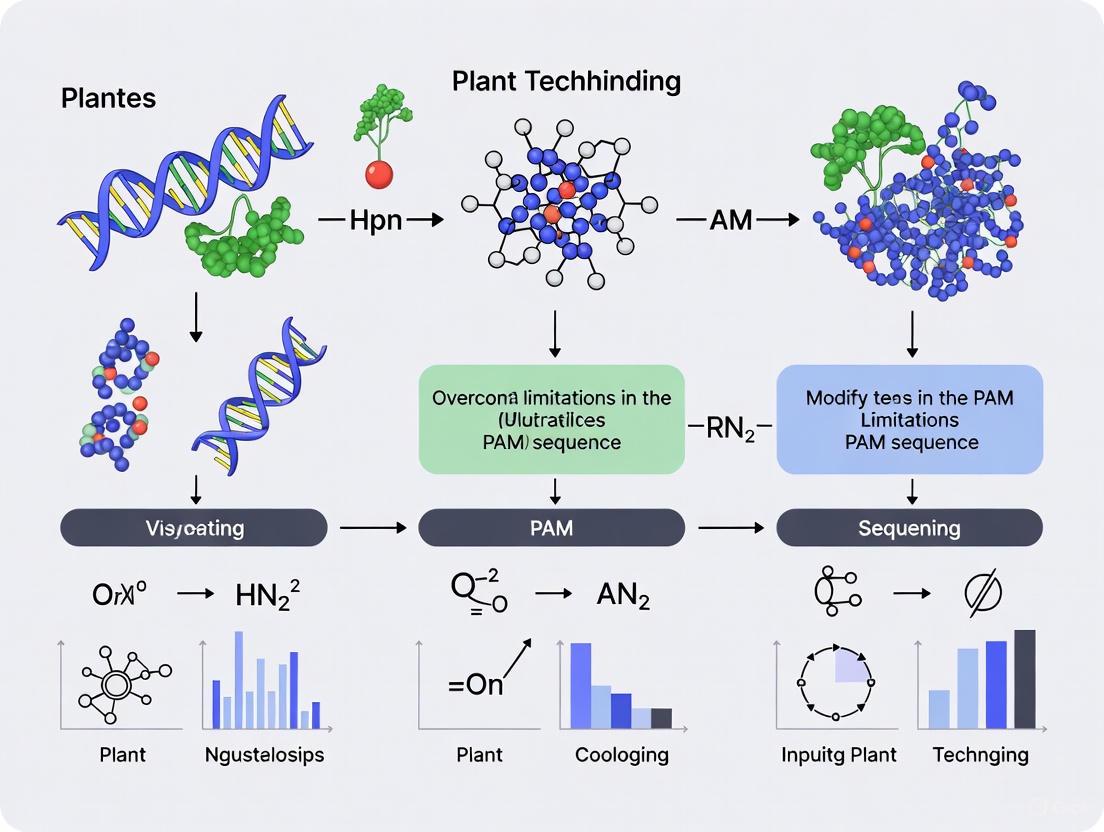
The Protospacer Adjacent Motif (PAM) requirement is a fundamental limitation constraining the application of CRISPR technologies in plant research and development.
Breaking the PAM Barrier: Advanced Strategies for Unlimited Plant Genome Editing
Abstract
The Protospacer Adjacent Motif (PAM) requirement is a fundamental limitation constraining the application of CRISPR technologies in plant research and development. This article provides a comprehensive analysis of cutting-edge strategies to overcome PAM restrictions, enabling precise editing of previously inaccessible genomic regions. We explore the evolution from early Cas9 variants to modern engineered systems like SpRY and prime editors, detailing their mechanisms, optimization frameworks, and validation methodologies. By synthesizing foundational principles with practical applications and troubleshooting insights, this resource equips researchers with the knowledge to design PAM-flexible editing pipelines for functional genomics and precision crop improvement, ultimately expanding the editable genome space for transformative agricultural and biomedical applications.
Understanding PAM Limitations: The Foundation of Plant Genome Editing
The Critical Role of PAM Sequences in CRISPR-Cas System Functionality
Fundamental Concepts: PAM FAQs for Researchers
What is a PAM sequence and why is it critical for CRISPR experiments?
The Protospacer Adjacent Motif (PAM) is a short, specific DNA sequence (typically 2-6 base pairs) that follows immediately after the DNA region targeted for cleavage by the CRISPR system. For the commonly used Streptococcus pyogenes Cas9 (SpCas9), the PAM sequence is 5'-NGG-3', where "N" can be any nucleotide base [1] [2].
The PAM is not merely a binding site but performs several essential functions:
- Self vs. Non-Self Recognition: In bacterial immune systems, the PAM allows Cas9 to distinguish between invading viral DNA (which contains the PAM) and the bacterium's own CRISPR array (which lacks the PAM), thus preventing auto-immunity [1].
- Activation Trigger: PAM recognition triggers local DNA melting, enabling the guide RNA to interrogate and pair with the target DNA sequence [2].
- Editing Limitation: The absolute requirement for this specific sequence adjacent to a target site represents the primary constraint on where in a genome CRISPR can be applied [1].
Where exactly is the PAM sequence located?
The PAM is located directly downstream (on the 3' end) of the DNA sequence targeted by the guide RNA. The Cas9 nuclease typically cuts 3-4 nucleotides upstream of the PAM sequence [1].
Why does my CRISPR experiment fail to produce edits even with a perfectly designed guide RNA?
The most common cause is the absence of a compatible PAM sequence immediately adjacent to your target site. Without the correct PAM, the Cas nuclease cannot recognize or bind to the target DNA, and no editing will occur [1]. Before experiment design, always verify that your target genomic region contains the appropriate PAM for your chosen Cas nuclease.
Advanced Solutions: Overcoming PAM Limitations
The requirement for a specific PAM sequence significantly limits targetable sites in plant genomes. Several advanced strategies have been developed to overcome this fundamental constraint:
Strategy 1: Utilizing Natural Cas Variants with Diverse PAM Requirements
Researchers can select from numerous Cas nucleases isolated from different bacterial species, each recognizing distinct PAM sequences [1]. The table below summarizes key Cas proteins and their PAM specificities:
Table 1: Cas Nuclease PAM Specificities
| CRISPR Nucleases | Organism Isolated From | PAM Sequence (5' to 3') |
|---|---|---|
| SpCas9 | Streptococcus pyogenes | NGG |
| SaCas9 | Staphylococcus aureus | NNGRRT or NNGRRN |
| NmeCas9 | Neisseria meningitidis | NNNNGATT |
| CjCas9 | Campylobacter jejuni | NNNNRYAC |
| LbCpf1 (Cas12a) | Lachnospiraceae bacterium | TTTV |
| AsCpf1 (Cas12a) | Acidaminococcus sp. | TTTV |
| Cas9-NG | Engineered | NG (G-rich PAMs) |
| xCas9 | Engineered | NG, GAA, GAT |
Strategy 2: Employing Engineered Cas Variants with Expanded PAM Compatibility
Protein engineering has created novel Cas enzymes with dramatically relaxed PAM requirements:
- xCas9: This engineered SpCas9 variant recognizes NG, GAA, and GAT PAM sequences, significantly expanding the targetable genome space in plants like rice [3].
- SpRY: A near-PAMless Cas9 engineered to recognize NRN (where R is A or G) with some capability for NYN (where Y is C or T) editing, approaching PAM independence [4].
- SpRYc: A recently developed chimeric Cas9 combining beneficial features of SpRY and Sc++ Cas9 variants, enabling efficient editing across an exceptionally broad range of PAM sequences including NAN and NTN sites [4].
- iSpyMacCas9: A hybrid system effective for targeting A-rich PAM sequences (NAAR), filling a major technology gap for editing these previously inaccessible sites in plants [5].
Table 2: Engineered Cas Variants and Their Editing Efficiencies at Non-Canonical PAMs
| Cas Variant | PAM Compatibility | Editing Efficiency | Application in Plants |
|---|---|---|---|
| xCas9 | NG, GAA, GAT | Effective gene mutations at GAD PAM sites when used with tRNA-esgRNA system [3] | Demonstrated in rice |
| SpRYc | NRN > NYN (Broad PAM flexibility) | Robust indel formation and base editing across diverse PAMs; 21.9% A-to-G conversion at NTT PAM with ABE8e [4] | Testing in plant systems pending |
| iSpyMacCas9 | NAAR (A-rich PAMs) | Successful targeted mutagenesis, C to T, and A to G base editing [5] | Demonstrated in model plants |
Experimental Troubleshooting Guide
Problem: Low editing efficiency at non-canonical PAM sites
Solution: Implement enhanced guide RNA systems
Research demonstrates that conventional CRISPR systems show unexpectedly low efficiency when targeting non-canonical PAM sites. However, employing tRNA and enhanced sgRNA (esgRNA) systems can dramatically improve editing rates [3].
Protocol: Developing an efficient CRISPR system for non-canonical PAM sites
Vector Construction:
- Use a plant-codon-optimized xCas9 (or other engineered variant) with specific mutations (A262T, R324L, S409I, E480K, E543D, M694I, E1219V for xCas9) [3].
- Clone the xCas9 sequence into a binary vector under the control of the 35S promoter.
- Incorporate a polycistronic tRNA-gRNA (PTG) architecture using tRNA-sgRNA transcripts under the control of U3 or U6 promoters.
Plant Transformation:
- Use Agrobacterium tumefaciens strain EHA105 to deliver constructs to rice embryogenic calli induced from mature seeds [3].
- Culture on selection medium (50 μg/mL hygromycin) for 4 weeks to obtain transgenic calli.
- Regenerate shoots on regeneration medium for approximately 1 month before rooting.
Mutation Detection:
- Extract genomic DNA from T0 plants.
- Amplify target loci by PCR and sequence using Sanger sequencing.
- Analyze mutations using tools like DSDecode to detect insertions/deletions (Indels) at target sites [3].
Diagram 1: CRISPR Experimental Workflow with PAM Consideration
Problem: Off-target effects with broad PAM compatibility variants
Solution: Utilize high-fidelity Cas variants and computational design
While engineered Cas variants with broad PAM compatibility offer greater targeting range, some may exhibit increased off-target effects. Several solutions exist:
- Chimeric Cas Variants: SpRYc demonstrates nearly four-fold lower off-target activity compared to SpRY while maintaining broad PAM compatibility [4].
- Computational gRNA Design: Use algorithms that identify cleavage locations and select nucleases with the fewest off-target cleavage sites [6].
- Modified CRISPR Enzymes: Engineered enzymes like eSpCas9 feature mutations that dramatically reduce "off-target" cuts while maintaining on-target activity [6].
- Digenome-seq: An in vitro Cas9-digested whole-genome sequencing technique that profiles genome-wide off-target effects in a robust, sensitive, and cost-effective manner [6].
The Scientist's Toolkit: Essential Research Reagents
Table 3: Key Research Reagent Solutions for PAM-Flexible Plant Genome Editing
| Reagent / Tool | Function | Example Application |
|---|---|---|
| xCas9 | Engineered Cas9 variant recognizing NG, GAA, GAT PAMs | Gene mutagenesis at non-canonical PAM sites in rice [3] |
| tRNA-esgRNA System | Enhanced guide RNA architecture improving editing efficiency | Boosting xCas9 activity at GA-rich PAM sites [3] |
| xCas9-Based Base Editors | Fusion of xCas9 to deaminase domains for precise base editing | C-to-T conversion at GA and NG PAM sites in rice [3] |
| SpRYc | Chimeric Cas9 with exceptional PAM flexibility (NRN>NYN) | Therapeutic editing applications requiring precise genomic positioning [4] |
| iSpyMacCas9 | Hybrid Cas9 system targeting A-rich PAM sequences | Editing NAAR PAM sites in plants [5] |
| Prime Editing Guide RNA (pegRNA) | Specialized guide RNA for prime editing systems | Direct writing of new genetic information without double-strand breaks [6] |
| Gateway-Compatible Vectors | Modular cloning system for easy construct assembly | Streamlined implementation of iSpyMacCas9 and other systems [5] |
Diagram 2: Strategic Solutions to PAM Limitations
Frequently Asked Questions (FAQs)
Q1: What is a PAM and why is it a limitation in plant genome editing? The Protospacer Adjacent Motif (PAM) is a short, specific DNA sequence immediately adjacent to the target DNA sequence that CRISPR-Cas systems require to recognize and bind to their target. The most commonly used Streptococcus pyogenes Cas9 (SpCas9) recognizes an NGG PAM sequence. This requirement limits the editable genomic regions to those containing this specific motif near the target site, restricting the targeting scope for research and breeding applications [7] [8].
Q2: How can I computationally determine the targeting scope of different CRISPR systems in my plant species of interest? Computational determination of targeting scope involves analyzing the frequency and distribution of PAM sequences across your reference genome. Using the PAM requirement for each Cas nuclease (e.g., NGG for SpCas9, NG for xCas9, NRN for SpRY), bioinformatics tools can scan the genome to calculate the theoretical targeting space. This is typically expressed as the percentage of genomic sites or specific genes that can be targeted, and the average distance between potential target sites [9].
Q3: What computational tools are available for designing gRNAs for PAM-flexible Cas variants? Several software tools host plant genomes and facilitate guide RNA design for various Cas variants. These tools help select optimal gRNA sequences by minimizing potential off-target effects while maximizing on-target efficiency. Key considerations include GC content, specificity checks against the entire genome, and the position of the PAM relative to your desired edit [9]. Popular tools include CRISPOR and other plant-focused gRNA design platforms that have incorporated PAM preferences for newer Cas enzymes like Cas9-NG, xCas9, and SpRY.
Q4: How do I validate the editing efficiency of different PAM sequences experimentally? Experimental validation requires a standardized reporter system where the same target sequence is evaluated with different PAM contexts. Researchers typically design multiple gRNAs targeting the same genomic locus but with different PAM sequences, then quantify mutation rates using next-generation sequencing. Efficiency is calculated as the percentage of reads containing indels at each target site [10].
Troubleshooting Guides
Issue: Low Editing Efficiency with Non-Canonical PAMs
Problem: Despite computational predictions suggesting compatibility, editing efficiency remains low for non-NGG PAM sequences using engineered Cas variants.
Solutions:
- Verify gRNA expression: Use structured RNA motifs (epegRNAs) at the 3' end of the pegRNA to protect against degradation and improve stability [11].
- Optimize expression constructs: Incorporate tRNA and enhanced sgRNA (esgRNA) systems shown to improve xCas9 efficiency at GAA, GAT, and GAG PAM sites in rice [3].
- Test multiple gRNAs: For a given target, design 3-4 gRNAs with the same PAM to account for sequence-dependent efficiency variations.
- Adjust delivery method: Consider using Agrobacterium rhizogenes-mediated transformation for rapid testing in hairy roots, which provides quicker results than stable transformation [12].
Issue: High Off-Target Effects with PAM-Flexible Variants
Problem: Expanded PAM recognition leads to increased off-target editing despite careful gRNA design.
Solutions:
- Use high-fidelity variants: Employ engineered Cas9 versions like eSpCas9(1.1), SpCas9-HF1, or HypaCas9 that reduce off-target editing while maintaining PAM flexibility [7].
- Implement computational prediction: Utilize off-target prediction tools that specifically account for the expanded PAM recognition profiles of newer variants.
- Apply dual nickase strategy: Use two Cas9 nickases with offset gRNAs to create staggered cuts, requiring both gRNAs to bind for a double-strand break, dramatically increasing specificity [7].
- Modify gRNA scaffold: Alter the crRNA scaffold to substitute the PAM within the gRNA to a poorly preferred sequence, reducing self-targeting [8].
Issue: Difficulty Editing AT-Rich or GC-Rich Genomic Regions
Problem: Certain genomic regions lack appropriate PAM sequences for conventional Cas enzymes, creating "editing deserts."
Solutions:
- Employ PAMless variants: Use near-PAMless enzymes like SpRY (recognizes NRN>NYN PAMs) which greatly expands targeting scope, particularly in AT-rich regions [10].
- Utilize Cas12a systems: Implement Cas12a (Cpf1) which recognizes T-rich PAMs (TTTV), making it ideal for AT-rich regions [12].
- Apply iSpyMacCas9 system: This hybrid platform targets A-rich PAMs, filling a major technology gap for these sequences [5].
- Combine multiple systems: Use different Cas enzymes with complementary PAM preferences to maximize coverage across problematic genomic regions.
Quantitative Analysis of PAM Restrictions
Table 1: Comparison of PAM Preferences and Targeting Scope of Different Cas Enzymes in Plants
| Cas Enzyme | PAM Sequence | Theoretical Targeting Density | Reported Editing Efficiency in Plants | Best Applications |
|---|---|---|---|---|
| SpCas9 | NGG | 1 site per ~8-12 bp | High (often >70%) | Standard gene knockouts, most applications |
| xCas9 | NG, GAA, GAT | 1 site per ~4-6 bp | Moderate to high (varies by PAM) | Expanded targeting with reduced off-targets |
| SpCas9-NG | NG | 1 site per ~5-7 bp | Moderate (30-70%) | Targeting in GC-rich regions |
| SpRY | NRN (preferred), NYN | 1 site per ~2-3 bp | Variable (10-60%) | Near-PAMless editing, difficult genomic regions |
| Cas12a (Cpf1) | TTTV | 1 site per ~10-15 bp in AT-rich regions | Moderate (40-75%) | AT-rich regions, staggered cuts for HDR |
| iSpyMacCas9 | NAAR | 1 site per ~6-9 bp in A-rich regions | Moderate (demonstrated in rice) | A-rich PAM targeting, base editing |
Table 2: Computational Analysis of PAM Distribution in Model Plant Genomes
| Plant Species | NGG PAM Density (per kb) | NG PAM Density (per kb) | NRN PAM Density (per kb) | TTTV PAM Density (per kb) | Percentage of Genes Accessible with SpRY |
|---|---|---|---|---|---|
| Arabidopsis thaliana | 10.2 | 19.8 | 38.5 | 5.1 | ~98% |
| Oryza sativa (rice) | 9.8 | 19.1 | 37.9 | 6.3 | ~97% |
| Physcomitrium patens | 11.5 | 22.3 | 41.2 | 4.8 | ~99% |
| Zea mays (maize) | 10.1 | 19.6 | 38.3 | 5.9 | ~97% |
| Glycine max (soybean) | 9.9 | 19.3 | 38.1 | 6.1 | ~97% |
Experimental Protocols
Protocol 1: Computational Analysis of PAM Restrictions in Plant Genomes
Purpose: To quantitatively determine the targeting scope of different Cas enzymes across a plant genome of interest.
Materials:
- High-quality reference genome sequence in FASTA format
- Bioinformatics workstation with sufficient memory (≥16GB RAM)
- Custom scripts or available tools (e.g., CRISPResso2, Cas-OFFinder)
- Genome annotation file (GTF/GFF format)
Methodology:
- Genome Preparation: Download and preprocess the reference genome, removing ambiguous bases and formatting for efficient scanning.
- PAM Scanning: Implement a sliding window algorithm to identify all instances of each PAM sequence throughout the genome.
- For each PAM type, record the genomic position and sequence context.
- Gene Accessibility Analysis: Cross-reference PAM locations with gene annotations to determine:
- Percentage of genes with at least one targetable site in coding regions
- Average number of targetable sites per gene
- Distribution of targetable sites across genomic features (promoters, exons, introns)
- Theoretical Targeting Density Calculation: Compute the average distance between targetable sites for each Cas enzyme.
- Off-Target Prediction: For a subset of sites, perform genome-wide off-target searches allowing up to 3-5 mismatches.
Validation: Compare computational predictions with empirical editing efficiency data from literature for calibration.
Protocol 2: Experimental Validation of PAM-Flexible Editors in Plants
Purpose: To empirically test the editing efficiency of engineered Cas variants with expanded PAM recognition.
Materials:
- Plant material with established transformation protocol (e.g., rice, soybean, Physcomitrium)
- Binary vectors encoding PAM-flexible Cas variants (xCas9, SpRY, etc.)
- gRNA expression constructs targeting various PAM sequences
- Tissue culture media and transformation reagents
- Sequencing platform for mutation detection
Methodology:
- Vector Construction: Clone gRNAs targeting identical genomic loci but with different PAM contexts into appropriate expression vectors.
- Plant Transformation: Deliver constructs using established methods (e.g., Agrobacterium-mediated transformation for rice).
- Selection and Regeneration: Select transformed tissues and regenerate complete plants under appropriate selection conditions.
- Mutation Detection:
- Extract genomic DNA from transformed tissues
- PCR-amplify target regions
- Perform deep amplicon sequencing (≥1000X coverage)
- Efficiency Quantification:
- Calculate editing efficiency as percentage of reads with indels
- Compare efficiency across different PAM types
- Analyze mutation spectrum (indel sizes, patterns)
Troubleshooting Notes: If efficiency is low across all PAMs, verify Cas expression and consider adding introns to the coding sequence or optimizing nuclear localization signals [10].
Signaling Pathways and Workflows
Computational to Experimental Workflow for PAM Analysis
Research Reagent Solutions
Table 3: Essential Research Reagents for PAM Flexibility Studies
| Reagent/Category | Specific Examples | Function/Application | Considerations for Plant Systems |
|---|---|---|---|
| PAM-Flexible Cas Variants | xCas9, SpCas9-NG, SpRY, iSpyMacCas9 | Expand targeting scope beyond NGG PAMs | Codon-optimization for plants, intron incorporation for improved expression |
| Base Editors | xCas9-based CBE, ABE, Prime Editors | Enable precise nucleotide changes without double-strand breaks | Efficiency varies with PAM sequence; positioning critical |
| gRNA Expression Systems | tRNA-gRNA, epegRNA, esgRNA | Improve gRNA stability and editing efficiency | Plant-specific promoters (U3, U6) essential for expression |
| Delivery Vectors | Gateway-compatible binary vectors, AAV systems (in some cases) | Efficient delivery of editing components | Species-specific optimization required; Agrobacterium-compatible for most plants |
| Validation Tools | T7E1 assay, amplicon sequencing, rhAmpSeq | Detect and quantify editing outcomes | High-depth sequencing recommended for accurate efficiency measurement |
| Computational Tools | CRISPOR, Cas-OFFinder, custom scripts | Design gRNAs and predict targeting scope | Plant genome compatibility varies; may require customization |
Natural Cas Variants and Their Innate PAM Specificities
Frequently Asked Questions (FAQs)
1. What is a PAM and why is it a limitation in CRISPR genome editing? The Protospacer Adjacent Motif (PAM) is a short, specific DNA sequence immediately adjacent to the target DNA sequence that a CRISPR-Cas system requires for recognition and cleavage. The widely used Streptococcus pyogenes Cas9 (SpCas9), for instance, requires a 5'-NGG-3' PAM sequence. This requirement restricts the potential target sites in a genome, as not all desired locations will have a compatible PAM sequence nearby, thereby limiting the scope of genome editing experiments [7] [13] [3].
2. How do natural Cas9 variants help overcome PAM limitations? Naturally occurring Cas9 proteins isolated from different bacterial species recognize different PAM sequences. By using these alternative Cas9 variants, researchers can access a much wider range of genomic targets. For example, while SpCas9 requires an NGG PAM, the Cas9 from Staphylococcus aureus (SaCas9) recognizes an NNGRRT PAM, and the Cas9 from Streptococcus canis (ScCas9) recognizes a less stringent NNG PAM, significantly expanding the targetable space in a genome [13].
3. Are there trade-offs when using natural Cas variants with altered PAM specificities? Yes, while offering PAM flexibility, some natural variants may have trade-offs. These can include differences in editing efficiency, size (which affects delivery via viral vectors), and potentially different off-target profiles. It is crucial to characterize each variant for the specific experimental system, such as plants, to understand its performance and optimize conditions for efficient editing [13] [3].
4. What are some strategies to further improve the efficiency of non-SpCas9 variants in plants? Research in rice has shown that the efficiency of variants like xCas9 (which recognizes NG, GAA, and GAT PAMs) can be significantly enhanced by using specific RNA expression strategies. For instance, employing a transfer RNA (tRNA) and enhanced single-guide RNA (esgRNA) system has been shown to boost mutation rates at challenging PAM sites like GAA, GAT, and GAG, making editing at these sites more practical for plant research and breeding [3].
Troubleshooting Common Experimental Issues
Problem: Low Editing Efficiency with a Non-SpCas9 Variant
- Potential Cause: The nuclease may not be optimally expressed or may have lower intrinsic activity in your plant system.
- Solutions:
- Optimize Coding Sequence: Ensure the gene sequence for the Cas variant is codon-optimized for your plant species.
- Enhance gRNA Expression: Utilize expression systems proven to improve efficiency, such as the tRNA-esgRNA system, which has been successfully used to boost xCas9 activity in rice [3].
- Promoter Selection: Use strong, plant-specific promoters (e.g., OsU3, OsU6) to drive the expression of your gRNA.
- Validate Vector Delivery: Confirm successful delivery of your editing constructs into plant cells and check the expression levels of both the Cas protein and the gRNA.
Problem: Suspected Off-Target Effects
- Potential Cause: The gRNA may bind and cleave at genomic sites with sequences similar to the on-target site.
- Solutions:
- Careful gRNA Design: Use computational tools to select gRNAs with minimal similarity to other genomic sequences, paying particular attention to the "seed sequence" near the PAM [14] [7].
- High-Fidelity Variants: Consider using engineered high-fidelity versions of your chosen Cas variant, which have mutations that reduce off-target binding and cleavage [7] [13].
- Target Site Selection: Choose target sequences with multiple flanking PAM sites. Research in pineapple has demonstrated that such configurations can reduce off-target rates by increasing the Cas9 protein's dwell time on the intended target [15].
- Empirical Validation: Use whole-genome sequencing (WGS) or other unbiased methods to empirically detect off-target mutations in your edited plants, as performed in studies on Physcomitrium patens [16].
Problem: Inability to Target a Desired Genomic Locus Due to PAM Constraint
- Potential Cause: The PAM requirement of your current Cas variant does not match the sequence near your target site.
- Solutions:
- Select an Alternative Natural Variant: Screen the available natural Cas variants for one with a compatible PAM. Refer to the table below for PAM specificities.
- Use an Engineered Cas Variant: Employ engineered Cas variants like xCas9 or Cas9-NG, which recognize relaxed NG PAMs, or SpRY, which is nearly PAM-less, to access previously inaccessible sites [7] [3].
Quantitative Data on Natural Cas Variants
The following table summarizes key natural Cas9 variants and their innate PAM specificities to aid in selection for your experiments.
Table 1: Natural Cas9 Variants and Their PAM Specificities
| Cas Variant | Species of Origin | Innate PAM Sequence | Size (aa) | Key Features and Applications |
|---|---|---|---|---|
| SpCas9 | Streptococcus pyogenes | 5'-NGG-3' [7] [13] | 1368 | The most widely used variant; broad application but limited by NGG PAM requirement [13]. |
| SaCas9 | Staphylococcus aureus | 5'-NNGRRT-3' [13] | 1053 | Compact size enables delivery with AAVs; used in neuronal and liver cell editing in animals, and efficient in plants [13]. |
| ScCas9 | Streptococcus canis | 5'-NNG-3' [13] | ~1368 | Less stringent PAM than SpCas9 (89.2% sequence homology), expanding genomic targeting range [13]. |
| SauriCas9 | Staphylococcus auricularis | 5'-NNGG-3' [13] | ~1053 | Small size suitable for AAV delivery; exhibits high editing activity [13]. |
| StCas9 | Streptococcus thermophilus | Varies (e.g., NNAGAAW) [3] | ~1121 | Used as an alternative nuclease with distinct PAM recognition [3]. |
| NmCas9 | Neisseria meningitidis | 5'-NNNNGATT-3' [3] | 1082 | Another alternative nuclease with a complex PAM, expanding the toolkit for diverse targets [3]. |
| CjCas9 | Campylobacter jejuni | 5'-NNNNRYAC-3' [3] | 984 | A compact Cas9 variant with a unique PAM sequence, useful for specific targeting contexts [3]. |
Essential Experimental Protocol: Implementing xCas9 for Broad PAM Targeting in Plants
This protocol, adapted from successful work in rice, details the steps to utilize the xCas9 variant for gene editing at non-canonical NG, GAA, GAT, and GAG PAM sites [3].
1. Principle The xCas9 variant contains point mutations (A262T, R324L, S409I, E480K, E543D, M694I, E1219V) that relax its PAM recognition beyond the canonical NGG to include NG, GAA, GAT, and GAG. Employing a tRNA-esgRNA (enhanced sgRNA) expression system significantly improves its editing efficiency in plant cells [3].
2. Materials
- Plasmid Vector: A binary T-DNA vector containing:
- A plant codon-optimized
xCas9gene under a constitutive promoter (e.g., CaMV 35S). - A
tRNA-esgRNAexpression cassette under plant U3 or U6 promoters. - A plant selectable marker (e.g., hygromycin resistance gene).
- A plant codon-optimized
- Plant Material: Embryogenic calli from your target plant species (e.g., rice calli from mature seeds).
- Agrobacterium Strain: Agrobacterium tumefaciens EHA105.
- Culture Media: Callus induction, co-cultivation, selection, and regeneration media appropriate for your plant species.
3. Workflow Diagram: xCas9 Plant Genome Editing
4. Procedure
1. Vector Construction: Clone your designed target sgRNA sequence (complementary to your gene of interest and adjacent to a relaxed PAM - NG, GAA, GAT, GAG) into the tRNA-esgRNA cassette of the binary vector. The tRNA sequence facilitates efficient processing of the sgRNA [3].
2. Agrobacterium Transformation: Introduce the finalized binary vector into the Agrobacterium strain EHA105 using a freeze-thaw method [3].
3. Plant Transformation:
* Infect embryogenic calli with the transformed Agrobacterium.
* After co-cultivation, transfer the calli to selection media containing the appropriate antibiotic (e.g., hygromycin) to select for transformed cells.
* Culture the resistant calli on regeneration media to induce shoot and root development, ultimately generating T0 plants [3].
4. Genotypic Analysis:
* Extract genomic DNA from T0 plants.
* Amplify the target genomic region by PCR using specific primers.
* Analyze the PCR products by Sanger sequencing. Use online tools (e.g., DSDecode) to decipher insertion/deletion (indel) mutations from sequencing chromatograms [3].
5. Expected Results Successful editing will be indicated by the presence of indels at the target site in the sequenced PCR products. The efficiency (percentage of edited T0 plants) can vary depending on the specific target sequence and PAM used.
The Scientist's Toolkit: Key Research Reagents
Table 2: Essential Materials for CRISPR Experiments with Cas Variants
| Reagent / Tool | Function | Example / Note |
|---|---|---|
| Cas Expression Vector | Expresses the Cas nuclease in plant cells. | Plant codon-optimized xCas9, SaCas9, etc., driven by constitutive promoters like CaMV 35S [3]. |
| gRNA Expression Vector | Expresses the guide RNA that directs the Cas nuclease to the target DNA. | Vectors with plant U3/U6 promoters; tRNA-gRNA systems can enhance efficiency [3]. |
| Bioinformatics Tools | For gRNA design and off-target prediction. | Used to select specific gRNA sequences with high on-target and low off-target potential [14]. |
| Delivery System | Introduces genetic constructs into plant cells. | Agrobacterium-mediated transformation (common for plants) or PEG-mediated transfection of protoplasts [3] [16]. |
| Selective Agents | Selects for successfully transformed plant cells. | Antibiotics like hygromycin, linked to a resistance gene in the T-DNA vector [3]. |
Impact of GC Content and Genome Architecture on PAM Availability
Frequently Asked Questions (FAQs)
1. How does genomic GC content directly affect the number of available PAM sites for CRISPR editing?
Genomic GC content has a direct and pronounced effect on the abundance of PAM sites, but the nature of this effect depends on the specific CRISPR system being used [17].
- For CRISPR/Cas9 (e.g., SpCas9): This system typically recognizes GC-rich PAM sequences, such as NGG [17] [18]. Consequently, in genomes with higher GC content, the number of potential Cas9 editing sites is higher, and their density throughout the genome increases [17].
- For CRISPR/Cpf1: This system recognizes T-rich PAM sequences [17]. Therefore, its potential and specific editing sites are highly negatively correlated with genomic GC content [17].
The table below summarizes the quantitative relationship between GC content and PAM abundance from a genome-wide analysis of 138 plant species [17].
| CRISPR System | PAM Sequence | Correlation with GC Content | Average Putative PAMs per Mb |
|---|---|---|---|
| CRISPR/Cas9 | NGG (and other GC-rich types) | Positive | 82,376 |
| CRISPR/Cpf1 | T-rich (e.g., TTTN) | Negative | 175,201 |
2. What specific genomic features can inhibit CRISPR-Cas9 editing efficiency even at a site with a correct PAM?
Two key sequence-specific features can mark a target site as inhibitory, even if it is preceded by a valid PAM:
- PAM Multiplicity: The presence of multiple PAM sequences within the gRNA target site itself can make it refractory to Cas9 editing [19]. Studies have shown that target sites harboring more than three PAMs on the target strand can significantly inhibit editing, with sites containing five or six PAMs showing a greater than 10-fold reduction in repair efficiency [19].
- G-Quadruplex (G-Q) Motifs: NGG-rich sequence tracts, which are common in Cas9 target sites, have a propensity to form higher-order DNA tertiary structures known as G-quadruplexes [19]. These structures can interfere with Cas9's ability to form a productive complex with the DNA, leading to a complete lack of detectable mutagenesis at some endogenous loci known to contain these motifs [19].
3. Are there solutions to overcome the PAM sequence limitations of standard SpCas9?
Yes, protein engineering has led to the development of several engineered Cas9 variants with greatly relaxed PAM requirements, dramatically expanding the targetable sequence space [4].
- SpRY: An engineered SpCas9 variant whose PAM preference is relaxed from NGG to NRN and further to NYN (where R is A/G and Y is C/T), making it a nearly PAM-less enzyme [4].
- SpRYc: A chimeric enzyme that combines features of SpRY and another variant called Sc++. It demonstrates highly flexible PAM preference, enabling robust editing across a wide range of NNN PAMs, and shows lower off-target activity compared to SpRY [4].
- SpCas9-NG: An engineered SpCas9 that efficiently targets NG PAMs instead of the canonical NGG, which has been successfully applied in both rice and Arabidopsis [18].
The following table compares these engineered nucleases and their PAM preferences.
| Nuclease | PAM Preference | Key Feature |
|---|---|---|
| SpCas9 (Wild-type) | NGG | Standard, limited targeting scope [18] |
| SpCas9-NG | NG | Expanded scope from NGG to NG [18] |
| SpRY | NRN > NYN | Near-PAMless [4] |
| SpRYc | NNN | Chimeric enzyme with broad PAM flexibility and reduced off-targets [4] |
Troubleshooting Guides
Problem: Low Editing Efficiency Despite High-Quality gRNA Design
Potential Cause 1: The target site is located in a genomic region with inhibitory features, such as high PAM multiplicity or G-quadruplex-forming sequences [19].
- Solution:
- Re-analyze Target Site Sequence: Manually inspect the ~50bp surrounding your target site for the presence of more than three NGG sequences (or the relevant PAM for your nuclease) on the target strand [19].
- Use Predictive Tools: Employ bioinformatics tools that can predict the formation of G-quadruplex structures in DNA.
- Select an Alternative Target Site: If inhibitory features are present, the most straightforward solution is to design a new gRNA targeting a different site within your gene of interest that lacks these features [19].
Potential Cause 2: The target site is in a genomic region with low accessibility due to chromatin structure.
- Solution:
- Check Chromatin Accessibility Data: If available for your species, consult public datasets (e.g., ATAC-seq, DNase-seq) to see if your target region is in open chromatin.
- Use a Nuclease with Prolonged Activity: Consider using a base editor or prime editor, which does not rely on creating a double-strand break and may have a longer window of activity to access occluded sites.
- Target a Different Region: Prioritize target sites in exonic regions, which have been shown to be significantly enriched in reduced-representation sequencing techniques, suggesting they are more accessible than intergenic or intronic regions on average [20].
Problem: Lack of a Suitable PAM Site Near Your Desired Genomic Edit
Potential Cause: The canonical SpCas9 NGG PAM requirement is too restrictive for your specific application [18] [4].
- Solution:
- Switch to a PAM-flexible Nuclease: Use an engineered nuclease like SpCas9-NG (for NG PAMs), SpRY (for NRN/NYN PAMs), or SpRYc (for NNN PAMs) [18] [4].
- Consider an Alternative CRISPR System: Use the CRISPR/Cpf1 system if your target site is preceded by a T-rich PAM, which is more abundant in low-GC genomes [17].
- Validate Efficiency: Be aware that editing efficiency can vary with these engineered nucleases. It is advisable to test multiple gRNAs for a given target and to use validated, high-activity versions like the chimeric SpRYc, which has demonstrated robust editing at diverse genomic loci [4].
Experimental Protocols
Protocol 1: Rapid Evaluation of Somatic Genome Editing Efficiency using Hairy Root Transformation
This protocol provides a simple and rapid system to assess the efficiency of novel genome editing tools or gRNAs in planta without the need for stable transformation, using soybean as a model [21].
1. Materials (Research Reagent Solutions)
- Plasmid Vector: 35S:Ruby vector or similar expressing your CRISPR nuclease/gRNA and a visual marker like Ruby [21].
- Agrobacterium Strain: A. rhizogenes strain K599 [21].
- Plant Material: Soybean seeds (cultivar of choice) [21].
- Growth Medium: Luria-Bertani (LB) solid and liquid media; 1/4 Murashige and Skoog (MS) liquid medium [21].
- Growth Substrate: Moist vermiculite [21].
2. Workflow
3. Step-by-Step Procedure
- Germination: Germinate soybean seeds for 5-7 days [21].
- Agrobacterium Preparation: Grow A. rhizogenes strain K599 containing your CRISPR/35S:Ruby plasmid on solid LB medium [21].
- Infection: Make a slant cut on the hypocotyl of the germinated seedlings and scrape the cut surface directly onto the bacterial colony (LBS method). Alternatively, water the cut seedlings with a liquid bacterial culture [21].
- Cultivation: Plant the infected seedlings in moist vermiculite and cultivate for approximately two weeks. No sterile conditions are required [21].
- Selection: Visually identify transgenic hairy roots based on the expression of the Ruby reporter (which produces a betalain pigment) [21].
- Analysis: Harvest the transgenic roots, extract genomic DNA, and amplify the target locus via PCR. Evaluate the editing efficiency by next-generation sequencing (NGS) of the PCR amplicons [21].
4. Expected Results & Notes
- This method can achieve a high transformation rate, with ~80% of infected plants producing transformed roots and ~10% of roots per plant being transgenic [21].
- The editing observed is predominantly chimeric, as the roots are a complex assembly of transgenic cells. This makes the system particularly well-suited for evaluating the intrinsic activity of an editing system [21].
- The protocol has also been successfully applied to other legume species like peanut, adzuki bean, and mung bean [21].
The Scientist's Toolkit: Essential Research Reagents
| Item | Function / Explanation | Example / Specification |
|---|---|---|
| PAM-Flexible Nucleases | Engineered Cas variants that recognize non-canonical PAMs, crucial for targeting low-GC regions. | SpCas9-NG (NG PAM) [18], SpRY (NRN/NYN PAM) [4] |
| Agrobacterium rhizogenes | Bacterium used to induce transgenic "hairy roots" for rapid somatic editing evaluation. | Strain K599 [21] |
| Visual Reporter Vector | Plasmid enabling visual identification of transgenic tissue without antibiotics. | 35S:Ruby vector [21] |
| Bioinformatics Databases/Tools | Software for identifying specific gRNAs and analyzing potential off-target effects. | Plant-specific CRISPR databases and desktop software for whole-genome analysis [17] |
| Base-Selective Adaptors | Oligonucleotides used in techniques like 2b-RAD to selectively enrich fragments based on terminal nucleotides, influencing locus recovery based on GC content. | Adaptors with S (G/C) or W (A/T) terminals [20] |
FAQ: Understanding PAM Sequence Limitations
What is a PAM sequence and why is it a limitation?
The Protospacer Adjacent Motif (PAM) is a short, specific DNA sequence located directly next to the target site of a CRISPR-Cas system. It is essential for the Cas nuclease to recognize and bind to the target DNA [22] [1]. The PAM sequence acts as a "self" vs. "non-self" discrimination signal for the bacterial immune system, preventing the nuclease from targeting the bacterium's own genome [1].
The limitation arises because the necessity of a specific PAM sequence adjacent to a target site restricts the genomic locations that can be edited [1]. If the desired target site is not followed by the correct PAM, editing with that particular nuclease will not occur, thus limiting the targeting scope of CRISPR experiments [22].
What are the common PAM sequences beyond the standard NGG?
While the commonly used Streptococcus pyogenes Cas9 (SpCas9) requires an NGG PAM, many other naturally occurring and engineered nucleases recognize different PAM sequences, significantly expanding the possible target sites [22] [1]. The following table summarizes key Cas nucleases and their PAM requirements.
| Cas Nuclease | Organism Isolated From | PAM Sequence (5' to 3') |
|---|---|---|
| SpCas9 | Streptococcus pyogenes | NGG [22] [1] [23] |
| SaCas9 | Staphylococcus aureus | NNGRR(T/N) [1] [23] (e.g., NNG[GA][GA]) |
| CjCas9 | Campylobacter jejuni | NNNNACAC [22] or NNNNRYAC [1] |
| AsCas12a (Cpf1) | Acidaminococcus sp. | TTTV [22] [1] (V = A, C, or G) |
| LbCas12a (Cpf1) | Lachnospiraceae bacterium | TTTV [1] [23] |
| Alt-R Cas12a Ultra | Engineered (from Lachnospiraceae) | TTTN [22] (N = any nucleotide) |
| AsCas12f1 | Engineered | NTTR [22] (R = A or G) |
| PlmCas12e | Engineered | TTCN [22] |
| StCas9 | Streptococcus thermophilus | NNAGAAW [1] [23] (W = A or T) |
| NmeCas9 | Neisseria meningitidis | NNNNGATT [1] |
How can I edit a target site if there is no NGG PAM nearby?
If your target locus lacks an NGG PAM, you have several practical options:
Use an alternative Cas nuclease: Select a different Cas protein whose PAM sequence is present near your target. For example:
Utilize engineered Cas variants with altered PAM specificity: Researchers have successfully modified Cas proteins to recognize novel PAM sequences. For instance, ScCas9 recognizes an NNG PAM, and SpCas9-NG recognizes an NG PAM, both of which are less restrictive than the original NGG [23].
Consider non-CRISPR systems: In cases where no suitable PAM exists for available Cas nucleases, established alternatives like Zinc Finger Nucleases (ZFNs) or Transcription Activator-Like Effector Nucleases (TALENs) can be used, as they do not have the same PAM requirements [24].
What strategies can minimize off-target effects related to PAM recognition?
Off-target editing can occur when the guide RNA binds to similar sequences in the genome, especially if those sites are adjacent to a valid PAM [25]. To enhance specificity:
- Use high-fidelity Cas variants: Engineered nucleases like the Alt-R S.p. HiFi Cas9 are designed to dramatically reduce off-target editing while maintaining high on-target activity [22].
- Employ Cas9 nickases: Using a "nickase" version of Cas9 that cuts only one DNA strand requires two adjacent guide RNAs to create a double-strand break. This paired-nicking system significantly increases specificity, as the probability of off-target binding for both guides is very low [24].
- Optimize guide RNA design: Ensure the 12-nucleotide "seed" sequence adjacent to the PAM is highly specific and has minimal perfect matches elsewhere in the genome [24]. Tools that help design guides with maximal mismatches in potential off-target sites are recommended.
- Titrate reagent amounts: Using lower, optimized concentrations of Cas9 and sgRNA can improve the on-target to off-target cleavage ratio [24].
Troubleshooting Guide: Addressing Common PAM-Related Issues
Problem: Low Editing Efficiency at Valid Target Sites
Potential Causes and Solutions:
- Cause: The chosen nuclease may have inherently lower activity for a particular PAM sequence.
- Solution: Test 3-4 different guide RNAs targeting the same locus but with slightly different spacer sequences or PAMs to identify the most efficient one [24].
- Cause: The nuclease or guide RNA is not expressed at sufficient levels.
- Cause: The target chromatin state may be inaccessible.
- Solution: While not always easy to control, using systems with different Cas proteins or employing transcriptional activators can sometimes help overcome this barrier.
Problem: Inability to Find a Suitable PAM for a Critical Genomic Region
Potential Causes and Solutions:
- Cause: The target region is PAM-poor for your default nuclease (e.g., SpCas9).
- Solution: Systematically screen the PAM requirements of other Cas nucleases. The table above provides a starting point. A modular cloning toolkit, which contains a variety of CRISPR/Cas nucleases with different PAM specificities, can facilitate this screening process in plants [23].
- Solution: Explore the use of prime editing, which still requires a PAM but can utilize nCas9 (H840A) with a broader range of PAMs and offers the ability to make all 12 possible base-to-base conversions, small insertions, and deletions without double-strand breaks [11].
Experimental Protocol: Evaluating Novel PAM Compatibility in Plant Protoplasts
This protocol outlines a method to test the activity of a Cas nuclease with a non-NGG PAM in plant cells.
1. Design and Assembly of CRISPR Constructs
- Toolkit: Use a modular cloning (MoClo) system, such as the Golden Gate-based toolkit described by [23], which includes modules for various nucleases (e.g., SaCas9, StCas9, Cas12a) and promoters.
- Vector Assembly:
- Select a level 0 module for your nuclease of interest (e.g., SaCas9 for NNGRRT PAM).
- Select appropriate Pol II and Pol III promoters for nuclease and gRNA expression in your plant species (e.g., OsU6p for rice).
- Assemble the nuclease and guide RNA expression units into a level 1 or level 2 binary vector suitable for plant transformation [23].
- Guide RNA Design: Design multiple gRNAs targeting a standard reporter gene or an endogenous gene, ensuring each target is adjacent to the nuclease's specific PAM (e.g., NNGRRT for SaCas9).
2. Delivery into Plant Cells
- Preparation: Isolate protoplasts from the target plant species (e.g., rice, wheat, or Arabidopsis).
- Transfection: Introduce the assembled CRISPR plasmid DNA into the protoplasts using polyethylene glycol (PEG)-mediated transfection.
- Incubation: Incubate the transfected protoplasts for 24-72 hours under suitable light and temperature conditions to allow for gene expression and editing.
3. Analysis of Editing Outcomes
- DNA Extraction: Harvest the protoplasts and extract genomic DNA.
- PCR Amplification: Amplify the target genomic region by PCR.
- Editing Assessment: Use one of the following methods to detect mutations:
- Restriction Enzyme (RE) assay: If the edit disrupts a restriction site.
- T7 Endonuclease I (T7EI) or Surveyor Assay: To detect mismatches in heteroduplex DNA caused by indels.
- Sanger Sequencing: PCR products can be sequenced directly. Deconvolution of the sequencing traces using tools like TIDE or ICE to quantify editing efficiency.
- High-Throughput Sequencing: For the most accurate and quantitative results, amplify the target region with barcoded primers and subject the amplicons to next-generation sequencing (NGS) [1].
Below is a workflow diagram summarizing this experimental process.
The Scientist's Toolkit: Essential Reagents for PAM Research
The following table lists key reagents used in experiments aimed at overcoming PAM limitations in plant genome editing.
| Research Reagent | Function / Explanation |
|---|---|
| Modular Cloning Toolkit [23] | A collection of standardized genetic parts (promoters, nucleases, gRNA backbones) that allows for quick assembly of multi-gene constructs to test different nucleases and expression systems. |
| Cas Nuclease Variants (e.g., SaCas9, StCas9, Cas12a) [22] [23] | These proteins have innate recognition for non-NGG PAMs (e.g., NNGRRT, NNRGAA, TTTV), providing a direct solution to target genomic regions inaccessible to SpCas9. |
| Engineered Cas Variants (e.g., SpCas9-NG, xCas9, Cas12a Ultra) [22] [23] | These are mutated versions of Cas proteins developed via directed evolution to recognize altered, often less restrictive, PAM sequences (e.g., NG, NNG, TTTN). |
| Species-Specific Promoters (e.g., OsU3p, OsU6-2p, TaU3p) [23] | Regulatory DNA sequences that drive high expression of the gRNA (Pol III promoters) or Cas nuclease (Pol II promoters) in specific crops like rice, wheat, or Arabidopsis. |
| Prime Editing System (PE2, PE3) [11] | A versatile editing system that uses a Cas9 nickase (H840A) fused to a reverse transcriptase and a pegRNA. It expands editable sites by still requiring a PAM but enabling a wider range of precise edits without double-strand breaks. |
Engineered Solutions: PAM-Flexible CRISPR Systems for Expanded Plant Genome Editing
Protein Engineering of Cas9 PAM-Interacting Domains (PIDs)
How can I engineer Cas9 to overcome the restrictive NGG PAM in plants?
The restrictive NGG Protospacer Adjacent Motif (PAM) requirement of wild-type Streptococcus pyogenes Cas9 (SpCas9) significantly limits targetable sites in plant genomes. Several protein engineering strategies have successfully created Cas9 variants with altered PAM specificities.
Key Engineering Strategies:
- Rational Design & Domain Grafting: Creating chimeric proteins by combining domains from different Cas9 orthologs. For example, SpRYc was created by grafting the PAM-interacting domain (PID) of SpRY (an engineered SpCas9) onto the N-terminus of Sc++ (another Cas9 variant). This chimeric enzyme maintains robust editing activity with highly flexible PAM preference [4].
- Directed Evolution: Using iterative selection processes to evolve Cas9 variants with desired PAM compatibilities. Phage-assisted continuous evolution (PACE) has been used to evolve compact Cas9 variants, like eNme2-C and eNme2-T.1, which target single-nucleotide pyrimidine PAMs previously inaccessible by SpCas9 [26].
- Semi-Supervised Computational Design: Combining evolutionary information from natural protein sequences, experimental functional data, and physics-based modeling (e.g., using FoldX empirical force field) to design functional PID variants. This approach has generated functional Cas9 PIDs with over 20% of their sequence modified from the wild-type [27].
Table 1: Engineered Cas9 Variants and Their PAM Preferences
| Cas9 Variant | Engineering Method | PAM Preference | Reported Editing Efficiency in Plants | Key Features |
|---|---|---|---|---|
| xCas9 | Rational Design | NG, GAT, GAA [3] [28] | Efficient mutations at NG and GAT PAMs in rice [28] | Broader PAM compatibility than SpCas9 |
| SpCas9-NG | Rational Design | NG [28] | Robust editing at various NG PAMs in rice [28] | No strong preference for the nucleotide following NG |
| iSpyMacCas9 | Domain Grafting | A-rich PAMs (NAAR) [5] | Effective targeted mutagenesis and base editing in plants [5] | Fills the technology gap for editing A-rich PAMs |
| SpRYc | Domain Grafting | NRN > NYN (broadly NNN) [4] | High flexibility, tested in human cells; principle applicable to plants [4] | Chimeric variant combining properties of SpRY and Sc++ |
My newly engineered Cas9 variant has low editing efficiency. How can I improve it?
Low editing efficiency in engineered Cas9 variants, especially at non-canonical PAMs, is a common challenge. Optimization of the expression and delivery system can significantly enhance performance.
Troubleshooting Steps:
- Verify Protein Expression: Ensure the engineered Cas9 variant is expressing correctly in your plant system. Use Western blotting with a Cas9-specific antibody for confirmation.
- Optimize sgRNA Expression: The structure of the single-guide RNA (sgRNA) is critical. Using a tRNA-sgRNA (esgRNA) system has been shown to significantly boost the activity of engineered variants like xCas9 at relaxed PAM sites (e.g., GAA, GAT, GAG) in rice [3]. The tRNA promotes efficient processing of the sgRNA.
- Test Multiple sgRNAs: If possible, design and test 2-3 different sgRNAs for your target locus. Efficiency can vary significantly based on the specific sequence and local chromatin context.
- Confirm PAM Compatibility: Re-validate the PAM preference of your variant in your specific plant system. Activity can vary across different PAM sequences, even within the recognized set (e.g., an NG PAM variant may work better on NGC than on NGT) [28].
Table 2: Troubleshooting Low Editing Efficiency
| Problem | Possible Cause | Solution | Reference Example |
|---|---|---|---|
| Low efficiency at non-canonical PAMs | Non-optimal sgRNA secondary structure | Use tRNA-sgRNA (esgRNA) constructs to enhance sgRNA processing and maturation [3] | xCas9 efficiency improved with esgRNA in rice [3] |
| No activity in stable transgenic plants | Low protein expression or improper folding | Check and optimize the promoter driving Cas9 expression (e.g., use strong plant promoters like ZmUbi) | Plant codon-optimized xCas9 and SpCas9-NG expressed under maize ubiquitin promoter showed high activity [28] |
| Inconsistent editing across targets | Intrinsic PAM preference of the variant | Systematically test the variant's activity on a spectrum of PAMs; use validated PAMs for critical targets | SpRYc showed varying but broad activity across NNN PAMs [4] |
The engineered Cas9 variant I'm using has high off-target effects. How can I improve its specificity?
Broadening PAM compatibility can sometimes come at the cost of increased off-target activity. However, some engineered variants are designed with higher intrinsic fidelity.
Solutions to Mitigate Off-Target Effects:
- Choose High-Fidelity Variants: Some engineered PAM-flexible variants are derived from naturally high-fidelity backbones. For instance, the chimeric SpRYc variant exhibited nearly four-fold lower off-target activity than SpRY in human cells, as measured by GUIDE-Seq, suggesting its scaffold contributes to improved specificity [4].
- Use High-Fidelity Base Editors: When using base editors, select versions known for cleaner editing profiles. For example, the evolved eNme2-C.NR variant was reported to have lower off-target editing than the broad-PAM variant SpRY at certain PAM sequences [26].
- Employ Computational Design: Models that incorporate both evolutionary information (e.g., from Restricted Boltzmann Machines) and physics-based stability predictions (e.g., FoldX) can help select protein sequences that are more likely to be stable and specific, reducing the risk of promiscuous binding [27].
Can I use these engineered Cas9 variants for base editing in plants?
Yes, several PAM-flexible Cas9 variants have been successfully adapted for base editing in plants, significantly expanding the targetable scope for precise nucleotide changes.
Successful Implementations:
- SpCas9-NG Base Editors: Cytosine and adenine base editors incorporating SpCas9-NG have been demonstrated to work efficiently in rice, enabling C-to-T and A-to-G conversions at NG PAM sites [28].
- xCas9 Base Editors: While xCas9 can efficiently induce mutations in its nuclease form, base editors containing xCas9 were reported to be less efficient and failed to edit most tested target sites in one rice study [28]. This highlights the need to validate each application.
- iSpyMacCas9 Base Editors: This system has been successfully used for both C-to-T and A-to-G base editing at A-rich PAM sites in plants, filling a major technology gap [5].
- SpRYc Base Editors: When fused to the adenine base editor ABE8e, SpRYc mediated efficient A-to-G conversion at diverse genomic sequences with minimal PAM dependence in human cells [4]. The principle is directly applicable to plant systems.
The Scientist's Toolkit: Key Research Reagent Solutions
Table 3: Essential Reagents for Engineering and Deploying PAM-Flexible Cas9
| Reagent / Tool | Function in Experiment | Key Considerations |
|---|---|---|
| tRNA-sgRNA (esgRNA) Vector | Enhances processing and efficiency of sgRNAs for engineered Cas9 variants. | Critical for improving activity of variants like xCas9 on non-canonical PAMs [3]. |
| PAM-SCANR / HT-PAMDA | High-throughput assays for empirically determining the PAM preference of an engineered Cas9 variant. | Provides a cleavage-based profile (HT-PAMDA) versus a binding-based profile (PAM-SCANR) [4]. |
| FoldX Force Field | Computational tool for predicting the stability of engineered protein variants. | Can be integrated with machine learning models to pre-filter designed Cas9 PIDs for stability [27]. |
| Gateway-Compatible Vectors | Simplifies the cloning of engineered Cas9 genes and sgRNA expression cassettes. | Available for systems like iSpyMacCas9, facilitating easy adoption and testing [5]. |
| CBE/ABE Editor Plasmids | Ready-to-use base editor constructs for precise genome editing. | Must be fused to the PAM-flexible nuclease (e.g., SpCas9-NG-BE, iSpyMac-ABE) [28] [5]. |
The Clustered Regularly Interspaced Short Palindromic Repeats (CRISPR)/Cas system has revolutionized plant biotechnology, enabling precise genome editing for functional genomics and crop improvement [29]. A significant constraint of the widely used CRISPR/Cas9 system is its dependence on a specific Protospacer Adjacent Motif (PAM) sequence flanking the target site, which drastically limits the range of genomic sequences that can be targeted [4] [30]. For the standard Streptococcus pyogenes Cas9 (SpCas9), this PAM is the short sequence 5'-NGG-3', present in only about 1 in 16 random genomic sites [30].
To overcome this limitation, researchers have engineered chimeric Cas enzymes that combine optimal properties from different natural or engineered Cas9 orthologs and variants. These chimeras are designed to leverage beneficial traits from multiple parent proteins, such as broad PAM compatibility from one enzyme and high fidelity or efficiency from another, thereby creating novel editing tools with expanded capabilities [4] [31]. This approach is particularly valuable for plant research and crop breeding, where the ability to target specific genomic locations is crucial for introducing beneficial traits such as herbicide resistance, disease tolerance, and improved quality [32] [29]. The development of these sophisticated chimeric enzymes represents a significant advancement in our capacity to perform "PAM-flexible" or "near-PAMless" genome editing, opening up previously inaccessible regions of the plant genome for precise modification [4] [30].
Technical FAQs: Resolving Common Experimental Challenges
Q1: What is the primary advantage of using a chimeric Cas enzyme like SpRYc over its parent enzymes, SpRY and Sc++?
The primary advantage of SpRYc is its integration of the robust PAM flexibility of SpRY with the efficient editing characteristics of Sc++. While SpRY exhibits broad PAM compatibility (NRN > NYN, where R is A/G and Y is C/T), it can have slower cleavage rates. Sc++ offers efficient and accurate NNG editing but with less PAM flexibility. The chimeric SpRYc leverages properties of both, enabling specific editing across diverse PAMs, including challenging NYN sites, while maintaining robust activity and demonstrating reduced off-target propensity compared to SpRY [4].
Q2: During bacterial screening for PAM specificity, my chimeric Cas construct shows poor fluorescence in the PAM-SCANR assay. What could be the issue?
The PAM-SCANR assay relies on GFP expression conditioned on PAM binding by a nuclease-deficient dCas9 [4]. Low fluorescence could indicate several problems:
- Protein Folding Disruption: The chimeric fusion may have disrupted the structural integrity of the Cas enzyme. Verify protein stability and expression.
- gRNA Scaffold Incompatibility: The chimeric enzyme might require an optimized gRNA scaffold for proper function and complex stability. For instance, some SaCas9 chimeras perform better with a gRNA where the 2nd U is mutated to C to disrupt a putative terminator sequence [31].
- Inefficient PAM Binding: The engineered PAM-interacting domain (PID) may not bind the library PAMs effectively. Confirm the successful integration of the donor PID region through sequencing.
Q3: When testing my chimeric Cas9 in plant protoplasts, I observe low editing efficiency even at canonical PAM sites. How can I improve this?
Low efficiency in plant cells can be addressed by:
- Using Enhanced sgRNA (esgRNA) and tRNA Systems: Incorporating a tRNA sequence upstream of the sgRNA can improve processing and efficiency, as demonstrated with CRISPR-xCas9 systems in rice [3].
- Optimizing Delivery Method: Consider using pre-assembled Ribonucleoprotein (RNP) complexes of the chimeric Cas protein and sgRNA for direct delivery into protoplasts. This can enhance editing efficiency and reduce off-target effects [33].
- Promoter Selection: Ensure the chimeric cas9 gene is driven by a strong, constitutive promoter (e.g., Ubiquitin for rice) that is suitable for your plant species and cell type [32] [3].
Q4: My chimeric Cas base editor produces high levels of indels instead of precise base substitutions in regenerated rice plants. What is the likely cause and solution?
A high indel frequency is often a result of persistent nuclease activity from the Cas moiety in the base editor fusion protein.
- Validate Nickase Activity: If your base editor design relies on a nickase Cas9 (e.g., D10A mutation for SpCas9), sequence the plasmid to confirm the nickase mutation is intact and no reversion has occurred.
- Optimize Component Ratios: The balance between the deaminase, Cas nickase, and inhibitor domains (like UGI for cytosine base editors) is critical. The architecture of the fusion protein may need re-engineering to minimize ssDNA nicks that are repaired via indel-forming NHEJ [3].
- Check Transgene Expression: Ensure that the base editor components are not being expressed at excessively high levels, which can exacerbate off-target activity.
Troubleshooting Guides for Key Experimental Hurdles
Problem: Inefficient Plant Regeneration from Edited Cells
Issue: After successful editing in protoplasts or calli, you are unable to regenerate viable, edited plants.
Solution Steps:
- Use Visual Markers for Early Screening: Co-target a gene like Phytoene Desaturase (PDS), which produces an easily detectable albino phenotype when successfully knocked out. This allows you to identify and prioritize editing events early in the regeneration process [34].
- Avoid Antibiotic Selection: For some recalcitrant species, skipping hygromycin B selection and relying on visual screening of regenerated shoots can improve regeneration rates of edited events, as demonstrated in the first CRISPR/Cas9 editing of onion [34].
- Optimize Tissue Culture Conditions: The health and regeneration capacity of embryogenic calli are paramount. Use young (e.g., 8-week-old), vigorously growing calli for Agrobacterium-mediated transformation or RNP delivery, and fine-tune hormone concentrations in regeneration media [34].
Problem: Unacceptable Levels of Off-Target Effects
Issue: Deep sequencing reveals unwanted mutations at sites with sequence similarity to your target.
Solution Steps:
- Select a High-Fidelity Chimeric Backbone: Start with a chimeric design that incorporates a high-fidelity parent enzyme. For example, SpRYc demonstrated nearly 4-fold lower off-target activity than SpRY in human cells, a property inherited from its Sc++ backbone [4].
- Conduct Mismatch Tolerance Assays: Systematically test your chimeric enzyme with sgRNAs containing single and double mismatches to the target protospacer. This will reveal its tolerance for imperfect matches and help inform gRNA design to avoid promiscuous guides [4].
- Utilize RNP Delivery: Delivering pre-assembled Cas protein-sgRNA complexes, rather than plasmid DNA, can reduce the time the nuclease is active in the cell, thereby decreasing off-target editing [33].
- Perform Genome-Wide Off-Target Analysis: Use methods like GUIDE-seq to identify and quantify off-target sites in an unbiased manner for your most critical experiments [4].
Problem: Low Efficiency at Non-Canonical PAM Sites
Issue: Your chimeric enzyme edits efficiently at standard PAMs but performs poorly at the expanded PAMs it was designed to target.
Solution Steps:
- Verify PAM Preference: Use a bacterial positive-selection assay like PAM-SCANR or a cleavage-based assay like HT-PAMDA to biochemically characterize the PAM preference of your purified chimeric protein. This confirms whether the enzyme has the expected binding and cleavage profile for various NNN PAMs [4].
- Implement tRNA-esgRNA Systems: As proven with xCas9 in rice, placing a tRNA upstream of an enhanced sgRNA (esgRNA) can significantly boost editing efficiency at non-canonical PAM sites (e.g., GAA, GAT, GAG) in plant cells [3].
- Screen Multiple gRNAs: Not all gRNAs perform equally well, even for the same target site. If possible, design and test 2-3 different gRNAs for your desired target locus to find the most effective one [29].
Quantitative Data on Chimeric Cas Enzyme Performance
Table 1: Comparison of PAM Preferences and Editing Efficiencies for Wild-Type, Engineered, and Chimeric Cas9 Enzymes
| Cas Enzyme | PAM Preference | Key Features and Editing Performance | Reported Editing Efficiency in Cells |
|---|---|---|---|
| SpCas9 (WT) | NGG [30] | The canonical wild-type enzyme; restricted targeting scope. | Baseline (varies by locus and cell type) [4] |
| xCas9 | NG, GAA, GAT [3] | Broad PAM compatibility but inefficient at GAA/GAT PAMs in plants without optimization. | Improved with tRNA-esgRNA system in rice [3] |
| SpRY | NRN > NYN [4] [30] | "Near-PAMless"; broadest targeting but can have slower cleavage rates and higher off-targets than SpRYc. | Comparable to SpCas9 at NRN PAMs [4] [30] |
| SpRYc (Chimeric) | NRN & NYN [4] | Combines SpRY's PAM flexibility with Sc++'s efficiency/fidelity; edits broad PAMs with reduced off-targets. | Robust editing at all tested endogenous loci (e.g., 5'-NTT-3'), outperforming SpRY-ABE8e in base editing (21.9% vs 0.05% A-to-G conversion) [4] |
| cCas9 v42 (Chimeric) | NNVRRN (V=A/C/G) [31] | Engineered from S. aureus Cas9 (SaCas9); compact size useful for viral delivery; expanded PAM recognition. | Effective cleavage at defined NNVRRN PAM sequences in mammalian cells [31] |
Table 2: Performance of Cas9 Fusion Proteins in Genome Editing Applications
| Fusion Protein | Fused Component | Primary Application | Reported Outcome and Efficiency |
|---|---|---|---|
| SpyCas9-RecJ (C9R) | 5'-to-3' DNA exonuclease (RecJ) [33] | Increased mutagenesis (Indel) and knock-in efficiency [33] | ~2- to 5-fold increase in indel efficiency in human HEK293T cells compared to SpyCas9 alone; no significant increase in off-targets [33] |
| SpyCas9-GFP (C9G) | Green Fluorescent Protein (GFP) [33] | Increased mutagenesis (Indel) and knock-in efficiency [33] | ~2- to 6-fold increase in indel efficiency in human HEK293T cells compared to SpyCas9 alone [33] |
| SpRYc-ABE8e | Adenine Base Editor (ABE8e) [4] | A-to-G Base Editing at flexible PAMs [4] | Effectively edited disease-related loci with 5'-NTN-3' and 5'-NNT-3' PAMs; 21.9% A-to-G conversion at a 5'-NTT-3' site where SpRY-ABE8e failed (0.05%) [4] |
Core Experimental Protocol: Validating a Chimeric Cas Enzyme in Plant Cells
This protocol outlines the key steps for testing the functionality and PAM flexibility of a newly developed chimeric Cas enzyme in a plant system, using rice as an example.
Step 1: Vector Construction and Transformation
- Clone your chimeric cas9 gene (e.g., SpRYc) into a plant binary vector under the control of a strong constitutive promoter (e.g., Maize Ubiquitin promoter) [32] [3].
- Clone one or multiple sgRNA expression cassettes, each consisting of a target-specific sequence under a Pol III promoter (e.g., OsU3 or OsU6), into the same or a compatible binary vector [3]. For improved efficiency, consider using a tRNA-esgRNA system [3].
- Introduce the final construct into Agrobacterium tumefaciens strain EHA105 [3].
Step 2: Plant Material Transformation and Regeneration
- Infect embryogenic calli induced from mature rice seeds (e.g., Nipponbare) with the transformed Agrobacterium [3].
- Co-cultivate the calli for 3 days and then transfer them to selection medium containing hygromycin (or another appropriate selective agent) for 4 weeks to select for transgenic events [3].
- Transfer resistant calli to regeneration medium to induce shoot and root development, ultimately generating T0 plants [3].
Step 3: Molecular Analysis of Mutants
- Extract genomic DNA from regenerated T0 plants or transfected protoplasts [32] [3].
- Amplify the target genomic region by PCR using locus-specific primers.
- Analyze the PCR products for mutations. This can be done by:
- Sanger Sequencing followed by decomposition: The PCR products can be directly sequenced, and double peaks in the chromatogram around the target site indicate editing. Use online tools (e.g., DSDecode) to decode the sequencing chromatograms into specific indel mutations [3].
- Deep Amplicon Sequencing: For a more quantitative and comprehensive view of all mutation types (indels, substitutions) and their frequencies, subject the PCR amplicons to high-throughput sequencing [32] [34]. This is crucial for accurately assessing editing efficiency at non-canonical PAM sites.
Research Reagent Solutions: Essential Materials for Chimeric Cas Development
Table 3: Key Reagents for Developing and Testing Chimeric Cas Enzymes
| Reagent / Tool Name | Function in Experiment | Specific Example / Application |
|---|---|---|
| PAM-SCANR Plasmid System | A positive-selection bacterial assay to characterize the PAM binding specificity of dCas9-fusion proteins [4] | Determining that SpRYc binds potently to sequences with adenine at PAM position 2 [4] |
| HT-PAMDA | A library-based assay to measure the cleavage kinetics and preferences of Cas enzymes across a vast array of PAM sequences [4] | Revealing that SpRYc has slower cleavage rates than SpRY but accesses a comparably broad set of PAMs [4] |
| tRNA-esgRNA Vector | A genetic construct to enhance the processing and efficiency of sgRNAs, boosting editing at non-canonical PAMs [3] | Enabling efficient xCas9-mediated mutation at GAA, GAT, and GAG PAM sites in rice [3] |
| GUIDE-seq | A genome-wide, unbiased method for identifying off-target sites of CRISPR nucleases [4] | Demonstrating that SpRYc has 2- to 4-fold lower off-target activity than SpRY [4] |
| pRGEB31 Binary Vector | A T-DNA binary vector for expressing Cas9 and sgRNAs in plants; used for Agrobacterium-mediated transformation [34] | Successfully establishing the first CRISPR/Cas9 system in onion by targeting the AcPDS gene [34] |
| Chimeric Single-Guide RNA (cgRNA) | A bifunctional RNA molecule that serves as both a guide for Cas9 and a template for homology-directed repair (HDR) [32] | Generating herbicide-resistant rice by introducing point mutations in the OsALS gene via HDR [32] |
Conceptual Diagrams
Chimeric Cas9 Development Workflow
Chimeric Enzyme Component Fusion
The CRISPR-Cas9 system has revolutionized plant genome editing, yet its application has been constrained by the requirement for specific Protospacer Adjacent Motif (PAM) sequences immediately downstream of target sites. Conventional Streptococcus pyogenes Cas9 (SpCas9) recognizes the NGG PAM, significantly restricting the number of targetable loci in plant genomes. To overcome this limitation, researchers have developed engineered Cas9 variants with relaxed PAM requirements, among which SpRY has emerged as a near-PAMless editor that dramatically expands the targeting scope of CRISPR technologies in plants [35] [36].
SpRY was engineered through structure-guided design and contains multiple mutations (A61R/L1111R/N1317R/A1322R/R1333P) that alter its PAM recognition properties [37]. This variant achieves unprecedented PAM flexibility, effectively recognizing NRN PAMs with high efficiency and NYN PAMs with moderate efficiency (where R is A or G, Y is C or T, and N is any base) [35] [36]. The development of SpRY-based editing systems represents a significant advancement for plant biotechnology, enabling researchers to target previously inaccessible genomic regions for both basic research and crop improvement applications.
Technical FAQs: Addressing Common Experimental Challenges
PAM Recognition and Targeting Scope
What PAM sequences can SpRY recognize in plant systems?
SpRY functions as a near-PAMless editor in plants, demonstrating robust activity across a wide range of PAM sequences. Experimental data from multiple plant species reveal a distinct preference hierarchy:
Table 1: SpRY Editing Efficiency Across Different PAM Types in Plants
| PAM Type | Representative PAMs | Editing Efficiency Range | Example Species Tested |
|---|---|---|---|
| NRN (Preferred) | NGA, NGG, NAG | 15.67-87.6% | Rice, Soybean, Dahurian Larch |
| NAN | NAA, NAC, NAT | 15.50-80.67% | Rice, Soybean |
| NTN | NTA, NTT, NTG | 4.0-50.3% | Rice, Soybean |
| NCN | NCA, NCC, NCT | 6.0-42.0% | Rice, Soybean |
The variation in efficiency depends on both the specific PAM sequence and the genomic context, with NRN PAMs consistently yielding higher editing rates across plant species. In soybean, SpRY has achieved editing efficiencies of up to 57.7% at relaxed PAM sites [35].
How does SpRY compare to other PAM-expanding variants like SpG and SpCas9-NG?
SpRY demonstrates broader PAM compatibility compared to other engineered variants:
- SpG prefers NGN PAMs but shows variable efficiency across different NG combinations [36]
- SpCas9-NG efficiently targets NG PAMs but has limited activity beyond these sequences [38] [36]
- SpRY achieves efficient editing across all PAM types, with particularly high activity at NRN and NAN PAMs [35] [36]
In direct comparisons in rice, SpCas9-NG outperformed SpG at NG PAM sites, while SpRY demonstrated the broadest targeting range across diverse PAM sequences [36].
Optimization of Editing Efficiency
What factors influence SpRY editing efficiency in plants?
Multiple parameters significantly impact SpRY performance in plant systems:
Promoter Selection: The choice of promoter driving SpRY expression critically affects editing efficiency. In soybean, the GmUBI3 and GmM4 promoters have demonstrated high activity, with GmUBI3 showing slightly higher efficiency in multiplex editing applications [35]
gRNA Modifications: Using chemically modified gRNAs with 2'-O-methyl-3'-phosphorothioate (MS modifications) at the terminal nucleotides enhances stability and increases editing efficiency, as demonstrated in zebrafish models [37]
Delivery Method: Both plasmid-based expression and ribonucleoprotein (RNP) complex delivery have proven effective, with RNP delivery potentially reducing off-target effects in some systems [37] [39]
Target Site Context: Local genomic features, including chromatin accessibility and DNA methylation status, can influence editing outcomes [35]
What base editor systems are compatible with SpRY?
SpRY has been successfully fused with both cytosine and adenine deaminases to create highly versatile base editing systems:
- SpRY-hA3A: A cytosine base editor that achieves C-to-T conversions at non-canonical PAM sites [35]
- SpRY-ABE8e: An adenine base editor that mediates A-to-G conversions with relaxed PAM requirements [35]
These base editors maintain the broad PAM compatibility of SpRY while enabling precise nucleotide changes without creating double-strand breaks, significantly expanding the toolbox for precise genome modification in plants [35] [40].
Troubleshooting Common Experimental Issues
How can I address low editing efficiency with SpRY?
If encountering suboptimal editing efficiency, consider these troubleshooting approaches:
Verify gRNA Design: Ensure the gRNA has minimal potential for off-target binding and optimal GC content (typically 40-60%)
Optimize Expression Levels: Test alternative promoters or delivery methods to enhance SpRY and gRNA expression
Screen Multiple gRNAs: When targeting a specific locus, design and test 3-4 different gRNAs targeting the same region, as efficiency can vary significantly even with identical PAM sequences [35]
Consider Cell-Type Specific Optimization: Editing efficiency may vary between different plant tissues and transformation methods; optimize parameters for your specific experimental system [35] [36]
Does SpRY have higher off-target effects due to its relaxed PAM requirements?
Despite its broad PAM recognition, SpRY does not necessarily exhibit increased off-target effects when properly optimized. In soybean, careful evaluation of predicted off-target sites showed no detectable off-target mutations at the examined loci [35]. However, researchers have observed T-DNA self-editing events in transgenic approaches, where SpRY cleaves its own delivery vector [35] [36]. To minimize potential off-target effects:
- Use RNP Delivery: Purified SpRY protein with synthetic gRNAs can reduce persistence and potential off-target activity [37]
- Employ Computational Prediction: Utilize tools like Cas-OFFinder to predict and screen potential off-target sites during gRNA design [35] [37]
- Implement High-Fidelity Versions: Consider using high-fidelity Cas9 variants as the backbone for further engineering to enhance specificity [40]
Research Reagent Solutions: Essential Tools for SpRY Experiments
Table 2: Key Reagents for Implementing SpRY Genome Editing in Plants
| Reagent Category | Specific Examples | Function & Application Notes |
|---|---|---|
| SpRY Expression System | pUbi:SpRY (rice), GmUBI3-SpRY (soybean) | Drives SpRY expression; constitutive promoters like maize Ubiquitin 1 or species-specific promoters show high activity |
| gRNA Expression | OsU6, AtU6, GmU6 promoters | Pol III promoters for gRNA expression; species-specific U6 promoters often enhance efficiency |
| Base Editor Fusions | SpRY-hA3A (CBE), SpRY-ABE8e (ABE) | Enable precise base editing with relaxed PAM requirements; ABE8e shows enhanced efficiency due to faster deamination kinetics |
| Delivery Vectors | Binary vectors for Agrobacterium transformation, viral vectors (e.g., TSWV) for DNA-free delivery | TSWV-based systems enable transient delivery without stable transformation, reducing regulatory concerns [39] |
| Detection Tools | PCR amplification primers flanking target sites, Sanger sequencing, Next-Generation Sequencing | ICE (Inference of CRISPR Edits) analysis tool enables efficient quantification of editing efficiency from Sanger sequencing data [37] |
| Optimization Reagents | MS-modified sgRNAs (EEgRNA), protein purification systems for RNP delivery | Chemically modified gRNAs enhance stability and editing efficiency, particularly for RNP delivery approaches [37] |
Experimental Workflow: Implementing SpRY in Plant Systems
The following diagram illustrates a generalized workflow for implementing SpRY-mediated genome editing in plants:
Generalized Workflow for SpRY-Mediated Genome Editing in Plants
Step 1: Target Selection and gRNA Design
- Identify target sequences with preferred NRN PAMs (NGA, NGG, NAG) for highest efficiency
- Design 20-nt spacer sequences complementary to the target region
- Clone sgRNA expression cassettes into SpRY binary vectors using Golden Gate or Gateway recombination
Step 2: Vector Construction
- Assemble the SpRY expression cassette driven by the GmUBI3 or GmM4 promoter
- Incorporate the sgRNA expression cassette under appropriate U6 promoter
- For base editing: fuse SpRY(D10A) nickase with hA3A (for CBE) or ABE8e (for ABE) deaminase domains
Step 3: Plant Transformation and Analysis
- Transform soybean hairy roots using Agrobacterium rhizogenes-mediated transformation
- Harvest transformed tissues 2-3 weeks post-transformation
- Extract genomic DNA and amplify target regions by PCR
- Analyze editing efficiency by Sanger sequencing and trace decomposition analysis
- Evaluate predicted off-target sites for potential unintended mutations
Advanced Applications: Expanding Capabilities with SpRY Systems
Multiplexed Genome Editing
SpRY enables efficient multiplexed genome editing in plants, allowing simultaneous targeting of multiple loci. In soybean, researchers have successfully edited up to six genes simultaneously using SpRY-based systems, with biallelic mutation efficiency reaching 17.34% for six-gene editing [35]. This capability is particularly valuable for targeting gene families or complex metabolic pathways.
The implementation of single transcript unit (STU) systems, where both SpRY and sgRNAs are expressed from a single Pol II promoter, has further simplified multiplexed editing approaches and enhanced efficiency in plant systems [35].
Base Editing with Expanded Targeting Scope
The fusion of SpRY with deaminase domains has created powerful tools for precise genome modification without double-strand breaks. These systems are particularly valuable for introducing agronomically important point mutations that confer desirable traits. For example:
- Herbicide Resistance: Targeted base editing of genes like EPSPS and ALS to develop herbicide-resistant crops [35] [41]
- Quality Traits: Modifying fatty acid desaturase (FAD) genes to improve oil composition, or lipoxygenase (LOX) genes to reduce beany flavor in soy products [35]
- Environmental Adaptation: Editing flowering time genes (FT) to adjust photoperiod sensitivity and regional adaptability [35]
The development of these advanced applications demonstrates how SpRY-based systems are overcoming the limitations of traditional CRISPR technologies and enabling new possibilities for plant genetic improvement and functional genomics.
The development of SpRY represents a significant milestone in expanding the targeting scope of CRISPR-based technologies in plants. By overcoming the PAM limitation barrier, SpRY enables researchers to target virtually any sequence in the plant genome for both basic research and crop improvement applications. Current research continues to optimize the system, with efforts focused on enhancing editing efficiency, improving specificity, and developing novel applications such as prime editing with relaxed PAM requirements [42].
As the field advances, the integration of SpRY with emerging technologies like prime editing and recombinase-mediated editing will further expand the capabilities of plant genome engineering. These developments promise to accelerate both functional genomics studies and the development of improved crop varieties with enhanced yield, quality, and resilience characteristics.
FAQ: Understanding PAM and Prime Editing
What is a PAM sequence and why is it a limitation in CRISPR editing? The Protospacer Adjacent Motif (PAM) is a short, specific DNA sequence (usually 2-6 base pairs) that follows the DNA region targeted for cleavage by CRISPR-Cas systems. For the commonly used Streptococcus pyogenes Cas9 (SpCas9), the PAM sequence is 5'-NGG-3'. The Cas nuclease requires the presence of this PAM sequence to recognize and bind to the target DNA. This dependence limits the genomic locations that can be targeted for editing, creating "PAM deserts" – regions where the required PAM sequence is not available for desired edits [43] [1].
How does prime editing circumvent PAM limitations? Prime editing uses a Cas9 nickase (nCas9) that only cuts one DNA strand, combined with a reverse transcriptase enzyme. This nCas9 still requires a PAM sequence to bind, but prime editing extends the practical editing window to over 30 base pairs away from the PAM site. This means edits can be made much farther from the PAM sequence compared to traditional base editors, which typically have a editing window of only 4-5 nucleotides from the PAM [43] [44].
What types of edits can prime editing perform? Prime editing can perform all 12 possible base-to-base conversions (both transition and transversion mutations), as well as targeted small insertions and deletions. This versatility exceeds the capabilities of base editing, which is limited to specific transition mutations (C→T, G→A, A→G, T→C) [43] [45].
How does the architecture of prime editing systems differ from CRISPR-Cas9? While CRISPR-Cas9 relies on a Cas nuclease and a single-guide RNA (sgRNA), prime editing uses a fusion protein of Cas9 nickase (H840A) and reverse transcriptase (RT), programmed with a specially engineered prime editing guide RNA (pegRNA). The pegRNA both specifies the target site and contains the desired edit template [43] [11].
Troubleshooting Guide: Common Prime Editing Challenges
Problem: Low Editing Efficiency
Potential Causes and Solutions:
- Suboptimal pegRNA design: The primer binding site (PBS) and reverse transcriptase template (RTT) regions of the pegRNA are critical for efficiency.
Solution: Systematically vary PBS length (typically 8-15 nt) and RTT length (typically 10-16 nt). Use computational tools to minimize secondary structures [43] [42].
pegRNA degradation: The 3' extension of pegRNAs is prone to degradation.
Solution: Use engineered pegRNAs (epegRNAs) with stabilizing RNA motifs (e.g., evopreQ1, mpknot) at the 3' end to improve RNA stability and editing efficiency by 3-4 fold [43] [11].
Inefficient cellular repair: The cell's mismatch repair (MMR) system may favor the non-edited strand.
Solution: Use PE4/PE5 systems that incorporate a dominant-negative MMR protein (MLH1dn) to temporarily inhibit mismatch repair, improving editing efficiency by 2.0- to 7.7-fold [43].
Suboptimal editor expression: Poor expression of the prime editor protein in plant cells.
- Solution: Use codon-optimized editors (e.g., PEmax) with additional nuclear localization signals and stabilizing mutations for improved expression and activity in plant systems [43] [42].
Problem: Limited Targeting Scope
Potential Causes and Solutions:
- Restrictive PAM requirements: The SpCas9-derived nickase requires NGG PAMs.
Solution: Use engineered Cas9 variants with altered PAM specificities (e.g., SpCas9-NG, SpRY) that recognize broader PAM sequences, significantly expanding targetable sites [42] [1].
Distance from PAM: Edits too far from the PAM may have reduced efficiency.
- Solution: Optimize the pegRNA design to position edits within the optimal distance range (typically within 30 bp of the PAM site) [43].
Problem: Unwanted Byproducts and Indels
Potential Causes and Solutions:
- Double-strand break formation: The Cas9 nickase may occasionally generate DSBs.
Solution: Use engineered nCas9 with additional mutations (e.g., N863A) that further reduce DSB formation while maintaining nicking activity [11].
Cellular repair mechanisms: Endogenous repair pathways may introduce indels.
- Solution: Implement the PE3b system, which uses an additional sgRNA designed to nick only the non-edited strand after editing has occurred, reducing indels by 13-fold compared to PE3 [43].
Quantitative Data Tables
Prime Editing System Evolution and Performance
Table 1: Evolution of Prime Editing Systems and Their Efficiencies
| System | Key Components | Improvements Over Previous Versions | Typical Editing Efficiency | Indel Frequency |
|---|---|---|---|---|
| PE1 | nCas9(H840A) + wild-type M-MLV RT | Foundation system | Typically <5% in human cells [44] | Variable |
| PE2 | nCas9(H840A) + engineered M-MLV RT (5 mutations) | 1.6- to 5.1-fold increase (up to 45-fold) over PE1 [43] [44] | Improved but highly variable | Similar to PE1 |
| PE3 | PE2 + additional sgRNA to nick non-edited strand | 2-3-fold increase over PE2 [43] [44] | 20-50% in HEK293T cells [43] | 1-10% [43] |
| PE4/PE5 | PE2/PE3 + MLH1dn (MMR inhibition) | 2.0- to 7.7-fold improvement over PE2/PE3 [43] | Further improved | Reduced |
| PEmax | Codon-optimized RT, additional NLS, Cas9 mutations | Improved expression and activity [43] | Enhanced across systems | Similar to PE2/PE3 |
PAM Requirements for Different Cas Proteins
Table 2: Cas Variants and Their PAM Requirements for Expanded Targeting
| Cas Nuclease/Variant | Origin | PAM Sequence (5' to 3') | Targeting Flexibility |
|---|---|---|---|
| SpCas9 (Wild-type) | Streptococcus pyogenes | NGG [1] | Standard, limited |
| SpCas9-NG | Engineered SpCas9 | NG [42] | Expanded (4x more sites) |
| SpRY | Engineered SpCas9 | NRN > NYN (N=A/C/G/T; R=A/G; Y=C/T) [42] | Nearly PAM-less |
| Cas12a (Cpf1) | Lachnospiraceae bacterium | TTTV (V=A/C/G) [1] | T-rich regions |
| NmeCas9 | Neisseria meningitidis | NNNNGATT [1] | Specific, longer PAM |
| SaCas9 | Staphylococcus aureus | NNGRRT or NNGRRN [1] | Moderate flexibility |
Experimental Protocols for Plant Prime Editing
Protocol 1: Designing and Testing pegRNAs for Plant Systems
Materials:
- Prime editor construct (PE2, PEmax, or plant-codon-optimized version)
- Plant transformation vector system
- Target plant species with established transformation protocol
- Computational tools for pegRNA design
Method:
- Identify target site: Select genomic region containing desired edit. Verify PAM availability (NGG for SpCas9-based systems).
- Design pegRNA spacer: Choose 20-nt spacer sequence adjacent to PAM with high specificity (minimize off-target potential).
- Design RTT sequence: Encode desired edit(s) in reverse transcriptase template. Ensure RTT length is 10-16 nt.
- Design PBS: Create primer binding site of 8-15 nucleotides complementary to the 3' end of the nicked strand.
- Incorporate stability elements: Add RNA pseudoknots (epegRNA design) to 3' end to enhance pegRNA stability [43] [11].
- Clone constructs: Assemble pegRNA expression cassette with plant-specific RNA polymerase III promoter (e.g., U6 or U3).
- Transform plants: Deliver constructs using established plant transformation methods (Agrobacterium-mediated, biolistics, etc.).
- Validate edits: Sequence target loci in T0 or T1 generations to assess editing efficiency and accuracy.
Protocol 2: Optimizing Prime Editing Efficiency in Recalcitrant Plant Species
Materials:
- PE4/PE5 system with MMR inhibition
- Plant-codon-optimized PEmax architecture
- epegRNA constructs
- Chemical treatments (e.g., DNA repair inhibitors)
Method:
- System testing: Begin with well-characterized targets in your plant species to establish baseline efficiency.
- MMR manipulation: Implement PE4/PE5 system to temporarily suppress mismatch repair pathway during editing [43].
- Temperature optimization: Test editing efficiency at varying temperatures (some systems perform better at slightly elevated temperatures).
- Temporal control: Use inducible or tissue-specific promoters to control editor expression timing.
- Dual-pegRNA strategy: For challenging edits, design two pegRNAs targeting opposite strands to enhance editing rates [42].
- Chemical enhancement: Test small molecules that modulate DNA repair pathways (e.g., RS-1 for HR enhancement).
- Comprehensive analysis: Sequence entire target loci to detect both intended edits and potential byproducts.
Visual Guide to Prime Editing Workflows
Diagram 1: Prime Editing Mechanism
Diagram 2: PAM Limitation Solutions
Research Reagent Solutions
Table 3: Essential Reagents for Plant Prime Editing Research
| Reagent Category | Specific Examples | Function/Application | Considerations for Plant Research |
|---|---|---|---|
| Prime Editor Proteins | PE2, PEmax, plant-codon-optimized variants | Core editing machinery | Choose systems with plant-specific codon optimization for improved expression [43] [42] |
| pegRNA Expression Systems | U6/U3 promoters for pegRNA expression, epegRNA designs | Guide and template delivery | Select appropriate Pol III promoters for your plant species; use epegRNA for enhanced stability [43] [11] |
| Delivery Vectors | Plant binary vectors, viral delivery systems (e.g., geminivirus) | Introducing editing components | Consider size constraints; use split systems for large editors; viral vectors can enhance efficiency [42] |
| MMR Modulation Tools | PE4/PE5 systems with MLH1dn | Improve editing efficiency by controlling cellular repair | Particularly important in plant species with high MMR activity [43] |
| Selection & Screening | Fluorescent markers, antibiotic resistance, PCR-based assays | Identifying successfully edited events | Use early-stage visual markers to track editing events without selection pressure [42] |
| Cas Variants | SpCas9-NG, SpRY, SaCas9, Cas12 variants | Expand PAM compatibility | Choose based on target site availability and size constraints [42] [1] |
The clustered regularly interspaced short palindromic repeats (CRISPR)-Cas system has revolutionized genetic engineering, but its application is constrained by the protospacer adjacent motif (PAM) requirements of Cas nucleases and the large size of commonly used effectors like Cas9 and Cas12a. TnpB nucleases, identified as the evolutionary ancestors of Cas12 proteins, have emerged as compact and versatile alternatives that address these limitations [46] [47]. These hypercompact RNA-guided DNA endonucleases, typically around 400 amino acids in size, recognize specific transposon-associated motifs (TAMs) instead of PAMs, significantly expanding the targeting range of genome editing tools [48] [49]. For plant genome editing research, where delivery efficiency and targeting flexibility are paramount, TnpB systems offer a promising solution to overcome PAM sequence limitations and enable precise modifications in previously inaccessible genomic regions.
Technical FAQ: Troubleshooting TnpB Experiments
Q1: My TnpB system shows no editing activity in plant cells. What could be wrong?
- Verify TAM presence: Ensure your target site contains the correct TAM sequence (e.g., 5'-TTGAT-3' for ISDra2 TnpB) immediately upstream of your target sequence [48] [47]. The TAM is absolutely required for cleavage activity.
- Check promoter compatibility: Use validated promoters for your plant system. For rice, the OsUbi10 promoter for TnpB and OsU3 or ZmUbi (Pol-II) promoter with ribozymes for ωRNA have shown success [48].
- Confirm guide RNA design: Design your ωRNA with a 20-nt guide sequence complementary to the DNA immediately downstream of the TAM. For ISDra2 TnpB, add 'tcaa' to the 5' end of your forward guide sequence during oligo design [49].
- Validate protein expression: Immunoblotting with anti-Flag antibodies can confirm TnpB protein accumulation in transgenic plants, helping distinguish between expression failures and functional issues [50].
Q2: How can I improve low editing efficiency with TnpB systems?
- Optimize ωRNA expression: Replace the OsU3 (Pol-III) promoter with a ZmUbi (Pol-II) promoter flanked by HH and HDV ribozymes for ωRNA expression. This modification increased editing efficiency at certain loci from 14.84% to 33.58% in rice protoplasts [48].
- Explore different TnpB orthologs: Test multiple TnpB proteins (e.g., ISDra2, ISYmu1) as their efficiency varies significantly across target sites. ISDra2 has shown higher efficiency than ISAam1 in rice stable transformations [50].
- Utilize engineered variants: Implement protein-engineered variants like ISAam1(N3Y) and ISAam1(T296R), which exhibit 5.1-fold and 4.4-fold enhancement in somatic editing efficiency, respectively [51].
- Consider vector design: TnpB2 vector design with Pol-II promoter-driven ωRNA expression outperformed other versions across multiple loci in rice [48].
Q3: Can TnpB be used for multiplexed genome editing?
Yes, TnpB can mediate simultaneous editing of multiple genes. Using a polycistronic-tRNA-gRNA (PTG) system, researchers achieved concurrent indel efficiencies of 5.41% and 5.31% on average for two different genes in rice protoplasts [48]. This demonstrates TnpB's capability for multiplexed genome editing in plant systems.
Q4: What is the typical mutation profile induced by TnpB cleavage?
TnpB creates staggered double-strand breaks with 5' overhangs, cutting the DNA at positions 15–21 bp from the TAM [47]. This typically results in deletion mutations ranging from 7 bp to over 90 bp, with most deletions in the 7–53 bp range [48]. The staggered cleavage pattern differs from the blunt ends generated by Cas9.
Q5: How does TnpB specificity compare to traditional CRISPR systems?
Whole-genome sequencing of TnpB-edited rice mutants revealed no detectable off-target mutations at potential off-target sites with up to 6 mismatches [50]. This suggests high specificity, though more comprehensive studies are needed to fully characterize TnpB's off-target profile in plants.
Table 1: Comparison of Different TnpB Nucleases and Their Editing Efficiencies
| TnpB Nuclease | Source Organism | Size (aa) | TAM Sequence | Editing Efficiency | Key Applications |
|---|---|---|---|---|---|
| ISDra2 | Deinococcus radiodurans | 408 [48] | 5'-TTGAT-3' [48] [47] | Up to 33.58% in rice protoplasts; 100% efficiency at some loci in stable rice lines [48] [50] | Genome editing, base editing, gene activation [48] |
| ISYmu1 | Not specified | 382 [50] | 5'-TTGAT-3' [50] | 90.9% efficiency at one locus, 9.1% at another in rice [50] | Genome editing in plants [50] |
| ISAam1 | Not specified | 369 [50] | 5'-TTTAA-3' [50] | No detectable editing in rice stable transformations [50] | Potential candidate for further optimization [51] |
| ISAam1(N3Y) | Engineered variant | 369 | 5'-TTTAA-3' | 5.1× enhanced efficiency vs wild-type [51] | Improved genome editing in plants |
| ISAam1(T296R) | Engineered variant | 369 | 5'-TTTAA-3' | 4.4× enhanced efficiency vs wild-type [51] | Improved genome editing in plants |
Table 2: TnpB System Optimization Strategies and Outcomes
| Optimization Strategy | Specific Approach | Result | Reference |
|---|---|---|---|
| Promoter engineering | ZmUbi (Pol-II) promoter with HH/HDV ribozymes for ωRNA | 2.5-fold increase in editing efficiency (up to 33.58%) at OsHMBPP locus [48] | [48] |
| Protein engineering | ISAam1(N3Y) and ISAam1(T296R) variants | 5.1-fold and 4.4-fold enhancement in somatic editing efficiency [51] | [51] |
| Vector system design | TnpB2 vector with Pol-II promoter-driven ωRNA | Outperformed TnpB1, TnpB3, and TnpB4 across multiple loci [48] | [48] |
| Expression optimization | eCaMV35S promoter replacement for AtUbi10 in Arabidopsis | Enhanced editing efficiency from 0.46% to 1.37% at AtGAT site [48] | [48] |
Essential Research Reagent Solutions
Table 3: Key Reagents for TnpB-Based Genome Editing in Plants
| Reagent/Component | Function | Examples/Specifications |
|---|---|---|
| TnpB expression vector | Expresses TnpB nuclease in plant cells | pK-TnpB1, pK-TnpB2 with hygromycin resistance [49] |
| ωRNA expression cassette | Guides TnpB to specific genomic targets | OsU6a or ZmUbi promoters; 20-nt guide sequence with 'tcaa' 5' addition for ISDra2 [49] |
| TnpB orthologs | RNA-guided DNA endonucleases | ISDra2 (408 aa), ISYmu1 (382 aa), ISAam1 (369 aa) [50] |
| Engineered TnpB variants | Enhanced activity nucleases | ISAam1(N3Y), ISAam1(T296R) with 4.4-5.1× higher efficiency [51] |
| Plant transformation vectors | Delivery of TnpB system to plant cells | pKb-TnpB2 binary vector for Agrobacterium-mediated transformation [48] |
| Hairy root transformation system | Rapid evaluation of editing efficiency | Agrobacterium rhizogenes K599 with 35S:Ruby vector for visual selection [51] |
Experimental Workflows and Protocols
Workflow Diagram: TnpB-Mediated Plant Genome Editing
Protocol: TnpB Genome Editing in Rice
Step 1: Target Selection and Validation
- Identify target gene sequence and locate the appropriate TAM (5'-TTGAT-3' for ISDra2) immediately upstream of the desired target site [48] [47]
- Verify TAM specificity: Non-canonical TAM sequences (e.g., TCGAT) reduce editing efficiency to <1% [48]
- Select a 20-nt target sequence immediately downstream of the TAM for ωRNA guide design
Step 2: ωRNA Cloning into TnpB Vectors
- Design oligos with the following structure:
- Oligo 1: Add 'tcaa' to the 5' end of your forward guide sequence
- Oligo 2: Add 'ggcc' to the 5' end of your reverse complement guide [49]
- Perform phosphorylation and annealing of oligos
- Digest pK-TnpB1 or pK-TnpB2 vector with BsaI restriction enzyme
- Ligate annealed oligos into digested vector
- Screen colonies using Primer 92F (5'-cattacgcaattggacgacaac-3') and target-specific Oligo 2
- Confirm successful insertion by Sanger sequencing using 92F or M13R primers [49]
Step 3: Plant Transformation and Selection
- Transform confirmed plasmid into Agrobacterium tumefaciens for stable rice transformation
- For rapid efficiency assessment, use hairy root transformation with Agrobacterium rhizogenes K599 [51]
- Select transformed tissues using hygromycin resistance
- For rapid screening, utilize Ruby reporter gene for visual selection of transgenic hairy roots [51]
Step 4: Editing Efficiency Analysis
- Extract genomic DNA from transformed tissues
- Amplify target regions by PCR
- Analyze editing efficiency by:
- For stable lines, sequence 15-20 independent T0 plants to calculate editing efficiency [50]
Diagram: TnpB Mechanism of Action
Advanced Applications and Future Perspectives
The compact size of TnpB nucleases (~400 aa) enables their delivery via viral vectors with limited cargo capacity, opening possibilities for direct in planta transformation without tissue culture [49]. Beyond standard genome editing, TnpB systems have been engineered for advanced applications:
Base Editing: Catalytically deactivated TnpB (dTnpB) with D191A mutation has been fused to TadA-8e adenine deaminase to create adenine base editors. While initial versions showed modest efficiency (0.42–1.12%), this demonstrates the potential for precision editing with TnpB systems [48].
Transcriptional Activation: dTnpB fused with TV activation domain (6XTAL-VP128) successfully activated endogenous gene expression in plants, showing 7.89- to 9.24-fold increases in transcript levels for targeted genes [48]. This miniature activation system expands TnpB's utility beyond cleavage applications.
Multiplexed Genome Editing: The polycistronic-tRNA-gRNA system enables simultaneous targeting of multiple genes with a single TnpB construct, demonstrating the potential for complex pathway engineering in plants [48].
As TnpB research advances, AI-assisted protein design approaches are generating novel editors with optimized properties. Large language models trained on CRISPR-Cas sequences are producing functional editors with substantial sequence divergence from natural proteins [52], pointing toward a future where TnpB nucleases can be computationally designed for specific PAM preferences and enhanced editing efficiency.
For researchers aiming to utilize CRISPR-Cas systems in plants, the requirement for a specific Protospacer Adjacent Motif (PAM) sequence immediately adjacent to the target DNA site has been a significant bottleneck. The most commonly used Cas nuclease from Streptococcus pyogenes (SpCas9) requires a 5'-NGG-3' PAM sequence, severely restricting the genomic regions that can be targeted [53] [7]. This limitation is particularly acute in plant research, where targeting specific promoter elements or making precise single-nucleotide changes often requires editing in genomic regions where an NGG PAM is not available [54]. This technical support center details the strategies and tools that have successfully overcome these constraints, enabling precise editing in previously inaccessible genomic regions.
FAQ: Addressing PAM Limitations
Q1: What are the primary strategies for overcoming PAM sequence limitations? The main strategies involve using engineered Cas variants with altered PAM specificities and employing alternative CRISPR systems naturally capable of recognizing different PAM sequences. Researchers are no longer limited to SpCas9 and its NGG PAM. They can now choose from a growing toolkit of enzymes like xCas9, SpCas9-NG, and SpRY, which recognize NG, GAA, GAT, NRN, and NYN PAMs (where R is A or G, Y is C or T) [7]. Additionally, type V CRISPR systems like Cas12a (Cpf1) recognize T-rich PAMs (TTTN or TTN), providing a complementary option for targeting AT-rich genomic regions [53].
Q2: How do I choose the right Cas variant for my target sequence? The choice depends entirely on the sequence context of your genomic target. The table below summarizes the PAM specificities of key engineered nucleases.
Table 1: Engineered Cas Variants for Expanded PAM Recognition
| Cas Variant | Recognized PAM Sequences | Key Features and Applications |
|---|---|---|
| xCas9 | NG, GAA, GAT | Broad PAM recognition; also exhibits increased nuclease fidelity, reducing off-target effects [7]. |
| SpCas9-NG | NG | Effective in plants; useful for targeting sequences where the traditional NGG PAM is absent [53] [7]. |
| SpG | NGN | Further expands the targeting range compared to NG PAMs, providing more potential target sites [7]. |
| SpRY | NRN (preferred), NYN | Considered a nearly "PAM-less" enzyme, offering the greatest flexibility for targeting virtually any sequence [7]. |
| Cas12a (Cpf1) | TTTN, TTN | Recognizes T-rich PAMs; creates DNA breaks with 5' overhangs, which can be beneficial for certain editing outcomes [53]. |
Q3: What are the common challenges when using these new Cas variants, and how can I troubleshoot them? A primary challenge can be reduced editing efficiency compared to wild-type SpCas9. To troubleshoot:
- Optimize gRNA Design: For Cas9-NG and SpRY, ensure the gRNA has a perfect match to the target sequence, especially in the "seed" region near the PAM [7] [55].
- Validate Enzyme Activity: Always include a positive control target (with a known, well-characterized PAM) to confirm the enzyme is active in your system.
- Increase Concentration: Consider using higher concentrations of the ribonucleoprotein (RNP) complex when delivering via nucleofection, as some engineered variants may have slightly lower activity [56].
Q4: Can I use these systems in multiplexed experiments to target multiple genes with restrictive PAMs? Yes, systems like Cas12a are particularly well-suited for multiplexing because they can process their own crRNAs from a single transcript without the need for a tracrRNA [53]. This allows for the simultaneous targeting of several genomic loci with T-rich PAMs. For Cas9 variants, multiplexing is achieved by cloning multiple gRNA expression cassettes into a single vector, enabling the co-targeting of sites with diverse PAM requirements (e.g., NGG, NG, and NGN) in the same plant cell [7].
Experimental Protocols for Targeting Inaccessible Regions
Protocol 1: Gene Knock-in Using PAM-Flexible Nucleases and HDR
This protocol is for inserting a specific DNA sequence (e.g., a gene tag or promoter) into a genomic locus lacking an NGG PAM.
1. Design and Synthesis:
- gRNA Design: Identify your target site and select the appropriate PAM-flexible nuclease (e.g., SpRY) using Table 1. Design a gRNA with high on-target efficiency. Tools like CHOPCHOP or CRISPRdirect can be adapted for these variants [57].
- Donor Template: Synthesize a donor DNA template containing your desired insertion flanked by homologous arms (800-1000 bp each) specific to the genomic region surrounding the target site.
2. Delivery:
- Plant Transformation: For plants, the most common method is Agrobacterium-mediated transformation to deliver the nuclease and gRNA construct. Alternatively, for transient expression, use ribonucleoprotein (RNP) complex delivery via particle bombardment or electroporation into protoplasts [53] [54].
- Co-delivery: The nuclease/gRNA construct and the donor template must be delivered simultaneously. For RNP delivery, the donor DNA can be co-precipitated with the RNP complexes.
3. Regeneration and Screening:
- Regenerate whole plants from transformed cells or protoplasts on selective media.
- Screen regenerated plants via PCR and sequencing across the target locus to identify successful HDR events. Given the low efficiency of HDR in plants, screening a large number of lines is often necessary [54].
Diagram: Workflow for Gene Knock-in Using PAM-Flexible Nucleases
Protocol 2: Promoter Engineering Using Cas12a for T-Rich Regions
This protocol uses Cas12a to edit promoter regions in AT-rich genomic areas, which are often difficult to target with SpCas9.
1. Target Selection and Vector Construction:
- Identify the promoter region for editing. Cas12a is ideal if the sequence is preceded by a TTN or TTTN PAM [53].
- Clone the Cas12a nuclease and the corresponding crRNA expression cassette into a plant transformation vector.
2. Plant Transformation and Mutant Isolation:
- Transform plant cells using Agrobacterium.
- Regenerate transgenic plants (T0 generation).
3. Genotyping and Phenotypic Analysis:
- Extract genomic DNA from T0 plants and amplify the targeted promoter region.
- Sequence the amplicons to identify induced mutations (indels). The error-prone NHEJ repair pathway will create a population of mutant alleles [54].
- Screen T1 and T2 generations for homozygous lines and analyze for changes in gene expression and resultant phenotypes.
Troubleshooting Guide
Table 2: Troubleshooting Common Issues in PAM-Flexible Editing
| Problem | Potential Cause | Solution |
|---|---|---|
| No Editing Detected | Low nuclease activity for the non-canonical PAM. | Verify nuclease activity with a positive control target. Increase the concentration of the editing reagents. |
| Poor gRNA efficiency. | Re-design the gRNA, ensuring specificity and minimal off-target effects using tools like CGAT or CCTop [57]. | |
| High Off-Target Effects | Reduced specificity of the engineered nuclease. | Use high-fidelity Cas variants (e.g., eSpCas9, SpCas9-HF1) fused to PAM-flexible domains where possible [7] [55]. |
| gRNA binds to multiple genomic sites. | Perform rigorous in silico off-target analysis and select a more unique gRNA sequence. | |
| Low HDR Efficiency | Inefficient delivery of the donor template. | Optimize the donor design; use single-stranded DNA (ssDNA) donors; or try virus-based replicons as templates. |
| Cellular preference for NHEJ over HDR. | Use chemical inhibitors of the NHEJ pathway or synchronize the cell cycle to favor HDR, though this is challenging in plants [54]. | |
| Toxicity/Cell Death | Cellular toxicity from the nuclease or delivery method. | Use RNP delivery instead of stable transformation to limit prolonged nuclease expression [56] [55]. |
| The DNA fragment of interest is toxic to the cells. | Incubate at a lower temperature (25–30°C) post-transformation and use cell strains with tighter transcriptional control [58]. |
The Scientist's Toolkit: Essential Research Reagents
Table 3: Key Reagent Solutions for Advanced Gene Targeting
| Reagent / Resource | Function / Application | Example / Source |
|---|---|---|
| PAM-Flexible Cas Variants | Enable targeting beyond the NGG PAM constraint. | xCas9, SpCas9-NG, SpRY plasmids [7]. |
| Type V Nucleases (Cas12a) | Target T-rich PAMs; useful for multiplexing and promoter editing in AT-rich regions. | AsCas12a, LbCas12a, FnCas12a [53] [54]. |
| gRNA Design Tools | In silico prediction of optimal gRNA targets and analysis of potential off-target sites. | CHOPCHOP, CRISPRdirect, CCTop, CGAT (for plants) [57]. |
| Ribonucleoprotein (RNP) Complexes | For transient nuclease delivery, reducing off-targets and avoiding DNA integration. | Chemically modified synthetic sgRNA complexed with purified Cas protein [56]. |
| HDR Donor Templates | Serve as a repair template for precise gene knock-ins or nucleotide substitutions. | dsDNA with long homology arms, ssODN for small changes [54]. |
| Validated gRNA Libraries | Provide pre-designed, effective gRNAs for specific genes, saving time on optimization. | EditCo Gene Knockout Kit; Arrayed CRISPR gRNA Libraries [56]. |
Optimizing PAM-Flexible Editing: Efficiency, Specificity and Delivery
Computational Tools for gRNA Design in PAM-Flexible Systems
Frequently Asked Questions
1. Why is gRNA design different for PAM-flexible CRISPR systems?
While standard gRNA design focuses on finding targets adjacent to a specific PAM sequence like NGG for SpCas9, PAM-flexible systems use engineered Cas variants that recognize a broader range of PAM sequences [59] [30]. Tools must now evaluate on-target and off-target risks across a much wider set of potential genomic sites, requiring updated algorithms and scoring models to maintain specificity while exploiting this new targeting flexibility [60] [61].
2. Which online tools are best for designing gRNAs for PAM-flexible nucleases like SpRY or xCas9?
Several major design platforms support PAM-flexible nucleases. When using these tools, ensure you select the correct nuclease variant (e.g., SpRY, xCas9, SpG) in the settings before designing gRNAs [7] [30] [61].
Table: Key gRNA Design Tools for PAM-Flexible Editing
| Tool Name | Key Features | Supported Nucleases | Primary Use Case |
|---|---|---|---|
| CRISPick [61] | Uses Rule Set 3 for on-target score; CFD for off-target score [61]. | SpCas9, xCas9, other variants [61]. | User-friendly design with advanced scoring. |
| CHOPCHOP [61] | Versatile tool supporting various CRISPR-Cas systems; provides visual off-target maps [61]. | Cas9, Cas12a, and other systems [61]. | Designing for non-Standard Cas enzymes. |
| CRISPOR [61] | Detailed off-target analysis with position-specific mismatch scoring [61]. | Wide range of Cas nucleases [61]. | In-depth specificity analysis. |
| Synthego Design Tool [62] | Free resource for over 120,000 genomes; recommends guides based on efficiency and specificity [62]. | S. pyogenes Cas9 (PAM: NGG) [62]. | Rapid design and ordering of synthetic sgRNA. |
| GenScript sgRNA Tool [61] | Utilizes Rule Set 3 and CFD scores; provides an overall balanced score for guides [61]. | SpCas9, AsCas12a [61]. | Balanced on-target/off-target evaluation. |
3. What are the critical parameters for evaluating a gRNA for a PAM-flexible nuclease?
The core principles of gRNA design—maximizing on-target efficiency and minimizing off-target effects—remain the same. However, the expanded targeting space of PAM-flexible nucleases makes a thorough off-target assessment even more critical [60] [61].
- On-Target Efficiency: This predicts how effectively the gRNA will edit the intended target. Modern scoring algorithms like Rule Set 3 are trained on large experimental datasets and are considered state-of-the-art [61]. They consider the sequence composition of the gRNA itself and its surrounding context, including the tracrRNA sequence [61].
- Off-Target Risk: This evaluates the potential for the gRNA to edit unintended genomic sites. The Cutting Frequency Determination (CFD) score is a widely used metric that calculates the risk from off-target sites with mismatches [61]. A comprehensive genome-wide search should ensure that the selected gRNA has minimal sites with few mismatches, especially in the seed region near the PAM [60] [7].
4. I am designing a base editing experiment in an AT-rich plant genome. Which PAM-flexible system should I consider?
For AT-rich regions where the standard SpCas9 NGG PAM is sparse, Cas12a (Cpf1), which recognizes T-rich PAMs (TTTV), is an excellent natural choice [17] [63]. If you require Cas9 functionality, engineered variants are available:
- SpRY: Recognizes NRN (preferentially) and NYN PAMs, effectively making most genomic sites targetable and is highly suitable for AT-rich regions [30].
- xCas9 & SpG: Recognize NG PAMs, which offer more flexibility than NGG but may still be limiting in extremely AT-rich sequences [30] [64].
Table: PAM-flexible Cas Enzymes for Broad Targeting
| Cas Enzyme | Recognized PAM Sequence | Key Characteristics | Considerations for Plant Research |
|---|---|---|---|
| Cas12a (Cpf1) [17] [63] | TTTV | T-rich PAM; creates staggered cuts; simpler gRNA architecture [17]. | Ideal for AT-rich plant genomes [17]. |
| xCas9 [30] [64] | NG, GAA, GAT | Engineered via phage-assisted evolution; also offers increased fidelity [30] [64]. | Broader targeting than SpCas9, but may be less effective at some NG PAMs [30]. |
| SpCas9-NG [30] | NG | Rationally engineered from SpCas9 [30]. | Reliable performance with NG PAMs [30]. |
| SpG [30] | NGN | Engineered for broad NGN recognition [30]. | Further expands targeting range beyond NG [30]. |
| SpRY [30] | NRN > NYN | Near-PAMless variant; the most flexible targeting available [30]. | Enables targeting in virtually any sequence context, including extreme AT-rich regions [30]. |
5. My PAM-flexible editing experiment shows low efficiency. What should I troubleshoot?
- Verify gRNA Concentration and Delivery: Ensure you are using an appropriate dose. The ratio of guide RNA to nuclease is critical for maximizing efficiency and minimizing cellular toxicity [63]. Using chemically synthesized, modified guide RNAs can also improve stability and editing efficiency [63].
- Confirm Nuclease Activity: Test your gRNA and nuclease combination in an in vitro cleavage assay before moving to complex plant systems. Incubate the components with a DNA template containing the target and check for cleavage via gel electrophoresis [63].
- Use Ribonucleoproteins (RNPs): Deliver the Cas protein pre-complexed with the gRNA as a ribonucleoprotein (RNP) complex. This method often leads to higher editing efficiency, faster activity, and reduced off-target effects compared to plasmid-based delivery [63].
- Test Multiple Guides: Bioinformatics tools are powerful, but there is no substitute for empirical testing. Design and experimentally validate 2-3 high-scoring guide RNAs in your plant system to identify the most effective one [63].
The Scientist's Toolkit: Essential Reagents for PAM-Flexible Editing
Table: Key Reagents for CRISPR Experiments with PAM-Flexible Systems
| Reagent / Material | Function | Example & Notes |
|---|---|---|
| PAM-Flexible Nuclease | Engineered Cas protein that recognizes relaxed PAM sequences, enabling targeting of previously inaccessible sites. | SpRY (NRN/NYN PAM) [30]; xCas9 (NG, GAA, GAT PAMs) [64]. |
| Chemically Modified sgRNA | Synthetic guide RNA with molecular modifications that enhance stability, reduce degradation by cellular RNases, and improve editing efficiency. | Alt-R CRISPR guides include proprietary modifications to boost performance [63]. |
| Ribonucleoprotein (RNP) | Pre-assembled complex of Cas nuclease and sgRNA. Delivery of RNPs can increase efficiency, speed, and specificity while reducing off-target effects. | A "DNA-free" method ideal for sensitive applications [63]. |
| High-Fidelity Cas Variants | Engineered nucleases with reduced off-target activity, crucial when using flexible systems with a larger potential off-target landscape. | eSpCas9(1.1), SpCas9-HF1, HypaCas9 [7]. |
| Validation Assays | Methods to confirm the genotype of edited cells, ranging from initial cleavage detection to precise sequencing of the modified locus. | T7 Endonuclease I assay; Sanger or Next-Generation Sequencing (NGS) [63] [7]. |
Experimental Workflow for gRNA Design and Validation
The following diagram outlines a standard workflow for designing and validating gRNAs for PAM-flexible CRISPR systems.
gRNA Design and In Vitro Validation Protocol
This protocol provides a detailed methodology for designing gRNAs and performing an initial in vitro validation of nuclease activity, a critical step before moving to plant systems [63].
Objective: To computationally design and rank gRNAs for a PAM-flexible nuclease and confirm its cleavage activity in vitro.
Materials:
- Plasmid or PCR product containing the target genomic sequence.
- PAM-flexible Cas nuclease (e.g., SpRY protein).
- Chemically synthesized sgRNAs targeting your locus.
- Nuclease-free water and appropriate reaction buffers.
- Equipment for gel electrophoresis.
Procedure:
Target Identification and Input:
- Identify the precise genomic sequence you wish to target.
- Navigate to your chosen design tool (e.g., CRISPick). Select the correct reference genome for your plant species and input the gene name or genomic coordinates.
Nuclease Selection and gRNA Retrieval:
- In the tool's settings, select the specific PAM-flexible nuclease you will use (e.g., "SpRY").
- The tool will generate a list of potential gRNAs. Refer to the provided tables (e.g., on-target/off-target scores) and select 2-3 guides that are:
In Vitro Cleavage Assay:
- Assemble Reaction: In a nuclease-free tube, combine the following:
- 200-500 ng of target DNA template.
- 1-2 µL of PAM-flexible Cas nuclease (e.g., 10 µM stock).
- 1-2 µL of synthesized sgRNA (e.g., 10 µM stock).
- Nuclease-free water and reaction buffer to the manufacturer's specified volume.
- Incubate: Incubate the reaction mixture for 1 hour at 37°C [63].
- Analyze: Run the reaction products on an agarose gel. A successful cleavage will show two smaller DNA bands compared to the single, larger band of the uncut control.
- Assemble Reaction: In a nuclease-free tube, combine the following:
Troubleshooting Note: If cleavage is inefficient, verify the concentrations of all components, ensure the guide RNA is fully resuspended and not degraded, and consider testing a different guide RNA from your ranked list.
Frequently Asked Questions (FAQs)
FAQ 1: What are the primary strategies for optimizing CRISPR-Cas editors to overcome PAM limitations? Researchers employ multiple strategies to overcome the limited targeting range of natural PAM sequences. Key approaches include:
- Engineering Novel Editors with AI: Using large language models trained on microbial genomes to generate entirely new Cas proteins with diverse PAM specificities, such as OpenCRISPR-1, which is highly functional yet 400 mutations away from natural sequences [52].
- Rational Mutagenesis of Existing Proteins: Introducing specific point mutations into Cas proteins to alter PAM recognition. For instance, the ttLbCas12a Ultra V2 (ttLbUV2) variant includes D156R for improved low-temperature tolerance and E795L for increased catalytic activity [65].
- Systematic Component Optimization: Enhancing the entire editor system by modifying nuclear localization signals (NLS), codon usage for the target organism, and fusing with accessory proteins like the MS2-UGI system or Rad51 DNA-binding domain to boost efficiency and precision [65] [66].
FAQ 2: My base editing efficiency in a woody plant is low. What synergistic optimizations can I implement? Low efficiency in challenging systems like poplar can be addressed with a multi-component strategy, as demonstrated by the hyPopCBE system [66]. A synergistic approach is most effective:
- Incorporate the MS2-UGI system: Fusing the MS2 coat protein (MCP) with UGI and recruiting it to the sgRNA scaffold protects the U intermediate and significantly improves C-to-T editing purity.
- Fuse a DNA-binding domain: Integrating the Rad51 DNA-binding domain (DBD) with nCas9 increases binding affinity to the single-stranded DNA substrate generated by nCas9, enhancing editing activity.
- Optimize Nuclear Localization: Replacing traditional SV40 NLS with more effective signals like the BPSV40 NLS (bpNLS) on both the C- and N-termini of the editor dramatically improves nuclear import and efficiency.
FAQ 3: How do I choose between Cas9, Cas12a, and other emerging editors for my plant research? The choice depends on your experimental needs, as summarized in the table below [65] [25].
Table 1: Comparison of Key Genome Editing Tools for Plants
| Editor | PAM Requirement | Key Features | Best Use Cases |
|---|---|---|---|
| SpCas9 | NGG [25] | - Blunt-end DSBs- High activity, widely adopted- Extensive toolkit (e.g., base editors) [66] [25] | Standard gene knockouts; base editing applications. |
| Cas12a (e.g., LbCas12a) | TTTV [65] | - "Sticky-end" DSBs- Self-processing crRNA for multiplexing- Smaller protein size than SpCas9 [65] | Targeting AT-rich regions; complex editing with tandem crRNA arrays. |
| Cas12i3 | TTN vs. TTTV [65] | - High flexibility in PAM preference- Smaller protein size [65] | Expanding the range of targetable sites. |
| TALENs | Defined by protein design [67] | - Protein-DNA interaction (high specificity)- Minimal off-target effects [67] [16] | Projects requiring extreme specificity and where CRISPR PAMs are unavailable. |
Troubleshooting Guides
Issue 1: Low Editing Efficiency in Plant Models
Problem: Your CRISPR construct shows minimal mutagenesis or base editing activity in regenerated plants.
Solutions:
- Verify and Optimize Nuclear Localization: Evidence from Arabidopsis shows that NLS design can be a more critical factor for efficiency than codon usage. Compare different NLS types (e.g., SV40 vs. bpNLS) in your system [65] [66].
- Employ an Ultra-Optimized Variant: Use a well-characterized, high-performance editor like ttLbUV2 for Cas12a-based editing, which has demonstrated high efficiency (20.8% to 99.1%) across multiple targets in Arabidopsis [65].
- Utilize AI-Designed Editors: For novel challenges, consider using AI-generated editors like OpenCRISPR-1, which are designed for high functionality and can offer improved activity and specificity [52].
Issue 2: Excessive Byproduct Generation in Base Editing
Problem: Your cytosine base editor (CBE) produces a high frequency of undesired indels or non-C-to-T substitutions.
Solutions:
- Increase UGI Dosage: Implement the MS2-UGI system to recruit multiple copies of UGI to the editing site. This inhibits uracil excision by cellular repair machinery, reducing indel byproducts [66].
- Use a High-Fidelity Deaminase: Select deaminase domains known for clean editing, such as A3A/Y130F, and further optimize them using protein engineering tools like AiCE (AI-informed constraints for protein evolution) to enhance fidelity [66] [68].
- Characterize Your System Fully: Systematically analyze all editing outcomes (C-to-T, C-to-G, C-to-A, indels) to understand the byproduct profile of your specific CBE system and guide further optimization [66].
Experimental Data & Workflows
Table 2: Performance of Optimized CRISPR Variants in Plants
| Editor/Variant | Key Mutations/Optimizations | Experimental System | Reported Outcome |
|---|---|---|---|
| ttLbCas12a Ultra V2 (ttLbUV2) | D156R, E795L, optimized NLS, codon usage [65] | Arabidopsis thaliana | Editing efficiency from 20.8% to 99.1% across 18 targets; high multiplexing efficiency [65]. |
| hyPopCBE-V4 | MS2-UGI, Rad51 DBD fusion, optimized bpNLS [66] | Poplar 84K | Clean homozygous C-to-T editing efficiency increased from 4.65% (V1) to 21.43%; narrower editing window [66]. |
| OpenCRISPR-1 | AI-generated protein sequence (∼40-60% identity to natural Cas9s) [52] | Human Cells (Concept for Design) | Comparable or improved activity and specificity relative to SpCas9; compatible with base editing [52]. |
| enSdd6-CBE | AiCE-based optimization of Sdd6 deaminase [68] | Not Specified (Protein Engineering Task) | 1.3-fold improved fidelity over the original base editor [68]. |
The Scientist's Toolkit: Research Reagent Solutions
Table 3: Essential Reagents for Protein Engineering in Plant Editing
| Reagent / Material | Function / Explanation | Example Use Case |
|---|---|---|
| Nuclear Localization Signal (NLS) | Peptide sequence that directs the protein to the cell nucleus. Essential for all CRISPR editors [65] [66]. | BPSV40 NLS (bpNLS) used in hyPopCBE-V4 to enhance nuclear import and editing efficiency in poplar [66]. |
| MS2-UGI System | A fusion protein system where the MS2 coat protein (MCP) binds to engineered sgRNA loops, tethering additional UGI copies to the editor complex [66]. | Recruited in hyPopCBE-V2 to inhibit uracil glycosylase, reducing byproducts and improving C-to-T purity [66]. |
| Rad51 DNA-Binding Domain (DBD) | A domain that binds single-stranded DNA with high affinity [66]. | Fused to nCas9 in hyPopCBE-V3 to stabilize the DNA displacement loop, increasing base editing activity [66]. |
| T2A Self-Cleaving Peptide | A short peptide sequence that allows co-expression of multiple proteins from a single transcript, as it "self-cleaves" during translation [66]. | Used in hyPopCBE-V2 to separate the core editor protein from the MCP-UGI fusion protein [66]. |
Experimental Protocol: A Workflow for Developing an Optimized Base Editor
The following diagram outlines a generalizable, stepwise protocol for enhancing a base editing system, based on the successful optimization of hyPopCBE [66].
Stabilized pegRNA Designs for Improved Prime Editing Efficiency
Prime editing is a versatile "search-and-replace" genome editing technology that enables precise genetic modifications without creating double-strand breaks (DSBs) or requiring donor DNA templates [11] [43]. The system utilizes a prime editor protein—a fusion of a Cas9 nickase (nCas9) and a reverse transcriptase (RT)—guided by a prime editing guide RNA (pegRNA) that both specifies the target site and encodes the desired edit [11]. While this technology offers unprecedented precision, its application in plant research has been consistently challenged by low and variable editing efficiency, which represents a major bottleneck for broader adoption [42].
A significant constraint in prime editing efficiency stems from the protospacer adjacent motif (PAM) sequence requirement and the inherent instability of conventional pegRNAs [42]. The original pegRNAs are prone to degradation in cellular environments, particularly at their 3' extensions containing the reverse transcriptase template (RTT) and primer binding site (PBS), which substantially reduces editing efficiency [11]. This review examines stabilized pegRNA designs as critical solutions for overcoming PAM sequence limitations and enhancing prime editing efficiency in plant research.
pegRNA Stabilization Strategies: Mechanisms and Applications
Engineered pegRNAs (epegRNAs) with Structured RNA Motifs
Mechanism of Action: epegRNAs incorporate structured RNA motifs at the 3' end of the pegRNA to protect it from cellular exoribonucleases [11]. These motifs include:
- EvopreQ and mpknot: Pseudoknot structures that provide structural stability [11] [69]
- Zika virus exoribonuclease-resistant RNA motif (xr-pegRNA): Confers resistance to specific exoribonucleases [11]
- G-quadruplex (G-PE): Forms stable G-quadruplex structures that impede degradation [11]
Experimental Protocol for epegRNA Design:
- Identify target sequence with consideration for PAM orientation and location relative to desired edit
- Design pegRNA spacer sequence (typically 20 nt) complementary to target DNA
- Add reverse transcriptase template (RTT) encoding desired edit (typically 10-16 nt)
- Include primer binding site (PBS) (typically 8-15 nt) with 40-60% GC content
- Append structured RNA motif (evopreQ, mpknot, or other stabilizers) to the 3' end
- Use pegRNA Linker Identification Tool (pegLIT) to design linkers that minimize unwanted intra-RNA base pairing [69]
Impact on Efficiency: epegRNAs demonstrate 3-4-fold improvement in prime editing efficiency across multiple human cell lines and primary human fibroblasts without increasing off-target effects [11]. This stabilization ensures more prime editor proteins are available for productive editing, reducing the formation of editing-incompetent complexes.
PE7 System: Endogenous RNA-Binding Protein Fusion
Mechanism of Action: The PE7 system utilizes a different stabilization approach by fusing the small RNA-binding exonuclease protection factor La to the C-terminal end of PEmax [69] [43]. La is an endogenous eukaryotic protein that naturally binds and stabilizes the 3' tail of pegRNAs [43].
Experimental Protocol for PE7 Implementation:
- Construct prime editor plasmid with La fusion to PEmax
- Design pegRNAs with 3' polyU tracts to enhance La binding (for non-epegRNAs) [69]
- Transfert plant cells and assess editing efficiency compared to conventional systems
- Validate editing outcomes through sequencing and phenotypic analysis
Advantages: PE7 leverages endogenous cellular machinery for RNA stabilization, potentially offering a more natural and efficient protection mechanism compared to engineered structures [43].
Table 1: Comparison of pegRNA Stabilization Strategies
| Strategy | Mechanism | Efficiency Improvement | Key Considerations |
|---|---|---|---|
| epegRNA | Structured RNA motifs (evopreQ, mpknot) protect against degradation | 3-4 fold increase [11] | Use pegLIT for linker design; avoid intra-RNA base pairing [69] |
| PE7 System | Fuses La protein to prime editor; binds and stabilizes pegRNA 3' end | Significant improvement over baseline PE systems [43] | Add 3' polyU tracts to standard pegRNAs; not needed for epegRNAs [69] |
| xr-pegRNA | Zika virus-derived exonuclease-resistant motif | Comparable to epegRNA [11] | Particularly effective in nuclease-rich environments |
| G-Quadruplex | G-rich sequences forming stable four-stranded structures | Comparable to epegRNA [11] | May require optimization of G-content and positioning |
Troubleshooting Guide: Common pegRNA Design Challenges
FAQ: Addressing pegRNA Design and Optimization Issues
Q1: Why does my prime editing experiment show low efficiency despite proper target selection?
A: Low efficiency commonly results from pegRNA degradation or suboptimal design. Implement these solutions:
- Use epegRNAs with structured motifs (evopreQ or mpknot) at the 3' end to prevent degradation [11]
- Optimize PBS length between 8-15 nucleotides, testing different lengths starting with ~13 nt [69]
- Maintain PBS GC content between 40-60% for optimal hybridization [69]
- Ensure the first base of the 3' extension is not C to prevent disruptive base pairing with G81 of the gRNA scaffold [69]
Q2: How can I minimize indel formation during prime editing?
A: Indels often result from double-strand breaks formed during editing:
- Use PE3b/PE5b systems where the nicking sgRNA is designed to bind only after edit installation, reducing concurrent nicks [69]
- Employ engineered nCas9 variants with N863A mutation alongside H840A to significantly reduce DSBs and indel formation [11]
- Implement PAM disruption by including PAM edits in your design to prevent re-binding and re-nicking of newly synthesized strands [69]
Q3: What strategies can improve editing efficiency for challenging targets?
A: For difficult edits or low-efficiency targets:
- Create "bubble" edits by adding silent mutations near point mutations to form 3-base (or longer) tracts of edited bases, which evade DNA mismatch repair (MMR) more effectively [69]
- Consider PE4/PE5 systems that temporarily inhibit MMR using a dominant-negative mutant of MLH1, improving efficiency 2.0-7.7-fold [43]
- Test multiple RTT lengths (typically 10-16 nt), as longer templates may form unintended secondary structures that inhibit editing [69]
Advanced Optimization: Integrating Stabilization with Editing Systems
Next-Generation Prime Editors with Enhanced Fidelity
Recent advancements combine pegRNA stabilization with engineered editor proteins for superior performance:
pPE (Precise Prime Editor): Incorporates K848A-H982A mutations in Cas9 that relax nick positioning, promoting degradation of the competing 5' strand and reducing indel errors by up to 36-fold compared to standard PE [70]. When combined with epegRNAs, this system achieves remarkable edit:indel ratios of up to 543:1 [70].
vPE System: Represents a next-generation architecture combining error-suppressing strategies with efficiency-boosting modifications, featuring comparable efficiency to previous editors but with up to 60-fold lower indel errors [70].
Table 2: Research Reagent Solutions for Optimized Prime Editing
| Reagent Type | Specific Examples | Function | Application Context |
|---|---|---|---|
| Stabilized pegRNAs | epegRNAs with evopreQ, mpknot; xr-pegRNAs; G-PE | Protect 3' end from degradation; improve editing efficiency | All prime editing applications, especially in challenging cell types [11] |
| Engineered Editor Proteins | PE2, PEmax, PE7, pPE, vPE | Enhanced reverse transcriptase activity; improved nuclear localization; reduced indel formation | Progressive optimization from basic to high-fidelity editing [11] [43] [70] |
| MMR Inhibition Systems | PE4, PE5 (with dominant-negative MLH1) | Temporary mismatch repair inhibition to favor edit incorporation | Low-efficiency targets where cellular repair hinders editing outcomes [43] |
| Dual pegRNA Systems | Paired pegRNAs for larger edits | Enable larger deletions, insertions, or more complex edits | Installing multiple adjacent edits or longer sequence changes [42] |
Experimental Protocol for Evaluating Stabilized pegRNA Performance
Objective: Compare editing efficiency of conventional pegRNAs versus stabilized variants in plant systems.
Materials:
- Plant expression vectors for prime editors (PE2, PEmax, or PE7)
- Templates for synthesizing conventional pegRNAs and epegRNAs
- Plant material (protoplasts, callus, or other explants)
- Sequencing reagents for outcome analysis
Methodology:
- Design pegRNA variants for the same target edit:
- Conventional pegRNA with standard scaffold
- epegRNA with evopreQ or mpknot motif
- PE7-optimized pegRNA with 3' polyU tract (if using PE7 system)
Assemble constructs expressing the prime editor and each pegRNA variant
Deliver constructs to plant cells using appropriate transformation method
Harvest samples at appropriate timepoints (e.g., 3-7 days post-transformation)
Extract genomic DNA and amplify target region
Sequence amplicons using next-generation sequencing to quantify:
- Desired editing efficiency (% correctly edited alleles)
- Indel formation rates
- Byproduct formation (partial edits, scaffold insertions)
Analyze data comparing performance across pegRNA designs
Expected Outcomes: Stabilized pegRNAs should demonstrate significantly higher editing efficiency and lower degradation-related byproducts compared to conventional designs, particularly in challenging genomic contexts or for edits distant from PAM sequences.
Stabilized pegRNA designs represent a critical advancement in overcoming PAM sequence limitations and efficiency barriers in plant prime editing. The integration of epegRNA technology with next-generation editors like pPE and vPE creates powerful systems for precise genome manipulation in crops [11] [70]. As plant prime editing continues to evolve, future breakthroughs will likely emerge from synergistically combining stabilized pegRNAs with enhanced delivery systems, refined cellular environment modulation, and expanded PAM compatibility through novel Cas variants [42]. These developments will ultimately enable researchers to address complex breeding objectives and contribute to global food security through precision crop improvement.
FAQs: Troubleshooting Hairy Root Transformation
Q1: What are the most critical factors to optimize for efficient hairy root transformation?
The efficiency of hairy root transformation is highly dependent on a combination of biological and procedural factors. Key factors to optimize include:
- Agrobacterium rhizogenes Strain: Different strains (e.g., K599, Ar.1193, C58C1) have varying transformation efficiencies in different plant species. For example, in jojoba, strain K599 was identified as the most effective [71].
- Explant Type and Plant Species: Dicotyledonous plants are generally more responsive than monocots. The choice of explant (e.g., cotyledons, hypocotyls, leaves) significantly impacts both transformation success and the resulting metabolite profiles [72].
- Co-cultivation Conditions: Parameters such as light versus dark conditions, infection time, and the optical density (OD600) of the bacterial suspension are critical. An optimized protocol for jojoba used light during co-cultivation, an infection time of 10 minutes, and an OD600 of 0.6 [71].
- Bacterial Suspension Preparation: The growth phase of the Agrobacterium culture and the composition of the suspension medium (e.g., the addition of acetosyringone, a Vir gene inducer) are essential for maximizing T-DNA transfer [72] [71].
Q2: How can I quickly and visually screen for successful transgenic hairy roots without complex equipment?
The RUBY reporter system is an excellent visual marker for rapid screening. This system produces betalain pigments, which cause successfully transformed hairy roots to appear red. The major advantage of RUBY is that it allows for clear, in-situ observation with the naked eye, without the need for specialized equipment, expensive consumables, or destructive sampling. This makes it ideal for high-throughput screening and for systems where antibiotic or herbicide selection is challenging [71].
Q3: My hairy roots are not growing rapidly or producing the expected metabolites. What could be wrong?
Slow growth or low metabolite yield can be attributed to several issues:
- Suboptimal Culture Conditions: Post-transformation, factors like the composition of the culture medium, temperature, light regime, and elicitation strategies can profoundly affect both root growth and the biosynthesis of specialized metabolites [72].
- Genetic Instability: While generally stable, long-term cultures can sometimes experience changes that affect their biosynthetic capacity. Regular sub-culturing and verifying the genetic integrity of the roots is recommended [72].
- Inefficient Transformation: The initial transformation may have been low-efficiency, resulting in a mix of transgenic and non-transgenic roots. Ensuring robust selection or screening (e.g., using the RUBY system) is crucial to obtaining pure cultures of transgenic roots [71].
Q4: How can hairy root systems help overcome bottlenecks in evaluating CRISPR/Cas9 components, like PAM sequence limitations?
Hairy root transformation provides a rapid, high-throughput platform to test the efficiency of different CRISPR/Cas9 constructs, including those using novel Cas proteins with alternative PAM specificities. Instead of going through the lengthy process of stable plant transformation, you can use hairy roots to:
- Rapidly Validate sgRNA Efficiency: Test multiple sgRNAs for a single target gene to identify the most effective ones before investing in stable transformation [73].
- Evaluate Novel Editors: Assess the performance of advanced genome editing tools like base editors or prime editors in a plant context much faster [74].
- Bypass Species-Specific Transformation Barriers: This is particularly valuable for recalcitrant species like watermelon, where stable transformation is notoriously difficult and inefficient [73].
Key Experimental Data and Protocols
Quantitative Data from Recent Studies
Table 1: CRISPR/Cas9 Gene Editing Efficiency Assessed via Hairy Root Transformation in Citrullus Species
| Plant Species | Target Gene | sgRNA Target Site | Editing Efficiency in Hairy Roots | Predominant Mutation Type |
|---|---|---|---|---|
| Diverse Citrullus cultivars [73] | ClCIPK17 |
sgRNA1 (Exon 1) | 73.94% of hairy roots | Base deletion |
| Diverse Citrullus cultivars [73] | ClCIPK17 |
sgRNA5 (Exon 5) | 0% of hairy roots | Not applicable |
Table 2: Optimized Parameters for Hairy Root Transformation in Jojoba
| Transformation Parameter | Optimized Condition | Reported Outcome |
|---|---|---|
| A. rhizogenes Strain [71] | K599 | Best transformation efficiency |
| Co-cultivation Light [71] | Light conditions | Higher transformation rate |
| Infection Time [71] | 10 minutes | Part of optimized protocol |
| Bacterial Suspension (OD600) [71] | 0.6 | Part of optimized protocol |
| Transformation Method [71] | "Wrapping co-cultivation" | Achieved without sterile tissue culture |
Detailed Experimental Protocol: Hairy Root Transformation via "Soaking Co-cultivation"
This protocol, adapted from a jojoba study, is suitable for establishing a sterile transformation system [71].
Materials:
- Plant Material: Tender, green leaves from the target plant species.
- Bacterial Strain: A. rhizogenes (e.g., strain K599).
- Vector: Plasmid containing your gene of interest and a visual reporter like
RUBY. - Media: TY liquid medium, SSM liquid medium (or similar co-cultivation medium), and appropriate solid media for hairy root growth containing antibiotics to eliminate Agrobacterium (e.g., cefotaxime).
Method:
- Vector Transformation: Introduce your expression vector into competent A. rhizogenes cells.
- Bacterial Culture Preparation:
- Inoculate a single colony of the transformed A. rhizogenes into a small volume (e.g., 3 mL) of TY liquid medium with appropriate antibiotics.
- Incubate at 28°C with shaking (200 rpm) for 24-48 hours.
- Sub-culture this starter culture into a larger volume (e.g., 50 mL) of fresh TY medium with antibiotics and grow to the desired density.
- Prepare Infection Solution:
- Harvest the bacterial cells by centrifugation (e.g., 5000 rpm for 10 min).
- Resuspend the pellet in a sterile co-cultivation medium like SSM to a standardized OD600 (e.g., 0.6-0.8).
- Surface Sterilization of Explants:
- Disinfect leaves by immersing in 75% ethanol for 30 seconds, followed by a treatment in a sodium hypochlorite solution (e.g., 4%) for 10 minutes.
- Rinse the explants thoroughly with sterile water 5 times to remove all traces of disinfectants.
- Co-cultivation (Infection):
- Cut the sterilized leaves into small pieces (approx. 1 cm²).
- Soak the explant pieces in the bacterial infection solution for the optimized duration (e.g., 10 minutes), with gentle agitation.
- After infection, briefly dry the explants on sterile filter paper to remove excess liquid.
- Transfer the explants to a solid co-cultivation medium and incubate in the light at 25-28°C for 2-3 days.
- Induction and Selection of Hairy Roots:
- After co-cultivation, transfer the explants to a solid medium containing antibiotics (e.g., cefotaxime) to kill the residual Agrobacterium.
- Hairy roots will typically emerge from the infection sites within 1-4 weeks.
- Select transgenic roots based on the visual marker (e.g., red color for RUBY) or other selection markers.
- Excise individual positive roots and sub-culture them onto fresh medium for further growth and analysis.
Research Reagent Solutions
Table 3: Essential Reagents for Hairy Root Transformation and Genome Editing
| Reagent / Material | Function / Application | Examples / Notes |
|---|---|---|
| Agrobacterium rhizogenes Strains | Delivery of T-DNA containing genes of interest into plant genome. | K599, Ar.1193, C58C1; strain choice is species-dependent [72] [71]. |
| Visual Reporter Genes (e.g., RUBY) | Non-destructive, visual screening of transgenic hairy roots without equipment. | Allows for high-throughput screening and avoids use of antibiotics [71]. |
| Genome Editing Machinery | Precision genetic modification in hairy roots for functional gene validation. | CRISPR/Cas9, Base Editors (BEs), Prime Editors (PEs) for evaluating target sites and novel PAM specificities [73] [11] [74]. |
| Acetosyringone | A phenolic compound that induces the Vir genes of Agrobacterium, enhancing T-DNA transfer. | Often added to bacterial suspension and co-cultivation media [72]. |
| Antibiotics (e.g., Cefotaxime) | Used post-co-cultivation to eliminate residual Agrobacterium from the plant tissue culture. | Critical for preventing bacterial overgrowth and ensuring healthy root cultures [71]. |
Workflow and Pathway Diagrams
Hairy Root CRISPR Evaluation Workflow
T-DNA Transformation Mechanism
Balancing Editing Efficiency with Off-Target Effect Mitigation
Frequently Asked Questions (FAQs)
1. What is a PAM sequence and why is it a major limitation in plant genome editing? The Protospacer Adjacent Motif (PAM) is a short, specific DNA sequence (usually 2-6 base pairs) that is required for a Cas nuclease to recognize and bind to a target DNA site. [1] It acts as a binding signal for the Cas protein. [7] In plant editing, the PAM requirement is a primary limitation because it restricts the genomic locations that can be targeted. [53] For the most commonly used Cas9 from Streptococcus pyogenes (SpCas9), the PAM sequence is 5'-NGG-3', where "N" can be any nucleotide. [25] [1] If your desired edit is not located near this specific sequence pattern, standard SpCas9 cannot be used to target it, significantly limiting the targeting scope for precision breeding. [53]
2. What are the main strategies to reduce off-target effects in CRISPR experiments? There are several key strategies to mitigate off-target effects:
- Use High-Fidelity Cas Variants: Engineered Cas9 proteins like eSpCas9(1.1), SpCas9-HF1, and HypaCas9 have mutations that reduce off-target activity by weakening non-specific interactions with DNA. [75] [76] [7]
- Optimize sgRNA Design: The design of the single-guide RNA (sgRNA) is critical. Strategies include ensuring an optimal GC content (40-60%), using truncated sgRNAs, or incorporating specific chemical modifications to enhance specificity. [75] [76]
- Employ Nickase Systems: Using a Cas9 nickase (Cas9n) that cuts only one DNA strand requires two adjacent sgRNAs to generate a double-strand break, dramatically increasing specificity. [75] [7]
- Utilize Advanced Editors: Prime editing systems, which do not create double-strand breaks, and base editors can offer greater precision and reduced off-target effects compared to standard CRISPR-Cas9 nucleases. [75] [11]
3. How can I improve editing efficiency for targets with non-NGG PAM sequences? To edit sites with non-canonical PAMs, you can use engineered Cas variants with altered PAM specificities. These "PAM-flexible" or "PAMless" Cas enzymes have been developed to recognize a broader range of sequences. [7] For example:
- xCas9: Recognizes NG, GAA, and GAT PAMs. [77] [7]
- SpCas9-NG: Recognizes NG PAMs. [7]
- SpRY: Recognizes NRN (where R is A or G) and NYN (where Y is C or T) PAMs, making it almost PAM-less. [7] Furthermore, for base editors targeting NGH PAM sites (where H is A, C, or T), fusion of optimization tags like BPNLS (biparticle nucleus localization signal) and Gam protein has been shown to significantly increase editing efficiency. [77]
4. What methods are available to detect off-target effects in my edited plants? A range of methods exists, each with strengths and limitations. They can be broadly categorized as follows: [76]
- In silico Prediction: Tools like Cas-OFFinder use algorithms to predict potential off-target sites across the genome based on sequence similarity to your sgRNA. [76]
- Cell-Based Methods: Techniques such as GUIDE-seq or IDLV capture identify off-target sites within a cellular context, which accounts for chromatin structure. [76]
- Cell-Free Methods: Assays like CIRCLE-seq or SITE-seq use purified genomic DNA and are highly sensitive for identifying potential off-target sites in a controlled environment. [76] No single method is comprehensive, so a combination of in silico prediction and experimental validation is often recommended for a thorough risk assessment.
Troubleshooting Guides
Problem: Low Editing Efficiency at Genomic Sites with NGH PAMs
Background: Editing efficiency can be low when using tools like xCas9-derived base editors (xBE) that target the broader NGH PAM sequences, hindering the creation of desired plant lines. [77]
Solution: Enhance the nuclear localization and stability of the editing complex by fusing specific protein tags to the editor.
Experimental Protocol:
- Vector Construction: Fuse the BPNLS (biparticle nuclear localization signal) and the Gam protein of bacteriophage Mu to the N-terminus of your base editor (e.g., xBE3 or xABE) to create BPNLS-Gam-xBE3 or BPNLS-xABE. [77]
- Plant Transformation: Deliver the constructed vector, along with the appropriate sgRNA targeting your NGH PAM site, into your plant cells using your standard method (e.g., Agrobacterium-mediated transformation).
- Validation:
- Use Sanger sequencing or next-generation sequencing (NGS) to assess the base conversion frequency at the target locus.
- Compare the editing efficiency and the ratio of desired edits to unwanted by-products (product purity) between the optimized editor and the original version.
Problem: Persistent Off-Target Editing
Background: Unwanted edits at off-target sites remain a concern for therapeutic applications and can confuse scientific results. [75] [76]
Solution: A multi-pronged approach involving careful sgRNA selection, the use of high-fidelity enzymes, and alternative editing systems.
Experimental Protocol:
- sgRNA Optimization:
- In silico Design: Use design software to select sgRNAs with minimal predicted off-targets. Pay close attention to the "seed sequence" (PAM-proximal 8-12 bases), as mismatches here are more likely to prevent off-target cleavage. [25] [75] [7]
- Chemical Modification: Incorporate chemical modifications like 2'-O-methyl-3'-phosphonoacetate into the sgRNA backbone to increase specificity without compromising on-target activity. [75] [76]
- Nuclease Selection: Replace wild-type SpCas9 with a high-fidelity variant. The table below summarizes key options.
- System Selection: For point mutations, consider using Prime Editors (PE). PE systems use a Cas9 nickase (nCas9) fused to a reverse transcriptase and are guided by a pegRNA to directly write new genetic information into a target DNA site without creating double-strand breaks, which significantly reduces off-target effects. [75] [11] For increased prime editing efficiency, use engineered pegRNAs (epegRNAs) with structured RNA motifs (e.g., evopreQ or mpknot) at their 3' end to prevent degradation. [11]
Table 1: High-Fidelity Cas9 Variants for Reduced Off-Target Effects
| Cas9 Variant | Key Mechanism for Improved Fidelity | Key Characteristics |
|---|---|---|
| eSpCas9(1.1) [76] [7] | Weakened interactions with the non-target DNA strand | Reduces off-target editing |
| SpCas9-HF1 [75] [76] [7] | Disrupted interactions with the DNA phosphate backbone | Retains on-target activity comparable to wild-type SpCas9 with most sgRNAs |
| HypaCas9 [76] [7] | Enhanced proofreading and discrimination | Increases selectivity for perfectly matched targets |
| HiFi Cas9 [76] | Not specified in detail | Improved on-to-off-target ratio, especially when delivered as a ribonucleoprotein (RNP) complex |
| Sniper-Cas9 [7] | Reduced off-target activity | Compatible with truncated gRNAs for added specificity |
Problem: PAM Sequence Limitation Restricts Targetable Sites
Background: The need for a specific PAM sequence (like NGG for SpCas9) adjacent to the target site is a major barrier to achieving precise edits in desired genomic locations. [1] [53]
Solution: Adopt Cas enzymes with altered or relaxed PAM requirements.
Experimental Protocol:
- Tool Selection: Choose a PAM-flexible Cas variant based on the sequence near your target site. The following workflow diagram outlines the decision process.
- Validation of New Tools:
- When using a novel Cas nuclease or variant, it is crucial to experimentally determine its editing efficiency and specificity in your plant system.
- Use the off-target detection methods mentioned in FAQ #4 to profile the new enzyme.
- For pre-clinical risk assessment, a combination of in silico prediction and an unbiased cell-free method like CIRCLE-seq is recommended to identify potential off-target sites. [76]
The Scientist's Toolkit: Essential Reagents for Efficient and Precise Plant Editing
Table 2: Key Research Reagent Solutions
| Item | Function & Explanation | Key References |
|---|---|---|
| High-Fidelity Cas9 Variants (e.g., SpCas9-HF1, eSpCas9) | Engineered Cas9 proteins with point mutations that reduce off-target effects by making DNA binding more stringent, while maintaining robust on-target activity. | [75] [76] [7] |
| PAM-Flexible Cas Enzymes (e.g., xCas9, SpCas9-NG, SpRY) | Cas variants that recognize non-NGG PAM sequences (e.g., NG, NGN), dramatically expanding the number of targetable sites in the plant genome. | [77] [53] [7] |
| Prime Editing (PE) System | A "search-and-replace" technology that can install all 12 possible base-to-base conversions, small insertions, and deletions without requiring double-strand breaks or donor DNA templates, minimizing off-target effects. | [25] [75] [11] |
| Engineered pegRNAs (epegRNAs) | Modified pegRNAs with stabilizing RNA structures at their 3' end (e.g., evopreQ, mpknot) that protect against degradation, thereby increasing the efficiency of prime editing by 3-4 fold. | [11] |
| Ribonucleoprotein (RNP) Complexes | Pre-assembled complexes of purified Cas protein and sgRNA. Delivery of RNPs into plant protoplasts reduces off-target effects and avoids the use of DNA vectors, potentially leading to transgene-free edited plants. | [53] [76] |
| BPNLS and Gam Fusion Tags | Protein tags that, when fused to base editors, enhance nuclear localization (BPNLS) and protect DNA ends (Gam), synergistically improving base editing efficiency and product purity. | [77] |
Polyploidy, the condition of having more than two complete sets of chromosomes, presents both opportunities and significant challenges for plant researchers and breeders. Most major crops, including wheat, potato, cotton, and strawberry, are polyploids, with complex genetic architectures that complicate genomic studies and editing approaches [78] [79]. A fundamental characteristic of polyploid species is the presence of multiple gene copies (homeoalleles) at a single locus, which can interact in complex ways to influence phenotypic expression [80]. These multiple copies, often with high sequence similarity, create substantial technical hurdles for genotyping, functional analysis, and particularly for genome editing where precise targeting is essential. This technical support guide addresses the specific experimental challenges that arise when working with multiple gene copies in polyploid plants, with particular attention to navigating PAM sequence limitations in editing research.
Troubleshooting Guides
Genotyping and Variant Calling in Polyploids
Problem: Inaccurate SNP calling and genotype assignment in polyploid sequencing data.
Explanation: Unlike diploids with maximum two alleles per locus, polyploids can have multiple alleles with complex dosage effects. Short-read sequencing data from polyploids is challenging to interpret due to high sequence homology between subgenomes and uneven sequencing depth [80].
Solution:
- Increase sequencing depth significantly beyond diploid requirements (typically 50-100x for polyploids vs. 20-30x for diploids)
- Utilize specialized polyploid genotyping platforms like Flex-Seq or Capture-Seq that account for copy number uncertainty [80]
- Implement polyploid-specific bioinformatics tools that estimate allele dosage in heterozygous conditions [78]
Prevention:
- Validate genotyping results with multiple technologies where possible
- Use high-quality reference genomes when available
- Account for heterozygosity levels in experimental design
Genome Editing Efficiency in Polyploids
Problem: Low editing efficiency and inconsistent results across multiple gene copies.
Explanation: Multiple homeoalleles with similar sequences can cause inefficient editing of all copies, leading to partial functionality and subtle phenotypes. Editing tools may successfully modify some copies while missing others [81].
Solution:
- Design guide RNAs targeting conserved regions across homeoalleles
- Utilize prime editing systems (PE2, PE3) that offer broader editing capabilities without PAM sequence restrictions [11]
- Consider Cas9 variants with different PAM specificities to access more target sites
- Implement modular vector systems expressing multiple guide RNAs simultaneously
Verification:
- Sequence all predicted homeoalleles after editing to verify comprehensive modification
- Use quantitative methods to assess expression changes across all copies
- Conduct thorough phenotypic analysis across multiple generations
Functional Characterization of Gene Copies
Problem: Determining the individual contribution of each gene copy to the overall phenotype.
Explanation: In octoploid species like strawberry, up to eight different homeoalleles can contribute to trait expression, making it difficult to determine which specific copies drive particular phenotypes [80].
Solution:
- Develop copy-specific markers to track individual homeoalleles
- Use haplotype-specific expression analysis to quantify individual contributions
- Implement gene silencing approaches targeting specific copies
- Apply population genomics approaches to study inheritance patterns in polyploids [82]
Confirmation:
- Correlate copy-specific expression data with phenotypic measurements
- Validate through Mendelian inheritance studies in segregating populations
- Use combinatorial analysis to detect epistatic interactions between copies
Frequently Asked Questions (FAQs)
Why are polyploid species particularly challenging for genome editing applications?
Polyploid species contain multiple copies of each gene (homeoalleles) distributed across subgenomes. These copies often have high sequence similarity, making it difficult to design editing approaches that target all copies simultaneously or specific copies individually. Additionally, the complex meiotic behavior of polyploids can lead to unpredictable inheritance patterns of edited alleles [78] [79].
What specific challenges do PAM sequence limitations create in polyploid editing?
The requirement for specific Protospacer Adjacent Motif (PAM) sequences by CRISPR systems severely limits potential target sites, particularly problematic in polyploids where researchers must find suitable PAM sites in conserved regions across multiple homeoalleles. This restriction often forces compromises between editing efficiency and comprehensiveness [11] [81].
How can prime editing help overcome PAM limitations in polyploid research?
Prime editing uses a nickase Cas9 (H840A) fused to an engineered reverse transcriptase, programmed with a prime editing guide RNA (pegRNA). This system significantly expands the possible target sites because it doesn't require specific PAM sequences for all types of edits and can introduce precise modifications without double-strand breaks, reducing collateral damage to non-targeted homeoalleles [11].
What computational tools are available for polyploid genotyping analysis?
Specialized tools have been developed for polyploid genotyping, including software for assigning marker genotypes with allele dosage estimation, establishing chromosome-scale linkage phase, constructing haplotypes, and performing genome-wide association studies (GWAS) and quantitative trait locus (QTL) analyses in polyploid populations [78].
How can researchers address the problem of uneven editing efficiency across gene copies?
Strategies include using engineered pegRNAs (epegRNAs) with stabilizing motifs to improve efficiency, developing systems that express multiple guide RNAs simultaneously, employing Cas proteins with different PAM specificities, and implementing sequential editing approaches that target different copies across generations [11] [81].
Experimental Protocols
Targeted Genotyping Using Flex-Seq Technology
Purpose: Accurate genotyping of polyploid samples while accounting for multiple gene copies and allele dosage effects.
Materials:
- Flex-Seq probe libraries (designed to avoid repetitive regions)
- High-quality DNA samples (minimum 50ng/μL)
- Biosearch Technologies Flex-Seq platform
- Standard NGS library preparation reagents
- Bioinformatics pipeline with polyploid-specific analysis capabilities
Procedure:
- Probe Design: Design custom probes targeting specific genomic regions of interest, avoiding repetitive sequences and accounting for homeoallelic variation.
- DNA Preparation: Extract high-molecular-weight DNA using standardized protocols, quantifying both concentration and quality.
- Library Preparation: Prepare sequencing libraries according to Flex-Seq protocols, incorporating dual indexing to enable sample multiplexing.
- Sequencing: Perform targeted sequencing on an appropriate NGS platform (typically Illumina) to achieve sufficient coverage (recommended 50-100x for polyploids).
- Variant Calling: Use polyploid-specific bioinformatics tools that account for multiple allele possibilities and dosage effects.
- Data Integration: Compare results with existing genotyping array data where available to maintain dataset consistency.
Troubleshooting Notes:
- If genotype calls are inconsistent, verify DNA quality and increase sequencing depth
- For species without reference genomes, consider de novo assembly approaches first
- Validate critical findings with alternative genotyping methods when possible [80]
Prime Editing in Polyploid Plants
Purpose: Introduce precise edits in polyploid plants while addressing PAM sequence limitations and multiple gene copies.
Materials:
- Prime Editor constructs (PE2, PE3, or more advanced versions)
- Engineered pegRNAs (epegRNAs) with stabilizing motifs (evopreQ1, mpknot)
- Plant transformation system appropriate for target species
- Tissue culture media and reagents
- Selection agents (antibiotics/herbicides as appropriate)
- PCR reagents for genotyping and copy-specific validation
Procedure:
- Target Identification: Identify conserved regions across homeoalleles with suitable editing sites, prioritizing regions with accessible PAM sequences where possible.
- pegRNA Design: Design pegRNAs with 3' extensions encoding the desired edit, incorporating stabilizing RNA motifs to reduce degradation.
- Vector Construction: Clone pegRNAs into appropriate prime editing vectors, considering the use of modular systems for multiple guide RNA expression.
- Plant Transformation: Introduce constructs into plant cells using species-appropriate transformation methods (Agrobacterium-mediated, biolistics, etc.).
- Selection and Regeneration: Select transformed tissues and regenerate whole plants under appropriate selective conditions.
- Genotypic Validation: Screen primary transformants using copy-specific sequencing to verify edits across all target homeoalleles.
- Phenotypic Analysis: Characterize edited plants for expected phenotypic changes, monitoring across multiple generations for stable inheritance.
Optimization Tips:
- Test multiple pegRNAs for each target to identify the most efficient
- Consider the use of the split prime editor (sPE) system for larger edits or when delivery efficiency is problematic
- For difficult-to-transform species, optimize transformation protocols before attempting editing [11] [81]
Data Presentation
Quantitative Comparison of Genome Editing Technologies for Polyploids
Table 1: Editing technologies comparison for polyploid applications
| Technology | PAM Requirements | Advantages for Polyploids | Limitations for Polyploids | Ideal Use Cases |
|---|---|---|---|---|
| CRISPR/Cas9 | NGG (SpCas9) | Broad applicability; well-established protocols | Limited by PAM availability; inefficient for multiple copies | Knockout mutations; large deletions |
| Base Editors | Varies by Cas domain | No double-strand breaks; higher efficiency | Limited to specific base changes; bystander edits | Point mutation introduction |
| Prime Editors | Relaxed requirements | Precise edits without donors; versatile editing types | Complex vector design; lower efficiency in some cases | Precision editing across conserved homeoalleles |
| TALENs | None beyond target sequence | High specificity; flexible targeting | Difficult protein engineering; low throughput | Editing of specific homeoalleles with unique sequences |
Research Reagent Solutions for Polyploid Studies
Table 2: Essential research reagents for polyploid experimentation
| Reagent/Category | Specific Examples | Function in Polyploid Research |
|---|---|---|
| Specialized Genotyping Platforms | Flex-Seq, Capture-Seq | Targeted sequencing that accounts for copy number variation and homeoallelic differences |
| Polyploid-Optimized Editors | PE2, PE3, epegRNAs | Genome editing tools designed to overcome PAM limitations and efficiently edit multiple copies |
| Stabilized Guide RNAs | epegRNAs with evopreQ1/mpknot motifs | Improved editing efficiency through reduced RNA degradation |
| Bioinformatics Tools | Polyploid genotyping software, dosage estimators | Accurate variant calling, haplotype phasing, and inheritance mode determination |
| Chromosome Doubling Agents | Colchicine, oryzalin | Artificial polyploidization for creating novel germplasm or fertility restoration |
Workflow Visualization
Polyploid Genome Editing Workflow illustrates the decision-making process for editing strategies in polyploids, emphasizing PAM sequence considerations.
Troubleshooting Uneven Editing maps common problems to specific solutions when addressing multiple gene copies in polyploids.
Evaluating PAM-Flexible Editors: Performance Metrics and Practical Applications
Frequently Asked Questions (FAQs)
What is a PAM sequence and why is it critical for my plant editing experiments?
The Protospacer Adjacent Motif (PAM) is a short, specific DNA sequence (typically 2-6 base pairs) that follows the DNA region targeted for cleavage by the CRISPR system. It is absolutely required for a Cas nuclease to recognize and bind to a target site [1].
In nature, the PAM helps CRISPR systems distinguish between viral DNA (non-self) and the bacterium's own DNA (self). In the lab, the presence of a compatible PAM sequence directly adjacent to your target site is the first checkpoint for successful genome editing. Without it, editing will not occur, regardless of how well your guide RNA matches the target [83] [1].
How does PAM sequence variation affect editing efficiency?
Editing efficiency can vary dramatically across different PAM sequences. For example, while the canonical PAM for the commonly used Streptococcus pyogenes Cas9 (SpCas9) is 5'-NGG-3', studies show it can have low but detectable activity at other PAMs like NAG (18.6% activity) and NGA (6.1% activity) compared to NGG [84]. The table below summarizes the PAM preferences and editing performance of various Cas proteins.
Table 1: PAM Sequences and Key Characteristics of Common CRISPR Nucleases
| CRISPR Nuclease | Source Organism | Canonical PAM Sequence (5' to 3') | Key Characteristics and Performance |
|---|---|---|---|
| SpCas9 (WT) | Streptococcus pyogenes | NGG | Considered the benchmark; high efficiency at NGG sites [84]. |
| SpCas9-NG | Engineered from SpCas9 | NG | Rationally engineered to recognize NG PAMs, broadening targeting scope [53] [84]. |
| SpG | Engineered from SpCas9 | NG | PAM-flexible variant developed to recognize NG PAMs [84]. |
| SpRY | Engineered from SpCas9 | NRN > NYN | Considered nearly "PAM-less"; greatly expands range of targetable sites [84]. |
| Nme2Cas9 | Neisseria meningitidis | NNNNGATT | A compact Cas9 variant that naturally targets pyrimidine-rich PAMs [85]. |
| LbCas12a (Cpf1) | Lachnospiraceae bacterium | TTTV | Targets T-rich PAMs; creates staggered DNA cuts with 5' overhangs [53] [1]. |
| SaCas9 | Staphylococcus aureus | NNGRR(T/N) | Smaller size than SpCas9, useful for viral delivery [1]. |
What methods are most reliable for quantifying editing efficiency across different PAMs?
Accurate quantification is essential for fair benchmarking. Different methods have varying levels of sensitivity and accuracy, especially when dealing with the heterogeneous cell populations common in plant editing experiments [86]. Targeted amplicon sequencing (AmpSeq) is widely considered the "gold standard" for quantifying CRISPR edits due to its high sensitivity and accuracy [86]. The table below compares common quantification techniques.
Table 2: Benchmarking Methods for Quantifying Genome Editing Efficiency
| Method | Working Principle | Best For | Advantages | Limitations |
|---|---|---|---|---|
| Targeted Amplicon Sequencing (AmpSeq) | High-throughput sequencing of PCR-amplified target site [86]. | Gold standard for sensitive and accurate quantification; ideal for benchmarking [86]. | High accuracy and sensitivity; provides sequence-level detail [86]. | Higher cost and longer turnaround time; requires specialized facilities [86]. |
| PCR-Capillary Electrophoresis (PCR-CE/IDAA) | Size-based separation of fluorescently labeled PCR amplicons [86]. | Rapid screening of indel profiles and estimating efficiency [86]. | Fast and cost-effective; good accuracy when benchmarked to AmpSeq [86]. | Does not provide sequence-level information; may miss complex edits [86]. |
| Droplet Digital PCR (ddPCR) | Partitioning of PCR reactions into thousands of droplets for absolute quantification [86]. | Precise, absolute quantification of editing events without a standard curve [86]. | High precision; excellent for detecting low-frequency edits [86]. | Requires specific probe design and specialized equipment [86]. |
| T7 Endonuclease 1 (T7E1) Assay | Detection of DNA heteroduplex mismatches caused by indels [86]. | Low-cost, initial qualitative assessment of editing activity. | Inexpensive and quick; no need for specialized equipment. | Semi-quantitative and low sensitivity; can miss low-frequency or homozygous edits [86]. |
Troubleshooting Guides
Problem: Low Editing Efficiency Due to Restrictive PAM Availability
Issue: The genomic region you need to edit does not contain a PAM sequence for your chosen Cas nuclease, or the available PAMs lead to consistently low editing rates.
Solutions:
- Switch to a PAM-flexible Cas variant: Instead of wild-type SpCas9 (NGG), use engineered variants like SpCas9-NG or SpG (both NG PAMs) or SpRY (NRN). This can dramatically increase the number of targetable sites [53] [84].
- Use an alternative Cas nuclease: Employ a nuclease from a different family that recognizes a different PAM. For example, to target T-rich regions, use a Cas12a (Cpf1) system (TTTV PAM) or the compact Nme2Cas9 which targets pyrimidine-rich PAMs [53] [87] [85].
- Consider base editors for precise single-nucleotide changes: If your goal is a specific point mutation, cytosine or adenine base editors can often operate with the same PAM-flexible Cas variants (e.g., SpCas9-NG), bypassing the need for double-strand breaks and HDR [88] [84].
Problem: Inconsistent Benchmarking Results Across Experiments
Issue: You are getting variable efficiency readings when comparing different PAM contexts, making it difficult to draw reliable conclusions.
Solutions:
- Standardize your quantification method: Use a highly accurate and sensitive method like AmpSeq for final benchmarking data. Avoid relying solely on low-sensitivity methods like T7E1 assays [86].
- Control for delivery and transformation efficiency: In plants, editing efficiency is confounded by transformation and regeneration. Use a transient expression system (e.g., agroinfiltration in N. benthamiana leaves) to quickly test and compare the intrinsic efficiency of different Cas/gRNA combinations on multiple targets before stable transformation [86].
- Include robust positive and negative controls: Always include a guide RNA with a known high-efficiency PAM (e.g., a canonical NGG for SpCas9) as a positive control. Use a non-targeting guide as a negative control. This normalizes for experimental variability.
Problem: High Off-Target Effects with PAM-Relaxed Variants
Issue: While your PAM-flexible Cas variant (e.g., SpRY) achieves good on-target editing, you are concerned about increased off-target activity.
Solutions:
- Prioritize high-fidelity variants: When possible, use high-fidelity versions of Cas proteins. For example, eSpCas9-1.1, SpCas9-HF1, and HypaCas9 are engineered to reduce off-target cleavage while maintaining on-target activity, though they may have more stringent PAM requirements [84].
- Employ careful gRNA design: Use computational tools to select guide RNAs with minimal off-target potential across the genome. Choose gRNAs with unique sequences that have minimal homology to other genomic sites [89].
- Validate with targeted sequencing: Perform deep sequencing not only on your intended on-target site but also on the top predicted off-target sites to empirically assess editing specificity [86].
Experimental Protocol: Benchmarking PAM Efficiency via Transient Expression
This protocol provides a standardized method for comparing the editing efficiency of different Cas-gRNA combinations across various PAM contexts in plants, using transient expression in Nicotiana benthamiana for rapid results [86].
Workflow:
Materials:
- Agrobacterium tumefaciens strain (e.g., GV3101)
- Binary vectors for Cas9 and sgRNA expression (e.g., a dual geminiviral replicon system for high-level transient expression) [86]
- Nicotiana benthamiana plants (4-5 weeks old)
- PCR reagents and equipment
- High-throughput sequencing platform (e.g., Illumina)
Procedure:
- sgRNA Design and Library Cloning: For your target genes, design a set of 20 or more sgRNAs that target a range of different PAM sequences (e.g., NGG, NGA, NG, etc.). Clone these into your sgRNA expression vector [86].
- Transient Expression via Agroinfiltration: Transform the Cas9 expression vector and individual sgRNA vectors into Agrobacterium. Co-infiltrate the bacterial cultures carrying Cas9 and each sgRNA into the leaves of N. benthamiana [86].
- Sample Collection and DNA Extraction: After 5-7 days post-infiltration, harvest the infiltrated leaf tissue. Extract high-quality genomic DNA from all samples.
- Target Amplification: Design primers to amplify ~300-500 bp regions surrounding each target site. Perform PCR to create amplicon libraries for each sample.
- Sequencing and Quantification: Pool the amplicons and perform high-throughput sequencing (AmpSeq). Bioinformatically analyze the sequences to calculate the percentage of reads containing indels at each target site, which represents the editing efficiency [86].
- Data Analysis: Compare the average editing efficiencies obtained for each PAM type. Statistical analysis (e.g., ANOVA) should be used to determine if differences in efficiency between PAM groups are significant.
The Scientist's Toolkit: Essential Reagents for PAM Benchmarking
Table 3: Key Research Reagent Solutions for PAM Efficiency Studies
| Reagent / Tool | Function | Example Products / Notes |
|---|---|---|
| PAM-Flexible Cas Variants | Expands the range of targetable genomic sites beyond the canonical NGG. | SpCas9-NG and SpG (NG PAMs); SpRY (near PAM-less); impLbCas12a (relaxed T-rich PAMs) [53] [87] [84]. |
| Dual Geminiviral Replicon (GVR) System | Enables high-level transient expression of CRISPR components in plant cells without stable integration, ideal for rapid testing [86]. | Vectors like pIZZA-BYR-SpCas9 and pBYR2eFa-U6-sgRNA provide strong, transient expression in N. benthamiana leaves [86]. |
| High-Fidelity DNA Polymerase | Accurately amplifies target loci from genomic DNA for sequencing-based quantification. | Essential for generating clean amplicon libraries for AmpSeq to avoid PCR errors being misidentified as edits [86]. |
| Computational gRNA Design Tools | Helps select optimal guide RNA sequences and predicts potential off-target sites. | CRISPOR is a widely used web tool that incorporates multiple scoring algorithms and PAM compatibility checks [86] [89]. |
| Base Editing Systems | Enables precise single-nucleotide changes without requiring double-strand breaks or donor templates, working with various PAM contexts [88] [84]. | Cytosine Base Editors (CBEs) for C•G to T•A conversions; Adenine Base Editors (ABEs) for A•T to G•C conversions. Can be fused to Cas9-NG or SpG [88] [84]. |
↑ Core Principles and Methodology
What is the fundamental principle behind GUIDE-seq? GUIDE-seq (Genome-wide Unbiased Identification of DSBs Enabled by sequencing) operates on the principle of efficiently integrating a blunt, end-protected double-stranded oligodeoxynucleotide (dsODN) tag into nuclease-induced DNA double-stranded breaks (DSBs) in living cells. This integration occurs via the non-homologous end joining (NHEJ) cellular repair pathway. The tagged sites are then selectively amplified and mapped genome-wide through high-throughput sequencing, providing an unbiased catalogue of nuclease activity [90] [91]. The end-protection, typically achieved using phosphorothioate linkages at the 3' ends (or both 3' and 5' ends), is crucial for resisting exonuclease degradation and ensuring robust tag integration [90] [91].
How does GUIDE-seq compare to other off-target detection methods? GUIDE-seq is a cell-based method, meaning it captures nuclease activity within the context of native chromatin and cellular repair mechanisms. This often gives it a higher validation rate for biologically relevant off-target sites compared to biochemical methods, which may overestimate cleavage potential. The following table summarizes the key approaches.
| Approach | Example Assays | Strengths | Limitations |
|---|---|---|---|
| In Silico (Biased) | Cas-OFFinder, CRISPOR | Fast, inexpensive; useful for guide RNA design [92] | Predictions only; misses sites with low sequence homology [92] |
| Biochemical (Unbiased) | CIRCLE-seq, CHANGE-seq, Digenome-seq | Ultra-sensitive; uses purified genomic DNA; comprehensive [92] [90] | Lacks cellular context (chromatin, repair); may overestimate cleavage [92] [90] |
| Cellular (Unbiased) | GUIDE-seq, DISCOVER-seq, UDiTaS | Direct measurement in living cells; reflects true cellular activity and chromatin effects [92] [90] | Requires efficient delivery; less sensitive than biochemical methods [92] |
| In Situ | BLISS, BLESS | Preserves genome architecture; captures breaks in native location [92] | Technically complex; lower throughput [92] |
GUIDE-seq is recognized as one of the most sensitive cell-based methods available, capable of detecting off-target sites with mutation frequencies of 0.1% and below [90].
Diagram 1: Complete GUIDE-seq experimental workflow from cell transfection to sequencing-ready libraries.
↑ Technical Protocols
What is the detailed step-by-step protocol for GUIDE-seq? A standard GUIDE-seq protocol can be completed in approximately 9 days, with library preparation, sequencing, and analysis taking about 3 days after genomic DNA is isolated [90].
Stage I: Tag Integration in Cells
- Transfection: Co-deliver the genome editing components (e.g., Cas9 and gRNA as plasmids or ribonucleoprotein complexes) alongside the end-protected dsODN tag into your target cells. For plant cells, this requires using protoplasts (cells with their walls enzymatically removed) [93].
- Culture: Allow cells to recover and undergo editing and tag integration for typically 72 hours [90].
- Validation (Optional): A quick validation of tag integration can be performed using a restriction enzyme site (e.g., NdeI) engineered into the dsODN tag [90].
Stage II: Library Preparation and Sequencing
- DNA Extraction: Isolate high-quality genomic DNA from the transfected cells.
- Fragmentation: Randomly shear the genomic DNA to an appropriate size for sequencing.
- End-Repair & A-Tailing: Prepare the fragmented DNA for adapter ligation.
- Adapter Ligation: Ligate a "single-tail" high-throughput sequencing adapter that contains a randomized 8-base unique molecular index (UMI) for correcting PCR bias [90].
- STAT-PCR: Perform two rounds of PCR using primers complementary to the ligated adapter and the dsODN tag. This Single-Tail Adapter/Tag PCR strategy enables specific, unbiased amplification of tag-integrated fragments [91].
- Sequencing: Sequence the resulting libraries on a platform such as Illumina MiSeq or MiniSeq, typically requiring only 2–5 million reads per sample [90].
Which reagents and materials are essential for a GUIDE-seq experiment? The core materials required for a successful GUIDE-seq experiment are listed below.
| Research Reagent Solution | Function / Description |
|---|---|
| End-Protected dsODN Tag | A short, double-stranded DNA oligo (e.g., 34 bp) with phosphorothioate linkages on the 3' ends to prevent degradation; integrates into DSBs [91]. |
| Cas9 Nuclease & gRNA | The genome editing machinery; can be delivered as plasmids, mRNA, or pre-complexed as a ribonucleoprotein (RNP) complex [90]. |
| Single-Tail Sequencing Adapter | An adapter containing a unique molecular index (UMI); ligated to fragmented genomic DNA to enable specific amplification and bias correction [90]. |
| Tag-Specific PCR Primers | Primers designed to anneal specifically to the integrated dsODN tag, used in STAT-PCR to enrich for tag-integrated fragments [90] [91]. |
| High-Fidelity DNA Polymerase | Used for the PCR amplification steps to minimize errors during library construction. |
| Protoplast Isolation Enzymes | (For plant studies) Enzymatic cocktails (e.g., cellulase, pectinase) to digest plant cell walls and create protoplasts for transfection [93]. |
↑ Troubleshooting and FAQs
What are the most common issues when adapting GUIDE-seq for plant research? The primary challenge is the plant cell wall, which is a formidable physical barrier to delivering the dsODN tag [93]. Furthermore, some plant cell types may have a robust DNA damage response and undergo apoptosis when transfected with exogenous DNA like the dsODN tag [90].
Problem: Low or no tag integration in plant protoplasts.
- Solution: Optimize the ratio of Cas9-gRNA RNP to dsODN tag. Ensure protoplasts are highly viable and transfection conditions (e.g., using PEG-mediated transformation) are efficient. The integration rate should ideally be greater than 5% of the on-target indel rate for a successful experiment [90].
Problem: Poor cell viability after transfection.
- Solution: Titrate the amount of transfected dsODN tag. High levels of free DNA ends can trigger cell death. Balance must be found between achieving sufficient integration and maintaining cell health [90].
Problem: High background or low specificity in sequencing results.
Diagram 2: Common troubleshooting pathways for GUIDE-seq in plant systems.
Can GUIDE-seq be used with nucleases other than SpCas9? Yes. The method has been successfully extended to other CRISPR-Cas nucleases like Cas12a, which generates staggered cuts with 5' overhangs. Interestingly, the blunt-ended dsODN tag still integrates relatively efficiently into these non-blunt DSBs. For nucleases that create 3' overhangs, some studies suggest using a dsODN tag with randomized 3' overhangs may improve integration [90].
What are the main limitations of GUIDE-seq? The most significant limitation is its reliance on efficient delivery and tolerance of the dsODN tag by the target cells, which can be problematic for sensitive primary cells like hematopoietic stem cells or plant protoplasts [90] [93]. Furthermore, GUIDE-seq detects DSB repair history but may not capture the real-time kinetics of break formation as methods like BLESS or DISCOVER-seq do [90]. It is also not readily applicable for in vivo studies in whole organisms at this time [90].
↑ Application in Plant Editing and PAM Limitation Context
How can GUIDE-seq directly contribute to overcoming PAM limitations? GUIDE-seq provides an empirical method to validate the specificity of novel genome editors that are engineered to have relaxed or altered PAM requirements. As researchers develop Cas9 variants (e.g., xCas9, SpCas9-NG) or use orthologs (e.g., Cas12a) to overcome the canonical NGG PAM limitation of SpCas9, GUIDE-seq is essential to ensure that these new editors do not exhibit increased off-target activity across the genome due to their broadened targeting scope [52] [94]. By profiling the genome-wide activity of these tools in plant cells, researchers can identify unintended cleavage sites that may not be predicted by in silico models, thereby providing a critical safety assessment before their application in crop breeding.
What alternative assays are recommended if GUIDE-seq fails in a specific plant system? If a plant cell type is intolerant to dsODN tag delivery, sensitive biochemical methods are the next best option for unbiased off-target discovery.
- CHANGE-seq or CIRCLE-seq: These in vitro assays use purified genomic DNA from your plant of interest and the Cas9-gRNA RNP complex. They are highly sensitive and can identify a broad spectrum of potential off-target sites, which can later be validated in cellular assays [92] [90]. While they may overestimate biologically relevant editing, they are invaluable when cell-based methods are not feasible.
FAQs: Overcoming PAM Limitations in Plant Genome Editing
Q1: What are PAM sequence limitations and why are they a significant bottleneck in plant genome editing?
The Protospacer Adjacent Motif (PAM) is a short, specific DNA sequence located adjacent to the target DNA site that is essential for the CRISPR-Cas system to recognize and bind to the genome [95]. The most commonly used Cas9 nuclease from Streptococcus pyogenes (SpCas9) requires a strict NGG PAM sequence immediately following the target site [96]. This requirement restricts the number of potential targetable sites in the plant genome, preventing researchers from editing genes where this specific sequence pattern is not present. For plant editing research, this limitation is particularly challenging when trying to target specific genomic regions for precision breeding, such as key agronomic trait genes that lack suitable PAM sequences in critical exonic regions [97].
Q2: What strategic solutions exist to overcome PAM restrictions in crop editing experiments?
Researchers have developed multiple strategies to overcome PAM limitations. The most effective approaches include:
- Using alternative Cas proteins with different PAM requirements, such as Cas12a (Cpf1) which recognizes T-rich PAM sequences (TTTN) instead of G-rich PAMs [95]
- Employing engineered Cas9 variants with altered PAM specificities (e.g., xCas9, SpCas9-NG) that recognize broader PAM sequences [11]
- Implementing prime editing systems that offer greater targeting flexibility, though they still require nCas9 binding [11]
- Utilizing base editing technologies that can directly convert one base to another without requiring DSBs, though they operate within a limited editing window [88]
Q3: What delivery methods are most effective for CRISPR components in plants, especially when using larger Cas variants?
Effective delivery methods for CRISPR components in plants include:
- Agrobacterium-mediated transformation: Most common for stable transformation; suitable for delivering CRISPR constructs but has size limitations [98]
- Biolistic particle delivery: Useful for hard-to-transform crops; can deliver ribonucleoprotein complexes but may cause more tissue damage [99]
- Viral vector systems: Offer efficient delivery but have limited cargo capacity, making them challenging for larger Cas variants [99]
- Nanoparticle-based delivery: Emerging approach that shows promise for delivering larger Cas proteins and associated components [99]
For larger Cas variants, biolistic delivery and nanoparticle-based systems currently offer the most promise due to fewer size constraints compared to viral vectors.
Troubleshooting Common PAM-Related Experimental Challenges
Table: Troubleshooting PAM-Related Experimental Failures
| Problem | Potential Causes | Solutions | Preventive Measures |
|---|---|---|---|
| No editing detected | Incorrect PAM identification; Inaccessible chromatin region; Low expression of Cas nuclease | Verify PAM sequence compatibility with your Cas protein; Use chromatin-modulating peptides; Switch to stronger promoters | Perform comprehensive bioinformatic analysis of target locus; Validate Cas expression with Western blot |
| Low editing efficiency | Suboptimal gRNA design near available PAM sites; Poor expression of editing components | Redesign gRNA with higher efficiency scores; Use modified gRNA scaffolds; Try different Cas orthologs | Follow established gRNA design rules; Include efficiency-enhancing elements in construct |
| Off-target effects | gRNA binding to sequences with similar PAMs; Excessive Cas9 expression | Use high-fidelity Cas variants; Employ dual nicking approaches; Optimize delivery dosage | Perform genome-wide off-target prediction; Use truncated gRNAs for increased specificity |
| Size limitations in delivery | Large Cas variants exceeding vector capacity | Split Cas9 systems; Use compact Cas proteins (e.g., SaCas9); Deliver as ribonucleoprotein complexes | Select appropriate Cas orthologs based on delivery method constraints |
Experimental Protocols for Overcoming PAM Limitations
Protocol 1: Multi-Nuclease Approach for Expanded Genome Targeting
Objective: To target genomic regions lacking NGG PAM sequences by employing multiple Cas proteins with complementary PAM requirements.
Materials:
- CRISPR-Cas9, CRISPR-Cas12a, and base editor constructs
- Plant expression vectors with appropriate selectable markers
- Agrobacterium strains for plant transformation
- Target plant specimens (e.g., lettuce, tomato, rice)
Methodology:
- Target Site Analysis: Identify the gene of interest and map all possible PAM sequences within critical regions using bioinformatic tools.
- Construct Design:
- For regions with NGG PAMs: Design standard SpCas9 gRNAs
- For regions with T-rich PAMs: Design Cas12a crRNAs targeting TTTV PAM sequences
- For point mutations in regions without suitable PAMs: Design base editor constructs
- Vector Assembly: Clone all constructs into plant binary vectors using Golden Gate or Gibson assembly.
- Plant Transformation: Transform the constructs into your target crop using Agrobacterium-mediated or biolistic methods [98].
- Screening and Validation:
- Perform PCR amplification of target regions
- Use restriction enzyme digest assays to detect mutations
- Confirm edits by Sanger sequencing and next-generation sequencing
Expected Outcomes: This approach significantly increases the number of targetable sites within a gene of interest, enabling editing in previously inaccessible regions [95] [97].
Protocol 2: Prime Editing for Precise Edits Independent of PAM Constraints
Objective: To install precise edits without donor DNA templates while mitigating PAM sequence limitations.
Materials:
- Prime editor (PE) constructs (PE2, PE3, or evolved versions)
- Engineered pegRNAs (epegRNAs) with 3' structural motifs
- Plant protoplasts or explant materials
- Deep sequencing validation tools
Methodology:
- pegRNA Design: Design prime editing guide RNAs that include both the spacer sequence and the reverse transcriptase template encoding the desired edit.
- Stability Enhancement: Incorporate structured RNA motifs (evopreQ or mpknot) at the 3' end of pegRNAs to protect against degradation [11].
- Delivery: Co-deliver the prime editor protein (nCas9-RT fusion) and pegRNA to plant cells using biolistics or protoplast transfection.
- Optimization: For difficult targets, use the PE3 system with an additional nicking sgRNA to increase editing efficiency [11].
- Analysis: Screen for precise edits using high-resolution melting analysis or targeted sequencing.
Troubleshooting Tips:
- If efficiency is low, extend the homology arm length in the pegRNA
- For large insertions, use dual pegRNA strategies
- To minimize indels, use engineered nCas9 with N863A mutation to reduce DSB formation [11]
Technology Selection Workflow
Research Reagent Solutions for PAM-Limited Editing
Table: Essential Reagents for Advanced Plant Genome Editing
| Reagent Category | Specific Examples | Function & Application | Considerations for PAM-Limited Cases |
|---|---|---|---|
| Cas Nucleases | SpCas9, Cas12a (Cpf1), SaCas9, Cas9-NG | DNA recognition and cleavage; Different PAM specificities | Cas12a recognizes T-rich PAMs; Cas9-NG recognizes NG PAMs; SaCas9 is smaller for viral delivery |
| Base Editors | CBEs, ABEs, DBEs | Direct nucleotide conversion without DSBs; Bypass PAM limitations for point mutations | Operating window typically 4-5 nucleotides; Can cause bystander edits; Lower off-target risk than nuclease editors |
| Prime Editors | PE2, PE3, ePE | Precise edits without donor templates; Search-and-replace functionality | Reduced PAM dependency; Requires pegRNA design; Lower efficiency than base editors |
| Delivery Vectors | Binary vectors, Viral vectors (AAV), Ribonucleoprotein complexes | Transport editing machinery into plant cells | Size constraints for viral delivery (AAV ~4.7kb); RNP delivery reduces off-targets but transient activity |
| gRNA Scaffolds | Modified sgRNAs, epegRNAs, Dual gRNAs | Guide nucleases to target sites; Enhanced stability and efficiency | epegRNAs with 3' RNA motifs improve prime editing efficiency by 3-4 fold [11] |
| Promoter Systems | U6, U3, UBQ, 35S | Drive expression of editing components in plants | Strong constitutive promoters enhance editing but may increase off-targets; Tissue-specific promoters offer spatial control |
Case Studies: Successful Applications in Vegetable and Grain Crops
Case Study 1: Variegated Lettuce Development Using Efficient CRISPR/Cas9
Background: Researchers developed a novel CRISPR/Cas9 construct with neomycin phosphotransferase II and green fluorescent protein (eGFP-NPTII) to enable efficient screening of edited lettuce plants [98].
Experimental Approach:
- Target: LsVAR2 gene in lettuce, related to chloroplast development
- Construct Design: High-expression GFP during regeneration to minimize positional effects on T-DNA expression
- Transformation: Agrobacterium-mediated delivery to lettuce explants
- Screening: GFP visualization to identify transformants and select T-DNA-free mutants in progeny
Results: Successful generation of variegated lettuce phenotypes through de novo editing of LsVAR2, demonstrating that CRISPR/Cas9 can create valuable aesthetic traits for horticultural breeding [98].
Troubleshooting Insights:
- Challenge: Low transformation efficiency in lettuce
- Solution: GFP screening enabled early identification of successfully transformed tissue
- Outcome: Efficient recovery of non-transgenic edited lines through segregation
Case Study 2: Cereal Crop Improvement Using Advanced CRISPR Systems
Background: Cereal crops face significant challenges from climate change and population growth, requiring rapid development of improved varieties [96].
Experimental Approach:
- Technologies Employed: CRISPR-Cas9, base editing, prime editing
- Targets: Genes for yield, nutritional quality, and stress resistance
- Specific Examples:
Results: Generation of cereal crops with improved agronomic traits, demonstrating the versatility of genome editing for crop improvement beyond PAM limitations through multi-technology approaches.
Protocol Refinements:
- For hard-to-transform cereals: Use biolistic delivery of RNPs to avoid integration
- For polyploid species: Design gRNAs targeting conserved regions across homoeologs
- To bypass PAM limitations: Combine Cas9 with base editing for comprehensive trait development
FAQs and Troubleshooting Guides for Researchers
This technical support resource addresses common experimental challenges in expanding PAM sequences for plant genome editing, providing practical solutions for researchers working to correct disease-associated mutations.
Frequently Asked Questions (FAQs)
1. What are the primary strategies for overcoming the limited targeting scope of traditional CRISPR systems like SpCas9? The primary strategies involve discovering novel Cas effectors from diverse bacterial origins and engineering existing proteins to alter their PAM requirements. For instance, while the classic SpCas9 recognizes NGG PAMs, Cas12a orthologs recognize T-rich PAMs like TTTV, and engineered variants like Mb2Cas12a-RVR can target TATV PAMs [100]. Furthermore, AI-driven generative models are now being used to design novel Cas effectors, such as OpenCRISPR-1, with entirely new and relaxed PAM specificities, significantly expanding the universe of targetable sites [52].
2. I am experiencing low editing efficiency with my LbCas12a system in plants. What optimization approaches should I prioritize? Recent studies indicate that optimizing the Nuclear Localization Signal (NLS) is more critical than codon usage for enhancing editing efficiency. A key variant, ttLbCas12a Ultra V2 (ttLbUV2), incorporates an optimized NLS and two key mutations (D156R and E795L) that improve tolerance to lower temperatures and increase catalytic activity, respectively [65]. When testing variants, compare ttLbUV2 with others like RRVL, which also shows high efficiency, but the minimal performance difference may not justify switching from a well-characterized variant [65].
3. Which CRISPR system should I choose for targeting AT-rich genomic regions in my crop plant? Cas12a is particularly advantageous for AT-rich regions due to its preference for a TTTV PAM [100]. For even greater flexibility, consider Mb2Cas12a, which has demonstrated the ability to efficiently edit sites with VTTV PAMs, thereby covering almost all NTTV combinations and significantly increasing genome coverage [100].
4. My experiment requires multiplexed editing (targeting multiple genes simultaneously). What is the most effective system? CRISPR-Cas12a is an excellent platform for multiplexing due to its self-processing crRNA array. A comparison of 12 multiplexed Cas12a systems identified a particularly potent configuration capable of achieving nearly 100% biallelic editing efficiency while targeting up to 16 sites in rice [100]. The order of crRNAs in the tandem array does not significantly affect the final editing efficiency [65].
5. How can I address the temperature sensitivity of some CRISPR systems in plants? Temperature sensitivity, a known issue with some Cas12a orthologs, can be mitigated by using engineered variants. The ttLbUV2 variant, with its D156R mutation, demonstrates improved performance at lower temperatures [65]. Additionally, Mb2Cas12a has been noted for its high editing efficiency and tolerance to low temperature, making it a robust choice for various growth conditions [100].
Troubleshooting Common Experimental Issues
Issue 1: Poor Editing Efficiency in Stable Transgenic Lines
- Potential Cause: Suboptimal Cas protein version or delivery, ineffective gRNA/crRNA design, or insufficient expression.
- Solution:
- Switch Cas Variant: Utilize hyper-efficient engineered variants like ttLbCas12a Ultra V2 (ttLbUV2) or RRVL for LbCas12a, which have demonstrated high efficiency across multiple targets [65].
- Validate crRNA Design: Ensure crRNAs are within the effective length range (e.g., 19-23 nt for ErCas12a and Mb2Cas12a, longer for Lb5Cas12a and BsCas12a) [100].
- Check Delivery System: For plants, the CRISPR machinery is often introduced into cells via genetic modification, which is later removed. Ensure this process is efficient for your plant species [101].
Issue 2: Inability to Target a Specific Genomic Locus Due to Restrictive PAM
- Potential Cause: The PAM sequence of your current Cas protein does not match the target site.
- Solution:
- Employ a Cas Protein with Relaxed PAM: Use Mb2Cas12a for VTTV PAMs or its engineered RVR variant for TATV PAMs [100].
- Explore AI-Designed Effectors: Investigate newly generated effectors like OpenCRISPR-1, which are designed for broad PAM compatibility and have shown high activity and specificity [52].
- Leverage Cas12i3: Consider the Cas12i3 variant, which offers high flexibility with a TTN or TTTV PAM preference [65].
Issue 3: Detected Off-Target Mutations
- Potential Cause: The gRNA/crRNA has significant homology to non-target genomic sites.
- Solution:
- Utilize High-Fidelity Systems: Cas12a is known for high targeting specificity, often tolerating only PAM-distal mismatches [65] [100].
- Computational Prediction: Use bioinformatics tools to predict potential off-target sites and screen them experimentally via deep sequencing. Studies with ttLbUV2 showed no detected off-target mutations at computationally predicted sites [65].
- Validate Specificity: For any new AI-designed editor (e.g., OpenCRISPR-1), conduct extensive characterization to confirm its specificity profile in your experimental system [52].
Issue 4: Low Efficiency in Homology-Directed Repair (HDR) for Precise Edits
- Potential Cause: HDR is inherently less efficient than NHEJ in plants, and the CRISPR system may not be optimal for creating the required DNA ends.
- Solution:
- Consider Staggered Cuts: Cas12a generates sticky ends (staggered cuts) instead of the blunt ends produced by Cas9, which can be more favorable for certain HDR applications [65].
- Switch to Advanced Editors: For precise nucleotide changes without requiring DSBs, use base editors or prime editors. These systems fuse a catalytically impaired Cas protein to a deaminase or reverse transcriptase, enabling highly efficient single-base changes or small insertions/deletions with minimal indel formation [102] [103].
The following tables summarize key performance data for various CRISPR systems to aid in selection and troubleshooting.
Table 1: Editing Efficiency of Cas12a Variants in Plants
| Cas Variant | Key Features | PAM Preference | Reported Editing Efficiency | Key Applications |
|---|---|---|---|---|
| ttLbCas12a Ultra V2 | D156R, E795L mutations, optimized NLS | TTTV | 20.8% - 99.1% (across 18 targets) [65] | High-efficiency editing, multiplexing |
| RRVL | Alternative optimized LbCas12a variant | TTTV | Higher than ttLbUV2 in some targets [65] | High-efficiency editing |
| Mb2Cas12a | Tolerant to low temperature | VTTV, NTTV | ~10% to 89.5% in stable lines [100] | Targeting AT-rich regions, relaxed PAMs |
| Mb2Cas12a-RVR | Engineered PAM recognition | TATV | Expanded targeting scope [100] | Accessing TATV sites |
| Cas12i3V1 | High PAM flexibility | TTN vs. TTTV | Relatively high efficiency at 4 of 6 targets [65] | Alternative toolbox expansion |
Table 2: Performance of Multiplexed Cas12a Systems
| System Feature | Performance Metric | Experimental Context |
|---|---|---|
| crRNA Tandem Array | Nearly 100% biallelic efficiency [100] | Targeting up to 16 sites in rice |
| crRNA Order | No effect on efficiency (97.8% vs 96.1%) [65] | Swapped crRNA order in array targeting TRY and CPC genes |
| Mismatch Tolerance | High efficiency with 1-2 PAM-distal mismatches [65] | Using single crRNA to target homologous genes CHLI1 & CHLI2 |
Experimental Protocols for Key Workflows
Protocol 1: Evaluating Novel Cas12a Orthologs for Expanded PAM Targeting This protocol is adapted from screens used to identify novel Cas12a tools [100].
- Selection: Choose candidate Cas12a orthologs (e.g., ErCas12a, Lb5Cas12a, BsCas12a, Mb2Cas12a) with reported diverse PAM preferences.
- Vector Construction: Clone the Cas gene and a crRNA expression cassette into a plant transformation vector. Use a dual RNA Polymerase II (Pol II) promoter system for expression.
- Initial Testing: Transfect the constructs into plant protoplasts (e.g., rice protoplasts) and target sites with both canonical and relaxed PAMs (e.g., VTTV).
- Efficiency Assessment: After 2-3 days, extract genomic DNA and assess mutation frequency via high-throughput amplicon sequencing (e.g., Illumina HiSeq).
- Validation in Stable Lines: Transform the most promising constructs into agrobacterium and generate stable transgenic plant lines. Sequence T0 plants and subsequent generations (T1, T2) to confirm heritable edits.
Protocol 2: Systematic Optimization of CRISPR-Cas12a Editing Efficiency This protocol is based on studies that dissected factors influencing efficiency [65].
- Baseline Establishment: Start with a standard LbCas12a system and a set of target genes (e.g., GL1, ECA3-1, TT4).
- NLS Optimization: Engineer constructs with different, optimized Nuclear Localization Signal (NLS) sequences (e.g., ttLbUV1).
- Codon Usage Optimization: Engineer a parallel set of constructs with codon usage optimized for your plant system (e.g., ttLbUV2).
- Comparative Analysis: Generate stable transgenic lines for both sets of constructs and quantify editing efficiency in the T1 generation via sequencing.
- Data Analysis: Compare the efficiency between NLS-optimized and codon-optimized lines to determine the dominant factor for your system.
Research Reagent Solutions
Table 3: Essential Reagents for Expanded PAM Research
| Reagent / Material | Function | Example/Specification |
|---|---|---|
| LbCas12a Ultra Variants | High-efficiency nuclease with TTTV PAM | ttLbUV2 (with D156R, E795L mutations) [65] |
| Mb2Cas12a & RVR variant | Nuclease for relaxed PAMs (VTTV, TATV) [100] | Engineered Mb2Cas12a-RVR |
| Cas12i3 Variants | Nuclease for flexible TTN/TTTV PAMs [65] | Cas12i3V1, Cas12i3V2 |
| AI-Designed Effectors | Nuclease with novel, relaxed PAMs | OpenCRISPR-1 [52] |
| crRNA Tandem Array Vector | For multiplexed genome editing | Potent system supporting up to 16 targets [100] |
| Dual Pol II Promoter System | For coordinated expression of Cas protein and crRNA [100] | Used for evaluating Cas12a orthologs in protoplasts |
| Plant Codon-Optimized Cas Genes | Enhances translation efficiency in plant cells | Critical for high protein expression [65] |
| Optimized NLS Sequences | Ensures efficient nuclear import of Cas protein | A key determinant of editing efficiency [65] |
Experimental Workflow and System Diagrams
The following diagram illustrates the strategic decision-making process for selecting and applying expanded PAM tools.
Strategic Workflow for PAM Tool Selection
The diagram below outlines the key steps and considerations for the optimization process.
Optimization Pathways for Editing Efficiency
Core Mechanism and Editing Scope Comparison
| Feature | Standard Cas9 Nuclease | Base Editing (BE) | Prime Editing (PE) |
|---|---|---|---|
| Core Mechanism | Creates DNA double-strand breaks (DSBs) [104] [99] | Fuses deaminase to Cas9 nickase (nCas9) for direct base conversion [40] | Fuses reverse transcriptase (RT) to nCas9; uses pegRNA as template for "search-and-replace" [104] [11] |
| DNA Cleavage | Double-strand breaks [104] [99] | Single-strand nicks or no cleavage [40] | Single-strand nicks [104] |
| Primary Editing Outcomes | Insertions/Deletions (indels) via NHEJ [99] | CBE: C•G to T•A conversionsABE: A•T to G•C conversions [40] | All 12 possible base substitutions, small insertions, deletions [104] [11] [105] |
| Typical Editing Efficiency | Varies widely by system and target | High for specific conversions (e.g., 50-90% for optimized CBEs) [40] | Highly variable; early systems 10-50%, newer systems up to 90% [104] [42] |
| Donor DNA Template Required | Required for HDR-mediated precise edits [42] | Not required [40] | Not required (template is part of pegRNA) [105] |
Performance and Error Profile Comparison
| Feature | Standard Cas9 Nuclease | Base Editing (BE) | Prime Editing (PE) |
|---|---|---|---|
| Key Advantages | Effective for gene knock-outs [74] | High efficiency for target base changes; no DSBs [40] | High precision and versatility; no DSBs; minimal off-target effects [104] [70] |
| Main Limitations | Unpredictable repair outcomes; p53 activation; off-target DSBs [104] [99] | Restricted to specific base transitions; bystander edits within window [104] [40] | Variable and sometimes low efficiency; large size complicates delivery [42] [105] |
| Indel/Error Formation | High (primary outcome of NHEJ) [99] | Low to moderate (can occur at nicked site) [40] | Low, especially in optimized systems (e.g., vPE reduces indels up to 60x) [70] |
| PAM Dependency | Yes (typically NGG for SpCas9) [74] | Yes (inherited from Cas9 variant used) [40] | Yes (inherited from Cas9 variant used) [42] |
| Target Scope Limitations | Limited by PAM availability [74] | Limited by PAM and editing window (~4-5 nucleotides) [104] | Limited by PAM, but broader than BE [104] |
Experimental Protocols for Plant Editing
Protocol A: Designing and Testing Novel PAM-Compatible Cas9 Variants
Objective: Engineer and validate Cas9 variants with relaxed PAM requirements for expanded targeting in plants.
Step 1: In Silico Design and Selection
- Input: Use a machine learning algorithm (e.g., PAMmla) trained on protein sequence-to-PAM specificity data to predict the PAM preferences of millions of virtual SpCas9 variants [106].
- Selection: Identify top candidate variants predicted to recognize your desired non-canonical PAM (e.g., NG, NNG).
Step 2: Plasmid Construction
- Cloning: Synthesize and clone the coding sequences of the selected Cas9 variants into a plant expression binary vector (e.g., pCAMBIA1300).
- Vector Configuration: Use strong plant-specific promoters (e.g., Ubiquitin for monocots, 35S for dicots) to drive Cas9 variant expression. Include a plant selection marker (e.g., hygromycin resistance).
Step 3: Plant Transformation and Screening
- Transformation: Introduce the constructed vectors into your plant system (e.g., Agrobacterium-mediated transformation for rice, particle bombardment for wheat).
- Genotyping: Extract genomic DNA from regenerated T0 plants. Amplify the target loci by PCR and sequence them to identify successful edits, confirming the variant's functionality and effective PAM.
Protocol B: Implementing Prime Editing in Crops
Objective: Achieve precise point mutations or small insertions/deletions in a crop genome using an optimized prime editing system.
Step 1: pegRNA Design
- Targeting: Choose a target site with a canonical or compatible PAM for the chosen Cas9 nickase (e.g., nSpCas9-H840A).
- Template Design: Design the pegRNA's Reverse Transcriptase Template (RTT) sequence to encode your desired edit. The RTT should be long enough to include the edit and sufficient homology (typically 10-13 nucleotides) on both sides.
- Stabilization: To enhance efficiency, use an engineered pegRNA (epegRNA) by adding a structured RNA motif (e.g., evopreQ1 or mpknot) to the 3' end to prevent degradation [11].
Step 2: Delivery System Assembly
- Vector System: Clone the prime editor gene (e.g., PE2, PEmax, or a plant-codon-optimized version) and the pegRNA expression cassette into a plant binary vector. The pegRNA should be expressed from a Pol III promoter (e.g., U6 or U3).
- Advanced Strategy: For difficult edits, consider a system that includes a second nicking sgRNA (PE3 system) or co-express a dominant-negative MMR protein (MLH1dn) to boost efficiency [104] [70].
Step 3: Analysis and Validation
- Transformation & Selection: Transform plants and regenerate them on selective media.
- Deep Sequencing: Perform next-generation amplicon sequencing of the target locus from pooled T0 plantlets or individual T1 plants to accurately quantify prime editing efficiency and detect byproducts like indels [42].
Troubleshooting Guide and FAQs
FAQ 1: Why is my base editor creating unwanted "bystander" edits at adjacent bases?
- Problem: The deaminase enzyme is acting on multiple cytosines or adenines within the ~5-nucleotide editing window [104] [40].
- Solution:
- Re-targeting: Design a new gRNA that positions your target base in a context with fewer adjacent, editable bases of the same type.
- Engineered Editors: Use evolved deaminases with narrower editing windows or altered sequence context preferences (e.g., eA3A) [40].
FAQ 2: The efficiency of my prime editing experiment in tomato is very low, while it works well in rice. How can I improve it?
- Problem: Prime editing efficiency is highly variable across plant species and target loci [42].
- Solution:
- Optimize Components: Systematically test multiple pegRNAs for the same target. Use epegRNAs with 3' motifs to improve stability [11].
- Enhance Expression: Ensure strong, constitutive expression of the PE protein by using a plant-optimized codon sequence and a potent promoter.
- Modulate Repair: Co-express a dominant-negative version of the MLH1 protein (MLH1dn) to inhibit the mismatch repair pathway, which can often reverse prime edits [104] [70].
FAQ 3: I need to edit a gene, but there is no canonical NGG PAM site nearby. What are my options?
- Problem: PAM availability restricts targeting [74] [106].
- Solution:
- Cas9 Variants: Use engineered Cas9 variants with relaxed PAM requirements, such as SpRY (recognizing NRN > NYN PAMs) or xCas9 [106].
- Alternative Cas Proteins: Employ a different Cas protein ortholog (e.g., Cas12a, which recognizes a T-rich PAM like TTTV) for either nuclease, base, or prime editing applications [74].
FAQ 4: My prime editing construct is too large for efficient delivery. Is there a workaround?
- Problem: The fusion of Cas9 and reverse transcriptase creates a large protein that can challenge viral packaging and delivery [105].
- Solution:
- Split Systems: Implement a split-intein system where the PE is divided into two parts that reconstitute inside the cell.
- Smaller Editors: Use compact Cas9 orthologs (e.g., from Staphylococcus aureus) to reduce the overall size of the prime editor fusion protein [11].
- Dual-Vector Delivery: For viral delivery, split the PE and the pegRNA expression cassette into two separate AAV vectors [99].
Technology Selection and Workflow Visualization
Diagram: Genome Editing Technology Selection Workflow
Diagram: Prime Editing System Components
The Scientist's Toolkit: Essential Reagents and Solutions
| Reagent / Solution | Function / Description | Example or Note |
|---|---|---|
| Cas9 Variants with Relaxed PAM | Engineered nucleases that recognize non-NGG PAMs, expanding targetable sites [106]. | SpRY (NRN>NYN), xCas9, SpCas9-NG (NG) |
| Cytosine Base Editor (CBE) | Converts C•G to T•A base pairs. Fuses cytidine deaminase (e.g., rAPOBEC1) to nCas9 and UGI [40]. | BE4max, A3A-BE3 |
| Adenine Base Editor (ABE) | Converts A•T to G•C base pairs. Uses an engineered tRNA-specific adenosine deaminase (TadA) fused to nCas9 [40]. | ABE8e |
| Prime Editor (PE) | Fusion of nCas9 (H840A) and reverse transcriptase for precise edits without DSBs [104] [105]. | PEmax, PE5 (with MLH1dn), vPE (low indel) |
| Engineered pegRNA (epegRNA) | pegRNA with a stabilized 3' end structure to reduce degradation and increase editing efficiency [11]. | 3' motifs: evopreQ1, mpknot |
| Mismatch Repair Inhibitors | Proteins that suppress the cellular MMR system to prevent reversal of edits and boost PE efficiency [104] [70]. | Dominant-negative MLH1 (MLH1dn) |
| Plant Codon-Optimized Constructs | Gene sequences optimized for plant expression to ensure high-level protein production [42]. | For species like rice, tomato, wheat |
| Plant Binary Vectors | Agrobacterium-compatible plasmids for plant transformation, containing plant promoters and selection markers. | pCAMBIA, pGreen vectors |
Technical Support Center: FAQs & Troubleshooting Guides
Frequently Asked Questions (FAQs)
Q1: How can I edit genomic sites that lack a canonical NGG PAM sequence?
The requirement for a specific Protospacer Adjacent Motif (PAM) is a major limitation of the standard CRISPR-Cas9 system. However, several engineered Cas9 variants now exist with dramatically relaxed PAM requirements [4]:
- SpRY is considered a "near-PAMless" Cas9, capable of targeting sequences with an NRN (R = A/G) and, to a weaker extent, NYN (Y = C/T) PAM [4].
- SpRYc, a chimeric enzyme, combines features of SpRY and another variant (Sc++) to enable robust editing across a broad range of PAMs, including many NNN combinations [4].
- As an alternative, TAL effector-based nucleases (TALENs) do not require a PAM and can be used when CRISPR is not feasible [107].
Q2: My CRISPR editing efficiency is low. What are the main factors I should optimize?
Low editing efficiency can stem from multiple points in the experimental pipeline. Key areas to investigate include [107] [108]:
- gRNA Design: Ensure your guide RNA is highly specific, avoids off-target homology, and targets an accessible region of the genome.
- Delivery System: The method used to deliver CRISPR components (e.g., lipofection, electroporation, Agrobacterium) must be optimized for your specific cell type.
- Component Expression: Verify that the promoters driving Cas9 and gRNA expression are functional in your host system. Using a codon-optimized Cas9 can enhance expression.
- Enrichment Strategies: For plant cells, adding antibiotic selection or using fluorescence-activated cell (FAC) sorting can enrich for successfully transformed cells [107].
Q3: How can I minimize off-target effects in my editing experiments?
Off-target effects, where edits occur at unintended genomic sites, are a common concern. To mitigate this [108] [4]:
- Use High-Fidelity Cas Variants: Engineered high-fidelity Cas9 proteins are less tolerant of mismatches between the gRNA and DNA.
- Computational gRNA Design: Use specialized software tools to design gRNAs and predict potential off-target sites before an experiment [89].
- Choose the Right Enzyme: Some engineered Cas9 variants, like SpRYc, have been shown to exhibit a lower off-target propensity compared to others like SpRY [4].
Q4: My plant transformation is yielding no colonies or regenerants. What could be wrong?
This is a complex bottleneck often related to the transformation and regeneration steps [109] [110] [111].
- Cell Viability: Test the viability and transformation efficiency of your competent cells (e.g., E. coli) or plant tissue.
- Toxicity: The DNA construct or editing components may be toxic to the host cells. Lowering the incubation temperature or using different cell strains can help [110].
- Antibiotic Selection: Confirm you are using the correct antibiotic and concentration for your selectable marker.
- Regeneration Capacity: The recipient plant's innate regenerative capability is a fundamental prerequisite. Many species and genotypes are recalcitrant, which is a major bottleneck [109] [112].
Troubleshooting Guides
The following tables summarize common problems, their causes, and solutions for key stages of the validation pipeline.
Table 1: Troubleshooting Somatic Editing and Detection
| Problem | Possible Cause | Recommended Solution |
|---|---|---|
| No cleavage/editing detected [107] | Low transfection/transformation efficiency | Optimize delivery method (electroporation, lipofection); use enrichment strategies like antibiotic selection. |
| Nuclease cannot access or cleave the target site | Redesign gRNA to target a different, nearby sequence. | |
| Low expression of Cas9 or gRNA | Use a different promoter; ensure plasmid DNA is high quality and not degraded [108]. | |
| High background in detection assays [107] | Plasmid contamination; cell line-specific issues | Ensure single clones are picked; reduce the amount of vector used in transfection. |
| Smear on cleavage detection gel [107] | PCR lysate is too concentrated | Dilute the lysate 2- to 4-fold and repeat the PCR amplification. |
| Off-target effects [108] | gRNA lacks specificity | Redesign gRNA using prediction tools; employ high-fidelity Cas9 variants. |
Table 2: Troubleshooting Stable Transformation in Plants
| Problem | Possible Cause | Recommended Solution |
|---|---|---|
| No colonies after bacterial transformation [110] [111] | Cells are not viable or have low efficiency | Transform with a control plasmid to check efficiency; use fresh, commercially available high-efficiency cells. |
| Incorrect antibiotic | Confirm the antibiotic resistance marker and use the correct, fresh antibiotic. | |
| DNA construct is too large or toxic | Use cell strains designed for large constructs; incubate at a lower temperature [110]. | |
| Failure to regenerate transformed plants [109] [112] | Recalcitrant plant genotype | Develop a high-frequency regeneration system first; consider in planta transformation methods that are less genotype-dependent [113]. |
| Somaclonal variation | Use in planta methods or direct regeneration to avoid a long callus phase [113]. | |
| Inefficient Agrobacterium delivery | Optimize the strain, virulence induction, and infection method for your plant species. |
Detailed Experimental Protocols
Protocol 1: Utilizing PAM-Flexible Engineered Cas9 Variants
This protocol outlines the steps to employ engineered Cas9 variants like SpRY or SpRYc for editing beyond NGG PAM sites [4].
- Target Site Selection & gRNA Design: Identify the genomic region of interest. Using sequence information, select a 20-nucleotide target sequence that is adjacent to a non-canonical PAM (e.g., NRN, NYN, or other NNN combinations).
- Computational Validation: Use computational tools to check the designed gRNA for specificity and to minimize potential off-target effects [89].
- Vector Construction: Clone the selected gRNA sequence into a plasmid vector expressing your chosen PAM-flexible Cas9 (e.g., SpRYc).
- Delivery: Transfer the constructed plasmid into your target cells. For human cells, use transfection (e.g., lipofection). For plant cells, use Agrobacterium-mediated transformation or protoplast transfection.
- Validation and Detection: Harvest genomic DNA from transformed cells. Use PCR to amplify the target region and analyze editing efficiency using a cleavage detection kit (e.g., T7 Endonuclease I assay) or by sequencing [107].
Engineering and Application Workflow for PAM-Flexible Cas9
Protocol 2: In Planta Transformation via Floral Dip
This method is a classic in planta technique for stable transformation without complex tissue culture, widely used in Arabidopsis and adapted for other species [113].
- Plant Growth: Grow healthy plants until the primary flowering bolts are ~10 cm tall, and secondary bolts are just appearing.
- Agrobacterium Culture Preparation: Inoculate a culture of Agrobacterium tumefaciens (carrying your gene of interest) and grow it to a high density (OD₆₀₀ ~0.8-1.0). Pellet the culture and resuspend in a 5% sucrose solution, adding a surfactant like Silwet L-77 to a concentration of 0.01-0.05%.
- Transformation (Floral Dip): Dip the developing inflorescences (flower buds) into the Agrobacterium suspension for a few seconds. Ensure the solution penetrates the floral structures.
- Recovery and Seed Set: Lay the dipped plants on their side and cover them to maintain high humidity for 12-24 hours. Return plants to normal growth conditions and allow them to set seeds (T1 generation).
- Selection of Transformants: Harvest the T1 seeds. Surface sterilize and sow them on growth medium containing the appropriate antibiotic. Only seeds that have stably integrated the T-DNA (and thus the antibiotic resistance gene) will germinate and grow.
Workflow for In Planta Floral Dip Transformation
The Scientist's Toolkit: Research Reagent Solutions
Table 3: Essential Reagents for Overcoming PAM Limitations
| Reagent / Tool | Function / Application | Key Consideration |
|---|---|---|
| PAM-Flexible Cas9 Variants (e.g., SpRY, SpRYc) [4] | Enable editing at genomic sites lacking the canonical NGG PAM. | SpRYc shows lower off-target effects than SpRY while maintaining broad PAM targeting [4]. |
| Computational gRNA Design Tools [89] | Software to design specific guide RNAs and predict potential off-target effects. | Essential for planning edits with relaxed PAM requirements, as targeting specificity must be carefully evaluated. |
| Genomic Cleavage Detection Kit [107] | Detect and quantify the efficiency of nuclease cleavage at the target locus (e.g., T7E1 assay). | Critical for validating on-target activity, especially when using new enzyme variants. |
| High-Efficiency Competent Cells (e.g., NEB 10-beta) [110] [111] | For efficient plasmid transformation in E. coli during cloning and plasmid amplification. | Essential for handling large plasmids and methylated DNA from plant or mammalian sources. |
| In Planta Transformation Systems [113] | Generate stable transgenic plants without extensive tissue culture, bypassing regeneration bottlenecks. | Methods like floral dip and pollen-tube pathway are often genotype-independent and simpler to implement. |
Conclusion
The development of PAM-flexible genome editing systems represents a paradigm shift in plant biotechnology, dramatically expanding the targeting scope for both basic research and applied crop improvement. Through strategic protein engineering, novel editor architectures like prime editing, and computational optimization, researchers can now access previously untargetable genomic regions with unprecedented precision. The integration of these technologies—from engineered Cas variants like SpRYc to advanced prime editors—enables comprehensive genome coverage while maintaining editing efficiency and specificity. Future directions will focus on further refining editor precision, developing more sophisticated delivery systems, and creating integrated computational platforms that streamline the entire editing pipeline. As these technologies mature, they promise to accelerate the development of climate-resilient crops with enhanced nutritional profiles and provide powerful tools for plant-based biomedical production, ultimately contributing to global food security and advanced therapeutic applications.
References
- 1. Importance of the PAM Sequence in CRISPR Experiments [https://www.synthego.com/guide/how-to-use-crispr/pam-sequence/]
- 2. What Is the PAM Sequence for CRISPR and Where Is It? | IDT [https://www.idtdna.com/pages/support/faqs/what-is-a-pam-sequence-and-where-is-it-located]
- 3. Genome Engineering in Plant Using an Efficient CRISPR ... [https://pmc.ncbi.nlm.nih.gov/articles/PMC8525348/]
- 4. PAM-flexible genome editing with an engineered chimeric ... [https://www.nature.com/articles/s41467-023-41829-y]
- 5. Expanding plant genome-editing scope by an engineered ... [https://www.sciencedirect.com/science/article/pii/S2590346220301292]
- 6. Problems with CRISPR and the Solutions to Make it Better [https://www.greyb.com/blog/problems-with-crispr/]
- 7. CRISPR Guide [https://www.addgene.org/guides/crispr/]
- 8. Making the Cut with PAMless CRISPR-Cas Enzymes - PMC [https://pmc.ncbi.nlm.nih.gov/articles/PMC9108897/]
- 9. Critical considerations and computational tools in plant ... [https://pmc.ncbi.nlm.nih.gov/articles/PMC11728886/]
- 10. The SpRY Cas9 variant release the PAM constraint for... sequence [https://link.springer.com/article/10.1007/s11248-024-00381-1]
- 11. Emerging trends in prime editing for precision genome ... [https://www.nature.com/articles/s12276-025-01463-8]
- 12. Exonuclease-fused CRISPR-cas system enhances ... [https://pmc.ncbi.nlm.nih.gov/articles/PMC12490065/]
- 13. How to Choose the Right Cas Variant for Every CRISPR ... [https://www.synthego.com/guide/how-to-use-crispr/cas-nuclease-variants/]
- 14. Off-target Effects in CRISPR/Cas9-mediated Genome ... [https://pmc.ncbi.nlm.nih.gov/articles/PMC4877446/]
- 15. Utilizing Target Sequences with Multiple Flanking ... [https://www.mdpi.com/2073-4425/16/2/217]
- 16. Genome-wide specificity of plant genome editing by both ... [https://www.nature.com/articles/s41598-022-13034-2]
- 17. Data Comparison and Software Design for Easy Selection and ... [https://pmc.ncbi.nlm.nih.gov/articles/PMC9402788/]
- 18. in Genome by engineered... | Nature editing plants Plants [https://www.nature.com/articles/s41477-018-0321-8?error=cookies_not_supported&code=3189c1dd-0cbc-49fb-ba1c-b7f601541b39]
- 19. PAM multiplicity marks genomic target sites as inhibitory to ... [https://www.nature.com/articles/ncomms10124]
- 20. composition and Genome influence loci distribution in... GC content [https://bmcgenomics.biomedcentral.com/articles/10.1186/s12864-024-10312-3]
- 21. A simple and efficient system for evaluating plant genome ... [https://pmc.ncbi.nlm.nih.gov/articles/PMC12433972/]
- 22. Unlock CRISPR Gene Editing Potential: PAM sequences [https://www.idtdna.com/page/support-and-education/decoded-plus/crispr-cas-nucleases-understanding-pam-requirements-and-cas-diversification-strategies/]
- 23. A modular cloning toolkit for genome editing in plants [https://bmcplantbiol.biomedcentral.com/articles/10.1186/s12870-020-02388-2]
- 24. CRISPR-Cas9 Troubleshooting | Blog [https://go.zageno.com/blog/crispr-cas9-troubleshooting]
- 25. A long journey towards genome editing technologies in ... [https://pmc.ncbi.nlm.nih.gov/articles/PMC12643982/]
- 26. High-throughput continuous evolution of compact Cas9 ... [https://www.nature.com/articles/s41587-022-01410-2]
- 27. Computational design of novel Cas9 PAM-interacting ... [https://pmc.ncbi.nlm.nih.gov/articles/PMC10729993/]
- 28. Genome Engineering in Rice Using Cas9 Variants that ... [https://www.sciencedirect.com/science/article/pii/S1674205219301224]
- 29. CRISPR/Cas9 in plant biotechnology: applications and ... [https://pmc.ncbi.nlm.nih.gov/articles/PMC9642946/]
- 30. Progress Towards a PAM-Free CRISPR [https://blog.addgene.org/progress-towards-eliminating-the-pam-requirement-in-crispr-editing]
- 31. Engineer chimeric Cas9 to expand PAM recognition based ... [https://pmc.ncbi.nlm.nih.gov/articles/PMC6361995/]
- 32. Frontiers | Efficient CRISPR/Cas9-Mediated Genome Editing Using a Chimeric Single-Guide RNA Molecule [https://www.frontiersin.org/journals/plant-science/articles/10.3389/fpls.2017.01441/full]
- 33. Enhanced genome editing efficiency of CRISPR PLUS: Cas9 chimeric fusion proteins | Scientific Reports [https://www.nature.com/articles/s41598-021-95406-8]
- 34. Frontiers | CRISPR/Cas9-mediated editing of PHYTOENE DESATURASE gene in onion (Allium cepa L.) [https://www.frontiersin.org/journals/plant-science/articles/10.3389/fpls.2023.1226911/full]
- 35. Advancing PAM-less genome editing in soybean using ... [https://pmc.ncbi.nlm.nih.gov/articles/PMC11298620/]
- 36. SpRY greatly expands the genome editing scope in rice with ... [https://genomebiology.biomedcentral.com/articles/10.1186/s13059-020-02231-9]
- 37. SpG and SpRY variants expand the CRISPR toolbox for ... [https://www.nature.com/articles/s41467-022-31034-8]
- 38. Knock-in and precise nucleotide substitution using near- ... [https://www.nature.com/articles/s41598-021-89546-0]
- 39. Protocol for transformation-free genome editing in plants ... [https://www.sciencedirect.com/science/article/pii/S2666166724006026]
- 40. Advances and Applications of Plant Base Editing Technologies [https://pmc.ncbi.nlm.nih.gov/articles/PMC12524351/]
- 41. Base Editing in Plants: Applications, Challenges, and ... [https://www.frontiersin.org/journals/plant-science/articles/10.3389/fpls.2021.664997/full]
- 42. Prime Editing for Crop Improvement: A Systematic Review ... [https://pmc.ncbi.nlm.nih.gov/articles/PMC12385346/]
- 43. Prime Editing: Adding Precision and Flexibility to CRISPR ... [https://blog.addgene.org/prime-editing-crisp-cas-reverse-transcriptase]
- 44. Prime editing for precise and highly versatile genome ... [https://pmc.ncbi.nlm.nih.gov/articles/PMC10989687/]
- 45. Prime Editing Technology and Its Prospects for Future ... [https://www.sciencedirect.com/science/article/pii/S2693125724000104]
- 46. Application of the transposon-associated TnpB system of ... [https://pmc.ncbi.nlm.nih.gov/articles/PMC12477157/]
- 47. Transposon-associated TnpB is a programmable RNA ... [https://www.nature.com/articles/s41586-021-04058-1]
- 48. Transposon‐associated TnpB mediates targeted genome ... [https://pmc.ncbi.nlm.nih.gov/articles/PMC11536444/]
- 49. Harnessing TnpB for Genome Editing: A Compact and ... [https://blog.addgene.org/harnessing-tnpb-for-genome-editing-a-compact-and-versatile-tool-for-your-research]
- 50. Genome editing in plants using the TnpB transposase system [https://pmc.ncbi.nlm.nih.gov/articles/PMC11224200/]
- 51. A simple and efficient system for evaluating plant genome ... [https://www.frontiersin.org/journals/plant-science/articles/10.3389/fpls.2025.1620874/full]
- 52. Design of highly functional genome editors by modelling ... [https://www.nature.com/articles/s41586-025-09298-z]
- 53. Gene editing in plants: progress and challenges - PMC [https://pmc.ncbi.nlm.nih.gov/articles/PMC8291443/]
- 54. Current Advancements and Limitations of Gene Editing in ... [https://www.frontiersin.org/journals/plant-science/articles/10.3389/fpls.2021.742932/full]
- 55. Risk associated with off-target plant genome editing and ... [https://pmc.ncbi.nlm.nih.gov/articles/PMC7288994/]
- 56. Cell Editing Technical Resources [https://www.editco.bio/technical-resources]
- 57. A quick guide to CRISPR sgRNA design tools - PMC [https://pmc.ncbi.nlm.nih.gov/articles/PMC5033207/]
- 58. Troubleshooting Guide for Cloning [https://www.neb.com/en-us/tools-and-resources/troubleshooting-guides/troubleshooting-guide-for-cloning?srsltid=AfmBOorazb88qrSyPSuyf2VN5TX7aUhrFIw-zNkfAxSypoVZNv5BvxdI]
- 59. CRISPR technologies and the search for the PAM-free ... [https://www.nature.com/articles/s41467-020-20633-y]
- 60. Enhancing Specificity, Precision, Accessibility, Flexibility ... [https://pmc.ncbi.nlm.nih.gov/articles/PMC12302564/]
- 61. A Guide to Efficient CRISPR gRNA Design: Principles and ... [https://www.genscript.com/a-guide-to-efficient-crispr-grna-design-principles-and-design-tools.html]
- 62. How to Design CRISPR Guide RNAs with the ... [https://www.synthego.com/guide/how-to-use-crispr/design-tool-tutorial/]
- 63. 5 tips when starting a CRISPR-Cas9 experiment [https://eu.idtdna.com/page/support-and-education/decoded-plus/quick-tips-when-starting-a-crispr-experiment/]
- 64. Flexibility in PAM recognition expands DNA targeting ... [https://elifesciences.org/articles/102538]
- 65. Optimization of CRISPR/Cas12 tools for plant genome editing [https://pmc.ncbi.nlm.nih.gov/articles/PMC12418774/]
- 66. Synergistic optimization enhancing the precision and ... [https://www.nature.com/articles/s42003-025-08308-0]
- 67. TALEN-Interceded Genome Editing in Plants - PubMed Central [https://pmc.ncbi.nlm.nih.gov/articles/PMC12526331/]
- 68. Advancing protein evolution with inverse folding models ... [https://www.sciencedirect.com/science/article/abs/pii/S0092867425006804]
- 69. Design Tips for Prime Editing [https://blog.addgene.org/design-tips-for-prime-editing]
- 70. Engineered prime editors with minimal genomic errors [https://www.nature.com/articles/s41586-025-09537-3]
- 71. Establishment of Hairy Root Transformation System for ... [https://www.mdpi.com/2077-0472/14/12/2132]
- 72. Reprogramming Hairy Root Cultures: A Synthetic Biology ... [https://pmc.ncbi.nlm.nih.gov/articles/PMC12252456/]
- 73. Streamlined Agrobacterium rhizogenes-mediated hairy ... [https://www.sciencedirect.com/science/article/pii/S2468014124000402]
- 74. A long journey towards genome editing technologies in ... [https://www.frontiersin.org/journals/genome-editing/articles/10.3389/fgeed.2025.1663352/full]
- 75. Recent Advancements in Reducing the Off-Target Effect of ... [https://pmc.ncbi.nlm.nih.gov/articles/PMC10802171/]
- 76. evaluating and mitigating off-target effects in CRISPR gene ... [https://www.frontiersin.org/journals/bioengineering-and-biotechnology/articles/10.3389/fbioe.2023.1339189/full]
- 77. Improving Editing Efficiency for the Sequences with NGH ... [https://pmc.ncbi.nlm.nih.gov/articles/PMC6699141/]
- 78. Tools for Genetic Studies in Experimental Populations of ... [https://pmc.ncbi.nlm.nih.gov/articles/PMC5915555/]
- 79. Chapter 10: Ploidy: Polyploidy, Aneuploidy, and Haploidy [https://iastate.pressbooks.pub/cropgenetics/chapter/ploidy-polyploidy-aneuploidy-haploidy-2/]
- 80. NGS solutions for polyploid plant breeding challenges - LGC [https://blog.biosearchtech.com/tackling-breeding-challenges-for-polyploid-crops]
- 81. Genome Editing in Plants: Exploration of Technological ... [https://pmc.ncbi.nlm.nih.gov/articles/PMC6912757/]
- 82. Polyploidy: Methods and Protocols [https://link.springer.com/book/10.1007/978-1-0716-2561-3]
- 83. Deciphering, communicating, and engineering the CRISPR ... [https://pmc.ncbi.nlm.nih.gov/articles/PMC5235977/]
- 84. Benchmarking of SpCas9 variants enables deeper base ... [https://www.nature.com/articles/s41467-022-28884-7]
- 85. Directed evolution of Cas9 broadens PAM sequence ... [https://www.trilinkbiotech.com/directed-evolution-of-cas9-broadens-pam-sequence-compatibility]
- 86. Comprehensive benchmarking of genome editing ... [https://pmc.ncbi.nlm.nih.gov/articles/PMC12144422/]
- 87. Benchmarking the PAM compatibility of Cas12a variants for ... [https://pubmed.ncbi.nlm.nih.gov/41288355/]
- 88. Plant base editing: a decade of progress and future ... [https://www.sciencedirect.com/science/article/pii/S2662173825002103]
- 89. Critical considerations and computational tools in plant ... [https://www.sciencedirect.com/science/article/pii/S2405844024171666]
- 90. Defining genome-wide CRISPR-Cas genome editing ... [https://pmc.ncbi.nlm.nih.gov/articles/PMC9331158/]
- 91. GUIDE-Seq enables genome-wide profiling of off-target ... [https://pmc.ncbi.nlm.nih.gov/articles/PMC4320685/]
- 92. BLOG: Selecting the Right Gene Editing Off-Target Assay [https://seqwell.com/guide-to-selecting-right-gene-editing-off-target-assay/]
- 93. GUIDE-seq: A DNA Duct Tape to mark the DNA Damage [https://www.mtu.edu/news/2016/09/guide-seq-dna-duct-tape-mark-dna-damage.html]
- 94. Precision gene editing: The power of CRISPR-Cas in ... [https://pmc.ncbi.nlm.nih.gov/articles/PMC12590234/]
- 95. Genome editing for vegetable crop improvement [https://pmc.ncbi.nlm.nih.gov/articles/PMC9723405/]
- 96. A CRISPR way for accelerating cereal crop improvement [https://pmc.ncbi.nlm.nih.gov/articles/PMC9852743/]
- 97. Applications and potential of genome editing in crop ... [https://genomebiology.biomedcentral.com/articles/10.1186/s13059-018-1586-y]
- 98. A case study of using an efficient CRISPR/Cas9 system to ... [https://www.maxapress.com/article/id/6099acfdce60b95590268faa]
- 99. Challenges and Opportunities in the Application of CRISPR ... [https://pmc.ncbi.nlm.nih.gov/articles/PMC12503735/]
- 100. Expanding the scope of plant genome engineering with ... [https://www.nature.com/articles/s41467-021-22330-w]
- 101. Gene technology FAQs [https://www.plantandfood.com/en-nz/gene-technology-faqs]
- 102. Recent advances in therapeutic CRISPR-Cas9 genome editing [https://pmc.ncbi.nlm.nih.gov/articles/PMC10080534/]
- 103. Recent advances in therapeutic gene-editing technologies [https://www.sciencedirect.com/science/article/pii/S152500162500200X]
- 104. Emerging trends in prime editing for precision genome ... [https://pmc.ncbi.nlm.nih.gov/articles/PMC12322275/]
- 105. Prime Editing as a Precision Gene Editing Tool [https://www.synthego.com/guide/crispr-methods/prime-editing/]
- 106. Custom CRISPR—Cas9 PAM variants via scalable ... [https://www.nature.com/articles/s41586-025-09021-y_reference.pdf]
- 107. CRISPR-Based Genome Editing Support—Troubleshooting [https://www.thermofisher.com/us/en/home/technical-resources/technical-reference-library/genome-editing-support-center/crispr-based-genome-editing-support/crispr-based-genome-editing-support-troubleshooting.html]
- 108. Troubleshooting Guide for Common CRISPR-Cas9 Editing ... [https://synapse.patsnap.com/article/troubleshooting-guide-for-common-crispr-cas9-editing-problems]
- 109. Current Advancements and Limitations of Gene Editing in ... [https://pmc.ncbi.nlm.nih.gov/articles/PMC8493294/]
- 110. Troubleshooting Transformation Reactions [https://www.neb.com/en-us/tools-and-resources/troubleshooting-guides/troubleshooting-transformation-reactions?srsltid=AfmBOoq2Bp-5-Whzcn0FLiFkzyHGLyKvnfTIH9efTmuZibYnHCbmz5MO]
- 111. Troubleshooting: Bacterial Transformation [https://www.goldbio.com/blogs/articles/troubleshooting-bacterial-transformation?srsltid=AfmBOoqPlzSYqlWFj1XvIdkzhTRA14aPPLV__RU7sfNYyzLtUmBRnXuA]
- 112. Plant genetic transformation: achievements, current status ... [https://pmc.ncbi.nlm.nih.gov/articles/PMC12120897/]
- 113. A comprehensive review of in planta stable transformation ... [https://plantmethods.biomedcentral.com/articles/10.1186/s13007-024-01200-8]