Breaking the Barrier: Optimizing VIGS for Plants with Thick Cuticles and Dense Trichomes
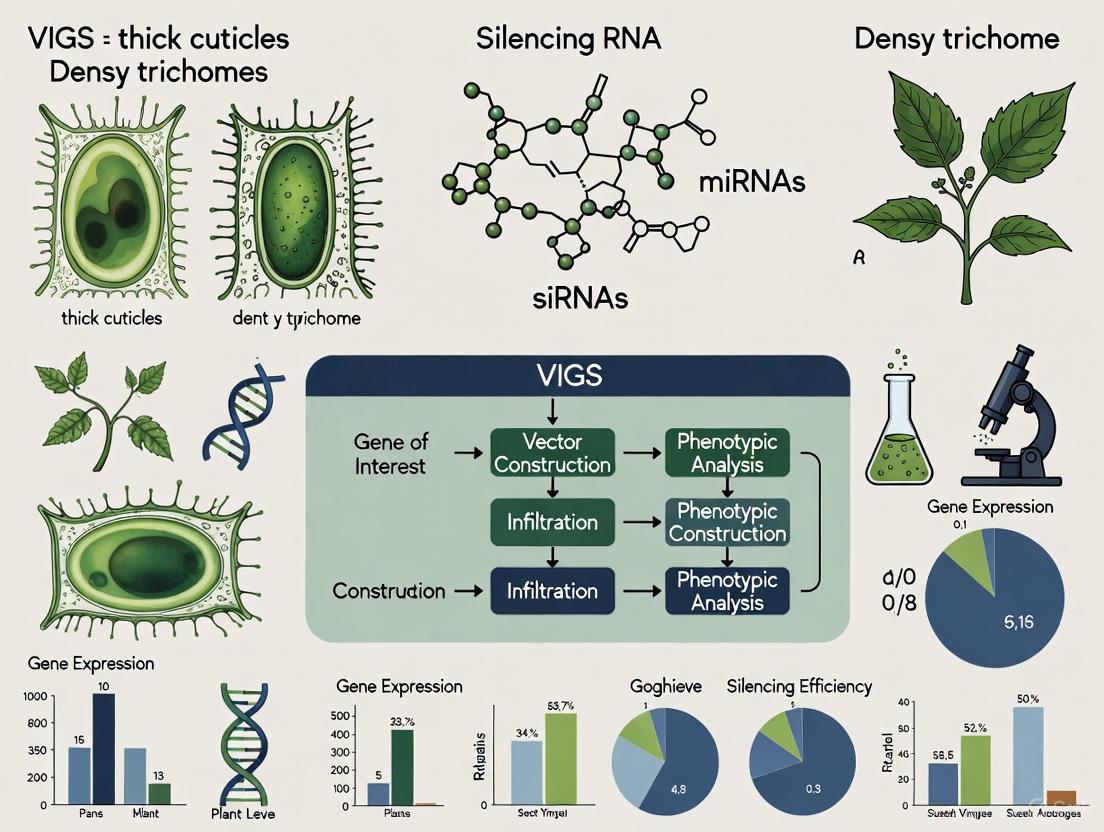
Virus-Induced Gene Silencing (VIGS) is a powerful reverse genetics tool, but its application in plants with thick cuticles and dense trichomes presents significant challenges that impede Agrobacterium infiltration and viral...
Breaking the Barrier: Optimizing VIGS for Plants with Thick Cuticles and Dense Trichomes
Abstract
Virus-Induced Gene Silencing (VIGS) is a powerful reverse genetics tool, but its application in plants with thick cuticles and dense trichomes presents significant challenges that impede Agrobacterium infiltration and viral vector delivery. This article provides a comprehensive resource for researchers, synthesizing the molecular foundations of VIGS with advanced methodological adaptations specifically designed for recalcitrant plant species. We detail optimized protocols for Agrobacterium-mediated transformation, explore solutions for overcoming physical and immune barriers, and present rigorous validation strategies using case studies from soybean, cotton, and woody plants. By integrating troubleshooting guidance with a forward-looking perspective on clinical implications, this work aims to accelerate functional genomics and drug discovery research in previously hard-to-study species.
The VIGS Mechanism and the Challenge of Plant Surface Barriers
Core Principles of Virus-Induced Gene Silencing (PTGS)
Virus-Induced Gene Silencing (VIGS) is a powerful reverse genetics tool that leverages the plant's innate post-transcriptional gene silencing (PTGS) mechanism to knock down target gene expression. For researchers working with plants characterized by thick cuticles and dense trichomes—such as soybean, patchouli, and tea oil camellia—this technology presents unique challenges and opportunities. This technical support center provides comprehensive troubleshooting guides and experimental protocols to help scientists successfully implement VIGS in these recalcitrant plant systems.
Core Principles and Molecular Mechanisms of VIGS
What is the fundamental molecular mechanism behind VIGS?
VIGS operates as an RNA-mediated, sequence-specific defense mechanism in plants. The process begins when a recombinant viral vector, carrying a fragment of the target plant gene, is introduced into the plant host. The key steps in this process are [1]:
- Viral dsRNA Production: Once inside the plant cell, the virus replicates, and the host's RNA-directed RNA polymerase (RDRP) recognizes viral RNA and produces double-stranded RNA (dsRNA) [1].
- dicer-like enzyme cleavage: The dsRNA is recognized and cleaved by a Dicer-like enzyme into small interfering RNAs (siRNAs) of approximately 21–24 nucleotides in length [1].
- RISC formation and target mRNA cleavage: These siRNAs are incorporated into an RNA-induced silencing complex (RISC). The siRNA acts as a guide, allowing RISC to specifically bind to and cleave complementary endogenous mRNA molecules, preventing their translation into protein [1].
- Amplification and systemic silencing: The initial silencing signal is amplified by host enzymes and can spread systemically throughout the plant, leading to a observable loss-of-function phenotype [1].
The following diagram illustrates this core mechanism and its application in a standard VIGS experimental workflow.
How does VIGS-induced silencing lead to heritable epigenetic modifications?
Beyond cytoplasmic mRNA degradation, the siRNA generated by VIGS can lead to enduring epigenetic modifications through RNA-directed DNA methylation (RdDM). In this pathway [1]:
- A subset of siRNAs is recruited to the nucleus.
- These siRNAs guide effector complexes to homologous DNA loci.
- This recruitment leads to de novo DNA methylation, particularly in promoter regions.
- Dense methylation of a gene's promoter can lead to transcriptional gene silencing (TGS), which is often mitotically heritable across generations, creating stable epi-alleles with altered traits [1].
Troubleshooting VIGS in Plants with Thick Cuticles and Dense Trichomes
A primary challenge in applying VIGS to plants like soybean (Glycine max) or patchouli (Pogostemon cablin) is overcoming physical barriers such as thick cuticles and dense trichomes, which impede conventional infiltration methods [2] [3].
FAQ: What is the most effective delivery method for plants with thick cuticles?
Answer: Standard leaf infiltration by syringe or spraying often fails due to poor liquid penetration. The optimized Agrobacterium-mediated delivery via cotyledon node immersion has proven highly effective. This method involves bisecting sterilized seeds to create fresh explants with exposed meristematic tissue, which are then immersed in Agrobacterium suspension for 20-30 minutes. This approach achieved an infection efficiency of over 80%, reaching up to 95% in soybean, as confirmed by GFP fluorescence tracking [2].
Troubleshooting Guide: Common VIGS Challenges and Solutions
| Problem | Possible Cause | Recommended Solution | Reference |
|---|---|---|---|
| Low Infection Efficiency | Thick cuticle and dense trichomes blocking infiltration. | Use cotyledon node immersion instead of leaf infiltration. Use fresh, longitudinally bisected seed explants. | [2] |
| No Silencing Phenotype | Insufficient viral spread or low siRNA accumulation. | Confirm vector construction and Agrobacterium strain (e.g., GV3101). Optimize the plant developmental stage for inoculation. | [2] [4] |
| Inconsistent Silencing | Recalcitrant, lignified plant tissues. | Target early developmental stages before extensive lignification. For fruits, use pericarp cutting immersion. | [4] |
| Unspecific or Off-Target Effects | Non-specific gene targeting or secondary effects. | Use the SGN VIGS Tool to design a specific, unique 200-300 bp fragment. Perform BLAST analysis to ensure specificity. | [4] |
Optimized Experimental Protocols
Protocol: Agrobacterium-Mediated VIGS via Cotyledon Node Immersion
This protocol is adapted for challenging species like soybean and patchouli [2].
- Vector Construction: Clone a 200-500 bp fragment of your target gene (e.g., GmPDS) into the pTRV2 vector. Use tools like the SGN VIGS Tool to ensure fragment specificity [2] [4].
- Agrobacterium Preparation: Transform the recombinant pTRV2 and helper pTRV1 plasmids into Agrobacterium tumefaciens strain GV3101. Grow a culture until OD₆₀₀ reaches 0.9-1.0 in induction medium containing acetosyringone [2] [4].
- Plant Material Preparation: Surface-sterilize seeds. Imbibe them in sterile water until swollen, then longitudinally bisect them to create half-seed explants, exposing the cotyledonary node [2].
- Inoculation: Immerse the fresh explants in the Agrobacterium suspension (a 1:1 mixture of TRV1 and TRV2 cultures) for 20-30 minutes with gentle agitation [2].
- Co-cultivation and Growth: Blot-dry the explants and co-cultivate them on sterile medium for 2-3 days in the dark. Then, transfer the plants to growth conditions and monitor for silencing phenotypes, which typically appear 2-4 weeks post-inoculation [2].
Quantitative Data from Model Studies
The following table summarizes key metrics from successful VIGS implementations in various plants, demonstrating the efficiency of optimized protocols.
| Plant Species | Target Gene | Silencing Efficiency | Key Optimized Parameter | Reference |
|---|---|---|---|---|
| Soybean (Glycine max) | GmPDS, GmRpp6907 | 65% - 95% | Cotyledon node immersion method | [2] |
| Tea Oil Camellia (C. drupifera) | CdCRY1, CdLAC15 | ~69.8% - ~90.9% | Pericarp cutting immersion at specific fruit stages | [4] |
| Patchouli (Pogostemon cablin) | PcHDZIV5 | Confirmed phenotype | Correlation of gene expression with trichome density | [3] |
The Scientist's Toolkit: Essential Research Reagents
A successful VIGS experiment relies on a set of core reagents and vectors, each serving a critical function.
| Research Reagent | Function in VIGS Experiment | Example Use Case |
|---|---|---|
| TRV Vectors (pTRV1, pTRV2) | pTRV1 encodes viral replication proteins; pTRV2 carries the target plant gene fragment. Most widely adopted VIGS system. | Silencing GmPDS in soybean [2] and CdLAC15 in camellia [4]. |
| Agrobacterium tumefaciens | A biological vector to deliver the TRV plasmids into plant cells. Strain GV3101 is commonly used. | Delivery of TRV vectors into soybean and camellia tissues [2] [4]. |
| Acetosyringone | A phenolic compound that induces Agrobacterium's virulence genes, crucial for efficient T-DNA transfer. | Added to the Agrobacterium induction medium during culture preparation for inoculation [2] [4]. |
| Marker Genes (e.g., GFP, PDS) | GFP allows visual tracking of infection. PDS silencing causes photobleaching, providing a visual reporter for silencing efficiency. | Validating infection success (GFP) and system robustness (PDS) before targeting genes of unknown function [2]. |
| HD-ZIP IV Gene Family | A family of transcription factors that regulate epidermal cell development, including trichome formation. | PcHDZIV5 identified as a key regulator of glandular trichome development in patchouli [3]. |
Frequently Asked Questions (FAQs) and Troubleshooting Guide
FAQ Category: Overcoming Physical Barriers for VIGS Delivery
Q1: Why does my VIGS experiment fail to produce a systemic silencing phenotype in plants with thick cuticles and dense trichomes?
A1: The primary issue often lies in inefficient initial infection due to these physical barriers preventing the silencing vector from reaching epidermal cells. Thick cuticles significantly reduce liquid penetration during agroinfiltration, while dense trichomes can trap air bubbles and create a physical shield. To overcome this:
- Optimized Delivery Method: Switch from conventional leaf infiltration (e.g., misting or syringe infiltration) to a cotyledon node agroinfiltration protocol. This method involves bisecting sterilized seeds and immersing the fresh, exposed cotyledonary node in an Agrobacterium suspension for 20-30 minutes [2]. The meristematic cells in this region are more accessible and facilitate superior systemic spread of the virus throughout the plant [2].
- Enhanced Penetration: For leaf infiltration methods, the addition of a surfactant like Silwet-77 can improve wetting and help the infiltration solution overcome the hydrophobic cuticle barrier [2].
Q2: How can I quickly verify if the VIGS vector has successfully infected the plant before waiting for a silencing phenotype?
A2: The most effective way is to use a visual marker gene.
- GFP as a Reporter: Utilize a VIGS vector, such as pTRV2–GFP, that carries the Green Fluorescent Protein (GFP) gene [2] [5]. Successful infection can be confirmed within a few days by checking for GFP fluorescence at the infection site (e.g., the cotyledon node) under a fluorescence microscope. One study reported that over 80% of cells in the cotyledon node showed fluorescence, confirming high infection efficiency [2].
- Endogenous Markers: Alternatively, you can use a vector targeting an endogenous gene with a visible phenotype, like Phytoene desaturase (PDS) or Chloroplastos alterados 1 (CLA1). Silencing PDS causes photobleaching (white patches), while silencing CLA1 leads to a bleached phenotype, both indicating successful VIGS establishment [5].
FAQ Category: Experimental Design and Validation
Q3: My target plant species is polyploid. How can I ensure effective gene silencing when multiple gene copies exist?
A3: Gene redundancy in polyploids is a common challenge.
- Conserved Target Sequence: Design your VIGS construct to target a highly conserved region shared across all homologous genes (alleles and paralogs). This requires prior sequence analysis of the gene family in your specific plant species.
- Silencing Efficiency Consideration: Be aware that VIGS efficiency can be influenced by ploidy level. Evidence from cotton shows that TRV-mediated VIGS tends to be more prominent in diploid species compared to tetraploid ones [5]. You may need to optimize your protocol further for polyploid species.
Q4: What are the best positive and negative controls for VIGS experiments in difficult-to-transform plants?
A4: Using the correct controls is critical for interpreting your results.
- Positive Control: Use a VIGS vector targeting a marker gene like PDS or CLA1. The appearance of photobleaching confirms that your entire experimental system—from vector delivery to systemic silencing—is working correctly [2] [5].
- Empty Vector Control: Always include a group of plants infiltrated with the "empty" VIGS vector (e.g., pTRV2 with no insert). This control accounts for any phenotypic effects caused by the viral infection itself, allowing you to attribute the phenotype in your experimental group specifically to the silencing of your target gene [2].
Troubleshooting Common VIGS Experimental Issues
Table 1: Troubleshooting Guide for VIGS in Challenging Plant Species
| Problem | Potential Cause | Recommended Solution |
|---|---|---|
| No silencing phenotype observed. | Inefficient agroinfiltration due to thick cuticle/trichomes [2]. | Adopt the cotyledon node agroinfiltration method [2]. Add a surfactant (e.g., 150 mg·L⁻¹ Silwet-77) to the infiltration medium [2]. |
| Silencing is only local, not systemic. | Virus movement is blocked; initial infection cell number too low [2]. | Ensure the infection site (e.g., cotyledon node) contains meristematic cells. Verify high initial infection efficiency using a GFP reporter vector [2]. |
| Unclear phenotype despite molecular confirmation of silencing. | Functional redundancy from gene family members [5]. | Design VIGS construct to target a conserved region across all homologs. Consider the plant's ploidy level during experimental design [5]. |
| Plant shows stunting or death, confounding with phenotype. | Overly strong viral symptoms from the vector [2] [5]. | Use the TRV vector, which is known for inducing milder symptoms compared to other viruses. Always include an empty vector control to distinguish viral effects from gene silencing effects [2] [5]. |
| Inconsistent silencing between plant individuals. | Slight variations in infiltration efficiency or plant growth stage. | Standardize the plant age and Agrobacterium culture density (OD₆₀₀=0.7 is often used) [2]. Ensure uniform handling and environmental conditions. Use a large enough sample size (n > 10). |
Optimized Experimental Protocol: Cotyledon Node Agroinfiltration for Soybean
This protocol, adapted from a 2025 study, is designed to overcome the physical barriers in plants like soybean and can serve as a reference for other species with similar challenges [2].
1. Vector Construction:
- Clone a 300-500 bp fragment of your target gene (e.g., GmPDS) into the multiple cloning site of a pTRV2 vector [2].
- Alternatively, use a pre-constructed pTRV2–GFP vector to monitor infection efficiency visually [2].
2. Agrobacterium Preparation:
- Transform the recombinant pTRV2 and the helper plasmid pTRV1 into Agrobacterium tumefaciens strain GV3101 [2].
- Grow single colonies in liquid LB medium with appropriate antibiotics at 28°C for 24-36 hours.
- Centrifuge and resuspend the bacterial pellet in an induction medium (e.g., MS liquid medium with 10 mM MES, 200 μM acetosyringone). Adjust the final OD₆₀₀ to 0.7 [2].
- Incubate the suspension in the dark at room temperature for 3-4 hours before use.
3. Plant Material Preparation:
- Surface-sterilize seeds of your plant species (e.g., soybean cultivar 'Tianlong 1').
- Soak the seeds in sterile water until they are fully swollen.
- Key Step: Using a sterile scalpel, longitudinally bisect the swollen seeds to create half-seed explants, exposing the cotyledon node [2].
4. Agroinfiltration:
- Immerse the fresh half-seed explants in the prepared Agrobacterium suspension (containing a 1:1 mixture of pTRV1 and pTRV2-derived cultures) for 20-30 minutes with gentle agitation [2].
- After infiltration, blot the explants dry on sterile filter paper and transfer them to co-cultivation media.
5. Co-cultivation and Plant Growth:
- Co-cultivate the explants in the dark at 22°C for 4 days [2].
- After co-cultivation, transfer the plants to a growth chamber with standard conditions (e.g., 16/8 h light/dark cycle). Silencing phenotypes, such as photobleaching for PDS, can typically be observed systemically from 21 days post-inoculation (dpi) onwards [2].
The workflow for this optimized protocol is summarized in the following diagram:
The Scientist's Toolkit: Key Research Reagent Solutions
Table 2: Essential Materials and Reagents for VIGS Experiments
| Reagent / Material | Function / Role | Example & Notes |
|---|---|---|
| TRV VIGS Vector | The viral vector system for inducing silencing. Comprises two parts: pTRV1 (replication proteins) and pTRV2 (coat protein & insert). | The pTRV2–GFP vector allows for visual tracking of infection [2]. |
| Agrobacterium tumefaciens | A bacterial strain used to deliver the DNA-based VIGS vector into plant cells. | Strain GV3101 is commonly used for this purpose [2]. |
| Acetosyringone | A phenolic compound that induces the Agrobacterium Vir genes, essential for T-DNA transfer into the plant genome. | Typically used at a concentration of 100-200 μM in the infiltration medium [2]. |
| Surfactant (Silwet-77) | Reduces surface tension of the infiltration medium, helping it penetrate thick cuticles and dense trichomes [2]. | A critical additive; used at ~150 mg·L⁻¹ to enhance infection efficiency in waxy leaves [2]. |
| Visible Marker Genes | Provide a visual readout for successful VIGS establishment before targeting genes of unknown function. | PDS (photobleaching), CLA1 (bleaching), GFP (fluorescence loss) [5]. |
| qPCR Primers | For molecular validation of gene silencing efficiency by quantifying the reduction in target gene mRNA levels. | Silencing efficiency can range from 65% to 95% with optimized protocols [2]. |
The core mechanism of how VIGS works at the molecular level, from vector delivery to gene silencing, is illustrated below:
Molecular Roadblocks are plant surface structures, primarily the cuticle and trichomes, that significantly impede the efficiency of Agrobacterium-mediated transformation and the systemic spread of viral vectors. This physical barrier is a major constraint in applying biotechnology tools, like Virus-Induced Gene Silencing (VIGS), to many plant species, especially those with thick cuticles and dense trichomes, such as soybean and sunflower [2] [6]. The cuticle, a lipid-based layer, acts as a primary barrier to liquid penetration, while dense trichomes can prevent infiltration solutions from reaching the epidermal cells [2]. Overcoming these barriers is crucial for advancing functional genomics and crop improvement in non-model plant species. This technical support center provides targeted troubleshooting guides and protocols to help researchers optimize their experiments against these challenges.
Troubleshooting Guide: Overcoming Surface Barriers
Frequently Asked Questions (FAQs)
Q1: What specific plant structures are the main obstacles to successful agroinfiltration? The two primary molecular roadblocks are:
- The Cuticle: A waxy, hydrophobic layer covering the epidermal cells of aerial plant parts. It serves as the first line of defense against water loss and pathogen entry, but also effectively repels Agrobacterium suspensions [7] [2].
- Trichomes: Hair-like outgrowths from the epidermis. Dense trichomes, particularly on leaves, create a physical barrier that blocks liquid droplets from contacting the leaf surface and can trap air bubbles, further reducing infiltration efficiency [2] [8].
Q2: Why does viral spread sometimes remain limited even after successful initial infection? The plant's vascular architecture and the presence of physical barriers can restrict the movement of viral particles from the initial infection site to other parts of the plant. Furthermore, the plant's RNA silencing machinery, an innate immune response, actively targets and degrades viral RNA, limiting its replication and spread [1] [9]. Efficient systemic spread requires the virus to overcome both physical and molecular barriers.
Q3: My model plant has a very thick cuticle. What is the most effective alternative to leaf infiltration? For species with challenging surface morphologies, vacuum infiltration of seeds or seedlings is a highly effective alternative. This method uses negative pressure to draw the Agrobacterium suspension through the seed coat or young, less fortified tissues, achieving systemic infection without needing to penetrate the mature leaf cuticle [6]. Protocols using the cotyledon node as an entry point have also proven successful [2].
Q4: Are some plant genotypes more amenable to VIGS than others? Yes, genotype dependency is a well-documented factor in VIGS efficiency. Different genotypes of the same species can exhibit significant variation in their susceptibility to viral infection and the systemic spread of silencing signals [6]. It is recommended to test multiple genotypes if available.
Troubleshooting Table: Common Problems and Solutions
Table 1: Common issues encountered during agroinfiltration in difficult-to-transform plants and their potential solutions.
| Problem | Underlying Cause | Proposed Solutions |
|---|---|---|
| Low Infection Efficiency | Thick cuticle repelling Agrobacterium suspension [2]. | - Use seed or sprout vacuum infiltration [6].- Target young tissues with less developed cuticles [2].- Add a surfactant (e.g., Silwet L-77) to reduce surface tension. |
| Incomplete Viral Spread | Dense trichomes blocking liquid contact; plant immune responses [2] [1]. | - Optimize Agrobacterium strain and culture density (OD600).- Employ abrasive agents (e.g., carborundum) to gently wound the surface.- Ensure optimal post-infection growing conditions (light, temperature, humidity) [6]. |
| Uneven or Patchy Silencing | Restricted movement of the viral vector or silencing signal between cells and tissues. | - Extend co-cultivation time with Agrobacterium [6].- Verify the construct design and insertion fragment for high siRNA production [6].- Test the mobility of different viral vectors (e.g., TRV vs. BPMV). |
| High Plant Mortality Post-Infection | Agrobacterium overgrowth; excessive physical damage during infiltration. | - Optimize the concentration of the Agrobacterium suspension.- Ensure proper recovery conditions after infiltration.- For vacuum infiltration, optimize vacuum pressure and duration to minimize tissue damage [6]. |
Data Presentation: Key Experimental Findings
Quantitative Data on Optimized VIGS Protocols
Table 2: Summary of key parameters from optimized VIGS protocols for challenging plant species.
| Plant Species | Target Gene | Infiltration Method | Key Optimized Parameter | Silencing Efficiency / Result |
|---|---|---|---|---|
| Soybean (Glycine max) [2] | GmPDS, GmRpp6907, GmRPT4 | Cotyledon Node Immersion | Infection duration: 20-30 min | Silencing efficiency: 65% - 95%; Systemic photobleaching observed. |
| Sunflower (Helianthus annuus) [6] | HaPDS | Seed Vacuum Infiltration | Co-cultivation time: 6 hours | Infection rate: up to 91%; Normalized relative expression of target gene: ~0.01. |
| Sunflower (Helianthus annuus) [6] | HaPDS | Seed Vacuum Infiltration | Genotype: 'Smart SM-64B' | Infection rate: 91% (highest among tested genotypes). |
Experimental Protocols
This protocol was developed to circumvent the barriers posed by dense trichomes and thick cuticles on mature soybean leaves.
- Plant Material Preparation: Surface-sterilize soybean seeds and germinate on sterile medium. Use half-seed explants containing the cotyledon node.
- Agrobacterium Preparation: Transform the TRV vector (pTRV1 and pTRV2 with gene insert) into Agrobacterium tumefaciens strain GV3101. Grow a culture to an OD600 of ~0.5-1.0.
- Infiltration: Immerse the fresh cotyledon node explants in the Agrobacterium suspension for 20-30 minutes with gentle agitation.
- Co-cultivation and Regeneration: Blot-dry the explants and co-cultivate on medium for 2-3 days. Transfer to regeneration medium to produce whole plants.
- Validation: Monitor for silencing phenotypes (e.g., photobleaching for PDS) and confirm by qRT-PCR.
This method is ideal for plants where conventional leaf infiltration is ineffective.
- Seed Preparation: Partially remove the seed coat to enhance infiltration. No surface sterilization is required.
- Agrobacterium Suspension: Prepare a mixture of Agrobacterium strains containing TRV1 and TRV2-HaPDS, resuspended in infiltration medium to an OD600 of ~2.0.
- Vacuum Infiltration: Submerge the prepared seeds in the suspension. Apply a vacuum (e.g., 0.8 bar) for a specific duration (e.g., 2-5 minutes). Release the vacuum abruptly to force the bacteria into the seeds.
- Co-cultivation: Blot-dry the seeds and co-cultivate them on moist filter paper for 6 hours in the dark.
- Plant Growth: Sow the seeds directly in soil without an in vitro recovery step. Grow under controlled conditions.
- Analysis: Observe systemic silencing symptoms in true leaves and confirm via molecular analysis.
Technical Visualizations
VIGS Mechanism and Barriers
VIGS Workflow and Barriers
This diagram illustrates the journey of a VIGS vector from delivery to gene silencing, highlighting the critical "Molecular Roadblock" stage where surface structures can impede progress.
The Scientist's Toolkit: Research Reagent Solutions
Table 3: Essential reagents and materials for overcoming surface barriers in VIGS experiments.
| Reagent/Material | Function in the Experiment | Example Use Case |
|---|---|---|
| Tobacco Rattle Virus (TRV) Vector [2] [6] | A widely used viral vector for VIGS that induces mild symptoms and spreads systemically. | pTRV1 and pTRV2 vectors are used in both soybean and sunflower protocols to silence target genes like PDS. |
| Agrobacterium tumefaciens GV3101 [2] [6] | A disarmed strain used to deliver DNA constructs (like TRV) into plant cells. | The standard strain for agroinfiltration in the optimized protocols for both soybean and sunflower. |
| Phytoene Desaturase (PDS) Gene Fragment [2] [6] | A visual marker gene. Silencing PDS causes photobleaching (white patches), allowing for easy visual assessment of silencing efficiency. | Used as a positive control to validate the entire VIGS system, from infiltration to systemic spread. |
| Vacuum Infiltration Apparatus [6] | Applies negative pressure to force Agrobacterium suspensions into plant tissues that are naturally impermeable. | Critical for the sunflower seed protocol to bypass the thick seed coat and achieve systemic infection. |
Troubleshooting Guide: Common VIGS Challenges in Plants with Thick Cuticles and Dense Trichomes
Why is my VIGS efficiency low in thick-cuticle plants, and how can I improve it?
Problem: Low gene silencing efficiency in plant species with robust morphological barriers like thick cuticles and dense trichomes.
Explanation: The plant's foliar structure, specifically the cuticle and trichome density, presents a primary physical barrier to Agrobacterium infiltration and viral vector entry, which is essential for initiating VIGS [10] [2]. The cuticle, a waxy, hydrophobic layer, prevents efficient penetration of the Agrobacterium suspension. Dense trichomes can trap air bubbles and prevent the infiltration solution from making proper contact with the leaf surface [2].
Solutions:
- Optimized Delivery Method: Avoid conventional misting or injection. Use an Agrobacterium immersion technique for cotyledon nodes or explants. Soak longitudinally bisected seed explants in the Agrobacterium suspension for 20-30 minutes to achieve high transformation efficiency [2].
- Use of Surfactants: Add surfactants like Silwet L-77 to the infiltration medium. This reduces surface tension and allows the solution to spread evenly and penetrate the leaf surface more effectively [11].
- Alternative Silencing Strategies: Consider Spray-Induced Gene Silencing (SIGS) as a non-transgenic alternative. This involves directly applying double-stranded RNA (dsRNA) solutions. The success of this method still depends on overcoming the same foliar barriers, but it bypasses the need for pathogen vector uptake [10] [11].
How can I confirm the viral vector has successfully infected the plant tissue?
Problem: Uncertainty about whether the VIGS vector has been successfully delivered and is replicating in the plant tissue.
Explanation: Confirming infection is a critical first step before assessing silencing phenotypes. Without confirmation, a lack of phenotype could be misinterpreted as inefficient silencing when the actual issue is failed delivery.
Solutions:
- GFP Reporter Visualization: Use a TRV vector (e.g., pTRV2–GFP) that carries the Green Fluorescent Protein (GFP) gene. At 4 days post-infection, examine the infected tissue (e.g., hypocotyl sections) under a fluorescence microscope. Successful infection is confirmed by the presence of GFP fluorescence signals in the tissue [12] [2]. One study reported fluorescence in over 80% of cells in transverse sections using this method [2].
- Molecular Confirmation: Use PCR or qPCR to detect the presence of the viral vector in systemic leaves. This provides molecular evidence of viral spread beyond the initial inoculation site [2].
Why is the silencing effect not spreading systemically throughout the plant?
Problem: The gene silencing effect remains localized near the inoculation site and does not spread to distal tissues.
Explanation: Systemic silencing relies on the cell-to-cell and long-distance movement of the silencing signal, which is often the virus itself or the small interfering RNAs (siRNAs) it generates. In plants with thick cuticles and dense internal tissue structures, the symplastic (via plasmodesmata) and apoplastic pathways for this movement can be disrupted [10]. The plant's antiviral RNAi machinery may also be actively degrading the viral vector, limiting its spread.
Solutions:
- Ensure Vector Replication: Verify that your viral vector is competent for replication and movement. Use a confirmed positive control.
- Target Young Tissue: The age of the seedling can significantly impact efficiency. For some species, one-year-old seedlings have been shown to provide the highest silencing efficiency (e.g., 36.67% in Iris japonica) [12]. Optimize the developmental stage for your specific plant.
- Utilize Plant RNAi Machinery: The silencing signal is amplified by the plant's own machinery, such as RNA-dependent RNA polymerase (RdRp) [10]. Ensure your vector and target gene sequence are designed to be effective substrates for the plant's DCL and RISC complexes to generate and use secondary siRNAs for systemic spread.
Frequently Asked Questions (FAQs)
What is the fundamental mechanism behind VIGS?
VIGS is a powerful functional genomics tool that hijacks the plant's innate antiviral RNAi pathway [11]. A fragment of a plant's endogenous gene is inserted into a modified viral vector. When this recombinant virus infects the plant, the plant's Dicer-like (DCL) enzymes recognize the viral double-stranded RNA (dsRNA) and process it into small interfering RNAs (siRNAs) [10] [11]. These siRNAs are incorporated into the RNA-induced silencing complex (RISC), which uses them as a guide to find and cleave complementary mRNA transcripts—both viral and the targeted endogenous gene—leading to post-transcriptional gene silencing [10] [11].
How does SIGS differ from VIGS?
While both techniques leverage the RNAi pathway, their delivery mechanisms are fundamentally different.
- VIGS relies on a biological vector (a modified virus) to deliver a DNA construct that gets transcribed into dsRNA inside the plant cell [11].
- SIGS (Spray-Induced Gene Silencing) is a non-transgenic approach that involves the exogenous application of synthesized dsRNA or siRNA molecules directly onto the plant surface. The plant (or the pathogen upon ingestion) then takes up these RNA molecules to initiate silencing [10] [11] [13]. SIGS does not involve genetic modification of the plant.
How does the plant's antiviral system act as an obstacle for VIGS?
The plant's antiviral RNAi machinery is a double-edged sword for VIGS. The entire process depends on the initial viral infection and replication to produce the dsRNA trigger. However, the plant's primary defense is to recognize and degrade this same viral RNA, thereby limiting the spread and accumulation of the VIGS vector. This can restrict the silencing phenomenon to certain tissues or shorten its duration. A successful VIGS system uses viral vectors that can replicate and move sufficiently before being fully suppressed by the host's defense, creating a transient but effective silencing window [10] [11].
What are the key considerations for selecting a target gene fragment for VIGS?
Select a unique fragment of the target gene with no significant homology to other genes in the plant's genome to avoid off-target silencing. The fragment should typically be between 200-700 base pairs in length. Using a well-characterized gene like Phytoene Desaturase (PDS), which causes a visible photobleaching phenotype when silenced, is highly recommended as a positive control to validate your entire VIGS system before moving to genes of unknown function [12] [2].
Experimental Protocol: Optimized TRV–VIGS for Challenging Plant Species
This protocol is adapted from a study demonstrating high-efficiency silencing in soybean, a plant with a thick cuticle and dense trichomes [2].
1. Vector Construction:
- Clone a 300-500 bp fragment of your target gene (e.g., GmPDS) into the pTRV2 vector using appropriate restriction sites (e.g., EcoRI and XhoI) [2].
- Use a pTRV2–GFP construct to monitor infection efficiency visually [2].
- Transform the recombinant plasmids into Agrobacterium tumefaciens strain GV3101 [2].
2. Plant Material Preparation:
- Surface-sterilize seeds of your plant species.
- Soak seeds in sterile water until swollen.
- Key Step: longitudinally bisect the swollen seeds to create half-seed explants, exposing the cotyledonary node for efficient Agrobacterium access [2].
3. Agrobacterium Inoculation via Immersion:
- Grow Agrobacterium cultures containing pTRV1 and the recombinant pTRV2 to an OD₆₀₀ of ~1.0.
- Mix the cultures 1:1 and resuspend in an induction medium (e.g., with 200 µM acetosyringone).
- Key Step: Instead of spraying or injection, immerse the fresh half-seed explants in the Agrobacterium suspension for 20-30 minutes with gentle agitation [2].
- Blot-dry the explants and co-cultivate them on solid medium in the dark for 2-3 days.
4. Monitoring and Analysis:
- Infection Efficiency (4 dpi): Examine a section of the hypocotyl under a fluorescence microscope for GFP signal [2].
- Phenotypic Analysis (14-21 dpi): Observe plants for expected silencing phenotypes (e.g., photobleaching for PDS).
- Molecular Confirmation: Use qRT-PCR on RNA extracted from systemic leaves to quantify the reduction in target gene mRNA levels. Silencing efficiency of 65% to 95% has been achieved with this method [2].
Table 1: Key Parameters from VIGS Studies in Various Plant Species
| Plant Species | Vector | Delivery Method | Target Gene | Silencing Efficiency | Key Factor for Success |
|---|---|---|---|---|---|
| Soybean (Glycine max) [2] | TRV | Cotyledon node immersion | GmPDS | 65% - 95% | Use of bisected seed explants |
| Iris (Iris japonica) [12] | TRV | Not specified | IjPDS | 36.67% | Use of one-year-old seedlings |
| Tobacco (Nicotiana benthamiana) [11] | – | High-pressure siRNA spray | GFP (transgene) | Induced systemic silencing | Use of 22-nt siRNAs & surfactant |
Table 2: Comparison of RNAi-Based Technologies for Functional Genomics
| Feature | VIGS | SIGS (Non-Pathogen Control) |
|---|---|---|
| Principle | Viral vector delivering dsRNA | Direct application of dsRNA/siRNA |
| Nature | Transgenic (vector DNA) | Non-transgenic |
| Duration | Transient (weeks) | Transient (days to weeks) |
| Systemic Spread | Excellent (via virus) | Variable; depends on plant uptake |
| Key Challenge | Host plant antiviral defense | Foliar uptake & environmental stability |
| Best For | Rapid, high-throughput functional screening | Applications requiring non-GMO approach |
The Scientist's Toolkit: Essential Research Reagents
Table 3: Key Reagents for VIGS and SIGS Experiments
| Reagent / Material | Function / Explanation |
|---|---|
| TRV (Tobacco Rattle Virus) Vector | A bipartite viral vector (pTRV1, pTRV2) widely used for VIGS due to mild symptoms and broad host range [12] [2]. |
| Agrobacterium tumefaciens GV3101 | A disarmed strain commonly used for delivering the TRV DNA vector into plant cells [2]. |
| Phytoene Desaturase (PDS) Gene | A benchmark reporter gene; its silencing causes photobleaching, providing a visual confirmation of successful VIGS [12] [2]. |
| Surfactants (e.g., Silwet L-77) | Critical for foliar applications; reduces surface tension to improve wetting and penetration of solutions through cuticles and trichomes [11]. |
| Double-stranded RNA (dsRNA) | The effector molecule for SIGS. Can be synthesized in vitro or produced in bacterial systems. Designed to target vital pathogen or host genes [10] [11]. |
| Clay Nanosheets (e.g., BioClay) | A carrier technology that can bind and slowly release dsRNA, protecting it from UV degradation and wash-off, thereby extending the silencing effect in SIGS [11]. |
Visualizing VIGS and Plant RNAi Pathways
Diagram 1: The core VIGS mechanism hijacks the plant's antiviral RNAi pathway for gene silencing.
Diagram 2: Major barriers to VIGS/SIGS and potential solutions for challenging plants.
Adapted VIGS Protocols for Recalcitrant Species
Frequently Asked Questions (FAQs)
Q1: Why is TRV a preferred vector for Virus-Induced Gene Silencing (VIGS) in plants with thick cuticles and dense trichomes? Traditional VIGS delivery methods, such as leaf spraying or direct injection, often show low infection efficiency in plants with thick cuticles and dense trichomes because these physical barriers impede liquid penetration [2]. The Tobacco Rattle Virus (TRV) vector system is advantageous because it can be delivered via Agrobacterium tumefaciens-mediated infection of the cotyledon node. This method bypasses the problematic leaf surface, allowing for systemic viral spread and effective silencing throughout the plant [2]. Furthermore, TRV typically elicits milder viral symptoms compared to other viruses, which minimizes harm to the plants and prevents the masking of the silencing phenotype [2].
Q2: What is a proven high-efficiency protocol for TRV-mediated VIGS in challenging hosts like soybean? An optimized, tissue culture-based protocol for soybean involves using cotyledonary nodes as the entry point [2]. The key steps are:
- Soak sterilized soybean seeds in sterile water until swollen.
- longitudinally bisect the seeds to obtain half-seed explants.
- Immerse the fresh explants for 20-30 minutes in an Agrobacterium tumefaciens suspension (GV3101 strain) carrying the pTRV1 and pTRV2 vectors.
- Co-culture the infected explants on medium for 2-3 days before transferring to soil [2]. This method achieves infection efficiencies exceeding 80%, and even up to 95% in some cultivars, with silencing efficiencies ranging from 65% to 95% [2].
Q3: How can I visually confirm the success of Agrobacterium infection after using the cotyledon node method? The efficiency of Agrobacterium infection can be evaluated by using a pTRV2 vector carrying a Green Fluorescent Protein (GFP) reporter gene. On the fourth day post-infection, excise a portion of the hypocotyl from the explant and observe it under a fluorescence microscope. Successful infection is indicated by the presence of fluorescence signals. Microscopic analysis often shows that the infection initially infiltrates 2-3 cell layers before spreading deeper, with over 80% of cells in a transverse section typically exhibiting successful infiltration [2].
Q4: Besides VIGS, what other advanced biotechnological applications does the TRV system have? The TRV system is a versatile delivery tool. Beyond VIGS, it has been engineered to carry compact, RNA-guided genome editors like the TnpB enzyme ISYmu1 and its guide RNA. This innovation allows for transgene-free germline editing in Arabidopsis thaliana in a single step, with edits inherited by the subsequent generation. This approach overcomes traditional barriers to delivering editing reagents and avoids the need for tissue culture [14].
Troubleshooting Guide
| Problem | Potential Cause | Recommended Solution |
|---|---|---|
| Low infection efficiency | Thick leaf cuticle and dense trichomes preventing liquid penetration [2] | Switch from leaf infiltration to the cotyledon node immersion method [2]. |
| Weak or no silencing phenotype | Insufficient viral spread or low titer of Agrobacterium culture | Optimize the Agrobacterium suspension density (OD₆₀₀); ensure co-culture conditions (temperature, duration) are optimal. |
| Inconsistent results between replicates | Unsterile conditions or variation in explant preparation | Maintain strict sterile techniques during explant preparation and Agrobacterium infection. Standardize the size and developmental stage of plant material. |
| Systemic silencing not achieved | Viral movement is restricted in the specific plant genotype | Verify the construct design and confirm the presence of the viral vector in newly emerged leaves via PCR or reporter (e.g., GFP) observation. |
Experimental Protocol & Data
Detailed Methodology: TRV-VIGS via Cotyledon Node Immersion
The following workflow details the established protocol for achieving high-efficiency VIGS in soybean [2], which serves as a model for other challenging hosts.
Quantitative Data from TRV-VIGS Application
Table 1: Silencing Efficiency of Endogenous Genes in Soybean via TRV-VIGS [2]
| Target Gene | Gene Function | Observed Phenotype Post-Silencing | Silencing Efficiency |
|---|---|---|---|
| GmPDS | Phytoene desaturase (carotenoid biosynthesis) | Photobleaching (white patches) in leaves at 21 days post-inoculation (dpi) [2] | 65% - 95% [2] |
| GmRpp6907 | Rust resistance gene | Compromised rust immunity, confirming gene function [2] | 65% - 95% [2] |
| GmRPT4 | Defense-related gene | Induced significant phenotypic changes related to defense [2] | 65% - 95% [2] |
Table 2: Comparison of VIGS Delivery Methods in Soybean [2]
| Delivery Method | Key Feature | Reported Infection/Silencing Efficiency | Key Challenges |
|---|---|---|---|
| Conventional (Leaf Spray/Injection) | Direct application to leaf surface | Low efficiency | Thick cuticle and dense trichomes impede penetration [2] |
| Optimized Cotyledon Node Immersion | Agrobacterium-mediated infection via meristematic tissue | Infection: >80% (up to 95%); Silencing: 65-95% [2] | Requires sterile tissue culture techniques [2] |
The Scientist's Toolkit: Research Reagent Solutions
Table 3: Essential Reagents for TRV-VIGS in Challenging Hosts
| Item | Function and Critical Details |
|---|---|
| pTRV1 & pTRV2 Vectors | Bipartite RNA viral vectors; pTRV2 is engineered to carry the target gene fragment for silencing [2]. |
| Agrobacterium tumefaciens GV3101 | Disarmed strain used for efficient delivery of TRV vectors into plant cells [2]. |
| pTRV2–GFP Vector | Control vector expressing Green Fluorescent Protein (GFP) to visually monitor infection efficiency [2]. |
| Restriction Enzymes (EcoRI, XhoI) | Used for cloning the target gene fragment into the multiple cloning site of the pTRV2 vector [2]. |
| Half-Seed Explants | The optimized plant material for Agrobacterium infection in species with thick cuticles and dense trichomes [2]. |
Technical support for advanced VIGS in recalcitrant plant species
This technical support center provides targeted solutions for researchers employing Virus-Induced Gene Silencing (VIGS) in plants that are typically recalcitrant to genetic transformation, particularly those with thick cuticles or dense trichomes. The following guides and protocols are designed to help you overcome common infiltration barriers and achieve successful gene silencing.
Experimental Protocols & Methodologies
This section details specific, proven protocols for implementing tissue-specific VIGS methods in challenging plant species.
Cotyledon-Based VIGS in Medicinal Plants
The cotyledon-based VIGS method has been successfully optimized for medicinal plants including Catharanthus roseus (periwinkle), Glycyrrhiza inflata (licorice), and Artemisia annua (sweet wormwood) [15] [16].
Detailed Protocol for Catharanthus roseus:
- Seed Germination & Plant Material: Germinate C. roseus seeds in complete darkness for five days. By this time, radicles will have emerged by day 2, and cotyledons will be fully emerged by day 5 [15].
- Agrobacterium Preparation: Transform Agrobacterium tumefaciens GV3101 with the appropriate Tobacco Rattle Virus (TRV) vectors (e.g., TRV1 and TRV2 containing your gene of interest). Grow bacterial cultures to an optimal optical density (OD₆₀₀) of 1.0 [15].
- Vacuum Infiltration: Submerge the 5-day-old etiolated seedlings in the Agrobacterium suspension. Place the container in a vacuum chamber and apply a vacuum for 30 minutes [15].
- Post-Infiltration Care: Following infiltration, keep the seedlings in the dark until they are 8 days old. Subsequently, transfer them to a standard light cycle for 2-3 days to allow for the development of silencing phenotypes, such as yellowing of cotyledons when targeting chlorophyll biosynthesis genes [15].
Validation and Efficacy: This method has been validated by silencing the protophorphyrin IX magnesium chelatase subunit H (ChlH) gene, resulting in visible yellow cotyledons within 6 days post-infiltration. Quantitative analysis confirmed a significant decrease in both CrChlH gene expression and chlorophyll content [15].
VIGS in Quinoa Using Apple Latent Spherical Virus (ALSV)
For the allotetraploid quinoa (Chenopodium quinoa), which presents its own transformation challenges, the apple latent spherical virus (ALSV) has been effectively used as a vector for both VIGS and virus-mediated overexpression (VOX) [17].
- Procedure: The ALSV vector is engineered to carry fragments of target genes, such as phytoene desaturase (CqPDS1), CqDODA1, or CqCYP76AD1 (involved in betalain biosynthesis), or a reduced-height gene homolog (CqRHT1). The viral vectors are then inoculated into quinoa plants [17].
- Key Advantage: ALSV has been shown to be transmissible to the progeny of infected quinoa plants, extending the window for functional genomics studies [17].
- Application in Roots: A significant advantage of the ALSV system is its demonstrated efficacy as a VOX vector in quinoa roots, enabling functional studies in below-ground organs [17].
Troubleshooting Common VIGS Challenges
Table: Troubleshooting Common VIGS Infiltration Problems
| Problem | Possible Cause | Solution |
|---|---|---|
| Low Silencing Efficiency | Incorrect plant developmental stage | Use 5-day-old etiolated seedlings for cotyledon-VIGS [15] |
| No Visible Phenotype | Suboptimal Agrobacterium density | Standardize culture to OD₆₀₀ = 1.0 for vacuum infiltration [15] |
| Inconsistent Silencing | Variable infiltration pressure or duration | Ensure consistent vacuum application for 30 minutes [15] |
| Limited Application | Method not optimized for your plant species | Test the cotyledon-VIGS protocol in related species; it has broad applicability [15] |
| Cannot Study Root Genes | Traditional VIGS not effective in roots | Use ALSV vectors for VIGS/VOX in quinoa roots [17] |
Frequently Asked Questions (FAQs)
Q1: Why is the cotyledon stage particularly effective for VIGS in recalcitrant species? The cotyledons of young seedlings have a less developed cuticle and a simpler epidermal structure compared to mature leaves, which are often protected by thick cuticles and dense trichomes. This makes the cotyledon tissue more accessible for Agrobacterium infiltration via vacuum, bypassing the major physical barriers that hinder success in older tissues [15].
Q2: My model is not C. roseus, quinoa, or the other species mentioned. Can I still use these methods? Yes. The research demonstrates that the cotyledon-VIGS method has broad applicability. After developing the protocol in C. roseus, it was successfully extended to two other medicinally important plants, G. inflata and A. annua [15]. The key is to optimize parameters like seed germination time and vacuum duration for your specific plant species.
Q3: Can I manipulate multiple genes simultaneously using these techniques? Yes. The cotyledon-VIGS system is highly versatile. It can be combined with transient overexpression techniques. For example, researchers have co-infiltrated seedlings with TRV vectors designed to silence two repressor genes (CrGBF1 and CrGBF2) while simultaneously overexpressing an activator (CrMYC2), leading to significant upregulation of downstream pathway genes [15].
Q4: How quickly can I expect to see a silencing phenotype? The cotyledon-VIGS method is notably fast. When silencing a visible marker gene like ChlH, yellow cotyledons can be observed as early as 6 days after agroinfiltration [15]. This is significantly quicker than traditional VIGS methods that wait for silencing in true leaves.
The Scientist's Toolkit: Key Research Reagents
Table: Essential Reagents for Cotyledon-VIGS Experiments
| Reagent / Material | Function in the Protocol |
|---|---|
| Agrobacterium tumefaciens GV3101 | A disarmed strain used for the delivery of TRV vectors into plant cells [15]. |
| Tobacco Rattle Virus (TRV) Vectors (TRV1 & TRV2) | A widely used viral system for inducing efficient and persistent gene silencing across a broad host range [15]. |
| Protoporphyrin IX Magnesium Chelatase Subunit H (ChlH) Gene Fragment | A common visual marker gene for optimizing VIGS; silencing disrupts chlorophyll synthesis, causing a yellow (photo-bleached) phenotype [15]. |
| Five-Day-Old, Etiolated Seedlings | The ideal plant material for cotyledon-VIGS due to their physiological state and minimal infiltration barriers [15]. |
| Vacuum Infiltration Apparatus | Equipment used to create a pressure differential that forces the Agrobacterium suspension into the intercellular spaces of plant tissues [15]. |
Visualization of Workflows
The following diagrams illustrate the core experimental workflow and genetic interactions involved in the cotyledon-VIGS method.
Cotyledon VIGS Workflow
Gene Regulation in C. roseus
Frequently Asked Questions (FAQs)
1. What is the optimal optical density (OD600) for preparing Agrobacterium inoculum for agroinfiltration? The optimal optical density (OD600) for the Agrobacterium inoculum can vary depending on the plant species and infiltration method. The table below summarizes common OD600 values used in various protocols.
Table 1: Common OD600 Parameters for Agroinfiltration
| Plant Species / Context | Infiltration Method | Typical Final OD600 | Citation |
|---|---|---|---|
| Nicotiana benthamiana | Syringe Infiltration | 0.2 - 0.5 | [18] |
| Atriplex canescens (germinated seeds) | Vacuum Infiltration | 0.8 - 1.0 | [19] |
| Soybean (cotyledon nodes) | Immersion/Soaking | Information not specified in results | [2] |
| General VIGS protocol | Not specified | 0.6 - 0.8 (for culture growth) | [19] |
2. What concentration of acetosyringone should be used in the infiltration medium? Acetosyringone is a critical phenolic compound that induces the virulence (vir) genes of Agrobacterium, enhancing the efficiency of T-DNA transfer. The optimal concentration is typically 200 µM. However, for specific applications, a higher concentration of 500 µM has been shown to significantly increase transgene expression levels [18]. It should be added to the infiltration buffer just before use [19].
3. My agroinfiltration in plants with thick cuticles/dense trichomes is inefficient. What are the alternative methods? Standard syringe infiltration into leaves can be ineffective for plant species with physical barriers like thick cuticles and dense trichomes [2]. The following alternative methods and optimizations are recommended:
- Vacuum Infiltration: This method is highly effective for difficult-to-infiltrate tissues, such as germinated seeds. Applying a vacuum (e.g., 0.5 kPa for 10 minutes) forces the Agrobacterium suspension into interstitial spaces [19].
- Tissue Immersion: Instead of targeting leaves, using excised tissues like longitudinally bisected cotyledon nodes or germinated seeds and immersing them in the Agrobacterium suspension for 20-40 minutes can achieve high transformation efficiency [2] [19].
- Chemical Additives: Incorporating a surfactant like Silwet-77 (e.g., 0.03%) or Pluronic F-68 (0.002%) into the infiltration medium reduces surface tension and improves the wetting and penetration of the bacterial solution [18] [19].
4. How does temperature affect agroinfiltration efficiency, and what is the optimal range? Temperature is a critical factor. The optimal temperature for transient gene expression via agroinfiltration is typically 25°C [20]. Temperatures at or above 29-30°C are considered non-permissive because they prevent the formation of the T-pilus, a structure essential for T-DNA transfer, leading to severely compromised protein expression [20]. A simple heat shock treatment (37°C for ~1 minute) applied to plants after infiltration (1-2 days post-infiltration) can dramatically increase recombinant protein yields, but sustained high temperatures during the T-DNA transfer process should be avoided [18].
5. What other chemical additives can boost transgene expression during agroinfiltration? Beyond acetosyringone and surfactants, other additives can help counteract plant stress responses and improve transformation outcomes. Table 2: Chemical Additives to Enhance Agroinfiltration
| Additive | Example Concentration | Function | Citation |
|---|---|---|---|
| Lipoic Acid | 5 µM | Acts as an antioxidant to delay or inhibit reactive oxygen species (ROS)-induced cell damage and necrosis. | [18] |
| Ascorbic Acid | Information not specified in results | Antioxidant that minimizes effects of oxidative burst. | [18] |
| MgCl₂ | 10 mM | Standard component of infiltration buffers, provides essential ions. | [19] |
| MES Buffer | 10 mM | Maintains a stable pH in the infiltration medium. | [19] |
Troubleshooting Guide
Table 3: Common Agroinfiltration Problems and Solutions
| Problem | Potential Causes | Recommended Solutions |
|---|---|---|
| Low or no transgene expression | • Non-optimal Agrobacterium strain• Incorrect OD600• Missing acetosyringone• Temperature too high (>29°C) | • Test different strains (e.g., GV3101, EHA105) [21].• Adjust OD600 to 0.2-0.8 depending on method [18] [19].• Ensure 200-500 µM acetosyringone is in the infiltration buffer [18] [19].• Incubate plants at 25°C post-infiltration [20]. |
| Tissue necrosis after infiltration | • Excessive Agrobacterium density (OD600 too high)• Strong plant defense response / ROS accumulation | • Dilute the inoculum to a lower OD600.• Add antioxidants like 5 µM lipoic acid to the infiltration medium [18]. |
| Inefficient infiltration in tough leaves | • Thick cuticle or dense trichomes• High surface tension of infiltration buffer | • Switch to vacuum infiltration or tissue immersion methods [2] [19].• Add a surfactant like Silwet-77 (0.03%) or Pluronic F-68 (0.002%) [18] [19]. |
| Uneven expression across tissue | • Incomplete infiltration• Air pockets in the interstitial spaces | • For syringe infiltration, infiltrate from multiple spots on the leaf [21].• For vacuum infiltration, ensure samples are fully submerged and vacuum is sufficient. |
| High experimental variability | • Inconsistent Agrobacterium culture growth phase• Unstandardized incubation time | • Use bacteria in the mid-logarithmic growth phase (OD600 ~0.6-0.8) [19].• Standardize the co-cultivation time with the plant tissue (e.g., 3 days) [18]. |
The Scientist's Toolkit: Key Research Reagent Solutions
Table 4: Essential Reagents for Agroinfiltration
| Reagent / Material | Function / Role in the Experiment |
|---|---|
| Agrobacterium tumefaciens | A disarmed plant pathogen that serves as the vector to deliver T-DNA containing your gene of interest into plant cells. Common strains include GV3101, EHA105, and LBA4404 [21]. |
| Binary Vector (e.g., pTRV2, pEAQ-HT) | The plasmid that carries the gene of interest within the T-DNA borders, which is transferred into the plant cell. For VIGS, this includes viral components like TRV1 and TRV2 [2] [19]. |
| Acetosyringone | A phenolic compound that induces the vir genes of Agrobacterium, which are essential for the T-DNA transfer process [18] [19]. |
| Infiltration Buffer (MES, MgCl₂) | A liquid medium to suspend the bacterial cells for infiltration. It typically contains MES for pH stability and MgCl₂ to provide essential ions [19]. |
| Surfactant (e.g., Silwet-77, Pluronic F-68) | Reduces the surface tension of the infiltration buffer, allowing it to spread and penetrate more easily into the leaf air spaces, especially in waxy or hairy leaves [18] [19]. |
| Antioxidants (e.g., Lipoic Acid) | Helps mitigate the plant's oxidative burst response to Agrobacterium infection, reducing cell death and necrosis, and thereby improving protein yields [18]. |
| Suppressors of Gene Silencing (e.g., p19) | Co-expressed proteins that inhibit the plant's post-transcriptional gene silencing (PTGS) defense mechanism, leading to significantly higher and more sustained accumulation of the recombinant protein [18] [20]. |
Experimental Workflow and Protocol
The following diagram illustrates a generalized and optimized workflow for agroinfiltration, incorporating key steps for challenging plant species.
Detailed Protocol for Inoculum Preparation and Infiltration
This protocol is designed for robustness, especially within the context of VIGS in plants with thick cuticles and dense trichomes [2] [18] [19].
Part A: Preparation of Agrobacterium Inoculum
- Strain and Vector Selection: Transform your binary vector (e.g., pTRV1 and pTRV2-based VIGS vector) into a suitable Agrobacterium strain (e.g., GV3101 or EHA105).
- Culture Initiation: Pick a single colony and inoculate it into YEP liquid medium supplemented with the appropriate antibiotics (e.g., kanamycin, rifampicin).
- Growth Conditions: Culture the bacteria at 28°C with vigorous shaking (200 rpm) until the culture reaches the mid-logarithmic phase (OD600 = 0.6 - 0.8). This typically takes 5-6 hours from a fresh colony.
- Harvesting: Pellet the bacterial cells by centrifugation (e.g., 6000 rpm for 8 minutes).
- Resuspension and Induction: Resuspend the pellet in an infiltration buffer (10 mM MES, 10 mM MgCl₂, 200 µM acetosyringone). Adjust the OD600 to the target value for your method (see Table 1).
- Additive Enhancement: To the suspension, add:
- Acetosyringone to a final concentration of 200-500 µM.
- A surfactant like Silwet-77 to 0.03% or Pluronic F-68 to 0.002%.
- An antioxidant like lipoic acid to 5 µM.
- Induction Incubation: Incubate the resuspended culture at room temperature in the dark for 3 hours to fully induce the vir genes.
Part B: Infiltration of Plant Material
- Method Selection:
- For standard leaves (e.g., N. benthamiana), use syringe infiltration, making multiple infiltrations across the leaf surface for even coverage [21].
- For challenging tissues (thick cuticles, dense trichomes, or whole seedlings), prefer the vacuum infiltration method. Submerge the plant material in the Agrobacterium suspension and apply a vacuum (e.g., 0.5 kPa) for 5-10 minutes. Release the vacuum slowly to allow the suspension to infiltrate the tissues [19].
- Alternatively, for explants like cotyledon nodes or germinated seeds, a simple immersion for 20-40 minutes with gentle shaking can be highly effective [2].
- Post-Infiltration Co-cultivation: Gently blot excess liquid from the plant material and place the plants in a growth chamber. Maintain at 25°C with a standard photoperiod for 1-3 days.
- Optional Yield Boost: For protein production, applying a heat shock (37°C for ~1 minute) to the whole plant 1-2 days after infiltration can dramatically increase final protein yields [18].
- Analysis: Proceed with your downstream analysis (e.g., phenotypic observation, qRT-PCR, Western blot) at the desired time point.
Virus-induced gene silencing (VIGS) has emerged as a powerful alternative to stable genetic transformation for functional genomics studies in plants. This study establishes a tobacco rattle virus (TRV)-based VIGS system for soybean that utilizes Agrobacterium tumefaciens-mediated infection through cotyledon nodes. This approach enables rapid validation of gene function, which is particularly valuable for species like soybean where traditional genetic transformation remains challenging due to low efficiency and genotype specificity [2] [22].
The system was specifically developed to overcome the challenges posed by soybean leaves' thick cuticle and dense trichomes, which conventionally impede liquid penetration and reduce infection efficiency with standard methods like misting or direct injection [2]. By targeting the cotyledon node, researchers achieved systemic spread of the viral vector and effective silencing of endogenous genes throughout the plant, with demonstrated silencing efficiency ranging from 65% to 95% across multiple target genes [2] [23].
Key Performance Metrics
Table 1: Quantitative Outcomes of the TRV-VIGS System
| Parameter Measured | Result/Outcome | Significance |
|---|---|---|
| Silencing Efficiency | 65% to 95% | High effectiveness in knocking down target gene expression |
| Time to Phenotype | 21 days post-inoculation (dpi) | Rapid results compared to stable transformation |
| Infection Efficiency | >80% (up to 95% for Tianlong 1) | Highly effective delivery system |
| Key Genes Validated | GmPDS, GmRpp6907, GmRPT4 | System robustness across different gene types |
Detailed Experimental Protocols
Vector Construction and Agrobacterium Preparation
The TRV-VIGS system utilizes a binary vector system consisting of pTRV1 and pTRV2 [2]:
- pTRV1: Contains genes for viral replication and movement
- pTRV2-GFP: Engineered to carry fragments of target genes; includes GFP reporter for visualization
Gene Fragment Cloning:
- Amplify target gene fragments (e.g., GmPDS) from soybean cDNA using gene-specific primers with engineered restriction sites (EcoRI and XhoI)
- Digest pTRV2-GFP vector with corresponding restriction enzymes
- Ligate target fragment into pTRV2-GFP vector
- Transform ligation product into DH5α competent cells and verify positive clones by sequencing
- Introduce confirmed recombinant plasmids into Agrobacterium tumefaciens strain GV3101
Agrobacterium Culture Preparation:
- Grow Agrobacterium cultures containing pTRV1 or pTRV2 derivatives in appropriate antibiotics
- Resuspend bacterial pellets in infiltration medium to optimal density
Cotyledon Node Transformation Protocol
Table 2: Step-by-Step Cotyledon Node Transformation
| Step | Procedure | Critical Parameters |
|---|---|---|
| 1. Seed Sterilization | Surface-sterilize soybean seeds | Ensure complete sterilization without affecting viability |
| 2. Imbibition | Soak sterilized seeds in sterile water until swollen | Do not oversoak; optimal hydration is crucial |
| 3. Explant Preparation | Bisect seeds longitudinally to obtain half-seed explants | Include cotyledon node region in each explant |
| 4. Agrobacterium Infection | Immerse fresh explants in Agrobacterium suspension for 20-30 minutes | Optimal duration for efficient infection |
| 5. Co-cultivation | Transfer infected explants to tissue culture medium | Maintain appropriate temperature and light conditions |
| 6. Fluorescence Verification | Examine hypocotyl sections under fluorescence microscope at 4 dpi | Confirms successful Agrobacterium infection |
The Scientist's Toolkit: Essential Research Reagents
Table 3: Key Research Reagents and Their Functions
| Reagent/Vector | Function/Purpose | Application Notes |
|---|---|---|
| pTRV1 Vector | Viral RNA replication and movement proteins | Essential component of bipartite TRV system |
| pTRV2-GFP Vector | Carries target gene fragment; GFP visualization | Customizable with specific gene fragments for silencing |
| Agrobacterium tumefaciens GV3101 | Delivery vehicle for TRV vectors | Optimized for plant transformation |
| GmPDS Fragment | Visual marker for silencing efficiency | Photobleaching phenotype confirms system functionality |
| Cotyledon Node Explants | Primary site for Agrobacterium infection | Bypasses cuticle/trichome barriers |
Troubleshooting Guides and FAQs
Common Experimental Challenges and Solutions
Problem: Low Infection Efficiency
- Potential Cause: Suboptimal Agrobacterium concentration or insufficient immersion time
- Solution: Standardize bacterial concentration (OD₆₀₀ = 0.4-0.8) and ensure precise 20-30 minute immersion duration [2]
- Prevention: Always include GFP control to visually monitor infection efficiency at 4 dpi
Problem: Weak or No Silencing Phenotype
- Potential Cause: Ineffective target gene fragment selection
- Solution: Design multiple non-overlapping fragments (200-300 bp) for the same gene to identify most effective sequence
- Verification: Always include GmPDS positive control to confirm system functionality
Problem: Uneven Silencing Across Tissues
- Potential Cause: Incomplete systemic spread of TRV vector
- Solution: Ensure proper plant growth conditions (temperature, humidity) to facilitate viral movement
- Optimization: Younger plants (7-10 days post-germination) typically show better systemic silencing
Frequently Asked Questions
Q: Why is the cotyledon node method preferred over leaf infiltration for soybean VIGS? A: Soybean leaves possess a thick cuticle and dense trichomes that significantly impede liquid penetration. The cotyledon node approach bypasses these barriers, allowing direct access to meristematic tissues with high transformation competence, resulting in infection efficiencies exceeding 80% compared to much lower rates with conventional methods [2].
Q: What is the typical timeframe from infection to observable silencing? A: Initial phenotypes can typically be observed within 21 days post-inoculation (dpi). For GmPDS silencing, photobleaching symptoms first appear in cluster buds before becoming systemic [2].
Q: How can I confirm successful infection before waiting for silencing phenotypes? A: The GFP reporter included in the pTRV2 vector allows visual confirmation of infection. At 4 dpi, examine hypocotyl sections under a fluorescence microscope. Successful infection shows fluorescence signals in 2-3 cell layers initially, spreading to deeper cells, with >80% of cells showing fluorescence in transverse sections [2].
Q: Can this system be applied to other plant species with thick cuticles? A: While optimized for soybean, the principles of bypassing cuticular barriers through meristematic tissue infection could be adapted to other challenging species. Similar approaches have succeeded in various plants including cotton, tomato, and tobacco [2].
Experimental Workflow and Molecular Mechanisms
Molecular Mechanism of VIGS
This case study demonstrates that the TRV-VIGS system using cotyledon node transformation represents a robust platform for rapid functional gene validation in soybean and potentially other plant species with challenging morphological barriers. The methodology outlined provides researchers with a reliable tool for accelerating genetic research and disease resistance studies in species where conventional transformation approaches remain limiting.
FAQs & Troubleshooting Guide
Infiltration & Delivery Challenges
Q1: The agroinfiltration solution is not penetrating the lignified capsule tissue. How can I improve delivery?
- Problem: The thick, woody cuticle of Camellia drupifera capsules creates a physical barrier to standard agroinfiltration methods.
- Solutions:
- Physical Perturbation: Gently create micro-wounds using a sterile needle (27-30 gauge) at the infiltration site prior to applying the agroinfiltration solution. This technique is noted in protocols for tough tissues [24].
- Vacuum Infiltration: Place the dissected capsule material in the agrobacterial suspension and apply a mild vacuum (approximately 25-28 in Hg) for 2-5 minutes, followed by a rapid release. This forces the suspension into intercellular spaces.
- Adjuvant Addition: Include a low concentration (0.01-0.05% v/v) of a mild surfactant like Silwet L-77 in the infiltration buffer to reduce surface tension and improve wetting. Note that higher concentrations can cause phytotoxicity.
- Optimized Buffer: Ensure your infiltration buffer (e.g., 10 mM MgCl₂, 10 mM MES, 200 µM AS) is at the correct pH (typically 5.4-5.6) and temperature (room temperature) for optimal bacterial virulence [24].
Q2: After infiltration, I observe extensive tissue browning and necrosis. What is the cause and how can it be prevented?
- Problem: This is often a hypersensitive response to either excessive bacterial load or tissue damage during handling.
- Solutions:
- Optimize Bacterial Density: Standardize the optical density (OD₆₀₀) of your Agrobacterium culture to 0.8-1.0 for inoculation, as used in successful VIGS protocols in cucurbits [24]. Avoid higher densities.
- Minimize Handling Damage: Use sharp, fine tools for dissection and handling to minimize crushing of the lignified tissue.
- Post-Infiltration Care: Maintain high humidity for the first 24-48 hours after infiltration by covering plants/tissues with clear plastic domes or bags. This reduces transpirational stress and aids tissue recovery [24].
Silencing Efficiency & Analysis
Q3: I have confirmed viral presence via RT-PCR, but my silencing phenotype is weak or absent. What could be wrong?
- Problem: Efficient viral replication and spread do not always correlate with strong silencing, especially in tissues with dense cellular structures or high secondary metabolite content.
- Solutions:
- Confirm Fragment Insert: Verify that your target gene fragment (ideally 300-500 bp) is correctly inserted into the VIGS vector and has not undergone recombination. Always sequence the final construct [24].
- Check Expression Baseline: Ensure your target gene is expressed in the tissue you are analyzing. Use RT-qPCR on control (empty vector) samples to establish a baseline expression level.
- Timing is Critical: Silencing is often transient. For lignified capsules, systematically analyze tissue at multiple time points post-inoculation (e.g., 10, 14, 21, 28 days) to capture the peak silencing window.
- Try a Different Fragment: If possible, design and test another non-overlapping fragment of the same target gene. Some genomic regions silence more effectively than others.
Q4: How can I accurately quantify silencing efficiency in a heterogeneous tissue like a capsule?
- Problem: Lignified capsules contain multiple cell types, and silencing may not be uniform.
- Solutions:
- Laser Capture Microdissection (LCM): If available, use LCM to isolate specific cell types (e.g., sclerified layers, trichome bases, vascular tissue) from silenced areas for precise RNA expression analysis.
- High-Throughput qPCR: Isolate RNA from the entire capsule but use multiple technical replicates and sensitive detection chemistry (e.g., TaqMan probes) to detect subtle changes in gene expression.
- Include a Positive Control: Always include a control with a visual marker gene like Phytoene Desaturase (PDS), which causes photobleaching. The observation of photobleaching in capsule tissues confirms that the VIGS system is functional in your target organ [24].
Table 1: Key Parameters for VIGS in Challenging Plant Tissues
| Parameter | Optimal Range / Value | Technical Implication | Reference / Basis |
|---|---|---|---|
| Agrobacterium OD₆₀₀ | 0.8 - 1.0 | Higher OD can cause phytotoxicity; lower OD reduces efficiency. | [24] |
| Acetosyringone (AS) Concentration | 200 µM | Critical for inducing virulence genes in Agrobacterium. | [24] |
| Target Gene Fragment Length | ~300 bp | A common effective size for triggering effective silencing. | [24] |
| Post-Infiltration Incubation (Dark) | 24 hours | Reduces stress and aids initial T-DNA integration. | [24] |
| Time to Phenotype Analysis | 14 - 28 days | Allows for viral spread and sufficient mRNA turnover. | [24] |
| Trichome Density Impact | High density can hinder infiltration but may be a site of metabolite synthesis. | Requires optimized infiltration pressure/adjuvants. | [25] |
Table 2: Troubleshooting Common VIGS Problems in Lignified Tissues
| Observed Problem | Potential Causes | Recommended Solutions |
|---|---|---|
| No viral replication | Incorrect vector, poor Agrobacterium viability, plant immunity. | Re-streak bacteria, confirm plasmid stability, use younger tissue. |
| Uneven silencing | Poor infiltration, variable tissue density. | Standardize wounding, use vacuum infiltration, sample multiple areas. |
| Lethal silencing effect | Target gene is essential for basal metabolism. | Use inducible promoters or analyze at later developmental stages. |
| Unstable silencing | Gene redundancy, transient nature of VIGS. | Target unique gene regions; use multiplex VIGS vectors. |
Experimental Protocol: Establishing VIGS inC. drupiferaCapsules
Vector Construction andAgrobacteriumPreparation
This protocol adapts the CGMMV-based VIGS system used successfully in Luffa [24].
- Target Gene Fragment Selection: Identify a ~300 bp unique, non-conserved region of your target Camellia drupifera gene. Avoid domains shared with other gene family members.
- Primer Design: Design gene-specific primers with added flanking sequences for homologous recombination (e.g., with the pV190 vector's BamHI site) [24].
- Cloning into VIGS Vector: Amplify the fragment, purify the PCR product, and clone it into a suitable VIGS vector (e.g., pTRV2, pV190) using restriction enzyme digestion and ligation or a seamless cloning method. The positive control vector should contain a fragment of the PDS gene.
- Transformation into Agrobacterium: Introduce the verified recombinant plasmid and the empty vector control into Agrobacterium tumefaciens strain GV3101 via electroporation or freeze-thaw transformation.
- Agrobacterium Culture Preparation:
- Inoculate a single colony into 1-2 mL of YEP medium with appropriate antibiotics (e.g., Kanamycin 50 mg/L, Rifampicin 25 mg/L). Incubate overnight at 28°C with shaking.
- Sub-culture 100 µL of the starter culture into 100 mL of fresh YEP medium with antibiotics. Grow until the OD₆₀₀ reaches 0.6-0.8 [24].
- Pellet the cells by centrifugation (e.g., 3000-4000 x g for 10-15 min).
- Resuspend the pellet in an infiltration buffer (10 mM MgCl₂, 10 mM MES, 200 µM Acetosyringone, pH 5.4-5.6).
- Adjust the final OD₆₀₀ to 0.8-1.0 and incubate the suspension at room temperature for 2-4 hours before use.
Capsule Infiltration
- Plant Material: Select Camellia drupifera capsules at a consistent, early stage of development.
- Surface Preparation: Gently wipe the capsule surface with 70% ethanol to reduce surface microbes. Using a sterile needle, create micro-wounds at the sites planned for infiltration. Avoid deep penetration that damages vascular bundles.
- Infiltration:
- Using a needleless syringe (1 mL), press the tip against the pre-wounded area on the capsule.
- Gently depress the plunger to infiltrate the Agrobacterium suspension. A successful infiltration will be visible as a water-soaked area.
- For each construct, infiltrate multiple capsules and include biological replicates.
- Post-Infiltration Care:
- Cover the infiltrated plants/tissues with a clear plastic dome or bag to maintain high humidity.
- Keep them in the dark for the first 24 hours at 22-24°C.
- After 24 hours, return them to standard growth conditions (e.g., 16h light/8h dark photoperiod).
Efficiency Validation
- Phenotypic Monitoring: For the positive control (PDS-silenced plants), monitor for the appearance of photobleaching in capsule tissues 2-4 weeks post-infiltration.
- Molecular Validation:
- RNA Extraction: At designated time points (e.g., 14, 21, 28 dpi), harvest tissue from the infiltrated area of the capsule. Grind the lignified tissue in liquid nitrogen. Isolate total RNA using a kit optimized for polysaccharide- and polyphenol-rich tissues.
- Reverse Transcription-quantitative PCR (RT-qPCR): Synthesize cDNA and perform qPCR using primers specific to your target gene and reference genes (e.g., Actin, Ubiquitin). Compare expression levels in target-silenced capsules to those infected with the empty vector control. A significant reduction (e.g., >60%) confirms successful silencing.
Research Reagent Solutions
Table 3: Essential Reagents for VIGS in Thick-Cuticle Plants
| Reagent / Material | Function / Role | Example / Specification |
|---|---|---|
| VIGS Vector System | Carries the target gene fragment; engineered virus backbone for systemic spread. | TRV-based (pTRV1, pTRV2), CGMMV-based (pV190) [24] [26]. |
| Agrobacterium tumefaciens | Biological vector for delivering the VIGS construct into plant cells. | Strain GV3101 [24]. |
| Acetosyringone (AS) | A phenolic compound that induces the Vir genes of Agrobacterium, essential for T-DNA transfer. | 200 µM in infiltration buffer [24]. |
| Infiltration Buffer | Maintains osmotic balance and bacterial viability during inoculation. | 10 mM MgCl₂, 10 mM MES, pH 5.4-5.6 [24]. |
| Surfactant | Reduces surface tension of infiltration solution, improving penetration through thick cuticles and dense trichomes. | Silwet L-77 (0.01-0.05%) |
| Needleless Syringe | Physical tool for forcing the bacterial suspension into plant tissue without causing large, damaging wounds. | 1 mL syringe [24]. |
Signaling Pathways and Workflows
Solving Common VIGS Problems in Difficult Plant Species
Virus-Induced Gene Silencing (VIGS) is a powerful reverse genetics tool for rapidly analyzing gene function in plants. However, its application in plant species with thick cuticles and dense trichomes—common physical barriers in many medicinal and crop plants—poses significant technical challenges. These surface features can severely impede the entry of Agrobacterium tumefaciens, which carries the viral vectors, leading to low infection and silencing efficiency. This guide compares three primary infiltration methods—vacuum, injection, and immersion—to help researchers select and troubleshoot the optimal protocol for their specific plant system.
Infiltration Methods at a Glance
The table below summarizes the key characteristics, advantages, and limitations of the three main infiltration methods.
| Infiltration Method | Key Protocol Details | Best-Suated Plant Types | Key Advantages | Major Limitations / Challenges |
|---|---|---|---|---|
| Vacuum Infiltration | Submerging seedlings in Agrobacterium suspension and applying a vacuum, often for seconds to minutes, followed by a rinse [27]. | Seedlings at early developmental stages (e.g., 1-5 true leaves) [27]. Aquilegia [27]. | Can achieve high and consistent silencing rates in amenable species [27]. | High seedling mortality rates, especially in sensitive species [27]. Not all species/tissues are amenable. |
| Stem or Leaf Injection | Using a needleless syringe to infiltrate the bacterial suspension directly into stem or leaf tissues [2] [28]. | Often used for robust stems or leaves. Applied in Agapanthus leaves [28]. | Directly bypasses the surface barriers of the target tissue. | Low infection efficiency in species with thick cuticles and dense trichomes [2]. Can cause significant physical damage. |
| Tissue Immersion | Soaking wounded plant tissues in Agrobacterium suspension for an extended period (e.g., 20-30 minutes) [2] [29] [30]. | Explants like bisected cotyledons [2], or seedlings with wounded roots [29] [30]. | Achieves very high infection efficiency (>80-95%) in optimized systems [2]. Effective for hard-to-infect species. | Requires sterile tissue culture conditions for some protocols [2]. Involves wounding tissue. |
Frequently Asked Questions (FAQs) and Troubleshooting
1. My model plant has a very thick leaf cuticle. Injection and vacuum infiltration have failed. What are my options? Consider moving to an immersion-based method that uses a different entry point. The root wounding-immersion method has proven highly effective in multiple plant families where above-ground methods fail [29] [30]. Alternatively, for soybean, the cotyledon node immersion method achieves over 80% infection efficiency by using a young, susceptible tissue type that systemically spreads the virus [2].
2. How can I quickly test if my chosen infiltration method is working before checking for the final silencing phenotype? Incorporate a visual reporter into your VIGS vector. The Green Fluorescent Protein (GFP) gene is commonly used for this purpose. You can monitor the success of initial infection by checking for GFP fluorescence in the infiltrated tissues 3-4 days post-inoculation using a fluorescence microscope [2] [29] [30].
3. I achieved successful infection, but my silencing efficiency is low. What environmental factors should I check? Silencing efficiency is heavily influenced by the plant's growing environment. Research confirms that lower temperatures and lower humidity can significantly increase VIGS silencing efficiency [29] [30]. Ensure your plant growth conditions are tightly controlled and optimized for your specific species to promote robust systemic silencing.
4. What is a reliable positive control to validate my entire VIGS system? The phytoene desaturase (PDS) gene is the most widely used positive control for VIGS experiments. Silencing PDS disrupts chlorophyll production, leading to a clear and easily recognizable photobleaching phenotype (white patches on leaves) [2] [29] [27]. Successfully observing this phenotype confirms that your vector construction, infiltration, and silencing machinery are all functioning correctly.
Research Reagent Solutions
The table below lists essential reagents and materials for establishing a VIGS protocol, particularly for challenging plant species.
| Reagent / Material | Critical Function in VIGS | Example Use Case |
|---|---|---|
| Tobacco Rattle Virus (TRV) Vectors | The viral backbone (pTRV1, pTRV2) for delivering gene fragments and triggering silencing. Known for mild symptoms and high efficiency [2] [29] [27]. | Standard vector system for Solanaceae, legumes, and other dicots [2] [29]. |
| Agrobacterium Strain GV3101 / GV1301 | The bacterial vehicle to deliver TRV vectors into plant cells. These disarmed strains are standard for plant transformation [2] [29] [30]. | Used in cotyledon node immersion for soybean [2] and root wounding-immersion [29] [30]. |
| Acetosyringone | A phenolic compound that induces the vir genes of the Agrobacterium Ti plasmid, enhancing its ability to transfer T-DNA [29] [30]. | Added to the bacterial infiltration solution to maximize transformation efficiency [29] [30]. |
| Green Fluorescent Protein (GFP) | A visual reporter gene used to track the location and efficiency of viral infection before final phenotyping [2] [29]. | Cloned into the pTRV2 vector to allow for fluorescence-based monitoring of infection success [2] [29]. |
| Phytoene Desaturase (PDS) Gene Fragment | A segment of the PDS gene inserted into the TRV2 vector as a positive control for silencing experiments [2] [29] [28]. | Used to validate the entire VIGS workflow by producing a tell-tale photobleaching phenotype [2] [28]. |
Decision Workflow for Infiltration Methods
The following diagram illustrates a logical pathway for selecting and validating the optimal VIGS infiltration method for plants with challenging surface features.
Troubleshooting Guide: Common VIGS Challenges and Solutions
Problem: Low Silencing Efficiency in Plants with Thick Cuticles and Dense Trichomes
- Question: "My VIGS experiment in soybean is failing; the Agrobacterium doesn't seem to be getting through. What can I do?"
- Diagnosis: Conventional infiltration methods (e.g., misting, syringe infiltration) are often ineffective due to physical barriers like thick cuticles and dense trichomes, which block liquid penetration [2].
- Solution: Use an optimized cotyledon node immersion method [2].
- Protocol: Soak sterilized seeds until swollen, then create longitudinally bisected half-seed explants. Immerse these fresh explants in an Agrobacterium tumefaciens GV3101 suspension for 20-30 minutes. This method achieves an infection efficiency of up to 95% [2].
Problem: Inconsistent Silencing Across Different Plant Genotypes
- Question: "The VIGS protocol works perfectly on one sunflower cultivar but fails on another. Why?"
- Diagnosis: VIGS efficiency is highly genotype-dependent. Susceptibility to viral infection and the systemic spread of the silencing signal can vary significantly [6].
- Solution: Pre-screen genotypes for VIGS compatibility and adjust the protocol accordingly. For example, in sunflowers, infection rates can range from 62% to 91% depending on the genotype [6]. Using a robust delivery method like seed vacuum infiltration can help standardize results across multiple genotypes [6].
Problem: Silencing Does Not Spread Systemically
- Question: "I see silencing only in the infiltrated leaves, but not in the new growth. What's wrong?"
- Diagnosis: The mobility of the Tobacco Rattle Virus (TRV) vector can be limited by plant age or environmental conditions. Younger plants are generally more susceptible to systemic viral movement [31].
- Solution:
- Use younger plants. In Arabidopsis, silencing efficiency drops by 50% when using seedlings at the four- to five-leaf stage compared to the two- to three-leaf stage [31].
- Ensure optimal growing conditions, particularly a long-day photoperiod (16 hours of light), which was shown to be crucial for effective TRV-based VIGS in Arabidopsis [31].
Frequently Asked Questions (FAQs)
Q1: What is the optimal plant age for initiating VIGS? A1: The optimal age is species-dependent, but generally, younger seedlings are more amenable.
- In Arabidopsis, the highest efficiency is achieved by agroinfiltrating seedlings at the two- to three-leaf stage [31].
- In Luffa, inoculation is performed on seedlings with two true leaves [24].
- For sunflower, a seed vacuum infiltration method can be used, targeting the plant at a very early developmental stage [6].
Q2: How do photoperiod and temperature affect VIGS efficiency? A2: Photoperiod is a critical factor, while temperature control is essential for plant recovery.
- Photoperiod: Research in Arabidopsis showed that a long-day photoperiod (16 hours light/8 hours dark) resulted in 90-100% of plants showing silencing, compared to only 10% under short-day conditions [31].
- Temperature: After agroinfiltration, plants should be kept in the dark at ~24°C for about 24 hours to facilitate recovery before returning to standard growth conditions [24].
Q3: How long does it take to see a VIGS phenotype? A3: The timing varies by species and target gene.
- In soybean, photobleaching from GmPDS silencing was observed approximately 21 days post-inoculation (dpi) [2].
- In Luffa, silencing phenotypes for LaPDS and LaTEN were analyzed at 20 and 30 days post-inoculation, respectively [24].
Environmental and Developmental Factor Optimization
The table below summarizes key factors for optimizing VIGS protocols, particularly for challenging species.
| Factor | Optimal Condition / Finding | Plant Species | Experimental Impact / Evidence |
|---|---|---|---|
| Plant Age | Two- to three-leaf stage [31] | Arabidopsis | ~100% silencing efficiency; 50% reduction when using older (4-5 leaf) plants [31] |
| Photoperiod | Long-day (16-h light/8-h dark) [31] | Arabidopsis | 90-100% of plants showed silencing vs. 10% under short-day conditions [31] |
| Infection Method | Cotyledon node immersion (20-30 min) [2] | Soybean | Up to 95% infection efficiency; overcomes barriers of thick cuticles/trichomes [2] |
| Infection Method | Seed vacuum infiltration [6] | Sunflower | Robust protocol; infection rates of 62-91% across different genotypes [6] |
| Genotype | Variable susceptibility [6] | Sunflower | High genotype-dependency observed; pre-screening of cultivars is recommended [6] |
Standardized Experimental Protocols
Protocol 1: Cotyledon Node Immersion for Soybean [2]
- Plant Material: Surface-sterilize soybean seeds and soak in sterile water until swollen.
- Explant Preparation: longitudinally bisect the swollen seeds to create half-seed explants.
- Agrobacterium Preparation: Resuspend A. tumefaciens GV3101 containing pTRV1 and pTRV2-derived vectors in an induction buffer to an OD₆₀₀ of ~0.8-1.0.
- Inoculation: Immerse the fresh explants in the Agrobacterium suspension for 20-30 minutes.
- Co-cultivation & Growth: Transfer explants to tissue culture media and maintain under standard growth conditions. Silencing phenotypes can be assessed around 21 dpi.
Protocol 2: Seed Vacuum Infiltration for Sunflower [6]
- Plant Material: Partially remove the seed coat ("peeling") from sunflower seeds.
- Agrobacterium Preparation: Prepare cultures as in Protocol 1.
- Inoculation: Submerge the seeds in the Agrobacterium suspension and apply a vacuum for a specified duration.
- Co-cultivation: Co-cultivate the seeds for 6 hours.
- Growth: Plant seeds directly in soil without an in vitro recovery step. Grow in a greenhouse (e.g., 22°C, 18-h light/6-h dark photoperiod).
Research Reagent Solutions
The table below lists essential materials for establishing a TRV-based VIGS system.
| Reagent / Material | Function in VIGS Experiment | Key Details & Considerations |
|---|---|---|
| TRV Vectors (pTRV1, pTRV2) | RNA viral vector system for delivering target gene fragments. | pTRV1 encodes viral replication proteins; pTRV2 carries the cloned plant gene fragment for silencing [2] [31]. |
| Agrobacterium tumefaciens GV3101 | Delivery vehicle for transferring TRV vectors into plant cells. | A disarmed strain commonly used for agroinfiltration; requires transformation with pTRV1 and pTRV2 plasmids [2] [24] [6]. |
| Phytoene Desaturase (PDS) Gene Fragment | A visual marker gene to rapidly assess silencing efficiency. | Silencing causes photobleaching (white patches), providing a clear, visible phenotype within 2-4 weeks [2] [31] [24]. |
| Induction Buffer (10 mM MgCl₂, 10 mM MES, 200 µM AS) | Prepares Agrobacterium for efficient T-DNA transfer. | Acetosyringone (AS) induces the vir genes; MES maintains pH [24]. |
VIGS Experimental Workflow and Optimization
The diagram below outlines the key decision points in a VIGS experiment for challenging plant species.
Troubleshooting Logic for Failed VIGS
This flowchart provides a systematic approach to diagnosing a failed VIGS experiment.
Frequently Asked Questions
FAQ 1: What are the primary causes of off-target silencing in VIGS experiments? Off-target silencing occurs when the viral vector triggers gene silencing in non-target genes due to sequence similarity between the insert and other parts of the host genome. This is often caused by short regions of homology, particularly stretches of 21 base pairs or more that are identical to non-target transcripts [9].
FAQ 2: How can I design an insert to minimize the risk of off-target effects? To minimize risk, carefully design your insert sequence. Bioinformatic screening is essential: use tools like BLAST to ensure your chosen fragment has minimal continuous homology (especially ≥21 nt) with non-target genes. It is also recommended to target unique gene regions, such as the 3'UTR, and to avoid conserved domains shared across multiple gene family members [9].
FAQ 3: My VIGS construct is not inducing a strong silencing phenotype. Could this be related to the plant's physical barriers? Yes. Plants with thick cuticles and dense trichomes, like soybean, present a significant physical barrier to standard Agrobacterium infiltration methods (e.g., leaf injection or misting), drastically reducing infection efficiency and subsequent silencing [2]. An optimized delivery protocol, such as the cotyledon node immersion method, can overcome this hurdle and achieve systemic silencing with high efficiency [2].
FAQ 4: Besides insert design, what other factors influence silencing specificity and efficiency? Specificity and efficiency are influenced by multiple factors. The choice of viral vector (e.g., TRV, BPMV) is critical, as different vectors have varying stability and propagation characteristics [9] [32]. Furthermore, environmental conditions like temperature can impact viral replication and spread; for instance, heat treatment has been shown to increase editing efficiency in some VIGE systems [32].
Troubleshooting Guides
Problem: Low Infection Efficiency in Plants with Thick Cuticles
Issue: Standard Agrobacterium delivery methods fail to infect plants like soybean, leading to weak or no silencing.
Solution: Implement an optimized tissue culture-based protocol using the cotyledon node [2].
- Step 1: Soak sterilized soybean seeds in sterile water until they swell.
- Step 2: Bisect the seeds longitudinally to create half-seed explants.
- Step 3: Immerse the fresh explants in an Agrobacterium tumefaciens GV3101 suspension (harboring the TRV vectors) for 20-30 minutes. This duration was identified as optimal [2].
- Step 4: Co-culture the infected explants on tissue culture media. This method achieved an infection efficiency of over 80%, reaching up to 95% for some cultivars [2].
Problem: Suspected Off-Target Silencing
Issue: The observed phenotype does not match the expected outcome from silencing the target gene, suggesting off-target effects.
Solution: A multi-step validation workflow is required to confirm true on-target silencing.
- Step 1: Pre-Design Check: Re-analyze your insert sequence using bioinformatics tools to verify it lacks significant homology to other genes.
- Step 2: Phenotypic Correlation: Ensure the phenotype is consistent across multiple independent plants and is specific to the biological process associated with your target gene.
- Step 3: Molecular Validation: Quantify transcript levels of both the target gene and potential off-target genes using qRT-PCR. True silencing will show a sharp reduction only in the target transcript [2].
- Step 4: Use Multiple Inserts: If possible, design and test VIGS constructs with two or more non-overlapping fragments from the same target gene. Observing the same phenotype with different constructs strongly indicates on-target silencing.
Experimental Protocols & Data
Detailed Methodology: TRV-VIGS in Soybean via Cotyledon Node
This protocol is adapted from a study that successfully silenced genes like GmPDS (resulting in photobleaching) and disease resistance genes with 65% to 95% efficiency [2].
- Vector Construction: Clone a ~200-300 bp fragment of your target gene into the pTRV2 vector using appropriate restriction enzymes (e.g., EcoRI and XhoI) [2].
- Agrobacterium Preparation: Transform the recombinant pTRV2 and the helper pTRV1 plasmids into Agrobacterium tumefaciens strain GV3101. Grow cultures and re-suspend in an infiltration buffer (e.g., 10 mM MES, 10 mM MgCl₂, 200 μM acetosyringone) to an final OD₆₀₀ of ~1.0 [2].
- Plant Material Preparation: Surface-sterilize soybean seeds and germinate on sterile media. Prepare half-seed explants by longitudinally bisecting swollen seeds [2].
- Agroinfiltration: Mix the pTRV1 and pTRV2 (with insert) Agrobacterium cultures in a 1:1 ratio. Immerse the half-seed explants in the mixture for 20-30 minutes with gentle agitation [2].
- Co-culture and Plant Regeneration: Blot the explants dry and transfer to tissue culture media for co-culture for several days. Subsequently, regenerate whole plants from the infected explants under sterile conditions [2].
- Efficiency Evaluation: Monitor for phenotypic changes (e.g., photobleaching for GmPDS). Confirm silencing by qRT-PCR analysis of target gene expression in systemic leaves 2-4 weeks post-infiltration [2].
Quantitative Data on Silencing Efficiency
The table below summarizes key metrics from an established TRV-VIGS system in soybean [2].
| Parameter | Metric / Value | Experimental Detail |
|---|---|---|
| Silencing Efficiency Range | 65% - 95% | Efficiency varied based on target gene ( [2]). |
| Time to Visible Phenotype | ~21 days post-inoculation (dpi) | Photobleaching in GmPDS-silenced plants first observed at 21 dpi ( [2]). |
| Agroinfiltration Optimal Duration | 20-30 minutes | Immersion of cotyledon node explants ( [2]). |
| Transformation Efficiency | >80% (up to 95%) | Evaluated by GFP fluorescence in infected cells ( [2]). |
Research Reagent Solutions
Essential materials and reagents for implementing a robust VIGS system in challenging plants are listed below.
| Reagent / Material | Function / Explanation |
|---|---|
| Tobacco Rattle Virus (TRV) Vectors | A bipartite viral vector (pTRV1, pTRV2) known for inducing mild symptoms and effective systemic VIGS, reducing masking of silencing phenotypes ( [2] [32]). |
| Agrobacterium tumefaciens GV3101 | A disarmed strain commonly used for plant transformation, capable of delivering TRV vectors into plant cells ( [2]). |
| pTRV2-GFP Vector | A control vector expressing Green Fluorescent Protein used to visually monitor and optimize infection efficiency ( [2]). |
| Acetosyringone | A phenolic compound added to the Agrobacterium suspension medium to induce virulence genes, enhancing T-DNA transfer ( [2]). |
| Cotyledon Node Explants | The plant tissue found at the junction of the cotyledon and the embryo axis; it is highly susceptible to Agrobacterium and bypasses the barrier of thick cuticles ( [2]). |
Signaling Pathways and Workflows
VIGS Insert Design and Validation Workflow
Mechanism of Off-Target Silencing in VIGS
Frequently Asked Questions (FAQs)
Q1: Why is my Virus-Induced Gene Silencing (VIGS) efficiency low in plant species with dense trichomes or thick cuticles?
A1: Low VIGS efficiency in such plants is often due to multiple physical and biochemical barriers.
- Physical Barrier: Dense trichomes and thick cuticles can impede mechanical inoculation methods (e.g., agroinfiltration, leaf abrasion), preventing the VIGS vector from reaching and entering epidermal cells effectively [33] [34].
- Biochemical Barrier: Many plant viruses, which are the basis for VIGS vectors, naturally encode Viral Suppressors of RNA Silencing (VSRs). However, the potent innate immune system in these plants, including a robust RNA silencing machinery and pattern-triggered immunity (PTI), can quickly neutralize the viral vector before it can establish silencing [35] [36]. Furthermore, trichomes themselves are often sites for the production and storage of defensive secondary metabolites that can inhibit pathogen establishment [33] [34].
Q2: What are VSRs and how can they be a problem in VIGS experiments?
A2: VSRs are proteins encoded by plant viruses to counteract the host's RNA silencing defense, a primary antiviral mechanism [37] [36].
- The Problem: In a standard VIGS experiment, the goal is for the plant to mount an RNA silencing response against the inserted target gene sequence within the viral vector. If the viral vector used has a potent VSR, it can suppress the entire RNA silencing pathway, thereby preventing the silencing of your gene of interest and leading to experimental failure [37] [1].
- Common Interference Points: VSRs employ diverse strategies, such as binding to double-stranded siRNA or miRNA duplexes, inhibiting Dicer-like (DCL) proteins, preventing RISC assembly, or even targeting Argonaute (AGO) proteins for degradation [37]. This broad suppression can also disrupt endogenous miRNA pathways, causing developmental abnormalities that confound phenotypic analysis [37].
Q3: How can I use the knowledge of VSRs to improve my VIGS experiments?
A3: Strategically selecting or engineering your VIGS vector is key.
- Choose Vectors with Mild or Attenuated VSRs: Opt for VIGS vectors derived from viruses that have weak VSR activity or where the VSR function is well-characterized. This allows for a strong enough initial infection while permitting the necessary silencing response to occur.
- Utilize Mutant Vectors: Some VIGS systems are built on viral vectors with mutated or deleted VSR genes. These vectors typically induce stronger and more reliable silencing because the plant's silencing machinery is not suppressed [37].
- Consider Tissue-Specific Promoters: For plants with dense trichomes, using VIGS vectors driven by promoters that are active in trichome or epidermal cells could help localize and enhance the silencing effect in these specific tissues.
Troubleshooting Guides
Problem: Weak or No Silencing Phenotype
Potential Causes and Solutions:
| Potential Cause | Diagnostic Questions | Recommended Solution |
|---|---|---|
| Potent VSR Activity | Does my viral vector have a known strong VSR? Is the vector causing severe viral symptoms? | Switch to a VIGS vector with a deleted or mutated VSR gene [37]. |
| Inefficient Delivery | Are the trichomes or cuticle preventing infiltration? Is the agroinfiltration mixture not spreading? | Optimize delivery method: use of abrasives (e.g., carborundum), increase injection pressure, or add surfactants to the inoculation buffer. |
| High Endogenous Defense | Is my plant species known for strong pathogen resistance? | Use a higher titer of Agrobacterium for agroinfiltration or a more concentrated viral inoculum. Pre-acclimate plants to optimal growth conditions to slightly suppress general stress responses. |
Problem: Excessive Viral Symptoms Masking the Phenotype
Potential Causes and Solutions:
| Potential Cause | Diagnostic Questions | Recommended Solution |
|---|---|---|
| Overly Virulent Vector | Are control (empty vector) plants showing severe stunting, leaf curling, or necrosis? | Titrate down the inoculum concentration (e.g., lower OD600 of Agrobacterium). Use a vector with a milder VSR. |
| VSR Disrupting Development | Are there pleiotropic developmental defects even in non-tissue areas? | This suggests VSR interference with miRNA pathways. Confirm with a vector lacking the VSR or with a mutated version that loses suppressor function but retains other essential roles [37]. |
Key Experimental Protocols
Protocol 1: Testing for VSR Interference in Your System
Objective: To determine if the VSR in your chosen VIGS vector is inhibiting the silencing of your target gene.
- Construct a VSR-Mutant Vector: Using site-directed mutagenesis or gene deletion, create a version of your VIGS vector where the VSR gene is knocked out or functionally disabled.
- Inoculate Plants: Divide your plants into three groups:
- Group A: Inoculate with the original VIGS vector containing your target gene insert.
- Group B: Inoculate with the VSR-mutant VIGS vector containing your target gene insert.
- Group C: Inoculate with an empty vector (control for viral symptoms).
- Monitor and Analyze:
- Phenotype: Observe and document silencing phenotypes and viral symptoms over time.
- Molecular Confirmation: At 2-3 weeks post-inoculation, measure the transcript levels of your target gene using qRT-PCR. A significant reduction in Group B but not in Group A strongly indicates that the original VSR was suppressing silencing.
Protocol 2: Enhancing Delivery in Trichome-Dense Plants
Objective: To improve the penetration of the VIGS vector in plants with physical barriers.
- Preparation: Grow plants until the first true leaves are fully expanded.
- Inoculum Preparation: Resuspend your Agrobacterium carrying the VIGS vector in induction medium (e.g., with acetosyringone) to a final OD600 of 1.0-2.0.
- Modified Inoculation:
- Method A (Abrasion): Gently rub the leaf surface with a gloved finger using a slurry of fine carborundum (400-600 grit) mixed with the inoculum.
- Method B (Vacuum Infiltration): For whole seedlings, submerge them in the inoculum in a beaker and apply a vacuum (25-30 inHg) for 30-60 seconds. Rapidly release the vacuum. The quick influx of air should help draw the inoculum into the intercellular spaces.
- Post-Inoculation Care: Gently rinse leaves with water to remove abrasives and keep plants in high humidity for 24-48 hours.
Visualizing the Mechanism: How VSRs Block RNA Silencing
The following diagram illustrates the plant antiviral RNA silencing pathway and the key points where different VSRs act to suppress it.
The Scientist's Toolkit: Key Research Reagents
The table below lists essential molecular tools and reagents used in the study of VSRs and VIGS technology.
| Research Reagent | Function & Application in VSR/VIGS Research |
|---|---|
| TRV-based VIGS Vectors | (Tobacco Rattle Virus) A widely used, bipartite vector system known for its relatively mild symptoms and effectiveness in many Solanaceous species and some monocots. Its VSR function is well-characterized. |
| P19 Protein | A potent VSR from Tomato bushy stunt virus that binds siRNA duplexes. Often used co-transgenically in Agrobacterium infiltration to stabilize transient expression by suppressing silencing, but must be avoided in the VIGS vector itself. |
| CMV 2b Mutant Vectors | Vectors derived from Cucumber mosaic virus with a mutated 2b protein, a VSR that binds AGO proteins and inhibits its slicing activity. Using the mutant allows for effective silencing without suppression. |
| AGO1 Antibodies | Used for Western blotting and immunoprecipitation to monitor AGO protein levels and stability, crucial for diagnosing VSRs like Polerovirus P0 that induce AGO1 degradation. |
| siRNA/miRNA Northern Blot Kits | Essential for directly detecting and quantifying the accumulation of vsiRNAs and monitoring potential disruptions to endogenous miRNA pathways caused by VSR activity. |
Troubleshooting Guides and FAQs
Troubleshooting Common vsRNAi Experimental Challenges
Problem: Poor or No Gene Silencing Observed
- Potential Cause 1: Inefficient Agroinfiltration. Plants with thick cuticles and dense trichomes present a significant physical barrier to the entry of Agrobacterium.
- Solution: Increase the pressure or incubation time during agroinfiltration. Consider adding a surfactant (e.g., Silwet L-77) to the infiltration buffer to improve wettability and penetration. Abrading the leaf surface gently with carborundum before infiltration can also enhance delivery [38].
- Potential Cause 2: Suboptimal vsRNAi Design. The target sequence may be inaccessible, or the vsRNAi may not perfectly match both homeologous genes in polyploid species.
- Potential Cause 3: Incorrect Plant Developmental Stage.
- Solution: Use plants at the optimal age and leaf stage. For N. benthamiana, 2- to 3-week-old plants are ideal. Gene silencing efficiency drops significantly in plants older than 4 weeks [38].
Problem: High Background or Off-Target Effects
- Potential Cause 1: Non-Specific Immune Response.
- Potential Cause 2: vsRNAi Sequence Similarity to Non-Target Genes.
Problem: Difficulty Cloning vsRNAi into Viral Vectors
- Potential Cause: Mutated Inserts in Plasmid Constructs.
- Solution: Up to 20% of clones may contain mutated inserts. Always sequence positive transformants to confirm the correct vsRNAi sequence. Use high-quality, PAGE-purified oligonucleotides for cloning to minimize synthesis errors [42].
Frequently Asked Questions (FAQs)
Q1: How does vsRNAi improve specificity compared to conventional VIGS? A1: Conventional VIGS uses long inserts (200-400 nt), which increase the chance of non-specific silencing due to partial homology with multiple genes. vsRNAi uses ultra-short sequences (as short as 24-32 nt) that can be designed to target a single, highly conserved region with precision, drastically reducing off-target effects [39] [40] [43].
Q2: Can vsRNAi be applied to plant species with complex, polyploid genomes? A2: Yes, this is a key advantage. By using comparative genomics to find conserved sequences across homeologous gene pairs, a single, short vsRNAi can be designed to simultaneously silence multiple redundant gene copies. This has been successfully demonstrated in the allotetraploid model plant N. benthamiana [39].
Q3: What is the smallest functional vsRNAi insert size? A3: Research has shown that inserts as short as 24 nucleotides can effectively produce phenotypic alterations, with 32-nt inserts providing the most robust and reliable gene silencing phenotypes [39] [40].
Q4: How does the presence of a thick cuticle impact vsRNAi efficiency, and how can this be mitigated? A4: A thick cuticle can significantly hinder the delivery of the viral vector via agroinfiltration. The primary mitigation strategy is to optimize the delivery method itself. This includes using abrasives, surfactants, or vacuum infiltration to facilitate Agrobacterium entry, as the vsRNAi technology itself is highly efficient once delivered inside the plant tissue [38].
Q5: What molecular evidence confirms vsRNAi-mediated silencing? A5: Effective silencing is confirmed through multiple lines of evidence:
- Phenotype: Observation of the expected trait change (e.g., leaf yellowing).
- Biochemistry: Quantification of downstream products (e.g., reduced chlorophyll levels).
- Molecular Biology: RT-qPCR showing a significant reduction in target gene transcripts.
- sRNA Sequencing: Detection of a localized accumulation of 21- and 22-nt small RNAs at the exact vsRNAi-targeted site [39].
Experimental Protocol: Triggering Gene Silencing with vsRNAi
This protocol details the steps for designing and assembling a vsRNAi construct using the JoinTRV vector system for silencing genes in plants, with special considerations for species with challenging morphology [38].
Design of vsRNAi
- Identify Target Gene: Select a gene of interest (e.g., CHLI for chlorophyll biosynthesis).
- Comparative Genomics: Use high-quality genome assemblies and transcriptome data to identify a 32-nucleotide sequence within an exon that is 100% conserved in all homeologous copies of the target gene and across species if portability is desired [39].
- Specificity Check: Perform a BLAST search to ensure the selected sequence is unique to the target gene.
Oligonucleotide Preparation
- Order DNA oligonucleotide pairs spanning the designed vsRNAi sequence.
- The top and bottom strands must be perfectly complementary.
- Critical: Use high-quality, PAGE-purified oligonucleotides to prevent cloned vector mutations [42].
One-Step Cloning into pLX-TRV2
- Digestion-Ligation: Use the Golden Gate cloning method. Assemble a reaction mixture containing:
- pLX-TRV2 plasmid (the viral vector component for insert expression).
- The annealed vsRNAi oligonucleotide pair.
- Restriction enzyme BsaI-HFv2.
- T4 DNA Ligase.
- Appropriate buffer [38].
- Transform and Sequence: Transform the reaction into E. coli, select positive clones, and sequence them to verify the absence of mutations in the vsRNAi insert [42].
Plant Agroinoculation
- Plant Material: Grow healthy N. benthamiana or target crop plants under controlled conditions (25°C, 16h light/8h dark). Crucially, use 2- to 3-week-old plants for optimal susceptibility [38].
- Agrobacterium Preparation: Transform the verified pLX-TRV2-vsRNAi plasmid and the helper plasmid pLX-TRV1 (provides viral replicase) into Agrobacterium tumefaciens strain AGL1.
- Delivery:
- For plants with thick cuticles/dense trichomes, resuspend the bacterial pellet in infiltration buffer (10 mM MES, 10 mM MgCl₂, 150 μM acetosyringone) and add a surfactant (e.g., 0.005% Silwet L-77).
- Using a syringe without a needle, gently apply pressure to infiltrate the bacterial suspension into the abaxial side of the leaves. Alternatively, consider vacuum infiltration for more uniform delivery [38].
Phenotypic and Molecular Analysis
- After 10-14 days, observe upper uninoculated leaves for systemic silencing phenotypes (e.g., leaf yellowing for CHLI).
- Quantify silencing efficiency using:
- Fluorometry: Measure chlorophyll content.
- RT-qPCR: Quantify transcript levels of the target gene.
- sRNA Sequencing: Confirm the production of 21-22nt sRNAs mapping to the target site [39].
Data Presentation
Table 1: Efficacy of Different vsRNAi Insert Sizes in Gene Silencing
Data derived from targeting the CHLI gene in N. benthamiana shows the correlation between insert size and silencing strength [39].
| vsRNAi Construct | Insert Size (nt) | Phenotype Strength | Relative Chlorophyll Level (x̄) | sRNA Production |
|---|---|---|---|---|
| vCHLI | 32 | Strong | 0.11 | Robust (21-/22-nt) |
| vCHLI-28 | 28 | Moderate | 0.23 | Yes |
| vCHLI-24 | 24 | Weak | 0.39 | Yes |
| vCHLI-20 | 20 | None | ~1.00 (Control) | Not Detected |
| Control (TRV) | N/A | None | 1.00 | None |
Table 2: Essential Research Reagent Solutions for vsRNAi Experiments
Key materials and their functions for establishing the vsRNAi method [39] [38].
| Reagent / Material | Function in the Protocol | Specific Example / Source |
|---|---|---|
| JoinTRV Vector System | Engineered tobacco rattle virus (TRV) vectors for agroinoculation. pLX-TRV1 provides replication machinery, pLX-TRV2 expresses the vsRNAi insert. | Addgene Plasmids #180515 & #180516 [38] |
| pLX-TRV2-vCHLI | Positive control vector expressing a 32-nt vsRNAi targeting the CHLI gene, resulting in a visible yellowing phenotype. | Addgene Plasmid #239842 [39] [38] |
| Restriction Enzyme | Enzyme for one-step digestion-ligation cloning of vsRNAi oligonucleotides into the viral vector. | BsaI-HFv2 [38] |
| T4 DNA Ligase | Enzyme for ligating the vsRNAi insert into the digested viral vector backbone. | 400 U/μL [38] |
| Agrobacterium Strain | Bacterial strain used for delivering the viral vectors into plant tissues. | AGL1 [38] |
| Acetosyringone | A phenolic compound that induces Agrobacterium's virulence genes, critical for efficient T-DNA transfer. | 150 μM in infiltration buffer [38] |
Experimental Workflow and Mechanism Visualization
vsRNAi Experimental Workflow
Molecular Mechanism of vsRNAi
Assessing Silencing Efficacy and Benchmarking Performance
Troubleshooting Guides and FAQs for VIGS in Plants with Thick Cuticles and Dense Trichomes
Frequently Asked Questions
Q1: Why is my Agrobacterium infiltration failing to produce silencing in my soybean plants? The thick cuticle and dense trichomes on soybean leaves present a significant physical barrier to conventional infiltration methods like needleless syringes [2]. This prevents the Agrobacterium suspension from effectively penetrating the leaf tissue. Optimized protocols that bypass this barrier, such as cotyledon node immersion or seed vacuum infiltration, are required for successful transformation [2] [6].
Q2: I have confirmed TRV presence via PCR, but I see no photobleaching phenotype. What could be wrong? The presence of the TRV virus does not always correlate with a strong silencing phenotype [6]. This discrepancy can be due to several factors:
- Inefficient Silencing: The VIGS construct may not be efficiently triggering the RNAi machinery against your target gene.
- Genotype-Dependency: Different plant genotypes, even within the same species, can exhibit varying silencing efficiencies [6].
- Residual Protein: The target protein may be stable, and its residual levels are sufficient to perform its function without an obvious phenotypic change [44]. Always quantify transcript levels of your target gene using qPCR to confirm silencing at the molecular level [44].
Q3: How can I validate that my infiltration was successful before waiting for a phenotype? You can use a GFP reporter system for early validation. By constructing a TRV2 vector that includes GFP, successful infection can be monitored within days by checking for GFP fluorescence under a microscope at the infiltration site [2]. This provides a rapid, visual confirmation of successful Agrobacterium delivery and viral spread before phenotypic symptoms like photobleaching appear.
Q4: What is the best positive control for VIGS experiments in difficult-to-transform plants? Silencing the Phytoene Desaturase (PDS) gene remains the gold standard positive control [44] [2] [6]. The resulting photobleaching (white or yellow patches on leaves) is a clear, non-lethal, and easily scorable visual indicator that the VIGS system is working effectively in your plant system.
Troubleshooting Guide: Common Issues and Solutions
| Problem | Possible Cause | Recommended Solution |
|---|---|---|
| Low Infection Rate | Physical barrier of thick cuticle/dense trichomes [2]; Low Agrobacterium viability. | Switch to cotyledon node immersion or seed vacuum infiltration [2] [6]; Check bacterial culture OD600 and ensure proper preparation with acetosyringone [44]. |
| No Silencing Phenotype (Photobleaching) | Insufficient viral spread; Poor construct design; Genotype-specific inefficiency [44] [6]. | Confirm TRV presence with PCR; Design two independent VIGS constructs for the same gene [44]; Test different plant genotypes if possible [6]. |
| Variable Silencing Efficiency | Uneven Agrobacterium infiltration; Non-optimal plant growth conditions. | Standardize infiltration technique; Ensure consistent plant age and health; Control environmental factors (temperature, light, humidity) [6]. |
| Uninterpretable qPCR Results | Amplification of viral transcript instead of endogenous mRNA. | Design one qPCR primer to bind outside the region used for the VIGS construct to specifically amplify only the endogenous plant transcript [44]. |
Table 1: VIGS Efficiency Across Different Plant Species and Methods
| Plant Species | Infiltration Method | Target Gene | Silencing Efficiency | Key Molecular Validation Method |
|---|---|---|---|---|
| Soybean [2] | Cotyledon Node Immersion | GmPDS | 65% - 95% | qPCR, Phenotype (Photobleaching) |
| Sunflower [6] | Seed Vacuum Infiltration | HaPDS | Up to 91% (infection rate) | qPCR (Normalized Expression = 0.01) |
| Nicotiana benthamiana & Tomato [44] | Leaf Infiltration (Syringe) | PDS | Higher in N. benthamiana | qPCR, Phenotype (Photobleaching) |
Table 2: Key Factors Affecting VIGS Spreading and Efficiency
| Factor | Impact on VIGS | Note / Reference |
|---|---|---|
| Plant Genotype | High | Susceptibility to TRV infection and silencing spread varies significantly between genotypes [6]. |
| Infiltration Method | Critical | Bypassing physical barriers (trichomes, cuticle) is essential for high efficiency [2]. |
| Plant Age | Significant | Younger seedlings (e.g., 7-8 days for tomato) are generally more susceptible [44]. |
| Agrobacterium Strain & Preparation | High | Use of vir gene inducers (e.g., acetosyringone) and correct bacterial density (OD600 = 0.3-0.4) is crucial [44]. |
| Temperature & Light Post-Infiltration | Moderate | Maintaining plants at 20-22°C with a 16-hour day length aids viral spread and silencing [44]. |
Detailed Experimental Protocols
Protocol 1: Cotyledon Node Immersion for Soybean VIGS
This protocol is optimized for plants with thick cuticles and dense trichomes [2].
Agrobacterium Preparation:
- Transform the pTRV1 and pTRV2-derived vectors (e.g., pTRV2-GFP-Gene of Interest) into Agrobacterium tumefaciens strain GV3101.
- Grow cultures in LB medium with appropriate antibiotics (e.g., kanamycin, rifampicin) at 28-30°C for 2 days [44] [2].
- Prepare a secondary culture in Induction Media (IM) supplemented with 200 µM acetosyringone and grow for ~20 hours [44].
- Harvest cells by centrifugation and resuspend in an infiltration buffer (10 mM MgCl₂, 10 mM MES, pH 5.5) to a final OD600 of 0.3. Add acetosyringone to a final concentration of 400 µM to the pTRV1 culture [44].
- Mix the pTRV1 and pTRV2 cultures in a 1:1 ratio.
Plant Material Preparation:
- Surface sterilize soybean seeds and soak in sterile water until swollen.
- Bisect the seeds longitudinally to create half-seed explants, ensuring the cotyledon node is exposed.
Infection:
- Immerse the fresh half-seed explants in the prepared Agrobacterium suspension for 20-30 minutes [2].
- Alternatively, a brief vacuum infiltration can be applied to enhance immersion.
Co-cultivation and Growth:
Protocol 2: Seed Vacuum Infiltration for Sunflower VIGS
This method is highly effective for recalcitrant species like sunflower [6].
- Agrobacterium Preparation: Prepare the Agrobacterium cultures as described in Protocol 1.
- Seed Preparation: Peel the seed coats of sunflower seeds. No surface sterilization or in vitro recovery is needed.
- Vacuum Infiltration: Submerge the seeds in the Agrobacterium suspension and apply a vacuum for a predetermined period (optimized for the specific genotype).
- Co-cultivation: Co-cultivate the seeds for 6 hours.
- Plant Growth: Sow seeds directly in soil and grow under controlled greenhouse conditions (e.g., 22°C, 18-h light period).
Protocol 3: Molecular Validation via Quantitative PCR (qPCR)
- RNA Extraction: Extract total RNA from silenced (e.g., photobleached) and control (empty vector) tissue. Treat with DNase I to remove genomic DNA contamination.
- cDNA Synthesis: Synthesize first-strand cDNA using a reverse transcriptase kit.
- qPCR Reaction:
- Primer Design: Design gene-specific primers. Crucially, one primer should be designed to anneal to the target mRNA outside the region used to create the VIGS construct. This prevents amplification of the viral transcript and ensures measurement of only the endogenous plant mRNA [44].
- Normalization: Use stable reference genes (e.g., Actin, Ubiquitin) for normalization.
- Analysis: Perform qPCR reactions in triplicate. Calculate relative gene expression using the 2^(-ΔΔCt) method.
Protocol 4: Infection Efficiency Validation via GFP Fluorescence
- Construct: Use a pTRV2 vector with a GFP insert [2].
- Microscopy: At 4-5 days post-infection, examine the infiltration site (e.g., cotyledon node) under a fluorescence microscope.
- Validation: Successful infection is confirmed by the presence of GFP fluorescence signals in the plant cells. In optimized protocols, over 80% of cells at the infection site can show fluorescence [2].
- Quantification (Optional): GFP signal can be quantified using a spectrofluorometer for a more precise measurement of infection efficiency [45]. Signals can be detected from thousands of GFP-expressing cells in a well of a 96-well plate [45].
Experimental Workflow and Validation Pathways
Diagram 1: VIGS Workflow from Infection to Validation
VIGS Experimental and Validation Workflow
Diagram 2: Molecular Mechanism of VIGS
Molecular Mechanism of Virus-Induced Gene Silencing
The Scientist's Toolkit: Essential Research Reagents and Materials
Table 3: Key Reagents and Solutions for VIGS Experiments
| Item | Function / Purpose | Specification / Note |
|---|---|---|
| TRV Vectors (pTRV1, pTRV2) | Bipartite viral vector system for VIGS. pTRV2 carries the host gene fragment [44]. | Available from Addgene (#148968, #148969). pTRV2 can be modified (e.g., Gateway compatible) for easier cloning [44] [6]. |
| Agrobacterium tumefaciens | Bacterial delivery system for the TRV vectors into plant cells. | Common strains: GV3101 [2] [6]. |
| Acetosyringone | A phenolic compound that induces the Agrobacterium vir genes, essential for T-DNA transfer [44]. | Prepare fresh on the day of use. Typical final concentration in infiltration buffer is 200 µM [44]. |
| Antibiotics | Selective pressure to maintain plasmids in bacterial cultures. | Commonly used: Kanamycin (for pTRV), Rifampicin (for Agrobacterium), Gentamicin [44] [6]. |
| Induction Media (IM) | Mimics the plant apoplast environment, enhancing Agrobacterium's ability to transfer T-DNA [44]. | Contains MES buffer, glucose, and AB salts [44]. |
| Infiltration Buffer | Resuspension medium for Agrobacterium before plant infection. | Typically 10 mM MgCl₂, 10 mM MES, pH 5.5 [44]. |
| Phytoene Desaturase (PDS) Gene Fragment | A positive control for VIGS experiments. Silencing causes photobleaching, visually confirming system functionality [44] [2] [6]. | A 193-300 bp fragment is often sufficient for effective silencing [2] [6]. |
Benchmarking VIGS Against Stable Transformation and CRISPR/Cas9
Frequently Asked Questions (FAQs) and Troubleshooting Guides
This technical support resource addresses common challenges in plant functional genomics, specifically for researchers working with species featuring thick cuticles and dense trichomes, such as soybean and tea oil camellia.
VIGS-Specific Challenges
Q1: Our VIGS experiments on plants with thick cuticles and dense trichomes are yielding low infection efficiency. How can we improve this?
A: Low infection efficiency in recalcitrant plant tissues is a common issue. Traditional methods like leaf misting or direct injection often fail due to physical barriers.
- Problem: The thick cuticle and dense trichomes impede Agrobacterium infiltration, preventing the viral vector from reaching and infecting the cells.
- Solution: Implement an optimized cotyledon node immersion protocol.
- Prepare half-seed explants: Bisect sterilized, pre-swollen seeds longitudinally to create fresh, unprotected infection points [2].
- Optimize Agrobacterium suspension: Use a suspension with an OD₆₀₀ of 0.8-1.0, supplemented with acetosyringone to enhance virulence [2] [4].
- Immerse explants: Submerge the fresh explants in the Agrobacterium suspension for 20-30 minutes to ensure thorough infection [2].
- Cultivate carefully: Transfer the infected explants to a sterile environment to promote viral spread [2].
- Expected Outcome: This method has been shown to achieve infection efficiency exceeding 80%, and up to 95% in specific soybean cultivars [2].
Q2: How can I quickly and visibly validate that my VIGS system is working in a new plant species?
A: Use a visual marker gene to confirm silencing efficiency before targeting your gene of interest.
- Problem: Without a visible phenotype, confirming successful gene silencing is slow and requires molecular analysis.
- Solution: Utilize the Phytoene desaturase (PDS) gene as a positive control.
- Clone a fragment: Insert a 200-300 bp fragment of the PDS gene into your VIGS vector (e.g., pTRV2) [2] [4].
- Inoculate plants: Perform your VIGS protocol with the TRV1 + TRV2-PDS combination.
- Observe phenotype: Successful silencing will lead to photobleaching in newly developed leaves, typically visible within 2-3 weeks post-inoculation [2]. This provides a clear, visual confirmation of systemic silencing.
CRISPR/Cas9 Delivery Method Selection
Q3: We want to avoid transgenic integration and ensure high editing efficiency. Which CRISPR/Cas9 delivery method should we choose?
A: For non-transgenic edits with high efficiency, transient delivery via Ribonucleoproteins (RNPs) is highly recommended.
- Problem: Stable Agrobacterium-mediated transformation can lead to chimerism, requires segregation, and carries a risk of plasmid DNA integration into the genome [46] [47].
- Solution: Use preassembled Cas9 protein-sgRNA complexes (RNPs) delivered directly into protoplasts.
- High Efficiency: Leads to a high number of biallelic, heterozygous, or homozygous mutations in the target genes [46].
- DNA-free: Eliminates the risk of unwanted plasmid DNA integration into the plant genome. A study in chicory found plasmid delivery resulted in 30% unwanted integration, while RNP delivery had zero [46].
- No Transgene Segregation Needed: The editing components are transient, and the resulting plants are non-transgenic [46].
Comparative Efficiency and Applications
Q4: Can you provide a direct comparison of these technologies for functional genomics?
A: The choice of technology depends on your experimental goals, timeline, and the specific traits of your plant species. The table below summarizes key performance metrics.
Table 1: Benchmarking Functional Genomics Technologies
| Feature | VIGS | Stable Transformation (CRISPR) | Transient CRISPR (RNPs) |
|---|---|---|---|
| Typical Timeline | Several weeks | Several months to over a year | Several weeks to months |
| Mutation Efficiency | N/A (Knockdown) | High, but often chimeric [46] | High, biallelic mutations possible [46] |
| Key Advantage | Rapid; no transformation needed; tissue-specific [4] | Stable, heritable mutations | DNA-free; no transgenes; high editing fidelity [46] |
| Primary Limitation | Transient, non-heritable silencing; variable efficiency | Lengthy process; species-dependent; regulatory burden | Requires protoplast culture & regeneration [46] |
| Best for | Rapid gene validation, high-throughput screens | Creating stable, heritable mutant lines | Non-GMO editing; species with difficult transformation |
The Scientist's Toolkit: Essential Research Reagents
Table 2: Key Reagents for Functional Genomics Experiments
| Reagent / Tool | Function | Example Use-Case |
|---|---|---|
| Tobacco Rattle Virus (TRV) Vectors | Viral vector for inducing gene silencing. | pTRV1 and pTRV2 (or pNC-TRV2) are used to deliver target gene fragments for VIGS [2] [4]. |
| Agrobacterium tumefaciens GV3101 | A disarmed strain for delivering T-DNA or viral vectors into plant cells. | Used in both VIGS and stable transformation protocols for infection [2] [48]. |
| pYLCRISPR/Cas9P35S-N Vector | A plant binary vector for CRISPR/Cas9 editing. | Carries Cas9 and sgRNA expression cassettes for stable or transient expression [47]. |
| Ribonucleoprotein (RNP) Complexes | Preassembled complexes of Cas9 protein and sgRNA. | Direct delivery into protoplasts for DNA-free genome editing [46]. |
| Acetosyringone | A phenolic compound that induces Agrobacterium virulence genes. | Added to the bacterial suspension and infiltration medium to enhance transformation efficiency [4] [47]. |
Experimental Workflow Diagrams
VIGS Workflow for Recalcitrant Tissues
CRISPR/Cas9 Delivery Method Decision Guide
Technical Troubleshooting Guides
FAQ 1: How can I improve VIGS efficiency in plant species with thick cuticles and dense trichomes, such as soybean?
Challenge: Conventional inoculation methods like leaf spraying or injection often fail due to poor liquid penetration.
Solution: Utilize an optimized Agrobacterium-mediated cotyledon node infection protocol. This method involves:
- Soaking sterilized seeds until swollen and creating longitudinally bisected half-seed explants.
- Immersing fresh explants in Agrobacterium tumefaciens GV3101 suspensions carrying TRV vectors for 20–30 minutes [2].
- This tissue culture-based procedure achieved an infection efficiency exceeding 80%, up to 95% in the soybean cultivar 'Tianlong 1', as confirmed by GFP fluorescence [2].
FAQ 2: What is the optimal temperature for conducting TRV-based VIGS experiments?
Answer: The optimal temperature is virus-strain dependent.
- TRV strain PpK20: Robust silencing typically occurs at 19–25°C [49]. Temperatures above 24°C can dramatically reduce silencing efficiency in plants like Nicotiana attenuata.
- TRV California isolate: This strain shows superior thermal tolerance, inducing 90% silencing efficiency at 28°C and 78% at 30°C in N. attenuata [49]. This makes it suitable for experiments in warmer conditions or for plant species requiring higher growth temperatures.
FAQ 3: My VIGS experiment is causing severe viral symptoms or growth stunting. How can I mitigate this?
Answer: Vector choice and application method are critical.
- Vector Choice: Some viral vectors, like the TRV California isolate, may induce more significant growth defects compared to others like PpK20, despite their higher temperature tolerance [49]. Test multiple vectors if possible.
- Application Method: A newly engineered sprayable TRV1-based self-replicating RNA (srRNA) system demonstrates minimal to no phenotypic penalties. This system uses encapsidated TRV1 srRNAs for gene repression without the need for the full TRV2 component, reducing viral load and associated symptoms [50].
FAQ 4: Which VIGS vector is best for simultaneous silencing of multiple genes or for other functional genomics applications?
Answer: Consider all-in-one vector toolkits.
- Novel all-in-one systems (e.g., the VS2 system for TRV) integrate multiple viral genomes into a single T-DNA vector. This simplifies cloning, ensures co-delivery of all components, and enables "virus-induced gene manipulation combination"—allowing simultaneous VIGS and virus-mediated overexpression (VOX) from a single construct [51].
- These toolkits support VIGS, VOX, virus-assisted transient expression (VATE), and virus-induced genome editing (VIGE) with a unified cloning method, enhancing experimental flexibility [51].
Comparative Performance Data
Table 1: Comparative Analysis of Key VIGS Vectors in Different Plant Species
| Vector | Viral Structure | Silencing Efficiency | Optimal Temperature | Key Advantages | Reported Host Species |
|---|---|---|---|---|---|
| TRV (Tobacco Rattle Virus) | Bipartite (+)ssRNA [49] | 65% - 95% (Soybean) [2], ~90% (N. attenuata) [49] | 19-25°C (PpK20); up to 28-30°C (CA isolate) [49] | Mild symptoms, spreads to meristems, broad host range [52] [49] | Soybean [2], Tomato, Tobacco, Nicotiana attenuata [49], Cotton [52], Pogostemon cablin [3] |
| BPMV (Bean Pod Mottle Virus) | Picorna-like, Secoviridae [53] | Widely adopted & reliable in soybean [2] | Information Not Specified | Most widely adopted system for soybean [2] | Soybean [2] |
| ALSV (Apple Latent Spherical Virus) | Picorna-like, Secoviridae (3 capsid proteins: Vp25, Vp20, Vp24) [53] | Effective for VIGS [2] | Information Not Specified | Symptomless (latent) infection in many hosts [53] | Apple, Soybean [2], Cucurbitaceae, Rosaceae [53] |
Table 2: Troubleshooting Common VIGS Experimental Issues
| Problem | Potential Causes | Recommended Solutions |
|---|---|---|
| Low Silencing Efficiency | Thick plant cuticles/dense trichomes, suboptimal temperature, poor infiltration [2] [49] | Use cotyledon node agroinfiltration [2]; Optimize growth temperature for vector strain [49] |
| Severe Viral Symptoms/Growth Stunting | Vector-associated pathogenicity [49] | Use milder vectors (e.g., TRV PpK20); Try sprayable TRV1 srRNA system [50] |
| Inconsistent Silencing Across Plants | Inconsistent Agrobacterium delivery, mixed bacterial cultures for bipartite viruses [51] | Standardize inoculation protocol; Use all-in-one vector systems for synchronized delivery [51] |
| Need for Multiplexing | Functional redundancy in polyploid genomes (e.g., soybean) [54] | Use all-in-one vectors designed for tandem VIGS fragments or combined VIGS/VOX [51] |
Essential Research Reagent Solutions
Table 3: Key Research Reagents for VIGS Experiments
| Reagent / Material | Function / Application | Examples / Notes |
|---|---|---|
| TRV-Based Vectors (pTRV1, pTRV2) | Core system for inducing gene silencing [2] [52] | pBINTRA6 (RNA1), pTV00 (RNA2) for PpK20 strain [49]; New all-in-one VS2 system [51] |
| Agrobacterium tumefaciens GV3101 | Delivery of T-DNA containing viral vectors into plant cells [2] | Standard strain for agroinfiltration |
| Gateway/pTRV2-LIC Cloning Systems | Efficient insertion of target gene fragments into viral vectors [52] | Simplifies and standardizes vector construction |
| Marker Genes (e.g., PDS, GFP) | Experimental controls to visualize silencing efficiency and infection spread [2] [52] | PDS silencing causes photobleaching; GFP allows fluorescence tracking |
| Sprayable TRV1 srRNAs | Simplified, low-phenotype penalty application of VIGS [50] | Engineered, encapsidated self-replicating RNAs for spray-on application |
Experimental Workflow and Protocol
The following diagram illustrates the core workflow for establishing a VIGS system in a challenging species like soybean, highlighting the key troubleshooting points.
Diagram: VIGS Workflow and Troubleshooting for Challenging Plant Species.
Detailed Protocol: TRV-VIGS via Cotyledon Node Agroinfiltration for Soybean
This protocol is adapted from the efficient method established for soybean [2].
Vector Preparation:
- Use binary vectors pTRV1 (encoding replicase and movement proteins) and pTRV2 (containing the coat protein and the multiple cloning site).
- Clone a 300-500 bp fragment of the target gene (e.g., GmPDS) into the pTRV2 vector.
- Introduce the recombinant plasmids into Agrobacterium tumefaciens strain GV3101.
Plant Material Preparation:
- Surface-sterilize soybean seeds.
- Soak seeds in sterile water until swollen.
- longitudinally bisect the seeds to create half-seed explants, ensuring the cotyledon node is exposed.
Agroinfiltration:
- Grow Agrobacterium cultures carrying pTRV1 and the recombinant pTRV2 to log phase.
- Mix the cultures in a 1:1 ratio and resuspend in an induction medium to an OD₆₀₀ of ~1.0.
- Immerse the fresh half-seed explants in the Agrobacterium suspension for 20-30 minutes with gentle agitation.
- Blot-dry the explants and co-culture them on solid medium for 2-3 days in the dark.
Plant Growth and Analysis:
- Transfer treated explants to regeneration and rooting media.
- Once plantlets develop, transplant them into soil.
- Maintain plants in a growth chamber. For standard TRV (PpK20), use ~22°C; for the California isolate, temperatures up to 28°C can be used [49].
- Monitor for systemic silencing phenotypes (e.g., photobleaching for PDS) beginning at 14-21 days post-inoculation (dpi).
- Validate silencing efficiency through qRT-PCR analysis of target gene expression.
Virus-Induced Gene Silencing (VIGS) is a powerful reverse genetics tool for rapidly characterizing gene function in plants. However, its application in species with challenging anatomical features like thick cuticles and dense trichomes, such as cotton, requires specific protocol adaptations. This case study details the successful use of VIGS to validate the role of the GaNBS gene in cotton's defense response against Cotton Leaf Curl Disease (CLCuD), providing a technical framework for similar research.
The core challenge in cotton is that its thick leaf cuticle and dense trichomes create a physical barrier that impedes conventional Agrobacterium infiltration methods, often leading to low infection efficiency. The optimized protocols presented here address these specific obstacles.
Key Research Reagent Solutions
The table below catalogs the essential reagents and materials used in the featured GaNBS VIGS experiment and related studies.
Table 1: Essential Research Reagents for VIGS in Cotton Functional Genomics
| Reagent/Material | Function/Description | Example from Case Study |
|---|---|---|
| VIGS Vector System | Carrier for delivering host-derived gene sequences to trigger RNA silencing. | Tobacco Rattle Virus (TRV)-based vectors (pTRV1, pTRV2) [2] [55]. |
| Agrobacterium Strain | Bacterial vehicle for delivering VIGS vectors into plant tissues. | Agrobacterium tumefaciens GV3101 [2] [55]. |
| Target Gene Insert | A cloned fragment of the endogenous gene intended for silencing. | A fragment of the GaNBS gene (Orthogroup OG2) cloned into pTRV2 [56]. |
| Positive Control Silencing Marker | A gene whose silencing produces a visible phenotype to confirm VIGS efficacy. | Cotton CLA1 Gene: Silencing causes a visible white-leaf phenotype [55]. |
| Pathogen Inoculum | Pathogenic material for challenging silenced plants. | Cotton leaf curl virus (Begomovirus) conidial suspension or infected tissue [56]. |
Detailed Experimental Protocol & Workflow
This section provides a step-by-step methodology for executing a VIGS experiment in cotton, from vector construction to phenotypic analysis.
Protocol for VIGS-Mediated Validation of GaNBS
Step 1: Vector Construction and Clone Preparation
- Clone a fragment (typically 200-500 bp) of the target GaNBS gene into the multiple cloning site of the pTRV2 vector using appropriate restriction enzymes (e.g., EcoRI and XhoI) [2].
- Transform the recombinant plasmid (pTRV2-GaNBS) and the helper plasmid (pTRV1) separately into Agrobacterium tumefaciens strain GV3101 [2] [55].
Step 2: Agrobacterium Culture Preparation
- Initiate cultures from single colonies of Agrobacterium containing pTRV1 and pTRV2-GaNBS in appropriate antibiotic media.
- Induce the bacteria for virulence by diluting the cultures to an OD₆₀₀ of ~1.0 in an induction medium (e.g., containing acetosyringone) and incubating for several hours [2] [55].
- Mix the suspensions of pTRV1 and pTRV2-GaNBS in a 1:1 ratio before infiltration [55].
Step 3: Plant Infection/Inoculation
- Use 2-week-old cotton seedlings. The standard agroinfiltration method often faces challenges due to cotton's thick cuticle [2].
- Employ an optimized cotyledon node method for higher efficiency [2]:
- Soak sterilized cotton seeds in sterile water until swollen.
- Bisect the seeds longitudinally to create half-seed explants.
- Immerse the fresh explants in the Agrobacterium suspension for 20-30 minutes.
- Co-culture the explants on sterile medium for 2-3 days before transferring to soil.
Step 4: Validation of Silencing Efficiency
- Monitor the positive control: Approximately 14 days post-inoculation, plants silenced for CLA1 should display white-colored leaves, confirming the VIGS system is working [55].
- Verify target gene knockdown: At 21-28 days post-inoculation, assess the silencing of GaNBS using quantitative PCR (qPCR) to measure transcript abundance relative to control plants [56] [57].
Step 5: Functional Phenotyping
- Inoculate the GaNBS-silenced plants and control plants with the target pathogen (e.g., CLCuD virus or Verticillium dahliae) [55] [57].
- Evaluate disease symptoms 3-5 weeks after pathogen challenge.
- Quantify pathogen biomass using qPCR with primers specific to pathogen genes (e.g., elongation factor 1-α for V. dahliae) to objectively measure resistance levels [55].
Experimental Workflow Diagram
The following diagram visualizes the key stages of the VIGS experimental process.
Visual Workflow of GaNBS VIGS Experimental Procedure
Troubleshooting Common Technical Issues
Table 2: Troubleshooting Common VIGS Challenges in Cotton
| Problem | Possible Cause | Solution & Recommendation |
|---|---|---|
| Low Silencing Efficiency | Thick cuticle and dense trichomes blocking Agrobacterium entry [2]. | Use the cotyledon node immersion method instead of leaf infiltration. Optimize immersion time to 20-30 minutes [2]. |
| Agrobacterium culture not virulent enough. | Ensure cultures are grown to the correct density (OD₆₀₀ ~1.0) and induced with acetosyringone before infiltration [2] [55]. | |
| No Phenotype in Positive Control | VIGS system not established in plants. | Include a positive control like TRV::CLA1. If no white phenotype appears, revisit the Agrobacterium strain, vector integrity, and plant growth conditions [55]. |
| High Plant Mortality | Agrobacterium suspension too concentrated. | Adjust the final OD₆₀₀ to 0.5-1.0. Overly concentrated cultures can be toxic to plants. |
| Inconsistent Silencing Between Plants | Natural variation in Agrobacterium infection. | Ensure consistent plant age and treatment. Use a sufficient sample size (e.g., n≥15 plants per construct) for reliable statistical analysis [56]. |
| Unclear Phenotype After Pathogen Challenge | Disease assessment method is subjective. | Use quantitative measures like qPCR to determine pathogen biomass in addition to scoring visual symptoms [55] [57]. |
Frequently Asked Questions (FAQs)
Q1: Why is the GaNBS gene a relevant target for studying disease resistance in cotton? A1: The GaNBS gene belongs to the nucleotide-binding site (NBS) family, which is a major class of plant disease resistance (R) genes. These genes are critical for effector-triggered immunity (ETI). Research showed that silencing GaNBS in a resistant cotton line demonstrated its putative role in reducing the virus titer of Cotton Leaf Curl Disease (CLCuD), confirming its importance in the defense pathway [56].
Q2: What makes the Tobacco Rattle Virus (TRV) a preferred vector for VIGS in difficult-to-transform plants? A2: The TRV vector is often preferred because it elicits milder viral symptoms compared to other viruses, which minimizes stress on the plant and prevents the viral disease phenotype from masking the gene silencing phenotype. Furthermore, TRV has a broad host range and can spread systemically very effectively, leading to strong silencing throughout the plant [2].
Q3: How can I definitively prove that the observed increase in disease susceptibility is due to the silencing of my target gene and not another factor? A3: A comprehensive validation includes:
- Molecular confirmation: Using qPCR to show a significant reduction (e.g., 60-95%) in the target gene's mRNA levels in silenced plants compared to empty vector controls [2] [56].
- Phenotypic correlation: Demonstrating that the severity of the disease phenotype correlates with the degree of gene silencing.
- Pathogen quantification: Using qPCR with pathogen-specific primers to show higher pathogen biomass in silenced plants, providing an objective measure of compromised resistance [55] [57].
Q4: Are there specific defense signaling pathways activated by NBS-LRR genes like GaNBS that I should investigate? A4: Yes. NBS-LRR genes often activate well-defined defense pathways. Research on a related cotton CNL gene, GbCNL130, showed that it confers resistance by activating the salicylic acid (SA)-dependent defense pathway. This leads to a strong accumulation of reactive oxygen species (ROS) and the upregulation of Pathogenesis-Related (PR) genes [57]. Investigating the expression of SA marker genes (e.g., PR1) in your GaNBS-silenced plants would be a logical next step.
Disease Resistance Signaling Pathway
The diagram below illustrates the key defense signaling pathway activated by NBS-LRR resistance genes like GaNBS, based on findings from related studies.
NBS-LRR Gene-Mediated Defense Signaling Pathway
Evaluating Long-Term and Heritable Epigenetic Effects of VIGS
Virus-induced gene silencing (VIGS) is an RNA-mediated reverse genetics technology that has evolved into an indispensable approach for analyzing gene function in plants. While traditionally used for transient gene silencing, recent research has revealed that VIGS can induce heritable epigenetic modifications that persist across generations. This technical support center addresses the specific challenges and considerations for researchers working with plants featuring thick cuticles and dense trichomes, where standard VIGS protocols often prove ineffective.
Core Mechanism: VIGS operates as a form of post-transcriptional gene silencing (PTGS) that utilizes the plant's antiviral defense machinery to suppress expression of target genes. When a viral vector carrying a fragment of a plant gene is introduced, it triggers sequence-specific mRNA degradation through the RNA interference (RNAi) pathway. For epigenetic applications, the viral vector insert must correspond to the promoter region rather than the coding sequence to induce transcriptional gene silencing (TGS) via DNA methylation [1].
Troubleshooting VIGS in Plants with Thick Cuticles and Dense Trichomes
Common Experimental Challenges and Solutions
Q1: Why does my Agrobacterium infiltration fail to establish infection in plants with dense trichomes and thick cuticles?
A1: Conventional infiltration methods (misting, direct injection) show low efficiency due to physical barriers created by thick cuticles and dense trichomes that impede liquid penetration. The optimized solution involves:
- Explant Preparation: Soak sterilized seeds in sterile water until swollen, then longitudinally bisect to obtain half-seed explants
- Immersion Method: Infect fresh explants by immersion for 20-30 minutes in Agrobacterium tumefaciens GV3101 suspensions containing either pTRV1 or pTRV2 derivatives
- Efficiency Validation: Check fluorescence signals 4 days post-infection; successful protocols achieve >80% infection efficiency even in challenging cultivars [2]
Q2: How can I confirm viral vector delivery and initial silencing in thick-cuticled plants?
A2: For species with thick cuticles that resist standard infiltration:
- Microscopic Verification: Excise a portion of the hypocotyl under sterile conditions 4 days post-infection and observe under fluorescence microscope
- Infection Assessment: Longitudinal sections should show infection initially infiltrating 2-3 cell layers before spreading to deeper cells
- Quantitative Metrics: Transverse sections should show >80% of cells exhibiting successful infiltration for high efficiency protocols [2]
Q3: Why does my VIGS system produce inconsistent silencing patterns across generations?
A3: Inconsistent transgenerational silencing often relates to incomplete epigenetic establishment:
- Pol V Dependency: Ensure functional Pol V pathway, as mutations result in complete loss of VIGS-RdDM (RNA-directed DNA methylation)
- DNA Methylation Reinforcement: Epigenetic marks require reinforcement through canonical PolIV-RdDM pathway with 24-nt sRNA biogenesis proteins produced via DCL3
- Sequence Context: Targets with high percentage of C residues in CG context ensure better RNA-independent maintenance efficiency [1]
Advanced Technical Considerations
Q4: What vector delivery methods work best for recalcitrant woody plants with lignified tissues?
A4: For extremely challenging tissues like Camellia drupifera capsules:
- Pericarp Cutting Immersion: Achieves ~93.94% infiltration efficiency by creating fresh wounds for Agrobacterium entry
- Developmental Timing: Optimal VIGS effects occur at specific developmental stages (early stage: ~69.80% for CdCRY1; mid stage: ~90.91% for CdLAC15)
- Alternative Approaches: Peduncle injection, direct pericarp injection, and fruit-bearing shoot infusion provide additional options with varying efficiency [4]
Q5: How can I enhance heritable epigenetic silencing through VIGS?
A5: To strengthen transgenerational inheritance:
- ViTGS Approach: Use virus-induced transcriptional gene silencing with vectors targeting promoter regions
- Methylation Stability: DNA methyltransferases MET1 and CMT3 recognize hemimethylated Cs in symmetrical contexts for maintenance
- Generational Confirmation: Monitor FWA promoter sequence silencing across multiple generations as validation [1]
Quantitative Data and Experimental Parameters
VIGS Efficiency Metrics Across Plant Types
Table 1: Comparative VIGS Efficiency in Plants with Challenging Surface Features
| Plant Species | Tissue Type | Delivery Method | Silencing Efficiency | Key Optimization Factors |
|---|---|---|---|---|
| Soybean (Glycine max) | Cotyledon nodes | Agrobacterium immersion | 65-95% [2] | 20-30 min immersion duration |
| Camellia drupifera 'Hongpi' | Early-stage capsules | Pericarp cutting immersion | ~69.80% (CdCRY1) [4] | 279 days post-pollination |
| Camellia drupifera 'Hongrou' | Mid-stage capsules | Pericarp cutting immersion | ~90.91% (CdLAC15) [4] | Specific developmental timing |
| Arabidopsis thaliana | Leaf tissue | Standard infiltration | >80% (epigenetic lines) [1] | FWA promoter targeting |
Epigenetic Inheritance Stability Metrics
Table 2: Heritable Epigenetic Modification Parameters via VIGS
| Epigenetic Parameter | Optimal Value/Range | Measurement Method | Generational Stability |
|---|---|---|---|
| DNA Methylation Establishment | High C-residue density in CG context [1] | Bisulfite sequencing | RNA-independent maintenance |
| siRNA Requirement | 24-nt sRNAs via DCL3 [1] | Northern blot | Reinforcement through RdDM |
| Target Sequence Complementarity | 100% not strictly required [1] | Sequence analysis | Stable over numerous generations |
| Polymerase Dependency | Functional Pol V essential [1] | Mutant analysis | Complete loss in Pol V mutants |
Detailed Experimental Protocols
TRV-VIGS Vector Construction for Thick-Cuticled Plants
Materials Required:
- pTRV2-GFP vector or equivalent
- EcoRI and XhoI restriction enzymes
- DH5α competent cells
- Agrobacterium tumefaciens GV3101
- High-fidelity DNA polymerase (e.g., Hieff Robust PCR Master Mix)
Procedure:
- Using cDNA synthesized from healthy plant leaves as template, perform PCR amplification with target-specific primers
- Analyze amplification products by electrophoresis to confirm distinct bands of target gene
- Ligate PCR-amplified target fragment into pTRV2-GFP vector digested with EcoRI and XhoI restriction enzymes
- Transform ligation product into DH5α competent cells and select positive clones for sequencing
- Extract recombinant plasmids with confirmed correct sequences and introduce into Agrobacterium tumefaciens GV3101 [2]
Primer Design Specifications:
- Include appropriate restriction sites (e.g., GAATTC for EcoRI, CTCGAG for XhoI)
- Target 200-300 bp fragments with high specificity to intended gene
- Verify specificity using SGN VIGS Tool to ensure <40% similarity to other genes [4]
Agrobacterium Preparation and Inoculation
Agrobacteria Culture Protocol:
- Incubate transformed Agrobacterium at 28°C for 2 days
- Select single plaques and culture in YEB medium containing antibiotics (25 μg/mL kanamycin, 50 μg/mL rifampicin)
- Transfer homogeneous agrobacteria solution to fresh YEB medium with MES buffer (pH 5.6, 0.2 M) and acetosyringone (0.1 M)
- Dilute at 1:20 ratio and incubate at 28°C with shaking at 200-240 rpm for 24 hours
- Centrifuge at 5000 rpm for 15 minutes when OD600 reaches 0.9-1.0
- Resuspend in infiltration medium for plant treatment [4]
Infiltration for Challenging Tissues:
- For thick-cuticled plants: Use 20-30 minute immersion of prepared explants
- For woody tissues: Employ pericarp cutting immersion with fresh wounds
- Control groups: Include TRV1 + TRV2-empty vector for comparison [2] [4]
Signaling Pathways and Molecular Mechanisms
VIGS-Induced Epigenetic Silencing Pathway
Figure 1: Molecular pathway of VIGS-induced heritable epigenetic silencing, showing both cytoplasmic (PTGS) and nuclear (TGS) components that lead to transgenerational inheritance.
VIGS Workflow for Plants with Thick Cuticles
Figure 2: Optimized VIGS workflow for plants with thick cuticles and dense trichomes, highlighting specialized steps for challenging species.
Research Reagent Solutions
Table 3: Essential Research Reagents for VIGS in Challenging Plant Species
| Reagent/Vector | Specific Function | Application Notes | Key References |
|---|---|---|---|
| TRV-based Vectors (pTRV1/pTRV2) | Viral RNA replication and movement | Most widely adopted viral vector system; minimal symptom development | [2] [4] |
| Agrobacterium tumefaciens GV3101 | Vector delivery via T-DNA transfer | Preferred strain for soybean and Camellia; high transformation efficiency | [2] [4] |
| pNC-TRV2-GFP (modified vector) | Visual tracking of infection | Enables fluorescence verification in thick tissues | [4] |
| Acetosyringone (0.1 M) | Vir gene inducer in Agrobacterium | Essential for T-DNA transfer activation | [4] |
| MES Buffer (pH 5.6) | Maintains optimal pH for Agrobacterium | Critical for infection efficiency | [4] |
| YEB Medium with Antibiotics | Selective growth of transformed Agrobacterium | Standardized culture conditions | [4] |
| Infiltration Medium (Specific formulations) | Vehicle for Agrobacterium delivery | Optimized for immersion or injection methods | [2] [4] |
FAQs on Heritable Epigenetic Effects
Q6: What evidence exists for transgenerational inheritance of VIGS-induced epigenetic modifications?
A6: Multiple studies demonstrate stable inheritance:
- TRV:FWAtr infection in Arabidopsis leads to transgenerational epigenetic silencing of FWA promoter sequences
- ViTGS-mediated DNA methylation is fully established in parental lines and passed to subsequent generations
- DNA methylation patterns can persist over multiple generations without selection pressure
- 100% sequence complementarity between target DNA and sRNAs is not required for transgenerational RdDM [1]
Q7: How do thick cuticles and dense trichomes specifically impact VIGS efficiency and epigenetic stability?
A7: These surface features create multiple challenges:
- Physical barrier reduces Agrobacterium entry and viral spread
- Limited initial infection sites result in mosaic silencing patterns
- Reduced viral titer may insufficiently trigger strong RNAi response
- Incomplete establishment of RdDM compromises heritable epigenetic marks
- Optimization requires specialized delivery methods that bypass these barriers [2] [8]
Q8: What molecular tools are available to verify heritable epigenetic changes induced by VIGS?
A8: Key verification methods include:
- Bisulfite sequencing to map DNA methylation patterns
- Northern blot for siRNA detection and size verification (21-24nt)
- Chromatin immunoprecipitation (ChIP) for histone modification analysis
- RT-qPCR for monitoring target gene expression across generations
- Fluorescence microscopy for visual markers in subsequent generations [1]
Q9: Can VIGS-induced epigenetic modifications be reversed, and how does this impact long-term studies?
A9: Yes, modifications can be reversed under certain conditions:
- Spontaneous reversion occurs at low frequency across generations
- Environmental stressors can destabilize epigenetic marks
- Specific genetic backgrounds (e.g., ddm1 mutants) show higher reversal rates
- Experimental reversal possible through chemical treatments (5-azacytidine)
- Stability varies by target locus and methylation context [1]
Q10: What are the key parameters for successful VIGS in extremely recalcitrant woody plants?
A10: Critical success factors include:
- Developmental stage targeting (early to mid capsule stages optimal)
- Wound creation methods (pericarp cutting superior to injection)
- Agrobacterium density optimization (OD600 0.9-1.0)
- Co-cultivation duration (tissue-specific optimization required)
- Temperature control during infection (typically 20-25°C)
- Use of phenotypic markers (e.g., pigment genes) for rapid assessment [4]
Conclusion
The successful adaptation of VIGS for plants with thick cuticles and dense trichomes transforms these physical barriers from insurmountable obstacles into manageable variables. By leveraging optimized protocols such as cotyledon node immersion and rigorously controlling environmental and molecular parameters, researchers can now achieve high-efficiency gene silencing in previously recalcitrant species. The implications for biomedical and clinical research are profound, as these advances enable the functional genomic study of non-model plants, many of which are sources of novel therapeutic compounds. Future directions will likely focus on the convergence of VIGS with next-generation technologies, particularly virus-induced genome editing (VIGE), to create transgene-free, high-throughput platforms for validating drug targets and engineering metabolic pathways in medicinal plants.
References
- 1. Virus-Induced Gene Silencing (VIGS): A Powerful Tool for ... [https://pmc.ncbi.nlm.nih.gov/articles/PMC10057534/]
- 2. Efficient Virus-Induced Gene Silencing (VIGS) Method for ... [https://pmc.ncbi.nlm.nih.gov/articles/PMC12115190/]
- 3. Genome-wide identification of the HD-ZIP IV gene family in ... [https://www.frontiersin.org/journals/plant-science/articles/10.3389/fpls.2025.1580351/full]
- 4. Development of a robust and efficient virus-induced gene ... [https://plantmethods.biomedcentral.com/articles/10.1186/s13007-024-01320-1]
- 5. Applications of Virus-Induced Gene Silencing in Cotton [https://pmc.ncbi.nlm.nih.gov/articles/PMC10819639/]
- 6. Advancing virus-induced gene silencing in sunflower [https://plantmethods.biomedcentral.com/articles/10.1186/s13007-024-01241-z]
- 7. Subtle interplay between trichome development and cuticle ... [https://pubmed.ncbi.nlm.nih.gov/34704619/]
- 8. Molecular Mechanisms of Plant Trichome Development - PMC [https://pmc.ncbi.nlm.nih.gov/articles/PMC9198495/]
- 9. Virus-Induced Genome Editing (VIGE): One Step Away ... [https://pmc.ncbi.nlm.nih.gov/articles/PMC12111327/]
- 10. RNAi as a Foliar Spray: Efficiency and Challenges to Field ... [https://pmc.ncbi.nlm.nih.gov/articles/PMC9224206/]
- 11. Regulation of Plant Genes with Exogenous RNAs - PMC [https://pmc.ncbi.nlm.nih.gov/articles/PMC12295431/]
- 12. Developing a homology-driven gene silencing system in < ... [https://www.maxapress.com/article/id/68c8b5d4fa6c58419c48f3c2]
- 13. Spray-induced gene silencing in phytopathogen [https://www.sciencedirect.com/science/article/pii/S2773237124000509]
- 14. Viral delivery of an RNA-guided genome editor for ... [https://www.nature.com/articles/s41477-025-01989-9]
- 15. A Cotyledon-based Virus-Induced Gene Silencing (Cotyledon ... [https://pmc.ncbi.nlm.nih.gov/articles/PMC10860238/]
- 16. "A Cotyledon-based Virus-Induced Gene Silencing (Cotyledon ... [https://uknowledge.uky.edu/pss_facpub/180/]
- 17. Virus-Mediated Transient Expression Techniques Enable ... [https://www.frontiersin.org/journals/plant-science/articles/10.3389/fpls.2021.643499/full]
- 18. Improving agroinfiltration-based transient gene expression in ... [https://plantmethods.biomedcentral.com/articles/10.1186/s13007-018-0343-2]
- 19. based virus-induced gene Silencing in Atriplex canescens [https://plantmethods.biomedcentral.com/articles/10.1186/s13007-025-01427-z]
- 20. A procedure for the transient expression of genes by ... [https://pmc.ncbi.nlm.nih.gov/articles/PMC6638763/]
- 21. Agroinfiltration technique for elucidating the functions of ... [https://www.nature.com/articles/s41598-025-08344-0]
- 22. Progress in Soybean Genetic Transformation Over the Last ... [https://www.frontiersin.org/journals/plant-science/articles/10.3389/fpls.2022.900318/full]
- 23. Efficient Virus-Induced Gene Silencing (VIGS) Method for ... [https://doaj.org/article/f6e18aa9a0014dad97636dd4b8a30aea]
- 24. Establishment of virus-induced gene silencing (VIGS) ... [https://pmc.ncbi.nlm.nih.gov/articles/PMC10470258/]
- 25. Aspects of physiology and trichome chemistry in the medicinal ... [https://open.library.ubc.ca/soa/cIRcle/collections/ubctheses/831/items/1.0090789]
- 26. Steps for Studying Plant Functional Genomics Using VIGS ... [https://www.biorender.com/template/steps-for-studying-plant-functional-genomics-using-vigs-virus-induced-gene-silencing]
- 27. Virus-induced gene silencing as a tool for functional analyses ... [https://plantmethods.biomedcentral.com/articles/10.1186/1746-4811-3-6]
- 28. Development and application of virus-induced gene ... [https://www.sciencedirect.com/science/article/abs/pii/S030442382300763X]
- 29. Establishment and application of a root wounding ... [https://www.frontiersin.org/journals/plant-science/articles/10.3389/fpls.2024.1336726/full]
- 30. Establishment and application of a root wounding ... [https://pmc.ncbi.nlm.nih.gov/articles/PMC11066161/]
- 31. Efficient Virus-Induced Gene Silencing in Arabidopsis - PMC [https://pmc.ncbi.nlm.nih.gov/articles/PMC1557620/]
- 32. The Current Status and Prospects of Virus-Induced Gene ... [https://juniperpublishers.com/artoaj/ARTOAJ.MS.ID.556427.php]
- 33. Glandless, a tomato HD‐ZIP transcription factor, is ... [https://pmc.ncbi.nlm.nih.gov/articles/PMC12223484/]
- 34. Molecular Mechanisms of Plant Trichome Development [https://www.frontiersin.org/journals/plant-science/articles/10.3389/fpls.2022.910228/full]
- 35. Regulation of plant antiviral defense genes via host RNA - silencing ... [https://virologyj.biomedcentral.com/articles/10.1186/s12985-021-01664-3]
- 36. Viral suppressors from members of the family ... [https://phytopatholres.biomedcentral.com/articles/10.1186/s42483-021-00104-y]
- 37. Viral suppressors of RNA silencing [https://www.sciencedirect.com/science/article/abs/pii/S1360138511000458]
- 38. Protocol for triggering plant gene silencing by viral delivery ... [https://pmc.ncbi.nlm.nih.gov/articles/PMC12475522/]
- 39. Comparative genomics‐driven design of virus‐delivered ... [https://pmc.ncbi.nlm.nih.gov/articles/PMC12576428/]
- 40. A new method allows genes in plants to be silenced ... [https://www.rna-seqblog.com/a-new-method-allows-genes-in-plants-to-be-silenced-to-improve-crop-yields/]
- 41. RNAi vs. CRISPR: Guide to Selecting the Best Gene ... [https://www.synthego.com/blog/rnai-vs-crispr-guide/]
- 42. Vector-Based RNAi Support—Troubleshooting [https://www.thermofisher.com/us/en/home/technical-resources/technical-reference-library/rnai-support-center/vector-based-rnai-support/vector-based-rnai-support-troubleshooting.html]
- 43. New Technique Silences Plant Genes to Boost Crop Yields [https://www.seedworld.com/europe/2025/08/18/new-technique-silences-plant-genes-to-boost-crop-yields/]
- 44. Virus-induced Gene Silencing ( VIGS ) in Nicotiana benthamiana and... [https://www.jove.com/t/1292/virus-induced-gene-silencing-vigs-in-nicotiana-benthamiana-and-tomato]
- 45. Measurement of Green Fluorescent Protein in the ... [https://www.moleculardevices.com/en/assets/app-note/br/measurement-of-green-fluorescent-protein-in-spectramax-gemini-xs-spectrofluorometer]
- 46. A comparison of three different delivery methods for ... [https://www.frontiersin.org/journals/plant-science/articles/10.3389/fpls.2023.1111110/full]
- 47. Establishment of a CRISPR/Cas9 gene editing system based ... [https://bmcplantbiol.biomedcentral.com/articles/10.1186/s12870-025-07094-5]
- 48. A simple and efficient Agrobacterium rhizogenes-mediated ... [https://link.springer.com/article/10.1007/s11240-025-03109-z]
- 49. California TRV-based VIGS vectors mediate gene silencing at ... [https://bmcplantbiol.biomedcentral.com/articles/10.1186/s12870-021-03324-8]
- 50. Engineering Encapsidated TRV1 as a Complete VIGS ... [https://pubmed.ncbi.nlm.nih.gov/40438032/]
- 51. An all-in-one plant virus-based vector toolkit ... [https://pmc.ncbi.nlm.nih.gov/articles/PMC12365833/]
- 52. A Methodological Advance of Tobacco Rattle Virus ... [https://www.frontiersin.org/journals/plant-science/articles/10.3389/fpls.2021.671091/full]
- 53. Apple latent spherical virus structure with stable capsid frame ... [https://pmc.ncbi.nlm.nih.gov/articles/PMC7474077/]
- 54. CRISPR/Cas genome editing in soybean [https://pmc.ncbi.nlm.nih.gov/articles/PMC12225954/]
- 55. VIGS in cotton and detection of Verticillium wilt resistance [https://bio-protocol.org/exchange/minidetail?id=857943&type=30]
- 56. Comparative analysis, diversification, and functional ... [https://pmc.ncbi.nlm.nih.gov/articles/PMC11126693/]
- 57. Cotton CC-NBS-LRR Gene GbCNL130 Confers Resistance to ... [https://pmc.ncbi.nlm.nih.gov/articles/PMC8456104/]