Beyond the Lab Bench: Revolutionizing Plant Biotechnology with Floral Dip and CRISPR
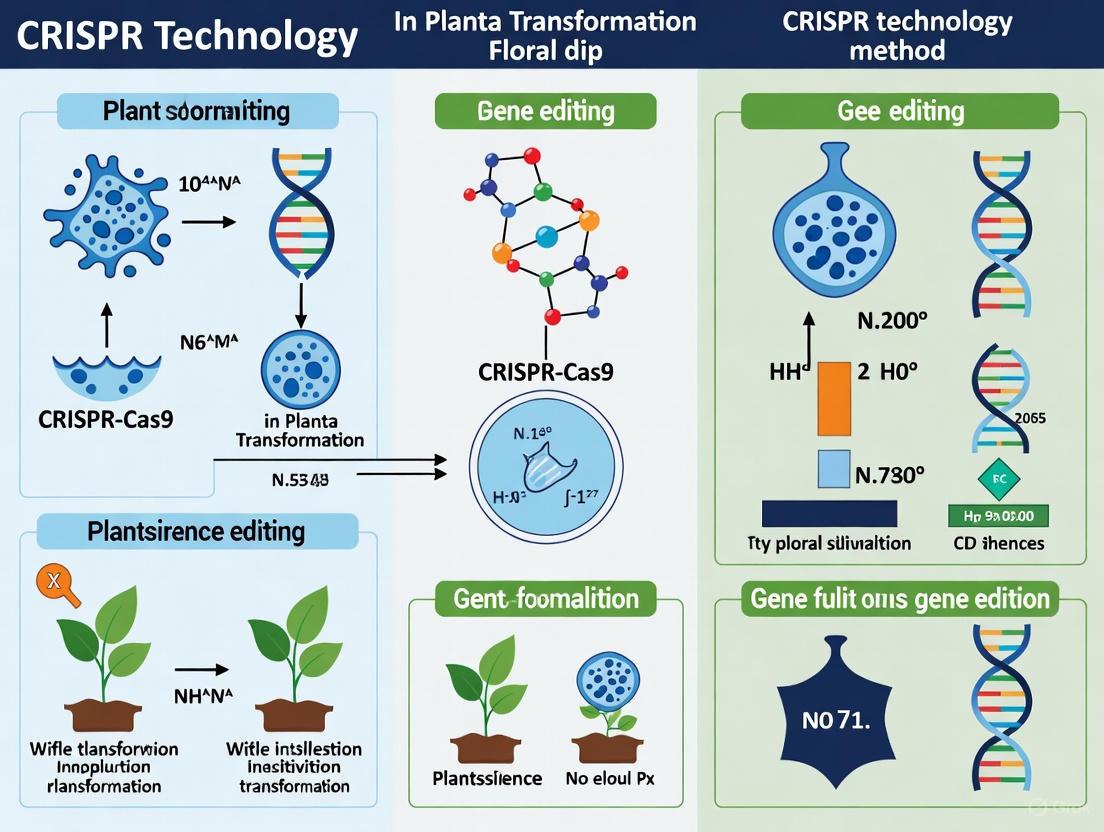
This article explores the powerful synergy between in planta transformation, particularly the floral dip method, and CRISPR-Cas genome editing.
Beyond the Lab Bench: Revolutionizing Plant Biotechnology with Floral Dip and CRISPR
Abstract
This article explores the powerful synergy between in planta transformation, particularly the floral dip method, and CRISPR-Cas genome editing. Tailored for researchers and scientists, it provides a comprehensive overview from foundational principles to cutting-edge applications. We delve into the methodology of tissue-culture-free transformation, address common troubleshooting and optimization challenges, and present a comparative analysis of delivery systems. The content synthesizes the latest research to illustrate how these combined technologies are accelerating the development of improved crops and offering new tools for biomedical research, ultimately paving the way for a more efficient and accessible future in plant bioengineering.
Understanding In Planta Transformation: Bypassing the Tissue Culture Bottleneck
In planta transformation represents a paradigm shift in plant genetic engineering, offering a technically simple, genotype-independent alternative to conventional in vitro methods. This approach, particularly through techniques like the floral dip method, is revolutionizing functional genomics and crop breeding by enabling stable genetic modifications without the need for extensive tissue culture. Within the context of modern CRISPR/Cas9 research, in planta strategies facilitate high-throughput genome editing, allowing for the rapid analysis of gene functions and the development of novel traits in a wide range of plant species. This application note details the principles, protocols, and key advantages of in planta transformation, providing researchers with a framework for its implementation in advanced genetic studies.
In planta stable transformation encompasses a heterogeneous group of methods for the direct, stable integration of foreign DNA into a plant's genome and the subsequent regeneration of transformed cells into whole plants without relying on callus culture [1]. The defining feature of these techniques is the execution of genetic transformation with no or minimal tissue culture steps, a stark contrast to conventional methods that depend on in vitro regeneration from single transformed cells [2] [1]. This minimalism makes in planta strategies particularly suited for the era of CRISPR-Cas9 and high-throughput genome editing, as they are often considered genotype-independent, less prone to somaclonal variations, and accessible to laboratories with limited resources [1]. The most celebrated example of this approach is the Arabidopsis thaliana floral dip method, a protocol that has significantly contributed to the establishment of Arabidopsis as a premier model organism in plant biology [1].
A Comparative Analysis: In Planta Versus Conventional Transformation
The core of the paradigm shift lies in the fundamental differences between in planta and conventional in vitro transformation/regeneration techniques. The following table summarizes the key distinctions:
Table 1: A comparative analysis of in planta and conventional transformation methods.
| Feature | In Planta Transformation | Conventional In Vitro Transformation |
|---|---|---|
| Tissue Culture Requirement | No or minimal steps [1] | Essential and extensive |
| Technical Simplicity | High; often does not require sterile conditions or complex media [1] | Low; requires strict sterility and specialized media formulations |
| Genotype Dependence | Largely genotype-independent [1] | Highly genotype-dependent; many species and cultivars are recalcitrant |
| Regeneration Pathway | Direct regeneration from differentiated explants (e.g., meristems, gametes) [1] | Indirect regeneration via an intervening callus phase |
| Risk of Somaclonal Variation | Low | High, due to the callus phase |
| Typical Duration | Shorter | Longer, due to multiple in vitro stages |
| Infrastructure & Cost | Lower; affordable and easy to implement [1] | Higher; requires specialized tissue culture facilities |
| Applicability to Minor Crops | High; suited for a wide range of species [1] | Low; often limited to transformable models and major crops |
Beyond the technical simplifications, in planta methods align perfectly with modern genome-editing tools like CRISPR/Cas9. The direct transformation of plant cells within the intact organism can simplify the recovery of edited progeny and, in the case of DNA-free editing using preassembled CRISPR/Cas9 ribonucleoproteins (RNPs), may help to circumvent GMO regulations since no transgene is integrated [3] [4].
Classifying In Planta Transformation Techniques
In planta methods can be categorized based on the type of explant targeted for transformation. The following workflow illustrates the decision process for selecting and executing a primary in planta method, specifically the floral dip technique for CRISPR/Cas9 genome editing.
Diagram 1: A workflow for in planta transformation and CRISPR genome editing.
This diagram outlines the primary categories of in planta transformation [1]:
- Germline Transformation: Targets the haploid female (ovule) or male (pollen) gametophytic cells before fertilization. The floral dip method is a prime example that transforms the female gametes.
- Zygote/Embryo Transformation: Targets the progenitor stem cell (zygote) formed from the fusion of gametes or the developing embryo.
- Meristem Transformation: Targets the shoot apical meristem (SAM) or adventitious meristems, which are regions of active cell division.
Experimental Protocol: Floral Dip CRISPR/Cas9 Genome Editing
The following is a detailed protocol for implementing the floral dip method to create CRISPR/Cas9-mediated mutations in Arabidopsis thaliana, adaptable to other suitable species.
Research Reagent Solutions
Table 2: Essential reagents for floral dip CRISPR/Cas9 transformation.
| Reagent / Material | Function and Specification |
|---|---|
| CRISPR/Cas9 Vector | A binary vector containing a plant codon-optimized Cas9 gene and a sgRNA expression cassette targeting the gene of interest [4]. |
| Agrobacterium tumefaciens | A disarmed strain (e.g., GV3101) used as a vehicle to deliver the T-DNA containing the CRISPR machinery into plant cells [4]. |
| Infiltration Medium | A solution containing half-strength Murashige and Skoog (MS) salts, 5% (w/v) sucrose, and 0.01-0.05% (v/v) surfactant (e.g., Silwet L-77) to reduce surface tension [1]. |
| Plant Material | Healthy, well-watered plants with numerous immature floral buds (approximately 2-4 weeks after bolsing for Arabidopsis). |
| Selection Agents | Antibiotics or herbicides for selecting transformed T1 seeds, depending on the selectable marker gene used in the T-DNA (e.g., Kanamycin, Basta/glufosinate). |
Step-by-Step Workflow
- Vector Construction and Agrobacterium Preparation: Clone a sgRNA specific to your target gene into a binary CRISPR/Cas9 vector. Introduce the resulting plasmid into an appropriate Agrobacterium tumefaciens strain. Grow a fresh, single colony of the transformed Agrobacterium in a selective liquid medium (e.g., YEP with appropriate antibiotics) to an optical density at 600 nm (OD₆₀₀) of approximately 0.8 [4].
- Preparation of Dip Solution: Pellet the bacterial culture by centrifugation and resuspend it in the infiltration medium to a final OD₆₀₀ of ~0.8. Add the surfactant (e.g., 0.02-0.05% Silwet L-77) just before use. The solution should be used immediately.
- Plant Transformation (Floral Dip): Submerge the above-ground parts of the plant, focusing on the inflorescences with developing floral buds, into the dip solution for 2-3 minutes. Gently agitate to ensure thorough infiltration [1].
- Post-Transplantation Care and Seed Harvest: Lay the dipped plants on their sides and cover them with transparent plastic wrap or a dome to maintain high humidity for 16-24 hours. Afterwards, return the plants to normal growth conditions. Allow the plants to mature and set seeds. Harvest the seeds from the dipped plants once fully dried; these are the T1 generation seeds.
- Selection and Screening of Transformed Plants: Sow the T1 seeds on soil or selection medium containing the appropriate antibiotic or herbicide. Resistant plants are potential transformants. For CRISPR edits, genomic DNA should be extracted from the resistant T1 plants and the target region PCR-amplified. The PCR products can be analyzed by Sanger sequencing, followed by tracking of indels by decomposition (TIDE) analysis, or by next-generation sequencing to identify mutation events [4].
Case Study: Application of CRISPR/Cas9 in Torenia via In Planta Transformation
A compelling application of this paradigm shift is the modification of flower color in the ornamental plant Torenia fournieri using CRISPR/Cas9. Researchers targeted the flavanone 3-hydroxylase (F3H) gene, a key enzyme in the flavonoid biosynthesis pathway [4].
- Objective: To create loss-of-function mutations in the F3H gene to alter flower pigmentation from violet to white or pale blue.
- Method: A plant codon-optimized Cas9 and a F3H-specific gRNA were assembled in a binary vector and introduced into Agrobacterium. Standard Agrobacterium-mediated transformation was performed, likely involving tissue culture, which successfully generated transgenic T0 plants [4].
- Results and Efficiency: The system was highly efficient, with approximately 80% of the regenerated transgenic lines (15 out of 24) exhibiting a clear phenotype of faint blue (almost white) flowers. Sequence analysis confirmed the presence of indels (insertions/deletions) in the F3H target sequence of these lines, confirming that the phenotype was a result of targeted mutagenesis [4]. The edited plants were acclimatized and grown in a greenhouse, where the modified flower color remained stable.
Table 3: Quantitative results from the CRISPR/Cas9-mediated mutation of the F3H gene in Torenia [4].
| Phenotype of T0 Lines | Number of Lines | Mutation Rate | Example Mutations Identified |
|---|---|---|---|
| Faint Blue (White) | 15 | ~63% | Single-base insertions, deletions, -32 bp deletion |
| Violet (Wild-Type) | 4 | ~17% | No mutation in target sequence |
| Pale Violet | 3 | ~12.5% | Mixed sequences (WT and +1A alleles) |
| Variegated/Unstable | 1 | ~4% | Not specified |
| Mixed (Violet/Faint Blue) | 1 | ~4% | Not specified |
This case study powerfully demonstrates how in planta transformation, coupled with CRISPR/Cas9, provides a precise and efficient tool for functional genomics and the development of novel traits in floricultural crops, bypassing the limitations of traditional breeding.
The floral dip method stands as one of the most transformative protocols in plant molecular biology, fundamentally reshaping genetic research in the model organism Arabidopsis thaliana and beyond. This innovative Agrobacterium-mediated transformation technique, first systematically described by Clough and Bent (1998), revolutionized plant genetic engineering by eliminating the need for complex tissue culture procedures. By simply dipping developing inflorescences into an Agrobacterium tumefaciens suspension containing a surfactant, researchers could directly generate transgenic seeds through normal plant reproduction processes. The method's exceptional simplicity, cost-effectiveness, and efficiency have propelled Arabidopsis to its status as the premier model organism in plant biology [1] [5]. Within the broader context of in planta transformation—a heterogeneous group of techniques aiming for direct stable integration of foreign DNA into plant genomes without callus culture—the floral dip method remains the most widely recognized and successfully implemented approach [1]. As plant biology enters the era of CRISPR-Cas9 and high-throughput genome editing, the principles underlying floral dip have inspired new simplified transformation strategies that seek to overcome the genotype-dependent limitations that have long hindered progress in many plant species, particularly recalcitrant crops and perennial grasses [6] [7].
Core Mechanism and Workflow of the Floral Dip Method
Biological Principles and Target Tissues
The floral dip method achieves genetic transformation by targeting the female reproductive organs (gynoecium) within developing flowers, particularly the developing ovules [5]. During the dipping process, Agrobacterium tumefaciens, carrying engineered T-DNA vectors, infiltrates the floral tissues through the action of surfactants that reduce surface tension. The primary transformation event occurs in the female gametophyte (egg cell) before fertilization, resulting in transgenic seeds that develop after the dipped flowers self-pollinate [1]. This direct transformation of reproductive cells bypasses the need for somatic cell transformation followed by regeneration, which constitutes the major bottleneck in conventional transformation protocols. The success of this method relies on precise timing—dipping must occur when flowers are at the optimal developmental stage, with immature floral buds but before silique development [8].
Standardized Protocol and Workflow
The following workflow diagram illustrates the key stages in a standardized floral dip transformation protocol:
The foundational protocol for Arabidopsis thaliana has been optimized through numerous studies. Key improvements include the elimination of the media exchange step—direct dipping into Agrobacterium culture supplemented with surfactant and sucrose is equally effective and significantly less laborious [9]. The standard protocol utilizes Silwet L-77 at concentrations of 0.01-0.05% as a surfactant to ensure proper infiltration of the bacterial suspension into floral tissues [8] [9]. Optimal bacterial density (OD₆₀₀) typically ranges from 0.5 to 1.0, with higher densities potentially causing phytotoxicity [8]. Following dipping, plants are maintained under high humidity conditions for 1-2 days to facilitate recovery and transformation efficiency, then grown to seed maturity under standard conditions.
Optimization Parameters: Quantitative Analysis
Extensive research has identified critical parameters that significantly influence transformation efficiency across plant species. The following table summarizes key optimization variables and their impact on transformation success:
Table 1: Critical Optimization Parameters for Floral Dip Transformation
| Parameter | Optimal Range | Impact on Efficiency | Species-Specific Examples |
|---|---|---|---|
| Bacterial Density (OD₆₀₀) | 0.3-0.8 | Higher densities may cause phytotoxicity; lower densities reduce T-DNA delivery [8] | Descurainia sophia: OD₆₀₀=0.6 optimal; OD₆₀₀=1.2 caused wilting and death [8] |
| Surfactant Concentration | 0.01-0.05% Silwet L-77 | Critical for infiltration; excess causes tissue damage [8] [9] | Descurainia sophia: 0.03% optimal; 0.05-0.10% dramatically reduced efficiency [8] |
| Sucrose Concentration | 5-10% | Osmotic support for bacterial survival during inoculation [9] | Standard in Arabidopsis and Brassicaceae family extensions [8] [9] |
| Plant Developmental Stage | Bolting with immature flowers | Determines accessibility to female gametophyte targets [8] | Critical for all species; varies by flowering timeline [8] [7] |
| Acetosyringone | 0-200 μM | Induces vir gene expression; species- and strain-dependent [8] | Descurainia sophia: No addition superior to 100 μM [8] |
Additional significant factors include the Agrobacterium strain selection, plant genotype, and environmental conditions during and post-transformation. The use of alternative growth media such as YEBS without resuspension has been successfully demonstrated, further simplifying the protocol [9]. For selection, chromatography sand saturated with antibiotic-containing media provides a sterile, low-cost alternative to agar-based selection systems [9].
Expansion Beyond Arabidopsis: Applications Across Plant Families
The remarkable success of floral dip in Arabidopsis has motivated extensive efforts to adapt this method to other plant species, particularly within the Brassicaceae family and beyond:
Brassicaceae Family Applications
The floral dip method has been successfully extended to multiple species within the Brassicaceae family, leveraging phylogenetic proximity to Arabidopsis. A recent landmark study established an efficient floral dip protocol for Descurainia sophia (flixweed), a medicinal plant in the Brassicaceae family [8]. Through systematic optimization, researchers achieved transformation efficiencies of approximately 1.5% using an Agrobacterium suspension with OD₆₀₀=0.6 and 0.03% Silwet L-77 without acetosyringone [8]. Furthermore, the method successfully delivered CRISPR-Cas9 components targeting the phytoene desaturase (PDS) gene, producing mutant plants with expected albino phenotypes within 2.5 months, thus validating the system for genome editing applications [8]. The protocol has also been successfully implemented in various Brassica species, including B. rapa, B. napus, and B. carinata [8].
Challenges and Limitations in Non-Brassicaceae Species
Despite these successes, broader application of the floral dip method faces significant biological constraints. Key limiting factors include flower morphology that creates physical barriers to infiltration, necrotic reactions to Agrobacterium that cause flower abortion, low seed set following treatment, and large plant or flower structures that are not amenable to dipping [8]. These limitations are particularly pronounced in monocot species, which lack the floral architecture that makes Arabidopsis and related Brassicaceae species so amenable to this method [7].
Integration with CRISPR Genome Editing
The fusion of floral dip methodology with CRISPR-Cas genome editing represents a powerful combination for functional genomics and precision breeding. The application of this integrated approach in Descurainia sophia demonstrates its potential for rapid validation of gene function in non-model species [8]. Similar approaches are being explored for accelerated domestication of perennial grain crops, where the ability to edit domestication genes without complex tissue culture would overcome major barriers in species with high ploidy and heterozygosity [7].
To enhance the efficiency of precision genome editing via floral dip, research has focused on improving Homology-Directed Repair (HDR) outcomes. Recent chemical screening approaches have identified histone deacetylase (HDAC) inhibitors such as tacedinaline and entinostat as effective enhancers of HDR efficiency in both plant and mammalian systems [10]. These compounds can be incorporated into the floral dip suspension to modify chromatin accessibility and improve the frequency of precise gene integration events.
Table 2: Essential Research Reagents for Floral Dip Transformation
| Reagent/Category | Function and Application | Specific Examples and Notes |
|---|---|---|
| Agrobacterium Strains | T-DNA delivery vector system | GV3101, AGL1, EHA105; strain selection affects host range [8] [5] |
| Surfactants | Enable infiltration of bacterial suspension into floral tissues | Silwet L-77 (0.01-0.05%); concentration must be optimized to balance efficiency and phytotoxicity [8] [9] |
| Selectable Markers | Selection of transformed progeny | Antibiotic resistance (hpt, nptII, aadA) or herbicide resistance (BAR) genes [5] [9] |
| Visual Reporters | Rapid screening of transformation events | GUS (β-glucuronidase), GFP (Green Fluorescent Protein), RUBY (visible red pigment) [8] [5] |
| Developmental Regulators | Enhance transformation efficiency in recalcitrant species | WUS, BBM, GRF-GIF fusions; co-expression can overcome genotype limitations [6] |
Future Perspectives and Emerging Methodologies
The future of floral dip methodology lies in overcoming species-specific limitations through innovative approaches. Developmental regulator-assisted transformation represents a particularly promising avenue, where co-expression of transcription factors such as WUSCHEL (WUS), BABY BOOM (BBM), or GRF-GIF fusions can dramatically enhance regeneration capacity and potentially expand the host range of floral dip protocols [6]. The following diagram illustrates how these innovative approaches are expanding the applications of in planta transformation:
For truly recalcitrant species, particularly monocots, related in planta transformation methods that target different tissues offer complementary approaches. These include the RAPID (Regenerative Activity-dependent In planta Injection Delivery) method, which uses injection to deliver Agrobacterium to meristematic tissues in species with strong regeneration capacity like sweet potato and potato [11]. Other innovative approaches include meristem transformation [5], pollen-mediated transformation [1], and virus-mediated delivery of editing components [7]. Each of these methods shares the fundamental principle of floral dip—bypassing tissue culture to achieve direct transformation—while adapting to the biological constraints of different plant families.
As these technologies mature, the floral dip method and its derivatives will play an increasingly vital role in enabling high-throughput functional genomics and precision breeding across diverse plant species, ultimately supporting the development of sustainable agricultural systems through improved crop varieties [6] [7].
In the realm of plant biotechnology, the concept of targeting germline cells to achieve heritable genetic changes is a cornerstone for advancing both basic research and applied crop improvement. Unlike in animal systems, where the germline is established early in development, plants form germline cells from meristematic tissues late in their life cycle. This biological characteristic provides a unique window for genetic intervention. In planta transformation methods, particularly the floral dip technique, strategically exploit this developmental timing to introduce genetic modifications that are stably passed to subsequent generations. This protocol details the application of CRISPR-based genome editing tools via the floral dip method, enabling the precise alteration of plant germlines without the need for extensive tissue culture. The principles outlined here are framed within the broader thesis that in planta transformation represents a streamlined, genotype-independent pathway for introducing heritable edits, thereby accelerating functional genomics and trait development in a wide range of plant species, including recalcitrant crops and emerging perennial systems [12] [7].
Key Principles of Germline Targeting in Plants
The efficiency of heritable genome editing in plants hinges on a clear understanding of and ability to target the germline. The following principles are fundamental:
- Developmental Timing: In plants, the germline is not set aside during embryogenesis. Instead, it differentiates from floral meristematic cells in the developing flower. Successful transformation requires the delivery of editing components to these specific cells just before or during the early stages of gamete formation [12].
- Precision in DNA Repair: The CRISPR/Cas system induces double-strand breaks (DSBs) in the DNA. The resulting heritable edit is determined by the cell's repair mechanism. Non-homologous end joining (NHEJ) is predominantly used for gene knockouts, while homology-directed repair (HDR), though less frequent, can enable precise nucleotide changes or gene insertions [13].
- Stable Integration vs. Transient Expression: For a change to be heritable, the edit must be incorporated into the DNA of a germline cell. This can be achieved either through the stable integration of a T-DNA construct into the plant genome via Agrobacterium, or through the transient expression of CRISPR machinery that creates edits in the germline cells before being degraded, resulting in edited but transgene-free progeny [14].
Quantitative Data on Editing Efficiencies
The success of germline targeting is quantitatively measured by editing efficiency, which varies significantly based on the method, plant species, and target tissue. The table below summarizes key efficiency data from relevant studies.
Table 1: Genome Editing Efficiencies Across Plant Transformation Methods
| Species | Delivery Method | Plant Tissue / Strategy | Editing Efficiency (%) | Key Experimental Parameters |
|---|---|---|---|---|
| Pigeonpea [15] | Agrobacterium-mediated | Apical meristem (in planta) | 8.80% | Potato ubiquitin promoter for Cas9; apical meristem targeting |
| Pigeonpea [15] | Agrobacterium-mediated | Embryonic axis (in vitro) | 9.16% | Use of embryonic axis explants with tissue culture |
| Barley [7] | Virus-induced genome editing (VIGE) | Leaf tissues (in planta) | 17% - 35% (T0) | Pre-existing Cas9-expressing line ('Golden Promise'); virus-delivered gRNA |
| Barley [7] | Biolistics (iPB-RNP) | Mature embryos | 1% - 4.2% (T0), 0.3% - 1.6% (T1) | Direct delivery of pre-complexed Ribonucleoprotein (RNP) |
| Rice [7] | Agrobacterium-mediated | Seedlings | 9% (T0) | CRISPR/Cas9 construct with hygromycin selection |
Experimental Protocol: Floral Dip for CRISPR-Based Germline Editing
This protocol provides a detailed methodology for achieving heritable genetic changes in Arabidopsis thaliana using the floral dip technique, adaptable for other amenable species.
Reagents and Equipment
- Plant Material: Healthy Arabidopsis plants grown to the stage of early bolting, with the first few flowers open.
- Biological Material: Agrobacterium tumefaciens strain GV3101 carrying a binary vector with the CRISPR/Cas9 construct (e.g., Cas9 gene driven by a constitutive promoter like CaMV 35S or Arabidopsis UBI10, and species-specific gRNA expression cassette [12] [7]).
- Media and Solutions:
- LB Broth and LB Agar with appropriate antibiotics (e.g., kanamycin, rifampicin).
- Infiltration Medium: 5% (w/v) sucrose, 1/2x Murashige and Skoog (MS) salts, 0.05% (v/v) Silwet L-77, pH 5.8 [12].
- Equipment: Conical tubes, vacuum infiltration apparatus or desiccator, growth chambers.
Step-by-Step Procedure
Agrobacterium Culture Preparation:
- Inoculate a single colony of the engineered Agrobacterium into 5 mL of LB medium with antibiotics. Grow overnight at 28°C with shaking (220 rpm).
- The next day, use this culture to inoculate a larger volume (200-500 mL) of LB with antibiotics. Grow until the optical density at 600 nm (OD₆₀₀) reaches 0.8 - 1.0 [12].
- Pellet the cells by centrifugation at 5,000 x g for 15 minutes at room temperature.
- Gently resuspend the pellet in the prepared Infiltration Medium to a final OD₆₀₀ of 0.8.
Plant Preparation:
- Carefully remove any already developed siliques from the plants, as these are too mature to be transformed. The goal is to target floral buds that have not yet undergone gametogenesis.
- Gently wound the main inflorescence and floral buds by making small nicks or by gently bending stems to increase Agrobacterium access to the germline precursor cells [12].
Floral Dip Transformation:
- Invert the above-ground part of the plant and submerge the floral tissues completely into the Agrobacterium suspension in a beaker or container.
- For vacuum infiltration: Place the entire container inside a vacuum desiccator. Apply a vacuum of 250-500 mmHg for 5-10 minutes. Slowly release the vacuum to allow the suspension to infiltrate the floral tissues.
- Without vacuum: Simply dip and agitate the plants for 2-5 minutes, ensuring thorough coating.
- Lay the treated plants on their sides and cover them with transparent plastic wrap or a dome to maintain high humidity for 16-24 hours. Then, return the plants to an upright position and grow under standard conditions until seeds mature [12].
Selection and Genotyping of Progeny (T1 Generation):
- Harvest seeds from dipped plants (T0 generation) and surface-sterilize.
- Sow seeds on selective medium (e.g., containing hygromycin or kanamycin) or directly in soil.
- For soil-grown plants, perform PCR genotyping on leaf tissue from 2-3 week old seedlings to identify transgenic T1 plants.
- Sequence the target genomic region in PCR-positive plants to confirm the presence of intended mutations. A diagram of the complete experimental workflow is provided below.
The Scientist's Toolkit: Essential Research Reagent Solutions
Successful implementation of this protocol relies on a suite of specialized reagents and materials.
Table 2: Key Research Reagent Solutions for Floral Dip CRISPR
| Item | Function / Rationale | Example Specifications / Notes |
|---|---|---|
| Cas9 Nuclease | The effector protein that creates a double-strand break at the target DNA sequence. | Can be delivered as DNA (within T-DNA), mRNA, or as a pre-complexed Ribonucleoprotein (RNP). RNP delivery can reduce off-target effects [14]. |
| Guide RNA (gRNA) | A short RNA sequence that programmably directs Cas9 to the specific genomic locus. | Expressed from a Pol III promoter (e.g., U6 or U3) within the T-DNA. Species-specific promoters (e.g., CcU6_7.1 in pigeonpea) enhance efficiency [15]. |
| Binary Vector | A T-DNA plasmid used in Agrobacterium to transfer the CRISPR components into the plant cell nucleus. | Contains left and right T-DNA borders, a plant selection marker (e.g., hygromycin resistance), and bacterial selection markers [15]. |
| Constitutive Promoter | Drives high-level, continuous expression of the Cas9 nuclease. | Common choices include Cauliflower Mosaic Virus 35S (CaMV 35S) for dicots and maize Ubiquitin 1 (Ubi-1) for monocots. Arabidopsis UBI10 is also highly effective [12]. |
| Silwet L-77 | A surfactant that reduces the surface tension of the infiltration medium, allowing it to coat and penetrate the floral tissues effectively. | Critical for ensuring the Agrobacterium suspension reaches the germline precursor cells. Typically used at 0.05% (v/v) [12]. |
Molecular Mechanisms and Safety Considerations
Understanding the intracellular journey of the CRISPR components and the potential risks is vital for experimental design and interpretation.
From Delivery to Heritable Edit
The following diagram illustrates the molecular pathway from the initial delivery of CRISPR components to the formation of a stable, heritable edit in the plant genome.
Addressing Structural Variations and Genomic Integrity
A critical safety consideration in CRISPR editing is the potential for unintended, large-scale genomic damage beyond small indels. Recent studies reveal that CRISPR/Cas9 can induce structural variations (SVs), including megabase-scale deletions and chromosomal translocations, both at the on-target site and at off-target sites with sequence similarity [13]. These SVs are often missed by standard short-read sequencing but pose significant safety concerns. Strategies to mitigate these risks include:
- Avoiding DNA-PKcs Inhibitors: The use of DNA-PKcs inhibitors to enhance HDR efficiency has been shown to dramatically increase the frequency of these SVs and should be avoided in protocols aiming for clinical translation [13].
- Utilizing High-Fidelity Cas Variants: Engineered Cas9 variants with enhanced specificity can reduce off-target activity [13].
- Comprehensive Genotyping: Employing long-read sequencing or specialized assays (e.g., CAST-Seq, LAM-HTGTS) is recommended to fully assess the genomic integrity of edited lines before further use [13].
The floral dip method represents a powerful and efficient in planta strategy for introducing heritable genetic changes by directly targeting the plant germline. Its success is built upon the precise coordination of plant developmental biology with the molecular action of the CRISPR/Cas9 system. While the protocol is robust for model plants like Arabidopsis, ongoing research into optimizing delivery vectors, tissue-specific promoters, and culture conditions is extending its utility to recalcitrant and perennial crop species [7]. By adhering to the detailed protocols, understanding the quantitative efficiencies, and being mindful of both the molecular mechanisms and potential genomic risks, researchers can reliably employ this technique to advance plant genome engineering and accelerate the development of improved crop varieties.
The discovery of the CRISPR/Cas system has revolutionized plant genomics, serving as a powerful tool for functional gene studies, trait discovery, and accelerated breeding programs across diverse plant species. Over the past decade, this technology has evolved from a basic gene-editing apparatus into a sophisticated toolkit capable of addressing complex agricultural challenges posed by climate change and evolving consumer needs [16]. While highly efficient, the implementation of CRISPR/Cas in plants faces several bottlenecks, including challenges in tissue culture, transformation, regeneration, and mutant detection [16].
This Application Note focuses specifically on validating and implementing CRISPR-Cas technologies within the context of in planta transformation, particularly the floral dip method. This approach bypasses many traditional tissue culture limitations, offering a streamlined pathway for generating transgene-free, gene-edited plants. We provide detailed protocols, optimized parameters, and practical resources to enable researchers to effectively apply these techniques in their plant genome engineering workflows.
Establishing a Floral Dip Transformation System for CRISPR
The floral dip method is a classic Agrobacterium-mediated transformation technique that is simple, convenient, stable, and inexpensive. Originally established in Arabidopsis thaliana, it has been successfully adapted for other Brassicaceae species [8]. The following protocol, optimized for Descurainia sophia, provides a framework that can be adapted for related species.
Protocol: Floral Dip-Mediated Transformation and Genome Editing
Key Reagents and Materials:
- Agrobacterium tumefaciens strain GV3101
- Binary vector carrying CRISPR/Cas9 constructs and desired sgRNAs
- Plant material: Healthy D. sophia plants with developing inflorescences
- Silwet L-77 surfactant
- Acetosyringone (AS) stock solution
- Sucrose
- Hygromycin B (HygB) for selection
- Woody Plant Medium (WPM) or similar growth medium
Experimental Workflow:
The following diagram illustrates the key stages of the floral dip transformation protocol for generating gene-edited plants.
Detailed Procedure:
Plant Growth and Preparation:
- Grow D. sophia plants under controlled conditions (approximately 1.5 months to flowering).
- Use healthy plants with developing inflorescences for transformation.
Vector Construction and Agrobacterium Preparation:
- Clone sgRNAs targeting your gene of interest (e.g., Phytoene Desaturase (PDS) for a visible albino phenotype) into an appropriate CRISPR/Cas9 binary vector.
- Transform the construct into Agrobacterium tumefaciens strain GV3101.
- Grow the transformed Agrobacterium in liquid culture to an OD₆₀₀ of 0.6.
Floral Dip Transformation:
- Prepare the inoculation solution: Agrobacterium suspension (OD₆₀₀ = 0.6) with 5% sucrose and 0.03% (v/v) Silwet L-77.
- Dip developing inflorescences into the solution for 45 seconds.
- Maintain treated plants in normal growth conditions until seed set.
Selection and Screening:
- Collect seeds from dipped plants.
- Surface-sterilize and plate on selective medium containing Hygromycin B.
- Identify resistant seedlings after approximately two weeks.
Molecular Confirmation and Phenotypic Analysis:
- Confirm transgenic events by GUS staining or GFP fluorescence [8].
- For CRISPR-edited lines, confirm mutations by sequencing the target region.
- Analyze phenotypes (e.g., albino for PDS knockout) in confirmed mutants.
Optimization Parameters for Floral Dip
Critical parameters influencing transformation efficiency were systematically optimized in D. sophia. The table below summarizes the key findings.
Table 1: Optimization of Floral Dip Transformation Parameters in D. sophia
| Parameter | Tested Conditions | Optimal Condition | Effect on Transformation Efficiency |
|---|---|---|---|
| Agrobacterium Density (OD₆₀₀) | 0.3, 0.6, 1.2 | 0.6 | High density (OD=1.2) caused flower wilting and death [8]. |
| Surfactant (Silwet L-77) | 0.03%, 0.05%, 0.10% | 0.03% | Higher concentrations (0.05-0.10%) drastically reduced efficiency [8]. |
| Acetosyringone (AS) | 0 μM, 100 μM | 0 μM | Addition of 100 μM AS surprisingly reduced transformation rate [8]. |
| Infection Duration | 45 seconds | 45 seconds | Established as sufficient for effective transformation [8]. |
Alternative Delivery Methods and Validation Platforms
While floral dipping is effective for amenable species, other delivery methods are crucial for a broader range of crops. Protoplast-based systems offer a valuable platform for rapidly validating CRISPR/Cas reagent efficiency before undertaking stable transformation.
Protoplast-Based Validation Protocol
The following diagram outlines a workflow for using protoplasts to validate genome editing constructs, as demonstrated in pea (Pisum sativum L.).
Key Steps and Optimized Parameters for Pea Protoplasts:
- Protoplast Isolation: Use fully expanded leaves from 2-4 week-old plants. Optimize enzyme solution composition (e.g., cellulase R-10, macerozyme R-10, mannitol concentration) and enzymolysis time for high yield and viability [17].
- PEG-Mediated Transfection:
- Use 20 µg of plasmid DNA per transfection.
- Employ 20% PEG as the transfection agent.
- Incubate for 15 minutes.
- This optimized condition achieved a 59 ± 2.64% transfection efficiency in pea [17].
- Validation of Editing: Transfect with a CRISPR construct (e.g., targeting PsPDS). Mutation efficiency can be as high as 97% in transfected protoplasts, confirming gRNA functionality before stable transformation [17].
Expanding the CRISPR Toolkit for Specialized Applications
Beyond standard Cas9, new CRISPR systems are continuously expanding plant engineering capabilities.
Table 2: Advanced CRISPR Systems and Their Applications in Plants
| CRISPR System | Key Feature | Documented Application | Purpose |
|---|---|---|---|
| Cas9 mutant SpRY | Relaxed PAM requirement [18] | Larch editing at various PAM sites [18] | Increases the number of targetable genomic sites. |
| Compact Cas12i (Cas12i2Max) | Smaller size (~1,000 aa); high efficiency [19] | Up to 68.6% editing efficiency in stable rice lines [19] | Enables easier vector delivery and simultaneous editing/regulation. |
| Multi-Targeted Libraries | Genome-wide sgRNAs targeting multiple gene families [19] | Generation of ~1300 tomato lines with distinct phenotypes [19] | Overcomes functional redundancy for complex trait breeding. |
| Ribonucleoprotein (RNP) Delivery | Direct delivery of pre-assembled Cas9-gRNA complexes [19] | Production of transgene-free edited carrot plants [19] | Avoids transgene integration, simplifying regulatory approval. |
The Scientist's Toolkit: Essential Research Reagents
Successful implementation of CRISPR-Cas protocols relies on a core set of research reagents. The following table details essential materials and their functions.
Table 3: Key Research Reagent Solutions for Plant CRISPR-Cas Experiments
| Reagent / Material | Function / Purpose | Example Use Case |
|---|---|---|
| Agrobacterium tumefaciens (e.g., GV3101, EHA105) | Stable delivery of T-DNA containing CRISPR constructs into plant cells. | Floral dip transformation of D. sophia [8]; stable transformation of Fraxinus mandshurica [20]. |
| CRISPR Binary Vectors (e.g., pYLCRISPR/Cas9) | Carries expression cassettes for Cas nuclease and sgRNA(s). | Constructed for targeting FmbHLH1 in F. mandshurica [20]. |
| Endogenous Promoters | Drives expression of Cas nuclease and gRNAs; can enhance editing efficiency. | LarPE004 promoter from larch drove highly efficient STU-Cas9 system [18]. |
| Silwet L-77 | Surfactant that reduces surface tension, improving Agrobacterium penetration. | Critical for efficient floral dip of D. sophia at 0.03% (v/v) [8]. |
| Polyethylene Glycol (PEG) | Facilitates the delivery of plasmid DNA into protoplasts. | PEG-mediated transfection of pea protoplasts for CRISPR validation [17]. |
| Selection Agents (e.g., Hygromycin B, Kanamycin) | Selects for plant cells that have integrated the T-DNA. | Screening of transgenic D. sophia seedlings on Hygromycin B [8]. |
The CRISPR-Cas toolkit has matured into an indispensable resource for plant genome engineering. The floral dip method provides a straightforward and efficient in planta transformation strategy for amenable species, particularly within the Brassicaceae family. For species that are recalcitrant to stable transformation, protoplast-based systems offer a high-throughput alternative for validating editing reagents. Furthermore, the continuous development of novel Cas enzymes and delivery methods, such as ribonucleoprotein complexes and miniaturized Cas proteins, is steadily overcoming previous limitations. By integrating these optimized protocols and reagents, researchers can effectively leverage CRISPR-Cas technologies to accelerate functional genomics and molecular breeding programs in a wide range of plant species.
Why Combine Floral Dip and CRISPR? Synergies for Accelerated Breeding
The convergence of Agrobacterium tumefaciens-mediated floral dip transformation and CRISPR/Cas9 genome editing represents a transformative synergy in plant biotechnology. This powerful combination enables researchers to bypass the laborious, species-specific tissue culture bottleneck that has traditionally constrained genetic improvement in many crops. By allowing for the direct introduction of CRISPR components into plant germline cells in planta, the floral dip method facilitates the recovery of non-chimeric, stably edited progeny in a single generation. This Application Note details the experimental protocols, key reagents, and strategic advantages of integrating these technologies to accelerate functional genomics and breeding programs, with a specific focus on applications within the Brassicaceae family and beyond.
Plant genetic engineering and genome editing are indispensable for enhancing agronomically essential traits and ensuring future food security [21]. While CRISPR/Cas9 has revolutionized plant bio-technology by providing unprecedented precision in genetic modification, its application has been largely dependent on efficient plant transformation and regeneration systems [21] [22].
Traditional transformation relies on in vitro tissue culture—a complex process involving the isolation of specialized tissues, growth under defined aseptic conditions, and regeneration of whole plants from transformed cells. This approach presents significant challenges:
- Time-Consuming Processes: Transformation of species like rice or tomato can require 6 to 12 months using established protocols [21].
- Technical Complexity: Requires optimization of multiple factors at each stage and maintained sterile conditions [21].
- Unwanted Genetic Variation: Tissue culture can induce somaclonal variation—unwanted genetic changes that are independent of the intended editing [21].
- Genotype Dependence: Many commercial and minor crops remain recalcitrant to genetic transformation, severely limiting scientific progress for essential crops [1].
In-planta transformation methods, particularly floral dip, have emerged as a promising alternative to overcome these limitations. When combined with CRISPR/Cas9, they offer a streamlined pathway for accelerated crop improvement.
The Synergy: Conceptual Framework and Advantages
The combination of floral dip and CRISPR/Cas9 is revolutionary because it integrates two powerful, complementary technologies.
What is Floral Dip Transformation?
The floral dip method is a classic Agrobacterium-mediated transformation technique first established in Arabidopsis thaliana [23]. It involves dipping developing inflorescences into a solution containing Agrobacterium tumefaciens carrying the desired genetic construct. The bacterium transfers the T-DNA, which contains the CRISPR/Cas9 components, into the ovules' female gametophytic cells. This results in the direct generation of transformed seeds in the treated plants, bypassing tissue culture entirely [1] [8].
This method falls under the broader category of in-planta transformation, defined as "a means of plant genetic transformation with no or minimal tissue culture steps" [1]. These methods are characterized by their short duration, high technical simplicity, minimal hormone requirements, and regeneration that does not undergo callus development [21].
The Powerful Synergy with CRISPR/Cas9
The table below summarizes the key synergistic advantages of combining floral dip with CRISPR/Cas9 for plant breeding:
Table 1: Synergistic Advantages of Combining Floral Dip with CRISPR/Cas9
| Feature | Traditional Transformation + CRISPR | Floral Dip + CRISPR | Synergistic Advantage |
|---|---|---|---|
| Tissue Culture | Required | Eliminated | Reduces time, labor, cost, and technical expertise [21] [22] |
| Process Duration | 6-12 months for some species | As little as 2.5-3 months [8] | Dramatically accelerates breeding cycles |
| Somaclonal Variation | High risk | Minimized | Produces genetically cleaner edited lines without tissue culture-induced mutations [21] |
| Technical Skill | High (sterile technique) | Moderate to Low | Accessible to more labs, promoting equitable research development [1] |
| Genotype Dependence | High for many crops | Lower (within amenable families) | Facilitates editing of species recalcitrant to tissue culture [1] |
Experimental Protocol: Floral Dip for CRISPR/Cas9 inDescurainia sophia
The following optimized protocol for the genetic transformation and gene editing of Descurainia sophia (a medicinal plant in the Brassicaceae family) demonstrates the practical application of this combined approach [8].
Key Research Reagent Solutions
Table 2: Essential Reagents for Floral Dip-Mediated CRISPR Transformation
| Reagent / Material | Function / Role | Exemplar Details |
|---|---|---|
| Agrobacterium tumefaciens | Vector for delivering T-DNA containing CRISPR constructs into plant cells. | Strain GV3101 is commonly used [8]. |
| CRISPR/Cas9 Binary Vector | Contains gene editing machinery (e.g., Cas9, sgRNA) and selectable marker. | Vectors with plant-specific promoters and hygromycin resistance are typical [8]. |
| Silwet L-77 (0.03% v/v) | Surfactant that reduces surface tension, enabling Agrobacterium to infiltrate floral tissues. | Critical for efficiency; higher concentrations (0.05-0.10%) can be deleterious [8]. |
| Sucrose (5% w/v) | Osmoticum that may facilitate the transfer of T-DNA. | Component of the infiltration medium [8]. |
| Acetosyringone (AS) | Phenolic compound that induces the vir genes of Agrobacterium, enhancing T-DNA transfer. | Optimization is required; 0 μM was optimal for D. sophia [8]. |
| Hygromycin B (HygB) | Selective antibiotic to screen for transformed T1 seedlings. | Used at 50 mg/L in half-strength Murashige and Skoog (MS) medium [8]. |
Step-by-Step Workflow
Diagram 1: Experimental workflow for floral dip CRISPR.
1. Plant Growth and Preparation:
- Grow D. sophia plants under standard conditions until the primary inflorescence is ~10-15 cm tall and multiple secondary inflorescences have developed [8].
- Ensure healthy plant status, as vigor significantly impacts transformation success.
2. Agrobacterium Culture Preparation:
- Introduce the CRISPR/Cas9 binary vector (e.g., targeting the Phytoene Desaturase (PDS) gene for a visible albino phenotype) into Agrobacterium tumefaciens strain GV3101.
- Initiate a culture from a single colony and grow it in appropriate selective liquid medium to the exponential phase (OD₆₀₀ = 0.6). Centrifuge and resuspend the bacterial pellet in the infiltration medium (5% sucrose, 0.03% Silwet L-77) to the optimal density [8].
3. Floral Dip Infiltration:
- Invert the above-ground inflorescences of the plant and submerge them in the Agrobacterium suspension for 45 seconds with gentle agitation [8].
- Lay treated plants on their sides and cover with transparent plastic film or a dome to maintain high humidity for 16-24 hours.
4. Plant Recovery and Seed Harvesting:
- Return plants to normal growth conditions.
- Allow seeds to develop to full maturity on the treated plants. This typically takes approximately two months for D. sophia [8].
- Harvest seeds (T1 generation) from dipped inflorescences and dry them at room temperature for one to two weeks.
5. Selection and Identification of Transformed Plants:
- Surface-sterilize T1 seeds and plate them on half-strength MS medium containing 50 mg/L Hygromycin B (HygB) [8].
- Resistant green seedlings that develop roots are potential transformants, while non-transformed seedlings will be bleached and stunted.
- Transfer resistant seedlings to soil for further growth and analysis.
6. Molecular Confirmation of Genome Editing:
- Extract genomic DNA from putative transformants.
- Use PCR to amplify the targeted genomic region and sequence the products to confirm the presence of CRISPR-induced mutations.
- Tools like Inference of CRISPR Edits (ICE) can be used to analyze the spectrum and efficiency of editing events [8].
Successful Applications and Broader Implementation
Evidence from Model and Crop Plants
The floral dip CRISPR strategy has been successfully validated across multiple species, demonstrating its broad utility.
Table 3: Documented Success of Floral Dip and CRISPR in Various Species
| Plant Species | Family | Target Gene / Trait | Key Outcome | Reference |
|---|---|---|---|---|
| Descurainia sophia | Brassicaceae | Phytoene Desaturase (PDS) | Successful knockout, albino phenotype observed in ~2.5 months. | [8] |
| Arabidopsis thaliana | Brassicaceae | Various | The foundational model for the method; used for rapid prototyping of CRISPR systems. | [23] [24] |
| Various Crops | Multiple | N/A | Successfully applied in camelina, cotton, lemon, melon, peanut, rice, soybean, and wheat. | [21] |
Expanding the Toolbox: CRISPR Activation (CRISPRa) via Floral Dip
Beyond gene knockouts, floral dip can deliver more advanced CRISPR tools. CRISPR activation (CRISPRa) employs a deactivated Cas9 (dCas9) fused to transcriptional activators to upregulate endogenous gene expression without altering the DNA sequence—a gain-of-function approach [24].
This is particularly valuable for:
- Studying Gene Redundancy: Where knocking out single genes fails to reveal phenotypes due to compensation by homologous genes [24].
- Enhancing Disease Resistance: For example, upregulating defense-related genes like PATHOGENESIS-RELATED GENE 1 (SlPR-1) in tomato or SlPAL2 to enhance lignin accumulation and defense [24].
- Fine-Tuning Metabolic Pathways: Allowing for quantitative and reversible gene activation in their native genomic context, minimizing pleiotropic effects [24].
The integration of the floral dip method with CRISPR/Cas9 genome editing represents a paradigm shift in plant genetic engineering. This synergy directly addresses one of the most significant bottlenecks in crop improvement—the tissue culture barrier—by offering a simpler, faster, and more accessible pathway to generating edited plants.
For researchers and drug development professionals, this combination accelerates the pipeline from gene discovery to functional validation and trait development. It is particularly powerful for high-throughput functional genomics and for engineering complex traits such as disease resistance and climate resilience. As CRISPR technologies continue to evolve with systems like base editing, prime editing, and CRISPRa, the ability to deliver these tools efficiently via in planta methods like floral dip will be crucial for unlocking the full potential of plant biotechnology and meeting the global challenges of food and nutritional security.
A Practical Guide to Floral Dip CRISPR Workflows and Cutting-Edge Delivery Systems
Standardized Floral Dip Protocol for Arabidopsis and Beyond
The floral dip method is a revolutionary Agrobacterium-mediated transformation technique that has become the cornerstone of modern plant functional genomics. First established in the model plant Arabidopsis thaliana, this approach has since been successfully adapted to other Brassicaceae species and various dicot plants [8]. Its simplicity, cost-effectiveness, and reliability have made it particularly valuable for CRISPR research, enabling rapid analysis of gene function without the bottlenecks of traditional tissue culture-based transformation systems [16] [22].
The fundamental principle underlying floral dip transformation involves utilizing the natural DNA transfer capability of Agrobacterium tumefaciens to introduce foreign genes directly into plant germline cells. Unlike tissue culture methods that require sterile conditions and plant regeneration, floral dip allows for the direct generation of transgenic seeds through a simple dipping procedure, significantly reducing the time and expertise required [25]. This in planta approach has been successfully used to validate CRISPR/Cas constructs, perform targeted mutagenesis, and study gene function in both model and non-model plants [8] [26].
Standardized Floral Dip Protocol for Arabidopsis thaliana
Plant Preparation and Growth Conditions
- Plant Material: Grow healthy Arabidopsis thaliana plants under long-day conditions (16-18 hours light) until flowering initiates (approximately 4-5 weeks after sowing) [27] [25].
- Pre-treatment: Approximately 4-6 days before transformation, clip the primary inflorescence to encourage proliferation of multiple secondary bolts, which increases the number of floral buds available for transformation [27].
- Optimal Stage: Plants are ready for transformation when they have numerous immature flower clusters and minimal fertilized siliques. Remove mature siliques prior to transformation to reduce the number of non-transformed seeds [25].
Agrobacterium Culture Preparation
- Strain Selection: Use Agrobacterium tumefaciens strain GV3101 or other suitable strains carrying the binary vector with your gene of interest and selection marker [8] [27].
- Culture Growth:
- Culture Harvest: Spin down the Agrobacterium culture by centrifugation and resuspend to an optical density at 600 nm (OD600) of 0.8 in infiltration medium [27].
Infiltration Medium Preparation
Prepare the infiltration medium containing 5% sucrose [27]. Immediately before use, add the surfactant Silwet L-77 to a final concentration of 0.05% (500 μL/L) and mix thoroughly [27]. Note that some protocols recommend lower concentrations (0.02-0.03%) if toxicity concerns arise [8] [27].
Floral Dip Transformation
- Dipping Procedure: Invert above-ground parts of plants and submerge for 2-3 seconds in the Agrobacterium suspension with gentle agitation [27]. The solution should form a thin film coating the plant surfaces.
- Post-treatment: Place dipped plants under a dome or cover for 16-24 hours to maintain high humidity, protecting them from excessive sunlight during recovery [27].
- Multiple Dipping: For higher transformation efficiency, perform a second dip 5-7 days after the initial treatment [25] [28].
Post-transformation Care and Seed Harvest
- Plant Recovery: Grow plants normally after transformation, supporting loose bolts with stakes or ties [27].
- Seed Collection: Reduce watering as seeds mature. Harvest dry seeds approximately 4-6 weeks after transformation [27] [25].
Selection of Transformants
- Sterilization: Surface-sterilize harvested seeds using vapor-phase or liquid sterilization methods [27].
- Plating: Plate seeds on appropriate selection medium (e.g., 0.5X MS/0.8% tissue culture agar plates) containing the relevant antibiotic (50 μg/mL kanamycin) or herbicide [27].
- Selection Conditions: Cold-treat plated seeds for 2 days, then grow under continuous light (50-100 μE) for 7-10 days [27].
- Transplanting: Transfer resistant seedlings to soil for further growth and analysis [27].
Optimization and Troubleshooting
Critical Parameters for Success
Table 1: Key Parameters for Successful Floral Dip Transformation
| Parameter | Optimal Condition | Effect on Transformation | References |
|---|---|---|---|
| Plant Health | Vigorous growth, no stress signs | Healthy plants produce more seeds, increasing transformation chances | [25] |
| Developmental Stage | Many immature flowers, few siliques | Maximizes access to female gametophytes | [27] [25] |
| Agrobacterium Density | OD600 = 0.8 | Sufficient bacteria for infection without plant damage | [27] |
| Surfactant Concentration | 0.03-0.05% Silwet L-77 | Enhances infiltration without phytotoxicity | [8] [27] |
| Sucrose Concentration | 5% | Osmotic support for Agrobacterium | [27] |
| Multiple Dipping | 2 times, 5-7 days apart | Increases transformation efficiency | [25] [28] |
Troubleshooting Common Issues
- Low Transformation Efficiency: Ensure plant vitality, use logarithmic-phase Agrobacterium cultures, optimize surfactant concentration, and implement multiple dipping events [25].
- Plant Damage After Dipping: Reduce Silwet L-77 concentration (0.02% or as low as 0.005%) or lower Agrobacterium density [27].
- High Background During Selection: Avoid plating seeds too densely and do not leave plants on selective plates for extended periods [25].
- Contamination Issues: For alternative selection methods, consider using chromatography sand instead of sterile plates to reduce contamination risks [29].
Adaptation to Other Plant Species
Floral Dip in Descurainia sophia
Recent research has successfully adapted the floral dip method to Descurainia sophia, a medicinal plant in the Brassicaceae family [8]. Key optimized parameters include:
Table 2: Optimized Floral Dip Parameters for Descurainia sophia
| Parameter | Optimal Condition | Transformation Efficiency | Notes | |
|---|---|---|---|---|
| Agrobacterium Density | OD600 = 0.6 | 1.521% | Higher density (OD600 = 1.2) caused wilting | [8] |
| Acetosyringone | 0 μM | 1.521% | 100 μM reduced efficiency to 0.143% | [8] |
| Silwet L-77 | 0.03% | 1.521% | Higher concentrations reduced efficiency | [8] |
| Dipping Duration | 45 seconds | Successful transformation | Shorter than Arabidopsis | [8] |
The successful establishment of floral dip in D. sophia demonstrates the potential for adapting this method to other non-model species within the Brassicaceae family and beyond [8].
Considerations for Species Adaptation
When adapting floral dip to new species, several factors require optimization:
- Developmental Timing: Identify the optimal flowering stage when gametophytes are accessible but not yet fertilized [8].
- Surfactant Tolerance: Determine species-specific tolerance to Silwet L-77 to balance infiltration efficiency with plant health [8].
- Agrobacterium Strain Selection: Test different Agrobacterium strains for compatibility with the target species [25].
- Selection System: Establish efficient selection protocols using antibiotics or herbicides appropriate for the species [8].
Application in CRISPR Research
Floral Dip for CRISPR/Cas Delivery
The floral dip method has been successfully employed to deliver CRISPR/Cas components for targeted genome editing [8] [26]. Recent advances include:
- Temperature-Tolerant Cas12a Variants: Engineering of ttLbCas12a with dramatically improved editing efficiency at plant growth temperatures (22°C), showing 2-7 fold higher efficiency compared to wild-type LbCas12a [26].
- Direct Mutagenesis: Successful knockout of the phytoene desaturase (PDS) gene in D. sophia resulting in albino phenotypes within 2.5 months [8].
- Multiplex Editing: Co-transformation with multiple Agrobacterium strains harboring different gRNAs to target several genes simultaneously [29].
Experimental Workflow for CRISPR Editing
The following diagram illustrates the complete workflow for CRISPR genome editing using the floral dip method:
CRISPR System Components for Plant Genome Editing
Table 3: Essential CRISPR Components for Floral Dip Transformation
| Component | Function | Examples | References |
|---|---|---|---|
| Cas Nuclease | DNA cleavage at target sites | SpCas9, LbCas12a, ttLbCas12a | [26] |
| Guide RNA | Targets nuclease to specific genomic loci | Single guide RNA, crRNA | [26] |
| Promoter | Drives expression in plant cells | Ubi4-2, Arabidopsis U6-26 | [26] |
| Selection Marker | Identifies transformed plants | Hygromycin B, Kanamycin, Basta | [8] [25] |
| Temperature-Tolerant Variants | Enhanced editing at growth temperatures | ttLbCas12a (D156R mutation) | [26] |
Research Reagent Solutions
The following table details essential materials and reagents required for successful floral dip transformation:
Table 4: Essential Research Reagents for Floral Dip Transformation
| Reagent/Material | Function | Application Notes | References |
|---|---|---|---|
| Agrobacterium Strain GV3101 | T-DNA delivery | Preferred for Arabidopsis and Brassicaceae | [8] [27] |
| Binary Vectors | Carries gene of interest | Gateway, Golden Gate systems available | [25] |
| Silwet L-77 | Surfactant | Critical for infiltration; concentration varies by species | [8] [27] |
| Sucrose | Osmoticum | Standard 5% in infiltration medium | [27] |
| Selection Agents | Transformant identification | Antibiotics (kanamycin) or herbicides (Basta) | [8] [25] |
| CRISPR Systems | Genome editing | Cas9, temperature-tolerant Cas12a variants | [26] |
| Acetosyringone | vir gene inducer | Species-dependent requirement | [8] |
The standardized floral dip protocol has revolutionized plant genetic engineering by providing a simple, efficient, and cost-effective transformation method. Its integration with CRISPR technology has further accelerated functional genomics and crop improvement programs. Future developments will likely focus on:
- Expanding Species Range: Continued adaptation to non-model plants, particularly economically important crops [22].
- Tissue Culture-Free Editing: Developing completely tissue culture-free approaches for a wider range of species [22].
- Enhanced CRISPR Systems: Implementing novel CRISPR platforms with improved efficiency and temperature stability [26] [16].
- Automation and High-Throughput: Scaling floral dip methods for high-throughput functional genomics applications.
The floral dip method remains an indispensable tool for plant researchers, combining simplicity with robust performance for both conventional transformation and advanced genome editing applications.
The floral dip method is a well-established, tissue culture-free technique for plant transformation, primarily used in the model plant Arabidopsis thaliana. This in planta approach involves infiltrating developing flowers with Agrobacterium tumefaciens to directly generate transformed seeds, bypassing the slow, genotype-dependent tissue culture stage that is a major bottleneck for many crop species [22]. However, a significant limitation of conventional floral dip is its primary use for delivering transgenic DNA that integrates randomly into the plant genome.
The emergence of miniature CRISPR systems and advanced viral vectors is now poised to overcome this constraint. These novel delivery vehicles enable the direct introduction of genome editing reagents into plants via floral dip, facilitating transgene-free editing and germline inheritance of edits. This technical advance is critical for applying in planta transformation to a wider range of species and for accelerating trait improvement in crops [30] [31].
Miniature CRISPR Systems: Enabling Viral Vector Delivery
The large size of the commonly used CRISPR-Cas9 system presents a fundamental challenge for its delivery via viral vectors, which have strict cargo capacity limitations. The discovery and engineering of ultra-compact RNA-guided endonucleases, such as TnpB, provide a solution [31].
TnpB enzymes are ancestral to Cas enzymes and are exceptionally small (approximately 400 amino acids), yet they retain programmable RNA-guided nuclease activity. Their compact size allows them to be packaged into viral vectors that were previously unsuitable for delivering full CRISPR systems. These systems use a programmable RNA guide, called an omega RNA (ωRNA), to direct the nuclease to a specific DNA target site [31].
Table 1: Comparison of Miniature RNA-Guided Nucleases for Plant Genome Editing
| Nuclease | Size (aa) | Origin | PAM Requirement | Editing Efficiency in Plants | Key Feature |
|---|---|---|---|---|---|
| ISYmu1 TnpB | ~400 | Transposon | Not specified in detail | 0.1% - 4.2% (Arabidopsis protoplasts) [31] | Highest average activity in dicots; enabled germline editing via TRV. |
| ISDra2 TnpB | ~400 | Transposon | Not specified in detail | 0% - 4.8% (Arabidopsis protoplasts) [31] | Active in plant cells; lower average efficiency than ISYmu1. |
| ISAam1 TnpB | ~400 | Transposon | Not specified in detail | 0% - 0.3% (Arabidopsis protoplasts) [31] | Minimal editing activity in Arabidopsis. |
Viral Vectors as Delivery Vehicles for In Planta Editing
Plant viruses, which naturally infect and spread systemically within a host, represent ideal delivery vectors for genome editing reagents. Tobacco Rattle Virus (TRV), a bipartite RNA virus, has been successfully engineered to carry the compact ISYmu1 TnpB system [31].
Protocol: TRV-Mediated Delivery of TnpB for Germline Editing
This protocol describes the process for achieving heritable genome edits in Arabidopsis thaliana using a viral vector, without the need for tissue culture.
I. Vector Construction
- Engineer the TRV2 Vector: Clone the gene encoding the ISYmu1 TnpB protein and its cognate omega RNA (ωRNA) guide sequence into the TRV2 plasmid under the control of the pea early browning virus (pPEBV) promoter.
- Design the Expression Cassette: Configure the TnpB and ωRNA as a single transcript. Include a hepatitis delta virus (HDV) ribozyme sequence immediately downstream of the guide region to ensure proper processing and enhanced activity.
- Incorporate a tRNA: Include a tRNAIleu sequence downstream of the HDV ribozyme. This element promotes systemic movement of the virus within the plant and is critical for the transmission of edited alleles to the next generation [31].
II. Plant Material Preparation
- Select Plant Genotype: Use wild-type (WT) Arabidopsis thaliana ecotype Col-0. For potentially higher editing efficiencies, consider using mutants with impaired gene silencing (e.g., rdr6) or DNA repair pathways (e.g., ku70).
- Growth Conditions: Grow plants under standard conditions (22°C, long-day photoperiod) until the primary inflorescence is developed and bolting.
III. Agroflood Inoculation
- Prepare Agrobacterium Culture: Transform A. tumefaciens strain GV3101 with both the engineered TRV2 plasmid and the necessary TRV1 plasmid. Grow cultures to an optimal density (OD600 = 0.6-0.8).
- Induce Virulence: Resuspend the bacterial pellet in an infiltration medium (e.g., containing 5% sucrose and 0.03% Silwet L-77). Acetosyringone may be omitted, as it was shown to reduce transformation efficiency in some floral dip optimizations [8].
- Inoculate Plants: Use the agroflood method. Submerge the above-ground parts of the plant, focusing on the inflorescence, for approximately 45 seconds [8] [31].
- Post-Inoculation Care: Cover plants with a dome or transparent lid to maintain high humidity for 16-24 hours. Return plants to standard growth conditions.
IV. Phenotypic Screening and Seed Harvest
- Screen for Somatic Editing: At approximately 3 weeks post-inoculation, screen leaves for the appearance of white speckles or sectors, which indicate biallelic mutations if a visual marker gene like PHYTOENE DESATURASE (PDS) is targeted.
- Harvest T1 Seeds: Allow the treated plants to set seeds. Harvest seeds from inoculated plants individually or in pools.
V. Genotypic Analysis of Progeny
- Germinate T1 Seeds: Sow the harvested T1 seeds on soil.
- Identify Edited Lines: Extract DNA from leaf tissue of T1 seedlings. Use PCR amplification followed by next-generation amplicon sequencing (amp-seq) to detect and quantify mutation frequencies and characterize the repair profiles (typically deletion-dominant) in the subsequent generation (T2) [31].
The following workflow diagram illustrates the key experimental steps from vector preparation to the analysis of edited plants.
The Scientist's Toolkit: Essential Reagent Solutions
Table 2: Key Research Reagents for Viral Vector-Mediated In Planta Editing
| Reagent / Solution | Function / Role in the Protocol | Example & Notes |
|---|---|---|
| TnpB-ωRNA Expression Vector | Engineered viral vector (TRV2) carrying the compact nuclease and its guide RNA. | Plasmid with pPEBV promoter driving a single transcript of ISYmu1 TnpB-ωRNA [31]. |
| Agrobacterium tumefaciens Strain | Bacterial vehicle for delivering the viral vector plasmids into plant cells. | Strain GV3101; optimized for plant transformation [8] [31]. |
| Infiltration Medium | Aqueous solution for suspending bacteria and facilitating plant infiltration. | Contains 5% sucrose and surfactant Silwet L-77 (0.03-0.05% v/v) [8] [31]. |
| Silwet L-77 Surfactant | Reduces surface tension, allowing the suspension to coat and penetrate plant tissues effectively. | Critical for efficiency. Concentration must be optimized; excess can be deleterious [8]. |
| tRNAIleu Sequence | A genetic element incorporated into the viral vector to enhance systemic movement and germline transmission. | Enables edits to reach reproductive tissues and be passed to the next generation [31]. |
| HDV Ribozyme | Self-cleaving RNA sequence that ensures proper processing of the ωRNA guide from the primary transcript. | Significantly boosts TnpB editing activity in planta [31]. |
The combination of miniature CRISPR systems like TnpB with engineered viral vectors represents a transformative advancement for in planta genome editing. This integrated methodology successfully addresses the dual challenges of delivery and transgene removal, core limitations of traditional plant transformation.
The experimental protocols and reagents outlined here provide a roadmap for researchers to implement this technology. By leveraging the natural infection cycle of viruses and the compact nature of TnpB, it is now feasible to achieve heritable, transgene-free mutations in a single generation through simplified methods like agroflood inoculation. This paves the way for rapid functional gene validation and trait development in a wider array of crop species, moving beyond the constraints of tissue culture and accelerating crop improvement programs. Future efforts will focus on expanding the host range of viral vectors and discovering or engineering even more efficient and specific miniature nucleases.
The floral dip method, a cornerstone of plant molecular biology, was instrumental in establishing Arabidopsis thaliana as a premier model organism [1]. This revolutionary in planta technique, which involves the simple dipping of flowering plants into an Agrobacterium tumefaciens solution, eliminated the need for complex and time-consuming tissue culture procedures [1]. However, a significant bottleneck persisted in plant science: the recalcitrance of most commercial and minor crops to genetic transformation, which severely limited the application of advanced breeding techniques in a wide range of species essential for global food security [1].
The advent of CRISPR-Cas genome editing has brought the potential of in planta transformation back to the forefront. CRISPR provides the precision for targeted genetic modifications, while in planta strategies offer a genotype-independent, technically simple, and affordable route for stable transformation, devoid of or with minimal tissue culture steps [1]. This powerful synergy is now overcoming historical limitations, enabling researchers to expand the host range of transformable species, from major staples like potato and sweet potato to non-model organisms previously intractable to genetic engineering [11] [32]. This Application Note details the latest success stories and provides detailed protocols for implementing these cutting-edge techniques.
Success Stories in Diverse Species
Recent advances have demonstrated that the combination of CRISPR and in planta methods is not a theoretical ideal but a practical reality with validated successes across diverse plant types.
Key Advances in Crops and Non-Model Species
The following table summarizes breakthrough applications of in planta transformation and CRISPR editing in a variety of species, highlighting the key genetic targets and achieved outcomes.
Table 1: Success Stories of In Planta Transformation and CRISPR in Various Species
| Species | Transformation/Editing Method | Gene(s) Targeted/Edited | Key Outcome | Reference |
|---|---|---|---|---|
| Sweet Potato, Potato, Bayhops | RAPID (Reconstructive-Activity–Dependent In Planta Injection Delivery) | Not Specified (Proof-of-Concept) | Stable transgenic plants obtained via vegetative propagation; higher efficiency and shorter duration than traditional methods. [11] | |
| Citrus | In Planta Genome Editing System (IPGEC) | CsPDS | High-efficiency, transgene-free, biallelic editing in soil-grown seedlings of commercial cultivars, avoiding tissue culture. [33] | |
| Tomato | Virus-Induced Genome Editing (VIGE) | Not Specified | Heritable genome editing achieved with up to 100% efficiency in progeny using a tissue culture-free method. [33] | |
| Barley & Soybean | CRISPR-Cas9 | Protease inhibitor genes (CI-1A etc.) | Enhanced protein digestibility in edited lines, improving nutritional quality for food and feed. [33] | |
| Parhyale (Crustacean) | CRISPR-Cas9 | Multiple developmental genes | Repeated years of siRNA knockdown phenotypes in just six months, accelerating functional genomics in a non-model organism. [32] | |
| Nematostella vectensis (Sea Anemone) | CRISPR-Cas9 | Genes for stinging cell (cnidocyte) development | Enabled the mapping of gene regulatory networks underlying the evolution of novel cell types. [32] | |
| Diverse Non-Model Animals | CRISPR-Cas9 | Various developmental genes | Revolutionized comparative developmental biology studies at the Marine Biological Laboratory embryology course. [32] |
Analysis of Success Factors
The success stories in Table 1 share several common factors that were critical to overcoming species-specific barriers:
- Bypassing Tissue Culture: Methods like RAPID [11] and IPGEC [33] directly target meristematic cells or seedlings in soil, avoiding the slow and genotype-dependent callus regeneration phase. This is particularly vital for perennial crops and elite cultivars that are often recalcitrant to in vitro regeneration [22].
- Leveraging Regeneration Capacity: The RAPID method explicitly exploits the plant's innate active regeneration capability, using injected meristems to generate nascent tissues that are then vegetatively propagated to create stable transgenic plants [11].
- Innovative Delivery Systems: The use of engineered viruses (e.g., Tobacco Rattle Virus for TnpB delivery [33]) and optimized Agrobacterium strains (e.g., K599 and C58C1 for Salvia miltiorrhiza [33]) has been crucial for achieving efficient editing in new hosts.
- Tool Compactness and Efficiency: The development of smaller Cas effectors (e.g., CasMINI) and high-fidelity variants helps overcome delivery constraints and reduces off-target effects in genetically complex species [34].
Detailed Experimental Protocols
This section provides a detailed, actionable protocol for a novel in planta transformation method and general guidelines for adapting CRISPR tools to non-model species.
Protocol: RAPID Method for Sweet Potato, Potato, and Bayhops
The following workflow diagram outlines the key stages of the RAPID protocol, from plant preparation to the generation of confirmed transgenic plants.
Materials and Reagents
Table 2: Essential Research Reagent Solutions for the RAPID Protocol
| Item | Function/Description | Notes/Specific Examples |
|---|---|---|
| Agrobacterium tumefaciens | Transformation vector delivery. | Strain selection should be optimized for the host species. |
| Binary Vector with Transgene | Contains gene of interest and selection markers. | For CRISPR, contains Cas9 and sgRNA expression cassettes. |
| Infiltration Medium | Liquid medium for Agrobacterium suspension. | Typically contains acetosyringone to induce Vir genes. |
| Syringe with Needle | For physical delivery into meristem tissues. | Needle gauge (e.g., 1-mL syringe) is critical for success. |
| Plant Growth Facilities | Controlled environment for plant growth and recovery. | |
| Selection Agents (Optional) | Antibiotics or herbicides to identify transformants. | May not be required if relying on phenotypic screening. |
Step-by-Step Procedure
- Plant Preparation: Grow healthy plants of the target species (e.g., sweet potato) under optimal conditions until they develop robust shoot apical meristems. Plants must possess a strong innate capacity for regeneration [11].
- Agrobacterium Preparation: Transform the chosen A. tumefaciens strain with the binary vector containing your genetic construct. Grow a fresh culture and resuspend it in an infiltration medium to a final OD₆₀₀ of ~0.8 to 1.0. The medium should contain acetosyringone to facilitate T-DNA transfer.
- Meristem Injection: Using a syringe without a needle or with a fine-gauge needle (e.g., 27-30G), carefully inject the Agrobacterium suspension directly into the shoot apical meristems of the intact plants. Ensure the tissue is infiltrated but avoid causing excessive damage.
- Nascent Tissue Induction: After injection, return the plants to growth conditions and allow them to continue growing. The transformation event and subsequent cell divisions in the meristem will lead to the development of chimeric nascent tissues.
- Vegetative Propagation: Once new shoots or branches (nascent tissues) develop, excise them and propagate them vegetatively. For species like sweet potato and potato, this can be done by rooting the shoots or using tuber segments.
- Molecular Confirmation: Genotype the vegetatively propagated plants using PCR to amplify the integrated T-DNA or the edited genomic locus. Confirm the edit via Sanger sequencing. Analyze subsequent generations for stable inheritance.
Protocol: Adapting CRISPR for Non-Model Species
Implementing CRISPR in a new, non-model species requires a systematic approach to tool optimization.
Step-by-Step Procedure
- Genomic Resource Acquisition: Secure a high-quality genome assembly and annotation for the target species. If unavailable, consider generating a draft genome using affordable next-generation sequencing technologies [32].
- Tool Selection and Design:
- Cas Variant: Select an appropriate Cas nuclease (e.g., SpCas9, Cas12a) based on PAM availability in the target gene(s) and efficiency in related species. Consider smaller variants (e.g., CasMINI) for delivery ease [34].
- gRNA Design: Design multiple gRNAs targeting your gene of interest, focusing on the 5' exons for knock-outs. Use established software and check for potential off-target sites.
- Delivery Method Optimization: Test different delivery methods. For plants, Agrobacterium-mediated transformation using in planta techniques (floral dip, injection) is common. For other organisms, microinjection of embryos with CRISPR RNP complexes is often the most effective initial strategy [32].
- Efficiency Validation: Once the first-generation (G0) individuals are obtained, screen for edits. This may involve PCR amplification of the target region followed by restriction enzyme digest (if an edit disrupts a site) or more sensitive methods like T7 Endonuclease I assay. For non-model organisms, Sanger sequencing of cloned PCR products is the gold standard [32].
- Phenotypic Analysis and Stable Line Generation: In organisms where G0 individuals are mosaic, cross them to wild-type partners and screen the G1 progeny for heritable, non-mosaic edits. Establish stable, homozygous lines for downstream phenotypic analysis.
The Scientist's Toolkit
Success in expanding the host range relies on a suite of specialized reagents and tools.
Table 3: Essential Research Reagent Solutions for In Planta CRISPR Research
| Tool Category | Specific Examples | Function in Experiment |
|---|---|---|
| CRISPR Core Components | Cas9, Cas12a (CpF1), high-fidelity Cas9 (e.g., SpCas9-HF1), base editors (e.g., CBEs, ABEs) | Executes the precise genomic modification. Different variants offer flexibility in PAM requirements, size, and type of edit. [34] [35] |
| Delivery Vectors & Systems | Agrobacterium tumefaciens (strains GV3101, K599), plant viral vectors (e.g., TRV, Bean Yellow Dwarf Virus), nanoparticle complexes | Packages and delivers CRISPR machinery into plant cells. Choice depends on host species compatibility and requirement for transgenic vs. transgene-free editing. [11] [33] |
| Regeneration-Promoting Factors | Transcription factors (e.g., WUSCHEL, SHOOT MERISTEMLESS, ISOPENTENYL TRANSFERASE) | Co-delivered with CRISPR components to enhance the growth of edited cells into whole plants, boosting efficiency of in planta methods. [33] |
| gRNA Design & Validation | gRNA design software (e.g., CHOPCHOP), T7 Endonuclease I assay, Sanger sequencing, next-generation sequencing | Ensures gRNAs are specific and efficient, and provides confirmation of successful genome edits, including analysis of off-target effects. [35] |
| In Planta Transformation Kits | Commercial floral dip kits for Arabidopsis, reagents for meristem injection/infiltration | Provides standardized, optimized buffers and protocols for specific in planta methods, improving reproducibility for beginners. |
Technical Pathways and Workflows
The logical relationship between the choice of transformation method and the subsequent steps for molecular confirmation and plant recovery is critical for project planning. The following diagram maps this decision-making pathway.
The fusion of CRISPR-Cas technology with advanced in planta transformation methods is decisively breaking the host range barrier in plant genetic engineering. Success stories in crops as diverse as citrus, potato, and tomato, alongside groundbreaking work in non-model organisms, demonstrate a paradigm shift from a reliance on a few model species to a capability for functional genomics and trait improvement across the tree of life. The protocols and tools detailed in this Application Note provide a roadmap for researchers to apply these powerful techniques to their species of interest, accelerating crop improvement for food security and expanding the frontiers of fundamental biological research.
The field of plant genome engineering has been revolutionized by the advent of CRISPR-based technologies, which have transitioned from traditional single-gene edits to sophisticated multiplex genome editing strategies capable of simultaneously targeting multiple loci [36]. This technological evolution represents a paradigm shift for plant breeding, enabling researchers to address the genetic redundancy inherent in plant genomes and engineer polygenic traits that control agronomically important characteristics such as yield, stress tolerance, and disease resistance [37]. For researchers utilizing the in planta transformation floral dip method, multiplex editing offers an unprecedented opportunity to generate complex mutant combinations in a single generation, bypassing years of conventional crossing and selection [38].
The fundamental advantage of multiplex editing lies in its ability to simultaneously target multiple genes or regulatory elements, making it particularly valuable for dissecting gene family functions, overcoming genetic redundancy, and accelerating trait stacking [37]. In the context of Arabidopsis research, where floral dip transformation is well-established, implementing multiplex CRISPR systems enables the generation of higher-order mutants that would be extremely challenging and time-consuming to create through traditional genetic crosses [38]. This review provides a comprehensive overview of multiplexed genome editing applications and protocols specifically tailored for the floral dip method, empowering researchers to harness this powerful approach for engineering complex traits.
The Scientist's Toolkit: Essential Reagents for Multiplex Editing
Successful implementation of multiplexed genome editing requires careful selection of molecular tools and reagents. The table below summarizes key components and their functions specifically optimized for multiplex CRISPR applications in plants.
Table 1: Essential Research Reagent Solutions for Multiplex CRISPR Editing
| Reagent Category | Specific Examples | Function in Multiplex Editing |
|---|---|---|
| Cas Effectors | SpCas9, Cas12a (Cpf1), high-fidelity variants (SpCas9-HF1, eSpCas9) | Creates DSBs; Cas12a enables simpler multiplexing via intrinsic crRNA processing; high-fidelity variants reduce off-target effects [39] [36] |
| Promoters for Cas Expression | Egg cell-specific (pEC1.2), constitutive (PcUBi4-2), ubiquitin (UBQ10) | Drives Cas expression; tissue-specific promoters reduce mosaicism [38] |
| gRNA Expression Systems | tRNA-gRNA arrays, ribozyme-gRNA arrays, Csy4-gRNA systems | Enables polycistronic expression of multiple gRNAs from a single transcript [37] [36] |
| Assembly Systems | Golden Gate Assembly, Gateway Compatibility | Facilitates modular cloning of multiple gRNA expression cassettes [38] |
| Selection Markers | Fluorescent proteins (FastRed, FastGreen, FastCyan), antibiotic resistance | Identifies transformants and enables tracking of multiple T-DNAs; fluorescent markers allow visual screening without antibiotics [38] |
| Delivery Vectors | Binary vectors with modular T-DNA regions | Carries editing components; modular vectors allow component swapping [38] |
Workflow for Multiplexed Genome Editing via Floral Dip
The following diagram illustrates the comprehensive workflow for implementing multiplexed genome editing in Arabidopsis using the floral dip method, from initial design to the isolation of mutant lines.
Detailed Experimental Protocols
Multiplex Construct Design and Assembly
The success of multiplexed genome editing begins with careful construct design. For simultaneous targeting of multiple loci, implement a systematic approach:
gRNA Design and Selection:
- Design 3-4 gRNAs per target gene with optimized on-target efficiency and minimized off-target potential using tools like CRISPR-P or CHOPCHOP
- Select gRNAs with minimal similarity to off-target sites in the genome
- For gene families, identify conserved regions to target multiple paralogs with fewer gRNAs [37]
Vector Assembly Using Golden Gate Cloning:
- Utilize a modular cloning system with BbsI or BsaI restriction sites for gRNA integration
- Assemble individual gRNA expression cassettes (U6 promoter-gRNA scaffold) into a intermediate vector
- Combinine up to eight gRNA cassettes into a single binary vector using Golden Gate assembly [38]
- For larger multiplexing, consider dual-vector systems with different fluorescent markers (FastRed and FastGreen) for co-transformation [38]
Component Selection:
- Choose Cas9 variant appropriate for your targets: SpCas9 for NGG PAM sites, Cas12a for T-rich PAM regions
- Select promoters based on desired expression timing: egg cell-specific promoters (pEC1.2) reduce mosaicism, while constitutive promoters (PcUBi4-2) may provide broader editing windows [38]
- Incorporate fluorescent markers (FastRed, FastGreen, FastCyan) for visual screening without antibiotic selection [38]
Floral Dip Transformation with Multiplex Constructs
The floral dip protocol requires optimization when working with complex multiplex constructs:
Plant Material Preparation:
- Grow Arabidopsis plants (e.g., Col-0) under optimal conditions (16h light/8h dark, 22°C)
- Select plants at the early bolting stage with multiple immature floral buds
- Trim primary bolts to encourage secondary bolt formation 4-5 days before transformation
Agrobacterium Preparation and Floral Dip:
- Transform the multiplex construct into appropriate Agrobacterium tumefaciens strains (GV3101)
- Inoculate a single colony in 50ml LB medium with appropriate antibiotics and grow overnight at 28°C with shaking
- Pellet bacteria by centrifugation and resuspend in infiltration medium (5% sucrose, 0.05% Silwet L-77)
- Submerge inflorescences in the Agrobacterium suspension for 30 seconds with gentle agitation
- Cover dipped plants with transparent domes or plastic bags to maintain humidity for 16-24 hours
- Return plants to normal growth conditions and maintain until seed maturity
For Co-transformation Approaches:
- When using multiple vectors with different fluorescent markers, mix equal densities of Agrobacterium strains carrying each construct [38]
- Screen for seeds expressing multiple fluorescent markers to identify co-transformed events
Selection and Analysis of Multiplex Edits
T1 Generation Screening:
- Harvest T1 seeds and screen under appropriate fluorescence stereomicroscopes
- Select fluorescent seeds indicating successful transformation
- Sow selected seeds and grow under standard conditions
- Collect leaf tissue for initial genotyping while maintaining plant growth
Mutation Analysis:
- Perform PCR amplification of all target regions from individual T1 plants
- Use restriction enzyme digest assays for rapid screening of editing efficiency
- Confirm edits by Sanger sequencing of PCR products or next-generation sequencing for comprehensive mutation profiling [37]
- For large deletions between target sites, design PCR primers flanking the outer target sites
T2 Generation and Segregation:
- Self-pollinate T1 plants with desired mutation patterns
- Screen T2 seeds for segregation of fluorescent markers and select non-fluorescent seeds that have lost the Cas9/gRNA transgene [38]
- Confirm homozygous mutations in transgene-free plants
- For complex multiplex edits, intercross different T1 lines to combine mutations not present in a single plant
Applications and Case Studies
Multiplexed genome editing has enabled breakthrough applications in plant research and breeding. The following case studies demonstrate its power for addressing biological complexity.
Table 2: Applications of Multiplex Genome Editing in Plant Research
| Application Area | Specific Example | Outcome | Reference |
|---|---|---|---|
| Overcoming Genetic Redundancy | Triple knockout of MLO genes (Csmlo1 Csmlo8 Csmlo11) in cucumber | Achieved complete powdery mildew resistance, not possible with single knockouts | [37] |
| Polygenic Trait Engineering | Simultaneous targeting of multiple genes controlling lignin biosynthesis | Modified plant cell wall composition for improved biofuel production | [37] |
| Metabolic Pathway Engineering | Cell-type-specific activation of 6 flavonol biosynthetic genes in Arabidopsis | Restored flavonol production in specific root cell layers of mutant background | [40] |
| De Novo Domestication | Multiplex editing of key domestication genes in wild species | Rapid generation of domesticated traits in wild tomato relatives | [37] [36] |
| Functional Genomics | Targeting 12 genes in Arabidopsis with 24 gRNAs | High-efficiency functional dissection of large gene families | [37] |
Engineering Disease Resistance Through Multiplex Editing
A compelling application of multiplex editing is creating durable disease resistance by targeting multiple members of gene families. In cucumber, complete resistance to powdery mildew required simultaneous knockout of three clade V MLO genes (Csmlo1, Csmlo8, and Csmlo11) [37]. This demonstrates how multiplex editing can achieve phenotypic outcomes impossible through single-gene approaches. The protocol for such applications involves:
- Identifying all members of the target gene family through phylogenetic analysis
- Designing gRNAs to conserved regions or specific paralog-specific sequences
- Assembling a multiplex construct with 3-8 gRNAs targeting different family members
- Transforming via floral dip and screening for higher-order mutants
- Testing for enhanced and durable resistance compared to single mutants
Cell-Type-Specific Multiplex Activation
Beyond knockouts, multiplex CRISPR activation (CRISPRa) enables simultaneous upregulation of multiple genes in specific cell types. Recent research demonstrated cell-type-specific production of flavonols in Arabidopsis roots by activating up to six metabolic enzymes simultaneously using an optimized dCas9-Suntag system [40]. This approach involved:
- Selecting cell-type-specific promoters (e.g., LTPG20 for endodermis, GPAT3 for epidermis)
- Designing gRNAs to target transcriptional activators to promoter regions of flavonol pathway genes
- Assembling multiplex activation constructs with 6 gRNAs targeting different enzymes
- Transforming via floral dip and screening for cell-type-specific activation using fluorescent reporters
- Confirming metabolite production through in-situ fluorescence and HPLC analysis
Technical Considerations and Troubleshooting
Implementing multiplexed genome editing presents unique challenges that require strategic solutions:
Editing Efficiency Optimization:
- Use an intron-containing zCas9i driven by egg cell-specific promoters (pEC1.2) to enhance editing efficiency and reduce mosaicism [38]
- For difficult targets, test multiple gRNAs and select the most efficient ones through transient assays
- Balance the number of gRNAs - more targets increase comprehensiveness but may reduce individual editing efficiency
Complexity Management:
- When targeting more than 8 loci, consider co-transformation with vectors carrying different fluorescent markers [38]
- Use bioinformatic tools to predict and minimize gRNA cross-talk and off-target effects
- Implement long-read sequencing to fully characterize complex editing outcomes, including structural rearrangements [37]
Mutation Analysis Challenges:
- For polyploid species, ensure comprehensive coverage of all homologs and homeologs
- Develop multiplex PCR approaches to simultaneously amplify multiple target regions
- Utilize high-throughput sequencing methods to detect complex mutation patterns across multiple loci
By addressing these technical considerations and following the detailed protocols outlined above, researchers can effectively implement multiplexed genome editing to engineer complex traits in a single generation, dramatically accelerating functional genomics research and crop improvement programs.
The floral dip method represents a revolutionary technique in plant biotechnology, enabling direct genetic transformation without the need for complex tissue culture. This approach is particularly powerful when combined with CRISPR genome editing, allowing researchers to achieve diverse genetic outcomes—from simple gene knockouts to precise gene insertions—directly in planta. The method involves agrobacterium-mediated delivery of CRISPR components directly into plant reproductive tissues by dipping flowering shoots into a bacterial suspension. Transformed plants then produce seeds, a proportion of which carry the desired genetic edits in their germline, facilitating stable inheritance to subsequent generations.
This protocol details the application of floral dip CRISPR for both knockout and knockin strategies, providing researchers with a versatile toolkit for functional genomics and crop improvement. By eliminating the tissue culture bottleneck, this method significantly accelerates the generation of edited plants, making it particularly valuable for species recalcitrant to traditional transformation and for high-throughput genetic studies.
Understanding Editing Outcomes: Knockouts vs. Knockins
CRISPR-Cas9 technology enables two primary classes of genome modifications through distinct DNA repair mechanisms. Understanding these pathways is essential for designing appropriate editing strategies.
Gene Knockouts via Non-Homologous End Joining (NHEJ)
Knockout strategies aim to disrupt gene function by introducing frameshift mutations in the coding sequence. When the Cas9 nuclease creates a double-strand break (DSB) in the DNA, the cell's primary emergency repair mechanism, Non-Homologous End Joining (NHEJ), ligates the broken ends without a repair template. This error-prone process often results in small insertions or deletions (indels). When these indels are not multiples of three nucleotides, they cause a frameshift mutation that disrupts the reading frame, leading to premature stop codons and non-functional truncated proteins [35] [41].
Table 1: Comparison of Knockout vs. Knockin Editing Outcomes
| Feature | Gene Knockout (NHEJ) | Gene Knockin (HDR) |
|---|---|---|
| DNA Repair Pathway | Non-Homologous End Joining | Homology-Directed Repair |
| Template Requirement | Not required | Donor DNA with homology arms essential |
| Primary Outcome | Insertions/Deletions (indels) | Precise sequence insertion or replacement |
| Editing Efficiency | Typically higher (error-prone pathway) | Generally lower (requires precise repair) |
| Main Applications | Gene function loss-of-function studies, disease modeling | Protein tagging, point mutations, reporter lines, gene replacement |
| Technical Complexity | Relatively straightforward | More challenging, requires optimization |
Gene Knockins via Homology-Directed Repair (HDR)
Knockin approaches enable precise insertion of exogenous DNA sequences at specific genomic locations. This process utilizes the Homology-Directed Repair (HDR) pathway, which requires a donor DNA template containing the desired insertion flanked by homology arms—sequences identical to the regions surrounding the Cas9 cut site. When a DSB occurs, the cell may use this donor template to repair the break, thereby incorporating the new sequence into the genome. Although HDR occurs at lower frequencies than NHEJ, it enables more sophisticated genetic modifications, including the introduction of specific point mutations, epitope tags, or entire reporter genes [42] [41].
Diagram 1: DNA Repair Pathways for CRISPR Editing. This diagram illustrates the two primary cellular repair mechanisms that determine CRISPR editing outcomes after a double-strand break is introduced by the Cas9 nuclease.
Quantitative Data on Editing Efficiencies Across Plant Species
Editing efficiency varies significantly across plant species and transformation methods. The following table summarizes reported efficiencies for both floral dip and other in planta transformation techniques.
Table 2: Editing Efficiencies in Various Plant Species Using In Planta Transformation Methods
| Plant Species | Transformation Method | Target Gene | Editing Efficiency | Generation | Reference |
|---|---|---|---|---|---|
| Descurainia sophia | Floral dip | PDS | Successful editing confirmed | T1 | [8] |
| Arabidopsis thaliana | Viral delivery (TRV-ISYmu1) | AtPDS3 | 0.1-75.5% (depending on gRNA and background) | T1 | [31] |
| Fraxinus mandshurica | Growth points transformation | FmbHLH1 | 18% of induced clustered buds | T0 | [43] |
| Pigeonpea | Apical meristem-targeted in planta | PDS | 8.80% | T0 | [15] |
| Pigeonpea | In vitro embryonic axis | PDS | 9.16% | T0 | [15] |
| Barley | Virus-induced genome editing (VIGE) | CMF7, ASY1, MUS81, ZYP1 | 17% - 35% | T0 | [7] |
| Barley | Biolistics (iPB-RNP method) | Ppd-H1 | 1% - 4.2% | T0 | [7] |
Protocol: Floral Dip-Mediated CRISPR Editing
Reagent Preparation
- Agrobacterium Strain Selection: Use GV3101 for Brassicaceae species [8]. EHA105 may be preferred for other species, such as Fraxinus mandshurica [43].
- Vector Design: For knockouts, use a standard CRISPR/Cas9 binary vector (e.g., pCAMBIA-based). For knockins, include a donor DNA template with homology arms (typically 500-1000 bp) flanking the insertion sequence [42] [41].
- Induction Medium Preparation: Prepare 500 mL of infiltration medium containing 5% sucrose and 0.03% Silwet L-77. Acetosyringone may be omitted for some species, as it reduced efficiency in Descurainia sophia [8].
Plant Material Preparation
- Growth Conditions: Grow plants under optimal conditions until the primary inflorescence is well-developed. For Descurainia sophia, transformation is typically performed when plants are approximately 1.5 months old and flowering has initiated [8].
- Plant Health: Select vigorously growing plants with numerous immature flower buds. Healthy plant material is critical for successful transformation and seed set.
Agrobacterium Culture and Induction
- Inoculate a single colony of Agrobacterium harboring the CRISPR construct into 5 mL of LB medium with appropriate antibiotics.
- Incubate at 28°C with shaking (200-220 rpm) for 24-48 hours until the culture reaches stationary phase.
- Subculture 1 mL of the starter culture into 100 mL of fresh LB with antibiotics and incubate until OD600 reaches 0.6-0.8 [8] [43].
- Pellet cells by centrifugation at 1500-2000 × g for 10 minutes and resuspend in infiltration medium to OD600 = 0.6 [8].
Floral Dip Transformation
- Timing: Perform the dip when the majority of flowers are at the immature bud stage with slightly opened flowers.
- Procedure: Invert above-ground plant parts and immerse them completely in the Agrobacterium suspension for 45 seconds with gentle agitation [8].
- Post-treatment: Lay treated plants on their sides and cover with transparent plastic wrap or domes to maintain high humidity for 16-24 hours in the dark.
- Recovery: Return plants to normal growth conditions and water as needed until seeds mature (typically 2-4 weeks depending on species).
Selection and Screening
- Seed Harvesting: Collect seeds from dipped plants once fully matured and dried.
- Selection: Plate surface-sterilized seeds on selective medium containing appropriate antibiotics (e.g., hygromycin B) or herbicides.
- Resistant Plantlet Identification: After 1-2 weeks, identify putative transformants based on resistance and normal growth.
- Molecular Confirmation:
- PCR Analysis: Confirm T-DNA integration using gene-specific primers [15].
- Mutation Detection: For knockouts, use restriction fragment length polymorphism (RFLP) assays or sequencing to identify indels at target sites.
- Knockin Verification: Use junction PCR and sequencing to confirm precise integration of donor DNA.
Diagram 2: Floral Dip Experimental Workflow. This flowchart outlines the key steps in the floral dip transformation protocol, from initial reagent preparation to the final identification of successfully edited plants.
Applications in Plant Research
The floral dip CRISPR method enables diverse applications in functional genomics and crop improvement:
Gene Function Validation
- Knockout Applications: Generate loss-of-function mutants to investigate gene function. The high efficiency of NHEJ-mediated knockout makes this ideal for rapid functional screening. For example, targeting the phytoene desaturase (PDS) gene produces an easily detectable albino phenotype, useful for validating editing efficiency [15].
- Knockin Applications: Introduce specific point mutations to study amino acid substitutions, or add protein tags (e.g., GFP, HIS) for protein localization and interaction studies [41].
Crop Improvement
- Trait Enhancement: Edit genes controlling agronomically important traits such as drought tolerance [43], disease resistance, and yield components.
- Domestication Acceleration: Use multiplexed CRISPR editing to rapidly introduce domestication traits into wild species, facilitating the development of new perennial crops [7].
Disease Modeling
- Human Disease Analogs: Create plant models of human genetic disorders by introducing disease-associated mutations for pharmaceutical screening [41].
- Functional Genomics: Study conserved biological processes and pathways in plant systems with greater experimental tractability.
The Scientist's Toolkit: Essential Research Reagents
Table 3: Essential Reagents for Floral Dip CRISPR Experiments
| Reagent/Category | Specific Examples | Function/Purpose | Optimization Notes |
|---|---|---|---|
| Agrobacterium Strains | GV3101, EHA105 | T-DNA delivery vector | Strain selection depends on plant species; GV3101 works well for Brassicaceae [8] |
| CRISPR Vectors | pCAMBIA2301, pYLCRISPR/Cas9 | Carries Cas9 and gRNA expression cassettes | Species-specific promoters enhance efficiency [43] [15] |
| Surfactant | Silwet L-77 | Reduces surface tension for better tissue penetration | Optimal concentration typically 0.03-0.05%; higher concentrations can be toxic [8] |
| Inducing Agents | Acetosyringone (AS) | Induces vir gene expression in Agrobacterium | Concentration must be optimized; 100-200 μM commonly used, but not always beneficial [8] |
| Selection Agents | Hygromycin B, Kanamycin | Selects for transformed plants | Determine lethal concentration empirically for each species [8] [43] |
| Donor DNA Templates | dsDNA with homology arms | Template for HDR-mediated knockin | Homology arm length (500-1000 bp) affects HDR efficiency [42] [41] |
Troubleshooting and Optimization
- Low Transformation Efficiency: Optimize Agrobacterium density (OD600), surfactant concentration, and plant developmental stage. For Descurainia sophia, OD600 of 0.6 with 0.03% Silwet L-77 yielded optimal results [8].
- No Germline Transmission: Ensure dipping is performed when flowers contain developing gametes. Multiple dips at different time points may improve efficiency.
- High Plant Mortality: Reduce Agrobacterium density or surfactant concentration. High OD600 (e.g., 1.2) can cause tissue damage and plant death [8].
- No HDR Events: Include a donor DNA template with sufficient homology arms. Consider using NHEJ-mediated knockin strategies as an alternative to HDR [41].
The floral dip method for CRISPR genome editing provides an efficient and accessible platform for achieving diverse genetic outcomes in plants. By enabling both knockout and knockin strategies without tissue culture, this approach significantly accelerates plant functional genomics and precision breeding. As optimization continues across diverse species, floral dip CRISPR promises to become an increasingly valuable tool for both basic research and applied crop improvement, particularly for recalcitrant species and perennial crops where traditional transformation remains challenging.
Maximizing Efficiency: Strategies for Troubleshooting and Enhancing Editing Success
In planta transformation, particularly the floral dip method, represents a revolutionary approach in plant genetic engineering by eliminating or minimizing the need for complex tissue culture stages [44] [1]. This technique is especially powerful when combined with modern CRISPR/Cas9 genome editing technologies, enabling direct creation of heritable modifications in plants [44] [45]. However, achieving consistent and high transformation efficiency remains a significant challenge that hinges on critically understanding and optimizing two fundamental areas: bacterial virulence and plant health. This protocol details evidence-based strategies to overcome these limitations, providing researchers with a framework to enhance transformation success across a broad range of plant species, including recalcitrant crops.
Optimization Parameters for Floral Dip Transformation
Transformation efficiency in the floral dip method is influenced by a definable set of chemical and physical parameters. Systematic optimization of these factors is crucial for maximizing T-DNA delivery and stable integration. The following table consolidates optimal parameters from recent successful transformations in various plant species.
Table 1: Key optimization parameters for Agrobacterium suspension in floral dip transformation
| Parameter | Optimal Range | Function | Species-Specific Examples |
|---|---|---|---|
| Optical Density (OD600) | 0.6 - 0.8 | Determines bacterial concentration for optimal T-DNA delivery without phytotoxicity [46] [8]. | Descurainia sophia: OD600 = 0.6 [8]Cosmos sulphureus: OD600 = 0.8 [46] |
| Surfactant (Silwet L-77) | 0.03% - 0.1% (v/v) | Reduces surface tension, enabling Agrobacterium to penetrate floral tissues [46] [8]. | Descurainia sophia: 0.03% [8]Cosmos sulphureus: 0.1% [46] |
| Acetosyringone (AS) | 0 - 100 µM | Induces the expression of bacterial vir genes, facilitating T-DNA processing and transfer [8]. | Descurainia sophia: 0 µM (Note: 100 µM was detrimental) [8] |
| Sucrose | 5% (w/v) | Acts as an osmoticum and potential nutrient source for Agrobacterium during the infection process [46]. | Cosmos sulphureus: 5% [46] |
| Dipping Duration | 30 - 45 seconds | Balances sufficient infection time against potential damage to delicate floral structures [46] [8]. | Cosmos sulphureus: 30 seconds [46]Descurainia sophia: 45 seconds [8] |
Detailed Experimental Protocol
This section provides a step-by-step methodology for a standard floral dip transformation, incorporating the optimized parameters from Table 1.
Agrobacterium Culture and Suspension Preparation
- Strain and Vector Selection: Utilize a known hypervirulent Agrobacterium tumefaciens strain such as GV3101 or AGL1 [46] [8]. For CRISPR/Cas9 applications, employ a binary vector containing your Cas9 and sgRNA expression cassettes [47].
- Starter Culture: Inoculate a single colony of the transformed Agrobacterium into 5-10 mL of LB medium with appropriate antibiotics. Incubate at 28°C with shaking at 200 rpm for ~48 hours [48].
- Secondary Culture: Dilute the starter culture into a fresh medium (e.g., LB or MG/L) to a starting OD600 of ~0.1. Grow until the OD600 reaches the desired value (e.g., 0.6-0.8).
- Preparation of Inoculation Suspension: Pellet the bacteria by centrifugation (e.g., 3000-5000 × g for 10-15 min). Resuspend the pellet in the Inoculation Medium (5% sucrose, 0.03-0.1% Silwet L-77, with or without Acetosyringone) to the final OD600 specified in Table 1. Prepare this suspension fresh and use immediately [46] [8].
Plant Material Preparation and Floral Dip
- Donor Plant Health: Grow plants under optimal, pest-free conditions. Vigorous donor plants are a critical, non-negotiable factor for high transformation efficiency [48]. Avoid using insecticides or fungicides that might stress the plants or harm Agrobacterium.
- Developmental Timing: Identify the correct developmental stage for dipping. The protocol is most effective when plants have numerous young flower buds (e.g., 0.5-7 mm in size) and a few open flowers [46] [8].
- Transformation Procedure:
- Gently invert potted plants to submerge the above-ground inflorescences directly into the Agrobacterium suspension.
- Hold for the optimized duration (e.g., 30-45 seconds) with gentle agitation.
- After dipping, lay the plants horizontally and cover the dipped inflorescences with a transparent plastic bag or cling film to maintain high humidity for 24-48 hours [46].
- Return plants to normal growing conditions and allow seeds to develop to maturity.
Selection and Molecular Analysis of Transformants
- Seed Harvesting: Harvest seeds once they are fully mature and dry.
- Selection: Surface sterilize seeds and plate them on a medium containing the appropriate selection agent (e.g., hygromycin, kanamycin). Resistant seedlings are considered potential transformants (T1) [46] [8].
- Molecular Confirmation: Confirm the presence and functionality of the transgene or edited locus using methods such as:
Diagram 1: Experimental workflow for floral dip transformation, highlighting parallel preparation of bacterial and plant materials.
The Scientist's Toolkit: Essential Research Reagents
Table 2: Key reagents and their functions in Agrobacterium-mediated floral dip transformation
| Reagent / Material | Function / Role in Transformation | Technical Notes |
|---|---|---|
| Hypervirulent A. tumefaciens Strains (e.g., GV3101, AGL1) | Engineered bacterial strains with enhanced T-DNA transfer capability [48]. | AGL1 is noted for high efficiency in wheat transformation [48]. |
| Ternary Vectors / Helper Plasmids | Plasmids carrying additional vir genes (virG, virE). They complement the binary vector, boosting T-DNA transfer and expanding host range [45]. | Can increase transformation efficiency 1.5 to 21.5-fold in recalcitrant species like maize and soybean [45]. |
| Silwet L-77 | A non-ionic surfactant that drastically reduces the surface tension of the inoculation solution, allowing it to coat and infiltrate floral tissues effectively [46] [8]. | Concentration must be optimized; excess can cause phytotoxicity (e.g., >0.03% in D. sophia) [8]. |
| Acetosyringone (AS) | A phenolic compound exuded by wounded plants. It acts as a potent inducer of the bacterial vir gene expression cascade, which is essential for T-DNA transfer [8]. | Optimal concentration is species-specific. Can be omitted in some protocols [8]. |
| Sucrose | Provides an osmotic potential that may facilitate bacterial uptake and serves as an energy source for Agrobacterium during infection [46]. | Typically used at 5% (w/v) in the inoculation medium [46]. |
Advanced Strategies: Engineering Virulence and Overcoming Plant Defenses
Beyond basic optimization, recent advances focus on directly manipulating the biological interaction between Agrobacterium and the host plant.
Engineering Agrobacterium for Enhanced Virulence
- Ternary Vector Systems: This is a key innovation where a third plasmid, containing accessory virulence genes like
virG,virE, orvirF, is co-resided in the Agrobacterium cell alongside the standard T-DNA binary vector. This system "supercharges" the bacterium, leading to marked increases in stable transformation efficiency, especially in previously recalcitrant crops [45]. - Chromosomal Modifications: Developing auxotrophic bacterial strains (with engineered nutritional requirements) can serve as a built-in biocontainment feature, enhancing biosafety without compromising transformation ability [45].
Modulating Plant Physiology and Defense Responses
- Suppression of Plant Immunity: Agrobacterium infection naturally triggers plant defense responses. Co-expressing bacterial effector proteins or plant-derived immune suppressors can transiently inhibit these defenses, increasing the window for successful T-DNA integration [45].
- Morphogenic Regulators: A powerful synergy exists between ternary vectors and the transient delivery of plant morphogenic transcription factors (e.g.,
WUSCHEL,BABY BOOM). These factors can reprogram plant cells to a regenerative state, enabling the recovery of whole edited plants without the need for in vitro culture and its associated bottlenecks [45].
Diagram 2: Molecular interplay between advanced Agrobacterium engineering and plant cell responses during transformation.
Optimizing sgRNA Design for High Activity and Specificity
In the context of in planta transformation methods, such as the floral dip technique, the precision of CRISPR-based genome editing is fundamentally dependent on the design of the single guide RNA (sgRNA). The floral dip method, which involves the direct transformation of plant germline cells without the need for tissue culture, presents unique challenges and opportunities for gene editing. A key advantage is the potential to directly obtain genetically fixed, transgene-free edited seeds. However, the efficiency of this process is highly reliant on the delivery of editing reagents into germline cells and the subsequent activity of the CRISPR machinery, making optimized sgRNA design a critical factor for success [31]. This protocol details comprehensive strategies for designing highly active and specific sgRNAs, incorporating recent advances in computational prediction, experimental validation, and novel delivery mechanisms to maximize editing efficiency in planta.
Foundational Principles of sgRNA Design
The activity and specificity of an sgRNA are governed by its sequence composition and its interaction with the target genomic DNA. The sgRNA directs the Cas nuclease to a specific locus via complementary base pairing. High on-target activity is required to achieve the desired edit, while minimal off-target activity is crucial to prevent unintended mutations at genetically similar sites. For polyploid crops, which contain multiple copies of each chromosome, this challenge is intensified, as the sgRNA must be designed to either target all homologous copies simultaneously or to discriminate between them for allele-specific editing [49] [50].
Several sequence-based factors directly influence sgRNA efficacy:
- The Seed Region: The 10-12 nucleotides proximal to the Protospacer Adjacent Motif (PAM) are critical for Cas9 binding and cleavage. Mismatches in this region are least tolerated and can severely reduce editing efficiency [50] [51].
- GC Content: A moderate GC content (typically 40-60%) is generally associated with higher sgRNA activity. Extremely high or low GC content can hinder binding stability or specificity [49].
- Off-Target Potential: The sgRNA sequence should be unique within the genome. A thorough in silico analysis is required to ensure minimal sequence similarity to non-target sites, especially those with mismatches in the non-seed region [52].
Table 1: Key sgRNA Design Parameters and Their Impact on Editing Efficiency.
| Parameter | Optimal Characteristic | Biological Rationale | Tool for Analysis |
|---|---|---|---|
| PAM Sequence | Match the specific requirement of the Cas nuclease (e.g., NGG for SpCas9) | Essential for initial Cas protein recognition and binding at the target site. | Defined by Cas variant. |
| Seed Region | Perfect complementarity to the target DNA. | Critical for R-loop formation and nuclease activation; mismatches here drastically reduce activity. | GuideScan2 [52] |
| GC Content | 40% - 60% | Balances duplex stability (too high may increase off-targets; too low reduces on-target binding). | Various design tools (e.g., WheatCRISPR [49]) |
| Off-Target Sites | Few to none, especially with <3 mismatches in total or any in the seed region. | Minimizes unintended cleavage at homologous genomic loci, reducing genotoxicity and confounding results. | Cas-OFFinder [53], GuideScan2 [52] |
| Polyploid Genomes | Target conserved regions across sub-genomes OR design allele-specific gRNAs. | Ensures simultaneous editing of all homologous genes or allows for precise, allele-specific manipulation. | BLAST, Clustal Omega, Wheat PanGenome [49] |
Computational Design and In Silico Analysis
A robust in silico workflow is essential for selecting candidate sgRNAs with high predicted on-target activity and low off-target effects.
Gene Identification and Target Site Selection
The first step involves a thorough analysis of the target gene. For plants, this includes:
- Gene Verification: Use databases like Ensembl Plants and KnetMiner to identify the gene sequence, chromosomal location, and homology. The target gene should ideally be a negative regulator with tissue-specific expression to avoid pleiotropic effects [49].
- Homology Analysis: For polyploid species like wheat, use Clustal Omega to assess sequence similarity across sub-genomes (A, B, D). This informs whether a single sgRNA can target all homologs or if specific gRNAs are needed for each allele [49].
- Cultivar-Specific Design: Leverage pangenome databases (e.g., Wheat PanGenome) to account for presence-absence variation and design gRNAs that are effective across multiple cultivars or specific to a particular variety [49].
sgRNA Design and Specificity Scoring
Once a target region is identified, the following steps are critical:
- sgRNA Generation: Use species-specific tools like WheatCRISPR for crops or general tools like GuideScan2 to generate a list of all possible sgRNAs in your target region [52] [49].
- Specificity Analysis: GuideScan2 uses a memory-efficient algorithm based on the Burrows-Wheeler transform to exhaustively enumerate all potential off-target sites for each sgRNA in the genome, accounting for mismatches and bulges. It provides a specificity score, which has been shown to correlate with experimental measurements (Spearman correlation 0.44, p < 0.001) [52].
- Efficiency Prediction: Deploy AI-driven models to predict on-target activity. Tools like PLM-CRISPR use protein language models to capture representations of Cas9 variants, enabling accurate cross-variant sgRNA activity prediction, which is particularly useful for novel Cas proteins or data-scarce situations [53] [54]. Other models like DeepSpCas9 and CRISPRon have been trained on large datasets and can provide reliable efficiency scores [54].
The diagram below illustrates the logical workflow for computational sgRNA design.
Figure 1: Computational Workflow for sgRNA Design. The process begins with gene identification and proceeds through homology analysis, candidate generation, and rigorous in silico scoring for specificity and activity.
Advanced Strategies for Enhanced Specificity
AI-Guided Optimization
Artificial intelligence (AI) and machine learning (ML) have revolutionized sgRNA design by leveraging large-scale experimental data to predict outcomes.
- Model Training: Deep learning models like DeepCRISPR and CRISPRon are trained on datasets comprising thousands of gRNAs with known on-target efficacy and off-target profiles. These models can identify complex sequence patterns and structural features that correlate with high activity [54].
- Cross-Variant Prediction: The PLM-CRISPR model utilizes protein language models to create generalized representations of different Cas9 variants. This allows for accurate sgRNA activity prediction even for novel Cas proteins with limited training data, enhancing the scalability of CRISPR applications [53].
Strategies for Single-Nucleotide Fidelity
For applications requiring discrimination of single-nucleotide variants (SNVs), such as diagnosing pathogenic mutations or activating specific alleles, specialized gRNA design strategies are employed:
- PAM (de)generation: Design assays where the target SNV either generates or disrupts a PAM sequence. Since PAM recognition is essential for Cas binding, this naturally confers single-nucleotide specificity [51].
- Mismatch-Sensitive Positioning: Position the gRNA spacer so that the SNV of interest falls within the seed region. Mismatches in this region are least tolerated and can effectively prevent cleavage of the non-target allele [51].
- Synthetic Mismatches: Intentionally introduce an additional mismatch within the seed region of the gRNA. This "double-check" system can significantly increase the energy threshold required for cleavage, thereby enhancing specificity for the intended target sequence that contains a perfect match to the altered spacer [51].
Experimental Validation and Delivery in Planta
Protoplast Transient Assay
Before committing to a full plant transformation, sgRNA activity can be rapidly validated in protoplasts.
- Protocol:
- Protoplast Isolation: Isolate mesophyll protoplasts from fresh plant leaves using enzymatic digestion (e.g., cellulase and pectinase).
- Transformation: Co-transfect protoplasts with your CRISPR-Cas construct (e.g., driven by a strong endogenous promoter like LarPE004 identified in larch studies [18]) and the sgRNA expression cassette using PEG-mediated transformation.
- Analysis: Extract genomic DNA after 24-48 hours. Assess editing efficiency at the target site via next-generation amplicon sequencing (amp-seq). This method provides a quantitative measure of indel frequency [18] [31].
Viral Delivery for Germline Editing
A groundbreaking approach for in planta transformation involves using viral vectors to deliver compact CRISPR systems, bypassing tissue culture entirely.
- System Engineering: Engineer the Tobacco Rattle Virus (TRV) to carry a compact RNA-guided nuclease (e.g., the ISYmu1 TnpB system, ~400 amino acids) and its guide RNA (omega RNA, ωRNA) in a single transcript [31].
- Delivery Protocol: The TRV2 vector is modified to include the TnpB-ωRNA expression cassette downstream of the pPEBV promoter. This construct, along with the TRV1 plasmid, is delivered into Arabidopsis plants using the agroflood method [31].
- Outcome: This system has been shown to achieve heritable germline edits in Arabidopsis, with edits transmitted to the next generation, all without the need for stable transformation or tissue culture [31].
Table 2: Key Research Reagent Solutions for sgRNA Optimization and Delivery.
| Reagent / Tool | Function | Application Note |
|---|---|---|
| GuideScan2 Software | Genome-wide design and high-specificity analysis of gRNAs. | Identifies confounding low-specificity gRNAs in screens; enables allele-specific gRNA design in hybrid genomes [52]. |
| PLM-CRISPR Model | AI-based prediction of sgRNA activity across diverse Cas9 variants. | Superior performance in data-scarce situations; generalizable to novel Cas9 variants [53]. |
| Endogenous Promoters (e.g., LarPE004) | Drives high expression of CRISPR machinery in the host plant. | Outperformed common promoters like CaMV 35S and ZmUbi1 in larch, boosting single and multiple gene editing [18]. |
| TnpB-ωRNA System (e.g., ISYmu1) | Ultra-compact RNA-guided endonuclease system for viral delivery. | Enabled heritable, transgene-free editing in Arabidopsis via TRV vector, bypassing tissue culture [31]. |
| Developmental Regulators (e.g., TaWOX5, GRF-GIF) | Enhances plant regeneration and transformation efficiency. | Critical for overcoming genotype-dependent limitations in tissue culture-based transformation methods [6]. |
Optimizing sgRNA design is a multi-faceted process that integrates computational prediction with experimental validation. For in planta transformation methods like floral dip, the choice of sgRNA directly determines the success of obtaining heritable, precise edits. By adhering to the principles and protocols outlined here—ranging from rigorous in silico specificity checks using GuideScan2 and AI-based activity predictors to the innovative use of viral vectors for germline-editing—researchers can significantly enhance the efficiency and specificity of their CRISPR experiments. These strategies are paving the way for more reliable, scalable, and transgene-free plant genome engineering.
The floral dip method, established in the model plant Arabidopsis thaliana, represents a revolutionary in planta approach for generating stable transformants without the need for complex tissue culture. This Agrobacterium-mediated technique transforms plant germline cells directly within intact plants, enabling the direct development of transformed cells into whole plants and bypassing genotype-dependent regeneration hurdles [1]. However, extending this powerful methodology to non-model plant species presents significant challenges, primarily centered on genotype dependence and precise developmental staging.
Non-model species often exhibit strong genotype-specific responses to transformation protocols and possess diverse reproductive architectures with critical developmental windows that are not well-characterized. This application note systematically addresses these challenges by integrating recent advances in developmental regulator co-expression and optimized in planta protocols. We provide detailed, actionable strategies to overcome species-specific barriers, enabling researchers to successfully implement floral dip and related in planta CRISPR-Cas9 genome editing in previously recalcitrant species.
Core Challenges in Non-Model Species
Extending the floral dip method beyond Arabidopsis requires addressing two fundamental biological constraints that vary significantly across species and genotypes.
Genotype Dependence
The recalcitrance of many plant genotypes to genetic transformation and regeneration remains a primary bottleneck in plant genomics and breeding. Traditional tissue culture-based transformation methods depend on a plant's ability to dedifferentiate and regenerate whole plants from single cells, a trait that varies considerably even within closely related cultivars [6]. This genotype dependence severely restricts the application of CRISPR-Cas9 technologies to a limited number of laboratory-friendly accessions, excluding many agronomically valuable varieties.
In non-model species, genotype dependence manifests through several biological barriers:
- Variable regeneration capacity: Differential expression of key developmental genes affects the ability of transformed cells to undergo organogenesis.
- Differential hormone sensitivity: Endogenous hormone levels and signaling pathways influence both transformation efficiency and regeneration potential.
- Defense response variation: Species- and genotype-specific immune responses to Agrobacterium infection can limit T-DNA integration.
Developmental Staging
The efficiency of in planta transformation methods critically depends on precisely targeting the plant's reproductive tissues at optimal developmental windows. Unlike Arabidopsis, which has well-characterized inflorescence development, non-model species exhibit diverse floral morphologies and developmental timelines that must be empirically determined for each species [1].
Key considerations for developmental staging include:
- Floral meristem accessibility: Physical access to female gametophytes varies with inflorescence architecture.
- Developmental competence: The brief period when ovules are receptive to T-DNA integration.
- Environmental interactions: The effects of photoperiod, temperature, and nutrition on floral development and transformation competence.
Table 1: Quantitative Effects of Developmental Regulators on Transformation Efficiency in Various Crops
| Developmental Regulator | Target Species | Effect on Callus Induction | Effect on Transformation Efficiency | Reference |
|---|---|---|---|---|
| WIND1 | Maize (inbred lines Xiang249, Zheng58) | Increased to 60.22%, 47.85% | Increased to 37.5%, 16.56% | [6] |
| REF1 | Wild tomato | Not specified | 6- to 12-fold increase | [6] |
| REF1 | Wheat (Jimai22) | 8-fold increase | 4-fold increase | [6] |
| REF1 | Maize (B104) | 6-fold increase | 4-fold increase | [6] |
| PLT5 | Tomato, rapeseed, sweet pepper | Enhanced | 6.7-13.3% transformation rate | [6] |
| TaWOX5 | Wheat (easily transformable varieties) | Not specified | 75.7-96.2% transformation rate | [6] |
| TaWOX5 | Wheat (difficult-to-transform varieties) | Not specified | 17.5-82.7% transformation rate | [6] |
| GRF4-GIF1 | Tetraploid wheat | Induced green bud formation on auxin-only medium | Increased from 2.5% to 63.0% | [6] |
| GRF4-GIF1 | Hexaploid wheat | Induced green bud formation on auxin-only medium | Increased from 12.7% to 61.8% | [6] |
Application Notes: Strategic Framework
Developmental Regulators to Overcome Genotype Dependence
Developmental regulators (DRs) – transcription factors, hormones, and signaling peptides that control cellular and developmental processes – provide a powerful strategy to overcome genotype-dependent regeneration limitations. These regulators can be co-expressed with CRISPR-Cas9 components to enhance transformation efficiency in recalcitrant genotypes [6].
The strategic application of DRs targets specific stages of plant regeneration:
Callus Induction Stage: Co-expression of genes such as WIND1, PLT, and REF1 promotes cell dedifferentiation and callus formation. WIND1, an AP2/ERF transcription factor, activates downstream genes involved in cell wall remodeling and cell cycle regulation, including ESR1, ESR2, RAP2.6L, CUC1, STM, and WUS. This cascade induces callus formation even in hormone-free mediums in crops like maize, rapeseed, and tomato [6].
Organ Differentiation Stage: Regulatory factors including WUS, ARR, and CLV form a complex network crucial for bud regeneration. WUS, a homeodomain transcription factor in the shoot apical meristem, promotes meristem formation and bud development. The CLV gene family inhibits WUS to balance cell division and differentiation, while WUS positively regulates CLV3 transcription, maintaining the stem cell microenvironment [6].
Somatic Embryogenesis Stage: Genes including BBM, WUS, and SERK play key roles in embryo development. BBM activates genes related to embryo axis establishment, cotyledon formation, and embryo-specific metabolism, enhancing cell sensitivity to auxin and promoting cell division and dedifferentiation. This allows somatic embryo formation on hormone-free medium [6].
Species-Specific Developmental Staging
Determining the optimal developmental window for floral dip transformation requires species-specific investigation of reproductive development. The following protocol outlines a systematic approach for establishing developmental staging in non-model species:
Protocol: Determining Optimal Developmental Staging
Developmental Timeline Mapping
- Document the complete reproductive developmental timeline from floral initiation to seed set
- Collect and preserve reference specimens at each developmental stage
- Correlate morphological changes with degree days or growing degree units (GDUs)
Histological Analysis
- Collect floral buds at different developmental stages (1-2 days intervals)
- Fix in FAA (formalin-acetic acid-alcohol) for 24 hours
- Process through ethanol series, embed in paraffin, section at 8-10μm
- Stain with toluidine blue O or safranin-fast green
- Identify stages with maximum megaspore mother cell development to mature embryo sac formation
Pilot Transformation at Multiple Stages
- Perform small-scale floral dip transformations at 2-3 day intervals
- Include at least 5 developmental stages in initial screening
- Use a standardized GFP reporter construct to quickly assess transformation success
- Track T1 seed germination and select for antibiotic/herbicide resistance
Optimal Stage Validation
- Repeat transformation at the identified optimal stage with larger sample sizes
- Compare multiple growing conditions (temperature, photoperiod, humidity)
- Confirm stable integration through molecular analysis (PCR, Southern blot)
Table 2: Developmental Staging Optimization in Case Study Species
| Plant Species | Optimal Developmental Stage | Key Morphological Indicators | Transformation Efficiency | Key Technical Adaptations |
|---|---|---|---|---|
| Fraxinus mandshurica (Manchurian Ash) | Actively growing points from 7-day germinated embryos | Bright green, turgid growing points | 18% edited clusters from transformed growing points | Growth point transformation method; clustered bud system for homozygote screening [43] |
| Maize (Tropical Inbred Tzi8) | Etiolated seedlings with vertical leaf cutting | High protoplast yield (17.88×10⁶ viable protoplasts/g FW) | 0.4-23.7% editing efficiency (protoplast assay) | Optimized protoplast isolation; extended post-transfection viability [55] |
| General Monocot Strategy | Early microspore stage to mature pollen | Inflorescence emergence, anther development | Species-dependent | Vacuum infiltration; surfactant addition; hormone pre-treatment |
Integrated Protocol: Floral Dip for Non-Model Species
This integrated protocol combines developmental regulator co-expression with optimized developmental staging for implementing floral dip transformation in non-model species.
Vector Construction and Agrobacterium Preparation
Reagents Required:
- CRISPR-Cas9 binary vector with developmental regulator expression cassette
- Agrobacterium tumefaciens strain (EHA105, GV3101, or LBA4404)
- YEP or LB medium with appropriate antibiotics
- Induction medium (2 mM MES-KOH, pH 5.4, 10 mM CaCl₂, 120 μM acetosyringone, 2% sucrose, 270 mM mannitol)
Procedure:
Construct Design
- Clone species-appropriate developmental regulator (e.g., WUS, BBM, GRF-GIF) under constitutive promoter into CRISPR-Cas9 binary vector
- Include visual marker (e.g., GFP) and selection marker (e.g., kanamycin resistance)
- Verify construct by restriction digestion and sequencing
Agrobacterium Transformation
- Introduce constructed vector into Agrobacterium strain via electroporation or freeze-thaw method
- Plate on selective medium and incubate at 28°C for 2 days
- Verify transformation by colony PCR
Culture Preparation
- Inoculate single colony into 5 mL liquid medium with antibiotics, incubate at 28°C with shaking (200 rpm) for 24 hours
- Subculture 1:100 into fresh medium, grow to OD₆₀₀ = 0.5-0.8
- Centrifuge at 1500-2000 × g for 10 minutes, resuspend in induction medium to OD₆₀₀ = 0.5-1.0
- Induce at 22-25°C for 2-4 hours with gentle shaking
Plant Preparation and Transformation
Procedure:
Plant Growth Conditions
- Grow plants under optimal conditions for vigorous growth and flowering
- For species with photoperiod requirements, ensure appropriate day length
- Maintain optimal nutrition and moisture for maximum floral production
Developmental Staging
- Identify optimal developmental stage through preliminary histological analysis
- For most species, target early flower development when ovules are receptive but not yet fertilized
- Remove previously developed siliques/fruits to synchronize development
Floral Dip Transformation
- Submerge inflorescences in Agrobacterium suspension for 5-10 minutes with gentle agitation
- For species with compact inflorescences, apply vacuum infiltration (25-50 mmHg) for 5-10 minutes
- Place dipped plants on their sides, cover with transparent plastic or dome to maintain humidity
- Return to normal growth conditions after 24 hours
Post-Transformation Care
- Maintain normal growth conditions until seed maturity
- Monitor for excessive Agrobacterium overgrowth; treat with appropriate antibiotics if necessary
- Harvest seeds when fully mature, dry thoroughly, and store appropriately
Selection and Molecular Analysis
Procedure:
T1 Seed Selection
- Surface sterilize T1 seeds, plate on selection medium (antibiotic/herbicide)
- Include untransformed controls to verify selection efficiency
- Transfer resistant seedlings to soil after 2-3 weeks
Molecular Confirmation
- Extract genomic DNA from putative transformants
- Perform PCR screening for transgene integration
- Verify CRISPR edits through restriction fragment length polymorphism (RFLP) analysis or sequencing
- For homozygote identification, use the clustered bud system for challenging species [43]
The Scientist's Toolkit: Research Reagent Solutions
Table 3: Essential Research Reagents for In Planta Transformation
| Reagent/Category | Specific Examples | Function/Application | Technical Notes |
|---|---|---|---|
| CRISPR-Cas9 Vectors | pYLCRISPR/Cas9P35S-N [43], other binary vectors | Delivery of genome editing components | Select species-appropriate promoters; include developmental regulators |
| Developmental Regulators | WIND1, PLT5, REF1, TaWOX5, BBM/WUS2, GRF4-GIF1 | Enhance transformation competence and regeneration | Co-express with CRISPR components; monitor for developmental abnormalities |
| Agrobacterium Strains | EHA105 [43], GV3101, LBA4404 | T-DNA delivery | Optimize strain selection for target species; use induction medium with acetosyringone |
| Selection Agents | Kanamycin [43], hygromycin, herbicides | Selection of transformed tissues | Determine species-specific lethal concentration through preliminary tests |
| Infiltration Media Components | Acetosyringone [43], MES-KOH, sucrose, surfactants | Enhance Agrobacterium virulence and tissue penetration | Optimize concentration and vacuum infiltration parameters |
| Detection Tools | RFLP analysis, PCR screening, T7E1 assay, sequencing | Confirm gene edits and transgene integration | Use PCR-based strategies to detect small indels [56] |
The integration of developmental regulator co-expression with optimized developmental staging provides a robust framework for extending floral dip transformation to non-model plant species. By addressing the dual challenges of genotype dependence and developmental timing, researchers can now implement CRISPR-Cas9 genome editing in species previously considered recalcitrant to genetic transformation.
The strategic application of developmental regulators such as WIND1, PLT, and GRF-GIF fusion proteins can dramatically enhance transformation efficiency across diverse genotypes, potentially enabling genotype-independent transformation protocols. Coupled with careful empirical determination of species-specific developmental windows, these approaches significantly expand the range of plants accessible to modern genome editing techniques.
As these methodologies continue to evolve, they will accelerate functional genomics research and precision breeding in minor crops, horticultural species, and genetically underutilized plants, supporting global efforts in crop diversification and climate-resilient agriculture.
Precise genome editing via Homology-Directed Repair (HDR) is a powerful tool for plant research and biotechnology, enabling precise site-specific DNA insertions, deletions, and substitutions. However, in plant somatic cells, the error-prone Non-Homologous End Joining (NHEJ) pathway dominates the repair of CRISPR-Cas-induced double-strand breaks (DSBs), severely limiting HDR efficiency [57] [58]. This imbalance presents a significant bottleneck for applications in functional genomics, crop improvement, and drug discovery from medicinal plants.
The floral dip method for Agrobacterium-mediated transformation provides a simple and efficient means of delivering editing reagents directly into plant cells without the need for tissue culture [27] [8]. When combined with CRISPR-Cas systems, it enables in planta gene editing. However, achieving high-efficiency HDR in this context requires strategic modulation of DNA repair pathways and optimized delivery of donor templates. This application note details practical strategies to enhance HDR efficiency for precise knock-in within the framework of floral dip transformation, providing researchers with a toolkit to navigate and manipulate DNA repair pathways effectively.
Mechanistic Insights into DNA Repair Pathways
The Competitive Balance Between NHEJ and HDR
Upon Cas-induced DSB formation, endogenous repair proteins are recruited to the damage site, initiating a competition between two principal pathways:
- Non-Homologous End Joining (NHEJ): An error-prone pathway that directly ligates broken DNA ends, often resulting in insertions or deletions (indels). It is active throughout the cell cycle and is highly efficient in plants [58] [59].
- Homology-Directed Repair (HDR): A precise repair mechanism that uses a homologous DNA template, such as an exogenously supplied donor, to faithfully restore the sequence at the break point. It is favored in the S and G2 phases of the cell cycle but occurs at a much lower frequency in somatic plant cells [57] [60].
The following diagram illustrates the critical pathways and strategic interventions for enhancing HDR.
Strategic Pathways to Enhance HDR
As illustrated above, enhancing HDR requires a multi-pronged approach: suppressing the competitive NHEJ pathway, boosting the recruitment and availability of the donor template to the DSB site, and creating a cellular environment favorable to HDR.
The table below summarizes key strategies and their quantitative impact on HDR efficiency as reported in recent studies.
Table 1: Summary of HDR Enhancement Strategies and Their Efficacy
| Strategy Category | Specific Intervention | Reported HDR Efficiency | Experimental Context |
|---|---|---|---|
| Donor Template Engineering | RAD51-preferred sequence modules (e.g., SSO9, SSO14) on ssDNA donor [60] | Up to 90.03% (Median: 74.81%) when combined with NHEJi | Human HEK 293T cells |
| Replicon System | CRISPR/LbCpf1 with de novo multi-replicon system [57] | Approx. 3-fold increase vs. single-replicon | Tomato somatic cells |
| Physical Culture Conditions | Incubation at 31°C under light/dark cycle for 10 days post-transformation [57] | Best performance among tested conditions | Tomato cotyledon explants |
| NHEJ Inhibition | Combination of modular ssDNA donor with M3814 (NHEJ inhibitor) [60] | 66.62% to 90.03% at endogenous sites | Various human cell lines |
| Donor Design | Installation of functional modules at the 5' end of ssDNA donors [60] | Maintained high HDR efficiency; 3' end was more sensitive | BFP-to-GFP reporter assay |
Optimized Experimental Protocols forIn PlantaHDR
This section provides a detailed workflow for designing and executing a floral dip experiment aimed at achieving precise knock-in via HDR.
Workflow for Floral Dip-Mediated HDR
The overall process, from design to analysis, is visualized in the following workflow.
Detailed Protocol: Floral Dip for HDR inDescurainia sophiaand Related Species
The following protocol is adapted from established methods in Arabidopsis and recently optimized for D. sophia [27] [8], which can serve as a model for medicinal plant research.
Step 1: Construct Design and Vector Assembly
- CRISPR Component: Select an appropriate nuclease (e.g., SpCas9, LbCpf1). Clone the guide RNA (sgRNA for Cas9 or crRNA for Cpf1) under a suitable pol III promoter (e.g., AtU6) [57].
- HDR Donor Template: Design a single-stranded DNA (ssDNA) donor with ~50-nt homology arms on each side of the desired edit. For optimal efficiency, incorporate RAD51-preferred sequence modules (e.g., SSO9: 5'-TCCCC-3') at the 5' end of the donor, as this end tolerates modifications better than the 3' end [60].
- Delivery System: If feasible, use a geminiviral multi-replicon system to increase the copy number of the donor template within the plant nucleus [57].
Step 2: Agrobacterium Preparation
- Strain and Culture: Transform the assembled construct into an Agrobacterium tumefaciens strain such as GV3101. Grow a primary culture in LB with appropriate antibiotics at 28°C for 24-48 hours.
- Induction Culture: Pellet the bacteria and resuspend to a final OD₆₀₀ of 0.6 in a fresh infiltration medium containing 5% (w/v) sucrose. The surfactant Silwet L-77 is critical; add to a final concentration of 0.03% (v/v). Higher concentrations (e.g., 0.05-0.10%) can be toxic and reduce transformation efficiency [8]. The addition of acetosyringone (AS) may not be necessary and should be optimized for the target species [8].
Step 3: Plant Preparation and Floral Dip
- Plant Material: Grow healthy plants under long-day conditions until the primary flowering bolts are well-developed. Clipping the primary bolt 4-6 days before dipping can encourage the growth of numerous secondary bolts, which are highly transformable.
- Dip Procedure: Invert the above-ground parts of the plant and submerge the inflorescences in the Agrobacterium suspension for 45 seconds with gentle agitation [8]. Ensure all floral buds are wetted by the solution.
Step 4: Post-Dip Incubation and Seed Harvest
- Recovery: Place dipped plants under a dome or cover to maintain high humidity for 16-24 hours. Avoid direct, intense sunlight during this period.
- HDR-Favorable Conditions: A key finding for enhancing HDR is to incubate treated plants or tissues at elevated temperature (31°C) under a light/dark cycle for approximately 10 days post-transformation [57].
- Seed Set: After recovery, grow plants normally until seeds mature. Stop watering as seeds dry. Harvest seeds from dipped inflorescences.
Step 5: Selection and Molecular Analysis
- Selection: Surface-sterilize harvested T1 seeds and plate them on selective medium containing an antibiotic (e.g., 50 µg/ml Kanamycin) or herbicide corresponding to the selectable marker on the T-DNA.
- Screening: After 7-10 days, resistant seedlings can be transplanted to soil. Genomic DNA should be extracted from putative transformants.
- HDR Validation: Screen for precise edits using a combination of PCR, restriction fragment length polymorphism (RFLP) if the edit introduces or disrupts a site, and Sanger sequencing across the target locus to confirm the presence of the HDR-mediated knock-in without indels.
The Scientist's Toolkit: Key Reagents and Materials
Table 2: Essential Research Reagents for Enhancing HDR in Plants
| Reagent / Material | Function and Rationale | Example Usage / Note |
|---|---|---|
| LbCpf1 (Cas12a) Nuclease | Creates cohesive ends at DSBs; its distal cutting site may allow repeated cutting even after NHEJ, potentially favoring HDR [57]. | An alternative to SpCas9, especially for T-rich PAM sites. |
| Geminiviral Multi-Replicon Vector | High-replication vector system that delivers a high dose of HDR donor template to the nucleus, increasing HDR efficiency [57]. | Engineered from Bean Yellow Dwarf Virus (BeYDV). |
| RAD51-Preferred Sequence Modules (SSO9, SSO14) | Short ssDNA sequences engineered into the donor template to augment affinity for RAD51, enhancing donor recruitment to DSBs [60]. | Incorporate at the 5' end of ssDNA donors. A "TCCCC" motif is central. |
| Silwet L-77 | Surfactant that reduces surface tension, enabling Agrobacterium to penetrate plant tissues effectively during floral dip [27] [8]. | Critical for efficiency. Optimal concentration is species-dependent (e.g., 0.03% for D. sophia). |
| Hygromycin B (HygB) / Kanamycin | Selectable markers used to screen for stable transformants post-floral dip from untransformed seeds. | Standard for Arabidopsis and many Brassicaceae species. |
| M3814 (NHEJ Inhibitor) | A small molecule inhibitor of NHEJ key proteins, which can be used to shift the repair balance toward HDR [60]. | Primarily demonstrated in mammalian cells; use in plants requires further validation. |
Ensuring Transgene-Free, Heritable Edits in the T1 Generation
The application of CRISPR-Cas technology in plant biology has revolutionized functional genomics and crop breeding. However, a significant challenge remains: plants generated through conventional CRISPR-based gene-editing techniques are often classified as genetically modified organisms (GMOs) due to the integration of foreign DNA constructs into the plant genome [61] [62]. This classification triggers stringent regulatory oversight in many countries, potentially adding years to the deregulation process and discouraging investment in crop improvement technologies [61].
The floral dip method—the cornerstone of in planta transformation for model plants like Arabidopsis—typically results in T1 plants that are heterozygous for both the desired gene edit and the CRISPR transgenes. Producing transgene-free plants traditionally requires multiple generations of selfing or backcrossing to segregate out the foreign DNA, a process that is laborious, time-consuming, and unsuitable for perennial crops or species with long generation times [62] [63]. This Application Note details advanced strategies integrated with the floral dip method to directly generate transgene-free, heritably edited plants in the T1 generation, dramatically accelerating research and breeding timelines.
Strategic Approaches for T1 Transgene-Free Editing
Several sophisticated strategies have been developed to eliminate the transgene segregation bottleneck. The table below summarizes the core principles, key features, and target applications for three primary approaches.
Table 1: Comparison of Strategic Approaches for T1 Transgene-Free Editing
| Strategy | Core Principle | Key Features | Ideal for Plant Species |
|---|---|---|---|
| Graft-Mobile Editing [63] | Transient delivery of editing reagents via phloem from transgenic rootstock to wild-type scion. | - No tissue culture- One-step protocol- High heritability | Difficult-to-transform species, perennial crops |
| Viral Vector Delivery [64] [65] | Engineered RNA viruses transiently deliver sgRNAs into Cas9-expressing plants. | - High editing efficiency- Multiplexing capability- DNA-free | Species amenable to viral infection (e.g., Nicotiana benthamiana) |
| Transgene Excision [62] | CRISPR transgenes are removed in the T1 generation using recombinase systems or a second round of editing. | - Works with existing lines- Predictable outcome | Model plants (e.g., Arabidopsis), where initial transformation is efficient |
Graft-Mobile Editing Systems
This innovative approach leverages the plant's own vascular system to deliver editing components. The protocol involves fusing tRNA-like sequences (TLS) to both Cas9 mRNA and sgRNA transcripts, which licenses their mobility through the phloem from a transgenic rootstock to a grafted, wild-type (transgene-free) scion [63]. Editing occurs in the scion's meristems and reproductive tissues, resulting in the direct production of edited, transgene-free seeds in the T1 generation.
Table 2: Key Reagents for Graft-Mobile Editing Systems
| Research Reagent | Function & Explanation |
|---|---|
| TLS Motif Fusions | Engineered RNA motifs (e.g., tRNAMet) fused to Cas9 and gRNA to enable long-distance phloem mobility from rootstock to scion. |
| Estradiol-Inducible Promoter | Allows precise temporal control over Cas9 expression, inducing editing only after grafting is successful to minimize somatic mosaicism. |
| Binary Vector pLX系列 | Compact T-DNA vectors used for efficient Agrobacterium-mediated transformation of rootstock plants. |
Figure 1: Graft-mobile editing workflow for producing transgene-free T1 seeds.
Protocol: Graft-Mobile Editing in Arabidopsis
Key Materials:
- Arabidopsis plants expressing a estradiol-inducible Cas9-TLS construct.
- Agrobacterium strain GV3101 with binary vector containing TLS-fused sgRNA under a U6 promoter.
- Sterile grafting supplies: razor blades, silicone tubing chips, hygromycin for selection.
Procedure:
- Rootstock Preparation: Generate transgenic Arabidopsis rootstocks stably expressing the estradiol-inducible Cas9-TLS and target-specific gRNA-TLS fusions via floral dip transformation. Select T1 transformants on hygromycin plates.
- Grafting (5-7 days post-germination):
- Use a razor blade to make diagonal cuts on the rootstock hypocotyl and wild-type scion.
- Join the scion to the rootstock, securing the union with a silicone tube.
- Maintain high humidity for 5-7 days to promote graft healing.
- Induction of Editing: After graft union is established (~7-10 days), induce Cas9 expression by spraying with estradiol solution.
- Seed Collection: Collect seeds (T1 generation) from the wild-type scions. These seeds are transgene-free by origin.
- Genotyping: Screen T1 seedlings for desired edits using PCR/RE assay or sequencing. Expected heritable mutation rates can exceed 45% [63].
Viral Vector Delivery of Editing Reagents
Viral vectors can be used as transient delivery vehicles for CRISPR components. In this system, an RNA virus (e.g., Tobacco Rattle Virus, Potato Virus X, or Tomato Spotted Wilt Virus) is engineered to carry and systemically deliver sgRNA sequences into a plant that already expresses Cas9 [64] [65]. The virus infects the plant, moves through the vasculature, and replicons produce sgRNAs in meristematic cells, where they complex with Cas9 to induce edits. Since the virus is not integrated into the genome and is not seed-transmitted, the resulting seeds are transgene-free.
Figure 2: Viral vector delivery workflow for creating transgene-free edited plants.
Protocol: DNA-Free Editing Using TSWV Vectors
Key Materials:
- Engineered Tomato Spotted Wilt Virus (TSWV) vector cDNA clones.
- Agrobacterium tumefaciens strain AGL1.
- Cas9-expressing Nicotiana benthamiana plants.
Procedure:
- Vector Assembly: Clone the target sgRNA sequence into the TSWV vector backbone using Golden Gate assembly [64].
- Agroinoculation: Transform the recombinant TSWV vector into Agrobacterium AGL1. Infiltrate the agrobacteria mixture into young leaves of Cas9-expressing N. benthamiana plants.
- Systemic Infection: Allow the virus to systemically spread for 10-14 days. Newly emerging leaves will show infection symptoms and contain high levels of viral sgRNA.
- Regeneration & Seed Set: Harvest axillary buds or floral meristems from the infected branches. Regenerate plants via tissue culture or allow the plant to flower and set seed.
- Screening: Genotype regenerated plants or T1 progeny for mutations. The editing efficiency using this method can be high, and all recovered plants will be free of the TSWV vector and the CRISPR transgenes [64].
Critical Factors for Success and Troubleshooting
Achieving high efficiency of heritable edits with these methods requires careful optimization.
Table 3: Troubleshooting Common Issues in Transgene-Free Editing
| Problem | Potential Cause | Solution |
|---|---|---|
| Low Editing Efficiency in Scions | Poor transcript mobility or degradation. | Optimize TLS motif (TLS2 lacking D/T loops can show enhanced mobility [63]). |
| Somatic Mosaicism | Late or unstable delivery of editing reagents to meristems. | Use inducible promoters for precise timing; employ viral vectors with high meristem tropism. |
| No Heritable Mutations | Editing did not reach the germline cells. | Ensure reagents are delivered during early floral development; consider promoters driving expression in reproductive tissues. |
| Chimeric Plants | Editing occurred after germline specification. | Increase the dosage and duration of reagent delivery (e.g., viral titer, grafting time). |
The strategies outlined herein—graft-mobile systems and viral vector delivery—integrate seamlessly with the in planta transformation paradigm to bypass the major regulatory and logistical hurdle of transgene segregation. By enabling the production of stably edited, transgene-free plants in the T1 generation, these methods significantly accelerate the pace of both basic plant research and applied crop breeding. As these protocols are refined and adapted to a wider range of crop species, they hold the immense potential to unlock the full power of CRISPR-based genome editing for sustainable agricultural improvement.
Validating Edits and Comparing Methods: Ensuring Precision and Choosing the Right Tool
Within the framework of in planta transformation, particularly the floral dip method, successful CRISPR/Cas9 genome editing necessitates robust molecular validation techniques. This document details a streamlined workflow, from the initial screening of transformants to in-depth amplicon sequencing, designed to confirm genetic modifications efficiently and accurately. The PCR-Bsl I-associated analysis (PCR-BAA) method offers a rapid, cost-effective solution for primary screening, while subsequent long-read amplicon sequencing using nanopore technology provides comprehensive characterization of editing events. This integrated approach is essential for researchers aiming to functionally characterize genes and develop novel traits in plants, fulfilling the critical need for precise genotyping in modern functional genomics and crop improvement programs [66].
Experimental Protocols
A Simple, Cost-Effective, and Efficient Method for Screening CRISPR/Cas9 Mutants in Plants
The PCR-Bsl I-associated analysis (PCR-BAA) is a highly sensitive method specifically suited for identifying CRISPR/Cas9-induced mutants, even from low-efficiency editing events or chimeric populations. Its simplicity, relying on standard PCR, restriction enzyme digestion, and agarose gel electrophoresis, makes it widely accessible [66].
Key Workflow Steps
The core operational steps of the PCR-BAA protocol are as follows:
- Genomic DNA Extraction: Isolate high-quality genomic DNA from putative transformed plant tissues. The CTAB (cetyltrimethylammonium bromide) method is recommended for its reliability with a variety of plant species [66].
- Target Region Amplification: Perform a standard PCR reaction using primers specifically designed to flank the CRISPR/Cas9 target site.
- Restriction Enzyme digestion: Digest the purified PCR products with the Bsl I restriction enzyme. The recognition site of Bsl I (CCNNNNNNNGG) is frequently found near the Protospacer Adjacent Motif (PAM) site in many target sequences, enabling the detection of a broad range of mutations [66].
- Agarose Gel Electrophoresis: Analyze the digested fragments on an agarose gel. Successful editing disrupts the Bsl I recognition site, preventing digestion and resulting in an undigested PCR band. In contrast, unedited wild-type sequences are cleaved, producing smaller fragments [66].
Advantages of the PCR-BAA Workflow
- Simplicity and Low Cost: Requires only standard laboratory equipment and reagents [66].
- Time-Efficient: From DNA extraction to result interpretation, the entire process can be completed within a single day.
- High Sensitivity: Effectively identifies low-frequency editing events and chimeric mutants, which are common in early generations (T0, T1) of in planta transformations [66].
- Accuracy: Validation studies in Arabidopsis and rice have demonstrated the method's high accuracy in distinguishing faithfully edited lines from wild-type or heterozygotes [66].
Long-Read Amplicon Sequencing for Detailed Variant Analysis
For a comprehensive analysis of edited sequences, including complex indels and base edits, long-read amplicon sequencing on platforms such as Oxford Nanopore Technologies (ONT) is recommended. This method provides unparalleled capabilities for sequencing long DNA fragments in real-time, enabling detailed haplotype resolution and the detection of complex variations that short-read technologies might miss [67].
Key Workflow Steps
- Multiplex PCR Amplification: Design primers to generate amplicons covering all target loci. Unique barcodes are incorporated during this stage to enable sample multiplexing in a single sequencing run.
- Library Preparation and Sequencing: Prepare the amplicon library according to ONT protocols. Sequencing can be performed on various devices, from the portable MinION to the high-throughput PromethION, offering scalability from thousands to millions of amplicons [67].
- Data Analysis: Utilize specialized bioinformatics pipelines (e.g., ONT's EPI2ME or custom workflows) for basecalling, demultiplexing, read alignment, and variant calling to characterize the full spectrum of edits.
Advantages of Long-Read Amplicon Sequencing
- Scalability: The technology enables massive parallel sequencing, dramatically reducing per-sample costs. Studies have demonstrated the feasibility of pooling amplicons from up to a million specimens on a single PromethION flow cell, reducing sequencing costs to fractions of a cent per sample [67].
- Application Versatility: This approach is applicable across diverse research contexts, from decoding complex plant genomes to genomic surveillance of pathogens, such as profiling avian influenza viruses from retail dairy samples [67].
The Scientist's Toolkit: Research Reagent Solutions
Table 1: Essential reagents and their functions for molecular validation of CRISPR edits.
| Reagent / Tool | Function / Application | Key Characteristics |
|---|---|---|
| Bsl I Restriction Enzyme | Core enzyme for PCR-BAA mutant screening [66] | Frequent recognition site near PAM sequences; cost-effective. |
| ONT Ligation Sequencing Kit | Preparing amplicon libraries for nanopore sequencing [67] | Enables direct, real-time sequencing of native DNA. |
| Cas9 Ribonucleoprotein (RNP) | DNA-free genome editing; delivered via biolistics [68] | Minimizes off-target effects; avoids transgene integration. |
| Agrobacterium tumefaciens | Vector for delivering CRISPR constructs in floral dip [69] | Effective for in planta transformation; requires removal of CRISPR machinery post-editing. |
| Lipid Nanoparticles (LNPs) | In vivo delivery vehicle for CRISPR machinery [70] | Targets liver cells; allows for re-dosing. |
| Anti-CD117 (c-Kit) ADC | Targeted conditioning agent for hematopoietic stem cell therapies [71] | Enables engraftment of edited cells; reduces toxicity. |
Workflow Visualization
The following diagram illustrates the integrated molecular validation pathway, from plant transformation to final analysis.
Table 2: Performance comparison of molecular validation techniques featured in this protocol.
| Method | Key Metric | Reported Performance | Application Context | Source |
|---|---|---|---|---|
| PCR-BAA | Screening efficiency | Accurate identification in Arabidopsis and rice; suitable for large populations [66] | Primary mutant screening | [66] |
| PCR-BAA | Cost & Time | Low-cost and time-saving compared to sequencing all samples [66] | Primary mutant screening | [66] |
| ONT Amplicon Seq | Scalability & Cost | ~$0.01 per specimen (100k pool on MinION); <<$0.01 (1M pool on PromethION) [67] | Large-scale biodiversity or population screening | [67] |
| ONT Amplicon Seq | Read Length & Coverage | >90% genome coverage at >20x depth for H5N1 virus from retail milk [67] | Complex variant analysis and pathogen surveillance | [67] |
| Flow Guiding Barrel (FGB) | RNP Editing Efficiency | 4.5-fold increase in onion epidermis [68] | Biolistic RNP delivery optimization | [68] |
| Flow Guiding Barrel (FGB) | Stable Transformation | >10-fold increase in maize B104 embryos [68] | Biolistic DNA delivery optimization | [68] |
The floral dip method is a well-established in planta transformation technique that enables researchers to generate genome-edited plants without the need for tedious tissue culture processes [44] [12]. While this approach offers significant advantages for CRISPR research, including simplified workflows and applicability to species like Arabidopsis thaliana, Linum usitatissimum, and Solanum lycopersicum [12], it presents unique challenges for the analysis of editing outcomes. Unlike transformation methods that begin with single cells, the floral dip method introduces editing constructs into reproductive tissues, potentially resulting in chimeric generations and a complex mixture of editing events in the T1 generation [44]. This application note provides detailed protocols and frameworks for rigorously characterizing these outcomes—specifically distinguishing perfect homology-directed repair (HDR), various indels, and imprecise integration events—to ensure accurate data interpretation in floral dip CRISPR experiments.
Key Analytical Methods for Editing Outcomes
Following successful floral dip transformation and seed collection, DNA extracted from T1 plants must be analyzed to determine the spectrum and efficiency of genome editing. The table below summarizes the primary methods used for this purpose, along with their key characteristics.
Table 1: Comparison of Methods for Analyzing CRISPR Genome Editing Outcomes
| Method | Principle | Key Output Metrics | Quantitative Capability | Best for Detecting | Throughput | Relative Cost |
|---|---|---|---|---|---|---|
| T7 Endonuclease I (T7EI) Assay [72] [73] | Cleaves mismatched DNA heteroduplexes; results visualized via gel electrophoresis. | Cleavage band intensity; semi-quantitative efficiency estimate. | Semi-quantitative | Presence of indels (heterogeneous mix). | Medium | Low |
| Tracking of Indels by Decomposition (TIDE) [72] [73] | Decomposes Sanger sequencing chromatograms from edited samples. | Indel frequency (%), spectrum of specific indels, statistical significance (R²). | Quantitative | Diverse indels (insertions/deletions). | High | Medium |
| Inference of CRISPR Edits (ICE) [72] [73] | Advanced decomposition of Sanger sequencing data; compares edited and unedited traces. | ICE score (indel %), knockout score, detailed indel spectrum. | Highly Quantitative | All indel types, including large deletions/insertions. | High | Medium |
| Droplet Digital PCR (ddPCR) [72] | Partitions PCR reactions into droplets; uses fluorescent probes to detect variants. | Absolute quantification of edit frequency, allelic modification rates. | Highly Quantitative & Absolute | Specific, predefined edits (e.g., HDR vs. NHEJ). | Medium | High |
| Next-Generation Sequencing (NGS) [74] [73] | High-throughput sequencing of targeted amplicons. | Comprehensive sequence-level data, frequency of every edit, precise HDR identification. | Highly Quantitative & Comprehensive | All edits (HDR, NHEJ, imprecise integration), off-target effects. | Low (for small studies) | High |
Detailed Experimental Protocols
DNA Extraction and PCR Amplification
This initial step is common to most analytical methods.
- Plant Material Collection: Harvest a small leaf tissue (e.g., ~100 mg) from T1 seedlings.
- Genomic DNA Extraction: Use a commercial plant genomic DNA extraction kit. Ensure DNA quality and concentration are measured via spectrophotometry.
- PCR Amplification:
- Primer Design: Design primers that flank the CRISPR target site, aiming for an amplicon size of 300-500 bp.
- Reaction Setup:
- Genomic DNA: 50-100 ng
- Forward/Reverse Primer: 1 µM each
- High-Fidelity PCR Master Mix: 12.5 µL
- Nuclease-free water to a final volume of 25 µL
- Thermocycling Conditions:
- Initial Denaturation: 98°C for 30 seconds
- 30-35 cycles of:
- Denaturation: 98°C for 10 seconds
- Annealing: 60°C for 30 seconds (optimize based on primer Tm)
- Extension: 72°C for 30 seconds
- Final Extension: 72°C for 2 minutes
- PCR Product Verification: Analyze 5 µL of the PCR product on a 1% agarose gel to confirm a single band of the expected size.
Protocol for T7 Endonuclease I (T7EI) Assay
This protocol is a cost-effective and quick method to confirm the presence of editing [72] [73].
- PCR Product Purification: Purify the remaining PCR product using a commercial PCR clean-up kit. Elute in nuclease-free water or the provided elution buffer.
- Heteroduplex Formation:
- Use 100-200 ng of purified PCR product.
- Denature and reanneal using a thermocycler program: 95°C for 5 minutes, ramp down to 85°C at -2°C/second, then ramp down to 25°C at -0.1°C/second. Hold at 4°C.
- T7EI Digestion:
- Prepare the digestion reaction on ice:
- Reannealed PCR product: 8 µL
- NEBuffer 2 (10X): 1 µL
- T7 Endonuclease I (M0302, New England Biolabs): 1 µL
- Control Reaction: Set up a duplicate reaction without T7EI enzyme.
- Incubate at 37°C for 30 minutes.
- Prepare the digestion reaction on ice:
- Visualization and Analysis:
- Add a DNA loading dye to stop the reaction.
- Run the entire volume on a 2-3% agarose gel stained with GelRed or Ethidium Bromide.
- Image the gel and analyze band intensities. Editing efficiency can be estimated using the formula:
- Efficiency (%) = [1 - (1 - (b + c)/(a + b + c))^{1/2}] × 100, where a is the integrated intensity of the undigested PCR product band, and b and c are the intensities of the cleavage products [72].
Protocol for Sanger Sequencing and ICE Analysis
ICE provides NGS-like quality data from Sanger sequencing, making it ideal for detailed analysis of indel spectra in floral dip progeny [72] [73].
- PCR and Purification: Perform PCR as in Section 3.1. Purify the PCR product.
- Sanger Sequencing: Submit purified PCR products for Sanger sequencing using either the forward or reverse primer. Ensure you also sequence a PCR product from a wild-type (untransformed) plant control.
- ICE Analysis:
- Access the ICE analysis tool (e.g., Synthego ICE).
- Upload the wild-type sequence file (in
.ab1or.fastaformat). - Upload the Sanger sequencing chromatogram file (
.ab1) from the edited sample. - Input the target amplicon sequence and the 20-nt guide RNA sequence used in the experiment.
- Run the analysis. The tool will output an ICE score (highly correlated with indel percentage), a Knockout Score (focusing on frameshift-causing edits), and a detailed breakdown of the types and frequencies of individual insertions and deletions.
The Scientist's Toolkit: Research Reagent Solutions
Table 2: Essential Reagents and Kits for Analyzing Editing Outcomes
| Item Name | Supplier Examples | Function/Application | Protocol Section |
|---|---|---|---|
| Plant Genomic DNA Kit | Macherey-Nagel, Qiagen, Thermo Fisher | Isolation of high-quality, PCR-ready genomic DNA from plant leaf tissue. | 3.1 |
| High-Fidelity PCR Master Mix | New England Biolabs (Q5), Thermo Fisher | Accurate amplification of the target locus with low error rates. | 3.1 |
| T7 Endonuclease I | New England Biolabs (M0302) | Detection of mismatched DNA in heteroduplexes for indel identification. | 3.2 |
| PCR Clean-Up Kit | Macherey-Nagel, Zymo Research | Purification of PCR products before sequencing or enzymatic assays. | 3.2, 3.3 |
| Sanger Sequencing Service | Macrogen, Eurofins | Generation of sequencing chromatograms for TIDE and ICE analysis. | 3.3 |
| ICE Analysis Software | Synthego | Online tool for deconvoluting Sanger sequencing data to quantify editing efficiency and indel spectra. | 3.3 |
| ddPCR Supermix | Bio-Rad | Precise, absolute quantification of specific editing events (e.g., HDR). | - |
Workflow and Pathway Visualizations
Post-Floral Dip Analysis Workflow
The following diagram outlines the critical pathway for analyzing editing outcomes in T1 plants following floral dip transformation, from tissue collection to data interpretation.
Cellular DNA Repair Pathways
The diagram below illustrates the two primary cellular DNA repair mechanisms that determine CRISPR editing outcomes after Cas9 induces a double-strand break, which is crucial for understanding the results of HDR and NHEJ analysis.
Within the context of a broader thesis on in planta transformation and floral dip method CRISPR research, selecting the appropriate transformation technique is a critical first step in plant genetic engineering. This document provides a head-to-head comparison of two primary strategies: the floral dip method and Agrobacterium-mediated in vitro transformation. The floral dip technique is an in planta approach where developing inflorescences are dipped directly into an Agrobacterium suspension, bypassing tissue culture stages. In contrast, the in vitro method involves infecting and co-cultivating explants like callus or protoplasts under sterile conditions before regenerating whole plants. Understanding their distinct advantages, limitations, and optimal applications is essential for efficient experimental design, particularly for creating stable transgenic or gene-edited plants using technologies like CRISPR-Cas9. This guide offers a detailed, data-driven comparison to inform researchers, scientists, and drug development professionals in their choice of methodology.
At-a-Glance Comparison
The table below summarizes the core characteristics of the two transformation methods, highlighting their strategic differences.
Table 1: Core Characteristics of Floral Dip and Agrobacterium-Mediated In Vitro Transformation
| Feature | Floral Dip Transformation | Agrobacterium-Mediated In Vitro Transformation |
|---|---|---|
| Core Principle | In planta transformation of floral tissues leading to direct seed transformation [75] [1]. | In vitro infection, co-cultivation, and regeneration of explants (e.g., callus, protoplasts) under sterile conditions [76] [77]. |
| Key Advantage | Technically simple, avoids tissue culture, rapid, cost-effective, accessible [8] [1]. | Genotype-independent for some species, enables high editing rates, suitable for recalcitrant species, allows for more selective pressure [78] [76]. |
| Primary Limitation | Largely restricted to dicots, especially Brassicaceae; efficiency highly dependent on plant physiology and ecotype [75] [79]. | Requires optimized tissue culture protocols; risk of somaclonal variation; can be more time-consuming and resource-intensive [76]. |
| Typical Transformation Efficiency | Highly variable: 0.1% to 2.28% in Arabidopsis, over 12% in optimized systems like yellow cosmos [75] [79]. | Can be very high; e.g., up to 100% editing efficiency in banana calli and 10% in wheat T0 plants using CRISPR [78] [76]. |
| Ideal for CRISPR | Excellent for generating transgene-free mutants in subsequent generations without tissue culture artifacts [76]. | Highly efficient for direct editing in regenerated plants; allows use of RNP complexes in protoplasts for DNA-free editing [80] [76]. |
Performance and Efficiency Data
Transformation efficiency is a critical metric, but it varies significantly based on the method, species, and optimization of parameters. The following table compiles quantitative data from recent research to illustrate this variability.
Table 2: Comparison of Documented Transformation Efficiencies
| Plant Species | Method | Key Parameters / Strain | Reported Efficiency | Key Factor Influencing Efficiency |
|---|---|---|---|---|
| Arabidopsis thaliana (Col-0) | Floral Dip | Strain C58C1 (pMP90) | 0.76% - 1.57% [75] | Agrobacterium strain and plant ecotype [75] |
| Arabidopsis thaliana (Col-0) | Floral Dip | Strain LMG201 | 1.22% - 2.28% [75] | Agrobacterium strain (chromosomal background) [75] |
| Arabidopsis thaliana (Col-0) | Floral Dip | Strain GV3101, OD600 = 0.002 | Relatively high rate [81] | Extremely low bacterial density can be sufficient [81] |
| Cosmos sulphureus (Yellow cosmos) | Floral Dip | OD600 = 0.8, 0.1% Silwet L-77, 30s dip | 12.78% ± 1.53% [79] | Surfactant concentration and bacterial density [79] |
| Descurainia sophia | Floral Dip | OD600 = 0.6, 0.03% Silwet L-77, 45s dip | ~1.52% [8] | Optimal surfactant concentration is critical [8] |
| Wheat (Fielder) | In Vitro Agrobacterium | CRISPR/Cas9 system | ~10% edit rate in T0 plants [78] | Effective in a recalcitrant monocot species [78] |
| Chicory | In Vitro RNP Delivery | Protoplast transfection with RNP complexes | High efficiency, non-transgenic plants [80] | Delivery method for DNA-free editing [80] |
Detailed Experimental Protocols
Optimized Floral Dip Protocol forArabidopsis thalianaand Related Brassicaceae
This protocol is adapted from established methods and recent optimizations for generating stable transformants, including those for CRISPR-Cas9 constructs [75] [81] [1].
- Step 1: Plant Material Preparation
- Grow donor plants under optimal conditions until the primary inflorescence is ~5-10 cm tall and numerous secondary bolts have appeared. Healthy plant physiology is critical for high efficiency [75].
- Clip off any developed siliques to encourage the proliferation of younger, more competent floral buds.
- Step 2: Agrobacterium Culture Preparation
- Transform the gene of interest (e.g., a CRISPR/Cas9 binary vector) into an efficient Agrobacterium strain such as GV3101 or C58C1.
- Inoculate a single colony into 5 mL of LB medium with appropriate antibiotics and grow overnight at 28°C with shaking.
- The next day, dilute the culture into 500 mL of fresh LB with antibiotics to an initial OD600 of ~0.1. Grow until the culture reaches an OD600 of 0.6-1.5 [81].
- Step 3: Preparation of Dipping Solution
- Harvest the bacterial cells by centrifugation (e.g., 6000 g for 10 min).
- Gently resuspend the pellet in 1 L of infiltration medium (5% w/v sucrose). The optimal final OD600 can range from as low as 0.002 to 0.8 [81].
- Add the surfactant Silwet L-77 to a final concentration of 0.01-0.05% (v/v) and mix thoroughly without foaming.
- Step 4: The Dipping Procedure
- Invert potted plants and submerge the above-ground floral structures entirely into the bacterial suspension for 30-60 seconds with gentle agitation.
- Lay the dipped plants horizontally, cover with a transparent dome or plastic film to maintain high humidity, and keep in the dark overnight.
- Return plants to normal growth conditions the next day. Water normally and allow seeds to develop to maturity.
- Step 5: Selection of Transformants
- Harvest dry seeds from dipped plants.
- Surface-sterilize seeds and plate them on selective medium (e.g., 1/2 MS plates containing the appropriate antibiotic like hygromycin).
- Identify resistant T1 seedlings after 1-2 weeks, transfer to soil, and genotype to confirm the presence of the transgene or the desired mutation.
Agrobacterium-Mediated In Vitro Transformation for Monocots and Recalcitrant Dicots
This generalized protocol is suitable for species like wheat and chicory, where floral dip is ineffective, and is highly applicable for CRISPR/Cas9 editing [78] [80] [76].
- Step 1: Explant Preparation
- For wheat: Isolate immature embryos from developing seeds and pretreat them on a callus-induction medium.
- For chicory or other dicots: Prepare protoplasts by enzymatically digesting leaf tissue or establish friable, embryogenic callus lines from suitable explants. Maintain all tissues under sterile conditions.
- Step 2: Agrobacterium Co-cultivation
- Prepare an Agrobacterium strain (e.g., LBA4404 for wheat) carrying the CRISPR/Cas9 T-DNA as in the floral dip protocol, but resuspend the pellet in a liquid co-cultivation medium to an OD600 of ~0.8 [78].
- Immerse the explants (embryos, callus, or protoplasts) in the bacterial suspension for 30-60 minutes.
- Blot the explants dry on sterile filter paper and transfer them to solid co-cultivation medium. Incubate in the dark at 23°C for 2-3 days.
- Step 3: Recovery and Selection
- After co-cultivation, transfer the explants to a resting medium containing antibiotics like Timentin or Carbenicillin to eliminate the Agrobacterium.
- Subsequently, move the explants to a selection medium containing both antibiotics to kill Agrobacterium and a selective agent (e.g., hygromycin) to inhibit the growth of non-transformed plant tissues.
- Step 4: Regeneration and Rooting
- Once resistant calli emerge, transfer them to a regeneration medium to induce shoot formation.
- Excise developing shoots and place them on a rooting medium containing antibiotics and selective agents to encourage root development and confirm transformation.
- Step 5: Molecular Analysis
- Extract genomic DNA from putative transgenic or gene-edited plants.
- Perform PCR to confirm the presence of the transgene and use sequencing or restriction enzyme assays to identify mutations at the target locus.
The Scientist's Toolkit: Essential Research Reagents
Table 3: Key Reagents for Plant Genetic Transformation
| Reagent | Function in Transformation | Example Usage & Rationale |
|---|---|---|
| Silwet L-77 | A surfactant that reduces surface tension, enabling the Agrobacterium suspension to penetrate floral tissues and leaf surfaces effectively [79] [8]. | Used at 0.01%-0.1% (v/v) in floral dip and infiltration solutions. Optimal concentration is species-specific; 0.03% for Descurainia sophia, 0.1% for Cosmos sulphureus [79] [8]. |
| Acetosyringone | A phenolic compound that induces the vir genes of the Agrobacterium Ti plasmid, enhancing T-DNA transfer efficiency [8]. | Typically used at 100-200 µM during co-cultivation in in vitro protocols. Its necessity in floral dip can be species-dependent and requires optimization [8]. |
| Sucrose | Provides an osmoticum and energy source for Agrobacterium during the infection process [79] [81]. | Standardly used at 5% (w/v) in floral dip and infiltration media to support bacterial vitality and possibly facilitate the transformation process [79] [81]. |
Experimental Workflow and Decision Pathway
The following diagram illustrates the key decision points and procedural steps for selecting and executing the appropriate transformation method.
The advent of CRISPR-based genome editing has revolutionized plant biology, enabling precise genetic modifications for both basic research and crop improvement. However, the delivery of editing reagents into plant cells remains a significant bottleneck. The necessity of tissue culture, a process that is slow, genotype-dependent, and technically demanding, severely limits the application of gene editing in many species, especially perennial and recalcitrant crops [22]. To circumvent this, two primary in planta delivery strategies have gained prominence: the Agrobacterium-mediated floral dip method and the use of viral vectors. This Application Note provides a comparative analysis of these two approaches, detailing their protocols, capacities, and ideal use cases to guide researchers in selecting the appropriate strategy for their projects.
Comparative Analysis: Floral Dip vs. Viral Delivery
The choice between floral dip and viral delivery involves a fundamental trade-off between ease of use and editing cargo capacity. The table below summarizes the core characteristics of each method.
Table 1: Key Characteristics of Floral Dip and Viral Delivery Methods
| Feature | Floral Dip (Agrobacterium-Mediated) | Viral Delivery (e.g., TRV, AAV) |
|---|---|---|
| Primary Principle | Utilizes Agrobacterium tumefaciens to transfer T-DNA containing editing machinery directly to germline cells during flowering [82] [8]. | Engineered plant viruses systemically deliver editing reagents as infectious agents, potentially reaching meristematic tissues [31]. |
| Typical Cargo Capacity | Very High (≥10 kb). Can accommodate large Cas nucleases (e.g., SpCas9), multiple gRNAs, and donor DNA templates [82]. | Limited. Requires compact effectors like TnpB (~400 aa) or Cas12f; SpCas9 (1368 aa) is often too large [31] [83] [84]. |
| Editing Outcome | Stable, heritable edits from the first generation [8]. | Can achieve transgene-free, heritable editing if the virus infects the germline, but may also result in somatic (non-heritable) mosaicism [31]. |
| Key Advantage | Simplicity and reliability; no specialized equipment needed; well-established for Brassicaceae [8]. | Rapid, high-efficiency spread; bypasses the need for plant transformation; potential for systemic editing [31]. |
| Primary Limitation | Genotype dependence; primarily effective in certain dicots, especially Brassicaceae; less efficient in monocots [7]. | Severe cargo size restriction; potential for host immune response; limited viral tools for some plant species [31] [83]. |
| Ideal Use Case | Generating stable transgenic or gene-edited lines in amenable species (e.g., Arabidopsis, citrus, canola). | Fast, transient editing in hard-to-transform plants or for high-throughput mutant screening, using compact editors [31] [7]. |
A critical differentiator is the cargo capacity. Viral vectors like Tobacco Rattle Virus (TRV) or Adeno-Associated Viruses (AAVs) have a strict payload limit, making the standard SpCas9 impossible to deliver in a single vector [83] [84]. This has driven the adoption of ultra-compact nucleases like TnpB-ISYmu1 (about 400 amino acids) and Cas12f, which can be packaged into viral genomes alongside their guide RNAs [31] [83]. In contrast, the floral dip method, which uses the natural DNA-transfer machinery of Agrobacterium, can deliver large, standard CRISPR-Cas systems without size-related constraints [82].
Experimental Protocols
Optimized Floral Dip Protocol forDescurainia sophia
The following protocol, adapted from a 2024 study, provides a highly efficient and tissue culture-free transformation for the Brassicaceae species Descurainia sophia [8]. The steps are generally applicable to other close relatives of Arabidopsis.
Materials & Reagents
- Agrobacterium tumefaciens strain GV3101 harboring the binary CRISPR/Cas9 vector.
- Inoculation Medium: 5% (w/v) sucrose, 0.03% (v/v) Silwet L-77 [8].
- Healthy D. sophia plants with numerous developing flower buds.
Step-by-Step Procedure
- Plant Preparation: Grow plants under standard conditions until the primary inflorescence is developed and multiple secondary inflorescences are present.
- Agrobacterium Culture Preparation:
- Grow a fresh culture of Agrobacterium to an optical density (OD₆₀₀) of 0.6 [8].
- Centrifuge the culture and resuspend the pellet in the pre-chilled inoculation medium to the same OD₆₀₀.
- Floral Dip Transformation:
- Carefully invert the above-ground parts of the plant and submerge the inflorescences in the Agrobacterium suspension for 45 seconds [8].
- Ensure all floral tissues are thoroughly wetted by the surfactant-containing solution.
- Post-Treatment Care:
- Lay the dipped plants horizontally and cover them with transparent plastic film or a dome to maintain high humidity for 16-24 hours.
- Return plants to normal growth conditions and allow seeds to develop to maturity.
- Screening of Transformed Seeds:
- Harvest seeds from dipped plants.
- Surface-sterilize and plate seeds on selective medium (e.g., containing hygromycin B) or screen via PCR/genotyping to identify mutant lines.
Critical Parameters for Success
- Agrobacterium Density: An OD₆₀₀ of 0.6 was found to be optimal; higher densities (e.g., 1.2) caused flower wilting and death [8].
- Surfactant Concentration: The use of 0.03% Silwet L-77 was crucial for efficiency. Concentrations of 0.05% and 0.10% significantly reduced transformation rates [8].
- Developmental Stage: Dipping at the correct bud developmental stage is critical for successful germline transformation.
Viral Delivery Protocol for Transgene-Free Editing in Arabidopsis
This protocol outlines the use of engineered Tobacco Rattle Virus (TRV) to deliver the compact TnpB-ISYmu1 nuclease and its omega RNA (ωRNA) for germline editing in Arabidopsis thaliana, as demonstrated in a 2025 study [31].
Materials & Reagents
- TRV Vectors: The bipartite TRV system (TRV1 and TRV2 plasmids).
- Engineered TRV2 Vector: Modified to carry the TnpB-ISYmu1 and ωRNA expression cassette under the pea early browning virus promoter (pPEBV) [31].
- Agrobacterium tumefaciens strain GV3101.
Step-by-Step Procedure
- Vector Engineering:
- Clone the TnpB-ISYmu1 nuclease and its cognate ωRNA into the TRV2 vector. The study tested two architectures: one with the ωRNA directly followed by a tRNAIleu sequence, and another with an HDV ribozyme sequence between the ωRNA and tRNAIleu to enhance processing [31].
- Agroinoculum Preparation:
- Independently transform Agrobacterium with the TRV1 and the engineered TRV2 plasmids.
- Grow cultures to mid-log phase (OD₆₀₀ ~0.6-0.8) in LB medium with appropriate antibiotics.
- Pellet and resuspend the cultures in an infiltration buffer (10 mM MES, 10 mM MgCl₂, 150 μM acetosyringone).
- Plant Infection:
- Mix the TRV1 and TRV2 Agrobacterium suspensions in a 1:1 ratio.
- Using a syringe without a needle, infiltrate the mixed suspension into the leaves of young (e.g., 2-week-old) Arabidopsis plants. Alternatively, the "agroflood" method can be used [31].
- Phenotypic Screening and Genotyping:
- Monitor plants for systemic viral infection and, if targeting a gene with a visible phenotype (e.g., PDS3 causing photobleaching), screen for somatic editing events.
- To obtain heritable edits, collect seeds from infected plants (T1 generation) and screen for mutations in the target gene using PCR and sequencing (e.g., amplicon sequencing).
The Scientist's Toolkit: Essential Research Reagents
Successful implementation of these delivery methods relies on a core set of reagents and tools. The following table details key solutions for both approaches.
Table 2: Essential Research Reagent Solutions for In Planta Genome Editing
| Reagent / Tool | Function | Application Notes |
|---|---|---|
| A. tumefaciens GV3101 | A disarmed strain used to deliver T-DNA from binary vectors into the plant genome. | Standard workhorse for both floral dip and viral agroinoculation; offers good efficiency in many dicots [8]. |
| Silwet L-77 | A surfactant that reduces surface tension, allowing the Agrobacterium suspension to penetrate floral tissues. | Critical for floral dip; concentration must be optimized (e.g., 0.03% is optimal for D. sophia) [8]. |
| Binary Vector with YAO Promoter | Drives Cas9/TnpB expression. The Arabidopsis YAO promoter is a strong, ubiquitin-like promoter. | Used in citrus in planta transformation to drive high expression of Cas9 in meristematic cells [82]. |
| Tobacco Rattle Virus (TRV) Vectors | A bipartite RNA virus system engineered to deliver gene editing cargo. | TRV is a versatile VIGE vector; its RNA-based nature reduces the chance of transgene integration [31]. |
| TnpB-ISYmu1 Nuclease | An ultra-compact, RNA-guided endonuclease (∼400 aa), a putative ancestor of Cas12. | Ideal for viral delivery due to small size; shown to mediate heritable editing in Arabidopsis via TRV [31]. |
| Hepatitis Delta Virus (HDV) Ribozyme | A self-cleaving RNA sequence placed downstream of the gRNA/ωRNA. | Ensures precise processing of the 3' end of the guide RNA, enhancing its activity and stability in single-transcript designs [31]. |
Workflow Visualization: From Delivery to Mutant Line
The journey from the initial delivery of editing reagents to the isolation of a genetically stable plant line involves distinct steps and outcomes for the floral dip and viral methods. The workflow below contrasts these parallel paths.
Concluding Remarks
The decision between floral dip and viral delivery is not a matter of identifying a superior technology, but rather of selecting the right tool for the specific biological question and plant system.
- The floral dip method remains the gold standard for its simplicity and reliability in generating stable, transgenic lines in amenable species like Arabidopsis and its relatives. Its high cargo capacity makes it indispensable for delivering complex editing systems, including those requiring multiple gRNAs or base editors.
- Viral delivery represents a more specialized but powerful approach. Its ability to achieve high-efficiency, transgene-free editing in a single generation is a transformative advantage, particularly for functional genomics and for accelerating the domestication of wild perennial species that are recalcitrant to transformation [7]. The ongoing discovery and engineering of novel, compact nucleases like TnpB will continue to expand the utility of viral vectors [31] [83].
For the future, the integration of these methods—such as using viral vectors to deliver reagents to plants engineered via floral dip—may offer even greater flexibility. As the toolkit for plant genome editing expands, understanding the capabilities and limitations of each delivery vehicle is fundamental to driving innovation in plant biotechnology and sustainable agriculture.
The floral dip method is a cornerstone technique in plant biotechnology, enabling the transformation of plants without the need for tissue culture by simply dipping developing inflorescences into an Agrobacterium tumefaciens suspension [8]. When combined with CRISPR-Cas9 genome editing, it creates a powerful platform for functional genomics and crop improvement. However, the success of CRISPR-based experiments hinges on meticulous upstream in silico planning. The selection of highly efficient and specific guide RNAs (gRNAs) is critical, as it directly determines the efficacy and accuracy of the editing outcome. Within this context, bioinformatics tools have become indispensable for researchers.
This application note focuses on three prominent bioinformatics resources—CHOPCHOP, CRISPOR, and Knock-Knock—providing a detailed analysis of their roles in optimizing CRISPR experimental design, particularly for floral dip transformation. These tools help mitigate common challenges such as off-target effects and low editing efficiency by enabling the prediction and selection of optimal target sites prior to wet-lab experiments. We provide a structured comparison of these tools, detailed protocols for their application, and a visualization of the integrated experimental workflow to facilitate robust and reproducible CRISPR research in plants.
Tool Comparison and Selection Guide
Selecting the appropriate bioinformatics tool is a critical first step in designing a successful CRISPR experiment. The table below provides a comparative overview of CHOPCHOP, CRISPOR, and Knock-Knock to guide researchers in their selection.
Table 1: Comparative Overview of CRISPR Bioinformatics Tools
| Feature | CHOPCHOP | CRISPOR | Knock-Knock |
|---|---|---|---|
| Primary Function | gRNA design, TALEN design, primer design | gRNA design and off-target scoring | Analysis of editing outcomes (indels) from sequencing data |
| Target Design | Yes, for CRISPR and TALENs [85] [86] | Yes, focused on CRISPR gRNAs [87] | No |
| Off-Target Prediction | Yes, using Bowtie for genome-wide search [86] | Yes, integrates multiple scoring algorithms [87] | Not its primary function |
| Experimental Validation | Designs genotyping primers flanking the target site [86] | Provides primer design capabilities | Analyzes results from validation experiments |
| Key Consideration | Offers multiple CRISPR modes (KO, KI, activation) [85] | Widely used for its comprehensive off-target scores | Essential for downstream confirmation of edits |
As illustrated, CHOPCHOP and CRISPOR are primarily used for the initial design phase of gRNAs, while Knock-Knock is a validation tool used after sequencing to decipher the types of mutations introduced. For a standard floral dip CRISPR workflow, a researcher would typically use CHOPCHOP or CRISPOR for gRNA design, followed by Knock-Knock to analyze the results of edited plants.
Application Notes and Protocols
Detailed Protocol: Using CHOPCHOP for gRNA Design in Floral Dip Experiments
CHOPCHOP is a versatile web-based tool that accepts gene identifiers, genomic coordinates, or pasted sequences to design targeting constructs for CRISPR/Cas9 and TALENs [86]. The following protocol is tailored for designing gRNAs for knock-out experiments in plants via the floral dip method.
Step 1: Input Target Sequence
- Navigate to the CHOPCHOP website (https://chopchop.cbu.uib.no).
- Input your target using a gene identifier (e.g., common name or RefSeq ID), genomic coordinates, or a raw DNA sequence [85] [86].
- Select the appropriate organism from the dropdown menu. For non-model plants, the "Pasted sequence" input is ideal.
Step 2: Select CRISPR Mode and Options
- Under "CRISPR mode," select "Knock-out" to design gRNAs for frameshift mutations [85].
- Click the "Options" tab to access advanced settings:
- Target Region: Specify the coding sequence, exonic regions (including UTRs), or a specific exon [85]. For genes with multiple isoforms, use the "Isoform consensus" option to target all isoforms ("Intersection") or specific ones ("Union").
- Pre-filtering: Set filters for GC content (e.g., 40-80%) and self-complementarity to eliminate gRNAs with secondary structure issues that hinder efficiency [85].
- Restriction Enzymes: Select a preferred company to identify enzymes whose recognition sites will be disrupted by a successful edit, aiding in genotyping [85].
Step 3: Specify CRISPR System Parameters
- sgRNA length: The default is 20nt, but truncated gRNAs can be selected to improve specificity [85].
- PAM sequence: For standard SpCas9, the default is NGG. This can be customized for other Cas orthologs or engineered variants [85].
- Efficiency Score: Select an on-target efficiency prediction model, such as "Doench et al. 2016" or "Xu et al. 2015," the latter of which is compatible with more exotic PAM sequences [85].
Step 4: Interpret Results and Select gRNAs
- CHOPCHOP returns an interactive table of gRNAs ranked by a combined score incorporating off-target potential and efficiency [86].
- Prioritize gRNAs with high efficiency scores and zero off-target sites (or with mismatches in the "seed" region near the PAM) [85].
- The results page visualizes the gene structure, gRNA locations, and provides candidate primer pairs for genotyping, streamlining the entire design and validation pipeline [86].
Workflow Integration for Floral Dip Transformation
The following diagram outlines the integrated experimental workflow, from in silico design to molecular validation, highlighting the roles of each bioinformatics tool.
Reagent and Resource Solutions
Successful implementation of the workflow depends on key reagents and materials. The table below lists essential resources for a floral dip CRISPR experiment.
Table 2: Key Research Reagent Solutions for Floral Dip CRISPR
| Reagent/Resource | Function in Experiment | Example/Note |
|---|---|---|
| CHOPCHOP Web Tool | Designs specific gRNAs and genotyping primers [85] [86] | Free online tool at chopchop.cbu.uib.no |
| CRISPOR Web Tool | Alternative for gRNA design with comprehensive off-target scoring [87] | Free online tool |
| Knock-Knock Tool | Deciphers complex indel patterns from Sanger sequencing data [87] | Typically used post-sequencing |
| Binary Vector | Carries Cas9 and gRNA expression cassettes for plant transformation | e.g., pCAMBIA1301 used in Descurainia sophia [8] |
| Agrobacterium Strain | Mediates DNA transfer into plant cells during floral dip | e.g., GV3101 is commonly used [8] |
| Silwet L-77 Surfactant | Reduces surface tension for better Agrobacterium infiltration [8] | Optimal concentration must be determined (e.g., 0.03% in D. sophia) [8] |
| Selection Agent | Selects for transformed plants (T1 generation) | e.g., Hygromycin B [8] |
Troubleshooting and Technical Notes
- Low Transformation Efficiency: In floral dip, efficiency is highly dependent on plant health and Agrobacterium preparation. Optimize the optical density (OD600) of the bacterial suspension (e.g., OD600 = 0.6 was optimal for Descurainia sophia) and the concentration of the surfactant Silwet L-77 (e.g., 0.03%) [8]. High Agrobacterium density (e.g., OD600 = 1.2) can cause plant damage and reduce efficiency [8].
- Unexpectedly Low Editing Rates: If transformation is successful but editing is low, revisit your gRNA design. Use CHOPCHOP's efficiency prediction scores and avoid gRNAs with high self-complementarity, which can inhibit formation of the functional gRNA-Cas9 complex [85].
- Analysis of Complex Indels: The Knock-Knock tool is particularly valuable when Sanger sequencing of edited plant DNA results in messy chromatograms downstream of the cut site. This indicates a mixture of different insertion/deletion (indel) mutations, which Knock-Knock can deconvolute to reveal the precise spectrum of edits in a pooled sample.
- Resetting Tools for New Designs: When starting a new gRNA design project in CHOPCHOP, use the "Reset Options" button. The tool uses cookies to remember settings, which may remain selected from a previous session in a different mode and could interfere with your new query [85].
Conclusion
The integration of in planta transformation, with the floral dip method at its forefront, and CRISPR-Cas technology represents a transformative advancement in plant biotechnology. This synergy effectively decouples plant regeneration from genetic transformation, offering a genotype-independent, simpler, and faster pathway to edited plants. By bypassing tissue culture, these methods minimize somaclonal variation and make genome editing accessible for a wider range of species, including recalcitrant crops and perennials with significant environmental benefits. Future directions will focus on enhancing the efficiency of precise gene insertion through manipulation of DNA repair pathways, developing universal delivery systems like engineered viruses for broad-host-range application, and adapting these platforms for high-throughput functional genomics. As regulatory landscapes evolve, these streamlined and precise editing techniques are poised to profoundly impact sustainable agriculture and provide robust plant-based platforms for the production of therapeutics, thereby bridging fundamental research with clinical and industrial applications.
References
- 1. A comprehensive review of in planta stable transformation ... [https://plantmethods.biomedcentral.com/articles/10.1186/s13007-024-01200-8]
- 2. /Cas9 genome editing throughin plantatransformation | Scilit CRISPR [https://www.scilit.com/publications/3737d765d504265c69c9e51f97ec9cf6]
- 3. CRISPR/Cas9 System: A Potential Tool for Genetic ... [https://pmc.ncbi.nlm.nih.gov/articles/PMC9244459/]
- 4. Application of the CRISPR/Cas9 system for modification of ... [https://bmcplantbiol.biomedcentral.com/articles/10.1186/s12870-018-1539-3]
- 5. Floral and apical meristems as a target for Agrobacterium- ... [https://link.springer.com/article/10.1007/s11627-025-10516-6]
- 6. Current Advancement and Future Prospects in Simplified ... [https://pmc.ncbi.nlm.nih.gov/articles/PMC11944944/]
- 7. In planta transformation methods to accelerate the ... [https://pmc.ncbi.nlm.nih.gov/articles/PMC12310747/]
- 8. Establishment of a Genetic Transformation and Gene ... [https://www.mdpi.com/2223-7747/13/20/2833]
- 9. Streamlined sub-protocols for floral-dip transformation and ... [https://pmc.ncbi.nlm.nih.gov/articles/PMC2660325/]
- 10. Optimizing HDAC inhibitors to enhance HDR-associated ... [https://www.sciencedirect.com/science/article/pii/S2405844025013520]
- 11. A simple and efficient in planta transformation method ... [https://www.sciencedirect.com/science/article/pii/S2590346224000427]
- 12. 3.2.1. Floral Dip Method [https://bio-protocol.org/exchange/minidetail?id=9846655&type=30]
- 13. The hidden risks of CRISPR/Cas: structural variations and ... [https://www.nature.com/articles/s41467-025-62606-z]
- 14. CRISPR Transfection Protocols Guide: How To Select The ... [https://www.synthego.com/guide/how-to-use-crispr/transfection-protocols/]
- 15. Establishing a CRISPR/Cas9 genome editing framework in ... [https://www.sciencedirect.com/science/article/pii/S1687157X25000095]
- 16. CRISPR/Cas-mediated plant genome editing [https://www.sciencedirect.com/science/article/pii/S1360138523001644]
- 17. Efficient protoplast isolation and transfection for CRISPR ... [https://link.springer.com/article/10.1007/s11240-025-03198-w]
- 18. Development and activity evaluation of a highly efficient ... [https://www.sciencedirect.com/science/article/pii/S2468014125001190]
- 19. CARBON Newsletter (27 May 2025) - Your Latest ... [https://crisprmedicinenews.com/news/carbon-newsletter-27-may-2025-your-latest-news-about-crispr-in-agrobio/]
- 20. Establishment of a CRISPR/Cas9 gene editing system ... [https://pmc.ncbi.nlm.nih.gov/articles/PMC12379479/]
- 21. Crop genome editing through tissue-culture-independent ... [https://pmc.ncbi.nlm.nih.gov/articles/PMC11655202/]
- 22. Eliminating tissue culture from plant gene editing in the ... [https://www.sciencedirect.com/science/article/pii/S2214662825000015]
- 23. In defense of funding foundational plant science - PMC [https://pmc.ncbi.nlm.nih.gov/articles/PMC12079419/]
- 24. CRISPR activation: identifying and using novel genes for plant disease resistance breeding - PMC [https://pmc.ncbi.nlm.nih.gov/articles/PMC12450905/]
- 25. Tips for arabidopsis transformation [https://blog.addgene.org/tips-for-arabidopsis-transformation]
- 26. Engineering CRISPR/LbCas12a for highly efficient ... [https://pmc.ncbi.nlm.nih.gov/articles/PMC7152607/]
- 27. Simplified Arabidopsis Transformation Protocol [https://plantpath.wisc.edu/simplified-arabidopsis-transformation-protocol-2/]
- 28. Arabidopsis flower dip transformation [https://www.protocols.io/view/arabidopsis-flower-dip-transformation-pekdjcw]
- 29. Streamlined sub-protocols for floral-dip transformation and ... [https://www.lifescience.net/publications/1585537/protocol-streamlined-sub-protocols-for-floral-dip-/]
- 30. In planta genome editing in citrus facilitated by co ... [https://pubmed.ncbi.nlm.nih.gov/40275470/]
- 31. Viral delivery of an RNA-guided genome editor for ... [https://www.nature.com/articles/s41477-025-01989-9]
- 32. How CRISPR is Transforming Developmental Biology [https://www.synthego.com/blog/crispr-developmental-biology/]
- 33. CARBON Newsletter (29 April 2025) - Your Latest ... [https://crisprmedicinenews.com/news/carbon-newsletter-29-april-2025-your-latest-news-about-crispr-in-agrobio/]
- 34. Beyond Cutting: CRISPR-Driven Synthetic Biology Toolkit for ... [https://pmc.ncbi.nlm.nih.gov/articles/PMC12347677/]
- 35. Comparing Gene Editing Platforms: CRISPR vs. Traditional ... [https://blog.crownbio.com/comparing-gene-editing-platforms-crispr-vs-traditional-methods]
- 36. Advancements in CRISPR-Mediated Multiplex Genome ... [https://www.preprints.org/manuscript/202506.1640]
- 37. harnessing multiplex editing for polygenic trait engineering ... [https://pmc.ncbi.nlm.nih.gov/articles/PMC12527382/]
- 38. Combined fluorescent seed selection and multiplex CRISPR ... [https://plantmethods.biomedcentral.com/articles/10.1186/s13007-021-00811-9]
- 39. Programmable Multiplex Genome Editing: Innovations in ... [https://www.sciepublish.com/article/pii/680]
- 40. Efficient, cell-type-specific production of flavonols by ... [https://www.nature.com/articles/s41467-025-61742-w]
- 41. CRISPR Knockouts vs. Knockins: Key Differences [https://www.zeclinics.com/blog/what-are-knockouts-and-knockins]
- 42. Advances in large-scale DNA engineering with the ... [https://www.nature.com/articles/s12276-025-01530-0]
- 43. Establishment of a CRISPR/Cas9 gene editing system based ... [https://bmcplantbiol.biomedcentral.com/articles/10.1186/s12870-025-07094-5]
- 44. CRISPR/Cas9 genome editing through in planta ... [https://pubmed.ncbi.nlm.nih.gov/31903793/]
- 45. Empowering Agrobacterium: Ternary vector systems as a ... [https://www.sciencedirect.com/science/article/pii/S073497502500117X]
- 46. Efficient floral dip transformation method using ... [https://pmc.ncbi.nlm.nih.gov/articles/PMC10362457/]
- 47. A simple and efficient Agrobacterium rhizogenes-mediated ... [https://link.springer.com/article/10.1007/s11240-025-03109-z]
- 48. An efficient and reproducible Agrobacterium-mediated ... [https://plantmethods.biomedcentral.com/articles/10.1186/s13007-019-0503-z]
- 49. Comprehensive approaches to design efficient gRNA for ... [https://pmc.ncbi.nlm.nih.gov/articles/PMC12259558/]
- 50. Design of an Effective sgRNA for CRISPR/Cas9 Knock-Ins ... [https://www.mdpi.com/2674-0583/3/1/3]
- 51. Recent advances in CRISPR-based single-nucleotide ... [https://www.nature.com/articles/s43856-025-00933-4]
- 52. Genome-wide CRISPR guide RNA design and specificity ... [https://genomebiology.biomedcentral.com/articles/10.1186/s13059-025-03488-8]
- 53. Leveraging protein language models for cross-variant ... [https://pubmed.ncbi.nlm.nih.gov/40600900/]
- 54. Revolutionizing CRISPR technology with artificial intelligence [https://www.nature.com/articles/s12276-025-01462-9]
- 55. Rapid assessment of CRISPR gRNAs with optimized ... [https://pubmed.ncbi.nlm.nih.gov/40938388/]
- 56. A quick-to-implement and optimized CRISPR-Cas9 ... [https://www.sciencedirect.com/science/article/pii/S2215016125002626]
- 57. Highly efficient homology‐directed repair using CRISPR/ ... [https://pmc.ncbi.nlm.nih.gov/articles/PMC7540044/]
- 58. Revolutionizing in vivo therapy with CRISPR/Cas genome ... [https://pmc.ncbi.nlm.nih.gov/articles/PMC10867117/]
- 59. CRISPR-Cas9-mediated homology-directed repair for ... [https://www.sciencedirect.com/science/article/pii/S2162253124002312]
- 60. Enhancing homology-directed repair efficiency with HDR- ... [https://pmc.ncbi.nlm.nih.gov/articles/PMC11315919/]
- 61. New Method Makes Transgene-Free Gene Editing Even More ... [https://today.uconn.edu/2025/11/new-method-makes-transgene-free-gene-editing-even-more-promising/]
- 62. Strategic transgene-free approaches of CRISPR-based ... [https://pmc.ncbi.nlm.nih.gov/articles/PMC9958309/]
- 63. Heritable transgene-free genome editing in plants by ... [https://www.nature.com/articles/s41587-022-01585-8]
- 64. Protocol for transformation-free genome editing in plants ... [https://www.sciencedirect.com/science/article/pii/S2666166724006026]
- 65. Heritable CRISPR-Cas9 editing of plant genomes using ... [https://pubmed.ncbi.nlm.nih.gov/36853698/]
- 66. A simple, cost-effective, and efficient method for screening ... [https://www.sciencedirect.com/science/article/abs/pii/S0176161724002062]
- 67. Oxford Nanopore at PAG 2025 [https://nanoporetech.com/about/events/conferences/pag-2025]
- 68. Enhancing biolistic plant transformation and genome ... [https://www.nature.com/articles/s41467-025-60761-x]
- 69. CRISPR in Agriculture [https://innovativegenomics.org/crisprpedia/crispr-in-agriculture/]
- 70. CRISPR Clinical Trials: A 2025 Update [https://innovativegenomics.org/news/crispr-clinical-trials-2025/]
- 71. CRISPR Therapeutics Provides First Quarter 2025… [https://crisprtx.com/about-us/press-releases-and-presentations/crispr-therapeutics-provides-first-quarter-2025-financial-results-and-announces-positive-top-line-data-from-phase-1-clinical-trial-of-ctx310-targeting-angptl3]
- 72. Comparative Analysis of Methods for Assessing On-Target ... [https://pmc.ncbi.nlm.nih.gov/articles/PMC11932317/]
- 73. How to Pick the Best CRISPR Data Analysis Method for ... [https://www.synthego.com/guide/how-to-use-crispr/analysis-methods/]
- 74. Precise measurement of CRISPR genome editing ... [https://www.sciencedirect.com/science/article/pii/S2329050125000440]
- 75. The efficiency of Arabidopsis thaliana floral is... dip transformation [https://pubmed.ncbi.nlm.nih.gov/23581821/]
- 76. The present and potential future methods for delivering... [https://jgeb.springeropen.com/articles/10.1186/s43141-020-00036-8]
- 77. A comparison of Agrobacterium-mediated transformation ... [https://www.sciencedirect.com/science/article/abs/pii/S0167701217300271]
- 78. Development of an Agrobacterium‐delivered CRISPR ... [https://pmc.ncbi.nlm.nih.gov/articles/PMC6662106/]
- 79. Efficient floral dip transformation method using ... [https://www.sciencedirect.com/science/article/pii/S1319562X2300147X]
- 80. A comparison of three different delivery methods for ... [https://pmc.ncbi.nlm.nih.gov/articles/PMC10131283/]
- 81. High transformation efficiency in Arabidopsis using... [https://f1000research.com/articles/9-356]
- 82. Optimization of in planta methodology for genome editing ... [https://pmc.ncbi.nlm.nih.gov/articles/PMC11272483/]
- 83. innovations and challenges in rAAV vector-based CRISPR ... [https://www.nature.com/articles/s41434-025-00573-2]
- 84. CRISPR Delivery Methods: Cargo, Vehicles, and Challenges [https://www.synthego.com/blog/delivery-crispr-cas9/]
- 85. CHOPCHOP [https://chopchop.cbu.uib.no/instructions]
- 86. CHOPCHOP: a CRISPR/Cas9 and TALEN web tool for ... [https://pmc.ncbi.nlm.nih.gov/articles/PMC4086086/]
- 87. CRISPR Design Tools [https://www.synthego.com/crispr-design-tools/]