Advanced Screen-Printed Electrode Modifications for Sensitive Hydrogen Peroxide Detection in Plant Systems
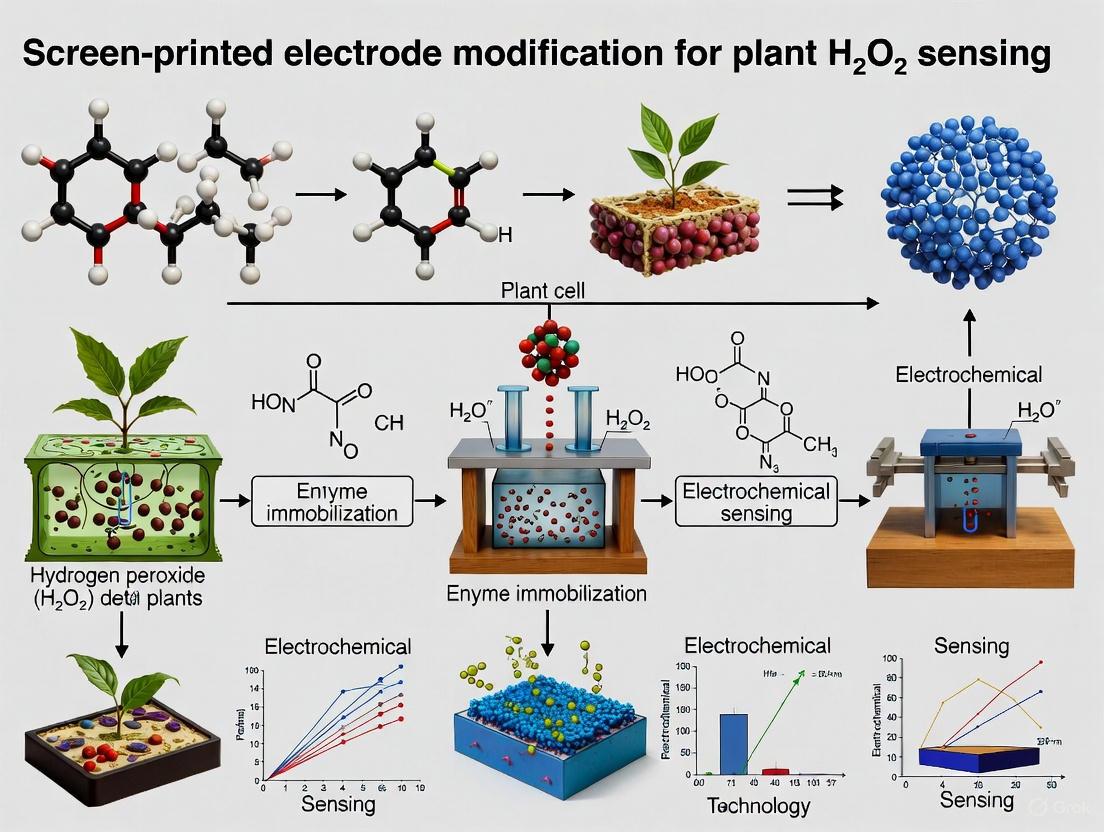
This article provides a comprehensive resource for researchers and scientists on the application of modified screen-printed electrodes (SPEs) for the detection of hydrogen peroxide (H₂O₂) in plant biology.
Advanced Screen-Printed Electrode Modifications for Sensitive Hydrogen Peroxide Detection in Plant Systems
Abstract
This article provides a comprehensive resource for researchers and scientists on the application of modified screen-printed electrodes (SPEs) for the detection of hydrogen peroxide (H₂O₂) in plant biology. It covers the foundational principles of SPE design and the critical role of H₂O₂ as a plant signaling molecule. The content details cutting-edge modification techniques, including the application of nanomaterials and Prussian Blue, alongside step-by-step methodological guidance for sensor development and deployment in plant matrices. Furthermore, it addresses common troubleshooting and optimization challenges and provides a framework for the analytical validation and performance comparison of these sensitive biosensing platforms, highlighting their potential to transform the understanding of oxidative stress and redox signaling in plants.
Fundamentals of Screen-Printed Electrodes and Hydrogen Peroxide in Plant Physiology
Screen-printed electrodes (SPEs) are miniaturized electrochemical measurement devices manufactured by printing specialized inks onto plastic or ceramic substrates [1]. These devices integrate a complete three-electrode electrochemical cell—consisting of a working electrode, reference electrode, and counter electrode—onto a single, compact strip [1] [2]. SPE technology has emerged as a powerful platform for plant science research, particularly for the detection and quantification of hydrogen peroxide (H₂O₂), a crucial signaling molecule in plant stress responses and physiological processes [3].
The evolution of SPEs addresses the need for reduced sample volumes and decreased production costs while enabling rapid in-situ analysis with high reproducibility, sensitivity, and accuracy [1]. Their disposability eliminates tedious cleaning procedures required with conventional electrodes and prevents cross-contamination between samples [1] [2]. For plant scientists, SPEs offer the unique advantage of enabling real-time monitoring of extracellular H₂O₂ fluxes from living plant cells and tissues with minimal invasion [3].
Structural Components and Manufacturing
Electrode Components
SPEs feature a standardized three-electrode configuration printed on a solid substrate:
- Working Electrode (WE): The primary sensing element where the electrochemical reaction occurs. Its response is sensitive to the analyte concentration [1]. For H₂O₂ sensing in plant science, carbon-based materials are most common, often modified with catalysts like platinum nanoparticles or polymers to enhance sensitivity and selectivity [3].
- Reference Electrode (RE): Provides a stable, known potential against which the working electrode potential is measured [1]. Silver/silver chloride (Ag/AgCl) is frequently used due to its stable electrochemical potential under various measurement conditions [1].
- Counter Electrode (CE): Completes the electrical circuit by allowing current to flow, enabling the electrochemical measurement [1]. This is typically made from carbon-based inks [1].
Manufacturing Process
SPE fabrication employs thick-film deposition technology where conductive inks are forced through a patterned mesh screen onto substrates [4]. The manufacturing process involves several critical stages:
- Ink Formulation: Conductive inks contain carbon, metallic particles, organic solvents, and binding pastes that determine the electrode's electrochemical properties [5]. The composition significantly affects electron transfer kinetics and analytical performance [2].
- Layer Deposition: Using a squeegee, inks are applied through a mesh screen containing the electrode pattern onto substrates [2]. The process is sequential, with each layer (conductive tracks, electrodes, insulating layers) printed and cured separately [5].
- Drying and Curing: Printed electrodes are dried in ovens (typically 300-1200°C) or through UV photocuring processes to eliminate solvents and achieve proper adhesion [1].
- Quality Control: Reproducibility is ensured through standardized printing conditions and specialized machinery [6].
Figure 1: SPE Manufacturing Workflow. The process begins with ink formulation and progresses through sequential printing, curing, and modification stages to produce finished electrodes [1] [2] [4].
Advantages of SPEs for Plant Science Research
SPEs offer numerous benefits that make them particularly suitable for plant science applications:
- Portability and Field Deployment: Their small size and compatibility with portable potentiostats enable real-time monitoring of H₂O₂ in greenhouse or field conditions, eliminating the need to remove plant tissues for laboratory analysis [1] [2].
- Minimal Sample Volume: SPEs require only 20-50 μL of sample volume, allowing repeated sampling from small plant tissues or extracellular fluids without significant damage to the plant [7].
- High Reproducibility: Mass production capabilities ensure consistent electrode performance between batches, essential for reliable long-term studies of plant stress responses [2] [6].
- Surface Modification Flexibility: SPEs can be readily modified with nanomaterials, enzymes, or polymers to enhance sensitivity and selectivity for H₂O₂ detection [5] [8]. Recent research demonstrates that modified SPEs can effectively discriminate between H₂O₂ and organic hydroperoxides by working at different potentials [3].
- Cost-Effectiveness: Disposable SPEs avoid cross-contamination between samples and eliminate cleaning procedures, reducing labor costs and improving experimental efficiency [1] [2].
SPE Modifications for H₂O₂ Sensing in Plant Systems
Surface modification of SPEs dramatically enhances their performance for detecting H₂O₂ in complex plant matrices. Recent advances include:
Nanocomposite Modifications
PtNP/Poly(Brilliant Green)/SPCE: This hybrid modification integrates platinum nanoparticles (PtNPs) within a poly(brilliant green) polymeric matrix on screen-printed carbon electrodes [3]. The one-pot, one-step fabrication simultaneously electropolymerizes the polymer and electrodeposits PtNPs, creating a three-dimensional structure that enhances electron transfer kinetics and provides abundant catalytic sites for H₂O₂ oxidation/reduction [3].
Key Advantages:
- Discriminates between H₂O₂ and organic hydroperoxides by operating at different potentials
- Successfully applied to quantify H₂O₂ in aqueous extracts from air quality monitoring filters
- Demonstrates excellent recoveries and low detection limits for complex environmental samples [3]
Electrochemical Characterization Methods
Modified SPEs for H₂O₂ detection are typically characterized using:
- Cyclic Voltammetry (CV): Evaluates redox behavior and electron transfer kinetics
- Amperometry: Measures current response at fixed potential with high temporal resolution
- Electrochemical Impedance Spectroscopy (EIS): Characterizes charge transfer resistance and interfacial properties [5]
Experimental Protocols
Protocol: Fabrication of PtNP/Poly(Brilliant Green) Modified SPCEs
Principle: Simultaneous electropolymerization of brilliant green and electrodeposition of platinum nanoparticles creates a hybrid nanocomposite film on SPCEs for selective H₂O₂ detection [3].
Materials:
- Commercial screen-printed carbon electrodes (e.g., Metrohm DropSens)
- Brilliant green monomer
- Hexachloroplatinic acid (H₂PtCl₆) solution
- Phosphate buffer saline (PBS, 0.1 M, pH 7.4)
- Potentiostat/Galvanostat with appropriate software
Procedure:
- Surface Preparation: Clean SPCEs by cycling in 0.5 M H₂SO₄ between -1.0 V and +1.0 V until stable voltammograms are obtained.
- Modification Solution: Prepare solution containing 0.5 mM brilliant green and 2 mM H₂PtCl₆ in pH 7.4 PBS.
- Electrodeposition/Electropolymerization: Apply constant potential of -0.8 V for 120 seconds under stirring conditions.
- Post-treatment: Rinse modified electrodes thoroughly with deionized water and stabilize in PBS by cycling between 0 V and +0.8 V until stable.
- Characterization: Validate modification success using cyclic voltammetry in 1 mM K₃Fe(CN)₆/K₄Fe(CN)₆ solution.
Quality Control:
- Check surface morphology by SEM imaging for uniform PtNP distribution
- Verify electrochemical performance using standard ferricyanide tests
- Test reproducibility across electrode batch (target <5% RSD) [3]
Protocol: H₂O₂ Detection in Plant Extracts Using Modified SPEs
Principle: Amperometric detection of H₂O₂ at optimized potential enables selective quantification in complex plant matrices [3].
Materials:
- PtNP/Poly(Brilliant Green) modified SPCEs
- Plant tissue samples (leaves, roots, or extracellular washing solutions)
- H₂O₂ standards (0.1-100 μM range)
- Phosphate buffer (0.1 M, pH 7.0)
- Portable potentiostat or laboratory electrochemical workstation
Procedure:
- Sample Preparation: Homogenize plant tissue in ice-cold phosphate buffer (1:5 w/v) and centrifuge at 10,000 × g for 15 minutes at 4°C. Collect supernatant for analysis.
- Calibration Curve: Perform amperometric measurements with standard H₂O₂ solutions (0, 0.1, 1, 10, 50, 100 μM) in stirring PBS at +0.5 V vs. Ag/AgCl.
- Sample Measurement: Transfer 50 μL of plant extract to modified SPE and record amperometric current at +0.5 V.
- Quantification: Calculate H₂O₂ concentration in samples from calibration curve.
- Validation: Confirm method accuracy using catalase control (pre-incubate sample with catalase to degrade H₂O₂) [3].
Troubleshooting:
- If interference observed, optimize detection potential between +0.4 V to +0.6 V
- For viscous samples, dilute with PBS to minimize fouling
- Regenerate electrode surface by brief polarization in PBS if sensitivity decreases
Performance Data and Applications
Table 1: Analytical Performance of Selected Modified SPEs for H₂O₂ Detection
| Modification Type | Linear Range | Detection Limit | Selectivity Features | Plant Science Applications |
|---|---|---|---|---|
| PtNP/Poly(Brilliant Green) [3] | 0.5-100 μM | 0.15 μM | Discriminates H₂O₂ from organic hydroperoxides | Real-time monitoring of extracellular H₂O₂ in plant stress responses |
| Prussian Blue-based [3] | 1-500 μM | 0.1-0.4 μM | Works in oxygen presence | Detection of oxidative burst in plant-pathogen interactions |
| CuPtCl₆/GCE [3] | 5-300 μM | 0.8 μM | Low interference from common electroactive compounds | Long-term monitoring of H₂O₂ fluxes in plant tissues |
Table 2: Research Reagent Solutions for SPE-based H₂O₂ Sensing
| Reagent/Material | Function | Application Notes | Commercial Sources |
|---|---|---|---|
| Platinum Nanoparticle Ink | Catalytic enhancement | Increases electron transfer kinetics and sensitivity | Sigma-Aldrich, Metrohm DropSens |
| Poly(Brilliant Green) | Polymer matrix | Provides 3D structure for nanoparticle integration | Sigma-Aldrich, TCI Chemicals |
| Screen-Printed Carbon Electrodes | Sensor platform | Disposable electrodes with integrated 3-electrode system | Metrohm DropSens, Gamry Instruments |
| Hydrogen Peroxide Standards | Calibration | Essential for quantitative measurements | Sigma-Aldrich, Fisher Scientific |
| Phosphate Buffer Saline (PBS) | Electrolyte medium | Maintains pH stability during measurements | Various biochemical suppliers |
Implementation in Plant Stress Research
SPE-based H₂O₂ detection platforms have enabled significant advances in understanding plant stress physiology:
- Oxidative Burst Monitoring: Modified SPEs allow real-time tracking of the rapid H₂O₂ production that occurs during plant-pathogen interactions, providing insights into early defense signaling events [3].
- Environmental Stress Assessment: SPEs have been successfully applied to quantify H₂O₂ in plant tissues exposed to various abiotic stresses including drought, salinity, and heavy metal toxicity [3].
- Air Pollution Studies: The technology enables measurement of H₂O₂ in plant extracts following exposure to atmospheric peroxides, helping elucidate plant responses to air quality [3].
Figure 2: SPE Implementation in Plant Stress Research. The workflow illustrates how SPE-based H₂O₂ detection enables researchers to connect plant stress stimuli with physiological responses through quantitative electrochemical monitoring [3].
The integration of SPE technology into plant science methodologies continues to expand, with ongoing developments focusing on increasing sensitivity for low-concentration H₂O₂ detection, improving selectivity in complex plant matrices, and enabling simultaneous monitoring of multiple signaling molecules. These advances position SPEs as indispensable tools for unraveling the complex roles of H₂O₂ in plant growth, development, and stress adaptation.
The Role of Hydrogen Peroxide as a Key Reactive Oxygen Species in Plant Signaling and Stress Responses
Hydrogen peroxide (H₂O₂) is a crucial reactive oxygen species (ROS) functioning as a central signaling molecule in plants, regulating a wide array of physiological processes and stress responses [9] [10]. While historically viewed primarily as a damaging oxidative agent, H₂O₂ is now recognized as a key secondary messenger in oxidative stress signaling, integrating communication within and between plant cells to coordinate development and acclimation to environmental challenges [9] [10]. The dual nature of H₂O₂—as both a toxic compound and a signaling molecule—requires precise spatial and temporal quantification to understand its functional roles in plant biology.
Recent advancements in electrochemical sensing, particularly using modified screen-printed electrodes (SPEs), offer promising tools for achieving this precise measurement [11] [12] [13]. These portable, cost-effective, and highly sensitive platforms are revolutionizing our ability to monitor H₂O₂ dynamics in real-time, even in complex plant matrices. This Application Note details the signaling mechanisms of H₂O₂ and provides standardized protocols for its detection using state-of-the-art SPE-based sensors, framing this methodology within the broader context of plant stress physiology research.
H₂O₂ Signaling Mechanisms in Plants
Central Signaling Pathways
Hydrogen peroxide operates as a hub in plant signaling networks, influencing various developmental and stress-responsive pathways. Its production is tightly regulated across different subcellular compartments, including chloroplasts, mitochondria, peroxisomes, and the apoplast [9]. The primary mode of H₂O₂ signal transduction is through oxidative post-translational modifications (Oxi-PTMs) of cysteine and methionine residues in target proteins [9]. These modifications act as molecular switches, precisely regulating protein function, stability, and interaction partners.
Key oxidative modifications include:
- S-sulfenylation: The reversible oxidation of cysteine thiols to sulfenic acid, forming an early signaling intermediate.
- S-glutathionylation: The covalent attachment of glutathione to cysteine residues, serving as a dynamic regulatory mechanism under oxidative stress to protect proteins from over-oxidation and to modulate their activity [9].
- Disulfide bond formation: The creation of covalent bonds between thiol groups, often altering protein structure and function.
These Oxi-PTMs directly regulate the activity of redox-sensitive transcription factors such as NPR1, STOP1, and MAPKs, thereby controlling the expression of downstream genes essential for stress acclimation [9]. For instance, H₂O₂-mediated oxidation can alter the transcriptional activity, DNA-binding affinity, or nuclear localization of these factors.
H₂O₂ in Stress Responses and Cross-Talk
The role of H₂O₂ in mediating plant responses to abiotic and biotic stresses is well-established. As an elicitor, it can activate defense genes and potentiate systemic acquired resistance (SAR) [14] [10]. Research on Capsicum annuum L. (pepper) has demonstrated that applications of H₂O₂ and other stressors like specific acoustic frequencies (MHAF) can synergistically or antagonistically modulate antioxidant enzyme activities (SOD, POD, PAL) and the expression of key genes involved in defense and epigenetic regulation (ros1, met1, MAPkinases) [14]. This highlights the complex interplay, or cross-talk, between H₂O₂ and other signaling pathways, including those involving plant hormones and other reactive molecules.
The diagram below illustrates the core signaling pathway of H₂O₂ in plants, from its production to the final physiological outcomes.
Advanced Sensing Platforms for H₂O₂ Quantification
Accurate measurement of H₂O₂ is fundamental to validating its signaling role. While traditional methods exist, electrochemical sensors based on modified screen-printed electrodes (SPEs) offer significant advantages for plant research.
SPEs are mass-producible, disposable, or reusable three-electrode systems (working, counter, and reference) printed on ceramic or flexible plastic substrates [11] [12]. Their low cost, portability, and ease of modification make them ideal for field-deployable plant sensing. The key to their specificity for H₂O₂ detection lies in the nanomaterial-based catalytic inks used to modify the working electrode surface.
The following workflow outlines the general process of developing and using a modified SPE for H₂O₂ detection.
Comparative Analysis of Nanomaterial-Modified SPEs
Different nanomaterials confer unique catalytic properties to SPEs. The table below summarizes the performance characteristics of various modified SPE platforms relevant to plant research.
Table 1: Performance Metrics of Selected Nanomaterial-Modified SPEs for H₂O₂ Detection
| Sensor Modification | Detection Principle | Linear Range | Limit of Detection (LOD) | Key Advantages | Reference |
|---|---|---|---|---|---|
| Prussian Blue Nanoparticles (PBNPs) | Electrocatalytic reduction of H₂O₂ at low potential (~0 V) | 0 – 4.5 mM | 0.2 µM | High selectivity (low operating potential), "artificial peroxidase," excellent reproducibility | [12] |
| PdNPs/Laser-Induced Graphene (LIG) | Non-enzymatic electrocatalytic oxidation/reduction | 5 µM – 5 mM (two linear ranges) | 0.37 µM | Reusable sensor, low cost, high sensitivity from PdNPs catalysis and LIG conductivity | [13] |
| Pt-Ni Hydrogel | Dual-mode: colorimetric (peroxidase-like) & electrocatalytic | Colorimetric: 0.10 µM–10.0 mMElectrochemical: 0.50 µM–5.0 mM | Colorimetric: 0.030 µMElectrochemical: 0.15 µM | Versatile dual-readout, high stability (60 days), excellent for complex media | [15] |
| Cu NPs@Cu-MOF/Ti₃C₂Tx | Non-enzymatic electrocatalytic reduction | Wide range (specific values not listed) | Very high sensitivity reported | Flexibility for on-body or irregular plant surface application, high sensitivity | [11] |
Detailed Experimental Protocols
Protocol 1: Fabrication and Application of a PBNP-Modified SPE
This protocol is adapted from a established method for creating highly sensitive and selective H₂O₂ sensors [12].
4.1.1 Research Reagent Solutions
Table 2: Essential Reagents for PBNP-Modified SPE Fabrication
| Item | Function / Role in the Protocol |
|---|---|
| Screen-Printed Electrodes (SPEs) | Disposable three-electrode platform; serves as the foundational sensor substrate. |
| Potassium ferrocyanide (K₄[Fe(CN)₆]) | Precursor for the synthesis of Prussian Blue Nanoparticles (PBNPs). |
| Iron (III) chloride (FeCl₃) | Precursor for the synthesis of PBNPs. |
| Hydrochloric Acid (HCl) | Provides acidic conditions necessary for the synthesis of stable, catalytically active PBNPs. |
| Potassium Chloride (KCl) | Supporting electrolyte; essential for the electrochemical reaction and stability of the PBNP film. |
| Phosphate Buffered Saline (PBS, pH 7.4) | Electrolyte solution for electrochemical measurements; provides a physiologically relevant pH. |
| Hydrogen Peroxide (H₂O₂) Standard Solutions | Used for sensor calibration and quantification of H₂O₂ in unknown samples. |
| Piezoelectric Inkjet Printer | Used for precise, layer-by-layer deposition of PBNP ink onto the SPE working electrode. |
4.1.2 Step-by-Step Procedure
Synthesis of PBNP Dispersion:
- Mix 2 mL of 2 mM K₄[Fe(CN)₆] with 1 mL of 0.1 M KCl in 10 mM HCl.
- Under vigorous stirring, add 2 mL of 2 mM FeCl₃ dropwise to the above solution.
- Allow the reaction to proceed overnight at room temperature until a stable blue colloidal dispersion forms. This dispersion is stable for approximately three weeks when stored properly [12].
SPE Modification via Inkjet Printing:
- Load the PBNP dispersion into a compatible cartridge for a piezoelectric inkjet printer (e.g., Dimatix DMP 2831).
- Program the printer with a drop spacing of 20 µm.
- Print the PBNP ink directly onto the working electrode area of the SPE. For optimal performance, 20 layers of printing are recommended to achieve a balance of high sensitivity and stability [12].
- Store the modified SPEs dry at room temperature until use.
Electrochemical Measurement and Calibration:
- Connect the PBNP-modified SPE to a potentiostat.
- Immerse the electrode in 0.05 M PBS (pH 7.4) containing 0.1 M KCl.
- Perform amperometric measurements at an applied potential of 0.0 V vs. Ag/AgCl.
- Upon stabilization of the background current, successively add known concentrations of H₂O₂ standard solution under gentle stirring.
- Record the steady-state current response after each addition.
- Plot the current (µA) versus H₂O₂ concentration (mM) to generate a calibration curve.
Analysis of Plant Samples:
- Leaf Sap Extraction: For direct extraction, the hydrogel microneedle (MN) patch method can be employed [16]. Press a PMVE/MA hydrogel MN patch onto the leaf surface to rapidly extract sap without major tissue damage.
- Measurement: Dilute the plant sap extract if necessary in PBS/KCl electrolyte. Follow the amperometric procedure (Step 3) to measure the current response and interpolate the H₂O₂ concentration from the calibration curve.
Protocol 2: In-field Detection using a Hydrogel Microneedle Patch
This protocol describes a minimally invasive method for sampling leaf apoplastic fluid for H₂O₂ analysis, compatible with optical or electrochemical detection [16].
- Patch Fabrication: Prepare a crosslinked poly (methyl vinyl ether-alt-maleic acid) (PMVE/MA) hydrogel microneedle array.
- Sample Collection: Gently press the MN patch onto the target leaf surface, applying uniform pressure for a predefined time (e.g., 1-5 minutes) to allow the hydrogel microneedles to penetrate the cuticle and absorb apoplastic fluid.
- Analyte Extraction: Remove the patch and elute the extracted sap from the hydrogel by immersing it in a small volume of buffer (e.g., PBS).
- Detection:
- Colorimetric: Mix the eluent with a chromogenic substrate (e.g., TMB) and a peroxidase (or peroxidase-mimic nanozyme). Measure the absorbance of the colored product.
- Electrochemical: Use the eluent as the sample for analysis with a modified SPE, as described in Protocol 4.1.
The Scientist's Toolkit
Table 3: Essential Research Reagent Solutions for Plant H₂O₂ Sensing Studies
| Category / Item | Specific Example | Function / Application |
|---|---|---|
| Core Sensing Platforms | Screen-Printed Electrodes (SPEs) | Disposable, customizable electrochemical cell for portable H₂O₂ detection. |
| Catalytic Nanomaterials | Prussian Blue Nanoparticles (PBNPs) | "Artificial peroxidase" for electrocatalytic H₂O₂ reduction at low potential, minimizing interference. |
| Metal-Organic Frameworks (MOFs) | Porous nanostructures with high surface area and tunable catalysis for sensitive non-enzymatic sensing. | |
| Pt-Ni or Pd Nanohybrids | Nanozymes with high peroxidase-like and electrocatalytic activity for dual-mode (colorimetric/electrochemical) detection. | |
| Plant Sampling Tools | Hydrogel Microneedle (MN) Patch | Minimally invasive tool for rapid in-field extraction of leaf apoplastic fluid containing H₂O₂. |
| Key Biochemical Reagents | 3,3',5,5'-Tetramethylbenzidine (TMB) | Chromogenic substrate for colorimetric H₂O₂ detection via peroxidase-catalyzed oxidation. |
| Phosphate Buffered Saline (PBS) | Standard electrolyte solution for maintaining pH and ionic strength during electrochemical measurement. |
Hydrogen peroxide is a master regulator of plant growth, development, and stress resilience. The advancement of robust, sensitive, and field-deployable sensing technologies, particularly those based on modified screen-printed electrodes, is critical for elucidating the complex dynamics of H₂O₂ signaling in plants. The protocols and platform comparisons provided here offer researchers a practical toolkit to quantitatively investigate H₂O₂ in plant systems, bridging the gap between fundamental redox biology and applied agricultural science. Future directions will involve integrating these sensors with wireless technology and data analytics for real-time plant health monitoring.
Research Reagent Solutions: Essential Materials
The following table catalogues the core materials required for the fabrication and modification of carbon-based SPEs for H₂O₂ sensing.
Table 1: Key Research Reagents and Materials for Carbon-SPE Fabrication and Modification
| Category | Specific Item / Composition | Function / Role | Key Characteristics |
|---|---|---|---|
| Conductive Inks | Graphite/carbon ink (e.g., Electrodag 421) [17] [18] | Forms the conductive working, counter, and reference electrode tracks. | High electrical conductivity, stability in electrochemical window. |
| Biochar/Ethylcellulose ink [19] | Sustainable alternative for working electrode; basis for sensor. | Environmentally friendly, favorable robustness, low-cost. | |
| Substrates | Polyethylene Terephthalate (PET) [20] [18] | Flexible, inert support for printing electrode structures. | Low cost, flexibility, chemical resistance. |
| Polyvinyl Chloride (PVC), FR-4 Epoxy (PCB) [18] | Alternative substrate materials for SPEs. | Varying rigidity and application suitability. | |
| Modification Materials | Prussian Blue Nanoparticles (PBNPs) [17] | "Artificial peroxidase" for electrocatalytic H₂O₂ reduction. | High sensitivity, operates at low potentials (~0 V), minimizes interferences. |
| Polyaniline/Zinc Oxide (PANI/ZnO) Nanowires [20] | Composite to modify working electrode surface. | Enhances charge-transfer, increases surface area, enables analyte discrimination. | |
| Electrochemical Cell Components | Silver/Silver Chloride (Ag/AgCl) ink [17] [18] | Used to print the pseudo-reference electrode. | Provides stable reference potential. |
| Dielectric ink (e.g., Vinilflat 38.101E) [17] | Insulating layer to define electrode area and protect conductive paths. | Electrically insulating, chemically stable. | |
| Target Analytic & Buffers | Hydrogen Peroxide (H₂O₂) | Key signaling molecule in plant stress and development [21] [22]. | Target analyte for the developed sensors. |
| Phosphate Buffer Solution (PBS), typically with KCl [23] [17] | Serves as the supporting electrolyte for electrochemical measurements. | Provides consistent ionic strength and pH. |
Performance of Carbon-SPEs and Modifications
The analytical performance of SPEs is significantly enhanced through strategic modifications of the carbon working electrode surface. The table below summarizes the performance of different carbon-SPE configurations for H₂O₂ sensing.
Table 2: Analytical Performance of Various Carbon-Based SPEs for H₂O₂ Detection
| Sensor Platform / Modification | Linear Range (µM) | Limit of Detection (LOD) | Sensitivity | Key Application & Findings |
|---|---|---|---|---|
| PBNPs on SPCE (Inkjet-Printed) [17] | 0 - 4,500 | 0.2 µM | 762 µA·mM⁻¹·cm⁻² | Direct H₂O₂ measurement; excellent reproducibility (<5% RSD). |
| PANI/ZnO Nanowires on SPCE [20] | Not specified for H₂O₂ | Not specified for H₂O₂ | Higher charge-transfer rate, lower charge-transfer resistance | Demonstrated for discrimination of electroactive amino acids; platform suitable for enhancing sensor performance. |
| Biochar/Ethylcellulose SPCE [19] | Not specified for H₂O₂ | Not specified for H₂O₂ | Favorable analytical performance for paracetamol | Optimized for mass production; demonstrates viability of cheap, environmentally friendly sensor platforms. |
| Screen-Printed Gold Electrode (SPGE) [23] | 0.5 - 200 | 3.06 µM | Not specified | ECL-based H₂O₂ detection; good repeatability (RSD 6.03%); recovery of 83.83-106.01%. |
Experimental Protocols
Protocol: Fabrication of Basic Screen-Printed Carbon Electrodes (SPCEs)
This protocol outlines the layer-by-layer fabrication of a three-electrode SPCE system [18].
I. Materials and Equipment
- Substrate: Polyester film (e.g., Autostat HT5) or Polyethylene Terephthalate (PET).
- Inks: Graphite-based conductive ink (e.g., Electrodag 421), Ag/AgCl ink (e.g., Electrodag 477 SS), dielectric ink (e.g., Vinilflat 38.101E).
- Equipment: Screen-printing machine (e.g., DEK 245), screen frames with designed patterns for electrodes and insulation, oven for curing.
II. Procedure
- Substrate Preparation: Clean the flexible polyester substrate to remove any dust or debris.
- Printing Conductive Paths and Silver Layer:
- Load the silver/silver chloride ink onto the screen printer.
- Print the conductive paths and the pseudo-reference electrode (RE) onto the substrate.
- Cure the printed layer according to the ink manufacturer's specifications (e.g., 60°C for 15 minutes).
- Printing Carbon Working and Counter Electrodes:
- Load the graphite-carbon ink.
- Align and print the working electrode (WE) and counter electrode (CE) over the pre-printed conductive paths.
- Cure the carbon layer as specified.
- Applying Insulating Layer:
- Load the dielectric ink.
- Print the insulating layer to expose only the active electrode areas and the contact pads, protecting the rest of the conductive tracks.
- Cure the final assembly completely.
III. Quality Control
- Perform cyclic voltammetry (CV) in a solution containing a redox probe, such as potassium ferricyanide. A successful fabrication yields a characteristic "duck-shaped" CV plot [18].
- Inspect electrodes under a microscope for printing defects or short circuits.
Protocol: Modification of SPCEs with Prussian Blue Nanoparticles (PBNPs) for H₂O₂ Sensing
This protocol describes the modification of SPCEs with PBNPs via inkjet printing to create a highly sensitive H₂O₂ sensor [17].
I. PBNPs Dispersion Synthesis
- Prepare 2 mM potassium ferrocyanide (K₄[Fe(CN)₆]) in 10 mM HCl with 0.1 M KCl.
- Under vigorous stirring, add 2 mM iron (III) chloride (FeCl₃) dropwise to the solution.
- Allow the reaction to proceed overnight at room temperature until a stable, blue colloid solution forms. This dispersion is stable for approximately three weeks.
II. Inkjet Printing of PBNPs onto SPCEs
- Printer Setup: Use a piezoelectric inkjet printer (e.g., Dimatix DMP 2831). Load the PBNP dispersion into the cartridge.
- Printing Parameters: Set a drop spacing of 20 µm. Use all 16 nozzles for uniform deposition.
- Modification: Print the PBNP dispersion directly onto the surface of the pre-fabricated carbon working electrode. For optimal performance, 20 printing layers are recommended [17].
- Curing and Storage: Allow the modified electrodes to dry at room temperature. Store the finished sensors dry at room temperature; they remain active for at least two months.
III. Electroanalytical Measurement of H₂O₂
- Setup: Place the PBNP-modified SPCE in a electrochemical cell containing 0.05 M phosphate buffer with 0.1 M KCl (pH 7.4).
- Electrocatalysis: The applied potential reduces PBNPs to Prussian White (PW) at around 0 V (vs. Ag/AgCl). PW then catalyzes the reduction of H₂O₂.
- Detection: Use amperometry (i-t curve) at a constant potential of 0 V to monitor the reduction current, which is proportional to the H₂O₂ concentration. Alternatively, cyclic voltammetry can be used for characterization.
Protocol: Plant Sample Handling and H₂O₂ Measurement Context
This protocol integrates the electrochemical sensor into a plant science research context for monitoring H₂O₂, a key redox metabolite [21] [22].
I. Plant Material and Stress Treatment
- Grow plants (e.g., Mesembryanthemum crystallinum hypocotyl explants or other model species) under controlled conditions.
- Apply the desired abiotic stress (e.g., drought, salinity) or biotic stress (e.g., pathogen infection) to elicit an oxidative burst.
- Harvest tissue samples at critical time points post-stress induction, as H₂O₂ levels and antioxidant enzyme activities are dynamic [21] [22].
II. Sample Preparation for Electrochemical Analysis
- Rapid Homogenization: Grind the frozen plant tissue to a fine powder in liquid nitrogen.
- Extraction: Homogenize the powder in a suitable cold buffer (e.g., phosphate buffer, pH 7.0-7.4) to extract soluble metabolites, including H₂O₂.
- Clarification: Centrifuge the homogenate at high speed (e.g., 12,000 × g for 15 minutes at 4°C) to remove cellular debris.
- Analysis: Dilute the supernatant with the electrochemical supporting electrolyte (e.g., phosphate buffer with KCl) and analyze immediately using the PBNP-modified SPCE via amperometry.
III. Data Correlation with Antioxidant Enzymes
- For a comprehensive physiological phenotyping, correlate the electrochemically detected H₂O₂ levels with the activities of key antioxidant enzymes (e.g., superoxide dismutase (SOD), catalase (CAT), peroxidases (POX)) from parallel samples using established spectrophotometric assays in a 96-well format [22].
Workflow and Signaling Pathway Diagrams
Diagram 1: Workflow for SPCE Fabrication, Modification, and H₂O₂ Sensing
Diagram Title: Workflow for SPCE Fabrication and H₂O₂ Sensing Application
Diagram 2: H₂O₂ Signaling and Antioxidant Pathway in Plant Stress
Diagram Title: H₂O₂ Role in Plant Stress and Antioxidant Defense
The detection of hydrogen peroxide (H2O2) in plant samples is a critical analytical challenge in plant physiology and stress response research. As a key signaling molecule and marker of oxidative stress, H2O2 plays a fundamental role in plant metabolic activities, cellular damage, and adaptation to environmental stressors [24]. However, the complex matrix of plant tissues and the typically low concentrations of H2O2 present significant obstacles for accurate measurement.
Screen-printed electrodes (SPEs) offer a promising platform for such analyses due to their cost-effectiveness, portability, and ease of use. Nevertheless, bare, unmodified SPEs lack the necessary sensitivity and selectivity for reliable H2O2 detection in complex plant samples. This application note demonstrates how strategic electrode modification transforms standard SPEs into highly tuned analytical tools, enabling precise, selective, and sensitive measurement of H2O2 in plant research.
The Role of Modification: Sensitivity and Selectivity
Electrode modification addresses two fundamental limitations of bare SPEs when detecting H2O2 in plant samples: insufficient sensitivity and poor selectivity.
Enhancing Sensitivity
Nanomaterial-based modifications dramatically increase the electroactive surface area of SPEs, facilitating greater interaction between the electrode and H2O2 molecules. This enhanced surface area, combined with the electrocatalytic properties of the modifiers, significantly boosts the Faradaic current response, enabling detection at lower concentrations. For instance, integrating platinum nanoparticles (PtNPs) within a polymeric matrix creates a hybrid material that provides a high density of catalytic sites, leading to substantially improved sensitivity [3].
Ensuring Selectivity
Plant extracts contain numerous electroactive compounds that can interfere with H2O2 measurement. Modifications can be engineered to catalyze H2O2 oxidation or reduction at a specific working potential where these interferents are electrochemically silent. The developed PtNP/Poly(Brilliant Green)/SPCE sensor exemplifies this principle, as it can effectively discriminate between H2O2 and organic hydroperoxides (OHPs) simply by operating at different applied potentials [3]. Furthermore, using catalysts like Prussian Blue (PB), which operates at low potentials (around 0 V vs. Ag/AgCl), minimizes the impact of common interfering species [17].
Performance Comparison of Modified H2O2 Sensors
The table below summarizes the analytical performance of different modification strategies relevant to plant sample analysis, highlighting the enhancements achieved beyond bare electrodes.
Table 1: Performance Metrics of Modified H2O2 Sensors
| Modification Strategy | Detection Limit | Linear Range | Sensitivity | Key Advantages for Plant Analysis |
|---|---|---|---|---|
| PtNP/Poly(Brilliant Green) [3] | In low μM range * | Up to 1.5 mM * | High * | Selective discrimination between H2O2 & organic hydroperoxides by potential control |
| Prussian Blue Nanoparticles (Inkjet-Printed) [17] | 0.2 μM | 0 - 4.5 mM | 762 μA·mM⁻¹·cm⁻² | Low operational potential minimizes interference |
| Prussian Blue Nanoparticles (Bulk-Modified) [25] | 0.5 μM | 0.5 μM - 1 mM | Not Specified | Single-step, scalable production; suitable for mass use |
| Hemin-PEI/MWCNT [24] | Sub-μM (e.g., 0.72 μM) | 1 - 100 μM | 18.09 A·M⁻¹·cm⁻² | High sensitivity; biocompatible; useful for complex matrices |
| Bare Screen-Printed Carbon Electrode | High (Poor) | Narrow | Low | Prone to fouling, significant interference, unsuitable for direct plant analysis |
*Exact numerical values for this specific sensor were not provided in the search results, but the source confirms a "wide linear range," "low detection limits," and "excellent analytical performance" [3].
Detailed Experimental Protocols
Protocol A: One-Pot Fabrication of PtNP/Poly(Brilliant Green)/SPCE
This protocol describes the simultaneous electro-polymerization and nanoparticle deposition for creating a highly selective sensor [3].
Research Reagent Solutions
- Screen-Printed Carbon Electrodes (SPCEs): Served as the transducer base.
- Brilliant Green Monomer: The precursor for forming the conductive polymer matrix.
- Chloroplatinic Acid (H₂PtCl₆): Source for platinum nanoparticles.
- Sulfuric Acid (H₂SO₄) Electrolyte (0.5 M): Medium for the electrodeposition process.
Procedure:
- Electrode Pre-treatment: Clean the SPCEs according to the manufacturer's instructions.
- Modification Solution Preparation: Prepare an aqueous solution containing 0.2 mM Brilliant Green and 2 mM H₂PtCl₆ in 0.5 M H₂SO₄.
- Electrochemical Co-deposition: Place the SPCE in the modification solution.
- Perform cyclic voltammetry for 15 cycles across a potential range of -1.0 V to +1.8 V (vs. the onboard Ag/AgCl reference) at a scan rate of 50 mV/s.
- This one-pot, one-step process simultaneously electropolymerizes the Brilliant Green into Poly(Brilliant Green) and reduces Pt ions to form PtNPs within the polymer's 3D structure.
- Sensor Conditioning: After deposition, rinse the modified electrode (now PtPBG-aSPCE) thoroughly with deionized water.
- Storage: Store the sensor dry at room temperature when not in use.
Application to Plant Samples:
- For analysis of H2O2 in plant tissue extracts, use amperometry in a stirred solution.
- To selectively measure H2O2 in the presence of organic hydroperoxides, apply a working potential of -0.3 V vs. Ag/AgCl.
- To measure total peroxides, apply a potential of +0.7 V vs. Ag/AgCl. The OHP concentration can be determined by difference [3].
Protocol B: Fabrication of Hemin-PEI/MWCNT Modified SPGEs
This protocol outlines the modification of screen-printed graphene electrodes (SPGEs) with a nanocomposite for highly sensitive H2O2 detection, suitable for challenging matrices like plant extracts [24].
Research Reagent Solutions
- Screen-Printed Graphene Electrodes (SPGEs): Provide a conductive, high-surface-area substrate.
- Multi-Walled Carbon Nanotubes (MWCNTs): Enhance conductivity and electron transfer efficiency.
- Heminc: The iron protoporphyrin complex that acts as the core catalytic site for H2O2 reduction.
- Polyethyleneimine (PEI), MW 1300: A cationic polymer that stabilizes hemin, prevents its aggregation, and improves its electrocatalytic performance.
- Dimethylformamide (DMF): Solvent for preparing the MWCNT dispersion.
Procedure:
- MWCNT Dispersion: Disperse MWCNTs in DMF at a concentration of 1.0 mg/mL. Sonicate for 30 minutes to achieve a homogeneous suspension.
- Hemin-PEI Composite Preparation: Prepare a 1:1 mixture of 2 mM hemin (in DMSO) and 2% (w/v) PEI (in water). Allow it to equilibrate to form the hemin-PEI complex.
- Electrode Modification:
- Drop-cast 5 μL of the MWCNT dispersion onto the working electrode surface of the SPGE and allow it to dry.
- Subsequently, drop-cast 5 μL of the hemin-PEI composite onto the MWCNT/SPGE.
- Let the modified electrode dry thoroughly at room temperature.
- Electrode Storage: Store the finished hemin-PEI/MWCNT/SPGE sensor in a dry and dark place.
Analysis:
- Perform amperometric measurements in a buffer at physiological pH (e.g., 0.1 M phosphate buffer, pH 7.4).
- Apply a low detection potential of +0.2 V vs. Ag/AgCl to catalyze the reduction of H2O2, which helps avoid the oxidation of common interfering species present in plant samples.
Experimental Workflow and Signaling
The following diagram illustrates the complete pathway from sensor modification to H2O2 detection and its significance in plant biology.
Diagram 1: H2O2 Sensing Workflow in Plant Research.
The modified electrode is central to this workflow. The catalytic sites (e.g., PtNPs, Hemin) facilitate the specific electrochemical reaction of H2O2, generating a measurable current signal proportional to its concentration. This quantitative data allows researchers to draw correlations with plant physiological states, such as oxidative stress triggered by abiotic (drought, UV) or biotic (pathogen attack) factors.
The Scientist's Toolkit: Essential Research Reagents
Table 2: Key Reagents for SPE Modification in H2O2 Sensing
| Reagent | Function in Modification | Relevance to Plant H2O2 Analysis |
|---|---|---|
| Platinum Nanoparticles (PtNPs) [3] | High-electrocatalyst for H2O2 reduction; enhances electron transfer kinetics. | Enables selective measurement at different potentials to distinguish H2O2 from other peroxides in plant extracts. |
| Prussian Blue (PB) Nanoparticles [17] [25] | "Artificial peroxidase"; catalyzes H2O2 reduction at very low potentials (~0 V). | Minimizes interference from oxidizable phenols and other compounds common in plant samples. |
| Heminc [24] | Iron protoporphyrin catalyst; mimics the active site of peroxidase enzymes. | Provides high sensitivity and operates effectively in neutral pH conditions typical of plant extracts. |
| Conductive Polymers (e.g., Poly(Brilliant Green)) [3] | Forms a 3D matrix for nanoparticle incorporation; facilitates charge transfer. | Creates a stable, customized sensor surface that can be tailored for specific detection needs. |
| Carbon Nanotubes (MWCNTs) [24] | Increases electrode surface area; boosts conductivity and electron transfer. | Amplifies the detection signal, crucial for measuring low, physiologically relevant H2O2 concentrations in plants. |
| Screen-Printed Electrodes (Carbon/Graphite/Graphene) [3] [24] [25] | Disposable, inexpensive, and portable transducer platform. | Allows for rapid, in-field testing of plant samples, supporting high-throughput experimental designs. |
Hydrogen peroxide (H₂O₂) is a crucial signaling molecule in plant physiological processes, regulating immune responses, apoptosis, root growth, and adaptation to environmental stress [26] [27]. In plant research, accurate detection of H₂O₂ is essential for understanding oxidative stress signaling and metabolic activities. Electrochemical sensors, particularly those based on screen-printed carbon electrodes (SPCEs), have become indispensable tools for such analyses due to their portability, low cost, disposability, and ease of mass production [5]. SPCEs integrate working, reference, and counter electrodes onto inert substrates like polyester or polyvinyl chloride, enabling compact sensor design ideal for plant research applications.
The performance of bare SPCEs for H₂O₂ detection is often limited by sensitivity, selectivity, and overpotential requirements. Consequently, surface modification with various nanomaterials, polymers, and mediators has become a fundamental strategy to enhance their analytical capabilities. These modifications improve electron transport, increase active surface area, and provide specificity for H₂O₂ detection in complex plant matrices [5]. This application note provides a comprehensive overview of common modifier classes, their operational mechanisms, and detailed protocols for electrode modification tailored to plant H₂O₂ sensing research.
Nanomaterials as Electrode Modifiers
Metallic Nanoparticles and Nanostructures
Metallic nanoparticles significantly enhance SPCE performance through their high conductivity, catalytic properties, and large surface area. Gold, platinum, palladium, and silver nanoparticles have been widely applied in H₂O₂ sensing [28].
- Gold Nanowires (AuNWs): A recent sensor developed using AuNWs demonstrated excellent capability for quantifying H₂O₂ released by human cells, showcasing the potential for monitoring oxidative stress in biological systems [29]. The high aspect ratio of nanowires provides an extensive surface for electrocatalytic reactions.
- Platinum and Palladium Nanoparticles: These nanoparticles exhibit outstanding electrocatalytic activity toward H₂O₂ reduction. Sensors incorporating palladium nanowires show large specific surface areas, excellent conductivity, and outstanding electrocatalytic activities [28].
- Silver Nanoparticles: Though less common than other noble metals, silver nanoparticles also contribute to sensitive H₂O₂ detection when incorporated into electrode surfaces [28].
Table 1: Performance Comparison of Metallic Nanomaterial-Modified Sensors for H₂O₂ Detection
| Nanomaterial | Sensitivity (μA·mM⁻¹·cm⁻²) | Limit of Detection (μM) | Linear Range (mM) | Key Advantages |
|---|---|---|---|---|
| Gold Nanowires [29] | Not specified | Not specified | Not specified | Excellent for biological sensing, high conductivity |
| Platinum Nanoparticles [28] | Varies by composite | Varies by composite | Varies by composite | High electrocatalytic activity, stability |
| Palladium Nanowires [28] | Varies by composite | Varies by composite | Varies by composite | Large surface area, excellent conductivity |
| Silver Nanoparticles [28] | Varies by composite | Varies by composite | Varies by composite | Cost-effective, good catalytic properties |
Carbon Nanomaterials
Carbon nanomaterials enhance SPCE performance by facilitating electron transfer and increasing the electroactive surface area.
- Multi-Walled Carbon Nanotubes (MWCNTs): MWCNTs create conductive networks on electrode surfaces, significantly improving electron transfer efficiency. In a hemin-PEI/MWCNT-modified sensor, the MWCNTs enhanced electrode conductivity and ET efficiency, contributing to a high sensitivity of 18.09 A·M⁻¹·cm⁻² for H₂O₂ detection [24].
- Graphene and Graphene Oxide: These materials provide an extremely high surface area and favorable electrocatalytic properties. Screen-printed graphene electrodes (SPGEs) serve as excellent transducers for H₂O₂ sensor development [24].
Metal Hexacyanoferrates (Prussian Blue)
Prussian blue (PB, ferric hexacyanoferrate) is often called an "artificial peroxidase" due to its exceptional electrocatalytic activity toward H₂O₂ reduction [28] [12]. Its reduced form, Prussian white (PW), catalyzes H₂O₂ reduction at low operating potentials (around 0 V vs. Ag/AgCl), which minimizes interference from other electroactive species commonly present in plant samples [28].
Prussian blue nanoparticles (PBNPs) offer enhanced surface-to-volume ratio and electrochemical properties compared to bulk PB films. Sensors modified with 20 layers of inkjet-printed PBNPs achieved a detection limit of 0.2 μM, a linear range up to 4.5 mM, and a sensitivity of 762 μA·mM⁻¹·cm⁻² [12]. The main challenge with PB-based sensors is their limited stability at neutral pH, which can be mitigated by using specialized deposition techniques or composite materials [28].
Polymers and Organic Mediators
Polyethyleneimine (PEI)
Cationic polymers like polyethyleneimine (PEI) serve as effective matrices for dispersing electrocatalytic molecules. In H₂O₂ sensing, PEI is particularly valuable for entrapping hemin, an iron protoporphyrin complex that constitutes the catalytic center of peroxidase enzymes [24].
- Function: PEI prevents hemin dimerization and multimerization, which would otherwise reduce catalytic activity. The "monomerization" of hemin within the PEI matrix preserves its intrinsic peroxidase-like activity [24].
- Application: In a hemin-PEI/MWCNT/SPGE sensor, the PEI matrix enabled hemin to achieve a low onset potential for H₂O₂ reduction (+0.2 V) and high sensitivity (18.09 A·M⁻¹·cm⁻²) [24].
Polyacrylic Acid (PAA)
Polyacrylic-acid-based membranes form hydrophilic, viscous layers that can entrap H₂O₂, facilitating its detection at electrode surfaces. These membranes can be used alone or in combination with inorganic catalysts like manganese dioxide (MnO₂) [27].
- Sensing Mechanism: PAA-based sensors detect gaseous H₂O₂, which is relevant for plant physiological studies involving stomatal conductance and aerial tissue analysis. In one configuration, a PAA sensor detected H₂O₂ in the low mg·m⁻³ range under ambient conditions [27].
- MnO₂/PAA Composite: Adding an MnO₂ underlayer beneath the PAA membrane further enhances sensor performance. MnO₂ participates in redox reactions with H₂O₂, improving both sensitivity and stability [27].
Experimental Protocols
Protocol 1: Modification of SPCEs with Prussian Blue Nanoparticles via Inkjet Printing
This protocol details the modification of SPCEs with PBNPs using piezoelectric inkjet printing for highly sensitive and reproducible H₂O₂ detection [12].
Research Reagent Solutions:
- Potassium ferrocyanide (K₄[Fe(CN)₆]) solution: 2 mM in 10 mM HCl with 0.1 M KCl
- Iron (III) chloride (FeCl₃) solution: 2 mM in deionized water
- Phosphate buffer: 0.05 M, pH 7.4, containing 0.1 M KCl (electrochemical measurement buffer)
- H₂O₂ stock solutions: Prepared daily in deionized water
Procedure:
- PBNPs Synthesis: Mix 2 mL of 2 mM K₄[Fe(CN)₆] solution with 1 mL of 0.1 M KCl in 10 mM HCl. Under vigorous stirring, add 2 mL of 2 mM FeCl₃ solution dropwise. A blue colloidal solution will form gradually. Allow the reaction to proceed overnight at room temperature to complete nanoparticle formation.
- Inkjet Printing Preparation: Filter the PBNP dispersion through a 0.45 μm membrane filter. Load the dispersion into the piezoelectric printer cartridge.
- SPCE Modification: Print the PBNP dispersion onto the working electrode of SPCEs using a drop spacing of 20 μm. Optimize the number of printing layers (20 layers recommended [12]) to achieve a homogeneous PBNP film. Allow the printed electrodes to dry at room temperature.
- Sensor Activation: Before first use, cycle the PBNP-modified SPCE in 0.05 M phosphate buffer (pH 7.4) containing 0.1 M KCl between -0.3 V and +0.5 V at a scan rate of 50 mV·s⁻¹ for 10 cycles to stabilize the electrochemical response.
Analytical Performance Assessment:
- The optimized sensor (20 PBNP layers) typically achieves a detection limit of 0.2 μM, sensitivity of 762 μA·mM⁻¹·cm⁻², and linear range from 0 to 4.5 mM [12].
- The sensor demonstrates excellent reproducibility (<5% RSD) and retains activity for up to 2 months when stored dry at room temperature.
Protocol 2: Preparation of Hemin-PEI/MWCNT Modified Screen-Printed Graphene Electrodes
This protocol describes the development of a pseudo-peroxidase non-enzymatic sensor for H₂O₂ monitoring by integrating hemin-PEI with MWCNTs on screen-printed graphene electrodes (SPGEs) [24].
Research Reagent Solutions:
- Hemin solution: 5 mg·mL⁻¹ in DMSO
- Polyethyleneimine (PEI) solution: 1% w/v in deionized water
- MWCNT dispersion: 1 mg·mL⁻¹ in DMF
- Phosphate buffer: 0.1 M, pH 7.4 (working buffer)
Procedure:
- Hemin-PEI Composite Preparation: Mix the hemin and PEI solutions at a 1:2 volume ratio. Vortex thoroughly and allow to incubate for 1 hour at room temperature to form a stable hemin-PEI complex.
- MWCNT/SPGE Modification: Deposit 5 μL of the MWCNT dispersion onto the working electrode of the SPGE. Allow to dry at room temperature to form a conductive network.
- Hemin-PEI Deposition: Drop-cast 5 μL of the hemin-PEI composite onto the pre-modified MWCNT/SPGE. Dry under ambient conditions.
- Sensor Conditioning: Condition the modified electrode in 0.1 M phosphate buffer (pH 7.4) by applying a potential of +0.2 V for 300 seconds to establish a stable baseline.
Analytical Performance Assessment:
- The hemin-PEI/MWCNT/SPGE sensor achieves high sensitivity of 18.09 ± 0.89 A·M⁻¹·cm⁻² for H₂O₂ detection with a low onset potential of approximately +0.2 V [24].
- The sensor demonstrates excellent selectivity against common interferents including ascorbic acid, uric acid, and dopamine, making it suitable for complex sample matrices.
The Scientist's Toolkit: Essential Research Reagent Solutions
Table 2: Key Reagents and Materials for SPCE Modification in H₂O₂ Sensing
| Research Reagent | Function/Application | Exemplary Use Case |
|---|---|---|
| Prussian Blue Nanoparticles (PBNPs) [12] | "Artificial peroxidase" catalyst; reduces H₂O₂ at low potentials (~0 V) | Inkjet-printed modification of SPCEs for sensitive detection |
| Hemin-PEI Composite [24] | Peroxidase-mimicking catalyst; PEI prevents hemin aggregation | Hemin-PEI/MWCNT modified SPGEs for non-enzymatic sensing |
| Multi-Walled Carbon Nanotubes (MWCNTs) [24] | Enhance conductivity and electron transfer; increase surface area | Conductive network in composite sensors (e.g., with hemin-PEI) |
| Polyacrylic Acid (PAA) [27] | Hydrophilic sensing membrane; entraps H₂O₂ for detection | Gaseous H₂O₂ sensing, often combined with MnO₂ catalyst |
| Gold Nanowires (AuNWs) [29] | High-conductivity nanostructures with catalytic properties | Quantification of H₂O₂ released from biological cells |
| Manganese Dioxide (MnO₂) [27] | Inorganic catalyst for H₂O₂ decomposition | Underlayer in PAA-based sensors to enhance response |
Sensing Mechanisms and Workflow Visualization
The following diagram illustrates the generalized workflow for developing and applying modified SPCEs for H₂O₂ sensing in plant research, incorporating the key modification strategies discussed in this application note.
The electrochemical sensing mechanism for H₂O₂ detection varies based on the modifier used. Prussian blue-based sensors operate through a reduction mechanism where Prussian white (PW, the reduced form of PB) catalyzes H₂O₂ reduction at low potentials [28]:
The strategic modification of screen-printed electrodes with nanomaterials, polymers, and mediators significantly advances H₂O₂ sensing capabilities for plant research. Each modifier class offers distinct advantages: Prussian blue enables low-potential detection, metallic nanoparticles enhance electrocatalysis, carbon nanomaterials improve conductivity, and polymeric matrices facilitate the stabilization of catalytic centers. The protocols provided for PBNP inkjet printing and hemin-PEI/MWCNT modification offer researchers robust methodologies for developing high-performance H₂O₂ sensors. These tools and techniques empower the plant science community to better understand redox signaling in plant physiology, stress responses, and metabolic regulation through precise, reliable H₂O₂ measurement.
Step-by-Step Protocols for SPE Modification and H₂O₂ Sensing in Plant Tissues
Prussian Blue (PB), or ferric ferrocyanide, has emerged as a highly effective artificial peroxidase, often outperforming natural enzymes in electrochemical sensing applications. Its exceptional catalytic activity for hydrogen peroxide (H₂O₂) reduction makes it particularly valuable for biosensing platforms, especially those based on screen-printed electrodes (SPEs) for plant science research [30]. PB-modified sensors operate at low potentials (around 0 V vs. Ag/AgCl), which significantly minimizes interference from common electroactive species found in complex biological samples like plant extracts [31] [17]. This characteristic is crucial for the accurate detection of H₂O₂, a key signaling molecule in plant stress responses and physiological processes [32].
The catalytic prowess of specifically synthesized Prussian Blue Nanoparticles (PBNPs) is so pronounced that they display catalytic rate constants up to four orders of magnitude higher than those of the natural enzyme peroxidase itself [30]. This, combined with their enzymatic specificity and absence of oxidase-like activity, qualifies these nanoparticles as true "nanozymes." Their stability and activity can be further enhanced through core-shell structures, for instance, by coating a PB core with nickel hexacyanoferrate [30]. For plant research, where monitoring H₂O₂ can provide early signs of biotic or abiotic stress, these properties make PB-based sensors an invaluable tool for non-invasive, precise monitoring in precision farming applications [32].
Synthesis Protocols for Prussian Blue Nanozymes
Catalytic Synthesis of Prussian Blue Nanoparticles (PBNPs)
This protocol yields highly active PBNPs characterized by superior catalytic rate constants [25] [30].
- Reagents: Iron (III) chloride (FeCl₃), Potassium hexacyanoferrate (III) (K₃[Fe(CN)₆]), Potassium chloride (KCl), Hydrochloric acid (HCl, 0.1 M), Hydrogen Peroxide (H₂O₂, 50 mM). Use distilled or Milli-Q water (18.2 MΩ·cm) for all solutions.
- Equipment: Ultrasonic bath, laboratory centrifuge, spectrophotometer.
Procedure:
- Prepare separate solutions of 75 mM FeCl₃ and 75 mM K₃[Fe(CN)₆] in a supporting electrolyte containing 0.1 M KCl and 0.1 M HCl [25]. The acidic environment is critical for preventing the formation of iron hydroxides and ensuring the synthesis of electroactive PB [31].
- Mix the two solutions in a 1:1 ratio under continuous ultrasonication to initiate the precipitation reaction [25].
- Immediately add 50 mM H₂O₂ to the mixture as a reducing agent to control particle growth and form nanoparticles [25].
- Allow the reaction to proceed overnight to ensure completion [17].
- Characterize the resulting blue colloidal dispersion using dynamic light scattering (DLS) for size distribution and UV-Vis spectroscopy. The typical UV-Vis spectrum shows a broad absorption band centered at 700 nm, characteristic of the FeII to FeIII charge-transfer transition in PB [17] [25]. The concentration of PB can be determined spectrophotometrically using the molar absorptivity ε700nm = 4.85 × 10⁴ M⁻¹∙cm⁻¹ (per PB unit cell) [25].
Synthesis of Cs-Doped PBNPs for Enhanced Activity
Recent studies show that doping PB with alkali cations like Cesium (Cs⁺) can fundamentally reconfigure its catalytic properties by modulating the coordination environment of Fe centers, leading to enhanced peroxidase-like activity [33].
- Reagents: Similar to basic PBNP synthesis, with the addition of Cesium Chloride (CsCl).
- Principle: Cs⁺ has a high distribution coefficient (Kd) for PB and low hydration energy, which promotes its incorporation into the PB crystal lattice during synthesis. This incorporation reduces hexacyanoferrate vacancies and creates highly coordinated FeN5 sites, which theoretically and experimentally demonstrate a superior ability to generate hydroxyl radicals (·OH) from H₂O₂ lysis under acidic conditions [33].
Procedure:
- Follow the protocol for catalytic PBNP synthesis (Section 2.1), but include CsCl in the initial precursor solutions [33].
- The stoichiometric control of Cs⁺ doping leads to the formation of soluble-type PB (CsFe[Fe(CN)₆]·xH₂O) with high crystallinity and a greater proportion of the active, high-coordination Fe sites [33].
- The resulting Cs-doped PBNPs (Cs-PBs) have demonstrated an ultrahigh peroxidase-like activity of 1182.26 U·mg⁻¹, significantly outperforming conventionally synthesized PBNPs in applications like pollutant degradation and chemodynamic therapy [33].
Electrode Modification Techniques
The method of applying the PB catalyst to the transducer surface is a critical determinant of sensor performance, cost, and scalability.
Table 1: Comparison of Electrode Modification Methods with Prussian Blue
| Method | Description | Advantages | Limitations | Best For |
|---|---|---|---|---|
| Inkjet Printing | Piezoelectric deposition of PBNP dispersion onto pre-fabricated SPEs [17] | High pattern precision; Excellent reproducibility (<5% RSD) [17] | Requires specialized equipment; Multiple layers may be needed | Research prototypes requiring high sensitivity and precision |
| Bulk Modification | PBNPs are mixed directly into carbon/graphite ink before screen printing [25] | Single-step, scalable production; Lower cost; Wider linear range [25] | Slightly reduced sensitivity compared to optimized surface methods | Mass production of disposable sensors for field use |
| Surface Modification | In-situ chemical deposition or drop-casting on finished SPEs [31] [25] | High sensitivity achievable | Additional fabrication step; Potential stability issues with some methods [31] | Applications demanding the highest possible sensitivity |
Protocol: Bulk Modification of Screen-Printing Ink
This single-printing-step protocol drastically reduces production time and cost, facilitating the mass production of disposable sensors for large-scale plant health monitoring networks [32] [25].
- Synthesize PBNPs as described in Section 2.1.
- Add a concentrated suspension of PBNPs to a standard carbon/graphite screen-printing ink (e.g., C2030519P4, Sun Chemical). The typical PBNP concentration in the ink ranges from 0.14 to 2.15 mg per gram of carbon ink [25].
- Mix thoroughly to ensure a homogeneous distribution of nanoparticles within the ink.
- Use the modified ink to print the working electrodes of the SPEs using a standard screen-printing machine.
- Cure the printed electrodes according to the ink manufacturer's specifications (e.g., using a UV lamp or thermal treatment) [25].
Sensors produced this way exhibit a wider linear calibration range and a lower detection limit due to a dramatically improved signal-to-noise ratio, despite a potentially lower sensitivity compared to multi-layer surface-modified sensors [25].
Protocol: Inkjet Printing Modification of SPEs
This protocol is ideal for creating high-performance research-grade sensors [17].
- Prepare a stable colloidal dispersion of PBNPs in a suitable solvent for inkjet printing.
- Load the dispersion into a piezoelectric inkjet printer (e.g., Dimatix DMP 2831).
- Program the printer to deposit the ink onto the working electrode area of pre-fabricated SPEs. A drop spacing of 20 μm is commonly used [17].
- To build up the catalytic layer, print multiple passes. Optimum sensitivity for H₂O₂ detection is often achieved with around 20 printed layers [17].
- Allow the modified sensors to dry at room temperature. They can be stored dry for at least two months without loss of activity [17].
Sensor Characterization and Performance Metrics
Rigorous electrochemical characterization is essential to validate sensor performance. Key metrics include sensitivity, linear range, limit of detection (LOD), and stability.
Table 2: Performance Comparison of Prussian Blue-Based H₂O₂ Sensors
| Modification Method | Sensitivity (μA mM⁻¹ cm⁻²) | Linear Range (mM) | Limit of Detection (μM) | Key Application Context |
|---|---|---|---|---|
| Inkjet-Printed PBNPs (20 layers) [17] | 762,000 | 0 - 4.5 | 0.2 | General biosensing |
| Bulk-Modified (PBNP/Carbon Ink) [25] | Not specified | 0.0005 - 1 | ~0.1 (estimated from S/N) | Disposable biosensors, human serum analysis |
| Stabilized PB Film [31] | High | Wide | ~1 | Electroanalysis in complex media |
| Heimin-PEI/MWCNT on SPGE [24] | 18,090,000 (18.09 A M⁻¹ cm⁻²) | 0.001 - 0.6 | 0.002 (2 nM) | Exhaled breath condensate (low μM to nM) |
Characterization Protocol:
- Cyclic Voltammetry (CV): Record CVs in a standard redox probe solution (e.g., 5 mM [Fe(CN)₆]³⁻/⁴⁻ in 0.1 M KCl) and in a supporting electrolyte with KCl (e.g., 0.1 M KCl, pH 7.4 phosphate buffer) to confirm the presence and stability of the PB film. The typical pair of redox peaks corresponds to the Prussian Blue/Prussian White (PB/PW) redox reaction [31] [17].
- H₂O₂ Calibration: Perform amperometric measurements (at an applied potential of 0.0 V vs. Ag/AgCl) with successive additions of H₂O₂ standard solution under stirred conditions. Plot the steady-state current versus H₂O₂ concentration.
- Data Analysis:
- Sensitivity: Calculate from the slope of the linear portion of the calibration curve, normalized by the geometric area of the electrode.
- Linear Range: Determine the concentration range over which the current response remains linear.
- Limit of Detection (LOD): Calculate as 3× (standard deviation of the blank) / (sensitivity).
Application Notes for Plant H₂O₂ Sensing
Integrating PB-modified SPEs into plant research requires careful consideration of the complex plant matrix.
- Sensor Suit Configuration: For precision farming, a network of multiple, cost-effective sensors is needed. Bulk-modified SPEs are ideal for this purpose due to their low cost and ease of mass production [32] [25].
- Interference Management: The low operating potential of PB sensors (around 0 V) inherently reduces signals from common plant interferents like ascorbic acid, dopamine, and uric acid [31] [24]. However, for direct measurement in crude plant extracts (e.g., tomato extract), further selectivity can be achieved by incorporating a Nafion or perfluorosulfonated ionomer (PFSI) coating, which repels anionic interferents [31] [25].
- Target Analytic Levels: Be aware of the expected concentration ranges. In the model plant Arabidopsis thaliana, H₂O₂ levels can vary from low basal levels up to ~50 μM during stress responses [32]. Ensure your sensor's linear range and LOD are appropriate for these levels (see Table 2).
The Scientist's Toolkit: Essential Research Reagents
Table 3: Key Reagent Solutions for Prussian Blue-based H₂O₂ Sensor Development
| Reagent / Material | Function / Purpose | Key Considerations |
|---|---|---|
| Carbon/Graphite Ink (e.g., C2030519P4) | Conductive matrix for screen-printing working electrodes | Compatibility with PBNPs for bulk modification; curing conditions [25] |
| Prussian Blue Nanoparticles (PBNPs) | Catalytic core ("artificial peroxidase") for H₂O₂ reduction | Synthesis method (catalytic vs. traditional) critically impacts activity [25] [30] |
| KCl / HCl Electrolyte | Synthesis medium and supporting electrolyte for operation | Acidic KCl during synthesis prevents Fe hydroxide formation, ensures electroactivity [31] [25] |
| Nafion / PFSI Solution | Cation-selective polymer membrane coating | Reduces fouling and anionic interferent access; improves stability [31] [25] |
| CsCl (for Doping) | Alkali cation dopant | Enhances crystallinity and creates highly active FeN₅ sites for radical generation [33] |
| Phosphate Buffered Saline (PBS), 0.1 M, pH 7.4 | Standard physiological testing medium | Provides stable pH and ionic strength for electrochemical measurements [24] |
Application Notes
Enhanced Electrode Performance through Nanomaterial Integration
The integration of carbon nanotubes (CNTs), graphene, and gold nanoparticles (AuNPs) into conductive inks significantly enhances the performance of screen-printed carbon electrodes (SPCEs) for electrochemical sensing. These nanomaterials improve electron transfer kinetics, increase electroactive surface area, and enhance electrocatalytic activity. For plant hydrogen peroxide (H₂O₂) sensing, this translates to sensors with higher sensitivity, lower detection limits, and improved selectivity in complex plant matrices [5] [34].
The synergistic effects between these nanomaterials are particularly noteworthy. Composites such as AuNPs/MWCNT-OH/graphene demonstrate enhanced electrocatalytic activity and higher conductivity for the simultaneous detection of multiple analytes [35]. The modification of SPCEs with these materials fundamentally alters their surface chemistry and morphology, leading to increased defect concentrations, changes in surface functionalization, and improved reversibility of redox probes [36].
Quantitative Performance of Nanomaterial-Modified SPCEs for H₂O₂ Sensing
Table 1: Performance metrics of nanomaterial-modified SPCEs for H₂O₂ detection
| Modification Material | Detection Limit | Linear Range | Sensitivity | Key Advantages | Reference |
|---|---|---|---|---|---|
| Prussian Blue Nanoparticles (PBNPs) | 0.2 µM | 0 to 4.5 mM | 762 µA·mM⁻¹·cm⁻² | "Artificial peroxidase," low operating potential, high selectivity | [12] |
| MWCNT-Prussian Blue Composite | --- | --- | --- | Selective catalysis, enhanced charge transfer, suitable for in vivo tumor H₂O₂ detection | [37] |
| AuNPs/MWCNT-OH/Graphene Composite | 4.11 µM (Hydrazine) 3.64 µM (Nitrite) | 0.04–1 mM (Hydrazine) 0.02–0.9 mM (Nitrite) | --- | Simultaneous analyte detection, clear peak separation, high stability | [35] |
| Polyacrylic Acid-Copper(II) System | Picomolar to Nanomolar range (Gaseous H₂O₂) | Picomolar to Nanomolar range | --- | Effective for gaseous H₂O₂ detection, utilizes catalytic redox cycle | [38] |
The Scientist's Toolkit: Essential Research Reagent Solutions
Table 2: Key reagents and materials for nanomaterial-enhanced SPCE development
| Item Name | Function/Application | Example Details & Rationale |
|---|---|---|
| Hydroxylated Multi-Walled Carbon Nanotubes (MWCNT-OH) | Enhances conductivity and provides a scaffold for nanoparticle attachment. | The hydroxyl groups improve dispersion in aqueous solutions and facilitate the immobilization of other nanomaterials like AuNPs [35]. |
| Prussian Blue (PB) Nanoparticles | Functions as an "artificial peroxidase" for H₂O₂ electrocatalysis. | Catalyzes H₂O₂ reduction at low potentials (~0 V vs. Ag/AgCl), minimizing interference from other electroactive species [12]. |
| Gold Nanoparticles (AuNPs) | Improves electron transfer and provides a surface for biomolecule functionalization. | Synthesized using chitosan nanofibers as a capping agent; synergistic effect with carbon nanomaterials boosts electrocatalytic activity [35]. |
| Polyacrylic Acid (PAA) | Acts as a stabilizing polymer and gel-forming medium for gaseous H₂O₂ detection systems. | Provides a stable environment and facilitates the dissolution of gaseous H₂O₂ into the aqueous electrolyte on the SPE surface [38]. |
| Chitosan Nanofibers | Serves as a capping and stabilizing agent for nanoparticle synthesis. | Used in the green synthesis of AuNPs, preventing aggregation and ensuring a uniform distribution on the electrode surface [35]. |
| Copper(II) Sulfate | Acts as a soluble electrocatalyst for H₂O₂ reduction. | In a PAA matrix, Cu²⁺ ions undergo a redox cycle (Cu²⁺/Cu⁺), catalyzing the reduction of H₂O₂ [38]. |
Experimental Protocols
Protocol 1: Fabrication of an AuNPs/MWCNT-OH/Graphene Modified Electrode
This protocol details the synthesis of a high-performance nanocomposite for sensitive detection of redox molecules relevant to plant stress signaling [35].
Reagents and Materials
- Hydroxylated multi-walled carbon nanotubes (MWCNT-OH)
- Graphene powder
- Chloroauric acid (HAuCl₄)
- Chitosan nanofibers (as a capping agent)
- Glassy Carbon Electrode (GCE) or bare SPCE
- Phosphate buffer saline (PBS, 0.1 M, pH 7.0)
Step-by-Step Procedure
- Preparation of AuNPs: Synthesize gold nanoparticles using a chemical reduction method. Use chitosan nanofibers as a capping and stabilizing agent to control nanoparticle size and prevent aggregation.
- Preparation of MWCNT-OH/Graphene Composite: Disperse MWCNT-OH and graphene powder in a suitable solvent (e.g., DMF or water) using ultrasonic agitation for 30-60 minutes to form a homogeneous suspension.
- Decoration with AuNPs: Immobilize the pre-synthesized AuNPs onto the surface of the MWCNT-OH/graphene composite. This can be achieved by mixing the components under gentle stirring for several hours.
- Electrode Modification: Deposit a precise volume (e.g., 5-10 µL) of the AuNPs/MWCNT-OH/graphene composite suspension onto the surface of a polished GCE or a bare SPCE.
- Drying and Curing: Allow the modified electrode to dry under ambient conditions or in a low-temperature oven (e.g., 50°C) until the solvent is completely evaporated, forming a stable film.
Validation and Characterization
- Characterize the composite using techniques such as Scanning Electron Microscopy (SEM) and X-ray Photoelectron Spectroscopy (XPS) to confirm morphology and successful integration of all components [35].
- Electrochemically characterize the modified electrode using Cyclic Voltammetry (CV) and Electrochemical Impedance Spectroscopy (EIS) in a standard redox probe like [Fe(CN)₆]³⁻/⁴⁻ to demonstrate enhanced electron transfer and reduced charge transfer resistance (Rct) [36] [35].
Protocol 2: Modification of SPCEs with Prussian Blue Nanoparticles (PBNPs) via Inkjet Printing
This protocol describes a reproducible method for depositing a highly sensitive PBNP layer onto SPCEs for low-potential detection of H₂O₂, a key molecule in plant oxidative burst responses [12].
Reagents and Materials
- Potassium ferrocyanide (K₄[Fe(CN)₆])
- Iron (III) chloride (FeCl₃)
- Hydrochloric acid (HCl, 10 mM)
- Potassium chloride (KCl, 0.1 M)
- Commercial screen-printed carbon electrodes (e.g., from Metrohm-Dropsens)
Step-by-Step Procedure
Synthesis of PBNP Dispersion:
- Mix 2 mL of 2 mM K₄[Fe(CN)₆] with 1 mL of 0.1 M KCl in 10 mM HCl.
- Under vigorous stirring, add 2 mL of 2 mM FeCl₃ dropwise into the above solution.
- Allow the reaction to proceed overnight at room temperature until a stable blue colloidal solution forms. The dispersion is stable for up to three weeks [12].
Inkjet Printing Modification:
- Load the PBNP dispersion into a piezoelectric inkjet printer (e.g., Dimatix DMP 2831).
- Set the drop spacing to 20 µm and use all 16 nozzles for deposition.
- Print the PBNP ink directly onto the working electrode of the SPCE. For optimal performance, 20 layers of PBNPs are recommended [12].
Sensor Storage: Store the modified sensors dry at room temperature. They retain activity for H₂O₂ detection for at least two months [12].
Validation and Characterization
- Use UV-Vis spectroscopy to confirm PBNP formation, indicated by a broad absorption band centered at 700 nm [12].
- Use Cyclic Voltammetry in 0.05 M phosphate buffer with 0.1 M KCl (pH 7.4) to observe the characteristic redox peaks of Prussian Blue to Prussian White conversion. The peak separation and width at half height should indicate the formation of the electrochemically insoluble form of PB, which is more stable [12].
Protocol 3: In-Vivo H₂O₂ Sensing Microelectrode with MWCNT-PB Synergy
This advanced protocol is for fabricating a flexible, implantable microelectrode suitable for measuring H₂O₂ gradients in plant tissues or other biological systems [37].
Reagents and Materials
- Flexible polyethylene terephthalate (PET) substrate
- Commercial carbon ink and Ag/AgCl ink
- Carboxylated multi-walled carbon nanotubes (MWCNT-COOH)
- Prussian blue (PB) precursor solutions (e.g., from FeCl₃ and K₃[Fe(CN)₆])
- Insulating tape
Step-by-Step Procedure
Screen-Printing the Electrode Substrate:
- Use a screen-printing machine to print carbon ink onto a PET substrate to form the working and counter electrodes.
- Print Ag/AgCl ink on an insulating tape layer to form the reference electrode.
- Partially mask the working electrode with insulating tape to define a precise active detection area.
Sequential Electrodeposition of MWCNT-PB Layer:
- Step 1: MWCNT Layer: Electrodeposit a layer of carboxylated MWCNTs onto the working electrode from a well-dispersed suspension. This layer enhances conductivity and provides a high-surface-area scaffold.
- Step 2: PB Layer: Electrodeposit Prussian blue directly onto the MWCNT-modified surface from a solution containing FeCl₃ and K₃[Fe(CN)₆]. The MWCNT layer promotes the formation of a uniform and electroactive PB film.
Validation and Characterization
- Perform SEM imaging to reveal the distinct microstructural features of the sequential layers and confirm successful integration [37].
- Calibrate the sensor in vitro using amperometry (e.g., at -0.05 V vs. Ag/AgCl) in a standard PBS solution with successive additions of H₂O₂. The sensor should show a linear current response with increasing H₂O₂ concentration and high selectivity against common interferents like ascorbic acid and uric acid [37].
The accurate detection of hydrogen peroxide (H₂O₂) is a critical requirement in plant stress physiology research, where H₂O₂ serves as a key signaling molecule in response to abiotic and biotic stressors. This application note details advanced deposition techniques, specifically inkjet printing and electrochemical activation, for modifying screen-printed electrodes (SPEs) to create highly reproducible and sensitive H₂O₂ sensors. These protocols are designed for integration into a broader thesis on plant H₂O₂ sensing, providing robust methodological foundations for researchers and scientists engaged in developing diagnostic tools for plant stress phenotyping. The techniques outlined herein leverage the benefits of additive manufacturing to enhance sensor performance, reproducibility, and compatibility with flexible substrates suitable for complex plant research environments.
Summarized Quantitative Performance Data
The table below summarizes the performance characteristics of different sensing platforms developed using advanced deposition techniques, as reported in recent literature. This data serves as a benchmark for the expected outcomes of the protocols described in this document.
Table 1: Performance comparison of H₂O₂ sensors fabricated with advanced deposition techniques.
| Sensing Platform / Modification | Fabrication Method | Linear Range | Sensitivity | Limit of Detection (LOD) | Reference |
|---|---|---|---|---|---|
| Prussian Blue Nanoparticles (PBNPs) on SPE | Piezoelectric Inkjet Printing (20 layers) | 0 to 4.5 mM | 762 μA·mM⁻¹·cm⁻² | 0.2 μM | [12] |
| MWCNT-Prussian Blue on SPE | Screen Printing & Electrodeposition | Not specified | Not specified | Adapted for tumor microenvironments (50-100 μM) | [37] |
| Ag-doped CeO₂/Ag₂O on GCE | Conventional drop-casting | 10 μM to 0.5 mM | 2.728 μA cm⁻² μM⁻¹ | 6.34 μM | [39] |
| Graphene-Prussian Blue on Polyimide | Fully Inkjet-Printed | Wider linear range than drop-cast PB | Excellent sensitivity, better linearity | Not specified | [40] |
| CeO₂ on SPE | Plasma-Assisted Inkjet Printing | Not specified | 1.03 μA/μM/cm² (at 24 kV) | Not specified | [41] |
Detailed Experimental Protocols
Protocol 1: Piezoelectric Inkjet Printing of Prussian Blue Nanoparticles (PBNPs) on SPEs
This protocol, adapted from foundational work, describes the modification of SPEs with PBNPs to create a highly sensitive H₂O₂ sensing platform ideal for detecting low concentrations found in plant sap or apoplastic fluid extracts [12].
Research Reagent Solutions
Table 2: Essential reagents for PBNP synthesis and electrode modification.
| Item | Function / Description |
|---|---|
| Potassium ferrocyanide (K₄[Fe(CN)₆]) | Precursor for Prussian Blue nanoparticle synthesis. |
| Iron (III) chloride (FeCl₃) | Precursor for Prussian Blue nanoparticle synthesis. |
| Hydrochloric Acid (HCl), 10 mM | Provides acidic conditions for PBNP synthesis. |
| Potassium Chloride (KCl), 0.1 M | Stabilizes the colloidal PBNP dispersion. |
| Phosphate Buffer Saline (PBS), 0.05 M, pH 7.4 | Electrolyte for electrochemical characterization and detection. |
| Screen-Printed Electrodes (SPEs) | Graphite working and counter electrodes with Ag/AgCl reference. |
| PBNP Dispersion | Stable colloidal solution of synthesized nanoparticles. |
Step-by-Step Procedure
- Synthesis of PBNP Dispersion: Prepare a stable PBNP colloid by mixing 2 mL of 2 mM K₄[Fe(CN)₆] with 1 mL of 0.1 M KCl in 10 mM HCl. Under vigorous stirring, add 2 mL of 2 mM FeCl₃ dropwise to the solution. A blue color will gradually form. Allow the reaction to proceed overnight at room temperature to ensure completion. The resulting colloid is stable for approximately three weeks when stored properly [12].
- Inkjet Printer Setup: Utilize a piezoelectric inkjet printer (e.g., Dimatix DMP 2831). Load the synthesized PBNP dispersion into a suitable cartridge. In the printing software (e.g., Dimatix Drop Manager), set a drop spacing of 20 μm and utilize all 16 nozzles for deposition [12].
- Substrate Preparation and Printing: Place the commercial SPEs on the printer platen. Execute the print job to deposit the PBNP dispersion directly onto the working electrode area. For optimal sensitivity, 20 print layers are recommended. Allow the printed sensors to dry at room temperature. Store the modified SPEs dry at room temperature; they maintain activity for H₂O₂ detection for up to two months [12].
- Electrochemical Characterization and H₂O₂ Detection: Perform cyclic voltammetry (CV) in 0.05 M phosphate buffer (pH 7.4) containing 0.1 M KCl, scanning between -0.3 V and +0.5 V (vs. Ag/AgCl) at scan rates from 10 to 1000 mV/s to confirm the PB to PW (Prussian White) redox reaction. For amperometric H₂O₂ detection, apply a potential of 0 V (vs. Ag/AgCl) to reduce PW, which subsequently catalyzes the reduction of H₂O₂. Measure the resulting current, which is proportional to H₂O₂ concentration [12].
The following workflow diagram illustrates the key steps of this protocol:
Protocol 2: Fully Inkjet-Printed Flexible Graphene-Prussian Blue Platform
This protocol outlines the fabrication of a fully printed, flexible biosensor platform, which can be adapted for wearable plant sensors, for instance, on leaf surfaces [40].
- Print Graphene Electrode: Inkjet-print a graphene ink onto a flexible polyimide substrate.
- Post-Printing Treatment: Treat the printed graphene electrode thermally and/or with intense pulsed light (IPL) to reduce sheet resistance and improve electrical properties.
- Print Prussian Blue Layer: Directly inkjet-print a suspension of PB nanoparticles onto the treated graphene working electrode.
- Biosensor Functionalization (Optional): For specific analyte detection (e.g., lactate in sweat, analogous to a plant metabolite), immobilize the corresponding oxidase enzyme (e.g., lactate oxidase) in a chitosan matrix on the PB-graphene platform. The platform exhibits excellent sensitivity and stability for H₂O₂ detection, which is the product of the enzymatic reaction [40].
Protocol 3: Plasma-Assisted Inkjet Printing of CeO₂ for H₂O₂ Sensing
This advanced protocol utilizes atmospheric plasma to directly print and activate metal oxide nanostructures, like CeO₂, on SPEs without binders, ideal for creating robust sensing layers [41].
- Prepare Nanoparticle Suspension: Create an aqueous suspension of CeO₂ nanoparticles at a concentration of 10 mg/mL in deionized water.
- Plasma-Aided Printing Setup: Use an atmospheric plasma printer (e.g., Space Foundry Inc.). Set the plasma stream to a mixture of 95% Argon and 5% Hydrogen. Key parameters include a print speed of 30 mm/min and a plasma voltage of 24 kV for optimal CeO₂ H₂O₂ sensitivity.
- Print onto SPE: Directly print the CeO₂ suspension onto the working electrode of a pre-cleaned commercial SPE. The plasma simultaneously deposits and activates the nanoparticles, ensuring good adhesion and a uniform layer without requiring high-temperature annealing.
- H₂O₂ Sensing: Test the CeO₂-modified SPE for non-enzymatic H₂O₂ detection. The redox activity between Ce³⁺ and Ce⁴⁺ states provides the catalytic mechanism for H₂O₂ detection [41].
The Scientist's Toolkit: Essential Research Reagent Solutions
The table below catalogs key materials and reagents essential for the experiments described in these protocols.
Table 3: Key research reagent solutions for electrode modification and sensing.
| Reagent / Material | Function in Experiment |
|---|---|
| Prussian Blue Nanoparticles (PBNPs) | Catalyze H₂O₂ reduction at low potentials (~0 V), minimizing interference from other electroactive species. Acts as an "artificial peroxidase" [12] [40]. |
| Carboxylated Multi-Walled Carbon Nanotubes (MWCNTs) | Enhance charge transfer and provide a high-surface-area scaffold for the immobilization of catalytic materials like Prussian Blue [37]. |
| Cerium Oxide (CeO₂) Nanoparticles | Provide non-enzymatic H₂O₂ detection capability via surface redox reactions (Ce³⁺/Ce⁴⁺) [41]. |
| Graphene Ink | Forms a highly conductive, flexible electrode base for fully printed devices [40]. |
| Silver-doped CeO₂/Ag₂O Nanocomposite | Enhances electrocatalytic activity and electron transfer for H₂O₂ detection, improving sensitivity [39]. |
| Phosphate Buffered Saline (PBS) with KCl | Serves as the standard electrolyte for electrochemical measurements, providing ionic strength and a stable pH [12]. |
| Polyimide or Polyester (PET) Substrate | Provides a flexible, robust, and chemically stable platform for printed electrodes [37] [40]. |
| Screen-Printed Electrodes (SPEs) | Offer a disposable, mass-producible, and user-friendly platform for electrochemical sensing [12] [41]. |
Workflow and Logical Relationships
The following diagram illustrates the logical progression from electrode modification through to the final sensing application, highlighting the key decision points and techniques involved.
Screen-printed electrodes (SPEs) have emerged as a cornerstone technology for the development of decentralized, cost-effective, and rapid electrochemical biosensors. Their suitability for point-of-care testing (POCT) is largely due to characteristics such as disposability, miniaturization, and a simple electrode design [42]. A critical step in crafting a sensitive and selective biosensor is the effective immobilization of a biological recognition element, such as an oxidase enzyme, onto the electrode surface. This protocol document details established and novel methodologies for modifying SPEs and immobilizing glucose oxidase (GOx), framed within the context of a broader research thesis focusing on the sensing of hydrogen peroxide (H₂O₂) in plant systems. The quantitative performance of biosensors constructed using these protocols is summarized in Table 1 for easy comparison, and a diagram illustrating the general modification and sensing concept is provided in Figure 1.
Modification Strategies and Performance Comparison
The choice of modification strategy directly influences the biosensor's analytical performance. The following table summarizes key data from several approaches, including those utilizing nanocomposites and surface activation techniques.
Table 1: Performance Comparison of Different Glucose Biosensors Based on Modified SPEs
| Modification Strategy | Linear Range (mM) | Sensitivity (μA mM⁻¹ cm⁻²) | Limit of Detection (μM) | Applied Potential (V vs. Ag/AgCl) | Key Advantages |
|---|---|---|---|---|---|
| PtNPs/Poly(Azure A) [43] | 0.020 – 2.3 | 42.7 | 7.6 | 0.2 | Low operating potential, high sensitivity, good selectivity. |
| SWCNT/Sol-Gel Matrix [44] | 0.045 – 1.04 | Not specified | Not specified | -0.4 | Direct electron transfer, high mechanical and biological stability. |
| nano-PANI/GOx on PB-doped electrode [45] | 0.001 – 1.0 | 20.43 μA/mM (current) | 0.39 | -0.1 | Very low potential, minimized interference, suitable for in vivo monitoring. |
| O₂ Plasma Treatment [42] | Not specified (Immunosensor) | Slope: 0.039 (for LOD 0.50 ng/mL) | 0.50 (ng/mL) | Not specified | Creates carboxyl groups for covalent bonding; enhances antibody immobilization and sensitivity. |
Detailed Experimental Protocols
Protocol 1: Modification with Platinum Nanoparticles and Poly(Azure A) for Low-Potential H₂O₂ Sensing
This protocol creates a highly sensitive surface for the electrocatalytic oxidation of H₂O₂ at low potential, which is crucial for minimizing interference from other electroactive species in complex samples like plant extracts [43].
Research Reagent Solutions:
- Screen-printed carbon electrodes (SPCEs): DRP-110 from Metrohm DropSens.
- Phosphate Buffer (PB): 0.1 M, pH 7.0.
- Activation Solution: 10 mM H₂O₂ in 0.1 M PB (pH 7).
- Poly(Azure A) Solution: 0.3 mM Azure A and 5 mM sodium dodecyl sulfate (SDS) in deionized water.
- Platinum Nanoparticle (PtNP) Solution: 0.2% H₂PtCl₆ in deionized water.
- Glucose Oxidase (GOx) Solution: GOx from Aspergillus niger dissolved in 0.05 M PB (pH 7) at a specified concentration.
Procedure:
- Activation of SPCE: Perform 12 consecutive cyclic voltammetry (CV) cycles in the activation solution, scanning from 1.0 V to -1.0 V and back at a scan rate of 10 mV/s. Rinse the activated electrodes (aSPCEs) thoroughly with deionized water and air-dry.
- Electropolymerization of Poly(Azure A): Immerse the aSPCE in the Poly(Azure A) solution. Using amperometry (i-t), apply a constant potential of +0.9 V for 120 seconds to electropolymerize Azure A and form the PAA film. Rinse and dry the electrode (PAA-aSPCE).
- Electrodeposition of PtNPs: Place the PAA-aSPCE in the PtNP solution. Using chronoamperometry, apply a constant potential of -0.4 V for 900 seconds to electrodeposit PtNPs. Rinse and dry the electrode (PtNPs-PAA-aSPCE).
- Enzyme Immobilization: Pipette 10 μL of the GOx solution onto the working electrode surface of the PtNPs-PAA-aSPCE. Allow it to dry for a specified time (e.g., 30-60 minutes) for physical adsorption. After immobilization, rinse the electrode gently with PB to remove any loosely bound enzyme. The final biosensor (GOx-PtNPs-PAA-aSPCE) is ready for use.
Protocol 2: Immobilization within a Carbon Nanotube-Sol-Gel Conducting Matrix
This method encapsulates the enzyme in a robust, biocompatible, and conductive organic-inorganic hybrid matrix, which can be ideal for maintaining long-term enzyme stability [44].
Research Reagent Solutions:
- Sol-Gel Precursors: Tetraethoxysilane (TEOS) and dimethyldiethoxysilane (DMDES).
- Polyvinyl Alcohol (PVA): 5% solution.
- Carbon Nanotubes (CNTs): Single-walled carbon nanotubes (SWCNTs), functionalized.
- Sodium Fluoride (NaF): 1.2 M solution, used as a catalyst.
Procedure:
- Sol-Gel Mixture Preparation: Mix TEOS and DMDES in a microtube in the desired proportion (e.g., 60:40). To this mixture, add 20 μL of 5% PVA, 60 μL of water, 10 μL of SWCNT dispersion, 50 μL of GOx solution, and 5 μL of 1.2 M NaF.
- Electrode Modification: Vortex the mixture thoroughly and quickly pipette it onto the surface of the SPE.
- Polymerization: Allow the sol-gel to polymerize and form a solid film at room temperature for 15-30 minutes. The biosensor is now ready for electrochemical characterization.
Protocol 3: Oxygen Plasma Treatment for Enhanced Surface Modification
This pre-treatment functionalizes the otherwise inert carbon surface, facilitating stronger covalent attachment of biomolecules and improving biosensor sensitivity [42].
Research Reagent Solutions:
- Screen-printed carbon electrodes (SPCEs)
- Oxygen gas source for plasma generation.
Procedure:
- Plasma Treatment: Place the bare SPCE in an oxygen plasma chamber. Treat the electrode surface with O₂ plasma for a predetermined time and power (e.g., 50 W for 2-5 minutes).
- Surface Functionalization: The plasma treatment generates carboxyl groups (-COOH) on the carbon surface.
- Biomolecule Immobilization: These surface carboxyl groups can be activated using carbodiimide chemistry (e.g., EDC/NHS) to form covalent amide bonds with amine groups on antibodies, enzymes, or other recognition elements. This protocol leads to a more dense and stable immobilization layer compared to physical adsorption.
The Scientist's Toolkit: Essential Research Reagents
Table 2: Key Reagents for SPE Modification and Enzyme Immobilization
| Reagent / Material | Function / Role | Example from Protocols |
|---|---|---|
| Screen-Printed Carbon Electrodes (SPCEs) | Disposable, miniaturized electrochemical platform. | DRP-110 electrodes [43]. |
| Platinum Nanoparticles (PtNPs) | Electrocatalyst that lowers the overpotential for H₂O₂ oxidation. | Electrodeposited from H₂PtCl₆ [43]. |
| Single-Walled Carbon Nanotubes (SWCNTs) | Nanomaterial that enhances electron transfer and provides a high surface area. | Incorporated into sol-gel matrix [44]. |
| Prussian Blue (PB) | "Artificial peroxidase" catalyst for H₂O₂ reduction at very low potentials. | PB-doped carbon ink [45]. |
| Poly(Azure A) / Polyaniline (PANI) | Conducting polymer that facilitates electron transfer and provides a matrix for nanoparticle and enzyme attachment. | Electropolymerized PAA [43]; nano-PANI mixed with GOx [45]. |
| Sol-Gel Precursors (TEOS, DMDES) | Form a porous, inorganic-organic hybrid matrix for enzyme encapsulation. | TEOS and DMDES mixture [44]. |
| Oxygen Plasma | Surface treatment that introduces oxygen-containing functional groups for covalent immobilization. | Generates -COOH groups on carbon SPEs [42]. |
| Glucose Oxidase (GOx) | Model oxidase enzyme; biological recognition element for glucose. | From Aspergillus niger [43]. |
Workflow and Signaling Concept
The following diagram illustrates the general workflow for modifying an SPE and the principle of amperometric H₂O₂ sensing, which is central to oxidase-based biosensors.
Figure 1: Workflow for SPE Modification and Principle of H₂O₂ Sensing
Application within Plant H₂O₂ Sensing Research
The protocols described herein, particularly those geared towards sensitive H₂O₂ detection at low potentials (Protocols 1 & 3), are directly applicable to plant stress research. Hydrogen peroxide is a key signaling molecule in plant defense and adaptation mechanisms. A biosensor built on these principles can be utilized for the real-time monitoring of H₂O₂ secreted from living plant cells under various stress conditions [43]. The low operating potential of sensors using PtNPs/PAA or Prussian blue is critical to avoid interference from other electroactive compounds present in plant culture media or tissue extracts, such as ascorbic acid. Furthermore, the flexibility and miniaturization of SPEs make them suitable for novel applications, potentially allowing for non-destructive monitoring in plant growth environments.
The detection of hydrogen peroxide (H₂O₂) in plant tissues is of paramount importance in plant physiology and stress response research. As a key reactive oxygen species (ROS), H₂O₂ functions as a central signaling molecule in plant growth, development, and adaptation to abiotic and biotic stresses such as salinity, drought, and pathogen attack [46] [47]. Traditional methods for H₂O₂ quantification, including spectrophotometric assays and staining techniques like diaminobenzidine (DAB), often require destructive sampling, provide limited temporal resolution, and cannot monitor dynamic changes in real-time [47]. These limitations have driven the development of electrochemical sensors that enable in-situ, real-time, and non-destructive monitoring of H₂O₂ flux in plant systems.
Screen-printed electrodes (SPEs) have emerged as particularly suitable platforms for plant research due to their miniaturization potential, portability, low cost, and suitability for mass production [24] [17]. Their disposable nature eliminates electrode fouling common in complex plant-derived samples and allows for high reproducibility across multiple measurements. This application note details a comprehensive workflow from plant sample preparation to real-time amperometric measurement of H₂O₂, specifically framed within the context of screen-printed electrode modification for plant stress research.
The Scientist's Toolkit: Essential Research Reagents and Materials
The following table summarizes the key reagents, materials, and equipment required for the fabrication of modified screen-printed electrodes and subsequent H₂O₂ detection in plant samples.
Table 1: Essential Research Reagents and Materials for Plant H₂O₂ Sensing
| Item Category | Specific Examples | Function/Purpose |
|---|---|---|
| Electrode Platform | Commercial or in-house fabricated Screen-Printed Electrodes (SPEs) | Disposable, reproducible electrochemical transducer; ideal for complex plant matrices [17] |
| Catalytic Nanomaterials | Hemin-Polyethyleneimine (PEI) complex, Multi-Walled Carbon Nanotubes (MWCNTs), Manganese Dioxide (MnO₂), Prussian Blue Nanoparticles (PBNPs), Metal-Organic Frameworks (MOFs) | Enhance sensitivity and selectivity; catalyze H₂O₂ reduction/oxidation at low operating potentials [24] [48] [47] |
| Conductive Enhancers | Silver Nanoparticles (Ag NPs), Graphene Nanoribbons (GNRs), N-doped Graphene | Improve electron transfer kinetics and increase electroactive surface area [49] [48] |
| Chemical Reagents | Hemin, Polyethyleneimine (PEI), Potassium Ferrocyanide, Phosphate Buffered Saline (PBS) | Form catalytic complexes, act as dispersing agents, or serve as electrolytes for electrochemical measurements [24] [50] |
| Sample Preparation | Liquid Nitrogen, Mortar and Pestle, Centrifuge, Buffer Solutions (e.g., Phosphate Buffer, PBS) | Homogenize plant tissues, extract sap/soluble components, and prepare samples for analysis |
| Instrumentation | Piezoelectric Inkjet Printer (e.g., Dimatix DMP 2831), Potentiostat/Galvanostat, FEG-SEM, TEM | Fabricate and characterize modified electrodes; perform electrochemical measurements [17] |
Modified Screen-Printed Electrode Fabrication and Optimization
Electrode Modification Strategies
The core of a sensitive H₂O₂ sensor lies in the modification layer on the working electrode of the SPE. Several advanced nanocomposite materials have demonstrated excellent performance.
Hemin-PEI/MWCNT Composite: This composite leverages the pseudo-peroxidase activity of hemin, which is stabilized in its monomeric, catalytically active form by the cationic polymer PEI. The incorporation of MWCNTs enhances the electrode's conductivity and provides a high surface area for H₂O₂ reaction. The reported hemin-PEI/MWCNT/SPGE (screen-printed graphene electrode) system achieves a high sensitivity of 18.09 ± 0.89 A M⁻¹ cm⁻² and a low onset potential for H₂O₂ reduction (ca. +0.2 V vs. Ag/AgCl), making it highly suitable for complex samples [24].
N-doped Graphene Nanoribbons with MnO₂: This non-enzymatic approach combines the superior electronic properties of quasi-1D N-doped graphene nanoribbons (N-htGONR) with the outstanding catalytic activity of MnO₂ for H₂O₂ decomposition. A carbon paste electrode modified with this composite demonstrated a wide linear range (1.0–300 µM) and an exceptionally low limit of detection (0.08 µM), which is crucial for detecting basal levels of H₂O₂ in plants [48].
MWCNT-Ti₃C₂Tₓ-Pd Nanocomposite: Developed specifically for assessing salt stress in Arabidopsis, this nanocomposite synergizes the conductivity of MWCNTs, the catalytic properties of the MXene Ti₃C₂Tₓ, and the electrocatalytic activity of Palladium nanoparticles. The resulting sensor showed a linear range of 0.05–18 mM and was successfully used to monitor H₂O₂ release from leaves under salt stress in real-time, providing results consistent with conventional staining methods [47].
Table 2: Performance Comparison of Different H₂O₂ Sensor Modifications
| Modification Material | Linear Range | Limit of Detection (LOD) | Sensitivity | Key Advantage |
|---|---|---|---|---|
| Hemin-PEI/MWCNT/SPGE [24] | Not fully specified | Low µM to nM range (suitable for EBC) | 18.09 ± 0.89 A M⁻¹ cm⁻² | High sensitivity, low operating potential |
| N-htGONR-MnO₂/CPE [48] | 1.0–300 µM | 0.08 µM | Not specified | Excellent LOD, wide linear range |
| MWCNT-Ti₃C₂Tₓ-Pd [47] | 0.05–18 mM | 3.83 µM | Not specified | Applied directly to plant stress assessment |
| PtNP/Poly(Brilliant Green)/SPCE [3] | Broad range for H₂O₂ & organic hydroperoxides | Low µM range | Not specified | Selectivity between H₂O₂ and organic hydroperoxides |
| PBNPs/SPE (Inkjet-Printed) [17] | 0 to 4.5 mM | 0.2 µM | 762 μA·mM⁻¹·cm⁻² | Simple, reproducible fabrication |
Fabrication Protocol: Hemin-PEI/MWCNT Modified SPE
The following step-by-step protocol details the fabrication of a highly sensitive hemin-PEI/MWCNT-modified SPE.
Step 1: Preparation of MWCNT Dispersion.
- Disperse 1.0 mg of functionalized MWCNTs in 1 mL of a 0.5% w/v aqueous solution of Polyvinylpyrrolidone (PVP) or a similar dispersing agent [47].
- Sonicate the mixture for 30-60 minutes using a probe sonicator until a homogeneous, black, and stable suspension is formed.
Step 2: Preparation of Hemin-PEI Complex.
- Dissolve hemin chloride in a minimal amount of dimethyl sulfoxide (DMSO).
- Add this solution dropwise to an aqueous solution of polyethyleneimine (PEI, MW 1300, 0.5% w/v) under vigorous stirring to achieve a final hemin concentration of 0.5 mM [24].
- Stir the mixture for 1 hour to allow the complex formation between the anionic hemin and cationic PEI.
Step 3: Electrode Modification.
- Deposit 5-10 µL of the MWCNT dispersion onto the working electrode surface of a commercial screen-printed graphene electrode (SPGE) and allow it to dry at room temperature.
- Subsequently, deposit 5-10 µL of the prepared hemin-PEI complex onto the MWCNT/SPGE.
- Let the modified electrode dry thoroughly before use. The electrode is now designated as hemin-PEI/MWCNT/SPGE.
Step 4: Characterization.
- Characterize the modified electrode using Cyclic Voltammetry (CV) in a 0.1 M phosphate buffer (pH 7.4) at a scan rate of 50 mV/s.
- A well-prepared electrode will show a defined redox couple corresponding to the Fe³⁺/Fe²⁺ transition of hemin, confirming successful modification.
Diagram 1: SPE Modification Workflow
Plant Sample Preparation Workflow
The preparation of plant samples is critical for obtaining accurate and reproducible results. The method can be adapted for sap analysis or direct in-situ measurement.
Protocol A: Preparation of Leaf Extract/Sap for Ex-Situ Analysis
- Sample Collection: Harvest the plant leaf tissue of interest. Immediately flash-freeze the tissue in liquid nitrogen to halt metabolic activity and preserve the in-vivo H₂O₂ concentration.
- Homogenization: Grind the frozen tissue to a fine powder in a pre-cooled mortar and pestle under liquid nitrogen.
- Extraction: Transfer the powder to a microcentrifuge tube containing an appropriate cold extraction buffer (e.g., 0.1 M phosphate buffer, pH 7.0). A typical sample-to-buffer ratio is 1:10 (w/v).
- Clarification: Centrifuge the homogenate at 12,000 × g for 15 minutes at 4°C.
- Supernatant Collection: Carefully collect the clear supernatant, which represents the leaf extract or sap, and keep it on ice for immediate analysis.
Protocol B: Non-Invasive In-Situ Measurement on Leaf Surface
For direct real-time monitoring, the modified SPE can be gently placed in contact with the leaf surface at a specific site (e.g., underside of the leaf, near stomata) where H₂O₂ is released. A small droplet of electrolyte (e.g., 10 µL of 0.1 M PBS, pH 7.0) can be used to establish an electrochemical connection between the leaf surface and the electrode [47]. This setup allows for continuous monitoring of H₂O₂ flux in response to an applied stress.
Diagram 2: Plant Sample Preparation Paths
Real-Time Amperometric Measurement and Data Analysis
Amperometric Protocol
Amperometry is the preferred electrochemical technique for real-time and continuous monitoring of H₂O₂ due to its high sensitivity and fast response.
- Instrument Setup: Connect the modified SPE to a potentiostat. Set the applied potential based on the modified material. For hemin-PEI/MWCNT/SPGE, an optimal potential is -0.05 V vs. the internal Ag/AgCl reference [24]. For other catalysts like MnO₂, a slight anodic potential may be used for H₂O₂ oxidation.
- Baseline Stabilization: Immerse the electrode in the measurement cell containing 10-15 mL of a stirred 0.1 M phosphate buffer (pH 7.4). Allow the background current to stabilize.
- Calibration (Optional but Recommended): Perform a standard addition calibration by spiking known concentrations of H₂O₂ standard solution into the buffer and recording the steady-state current response. This allows for the quantification of H₂O₂ in unknown samples.
- Sample Measurement:
- For leaf extract/sap, add a small, known volume (e.g., 50-100 µL) to the measurement cell.
- For in-situ measurement, place the SPE in contact with the leaf as described in Protocol B.
- Data Recording: Record the amperometric i-t curve. The sensor will typically reach a steady-state current within a few seconds to a minute. The change in steady-state current (ΔI) is proportional to the H₂O₂ concentration.
Data Analysis and Interpretation
The analytical signal is the change in current (ΔI) from the baseline. For quantification, use the standard calibration curve (ΔI vs. [H₂O₂]) to determine the concentration in the unknown sample. When analyzing leaf extracts, the concentration must be back-calculated to account for the dilution factor during extraction (e.g., µmol H₂O₂ per gram of fresh weight).
Diagram 3: Amperometric Sensing Mechanism
Application in Plant Stress Research: A Case Study
The practical utility of this workflow is demonstrated in assessing salt stress in Arabidopsis thaliana [47]. In this study, an MWCNT-Ti₃C₂Tₓ-Pd modified electrode was used to dynamically monitor H₂O₂ released from leaves subjected to high salinity.
Procedure:
- Wild-type Arabidopsis plants were grown under controlled conditions.
- Salt stress was induced by irrigating with a NaCl solution.
- The modified SPE was placed in gentle contact with the leaf surface of control and stressed plants at various time points post-stress induction.
- The amperometric current was recorded in real-time.
Findings: The sensor successfully detected a significant increase in H₂O₂ release from salt-stressed leaves compared to the control group. The temporal profile of H₂O₂ generation was successfully mapped, revealing a rapid burst within the first few hours of stress imposition, which would be difficult to capture with destructive methods. This data provided a quantitative measure of oxidative stress level, correlating well with traditional DAB staining but offering superior temporal resolution and quantification [47].
Troubleshooting and Best Practices
- Low Sensitivity: Ensure the modification layers are uniform and not too thick. Check the activity of catalytic materials (e.g., hemin, MnO₂). Verify the applied potential is optimal for the specific modifier.
- High Background Noise: Use high-purity reagents and buffers. Ensure all connections in the electrochemical cell are secure. Shield the cell from external electrical interference.
- Poor Reproducibility: Standardize the modification protocol rigorously (volumes, concentrations, drying time). Use freshly prepared modifier dispersions to prevent aggregation. Employ SPEs from the same batch.
- Sensor Fouling: While SPEs are disposable, fouling can occur during in-situ measurements. For prolonged studies, consider using a fresh electrode for each measurement time point. The use of permselective membranes (e.g., Nafion) can also mitigate fouling from macromolecules in sap.
Solving Common Challenges: Maximizing Sensor Performance and Stability
For researchers developing screen-printed electrodes (SPEs) for the detection of hydrogen peroxide (H₂O₂) in plant systems, electrode cleaning and surface regeneration are critical pre-treatment steps. Contaminants introduced during manufacturing or handling can significantly impair sensor performance by reducing the active surface area, increasing electron-transfer resistance, and causing inconsistent biomolecule immobilization [51] [52]. This application note provides a standardized framework for evaluating and implementing cleaning protocols to ensure highly reliable and reproducible results in plant H₂O₂ sensing research.
Comparative Analysis of Cleaning Methods
The optimal cleaning method can depend on the electrode material (e.g., gold, carbon, platinum) and the specific manufacturing process. The following table summarizes the performance of various cleaning methods evaluated for different electrode types.
Table 1: Performance Comparison of Electrode Cleaning Methods
| Cleaning Method | Electrode Type | Key Performance Metrics | Optimal Conditions / Solution | Reported Efficacy |
|---|---|---|---|---|
| Potential Cycling in H₂SO₄ [51] | LTCC Gold | - Lowest peak potential difference (ΔEp)- Highest charge transfer ability | Cyclic Voltammetry in 0.5 M H₂SO₄ | Highest gold content & best electroactivity for LTCC Au |
| Combined (Electro)Chemical Alkaline Treatment [51] | PEN Gold | - Highest elemental gold content- Low peak-to-peak separation | KOH + H₂O₂ chemical clean + Single potential sweep in 50 mM KOH | Most effective for inkjet-printed PEN Au electrodes |
| Chemical Cleaning in KOH + H₂O₂ [51] | PCB Gold | - Improved gold content- Enhanced electrochemical characteristics | Immersion in 50 mM KOH + 30% H₂O₂ (3:1) for 10 min | Moderate improvement for thin, electroplated PCB Au |
| H₂O₂ Solution Treatment [52] | Gold & Platinum SPEs | - Reduction in polarization resistance (Rp) | Cleaning with a solution of H₂O₂ | 47.34% Rp reduction (Au), 92.78% Rp reduction (Pt) |
| Multiple CV Cycles [52] | Gold & Platinum SPEs | - Reduction in polarization resistance (Rp) | Multiple CV cycles at low scanning speed (10 mV/s) | 3.70% Rp reduction (Au), 67.96% Rp reduction (Pt) |
| Piranha Cleaning [53] | Gold Cantilever Biosensors | - Surface cleanliness for DNA functionalization | Immersion in piranha (3:1 H₂SO₄:H₂O₂) for 5 min | Most reliable and efficient cleaning in its specific study |
Detailed Experimental Protocols
Protocol A: Electrochemical Cycling for Gold SPEs
This protocol, adapted for screen-printed gold electrodes, is highly effective for removing organic contaminants and forming a reproducible surface oxide layer [51].
Workflow Overview:
Step-by-Step Procedure:
- Initial Rinse: Rinse the SPE gently with distilled water and then with absolute ethanol to remove loose particulates [52].
- UV-Ozone Treatment: Place the electrode in a UV-ozone cleaner for 30 minutes to remove organic contaminants [51].
- Electrochemical Setup: Set up a standard three-electrode system with the SPE as the working electrode, a platinum wire as the counter electrode, and an Ag/AgCl reference electrode. Use a 0.5 M H₂SO₄ solution as the electrolyte [51].
- N₂ Purging: Purg the electrolyte solution with nitrogen gas for at least 5-10 minutes to remove dissolved oxygen, which can interfere with the voltammogram [51].
- Potential Cycling: Perform cyclic voltammetry by sweeping the potential between -0.5 V and +1.7 V (vs. Ag/AgCl) at a scan rate of 100 mV/s. Continue cycling until a stable and reproducible gold voltammogram is achieved (typically 20-50 cycles). Characteristic redox peaks for gold oxide formation and reduction will be visible [51].
- Final Rinse and Dry: Remove the electrode from the cell, rinse it thoroughly with ultra-pure water, and dry it under a gentle stream of nitrogen gas [51].
Protocol B: Combined Chemical-Electrochemical Treatment
This method is particularly effective for delicate gold surfaces, such as those on inkjet-printed or flexible substrates, where harsh oxidative chemicals like piranha could cause damage [51].
Workflow Overview:
Step-by-Step Procedure:
- UV-Ozone Treatment: Begin with a 30-minute UV-ozone treatment as described in Protocol A [51].
- KOH + H₂O₂ Immersion: Immerse the electrode in a freshly prepared KOH + H₂O₂ solution (50 mM KOH and 30% H₂O₂ in a 3:1 ratio) for 10 minutes at room temperature [51].
- Rinse: Rinse the electrode thoroughly with ultra-pure water to remove all traces of the alkaline solution [51].
- KOH Potential Sweep: In a three-electrode cell containing a 50 mM KOH electrolyte, apply a single linear potential sweep from -200 mV to +1200 mV (vs. Ag/AgCl) at a scan rate of 50 mV/s [51].
- Final Rinse and Dry: Rinse the electrode with ultra-pure water and dry under a nitrogen stream [51].
The Scientist's Toolkit: Essential Reagents & Materials
Table 2: Key Research Reagent Solutions for Electrode Regeneration
| Reagent / Material | Function / Purpose | Application Notes & Safety |
|---|---|---|
| Sulfuric Acid (H₂SO₄), 0.5 M | Electrolyte for potential cycling; removes contaminants and characterizes gold surface oxide formation. | Handle with extreme care. Use PPE and fume hood. Purg with N₂ to deoxygenate [51]. |
| Potassium Hydroxide (KOH) & Hydrogen Peroxide (H₂O₂) | Chemical cleaning solution that effectively removes organic impurities without excessive surface damage. | Prepare solution fresh before use. The combination is less aggressive than piranha [51]. |
| Piranha Solution | A highly aggressive, oxidative mixture for removing persistent organic and biological residues. | EXTREME HAZARD. Can cause severe burns and is potentially explosive. Use with extreme caution, only when absolutely necessary, and never on plastic-based SPEs [51] [53]. |
| Phosphate Buffered Saline (PBS) with Ferri/Ferrocyanide | Electrochemical probe solution for validating cleaning efficacy via Cyclic Voltammetry and EIS. | Contains 1 mM each of K₃[Fe(CN)₆] and K₄[Fe(CN)₆] in PBS (pH 7.4). A low peak separation (ΔEp) indicates fast electron transfer [51] [52]. |
| Prussian Blue Nanoparticles (PBNPs) | Electrocatalytic modifier for H₂O₂ sensing; enables detection at low potentials to avoid interferents. | Can be deposited via inkjet printing. Catalyzes H₂O₂ reduction ("artificial peroxidase") [12]. |
| Nitrogen (N₂) Gas | Inert gas for deoxygenating electrolytes and drying cleaned electrode surfaces. | Prevents interference from O₂ reduction during electrochemical cleaning and analysis [51]. |
Validation and Analytical Techniques
Post-cleaning validation is essential before proceeding with sensor modification and application.
- Cyclic Voltammetry (CV): Perform CV in a solution containing a redox probe (e.g., 1 mM ferri/ferrocyanide in PBS). A clean surface is indicated by a low peak potential separation (ΔEp) close to the theoretical value of 59 mV, signifying fast electron-transfer kinetics [51] [52].
- Electrochemical Impedance Spectroscopy (EIS): Use the same redox probe solution to measure charge transfer resistance (Rc𝑡). A significant decrease in Rc𝑡 after cleaning confirms the successful removal of insulating contaminants [51] [52].
- Physical Characterization: Techniques like Scanning Electron Microscopy (SEM) can reveal morphological changes, while X-ray Photoelectron Spectroscopy (XPS) quantitatively confirms the removal of carbon-based contaminants and the increase in elemental gold on the surface [51].
Electrochemical sensors are powerful tools for detecting plant signaling molecules, such as hydrogen peroxide (H₂O₂), which plays a crucial role in regulating plant growth, development, and response to environmental stress [24] [46]. The performance of these sensors, particularly those based on screen-printed carbon electrodes (SPCEs), heavily depends on the electron transfer efficiency at the electrode-solution interface. Electrochemical activation is a critical pre-treatment process that enhances this efficiency by modifying the electrode's surface chemistry and microstructure, leading to improved sensitivity, stability, and reproducibility [54]. This application note details optimized electrochemical activation protocols, framed within research on screen-printed electrode modification for the specific detection of plant H₂O₂.
The Science of Electrochemical Activation
Electrochemical activation, sometimes called electrochemical treatment or polarization, involves applying a controlled potential or current to an electrode immersed in an electrolyte solution. This process fundamentally alters the electrode surface through mechanisms such as:
- Cleaning: Removing surface contaminants, oxide layers, or fouling substances [54].
- Surface Functionalization: Introducing or altering oxygen-containing functional groups (e.g., carboxyl, hydroxyl) on carbon-based electrodes, which can facilitate electron transfer [54] [5].
- Microstructural Modification: Etching or restructuring the electrode surface to increase the electroactive surface area and expose more active sites [54] [55].
For plant science applications, where detecting low concentrations of H₂O₂ in complex plant matrices is essential, a well-activated electrode is the foundation for a reliable sensor. The activation process optimizes the electrode surface for subsequent modifications, such as the application of nanomaterials and catalysts, which are often used to achieve the required specificity and low limits of detection for H₂O₂ [24] [46].
Electrode Activation Protocols
The following protocols are generalized for screen-printed carbon electrodes (SPCEs). Specific parameters may require optimization based on the commercial source of the SPCE or the composition of lab-made electrodes.
Electrochemical Activation in Acidic or Neutral Media
This is a versatile method for activating carbon-based electrodes, enhancing their reactivity for subsequent H₂O₂ sensing.
Materials:
- Screen-printed carbon electrode (SPCE)
- Potentiostat/Galvanostat
- Electrochemical cell
- Electrolyte A: 0.5 M H₂SO₄ solution
- Electrolyte B: 0.1 M Phosphate Buffer Solution (PBS), pH 7.4, with 0.1 M KCl
- Deionized water
Procedure:
- Preparation: Place the SPCE in an electrochemical cell containing either Electrolyte A or Electrolyte B.
- Connection: Connect the SPCE's working, reference, and counter electrodes to the potentiostat.
- Activation Regimen:
- Rinsing: After activation, thoroughly rinse the SPCE with deionized water to remove any residual electrolyte.
- Drying: Gently dry the electrode under a stream of inert gas (e.g., nitrogen) or at room temperature.
Validation: The success of activation can be validated by recording a cyclic voltammogram in a 5.0 mM equimolar solution of potassium ferricyanide/ferrocyanide in 0.1 M KCl. A well-activated electrode will show a decreased peak-to-peak separation (ΔEp) and increased peak currents, indicating improved electron transfer kinetics [54] [55].
Electrochemical Activation of Nanomaterial-Modified SPCEs
For electrodes that will be used in highly sensitive H₂O₂ detection, activation can be performed after modification with nanomaterials. This protocol is adapted from research on hemin-PEI/MWCNT-modified SPCEs [24].
Materials:
- SPCE modified with multi-walled carbon nanotubes (MWCNTs) and a catalyst (e.g., hemin-PEI) [24].
- Potentiostat
- Electrochemical cell
- Electrolyte: 0.1 M Phosphate Buffer Solution (PBS), pH 7.0
- Deionized water
Procedure:
- Preparation: Place the modified SPCE in the electrochemical cell containing the PBS electrolyte.
- Stabilization: Run multiple cyclic voltammetry scans (e.g., 10-20 cycles) in a wide potential window (e.g., -0.8 V to +0.8 V) at a scan rate of 50 mV/s. This conditions the electrode and stabilizes the catalytic layer.
- Performance Check: The activated and modified electrode is now ready for H₂O₂ detection. The optimal working potential for H₂O₂ reduction with a hemin-PEI/MWCNT system is typically around 0 V vs. Ag/AgCl [24].
Performance Data and Analysis
The effectiveness of different activation methods can be evaluated by comparing key electrochemical parameters. The table below summarizes data from studies on carbon-based electrodes.
Table 1: Comparative Performance of Electrode Activation Methods
| Activation Method | Electrode Material | Key Performance Metrics | Observed Outcome | Reference |
|---|---|---|---|---|
| Amperometry (+1.8 V, 150 s) | 3D-Printed CB-PLA | Electroactive Area: ~0.22 cm²ΔEp (Ferri/Ferro): ~0.24 VRet: ~ 270 Ω | Significant improvement over untreated electrode; good stability. | [55] |
| NaOH Immersion (1.0 M, 30 min) | 3D-Printed CB-PLA | Electroactive Area: ~0.31 cm²ΔEp (Ferri/Ferro): ~0.18 VRet: ~ 190 Ω | Highest electroactive area and fastest electron transfer among tested chemical methods. | [55] |
| CV in H₂SO₄ (Multiple cycles) | Boron-Doped Diamond (BDD) | Potential Window: > 3.0 VReactivity: Tunable via anodic/cathodic pre-treatment | Cathodic pre-treatment enhances reactivity for redox couples. | [54] [56] |
| Stabilization CVs | Hemin-PEI/MWCNT/SPGE | H₂O₂ Detection Sensitivity: 18.09 ± 0.89 A M⁻¹ cm⁻²Onset Potential: ~ +0.2 V | Enables low-potential, sensitive detection of H₂O₂, suitable for biological samples. | [24] |
The Scientist's Toolkit: Essential Research Reagents
Table 2: Key Reagents for Electrode Activation and H₂O₂ Sensor Development
| Reagent / Material | Function / Application | Key Characteristics |
|---|---|---|
| Screen-Printed Carbon Electrodes (SPCEs) | Disposable, low-cost sensor platform. | Integrated 3-electrode system on a plastic substrate; ideal for mass production. [5] |
| Multi-Walled Carbon Nanotubes (MWCNTs) | Nanomaterial for electrode modification. | Enhances conductivity, surface area, and electron transfer rate. Used in H₂O₂ sensors. [24] [57] |
| Hemin-Polyethyleneimine (PEI) | Artificial peroxidase catalyst. | Mimics peroxidase enzyme activity, catalyzing H₂O₂ reduction at low potentials. [24] |
| Prussian Blue (PB) | "Artificial peroxidase" catalyst. | Electrocatalyzes H₂O₂ reduction at low potentials (~0 V vs. Ag/AgCl), minimizing interference. [12] |
| Potassium Ferri/Ferrocyanide | Standard redox probe for electrode characterization. | Used in CV and EIS to measure electron transfer kinetics (ΔEp, Ret) and electroactive area. [54] [55] |
Integrated Workflow for Plant H₂O₂ Sensor Development
The following diagram illustrates the logical workflow from electrode activation to application in plant sensing, integrating the components and protocols described in this note.
Integrated Sensor Development Workflow
Optimized electrochemical activation is a simple, cost-effective, and indispensable step for enhancing the performance of screen-printed electrodes. By carefully selecting the activation protocol—whether electrochemical cycling, amperometric treatment, or chemical pre-treatment—researchers can significantly boost electron transfer kinetics. This creates a robust foundation for building highly sensitive and reliable nanosensors for detecting H₂O₂ and other plant signaling molecules, ultimately advancing research in plant physiology and the development of diagnostic tools for smart agriculture.
The accurate detection of hydrogen peroxide (H₂O₂) is crucial in plant physiology research, where it functions as a key signaling molecule in stress responses and developmental processes. However, the presence of electroactive interferents, particularly ascorbate, in plant tissues complicates its selective measurement. This application note details optimized protocols and strategies for screen-printed electrode (SPE) modification to achieve selective H₂O₂ detection, specifically designed for plant research applications. The methods outlined herein focus on overcoming ascorbate interference, a common challenge in complex plant matrices.
Experimental Protocols & Methodologies
Protocol 1: Inkjet-Printed Prussian Blue Nanoparticle Modification
This protocol describes the modification of SPEs with Prussian Blue Nanoparticles (PBNPs) using piezoelectric inkjet printing, creating a highly sensitive and selective catalytic interface for H₂O₂ reduction [17].
Materials:
- Screen-printed carbon electrodes (SPEs)
- Prussian Blue Nanoparticle dispersion (synthesized per Section 2.2)
- Dimatix DMP 2831 piezoelectric printer (or equivalent)
- Phosphate buffer (0.05 M, pH 7.4) with 0.1 M KCl
PBNP Dispersion Synthesis:
- Mix 2 mL of 2 mM potassium ferrocyanide (K₄[Fe(CN)₆]) with 1 mL of 0.1 M KCl in 10 mM HCl.
- Under vigorous stirring, add 2 mL of 2 mM iron (III) chloride (FeCl₃) dropwise.
- Allow the blue colloidal solution to react overnight at room temperature.
- The resulting dispersion is stable for up to three weeks [17].
SPE Modification Procedure:
- Load the synthesized PBNP dispersion into the piezoelectric printer cartridge.
- Set the printer to a drop spacing of 20 µm, utilizing all 16 nozzles.
- Print the PBNP dispersion directly onto the working electrode of the SPE.
- For optimal performance, apply 20 layers of PBNPs [17].
- Allow the modified electrodes to dry at room temperature. Store dry for up to 2 months without loss of activity.
Electrochemical Measurement:
- Use a potentiostat (e.g., Bio-Logic SP-200) for cyclic voltammetry or amperometry.
- Perform H₂O₂ reduction in a phosphate buffer (0.05 M, pH 7.4, 0.1 M KCl) at a low working potential of approximately 0 V vs. Ag/AgCl [17].
Protocol 2: Selective Interferent Depletion using Scanning Electrochemical Microscopy (SECM)
This protocol employs a dual-electrode system to electrochemically eliminate ascorbate interference before H₂O₂ detection, providing high selectivity in complex samples [58].
Materials:
- Scanning Electrochemical Microscope (SECM)
- Au substrate electrode and tip electrode
- Phosphate buffer or other suitable supporting electrolyte
Experimental Setup and Procedure:
- Positioning: Place the SECM tip electrode within the diffusion layer of the Au substrate electrode. A tip-substrate distance of 22.5 µm is optimal [58].
- Potential Application:
- Apply a potential of 0.5 V to the tip electrode. This potential selectively oxidizes ascorbic acid, depleting it from the diffusion layer of the substrate electrode [58].
- Apply a potential of 0.4 V to the Au substrate electrode. At this potential, H₂O₂ is oxidized, but the detection is free from ascorbate interference because ascorbate has already been depleted by the tip electrode [58].
- Measurement: The current generated at the substrate electrode is proportional to the concentration of H₂O₂, with minimal contribution from ascorbate.
Protocol 3: Polyacrylic Acid-Copper(II) Catalytic System for Enhanced Selectivity
This methodology uses a catalytic system immobilized on SPEs to facilitate H₂O₂ detection in the gas phase, which can be adapted for headspace analysis in plant samples [38].
Materials:
- SPEs (bare carbon or PB-modified)
- Polyacrylic acid (PAA, Mw ~450,000 g/mol)
- Copper(II) sulfate (CuSO₄)
- Potassium nitrate (KNO₃)
Sensor Preparation and Measurement:
- Prepare a supporting electrolyte containing 1% (w/v) PAA in 0.1 M KNO₃ (pH ~2.9).
- Supplement this electrolyte with 0.2 mmol L⁻¹ copper(II) sulfate as a catalyst [38].
- Coat the active surface of the SPE with 50 µL of the optimized PAA/Cu²⁺ solution.
- For gaseous detection, expose the pre-coated SPE to the sample headspace for 3 minutes to allow H₂O₂ to dissolve into the electrolyte layer.
- Perform square-wave voltammetry (SWV) measurements. The reduction peak of Cu²⁺ ions shifts and increases in the presence of H₂O₂, confirming its electrocatalytic detection [38].
Performance Data and Comparison
The table below summarizes the analytical performance of the different sensor configurations and strategies discussed.
Table 1: Performance Comparison of Selective H₂O₂ Detection Strategies
| Method | Linear Range | Detection Limit | Sensitivity | Key Feature |
|---|---|---|---|---|
| Inkjet-Printed PBNPs (20 layers) [17] | 0 - 4.5 mM | 0.2 µM | 762 µA·mM⁻¹·cm⁻² | Low operating potential (~0 V) minimizes interferent oxidation. |
| SECM Interferent Depletion [58] | 40 µM - 1 mM | Not Specified | Not Specified | Highly selective detection free from ascorbate (0.05 mM) interference. |
| PAA-Cu²⁺ Catalytic System [38] | Picomolar to Nanomolar | Not Specified | Not Specified | Suitable for gaseous H₂O₂ detection; useful for headspace analysis. |
| Single-Print PBNP Bulk-Modified SPE [25] | 0.5 µM - 1 mM | ~4x lower than surface-modified | ~6x higher Signal-to-Noise | Simplified, single-step mass production. |
The Scientist's Toolkit: Essential Research Reagent Solutions
Table 2: Key Materials and Reagents for H₂O₂ Sensor Development
| Item | Function / Role | Specifications / Examples |
|---|---|---|
| Screen-Printed Electrodes (SPEs) | Disposable, low-cost, portable sensing platform. | Carbon working electrode, Ag/AgCl reference, carbon counter electrode [17] [25]. |
| Prussian Blue (PB) / PBNPs | "Artificial peroxidase"; catalyzes H₂O₂ reduction at low potentials [17]. | Reduces interferent oxidation; synthesized from FeCl₃ and K₄[Fe(CN)₆] [17] [25]. |
| Polyacrylic Acid (PAA) | Polymer matrix for gas-phase detection; stabilizes the gas-liquid interface [38]. | Serves as supporting electrolyte component with high water absorption. |
| Copper Ions (Cu²⁺) | Electrocatalyst for H₂O₂ reduction in the PAA system [38]. | Added as CuSO₄; shows a characteristic cathodic peak that shifts with H₂O₂. |
| Ascorbate Oxidase | Enzyme that selectively oxidizes ascorbic acid, removing it as an interferent. | Can be co-immobilized on the sensor surface (not detailed in results but common in the field). |
Workflow and Signaling Visualizations
Diagram 1: Interference Challenge
Diagram 2: Selection Strategy
Improving Long-Term Stability and Storage of Modified SPEs for Extended Use
Screen-printed electrodes (SPEs) provide a versatile, low-cost platform for electrochemical sensing of hydrogen peroxide (H₂O₂), a crucial signaling molecule in plant oxidative stress responses [24] [11]. A significant challenge in plant research involves maintaining sensor performance during extended storage and use. This application note details protocols to enhance the long-term stability of modified SPEs, enabling reliable H₂O₂ monitoring throughout prolonged plant physiology studies.
Stabilization Strategies and Quantitative Outcomes
Table 1: Comparative Analysis of SPE Stabilization Methods for H₂O₂ Sensing
| Modification Strategy | Key Stabilization Approach | Storage Conditions | Stability Duration | Reported Performance Post-Storage |
|---|---|---|---|---|
| THC-modified Sensor [59] | Control of temperature, humidity, airflow, and light; acidic pH modification | Frozen storage | Up to 6 months | Stable electrochemical signals for ultra-low concentration detection |
| Porous CNT Nanocomposite [60] | Electrochemical anodization to enhance surface chemistry and mass transfer | Not specified | Not specified | Improved sensitivity and programmable selectivity; 214% increase in electrochemically active surface area |
| Hemín-PEI/MWCNT [24] | Entrapment of hemín in polyethyleneimine (PEI) matrix on MWCNT/SPGE | Not specified | Not specified | High sensitivity (18.09 ± 0.89 A M⁻¹ cm⁻²); proof-of-concept for biofluid analysis |
| Prussian Blue Nanoparticles (PBNPs) [12] | Inkjet printing of PBNPs onto SPEs; dry storage at room temperature | Room temperature, dry | 2 months | No loss of activity towards H₂O₂ detection; LOD of 2 × 10⁻⁷ M |
| Cu NPs@Cu-MOF/Ti₃C₂Tₓ [11] | Integration of copper NPs with metal-organic framework on flexible SPE | Not specified | Not specified | Retained 95.7% of initial current response after 4 weeks; high bending stability |
Detailed Experimental Protocols
Protocol A: Stabilization via Controlled Storage Environment
This protocol, adapted from research on THC-modified sensors, focuses on mitigating environmental degradation [59].
Step 1: Electrode Fabrication and Modification
- Fabricate SPEs using standard screen-printing techniques with carbon-based inks.
- Apply the specific chemical modification (e.g., hemin-PEI, MOF, polymer) relevant to the H₂O₂ sensing application.
Step 2: Post-Modification Stabilization Treatment
- For specific chemistries, apply a secondary modification, such as an acidic pH layer, to stabilize the active sensing material against oxidation [59].
Step 3: Controlled Environment Storage
- Temperature: Store modified SPEs at frozen temperatures (e.g., -20°C or lower).
- Humidity: Use sealed, desiccated containers with desiccant packs to minimize moisture.
- Airflow: Limit exposure to air/oxygen by vacuum-sealing or using inert gas (e.g., N₂ or Ar) atmosphere in storage containers.
- Light: Use opaque storage containers or store in dark conditions to prevent light-induced degradation.
Step 4: Pre-Use Validation
- Before use in plant H₂O₂ sensing experiments, thaw electrodes stored frozen under controlled conditions.
- Validate performance using standard solutions of H₂O₂ to confirm sensitivity and detection limit have been maintained.
Protocol B: Enhancing Stability via Surface Engineering
This protocol leverages surface engineering to create more robust electrode interfaces [60] [5].
Step 1: Preparation of Porous Nanocomposite Ink
- Prepare a conductive ink containing carbon nanotubes (CNTs), graphite, a binder (e.g., Styrene-Ethylene-Butylene-Styrene - SEBS), and a porogen (e.g., sodium hydrogen carbonate, NaHCO₃).
- Use toluene as a solvent to achieve homogeneous dispersion and suitable viscosity for screen printing.
Step 2: Screen Printing and Porogen Etching
- Screen-print the nanocomposite ink onto a flexible substrate (e.g., PVC, polyester) to form the working electrode.
- Immerse the printed electrode in an acid solution (e.g., 1 M HCl) to selectively etch the NaHCO₃ porogen. The reaction (NaHCO₃ + HCl → NaCl + H₂O + CO₂) generates CO₂ bubbles, creating a porous network structure.
- Rinse the electrode thoroughly with deionized water and allow it to dry.
Step 3: Electrochemical Anodization
- Place the porous electrode in an electrochemical cell with a suitable electrolyte (e.g., 0.1 M phosphate buffer, pH 7.4).
- Using a potentiostat, apply an anodization potential across a defined range (e.g., 1.75 V to 2.25 V, relative to a suitable reference electrode) to functionalize the surface and enhance its electrochemical properties.
- Wash and dry the electrode before storage or use.
The Scientist's Toolkit: Essential Research Reagents
Table 2: Key Reagents for SPE Modification and Stabilization
| Reagent/Material | Function in Protocol | Key Characteristics & Considerations |
|---|---|---|
| Polyethyleneimine (PEI) [24] | Cationic polymer matrix to entrap and stabilize catalytic molecules like hemin. | Prevents dimerization; improves solubility and electrocatalytic performance. |
| Multi-Walled Carbon Nanotubes (MWCNTs) [24] [60] | Enhances electrode conductivity and electron transfer efficiency; provides high surface area. | Can be used in inks or as a base layer; improves sensitivity and signal-to-noise ratio. |
| Prussian Blue (PB) Nanoparticles [12] | "Artificial peroxidase" for catalytic H₂O₂ reduction at low potentials. | Inkjet printable; offers high sensitivity and selectivity for H₂O₂. |
| Metal-Organic Frameworks (MOFs) [11] | Porous crystalline structures that host metal nanoparticles (e.g., Cu NPs); enhance catalytic activity and stability. | Large surface area; tunable structure; can be combined with MXenes (Ti₃C₂Tₓ) for improved conductivity. |
| Carbon Nanotube (CNT) Ink [60] | Forms conductive, high-surface-area nanocomposite electrodes for surface engineering. | Typically includes graphite, SEBS binder, and toluene solvent; can be mixed with porogen. |
| Sodium Hydrogen Carbonate (NaHCO₃) [60] | Porogen agent to create porous electrode structures upon acid etching. | Increases electrochemically active surface area and facilitates mass transfer. |
Workflow and Signaling Pathways
Electrode Stabilization and Application Workflow
Mechanisms of Sensor Degradation and Stabilization
Screen-printed electrodes (SPEs) have emerged as transformative tools in electrochemical sensing, particularly for applications in plant science such as the detection of hydrogen peroxide (H₂O₂), a crucial reactive oxygen species in plant stress signaling [47]. Their popularity stems from portability, low cost, disposability, and ease of mass production [5]. However, the transition from laboratory proof-of-concept to reliable, reproducible sensors faces significant challenges related to modification uniformity and manufacturing inconsistencies. These reproducibility issues can manifest as variable electrochemical performance, fluctuating sensitivity, and unreliable data, ultimately compromising experimental validity in plant stress research. This application note systematically addresses these challenges by providing targeted troubleshooting protocols and standardized procedures to enhance the reliability of SPE-based plant biosensors.
Key Modification Strategies and Performance Metrics
The modification of SPE surfaces is essential to enhance their performance for specific applications, such as detecting H₂O₂ released from plant leaves under salt stress [47]. A variety of nanomaterials and modification techniques have been explored, each with distinct advantages and performance characteristics. The table below summarizes key modification strategies documented in recent literature, providing a comparative overview of their applications and outcomes.
Table 1: Performance Metrics of Selected SPE Modification Strategies from Literature
| Modification Material | Target Analyte | Linear Range | Limit of Detection (LOD) | Modification Method(s) | Citation |
|---|---|---|---|---|---|
| Prussian Blue Nanoparticles (PBNPs) | H₂O₂ | 0 to 4.5 mM | 2 × 10⁻⁷ M | Inkjet Printing (20 layers) | [17] |
| MWCNT-Ti₃C₂Tₓ-Pd Nanocomposite | H₂O₂ (from plants) | 0.05–18 mM | 3.83 µM | Drop Casting | [47] |
| Vulcan XC72R Carbon Black & Au/Polymers | Theobromine | Not Specified | 2.35 nmol L⁻¹ | Drop Casting & Electropolymerization | [61] |
| Gold Nanoparticles (AuNPs) | SARS-CoV-2 RNA | 0.5 to 10 µg mL⁻¹ | 0.1664 µg mL⁻¹ (DC)0.694 µg mL⁻¹ (SC) | Drop Casting (DC) & Spray Coating (SC) | [62] |
Troubleshooting Modification Uniformity
Non-uniform modification layers are a primary source of irreproducibility, leading to variable electron transfer kinetics and analyte sensitivity across batches of electrodes.
Protocol: Standardized Drop Casting Procedure
Based on a study that found drop casting (DC) of gold nanoparticles provided superior and more consistent results than spray coating (SC) for nucleic acid detection [62], the following optimized protocol is recommended.
- Step 1: Surface Pre-treatment. Prior to modification, clean the bare carbon working electrode electrochemically. A standard method involves performing cyclic voltammetry (CV) from -0.6 V to +0.8 V (vs. Ag/AgCl reference) for 20 cycles at a scan rate of 100 mV/s in a 0.5 M NaOH solution [63].
- Step 2: Nanomaterial Dispersion Preparation. Prepare a homogeneous dispersion of your modifying nanomaterial (e.g., AuNPs, MWCNT-composite [47] [62]). For carbon-based materials, test dispersants like polyvinylpyrrolidone (PVP, 2 mg/mL) or poly(diallyldimethylammonium chloride) (PDDA, 5%) which have shown improved dispersion effects over water or PBS alone [47]. Sonicate the dispersion for at least 30 minutes.
- Step 3: Controlled Deposition. Using a precision micropipette, deposit a consistent volume (e.g., 2-5 µL) of the nanomaterial dispersion directly onto the active surface of the pre-treated working electrode. The key is to use the same volume and pipetting technique for every electrode in a batch.
- Step 4: Drying and Curing. Allow the modified electrode to dry under controlled, consistent conditions. This can be at room temperature in a clean, level desiccator or on a heated hotplate at a low, stable temperature (e.g., 40°C). Inconsistent drying is a major cause of the "coffee-ring" effect and uneven film formation.
Protocol: Electrode Homogeneity Assessment via Electrochemical Impedance Spectroscopy (EIS)
After modification, EIS should be used to quantitatively assess the uniformity of the modified layer by measuring the charge transfer resistance (Rₜₜ).
- Procedure:
- Prepare a 5 mM solution of potassium ferricyanide/ferrocyanide (K₃[Fe(CN)₆]/K₄[Fe(CN)₆]) in 0.1 M KCl as the redox probe.
- Record EIS spectra for each modified electrode in the batch using the above solution.
- Fit the obtained Nyquist plots to a modified Randles equivalent circuit to extract the Rₜₜ value.
- Quality Control Metric: For a batch to be considered homogeneous, the relative standard deviation (RSD) of the Rₜₜ values for a sample of electrodes (e.g., n=5) from the same batch should be less than 5% [17]. A higher RSD indicates significant inconsistency in the modification layer.
Visualization: Relationship Between Parameters and Reproducibility
The following diagram illustrates the critical parameters and their interactions that influence modification uniformity, based on the cited experimental studies.
Addressing Manufacturing and Fabrication Variability
The intrinsic manufacturing process of SPEs contributes to batch-to-batch variability. Understanding and controlling these factors is crucial.
In-House vs. Commercial SPEs
- Commercial SPEs: Offer convenience but paste formulations are often proprietary "business secrets," making it difficult to understand lot-to-lot variations [5]. Always purchase from the same supplier and specify the same product lot for a single research project.
- In-House Fabrication: Provides full control over ink composition and printing parameters. A documented protocol involves using CorelDraw software to design the template, applying graphite ink onto a PVC substrate with a brush, and curing in an oven at 50°C for 5 minutes [5]. This control can be advantageous for troubleshooting.
Protocol: Quality Control Check for Bare SPEs
Before proceeding with modification, perform a quality control check on a random sample of bare SPEs from a new batch.
- Procedure:
- Record cyclic voltammograms (CVs) of the bare SPEs in a 5 mM potassium ferricyanide/ferrocyanide solution.
- Measure the peak-to-peak separation (ΔEₚ) and the relative standard deviation (RSD) of the anodic peak current.
- Acceptance Criteria: A batch of electrodes with an RSD of the anodic peak current below 5% is considered acceptable for further modification [17]. Electrodes failing this test should not be used for critical research data.
Case Study: H₂O₂ Sensor for Plant Stress Monitoring
To contextualize these troubleshooting steps, we present a case study based on the development of an electrochemical sensor for detecting H₂O₂ released from Arabidopsis leaves under salt stress [47].
- Sensor Construction: The working electrode was modified with a nanocomposite of Multi-Walled Carbon Nanotubes, Titanium Carbide (MXene), and Palladium nanoparticles (MWCNT-Ti₃C₂Tₓ-Pd) using the drop casting method [47].
- Performance: This sensor demonstrated a linear response from 0.05–18 mM with a detection limit of 3.83 µM, suitable for monitoring physiologically relevant H₂O₂ levels in plants [47].
- Troubleshooting in Practice: The researchers optimized the dispersion of the MWCNTs by testing different dispersants, a critical step for achieving a homogeneous and catalytic active layer. The successful application of this sensor allowed for the real-time, non-destructive monitoring of H₂O₂ flux, providing a dynamic assessment of salt stress in plants [47].
The Scientist's Toolkit: Essential Research Reagents
The table below lists key materials and reagents used in the featured studies for the modification of SPEs, along with their primary functions.
Table 2: Key Reagent Solutions for SPE Modification in Plant Sensing
| Reagent / Material | Function / Purpose | Example from Literature |
|---|---|---|
| Gold Nanoparticles (AuNPs) | Enhances conductivity, facilitates biomolecule immobilization via Au-S bonds. | Used for label-free detection of SARS-CoV-2 RNA; DC method provided superior uniformity [62]. |
| Prussian Blue Nanoparticles (PBNPs) | Acts as an "artificial peroxidase," electrocatalyzing H₂O₂ reduction at low potentials. | Inkjet-printed onto SPEs for highly sensitive H₂O₂ detection [17]. |
| MWCNT-Ti₃C₂Tₓ-Pd Nanocomposite | Provides high surface area, conductivity, and catalytic activity for H₂O₂ detection. | Used as the active layer for sensing H₂O₂ released from Arabidopsis leaves under salt stress [47]. |
| Vulcan XC72R Carbon Black | Carbon material offering high electrical conductivity and surface area for sensing. | Combined with chitosan and conductive polymers to create a highly sensitive sensor for Theobromine [61]. |
| Chitosan (Chi) | Biopolymer used as a binder to enhance material dispersion and adhesion to the SPE surface. | Formed a hybrid material with Vulcan XC72R carbon black, improving mechanical properties [61]. |
| Poly-L-Cysteine (p-L-Cys) | A conductive polymer with high affinity for metals, used to incorporate Au particles. | Part of a polymer-metal-polymer structure to boost sensor sensitivity and electron transfer [61]. |
Benchmarking Performance: Analytical Validation and Comparative Analysis of SPE Platforms
In the development and validation of electrochemical sensors, particularly for specific applications such as detecting hydrogen peroxide (H₂O₂) in plant research using modified screen-printed electrodes (SPEs), the analytical performance must be rigorously characterized. Three critical figures of merit—Limit of Detection (LOD), Sensitivity, and Linear Range—provide a foundational framework for comparing sensor performance and ensuring data reliability. The LOD defines the lowest analyte concentration that can be reliably distinguished from a blank, while sensitivity reflects the change in sensor signal per unit change in analyte concentration. The linear range identifies the concentration interval over which this response is reliably proportional, enabling accurate quantification. For plant research, where H₂O₂ acts as a key signaling molecule in stress responses at low concentrations, a sensor with a low LOD, high sensitivity, and a suitable linear range is indispensable for capturing physiologically relevant fluctuations [17] [64].
This application note details the theoretical underpinnings, experimental protocols, and data analysis methods required to accurately establish these parameters, with a specific focus on H₂O₂ sensing using modified screen-printed electrodes.
Theoretical Background and Definitions
Statistical Foundations of Limit of Detection
The Limit of Detection (LOD) is not a simple extrapolation but a statistically derived quantity based on the analysis of blank signals and low-concentration samples. Two core concepts underpin its calculation:
Limit of Blank (LoB): The highest apparent analyte concentration expected to be found when replicates of a blank sample (containing no analyte) are tested. It is calculated as:
LoB = meanₑₗₐₙₖ + 1.645(SDₑₗₐₙₖ)
This formula assumes a Gaussian distribution, where the LoB represents the 95th percentile of blank measurements, thus accounting for a 5% false-positive rate (Type I error) [65].
Limit of Detection (LOD): The lowest analyte concentration that can be reliably distinguished from the LoB. Its calculation incorporates the variability of a low-concentration sample:
LOD = LoB + 1.645(SDₗₒ𝓌 𝒸ₒₙ𝒸ₑₙₜᵣₐₜᵢₒₙ 𝓈ₐₘₚₗₑ)
This ensures that 95% of measurements from a sample at the LOD will exceed the LoB, minimizing the false-negative rate (Type II error) to 5% [65]. It is critical to note that the LOD must be determined empirically using samples containing the analyte; it cannot be accurately calculated by simply dividing instrumental resolution by sensitivity [66].
Sensitivity and Linear Range
Sensitivity: In analytical chemistry, sensitivity is defined as the slope of the calibration curve (the analytical response versus analyte concentration) [67]. A steeper slope indicates a greater signal change per concentration unit, which is crucial for detecting small concentration differences. In electrochemistry, sensitivity is often reported in units of current per concentration per area (e.g., µA·µM⁻¹·cm⁻²) [17] [68].
Linear Range: This is the range of analyte concentrations over which the sensor's response changes linearly. The lower end is typically bounded by the LOD, while the upper end is marked by a saturation point where the signal plateaus or deviates from linearity. A wide linear range is valuable for analyzing samples with varying analyte concentrations without requiring dilution [17] [64].
The following diagram illustrates the statistical and practical relationships between the blank signal, the LoB, the LOD, and the linear range of a sensor.
A Note on Functional Sensitivity (Limit of Quantitation)
The Limit of Quantitation (LoQ), sometimes called functional sensitivity, is the lowest concentration at which the analyte can be not only detected but also quantified with acceptable precision and bias (e.g., a CV of 20%) [65]. The LoQ is always greater than or equal to the LOD. For many applications, establishing the LoQ is as critical as determining the LOD, as it defines the lower limit for reliable quantitative measurements.
Experimental Protocols for Figure of Merit Determination
This section provides a detailed, step-by-step protocol for determining the LOD, sensitivity, and linear range of a screen-printed electrode (SPE) modified for H₂O₂ sensing.
Sensor Preparation and Modification
1. Electrode Preparation: Use commercially available carbon-based SPEs or fabricate them in-house using a screen-printing machine with appropriate conductive and insulating inks [17] [68] [69].
2. Electrode Modification: Modify the working electrode surface to enhance catalytic activity towards H₂O₂. Common modifications cited in the literature include:
- Prussian Blue Nanoparticles (PBNPs): Synthesize a PBNP dispersion by mixing equimolar amounts of K₄[Fe(CN)₆] and FeCl₃ in an acidic HCl/KCl solution. Deposit the PBNPs onto the SPE using inkjet printing, optimizing the number of layers (e.g., 20 layers) for maximum performance [17] [68].
- Pd/LIG Nanocomposite: Prepare Laser-Induced Graphene (LIG) by irradiating pre-treated polyimide with a CO₂ laser. Synthesize Palladium Nanoparticles (PdNPs) via liquid-phase pulsed laser ablation. Mix the components to form a nanocomposite and deposit it onto the SPE [64].
- Polymer-Metal Nanocomposites: Electrochemically activate commercial carbon nanotube SPEs and modify them using a layer-by-layer method with a conducting polymer (e.g., Azure A) and electrodeposited platinum nanoparticles (PtNPs) [69].
3. Sensor Stabilization: Prior to measurement, condition the modified electrodes in an appropriate buffer (e.g., 0.05 M phosphate buffer with 0.1 M KCl, pH 7.4) by performing cyclic voltammetry until a stable voltammogram is obtained [17] [68].
Data Acquisition for Calibration
1. Instrumentation: Perform all electrochemical measurements using a potentiostat. Amperometry (at a constant detection potential, often around 0 V vs. Ag/AgCl for H₂O₂ reduction) is typically used for generating calibration data due to its high sensitivity [17] [64].
2. Calibration Standards: Prepare a series of standard H₂O₂ solutions in a supporting electrolyte (e.g., phosphate buffer) across a concentration range expected to bracket the sensor's dynamic range (e.g., from sub-µM to several mM). Ensure the purity and accurate concentration of the stock H₂O₂ solution.
3. Measurement Procedure:
- Immerse the sensor in a stirred blank solution (supporting electrolyte only) and record the amperometric response until a stable baseline is achieved.
- Sequentially add aliquots of the H₂O₂ standard solution to increase the concentration in the cell, recording the steady-state current after each addition.
- Replicate this procedure for a minimum of three independently prepared sensors to capture inter-sensor variability.
The workflow for sensor preparation and calibration is summarized below.
Data Analysis and Calculation
1. Calibration Curve: Plot the steady-state current (or charge) against the corresponding H₂O₂ concentration for all data points. Perform a linear regression analysis on the linear portion of the data to obtain the equation I = C + S × [H₂O₂], where S is the sensitivity (slope) [67].
2. Limit of Detection (LOD):
- Method I (Using Blank and Low-Concentration Sample): Recommended by IUPAC and CLSI guidelines [65] [66].
- Measure the response of at least 20 replicate blank samples.
- Calculate the meanₑₗₐₙₖ and standard deviation (SDₑₗₐₙₖ).
- Measure the response of at least 20 replicates of a low-concentration H₂O₂ sample (near the expected LOD).
- Calculate the standard deviation (SDₗₒ𝓌 𝒸ₒₙ𝒸).
- Compute: LoB = meanₑₗₐₙₖ + 1.645(SDₑₗₐₙₖ) LOD = LoB + 1.645(SDₗₒ𝓌 𝒸ₒₙ𝒸)
- Method II (From Calibration Curve): Useful for re-evaluating published data or when a large number of low-concentration samples are available [66].
- From the linear calibration curve (y = b + Sx), calculate the standard deviation of the residuals (sʸˣ).
- The LOD can be estimated as: LOD = 3.3 × sʸˣ / S, where S is the slope of the calibration curve.
3. Linear Range: From the calibration plot, identify the concentration range over which the coefficient of determination (R²) is >0.990 or where deviation from linearity is less than 5%. The lower end is often considered the LOD or LoQ.
Performance Comparison of H₂O₂ Sensors
The following table summarizes the figures of merit for different H₂O₂ sensors reported in recent literature, highlighting the impact of various modification strategies on analytical performance.
Table 1: Analytical Performance of Selected Modified Screen-Printed Electrodes for H₂O₂ Detection
| Electrode Modification | Sensitivity (µA·mM⁻¹·cm⁻²) | Linear Range (mM) | Limit of Detection (LOD) | Reference / Application |
|---|---|---|---|---|
| PBNPs (20 layers, inkjet-printed) | 762 | 0 - 4.5 | 0.2 µM (2×10⁻⁷ M) | [17] [68] |
| Pd/LIG Nanocomposite | Not explicitly stated | 0.005 - 0.9 & 0.9 - 5 | 0.37 µM | [64] |
| aSPCNTE/PAA:Pt (for hydroperoxides) | 62.8 - 1.12* | 0.081 - 450 µM | 24 - 558 nM | Atmospheric Rainwater Analysis [69] |
| *Sensitivity reported as 0.0628 ± 1.6E-4 μA/μM for methyl hydroperoxide and 0.0112 ± 0.71E-4 μA/μM for H₂O₂. Normalization to geometric area not provided. |
Essential Research Reagent Solutions
A successful sensor development project relies on key materials and reagents. The table below lists essential items for modifying SPEs and characterizing their performance for H₂O₂ detection.
Table 2: Key Research Reagent Solutions for SPE Modification and H₂O₂ Sensing
| Reagent / Material | Function / Application | Examples / Notes |
|---|---|---|
| Prussian Blue Nanoparticles (PBNPs) | "Artificial peroxidase"; catalyzes H₂O₂ reduction at low potentials, minimizing interference. | Synthesized from K₄[Fe(CN)₆] and FeCl₃ in acidic conditions [17] [68]. |
| Noble Metal Nanoparticles (Pt, Pd) | Enhance electrocatalytic activity and electron transfer, improving sensitivity. | PtNPs electrodeposited on polymers [69]; PdNPs prepared by laser ablation [64]. |
| Carbon Nanomaterials (CNTs, LIG, Graphene) | Increase electroactive surface area (ESA), enhance conductivity, and support catalyst immobilization. | LIG provides a porous, high-surface-area structure [64]. CNT substrates offer excellent performance [69]. |
| Conductive Polymers (e.g., Poly(Azure A)) | Facilitate electron transfer and provide a matrix for stable incorporation of catalytic nanoparticles. | Used in layer-by-layer assembly with PtNPs for hydroperoxide detection [69]. |
| Screen-Printed Electrodes (SPEs) | Disposable, portable, and mass-producible sensor platform. | substrates include graphite, carbon nanotubes, graphene, etc. [17] [69]. |
| Phosphate Buffered Saline (PBS) with KCl | Standard supporting electrolyte for electrochemical measurements; provides ionic strength and pH control (typically pH 7.4). | Essential for sensor stabilization and calibration [17] [68]. |
Screen-printed electrodes (SPEs) have emerged as a cornerstone technology for the electrochemical detection of hydrogen peroxide (H₂O₂), a crucial analyte in plant stress signaling and physiological processes. The modification of SPEs with advanced materials significantly enhances their sensitivity, selectivity, and stability, enabling precise in-situ monitoring of H₂O₂ fluxes in plant tissues. This application note provides a comparative analysis of three prominent modification strategies—Prussian Blue (PB), nanomaterials, and conductive polymers—framed within the context of plant research. We present standardized protocols and a detailed performance matrix to guide researchers in selecting the optimal sensor configuration for their specific agricultural and phytological studies.
Performance Comparison of Modified SPEs
The following table summarizes the key analytical performance metrics of H₂O₂ sensors based on different modification strategies for SPEs, as reported in the literature.
Table 1: Performance Metrics of Various H₂O₂ Sensors Based on Modified SPEs
| Modification Type | Specific Material | Detection Limit (μM) | Linear Range | Sensitivity | Key Advantages |
|---|---|---|---|---|---|
| Prussian Blue (PB) | PB Nanoparticles (Bulk-modified SPE) [70] | 0.5 | 5 × 10⁻⁷ – 1 × 10⁻³ M | Not Specified | Wide linear range; Low-cost, single-step production; Selective at low potentials [28] [70] |
| PB Nanoparticles (Inkjet-printed, 20 layers) [12] | 0.2 | 0 – 4.5 mM | 762 μA·mM⁻¹·cm⁻² | Excellent sensitivity and reproducibility [12] | |
| Nanomaterials | Pt-Ni Hydrogel (on SPE) [15] | 0.15 (Electrochemical) | 0.50 μM – 5.0 mM | Not Specified | Dual colorimetric/electrochemical function; High stability (60 days) [15] |
| FePc/Graphene (Self-powered) [71] | 0.6 | Not Specified | 0.198 A/(M·cm²) | No external power required; Ideal for remote field use [71] | |
| Conductive Polymers | Polypyrrole/Ag-Cu Nanoparticles [72] | 0.027 | 0.1–1 mM & 1–35 mM | 265.06 μA/(mM·cm²) (1st range) | Wide dual linear range; Cost-effective (non-precious metals) [72] |
Detailed Experimental Protocols
Protocol 1: Prussian Blue Nanoparticle Bulk-Modified SPEs
This protocol describes the integration of catalytically synthesized PBNPs directly into the carbon ink of an SPE, enabling mass production of highly sensitive H₂O₂ transducers in a single printing step [70].
- Key Reagents: Carbon/graphite ink (e.g., C2030519P4, Sun Chemical); Iron (III) chloride (FeCl₃); Potassium hexacyanoferrate (III) (K₃[Fe(CN)₆]); Potassium chloride (KCl); Hydrochloric acid (HCl); Hydrogen peroxide (H₂O₂, 30%) [70].
- Synthesis of PBNPs:
- Prepare a 1:1 mixture of 75 mM FeCl₃ and 75 mM K₃[Fe(CN)₆] in an aqueous solution of 0.1 M KCl and 0.1 M HCl.
- Under continuous ultrasonication, initiate the precipitation process by adding 50 mM H₂O₂ as a reducing agent [70].
- The resulting PBNPs are characterized by a strong absorption band centered at 700 nm [12].
- Fabrication of Bulk-Modified SPEs:
- Add a suspension of the synthesized PBNPs to the carbon/graphite ink prior to printing. The reported optimal PBNP concentration in the ink is in the range of 0.14 to 2.15 mg per gram of ink [70].
- Print the PBNP-ink composite onto a flexible polyethylene terephthalate (PET) substrate to form the working electrode.
- Complete the SPE by simultaneously printing Ag/AgCl reference and carbon counter electrodes [70].
- Measurement: The H₂O₂ sensor operates best at low applied potentials (around 0 V vs. Ag/AgCl), where PBNPs are reduced to Prussian White (PW), which catalyzes the reduction of H₂O₂. This low potential minimizes interference from common reductants like ascorbate and urate found in plant sap [28] [12].
Protocol 2: Nanomaterial-Modified SPEs (Pt-Ni Hydrogel)
This protocol outlines the modification of SPEs with Pt-Ni hydrogels, which exhibit exceptional peroxidase-like and electrocatalytic activity, allowing for both visual and electrochemical detection of H₂O₂ [15].
- Key Reagents: Chloroplatinic acid (H₂PtCl₆); Nickel chloride (NiCl₂); Sodium borohydride (NaBH₄); 3,3,5,5-Tetramethylbenzidine (TMB); Phosphate buffer (pH 7.4) [15].
- Synthesis of Pt-Ni Hydrogel:
- Co-reduce a mixed solution of H₂PtCl₆ and NiCl₂ using an aqueous NaBH₄ solution.
- The atomic ratio of Pt to Ni can be tuned (e.g., PtNi, PtNi₃, PtNi₅) by varying the precursor concentrations. The PtNi₃ composition has shown optimal catalytic activity [15].
- The resulting material is a highly porous, self-supported 3D network of alloyed Pt-Ni nanowires and Ni(OH)₂ nanosheets [15].
- SPE Modification and Dual-Mode Detection:
- Drop-cast the Pt-Ni hydrogel suspension onto the working electrode of an SPE and allow it to dry.
- For electrochemical detection, use the modified SPE with a standard three-electrode system. The catalytic reduction of H₂O₂ is measured at low potentials [15].
- For visual/colorimetric detection, pair the Pt-Ni hydrogel with TMB. In the presence of H₂O₂, the hydrogel catalyzes the oxidation of colorless TMB to a blue product (ox-TMB), with a characteristic absorption peak at 652 nm [15]. This allows for semi-quantitative analysis with the naked eye or precise measurement via a portable spectrophotometer.
Protocol 3: Polymer-Metal Nanocomposite SPEs (Polypyrrole/Ag-Cu)
This protocol details the electropolymerization of polypyrrole (PPy) on an SPE followed by the electrochemical co-deposition of Ag and Cu nanoparticles, creating a robust and highly sensitive non-enzymatic sensor [72].
- Key Reagents: Pyrrole monomer; Silver nitrate (AgNO₃); Copper nitrate (Cu(NO₃)₂); Sodium chloride (NaCl); Phosphate buffer (PBS, pH 7.4) [72].
- Step-wise Electrode Fabrication:
- Electropolymerization of Ppy: Immerse a clean glassy carbon electrode (GCE) or the working electrode of an SPE in an aqueous solution containing pyrrole monomer and NaCl. Perform electropolymerization via cyclic voltammetry (CV) to deposit a homogeneous, adherent layer of PPy on the electrode surface [72].
- Electrodeposition of Bimetallic Nanoparticles: Transfer the PPy-modified electrode to a solution containing AgNO₃ and Cu(NO₃)₂. Use a constant potential or CV to co-deposit Ag and Cu nanoparticles onto the conductive PPy matrix. SEM analysis confirms the uniform distribution of nanoparticles [72].
- Measurement and Regeneration: The PPy/Ag-Cu sensor exhibits high sensitivity across two broad linear ranges for H₂O₂ reduction. The sensor demonstrates excellent reproducibility, stability, and anti-interference properties, making it suitable for complex matrices like plant extracts [72].
Workflow and Sensor Operating Principle
The following diagram illustrates the logical workflow for selecting, fabricating, and applying modified SPEs in plant H₂O₂ sensing research.
The fundamental operating principle of these sensors, particularly the innovative self-powered system, is based on specific redox reactions. The following diagram details the mechanism of a self-powered sensor using FePc and a Ni anode.
The Scientist's Toolkit
Table 2: Essential Research Reagent Solutions for H₂O₂ Sensor Development
| Reagent/Material | Function in Sensor Development | Example Use Case |
|---|---|---|
| Carbon/Graphite Ink | Conductive base matrix for screen-printing the working and counter electrodes. | Primary material for fabricating the SPE substrate [70]. |
| Prussian Blue Nanoparticles (PBNPs) | "Artificial peroxidase" catalyst; reduces H₂O₂ at very low potentials (~0 V), minimizing interference [28] [12]. | Bulk-modifier in carbon ink or for surface modification of SPEs [70]. |
| Iron Phthalocyanine (FePc) | Enzyme-mimetic catalyst for H₂O₂ reduction; central component in self-powered sensors [71]. | Cathode catalyst in fuel cell-based SPES [71]. |
| Graphene Nanoplatelets (GNPs) | Conductive support material; prevents aggregation of catalyst molecules (e.g., FePc) and enhances electron transfer [71]. | Modulating agent in the FePc-based cathode [71]. |
| Polypyrrole (PPy) | Conductive polymer backbone; provides a high-surface-area, stable matrix for embedding metal nanoparticle catalysts [72]. | Electropolymerized layer on SPEs for subsequent metal deposition [72]. |
| Nafion / PFSI Ionomer | Perfluorosulfonated ionomer; acts as a permselective membrane to repel interfering anionic species (e.g., ascorbate, urate) from the electrode surface [70]. | Protective coating layer on modified SPEs to improve selectivity in complex samples [70]. |
In plant stress physiology research, the accurate quantification of hydrogen peroxide (H₂O₂) is crucial as it serves as a key signaling molecule and indicator of oxidative stress. The development of reliable, rapid detection methods is essential for understanding plant defense mechanisms and adaptive responses. Screen-printed electrode (SPE) technology has emerged as a promising platform for such analyses, offering potential for portability, minimal sample preparation, and rapid results. However, the adoption of any novel analytical technique requires rigorous validation against established standard methods to ensure data credibility and scientific acceptance. This application note provides a detailed protocol for validating SPE-based H₂O₂ detection against the conventional spectrophotometric assay, specifically targeting plant research applications. We demonstrate correlation methodologies, present performance comparisons, and outline experimental workflows to establish SPEs as a reliable alternative for plant H₂O₂ sensing, with particular emphasis on sensor modification strategies that enhance analytical performance for complex plant matrices.
Background and Significance
Hydrogen peroxide plays a dual role in plant systems, acting as both a cytotoxic reactive oxygen species and a vital signaling molecule in developmental processes and stress acclimation. Traditional H₂O₂ detection in plant tissues has relied heavily on spectrophotometric methods, which, while established, present limitations including complex sample processing, lengthy analysis times, and insufficient sensitivity for real-time monitoring [73]. Electrochemical sensors, particularly those based on SPEs, offer a compelling alternative with advantages of miniaturization, rapid response, and suitability for in-field measurements [2]. The transition to electrochemical platforms in plant research necessitates robust validation frameworks to ensure data integrity correlates with conventional techniques.
Screen-printed electrodes provide a customizable foundation for sensor development. Their mass-produced, disposable nature addresses contamination issues common in reusable electrodes, while their modular design facilitates specific chemical modifications to enhance selectivity and sensitivity [2]. Recent advances in SPE modification with nanomaterials and catalytic structures have significantly improved their performance characteristics, making them increasingly suitable for detecting low concentrations of H₂O₂ in complex biological samples like plant extracts [12] [11] [13]. The "artificial peroxidase" property of Prussian blue and its nanoparticles has been particularly exploited in H₂O₂ sensing, enabling detection at low operating potentials that minimize interference from other electroactive species [12].
Comparative Analytical Techniques
Spectrophotometric Assay (Reference Method)
Principle: The spectrophotometric method relies on the peroxidase-mediated oxidation of a chromogenic substrate by H₂O₂, resulting in a colored product with absorbance proportional to H₂O₂ concentration.
Detailed Protocol:
- Reagent Preparation:
- Prepare 0.1 M phosphate buffer (pH 6.0).
- Dissolve 25 mg of 3,3',5,5'-Tetramethylbenzidine (TMB) in 5 mL of absolute ethanol.
- Prepare horseradish peroxidase (HRP) solution at 1 mg/mL in phosphate buffer.
- Prepare fresh H₂O₂ standards (0, 5, 10, 25, 50, 100 µM) by serial dilution in phosphate buffer.
Sample Preparation (Plant Tissue Extract):
- Homogenize 100 mg of fresh plant tissue in 1 mL of 0.1 M phosphate buffer (pH 6.0) at 4°C.
- Centrifuge the homogenate at 12,000 × g for 15 minutes at 4°C.
- Collect the supernatant and filter through a 0.45 µm membrane.
- Keep samples on ice until analysis.
Absorbance Measurement:
- In a 1 mL cuvette, mix:
- 500 µL of phosphate buffer (0.1 M, pH 6.0)
- 100 µL of TMB solution (0.5 mg/mL final concentration)
- 100 µL of HRP solution (0.1 mg/mL final concentration)
- 200 µL of standard or sample
- Incubate for 15 minutes at room temperature in the dark.
- Measure absorbance at 652 nm using a spectrophotometer.
- Generate a standard curve and calculate H₂O₂ concentration in samples.
- In a 1 mL cuvette, mix:
Performance Characteristics:
- Linear Range: 1-100 µM
- Limit of Detection: ~0.5 µM
- Analysis Time: ~30 minutes per sample batch
- Sample Volume: 200 µL
Electrochemical Detection Using Modified SPEs
Principle: SPEs modified with catalytic materials facilitate the electrochemical reduction or oxidation of H₂O₂ at applied potentials, generating a current proportional to concentration.
Table 1: Performance Comparison of SPE Modification Strategies for H₂O₂ Detection
| Modification Material | Linear Range (mM) | Detection Limit (μM) | Sensitivity | Reference |
|---|---|---|---|---|
| Prussian Blue Nanoparticles (PBNPs) | 0-4.5 | 0.2 | 762 μA·mM⁻¹·cm⁻² | [12] |
| Pd/LIG Nanocomposite | 0.005-0.9 and 0.9-5 | 0.37 | Not specified | [13] |
| Pt-Ni Hydrogel | 0.0005-5.0 (colorimetric) 0.0005-5.0 (electrochemical) | 0.15 (electrochemical) | Not specified | [74] |
| Cu NPs@Cu-MOF/Ti₃C₂Tₓ | 0.005-3.5 | 1.6 | 120.8 μA·mM⁻¹·cm⁻² | [11] |
Detailed Protocol for SPE Modification and Measurement:
SPE Modification with PBNPs (Optimized Protocol):
- PBNP Synthesis: Mix 2 mL of 2 mM K₄[Fe(CN)₆] with 1 mL of 0.1 M KCl in 10 mM HCl. Add 2 mL of 2 mM FeCl₃ dropwise under vigorous stirring. Allow reaction to proceed overnight. The resulting blue colloidal dispersion is stable for three weeks [12].
- Inkjet Deposition: Use a piezoelectric inkjet printer (e.g., Dimatix DMP 2831) with a drop spacing of 20 μm. Apply 20 layers of PBNP dispersion onto the SPE working electrode. Store modified SPEs dry at room temperature [12].
- Electrochemical Measurement:
- Setup: Three-electrode configuration (PBNP-modified working electrode, Ag/AgCl reference, carbon counter)
- Electrolyte: 0.05 M phosphate buffer with 0.1 M KCl (pH 7.4)
- Applied Potential: 0 V vs. Ag/AgCl (for reduction of H₂O₂)
- Calibration: Measure amperometric response with successive additions of H₂O₂ standard
Alternative Modification Strategies:
- Pd/LIG Nanocomposite: Prepare Laser-Induced Graphene (LIG) by laser irradiation of polyimide film. Synthesize Pd nanoparticles by liquid-phase pulsed laser ablation. Mix LIG and PdNPs to form nanocomposite for SPE modification [13].
- Cu NPs@Cu-MOF: Prepare via one-step method by mixing 2,5-dihydroxyterphthalic acid in DMF with copper acetate monohydrate. Recover precipitate after 24h stirring, wash with DMF and methanol [11].
Validation Methodology and Correlation Analysis
Experimental Workflow for Method Validation
The following diagram illustrates the comprehensive workflow for validating SPE performance against the reference spectrophotometric method:
Sensor Modification Pathways
The strategic modification of SPE surfaces is crucial for enhancing H₂O₂ detection performance. The following diagram illustrates the primary modification pathways:
Statistical Correlation Procedure
Sample Set Preparation:
- Collect plant samples representing different stress conditions (n ≥ 20 for robust statistics)
- Include a concentration range covering expected physiological levels (0.1-500 µM)
Parallel Analysis:
- Analyze each sample extract using both spectrophotometric and SPE methods
- Perform analyses in triplicate to assess precision
- Randomize sample order to minimize systematic error
Data Analysis:
- Calculate Pearson correlation coefficient (r) and coefficient of determination (r²)
- Perform linear regression: [SPE result] = slope × [Spectrophotometric result] + intercept
- Apply Bland-Altman analysis to assess agreement between methods
- Use paired t-test to evaluate significant differences (p < 0.05 considered significant)
Validation Criteria:
- Correlation coefficient: r ≥ 0.98
- Slope: 0.95-1.05
- Intercept: not significantly different from zero
- Coefficient of variation: <5% for both methods
Table 2: Essential Research Reagent Solutions for H₂O₂ Sensing
| Reagent/Material | Function/Application | Preparation/Specification |
|---|---|---|
| Phosphate Buffer (0.05-0.1 M, pH 7.4) | Electrolyte and sample matrix | Contains 0.1 M KCl for enhanced conductivity |
| Prussian Blue Nanoparticles | Catalytic recognition element | Synthesized from K₄[Fe(CN)₆] and FeCl₃ in acidic conditions [12] |
| TMB Substrate Solution | Chromogenic substrate for spectrophotometry | 0.5 mg/mL in ethanol, protected from light |
| Horseradish Peroxidase | Enzyme catalyst for color reaction | 1 mg/mL in buffer, prepared fresh |
| H₂O₂ Standard Solutions | Calibration and validation | Serial dilution from 30% stock, concentration verified by UV absorbance |
| Plant Extraction Buffer | Tissue homogenization medium | 0.1 M phosphate buffer (pH 6.0) with 1% PVP to remove phenolics |
Results and Interpretation
Expected Correlation Outcomes
When properly validated, SPE-based results should demonstrate excellent correlation with spectrophotometric measurements. A successful validation will show:
- Linear regression with r² ≥ 0.98 across the physiological concentration range (0.1-100 µM)
- Slope of approximately 1.0, indicating proportional response between methods
- Intercept not significantly different from zero, suggesting absence of systematic bias
- Bland-Altman plot showing >95% of data points within limits of agreement
Troubleshooting Common Discrepancies
- Consistent Positive Bias in SPE Results: May indicate interference from other electroactive compounds in plant extracts (e.g., phenolics, ascorbate). Address by incorporating additional selectivity layers (Nafion membrane) or using lower detection potential.
- Consistent Negative Bias in SPE Results: Suggests matrix inhibition of catalytic activity or sensor fouling. Optimize sample dilution factor or implement surface regeneration protocols.
- High Variability in Correlation: May result from uneven sensor modification or degradation of spectrophotometric reagents. Ensure consistent SPE fabrication quality and prepare fresh TMB/HRP solutions daily.
Applications in Plant Research
The validated SPE platform enables several advanced applications in plant science:
- Real-time Monitoring of H₂O₂ Fluxes: Continuous measurement of H₂O₂ production in root exudates or leaf tissues under stress conditions
- High-Throughput Phenotyping: Rapid screening of plant genotypes for oxidative stress tolerance
- Spatial Mapping: Miniaturized SPEs can be used to map H₂O₂ gradients across plant tissues with millimeter resolution
- Field Deployments: Portable SPE systems enable in-situ measurement of H₂O₂ in agricultural settings
This application note provides a comprehensive framework for validating SPE-based H₂O₂ detection against the established spectrophotometric method in plant research contexts. The protocols and correlation methodologies outlined enable researchers to confidently transition to electrochemical platforms while maintaining data quality and comparability. The modification strategies presented, particularly using Prussian blue nanoparticles and metal-containing nanocomposites, significantly enhance sensor performance for complex plant matrices. Proper validation following these guidelines ensures that SPE technology can be reliably deployed for advancing our understanding of H₂O₂ signaling in plant systems, with benefits of increased throughput, reduced sample volume requirements, and potential for field applications.
Assessing Reproducibility and Real-World Applicability in Diverse Plant Models
This document provides detailed application notes and protocols for assessing the reproducibility and real-world applicability of screen-printed carbon electrode (SPCE)-based sensors for hydrogen peroxide (H₂O₂) detection in diverse plant models. The content is framed within a broader thesis on SPCE modification for plant H₂O₂ sensing research, addressing the critical need for standardized methodologies that ensure reliable data across different plant species and experimental conditions. The protocols integrate advanced electrochemical sensing with plant physiology, enabling researchers to obtain consistent, reproducible results in complex biological matrices.
H₂O₂ is a key signaling molecule in plant stress responses and physiological processes, but its accurate measurement in planta is challenging due to its reactivity and low abundance [75]. SPCEs offer a promising platform for these measurements due to their portability, cost-effectiveness, and ease of modification for enhanced sensitivity and selectivity [5] [76]. This protocol specifically addresses the validation of these sensors across diverse plant models, a crucial step for ensuring data comparability and biological relevance in plant science research.
Validation Protocols for Cross-Species Reproducibility
Performance Metrics for Sensor Reproducibility
Ensuring sensor reproducibility across different plant species requires rigorous validation of key performance metrics. The following parameters must be established for each sensor batch and verified across biological replicates.
Table 1: Key Performance Metrics for H₂O₂ Sensor Validation
| Performance Parameter | Target Specification | Testing Methodology | Acceptance Criteria |
|---|---|---|---|
| Detection Limit | ≤ 0.2 μM | Amperometric i-t curve | Signal-to-noise ratio ≥ 3 |
| Linear Range | 0.5 μM - 4.5 mM | Calibration with standard H₂O₂ solutions | R² ≥ 0.995 |
| Sensitivity | ≥ 762 μA·mM⁻¹·cm⁻² | Amperometric calibration | <5% batch-to-batch variation |
| Reproducibility | <5% RSD | Multiple electrodes (n≥5) | Consistent response variance |
| Selectivity | >100:1 vs. common interferents | Addition of ascorbate, glutathione | <5% signal suppression |
Inter-Species Validation Framework
To establish real-world applicability, sensors must be validated across phylogenetically diverse plant models. The following framework ensures systematic assessment of sensor performance.
Table 2: Cross-Species Validation Framework for Plant H₂O₂ Sensing
| Plant Model | Growth System | Key Validation Parameters | Expected H₂O₂ Range | Special Considerations |
|---|---|---|---|---|
| Arabidopsis thaliana | Hydroponic/Soil | Rosette leaf response to salt stress | 5-20 μM (basal) | Non-invasive imaging correlation [75] |
| Solanum tuberosum (Potato) | Soil-based | Tuber development signaling | 2-15 μM (basal) | Tissue heterogeneity compensation |
| Hordeum vulgare (Barley) | Hydroponic | Drought stress response | 10-50 μM (stress-induced) | Root vs. shoot compartmentalization |
Experimental Workflows and Signaling Pathways
H₂O₂ Signaling Pathway in Plant Stress Response
Integrated Experimental Workflow for Sensor Validation
Detailed Experimental Protocols
SPCE Modification with Prussian Blue Nanoparticles
Objective: To create highly sensitive and reproducible H₂O₂ sensors through controlled modification of SPCEs with Prussian blue nanoparticles (PBNPs).
Materials:
- Commercial or custom-fabricated SPCEs (0.3 cm diameter working electrode recommended)
- Potassium ferrocyanide (K₄[Fe(CN)₆])
- Iron (III) chloride (FeCl₃)
- Hydrochloric acid (HCl, 10 mM)
- Potassium chloride (KCl, 0.1 M)
Procedure:
- PBNP Synthesis: Mix 2 mM K₄[Fe(CN)₆] (2 mL) with 0.1 M KCl (1 mL) in 10 mM HCl. Gradually add 2 mM FeCl₃ (2 mL) dropwise under vigorous stirring. Continue stirring overnight for complete reaction [12].
- Inkjet Deposition: Use a piezoelectric inkjet printer (e.g., Dimatix DMP 2831) with drop spacing of 20 μm. Apply 20 layers for optimal performance [12].
- Curing and Storage: Air-dry modified electrodes and store at room temperature. Sensors maintain activity for up to 2 months under dry storage.
Validation:
- Characterize by cyclic voltammetry in 0.05 M phosphate buffer with 0.1 M KCl (pH 7.4)
- Scan from -0.3 V to 0.5 V at scan rates 10-1000 mV/s
- Verify insoluble PB formation with peak separation ~21 mV at 10 mV/s [12]
In Planta H₂O₂ Measurement in Arabidopsis thaliana
Objective: To non-invasively measure H₂O₂ dynamics in mature Arabidopsis plants using genetically encoded sensors correlated with electrochemical detection.
Materials:
- Arabidopsis thaliana Col-0 plants (3-4 weeks old) expressing roGFP2-Orp1
- Hydroponic system (e.g., Araponics seed-holders)
- Stereo fluorescence microscope with appropriate filters
- Modified SPCEs for H₂O₂ detection
- Salt stress solution (150 mM NaCl)
Procedure:
- Plant Preparation: Grow plants hydroponically or in soil under controlled conditions (22°C, 60% humidity, 8/16h photoperiod) [75].
- Sensor Calibration: Perform in vivo calibration using 1 M H₂O₂ and 1 M DTT to establish fully oxidized and reduced states of roGFP2-Orp1.
- Stress Application: Apply salt stress by adding 150 mM NaCl to hydroponic solution.
- Simultaneous Monitoring:
- Image leaves using stereo fluorescence microscope with 405/488 nm excitation and 510/10 nm emission
- Insert modified SPCE into plant tissue adjacent to imaged area
- Record amperometric measurements at 0 V vs. Ag/AgCl
- Data Correlation: Normalize both fluorescence ratio and electrochemical current to pre-stress baseline.
Troubleshooting:
- If fluorescence and electrochemical signals diverge, verify sensor localization and electrode positioning
- For poor signal-to-noise in electrochemical measurements, check electrode integrity and surface fouling
The Scientist's Toolkit: Essential Research Reagents
Table 3: Essential Research Reagents for Plant H₂O₂ Sensing Studies
| Category | Specific Reagent/Model | Function/Application | Key Characteristics |
|---|---|---|---|
| Electrode Platform | Screen-printed carbon electrodes (SPCEs) | Electrochemical transducer | Graphite ink, 3-electrode configuration, polyester substrate [5] |
| Modification Materials | Prussian blue nanoparticles (PBNPs) | H₂O₂ electrocatalysis | "Artificial peroxidase", reduces H₂O₂ at ~0 V [12] |
| Polymer Composites | PtNP/Poly(Brilliant Green) | Selective H₂O₂/OHPs discrimination | Enables measurement at different potentials [3] |
| Plant Models | Arabidopsis thaliana (roGFP2-Orp1) | Fluorescent H₂O₂ sensing | Genetically encoded sensor for correlation studies [75] |
| Validation Tools | Stereo fluorescence microscope | Non-invasive imaging | 405/488 nm excitation, 510 nm emission for roGFP [75] |
In plant stress physiology, the accurate detection of reactive oxygen species (ROS) is crucial for understanding early stress signaling and acclimation responses. Hydrogen peroxide (H₂O₂) serves as a key signaling molecule in plant stress responses, functioning as a central regulator in redox signaling pathways that orchestrate various defense mechanisms [77]. Its relative stability and ability to traverse biological membranes via aquaporins make it an ideal candidate for monitoring stress responses in various plant tissues and fluids [77].
Guttation fluid, often referred to as "plant sweat," represents an emerging biofluid for non-destructive monitoring of plant physiological status. This fluid, exuded from hydathodes at leaf margins, contains a complex mixture of ions, organic compounds, and signaling molecules that reflect the plant's internal state. Recent evidence suggests that ROS bursts in guttation fluid may serve as early indicators of stress perception before visible symptoms manifest.
This application note details a methodological framework for detecting H₂O₂ bursts in guttation fluid using Prussian blue-modified screen-printed electrodes (SPEs), contextualized within broader research on plant redox signaling. We present optimized protocols for sensor fabrication, experimental workflows for stress induction and monitoring, and key analytical validation data to support implementation in plant stress research and screening applications.
Theoretical Background: H₂O₂ in Plant Stress Signaling
The Dual Role of H₂O₂ in Plant Stress Responses
Hydrogen peroxide functions as a crucial signaling molecule in plant development and stress responses, operating within a delicate equilibrium between physiological signaling and pathological damage [77]. At lower concentrations, H₂O₂ mediates key signaling cascades that regulate stress acclimation, while excessive accumulation leads to oxidative damage of cellular constituents [77] [78].
The signaling role of H₂O₂ is achieved through several sophisticated mechanisms:
- Compartmentalized synthesis through multiple cellular sources including apoplastic NADPH oxidases, chloroplasts, and peroxisomes [77]
- Temporal control exerted by the antioxidant machinery including catalase, peroxidases, and superoxide dismutases [77] [79]
- Specific oxidation of cysteine residues in target proteins, thereby modifying their activity and function [77]
H₂O₂-Mediated Stress Priming and Acclimation
Plants exposed to mild stress episodes can develop a "primed" state that enables more efficient responses to subsequent stress events, a phenomenon known as stress acclimation [77]. Exogenous application of low H₂O₂ concentrations has been shown to prime plants against various abiotic and biotic stresses, including salt, drought, heat, cold, and pathogen challenges [77]. The molecular basis of H₂O₂-induced priming involves the activation of calcium signaling channels, MAPK cascades, and epigenetic modifications that collectively enhance transcriptional and translational responsiveness to subsequent stresses [77] [80].
Table 1: Documented Effects of H₂O₂ Priming in Plant Systems
| Plant Species | Priming Concentration | Application Method | Subsequent Stress | Protective Effect | Source |
|---|---|---|---|---|---|
| Tomato | 1 mM | Root pretreatment, 1 hour | Chilling (3°C for 16 h) | Enhanced chilling tolerance | [77] |
| Rice | 10 μM | Hydroponic medium, 2 days | Salinity and heat | Improved resistance | [77] |
| Vigna radiata | 200 mM | Foliar spray, 12 h before stress | Chilling (4°C for 36 h) | Improved chilling tolerance | [77] |
| Maize | Not specified | Not specified | Salt stress | Attenuated ROS accumulation | [77] |
| Capsicum annuum | Not specified | Not specified | Multiple stresses | Increased POD activity | [79] |
Sensor Fabrication and Optimization
Prussian Blue-Modified Screen-Printed Electrodes
Screen-printed electrodes modified with Prussian blue nanoparticles (PBNPs) provide an optimal platform for H₂O₂ detection in complex biological samples like guttation fluid. Prussian blue (ferric hexacyanoferrate) functions as an "artificial peroxidase," catalyzing H₂O₂ reduction at low working potentials (around 0 V vs. Ag/AgCl) which minimizes interference from other electroactive compounds [12].
The fabrication of PBNP-modified SPEs involves two primary approaches:
Chemical Deposition Method
This spontaneous reaction-based procedure enables mass production of stable H₂O₂ sensors without electrochemical steps [81]:
- Precursor Preparation: Prepare 0.1 mol L⁻¹ potassium ferricyanide (K₃Fe(CN)₆) and 0.1 mol L⁻¹ ferric chloride (FeCl₃) solutions in 10 mmol L⁻¹ HCl
- Drop Deposition: Mix 20 μL of each precursor solution directly on the carbon working electrode surface (total volume 40 μL)
- Reaction Time: Allow the spontaneous reaction to proceed for 10 minutes at room temperature
- Rinsing and Drying: Thoroughly rinse with distilled water and dry at room temperature
This method produces the insoluble form of Prussian blue (Fe₄ᴵᴵᴵ[Feᴵᴵ(CN)₆]₃), which involves a 4-electron transfer process during redox cycling and demonstrates exceptional stability [81].
Inkjet Printing of PBNP Dispersions
For enhanced reproducibility and controlled deposition [12]:
- PBNP Synthesis: Mix equimolar amounts of potassium ferrocyanide (K₄[Fe(CN)₆]) and iron(III) chloride (FeCl₃) in acidic conditions (10 mM HCl) with 0.1 M KCl
- Dispersion Aging: Allow the blue colloidal solution to mature overnight for complete reaction
- Inkjet Printing: Deposit PBNP dispersion using piezoelectric inkjet printing with 20 μm drop spacing
- Layer Optimization: Apply 20 printing layers for optimal sensitivity and detection limits
Table 2: Performance Comparison of PBNP-Modified SPEs
| Fabrication Parameter | Chemical Deposition | Inkjet Printing (20 Layers) |
|---|---|---|
| Detection limit | Not specified | 2 × 10⁻⁷ M |
| Linear range | Not specified | 0 - 4.5 mM |
| Sensitivity | Not specified | 762 μA·mM⁻¹·cm⁻² |
| Reproducibility | Stable for >1 month with daily use | <5% RSD |
| Electron transfer | 4-electron process (insoluble form) | 4-electron process (insoluble form) |
| Optimal working potential | ~0 V (vs. Ag/AgCl) | ~0 V (vs. Ag/AgCl) |
Sensor Characterization and Validation
The electrochemical properties of PBNP-modified SPEs should be characterized using cyclic voltammetry in 0.05 M phosphate buffer with 0.1 M KCl (pH 7.4) at scan rates from 10-1000 mV/s [12]. A well-fabricated sensor demonstrates a pair of reversible redox peaks corresponding to the Prussian blue/Prussian white (PB/PW) transition.
UV-visible spectroscopy of PBNP dispersions shows a characteristic broad absorption band centered at 700 nm, confirming successful nanoparticle synthesis [12]. Scanning electron microscopy should reveal a homogeneous layer of PBNPs with average diameters of approximately 15 nm covering the graphite electrode surface [12].
Experimental Protocol: ROS Burst Detection in Guttation Fluid
Plant Material and Stress Induction
- Plant Growth Conditions: Grow Capsicum annuum or species of interest under controlled conditions (22-25°C, 60-70% RH, 12h photoperiod) with adequate watering to promote guttation fluid formation.
- Stress Treatment: Apply priming stress using:
- Guttation Fluid Collection: Collect guttation fluid from leaf margins during pre-dawn hours using glass microcapillaries. Centrifuge at 10,000 × g for 5 minutes to remove debris and store at -80°C until analysis.
Amperometric Measurements of H₂O₂
- Sensor Preparation: Hydrate PBNP-modified SPEs in 0.05 M phosphate buffer with 0.1 M KCl (pH 7.4) for 5 minutes before use.
- Instrument Settings: Use amperometric detection at an applied potential of 0.0 V vs. Ag/AgCl reference electrode.
- Calibration: Perform standard addition calibration with fresh H₂O₂ standards (0-100 μM) in collection buffer.
- Sample Measurement: Apply 10-50 μL of guttation fluid to the sensor surface and record current response for 60 seconds.
- Data Analysis: Calculate H₂O₂ concentration from steady-state current using the standard curve.
Data Interpretation and Quality Control
- Sample Validation: Discard samples with visible contamination or hemolysis.
- Sensor Reliability: Perform daily calibration and check sensor-to-sensor reproducibility (<10% RSD).
- Background Correction: Subtract background current from analyte-free buffer.
- Signal Stability: Accept measurements with <5% signal drift during 60-second recording.
Representative Results and Data Interpretation
Expected H₂O₂ Dynamics in Guttation Fluid
In stress-responsive plants, H₂O₂ levels in guttation fluid typically show:
- Early Phase (0-6 hours post-stress): Rapid increase in H₂O₂ concentration, representing the oxidative burst
- Intermediate Phase (6-24 hours): Peak concentrations followed by decline as antioxidant systems activate
- Late Phase (24-72 hours): Return to basal levels or establishment of new steady-state concentrations
Plants pre-treated with priming stimuli (e.g., mild H₂O₂ or acoustic frequencies) often demonstrate amplified early responses with faster resolution, indicative of enhanced stress acclimation [77] [79].
Correlation with Physiological Markers
H₂O₂ bursts in guttation fluid typically correlate with:
- Increased antioxidant enzyme activities (POD, SOD, CAT) in leaf tissues [79]
- Upregulation of defense-related genes (pr1a, MAPKs, erf1) [79]
- Activation of MAPK signaling cascades (MPK3, MPK6) [80]
- Enhanced electrolyte leakage indicative of membrane reorganization [80]
Troubleshooting and Technical Considerations
Common Experimental Challenges
- Low Guttation Volume: Ensure high soil moisture and humidity during collection period
- Sensor Passivation: Regularly clean electrodes and store dry when not in use
- High Background Signals: Check for electrode contamination or interfering compounds
- Poor Reproducibility: Standardize collection time and plant pre-treatment conditions
Method Validation Approaches
- Spike Recovery: Perform standard addition recovery experiments (85-115% acceptable)
- Alternative Methods Validation: Correlate with spectrophotometric or fluorescence-based H₂O₂ assays
- Biological Validation: Correlate with histochemical staining (DAB) for H₂O₂ in leaf tissues
Application in Research and Development
This methodology enables:
- High-Throughput Screening: Of plant varieties for stress responsiveness
- Chemical Genetics: Identification of compounds that modulate ROS signaling
- Priming Studies: Optimization of pre-treatment protocols for enhanced stress tolerance
- Pathogen Interaction Studies: Early detection of incompatible plant-pathogen interactions
The Scientist's Toolkit: Essential Research Reagents and Materials
Table 3: Key Research Reagent Solutions for Plant H₂O₂ Sensing
| Item | Function/Application | Specifications/Alternatives |
|---|---|---|
| Prussian blue nanoparticles | H₂O₂ electrocatalysis | Synthesized per Chen et al. [12]; 15nm average diameter |
| Screen-printed electrodes | Electrochemical platform | Carbon working electrode, Ag/AgCl reference, carbon counter electrode |
| Potassium ferricyanide | PB precursor | 0.1 M in 10 mM HCl for chemical deposition [81] |
| Ferric chloride | PB precursor | 0.1 M in 10 mM HCl for chemical deposition [81] |
| Phosphate buffer | Electrochemical measurements | 0.05 M, pH 7.4 with 0.1 M KCl as supporting electrolyte [12] |
| Hydrogen peroxide standards | Calibration | Freshly prepared from 30% stock, concentration verified spectrophotometrically |
| Guttation collection capillaries | Sample collection | Glass microcapillaries (1-5 μL capacity) |
| Dimatix DMP 2831 printer | Sensor fabrication | Piezoelectric inkjet printer for PBNP deposition [12] |
Experimental Workflow for Guttation Fluid H₂O₂ Analysis
Diagram 1: Experimental workflow for H₂O₂ detection in guttation fluid.
H₂O₂-Mediated Stress Signaling Pathways in Plants
Diagram 2: H₂O₂-mediated stress signaling pathways in plants.
Conclusion
The modification of screen-printed electrodes presents a powerful and accessible approach for the sensitive, real-time detection of hydrogen peroxide in plant systems. By leveraging modifiers like Prussian Blue and nanomaterials, researchers can create highly tailored biosensors that open new windows into understanding plant physiology, stress responses, and redox biology. Future directions point toward the integration of these sensors with IoT platforms for continuous field monitoring, the development of fully biodegradable SPEs to minimize environmental impact, and the creation of multi-analyte arrays to decipher complex signaling networks. For the biomedical and clinical research community, the technologies and optimization strategies developed for plant H₂O₂ sensing provide a valuable roadmap for creating robust, disposable diagnostic tools for measuring oxidative stress biomarkers in physiological fluids.
References
- 1. Screen-printed electrodes [https://en.wikipedia.org/wiki/Screen-printed_electrodes]
- 2. Screen-Printed Electrodes: Fabrication, Modification, and ... [https://www.mdpi.com/2227-9040/11/2/113]
- 3. Selective and highly sensitive measurement of H 2 O 2 and ... [https://www.sciencedirect.com/science/article/abs/pii/S0039914024014619]
- 4. Fabrication of screen-printed electrodes: opportunities and ... [https://link.springer.com/article/10.1007/s10853-020-05499-1]
- 5. Surface Modification of Screen-Printed Carbon Electrodes [https://www.mdpi.com/2079-6412/15/10/1182]
- 6. Screen-Printing vs Additive Manufacturing Approaches [https://pmc.ncbi.nlm.nih.gov/articles/PMC11780578/]
- 7. Thick-Film Screen-Printed Electrodes (SPEs) [https://www.sciencegears.com.au/thick-film-screen-printed-electrodes]
- 8. Applications of chemically modified screen-printed electrodes ... [https://pmc.ncbi.nlm.nih.gov/articles/PMC11367709/]
- 9. ROS-induced oxidative post-translational modifications in ... [https://www.sciencedirect.com/science/article/abs/pii/S098194282501068X]
- 10. Hydrogen Peroxide | Signaling Mechanisms and Crosstalk in ... [https://www.taylorfrancis.com/books/9781032610443]
- 11. Flexible screen-printed electrochemical platform to detect ... [https://www.sciencedirect.com/science/article/abs/pii/S0925400523006706]
- 12. Development of a Hydrogen Peroxide Sensor Based on ... [https://pmc.ncbi.nlm.nih.gov/articles/PMC4179063/]
- 13. A Non-Disposable Electrochemical Sensor Based on Laser ... [https://www.mdpi.com/1424-8220/24/7/2043]
- 14. Stress Responses to Hydrogen Peroxide and Hydric ... [https://pmc.ncbi.nlm.nih.gov/articles/PMC12389487/]
- 15. Portable visual and electrochemical detection of hydrogen ... [https://www.nature.com/articles/s41378-023-00623-y]
- 16. Rapid and In-Field Sensing of Hydrogen Peroxide in Plant ... [https://pubmed.ncbi.nlm.nih.gov/38766989/]
- 17. Development of a Hydrogen Peroxide Sensor Based on ... [https://www.mdpi.com/1424-8220/14/8/14222]
- 18. Screen-Printed Carbon Electrode Fabrication Method for ... [https://www.atlantis-press.com/proceedings/icolib-21/125979309]
- 19. A new generation of fully-printed electrochemical sensors ... [https://www.sciencedirect.com/science/article/pii/S0013468624004031]
- 20. Carbon Inks-Based Screen-Printed Electrodes for ... [https://pmc.ncbi.nlm.nih.gov/articles/PMC9864027/]
- 21. Pattern of antioxidant enzyme activities and hydrogen ... [https://pmc.ncbi.nlm.nih.gov/articles/PMC3929042/]
- 22. Simple semi-high throughput determination of activity ... [https://plantmethods.biomedcentral.com/articles/10.1186/s13007-020-00583-8]
- 23. Preliminary study of screen–printed gold electrode for ... [https://journal-iasssf.com/index.php/EAM/article/view/1656]
- 24. Detection of Hydrogen Peroxide Using Hemin-PEI/MWCNT ... [https://www.sciencedirect.com/science/article/abs/pii/S0013468625020997]
- 25. Single Printing Step Prussian Blue Bulk-Modified ... [https://pmc.ncbi.nlm.nih.gov/articles/PMC9953944/]
- 26. Hydrogen peroxide sensing, signaling and regulation of ... [https://pmc.ncbi.nlm.nih.gov/articles/PMC3953959/]
- 27. Simple electrochemical sensors for highly sensitive ... [https://www.sciencedirect.com/science/article/abs/pii/S092540052101621X]
- 28. Nanostructures in Hydrogen Peroxide Sensing - PMC [https://pmc.ncbi.nlm.nih.gov/articles/PMC8004286/]
- 29. Gold nanowires-based sensor for quantification of H 2 O 2 ... [https://www.sciencedirect.com/science/article/pii/S0039914024001516]
- 30. Prussian blue: from advanced electrocatalyst to ... [https://pubmed.ncbi.nlm.nih.gov/35879483/]
- 31. On the mechanism of H 2 O 2 reduction at Prussian Blue ... [https://www.sciencedirect.com/science/article/abs/pii/S1388248199000107]
- 32. Disposable stencil-printed electrochemical sensor for the ... [https://www.sciencedirect.com/science/article/pii/S0026265X2500640X]
- 33. Steering H2O2 lysis pathway for ROS generation in ... [https://www.nature.com/articles/s41467-025-64610-9]
- 34. Nanosensor Applications in Plant Science - PMC [https://pmc.ncbi.nlm.nih.gov/articles/PMC9496508/]
- 35. Electrochemical sensors based on gold nanoparticles and ... [https://www.sciencedirect.com/science/article/pii/S2949822825001959]
- 36. Enhanced surface properties and electrochemical ... [https://www.sciencedirect.com/science/article/pii/S0013468625010825]
- 37. A screen-printed microelectrode for detection of hydrogen ... [https://www.sciencedirect.com/science/article/abs/pii/S095656632500435X]
- 38. Detection of gaseous hydrogen peroxide using polyacrylic ... [https://link.springer.com/article/10.1007/s11581-025-06675-6]
- 39. Sensitive and Selective Electrochemical Detection of ... [https://www.mdpi.com/2079-6374/15/9/617]
- 40. Fully Inkjet-Printed Flexible Graphene-Prussian Blue ... [https://pubmed.ncbi.nlm.nih.gov/39852079/]
- 41. Direct printing of metal oxide nanostructures for wearable ... [https://www.nature.com/articles/s41598-025-04426-1]
- 42. Surface Modification of Screen-Printed Carbon Electrode ... [https://pubmed.ncbi.nlm.nih.gov/38667159/]
- 43. Glucose Biosensor Based on Disposable Activated Carbon Electrodes Modified with Platinum Nanoparticles Electrodeposited on Poly(Azure A) - PMC [https://pmc.ncbi.nlm.nih.gov/articles/PMC7472169/]
- 44. Glucose biosensor based on screen-printed electrode modified with silicone sol–gel conducting matrix containing carbon nanotubes - PMC [https://pmc.ncbi.nlm.nih.gov/articles/PMC6598880/]
- 45. One-step modification of nano-polyaniline/glucose oxidase on double-side printed flexible electrode for continuous glucose monitoring: Characterization, cytotoxicity evaluation and in vivo experiment - ScienceDirect [https://www.sciencedirect.com/science/article/abs/pii/S0956566320304024]
- 46. Electrochemical sensors for plant signaling molecules [https://pubmed.ncbi.nlm.nih.gov/39250871/]
- 47. Assessment of Salt Stress to Arabidopsis Based on the ... [https://pmc.ncbi.nlm.nih.gov/articles/PMC9604455/]
- 48. Highly Sensitive Amperometric Detection of Hydrogen ... [https://www.mdpi.com/1424-8220/21/24/8301]
- 49. Ag conductive ink on screen-printed electrodes ... [https://www.frontiersin.org/journals/sensors/articles/10.3389/fsens.2025.1650004/full]
- 50. A Hydrogen Peroxide Sensor Prepared by ... [https://pmc.ncbi.nlm.nih.gov/articles/PMC3756719/]
- 51. Cleaning of LTCC, PEN, and PCB Au electrodes towards ... [https://www.nature.com/articles/s41598-022-23395-3]
- 52. What Is the Optimal Method for Cleaning Screen-Printed ... [https://www.mdpi.com/2227-9717/10/4/723]
- 53. Investigation of cleaning and regeneration methods for ... [https://orbit.dtu.dk/en/publications/investigation-of-cleaning-and-regeneration-methods-for-reliable-c/]
- 54. Electrochemical activation of electrodes for electroanalysis [https://www.sciencedirect.com/science/article/abs/pii/S0026265X2501776X]
- 55. Influence of Surface Treatments on the Electrochemical ... [https://www.mdpi.com/2673-4532/6/1/9]
- 56. Optimization and electrochemical activation of magnetron ... [https://www.sciencedirect.com/science/article/pii/S0013468625017402]
- 57. Nano-enabled biosensors in early detection of plant diseases [https://www.frontiersin.org/journals/nanotechnology/articles/10.3389/fnano.2025.1545792/full]
- 58. Electrochemical Depletion of Ascorbic Acid in the Detection of ... [https://sioc-journal.cn/Jwk_hxxb/EN/Y2004/V62/I14/1339]
- 59. Tetrahydrocannabinol (THC)-modified screen-printed ... [https://www.sciencedirect.com/org/science/article/pii/S275537012400115X]
- 60. Tuning the Surface: Screen-Printed Flexible Porous ... [https://pmc.ncbi.nlm.nih.gov/articles/PMC12210251/]
- 61. Electrochemical modification of a screen-printed electrode ... [https://www.sciencedirect.com/science/article/abs/pii/S2468023025008272]
- 62. Gold nanoparticle-modified screen-printed carbon ... [https://pmc.ncbi.nlm.nih.gov/articles/PMC11954144/]
- 63. 3D printed electrode-microwell system: a novel ... [https://pmc.ncbi.nlm.nih.gov/articles/PMC12045820/]
- 64. A Non-Disposable Electrochemical Sensor Based on Laser-Synthesized Pd/LIG Nanocomposite-Modified Screen-Printed Electrodes for the Detection of H2O2 - PMC [https://pmc.ncbi.nlm.nih.gov/articles/PMC11014152/]
- 65. Limit of Blank, Limit of Detection and Limit of Quantitation [https://pmc.ncbi.nlm.nih.gov/articles/PMC2556583/]
- 66. Detection limits of chemical sensors: Applications and ... [https://www.sciencedirect.com/science/article/abs/pii/S0925400512006466]
- 67. Understanding sensitivity in biosensors - metrics, surface ... [https://blog.igii.uk/understanding-sensitivity-in-biosensors-metrics-surface-area-and-detection-principles]
- 68. Development of a Hydrogen Peroxide Sensor Based on Screen-Printed Electrodes Modified with Inkjet-Printed Prussian Blue Nanoparticles - PMC [https://www.ncbi.nlm.nih.gov/pmc/articles/PMC4179063/]
- 69. On the performance of carbon-based screen-printed ... [https://www.sciencedirect.com/science/article/pii/S0039914021006202]
- 70. Single Printing Step Prussian Blue Bulk-Modified Transducers for Oxidase-Based Biosensors [https://www.mdpi.com/2079-6374/13/2/250]
- 71. A Study on the Mechanism and Properties of a Self ... [https://www.mdpi.com/2079-6374/14/6/290]
- 72. Hydrogen Peroxide Electrochemical Sensor Based on Ag ... [https://pmc.ncbi.nlm.nih.gov/articles/PMC10611109/]
- 73. A review on recent advances in hydrogen peroxide ... [https://www.sciencedirect.com/science/article/abs/pii/S1001841722001590]
- 74. Portable visual and electrochemical detection of hydrogen ... [https://pmc.ncbi.nlm.nih.gov/articles/PMC10684573/]
- 75. Noninvasive In Planta Live Measurements of H2O2 and ... [https://link.springer.com/protocol/10.1007/978-1-0716-3826-2_4]
- 76. Applications of chemically modified screen-printed electrodes ... [https://pubs.rsc.org/en/content/articlehtml/2024/ra/d4ra02470b]
- 77. Hydrogen peroxide-induced stress acclimation in plants - PMC [https://pmc.ncbi.nlm.nih.gov/articles/PMC11073338/]
- 78. Reactive Oxygen Species (ROS) Detection Methods in ... [https://www.frontiersin.org/research-topics/5153/reactive-oxygen-species-ros-detection-methods-in-biological-system/magazine]
- 79. Stress Responses to Hydrogen Peroxide and Hydric ... [https://www.mdpi.com/2223-7747/14/16/2591]
- 80. Analysis of the Oxidative Burst and Its Relevant Signaling ... [https://www.mdpi.com/1422-0067/22/9/4812]
- 81. Procedure 17 Preparation of Prussian blue-modified ... [https://www.sciencedirect.com/science/article/abs/pii/S0166526X06490607]