A Comprehensive Guide to Genome-Wide Identification of NBS-LRR Genes Using HMMER
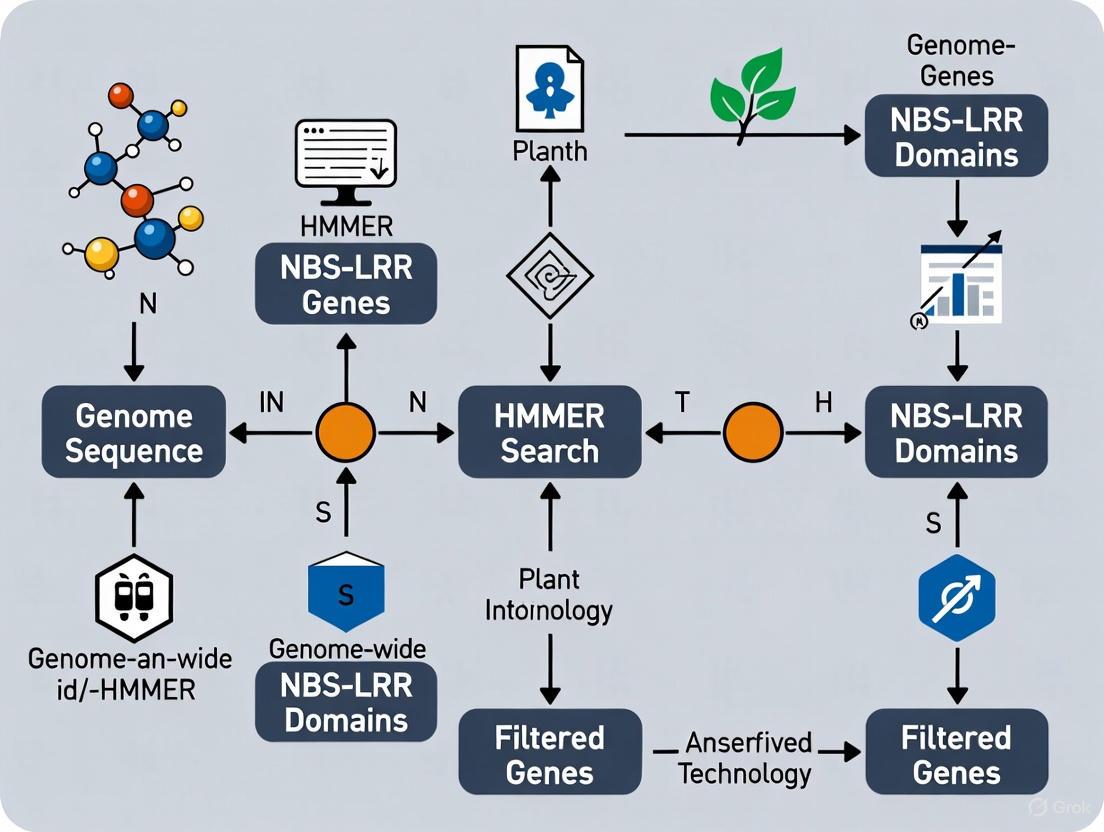
This article provides a comprehensive methodological framework for researchers conducting genome-wide identification of NBS-LRR disease resistance genes using HMMER.
A Comprehensive Guide to Genome-Wide Identification of NBS-LRR Genes Using HMMER
Abstract
This article provides a comprehensive methodological framework for researchers conducting genome-wide identification of NBS-LRR disease resistance genes using HMMER. Covering foundational concepts to advanced validation techniques, it details the use of hidden Markov models with the NB-ARC domain (PF00931) for systematic gene discovery. The guide explores NBS-LRR classification into CNL, TNL, NL, and RNL subfamilies, addresses common computational challenges, and presents validation strategies through phylogenetic analysis, expression profiling, and comparative genomics. With practical examples from recent studies in tobacco, pepper, and tung trees, this resource equips scientists with optimized workflows for accurate resistance gene annotation to advance crop improvement and disease resistance breeding.
Understanding NBS-LRR Genes: Structure, Function, and Evolutionary Significance
Nucleotide-binding site leucine-rich repeat (NBS-LRR) proteins represent the largest and most prominent class of disease resistance (R) proteins in plants, serving as critical intracellular immune receptors [1] [2]. These proteins function as the specificity determinants in effector-triggered immunity (ETI), the plant's second layer of defense that activates strong immune responses, often accompanied by a hypersensitive response (HR) and programmed cell death at infection sites [1] [3]. Unlike vertebrate adaptive immunity, plants rely on these stably encoded genomic genes for pathogen detection, with NBS-LRR proteins specifically recognizing pathogen effector molecules, thereby converting pathogen virulence into avirulence [1].
Plant NBS-LRR proteins are structurally modular and typically consist of:
- A variable N-terminal domain that determines signaling pathway requirements
- A central nucleotide-binding site (NBS) domain responsible for ATP binding and hydrolysis
- A C-terminal leucine-rich repeat (LRR) domain involved in pathogen recognition and protein interaction [1] [2]
NBS-LRR proteins are broadly classified into major subfamilies based on their N-terminal domains:
- TNLs: Contain a Toll/interleukin-1 receptor (TIR) domain
- CNLs: Contain a coiled-coil (CC) domain
- RNLs: Contain a resistance to powdery mildew 8 (RPW8) domain [4] [5] [6]
Additionally, atypical NBS-LRR proteins exist that lack complete domain complements, including TN (TIR-NBS), CN (CC-NBS), NL (NBS-LRR), and N (NBS-only) types, which may function as adaptors or regulators for typical NBS-LRR proteins [5].
Genome-Wide Identification of NBS-LRR Genes Using HMMER
Genome-wide identification of NBS-LRR genes has become a fundamental approach for cataloging plant immune receptors, with Hidden Markov Model (HMM)-based profiling serving as the primary methodology. This protocol outlines a standardized workflow for comprehensive NBS-LRR gene identification.
Experimental Protocol: HMMER-Based Identification Pipeline
Step 1: Domain Search and Initial Candidate Identification
- Obtain the HMM profile for the NB-ARC domain (Pfam: PF00931) from the Pfam database
- Perform HMMER search (HMMER v3.0 or later) against the target plant proteome using the command:
- Set the E-value cutoff according to requirement (typically < 1×10⁻⁵ to < 1×10⁻²⁰ based on stringency needs) [4] [6] [3]
- Extract sequences containing the NBS domain for further analysis
Step 2: Domain Verification and Classification
- Confirm the presence of NBS and other domains using:
- Identify additional domains for classification:
- TIR domain (PF01582)
- RPW8 domain (PF05659)
- LRR domains (multiple Pfam accessions)
- Predict coiled-coil (CC) domains using COILS with threshold 0.1 [7]
- Remove redundant entries and classify sequences into TNL, CNL, RNL, and atypical categories
Step 3: Manual Curation and Validation
- Manually verify domain architecture and remove false positives
- Confirm the presence of complete NBS with E-values below 0.01
- Cross-validate predictions using multiple domain databases
- For genes with multiple transcripts, retain only the longest transcript for analysis [7]
Workflow Visualization
Data Analysis and Characterization Methods
Following identification, comprehensive characterization of NBS-LRR genes involves multiple bioinformatic analyses to understand their genomic organization, evolutionary relationships, and structural features.
Genomic Distribution and Cluster Analysis
- Map NBS-LRR genes to chromosomes based on physical positions from GFF3 annotation files
- Identify gene clusters using a sliding window approach (200-250 kb window size)
- Define clustered genes as those where at least two NBS-LRR genes are located within 250 kb and separated by no more than eight non-NBS-LRR genes [4] [7]
- Calculate cluster density and distribution patterns across chromosomes
Phylogenetic and Evolutionary Analysis
- Extract NB-ARC domain sequences from identified NBS-LRR proteins
- Perform multiple sequence alignment using ClustalW or MAFFT with default parameters [5] [6]
- Construct phylogenetic trees using Maximum Likelihood method in MEGA or IQ-TREE
- Select optimal substitution model using ModelFinder within IQ-TREE [7]
- Assess branch support with 1000 ultrafast bootstrap replicates
- Analyze selective pressure by calculating Ka/Ks ratios using tools like MCScanX [7]
Motif and Gene Structure Analysis
- Identify conserved motifs using MEME Suite with maximum motifs set to 10-20 [6] [7]
- Determine exon-intron structures from GFF3 annotation files
- Analyze promoter regions (1500 bp upstream) for cis-regulatory elements using PlantCARE database [5]
Expression Analysis
- Utilize available transcriptome data to assess tissue-specific expression
- Analyze differential expression under pathogen challenge or stress conditions
- Correlate expression patterns with gene subtypes and phylogenetic relationships
NBS-LRR Distribution Across Plant Species
Genome-wide studies across multiple plant species reveal substantial variation in NBS-LRR gene numbers and subfamily distributions, reflecting species-specific evolutionary paths and adaptation to distinct pathogenic environments.
Table 1: NBS-LRR Gene Distribution Across Plant Species
| Plant Species | Total NBS-LRR Genes | TNL | CNL | RNL | Atypical | Reference |
|---|---|---|---|---|---|---|
| Arabidopsis thaliana | 150-207 | ~62 | Majority | Not specified | 58 | [2] [3] |
| Oryza sativa (rice) | 400-505 | 0 | Majority | Not specified | Not specified | [2] [3] |
| Secale cereale (rye) | 582 | 0 | 581 | 1 | Not specified | [6] |
| Nicotiana benthamiana | 156 | 5 | 25 | 13 | 113 | [5] |
| Helianthus annuus (sunflower) | 352 | 77 | 100 | 13 | 162 | [4] |
| Salvia miltiorrhiza | 196 | 2 | 75 | 1 | 118 | [3] |
| Solanum tuberosum (potato) | 447 | Not specified | Not specified | Not specified | Not specified | [3] |
Table 2: Conserved Motifs in NBS-LRR Proteins
| Motif Name | Domain Association | Function | Conservation |
|---|---|---|---|
| P-loop | NBS | Nucleotide binding | Highly conserved |
| Kinase-2 | NBS | Nucleotide binding | Highly conserved |
| RNBS-A | NBS | Subfamily specific | Distinct in TNL vs. CNL |
| RNBS-C | NBS | Subfamily specific | Distinct in TNL vs. CNL |
| RNBS-D | NBS | Subfamily specific | Distinct in TNL vs. CNL |
| GLPL | NBS | Domain interaction | Conserved |
| MHDL | NBS | Domain interaction | Conserved |
| LRR | LRR | Pathogen recognition | Highly variable |
Table 3: Key Research Reagents and Computational Tools for NBS-LRR Studies
| Resource Type | Specific Tool/Database | Function | Application | |
|---|---|---|---|---|
| Domain Databases | Pfam (PF00931) | NB-ARC domain HMM profile | Initial identification | [5] [6] |
| SMART, CDD, InterPro | Domain verification | Classification and validation | [5] [7] | |
| Analysis Tools | HMMER v3.0+ | Hidden Markov Model search | Primary identification | [4] [6] |
| MEME Suite | Conserved motif discovery | Structural characterization | [6] [7] | |
| ClustalW, MAFFT | Multiple sequence alignment | Phylogenetic analysis | [5] [7] | |
| IQ-TREE, MEGA | Phylogenetic tree construction | Evolutionary relationships | [6] [7] | |
| COILS | Coiled-coil prediction | CNL identification | [7] | |
| Genomic Resources | PlantGDB, Phytozome | Genome sequences | Data retrieval | [4] |
| PlantCARE | Cis-element analysis | Promoter studies | [5] | |
| Experimental Validation | SGT1, RAR1 | Protein interaction partners | Functional validation | [8] |
Structural and Functional Mechanisms
NBS-LRR proteins function as molecular switches in plant immunity, transitioning between inactive and active states through nucleotide-dependent conformational changes. The current understanding of their activation mechanism involves several key principles:
Pathogen Detection Strategies
- Direct Recognition: Some NBS-LRR proteins physically bind pathogen effectors through their LRR domains, as demonstrated by rice Pi-ta interaction with AVR-Pita and flax L proteins with AvrL567 effectors [1]
- Indirect Recognition (Guard Model): Many NBS-LRR proteins monitor host cellular components modified by pathogen effectors, detecting the perturbation rather than the effector itself [1]
- Decoy Model: Some NBS-LRR proteins guard host proteins that mimic pathogen targets but lack actual cellular function, serving solely as surveillance baits [1]
Activation Signaling Pathway
Domain Interactions and Complementation
Studies of the potato Rx protein demonstrate that functional NBS-LRR activity can be reconstituted through trans complementation of separate domains:
- Co-expression of CC-NBS and LRR domains as separate molecules results in CP-dependent hypersensitive response [8]
- The CC domain can complement NBS-LRR, and this interaction depends on a wild-type P-loop motif [8]
- Intramolecular interactions between domains are disrupted in the presence of the pathogen elicitor, suggesting a sequential conformational change mechanism [8]
Applications and Research Implications
The genome-wide identification of NBS-LRR genes provides crucial resources for multiple research applications and breeding initiatives:
Crop Improvement and Breeding
- Identification of candidate R genes for marker-assisted selection
- Development of molecular markers linked to resistance traits
- Pyramiding multiple R genes for durable, broad-spectrum resistance
- Utilization of wild relatives as sources of novel resistance genes [6] [7]
Evolutionary Studies
- Analysis of birth-and-death evolution in resistance gene families
- Investigation of lineage-specific gene expansions and contractions
- Understanding host-pathogen co-evolutionary dynamics
- Tracing NLR subfamily origins to the common ancestor of green plants [6] [7]
Functional Characterization
- Prioritization of candidate genes for functional validation
- Understanding structure-function relationships in immune receptors
- Elucidation of signaling networks and downstream components
- Engineering synthetic NLRs with novel recognition specificities
The HMMER-based genome-wide identification protocol outlined here provides a robust foundation for systematic characterization of NBS-LRR gene families across plant species, enabling comparative analyses and facilitating the discovery of novel resistance genes for crop improvement.
Domain Architecture and Function in Plant NLR Immune Receptors
Plant nucleotide-binding leucine-rich repeat receptors (NLRs) are intracellular immune proteins that recognize pathogen-derived molecules and initiate robust defense responses. These proteins are characterized by a modular domain architecture that integrates pathogen sensing, nucleotide-regulated activation, and downstream signaling [9] [10]. Understanding these domains is crucial for genome-wide identification and functional characterization.
Table: Core Structural Domains in Plant NLR Immune Receptors
| Domain | Full Name | Key Functional Role | Conserved Motifs | Structural Features |
|---|---|---|---|---|
| NB-ARC | Nucleotide-Binding domain shared by APAF-1, R proteins, and CED-4 | ATP/GTP binding and hydrolysis; molecular switch regulating activation [11] [9] | P-loop, MHD, RNBS-A, RNBS-B, RNBS-C [11] [9] | Functional ATPase domain with three subdomains: NB, ARC1, ARC2 [11] |
| LRR | Leucine-Rich Repeat | Protein-protein interactions; pathogen recognition specificity [12] [10] | Variable leucine-rich repeats (LxxLxL) [12] | Curved solenoid structure with concave binding surface [12] |
| TIR | Toll/Interleukin-1 Receptor | NAD+ hydrolysis; immune signaling initiation [13] [14] | Catalytic glutamate residue [14] | Signal transduction module with enzymatic activity [14] |
| CC | Coiled-Coil | Protein oligomerization; downstream signaling [9] [10] | MADA motif, EDVID motif [9] | Helical bundle structure mediating homotypic interactions |
| RPW8 | Resistance to Powdery Mildew 8 | Defense signaling execution; putative membrane association [10] | Not specified in results | Possibly involved in membrane association and cell death signaling |
Based on their N-terminal domains, plant NLRs are primarily classified into two major subfamilies: TNLs (TIR-NB-ARC-LRR) and CNLs (CC-NB-ARC-LRR) [10]. Some plant species also contain RPW8-NLRs that feature an N-terminal RPW8 domain [10]. The NB-ARC domain serves as a central regulatory hub, with its nucleotide-binding state controlling receptor activation [11]. Mutations in conserved motifs like the P-loop (involved in nucleotide binding) and MHD motif (regulatory) can either render NLRs nonfunctional or cause constitutive autoactivation [9]. The LRR domain determines recognition specificity through its solvent-exposed concave surface, which evolves rapidly to detect diverse pathogen effectors [12] [10].
Computational Identification Using HMMER and Domain Annotation Tools
Genome-wide identification of NBS-LRR genes relies on Hidden Markov Model (HMM)-based searches against protein databases. The HMMER software suite is particularly valuable for detecting divergent family members through its sensitive profile HMM algorithms [9] [10].
Domain Detection Workflow
The typical workflow begins with searching a proteome using HMMER with specific domain models [10]. The NB-ARC domain (PF00931) serves as the primary anchor for identifying candidate NLR genes, followed by detection of associated domains (TIR, CC, LRR, RPW8). LRR domains present particular challenges for sequence-based annotation due to their repetitive nature and rapid evolution, which can lead to inaccurate boundary prediction [12]. Recent approaches leverage AlphaFold2-predicted structures to improve LRR annotation by incorporating geometric data and mathematical approaches like winding number analysis to define repeat units [12].
Table: HMMER-Based Genome-Wide Identification of NBS-LRR Genes
| Analysis Step | Tool/Resource | Purpose | Key Parameters/Models |
|---|---|---|---|
| Domain Search | HMMER v3.4 [9] | Identify NB-ARC-containing proteins | NB-ARC HMM (PF00931) |
| Additional Domain Annotation | InterProScan 5.53-87.0 [9] | Detect TIR, CC, LRR, RPW8 domains | Integrated database of protein families |
| NLR-Specific Annotation | NLRtracker v1.0.3 [9] [15] or NLR-Annotator v2.1 [9] | Specialized NLR identification | Custom models for plant NLR domains |
| Motif Identification | MEME Suite v5.5.5 [9] | Discover conserved sequence patterns | E-value threshold < 0.01 |
| Classification | Custom scripts | Categorize into TNL, CNL, RNL | Presence/absence of N-terminal domains |
Protocol: Genome-Wide Identification of NBS-LRR Genes
Software Requirements: 64-bit Linux or Mac OS X; HMMER v3.4; InterProScan 5.53-87.0; NLRtracker v1.0.3 or NLR-Annotator v2.1; MEME Suite v5.5.5 [9].
Step 1: Domain Identification
- Obtain proteome sequence file in FASTA format
- Run HMMER search against NB-ARC domain profile:
- Extract significant hits (E-value < 0.01) for further analysis
Step 2: Comprehensive Domain Annotation
- Process NB-ARC-containing proteins through InterProScan:
- Identify TIR (PF01582), CC, LRR (PF00560, PF07723, PF07725), and RPW8 (PF05659) domains
Step 3: NLR-Specific Annotation
- Use NLRtracker for enhanced sensitivity:
- NLRtracker integrates InterProScan results with custom models to improve annotation accuracy [9] [15]
Step 4: Classification and Motif Discovery
- Classify proteins into TNL, CNL, or RNL based on N-terminal domains
- Identify conserved motifs using MEME:
- Validate functionally important motifs (P-loop, MHD, MADA) against known references [9]
Research Reagent Solutions for NLR Domain Studies
Table: Essential Research Reagents and Computational Tools
| Reagent/Tool | Specific Function | Application in NLR Research |
|---|---|---|
| HMMER v3.4 | Profile HMM search | Identifying NB-ARC domains in proteomes [9] [10] |
| InterProScan 5.53-87.0 | Integrated domain database | Detecting TIR, LRR, CC, RPW8 domains [9] |
| NLRtracker v1.0.3 | Specialized NLR annotation | Improved accuracy for plant NLR identification [9] [15] |
| AlphaFold2 | Protein structure prediction | Geometric analysis of LRR domains [12] |
| MEME Suite v5.5.5 | Motif discovery | Identifying conserved sequence patterns [9] |
| Custom HMM profiles | Domain-specific detection | Targeting NB-ARC, TIR, and other NLR domains [10] |
Structural and Functional Relationships
The integrated functioning of NLR domains enables specific pathogen recognition and immune activation. The LRR domain is responsible for ligand binding and specificity determination [12] [10]. The NB-ARC domain acts as a molecular switch, with nucleotide binding and hydrolysis controlling the transition between inactive and active states [11]. The N-terminal signaling domains (TIR, CC, or RPW8) execute immune responses through different downstream pathways [9] [14].
TIR domains function as enzymes that hydrolyze NAD+, producing immune signaling molecules [14]. These TIR-generated signaling molecules are perceived by EDS1 family heterodimers, which subsequently activate helper NLRs of the ADR1 and NRG1 classes [14]. In contrast, CC domains may directly interact with downstream signaling components through their conserved MADA and EDVID motifs [9].
Plant nucleotide-binding site leucine-rich repeat (NBS-LRR) proteins constitute one of the largest and most important disease resistance (R) protein families, serving as intracellular immune receptors that detect pathogen effectors and initiate effector-triggered immunity [2] [16]. These proteins are characterized by a conserved nucleotide-binding site (NBS) domain and C-terminal leucine-rich repeats (LRRs), with additional variable domains at the N-terminus enabling classification into distinct subfamilies [5] [17]. Genome-wide identification and characterization of NBS-LRR genes across diverse plant species have revealed substantial variation in family size, organization, and evolutionary dynamics, reflecting ongoing host-pathogen coevolution [2] [4].
The NBS-LRR family is subdivided into several major subfamilies based on N-terminal domain architecture: coiled-coil (CC)-NBS-LRR (CNL), Toll/interleukin-1 receptor (TIR)-NBS-LRR (TNL), NBS-LRR (NL), and Resistance to Powdery Mildew 8 (RPW8)-NBS-LRR (RNL) [4] [5]. Additionally, truncated forms lacking complete domains exist, including CC-NBS (CN), TIR-NBS (TN), and NBS (N) proteins [18] [5]. This review comprehensively examines the structural characteristics, evolutionary relationships, functional divergence, and experimental approaches for studying these major NBS-LRR subfamilies, with particular emphasis on genome-wide identification using hidden Markov model (HMM)-based profiling.
Structural Domains and Classification of NBS-LRR Subfamilies
Core NBS-LRR Protein Domains
NBS-LRR proteins typically contain three core domains: a variable N-terminal domain, a central nucleotide-binding adaptor shared by APAF-1, R proteins, and CED-4 (NB-ARC) domain, and C-terminal leucine-rich repeats (LRRs) [2] [17]. The N-terminal domain determines membership in the major subfamilies and is involved in signaling and protein-protein interactions [2]. The NB-ARC domain functions as a molecular switch, with ATP/GTP binding and hydrolysis regulating protein activation states [2] [16]. The LRR domain is primarily responsible for pathogen recognition specificity through protein-ligand and protein-protein interactions [18] [10].
Table 1: Core Domains of NBS-LRR Proteins
| Domain | Structural Features | Functional Role |
|---|---|---|
| N-terminal | TIR, CC, RPW8, or other domains | Signaling pathway specification, protein-protein interactions |
| NB-ARC | P-loop, Kinase-2, RNBS-A, GLPL, MHDL motifs | Nucleotide binding/hydrolysis, molecular switch function |
| LRR | Tandem leucine-rich repeats | Pathogen recognition, specificity determination |
Major NBS-LRR Subfamilies and Their Characteristics
The NBS-LRR family is classified into several subfamilies based on N-terminal domain composition and arrangement:
CNL (CC-NBS-LRR) subfamily: Characterized by an N-terminal coiled-coil (CC) domain, CNLs are present in both monocots and dicots [2] [19]. The CC domain is involved in protein-protein interactions and signaling [17]. CNLs constitute a major subgroup in many plant species, representing 54.4% of NBS-LRRs in Vernicia fordii and 64% of intact NBS-LRRs in Dioscorea rotundata [18] [20].
TNL (TIR-NBS-LRR) subfamily: Defined by an N-terminal Toll/interleukin-1 receptor (TIR) domain, TNLs are restricted to dicot species and completely absent from cereal genomes [2] [19]. The TIR domain is involved in self-association and homotypic interactions with other TIR domains [17]. TNLs represent approximately 21.9% of NBS-LRR genes in sunflower [4].
RNL (RPW8-NBS-LRR) subfamily: Featuring an N-terminal Resistance to Powdery Mildew 8 (RPW8) domain, RNLs function primarily in downstream defense signal transduction rather than direct pathogen detection [17] [20]. This subfamily includes two helper lineages, ADR1 and NRG1, with NRG1 specifically involved in TNL signal transduction [20]. RNLs represent a small proportion (~3.7%) of NBS-LRR genes in sunflower [4].
NL (NBS-LRR) subfamily: These proteins contain NBS and LRR domains but lack recognizable TIR, CC, or RPW8 domains at their N-terminus [5]. NLs constitute a substantial portion (~46%) of NBS-LRR genes in sunflower and may represent divergent CNLs or TNLs that have lost their N-terminal domains [4].
Truncated NBS proteins: Many plant genomes encode numerous NBS-containing proteins that lack complete domain structures, including CN (CC-NBS), TN (TIR-NBS), and N (NBS-only) proteins [18] [5]. These truncated forms may function as adaptors or regulators of full-length NBS-LRR proteins [2] [5].
Table 2: Distribution of NBS-LRR Subfamilies Across Plant Species
| Plant Species | CNL | TNL | RNL | NL | Truncated | Total | Citation |
|---|---|---|---|---|---|---|---|
| Arabidopsis thaliana | ~55% | ~45% | 2 genes | Included in CNL/TNL | 58 proteins | ~150 | [2] |
| Helianthus annuus (Sunflower) | 100 (28.4%) | 77 (21.9%) | 13 (3.7%) | 162 (46.0%) | - | 352 | [4] |
| Vernicia fordii (Tung tree) | 12 (13.3%) | 0 (0%) | Not reported | 12 (13.3%) | 66 (73.3%) | 90 | [18] |
| Vernicia montana (Tung tree) | 9 (6.0%) | 3 (2.0%) | Not reported | 12 (8.1%) | 125 (83.9%) | 149 | [18] |
| Nicotiana benthamiana | 25 (16.0%) | 5 (3.2%) | 4 (2.6%) | 23 (14.7%) | 99 (63.5%) | 156 | [5] |
| Dioscorea rotundata (Yam) | 64 (38.3%) | 0 (0%) | 1 (0.6%) | 28 (16.8%) | 74 (44.3%) | 167 | [20] |
| Cicer arietinum (Chickpea) | Majority | Minority | Not specified | Not specified | 23 (19.0%) | 121 | [16] |
Diagram 1: NBS-LRR Protein Classification and Subfamily Relationships
Genome-Wide Identification Using HMMER
HMMER-Based Identification Pipeline
Genome-wide identification of NBS-LRR genes typically employs hidden Markov model (HMM) profiling against the conserved NB-ARC domain (Pfam: PF00931) [4] [18] [5]. The standard workflow involves:
Domain Search: HMMER search (HMMSEARCH or TBLASTN) against the target proteome or genome using the NB-ARC (PF00931) domain profile with an expectation value cutoff (E-value < 1×10⁻²⁰) [4] [5].
Sequence Retrieval: Extraction of candidate sequences containing the NB-ARC domain.
Domain Validation: Verification of conserved NBS motifs (P-loop, RNBS-A, Kinase-2, RNBS-C, GLPL, RNBS-D, MHD) using Pfam, SMART, and CDD databases [4] [17].
Classification: Assignment to subfamilies based on presence of TIR, CC, RPW8, or other domains at the N-terminus.
Manual Curation: Expert review to remove false positives and identify pseudogenes [21].
The NLGenomeSweeper tool implements a specialized double-pass approach for comprehensive NBS-LRR identification, first identifying candidates using the NB-ARC domain, then building species-specific HMM profiles for refined searching [21]. This method achieves 96% sensitivity compared to manual annotation in Arabidopsis thaliana [21].
Table 3: Essential Resources for NBS-LRR Gene Identification and Characterization
| Resource Type | Specific Tool/Database | Application/Purpose |
|---|---|---|
| HMM Profiles | Pfam PF00931 (NB-ARC) | Core NBS domain identification |
| Software Tools | HMMER v3.3.2 | Domain search and sequence alignment |
| Software Tools | NLGenomeSweeper | Automated NBS-LRR annotation pipeline |
| Software Tools | MEME Suite | Motif discovery and analysis |
| Software Tools | MUSCLE | Multiple sequence alignment |
| Software Tools | MEGA X | Phylogenetic analysis |
| Software Tools | TBtools | Bioinformatics data visualization |
| Databases | Phytozome | Plant genome sequences and annotations |
| Databases | PlantCARE | Cis-element prediction in promoter regions |
| Databases | InterProScan | Protein domain and family prediction |
| Experimental Validation | Virus-Induced Gene Silencing (VIGS) | Functional characterization of candidate genes |
Diagram 2: HMMER-Based Workflow for Genome-Wide NBS-LRR Identification
Functional Divergence and Signaling Mechanisms
Distinct Signaling Pathways and Immune Functions
The major NBS-LRR subfamilies exhibit significant functional divergence in their signaling mechanisms and immune functions:
CNL and TNL proteins primarily function as pathogen sensors that directly or indirectly recognize pathogen effectors [20]. Upon effector recognition, their NBS domains undergo conformational changes from ADP-bound to ATP-bound states, activating downstream defense signaling [5]. However, CNLs and TNLs utilize distinct signaling pathways [2]. TNL signaling specifically requires NRG1 helper RNLs, while CNL signaling may utilize ADR1 helper RNLs [20].
RNL proteins function primarily as helper NLRs in immune signal transduction rather than direct pathogen receptors [17] [20]. The RNL subfamily includes two conserved lineages: ADR1 and NRG1, which act as signaling components downstream of sensor NLRs [20]. NRG1 specifically functions in TNL signaling pathways, while ADR1 acts in multiple resistance pathways [20].
Truncated NBS proteins (TN, CN, N-types) lacking complete domain structures may function as adaptors or regulators of full-length NBS-LRR proteins [2] [5]. For example, in Arabidopsis, 21 TIR-NBS (TN) and five CC-NBS (CN) proteins potentially regulate TNL and CNL signaling [2].
Evolutionary Dynamics and Genomic Distribution
NBS-LRR genes exhibit distinctive evolutionary patterns across subfamilies:
Lineage-specific distribution: TNL genes are completely absent from cereal genomes and have been lost in some eudicot lineages, including Vernicia fordii and Sesamum indicum [18] [19]. In contrast, CNL genes are present throughout angiosperms [19].
Clustered genomic organization: NBS-LRR genes are frequently clustered in plant genomes due to tandem and segmental duplications [2] [18]. In Dioscorea rotundata, 74% of NBS-LRR genes reside in 25 multigene clusters, with tandem duplication as the major evolutionary force [20]. Similarly, in radish, 72% of NBS-encoding genes are distributed in 48 clusters across 24 crucifer blocks [17].
Differential evolutionary rates: Type I genes evolve rapidly with frequent gene conversions, while Type II genes evolve slowly with rare gene conversion events, consistent with a birth-and-death evolution model [2]. Diversifying selection predominantly acts on solvent-exposed residues in the LRR domain, enhancing recognition specificity [2].
Experimental Protocols for Functional Characterization
Virus-Induced Gene Silencing (VIGS) Protocol for NBS-LRR Validation
VIGS provides a powerful approach for functional characterization of NBS-LRR genes, as demonstrated in tung tree studies [18] [10]:
Candidate Gene Selection: Identify target NBS-LRR genes through genome-wide analysis and expression profiling. For example, Vm019719 was selected in Vernicia montana based on differential expression during Fusarium wilt infection [18].
Vector Construction: Clone a 200-300 bp gene-specific fragment into TRV-based VIGS vectors (pTRV1 and pTRV2).
Agrobacterium Transformation: Introduce constructs into Agrobacterium tumefaciens strain GV3101.
Plant Infiltration: Infiltrate 2-3 leaf stage seedlings with Agrobacterium suspensions (OD₆₀₀ = 1.0) using syringe infiltration.
Pathogen Challenge: After 2-3 weeks, challenge silenced plants with target pathogen. For Fusarium wilt, use root-dipping method with Fusarium oxysporum spore suspension (1×10⁶ spores/mL).
Phenotypic Assessment: Monitor disease symptoms over 2-4 weeks and quantify disease severity using standardized scales.
Molecular Validation: Confirm gene silencing using qRT-PCR and assess defense marker gene expression.
This protocol successfully validated Vm019719 as a functional NBS-LRR gene conferring Fusarium wilt resistance in Vernicia montana [18] [10].
Expression Analysis Protocol
Comprehensive expression profiling complements functional studies:
RNA Extraction: Isolate total RNA from multiple tissues and pathogen-infected samples using TRIzol reagent.
DNase Treatment: Remove genomic DNA contamination with DNase I treatment.
cDNA Synthesis: Synthesize first-strand cDNA using reverse transcriptase with oligo(dT) primers.
Quantitative PCR: Perform qPCR with gene-specific primers using SYBR Green chemistry.
Data Analysis: Calculate relative expression using the 2^(-ΔΔCt) method with reference genes (e.g., Actin, UBQ).
In chickpea, this approach identified 27 NBS-LRR genes showing differential expression following Ascochyta rabiei infection, with distinct patterns between resistant and susceptible genotypes [16].
The major NBS-LRR subfamilies—CNL, TNL, RNL, and NL—exhibit distinct structural features, evolutionary patterns, and functional roles in plant immunity. CNLs and TNLs primarily function as pathogen sensors with distinct signaling pathways, while RNLs act as helper proteins in signal transduction. Genome-wide identification using HMMER-based approaches reveals substantial variation in NBS-LRR family size and composition across plant species, reflecting ongoing host-pathogen coevolution. Functional characterization through VIGS and expression profiling provides critical insights into disease resistance mechanisms, enabling the development of molecular breeding strategies for crop improvement. The continued development of bioinformatic tools, such as NLGenomeSweeper, will further enhance our ability to identify and characterize this important gene family across diverse plant species.
Application Note
This application note details the evolutionary dynamics of nucleotide-binding site leucine-rich repeat (NBS-LRR) genes, the largest class of plant disease resistance (R) genes. Within the context of genome-wide identification using HMMER-based research, this document provides a standardized framework for analyzing the evolutionary patterns—gene clustering, birth-and-death evolution, and lineage-specific expansion—that shape the repertoire of these critical immune receptors across plant species.
Genomic Distribution and Cluster Architecture of NBS-LRR Genes
NBS-LRR genes are notably non-random in their genomic distribution, with a significant majority found in clusters. Comparative genomic studies across multiple species confirm that clustering is a fundamental organizational feature of this gene family.
- Prevalence of Clustering: Studies in diverse species consistently report that over 60% of NBS-LRR genes reside in genomic clusters. In cassava (Manihot esculenta), 63% of the 327 identified NBS-LRR and partial NBS genes are organized in 39 clusters across the chromosomes [22]. Similarly, nearly 50% of the 121 NBS-LRR genes identified in the chickpea (Cicer arietinum) genome are present in clusters [16].
- Cluster Homogeneity and Heterogeneity: Clusters are frequently homogeneous, containing multiple copies of closely related genes derived from recent tandem duplications [22] [23]. For example, in Arabidopsis thaliana, most of the approximately 40-43 clusters consist of genes from the same phylogenetic lineage [23]. However, heterogeneous clusters, which contain phylogenetically distant NBS-LRR genes (e.g., TNLs and CNLs together), are also observed and their formation is theorized to involve segmental duplication or ectopic recombination events that bring distinct genes into proximity [23] [24].
- Impact of Clustering on Evolution: The clustered arrangement is a key driver of R gene evolution. It facilitates the generation of new genetic variation through mechanisms such as unequal crossing-over and gene conversion, enabling plants to rapidly adapt to evolving pathogen populations [23] [24].
Table 1: NBS-LRR Gene Clustering in Selected Plant Genomes
| Plant Species | Total NBS-LRR Genes Identified | Genes in Clusters | Reference |
|---|---|---|---|
| Cassava (Manihot esculenta) | 327 | ~63% (206 genes) | [22] |
| Chickpea (Cicer arietinum) | 121 | ~50% (60 genes) | [16] |
| Arabidopsis thaliana | ~150-166 | Distributed in ~40-43 clusters | [23] [24] |
The Birth-and-Death Model of Evolution
The birth-and-death model effectively describes the long-term evolutionary dynamics of the NBS-LRR gene family. This model involves continuous cycles of gene duplication and diversification, coupled with the loss of non-functional genes.
- Mechanisms of "Birth": New NBS-LRR genes are primarily generated through two types of duplication events:
- Tandem Duplication: This is the predominant mechanism, occurring within clusters and leading to the expansion of specific gene lineages [25] [23]. A positive correlation (Pearson’s r = 0.76) has been observed between the number of NB-LRR gene clusters and the number of paralogs, underscoring the role of tandem duplication in family expansion [25].
- Segmental Duplication: The copying of large chromosomal blocks can distribute NBS-LRR genes to new genomic locations, even on different chromosomes, contributing to the dispersal of the family [23] [26]. In tobacco (Nicotiana tabacum), whole-genome duplication (a form of segmental duplication) has been a significant contributor to the expansion of its NBS gene family [26].
- Mechanisms of "Death": Genes can be inactivated or lost through pseudogenization, which often results from deleterious mutations, deletions, or frameshifts [22] [27]. The analysis of NBS genes in Dendrobium orchids revealed common events of "type changing" and "NB-ARC domain degeneration," highlighting how gene degeneration contributes to diversity and potential loss [27].
- Diversifying Selection: Following duplication, genes are subject to diversifying selection, which preferentially acts on the solvent-exposed residues of the LRR domain. This selection increases genetic diversity, fine-tuning and altering the pathogen recognition specificity of the newly formed receptors [24].
Lineage-Specific Expansions and Contractions
The composition and size of the NBS-LRR repertoire are not uniform across the plant kingdom. Different lineages exhibit distinct patterns of expansion and contraction, reflecting adaptations to specific pathogenic pressures and evolutionary histories.
- Variation in Family Size: The number of NBS-LRR genes varies substantially between species, from fewer than 100 in some plants to over 1,000 in others [28] [24]. For instance, the genome of the tung tree Vernicia montana contains 149 NBS-LRRs, while its susceptible counterpart, V. fordii, has only 90, a difference that may be linked to disease resistance [18]. In the Nicotiana genus, the allotetraploid N. tabacum possesses 603 NBS genes, approximately the sum of its diploid progenitors (N. sylvestris: 344; N. tomentosiformis: 279) [26].
- Differential Expansion of Gene Classes: A clear pattern of lineage-specific expansion is observed between the two major NBS-LRR subfamilies. A multi-genome comparative analysis revealed that Solanaceae and Poaceae families possess several highly duplicated "private groups" containing cloned R genes effective against bacteria and fungi, respectively [25]. Furthermore, the TNL class is absent in monocots (like grasses) but present in most dicots, a loss attributed to the absence of required downstream signaling components [18] [27] [24].
- Botanical Family-Specific Profiles: Analysis of five major crop families (Brassicaceae, Fabaceae, Solanaceae, Poaceae, and Cucurbitaceae) shows distinct "arsenal profiles." Solanaceae and Poaceae have a high number of orthogroups and paralogs, whereas Brassicaceae and Cucurbitaceae diversified from a more limited set of initial sequences [25]. A strong correlation (Pearson’s r = 0.82) exists between the number of orthogroups and the total size of the NB-LRR family, suggesting a link between diversification potential and family expansion [25].
Table 2: Lineage-Specific NBS-LRR Profiles in Selected Plant Families and Species
| Lineage | Observed Pattern | Functional/Evolutionary Implication | Reference |
|---|---|---|---|
| Monocots (e.g., Poaceae, Orchids) | Loss of TNL-type genes; Expansion of CNL-type genes. | Suggests divergence in downstream immune signaling pathways. | [18] [27] |
| Solanaceae & Poaceae | Large number of orthogroups and paralogs; "Private" highly-duplicated groups. | Lineage-specific adaptation to distinct pathogen pressures (bacteria vs. fungi). | [25] |
| Vernicia montana (Resistant) vs. V. fordii (Susceptible) | 149 vs. 90 NBS-LRRs; Loss of specific LRR domains in susceptible species. | Gene number and specific domain loss may correlate with Fusarium wilt resistance. | [18] |
| Cucurbitaceae | Small average number of orthogroups (24) and paralogs (54). | Diversification from a limited ancestral set of NBS-LRR genes. | [25] |
Protocols
Genome-Wide Identification of NBS-LRR Genes Using HMMER
This protocol details the standard workflow for identifying NBS-LRR genes from a plant genome assembly using Hidden Markov Model (HMM)-based searches, as applied in recent studies [18] [22] [26].
Materials and Reagents
- Computational Hardware: A high-performance computing server or cluster with sufficient memory (≥ 64 GB RAM recommended) and storage for large genome files.
- Software:
- HMMER (v3.1b2 or higher): For profile HMM searches [26].
- NCBI BLAST+ suite: For sequence similarity searches [21].
- InterProScan: For additional domain verification [21].
- TransDecoder: For identifying coding regions within nucleotide sequences [21].
- MUSCLE or MAFFT: For multiple sequence alignment [21].
- Scripting Environment: Python or Perl for custom parsing scripts.
Procedure
Data Acquisition:
- Download the genome assembly (FASTA format) and the annotated protein sequence file (if available) from public repositories like Phytozome, NCBI, or other project-specific databases.
Initial HMM Search:
- Use the
hmmsearchcommand from the HMMER suite to scan the proteome against the Pfam NB-ARC (NBS) domain model (PF00931). - Command example:
hmmsearch --domtblout output.domtbl Pfam_NB-ARC.hmm protein_sequences.fa - Retain all hits with an E-value below a stringent cutoff (e.g., 1 × 10⁻²⁰) to minimize false positives [22].
- Use the
Build a Species-Specific HMM Profile (Optional but Recommended):
- Extract the sequences of the high-confidence NBS domains identified in Step 2.
- Translate nucleotide sequences to amino acids if working with a genome assembly without annotation, using tools like
TransDecoder[21]. - Perform a multiple sequence alignment of these sequences using
MUSCLEorMAFFT. - Build a custom, species-specific HMM profile using
hmmbuildfrom the alignment. This profile can increase sensitivity for detecting divergent NBS domains in the target species. - Command example:
hmmbuild species_specific_NBS.hmm aligned_sequences.fa
Second-Pass HMM Search:
- Repeat the
hmmsearchusing the newly built, species-specific HMM profile. Use a less stringent E-value cutoff (e.g., 0.01) to capture a broader set of candidates [22].
- Repeat the
Domain Architecture Annotation:
- Subject the candidate sequences from Step 4 to domain analysis to classify them into subfamilies (TNL, CNL, RNL, etc.).
- Use
hmmscan(HMMER) orInterProScanto identify:- TIR Domain: Pfam PF01582.
- LRR Domains: Various Pfam models (e.g., PF00560, PF07723, PF07725, PF12799, PF13516, PF13855) [26].
- RPW8 Domain: Pfam PF05659.
- For the Coiled-Coil (CC) domain, which is not reliably detected by Pfam, use the NCBI Conserved Domain Database (CDD) search or tools like
Paircoil2[22] [26].
Manual Curation and Validation:
- Manually inspect the domain architecture of each candidate gene.
- Remove sequences that are clearly fragments (e.g., lacking a substantial portion of the NB-ARC domain) or are likely pseudogenes with frameshifts or premature stop codons.
- Validate the final list by checking for the presence of key NBS motifs (P-loop, kinase-2, RNBS, GLPL, MHD) [25].
Protocol for Evolutionary Analysis of Identified NBS-LRR Genes
This protocol outlines the steps for analyzing the evolutionary patterns of the NBS-LRR gene family identified via the HMMER protocol.
Procedure
Chromosomal Mapping and Cluster Identification:
- Map the physical positions of all identified NBS-LRR genes onto the chromosomes or pseudomolecules using the genome annotation file (GFF/GTF format).
- Define a gene cluster. A common criterion is two or more NBS-LRR genes located within a specified physical distance (e.g., 200-250 kb) of each other [22] [23]. Tools like
MCScanXcan be used to identify collinear blocks and gene clusters [26].
Phylogenetic and Orthology Analysis:
- Extract the amino acid sequences of the NB-ARC domain from all full-length NBS-LRR genes.
- Perform a multiple sequence alignment using
MUSCLEorMAFFT. - Construct a phylogenetic tree using Maximum Likelihood (e.g., with
MEGA11orIQ-TREE) with bootstrap support (e.g., 1000 replicates) [22] [26]. - Project the tree topology onto the physical map to visualize the relationship between phylogeny and genomic location, identifying clades that have undergone lineage-specific expansion [25] [23].
Analysis of Evolutionary Pressures:
- For pairs of duplicated genes (tandem or segmental), calculate the non-synonymous (Ka) to synonymous (Ks) substitution rate ratio (ω = Ka/Ks) using tools like
KaKs_Calculator[26]. - Interpretation: A Ka/Ks ratio significantly greater than 1 indicates positive (diversifying) selection, a ratio not significantly different from 1 suggests neutral evolution, and a ratio less than 1 indicates purifying selection. Diversifying selection is often detected in the LRR domain [24].
- For pairs of duplicated genes (tandem or segmental), calculate the non-synonymous (Ka) to synonymous (Ks) substitution rate ratio (ω = Ka/Ks) using tools like
The Scientist's Toolkit: Research Reagent Solutions
Table 3: Essential Computational Tools and Databases for NBS-LRR Research
| Item | Function/Application | Key Features |
|---|---|---|
| HMMER Suite [22] [26] | Profile Hidden Markov Model search for identifying NBS domains. | Core tool for sensitive domain detection; uses Pfam model PF00931 (NB-ARC). |
| Pfam Database [21] [22] | Curated database of protein domain families. | Source of HMM profiles for NBS (PF00931), TIR (PF01582), LRR, and RPW8 domains. |
| NCBI Conserved Domain Database (CDD) [26] | Annotation of conserved protein domains. | Used for identifying Coiled-Coil (CC) domains and validating other domain hits. |
| InterProScan [21] | Integrated classification of protein sequences into families and prediction of domains. | Provides a consolidated view of domain architecture by running multiple scanning tools. |
| MCScanX [26] | Analysis of gene collinearity and duplication events. | Identifies segmental and tandem duplications, crucial for understanding genome organization. |
| NLGenomeSweeper [21] | A dedicated pipeline for annotating NLR genes in genome assemblies. | BLAST-based tool with high specificity for complete genes; useful for manual curation. |
Nucleotide-binding site leucine-rich repeat (NBS-LRR) proteins constitute the largest and most prominent class of disease resistance (R) proteins in plants, responsible for initiating effector-triggered immunity (ETI). These intracellular immune receptors recognize pathogen-secreted effector proteins, leading to a robust defensive response characterized by hypersensitive response (HR) and programmed cell death (PCD) at infection sites [29] [3]. Approximately 80% of functionally characterized R genes belong to the NBS-LRR gene family, making them fundamental components of the plant immune system [3]. The NBS-LRR genes originate from the common ancestor of the entire green lineage and have undergone significant diversification across plant species, with genomes encoding hundreds of these receptors that provide protection against diverse pathogens including viruses, bacteria, fungi, and nematodes [5] [30] [31].
Plants have evolved a sophisticated two-layered immune system for pathogen defense. The first layer, pathogen-associated molecular pattern-triggered immunity (PTI), is activated when cell surface-localized pattern recognition receptors (PRRs) detect conserved microbial signatures. The second layer, ETI, is mediated by intracellular R proteins, predominantly NBS-LRRs, which recognize specific pathogen effector proteins, culminating in a stronger, more specific immune response [3]. Recent studies have revealed that PTI and ETI do not function as independent pathways but act synergistically to enhance plant immune responses [3]. The NBS-LRR proteins function as sophisticated molecular switches within the plant cell, monitoring for pathogen invasion through direct or indirect recognition of effector proteins.
Structural Diversity and Classification of NBS-LRR Proteins
Domain Architecture and Classification
NBS-LRR proteins are characterized by a conserved modular structure consisting of three core domains: an variable N-terminal domain, a central nucleotide-binding site (NBS) domain, and a C-terminal leucine-rich repeat (LRR) domain. Based on variations in their N-terminal domains, NBS-LRR proteins are primarily classified into two major subfamilies: TNLs containing Toll/interleukin-1 receptor (TIR) domains and CNLs containing coiled-coil (CC) domains [5] [10]. Additionally, a smaller subgroup features resistance to powdery mildew 8 (RPW8) domains, classified as RNLs [3].
The table below summarizes the distribution of NBS-LRR types across various plant species:
Table 1: Genomic Distribution of NBS-LRR Genes Across Plant Species
| Plant Species | Total NBS-LRR Genes | TNL | CNL | RNL | Irregular Types | Reference |
|---|---|---|---|---|---|---|
| Nicotiana benthamiana | 156 | 5 | 25 | 4 | 122 | [5] |
| Arabidopsis thaliana | ~150 | [32] | ||||
| Salvia miltiorrhiza | 196 | 2 | 75 | 1 | 118 | [3] |
| Lathyrus sativus (grass pea) | 274 | 124 | 150 | [31] | ||
| Vernicia fordii (tung tree) | 90 | 0 | 12 | 78 | [10] | |
| Vernicia montana (tung tree) | 149 | 3 | 9 | 137 | [10] |
Functional Specialization of Protein Domains
Each domain within NBS-LRR proteins serves distinct functional roles in pathogen recognition and immune activation:
N-terminal Domains (TIR/CC/RPW8): The TIR domain is associated with signaling components EDS1 and PAD4, while CC domains can self-associate and are crucial for triggering cell death [32] [3]. The CC domain of AT1G12290 in Arabidopsis is sufficient to activate cell death, with the N-terminal 1-100 amino acid fragment representing the minimal region for cell death induction and self-association [32].
NBS (NB-ARC) Domain: This central domain binds and hydrolyzes nucleotides (ATP/GTP), functioning as a molecular switch regulated by nucleotide-dependent conformational changes [3]. The NBS domain undergoes a conformational shift from an ADP-bound state (inactive) to an ATP-bound state (active) upon pathogen recognition [5].
LRR Domain: The C-terminal LRR domain is primarily responsible for pathogen recognition specificity, facilitating both protein-ligand and protein-protein interactions [30] [10]. This domain directly interacts with pathogen effectors or monitors host proteins modified by pathogens [5].
Beyond typical NBS-LRR proteins with complete domain structures, plants also encode "irregular" types lacking certain domains, such as TN (TIR-NBS), CN (CC-NBS), NL (NBS-LRR), and N (NBS-only) proteins. These irregular types often function as adaptors or regulators for typical NBS-LRR proteins rather than primary pathogen sensors [5].
Effector Recognition Mechanisms
NBS-LRR proteins employ sophisticated surveillance mechanisms to detect pathogen effectors, primarily through two recognition strategies:
Direct and Indirect Recognition Models
The direct recognition model involves physical interaction between the NBS-LRR protein and pathogen effector. For example, the wheat Ym1 protein, a CC-NBS-LRR type R protein, specifically interacts with the wheat yellow mosaic virus (WYMV) coat protein (CP) [33]. This direct binding initiates the defense activation cascade. Similarly, the rice CNL protein Pita directly recognizes the effector AVR-Pita of the rice blast fungus through its LRR domain [3].
The indirect recognition model, also known as the "guard hypothesis," involves NBS-LRR proteins monitoring host cellular components that are modified by pathogen effectors. In this model, the NBS-LRR protein "guards" host target proteins and triggers immunity when these targets are altered by pathogen activity [5]. The LRR domain plays a crucial role in this monitoring process, detecting changes in host protein status caused by pathogen effectors [5].
Structural Basis of Effector Recognition
The LRR domain, with its versatile protein-interaction interface, provides the structural basis for specific effector recognition. Research has identified multiple LRR domain types across plant species, with LRR8 being particularly prevalent in Arachis duranensis [30]. The number of LRR8 domains shows a significant negative correlation with gene expression following nematode infection, suggesting that fewer LRR8 domains may promote stronger expression of LRR-containing genes in response to pathogen attack [30].
Table 2: LRR Domain Types and Their Distribution in Arachis duranensis
| LRR Domain Type | Number of Sequences | Chromosomal Distribution | Potential Function |
|---|---|---|---|
| LRR_1 | 221 | All chromosomes | Plant immune responses |
| LRR_2 | 10 | Not specified | |
| LRR_3 | 33 | Not specified | |
| LRR_4 | 22 | Not specified | |
| LRR_5 | 1 | Only in CNL sequences | |
| LRR_6 | 155 | All chromosomes | |
| LRR_8 | 643 | All chromosomes | Predominant domain type |
| LRR_9 | 2 | Not specified | |
| LRRNT_2 | 316 | All chromosomes |
Activation Mechanisms and Hypersensitive Response
Molecular Switching and Conformational Changes
NBS-LRR proteins function as molecular switches that transition between inactive and active states. In the absence of pathogens, these proteins maintain an auto-inhibited state with ADP bound to the NBS domain. Upon effector recognition, a conformational change occurs, promoting ADP-to-ATP exchange and activating the protein [5] [33].
The Ym1 protein illustrates this activation mechanism beautifully. In its auto-inhibited state, Ym1 exists in a conformation that prevents signaling. Interaction with the WYMV coat protein induces nucleocytoplasmic redistribution, transitioning Ym1 from an auto-inhibited to an activated state [33]. Similarly, the potato Rx1 protein undergoes conformational changes when its LRR domain binds to the potato virus X coat protein, disrupting intramolecular interactions between the LRR and CC-NB-ARC domains [33].
Hypersensitive Response Execution
Activated NBS-LRR proteins trigger the hypersensitive response, a form of programmed cell death that restricts pathogen spread by creating a zone of dead cells around the infection site. The CC domain plays a particularly important role in HR execution. Research demonstrates that the CC domain alone of AT1G12290 is sufficient to trigger cell death, with the predicted myristoylation site Gly2 being essential for plasma membrane localization and function [32].
The downstream signaling events involve:
- Calcium Influx: Rapid calcium influx into the cytosol serves as an early signaling event.
- Reactive Oxygen Species (ROS) Burst: NADPH oxidases generate superoxide radicals and hydrogen peroxide.
- Mitogen-Activated Protein Kinase (MAPK) Cascade Activation: Phosphorylation cascades amplify the defense signal.
- Phytohormone Signaling: Salicylic acid accumulation establishes systemic resistance.
- Defense Gene Expression: Transcriptional reprogramming activates expression of pathogenesis-related genes.
The following diagram illustrates the NBS-LRR activation pathway and hypersensitive response:
Diagram 1: NBS-LRR Activation and Hypersensitive Response Pathway (84 characters)
Genomic Identification Protocols Using HMMER
Genome-Wide Identification Workflow
The identification of NBS-LRR genes across plant genomes relies on Hidden Markov Model (HMM)-based searches using the conserved NBS (NB-ARC) domain (PF00931) from the Pfam database. The following workflow illustrates the standard bioinformatics pipeline for genome-wide identification:
Diagram 2: NBS-LRR Gene Identification Workflow (52 characters)
Detailed Experimental Protocol
Protocol 1: Identification of NBS-LRR Genes Using HMMER
Materials:
- Genomic sequence data in FASTA format
- HMMER software (v3.1b2 or later)
- Pfam database (NBS domain PF00931 HMM profile)
- TBtools for data extraction and visualization
- SMART, CDD, and Pfam databases for domain verification
Procedure:
HMM Profile Acquisition: Download the NBS (NB-ARC) domain HMM profile (PF00931) from the Pfam database (http://pfam.sanger.ac.uk/).
HMMER Search: Conduct HMMER search against the target genome using the command:
The expectation value (E-value) threshold of <1*10^-20 ensures high-confidence hits [5].
Sequence Extraction: Extract candidate protein sequences using TBtools or custom Perl scripts [5] [30].
Domain Verification: Verify the presence of complete NBS domains using:
- SMART tool (http://smart.embl-heidelberg.de/)
- Conserved Domain Database (CDD) (https://www.ncbi.nlm.nih.gov/Structure/cdd/wrpsb.cgi)
- Pfam database (http://pfam.sanger.ac.uk/) Retain only sequences with E-values below 0.01 in manual verification [5].
Remove Duplicates: Eliminate redundant sequences to create a non-redundant gene set.
Classification: Classify sequences into subfamilies (TNL, CNL, RNL, and irregular types) based on domain composition.
Protocol 2: Phylogenetic and Structural Analysis
Materials:
- MUSCLE or Clustal W for multiple sequence alignment
- MEGA software (v6.0 or later) for phylogenetic tree construction
- MEME suite for motif discovery
- PlantCARE database for cis-element analysis
Procedure:
Multiple Sequence Alignment: Align full-length NBS-LRR protein sequences using Clustal W or MUSCLE with default parameters [5] [31].
Phylogenetic Tree Construction: Construct phylogenetic trees using the Maximum Likelihood method in MEGA software based on the Whelan and Goldman model or Jones-Taylor-Thornton (JTT) model [5] [30]. Use 1000 bootstrap replicates to assess node support [30].
Motif Analysis: Identify conserved motifs using the MEME suite with the following parameters:
- motif count: 10
- width: 6-50 amino acids
- other parameters: default settings [5]
Gene Structure Analysis: Retrieve exon-intron structures from GFF3 annotation files and visualize using TBtools [5].
Cis-element Analysis: Extract 1500 bp promoter regions upstream of the initial codon ATG and analyze regulatory elements using the PlantCARE database [5].
The Scientist's Toolkit: Research Reagent Solutions
Table 3: Essential Research Reagents and Resources for NBS-LRR Studies
| Reagent/Resource | Specifications | Application | Example Sources |
|---|---|---|---|
| HMMER Software | Version 3.1b2 or later | Identification of NBS-LRR genes using HMM profiles | http://hmmer.org/ [5] |
| NBS Domain HMM Profile | PF00931 from Pfam Database | Query for identifying NBS-containing sequences | http://pfam.sanger.ac.uk/ [5] |
| TBtools | Latest version | Bioinformatics tool for sequence extraction and visualization | [5] |
| MEME Suite | Version 5.0 or later | Discovery of conserved protein motifs | http://meme-suite.org/ [5] |
| PlantCARE Database | Identification of cis-acting regulatory elements | http://bioinformatics.psb.ugent.be/webtools [5] | |
| Virus-Induced Gene Silencing (VIGS) System | Tobacco rattle virus (TRV)-based vectors | Functional characterization of NBS-LRR genes | [10] |
| Subcellular Localization Tools | CELLO v.2.5, Plant-mPLoc | Prediction of protein localization | [5] |
Case Studies in Disease Resistance
Wheat Ym1 Against Wheat Yellow Mosaic Virus
The wheat Ym1 gene encodes a typical CC-NBS-LRR protein that confers resistance to wheat yellow mosaic virus (WYMV), a significant threat to global wheat production [33]. Ym1 is specifically expressed in roots and induced upon WYMV infection. The resistance mechanism involves Ym1-mediated blocking of viral transmission from the root cortex into steles, preventing systemic movement to aerial tissues [33].
Key findings from Ym1 characterization:
- Ym1 specifically interacts with WYMV coat protein
- The interaction causes nucleocytoplasmic redistribution of Ym1
- The CC domain is essential for triggering cell death
- Ym1 transitions from an auto-inhibited to an activated state upon CP binding
- The activated Ym1 elicits hypersensitive responses and establishes WYMV resistance
Vernicia montana Resistance to Fusarium Wilt
Comparative analysis of Fusarium wilt-resistant Vernicia montana and susceptible V. fordii identified 239 NBS-LRR genes across both genomes: 90 in V. fordii and 149 in V. montana [10]. The orthologous gene pair Vf11G0978-Vm019719 showed distinct expression patterns: Vf11G0978 was downregulated in susceptible V. fordii, while Vm019719 was upregulated in resistant V. montana [10].
Functional validation demonstrated:
- Vm019719 from V. montana confers resistance to Fusarium wilt
- The gene is activated by VmWRKY64 transcription factor
- In susceptible V. fordii, the allelic counterpart Vf11G0978 has a deletion in the promoter's W-box element, rendering it ineffective
- This represents a case where promoter variation rather than coding sequence difference determines disease resistance
Snakin/GASA Family Proteins in Mangrove Defense
Beyond classical NBS-LRR proteins, other defense-related gene families contribute to plant immunity. The Snakin/GASA family represents host defense peptides (HDPs) that function as antimicrobial barriers [34]. Studies in mangrove species (Avicennia marina, Kandelia obovata, and Aegiceras corniculatum) identified multiple Snakin/GASA family members that respond to microbial infection [34].
Notable findings:
- These HDPs are typically <9000 Daltons, thermally stable, and positively charged
- Snakin-1 from Solanum tuberosum inhibits various fungal and bacterial pathogens at low concentrations (EC50 < 10 μM)
- Expression of KoGASA3/4, AcGASA5/10, and AmGASA1/4/5/15/18/23 increases after microbial infection
- These peptides provide valuable resources for developing novel antimicrobial agents
NBS-LRR proteins represent a sophisticated plant immune surveillance system that detects pathogen effectors through direct or indirect recognition mechanisms, leading to conformational changes, activation of signaling cascades, and execution of the hypersensitive response. The integration of bioinformatics approaches, particularly HMMER-based genome-wide identification, with functional validation techniques has dramatically accelerated the discovery and characterization of these crucial immune receptors.
The structural and functional insights gained from studying proteins like wheat Ym1, Arabidopsis AT1G12290, and Vernicia Vm019719 provide valuable paradigms for understanding NBS-LRR activation mechanisms. Future research directions should focus on elucidating the detailed structural basis of effector recognition, understanding the complete signaling networks downstream of NBS-LRR activation, and harnessing this knowledge for developing durable disease resistance in crop plants through traditional breeding or genome editing approaches.
HMMER Workflow: From Domain Search to Comprehensive NBS-LRR Annotation
The NBS-LRR gene family constitutes a primary class of plant disease resistance (R) genes, encoding intracellular immune receptors that initiate effector-triggered immunity (ETI) [35] [36]. Genome-wide identification of these genes is fundamental for understanding plant immunity and discovering novel R genes for crop breeding. The NB-ARC domain (Pfam: PF00931) is a highly conserved nucleotide-binding adaptor shared by APAF-1, R proteins, and CED-4, which serves as a molecular signature for this gene family [37] [35]. The HMMER software suite, which implements profile Hidden Markov Models (HMMs), provides a powerful and sensitive method for systematically identifying NB-ARC-containing proteins across entire plant genomes [37] [35] [38]. This application note details the standardized protocol for employing HMMER to identify NBS-LRR genes, ensuring reproducible and comprehensive results suitable for comparative evolutionary and functional studies.
Core Protocol: Genome-Wide Identification of NBS-LRR Genes
The following section provides a detailed, step-by-step methodology for the identification and initial validation of NBS-LRR genes using the NB-ARC domain.
Step 1: Data Preparation
- Obtain Proteome/Genome Data: Download the protein sequence file (FASTA format) and the corresponding genome annotation file (GFF3 or GTF format) for the target plant species from a public database (e.g., Phytozome, NCBI, EnsemblPlants) [35] [38].
- Acquire the HMM Profile: Download the NB-ARC (PF00931) HMM profile from the Pfam database (
http://pfam.xfam.org/) [37] [5] [35].
Step 2: Initial HMMER Search
- Execute an HMMER search against the target proteome using the
hmmsearchcommand. The standard parameters used in recent literature are:
Step 3: Candidate Sequence Extraction and Redundancy Removal
- Extract the protein sequences of all significant hits from the
hmmsearchoutput. - Remove redundant or incomplete sequences. Retain the longest protein isoform per gene locus if multiple splicing variants exist [37].
Step 4: Domain Validation and Classification
This critical step confirms the presence of the NB-ARC domain and identifies other associated domains for gene classification.
- Validate NB-ARC Domain: Use tools like PfamScan, SMART, or NCBI CDD to rescan candidate sequences, confirming the presence of a complete NB-ARC domain (typical E-value < 0.01) [5] [18] [35].
- Identify Associated Domains: Scan for N- and C-terminal domains to classify genes into subfamilies:
- Remove False Positives: Discard sequences lacking a verifiable NB-ARC domain.
Step 5: Final Curation and Nomenclature
- Compile the final, non-redundant list of NBS-encoding genes.
- Assign systematic names based on chromosomal location and domain architecture (e.g.,
CNL-1A,TNL-5B).
The workflow for this core protocol is summarized in the diagram below.
Applications and Quantitative Outcomes
The HMMER-based approach using the NB-ARC domain has been successfully applied across a wide range of plant species. The table below summarizes the number of NBS-encoding genes identified in various studies, highlighting the variability in family size across species.
Table 1: Genome-wide Identification of NBS-LRR Genes in Selected Plant Species
| Species | Number of NBS-Encoding Genes | Key Subfamily Distributions | Citation |
|---|---|---|---|
| Oryza sativa (Rice) | 258 | 3 major groups; Group II included 9 subgroups | [37] |
| Nicotiana benthamiana | 156 | 5 TNL, 25 CNL, 23 NL, 2 TN, 41 CN, 60 N | [5] |
| Secale cereale (Rye) | 582 | 581 CNL, 1 RNL | [35] |
| Panicum virgatum (Switchgrass) | 1,011 | Identified via homology-based computational approach | [38] |
| Arachis hypogaea (Cultivated Peanut) | 713 (full-length) | 229 with TIR, 118 with CC, 26 with both TIR and CC | [39] |
| Raphanus sativus (Radish) | 225 | 80 TNL, 51 CNL, 94 partial NBS | [17] |
| Vernicia fordii (Tung Tree) | 90 | 12 CC-NBS-LRR, 12 NBS-LRR, 37 CC-NBS, 29 NBS | [18] |
| Vernicia montana (Tung Tree) | 149 | 9 CC-NBS-LRR, 3 TIR-NBS-LRR, 12 NBS-LRR, 87 CC-NBS, 29 NBS | [18] |
| Nicotiana tabacum (Tobacco) | 603 | ~45.5% NBS-only, 23.3% CC-NBS, 2.5% TIR-NBS | [26] |
Downstream Experimental Validation and Analysis
Following in silico identification, several downstream analyses are crucial for characterizing the identified NBS-LRR genes.
Gene Structure and Motif Analysis
- Method: Use MEME suite to identify conserved motifs outside the core NB-ARC domain. Analyze exon-intron structure by aligning CDS with genomic DNA using annotation files [37] [5] [35].
- Output: Reveals structural diversity and evolutionary relationships among subfamilies.
Phylogenetic and Evolutionary Analysis
- Method: Extract NB-ARC domain sequences, perform multiple sequence alignment with ClustalW or MUSCLE, and construct a phylogenetic tree using Maximum Likelihood (e.g., IQ-TREE, MEGA) [5] [35] [26].
- Output: Elucidates evolutionary history, classifies genes into clades, and identifies orthologs and paralogs.
Expression Profiling
- Method: Analyze RNA-Seq data from different tissues, developmental stages, or pathogen-infected samples. Calculate expression levels (e.g., FPKM) and identify differentially expressed genes (DEGs) using tools like Cufflinks/Cuffdiff [37] [26].
- Application: As performed in radish, where 75 NBS-encoding genes showed altered expression in response to Fusarium oxysporum infection [17].
Functional Validation
- Virus-Induced Gene Silencing (VIGS): A key technique for functional characterization. As demonstrated in Vernicia montana, VIGS of a specific NBS-LRR gene (Vm019719) compromised resistance to Fusarium wilt, confirming its functional role [18].
The pathway from identification to functional validation is illustrated below.
The Scientist's Toolkit: Research Reagent Solutions
Table 2: Essential Research Reagents, Tools, and Databases for NBS-LRR Gene Identification and Analysis
| Item Name/Resource | Function/Application | Key Features / Notes |
|---|---|---|
| HMMER Suite | Primary tool for sequence homology searches using profile HMMs. | Includes hmmsearch for querying sequence databases with a profile HMM. Critical for initial identification [37] [35]. |
| Pfam Database | Repository of protein families and their HMM profiles. | Source for the core NB-ARC (PF00931) HMM profile [37] [5] [38]. |
| SMART & NCBI CDD | Domain architecture analysis and validation. | Used to confirm the presence of NB-ARC, TIR, CC, LRR, and other integrated domains [37] [5] [38]. |
| MEME Suite | Discovery of conserved motifs in protein sequences. | Identifies motifs beyond core domains; parameters often set to 10-20 motifs [37] [5] [35]. |
| MCScanX | Analysis of gene duplication events and genome collinearity. | Identifies tandem, segmental, and dispersed duplications driving NBS-LRR family expansion [37] [26]. |
| Cufflinks/Cuffdiff | Transcript assembly and differential expression analysis from RNA-Seq data. | Quantifies expression changes of NBS-LRR genes in response to pathogens or other stresses [26] [17]. |
| VIGS Vectors | Functional validation through transient gene silencing. | Used in model plants like Nicotiana benthamiana and adapted for other species to test gene function [5] [18]. |
The NBS-LRR gene family represents one of the most extensive classes of plant resistance (R) genes, playing a pivotal role in the innate immune system against pathogens through effector-triggered immunity (ETI) [40] [41]. Genome-wide identification of these genes is fundamental for understanding plant defense mechanisms and advancing molecular breeding for disease-resistant crops. This protocol details a comprehensive bioinformatics pipeline for the identification and characterization of NBS-LRR genes using HMMER-based searches, domain verification, and candidate filtering, framed within a broader thesis on plant immunity genomics. The methodology outlined here synthesizes and standardizes approaches successfully applied across multiple plant species, including cassava, sunflower, eggplant, and Nicotiana benthamiana [40] [4] [5].
The following diagram illustrates the complete workflow for NBS-LRR gene identification, from initial data preparation to final candidate validation.
Materials and Reagent Solutions
Research Reagent Solutions
Table 1: Essential computational tools and databases for NBS-LRR identification
| Tool/Database | Specific Function | Key Parameters | Application in Pipeline |
|---|---|---|---|
| HMMER Suite [40] | Protein sequence analysis using Hidden Markov Models | E-value < 1×10⁻²⁰ for initial search | Initial domain identification |
| Pfam Database [5] | Repository of protein domain HMM profiles | PF00931 (NB-ARC), PF01582 (TIR), PF00560 (LRR) | Domain verification |
| InterProScan [21] | Integrated protein domain and functional annotation | Multi-domain analysis with Coils, Gene3D, SMART, Pfam | Comprehensive domain characterization |
| PCOILS [42] | Coiled-coil domain prediction | P-score cutoff of 0.03 [40] | CC domain identification |
| MEME Suite [40] | Motif discovery and analysis | Identify 10 conserved motifs, width 6-50 amino acids | Conserved motif analysis |
| SMART Database [5] | Protein domain annotation | Default parameters with manual verification | Domain architecture validation |
| NCBI CDD Tool [40] | Conserved domain identification | E-value threshold 0.01 | Domain confirmation |
Step-by-Step Protocol
Genome Data Preparation
- Source genome assembly and annotation files from public databases (Phytozome, NCBI, or species-specific databases) in FASTA and GFF/GTF formats [40] [4].
- Extract protein sequences from the annotated genome using tools like
gffreador custom scripts. - Create a custom protein database for BLAST searches if identifying partial genes or pseudogenes is required [40].
Initial HMMER Search
- Download the NB-ARC domain HMM profile (PF00931) from the Pfam database.
- Run initial HMMER search using
hmmsearchagainst the complete protein dataset: - Extract significant hits meeting the E-value threshold of < 1×10⁻²⁰ [40].
- Manually verify the presence of intact NBS domains through sequence inspection and remove proteins with partial kinase domains or other unrelated domains [40].
Species-Specific HMM Construction
- Perform multiple sequence alignment of the verified NBS domains using ClustalW or MUSCLE with default parameters [40] [5].
- Build a custom HMM profile using the aligned sequences:
- Validate the custom HMM by checking its sensitivity against known NBS domains from the species if available.
Secondary HMMER Search
- Execute a second HMMER search using the species-specific HMM profile with a relaxed E-value threshold (< 0.01) to capture divergent family members [40] [42].
- Combine results from both searches and remove redundant entries.
- Retain high-confidence candidates for downstream domain verification.
Multi-Domain Verification and Classification
Table 2: Domain verification tools and parameters for NBS-LRR classification
| Domain Type | Identification Tool | Critical Parameters | Classification |
|---|---|---|---|
| TIR Domain | HMMER/Pfam (PF01582) [40] | E-value < 0.01 | TNL (TIR-NBS-LRR) |
| Coiled-Coil (CC) | PCOILS/PairCoil2 [40] | P-score > 0.03 [40] | CNL (CC-NBS-LRR) |
| LRR Domain | HMMER/Pfam (PF00560, PF07723, PF07725, PF12799) [40] | E-value < 0.01 | Typical NBS-LRR |
| RPW8 Domain | HMMER/Pfam (PF05659) [4] | E-value < 0.01 | RNL (RPW8-NBS-LRR) |
- Identify N-terminal domains (TIR, CC, RPW8) using the tools and parameters specified in Table 2.
- Verify LRR domains using multiple Pfam profiles to capture the diversity of LRR structures [40].
- Classify candidates into subfamilies (TNL, CNL, RNL, NL) based on domain architecture [5] [42].
- Run InterProScan for comprehensive domain analysis:
Candidate Filtering and Quality Assessment
- Apply length filters to remove truncated proteins (retain sequences with >90% of full-length NB-ARC domain) [40].
- Exclude candidates lacking essential NBS subdomains (P-loop, Kinase-2, RNBS-A, GLPL, MHD) through manual inspection [4].
- Remove sequences with non-NBS domains (e.g., kinase domains, ABC transporters) as primary function [40] [43].
- Identify partial genes/pseudogenes through BLAST searches against known NBS-LRR databases and manual curation of frameshifts or premature stop codons [40].
Genomic Distribution and Cluster Analysis
- Map chromosomal locations using genome annotation files and visualize with tools like TBtools [42] or custom scripts.
- Identify gene clusters defined as multiple NBS-LRR genes located within 200 kb or containing less than 10 intervening genes [40] [4].
- Analyze tandem duplication events by identifying genes from the same phylogenetic clade located physically close on chromosomes [42].
Technical Notes and Troubleshooting
- Low candidate yield: Relax E-value thresholds progressively (1×10⁻²⁰ → 1×10⁻¹⁰ → 0.01) and verify HMM calibration [40].
- Excessive false positives: Implement manual curation of NBS domains and verify with multiple domain databases [43].
- Missing RNL genes: Specifically search for RPW8 domain (PF05659) as these may be overlooked in standard searches [21] [4].
- Partial gene fragments: Use BLAST searches against known NBS-LRR sequences to identify diverged or partial genes [40].
Validation and Quality Control
- Benchmark against known datasets: Validate pipeline performance using Arabidopsis thaliana (~146 known NBS-LRR genes) as a positive control [21].
- Assess sensitivity and specificity: Compare results with previously published identifications in related species [21] [42].
- Manual curation essential: Expert review of gene models, domain organizations, and genomic contexts is critical for accuracy [21] [43].
This pipeline provides a robust framework for comprehensive identification of NBS-LRR genes across plant species, facilitating comparative genomic studies and candidate gene selection for functional characterization in plant immunity research.
The genome-wide identification of Nucleotide-Binding Site Leucine-Rich Repeat (NBS-LRR) genes represents a critical step in understanding plant disease resistance mechanisms. While the Hidden Markov Model (HMM) profile for the conserved NB-ARC domain (PF00931) provides a foundational tool for initial screening, mounting evidence demonstrates that generic domain searches yield incomplete annotations of this complex gene family. Species-specific HMM profile construction has emerged as a powerful advanced approach to overcome the limitations of standard searches, substantially improving the sensitivity and accuracy of NBS-LRR gene discovery in plant genomes.
The necessity for this refined approach stems from the intrinsic genomic features of NBS-LRR genes. Their characteristic clustered organization, sequence diversity, and frequent misannotation as repetitive elements pose significant challenges for conventional automated annotation pipelines [44] [21]. Studies consistently reveal that standard protein motif/domain-based search (PDS) methods fail to capture the full repertoire of R-genes. For instance, in tomato, a conventional domain search identified only 173 full-length NBS-LRR proteins, while a homology-based method leveraging species-specific features discovered 363 genes—more than doubling the identification rate [44]. Similarly, in Beta species, species-specific approaches identified up to 45% more full-length NBS-LRR genes compared to previous methods [44].
Table 1: Performance Comparison of HMM-Based Identification Methods
| Methodology | Species | NBS-LRR Genes Identified | Key Advantage |
|---|---|---|---|
| Standard PF00931 HMM | Nicotiana benthamiana | 156 | Baseline identification [5] |
| Homology-Based R-gene Prediction (HRP) | Solanum lycopersicum | 363 (vs 173 by PDS) | 110% increase in discovery [44] |
| Full-length HRP | Beta species | Up to 45% more | Superior allele mining [44] |
| NLGenomeSweeper | Arabidopsis thaliana | 152 (96% sensitivity) | Effective RNL identification [21] |
Theoretical Foundation: Why Species-Specific HMMs Outperform Generic Models
The theoretical superiority of species-specific HMM profiles stems from their ability to capture the unique evolutionary signatures of NBS-LRR genes within a particular taxonomic group. The NBS-LRR gene family has diversified in a species-specific manner, with significant variations in domain architecture, motif composition, and sequence characteristics across plant lineages [44] [45]. Generic models like PF00931 are trained on a broad range of plant species and may lack sensitivity to the specific variations present in a target genome.
Phylogenetic analyses consistently reveal that NBS-LRR genes form species-specific clades with distinct characteristics. Research across numerous plant species has demonstrated that the composition of NBS-LRR subfamilies (TNL, CNL, RNL, and their variants) varies dramatically between taxa [46] [10] [47]. For example, a study in pepper identified a striking dominance of the nTNL subfamily (248 genes) over TNLs (only 4 genes) [47], while apple showed an unusual 1:1 distribution of TIR and coiled-coil domains [48]. In tung trees, researchers discovered the complete absence of TIR domains in susceptible Vernicia fordii, while its resistant counterpart Vernicia montana retained 12 TIR-containing NBS-LRRs [10]. These taxonomic specificities directly impact the effectiveness of HMM-based searches and justify the construction of customized profiles.
The technical limitations of automated gene prediction pipelines further necessitate species-specific approaches. Standard genome annotation tools frequently produce fragmented or missing annotations for NBS-LRR genes due to their complex genomic architecture [44] [21]. This problem is compounded by the fact that R-genes are sometimes annotated as repetitive sequences and masked during preprocessing, while their low expression except during infection provides limited RNA-Seq evidence for gene prediction [21] [49]. Species-specific HMMs can overcome these limitations by leveraging an initial set of confidently-identified NBS-LRR genes from the target species to create customized search profiles that more effectively detect paralogous genes that have escaped initial annotation.
Protocol: Constructing Species-Specific HMM Profiles for Comprehensive NBS-LRR Identification
Initial Candidate Identification Using Conservative Domain Search
The species-specific HMM construction process begins with the identification of an initial set of high-confidence NBS-LRR candidates using the standard NB-ARC domain (PF00931) from the Pfam database. The following protocol outlines the critical steps for this initial identification phase:
Step 1: Domain Search with Stringent Parameters
- Obtain the conservative domain NBS (NB-ARC: PF00931) HMM profile from the Pfam database (http://pfam.sanger.ac.uk/)
- Perform an HMMER search (http://www.hmmer.org/) against the target plant proteome using stringent E-value thresholds (E-value < 1*10^-20) [5]
- Extract sequences using bioinformatics tools such as TBtools [5]
Step 2: Manual Verification and Curated Dataset Creation
- Submit obtained protein sequences to the Pfam database for verification of complete NBS domain presence (E-values < 0.01) [5]
- Remove duplicate genes and confirm domain architecture using SMART tool (http://smart.embl-heidelberg.de/) and NCBI Conserved Domain Database (https://www.ncbi.nlm.nih.gov/Structure/cdd/) [5]
- Manually curate the initial dataset to ensure only genuine NBS-containing proteins are retained
Step 3: Multiple Sequence Alignment and Phylogenetic Analysis
- Perform multiple sequence alignment of confirmed NBS-domain genes using Clustal W or MUSCLE under default parameters [5] [46]
- Conduct phylogenetic analysis using MEGA software with the maximum likelihood method based on an appropriate model (e.g., Whelan and Goldman + freq. Model) [5]
- Validate the evolutionary relationships and classify genes into major clades
This initial candidate identification protocol successfully identified 156 NBS-LRR proteins in Nicotiana benthamiana with high confidence, representing only 0.25% of the 61,328 annotated genes in the genome [5]. In the Malus domestica genome, a similar approach identified 1,015 NBS-LRR proteins using stringent computational methods [48].
Species-Specific HMM Profile Construction and Validation
The core innovation in advanced NBS-LRR identification involves using the initial candidate set to build a customized HMM profile specifically tuned to the target species' genomic characteristics. This protocol continues from the initial candidate identification:
Step 4: Species-Specific HMM Construction
- Extract the NB-ARC domain regions from the confirmed NBS-LRR proteins
- Translate candidate nucleotide sequences into peptides using TransDecoder [21]
- Perform multiple alignment with MUSCLE [21]
- Create custom NB-ARC sequences with HMMER (hmmer.org) using the command:
hmmbuild species_specific.hmm aligned_sequences.sto - This generates a specialized HMM profile capturing the unique characteristics of NBS-LRR genes in the target species
Step 5: Validation and Iterative Refinement
- Perform a second pass of NBS-LRR candidate identification using the new species-specific consensus sequences
- Validate the pipeline performance against known manually curated datasets (e.g., tomato RenSeq annotation) [44]
- Calculate sensitivity metrics by comparing with previously identified NBS-LRR genes
- For Arabidopsis thaliana, this approach achieved 96% sensitivity, identifying 152 candidates including 140 of 146 previously known NBS-LRRs [21]
Step 6: Comprehensive Genome-Wide Application
- Apply the validated species-specific HMM to screen the entire genome assembly
- Extract candidate loci with flanking sequences (typically 10 kb on both sides)
- Submit candidate regions to InterProScan for domain identification (using Coils, Gene3D, SMART and Pfam) [21]
- Remove candidates that lack essential domains (e.g., LRR in flanking region)
- Export final candidate loci in BED and GFF3 formats for manual annotation in genome browsers
Table 2: Research Reagent Solutions for HMM Profile Construction
| Research Reagent | Function in Protocol | Specific Application |
|---|---|---|
| HMMER Suite | Hidden Markov Model searches | Initial candidate identification and species-specific HMM building [5] [46] |
| Pfam Database (PF00931) | Source of NB-ARC domain model | Baseline HMM profile for initial search [5] [40] |
| MEME Suite | Motif discovery and analysis | Identification of conserved motifs within NBS domains [5] |
| MUSCLE | Multiple sequence alignment | Creating alignments for phylogenetic analysis and HMM construction [46] [21] |
| MEGA | Phylogenetic analysis | Evolutionary relationship inference and clade classification [5] [46] |
| InterProScan | Protein domain annotation | Functional characterization of candidate NBS-LRR genes [21] |
| TBtools | Bioinformatics data management | Sequence extraction, visualization, and data formatting [5] |
Application Notes and Technical Considerations
Implementation Strategies for Optimal Results
Successful implementation of species-specific HMM profiles requires careful consideration of several technical factors. The quality of the initial candidate set directly impacts the effectiveness of the final custom HMM profile. Researchers should prioritize the selection of full-length, high-confidence NBS-LRR genes with intact domains for the training set. Studies show that including diverse NBS-LRR subclasses (TNL, CNL, RNL, and their variants) in the training set produces more comprehensive custom profiles [21].
Parameter optimization represents another critical consideration. The NLGenomeSweeper tool, which employs a similar double-pass approach, uses specific thresholds such as a minimum NB-ARC domain length (80% of reference sequence) and maximum intron size (1 kb, adjustable) to balance sensitivity and specificity [21]. These parameters may require adjustment based on the target species' genomic characteristics. For species with particularly large or complex NBS-LRR families, iterative refinement of the custom HMM may be necessary.
The integration of complementary bioinformatic tools significantly enhances the utility of species-specific HMM approaches. Tools such as NLR-Annotator can provide orthogonal validation, though studies show that custom HMM approaches particularly excel at identifying specific subclasses like RNL genes that may be missed by other methods [21]. In sunflower, NLGenomeSweeper identified 8 of 10 RNL genes, while NLR-Annotator detected only 2 [21].
Troubleshooting Common Challenges
Several technical challenges may arise during species-specific HMM construction. Incomplete genome assemblies or poor annotation quality can severely limit the initial candidate set. In such cases, leveraging transcriptomic data or using closely related species as references may help bootstrap the process. The high sequence diversity of NBS-LRR genes can also pose challenges for multiple sequence alignment, potentially requiring subgroup-specific profile construction for optimal results.
Pseudogene identification represents another common challenge, as fragmented or truncated NBS-LRR genes may be detected by the custom HMM. While these should be retained during initial screening, manual curation is essential to distinguish functional genes from pseudogenes in the final annotation [21]. The output of species-specific HMM pipelines is specifically designed to support this manual curation by providing domain architecture information and genomic context.
Species-specific HMM profile construction represents a significant advancement over generic domain searches for comprehensive NBS-LRR gene identification. By capturing the unique evolutionary signatures of R-genes in target species, this approach dramatically improves discovery rates, as evidenced by the 45-110% increases in gene identification reported across multiple studies [44]. The double-pass methodology—using a generic domain search to bootstrap a species-specific model—has proven particularly effective for tackling the complex genomic organization of plant resistance genes.
As genome sequencing technologies continue to advance, producing increasingly contiguous assemblies, species-specific HMM approaches will become even more powerful for resolving complex R-gene clusters. The integration of long-read sequencing data with customized bioinformatic pipelines promises to further accelerate the discovery of novel resistance genes, ultimately supporting the development of improved crop varieties with enhanced disease resistance.
In the genome-wide identification of NBS-LRR genes using HMMER-based research, domain annotation serves as a critical step for classifying putative resistance genes and understanding their functional potential. The NBS-LRR gene family represents one of the largest classes of plant disease resistance genes, characterized by a conserved nucleotide-binding site (NBS) domain and C-terminal leucine-rich repeats (LRR) [2]. These genes are further classified into distinct subfamilies based on N-terminal domains, primarily Toll/Interleukin-1 receptor (TIR) and coiled-coil (CC) domains, which influence their signaling pathways and pathogen recognition capabilities [40] [10]. Comprehensive domain annotation using complementary tools allows researchers to move beyond simple identification to functional prediction and evolutionary analysis, providing insights into the molecular mechanisms of plant immunity.
The Annotation Tool Ecosystem
Core Domain Databases and Tools
Table 1: Key Domain Annotation Tools for NBS-LRR Gene Characterization
| Tool/Database | Primary Function | Key Application in NBS-LRR Research | Data Sources/Components |
|---|---|---|---|
| Pfam | Protein family annotation using HMMs | Identification of NBS (NB-ARC, PF00931), TIR (PF01582), LRR, and RPW8 domains | Now integrated into InterPro; contains curated protein family HMMs [50] [51] |
| CDD | Conserved domain detection | Verification of NBS and other domain presence | NCBI's collection of domain models including Pfam and SMART [5] [6] |
| SMART | Domain architecture analysis | Detection of domain composition and arrangements | Protein domains with emphasis on signaling extracellular domains [5] |
| InterPro | Integrated database | Unified annotation against multiple databases | Combines 13 member databases including Pfam, SMART, CDD, PROSITE [51] |
| InterProScan | Sequence search tool | Comprehensive domain prediction in protein sequences | Provides access to all InterPro member databases simultaneously [51] |
Specialized NBS-LRR Domain Considerations
For NBS-LRR genes, specific domains of interest include:
- NBS (NB-ARC) domain (PF00931): The most conserved region containing characteristic motifs (P-loop, kinase-2, RNBS, GLPL, MHDV) that function in nucleotide binding and molecular switching [40] [48].
- LRR domains: Highly variable repeats implicated in pathogen recognition specificity, with multiple Pfam types (LRR1, LRR4, LRR_8) observed in NBS-LRR proteins [10].
- TIR domain (PF01582): Characteristic of TNL-type resistance proteins, completely absent in some plant lineages including cereals [2] [6].
- CC domain: Present in CNL-type proteins, often requiring specialized prediction tools like Paircoil2 due to limitations in conventional Pfam searches [40].
Integrated Workflow for Domain Annotation
The following diagram illustrates the systematic approach to domain annotation in NBS-LRR gene identification:
Experimental Protocol for Comprehensive Domain Annotation
Step 1: Initial Domain Screening with InterProScan
- Input: Protein sequences of candidate NBS-LRR genes identified through HMMER search with NB-ARC (PF00931) domain
- Procedure:
- Submit protein sequences in FASTA format to InterProScan (standalone or web version)
- Run all available analysis tools (Pfam, SMART, CDD, PROSITE, etc.)
- Extract domain architecture information from InterProScan output
- Parameters: Use default e-value thresholds (typically < 0.001) for domain significance [5] [40]
Step 2: CDD Verification for NBS Domain Integrity
- Procedure:
- Access NCBI's Conserved Domain Database search tool
- Submit candidate protein sequences
- Verify presence of complete NBS (NB-ARC) domain
- Check for additional conserved domains that may indicate non-canonical NBS-LRR proteins
- Validation: Confirm NBS domain with expected motifs (P-loop, kinase-2, RNBS, GLPL, MHDV) [6] [48]
Step 3: SMART Analysis for Domain Architecture
- Procedure:
- Access SMART database (http://smart.embl-heidelberg.de/)
- Input candidate protein sequences
- Analyze domain composition and arrangement
- Note presence and order of TIR, CC, NBS, LRR, and other domains
- Application: Particularly valuable for identifying irregular-type NBS-LRR proteins that lack complete domain complements [5]
Step 4: Manual Curation and Classification
- Procedure:
- Compile results from all tools into unified annotation table
- Remove sequences with partial or corrupted domains
- Classify genes into standard NBS-LRR categories:
- Resolve conflicting annotations through consensus approach
Research Reagent Solutions
Table 2: Essential Computational Tools and Databases for NBS-LRR Domain Annotation
| Category | Specific Tool/Resource | Function in Workflow | Access Method |
|---|---|---|---|
| Primary HMM Databases | Pfam (via InterPro) | NBS (PF00931), TIR (PF01582), LRR domain models | https://www.ebi.ac.uk/interpro/ [50] [51] |
| Integrated Resources | InterPro | Unified protein signature database | Web interface or API [51] |
| Analysis Suites | InterProScan | Multi-domain protein sequence analysis | Standalone package or web service [51] |
| Specialized Tools | Paircoil2 | CC domain prediction (P-score cutoff: 0.03) | Command-line tool [40] |
| Validation Databases | NCBI CDD | Conserved domain verification | https://www.ncbi.nlm.nih.gov/Structure/cdd/wrpsb.cgi [5] |
| Genome Browsers | Phytozome | Access to plant genome annotations | https://phytozome-next.jgi.doe.gov/ [40] |
Application in NBS-LRR Research
Case Study: Nicotiana benthamiana NBS-LRR Identification
A recent genome-wide analysis of Nicotiana benthamiana NBS-LRR genes exemplifies the integrated domain annotation approach. Researchers identified 156 NBS-LRR homologs using HMMER with the NBS (PF00931) domain, then performed comprehensive domain annotation to classify them into specific subtypes: 5 TNL-type, 25 CNL-type, 23 NL-type, 2 TN-type, 41 CN-type, and 60 N-type proteins [5]. This classification was essential for understanding the functional landscape of resistance genes in this model plant species.
The annotation workflow employed Pfam for domain identification, SMART for domain composition verification, and CDD for conserved domain confirmation [5]. This multi-tool approach ensured accurate classification and revealed important biological insights, including the subcellular localization patterns (121 cytoplasm, 33 plasma membrane, 12 nucleus) that correlate with domain composition.
Troubleshooting Common Annotation Challenges
Partial Domain Issues: In cassava genome analysis, researchers identified 228 complete NBS-LRR genes alongside 99 partial NBS genes, requiring manual curation to distinguish functional genes from pseudogenes [40]. The complementary use of CDD and SMART helps identify true partial genes versus annotation artifacts.
Coiled-Coil Domain Prediction: Standard Pfam searches often miss CC domains, necessitating specialized tools like Paircoil2 with appropriate P-score cutoffs (0.03 recommended) [40]. This is particularly important for accurate classification of CNL-type genes.
Taxonomic Considerations: Note that TNL-type genes are completely absent in cereal genomes [2] [6]. This phylogenetic distribution should inform annotation expectations in monocot versus dicot species.
The integration of Pfam, CDD, SMART, and InterProScan provides a robust framework for comprehensive domain annotation in NBS-LRR gene identification studies. This multi-tool approach overcomes limitations of individual databases and enables accurate classification of diverse NBS-LRR subtypes, from typical TNL and CNL proteins to irregular types lacking complete domain complements. The standardized protocol outlined here facilitates comparative genomics across plant species and enhances our understanding of the evolution and functional diversification of plant immune receptors. As genome sequencing technologies advance, this integrated annotation workflow will remain essential for translating sequence data into biological insights with applications in crop improvement and disease resistance breeding.
The nucleotide-binding site leucine-rich repeat (NBS-LRR) gene family constitutes the largest and most important class of plant disease resistance (R) genes, enabling plants to recognize diverse pathogens and activate robust immune responses [28] [52]. Genome-wide identification of these genes provides crucial insights into plant immunity and facilitates the development of disease-resistant crops. The Hidden Markov Model (HMMER)-based search, using the conserved NB-ARC domain (PF00931) as a query, has emerged as a powerful and standardized method for this purpose across plant species [46] [18] [53]. This application note details successful implementations of this approach in three economically important genomes: tobacco (Nicotiana), apple (Malus domestica), and pepper (Capsicum annuum), providing a comparative analysis and practical protocols for researchers.
Comparative Genomic Identification of NBS-LRR Genes
HMMER-based genome-wide surveys have revealed significant variation in the size, composition, and evolution of the NBS-LRR family across tobacco, apple, and pepper. The table below summarizes the key quantitative findings from these studies.
Table 1: Comparative Overview of NBS-LRR Genes Identified in Tobacco, Apple, and Pepper Genomes
| Species | Total NBS-LRR Genes | Major Subfamilies (Count) | Genomic Distribution Features | Key Evolutionary Drivers |
|---|---|---|---|---|
| Tobacco (N. tabacum) | 603 [46] | NBS (306), CC-NBS (150), CNL (74), TNL (9) [46] | 76.62% of N. tabacum genes traceable to parental genomes [46] | Allotetraploidization, Whole-Genome Duplication [46] |
| Apple (M. domestica) | Not explicitly quantified | TNL, CNL, RNL [53] | Genes monophyletically derived from ancestral Rosaceae genome duplication [54] | Recent genome-wide duplication, High heterozygosity [54] |
| Pepper (C. annuum) | 252 [52] | nTNL (248), TNL (4) [52] | 54% of genes form 47 clusters across all chromosomes [52] | Tandem duplications, Genomic rearrangements [52] |
Biological and Evolutionary Implications
The quantitative data reveals distinct evolutionary paths. The high number of NBS-LRRs in tobacco is strongly linked to its allopolyploid origin, combining the genomes of N. sylvestris (344 NBS genes) and N. tomentosiformis (279 NBS genes) [46]. Whole-genome duplication significantly contributed to the expansion of this gene family [46]. In contrast, pepper exhibits a remarkable dominance of the non-TIR (nTNL) subfamily, which constitutes 98% of its NBS-LRR genes, with only four TNL genes identified [52]. This suggests lineage-specific adaptations and evolutionary pressures. Furthermore, over half of pepper's R genes are organized in clusters, driven by tandem duplications, which underscore a dynamic evolutionary process for rapid adaptation to pathogens [52]. Apple's NBS-LRR repertoire has been shaped by a relatively recent genome-wide duplication event from a nine-chromosome Rosaceae ancestor, leading to its current 17 chromosomes and complex gene family relationships [54].
Core Protocol: HMMER-Based Identification of NBS-LRR Genes
The following section details the standard methodology employed for the genome-wide identification of NBS-LRR genes.
Materials and Reagents
Table 2: Essential Research Reagents and Tools for HMMER-Based NBS-LRR Identification
| Item Name | Specification / Source | Critical Function in the Workflow |
|---|---|---|
| Genome Data | Annotated protein or nucleotide sequences (e.g., Rosaceae GDR, Zenodo) [46] [53] | The foundational input data for screening. |
| HMM Profile | PF00931 (NB-ARC domain) from Pfam database [46] [18] [55] | Serves as the query model to identify core NBS domains. |
| HMMER Software | HMMER v3.1b2 or later [46] | Executes the hidden Markov model search against the genome. |
| Domain Databases | Pfam, NCBI Conserved Domain Database (CDD), SMART [46] [52] [55] | Validates identified candidates and characterizes auxiliary domains (TIR, CC, LRR). |
| Coiled-Coil Prediction | COILS program or NCBI CDD [46] [52] | Confirms the presence of CC domains in non-TNL genes. |
Step-by-Step Workflow
The following diagram outlines the core bioinformatics workflow for identifying and annotating NBS-LRR genes.
Protocol Steps:
- Data Acquisition: Obtain the complete genome assembly and annotated protein sequences for the target species from public databases such as the Genome Database for Rosaceae (GDR), Sol Genomics Network, or other repositories [46] [53].
- HMMER Search: Perform a HMMER search (e.g.,
hmmsearch) against the target proteome using the NB-ARC domain HMM profile (PF00931). An E-value threshold of 1.0 is commonly used as an initial filter [46] [55] [53]. - Candidate Compilation: Merge the results from the HMMER search with those from a complementary BLASTP search using known NBS-LRR sequences as queries to ensure comprehensiveness. Remove redundant entries [55] [53].
- Domain Validation and Classification: Subject all non-redundant candidate sequences to domain analysis.
- Final Curation: Manually inspect and curate the final list based on domain architecture to generate a high-confidence set of NBS-LRR genes for downstream analysis.
Functional Validation & Application Protocols
Following identification, candidate genes require functional validation. Below is a generalized protocol for transient assays in Nicotiana benthamiana, a versatile model for testing R-gene function.
Protocol: Hypersensitive Response (HR) Assay via Agrobacterium Transfection
Principle: This method tests if a candidate NBS-LRR gene can recognize a specific pathogen effector (avirulence factor) and trigger a localized cell death response, the Hypersensitive Response (HR) [56] [43].
Materials:
- Agrobacterium tumefaciens strain GV3101
- Candidate NBS-LRR genes cloned into a binary expression vector (e.g., pBIN19)
- Known or putative pathogen effector gene clones
- 4-5 week-old N. benthamiana plants
- Infiltration buffer (10 mM MES, 10 mM MgCl₂, 150 µM Acetosyringone)
Procedure:
- Agrobacterium Preparation: Transform individual Agrobacterium strains with the candidate R gene and the effector gene. Grow cultures overnight, pellet them, and resuspend in infiltration buffer to a final OD₆₀₀ of 0.5-1.0 [56].
- Co-infiltration: Using a needleless syringe, co-infiltrate the bacterial suspensions into the abaxial side of N. benthamiana leaves. A 1:1 mixture of the R gene and effector strain is standard. Include controls (e.g., effector strain alone) [56].
- Phenotyping: Monitor infiltrated leaf patches over 2-5 days for the appearance of confluent necrosis or tissue collapse, which indicates a positive HR [56].
- Validation: A positive HR suggests a specific recognition event. This can be further validated using Virus-Induced Gene Silencing (VIGS) to knock down the candidate gene in N. benthamiana and confirm loss of the HR [43].
The logical relationship between genetic elements and the immune response in this assay is summarized below.
Case Study: Application in Tung Tree
A study on tung tree (Vernicia) provides a powerful example of this pipeline from identification to validation. Researchers identified 90 and 149 NBS-LRRs in the susceptible V. fordii and resistant V. montana, respectively [18]. Comparative analysis highlighted an orthologous gene pair, Vf11G0978 (downregulated in susceptible fordii) and Vm019719 (upregulated in resistant montana). Functional analysis using VIGS confirmed that silencing Vm019719 in resistant V. montana compromised its resistance to Fusarium wilt, validating its critical role in immunity [18]. This demonstrates how HMMER-based discovery can pinpoint key candidate genes for downstream functional analysis and crop improvement.
Overcoming Computational Challenges in NBS-LRR Identification
The genome-wide identification of Nucleotide-Binding Site Leucine-Rich Repeat (NBS-LRR) genes represents a critical bioinformatics challenge in plant disease resistance research. These genes constitute the largest family of plant disease resistance (R) genes and play a pivotal role in the plant immune system by recognizing pathogen effector proteins and initiating defense responses [7] [57]. The accuracy of NBS-LRR gene annotation directly impacts downstream functional characterization and breeding applications. However, the duplicated and clustered nature of these genes often leads to fragmented or absent annotations in automated genome annotations [21]. This application note addresses the key bioinformatics parameters—E-value thresholds and domain coverage cutoffs—that researchers must optimize to balance sensitivity and specificity in NBS-LRR gene identification using HMMER-based approaches.
Key Parameters for HMMER-Based NBS-LRR Identification
Established Default Parameters from Current Literature
Table 1: Standard HMMER Parameters for NBS-LRR Identification
| Parameter Type | Typical Value | Application Context | Citation |
|---|---|---|---|
| E-value cutoff | < 1 | Initial NB-ARC (PF00931) domain identification | [7] |
| E-value cutoff | ≤ 1e-2 | BLASTP follow-up for NB-ARC domain | [7] |
| Length cutoff | > 80% of reference NB-ARC | Removing truncated domains | [21] |
| Intron size threshold | 1000 bp | Maximum intron length in NB-ARC | [21] |
Domain Structure Considerations
The NBS-LRR gene family is categorized into distinct subclasses based on N-terminal domains: TNL (TIR-NBS-LRR), CNL (CC-NBS-LRR), and RNL (RPW8-NBS-LRR) [7] [20]. Accurate identification requires complementary tools beyond HMMER:
- Coiled-coil (CC) domain prediction using COILS with threshold 0.1 [7]
- Integrated domain validation using CD-search and SMART [7]
- Additional LRR domain identification using multiple PFAM models (PF00560, PF07723, PF07725, PF12799, PF13306, PF13516, PF13855, PF14580) [7] [26]
Experimental Protocol for Genome-Wide NBS-LRR Identification
Primary Domain Identification Workflow
Classification and Validation Workflow
The Scientist's Toolkit: Research Reagent Solutions
Table 2: Essential Bioinformatics Tools for NBS-LRR Identification
| Tool/Resource | Application | Function | Reference |
|---|---|---|---|
| HMMER v3.1+ | Domain identification | NB-ARC domain detection using PF00931 | [7] [26] |
| NLGenomeSweeper | Pipeline | Specialized NLR annotation | [21] |
| CD-search tool | Domain validation | Verify domain predictions | [7] |
| SMART | Domain validation | Additional domain confirmation | [7] |
| COILS | CC prediction | Coiled-coil domain identification | [7] |
| MEME Suite | Motif discovery | Identify conserved motifs | [7] |
| InterProScan | Integrated analysis | Multi-domain protein annotation | [21] |
| MCScanX | Duplication analysis | Identify gene duplication events | [26] |
Parameter Optimization Strategies
E-value Threshold Selection
The E-value threshold is critical for balancing discovery rate against false positives. The standard approach employs a two-tiered system:
- Primary HMMER search uses E-value < 1 for maximal sensitivity in initial NB-ARC domain identification [7]
- Secondary BLASTP validation uses stricter E-value ≤ 1e-2 to reduce false positives [7]
- Iterative refinement through species-specific HMM profiles improves detection in subsequent passes [21]
Domain Coverage and Length Cutoffs
The 80% length cutoff relative to reference NB-ARC domains effectively eliminates truncated genes and pseudogenes while retaining functional diversity [21]. This parameter requires adjustment based on:
- Genome quality: More fragmented assemblies may require relaxed cutoffs
- Species-specific variation: NB-ARC domain length conservation across plant species
- Annotation goals: Whether including pseudogenes is desirable for evolutionary studies
Advanced Optimization Techniques
- Species-specific HMM profiles: Create custom HMMs after initial pass to improve detection of divergent family members [21]
- Multi-domain integration: Combine NB-ARC identification with complementary domain detection (TIR, CC, RPW8, LRR) to reduce false negatives [7] [26]
- Clustering-aware parameters: Account for tandem duplication by adjusting for gene clusters separated by <200 kb with ≤8 non-NLR intervening genes [7]
Validation and Quality Control Metrics
Performance Assessment
Establish validation benchmarks using species with well-characterized NBS-LRR complements:
- Arabidopsis thaliana: 146 known NBS-LRR genes for sensitivity testing [21]
- Cross-tool validation: Compare results with NLR-Annotator and other pipelines [21]
- Manual curation requirement: Expected 5-10% of candidates requiring expert review [21]
Troubleshooting Common Issues
- Low sensitivity: Relax E-value to <1.0 and length cutoff to >70% for initial pass
- High false positives: Implement stricter E-value (≤1e-5) and require flanking LRR domains [21]
- RNL under-detection: Use specialized RPW8 (PF05659) domain models and adjust for atypical NB-ARC domains [21]
- Fragmented genes: Employ genomic context analysis with 10 kb flanking regions for domain discovery [21]
Optimal parameter selection for NBS-LRR identification requires a balanced approach that considers both sensitivity for novel gene discovery and specificity for accurate annotation. The recommended parameters—E-value <1 for initial HMMER search with subsequent tightening, and >80% length cutoffs for domain integrity—provide a robust foundation for comprehensive NBS-LRR annotation. Implementation of these optimized parameters within the structured workflows presented will significantly enhance the accuracy of disease resistance gene identification across plant species.
Handling Truncated Genes and Pseudogenes with Partial Domains
The genome-wide identification of Nucleotide-Binding Site Leucine-Rich Repeat (NBS-LRR) genes represents a cornerstone of plant disease resistance research. These genes constitute one of the largest and most critical gene families in plants, encoding intracellular receptors that detect pathogen effectors and activate effector-triggered immunity [2]. Hidden Markov Model (HMM)-based approaches using tools like HMMER have become the standard method for identifying these genes across plant genomes [5] [6] [31].
A significant challenge in these genome-wide surveys arises from the prevalence of truncated genes and pseudogenes containing only partial NBS domains. These incomplete sequences emerge from various evolutionary processes, including unequal crossing-over, gene conversion, and retrotransposition events [58] [2]. Their accurate identification and classification are crucial for obtaining reliable gene counts, understanding evolutionary dynamics, and avoiding false positives in functional studies.
This application note provides a comprehensive framework for handling these challenging sequences within the context of HMMER-based NBS-LRR identification, incorporating specialized tools and validation protocols to ensure data integrity.
Background and Significance
NBS-LRR Gene Family Diversity
NBS-LRR genes are classified into distinct subfamilies based on their domain architecture. The two major subfamilies are TNL (TIR-NBS-LRR) and CNL (CC-NBS-LRR), with additional categories including RNL (RPW8-NBS-LRR), NL (NBS-LRR), and irregular types lacking LRR domains (TN, CN, and N) [5] [26]. This structural diversity directly influences their function in pathogen recognition and immune signaling. The distribution of these subfamilies varies significantly across plant species, with TNLs completely absent from cereal genomes [2].
Origins of Truncated Sequences and Pseudogenes
Pseudogenes are defined as defunct genomic loci with sequence similarity to functional genes but lacking coding potential due to disruptive mutations [59]. In plants, they primarily arise through two mechanisms:
- Non-processed (duplicated) pseudogenes: Result from genome or chromosomal duplications, typically retaining the exon-intron structure of ancestral genes [58] [59].
- Processed pseudogenes: Derive from retrotransposition of mRNA back into the genome, lacking introns and often containing poly-A tails [58] [59].
Comparative genomic analyses reveal that non-processed pseudogenes greatly outnumber processed pseudogenes in plant genomes, in contrast to mammalian systems [58]. These pseudogenes, along with genuinely truncated genes resulting from incomplete duplication or sequencing gaps, complicate genome annotation efforts and can inflate functional gene counts if not properly handled.
Table 1: Comparative Abundance of Pseudogene Types in Plant Genomes
| Species | Non-Processed Pseudogenes | Processed Pseudogenes | Key Study Findings |
|---|---|---|---|
| Arabidopsis thaliana | ~90% | ~10% | Tenfold more non-processed than processed pseudogenes [58] |
| Vitis vinifera | ~67% | ~33% | Unusually high number of retro-pseudogenes compared to other plants [58] |
| Populus trichocarpa | ~90% | ~10% | Pattern consistent with most dicot species [58] |
| Oryza sativa | ~90% | ~10% | Pattern consistent in monocots [58] |
Experimental Protocols and Workflows
Primary Identification Using HMMER
The initial identification of NBS-LRR genes, including partial sequences, relies on HMMER searches against the target genome or proteome using the conserved NB-ARC domain (Pfam: PF00931).
Protocol:
- Domain Model Acquisition: Download the NB-ARC HMM profile (PF00931) from the Pfam database.
- HMMER Search: Execute
hmmsearchagainst the target protein sequences ornhmmeragainst the genomic DNA. - Parameter Optimization: Apply an expectation value (E-value) cutoff of < 1e-20 for initial stringency, though less stringent values (e.g., < 1e-10 or < 1e-5) may be necessary to capture divergent sequences [5] [6].
- Sequence Extraction: Parse results to extract all candidate sequences meeting the threshold.
Domain Verification and Classification
Candidate sequences must be rigorously verified for domain composition to distinguish between full-length genes, truncated forms, and pseudogenes.
Protocol:
- Multi-Database Scanning: Submit candidate sequences to multiple domain databases to confirm the presence and completeness of NBS, TIR, CC, and LRR domains.
- Manual Curation: Visually inspect domain architectures using visualization tools like TBtools to identify fragmented domains or unusual arrangements suggestive of pseudogenes [5].
Specialized Tools for Handling Complex Cases
For genomes with poor annotation or complex repetitive regions, specialized tools can identify NBS-LRR genes that automated annotation pipelines miss.
NLGenomeSweeper Protocol [21]: This tool uses a double-pass BLAST approach to identify candidates with complete NB-ARC domains, making it particularly useful for finding relatively intact pseudogenes and unannotated genes.
- First Pass: Run
tBLASTnagainst the genome using canonical NB-ARC domain sequences. - Profile Building: Translate hits and build a species-specific HMM profile.
- Second Pass: Repeat the search using the custom HMM profile for improved sensitivity.
- Domain Context: Extract candidate loci with flanking sequences (e.g., 10 kb) and run InterProScan to identify ORFs and additional domains (e.g., LRRs).
- Manual Annotation: Import BED and GFF3 outputs into a genome browser for expert manual curation to finalize gene models and identify pseudogenes.
Diagram 1: The NLGenomeSweeper workflow uses a two-pass search strategy to identify NBS-LRR candidates with high specificity, followed by manual curation.
Data Analysis and Validation Strategies
Distinguishing Functional Genes from Pseudogenes
After initial identification, apply these criteria to classify sequences and filter pseudogenes:
- Check for Disabling Mutations: Identify premature stop codons, frameshifts, and critical mutations in conserved motifs (e.g., P-loop, RNBS-A) that disrupt the protein's function [59] [21].
- Assess Domain Completeness: Determine if the NBS domain is complete (≥80% of canonical length) and whether expected flanking domains (TIR, CC, LRR) are present and intact [21].
- Evaluate Gene Structure: Analyze exon-intron patterns. Processed pseudogenes lack introns, while non-processed pseudogenes may retain disrupted intron-exon structures [58] [59].
Table 2: Classification and Characteristics of NBS-LRR Related Sequences
| Sequence Type | Domain Architecture | Common Features | Recommended Action in Analysis |
|---|---|---|---|
| Full-Length Gene | Complete NBS domain + N-terminal domain (TIR/CC) + LRR | Intact ORF, conserved motifs, proper exon-intron structure | Retain for functional and evolutionary studies |
| Truncated Gene (Partial) | Incomplete domains (e.g., missing LRR) | May be functional (e.g., as adaptors), often intact ORF in sequenced region | Categorize as "irregular-type" (N, CN, TN); retain with caution for analysis [5] |
| Non-Processed Pseudogene | Disrupted domains, may have introns | Frameshifts, premature stops within duplicated gene structure | Annotate as pseudogene; exclude from functional gene counts [58] |
| Processed Pseudogene | Disrupted domains, no introns | Poly-A tail, direct repeats, lacks parental introns | Annotate as pseudogene; exclude from functional gene counts [58] [59] |
Phylogenetic and Evolutionary Analysis
Including or excluding truncated sequences and pseudogenes significantly impacts evolutionary interpretations.
- Construction of Phylogenetic Trees: Use only the conserved NB-ARC domain sequences from full-length and validated irregular-type genes for multiple sequence alignment with tools like ClustalW or MUSCLE [5] [6].
- Evolutionary Rate Calculation: Calculate non-synonymous (Ka) and synonymous (Ks) substitution rates for gene pairs to assess selection pressures. Pseudogenes typically show Ka/Ks ≈ 1, indicating neutral evolution [26].
The Scientist's Toolkit
Table 3: Essential Research Reagents and Computational Tools
| Tool/Resource | Type | Primary Function in NBS-LRR Analysis |
|---|---|---|
| HMMER Suite | Software Package | Core engine for identifying NBS domains using HMM profiles (e.g., hmmsearch, nhmmer) [5] [6] |
| Pfam Database | Biological Database | Source of curated HMM profiles for NBS (PF00931), TIR, and LRR domains [5] |
| NCBI CDD | Biological Database | Verification of conserved domains, particularly for CC and other integrated domains [6] [26] |
| NLGenomeSweeper | Specialized Pipeline | Identifies NBS-LRR candidates directly from genome assemblies, including those missed by annotation [21] |
| MEME Suite | Motif Analysis Tool | Discovers conserved protein motifs within NBS-LRR sequences (e.g., P-loop, Kinase-2) [5] [6] |
| TBtools | Bioinformatics Software | Visualizes gene structures, motif positions, and domain architectures for manual curation [5] |
| PlantCARE | Database | Predicts cis-acting regulatory elements in promoter regions of identified NBS-LRR genes [5] |
Troubleshooting and Data Interpretation
Common challenges and solutions in handling truncated genes and pseudogenes:
- High Proportion of Putative Pseudogenes: If a large percentage of candidates appear to be pseudogenes, this may reflect the genuine evolutionary history of the genome, as observed in specific lineages [58]. Validate the assembly quality of the target genome, as fragmentation in draft genomes can artificially create truncated sequences.
- Distinguishing Recent Pseudogenes from True Genes: Young, non-processed pseudogenes with few disabling mutations are particularly challenging. Look for evidence of transcript support from RNA-Seq data to confirm expression, a strong indicator of functionality [59].
- Inconsistent Domain Predictions: Always use multiple domain databases (Pfam, CDD, SMART) for cross-verification, as different databases may use slightly different models and thresholds.
Diagram 2: A decision tree for classifying NBS-LRR sequences and identifying pseudogenes based on structural and expression features.
The nucleotide-binding site-leucine-rich repeat (NBS-LRR) gene family constitutes a critical component of the plant immune system, encoding intracellular receptors that recognize pathogen effectors and trigger defense responses [60]. Within this family, Toll/Interleukin-1 receptor-NBS-LRR (TNL) proteins represent a major subclass characterized by an N-terminal TIR domain. However, comprehensive genomic analyses have revealed a striking phylogenetic disparity in their distribution: TNL genes are abundant in dicot species but predominantly absent in cereal genomes [61]. This species-specific presence and absence presents both a fundamental evolutionary puzzle and a practical challenge for plant immunity research and crop improvement.
Studies across multiple plant genomes have consistently demonstrated this pattern. In dicot species such as Nicotiana benthamiana, researchers identified 5 TNL-type genes among 156 NBS-LRR homologs [5]. The Chinese cabbage (Brassica rapa ssp. pekinensis) genome contains 90 TNL-type genes [61], while extensive analyses in cassava (Manihot esculenta) revealed 34 TNL-type genes among 228 NBS-LRR genes [22]. In contrast, genomic studies of cereal crops reveal a markedly different composition. A genome-wide analysis of rye (Secale cereale) identified 581 NBS-LRR genes from the CNL subclass but only one from the RNL subclass, with no TNL genes reported [35]. This pattern extends to other cereals, including wheat, barley, rice, and maize, which similarly lack TNL genes [61].
Table 1: Comparative Distribution of NBS-LRR Subclasses Across Plant Species
| Plant Species | Total NBS-LRR Genes | TNL Genes | CNL Genes | Other/Partial | Reference |
|---|---|---|---|---|---|
| Nicotiana benthamiana (dicot) | 156 | 5 | 25 | 126 | [5] |
| Brassica rapa (dicot) | 90 (TNL only) | 90 | Not specified | Not specified | [61] |
| Manihot esculenta (dicot) | 228 | 34 | 128 | 66 | [22] |
| Secale cereale (cereal) | 582 | 0 | 581 | 1 (RNL) | [35] |
| Nicotiana tabacum (dicot) | 603 | 64 | 224 | 315 | [46] |
Evolutionary Origins and Molecular Basis
The absence of TNL genes in cereals reflects an evolutionary divergence that occurred early in the history of monocot plants. Research indicates that the origin of NBS-LRR genes traces back to the common ancestor of the entire green lineage, with divergence into TNL and CNL subclasses occurring before the separation of monocots and dicots [5] [35]. However, comparative genomics suggests that "the truncation of TIR-NBS (TN) or TIR-X (TX) type protein domains in domesticated cereal plants may have led to loss of TNL genes in monocot plants such as rice, wheat, and maize" [61].
This domain truncation hypothesis is supported by analyses of NBS gene evolution in euasterids, which identified eight conserved motifs in the NBS domain (P-loop, RNBS-A, kinase-2, RNBS-B, RNBS-C, GLPL, RNBS-D, and MHDV) that show distinct compositional features between different plant lineages [62]. The specific molecular events that led to the preferential loss of TNL genes in cereals remain an active area of investigation, but likely involve both small-scale deletions and larger genomic rearrangements that eliminated or disrupted TIR-domain encoding sequences.
Table 2: Conserved Motifs in the NBS Domain and Their Characteristics
| Motif Name | Conserved Sequence Features | Functional Role | Variation Between TNL and CNL |
|---|---|---|---|
| P-loop | GxPGSGKT | ATP/GTP binding | Conserved |
| RNBS-A | FLHIACF | Signaling function | Distinct signatures |
| Kinase-2 | LVLDDVW | Catalytic activity | Different features |
| RNBS-B | GxPLLR | Structural stability | Distinct signatures |
| RNBS-C | CFALC | Unknown | Conserved |
| GLPL | GLPLA | Structural motif | Conserved |
| RNBS-D | CxVLSL | Signaling function | Distinct signatures |
| MHDV | MHDIV | Regulatory function | Conserved |
Experimental Approaches for TNL Identification and Analysis
Genome-Wide Identification Protocol
The standard methodology for identifying NBS-LRR genes, including TNL subclasses, relies on Hidden Markov Model (HMM)-based searches using conserved domain profiles. The following protocol, adapted from multiple studies [5] [22] [46], provides a robust framework for comprehensive TNL gene identification:
Domain Profile Acquisition: Obtain the HMM profile for the NB-ARC domain (PF00931) from the Pfam database (http://pfam.sanger.ac.uk/).
Initial HMM Search: Perform a genome-wide search using HMMER software suite against the target genome protein sequences with a conservative E-value threshold (E-value < 1*10^-20):
Sequence Extraction and Validation: Extract candidate sequences and validate them using the Pfam database and SMART tool (http://smart.embl-heidelberg.de/) to confirm the complete presence of the NBS domain.
Domain Composition Analysis: Classify candidate genes into subclasses using additional domain profiles:
- TIR domain: PF01582
- CC domain: Identified using COILS/PCOILS or Paircoil2
- LRR domains: PF00560, PF07723, PF07725, PF12799
Manual Curation: Verify domain architecture and remove false positives through manual inspection and additional tools such as the NCBI Conserved Domains Database (https://www.ncbi.nlm.nih.gov/Structure/cdd/wrpsb.cgi).
For specialized TNL identification, the NLGenomeSweeper pipeline provides an alternative approach that focuses on complete functional genes by identifying the complete NB-ARC domain using the BLAST suite and returns candidate NLR gene locations with InterProScan ORF and domain annotations for manual curation [21].
Figure 1: Workflow for Genome-Wide Identification of NBS-LRR Genes Using HMMER
Expression Analysis of TNL Genes
For species that possess TNL genes, expression profiling under pathogen challenge provides insights into their functional roles. The following qRT-PCR protocol from Chinese cabbage studies demonstrates this approach [61]:
Plant Material and Inoculation: Grow plants under controlled conditions and inoculate with target pathogen (e.g., Turnip mosaic virus for Brassica species). Include mock-inoculated controls.
RNA Extraction: Harvest tissue at multiple time points post-inoculation (e.g., 0, 6, 12, 24, 48 hours) and extract total RNA using standard methods.
cDNA Synthesis: Perform reverse transcription with 1-2μg of DNase-treated RNA using oligo(dT) or random primers.
qRT-PCR Analysis: Prepare reactions with gene-specific primers for candidate TNL genes and reference genes (e.g., Actin, EF1α). Use the following cycling conditions:
- Initial denaturation: 95°C for 30 seconds
- 40 cycles of: 95°C for 5 seconds, 60°C for 30 seconds
- Melt curve analysis: 65°C to 95°C in 0.5°C increments
Data Analysis: Calculate relative expression using the 2^(-ΔΔCt) method. Classify genes as up-regulated or down-regulated based on statistically significant changes compared to controls.
The Scientist's Toolkit: Research Reagent Solutions
Table 3: Essential Research Reagents for NBS-LRR Gene Identification and Analysis
| Reagent/Resource | Function/Application | Example Sources/References |
|---|---|---|
| NB-ARC HMM Profile (PF00931) | Core domain model for initial gene identification | Pfam Database (http://pfam.sanger.ac.uk/) |
| TIR Domain HMM (PF01582) | Specific identification of TIR-containing NBS-LRR genes | Pfam Database |
| LRR Domain HMMs (Multiple) | Detection of leucine-rich repeat domains | PF00560, PF07723, PF07725, PF12799 |
| HMMER Software Suite | Primary tool for domain searches and model building | http://hmmer.janelia.org/ [5] [22] |
| NLGenomeSweeper | Specialized pipeline for NLR annotation | GitHub (https://doi.org/10.15454/DS6VIK) [21] |
| MEME Suite | Motif discovery and analysis in identified sequences | https://meme-suite.org/ [5] [62] |
| PlantCARE Database | Identification of cis-regulatory elements in promoters | http://bioinformatics.psb.ugent.be/webtools [5] |
Implications for Cereal Immunity and Crop Improvement
The absence of TNL-mediated resistance pathways in cereals represents a significant constraint on the immune repertoire of these economically vital crops. This limitation may contribute to heightened susceptibility to certain pathogens that are effectively recognized by TNL proteins in dicot species. Understanding this genomic disparity has practical implications for crop improvement strategies:
Pathogen Recognition Gaps: Cereals may lack specific resistance mechanisms against pathogens that are recognized through TNL-mediated pathways in dicot species.
Transgenic Approaches: Heterologous expression of functional TNL genes from dicot sources may provide novel resistance specificities in cereals, though signaling compatibility remains a consideration.
Alternative Resistance Mechanisms: Cereals likely employ expanded CNL families and other receptor classes to compensate for the absence of TNL genes [35].
Breeding Strategies: Knowledge of TNL absence informs marker-assisted selection and gene editing approaches focused on optimizing the existing immune repertoire in cereals.
Recent research has demonstrated that functional NLRs across plant species often exhibit high expression levels in uninfected plants [63], suggesting that expression profiling may help identify the most promising candidate genes for transfer between species. Furthermore, the finding that some NLRs require multiple copies for full function [63] has implications for designing effective resistance engineering strategies in cereals.
Figure 2: Implications of TNL Absence and Potential Strategies for Cereal Crop Improvement
The absence of TNL genes in cereals represents a fundamental evolutionary divergence in plant immune system architecture with significant implications for disease resistance. The experimental frameworks outlined here provide robust methodologies for characterizing the complete NBS-LRR repertoire across plant species, enabling comparative analyses that illuminate the evolutionary dynamics and functional specialization of plant immune receptors. As genomic technologies advance, these approaches will facilitate the development of innovative strategies to enhance disease resistance in cereal crops, potentially through the strategic manipulation of existing CNL pathways or the carefully considered introduction of novel recognition specificities from dicot sources.
Managing Large Gene Families and Tandem Duplication Events
The NBS-LRR gene family represents one of the largest and most crucial resistance (R) gene families in plants, playing a pivotal role in innate immunity by recognizing diverse pathogens and initiating defense responses [42] [47]. The genomic identification and analysis of these genes are complicated by their tendency to form large, complex families with dynamic evolutionary patterns driven extensively by tandem duplication events [64] [42]. These duplication events create clusters of tandemly arrayed genes (TAGs) that are hotbeds for the evolution of new resistance specificities, allowing plants to adapt to rapidly evolving pathogens [65] [66]. This Application Note provides a detailed protocol for the genome-wide identification of NBS-LRR genes and the analysis of their tandem duplication patterns, framed within a broader thesis on plant disease resistance genomics.
Key Concepts and Biological Significance
NBS-LRR Gene Family Structure and Function
NBS-LRR genes encode proteins characterized by a central nucleotide-binding site (NBS) domain and a C-terminal leucine-rich repeat (LRR) domain [10] [42]. Based on their N-terminal domains, they are classified into three major subclasses: TNL (TIR-NBS-LRR), CNL (CC-NBS-LRR), and RNL (RPW8-NBS-LRR) [64] [47]. The NBS domain is responsible for ATP/GTP binding and hydrolysis, while the LRR domain facilitates protein-protein interactions and pathogen recognition specificity [10] [47]. These genes confer resistance to various pathogens through mechanisms such as direct effector recognition, guard-mediated detection, or decoy-mediated surveillance [47].
Evolutionary Dynamics of Tandem Duplications
Tandem duplication is a fundamental evolutionary mechanism that generates genetic novelty by creating novel copies of genes in close genomic proximity [65] [66]. This process occurs through unequal crossing over between homologous chromosomes or sister chromatids, resulting in tandemly arrayed genes (TAGs) [65]. In plant genomes, tandem duplications have been strongly implicated in the expansion and diversification of stress resistance genes, including NBS-LRR genes [66] [67]. For instance, studies in eggplant demonstrated that tandem duplication events were the primary contributors to the expansion of its NBS-LRR repertoire [42]. Similarly, research in pigeonpea revealed that tandem duplicated genes were significantly enriched in resistance-related pathways, highlighting their importance in stress adaptation [67].
Table 1: NBS-LRR Gene Family Size Variation Across Plant Species
| Species | Family | Total NBS-LRR Genes | Notable Features | Reference |
|---|---|---|---|---|
| Eggplant (Solanum melongena) | Solanaceae | 269 | 231 CNLs, 36 TNLs, 2 RNLs; Tandem duplication primary expansion mechanism | [42] |
| Pepper (Capsicum annuum) | Solanaceae | 252 | 248 nTNLs, 4 TNLs; 54% of genes form 47 clusters | [47] |
| African Wild Rice (Oryza longistaminata) | Poaceae | 33,177 (total genes) | Slight expansion of resistance gene subfamilies noted | [68] |
| Tung Tree (Vernicia montana) | Euphorbiaceae | 149 | Contains TIR domains (absent in susceptible relative) | [10] |
| Rosaceae Species | Rosaceae | 2,188 (across 12 species) | Exhibited dynamic evolutionary patterns including "expansion and contraction" | [64] |
Computational Identification Protocol
Genome-Wide Identification of NBS-LRR Genes
This protocol utilizes the conserved NBS domain to identify candidate NBS-LRR genes from a plant genome assembly, leveraging the HMMER software suite.
Table 2: Research Reagent Solutions for Computational Identification
| Research Reagent / Tool | Function / Application | Key Parameters / Notes | |
|---|---|---|---|
| HMMER Suite (hmmer.org) | Profile Hidden Markov Model search using NB-ARC domain (PF00931) | E-value threshold < 10⁻⁴ for initial search; consider building lineage-specific HMM | [42] |
| Pfam Database (pfam.xfam.org) | Verification of protein domains (LRR, TIR, RPW8) | Use for domain architecture confirmation post-HMMER | [64] [42] |
| SMART (smart.embl-heidelberg.de) | Alternative domain verification tool | Complementary to Pfam for domain validation | [42] |
| COILS (toolkit.tuebingen.mpg.de/pcoils) | Prediction of Coiled-Coil (CC) domains | Threshold E-value of 0.9 for CNL identification | [42] |
| NCBI-CDD (www.ncbi.nlm.nih.gov/Structure/cdd/cdd.shtml) | Conserved Domain Database search | Additional verification of NBS and other domains | [64] |
Step-by-Step Procedure:
Data Acquisition: Obtain the complete genome sequence file (FASTA format) and its corresponding annotation file (GFF3 format) for the target species from a public database or through de novo sequencing and assembly.
Initial HMM Search:
- Use the predefined Hidden Markov Model for the NB-ARC domain (PF00931) from the Pfam database.
- Run
hmmsearchagainst the proteome of the target species with a relaxed E-value cutoff (e.g., 1.0) to capture a broad set of candidates:hmmsearch -E 1.0 --cpu 4 PF00931.hmm proteome.fa > hmm_results.txt
Construction of Species-Specific HMM Profile:
- Extract high-confidence sequences from the initial results (E-value < 10⁻²⁰).
- Build a customized, species-specific HMM profile using
hmmbuildto enhance sensitivity for lineage-specific NBS-LRR genes.
Comprehensive Candidate Identification:
- Perform a second HMM search using the custom-built profile with an E-value threshold of 0.01 to identify any previously missed genes.
Domain Verification and Classification:
- Submit all non-redundant candidate sequences to Pfam and SMART to confirm the presence of the NBS domain and identify N-terminal (TIR, CC, RPW8) and C-terminal (LRR) domains.
- Use COILS with a threshold of 0.9 to predict CC domains.
- Classify verified genes into TNL, CNL, RNL, or other subclasses based on their domain architecture.
Data Integration and Redundancy Removal: Combine results from all steps and manually remove duplicate entries to generate a final, non-redundant set of NBS-LRR genes.
Figure 1: Computational Workflow for NBS-LRR Gene Identification. This flowchart outlines the key bioinformatic steps for identifying and classifying NBS-LRR genes from a genome assembly, emphasizing the iterative HMMER approach and domain verification.
Identification and Analysis of Tandem Duplications
This protocol details the detection of tandem duplicated genes (TDGs) and the analysis of their contribution to the NBS-LRR family.
Step-by-Step Procedure:
Identification of Tandem Duplicated Genes (TDGs):
- Perform an all-vs-all BLASTP search of the proteome with an E-value cutoff of 10⁻¹⁰, retaining the top 10 matches.
- Process the BLAST results using MCScanX (with default parameters) to identify genomic collinearity and duplication events.
- Use the
duplicate_gene_classifierutility within MCScanX to classify duplication types. Extract pairs classified as "tandem duplication" (code 3).
Evolutionary Analysis:
- For each tandemly duplicated NBS-LRR gene pair, calculate the number of non-synonymous substitutions per site (Ka) and synonymous substitutions per site (Ks) using tools like ParaAT or PAL2NAL.
- Calculate the Ka/Ks ratio to infer selection pressure: Ka/Ks ≈ 1 indicates neutral evolution, < 1 suggests purifying selection, and > 1 implies positive selection.
- Estimate the approximate date of duplication events using the formula: T = Ks / 2λ, where λ is the clocklike substitution rate for the species (e.g., 1.5 × 10⁻⁸ for grasses) [66].
Functional Enrichment Analysis:
- Perform Gene Ontology (GO) and KEGG pathway enrichment analysis on the identified TDGs using tools like clusterProfiler in R.
- Identify biological processes and pathways significantly overrepresented in TDGs, which often include "ion transmembrane transporter activity," "defense response," and pathogen interaction pathways [66] [67].
Experimental Validation and Functional Characterization
Expression Analysis Under Stress Conditions
To validate the in silico findings and associate specific NBS-LRR TDGs with stress responses, experimental validation is crucial.
Protocol: Expression Profiling via qRT-PCR
Plant Materials and Stress Treatment:
- Select resistant and susceptible genotypes of the target species (e.g., eggplant 'R76' and 'S91' for bacterial wilt) [42].
- At the appropriate growth stage (e.g., four-true-leaves stage), inoculate plants with the target pathogen (e.g., Ralstonia solanacearum at 10⁸ CFU/mL for bacterial wilt) using root-dipping or infiltration methods. Include control plants treated with sterile water.
- Collect tissue samples (e.g., roots, leaves) at multiple time points post-inoculation (e.g., 0, 24, 48 hours) with biological replicates.
RNA Extraction and cDNA Synthesis:
- Grind frozen tissue in liquid nitrogen. Extract total RNA using a commercial kit (e.g., Qiagen RNeasy Plant Mini Kit).
- Treat RNA with DNase I to remove genomic DNA contamination.
- Quantify RNA, check integrity, and reverse transcribe equal amounts (e.g., 1 µg) of RNA into cDNA using a reverse transcription kit with oligo(dT) primers.
Quantitative Real-Time PCR (qRT-PCR):
- Design gene-specific primers for candidate NBS-LRR TDGs.
- Perform qRT-PCR reactions in technical triplicates using a SYBR Green master mix on a real-time PCR system.
- Include housekeeping genes (e.g., Actin, Ubiquitin) for normalization.
- Analyze data using the comparative 2^(-ΔΔCt) method to calculate relative expression levels in treated versus control samples.
Figure 2: Experimental Workflow for Gene Validation. This diagram outlines the key wet-lab steps for validating the expression of NBS-LRR genes in response to pathogen stress, from plant treatment to qRT-PCR analysis.
Application Notes and Data Interpretation
Critical Considerations for Robust Analysis
- Genome Assembly Quality: The completeness and contiguity of the genome assembly are paramount. Highly fragmented assemblies can lead to an underestimation of gene family size and misidentification of tandem clusters. Telomere-to-telomere (T2T) assemblies, as generated for Oryza longistaminata, are ideal for resolving complex repetitive regions [68].
- Annotation Sensitivity: The choice of HMM parameters and the use of a customized, lineage-specific HMM profile can significantly impact sensitivity. Always verify domain predictions with multiple tools (Pfam, SMART, NCBI-CDD) to minimize false positives and negatives [42].
- Evolutionary Rate (λ): The accuracy of dating duplication events depends heavily on the synonymous substitution rate (λ), which can vary between lineages. Use a rate calibrated for the specific plant family whenever possible [66].
- Functional Validation: Computational predictions require experimental confirmation. Techniques like VIGS (Virus-Induced Gene Silencing), as used in tung tree to confirm the role of Vm019719 in Fusarium wilt resistance, are powerful for functional characterization [10].
Interpreting Results in a Biological Context
The expansion and contraction of NBS-LRR genes through tandem duplication is a dynamic evolutionary process. Different plant lineages exhibit distinct patterns, such as "consistent expansion" in potato, "expansion followed by contraction" in tomato, and "shrinking" in pepper [64]. Identifying which NBS-LRR subfamilies have undergone recent tandem expansions can provide insights into the evolutionary pressures a species has faced and highlight prime candidates for breeding disease-resistant crops. The non-random, clustered distribution of these genes on chromosomes, as seen in eggplant where they predominantly reside on chromosomes 10, 11, and 12, further underscores the importance of tandem duplication in their evolution [42].
In genome-wide identification of NBS-LRR genes using HMMER, a major challenge lies in distinguishing true, complete resistance genes from false positives and pseudogenes. The automated nature of Hidden Markov Model searches, combined with the complex, duplicated, and repetitive nature of NBS-LRR gene families, often leads to annotation errors [21]. This application note details a robust framework for post-prediction quality control, focusing on the removal of false positives and the verification of domain architecture integrity to ensure the generation of a high-confidence dataset for downstream functional characterization.
Core Quality Control Challenges and Quantitative Benchmarks
Automated HMMER searches using the NB-ARC domain (PF00931) frequently yield candidate lists containing fragmented genes, pseudogenes, and sequences lacking critical domains required for function. The following table summarizes the primary sources of false positives and the corresponding strategies for their identification and removal.
Table 1: Common Sources of False Positives in NBS-LRR Identification and Validation Strategies
| Quality Control Challenge | Impact on Gene Integrity | Validation & Filtering Strategy |
|---|---|---|
| Truncated NB-ARC Domains | Loss of nucleotide-binding capability; non-functional protein. | Apply length cutoff (e.g., >80% of reference domain). Confirm via NCBI CDD [21] [46]. |
| Absence of LRR Domains | Impaired pathogen recognition and specificity. | Require presence of LRR domain (e.g., PF00560, PF07723, PF12779) in flanking regions [21] [10]. |
| Overly Large Introns in NB-ARC | Disruption of the functional protein core. | Merge adjacent BLAST hits within a defined distance (e.g., 1 kb); filter candidates with introns exceeding this threshold [21]. |
| Incomplete or Missing N-terminal Domains (CC, TIR, RPW8) | Misclassification into subfamilies; disrupted signaling initiation. | Use Pfam/CDD to identify TIR (PF01582), CC, and RPW8 domains for correct subfamily classification [10] [46]. |
| Misassembly of Genomic Regions | Chimeric or fragmented gene models. | Manual curation of candidate loci and their flanking sequences (10 kb) in a genome browser [21]. |
The efficacy of a structured quality control pipeline is demonstrated by its application in diverse species. In a study on tung trees (Vernicia species), a refined HMMER-based identification followed by domain validation revealed 90 NBS-LRRs in the susceptible V. fordii and 149 in the resistant V. montana, with distinct distributions of LRR domains (LRR1 and LRR4) found only in V. montana [10]. Similarly, in tobacco (Nicotiana), a stringent pipeline identified 603 NBS-LRR genes in the allotetraploid N. tabacum, which was nearly the sum of its diploid progenitors (279 in N. tomentosiformis and 344 in N. sylvestris) [46].
Experimental Protocols for Verification
Protocol: Domain Integrity Verification via Sequence Analysis
Purpose: To confirm the presence, completeness, and arrangement of all essential domains (NBS, LRR, TIR, CC) in candidate NBS-LRR genes identified by HMMER.
Materials:
- List of candidate genes from HMMER search (PF00931).
- High-quality genome assembly of the target species.
- Software: HMMER v3.1b2, NCBI Conserved Domain Database (CDD) search, InterProScan, Multiple Alignment (MUSCLE).
Methodology:
- Domain Re-scanning: Subject the protein sequences of all candidate genes to a comprehensive domain analysis using InterProScan and the NCBI CDD. This step verifies the HMMER results and identifies additional domains.
- Subfamily Classification: Classify each candidate into subfamilies (CNL, TNL, RNL, NL, etc.) based on the presence of N-terminal domains (CC, TIR, RPW8) and C-terminal LRRs [10] [46].
- Completeness Check:
- NB-ARC Integrity: Calculate the length of the identified NB-ARC domain for each candidate. Filter out sequences where the domain length is less than 80% of the length of the matching consensus sequence [21].
- LRR Presence: Confirm the presence of at least one LRR domain in the gene's sequence. Candidates lacking an LRR domain should be flagged as potential pseudogenes or fragments.
- Manual Curation: For candidates passing the automated filters, manually inspect the gene model in a genome browser (e.g., using BED/GFF3 files from NLGenomeSweeper). Examine the genomic context, exon-intron structure, and look for any obvious misassembly artifacts [21].
Protocol: Experimental Validation of Gene Function via VIGS
Purpose: To functionally validate the role of a high-confidence NBS-LRR candidate gene in disease resistance.
Materials:
- Plant materials (e.g., resistant and susceptible varieties).
- Target pathogen.
- reagents for Virus-Induced Gene Silencing (VIGS) vector construction.
Methodology:
- Candidate Selection: Select a high-confidence NBS-LRR gene that shows differential expression between resistant and susceptible genotypes or is located in a known resistance locus [10].
- VIGS Construct Design: Clone a ~300-500 bp fragment specific to the target NBS-LRR gene into a VIGS vector (e.g., TRV-based vector).
- Plant Inoculation: Introduce the VIGS construct into plants of the resistant genotype via Agrobacterium-mediated infiltration.
- Phenotypic Assessment:
- Challenge the silenced plants with the target pathogen.
- Monitor and quantify disease symptoms, lesion development, and pathogen biomass over time.
- Compare the disease phenotype of gene-silenced plants to control plants (empty vector).
- Molecular Confirmation: Use qRT-PCR to confirm the downregulation of the target NBS-LRR gene in silenced plants, correlating the loss of resistance with reduced gene expression [10].
Visualization of Quality Control Workflow
The following diagram outlines the logical workflow for the quality control and verification of NBS-LRR genes, from initial identification to functional validation.
Diagram 1: Quality control workflow for NBS-LRR gene identification.
The Scientist's Toolkit: Research Reagent Solutions
Table 2: Essential Reagents and Tools for NBS-LRR Gene Identification and Validation
| Research Reagent / Tool | Function / Application | Key Features & Notes |
|---|---|---|
| HMMER Suite | Initial genome-wide identification of NB-ARC domains (PF00931). | Open-source; uses probabilistic models for sensitive sequence detection [10] [46]. |
| NLGenomeSweeper | Pipeline for annotating NLR genes, focusing on complete functional genes. | BLAST-based; identifies unannotated genes; outputs for manual curation [21]. |
| InterProScan / NCBI CDD | Integrated domain and functional site prediction on protein sequences. | Provides a unified view of domain architecture (TIR, CC, LRR, NB-ARC) [21] [46]. |
| Virus-Induced Gene Silencing (VIGS) Vectors | Functional validation of candidate NBS-LRR genes via transient silencing. | TRV-based vectors are common; allows for rapid in planta assessment of gene function [10]. |
| Genome Browser (e.g., IGV) | Manual inspection and curation of gene models, exon-intron structure, and genomic context. | Essential for verifying that automated predictions correspond to plausible gene structures [21]. |
Validation Strategies and Comparative Genomic Analysis
In genome-wide studies aimed at identifying nucleotide-binding site leucine-rich repeat (NBS-LRR) genes, accuracy assessment is paramount. Sensitivity and specificity serve as the fundamental performance metrics for evaluating the reliability of Hidden Markov Model (HMM) searches, which are the cornerstone of modern resistance gene annotation pipelines. These metrics quantitatively measure a model's ability to correctly identify true NBS-LRR genes (sensitivity) while avoiding false positives (specificity). The NBS-LRR family represents one of the primary disease resistance genes in plants, with members conferring resistance to diverse pathogens including viruses, bacteria, fungi, and nematodes [24] [22]. Accurate identification of these genes is crucial for understanding plant immune systems and guiding disease resistance breeding programs.
The HMMER tool, which employs Hidden Markov Models, has become the standard methodological approach for identifying NBS-LRR genes across fully sequenced plant genomes [22]. This statistical framework is particularly well-suited to modeling protein sequences and identifying distant homologs based on conserved domain architecture. The typical domain structure of NBS-LRR proteins includes an N-terminal Toll/interleukin-1 receptor (TIR) or coiled-coil (CC) domain, a central nucleotide-binding site (NBS) domain, and a C-terminal leucine-rich repeat (LRR) domain [24] [8]. The HMMER pipeline leverages these conserved domains, especially the NBS (NB-ARC) domain, to distinguish true NBS-LRR genes from the broader genomic background.
Theoretical Foundations of Performance Metrics
Defining Key Metrics
In the context of HMM-based NBS-LRR identification, performance metrics are calculated based on the model's ability to correctly classify sequences as containing or lacking NBS-LRR domains:
- Sensitivity (Recall or True Positive Rate): Measures the proportion of actual NBS-LRR genes that are correctly identified by the HMM search. High sensitivity ensures minimal false negatives, which is critical for comprehensive genome annotation.
- Specificity: Measures the proportion of non-NBS-LRR genes that are correctly excluded by the HMM search. High specificity minimizes false positives, which is essential for accurate gene family characterization and downstream functional studies.
- Precision: Measures the proportion of HMM-predicted NBS-LRR genes that are true positives, providing a complementary perspective to sensitivity.
- False Positive Rate: Calculated as 1 - Specificity, representing the proportion of non-NBS-LRR genes incorrectly classified as NBS-LRR genes.
These metrics are derived from confusion matrix classifications, which cross-tabulate the actual versus predicted classifications of gene sequences.
Mathematical Formulations
The primary metrics are mathematically defined as follows:
- Sensitivity = TP / (TP + FN)
- Specificity = TN / (TN + FP)
- Precision = TP / (TP + FP)
- False Positive Rate = FP / (FP + TN) = 1 - Specificity
Where:
- TP = True Positives (correctly identified NBS-LRR genes)
- TN = True Negatives (correctly excluded non-NBS-LRR genes)
- FP = False Positives (non-NBS-LRR genes incorrectly identified as NBS-LRR)
- FN = False Negatives (NBS-LRR genes missed by the HMM search)
Table 1: Performance Metric Definitions and Calculations
| Metric | Definition | Calculation | Optimal Value |
|---|---|---|---|
| Sensitivity | Proportion of true NBS-LRR genes correctly identified | TP / (TP + FN) | Close to 1.0 |
| Specificity | Proportion of non-NBS-LRR genes correctly excluded | TN / (TN + FP) | Close to 1.0 |
| Precision | Proportion of predicted NBS-LRR genes that are true positives | TP / (TP + FP) | Close to 1.0 |
| False Positive Rate | Proportion of non-NBS-LRR genes incorrectly classified | FP / (FP + TN) | Close to 0.0 |
HMMER Implementation for NBS-LRR Identification
Standardized Workflow for Domain Identification
The following Graphviz diagram illustrates the complete HMMER workflow for NBS-LRR identification and validation:
HMMER Workflow for NBS-LRR Gene Identification
Critical Protocol Parameters and Thresholds
The effectiveness of HMMER-based NBS-LRR identification depends heavily on appropriate parameter selection. The following table summarizes key parameters and their impact on sensitivity and specificity:
Table 2: HMMER Parameters and Their Impact on Performance Metrics
| Parameter | Typical Setting | Impact on Sensitivity | Impact on Specificity | Rationale |
|---|---|---|---|---|
| E-value Threshold | 0.01 | Higher threshold increases sensitivity | Lower threshold increases specificity | Balances comprehensive retrieval with accuracy |
| Domain E-value | 1×10⁻²⁰ | Lower value decreases sensitivity | Lower value increases specificity | Filters for high-confidence NBS domains |
| Sequence Curation | Manual verification | May decrease sensitivity | Significantly increases specificity | Removes false positives (e.g., kinase domains) |
| HMM Specificity | Cassava-specific HMM | Increases sensitivity for target genome | Increases specificity for target genome | Custom model reduces phylogenetic bias |
Experimental Validation Protocols
Establishing Ground Truth for Metric Calculation
Accurate calculation of sensitivity and specificity requires a reliable reference set of known NBS-LRR genes:
Reference Set Construction Protocol:
- Curate known NBS-LRR sequences from closely related species with well-annotated genomes
- Perform BLASTP searches with manual verification to identify orthologs in the target genome
- Validate domain architecture using multiple tools (Pfam, NCBI CDD, MEME)
- Establish final reference set comprising true positives (confirmed NBS-LRR genes) and true negatives (randomly selected non-NBS-LRR genes)
Benchmarking Procedure:
- Execute HMMER search on the entire genome using standard parameters
- Compare HMMER predictions against the reference set
- Classify results as true positives, false positives, true negatives, and false negatives
- Calculate performance metrics using standard formulas
Domain Architecture Verification Methods
The presence of characteristic domains provides critical validation of HMMER predictions:
Multi-Tool Domain Verification:
- Pfam Domain Analysis: Scan predicted proteins against TIR (PF01582), RPW8 (PF05659), and LRR (PF00560, PF07723, PF07725, PF12799) HMM profiles [22]
- Coiled-Coil Prediction: Use Paircoil2 with P-score cutoff of 0.03 to identify CC domains not detectable by Pfam [22]
- NCBI Conserved Domain Search: Cross-verify domain predictions using CDD tool
- Motif Analysis: Apply MEME for identifying conserved sequence motifs within domains
This multi-pronged approach significantly enhances specificity by eliminating false positives that might pass initial HMMER filters but lack complete NBS-LRR domain architecture.
Case Study: Performance in Tung Tree Genomes
Application in Vernicia fordii and V. montana
A recent study systematically identified NBS-LRR genes across two tung tree genomes (Vernicia fordii and Vernicia montana) using HMMER, providing concrete data on method performance [18]. The research identified 90 NBS-LRR genes in V. fordii and 149 in V. montana, with distinct distributions across subgroups:
Table 3: NBS-LRR Gene Distribution in Tung Tree Genomes
| Gene Type | V. fordii Count | V. montana Count | Domain Characteristics |
|---|---|---|---|
| CC-NBS-LRR | 12 | 9 | N-terminal coiled-coil domain |
| TIR-NBS-LRR | 0 | 3 | N-terminal TIR domain |
| NBS-LRR | 12 | 12 | No additional N-terminal domain |
| CC-NBS | 37 | 87 | Coiled-coil + NBS, no LRR |
| TIR-NBS | 0 | 7 | TIR + NBS, no LRR |
| CC-TIR-NBS | 0 | 2 | Both CC and TIR domains |
| NBS | 29 | 29 | NBS domain only |
| Total NBS | 90 | 149 | All NBS-containing genes |
| Total with LRR | 24 | 24 | Complete NBS-LRR structure |
Impact of HMMER Parameters on Results
The tung tree study demonstrated several critical aspects of performance optimization:
- Species-specific HMM refinement significantly improved sensitivity for detecting lineage-specific NBS-LRR genes
- Manual curation following HMMER searches was essential for achieving high specificity, particularly for distinguishing between complete and partial NBS-LRR genes
- E-value thresholds required adjustment based on genome characteristics and evolutionary distance from model organisms
The absence of TIR-domain containing NBS-LRR genes in V. fordii compared to their presence in V. montana illustrates how HMMER-based approaches can reveal important evolutionary patterns in resistance gene distribution [18].
The Scientist's Toolkit: Essential Research Reagents
Table 4: Essential Research Reagents for HMMER-Based NBS-LRR Studies
| Reagent/Resource | Function/Application | Example Sources |
|---|---|---|
| HMMER Software Suite | Core tool for identifying NBS-LRR genes using profile HMMs | http://hmmer.org |
| Pfam NB-ARC HMM (PF00931) | Primary HMM profile for detecting NBS domains | Pfam Database |
| Custom Species-Specific HMM | Enhanced sensitivity for target genome | Built from initial high-confidence hits |
| Paircoil2 | Prediction of coiled-coil domains in CNL proteins | MIT Software |
| MEME Suite | Identification of conserved motifs in NBS domains | http://meme-suite.org |
| NCBI CDD Database | Validation of domain predictions | NCBI |
| Phytozome | Source of annotated plant genomes | Joint Genome Institute |
| BLAST+ Suite | Sequence similarity searches and ortholog identification | NCBI |
Advanced Optimization Strategies
Enhancing Sensitivity Without Compromising Specificity
The following Graphviz diagram illustrates strategies for optimizing the balance between sensitivity and specificity:
Optimization Strategy for Sensitivity-Specificity Balance
Quantitative Assessment Framework
Implementing a rigorous quantitative framework is essential for accurate performance assessment:
Cross-Validation Protocol:
- Divide reference set into training and testing subsets
- Optimize HMMER parameters using training subset
- Validate optimized parameters on testing subset
- Calculate performance metrics separately for each subset to assess generalizability
Benchmarking Against Alternative Methods:
- Compare HMMER performance against BLAST-based approaches using the same reference set
- Evaluate consistency of predictions across multiple domain validation tools
- Assess robustness through bootstrap resampling or jackknife validation
This systematic approach ensures that reported sensitivity and specificity metrics accurately reflect real-world performance while guiding parameter optimization for specific research objectives.
Within the framework of a broader thesis on the genome-wide identification of NBS-LRR genes using HMMER-based research, selecting the appropriate bioinformatic tool is paramount. These genes encode for nucleotide-binding domain and leucine-rich repeat containing (NLR) proteins, which constitute a major class of disease resistance (R) genes in plants [21] [64]. Accurate identification of NLR genes is a critical first step for understanding plant immune mechanisms and advancing molecular breeding programs. However, the duplicated and clustered nature of these genes, coupled with their sequence diversity, makes them notoriously difficult to annotate using standard gene prediction software [21] [69].
This application note provides a comparative analysis of two specialized tools for NLR identification: NLR-Annotator and NLGenomeSweeper. We focus on their methodologies, performance, and optimal use cases to guide researchers in selecting and implementing these tools for comprehensive genome-wide NLR studies.
The following table summarizes the core characteristics of NLR-Annotator and NLGenomeSweeper, highlighting their distinct approaches to a common challenge.
Table 1: Core Feature Comparison between NLR-Annotator and NLGenomeSweeper
| Feature | NLR-Annotator | NLGenomeSweeper |
|---|---|---|
| Primary Input | Genome or transcript sequence [70] | Genome assembly [21] [49] |
| Core Method | Motif-based (MEME) [70] | Domain-based (BLAST & HMMER) [21] [49] |
| Key Identification Target | NBS-LRR-related motifs in nucleotide sequences [21] | Complete NB-ARC domain [21] [49] |
| Typical Output | NLR classification, genome position, GFF annotation [70] | Candidate loci, ORF & domain annotations (BED, GFF3) [21] [49] |
| Strengths | Identifies unannotated genes; uses curated motifs [21] [69] | High specificity for complete genes; better RNL identification [21] [49] |
| Reported Limitations | Poorer performance for RNL genes [21] [49] | May miss genes with large introns or truncated domains [21] |
Workflow Visualization
The fundamental difference between the two tools lies in their analytical workflows, as illustrated below.
Performance and Benchmarking
Independent studies and the tools' own validation data provide insights into their performance. NLGenomeSweeper demonstrates high sensitivity. In a benchmark test on the well-annotated Arabidopsis thaliana genome, it identified 140 out of 146 (96% sensitivity) previously known NBS-LRR genes [21] [49]. A key differentiator is its performance with RNL subclass genes, where it successfully identified both RNL genes in A. thaliana, whereas NLR-Annotator missed them [21] [49].
In a comparison using the Helianthus annuus (sunflower) genome, the tools showed different outcomes:
- NLGenomeSweeper identified 503 candidates [21] [49].
- NLR-Annotator identified a higher number, 603 candidates [21] [49].
This discrepancy can be partially explained by their underlying algorithms. Many of the genes missed by NLGenomeSweeper were found to be gene fragments, consistent with its design focus on complete NB-ARC domains [21]. Conversely, a significant portion of the genes missed by NLR-Annotator were more substantial, suggesting it may miss some genuine, intact NLRs [21].
Table 2: Performance Comparison on Model Plant Genomes
| Test Genome | Tool | Reported Sensitivity / Findings | Notable Strengths and Weaknesses |
|---|---|---|---|
| Arabidopsis thaliana(146 known NBS-LRRs) | NLGenomeSweeper | 140/146 (96% sensitivity) [21] [49] | Identified 2/2 RNL genes. Missed genes with large introns (>1 kb) or truncated domains. |
| NLR-Annotator | Lower performance for RNL genes [21] [49] | Failed to identify the two RNL genes. | |
| Helianthus annuus(293 NBS-LRRs with NB-ARC & LRR) | NLGenomeSweeper | 503 candidates identified [21] [49] | High specificity for complete genes. Identified 8/10 RNL genes. |
| NLR-Annotator | 603 candidates identified [21] [49] | Identified only 2/10 RNL genes. Missed more genes with multiple domains. |
Experimental Protocol for Genome-Wide NLR Identification
The following section outlines a generalized protocol for using these tools within a typical HMMER-based research project, from data preparation to downstream analysis.
Research Reagent and Data Solutions
Table 3: Essential Research Reagents and Bioinformatics Resources
| Item | Function / Description | Example or Source |
|---|---|---|
| Genome Assembly | Input data for identification of NLR loci. A high-quality, contiguous assembly is critical. | FASTA format file from project database or public repository (e.g., NCBI, Phytozome). |
| NB-ARC HMM Profile | Hidden Markov Model used as a conserved query for initial gene discovery. | Pfam PF00931 [5] [64] [6]. |
| Domain Databases | Used for confirming identified domains and annotating additional protein features. | Pfam, SMART, CDD, Gene3D [21] [5]. |
| Sequence Alignment Tool | For aligning candidate sequences to build phylogenetic trees or custom HMMs. | MUSCLE [21] [49]. |
| Genome Browser | Essential for manual curation and visualization of candidate NLR loci and their genomic context. | Input of BED/GFF3 files generated by the tools [21] [49]. |
Step-by-Step Workflow
The diagram and steps below integrate both tools into a cohesive research pipeline for NLR identification and validation.
Step 1: Data Preparation
- Obtain the genome assembly of your target species in FASTA format. Ensure the assembly is of high contiguity, as fragmented assemblies can lead to fragmented or missed NLR gene predictions.
Step 2: Primary NLR Hunt
- Execute your tool(s) of choice.
- For NLR-Annotator: Run the tool according to its documentation. It will scan the genome for NLR-related motifs to define candidate loci without relying on prior gene annotations [70] [69].
- For NLGenomeSweeper: Implement the double-pass pipeline. The first pass uses tBLASTn with known NB-ARC domains, and the second pass refines the search with a species-specific HMM profile built from the first-pass results [21] [49].
Step 3: Candidate Curation and Manual Annotation
- This is a critical step where the tool outputs are used for expert curation.
- Load the generated GFF/BED files into a genome browser along with any existing gene annotations.
- Manually inspect the candidate loci, using the supporting domain and ORF information (especially from NLGenomeSweeper's InterProScan results) to define correct gene models, distinguish pseudogenes, and resolve complex or clustered regions [21] [69].
Step 4: Downstream Analysis
- Utilize the curated set of NLR genes for further biological investigation.
- Perform phylogenetic analysis to classify NLRs and understand evolutionary relationships [5] [64] [6].
- Analyze chromosomal distribution and clustering to identify genomic hotspots for disease resistance [64] [71].
- Integrate with RNA-Seq data to study expression patterns and identify candidate genes responsive to pathogen challenge [72] [73].
The choice between NLR-Annotator and NLGenomeSweeper is not a matter of which tool is universally superior, but which is more appropriate for the specific research goals and genomic context.
Choose NLGenomeSweeper when the research priority is to identify complete, functional NLR genes with high confidence. Its domain-centric approach and high specificity make it ideal for projects aiming to select candidates for functional validation, such as gene cloning or CRISPR editing. Its superior ability to identify RNL genes is also a significant advantage [21] [49] [70].
Choose NLR-Annotator when the goal is a comprehensive catalog of all possible NLR-related sequences, including fragmented copies or pseudogenes, or when working with genomes where automated annotation is known to be poor. Its motif-based approach can uncover genes missed by domain-focused methods [21] [69].
For a truly exhaustive study, particularly in non-model species, a combined approach is highly recommended. Using both tools in parallel can leverage their respective strengths and provide a more complete and robust set of NLR gene candidates, forming a solid foundation for subsequent thesis research on genome-wide NLR identification using HMMER.
The genome-wide identification of NBS-LRR genes using HMMER provides a crucial foundation for understanding the molecular basis of plant disease resistance [5]. This in silico analysis yields a comprehensive catalog of candidate resistance genes; however, experimental validation is essential to confirm their functional roles in plant immune responses. This document outlines established protocols for expression analysis and Virus-Induced Gene Silencing (VIGS), providing a framework for transitioning from genomic prediction to functional characterization of NBS-LRR genes.
From HMMER Identification to Experimental Validation
The workflow below outlines the complete experimental pathway, from initial bioinformatic identification of NBS-LRR genes to their final functional validation.
Quantitative Profiling of Identified NBS-LRR Genes
Following genome-wide identification, cataloging the basic characteristics of the NBS-LRR gene family is a critical first step. The table below summarizes quantitative data from recent studies in various plant species, illustrating the typical scope and distribution of NBS-LRR genes.
Table 1: Genome-Wide NBS-LRR Identification Profiles Across Plant Species
| Plant Species | Total NBS-LRR Genes | CNL-Type | TNL-Type | Other Types | Key Features | Reference |
|---|---|---|---|---|---|---|
| Nicotiana benthamiana | 156 | 25 (CNL) | 5 (TNL) | 126 (NL, CN, TN, N) | 121 predicted cytoplasmic | [5] |
| Secale cereale (Rye) | 582 | 581 | 0 | 1 (RNL) | Chromosome 4 has the most genes | [6] |
| Vernicia montana (Tung) | 149 | 98 (CC-domain) | 12 (TIR-domain) | 39 (Other) | Contains unique LRR1/LRR4 domains | [74] |
| Lathyrus sativus (Grass Pea) | 274 | 150 (CNL) | 124 (TNL) | - | 85% show high expression in RNA-Seq | [31] |
Expression Analysis of NBS-LRR Genes
Protocol: Expression Profiling via RNA-Sequence and qPCR
Gene expression analysis determines whether identified NBS-LRR genes are active during pathogen challenge or stress, helping to prioritize candidates for functional studies.
Experimental Design & Sample Collection: Subject plants to biotic stress (e.g., pathogen inoculation) or abiotic stress (e.g., salt treatment). For Fusarium wilt resistance study in tung trees, researchers compared resistant (Vernicia montana) and susceptible (Vernicia fordii) genotypes [74]. Collect tissue samples (e.g., roots, leaves) at multiple time points post-treatment (e.g., 0, 6, 12, 24, 48 hours), including untreated controls. Immediately freeze samples in liquid nitrogen and store at -80°C.
RNA Extraction and Sequencing: Extract total RNA using a commercial kit (e.g., Qiagen RNeasy Plant Mini Kit). Assess RNA quality and integrity. For RNA-Seq, prepare libraries (e.g., Illumina TruSeq) and sequence on an appropriate platform (e.g., Illumina HiSeq X Ten) [75].
RNA-Seq Data Analysis: Process raw reads: perform quality control (FastQC), trim adapters (Trimmomatic), and map reads to the reference genome (HISAT2). Assemble transcripts and quantify gene expression levels (e.g., using StringTie and featureCounts). Identify differentially expressed genes (DEGs) using tools like DESeq2, with a typical significance threshold of |log2FoldChange| > 1 and adjusted p-value < 0.05 [76].
cDNA Synthesis and qPCR Validation: Convert 1 µg of high-quality RNA into cDNA using a reverse transcription kit with oligo(dT) primers. Perform qPCR reactions in triplicate using gene-specific primers (designed to produce 80-200 bp amplicons) and a SYBR Green master mix. The standard 20 µL reaction mix includes:
- 10 µL of 2X SYBR Green PCR Master Mix
- 0.8 µL each of 10 µM forward and reverse primers
- 2 µL of diluted cDNA template
- 6.4 µL of Nuclease-free H₂O
- Run on a real-time PCR instrument with cycling conditions: 95°C for 3 min, followed by 40 cycles of 95°C for 10 sec and 60°C for 30 sec.
Data Analysis: Calculate relative expression levels using the 2^(-ΔΔCt) method. Normalize the Ct values of target NBS-LRR genes against the Ct values of reference housekeeping genes (e.g., Actin, Ubiquitin). Report results as mean fold-change relative to the control group. In grass pea, nine LsNBS genes were validated via qPCR under salt stress, with most showing significant upregulation at 50 and 200 µM NaCl [31].
Functional Validation Using Virus-Induced Gene Silencing (VIGS)
Protocol: TRV-Based VIGS for NBS-LRR Gene Silencing
VIGS is a powerful tool for rapidly assessing the function of NBS-LRR genes by knocking down their expression and observing the resulting phenotypic changes, particularly in disease resistance.
VIGS Vector Construction: Use the bipartite Tobacco Rattle Virus (TRV) system. The TRV1 vector contains genes for replication and movement, while TRV2 contains the coat protein and a multiple cloning site (MCS) for inserting a target gene fragment [77] [78].
- Amplify a 200-500 bp fragment of the target NBS-LRR gene using gene-specific primers with added restriction enzyme sites (e.g., EcoRI and XhoI).
- Digest the pTRV2 vector and the PCR product with the appropriate restriction enzymes.
- Ligate the target fragment into the digested pTRV2 vector to create the recombinant pTRV2-NBS plasmid.
- Verify the construct by sequencing.
Agrobacterium Transformation and Preparation:
- Introduce the pTRV1, recombinant pTRV2-NBS, and empty pTRV2 (negative control) vectors separately into Agrobacterium tumefaciens strain GV3101 via electroporation or freeze-thaw method.
- Plate on selective media (e.g., with kanamycin and rifampicin) and incubate at 28°C for 2 days.
- Inoculate a single colony into liquid medium with antibiotics and shake overnight at 28°C.
- Centrifuge the culture and resuspend the pellet in an induction buffer (10 mM MES, 10 mM MgCl₂, 200 µM acetosyringone, pH 5.6) to an final optical density at 600 nm (OD₆₀₀) of 1.0.
- Incubate the resuspended cultures in the dark at room temperature for 3-6 hours.
Plant Inoculation:
- For soybean, an optimized protocol involves using half-seed explants. Bisect surface-sterilized seeds longitudinally to obtain half-seed explants with cotyledonary nodes [77].
- Mix the Agrobacterium suspensions containing pTRV1 and pTRV2-NBS (or control) in a 1:1 ratio.
- Immerse the fresh explants in the Agrobacterium mixture for 20-30 minutes, ensuring full contact with the cut surface.
- Alternatively, for plants like Nicotiana benthamiana, agroinfiltration can be performed by pressure infiltrating the mixture into the abaxial side of leaves using a needleless syringe [78].
Post-Inoculation Care and Silencing Validation:
- Co-cultivate the inoculated explants on sterile medium in the dark for 2-3 days.
- Transfer plants to a growth chamber with a 16/8 h light/dark cycle at 22-25°C. Silencing phenotypes typically appear 2-4 weeks post-inoculation.
- To validate silencing, extract RNA from treated tissue and perform qPCR as described in Section 4.1 to confirm the reduced expression of the target NBS-LRR gene compared to controls. In an optimized soybean system, silencing efficiency can range from 65% to 95% [77].
Functional Phenotyping:
- Challenge the silenced and control plants with the target pathogen (e.g., Fusarium oxysporum).
- Monitor and record disease symptoms, plant growth, and the incidence of hypersensitive response (HR).
- Compare disease progression and severity between silenced and control plants. A loss of resistance in silenced plants indicates the targeted NBS-LRR gene is essential for immunity. This approach confirmed that Vm019719 mediates Fusarium wilt resistance in Vernicia montana [74].
The Scientist's Toolkit: Essential Research Reagents
Table 2: Key Reagent Solutions for NBS-LRR Validation Experiments
| Reagent / Material | Function / Application | Example Specifications / Notes |
|---|---|---|
| HMMER Software Suite | Identifies NBS-LRR genes using Hidden Markov Models against the NB-ARC domain (PF00931) [5]. | E-value cutoff < 1e-20; used for initial genome-wide screening. |
| TRV Vectors (pTRV1, pTRV2) | Viral vectors for VIGS; enable systemic silencing of target genes [77] [78]. | Bipartite system; pTRV2 contains MCS for inserting gene fragments. |
| Agrobacterium tumefaciens GV3101 | Delivery vehicle for introducing TRV vectors into plant cells. | Often used with a helper plasmid; resuspended in induction buffer with acetosyringone. |
| SYBR Green qPCR Master Mix | Detects amplification of target cDNA in real-time during qPCR validation. | Allows for melt curve analysis to confirm amplicon specificity. |
| Phusion High-Fidelity DNA Polymerase | Amplifies target gene fragments for VIGS construct cloning with high accuracy. | Reduces the introduction of mutations during PCR. |
| Restriction Enzymes (e.g., EcoRI, XhoI) | Digests vector and insert DNA for directional cloning into the VIGS vector. | Ensure sites are added to primers and are not present within the gene fragment. |
Cross-Species Synteny and Evolutionary Conservation Studies
Cross-species synteny and evolutionary conservation studies provide powerful frameworks for understanding the evolution of gene families, particularly for those involved in critical biological processes like plant immunity. The Nucleotide-Binding Site Leucine-Rich Repeat (NBS-LRR) gene family represents one of the largest and most critical classes of plant disease resistance (R) genes, playing essential roles in pathogen recognition and defense activation [10] [41]. These genes undergo rapid evolution with significant variation in copy number and sequence across plant species, driven by various duplication events and selective pressures [41].
The integration of Hidden Markov Models (HMMER) in genome-wide identification of NBS-LRR genes has revolutionized our ability to systematically characterize this diverse gene family across multiple species. Combined with synteny analysis, this approach enables researchers to trace evolutionary relationships, identify conserved regulatory elements, and discover candidate genes for crop improvement [46] [41]. This Application Note provides detailed protocols for conducting comprehensive cross-species synteny and evolutionary conservation studies of NBS-LRR genes, with practical examples from recent research.
Key Concepts and Terminology
Synteny and Evolutionary Conservation
Synteny refers to the conserved arrangement of genetic sequences on chromosomes of different species [79]. In genomics, it describes the maintenance of colinear genomic sequences on chromosomes of different species, reflecting conserved regulatory environments termed genomic regulatory blocks (GRBs) [79].
Evolutionary conservation in gene families can manifest through two primary mechanisms:
- Sequence conservation: Direct alignment of homologous sequences with significant similarity
- Positional (indirect) conservation: Conservation of genomic position and regulatory context despite sequence divergence [79]
NBS-LRR Gene Family Classification
NBS-LRR genes are classified based on their N-terminal domains into several major subfamilies [46] [10]:
- TNLs: Contain Toll/Interleukin-1 Receptor (TIR) domains (TIR-NBS-LRR)
- CNLs: Contain Coiled-Coil domains (CC-NBS-LRR)
- RNLs: Contain RPW8 domains (RPW8-NBS-LRR)
- NL: NBS-LRR without distinctive N-terminal domain
- NBS: Containing only NBS domain
Table 1: NBS-LRR Gene Classification and Domain Architecture
| Class | N-Terminal | Central Domain | C-Terminal | Representative Species |
|---|---|---|---|---|
| TNL | TIR | NBS | LRR | V. montana, N. tabacum |
| CNL | CC | NBS | LRR | V. fordii, N. sylvestris |
| RNL | RPW8 | NBS | LRR | A. thaliana |
| NL | - | NBS | LRR | V. montana, V. fordii |
| NBS | - | NBS | - | N. tomentosiformis |
Experimental Protocols
Genome-Wide Identification of NBS-LRR Genes Using HMMER
This protocol describes the comprehensive identification of NBS-LRR genes from plant genomes using HMMER-based searches, as demonstrated in recent studies on Nicotiana and Vernicia species [46] [10].
Materials and Reagents
Table 2: Essential Research Reagents and Tools for NBS-LRR Identification
| Category | Specific Tool/Reagent | Function/Application | Example/Reference |
|---|---|---|---|
| Software Tools | HMMER v3.1b2 | Hidden Markov Model-based sequence searches | [46] |
| PFAM Database | Protein family HMM profiles | PF00931 (NB-ARC domain) [46] | |
| MUSCLE v3.8.31 | Multiple sequence alignment | [46] | |
| MCScanX | Synteny and collinearity analysis | [46] | |
| CDD/NCBI | Conserved domain verification | [46] | |
| Database Resources | Genome assemblies | Reference sequences | N. tabacum, N. sylvestris, N. tomentosiformis [46] |
| Annotated protein sequences | Protein domain identification | Zenodo accessions: 8256256, 8256252, 8256254 [46] | |
| Domain Models | PF00931 | NB-ARC domain identification | Primary HMM profile [46] |
| PF01582, PF00560 | TIR domain identification | [46] | |
| LRR domains | LRR region identification | PF07723, PF07725, PF12779, etc. [46] |
Step-by-Step Methodology
Data Acquisition
- Download genome assemblies and annotated protein sequences from public databases (e.g., Zenodo, NCBI, Phytozome)
- Example accessions: N. tabacum (8256256), N. sylvestris (8256252), N. tomentosiformis (8256254) [46]
HMMER Search
- Perform HMMER search using PF00931 (NB-ARC domain) model
- Command:
hmmsearch --domtblout output_file PF00931.hmm protein_fasta - Use default parameters with E-value threshold as described [46]
Domain Validation
- Verify identified sequences against NCBI Conserved Domain Database (CDD)
- Confirm associated domains (TIR, CC, LRR) using PFAM domains
- Retain only genes containing complete associated domains [46]
Classification and Categorization
Diagram 1: NBS-LRR Identification Workflow (77 characters)
Cross-Species Synteny Analysis
This protocol enables the identification of conserved genomic regions and orthologous gene pairs across species, facilitating evolutionary studies of NBS-LRR gene families.
Materials and Reagents
- Software: MCScanX, OrthoFinder v2.5.1, DIAMOND, MAFFT 7.0 [46] [41]
- Genomes: Multiple species genomes for comparative analysis
- Computational Resources: Adequate memory for whole-genome comparisons
Step-by-Step Methodology
Syntenic Block Identification
- Perform reciprocal BLASTP searches between target species
- Use MCScanX for collinearity detection with parameters:
-s 100for scoring matrix optimization [46]
Orthogroup Analysis
- Use OrthoFinder v2.5.1 with DIAMOND for sequence similarity searches
- Apply MCL clustering algorithm for orthogroup identification [41]
- Classify orthogroups as core (common) or unique (species-specific)
Evolutionary Rate Calculation
- Calculate non-synonymous (Ka) and synonymous (Ks) substitution rates
- Use KaKs_Calculator 2.0 with Nei-Gojobori (NG) evolutionary model [46]
- Identify selection pressures: purifying selection (Ka/Ks < 1), positive selection (Ka/Ks > 1)
Duplication Analysis
- Identify whole-genome duplication (WGD) events using self-BLASTP
- Detect segmental and tandem duplications using MCScanX [46]
- Analyze contribution of duplication types to gene family expansion
Table 3: NBS-LRR Gene Distribution in Nicotiana Species
| Species | Genome Type | Total NBS | TNL | CNL | NL | NBS | Key Findings |
|---|---|---|---|---|---|---|---|
| N. tabacum | Allotetraploid | 603 | 9 | 224 | 64 | 306 | ~76.62% traceable to parental genomes [46] |
| N. sylvestris | Diploid | 344 | 5 | 130 | 37 | 172 | Parental species contributor [46] |
| N. tomentosiformis | Diploid | 279 | 7 | 112 | 33 | 127 | Parental species contributor [46] |
Advanced Synteny Analysis Using IPP Algorithm
The Interspecies Point Projection (IPP) algorithm enables identification of orthologous genomic regions independent of sequence conservation, particularly valuable for distantly related species [79].
Materials and Reagents
- Software: Custom IPP implementation [79]
- Genomes: Target species and multiple bridging species
- Data: Chromatin accessibility data (ATAC-seq, Hi-C) for functional validation
Step-by-Step Methodology
Anchor Point Identification
- Identify flanking blocks of alignable regions between species
- Use multiple bridging species to increase anchor points
Position Projection
- Interpolate position of elements relative to adjacent alignable regions
- Project coordinates from source to target genome
Confidence Classification
- Directly Conserved (DC): <300 bp from direct alignment
- Indirectly Conserved (IC): >300 bp from direct alignment but <2.5 kb summed distance to anchor points
- Nonconserved (NC): Remaining low-confidence projections [79]
Functional Validation
- Integrate with functional genomic data (chromatin accessibility, histone modifications)
- Validate conserved elements using reporter assays
Diagram 2: Synteny Analysis Pipeline (67 characters)
Data Analysis and Interpretation
Evolutionary Analysis of NBS-LRR Genes
Comparative analysis of NBS-LRR genes across species reveals important evolutionary patterns:
- Differential Expansion: NBS-LRR genes show significant variation in copy number across species, from 25 in Physcomitrella patens to 2151 in Triticum aestivum [41]
- Subfamily Distribution: TNL genes are absent in monocots and some eudicots (e.g., Vernicia fordii, Sesamum indicum) [10]
- Domain Architecture Diversity: Identification of classical and species-specific structural patterns including novel domain combinations [41]
Table 4: Evolutionary Patterns in NBS-LRR Genes Across Plant Species
| Species | Total NBS-LRR | TNL | CNL | Unique Features | Major Expansion Mechanism |
|---|---|---|---|---|---|
| V. montana | 149 | 12 | 98 | Contains TIR domains (8.1%) | Tandem duplication [10] |
| V. fordii | 90 | 0 | 49 | Complete absence of TIR domains | Segmental duplication [10] |
| N. tabacum | 603 | 9 | 224 | Allotetraploid inheritance | Whole-genome duplication [46] |
| Land plants (34 species) | 12,820 | 1,847 TNL | 70,737 CNL | 168 domain architecture classes | WGD and tandem duplication [41] |
Expression and Functional Analysis
Integration of expression data with synteny analysis enables identification of candidate genes for functional validation:
Differential Expression Analysis
- Process RNA-seq data using Hisat2 for alignment and Cufflinks for quantification [46]
- Identify differentially expressed genes (DEGs) using Cuffdiff
- Compare expression patterns between resistant and susceptible varieties
Functional Validation
- Implement Virus-Induced Gene Silencing (VIGS) to test gene function
- Use yeast two-hybrid (Y2H) assays for protein-protein interaction studies
- Perform molecular docking to validate interactions [80]
Applications in Crop Improvement
Candidate Gene Identification for Disease Resistance
Synteny-based approaches have successfully identified functional NBS-LRR genes associated with disease resistance:
- In Vernicia species, orthologous pair Vf11G0978-Vm019719 showed distinct expression patterns between resistant (V. montana) and susceptible (V. fordii) varieties, with Vm019719 conferring Fusarium wilt resistance [10]
- In cotton, specific NBS genes (OG2, OG6, OG15) showed upregulated expression in tolerant accessions under cotton leaf curl disease (CLCuD) pressure [41]
- Silencing of GaNBS (OG2) in resistant cotton demonstrated its role in virus tolerance [41]
Molecular Breeding Applications
- Marker Development: Syntenic regions facilitate development of cross-species markers
- Gene Pyramiding: Orthology information enables strategic combination of resistance genes
- Accelerated Domestication: Identification of conserved regulatory elements aids trait transfer from wild relatives
Troubleshooting and Technical Considerations
Common Challenges and Solutions
Incomplete Genome Assemblies
- Problem: Gaps in assemblies particularly affect repetitive regions and large gene families
- Solution: Utilize telomere-to-telomere (T2T) assemblies when available [68]
Distant Species Comparisons
- Problem: Limited sequence conservation hinders alignment-based methods
- Solution: Implement synteny-based approaches like IPP algorithm [79]
Gene Model Inconsistencies
- Problem: Variation in annotation quality across species
- Solution: Uniform re-annotation using standardized pipelines
Quality Control Measures
- Assembly Completeness: Assess using BUSCO analysis (target >90% complete genes) [68]
- Annotation Quality: Validate using LTR Assembly Index (LAI >20 indicates gold standard) [68]
- Synteny Confidence: Implement statistical measures for orthology calls
Cross-species synteny and evolutionary conservation studies provide powerful approaches for understanding the complex evolution of NBS-LRR gene families. The integration of HMMER-based gene identification with advanced synteny analysis enables researchers to trace evolutionary relationships, identify conserved functional elements, and discover candidate genes for crop improvement. The protocols outlined in this Application Note offer comprehensive guidance for conducting these analyses, with practical examples from recent studies demonstrating their application in identifying disease resistance genes across multiple plant species.
Benchmarking Against Manually Curated Gold Standard Datasets
Within the broader thesis investigating genome-wide identification of NBS-LRR genes using HMMER, this application note addresses a critical intermediate step: the rigorous benchmarking of computational predictions against manually curated gold standard datasets. The nucleotide-binding site leucine-rich repeat (NBS-LRR) gene family constitutes one of the largest and most critical plant resistance (R) gene families, playing an indispensable role in effector-triggered immunity [64] [44]. However, their characteristic tandem duplication, clustered genomic organization, and sequence diversity present substantial challenges for automated genome annotation pipelines, often leading to fragmented or missing annotations [44] [21]. Consequently, establishing reliable gold standards through manual curation is not merely beneficial but essential for validating, refining, and comparing the performance of HMMER-based identification workflows, ensuring the accurate characterization of this dynamic gene family across plant genomes.
The Critical Need for Gold Standards in NBS-LRR Research
Automated gene prediction pipelines frequently fail to accurately annotate NBS-LRR genes due to several intrinsic properties of these genes. Their organization in clusters of tandemly duplicated genes can cause local genome assembly collapse and annotation problems [44]. Furthermore, NBS-LRR genes are sometimes misannotated as repetitive sequences because public transposable element databases may mask their loci [44] [21]. Additionally, many NBS-LRR genes exhibit low expression levels except during pathogen attack, meaning RNA-Seq data often provides insufficient evidence for gene prediction algorithms [44] [21].
These limitations necessitate the creation of manually curated gold standard datasets that can serve as ground truth for benchmarking. For example, in the Solanaceae family, a manually curated 'Resistance gene enrichment and sequencing' (RenSeq) annotation for tomato identified 326 NB-LRR genes, providing a robust benchmark for evaluating newer prediction methods [44]. Similarly, the Arabidopsis thaliana genome, with its 146 previously identified and manually validated NBS-LRR genes, offers a well-established reference for evaluating prediction sensitivity and specificity [21].
Compilation of Manually Curated Gold Standard Datasets
Table 1: Exemplary Manually Curated Gold Standard Datasets for NBS-LRR Gene Benchmarking
| Species | Gold Standard Name/Type | Curated NBS-LRR Count | Key Characteristics | Primary Application in Benchmarking |
|---|---|---|---|---|
| Arabidopsis thaliana [21] | TAIR 10.1 Annotation | 146 | High-quality manual annotation; includes 2 RNL genes | Validation of pipeline sensitivity (e.g., 96% for NLGenomeSweeper) and false positive rates |
| Solanum lycopersicum (Tomato) [44] | RenSeq Annotation | 326 | Manually curated using enrichment sequencing | Performance comparison for homology-based methods (HRP identified 363 genes, including 103/105 novel RenSeq genes) |
| Vernicia montana & V. fordii [10] | Comparative Genomic Analysis | 149 (V. montana) 90 (V. fordii) | Identified via HMMER; reveals resistance-specific differences | Benchmarking orthologous gene prediction and structural variant detection |
| 12 Rosaceae Species [64] | Genome-Wide Comparative Analysis | 2188 (across all species) | Dynamic evolutionary patterns (expansion/contraction) | Testing workflows on diverse evolutionary patterns within a single family |
| Nicotiana benthamiana [81] | HMMER-based Identification (E-value < 1*10⁻²⁰) | 156 | Includes typical (TNL, CNL, NL) and irregular types (TN, CN, N) | Validating classification systems and detection of partial domains |
These datasets enable researchers to move beyond simple gene counts to more sophisticated analyses of prediction accuracy, including correct identification of gene boundaries, domain architectures, and classification into subfamilies (TNL, CNL, RNL).
Benchmarking Metrics and Experimental Protocols
Key Performance Metrics for HMMER-Based Prediction Validation
When benchmarking HMMER-based NBS-LRR predictions against a gold standard, researchers should employ a comprehensive set of metrics:
- Sensitivity/Recall: Proportion of true positive NBS-LRR genes correctly identified by the pipeline. For example, NLGenomeSweeper achieved 96% sensitivity (140/146 genes) on the A. thaliana gold standard [21].
- Precision: Proportion of predicted NBS-LRR genes that are true positives, calculated by comparing against the gold standard.
- Specificity: Ability to correctly exclude non-NBS-LRR sequences, measured by the true negative rate across the genome.
- Subclass Accuracy: Correct classification of identified genes into TNL, CNL, and RNL subfamilies, noting that RNL genes are particularly challenging for some tools [21].
- Boundary Detection Accuracy: Correct identification of gene start and stop coordinates, and exon-intron structures.
Experimental Protocol for Benchmarking HMMER3-Based Workflows
Protocol 1: Standardized Workflow for HMMER3-based NBS-LRR Identification and Validation
- Domain Model Selection: Obtain the Hidden Markov Model (HMM) for the NB-ARC domain (PF00931) from the Pfam database. This is the most conserved domain present in all NBS-LRR genes [64] [40] [81].
- HMMER Search Execution: Perform a genome-wide search using
hmmsearchfrom the HMMER suite against the target proteome. Use a conservative E-value cutoff (e.g., < 0.01) for the initial scan to minimize false positives [64] [40]. Some studies apply even more stringent thresholds (E-value < 1×10⁻²⁰) for higher confidence [81]. - Domain Validation: Submit all candidate sequences to Pfam or InterProScan to confirm the presence of the NB-ARC domain and identify N-terminal domains (TIR, CC, RPW8) and C-terminal LRR domains for classification [64] [81].
- Species-Specific HMM Refinement (Optional but Recommended): Translate the candidate genes, perform multiple sequence alignment with MUSCLE, and build a custom, species-specific HMM profile using
hmmbuild. A second search pass with this refined model can improve detection [21]. - Benchmarking Against Gold Standard: Compare the final set of predictions against the manually curated dataset, calculating sensitivity, precision, and subclass accuracy metrics.
- Manual Curation of Discrepancies: Investigate false positives and false negatives to identify systematic errors in the pipeline. For example, genes with introns larger than 1 kb in the NB-ARC domain or with truncated NB-ARC domains are common sources of false negatives [21].
Case Studies in Benchmarking and Tool Comparison
Homology-Based Prediction vs. Manual Curation
The full-length Homology-based R-gene Prediction (HRP) method was benchmarked against the manually curated tomato RenSeq dataset. HRP identified 363 NB-LRR genes, including 103 of 105 novel genes previously found only by RenSeq [44]. The two missed genes were transcriptionally inactive pseudogenes with limited sequence length. This demonstrates that homology-based approaches can not only validate but extend manually curated datasets when properly calibrated.
Table 2: Performance Comparison of NBS-LRR Identification Tools on Gold Standards
| Tool/Method | Basis of Method | Benchmark Species | Key Performance Findings |
|---|---|---|---|
| HRP (Homology-based R-gene Prediction) [44] | Two-level homology search using full-length R-genes | Tomato (vs. RenSeq) | Identified 363 genes vs. RenSeq's 326; missed only 2 short pseudogenes |
| NLGenomeSweeper [21] | BLAST-based NB-ARC identification with InterProScan | A. thaliana | 96% sensitivity (140/146 known genes); identified 2 RNL genes missed by other tools |
| NLGenomeSweeper [21] | BLAST-based NB-ARC identification with InterProScan | H. annuus | Identified 503 candidates vs. 293 previously annotated; better RNL detection (8/10) |
| NLR-Annotator [21] | Consensus motif-based genome search | H. annuus | Identified 603 candidates; poor RNL detection (2/10) |
| Conventional Domain Search (PDS) [44] | Protein motif/domain search in predicted gene sets | Tomato (vs. RenSeq) | Incomplete representation of R-genes; fragmented annotations |
Addressing Algorithm-Specific Limitations
Benchmarking against gold standards has revealed critical algorithm-specific limitations. NLR-Annotator, which uses consensus motifs, demonstrates poor performance for RNL genes, identifying only 2 out of 10 in Helianthus annuus, whereas NLGenomeSweeper identified 8 [21]. This highlights how gold standard comparison can reveal subclass-specific biases in prediction tools. Similarly, the xHMMER3x2 framework was developed specifically to combine HMMER3's speed with HMMER2's more accurate glocal-mode alignments for precise domain annotation, addressing a fundamental algorithmic trade-off identified through rigorous testing [82].
Table 3: Essential Research Reagent Solutions for NBS-LRR Gene Identification and Benchmarking
| Research Reagent / Resource | Function / Application | Usage Notes |
|---|---|---|
| Pfam NB-ARC Domain (PF00931) [64] [40] [81] | Primary HMM profile for identifying the conserved NBS domain in candidate sequences | Foundation of most HMMER-based searches; E-value cutoffs typically 0.01 to 1×10⁻²⁰ |
| Pfam Auxiliary Domains (TIR, CC, LRR, RPW8) [64] [40] | Classification of NBS-positive candidates into subfamilies (TNL, CNL, RNL) | Critical for functional annotation and evolutionary studies |
| HMMER Suite [64] [82] [40] | Core software for profile HMM searches against protein or nucleotide sequences | HMMER3 offers speed; HMMER2 offers glocal-mode alignment accuracy [82] |
| InterProScan [21] | Integrated search of multiple domain databases for functional annotation | Validates HMMER predictions and identifies additional structural features |
| MEME Suite [64] [81] | Discovers conserved motifs within NBS-LRR protein sequences | Useful for characterizing novel subfamilies and functional motifs |
| Species-Specific Gold Standard Datasets [44] [21] | Benchmarking and validation of computational predictions | Essential for quantifying sensitivity, precision, and tool-specific biases |
Benchmarking against manually curated gold standard datasets remains an indispensable practice in the genome-wide identification of NBS-LRR genes using HMMER. The case studies and protocols presented here provide a framework for rigorous validation of computational predictions. As long-read sequencing technologies facilitate more accurate assembly of complex NBS-LRR regions, the development of updated, more comprehensive gold standards will be crucial. Future benchmarking efforts should focus not only on accurate gene identification but also on detecting pseudogenes, characterizing complex cluster architectures, and connecting sequence variation with functional disease resistance phenotypes. The continued synergy between manual curation and computational refinement will ultimately accelerate the discovery of functional R genes for crop improvement.
Conclusion
The genome-wide identification of NBS-LRR genes using HMMER represents a powerful and standardized approach for cataloging plant disease resistance genes. This methodology, centered on the conserved NB-ARC domain (PF00931), enables researchers to systematically discover resistance gene candidates across diverse plant genomes. The integration of complementary bioinformatics tools for domain verification and the implementation of robust validation strategies are crucial for generating high-confidence gene sets. Future directions should focus on improving the detection of atypical NBS-LRR architectures, developing more sensitive models for divergent species, and integrating functional genomics data to prioritize candidates for breeding applications. As long-read sequencing technologies continue to improve the assembly of complex resistance gene clusters, these computational approaches will become increasingly vital for unlocking the full potential of plant immune systems in crop improvement programs.
References
- 1. Plant NBS-LRR proteins in pathogen sensing and host defense [https://pmc.ncbi.nlm.nih.gov/articles/PMC1973153/]
- 2. Plant NBS-LRR proteins: adaptable guards - PubMed Central [https://pmc.ncbi.nlm.nih.gov/articles/PMC1557992/]
- 3. Genome-Wide Characterization and Expression Pattern ... [https://pmc.ncbi.nlm.nih.gov/articles/PMC12469828/]
- 4. Genome-Wide Identification of NBS-Encoding Resistance ... [https://pmc.ncbi.nlm.nih.gov/articles/PMC6115920/]
- 5. Genome-wide identification and characterization of NBS ... [https://www.nature.com/articles/s41598-025-03507-5]
- 6. Genome-wide Identification and Evolutionary Analysis of ... [https://www.frontiersin.org/journals/genetics/articles/10.3389/fgene.2021.771814/full]
- 7. Evolutionary analysis of TIR- and non-TIR-NBS-LRR ... [https://www.frontiersin.org/journals/plant-science/articles/10.3389/fpls.2024.1452251/full]
- 8. Interaction between domains of a plant NBS–LRR protein in ... [https://pmc.ncbi.nlm.nih.gov/articles/PMC126192/]
- 9. Phylogenomics of Plant NLR Immune Receptors to Identify Functionally... [https://bio-protocol.org/en/bpdetail?id=5023&type=0]
- 10. Functional characterization of NBS-LRR genes reveals an ... [https://bmcbiol.biomedcentral.com/articles/10.1186/s12915-024-01836-x]
- 11. Structure-function analysis of the NB - ARC of plant disease... domain [https://pubmed.ncbi.nlm.nih.gov/18390848/]
- 12. Structure-aware annotation of leucine-rich repeat domains [https://pmc.ncbi.nlm.nih.gov/articles/PMC11567593/]
- 13. The role of TIR domain-containing proteins in bacterial ... [https://www.nature.com/articles/s41467-024-51738-3]
- 14. Variation in plant Toll/Interleukin-1 receptor domain protein ... [https://pmc.ncbi.nlm.nih.gov/articles/PMC9806590/]
- 15. GitHub - slt666666/NLRtracker: NLR annotation tool [https://github.com/slt666666/NLRtracker]
- 16. Genetic Analysis of NBS-LRR Gene Family in Chickpea ... [https://www.frontiersin.org/journals/plant-science/articles/10.3389/fpls.2017.00838/full]
- 17. Genome-wide identification and characterization of NBS ... [https://bmcplantbiol.biomedcentral.com/articles/10.1186/s12870-020-02803-8]
- 18. Functional characterization of NBS-LRR genes reveals an ... [https://pmc.ncbi.nlm.nih.gov/articles/PMC10898138/]
- 19. Divergent evolution of plant NBS-LRR resistance gene ... [https://pubmed.ncbi.nlm.nih.gov/10754062/]
- 20. Genome-Wide Identification and Evolutionary Analysis of ... [https://www.frontiersin.org/journals/genetics/articles/10.3389/fgene.2020.00484/full]
- 21. NLGenomeSweeper: A Tool for Genome-Wide NBS-LRR ... [https://pmc.ncbi.nlm.nih.gov/articles/PMC7141099/]
- 22. Identification and distribution of the NBS-LRR gene family in ... [https://bmcgenomics.biomedcentral.com/articles/10.1186/s12864-015-1554-9]
- 23. Tandem and segmental gene duplication and ... [https://www.sciencedirect.com/science/article/abs/pii/S0168952504000228]
- 24. Plant NBS-LRR proteins: adaptable guards - Genome Biology [https://genomebiology.biomedcentral.com/articles/10.1186/gb-2006-7-4-212]
- 25. NB-LRR Lineage-Specific Equipment Is Sorted Out by ... [https://pmc.ncbi.nlm.nih.gov/articles/PMC9696612/]
- 26. Genome-Wide Identification of NBS-LRR Family in Three ... [https://www.mdpi.com/2073-4425/16/6/680]
- 27. Evolution patterns of NBS genes in the genus Dendrobium ... [https://bmcplantbiol.biomedcentral.com/articles/10.1186/s12870-022-03904-2]
- 28. The Diversification of Plant NBS-LRR Defense Genes Directs ... [https://pmc.ncbi.nlm.nih.gov/articles/PMC5026261/]
- 29. Integrated Molecular and Bioinformatics Approaches for ... [https://pmc.ncbi.nlm.nih.gov/articles/PMC10346619/]
- 30. Genome-wide identification of LRR-containing sequences and ... [https://pmc.ncbi.nlm.nih.gov/articles/PMC6234637/]
- 31. Identification, characterization, and validation of NBS ... [https://pmc.ncbi.nlm.nih.gov/articles/PMC10318170/]
- 32. Structure and function analysis of a CC-NBS-LRR protein ... [https://pubmed.ncbi.nlm.nih.gov/33272575/]
- 33. A wheat CC-NBS-LRR protein Ym1 confers WYMV ... [https://www.nature.com/articles/s41467-025-58816-0]
- 34. Genome-Wide Identification and Bioinformatics Analyses of ... [https://www.mdpi.com/2073-4425/14/4/923]
- 35. Genome-wide Identification and Evolutionary Analysis of NBS ... [https://pmc.ncbi.nlm.nih.gov/articles/PMC8630680/]
- 36. Comparative analysis of plant immune receptor architectures ... [https://bmcbiol.biomedcentral.com/articles/10.1186/s12915-016-0228-7]
- 37. Systematic Analysis of NB-ARC Gene Family in Rice and ... [https://pmc.ncbi.nlm.nih.gov/articles/PMC9244165/]
- 38. Identification, characterization, and gene expression analysis ... [https://bmcgenomics.biomedcentral.com/articles/10.1186/s12864-016-3201-5]
- 39. Evolutionary balance between LRR domain loss and young ... [https://bmcgenomics.biomedcentral.com/articles/10.1186/s12864-019-6212-1]
- 40. Identification and distribution of the NBS-LRR gene family in ... [https://pmc.ncbi.nlm.nih.gov/articles/PMC4422547/]
- 41. Comparative analysis, diversification, and functional ... [https://www.nature.com/articles/s41598-024-62876-5]
- 42. Genome-Wide Analysis Revealed NBS-LRR Gene ... [https://www.mdpi.com/2073-4395/13/10/2583]
- 43. A novel hairpin library-based approach to identify NBS–LRR ... [https://plantmethods.biomedcentral.com/articles/10.1186/s13007-017-0181-7]
- 44. Prediction of NB‐LRR resistance genes based on full‐ ... [https://pmc.ncbi.nlm.nih.gov/articles/PMC9322396/]
- 45. A Genome-Wide Comparison of NB-LRR Type ... [https://pmc.ncbi.nlm.nih.gov/articles/PMC3887800/]
- 46. Genome-Wide Identification of NBS-LRR Family in Three ... [https://pmc.ncbi.nlm.nih.gov/articles/PMC12192410/]
- 47. Phylogenetic, Structural, and Evolutionary Insights into ... [https://www.mdpi.com/1422-0067/26/5/1828]
- 48. Genome-Wide Identification and Expression Analysis of NBS-Encoding Genes in Malus x domestica and Expansion of NBS Genes Family in Rosaceae | PLOS One [https://journals.plos.org/plosone/article?id=10.1371/journal.pone.0107987]
- 49. NLGenomeSweeper: A Tool for Genome-Wide NBS-LRR ... [https://www.mdpi.com/2073-4425/11/3/333]
- 50. Pfam is now hosted by InterPro [http://pfam.xfam.org/]
- 51. InterPro in 2022 - PMC [https://pmc.ncbi.nlm.nih.gov/articles/PMC9825450/]
- 52. Phylogenetic, Structural, and Evolutionary Insights into ... [https://pmc.ncbi.nlm.nih.gov/articles/PMC11899730/]
- 53. Genome-wide analysis of NBS-LRR genes in Rosaceae ... [https://www.frontiersin.org/journals/genetics/articles/10.3389/fgene.2022.1052191/full]
- 54. Apple whole genome sequences: recent advances and ... [https://www.nature.com/articles/s41438-019-0141-7]
- 55. Lineage-specific duplications of NBS-LRR genes occurring ... [https://bmcgenomics.biomedcentral.com/articles/10.1186/s12864-018-4521-4]
- 56. A simple method for screening of plant NBS-LRR genes ... [https://www.sciencedirect.com/science/article/abs/pii/S0166093414000469]
- 57. Computational Strategies for Elucidating Plant Disease ... [https://www.sciencedirect.com/science/article/abs/pii/S0885576525003790]
- 58. Structural characterization and duplication modes of ... [https://pmc.ncbi.nlm.nih.gov/articles/PMC7935947/]
- 59. The GENCODE pseudogene resource - Genome Biology [https://genomebiology.biomedcentral.com/articles/10.1186/gb-2012-13-9-r51]
- 60. The plant immune system: From discovery to deployment [https://www.sciencedirect.com/science/article/pii/S0092867424003611]
- 61. Genome-wide analysis and identification of TIR-NBS-LRR ... [https://www.sciencedirect.com/science/article/abs/pii/S0885576515000302]
- 62. Reconstructing the Evolutionary History of Nucleotide ... [https://juniperpublishers.com/ijesnr/IJESNR.MS.ID.556296.php]
- 63. Discovery of functional NLRs using expression level, high ... [https://pmc.ncbi.nlm.nih.gov/articles/PMC12537499/]
- 64. Genome-wide analysis of NBS-LRR genes in Rosaceae ... [https://pmc.ncbi.nlm.nih.gov/articles/PMC9685399/]
- 65. An Overview of Duplicated Gene Detection Methods [https://pmc.ncbi.nlm.nih.gov/articles/PMC7565063/]
- 66. Genome-wide analysis of tandem duplicated genes and ... [https://www.frontiersin.org/journals/plant-science/articles/10.3389/fpls.2022.971999/full]
- 67. Genome-wide analysis of tandem duplicated genes and ... [https://www.sciencedirect.com/science/article/pii/S0888754320319625]
- 68. Telomere-to-telomere African wild rice (Oryza longistaminata ... [https://pmc.ncbi.nlm.nih.gov/articles/PMC12360840/]
- 69. Genome-Wide Identification, Characterization, and ... [https://www.frontiersin.org/journals/plant-science/articles/10.3389/fpls.2022.868581/full]
- 70. Resistify: A Novel NLR Classifier That Reveals Helitron ... [https://pmc.ncbi.nlm.nih.gov/articles/PMC11752215/]
- 71. Genome-wide comparative analysis of NBS-encoding genes ... [https://bmcgenomics.biomedcentral.com/articles/10.1186/s12864-017-3682-x]
- 72. NLRSeek: A reannotation–based pipeline for mining ... [https://www.sciencedirect.com/science/article/pii/S2662173825002085]
- 73. DaapNLRSeek, prediction, and evolution of resistance ... [https://pmc.ncbi.nlm.nih.gov/articles/PMC12226392/]
- 74. Functional characterization of NBS-LRR genes reveals an ... [https://link.springer.com/article/10.1186/s12915-024-01836-x]
- 75. Whole genome sequencing reveals transcriptional and ... [https://www.nature.com/articles/s41598-025-18334-x]
- 76. High-throughput sequencing in plant disease management [https://phytopatholres.biomedcentral.com/articles/10.1186/s42483-023-00199-5]
- 77. Efficient Virus-Induced Gene Silencing (VIGS) Method for ... [https://pmc.ncbi.nlm.nih.gov/articles/PMC12115190/]
- 78. Virus-Induced Gene Silencing (VIGS) in Functional Genomics [https://www.mdpi.com/2311-7524/11/11/1297]
- 79. Conservation of regulatory elements with highly diverged ... [https://www.nature.com/articles/s41588-025-02202-5]
- 80. Genome-wide identification, stress-responsive expression ... [https://www.sciencedirect.com/science/article/pii/S0304423825005230]
- 81. -wide identification and characterization of Genome - NBS ... LRR gene [https://www.nature.com/articles/s41598-025-03507-5?error=cookies_not_supported&code=e82fa5eb-ae8a-4107-a0cd-0b62b13209cf]
- 82. xHMMER3x2: Utilizing HMMER 3’s speed and HMMER 2’s sensitivity... [https://biologydirect.biomedcentral.com/articles/10.1186/s13062-016-0163-0]