A Comprehensive CRISPR-Cas9 Protocol for Monocot Plants: Advanced Genome Editing in Rice and Maize
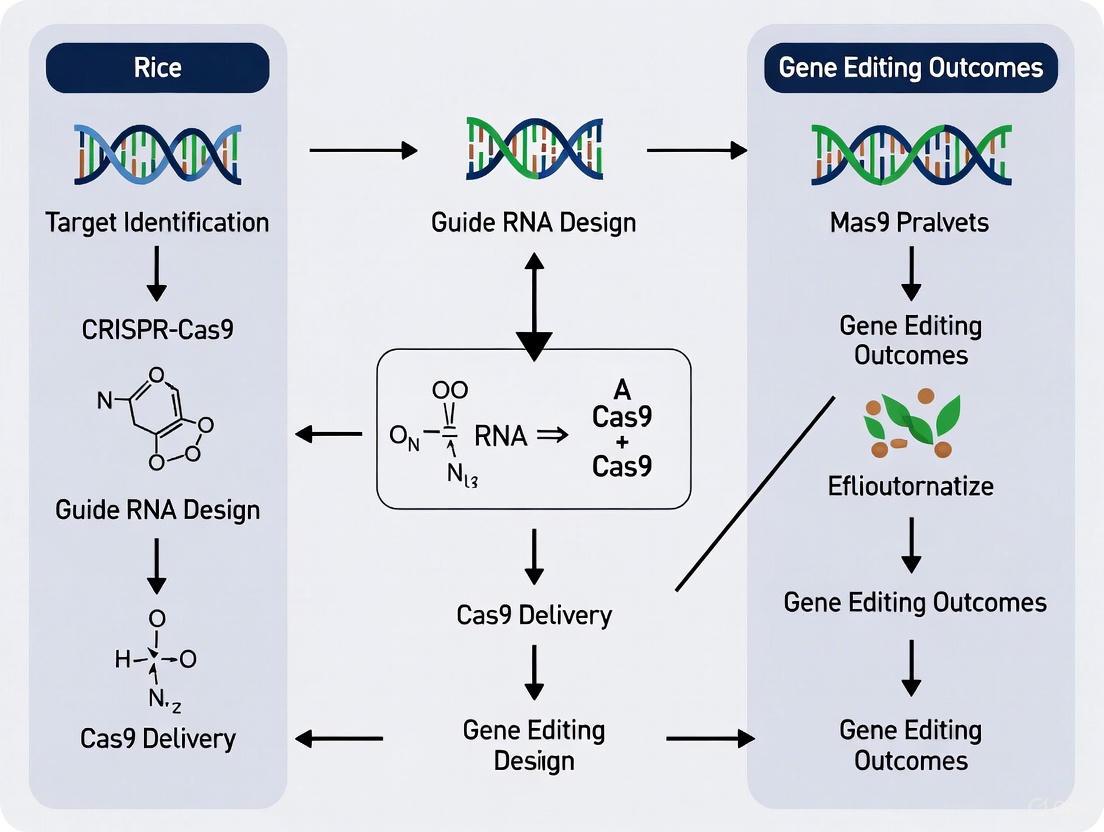
This article provides a detailed guide for researchers and scientists on applying CRISPR-Cas9 genome editing in monocot plants, specifically rice and maize.
A Comprehensive CRISPR-Cas9 Protocol for Monocot Plants: Advanced Genome Editing in Rice and Maize
Abstract
This article provides a detailed guide for researchers and scientists on applying CRISPR-Cas9 genome editing in monocot plants, specifically rice and maize. It covers foundational mechanisms and advantages of CRISPR-Cas9 over traditional methods, then delves into practical protocols for vector design, multiplex editing, and efficient delivery systems like Agrobacterium and biolistics. The guide includes thorough troubleshooting for common issues such as off-target effects and low efficiency, and concludes with robust validation techniques and a comparative analysis of editing outcomes. This protocol aims to empower the development of climate-resilient, high-yielding crop varieties to address global food security challenges.
Understanding CRISPR-Cas9 Systems and Their Superiority for Monocot Genome Editing
The Clustered Regularly Interspaced Short Palindromic Repeats (CRISPR) and CRISPR-associated protein 9 (Cas9) system represents a revolutionary genome-editing technology derived from the adaptive immune system of bacteria, such as Streptococcus pyogenes [1] [2]. In nature, this system protects bacteria from invading viruses and plasmids by capturing and storing fragments of foreign DNA within the host's CRISPR locus. These fragments are then transcribed and processed into short CRISPR RNAs (crRNAs), which guide Cas nucleases to cleave complementary foreign DNA sequences upon future invasions [1].
Molecular biologists have repurposed this system into a powerful and versatile tool for precise genome engineering in eukaryotic cells, including plants [3]. The core engineered system consists of two key components: the Cas9 endonuclease, which creates double-stranded breaks (DSBs) in DNA, and a synthetic single-guide RNA (sgRNA), which is a fusion of crRNA and a trans-activating crRNA (tracrRNA) [2]. The sgRNA directs Cas9 to a specific genomic locus by base-pairing with a 20-nucleotide target sequence adjacent to a short Protospacer Adjacent Motif (PAM), which is 5'-NGG-3' for the commonly used SpCas9 [1] [4].
The precision and programmability of the CRISPR/Cas9 system have made it an indispensable tool for functional genomics and crop improvement, particularly in monocot cereals like rice and maize which are vital for global food security [1] [5].
Core Mechanism and Application Workflow
The fundamental mechanism of CRISPR/Cas9 action involves the creation of a targeted DSB in the genome, which is subsequently repaired by the cell's endogenous DNA repair machinery. The two primary repair pathways are Non-Homologous End Joining (NHEJ) and Homology-Directed Repair (HDR).
- NHEJ is an error-prone process that often results in small insertions or deletions (indels) at the break site. When these indels occur within the coding sequence of a gene, they can cause frameshift mutations that lead to premature stop codons and effectively knock out the gene's function [1] [2].
- HDR is a more precise pathway that uses a homologous DNA template to repair the break. By co-delivering a designed donor repair template (DRT), researchers can harness HDR to introduce specific nucleotide changes or insert new sequences, achieving gene knock-in or precise base editing [2].
The following diagram illustrates the complete workflow from sgRNA design to the analysis of edited monocot plants, integrating the core mechanism with practical application steps.
Experimental Protocols for Monocots
The following protocols provide a detailed framework for implementing CRISPR/Cas9 genome editing in monocot plants like rice and maize.
Basic Protocol 1: CRISPR/Cas9 Guide RNA Target Selection
This protocol is critical for ensuring high on-target activity and minimal off-target effects [1].
- Sequence Retrieval: Obtain the full genomic sequence of the target gene from a reference database (e.g., Rice Genome Annotation Project for rice, MaizeGDB for maize). Include exon, intron, and promoter regions.
- Target Site Identification: Scan the sequence for all instances of the PAM sequence (5'-NGG-3' for SpCas9). The 20 nucleotides immediately 5' to each PAM are potential sgRNA target sequences.
- Specificity and Efficiency Scoring:
- Use web-based tools like CRISPR-P 2.0 (for rice, maize, wheat), CHOPCHOP, or Cas-Designer to score and rank potential sgRNAs [1] [4].
- Prioritize sgRNAs with high efficiency scores (often correlated with GC content between 40-80%) and no or minimal putative off-target sites in the genome.
- For polyploid species (e.g., wheat), ensure the sgRNA sequence is perfectly conserved across all homoeoalleles or design specific sgRNAs for each allele [1].
- Validation: Design PCR primers flanking the selected target site (amplicon size ~300-500 bp). Amplify and sequence the target region from the specific cultivar being used to confirm the absence of natural polymorphisms that could affect sgRNA binding [1].
Basic Protocol 2: Construction of a Binary Plasmid Vector
This protocol outlines the assembly of a T-DNA vector for Agrobacterium-mediated transformation [1] [4].
- Oligonucleotide Annealing:
- Design complementary oligonucleotides corresponding to the selected 20-nt sgRNA target sequence, adding the appropriate 5' overhangs for your chosen cloning method (e.g., BsaI sites for Golden Gate assembly).
- Phosphorylate and anneal the oligos to form a double-stranded DNA fragment.
- sgRNA Cassette Cloning: Ligate the annealed oligo duplex into a shuttle vector containing a monocot-specific Pol III promoter (e.g., OsU6 or OsU3 for rice, ZmU6 for maize) driving the sgRNA scaffold [4].
- Multiplexing (Optional): For targeting multiple genes, assemble multiple sgRNA expression cassettes using methods like Golden Gate cloning or a polycistronic tRNA-gRNA system (tRNA-based processing) [2] [4].
- Final Vector Assembly: Transfer the assembled sgRNA cassette(s) into a binary T-DNA vector that contains the following components [4]:
- A codon-optimized Cas9 gene under the control of a strong monocot Pol II promoter (e.g., Maize Ubiquitin 1 (ZmUbi1) for constitutive expression).
- A plant selection marker (e.g., Hygromycin phosphotransferase, Hpt) driven by a separate constitutive promoter.
- Sequence Verification: Confirm the final plasmid sequence by Sanger sequencing, paying special attention to the sgRNA target sequence and assembly junctions.
Support Protocol: Plant Transformation and Regeneration
This protocol is for generating genome-edited plants via Agrobacterium [1].
- Vector Mobilization: Introduce the verified binary vector into an Agrobacterium tumefaciens strain suitable for monocot transformation (e.g., EHA105, AGL1) by electroporation or freeze-thaw method.
- Plant Material Preparation: Isolate immature embryos or seed-derived calli from the target rice or maize cultivar. This serves as the explant for transformation.
- Co-cultivation: Inoculate the explants with the Agrobacterium culture harboring the CRISPR/Cas9 vector. Co-cultivate for 2-3 days in the dark to allow T-DNA transfer.
- Selection and Regeneration:
- Transfer the co-cultivated explants to selection media containing the appropriate antibiotic (e.g., hygromycin) to inhibit Agrobacterium growth and select for transformed plant cells.
- Subsequently, transfer putative transgenic calli to regeneration media to induce shoot and root formation.
- Transplanting: Acclimatize regenerated plantlets (T0 generation) to soil in a controlled greenhouse environment.
Basic Protocol 3: Genotyping of Edited Events
This protocol identifies and characterizes mutations in regenerated plants [1].
- DNA Extraction: Extract genomic DNA from leaf tissue of wild-type and T0 regenerated plants using a reliable in-house or commercial kit.
- PCR Amplification: Perform PCR using the pre-validated primers flanking the target site to generate an amplicon.
- Mutation Detection:
- Restriction Enzyme (RE) Assay: If the CRISPR cut site disrupts a native restriction enzyme recognition sequence, digest the PCR product and analyze fragments by gel electrophoresis. The loss of the restriction site indicates a potential mutation.
- Sanger Sequencing: Clone the PCR amplicon into a sequencing vector or sequence the PCR product directly. Direct sequencing of a heterogeneous PCR product will show overlapping chromatograms after the cut site, indicating editing. Cloning and sequencing multiple colonies reveals the spectrum of specific indel mutations in an individual.
- Next-Generation Sequencing (NGS): For a high-throughput and quantitative analysis of editing efficiency and mutation patterns, use amplicon sequencing (Amplicon-Seq) [6].
- Transgene Segregation: Advance heterozygous or biallelic T0 mutants to the T1 generation. Screen T1 plants for the desired mutation while testing for the absence of the Cas9/sgRNA transgene to identify transgene-free edited lines [2] [7].
Advanced Delivery Methods: Ribonucleoprotein (RNP) Complexes
To avoid the integration of foreign DNA and streamline regulatory approval, direct delivery of pre-assembled Cas9 protein and sgRNA complexes (RNPs) is a highly effective strategy.
- Biolistic RNP Delivery: As demonstrated in maize, RNP complexes can be coated onto gold microparticles and delivered into embryo cells using a gene gun [8]. This method successfully produced mutants with high frequency and significantly reduced off-target effects compared to DNA delivery.
- Sonication-Assisted Whisker Method: A recent innovation in rice uses potassium titanate whiskers and sonication to introduce RNPs into embryonic cell suspensions [6]. This method achieved efficient mutagenesis, with a dominant 1-bp insertion pattern, and allowed for the regeneration of edited plants.
The Scientist's Toolkit: Essential Research Reagents
The table below catalogs key materials and reagents required for executing a CRISPR/Cas9 project in monocot plants.
| Item Category | Specific Examples & Details | Primary Function |
|---|---|---|
| Cas9 Nuclease | Streptococcus pyogenes Cas9 (SpCas9), codon-optimized for monocots [4] | Creates double-stranded breaks at target DNA loci. |
| sgRNA Promoters | Monocot-specific RNA Pol III promoters (e.g., OsU3, OsU6a/b/c for rice; ZmU6 for maize) [4] | Drives high-level, constitutive expression of the guide RNA. |
| Cas9 Promoters | Strong constitutive RNA Pol II promoters (e.g., Maize Ubiquitin 1 (ZmUbi1), CaMV 35S) [2] [4] | Drives high-level expression of the Cas9 protein. |
| Selection Markers | Hygromycin phosphotransferase (Hpt), bar gene (phosphinothricin resistance) [4] | Selects for plant cells that have integrated the T-DNA. |
| Delivery Vectors | Binary T-DNA vectors for Agrobacterium-mediated transformation [1] [4] | Delivers Cas9 and sgRNA genetic components into the plant genome. |
| Web-Based Tools | CRISPR-P 2.0, CHOPCHOP, Cas-Designer, WheatCRISPR [1] | Assists in sgRNA design, efficiency prediction, and off-target analysis. |
Quantitative Data from Case Studies in Rice and Maize
The following table summarizes key performance metrics from published CRISPR/Cas9 studies in rice and maize, illustrating the technology's efficiency.
| Crop Species | Target Gene / Trait | Editing Efficiency / Mutation Rate | Key Outcome and Impact | Citation Source |
|---|---|---|---|---|
| Rice | An-1 (Grain Number) [7] | 17 multi-allelic, 7 bi-allelic, 4 mono-allelic mutants from 312 T0 plants | T4 mutants showed 35.25% increased single plant yield, 34.8% more spikelets per panicle. | [7] |
| Rice | LKR/SDH (Lysine Content) [9] | 19 transgene-positive T0 plants with knockouts | T2 seeds had a ~2-fold increase in lysine content without affecting agronomic traits. | [9] |
| Maize | LIG, MS26, MS45 (Development & Fertility) [8] | 2.4% to 9.7% mutation frequency (DNA-free RNP delivery) | Recovered transgene-free, mutant plants at high frequency, reducing off-target effects. | [8] |
| Rice | OsPDS (Carotenoid Pathway) [6] | 9 out of 22 selected calli (41%) with RNP delivery via whisker method | Successfully isolated genome-edited lines with albino phenotype, confirming RNP activity. | [6] |
Why CRISPR-Cas9 Outperforms ZFNs and TALENs in Rice and Maize
The advent of genome editing technologies has revolutionized genetic engineering in agriculture, offering unprecedented precision in crop improvement. Among these technologies, Clustered Regularly Interspaced Short Palindromic Repeats (CRISPR)-associated protein 9 (CRISPR/Cas9) has emerged as the most transformative tool for monocot plants like rice and maize. While earlier technologies such as Zinc-Finger Nucleases (ZFNs) and Transcription Activator-Like Effector Nucleases (TALENs) paved the way for targeted genome editing, CRISPR/Cas9 demonstrates distinct advantages in simplicity, efficiency, and versatility [10] [11]. This article examines the technical and practical reasons why CRISPR/Cas9 outperforms its predecessors in rice and maize research, providing detailed protocols and application notes for researchers leveraging this technology in monocot crop improvement.
Comparative Analysis of Genome Editing Technologies
Fundamental Mechanisms and Design Complexities
ZFNs are fusion proteins composed of a DNA-binding domain—engineered from Cys2-His2 zinc-finger proteins that typically recognize 3-base pair sequences—and the FokI cleavage domain. A significant limitation is that FokI requires dimerization to become active, necessitating the design and optimization of two separate ZFN proteins that bind to opposite DNA strands with correct orientation and spacing (typically 5-7 bp apart) [10] [11]. The context-dependent DNA recognition of zinc fingers complicates design, as individual fingers can influence neighboring binding specificity. Although methods like oligomerized pool engineering (OPEN) and context-dependent assembly (CoDA) have been developed to address these challenges, the protein engineering process remains time-consuming and expensive [10] [11].
TALENs improved upon ZFNs by offering a more straightforward DNA recognition code. Each TALE repeat domain recognizes a single base pair through two hypervariable amino acids known as repeat-variable diresidues (RVDs). The recognition code is simple: NI for adenine, NG for thymine, HD for cytosine, and NN for guanine/adenine [10]. Despite this simpler code, TALEN assembly is technically challenging due to the highly repetitive nature of TALE sequences, which can lead to recombination events in bacterial systems. Like ZFNs, TALENs also utilize the FokI nuclease domain, requiring paired binding sites with proper spacing for effective cleavage [10].
CRISPR/Cas9 represents a paradigm shift from protein-based to RNA-guided DNA recognition. The system consists of two fundamental components: the Cas9 nuclease and a single-guide RNA (sgRNA) that combines the functions of CRISPR RNA (crRNA) and trans-activating crRNA (tracrRNA) [12] [13]. The sgRNA contains a 20-nucleotide sequence at its 5' end that specifies the target site through Watson-Crick base pairing, followed by a hairpin structure that facilitates Cas9 binding. Target recognition requires the presence of a Protospacer Adjacent Motif (PAM—NGG for Streptococcus pyogenes Cas9) immediately downstream of the target sequence [14]. This RNA-based recognition eliminates the need for complex protein engineering, as designing new target specificities requires only the synthesis of a new sgRNA sequence while the Cas9 protein remains constant.
Quantitative Comparison of Editing Features
Table 1: Comparative Analysis of Genome Editing Technologies in Rice and Maize
| Feature | ZFNs | TALENs | CRISPR/Cas9 |
|---|---|---|---|
| DNA Recognition Mechanism | Protein-based (3 bp per zinc finger) | Protein-based (1 bp per TALE repeat) | RNA-guided (20 nt sgRNA) |
| Nuclease Domain | FokI (requires dimerization) | FokI (requires dimerization) | Cas9 (single protein) |
| Target Design Complexity | High (context-dependent effects) | Moderate (repetitive cloning challenges) | Low (simple sgRNA design) |
| PAM Requirement | None | None | NGG (for SpCas9) |
| Multiplexing Capacity | Limited | Limited | High (multiple sgRNAs) |
| Editing Efficiency in Monocots | Variable (10-30%) [10] | Moderate (30-60%) [10] | High (60-95%) [14] |
| Time Required for Vector Construction | Several weeks | 1-2 weeks | 3-5 days |
| Relative Cost | High | Moderate | Low |
| Off-Target Effects | Moderate | Low | Moderate (design-dependent) |
| Methylated DNA Targeting | Limited | Limited | Efficient [14] |
Key Advantages of CRISPR/Cas9 in Rice and Maize
Enhanced Efficiency and Specificity: CRISPR/Cas9 demonstrates remarkably higher editing efficiency in both rice and maize compared to ZFNs and TALENs. In maize, transformation efficiency with CRISPR/Cas9 ranges from 60% to 95% in transgenic lines, with a high frequency of biallelic mutations that are heritable [14]. This high efficiency is attributed to the constant expression of the Cas9 protein, which requires only the simple redesign of sgRNAs for new targets. The targeting efficiency of CRISPR/Cas9 is notably better than both TALENs and ZFNs [14].
Streamlined Experimental Workflow: The simplicity of CRISPR/Cas9 design significantly accelerates research timelines. While ZFN and TALEN approaches require complex protein engineering for each new target, CRISPR/Cas9 only requires the synthesis of a new 20-nucleotide sgRNA sequence. This simplification enables researchers to proceed from target selection to transformation in days rather than weeks [14] [10].
Multiplex Editing Capability: CRISPR/Cas9 enables simultaneous editing of multiple genes by introducing several sgRNAs targeting different genomic loci. This capacity is particularly valuable for manipulating complex polygenic traits in rice and maize, such as yield components, stress tolerance, and metabolic pathways. For example, in rice, multiplex editing has been successfully employed to target multiple disease susceptibility genes simultaneously, creating broad-spectrum resistance to pathogens like blast and bacterial blight [2] [15].
Flexibility in Target Selection: Unlike ZFNs, which have constraints in targetable sequences due to the context dependence of zinc fingers, CRISPR/Cas9 can target virtually any genomic sequence followed by a PAM. The requirement for an NGG PAM occurs approximately every 8-12 base pairs in the rice and maize genomes, providing abundant targeting opportunities [14].
Essential Research Reagent Solutions
Table 2: Key Reagents for CRISPR/Cas9 Editing in Rice and Maize
| Reagent Category | Specific Examples | Function and Application Notes |
|---|---|---|
| Cas9 Expression Systems | Maize Ubiquitin promoter-driven Cas9, Rice Ubiquitin promoter-driven Cas9 | Drives constitutive expression of Cas9 nuclease in monocot tissues [14] [2] |
| sgRNA Expression Constructs | Rice U3 and U6 snRNA promoters, Arabidopsis U6 promoters | Polymerase III promoters for high-level sgRNA expression; U6 prefers 'G' start, U3 prefers 'A' start [14] [2] |
| Delivery Vectors | pCAMBIA-based vectors, Golden Gate assembly systems | Modular vector systems enabling efficient cloning of multiple sgRNAs [14] |
| Transformation Systems | Agrobacterium tumefaciens (EHA105, LBA4404), Biolistic delivery | Agrobacterium-mediated transformation is most established; biolistics useful for recalcitrant genotypes [12] |
| Selectable Markers | Hygromycin phosphotransferase (hpt), Herbicide resistance genes | Selection of transformed tissues during regeneration |
| Modular Assembly Systems | Golden Gate MoClo system, Gibson Assembly | Efficient assembly of multiple sgRNA expression cassettes for multiplex editing [14] [2] |
Detailed Experimental Protocols
Workflow for CRISPR/Cas9 Vector Construction for Monocots
Step-by-Step Protocol for Vector Construction
Step 1: Target Selection and sgRNA Design
- Identify target gene sequence (300-500 bp region surrounding target site)
- Scan for 5'-NGG-3' PAM sequences
- Select 20-nucleotide target sequence immediately 5' to PAM
- Critical Parameter: Optimal GC content: 40-60%
- Verify uniqueness in genome using tools like Cas-OFFinder
- Design sgRNA with G at position 1 if using U6 promoter [14]
Step 2: Oligonucleotide Design and Preparation
- Forward oligo: 5'-GATN20-3' (add appropriate overhang for your vector)
- Reverse oligo: 5'-AAACN20-3' (reverse complement with overhang)
- Phosphorylate and anneal oligonucleotides
- Recipe: 1 μL each oligo (100 μM), 1 μL T4 Ligase Buffer, 6.5 μL dH2O, 0.5 μL T4 PNK
- Annealing program: 37°C 30 min; 95°C 5 min; ramp to 25°C at 5°C/min [14]
Step 3: Golden Gate Assembly
- Set up reaction: 50-100 ng backbone vector, 1:3 molar ratio of insert, 1 μL BsaI, 1 μL T7 Ligase, 2 μL 10x T4 Ligase Buffer, up to 20 μL dH2O
- Cycling parameters: 25 cycles of (37°C 5 min; 16°C 10 min); 50°C 5 min; 80°C 5 min
- Transform into competent E. coli cells [14] [2]
Step 4: Plasmid Verification
- Screen colonies by colony PCR or restriction digest
- Sequence confirm with U6/T7 promoter primers
- Quality Control: Verify no mutations in Cas9 and sgRNA scaffold regions
Rice Transformation Protocol Using Agrobacterium
Materials:
- Rice cultivars: Nipponbare (japonica) or Kasalath (indica)
- Agrobacterium tumefaciens strain EHA105
- Callus induction medium: N6 salts, 2,4-D (2 mg/L), CHU (N6) vitamins
- Co-cultivation medium: N6 salts, 2,4-D (2 mg/L), acetosyringone (100 μM)
- Selection medium: Hygromycin (50 mg/L) or appropriate selection agent
Procedure:
- Callus Induction: Dehush mature seeds, surface sterilize, place on callus induction medium. Incubate at 26°C in dark for 2-3 weeks.
- Agrobacterium Preparation: Inoculate 10 mL YEP with antibiotics, grow overnight at 28°C with shaking. Centrifuge and resuspend in AAM medium to OD600 = 0.1-0.2, add acetosyringone (100 μM).
- Co-cultivation: Immerse calli in Agrobacterium suspension for 30 min, blot dry, transfer to co-cultivation medium. Incubate at 26°C in dark for 3 days.
- Selection: Transfer calli to selection medium containing antibiotics and selection agent. Subculture every 2 weeks.
- Regeneration: Transfer embryogenic calli to regeneration medium (MS salts, BAP 3 mg/L, NAA 0.5 mg/L). Incubate at 26°C with 16h light/8h dark cycle.
- Rooting: Transfer shoots to rooting medium (½ MS salts, IAA 1 mg/L).
- Molecular Analysis: Extract genomic DNA from regenerated plants, perform PCR amplification of target region, sequence to verify edits. [15] [16]
Application Notes: Successful CRISPR/Cas9 Editing in Rice and Maize
Disease Resistance Engineering in Rice
Rice Blast Resistance:
- Target Genes: Pi21, Bsr-d1, ERF922
- Strategy: Knockout of susceptibility genes
- Protocol: Design two sgRNAs targeting conserved domains of Pi21. Transform using protocol 4.3.
- Results: Mutant lines showed enhanced resistance to Magnaporthe oryzae without yield penalty [15] [17]
Bacterial Blight Resistance:
- Target Genes: SWEET14 (Os11N3)
- Strategy: Disrupt effector binding elements in promoter region
- Protocol: Use dual sgRNAs to create promoter deletions
- Results: Edited lines showed reduced susceptibility to Xanthomonas oryzae pv. oryzae [15] [17]
Maize Quality and Yield Improvement
Low Cadmium Accumulation:
- Target Gene: OsNramp5 metal transporter
- Strategy: Complete gene knockout
- Protocol: Single sgRNA targeting second exon
- Results: Mutant lines showed significantly reduced cadmium accumulation without affecting yield [18]
Yield Enhancement:
- Target Genes: OsHXK1, CLE family genes
- Strategy: Promoter editing and gene knockout
- Protocol: Multiplex editing with three sgRNAs
- Results: Edited lines showed improved photosynthesis and yield traits [18]
Troubleshooting Common Experimental Issues
Low Editing Efficiency:
- Verify sgRNA expression with Northern blot or RT-PCR
- Test multiple sgRNAs for each target
- Optimize promoter combinations (Ubiquitin for Cas9, U3/U6 for sgRNA)
- Ensure proper PAM recognition and GC content [14]
Off-Target Effects:
- Use computational tools to predict potential off-target sites
- Design sgRNAs with minimal similarity to other genomic regions
- Utilize high-fidelity Cas9 variants
- Perform whole-genome sequencing to verify specificity [13]
No Transformants Recovered:
- Verify vector integrity by restriction digest and sequencing
- Optimize Agrobacterium strain and density
- Test different rice/maize genotypes
- Ensure proper selection agent concentration [14] [15]
CRISPR/Cas9 has unequivocally surpassed ZFNs and TALENs as the genome editing technology of choice for rice and maize research due to its superior efficiency, simplicity, multiplexing capability, and flexibility. The RNA-guided DNA recognition mechanism eliminates the complex protein engineering requirements of earlier technologies, significantly accelerating research timelines and reducing costs. As CRISPR technology continues to evolve with developments like base editing, prime editing, and novel Cas variants, its applications in monocot crop improvement will expand further. The protocols and application notes provided here offer researchers a comprehensive framework for implementing CRISPR/Cas9 editing in rice and maize, enabling rapid genetic gains for enhanced crop productivity and sustainability.
The CRISPR-Cas system has emerged as a revolutionary technology for precise genome editing in monocot plants, enabling targeted modifications to improve agronomic traits, enhance nutritional quality, and boost climate resilience [1]. At the heart of this technology lie three fundamental components: Cas proteins that function as molecular scissors, guide RNAs (gRNAs) that provide targeting specificity, and protospacer adjacent motifs (PAMs) that define targetable genomic locations [19]. Understanding the intricate relationship between these components is essential for designing effective genome editing experiments in cereal crops such as rice and maize. This application note provides a comprehensive overview of these key elements within the context of developing robust CRISPR-Cas9 protocols for monocot plant research, offering practical guidance for researchers and scientists engaged in crop improvement and functional genomics.
Cas Proteins: The Genome Editing Effectors
Cas proteins are RNA-guided DNA endonucleases derived from microbial adaptive immune systems that create double-strand breaks (DSBs) at specific genomic locations [1]. These proteins have been repurposed as programmable nucleases for genome engineering, with different Cas variants offering distinct properties, PAM requirements, and editing capabilities.
Table 1: Key Cas Protein Variants and Their Properties for Plant Genome Editing
| Cas Variant | Origin | PAM Requirement | Size (aa) | Key Features | Applications in Monocots |
|---|---|---|---|---|---|
| SpCas9 | Streptococcus pyogenes | 5'-NGG-3' | 1368 | High efficiency, widely validated | Gene knockout in rice, maize [20] |
| StCas9 | Streptococcus thermophilus | 5'-NNAGAAW-3' | 1121 | Alternative PAM recognition | Expanded targeting range [1] |
| SaCas9 | Staphylococcus aureus | 5'-NNGRRT-3' | 1053 | Smaller size for viral delivery | In plant systems requiring compact editors [1] |
| Cas12a (Cpf1) | Acidaminococcus sp. | 5'-TTTV-3' | 1307 | T-rich PAM, staggered cuts | Rice, maize genome editing [21] |
| OpenCRISPR-1 | AI-designed | Engineered specificity | N/A | Reduced off-target effects | High-fidelity editing [22] |
For monocot plants, the Cas9 gene is typically codon-optimized for the target species and expressed under the control of strong constitutive promoters such as maize Ubiquitin 1 (ZmUbi1) or rice ACTIN 1 to achieve high expression levels [20]. The addition of nuclear localization signals (NLS) ensures proper targeting of the Cas protein to the nucleus, which is essential for efficient genome editing [20]. Recent advances include the development of Cas9 orthologs with divergent PAM specificities, such as StCas9, NmCas9, SaCas9, and CjCas9, which recognize different PAM sequences and thereby expand the targeting range of CRISPR systems [1]. More recently, the SpG and SpRY variants have been developed, which operate without strict PAM constraints, greatly enhancing the flexibility and resolution of genome editing [1].
Artificial intelligence has further expanded the Cas protein toolbox through designed editors such as OpenCRISPR-1, which exhibits comparable or improved activity and specificity relative to SpCas9 while being 400 mutations away in sequence [22]. These AI-generated editors represent a significant advancement in overcoming the limitations of natural Cas proteins.
gRNA Design: Principles and Strategies for High Efficiency
The guide RNA is a programmable RNA molecule that directs the Cas protein to specific DNA target sequences. It consists of a 20-nucleotide spacer sequence that is complementary to the target DNA and a structural scaffold that facilitates Cas protein binding [1]. Proper gRNA design is critical for editing efficiency and specificity in monocot plants.
Key Considerations for gRNA Design
- GC Content: Target sequences with GC contents higher than 50% demonstrate higher genome-editing efficiencies (88.5–89.6%) compared to those with GC contents lower than 50% (77.2% efficiency) in rice [20].
- Avoidance of successive T's: Sequences containing successive thymine bases (TTTT) should be avoided when sgRNA expression is driven by U3 or U6 promoters as they can function as termination signals [20].
- Seed region positioning: The PAM-proximal 10-12 nucleotides form a "seed region" where mismatches are least tolerated, making this region critical for target specificity [19].
- Off-target potential: gRNAs should be designed to minimize similarity to other genomic regions, ideally differing by at least three mismatches, with at least one mismatch occurring in the PAM-proximal region [23].
Computational Tools for gRNA Design
Several web-based tools are available to assist researchers in designing highly specific gRNAs for monocot plants. These tools leverage reference genomes to identify potential off-target sites and recommend optimal target sequences.
Table 2: Computational Tools for gRNA Design and Their Applications in Cereal Crops
| Tool Name | Web Address | Supported Crops | Key Features | Reference |
|---|---|---|---|---|
| Cas-Designer | https://www.rgenome.net/cas-designer/ | Rice, maize, wheat, sorghum, barley | gRNA selection and off-target analysis | [1] |
| CRISPR-P 2.0 | http://cbi.hzau.edu.cn/cgi-bin/CRISPR2/CRISPR | Rice, maize, wheat, sorghum | gRNA selection, sgRNA secondary structure prediction | [1] |
| CHOPCHOP | https://chopchop.cbu.uib.no/ | Rice, maize, wheat, sorghum | sgRNA scanning for on-target and off-target sites | [1] |
| WheatCRISPR | https://crispr.bioinfo.nrc.ca/ | Wheat | On-target and low off-target activity prediction | [1] |
| CRISPR-Cereal | http://crispr.hzau.edu.cn/CRISPR-Cereal/ | Rice, maize, wheat | sgRNA scanning for on-target and off-target sites | [1] |
It is important to note that sgRNA designing and off-target screening tools are typically based on specific reference genome crop varieties. For maize, the widely used inbred line B73 serves as the reference genome, and there may be sequence differences between the reference and target cultivars [1]. Therefore, validating the target DNA sequence before finalizing sgRNA targets is recommended.
PAM Requirements: The Targeting Constraint
The protospacer adjacent motif (PAM) is a short, specific DNA sequence (typically 2-6 nucleotides) that must be present immediately adjacent to the target sequence for Cas protein recognition and cleavage [1]. Biologically, PAM sequences are vital for the prokaryotic immune system to discriminate between the chromosomal CRISPR locus and viral DNA, thereby preventing autoimmunity [19].
Different Cas proteins recognize distinct PAM sequences, which fundamentally constrains their targeting range. For example, the most commonly used SpCas9 requires a 5'-NGG-3' PAM sequence, where "N" can be any nucleotide [1]. This requirement means that, on average, a potential SpCas9 target site occurs once every 8-12 base pairs in the genome. The development of Cas variants with altered PAM specificities has significantly expanded the targeting space available for genome editing.
PAM Engineering Strategies
Several approaches have been developed to overcome PAM limitations:
- PAM generation/degeneration: For diagnostic applications, SNV-related generation or degeneration of PAMs can be used to discriminate between single nucleotide differences [19]. PAM generation occurs when a single nucleotide variant (SNV) results in the introduction of a PAM sequence, enabling CRISPR-based detection only when the target sequence harbors that specific mutation.
- Engineered Cas variants: Cas9 engineers have developed proteins such as SpG (recognizing NG PAMs) and SpRY (recognizing NRN and to a lesser extent NYN PAMs, where R is A/G and Y is C/T) with relaxed PAM requirements [1].
- AI-designed editors: Protein language models have been used to generate novel Cas proteins with diverse PAM specificities beyond those found in nature [22].
Experimental Protocol: A Workflow for Monocot Genome Editing
The following protocol outlines a comprehensive workflow for implementing CRISPR-Cas genome editing in monocot plants, integrating the key components discussed in this application note.
Step-by-Step Protocol
gRNA Target Selection and Design (Basic Protocol 1)
- Identify target gene sequence: Extract the genomic sequence of the target gene from the appropriate database (e.g., Phytozome for monocots), noting any sequence variations in your specific cultivar.
- Scan for potential target sites: Use computational tools (Table 2) to identify 20-nucleotide target sequences followed by an appropriate PAM (NGG for SpCas9).
- Evaluate target candidates: Select targets with GC content >50%, avoid successive T's, and ensure the seed region (PAM-proximal 10-12 nt) is unique in the genome.
- Check for off-target sites: Use Cas-OFFinder or similar tools to identify potential off-target sites with up to 5 mismatches, giving particular attention to sites with fewer than 3 mismatches total or fewer than 2 mismatches in the seed region [23].
- Design validation primers: Design PCR primers flanking the target site (amplicon size 300-500 bp) for subsequent genotyping analysis.
Construction of Binary Plasmid Vector (Basic Protocol 2)
- Select backbone vector: Choose a binary vector suitable for plant transformation (e.g., pCAMBIA or pGreen-based vectors) [24].
- Clone Cas9 expression cassette: Insert the codon-optimized Cas9 gene under the control of a strong monocot promoter (e.g., ZmUbi1 for maize, OsActin1 for rice).
- Clone gRNA expression cassette: Insert the sgRNA sequence under the control of a Pol III promoter (e.g., OsU6 for rice, TaU3 for wheat) [20] [24].
- For multiplex editing: Assemble multiple gRNA expression cassettes using tRNA or ribozyme-based processing systems [20].
- Verify construct by sequencing: Confirm the integrity of all components, especially the sgRNA spacer sequence.
Plant Transformation and Genotyping (Basic Protocol 3)
- Deliver constructs: Use Agrobacterium-mediated transformation or particle bombardment to introduce the CRISPR construct into plant cells [1].
- Regenerate plants: Select transformed plants using appropriate antibiotics (e.g., hygromycin when using Hpt selection marker) and regenerate whole plants through tissue culture [20].
- Extract genomic DNA: Use a reliable DNA extraction protocol to obtain high-quality genomic DNA from transformed plants [1].
- Screen for edits: Amplify the target region by PCR and analyze for indels using restriction enzyme digestion (if the edit disrupts a restriction site) or sequencing.
- Sequence analysis: Use tools like EditR or ICE Analysis to quantify editing efficiency and characterize mutation types [1].
The Scientist's Toolkit: Essential Research Reagents
Table 3: Key Research Reagent Solutions for Monocot CRISPR Research
| Reagent Category | Specific Examples | Function | Application Notes |
|---|---|---|---|
| Cas Expression Systems | Maize-codon optimized Cas9, Human-codon optimized Cas9 | DNA cleavage | Maize-codon optimized Cas9 shows higher efficiency in monocots [24] |
| gRNA Cloning Systems | Golden Gate cloning kits, tRNA-gRNA vectors | gRNA expression | Golden Gate assembly enables efficient multiplexing [25] |
| Promoters for Monocots | ZmUbi1, OsActin1, OsU6, TaU3 | Drive expression of Cas9 and gRNA | OsU6 promoter produces more transcripts than OsU3 in rice [20] |
| Selection Markers | Hpt (hygromycin resistance), Bar (phosphinothricin resistance) | Selection of transformed tissue | Hpt is widely used with ZmUbi1 promoter for monocot selection [20] |
| Delivery Tools | Agrobacterium strains, PEG for protoplasts, Gene gun | Introduction of editing components | Agrobacterium-mediated transformation is most common for stable transformation [20] |
The effective implementation of CRISPR-Cas technology in monocot plants requires careful consideration of the three key components: Cas proteins, gRNA design, and PAM requirements. By selecting appropriate Cas variants with suitable PAM specificities, designing gRNAs with high on-target efficiency and minimal off-target potential, and following optimized experimental protocols, researchers can achieve precise genome editing in cereal crops. The continued development of novel Cas proteins through AI-based design and the refinement of delivery strategies will further enhance the capabilities of genome editing in monocot species, accelerating both basic research and crop improvement efforts.
Application Notes
The development of climate-resilient staple crops is imperative for ensuring global food security in the face of increasing climatic volatility. CRISPR-Cas9 genome editing has emerged as a powerful tool for rapidly introducing resilience traits into major monocot crops, such as rice and maize, by enabling precise modifications to genes controlling stress responses. Unlike traditional breeding, CRISPR technology facilitates the direct manipulation of elite cultivars without compromising their valuable agronomic backgrounds, offering a faster pathway to climate adaptation [26] [27]. These application notes outline the key experimental findings and provide detailed protocols for implementing these genetic improvements in monocot systems.
A primary application of CRISPR-Cas9 is engineering tolerance to abiotic stresses. Drought resilience, a polygenic trait, can be enhanced by editing transcription factors and other regulatory genes within stress-signaling pathways. Similarly, heavy metal accumulation, a significant food safety concern in contaminated soils, can be mitigated by knocking out specific metal transporter genes [28].
The table below summarizes quantitative data from successful CRISPR-Cas9 interventions in rice and maize for developing climate-resilient traits.
Table 1: Quantitative Outcomes of CRISPR-Cas9-Mediated Trait Improvement in Monocot Crops
| Crop | Target Trait | Edited Gene(s) | Key Quantitative Findings | Reference |
|---|---|---|---|---|
| Rice (TBR225) | Reduced Cadmium (Cd) Accumulation | OsNRAMP5 |
• 78.4-84.5% reduction of Cd in roots• 72.3-83.8% reduction of Cd in shoots• 50.5-66.0% reduction of Cd in grains | [29] |
| Maize | Drought Tolerance | Multiple genes (polygenic) | 5% increased yield under drought stress conditions | [27] |
| Rice | Nutritional Enhancement | Metabolic pathway genes | Sixfold increase in β-carotene content | [27] |
The success of these interventions hinges on robust experimental protocols, from vector design through to the molecular and phenotypic characterization of edited lines, which are detailed in the following section.
Experimental Protocols
Protocol 1: CRISPR-Cas9-Mediated Gene Knockout for Reduced Cadmium Accumulation in Rice
This protocol describes a methodology for generating low-cadmium rice lines by knocking out the OsNRAMP5 gene, a major cadmium transporter, in the elite variety TBR225 [29].
I. Materials
- Plant Material: Mature seeds of the rice (Oryza sativa L.) variety TBR225.
- Vector: pCas9/sgRNA-OsNRAMP5 binary vector (e.g., designed as per Anh et al., 2022) [29].
- Bacterial Strain: Agrobacterium tumefaciens EHA105.
- Culture Media:
- E. coli: Luria-Bertani (LB) medium with appropriate antibiotics (e.g., Kanamycin).
- A. tumefaciens: YEM medium with antibiotics.
- Callus Induction Medium (CI), Co-cultivation Medium (CC), Selection Medium (SM), Regeneration Medium (RM) [29].
- Cd Treatment Solution: Cadmium chloride (CdCl₂) prepared in deionized water.
II. Methods
Step 1: Vector Construction and Agrobacterium Preparation
- Design sgRNAs to target specific exons of the OsNRAMP5 gene and clone them into the pCas9/sgRNA vector [29].
- Introduce the final binary vector into Agrobacterium tumefaciens EHA105 using the heat shock method [29].
- Inoculate a single colony of transformed Agrobacterium in YEM medium with antibiotics and incubate at 28°C with shaking until the OD₆₀₀ reaches ~1.0. Centrifuge and resuspend the bacterial pellet in liquid CC medium supplemented with 100 µM acetosyringone.
Step 2: Rice Transformation and Regeneration
- Callus Induction: Sterilize mature TBR225 seeds and culture on CI medium in the dark at 28°C for 7 days to induce embryogenic calli [29] [30].
- Agrobacterium Co-cultivation: Infect the calli with the prepared Agrobacterium suspension for 15-30 minutes. Blot dry and co-cultivate on solid CC medium with acetosyringone at 28°C in the dark for 3 days [29].
- Selection and Regeneration:
- Transfer the calli to SM containing 30 mg/L hygromycin to select for transformed tissue. Perform multiple selection rounds with subculturing every 10-14 days [29].
- Move resistant, proliferating calli to RM (e.g., MS medium supplemented with 1.0 mg/L NAA, 2.0 mg/L Kinetin, 20% coconut water) to induce shoot formation. Subculture regularly until shoots regenerate [29].
- Transfer developed shoots to root induction medium. Acclimatize well-rooted plantlets (T0 generation) to greenhouse conditions [29].
Step 3: Molecular Analysis of Mutants
- Genomic DNA Extraction: Extract DNA from young leaves of T0 and subsequent generation plants using the CTAB method.
- Mutation Detection: Amplify the target region of the OsNRAMP5 gene by PCR using gene-specific primers. Sequence the PCR products and analyze the chromatograms for insertion/deletion (indel) mutations using alignment software (e.g., TIDE, DECODR) [29].
- Selection of Transgene-Free Lines: Screen T1 generation plants by PCR using primers specific to the HPT (hygromycin resistance) marker gene and the Ubiquitin::Cas9 cassette. Select lines that are homozygous for the OsNRAMP5 mutation but lack the transgenes for further analysis [29].
Step 4: Phenotypic and Agronomic Evaluation
- Cadmium Accumulation Assay: Grow wild-type and mutant lines in pots treated with CdCl₂ solutions (e.g., 0, 30, 300 µM). After 2 months, harvest roots and shoots; harvest grains at maturity. Analyze Cd concentration in tissues using ICP-MS or AAS [29].
- Agronomic Trait Assessment: Under controlled field or greenhouse conditions, compare mutant and wild-type lines for key traits: growth duration, plant height, tiller number, grain yield, and amylose content to ensure no yield penalties [29].
- Micronutrient Analysis: Measure the concentration of essential micronutrients like Iron (Fe) and Zinc (Zn) in grains to confirm that the mutation does not adversely affect nutritional quality [29].
Protocol 2: A Workflow for Developing Drought-Tolerant Cereal Crops
This protocol provides a generalized framework for improving drought tolerance in maize and other cereals, a complex trait that often requires multiplexed editing.
I. Materials
- Plant Material: Immature embryos or other explants from the target cereal crop.
- Vectors: CRISPR-Cas9 vectors suitable for multiplex editing (e.g., using a polycistronic tRNA-gRNA system or multiple single-guRNA vectors).
- Target Genes: Candidates such as AREB1 (ABF2), ERF1, RD26, HSFA2, and other drought-responsive transcription factors [28].
II. Methods
Step 1: Target Identification and Vector Design
- Identify key drought-responsive genes and their promoter regions via literature review and transcriptomic data (e.g., from studies on hierarchical co-expression networks under stress) [28].
- Design multiple sgRNAs targeting several key genes or regulatory nodes simultaneously. Clone these into an appropriate multiplex CRISPR-Cas9 system.
Step 2: Plant Transformation and Line Selection
- Transform the target cereal (e.g., maize) using established Agrobacterium-mediated or biolistic methods for the species.
- Generate T0 plants and advance to the T1/T2 generations to obtain homozygous, stable mutants.
Step 3: Phenotypic Screening for Drought Tolerance
- Controlled Stress Assays: Subject edited and wild-type plants to well-watered and water-deficit conditions. Monitor physiological parameters: relative water content, stomatal conductance, and photosynthetic efficiency [28].
- Field Evaluation: Conduct multi-location field trials to assess yield performance under natural drought conditions [27].
The following diagram illustrates the complete experimental workflow for developing climate-resilient staples, from gene discovery to field evaluation.
The Scientist's Toolkit: Research Reagent Solutions
The following table lists essential reagents and their applications for CRISPR-based improvement of monocot crops.
Table 2: Key Research Reagents for CRISPR-Cas9 Experiments in Monocots
| Reagent / Material | Function / Application | Examples / Specifications |
|---|---|---|
| CRISPR Vector System | Delivers Cas9 and sgRNA into plant cells. | Binary vector with plant codon-optimized Cas9 (e.g., pCas9/sgRNA-OsNRAMP5); contains plant selectable marker (e.g., HPT for hygromycin resistance) [29]. |
| sgRNA | Guides Cas9 nuclease to the specific target DNA sequence. | Designed to have high on-target activity and minimal off-target effects; typically 20 nt target-specific sequence [29]. |
| Agrobacterium tumefaciens | Mediates transfer of T-DNA containing CRISPR construct into plant genome. | Strain EHA105; cultured in YEM medium with antibiotics and acetosyringone [29]. |
| Callus Induction Medium | Induces formation of embryogenic calli from explants for transformation. | N6 or MS-based medium with 2,4-D; for mature rice seeds [29] [30]. |
| Selection Antibiotic | Selects for plant cells that have integrated the T-DNA. | Hygromycin B (30-50 mg/L for rice); geneticin (G418) is also commonly used. |
| Acetosyringone | Phenolic compound that induces Agrobacterium virulence genes during co-cultivation. | Used at 100-200 µM in co-cultivation medium to enhance transformation efficiency [29]. |
| PCR & Sequencing Primers | For genotyping to confirm gene edits and identify transgene-free lines. | • Target site-specific primers• HPT-specific primers• Cas9-specific primers• Endogenous control primers (e.g., OsActin) [29]. |
The following diagram maps the logical relationship between a climate stress, the plant's molecular response, and the corresponding CRISPR intervention strategy.
Step-by-Step Protocols for Efficient Editing and Multiplexing in Rice and Maize
In CRISPR/Cas9-mediated genome editing for monocot plants like rice and maize, the strategic selection of promoters for expressing the Cas nuclease and guide RNAs (gRNAs), combined with the precise design of the gRNAs themselves, is a fundamental determinant of editing success. These choices directly impact transformation efficiency, editing specificity, and the potential for off-target effects. This application note provides a detailed protocol for constructing high-efficiency CRISPR vectors tailored for rice and maize, framed within the context of optimizing these core components. It consolidates current best practices and experimental data to guide researchers in making informed decisions during vector design.
Promoter Selection for Cas9 and gRNA Expression
The choice of promoter is critical for driving robust and controlled expression of the Cas nuclease and gRNAs. Constitutive, tissue-specific, and endogenous promoters each offer distinct advantages.
Constitutive and Ubiquitous Promoters
Constitutive promoters are widely used for their strong, consistent expression across most plant tissues. The table below summarizes the performance of commonly used and novel promoters in rice and maize.
Table 1: Promoter Performance in Monocot Genome Editing
| Promoter Name | Origin/Type | Target Crop | Expression Pattern | Editing Efficiency & Notes | Citation |
|---|---|---|---|---|---|
| Zm.UbqM1 | Maize Ubiquitin | Maize | Constitutive | Drives strong Cas9 expression; standard for maize transformation. | [31] |
| CaMV 35S | Cauliflower Mosaic Virus | Rice | Constitutive | Common but may lead to ectopic expression and off-target effects. | [32] |
| OsRPS5-H1 | Rice Ribosomal Protein | Rice | Strong activity in meristematic/embryonic tissues | ~50% albino phenotype when targeting OsPDS; comparable or superior to 35S/Ubi. | [32] |
| OsRPS5-H2 | Rice Ribosomal Protein | Rice | Strong activity in meristematic/embryonic tissues | Lower activity than OsRPS5-H1, but still functional. | [32] |
| Computational Pol III | Computationally Derived (U6/U3) | Maize | gRNA expression | 27 of 37 novel promoters performed similarly to endogenous U6 control. | [31] |
Application Note: For Cas9 expression, the maize ubiquitin promoter (Zm.UbqM1) is a robust choice in maize [31], while the OsRPS5 promoters present a potent alternative to the 35S promoter in rice, potentially reducing off-target effects while maintaining high efficiency [32]. For gRNA expression, the use of endogenous RNA Polymerase III (Pol III) promoters like U6 and U3 is standard. Recent advances show that computationally derived Pol III promoters can significantly expand the toolkit for multiplex editing in maize, allowing simultaneous targeting of up to 27 unique sites in a single plant by avoiding recombination between identical sequences [31].
Experimental Protocol: Evaluating Promoter Efficiency in Rice Protoplasts
This protocol is adapted from studies testing the efficacy of novel promoters, such as OsRPS5, using a transient expression system in rice protoplasts [32].
Materials:
- Plasmid Constructs: Reporter vector (e.g.,
proOsRPS5-H1:GFP,proOsRPS5-H2:GFP) and positive/negative control vectors. - Rice Protoplasts: Isolated from embryogenic callus or suspension cells.
- Enzyme Solution: For cell wall digestion (e.g., Cellulase RS, Macerozyme R-10).
- MMg Solution: (0.4 M mannitol, 15 mM MgCl₂, 4 mM MES, pH 5.7).
- PEG Solution: (40% PEG 4000, 0.2 M mannitol, 0.1 M CaCl₂).
- WI Solution: (0.5 M mannitol, 20 mM KCl, 4 mM MES, pH 5.7).
Procedure:
- Protoplast Isolation: Incubate finely chopped rice callus in enzyme solution for 6-8 hours in the dark with gentle shaking. Filter the digest through a nylon mesh (40-75 μm) and collect protoplasts by centrifugation.
- Transfection: a. Aliquot ~2 x 10⁵ protoplasts per transformation. b. Add 10-20 μg of plasmid DNA to the protoplast pellet. c. Add an equal volume of PEG solution, mix gently, and incubate at room temperature for 15-20 minutes. d. Stop the reaction by adding 3-4 volumes of WI solution. e. Wash the protoplasts once with WI solution and resuspend in a suitable culture medium.
- Incubation and Analysis: Incubate transfected protoplasts in the dark for 16-48 hours.
- For GFP reporter assays, observe GFP fluorescence using a fluorescence microscope. The relative fluorescence intensity indicates promoter strength [32].
- For editing efficiency, extract genomic DNA from protoplasts after 48 hours. Amplify the target region by PCR and analyze indel formation by amplicon sequencing or the T7 Endonuclease I (T7EI) assay.
Guide RNA (gRNA) Design and Selection
The design of the gRNA is paramount for ensuring high on-target activity and minimizing off-target effects.
Principles for Optimal gRNA Design
- Target Site Selection: The 20-nucleotide spacer sequence must be unique to the target gene and immediately precede a Protospacer Adjacent Motif (PAM). For the commonly used Streptococcus pyogenes Cas9 (SpCas9), the PAM is 5'-NGG-3' [1].
- Efficiency Prediction: gRNA efficiency can be predicted using web-based tools that consider factors like GC content, nucleotide composition, and position-specific scoring matrices [1].
- Off-Target Assessment: It is critical to check the entire genome for sequences with high similarity to the chosen gRNA, especially those with 1-3 mismatches and a valid PAM. Mismatches in the "seed region" (8-12 bases proximal to the PAM) are generally more disruptive to off-target binding [1].
Computational Tools for gRNA Design in Cereals
Several bioinformatics tools are specifically tailored for cereal crops, which often have large, complex genomes.
Table 2: Bioinformatics Tools for gRNA Design and Analysis in Cereal Crops
| Tool Name | Primary Function | Supported Cereal Crops | Key Feature | Citation |
|---|---|---|---|---|
| CRISPR-P 2.0 | gRNA selection & designing | Rice, Maize, Wheat, Sorghum | Includes sgRNA secondary structure prediction. | [1] |
| CRISPOR | gRNA designing, efficiency prediction, off-target analysis | Rice, Maize, Wheat, Sorghum, Barley | Comprehensive tool with multiple genome support. | [1] |
| CHOPCHOP | gRNA scanning for on/off-target sites | Rice, Maize, Wheat, Sorghum | User-friendly web interface. | [1] |
| CRISPR-Cereal | gRNA scanning for on/off-target sites | Rice, Maize, Wheat | Specifically designed for cereal crops. | [1] |
| Cas-OFFinder | Off-target analysis | Rice, Maize, Wheat, Sorghum, Barley | Specialized for exhaustive off-target search. | [1] |
Application Note: Before finalizing a gRNA, it is highly recommended to validate the target DNA sequence in the specific cultivar being used. Differences between the reference genome (e.g., B73 for maize) and the target cultivar can lead to failed editing. This is done by designing flanking PCR primers, amplifying the genomic region from the cultivar, and confirming the sequence via Sanger sequencing [1].
Experimental Protocol: gRNA Validation and Genotyping Edited Plants
After vector construction and plant transformation, genotyping is essential to confirm successful gene editing.
Materials:
- Plant Genomic DNA: Extracted from wild-type and putative edited lines.
- PCR Reagents: Taq polymerase, dNTPs, primers flanking the target site.
- Gel Electrophoresis Equipment.
- T7 Endonuclease I (T7EI) or equivalent surveyor nuclease.
- Sanger Sequencing or High-Throughput Sequencing facilities.
Procedure [33]:
- DNA Extraction: Use a reliable protocol (e.g., CTAB method) to extract high-quality genomic DNA from leaf tissue.
- PCR Amplification: Design primers that amplify a 400-800 bp fragment surrounding the gRNA target site. Perform a standard PCR protocol.
- Mutation Detection:
- T7 Endonuclease I (T7EI) Assay: a. Denature and reanneal the PCR products to form heteroduplex DNA if indels are present. b. Digest the heteroduplex DNA with T7EI enzyme, which cleaves at mismatched sites. c. Analyze the products on an agarose gel. Cleaved bands indicate successful mutation.
- Restriction Enzyme (RE) Digestion: If the edit is designed to create or destroy a restriction site, digest the PCR product with the corresponding RE and analyze the fragment pattern on a gel.
- High-Resolution Analysis:
- Sanger Sequencing: Clone the PCR amplicons and sequence multiple clones, or directly sequence the PCR product to decipher heterogeneous edits.
- High-Throughput Sequencing: For a comprehensive and quantitative view of all mutation types and their frequencies, sequence the PCR amplicons using next-generation sequencing (NGS). This is the gold standard for characterizing edited lines [33].
The Scientist's Toolkit: Research Reagent Solutions
Table 3: Essential Reagents for CRISPR Vector Construction in Monocots
| Reagent/Resource | Function | Example & Notes |
|---|---|---|
| Cas9 Expression Vector | Source of Cas9 nuclease | Vectors with maize Ubiquitin (Zm.UbqM1) or rice OsRPS5 promoters. |
| gRNA Cloning Vector | Backbone for gRNA insertion | Vectors like pRGEB32 using OsU3 or OsU6 promoters [34]. |
| Web-Based gRNA Design Tools | In-silico gRNA selection & off-target scoring | CRISPR-P 2.0, CRISPOR, CRISPR-Cereal [1]. |
| Pol III Promoters | Drive gRNA expression | Use diverse, computationally derived U6/U3 promoters for multiplexing in maize [31]. |
| Gateway Cloning System | Modular assembly of multigene constructs | Efficiently assemble CRISPR vectors with multiple gRNAs [33]. |
| Agrobacterium Strain | Plant transformation | e.g., EHA105, LBA4404 for rice/maize transformation. |
The efficient construction of CRISPR/Cas9 vectors for rice and maize hinges on a synergistic optimization of promoter choice and gRNA design. Employing crop-optimized promoters like OsRPS5 in rice or computationally derived Pol III promoters in maize, alongside rigorous, tool-assisted gRNA selection and validation, provides a robust framework for achieving high-efficiency genome editing. The protocols detailed herein for promoter testing, gRNA validation, and plant genotyping offer a reliable pathway for researchers to generate high-quality edited lines for functional genomics and trait improvement in these vital monocot crops.
Golden Gate Cloning for Assembling Large Multiplex Guide RNA Arrays
The development of CRISPR-Cas9 technologies has revolutionized functional genomics and genetic engineering. In monocot plants such as rice and maize, where transformation remains expensive and tedious, the ability to target multiple genes simultaneously from a single transformation event provides significant practical advantages [35]. Multiplexed guide RNA (gRNA) arrays enable researchers to introduce complex genetic perturbations, edit multiple regulatory elements, and engineer metabolic pathways more efficiently than sequential targeting approaches.
Golden Gate cloning has emerged as a particularly powerful method for assembling these multiplex gRNA arrays. This technique utilizes Type IIS restriction enzymes, which cleave outside their recognition sites, creating unique overhangs that facilitate the ordered, seamless assembly of multiple DNA fragments in a single reaction [36]. The method's insensitivity to tandem repeats makes it ideally suited for constructing the highly repetitive gRNA arrays that challenge traditional cloning methods [35]. Within the Golden Gate ecosystem, the Modular Cloning (MoClo) system provides a standardized, hierarchical framework that is especially well-suited for building large multiplexed Cas9 guide arrays for plant systems [35] [37].
This application note details protocols for using Golden Gate cloning to assemble large multiplex gRNA arrays specifically for CRISPR-Cas9 applications in rice and maize research, complete with detailed methodologies, performance data, and implementation guidelines.
Key Architectural Strategies for gRNA Arrays
The selection of an appropriate genetic architecture for gRNA expression is fundamental to successful multiplex editing. Table 1 compares the primary strategies used in plant systems.
Table 1: Comparison of gRNA Array Expression Architectures
| Architecture | Processing Mechanism | Key Features | Example Capacity | Organisms Demonstrated |
|---|---|---|---|---|
| Individual Pol III Promoters | Independent transcription | High fidelity; avoids processing requirements | Up to 5 guides [38] | Yeast, plants |
| Cas12a-processed Array | Native Cas12a endoribonuclease | Single transcript; self-processing | 5 targets cleaved + 10 regulated [39] | Human cells, plants, yeast, bacteria |
| tRNA-gRNA Array | Endogenous RNase P and Z | Uses endogenous enzymes; no heterologous proteins needed | High (49 guides in rice) [40] | Plants, yeast, bacteria |
| Ribozyme-flanked gRNAs | Hammerhead & HDV ribozymes | Self-cleaving; compatible with Pol II promoters | Variable | Multiple eukaryotes |
| Csy4-processed Array | Heterologous Csy4 endonuclease | Precise cleavage; requires co-expression of Csy4 | 12 sgRNAs [39] | Mammalian cells, yeast, bacteria |
Materials and Reagents
Essential Research Reagent Solutions
Table 2 catalogs the key reagents required for implementing Golden Gate assembly of multiplex gRNA arrays.
Table 2: Essential Research Reagents for Golden Gate Assembly of gRNA Arrays
| Item | Function/Role | Specific Examples & Notes |
|---|---|---|
| Type IIS Restriction Enzymes | Digest DNA outside recognition sites to create unique overhangs | BsaI-HFv2 (common for MoClo), BpiI (isoschizomer of BbsI) [35] |
| DNA Ligase | Joins DNA fragments with complementary overhangs | T4 DNA Ligase [35] |
| MoClo Toolkit | Standardized parts for hierarchical assembly | Addgene Kit #1000000044; includes Level 0, 1, and 2 vectors [35] [37] |
| Plant MoClo Parts | Species-specific genetic elements | MoClo Plant Parts Kit (Addgene #1000000047); includes plant promoters, UTRs, CDS, terminators [37] |
| gRNA Scaffold | Constant portion of guide RNA | Various MoClo-compatible sgRNA scaffolds [35] |
| Promoter Parts | Drive gRNA expression | Maize U6, Rice U6, OsU6, ZmU3 promoters [35] |
| Binary Vectors | Final plant transformation vectors | Gateway-compatible vectors with Cas9 (e.g., pMCG1005) [35] |
| High-Fidelity Polymerase | Amplify DNA parts with minimal errors | Phusion High-Fidelity DNA Polymerase [35] |
Step-by-Step Assembly Protocol
Step 1: Designing gRNA Spacers and Array Architecture
Begin by designing spacer sequences (typically 20 nt) targeting genomic loci of interest using established gRNA design tools. For promoter editing approaches like High-efficiency Multiplex Promoter-targeting (HMP), design 8 sgRNAs distributed across a 2-kb promoter region to generate a spectrum of mutations [41]. To prevent re-cutting of the array during assembly, ensure no internal BsaI or other Type IIS recognition sites exist within spacer sequences using tools like NEBioCalculator.
Step 2: Creating Level 0 Parts
Level 0 parts constitute the basic building blocks: promoters, spacer sequences, and sgRNA scaffolds. For amplicon-based parts, design primers with appropriate overhangs:
- Forward Primer Structure: 5'-ttGGTCTC[a]GGAG[spacer-specific overhang]-3'
- Reverse Primer Structure: 5'-ttGGTCTC[g]ATGG[spacer-specific overhang]-3'
The lowercase sequences represent the BsaI recognition site (GGTCTC), while bracketed nucleotides determine fusion sites for directional assembly [35].
Step 3: Assembling Level 1 gRNA Expression Units
Assemble the three Level 0 parts (promoter, spacer, and sgRNA scaffold) into a Level 1 vector using Golden Gate reaction:
- 50 ng each Level 0 part
- 50 ng Level 1 acceptor vector
- 1× T4 DNA Ligase Buffer
- 0.5 μL BsaI-HFv2
- 1.0 μL T4 DNA Ligase
- Nuclease-free water to 10 μL
Thermocycling conditions:
- 37°C for 5 minutes (digestion)
- 16°C for 10 minutes (ligation)
- Repeat for 25 cycles
- 50°C for 5 minutes
- 80°C for 10 minutes
Transform into competent E. coli and select with appropriate antibiotics [35].
Step 4: Assembling Level 2 Multiplex Arrays
Assemble multiple Level 1 gRNA units into a Level 2 array using the same Golden Gate principle. The hierarchical nature of MoClo enables theoretically unlimited array size, with demonstrated success for arrays targeting up to 49 loci in rice [40]. Use a destination vector with a different antibiotic resistance than Level 1 vectors for selection.
Step 5: Transfer to Binary Vector and Plant Transformation
For plant transformation, transfer the final Level 2 array into a binary Agrobacterium vector (e.g., pMCG1005) using Gateway LR Clonase recombination [35]. Transform into Agrobacterium tumefaciens strain EHA101 and proceed with standard transformation protocols for maize or rice.
Performance Data and Validation
Table 3 summarizes quantitative performance metrics from published implementations of Golden Gate-assembled gRNA arrays in plant systems.
Table 3: Performance Metrics of Golden Gate-Assembled gRNA Arrays in Plants
| Application | Array Size | Editing Efficiency | Key Outcomes | Reference |
|---|---|---|---|---|
| Rice promoter editing (HMP) | 8 sgRNAs targeting Hd1 promoter | 59-88% mutation efficiency per target; 43% of lines had >50 bp deletions | Quantitative variation in heading date (73-107 days) correlated with Hd1 expression | [41] |
| Ultra-multiplex rice genome editing | 49 sgRNAs in single vector | High co-editing efficiency observed | Demonstration of large-scale parallel editing capability | [40] |
| Maize multiplex editing | Variable (protocol focused) | Effective multiplex editing demonstrated | Reliable method for complex array assembly | [35] |
| Yeast BioBrick assembly | 6 gRNAs targeting marker genes | Up to 5 simultaneous perturbations achieved | Alternative assembly method for comparison | [38] |
Applications in Monocot Research
The ability to assemble large gRNA arrays has enabled sophisticated genetic engineering approaches in rice and maize:
Fine-Tuning Agronomic Traits: Promoter editing of heading date genes (Hd1, Ghd7, DTH8) in rice has generated quantitative variation, allowing breeders to precisely adapt flowering time for specific environments [41].
Metabolic Pathway Engineering: Simultaneous targeting of multiple pathway genes enables comprehensive rewiring of metabolic networks without sequential modification.
Genetic Circuit Implementation: Layered gRNA arrays can implement complex logic circuits for sophisticated control of gene expression.
Troubleshooting and Optimization
- Low Assembly Efficiency: Ensure all internal Type IIS sites are eliminated from parts and vectors. Increase cycling numbers (up to 50 cycles) for complex assemblies.
- Array Instability: Use recombination-deficient E. coli strains for propagation. Minimize repetitive sequence homology where possible.
- Variable gRNA Activity: Shuffle different Pol III promoters (maize U6, rice U6 variants) to avoid transcriptional interference [35].
- Low Plant Editing Efficiency: Verify promoter compatibility with target species and optimize gRNA design using species-specific tools.
Golden Gate cloning provides a robust, scalable platform for assembling large multiplex gRNA arrays that significantly enhance CRISPR-Cas9 capabilities in monocot plants. The hierarchical MoClo framework, with its standardized parts and assembly syntax, enables researchers to build complex genetic constructs targeting dozens of loci simultaneously. This protocol outlines a comprehensive approach from initial design to final validation, empowering plant biotechnologists to implement sophisticated multiplex genome editing applications in rice and maize. As CRISPR technologies continue to evolve, Golden Gate assembly remains a cornerstone method for constructing the complex genetic arrays that drive advanced plant synthetic biology and precision breeding.
The application of CRISPR/Cas9 technology in monocot plants, such as rice and maize, represents a frontier in modern crop improvement research. A critical factor determining the success of genome editing initiatives is the efficiency of delivering the CRISPR/Cas9 components into plant cells. For researchers and scientists focused on monocots, the primary delivery strategies have consolidated around Agrobacterium-mediated transformation, biolistic delivery, and the use of pre-assembled Ribonucleoprotein (RNP) complexes. Each method presents a unique profile of advantages and limitations concerning editing efficiency, technical complexity, and regulatory outcomes, particularly the generation of transgene-free edited plants. This application note provides a comparative analysis of these three core delivery mechanisms, offering structured protocols and data to inform experimental design in monocot CRISPR/Cas9 research.
Comparative Analysis of Delivery Methods
The table below summarizes the key characteristics, advantages, and disadvantages of Agrobacterium, Biolistics, and RNP delivery methods, providing a foundation for selection.
Table 1: Overview of CRISPR/Cas9 Delivery Methods for Monocot Plants
| Delivery Method | Key Features | Typical Editing Efficiency | Major Advantages | Major Disadvantages |
|---|---|---|---|---|
| Agrobacterium-mediated | T-DNA delivery of Cas9/gRNA expression cassettes [42] [43] | ~10% (Wheat T0) [42]; >70% (Maize T0) [43] | Lower copy number integration; High efficiency in amenable genotypes; Heritable mutations [42] [43] | Limited host range; Requires tissue culture; Integrated transgene [44] |
| Biolistics (DNA) | Physical co-delivery of DNA plasmids [45] | 5.2% (Wheat T0 in planta) [45] | Genotype-independent; Broad applicability; No bacterial vector requirement [46] | Complex integration patterns; Higher off-target potential; Tissue damage [47] [45] |
| RNP Complexes | Direct delivery of pre-assembled Cas9 protein and gRNA [47] [8] | 2.4%-9.7% (Maize T0 DNA-free) [8]; 47% mutant recovery from callus [47] | DNA-free; Minimal off-target effects; Rapid activity; No transgene integration [47] [48] [8] | Technical challenges in delivery; Lower biallelic frequency in some systems [47] [8] |
A crucial consideration in method selection is the potential for generating plants without integrated transgenes. Agrobacterium and biolistic DNA delivery typically result in transgenic T0 plants, though the transgene can be segregated out in subsequent generations [42] [45]. In contrast, RNP delivery, as well as transient expression from biolistic DNA, enables the direct recovery of non-transgenic edited plants [47] [45] [8].
Detailed Experimental Protocols
Agrobacterium-mediated Transformation in Wheat
This protocol is adapted from an established method for generating edited wheat mutants for grain regulatory genes [42].
Key Reagents:
- Binary Vector: Contains a wheat codon-optimized Cas9 driven by a maize ubiquitin promoter and guide RNA(s) driven by wheat U6 promoters (e.g., TaU6.3) [42].
- Agrobacterium tumefaciens Strain: AGL1 or similar, transformed with the binary vector.
- Plant Material: Immature embryos of the wheat cultivar 'Fielder'.
Step-by-Step Workflow:
- Vector Construction: Clone the specific gRNA sequence(s) targeting your gene of interest into the BsaI site of the binary vector pTagRNA4 [42].
- Agrobacterium Preparation: Culture the transformed Agrobacterium in liquid medium to an OD₆₀₀ of ~0.8. Pellet and resuspend the cells in induction medium.
- Explant Inoculation: Immerse immature wheat embryos in the Agrobacterium suspension for 30 minutes, then co-cultivate on solid medium for 2-3 days.
- Selection and Regeneration: Transfer embryos to selection medium containing antibiotics to suppress Agrobacterium and select for transformed plant cells. Promote callus formation and subsequent shoot regeneration.
- Molecular Analysis: Extract genomic DNA from T0 plant leaves. Use PCR to amplify the target region and sequence the amplicons to identify indel mutations.
Biolistic Delivery of RNP Complexes in Maize
This DNA-free protocol demonstrates high-frequency mutagenesis and reduced off-target effects in maize [47] [8].
Key Reagents:
- Cas9 Protein: Purified S. pyogenes Cas9 protein.
- sgRNA: In vitro transcribed and purified sgRNA targeting the gene of interest.
- Plant Material: Immature maize embryos of genotype Hi-II or B104.
Step-by-Step Workflow:
- RNP Complex Assembly: In a tube, combine 5 µg of Cas9 protein with a 2-3 molar excess of sgRNA. Incubate at 25°C for 15 minutes to form the RNP complex [8].
- Particle Preparation: Coat 0.6µm gold microparticles with the pre-assembled RNP complexes. This can be done by precipitating the RNP onto the particles in the presence of spermidine and PEG [47].
- Bombardment: Use a helium-driven gene gun to bombard the RNP-coated particles directly into the scutellar cells of immature maize embryos.
- Regeneration without Selection: Culture the bombarded embryos on plant regeneration medium without selectable agents, leveraging the high editing frequency of RNPs [8].
- Screening: Extract DNA from regenerated plantlets (T0) and screen for mutations at the target locus using sequencing or a mismatch detection assay (e.g., T7E1).
In Planta Biolistic Delivery (Transient Expression) in Wheat
This protocol enables genome editing without the need for callus culture, using transient expression in shoot apical meristems (SAM) [45].
Key Reagents:
- DNA Plasmids: Separate plasmids expressing Cas9 (driven by a maize ubiquitin promoter), the sgRNA, and a GFP reporter gene.
- Plant Material: Mature wheat seeds (e.g., cultivar 'Fielder').
Step-by-Step Workflow:
- Seed Preparation: Imbibe mature wheat seeds in water for 16-24 hours. Excise the embryo and carefully make an incision to expose the SAM.
- Particle Coating: Mix the three plasmids (Cas9, sgRNA, GFP) in equimolar ratios and coat onto 0.6-1.0µm gold particles.
- Meristem Bombardment: Bombard the SAM-exposed embryos using a gene gun with specific pressure settings (e.g., 1,550 psi).
- Selection of Transformed Tissues: 24-48 hours post-bombardment, screen embryos for transient GFP expression within the SAM using a fluorescence microscope. Select only GFP-positive embryos for further growth [45].
- Plant Growth and Progeny Screening: Grow selected embryos into mature T0 plants and self-pollinate. Screen the T1 progeny for heritable mutations, as the T0 plants are often chimeric.
Workflow and Decision Pathway
The following diagram illustrates the key decision-making pathway for selecting and implementing a CRISPR/Cas9 delivery method in monocot plants.
The Scientist's Toolkit: Essential Research Reagents
Successful execution of the protocols above requires a suite of specialized reagents. The table below lists key solutions and their critical functions.
Table 2: Essential Research Reagent Solutions for CRISPR/Cas9 Delivery in Monocots
| Reagent / Solution | Function / Application | Example & Notes |
|---|---|---|
| Cas9 Expression Vector | Drives the expression of the Cas9 nuclease in plant cells. | pE(R4-R3)ZmUbiOsCas9ver3 (for maize/rice); uses maize ubiquitin promoter for high expression in monocots [45]. |
| gRNA Cloning Vector | Allows for the insertion and expression of the target-specific guide RNA. | pTagRNA4 (for wheat); contains wheat U6 promoter (e.g., TaU6.3) [42]. |
| Binary Vector (for Agrobacterium) | Plasmid for Agrobacterium containing T-DNA borders for transfer into plant genome. | pLC41 (Japan Tobacco); Gateway-compatible vector for assembling expression cassettes [42]. |
| Purified Cas9 Protein | Essential component for RNP assembly; enables DNA-free editing. | Recombinant S. pyogenes Cas9, often fused with a Nuclear Localization Signal (NLS) [47] [8]. |
| In Vitro Transcription Kit | For synthesis of sgRNA for RNP complex assembly. | Produces sgRNA free of DNA template contamination [47]. |
| Gold Microcarriers (0.6-1.0 µm) | Microprojectiles for biolistic delivery of DNA or RNP complexes. | The size is critical for efficient penetration into plant cells [47] [45]. |
| Plant Hormone Media | For induction of callus and subsequent regeneration of shoots and roots. | Media contain auxins (e.g., 2,4-D) for callogenesis and cytokinins for organogenesis [42] [45]. |
| Selection Agents | To eliminate non-transformed tissues and select for cells with delivered DNA. | Antibiotics (e.g., hygromycin) or herbicides (e.g., bialaphos) coupled with a resistance gene in the delivered DNA [42] [47]. |
The advent of Clustered Regularly Interspaced Short Palindromic Repeats (CRISPR)/CRISPR-associated protein (Cas) systems has revolutionized plant genetic research and crop breeding [1]. While CRISPR/Cas9-mediated gene disruption via non-homologous end joining (NHEJ) is highly efficient in plants, most agronomically important genetic variations are single-nucleotide polymorphisms (SNPs) that require more precise editing tools [49]. Base editing and prime editing have emerged as two powerful precision genome engineering approaches that can introduce precise edits without requiring double-strand breaks (DSBs) or donor DNA templates [49]. For cereal crops such as rice and maize—which are vital to global food security—these technologies offer unprecedented opportunities to improve important traits such as yield, nutritional quality, and stress resilience [1] [2]. This application note provides detailed protocols and strategic guidance for implementing base editing and prime editing systems in monocot plants, specifically focusing on rice and maize.
Core Principles and Mechanisms
Base editing is a breakthrough technology that enables the direct, irreversible conversion of one base pair to another at a target genomic locus without inducing DSBs [49]. The system typically consists of a catalytically impaired Cas nuclease (nickase) fused to a deaminase enzyme. Cytosine base editors (CBEs) convert a C•G base pair to T•A, while adenine base editors (ABEs) convert an A•T base pair to G•C [49]. More recently, glycosylase base editors (GBEs) have been developed to induce C-to-G or C-to-A transversions by leveraging different DNA repair pathways [49] [50].
Prime editing represents a more versatile precise editing technology that can mediate all 12 possible base-to-base conversions, as well as small insertions and deletions, without requiring DSBs [51]. The system uses a Cas9 nickase fused to an engineered reverse transcriptase (RT) and a prime editing guide RNA (pegRNA) that both specifies the target site and encodes the desired edit [49] [51].
Table 1: Comparison of Precision Genome Editing Technologies in Plants
| Feature | Base Editing | Prime Editing |
|---|---|---|
| Types of Edits | Transition mutations (C→T, A→G) | All 12 base substitutions, insertions, deletions |
| DSB Formation | No | No |
| Donor Template Required | No | Yes (encoded in pegRNA) |
| Key Components | Cas-nickase + deaminase + UGI* | Cas-nickase + reverse transcriptase + pegRNA |
| Editing Window | 3-5 nucleotides [49] | Flexible, determined by pegRNA design |
| Reported Efficiency in Monocots | Variable (up to 80% in some cases) | 2.22-31.3% in rice [52]; higher in optimized maize systems [52] |
| Common Byproducts | Indels, non-desired base conversions | pegRNA scaffold-derived edits, incomplete editing [52] |
| UGI: Uracil Glycosylase Inhibitor |
Molecular Mechanisms of Action
The following diagram illustrates the core mechanisms and components of base editing and prime editing systems:
Experimental Design and Optimization Strategies
Guide RNA Design and Selection
For successful base editing or prime editing in monocots, careful guide RNA design is paramount. For base editing, the target base must be positioned within the editing window (typically positions 3-8 from the PAM sequence for SpCas9-derived editors) [49]. For prime editing, the pegRNA must be designed with both a spacer sequence that binds the target site and a 3' extension containing the primer binding site (PBS) and reverse transcription template (RTT) encoding the desired edit [51] [52].
Web-based tools for guide RNA design in cereals:
- CRISPR-P 2.0, CRISPR-Cereal, and CRISPR-Local are particularly suited for rice, maize, and wheat [1]
- Cas-Designer and CRISPOR support off-target prediction for multiple cereal genomes [1]
- WheatCRISPR is specifically optimized for polyploid cereal genomes [1]
When designing editing systems for polyploid crops like wheat, or for targeting gene families in diploid crops, consider designing multiplex systems that can simultaneously edit multiple homoeologs or paralogs [1] [2].
Vector Construction and Expression Optimization
Efficient delivery of editing components is crucial for success in monocot systems. For both base editing and prime editing, the following considerations apply:
Promoter selection significantly affects editing efficiency. Strong constitutive promoters such as the maize ubiquitin promoter are commonly used for Cas9 and editor expression [2]. For pegRNA or sgRNA expression, Pol III promoters such as rice U3 or Arabidopsis U6 are typically employed [2].
Recent work in maize demonstrated that enhancing pegRNA expression dramatically improves prime editing efficiency. Strategies include:
- Doubling pegRNA expression cassettes [52]
- Employing dual promoter systems [52]
- Incorporating tRNA, ribozyme, or Csy4 RNA processing systems [52]
Note: The Csy4 system may severely impact Agrobacterium-mediated transformation in some plant species, including maize and Arabidopsis [52].
Plant Transformation and Selection
For rice and maize, Agrobacterium-mediated transformation remains the most common delivery method for genome editing components [1] [52]. However, DNA-free approaches using ribonucleoprotein (RNP) complexes can reduce off-target effects and avoid integration of foreign DNA [23].
After transformation, genomic DNA should be extracted from putative edited events and the target regions amplified by PCR. Initial screening can be performed by direct sequencing of PCR products, but low-frequency edits may require molecular cloning of PCR fragments or next-generation sequencing (NGS) of amplicons for detection [52].
Table 2: Quantitative Performance of Prime Editing in Cereal Crops
| Crop Species | Target Gene | Editing Type | Efficiency (%) | Key Optimization | Reference |
|---|---|---|---|---|---|
| Maize | ZmALS1 & ZmALS2 | W542L/S621I double mutations | High (7/16 lines with edits) | Enhanced pegRNA expression | [52] |
| Rice | Various (11 genes) | Multiple | 2.22-31.3% | Standard PE systems | [52] |
| Maize | ZmALS | P165S mutation | 0.07% (low efficiency) | Standard PE systems | [52] |
| Rice | OsALS | Sulfonylurea tolerance | ~19.4% (HDR-based) | Geminivirus replicon | [2] |
Detailed Protocol for Prime Editing in Maize
Vector Assembly for Enhanced Prime Editing
This protocol outlines the construction of a prime editing vector with enhanced pegRNA expression for high-efficiency editing in maize, based on the successful strategy reported by [52].
Materials:
- Binary vector backbone (e.g., pGreen3)
- Maize codon-optimized PE2 cassette under maize Ubi1 promoter
- pegRNA expression cassettes under OsU3/TaU3 promoters
- Restriction enzymes and ligase or Gibson Assembly mix
- E. coli and Agrobacterium strains
Procedure:
- Clone the maize codon-optimized PE2 (zePE2) into a binary vector under the control of the maize Ubi1 promoter.
- Assemble pegRNA expression cassettes using OsU3 and/or TaU3 promoters. For double mutations in two ALS genes (ZmALS1 and ZmALS2): a. Design two pegRNA variants targeting W542L and S621I mutations b. For enhanced expression, incorporate dual pegRNA cassettes
- Assemble the final binary vector containing:
- zePE2 expression cassette
- Two pegRNA expression cassettes
- Two nicking sgRNA variants for PE3/PE3b strategies
- Verify the complete vector sequence by restriction digest and Sanger sequencing.
- Transform the verified plasmid into Agrobacterium tumefaciens strain for maize transformation.
Critical Note: Avoid Csy4-based systems if using Agrobacterium-mediated transformation, as Csy4 protein may severely inhibit transformation efficiency [52].
Plant Transformation and Screening
Materials:
- Maize immature embryos (genotype Hi-II or other transformable lines)
- Agrobacterium strain carrying the prime editing construct
- Plant tissue culture media
- Selection agents (appropriate antibiotics)
- PCR reagents and sequencing primers
Procedure:
- Transform maize immature embryos using standard Agrobacterium-mediated transformation protocols [52].
- Regenerate plants under appropriate selection pressure.
- Isolate genomic DNA from putative transgenic lines.
- Amplify fragments spanning the target sequences in ZmALS1 and ZmALS2 genes.
- Perform initial screening by direct Sanger sequencing of PCR products.
- For lines showing evidence of editing, clone PCR products and sequence multiple clones (~86 per fragment) to detect low-frequency edits and byproducts [52].
- Alternatively, use next-generation sequencing (NGS) of PCR amplicons for more sensitive detection of editing events and byproducts.
Troubleshooting:
- Low editing efficiency: Enhance pegRNA expression by doubling expression cassettes or using stronger promoters
- High byproduct formation: Optimize PBS length and RT template design; consider PE3b system to reduce byproducts
- No transgenic lines: Avoid cytotoxic elements like Csy4 in the transformation system
The Scientist's Toolkit: Essential Research Reagents
Table 3: Key Reagents for Base Editing and Prime Editing in Monocots
| Reagent/Category | Specific Examples | Function/Purpose | Considerations for Monocots |
|---|---|---|---|
| Editor Systems | Cas9-nickase (D10A), PE2, PE3, PE3b | Core editing machinery | Codon-optimize for monocots; maize Ubi1 promoter works well |
| Base Editors | rAPOBEC1-based CBE, ecTadA-based ABE, hAID-based editors | Specific base conversions | Consider editing window and sequence context preferences |
| Promoters | Maize Ubi1, Rice U3, Arabidopsis U6, OsU3, TaU3 | Drive expression of editors and guides | Ubi1 for editors; U3/U6 for sgRNAs/pegRNAs |
| Vector Systems | pGreen, pCambia, Geminivirus replicons | Deliver editing components | Geminivirus replicons enhance HDR; avoid Csy4 in Agrobacterium |
| Processing Systems | tRNA, Ribozyme, Csy4 | Process polycistronic RNAs | Csy4 may inhibit transformation in some species |
| Detection Tools | Sanger sequencing, NGS, EditR software, EditCo ICE analysis | Identify and quantify edits | NGS needed for low-frequency edit detection |
Analysis and Validation of Editing Outcomes
Characterization of Edited Events
Comprehensive characterization of edited events is essential to confirm desired edits and identify potential byproducts. For base editing, analyze the edit specificity and indel formation at both on-target and potential off-target sites [23]. For prime editing, pay particular attention to two common types of byproducts:
- pegRNA scaffold-derived edits: Result from the pegRNA scaffold acting as an extended RT template [52]
- Incomplete editing of multiple nucleotides: Derived from unbiased double-strand repair of multiple mismatches in heteroduplex DNA [52]
In maize prime editing experiments, byproduct frequencies for S621I edits reached 17.5% for pegRNA scaffold-derived edits and 8.5% for incomplete editing based on NGS analysis [52].
Off-Target Assessment
While base editors and prime editors produce fewer off-target effects than standard CRISPR/Cas9 nucleases, comprehensive specificity assessment remains important. A three-step strategy for off-target evaluation includes [23]:
- Computational prediction using tools like Cas-OFFinder
- Biochemical verification with methods such as CLEAVE-Seq
- In planta validation using molecular inversion probes (MIPs) or amplicon sequencing
Well-designed guides that differ from other genomic locations by at least three mismatches, with at least one mismatch in the PAM-proximal region, significantly minimize off-target editing in complex plant genomes [23].
Base editing and prime editing technologies represent significant advances in precision genome engineering for monocot crops. While both systems continue to be optimized, current protocols already enable efficient precision editing in rice and maize. Key considerations for success include careful guide RNA design, optimization of editor expression, and comprehensive molecular characterization to confirm desired edits and detect potential byproducts. As these technologies mature, they are poised to dramatically accelerate both fundamental research and precision breeding efforts in cereal crops, contributing to global food security in the face of climate change and population growth [1] [53].
Clustered Regularly Interspaced Short Palindromic Repeats and CRISPR-associated protein 9 (CRISPR/Cas9) technology has revolutionized plant biotechnology by providing a precise, efficient, and adaptable method for genome editing. This technology exploits the adaptive immune system of bacteria, utilizing a complex of CRISPR RNA (crRNA), trans-activating CRISPR RNA (tracrRNA), and the Cas9 nuclease to create targeted double-stranded breaks in DNA sequences complementary to the guide RNA and flanked by a protospacer-adjacent motif (PAM) [54] [55]. For researchers working with monocot plants such as rice and maize, CRISPR/Cas9 offers unprecedented opportunities to enhance agronomically valuable traits, including disease resistance and nutritional content, thereby addressing pressing challenges in global food security [5] [27]. This application note details specific case studies and provides standardized protocols for implementing CRISPR/Cas9 to develop improved rice and maize varieties.
Case Studies in Disease Resistance
Enhancing Damping-Off Resistance in Rice via OsDGTq1 Gene Editing
Background: Damping-off disease, caused by soil-borne pathogens such as Rhizoctonia solani and Pythium graminicola, poses a significant threat to rice seedling establishment and global yield. Chemical controls are associated with environmental pollution and pathogen resistance, necessitating more sustainable solutions [54].
Experimental Findings: Researchers targeted the OsDGTq1 gene, a damping-off resistance-related quantitative trait locus (QTL), using CRISPR/Cas9 in the rice cultivar Ilmi (Oryza sativa L. spp. japonica cv. Ilmi). The experimental workflow and key results are summarized below [54].
Table 1: Summary of Experimental Results for OsDGTq1 Genome Editing in Rice
| Parameter | Description/Result |
|---|---|
| Target Gene | OsDGTq1 |
| Targeted Trait | Damping-off resistance |
| CRISPR System | CRISPR/Cas9 (vector: pRGEB32) |
| Delivery Method | Agrobacterium-mediated transformation |
| sgRNAs Designed | 3 (sgRNA1-1, sgRNA1-2, sgRNA1-3) |
| Plants Regenerated (G0) | 41 |
| Transgenic Lines Obtained | 37 |
| Successful Gene-Edited Lines | 3 (from sgRNA1) |
| Nature of Mutation | Insertion of two thymine (TT) bases |
| Key Outcome | Altered disease response and gene expression in edited lines; potential for reduced chemical inputs |
The study demonstrated that precise editing of OsDGTq1 could alter the resistance response of rice seedlings to damping-off pathogens. Edited lines showed distinct disease responses and gene expression profiles compared to the wild-type Ilmi, confirming the gene's role in disease resistance and establishing a foundation for developing resistant varieties without foreign DNA integration [54].
Conferring Broad-Spectrum Resistance in Rice through a Lesion Mimic Mutant
Background: Rice blast, caused by the fungus Magnaporthe oryzae, is a devastating global disease. A novel approach involves leveraging lesion mimic mutants, which display spontaneous cell death and often exhibit enhanced disease resistance [56].
Experimental Findings: An international team from UC Davis and Huazhong Agricultural University identified a lesion mimic mutant with resistance to bacterial infection but low yield. Using CRISPR-Cas9, they recreated the resistance trait in the model rice variety 'Kitaake' by editing the underlying gene.
Table 2: Field Trial Results of Blast-Resistant Edited Rice Line
| Parameter | Description/Result |
|---|---|
| Edited Gene | A newly discovered lesion mimic mutant gene |
| Targeted Trait | Broad-spectrum disease resistance (including blast) |
| Test Variety | Kitaake |
| Trial Scale | Small-scale field trials |
| Trial Condition | Disease-heavy plots |
| Key Result | Edited lines showed 5 times higher yield than damaged control plants |
| Future Application | Plan to recreate mutation in widely grown varieties and in wheat |
The CRISPR-edited line exhibited strong resistance to three different pathogens, including the blast fungus, while maintaining high yield in field conditions. This case study highlights the potential of genome editing to fine-tune immune responses, balancing robust resistance with agronomic productivity [56].
Detailed Experimental Protocols
Protocol for CRISPR/Cas9-Mediated Gene Editing in Rice
This protocol is adapted from the successful editing of the OsDGTq1 and lesion mimic mutant genes [54] [56].
Workflow Overview: The following diagram illustrates the key stages of the genome editing workflow for monocot plants.
Step-by-Step Procedure:
Phase 1: sgRNA Design and Vector Construction (Duration: 2-3 weeks)
- Target Selection: Identify a specific gene sequence within the target gene (e.g., OsDGTq1's conserved domain). Verify the sequence context and specificity.
- sgRNA Design: Use online tools like CRISPR RGEN Tools (http://www.rgenome.net/) to design 3-4 sgRNAs targeting the desired exon regions. Select sgRNAs with high on-target efficiency and minimal potential for off-target effects.
- Vector Assembly: Clone the selected sgRNA sequences into the BsaI restriction site of a binary vector such as pRGEB32. This vector expresses the sgRNA under a U3 promoter and contains the Cas9 nuclease and a plant selection marker (e.g., Hygromycin Phosphotransferase II, HPT II). Transform the construct into Agrobacterium tumefaciens competent cells.
Phase 2: Plant Transformation and Regeneration (Duration: 3-4 months)
- Callus Induction: Surface sterilize mature seeds of the recipient cultivar (e.g., Ilmi or Kitaake). Culture them on callus induction medium (e.g., N6 medium with 2,4-D) for ~4 weeks to form embryogenic calli.
- Agrobacterium Co-cultivation: Infect healthy, compact calli with the transformed Agrobacterium culture. Co-cultivate for 2-3 days in the dark.
- Selection and Regeneration: Transfer the calli to a selection medium containing antibiotics (e.g., hygromycin) to eliminate non-transformed tissue and agents to remove Agrobacterium. Subsequently, transfer resistant calli to regeneration medium to induce shoot and root development.
Phase 3: Molecular and Phenotypic Analysis (Duration: 2-6 months)
- Genotypic Screening: Extract genomic DNA from regenerated plants (G0). Perform PCR to confirm the presence of the Cas9 transgene and the HPT II selection marker. Amplify the target genomic region and sequence it to identify mutations (e.g., indels). For transgene-free editing, screen subsequent generations (G1 and beyond) for plants that have the desired mutation but have segregated out the CRISPR/Cas9 transgene.
- Expression Analysis: Conduct quantitative RT-PCR (qRT-PCR) on edited lines to analyze changes in expression levels of the target gene and other relevant genes.
- Phenotypic Validation: Subject edited lines to pathogen inoculation under controlled growth chamber conditions and/or field trials. For damping-off resistance, inoculate seedlings with Rhizoctonia solani or Pythium graminicola and measure shoot/root lengths and lesion development compared to controls [54]. For blast resistance, conduct tests in disease-hotspot fields and quantify yield [56]. Evaluate important agronomic traits like plant height, tiller number, and seed-setting rate.
Signaling Pathways in Engineered Disease Resistance
The following diagram illustrates the general signaling pathways modulated by successful CRISPR-based disease resistance strategies in rice.
The Scientist's Toolkit: Research Reagent Solutions
Table 3: Essential Reagents and Materials for CRISPR/Cas9 in Monocot Plants
| Reagent/Material | Function/Description | Example/Specification |
|---|---|---|
| CRISPR Vector System | Delivers Cas9 and sgRNA into plant cells. | pRGEB32 vector (contains Cas9, HPT II marker, U3 promoter for sgRNA) [54] |
| sgRNA Oligonucleotides | Custom sequences that guide Cas9 to the target DNA. | 18-20 nt target-specific sequences, designed with CRISPR RGEN Tools [54] |
| Restriction Enzymes | Used for cloning sgRNA into the vector. | BsaI (for Golden Gate assembly in pRGEB32) [54] |
| Agrobacterium Strain | Mediates the transfer of T-DNA from the vector into the plant genome. | Agrobacterium tumefaciens (e.g., strain EHA105) [54] [56] |
| Callus Induction Medium | Induces the formation of embryogenic callus from seeds. | N6 medium supplemented with 2,4-Dichlorophenoxyacetic acid (2,4-D) |
| Selection Antibiotics | Selects for successfully transformed plant tissue. | Hygromycin (for HPT II selection), Carbenicillin (to eliminate Agrobacterium) [54] |
| PCR & Sequencing Primers | Confirms gene edits, transgene presence, and analyzes mutation types. | Target-specific primers for sequencing the edited locus; primers for Cas9 and HPT II detection [54] |
The case studies and protocols outlined herein demonstrate the robust application of CRISPR/Cas9 technology for developing disease-resistant rice and maize varieties. By enabling precise modifications in key genes such as OsDGTq1 and lesion mimic mutants, researchers can engineer plants with enhanced innate immunity without compromising yield. The detailed workflow from sgRNA design to field validation provides a reliable roadmap for scientists aiming to employ this technology. As the regulatory landscape evolves, the potential of CRISPR/Cas9-edited crops to contribute to sustainable agriculture and global food security becomes increasingly tangible [54] [5] [56]. Future efforts should focus on expanding the trait portfolio to include nutritional enhancement and complex abiotic stress tolerance, further solidifying the role of genome editing in modern crop improvement.
Solving Common Problems: Off-Target Effects, Low Efficiency, and Toxicity
Minimizing Off-Target Effects with Bioinformatic Prediction and High-Fidelity Cas Variants
In CRISPR-Cas9 genome editing for monocot plants such as rice and maize, off-target effects present a significant challenge for research and potential therapeutic development. These unintended genetic modifications can confound experimental results and raise substantial safety concerns for clinical applications [57] [58]. The wild-type Cas9 nuclease from Streptococcus pyogenes exhibits considerable tolerance for mismatches between the guide RNA (gRNA) and target DNA, potentially leading to cleavage at non-target sites with three to five base pair mismatches [58]. This application note provides a comprehensive framework integrating bioinformatic prediction tools and high-fidelity Cas variants to minimize off-target effects while maintaining robust on-target activity in monocot plant systems.
Understanding CRISPR Off-Target Effects
Off-target editing occurs when the Cas nuclease cleaves genomic sites other than the intended target, primarily at locations bearing sequence homology to the target site [58]. Several factors influence off-target susceptibility:
- Mismatch tolerance: Wild-type SpCas9 can tolerate mismatches, particularly in the PAM-distal region of the gRNA binding site [59]
- gRNA structure: The seed region (positions 1-12 proximal to PAM) exhibits reduced mismatch tolerance compared to distal regions [59]
- PAM specificity: Non-canonical PAM sequences can sometimes trigger cleavage, though with reduced efficiency [60]
- Cellular context: Duration of CRISPR component expression and delivery method significantly impact off-target rates [58]
The implications are particularly significant for monocot research, where unintended edits could compromise functional genomics studies, crop improvement efforts, and pre-clinical investigation of therapeutic applications [57] [61].
Bioinformatic Prediction Strategies
gRNA Design and Optimization
Computational gRNA design represents the first line of defense against off-target effects. Multiple design parameters can be optimized to enhance specificity:
- GC content: Maintaining 40-60% GC content in the gRNA sequence stabilizes the DNA:RNA duplex and improves specificity [59]
- gRNA length: Shorter gRNAs (17-19 nucleotides) can reduce off-target effects while maintaining on-target efficiency [59]
- Specificity scores: Modern algorithms provide quantitative predictions of off-target potential [62]
Table 1: Bioinformatics Tools for Off-Target Prediction and Analysis
| Tool/Method | Primary Function | Key Features | Applicable Systems |
|---|---|---|---|
| CRISPOR [58] | gRNA design and off-target prediction | Provides specificity scores, identifies potential off-target sites | Plants, mammals, various model organisms |
| CCTop [62] | gRNA design and off-target prediction | User-friendly interface, genome-wide off-target scanning | Plants, mammals |
| GUIDE-seq [62] | Experimental off-target detection | Genome-wide identification of off-target sites, high sensitivity | Mammalian cells, adaptable to plant systems |
| CIRCLE-seq [62] | In vitro off-target profiling | Sensitive detection of cleavage events, cell-free system | Multiple species including plants |
| ICE Analysis [58] | Editing efficiency quantification | Analysis of Sanger sequencing data, efficiency calculations | All systems, requires sequencing data |
Machine Learning Approaches
Advanced computational methods have significantly improved off-target prediction accuracy. Conventional machine learning and deep learning models now outperform traditional scoring methods by learning complex patterns from large CRISPR screening datasets [62]. These data-driven models continuously improve their predictive accuracy as more experimental data becomes available, enabling more reliable gRNA design for monocot research applications.
High-Fidelity Cas Variants for Monocot Systems
Engineered High-Fidelity Cas9 Variants
Several engineered SpCas9 variants demonstrate significantly reduced off-target activity while maintaining on-target efficiency in plant systems:
- eSpCas9(1.1): Contains K848A/K1003A/R1060A mutations that reduce non-target DNA strand binding, decreasing mismatch tolerance [61]
- SpCas9-HF1: Engineered with N497A/R661A/Q695A/Q926A mutations to weaken Cas9-sgRNA binding energy to mismatched targets [59] [63]
- HypaCas9: Features N692A/M694A/Q695A/H698A mutations in the REC3 domain that enforce stricter conformational checkpoints before cleavage [61]
- xCas9: Exhibits improved targeting specificity while broadening the targeting range to include non-canonical PAM sequences [64] [60]
Table 2: Performance Comparison of High-Fidelity Cas9 Variants in Rice
| Cas9 Variant | On-Target Efficiency | Off-Target Reduction | PAM Specificity | Key Applications |
|---|---|---|---|---|
| Wild-Type SpCas9 | High (Reference) | Baseline | NGG | General editing, proof-of-concept |
| eSpCas9(1.1) | Moderate to High [61] | Significant [61] | NGG | High-specificity editing |
| SpCas9-HF1 | Moderate to High [63] | Substantial [63] | NGG | Applications requiring maximum specificity |
| HypaCas9 | High (comparable to WT) [61] | Significant [61] | NGG | Balanced efficiency and specificity |
| xCas9 | High at NGG sites [60] | Improved over WT [60] | NGG & some NGH | Expanded PAM targeting with fidelity |
| Cas9-NG | Reduced at NGG, High at NG [60] | Improved over WT [60] | NG (relaxed PAM) | Non-canonical PAM targeting |
Alternative CRISPR Systems
Beyond high-fidelity SpCas9 variants, several alternative systems offer reduced off-target potential:
- Cas12a (Cpf1): Different PAM requirements and cleavage mechanism reduce overlap with Cas9 off-target sites [58]
- Base editors: Fusion of catalytically impaired Cas9 (nCas9) with cytidine or adenine deaminase enables direct base conversion without double-strand breaks, significantly reducing off-target effects [61] [59]
- Prime editors: Combine nCas9 with reverse transcriptase for precise editing without donor DNA templates or double-strand breaks, offering the highest specificity [59]
Experimental Protocols for Monocot Plants
tRNA-sgRNA System for High-Fidelity Editing
The requirement for precise 20-nucleotide guide sequences is particularly critical for high-fidelity Cas9 variants [63]. The following protocol implements a tRNA-sgRNA system to ensure exact guide length:
Materials:
- Plant codon-optimized high-fidelity Cas9 variant (eSpCas9[1.1], SpCas9-HF1, or HypaCas9)
- tRNA-sgRNA cloning vector with plant-specific promoters (U3 or U6)
- Agrobacterium tumefaciens strain for plant transformation
- Rice callus induction and regeneration media
Methodology:
- Vector Construction:
- Clone selected high-fidelity Cas9 variant under maize ubiquitin promoter
- Design tRNA-sgRNA constructs with target-specific 20-nt guide sequences
- Assemble final binary vector combining both expression cassettes
Plant Transformation:
- Transform rice calli (Oryza sativa spp. japonica 'Nipponbare') via Agrobacterium-mediated method
- Culture on selection media containing appropriate antibiotics
- Regenerate transgenic plants through standard protocols
Efficiency Assessment:
- Extract genomic DNA from transgenic calli or plants
- Amplify target regions by PCR
- Analyze editing efficiency via Sanger sequencing and tracking of indels by decomposition (TIDE) or next-generation sequencing
This system leverages endogenous tRNA processing to generate sgRNAs with precisely defined 20-nt guide sequences, which is essential for maintaining the on-target activity of high-fidelity variants [63].
Off-Target Assessment Protocol
Materials:
- Predicted off-target sites from bioinformatic analysis
- Specific PCR primers for amplification of potential off-target loci
- Next-generation sequencing platform or Sanger sequencing reagents
Methodology:
- Candidate Site Sequencing:
- Identify potential off-target sites using CRISPOR or similar tools
- Design amplification primers for top 10-20 predicted off-target loci
- PCR-amplify and sequence these regions from edited plants
- Data Analysis:
- Align sequences to reference genome
- Identify mutations using tools like ICE (Inference of CRISPR Edits)
- Compare mutation frequency in edited vs. control plants
For comprehensive assessment, whole genome sequencing provides the most complete evaluation but remains cost-prohibitive for most routine applications [58].
The Scientist's Toolkit
Table 3: Essential Research Reagents for High-Fidelity Genome Editing in Monocots
| Reagent/Material | Function | Examples/Specifications |
|---|---|---|
| High-Fidelity Cas Variants | Core editing nuclease with reduced off-target activity | eSpCas9(1.1), SpCas9-HF1, HypaCas9, xCas9 [61] [64] |
| tRNA-sgRNA Vectors | Production of precise 20-nt guide RNAs | Vectors with OsU3 or OsU6 promoters driving tRNA-sgRNA fusions [63] |
| Base Editing Systems | Chemical conversion without double-strand breaks | nCas9-PmCDA1-UGI for C-to-T editing [61] [60] |
| gRNA Design Tools | Bioinformatics prediction of on/off-target activity | CRISPOR, CCTop with appropriate monocot genome references [58] [62] |
| Off-Target Detection Kits | Experimental validation of editing specificity | GUIDE-seq, CIRCLE-seq, or targeted amplicon sequencing kits [62] |
Workflow Integration
The following diagram illustrates the integrated workflow for minimizing off-target effects in monocot genome editing:
High-Fidelity Genome Editing Workflow for Monocots
The integration of bioinformatic prediction tools with high-fidelity Cas variants represents a robust strategy for minimizing off-target effects in CRISPR genome editing for monocot plants. The critical considerations for implementation include:
- gRNA design optimization using computational tools to select guides with minimal off-target potential
- Appropriate high-fidelity nuclease selection based on the specific application requirements
- Implementation of the tRNA-sgRNA system to ensure precise guide sequence expression
- Comprehensive off-target assessment using both computational prediction and experimental validation
This combined approach enables researchers to leverage the powerful capabilities of CRISPR technology while mitigating the risks associated with off-target editing, advancing both basic plant science and translational applications in crop improvement.
Diagnosing and Overcoming Low Editing Efficiency and Mosaicism
In the application of CRISPR-Cas9 for the genetic improvement of monocot plants like rice and maize, low editing efficiency and mosaicism present significant bottlenecks. Low editing efficiency refers to the unsuccessful or low-frequency introduction of intended mutations, while mosaicism describes the occurrence of a mixture of edited and unedited cells within a single organism, a common issue in plant transformation where editing occurs after the first cell division [65]. These challenges are particularly pronounced in monocots due to their complex genomes, the reliance on plant transformation and tissue culture, and the specific cellular mechanisms of DNA repair [1] [65]. Overcoming these hurdles is critical for generating non-transgenic, homozygous mutants in fewer generations, thereby accelerating research and breeding programs for vital staple crops. This Application Note provides a structured diagnostic and optimization framework to enhance the reliability of CRISPR-Cas9 experiments in rice and maize.
Diagnosing the Root Causes
A systematic approach to diagnosing the underlying causes of poor editing outcomes is the first step toward a solution. The following table summarizes the key factors and their impacts on efficiency and mosaicism.
Table 1: Key Factors Contributing to Low Editing Efficiency and Mosaicism
| Factor Category | Specific Factor | Impact on Editing Efficiency | Impact on Mosaicism |
|---|---|---|---|
| Molecular Tool Design | gRNA Sequence Quality & Specificity [1] | High (Primary determinant) | Low |
| Cas9 Variant & Promoter Strength [1] [66] | High | Medium | |
| Delivery & Expression | Delivery Method (DNA vs. RNP) [65] | Medium | High (RNPs reduce mosaicism) |
| Duration of Editor Exposure [65] | Medium | High (Prolonged exposure increases mosaicism) | |
| Cellular Context | Protospacer Adjacent Motif (PAM) Availability [1] | High | Low |
| Tissue Culture & Regeneration Efficiency [1] | Medium | Medium |
Analysis of Key Factors
- gRNA Design and Specificity: The selection of a highly specific and efficient guide RNA (gRNA) is paramount. Factors such as the presence of a suitable Protospacer Adjacent Motif (PAM), the uniqueness of the target sequence within the genome to avoid off-target effects, and the inherent efficiency of the gRNA itself are critical [1]. Tools like CRISPR-P 2.0, CHOPCHOP, and species-specific platforms like WheatCRISPR and CRISPR-Cereal are essential for in-silico design and off-target prediction [1].
- Delivery Method and Timing: The choice of how the editing machinery is introduced into plant cells is a major determinant of mosaicism.
- DNA-Based Delivery: Stable integration of CRISPR-Cas9 DNA constructs via Agrobacterium or biolistics leads to prolonged expression of the editor throughout several cell divisions. This continuous activity is a primary cause of mosaicism, as editing events can occur at different times in different cells [65].
- Ribonucleoprotein (RNP) Delivery: Transfection of pre-assembled Cas9 protein-gRNA complexes into protoplasts is a DNA-free approach. Because the RNP complex is active immediately but degrades quickly, editing is confined to the first few hours post-delivery, which significantly reduces the incidence of mosaic edits [65]. A study in maize protoplasts demonstrated RNP editing efficiency rates of 0.85% to 5.85%, providing a viable screening platform [65].
- Editor Expression and Stability: The promoters used to drive Cas9 and gRNA expression can influence the timing and level of editor accumulation. Strong, constitutive promoters may increase overall efficiency but also exacerbate mosaicism if expression is sustained. Optimizing the editor's nuclear localization signals (NLS) has also been shown to enhance editing efficiency by ensuring robust delivery into the nucleus [66].
Optimization Strategies and Experimental Protocols
This section outlines actionable protocols and strategies to overcome the challenges diagnosed in Section 2.
gRNA Design and Validation Protocol
Objective: To select and validate high-efficiency gRNAs with minimal off-target potential for a target gene in rice or maize. Materials: In-silico design tools (e.g., CRISPR-P 2.0, Cas-Designer), genomic DNA, PCR reagents, agarose gel electrophoresis equipment. Procedure:
- Target Selection: Identify a 20-nucleotide target sequence adjacent to a 5'-NGG PAM in an exon of your gene of interest using a design tool [1].
- Off-Target Analysis: Use the same tool to screen the entire reference genome (e.g., Maize B73, Rice Nipponbare) for sequences with high similarity. Discard gRNAs with potential off-targets.
- In-vitro Cleavage Assay: Before moving to plants, validate gRNA efficacy in a test tube.
- Synthesize the gRNA and purify the Cas9 protein.
- Amplify a ~500-1000 bp genomic DNA fragment encompassing the target site from your experimental cultivar using PCR.
- Incubate the purified PCR product with pre-assembled Cas9-gRNA RNP complexes.
- Analyze the products by gel electrophoresis. Successful cleavage will produce two smaller, distinct bands, confirming the gRNA's functionality [65].
RNP Delivery and Screening in Maize Protoplasts
Objective: To achieve DNA-free gene editing with reduced mosaicism for rapid gRNA screening. Materials: Maize seeds, cell wall digestion enzymes (Macerozyme R-10, Cellulase R-10), PEG 4000, purified Cas9 protein, in-vitro transcribed gRNA, DNA extraction kit, PCR reagents, Sanger sequencing capabilities [65]. Procedure:
- Protoplast Isolation: Grow etiolated maize seedlings for 10 days. Slice leaf tissue and digest in an enzyme solution to remove cell walls and release protoplasts [65].
- RNP Transfection: Pre-assemble RNP complexes by combining Cas9 protein and gRNA. Introduce the RNPs into the protoplast suspension using PEG 4000-mediated transfection. A critical optimization point is the exposure time to RNPs; shorter incubation can limit mosaicism but may require titration for maximum efficiency [65].
- Genotyping and Analysis: After transfection, extract genomic DNA from the protoplast population. Amplify the target region by PCR and subject the amplicons to Sanger sequencing. Use decomposition software (e.g., EditR, TIDE) to quantify the spectrum and frequency of insertion/deletion (indel) mutations [1] [65].
Advanced Editor Engineering
For precise base substitutions rather than knock-outs, base editing systems like cytosine base editors (CBE) are used. However, these can suffer from low efficiency and imprecise editing in monocots. A synergistic optimization strategy, as demonstrated in poplar (a model for woody plants), can be highly informative for cereals [66].
- Strategy 1: Fusing the MS2-UGI System: Engineering the gRNA scaffold to include MS2 RNA aptamers allows for the recruitment of MCP-UGI fusion proteins. This increases the local concentration of Uracil Glycosylase Inhibitor (UGI) at the target site, improving the efficiency and purity of C-to-T conversions [66].
- Strategy 2: Incorporating a DNA-Binding Domain (DBD): Fusing a non-sequence-specific ssDNA-binding domain (e.g., Rad51) to the editor enhances its affinity for the single-stranded DNA bubble created by nCas9, thereby increasing editing activity [66].
- Strategy 3: Optimizing Nuclear Localization: Replacing standard nuclear localization signals (NLS) with more efficient ones (e.g., BPSV40NLS) ensures a higher concentration of the editor is delivered into the nucleus, boosting efficiency [66].
Table 2: Quantitative Impact of Synergistic CBE Optimization in a Plant Model System [66]
| Editor Version | Key Modifications | Clean Homozygous C-to-T Editing Efficiency | Plants with Clean Edits (No Byproducts) |
|---|---|---|---|
| hyPopCBE-V1 | Original A3A/Y130F-BE3 | 4.65% | 20.93% |
| hyPopCBE-V4 | MS2-UGI + Rad51 DBD + optimized NLS | 21.43% | 40.48% |
The Scientist's Toolkit: Essential Reagents
Table 3: Key Research Reagent Solutions for CRISPR in Monocots
| Reagent / Material | Function / Application | Example / Note |
|---|---|---|
| Cas9 Nuclease | Creates double-strand breaks at the DNA target site. | Recombinant S. pyogenes Cas9 protein for RNP assembly [65]. |
| gRNA | Guides Cas9 to the specific genomic locus. | In-vitro transcribed or chemically synthesized; quality is critical [65]. |
| PEG 4000 | Facilitates the delivery of macromolecules (like RNPs) into protoplasts. | Used in PEG-calcium-mediated transfection [65]. |
| Agrobacterium tumefaciens | Vector for stable DNA-based delivery of CRISPR constructs into plant cells. | Strain EHA105 or LBA4404 are commonly used in monocot transformation [1]. |
| Plant Tissue Culture Media | Supports the growth and regeneration of whole plants from transformed cells. | MS (Murashige and Skoog) media with adjusted phytohormones for callus induction and shoot regeneration. |
| Cytosine Base Editor (CBE) | Mediates precise C-to-T (or G-to-A) base changes without double-strand breaks. | Optimized systems like hyPopCBE-V4 show greatly enhanced efficiency and purity [66]. |
Workflow Visualization
The following diagram illustrates the critical decision points and pathways for optimizing editing efficiency and reducing mosaicism in a monocot CRISPR workflow.
Achieving high editing efficiency and minimizing mosaicism in rice and maize requires a multi-faceted approach that addresses molecular tool design, delivery method, and cellular context. The protocols and data presented here provide a clear roadmap. Key takeaways include: the non-negotiable importance of rigorous gRNA validation, the superior ability of RNP delivery to reduce mosaicism for rapid screening, and the profound impact that synergistic editor engineering can have on the efficiency and precision of advanced applications like base editing. By systematically diagnosing problems and implementing these targeted strategies, researchers can significantly enhance the success and throughput of their CRISPR-Cas9 workflows in these critical monocot crops.
Addressing Cell Toxicity and Optimizing Delivery Component Concentrations
Achieving high editing efficiency in monocot plants like rice and maize while maintaining cell viability presents a significant challenge in CRISPR/Cas9 research. The choice of delivery cargo and the optimization of its concentration are critical factors that directly influence both cytotoxicity and successful mutagenesis [67] [46]. This application note provides a structured framework for selecting delivery methods and optimizing component concentrations to minimize cellular toxicity in rice and maize transformation systems. We focus on practical, data-driven approaches to balance editing efficiency with cell health, leveraging the most advanced non-viral delivery strategies.
CRISPR/Cas9 Delivery Cargo: Types and Toxicity Profiles
The form in which CRISPR/Cas9 components are delivered into plant cells is a primary determinant of both editing efficiency and toxicity. The three primary cargo types—plasmid DNA, mRNA, and Ribonucleoprotein (RNP) complexes—each present distinct advantages and challenges for monocot transformation [67] [68].
Table 1: Comparative Analysis of CRISPR/Cas9 Delivery Cargos for Monocot Plants
| Cargo Type | Composition | Editing Efficiency | Toxicity & Drawbacks | Advantages for Monocots |
|---|---|---|---|---|
| Plasmid DNA (pDNA) | DNA plasmid encoding Cas9 and gRNA [67] | Variable; limited by nuclear entry and large size [67] [68] | Moderate cytotoxicity; prolonged Cas9 expression increases off-target risks [69] [68] | Low-cost, simple manipulation [67] [68] |
| mRNA + gRNA | mRNA for Cas9 translation + synthetic gRNA [67] | High; fast editing with transient expression [67] [68] | Low toxicity; decreased off-target events compared to pDNA [67] [68] | Suitable for sensitive cells; no risk of genomic integration [68] |
| Ribonucleoprotein (RNP) | Pre-assembled complex of Cas9 protein and gRNA [67] | Highest efficiency and specificity [67] [69] | Lowest toxicity and off-target effects; immediate activity [67] [69] [68] | Rapid degradation minimizes off-targets; no vector design needed [69] |
For researchers prioritizing minimal cell toxicity and high editing precision, RNP complexes are the superior cargo choice. Their immediate activity upon delivery and rapid degradation circumvent the persistent nuclease expression associated with DNA-based delivery, which is a common source of cellular stress and off-target mutations [69] [68].
Quantitative Optimization of Delivery Component Concentrations
Optimizing the concentration of CRISPR components is crucial for maximizing editing efficiency while preserving cell viability. The following table summarizes key parameters for RNP delivery in plant systems, with a focus on rice and maize protoplasts.
Table 2: Concentration Guidelines for RNP-Based Delivery in Plant Protoplasts
| Component / Parameter | Recommended Concentration or Value | Experimental Context & Impact on Toxicity |
|---|---|---|
| Cas9 Protein Concentration | 10-50 µg per 10⁵ protoplasts [67] [68] | High concentrations (>100 µg) can induce protein aggregation, compromising delivery and increasing stress [67]. |
| gRNA Molar Ratio | 1.5:1 to 3:1 (gRNA:Cas9) [67] | Ensures full RNP complex formation; sub-stoichiometric ratios lead to incomplete editing. |
| PEG 4000 Concentration | 20-40% (w/v) [46] | Critical for protoplast transfection; high concentrations can induce osmotic stress and membrane damage. |
| RNP Complex Incubation | 15-30 minutes at 25°C [67] | Pre-assembly is essential for stability and function; insufficient incubation reduces efficiency. |
| Cell Viability Post-Delivery | >70% (Target) | A key metric for toxicity; viability below 50% indicates excessive cytotoxic stress from components or delivery process. |
A critical, often-overlooked factor in concentration optimization is the aggregation behavior of the Cas9 protein. Cas9 aggregation can occur under physiological stress such as temperature fluctuations or pH adjustments, leading to the formation of large, insoluble particles that exceed the optimal size for cellular delivery [67] [68]. These aggregates not only reduce editing efficiency by sequestering functional protein but can also exacerbate cellular toxicity. Therefore, it is essential to use high-quality, freshly prepared Cas9 protein and avoid repeated freeze-thaw cycles to minimize aggregation.
Experimental Protocol: RNP Delivery for Rice and Maize Protoplasts
This protocol details a PEG-mediated transfection method for delivering RNP complexes into rice or maize protoplasts, designed to maximize editing efficiency while minimizing cell toxicity.
Materials and Reagents
The Scientist's Toolkit: Essential Research Reagents
| Item | Function/Application |
|---|---|
| Cas9 Nuclease (e.g., SpCas9) | Engineered versions with high fidelity (e.g., HypaCas9) can reduce off-target effects [5]. |
| In vitro Transcription Kit or Synthetic gRNA | For gRNA production. Chemically modified gRNAs can enhance nuclease stability [1]. |
| Cellulase & Pectinase Enzymes | Digest cell wall to isolate viable protoplasts from rice/maize callus or leaf tissue [46]. |
| Polyethylene Glycol (PEG) 4000 | Polymer that facilitates the fusion of the plasma membrane and delivery of RNPs into protoplasts [46]. |
| W5 and MMg Solutions | Protoplast washing and resuspension solutions, crucial for maintaining osmotic balance and viability [46]. |
| Droplet Digital PCR (ddPCR) System | Absolute quantification of copy number variation and editing efficiency in regenerated plants [70]. |
Step-by-Step Procedure
Protoplast Isolation:
- Isolate protoplasts from embryogenic callus of rice (e.g., Nipponbare) or maize by digesting with an enzyme solution (e.g., 2% cellulase, 0.5% pectinase) for 4-6 hours in the dark with gentle shaking [46].
- Filter the digest through a 40-100 μm mesh to remove debris.
- Purify protoplasts by centrifugation in a W5 solution wash buffer and resuspend in MMg solution at a density of 1-2 x 10⁶ protoplasts/mL. Keep on ice.
RNP Complex Assembly:
- Dilute purified Cas9 protein to a working concentration of 2 µM in nuclease-free buffer.
- Mix the Cas9 protein with a 1.5-3x molar excess of synthetic gRNA targeting your gene of interest (e.g., OsGA20ox1 in rice or a CLE gene in maize) [1] [18].
- Incubate the mixture at 25°C for 15-30 minutes to allow for complete RNP complex formation.
PEG-Mediated Transfection:
- In a 2 mL tube, combine 100 µL of the protoplast suspension (approximately 10⁵ protoplasts) with 20 µL of the pre-assembled RNP complex. Mix gently.
- Add an equal volume (120 µL) of 40% PEG 4000 solution, and mix by gentle inversion.
- Incubate the transfection mixture at room temperature for 15-20 minutes. Critical Step: Do not exceed 30 minutes, as prolonged PEG exposure is highly toxic to cells.
Termination and Culture:
- Gradually dilute the mixture by adding 1-2 mL of W5 solution, then 8 mL of culture medium.
- Centrifuge at low speed (e.g., 100 x g for 3 min) to pellet the protoplasts. Carefully remove the supernatant containing the PEG.
- Resuspend the transfected protoplasts in 1-2 mL of fresh culture medium.
- Transfer to a multi-well plate and culture in the dark at 25-28°C for subsequent analysis or regeneration.
Genotyping and Analysis of Edited Events
- DNA Extraction: After 48-72 hours of culture, harvest protoplasts for genomic DNA extraction using a standard CTAB method or commercial kit [1].
- PCR Amplification: Design primers flanking the target site (150-300 bp amplicon) and amplify the region [1] [70].
- Editing Analysis: Utilize mismatch detection assays (e.g., T7E1) or Sanger sequencing followed by chromatogram decomposition tools (e.g., EditR or EditCo ICE) to quantify indel efficiency [1]. For precise quantification of editing rates and detection of complex edits, deep sequencing (NGS) is recommended.
- Regeneration of Plants: For stable genome editing, regenerate whole plants from transfected protoplasts through somatic embryogenesis on appropriate selective media. Genotype the T0 plants and subsequent generations to identify transgene-free edited lines [18] [46].
Workflow and Strategic Planning
The following diagram illustrates the critical decision points and experimental workflow for optimizing delivery and minimizing toxicity in a monocot CRISPR/Cas9 experiment.
Strategic Planning for Polyploid Genomes: When working with cereal crops like wheat (hexaploid) or maize (diploid with duplicates), a key strategic consideration is designing sgRNAs that can simultaneously target all homologous alleles or specific copies to achieve the desired phenotype [1]. For gene knockout, a single sgRNA can typically target any coding region. Using two sgRNAs for a single target gene increases the chances of successful edits even if one fails [1]. Web-based tools like CRISPR-Cereal and CHOPCHOP are explicitly designed for sgRNA selection in cereal genomes and should be used to ensure on-target efficiency and minimize potential off-target effects [1].
Minimizing cell toxicity in CRISPR/Cas9 experiments on rice and maize hinges on two pillars: selecting the appropriate delivery cargo and systematically optimizing component concentrations. The transition from DNA-based vectors to RNP complexes represents the most significant step toward reducing cellular stress and improving editing precision. By adhering to the concentration guidelines and experimental workflows outlined in this document, researchers can effectively navigate the trade-off between high mutagenesis rates and cell viability, accelerating the development of climate-resilient, high-yielding monocot crops [5] [18]. Future advancements in nanoparticle-mediated delivery and engineered Cas variants with reduced immunogenicity and size will further enhance the efficiency and safety of plant genome editing [71] [46].
Enhancing Homology-Directed Repair (HDR) for Precise Gene Knock-Ins
The CRISPR-Cas9 system has revolutionized plant molecular biology, enabling targeted modifications in a wide range of species, including monocots such as rice, wheat, and maize [2] [3]. A critical factor influencing editing outcomes is the cellular repair of CRISPR-induced double-strand breaks (DSBs), which primarily occurs via two competing pathways: the error-prone non-homologous end joining (NHEJ) and the high-fidelity homology-directed repair (HDR) [72]. While NHEJ often introduces small insertions or deletions (indels) that disrupt gene function, HDR utilizes exogenous donor templates to enable precise genetic modifications, including targeted insertions, deletions, and substitutions [72] [73]. However, HDR remains relatively inefficient compared to NHEJ, especially in plants where cell cycle constraints, the predominant nature of NHEJ, and challenges in donor template delivery further limit its application [72] [73]. This application note outlines current strategies and provides detailed protocols to enhance HDR efficiency for precise gene knock-ins in monocot plants, framed within the context of CRISPR-Cas9 protocols for rice and maize research.
DNA Repair Pathway Dynamics in CRISPR-Cas9 Genome Editing
Pathway Competition and Challenges
Upon Cas9-induced DSB formation, plant cells activate multiple competing DNA repair pathways. The non-homologous end joining (NHEJ) pathway operates throughout the cell cycle and serves as the cell's "first responder" [72]. It involves the Ku70-Ku80 heterodimer recognizing and binding broken DNA ends, followed by recruitment of DNA-PKcs, Artemis endonuclease, and finally ligation by XRCC4 and DNA ligase IV [72]. This pathway is highly efficient but error-prone, often resulting in small insertions or deletions (indels) that disrupt the target site [72].
In contrast, homology-directed repair (HDR) provides a high-fidelity alternative by harnessing homologous donor templates [72]. The process begins with the MRN complex recognizing the break and initiating 5' end resection with CtIP, generating 3' single-stranded overhangs. Further resection by Exo1 and Dna2/BLM creates extended 3' ssDNA tails, which are protected by replication protein A (RPA). RAD51 then displaces RPA to form nucleoprotein filaments that perform strand invasion using a donor template, leading to precise DNA synthesis and repair [72].
The fundamental challenge in precise genome editing stems from the inherent competition between these pathways, with NHEJ dominating in most plant cells [72] [73]. HDR is further restricted to the late S and G2 phases of the cell cycle and requires coordinated activity of numerous resection and strand invasion factors [72] [73]. In practice, CRISPR-Cas9 editing in plants typically yields predominantly NHEJ-driven indels, with HDR events constituting only a minority of repair outcomes [72].
Strategic Approaches to Enhance HDR Efficiency
Manipulation of DNA Repair Pathways
Table 1: Strategies for Enhancing HDR Efficiency in Plant Systems
| Strategy Category | Specific Approach | Mechanism of Action | Reported Efficacy | Key Considerations |
|---|---|---|---|---|
| NHEJ Inhibition | Chemical inhibition (e.g., AZD7648) [74] | Targets DNA-PKcs, a key kinase in NHEJ | Up to 97% HDR in human HSPCs [74] | Toxicity monitoring essential |
| Expression of mutant DNA-PKcs (K3753R) [75] | Dominant-negative inhibition of NHEJ | 60-80% HDR efficiency [75] | Requires genetic modification | |
| MMEJ Inhibition | POLQ knockout/mutation [75] | Inactivates polymerase theta, essential for MMEJ | Combined with NHEJ inhibition: >90% purity [75] | Potential reduced cell viability |
| Small molecule inhibitors (e.g., ART558) [76] | Targets Polθ-mediated end joining | Enhanced HDR when combined with NHEJ inhibitors [76] | Optimization of concentration needed | |
| Cell Cycle Synchronization | Cell synchronization in S/G2 [73] | Maximizes HDR-compatible cell population | Varies by cell type and method | Can impact cell viability and regeneration |
| Donor Template Optimization | Chemically modified donors [2] | Enhances stability and nuclear import | ~25% knock-in frequency in rice [2] | Cost and complexity of synthesis |
| Viral-based donor systems [2] | High copy number delivery | 19.4% knock-in frequency in rice [2] | Size limitations, biosafety considerations | |
| Cas9 Variants & Delivery | Ribonucleoprotein (RNP) complexes [4] | Shortened Cas9 exposure, reduced off-targets | High efficiency in monocot protoplasts [4] | Optimization needed for different tissues |
| High-fidelity Cas9 variants [75] | Reduced off-target cleavage | Maintained HDR efficiency with reduced indels [75] | Potential reduced on-target efficiency |
HDR Enhancement via Combined Pathway Inhibition
The most effective approaches involve combined inhibition of competing repair pathways. Recent research demonstrates that simultaneous inhibition of NHEJ and MMEJ through the combination of DNA-PKcs inhibition (via mutation K3753R or small molecule inhibitors) and Polθ inactivation (V896* mutation) results in DSB repair almost exclusively by HDR [75]. This combined approach has shown remarkable efficacy, with outcome purity exceeding 91% across multiple gene targets and largely abolishing indels and large deletions [75]. In human hematopoietic stem and progenitor cells, optimized protocols using DNA-PK inhibitors like AZD7648 have achieved mean HDR efficiencies >90%, demonstrating the potential of this approach [74].
Research Reagent Solutions for HDR Enhancement
Table 2: Essential Research Reagents for HDR Enhancement in Monocots
| Reagent Category | Specific Examples | Function | Application Notes |
|---|---|---|---|
| NHEJ Inhibitors | AZD7648 [74], M3814 [74] | DNA-PKcs inhibitors that shift repair toward HDR | Use at optimized concentrations to minimize toxicity; effective in various cell types |
| MMEJ Inhibitors | ART558 [76] | Polymerase theta inhibitors that block MMEJ pathway | Often used in combination with NHEJ inhibitors for synergistic effect |
| Cas9 Expression Systems | Plant codon-optimized Cas9 (pcoCas9) [77] | Enhanced expression in plant cells | More consistent editing than algal-optimized version (crCas9) in wheat [77] |
| sgRNA Expression | Monocot-specific U3/U6 promoters [4] | Drive high-level sgRNA expression | OsU6a, OsU6b, OsU6c all show high activity in rice [4] |
| Donor Templates | Chemically modified ssODNs [74], AAV vectors [74], Geminivirus replicons [2] | Provide homology for repair | ssODNs with silent PAM+spacer mutations show 94% efficiency in human cells [74] |
| Delivery Tools | RNP complexes [4] [76], PEG-mediated transformation [4], Agrobacterium [4] | Efficient delivery of editing components | RNPs allow transient activity, reduce off-targets [4] |
Detailed Experimental Protocol for HDR Enhancement in Monocot Plants
Optimized Workflow for High-Efficiency HDR
Step-by-Step Protocol for Monocot HDR Enhancement
Target Selection and gRNA Design (Days 1-2)
- Identify target site: Select a genomic location proximal to the desired edit site with appropriate PAM sequence (NGG for SpCas9).
- sgRNA design: Use monocot-optimized tools (CRISPR-P, CHOPCHOP) to design sgRNAs with high on-target scores and minimal off-target potential [4].
- Specificity validation: BLAST the sgRNA sequence against the respective monocot genome to verify specificity.
- Donor template design: Design donor DNA with:
- Homology arms of 800-1000 bp flanking the target site
- Silent mutations in both the PAM sequence and spacer region to prevent re-cleavage [74]
- desired modification positioned centrally
Vector Construction (Days 3-7)
Assembly of CRISPR construct:
- Use plant codon-optimized Cas9 (pcoCas9) under control of strong constitutive promoters (maize Ubiquitin 1 or rice ACTIN 1) [4] [77]
- Clone sgRNA expression cassette using monocot-specific U3 or U6 promoters [4]
- For multiplexed editing, employ tRNA or ribozyme-based systems for processing multiple gRNAs [2]
Donor template preparation:
- For ssODN donors: Incorporate phosphorothioate modifications at ends to enhance stability
- For plasmid donors: Consider geminivirus-based replicons for enhanced copy number [2]
- For large insertions: Use double-stranded DNA donors with extended homology arms
Plant Material Preparation and Transformation (Days 8-12)
Protoplast isolation (for rapid testing):
- Isolate protoplasts from embryogenic callus or leaf tissue
- Adjust density to 1-2 × 10^6 protoplasts/mL in appropriate osmoticum
Alternative approaches:
- For stable transformation: Use embryogenic calli suitable for Agrobacterium-mediated or biolistic transformation
- Pre-stimulate cells with growth regulators (auxins/cytokinins) to enhance division competence
HDR enhancement treatment:
- Add NHEJ inhibitors (e.g., AZD7648 at optimized concentration) 2-4 hours before transformation
- Consider combination with MMEJ inhibitors if available and nontoxic to plant cells
- Maintain inhibitors in recovery media for 24-48 hours post-transformation
Delivery of Editing Components (Day 13)
RNP-based delivery (recommended):
- Pre-complex purified Cas9 protein with sgRNA at molar ratio of 1:2.5
- Incubate 15-20 minutes at room temperature to form RNP complexes
- Mix RNP with donor template (ssODN or linear dsDNA)
- Deliver via PEG-mediated transfection (protoplasts) or biolistics (tissues)
DNA-based delivery:
- Co-deliver CRISPR construct and donor template
- For Agrobacterium-mediated transformation, use strains with high T-DNA transfer efficiency
Recovery and Selection (Days 14-45)
Post-transformation recovery:
- Culture transformed cells/protoplasts in low-light conditions at 25-28°C
- Maintain HDR enhancers in media for first 48-72 hours
- After 3-5 days, transition to regeneration media if using tissue systems
Selection and regeneration:
- Apply appropriate selection (hygromycin, basta) 7-10 days post-transformation
- Transfer resistant calli to regeneration media
- Root regenerated shoots and acclimate to greenhouse conditions
Molecular Characterization (Days 46-60)
Initial screening:
- Extract genomic DNA from regenerated plants
- Perform PCR with primers flanking the target site
- Use restriction enzyme digest if silent mutation introduces new site
Confirmation of editing:
- Sanger sequence PCR products to identify precisely edited events
- For complex edits, clone PCR products and sequence multiple clones
Comprehensive analysis:
- Identify transgene-free edited plants by segregating out CRISPR construct
- Evaluate off-target effects at predicted sites if necessary
- Confirm stable inheritance in subsequent generations
Troubleshooting and Optimization Guidelines
- Low HDR efficiency: Optimize inhibitor concentrations; extend exposure time; increase donor template concentration; verify cell division status.
- High toxicity: Reduce inhibitor concentrations; shorten exposure time; optimize delivery conditions; use RNP instead of DNA vectors.
- No editing detected: Verify sgRNA activity with T7E1 assay; check Cas9 expression; optimize transformation efficiency.
- Mixed edits: Increase selection stringency; perform single-cell cloning; use more specific HDR enhancers.
Enhancing HDR for precise gene knock-ins in monocot plants requires a multi-faceted approach addressing the inherent biological challenges of DNA repair pathway competition. By implementing the strategies and detailed protocols outlined in this application note—including combined NHEJ and MMEJ inhibition, donor template optimization, cell cycle consideration, and efficient delivery methods—researchers can significantly improve HDR efficiency in rice, maize, and other cereal crops. These advances will accelerate both functional genomics and precision breeding in monocot species, enabling the development of improved varieties with targeted genetic enhancements.
gRNA and Cas9 Expression Optimization with Codon Usage and Promoter Selection
The CRISPR/Cas9 system has become an indispensable tool for functional genomics and crop improvement in monocot plants. Its application in key cereal crops like rice and maize, however, hinges on the efficient expression of its two core components: the Cas9 endonuclease and the guide RNA (gRNA). Optimization of this expression system requires careful consideration of both promoter selection to drive transcription in specific tissues and developmental stages, and codon optimization to ensure efficient translation within the monocellular environment. This protocol details evidence-based strategies for maximizing CRISPR/Cas9 editing efficiency in rice and maize through systematic optimization of these key parameters, providing researchers with a framework for enhancing mutagenesis rates and achieving complex multiplexed genome modifications.
Promoter Selection for Cas9 and gRNA Expression
The choice of promoter is a critical determinant of CRISPR/Cas9 editing efficiency, as it directly influences the spatiotemporal expression levels of both Cas9 and gRNAs. Research in monocots has identified several promoters that drive high expression in transformation-recalcitrant cells like calli, which is where initial editing events typically occur.
Table 1: Promoters for Optimizing CRISPR/Cas9 Expression in Monocots
| Promoter | Component Driven | Target Species | Reported Performance | Key Characteristics |
|---|---|---|---|---|
| Maize dmc1 | Cas9 | Maize | ~66% homozygous/bi-allelic mutants in T0 generation [78] | Meiosis-specific; surprisingly shows high activity in calli [78] |
| Maize Ubiquitin | Cas9 | Maize | Highly efficient; superior to CaMV 35S [78] [79] | Constitutive; provides strong, sustained expression |
| CaMV 35S | Cas9 | Maize | Low efficiency (2%); mostly chimeric mutants [78] | Constitutive; suboptimal for maize compared to Ubiquitin |
| Maize U6 | gRNA | Maize | Effective for gRNA transcription; used in tRNA-gRNA systems [80] | Pol III promoter; requires 'G' nucleotide for transcription start [80] |
| Maize U3 | gRNA | Maize | Works better than U6 for some target sites [78] | Pol III promoter; an effective alternative to U6 |
The maize dmc1 promoter, while meiosis-specific in its native context, has demonstrated unexpectedly high activity in calli, leading to remarkably high editing efficiency. When combined with a U3-driven gRNA, this system produced homozygous or bi-allelic mutations in approximately 66% of T0 maize plants, significantly reducing the generation of chimeric plants [78]. For constitutive expression, the maize Ubiquitin promoter has consistently outperformed the CaMV 35S promoter in maize [79]. For gRNA expression, polymerase III promoters like U6 and U3 are standard. The initiation nucleotide is a crucial design consideration; for instance, the maize U6 promoter has a definite transcription initiation site at a 'G' nucleotide, thus target sequences should be selected with a 5'-GN(19)NGG motif [80].
Codon Optimization and Nuclear Localization
Optimizing the coding sequence of the Cas9 protein for expression in monocots is essential for achieving high translation efficiency and editing activity. Furthermore, recent studies highlight that nuclear localization signal (NLS) design can be a more critical factor than codon usage for some CRISPR systems.
Codon Optimization Strategy: The Cas9 gene should be codon-optimized for the specific monocot species. For maize, this involves using a maize codon-optimized Cas9 (zCas9), which significantly enhances translation efficiency compared to the native bacterial sequence or versions optimized for other organisms [78]. Databases such as the HIVE-Codon Usage Tables (HIVE-CUTs) provide comprehensive, up-to-date codon usage frequencies for a vast number of organisms and are more current and accurate than older resources like the Kazusa database [81].
NLS Optimization is Critical: A comprehensive evaluation of LbCas12a variants (an alternative to Cas9) revealed that optimizing the Nuclear Localization Signal (NLS) was a more decisive factor for increasing editing efficiency than further refining codon usage [82]. While codon optimization is a necessary first step, ensuring efficient nuclear import of the Cas protein via a well-designed NLS can yield greater performance gains.
Table 2: Optimization Strategies for Cas Protein Expression in Monocots
| Optimization Type | Tool/Method | Function | Impact on Efficiency |
|---|---|---|---|
| Codon Optimization | HIVE-CUTs / Kazusa DB [81] [83] | Adapts Cas9 CDS for host tRNA pools; enhances translation | Foundational; necessary for high protein expression |
| NLS Optimization | Variant NLS sequences (e.g., ttLbUV2) [82] | Enhances import of Cas protein into the nucleus | Highly impactful; can be more critical than codon usage |
| Protein Engineering | ttLbCas12a Ultra V2 (D156R, E795L) [82] | Improves low-temp activity & catalytic efficiency | Significant; addresses enzyme-specific limitations |
gRNA Design and Multiplexing Strategies
Effective gRNA design extends beyond target selection to include architectural innovations for manipulating multiple genes simultaneously. The tRNA-processing system has proven highly effective for multiplexed genome editing in maize.
gRNA Spacer Design: The gRNA spacer sequence (the 20 bp target-complementary region) must be selected carefully. It is recommended to search for 5'-GN(19)NGG motifs that are directly adjacent to an NGG Protospacer Adjacent Motif (PAM) [80]. This ensures compatibility with the U6 promoter's transcription initiation requirement and the Cas9's PAM recognition.
Multiplexing with tRNA-gRNA Units: For editing multiple targets, the tRNA-processing system offers a superior alternative to stacking individual gRNA cassettes. In this strategy, multiple tRNA-gRNA units (TGUs) are assembled into a single polycistronic gene under the control of one U6 promoter [80]. The endogenous RNases P and Z then precisely process the primary transcript, excising the individual, functional gRNAs. In maize, using maize glycine-tRNA as the processing enzyme, this system has been shown to successfully process up to four TGUs in a single expression cassette, simultaneously increasing the number of targetable sites and enhancing overall mutagenesis efficiency [80].
Experimental Protocols for Validation
Protocol: Agrobacterium-mediated Maize Transformation and Editing Analysis
This protocol is adapted from methods used to achieve high-efficiency multiplex editing in maize using the tRNA-gRNA system [80].
Vector Construction:
- Clone a maize codon-optimized Cas9 gene driven by the maize ubiquitin promoter into a binary vector like pCAMBIA3301 (which contains a BAR selectable marker).
- For multiplexing, synthesize a polycistronic tRNA-gRNA gene. Assemble multiple tRNA-gRNA units (TGUs), using maize glycine-tRNA, and clone them between a single maize U6 promoter and terminator into the Cas9 vector using sites like PsiI and XbaI. Ensure the first spacer sequence starts with a 'G' nucleotide for proper U6 transcription initiation [80].
Plant Transformation:
- Transform the constructed plasmid into Agrobacterium tumefaciens.
- Use the Agrobacterium strain to transform immature embryos of the maize Hi-II hybrid according to established methods [80].
- Culture the embryos on selection medium containing glufosinate ammonium (to select for the BAR gene) to generate transgenic calli.
Regeneration and Genotyping:
- Regenerate plantlets from resistant calli.
- Extract genomic DNA from transgenic T0 lines.
- Perform PCR with primers flanking the target sites.
- Analyze mutations by sequencing the PCR products directly or after cloning into a vector like pGEM-T Easy. Sequence ~20 clones per PCR product to detect stable editing events and assess the spectrum of induced mutations [80].
Protocol: Rapid gRNA Validation in Maize Protoplasts
For rapid, high-throughput testing of gRNA efficiency prior to stable transformation, a protoplast-based system is ideal, especially for CRISPRi/a applications [79].
Protoplast Isolation:
- Harvest leaves from 2-week-old etiolated maize seedlings.
- Isolate protoplasts by digesting the cell wall with enzyme solutions (e.g., cellulase and macerozyme) in an appropriate osmoticum (e.g., 0.4 M mannitol).
Protoplast Transfection:
- Use PEG-mediated transfection with 40% PEG prepared in 0.4 M mannitol, which has been shown to yield better transformation efficiency than 0.2 M mannitol [79].
- Co-transfect protoplasts with your dCas9 effector (e.g., pDA4/dCas9-SRDX for repression) and the gRNA expression construct.
- As a positive control, transfert a GFP-expression construct driven by the maize ubiquitin promoter to monitor transfection efficiency.
Efficiency Analysis:
- Incubate transfected protoplasts for 16-48 hours.
- Isolate total RNA and synthesize cDNA.
- Perform qRT-PCR with gene-specific primers to quantify changes in the expression of the target gene relative to control genes. Effective gRNAs can cause a significant reduction (e.g., ~75%) in target mRNA levels when paired with dCas9-SRDX [79].
The Scientist's Toolkit
Table 3: Essential Research Reagents for Monocot CRISPR/Cas9 Optimization
| Reagent / Tool | Function | Example / Specification |
|---|---|---|
| Binary Vector | T-DNA backbone for plant transformation | pCAMBIA3301 (with BAR marker) [80] |
| Cas9 Optimized CDS | Ensures high translation efficiency | Maize codon-optimized zCas9 [78] |
| Effector Vectors | For CRISPRa/i screening in protoplasts | pDA3 (dCas9-VP64), pDA4 (dCas9-SRDX) [79] |
| Pol III Promoter | Drives high-level gRNA transcription | Maize U6 or U3 promoter [80] [78] |
| tRNA-gRNA Scaffold | Enables multiplexed gRNA expression | Maize glycine-tRNA processing system [80] |
| Protoplast System | Rapid validation of gRNAs & constructs | PEG transfection with 0.4M mannitol [79] |
| Codon Usage DB | Reference for codon optimization | HIVE-CUTs Database [81] |
The synergistic optimization of promoter choice and codon usage is fundamental to unlocking the full potential of CRISPR/Cas9 technology in rice and maize. Employing tissue-specific or strong constitutive promoters like dmc1 or Ubiquitin for Cas9, coupled with U6/U3 promoters for gRNAs, lays a strong foundation. This is powerfully augmented by implementing a maize-optimized Cas9 sequence and sophisticated multiplexing strategies based on the endogenous tRNA-processing system. The protocols and tools outlined herein provide a clear roadmap for researchers to achieve high-efficiency, multiplex genome editing in these critical monocot crops, thereby accelerating both basic research and breeding applications.
Confirming Edits and Assessing Outcomes: From Genotyping to Phenotypic Analysis
The advancement of CRISPR-Cas9 genome editing in monocot plants, such as rice and maize, hinges on the availability of robust and accurate genotyping methods. After introducing targeted double-strand breaks, the spectrum of induced mutations must be precisely characterized to select plants with the desired edits. This application note details three key genotyping techniques—the T7 Endonuclease 1 (T7E1) assay, Next-Generation Sequencing (NGS), and Molecular Inversion Probes (MIPs)—framed within the context of a CRISPR-Cas9 workflow for monocot research. We provide detailed protocols, comparative analysis, and practical guidance to empower researchers in validating and screening edited plant lines.
The Scientist's Toolkit: Essential Research Reagents
The following table catalogues key reagents and their functions essential for genotyping genome-edited monocot plants.
Table 1: Essential Research Reagents for Genotyping Genome-Edited Monocot Plants
| Reagent Category | Specific Examples | Function in Genotyping |
|---|---|---|
| Restriction Enzymes | T7 Endonuclease I [84] | Detects DNA heteroduplex mismatches in T7E1 assay. |
| NGS Library Prep Kits | KAPA3G Plant PCR Kit [85], Phire Plant Direct PCR Kit [85] | Amplify target loci for sequencing; used in plant direct PCR. |
| Selection Markers | Hygromycin Phosphotransferase (HPT) [86] [4] [85], Neomycin Phosphotransferase II (NPTII) [4] | Select for transformed plant cells during tissue culture. |
| Polymerases | High-Fidelity DNA Polymerase | Accurate amplification of target loci for sequencing and T7E1. |
| CRISPR-Cas9 Components | Streptococcus pyogenes Cas9 (SpCas9) [84] [4], OsU6/U3 promoters for sgRNA [4] | Creates targeted double-strand breaks; drives sgRNA expression in monocots. |
Methodologies and Experimental Protocols
T7 Endonuclease I (T7E1) Mismatch Cleavage Assay
The T7E1 assay is a cost-effective and rapid method for initial screening of CRISPR-Cas9 editing efficiency. It functions by detecting structural deformities in heteroduplex DNA formed when wild-type and indel-containing mutant DNA strands hybridize [84].
Detailed Protocol:
- PCR Amplification: Amplify the genomic region surrounding the CRISPR target site from edited and wild-type (control) plant tissue. Use 100-500 ng of genomic DNA and a high-fidelity PCR system. Recommended cycling conditions: initial denaturation at 95°C for 5 min; 35 cycles of 95°C for 30 sec, 60°C for 30 sec, 72°C for 30 sec/kb; final extension at 72°C for 5 min.
- DNA Heteroduplex Formation: Purify the PCR products. Then, to form heteroduplexes, denature and reanneal the DNA using a thermal cycler: 95°C for 10 min, ramp down to 85°C at -2°C/sec, then ramp down to 25°C at -0.1°C/sec, and hold at 4°C [84].
- T7E1 Digestion: Set up a 20 µL reaction containing:
- 1X NEB Buffer 2 (or manufacturer's recommended buffer)
- ~200 ng of reannealed PCR product
- 1 unit of T7 Endonuclease I (e.g., from New England Biolabs)
- Incubate at 37°C for 60 minutes.
- Analysis: Separate the digestion products on a 2-2.5% agarose gel. The cleavage products will appear as smaller bands below the main PCR product band. Editing efficiency can be estimated by comparing the band intensities using densitometry software, though this is semi-quantitative [84].
Workflow Diagram:
Next-Generation Sequencing (NGS)-Based Genotyping
NGS provides a comprehensive and quantitative assessment of editing outcomes, capturing the full spectrum of indels and their frequencies. It is the gold standard for validating editing efficiency and characterizing mutant alleles in detail [84] [87].
Detailed Protocol:
- Target Amplification and Library Preparation:
- Design primers with overhangs compatible with your NGS platform (e.g., Illumina) to amplify the target region from edited plant pools or individual lines.
- Perform PCR amplification using a high-fidelity polymerase. For large-scale screening, barcode different samples to enable multiplexed sequencing.
- Purify the amplicons and prepare the library using a tailed library protocol for 2x250 bp or 2x300 bp sequencing on platforms like Illumina MiSeq [84].
- Sequencing and Data Analysis:
- Sequence the prepared library according to the manufacturer's instructions.
- Process the raw sequencing data: demultiplex samples, trim adapter sequences, and align reads to the reference genome (e.g., Oryza sativa indica for IR64 rice [85]).
- Use specialized bioinformatics tools (e.g., CRISPResso2, TIDE) to identify and quantify insertion/deletion mutations (indels) relative to the Cas9 cut site.
Workflow Diagram:
Molecular Inversion Probes (MIPs)
MIPs are single-stranded oligonucleotides that can be used for targeted sequencing. Their ends are complementary to the flanking regions of a target site and are connected by a linker. Upon hybridization, they undergo a "circularization" reaction, enabling the capture and amplification of specific genomic targets for high-throughput sequencing [88].
Detailed Protocol:
- Probe Design: Design MIPs such that the 5' and 3' arms hybridize immediately upstream and downstream of the CRISPR target site. The internal linker region contains universal primer sites for amplification and a sample barcode.
- Hybridization and Circularization:
- Mix genomic DNA with a pool of MIPs targeting different loci.
- Hybridize the probes to the denatured DNA.
- The MIPs anneal to their specific targets, leaving a gap over the site of interest. A DNA polymerase extends the 3' end, and a ligase seals the nick, creating a closed circular molecule. This step is highly specific, as both hybridization and ligation must occur correctly.
- Exonuclease Digestion: Treat the reaction with exonucleases to degrade all linear, non-circularized DNA (including the original genomic DNA and unreacted probes).
- PCR Amplification and Sequencing: Amplify the circularized MIPs using the universal primers and index the samples. Purify the PCR products and pool them for NGS. The resulting data reveals the sequence of the edited target site for each sample.
Comparative Analysis of Genotyping Methods
Selecting the appropriate genotyping method depends on the research goals, scale, and required resolution. The following table provides a direct comparison of the three methods.
Table 2: Comparative Analysis of T7E1, NGS, and MIP Genotyping Methods
| Parameter | T7E1 Assay | Next-Generation Sequencing (NGS) | Molecular Inversion Probes (MIPs) |
|---|---|---|---|
| Principle | Cleavage of DNA heteroduplexes [84] | Massive parallel sequencing of amplified targets [84] [89] | Padlock probe circularization & sequencing [88] |
| Throughput | Low to medium | High to very high | Very high (multiplexing) |
| Resolution | Low (detects presence of indels) | High (identifies exact sequence changes) [84] | High (identifies exact sequence changes) |
| Quantification | Semi-quantitative [84] | Fully quantitative (indel frequency) [84] | Quantitative |
| Key Advantage | Rapid, low-cost, simple protocol [84] | Gold standard for accuracy and detail [84] | Excellent for highly multiplexed targeted sequencing |
| Key Limitation | Low dynamic range, prone to inaccuracy, requires heteroduplex formation [84] | Higher cost and computational burden [84] | Complex probe design, not ideal for small-scale projects |
| Ideal Use Case | Initial, rapid screening of sgRNA efficiency in pooled samples [86] | Final, precise characterization of edits in pools and clones [84] [85] | Large-scale genotyping of thousands of predefined targets across many samples |
Application within a Monocot CRISPR-Cas9 Workflow
Integrating these genotyping methods into a standard CRISPR workflow for rice or maize is crucial for success. A typical pipeline is outlined below.
Workflow Diagram:
- Steps 1-2: The process begins with designing sgRNAs using monocot-optimized tools (e.g., CRISPR-P [85]) and constructing vectors with monocot-specific promoters (e.g., OsU6 for sgRNA, ZmUbi1 for Cas9) [4]. Plants are transformed via Agrobacterium or particle bombardment [86] [4].
- Step 3 (T7E1): Initial bulk tissue from T0 transformants is screened with T7E1 to confirm successful editing before resource-intensive plant regeneration [86].
- Steps 4-5 (NGS): Putatively edited T0 plants are regenerated, and genomic DNA from their progeny (T1) is analyzed by NGS. This confirms the exact mutations, determines zygosity, and identifies plants with multiple edits [85].
- Step 6 (Transgene Screening): A critical step is to identify plants that carry the desired mutation but have segregated out the CRISPR transgene (Cas9 and selectable marker). This is typically done via PCR with specific primers for the nuclease and biomarker (e.g., HPH) [85].
- Step 7 (MIPs): In downstream breeding applications, MIPs can be deployed for high-throughput, cost-effective genotyping of large populations derived from edited lines to track the mutation across generations or in different genetic backgrounds.
Systematic Evaluation of Off-Target Activity in a Complex Plant Genome
The potential for unintended, off-target edits is a central consideration in the application of CRISPR-Cas9 for crop improvement. This application note details a validated, three-step strategy for the systematic evaluation of off-target activity in complex plant genomes, with a focus on monocot species such as maize, rice, and wheat. The described approach pairs computational prediction with genome-wide biochemical detection and subsequent validation in plants. Evidence from foundational maize studies indicates that with rigorously designed guide RNAs, the frequency of off-target editing is negligible and substantially lower than the inherent genetic variation present in breeding populations. This protocol provides researchers with a framework to ensure the specificity of genome editing applications in cereal crops.
CRISPR-Cas9 genome engineering holds immense promise for advancing fundamental plant research and developing improved crop varieties. A persistent concern, however, is the possibility of off-target effects—unintended edits at genomic loci with sequence similarity to the intended target site. While the consequences of off-target edits in plants are generally considered to present fewer safety concerns than in human therapeutics, due to the ability to remove off-type plants through standard breeding and selection practices [90], ensuring the fidelity of edits remains critical for functional genomics and trait development.
This application note outlines a comprehensive experimental strategy to evaluate CRISPR-Cas9 specificity. The methodology is framed within the context of monocot plant research, leveraging a seminal study in maize (Zea mays L.) that established a robust pipeline for off-target assessment [23] [91]. The protocol demonstrates that careful guide RNA design is the most critical factor in mitigating off-target activity.
Workflow for Systematic Off-Target Evaluation
The following integrated workflow ensures a thorough investigation of off-target effects, from in silico design to in planta validation.
The evaluation process employs a three-step strategy that integrates computational and empirical methods [23].
Detailed Experimental Protocols
Basic Protocol 1: Computational Prediction of gRNA Specificity
This initial step involves the bioinformatic selection of guide RNAs (gRNAs) with minimal potential for off-target binding [1] [23].
Procedure:
- Identify Target Sequence: Select a 20-nucleotide target sequence adjacent to a 5'-NGG-3' Protospacer Adjacent Motif (PAM) for Streptococcus pyogenes Cas9.
- In Silico Specificity Screening: Use computational tools to scan the reference genome for sequences with high similarity to the chosen gRNA.
- Input Parameters: Search for potential off-target sites with up to 5 nucleotide mismatches and 2 bulges (a total of 7 differences) relative to the intended target [23].
- PAM Consideration: Include sequences with non-canonical NAG PAMs in the search, in addition to the canonical NGG PAM.
- Select "Specific" gRNAs: Prioritize gRNAs whose closest off-target sequences in the genome contain at least three mismatches, with at least one mismatch located in the PAM-proximal "seed" region (10 bases upstream of the PAM) [23]. This design principle dramatically reduces the likelihood of off-target cleavage.
- Design a "Promiscuous" Control gRNA (Optional): To validate the detection pipeline, design a positive control gRNA that has one or more near-identical matches (e.g., only 1-2 mismatches) elsewhere in the genome.
Tools for gRNA Design in Cereal Crops:
- Cas-OFFinder: For genome-wide off-target site prediction [1] [23].
- CRISPR-P 2.0 & CHOPCHOP: For gRNA selection, designing, and efficiency prediction in rice, maize, and wheat [1].
- WheatCRISPR & CRISPR-Cereal: Specialized tools for on-target and low off-target activity design in wheat and other cereals [1].
Basic Protocol 2: Genome-Wide Biochemical Off-Target Detection (CLEAVE-Seq)
CLEAVE-Seq is a sensitive, cell-free method that biochemically identifies genomic sequences susceptible to Cas9 cleavage, providing an unbiased profile of potential off-target sites [23].
- Workflow:
- Key Steps:
- Genomic DNA (gDNA) Preparation: Extract high-quality gDNA from the target plant genotype (e.g., the maize B73 inbred line for a reference genome).
- Phosphatase Treatment: Treat gDNA with phosphatase to dephosphorylate pre-existing DNA ends, reducing background signal during adapter ligation.
- In Vitro Cleavage Reaction: Incubate the gDNA with pre-assembled Cas9-gRNA Ribonucleoprotein (RNP) complexes at 37°C to induce double-strand breaks.
- Adapter Ligation and Selection: Ligate biotinylated adapters to the newly generated ends, followed by capture using streptavidin beads.
- Library Preparation and Sequencing: Release the captured fragments, perform a second-strand synthesis, and prepare next-generation sequencing (NGS) libraries.
- Data Analysis: Map sequencing reads to the reference genome and scan for significant discontinuities in read coverage at locations +/- 2 bp from the expected Cas9 cut site (3 bp upstream of the PAM) [23].
Basic Protocol 3: Validation of Candidate Off-Target Sites in Plants
Sites identified through CLEAVE-Seq must be confirmed in regenerated plants to assess their biological relevance within a cellular context [23].
- Delivery Methods for CRISPR/Cas9 Components:
- DNA-based: Agrobacterium-mediated transformation or particle bombardment of a CRISPR expression construct.
- DNA-free: Delivery of pre-assembled Cas9-gRNA RNP complexes via particle gun (PG) to minimize persistence and reduce off-target potential [23].
- Molecular Analysis of Edited Plants:
- Confirm On-Target Editing: Use PCR amplification followed by Sanger sequencing or NGS of the target locus to confirm high-efficiency editing (can be up to 90% of observed alleles) [23].
- Screen for Off-Target Edits: Analyze the list of candidate off-target sites from Protocol 2.
- Method of Choice: Molecular Inversion Probes (MIPs). MIPs are highly scalable and allow for the multiplexed sequencing of dozens to hundreds of candidate loci across many plant samples simultaneously [23].
- Procedure: Design MIPs for each candidate off-target site. Use them to capture and amplify these regions from the genomic DNA of edited plants, and then sequence the amplicons to detect any unintended mutations.
Key Data and Findings
Table 1: Experimental outcomes from a systematic off-target evaluation of three gRNAs in maize [23].
| gRNA | Computational Specificity | CLEAVE-Seq Candidate Sites | Validated Off-Target Edits in Plants | On-Target Editing Efficiency |
|---|---|---|---|---|
| M1 (Specific) | No sites with <3 mismatches | Not specified in results | None detected | High (up to ~90%) |
| M3 (Specific) | No sites with <3 mismatches | Not specified in results | None detected | High (up to ~90%) |
| M2 (Promiscuous) | Multiple sites with 1-2 mismatches | 3,052 sites identified | Detected at predictable, high-similarity sites | High (up to ~90%) |
Off-Targets vs. Natural Variation
Table 2: Comparison of CRISPR-induced off-target variation with other sources of genetic variation in crops [90] [23].
| Source of Variation | Estimated Mutation Rate/Extent | Implication for Plant Breeding |
|---|---|---|
| CRISPR/Cas9 (with specific gRNAs) | Negligible or zero detectable off-targets [23] | Off-target changes are much less than inherent variation. |
| Spontaneous Mutation | ~10⁻⁸ to 10⁻⁹ per site per generation [90] | Provides the natural baseline for genetic diversity. |
| Induced Mutagenesis (Radiation/Chemical) | Genome-wide, high frequency of mutations [90] | Introduces vastly more variation than CRISPR off-targets. |
| Standing Variation in Crops | Millions of single nucleotide polymorphisms (SNPs) per population [90] | Off-target edits are minimal in this context. |
The Scientist's Toolkit: Essential Reagents and Solutions
Table 3: Key research reagents and materials for off-target evaluation in plants.
| Reagent / Material | Function / Application | Examples / Notes |
|---|---|---|
| Cas9 Nuclease | Engineered versions of S. pyogenes Cas9 (SpCas9) are the most commonly used. Newer orthologs (e.g., SaCas9, CjCas9) and variants (SpG, SpRY) recognize different PAMs, increasing target range [1]. | |
| gRNA Design Software | In silico selection of specific gRNAs and prediction of potential off-target sites. | Cas-OFFinder [23], CRISPR-P 2.0 [1], WheatCRISPR [1]. |
| Ribonucleoprotein (RNP) Complexes | Cas9 protein pre-complexed with in vitro transcribed gRNA. DNA-free delivery reduces off-target potential and can simplify regulatory profiles [23]. | |
| CLEAVE-Seq Reagents | For genome-wide, biochemical identification of off-target sites. | Includes Cas9 protein, gRNA, biotinylated adapters, streptavidin beads, and NGS library prep kit [23]. |
| Molecular Inversion Probes (MIPs) | For highly multiplexed, deep sequencing of candidate off-target loci in plant populations [23]. | Superior scalability for validating many sites across many samples. |
| Delivery Methods | Introduction of editing reagents into plant cells. | Agrobacterium (DNA), Particle Gun (DNA or RNP) [23], and emerging methods like nanoparticle delivery. |
Application Notes for Monocot Researchers
- Guide RNA Design is Paramount: The most effective strategy to minimize off-targets is the bioinformatic selection of unique gRNA targets. For complex monocot genomes, ensure the chosen gRNA differs from all other genomic sequences by at least three mismatches, with one in the PAM-proximal seed region [23].
- Leverage Updated Reference Genomes: Conduct in silico predictions against the most current reference genome for your crop (e.g., Maize B73, Rice Nipponbare). Validate the target sequence in your specific cultivar, as sequence differences from the reference can exist [1].
- Interpret Biochemical Data with Biological Context: Biochemical methods like CLEAVE-Seq are highly sensitive and may identify many potential cleavage sites. However, only a small fraction of these are ever edited in a cellular environment. Focus validation efforts on sites with the highest sequence similarity to the target [23].
- Selection Eliminates Off-Types: In a plant breeding context, standard multi-generational selection practices effectively eliminate off-type plants, including those with potential off-target effects. This makes the risk associated with well-designed CRISPR edits manageable and no greater than that of conventional breeding methods [90].
The development of CRISPR/Cas9 technology has revolutionized functional genetics in monocot plants, providing researchers with an unprecedented ability to create targeted genotypic changes. However, the ultimate value of these modifications lies in rigorously connecting them to observable phenotypic outcomes in agronomically important traits. In maize and rice, this genotype-to-phenotype linkage is particularly complex due to factors such as gene redundancy from genome duplication, polyploid genetics, and the influence of environmental conditions on trait expression [92] [93].
This protocol provides a comprehensive framework for designing, executing, and interpreting phenotypic validation experiments for CRISPR/Cas9-generated mutants in monocot crops. We emphasize systematic approaches to establish causal relationships between genetic modifications and their phenotypic consequences, which is fundamental for advancing both basic plant science and crop breeding applications.
Key Concepts: Genotype-Phenotype Relationships in Plant Genetics
The genotype-phenotype (GP) relationship is best understood as a connection between a difference at the genetic level and an observed difference at the phenotypic level [93]. This differential view is crucial for CRISPR-based research because:
- Genetic Difference Makers: CRISPR-induced mutations serve as specific, designed genetic differences whose phenotypic effects can be systematically studied [93].
- Pleiotropy and Epistasis: Single genes often affect multiple traits (pleiotropy), and gene-gene interactions (epistasis) can modify phenotypic outcomes [93].
- Environmental Influence: The same genotype may produce different phenotypes under varying environmental conditions, a phenomenon known as phenotypic plasticity [94].
These concepts inform the experimental design principles outlined in this protocol, particularly the need for careful controls, replication, and multi-environment testing.
Research Reagent Solutions for CRISPR in Monocots
Table 1: Essential research reagents for CRISPR/Cas9 experiments in rice and maize.
| Reagent/Category | Specific Examples & Descriptions | Primary Function in Experiments |
|---|---|---|
| CRISPR Vector Systems | pRGEB32-BAR vector [92]; pCAMBIA3301-based vectors [95] | Delivery of Cas9 and gRNA expression cassettes with plant selection markers. |
| Multiplex gRNA Systems | tRNA-gRNA units (e.g., maize glycine-tRNA processing system) [95] | Simultaneous production of multiple gRNAs from a single transcript for multi-gene editing. |
| Promoters for Monocots | Maize Ubiquitin (UBQ) promoter [95]; Rice Ubiquitin promoter [92]; Maize U6 snRNA promoter [95] | Driving high-level expression of Cas9 (UBQ) and gRNAs (U6) in monocot tissues. |
| Selectable Markers | BAR gene (glufosinate-ammonium resistance) [92] [95]; HPTII (hygromycin resistance) [92] | Selection of successfully transformed plant tissues. |
| gRNA Design Tools | CHOPCHOP [92]; CRISPR-P [92] | In silico design and selection of high-efficiency gRNAs with minimal off-target effects. |
Experimental Workflow for Phenotypic Validation
The following diagram illustrates the comprehensive workflow for validating CRISPR-induced phenotypes in monocot plants, from initial design through final confirmation.
Detailed Experimental Protocols
Multiplex gRNA Vector Assembly for Targeting Gene Families
Purpose: To simultaneously target multiple genes or gene family members to overcome functional redundancy, a common challenge in maize and other monocots [92].
Materials:
- pRGEB32-BAR vector or similar binary vector with plant selection marker
- Synthetic dsDNA fragments containing tRNA-gRNA units (TGUs)
- Restriction enzymes (e.g., BsaI for Golden Gate assembly)
- T4 DNA ligase
- Agrobacterium tumefaciens strain for plant transformation
Procedure:
- gRNA Design: Using CHOPCHOP or CRISPR-P, select 2-3 gRNAs per target gene with emphasis on 5' regions and conserved domains [92].
- TGU Synthesis: Design a polycistronic gene construct with multiple tRNA-gRNA units (up to 4 units per cassette) using maize glycine-tRNA sequences for processing [95].
- Vector Assembly: Clone the synthetic TGU cassette into the binary vector at the appropriate restriction sites (e.g., PsiI and XbaI for pCAMBIA3301-based vectors) [95].
- Transformation: Introduce the assembled vector into Agrobacterium and subsequently transform immature maize embryos (e.g., inbred line B104) using established protocols [92] [95].
- Selection: Select transformed events on glufosinate-ammonium-containing media (for BAR gene selection).
Genotyping and Molecular Characterization of CRISPR Events
Purpose: To identify and characterize the specific mutations induced by CRISPR/Cas9 and select plants for phenotypic analysis.
Materials:
- CTAB buffer for DNA extraction
- PCR reagents and primers flanking target sites
- Gel electrophoresis equipment
- Sanger sequencing facilities
- T-vector for cloning PCR products (e.g., pGEM-T Easy)
Procedure:
- DNA Extraction: Isolate genomic DNA from leaf tissue of T0 transgenic plants and subsequent generations using CTAB method [95].
- PCR Amplification: Amplify target regions using gene-specific primers that flank the gRNA target sites.
- Mutation Detection:
- Transgene Segregation: In T1 and T2 generations, identify plants that have inherited the desired mutations but have segregated out the Cas9 transgene through genetic crossing [92].
Comprehensive Phenotypic Assessment Protocols
Purpose: To quantitatively assess the effects of CRISPR-induced mutations on agronomically important traits.
Materials:
- Controlled environment growth chambers
- Field plot facilities with randomized complete block design
- Digital calipers, scales, spectrophotometers
- Imaging systems for morphological characterization
Procedure:
- Experimental Design:
- Include three plant genotypes: (1) homozygous mutants, (2) null segregants (wild-type genotype without Cas9), and (3) non-transformed wild-type controls [92].
- For field trials, use randomized complete block design with 3-5 replications per genotype.
- Grow plants under multiple environments when possible (greenhouse, growth chamber, field).
Trait Measurements:
Table 2: Key agronomic traits for phenotypic assessment in maize and rice CRISPR mutants.
Trait Category Specific Measurements Methodology Morphological Traits Plant height, leaf angle, leaf size, tiller number Digital imaging and manual measurements at multiple developmental stages Yield Components Grain number per ear/panicle, grain weight, kernel size Harvest-based measurements at maturity Physiological Traits Photosynthetic efficiency, water use efficiency, flowering time Instrument-based measurements (e.g., IRGA, fluorometer) Stress Responses Drought tolerance, disease susceptibility, nutrient use efficiency Controlled stress applications with response quantification Seed Composition Protein, starch, oil content, amino acid profile Biochemical assays (e.g., NIR, HPLC) Statistical Analysis:
- Use ANOVA to detect significant differences between genotypes.
- Account for multiple comparisons when evaluating multiple traits.
- Calculate effect sizes for significant traits to determine biological relevance.
Quantitative Analysis of CRISPR Editing Efficiency
Successful phenotypic validation depends on efficient mutagenesis. The following data from actual maize transformations illustrates expected efficiency ranges.
Table 3: Editing efficiency data for 30 gRNAs in maize T0 plants [92].
| gRNA Characteristic | Number Tested | Efficiency Range | Key Observations |
|---|---|---|---|
| All gRNAs | 30 | 0-100% | Majority (26/30) showed detectable edits in T0 plants |
| Dual-target gRNAs | Multiple | Varying | Most effective at both targets, with occasional efficiency differences |
| Position in polycistronic transcript | 30 | No correlation | Efficiency independent of position in transcript |
| Ineffective gRNAs | 4 | 0% | No detected edits despite proper design |
Advanced Applications: Beyond Gene Knockouts
While gene knockouts are the most common application, CRISPR/Cas9 can be deployed for more subtle regulation of gene expression:
- Modulation of Gene Expression: Precise deletion of miRNA target sites within genes of interest to enhance gene expression without complete knockout [96]. For example, editing the miR396 target site in OsGRF4 resulted in larger rice grains with improved resistance to brown planthopper [96].
- Cis-Regulatory Editing: Modification of promoter regions to fine-tune gene expression patterns rather than completely eliminate gene function [96].
- Chromosomal Deletions: Using dual gRNAs to create defined chromosomal deletions, particularly useful for studying long non-coding RNAs or gene clusters [95].
Troubleshooting and Quality Control
- Low Editing Efficiency: Verify gRNA design using multiple prediction tools; ensure proper transcription initiation with G nucleotide for U6 promoters [95].
- Chimeric T0 Plants: Advance to T1 generation to segregate mutations and obtain homogeneous genotypes.
- No Phenotype Detected: Consider higher-order gene family redundancy; implement more sensitive phenotyping methods; confirm gene expression changes via RT-qPCR.
- Off-target Effects: Use web-based tools during gRNA design to minimize off-target potential; sequence top potential off-target sites in validated mutants.
Robust phenotypic validation of CRISPR-induced genotypic changes requires integrated experimental design spanning molecular characterization, careful plant husbandry, and quantitative trait analysis. By implementing the systematic approaches outlined in this protocol—including appropriate controls, multi-environment testing, and replication—researchers can confidently link specific genetic modifications to meaningful agronomic traits in monocot crops. This rigorous validation is essential for both advancing fundamental knowledge of gene function and developing improved crop varieties through genome editing.
The efficacy of CRISPR-Cas9 genome editing in monocot plants, specifically rice and maize, is profoundly influenced by the method used to deliver the editing machinery into plant cells. The choice of delivery method impacts key performance metrics, including mutation frequency, the ratio of biallelic mutations, and the incidence of unintended off-target effects. For regulatory approval and public acceptance, methods that avoid the permanent integration of foreign DNA into the plant genome are increasingly desirable. This application note provides a comparative analysis of established and emerging delivery methods, detailing their associated protocols and editing efficiencies to guide researchers in selecting the optimal strategy for their work in rice and maize.
Quantitative Comparison of Delivery Method Efficiencies
Data compiled from recent studies on rice and maize provide a clear comparison of the performance of different delivery strategies. The table below summarizes key quantitative findings on editing efficiency and mutation characteristics.
Table 1: Editing Efficiencies of CRISPR-Cas9 Delivery Methods in Rice and Maize
| Delivery Method | Editing Component Form | Host Crop | Mutation Frequency | Biallelic Mutation Rate | Key Findings | Source |
|---|---|---|---|---|---|---|
| Sonication-Assisted Whisker | Ribonucleoprotein (RNP) | Rice | 9 out of 22 calli (40.9%) | ~10% of regenerated plants | Lower ratio of mosaic mutants; dominant 1-bp insertion mutations | [6] |
| Biolistic (Particle Bombardment) | Ribonucleoprotein (RNP) | Maize | 2.4% to 9.7% of regenerated plants | ~10% of regenerated plants | DNA-free mutagenesis; significantly reduced off-target effects | [8] |
| Biolistic (Particle Bombardment) | DNA Vector | Maize | 17 out of 36 events (47%) | ~80% of mutant plants | High biallelic rate; frequent >10-bp deletions; higher off-target activity | [8] |
| Sonication-Assisted Whisker | DNA Vector | Rice | 10 out of 20 calli (50%) | Information Not Specified | Serves as an efficiency baseline for the method | [6] |
Detailed Experimental Protocols
Protocol: RNP Delivery via Sonication-Assisted Whisker Method in Rice
This protocol describes a DNA-free method for delivering pre-assembled Cas9-gRNA RNP complexes into rice embryonic cell suspensions using potassium titanate whiskers and sonication [6].
Key Research Reagent Solutions: Table 2: Essential Reagents for Sonication-Assisted Whisker RNP Delivery
| Reagent / Material | Function / Description |
|---|---|
| Recombinant SpCas9-NLS Protein | Core editing nuclease, purified to mg-scale. Nuclear Localization Signal (NLS) ensures nuclear targeting. |
| in vitro transcribed gRNA | Guide RNA designed for specific gene target(s), synthesized in vitro. |
| Potassium Titanate Whiskers | High aspect-ratio nano-materials that physically penetrate the cell wall and membrane for delivery. |
| Plasmid with HPT and CpYGFP | Contains selectable (hygromycin phosphotransferase) and visible marker (fluorescent protein) for tracking. |
| R2 Medium | Recovery culture medium for treated calli. |
Procedure:
- RNP Complex Assembly: Purify recombinant Streptococcus pyogenes Cas9 (SpCas9) protein fused with a nuclear localization signal (NLS). Synthesize the target-specific single guide RNA (sgRNA) in vitro. Pre-assemble the RNP complex by combining Cas9 protein and sgRNA at an optimized concentration of 100 pmol per 250 µL packed cell volume (PCV) [6].
- Preparation of Delivery Mixture: In a mixture, combine the pre-assembled RNPs, potassium titanate whiskers, and an optional plasmid containing selectable and visible markers (e.g., HPT and CpYGFP).
- Sonication Delivery: Subject the mixture containing rice embryonic cell suspensions to sonication. This process, known as the Whisker-Supersonic Method (WSS), uses sonic energy to drive the whiskers carrying the RNPs into the plant cells [6].
- Recovery and Selection: After treatment, wash the calli with R2 medium and incubate without antibiotics for a 6-day recovery culture. Subsequently, transfer the calli to a hygromycin-based selection medium for 1–2 weeks.
- Genotyping and Regeneration: Select resistant calli for DNA extraction and genotyping via amplicon sequencing (Amplicon-seq) to identify edited events. The remaining callus tissue can be transferred to a regeneration medium to produce whole plants.
The following workflow diagram illustrates the key steps of this protocol:
Protocol: Biolistic RNP Delivery for DNA-Free Editing in Maize
This protocol enables DNA-free mutagenesis in maize by bombarding immature embryos with gold particles coated with Cas9-gRNA RNP complexes, eliminating the integration of foreign DNA [8].
Key Research Reagent Solutions: Table 3: Essential Reagents for Biolistic RNP Delivery in Maize
| Reagent / Material | Function / Description |
|---|---|
| Purified Cas9 Protein | Core editing nuclease, pre-assembled with gRNA. |
| in vitro transcribed gRNAs | Guide RNAs targeting genes of interest (e.g., LIG, ALS2, MS26, MS45). |
| Gold Particles (0.6 μm) | Microcarriers used to coat RNP complexes for bombardment. |
| Helium Gene Gun | Instrument for biolistic particle delivery. |
| Helper Genes (ODP2, WUS) | DNA vectors encoding transcription factors to promote cell division. |
| MOPAT-DSRED Fusion | Selectable and visible marker for tracking transformed cells. |
Procedure:
- RNP Complex Preparation: Purify Cas9 protein and synthesize target-specific gRNAs in vitro. Pre-assemble the Cas9-gRNA RNP complexes in vitro prior to delivery.
- Particle Coating and Bombardment: Coat microscopic (0.6 µm) gold particles with the prepared RNP complexes. Deliver these coated particles directly into the cells of immature maize embryos using a helium-driven gene gun (biolistic particle bombardment) [8].
- Plant Regeneration without Selection: For fully DNA-free editing, regenerate plants from the bombarded embryos without using any selectable marker. This leverages the high activity of the delivered RNPs to produce detectable mutations in regenerated plants.
- Genotyping and Phenotypic Screening: Extract genomic DNA from regenerated plants (T0) and analyze target sites by sequencing (e.g., amplicon deep sequencing) to identify mutant alleles. Screen for expected phenotypes, such as male sterility in plants with biallelic mutations in fertility genes like MS45 [8].
The logical workflow for creating DNA-free edited maize plants is outlined below:
Critical Analysis of Method Performance
The data reveals a clear trade-off between the high editing efficiency of DNA-based delivery and the enhanced precision and regulatory simplicity of DNA-free RNP methods.
Mutation Profiles: DNA vector delivery often results in a higher proportion of biallelic mutations and more significant genetic alterations, including large deletions (>10 bp). This is likely due to the continuous production of Cas9 and gRNA within the cell, leading to prolonged cleavage activity [6] [8]. In contrast, transient RNP delivery tends to produce smaller, simpler mutations, predominantly 1-bp insertions, as the nuclease activity is limited to the lifespan of the delivered protein [6].
Off-Target Effects: A significant advantage of RNP delivery is the substantial reduction in off-target effects. Studies in maize show that while DNA delivery can lead to detectable mutations at off-target sites, no such off-target mutations were found in plants edited via RNP delivery [8]. The transient nature of RNPs minimizes the time window for unintended cleavage, enhancing editing specificity.
Regulatory and Workflow Advantages: RNP methods avoid the integration of foreign DNA into the plant genome, leading to the production of transgene-free edited plants. This characteristic is highly advantageous from a regulatory perspective and may accelerate the path to commercial application [8]. Furthermore, DNA-free methods eliminate the need for selectable markers in certain applications, simplifying the workflow and reducing the number of required reagents [8].
In the context of CRISPR-Cas9 protocols for monocot plants such as rice and maize, a critical step in the characterization of edited lines is the accurate distinction between intended CRISPR-induced mutations and the natural genetic variation that exists within a species' background. This distinction is vital for confirming the specificity of the editing process, ruling out off-target effects, and ensuring that the observed phenotypic changes are indeed a consequence of the targeted edit [1]. Background variation refers to the innate polymorphisms (SNPs, indels, and structural variations) present among different cultivars, accessions, or individual plants, which arise from natural evolutionary processes [97]. In rice, for instance, comprehensive databases like RiceVarMap document this natural variation [97]. In contrast, CRISPR-induced edits are specifically engineered changes, typically short insertions or deletions (indels) resulting from the repair of Cas9-induced double-strand breaks via non-homologous end joining (NHEJ) [1]. This application note provides a detailed framework for the comparative analysis of these two types of genetic variation, ensuring robust validation of genome-edited monocot lines.
Quantitative Comparison of Variation Types
The table below summarizes the core characteristics of CRISPR-induced edits versus innate background variation, providing a basis for their discrimination.
Table 1: Characteristics of CRISPR-Induced Edits vs. Innate Background Variation
| Feature | CRISPR-Induced Edits | Innate Background Variation |
|---|---|---|
| Molecular Nature | Predominantly short indels (e.g., 1-50 bp) at the target site [1] | SNPs, indels, CNVs, and large structural variations [98] |
| Genomic Location | Confined to the specific locus targeted by the sgRNA and potential off-target sites with high sequence similarity [1] | Distributed randomly throughout the genome, including coding and non-coding regions [97] |
| Frequency in Population | Low-frequency or novel variants absent in the parental/wild-type control [99] | Pre-existing, often with known population allele frequencies documented in variation databases [97] |
| Sequence Context | Occur immediately adjacent to the Protospacer Adjacent Motif (PAM) sequence [1] | No association with PAM sequences |
| Analysis Method | Sanger sequencing of PCR amplicons, followed by decomposition tools (e.g., EditR, ICE Analysis) [1] | Whole-genome sequencing (WGS) aligned to a reference genome, followed by variant calling [99] |
Experimental Protocol for Variant Analysis
This protocol outlines the steps for generating and analyzing CRISPR-edited rice lines to distinguish true edits from background noise.
Genomic DNA Extraction and Target Amplification
Materials:
- Plant Material: Leaf tissue from edited (T0, T1) and wild-type control rice plants (e.g., Oryza sativa L. cv. Nipponbare or Ilmi) [98] [34].
- Reagents: Qiagen DNeasy Plant Mini Kit or similar [98] [34].
- Equipment: Thermal cycler, nanodrop spectrophotometer.
Procedure:
- Extract DNA: Harvest leaf tissue from edited and wild-type control plants. Extract high-quality genomic DNA using the DNeasy Plant Mini Kit, following the manufacturer's instructions. Quantify DNA purity and concentration using a spectrophotometer [98] [34].
- Design Primers: Design PCR primers that flank the CRISPR target site, ensuring they are situated at least 100-200 bp away from the cut site to allow for clear visualization of potential large deletions.
- Amplify Target Locus: Perform PCR amplification of the target locus using the extracted DNA as a template. Run the PCR products on an agarose gel to confirm a single band of the expected size.
Sequencing and Edit Identification
Materials:
- Reagents: PCR purification kit, Sanger sequencing reagents.
- Software: Sequencing analysis software (e.g., SnapGene), variant decomposition tools (e.g., EditR, ICE Analysis) [1].
Procedure:
- Clean and Sequence: Purify the PCR products and submit them for Sanger sequencing using one of the PCR primers.
- Initial Analysis: Compare the sequencing chromatograms of the edited sample directly to the wild-type control. Look for the presence of overlapping peaks starting at the target site, which indicates a mixed population of edited and unedited sequences or biallelic edits [100].
- Decompose Chromatograms: Use a computational tool like EditR or ICE Analysis to deconvolute the complex chromatogram. These tools quantify the proportion and type of indels present in the sample [1].
- Confirm Homozygosity: For progeny analysis (T1 generation), sequence individual plants. A clean, non-overlapping chromatogram with a clear indel confirms a homozygous edited line [100].
Off-Target and Whole-Genome Analysis
Materials:
- Reagents: Whole-genome sequencing library preparation kits.
- Software: Bioinformatic tools for WGS alignment (e.g., BWA, Bowtie2) and variant calling (e.g., GATK, BCFtools) [99].
Procedure:
- Predict Off-Target Sites: Use web-based tools such as Cas-OFFinder or CHOPCHOP to identify genomic loci with high sequence similarity to the sgRNA, particularly in the seed region [1].
- Perform Whole-Genome Sequencing: Subject the edited plant and the parental wild-type control to WGS. Align the resulting reads to the appropriate reference genome (e.g., IRGSP-1.0 for rice).
- Call Variants: Identify all genomic variants (SNPs, indels) in the edited line compared to the reference.
- Filter for CRISPR-Specific Variants: Subtract all variants found in the wild-type control from those identified in the edited line. The remaining novel variants represent potential de novo mutations. Cross-reference these with the predicted off-target sites to identify true off-target effects [99].
Workflow Visualization
The following diagram illustrates the logical workflow for analyzing and distinguishing CRISPR-induced edits from background variation.
Variant Analysis Workflow
The following table details key reagents, tools, and databases essential for conducting rigorous analysis of genetic variation in CRISPR-edited monocots.
Table 2: Research Reagent Solutions for Variant Analysis
| Tool/Reagent | Function/Description | Example Use in Protocol |
|---|---|---|
| gRNA Design Tools (CHOPCHOP, CRISPR-P 2.0) [1] | Web-based platforms for selecting specific sgRNA target sequences and predicting potential off-target sites. | Initial experimental design to ensure high on-target efficiency and identify loci for off-target screening. |
| Cas-OFFinder [1] | A program specifically designed for genome-wide prediction of potential off-target cleavage sites for Cas9. | Used in the bioinformatic pipeline to generate a list of candidate loci for deep sequencing or specific PCR amplification. |
| EditR / ICE Analysis [1] | Software tools that deconvolute Sanger sequencing chromatograms from edited samples to quantify the efficiency and types of indels. | Critical for genotyping initial (T0) edited plants where the edits are often biallelic or heteroplasmic. |
| Droplet Digital PCR (ddPCR) [98] | A highly precise method for absolute quantification of nucleic acid molecules, useful for verifying copy number variations (CNVs). | Employed to confirm the copy number of a target gene (e.g., OsGA20ox1) in edited lines versus controls. |
| RiceVarMap / PlantDeepSEA [97] | Public databases cataloging natural variation and cis-regulatory elements in rice, integrating chromatin accessibility data. | Used as a reference to check if a variant found in an edited line is a pre-existing, natural polymorphism. |
| pRGEB32 Vector [34] | A binary vector for CRISPR/Cas9 plant transformation, containing Cas9 and a site for sgRNA cloning under the U3/U6 promoter. | Standard tool for Agrobacterium-mediated transformation of rice callus to generate edited plants. |
The precise demarcation between CRISPR-induced edits and innate background variation is a cornerstone of reliable plant genome editing research. By employing a combination of careful experimental design, robust genotyping protocols, and strategic bioinformatic filtering as outlined in this document, researchers can confidently attribute phenotypic outcomes to targeted genetic modifications. This rigorous approach is fundamental for the advancement of functional genomics and the development of improved, sustainable crop varieties in monocots like rice and maize.
Conclusion
This comprehensive protocol establishes CRISPR-Cas9 as a precise, efficient, and indispensable tool for genetic improvement in rice and maize. By integrating foundational knowledge with advanced methodological applications, robust troubleshooting, and rigorous validation, researchers can reliably create climate-resilient, high-yielding crop varieties. Future directions should focus on the integration of novel technologies like AI-guided gRNA design and nanoparticle delivery systems to further enhance precision and efficiency. The successful application of these protocols promises to accelerate functional genomics research and directly contribute to solving pressing global challenges in food security and sustainable agriculture, with potential translational implications for biomedical research involving plant-derived therapeutics.
References
- 1. CRISPR/Cas9‐Mediated Gene Knockout in Cereal Crops - PMC [https://pmc.ncbi.nlm.nih.gov/articles/PMC12461677/]
- 2. Breeding rice for yield improvement through CRISPR/Cas9 ... [https://pmc.ncbi.nlm.nih.gov/articles/PMC11016042/]
- 3. CRISPR/Cas9-mediated genome editing techniques and ... [https://www.sciencedirect.com/science/article/pii/S0734975023001556?dgcid=rss_sd_all&]
- 4. How to start your monocot CRISPR/Cas project: plasmid ... [https://pmc.ncbi.nlm.nih.gov/articles/PMC6997315/]
- 5. CRISPR/Cas9: a sustainable technology to enhance ... [https://www.frontiersin.org/journals/genome-editing/articles/10.3389/fgeed.2025.1533197/full]
- 6. The sonication-assisted whisker method enables CRISPR ... [https://www.nature.com/articles/s41598-023-40433-w]
- 7. CRISPR/Cas9 mutagenesis generated elite alleles of a ... [https://www.sciencedirect.com/science/article/pii/S2214662825000799]
- 8. Genome editing in maize directed by CRISPR–Cas9 ... [https://www.nature.com/articles/ncomms13274]
- 9. CRISPR/Cas9 multiplex genome editing to enhance grain ... [https://www.sciencedirect.com/science/article/pii/S2214662825000581]
- 10. ZFN, TALEN and CRISPR/Cas-based methods for genome ... [https://pmc.ncbi.nlm.nih.gov/articles/PMC3694601/]
- 11. Progress in gene editing tools, implications and success ... [https://www.frontiersin.org/journals/genome-editing/articles/10.3389/fgeed.2023.1272678/full]
- 12. Genome editing in future crop protection: utilizing CRISPR ... [https://link.springer.com/article/10.1007/s44279-024-00124-0]
- 13. Recent advances of CRISPR-based genome editing for ... [https://www.frontiersin.org/journals/plant-science/articles/10.3389/fpls.2024.1478398/full]
- 14. Insights into maize genome editing via CRISPR/Cas9 - PMC [https://pmc.ncbi.nlm.nih.gov/articles/PMC5834987/]
- 15. Application of CRISPR/Cas9 Technology in Rice ... [https://pmc.ncbi.nlm.nih.gov/articles/PMC11593773/]
- 16. CRISPR/Cas9: Development and Application in Rice ... [https://www.sciencedirect.com/science/article/pii/S1672630819300599]
- 17. Genome Editing Strategies Towards Enhancement of Rice ... [https://www.sciencedirect.com/science/article/pii/S1672630821000044]
- 18. CRISPR/Cas9 Genome Editing Technology In Agriculture [https://www.genesispcl.com/articles/vol-2-issue-2/jber-25-22-0004/]
- 19. Recent advances in CRISPR-based single-nucleotide fidelity ... [https://pmc.ncbi.nlm.nih.gov/articles/PMC12219407/]
- 20. How to start your monocot CRISPR/Cas project - Rice [https://thericejournal.springeropen.com/articles/10.1186/s12284-019-0354-2]
- 21. Programmable Multiplex Genome Editing: Innovations in ... [https://www.sciepublish.com/article/pii/680]
- 22. Design of highly functional genome editors by modelling ... [https://www.nature.com/articles/s41586-025-09298-z]
- 23. CRISPR-Cas9 Editing in Maize: Systematic Evaluation of ... [https://www.nature.com/articles/s41598-019-43141-6]
- 24. A CRISPR/Cas9 toolkit for multiplex genome editing in plants [https://bmcplantbiol.biomedcentral.com/articles/10.1186/s12870-014-0327-y]
- 25. A Robust CRISPR/Cas9 System for Convenient, High- ... [https://www.sciencedirect.com/science/article/pii/S167420521500204X]
- 26. Genetic modification techniques in plant breeding [https://www.sciencedirect.com/science/article/pii/S2468014124001675]
- 27. CRISPR-Cas9 Application in Crop Biotechnology [https://nhsjs.com/2025/crispr-cas9-application-in-crop-biotechnology-a-decade-of-research-2014-to-2024-toward-food-security-in-developing-countries/]
- 28. Enhancing Crop Resilience to Drought Stress through ... [https://pmc.ncbi.nlm.nih.gov/articles/PMC10303483/]
- 29. CRISPR/Cas9-Mediated Improvement of Major Rice ... [https://www.plantbreedbio.org/journal/view.html?uid=851&&vmd=Full]
- 30. Gene Targeting via CRISPR/Cas9-Mediated DNA Double ... [https://pubmed.ncbi.nlm.nih.gov/39499470/]
- 31. Computationally derived RNA polymerase III promoters ... [https://www.frontiersin.org/journals/plant-science/articles/10.3389/fpls.2025.1540425/full]
- 32. Application of the OsRPS5 promoter for CRISPR/Cas9 ... [https://applbiolchem.springeropen.com/articles/10.1186/s13765-025-01046-1]
- 33. CRISPR-Cas9 Toolkit for Maize: Vector Design ... [https://pubmed.ncbi.nlm.nih.gov/41057262/]
- 34. Development of Resistance to Damping-Off in Rice, Oryza ... [https://www.mdpi.com/1422-0067/26/19/9761]
- 35. Efficient Assembly of Large Multiplex CRISPR/Cas9 Guide ... [https://bio-protocol.org/exchange/protocoldetail?id=3223&type=1]
- 36. Golden Gate Assembly [https://www.snapgene.com/guides/golden-gate-assembly]
- 37. A User's Guide to Golden Gate Cloning Methods and ... [https://pmc.ncbi.nlm.nih.gov/articles/PMC9680027/]
- 38. Construction and evaluation of gRNA arrays for multiplex ... [https://pmc.ncbi.nlm.nih.gov/articles/PMC10107897/]
- 39. Multiplexed CRISPR technologies for gene editing and ... [https://pmc.ncbi.nlm.nih.gov/articles/PMC7062760/]
- 40. A simple and efficient CRISPR/Cas9 system permits ultra ... [https://www.sciencedirect.com/science/article/pii/S2214514124000230]
- 41. Fine‐tuning rice heading date through multiplex editing of ... [https://pmc.ncbi.nlm.nih.gov/articles/PMC10893950/]
- 42. Development of an Agrobacterium‐delivered CRISPR ... [https://pmc.ncbi.nlm.nih.gov/articles/PMC6662106/]
- 43. An Agrobacterium‐delivered CRISPR/Cas9 system for high ... [https://pmc.ncbi.nlm.nih.gov/articles/PMC5259581/]
- 44. Advances in Delivery Mechanisms of CRISPR Gene- ... [https://www.frontiersin.org/journals/genome-editing/articles/10.3389/fgeed.2022.830178/full]
- 45. Biolistic-delivery-based transient CRISPR/Cas9 expression ... [https://www.nature.com/articles/s41598-018-32714-6]
- 46. The present and potential future methods for delivering ... [https://www.sciencedirect.com/science/article/pii/S1687157X23005747]
- 47. Genome editing in maize directed by CRISPR–Cas9 ... [https://pmc.ncbi.nlm.nih.gov/articles/PMC5116081/]
- 48. Strategies in the delivery of Cas9 ribonucleoprotein for ... [https://pmc.ncbi.nlm.nih.gov/articles/PMC7738854/]
- 49. Improvement of base editors and prime editors advances ... [https://pmc.ncbi.nlm.nih.gov/articles/PMC8968349/]
- 50. Plant base editing: a decade of progress and future ... [https://www.sciencedirect.com/science/article/pii/S2662173825002103]
- 51. Development and Application of Prime Editing in Plants [https://www.sciencedirect.com/science/article/pii/S1672630823000951]
- 52. Prime editing efficiently generates W542L and S621I double ... [https://genomebiology.biomedcentral.com/articles/10.1186/s13059-020-02170-5]
- 53. CRISPR基因編輯技術助力作物韌性提升應對氣候變遷挑戰 [https://geneonline.news/crispr%E5%9F%BA%E5%9B%A0%E7%B7%A8%E8%BC%AF%E6%8A%80%E8%A1%93%E5%8A%A9%E5%8A%9B%E4%BD%9C%E7%89%A9%E9%9F%8C%E6%80%A7%E6%8F%90%E5%8D%87%E6%87%89%E5%B0%8D%E6%B0%A3%E5%80%99%E8%AE%8A%E9%81%B7%E6%8C%91/]
- 54. Development of Resistance to Damping-Off in Rice, Oryza ... [https://pmc.ncbi.nlm.nih.gov/articles/PMC12525438/]
- 55. CRISPR/Cas9 in plant biotechnology: applications and ... [https://pmc.ncbi.nlm.nih.gov/articles/PMC9642946/]
- 56. Genome Editing Used to Create Disease Resistant Rice [https://www.ucdavis.edu/blog/genome-editing-used-create-disease-resistant-rice]
- 57. Off-target effects in CRISPR-Cas genome editing for ... [https://www.sciencedirect.com/science/article/pii/S2162253125001908]
- 58. CRISPR Off-Target Editing: Prediction, Analysis, and More [https://www.synthego.com/blog/crispr-off-target-editing/]
- 59. Recent Advancements in Reducing the Off-Target Effect of ... [https://pmc.ncbi.nlm.nih.gov/articles/PMC10802171/]
- 60. Improving Plant Genome Editing with High-Fidelity xCas9 ... [https://www.sciencedirect.com/science/article/pii/S1674205219301248]
- 61. Multiplex nucleotide editing by high-fidelity Cas9 variants ... [https://pmc.ncbi.nlm.nih.gov/articles/PMC6873407/]
- 62. and off-target prediction in CRISPR/Cas9: a review [https://pmc.ncbi.nlm.nih.gov/articles/PMC10199778/]
- 63. Perfectly matched 20-nucleotide guide RNA sequences ... [https://genomebiology.biomedcentral.com/articles/10.1186/s13059-017-1325-9]
- 64. Improving Plant Genome Editing with High-Fidelity xCas9 ... [https://pubmed.ncbi.nlm.nih.gov/30928637/]
- 65. PEG-Delivered CRISPR-Cas9 Ribonucleoproteins System ... [https://www.mdpi.com/2073-4425/11/9/1029]
- 66. Synergistic optimization enhancing the precision and ... [https://www.nature.com/articles/s42003-025-08308-0]
- 67. CRISPR/Cas9 Delivery Systems to Enhance Gene Editing ... [https://pmc.ncbi.nlm.nih.gov/articles/PMC12072885/]
- 68. CRISPR/Cas9 Delivery Systems to Enhance Gene Editing ... [https://www.preprints.org/manuscript/202503.2038]
- 69. CRISPR Delivery Methods: Cargo, Vehicles, and Challenges [https://www.synthego.com/blog/delivery-crispr-cas9/]
- 70. CRISPR/Cas9- and Cas3-mediated modification of copy ... [https://www.frontiersin.org/journals/genome-editing/articles/10.3389/fgeed.2025.1652950/full]
- 71. CRISPR Delivery Systems for Organ-Specific Targeting [https://www.sciencedirect.com/science/article/pii/S2950482125000336]
- 72. Fine-Tuning Homology-Directed Repair (HDR) for ... [https://pmc.ncbi.nlm.nih.gov/articles/PMC12071731/]
- 73. An update on precision genome editing by homology- ... [https://pmc.ncbi.nlm.nih.gov/articles/PMC8968426/]
- 74. Near-perfect precise on-target editing of human ... [https://elifesciences.org/articles/91288]
- 75. Efficient high-precision homology-directed repair ... [https://www.nature.com/articles/s41592-023-01949-1]
- 76. Unveiling the cut-and-repair cycle of designer nucleases in ... [https://www.nature.com/articles/s41467-025-65182-4]
- 77. An optimised CRISPR/Cas9 protocol to create targeted ... [https://plantmethods.biomedcentral.com/articles/10.1186/s13007-019-0500-2]
- 78. High‐efficiency genome editing using a dmc1 promoter ... [https://pmc.ncbi.nlm.nih.gov/articles/PMC6181213/]
- 79. A CRISPR/dCas9 toolkit for functional analysis of maize genes [https://plantmethods.biomedcentral.com/articles/10.1186/s13007-020-00675-5]
- 80. High-efficiency CRISPR/Cas9 multiplex gene editing using the glycine tRNA-processing system-based strategy in maize | BMC Biotechnology [https://link.springer.com/article/10.1186/s12896-016-0289-2]
- 81. A new and updated resource for codon usage tables - PMC [https://pmc.ncbi.nlm.nih.gov/articles/PMC5581930/]
- 82. Optimization of CRISPR/Cas12 tools for plant genome editing [https://pmc.ncbi.nlm.nih.gov/articles/PMC12418774/]
- 83. Codon Usage Database [http://www.kazusa.or.jp/codon/]
- 84. A Survey of Validation Strategies for CRISPR-Cas9 Editing [https://pmc.ncbi.nlm.nih.gov/articles/PMC5772360/]
- 85. CRISPR-mediated promoter editing of a cis-regulatory ... [https://www.frontiersin.org/journals/genome-editing/articles/10.3389/fgeed.2023.1308228/full]
- 86. Marker-free carotenoid-enriched rice generated through ... [https://pmc.ncbi.nlm.nih.gov/articles/PMC7055238/]
- 87. Using next-generation sequencing approach for discovery ... [https://www.sciencedirect.com/science/article/pii/S221466282400094X]
- 88. Are Molecularly Imprinted Polymers (MIPs) Beneficial in ... [https://pmc.ncbi.nlm.nih.gov/articles/PMC8019862/]
- 89. Utilization of Genotyping-by-Sequencing (GBS) for Rice ... [https://pmc.ncbi.nlm.nih.gov/articles/PMC9694628/]
- 90. Editing and the Relevance of Plant - Genome Changes - PMC Off Target [https://pmc.ncbi.nlm.nih.gov/articles/PMC7401131/]
- 91. CRISPR-Cas9 Editing in Maize: Systematic Evaluation of ... [https://pubmed.ncbi.nlm.nih.gov/31040331/]
- 92. / CRISPR Targeted Mutagenesis for Functional Genetics in Cas ... 9 Maize [https://pmc.ncbi.nlm.nih.gov/articles/PMC8068174/]
- 93. The differential view of genotype–phenotype relationships [https://pmc.ncbi.nlm.nih.gov/articles/PMC4437230/]
- 94. Genotype–phenotype distinction [https://en.wikipedia.org/wiki/Genotype%E2%80%93phenotype_distinction]
- 95. High-efficiency CRISPR / Cas multiplex gene editing using the glycine... 9 [https://bmcbiotechnol.biomedcentral.com/articles/10.1186/s12896-016-0289-2]
- 96. Using CRISPR/Cas to enhance gene expression for crop ... [https://pmc.ncbi.nlm.nih.gov/articles/PMC10082926/]
- 97. Rational design of promoter editing confers multipathogen ... [https://pmc.ncbi.nlm.nih.gov/articles/PMC12557872/]
- 98. CRISPR/Cas9- and Cas3-mediated modification of copy ... [https://pmc.ncbi.nlm.nih.gov/articles/PMC12537685/]
- 99. Marker-free carotenoid-enriched rice generated through ... [https://www.nature.com/articles/s41467-020-14981-y]
- 100. CRISPR-Cas9 mediated mutation in GRAIN WIDTH and ... [https://www.nature.com/articles/s41598-021-00828-z]